Brie & Mushroom-stuffed Meatloaf

To say that I’m excited for fall is a bit of an understatement. After stiflingly humid North Carolina summers, I am always eager for the relief that comes in mid-September. I can finally open the windows each morning to let the cool, fresh air permeate our space (at least until afternoon, when the temps rise back into the 90s), and my soul starts longing for all the culinary comforts of the fall and winter seasons—warm herbal teas in the evening, soups and stews that nourish us from the inside out, and the return of what I like to call the Sunday Supper.

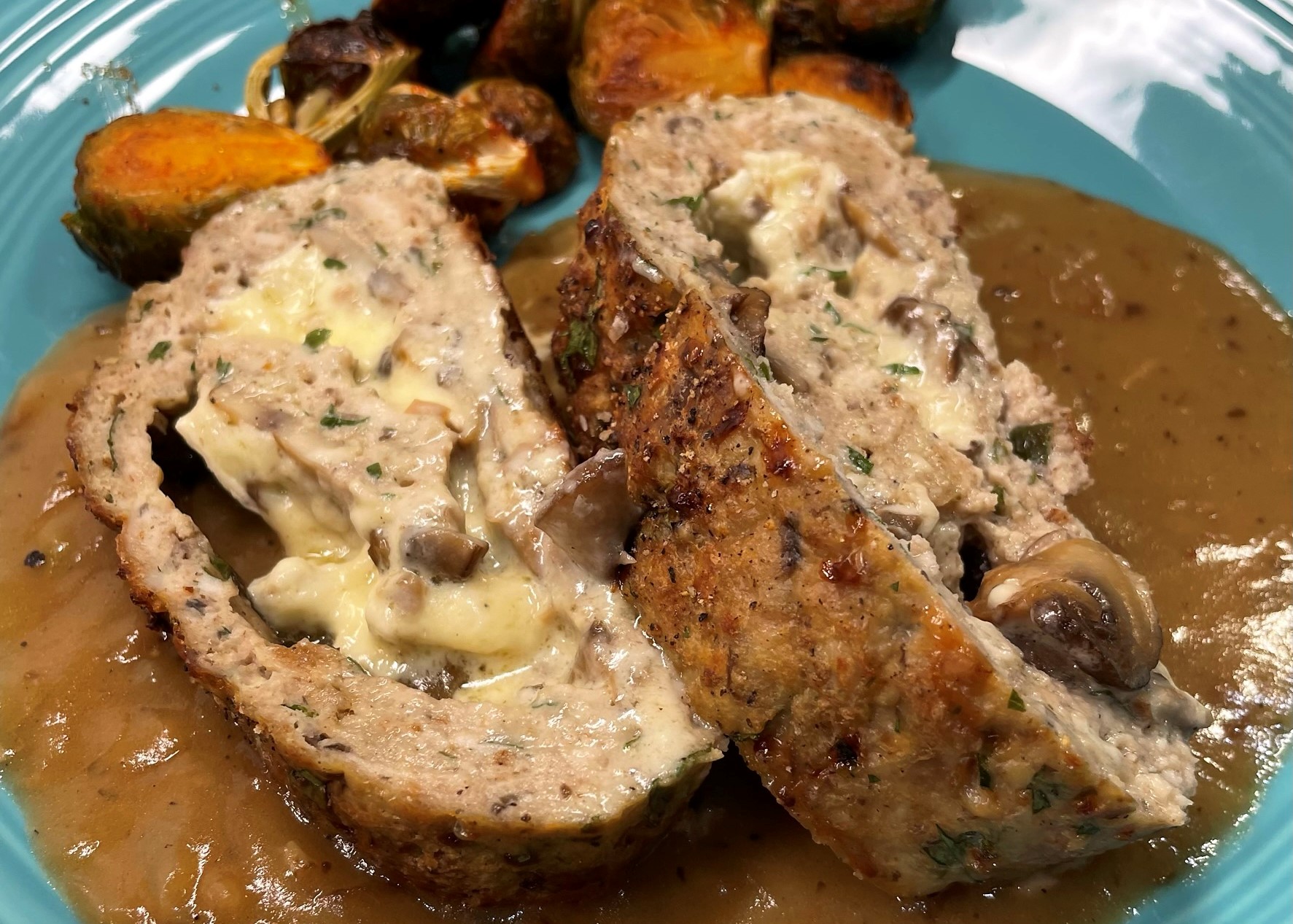
This meatloaf is one of my very favorites, though calling it a meatloaf may not do justice to the elegance of the meal, especially if you go the extra mile to make the French Onion Gravy recipe that accompanies it on my plate.
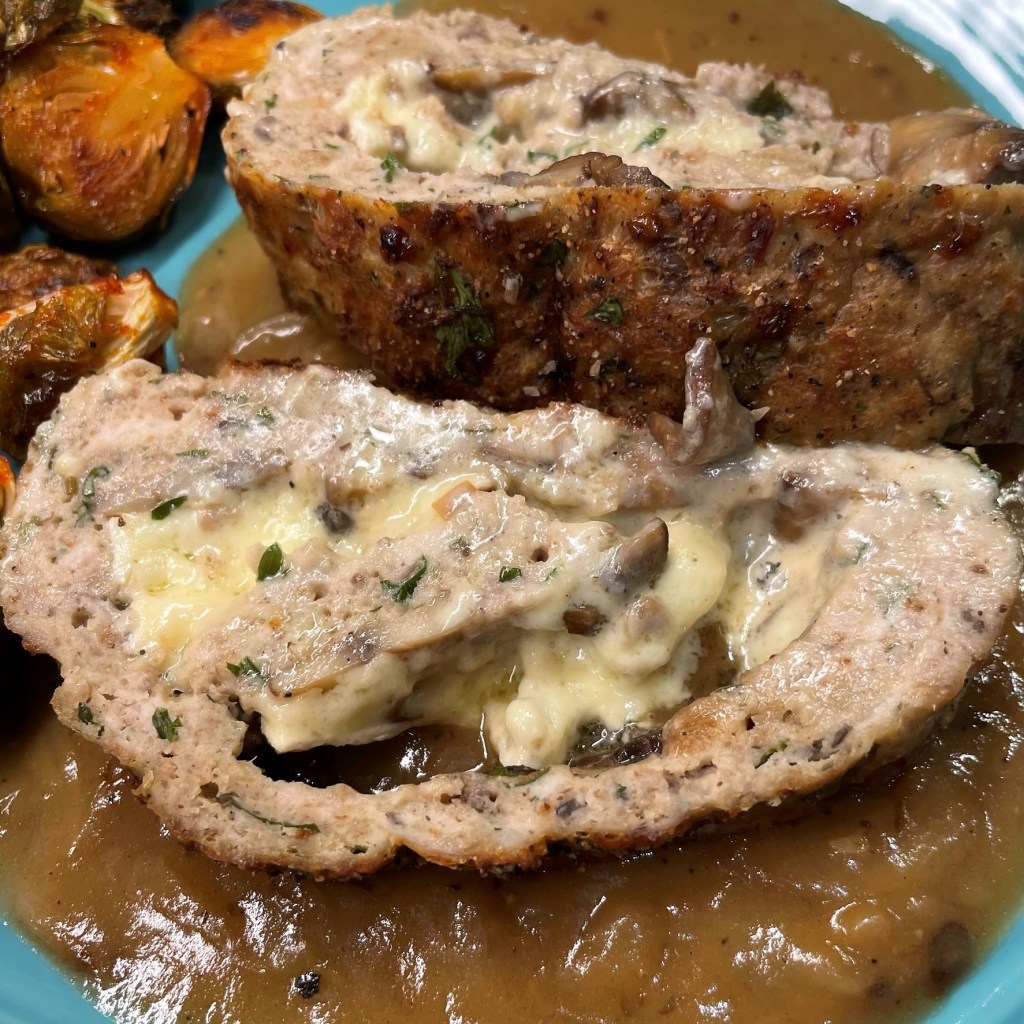
No mashed potatoes necessary.

My first inspiration for this recipe came many years ago when I spotted a wedge of creamy, mushroom-studded brie in the specialty cheese section at Trader Joe’s. It was begging to be part of something special and so I incorporated it into my usual, plain-Jane turkey meatloaf and I never looked back. I have since seen the cheese branded by other companies as well, and I actually bought this one from another supermarket. If you cannot find brie with mushrooms, substitute any other brie, and preferably one that is sold in large wedges, as it is easier to slice evenly for the rollup.
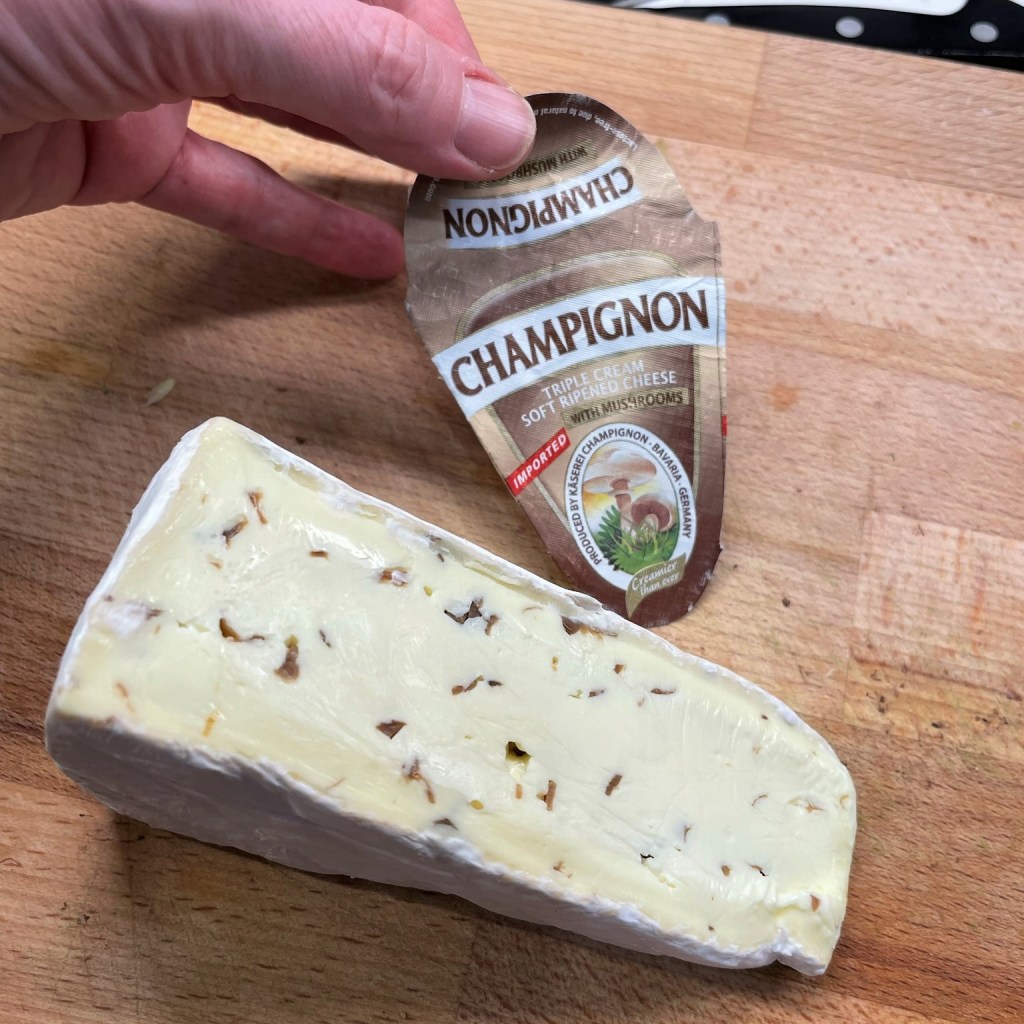

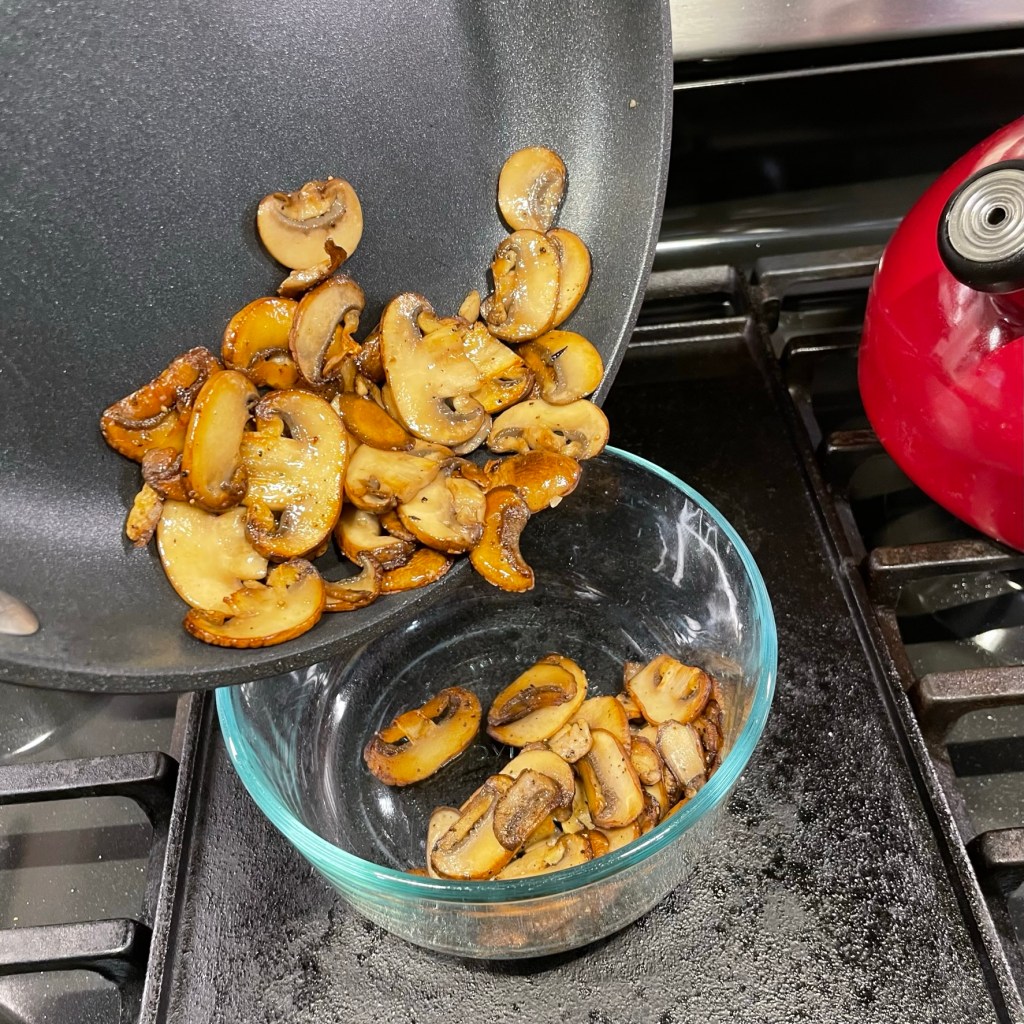
There will be plenty of mushroom in the mix anyway, as I slice and brown nearly a whole package of “baby bellas” to layer with the brie. Oh, and sauteed mushrooms and onions also get chopped and blended right into the meat mixture as well. Yes, this is definitely a mushroom-lover’s meatloaf!
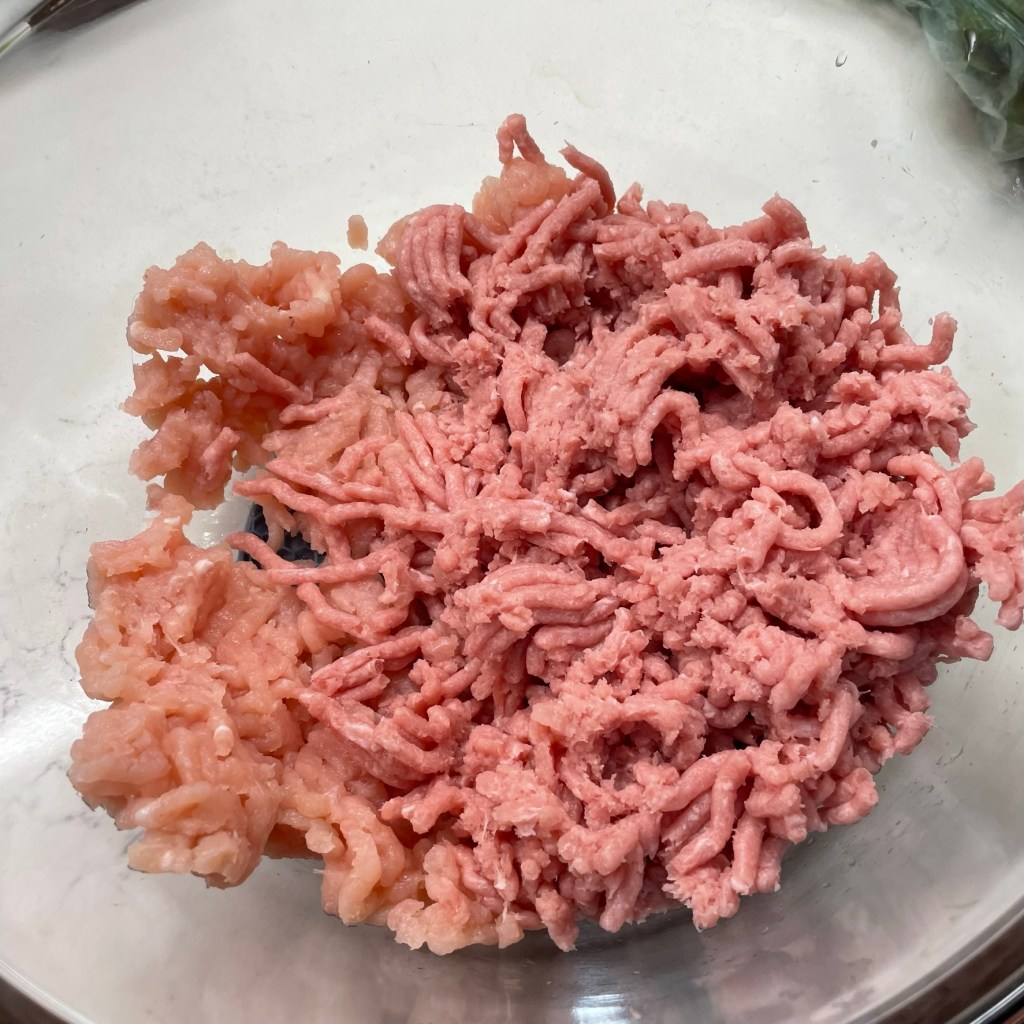
I like using a combination of ground turkey (93% lean) and ground turkey breast (99% lean) for this, because the turkey breast on its own tends to go dry during baking, and the other on its own is almost too soft to shape properly. I suppose this meatloaf could also be made with lean ground beef, but I love it with ground turkey, which has a lighter flavor and leaner calorie load—though I’m sure the brie filling that oozes out into every bite probably cancels out that second part.

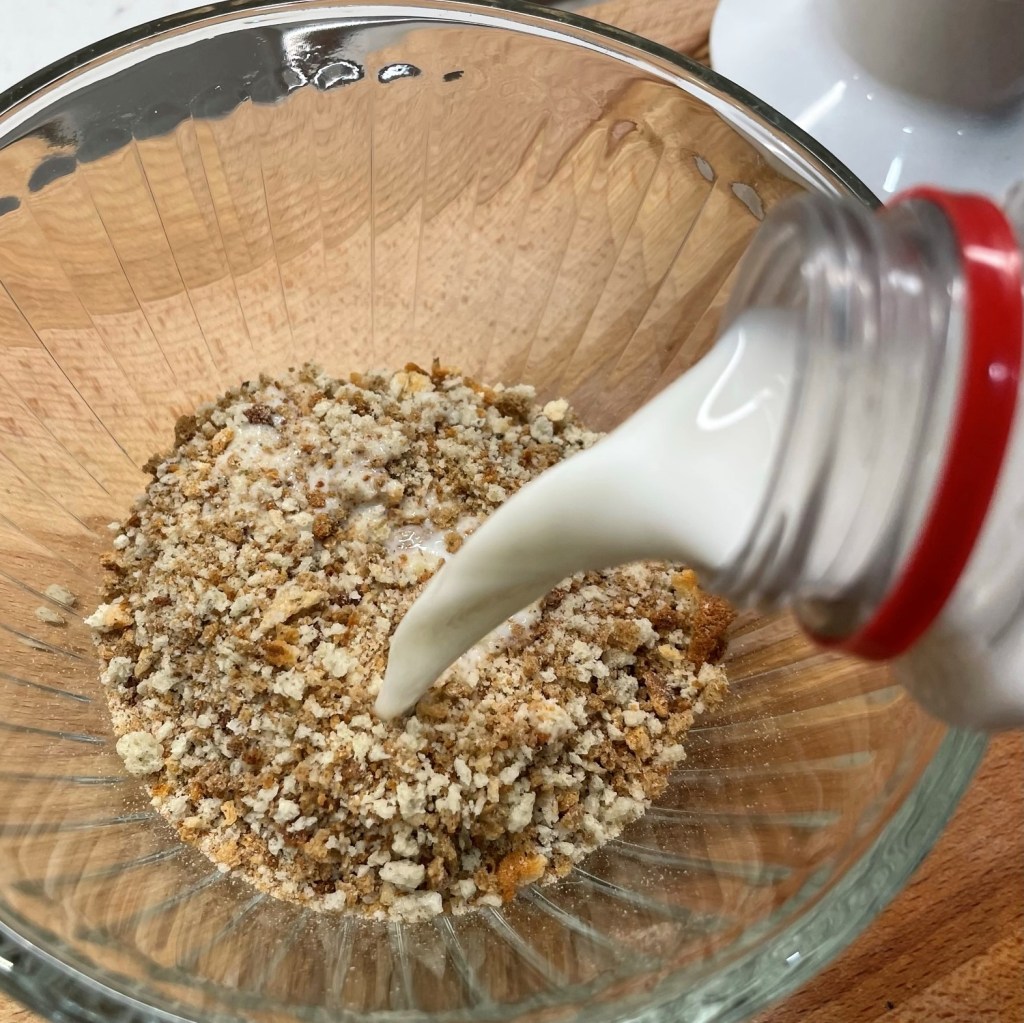
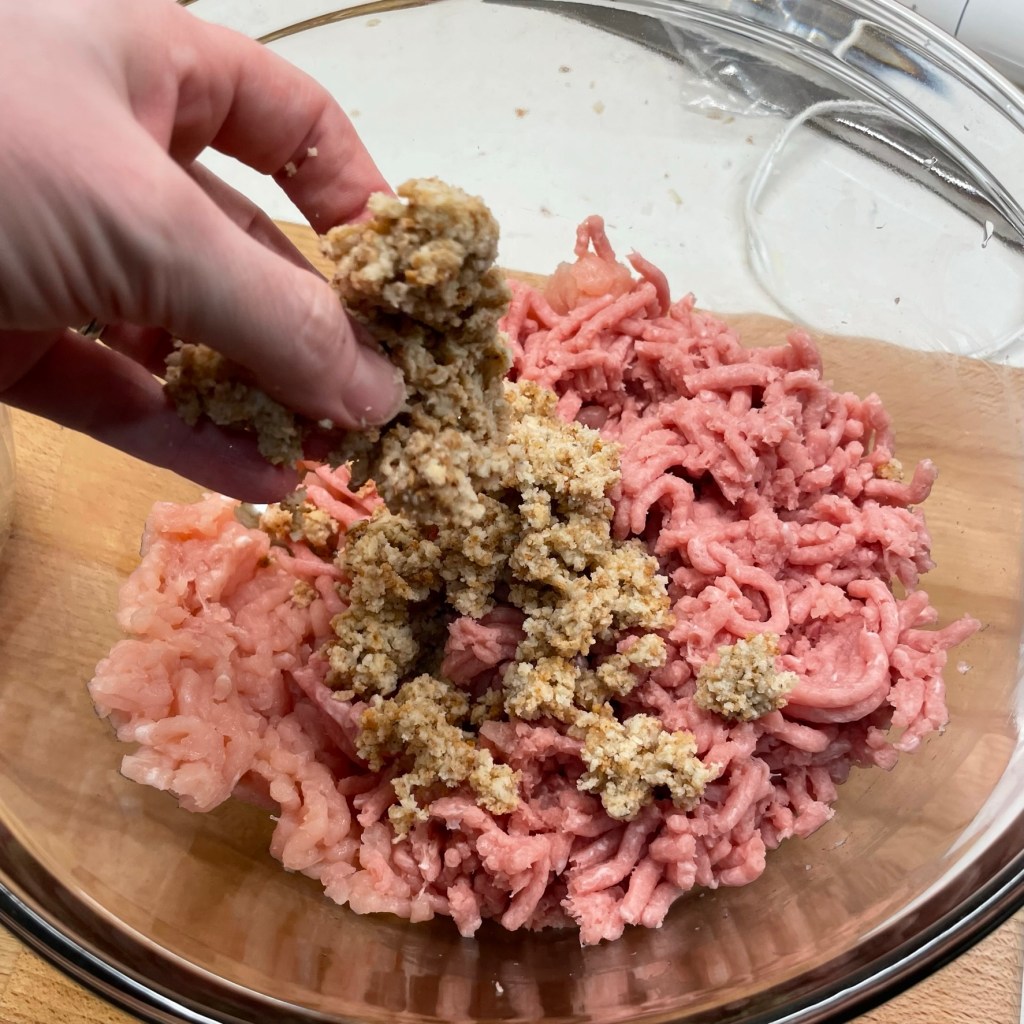
To give this meatloaf a hint of Thanksgiving (we are already counting down at our house), I have used dry stuffing mix (which I crushed into crumbs) in the panade, and it forms a glue to hold it all together. Feel free to substitute your favorite bread crumbs. Use less milk for this one than you normally would in a panade, because the turkey meat mixture is fairly loose and it benefits from the sturdier, almost crumbly panade.

The richness of the brie demands a little balance as well, so don’t omit the fresh parsley. Putting this meatloaf together is not as complicated as it might seem. At the end of the post is a click-to-print recipe, but I’ll walk you through it so you can see how easy it really is.
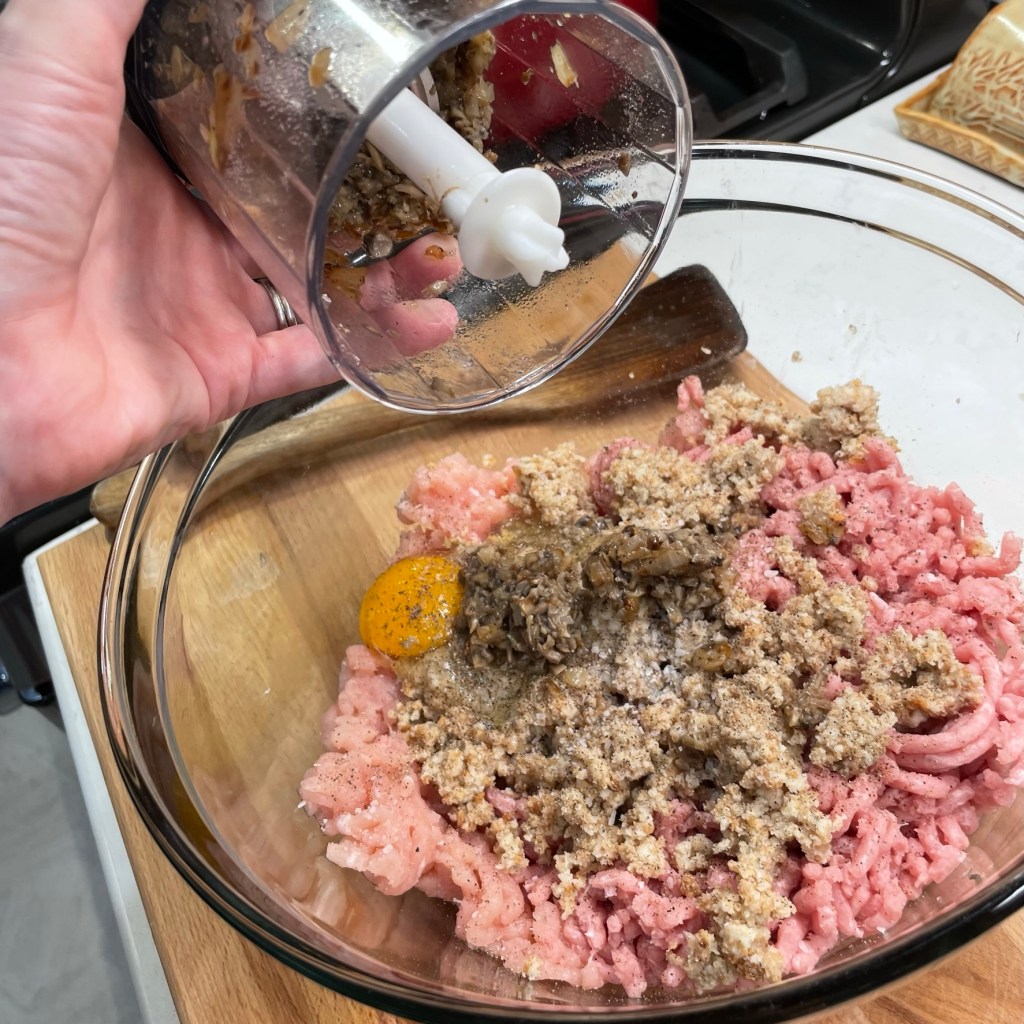

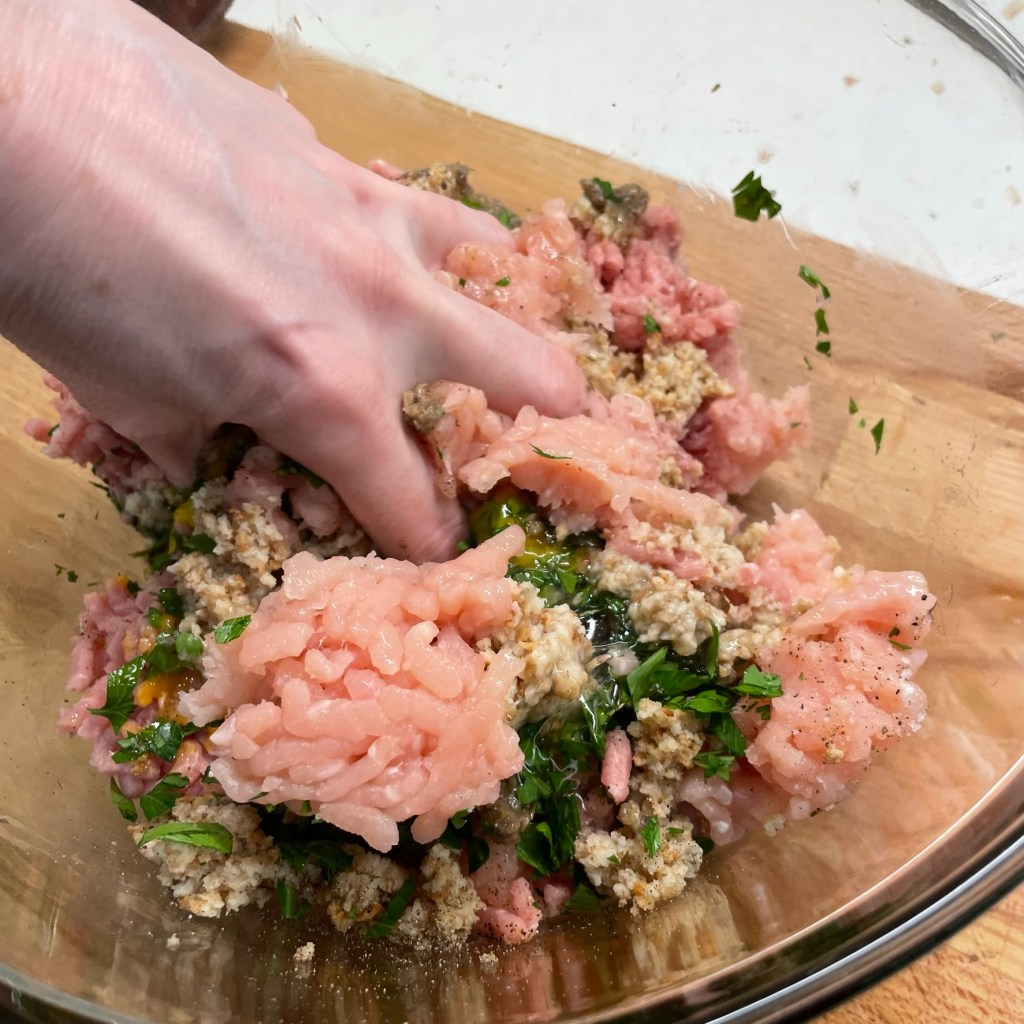
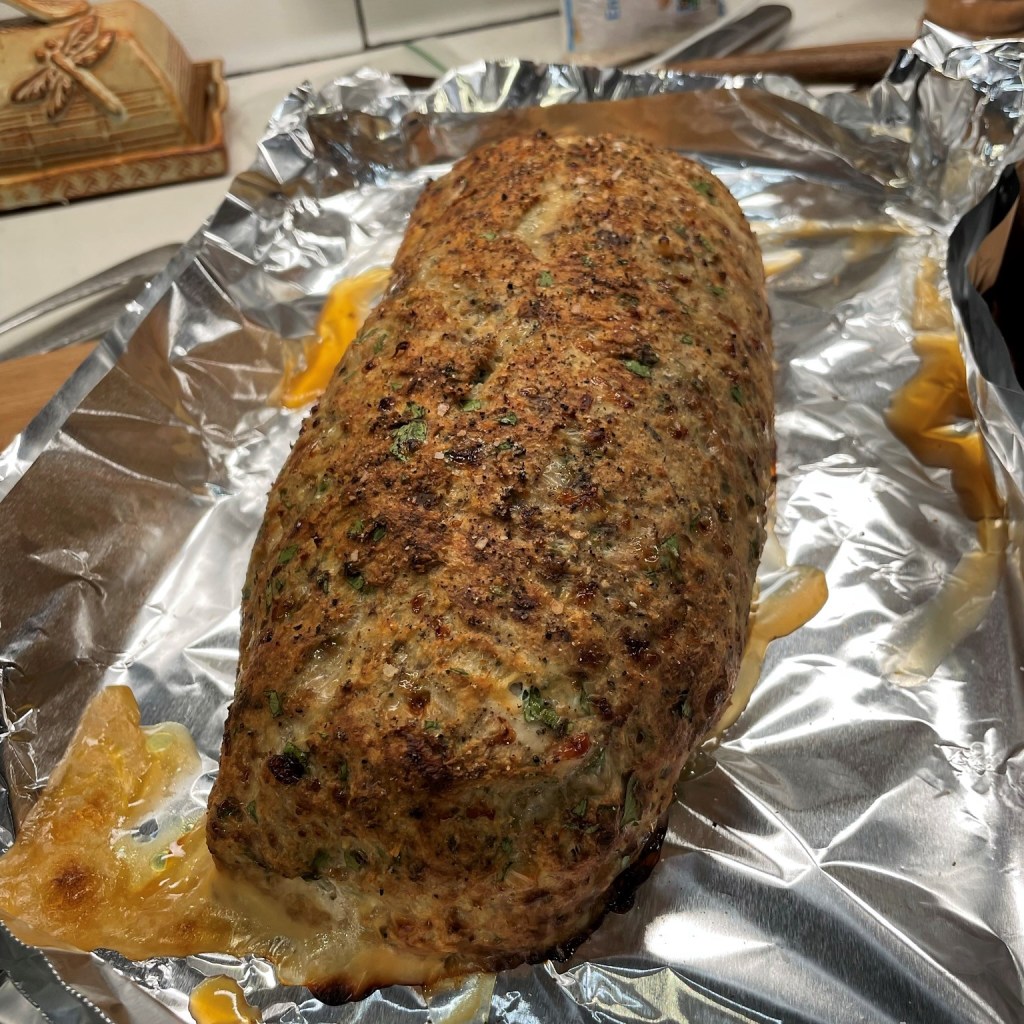
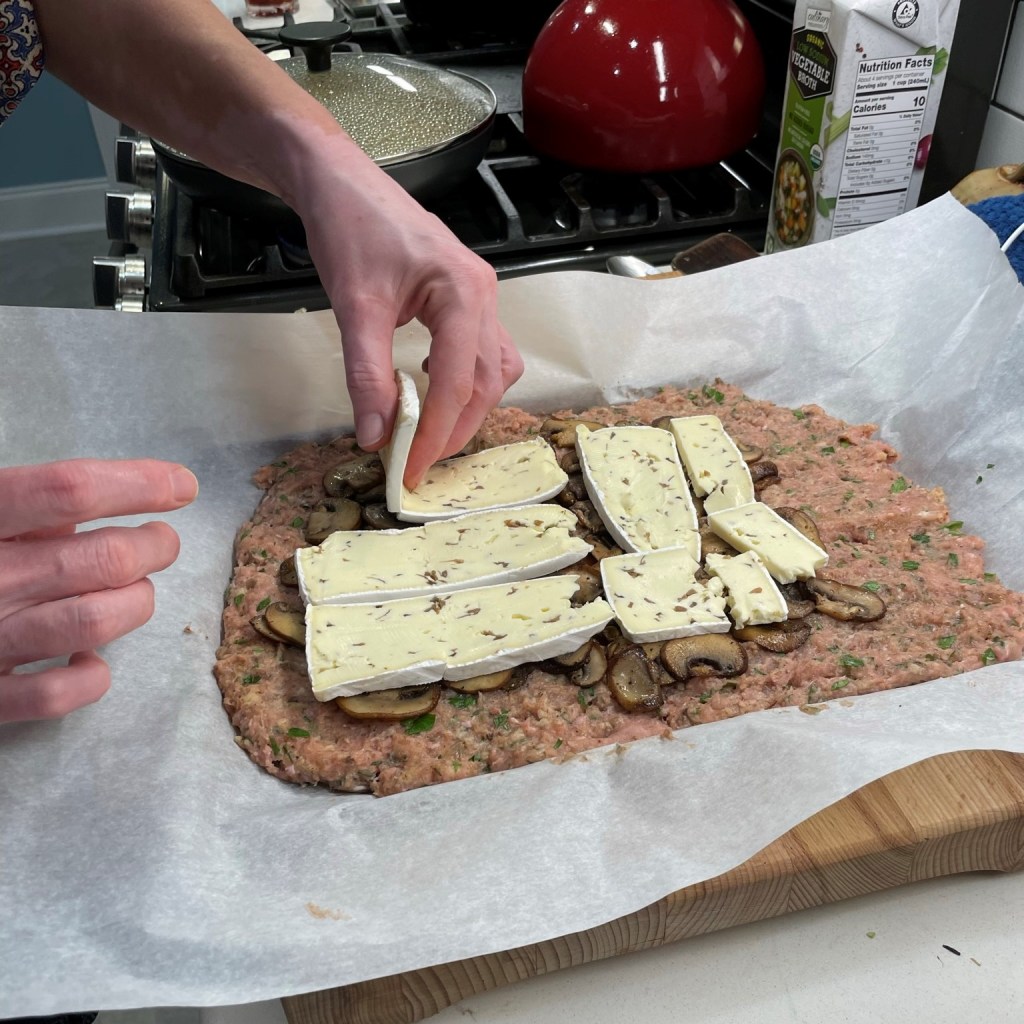
Parchment paper is my best friend for the task of shaping the meatloaf, but waxed paper would work in a pinch. Take your time, be sure the long edge and ends are sealed, and bake it on a cookie sheet rather than in a pan, for a beautiful crust. Give it 45 minutes at 400° F, and let it rest for at least 10 minutes before slicing.
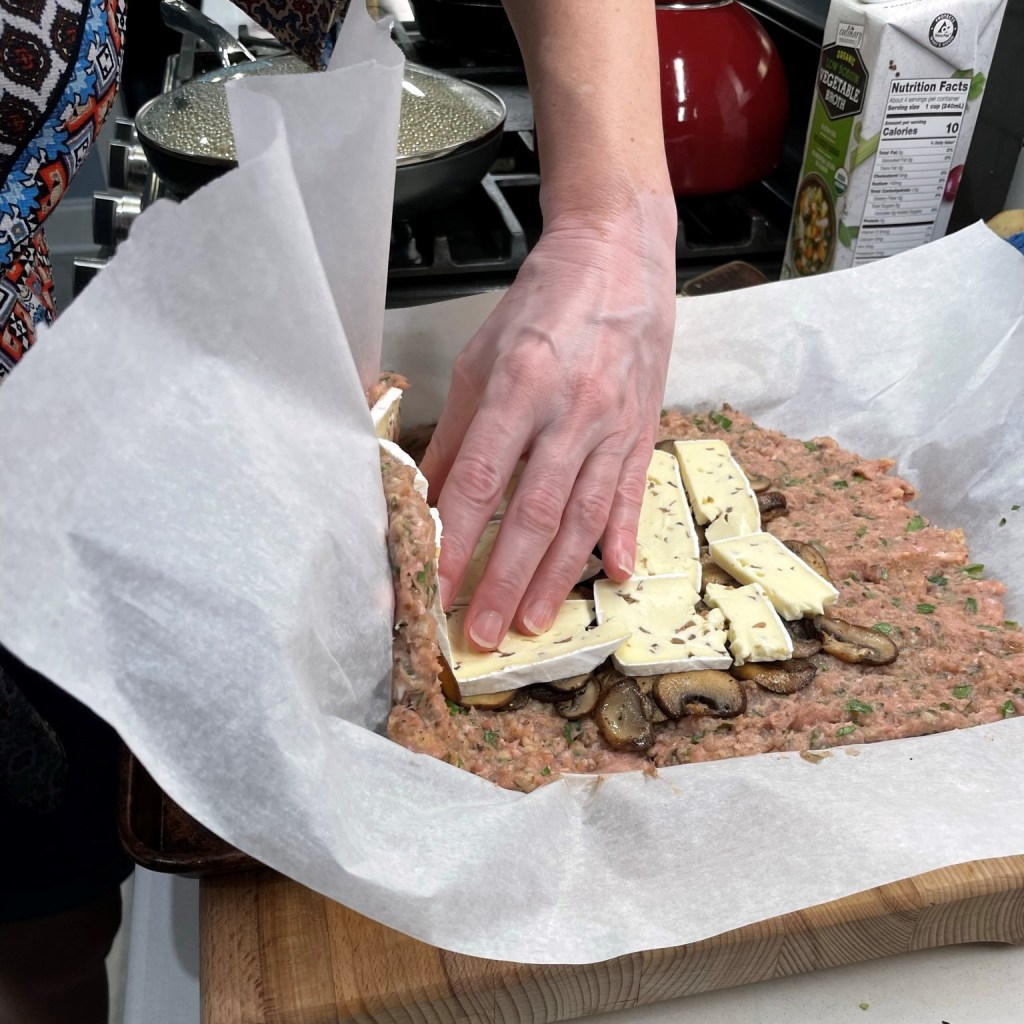
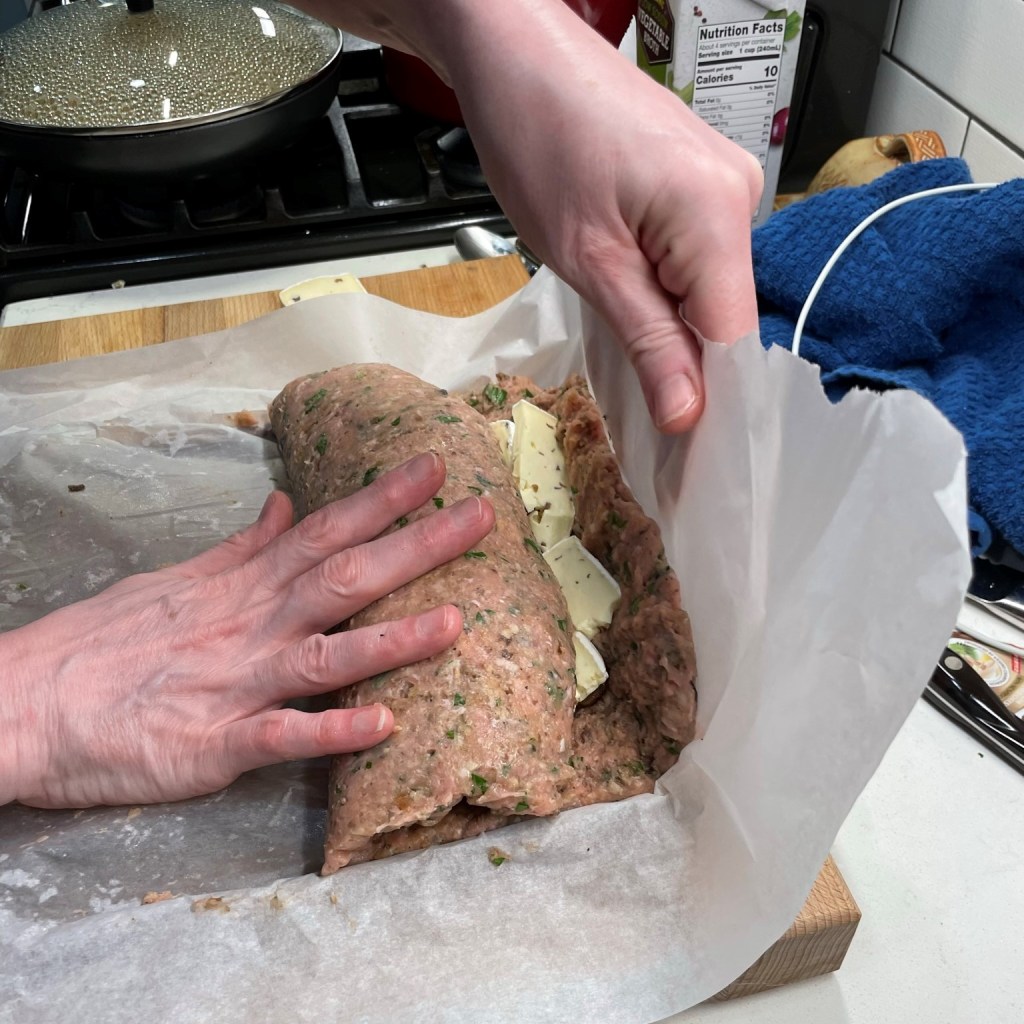
Look at that gorgeous crust!

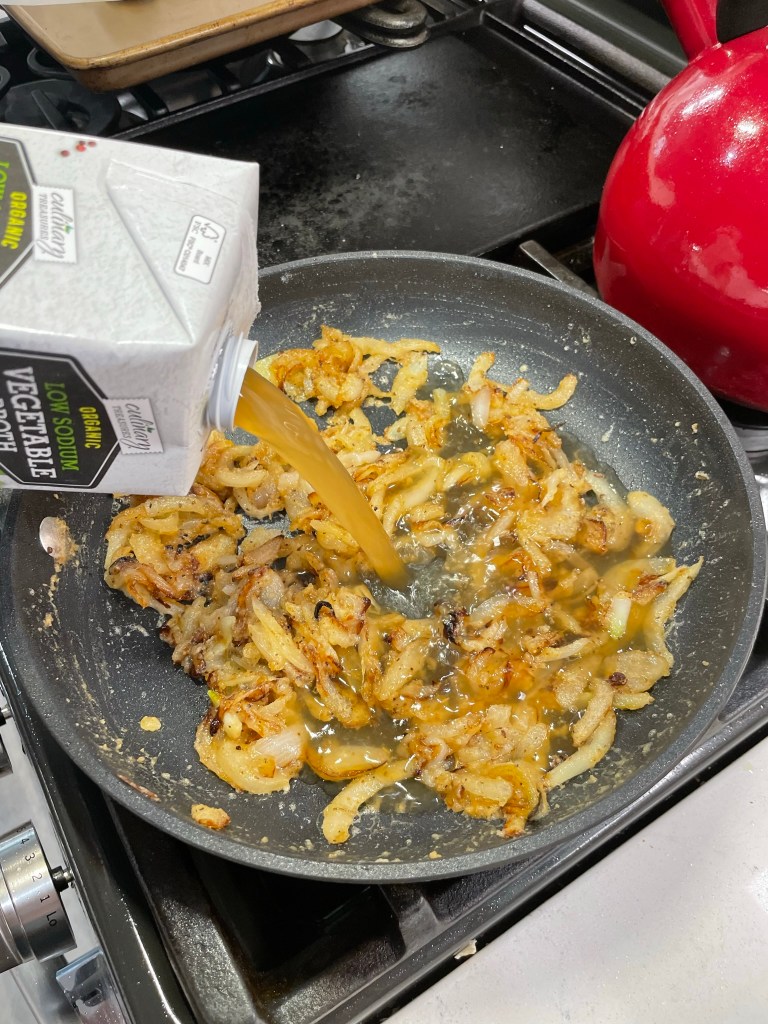
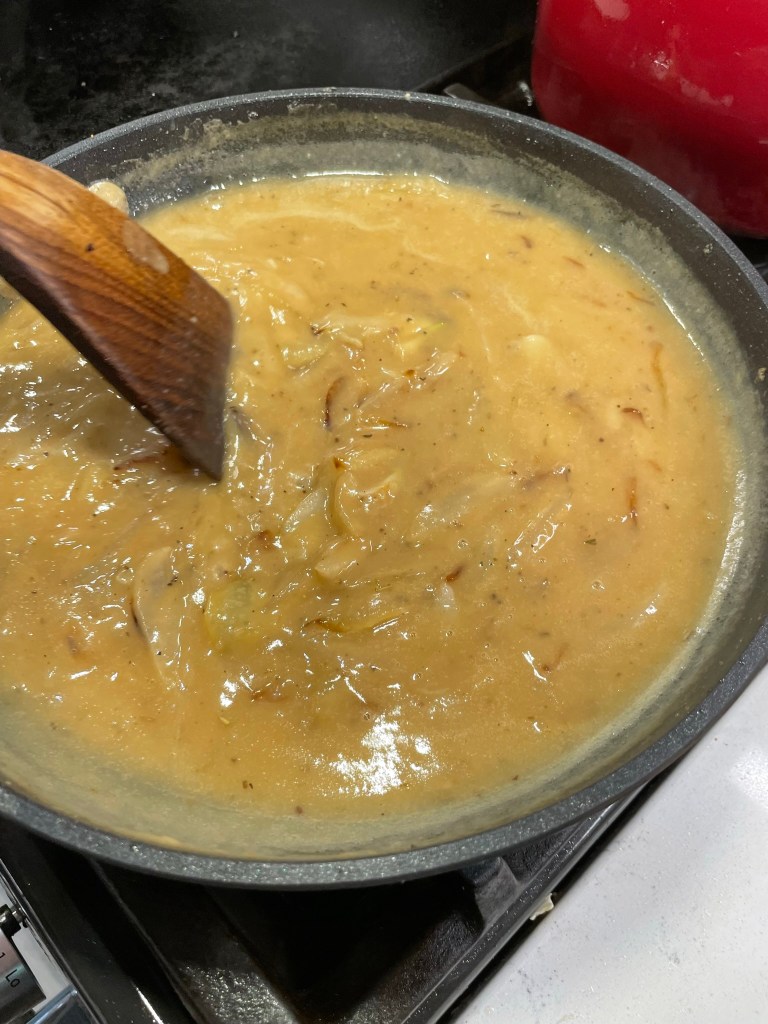
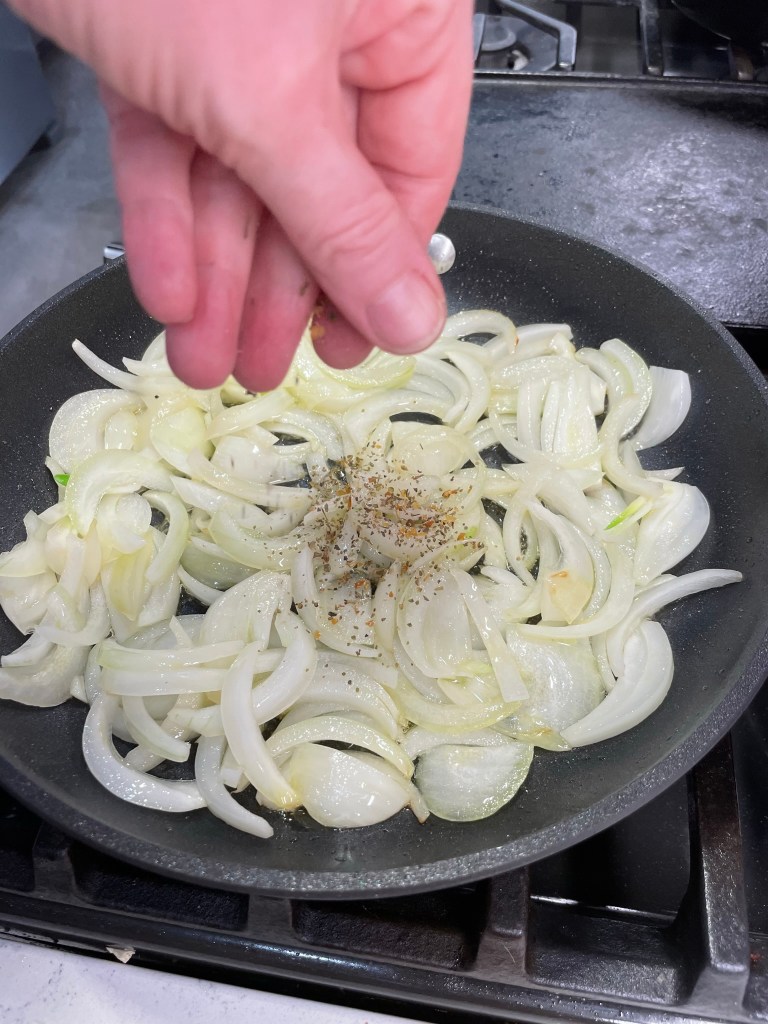
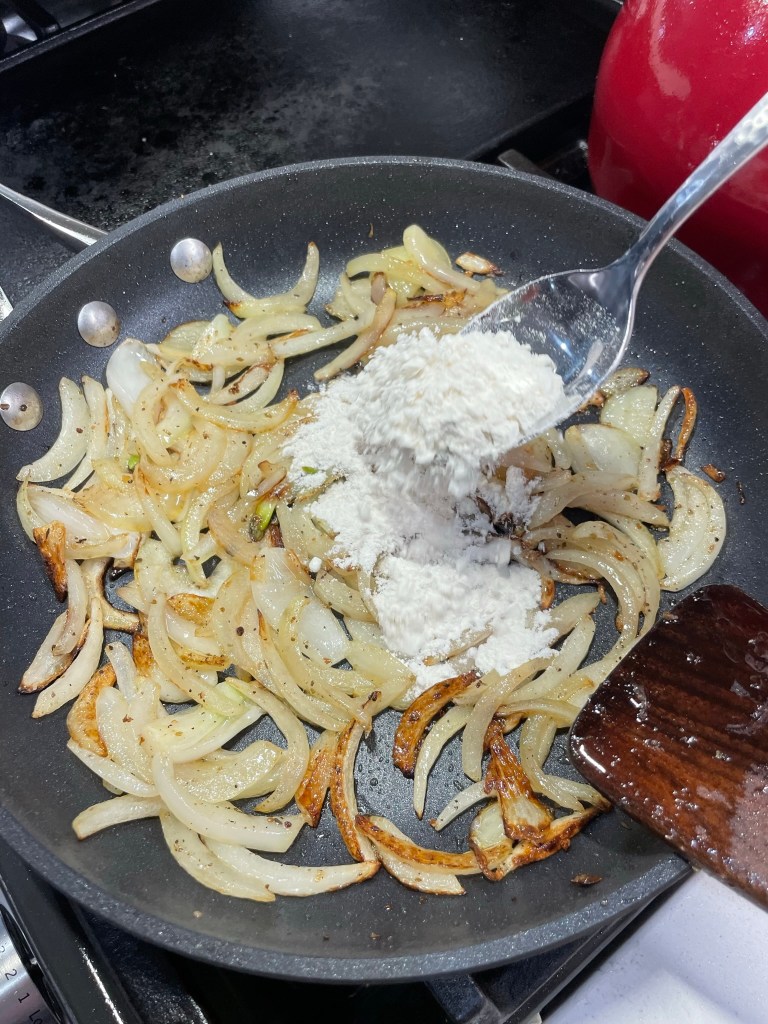
As for the gravy, well, I probably had you at “French onion.” It’s simple enough to make, but it does call for a special ingredient in the Herbes de Provence, which is a blend of herbs well known in the south of France. If you don’t have or can’t find it, substitute a blend of thyme, rosemary, marjoram and lemon peel. It won’t be quite the same, but these flavors will help to highlight and complement the onions. Use sweet or yellow onions and your choice of chicken or vegetable broth.
Serve the meal by ladling a portion of gravy directly onto the plate, and top with thick slices of the brie and mushroom-stuffed meatloaf. This entree does not need mashed potatoes, but if you crave them, may I suggest my hubby’s fantastic Garlic Mashed? You won’t regret it. 🙂

Brie & Mushroom-stuffed Meatloaf
  • Servings: About 8 slices
  • Difficulty: intermediate
  • Print

Don't let the fancy swirl pattern in these meatloaf slices intimidate you! With a little patience and a sheet of parchment paper, you can make this delicious turkey meatloaf that literally oozes with comfort!


Ingredients

  • 3/4 cup dry herb stuffing mix (such as Pepperidge Farm), crushed into small crumbs
  • 1/2 cup milk
  • 3 Tbsp. extra virgin olive oil, divided (note directions for when to use)
  • 1/2 sweet onion, minced
  • 12 oz. carton cremini mushrooms, divided
  • 1 lb. ground turkey (93% lean)
  • 1/2 lb. ground turkey breast (99% lean)
  • 1 large egg
  • Kosher salt and freshly ground black pepper
  • Small handful chopped, fresh parsley
  • 6 oz. brie (with mushrooms, if possible)

Directions

  1. Make a panade, combining the dry stuffing mix with milk. You should have just barely enough milk to cover the stuffing mix. Let this rest while you prepare the rest of the meatloaf mixture.
  2. Clean and trim all the mushrooms and divide them, chopping enough into small pieces to measure about 1/2 cup. Slice the remaining mushrooms into thin slices and set aside.
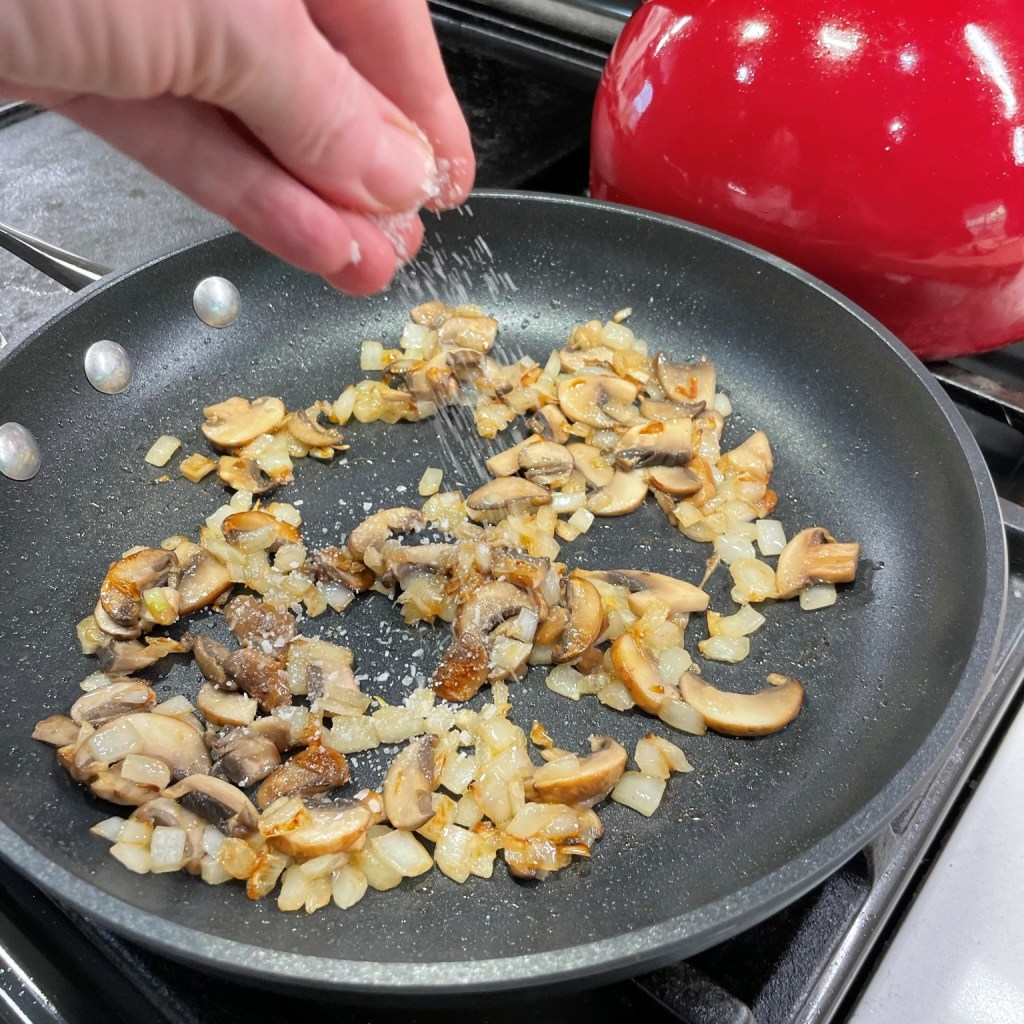
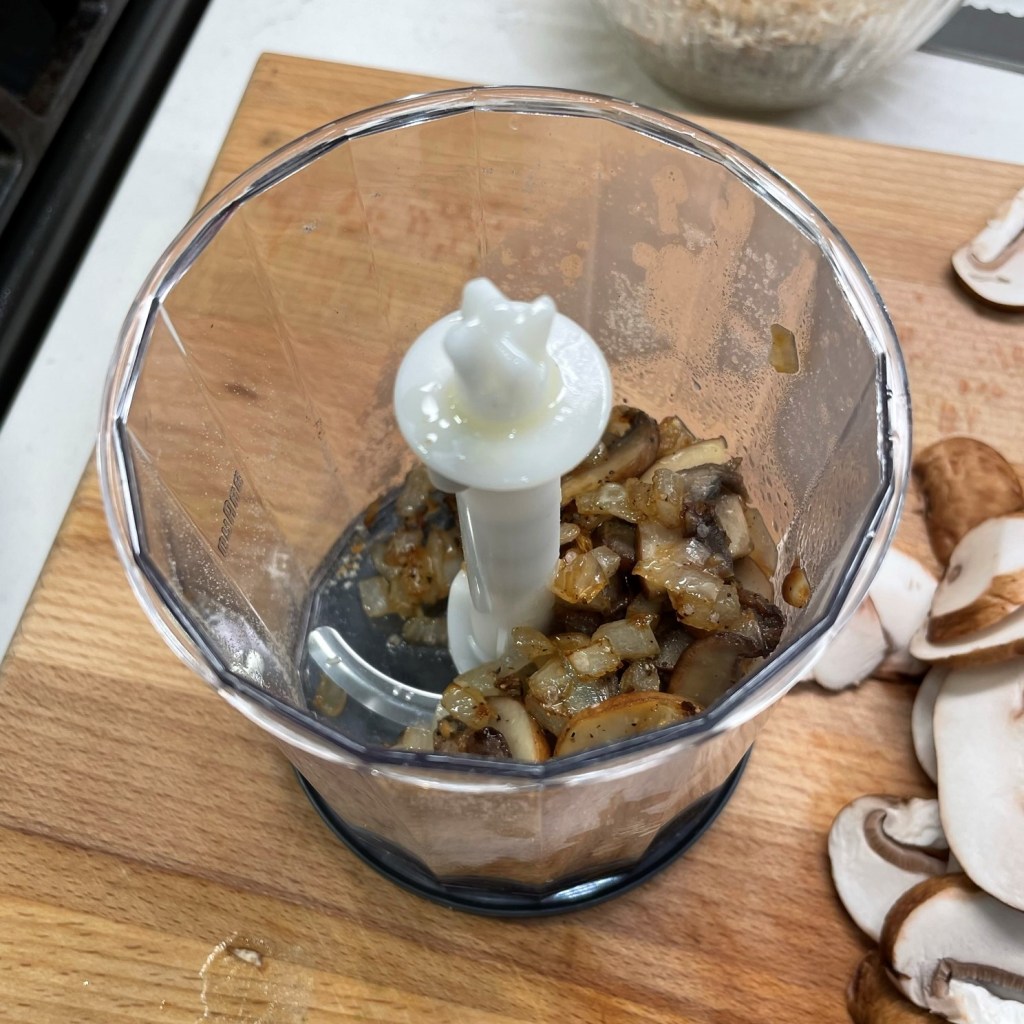
  3. Place a non-stick skillet over medium heat with a tablespoon of olive oil. Sauté the minced onion until translucent. Season with Herbs de Provence, salt and pepper. Add the chopped mushrooms and sauté together until the mushrooms are soft and most of their moisture has evaporated. Cool this mixture and then process (or chop) into smaller bits.
  4. Add another tablespoon of olive oil to the skillet and brown half of the sliced mushrooms until they are golden on both sides. Repeat with the remaining oil and mushrooms. Don’t be tempted to cook the mushrooms all at once, unless your pan is very large. If they are crowded in the pan, they will cook by steaming rather than browning, and you’ll lose the texture of the mushrooms. Transfer the browned mushroom slices into a bowl to cool.
  5. In a large mixing bowl, combine the ground turkey (both), egg, panade, mushroom-onion mixture and parsley. Toss in a generous pinch of salt and a few twists of black pepper. Use your hands to evenly combine these ingredients until they are uniform, but try not to overwork the mixture.
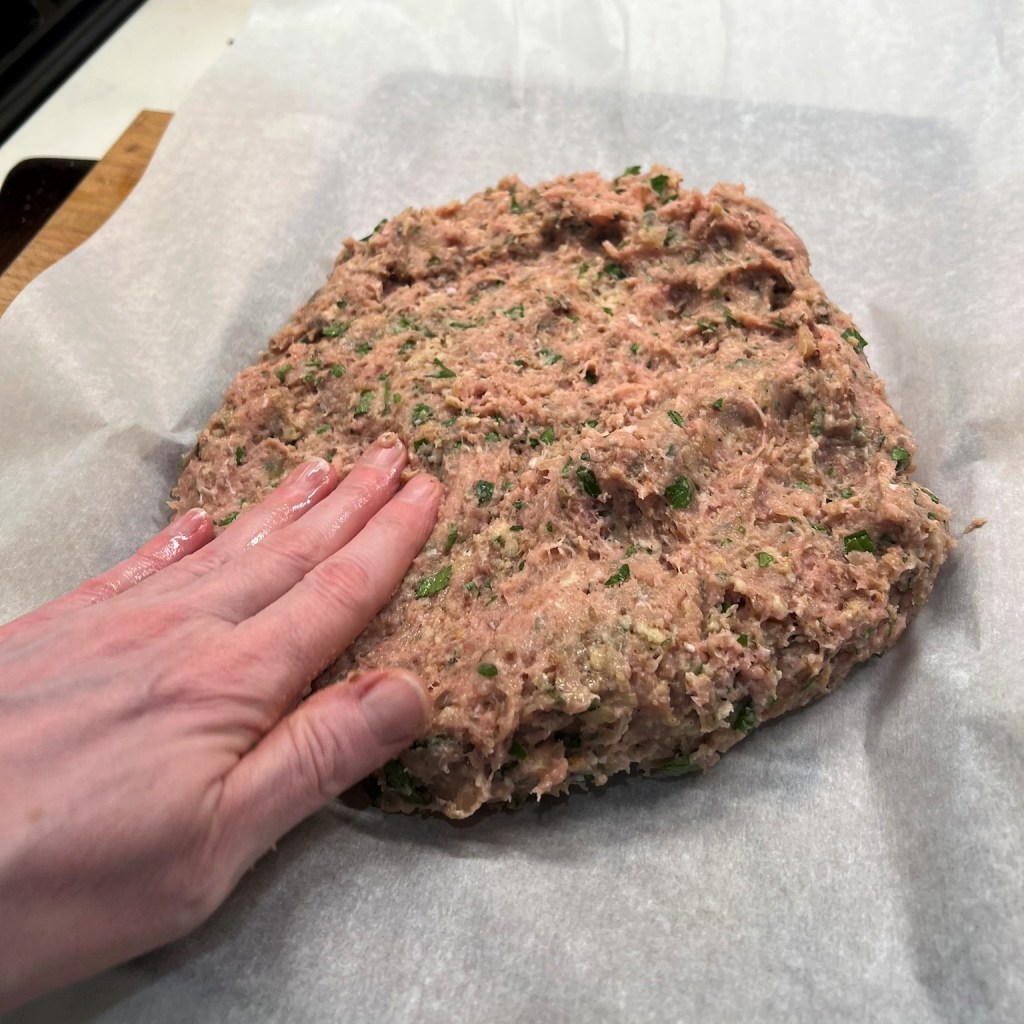
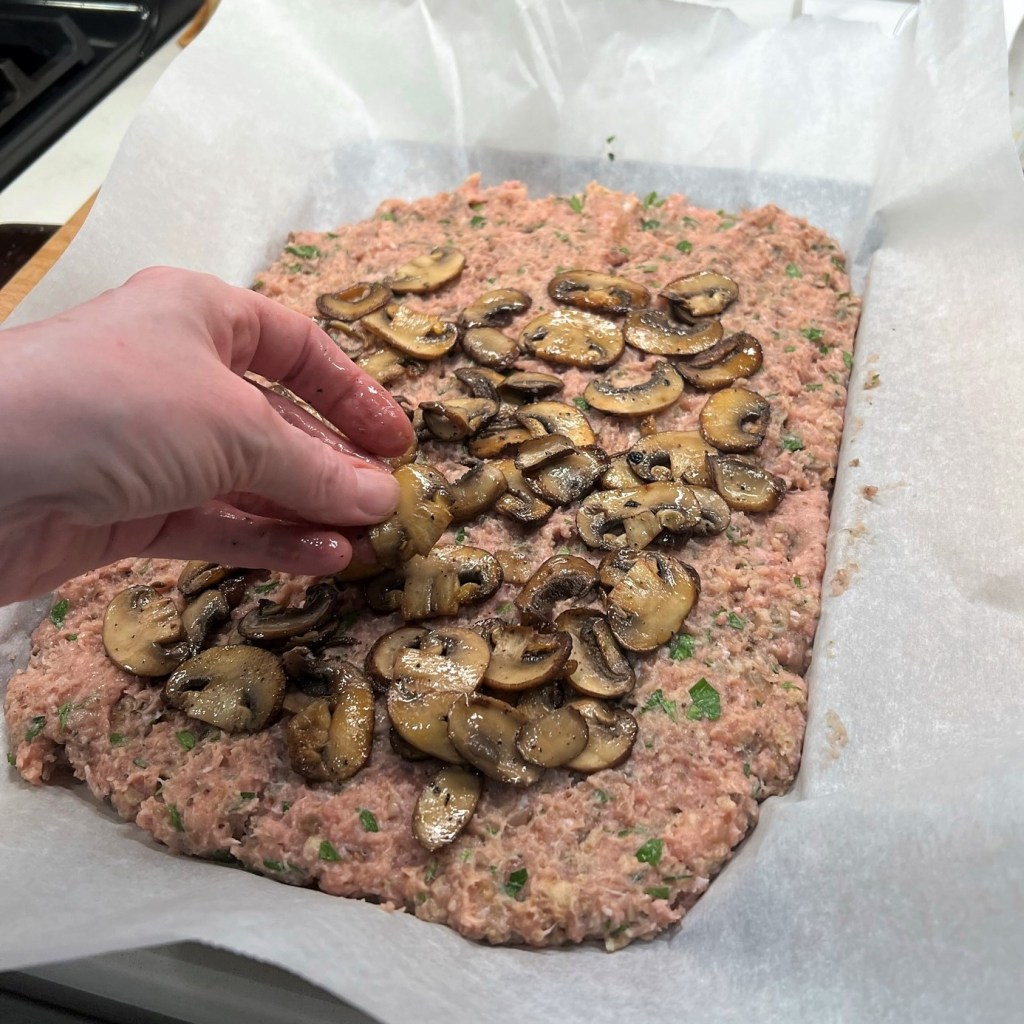
  6. Line a baking sheet with parchment paper. Transfer the meatloaf mixture onto the parchment, using oiled hands to pat it into a rectangle about 9 by 12 inches, and about 3/4-inch thick. Layer the browned mushrooms evenly over the surface, leaving a 1-inch border around all edges. Cover with plastic wrap and refrigerate about 30 minutes to firm up. Use this time to preheat the oven to 400° F and to prepare the French onion gravy.
  7. Slice the brie cheese wedge into uniform thickness pieces, about 1/4-inch thick. Arrange the slices in a single layer all over the chilled meatloaf, keeping a 1-inch border along both sides, and at least 2 inches from the far, short end. This will help prevent the brie from melting out of the meatloaf during baking.
  8. Use the parchment paper to assist rolling the meatloaf, beginning with the short end near you. Bend the brie, if needed, so that it will roll easier. Keep the roll snug as you go, and pinch to seal all edges, finishing with the end seal on top of the roll. Sprinkle the surface of the meatloaf lightly with kosher salt and bake for 45 minutes, until the meatloaf is browned with a slight crust all over; internal temperature will be about 160° F. Remove it from the oven and allow it to rest about 10 minutes before slicing. The residual heat will continue to cook the meatloaf during this time.
  9. Serve with French Onion Pan Gravy.


French Onion Pan Gravy

  • Servings: 3 cups
  • Difficulty: average
  • Print

Ingredients

  • 1 large sweet onion, thinly sliced into crescent shapes
  • 2 Tbsp. extra virgin olive oil
  • 1/2 tsp. Herbs de Provence seasoning
  • Kosher salt and freshly ground black pepper
  • 2 Tbsp. butter
  • 2 Tbsp. all-purpose flour
  • 2 Tbsp. dry vermouth (or dry white wine)
  • 3 1/2 cups low-sodium vegetable broth
  • 1 tsp. bouillon paste (optional, for richer flavor)

Directions

  1. Heat a large skillet or shallow sauce pot over medium heat. Swirl in olive oil and saute the onion crescents until translucent. Season with Herbs de Provence, salt and pepper and continue cooking until onions begin to caramelize.
  2. Sprinkle flour over the onions and add the butter, stirring to melt the butter and evenly coat the onions in roux. Cook until the onions no longer appear dry from the flour, about 5 minutes.
  3. Add dry vermouth to the skillet and stir to deglaze any browned bits. The liquid will probably dissipate rather quickly. Add broth, about half at a time, stirring to distribute evenly. When sauce begins to bubble and thicken, reduce heat to low and cover the skillet. Let it simmer while meatloaf is in the oven.
  4. Just before serving, taste and adjust seasonings. For additional richness, swirl in a heaping teaspoon of bouillon paste.
  5. Plate a ladle-ful of gravy, and top it with slices of the brie and mushroom-stuffed meatloaf.


Mexican Street Corn Guacamole

I guess you could say that I have been on a “Kenji kick” lately, channeling my secret inner scientist and learning so much about food that I can hardly keep up. If you’ve been following my posts, you know how inspired I am by J. Kenji López-Alt, the chef who pushes all the boundaries of science and food, and today, I present another example of new tricks I’m learning from Kenji.


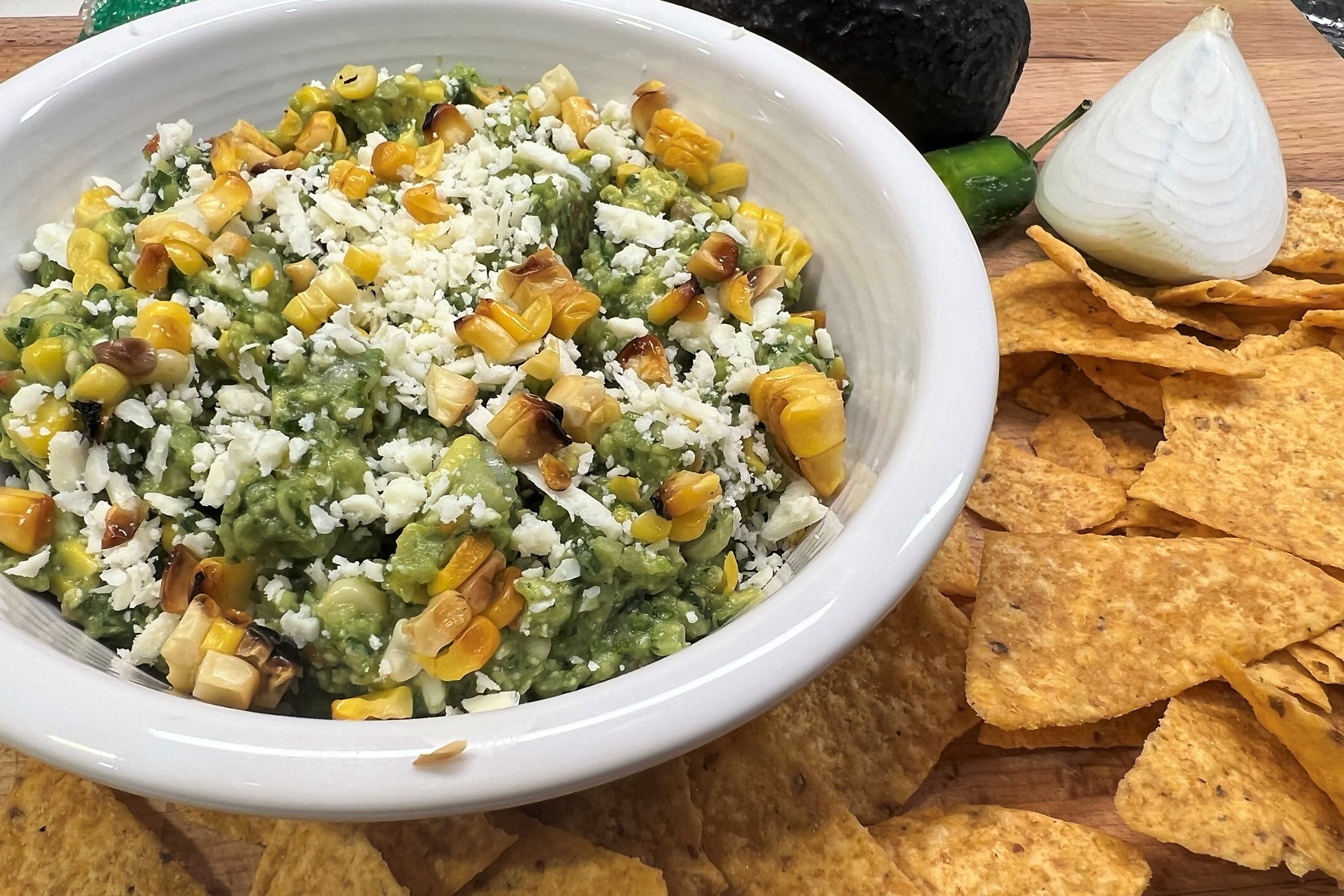
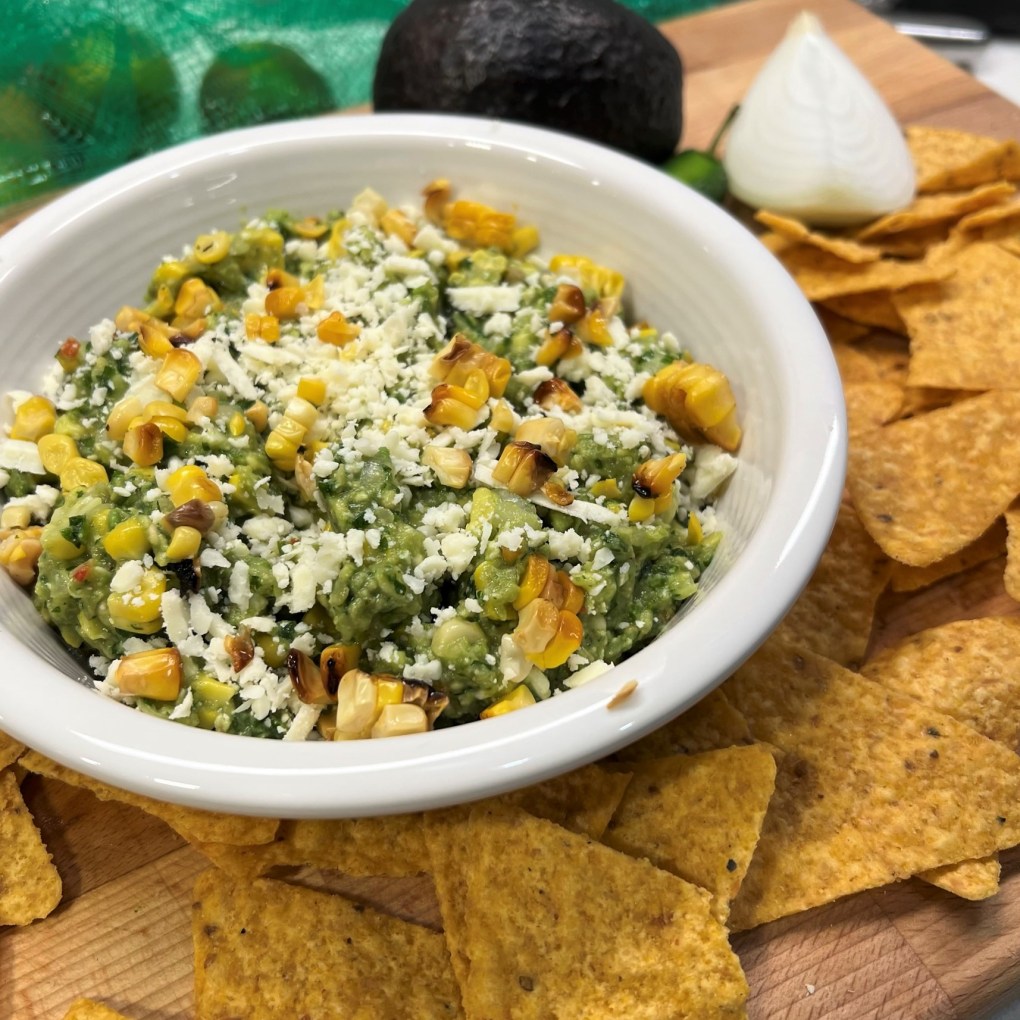
I have attached the name “street corn” to this recipe, though it is technically missing a few of the signature street corn ingredients (specifically, mayonnaise and chile sprinkles). But the mouthwatering combination of flavors it does have—lime, cilantro, grilled corn and cotija cheese—gives me such an impression of street corn that I couldn’t help myself.


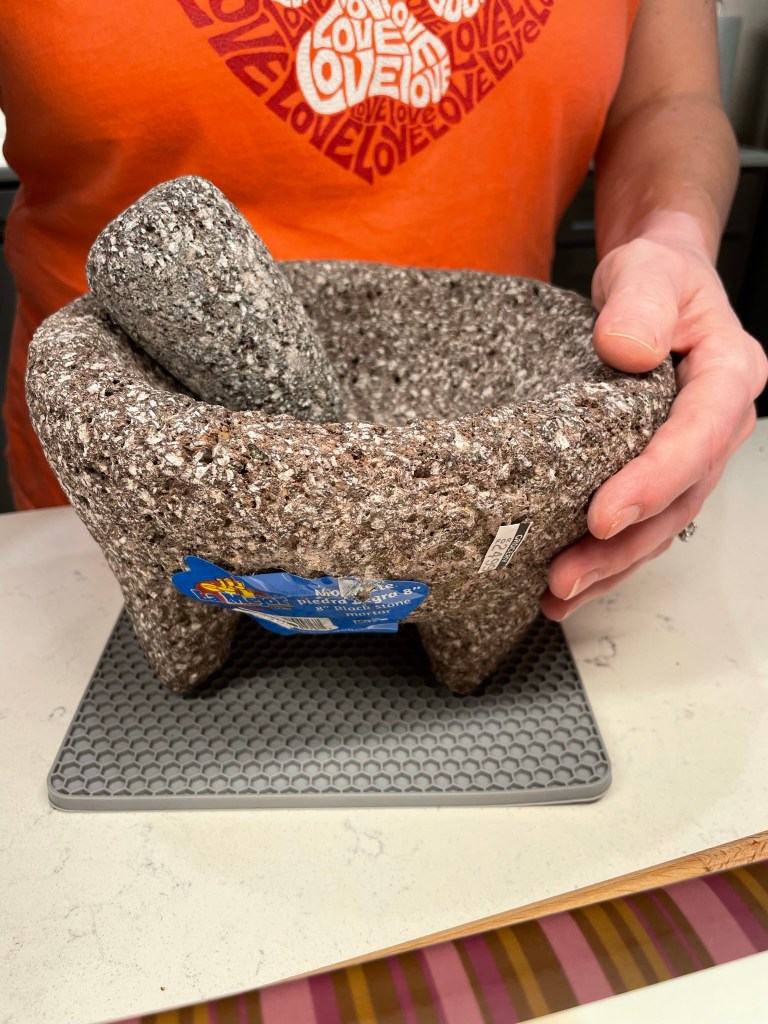
Besides, I felt an obligation to change the name because I couldn’t quite make the recipe (which comes from the pages of NY Times Cooking) as directed by its author, and that’s because I don’t have the proper tools of a Mexican cocina. Nope, this gringa relies mostly on her countertop electrics for heavy chopping, dicing, mincing and pureeing, and that works fine most of the time. But when it comes to making salsa or guacamole, the better and more authentic method would involve a molcajete, a huge, primitive looking mortar and pestle carved from a chunk of volcanic rock.

The rough interior of a molcajete (pronounced mowl-kuh-HAY-tay) makes the flavors more intense, because as you grind solid ingredients into it, you crush rather than chop, and that releases the essence of seed spices, herbs and onions in a way that modern appliances simply can’t compete. For this recipe, even though I recently spent several hundred dollars on a made-in-France food processor that basically requires a college course to use, I set out instead to find a molcajete, a culinary tool that you have probably seen in Mexican restaurants.

Originally, my plan was to share this scrumptious guacamole recipe in observance of Hispanic Heritage Month, but my research about molcajetes led me to realize that the tool really is primitive, and it is considered “pre-Hispanic” because it was created and used by the Aztecs, long before Spain began to influence the cultures that we recognize today as Hispanic—including Mexico, where most molcajetes are still made to ancient standards.


My first stop for one of these nifty devices was Amazon, but after scrolling through three pages of “authentic” molcajetes, I wasn’t convinced that they weren’t made in China, and possibly of concrete. Next stop, Williams-Sonoma, because who knows more about authentic Mexican cooking, right? OK, maybe not, though they did have some impressive-looking molcajetes, and (not surprisingly) at really impressive prices.

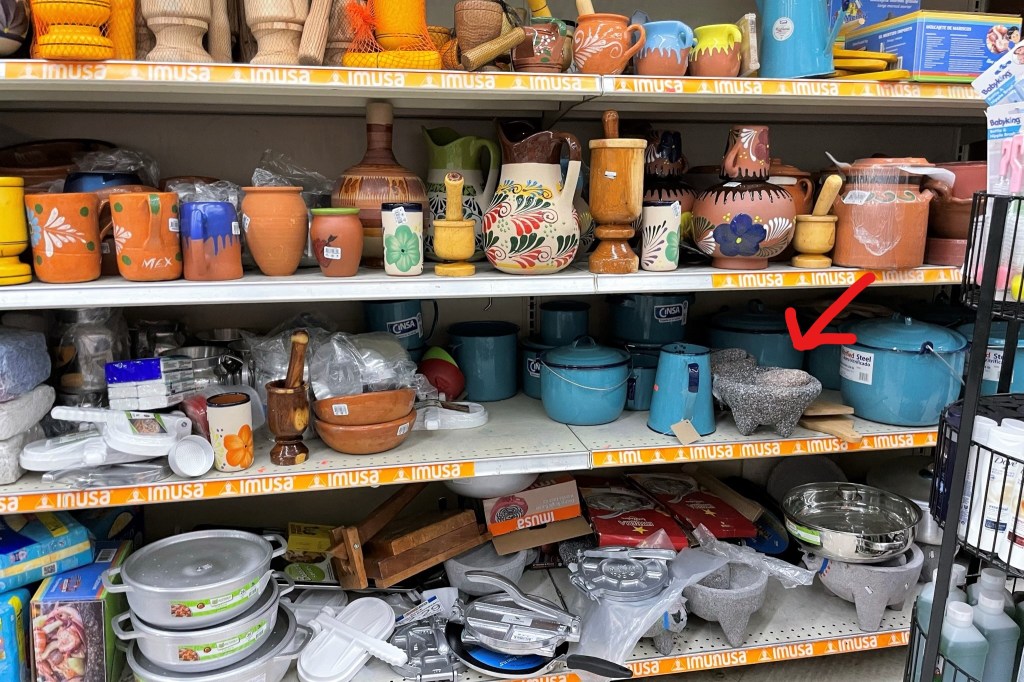
Finally, I wised up and headed across town to the Mexican supermarket. Les and I love visiting this interesting store, where we find all the spices, dried peppers and other Mexican ingredients we could ever want. They have the largest bin of fresh jalapenos I have ever seen (perfect for Les’s Atomic Buffalo Turds recipe), as well as a few ingredients I can’t pronounce and wouldn’t begin to know how to use (yet). English is not the first language for the workers in this market, nor for most of its customers, and I’m good with that because every visit feels like an adventure.


This is the same store where I found my cast iron press for making handmade corn tortillas, and I knew we would find a traditional molcajete as well—and there it was, conveniently nestled among all sorts other gadgets, right next to the carousel rack of shampoo and rubbing alcohol, of course. As I said, it is an interesting store (remind me to tell you sometime where to find the mayonnaise)!

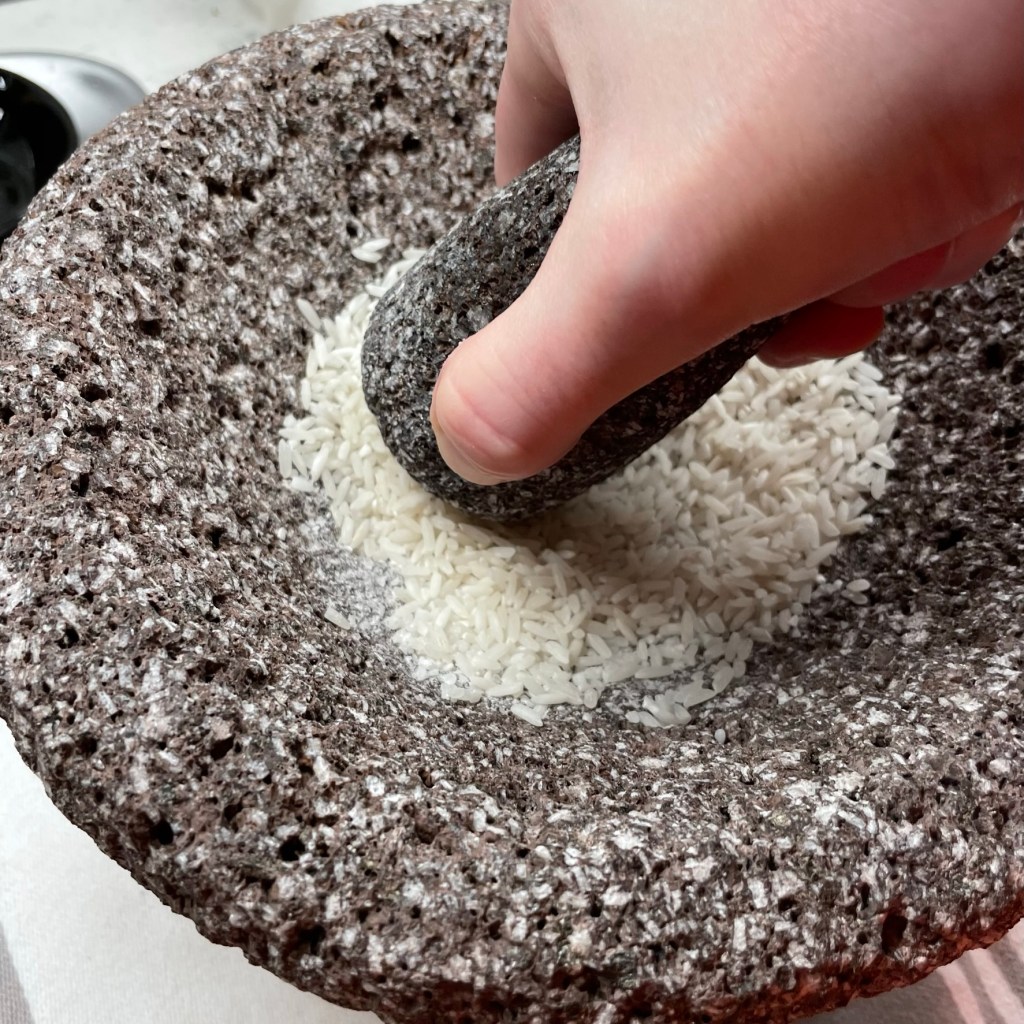
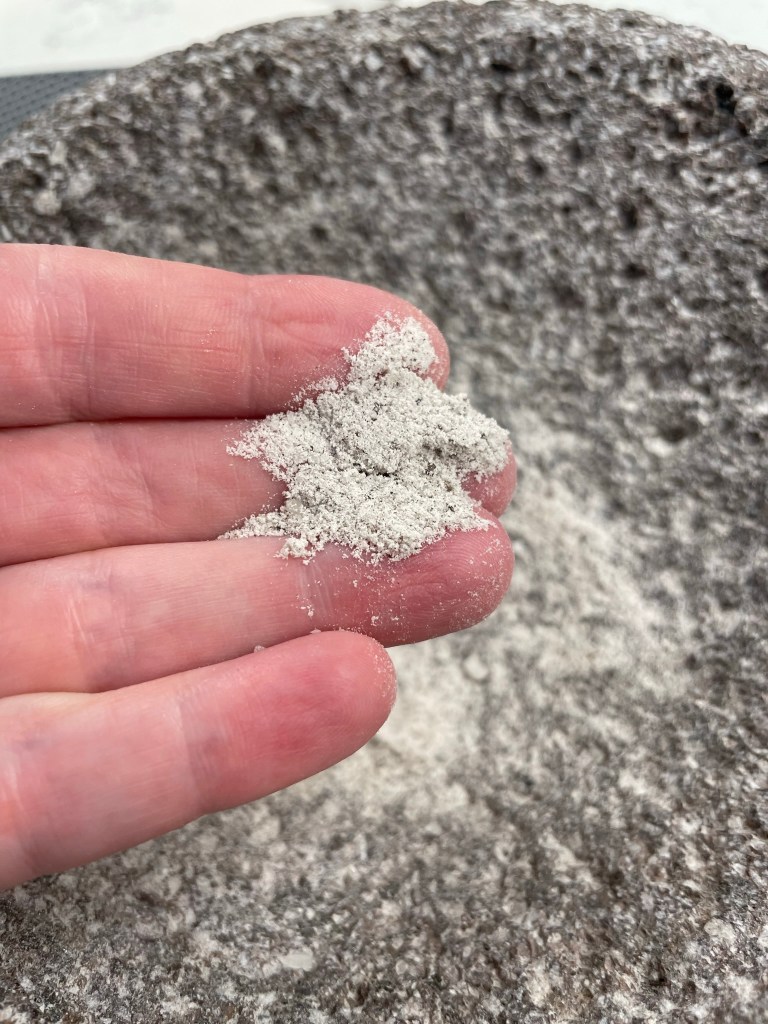
What I had not realized at the time of my molcajete purchase was the curing, or “seasoning,” that is required. The pores are huge in the volcanic rock, and a great deal of dust and grit is encased in there. First, you must scrub the inside and outside with hot water (no soap) and a stiff-bristled brush to release the surface grit and grime, and tip it sideways to air dry. Then you grind raw, whole rice into the thing, which draws out additional gray, powdery grit.

You rinse and repeat as many times as it takes, until the rice comes out clean. At that point, you’re ready—unless you follow some experts’ instructions to also season the food-touching surfaces with salt and garlic. OK, all of that sounded time consuming, but easy enough!

Or, maybe not.


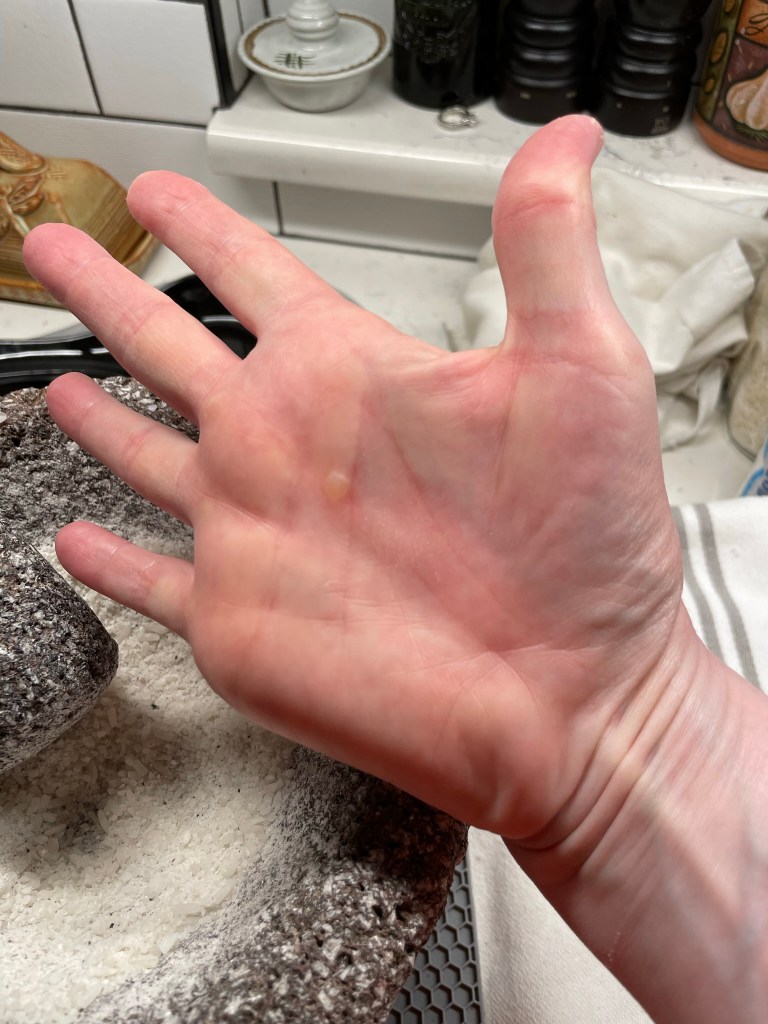
A mere 20 minutes into this process, I had to give up because I already had a blister from gripping the rough surface of the pestle so tightly. Les took a crack at it, too, and we soon realized this was not going to happen in time for us to make Kenji’s gorgeous guacamole, and that’s where the chef’s scientific expertise came to the rescue. As with most of his recipes, Kenji offered a workaround for crushing the ingredients with coarse salt, and it was so simple, we could do it with nothing more than a bowl, a cutting board and a good knife. Here goes!


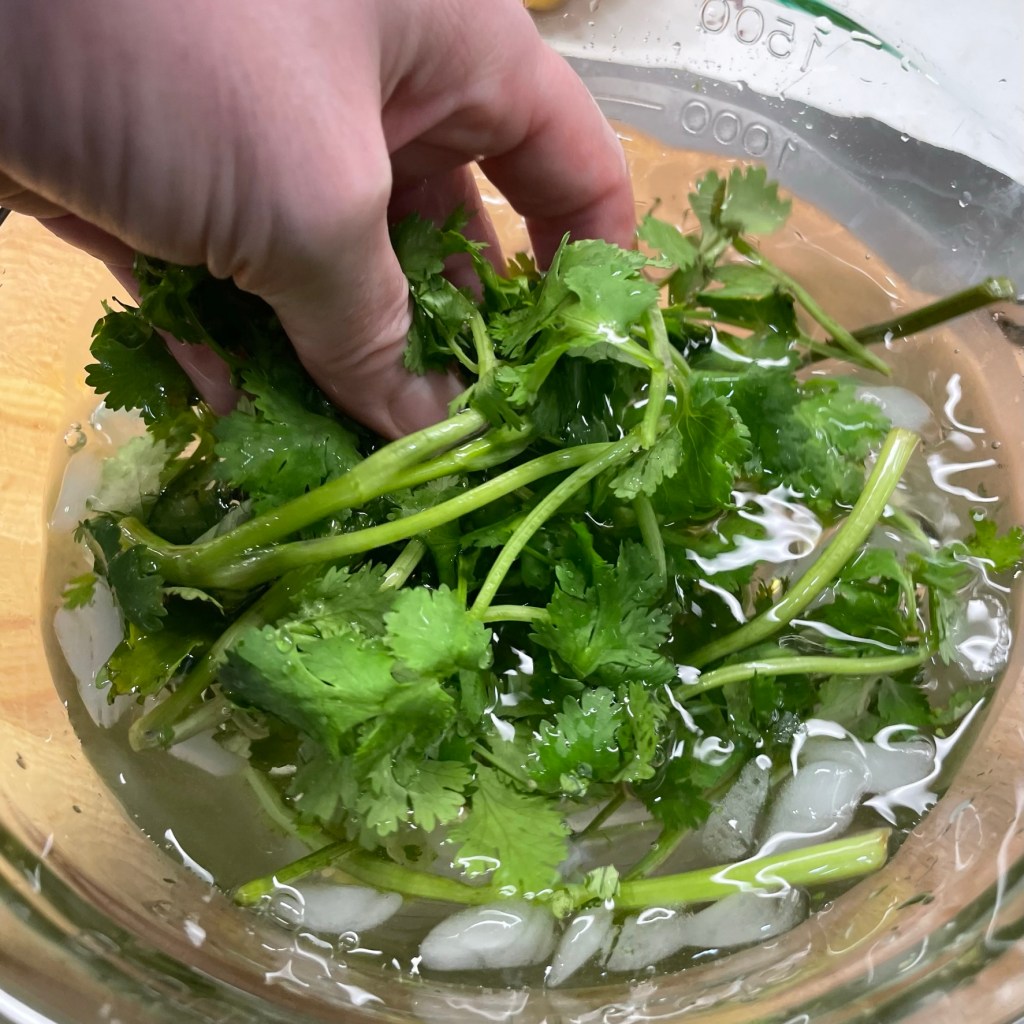
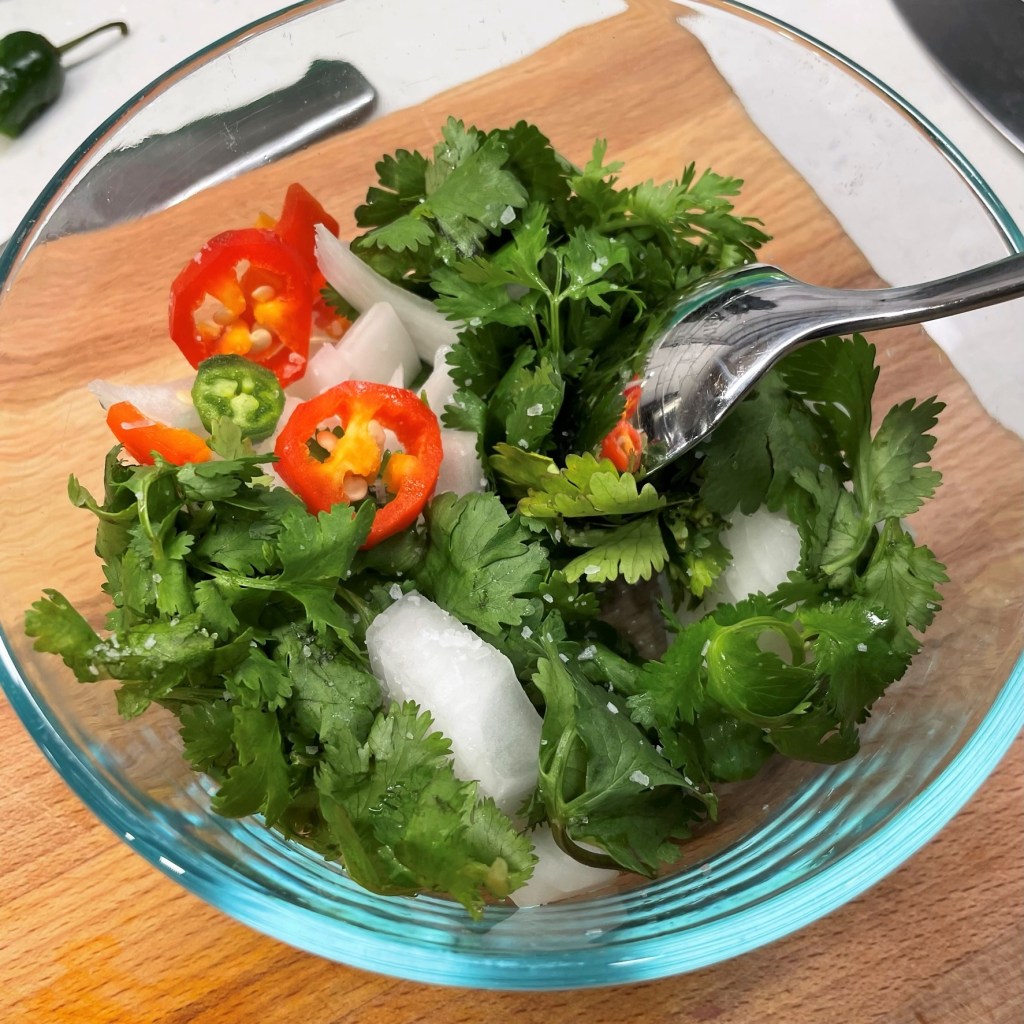
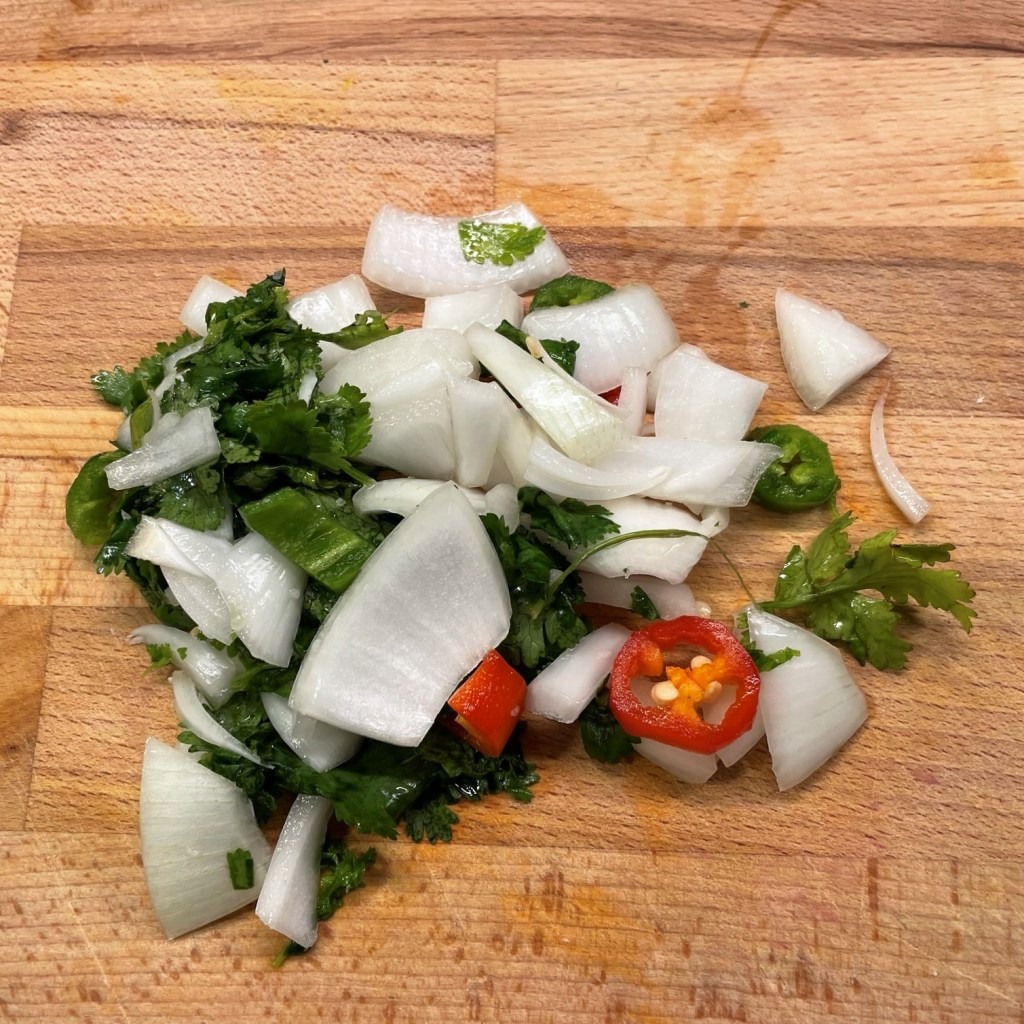
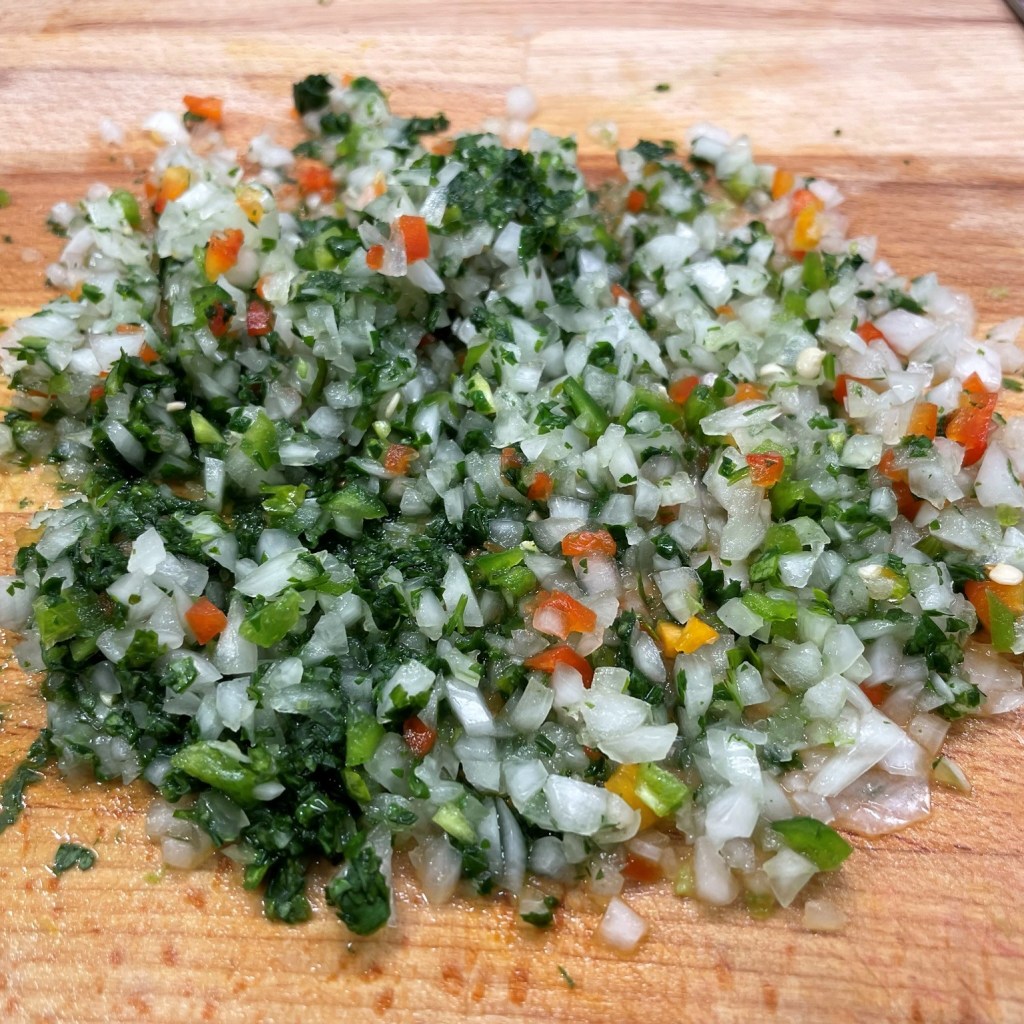
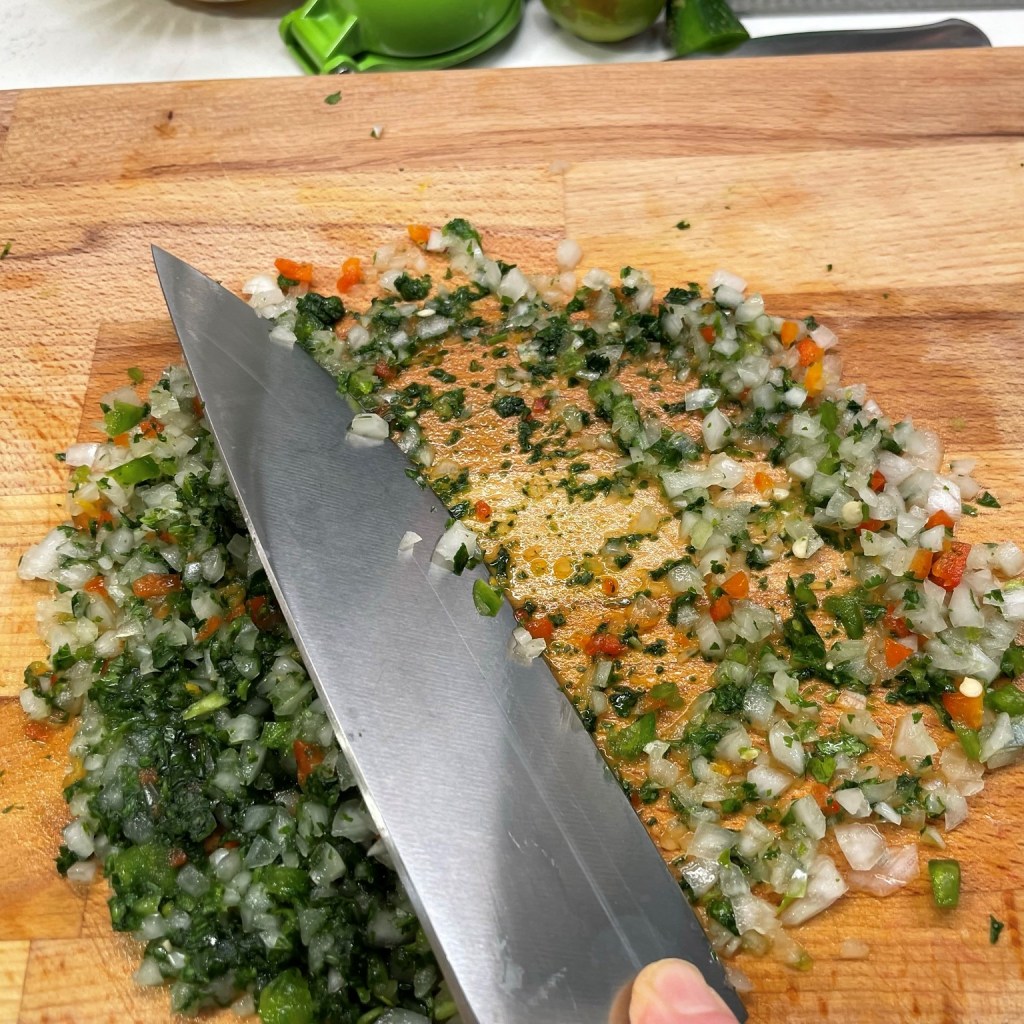
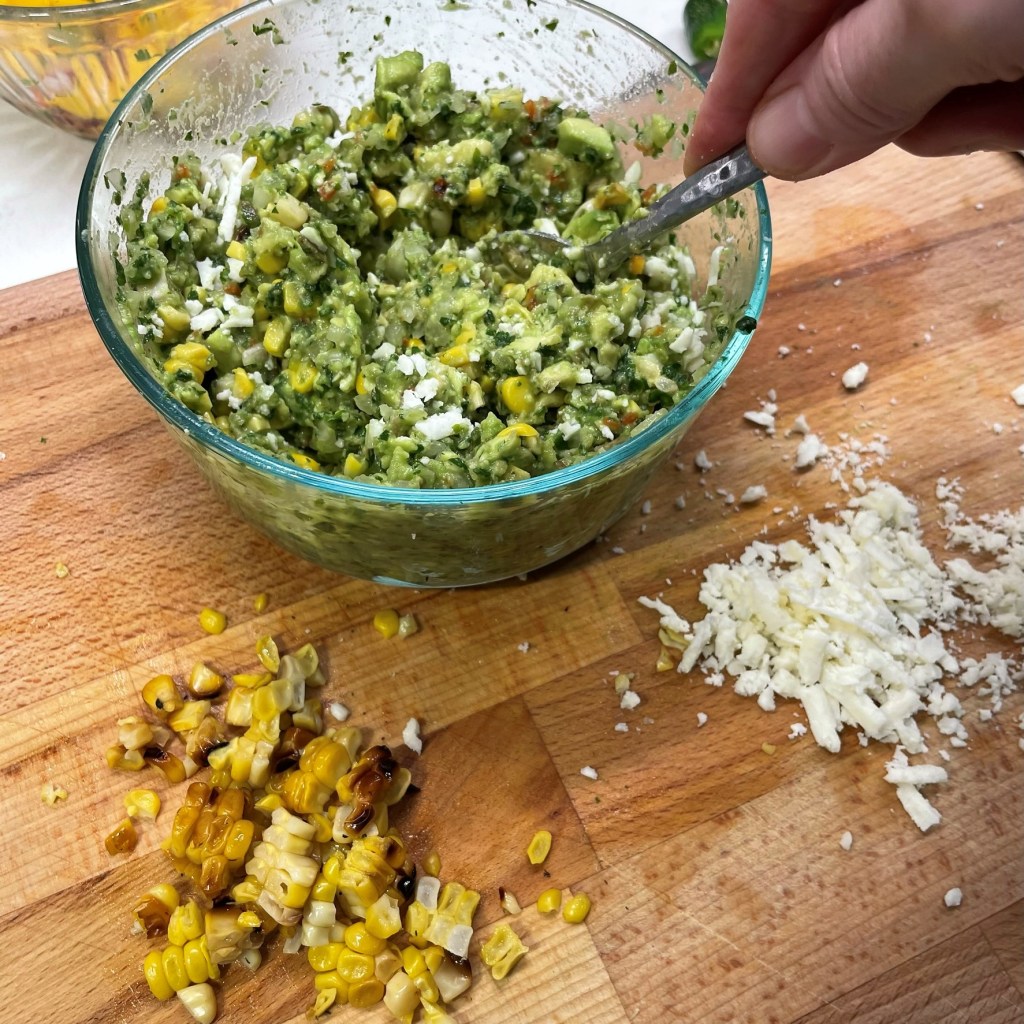
Salting the white onions, jalapeno and cilantro for 15 minutes breaks down the cell walls and makes it easier to extract the flavors than if you started chopping it straightaway. Next, you mince that mixture finely, and then lay the blade of your knife nearly flat against the cutting board, dragging the mixture to a paste-like consistency. Transfer it to a bowl and carry on with the recipe.


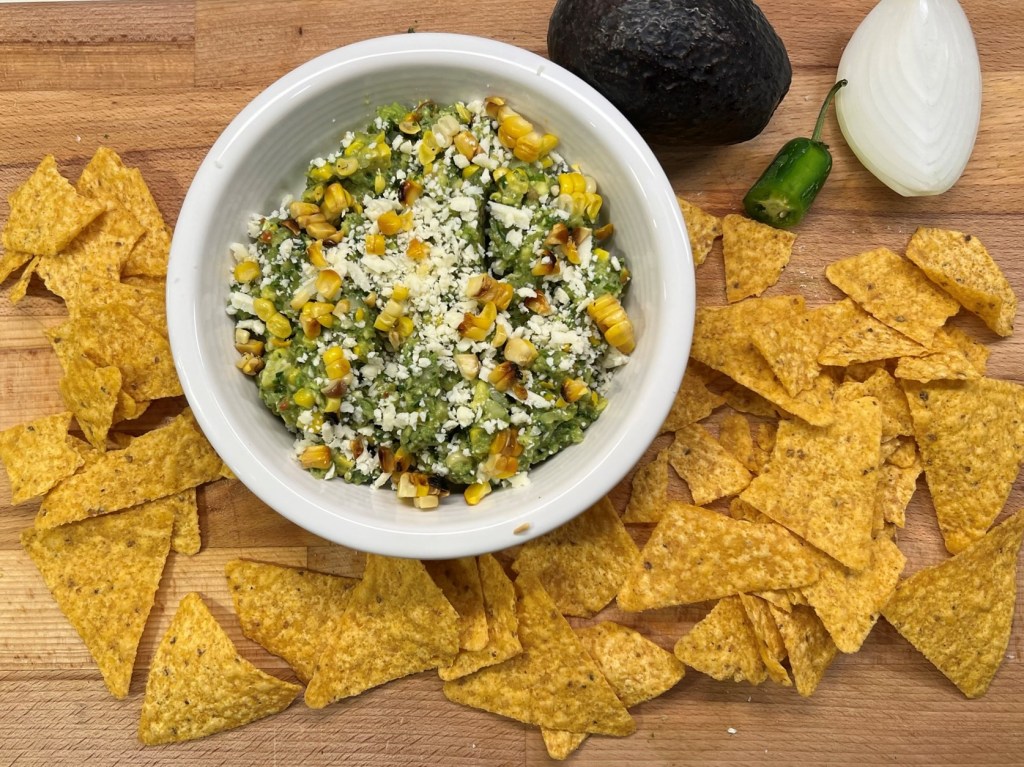
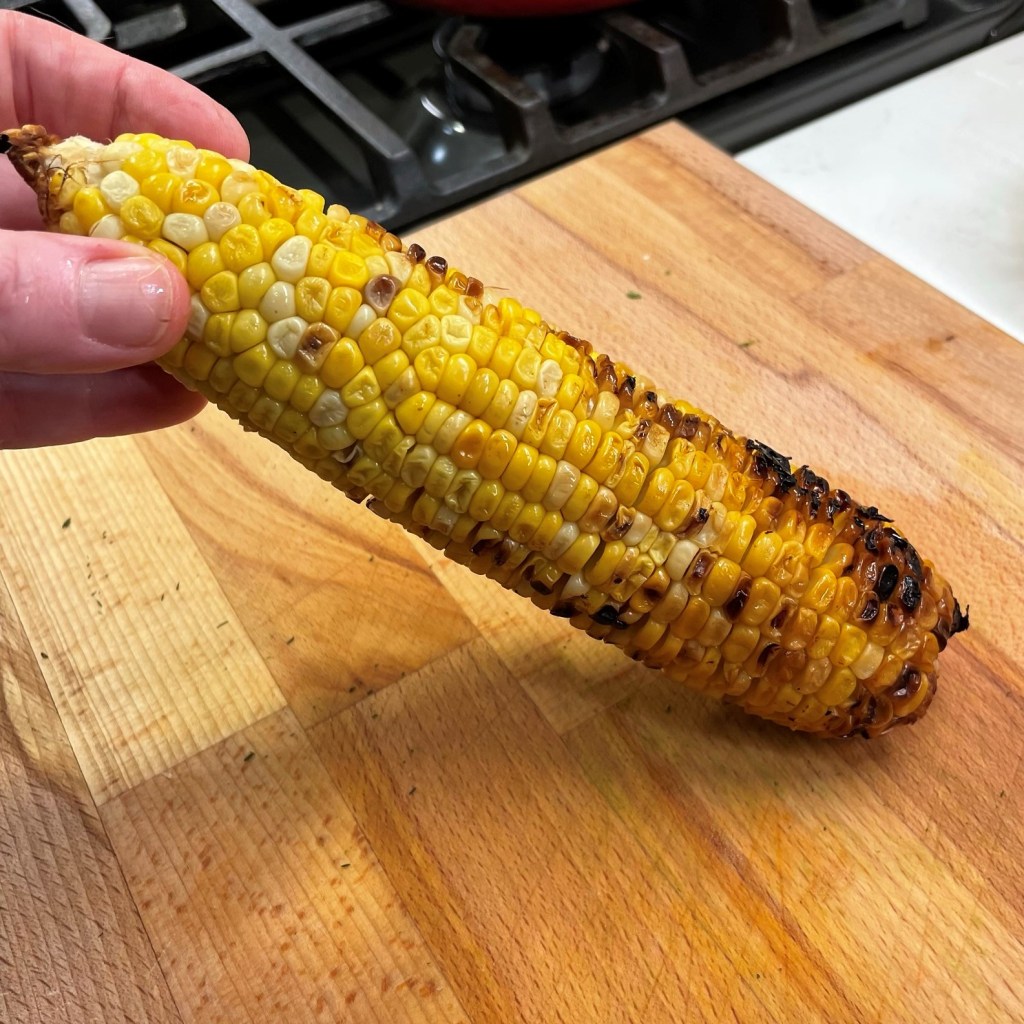
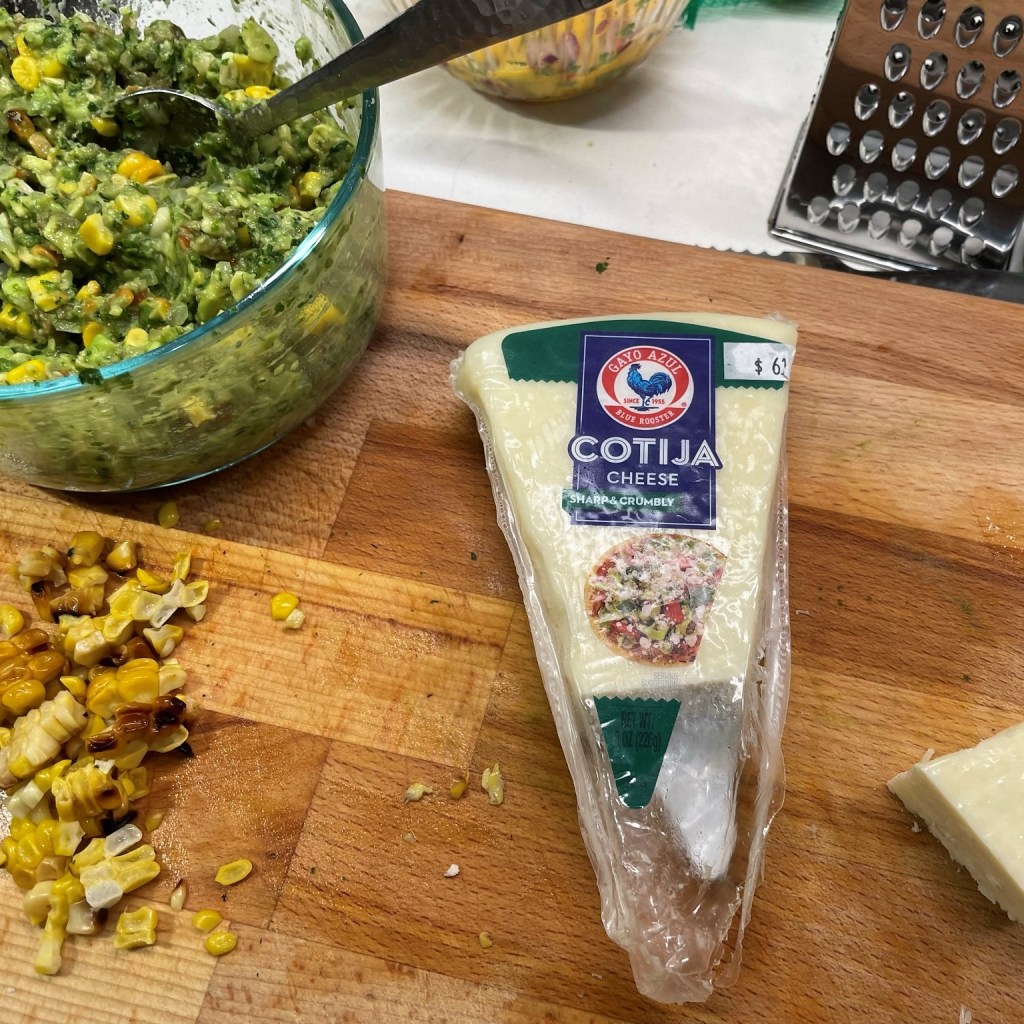
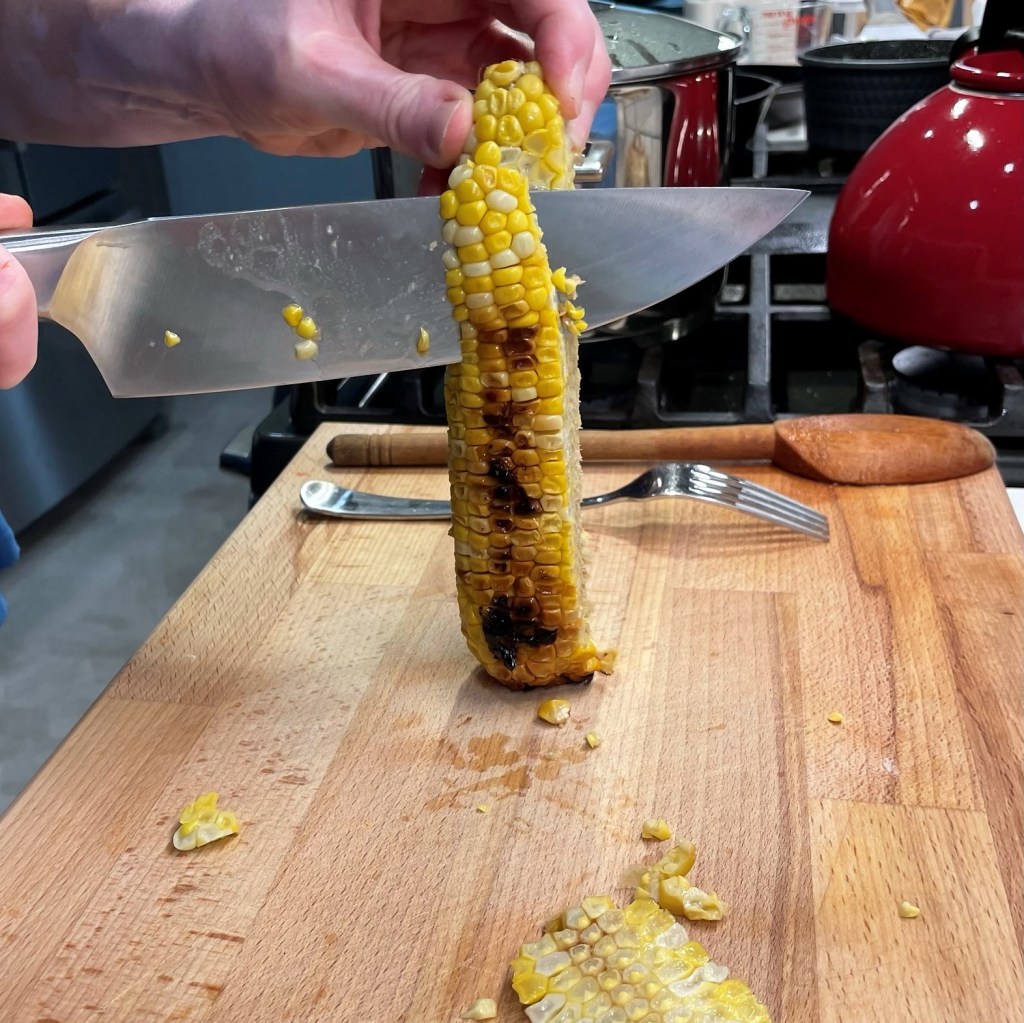
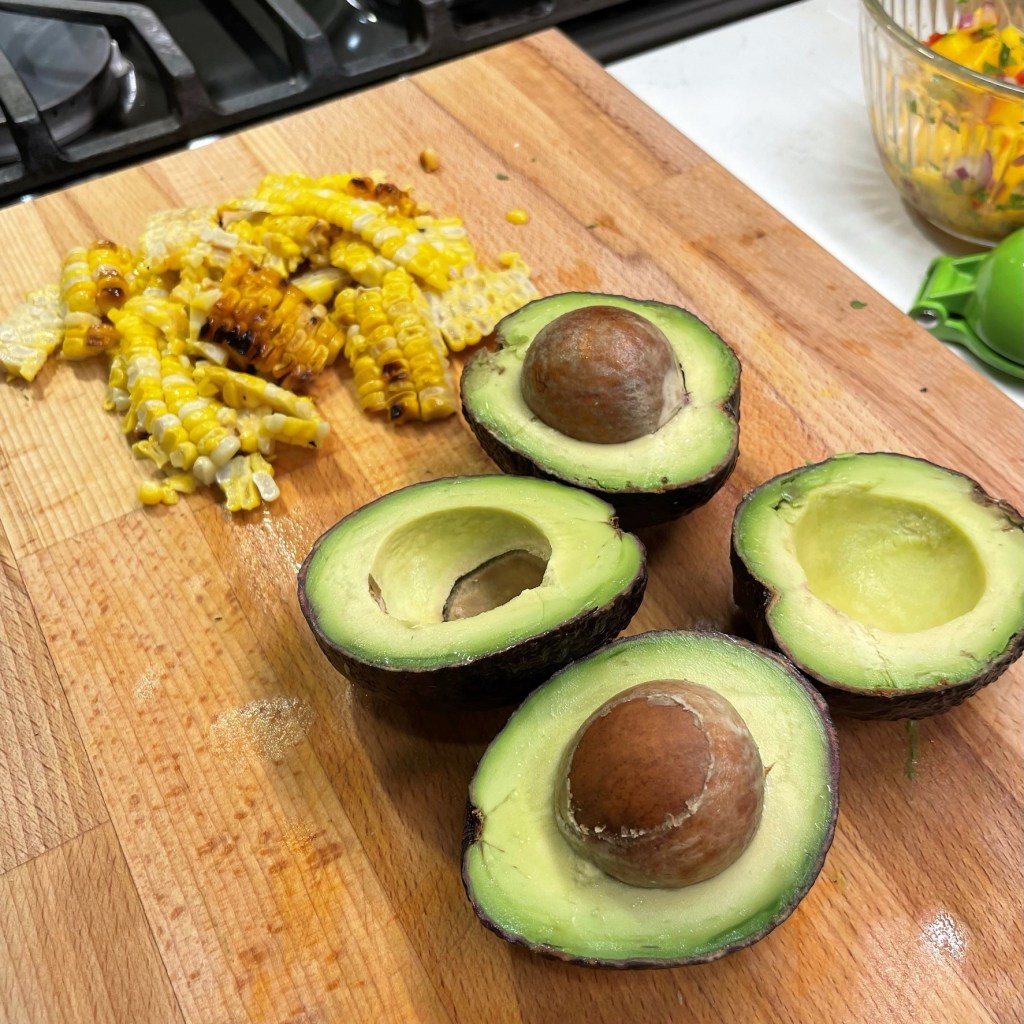
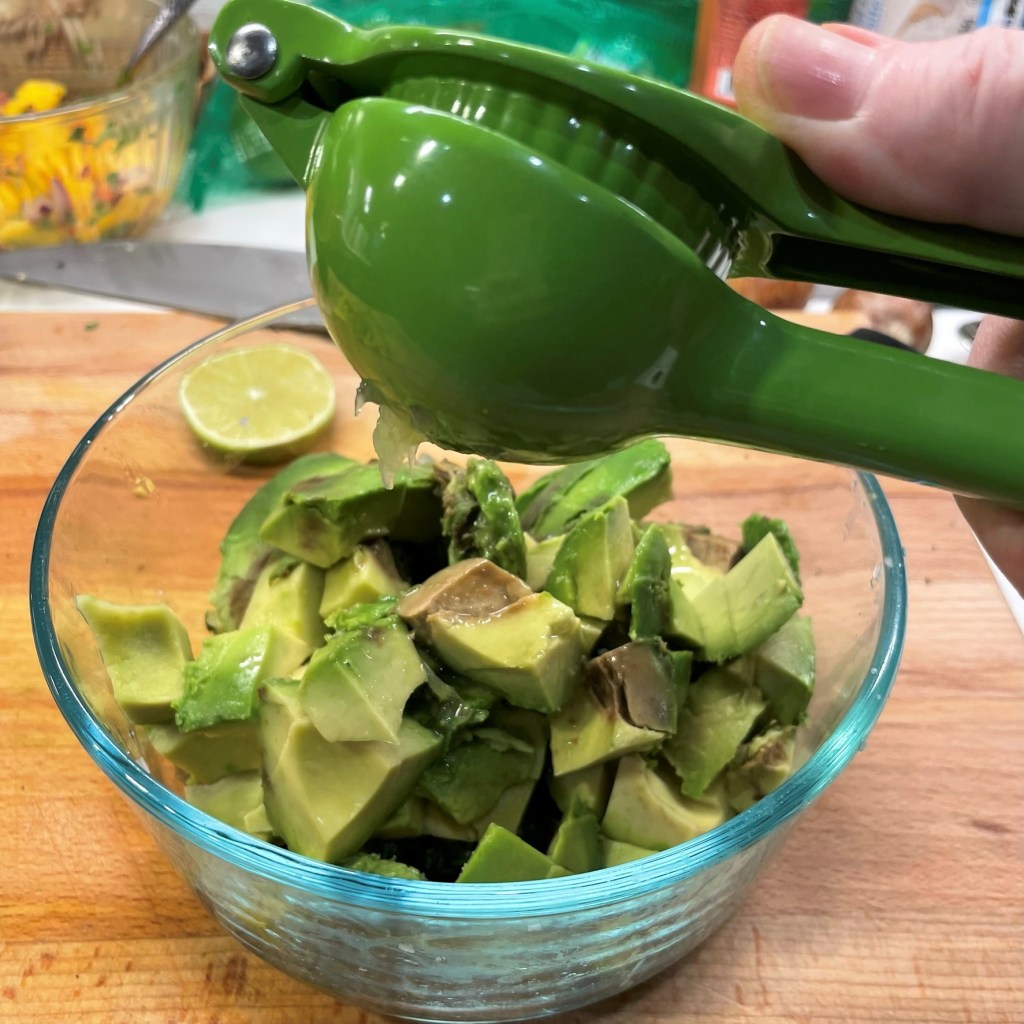
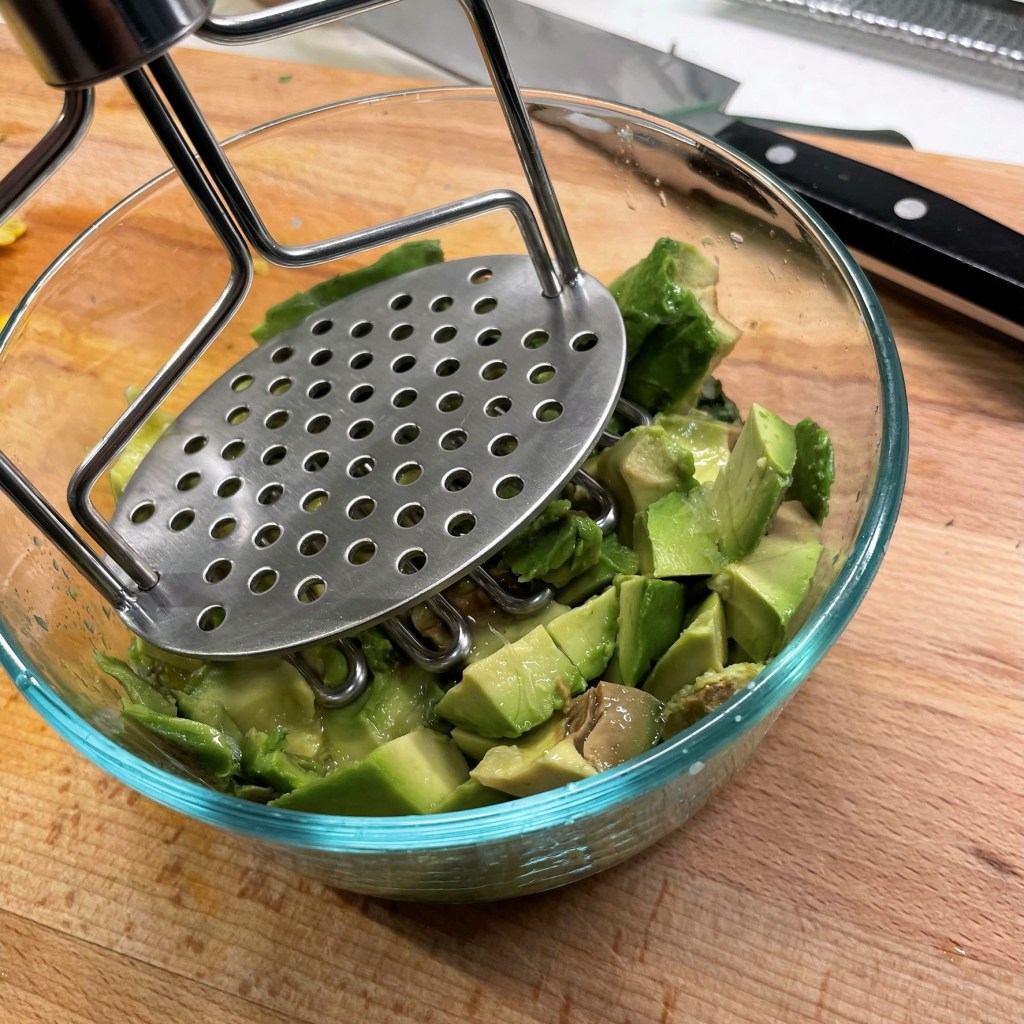
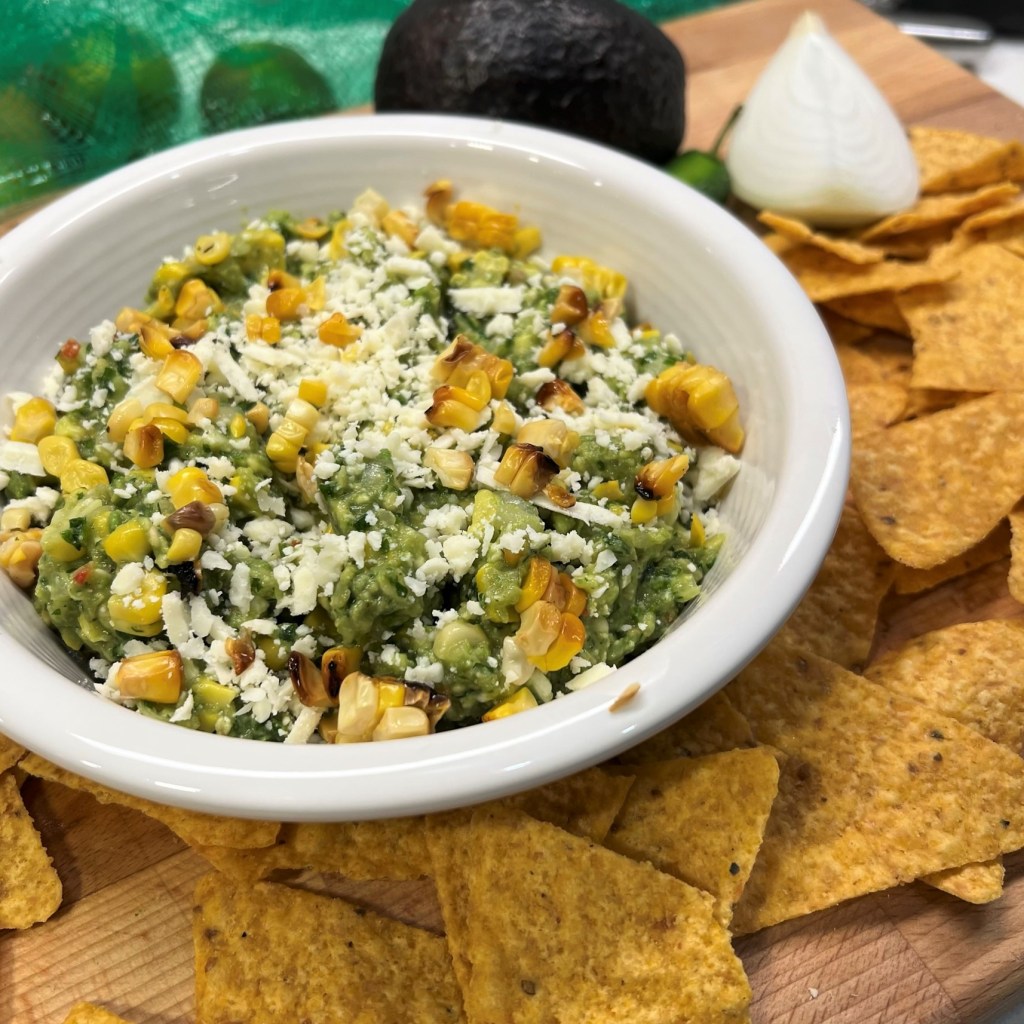
We grilled our corn ahead of time and stripped off the kernels, but I imagine in a pinch you could even use (thawed) frozen fire-roasted corn, like the kind we frequently buy at Trader Joe’s. Squeeze lime juice over the avocados to preserve their color, and use a box grater to shred the cotija cheese into coarse crumbles. Blend it all together, mashing the avocado with the back of a fork or potato masher, and reserve some of the corn and cotija for topping your beautiful creation.


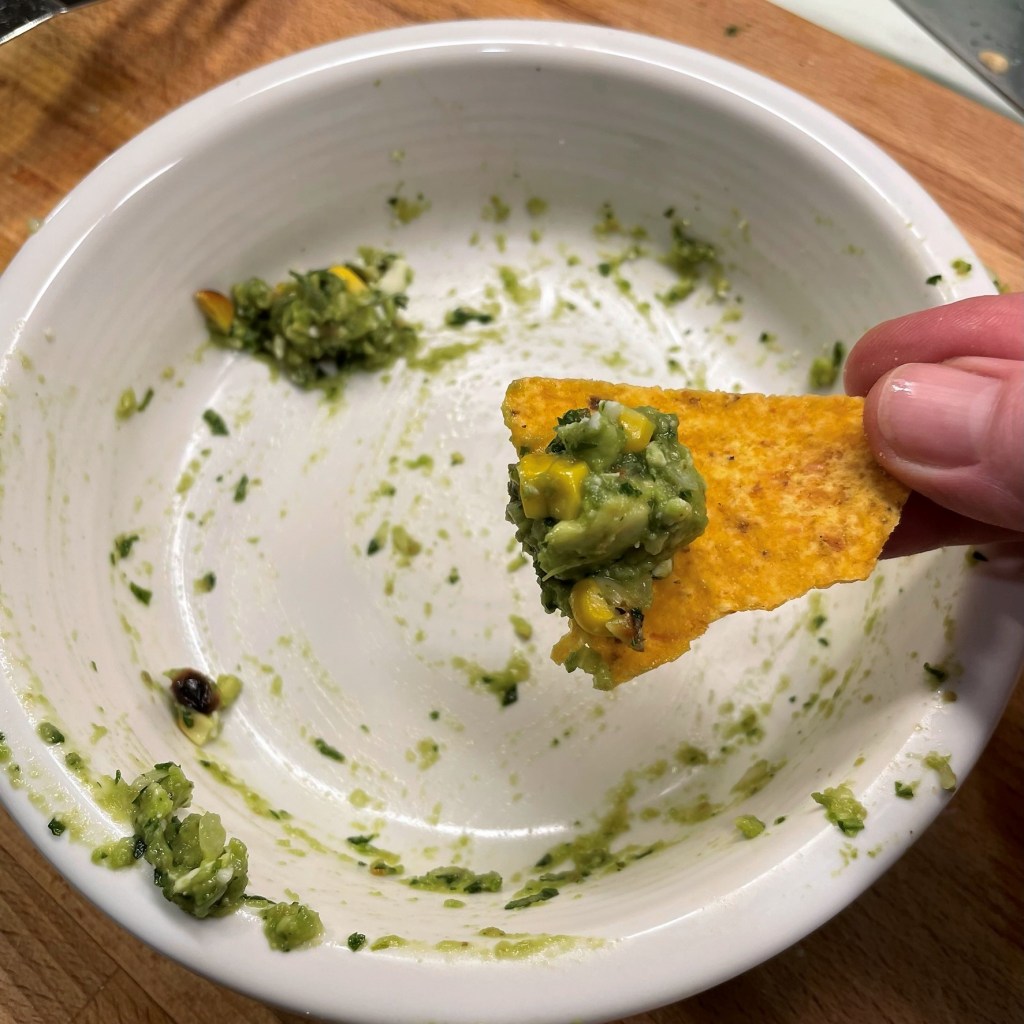
Friends, this guacamole was so freaking delicious, the two of us devoured the entire bowlful in less than half an hour!


You can make the guac as spicy as you want it to be by adjusting the jalapeno, or simply by leaving in some of the seeds. Choose the most ripe, ready avocados you can find and, if you don’t have a molcajete, take advantage of the workaround that Kenji shared because it really does make a difference. I readily admit that up to this point, Les and I had merely cut up our guacamole ingredients, but we look forward to applying this fabulously simple technique the next time we make the Smoky Chipotle Guacamole that Les has made famous at our house. And, of course, we will continue to grind away at the molcajete—hopefully, it will be properly seasoned in time for Super Bowl!

Mexican Street Corn Guacamole

  • Servings: About 2 cups
  • Difficulty: Average
  • Print

Even without the proper, authentic tools, I found this Kenji-inspired appetizer very manageable and absolutely delicious! Save yourself some time by grilling an extra ear of corn a day or two ahead, and use avocados that are at peak ripeness!


Ingredients

  • 1/4 cup white onion, rough-chopped
  • 1 jalapeno, seeded and rough-chopped
  • 1 cup loosely packed cilantro leaves and tender stems
  • 1/2 tsp. kosher salt or coarse sea salt
  • 1 ear grilled corn, cooled
  • 2 average size, ripe avocados
  • Juice of 1/2 large lime
  • 2 oz. cotija cheese, shredded on large holes of box grater
  • Additional salt, pepper and lime to taste
  • Tortilla chips for serving

Directions

  1. Combine onions, jalapeno and cilantro in a medium bowl and toss it with the kosher salt. Allow it to rest 15 minutes, to draw out moisture. Finely chop these ingredients together, then lay a chef’s knife nearly flat and drag them across the cutting board to create a mixture similar to paste. Some bits will remain, and that’s OK. Transfer the mixture to a bowl that’s large enough for mixing your guacamole. During the rest time, prep the corn and cotija.
  2. Trim the fat end of the ear of corn, and stand it up on your cutting board to cut down the cob, releasing the kernels. Break apart any large clumps.
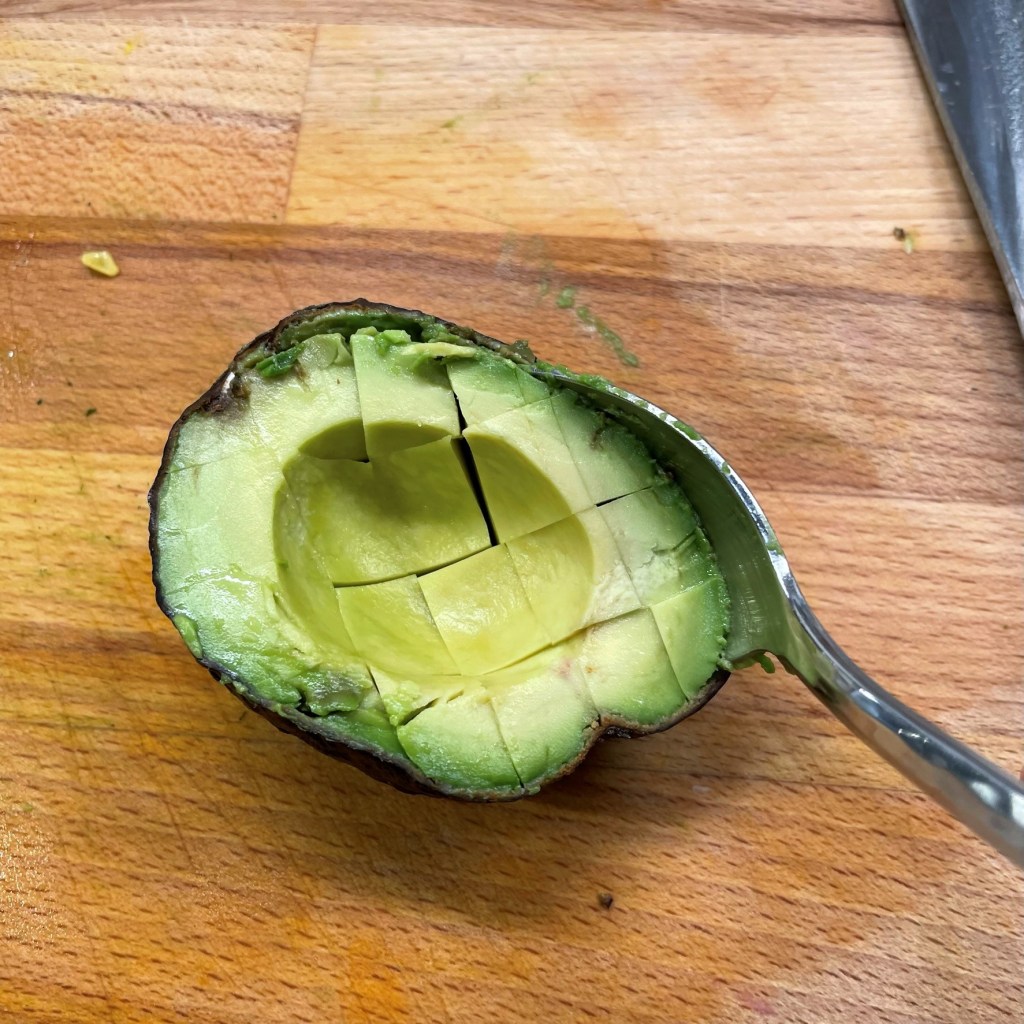
  3. Wash the avocados, then cut them in half and discard the pits. Score the flesh into cubes and spoon it out into the bowl with the onion mixture. Squeeze the lime all over the avocado and toss lightly. Use a potato masher or the back of a fork to gently mash the avocado flesh to your desired texture.
  4. Add most of the corn and cotija to the guacamole bowl and fold or mash to combine. Adjust salt, pepper and lime to taste. Transfer guacamole to a serving bowl and sprinkle remaining corn and cotija on as a garnish.
  5. Serve immediately with tortilla chips and watch it disappear!


My Love-Hate Relationship with Trader Joe’s

Truth be told, I have wanted to write about this subject for some time, and my visit to Trader Joe’s last week has pushed me over the edge. For anyone who has never had a chance to visit this unusual store, with its extraordinary selection of unexpected products and ingredients, you may want to take my ranting with a grain of salt. It’s worth visiting, without a doubt, so don’t let me scare you away. But my husband, Les, and I ride our dedication to TJ’s like a seesaw—we are either raving about their products to everyone who will listen, or flat-out cursing them over some repeated offense—and I have been curious to know if other shoppers have experienced the same.

Make no mistake, there is plenty I appreciate about Trader Joe’s, where the employees wear Hawaiian print shirts and they all seem to be in a perpetual state of excited happiness. Many of the workers at our local store have been there since the doors first opened, so I expect it may be a terrific place to work.

The now-national chain began with a single California store in 1967, and a mission to bring interesting products to culture-savvy shoppers who enjoy exploring the flavors of the world (in other words, me). And for that, they have been pretty darn successful. Because of Trader Joe’s, I learned about zhoug, Calabrian chile paste, za’atar seasoning and nduja. Shopping there is fun, and the stores are small, so it doesn’t take all day to find something inspiring. They don’t mess around with sales or membership cards or loyalty programs or whatever other gimmicks irritate you at other stores. The price is the price, and it’s almost always a good one.

This is not a commercial for them, just an honest personal assessment, but I have more to say—a lot more. I’ll begin with the positive, in no particular order.

Their commitment to products without “HFCS” and “GMO” ingredients

This is a big one for me. Since I first began to learn about the sketchy origin of high-fructose corn syrup, I had spent at least an extra half hour on every grocery store visit, to ensure I had enough time to do proper vetting against this ingredient. Then, Trader Joe’s opened in my city. I don’t have to scan the labels anymore, because of their promise to reject products containing HFCS. The same goes with genetically modified organisms (GMO). Less time reading labels means more time to focus on being inspired toward new recipes.

Good alternatives to big-name items, usually at much better prices

This speaks mostly for itself, but I’ll offer a few of my favorite examples: I love plain kefir as a base for my healthy breakfast fruit smoothies, and the Trader Joe’s brand is significantly less expensive than the Lifeway brand that is available at other markets. Same with their butter, which has short, fat sticks rather than the usual long, skinny ones. They fit better in my butter dish and the packages even fit better in the fridge door. Their organic natural peanut butter has been my go-to for a decade. We use a lot of canola oil at our house, especially for baking or high heat recipes, and the bottle at TJ’s is not only a more convenient shape and size at a better price, it gets bonus points for being expeller-pressed.

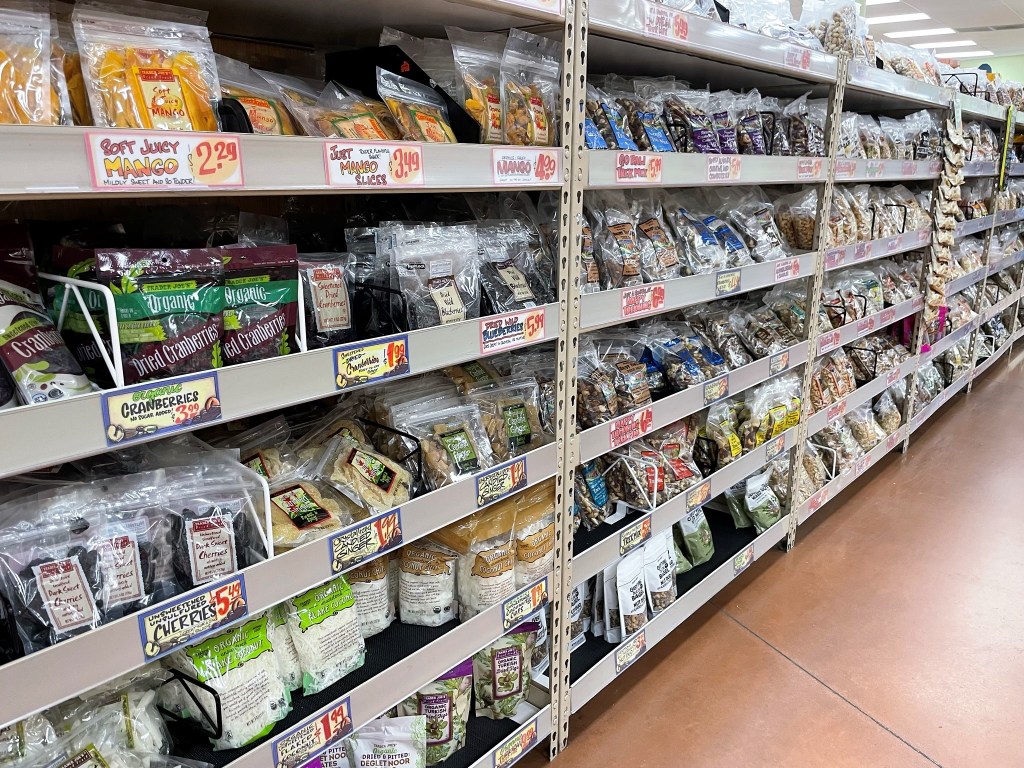
The best selection ANYWHERE of dried fruits and nuts

Endless options for granola, right here!

I mean, an entire aisle length of every kind you can imagine and then a bunch more that you didn’t. They have dried sweet cherries and dried Montmorency tart cherries. Raisins and golden raisins and jumbo raisins. Raisins mixed with dried cherries, blueberries and cranberries (this is the “Golden Berry” blend that my hubby enjoys on his morning cereal). Dried figs and apricots and bananas—you get the idea. Same with nuts, and not only every variety imaginable, but also options for roasted or raw, salted and unsalted, even 50% salted! Whole nuts or halves and pieces. Don’t even get me started on the imaginative flavor combinations they put on the nuts, like the spicy Thai, Lime and Chili cashews, Everything But the Bagel mixed nuts, or the brand new Crunchy Chili Onion peanuts (I just bought a bag this week—I’ll let you know).

Helpful, knowledgeable employees who make thoughtful recommendations

Unlike so many other stores I frequent, Trader Joe’s trains their employees to be ready for customer requests, and nine times out of 10, they lead me directly to the item I need (if they have it). I was buying ingredients one day to make my Copycat Chicken Lettuce Wraps, and I couldn’t find canned water chestnuts. Turns out, Trader Joe’s doesn’t carry them. But when an employee noticed me searching and offered to help, she proposed an alternative in fresh, cut-up jicama sticks. “Would this give you the texture you’re looking for, without adding an off flavor?” And they did!

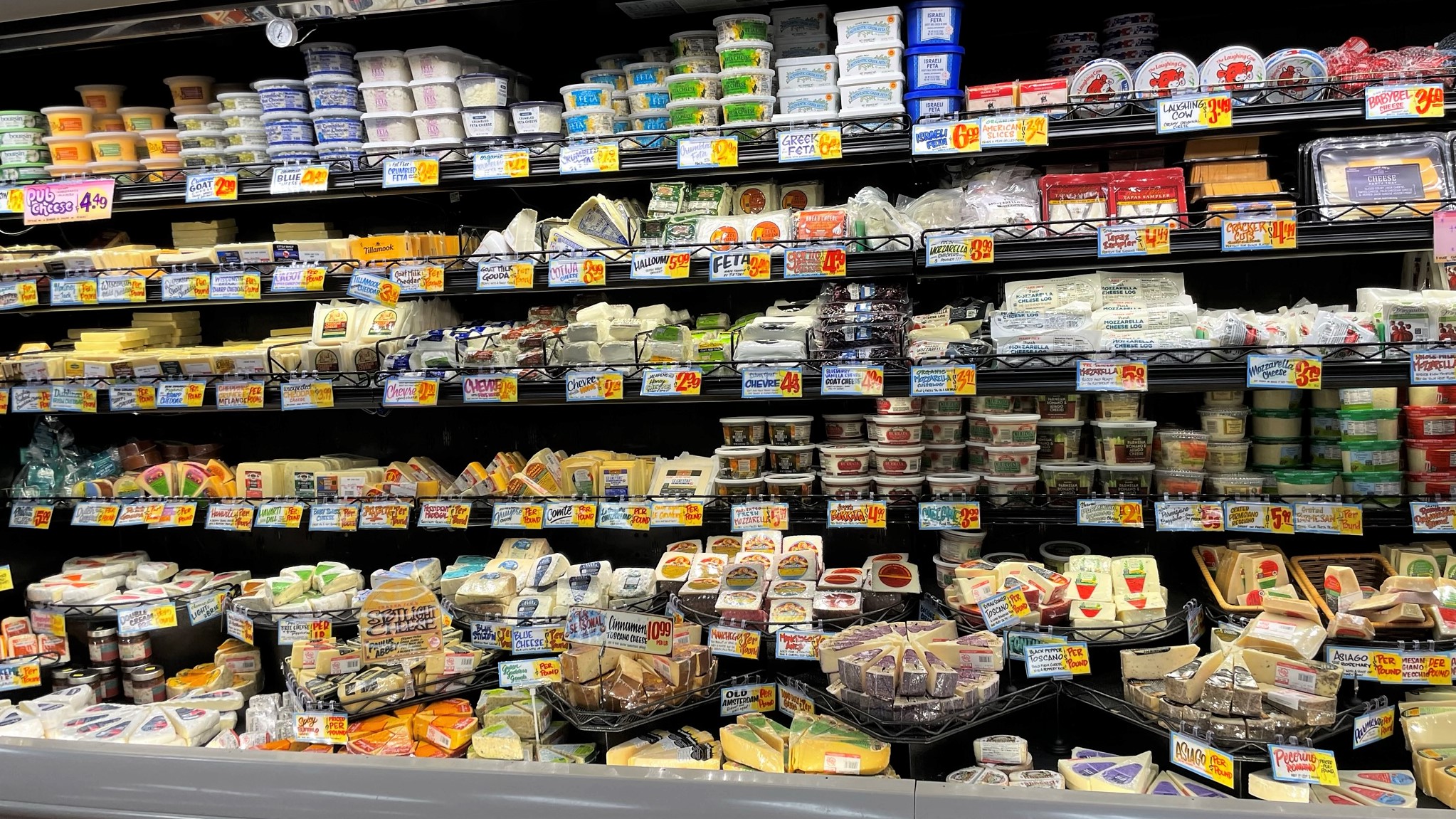
TJ’s is the store for anyone throwing a wine and cheese party.

Their wine selection is vast—an amazing feat, considering their small footprint—and they are big supporters of smaller, independent wineries, with a broad range of private label offerings. You will find your favorite varietals at several price points, from their famous “Two-Buck Chuck”—the house brand** that sold for $1.99 a bottle back in the day but is now up to $4.49, still a phenomenal bargain—all the way up to a Caymus Cabernet that I spotted last week for $75. The wines are well-organized, and labeled with descriptions that don’t sound snobbish, making it a great place to discover wines you didn’t know about, like Vinho Verde from Spain, or an Italian Montepulciano. I especially appreciate that they carry a Kosher for Passover chardonnay, unoaked, and it’s pretty good!

**UPDATE: On September 13, 2022, the creator of “Two-Buck Chuck,” Fred Franzia, has passed away.

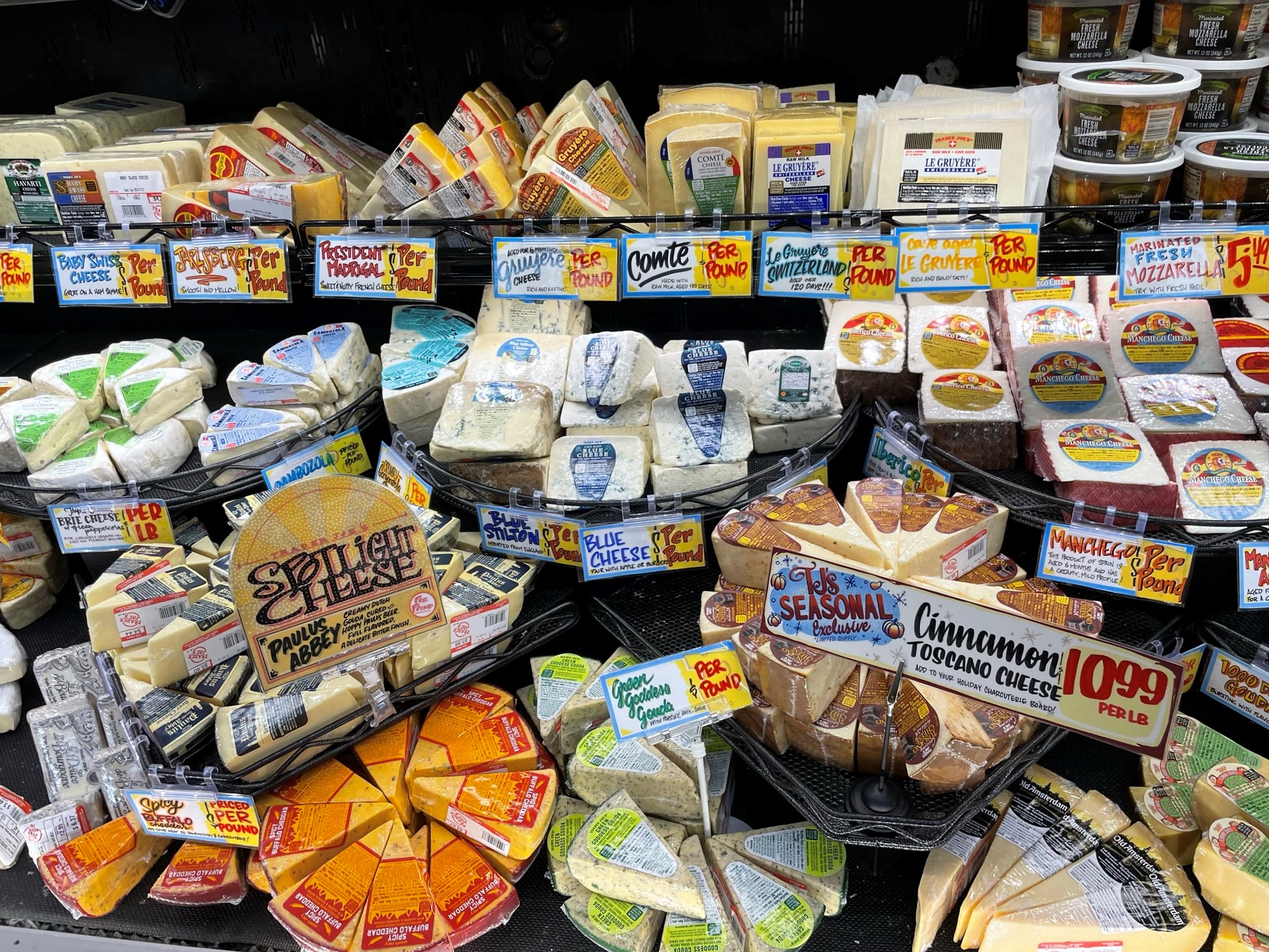
Say “cheese!”


Need some cheese to go with that wine? Scoot on down the row to the specialty cheese case where you’ll find a few standards, such as the Unexpected Cheddar that is immensely popular at our house, with its sharp, salty flavor that hints at Parmesan. And depending on your timing, you’re guaranteed to find a nice “seasonal” cheese, like the cinnamon-dusted Toscana that I picked up on my recent visit.

Speaking of seasonal, count of Trader Joe’s to bring home the flavors

Without a doubt, TJ’s has nailed this. Their stores don’t have enough space to carry all the things, all the time. Their solution for keeping things interesting is seasonal swapping. For better or worse, we are about to enter “pumpkin spice” season at TJ’s which, for me, marks the official start of autumn.

Hi, Pumpkin!

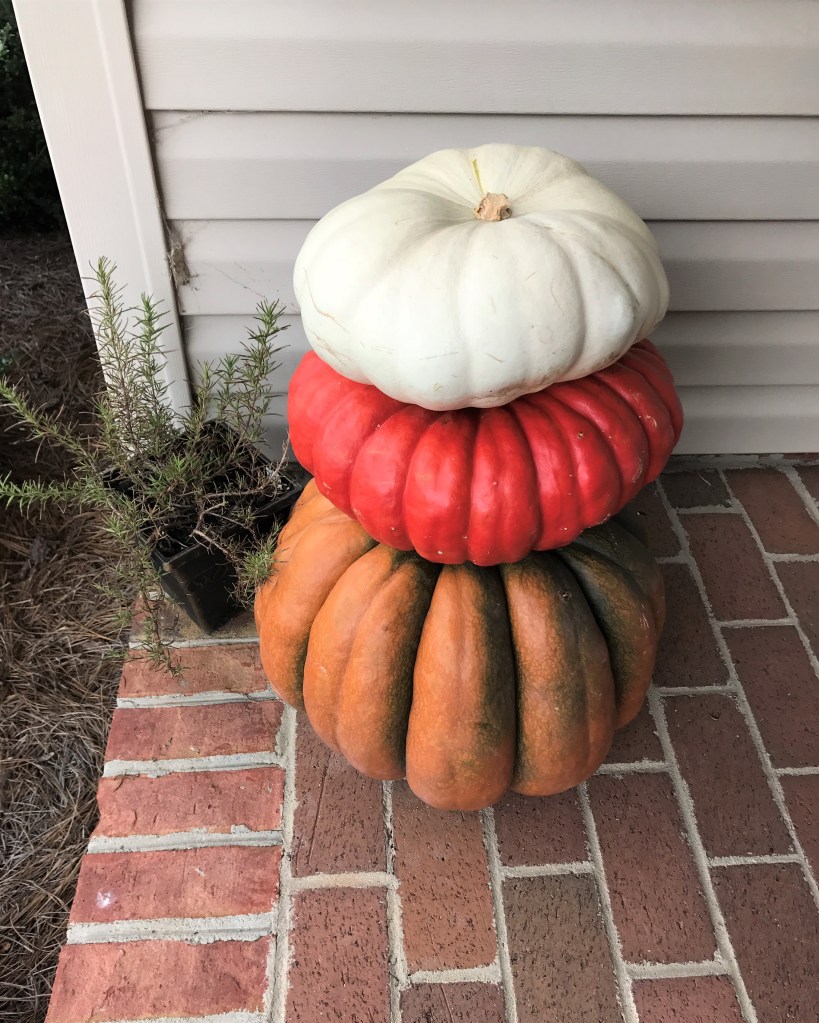
I personally can’t wait to see the big crate full of fantasy pumpkins on the sidewalk, and I’ll buy a few to dress up our front steps. A big display case will be set up near the front of the store, packed on every side with all things pumpkin spice, including a few things that probably have no business carrying those flavors. It can be a little overwhelming for those who like a taste of pumpkin spice—TJ’s has it for their coffee cup, breakfast waffles, ravioli, hummus, dog biscuits, scented candles and even body butter—and downright annoying for customers who would prefer to just carve a jack-o-lantern and call it fall. Nonetheless, moving products through with the seasons helps Trader Joe’s give the people what they want right now, and they are darn good at it.

Maybe a little too good?

This notion of “seasonal” brings me around to discussing the dark side of Trader Joe’s—the grievances that leave me frustrated, annoyed or downright furious.

Lame excuses for not having the products you have come to love

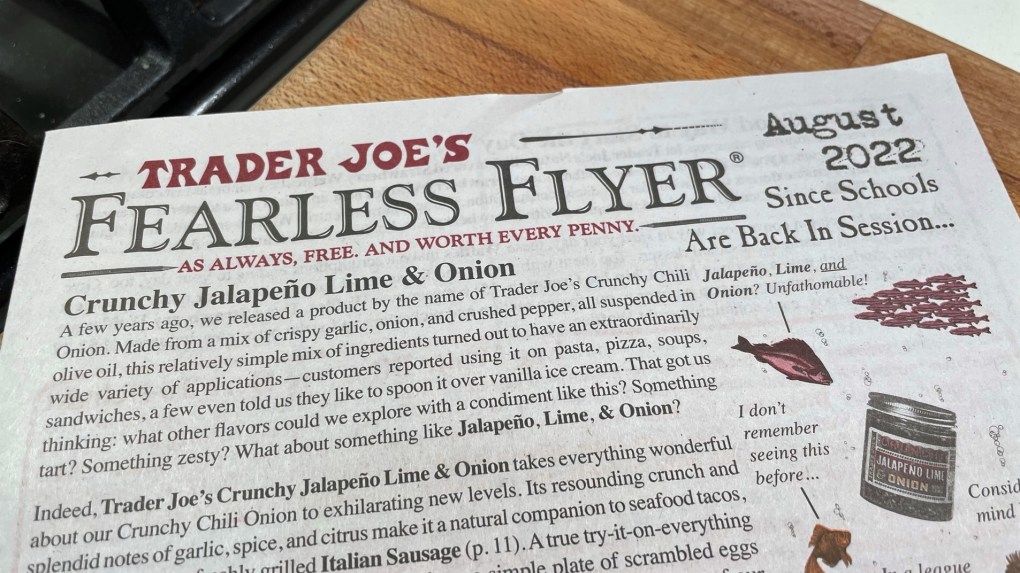
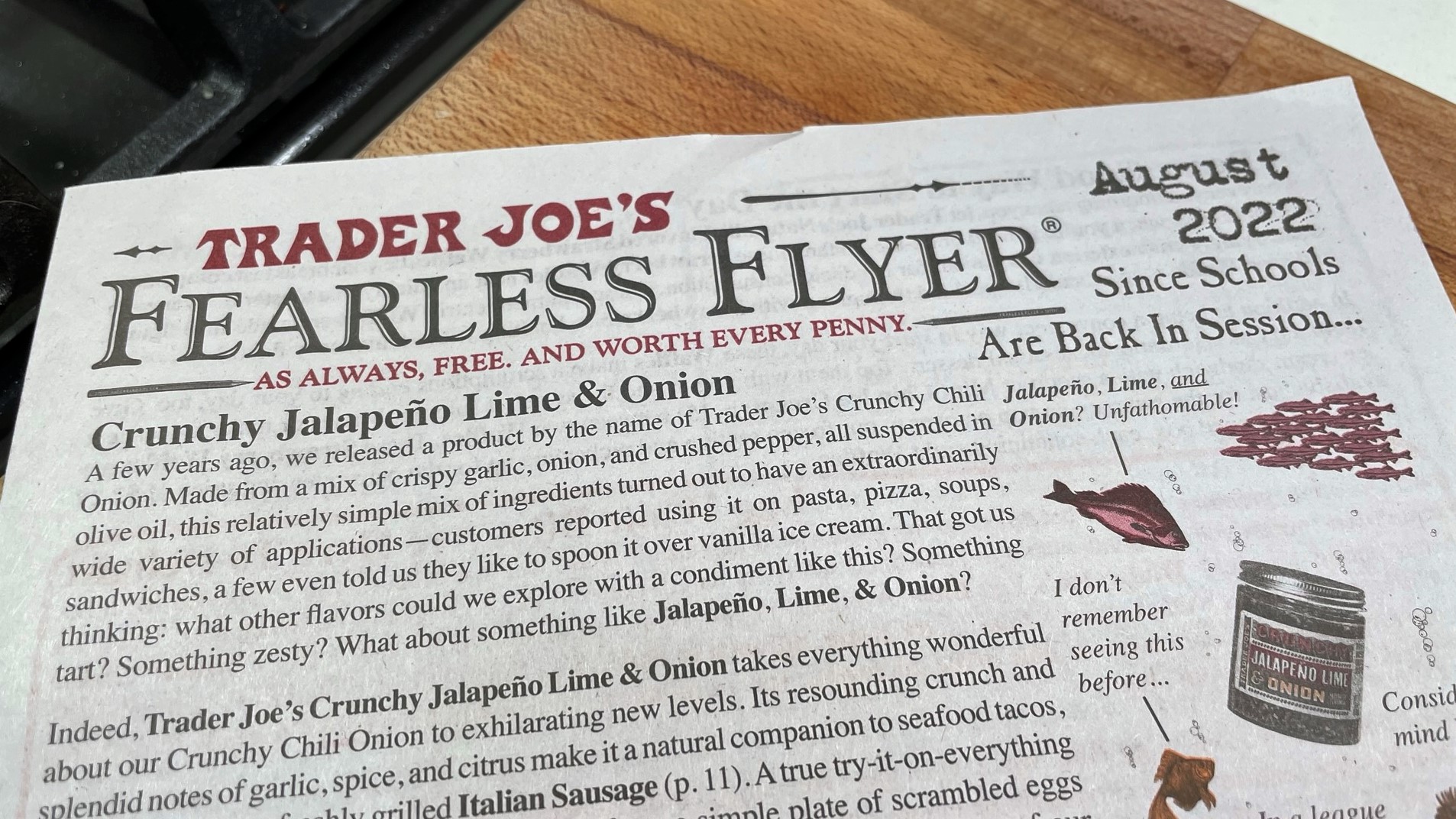
Oh, if I had a nickel for every time I’ve made a trip to TJ’s for something I’ve gotten excited about only to find it gone. If you dare to ask for something that is even one minute expired from their scheduled inventory, you can bet your pumpkin spice one of their uber-cheerful employees will inform you that the item was—wait for it— “seasonal.” This is their first, go-to answer. It’s so aggravating, and sometimes, it seems like an easy excuse. This idea of retiring products makes sense to a point. I don’t expect Trader Joe’s to have pumpkin spice baton cookies in April, but what about when I’m trying to find the brand-new Crunchy Jalapeno Lime and Onion condiment that was literally in the Fearless Flyer ad I picked up on my previous-week visit?

Headliner today, gone tomorrow.

I walked through every aisle without luck and was eventually told, “Oh, we sold out last week and it’s gone for the season!” Well, damn. Maybe next year—or maybe not, depending on how well the product performed in sales.

I’m still aching from the disappearance of the honey-pale ale mustard I loved. At first, they told me that was seasonal, but I learned the next year it was permanently discontinued because it wasn’t a good seller. This made more sense because, let’s be honest, mustard isn’t seasonal. So, what about the mayonnaise we (and millions of other customers) loved?

When the “seasonal” claim holds not a shred of truth, and when the product was undeniably popular, that’s when you can expect the other pat answer: they’re having a problem with that supplier. That’s what they told us when we couldn’t find our favorite expeller pressed canola oil mayo. That stuff was like oxygen for our sandwich-loving selves, and we were downright panicked when it vanished. The company line was that the “canola oil had gotten too expensive” for them to continue selling the mayo. Funny thing, though—they still carry the aforementioned canola oil that I love, and its price hasn’t changed. There’s a clinical term for this type of response, and I’m pretty sure it’s “gaslighting.”

Fresh items turn south way too quickly

OK, fellow serious home cooks, how frustrating is it—on a 1 to 10 scale—to plan a menu, shop the day before, and discover upon setup for the meal that one of your key ingredients has already begun to spoil? Trader Joe’s has a fantastic return policy, and I have never had a problem with them refunding or replacing anything. But their fresh meats and produce have a very short life, and it isn’t at all convenient to haul myself back across town with a stinky chicken or moldy bell pepper when I need to have dinner on the table in the next hour. Depending on how busy I am the next day, I may or may not be able to do it then, either. I’ve mostly stopped purchasing fresh meat there, which is a shame because they have a good selection. The rule of thumb at our house is, “don’t buy it unless the oven is already pre-heated at home.”

All that plastic wrapping on the vegetables

Why? Just why do all the vegetables have to be bagged in plastic? I don’t want to imagine the environmental impact of this, and though some of their produce items do need to be contained—the yummy salad kits, for example—other items, like bunches of fresh scallions or whole heads of cauliflower, don’t. My hunch is that they don’t have the proper prep spaces to handle the produce differently, but all that plastic troubles me. Another thing that’s interesting about their produce is that nothing is priced by weight, which is a big plus for keeping the checkout lines moving faster, but it does mean you can spend extra time digging for the largest delicata squash to be sure you get your money’s worth on items priced by the piece. I’m speaking hypothetically, of course—delicata squash is seasonal and hasn’t hit the stores yet. (insert smirk emoji)

All that delicious bread comes in frozen

The selection of bread is great, but it all comes in frozen and the moisture that collects inside the bags increases the likelihood of mold. This has not been a problem for me personally in recent years—I have bought nary a loaf anywhere since I started baking with sourdough—but if you want one of those beautiful ciabattas, buy it on the morning of the day you plan to use it. Even the tortillas are affected by the freezing; it isn’t unusual to find them stuck together in the package after something went awry with the thawing. Not much fun when you’re in a hurry to make breakfast burritos.

Consistency of products is lacking

There’s nothing like anticipating a taste of something that you have grown to love, and then opening the bag to find a completely different product. That’s part of the game with some of the items at Trader Joe’s. Les and I have noticed this especially with their snack items, including the spicy ghost pepper potato chips—one bag will be bland and barely seasoned, and the next will burn your lips off. Once, I opened a bag of multigrain pita chips in the car on the way home and turned my car around on the spot to exchange them because they were thicker than usual and stale. I opened the replacement bag there at the customer service desk, and guess what? They were perfect.
I gave up on the TJ’s peppermint fluoride toothpaste—it was my go-to for years, because I can’t tolerate the xylitol sweetener that’s in most commercial brands—but I started noticing that a few tubes had an underlying taste of moldy bread. If you think it sounds disgusting, be thankful you didn’t have a mouthful. It was hit or miss at first, and they always exchanged it for me. But during the height of COVID, they were not accepting returns, and I’ve moved on to another brand.

The “customer engagement” efforts that go a little too far

This seems to have (finally) stopped at our store, but I am curious to know if this has happened to you. For years, I dreaded the quirky, borderline-invasive small talk that the front-end team at my store routinely initiated as they were ringing up my items.

  • “What have you been up to today?”
  • “How are you going to use this horseradish cheddar?”
  • “Are you headed home after this?”
  • “Aha, the pumpkin spice body butter!”

After a while, Les and I amused ourselves by imagining comebacks that would turn the tables on those awkward conversations. If we really wanted to be pre-emptive, we might have strung our responses together right at the greeting, like this:

Helpful TJ’s employee: “Hi there! I can take you right over here!”

Us: “Thanks so much! We’re in a hurry to get home so we can puree this horseradish cheese with moldy peppermint toothpaste. Won’t that be an awesome crostini topping for this half-frozen bread? Hey, double bag our order please—we have to stop off at the morgue for an identification on the way home. Whew, I’m glad it’s pumpkin spice season. So, here’s what I plan to do with this body butter…”

We are still feeling the love

At the end of all this ranting, I readily admit that the positives of Trader Joe’s outweigh the negatives.

It would take an awful lot to make us walk away, and our local store even has a place in our personal story. Sometime around the middle of 2014, I spotted a familiar face on my way to the checkout and commented on the fact that we each had a box of Trader Joe’s brand Toasted Oatmeal Flakes cereal in our baskets. I recognized Les from the pool league we both played in at the time, but he was drawing a blank—apparently, he didn’t recognize me without high heels and a pool cue in my hand! Later that year, we became teammates, then friends the next year, and what followed is obvious.

That “coincidental” meeting is further testament to the fact that some things are meant to last and others are not—this summer, Trader Joe’s discontinued our favorite cereal. I think it was a problem with the supplier, or something like that.


Dubonnet & Gin (a cocktail for the Queen)

If you have never given thought to a morning cocktail—well, perhaps you have never felt hungover, but I won’t go there—you might want to take it under advisement that Queen Elizabeth II enjoyed one every day. You read that correctly; each and every day, the Queen had an alcoholic drink before lunch. Oh, those wild and crazy royals!

I had read a few years ago that the prim and proper monarch was a bit of a party girl behind closed palace doors, knocking back several drinks in a day, to the point that she would even have been considered a “binge drinker” by U.K. health standards. Not that anyone would dare tell her that, mind you. Not anyone except her doctor, who advised her last year to lay off the booze in order to be strong enough to participate in all of her Platinum Jubilee activities. As the royal rumor mill spins it, she was pretty annoyed about this (I feel you, Your Majesty), but she complied with doctor’s orders.

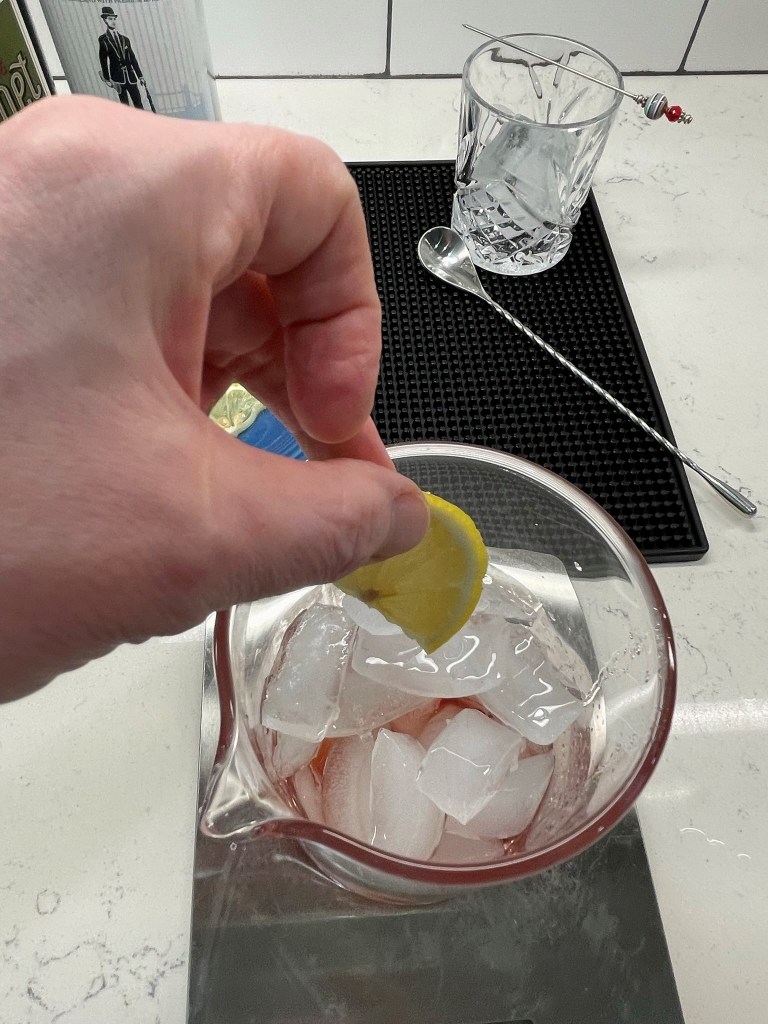
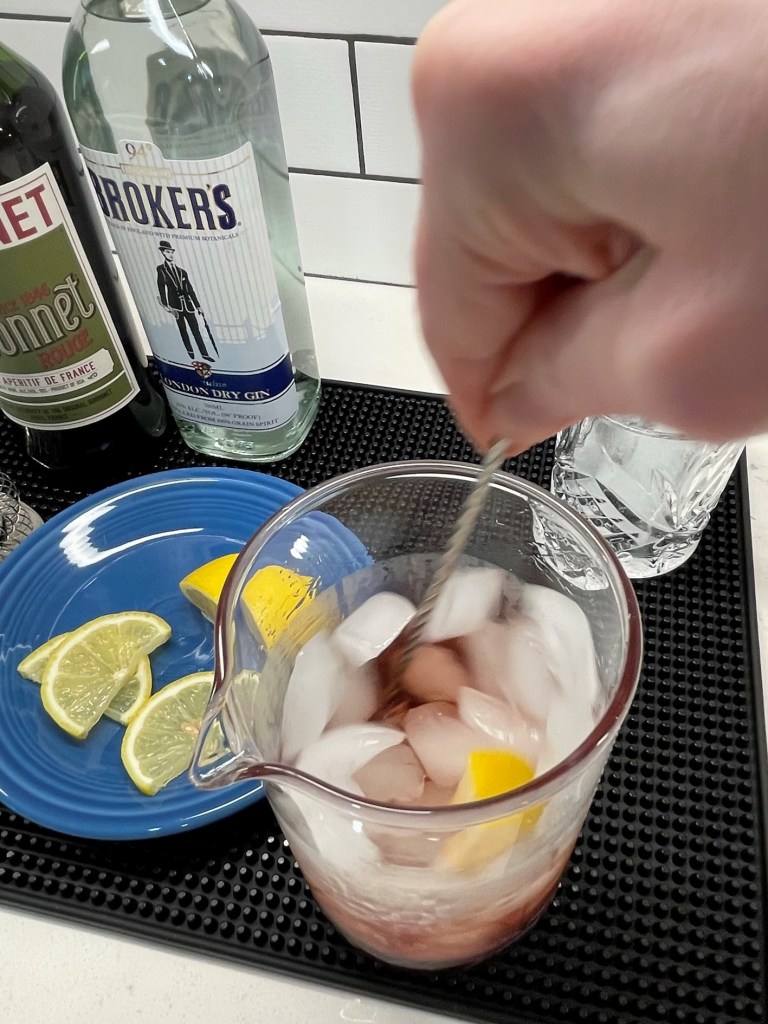
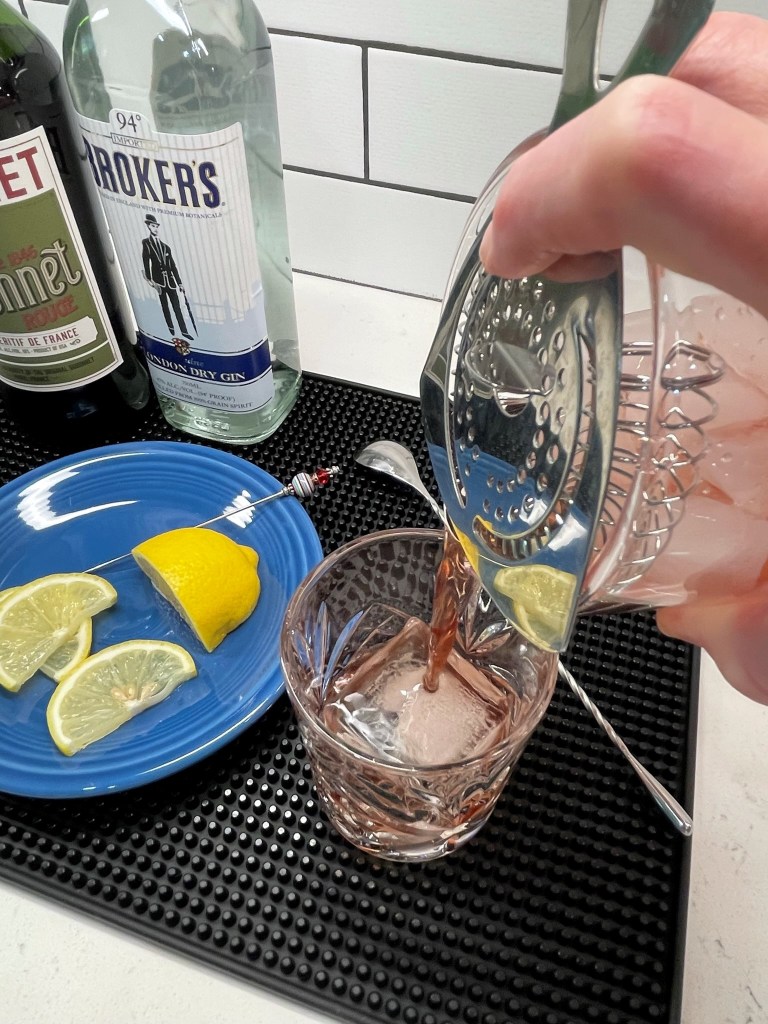
Say what you will about her drinking habits, at least the Queen paced herself, and her taste in tipple was broad and varied. By various accounts, it is confirmed that she enjoyed a dry martini in the evening and a glass of champagne as a nightcap. At dinner, and sometimes at lunch, she sipped a glass of sweet German wine. And before lunch, this one. The Dubonnet and gin cocktail is little more than the name implies. Stir the two together with a slice of lemon and ice, and then strain it over new ice with a fresh slice of lemon. But what exactly is Dubonnet?

When my iPhone news app interrupted my workday yesterday with the announcement of Queen Elizabeth’s death, I decided for no good reason that I should do something to honor her on Comfort du Jour, and the quickest way to do so would be to whip up the Queen’s favorite cocktail—only, it proved to be a bit more complicated than that because I needed to find the proper ingredients, in particular, the Dubonnet.


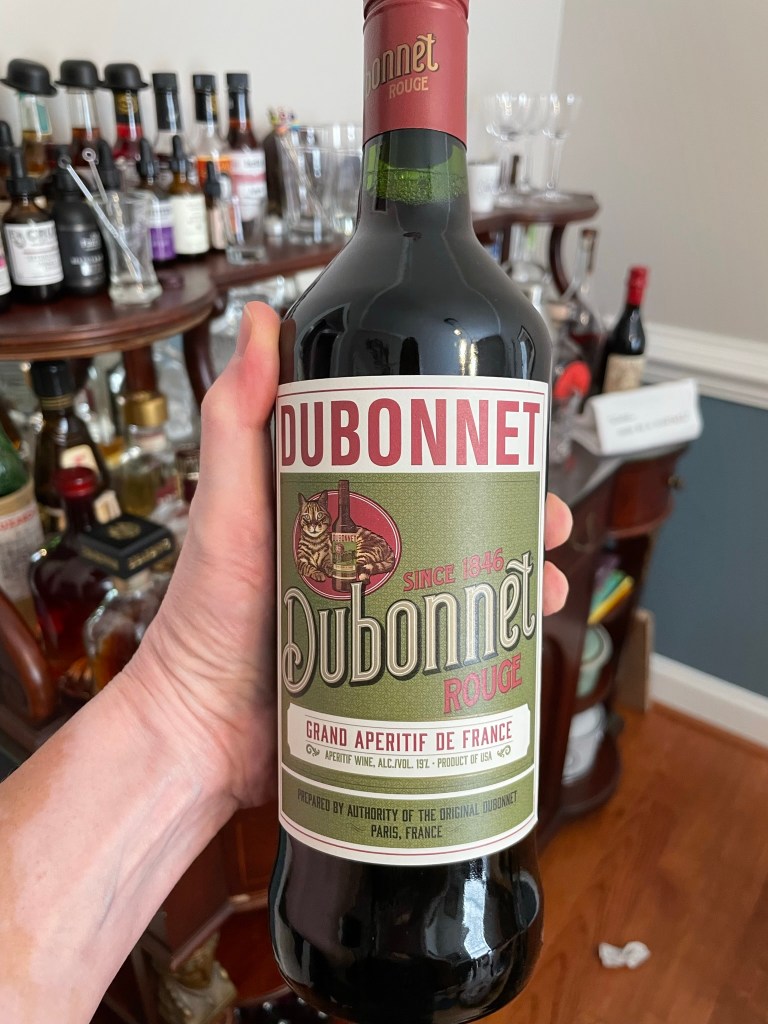
First of all, Dubonnet is not a liquor, but a fortified wine. That meant I would not find it in one of our state-run “ABC” stores. My best shot would be a well-stocked wine store. The Queen would have had access to the spirit made in France by Pernod, but I could only purchase the version made here in the States, by a distillery in Kentucky.

According to Dubonnet’s website, the cat was a beloved pet of founder Joseph Dubonnet’s wife. ❤

The online inventory checker on Total Wine’s website assured me the store had several bottles of Dubonnet in stock, so I planned to hustle across town to buy it before everyone else did. Sometimes, I imagine that other people have the same fervor as me when it comes to commemorating notable occasions with food and drink. Thankfully, given that you are still reading, there aren’t that many of us. I found the Dubonnet in aisle 7, right next to the sweet and dry vermouth that I purchase all the time. I honestly don’t know how I missed this lovely bottle before; it even has a beautiful tabby cat on the label. $15.49 later, I was back in the car and headed home.

Being the responsible blogger that I am, I tasted the Dubonnet on its own in order to describe it for anyone here who has not tried it. The inclusion of quinine led me to expect a bitterness in this high-ABV wine, but I found my first sip to be on the slightly sweet side, almost Lillet-like, and when the first vapor of it rose off the glass, it reminded me of Niagara grapes, though I can’t imagine Dubonnet, which was founded in France, would be using a native U.S. grape (if you aren’t sure what Niagara grapes taste like, just open a bottle of Welch’s white grape juice). No, this aperitif is a mashup of European (mostly) red grapes, spiffed up with herbs and spices for complexity. I’m certain it’s the Muscat that strikes a familiar aroma.

Only one thing left to do; I mapped a route to the nearest ABC store in search of Gordon’s London Dry, the Queen’s preferred gin. Our local liquor stores are pitifully under-stocked, so I didn’t expect I’d find what I was looking for and indeed, initially, I didn’t. The problem was, I was looking high, not low, so I didn’t notice at first the bottles of Gordon’s on the bottom shelf. It was in a plastic bottle, and about half the price of the gin brands I usually reach for. Please don’t take this as a slight to Her Majesty, but I was sure there must have been some mistake. I knew I had a bottle of Ford’s (also London Dry) at the house, the same one I love for my favorite martini, so couldn’t I just use that? But I have learned enough about mixology to know that the essences of gin can make or break a drink, so I went home to do more research last night about what makes Gordon’s gin the world’s best-selling London Dry gin and the perfect one to pair with Dubonnet.

The upshot is that Gordon’s is extremely juniper-forward, meaning it is crisp and clean without nuances of too many of the other botanicals. My Ford’s, though I love it, is not comparable in that sense, but I found that another brand I like, called Broker’s, fit the bill of being very juniper-forward. My martini-loving friend, David, turned me onto Broker’s a few years ago and I trusted it. As a bonus, Broker’s gin comes with a cute little hat on the cap, and it doesn’t get much more London-y than that.


My discovery, unfortunately, came to me after the ABC store was closed, so I had to go back this morning—to a different store in the county just south of us, which is several miles out of the way and well worth the trip, and finally, I had what I needed to make the Queen’s cocktail.


For the love of the crown, let’s make this drink!

It’s a simple drink, which is good, I guess, if you’re having one every day!

Personally, I think this cocktail would be lovely served up, in a chilled coupe glass with an expertly designed twist of expressed lemon peel, but that is not how the Queen took hers. No, she poured it straight over ice, which reminds me of my own grandmother and the way she preferred her afternoon martini. So I paid my respects and made it the same, and also with Her Majesty’s 2:1 ratio; that is, 2 parts Dubonnet to 1 part gin.

I can taste why this drink was a favorite for Queen Elizabeth II, and also for her mom, The Queen Mother. It’s light, just sweet enough to be enjoyable, yet with a touch of bitter to spur the appetite.

There’s no question, I will not be imbibing with this drink as regularly as Her Majesty (doctor’s orders and all that jazz), and most definitely not in the morning, but I shall practice my curtsy and I’ll take it as my duty to raise a glass a few times during the next 10 days, as the world mourns the passing of the longest-serving monarch in U.K. history.

Long live the Queen!

Dubonnet & Gin Cocktail

  • Servings: 1 cocktail
  • Difficulty: easy
  • Print

Ingredients

  • 1 1/2 oz. Dubonnet Rouge
  • 3/4 oz. London Dry gin (something juniper-forward)
  • 2 half moon slices fresh lemon
  • Cocktail ice

Directions

  1. Measure Dubonnet Rouge and gin into a cocktail mixing glass (or shaker) with ice. Drop in one lemon slice.
  2. Stir (or shake) vigorously until the outside of the mixing container is cold and frosty.
  3. Strain over fresh ice and garnish with the second lemon slice


As a postscript, I have since learned (thanks to my pal, David) that Gordon’s London Dry is more than acceptable—it’s his go to, actually—so that would have been a good purchase. But buying the Broker’s does allow me to add to my hat collection. I started saving the hats during the pandemic and discovered they fit perfectly on my bitters bottles. The only thing I’m unsure about now is what will I do to use up the rest of this Dubonnet? 🙂


Miraculous Mayo Marinade

I’ve been cooking since I was little. Watching my grandmother cut up a whole chicken or whip up a batch of her classic bread pudding was my favorite way to spend time when I was 8 or 9. And you can bet she was putting my little hands to work, even if I did need to have a Sears catalog under my butt in order to reach the dinner table. Those experiences paid off, as did my many adventures in a commercial catering kitchen years later, where I learned professional knife skills and the art of preparing food in bulk and making it look more “sexy.”

Despite my confidence with most cooking tasks, I do not consider myself to be so accomplished that I cannot learn new things (and I sure hope that will always be true). One of the reasons I love reading about food, watching cooking videos and subscribing to blog sites is that there might be an unconventional technique or approach I’ve never considered. I want to know what else is out there and if there’s a better way to do something—whether for reduced fat, more convenient process, better flavor, improved outcome, time savings, whatever.

Last month, I opened one of the daily emails I receive from NY Times Cooking, and the letter referenced a technique that apparently has been circulating in the culinary underground for some time—a method for improving the outcome of grilled shrimp—and I’ve gotta tell you, I’m flabbergasted. It involves a slick coating of a small amount of mayonnaise, which isn’t exactly groundbreaking, but also the tiniest little bit of something else that activates the mayonnaise to become even more slippery, resulting in the juiciest shrimp I have ever tasted. It works so well, in fact, that I have since tried the technique with a variety of seasonings, cooking methods and even other seafood proteins.

This culinary hack, my friends, involves good old baking soda. Say what?

Yep, the same household substance that will softly scrub your stovetop to sparkling clean, give a leavening boost to your banana bread, dry shampoo your pet-worn carpet—heck, even knock the stink off your kid’s gym bag—can also be used to make grilled, broiled or sautéed seafood better, juicier and more succulent than you’ve ever tasted before.

Who knew??


OK, some of you may already be performing this trick. This is probably a good time for me to acknowledge that I am a little slow to hop on the bus that’s been following J. Kenji López-Alt, the chef-slash-genious whose innovative approach to cooking has me awestruck at every stop. If there’s a science behind it, Kenji has already explored it, hacked it, improved it and written a chapter about it in his book, The Food Lab, which is the holy bible of cooking, as far as I’m concerned. If you are already savvy to this particular mayo knowledge, feel free to nod along politely and just skip ahead to the juicy pictures. I’m envious. But if you’re sitting there with a stunned expression, as I was when I first read this, then join me for an exciting adventure in Kenji’s chemistry class.

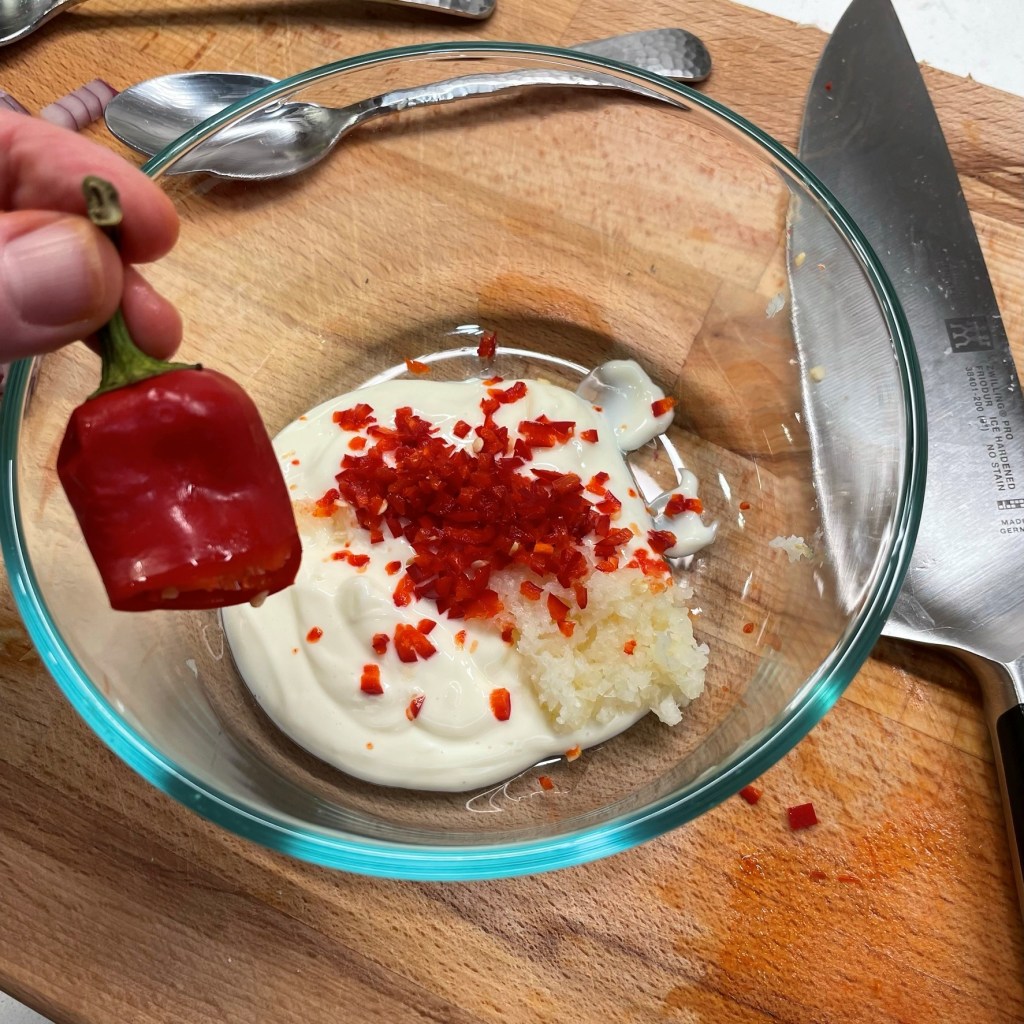
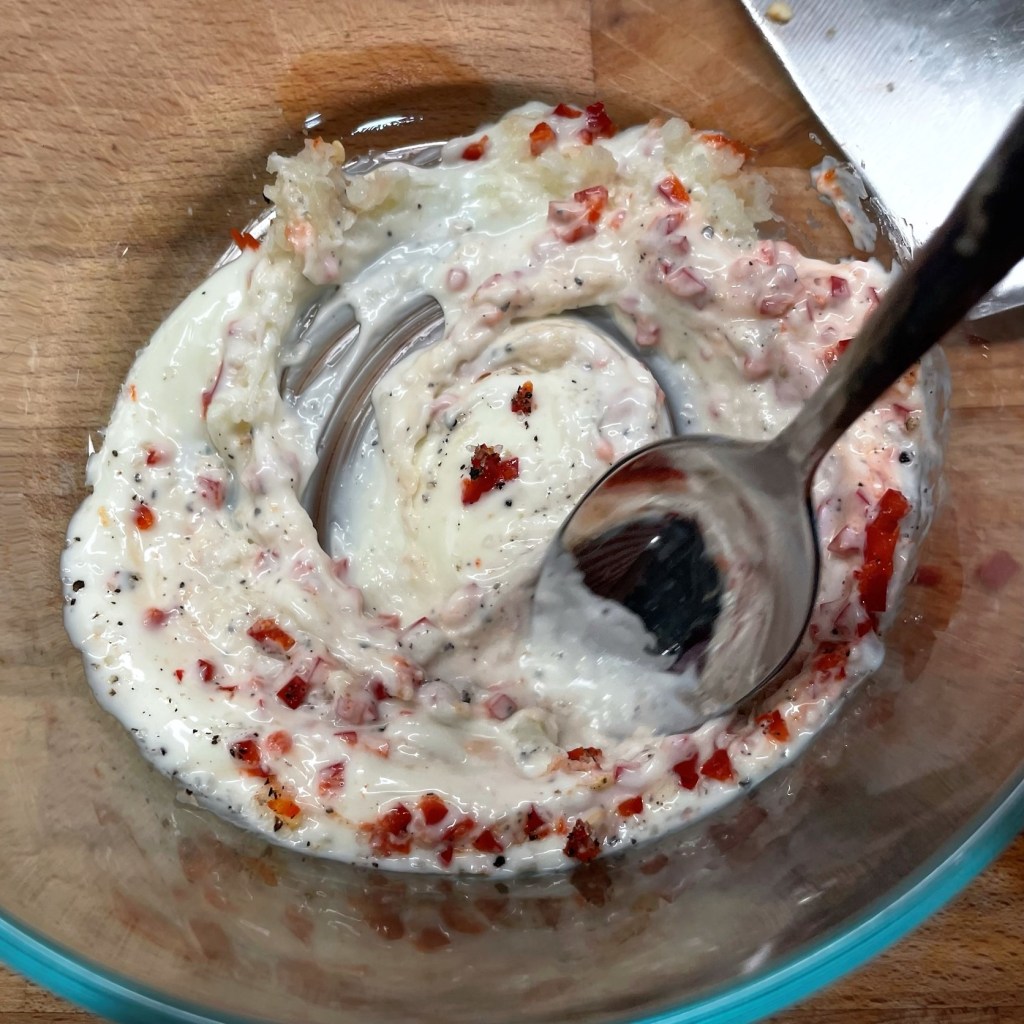
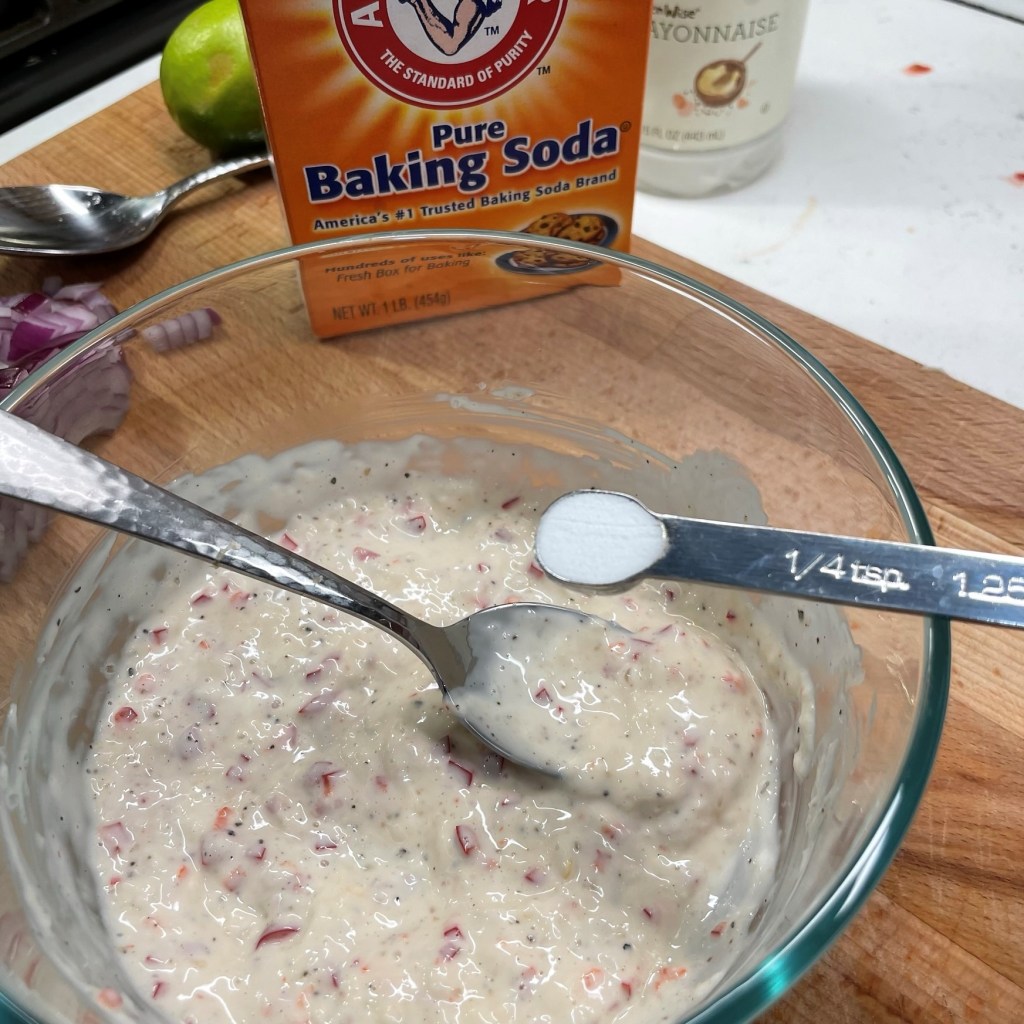
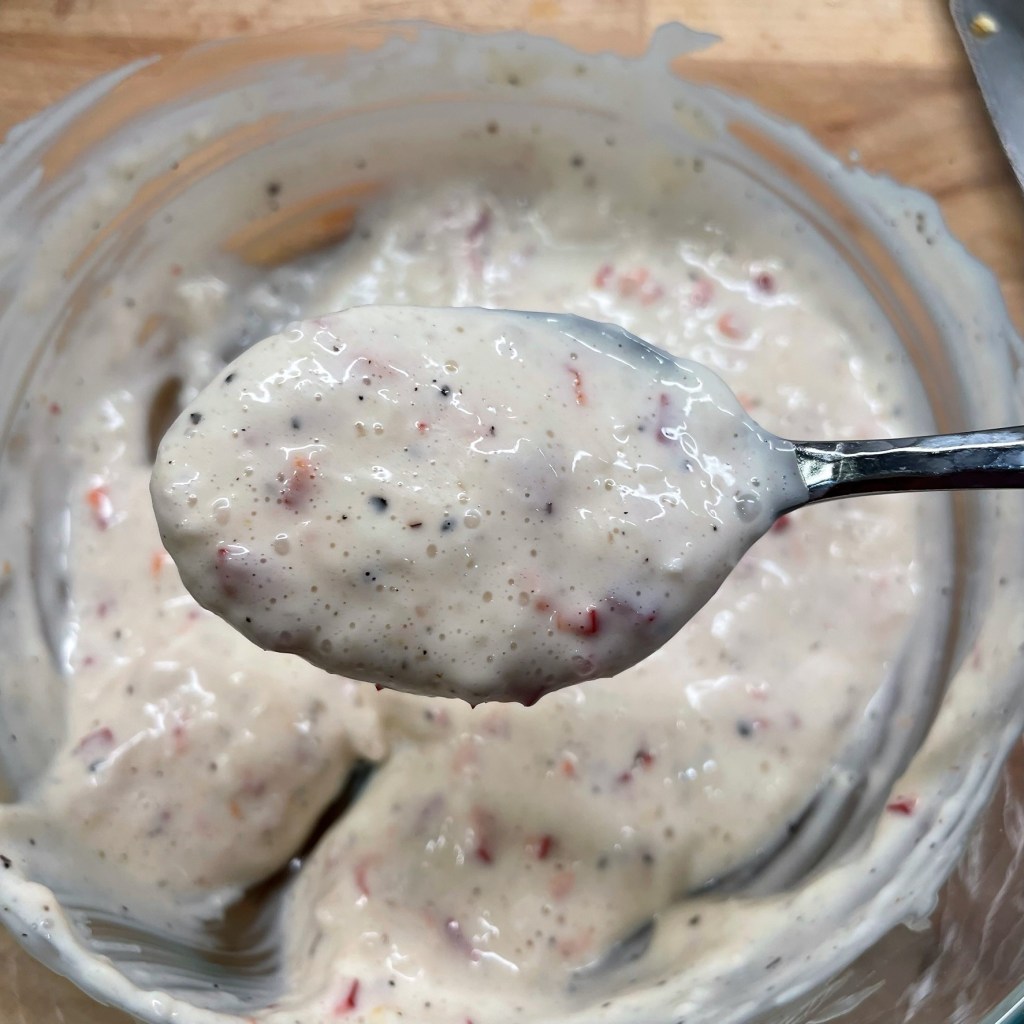
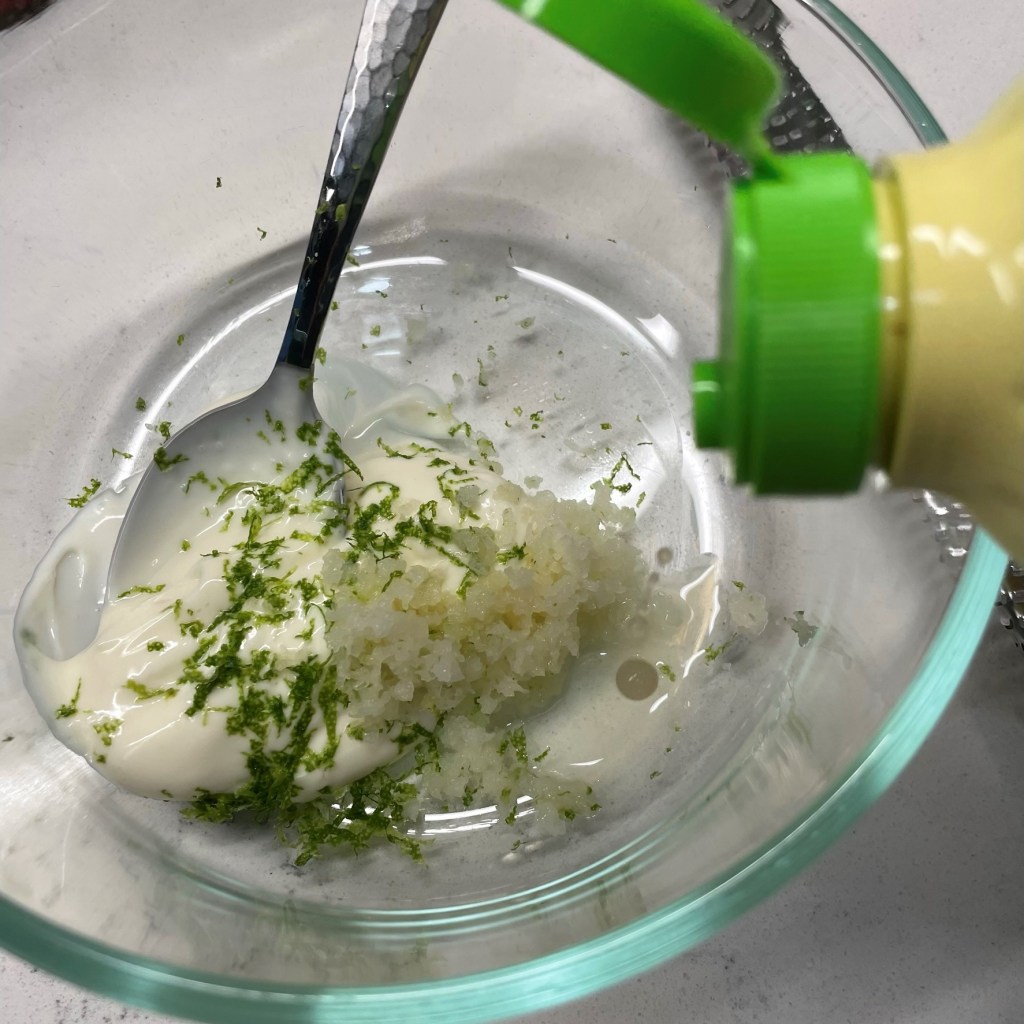
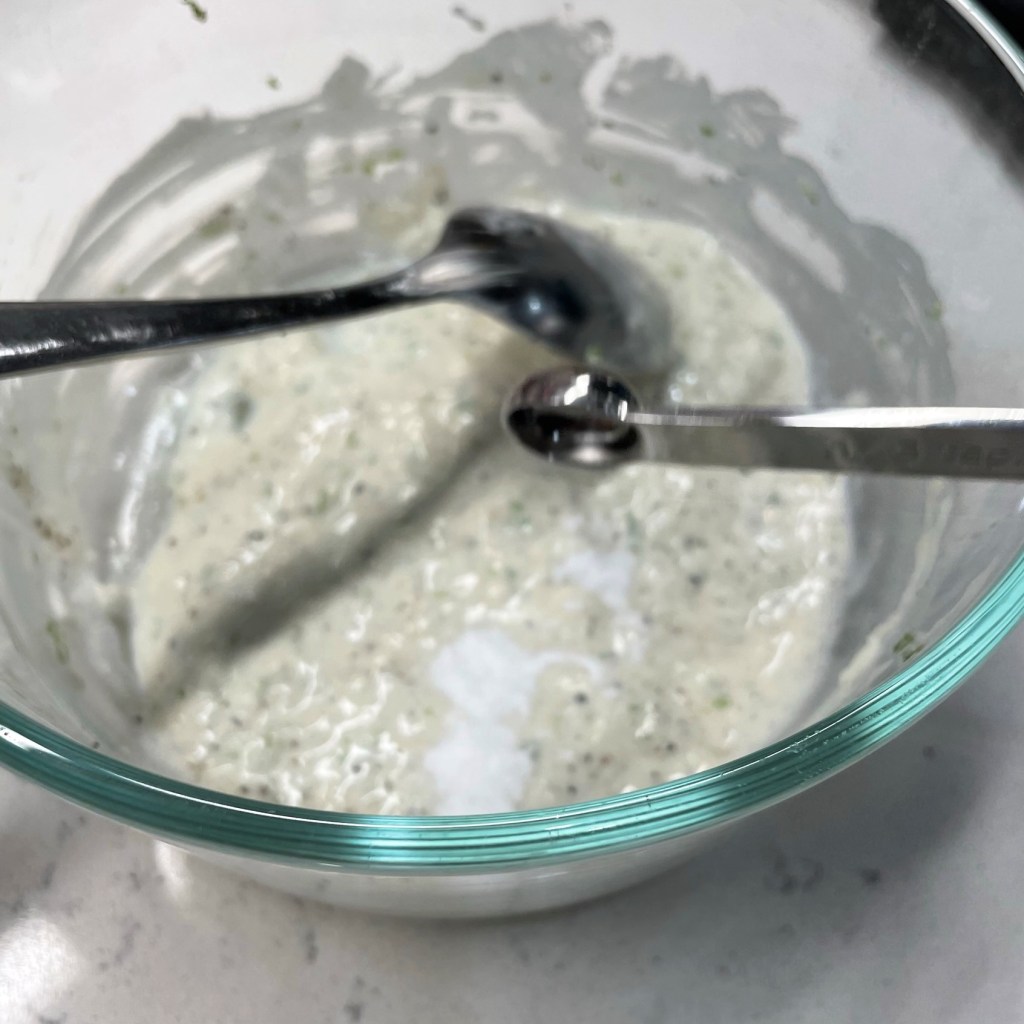
This technique begins innocently enough, with a mere 1/4 cup of mayonnaise per pound and a half of shrimp (or, presumably, any other protein you wish to marinate). Add some flavor enhancers; Kenji’s initial recommendation is a few cloves of grated garlic and a minced jalapeno half, a fairly generous pinch of kosher salt and then—wait for it—1/4 teaspoon of baking soda. Watch what happens to the mixture:


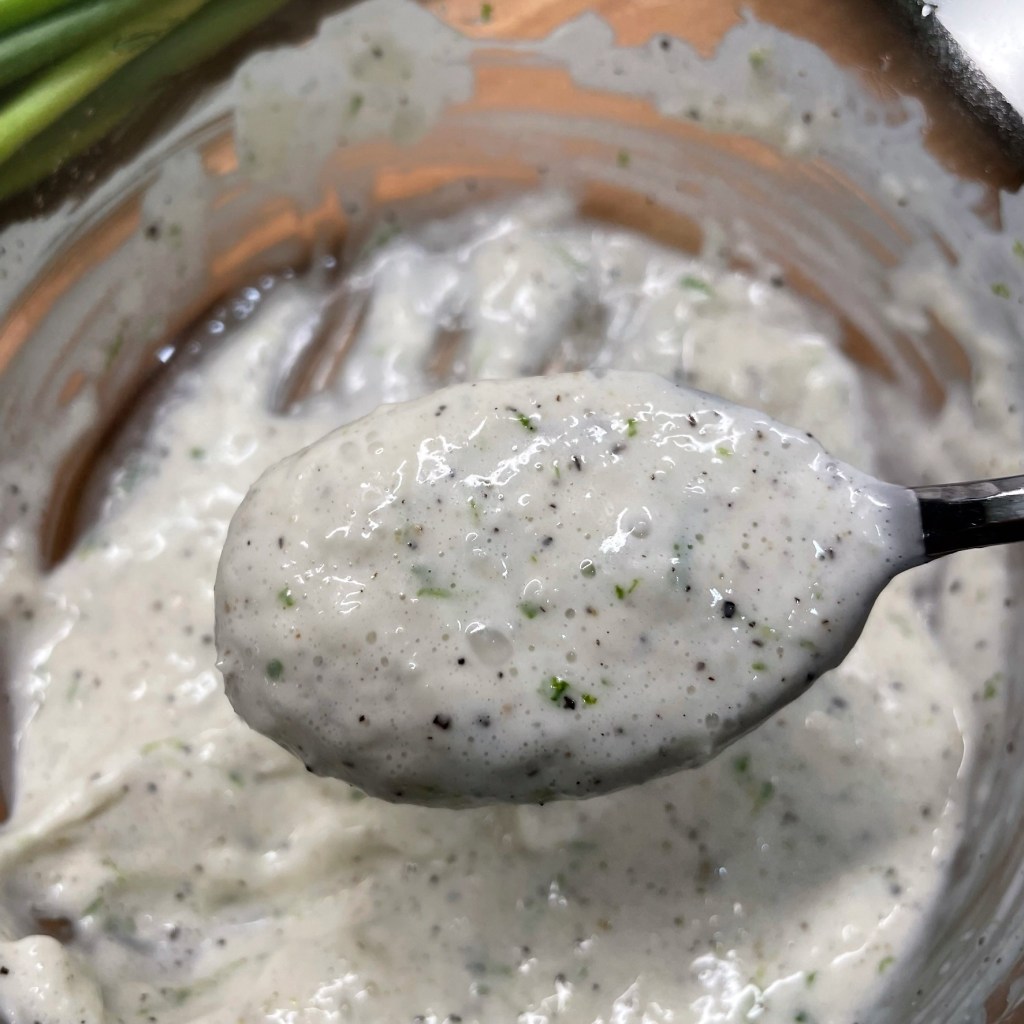
You can see a bunch of tiny little bubbles in the mixture, which is caused by the chemical reaction between the baking soda (an alkaline) and the mayonnaise (it’s acidic, thanks to the vinegar in it). This sudden shift in pH level forces the moisturizing nature of the mayo further into the shrimp, and this will protect it from the high heat of your grill, skillet or oven.

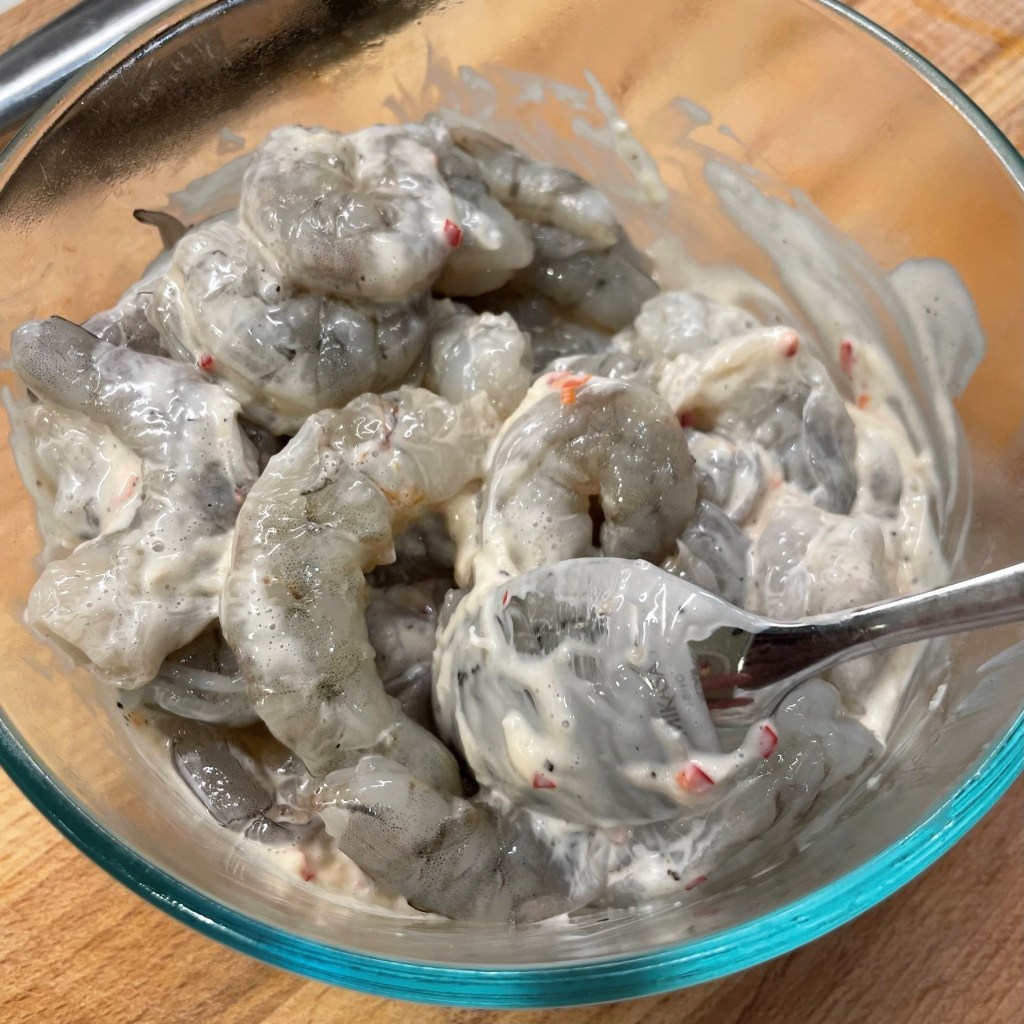
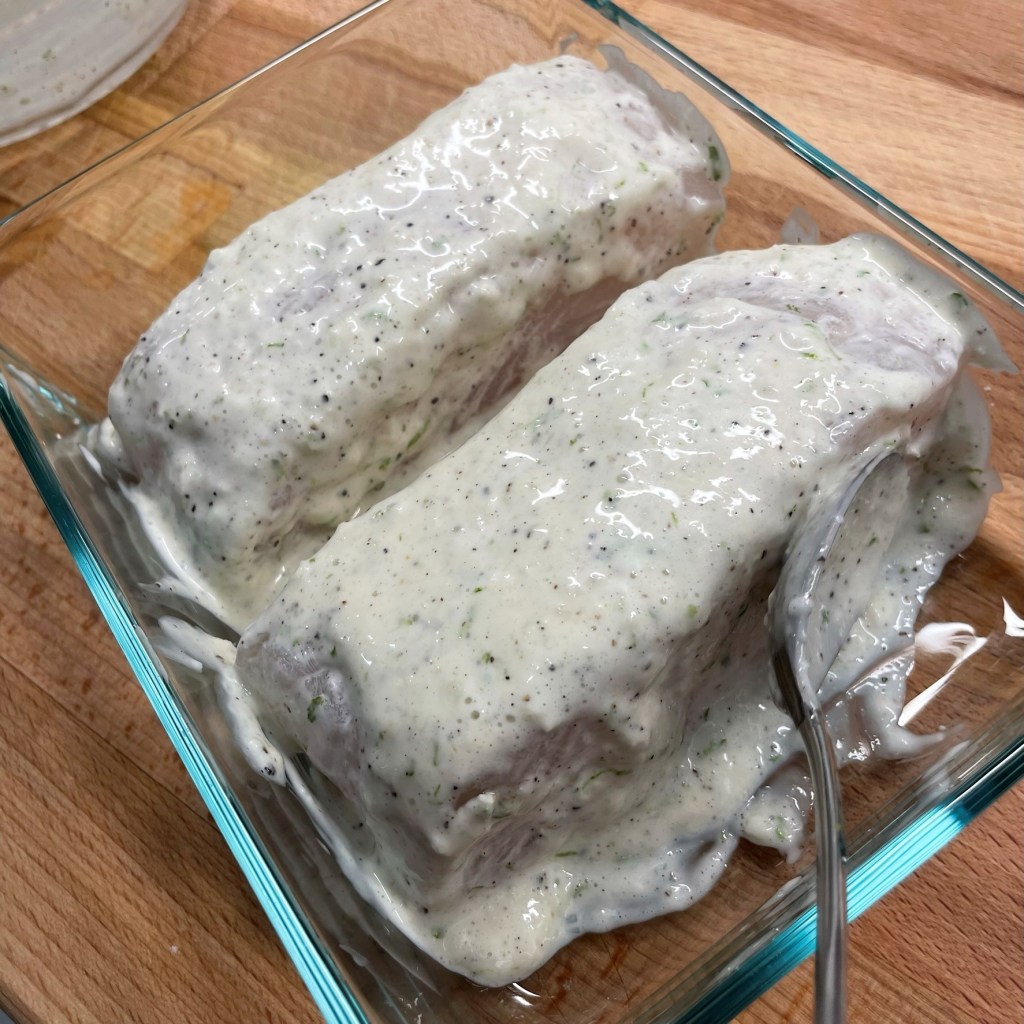
Fold the peeled, deveined shrimp into this magical mayo marinade and tuck it away into the fridge for half an hour. Use this time to light the grill or prep whatever else you plan to serve with the shrimp or to pour a glass of wine and congratulate yourself for being willing to learning something new.


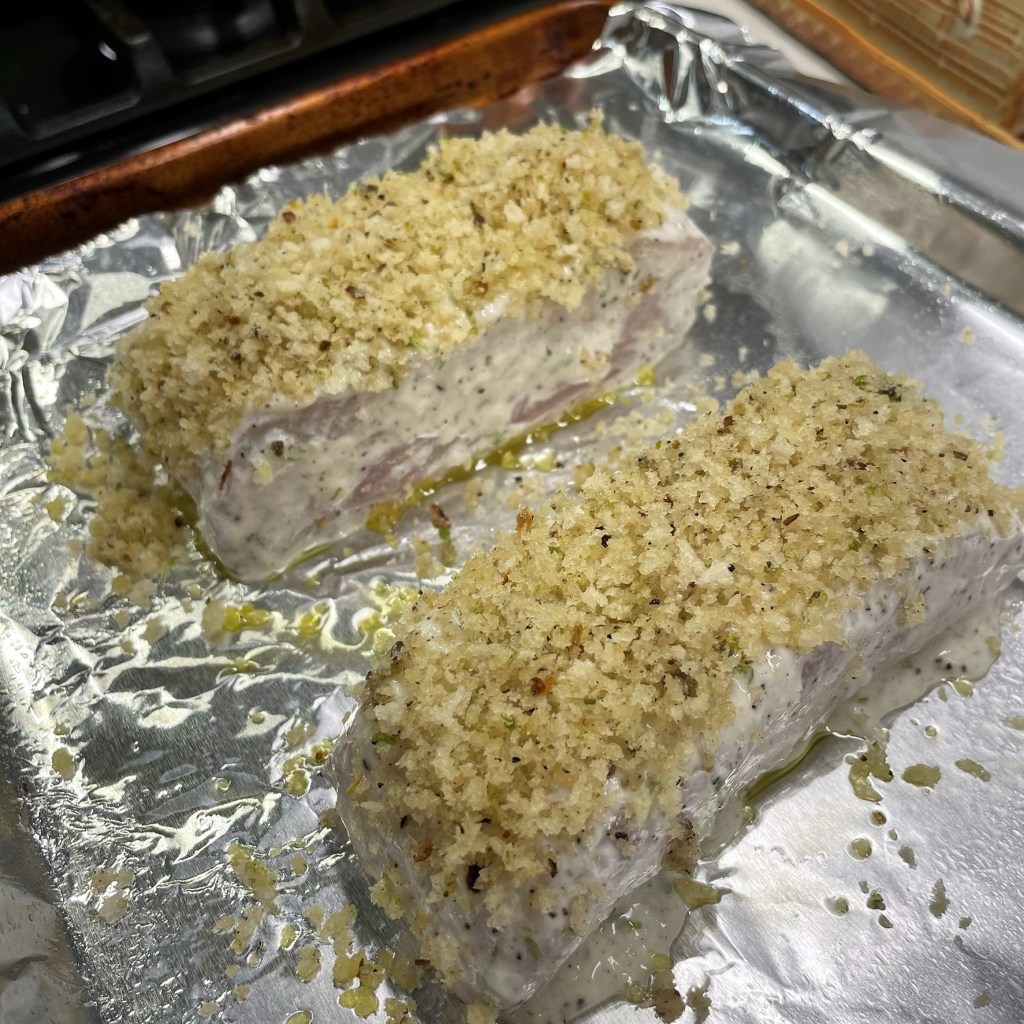
The first time I tried this baking soda-mayo technique, the weather forced me to do my grilling indoors, and it was perfection for the shrimp tacos I made for taco Tuesday. The second time, I changed up the flavors to marinate fillets of fresh halibut, which I topped with spicy lime panko crumbs and baked in the oven (I’ll share the recipe below). Again, perfect.


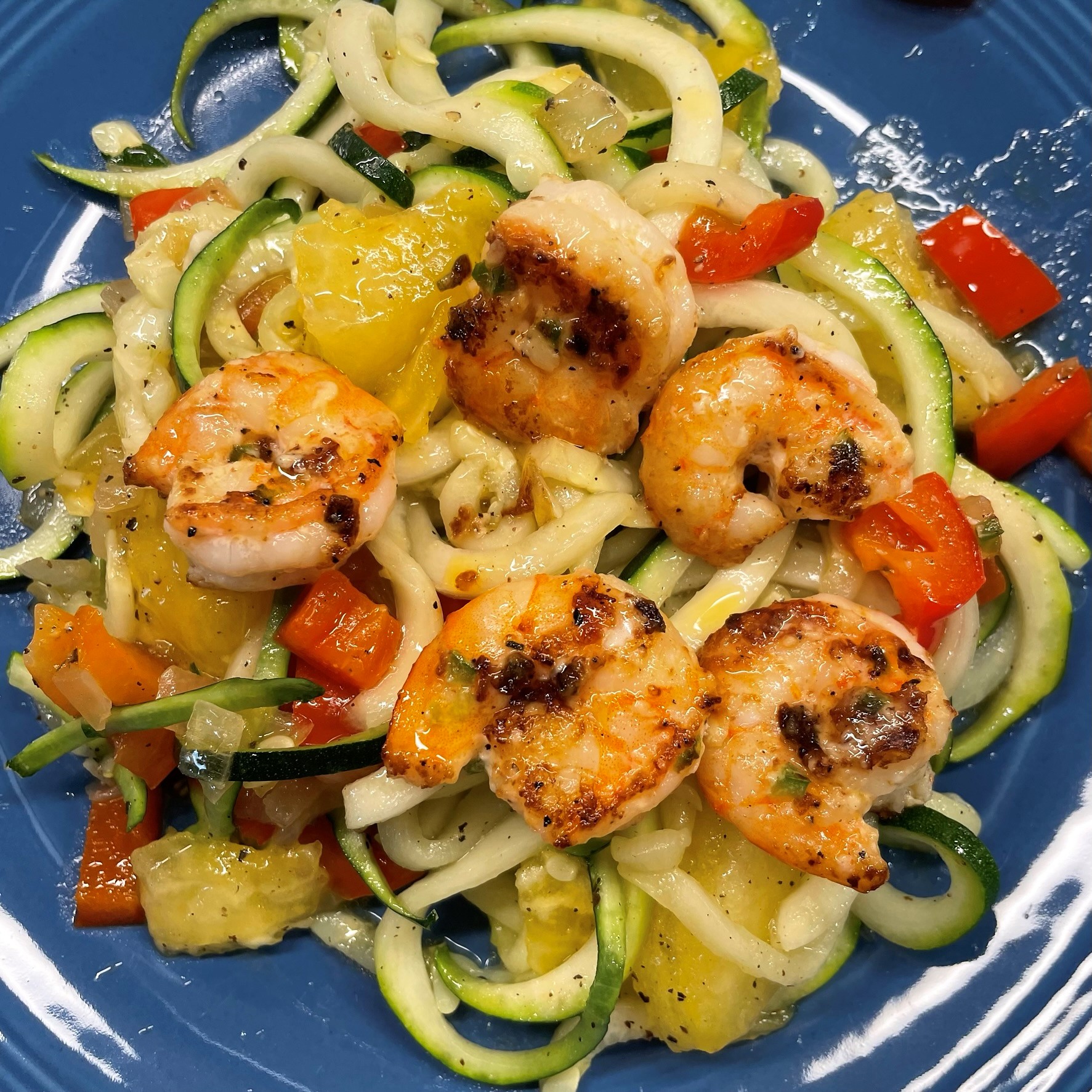
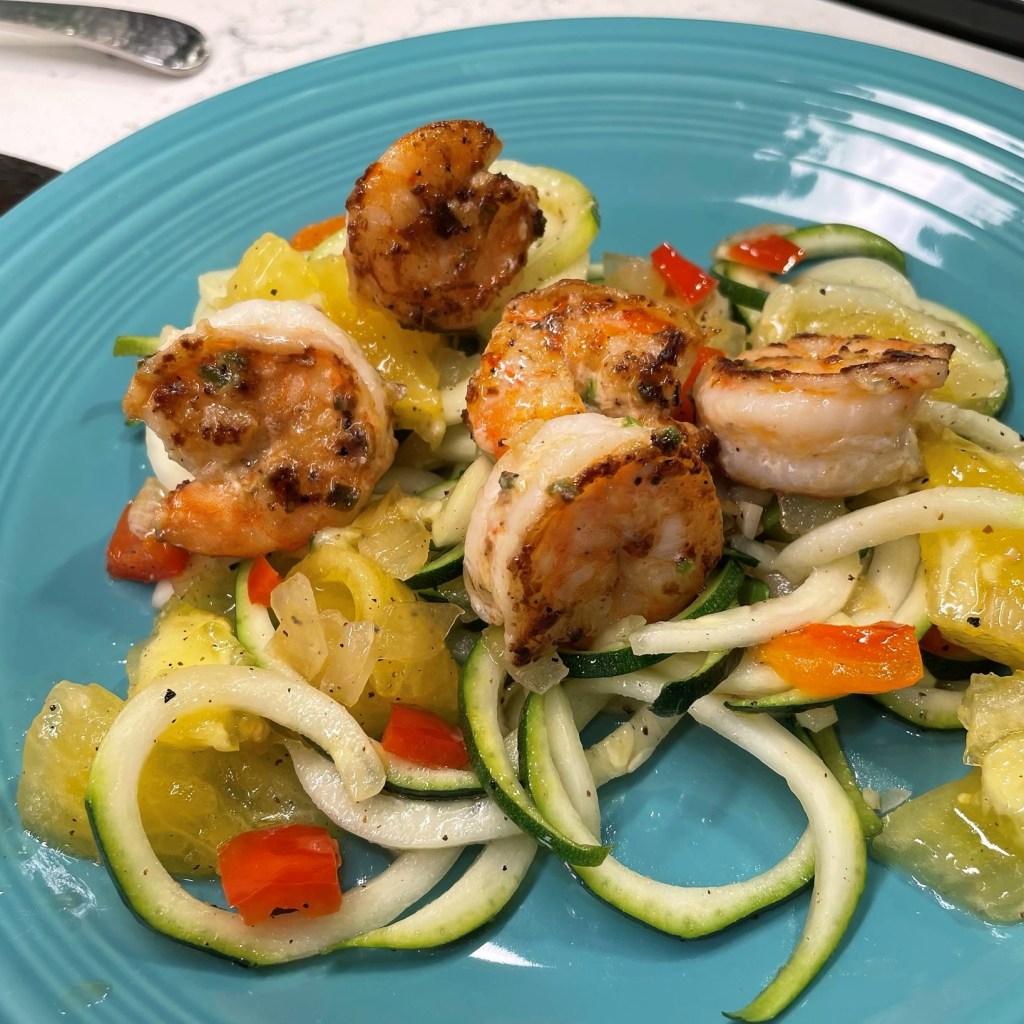
The third time, I used the same seasonings as the first batch of shrimp, but with green jalapeno. I cooked it in a plain skillet (with no additional oil) and laid it atop zucchini noodles with sautéed fresh tomatoes and onions. Brilliant!

This made a wonderful, light and easy lunch.

The mayo has enough oil in it that you don’t need to bother oiling the grates or adding oil to your skillet. Somehow, though, that oil remains suspended in such a way that it doesn’t make the shrimp or fish feel or taste even remotely greasy. Oh, and none of this tasted like mayonnaise.

You can bet I’ll be trying this marinade trick on other forms of protein, starting with skinless chicken, which can be difficult to grill without drying out. I’ll report back on my findings, and if you should happen to go wild and beat me to it, please share the outcome here for all to see. 🙂

Below is a click-to-print recipe for the basic marinade, including my own slight adjustments from Kenji’s original. Further below is the recipe for the panko-topped halibut, which I’ll be making again very soon!


Miraculous Mayo Marinade

  • Servings: Enough for 1 1/2 pounds protein
  • Difficulty: Easy!
  • Print

Every now and again, a technique comes along and surprises me, upsetting everything I thought I knew about cooking. This is one of those techniques!


Ingredients

  • 1/4 cup (4 Tbsp.) mayonnaise
  • Several cloves fresh garlic, peeled (see ingredient note below)
  • 1/2 fresh jalapeno, seeded and minced (see ingredient note)
  • 1 tsp. kosher salt
  • Several twists freshly ground black pepper, optional
  • 1/4 tsp. baking soda

Ingredient Notes

  • For best results, grate the garlic cloves on a microplane, as this ensures the flavor will be evenly distributed throughout the marinade. If you don’t have a microplane, carefully grate the garlic on the smallest holes of a box grater or mince into the smallest pieces possible and drag them with a flat knife blade to make it like a paste.
  • The jalapeno is optional, and may be omitted if you don’t care for the heat. Try another minced flavor add-in, such as citrus zest or fresh, minced herbs.

Directions

  1. Combine mayonnaise, garlic and jalapeno in a bowl large enough to hold the protein you plan to marinate. Stir in salt and pepper.
  2. Add baking soda and stir vigorously to blend.
  3. Fold small protein into the marinade, or spread the marinade over the protein if it is large, such as fish fillets. Refrigerate up to 30 minutes, and then grill, bake, roast or pan-fry as intended.


Mayo-marinated Baked Halibut with Zesty Citrus Panko Topping

  • Servings: 2 portions
  • Difficulty: Easy
  • Print

This is a simple, but elegant fish entree that stays moist after baking, thanks to the miraculous mayonnaise marinade technique I learned from J. Kenji López-Alt. If halibut isn't your favorite, substitute any other firm, flaky whitefish and adjust cooking time as needed.


Ingredients

  • 2 portions fresh halibut, about 6 oz. each
  • 2 Tbsp. mayonnaise
  • 3 cloves garlic, grated on microplane or smallest holes of a box grater
  • Zest of one lime, divided (you’ll use half in the marinade, and half in the crumb topping)
  • 1/4 tsp. key lime juice (or regular lime juice)
  • 1/2 tsp. kosher salt and several twists of freshly ground black pepper
  • 1/8 tsp. baking soda
  • 2 Tbsp. salted butter
  • A few quick shakes dried pepper flakes (I used Flatiron Pepper Hatch Green Chile, but any will do)
  • 1/4 cup plain panko crumbs

Directions

  1. Preheat oven to 375° F, with oven rack in center position. Pat fish fillets dry with paper towels and place them on a foil-lined baking sheet.
  2. In a small bowl, combine mayonnaise, garlic, half of the lime zest and juice. Stir together with salt and pepper.
  3. Add baking soda to the mayo mixture and stir until blended. Small bubbles should appear in the mixture and it will seem to expand a bit.
  4. Spread the marinade all over the halibut fillets, covering every side that will be exposed to the oven heat. Let this rest for 30 minutes.
  5. In a small skillet, melt butter over medium-low heat. Stir in remaining lime zest and dried pepper flakes. Toss panko crumbs in the mixture until all butter is absorbed.
  6. Spoon the panko crumbs over the tops of the halibut fillets.
  7. Bake for 20 to 25 minutes, until you can easily flake the side of the fish with a fork. If crumbs do not brown, return it to the oven on a low broil setting for about 30 seconds (watch it closely to prevent burning).


Late Summer Succotash with Chicken & Waffles

Something about the change of seasons makes me happy, and this is especially true when we can see Labor Day just up ahead. This time last year, my husband, Les, and I were gallivanting all over New Jersey, Connecticut and New York, visiting old friends, meeting new ones and satisfying our culinary curiosity with so many delicious foods. Our plans this year have kept us mostly at home, and so the transition to fall doesn’t feel nearly as dramatic, but we have at least fulfilled the delicious food requirement. The big food news of our week occurred when we celebrated my hubby’s birthday with a fantastic veal and eggplant Parmesan dish, which he will be proud to share on Comfort du Jour soon (it will be an excellent way to re-welcome the Sunday Supper category).

Yes, the countdown to autumn has begun, and I’ll be at the front of the line to greet it. For now, I’d like to share this colorful, late-summer dish that I whipped up last month, just before our garden tomatoes started coming in. It’s a “healthy-ish” play on chicken and waffles, and a great way to hang onto the lingering days of summer as we prepare to roll out the welcome mat for the glorious comfort foods of autumn.


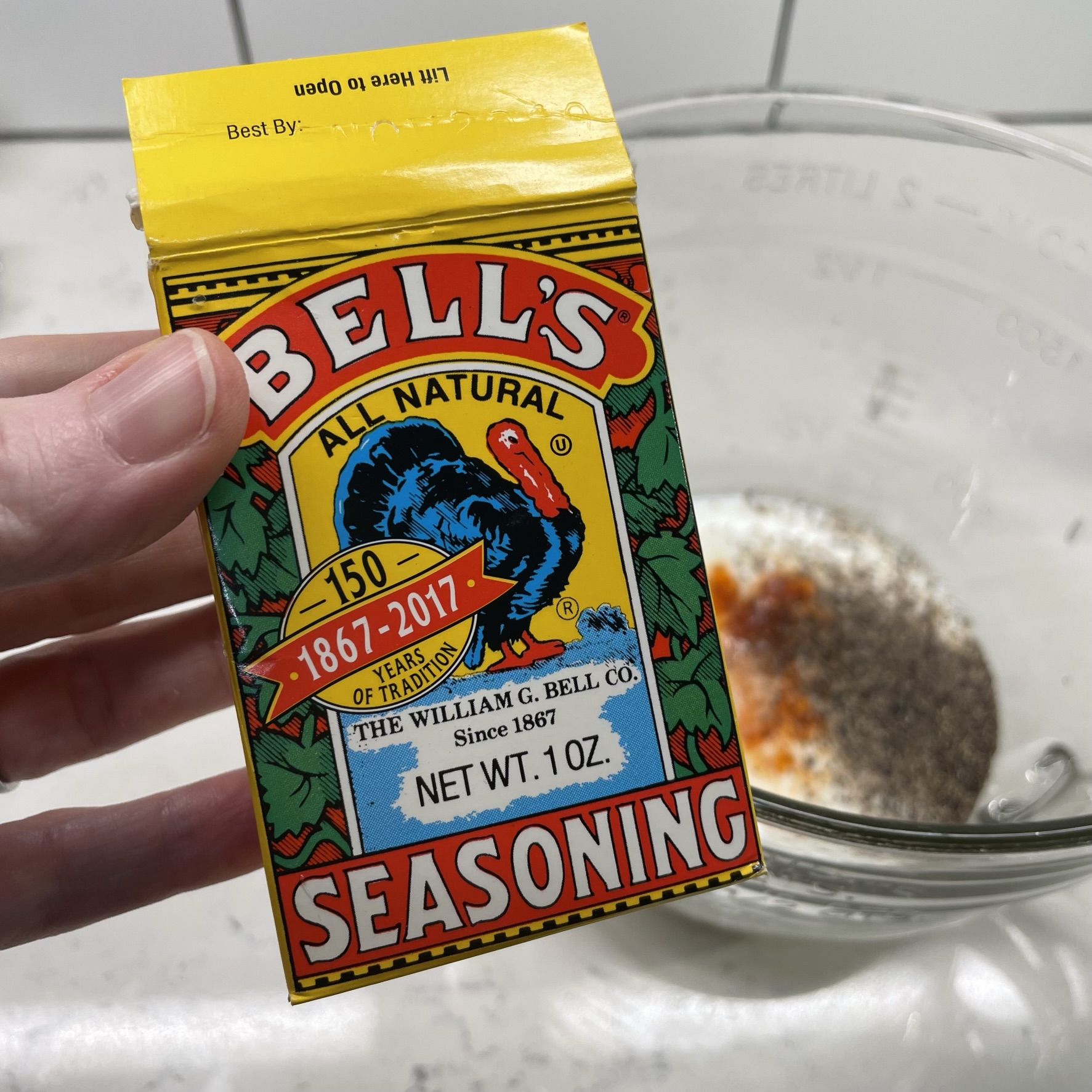
It may seem that “chicken and waffles” could not qualify as healthy-ish, but I did lighten this up in a number of ways. First, I used skinless chicken tenders (rather than skin-on, bone-in pieces), which were drenched in flavor after a two-hour bath in buttermilk, seasoned with plenty of hot sauce and a bit of Bell’s poultry seasoning. Never miss an opportunity to add flavor—that’s one of my key approaches to cooking. Rather than deep frying the tenders, I dipped them in seasoned flour and crisped them up lightly in a cast-iron skillet. And with a high volume of vegetables in the succotash, each serving only included two of the fried tenders. Portion control is one of the simplest ways to reduce calorie intake. 🙂


The waffles for this dish were on the healthy side of things, too, and based on a sourdough pancake recipe from my favorite baking site, King Arthur Baking Company.

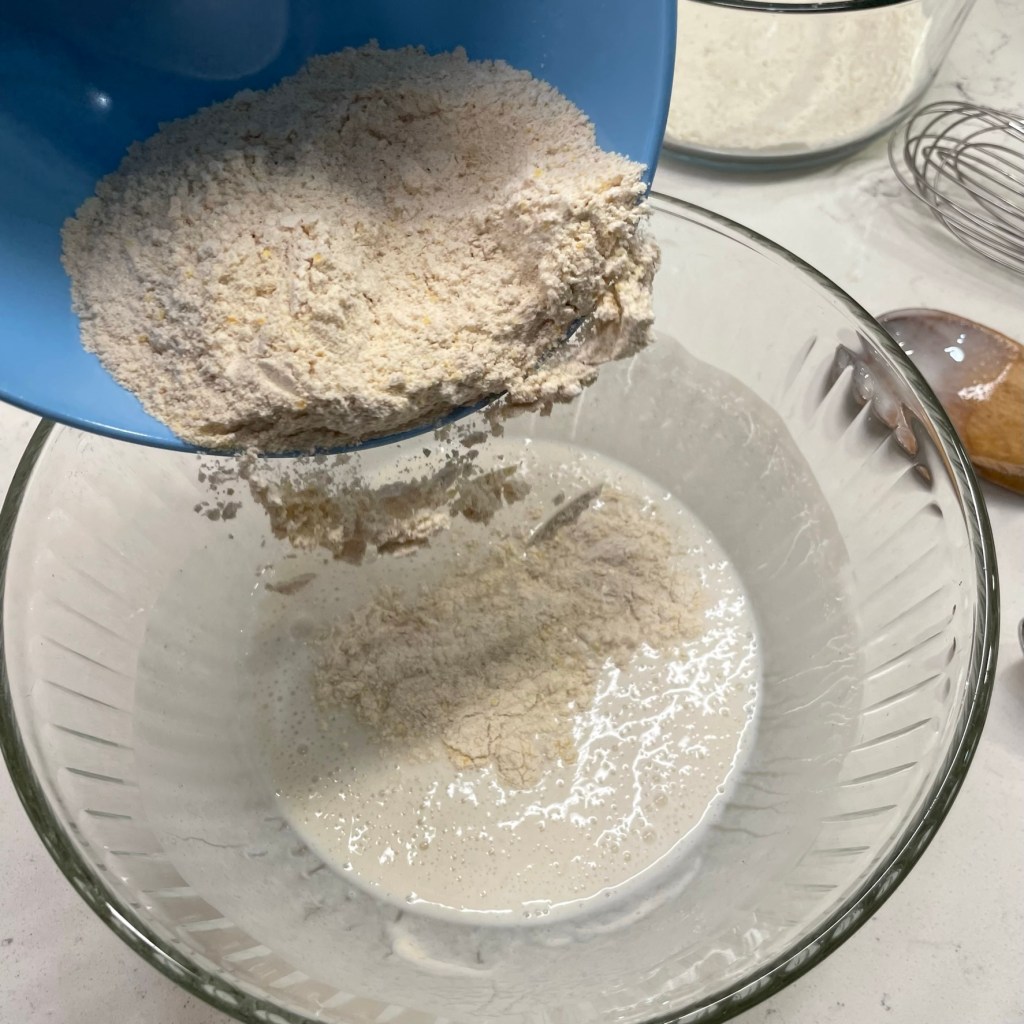
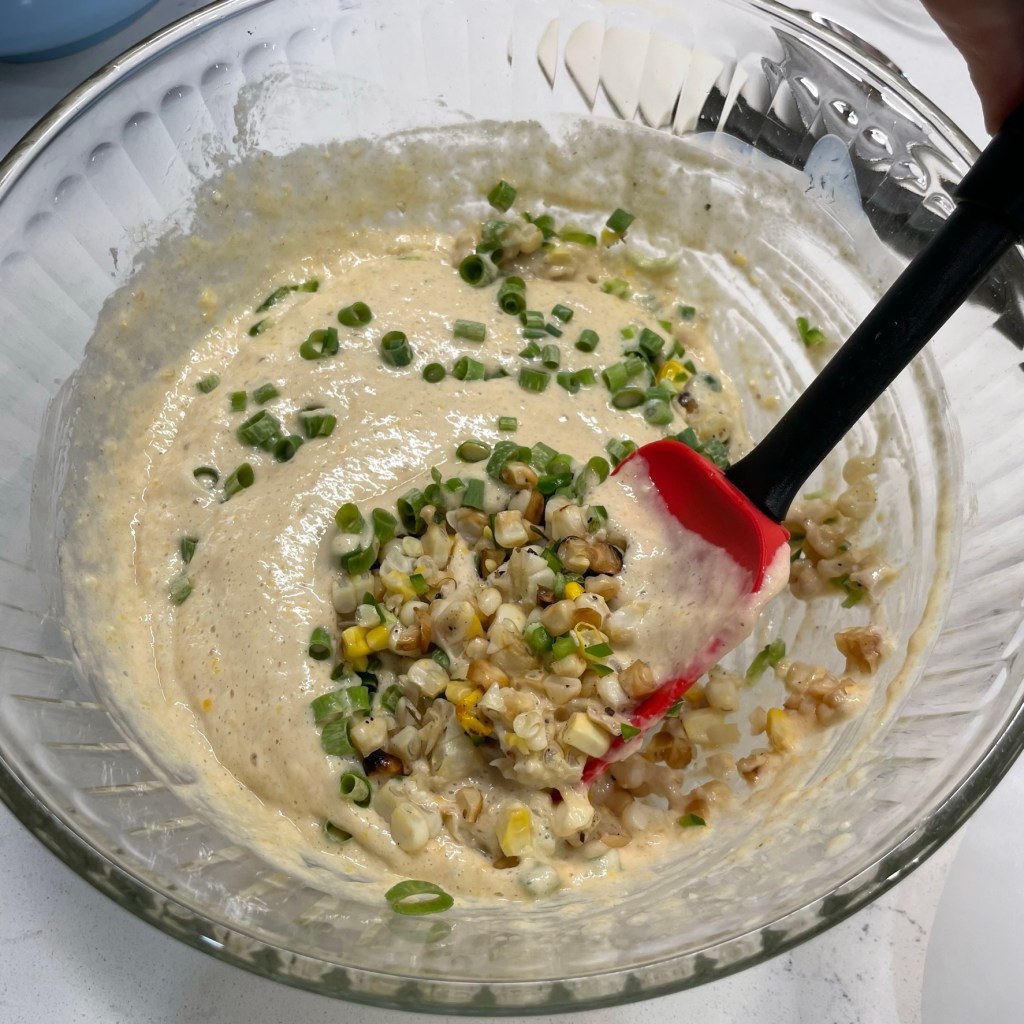
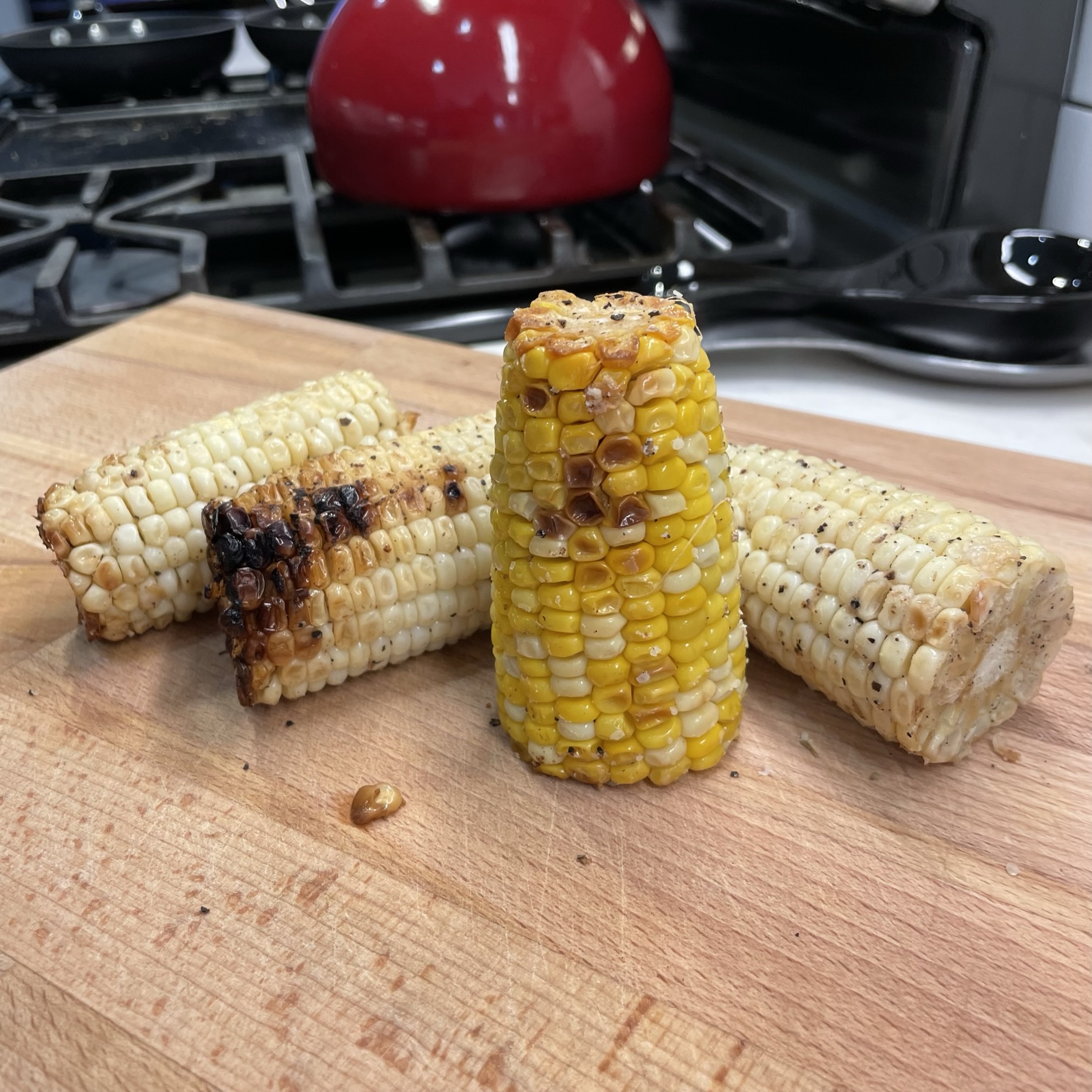
I followed the King Arthur recipe as written, except that I halved it, swapped in white whole wheat flour with a little cornmeal, and bumped up the oil just enough to prevent them from sticking to the waffle iron. The scallions and leftover grilled corn folded into the batter made the waffles extra hearty, and sourdough can’t be beat for this application because of the amazing crispy texture it puts on the waffle exterior. If you aren’t riding the sourdough train, there’s no reason in the world you couldn’t substitute another waffle recipe you like and add the corn and scallions to it.


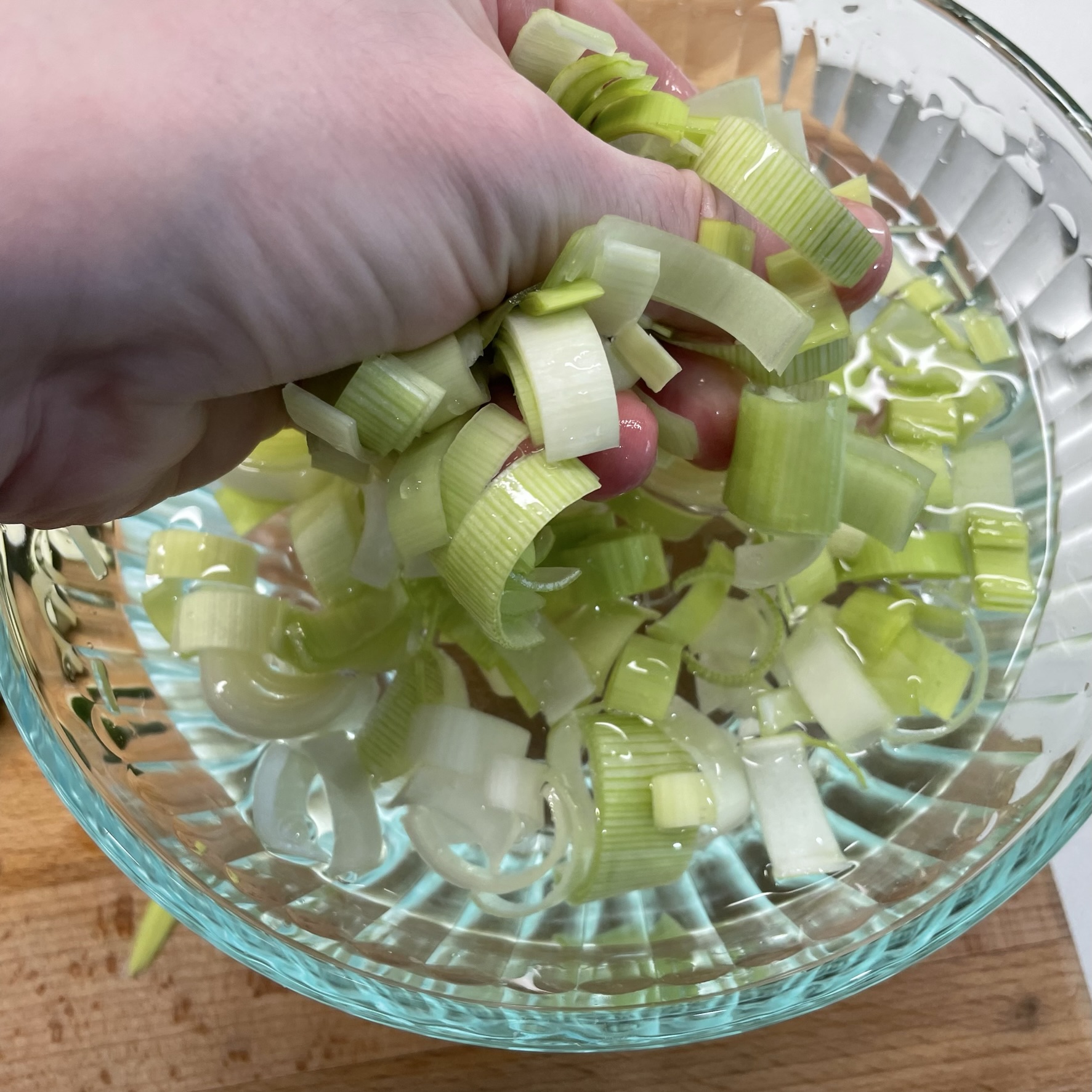
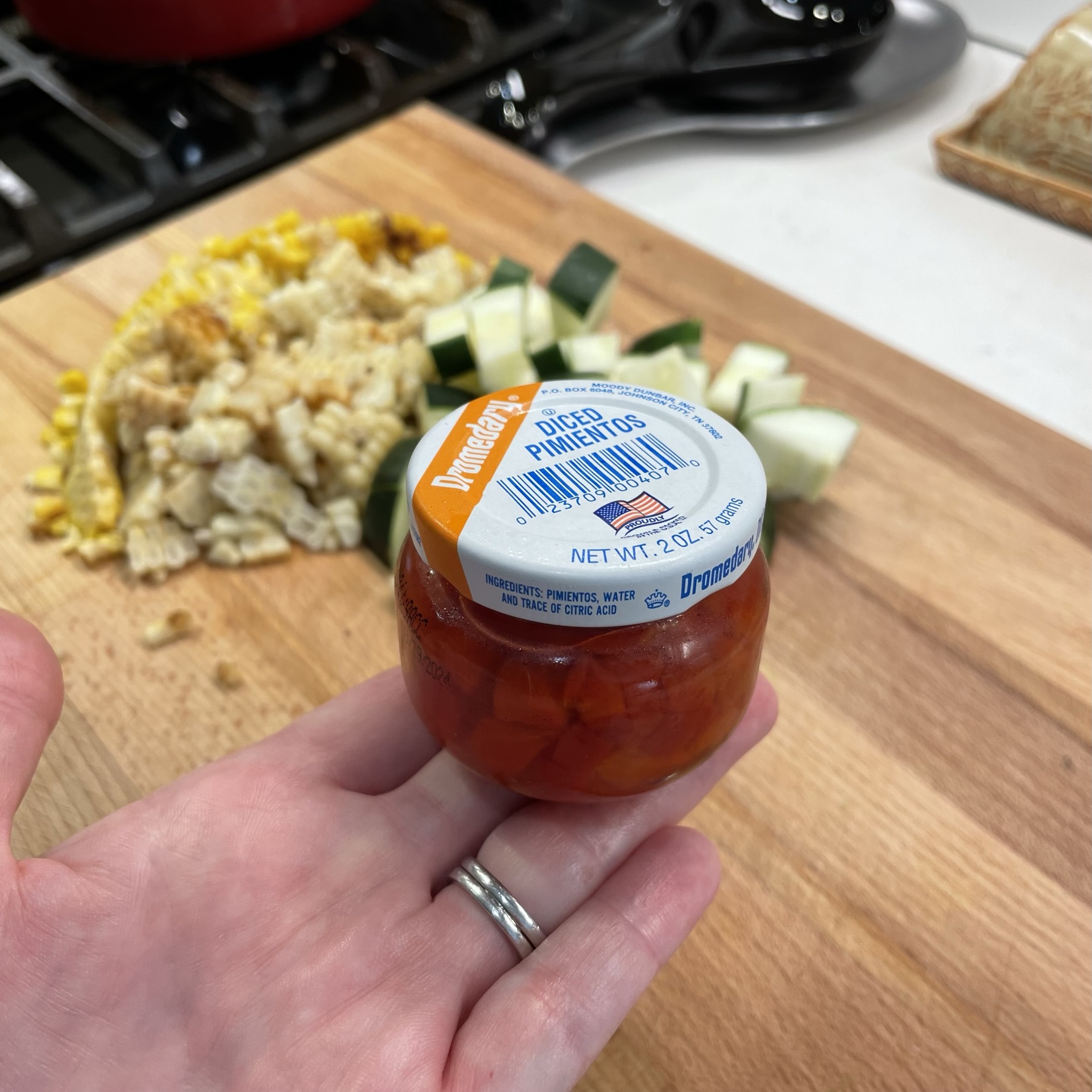
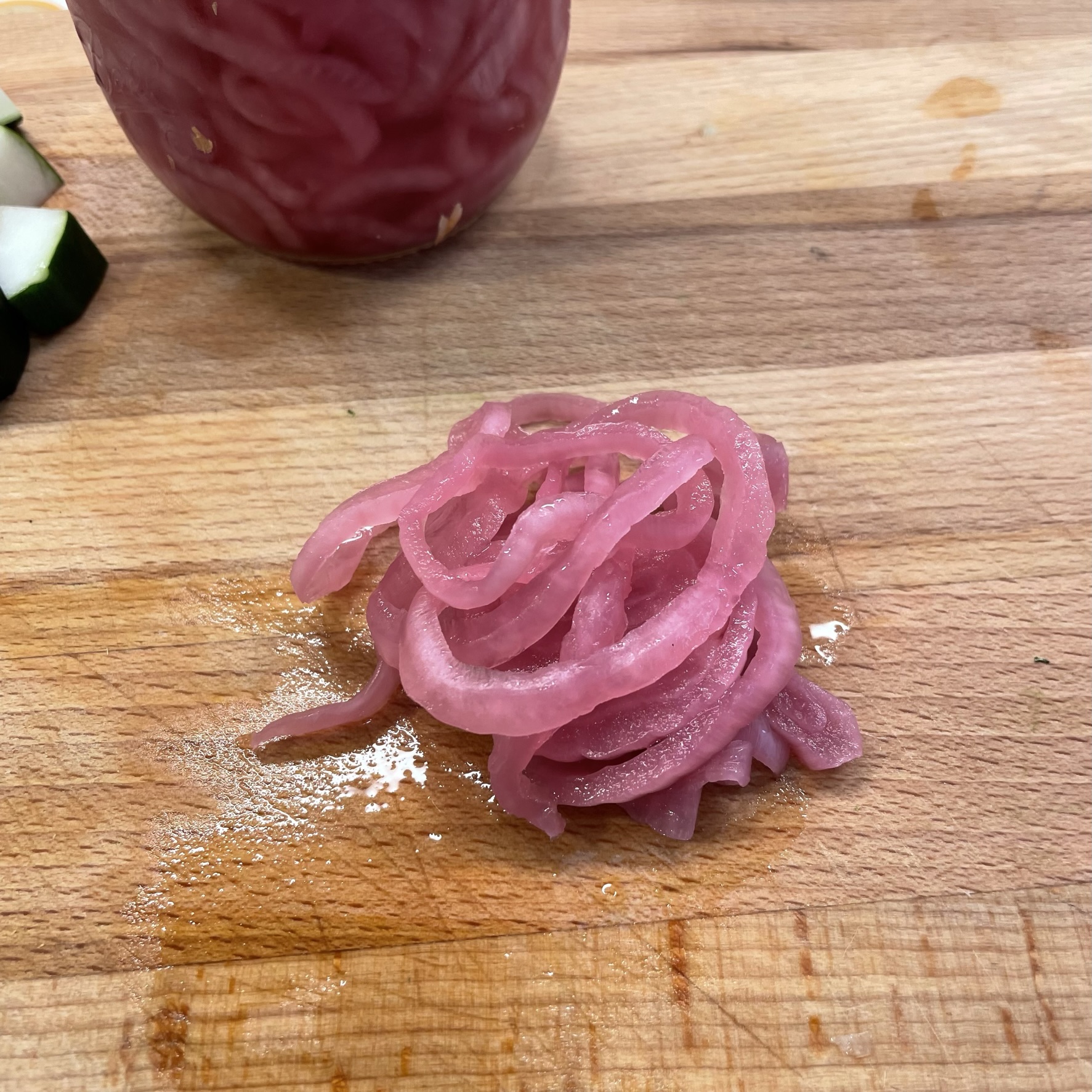
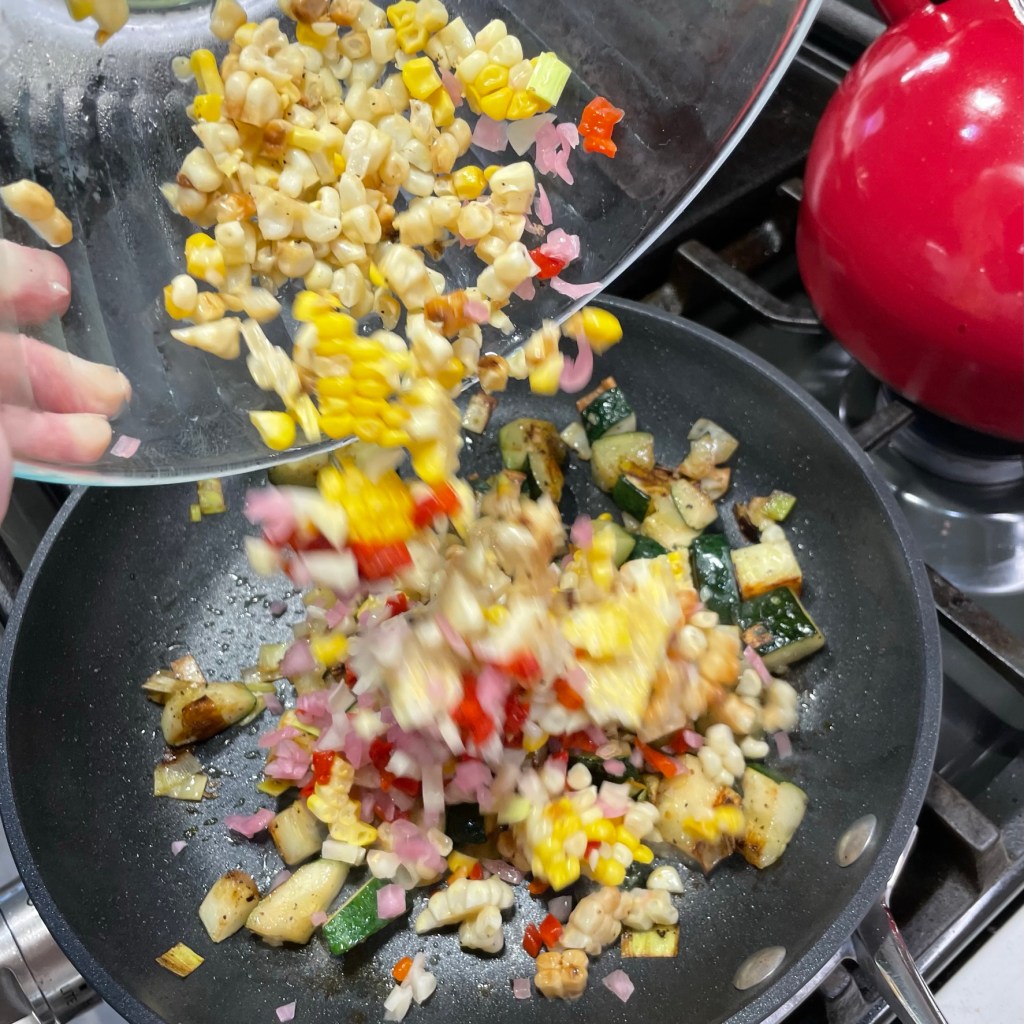
The succotash (technically this isn’t one because it doesn’t have beans) has everything that I love—zucchini (still plenty of it at the farmers’ market), grilled corn, leeks, ripe baby tomatoes, pickled onions and half of a tiny jar of pimentos we had in the fridge. I used one of my favorite prep-ahead techniques for this meal, which is layering the cut-up ingredients in reverse order in a single prep bowl that I can tuck into the fridge until I’m ready to start cooking.


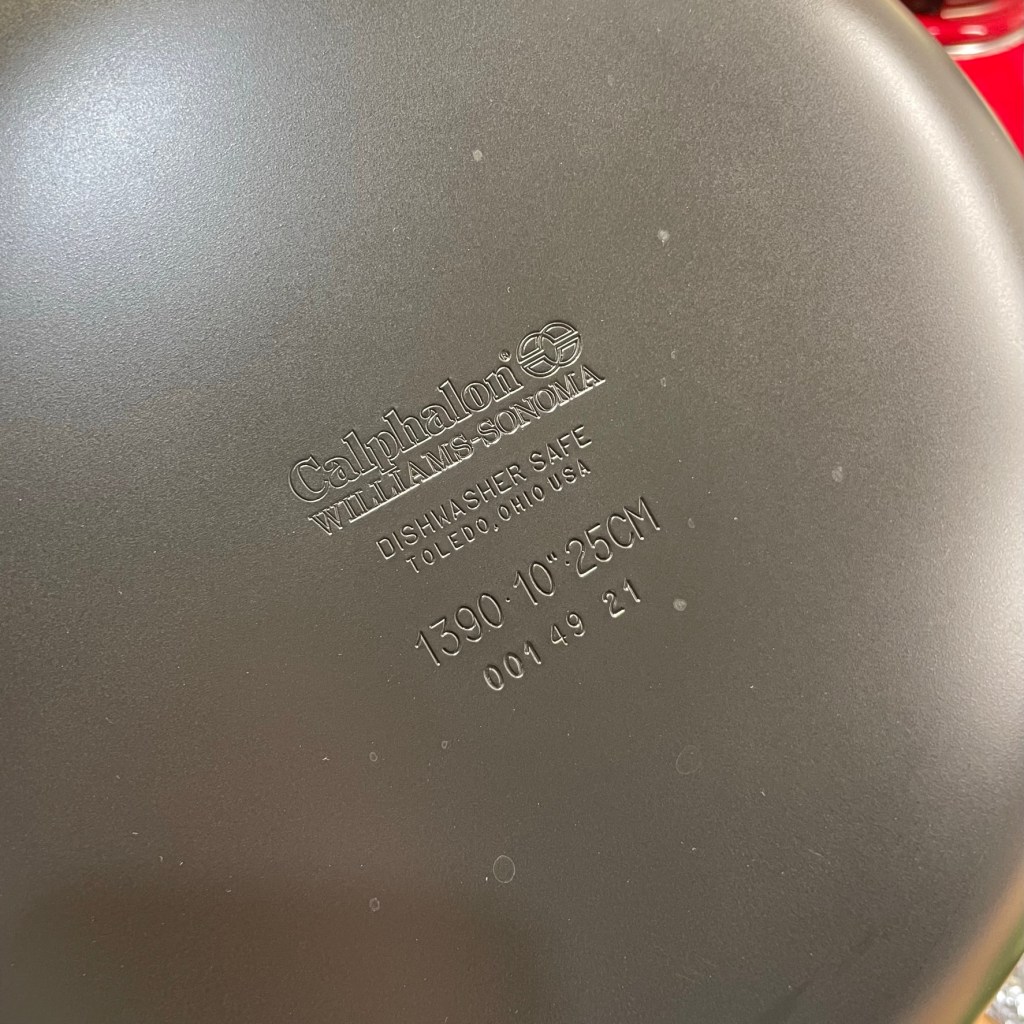
This recipe gave me a first chance to use the new non-stick skillets we bought this summer; Les and I had looked high and low for replacements that didn’t feel chintzy and weren’t made in some factory overseas. Les learned via online research that the only pair of American-made non-stick skillets were a specific set of Calphalon pans that were sold by Williams-Sonoma (most of Calphalon’s products are made in China, but this set is made in Ohio). They are available online if you don’t have a store near you.

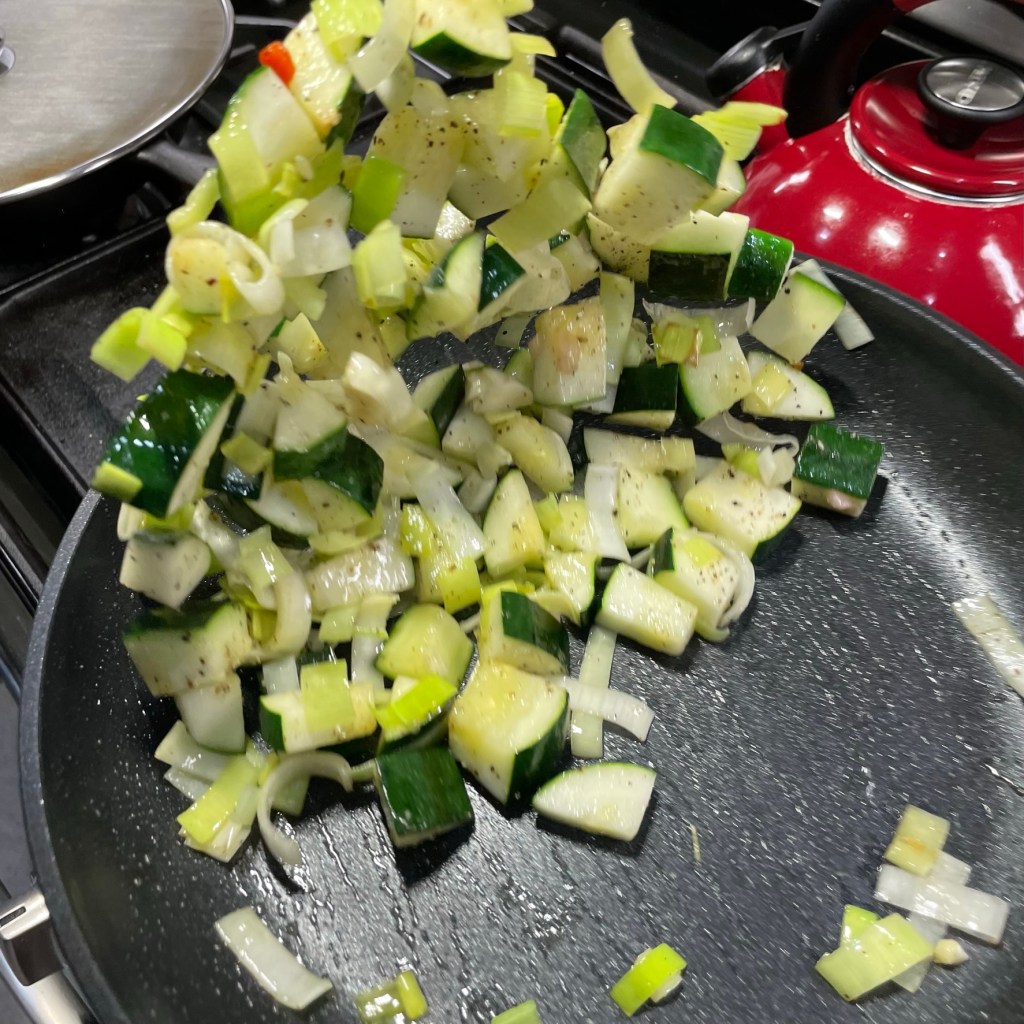
The non-stick coating is great, and I love the sturdiness of our new pans, but for me the real test of a new skillet is “how easily can I flip my ingredients?” Sometimes when I have a lot going on at once, I don’t want to take time to pick up a utensil so I’ll employ the flipping technique I learned during my catering days. It worked fine, though the pan was a bit heavy, so I’m counting it as upper-body exercise (and I only lost a few pieces of onion to the floor).


Having one prep bowl filled with vegetables makes cooking a snap, as I simply empty them into the skillet as I need them, and there’s no jumbling around in the fridge to find what I need or washing extra prep dishes. When the zucchini started to become tender, I moved deeper into the bowl for the other ingredients until I had everything in the pan.


All three components of this dish—the waffles, the chicken and the succotash—happen simultaneously, but you could certainly make the succotash ahead and simply rewarm it when you’re ready to serve. Keep the waffles warm on your oven’s low setting if needed, and aim to make the chicken the last thing you prepare. Remember to season it with a light touch of salt from the skillet!

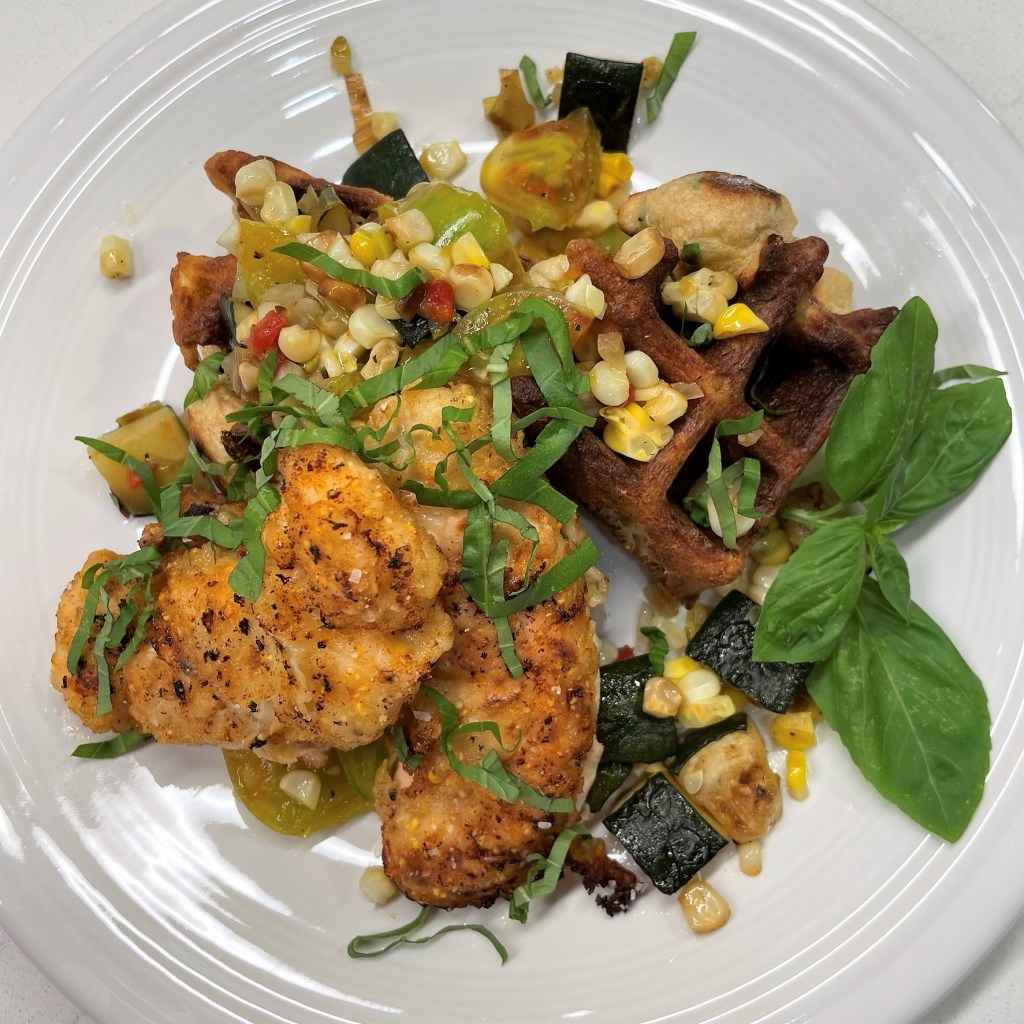
Pile it onto a plate, with the succotash underneath and over top of the crispy waffles, and the chicken tenders leaned against it. Finish the dish with a scattering of fresh chopped basil leaves, and dinner is served!

Not only does this presentation look beautiful, it serves the purpose of keeping everything warm until you make it to the last delicious bite!


Late Summer Succotash with Chicken & Waffles

  • Servings: About 3
  • Difficulty: Intermediate
  • Print

This meal takes some time to prepare, but the combination of sauteed summer ingredients and lightened-up chicken & waffles is well worth the effort! Prepare the three components of this dish at your own pace; if time is limited, the succotash can be made ahead and warmed at serving time. If you plan to make everything concurrently, consider setting the oven to warm and tuck away the waffles or chicken tenders on a rack placed over a baking sheet.

Ingredients

  • 1 pound boneless, skinless chicken tenders, patted dry
  • 1/2 cup cultured buttermilk
  • Up to 1 Tbsp. bottled hot sauce
  • 1/2 tsp. poultry seasoning
  • Salt and pepper
  • 1 cup neutral oil (for skillet frying]
  • 1/4 cup all-purpose flour
  • 2 Tbsp. medium-grind corn meal
  • 1/2 tsp. garlic powder

Directions

  1. In a medium bowl, combine buttermilk, hot sauce, poultry seasoning, salt and pepper. Add chicken tenders to the bowl, tossing to coat. Allow this to rest at room temperature at least 30 minutes, or refrigerate up to a few hours if working ahead. Take them from the fridge 30 minutes before pan-frying them.
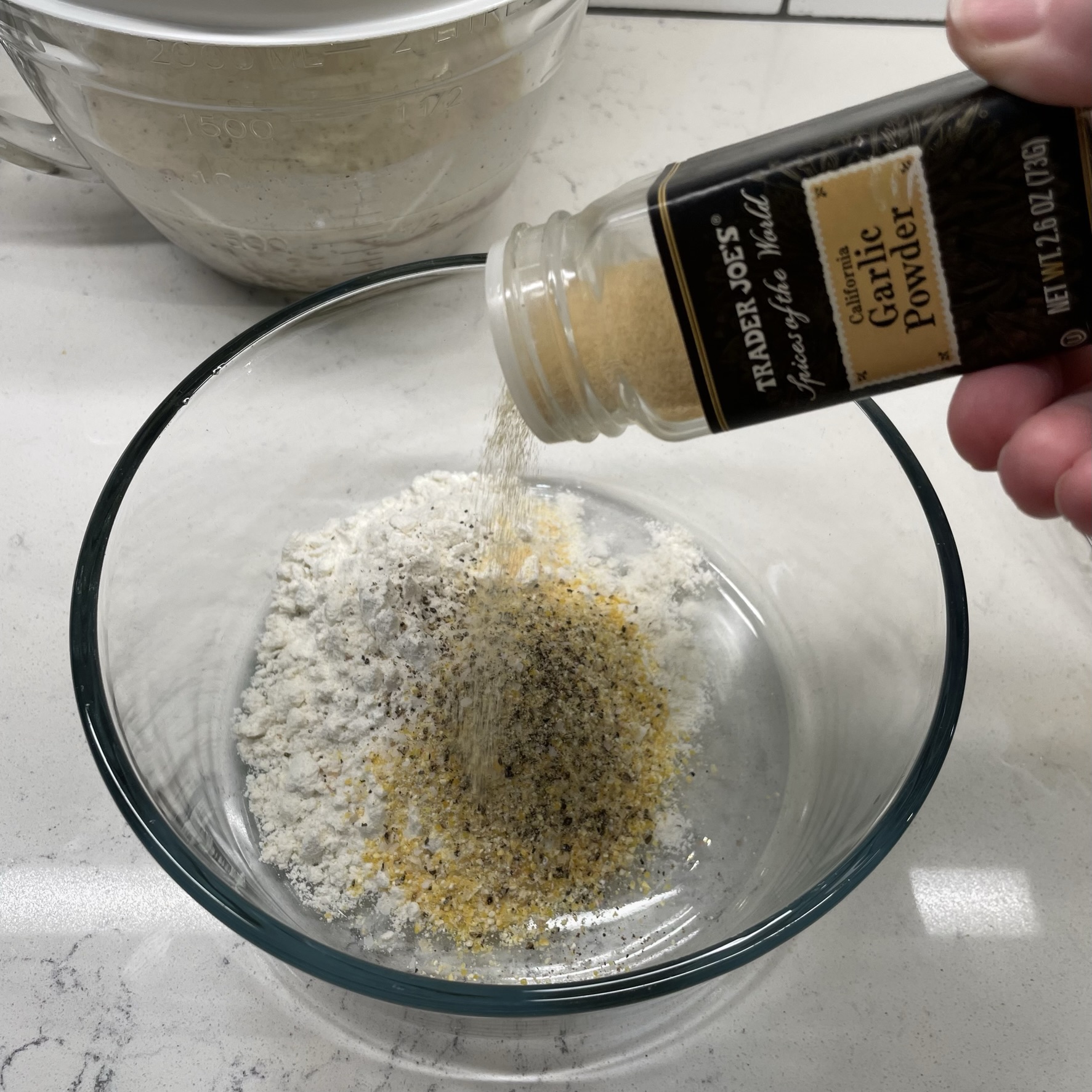
  2. In a small bowl, combine flour, corn meal and garlic powder, plus a few shakes each salt and pepper. Set this aside for breading the chicken tenders.
  3. Heat a cast iron skillet over medium heat, with 1/2-inch oil.
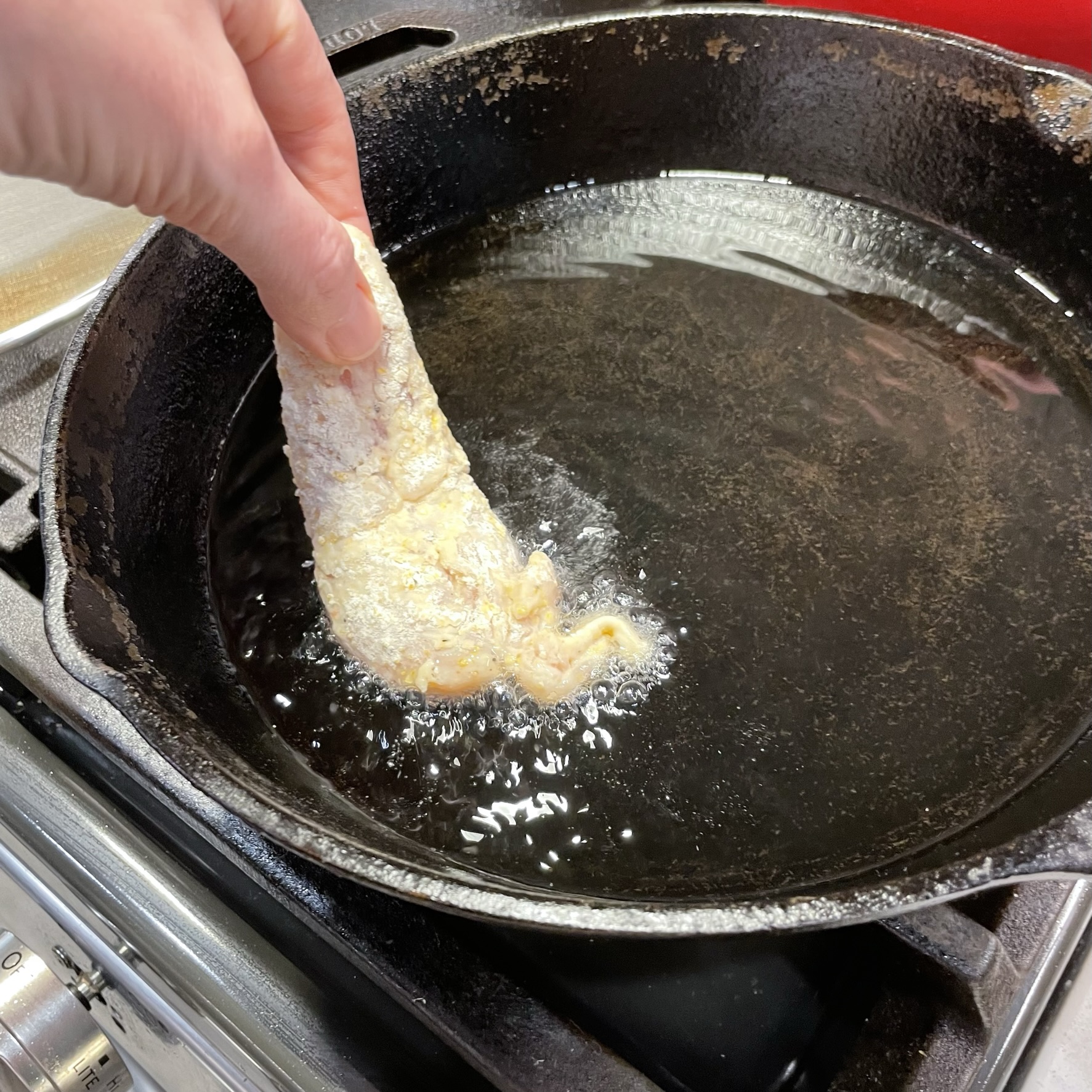
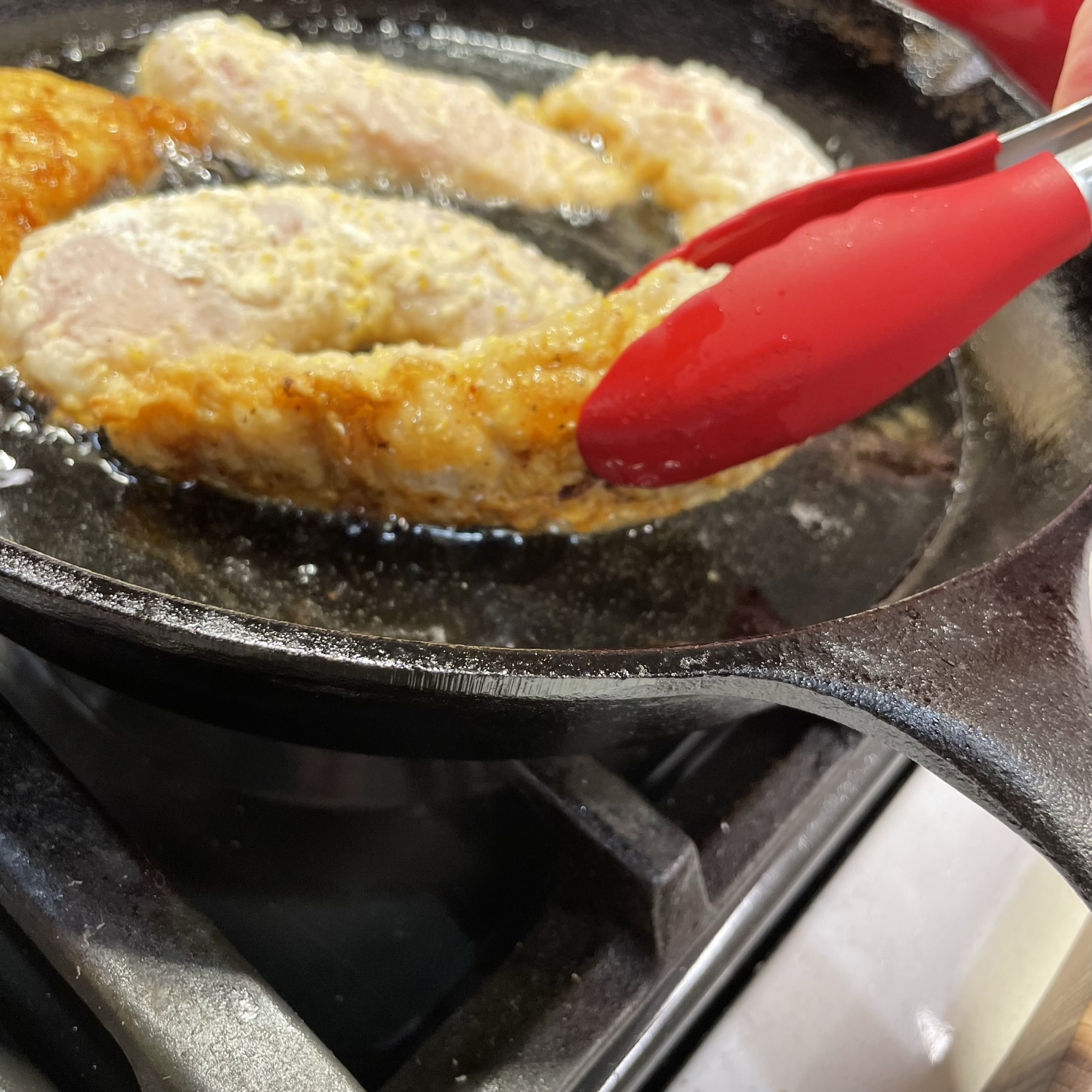
  4. When oil is hot, remove tenders from buttermilk mixture, allowing all liquid to run off. Dip the tenders into the breading mixture; coat evenly without dredging too heavily. Carefully place each tender into the hot oil, taking care to not crowd the pan too quickly, as this will drop the temperature of the oil and result in greasy chicken. Turn tenders when the first side is golden brown; transfer them to a paper towel-lined plate when done. Season immediately with a light sprinkle of salt.

Ingredients

  • 1/4 cup fed sourdough starter
  • 1/2 cup cultured buttermilk
  • 1/2 cup white whole wheat flour
  • 3 Tbsp. medium-grind cornmeal
  • 1/2 tsp. baking soda
  • 1/4 tsp. salt
  • 1 large egg
  • 1 Tbsp. extra virgin olive oil
  • 1/2 cup leftover grilled corn kernels
  • 3 chopped green onions (scallions), white and green parts

Directions

  1. In a medium batter bowl, combine sourdough starter and buttermilk. Add flour and cornmeal. Stir until smooth; cover and leave at room temperature at least 30 minutes, up to about 2 hours.
  2. In a small bowl, combine flour, cornmeal, baking soda and salt. Set aside.
  3. Set waffle iron to medium heat. While it preheats, add egg, oil, soda and salt to the sourdough batter. Stir until smooth. Fold in corn and scallions.
  4. Brush waffle iron with oil. Add a scoop of batter and bake until crispy, following manufacturer’s instructions. As a visual cue, watch for steam to dissipate from the iron. Generally, if the waffles are sticking, they aren’t finished baking. If working ahead, place finished waffles on a rack over a cookie sheet and keep them in a warm (250° F) oven.

Ingredients

  • 1 medium zucchini, chopped into chunks
  • 1 small leek or onion, chopped
  • 1 cup leftover grilled corn kernels
  • 1/4 cup pickled onions, chopped (I like the “pickled” flavor here; substitute anything pickled, such as okra, green beans, cucumber)
  • 2 Tbsp. jarred pimento, drained
  • 2 Tbsp. extra virgin olive oil
  • 1 cup ripe baby tomatoes, halved
  • Salt and pepper
  • Fresh basil or parsley, to garnish

Directions

  1. Heat a large, non-stick skillet over medium flame. Add olive oil and saute zucchini with leeks or onions until slightly tender.
  2. Add remaining vegetables, except tomatoes, and toss until evenly combined. Reduce heat to low and cover skillet with a lid so that the pan ingredients can heat through without much more cooking.
  3. Add tomatoes at the end, tossing just to combine.

To assemble the dish, spoon out some of the succotash, and then place a waffle section, topped with additional succotash. Arrange the chicken tenders by leaning them up against the waffles. Sprinkle with chopped, fresh basil or parsley.


Pompatus of Love

We have enjoyed this peachy bourbon cocktail at our house all summer, ever since I first made the peach shrub. What’s that—you say peaches don’t grow on shrubs? True. The peach “shrub” that I speak of is an old-school concoction, otherwise known as a “drinking vinegar,” and though it was a popular way of preserving seasonal fruits back in Colonial times (or as far back as the Roman Empire, depending on whom you ask), the shrub is having a new moment, especially in the world of craft cocktails.

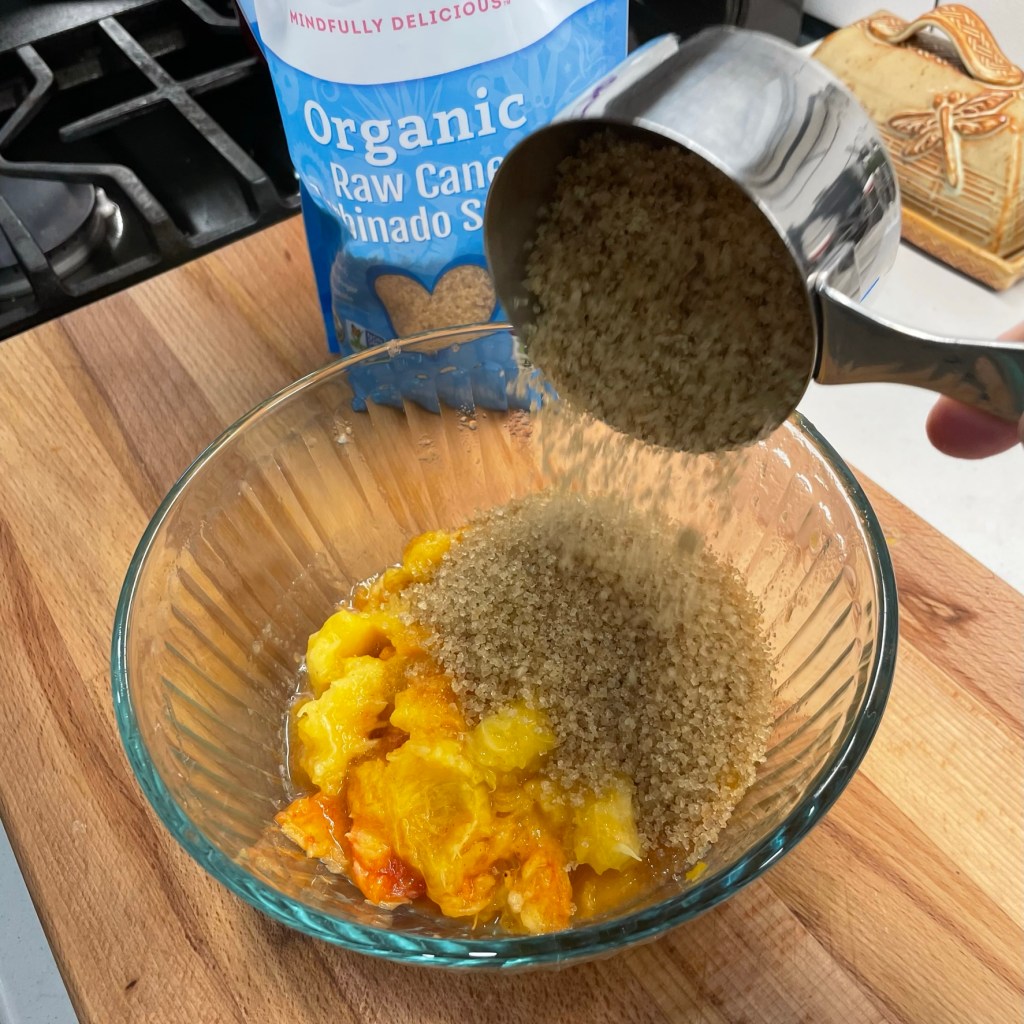
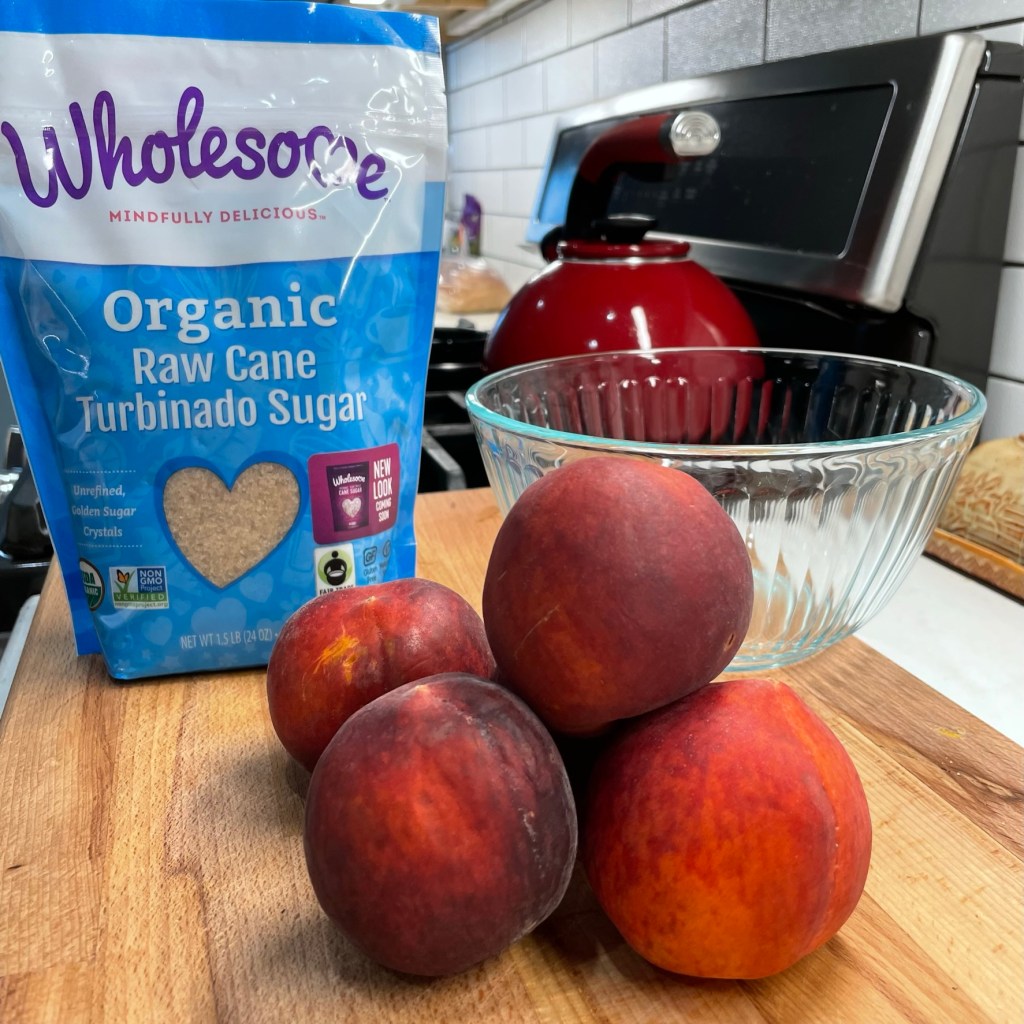
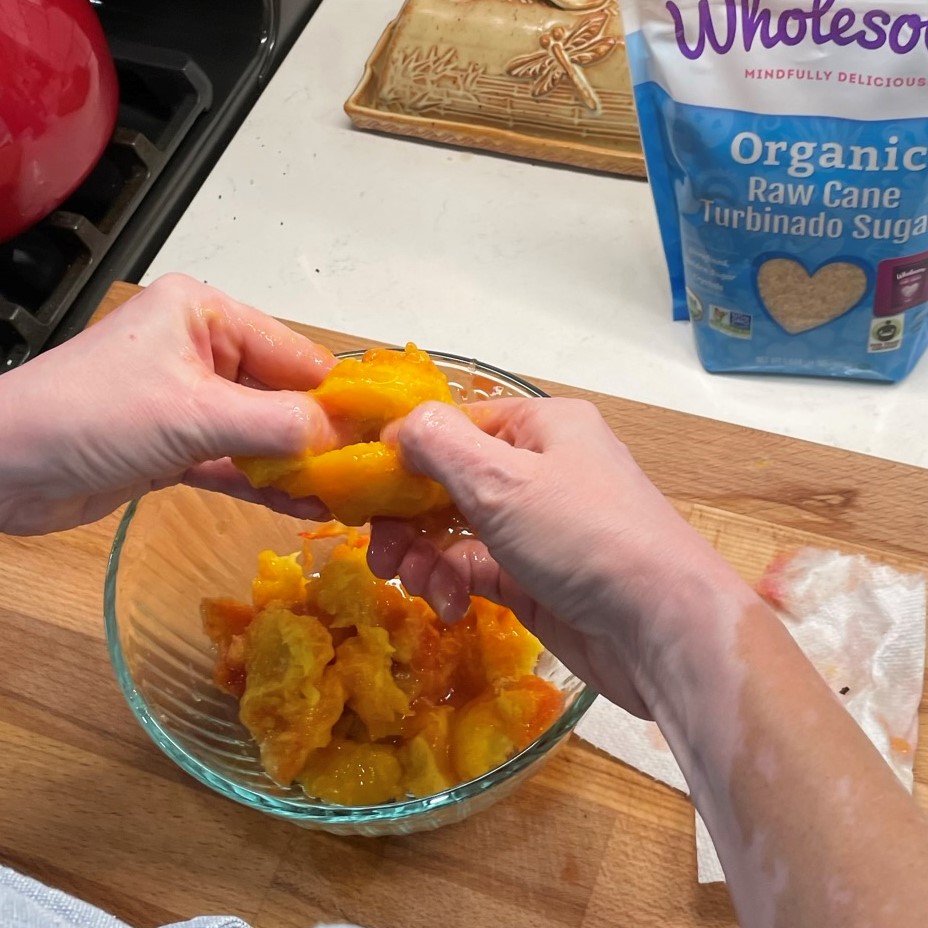
A shrub is a mixture of fruit, sugar and vinegar, usually in equal parts. You can either cook the fruit together with the sugar before adding the vinegar, which results in a jammy, compote-type flavor, or go the fresh route with raw fruit, which takes longer to develop but presents a more vibrant flavor in the shrub. I chose the latter, with enough cut-up peaches to measure a heaping cup. I stirred in a cup of raw turbinado sugar and left it in the fridge about 24 hours.


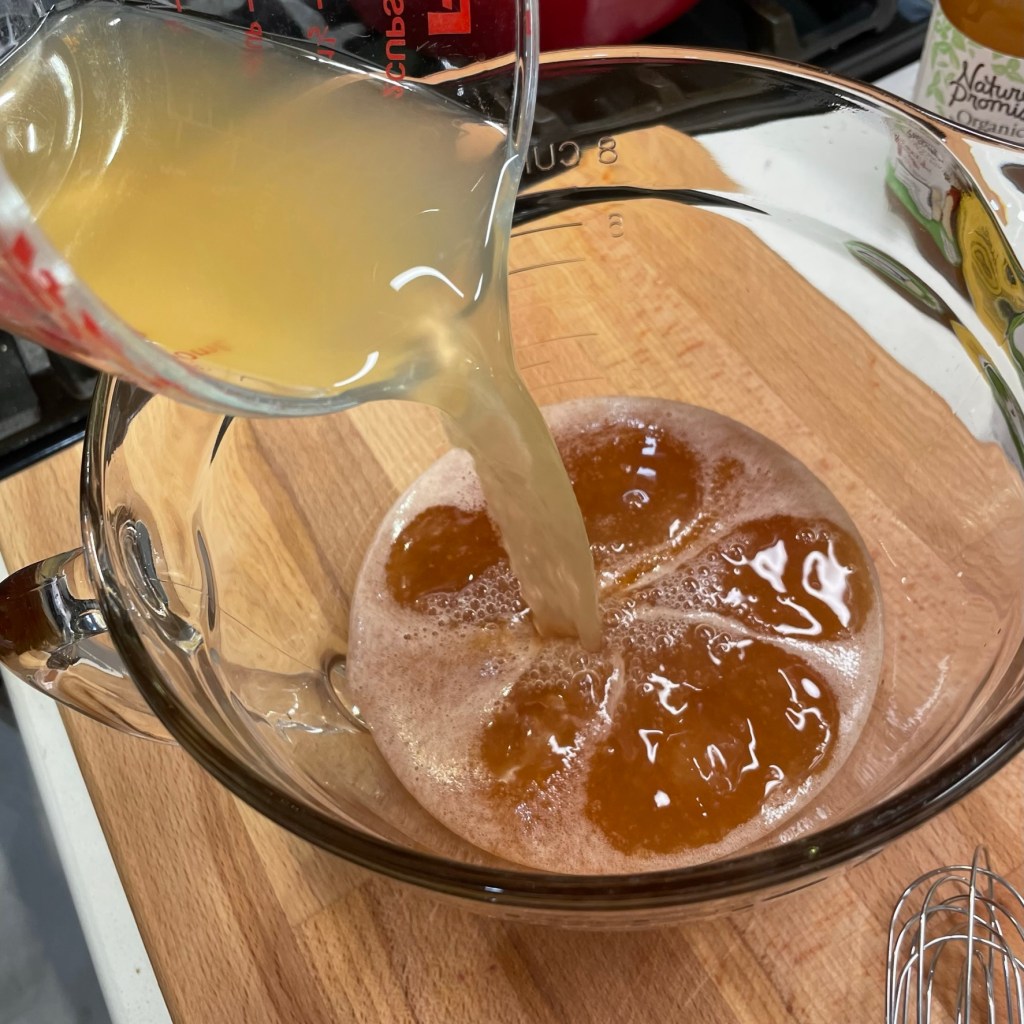
The second day, I strained the syrupy, macerated fruit (we put the chunky remains on top of vanilla ice cream) and mixed the liquid with a cup of vinegar—half apple cider (raw, with the “mother”) and half white wine.


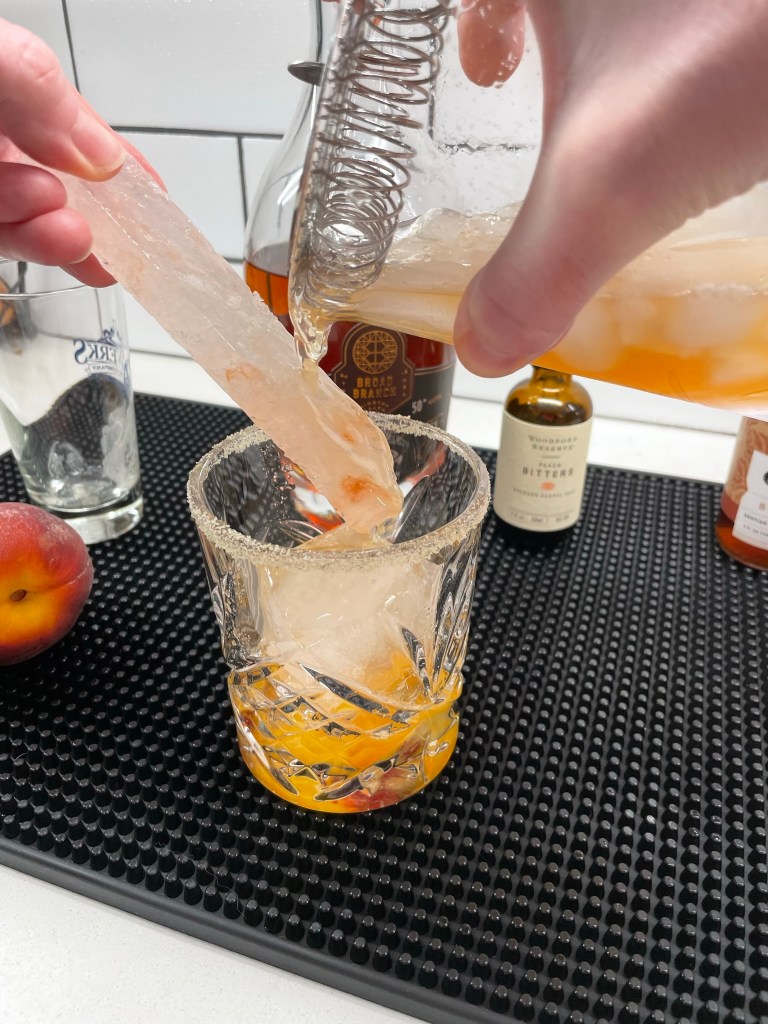
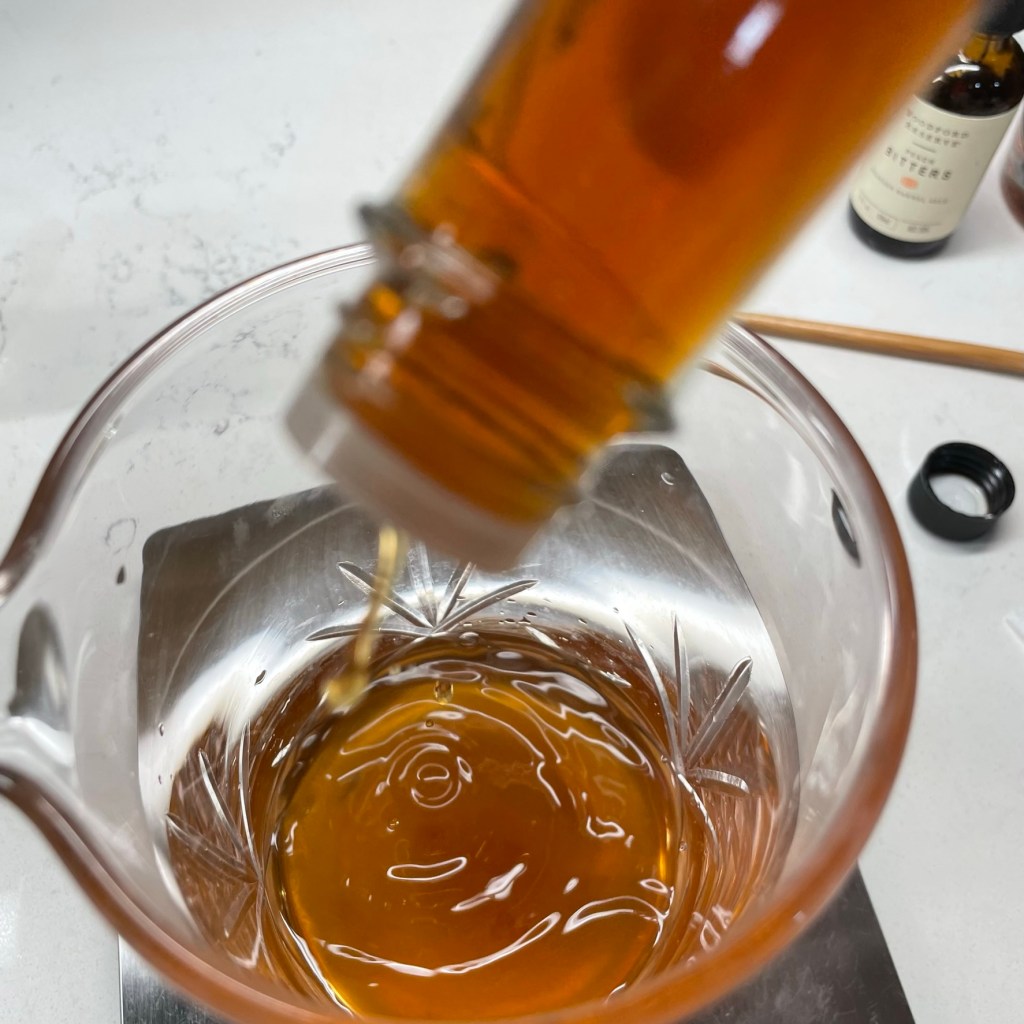
My peach shrub was strong, tart and a little too “in your face” for the first couple of days, but after a week in the fridge, it had mellowed to become quite enjoyable in this cocktail, and even more so as the weeks have passed. The other ingredients in this drink are bottled-in-bond bourbon (this one has a very low percentage of rye in the mash bill, so definitely choose one on the sweet side), a fresh chunk of muddled peach and a couple of shakes of bitters. I like the ginger bitters, but if you can find peach bitters, they’re nice, too.

This is a bottled-in-bond bourbon from one of our local distilleries.
It’s mostly corn, and only a slight amount of rye, so it’s nice and sweet.

There’s one more thing that makes this cocktail special, and you’d probably never guess—it’s salt. You heard me. I’ve been experimenting with the concept to further balance a cocktail, and it is a pretty amazing thing. We bought this Himalayan pink salt swizzle stick back in February when we visited Asheville Salt cave, and as it turns out, a slight touch of this special salt brings this drink together, the same way a pinch of salt makes a dessert taste better. The things we learn!


We have tried several iterations of this libation over the summer, including an infusion of thyme in the peach shrub, minted sugar on the rim of the glass, on the rocks, and up in a Nick and Nora glass, etc. My favorite is simple and straightforward—bourbon and muddled peach, shrub, ginger bitters, no sugar rim, poured over the salt swizzle stick on a giant ice cube, and keep ‘em coming.

I decided to call this cocktail “Pompatus of Love.”

Pompatus of Love.

Now, I won’t make you wrack your brain to figure out why the name sounds familiar to you—it comes from the 1970s classic rock song, “The Joker,” by the Steve Miller Band. You know, right after he sings, “some people call me Maurice.” What you might not know is that the word pompatus is not really a word at all, but something that Miller misheard from a doo-wop song released two decades earlier. I’ll let you explore that on your own time with the help of Google and Wikipedia, because it is a story in itself.

And since you’ve already heard the Steve Miller version of the song at least as many times as I have, I’d like to introduce you to one of our favorite local artists who performs a terrific rendition of this song. Please click to play, while I tell you a little bit more about this peachy bourbon drink, and about our friendship with Colin Allured, the artist featured here.

If you love this, subscribe to Colin’s YouTube channel. He has plenty more where this came from.

I first met Colin almost 8 years ago, when he debuted his one-man act at a wine bar that I frequented. He mesmerized the entire room on that December night, even drawing the kitchen staff out to the front of house to see who was this guy, covering the vocals of everyone from Steve Miller to The Beatles to Justin Timberlake to Katy Perry—as well as plenty of his own (awesome) original music. From that night, I hardly missed an appearance by Colin at the wine bar or anywhere else, and Les quickly caught on as well when we began dating. Fast forward a few years, when Les conspired with Colin to play a very special song for us on an evening we had planned to celebrate my birthday—I say they “conspired” because the night took on a whole new meaning after Colin dedicated the song to us. That’s when Les popped the question and put a ring on my finger. Since then, we have followed our friend around to many venues, including the show where he recorded that version of “The Joker,” and I have no doubt that he will always be a part of our love story, in some way or another.

So what does all of this romance nonsense have to do with this bourbon cocktail, based on a peach shrub?


I named this drink Pompatus of Love because, to me, it embodies a little bit of everything that makes a romantic love relationship great. It’s intoxicating, just sweet enough, a bit tart and sassy, and slightly salty in a way that is unexpectedly addictive. As one of our July 4th weekend guests put it, “the first sip surprised me, but it’s growing on me.”

Yep. That’s the pompatus of love.


Pompatus of Love

  • Servings: 2 cocktails
  • Difficulty: easy
  • Print

This perfect marriage of bourbon and peaches is made even better with a splash of peach shrub, an old school “drinking vinegar” that’s made with fresh peaches, sugar and vinegar. Plan to make the shrub about a week ahead for best results. I like these best on a large ice cube in a double rocks glass, but it can also be shaken and strained into a chilled coupe glass if you’re feeling fancy.

Ingredients

  • 1 small, fresh peach (for muddling)
  • 4 oz. bourbon (use a high-proof, low rye version if possible)
  • 1 oz. peach shrub* (see below)
  • 2 quick shakes ginger (or peach) bitters
  • large ice cubes for serving

Directions

  1. Place a chunk of peach (about the size of a walnut) into each rocks glass. Crush it with a cocktail muddler or the handle end of a wooden spoon. Place a large ice cube over the peach.
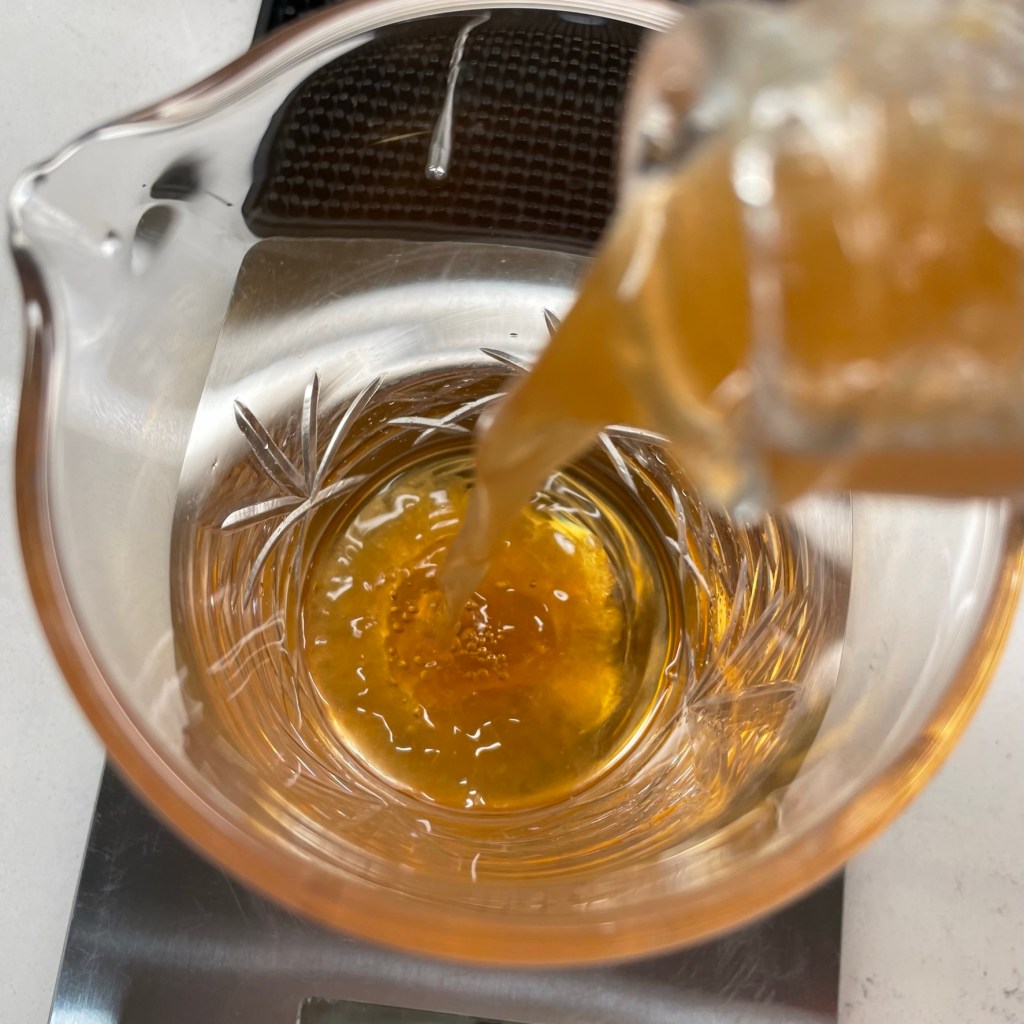
  2. In a cocktail mixing glass or shaker, combine bourbon, shrub and bitters. Add one cup of ice and stir or shake until the mixing vessel is frosty.
  3. Strain into glasses, garnish with slices of the peach.

For the Shrub: choose very ripe peaches, and don’t worry if they have bruises or dark spots. This is a great way to use peaches that are a little “past their prime.” The shrub will be quite intense for the first few days after making, but it mellows after about a week and is lovely in cocktails, or put an ounce in a glass with ice and top it with sparking water for a zero-proof summer treat!

Ingredients

  • 3 or 4 ripe peaches, washed
  • 1 cup raw cane turbinado sugar (white or light brown sugar works, too)
  • 1/2 cup raw, unfiltered apple cider vinegar (such as Bragg’s)
  • 1/2 cup white wine vinegar

Directions

  1. Peel and pit the peaches, and cut them up into chunks.
  2. In a medium bowl (choose one that has a fitted lid), combine the peaches and sugar, stirring until it begins to get syrupy. Cover and macerate in the fridge 24 hours.
  3. Strain peaches through a mesh sieve, catching the liquid in a bowl below. Discard the peach solids, or use them right away in some other dish.
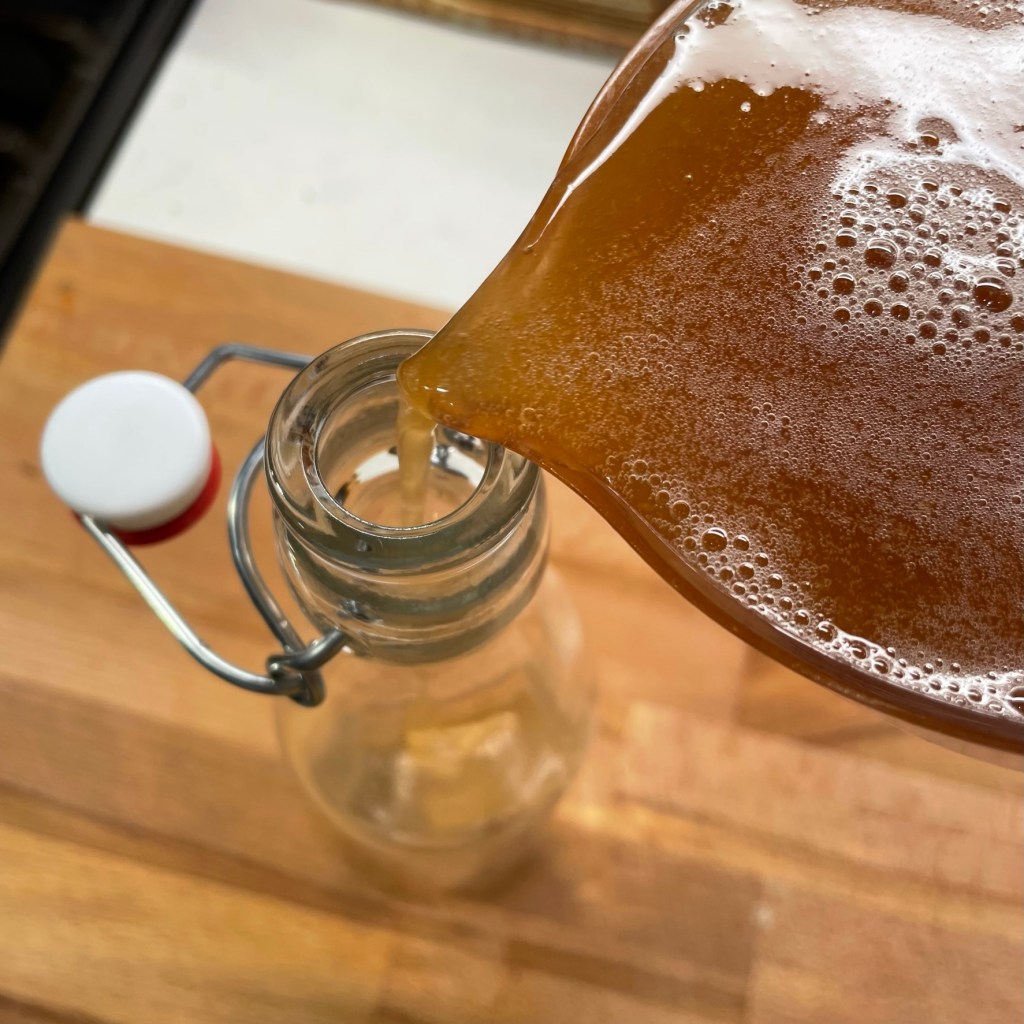
  4. Stir the vinegars into the sweet peach syrup. Transfer to a sealable glass bottle and refrigerate up to 3 months.


A Pair of Peachy Keen Skillet Desserts

I’m ready for fall—there, I said it. Summer has been wonderful this year, especially for the fact that we have enjoyed the company of friends more this year than in the previous two summers. It’s good to be (mostly) back to normal. But my confession is true; I have found myself longing for the goodness that autumn brings—you know, cooler evening breezes, crisp morning air, comfy sweaters and (of course) the food. Soon enough, I suppose.

As we wind our way through these waning days of summer, I am delighted with the freshness we have enjoyed from our own garden and the various other local sources that have supplied our meals.

We are clinging to the end of fresh peach season here in the South, and I have two delicious desserts to share with you. It is unusual for me to share two recipes at once but, given the short time left for enjoying fresh, in-season peaches, I thought it made sense to present these at the same time. Both are prepared in a skillet, and both include fresh peaches, but that’s pretty much where the similarities end. One is super simple to make and serve straight from the skillet; the other is a bit more involved, though not difficult, and serves up with a more elegant flair. Either is delicious, and if you only have enough time (or peaches) to make one of them, you can hardly choose wrong.

Peach Bourbon Upside-down Skillet Cake

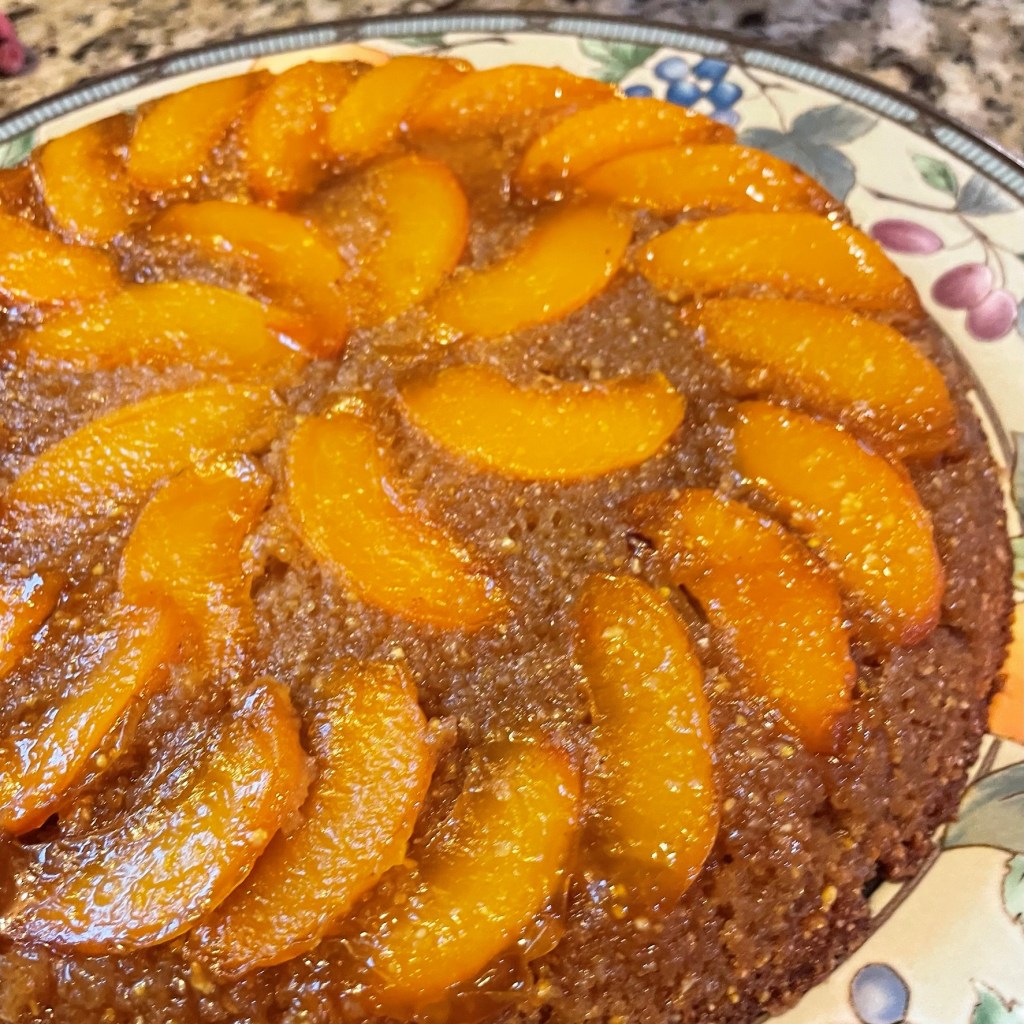
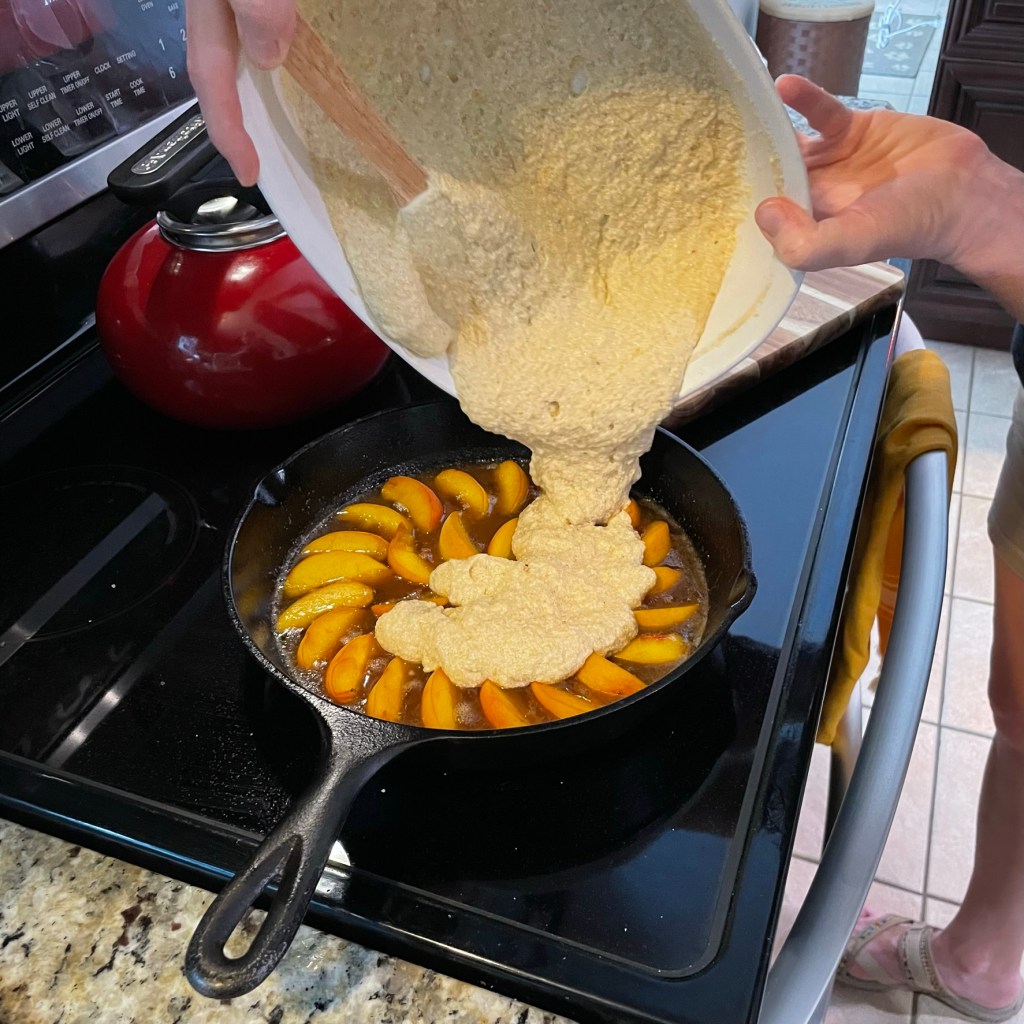
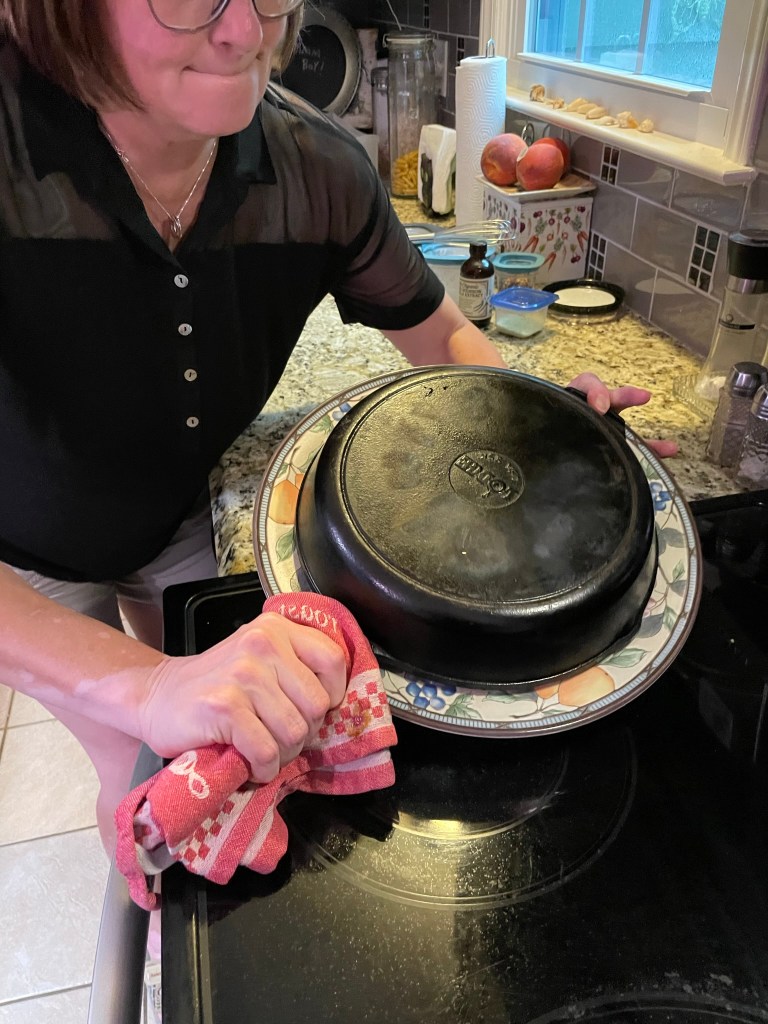
The first of these yummy desserts was made “on location,” just about a month ago, during a visit with friends outside Raleigh, N.C. When we arranged our day trip to visit Bob and Peg, I told them I’d love to make a dessert using the fresh peaches off their backyard tree. If you have the time to invest in a few extra steps, this is the dessert I recommend. For me, the trickiest part is inverting the thing while the heavy cast iron skillet is still warm. If you’re comfortable doing so, this cake is well worth the effort, and it’s one that I have made several times over the years. I turned it into a bit of an adventure this time by packing up all the pre-measured ingredients and then assembling and baking it at Bob and Peg’s. This was easier than it might sound, and it went like this:


As with any upside-down cake, this dessert was built backward, beginning with the sticky-sweet, sugary base in the skillet and finishing with the batter that gets poured right on top—which, of course, becomes the bottom after the cake is baked and inverted.

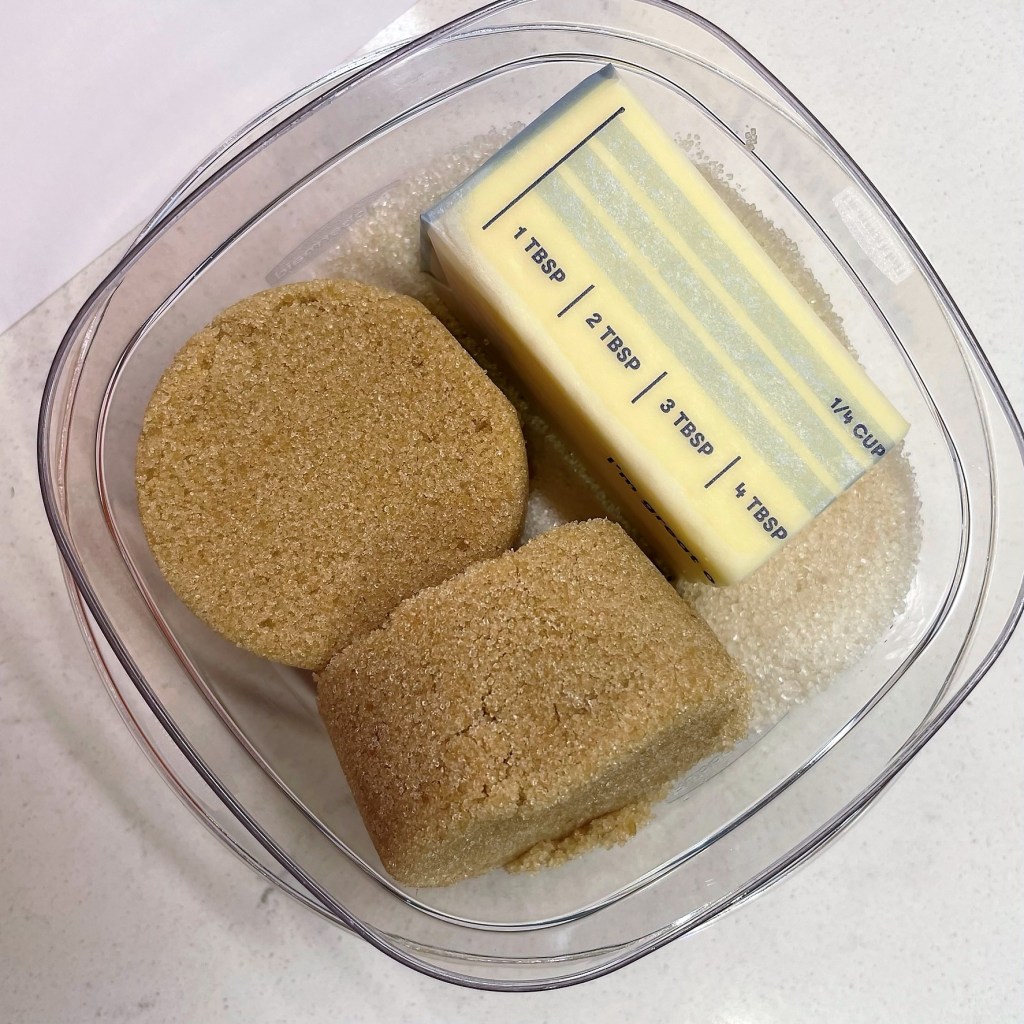
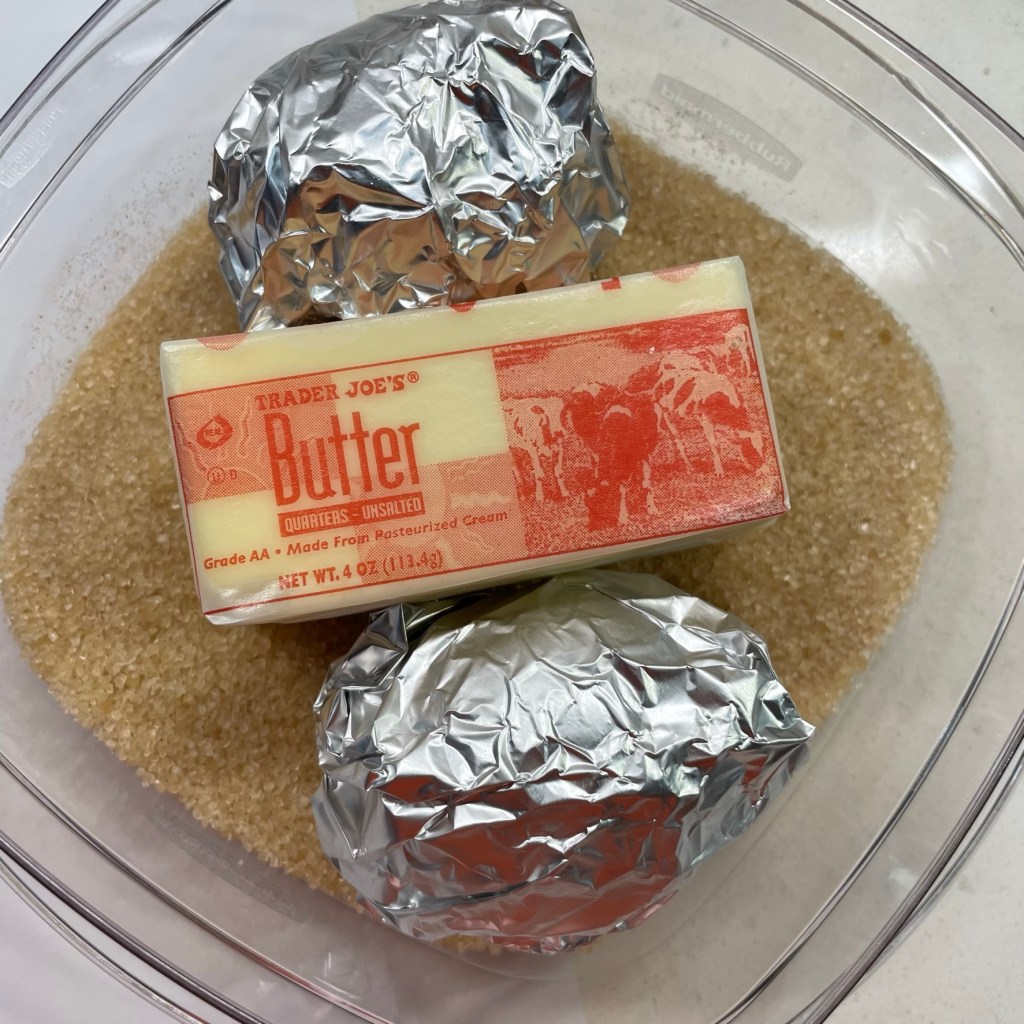
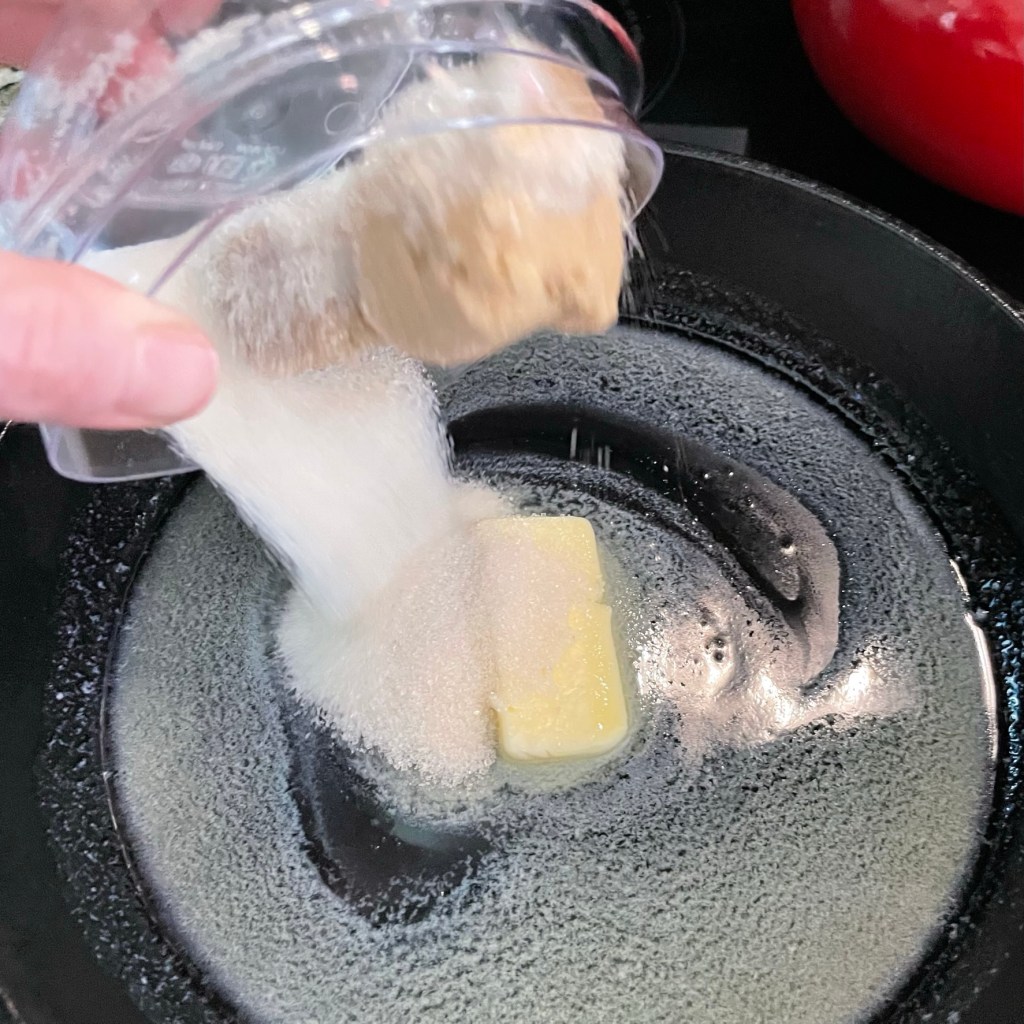
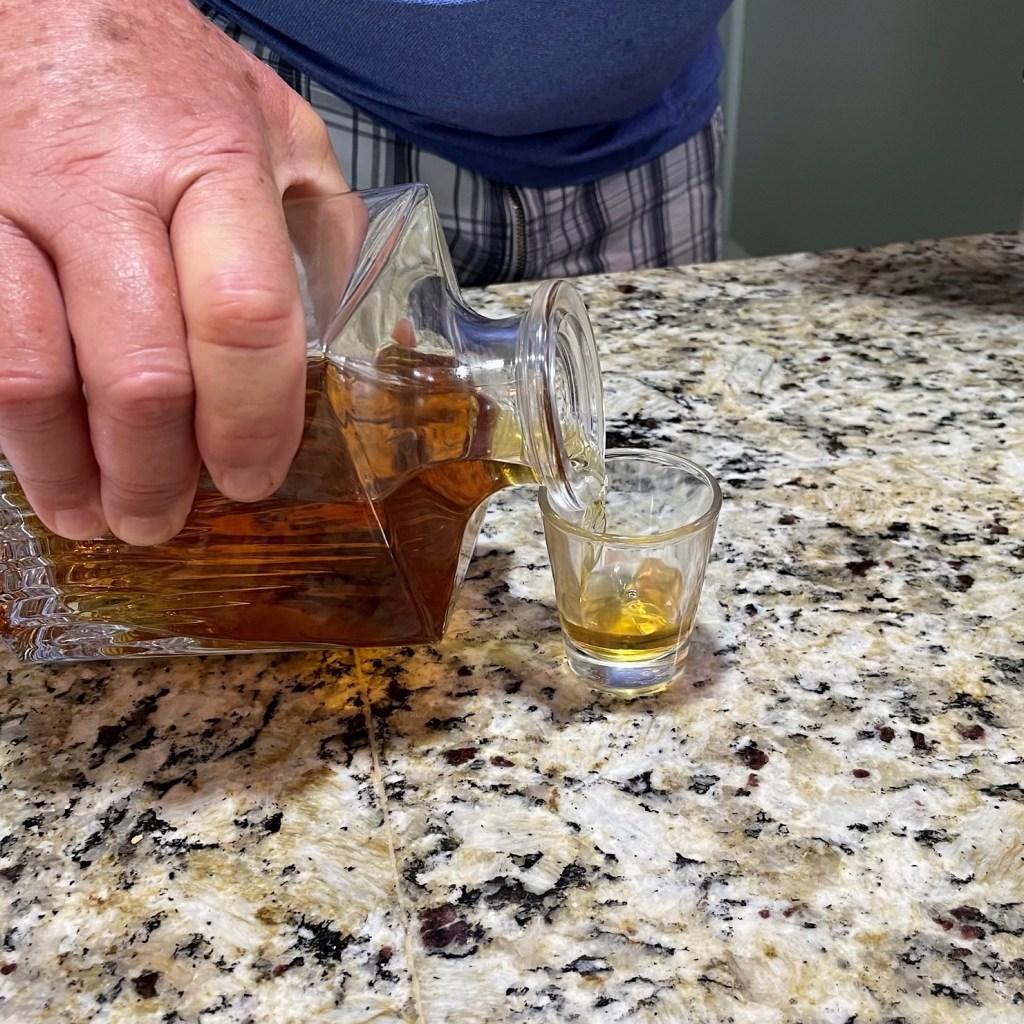
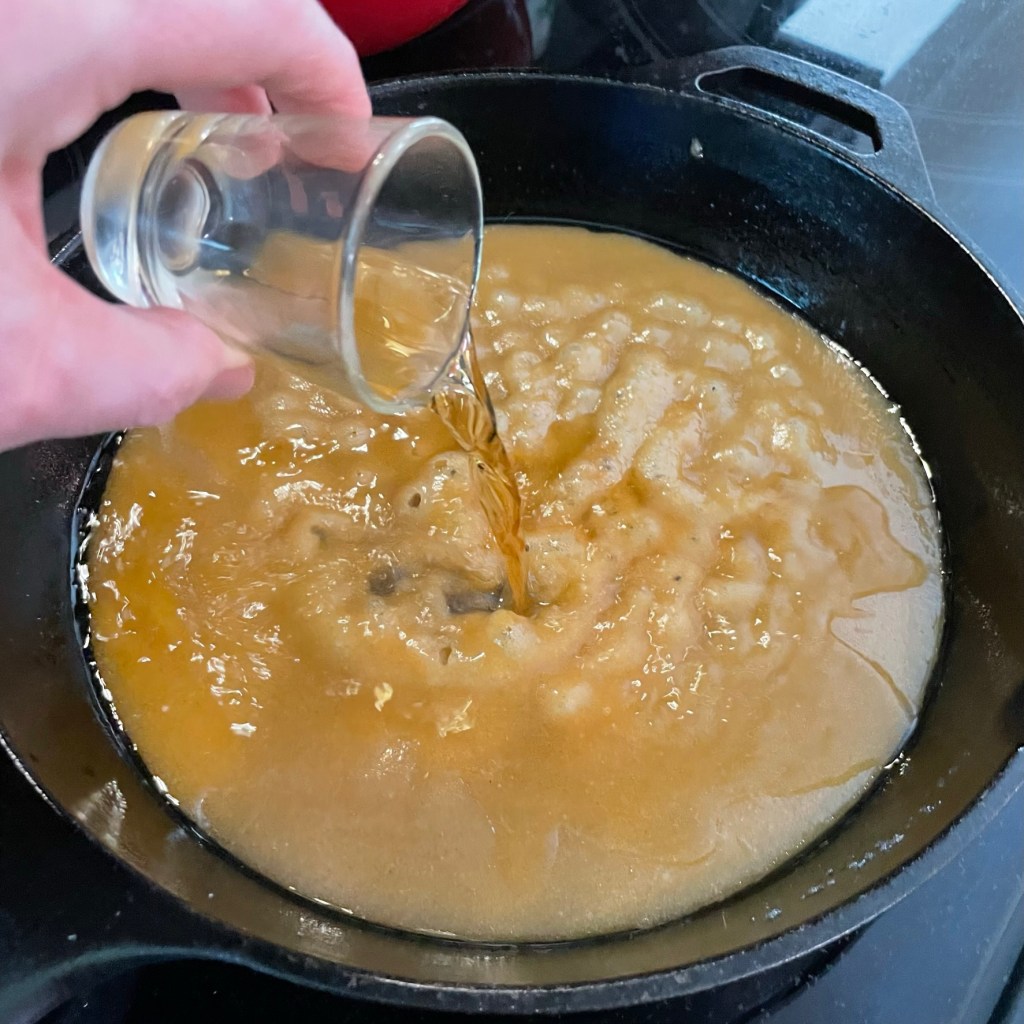
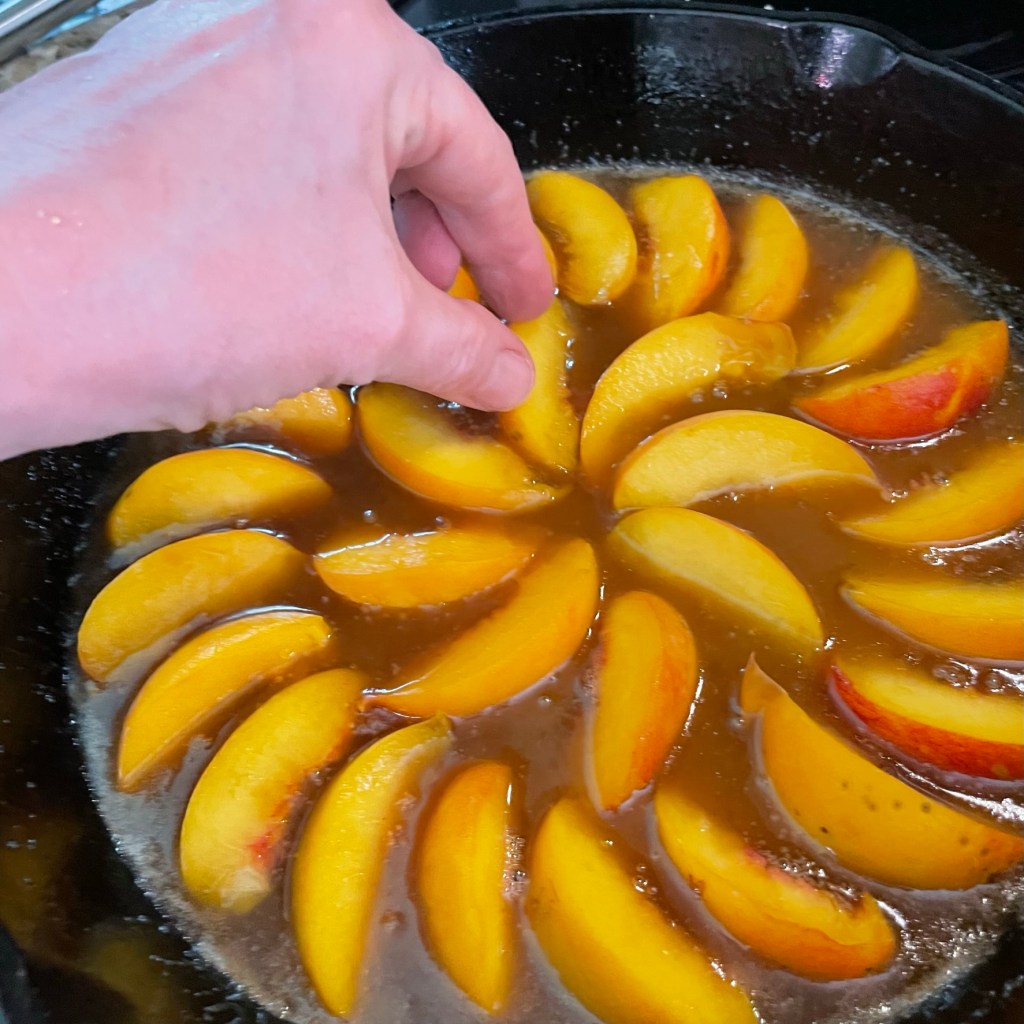
I like a combination of white and brown sugars for the base because the white sugar puts a bit of crunch in the caramel and the brown sugar provides more depth of flavor. Add both to the butter as it melts over a stovetop burner and let it mingle into syrupy lusciousness. If the butter gets a little browned in the process of melting it down, so much the better, and you must know me well enough to know that I had to pour in a shot of bourbon once the sugar mixture was bubbly. Bob was pouring bourbon anyway, and peaches and bourbon is a match made in summer heaven, as far as I’m concerned. Next, arrange sliced peaches all the way around over the butter-sugar base.


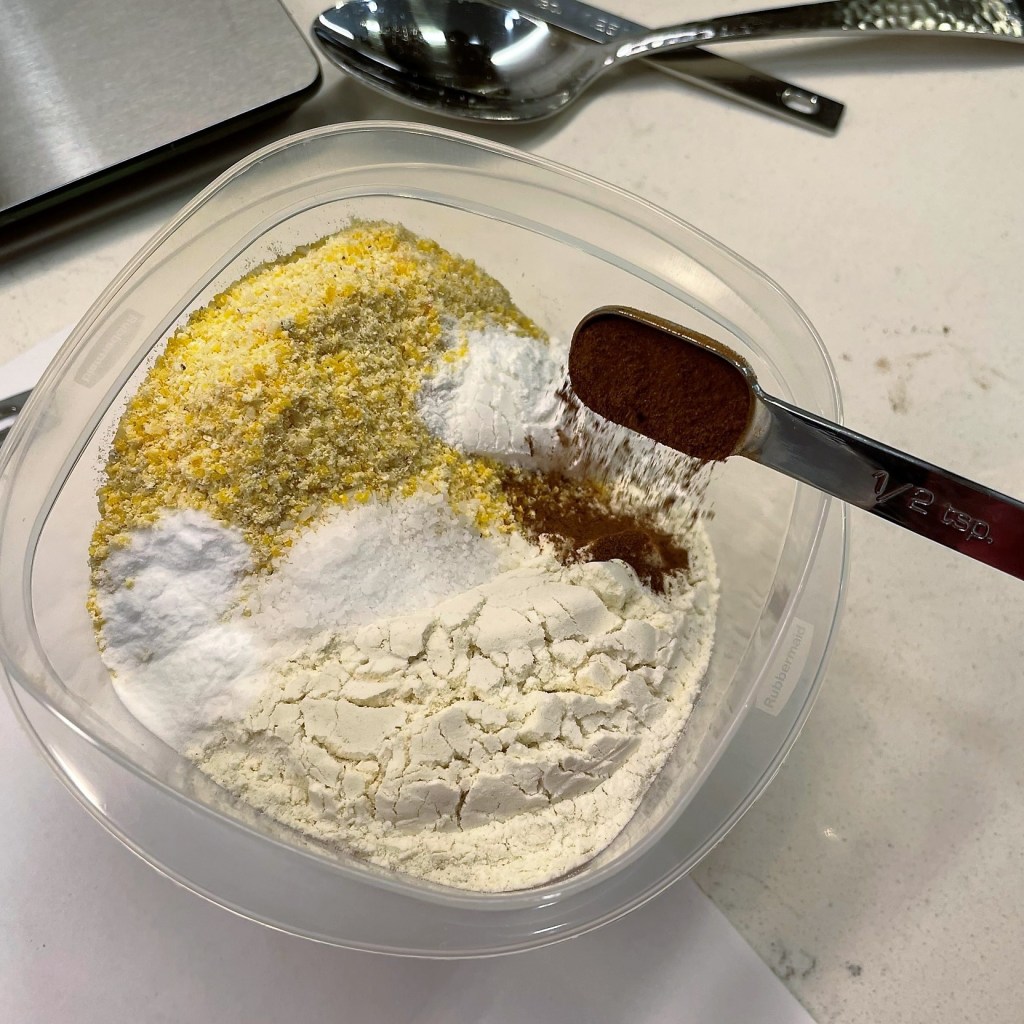
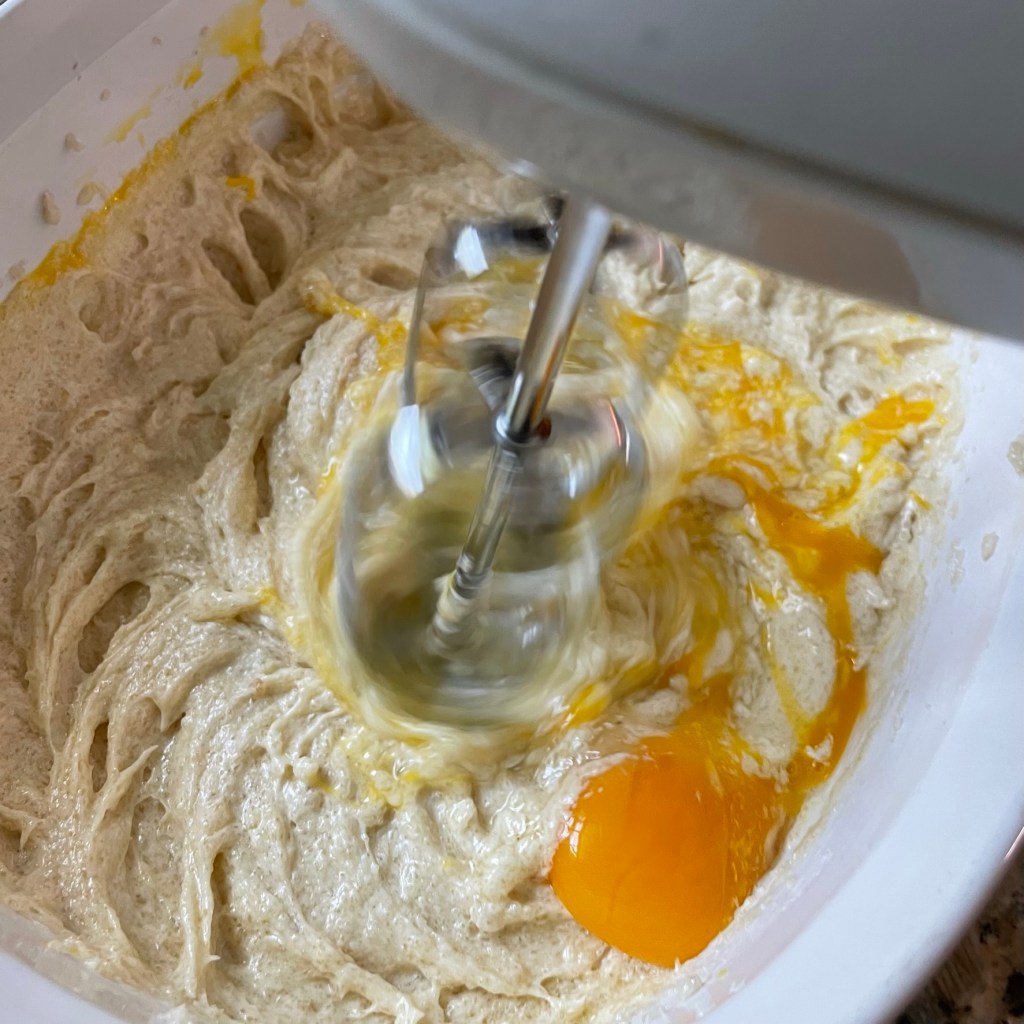
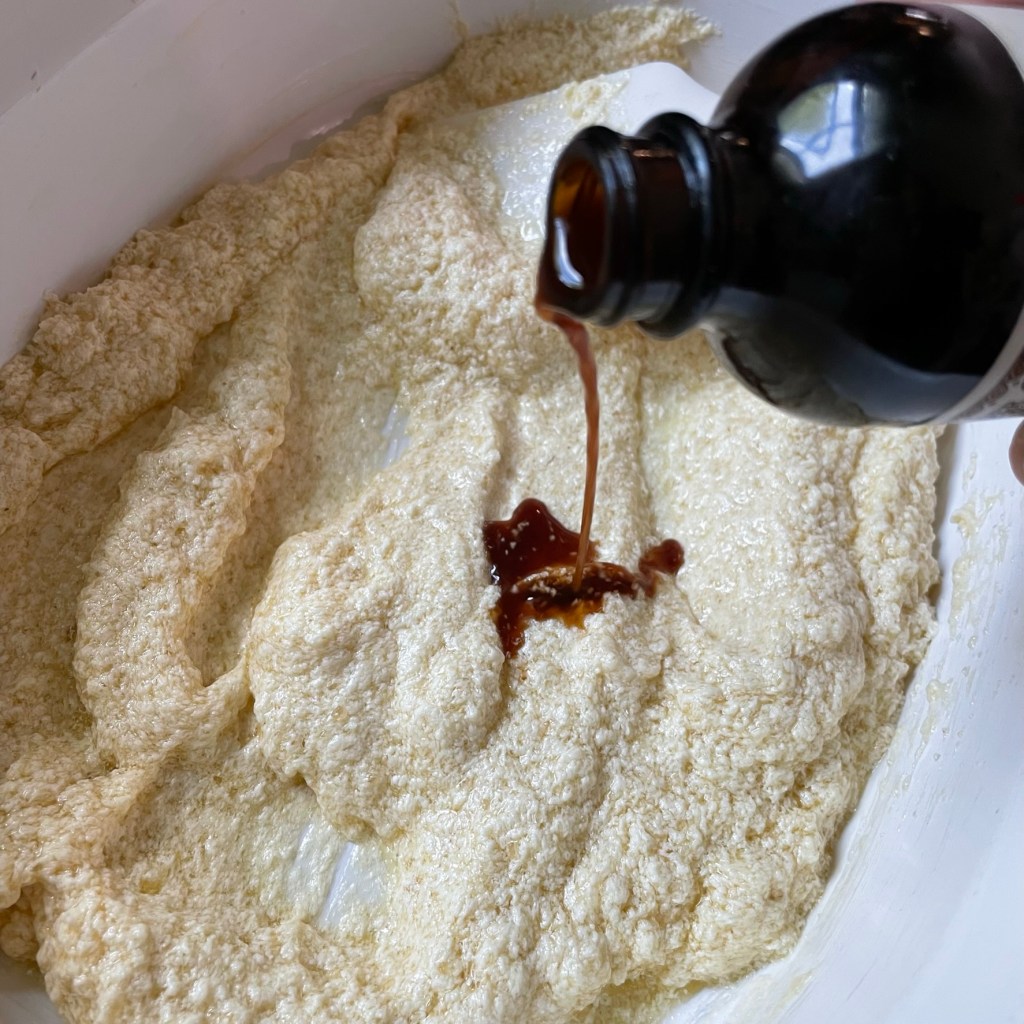
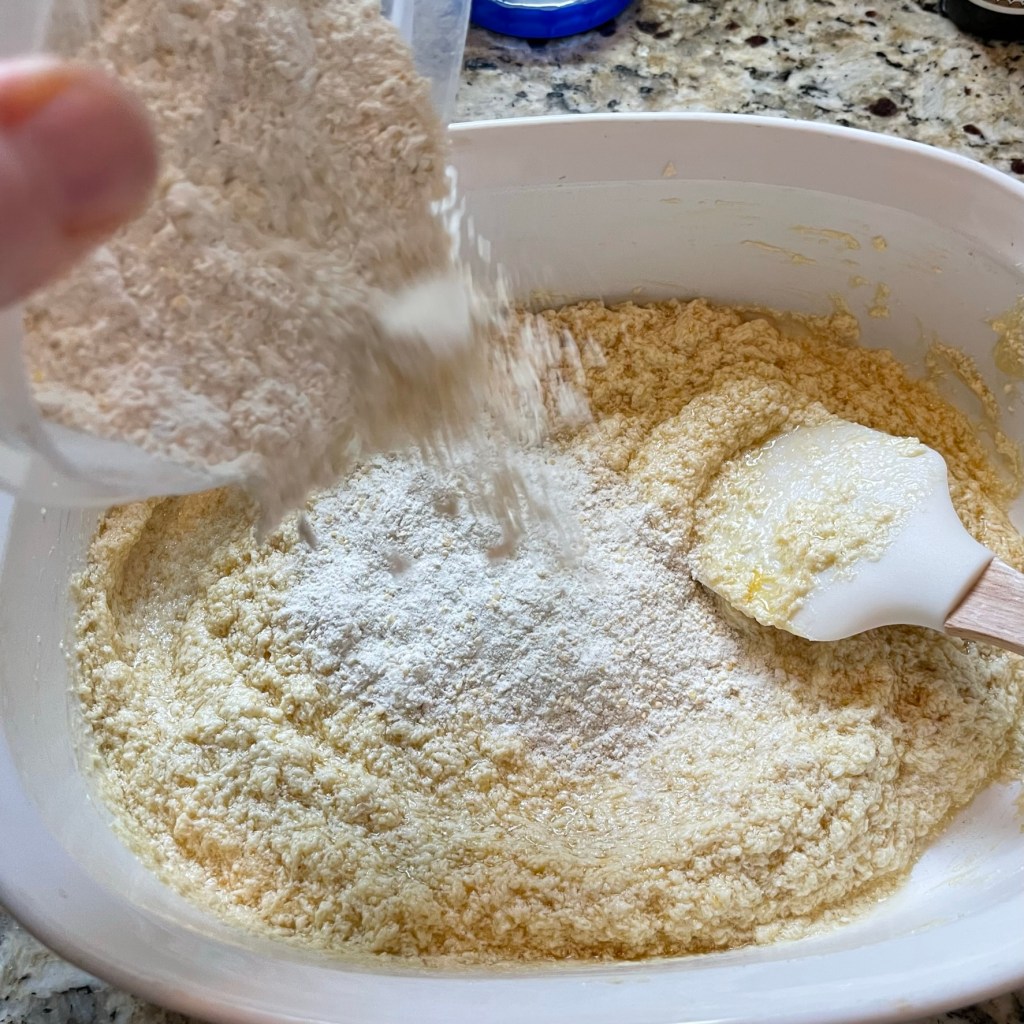
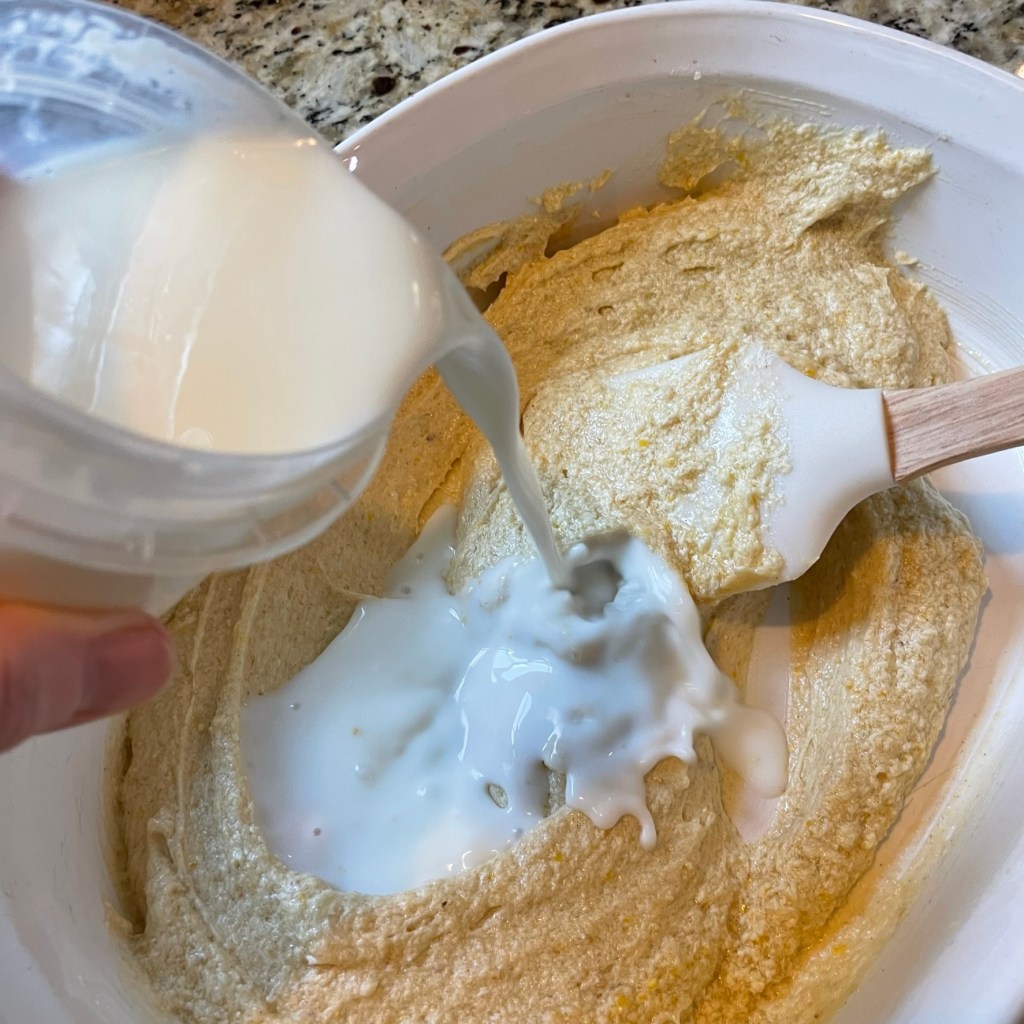
The batter for this cake is pleasantly dense, with cornmeal adding whole grain goodness and texture, and buttermilk providing a necessary acidic boost to the baking powder and soda. Begin by beating softened butter and sugar together, then adding eggs and vanilla, and finally blending in the flour and buttermilk ingredients.


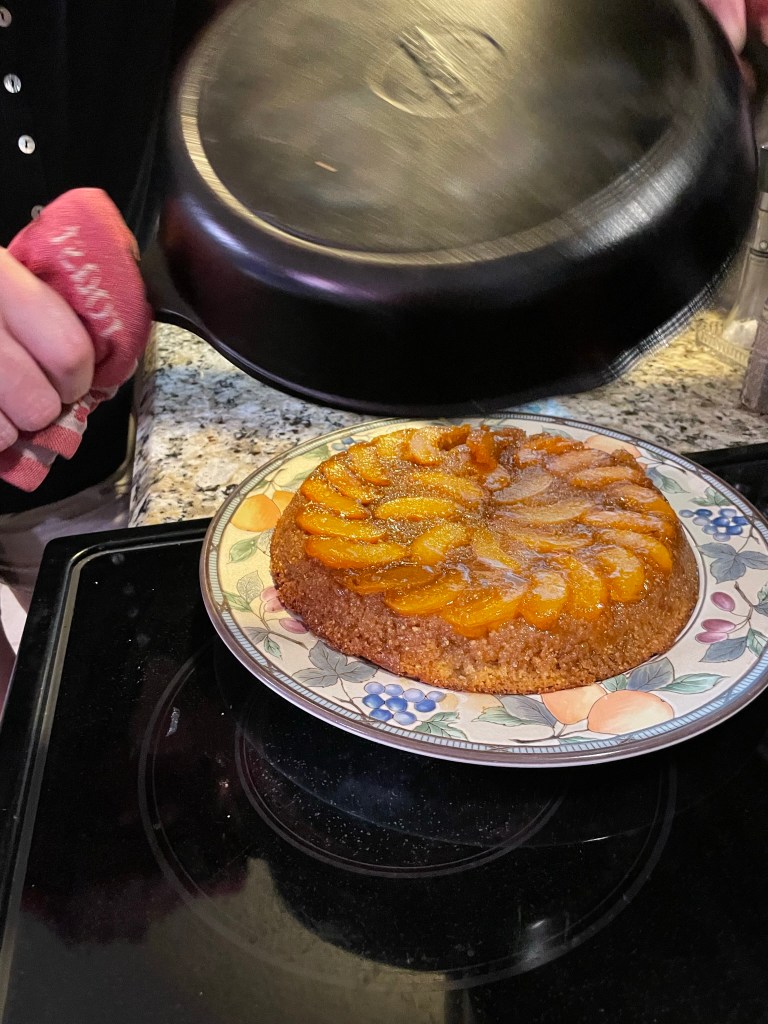
Pour the batter over the peaches in the hot skillet and transfer it directly to a preheated oven until the edges have pulled away from the skillet and the center resembles cornbread. After a brief rest, run a knife around the edge to loosen the cake and carefully invert it onto a serving plate. If any of the “upside-down” sticks, replace it on the cake and smooth it while it is still warm. Delicious!


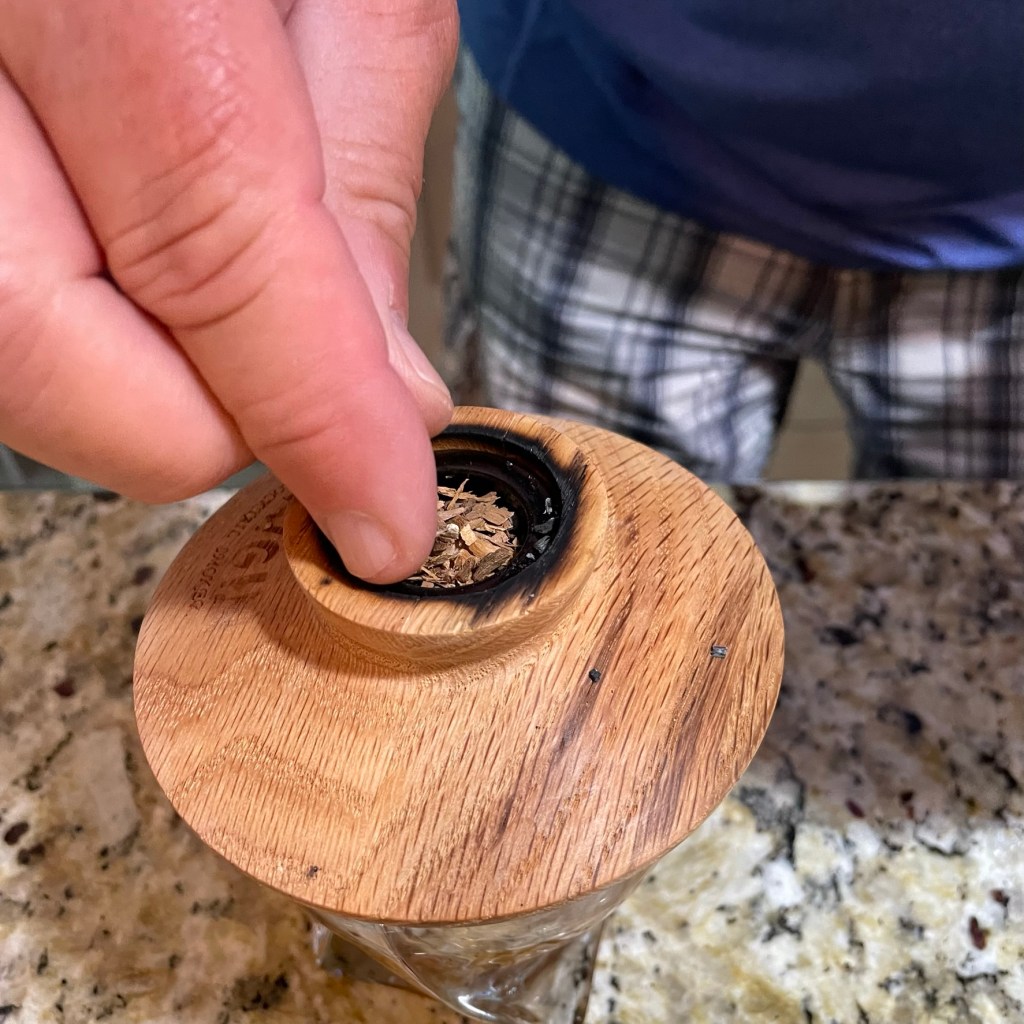
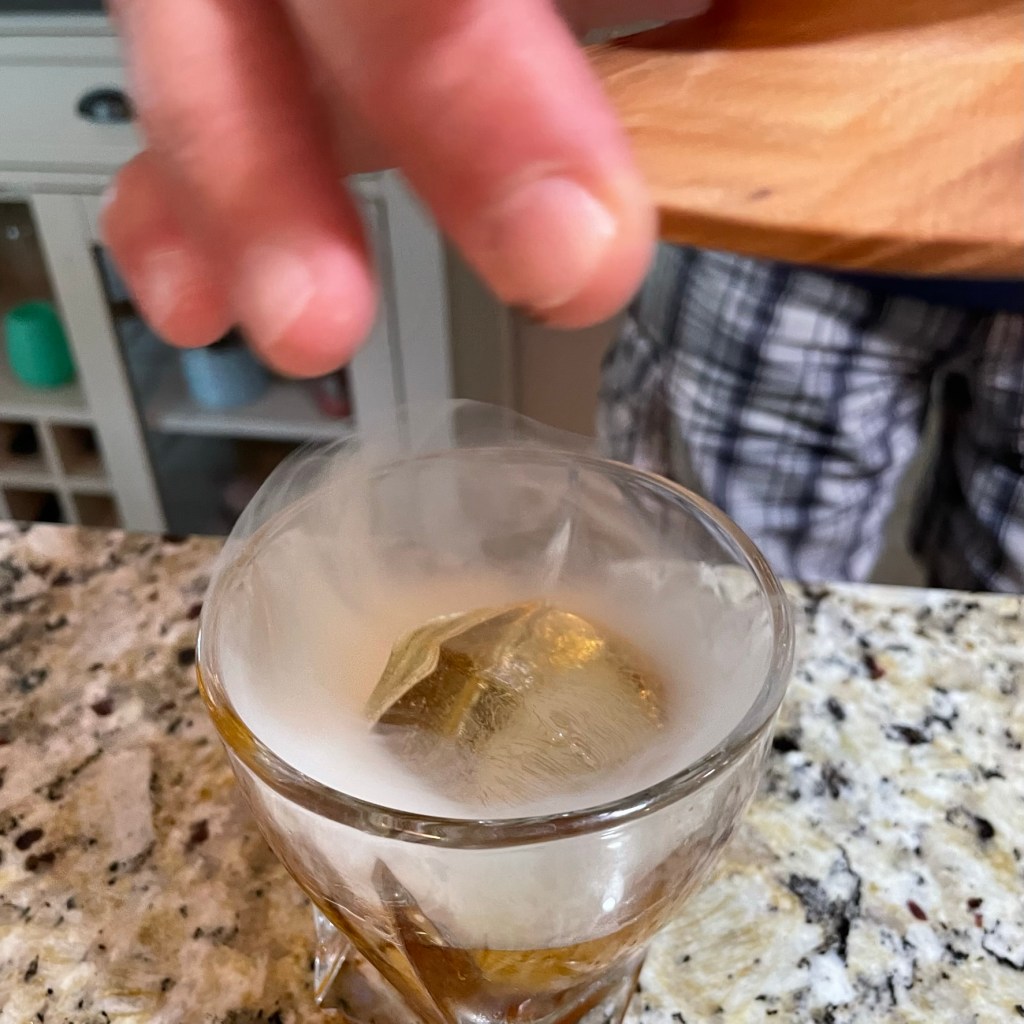
At the end of this post, I will include easy, click-to-print recipe cards for both of these peachy skillet recipes. But first, I must show you what our pal, Bob, was doing to break my baking concentration with his magical cocktail-making abilities. My husband and I always have a wonderful time hanging out with Bob and Peg, and as we waited for the peach bourbon upside-down cake to finish baking, we witnessed a master class in—get this—smoking cocktails. Yes.


Now, the cocktail itself could not have been simpler. No measuring required, even—it was straight up bourbon over a big-ass ice cube. But that smoke infusion contraption took a nice bourbon into a whole new territory, and you can bet I’ll be getting one of those before I present this year’s signature Halloween cocktail. More to come. 😉


Ready to talk about this other delicious, peachy keen skillet dessert? It’s a cobbler!

Peach Praline Skillet Cobbler

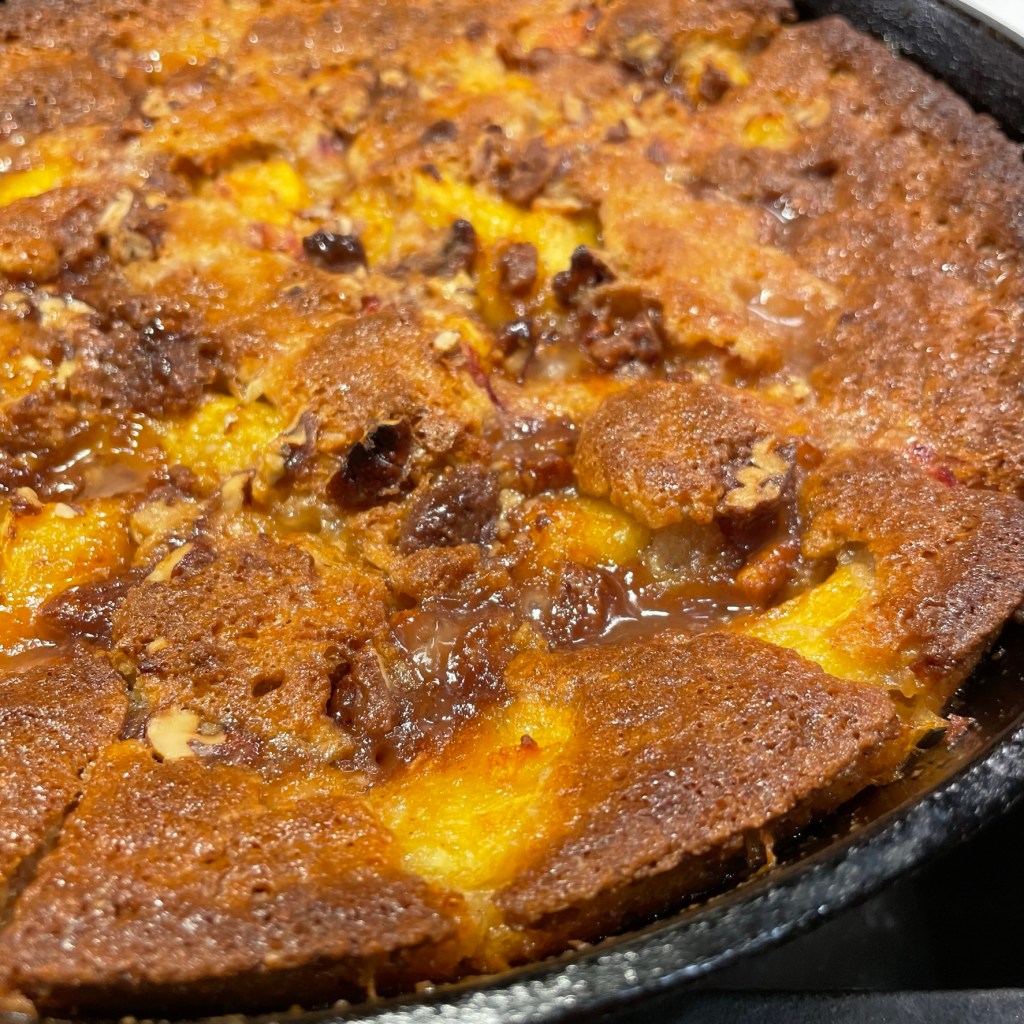
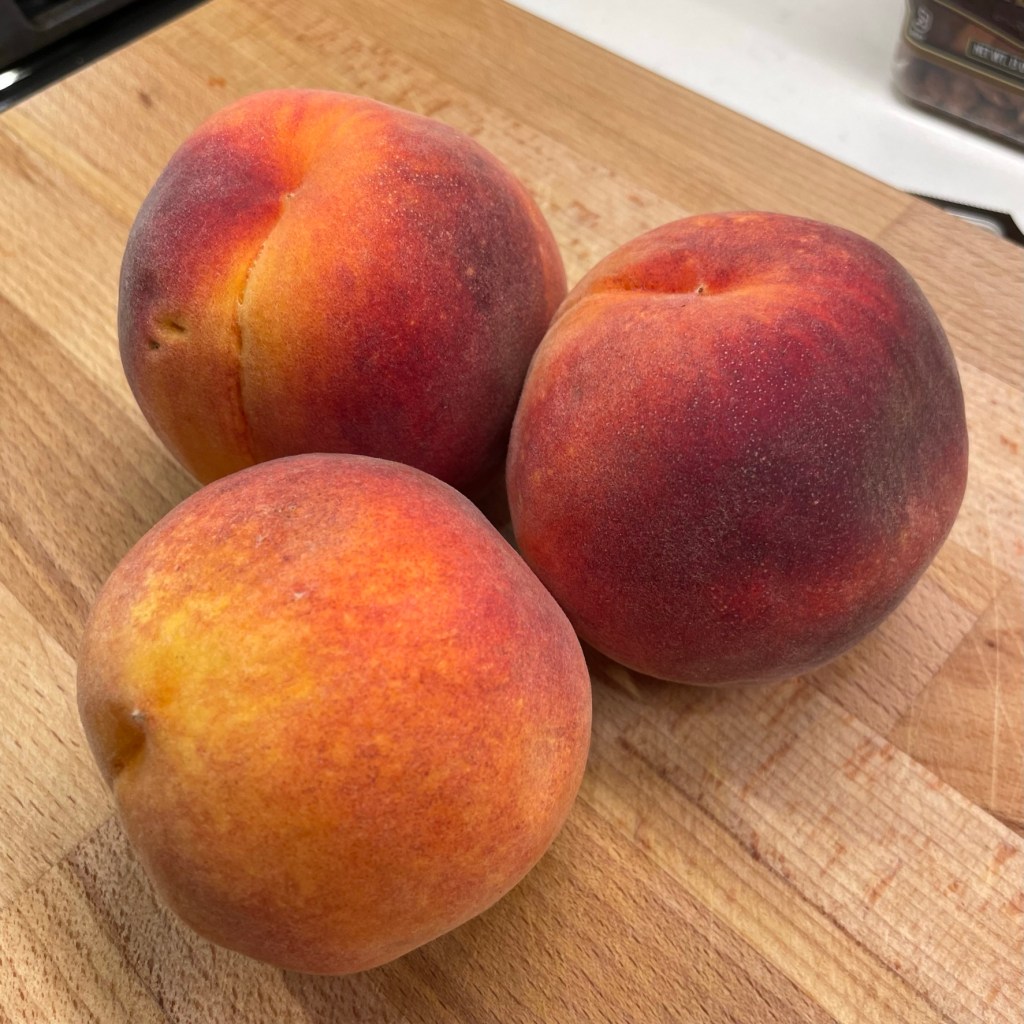
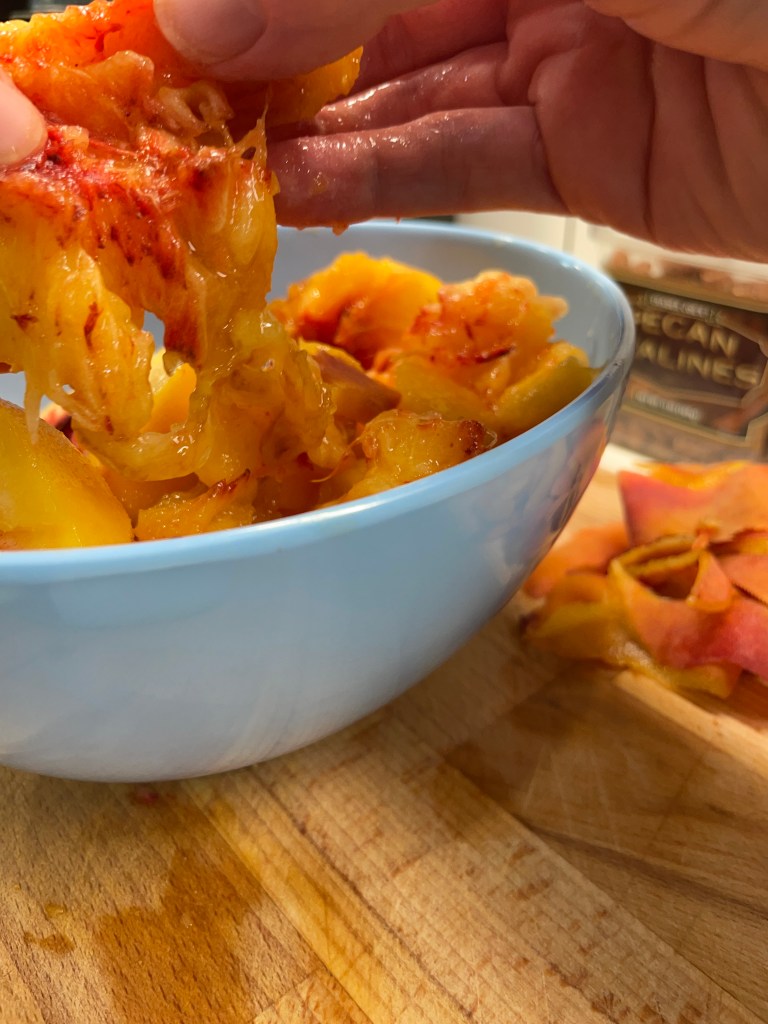
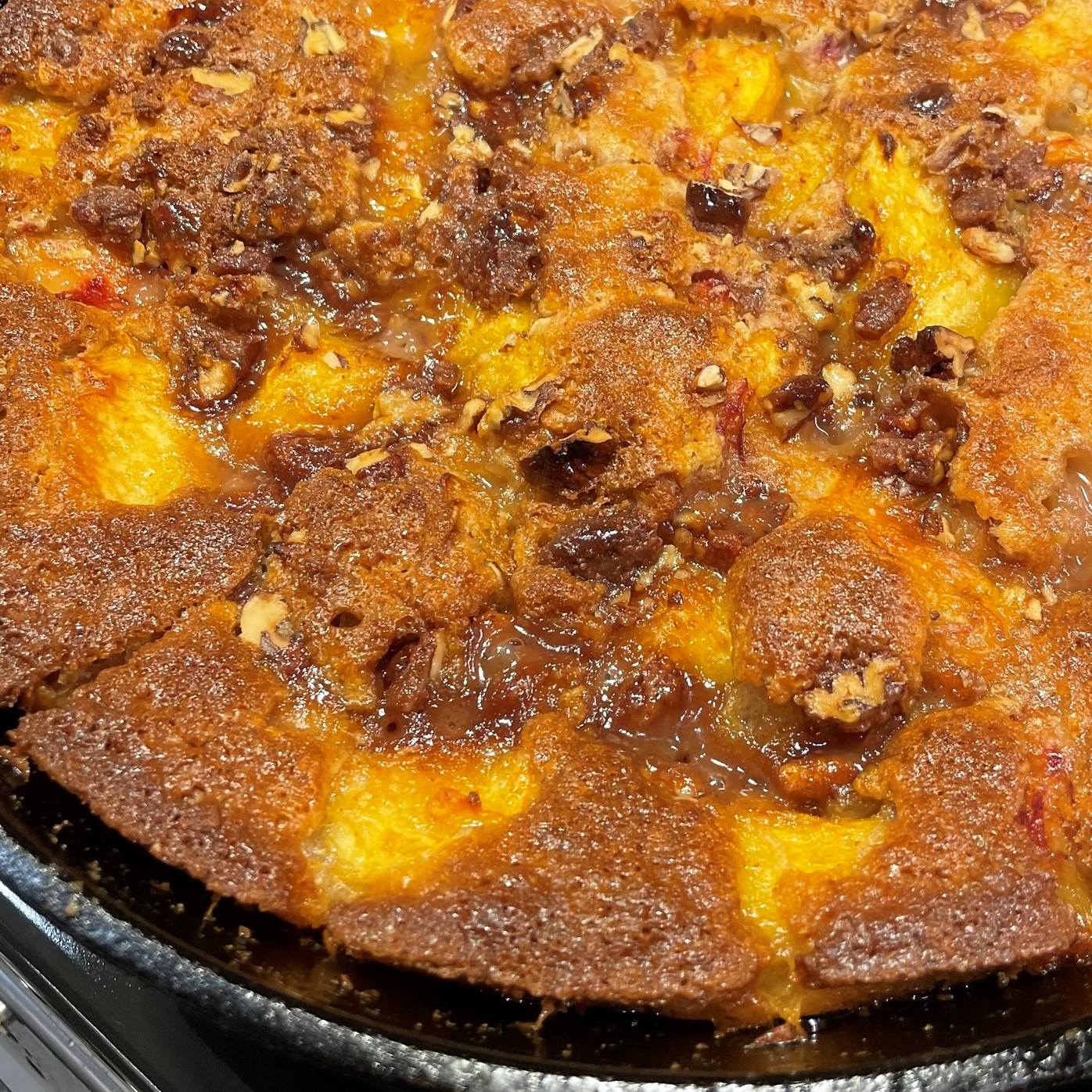
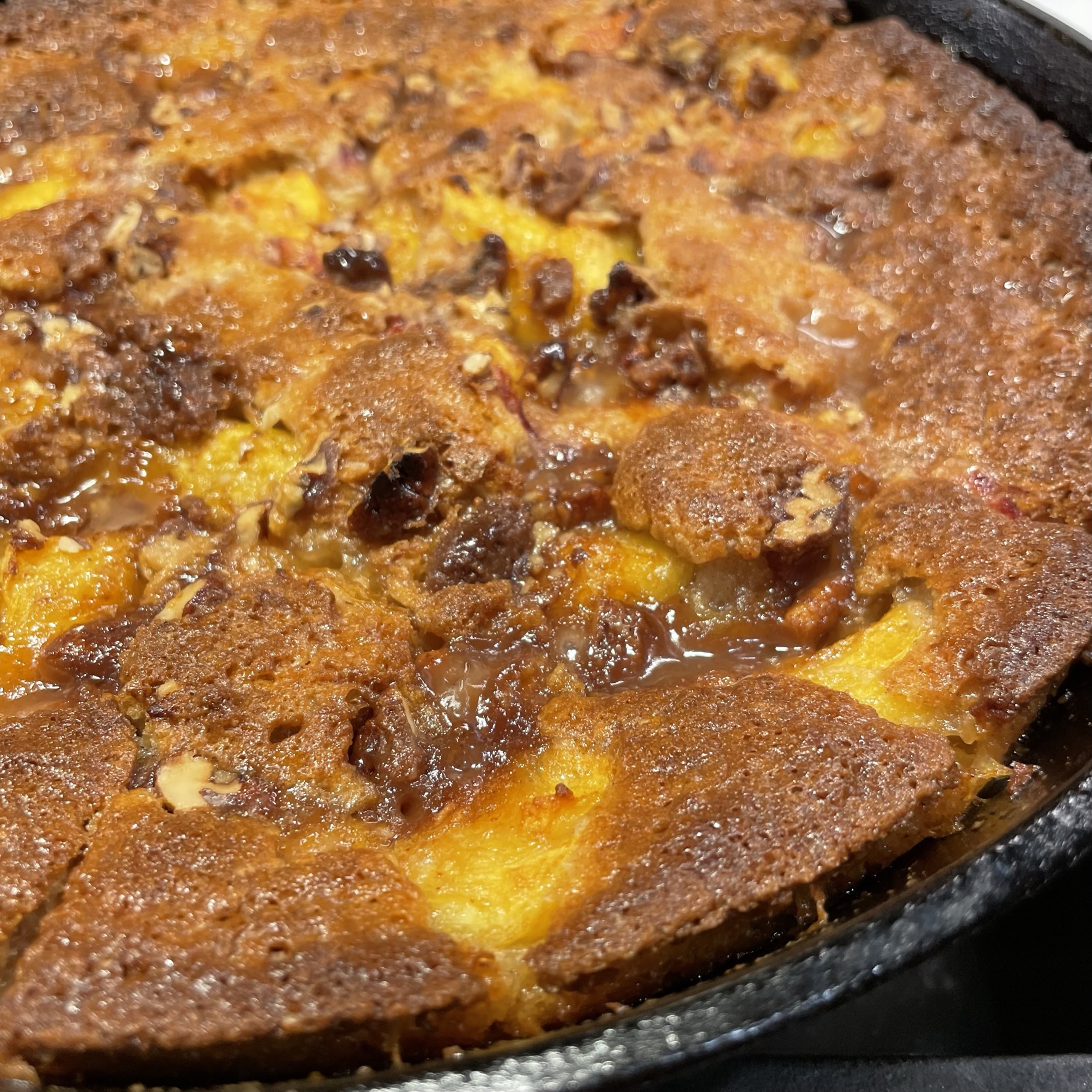
For now, let’s shift gears back to the cast-iron skillet and talk about this ridiculously easy cobbler, which I whipped up in no more than 15 minutes, plus baking. The only time-consuming thing here was peeling and cutting up the peaches, which was hardly a burden, given that I thoroughly enjoyed licking the juices off my fingers when I finished. These particular peaches were gifted to us by our neighbor, Pam, following a day trip she had made to the North Carolina mountains. Pam has followed my adventures on Comfort du Jour from the beginning, and she said upon delivering these perfectly ripe peaches, “I can’t wait to see what you create with these!” Well, here it is—a skillet cobbler!


I only used three of the peaches here (they were huge), and that measured about 2 cups, once they were peeled, pitted and cut into bits. In a pinch, I’m sure you could use thawed frozen peaches as well, which means this dessert doesn’t have to be limited to summertime enjoyment.

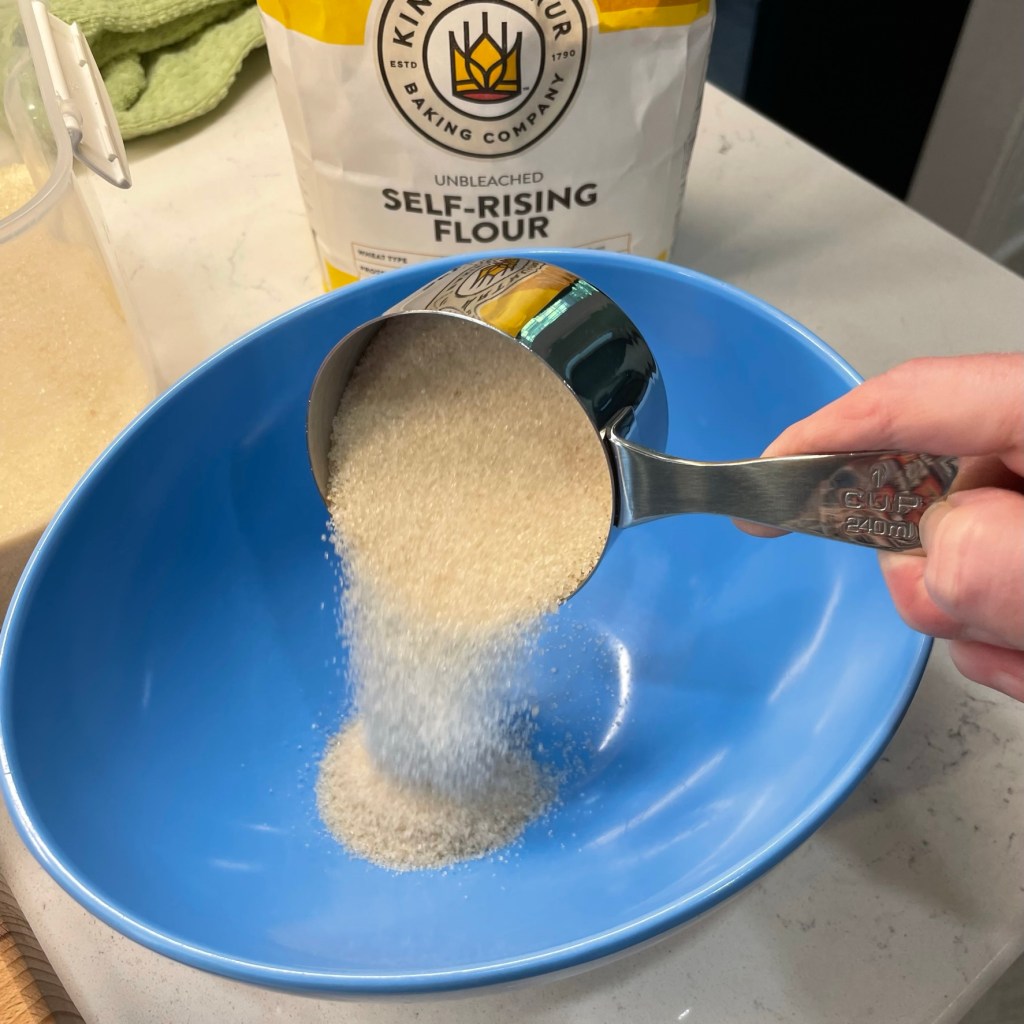
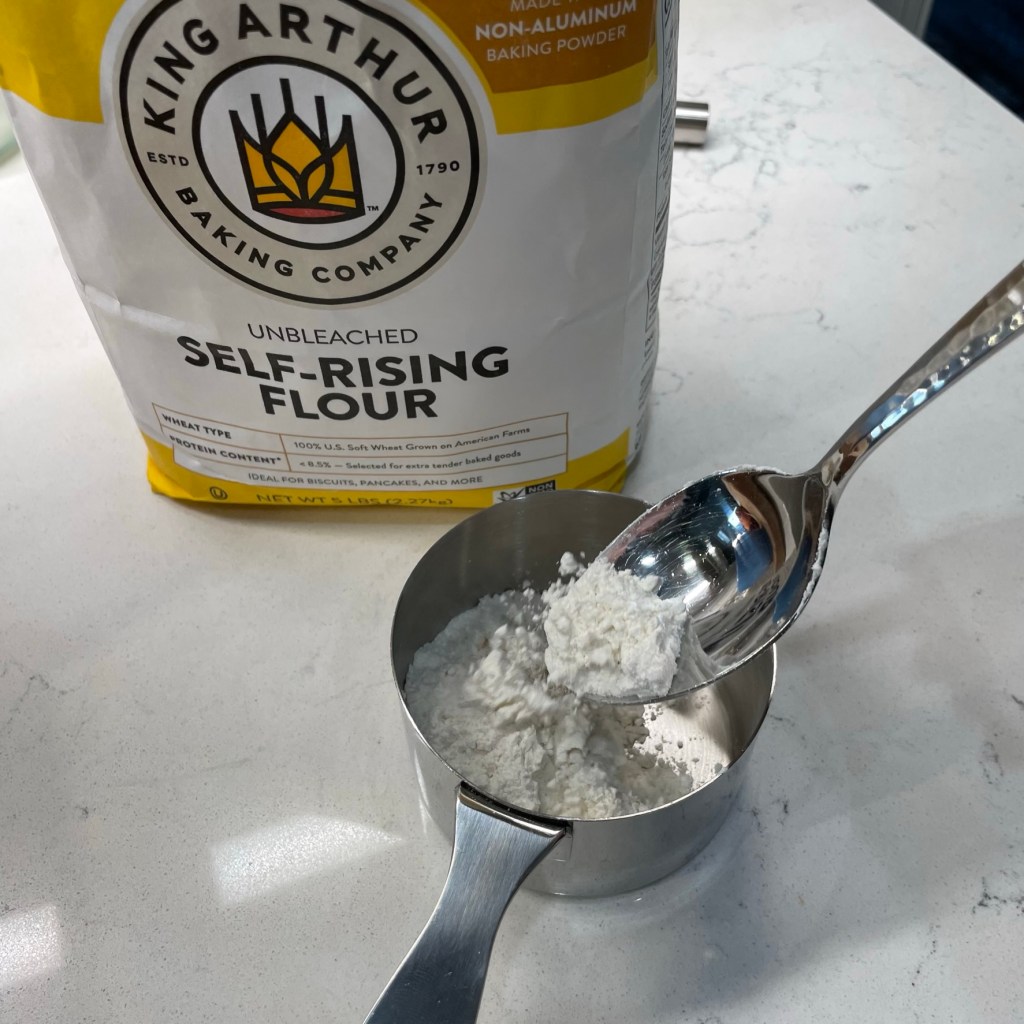
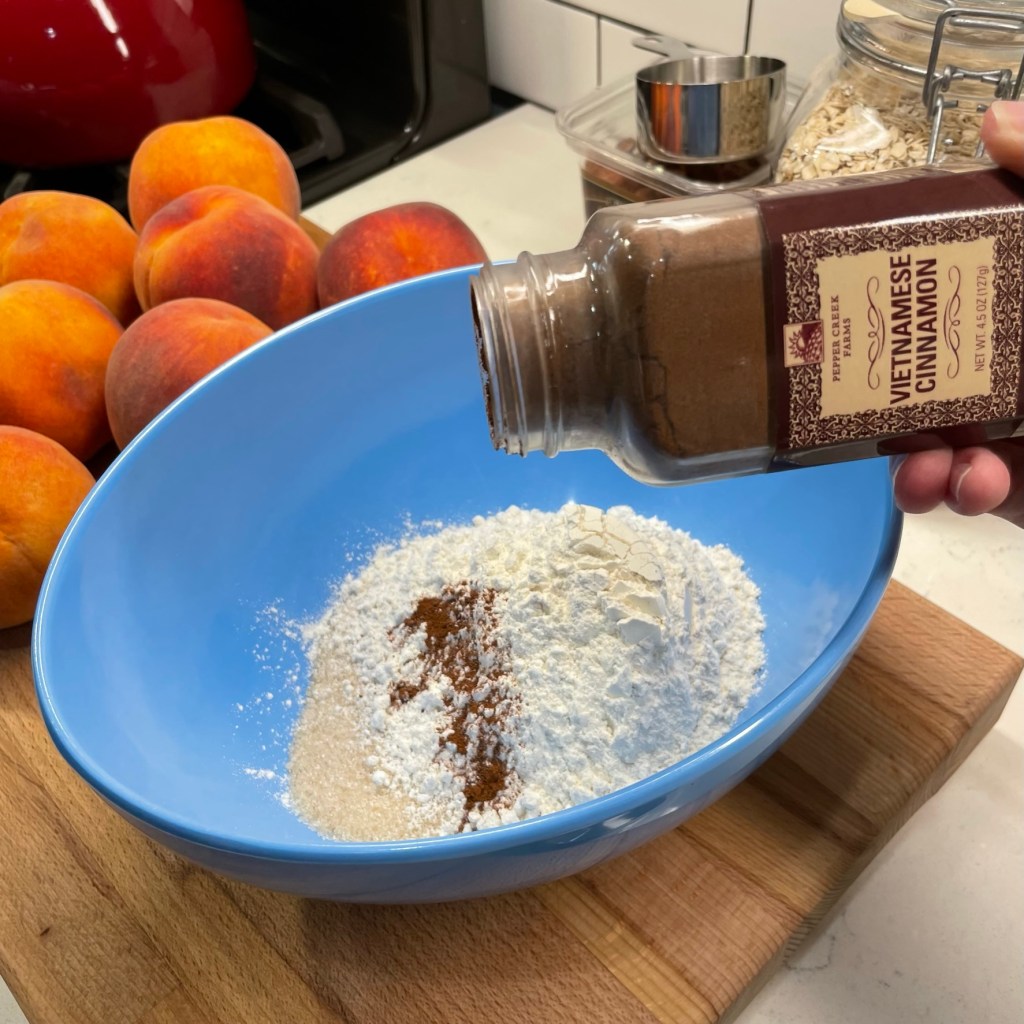
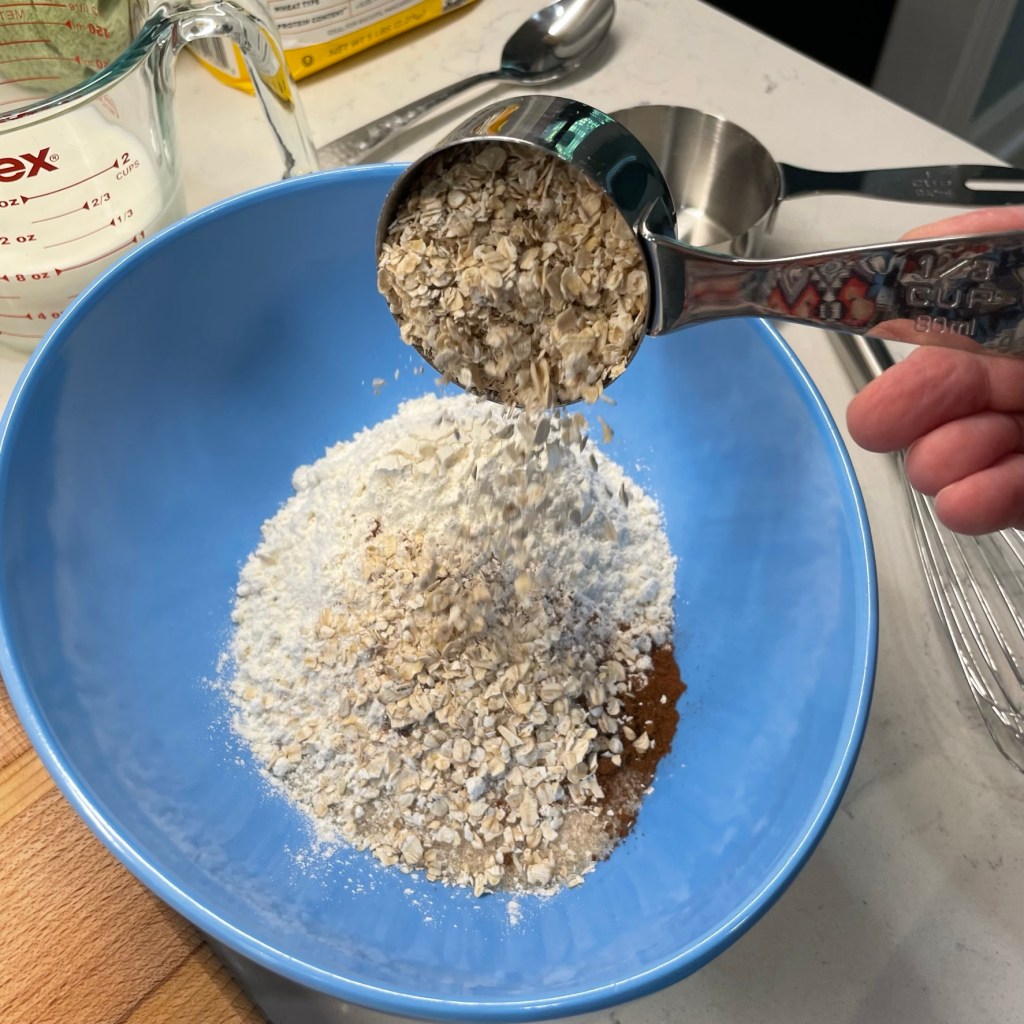
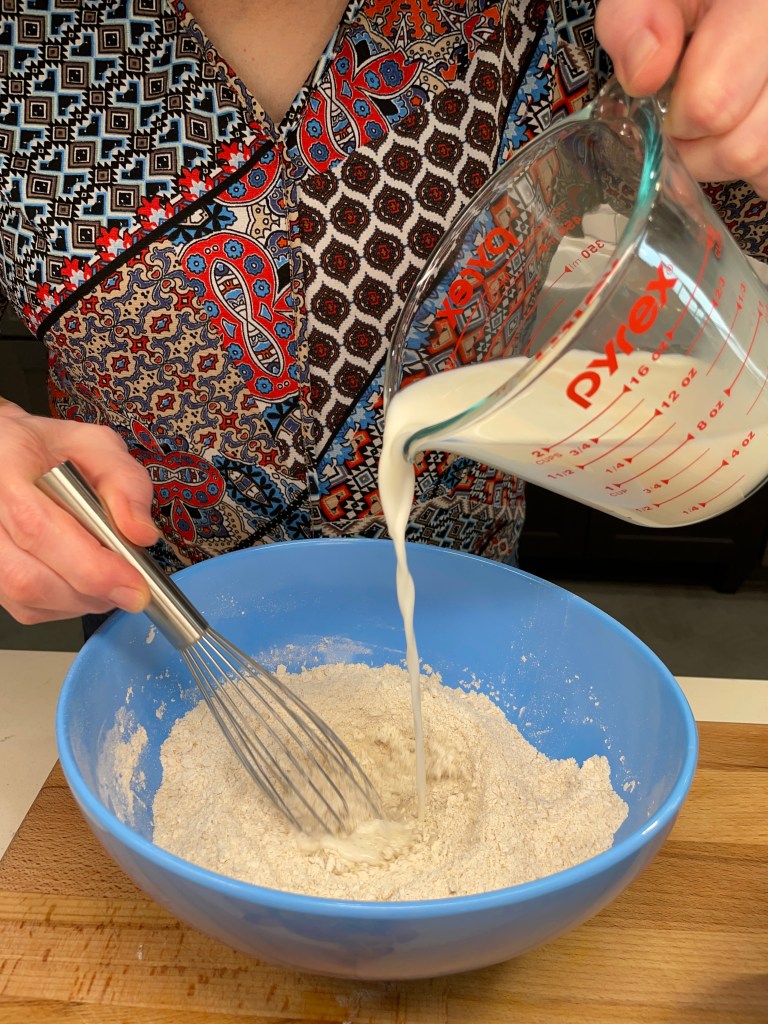
There are several varieties of cobbler out there, and because we roll pretty casual in the South, I skipped over the options that required making biscuits or pastry dough and steered directly to the “batter” option. This is a dessert that seems incorrect, because the batter is quite runny, and it’s hard to visualize how it will come together in the oven (but it does). The batter is made with self-rising flour, sugar, cinnamon and milk—that’s it. Me being me, though, I had to incorporate some amount of whole grain into it, so for this batch, I also stirred in 1/3 cup of quick-cooking oats and that turned out to be a great decision. Unlike a typical cobbler with juicy, almost soupy consistency, this one held together more like a custard because the oats plumped up inside the cobbler. I would not recommend increasing the oats because it might turn out gummy, and I am sure that quick oats is the way to go. Old fashioned, rolled oats may not cook through as tender, or they may absorb too much of the liquid in the batter.


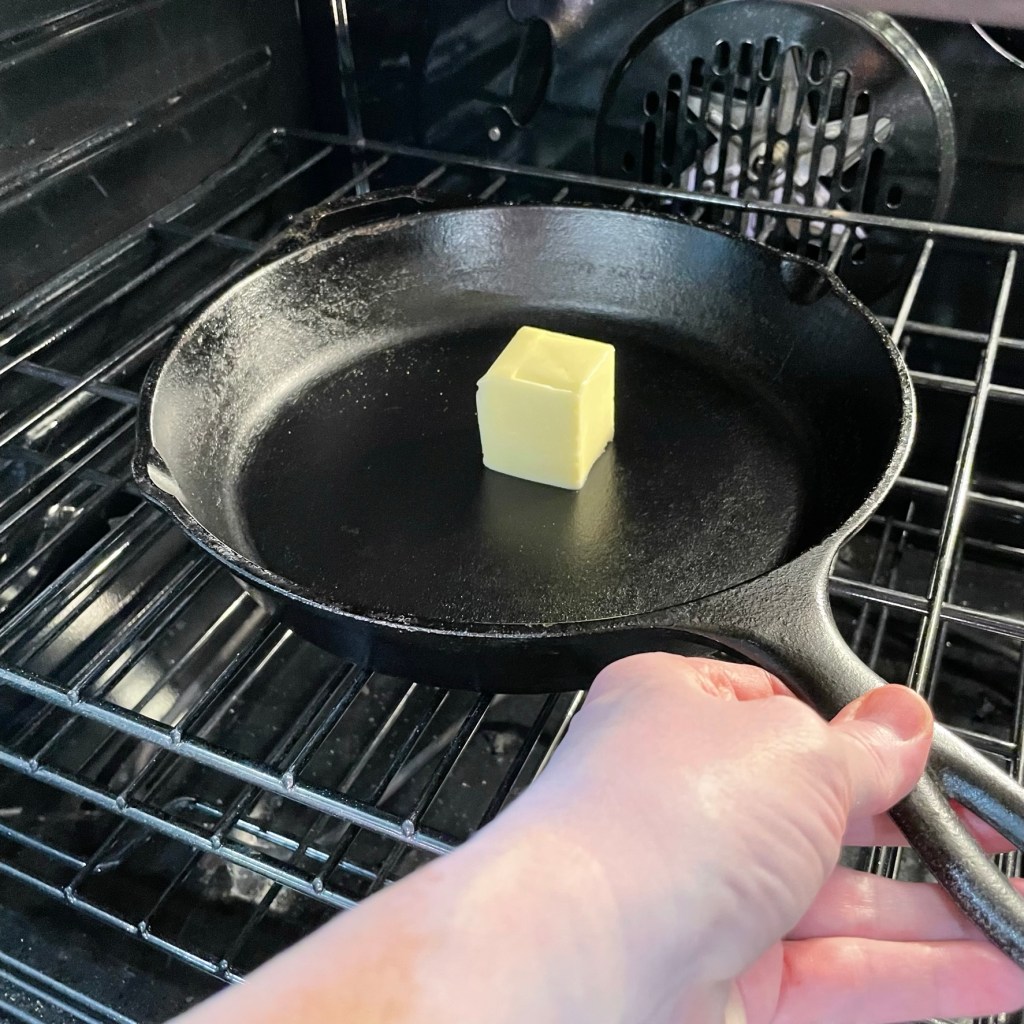
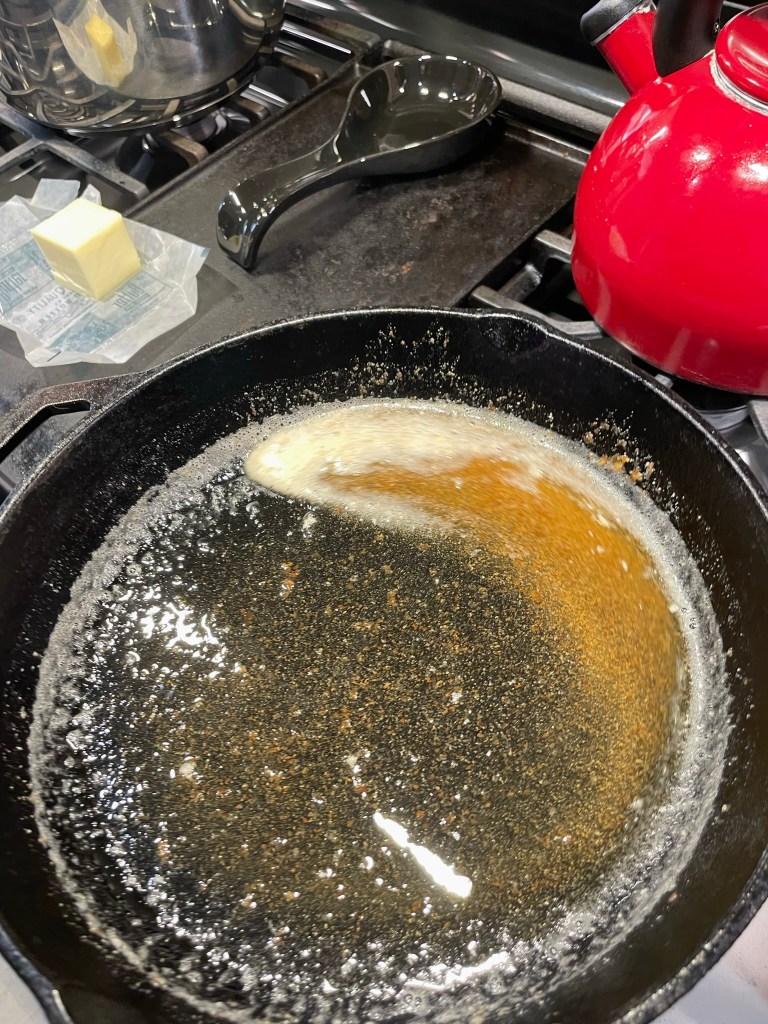
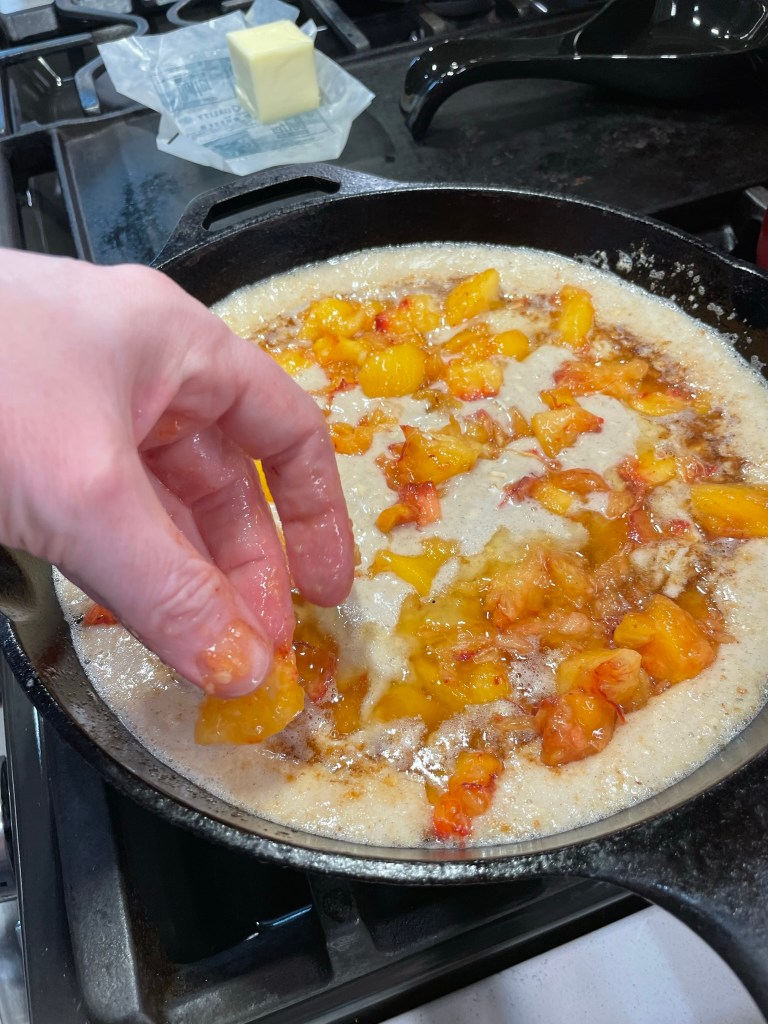
While I measured and mixed those ingredients, I pre-heated the oven with a half stick of butter in it, and then swirled the browned butter around to fully coat the pan once the oven was hot. The batter is slowly poured into the hot buttered skillet, and then the peaches are arranged (if you want to call it that) all over the top. Typically, a cobbler is sprinkled lightly with sugar before it’s baked, but I can’t stick with typical, so I chopped up some pecan pralines (from Trader Joe’s, but anything similar will work) and scattered those on top instead.

Isn’t this just peachy? 🙂

As I said, you can’t go wrong with either of these peachy keen skillet desserts, so grab your cast iron and peel those peaches and enjoy what’s left of summer.

Peach Bourbon Upside-down Skillet Cake

  • Servings: 8
  • Print

This beautiful skillet dessert makes the most of fresh, late-summer peaches, and bourbon marries nicely into the “upside-down” as cornmeal brings texture to every bite.

Ingredients

  • 1/2 stick salted butter (for the upside-down)
  • 1/2 cup brown sugar
  • 1/4 cup cane sugar
  • 1 shot bourbon (optional, but heck yes)
  • 4 medium fresh peaches, sliced with peel
  • 1 cup all-purpose flour
  • 1/2 cup medium grind cornmeal
  • 1/4 cup toasted pecan pieces (optional)
  • 1 tsp. baking powder
  • 1/2 tsp. baking soda
  • 1/2 tsp. salt
  • 1/2 tsp. ground cinnamon
  • 1 stick unsalted butter, softened (for batter)
  • 3/4 cup cane sugar (for batter)
  • 2 large eggs
  • 1 tsp. vanilla extract
  • 1 cup buttermilk, shaken well
  • Whipped cream for serving

Directions

  1. Preheat the oven to 375° F, with oven rack in the center position.
  2. Place a 10″ cast iron skillet over medium heat. Heat first amount of butter until melted. Add brown and cane sugars and stir to combine. Let them mingle over the heat until the mixture looks dissolved and begins to bubble. Add the bourbon (if using) and stir to blend. Reduce heat to low and arrange peach slices in a round pattern over the syrupy bourbon mixture. Set aside while you prepare the batter.
  3. Combine flour and cornmeal in a medium bowl. Add pecans, baking powder, soda, salt and cinnamon. Set aside for later addition to the batter.
  4. Using a handheld mixer, cream together the remaining sugar with the stick of unsalted butter. Beat this mixture until it’s lighter and fluffier in texture. Add eggs, one at a time, beating completely to blend. Beat in vanilla.
  5. Use a rubber spatula to fold about half of the flour mixture into the batter, blending until all dry ingredients are incorporated. Gently mix the buttermilk into the batter, and then fold the remaining flour mixture, again blending until no dry spots of flour are visible.
  6. Pour the batter over the peaches in the skillet, taking care not to disturb the arrangement. Gently smooth the batter, and slide the skillet into the oven.
  7. Bake for 50 to 55 minutes, until baked batter has pulled away from the edges of the skillet and the cake portion tests clean when a toothpick is inserted into the center.
  8. Cool 15 minutes before loosening the cake around the edges. Carefully invert the cake onto a large platter. If any bits of peach get stuck to the skillet, place them back into place and smooth the upside-down caramel coating while it’s still warm.
Slice into wedges when cooled and serve with a dollop of whipped cream or ice cream. Wrap leftovers in plastic and keep in the fridge.


Peach Praline Skillet Cobbler

  • Servings: 6
  • Print

This recipe is easy as can be, and a bit of quick-cooking oats mixed into the batter gives the cobbler a touch of whole grain goodness and a wonderful texture.

Ingredients

  • 1/2 stick unsalted butter (4 Tbsp.)
  • 3/4 cup cane sugar
  • 1 cup self-rising flour (see ingredient note below)
  • 1/3 cup quick-cooking oats
  • 1/4 to 1/2 tsp. ground cinnamon
  • 1 cup whole milk
  • About 3 large peaches, or enough to measure 2 heaping cups (peel and chop)
  • 1/2 cup candied pecans, roughly chopped (I used Trader Joe’s pecan pralines)

Note: self-rising flour already has the proper ratio of leavening agent; if you do not have self-rising flour, use regular all-purpose flour and add to it 1 1/2 tsp. baking powder and 1/4 tsp. salt

Directions

  1. Preheat oven to 400° F, with oven rack in center position. Place cold butter in a 10-inch cast iron skillet and put it in the oven during preheating. Keep an eye on it so that the butter does not burn.
  2. Whisk together the self-rising flour, sugar, oats and cinnamon. Add the milk to the dry ingredients and whisk until combined, and no pockets of unincorporated dry ingredients remain. The batter will be quite runny.
  3. Remove hot skillet from the oven and swirl the pan to evenly coat with the melted butter. Slowly pour the batter right into the center of the pan. The butter will naturally scoot out to the edges of the pan, and that’s OK. It may also seem to foam a bit at the edges, which is normal.
  4. Top the batter filling evenly with the peach chunks. Scatter the chopped candied pecans over the top. Bake 40 to 45 minutes, until the cobbler is golden brown and bubbly in spots. Serve warm with a scoop of vanilla ice cream.


Ratatouille Shakshuka

How is it possible that the simplest combination of ripe-at-the-same-time ingredients turns out to be such a mouthwatering flavor explosion, no matter how you put it together?

Any way you plate it, this is a great combo!

I never get tired of rearranging ratatouille—eggplant, zucchini, red bell pepper, onions and tomatoes—and this time, I married the classic Provencal stew with a classic Jewish breakfast dish, shakshuka.

The first time I heard of shakshuka was during a pre-wedding meeting with Rabbi Mark, who formerly led Temple Emanuel in Winston-Salem, where my then-fiancé, Les, is a member. When our ceremony-planning conversation took a detour toward food and cooking (as literally every conversation with me eventually does), Mark asked if I’d ever made shakshuka, the Middle Eastern dish that is a breakfast staple in many Jewish households. I was stumped because I had never even heard of this dish, let alone made it. But that changed quickly, and it has become an occasional favorite at our house.

Shakshuka is a humble and hearty, tomato-based skillet meal, and a great way to use up whatever other vegetables you have on hand, with eggs simmered right into the sauce. It is very similar to a dish the Italians call “eggs in purgatory.” I especially appreciate how simple it is to pull together when I have had a busy week with little time to plan a menu. Up until now, I have made it only with the spicy flavors that are traditional to the northern African region, where shakshuka originated—cumin, paprika, hot pepper, garlic and oregano.

But this time, I took the concept of shakshuka northward across the Mediterranean Sea, into the south of France, using Herbs de Provence alongside all the beloved vegetables of ratatouille. The result, as you can see, was awesome!

Served with a light sprinkle of Parm-Romano blend cheese at the table.

There was so much nourishing comfort in the stewed vegetables, which simmered long enough to become soft and melded, and the delicate herbs were just right. I’m already craving it again!

As with most recipes, it’s helpful to have all your ingredients chopped and ready before you begin. For any stew, I like to cut up the vegetables into roughly similar size. This ensures more even cooking, and also makes it possible to get a little bit of everything in each delicious bite. I used a large zucchini, a large “millionaire” eggplant (the slender, Japanese variety), half of a large onion, half of a huge red bell pepper and three fresh, red tomatoes from my garden. In addition to the fresh ingredients, you’ll need a 15 oz. can of tomato sauce, a splash of dry white wine (I used dry French vermouth), a pinch or two of Herbs de Provence, and up to six eggs.

We’re going to need a bigger pot!

That’s a lot of veggies! I made this version of shakshuka in a larger pot than usual because I knew that tossing all of these fresh vegetables in my go-to cast iron would be a serious challenge, and I wanted to avoid making a big mess. The ratatouille also needs to be stirred as it cooks, so be sure your cooking vessel can handle the volume of ingredients as well as the mixing requirement. Choose a pot that has a snug-fitting lid, as this will be important for simmering.

The width of the pot is what matters, so you’ll have plenty of room to place the eggs.

Begin by heating the pan over medium flame. Add oil and start sautéing the vegetables. Eggplant soaks up oil fast so I held that back until the peppers, onions and zucchini had a chance to soften. Remember to season each layer with a pinch of salt and pepper, not only for flavor, but also because salt helps to draw excess moisture from the vegetables as they cook. During this stage, also add a few pinches of Herbs de Provence, a French blend that includes any combination of thyme, savory, rosemary, marjoram and lavender. These are delicate herbs, but they do pack a fragrant punch, so start with a small amount and inch up to taste.


When the vegetables are visibly softened, add the fresh garden tomatoes and give it a stir. Add the tomato sauce and dry white wine. If I have used a canned ingredient, I usually swish the wine around in the empty can to rinse out the last bit of flavor. Another quick pinch of salt and pepper, and then reduce the heat, cover the pan and allow it to simmer for 15 to 20 minutes. The vegetables will continue to soften, melding the flavors together, but the sauce should not reduce too much. While it simmers, take the eggs out of the fridge; they will set in the shakshuka better if they are closer to room temperature.


When the ratatouille stew has become very soft, crack each egg into a ramekin dish for easy transfer to the shakshuka. This may seem unnecessary, but trust me when I tell you that it is no fun at all trying to fish out itty-bitty pieces of egg shell that went astray into a big saucy mixture. If anything goes sideways with your cracked eggs, you want it to happen in the ramekin, not in your beautiful recipe!

Give the stew a gentle stir, and then use the back of a large serving spoon to create a slight depression for each egg to rest. This doesn’t have to be perfect, and you only need a spot about 3 inches across for each egg. I had room for six eggs in my large pot, but I only used four because I knew the extras would not warm up well without overcooking. Better to add fresh eggs when you heat up the leftovers.

Cook as many eggs as you plan to serve initially. Make more eggs when you reheat the leftovers.

Slip an egg into each depression and give the shakshuka one final pinch of salt and pepper before covering the pot. Keep the flame set on low and cook for 8 to 10 minutes, until the whites are set but the yolks still have a bit of jiggle to them.

I wish you could smell this! 😋

Scatter fresh, chopped herbs over the dish (I used fresh basil from the garden, but flat-leaf parsley would be nice, too), and serve immediately with a slice of crusty French bread. The best way to serve this dish is to use a wide, somewhat flat spoon to scoop underneath an egg, grabbing as much of the surrounding stew as possible at the same time. Sprinkle on a teaspoon or so of grated Parmesan for a big burst of umami flavor.


Ratatouille Shakshuka

  • Servings: 6
  • Difficulty: average
  • Print

Choose a wide, covered pot for making your ratatouille, and prepare your workstation by chopping all vegetables before you begin.

Ingredients

  • 1 large zucchini, trimmed and chopped
  • 1/2 large sweet onion, chopped
  • 1/2 large (or 1 medium) red bell pepper, chopped
  • 1 large Japanese eggplant, chopped (or about 2 cups of alternate variety)
  • 3 Tbsp. extra virgin olive oil
  • Kosher salt and black pepper to taste
  • Up to 1 tsp. Herbs de Provence (or Italian seasoning, if preferred)
  • 3 small, fresh tomatoes, chopped
  • 15 oz. can low-sodium tomato sauce
  • 2 Tbsp. dry white wine (or dry vermouth)
  • 6 large eggs* (see recipe note below)
  • Fresh basil or Italian parsley, for garnish

Note: If you wish, cook only the number of eggs you intend to serve initially. When you use the leftovers, fresh eggs will yield a better result at that time.

Directions

  1. Heat large pan over medium heat. Add olive oil and saute vegetables, beginning with only zucchini, onion and bell pepper. When the first vegetables begin to soften, add the eggplant and saute until all veggies are tender. Season with salt, pepper and Herbs de Provence.
  2. Add fresh tomatoes, tomato sauce and dry wine, stirring to combine evenly. Reduce heat, cover and simmer 15 to 20 minutes. Remove eggs from fridge during the simmer time.
  3. When vegetables are fulley softened, crack each egg into a ramekin cup for easy transfer into the pot. Use the back or a large serving spoon to make a depression for each egg. Slip the eggs into the depressions, season with salt and pepper and cover the pan.
  4. Cook over low heat about 8 minutes, until egg whites are set and yolks are still slightly jiggly. Serve immediately.


Summer Tomato Water Martini

The truth is, I have been fiddling with this martini since before my own garden-fresh tomatoes came to fruition. My first effort was accidental, right after my husband and I had returned from a vacation at the end of last summer. It was good, but kind of a one-off thing and I didn’t give it much thought. Months later, it popped up in my news feed—on Epicurious or Food 52 or, honestly, I don’t know where—and it sucked because it was February or March and I had to improvise because there were no garden fresh tomatoes available. So let me get this out of the way early: do not try this with grocery store tomatoes. Trust me on this.

Fast forward to mid-August, when fresh, homegrown tomatoes are available everywhere, from your own garden or the farmers’ market, and that makes a world of difference. The flavorful liquid that seeps out of those freshly sliced, vine-ripened tomatoes is absolutely begging to be part of a cocktail. If you love summer tomatoes and you are up for a fun martini experiment, this is for you!

I’ve made this cocktail with red heirloom variety tomatoes, yellow tomatoes, vodka and gin.
Try them all to find your favorite!

When the local growers started selling a few heirloom tomatoes at their market stands, I tried this idea again, and it was so much better. The red heirlooms are so juicy and sweet, and the success of this martini twist gave me even more reason to be excited about my own harvest of heirloom and yellow tomatoes. And here we are. 🙂

Regardless of the type of tomato you use, the unique sweetness and acidity will add an exceptional brightness to a martini. I have tried this with both gin and vodka, and a variety of spirit-to-vermouth ratios. It’s good many different ways, so my recommendation is to try it yourself to find the balance that is perfect for you. My personal favorite (at least this week) is made with top-shelf vodka, in a 4-to-1 ratio with dry vermouth, no bitters and at least 1 part seasoned “tomato water.” A full description with amounts is at the end of the post, in a click-to-print recipe card.

But for now, watch to learn:

Wash and slice a ripe, room-temperature tomato (or several, depending on what you need them for) and arrange the slices on a plate. Sprinkle with a fair amount of sea salt and freshly cracked pepper (don’t skip this!) and walk away for about 15 minutes. What you’ll find when you return is a plate full of beautifully seasoned tomato water underneath the slices. Use the tomatoes for whatever you wish—a tomato sandwich, perhaps—but don’t toss that tomato water! Carefully pour it off into a shot glass or small bowl, grab your martini fixins and chill down your glass with ice and water.


Measure your vodka (or gin) and vermouth into a cocktail shaker or mixing glass. Add the tomato water to taste. I have discovered that you need at least a tablespoon to really savor the flavor it adds to the drink. If you see excess moisture on top of your tomato slices, drain that off into the mixing container as well. Add a generous cup of ice cubes and shake or stir to chill the cocktail.


Empty the ice water from your chilled glass, and immediately strain the martini into the glass. Garnish with a pickled cocktail onion or olive, and a small piece of tomato if you wish.

Cheers to summer!

Summer Tomato Water Martini

  • Servings: 1 cocktail
  • Difficulty: average
  • Print

This super-simple twist adds a bright, fresh, summery flair to an otherwise classic martini cocktail, and I have found myself slicing up tomatoes just so I can make another one.

Ingredients

  • 1 ripe, garden fresh tomato (any variety, but heirloom is best)
  • Sea salt and freshly ground black pepper
  • 2 oz. good vodka (I have used Grey Goose and Ketel One with terrific results)
  • 1/2 oz. dry vermouth (my fave here is Dolin)
  • 1/2 to 3/4 oz. seasoned tomato water
  • 1 cup ice (for mixing)
  • Pickled cocktail onion, olive and/or piece of tomato (for garnish)

Directions

  1. Slice tomato and arrange the slices on a plate or shallow bowl. Season with salt and pepper and let rest about 15 minutes. Chill martini glass with ice and cold water.
  2. Add vodka and vermouth to a cocktail shaker or mixing glass. Transfer the tomato slices to another plate, or use them in a salad or sandwich. Drain the remaining tomato water into a small bowl or shot glass. Measure at least one tablespoon of it into the cocktail glass. Add ice and shake or stir until chilled.
  3. Empty ice water from the chilled glass. Strain the cocktail into the glass and garnish as desired.
  4. Repeat at least twice per week until all the tomatoes are gone.