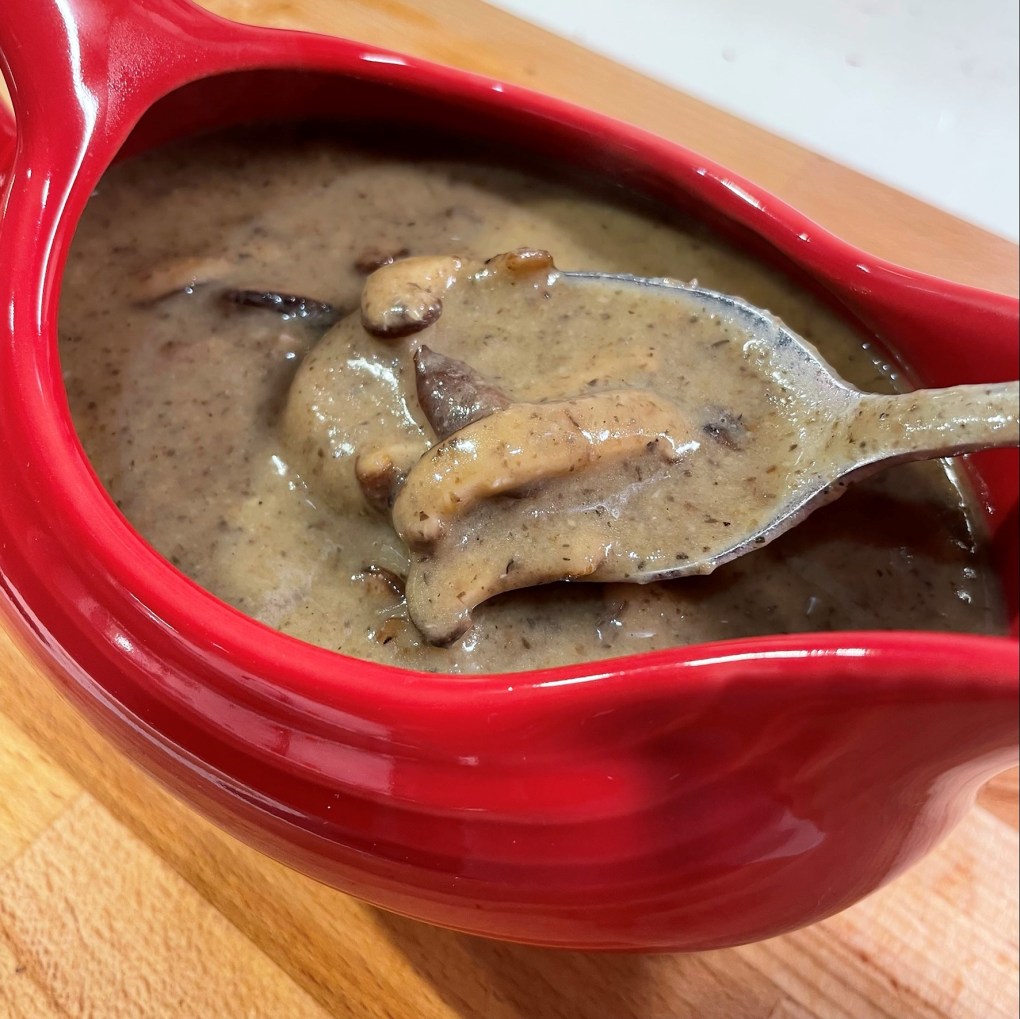
With so much to do in advance of Thanksgiving, it may seem a little nuts to make the gravy ahead but hear me out on this. There are two big reasons I like to make this vegan mushroom gravy, and neither is related to having a vegan guest at the table.
First, the final minutes before dinner are hectic—the turkey has to be rested before carving, and the oven braces itself for round two, as I shove a baking sheet of vegetables in to roast or a casserole for final re-heating. The warmed dishes all need to be brought to the table and you can’t really make the turkey gravy until after the bird has emerged from the oven. If something goes wrong with the turkey gravy (been there, done that), I love having the savory, earthy flavors of this mushroom gravy as a backup.
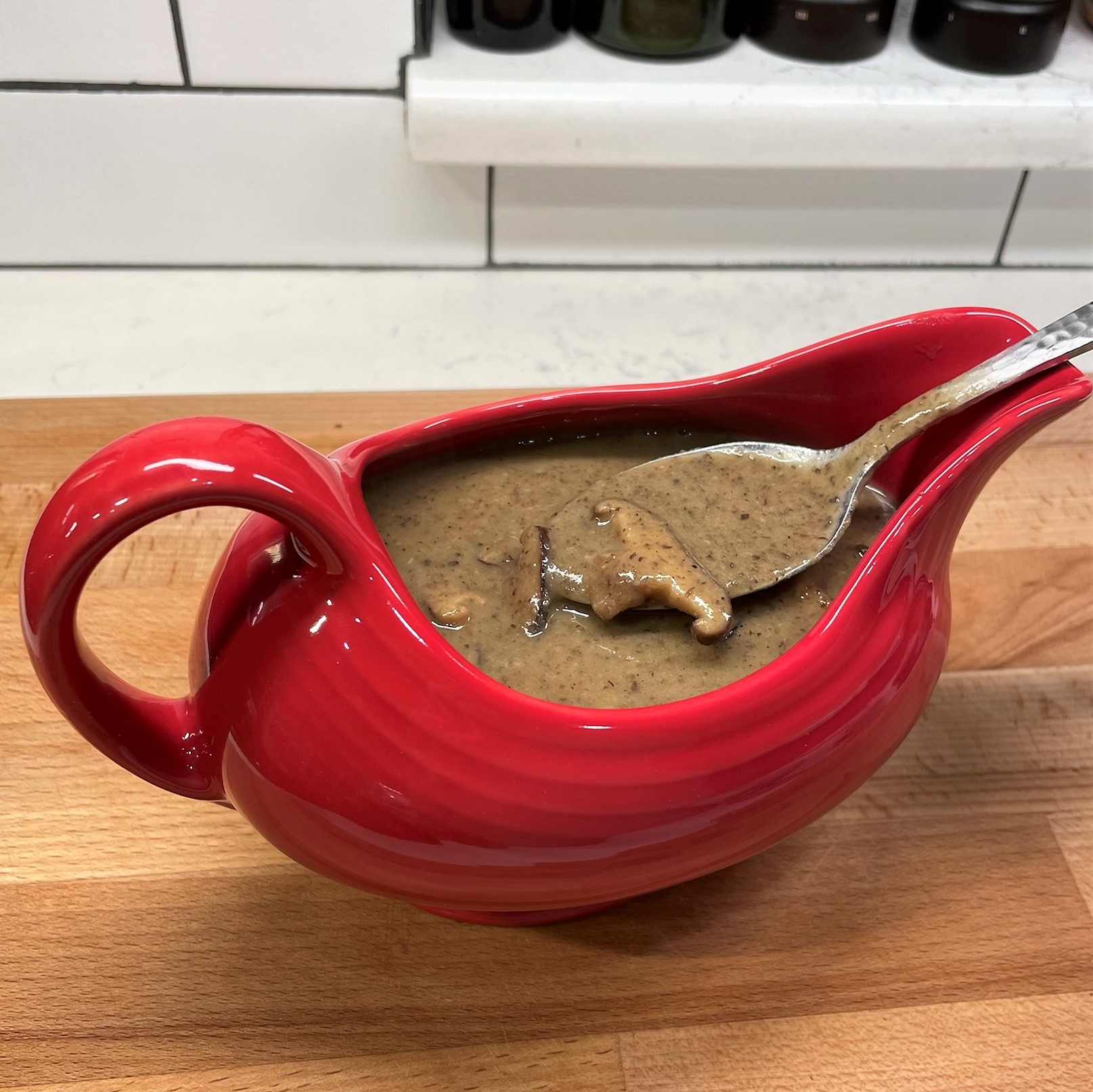
Mmmm, mushrooms!
Secondly, the mushroom gravy is less heavy—both in flavor and in calories—than a typical turkey gravy. It more than satisfies my craving for gravy without cranking up my cholesterol levels. Besides being completely delicious and easy to make several days ahead of the holiday commotion, this gravy can do double duty as a sauce for green bean casserole. And when we do have a vegan guest at the table, I like to do just one version of that dish for everyone to enjoy.
Rave reviews from all around the table, made from simple ingredients and easy to do ahead; this is a winner no matter how you slice, er, pour it. 😉
Ingredients
8 oz. carton of cremini mushrooms, cleaned and diced or pulsed in processor
4 oz. shiitake mushrooms, thinly sliced
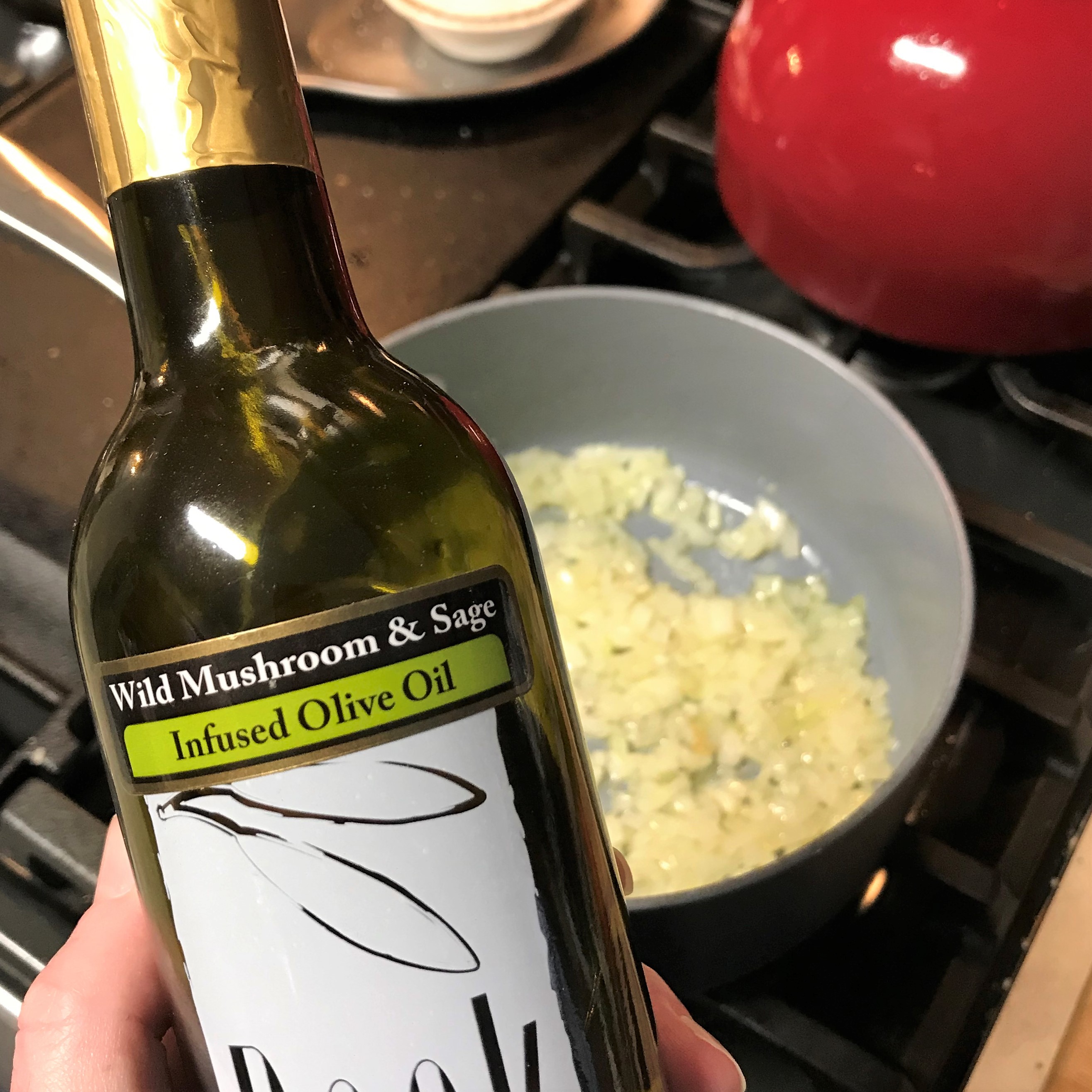
4 Tbsp. mushroom and sage-infused olive oil (+ 2 Tbsp. more later in the recipe)
The umami seasoning is a Trader Joe’s product, and it gets plenty of use whenever I’m making a vegan dish. The ingredients are porcini and white mushroom powders, dried onions, ground mustard, crushed red pepper and dried thyme. It brings a depth of savory flavor to everything it touches, but if you cannot find it, I would recommend substituting with the flavors you do have and also use prepared mushroom broth in place of the vegetable broth. Look for mushroom broth in cartons in a well-stocked supermarket.
I always choose low sodium broths because it helps me control the overall sodium of a recipe. In this recipe, I specifically used a vegetable broth that does not contain tomatoes.
Roasted garlic is easy to make at home, and it gives a lot of depth and complexity to this mushroom gravy. If you have never made your own roasted garlic, please check out this post for step-by-step instructions.
Instructions
As usual, the photos tell the story better than written instructions. Please have a look at the slides and keep scrolling for a downloadable pdf for your recipe files.
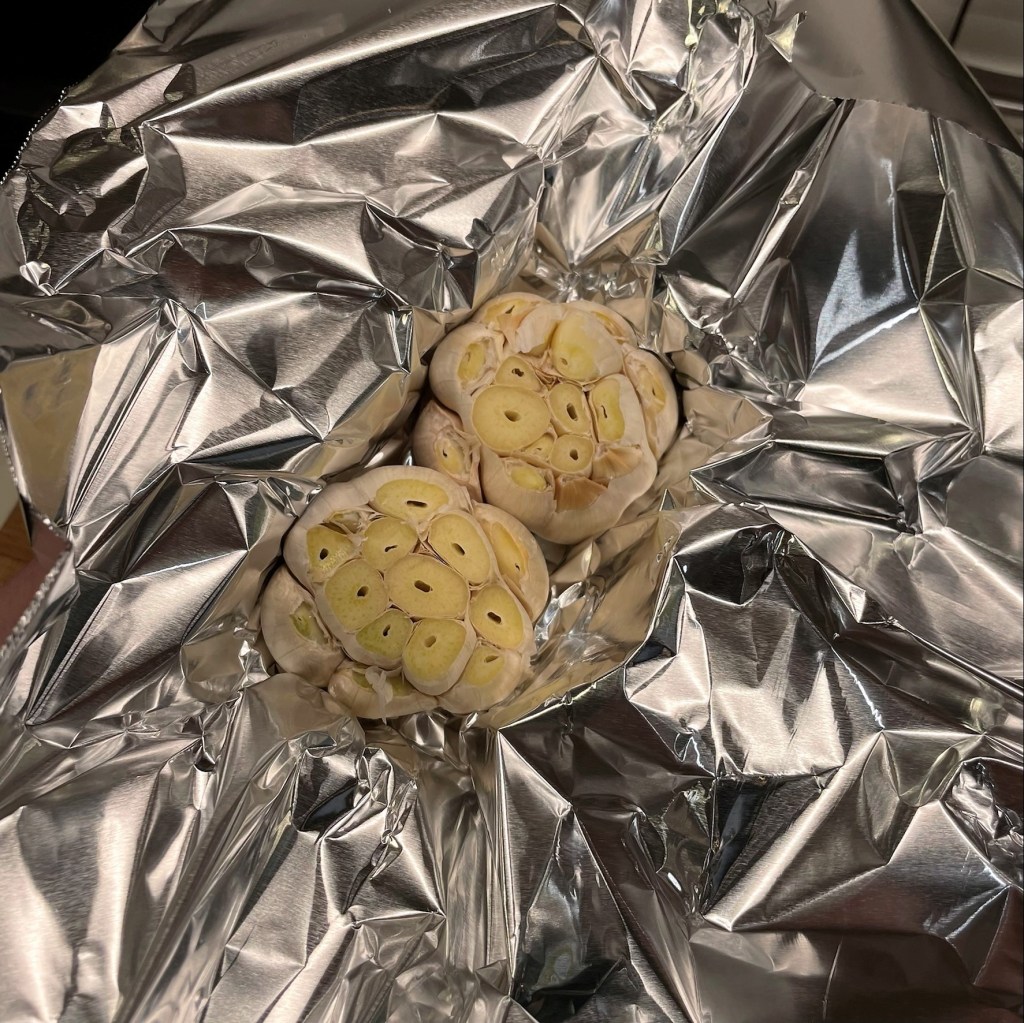
First things first, make your roasted garlic, which is needed for this recipe. My instructions for this is linked in the ingredients list.
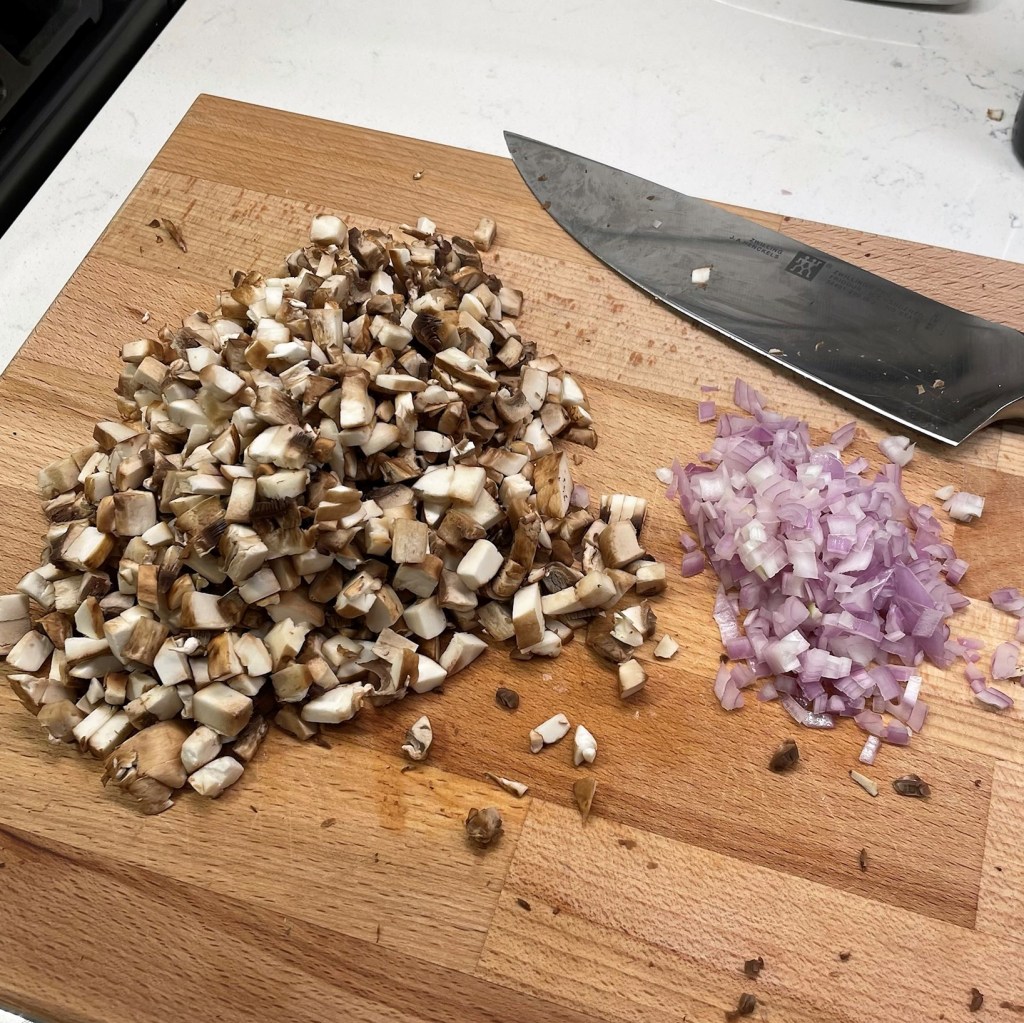
Cut the cremini mushrooms and shallots into a fine dice. If you prefer, use a food processor and pulse about six times.
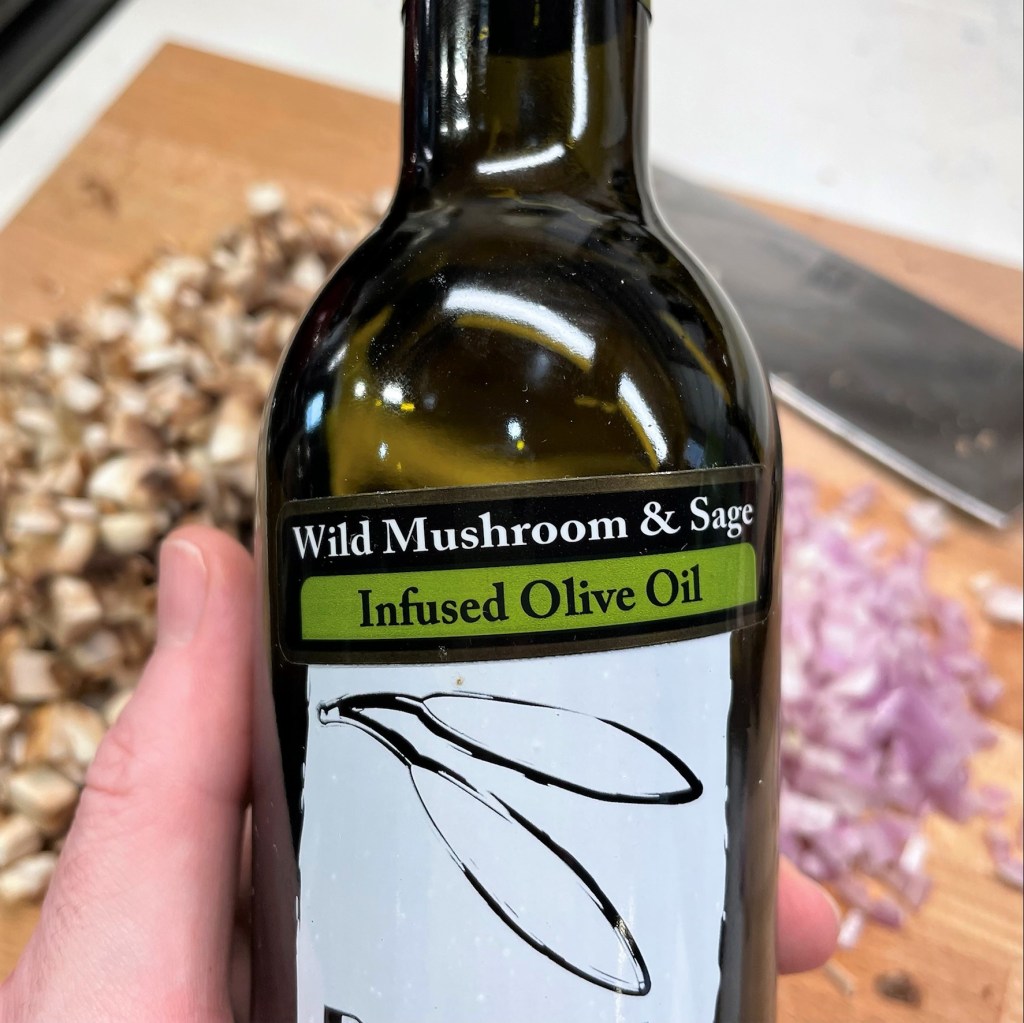
I could not live without this stuff in the fall! If you don’t have a specialty olive oil store in your town, look for it online or swap in regular olive oil.
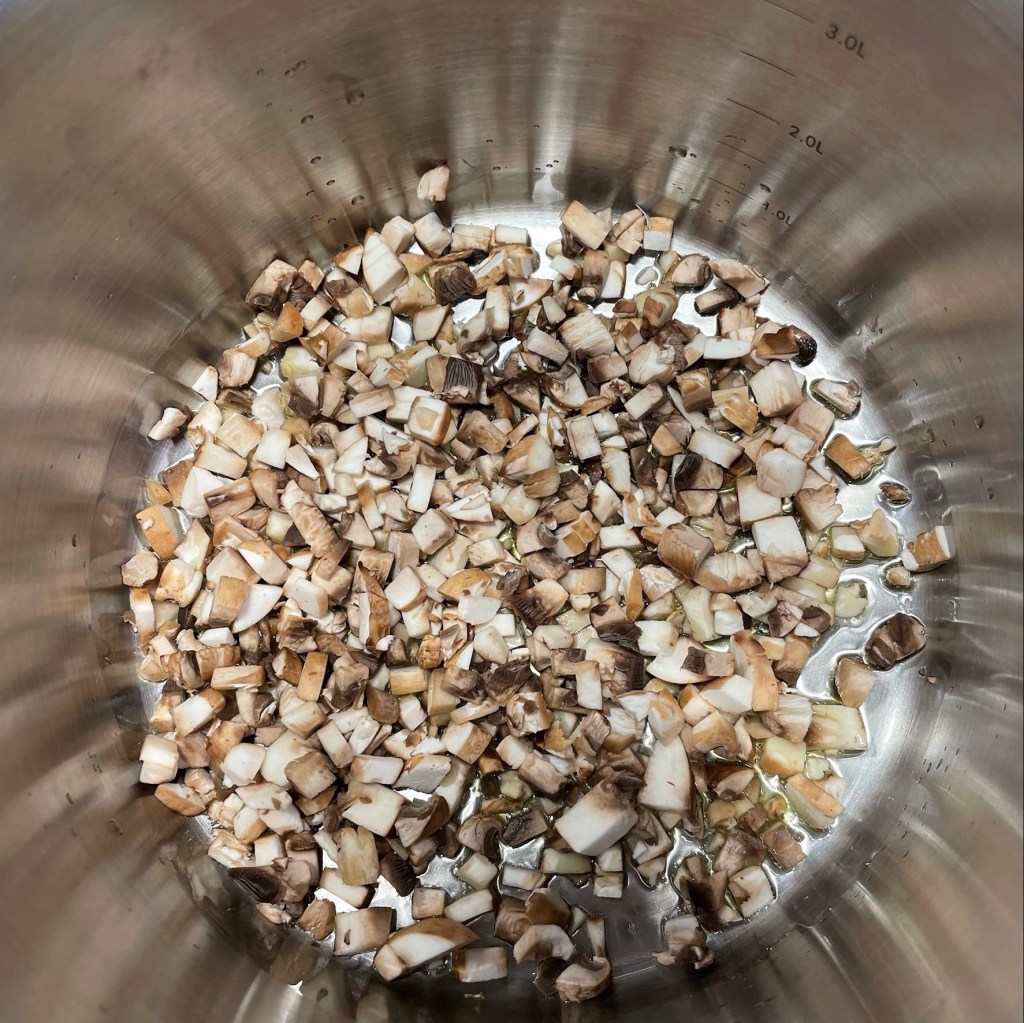
Cook half the mushrooms initially, so that they don’t overcrowd in the pan.
These two seasonings keep this gravy true to Thanksgiving, and still plant-based.
When the first mushrooms are softened, add the remaining mushrooms and continue to saute until golden.
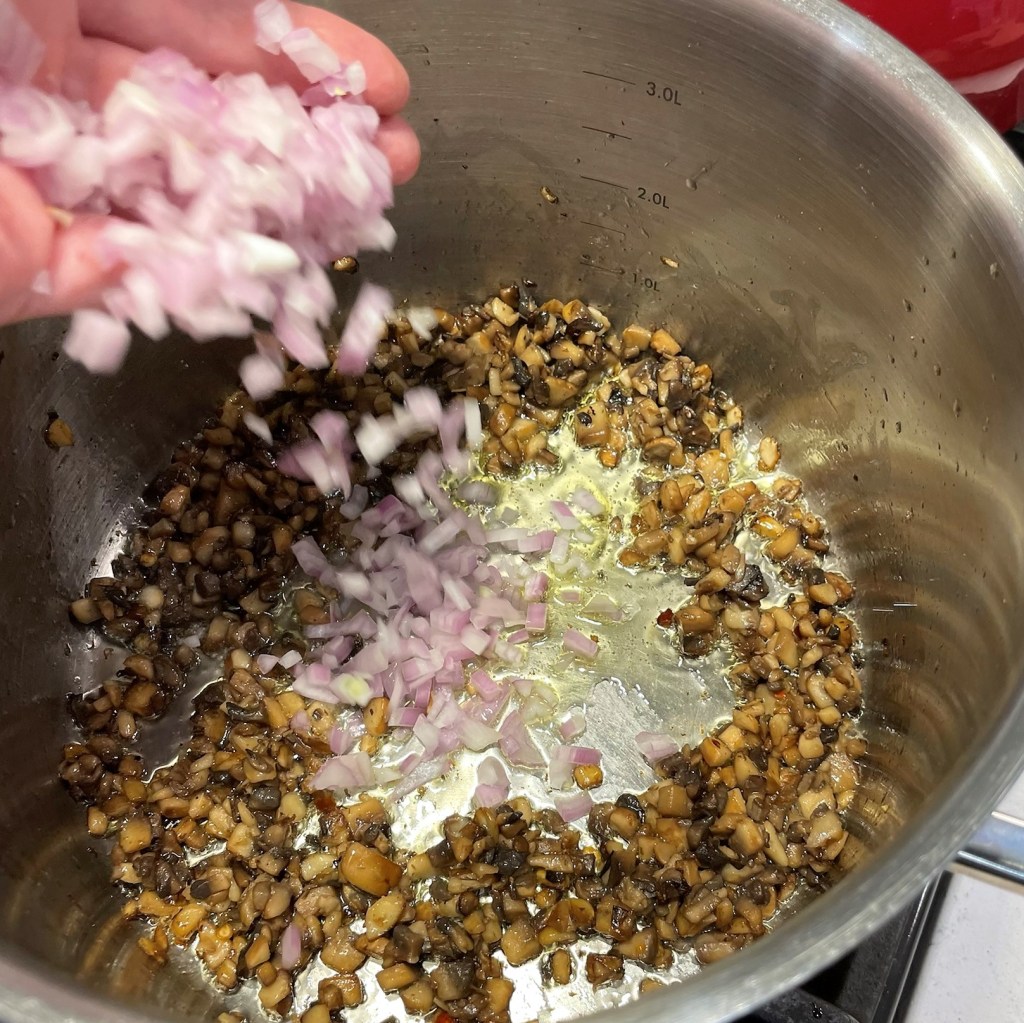
Add an extra splash of oil to the center of the pot and then add the shallots.
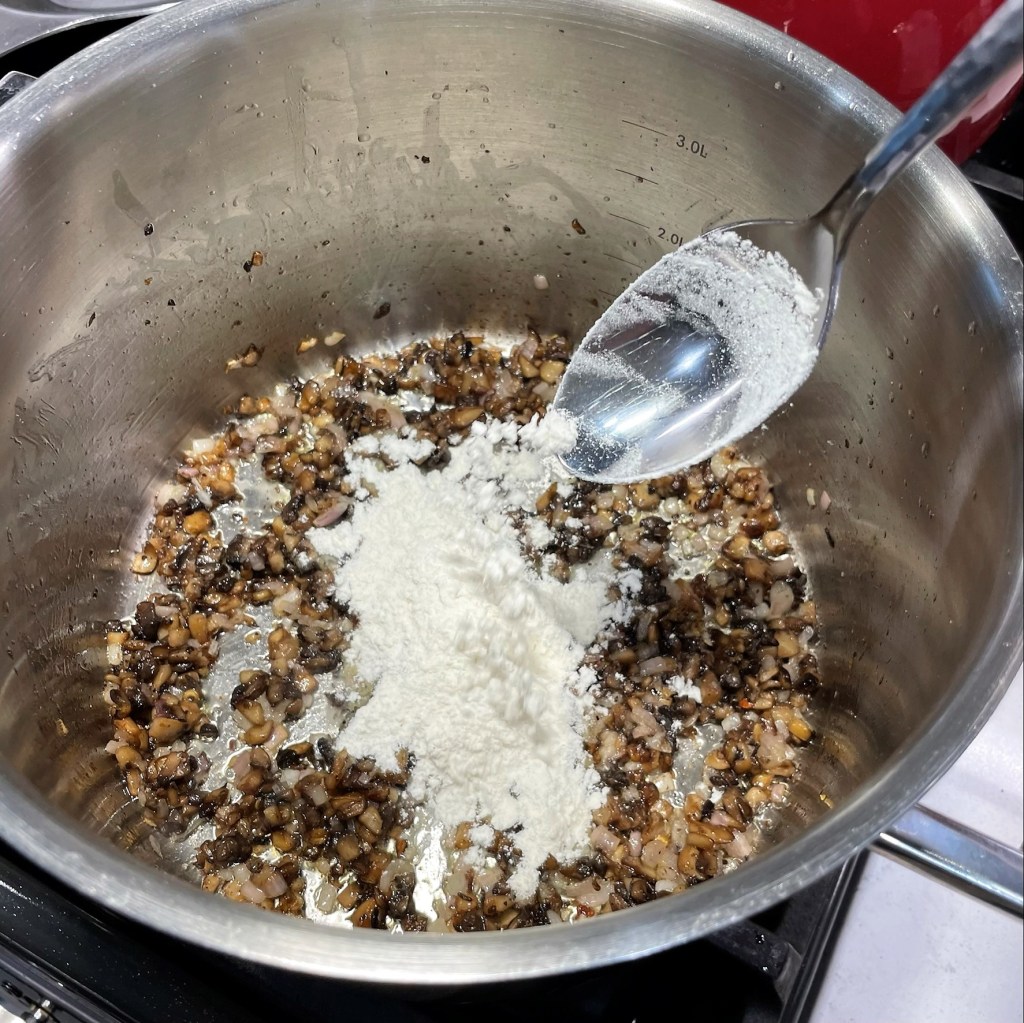
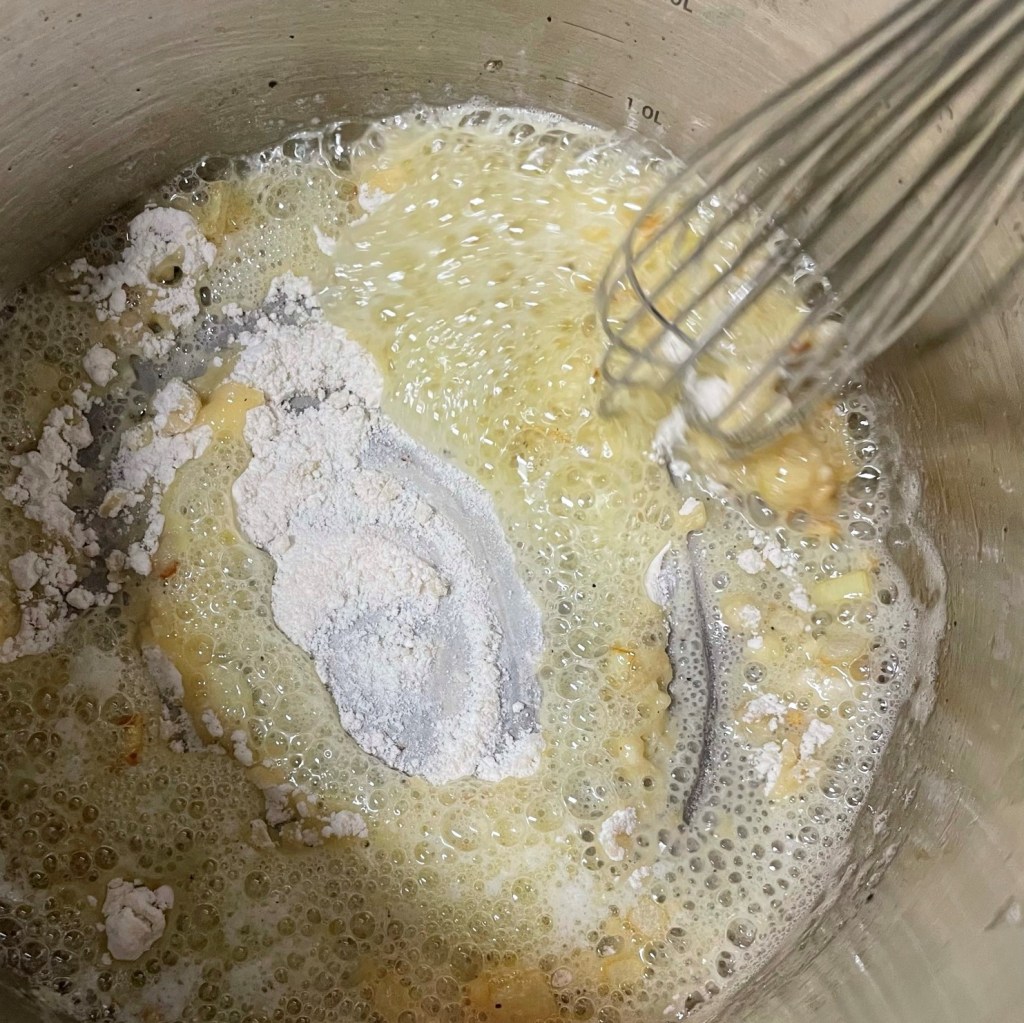
Measure about 3 tablespoons of flour into the mixture, and stir to coat evenly.
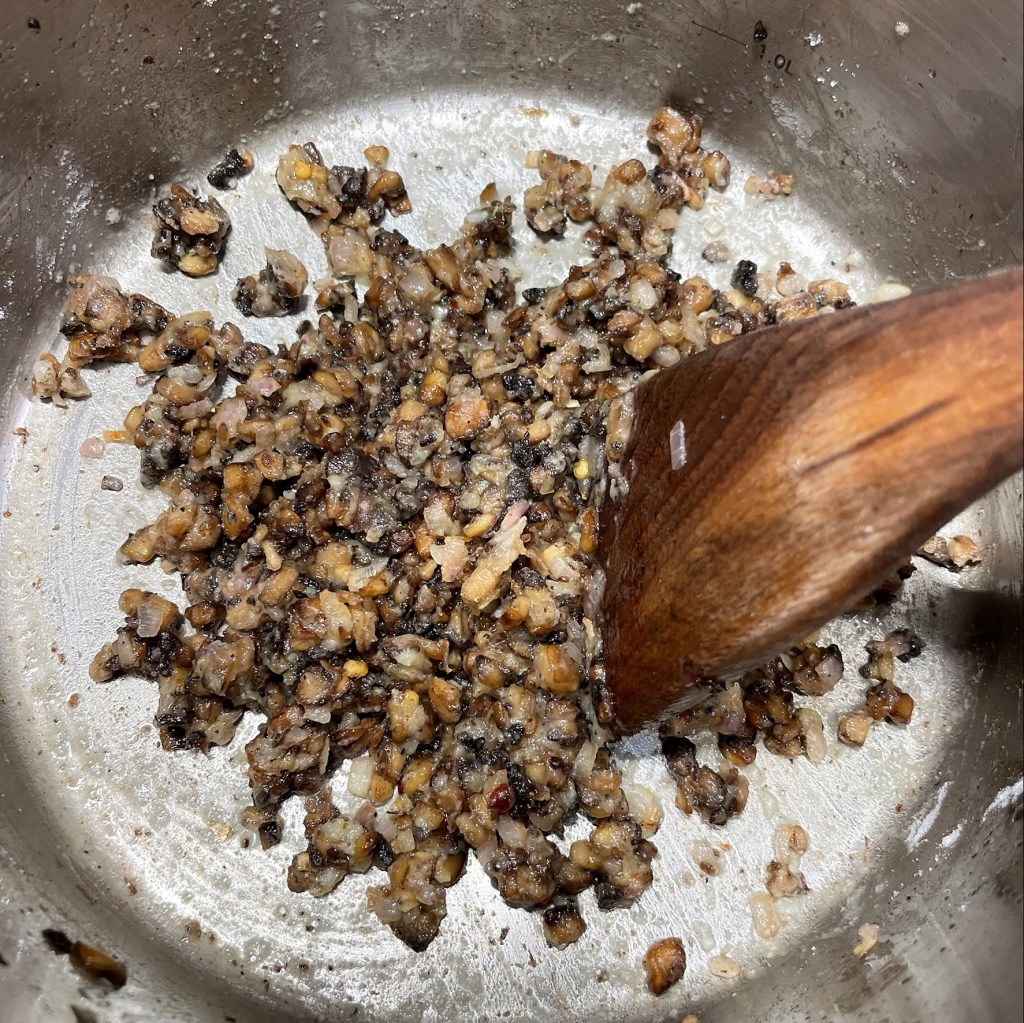
Cook this mix a few minutes so that the flour hydrates with the oil. If it seems dry or powdery, add a touch more oil.
Low sodium vegetable broth adds extra layers of flavor. Mix it well until the gravy reaches a low boil, then simmer.
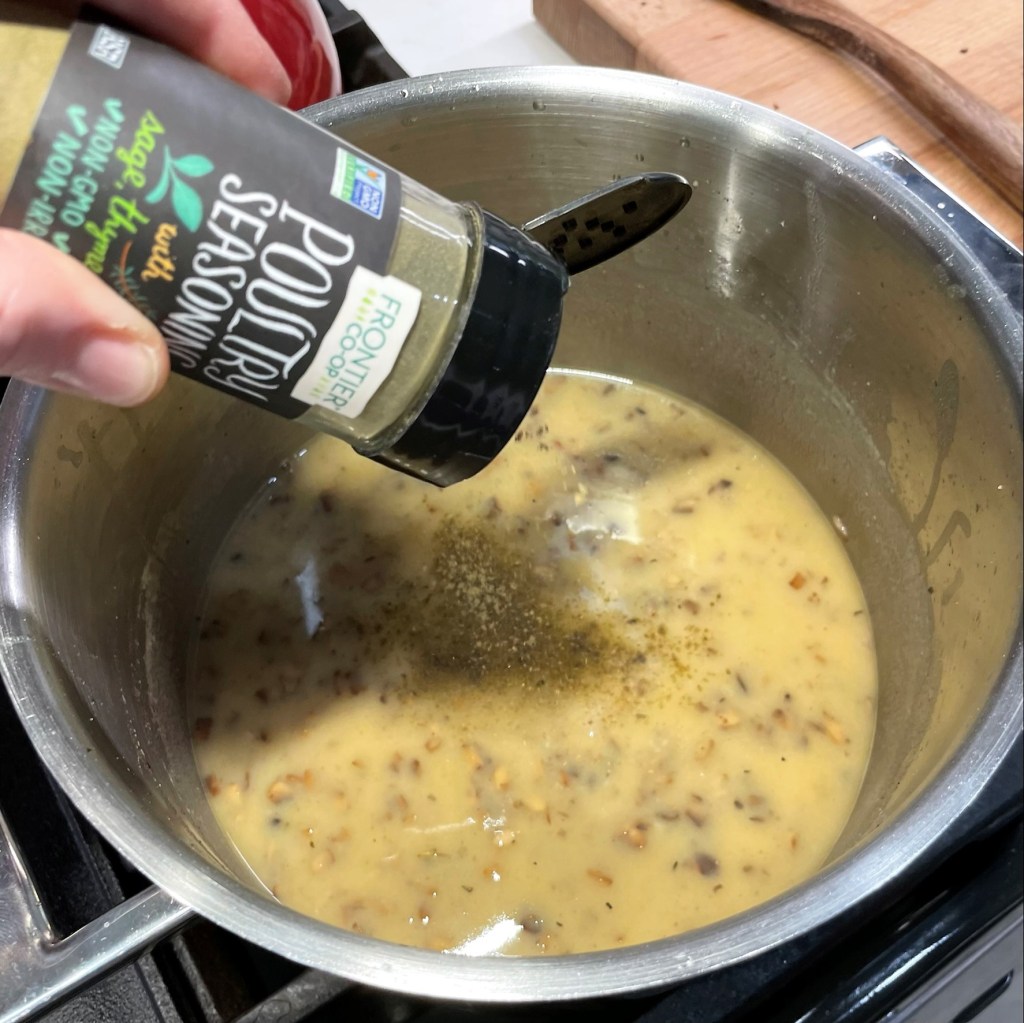
Despite its name, poultry seasoning has no poultry. It is usually a blend of sage, thyme and rosemary. Bell’s seasoning would be a terrific substitute.
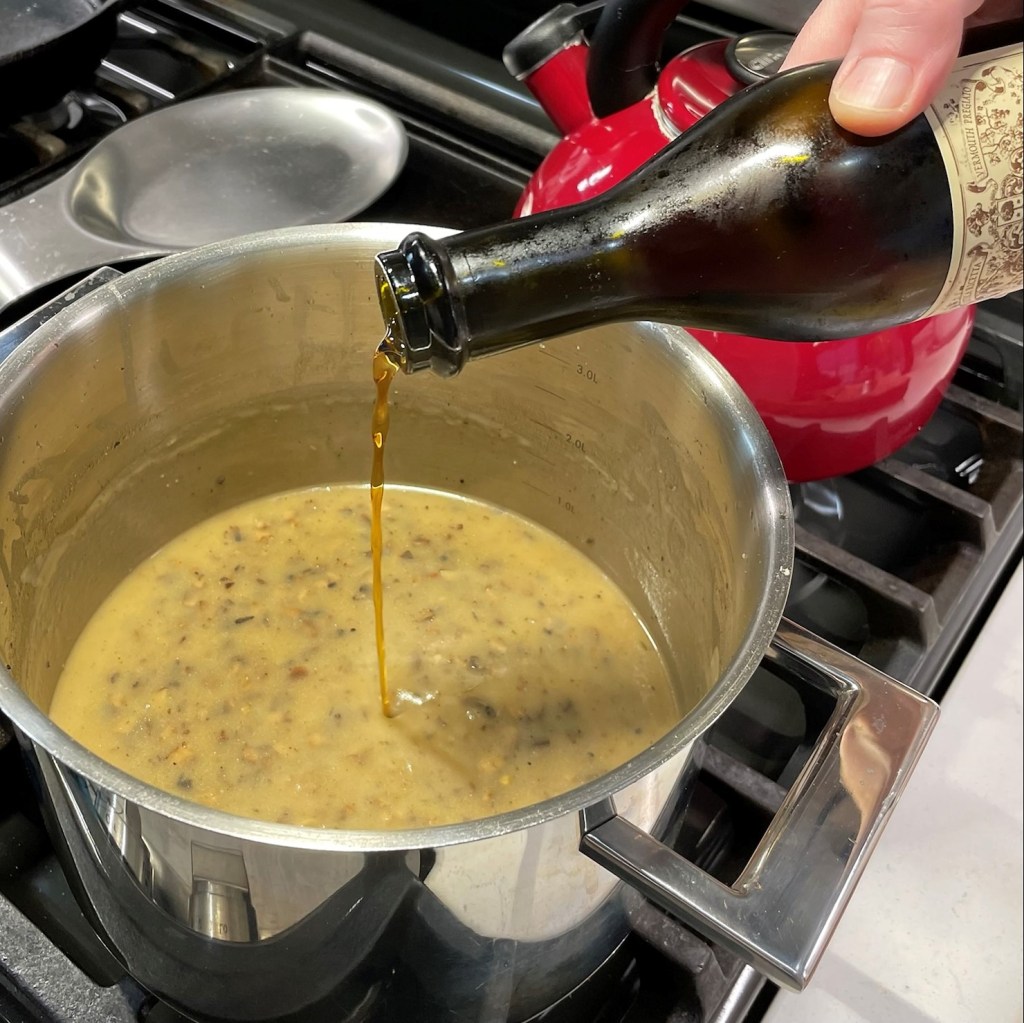
Add a splash of dry white wine. I went out on a limb this time and used a splash of red vermouth, but I like the white wine better.
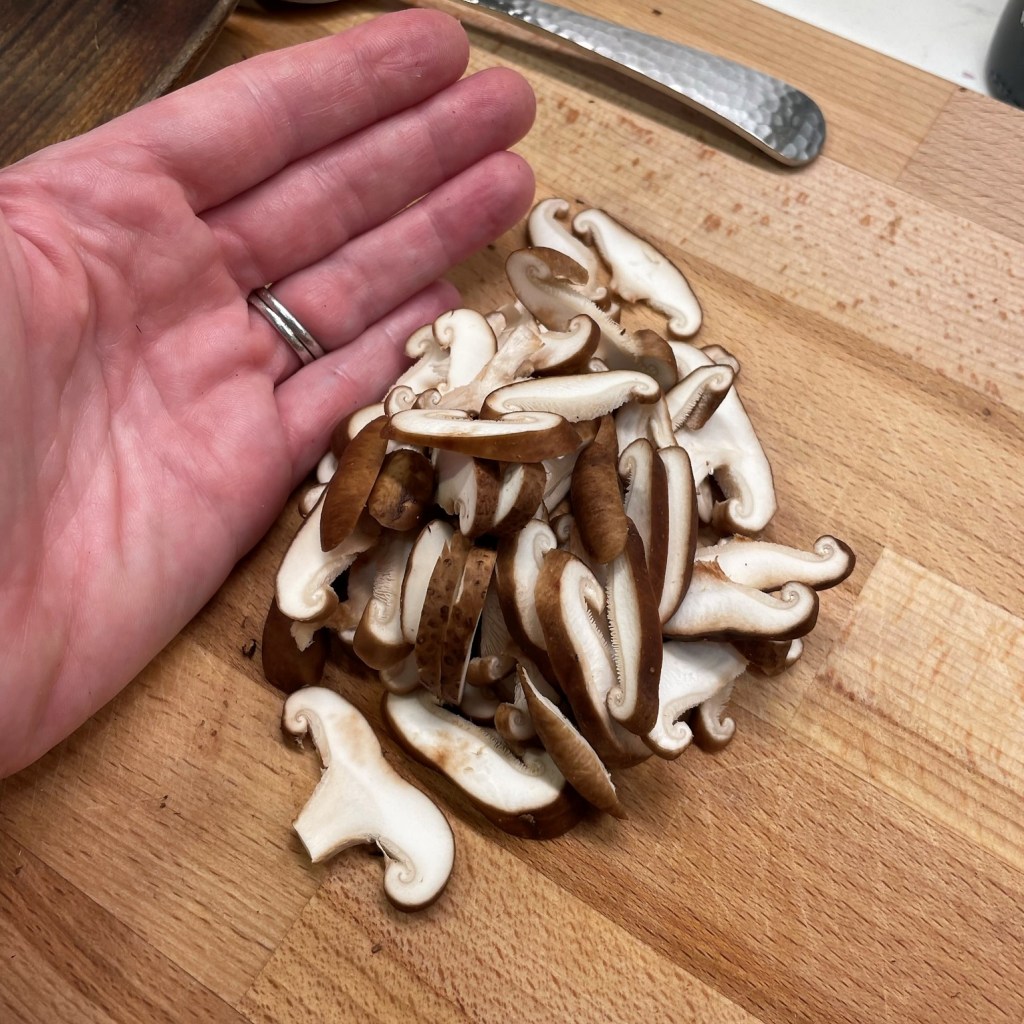
Slice the shiitakes thin to add to the finished gravy. I love the texture and mellow flavor of shiitakes.
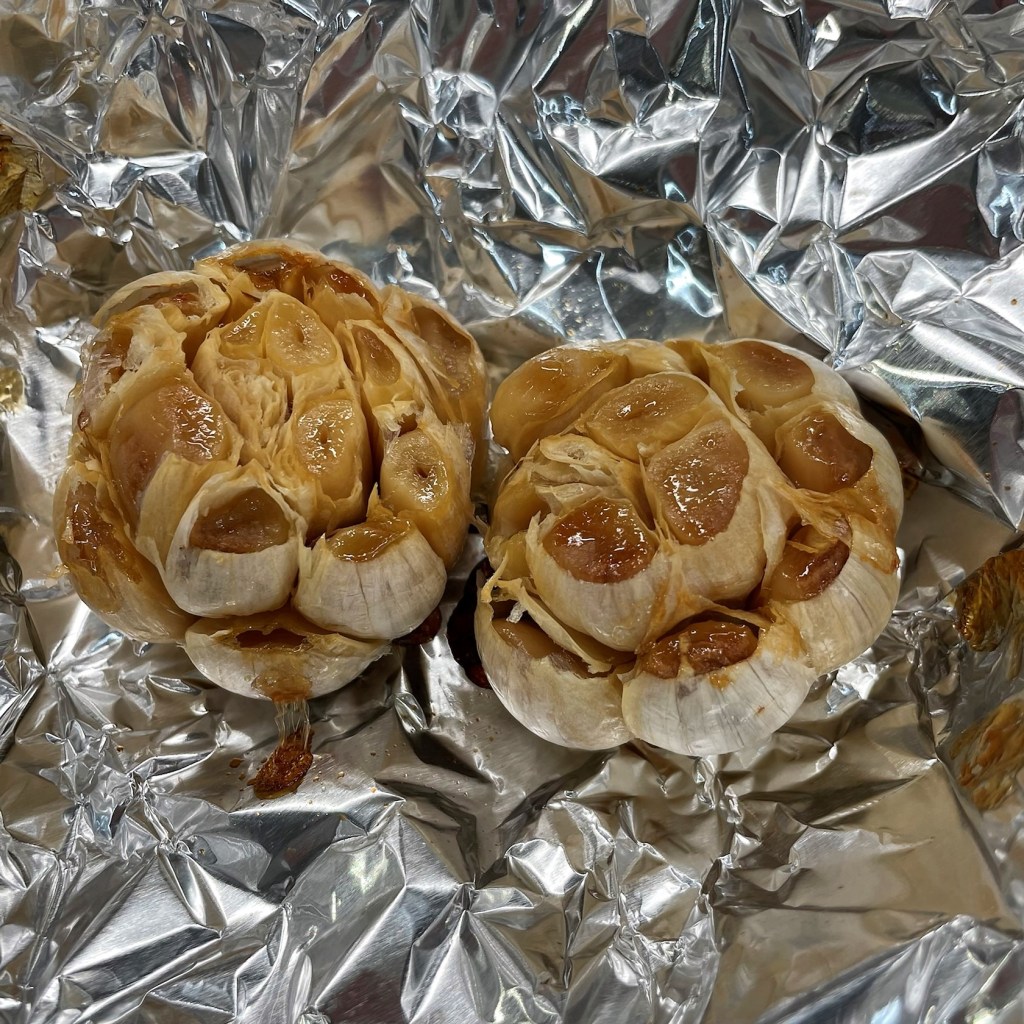
My garlic is ready! You want to roast it until it reaches this golden color. Only use one bulb in the gravy, and save the other for your mashed potatoes! 🙂
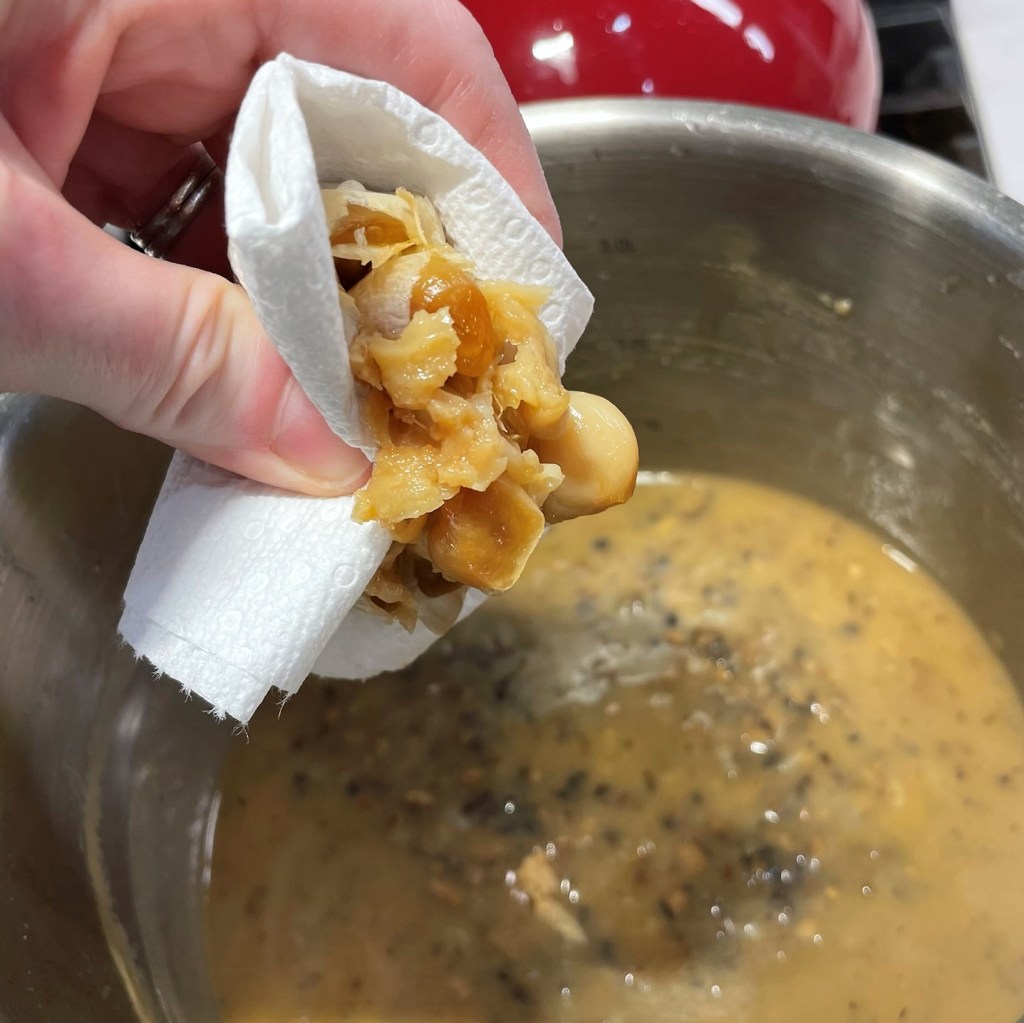
Grip the garlic bulb with a paper towel and gently squeeze the roasted cloves out, directly into the gravy pot.
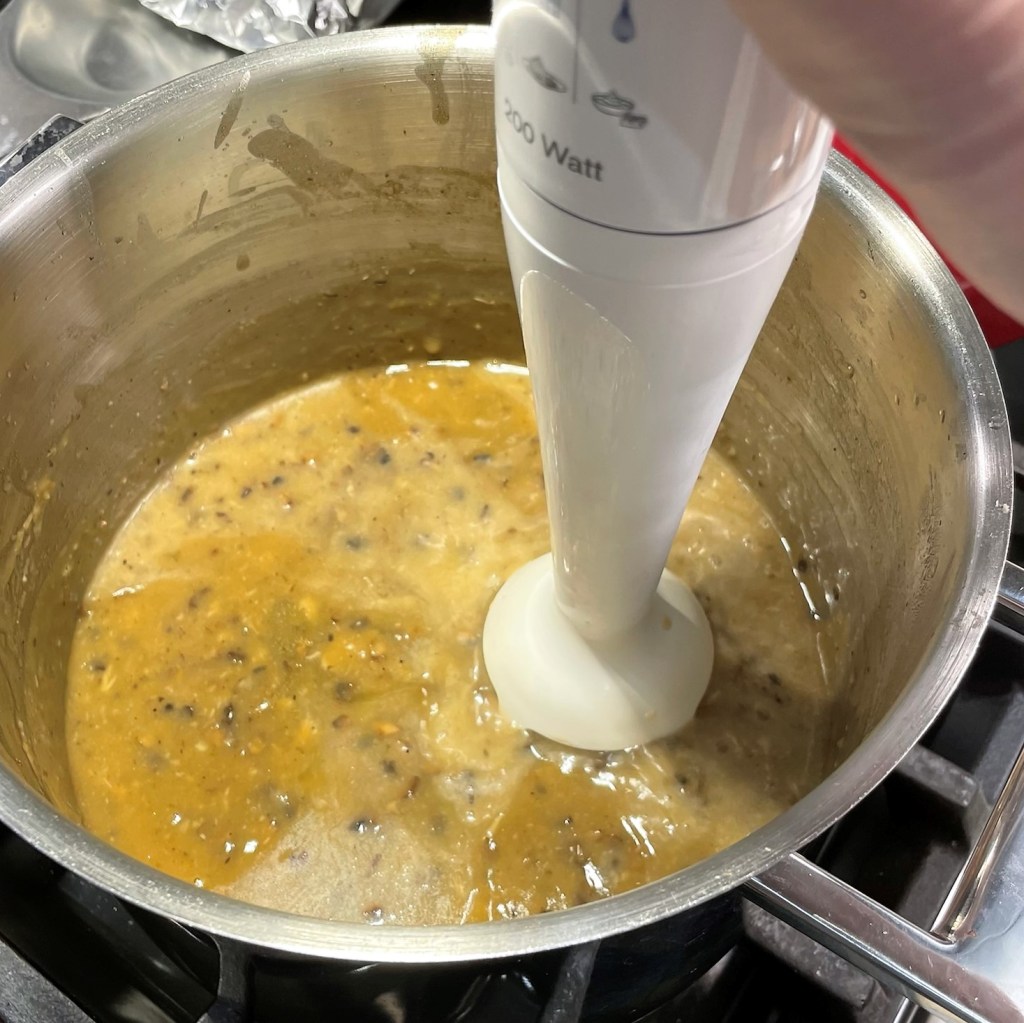
On a whim, I decided to use the immersion blender to puree the gravy. It is fine to keep the bits of mushroom as they are.
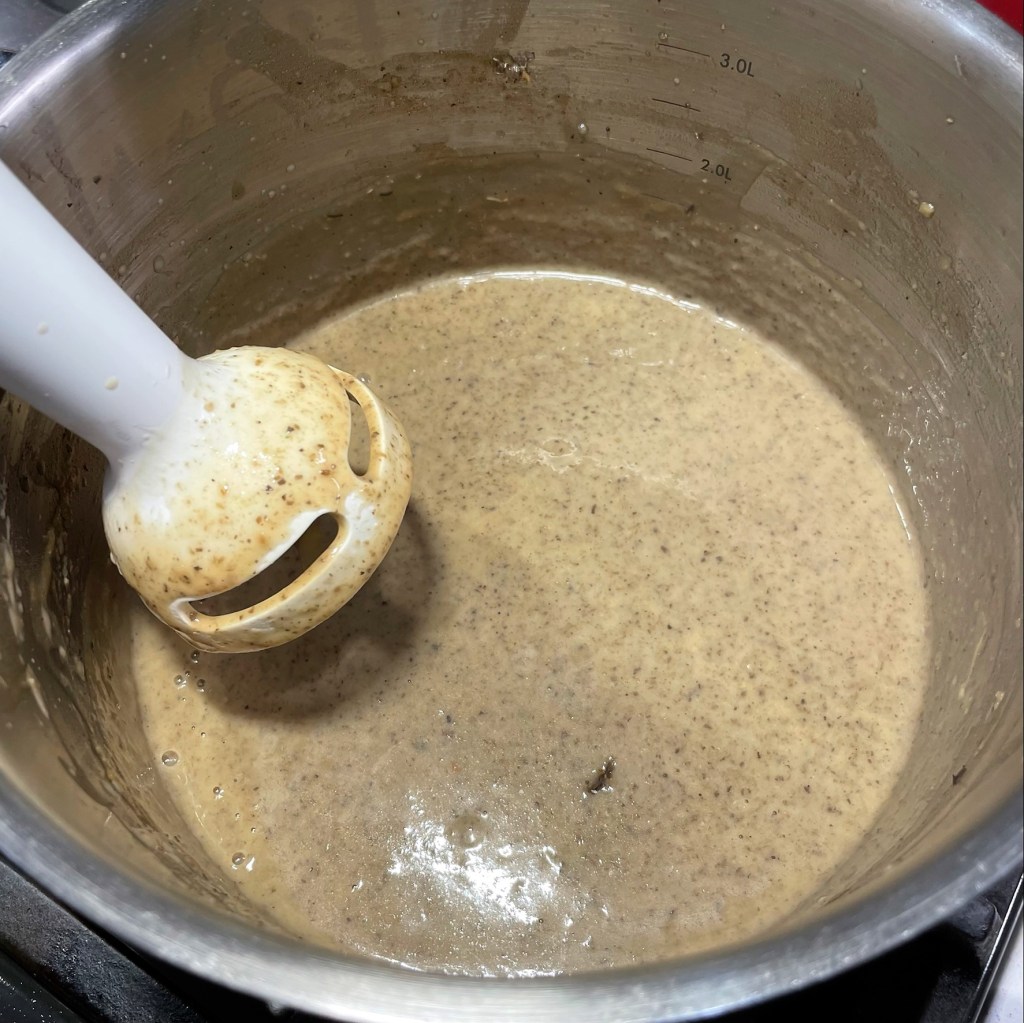
After blending, the gravy resembles a creamy mushroom soup.
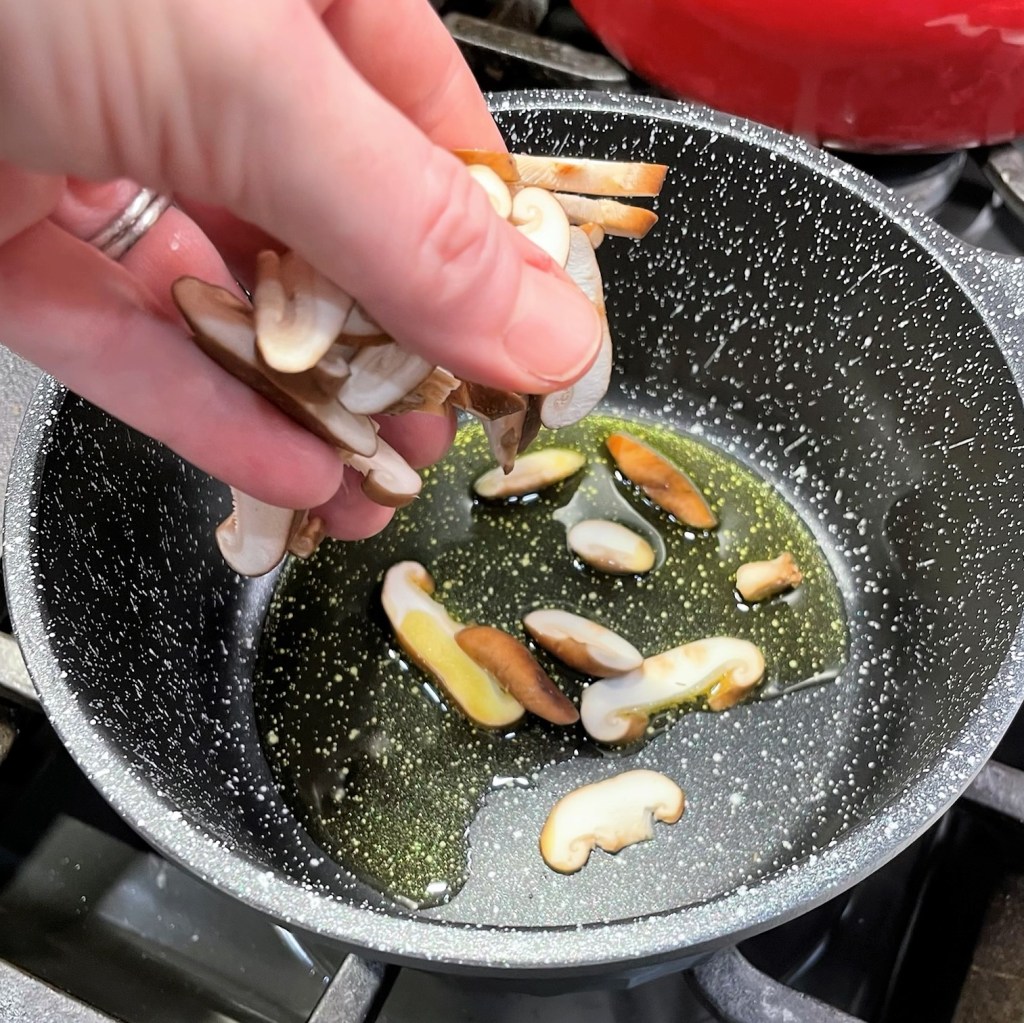
Brown the shiitake slices in a touch of olive oil, then add them to the gravy.
Call me to the table, already!
If you don’t already have your roasted garlic, go make that. Please don’t try to substitute with fresh sauteed garlic. The flavor will be too strong.
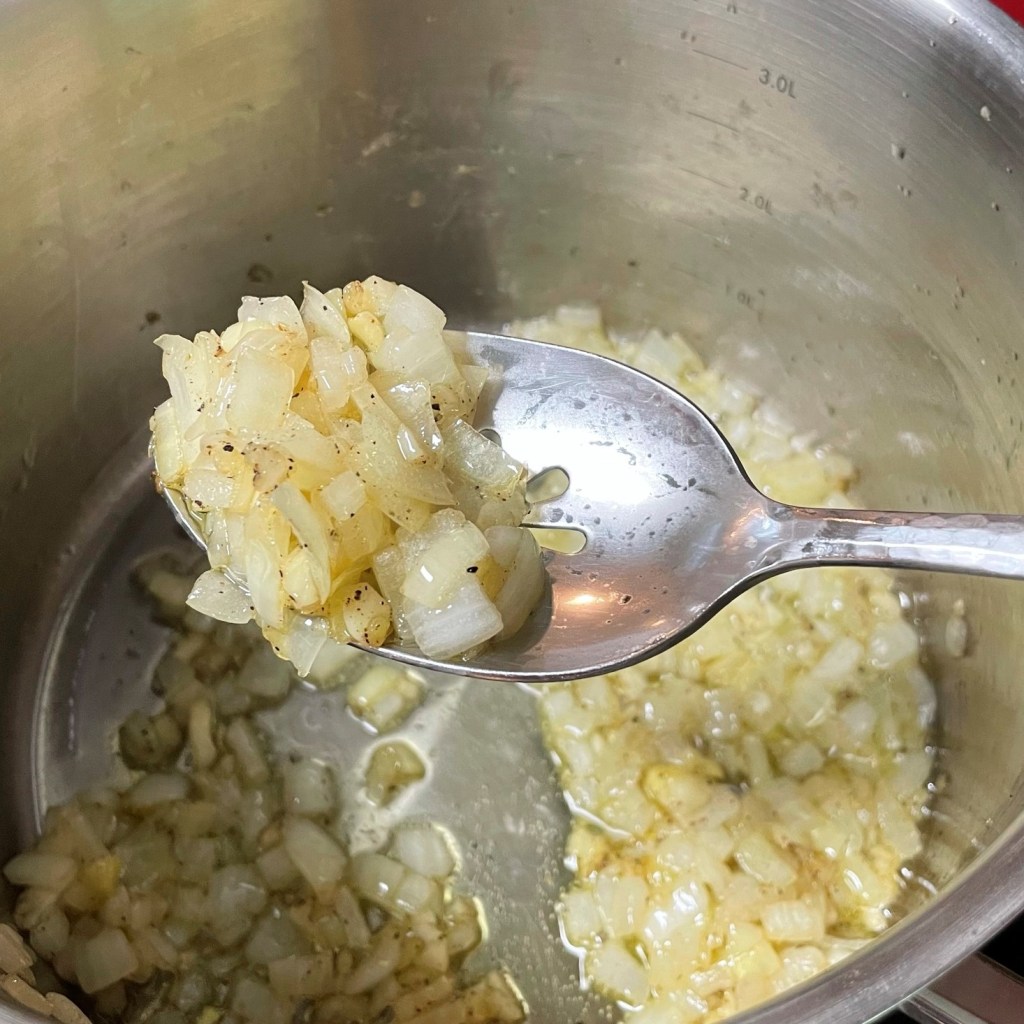
Heat 4 Tbsp. olive oil over medium heat. Sauté half of the mushrooms, tossing to coat them in the oil, until they give off their moisture and shrink in size. Repeat with remaining mushrooms. Season with salt, pepper and umami seasoning. Move the mushrooms to the sides of the pot.
Swirl another tablespoon of oil into the center of the pot and add the shallots. Saute until slightly softened. Add flour and toss until absorbed into the oil. The mixture should look somewhat pasty, but not dry. Add a final tablespoon of oil if needed to reach this consistency. Cook the mixture for a minute or two.
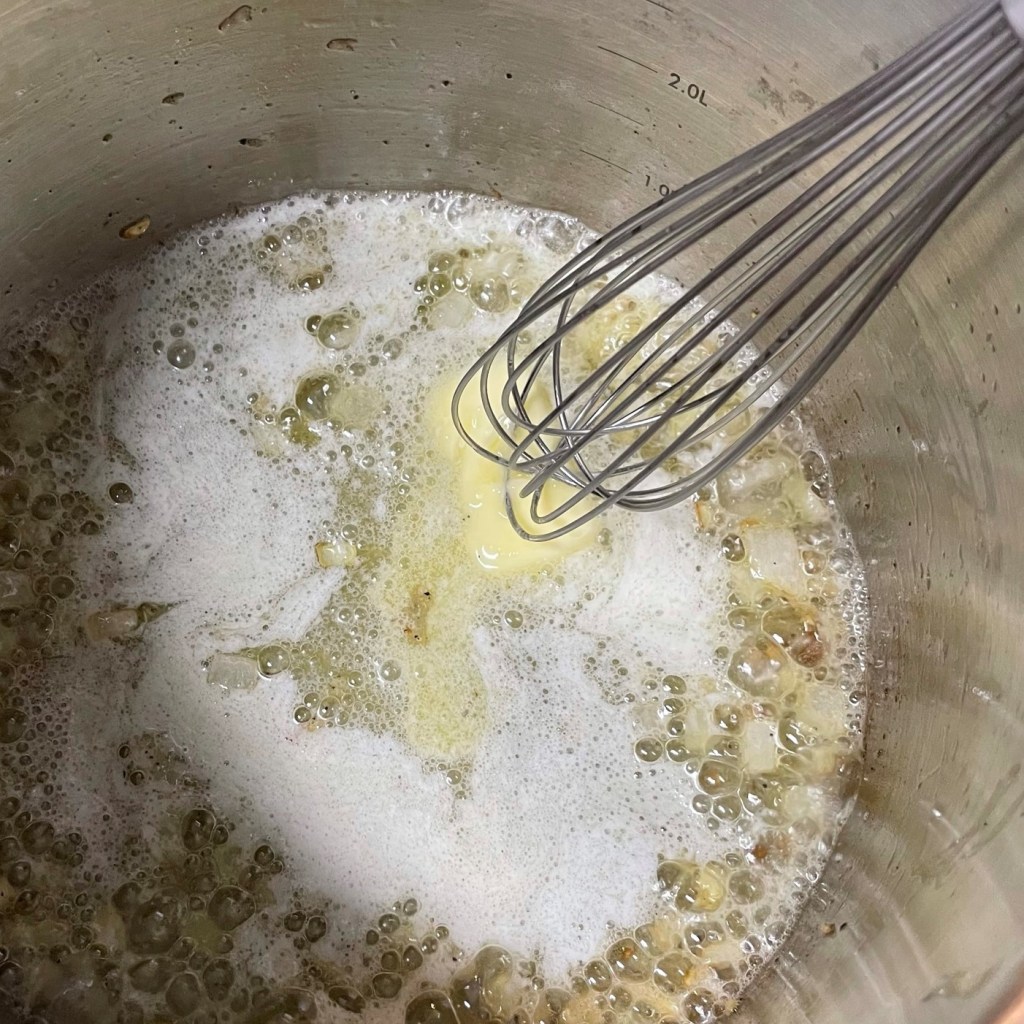
Add vegetable broth all at once and stir continuously for a minute or two to hydrate the roux. Bring to a slight boil, then reduce heat and simmer for 10 minutes until mixture is thickened. Stir in wine and simmer over very low heat for about an hour.
Squeeze in the entire bulb of roasted garlic, taking care to not drop the garlic paper into the pot. Use a whisk to ensure the garlic is fully blended, or use an immersion blender to whip the gravy into a smoother consistency.
In a small skillet, heat 1 Tbsp. olive oil and sauté the sliced shiitake mushrooms until softened and slightly browned, then stir them into the gravy. Serve immediately or refrigerate up to three days ahead.
This gravy has so much rich, savory flavor, you’ll never miss the meat.
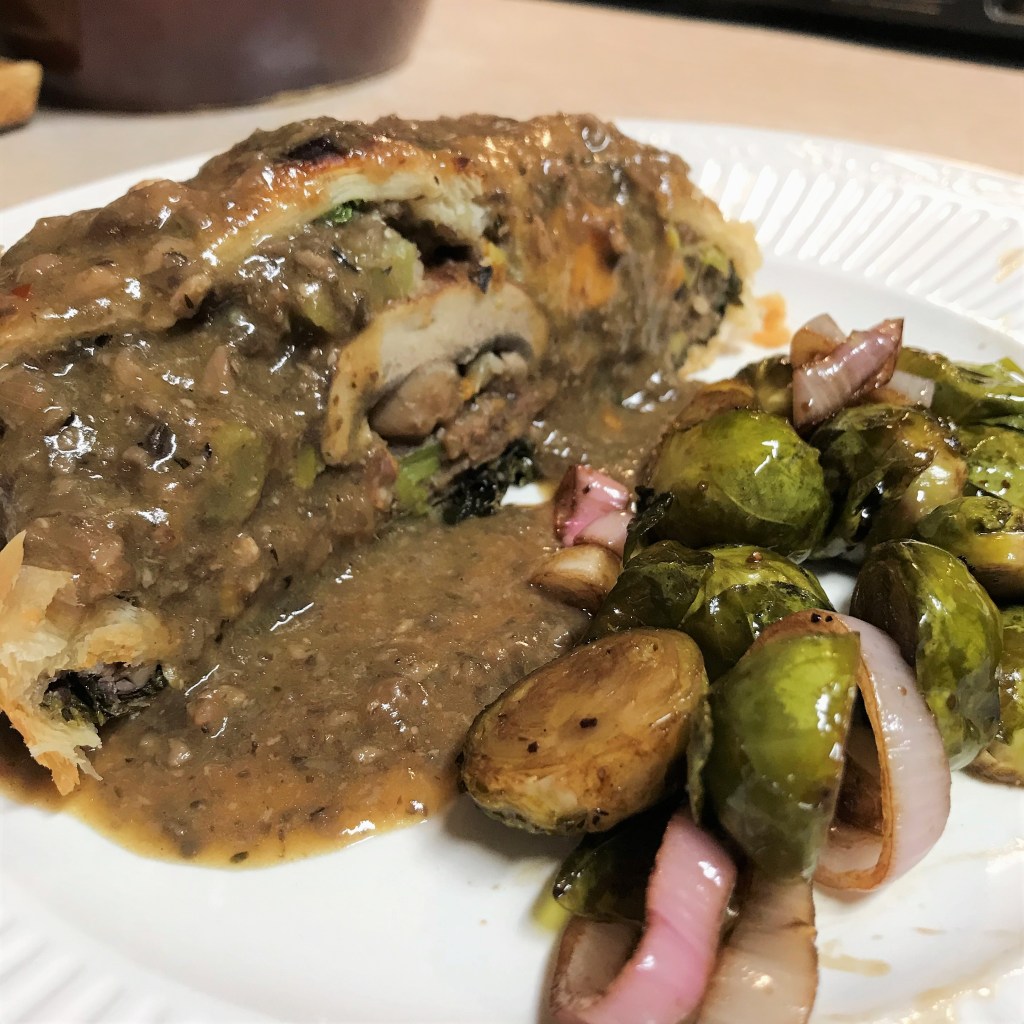
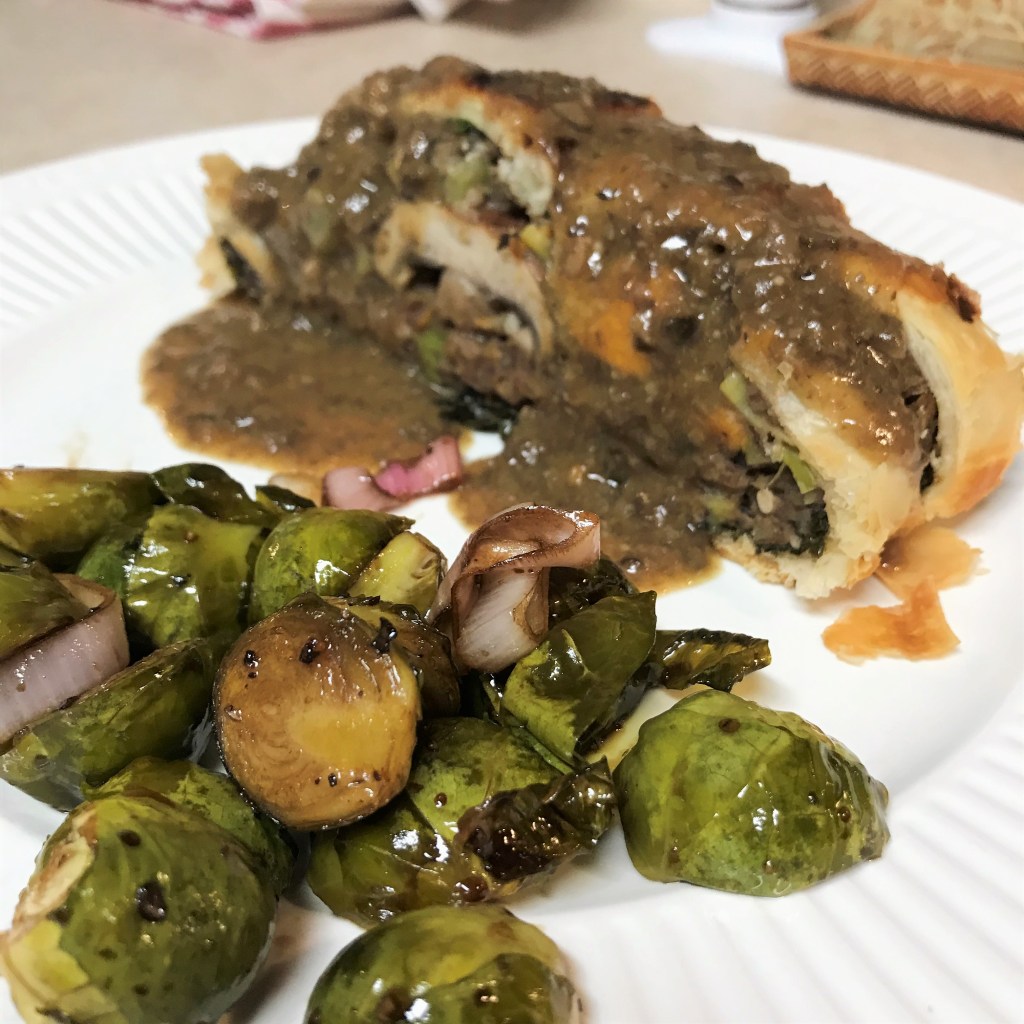
This gravy is delicious on a lentil mushroom wellington or use it as a substitute for cream of mushroom soup in any casserole you’d like to convert to vegan.
My love for Brussels sprouts is not exactly new, but I remember a time when my nose would wrinkle at the mere mention of them. If you were forced to try them, as I was for the first time, from the frozen section of the grocery store and drenched in a nasty, congealed “butter” sauce, then you can probably relate. They were mushy, bland and bitter, and the sauce only made them worse. There should be laws against this kind of vegetable abuse.
Later, when I was a teenager fulfilling my household chore of tending the home garden, I found myself intrigued by these enormous stalks covered in bulbous little cabbage heads. It was the first time I had ever seen them as nature intended, and it pleases me now to see them presented that way at Trader Joe’s, where they are proudly perched this time of year in a large case just inside the entrance.
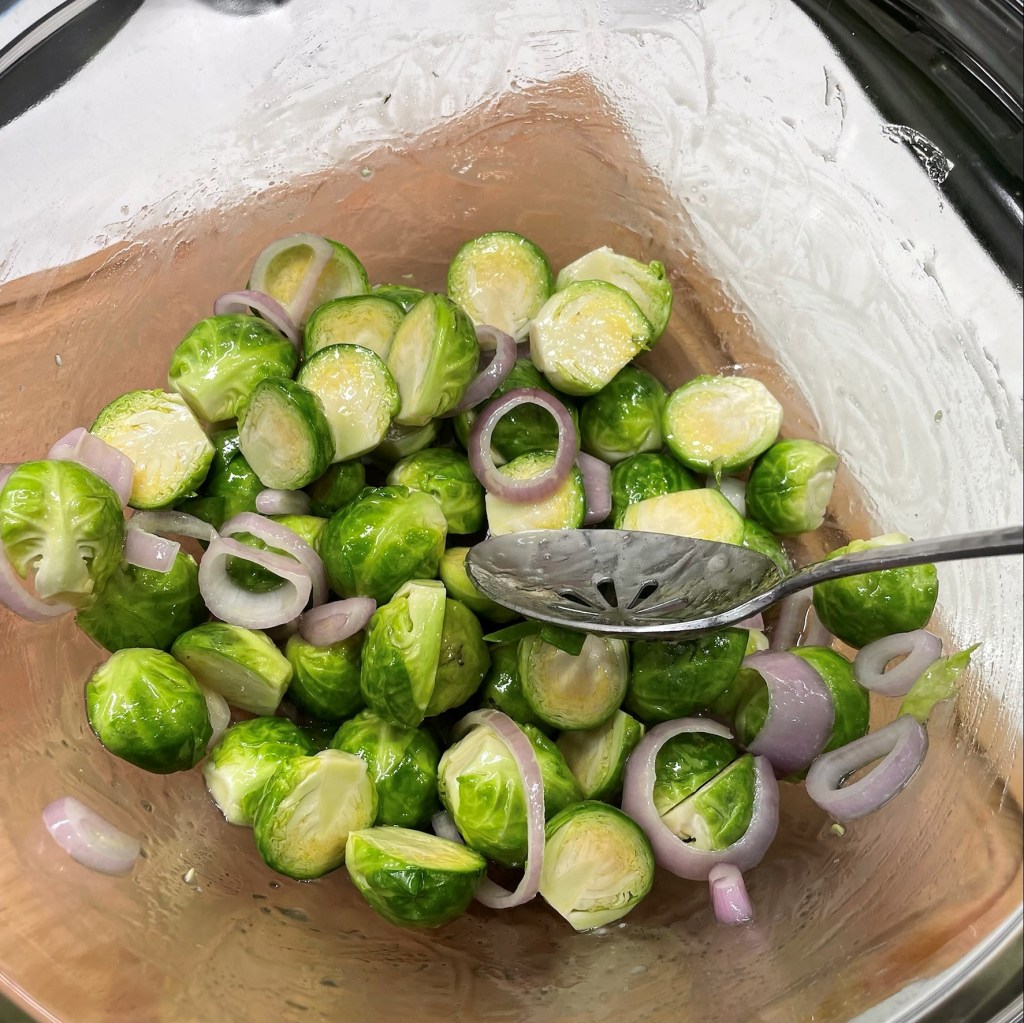
Cutting the individual sprouts off the stalk can be a bit tedious (I still cringe as I remember doing so all those years ago), and I’ll confess here that I usually prefer to buy them already cut and packed up in the mesh bags. They should be firm and bright green in color, with no wilted leaves in sight. To prep them, you only need to wash them under running water and trim a thin slice off the bottom, allowing the outer leaves to fall away. Cut them in half from top to bottom and toss them in the marinade for a few minutes, then into the oven on a parchment-lined baking sheet.
The sprouts should have tightly layered leaves and a firm exterior. Slice the shallot into rings.
Brussels sprouts are part of the brassica family of vegetables and, like their cousins (broccoli, cabbage, cauliflower and kale), they are positively loaded with nutrients. Additionally, they have terrific heft and body that make them an essential part of our Thanksgiving day table.
Last year, I shared a spicy-sweet version of Maple Cayenne Brussels Sprouts, and this year, an alternative for those who like a fresher, tangy twist. The lemon and pomegranate flavors are simple to impart—I love the flavor-infused balsamic vinegars that are available in the boutique oil and vinegar shops that seem to be everywhere these days (or can be found for online ordering). This recipe uses the pomegranate balsamic, plus lemon-fused olive oil and the juice and zest of a fresh lemon. These sprouts are simple to make, and you can roast them in the oven while your turkey is resting. Or, if you are going plant-based this year, they can probably be roasted alongside whatever else you have in the oven.
Enjoy!
Ingredients
1 pound bag of fresh Brussels sprouts (cleaned, trimmed and halved)
1 medium shallot, sliced into rings
2 Tbsp. fresh lemon juice plus the zest
Pinch of sugar
1/4 cup extra virgin olive oil (I love the lemon-fused)
2 Tbsp. pomegranate-infused balsamic vinegar
Kosher salt and black pepper
Instructions
Whisk the oil into the lemon juice with a pinch of sugar. You want the oil to become emulsified rather than separated, so that the marinade clings to the sprouts.
Toss them about in the marinade until evenly coated. Use a slotted spoon to transfer the sprouts to a baking sheet, and reserve excess marinade.
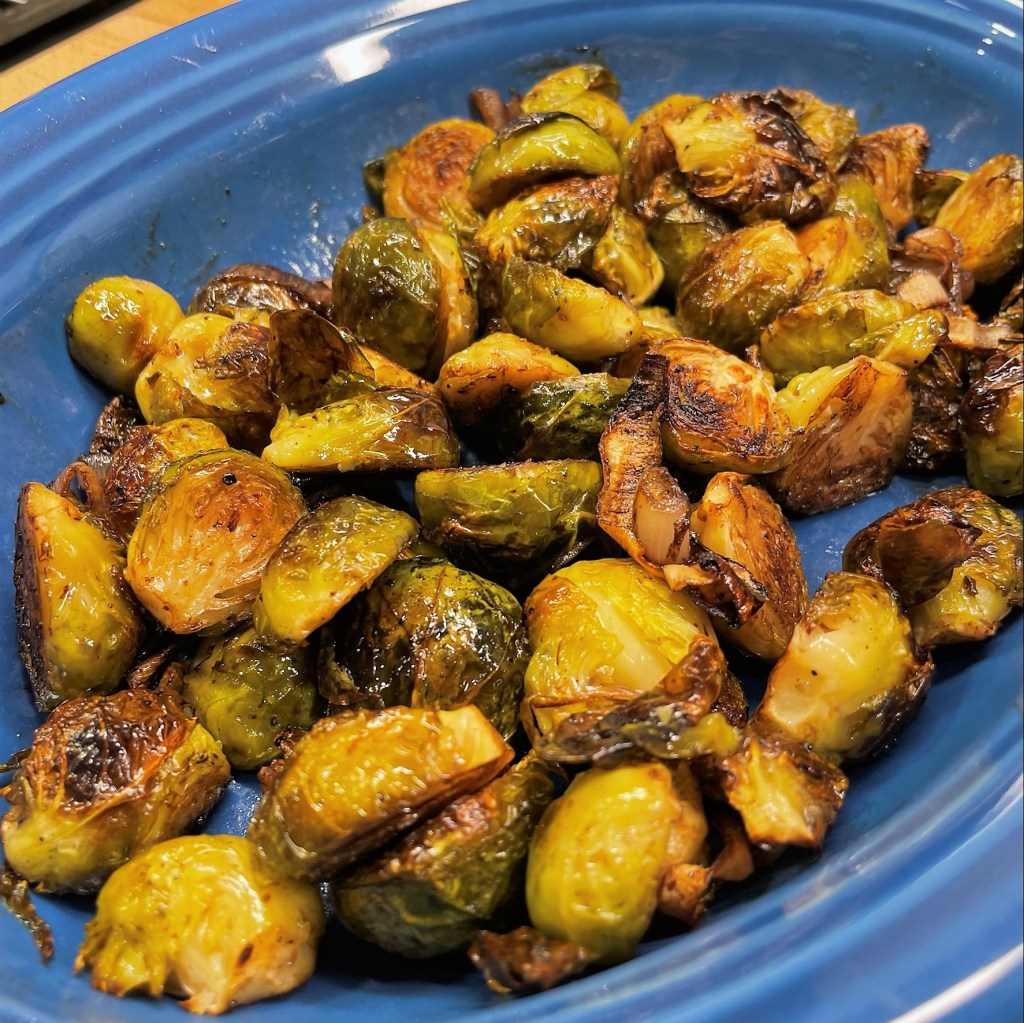
Give the sprouts a little breathing room, and place them cut side-down on the parchment paper. Roast for 20 minutes.
Transfer the roasted sprouts back into the bowl with remaining marinade and pour the balsamic mixture over them, tossing to coat.
The second roasting helps seal the tangy-sweet balsamic into the sprouts. They can face either up or down for the second roasting, which should be about 5 minutes.
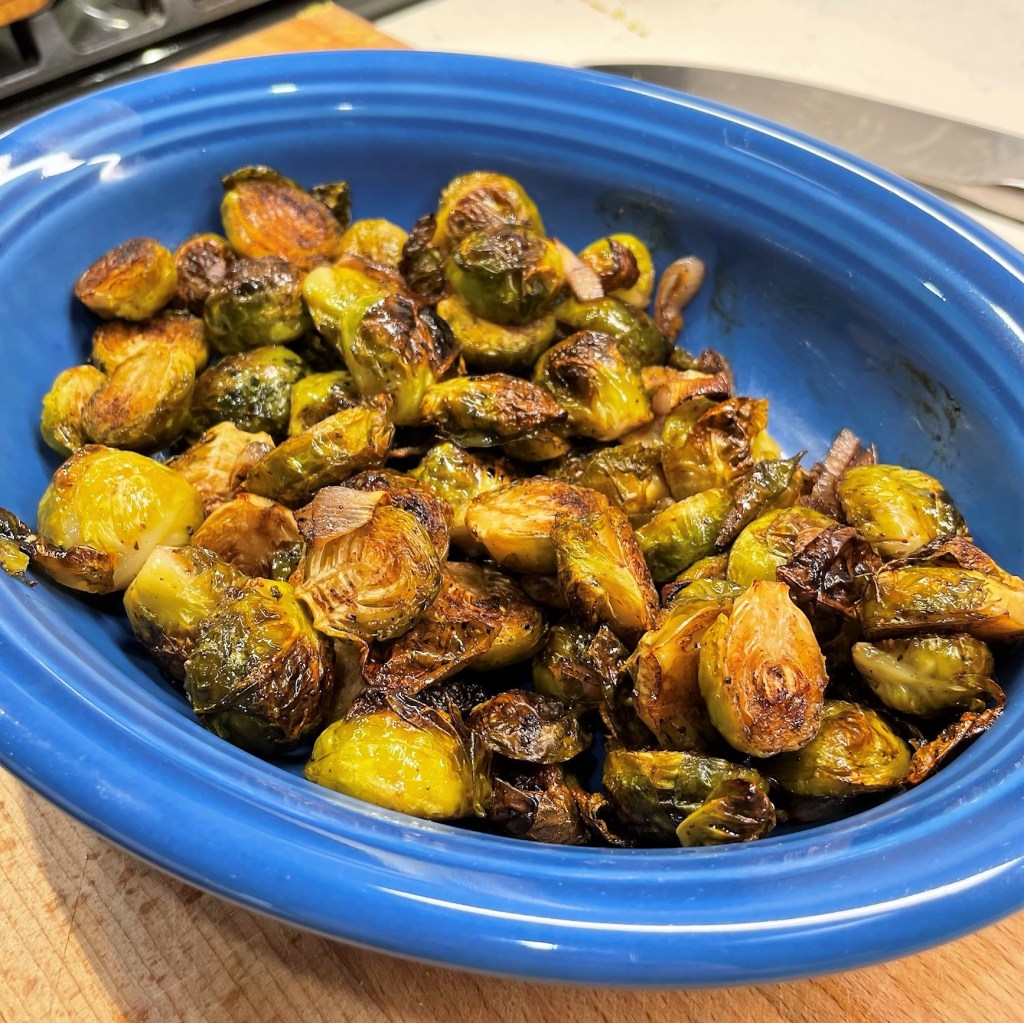
The balsamic vinegar will caramelize slightly, and the lemon and pomegranate flavors are a nice balance to the richer foods on the Thanksgiving table.
Heat oven to 400° F, with rack in a center to upper position in the oven.
In a large bowl, whisk the olive oil in a slow, steady stream into the lemon juice, sugar and zest. Season with a pinch of salt and a few twists of black pepper. Do not add the pomegranate balsamic at this stage.
Add the trimmed brussels sprouts to the bowl and toss until evenly coated with the marinade. Use a slotted spoon to scoop them out of the bowl, and reserve the marinade that remains in the bowl. Arrange the sprouts, cut side down, on a parchment-lined baking sheet. Aim to separate them a bit so that they don’t steam from overcrowding. Roast for about 20 minutes.
Whisk the balsamic into what is left of the oil-lemon juice marinade until it is smooth and not separated. Toss the hot sprouts back into the bowl and toss until evenly coated. Spoon them back out onto the parchment-lined sheet and put them back into the oven for about five minutes, just long enough to heat through and add a touch of caramelization.
Delicious!
These lemon-pomegranate brussels sprouts are best served immediately, but you can reheat them in the microwave if you need the oven space for other dishes.
Thanksgiving is the favored holiday at our house. My husband, Les, and I both love preparing the traditional meal and we made an agreement early in our relationship to alternate responsibility for the turkey. We love having friends and family at the table and, more often than not, the friends outnumber the family members by at least two-to-one. I have no children, and Les’s two adult kids can’t always make it. His son, Alex, lives and works in Europe, and has only been here for one holiday season since I’ve known him. His daughter, Sydney, lives two hours away in the mountains of North Carolina, but she also sometimes has her own plans with her mother’s family or her friends. When she is able to join us, though, I have more than a few adjustments to make to the menu because Syd is vegan.
If the idea of having a vegan at the holiday table scares you, then I hope this recipe brings some relief. It most certainly will bring some big Thanksgiving flavor, and everyone at our table—vegan or otherwise—has asked for seconds. One of my friends, a regular guest at our Thanksgiving table, has been begging me for almost two years to share this recipe, so she is probably screaming right now to finally see it on my blog (you’re welcome, Linda). 😉
There’s so much texture and flavor, you will never miss the meat.
You might wonder, “why not just share it with your friend after the first request instead of making her wait?” Linda (who is not a vegan) has been asking the same, and the reason is simple—I didn’t actually have a recipe for it. As I have said many times about my way of cooking, I develop recipes by instinct (otherwise known as flying by the seat of my pants), and it has only been since I began blogging that I have bothered to write down how much of what goes into most of my dishes. The first time I made this lentil mushroom wellington, I couldn’t even quite remember all the ingredients so there was no possibility of describing it to someone else. But just after Christmas last year, I made the dish again when Syd came for a post-holiday visit—and on that occasion, I kept my notes—but I didn’t post it on the blog right away because the holidays were over at that point and I doubted that anyone would want to make a fuss over such a showstopper without a special occasion. It isn’t exactly a quick weeknight recipe.
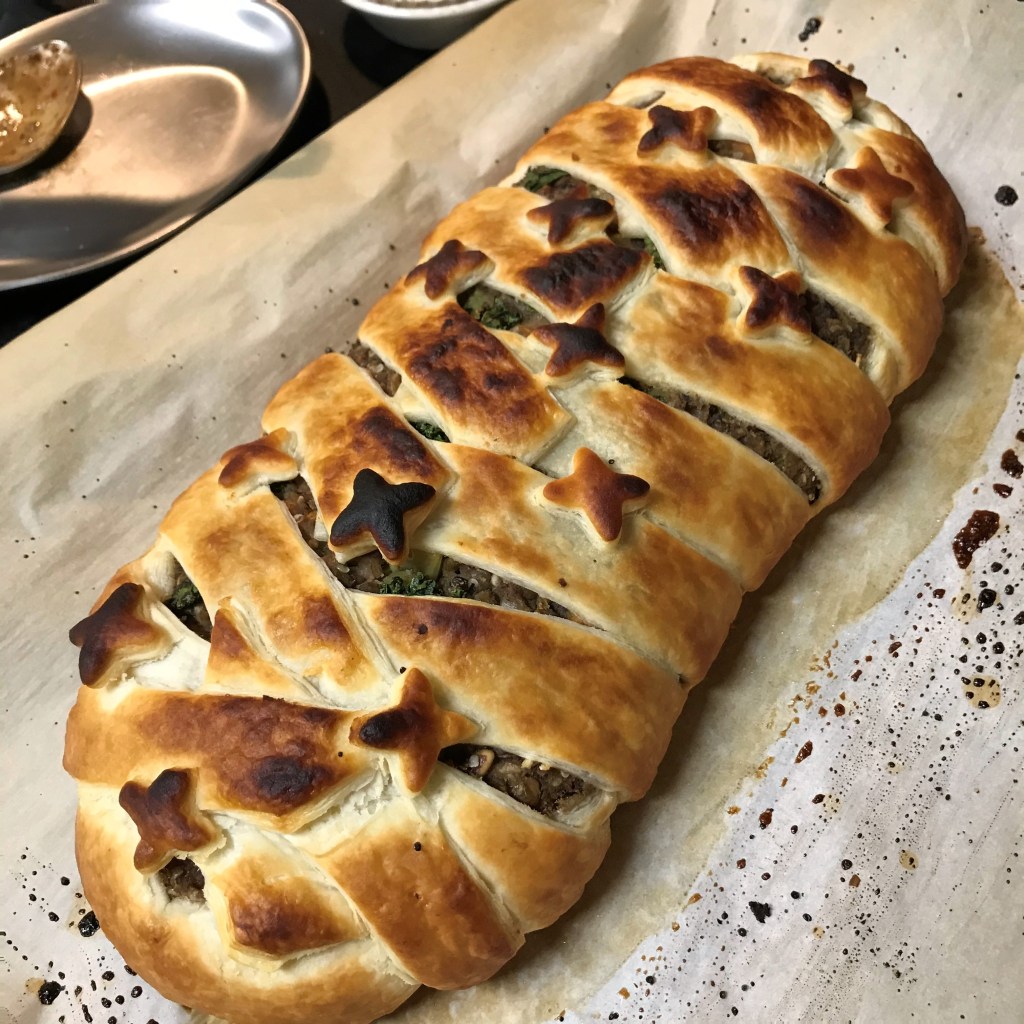
In the spirit of full disclosure, this dish does take time and effort, though none of it is difficult. If you wish to make it for Thanksgiving, perhaps for a vegan guest at your table, the good news is that almost all of it can be done in advance. You will find most of the ingredients familiar—cooked lentils, rice blend, cremini mushrooms, kale, sweet potatoes and (vegan) puff pastry—and I’ll describe in more detail how I put the whole thing together and even gave it a faux “egg wash” before baking, to give it a golden crust while keeping it plant-based.
Now, with the holidays upon us, the timing is right and I have a written-down recipe to share. So for Linda, and anyone else who wants to enjoy a pretty, entirely plant-based meal that still captures the essence of Thanksgiving, here is my recipe for the lentil mushroom wellington. Enjoy!
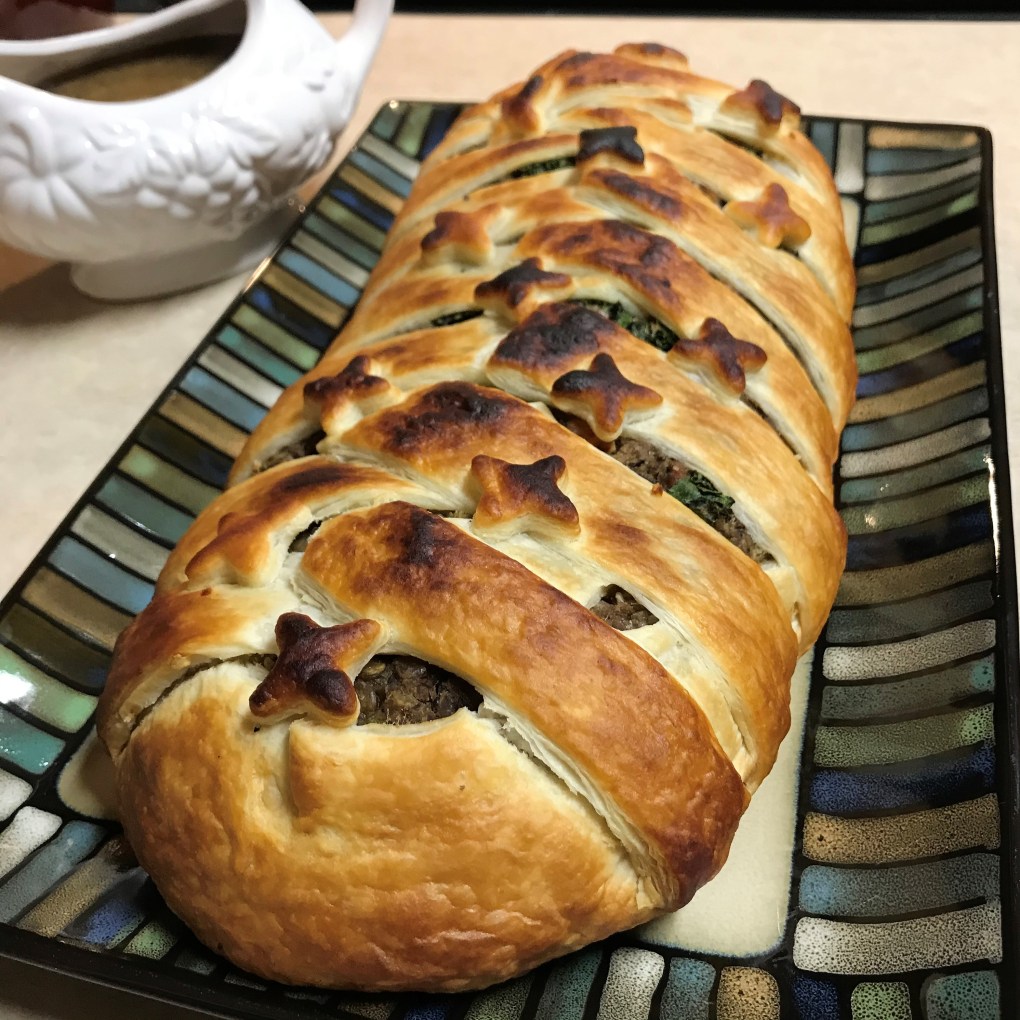
Arrange the whole mushrooms inside the wellington for a beautiful sliced presentation inside the flaky crust.
Ingredients
1 cup uncooked lentils, rinsed and picked over* (see notes)
3/4 cup uncooked brown rice or rice blend
32 oz. carton low-sodium vegetable broth
1 or 2 bay leaves
2 large sweet potatoes, peeled and cut into bite-size cubes
Extra virgin olive oil*
1 leek, cleaned and sliced (white and light green parts only)*
Liquid from a can of chickpeas (use low-sodium; reserve the chickpeas for another use)
1 Tbsp. milled flax seed*
1/4 cup pecan pieces, toasted
3 Tbsp. hemp hearts
A pinch (or two) of dried thyme leaves (or several sprigs of fresh thyme, if you have it)
Freshly ground black pepper to taste
1 sheet puff pastry (choose one with plant-based ingredients, such as Wewalka or Pepperidge Farm)
Flour to dust the countertop
Small handful (about 1/4 cup) of panko bread crumbs
For brushing, in place of egg wash:
1 Tbsp. plant milk, such as almond or soy
1 Tbsp. real maple syrup
1 Tbsp. canola or avocado oil
*Notes
I use a lentil blend, which includes green, red and black beluga lentils. If you choose a single type of lentil, I would recommend using the green ones. Cook the lentils in vegetable broth rather than plain water. Why miss a chance to add flavor?
My go-to olive oil this time of year is the wild mushroom and sage-infused oil found in specialty olive oil and balsamic vinegar stores. But any olive oil is fine, or substitute canola oil or a favorite plant-based butter, if you prefer.
If using leeks, be sure to clean them properly to remove all traces of grit between layers. Drain and pat completely dry on layers of paper towel before sautéing. If preferred, substitute 1 medium sweet or yellow onion.
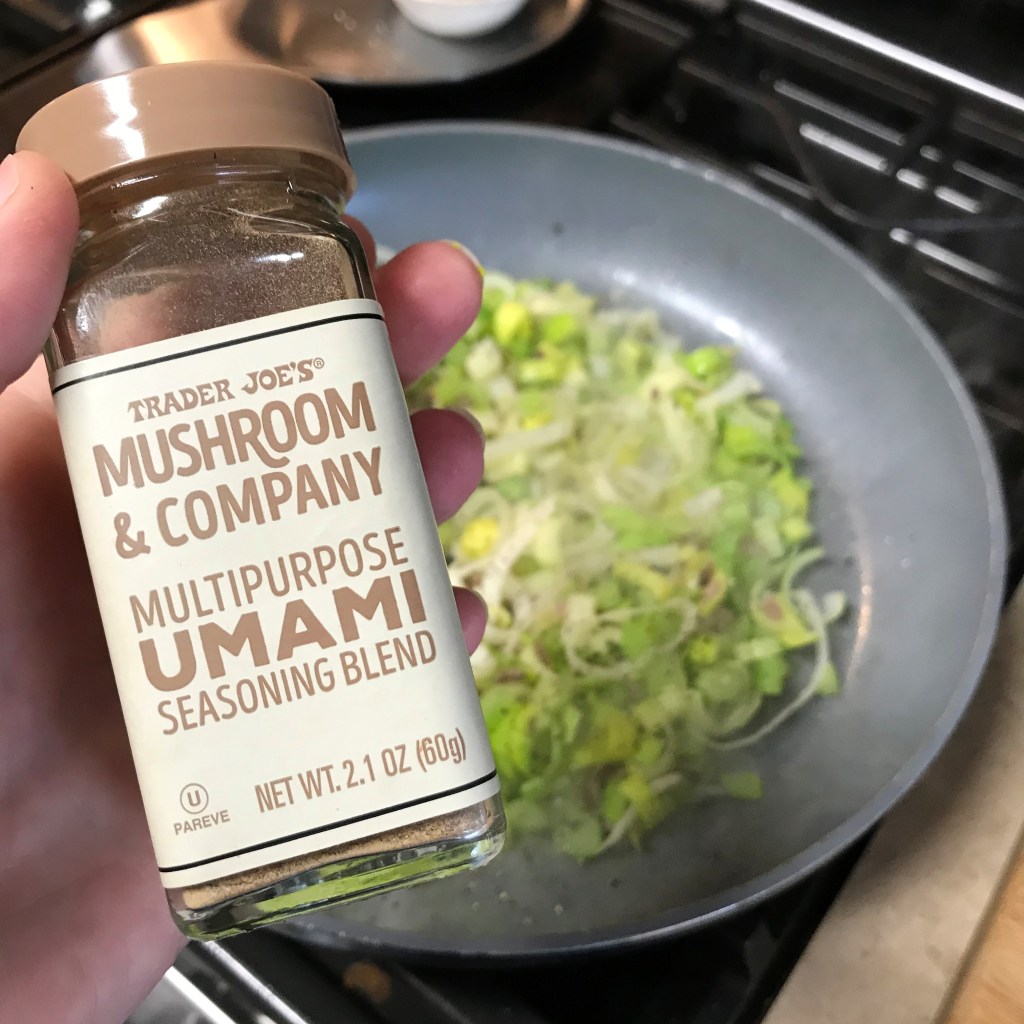
The umami seasoning blend is a product sold at Trader Joe’s, and its flavors include dried mushroom, onion, garlic and red pepper flakes. If you can’t buy it, you can substitute with a combination of onion powder, garlic powder and a couple shakes of red pepper flakes, plus a pinch of salt. You might also want to mince up a couple of mushrooms to sauté with the kale or leeks to add earthy flavor to the lentil loaf.
Flax seeds are loaded with Omega-3 fats and very good for heart health, but you may not know that our bodies only reap that benefit when the seeds have been milled. You can buy flax seed already milled, but keep it fresh in a tightly sealed container in the fridge or freezer. I purchase bags of whole flax seeds and use my blade-style coffee grinder to mill it a little at a time as I need it. For this recipe, it’s essential for the flax to be milled because it will be used in place of an egg as a binding agent.
I chose a combination of cremini mushrooms and shiitake mushrooms for this recipe. Use the largest ones you can find; mine were each about the size of a silver dollar. Clean the mushrooms as suggested in the slideshow before sautéing them.
There are many components to this recipe, and I believe it is helpful to break it down into manageable tasks over two days, beginning with preparation of the lentils, rice, sweet potato and vegetable mixtures (steps 1-6). On the second day, you can relax and focus on assembling and baking the dish.
Helpful tools for this recipe: food processor or small blender, rolling pin, pastry brush.
Instructions
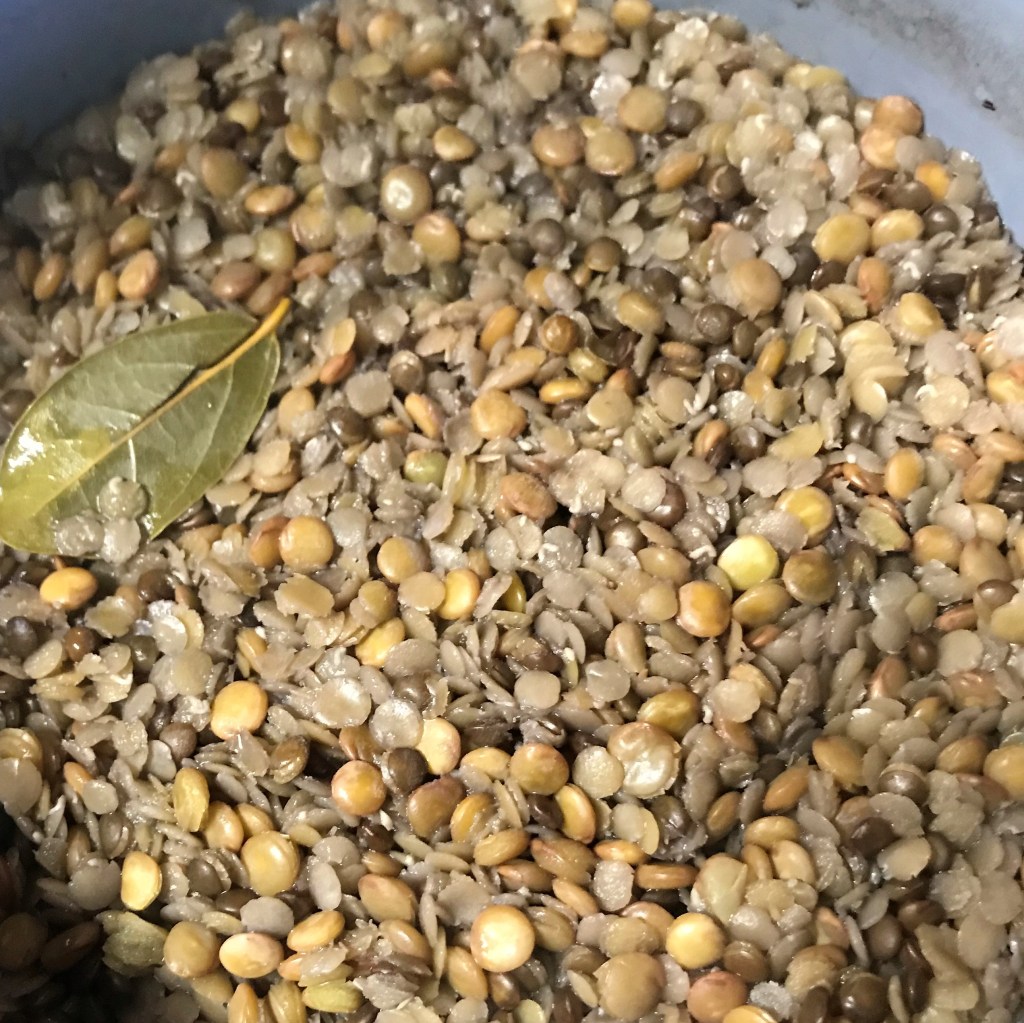
Cook the lentils in vegetable broth rather than water. In addition to the flavor they bring, lentils are an excellent source of protein.
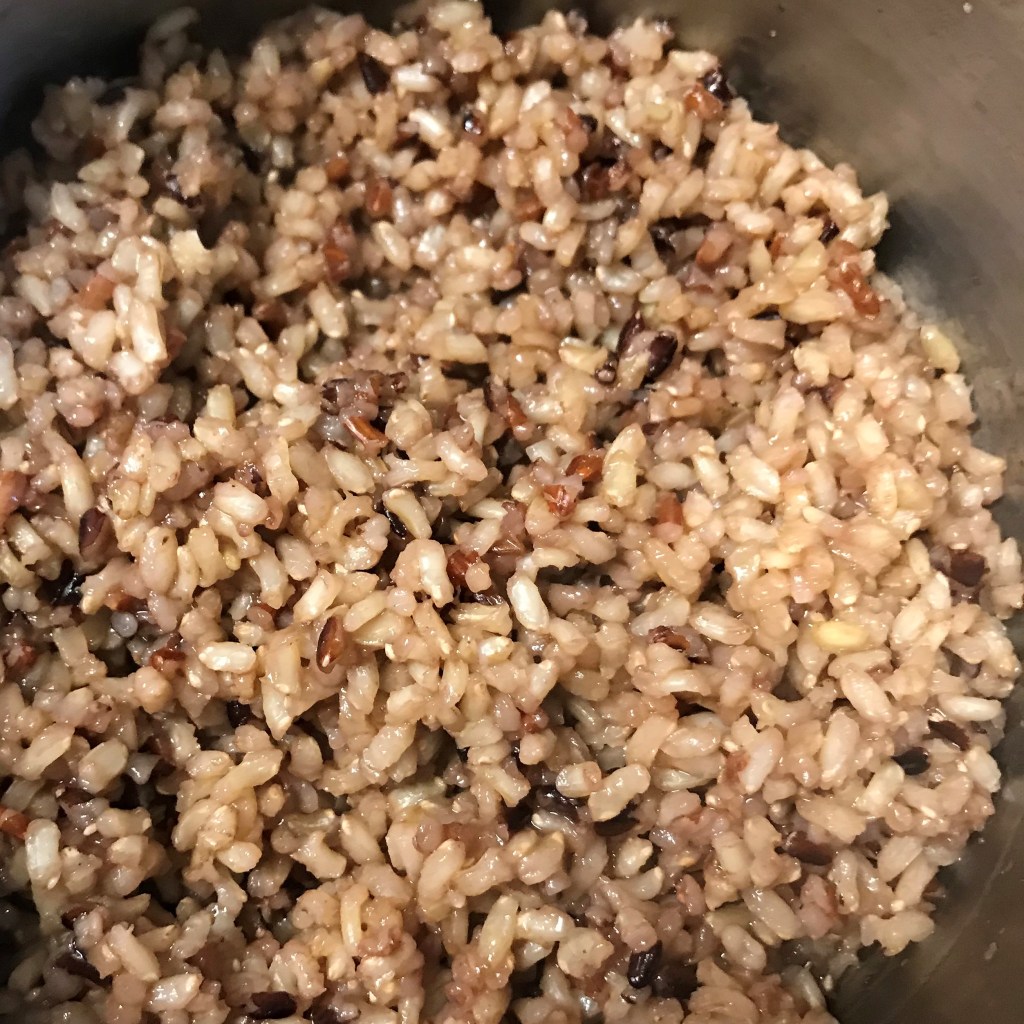
Likewise, cook the rice in vegetable broth. I like the extra flavors of a rice blend, but regular brown rice is fine.
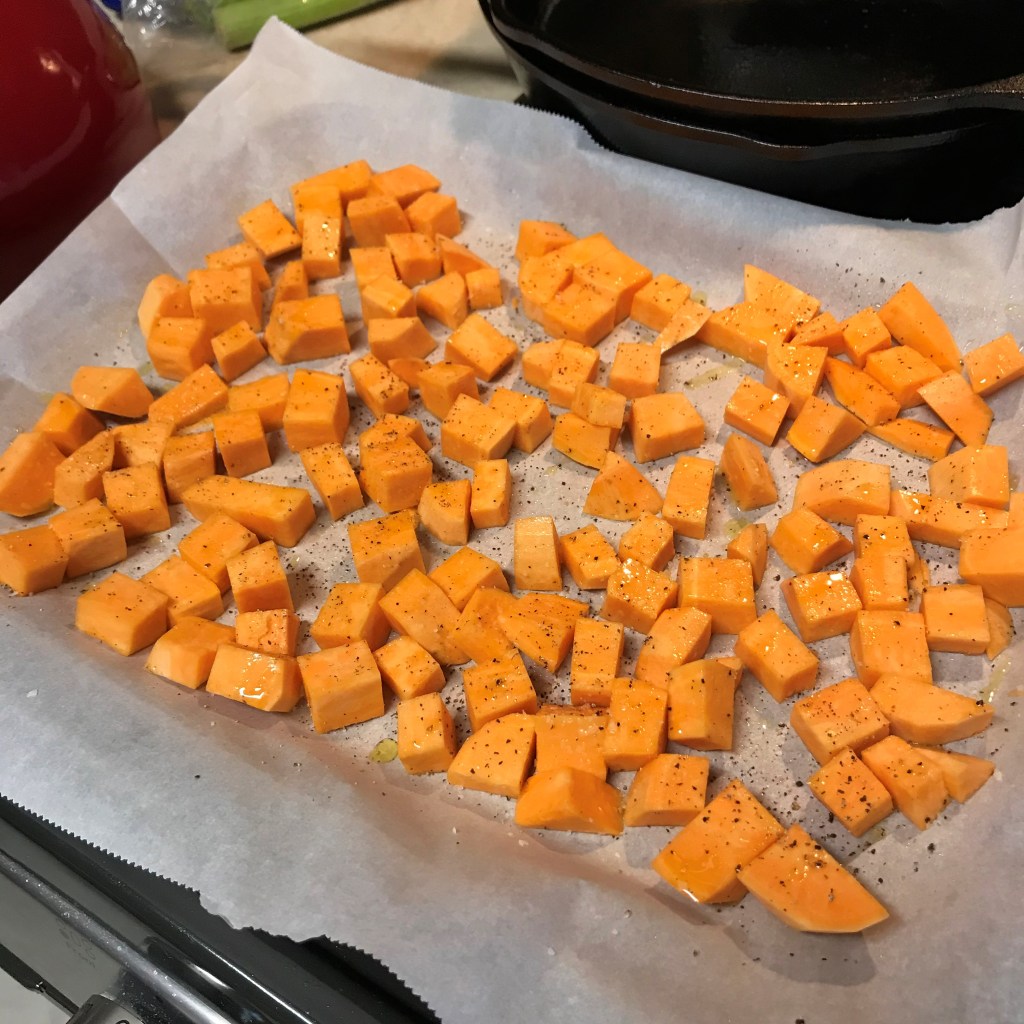
Toss the sweet potato chunks in olive oil and season with salt and pepper. Roast until tender (but still holding shape) with browned edges.
Slice the leek lengthwise, then into half-moon slices. Rinse well to remove any grit trapped between layers.
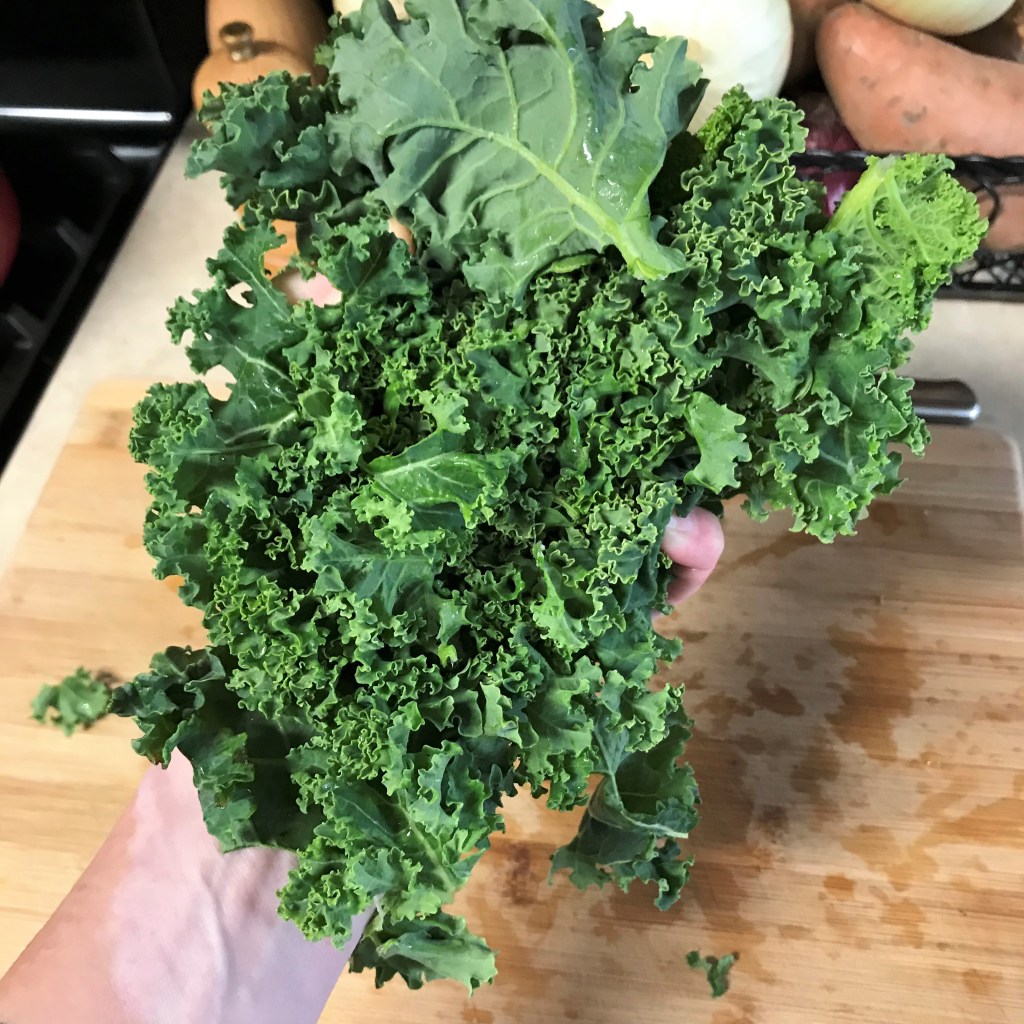
This is what I call a “fat handful” of kale. Trim off tough stems and chop it into bite sized pieces.
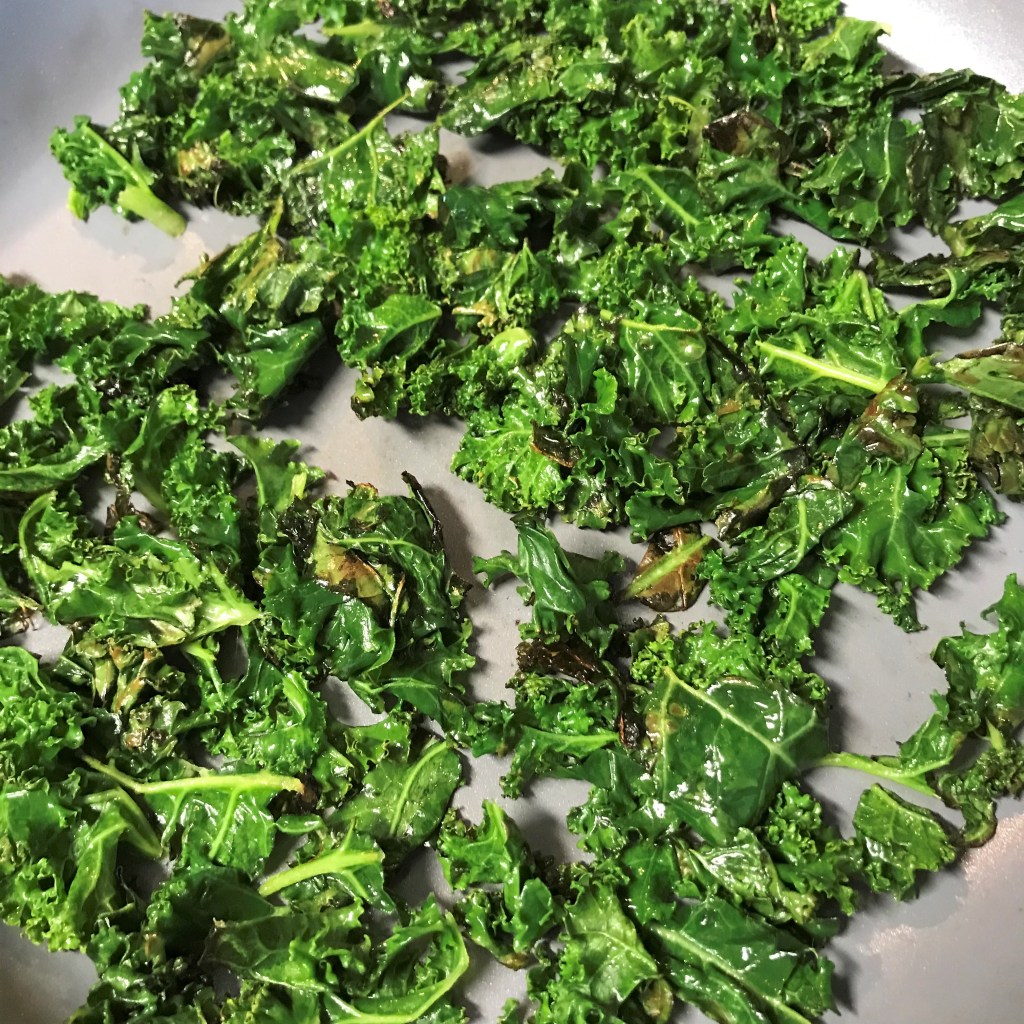
Saute the kale until it is softened and lightly browned at the edges.
Add umami seasoning when you saute the leeks. This is one of the easiest ways to add a rich, meaty flavor to vegan dishes. See the recipe notes for substitution ideas.
You can make a flax “egg” using milled flax seed and plain water, but for savory recipes, I prefer to use the reduced liquid from a can of chick peas, called aquafaba.
After several minutes, the flax will absorb the aquafaba and create a thickened, gel-like substance. This will be the binder that holds the lentil mixture together.
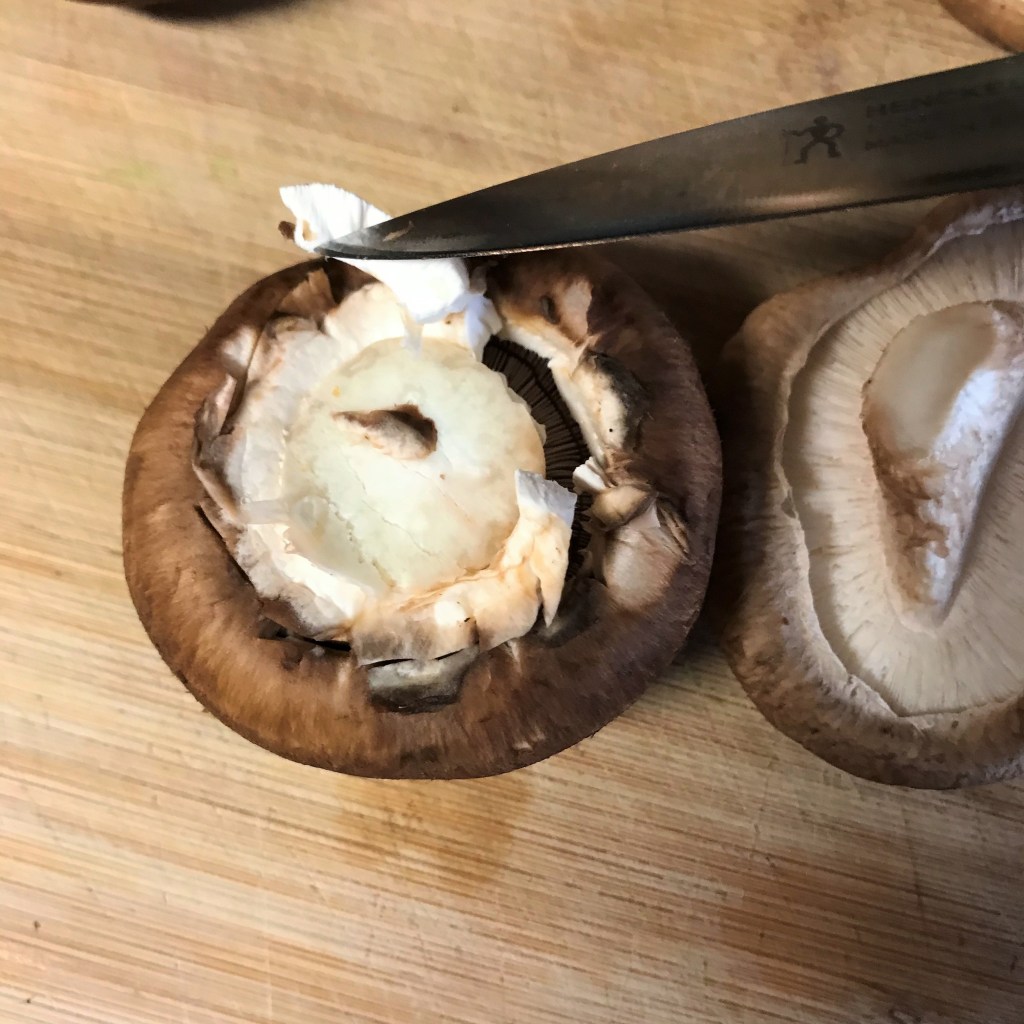
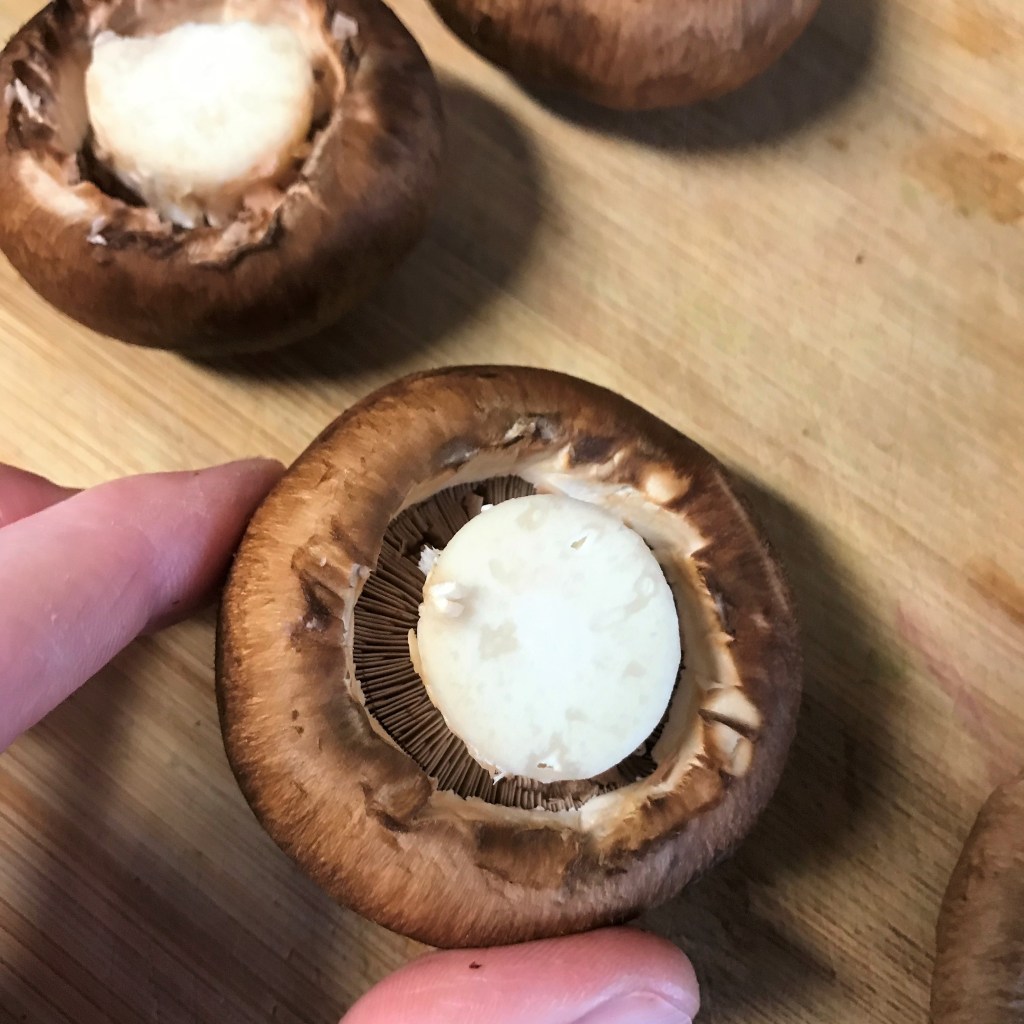
Use a paring knife to cut away the spongy, white edges around the stem of the cremini mushrooms, and pluck it away from the stem.
With the fluffy rim removed, moisture won’t get trapped under the mushroom cap.
Saute the mushrooms until browned, turning several times, to draw out excess moisture.
Lay the mushrooms on layers of paper toweling, to drain the excess moisture from the bottoms.
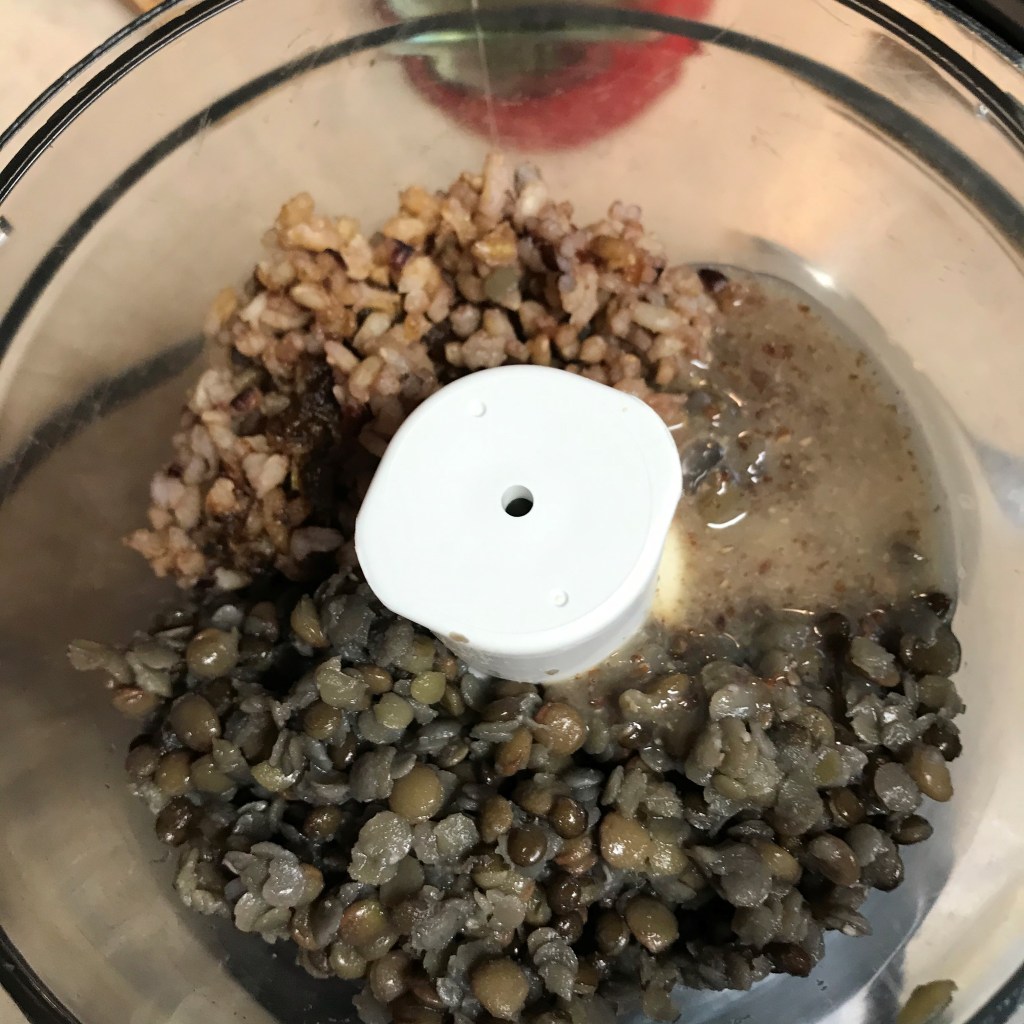
Add a scoop each of the cooked lentils and rice, plus all of the flax “egg” mixture, to the bowl of a food processor.
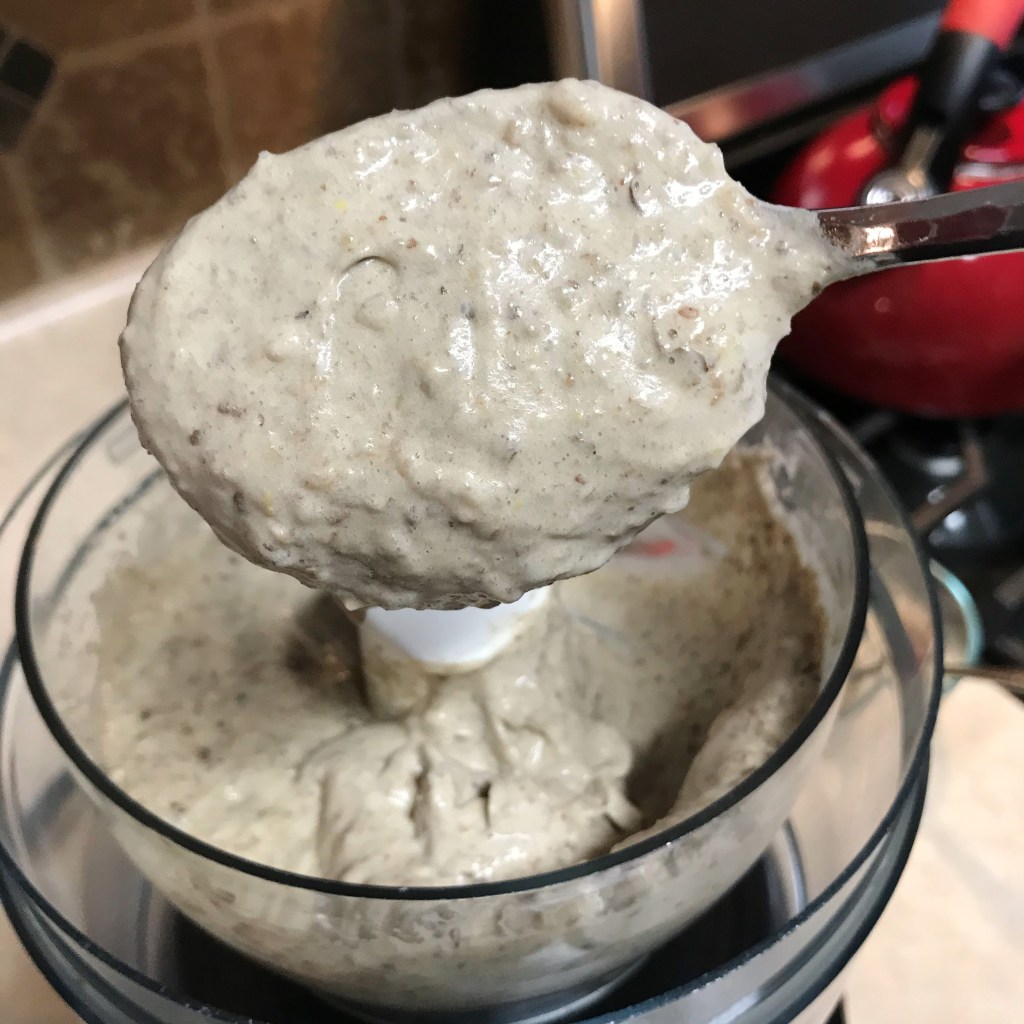
Pulse the mixture until it resembles a thick porridge. It won’t look very appealing, but don’t worry, it will disappear into the lentil loaf mixture.
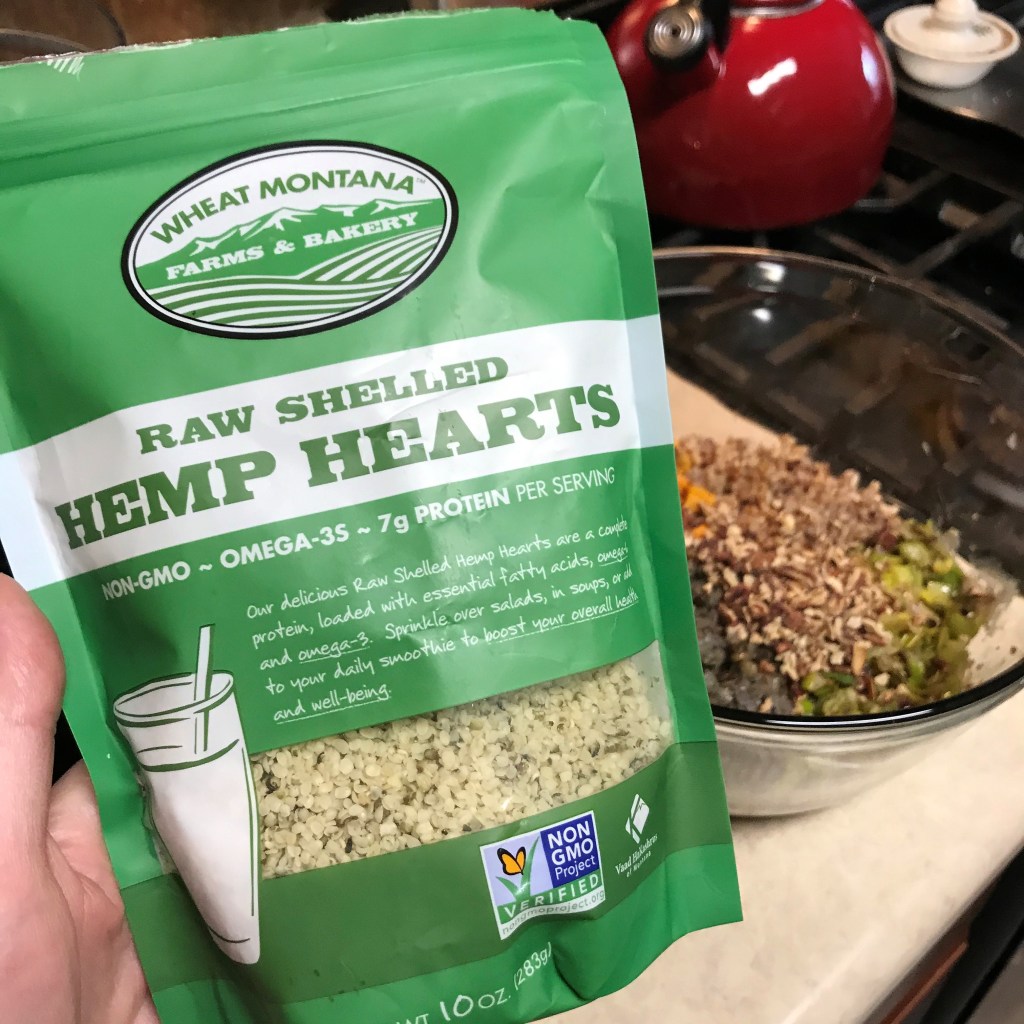
Hemp hearts add another boost of protein to the lentil mixture, and they have an interesting, slightly nutty flavor.
Time to mix up the lentil loaf! I added toasted pecans to the mix, but toasted walnuts or chopped pumpkin seeds would also be terrific.
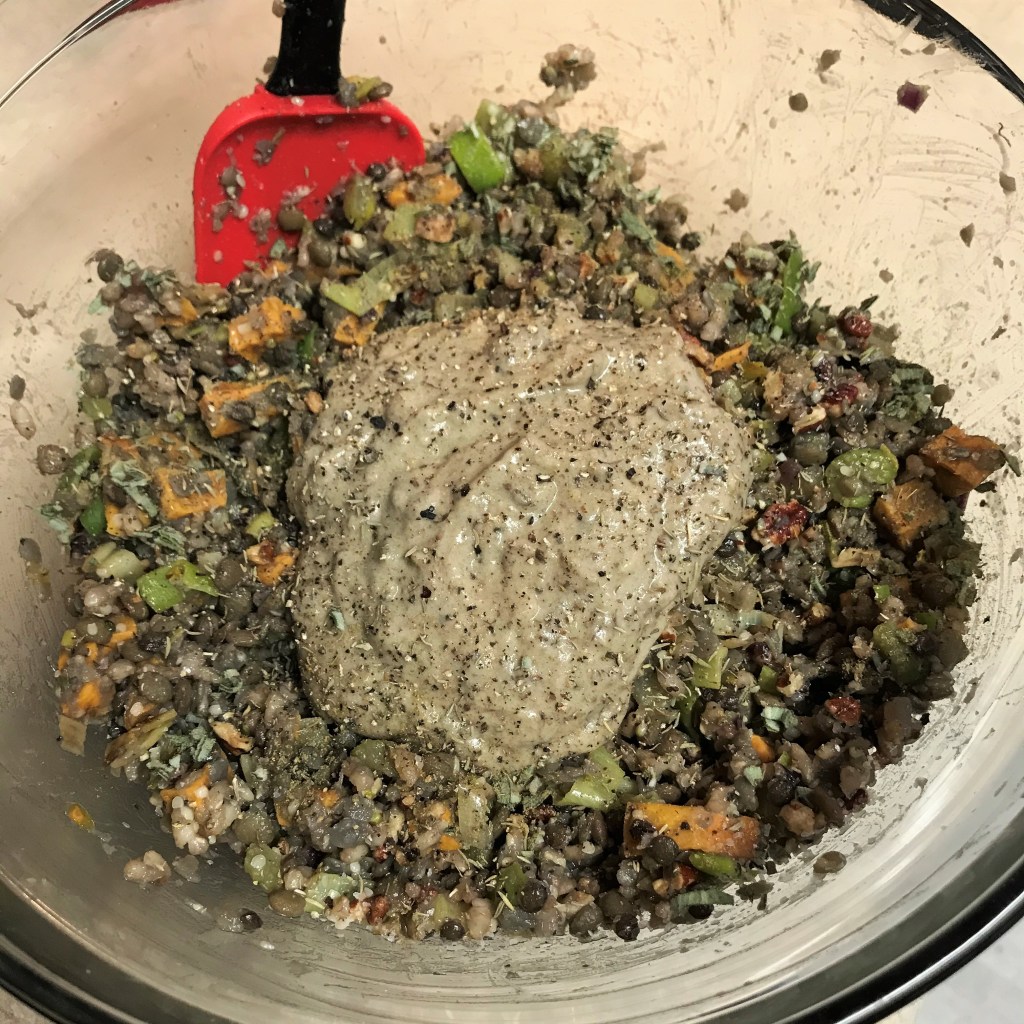
Add the binding mixture to the lentil mix. Season with pepper and thyme leaves. Fold gently to combine.
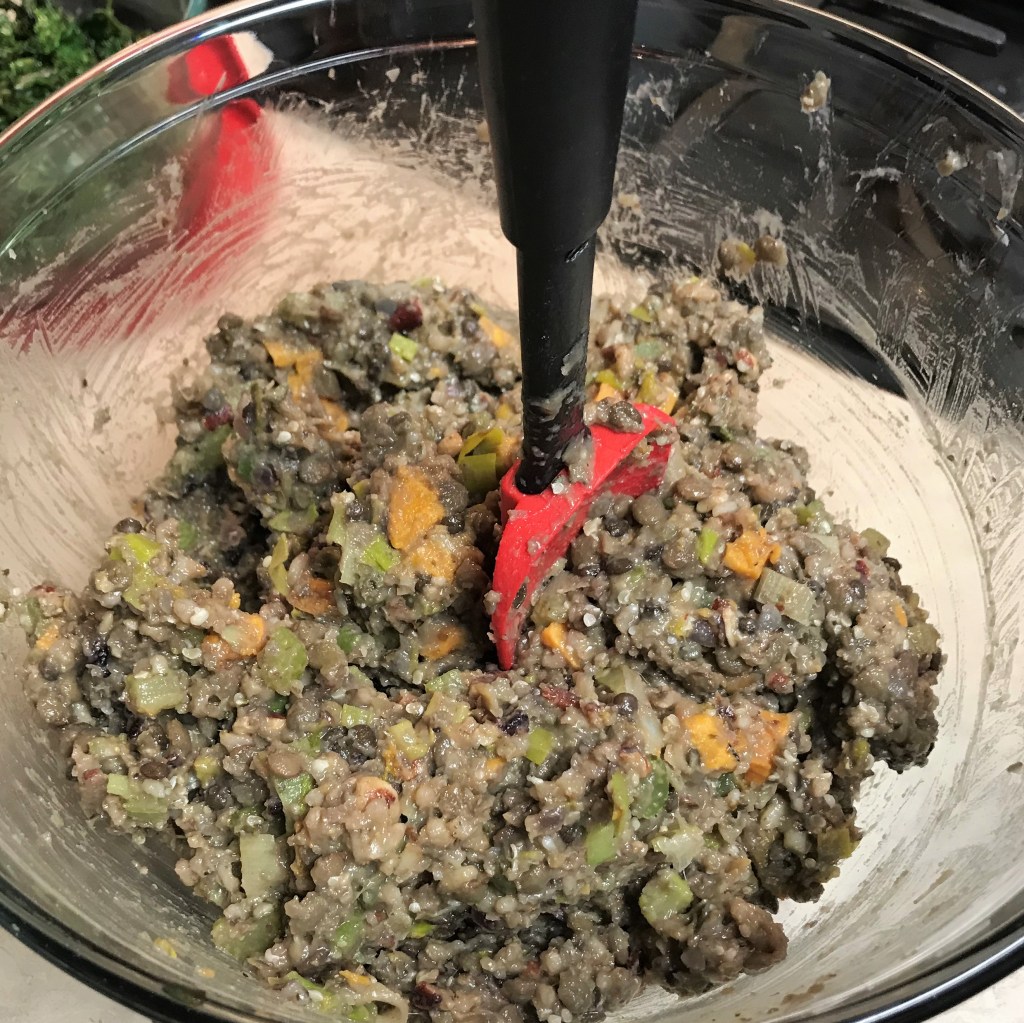
The lentil mixture should be thick. Adjust salt to taste and refrigerate the mixture for several hours before assembling the wellington.
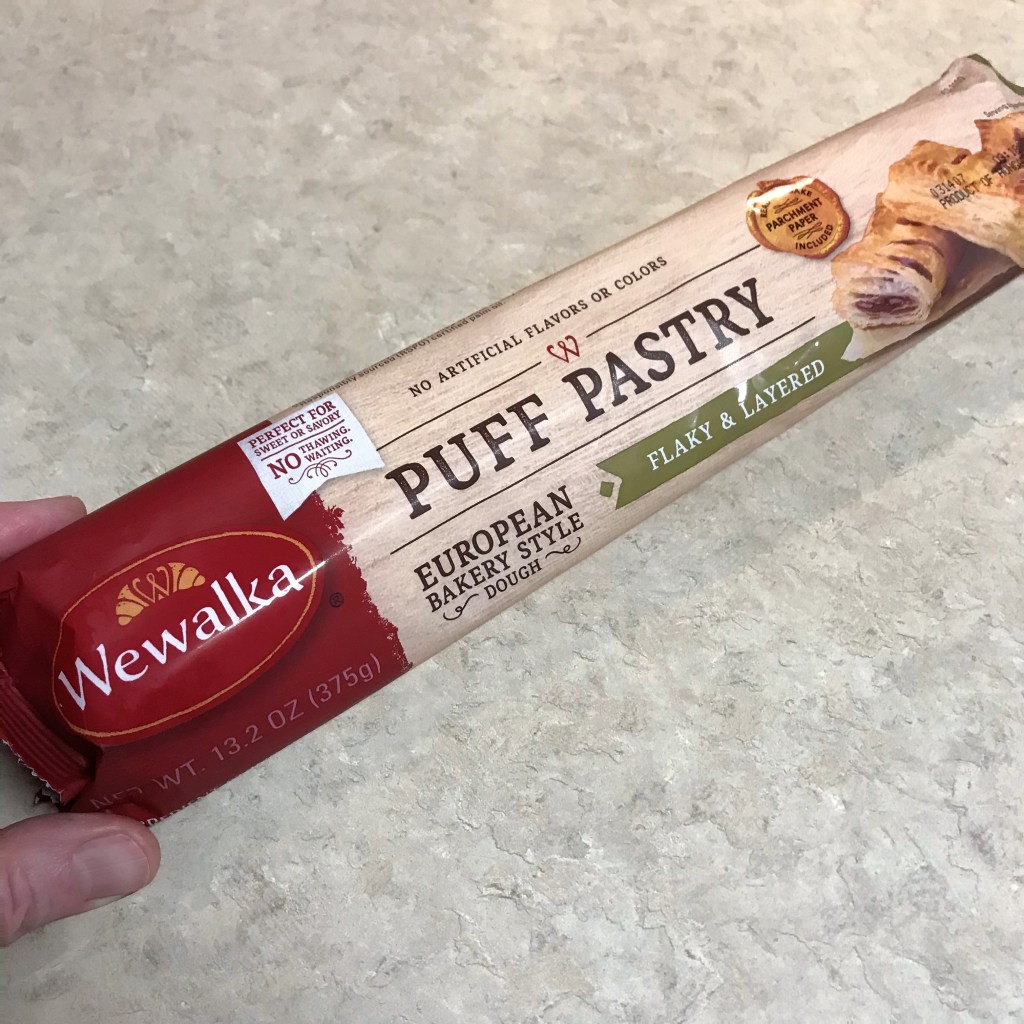
Use a puff pastry with non-dairy ingredients. I like this brand, which is in the refrigerated section of the supermarket. Pepperidge Farm makes one also, found in the freezer case.
Dust your countertop with flour, and lightly flour the top of the dough. Use a rolling pin to smooth wrinkles and spread it slightly thinner.
A layer of panko crumbs will help absorb moisture from the lentil loaf, so the bottom of your wellington won’t get soggy.
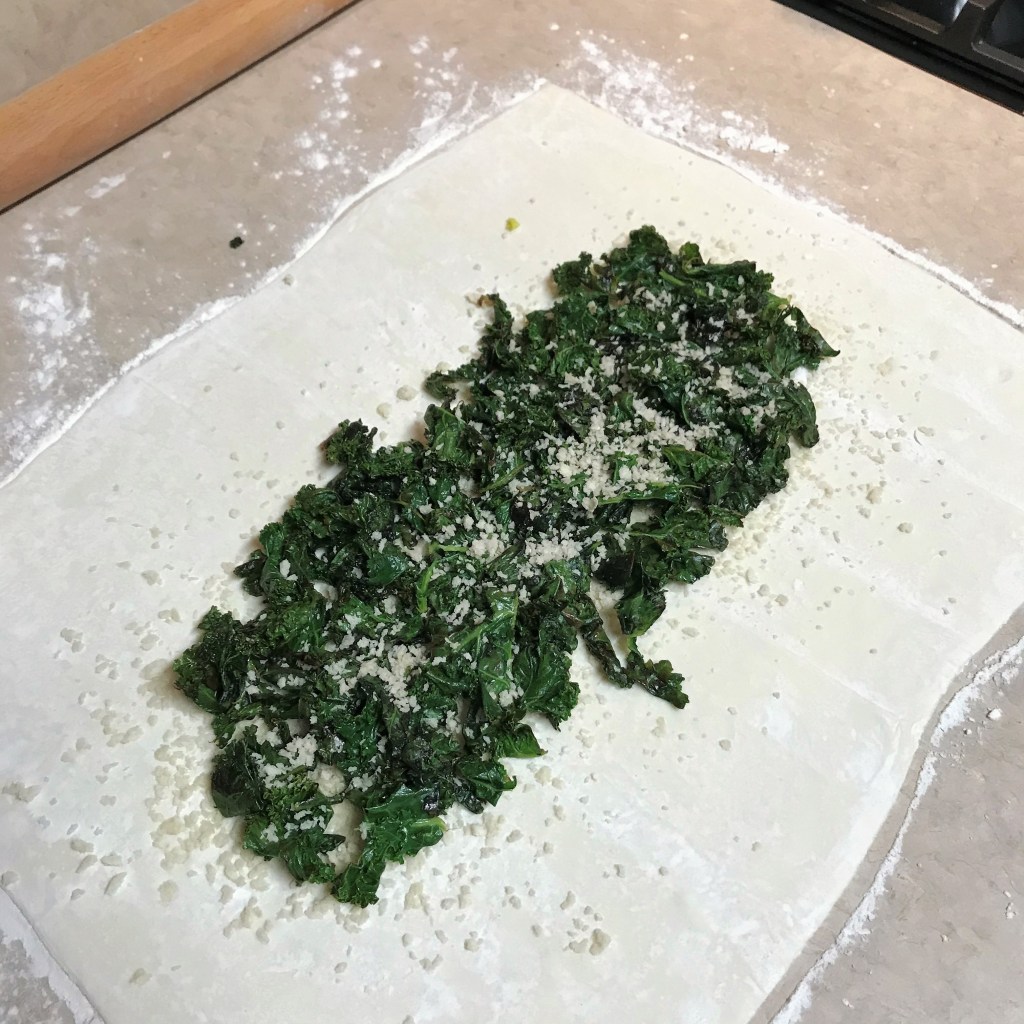
Lay the sauteed kale over the panko crumbs. I had just a shake of crumbs left in the carton, so I sprinkled more on top.
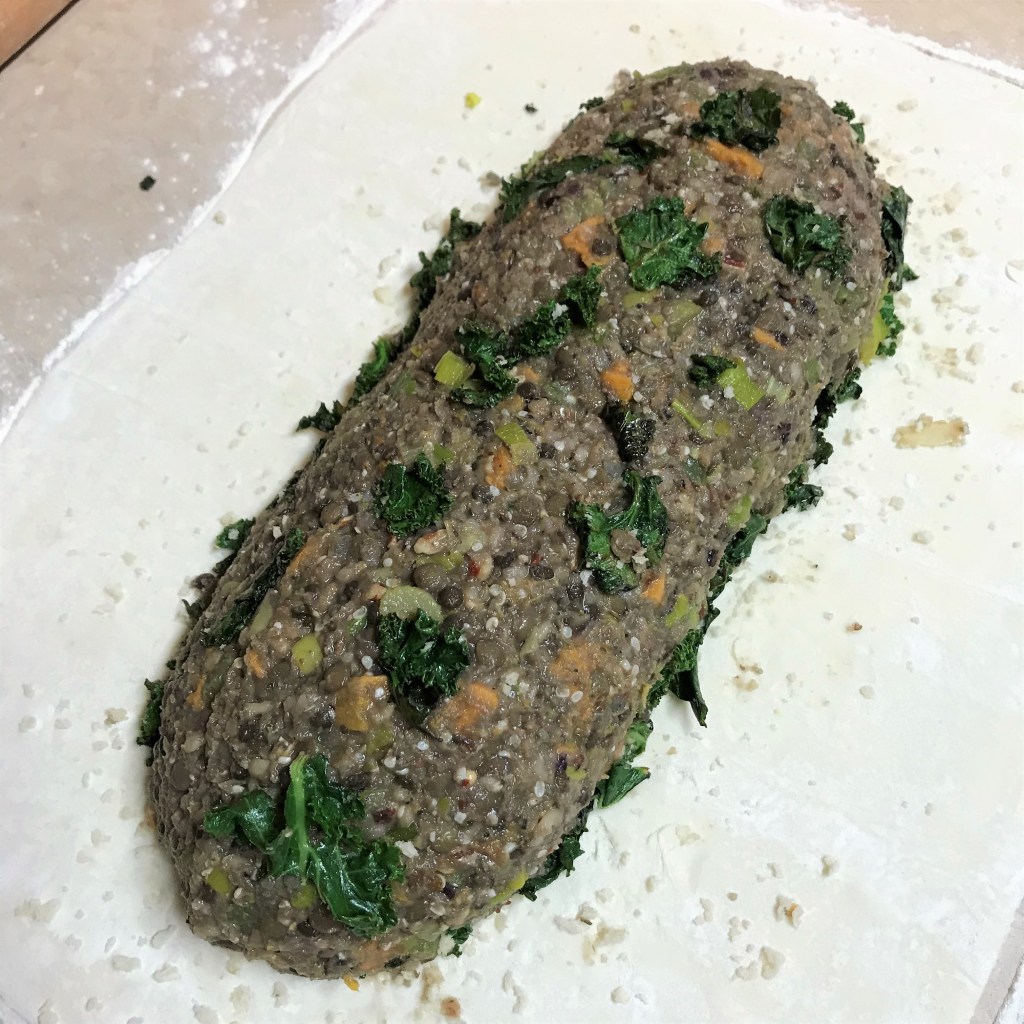
Mound half of the lentil mixture in a loaf shape with a slight indent down the center. Arrange the whole mushrooms in a tight line on top of the mixture, and press down slightly.
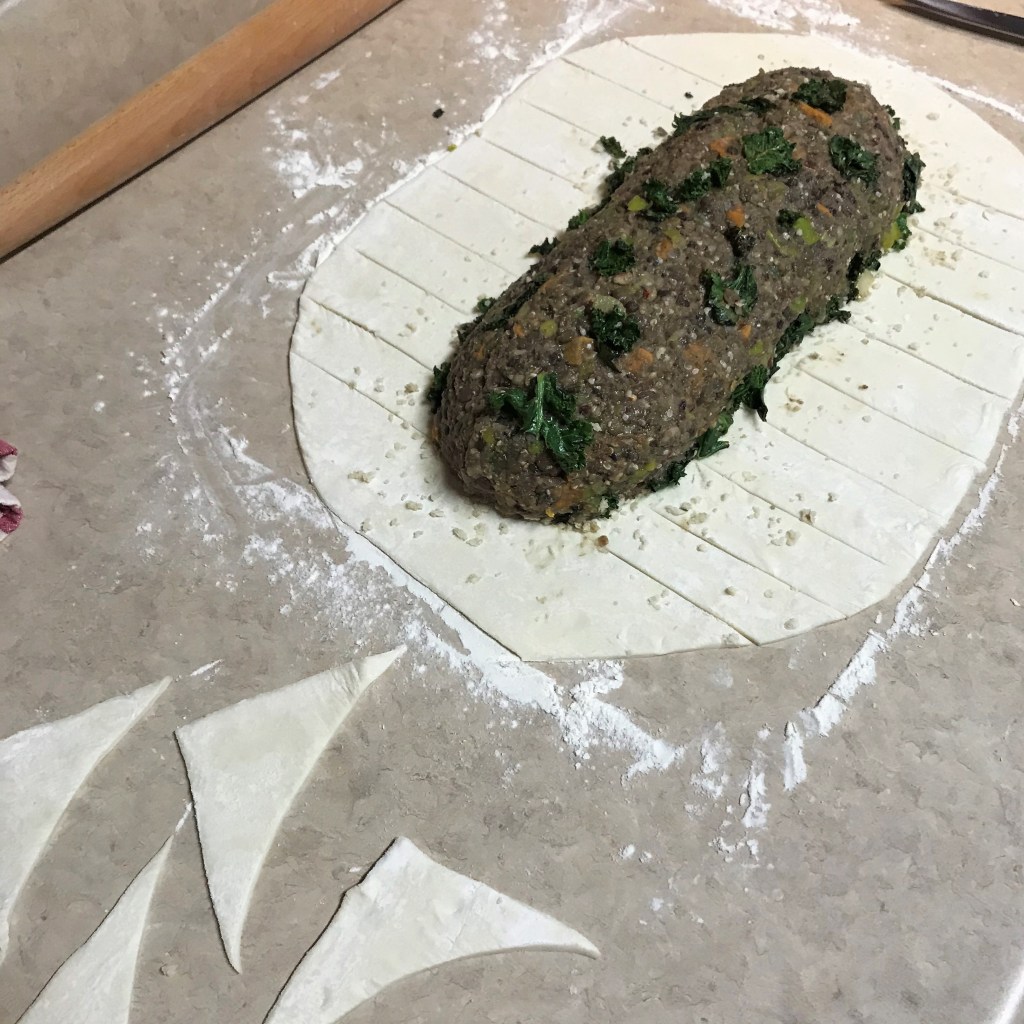
Shape the rest of the lentil mixture over the top, so that it resembles a meatloaf.
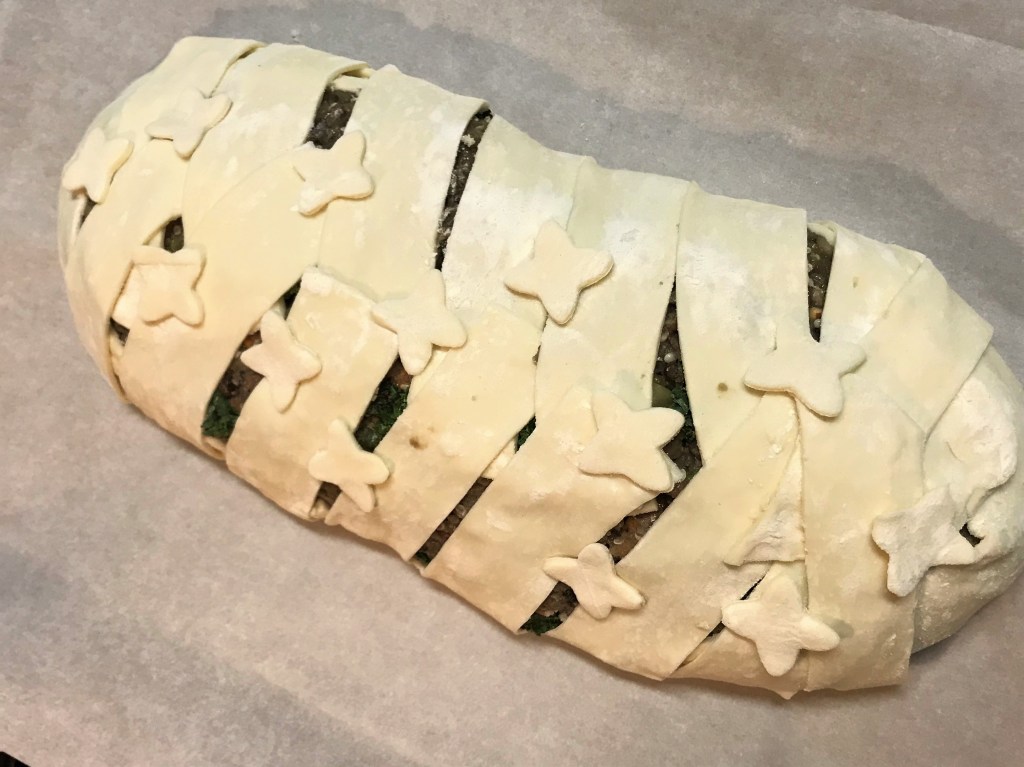
Trim off the corners of puff pastry in a rounded fashion. Reserve the excess pastry for patching or decorating. Cut strips along each side, about 1 1/2 inches apart.
Fold up both ends of the pastry, and shape them so they “hug” the ends of the lentil loaf.
Fold the strips over the lentil loaf, alternating sides. It doesn’t have to be perfect, but aim for even coverage with just a bit of the lentil mixture peeking through.
For extra pizzazz, embellish the wellington with cut-out shapes of the excess puff pastry.
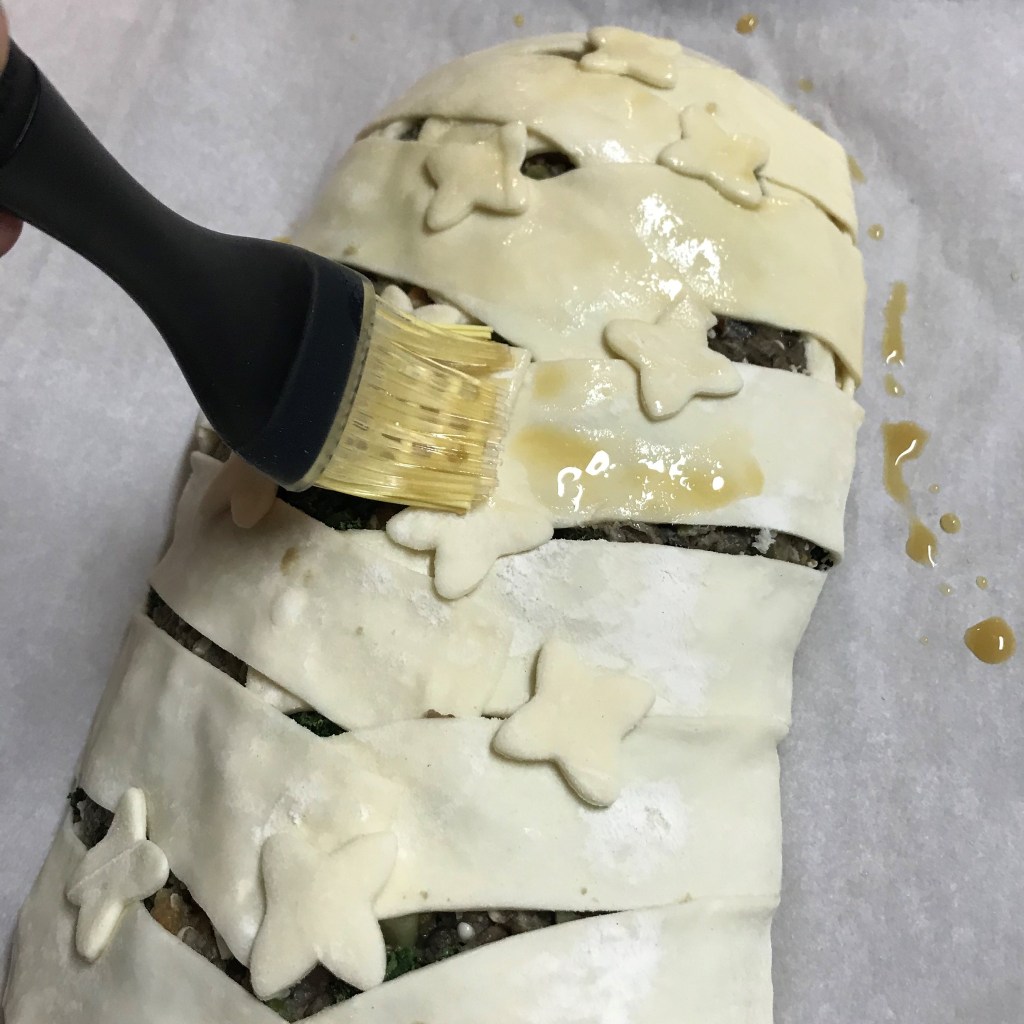
No egg wash for a vegan dish! But a mixture of plant milk, maple syrup and canola oil will help you achieve the same golden finish.
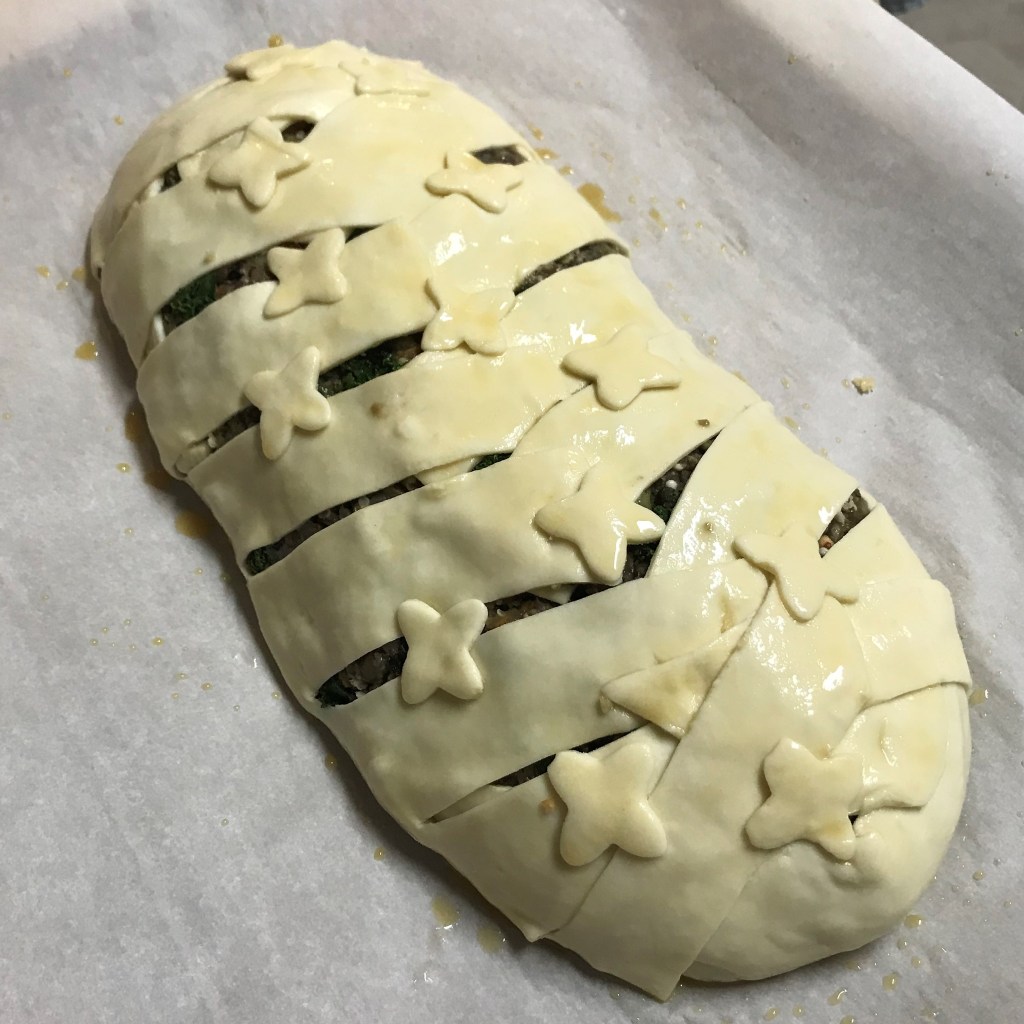
This wellington is ready for the oven. 400° F for about 45 minutes.
My oven rack was a couple of inches too high, but the wellington is lovely, even with a few dark spots.
Cook lentils according to package instructions, using low-sodium vegetable broth in place of some or all of the water. During simmer, add a bay leaf to the pot. Drain excess liquid when lentils reach desired tenderness. Transfer to a bowl and cool completely. Add salt to taste.
Cook rice according to package instructions, using low-sodium vegetable broth in place of some or all of the water. Transfer to a bowl and cool completely. Add salt to taste.
Toss the cubed sweet potatoes with enough olive oil to lightly coat all sides. Spread onto a parchment-lined baking sheet and season with salt and pepper. Roast at 400° F until they can be pierced with the tip of a paring knife and are only slightly firm to the bite. Cool completely.
Sauté leeks (or onions) and chopped celery in a tablespoon of olive oil. Season with umami seasoning (or recommended substitute) and black pepper. When vegetables are tender and have given up their moisture, transfer to a bowl and cool completely.
Swirl another teaspoon or so of oil into the skillet and sauté the chopped kale until it has softened and reduced somewhat in volume. Resist the urge to cook the kale together with the onions; it will be used as a bed for the lentil mixture, not as part of the filling.
Heat a non-stick skillet over medium heat with 1 tablespoon of olive oil. Arrange the mushrooms topside down, in the skillet, and then cook until the tops are browned and tender. Turn them over and sauté the underside. The mushrooms should give off a good bit of their moisture, but not to the point of shriveling. Lay them on layered paper towels to cool, allowing excess moisture to drain from the underside.
To assemble the mixture, gather up all the prepared components from steps 1 to 6. In a small saucepan, heat the liquid drained from the chickpeas over medium low heat. Simmer until it is reduced in volume to about 1/4 cup. Transfer the liquid to a bowl and stir in the milled flax seed. Let this mixture rest for at least 20 minutes. It will thicken up into a gel-like substance.
Transfer about 1/3 cup of the cooked lentils and about 1/4 cup of the cooked rice to the bowl of a food processor or blender. Add the flax mixture to the bowl and pulse a few times until the mixture has the consistency of a loose porridge.
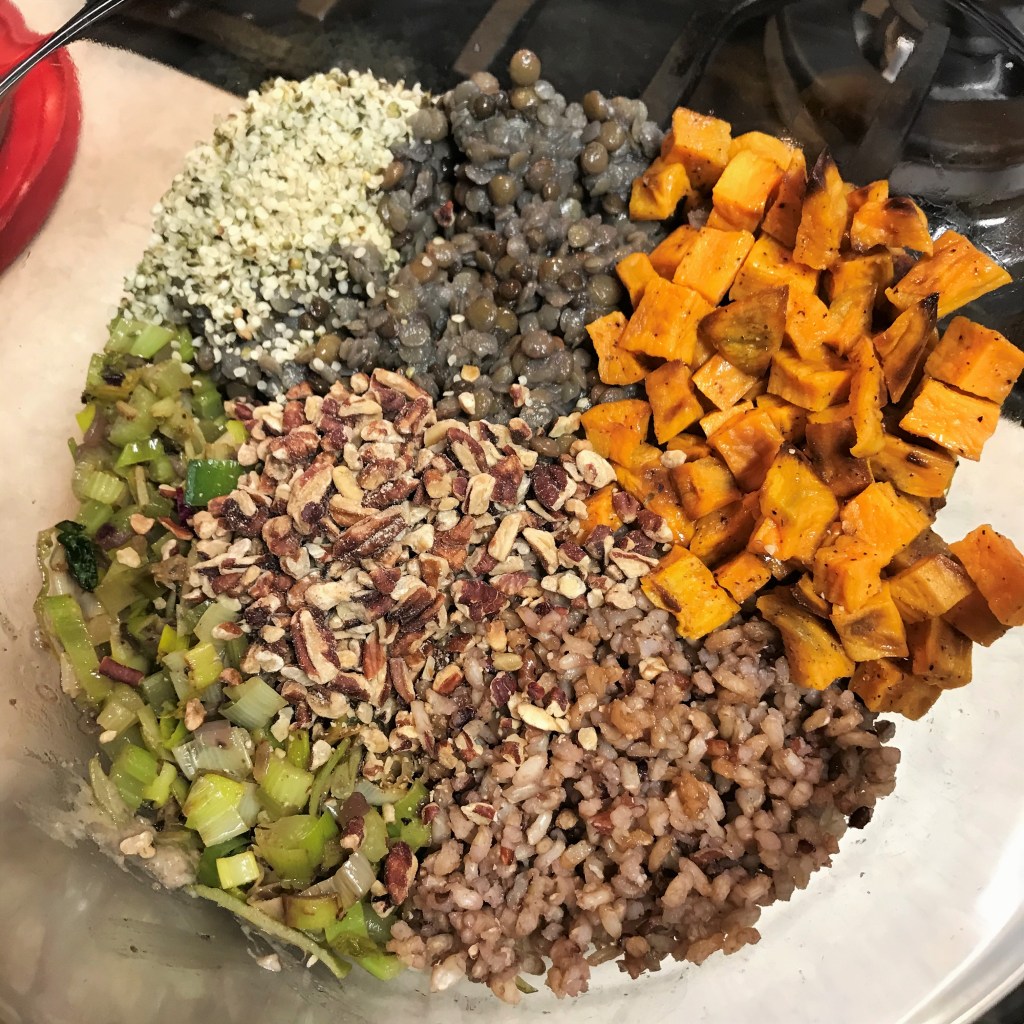
In a large mixing bowl, combine the remaining lentils, rice, sweet potatoes, leek-celery mixture, toasted pecans and hemp hearts. Toss them all together. Give this mixture a final taste and adjust salt to your liking. Sprinkle thyme leaves and give the pepper mill a few twists over the mixture. Add the full amount of flax binder and fold to combine this mixture well. Cover and refrigerate for at least an hour.
Preheat oven to 400° F, with oven rack slightly lower than center, so that the wellington will rest squarely in the center of the heat.
Thaw puff pastry (if using frozen) according to package instructions. *Note: when working with puff pastry, do your best to work quickly to keep the pastry from getting warm.Sprinkle flour onto the counter and use a rolling pin to smooth out wrinkles and slightly enlarge the rectangle.
Spread panko crumbs over the center of the puff pastry, then layer the cooked kale on top of it. This will be a bed for the lentil mixture, and the crumbs will help absorb excess moisture so the puff pastry doesn’t become soggy on the bottom.
Scoop about half of the lentil mixture onto the kale, shaping it into an oblong mound like a meatloaf. Arrange the mushrooms in a tight line down the center, pressing them slightly into the lentil mixture. Shape the remaining lentil mixture over the mushrooms.
Use a paring knife to trim off the square corners of the puff pastry, leaving them rounded to match the shape of the lentil loaf. Use a cookie cutter on the scrap corners to make embellishments for the top of the wellington. Score the long sides of the puff pastry into strips, about 1 ½ inches apart. These will fold over the top of the lentil loaf, kind of like shoelaces over a sneaker. Turn up both ends of puff pastry to enclose the ends of the lentil loaf, then carefully fold the strips in alternating order across the top. Tuck in any loose edges.
Transfer the wellington to a parchment-lined, heavy cookie sheet. In a small bowl, whisk together plant milk, maple syrup and oil. Brush this mixture evenly over all exposed puff pastry, including down the sides. This will produce a beautiful golden color on the baked wellington.
Bake for 45-50 minutes, rotating pan once after 25 minutes. Cool on the baking sheet for about 5 minutes before transferring to a serving platter. Cut into thick slices and serve on individual plates with vegan mushroom gravy and tangy lemon-pomegranate Brussels sprouts.
This is my version of a cocktail my husband and I enjoyed during our recent whirlwind tour through the tri-state area of New Jersey, New York and Connecticut. At the end of the first full day of our road trip, we stopped for a live music show at Hailey’s Harp & Pub in Metuchen, N.J., and the cocktail menu called this drink “Long Live the King!”
We had not intended to order quite so many rounds of drinks that night (we had four apiece over five hours), but it was an easy way to spend the extra time we had, given that we arrived way early for the performance by our musical pals, Glenn and Oria of Blue Americana. These are the friends who ushered us through the chaos of COVID with their weekly “Quarantunes” concerts on Facebook Live, and the honorees of my Tequila & Lime Pie post back in the spring. We thought our 5:30 pm arrival at the pub would be just right, allowing us time to have a drink and a bite to eat before the show. Except for one thing—because it was a rainy, miserable night, what was supposed to be an outdoor 7 pm show was changed to indoors at 8 pm! So we got cozy at a table right in front, and just stayed and enjoyed. The food was delicious, the drinks were great and the company was delightful.
Blue Americana with Glenn and Oria! We finally met them in person!
Les and I played the role of geeked-out groupies and Glenn and Oria played along—they signed our CDs and even posed with us for a picture. It was such fun meeting them in person after so many months of rocking out with them (virtually) on Friday nights during Quarantunes. And as was true for so many of the adventures we experienced on that end-of-summer vacation, I found something tasty to bring home and enjoy later. With only twelve days left to decide on a Thanksgiving signature cocktail, I’d say this one is a strong contender. It delivers the warmth of bourbon, the freshness of citrus and just a hint of sweetness.
Long Live the King!
I have not been able to figure out a good reason for the name given to this drink by Hailey’s Harp & Pub. It’s made with Bulleit bourbon, red vermouth, blood orange liqueur, orange bitters and a lemon peel garnish. It’s a smashing combination—almost a perfect meet-in-the-middle between a Manhattan and an Old Fashioned—but also reminiscent of a Boulevardier without the bitterness of Campari. If I had to give it a name myself, I would call it “One Night in Metuchen,” because I will always remember that fun evening whenever I make it.
Most of the ingredients are easy to find, and I’d encourage you to seek out the Solerno blood orange liqueur. Solerno has a brighter, slightly sweeter flavor than other orange liqueurs, and it is a very nice accompaniment to the bourbon and sweet vermouth. If you cannot find Solerno, I would recommend substituting Cointreau rather than Grand Marnier, which has strong cognac undertones. You want the citrus to shine in this drink.
Cheers!
Ingredients
It’s not quite an Old Fashioned, not quite a Manhattan, and just shy of a Boulevardier.
1.5 oz. Bulleit bourbon 1.0 oz. red (sweet) vermouth 0.5 oz. Solerno blood orange liqueur 2 quick shakes orange bitters Lemon peel garnish
Instructions
Combine bourbon, vermouth, blood orange liqueur and bitters in a cocktail mixing glass or shaker. Add about one cup of ice and shake or stir vigorously until the outside of the shaker is frosty. Strain over a large ice cube into a double rocks glass. Express the lemon peel over the top of the glass, swipe it around the rim of the glass and drop it into the drink to garnish.
A cocktail mixing glass is perfect for this drink, but a shaker would be OK too.
Always strain the chilled cocktail over new ice, which keeps the drink extra cold.
To express the lemon peel, simply hold it with the outer peel outside, and give it a squeeze. The natural citrus oils will spray out over the surface of the drink.
If you prefer, you can strain the cocktail into a chilled coupe glass and garnish the same. That’s the beauty of this drink—it can be served on the rocks or up, depending on how fancy you’re feeling.
I used the spent ice from the rocks version of the drink to chill the coupe glass for the “up” version.
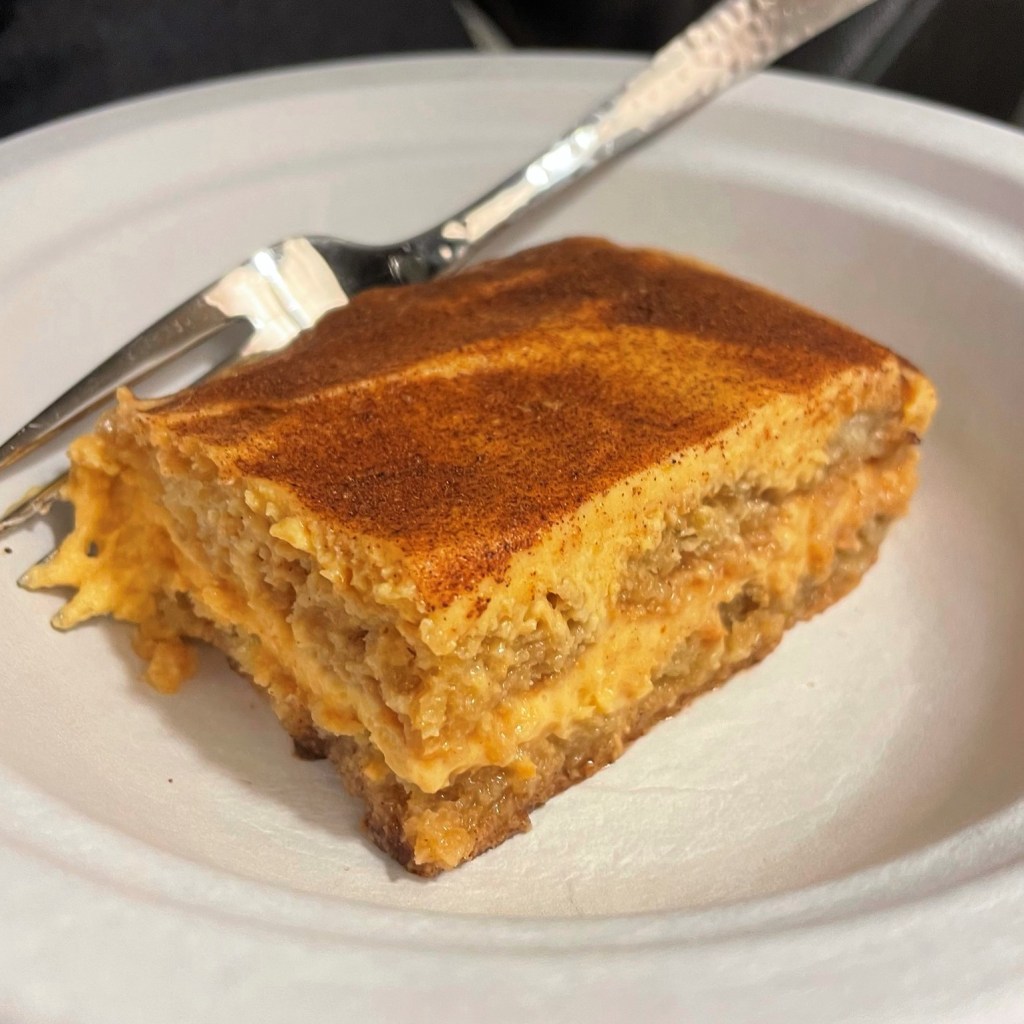
If I told you that you could serve up a pumpkin spice dessert for Thanksgiving that was creamy, indulgent, no-bake, no-cook and easy to prepare ahead with no special tools—well, you’d probably think I was lying or, at least, overpromising, right? But the proof is right there in the picture, and this tiramisu achieves all of that and then some.
As I surmised when I made the chocolate-cherry tiramisu at Valentine’s Day this year, the classic Italian dessert is basically a dressed-up version of an ice-box cake. Layers of sweetened mascarpone cream and espresso-soaked delicate ladyfingers are accented with a hint of rum or brandy, and dusted with pure cocoa for a chocolate-y finish. I am a huge fan of tiramisu, and I enjoyed it most recently in its traditional Italian style when my friend, Peg, and I traveled up to West Virginia and Ohio for the Fiesta Factory tent sale.
But I came home thinking, “why couldn’t I give this scrumptious dessert a little Thanksgiving twist?” And so I did. Note that I have made several substitutions from a typical tiramisu recipe:
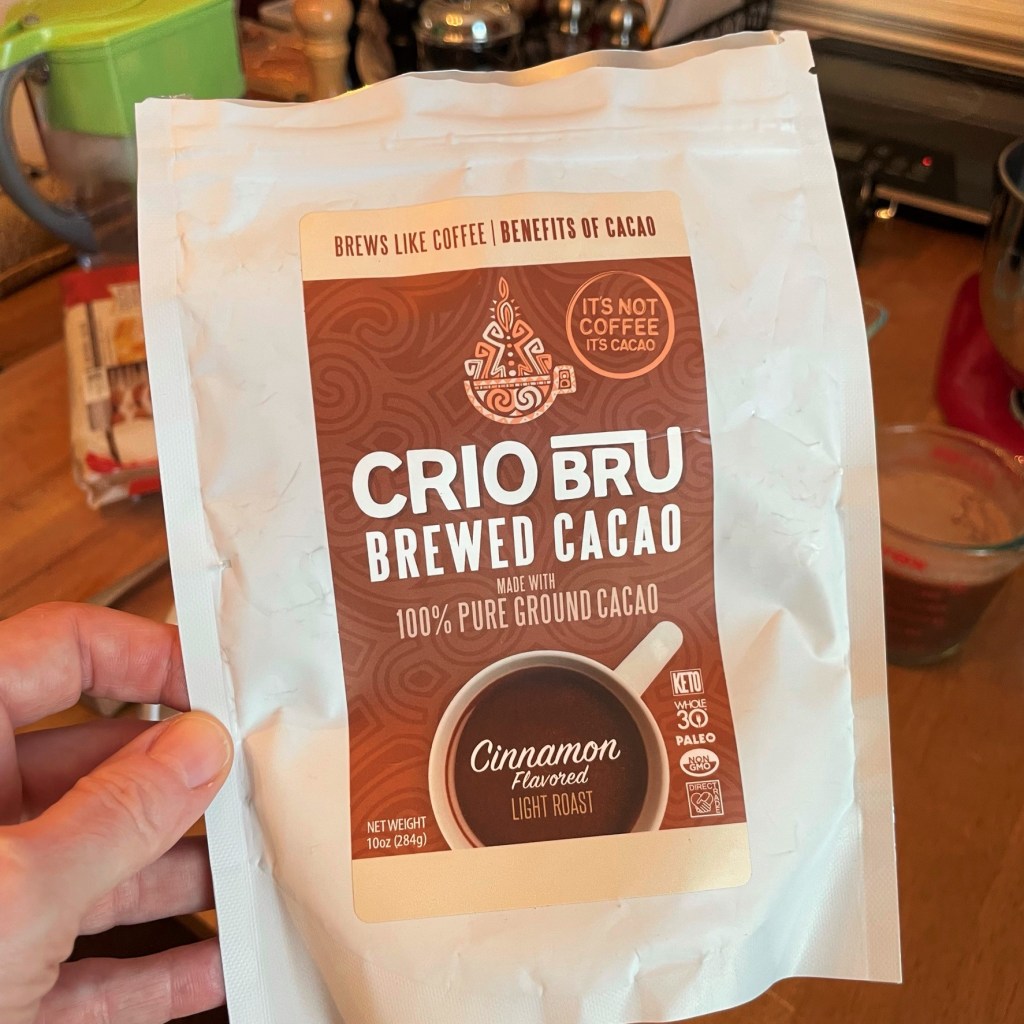
For the espresso, a brewed cacao beverage that’s flavored with cinnamon.
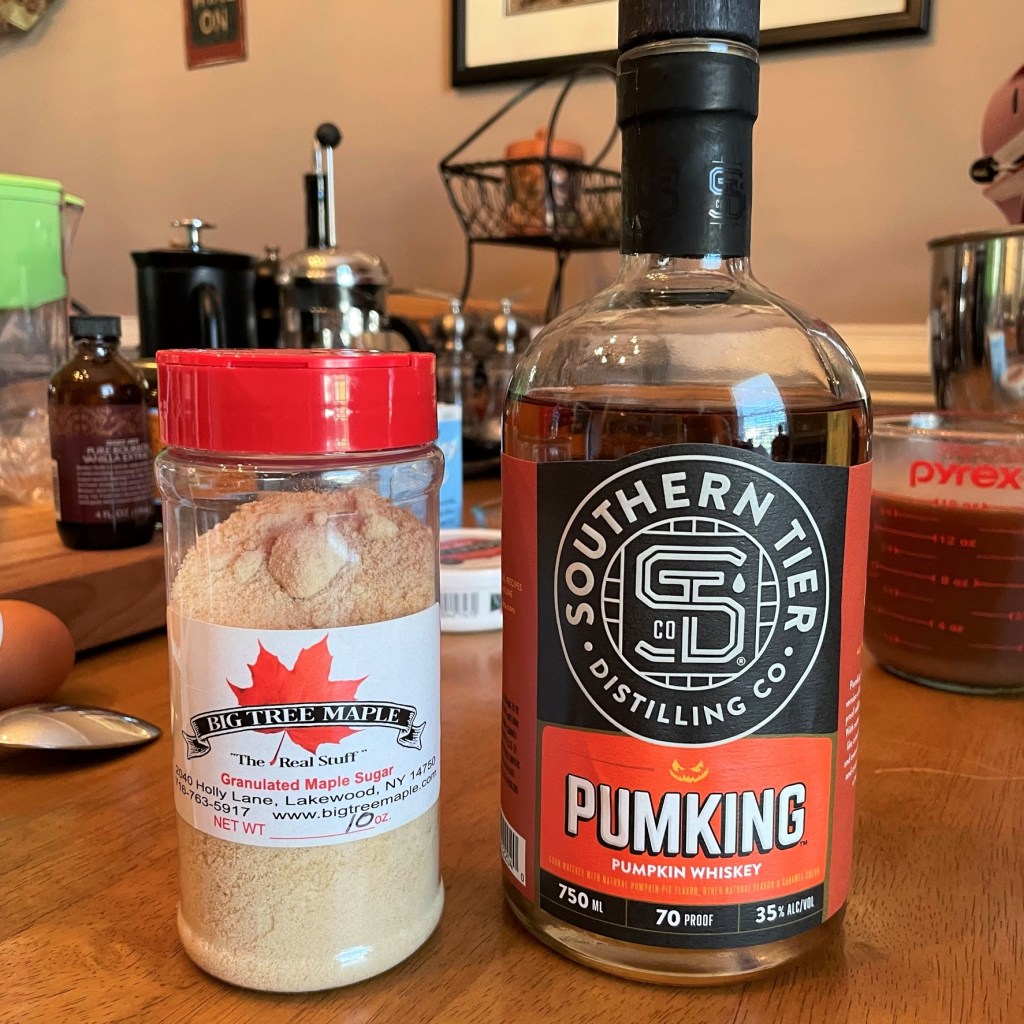
For the caster sugar, maple sugar, which tastes like autumn. For the rum, a pumpkin spiced whiskey, produced by Southern Tier Distilling Co. in Lakewood, N.Y.
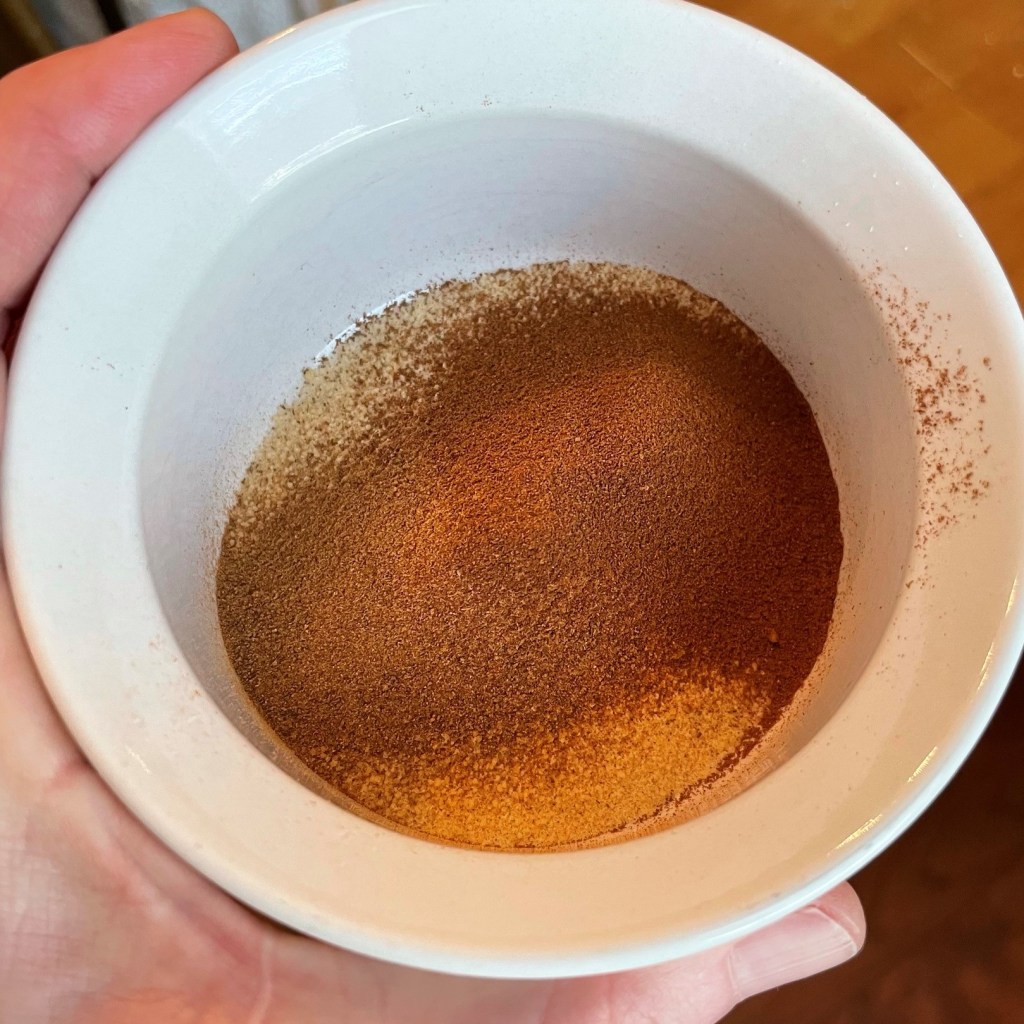
For the dusting cocoa, a blend of maple sugar, cinnamon and pumpkin pie spice.
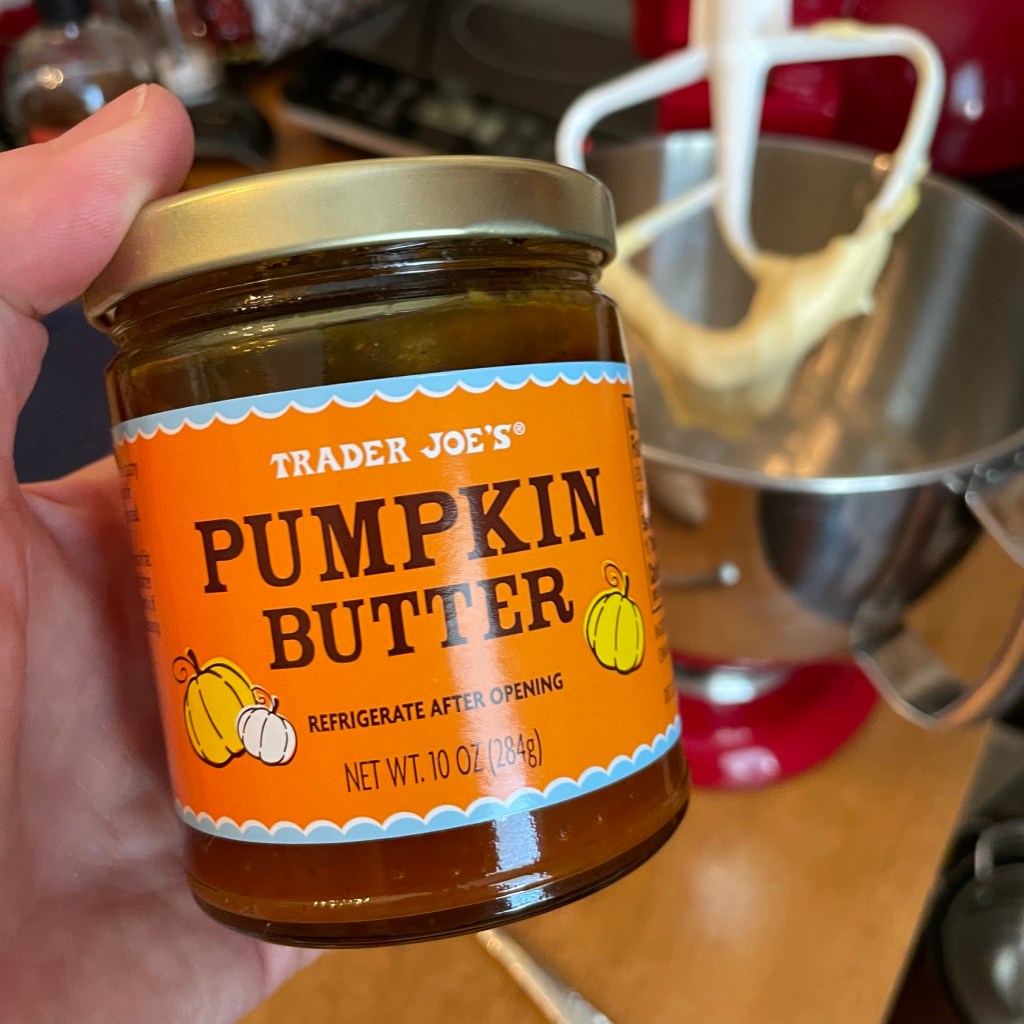
For an additional Thanksgiving twist, a bit of pumpkin butter, courtesy of Trader Joe’s.
The lighting in my dining room is the worst!
The recipe is made with raw egg yolks, so if you have health concerns about that, I’d encourage you to seek out an eggless or cooked egg recipe, or perhaps consider using pasteurized eggs. Also, planning ahead is more of a requirement than a convenience, as tiramisu improves after a 24-hour setup time. If you’re going to try the recipe for Thanksgiving, you might want to make it a couple of evenings ahead.
Ingredients (6 generous servings)
3 egg yolks, room temperature*
2 Tbsp. maple sugar (or use superfine if you can’t find maple)
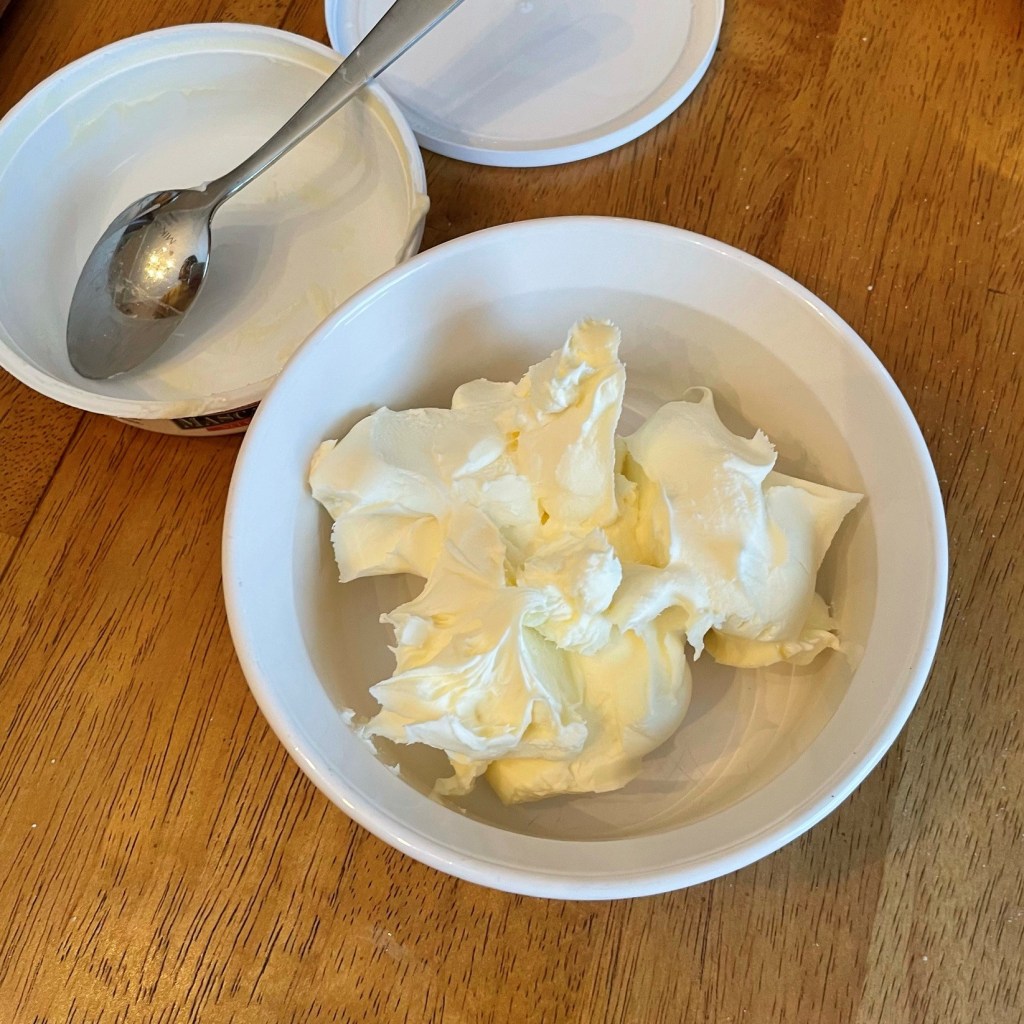
8 oz. tub mascarpone, room temperature
5 Tbsp. Trader Joe’s pumpkin butter*
1 tsp. real vanilla extract
4 Tbsp. Pumking whiskey, divided* (see notes)
1 1/2 cups brewed light roast cacao with cinnamon*
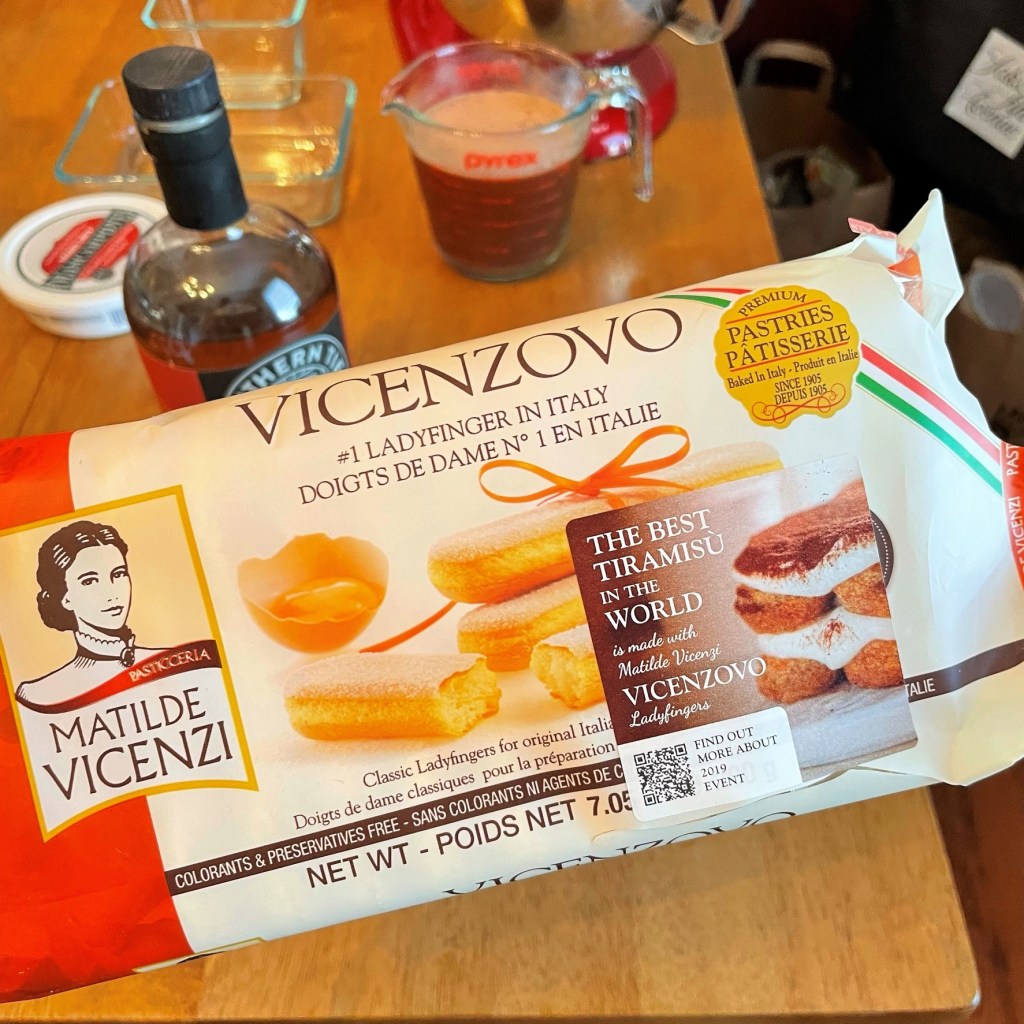
7 oz. package ladyfingers (this might be labeled as biscotti savoiardi)
2 Tbsp. maple sugar, mixed with 1/4 tsp. ground cinnamon and 1/4 tsp. pumpkin pie spice
*Notes
The egg yolks should be room temperature for this recipe, but it is easier to separate the eggs when they are cold from the fridge. Save the whites for your weekend omelet.
If you don’t have access to a Trader Joe’s store, any other brand of pumpkin butter will work just fine. Homemade would be even better!
I found the Pumking Whiskey completely by chance when my husband and I traveled through New Jersey and Connecticut at the end of summer, and it’s a real treat. Distribution from this craft distillery is limited, but readers in the northeast U.S. should have little trouble finding it. Otherwise, go with spiced light rum, or perhaps even Frangelico.
My first impressions of the Crio Bru brewed cacao were only so-so, but I’ve grown to really enjoy this as an occasional alternative to coffee. Since the time I first discovered the company, it has added an array of new seasonal flavors, and the cinnamon is one of my favorites. It’s a limited edition that is currently only available in a sample pack, but the company just added another flavor—you guessed it, pumpkin spice!
I made this in a Pyrex dish that measures 8 ½ x 7” inches, but I’m sure you could also make this recipe work in an 8 x 8” dish. Or double the recipe and use a 9 x 13.
It helps to have an electric mixer (either stand or handheld) to make this dessert, but it can also be done with a whisk and a good strong arm. 🙂
Instructions
I spooned the mascarpone into a separate bowl to help it come to room temp.
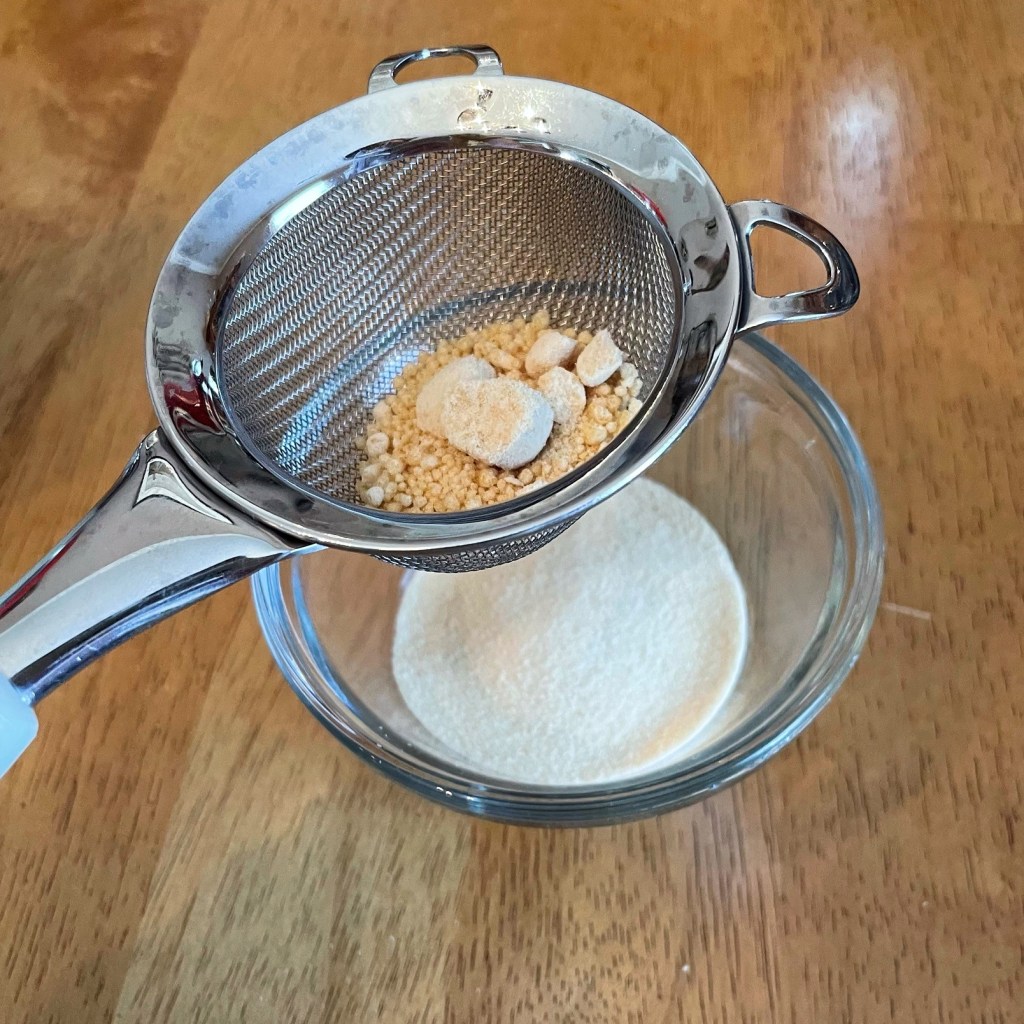
I sifted the maple sugar to weed out the clumps. This sugar is very fine, just like caster sugar.
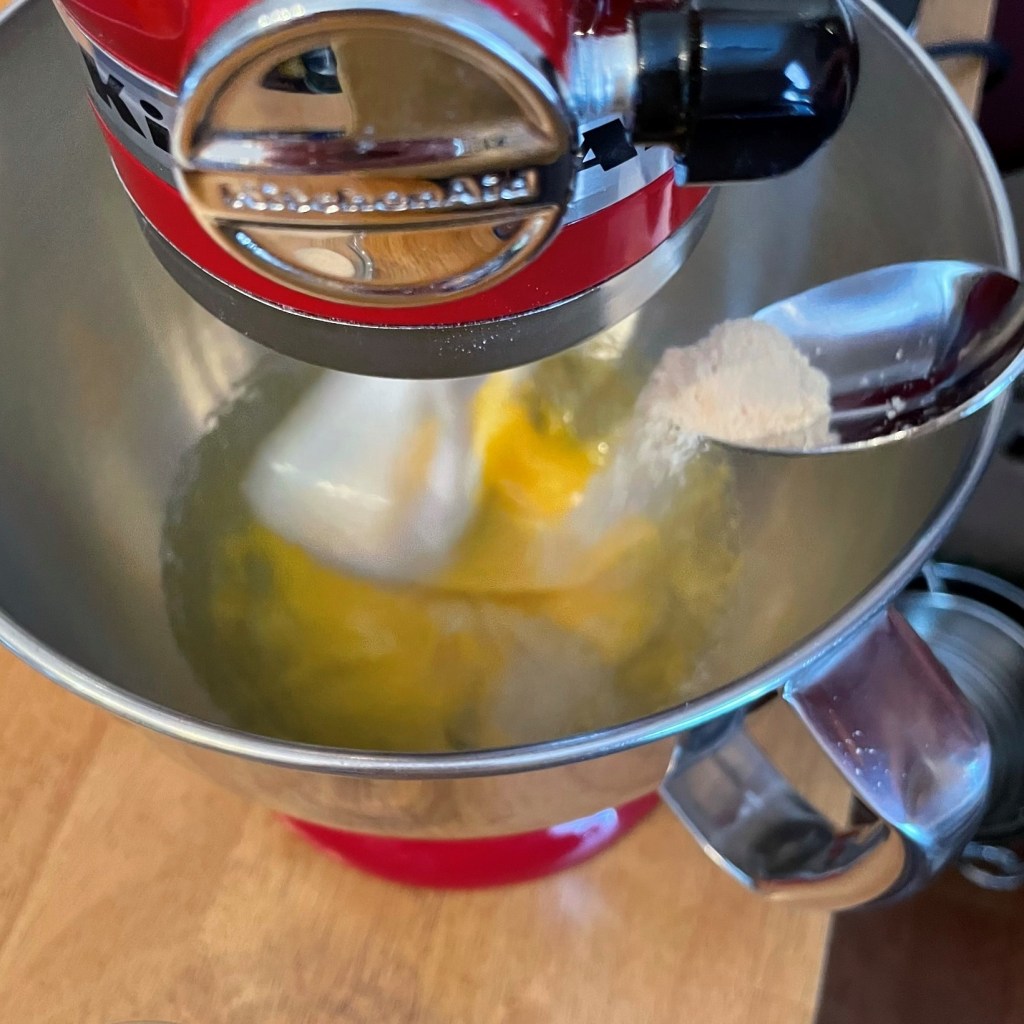
Add the sugar to the whipped egg yolks.
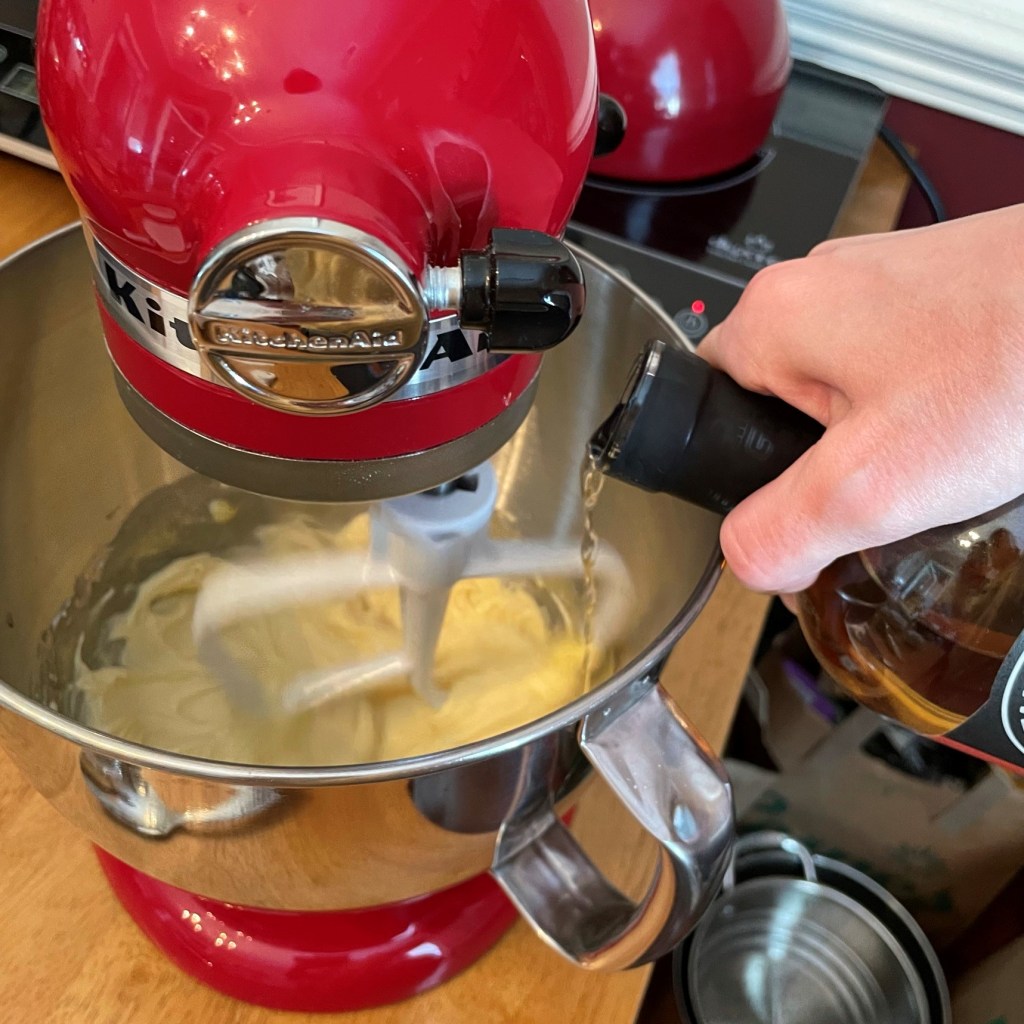
Whip in the mascarpone and spike it with two tablespoons of Pumking whiskey.
Mix in the pumpkin butter. That looks so pretty!
I used my trusty digital scale to measure out an ounce of the Pumking whiskey into the brewed cacao.
Ladyfingers are wispy little cookies, not very interesting on their own but amazing in tiramisu.
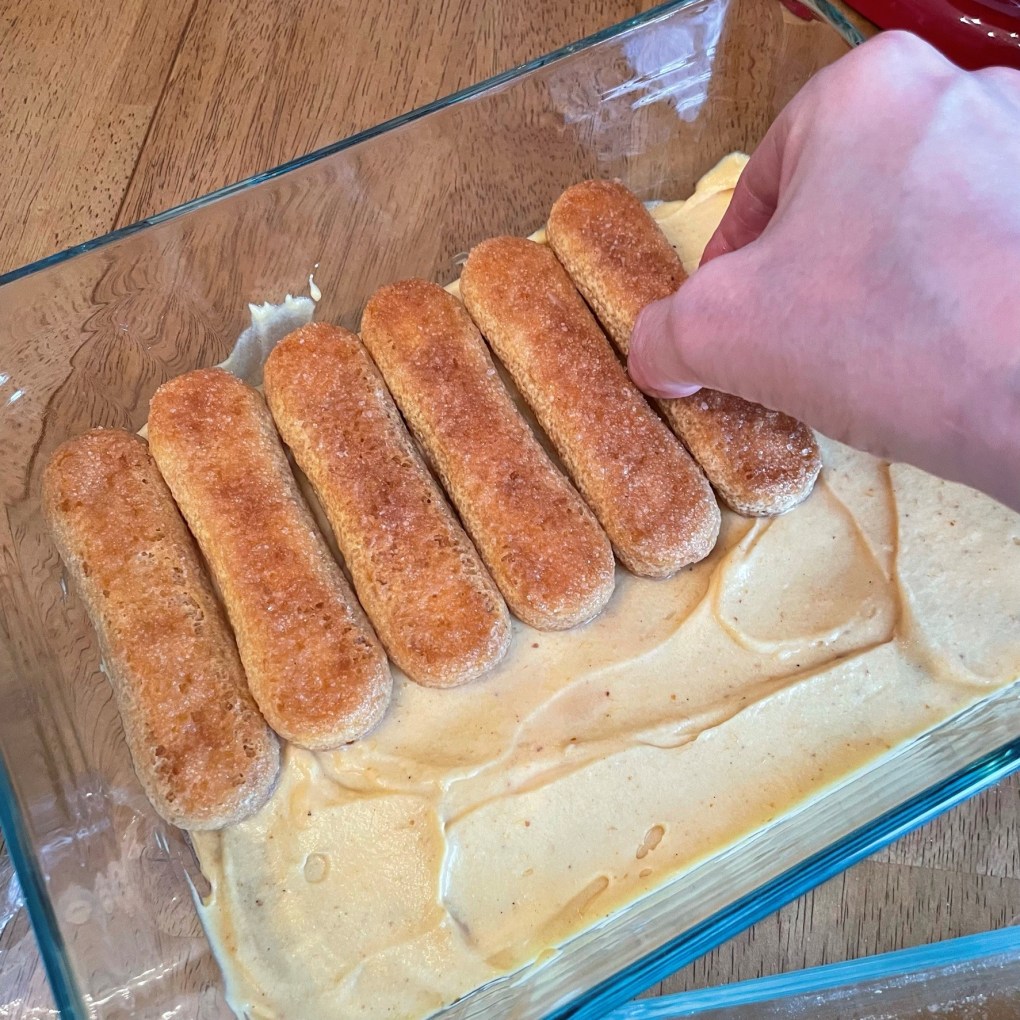
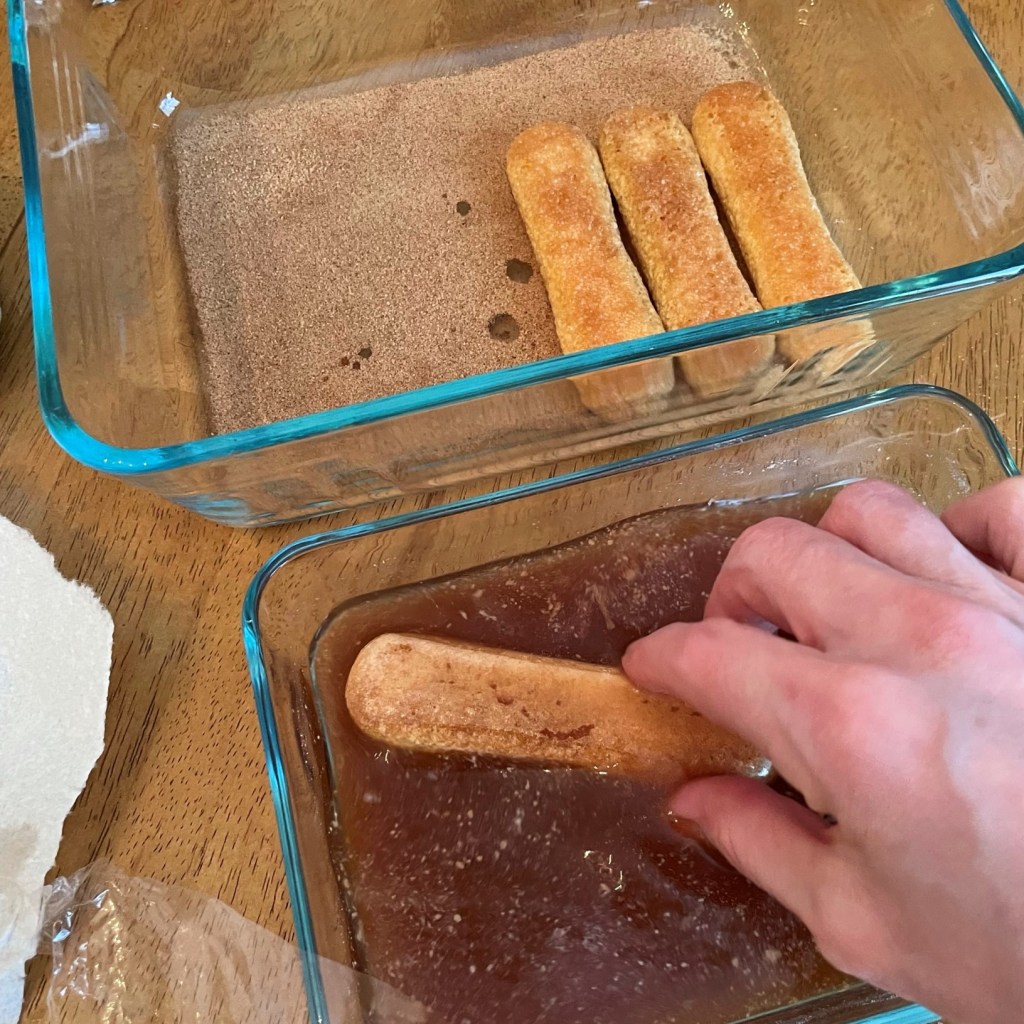
Give the ladyfingers a very quick spin through the spiked brewed cacao, then arrange in the dish. Don’t soak them too long or they will turn to mush in your hands!
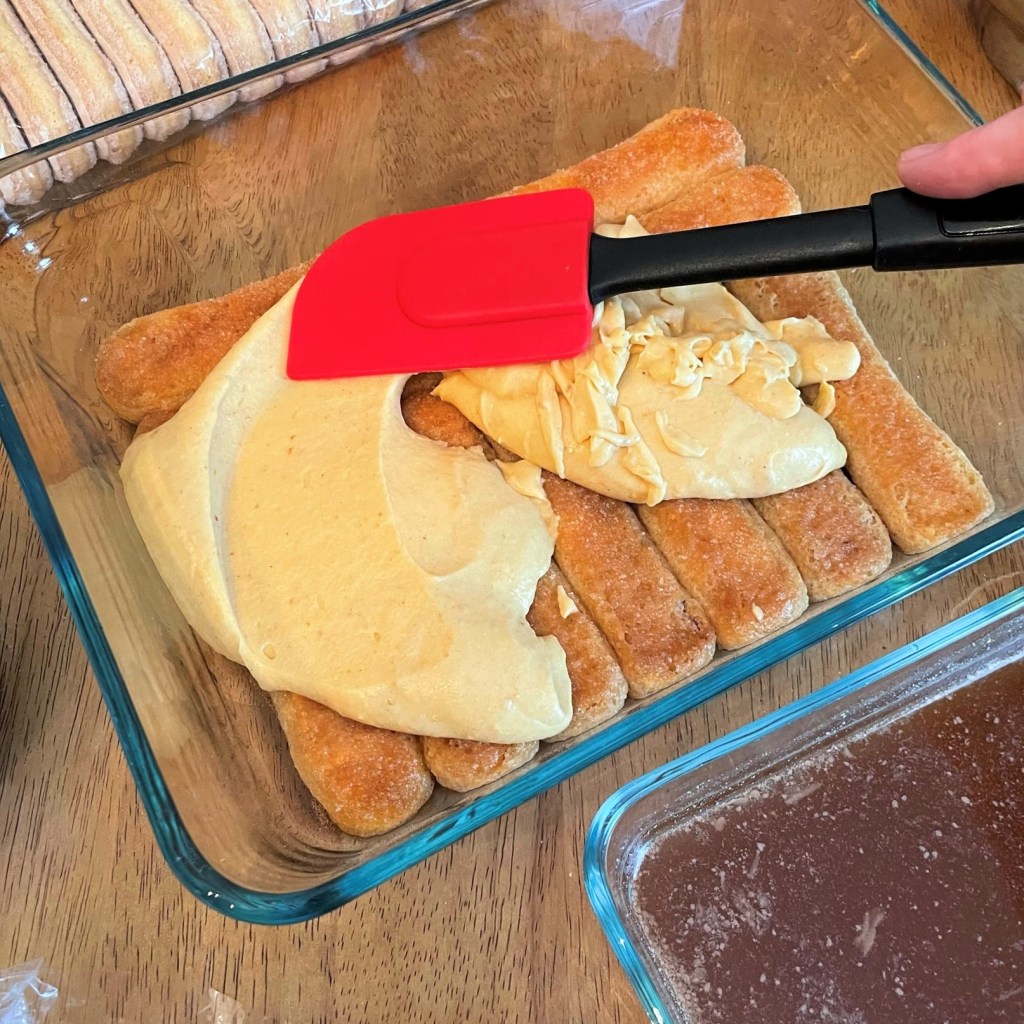
Evenly spread half of the mascarpone mixture over the first layer of ladyfingers.
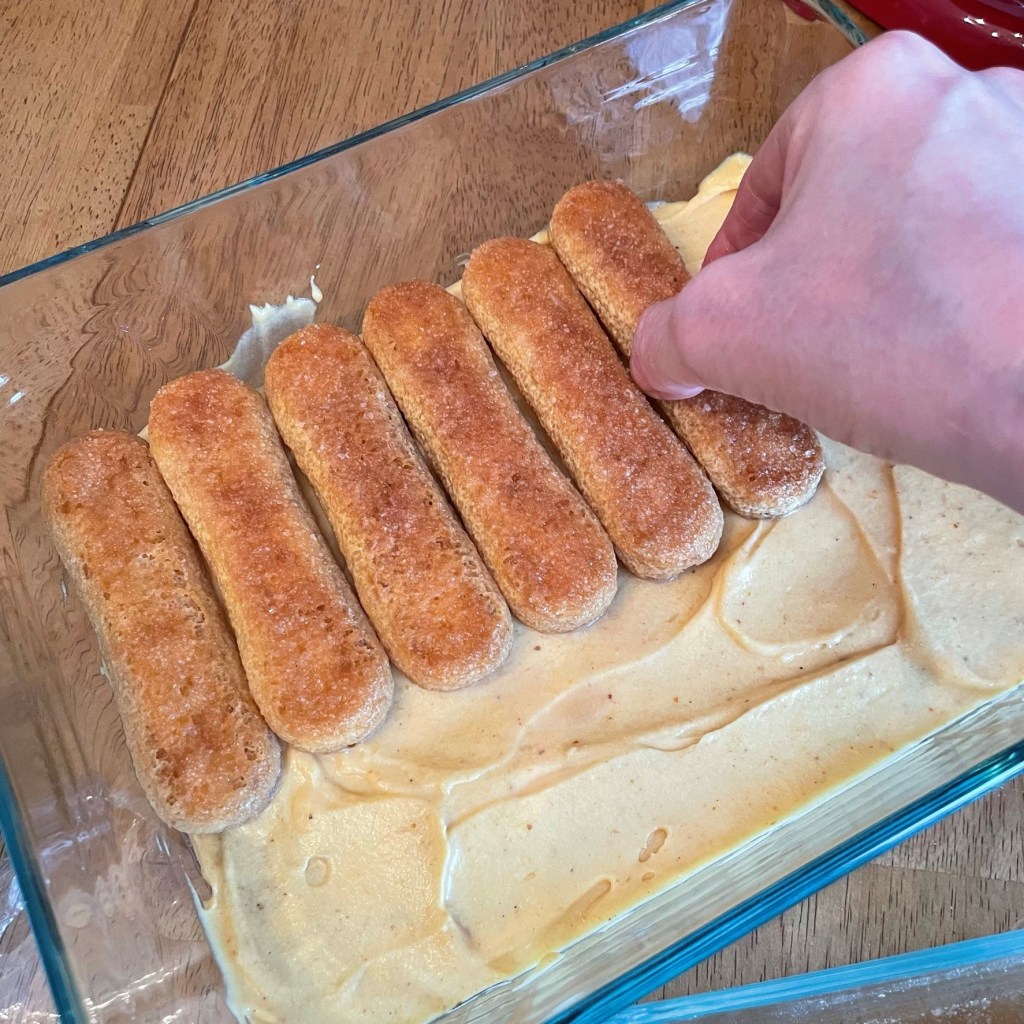
Repeat with a second layer.
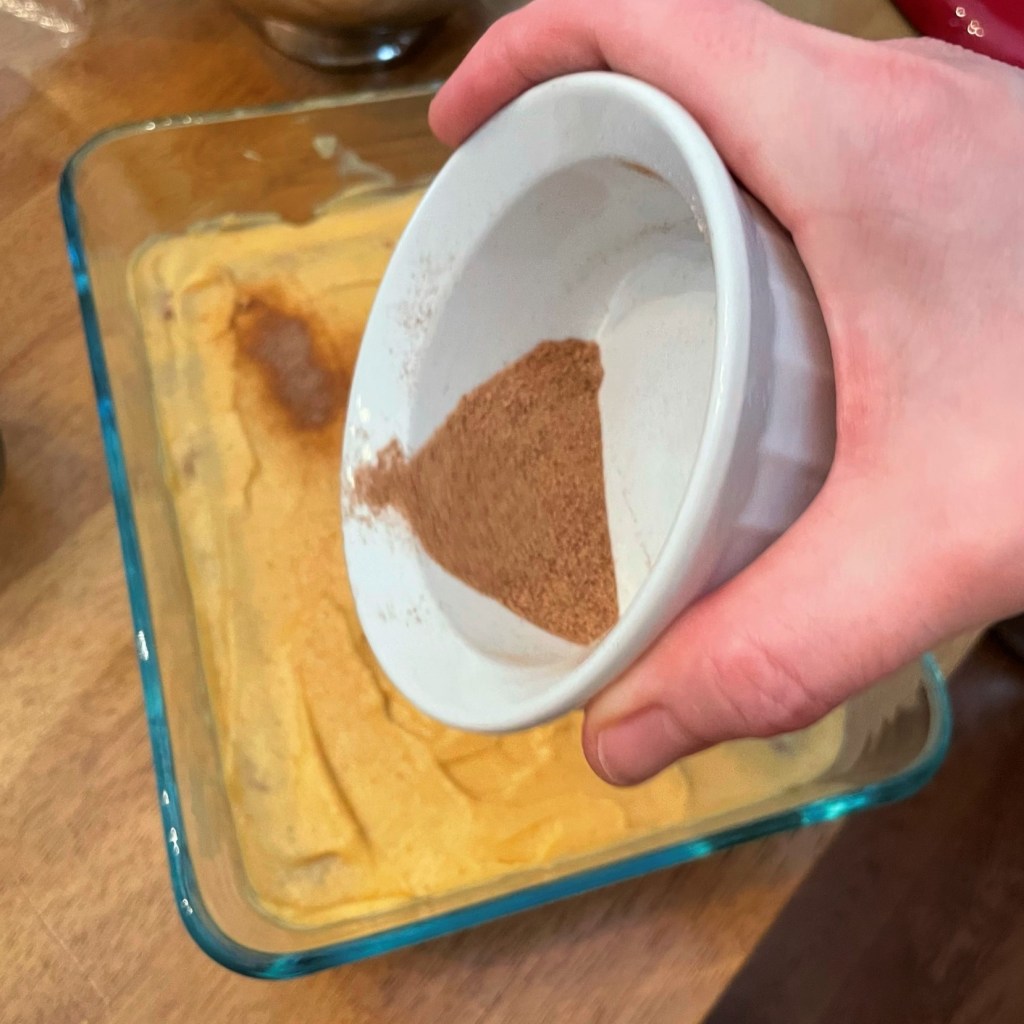
Sprinkle the remaining pumpkin spice sugar over the top of the dessert.
Lovely! Cover it and send it to the fridge for at least 24 hours.
In a mixing bowl or the bowl of a stand mixer, whip eggs until they are smooth. Gradually add maple sugar and continue whipping until all sugar is dissolved into the yolks.
Add mascarpone into the bowl and blend on low speed until the mixture is evenly mixed, smooth and glossy. Fold in 2 Tbsp. of the Pumking whiskey, plus the pumpkin butter and vanilla extract.
Using a mesh sifter, sprinkle about half of the maple-spice mixture into the baking dish.
Combine brewed cacao and remaining Pumking whiskey in a flat bowl. Carefully dip the ladyfingers, one at a time, into the liquid. Turn only twice before arranging the cookies in the dessert dish. I have learned that it is very easy to make the ladyfingers soggy, so err on the conservative side. Repeat until you have a complete single layer of ladyfingers in the dish.
Carefully spread half of the pumpkin-mascarpone mixture over the ladyfingers, smoothing it all the way to the edges of the dish.
Repeat with the next layer of ladyfingers, top with the remaining mascarpone mixture, and sprinkle the top with the remaining maple-spice mixture. Cover tightly and refrigerate at least 24 hours before serving.
If I had to guess a number, I’d say conservatively that I have probably made about 280 loaves of sourdough bread since I developed my starter back in the spring of 2016. That’s figuring an average of one loaf per week for 5½ years. Of course, there have been some weeks that I have baked much more than that (especially during holiday seasons) and others that I have not baked at all, either because our schedule didn’t allow it or we didn’t need it or, as has been the case recently, because we didn’t have a kitchen.
What to do with my sourdough starter was a big part of the discussion when my husband, Les, and I sat down to figure out the details of our kitchen renovation, which I am pleased to say is nearly done. Would I just let the starter go to sleep and try to revive it when all was said and done? I supposed that I could at least make my Sourdough English Muffins, which are cooked on a griddle. Or should I keep feeding the yeasty rascal on schedule and just call the discard a total loss? That would be a shame.
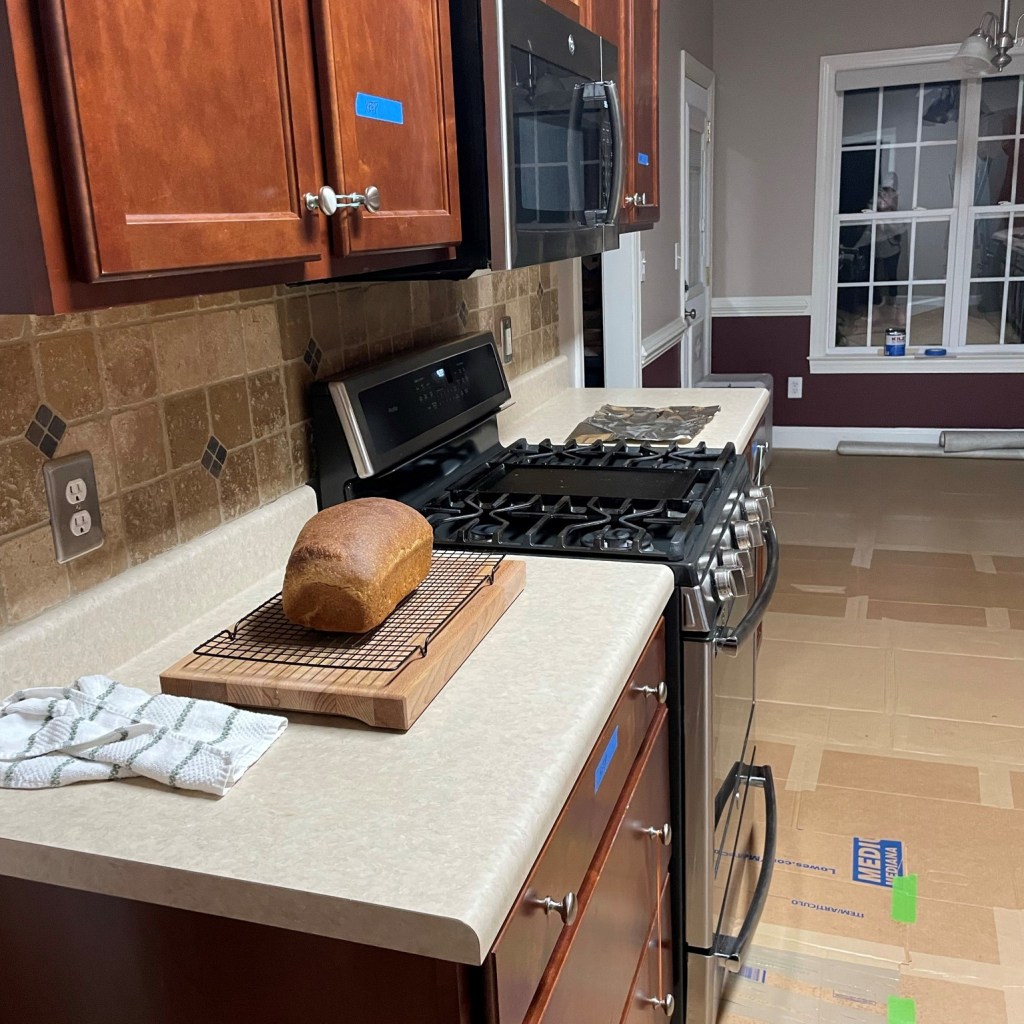
A freshly baked loaf of homemade sourdough bread was the last thing I made in our old, time-worn kitchen, and it is the first thing I have made in the shiny new kitchen, even though a few loose ends remain before we can do our big reveal. The bread I made both times was this one—a sourdough-based recipe by Maurizio Leo, a master bread maker whose own blog, The Perfect Loaf, has been on my radar for about a year, thanks to a few contributions he has made to the King Arthur Baking website. Maurizio is a genius when it comes to sourdough, and I can hardly keep up with my desire to bake everything on his blog at least once.
Last bread, baked only hours before the kitchen was torn down.We still have protective film on the counters, but I’m already making bread!
This bread, which Maurizio has named Sourdough Sandwich Bread with Pre-cooked Flour, is a favorite at our house because of its softness, height, chewy crust and versatility for sandwiches, toast and just plain eating with a fat schmear of soft butter. As the recipe name suggests, there is an amount of the flour that is pre-cooked, specifically with whole milk, and this pre-cooking of the flour creates a sticky, roux-like addition that lends a beautiful texture to the finished bread and, as a bonus, prolongs its shelf life. This pre-cooking technique itself is not new; the Japanese have been doing it for a long time, and they call it “tangzhong.” But the combination of that milk-cooked method with sourdough and no added commercial yeast sends it straight over the top for me. Quite simply, I love this bread.
I’m happy to report that I have been able to make bread, even without access to my beloved oven during this remodel, thanks to the generosity of a couple of our neighbors, who offered their own ovens as surrogates. They received their own loaves of this bread as a barter for their oven services (not to mention the benefit of that lingering aroma), so it was a win-win situation.
The crumb is soft, tender and perfectly composed with no crumbling. The crust is chewy and soft.
So, have I put my own spin on this fantastic bread? Kind of, but not much. My method of steam baking is less sophisticated than what Maurizio Leo describes in his original recipe, but it works. I have fiddled with the ratio of flours in favor of greater percentage of whole grain and have even swapped in whole rye for the pre-cooked part several times, and the bread still comes out terrific. I have also subbed out the honey—with brown sugar, maple syrup, molasses and even sorghum—and it wows me every time. Finally, I’ve halved the original recipe because I usually only make one loaf at a time (unless, of course, I’m baking at a neighbor’s).
One of these days, I’ll get around to trying some of Maurizio’s other recipes; I especially want to check out the Jalapeno Cheddar Sourdough Bread (yum!), and for sure, my Thanksgiving table deserves his Super-soft Sourdough Rolls this year. How ridiculous is it, given that I love making fresh bread, that I have never made it at Thanksgiving? I guess I have been too busy with everything else for the table, or else I didn’t plan well to have the oven free, but this will be the year.
In the meantime, I’ll keep making this darn-near perfect bread, my favorite, go-to sourdough. Enjoy!
Before you begin:
This recipe requires use of a mature, ripe starter. Plan to feed your starter eight to 12 hours before making this dough.
All ingredients are listed by weight. I highly recommend use of a digital scale for sourdough baking.
Plan to have a shallow pan available for steam baking. It is also helpful, but not essential, to have a digital thermometer for testing doneness of the bread at the end of baking time.
Ingredients
148 g whole milk
38 g whole wheat flour* (see notes)
175 g room temperature water
18 g honey*
32 g olive oil
106 g sourdough starter, recently refreshed (starter should be 100% hydration)
295 g bread flour
78 g whole wheat flour*
8.5 oz. fine sea salt
*Notes
I have had great success using whole grain rye flour in the first step of pre-cooking. The resulting dough will be rather sticky, but I find it more manageable to handle it with wet hands.
If you want to increase the nutrition by using more whole wheat flour in this recipe, try swapping about 30 grams for equal amount of the bread flour. Greater adjustment may require that you also increase the volume of water by a small amount, as whole wheat flour absorbs more water.
Alternative sweeteners can be an equal swap by weight if they are liquid. If you swap in sugar or brown sugar, try using two heaping tablespoons, and add them with the dry ingredients rather than in the starter mixture.
Instructions
The images in the how-to are from a previous bake, so please don’t be startled to see the old kitchen.
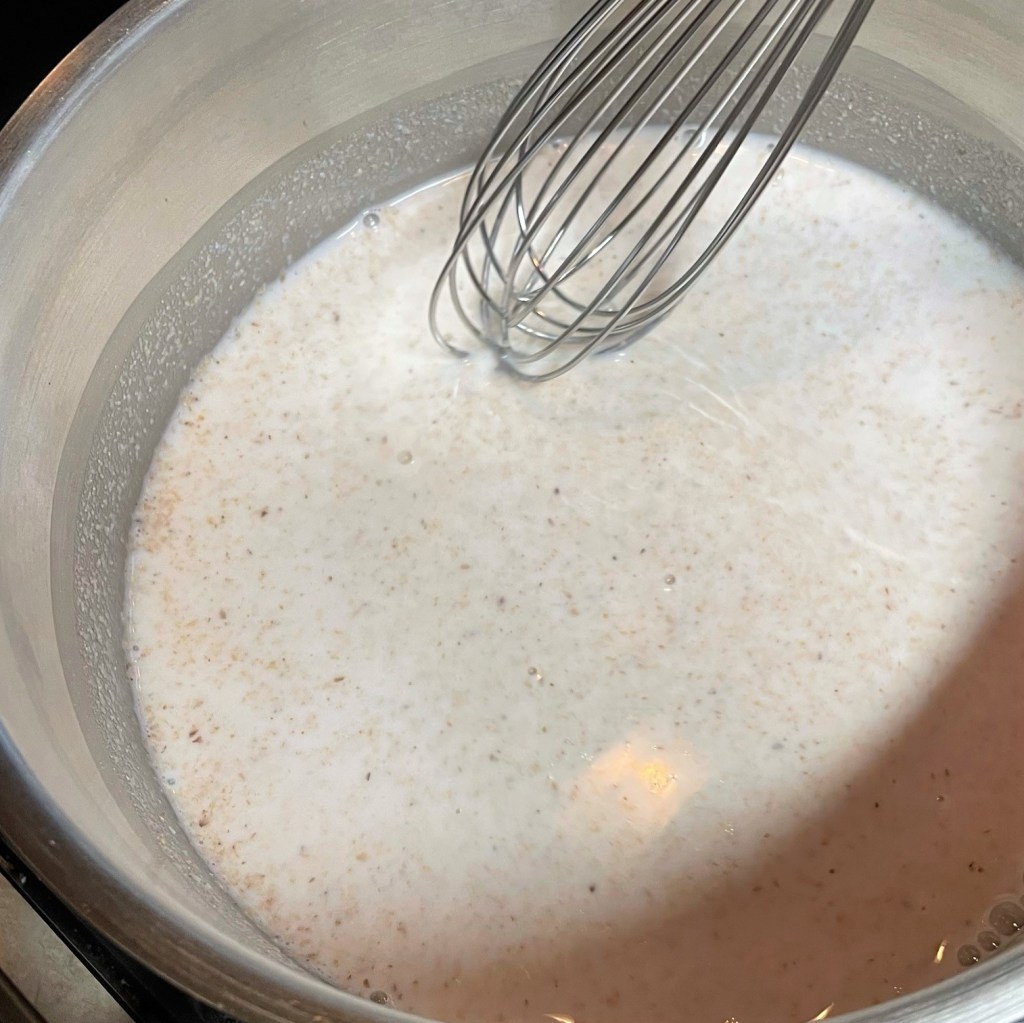
Use a whisk to blend the milk and flour together, and cook over medium heat until it begins to thicken.
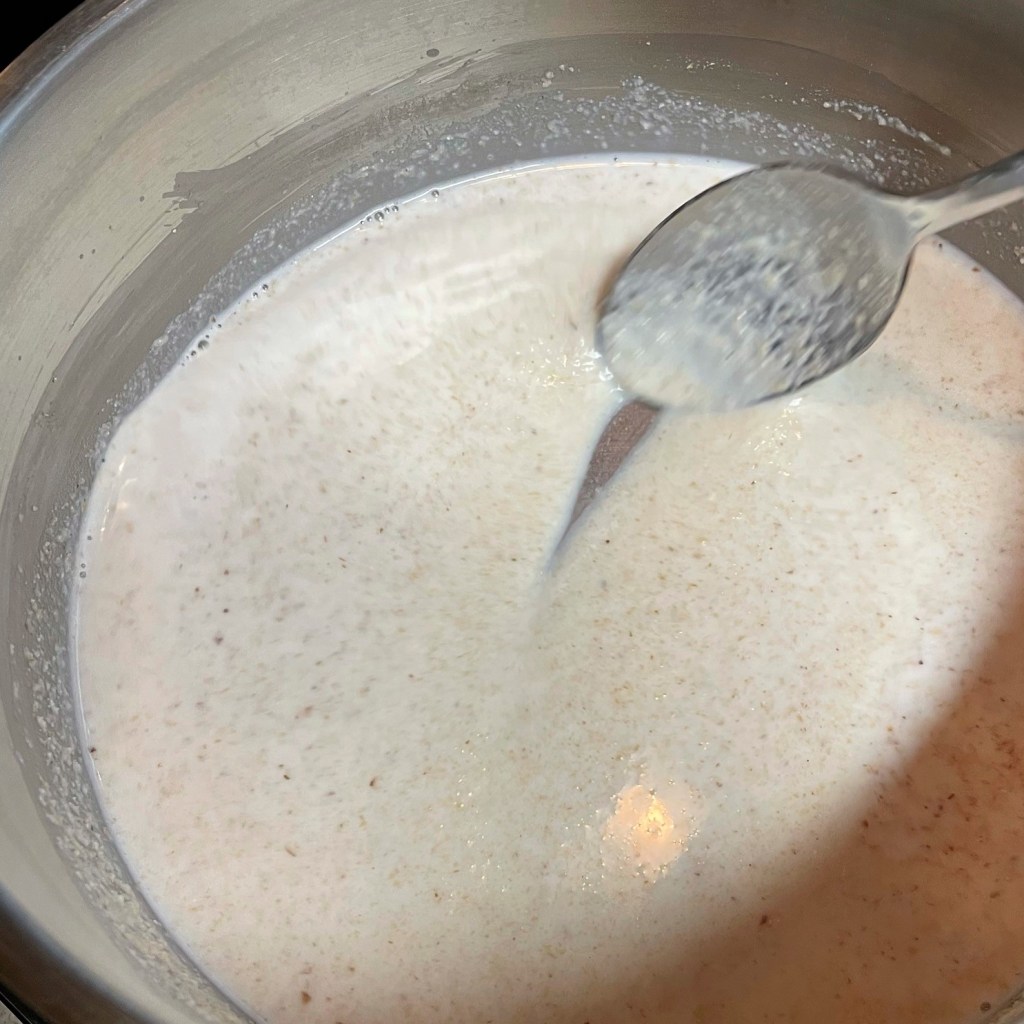
When the roux begins to thicken, switch to a spoon (or you’ll never get it out of the whisk).
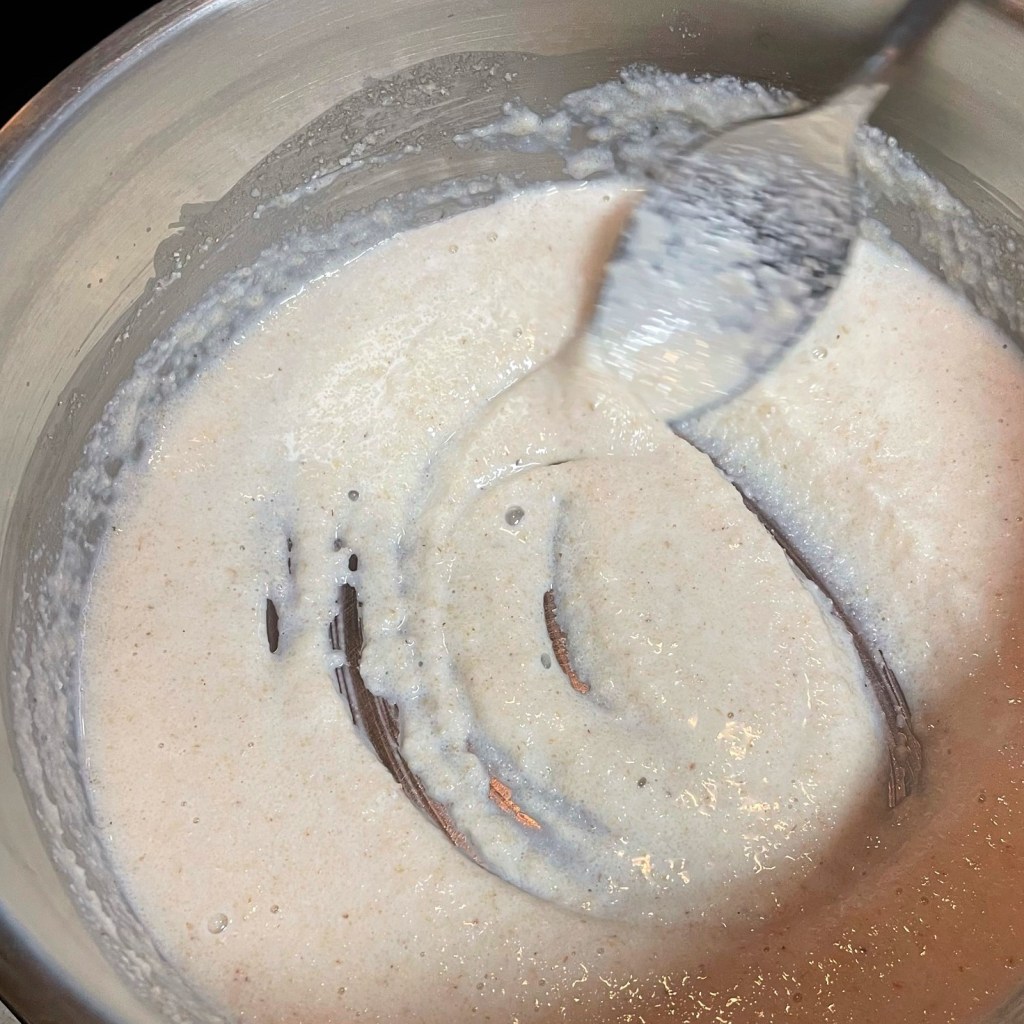
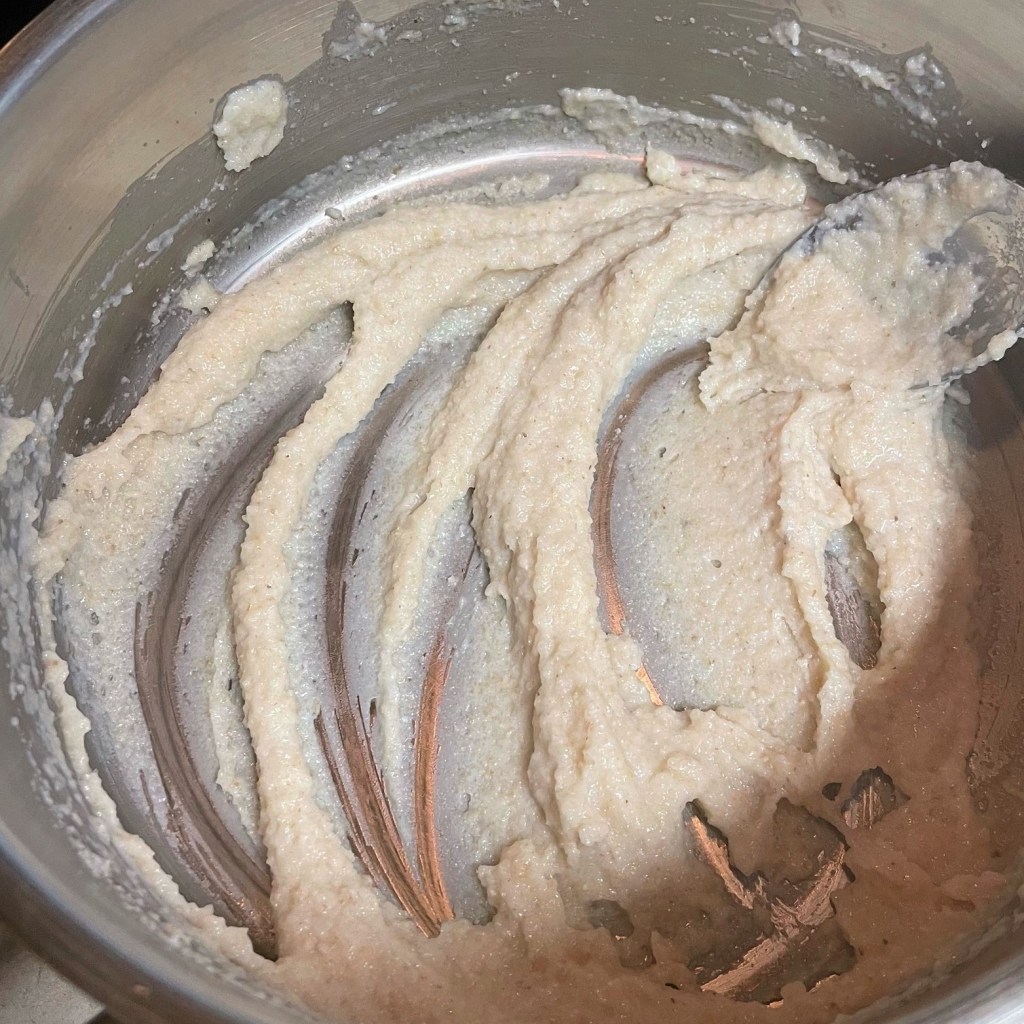
It will seem like nothing is happening, until all at once, it becomes like wallpaper paste.
When it is cooked to this point, remove from heat. You can cool it in the pan while you prep for the next steps.
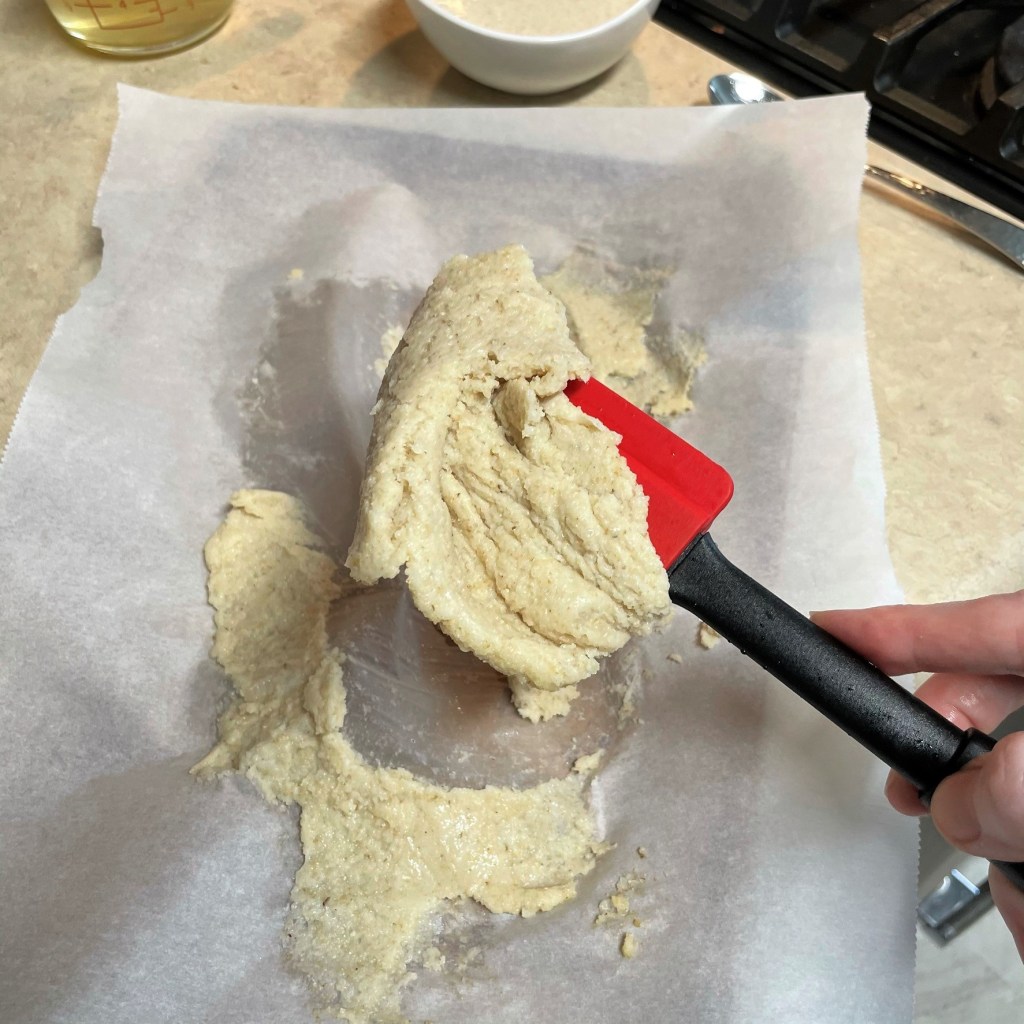
Or spread it out onto a plate or parchment paper to cool faster.
Measure by weight for accuracy. For this particular loaf, I used freshly milled Kamut flour in place of the usual whole wheat.
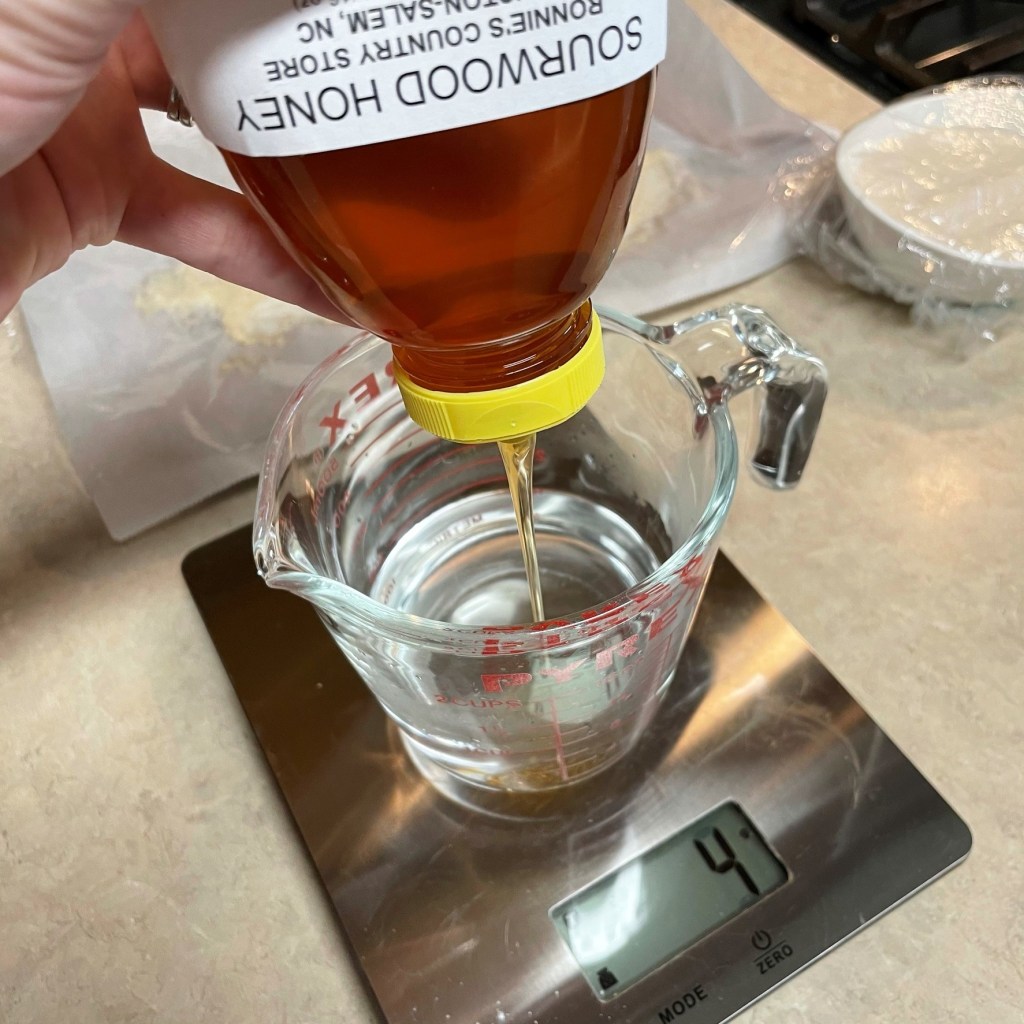
Measure the liquid ingredients by weight, too. Water, honey and oil.
Stir until the honey is dissolved.
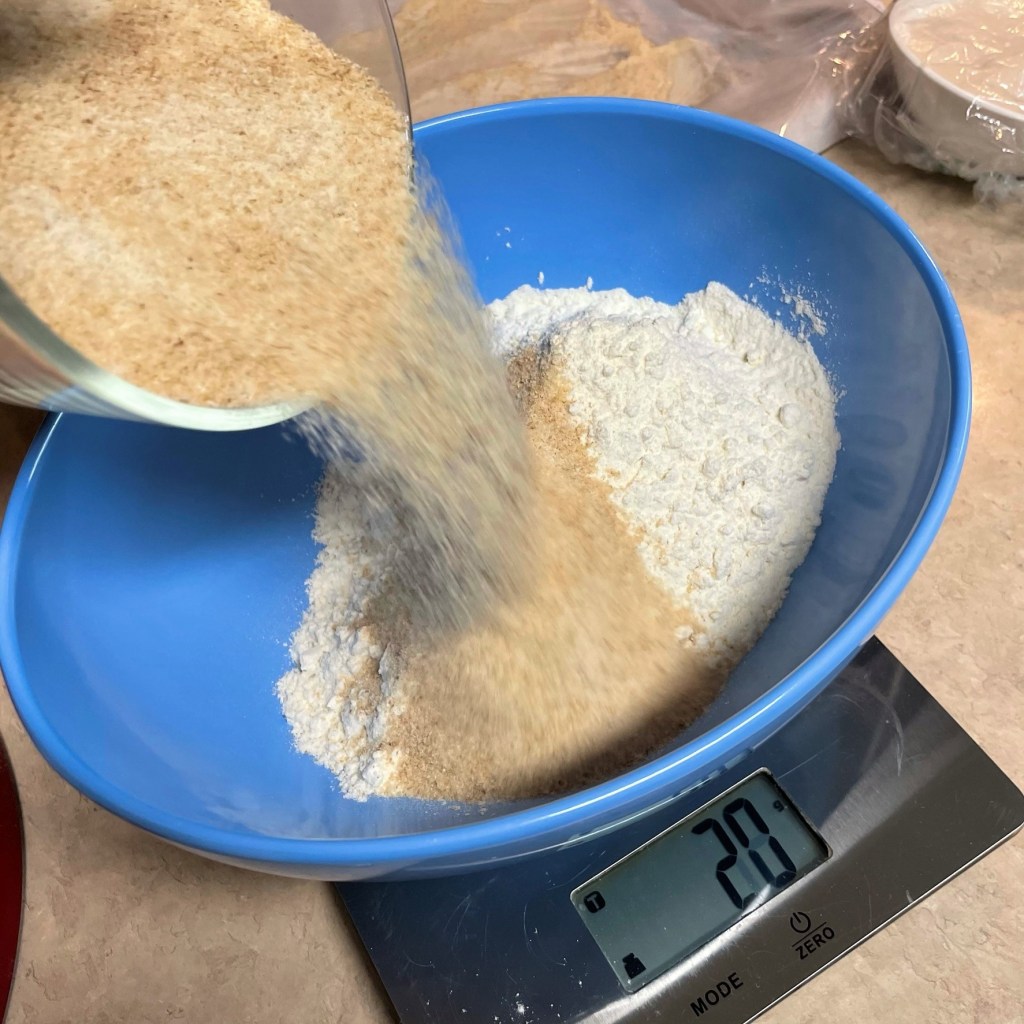
Mix together the two kinds of flour with the salt. I’ve used Himalayan pink salt so we can see it in pictures.
The roux mixture will be quite firm after cooling.
Be sure you feed your starter the night before, so it is good and active.
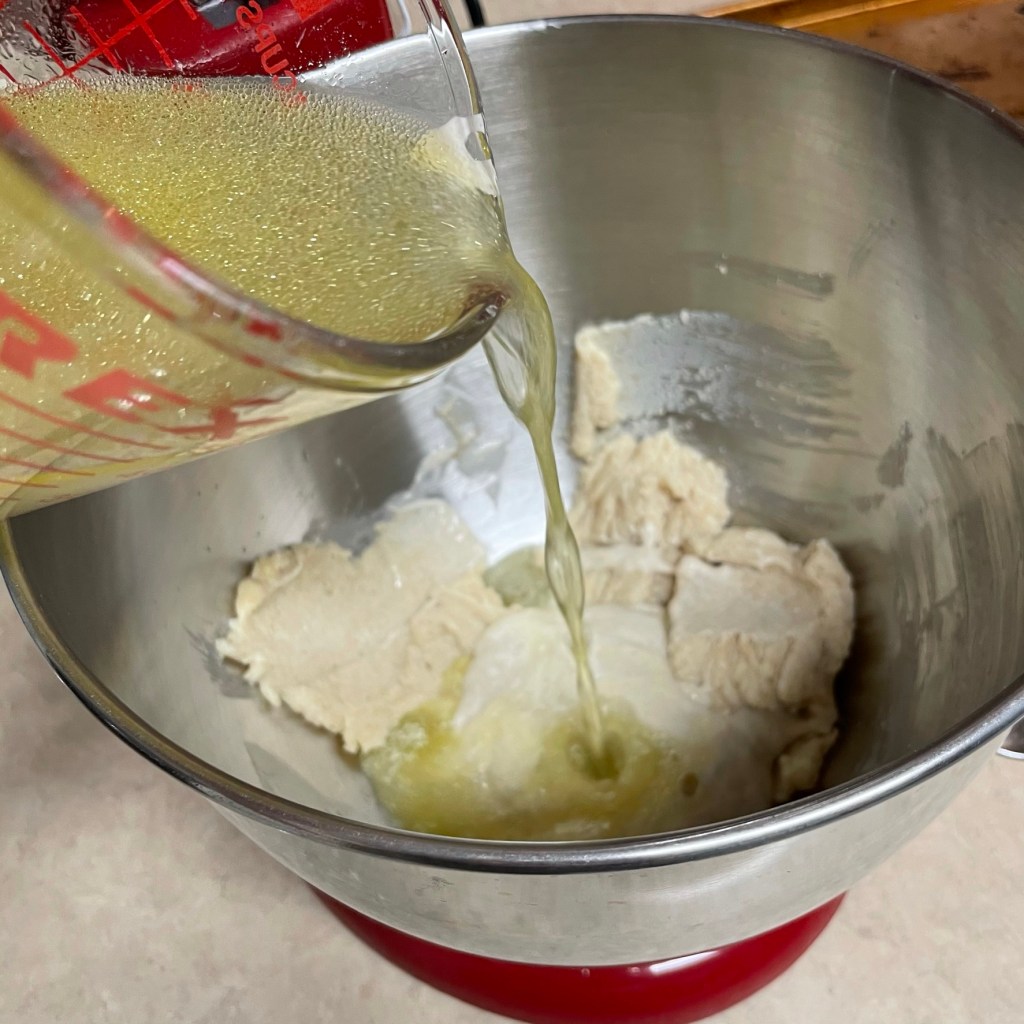
Combine the roux, starter and liquid ingredients.
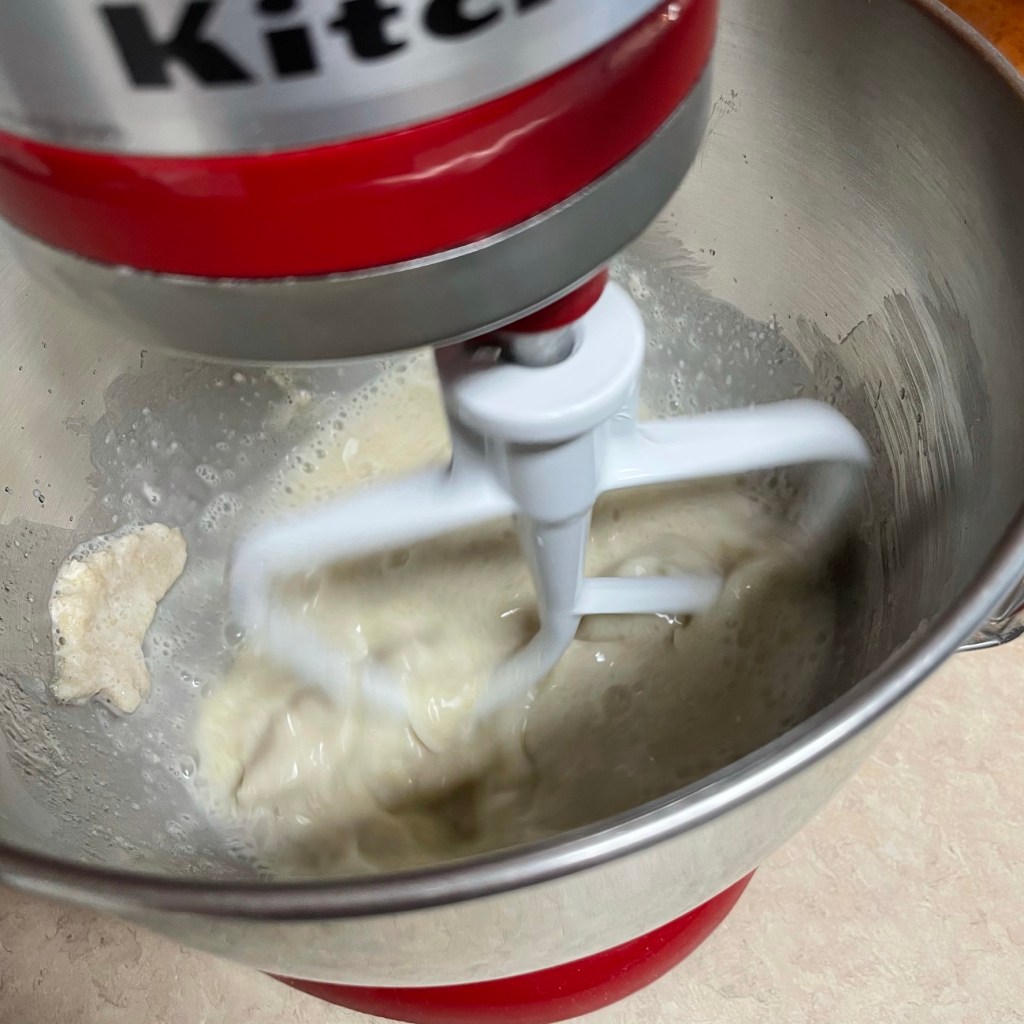
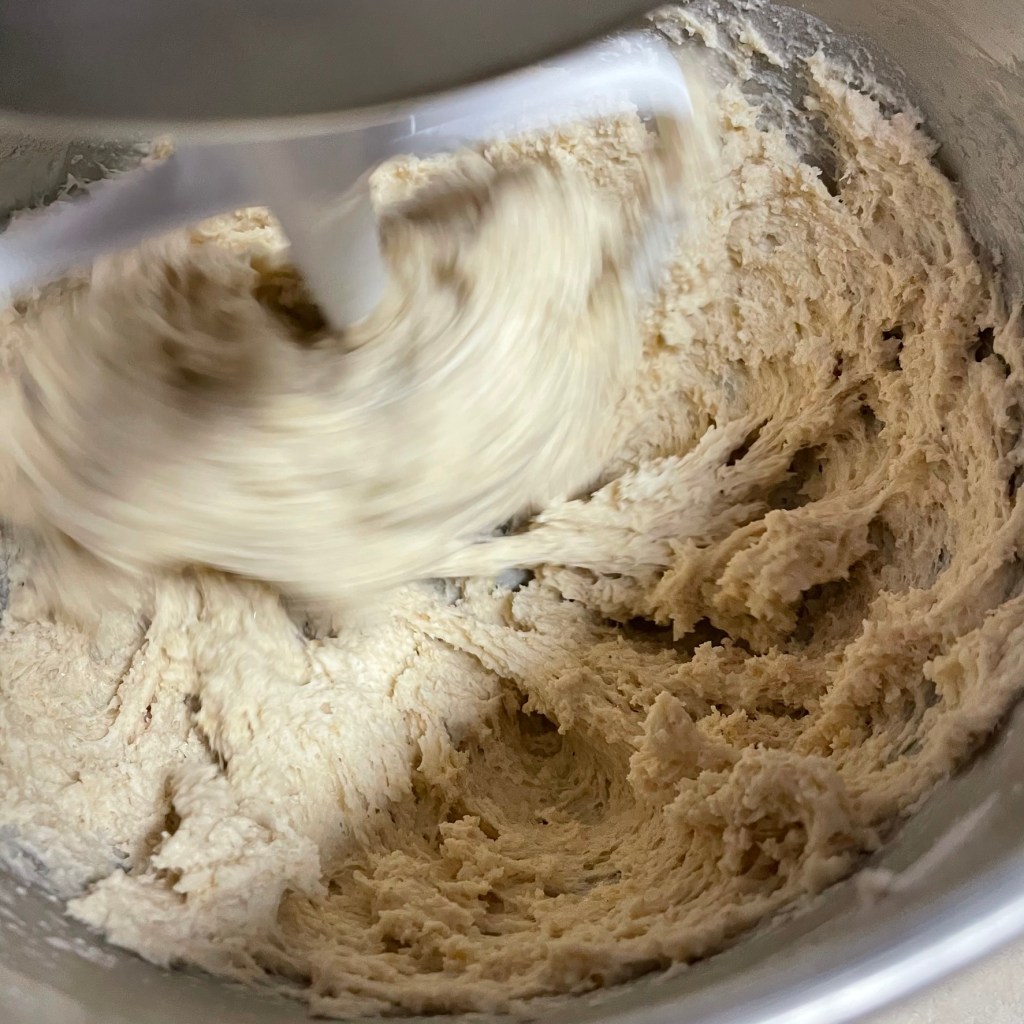
Mix with beater blade until evenly combined.
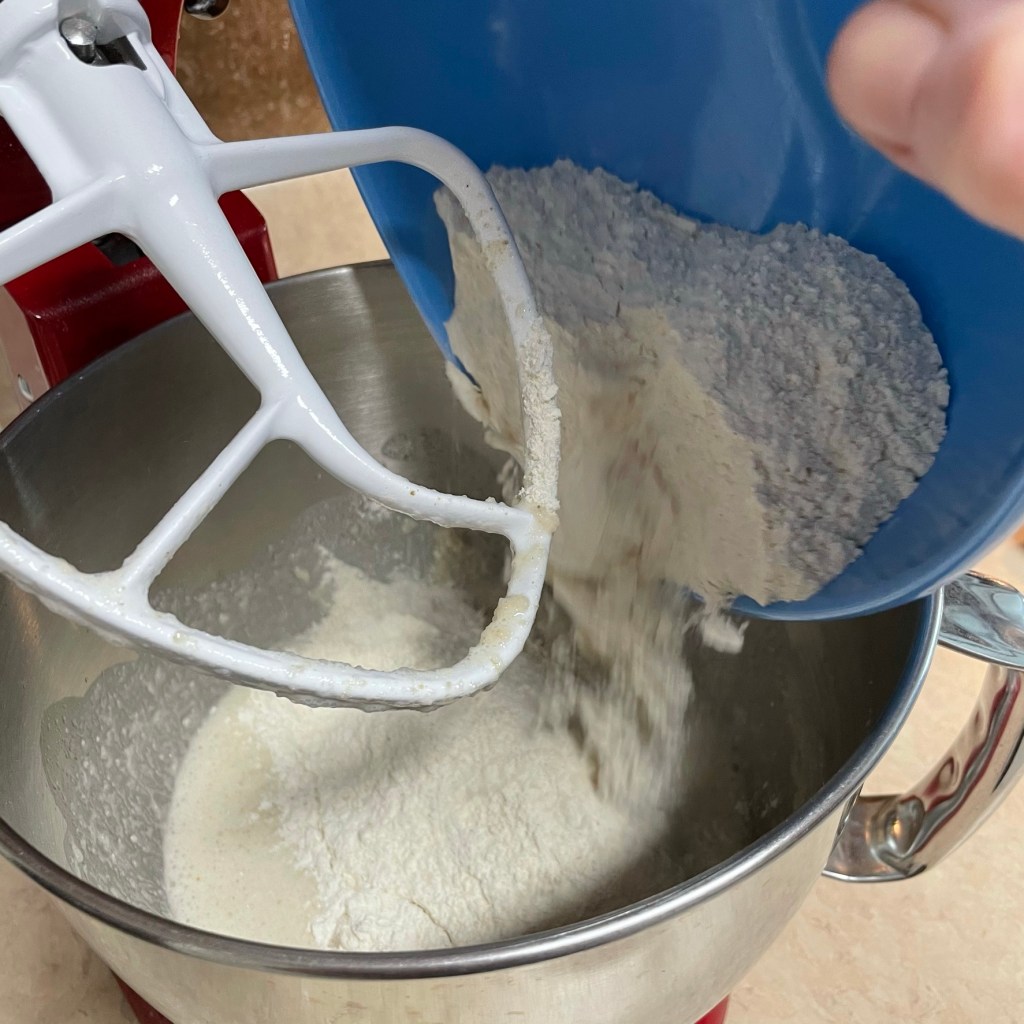
Add the flour ingredients all at once.
Mix with beater blade until all flour is incorporated and dough begins to organize on the beater. This will only take a minute or two.
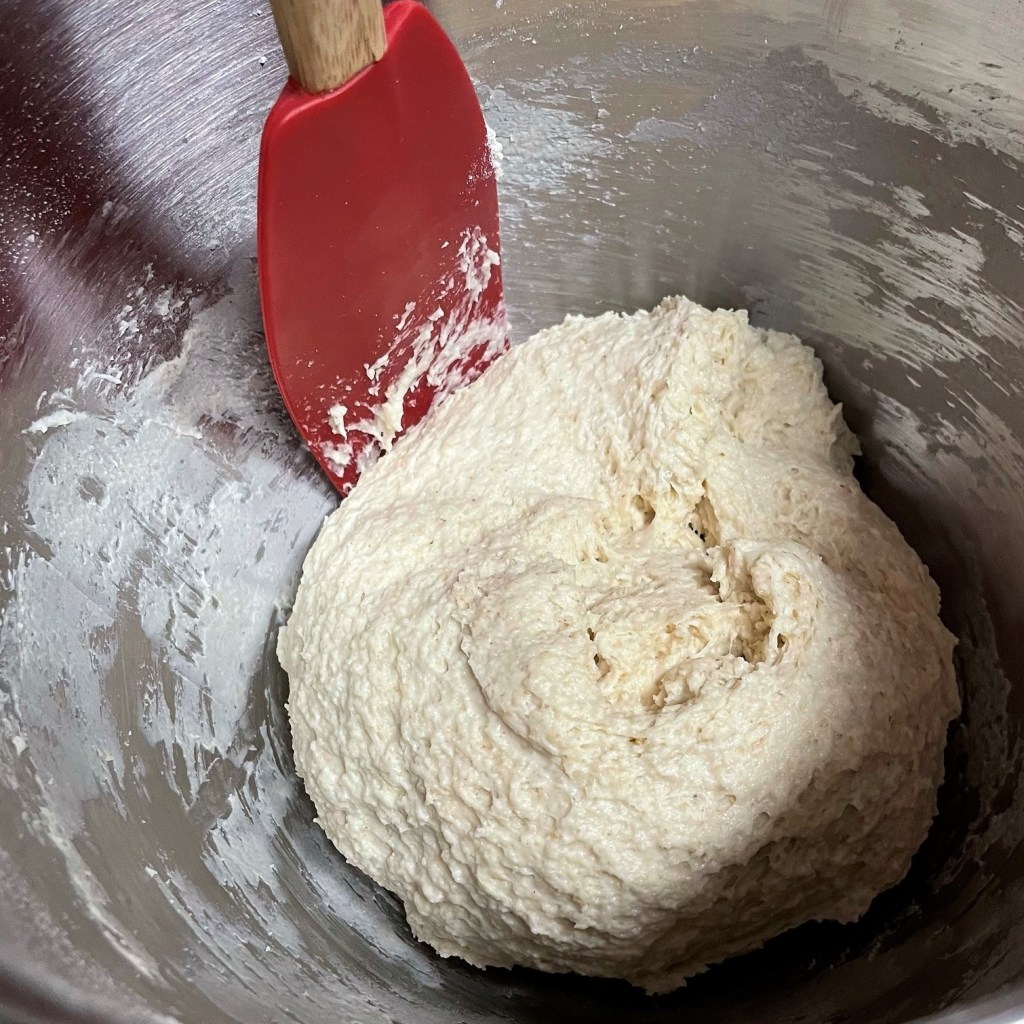
Scrape the dough off the beater and let it rest for at least 20 minutes; 30 is better. It will look rather shaggy at this stage.
After the rest time, use the dough hook to knead the relaxed dough for about 7 minutes.
The dough will still be sticky and stretchy. Resist the urge to add more flour. Transfer to an oiled bowl, cover it and rest it 30 minutes.
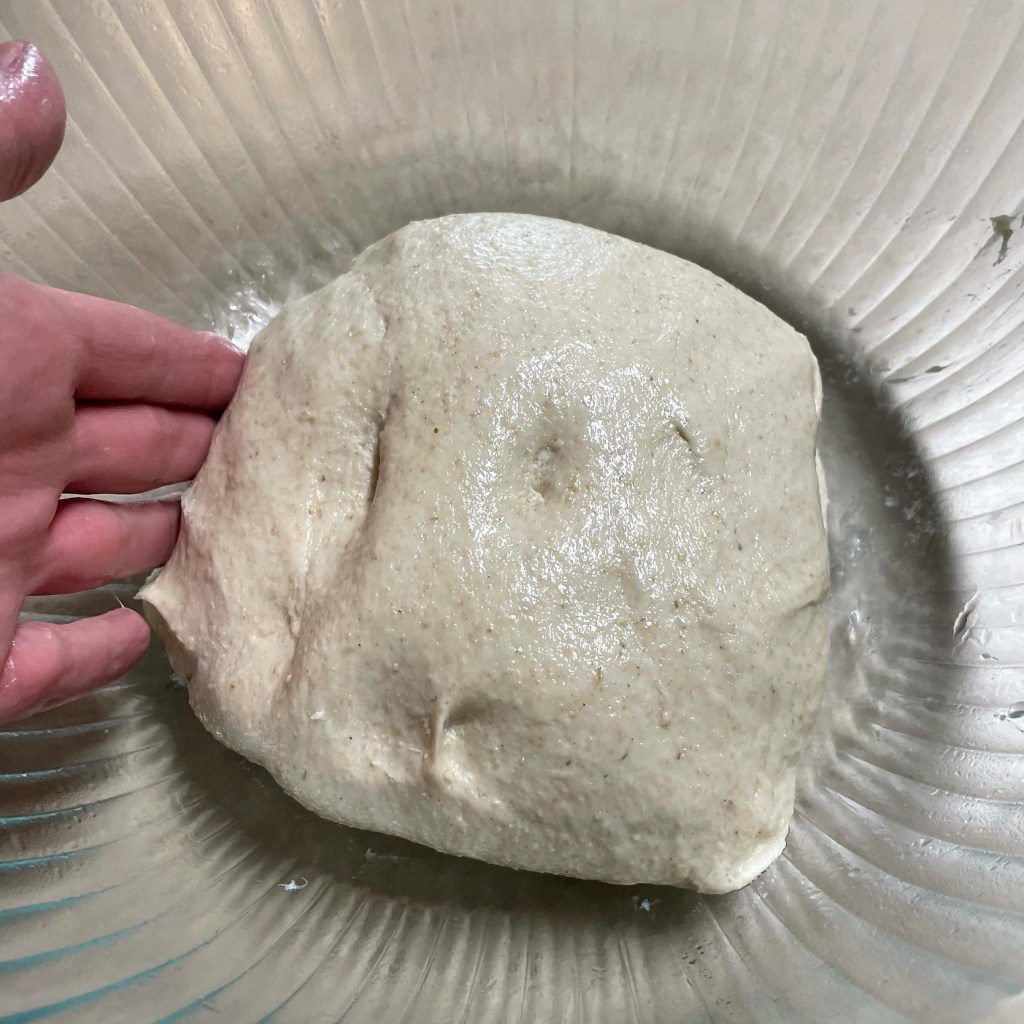
Stretch and fold the dough at 30 minute intervals. Use wet hands to lift and stretch one side up and toward the center. Rotate the bowl and do the opposite side.
Finish by stretching and folding the ends created by the first two stretches.
Turn the dough so that the folded ends are underneath. Cover and rest until the next stretch time.
When dough has doubled in size, shape it by spreading it onto a lightly floured (or very lightly oiled) counter. Begin at the long end and roll up tightly.
Tuck in the ends early in the roll, and again if needed to keep uniform cylinder shape.
Keep the dough as tight as possible to avoid air bubbles.
When the roll is complete, pinch the end to seal it together.
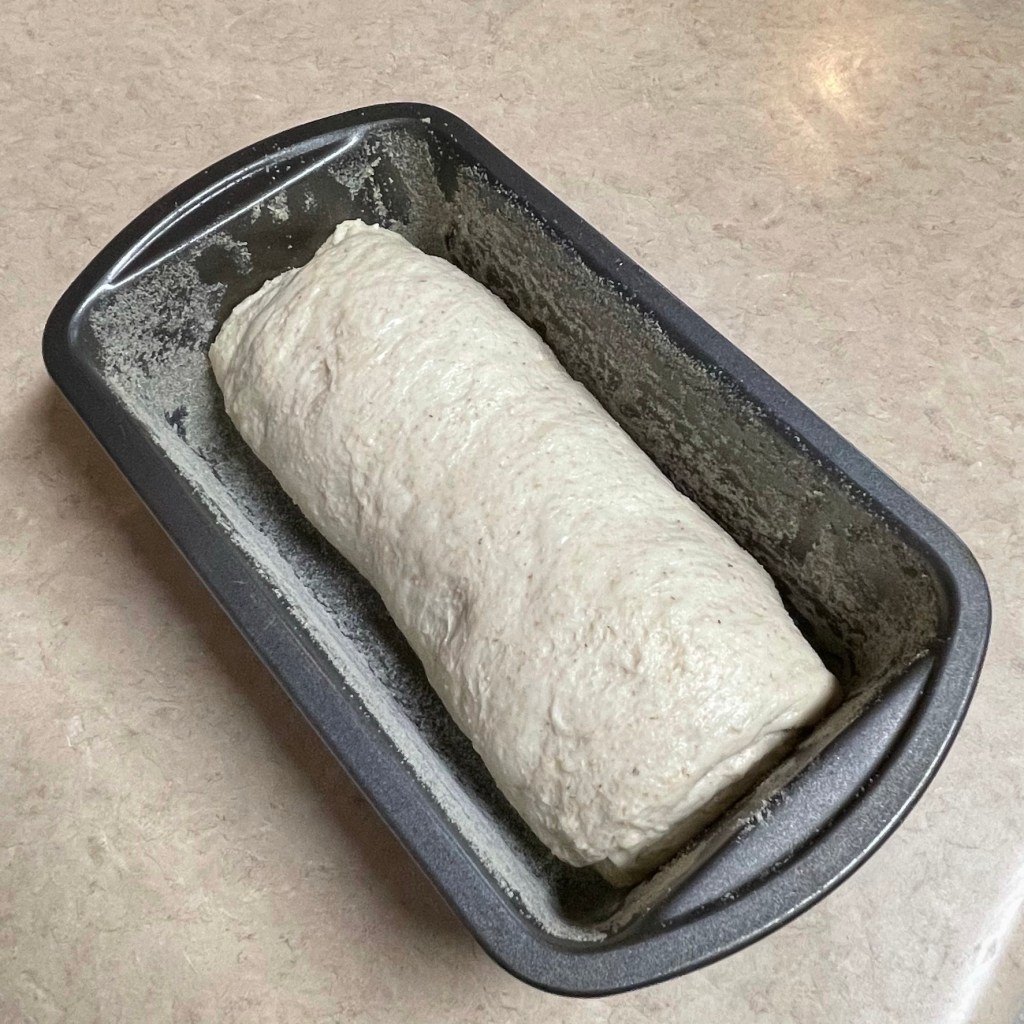
Place the dough, seam side down, into a loaf pan that has been greased and dusted with semolina or fine cornmeal. Cover and proof for about 90 minutes.
Dough is ready to bake when it has risen to about an inch above the rim of the pan.
Bake on the center rack at 400° F, with a steam pan with hot water on the lower rack.
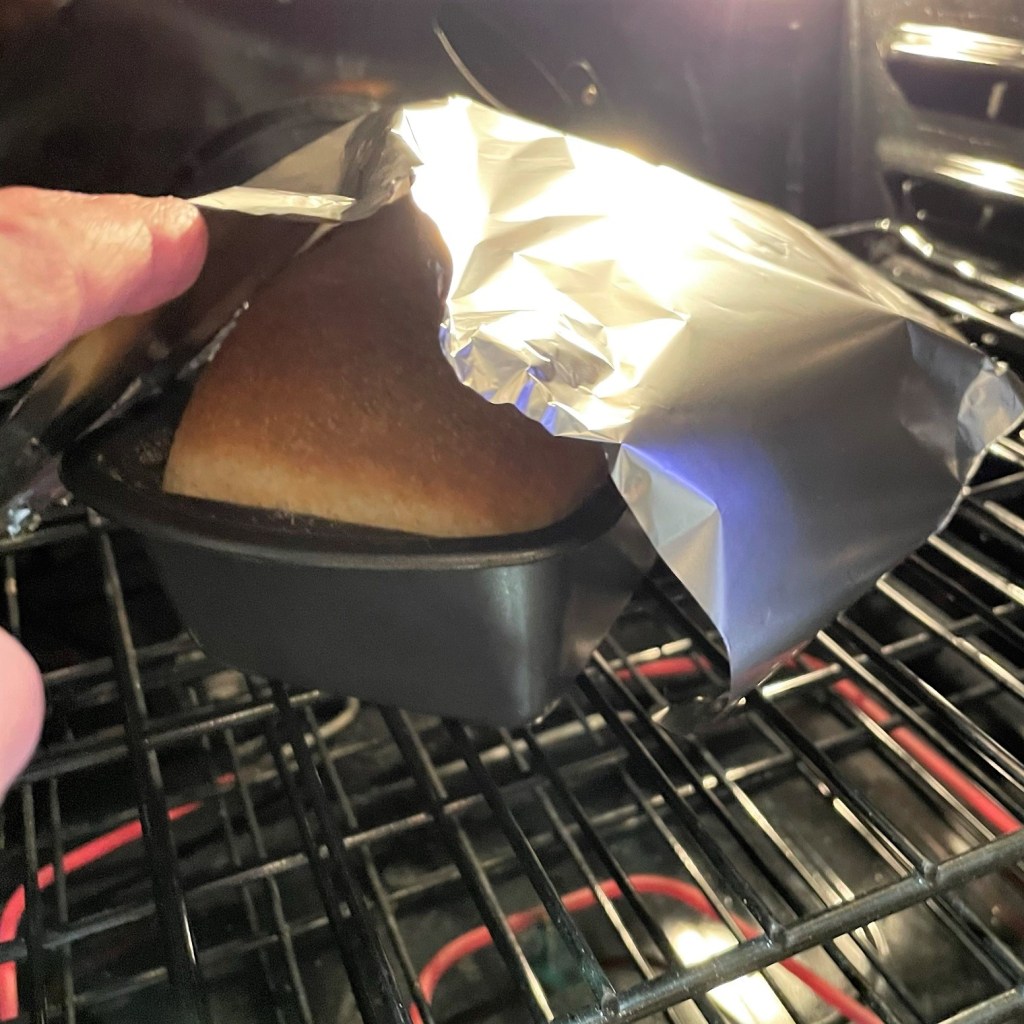
After 20 minutes, remove the steam pan and rotate the loaf. Tent it loosely with foil if it is browning quickly. Bake 25 more minutes.
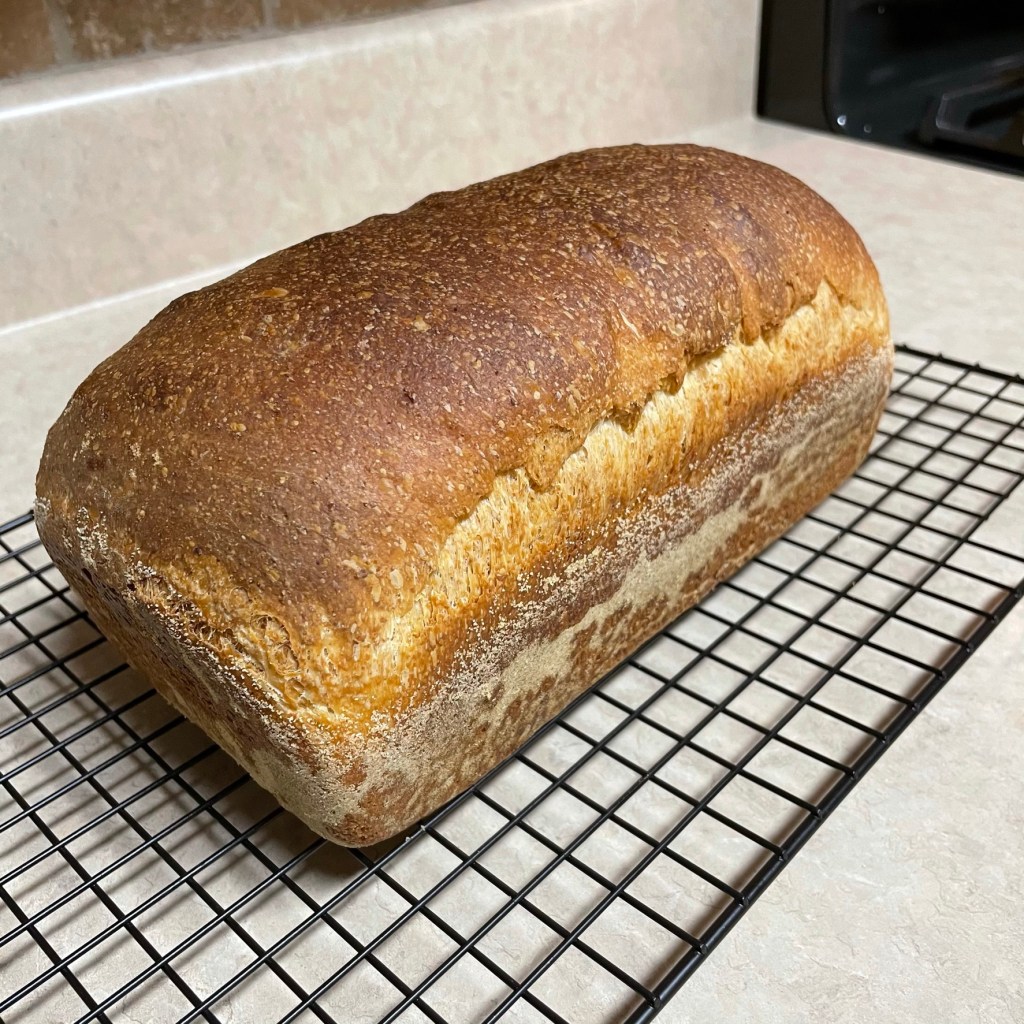
The honey in the bread contributes to the golden crust. Remove the loaf immediately to a cooling rack.
When finished, the bread should register around 205° F inside. This is just right!
This bread makes the best sandwiches and toast!
Whisk together milk and first amount of flour in a small saucepan. Cook over medium heat, whisking constantly, until mixture thickens and becomes sticky and heavy. Remove from heat and spread the mixture out onto a plate to cool for several minutes.
Combine bread flour, whole wheat flour and salt in a bowl.
In the bowl of a stand mixer, combine starter, water, honey and olive oil until blended and smooth. Add pre-cooked flour mixture and blend with the beater blade until smooth. Add dry ingredients all at once and mix with the beater blade until all the flour is incorporated and the dough begins to look organized on the blade. Scrape dough from blade and cover the bowl. Allow it to rest for about 30 minutes before kneading.
Switch to the dough hook, kneading the dough on speed two for about 7 minutes. Spray a large glass bowl with oil and transfer the dough into the bowl. Cover and rest it for 30 minutes.
Wet your hands, then stretch and fold the dough like this: Loosen the dough from the edge of the bowl that is farthest away from you and lift it, stretching and folding it down toward the center. Rotate the bowl to fold the opposite, then rotate the bowl to repeat the folds on the sides of the dough. Cover and rest again and repeat the folds twice more at 30-minute intervals.
By the final stretch and fold, you will find that the dough has built enough strength to feel resistant. Prepare a large loaf pan, oiling and dusting with semolina or cornmeal if needed to reduce sticking.
Shape the loaf by flattening it out onto a flour-covered board, the rolling it up tightly into a cylinder shape. Pinch the final rolled edge to seal it, and pinch the ends of the roll. Cover the loaf pan with plastic wrap or an elastic bowl cover and let it nap in a warm spot in the kitchen, with no drafts. Final proofing will be about 90 minutes.
Preheat oven to 400° F, with one rack in the center of the oven and another rack below it for the steam pan. When oven reaches temperature, place a shallow pan of hot tap water on the lower rack and allow it to preheat 10 minutes longer.
Bake the bread with steam for 20 minutes. Remove the steam pan, rotate the bread for even browning, and cover with a loose tent foil if the bread is browning quickly. If the loaf is still pale, the foil may not be necessary. Bake an additional 25 minutes without steam. Internal temperature of finished bread should be 205° F. Remove from pan right away and cool on a rack.
This most recent bake had significantly more whole wheat, and it still turned out just perfect. I love a versatile recipe!
What if everything we have always assumed about the Wicked Witch of the West turned out to be smear campaign, orchestrated by someone else, whose own reputation was at stake? What if the Wicked Witch was misunderstood, mischaracterized and scapegoated? What if she was driven to be wicked or what if she was never wicked at all?
These are all questions I have pondered, after my husband, Les, and I enjoyed seeing the touring performance of Wicked: The Untold Story of the Witches of Oz. Neither of us had seen or heard much about the story, which began as a book in 1995, and was adapted for the Broadway stage in 2003, ultimately skyrocketing into the $1 billion+ range in ticket sales. There has been talk for more than a decade about a live-action film based on the story, which remains to be finalized, but I have my fingers crossed!
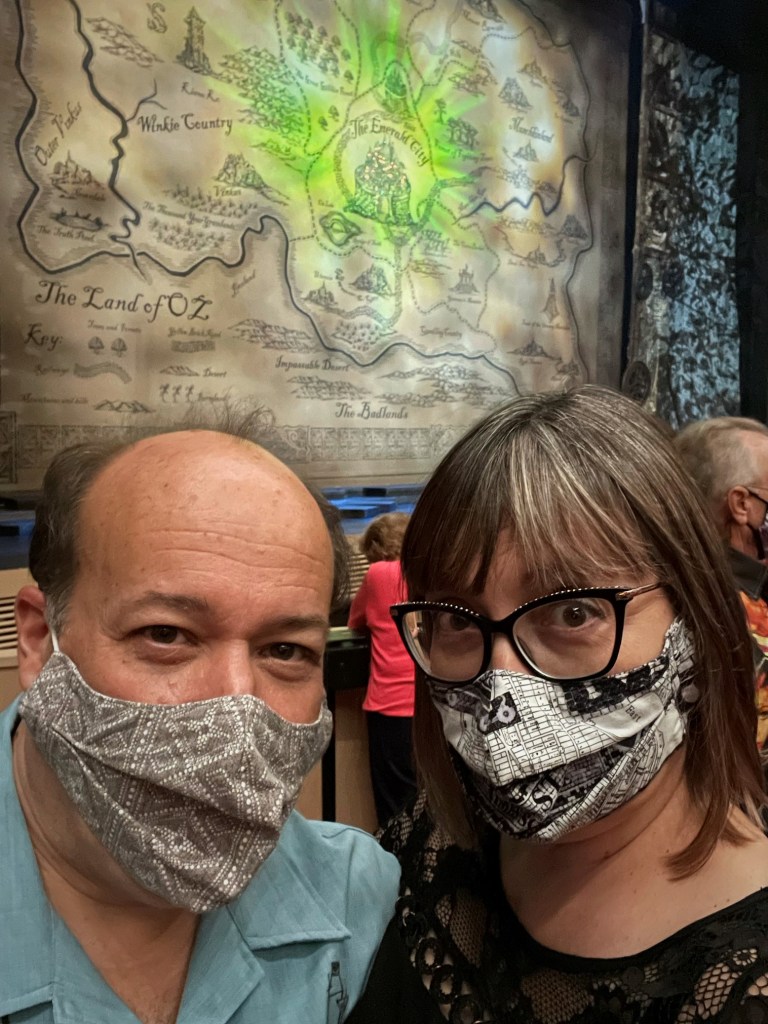
No recordings or photos were allowed during the performance, but the beautiful backdrop was perfect for selfies before the show!
The performance we attended in Greensboro, N.C. was delightful, funny, magical and thought-provoking. The set decoration and costumes were breathtaking, and the music was simply spectacular! I had often heard the tale of Wicked described as a “prequel” to The Wizard of Oz, but we found it to be more departed from that classic, beloved story—perhaps more of a re-telling or an alternate perspective with more context. The tale revolves around the unexpected early connection between Glinda and Elphaba (see?—the wicked witch actually had a name), their rivalry in magic school and in a love triangle, and the final straw that became the wedge to drive them apart. Well, sort of.
There is a flashy scene near the middle of Wicked, when Glinda and Elphaba first discover the glitz and glamour of the Emerald City, and Glinda remarks that it’s “all very Oz-mopolitan!” When Les and I left the theatre, I removed my mask and said, “You know I’m gonna have to make a Wicked cocktail, right?”
I will not present any spoilers, in case you have not seen the play, but I will say that my cocktail is a very slight riff on a classic drink called “The Last Word,” and there’s a reason (other than the color) that I chose this drink. The story of Wicked is itself a riff on a classic, and in that magical tale, it is Elphaba, the perhaps-not-so-wicked witch, who has the last word, and that is what left me with all the questions I pondered at the beginning of this post.
Now, about this green drink. 😉
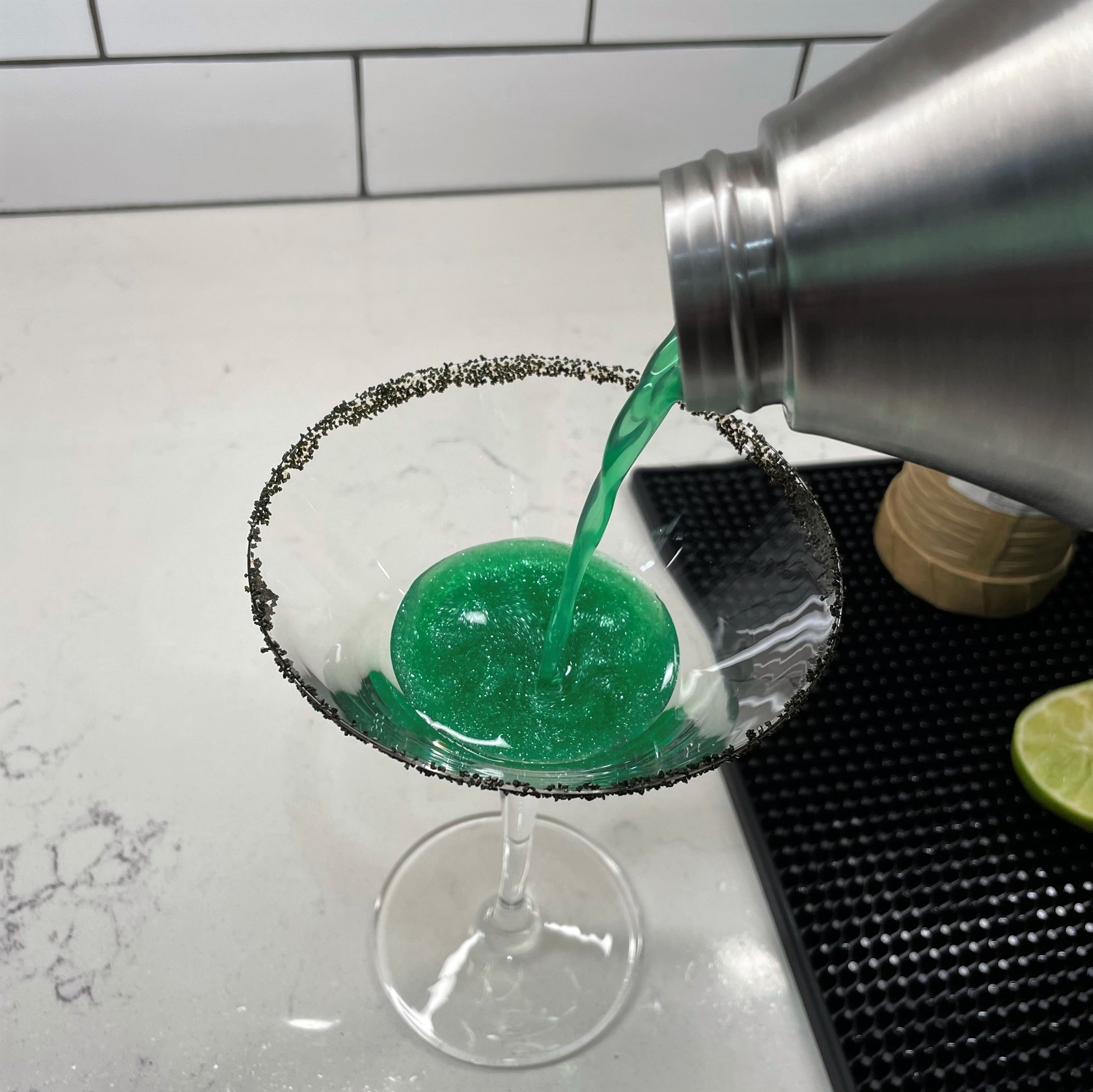
It’s a shimmery, green, dramatic version of a classic Prohibition-era cocktail. Perfect for Halloween or any other time you are feeling a little “witchy.”
The original drink, The Last Word, was a Prohibition-era classic—made with equal parts gin, green Chartreuse, maraschino liqueur and freshly squeezed lime juice—and it is all at once herbal, sweet, citrus-y and complex. I have not altered the recipe of The Last Word; rather, I have pushed it into “wicked” territory by use of three simple but dramatic special effects.
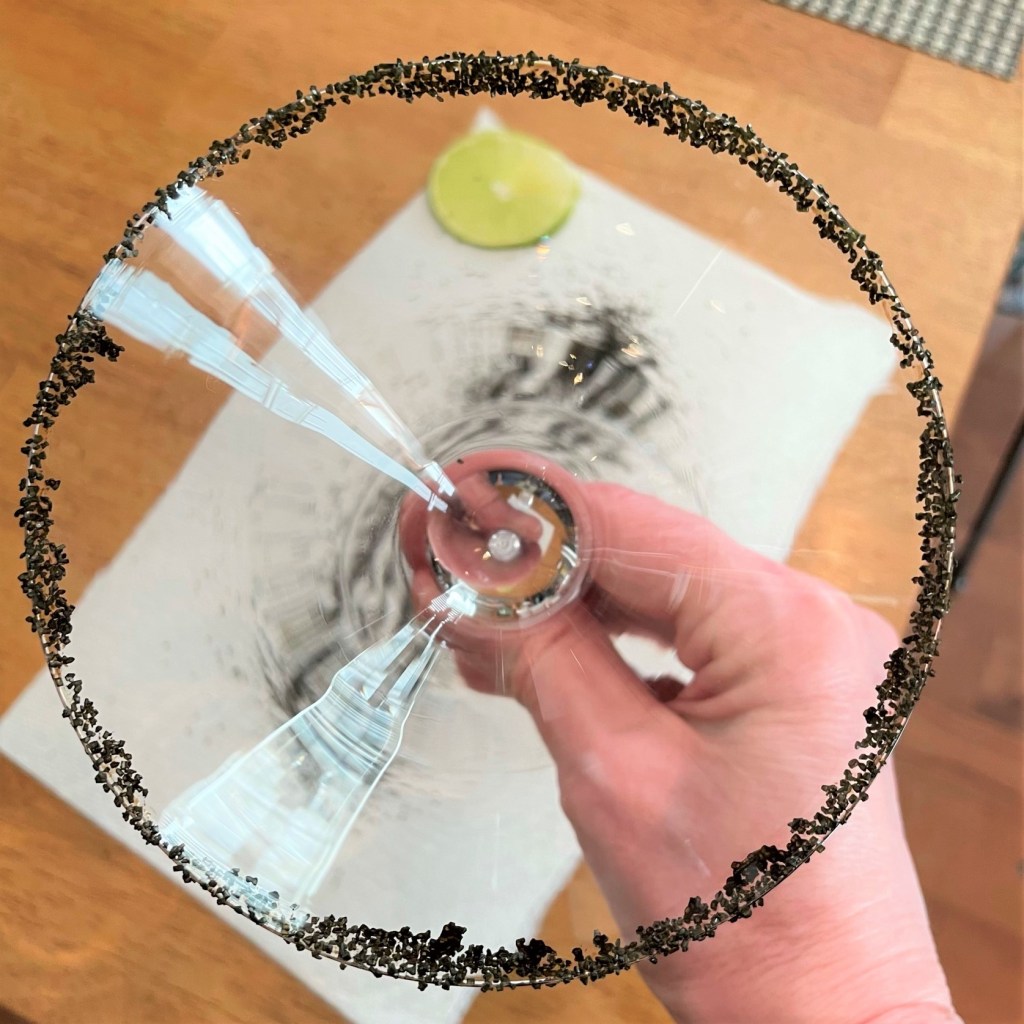
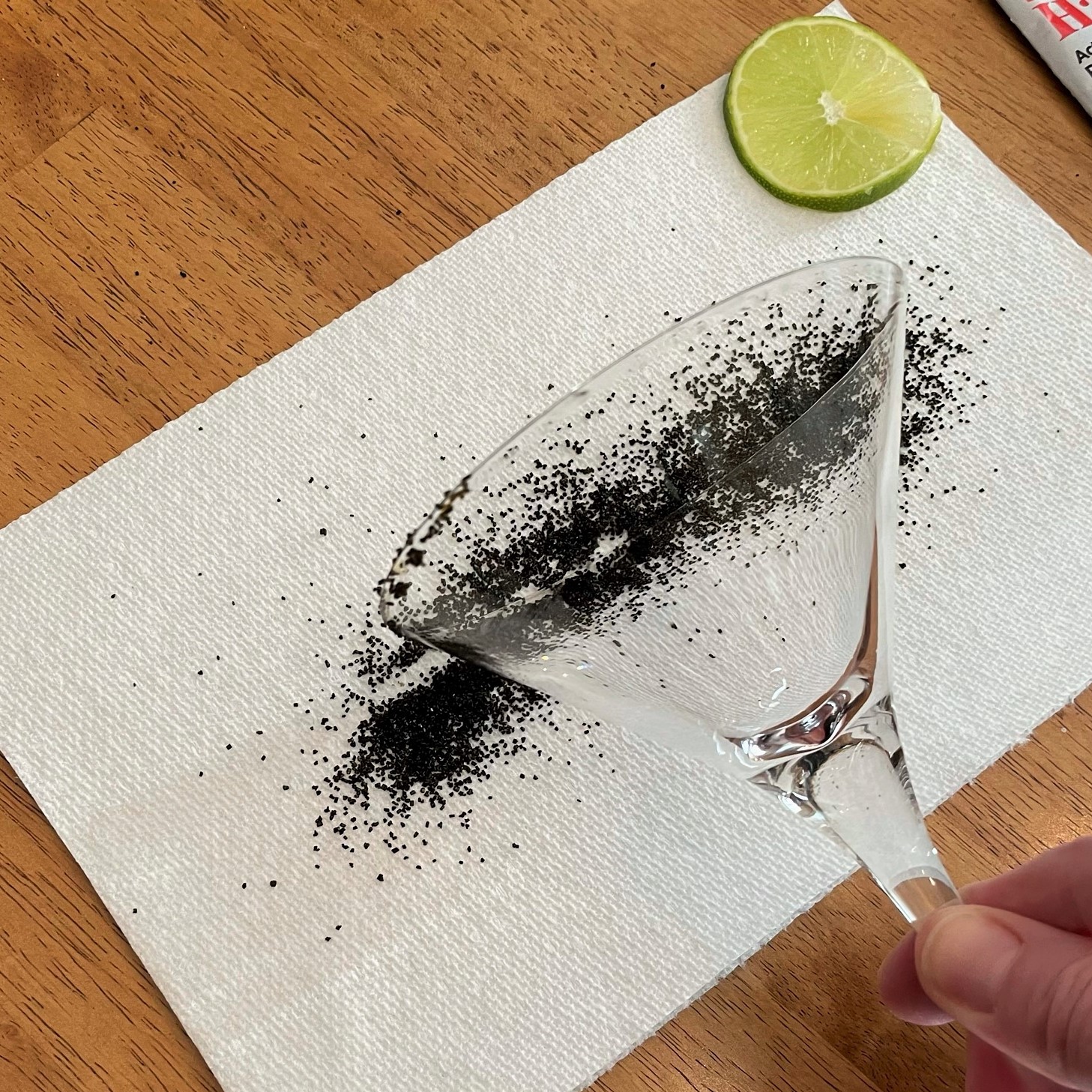
A rim of sparkly black sugar dresses up the glass and gives it a slight feel of wickedness.
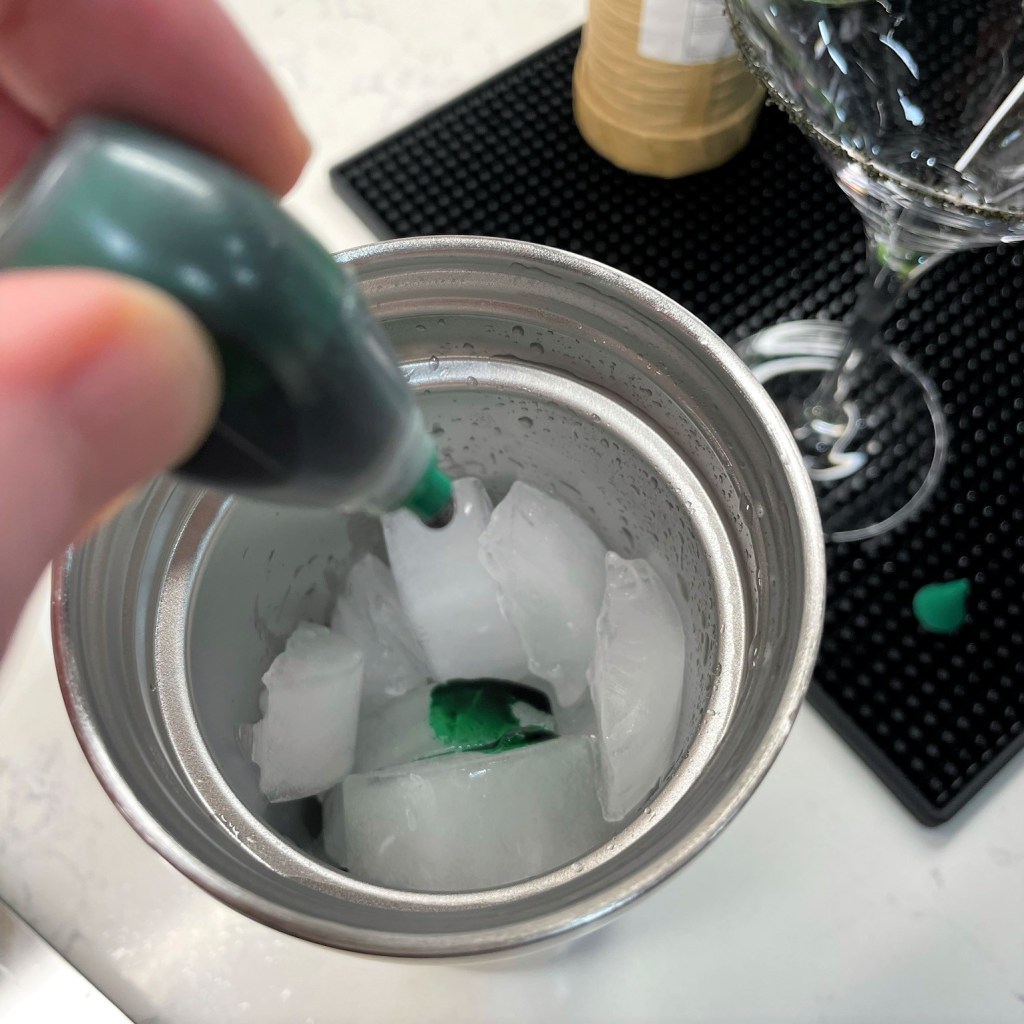
A drop (or maybe two) of green food coloring, in honor of Elphaba and her beautiful green skin.
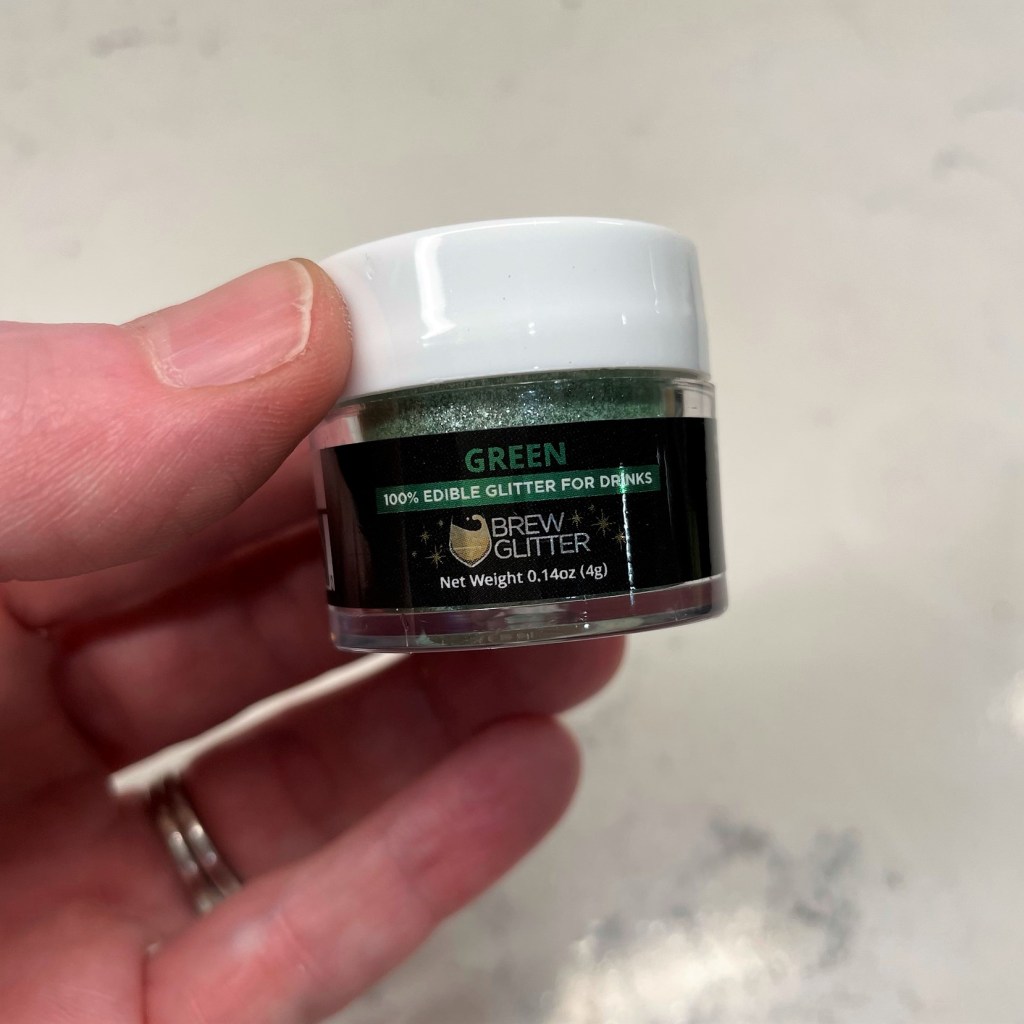
Edible green glitter makes this cocktail fun and magical.
And for those special effects, I have renamed my version “Oz-mopolitan.” Enjoy!
Equal parts of gin, Chartreuse, maraschino liqueur and lime juice make up the classic cocktail called “The Last Word.” You are also getting a sneak preview of my new kitchen in these images!
Ingredients (makes one cocktail)
3/4 oz. dry gin
3/4 oz. green Chartreuse liqueur* (see notes)
3/4 oz. maraschino liqueur*
3/4 oz. freshly squeezed lime juice
Special effects
Black sugar sprinkles*
Pearl green edible glitter*
Green food coloring
*Notes
Chartreuse is a French liqueur, and there are two varieties of it—yellow and green. The green version (used in this drink) is strong, bold and herbaceous, almost medicinal on its own. For the most part, it is enjoyed as part of a cocktail rather than as a cordial.
Maraschino liqueur is also generally used as a mixer with an anchor spirit, such as vodka or gin. It is not as “cherry flavored” as you might expect, but it does lend a tart cherry accent to a cocktail. Luxardo makes a terrific version of this liqueur.
The black sugar and edible shimmer dust I used for this were very easy to find on Amazon, but you might also check the cake decorating section of a well-stocked craft store, such as Michael’s. Be sure the products you choose are clearly marked as “food grade” or “edible.”
Instructions
Run a slice of lime around the rim of the glass, then ROLL it along the outside edge only. If you “dip” the glass into the sugar, bits will fall into your drink.
Sprinkle a very small amount, not quite 1/8 teaspoon, of edible glitter into the bottom of the glass.
Combine the cocktail ingredients, plus the green food coloring. Add ice and shake 20 seconds. Pour the drink directly onto the glitter, and let the sparkling begin!
After several minutes, the edible glitter will settle somewhat. Use a cocktail straw to swirl and reactivate the shimmer. 🙂
Prepare a martini or coupe glass by swiping a slice of lime all the way around the rim. Sprinkle black sugar onto a clean paper towel and roll the outside rim of the glass over the sugar, repeating the roll as needed for full coverage. It’s best to do this several minutes ahead, giving the sugar time to “set up” on the rim of the glass.
Combine the cocktail ingredients in a shaker, add ice and a drop or two of green food coloring. Shake vigorously for about 20 seconds.
Sprinkle a small amount (I used just shy of 1/8 teaspoon) of edible shimmer dust into the bottom of the rimmed glass.
Strain the cocktail into the glass and watch the shimmer dust create a gorgeous, magical swirl!
We are heading into Week 5 of our “life without a kitchen” project, and remodel fatigue is officially hitting me. I have been restless, tired, sleepless, pessimistic and flat-out grumpy over the smallest things, and biting off my husband’s head for having the audacity to relax on the sofa for five minutes after a long day of listening to his counseling clients’ problems.
Caution ahead: this post has a lot of pictures, but they tell the story so please bear with me. 🙂
At least we’re cooking!
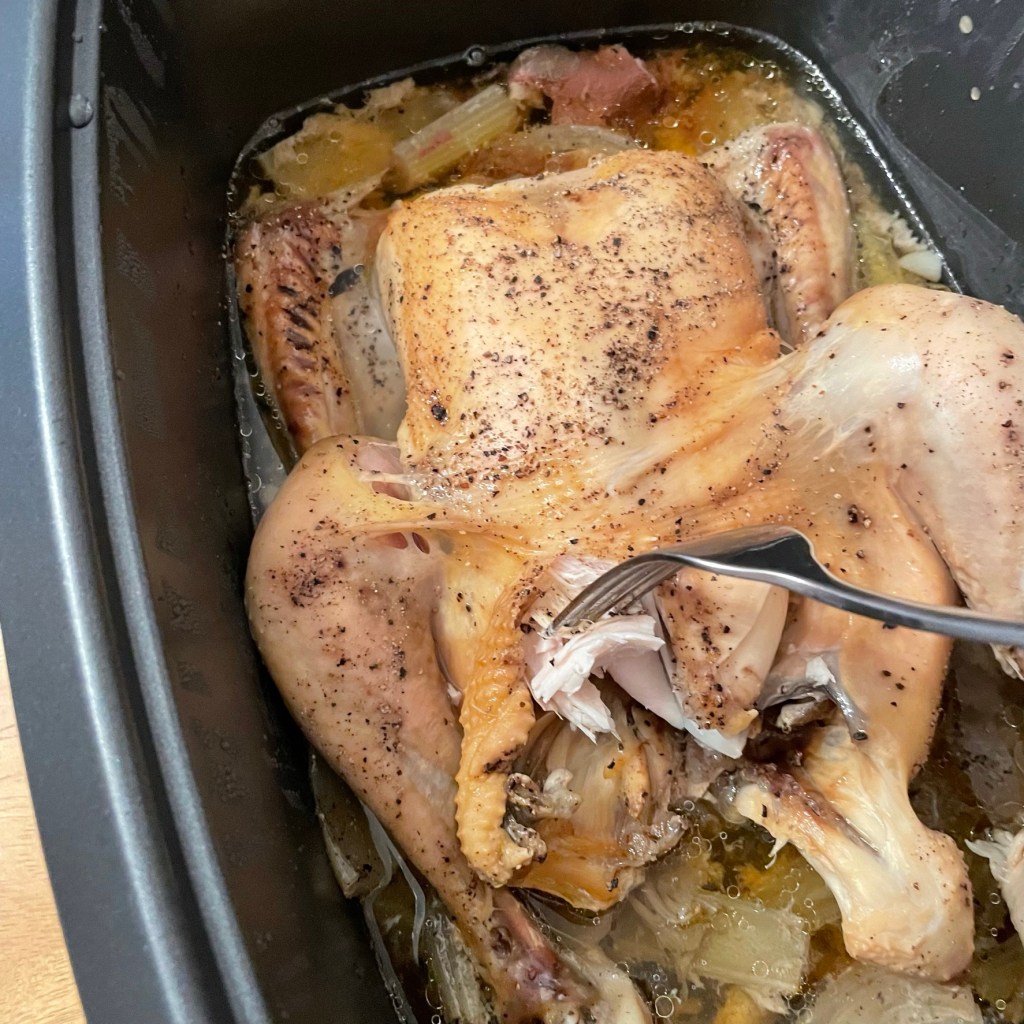
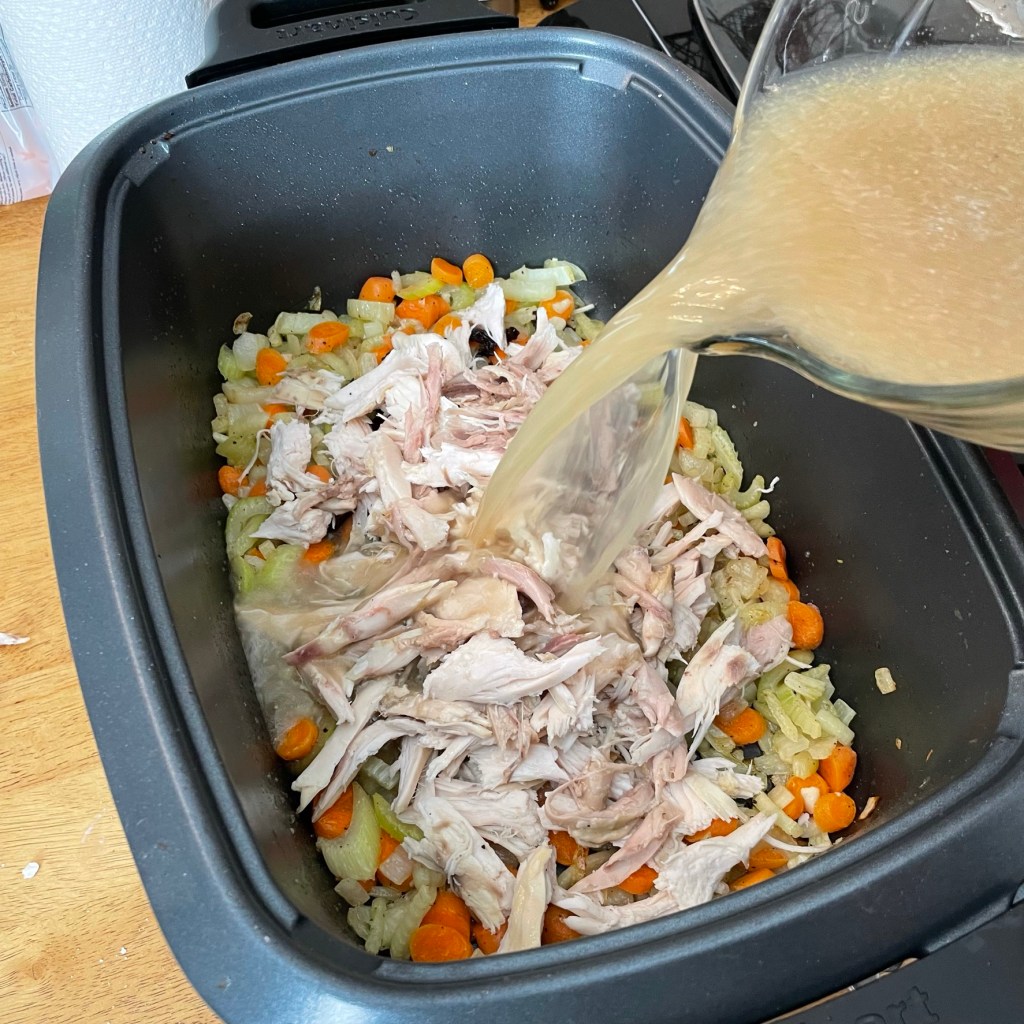
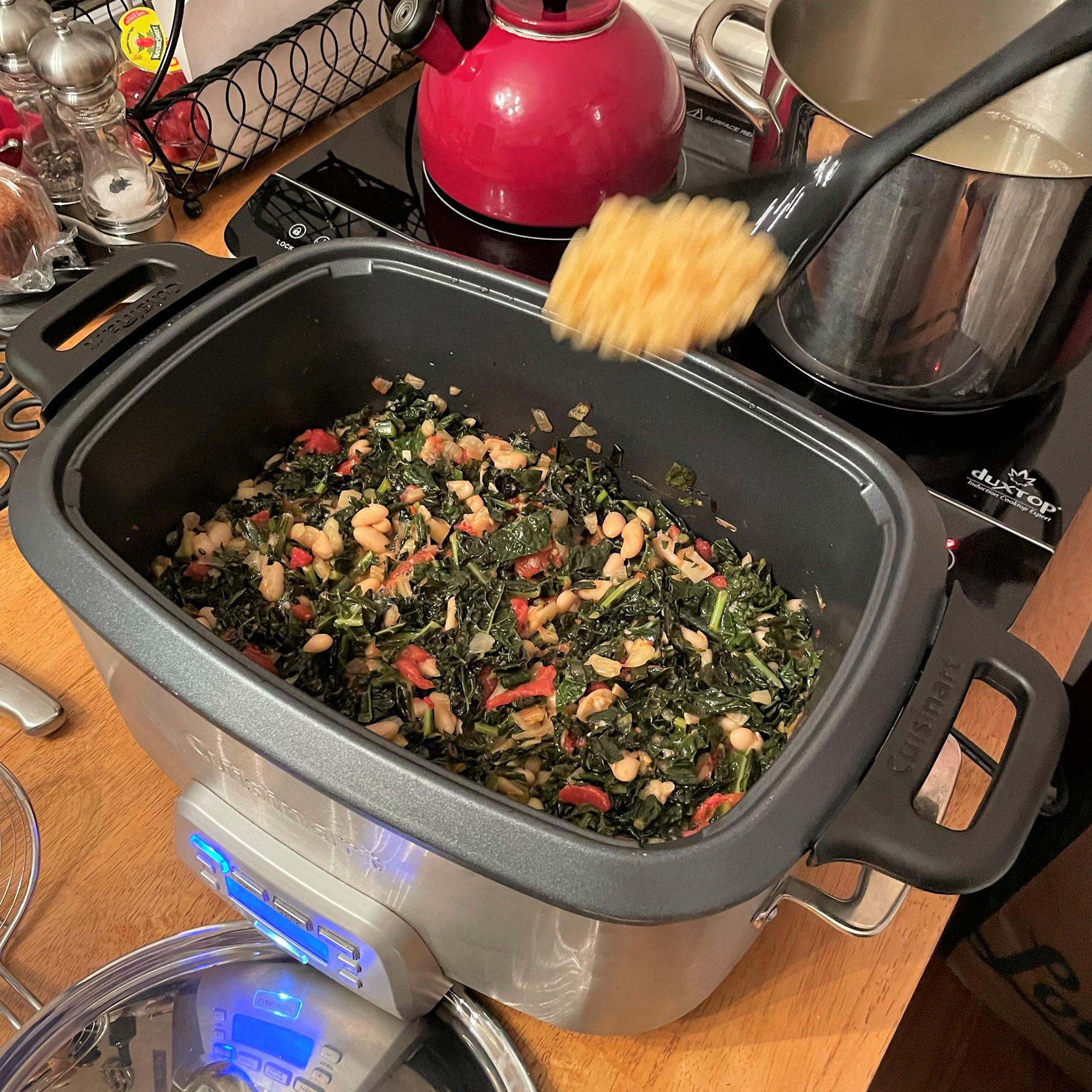
I am dealing OK with the cooking-without-a-kitchen side of things—better than I expected, to be honest. It helps to have a few multi-purpose appliances, and I don’t mean Instant Pot. No, we are relying on old-school appliances we already had. The slow cooker that my husband, Les, used to make the thick and meaty bison chili posted yesterday also saved the day for me last week when I made a batch of from-scratch chicken soup, which began with an overnight roast of a whole chicken. A few days before that, I used the slow cooker to make a recipe that caught my eye on my blog buddy Bernadette’s site: PASTA FAGIOLI WITH KALE – not a love story – New Classic Recipe. I had to make a few minor substitutions, but it still turned out terrific—I’ve linked it here, in case you’d like to try making it in an actual kitchen. We have also employed our Cuisinart Griddler for hash brown waffles, panini sandwiches and bacon.
Thankfully, Les and I have both focused on cooking foods that provide ample leftovers, and that has saved a lot of time and effort during these kitchen-less weeks.
Slow cooking the chicken overnight produces a rich, flavorful stock.
From that point, it’s chicken soup as usual.
My version of Bernadette’s pasta fagioli, by way of our slow cooker and the induction cooktop. Pardon the blur; our dining room lighting sucks.
The Griddler actually has become a new favorite way to cook bacon. Except for the cleanup.
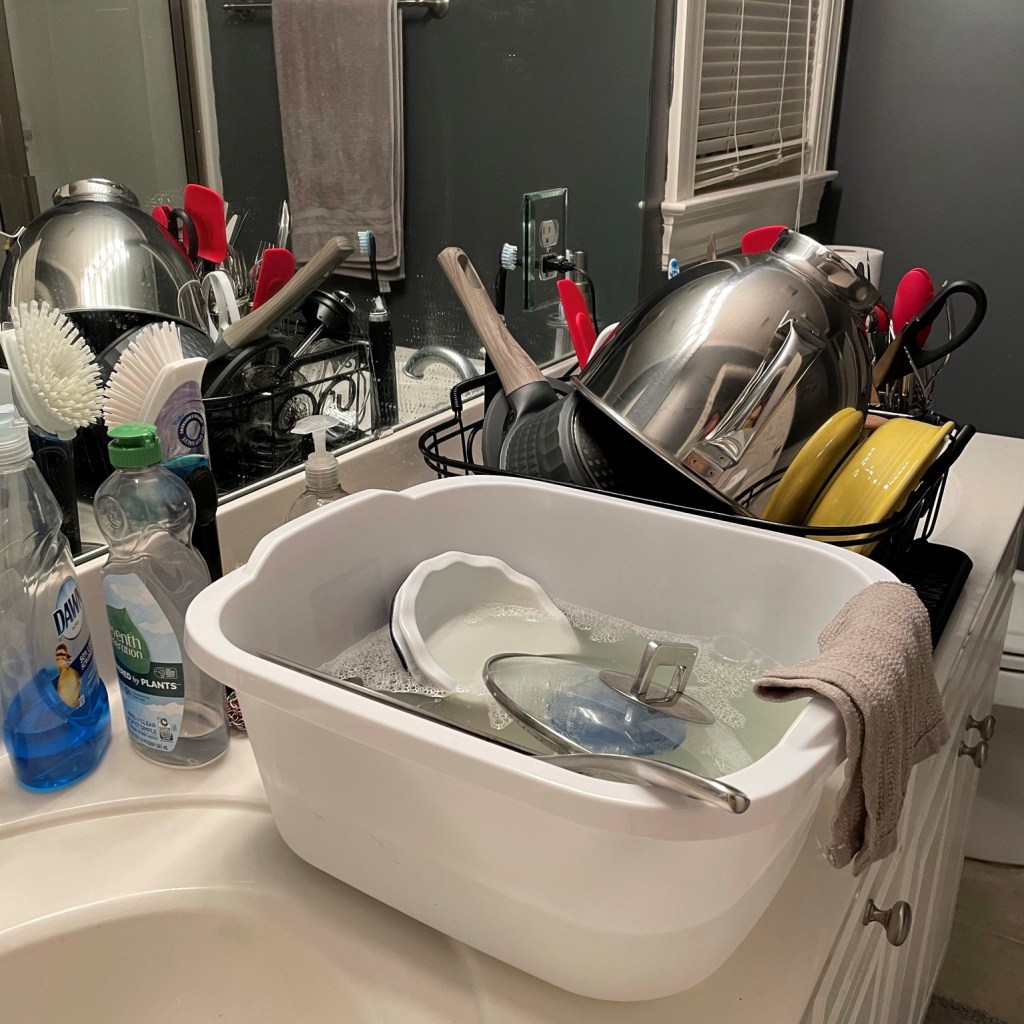
Where did all these dirty dishes come from?
But the other concessions we have made to realize our dreams of a better kitchen are, quite frankly, pushing me to the brink.
For example, doing dishes in the bathroom has proven to be the single greatest pain in the ass. I had the presence of mind, at least, to purchase a plastic dish pan that travels to and from the dining room, on a schedule not unlike the trains moving in and out of Penn Station. That was one of my best under-$5 purchases ever. But even that has a couple of downsides—first, the dish pan never seems to be in the location where I most need it, so I am trudging back and forth to opposite ends of the house to retrieve it. Plus, the thing only holds about one meal’s worth of dishes at a time, and that means I am washing dishes three times a day, or else struggling to wash what is in the dish pan because it is too full.
On a positive note, at least I am not filling up the oceans with more plastic.
Thank goodness we are using disposable Chinet plates for most of our at-home meals, so the only things to be washed are pans, silverware, mugs and glasses, but I’m astonished at how quickly those things accumulate. It doesn’t help that it takes approximately five minutes for our water to heat up at that end of the house, but that’s another story.
Let me out! Let me in!
The long-term effects of the kitchen commotion on our pets remains to be seen, but we know the daily impact because we are constantly responding to their physical needs (or whims, in the cat’s case) to go outside. All doors to the kitchen are taped off in protective plastic so the doggy door is not available as usual. Even when the remodel crew is not working, and we are able to roll up the temporary plastic doors, the appliances are situated so that the door still isn’t easy to use. What this means for Nilla, who has enjoyed free, on-demand access to the backyard pretty much since she was a puppy, is that she needs to come find one of us (usually me, given that I work from home) when she needs a potty break. Bless her 13-year old heart, she has only had one incident that she couldn’t wait until her daddy got the leash on and the door opened. That girl is a team player.
I’m ready to come in. Again.
Let me out. Again.
And Taz, our sweet-but-demanding calico, is also missing the luxury of doggy-door, but in the opposite way. She enjoys being outside when the weather is nice (and it has been, for the most part), but she will spend hours surveilling the cul-de-sac and exploring the front garden beds, only to clamor at the front door to come inside, so she can use the litter box. As one of my friends put it, “she has standards.” We have only had one nasty thunderstorm since the kitchen project began, and when Taz scurried to the back door looking for protection that day, I had only one choice—to rip off the plastic door, lift the heavy blockage and get that baby inside, much the way someone might experience an emergency surge of adrenaline to lift a Volkswagen off their child. In further demonstration of Taz’s “standards,” this spoiled kitty refuses to drink pure, filtered water from an etched crystal bowl. No, she will only drink directly from the faucet in the bathroom sink—which, of course, is filled with dishes.
Thank God our discussions for getting a puppy this year did not come to fruition.
At least there’s takeout
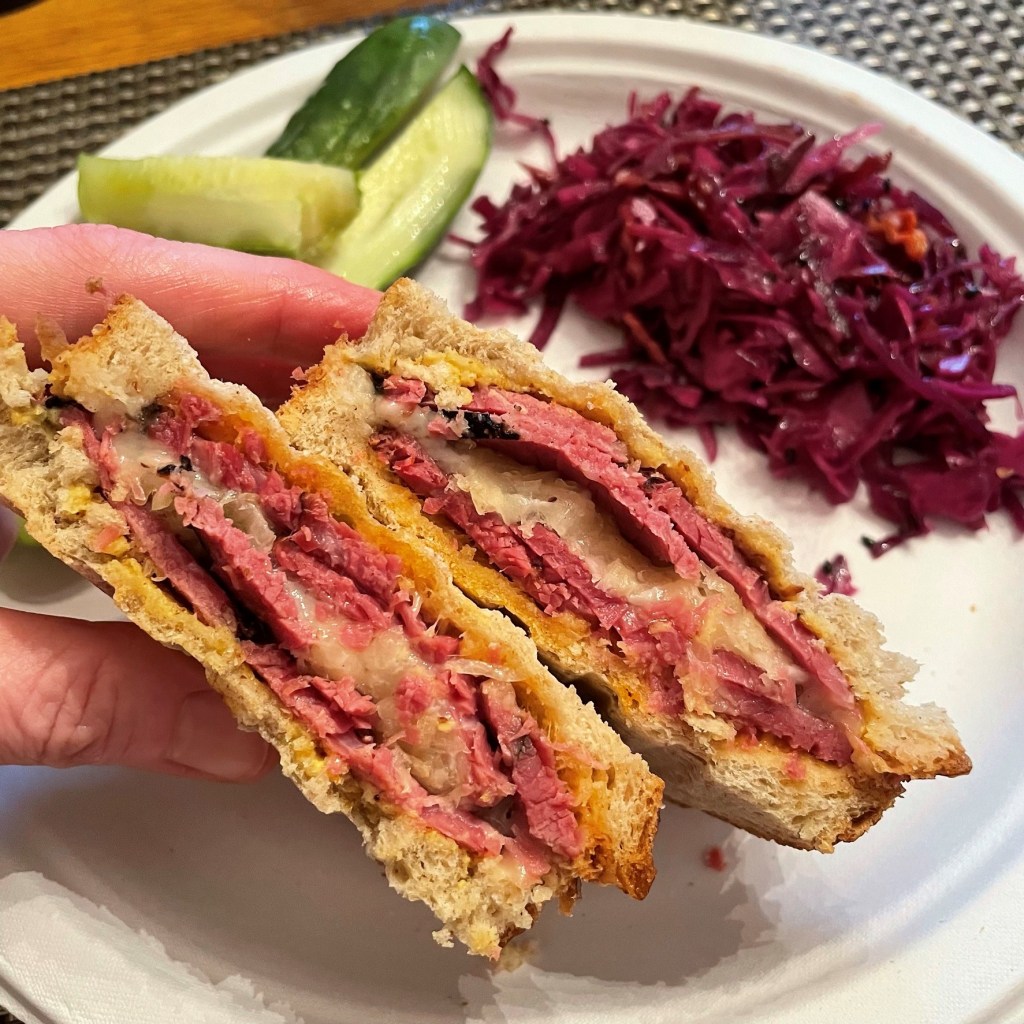
We have, of course, taken advantage of the many take-out opportunities available to us, and for the most part, we have done so from a few of our favorite local places. But leave it to me to take a simple solution and push it into ridiculous territory. I could have called up a local sandwich shop that makes a perfectly good Reuben, but nooooo. I had to get online and place an order with Katz’s Delicatessen in NYC, paying through the nose for this package, “A Taste of New York,” delivered to my doorstep in huge, insulated boxes.
I’ll have what she’s having.
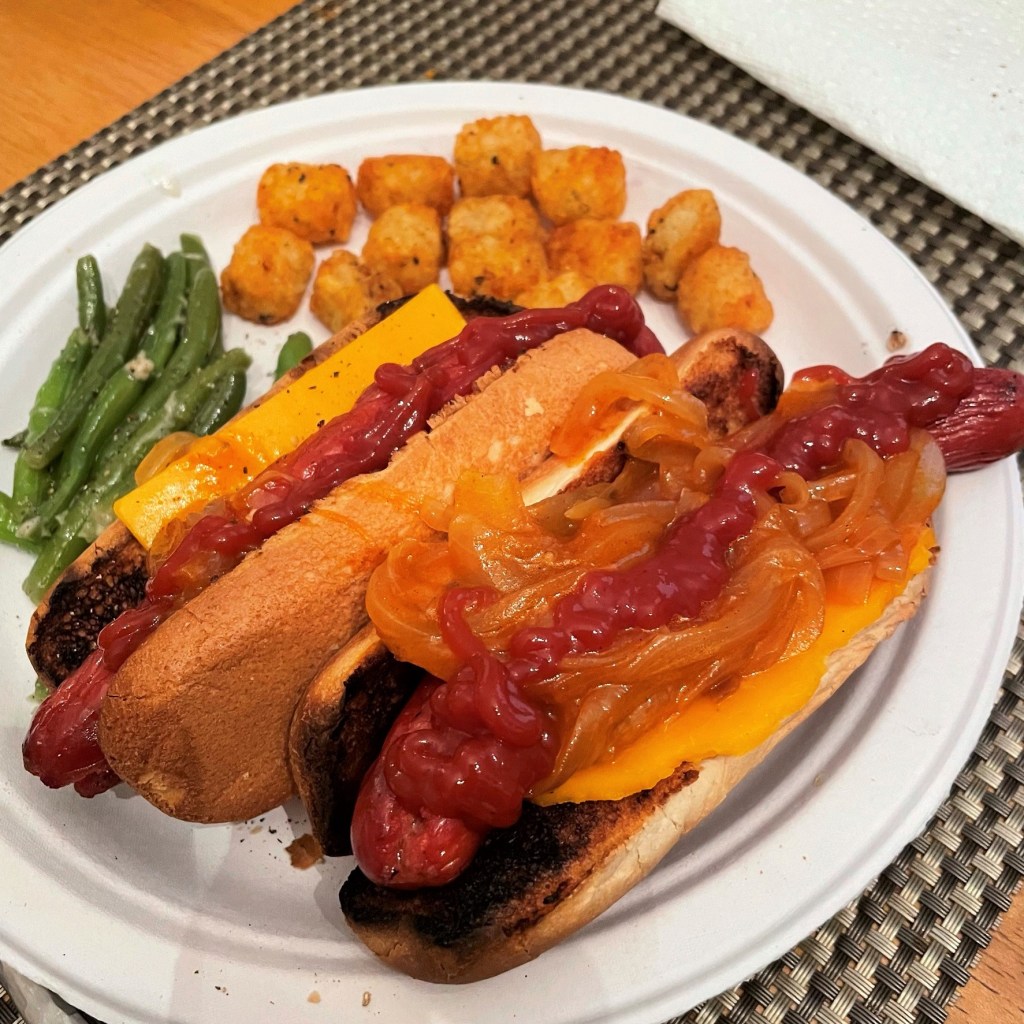
The shipment included a pound each of Katz’s incomparable pastrami and corned beef, a package of Kosher beef frankfurters, six New York bagels, a loaf of Katz’s deli rye, plus sauerkraut, mustard and full-sour pickles. It did make us smile, because we didn’t have enough time to visit Katz’s on our visit to N.Y. a couple of months ago. The only thing left from the Katz’s delivery is an enormous Kosher beef salami, which we will probably save for Super Bowl entertaining, and that will be here before we know it.
I whipped up a quick batch of Les’s favorite Spanish onion sauce to top the franks.
I loaded mine up with Katz’s sauerkraut and mustard. Yum!
Our Cuisinart Griddler came in handy for making panini Reubens, or rather, Rachels, given that we opted for pastrami for that meal.
We also took a hard left onto the Lower East Side, with pastrami, swiss cheese and sauerkraut stuffing these loaded baked potatoes, done up in our toaster oven. They were great!
Trial runs in the kitchen
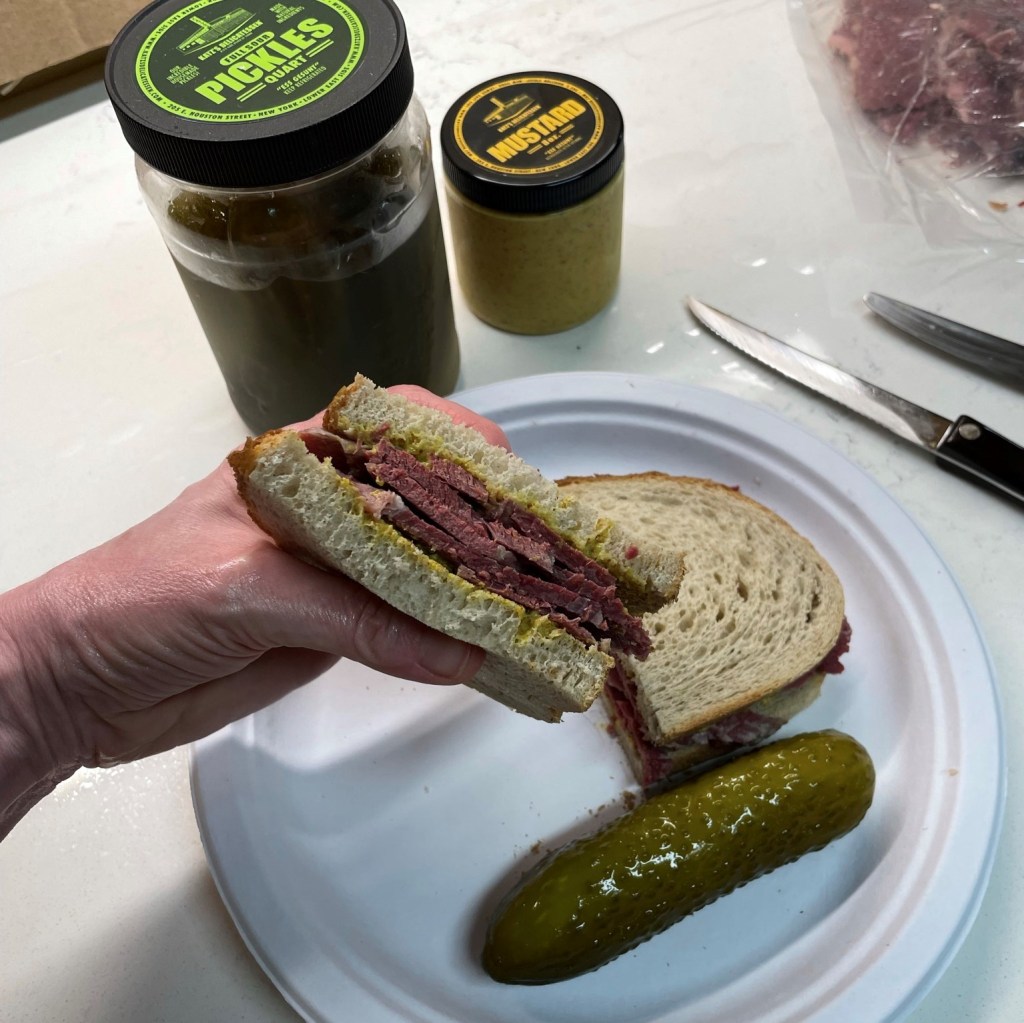
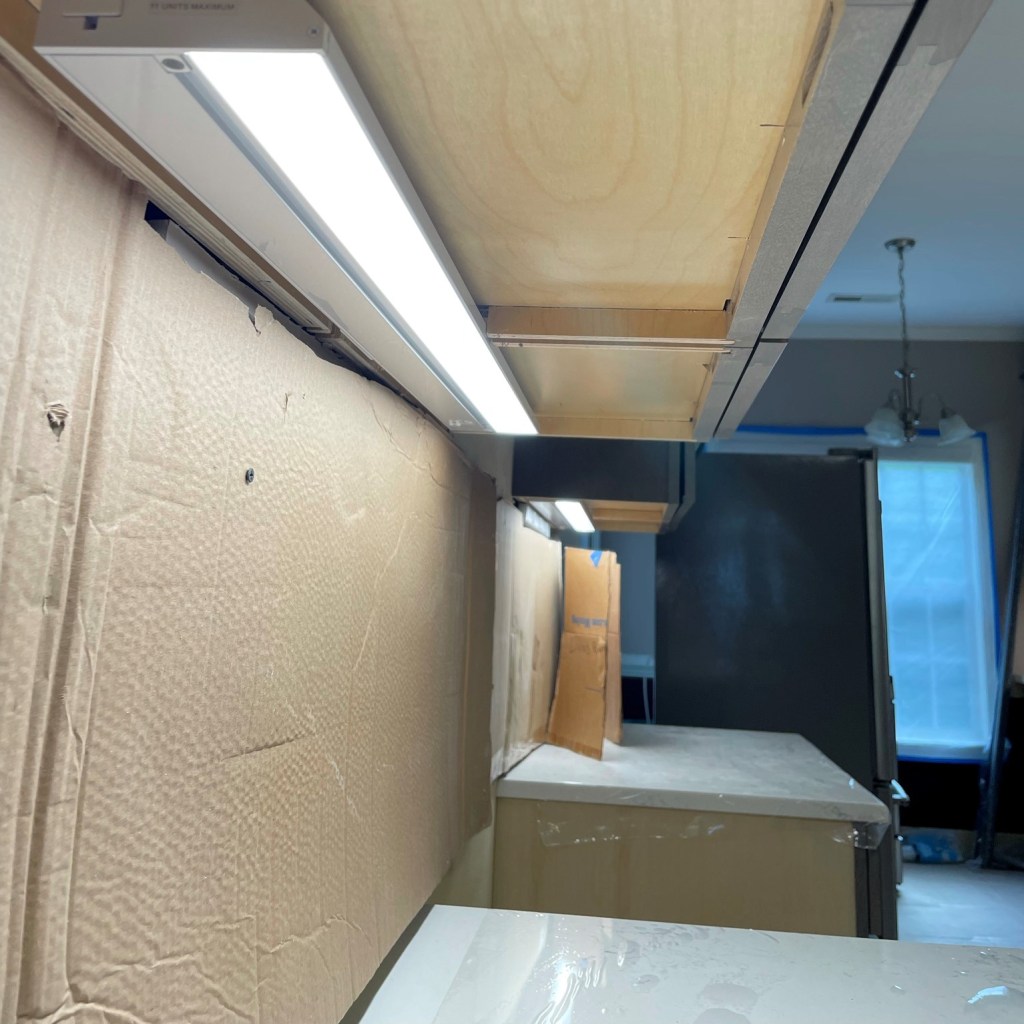
Our first meal from the Katz’s box gave us some disappointing, but helpful, information about the installation of our undercabinet lighting. Without intending to post any pictures of it, I plated up a pair of corned beef on rye sandwiches, along with the giant deli pickles. These pictures were not about the food, but about the orientation of the light strips that are supposed to be helping me with presentation of recipes on Comfort du Jour (not to mention cooking). What do you see here, besides the best corned beef this side of Manhattan?
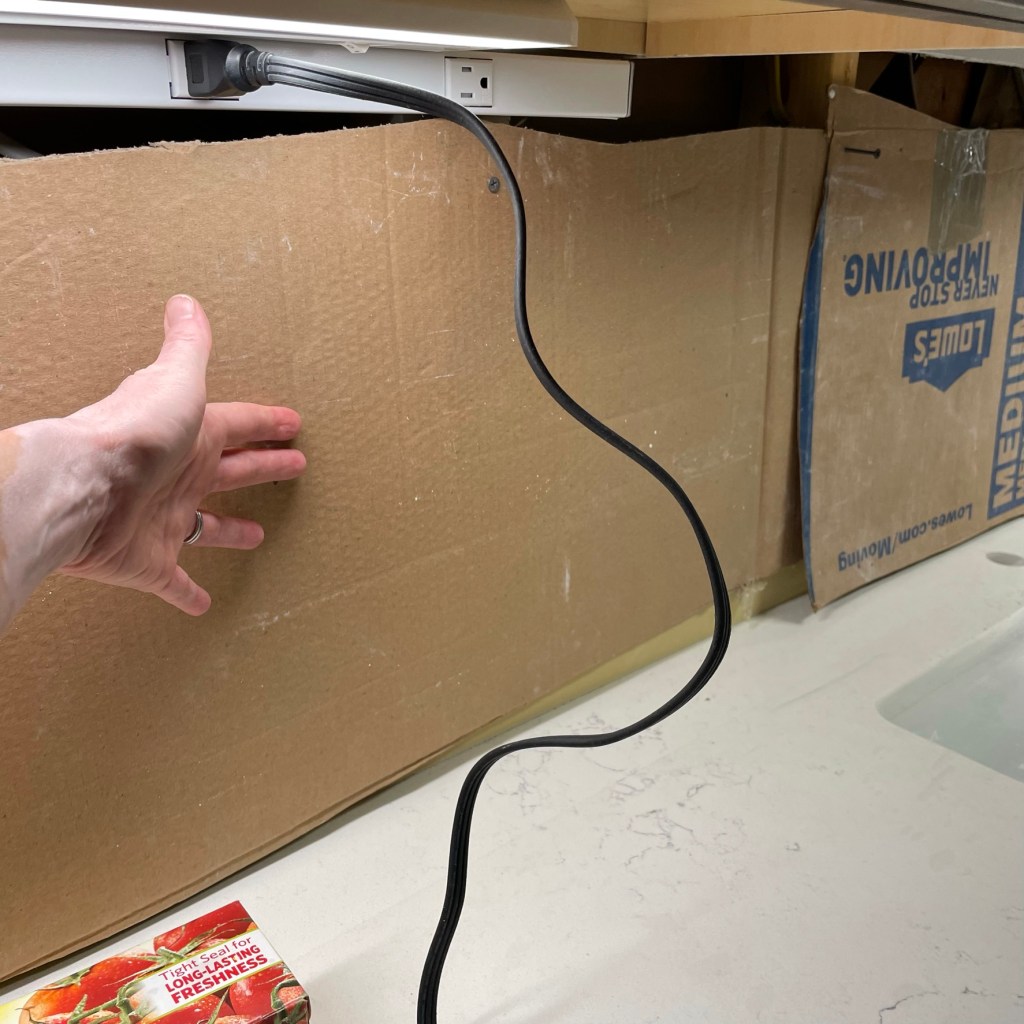
Shadows. Lots of shadows. After two grueling days in the kitchen, the electrician had installed the under-cabinet lights at the back of the cabinets, rather than in the front, where the action is. Maybe that works for some people, and it would certainly illuminate the backsplash, but in all our discussions of under-cabinet lighting, we had emphasized that we needed task lighting.
On the same weekend, I intentionally decided to make breakfast pancakes on my large, dual-sided griddle, and we set it up on the counter in the kitchen so we could test another feature. The pancakes—made with browned butter, applesauce and cinnamon—were delicious, and so was the bacon we cooked on the Griddler, but I’ll share that recipe another day because the food isn’t the point. The plugmold outlet the griddle was plugged into, which was intended to help us keep cords out of the way, also was not configured correctly and the cord was dangling out into the middle of the counter rather than down from the underside of the cabinet. Plus, the “in-cabinet” lighting strip, which was supposed to be concealed inside the glass-door cabinets, wasn’t. Strike three. We put in a call to Matt, our contractor, to let him know we needed to pump the brakes and fix a few things before we could move forward. That was a rough (and sleepless) weekend for me.
This will light up the backsplash, but not the counter.
The objective for these was to keep cords out of the way.
How about “no?”
Les and I are reasonable people, and we don’t complain for the fun of it. Thankfully, Matt heard our concerns and even agreed on several of our points. I’m pleased to report that all the lighting and under-cabinet problems were corrected within the week.
And now, the good stuff
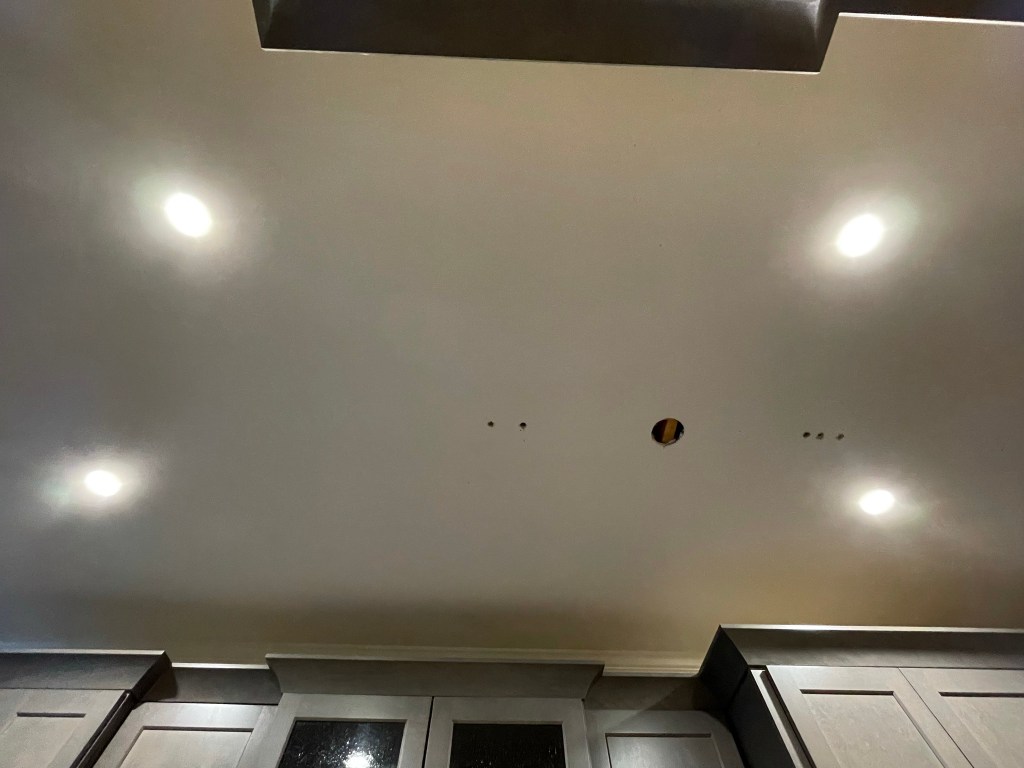
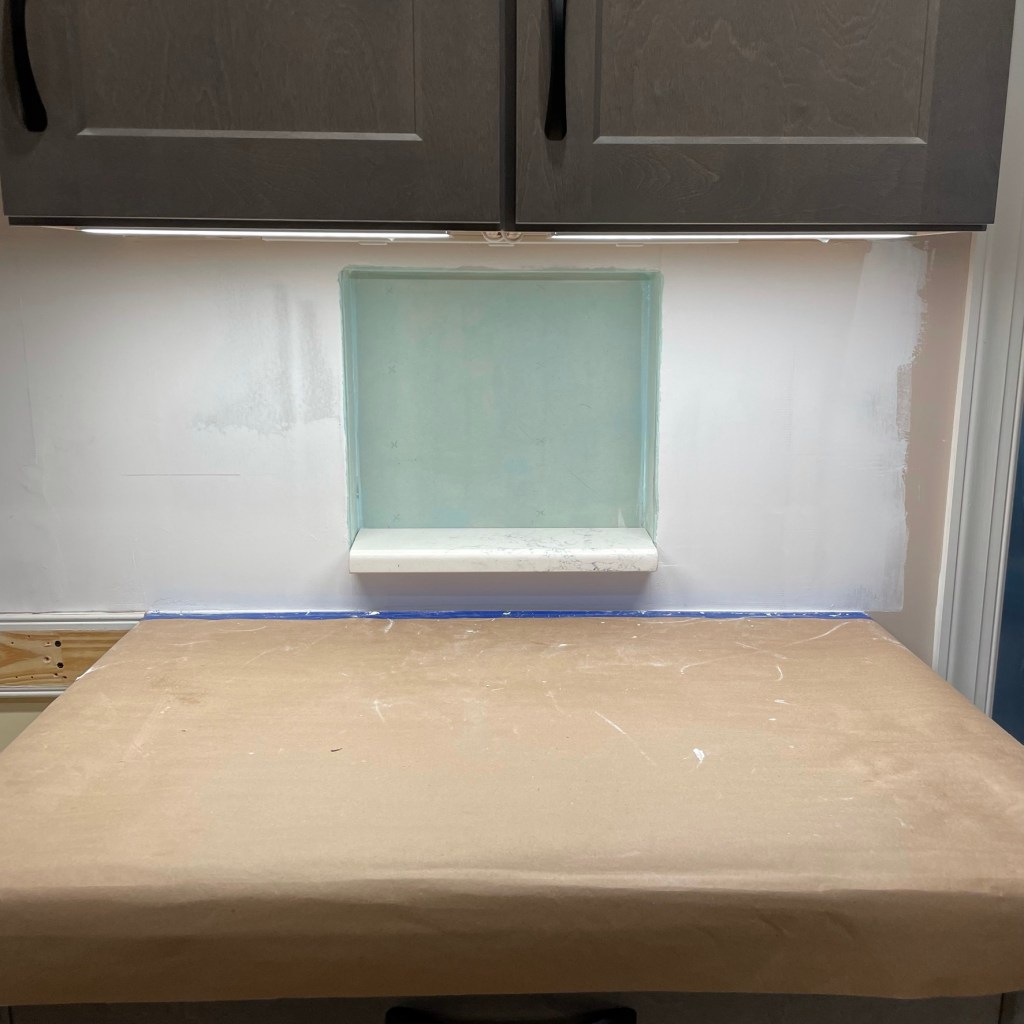
We are getting excited to have this project behind us in plenty of time to get organized and start cooking for our favorite holiday—Thanksgiving. With the electrical concerns covered, things are beginning to move quickly. The drywall has been repaired, soon to be sanded for a fresh coat of paint. The overhead wafer lights have been installed, throwing even more light onto our situation, and covering all the task zones of the kitchen. I am especially excited about the between-stud cubby that will host my most-reached-for cooking oils and my salt and pepper mills. And please, for goodness sake, have a look at this backsplash in the works!
Here’s to progress!
Let there be light!!!
All my go-to items will live here, next to the stove but off the counter.
Our tile guy is incredibly detail-focused. This is going to be my favorite kitchen feature. ❤
Kinda makes that pile of dirty dishes in the bathroom a little more tolerable. 😉
When push comes to shove on the whole “pumpkin spice” issue, you’ll find me squarely on the side of those who love the seasonal combination, and I made that obvious recently with my post for sourdough pumpkin spice waffles. But I get it—the flavor isn’t for everyone, or maybe it used to be but has become overplayed, kind of like any number of the classic rock songs that always seem to come up in heavy rotation on our music streaming services. Do I want music with dinner? You bet! But please, not “Bohemian Rhapsody” or “Piano Man” for the 37th time this week.
And I guess, for many people, it is the same with pumpkin spice, and we can thank Starbucks and Trader Joe’s for that. But don’t blame it on the pumpkin, which is one of nature’s true powerhouse foods—full of fiber, low in calories, a good source of potassium and, like every other orange-hued vegetable, loaded with the antioxidant vitamin known as beta-carotene. You can still enjoy the benefits of pumpkin without the cliché cinnamon and nutmeg.
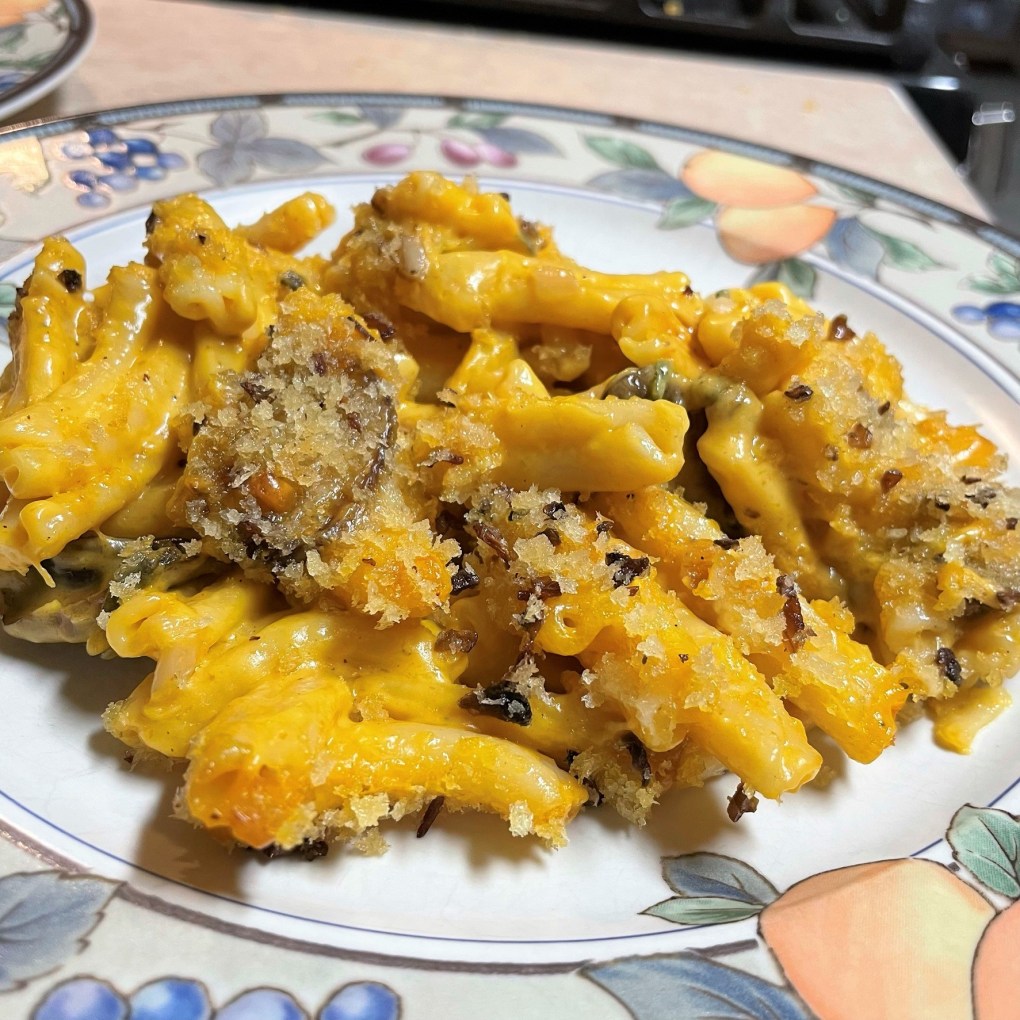
Today’s recipe is a perfectly savory example for using and serving this ubiquitous autumn gourd. I had a little better than half a can of pumpkin puree left over from the sourdough waffles I had made, and that was more than enough to flavor up the béchamel-based cheese sauce that wraps around the caserecce pasta in this dish. The other additions to this savory, meatless meal were inspired by the infused olive oil that is my go-to cooking agent this time of year.
My wild mushroom and sage olive oil does not have a brand because the stores that sell it are franchised from Veronica Foods. Look for it in a specialty store near you.
Every fall, I purchase a new bottle of this stuff and I use it in so many things, such as roasting vegetables, frying potatoes, amping up the earthy flavor in vegan dishes and even in some of my homemade sourdough bread recipes. For this mac and cheese, I used the mushroom and sage oil in the roux (along with real butter), but I used actual mushrooms and fresh sage in the final dish, too.
Tastes like autumn!
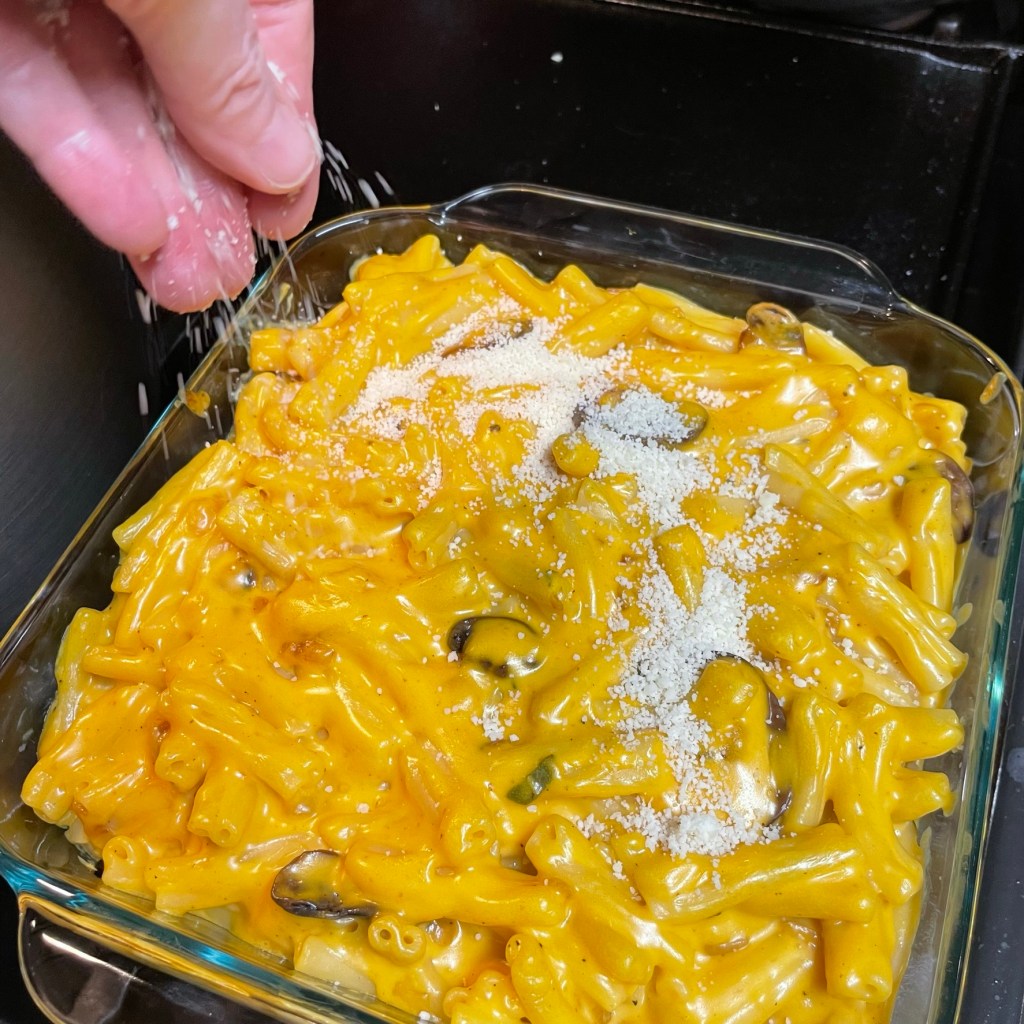
The color is vibrant and autumn-like, and the aroma of the sage is, well, intoxicating. The mac and cheese was easy to make, and you can skip the step of baking it, if you prefer a quicker stovetop version. Either way, I hope it gives you a chance to enjoy pumpkin without the overplayed “sweet and spice” aspect.
And for those of you sitting on my side of the pumpkin spice fence, don’t you worry! I’ll be sharing a fun new pumpkin spice recipe that covers my entire wish list for an easy, no-bake Thanksgiving dessert. It’s so simple, I even made it without a kitchen! Watch for it in the second week of November.
Ingredients
4 Tbsp. wild mushroom and sage olive oil* (see notes)
The wild mushroom and sage-infused olive oil is available at specialty oil and vinegar shops. If you cannot get your hands on it, use any favorite olive oil or substitute butter.
The smoked gouda I used for this recipe was technically a “processed” cheese, similar to American in texture. In most of my cheese sauces, I use a processed cheese in the base because it provides a creamier texture. If you prefer, use regular cheese and expect a slightly less silky sauce.
Many of my mac and cheese recipes call for elbows, but when I intend for the dish to be an entree, I choose a sturdier pasta shape, such as caserecce, rotini or farfalle (bow ties). It adds a little more body and makes it more satisfying.
This oil finds its way into many of my autumn-themed recipes!
Technically, this is real cheese, but processed with special salts that make it more melt-able.
Any firm pasta shape works well when making a mac and cheese main dish. I recently discovered caserecce and love the texture!
Here’s something interesting I’ve learned recently in my research and development of “meatless” dishes: there is no such thing as vegetarian parmesan. According to this article and many others I’ve found online, the process for making certain cheeses (including parmesan and pecorino romano) requires the use of animal rennet, and there is apparently no suitable substitute. Rennet is an enzyme found in the digestive system of animals, and it cannot be extracted from them while they are living. If you adhere to a vegetarian diet for reasons of animal welfare, omit my parm-romano blend from any of my otherwise “meatless” recipes, and always read labels on the cheeses you buy, just to be sure.
Instructions
I transferred most of the sautéed onions to a separate bowl, so they had more presence in the final dish.
A little butter to supplement the mushroom and sage olive oil.
For this mac and cheese, I cooked the roux until it was golden in color.
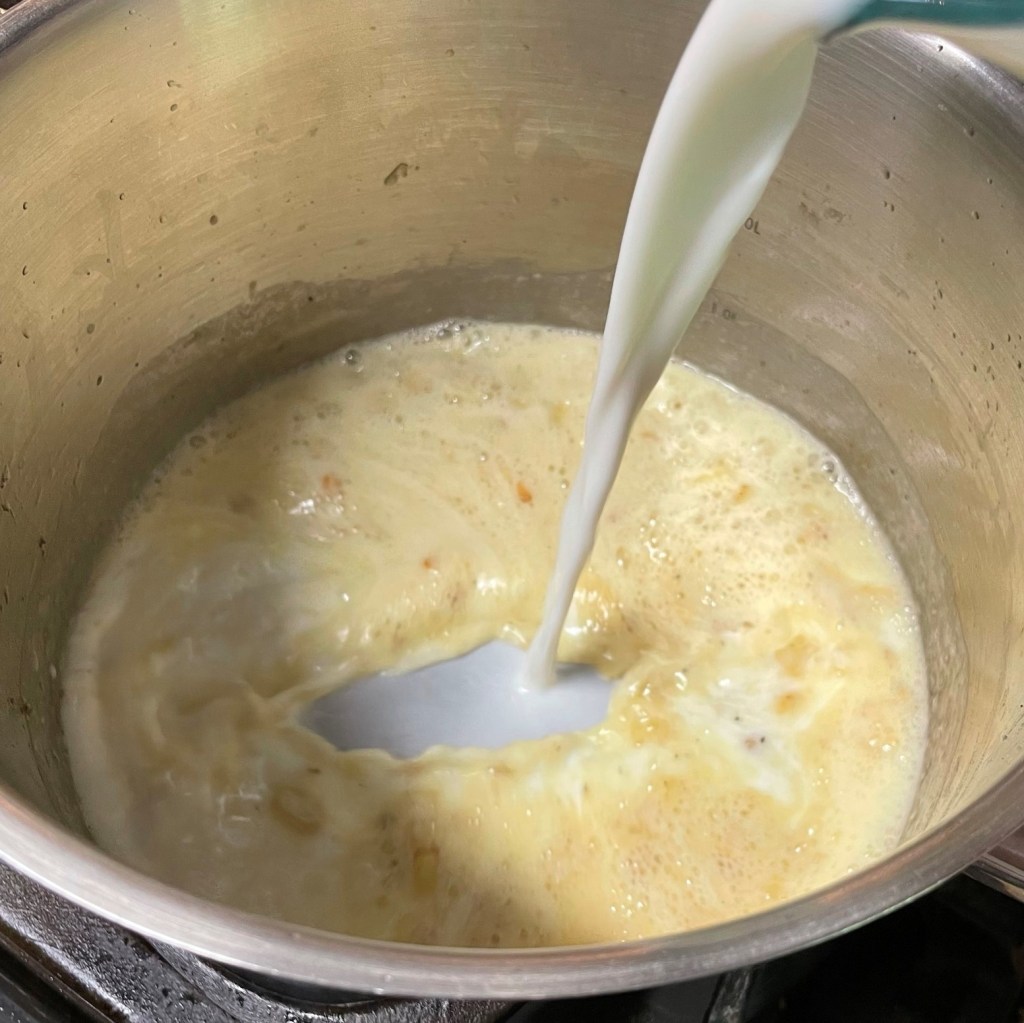
Whole milk results in a creamy, rich sauce. But 2% is OK, too.
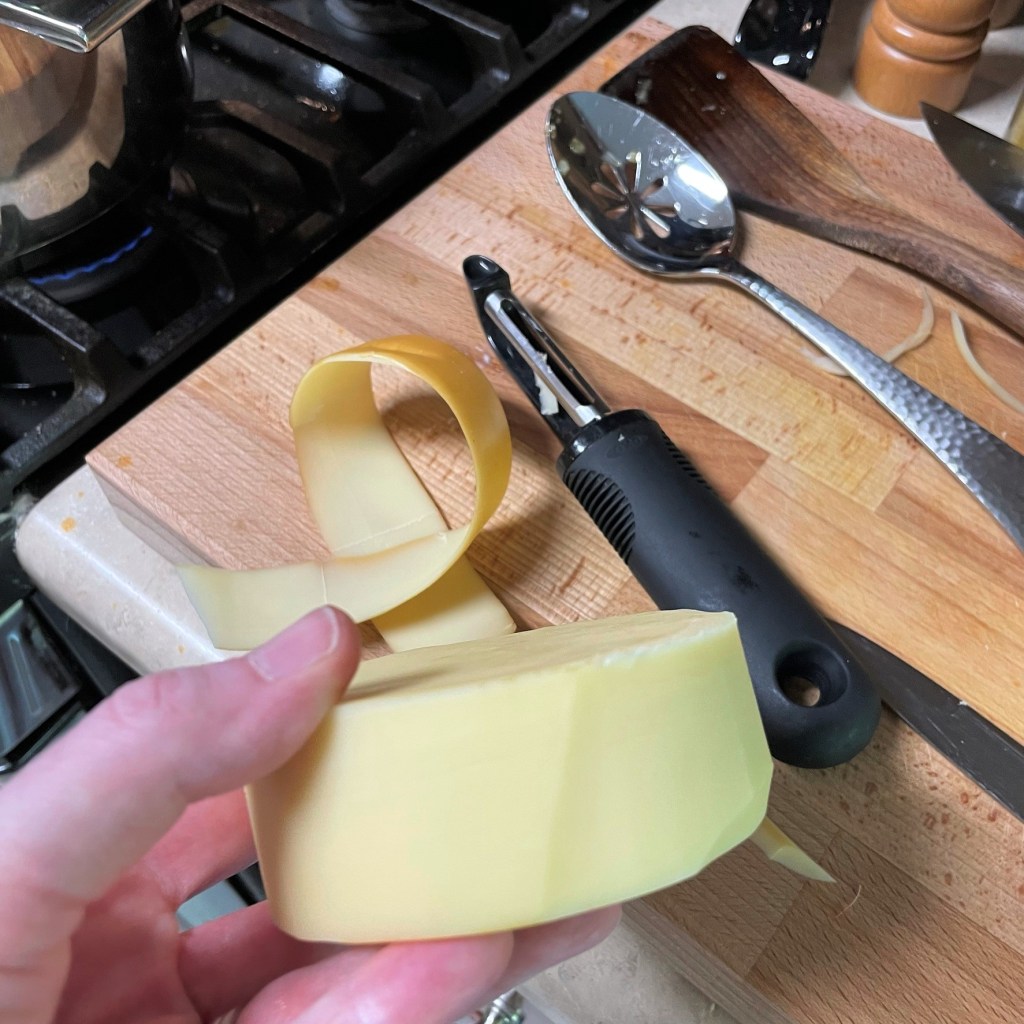
I’ve learned that the rind on smoked cheese does not melt well. A vegetable peeler removed it, slick as a whistle!
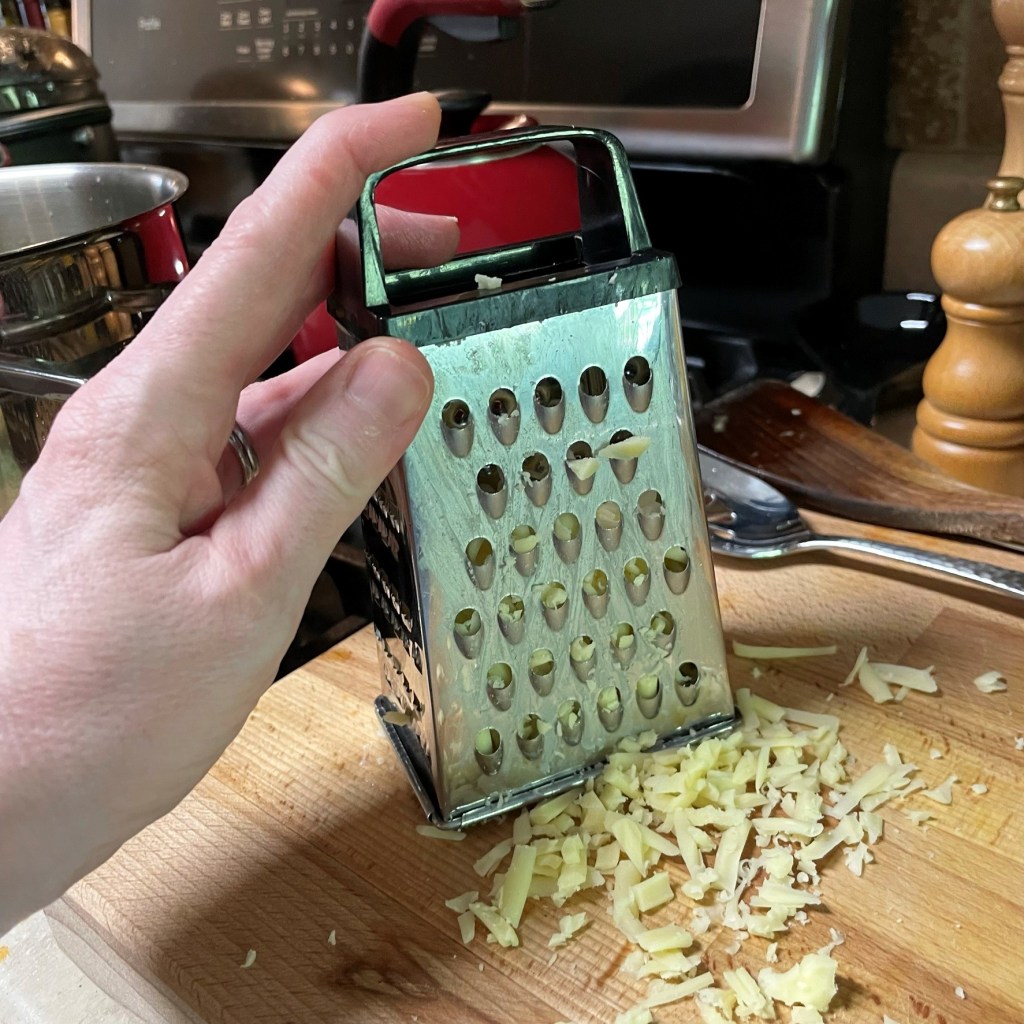
Much of the kitchen had already been packed when I decided to make this dish, so I had to use the tiny shredder that is designed for Hobbits. 🙂
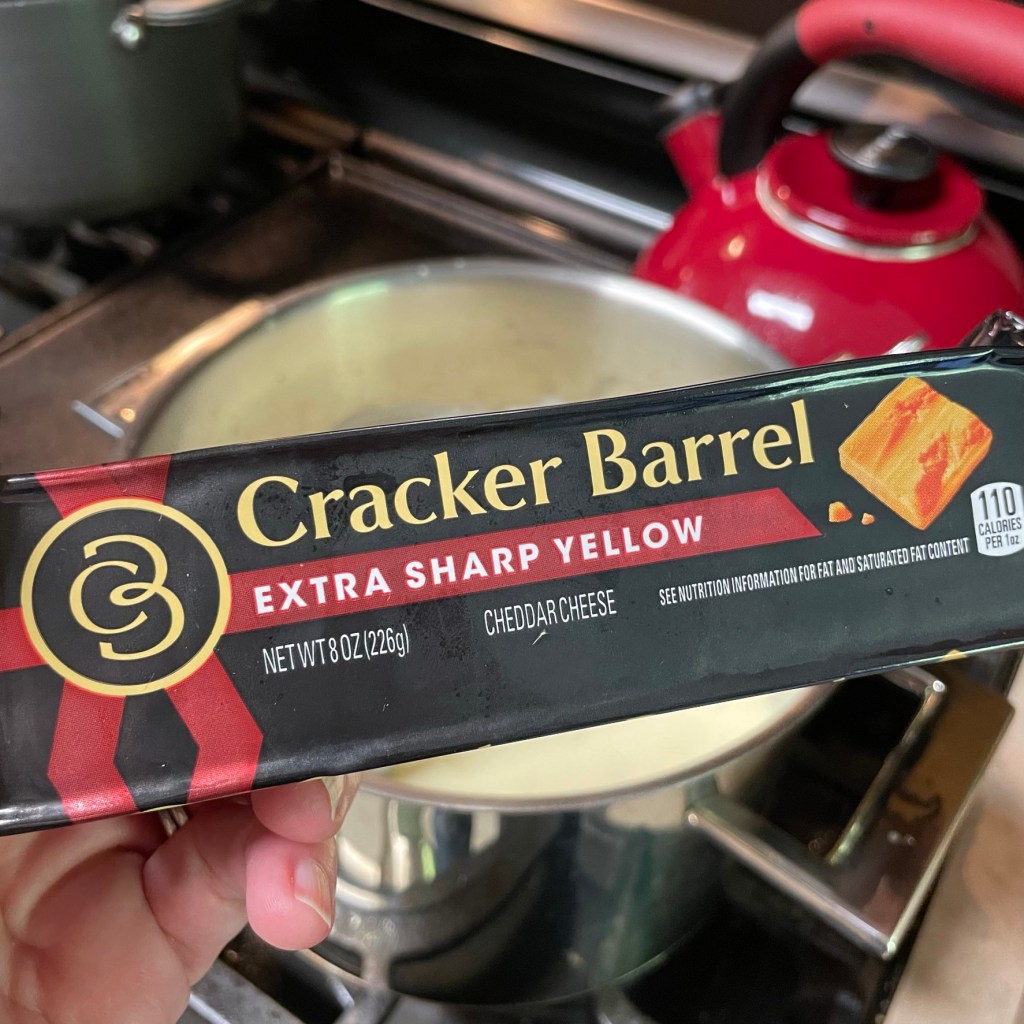
I chose sharp yellow cheddar for the remaining cheese, for the bold flavor but also because I wanted to play up the pumpkin color.
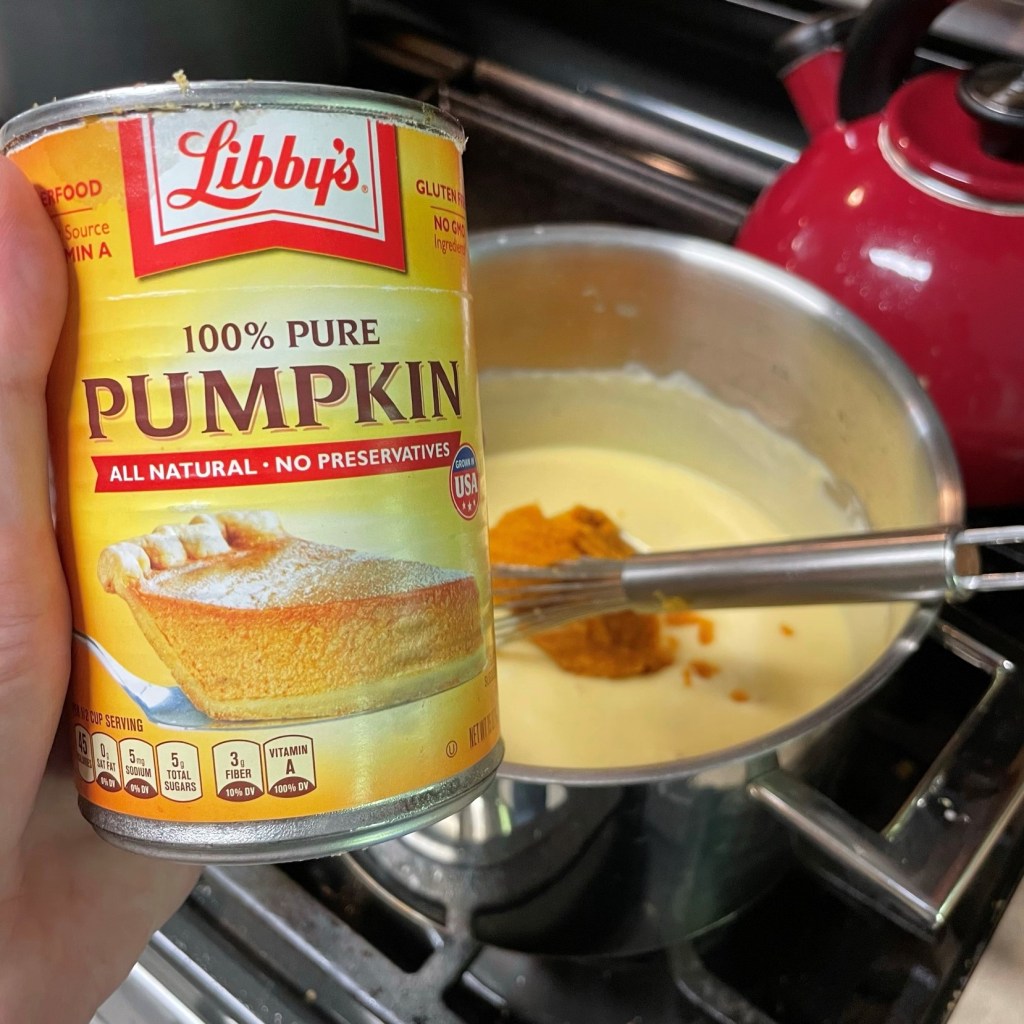
Hello, pumpkin! The sauce can carry about 1/2 cup of the puree without losing its creamy texture.
Cheesy, creamy, pumpkin-y good!
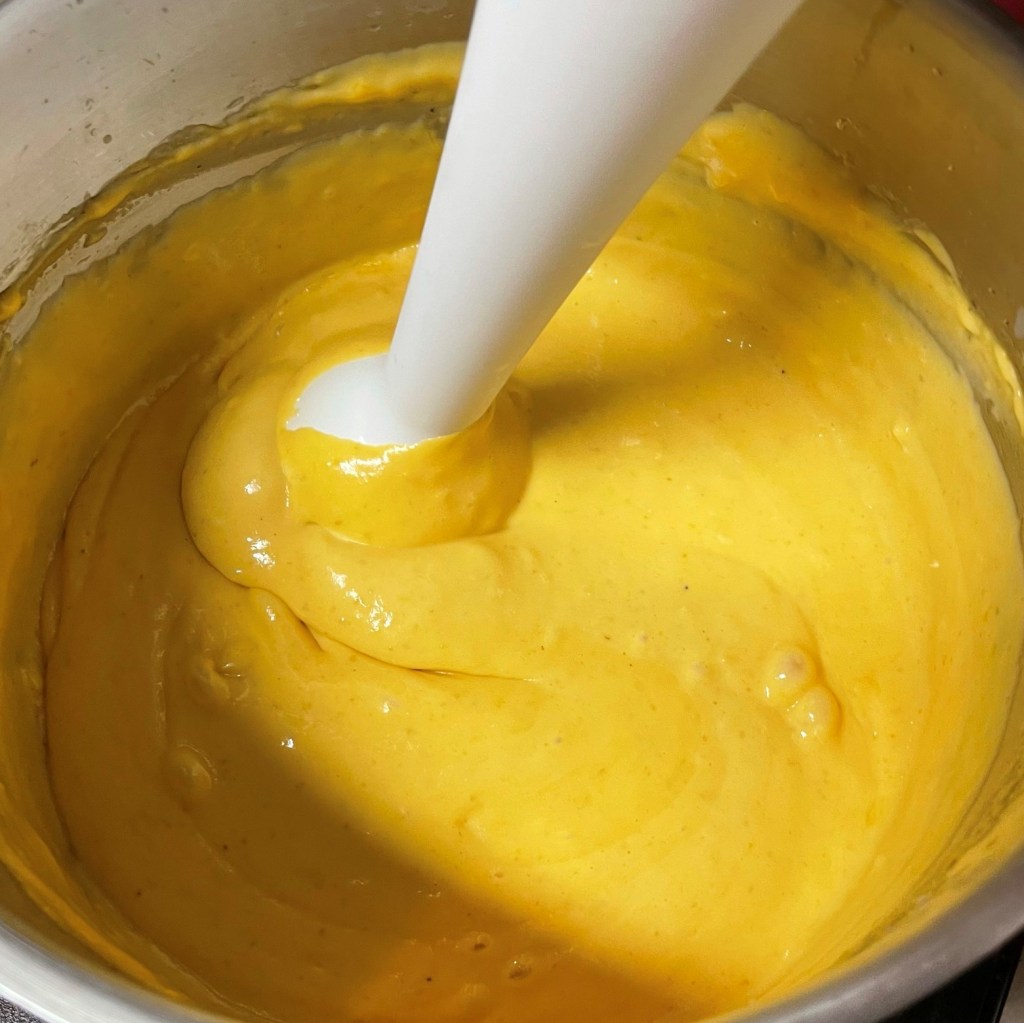
You know that I can’t help myself when it comes to cheese sauce. I use my immersion blender for about one minute. This step is not essential, but worth the trouble.
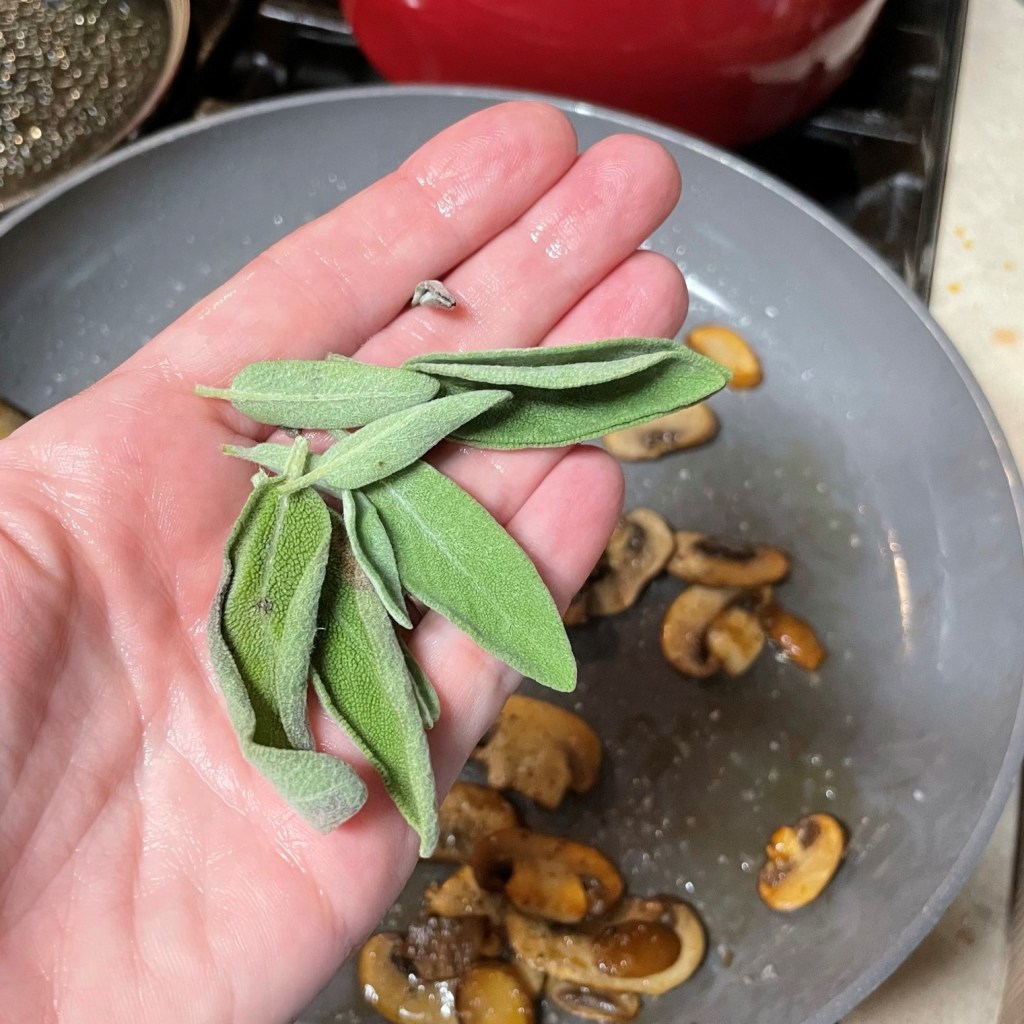
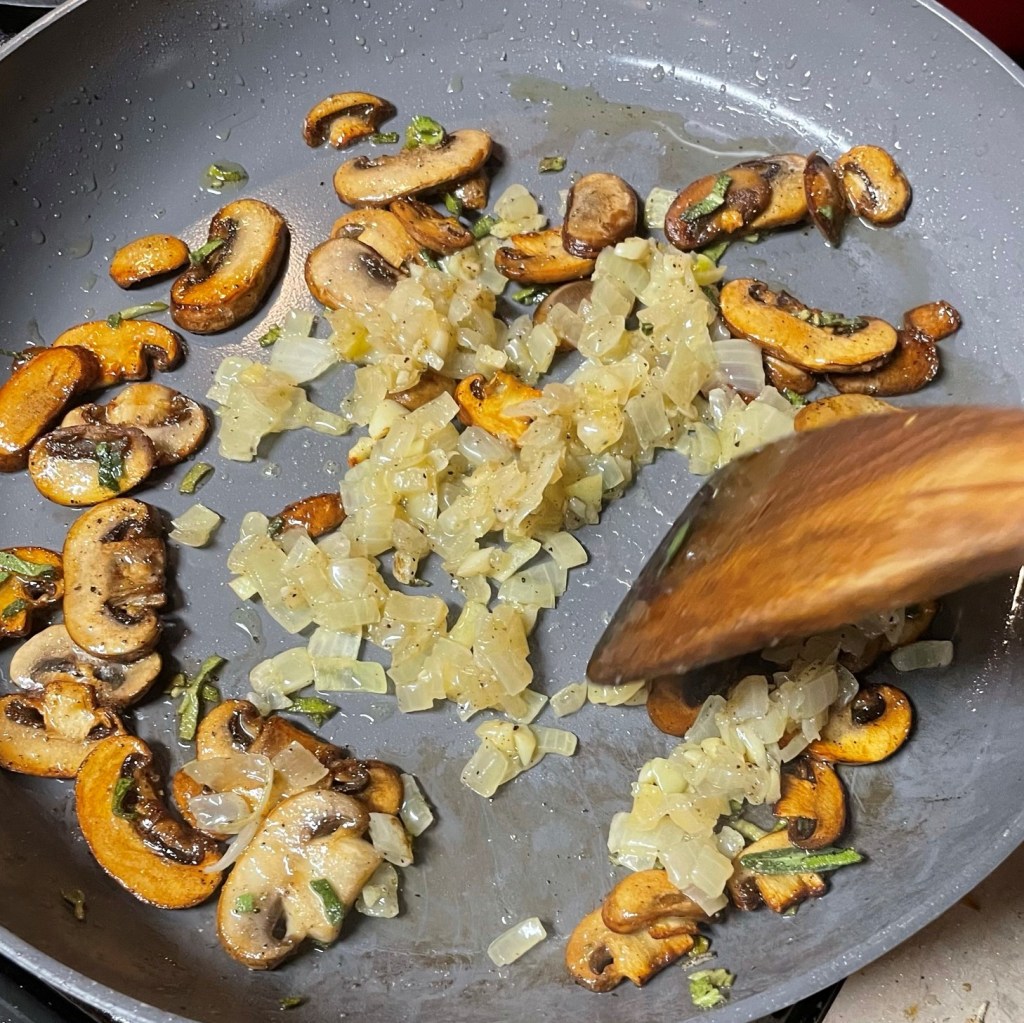
Sage is potent and earthy, so I didn’t use a ton of it, and I minced it fine before adding it to the browned mushrooms.
I tossed the onions into the skillet to re-warm them.
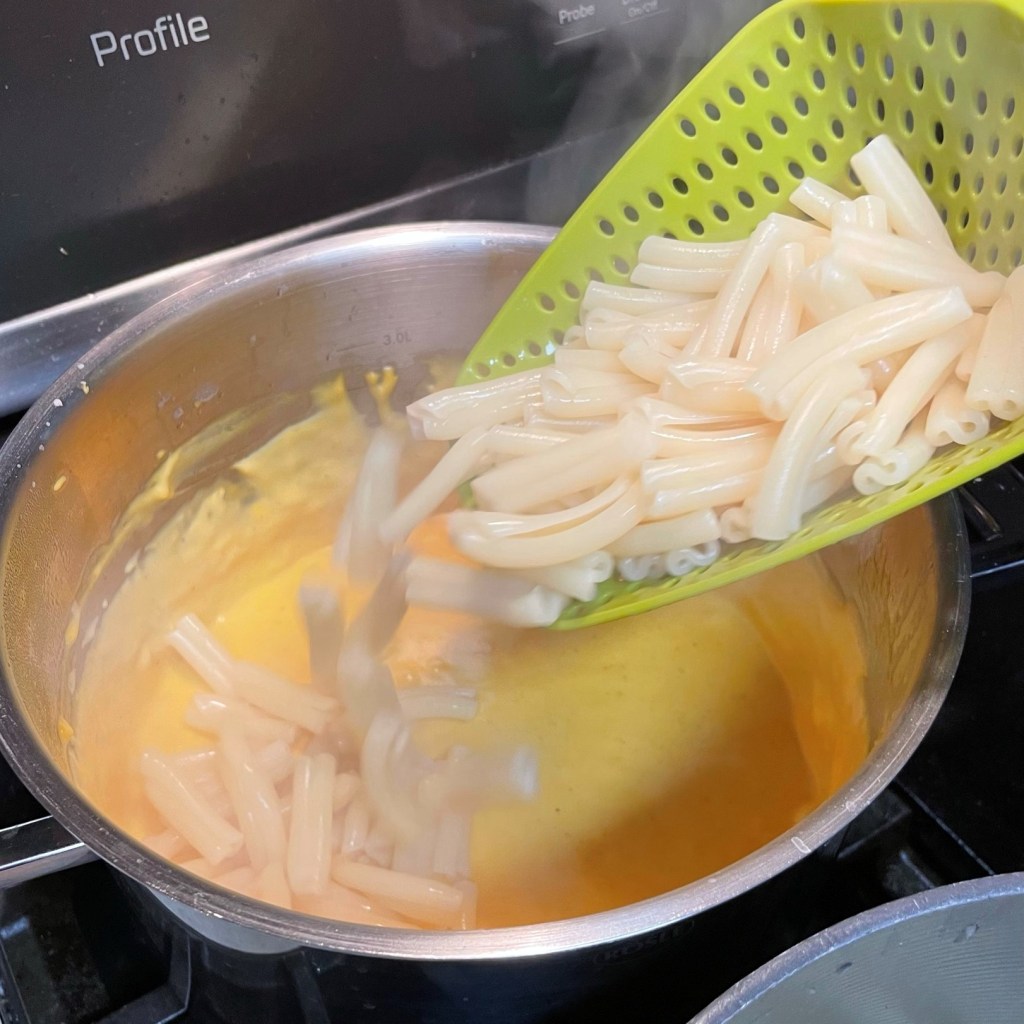
I transferred the drained pasta directly into the warm cheese sauce. Do it in batches to be sure there’s enough cheese sauce to go around. Leftover pasta can be used in a salad.
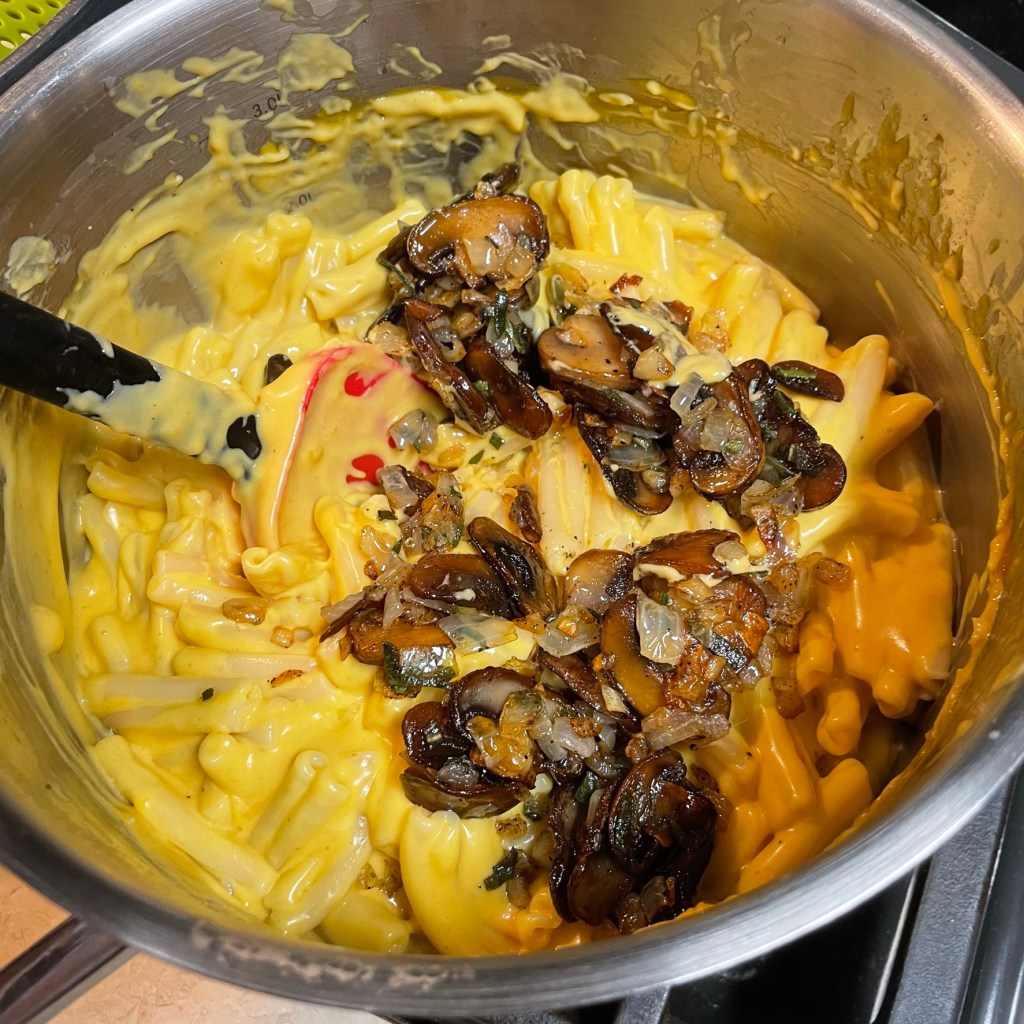
Folding the mushroom mixture into the mac and cheese.
Where did I put my sunglasses? 🙂 I preheated the oven to 350° F while I prepped the panko topping.
I minced and sautéed a couple more mushrooms and used the mixture to moisten panko crumbs.
A little of our parm-romano blend for extra flavor. Then scatter the buttered panko crumbs all over the top and bake 45 minutes.
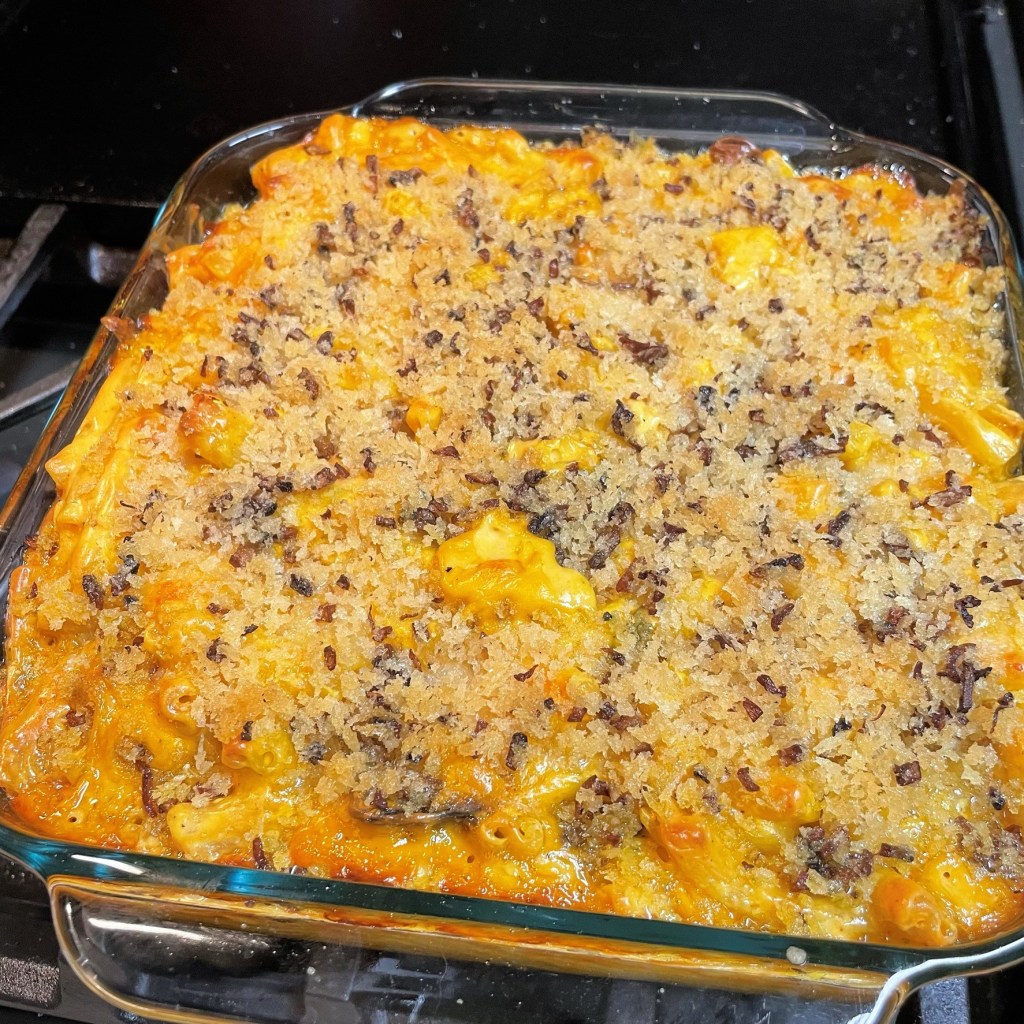
Remove from the oven when the crumb topping is crispy and the cheese sauce is bubbling around all the edges.
Heat 2 Tbsp. of the olive oil over medium heat in a heavy-bottomed pot. Saute the onions until soft, then transfer most of them to a separate bowl.
Add butter to the pot until melted. Add the flour and whisk until the flour is absorbed and appears bubbly. Add the milk all at once, cooking and whisking continuously until the mixture is smooth and thickened, which could be 8 to 12 minutes. Add shredded gouda and stir or whisk until melted and creamy. Repeat with shredded cheddar. Stir in pumpkin puree until evenly blended.
For the creamiest sauce, process with an immersion blender for about one minute. This step is optional, but I am sold on this technique, as my sauces turn out as smooth as velvet.
Prepare the pasta to the al-dente stage, and proceed with the next step while it is cooking.
In a separate skillet, heat remaining 2 Tbsp. olive oil over medium heat. Brown the mushroom slices, working in batches if necessary to avoid crowding. Add the sautéed onions to heat through and sprinkle in the rosemary.
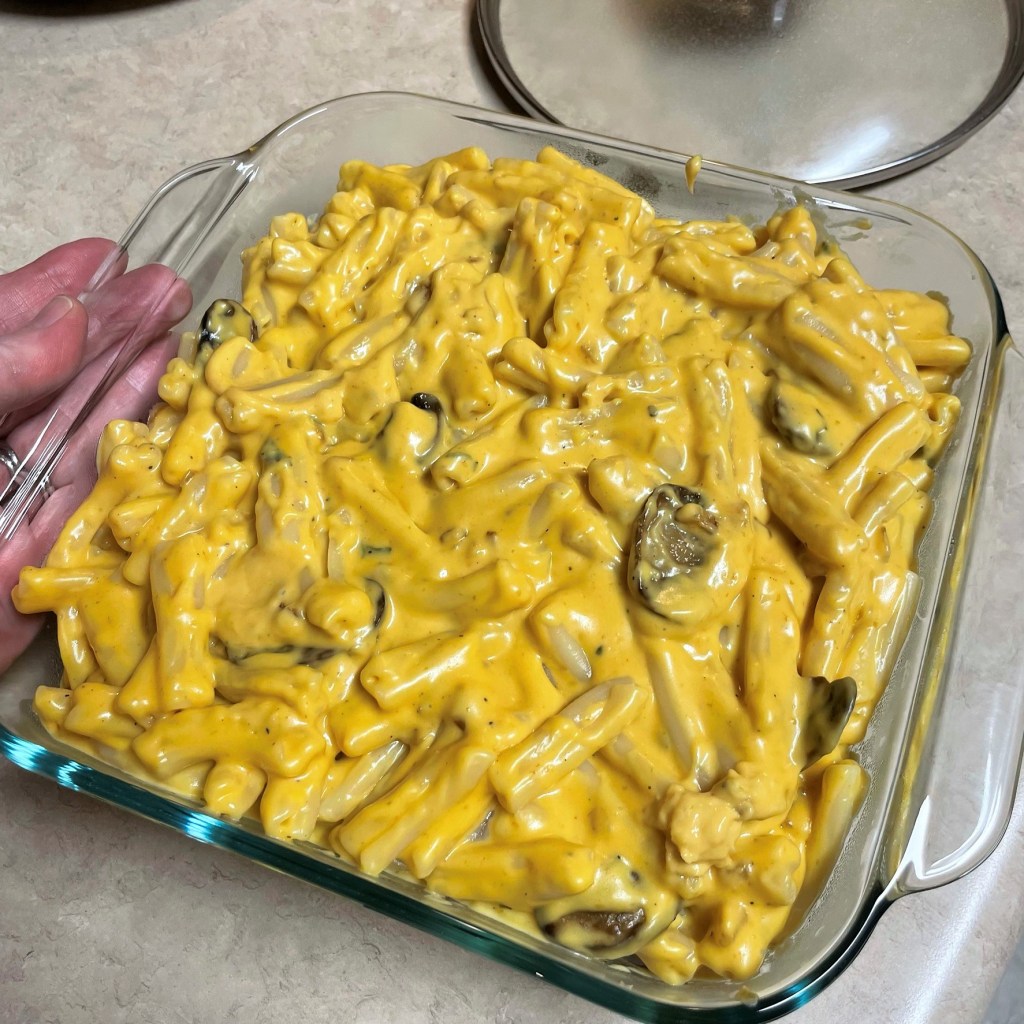
Drain the pasta and add it to the cheese sauce, stirring until creamy. I generally add the pasta half at a time, to ensure that I have enough sauce. Fold in the mushroom-onion mixture. If you’re planning to bake the mac and cheese, transfer it to a 2 qt. baking dish and preheat the oven to 350° F.
Melt 2 Tbsp. butter in the skillet used for the mushrooms. I had two extra mushrooms, which I chopped into fine bits and sautéed briefly. Toss panko crumbs in the butter mixture and sprinkle it over the mac and cheese before baking.
Bake for 40 to 45 minutes, until crumb topping is slightly crunchy and cheese is bubbling up around all the edges. Cool 10 minutes before serving.
Savory Pumpkin Mac & Cheese with Mushrooms and Sage
Controlled chaos. That was the scene inside the enormous white tent just outside the northern West Virginia factory where Fiesta Ware has been produced since 1936. It was the moment I had been anticipating for weeks, and as I stood among so many other Fiesta fans who, unlike me, knew exactly what they were doing, I realized all at once that I was in way over my head. I couldn’t articulate what I had expected at the annual Fiesta tent sale, but it definitely wasn’t this.
It was like playing Jenga, but with dishes!
Before I overwhelm you, dear reader, allow me to back up to explain how this most colorful adventure began. For many months, even before my husband and I began our kitchen remodel project, we had discussed ideas for buying new dishes to replace my beloved “Garden Harvest” pattern. The dishes you have seen so many times here on Comfort du Jour have seen me through some interesting times, and I was ready to bring in something new. I have been enamored of Fiesta dinnerware for as long as I can remember. My grandmother had some random pieces of it (from the original collections, no doubt), alongside a garage gallery full of Depression glass, some of which she used regularly in her kitchen and for serving guests. I loved the idea of bringing back a classic, I especially love the cheerful colors and Fiesta fit the bill for our “made in America” kitchen commitment.
When I started searching out the dishes online, I was quickly overwhelmed by the variety of colors and dish styles. Choosing a color became a near-impossible task, and amid the COVID crisis, availability was spotty with the usual online retailers. There are a couple of places in town that I could see and touch the dishes, but their options were also limited. Why not go straight to the manufacturer’s website, I thought, and see if their selection was better? That’s when I discovered that the Fiesta Factory has an annual “tent sale” at the manufacturing facility in West Virginia, and it was only a few weeks away!
I’d have to drive, I reasoned, because I would need to transport my purchases home. But my husband, Les, would not be able to accompany me, and going alone would not be as joyful. And that’s when a miracle happened! It was just after I had posted the Mexican street corn hash and eggs for Better Breakfast Month, and my friend, Peg, had commented on the dish, and the dish! It made me happy to know that someone else appreciated the Garden Harvest dishes that had been part of my cooking journey for so long. We connected on the phone and Peg was thrilled at my offer to pass along my Garden Harvest collection, and even more thrilled at an invitation to accompany me to the Fiesta tent sale. We would turn it into a girls’ getaway weekend!
Just west of Pennsylvania, and kissing Ohio across the river, that’s where you’ll find the Fiesta Factory.
Our journey led us across many state lines, as the Fiesta Factory is located at the tippy top of West Virginia, in the skinny finger of land between Ohio and Pennsylvania. We found accommodations in cozy Steubenville, Ohio, a stone’s throw from Newell, W.V., where Fiesta is headquartered. The town of Steubenville is anchored by the Franciscan University, which was across the street from our hotel, and it enjoys a flood of visitors every holiday season when it hosts the annual Nutcracker festival. Steubenville also happens to be the birthplace of Dean Martin, and so Peg and I set out on our first night to find a nice dry martini and raise a glass to the crooner.
Our best bet on that first night was a Bennigan’s, right in front of the hotel (the cocktail was just OK), and then we settled in, hoping for a good night’s sleep before we crossed the bridge (again) into West Virginia, where the Fiesta madness would begin in earnest, come daylight.
Our visit coincided with a big celebration for Fiesta.
And that’s where we return to the colorful scene where this story began—the Fiesta Factory tent sale, an annual liquidation of factory “seconds,” perfectly good dishes—all with some miniscule blemish, and I can attest that it is difficult to find any problem with most of the pieces in the tent sale. When I originally learned that the tent sale merchandise was not first quality, I recoiled. But I got over that quickly, in part because I spent a little over a year in ceramic wheel-throwing classes, and I know that minor imperfections don’t have to ruin an otherwise beautiful dish. I learned to call that “character.” The other incentive to consider the “seconds” was the price list. As an example, a perfect medium-size Fiesta canister with lid is $59.99. I bought two of them, for $20 each! It just took a little digging.
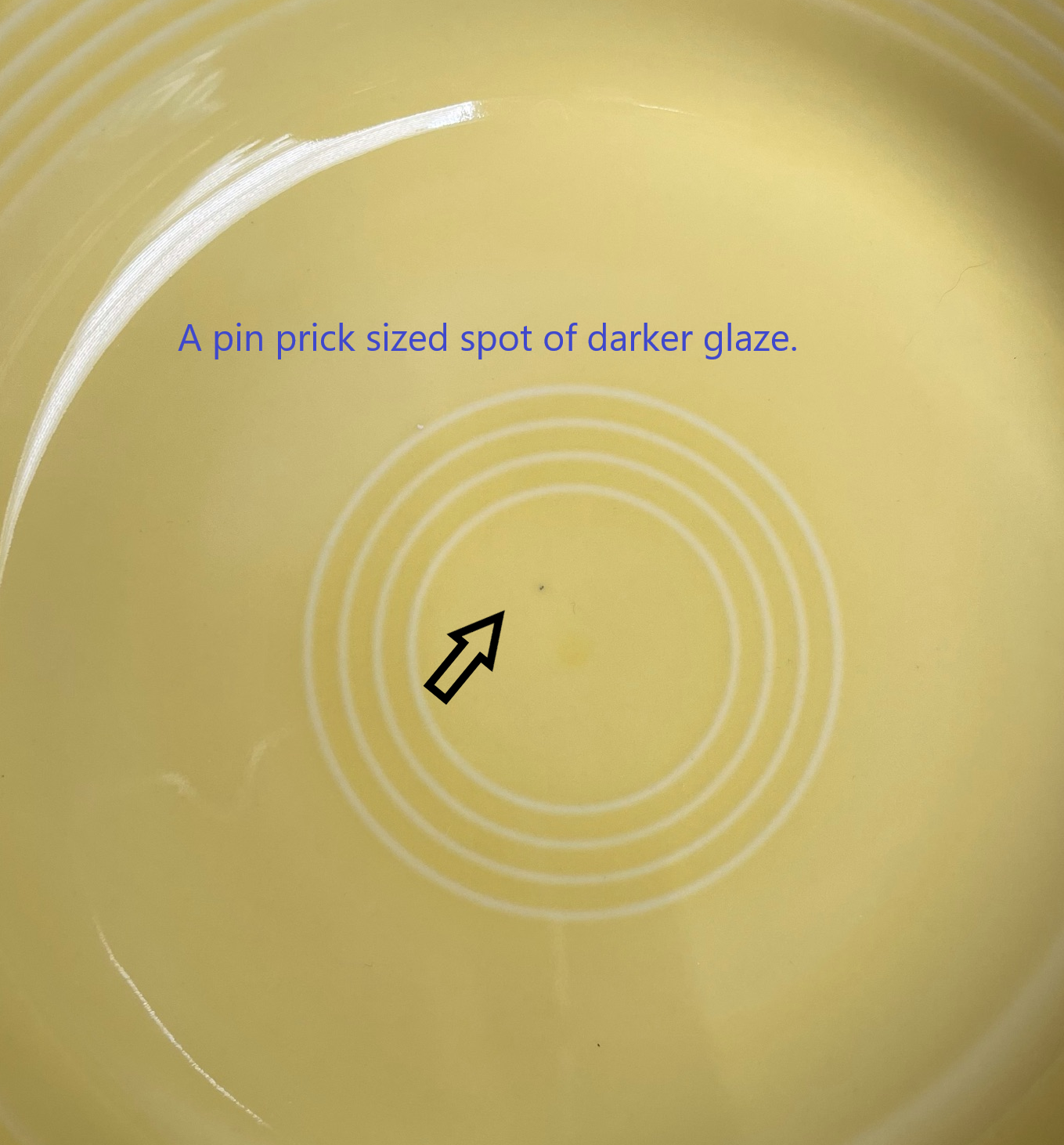
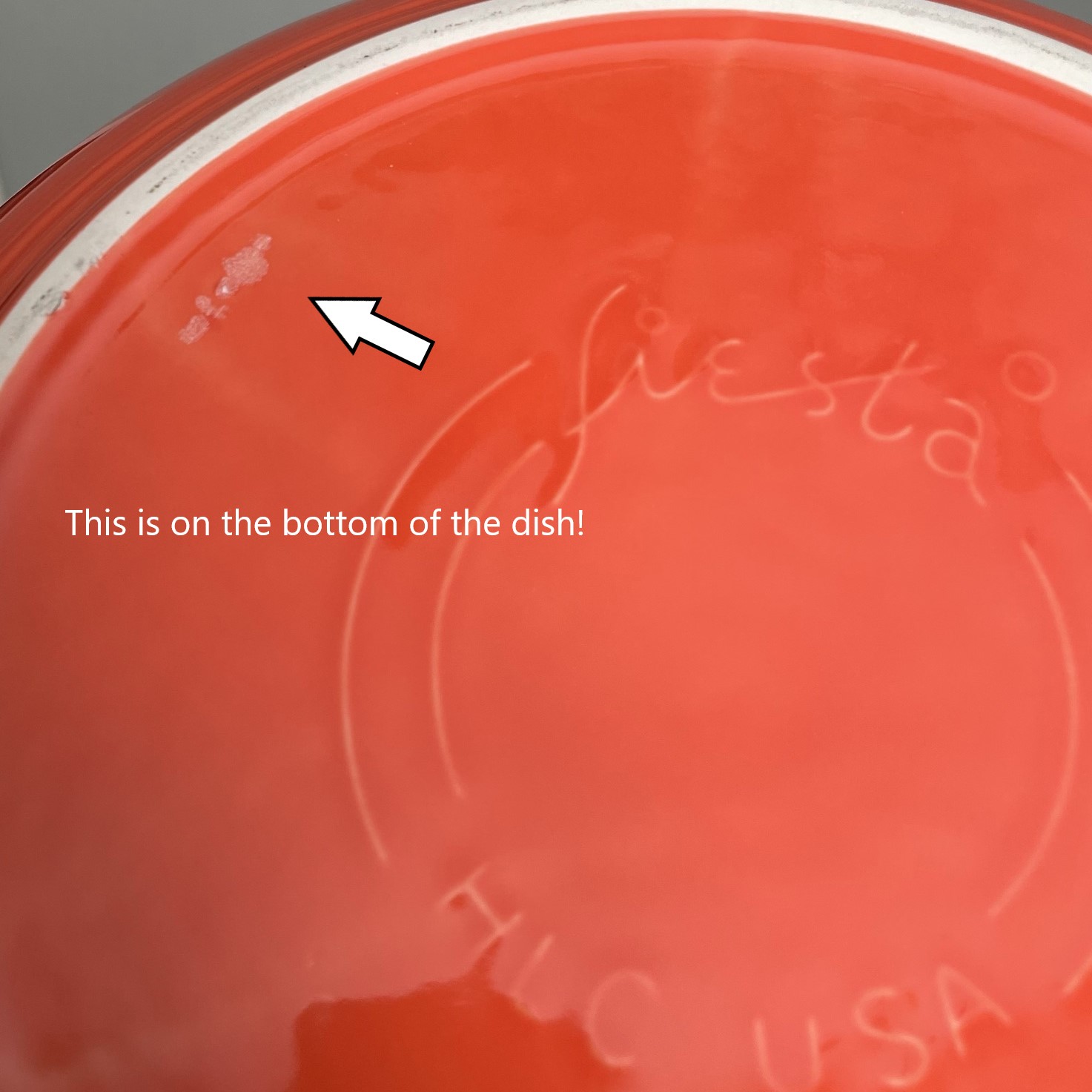
Some of the dishes I bought had a tiny dot of an incorrect color. Others may have had a slightly lighter-than-standard amount of glaze, and so the color was not a perfect match to its companions. Another has a nearly invisible spot where the glaze didn’t completely adhere, and it is honestly so small that I must take off my glasses to inspect the dish. And that is after I had already found the spot previously. I could live with these imperfections, but the scene was still overwhelming, with frenzied shoppers with grocery carts everywhere and stacks and stacks of dishes, but not particularly organized.
This was the first bin we encountered upon entering the tent sale. Where do I even begin??
Butter dishes! Oh wait, only butter dish bases…
The bowl plates seemed versatile, but aren’t these the official team colors of the Miami Dolphins?
These canisters were the only items I found with lids in the same place! I bought a blue one and a red one.
There were so many of these bowls. I bought 12, in different colors!
The controlled chaos I described turned to fun as Peg and I began to follow the lead of more experienced Fiesta scavengers. We met people who have been attending the tent sale for as many as 17 years, and one shopper, when I mentioned how impressed I was at her knowledge of the colors replied gleefully, “Are you kidding? I’m obsessed!”
Do we look like we know what we’re doing? 🙂
Not a bad haul for my first Fiesta tent sale!
Though we had already spent several hours looking at Fiesta ware, Peg and I couldn’t resist stepping into the Fiesta Factory Store, which was filled to the brim with all the perfect-quality pieces you’d ever hope to find. It was absolutely gorgeous, and I bought a few more pieces inside, including two deviled egg platters, which I can’t wait to fill up at Thanksgiving and Super Bowl. It just makes me happy to see all those cheerful colors! 🙂
Inside the factory store, things are organized and beautiful, like a rainbow!
Almost three hours after we arrived, we pulled away from the Fiesta factory with a trunk full of darn-near-perfect dishes, and I found myself contemplating whether to attend next year’s tent sale. But I’ll need a better plan (and perhaps a larger trunk), so I’ll work on that and share it here for any fellow Fiesta lovers who might be up for an adventure. Who’s with me?!