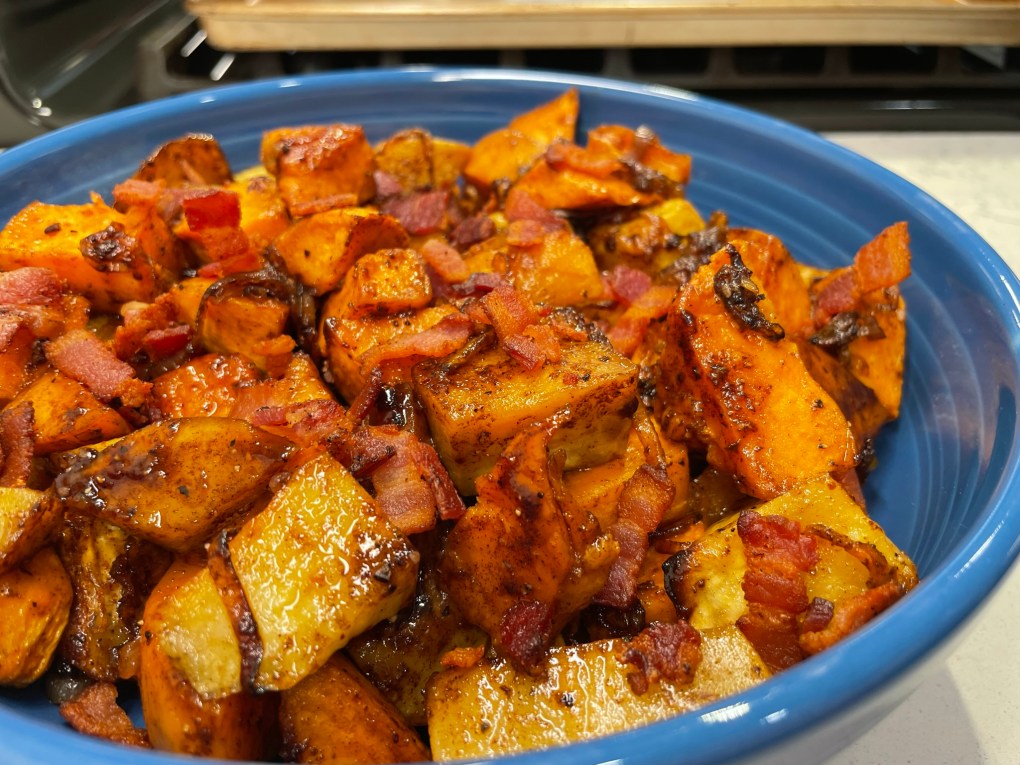
Cider-braised Collards with Sweet Potatoes

The race is on toward the biggest food holiday of the year, and I couldn’t be more ready! It’s an even-numbered year and at our house, that means my husband, Les, will take the reins on the Thanksgiving turkey. This agreement to alternate years for the bird was literally written into our wedding vows because we both enjoy it so much, and on “his” years, I have more time to turn attention to the sides. All this month, I’ll be sharing a few new ways to enjoy some classic Thanksgiving side dishes. 

This first one is dedicated to my readers in the South, where collard greens reign supreme— on Thanksgiving or any other family meal. When I first learned to cook collards about five years ago, I didn’t imagine that there could be so many variations, but it seems that every time I try a new addition or different braising liquid, I find another favorite. This is the first time I’ve considered putting a seasonal spin on collards, and I’m so glad I did.

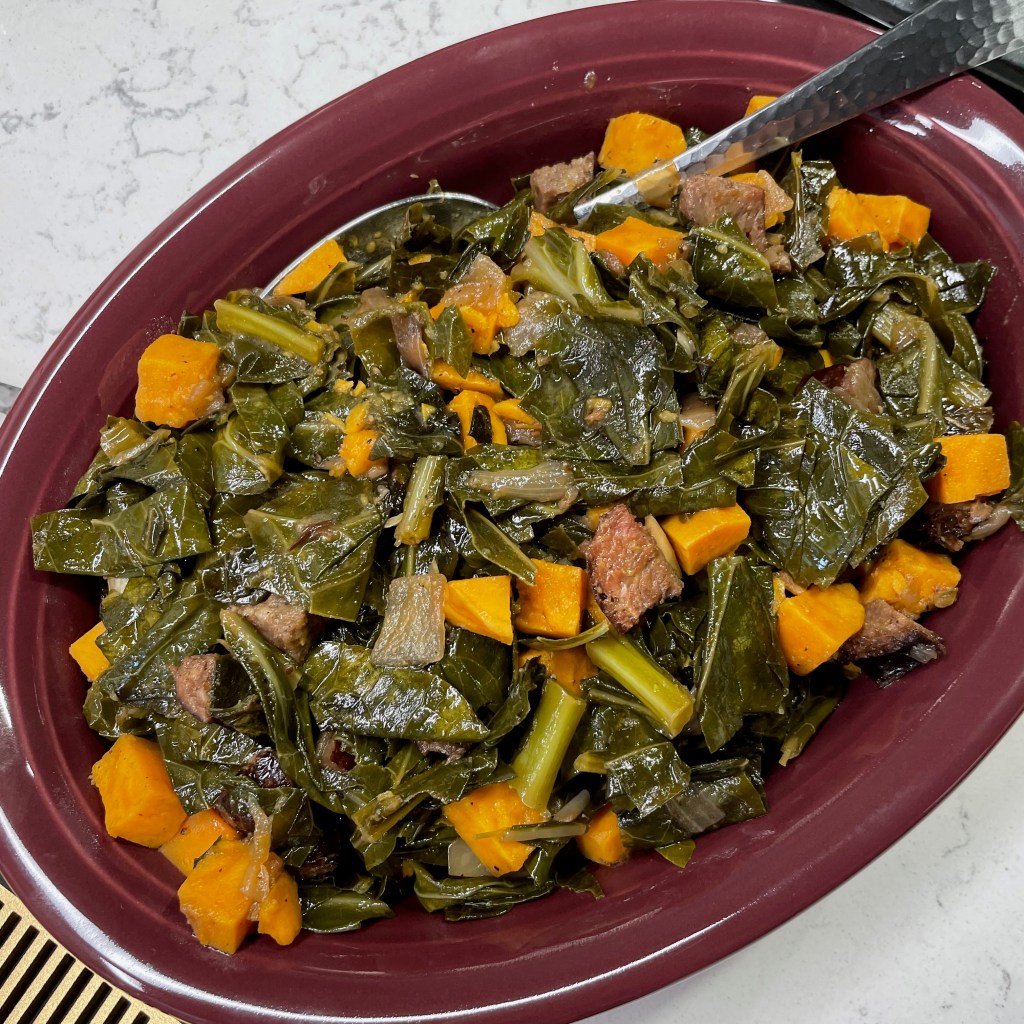
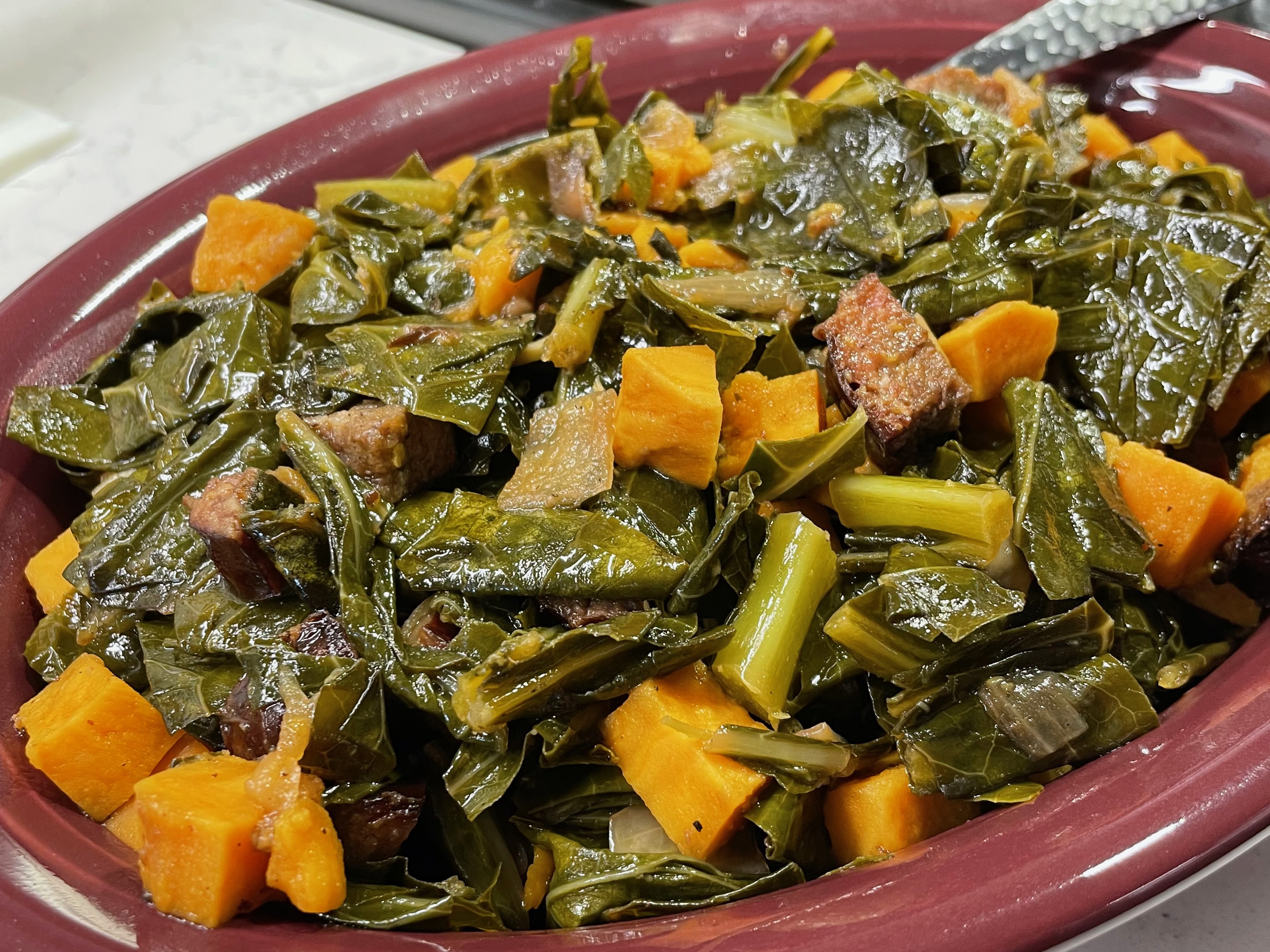
These are as flavorful as they look!

These collard greens have a touch of sweetness going on in the cubed sweet potatoes, and the smoky sausage makes each bite super satisfying. Did I mention that they’re braised this time in hard apple cider? So good!

Get to know collard greens

These sturdy leafy greens are similar to Lacinato kale (which is sometimes called dinosaur kale) in that they are huge, earthy and leathery. To cook collard greens, you must either boil and boil and boil them, or do as I do and fry them up in some kind of oil before braising a shorter time in liquid. The amount of liquid can vary, depending on how tender you’d like the collards to be. If you like them bright green and hefty— first of all, you clearly ain’t from the South— then you’ll use minimal liquid and cook them a shorter time. If you want them to be fall-apart tender, almost like sautéed spinach, then get that pot a’boilin’ from breakfast onward.

Either way, you have to prep the greens. Let’s get to it!

How to prep collard greens for cooking

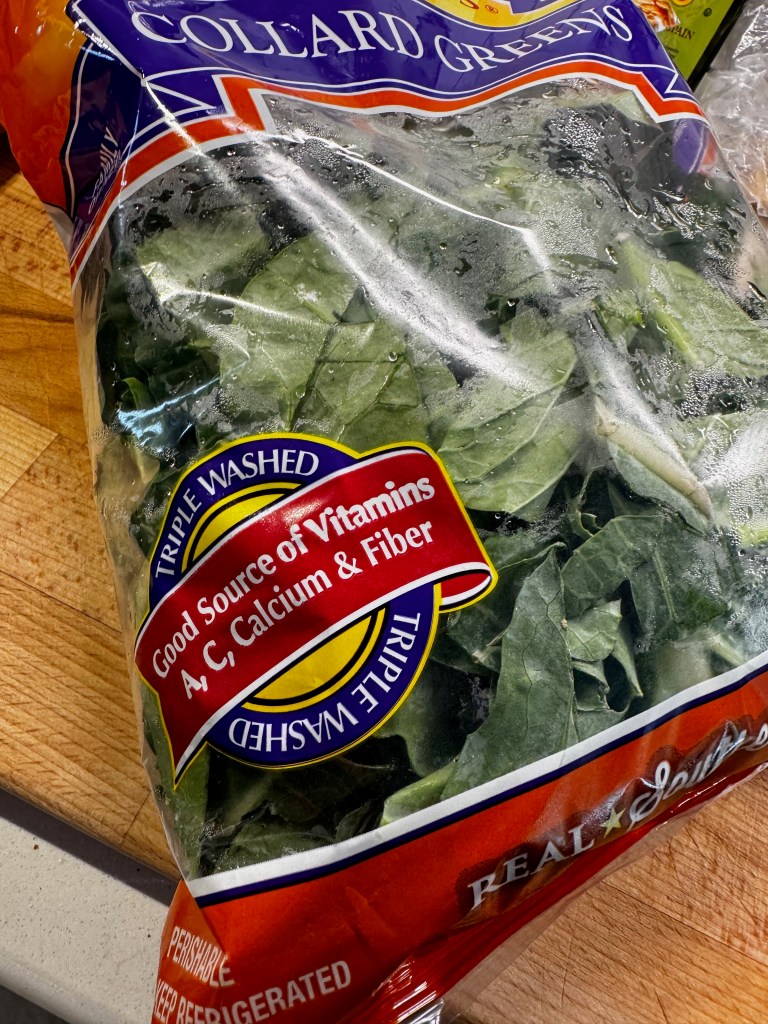
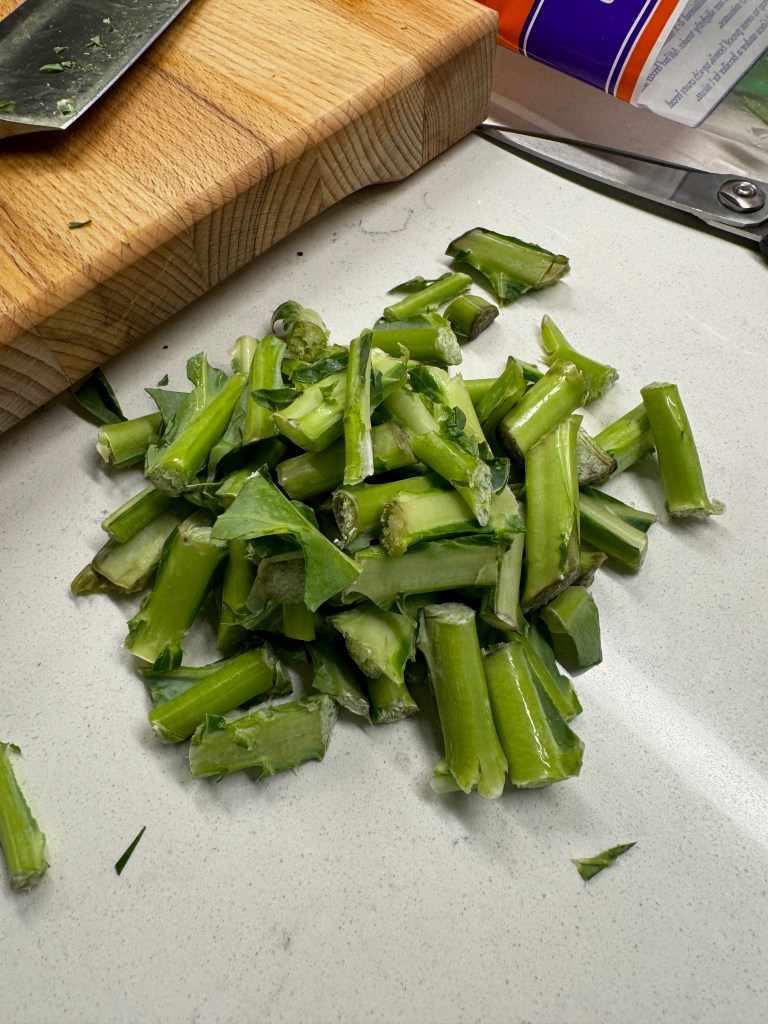
In my earlier collard cooking days, I purchased the queen pillow-sized bags of chopped and pre-washed collards, believing that it would be a shortcut. But I spent so much time picking through the chopped pieces to remove all the tough stems that are as big around as a #2 pencil, I quickly realized that this “shortcut” wasn’t worth the trouble.


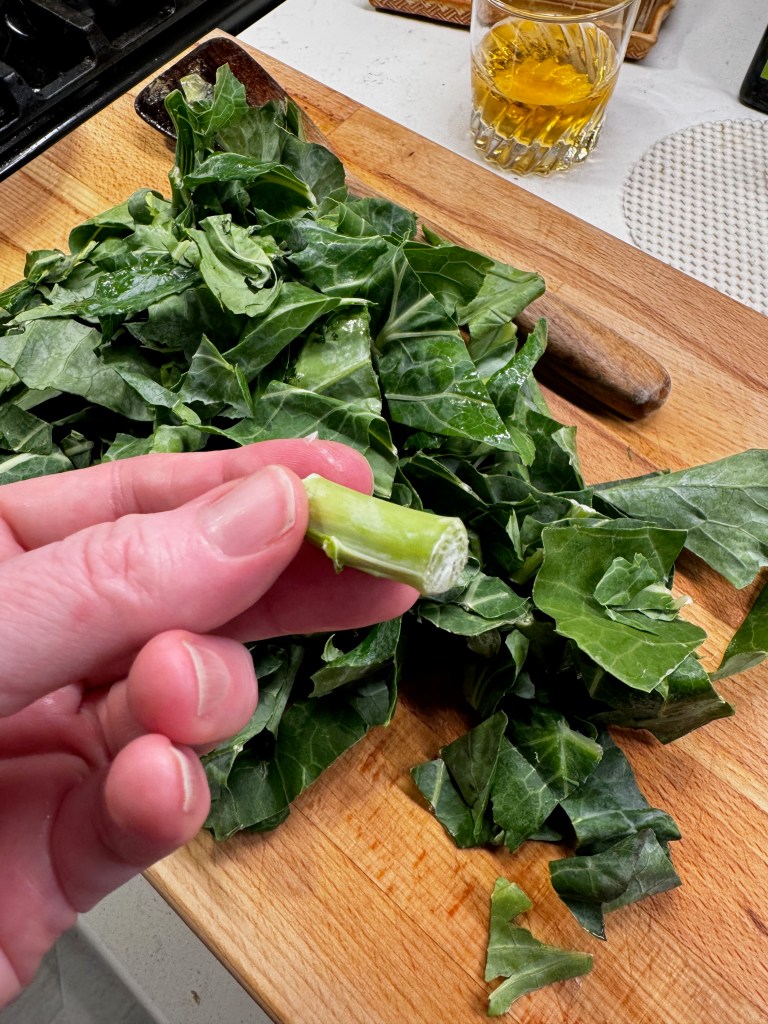
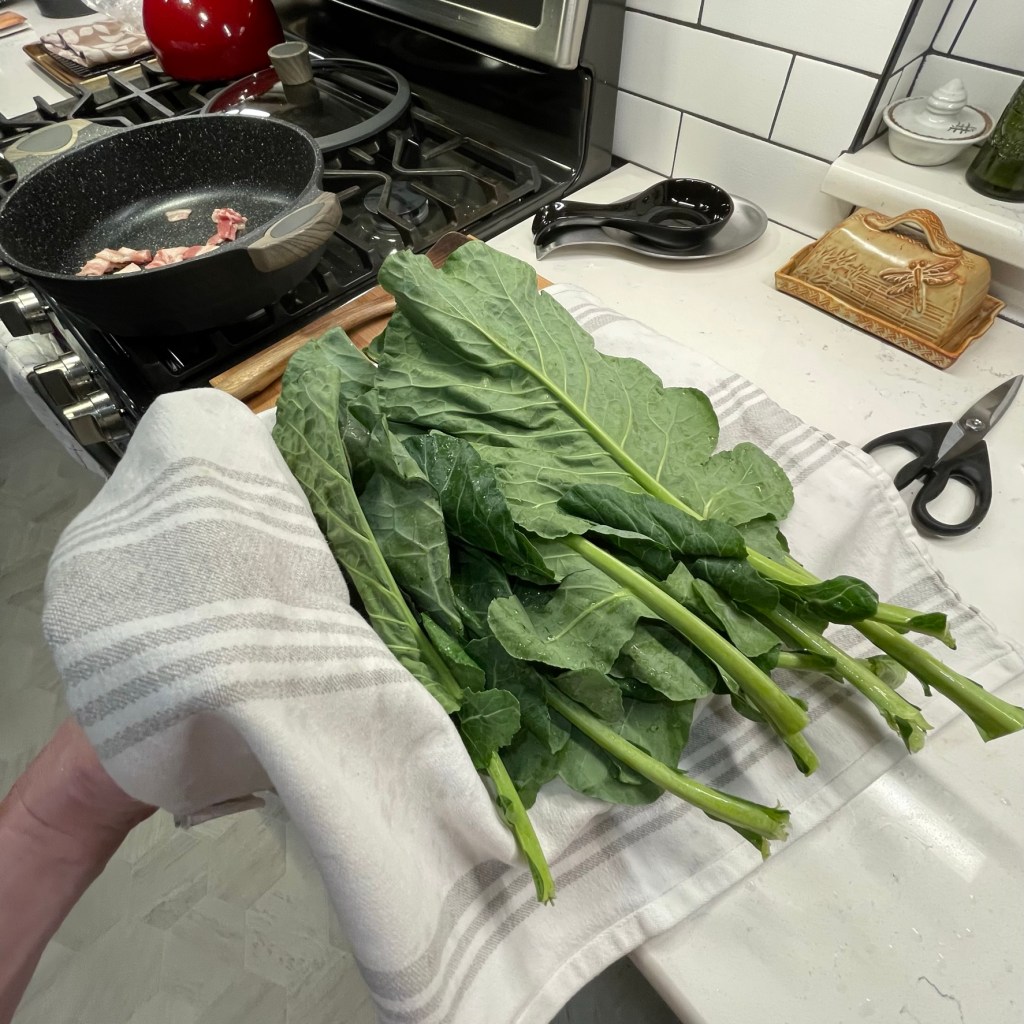
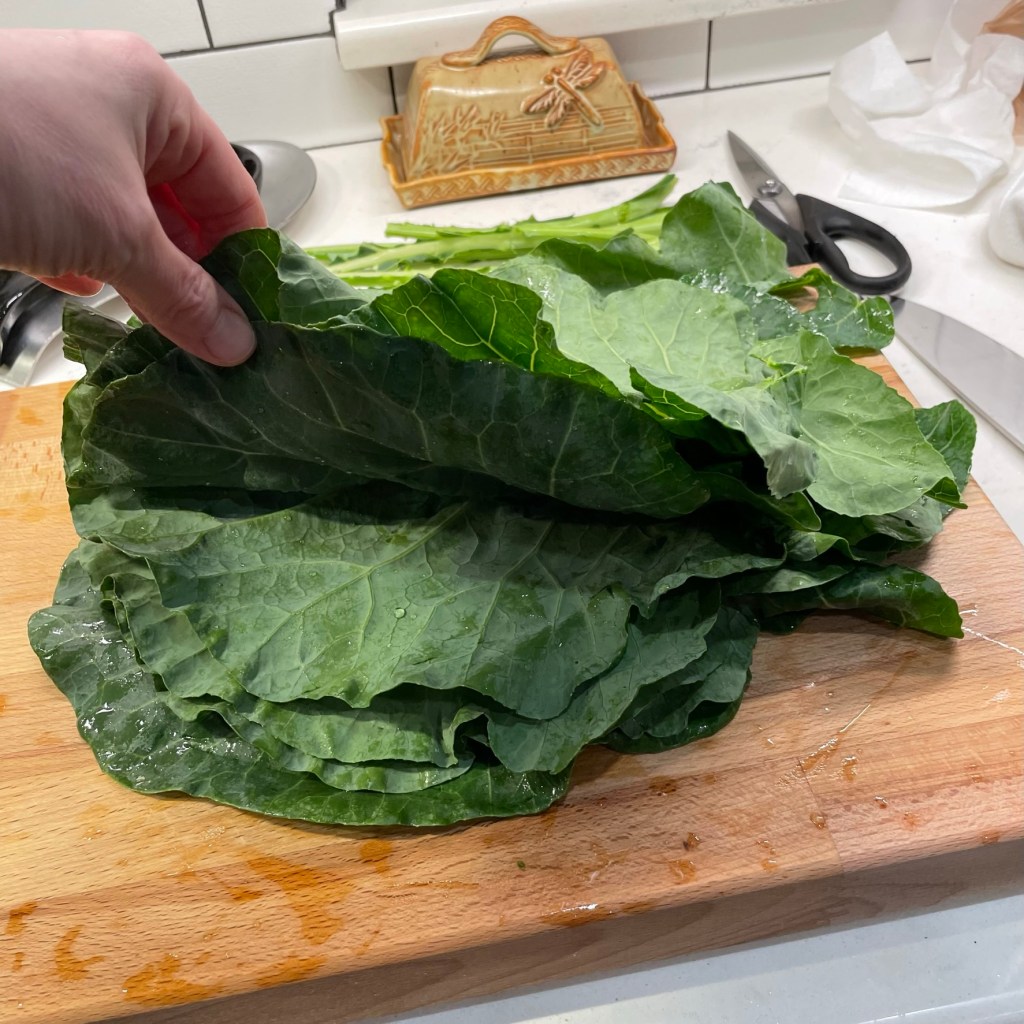
The easier way is to do them fresh, and it involves two quick tricks. After rinsing the collard greens really well, hold a stem firmly with one hand, keeping the other hand at the base of the stem and give the stem a good pull, zipping the leaf right off. Next, wrap the collard leaves in a clean kitchen towel to blot away excess moisture. 

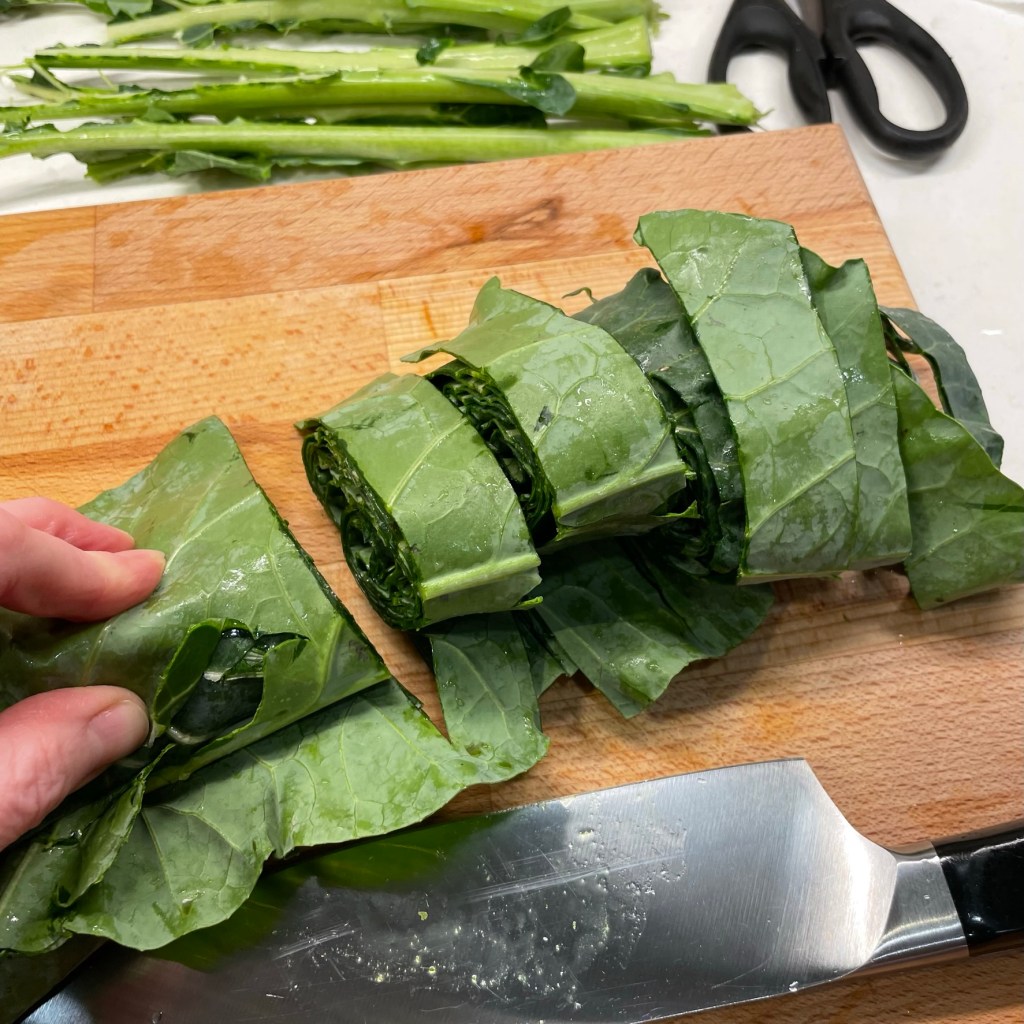
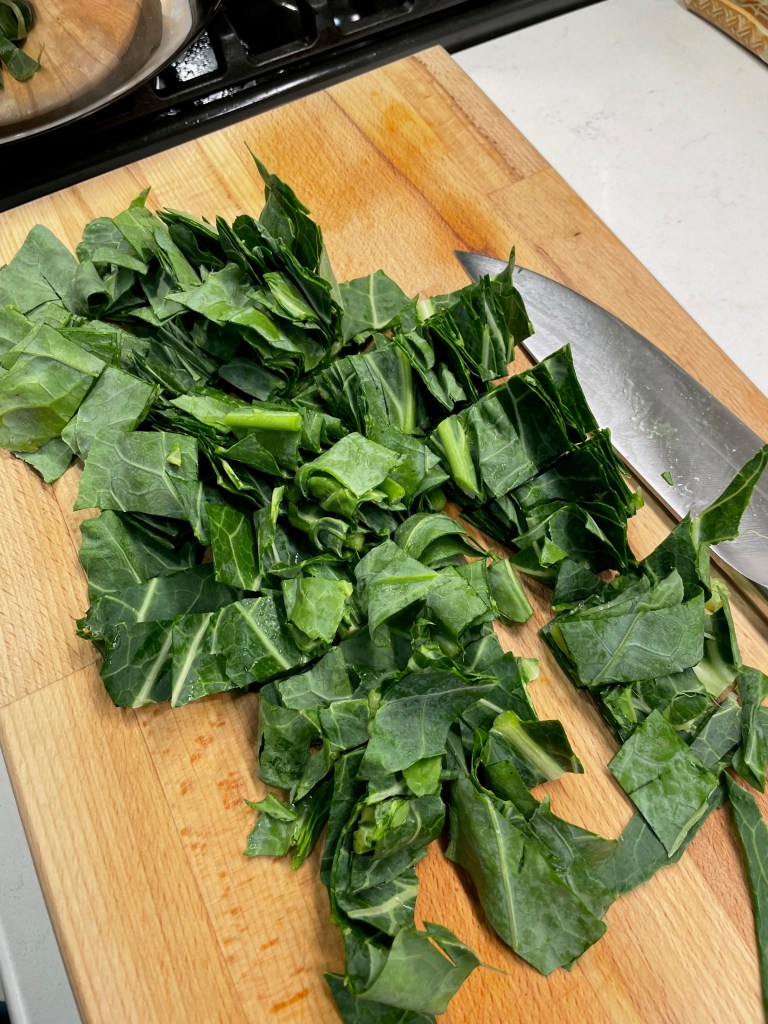
Now, here comes the second trick, and it’s a fun knife technique called chiffonade that you might use when garnishing with fresh basil. Stack the collard leaves together as neatly as possible, and then tightly roll the stack up lengthwise so it looks like a big cigar. Make cross cuts with a sharp knife, and then cut through those pinwheel slices. Voilà, a quick and easy pile of chopped collards (and no bulky stems).


Let’s get cooking!

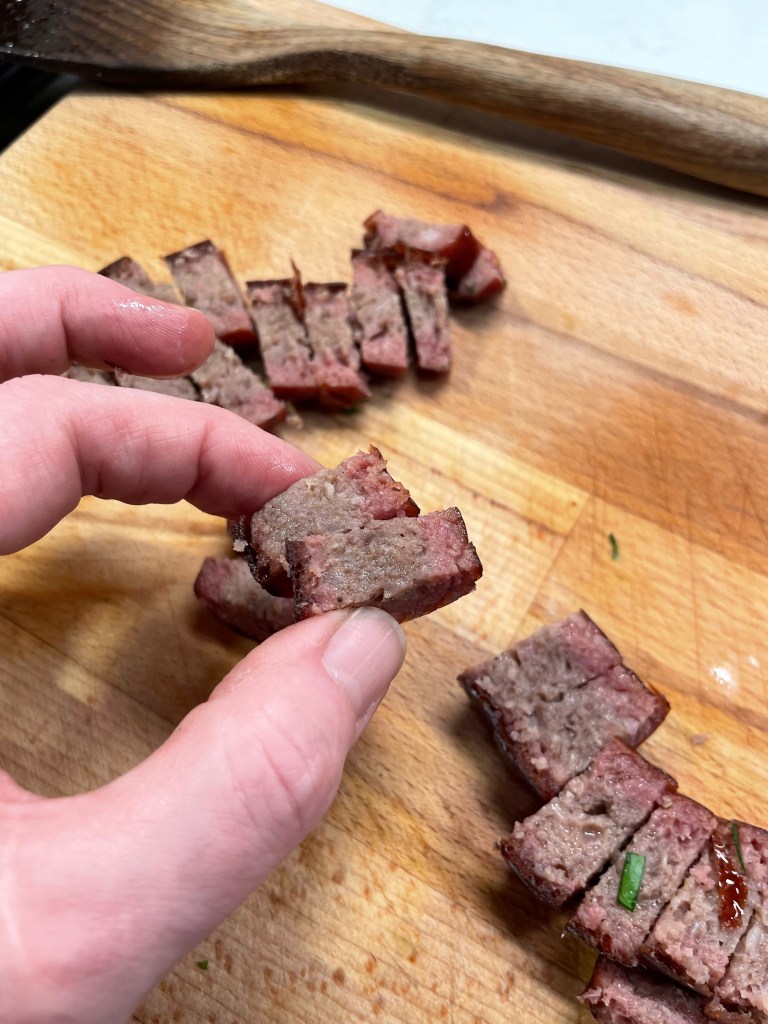
Most of my collard recipes involve bacon, but Les had brought in a successful haul from the smoker on the day that I made these, and I had a hunch that smoked sausage would be a terrific substitute. When I reached for a sweet onion in my countertop basket, I noticed a lone sweet potato in there and couldn’t help throwing some cubes of that in there, too.


The only remaining decision was a braising liquid, and that’s when I spotted a bottle of Angry Orchard hard cider in the back of the fridge. I’m not suggesting that regular apple cider wouldn’t have worked (though I expect it would have leaned very sweet), but I know from past adventures that a splash of booze helps tenderize the greens better than other liquids, so I went for it. I also appreciated that the hard cider had a tartness to balance the smoky sausage and sweet potatoes. My lucky day!


This autumn spin on collard greens would make a great addition to the Thanksgiving table, especially in the South, or serve them up with meatloaf, fried chicken or mac and cheese for any Sunday supper!

Cider-braised Collards with Sweet Potatoes and Smoked Sausage

  • Servings: About 8
  • Difficulty: Average
  • Print

There's so much autumn flavor going on in these collards, they'd be perfect as a side to your Thanksgiving meal!


Ingredients

  • 1 large bunch fresh collards, cleaned and chopped
  • 1 small Vidalia or other sweet onion, chopped
  • 2 Tbsp. extra virgin olive oil
  • Salt and pepper to taste
  • 1 link smoked sausage, halved lengthwise and then sliced
  • 1 medium sweet potato, peeled and cubed
  • 1/2 bottle Angry Orchard (or other brand) hard apple cider

Notes: The smoked sausage I used was a local butcher product, and it was seasoned with autumn spices. Any smoked sausage would work here, including kielbasa, Andouille or even hot links. Consider the sodium content of the sausage so that you may adjust additional salt accordingly.

Directions

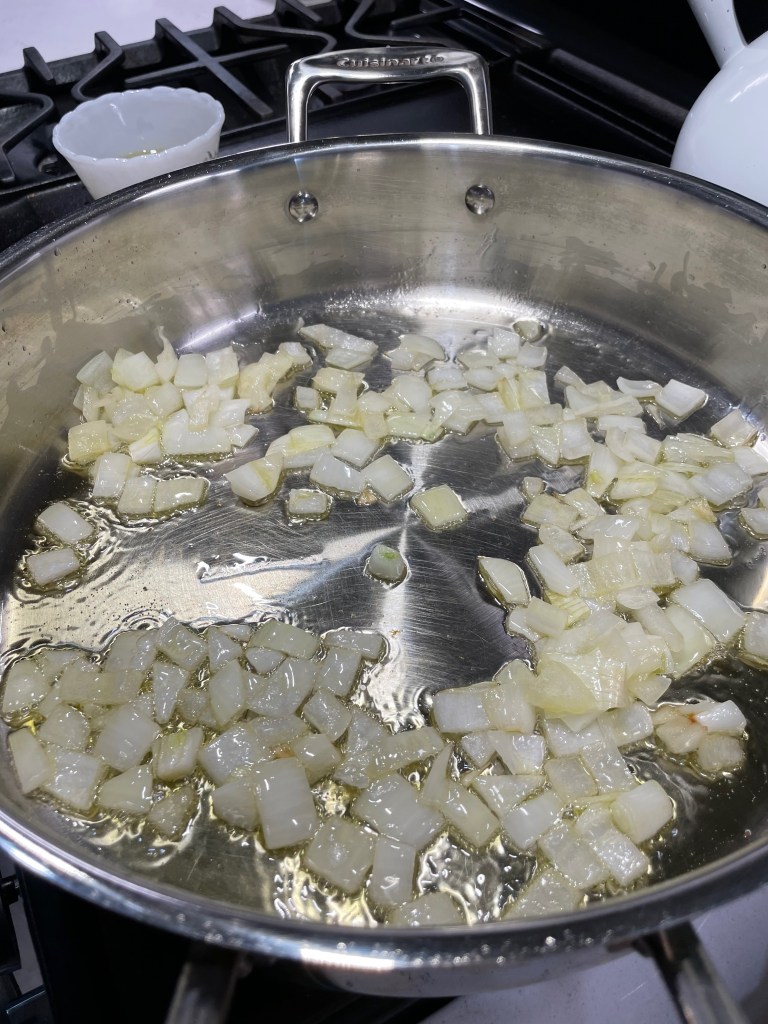
  1. Heat a heavy-bottomed wide pot over medium heat. Swirl in olive oil and sauté onions briefly until just barely tender. Add collards, a handful at a time, until all are in the pot. Season with salt and pepper, and toss until all collard leaves are wilted.
  2. Add sweet potato cubes and smoked sausage and toss until the contents of the pot are heated through.
  3. Pour in hard cider, give it a stir, and then cover the pot and reduce heat to a simmer. Cook the collards for 20 to 45 minutes, until collards are tender to your liking. If you like collards extremely tender, consider delaying addition of the sweet potatoes until about a half hour before the finish.


Caramel Apple Blondies

What is it about Autumn that everyone finds so appealing? It is easy to imagine that I’m among the majority when it comes to fall being my favorite season. Everyone I know seems to mention that it’s theirs also, so I did a little investigating to see if this is just confirmation bias or a birds-of-a-feather situation. Let’s see what the data says.

A survey reported by CBS says as many as 45% of Americans favor fall over the other three seasons combined. And another poll by Morning Consult—a business intelligence company that specializes in survey data— breaks it down into deeper demographics to reveal that Autumn is the clear favorite, especially among women, especially Gen Xers, and especially in the South. That’s me, on all three counts!

No wonder I get so excited about cooler temperatures, boots, sweaters and pumpkin spice. Indeed, this is my favorite time of year, and I’ve put a new spin on one of my own recipes to highlight one of the season’s best flavors, apple. And, in honor of all the state and county fairs that are happening this time of year, I thought it fitting to wrap a little caramel around the apple for even more nostalgia.

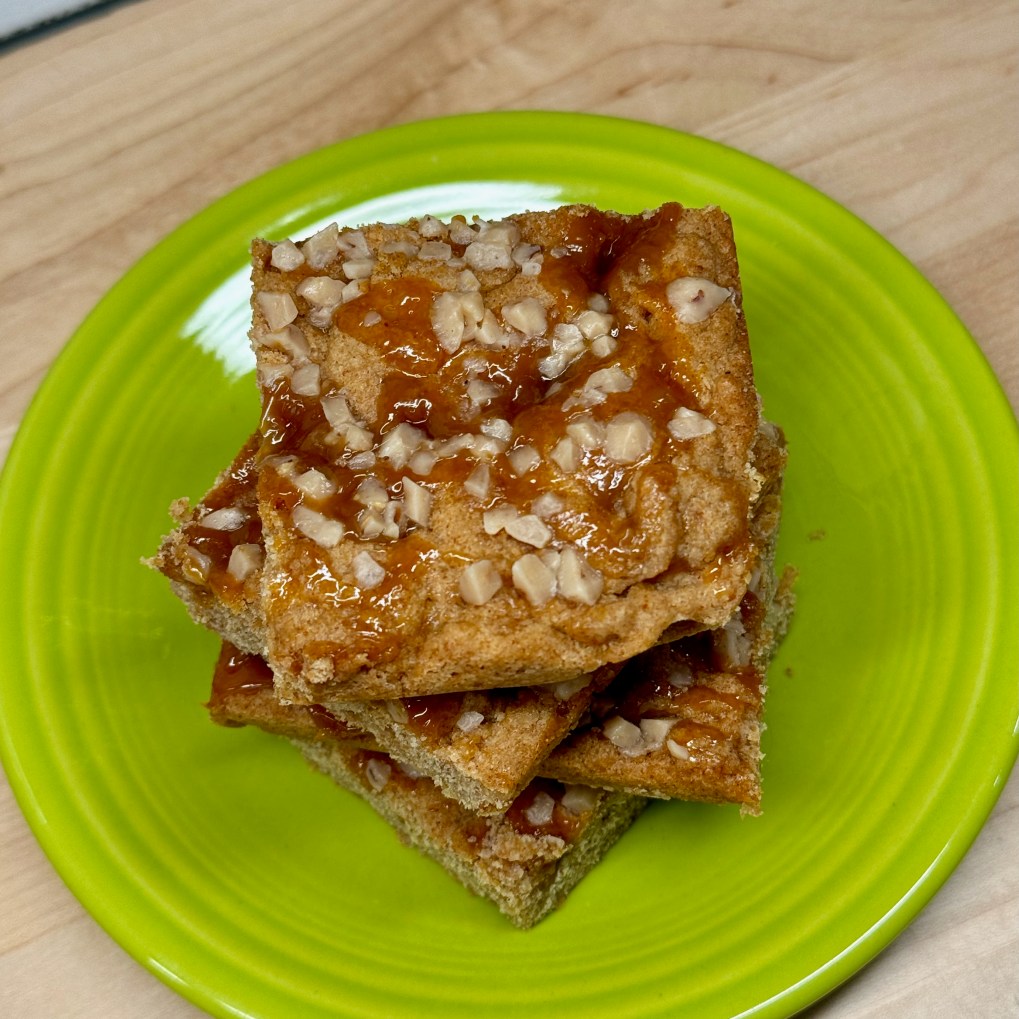
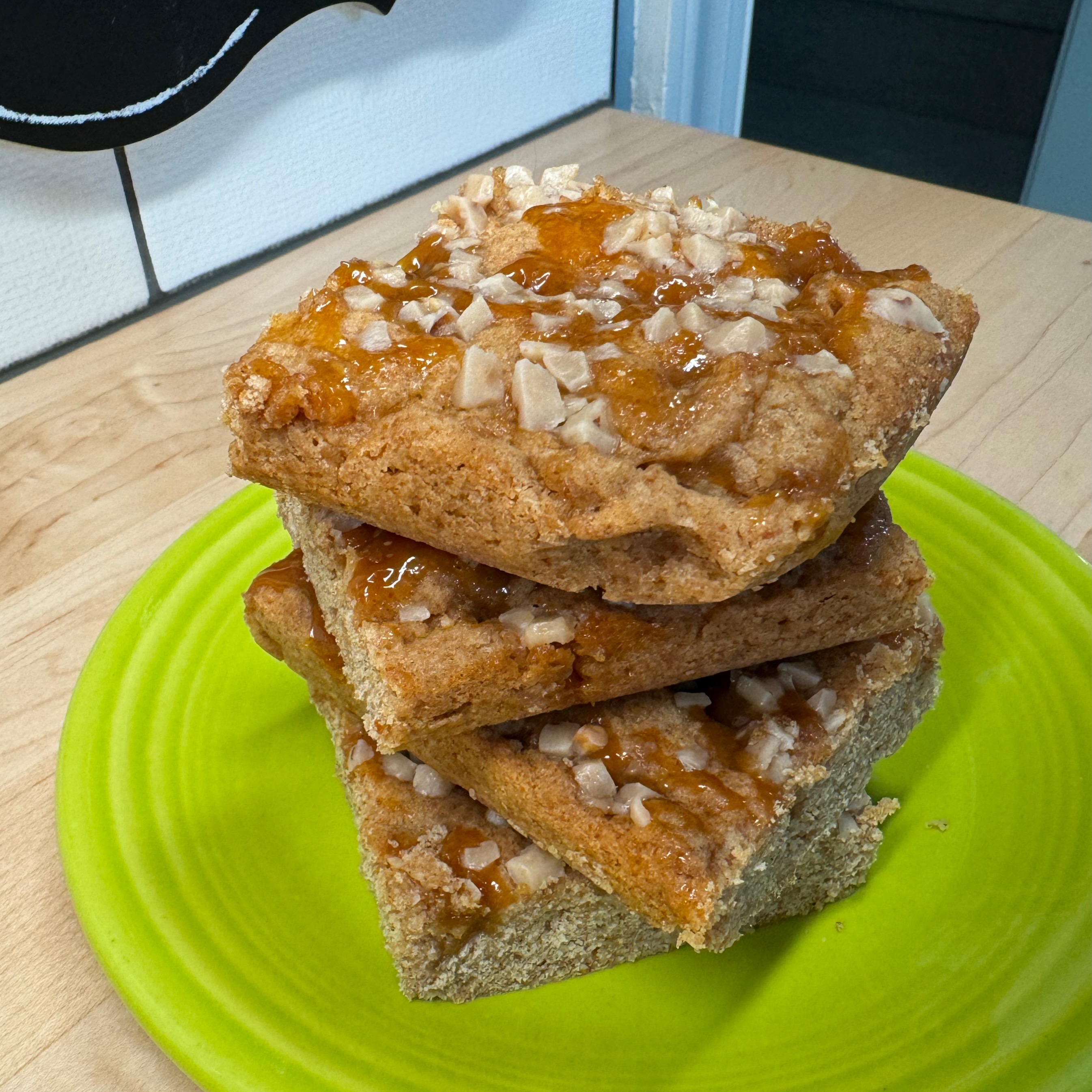
My caramel apple blondies are a deliciously sweet, caramel apple-y treat that’s perfect for a Halloween party, a gift for a favorite teacher or new neighbor, or just tucked into your grandkid’s lunch box.

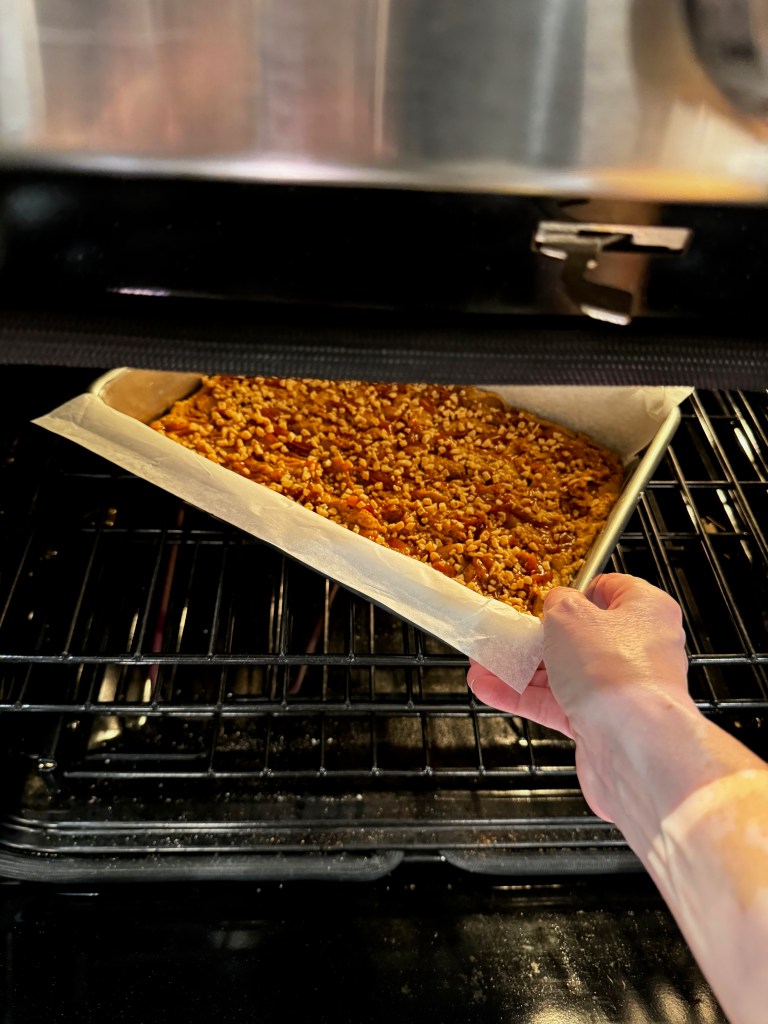
It took great restraint not to cut into them straight from the oven!

What ingredients are in caramel apple blondies?

A blondie is essentially a cookie bar, with a dense, chewy texture and often includes some kind of fun mix-in, such as chocolate chips or nuts. Similar to a brownie, but without chocolate, a blondie is made from a dough that resembles the base of a chocolate chip cookie, with plenty of butter, brown sugar, egg, vanilla, flour and leavening, such as baking powder.

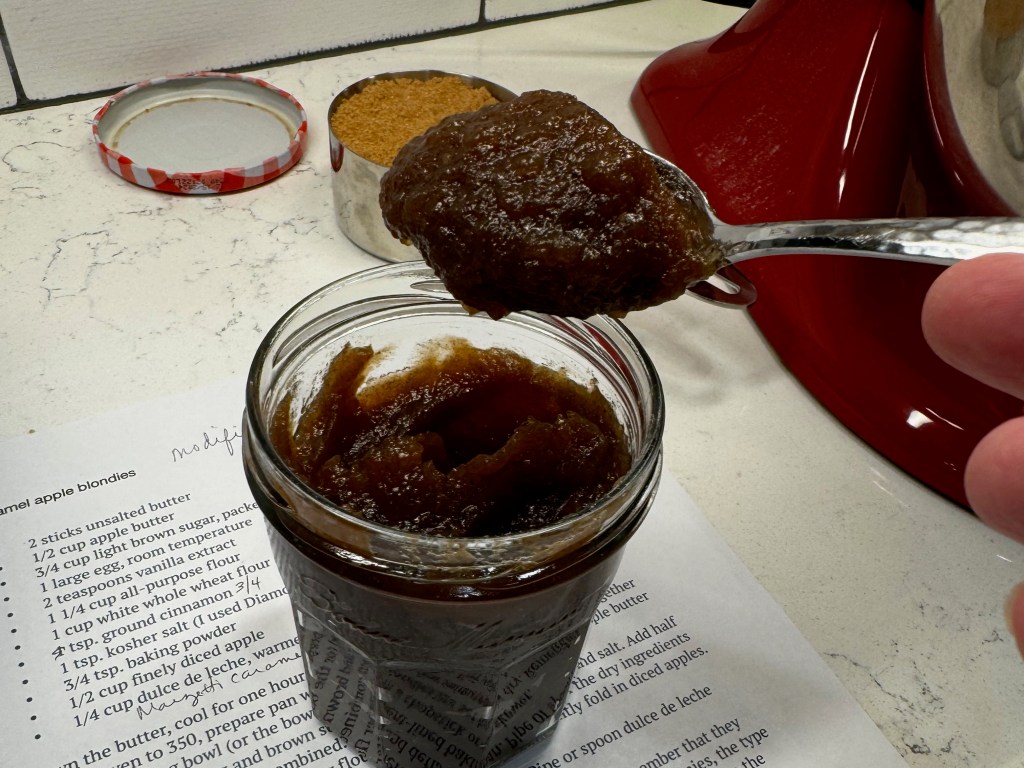
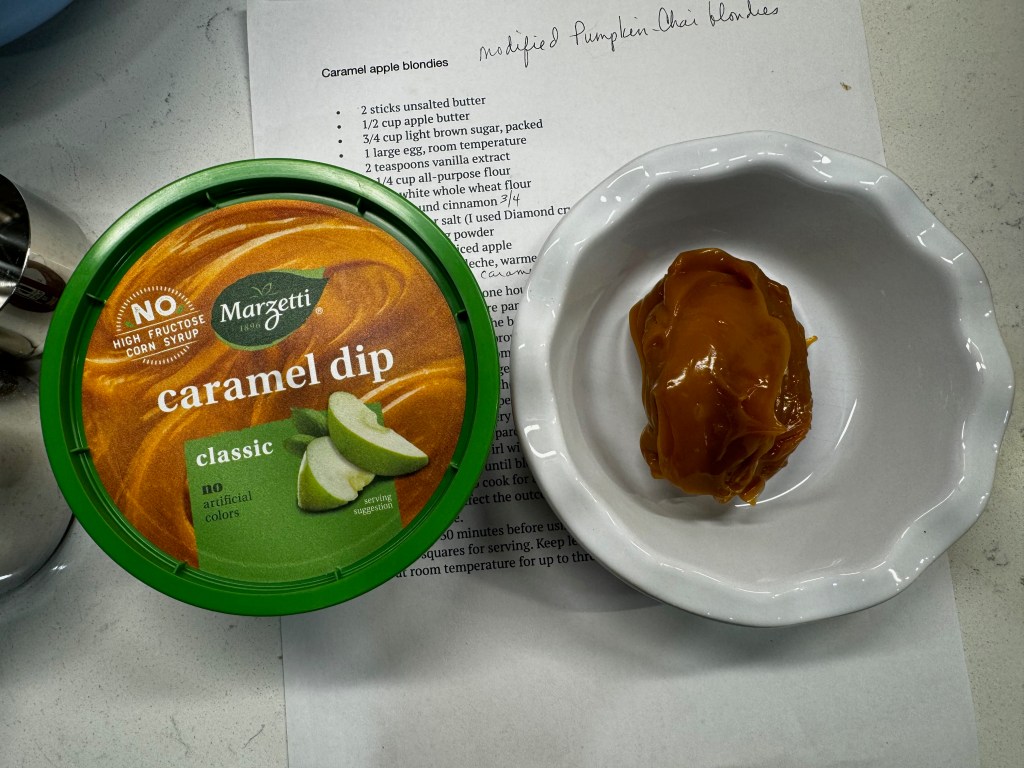
For this recipe, I’ve leveraged the same technique as in last year’s pumpkin chai blondies, using a concentrated paste of cooked down apples this time— otherwise known as apple butter— to give a distinct apple flavor without the high amount of moisture that would have been in fresh chopped apples. The caramel element is an easy grocery store item, the same stuff you pick up in the produce department for dipping apple slices. 


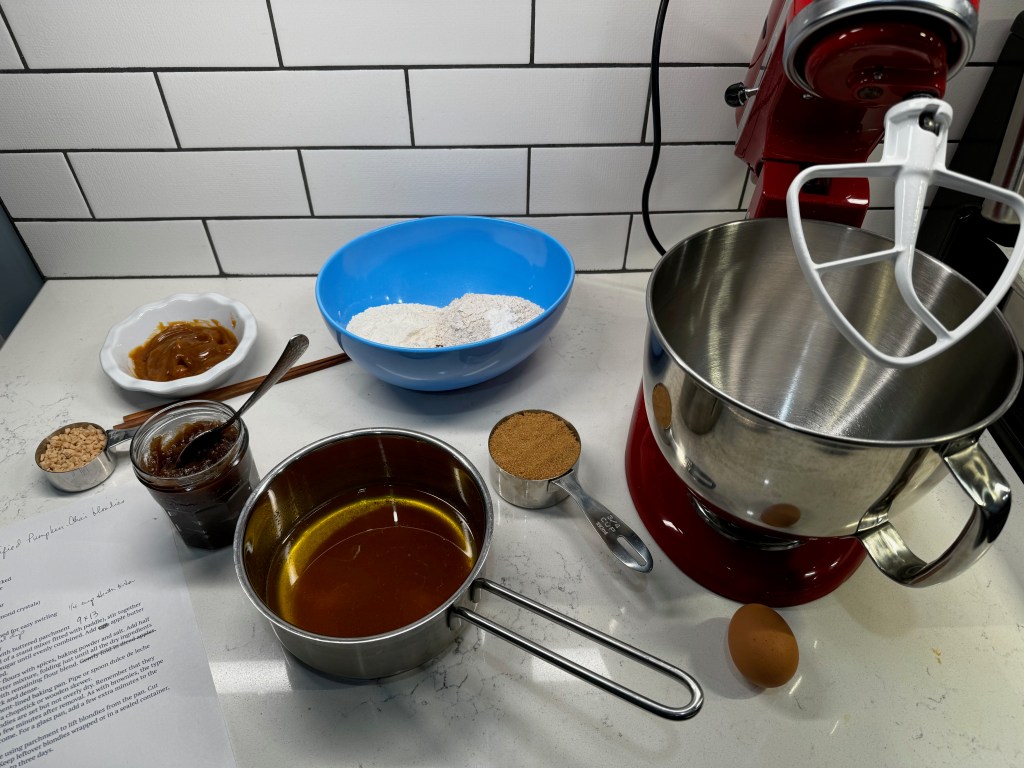
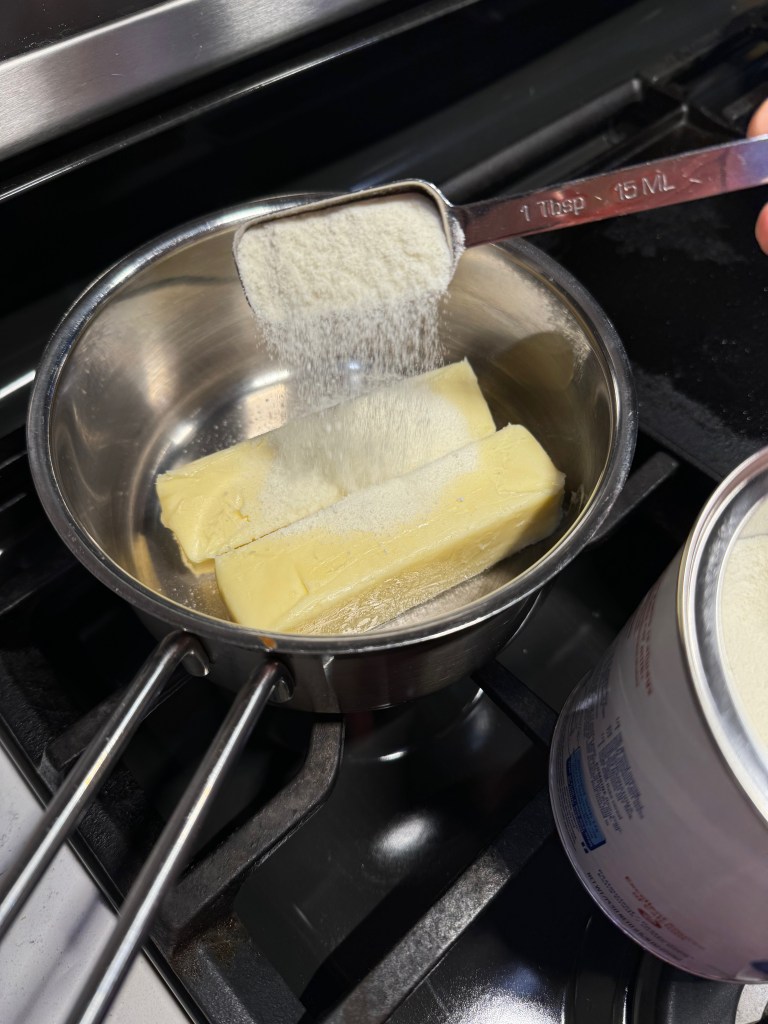
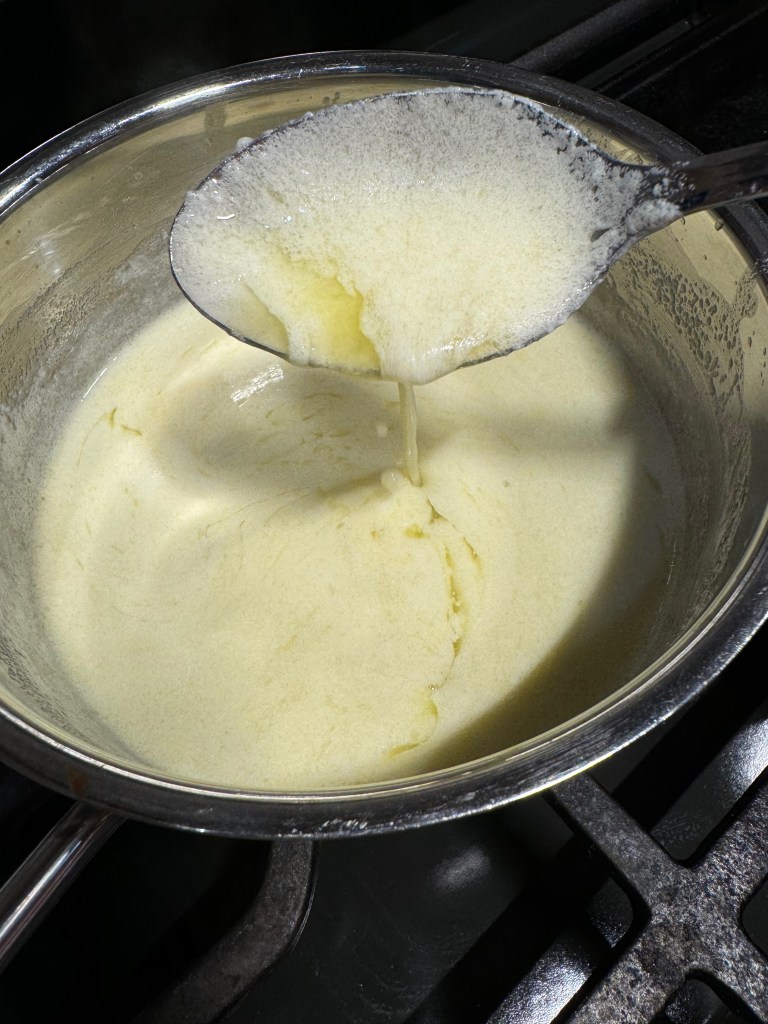
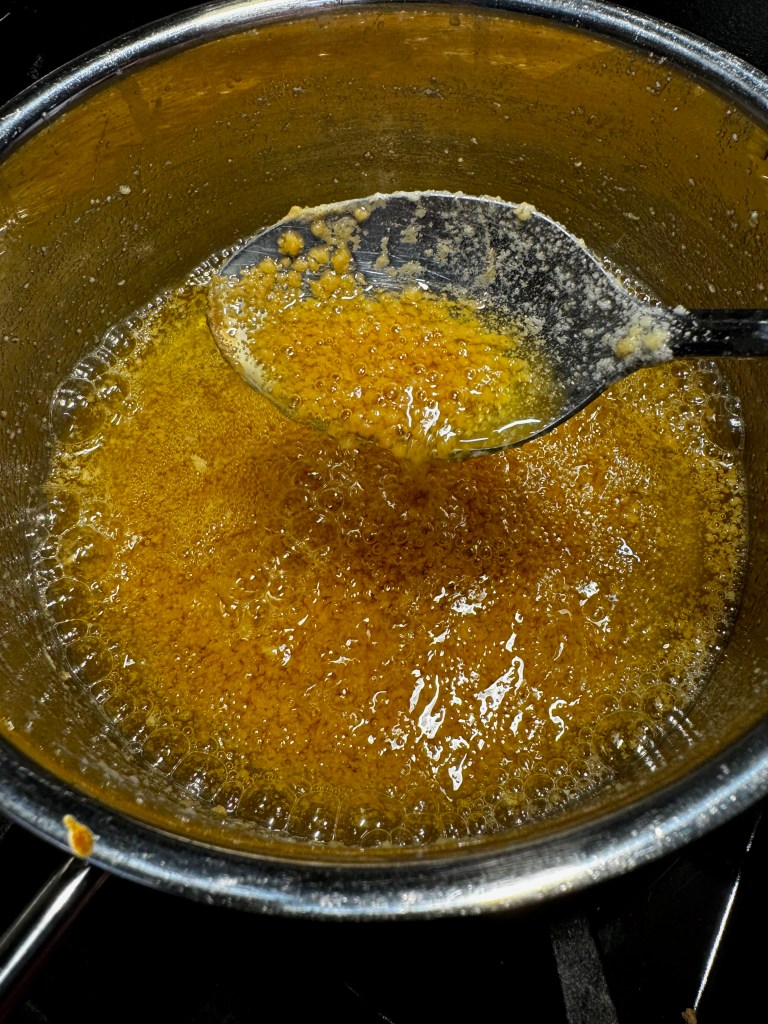
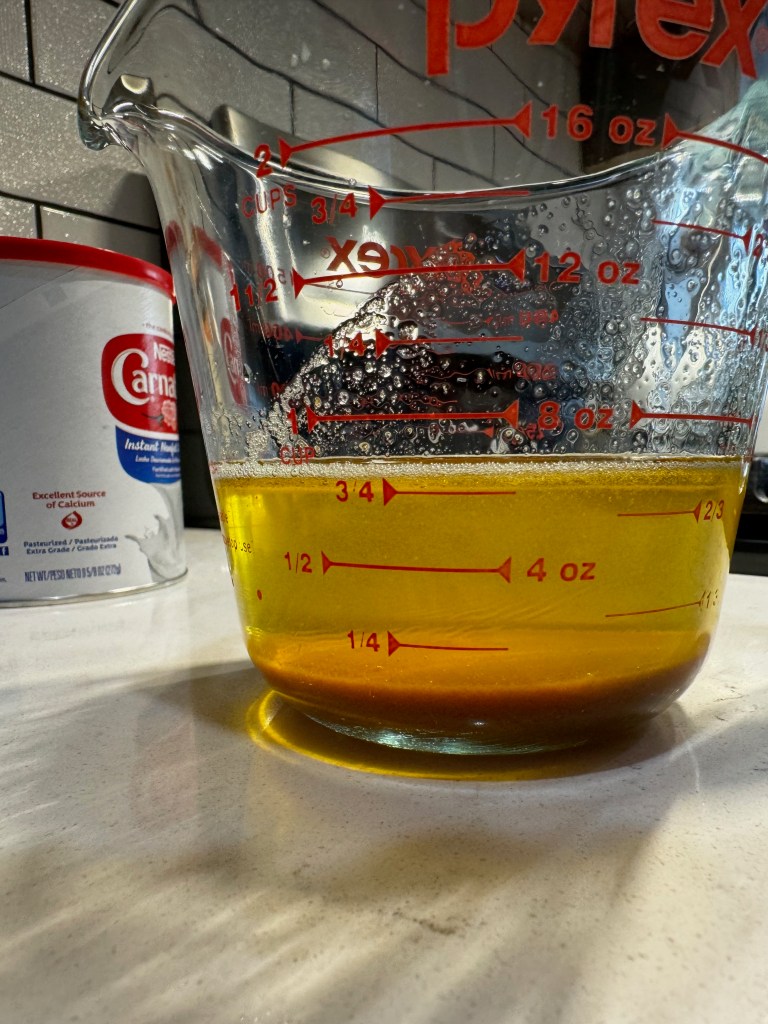
To keep these blondies a bit “healthy-ish,” I subbed in a half amount of whole wheat pastry flour. And in case you wonder why the melted butter is soooo dark in the pan in my ingredients photo, it’s because I tried a new (and very flavorful) trick when I made my browned butter.

Check out that very browned butter!

How to make browned butter even better

If you spend any time at all on social media or the internet, you may have seen this new trend of adding powdered milk to the butter as it browns. Given that it’s the milk solids that actually brown, it stands to reason that increasing the milk solids will amp up the flavor. And holy moly, it sure did! I used salted butter, by the way, though most baking recipes call for unsalted. Why? Because salt in desserts does the same thing as salt in savory dishes— it shoves the most important flavors to the forefront.


How do you make caramel apple blondies?

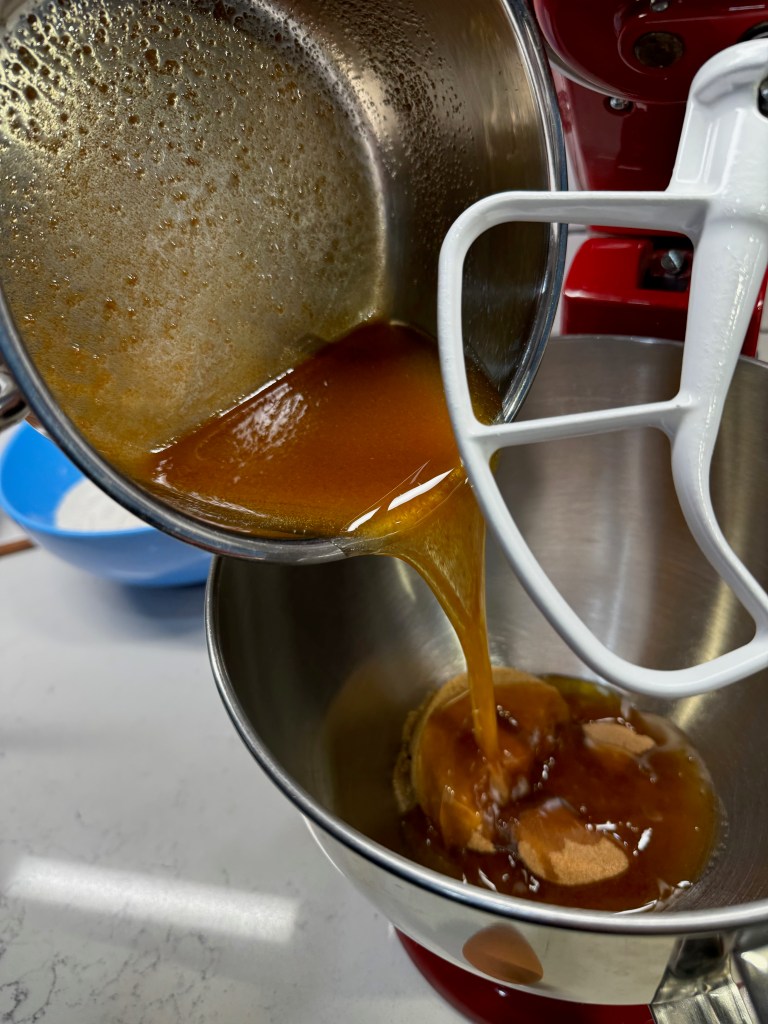
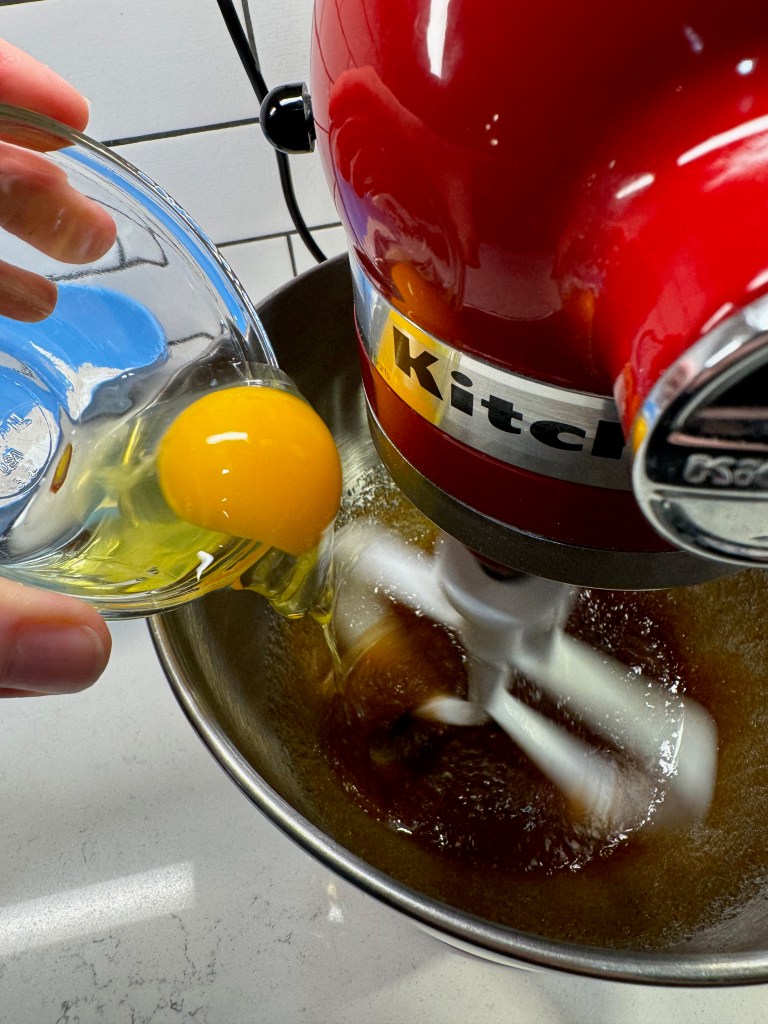
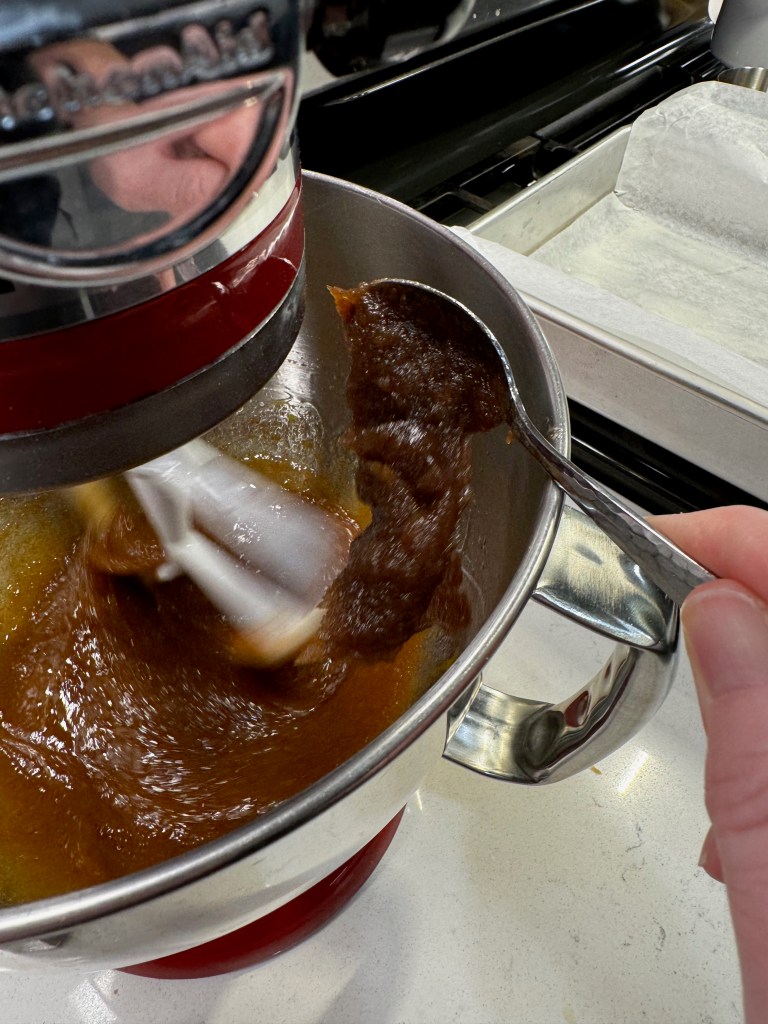
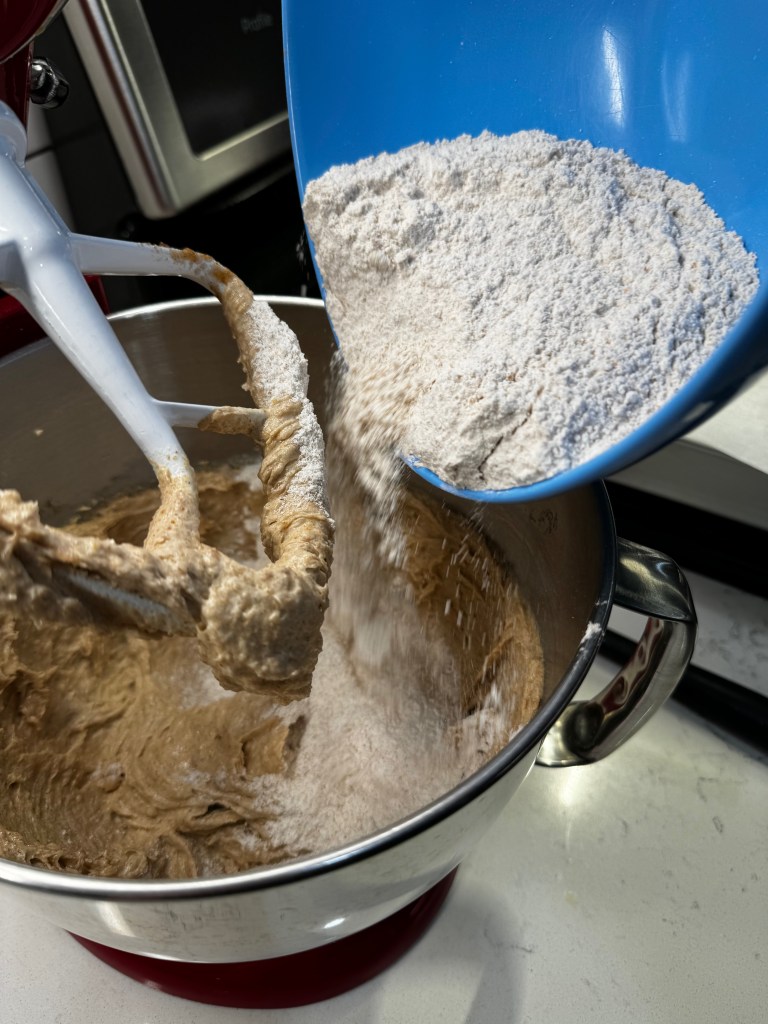
The rest of the recipe is very simple. Mix together the melted butter and brown sugar, then add the egg, apple butter and vanilla. Add the dry ingredients, half at a time, mixing only until all the flour is incorporated. 


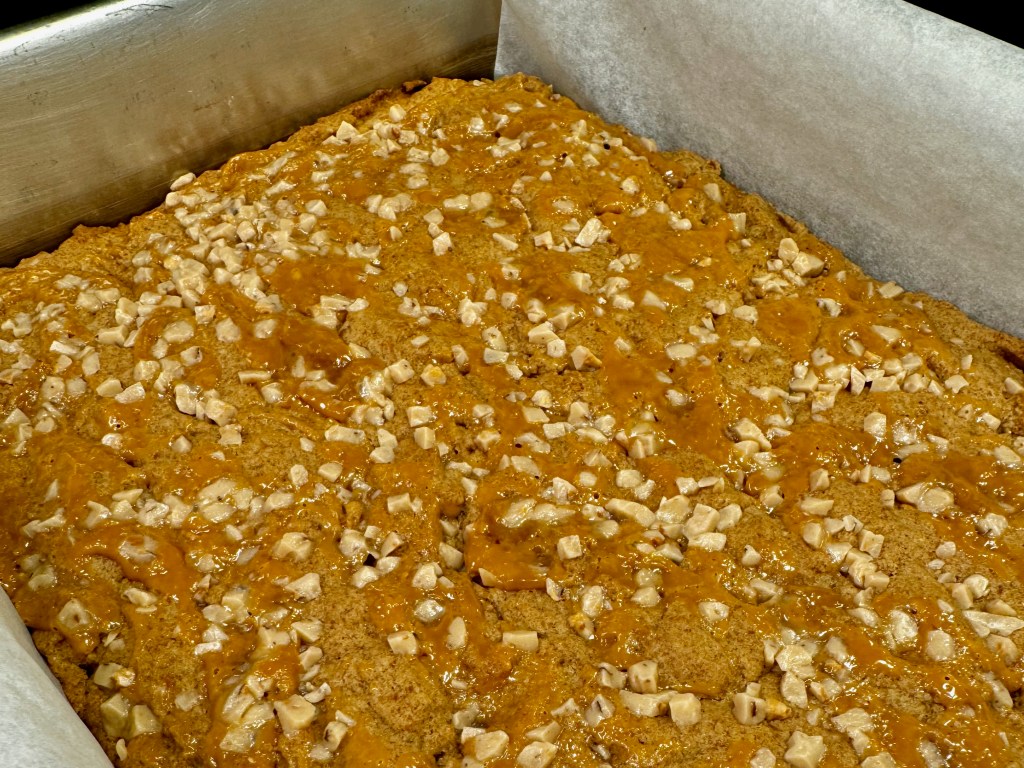
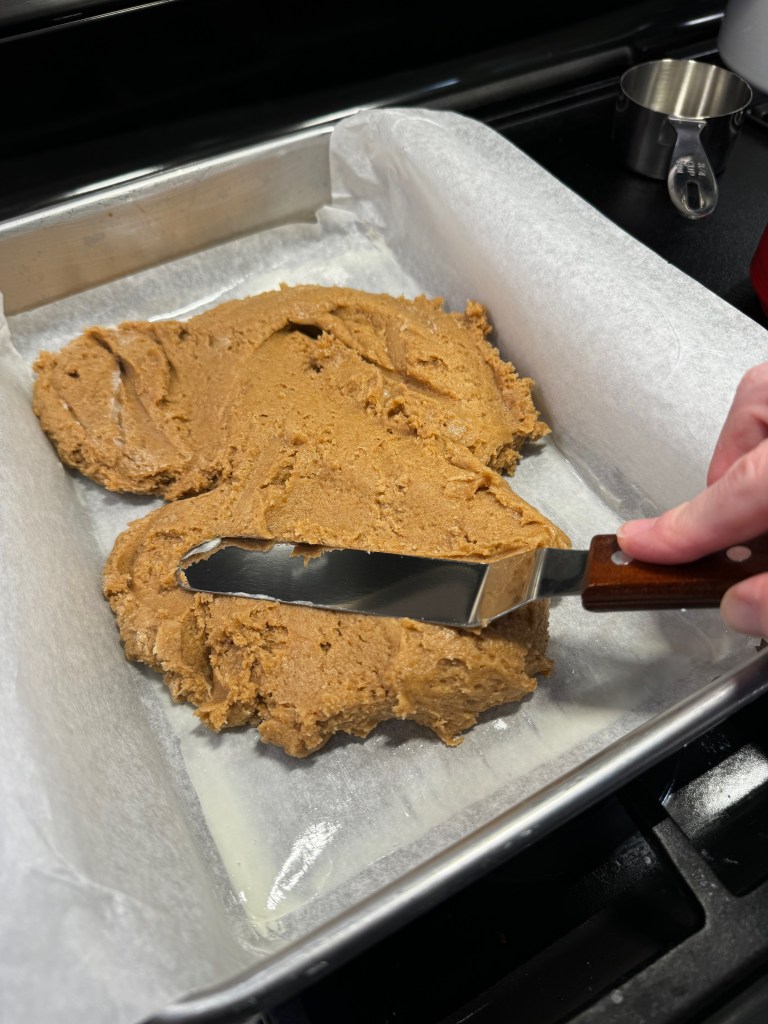
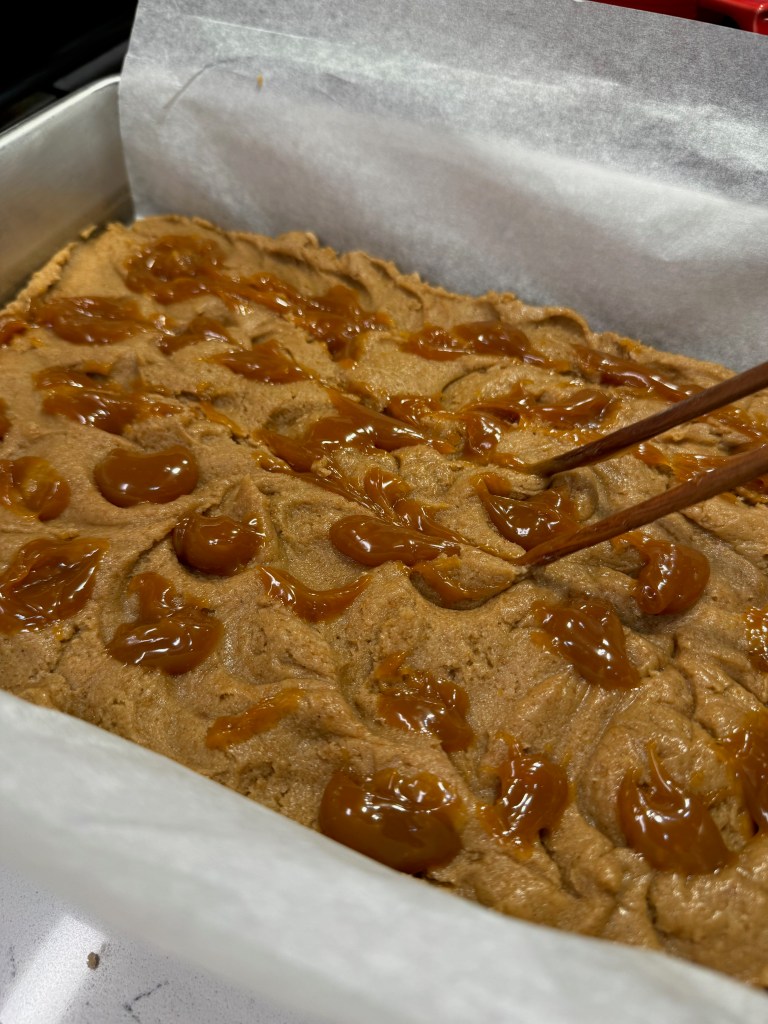
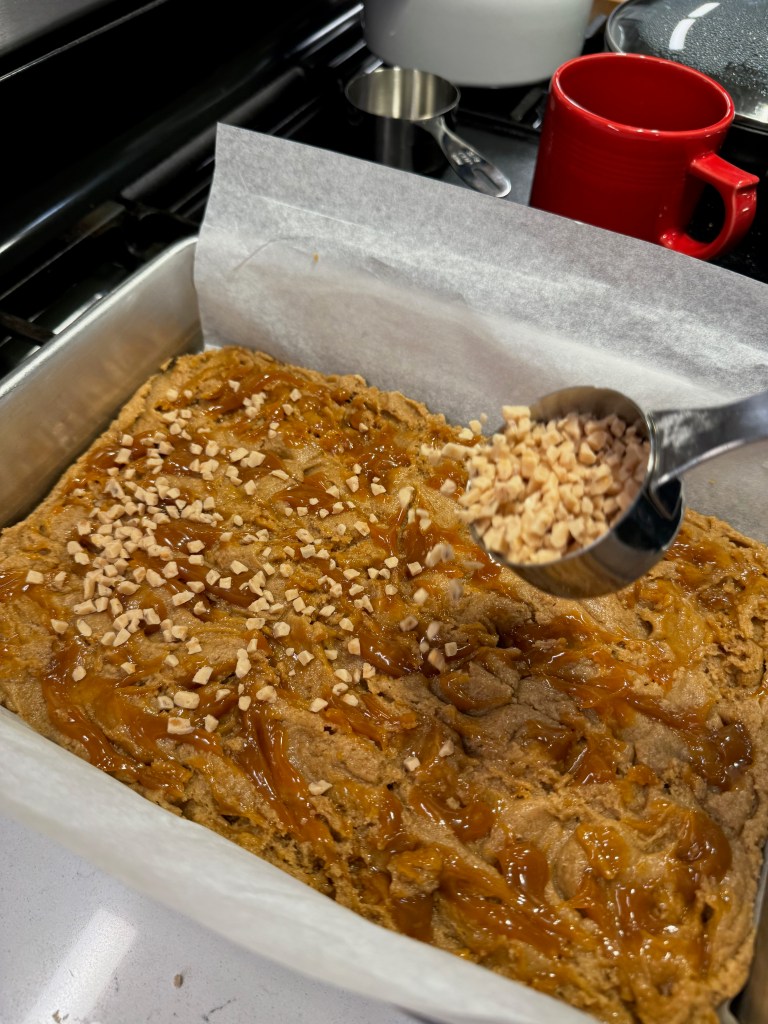
Spread the batter evenly into a buttered, parchment-lined pan, then spoon and swirl a bit of warmed caramel dip over the top. Scatter a few tablespoons of Heath candy bits on top and bake until the blondies test done with a clean toothpick.


Cool the blondies completely before cutting them, and if you really want to push them over the top, serve them with a scoop of my easy cinnamon ice cream. We enjoyed them this way, and I got so excited, I completely forgot to take a picture. But you can imagine, right? 😉

Caramel Apple Blondies

  • Servings: 12 or 16
  • Difficulty: Average
  • Print

Caramel and apples reminds me of the treats I used to look forward to at the county fair. These blondies are just one of many reasons I'm excited about fall.


Ingredients

  • 2 sticks salted butter
  • 2 Tbsp. nonfat dry milk powder
  • 3/4 cup light brown sugar, packed
  • 1 large egg (room temperature)
  • 1 cup apple butter (homemade or store bought)
  • 2 tsp. real vanilla extract
  • 1 1/4 cups all-purpose flour (see notes for measure instructions)
  • 1 cup whole wheat pastry flour (or sub in regular all-purpose flour if desired)
  • 3/4 tsp. ground cinnamon
  • 1/2 tsp. kosher salt
  • 3/4 tsp. baking powder
  • 1/4 cup caramel dip (find in the produce section, near the apples)
  • 1/4 cup Heath candy bits (optional, sub chopped pecans if desired)

Notes: Unsalted butter can be used, if that’s what you have on hand; double the kosher salt if you go this route.

When measuring flour, use the “fluff, sprinkle, level” method rather than scooping directly into the bag or container.

Directions

  1. Place the butter in a heavy-bottomed sauce pan over medium heat. Stir frequently, and when melted butter begins to brown, add the dry milk powder. Stir constantly, as the browning will happen quickly at that point. Remove from heat as soon as the butter reaches a copper color. Transfer to a measuring cup to cool.
  2. Preheat oven to 350° F, with oven rack in center position. Prepare a 9 x 13″ baking pan with a buttered parchment liner, leaving flaps on the long sides for easy lifting of baked blondies.
  3. In a large mixing bowl (or the bowl of a stand mixer fitted with paddle), stir together browned butter and brown sugar until evenly blended. Add apple butter and egg. Beat until combined and somewhat fluffy.
  4. In a medium bowl, whisk together flours with cinnamon, baking powder and salt. Add half the flour mixture to the apple mixture, folding just until all the dry ingredients are incorporated. Repeat with remaining flour blend. The batter will be very thick and dense.
  5. Spread batter evenly over parchment. Warm the caramel dip slightly in the microwave for easier swirling. Pipe or spoon caramel dip over batter and swirl with a chopstick or spoon handle. Sprinkle on Heath candy bits.
  6. Bake for 25 minutes, or until blondies are set but not overly dry. Remember that they will continue to cook for a few minutes after removal. As with brownies, the type of pan may affect the outcome. For a glass pan, add a few extra minutes to the baking time.
  7. Cool for at least 30 minutes before using parchment flaps to lift blondies from the pan. Cut into squares for serving. Keep leftover blondies wrapped or in a sealed container at room temperature for up to three days.


Crub – My Norwegian Family Tradition

There are some recipes that look almost too good to eat. Friends, this ain’t one of them. 😏

I have spent a lot of time sharing other people’s traditions here on Comfort du Jour, but today I’m paying tribute to my dear grandmother, whose hands made this recipe, just as her mother’s hands before her, and her grandmother’s, and so on. As I tried to describe to my foodie friend, Dorothy, what crub, my family’s favorite food tradition looked like, it became crystal clear that this is a dish I love not for its splendor, but for the family history it represents.

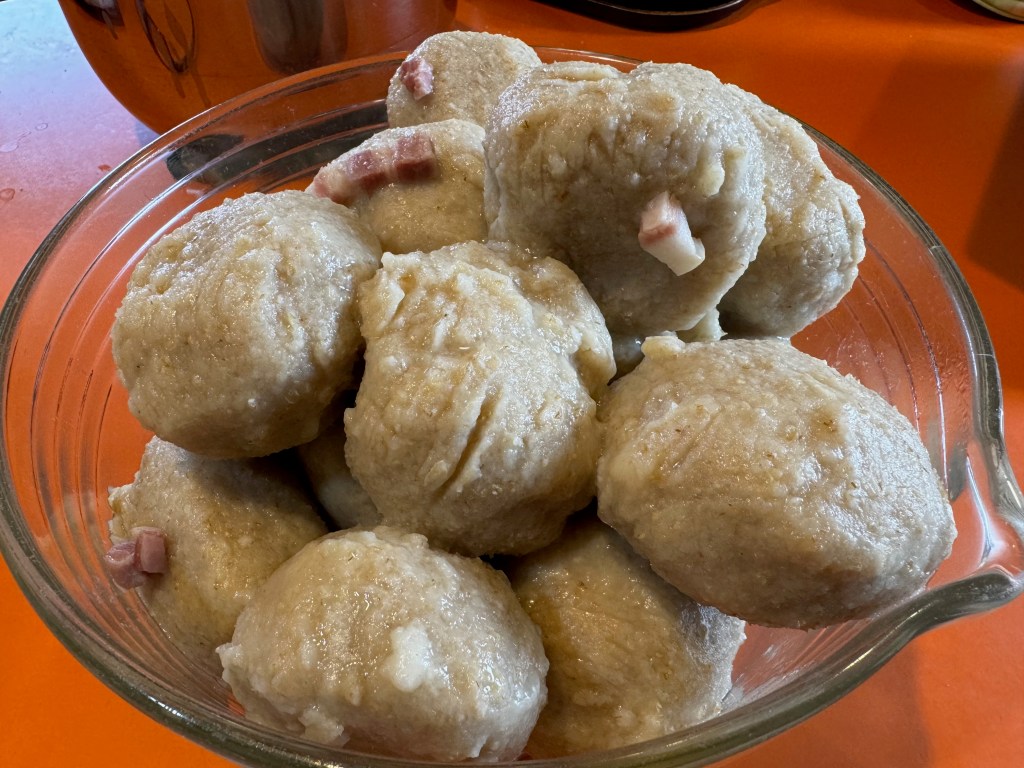
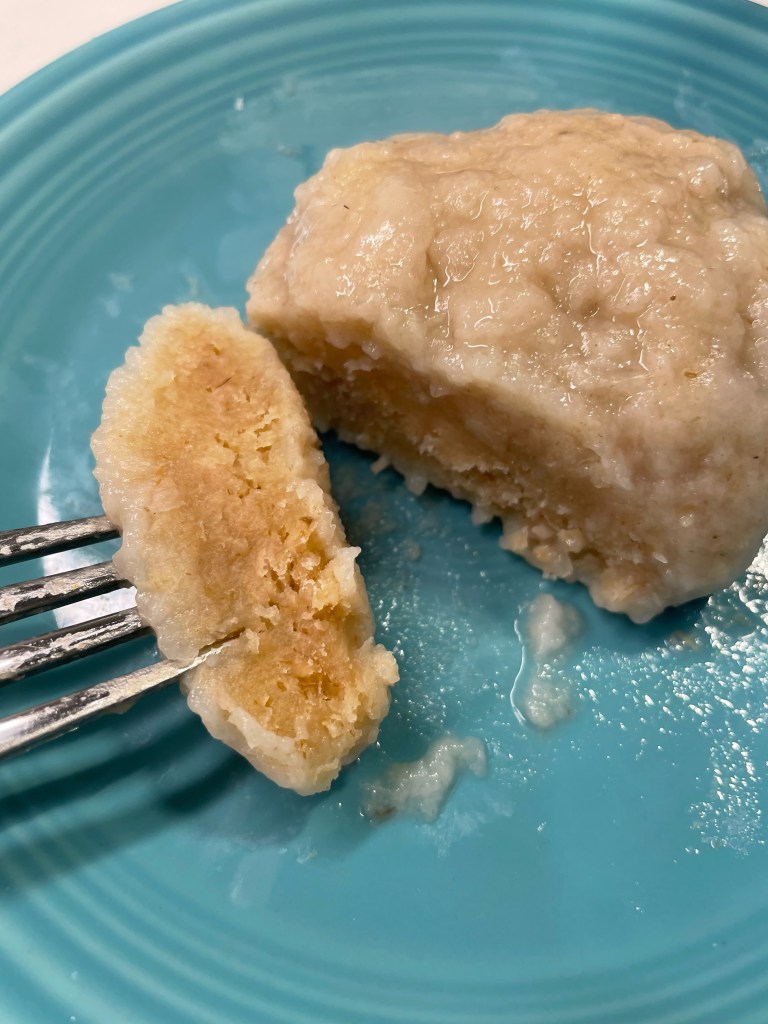
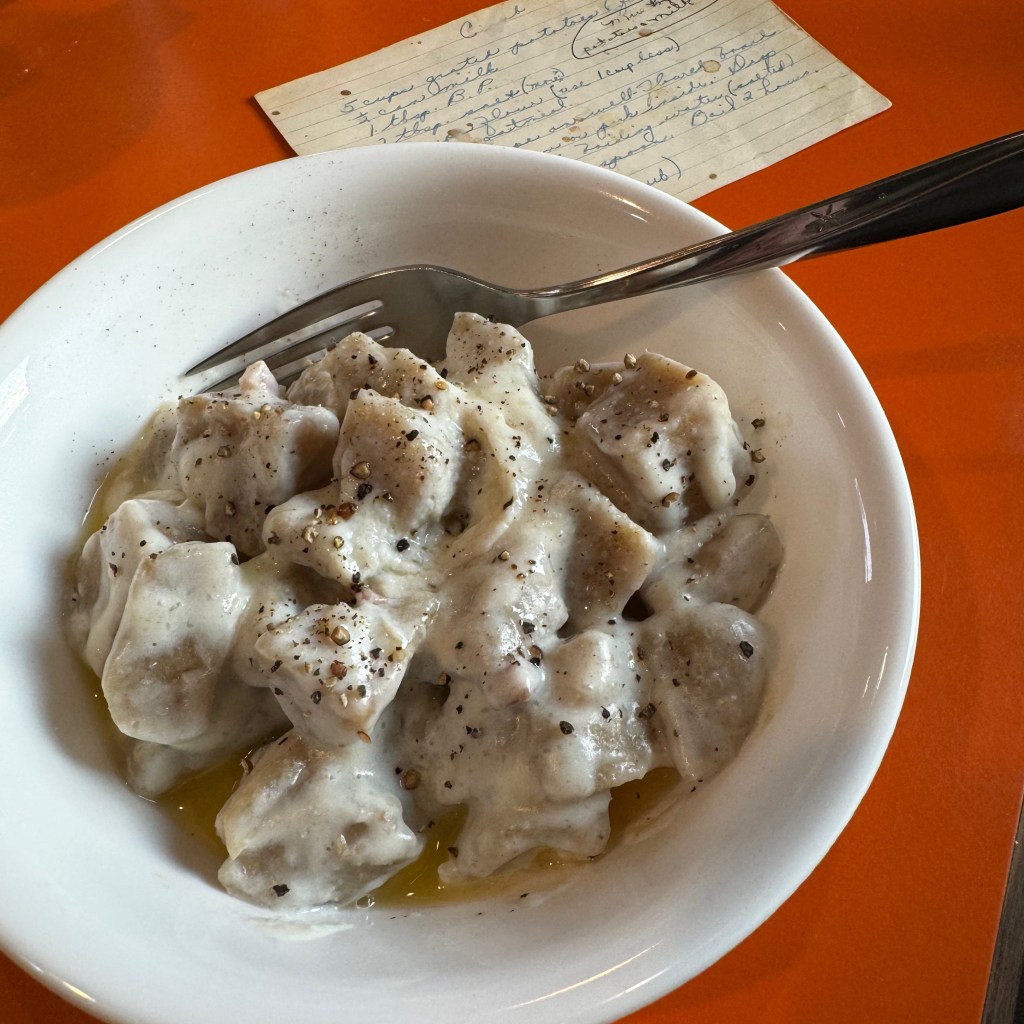
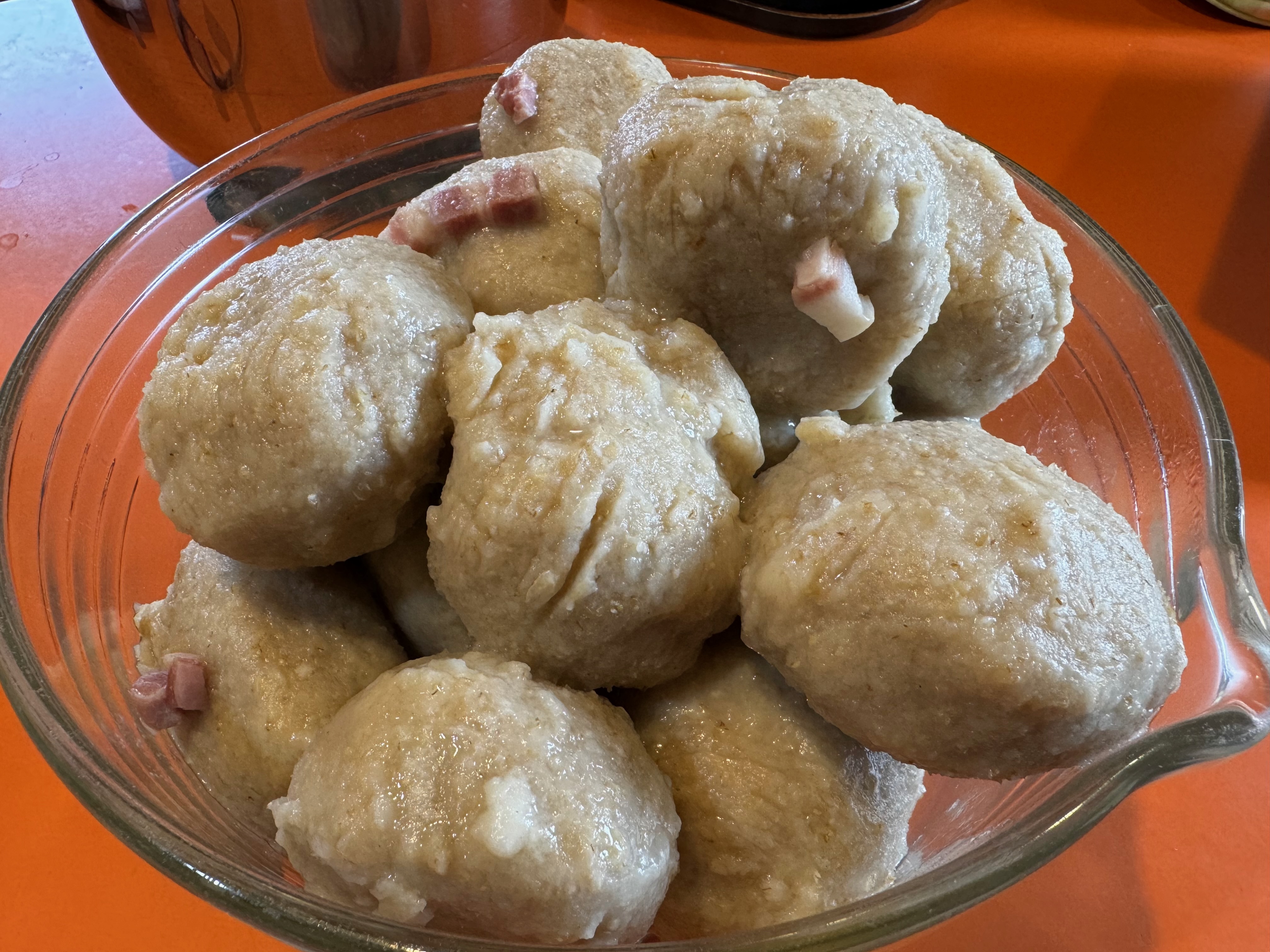
“Imagine a gray, lumpy, salt pork-filled potato and oatmeal dumpling blob,” I said, further noting that the lumps are boiled in salted water for two hours until they are done through. Dorothy replied coyly that she was salivating at the very thought of it. 😂 There’s no denying, crub does not have instant appeal. My cousin, Dave, rightly proclaims that crub is, at best, an “acquired taste.” In our case, though, as fourth-generation descendants of Norwegian immigrants, we are naturally prone to like it, just as Italian descendants are born to love pasta.

From my earliest memories, a visit to my maternal great-grandparents’ home in rural Upstate New York would have sometimes meant being greeted at the door by the aroma of these gray, lumpy blobs simmering on the stove. Despite its appearance, crub is hearty, filling and deeply satisfying. I don’t expect oohs and aahs in the comments section, but I will say that anyone who has ever waxed nostalgic over family tradition can appreciate the place that this humble food has in the hearts (and bellies) of my people.
This makes me miss my grandmother so much.
It’s a family thing

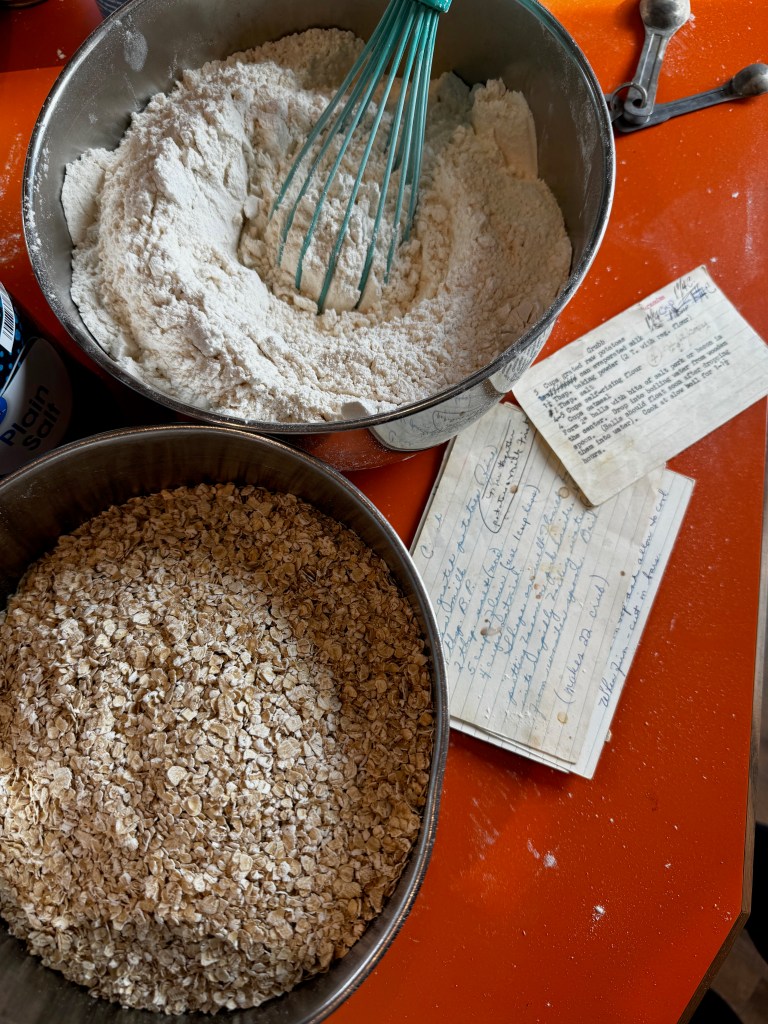
I had special reason to enjoy making crub recently, as I spent a few days with my Aunt Joy at her home in Montana. In the days ahead of my first visit in 13 years, our anticipation for this familiar meal became stronger, and rolling up our sleeves to make crub together proved to be a wonderful way to share happy (also sad, and sometimes funny) memories of our loved ones. We pulled out various spatter-stained recipe cards and attempted to decipher all the “helpful” notes in parentheses, knowing that we would ultimately have to channel the wisdom and experience of our ancestors to get it right. There are specific rules that must be followed, as I painfully learned a few years ago when I tried to make this on my own. That first effort resulted in a sticky mess and very dense, gummy crub.  


What are the ingredients for crub?

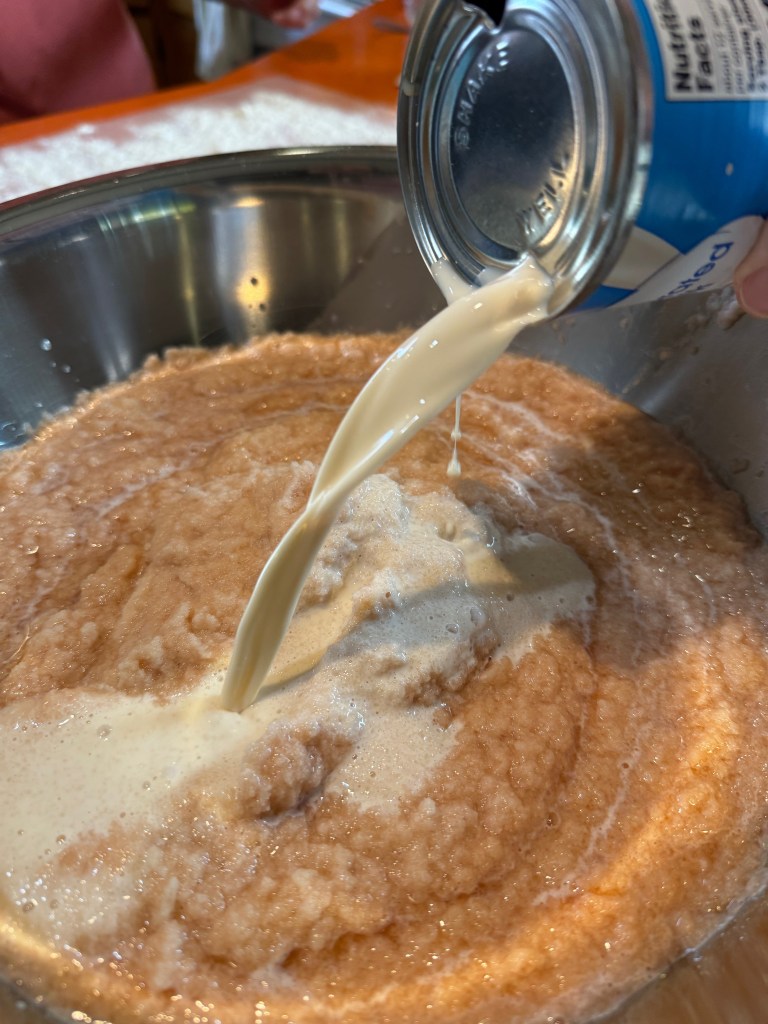
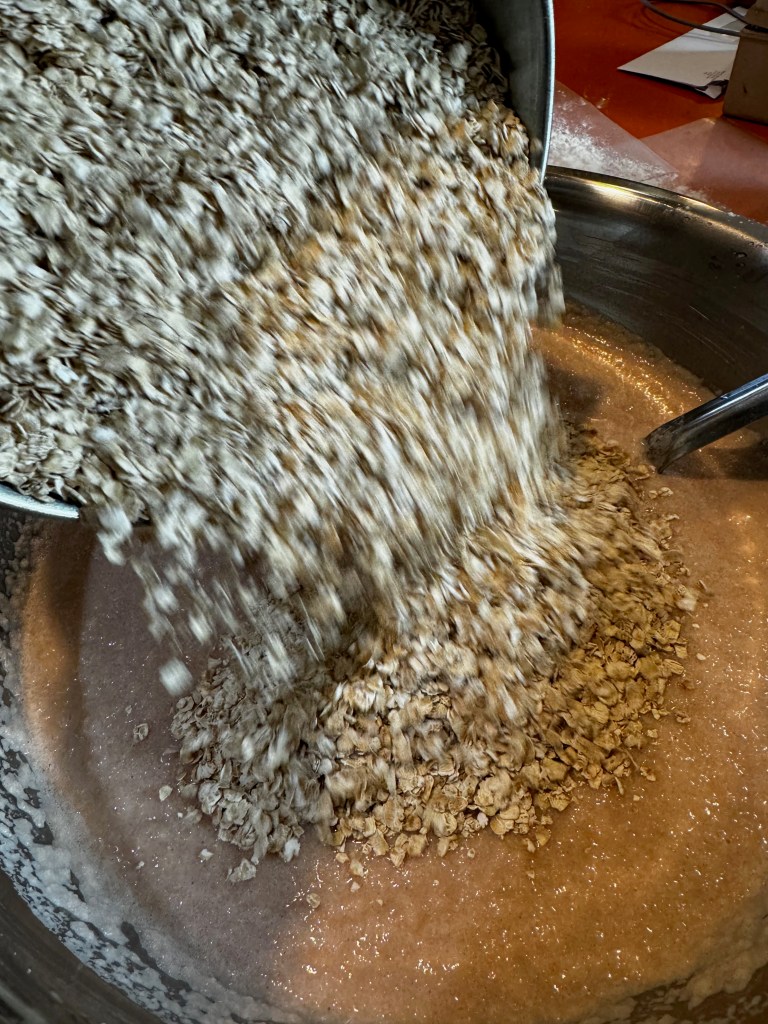
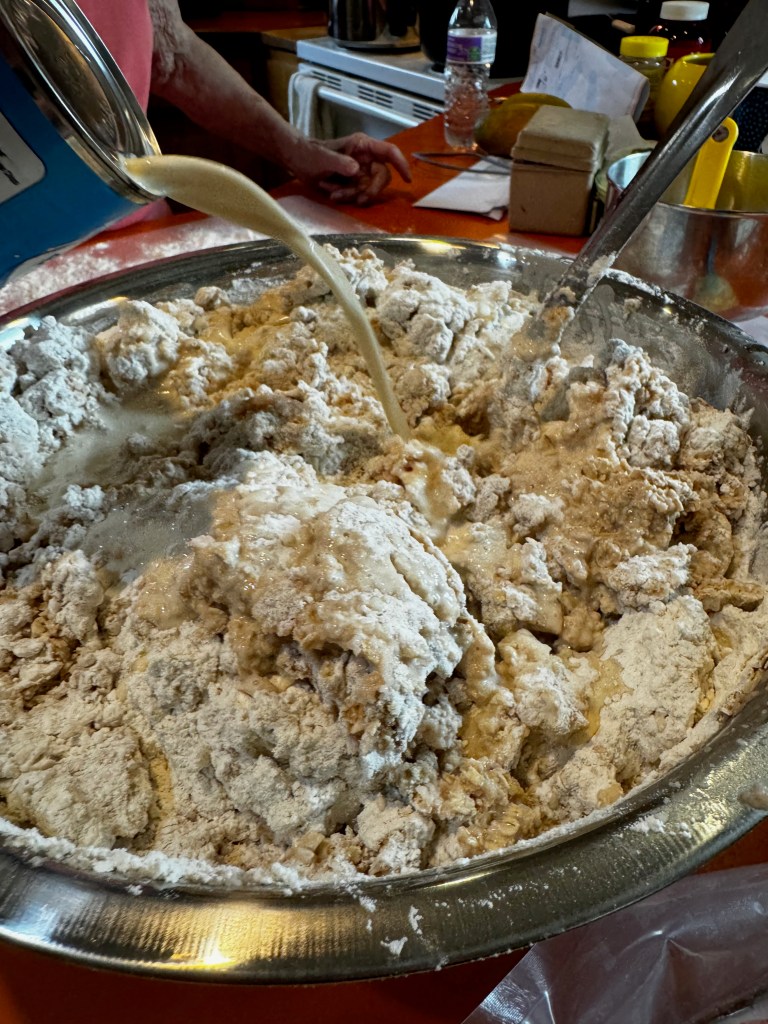
“Use old potatoes,” suggested one of Aunt Joy’s recipe cards, and this is likely for the starch content in older potatoes vs. new ones. Also, it has to be russet potatoes— waxy ones just won’t do. Quick oats work much better than old-fashioned rolled oats, as their smaller size and pre-cooked form allows them to more easily take up the recipe’s liquid. Your baking powder must be fresh, of course. Finally, the amount of evaporated milk must be sufficient for moistening the dry ingredients without overdoing it, and this was a tough point, even for Aunt Joy, because the amount on the recipe card was in “cans.” But did that mean the 5-ounce can or the 12-ounce can? We imagined that my great-grandmother was there with us, coaching us to “add enough to make it look right,” and we figured out the larger can is the standard. Salt pork is ideal, both for stuffing inside the crub dumplings and also for adding flavor to the cooking water.



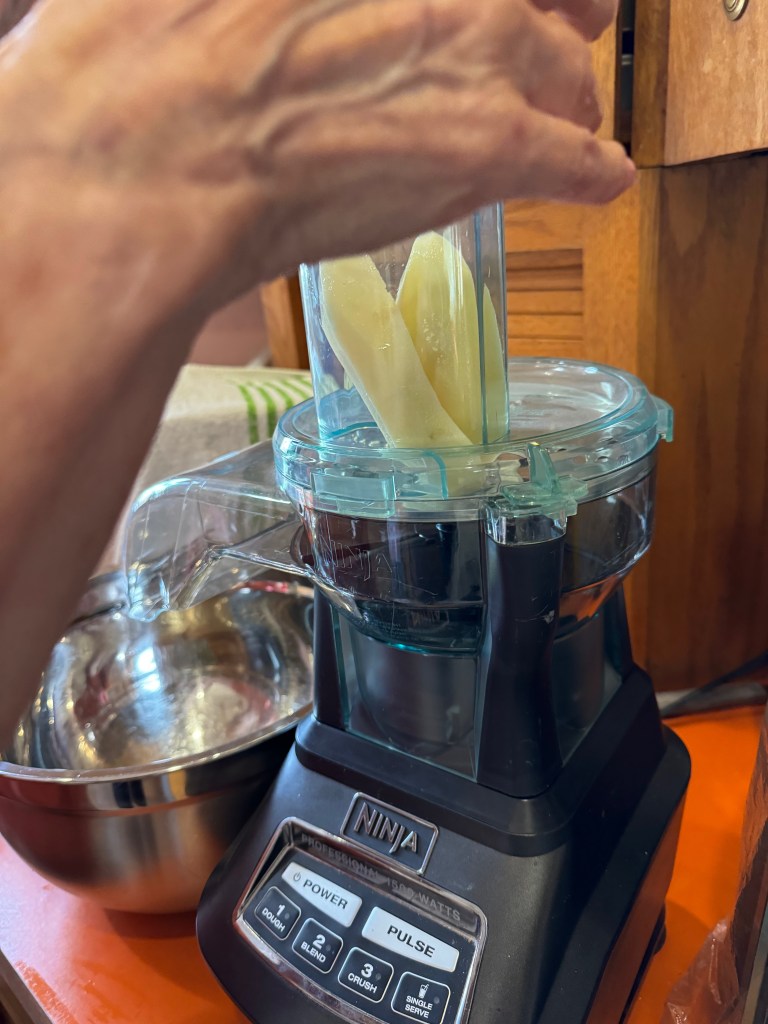
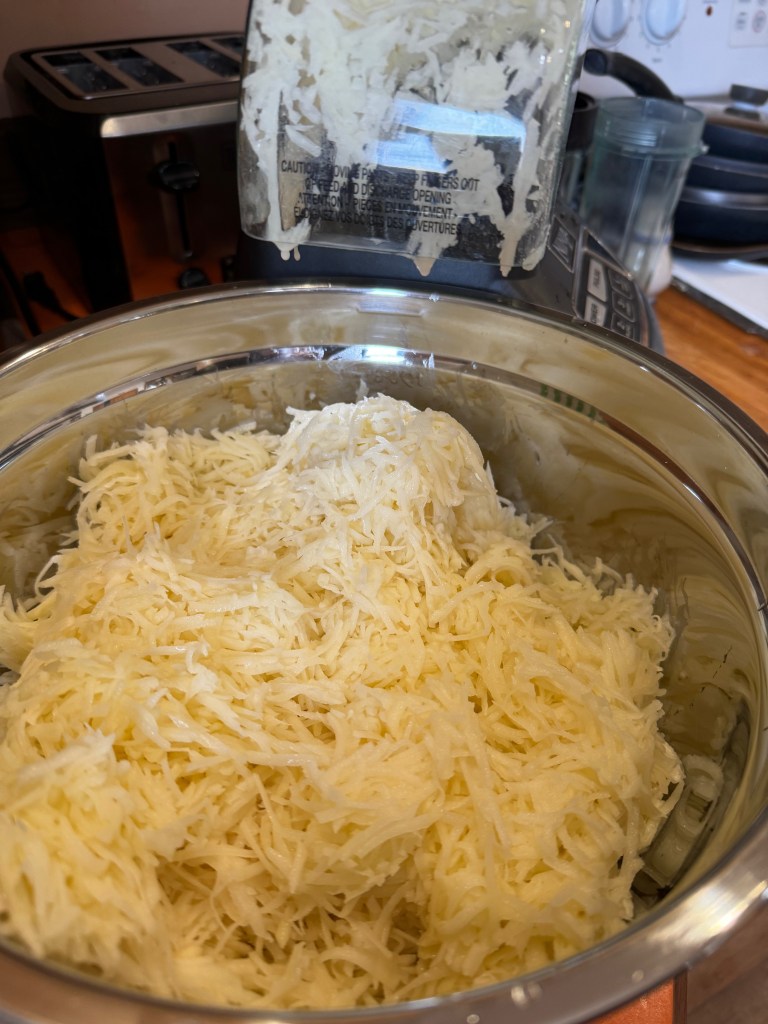
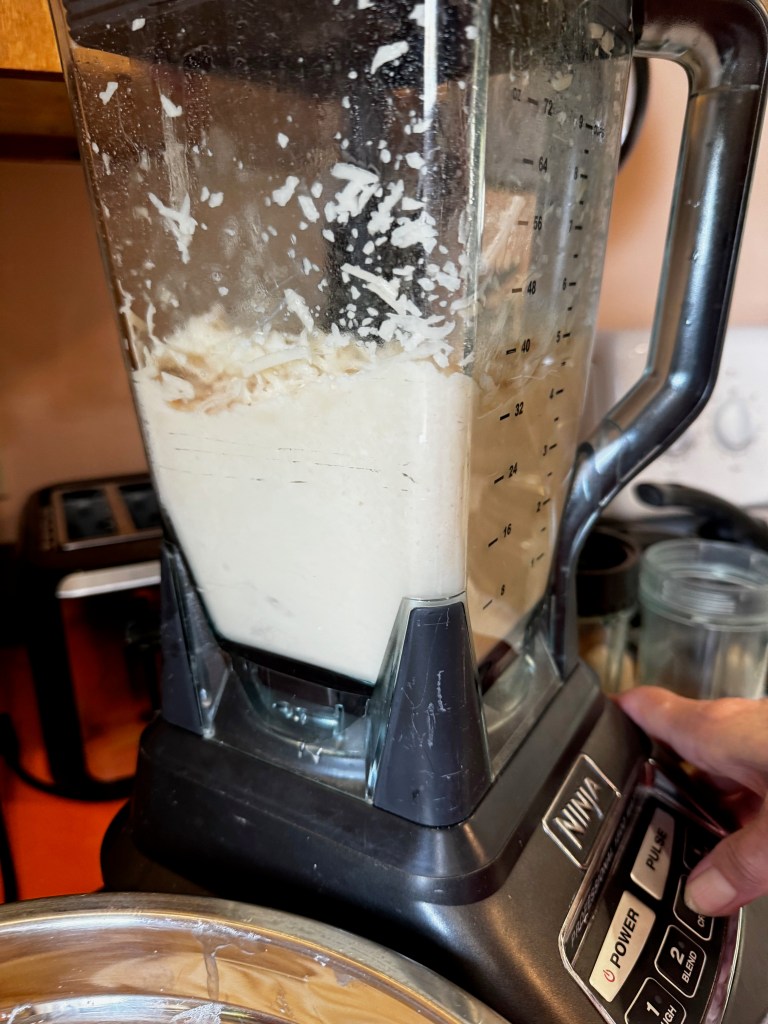
As with many traditional family recipes, crub is a bit of an ordeal to make (which helps explain why it was not an “every Sunday” kind of meal). It requires multiple bowls, large cooking pots and several square feet of counter space. It takes as long as two hours to prep and two more to cook. And don’t expect cleanup to be a breeze, either. The recipe involves peeling, grating and blending lots of potatoes, which inevitably turn pink from oxidation no matter how quickly you work.


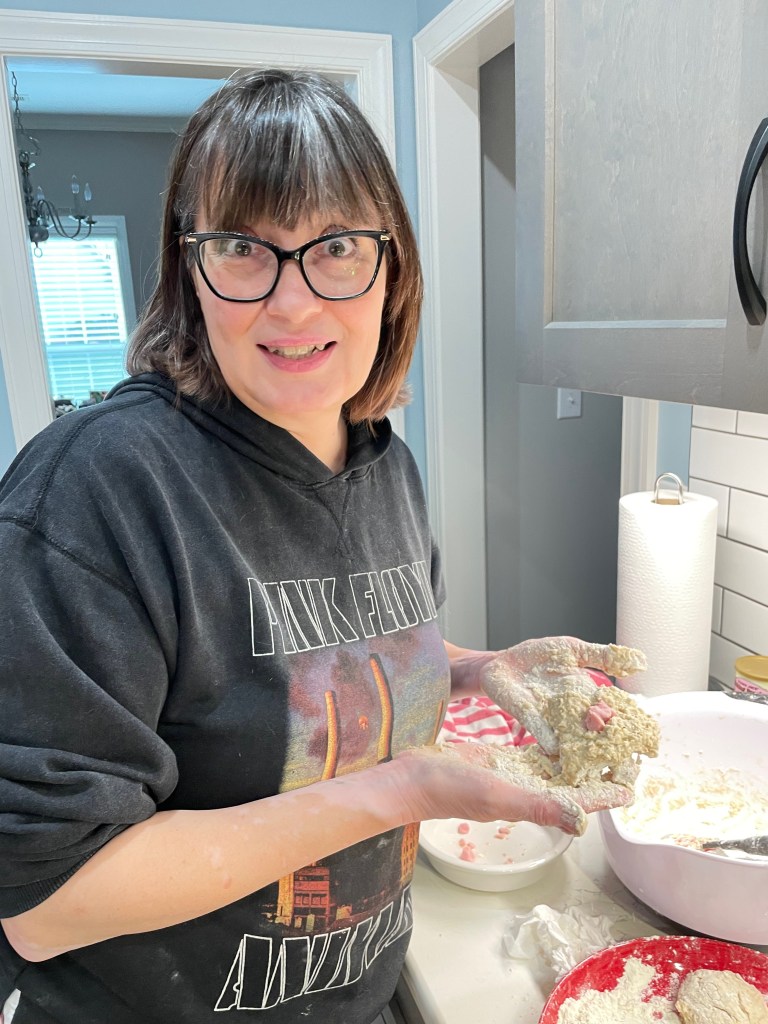
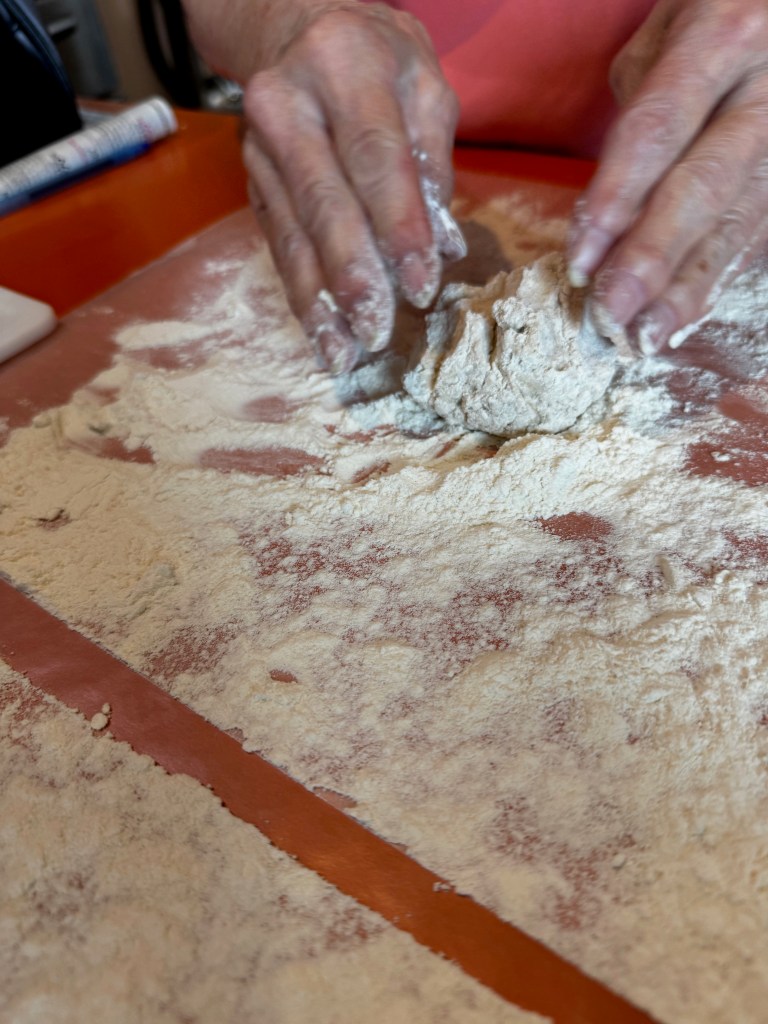
It helped a lot to have our tools and ingredients mise en place, and this was especially important for not making a mess of everything with our very sticky hands! A couple of sheets of waxed paper did the trick for keeping the flour where we needed it.


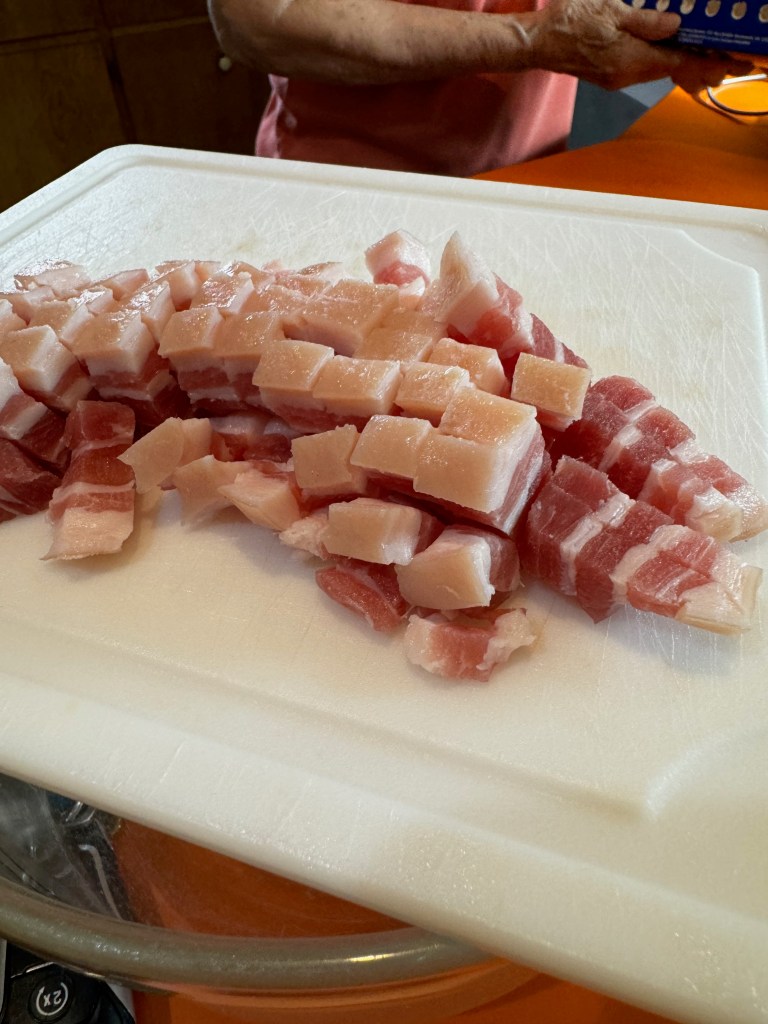
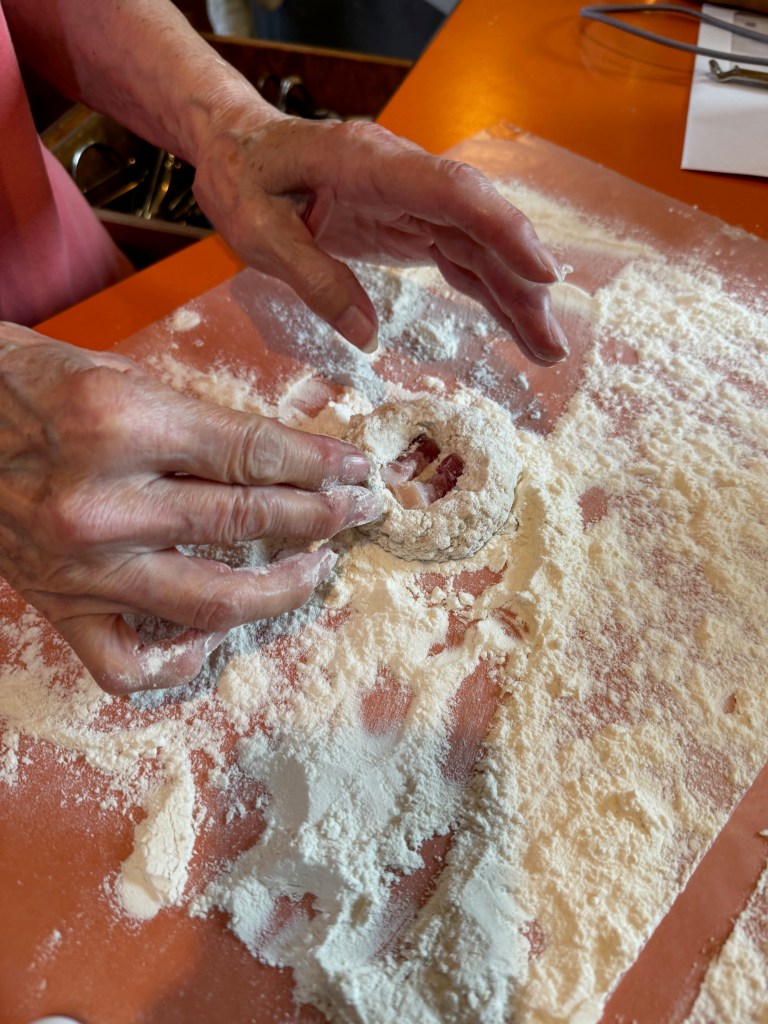
Aunt Joy broke out her big ice cream scoop to measure out the crub dough into equal lumps, and then, with floured hands, we pressed to make an indent in each for a piece of salt pork. Shaping the crub into balls was easy to do with plenty of flour, and we lined them up until the pots were at a good, steady boil. 


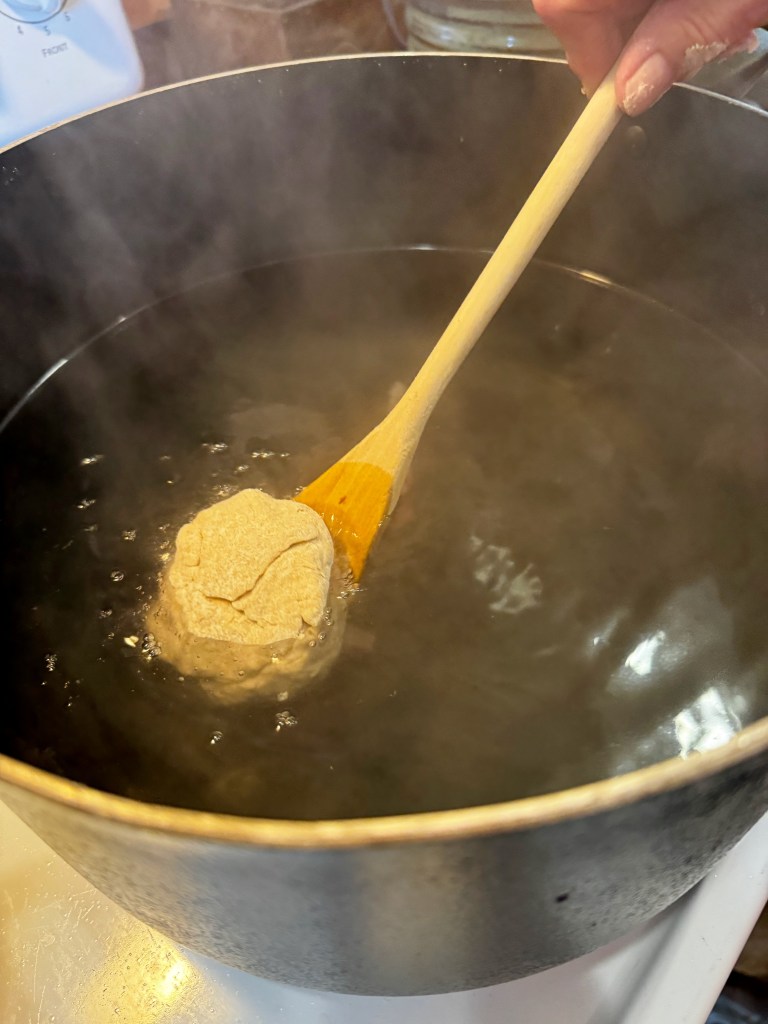
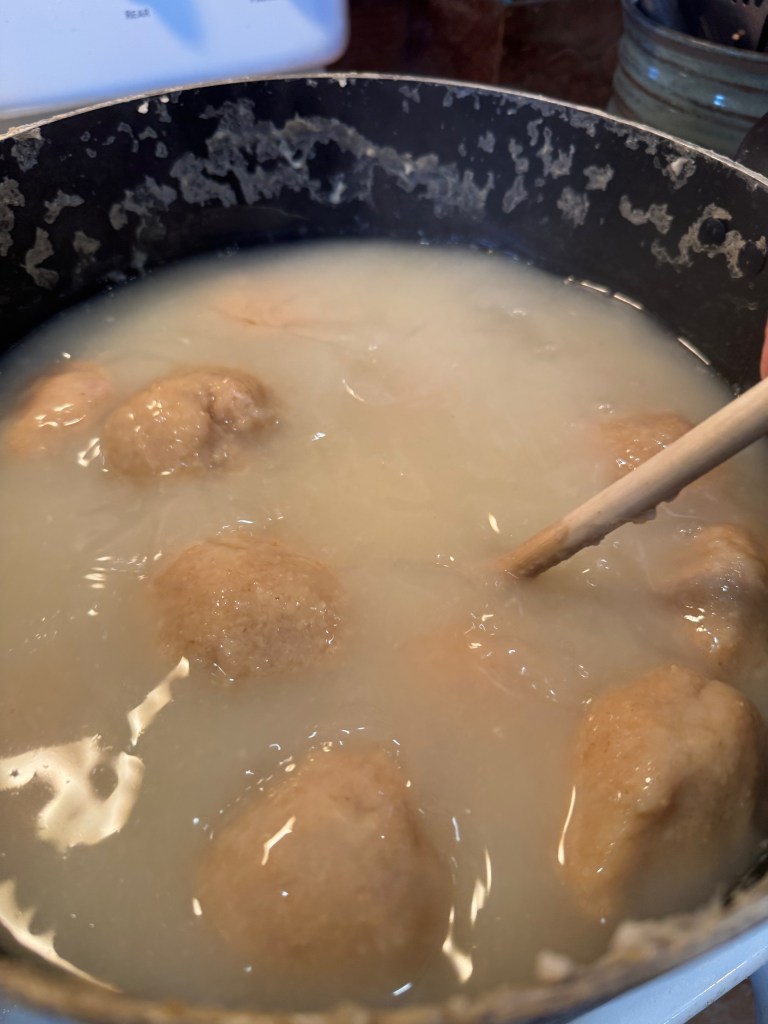
The first few crub clung for dear life to the long-handled wooden spoon we used to transfer them into the boiling pot, but eventually the spoon developed a slippery layer of cooked dough and the remaining crub slid right off with almost no effort. After every few crub, we gently nudged the ones that had settled onto the bottom of the pot, loosening them to float up into the water. We made a double batch and ended up using three very large pots.


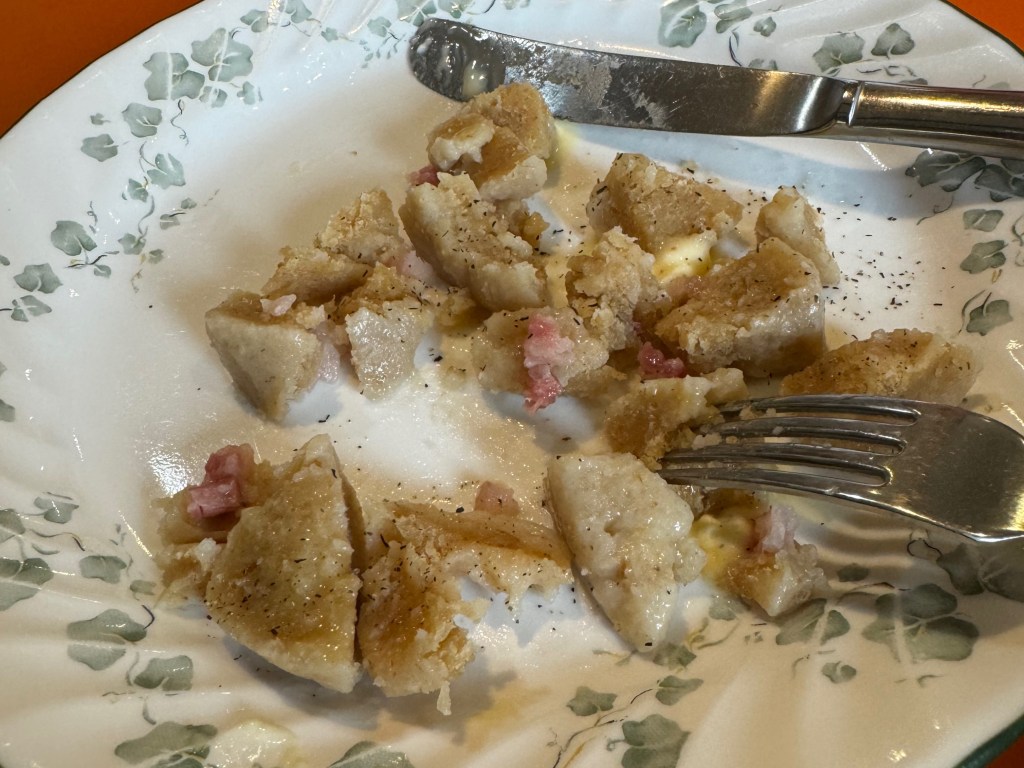
The dumplings simmer for as long as two hours, until a cross cut reveals that they are cooked all the way through. If they seem dense and very firm inside, they need additional simmer time. Once done, enjoy them with butter, salt and pepper.

Worth the work and the wait! ♥️

Transfer leftovers to a large covered bowl and refrigerate, or load them into a gallon size zip top freezer bag and freeze for later. 


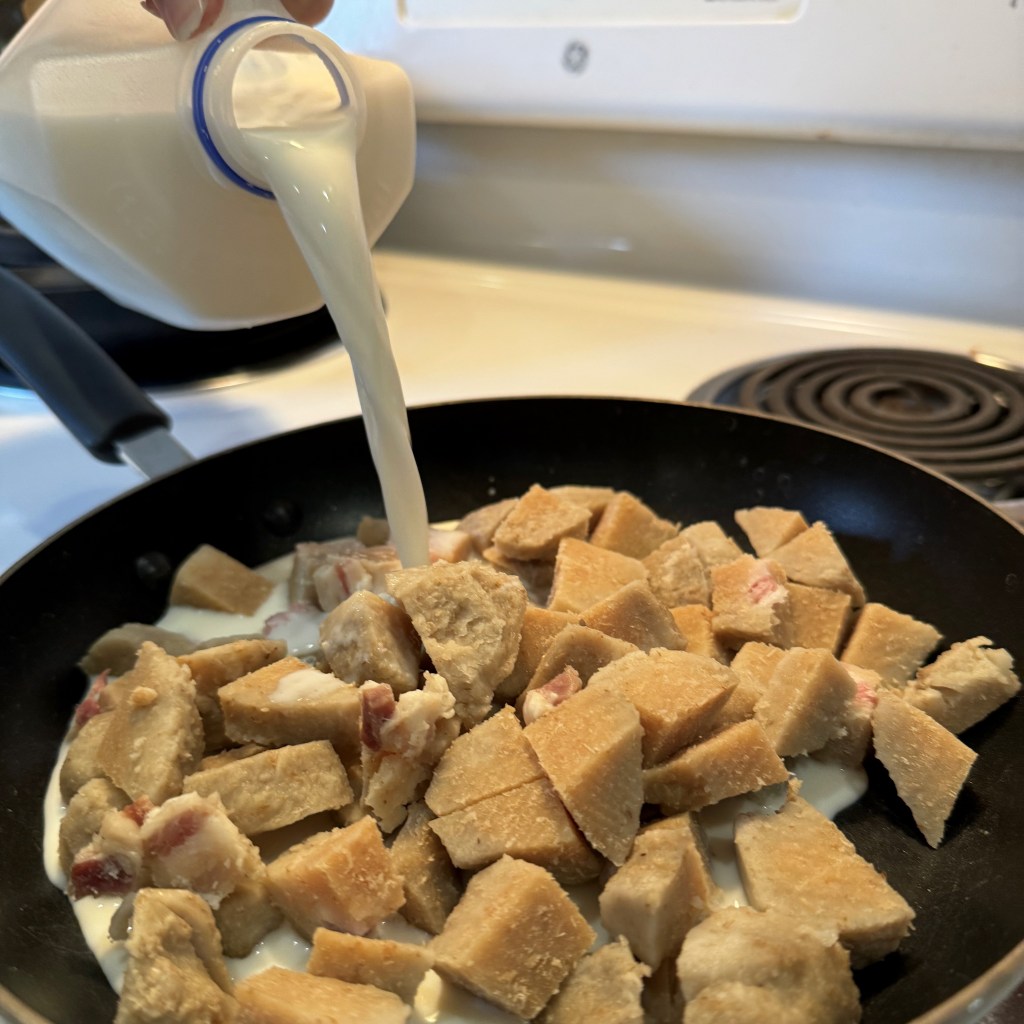
Reheat by cutting crub into chunks or slices. It’s best simmered in a bit of milk and then served with butter, salt and pepper. If you’re feeling ambitious, you can bring a pot of water to boil and simmer them again until they are warmed through. Or, if you’re in a hurry for crub, place cut-up pieces on a plate and microwave until warmed through. 

Norwegian Crub

  • Servings: 12 regular people, or 6 Norwegians
  • Difficulty: Intermediate
  • Print

This is one of the truly traditional recipes that my maternal family has made for years. Why, you might ask, would we spend all day for these gray-beige lumps? Easy, because they taste like home.


Ingredients

  • 5 cups peeled and finely grated russet potatoes (this will be about 3 pounds)
  • 12 oz. evaporated milk, or equivalent amount of plant milk (oat milk would be just right)
  • 5 cups all-purpose flour (scooped directly from bag)
  • 4 cups quick-cooking oats
  • 2 Tbsp. baking powder
  • 2 Tbsp. table salt
  • 1/2 pound salt pork, cubed (optional for stuffing inside crub)
  • About one cup additional flour, for rolling and shaping
  • Additional salt, for seasoning the cooking water

Notes: Be sure that you have plenty of time before you begin this recipe. Prepping and cooking both take a long time.

Do not substitute rolled or old fashioned oats, as their hearty texture does not absorb the liquids well enough for even doneness.

Line up all your other ingredients before you shred and process the potatoes, to minimize the oxidation that turns them pink.

Directions

  1. Bring one or two very large pots of water to boil on the stove while you prep the crub. When the water comes to boil, salt it generously and add a few pieces of the salt pork or even a pork bone if you have one.
  2. Combine flour, baking powder and salt in a large bowl and whisk to distribute the leavening ingredients. Measure the oats out into another bowl, so that the proper amount is ready to be added all at once to the potatoes.
  3. Process the shredded potatoes by pulsing in a blender or food processor. You don’t want a puree, but a coarse, wet mixture of finely ground potatoes.
  4. IMPORTANT: Measure the ground potatoes (with liquid) into a very large mixing bowl. You need five cups, no more and no less. If you have potatoes leftover, consider adding them to a chowder or soup. Add evaporated milk to the measured potatoes and stir to blend.
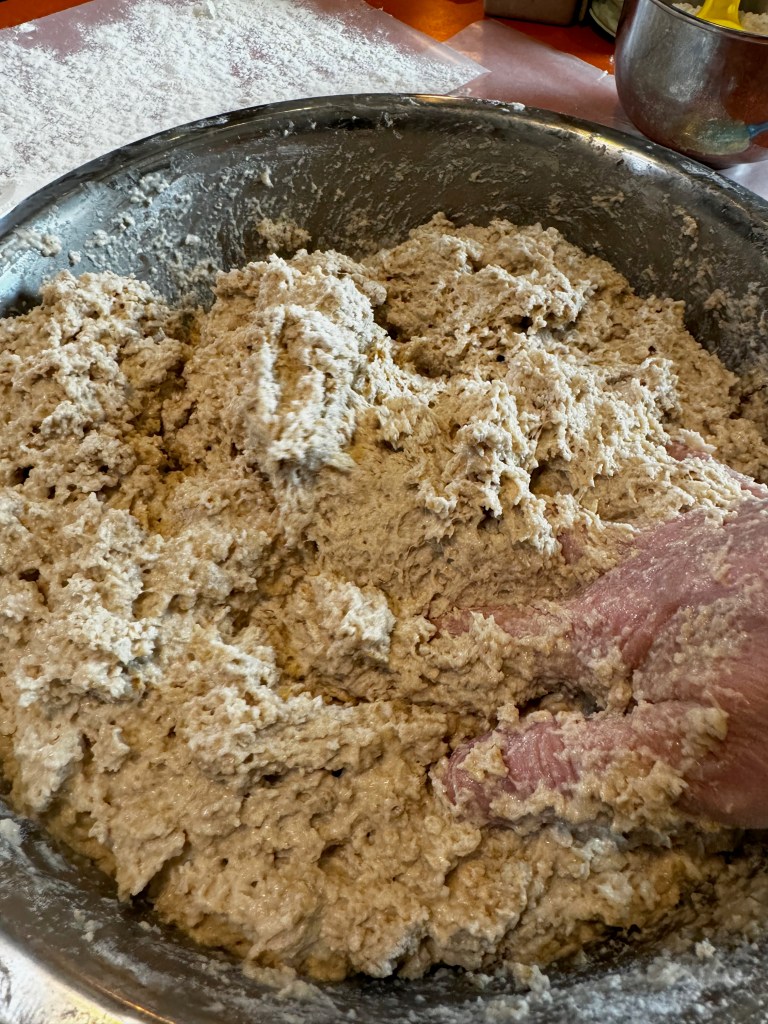
  5. Add oats and flour mixture to the potato bowl all at once and stir, fold or mix by hand until the dough is evenly mixed with no unincorporated flour. Use an ice cream scoop to measure out evenly sized dumplings onto a heavily floured counter or board. Each crub should be approximately two and a half inches across.
  6. As you go, press a shallow hole into the center of each dough ball and add a piece or two of salt pork inside. Use floured hands to shape the dough ball around the pork, forming the balls into tight, meatball-shaped dumplings. Line them up on waxed paper until all dumplings are formed.
  7. Use a long-handled wooden spoon to gently transfer the dumplings into the seasoned boiling water. Work quickly until all dumplings are in the water. After every few dumplings, gently nudge any that remain stuck near the bottom of the pot. They should begin to float fairly soon after introduction to the water.
  8. Bring the pot(s) to a full boil, then reduce heat and simmer at a gentle boil for about two hours. Sample a crub when you think they may be cooked all the way through. It should be somewhat dense but not heavy or sticky.
  9. Crub can be served immediately, but it also keeps very well in the refrigerator or freezer. Leftovers can be warmed in a number of ways; dip them into simmering water to revive them, cut them up and simmer in milk or (as a last resort) place cut up crub on a plate and warm in the microwave until heated through.


DIY Solar Jack O’Lanterns 🎃

It’s October, and that means that my front door is now being guarded (or is it watched?) by Mr. Bones, the spooky, gauzy dude that my husband has placed on our porch every October since 2007. He gives me the major creeps because every time I open the front door, he’s staring at me. It doesn’t matter which way we hang him on the nail of our entry, either. He turns on the breeze to stare me down. But in his defense, he was here long before me, so I adjust. 💀

Could you not, Mr. Bones?!

Last year, in my attempt to entice more than five trick-or-treaters to our house for Halloween, I added to the theme with the fun DIY project that I’m sharing today. This cute little decoration was inspired by something I saw on Pinterest, but it was unclear who actually made and posted the lanterns. That’s one of the things about social media— a great idea can be shared by someone who doesn’t understand the settings of their account, and sometimes it ends up being just a photo with no accompanying information. What can you do? 

But in this case, it was clear to me that the project involved plastic pumpkin candy buckets and solar lights, and I figured, “how hard could it be?” Turns out, it wasn’t difficult at all. 

The pumpkins make Mr. Bones look even more creepy.

What materials do you need for a DIY solar jack o’lantern?

This kid-friendly project requires only the plastic pumpkins and some solar yard lights sized to match the top opening of the bucket. My lights were nothing special, just some off-the-shelf items I picked up at Lowes, and I found the pumpkins in the seasonal section at Walmart. Naturally, you want to be sure that some light will shine through the pumpkin buckets before you cut them, and you can easily test this by holding a bucket upside down over a lamp bulb in your home. If the bucket is translucent enough to let the light shine through, you’re good to go!

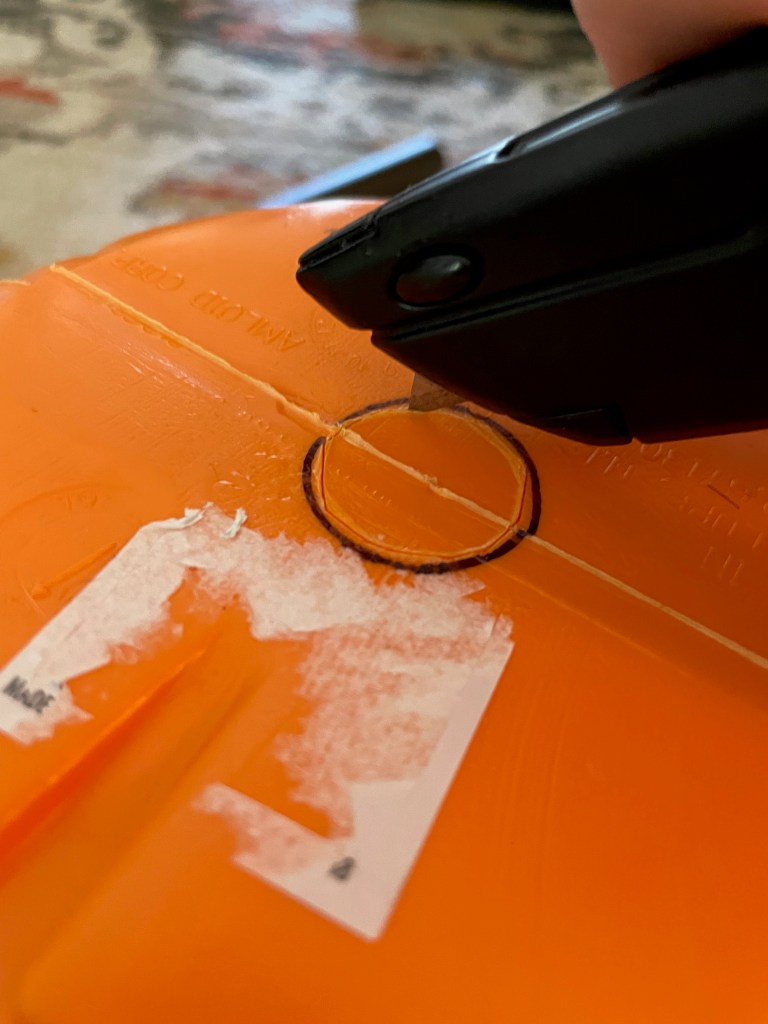
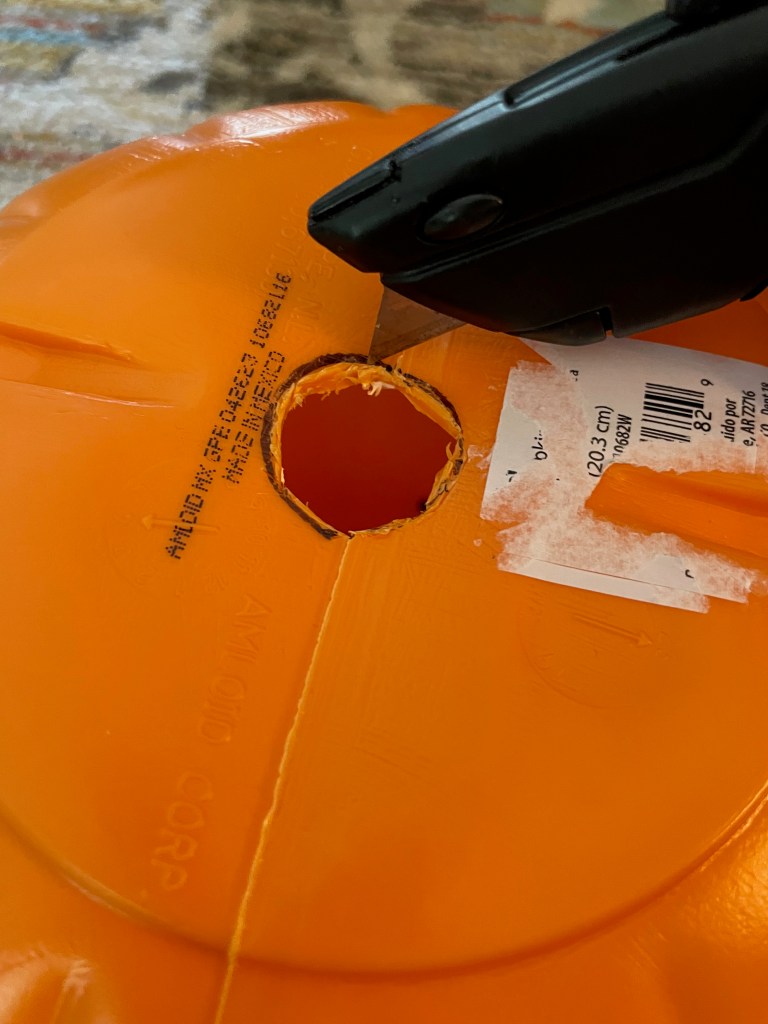
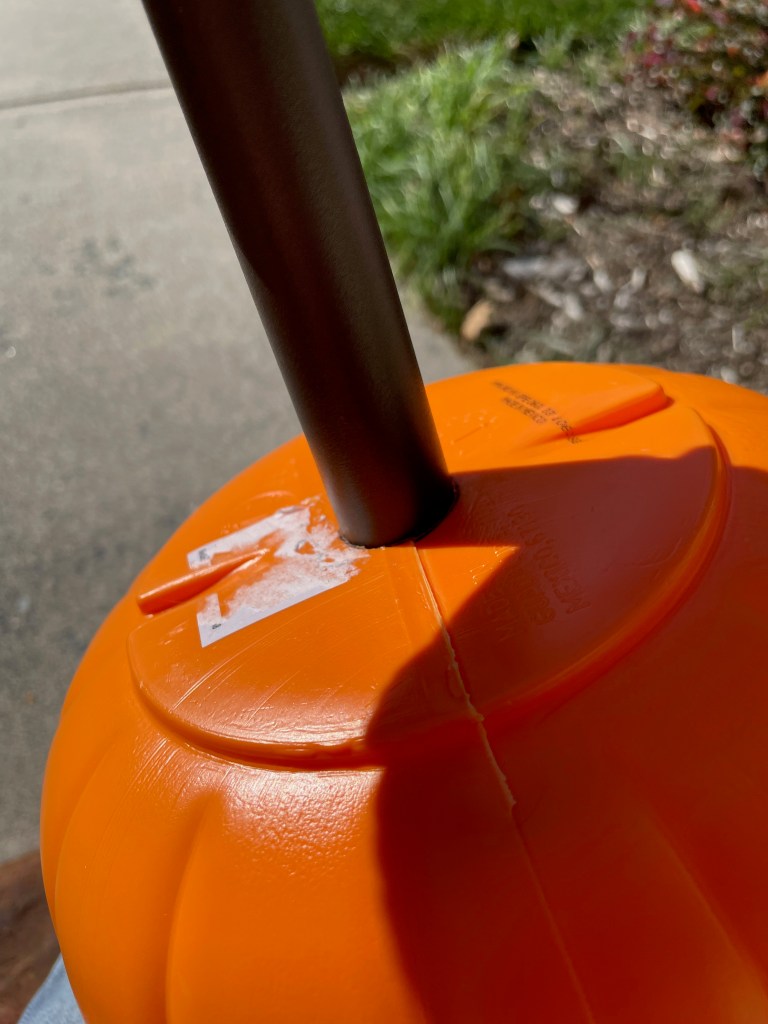
A couple of easy tools are necessary for this project, including a pen (for tracing around the solar light stem onto the bottom of the pumpkin) and either a utility knife or a cordless drill fitted with a hole drill bit the size of your circle. For safety sake, only an adult should tackle this part of the project. I used a utility knife, and to minimize risk of injury, I adjusted the knife so that only a small point of the blade was exposed. 


The first pass with the knife was only to “score” the plastic, and I made subsequent passes to make a deeper cut until the circle could be punched out. A quick test with the solar light stem, and adjustment if needed, and then reassembly of the solar light. 


The solar light cap should be slightly larger than the top opening of the pumpkin bucket, so that rain water does not collect inside. Mine look like the pumpkins have a little hat! The pumpkin buckets wanted to slide down the lamp stems after a few minutes, so I used a couple of heavy rubber bands— the thick kind that grocery stores use on broccoli— to snug around the stems, keeping the pumpkin in place all month long. Another fun thing about this decoration is that you can remove the pumpkins from the solar lights after Halloween and set them aside for next year.

Please ring our bell. Plenty of candy inside!

My solar lights have a slight “bubble” texture to them, so the pumpkins also have a dappled glow. I can’t say that the solar jack o’lanterns made a difference in our trick-or-treater turnout— we still ended up with a mountain of leftover candy, as usual— but I guess changing neighborhood habits can’t be as easy as this little project. 

Maybe this year!


Pumpkin Spice Espresso Martini

Well, now I’ve gone and done it, haven’t I? I’m fully confessing to a moment of weakness during a recent visit to Trader Joe’s, but I’m not apologizing. The whole pumpkin spice thing was just too much for me to ignore this year, and I’m not saying that I was on the wagon against pumpkin spice, but if I had been on the wagon— well, this martini would sure as hell knock me off.

The only actual pumpkin here is the biscotti garnish.

For those of you cringing at the idea of a pumpkin spice espresso martini, here’s a reality check. No pumpkins were harmed in the making of this martini, because the “pumpkin spice” cold brew concentrate from Trader Joe’s has exactly ZERO percent pumpkin; it’s only spices that one might use with pumpkin pie— cinnamon, ginger, clove, nutmeg and orange peel— and it turns out they are fine companions to arabica coffee, with or without the other things that make this a cocktail.

So, would you feel better if we called this an autumn spice espresso martini? 

My new favorite fall lineup!

I mentioned when I shared my favorite new Negroni cocktail that Mr. Black cold brew liqueur was going to show up here again soon, and though I don’t usually share two cocktails so close to each other, I didn’t want to wait because we all know that Trader Joe’s has a short attention span with their limited season items. If you’re thinking about making some of these, leave right now to get your cold brew concentrate. I’ll wait. And while you’re at it, pick up the miniature pumpkin biscotti; they’re delicious with your morning coffee and equally good for garnishing this cocktail.

Should an espresso martini be sweet?

This is strictly a matter of opinion, and for this black coffee drinker, the answer is no. The difference between Mr. Black and other coffee liqueurs I’ve tried— Kahlua, Tia Maria and a Kentucky-made liqueur called Grind— is the level of sweetness. If you have a sweet tooth, these other options are probably right up your alley, especially if you take sugar in your morning coffee. But for me, an espresso martini with those options is essentially just a Black Russian in a different glass. I want the deep, dark, roasty flavor, and I’m happy to report that Mr. Black brings it!

Should an espresso martini be creamy?

People who take cream in their coffee probably also expect the creamy touch that Bailey’s liqueur or half-and-half bring to an espresso martini, but not me. Too many bars I’ve visited have turned this on-trend cocktail into something akin to a mudslide, even so far as drizzling chocolate syrup drizzled inside the glass. I can’t even. As with coffee, all of this is personal preference.

My perfect espresso martini

One of the things that held me back for a while from trying this drink at home is that I don’t have an espresso machine, and cold coffee just isn’t the same. But I have found that cold brew concentrate is a fantastic substitute because it is dark and robust, and it contains enough of the natural coffee oils that can be frothed for that beautiful coffee foam on top of the drink. The cold brew concentrate has caffeine, obviously, but each drink only uses two tablespoons, so it isn’t going to keep me up all night— unless I have three of them. 😂


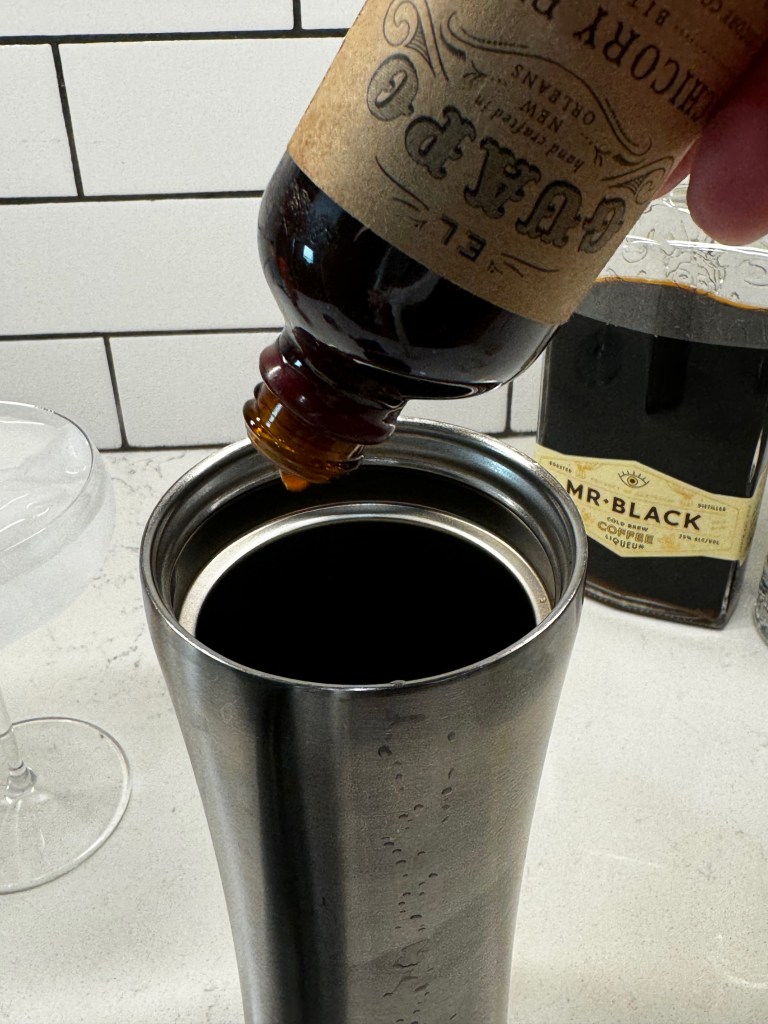
Combine a quality vodka (I like Ketel One), Mr. Black, a shot of cold brew concentrate and a smidgeon of simple syrup— or if you want to go crazy, try smoked maple syrup (OMG). For extra pizzazz, I’m loving a couple of dashes of chicory and pecan bitters, the same product I used last year in my sweet potato casserole old fashioned. The bitters are not necessary because the coffee already carries the bitter flavor, and you could either omit them or substitute chocolate or even orange bitters, if you’d like. I like the warmth and extra roast flavor that the El Guapo bitters add. 

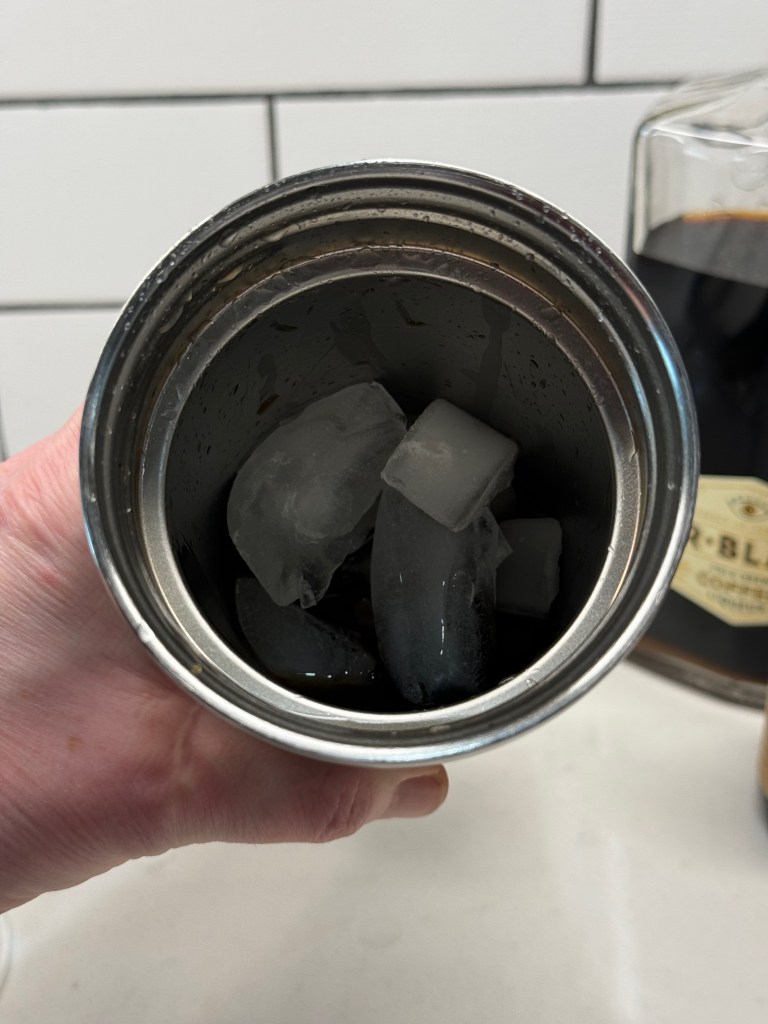
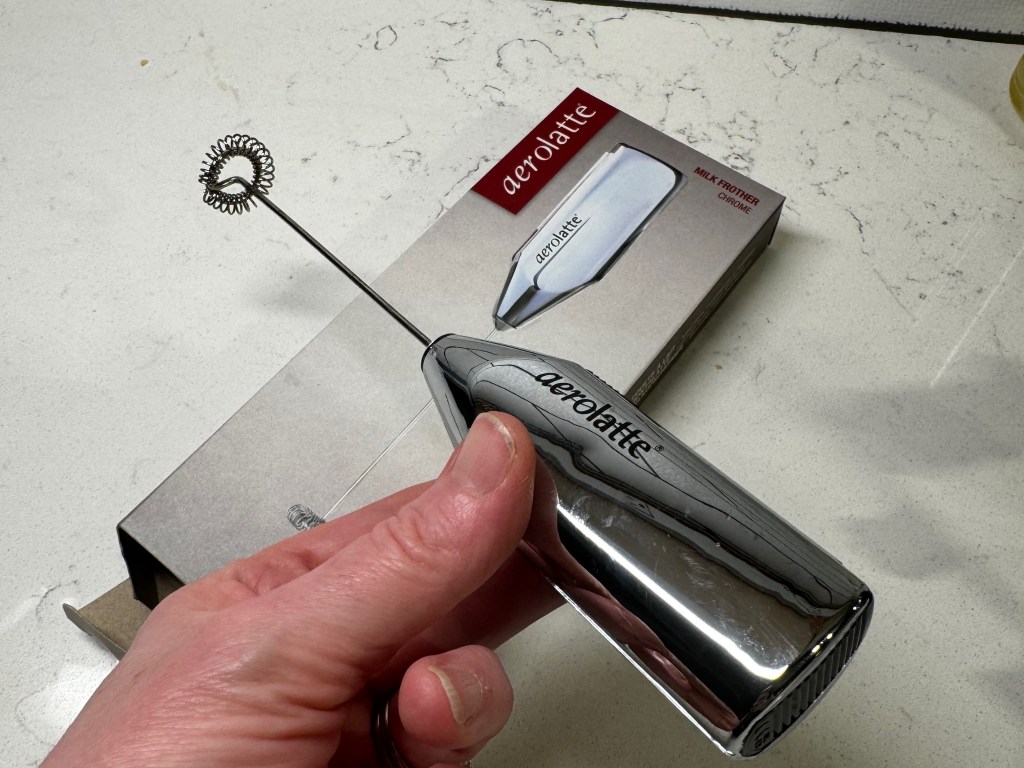
Finally, add one cup of ice and shake the dickens out of it. The more you shake, the better chance you have of frothing up that cold brew concentrate. But if you really love the rich, foamy layer on top of your martini, I have a simple trick for that, too. You will need one of these little gadgets.

It’s sold as a “milk frother,” but I call it the espresso martini magic maker!

I bought this simple little device last year for Les’s Christmukkah stocking, thinking that it would elevate his hot chocolate, but it found its way into my cocktail tool kit. Here, I added a bit of the cold brew concentrate plus a splash of simple syrup to a separate glass and used the frother to whip it up into a foamy topping for my espresso martini. Surprisingly, you don’t have to pour this on top of the cocktail; you can actually pour it right into the glass and then pour the shaken drink over it. Because the foam is whipped full of air, it will remain on top of the drink either way.

Cheers. 😎

A word to the wise

As simple and innocent as this drink might seem, it goes down extra easy. Not only does the alcohol sneak up on you; too many will keep you up all night. So, if you’re making these at home, you’ll probably want to keep score.

Pumpkin Spice Espresso Martini

  • Servings: One cocktail
  • Difficulty: Average
  • Print

My version of espresso martini forgoes the sweetness and cream in favor of a deep coffee flavor. The spice blend (which doesn't have a bit of pumpkin) is not only fun but really delicious. If you cannot get the Trader Joe's flavored cold brew concentrate, check Starbucks for their version.


Ingredients

  • 1 1/2 oz. Ketel One vodka
  • 1 1/2 oz. Mr. Black cold brew liqueur
  • 1/2 oz. Trader Joe’s pumpkin spice cold brew concentrate
  • 1/4 to 1/2 oz. simple syrup (depending on your sweet tooth)
  • 2 dashes El Guapo Pecan Chicory bitters (see notes)
  • For the foam: 1/2 oz. cold brew concentrate and 1/4 oz. simple syrup
  • Just for fun, a pumpkin spice biscotti for garnish

Notes: If the spices aren’t your thing, you could easily substitute a regular cold brew concentrate here and still enjoy a wonderful drink. The chicory bitters can be purchased online and they add another layer of roasty flavor to this drink. If you can’t find them, omit them or sub in another type of bitters, especially chocolate or orange.

Directions

  1. Chill a coupe or martini glass with ice and a splash of water.
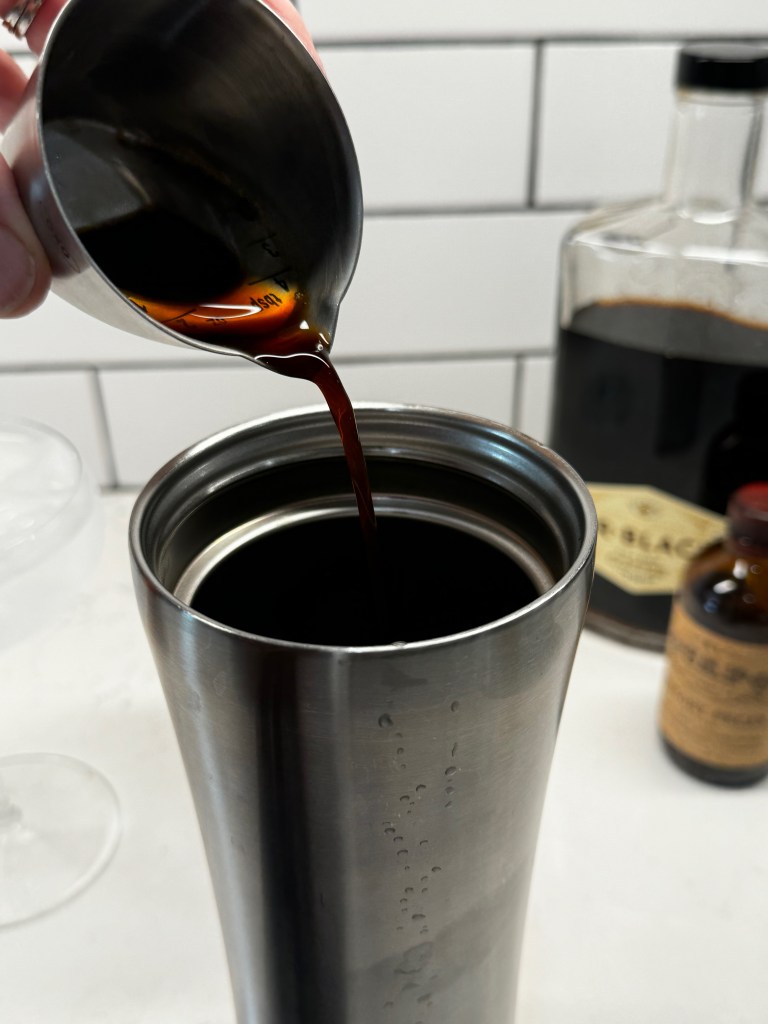
  2. Measure vodka, Mr. Black, cold brew concentrate, simple syrup and bitters into a cocktail shaker. Add one cup ice and shake vigorously to blend and dilute the drink.
  3. In a separate glass, measure the additional cold brew concentrate and simple syrup. Use the milk frother to whip this into a foamy mixture.
  4. Dump out the ice chilling your glass. Pour the foam directly into the glass, and then pour the espresso martini over the foam. If you prefer, pour the cocktail first and the foam on top; either way, the foam will stay on top.
  5. Garnish with a pumpkin spice biscotti, if desired.


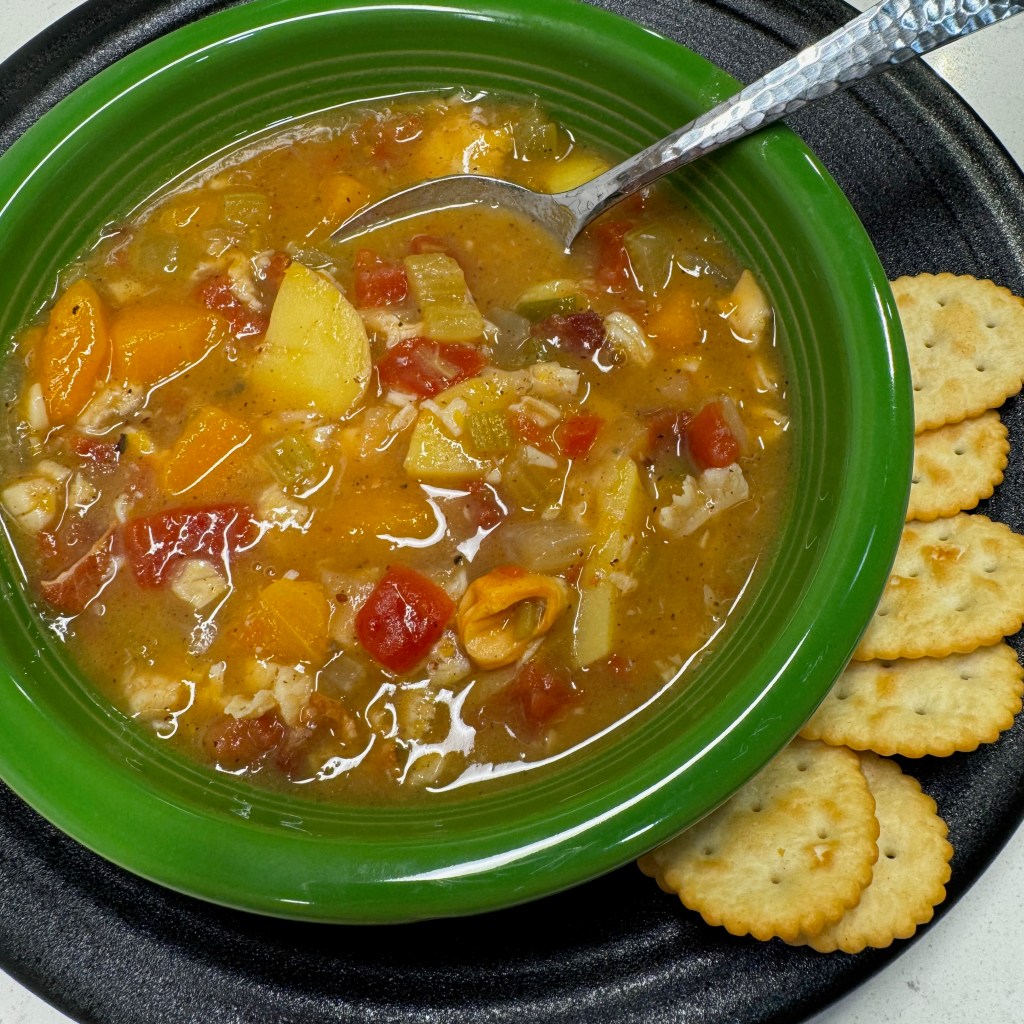
Hatteras-style Clam Chowder

There are days that I go looking for a good inspiration recipe, and then there are days when they pop up out of nowhere while I’m looking for something else. This recipe, I suppose, was somewhere in between. 

I’ve been wanting to make a clam chowder with the fresh chopped clams that always tempt me from the case at my local seafood shop, but I didn’t want either of the classic chowder options that you always hear about. New England style, of course, is the creamy, white version that uses potatoes, clams, onions and loads of heavy cream. It’s luxurious and comforting, but high on the saturated fat scale. And then there’s Manhattan style, with its light tomato broth, onions, big chunks of potato and chewy clams. It’s a lovely light bite, but some people (my New York-born-and-raised husband included) don’t find brothy soups as satisfying. 

A perfect in-between

As I pondered how to find a happy medium between the lighter, tomato brothy chowder I craved and the creamy but bland version my husband favored, I got to thinking maybe it would fun to create something altogether new— a chowder with more texture and maybe some autumn ingredients. That’s when my search for “autumn clam chowder” turned up a terrific inspiration recipe on the Southern Living website— they called it Hatteras Chowder.

How in the world this dish escaped my eye after the 37+ years I’ve lived in North Carolina is beyond me, and I am taking it as my sign that I need to finally visit the Outer Banks, where Hatteras Island graces the Atlantic coastline with the tallest brick lighthouse in the United States. 

Hatteras Lightstation
Photo by Shalom Shore on Pexels.com

It was lucky that I stumbled on this inspiration, because I had been wrestling with what to make to honor my state on North Carolina Day. I’ll share my own version of this recipe in a moment, but first, I want to brag on my state a little bit. After all, I have called it home for nearly four decades! 

I love living in North Carolina. I drove into town in my little white Pontiac (that had no A/C), with my cat, my clothes, a big stereo system and $800 in my pocket. This place gave me hope for achieving my dream, and I found more than I had imagined, personally and career-wise. We have the coast just a few hours east and the mountains two hours west. We get to enjoy all four seasons, though we haven’t seen much snow in recent winters in my neck of the woods.

The city of Winston-Salem, where Les and I met and live, boasts a vibrant arts and innovation culture— a big step up from the days when Winston-Salem was only about tobacco. We have terrific indoor and outdoor venues nearby for live music, great food and drink, and our city is proud of the diversity of its citizens. Yes, we have our share of unfortunate political embarrassments (you’ve probably read about one of them even this week, but we will take care of that in November), and our coastline frequently bears the brunt of tropical storms and hurricanes, but the good in North Carolina truly outweighs the bad or we wouldn’t still be here!


Our state is also well known for many foods, including pulled pork bbq, collard greens and pimento cheese, but this Hatteras chowder that I’ve just learned about is made with fresh-from-the-Atlantic clams, red potatoes, bacon, onion, celery, carrot, white wine, herbs and clam juice. As written, the recipe sounds delicious. But you know me, I have to make it my own.

Twisting up a classic

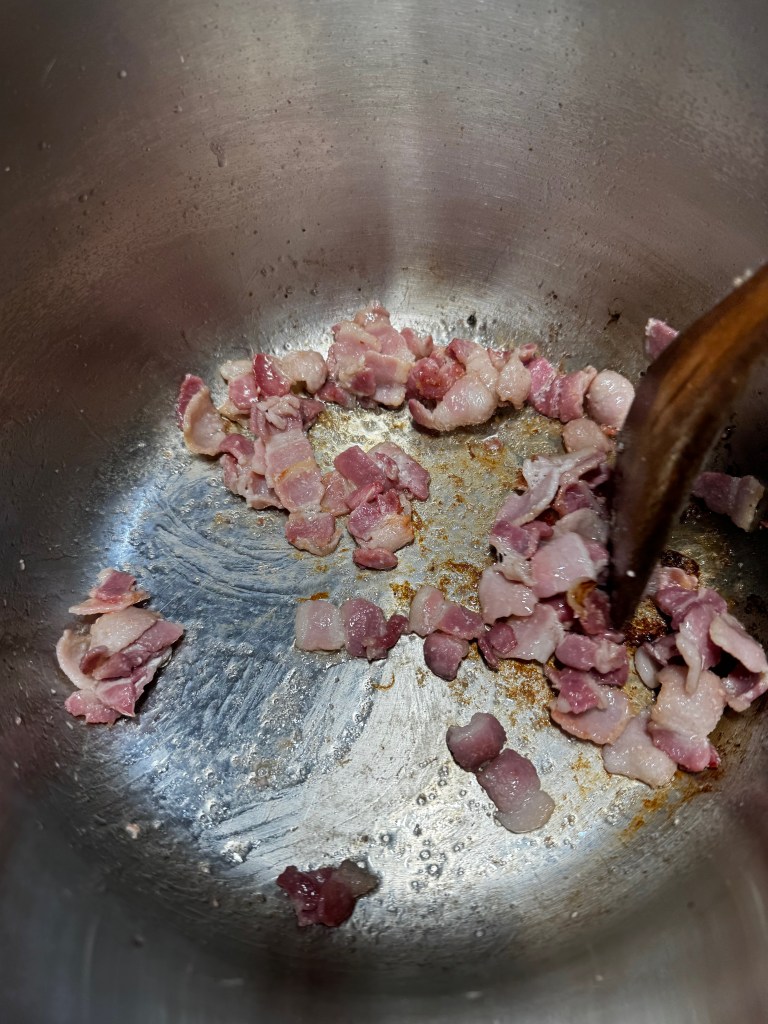
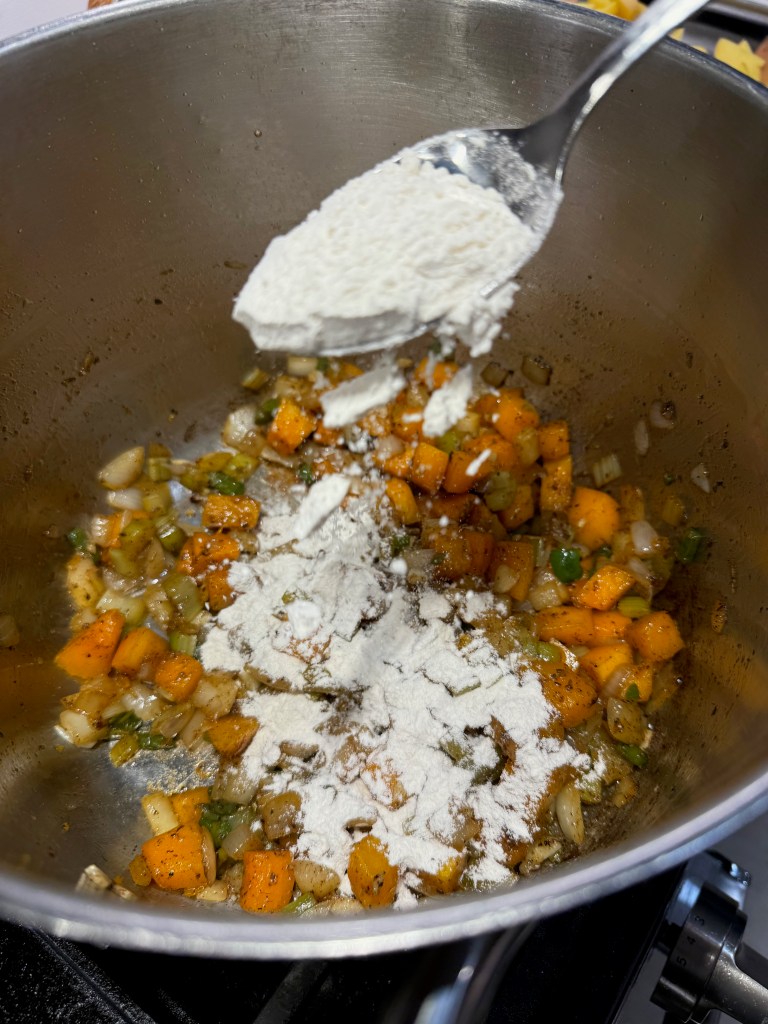
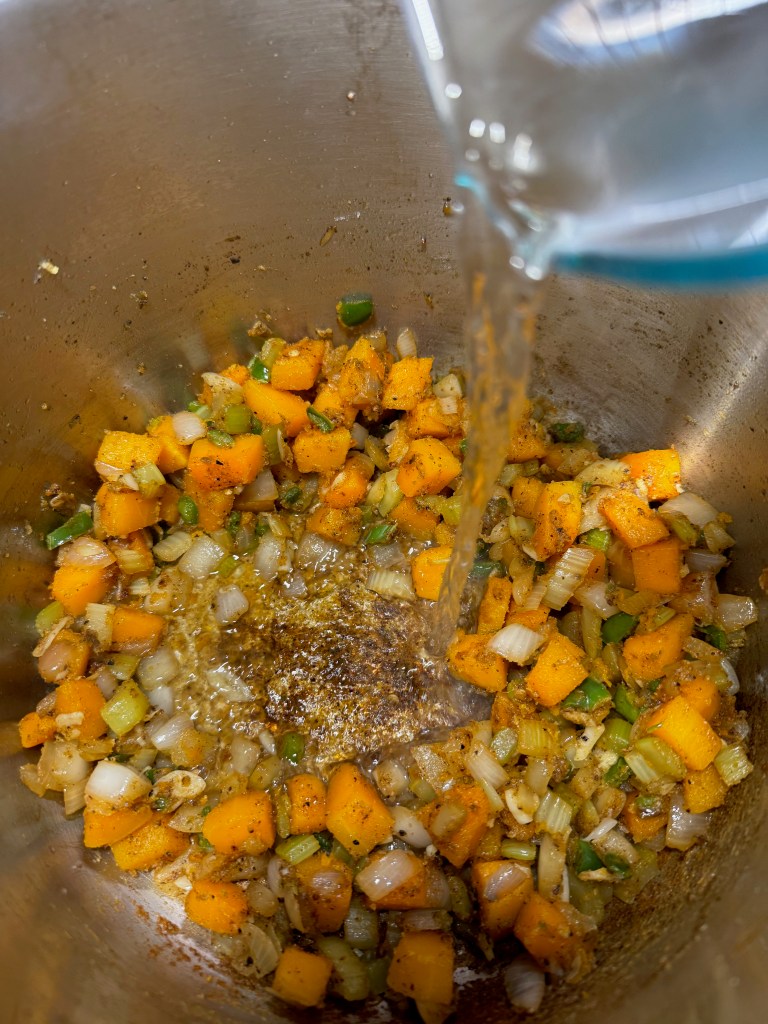
I didn’t have carrots on hand, but butternut squash stood in nicely. A jalapeño in the produce drawer promised to add a subtle layer of heat, which Les would never argue against. I sautéed those in the fat rendered from the bacon. To add a little extra body to the chowder, I cooked in a bit of flour just before deglazing the pot with white vermouth (because I never have wine on hand anymore).


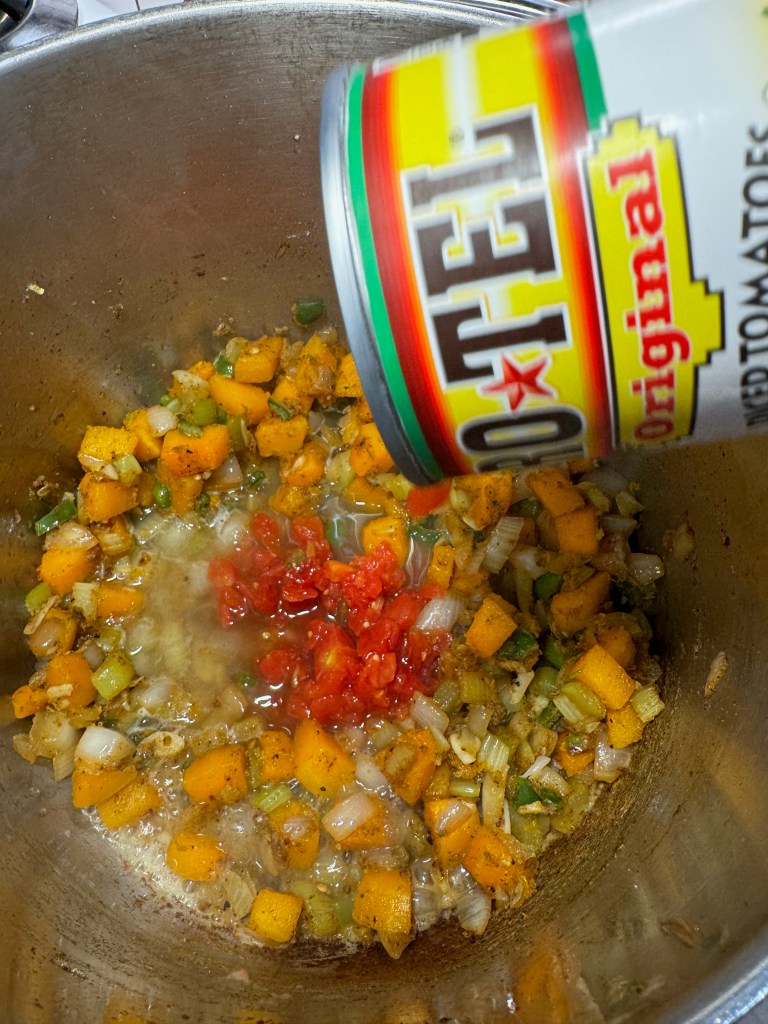
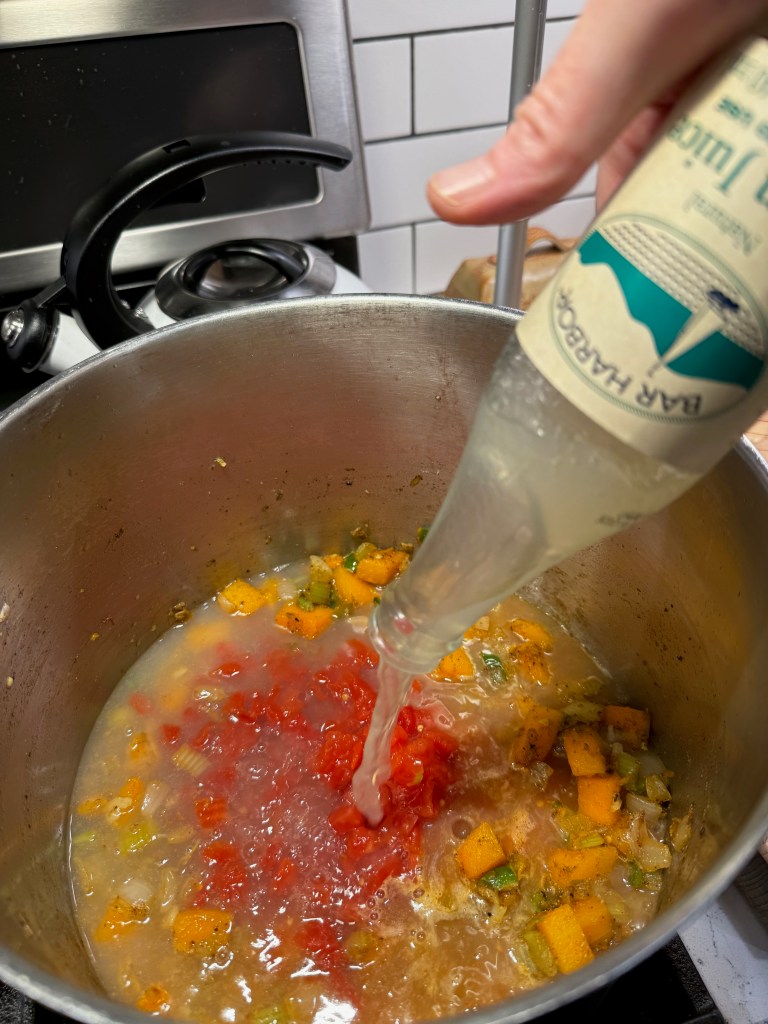
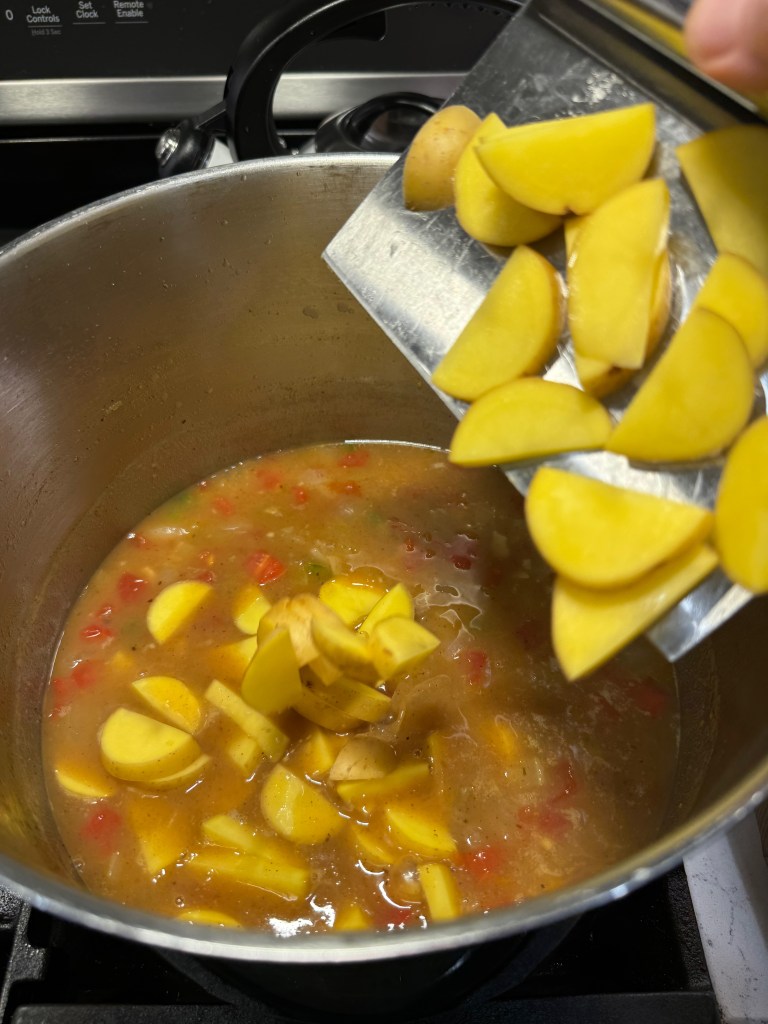
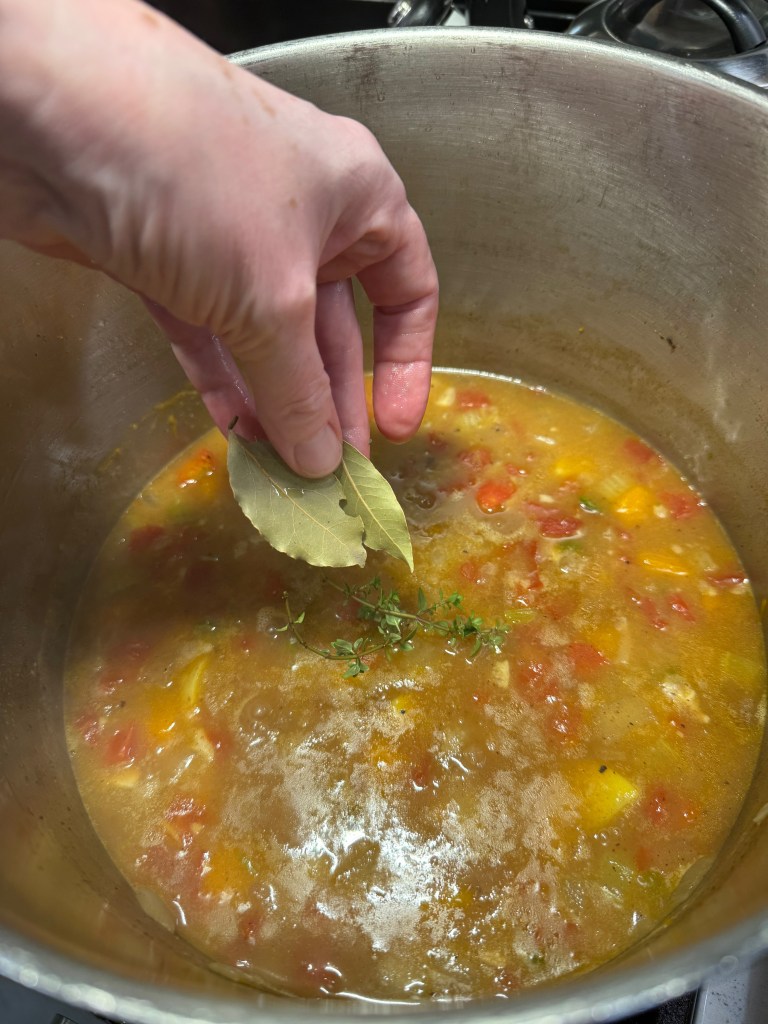
Believe it or not, I did have two bottles of clam juice in the pantry, because I’ve been jonesing to make chowder for over a year. The recipe called for three, but I didn’t mind keeping this on the thicker side. To bring a tiny bit of “Manhattan” into it, I tossed in a can of Rotel tomatoes which also brought another layer of heat, and that touch of acidity was perfect for balancing the flavors. Finally, my sliced Yukon gold potatoes (I didn’t have red), fresh thyme sprigs and dried bay leaves, and then it was time to simmer this hearty, chock-full-of-flavor autumn soup.


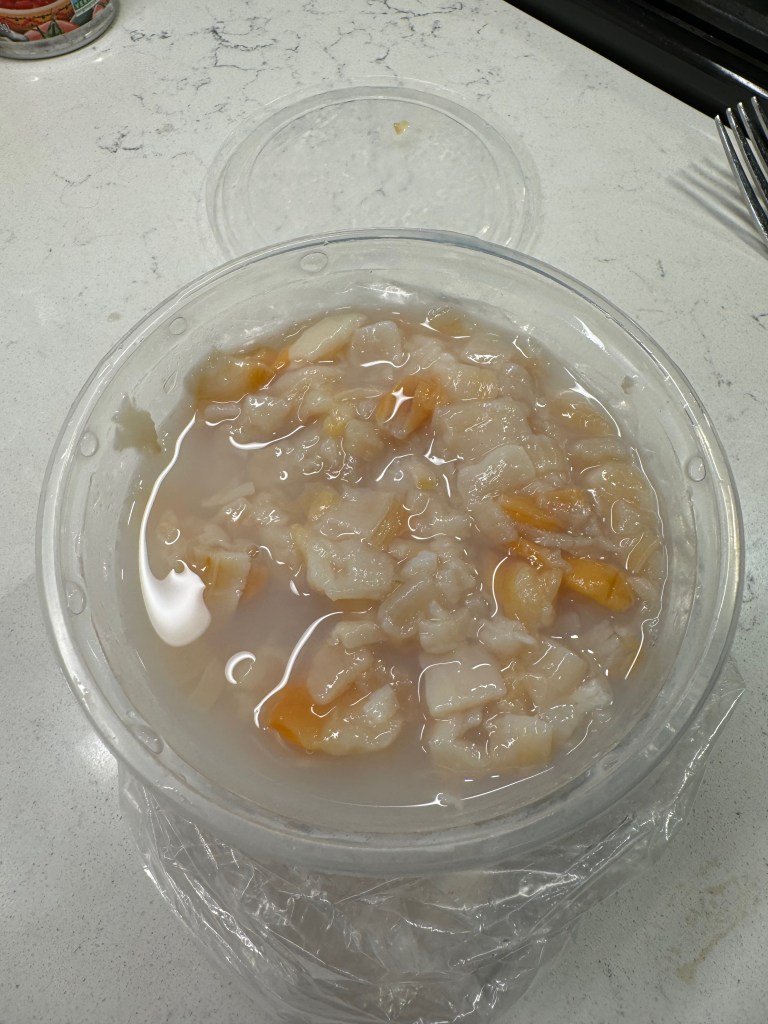
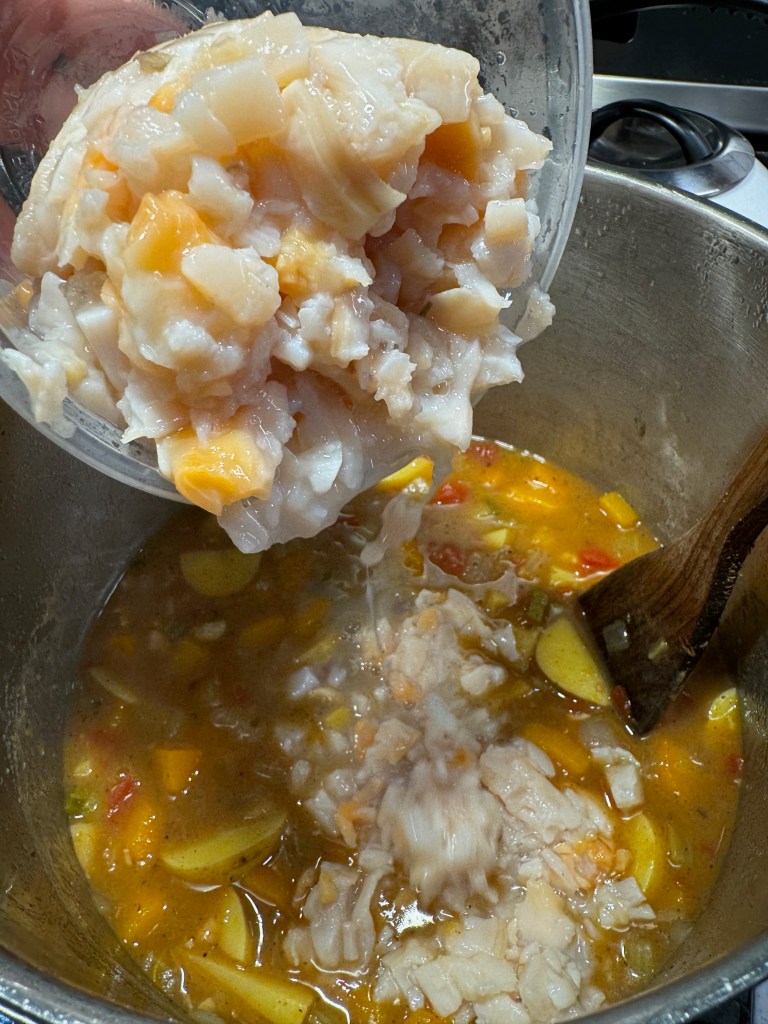
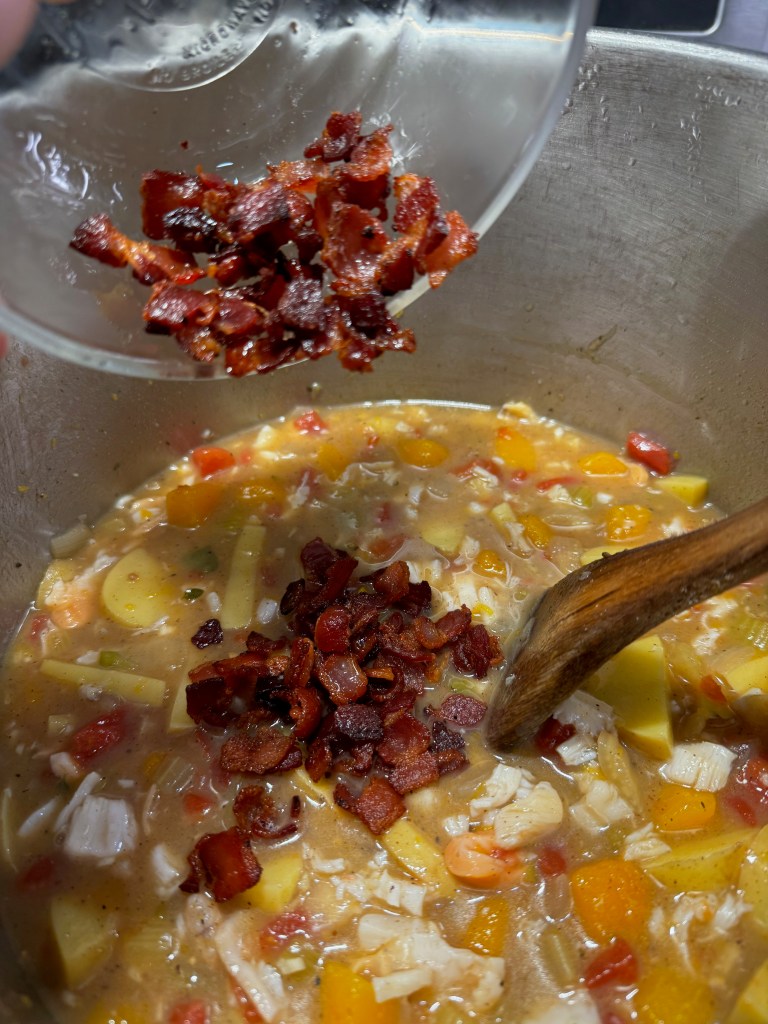
Here comes the big shortcut I took with this recipe. The Southern Living article said that only fresh whole clams were appropriate for this chowder—not chopped— and it included steps for purging the grit and then cooking the clams separately. I’m sure that canned chopped clams would come up short here, but the fresh chopped clams from my favorite local seafood chop were sweet, slightly chewy and so fresh; I’d put them up against the fussy whole-clam process any day of the week. These sweet little gems and their liquid get stirred in just at the end, along with the crisped-up bacon that started this whole thing.


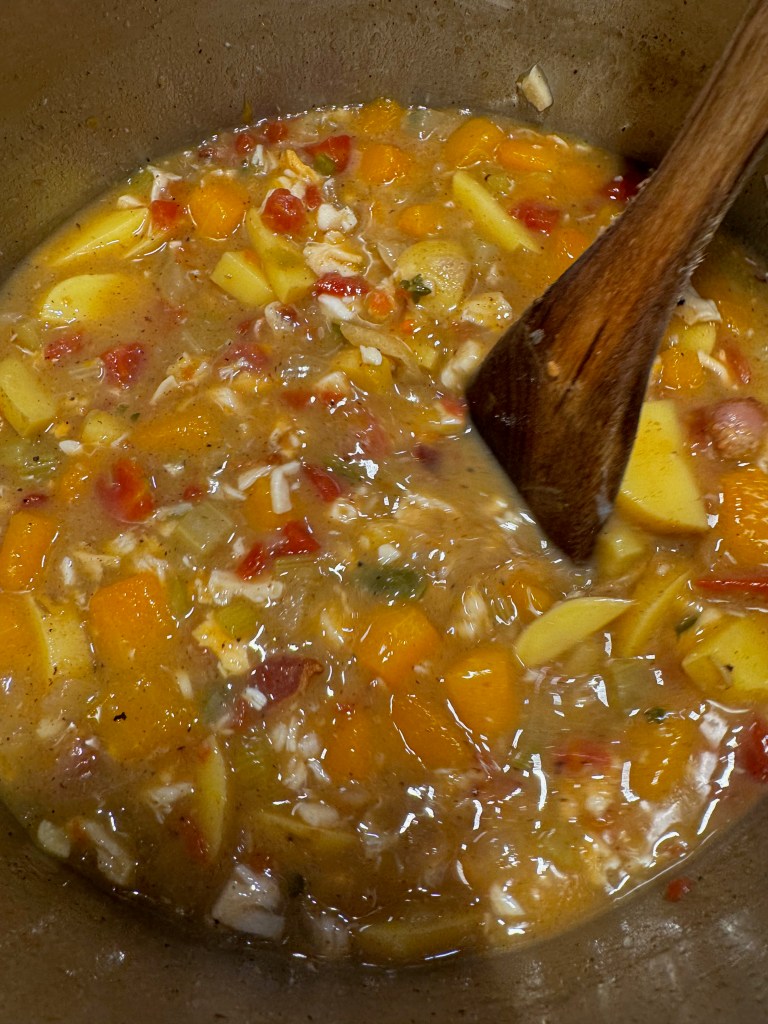
This chowder was satisfying in every way— it had the hearty, chunky texture that Les wanted without the heavy cream that I didn’t want. The jalapeño and Rotel put a slight south-of-the-border spin on it, and I’ll add that this chowder reheated as leftovers very well. The only thing I’d do differently next time is make a double batch. 


So this is a new “North Carolina” recipe that I will most definitely add to my repertoire, and it was a perfect way to celebrate all things Tar Heel on North Carolina Day. Click to print recipe is below; I hope you enjoy it.

For a fun little sendoff today, I’ve also prepared a Spotify playlist of artists that call North Carolina home. Some of these names will be instantly familiar; others will be new. I hope you find something fun among them. 

Cheers, y’all!


Hatteras-style Clam Chowder

  • Servings: About 6
  • Difficulty: Average
  • Print

Somehow, I've missed this delicious coastal North Carolina dish, despite having lived in the state more than 30 years. My version swaps in winter squash for carrots and adds jalapeño and spicy tomatoes for a little extra pizzazz.


Ingredients

  • 4 slices thick bacon, chopped
  • 1 medium onion, chopped
  • 3 ribs celery, strings removed and sliced
  • 1 cup butternut squash cubes
  • Kosher salt and black pepper
  • 1/4 cup all-purpose flour
  • 1/2 cup dry white wine (I used dry vermouth)
  • 1/2 cup water
  • 1/2 can original Rotel
  • 2 bottles clam juice
  • 2 cups Yukon gold potatoes, scrubbed and diced
  • 2 dried bay leaves and 3 sprigs fresh thyme
  • 1 lb. fresh chopped clam meat (with liquor)

I found this chowder recipe very versatile to accept substitutions, based on what you like or have on hand. I’m sure that you could swap in shrimp or whitefish for the clams, and seafood or veggie broth in place of the clam juice. My inspiration recipe used carrots rather than butternut squash and it did not include flour for thickening. The tomatoes and jalapeño were my additions, and a fun twist!

Directions

  1. In a heavy-bottomed pot, cook bacon over medium heat until crispy and then remove to a separate bowl.
  2. Add onion, celery, butternut squash and jalapeños (season with salt and pepper)and sauté until softened. Add flour and stir until foamy. Add wine (or vermouth) and water, Rotel and clam juice. Add potatoes, bay leaves and thyme and reduce heat to low. Simmer for about 30 minutes.
  3. Gently stir clams (including liquid) into the pot. Add bacon and heat through. Serve right away with hot sauce and saltine or butter crackers.


Sourdough Pumpkin & Sage English Muffins

It’s always a comical scene at Trader Joe’s this time of year, as every aisle, endcap and special display is loaded up with pumpkin spice goodies. Eager customers load up their carts with all the pumpkin spice cookies, donuts, oat milk, cold brew concentrate (guilty) and even candles and dog biscuits flavored with pumpkin spice. It’s a fall frenzy! Love it or hate it, this trend isn’t going away anytime soon. 

And though I personally love the pumpkin and sweet spice combination, I also love the savory side of pumpkin, which doesn’t get nearly enough attention when fall rolls around. Pumpkin on its own is not sweet at all— it’s a variety of winter squash, you know— but we have become so conditioned to think of it as a pie filling or latté enhancer that we sometimes miss the opportunity to let those savory aspects shine. 

Autumn Benedicts, anyone?

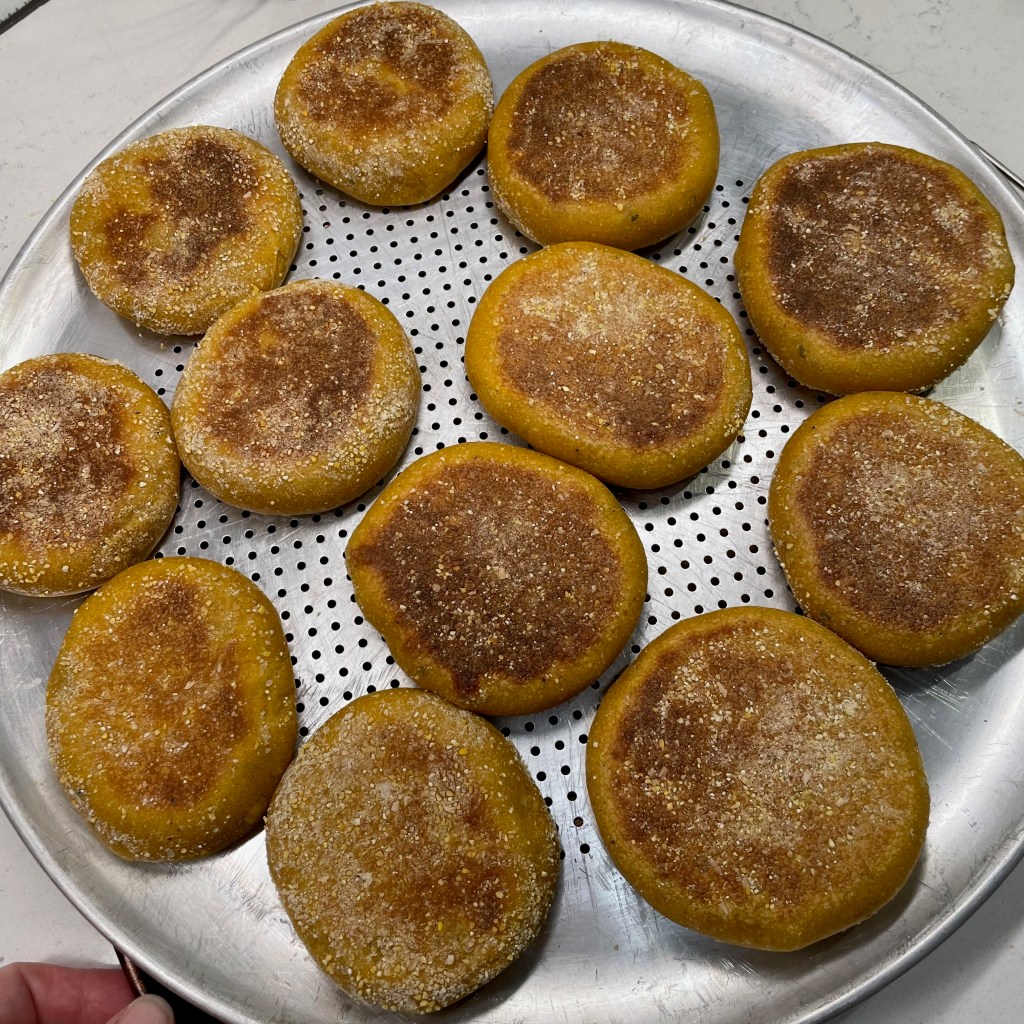
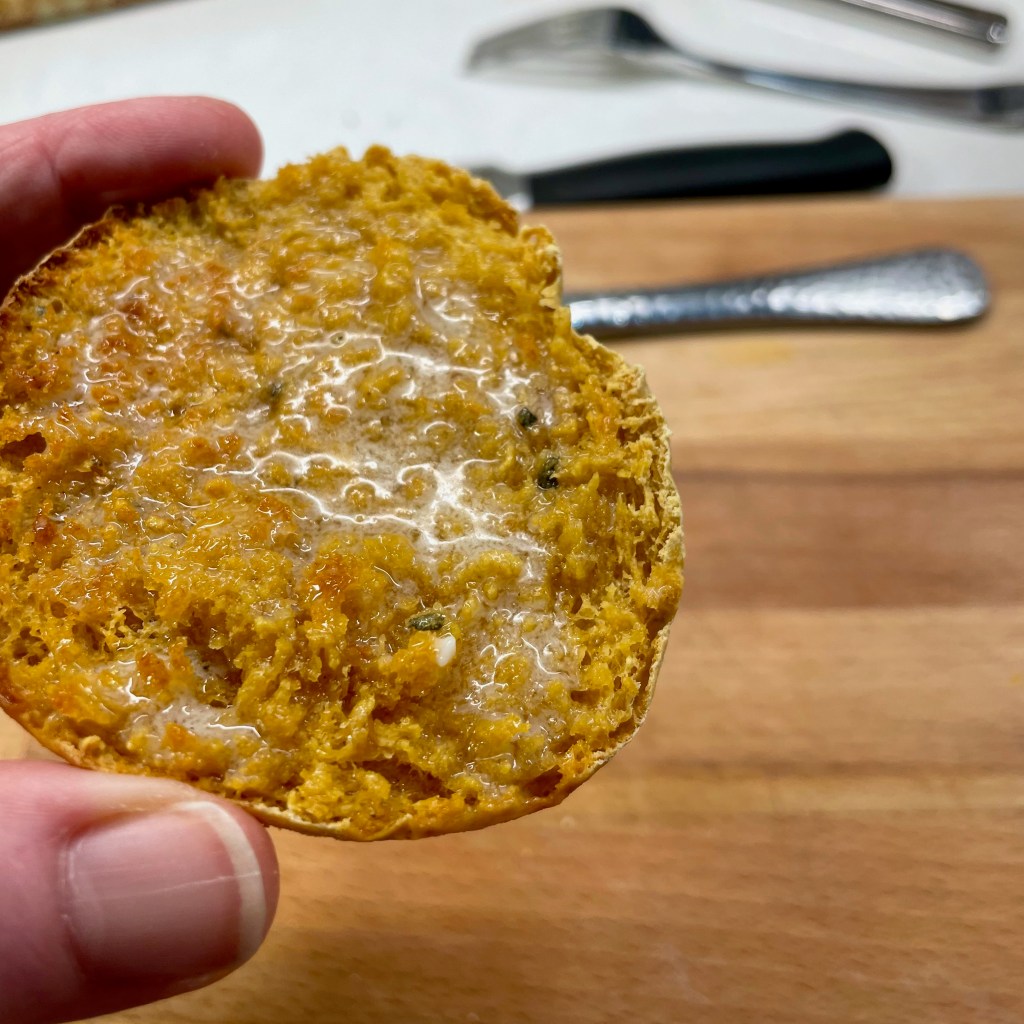
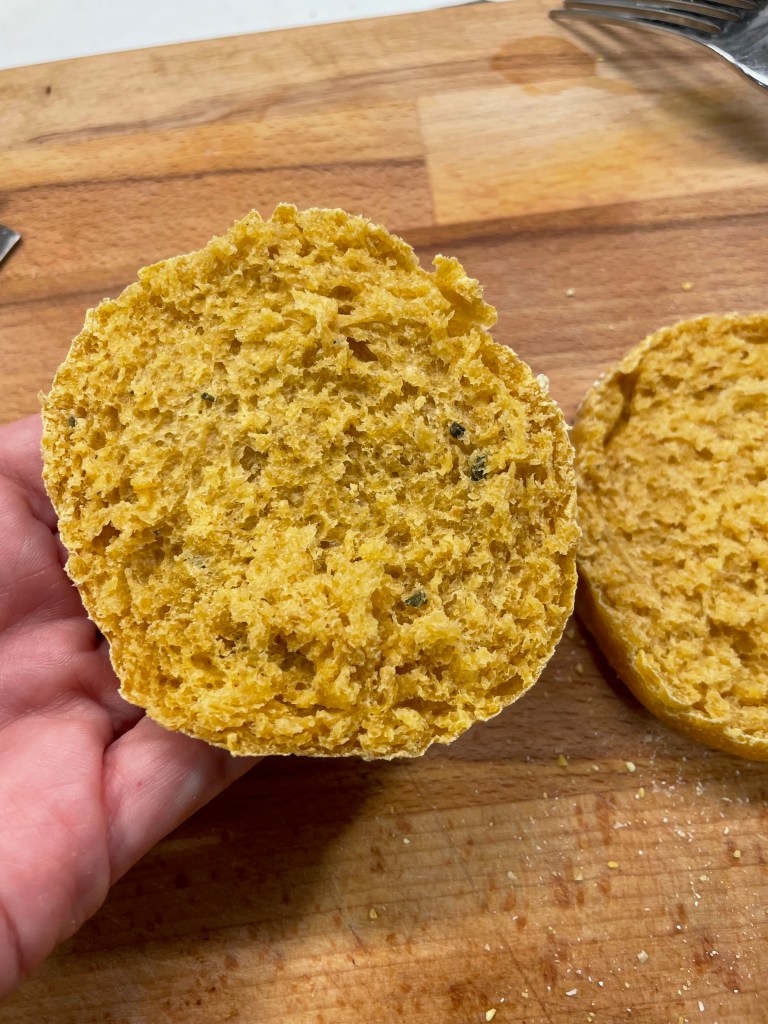
But today, these barely sweet, griddle-baked goodies are getting all the praise. I’ve made a few easy swaps from my go-to sourdough English muffin recipe, working in pure pumpkin and a swap of molasses, plus a hint of onion and some fresh chopped sage leaves. 


The dough is easy to work, and there’s no need to even turn on the oven because these babies bake on a griddle or in a hot cast iron pan. Let them bring some seasonal pizzazz to your breakfast sandwiches and autumn brunches. Also perfect just toasted with butter. 

I want one of these every day until Spring!

Welcome, fall. We are so glad you’re here!


Sourdough Pumpkin & Sage English Muffins

  • Servings: 12 muffins
  • Difficulty: Average
  • Print

This easy recipe gives pumpkin a chance to show off its savory side. With onion, sage and a touch of molasses, these griddle-baked muffins are ready to elevate your autumn breakfasts. They also work great for turkey sandwiches!


Ingredients

  • 106 g pumpkin puree
  • 170 g warm water
  • 28 g olive oil
  • 113 g ripe sourdough starter
  • 15 g molasses
  • 1 Tbsp fresh sage leaves, chopped
  • 1 tsp onion powder
  • 100 g white whole wheat
  • 320 g all-purpose
  • 22 g dry milk powder
  • 1 1/2 tsp salt
  • 1 tsp instant dry yeast, optional for quicker rise
  • cornmeal for dusting muffins before baking

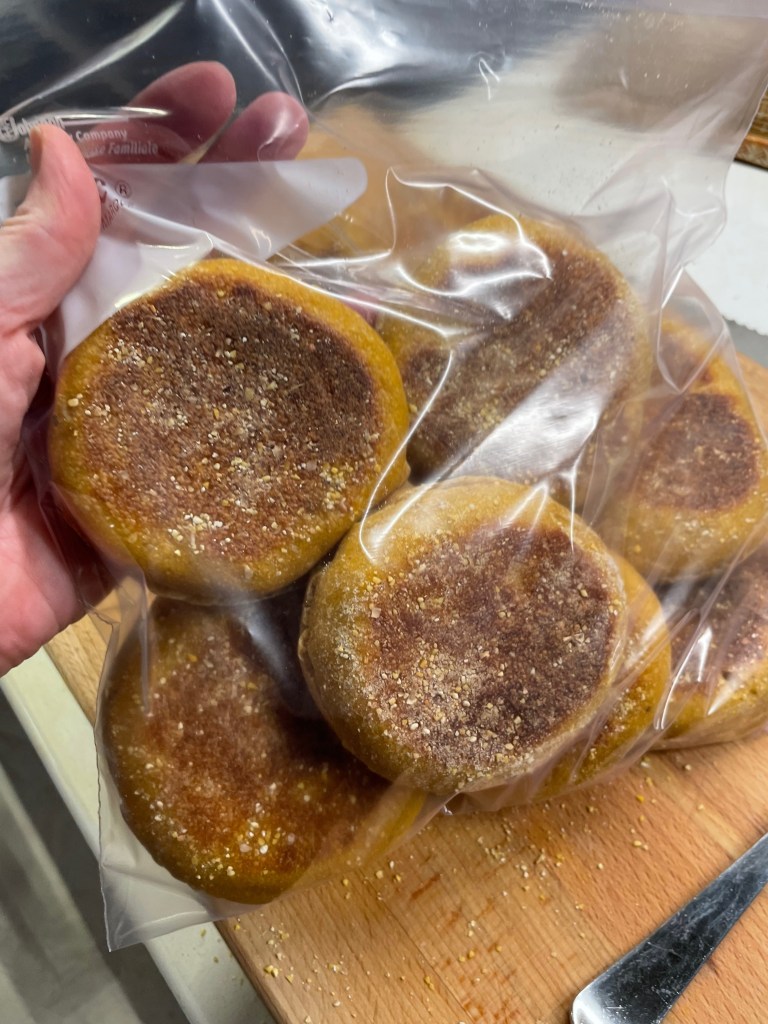
Note: These english muffins will freeze beautifully. Fork-split them all the way through, and pop them into a zip top freezer bag. Press out as much excess air as possible before sealing. When you are ready to serve, either defrost them for an hour or two, or pop them into the toaster on the defrost setting for a few minutes before toasting.

Directions

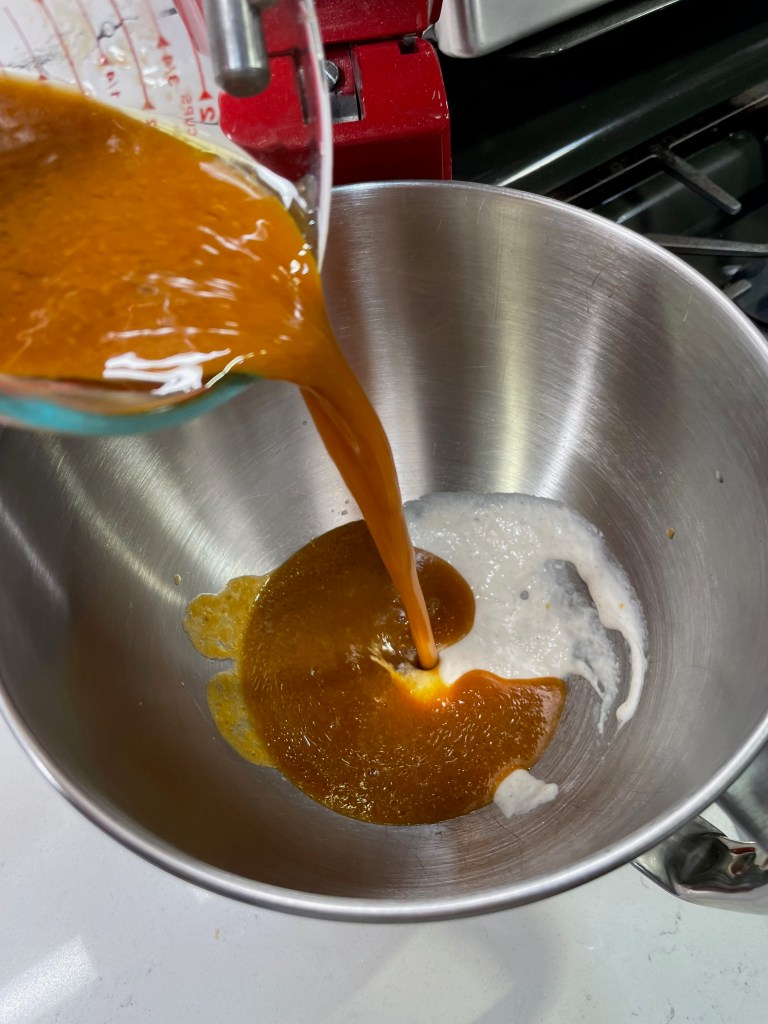
  1. Combine pumpkin, water, olive oil and molasses in a measuring cup with a spout. Warm in the microwave for 30 seconds if the pumpkin is cold.
  2. Mix together the starter and pumpkin mixture in the bowl of a stand mixer, fitted with the paddle blade. Blend until smooth.
  3. Whisk together dry ingredients, plus sage, in a separate bowl. 
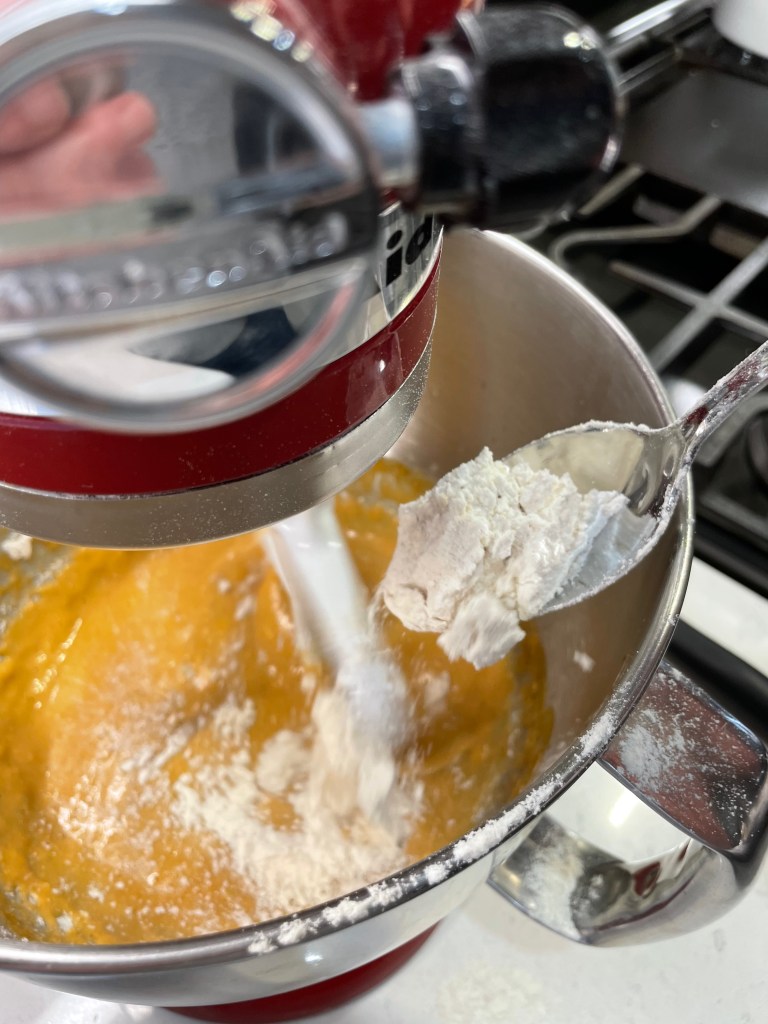
  4. With mixer running on lowest speed, add dry ingredients by the spoonful, just enough to reduce the “splash” of the wet mixture. Stop the mixer and add remaining dry ingredients, then mix on low speed until all the flour is incorporated. Scrape down off the paddle and cover the bowl to rest the dough for about 20 minutes. 
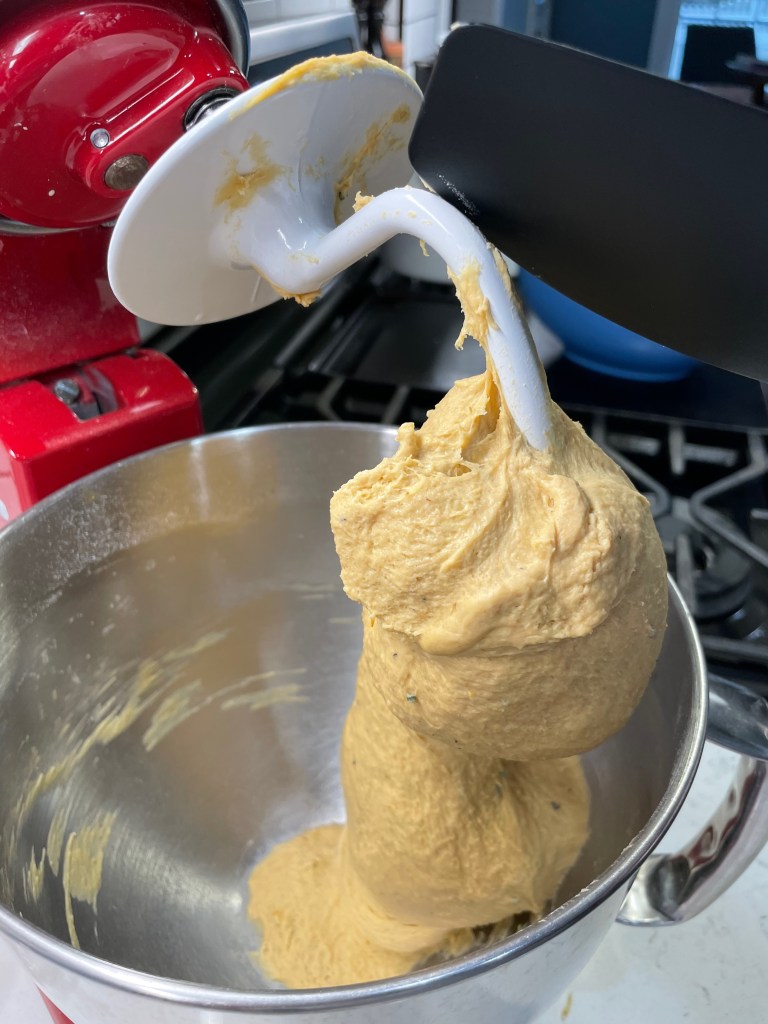
  5. Switch to the dough hook and knead for about 6 minutes until dough is smooth and shiny. Transfer dough to a large bowl, sprayed lightly with oil. Cover and ferment in a warm spot of the kitchen until dough is quite puffy, which could be 2 to 3 hours (or less, if using the yeast).
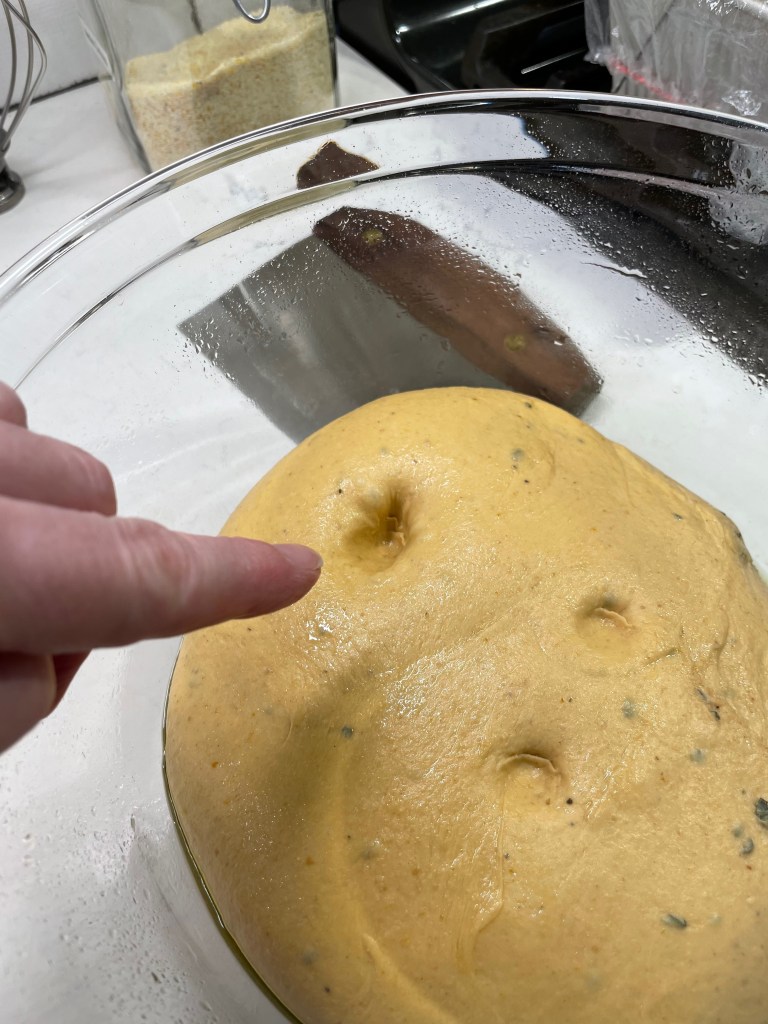
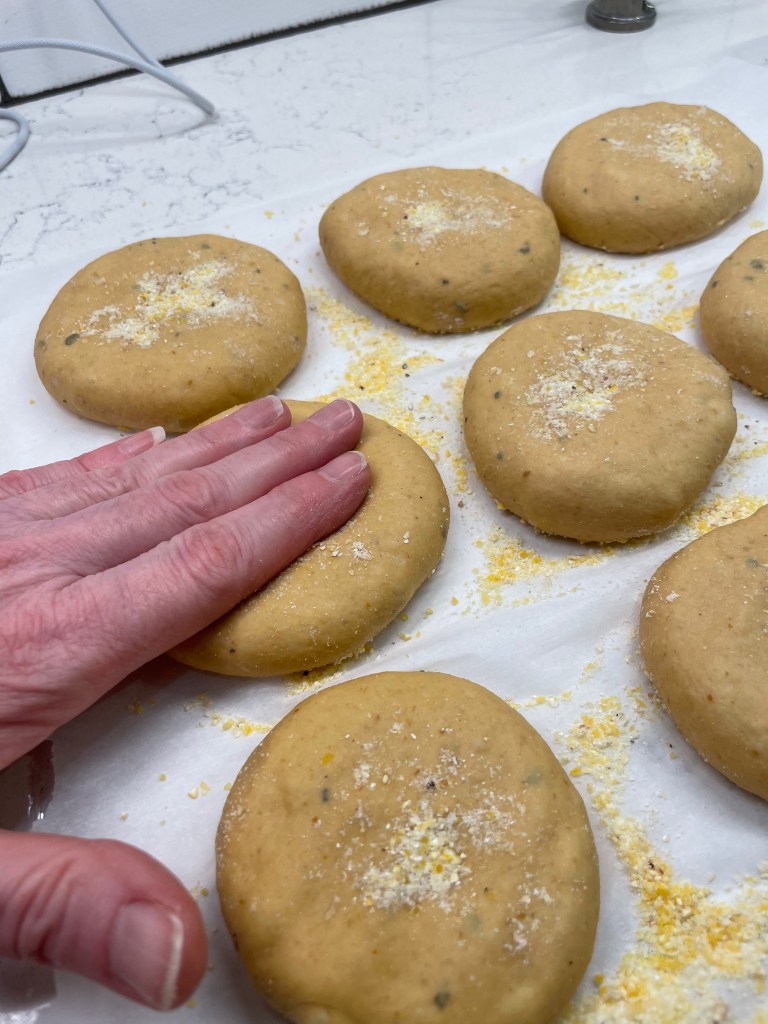
  6. Transfer dough to a lightly floured countertop and cut into 12 equal pieces. Shape the pieces into balls and flatten each ball with your fingertips onto a piece of parchment paper, sprinkled lightly with corn meal. They should measure about 3 1/4” across. Sprinkle the tops with additional corn meal. Cover loosely with oil-sprayed plastic wrap and a kitchen towel. Rest until the dough balls pass the “poke” test. 
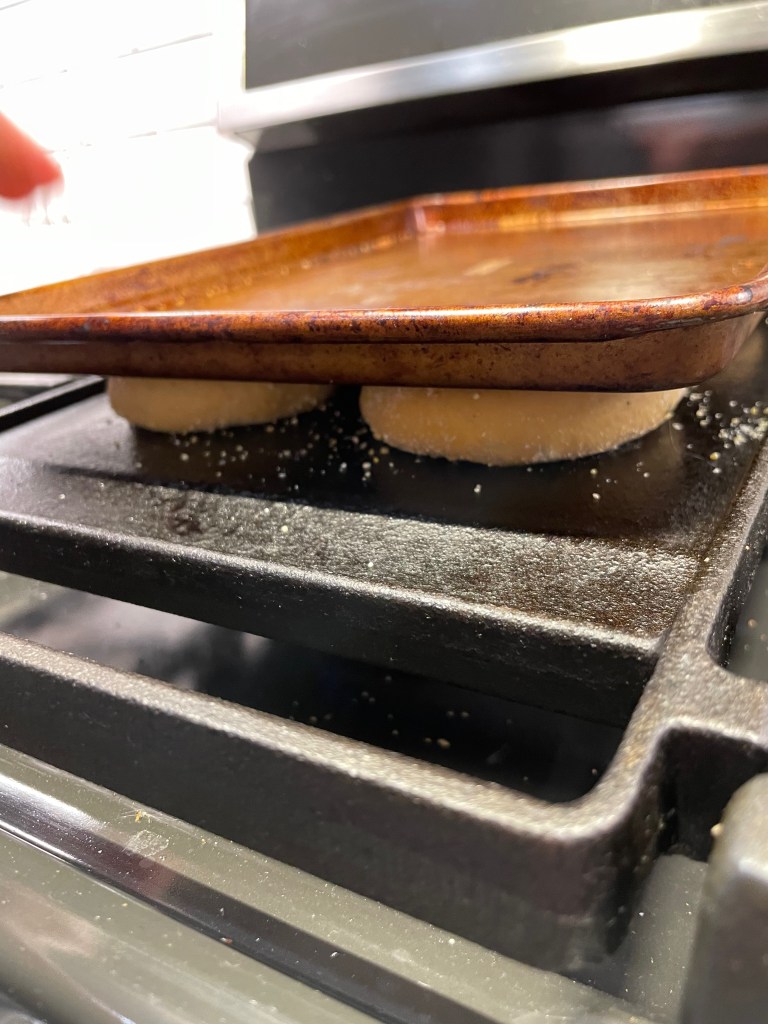
  7. Heat a griddle to medium-low heat (about 325° F). Gently flatten each dough ball, and place them on the griddle, a few inches apart for easy turning. Place a dry cookie sheet on top of the muffins once the griddle is loaded; this helps give the muffins a nice flat second side.
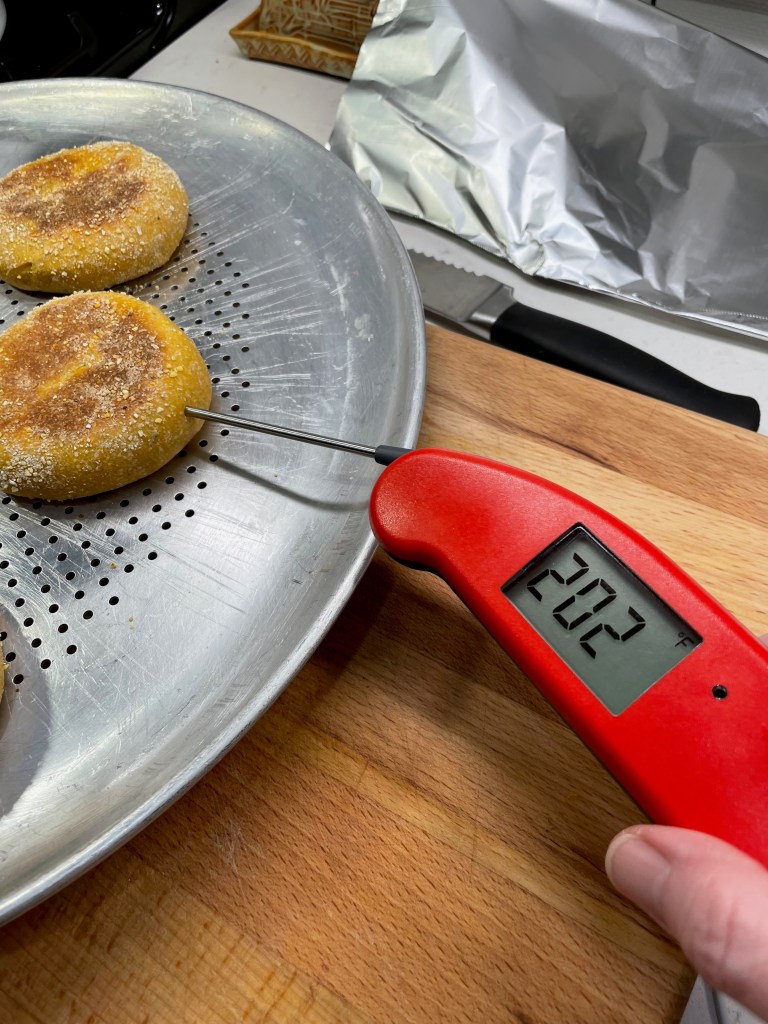
  8. After 6 or 7 minutes, the bottoms of the muffins should be a golden brown color. Give them a little longer if needed. Gently turn the muffins to “bake” the other side. Don’t be concerned if the sides of the muffins still seem soft. The dough will cook from the radiant heat. If the muffins feel spongy or wet, but the sides are done, transfer them to a baking sheet and put them in a 350° oven for a few minutes to finish them off.
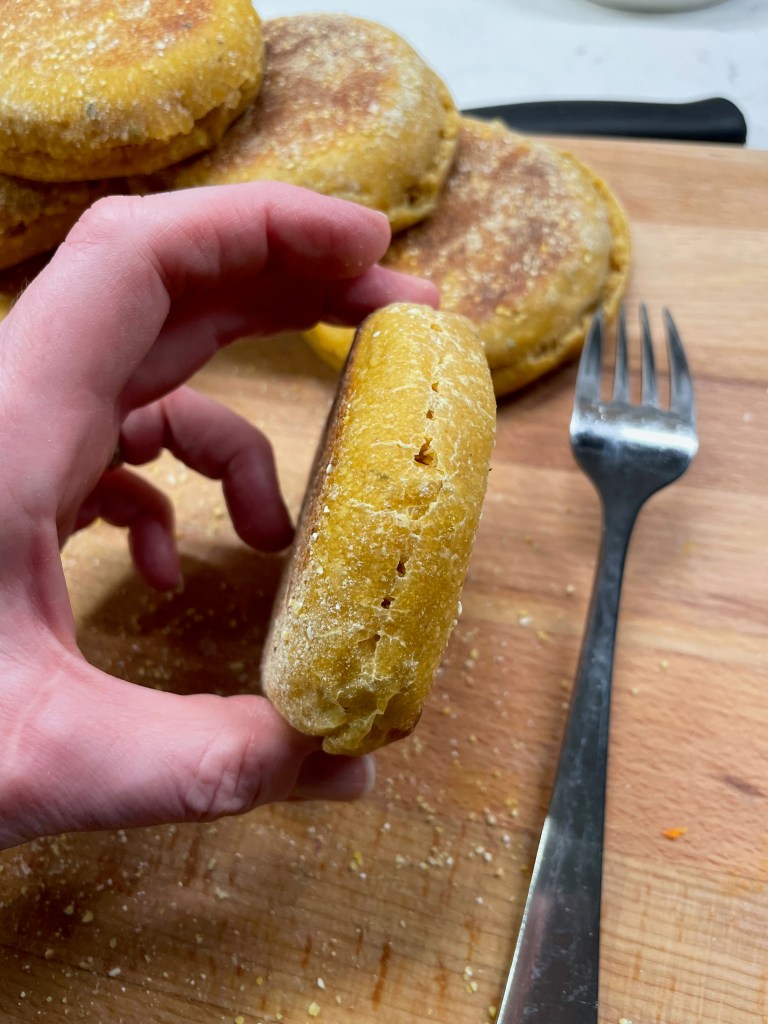
  9. Cool the muffins on a wire rack, and when completely cool, use a fork to gently “split” the sides of each muffin for easy slicing when you are ready to serve them.


In case you’re wondering…

Yes! You can freeze them for later. These English muffins freeze beautifully, and they can go straight to the toaster without thawing, too. Simply fork-split them, separating the halves, and load them into a zip-top freezer bag. Be sure to squeeze out excess air. Enjoy!


Cinnamon Espresso Negroni

If your social media feeds are flooded with Negroni cocktails lately, there’s good reason. It’s “Negroni Week,” an event launched in 2013 by Imbibe (print and online) magazine and Campari as a means to spotlight a worldwide sustainable food movement called Slow Food. This program has an ambitious but very noble goal of ensuring “good, clean and fair food” for all human beings everywhere. I’m all for feeding people good food, but let’s explore how a cocktail benefits this cause. The organizers pitched an idea to the hospitality industry— register your venue with the Negroni Week site, and share a percentage of Negroni sales to benefit the Slow Food movement. That might not seem like much but to date, they’ve raised more than $5 million, so it’s working!

You can learn more about Slow Food here: https://www.slowfood.com/, and find a participating Negroni Week venue near you here: https://www.negroniweek.com/find/. If you can’t find a local bar that’s taking part in the annual event, why not donate to a similar cause close to home and make the cocktail (or some version of it) yourself? I’ll show you how.

What exactly is a Negroni?

The Negroni cocktail— invented in 1919 in Italy— is traditionally considered to be an “equal parts” drink with dry gin, sweet vermouth and Campari, the bright red Italian bitter aperitivo. The components are stirred with ice and then the drink is garnished with a juicy slice of fresh orange. It is both refreshing and appetite-stirring, sophisticated yet bold and gutsy.

My first introduction to Negroni came only a few years ago (during Covid, probably), and it took me a while to consider making this drink at home. I didn’t want to drop big bucks on a bottle of Campari unless I was fully committed. The Negroni is what I call a “strong drink”— it’s literally all booze— and if you can’t handle bitter, you definitely don’t want one. But there is something that really works about combining these spirits, and now that I’ve acclimated to it, I cannot refuse a Negroni.

Of course, me being me, I have joined the throng of amateur and pro mixologists on a mission for new ways to twist up this classic. There are already several notable riffs out there, including many that swap the gin for various other base spirits, including bourbon, rum and tequila. I enjoyed a particularly good Negroni variation that subbed Spanish sherry for the vermouth and Cynar for the Campari when we visited Cúrate in Asheville, North Carolina. I can still taste it in my mind. It was so good.

The base personality of a Negroni is the botanicals and bitterness— if these are not your thing, stick with a vodka martini or an old fashioned. But if you do happen to enjoy an adventurous, spirit-forward cocktail that whets the appetite before dinner, I propose my take on this lovely libation for Negroni Week 2024. Cheers!

Cinnamon Espresso Negroni

The color and aroma of this drink are really special!

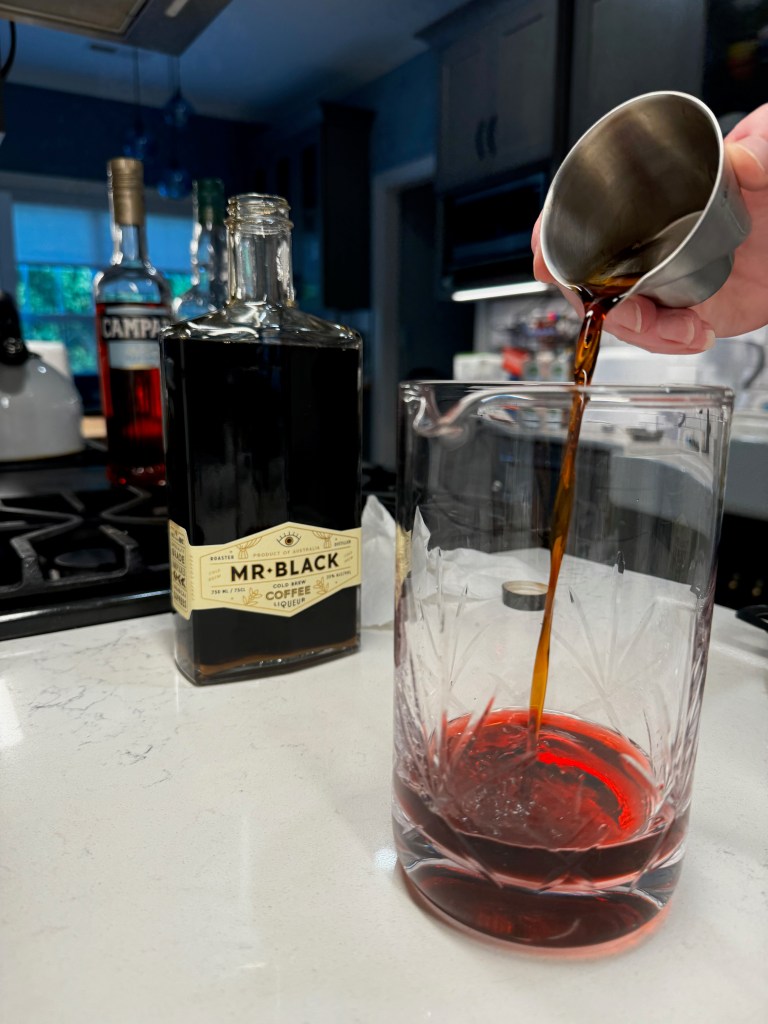
My version includes a couple of twists, including addition of cold brew coffee liqueur. I split the Campari element of the drink 50/50 with the coffee-flavored spirit I like best, Mr. Black. Yes, you could use Kahlua, Tia Maria or Grind Double Espresso liqueur, but I find all of these rum-based spirits to be too sweet for Negroni. Mr. Black is a vodka base, so the emphasis is on the coffee. I had to search for months to find it because our state-run liquor stores are pitifully limited in inventory, but it was worth the wait. I also happen to like Mr. Black in an espresso martini, which I am still working on and will share when I get there.

Ford’s is my house brand of gin. Any London dry is suitable for Negroni, so use your favorite.

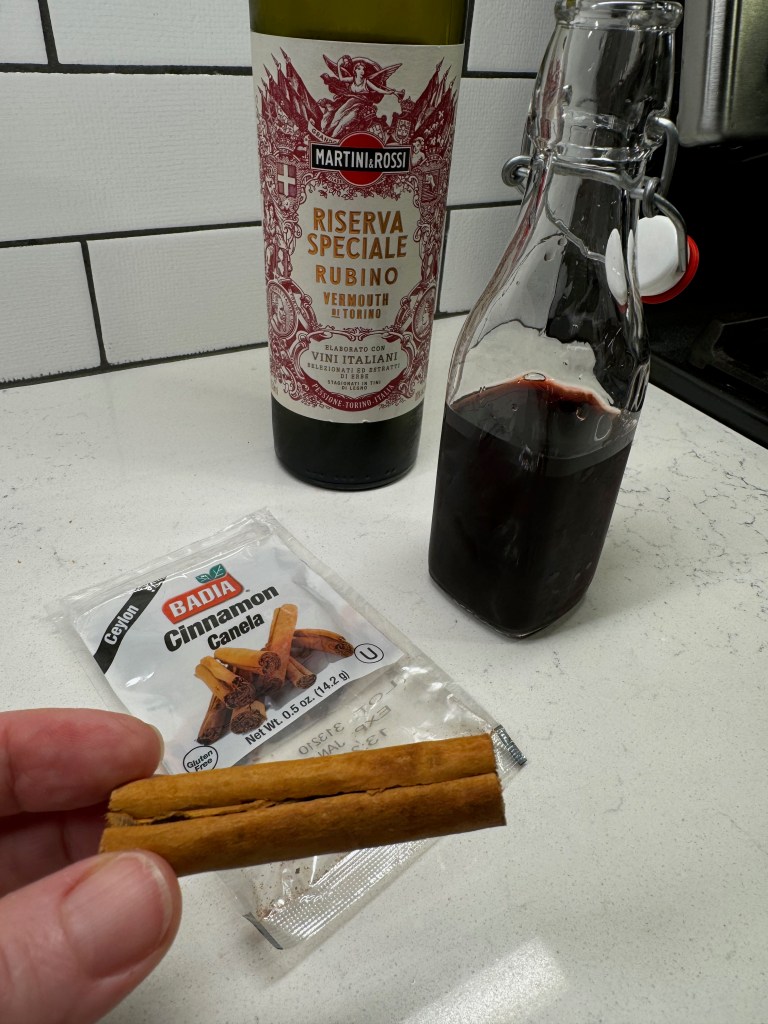
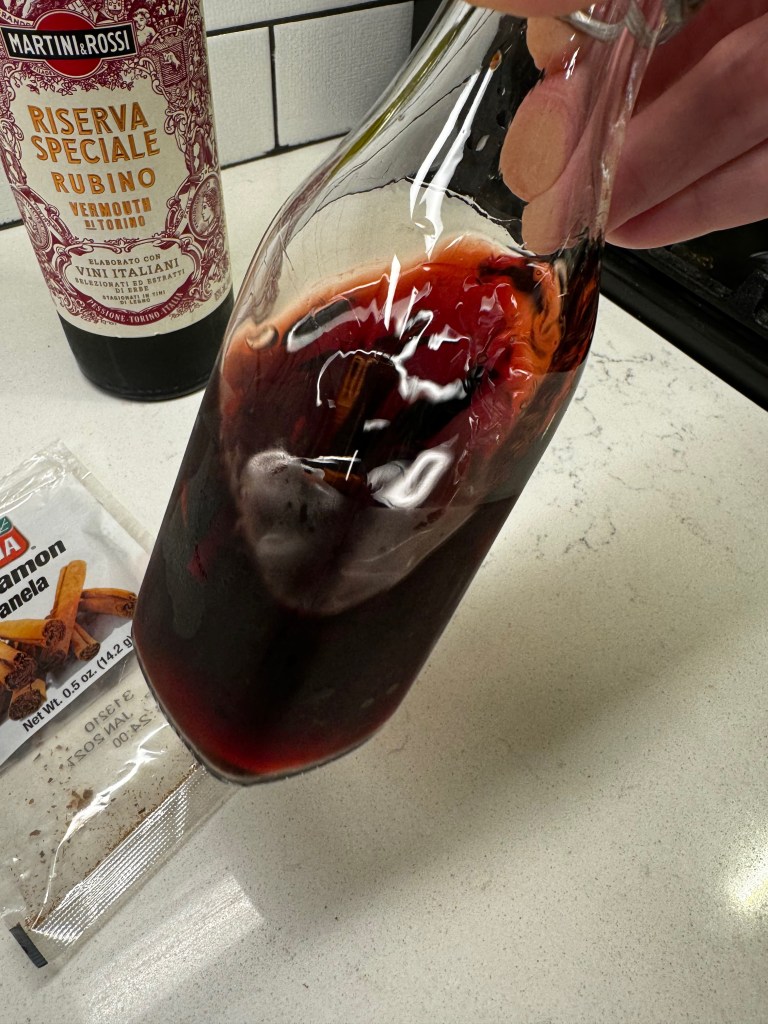
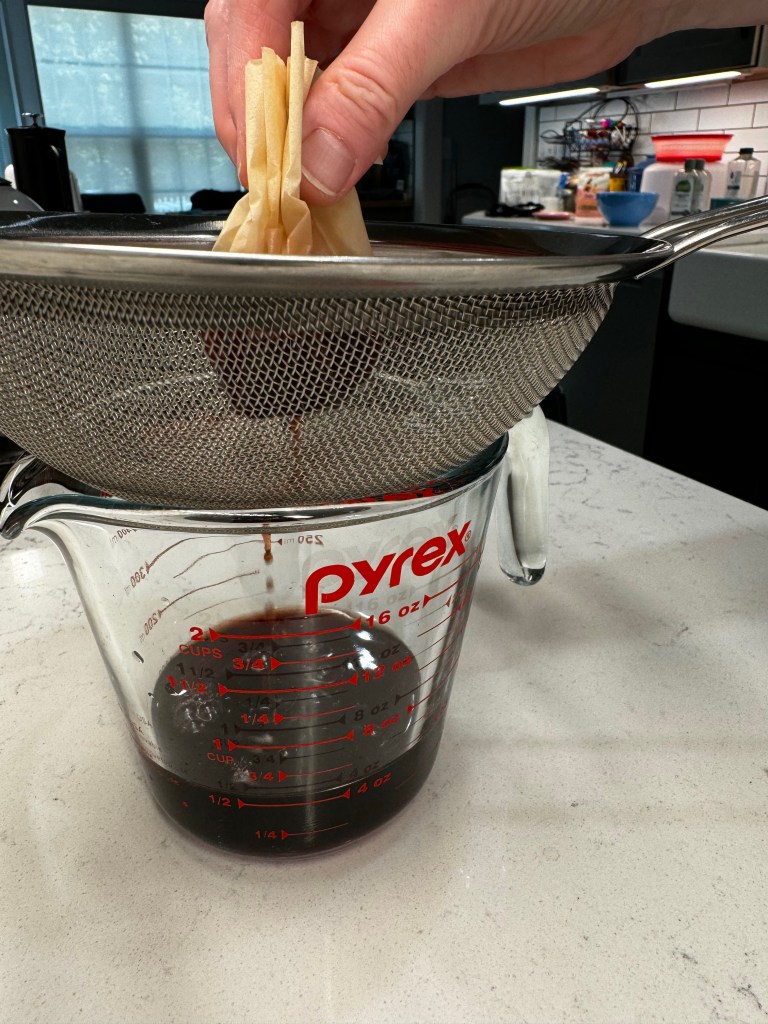
The cinnamon enters the mixing glass in the form of an infusion in the sweet vermouth, and this requires a bit of advance preparation. I added a ceylon cinnamon stick to the vermouth in a small bottle and gave it a day and a half before straining out the cinnamon and filtering the vermouth back into the bottle.


The cinnamon lends a delightful warmth to the vermouth that spices up my Espresso Negroni in the best possible way, and I cannot wait to try this in a Manhattan. My vermouth brand is Martini & Rossi Riserva Speciale Rubino. I’m willing to pay a bit more for the spicy richness and deep ruby red color of this premium vermouth. I panicked last year when our Total Wine stores stopped carrying this product, and then I remembered— it’s a fortified wine, legal in my state for online purchase. Sure enough, I hit the buy-it button on the M & R website and had two bottles shipped directly to my door within days. Thank you, internet! If you already have a favorite sweet vermouth, I’m sure it’ll be just fine.

Campari is what it is, and frankly, there is no true substitute. It is bright red, bitter and complex. Don’t be fooled by other spirits that cost less and claim to be the same— they’re not. If a Negroni riff calls for something else, then the substitute probably works with the other ingredients. But if you love the classics, or if you’re trying a Negroni for the first time, Campari is the right stuff. Also, because Campari is a presenting sponsor of Negroni Week, your purchase will help the sustainable food cause in a secondary way, even if you don’t find a bar participating in Negroni Week.

How to Make a Negroni


The traditional way to make a Negroni is to build it directly in the glass over ice, but that’s not how I like to do it at home because I prefer equal dilution of the ingredients. Here’s what I mean— let’s say you start by pouring the gin first; it’s generally room temperature and it’s going to start melting the ice immediately. If the vermouth goes in next, and the Campari at the end, both are going to be less diluted than the gin because the total contents of the glass are already cold.

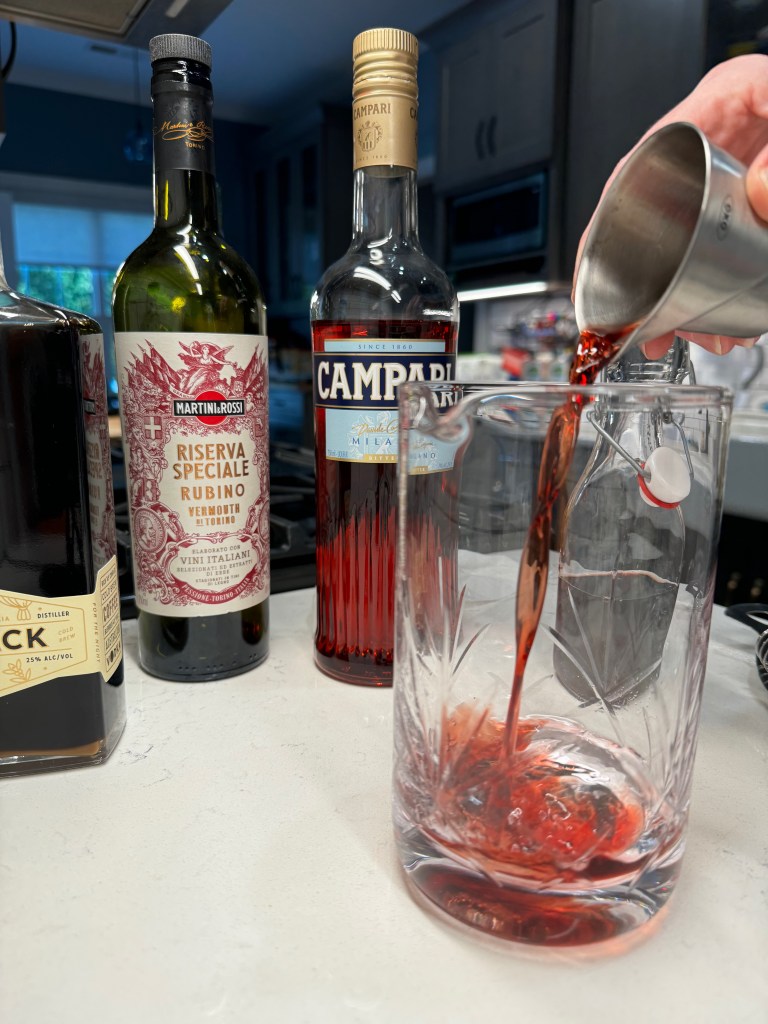
Mixing the ingredients in the glass and then adding the ice doesn’t work for me either, because my giant ice cube will melt at the bottom, creating a weird, top-heavy shape. So what’s the solution? My go-to method is to add the ingredients to a mixing glass first, then add a bunch of ice to chill the whole thing down quickly. Give it a gentle stir for about 30 seconds, or until the outside of the mixing glass is nice and frosty. Then strain it over a big cube of clear ice for a perfectly diluted, evenly chilled cocktail.


Cinnamon Espresso Negroni

  • Servings: 1 cocktail
  • Difficulty: Average
  • Print

For Negroni Week, I am sharing my own favorite variation including espresso liqueur and my favorite autumn spice. Infusing the sweet vermouth with cinnamon lends a warm, familiar flavor to the classic Italian cocktail.


Ingredients

  • 1 oz. London dry gin
  • 1 oz. cinnamon-infused sweet vermouth (recipe below)
  • 1/2 oz. Campari
  • 1/2 oz. Mr. Black cold brew coffee liqueur (see notes for substitution ideas)
  • 1 cup ice
  • Orange slice for garnish

Notes: If you cannot find Mr. Black liqueur, you may substitute another coffee liqueur, but note that most of them are sweeter and this will change the outcome of the drink. My suggestion would be to sub in an equal measure of cold brew concentrate, which you can find in the coffee aisle of the supermarket.

Directions

  1. Add gin, vermouth, Campari and coffee liqueur to a cocktail mixing glass. Add a generous amount of cracked ice and stir about 30 seconds for proper dilution and chilling.
  2. Strain over a large, clear ice cube into a double rocks glass. Garnish with the orange slice.

For the cinnamon-infused sweet vermouth: measure out six ounces of vermouth into a mixing bottle or clean jar. Add a 3-inch piece of whole cinnamon stick and infuse 24 to 36 hours in the refrigerator (where vermouth should live anyway). Strain out the cinnamon stick and any lingering shreds through a coffee filter-lined mesh strainer; return the vermouth to the bottle or jar and keep in the fridge for up to two weeks. This will be enough for six Negroni cocktails.


Shrimp & Grits with Too Much Going On!

No matter where you go in the coastal region stretching across the Carolinas, you’ll find shrimp and grits. It’ll be different in each place, naturally, but delicious however it’s served. Some folks make it Cajun spicy, others use a gravy base, and a few take liberty with the grits, adding cheese or turning them into little fried cakes with the shrimp piled on top. Everyone has their favorite, and all of them are favorites for me. But I learned an important lesson when I tried to recreate a restaurant dish, and it can be summed up in a phrase that my husband hates: less is more.

When Les swept me away to Hotlanta for the Rolling Stones concert back in June (it was awesome), he went the extra mile (300 of them, actually) to extend our adventure for three days in Charleston, South Carolina. The city is a lovely place to visit, with a rich history, incredible food and beautiful architecture, and it’s also the unofficial shrimp and grits capital of the world.

Cheers, Charleston! 🍸

On our first night in Charleston, we had reservations at Hank’s, well-known by locals and visitors for its delectable seafood. We got there early to enjoy a cocktail at the bar, and then feasted on appetizers—oysters casino and she crab soup (another Charleston classic)—at the table. Finally, dinner arrived! Notice the crispy grit cake on Les’s scallop and crab dish? And I couldn’t resist the shrimp and grits with smoked andouille and tomato jus, which I promptly declared to be my favorite shrimp and grits to date. My goodness, it was delicious!


The shrimp were plump and juicy, and I love that Hank’s serves them with the tail on. The grits were cooked to creamy perfection with only a slight firmness to the bite. But the real star of the show was the incredible tomato jus— it was light and delicate, almost too refined for this low country classic, but so, so good.

Pardon me while I lick my bowl!

I left Charleston knowing that I had to try to recreate this delectable dish, or something similar, at home. This was my first attempt, and it wasn’t perfect but it won’t be my last.

My late summer shrimp & grits with kale, corn and tomato gravy

Plenty of flavor here, but maybe too much.

There would be four elements to prepare for my dish (Coco Chanel would say one accessory too many, and I’ll get to that later). First, the fresh North Carolina shrimp, which I sautéed at the last minute with only salt and pepper; the grits, a stone-ground white corn that I cooked low and slow in chicken broth until creamy; the kale, which I roasted for a crispy contrast on top of the other textures; and the tomato gravy, with fresh ripe tomatoes gifted to us by a generous neighbor. The ear of corn, left over from a previous meal, was a bonus ingredient that gave a friendly howdy to its cousin, the grits.


The tomato gravy was the big learning experience for me, and there isn’t much about this that I would repeat. I used bacon fat to sauté the onions, then cooked in some flour to thicken it when I added chicken broth. The result was a heavy gravy that overwhelmed the bright acidity of the ripe summer tomatoes. Edible, but not remarkable.


Here’s what I’ll do next time— and what I’d encourage you to try if you choose to make your own version of this dish— use a bit of olive oil to sauté the onions, skip the flour thickener, and use a splash of white wine to loosen up all those tomatoes. After reducing the liquid, I’ll take it off the heat and quickly whisk in a few pats of cold butter— sort of a beurre blanc treatment, if you will— to add body to the sauce without crushing the spirit of the tomatoes. A thinner consistency would also allow the “gravy” to weep over and around the grits so that you get a bit of it all the way to the last bite.


Finally, I’d kick the kale to the curb. Honestly, it was a distraction from the best parts of this dish, like a chunky statement necklace with an elegantly tailored suit. This is an important reminder for me in the kitchen, because most of the time, it’s the simple dishes that make everyone happiest. Find one thing about a classic, and elevate that one thing into something extraordinary— we live and learn, don’t we? 😉

And yes, the Stones were as amazing as ever. Great show!

Shrimp & Grits with Kale, Corn and Tomato Gravy

  • Servings: 2
  • Difficulty: Average
  • Print

This dish has a little too much going on, but it made use of some great late summer ingredients I had on hand. In the notes, I've added suggestions that would probably make this dish even better.


Ingredients

  • 1/2 medium onion, chopped
  • 2 Tbsp. bacon fat
  • 1 Tbsp. all-purpose flour
  • 1/2 cup low-sodium chicken broth
  • 2 medium ripe tomatoes, peeled and chopped
  • 1 small bunch fresh kale, roasted (see notes)
  • kernels from one ear grilled corn
  • 2/3 cup stone-ground white grits
  • 2 cups chicken broth, water or some combination of both
  • 2/3 lb. fresh shrimp, peeled and deveined
  • Salt and pepper
  • 1 Tbsp. olive oil, divided (use half to warm corn, half to cook shrimp)

The kale was an unnecessary distraction in this dish and I wouldn’t use it again. If you wish to try it, wash and tear up the leaves and massage them in a large bowl with a drizzle of olive oil and a pinch of salt. Roast on a baking sheet for about 20 minutes until fragrant and crispy.

For a lighter flavor that keeps the attention on the tomatoes, swap in olive oil for the bacon fat, omit the flour thickener and use 1/4 cup white wine in place of chicken broth used for the tomato gravy. When the tomatoes are cooked and liquid has reduced, remove from heat and swirl in two cold pats of butter, about 1 Tbsp. each.

Directions

  1. Place a non-stick skillet over medium heat and sauté onions in bacon fat until softened. Stir in flour and cook until bubbly. Add chicken broth, whisking until mixture is even and bubbly. Add chopped tomatoes and cook, stirring frequently, until tomatoes are broken down and mixture is bubbly all over. Season to taste with salt and pepper. Add another splash of liquid if needed to thin the gravy.
  2. Cook the grits in a heavy-bottomed pot. Bring broth or salted water to boil, then reduce heat and stir in grits thoroughly to prevent clumping. The key to good, creamy grits is to keep the temperature low and stir frequently. Keep a tea kettle of hot water nearby, and add as needed to maintain a creamy consistency.
  3. Heat a swirl of the olive oil in a small skillet, and cook a few leaves of kale (if using) with the corn kernels, just until heated through. Transfer to a separate bowl and use the same skillet to sauté the shrimp in remaining olive oil.
  4. Plate the grits, ladle the tomato gravy over each portion, and then top with the corn/kale mixture and the sautéed shrimp. Scatter roasted kale over the top and serve immediately.


Lemon Cream Pie Cocktail

The summer has gone by so quickly this year, and in a few ways, it has been a bummer of a season. First there was not enough rain and all the grass died, then too much rain and everything flooded. It was too hot to be outside for very long, and we were too busy to slow down and sip on a sweet taste of summer in the backyard. And then, of course, our grill died (sigh). Despite the fact that Labor Day is behind us, we still technically have a few weeks left of summer and I’m here to enjoy the last of it.

This lemon cream pie cocktail is simple, but still feels fancy enough to turn an ordinary September weekend into a special occasion. There are no fancy syrups or bitters required, and no hard-to-find spirits. All you need is a shaker, some ice from the freezer door, a few vanilla wafers if you want a dessert-inspired rim, and four liquid ingredients:

It already looks like dessert, doesn’t it?

Limoncello is the star of this show, and I’m hard pressed to find anything that tastes more summery. It is a popular Italian liqueur, traditionally made from lemons grown on the Amalfi coast. The process for making limoncello involves stripping the bright yellow peel from a basketful of fresh lemons, macerating them in sugar and mixing with neutral grain alcohol (usually vodka). It is delightful for sipping or mixing into other drinks. My particular brand of limoncello checks in at only 28% ABV, which translates to 56 proof. Nice and easy. 😎

Whipped cream vodka is a novelty spirit, and it tastes exactly as you might expect. Like a boozy, sweet whipped cream. This is not my usual path to “happy hour,” but every now and again, it’s fun to use in a frilly drink. Eventually, I will share my other recipes to help you use up your bottle. Like the limoncello, this whipped cream vodka is also on the easy end of the booze meter at 60-proof. Several brands make whipped cream vodka; if you can’t find it, check out my substitution tips in the notes section of the click-to-print recipe card below. 

The other two ingredients needed for this drink are lemonade— fresh homemade would be awesome, but I use Simply Lemonade— and a splash of half and half. 

Finally, if you want your lemon cream pie cocktail to have more of a “dessert” vibe, consider crushing few vanilla wafer cookies for the rim of your martini glass. This was a suggestion by my friend, Pam, who is wild about both lemon and fancy cocktails. As I was developing this drink, I had invited Pam over for sampling, and we pondered what might be a pretty garnish for such a light, fresh drink. As we sipped and marveled over how much it tastes like lemon cream pie, the idea of a vanilla crust came to Pam, and here we are!


Warm weather’s a-wasting— let’s get to making this drink, shall we? For each drink, you’ll need two ounces of that lovely limoncello. This may seem heavy handed, but remember that it’s low-proof. An ounce of the whipped cream vodka is next, and then a half-ounce each of the lemonade and half-and-half. Combine all of that in your shaker and give it a little swirl before adding a cup of ice. I’ve learned along the way that it’s best to add ice after all your other ingredients are in the shaker; otherwise, they will not dilute at the same rate.


Give it a solid shake for about 20 seconds, then strain into your prepared glasses and enjoy the rest of summer with a little taste of sunshine!

Lemon Cream Pie Cocktail

  • Servings: 1 drink
  • Difficulty: So Easy!
  • Print

This pretty drink is easy to make from simple ingredients. Add an extra touch of dessert by rimming the glass with crushed vanilla wafers!


Ingredients

  • 2 oz. limoncello liqueur
  • 1 oz. whipped cream vodka (see notes for substitution)
  • 1/2 oz. fresh lemonade
  • 1/2 oz. half-and-half
  • A handful of vanilla wafers, crushed (for glass rim, if desired)
  • Thin slice of lemon (for garnish, if desired)

Notes: Whipped cream vodka is a lower proof, flavored sweet vodka, and several spirit companies make a version of it. If you can’t get your hands on it, substitute regular vodka (but only 3/4 ounce), and use a sweetened whipped cream in place of half-and-half. This won’t be exactly the same, but close enough to keep the balance of sweetness without too much harsh alcohol bite.

For non-U.S. readers, half-and-half is a dairy product containing approximately 12% milk fat, somewhere in between whole milk and heavy cream. If you cannot get your hands on it, go with light cream or whipping cream. Milk will be too thin. Be sure to shake the drink really well before straining.

Directions

  1. Prepare glasses by swiping a lemon slice around the outer edge of a cocktail glass, then rolling the outside only through the crushed vanilla wafers. Fill the glass with ice and set aside to chill for about 5 minutes.
  2. Add limoncello, whipped cream vodka, lemonade and half-and-half to a cocktail shaker and give the mixture a little swirl to blend. Add one cup of ice cubes and shake firmly for 20 seconds, or until the outside of the shaker is uncomfortably cold.
  3. Empty ice from glasses and then strain the cocktail into the glass. Garnish with a slice of lemon.