Grilled Lamb Burgers

It’s that time of year again. Time to celebrate and honor fathers by putting them to work in the backyard. The big box stores are making a killing this weekend, with all their promotions on grills, tools and lawn equipment that ensure Dad’s hands will be sufficiently busy for the foreseeable future. How about that? Mom gets taken to brunch and pampered at the spa for her special day, and Dad gets to slave over a hot grill, preparing a meal for his family. Works for me (and we all know, the men love it this way)!

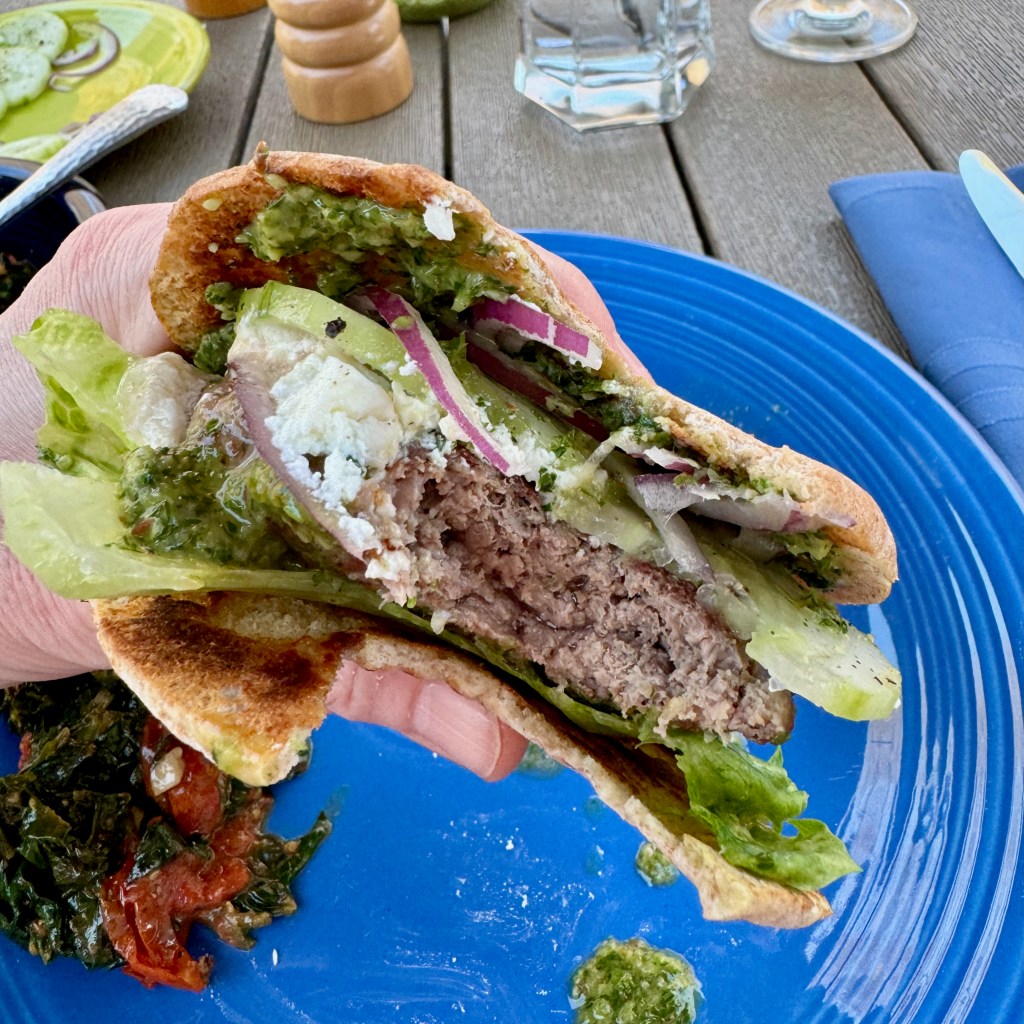
My husband, Les, does love his time at the grill, and Father’s Day weekend is just the beginning of many great meals to come this summer. Les had a major hand in making these delectable lamb burgers. He prepped the patties and he scouted out ideas for topping the burgers with salty feta and a few simple, refreshing cucumber and red onion slices— a perfect contrast to the richness of the lamb meat. And, of course, he cooked them. Over a flame! My role in this tasty meal kicked in closer to serving time (you’ll see), and we served the burgers with a side of collard greens with tomatoes.

This meal is even better when eaten outside!

Les and I approach burgers a bit differently; whereas I like to season only the outside of the burger with salt and pepper just before cooking (and with minimal working of the meat), Les prefers to add seasoning right into the meat before shaping the patties. Either method yields delicious results, and for these tasty handhelds, Les relied on the same ingredients that flavor our homemade gyro meat.

These spices make an excellent blend for all things lamb.

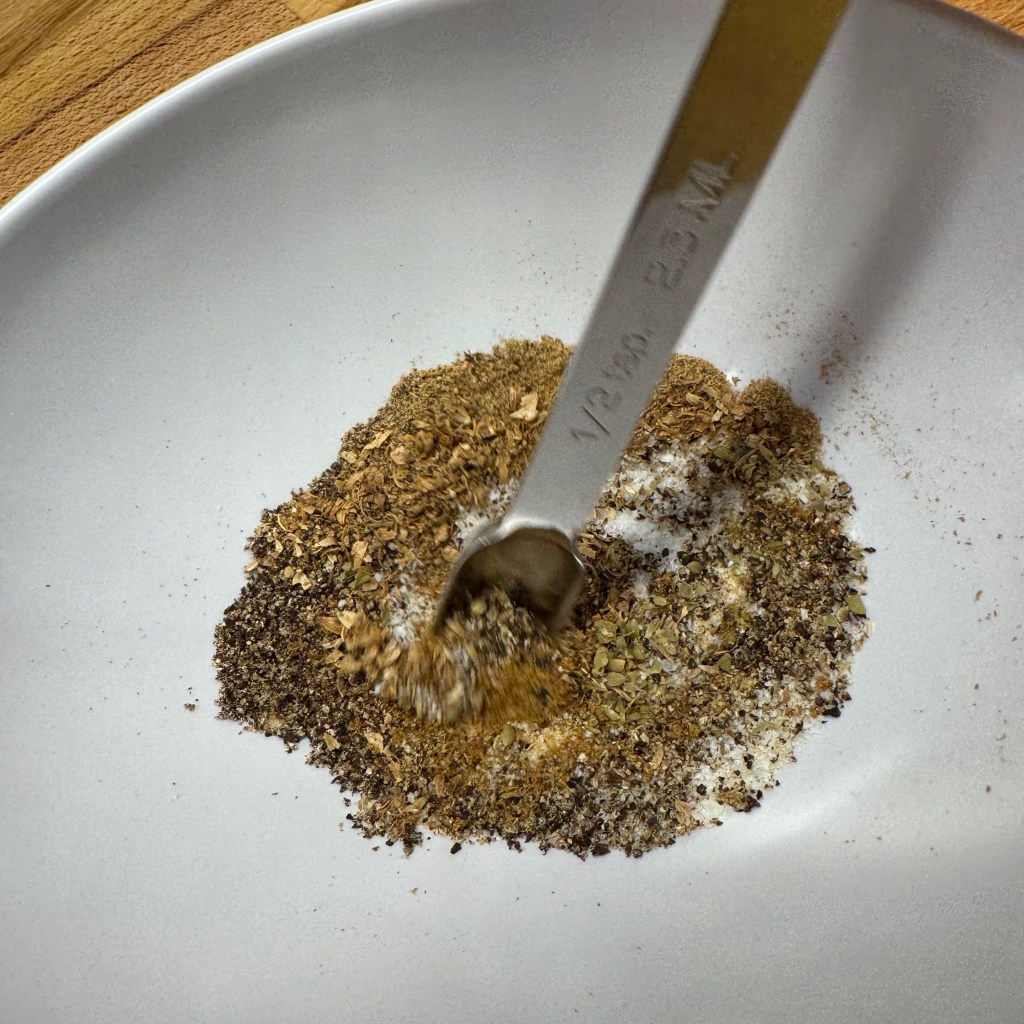
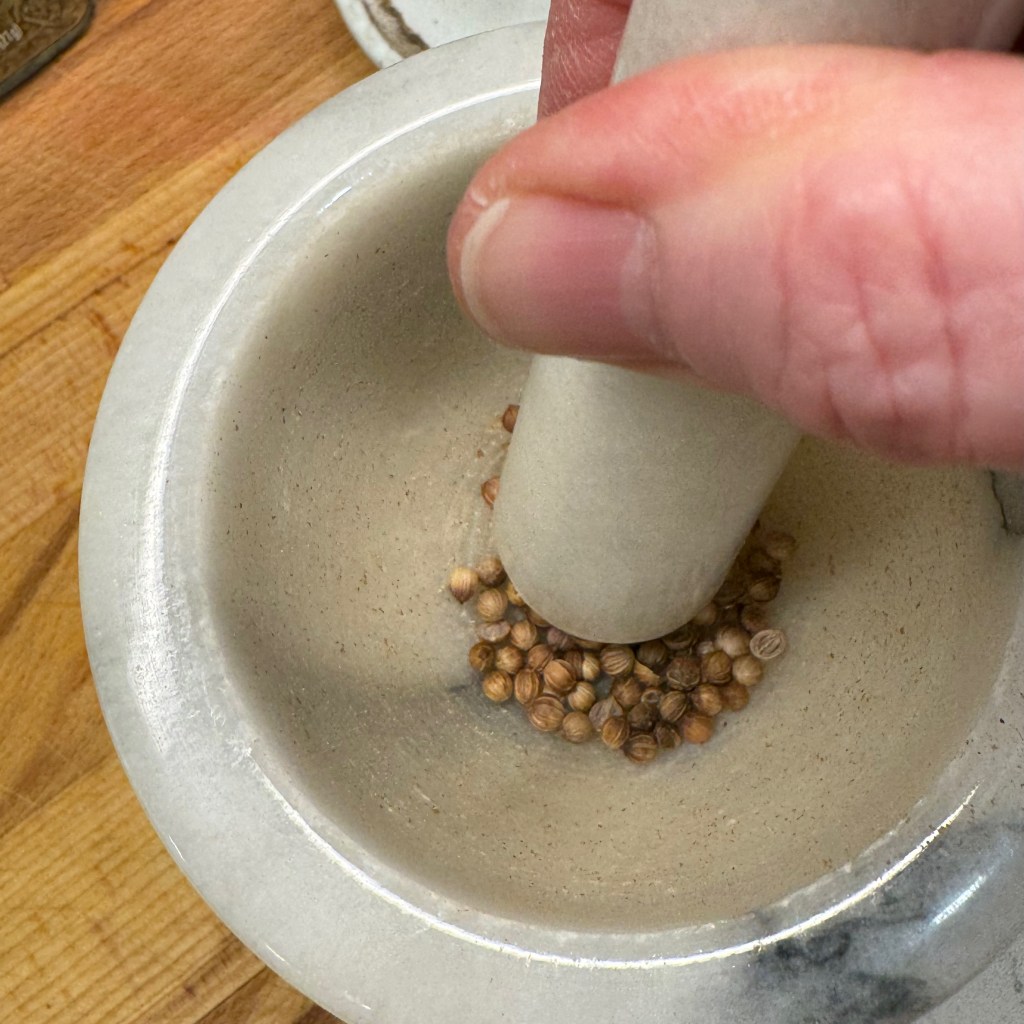
This blend of warm spices and earthy oregano is excellent in gyros, as well as on roasted leg of lamb or grilled lamb chops, so we knew it would be delicious for lamb burgers. The first order of business was crushing the whole coriander seeds in a mortar and pestle, and then we mixed the rest of the spices. The blend included kosher salt, so Les waited until closer to grilling time to add it to the meat. The alternative— seasoning and then resting the meat for a period of time, either in or out of the fridge— would result in a bouncy texture similar to sausage. 

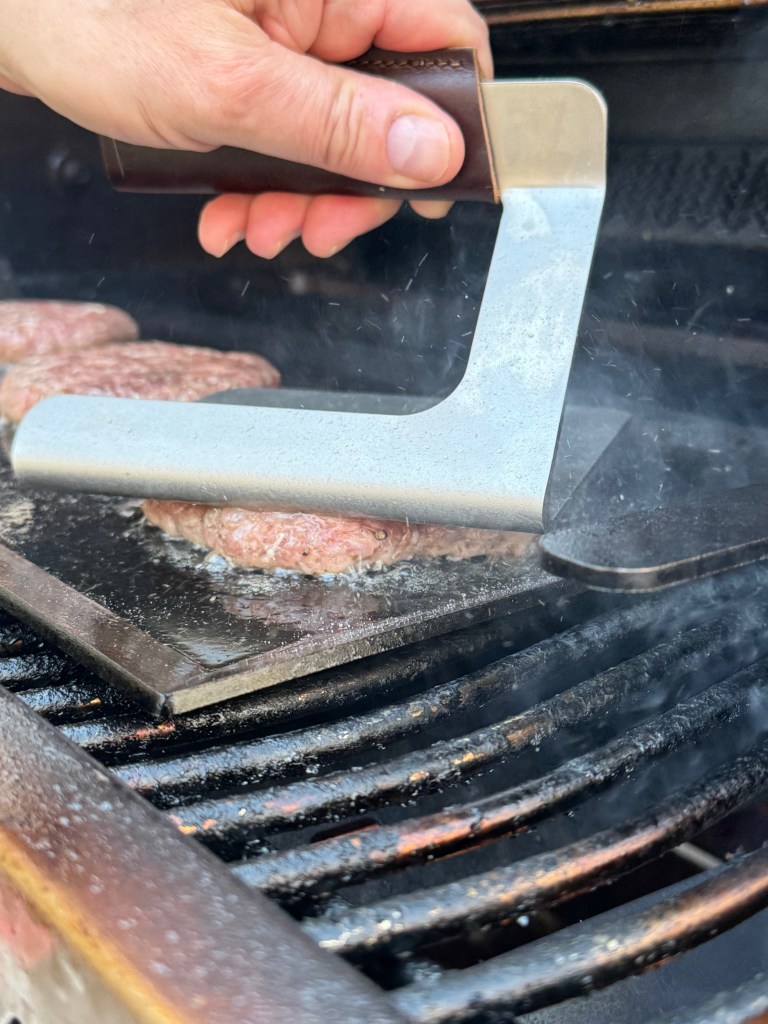
Now, we don’t have any photos of Les prepping the burger patties themselves because, well, he isn’t a food blogger and he tends to get so focused in his work that he forgets to document it for posterity. That, and he also had both hands stuck in raw meat while I was on a last-minute grocery run, so there was no one around to snap a shot. This food blogger will trust that you can easily imagine what it looks like to mix a dry seasoning blend into a pound of ground lamb. Take care that you don’t do it too early ahead of cooking. As for the grilling—yes! We have photos, and I’m happy to share that Les has been enjoying the Made In griddle and burger press that I got him last year for his birthday. They’re not paying me to tell you about it, but I included a link in case you want to learn more. So far, Les loves it and says this will be the summer to make breakfast outdoors!

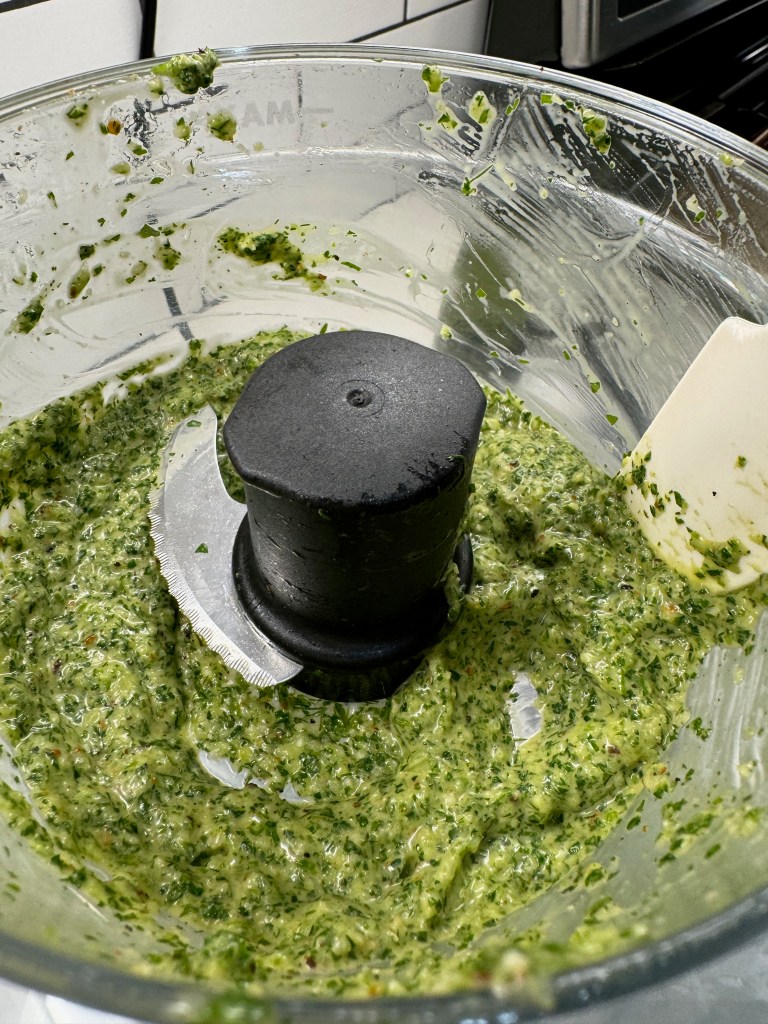
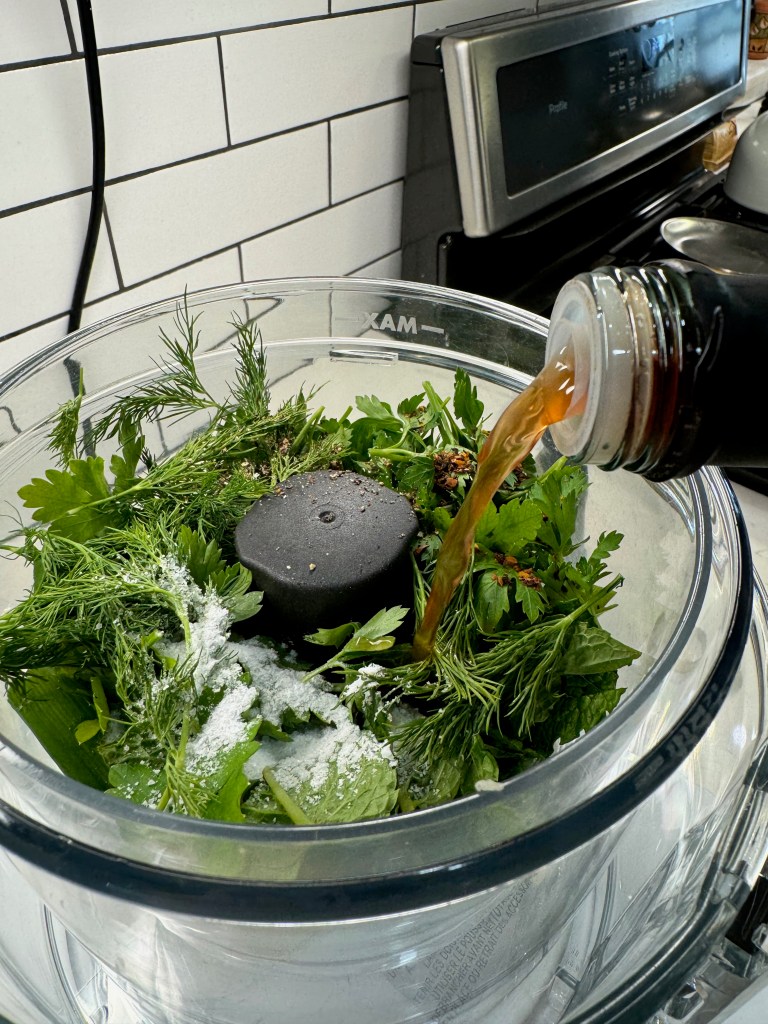
As for my role in this batch of burgers, I made myself responsible for the toppings, including a zesty chimichurri-style sauce that included fresh parsley, dill, mint and garlic. Mmmm.

A little freshness is exactly what these lamb burgers need.

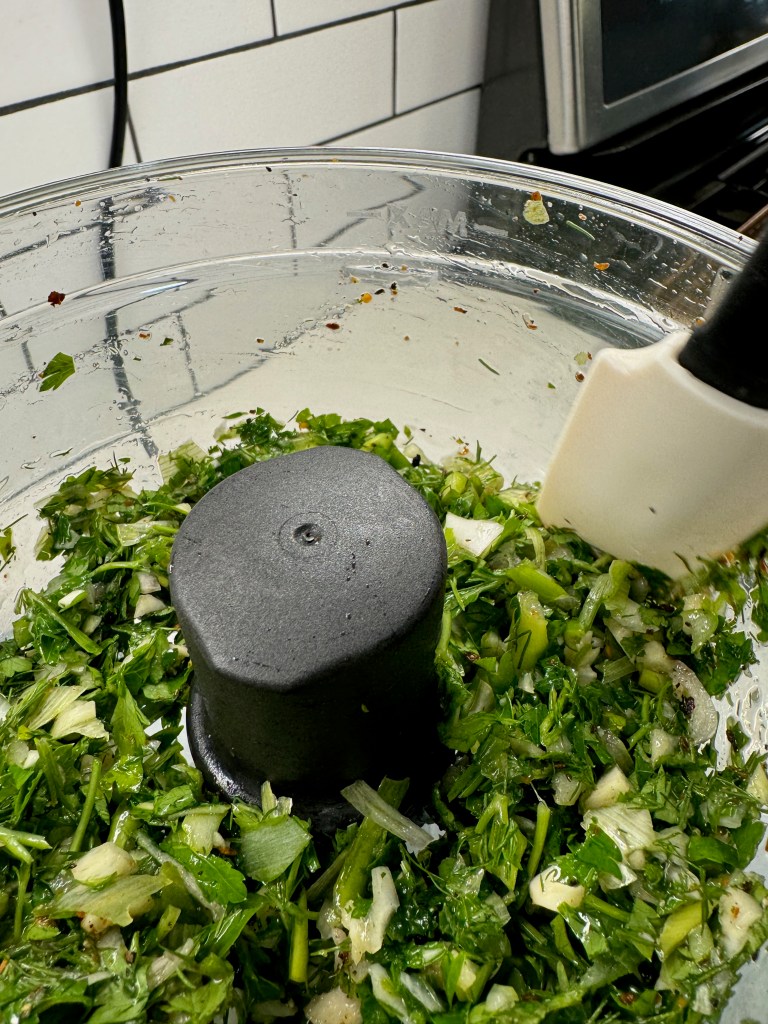
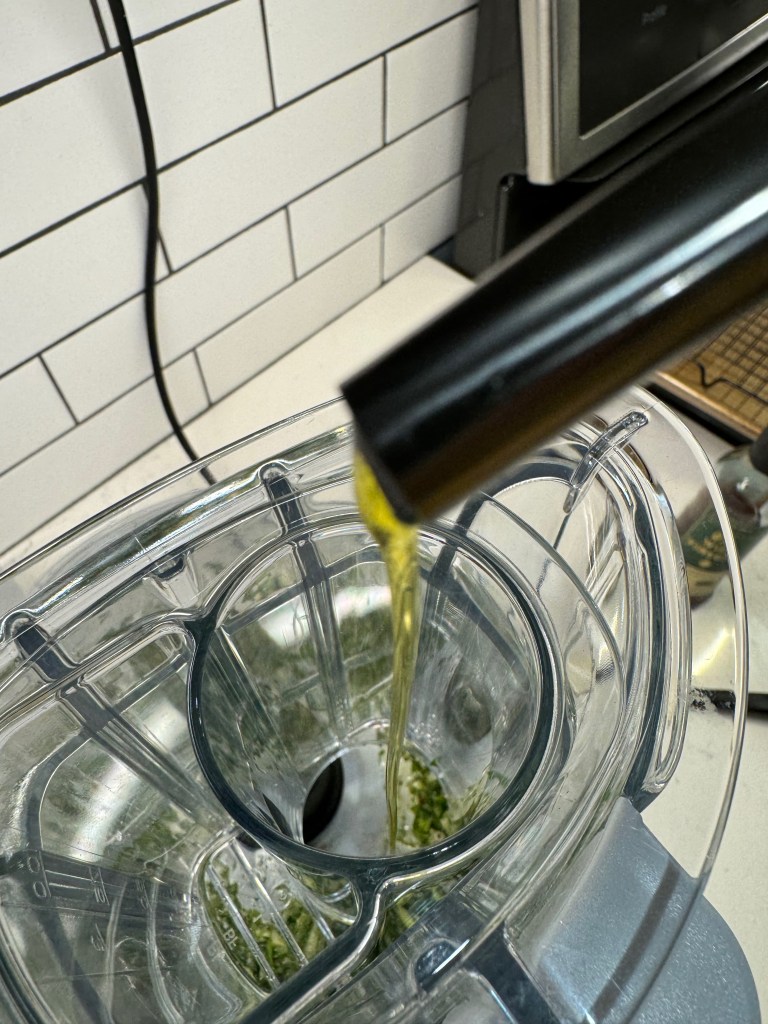
We’ve been trying hard to lean healthier with our meals, and the usual slathering of ingredients like bacon, bbq sauce and mayonnaise have taken a backseat to fresher, lighter treatments. This herby topping comes together in record time in the small bowl of my food processor. Red wine vinegar and a few shakes of a Turkish red pepper blend give it a zippy flavor, and olive oil helps keep it together while adding healthy Omega-3 fats to the mix.
We’ve discovered a few other tricks to help us stay on track with our healthier eating goals. One of them is to reduce (but not eliminate) the empty carbs that come with bread. There’s nothing wrong with bread, in moderation, and I’ll never ever give it up. But in general, we’ve been eating less of it, and for these burgers, I picked up some miniature whole wheat pitas to stand in for the usual burger buns. They are thin, yet substantial enough, to hold these hearty burgers with all their delicious toppings. The pita also lent another layer to the Mediterranean vibe we already had with the spices and herb sauce. Can’t ya just taste it?
Happy Father’s Day!

Now, please excuse me while I ponder what I’d like Les to get busy grilling on Father’s Day. Hey, maybe breakfast! 😉


Grilled Lamb Burgers with Chimichurri

  • Servings: 3 or 4
  • Difficulty: Easy
  • Print

Bold flavors and fresh toppings made these grilled lamb burgers unforgettably delicious!


Ingredients

  • 1/2 tsp. cumin
  • 1/2 tsp. ground coriander (best to crush whole seeds, if possible)
  • 1/4 tsp. dried Mediterranean oregano leaves
  • 1/4 tsp. ground cardamom
  • 1/4 tsp. garlic powder
  • 3/4 tsp. kosher salt
  • 1/2 tsp. freshly ground black pepper
  • 1 pound ground lamb, local if possible
  • Chimichurri for serving (recipe below)
  • Whole wheat mini pita breads, split, buttered and toasted inside for serving
  • Thinly sliced red onion and cucumber, for serving
  • Romaine or leaf lettuce, for serving
  • 3 Tbsp. crumbled feta, for serving

Directions

  1. In a small bowl, combine all dry spices and set aside.
  2. Shortly before grilling, mix spice blend evenly into ground lamb. Shape into 3 or 4 patties, as desired.
  3. Heat grill, griddle or cast iron skillet to just above medium heat. Cook burgers about two and a half minutes per side, to desired doneness. Remove from grill or griddle and rest one minute before serving.

Note: The chimichurri-style sauce brings a bright, fresh note to the earthy flavor of the lamb. Use whatever soft-leaf herbs you like, and be generous with the garlic!

Ingredients

  • 2 or 3 scallions (green and white parts), rough-chopped
  • 2 or 3 fresh garlic cloves, rough-chopped
  • Large handful of fresh herbs (to complement the lamb, I chose flat parsley, mint and dill)
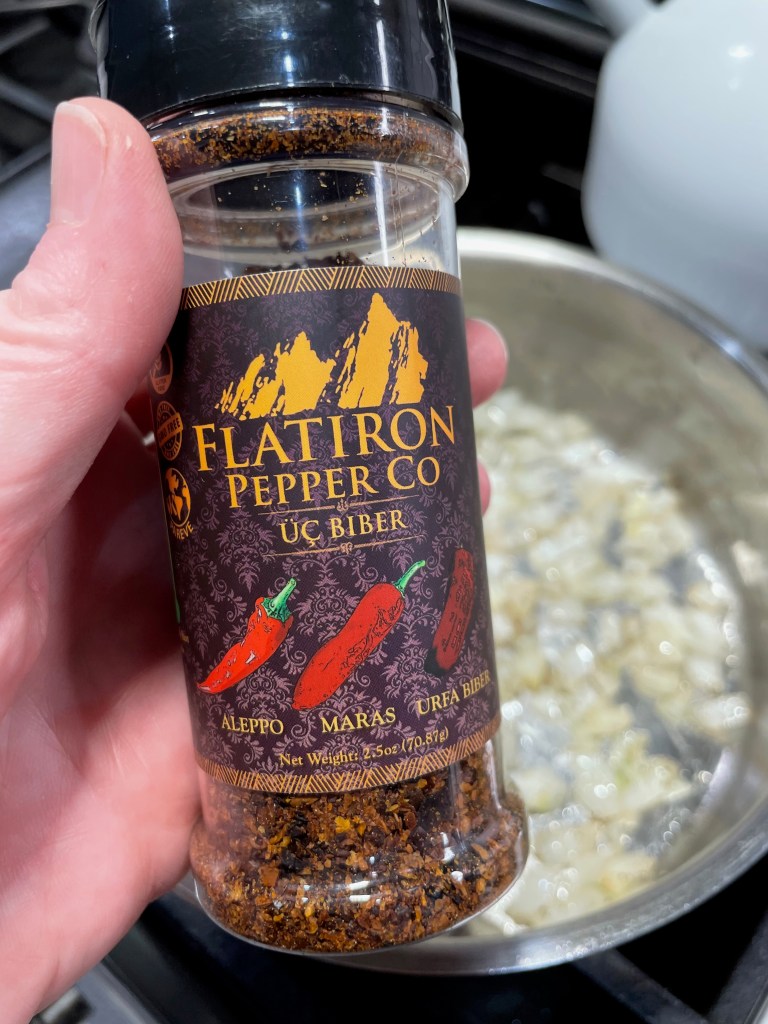
  • A few shakes crushed red pepper (I used Flatiron Uç Biber, a Turkish blend of Aleppo, Maras and Urfa peppers)
  • About 1/2 tsp. kosher salt
  • Several twists freshly ground black pepper
  • About a Tablespoon red wine vinegar
  • 2 to 3 Tablespoons extra virgin olive oil (choose a peppery one with lots of polyphenols)

Directions

  1. Combine all ingredients except olive oil in the small bowl of a food process. Pulse a few times to break down the large pieces of onion and garlic. Scrape down the bowl.
  2. Add a quick drizzle of the olive oil to the mixture and pulse a few more times, until mixture seems evenly blended. Turn processor on continuous blend and drizzle remaining oil through the chute as it blends. This should happen fairly quickly. Adjust seasonings to taste.
  3. Store any leftover chimichurri in a covered dish in the fridge. It adds a lovely zhuzh to fried eggs or vegetables, or mix it with mayonnaise for a fantastic sandwich spread.
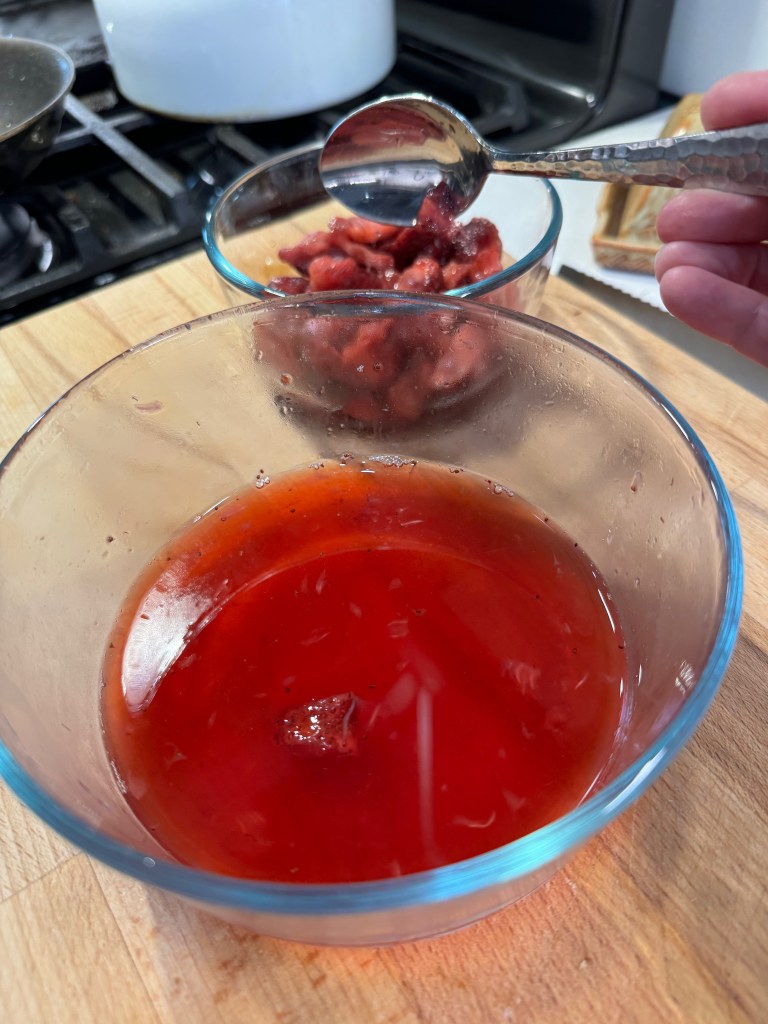
Strawberry Syrup for Summer Cocktails

Memorial Day is behind us, and you know what that means! Summer!

I don’t know about you, but when summer finally hits, I intend to enjoy it for all its sweetness. I can hardly wait for serious grilling and smoking, time outdoors with friends on our newly redesigned patio, romping in the backyard with our sweet, new dog and—you know me— tasty summer cocktails!

My passion for great drinks at home was born at the start of Covid, when we desperately needed something fun to take the sting out of being stuck at home, and since then, I’ve learned a great deal about how to make a drink fun, special and seasonal. The good thing is, it doesn’t have to be complicated and I’m here to prove that today.

There is a lot to love about this strawberry syrup. For starters, it’s simple to make— from only fresh berries and real cane sugar— and it works with a variety of spirits for cocktails. It tastes like summer, you can make it ahead and stash it in the fridge, and because you make your own, you get to choose the level of sweetness. Another thing that’s great is that your berries don’t even have to be pretty. They can be lopsided, bruised, scarred or ripe on only one side. You’re only after the juice, so nothing goes to waste here. Have I sold you yet? 

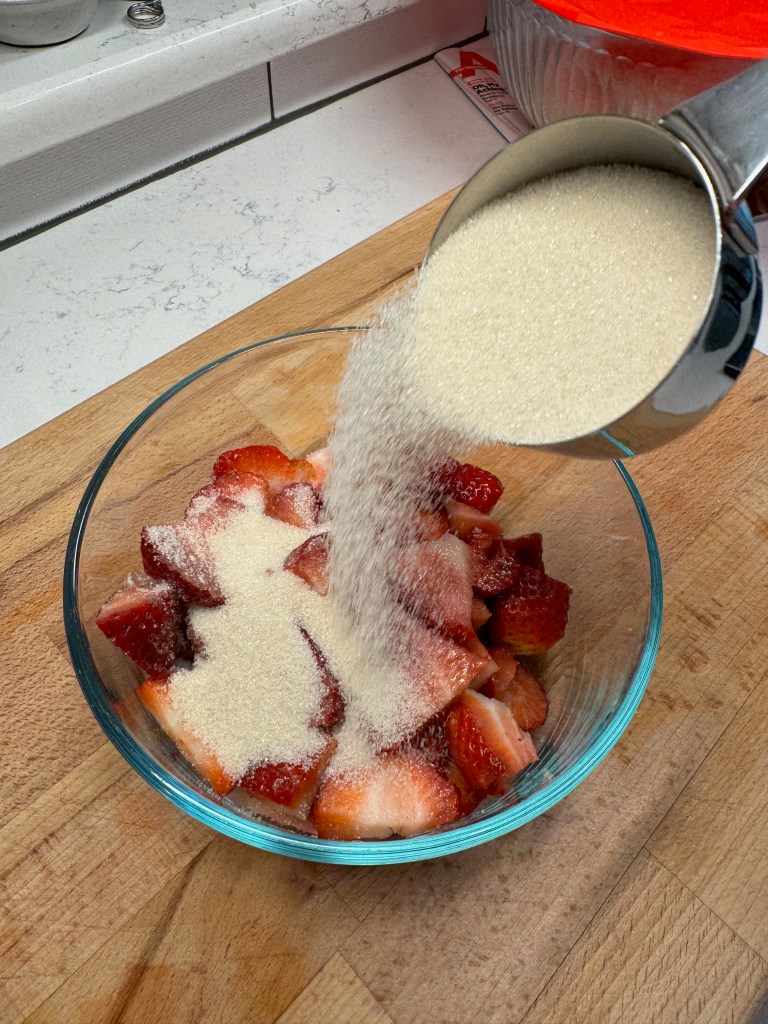
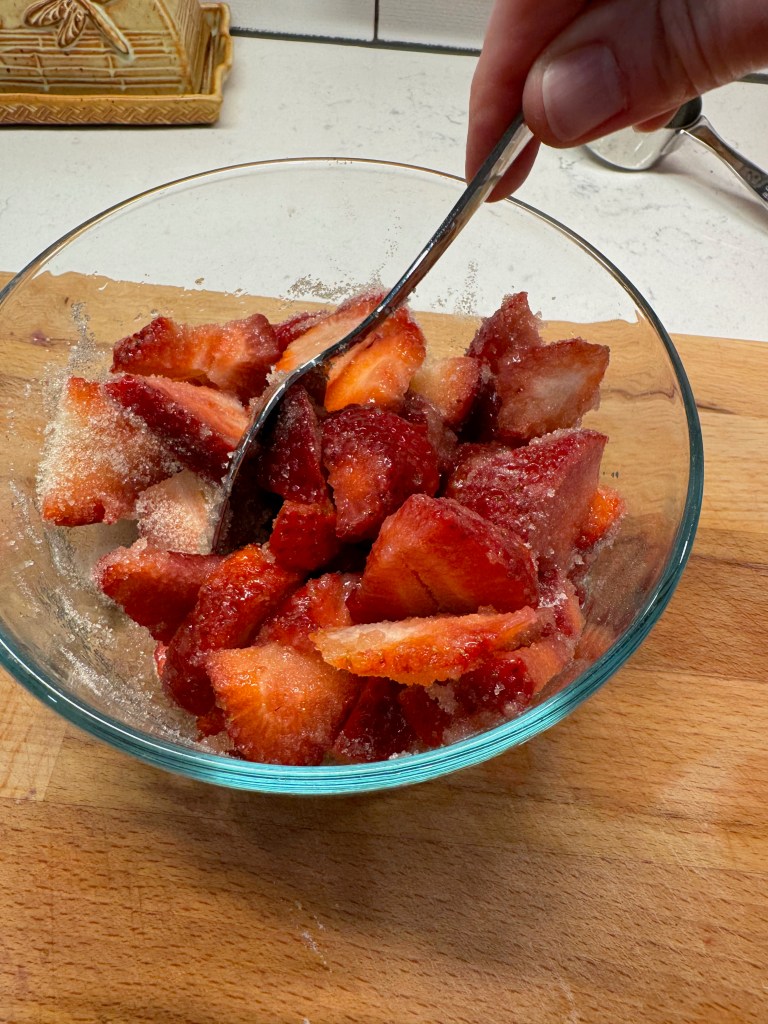
I made this syrup the same way I begin strawberry shortcake, by cutting up a pound of ripe, fresh organic berries and macerating them in real sugar— but in this case, a lot more sugar than for shortcake, about half a cup. The sugar coaxes the berries to release their juices, and I wanted a lot of juice. The object is for this syrup to be sweet and intense.


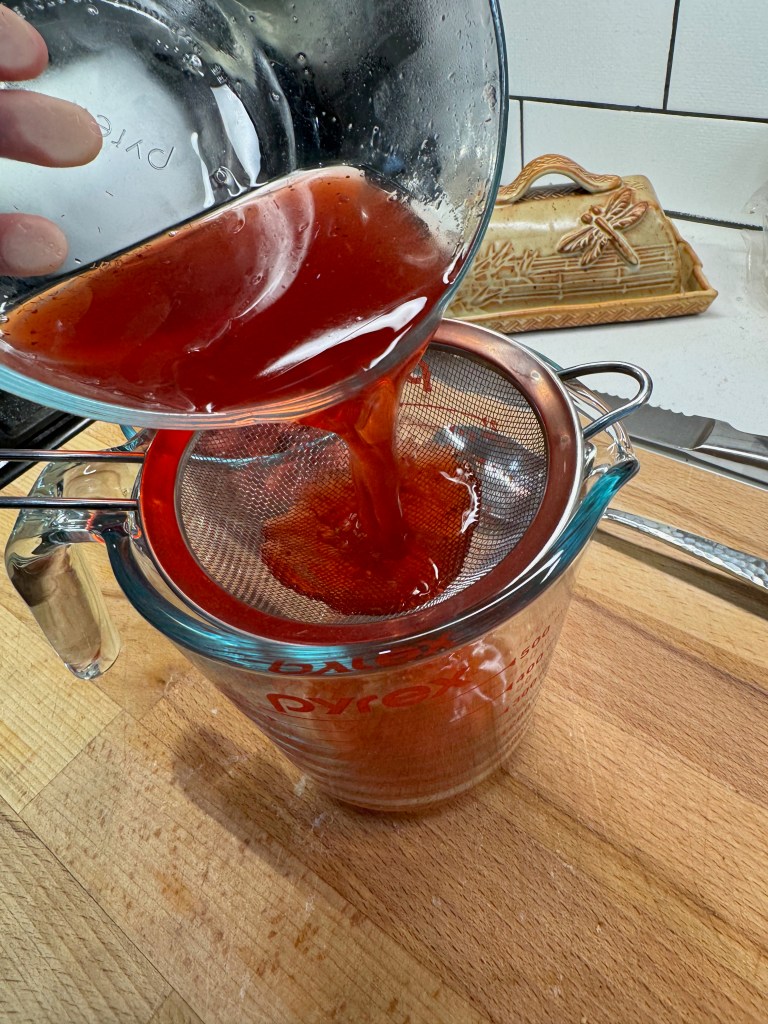
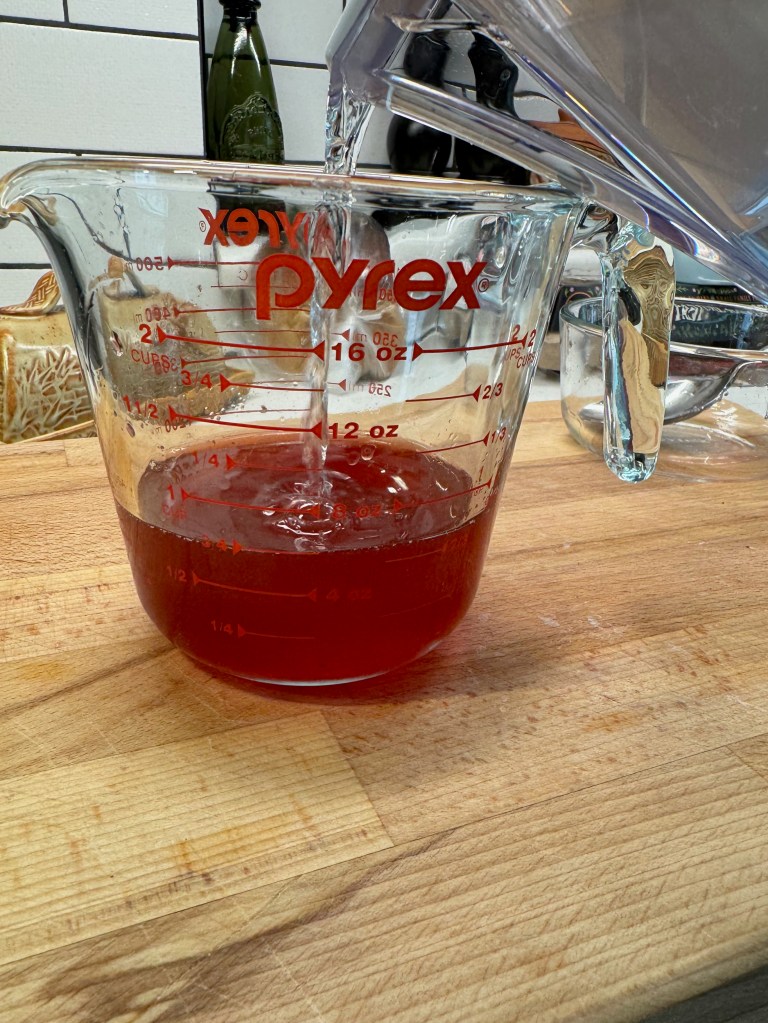
After two days of macerating— which is just a fancy word for soaking in liquid— the berries had given off a lot of juice, and they were ready to be strained. I used a slotted spoon to pull out the  larger bits of berry, and then poured the syrup through a fine mesh strainer to filter out the small bits and seeds. I had a little better than 3/4 cup, so I added enough water to fill my one cup bottle and also to thin it out a little bit.


When you try this, you’ll notice that the strained-out berries will lose a great deal of their color and flavor, but they’re still perfectly edible. Add them to your morning cereal or a scoop of ice cream, if desired. As for the syrup, I used a funnel to transfer it to my sealable bottle, and then tucked it into the refrigerator, ready to go for summer cocktails! 

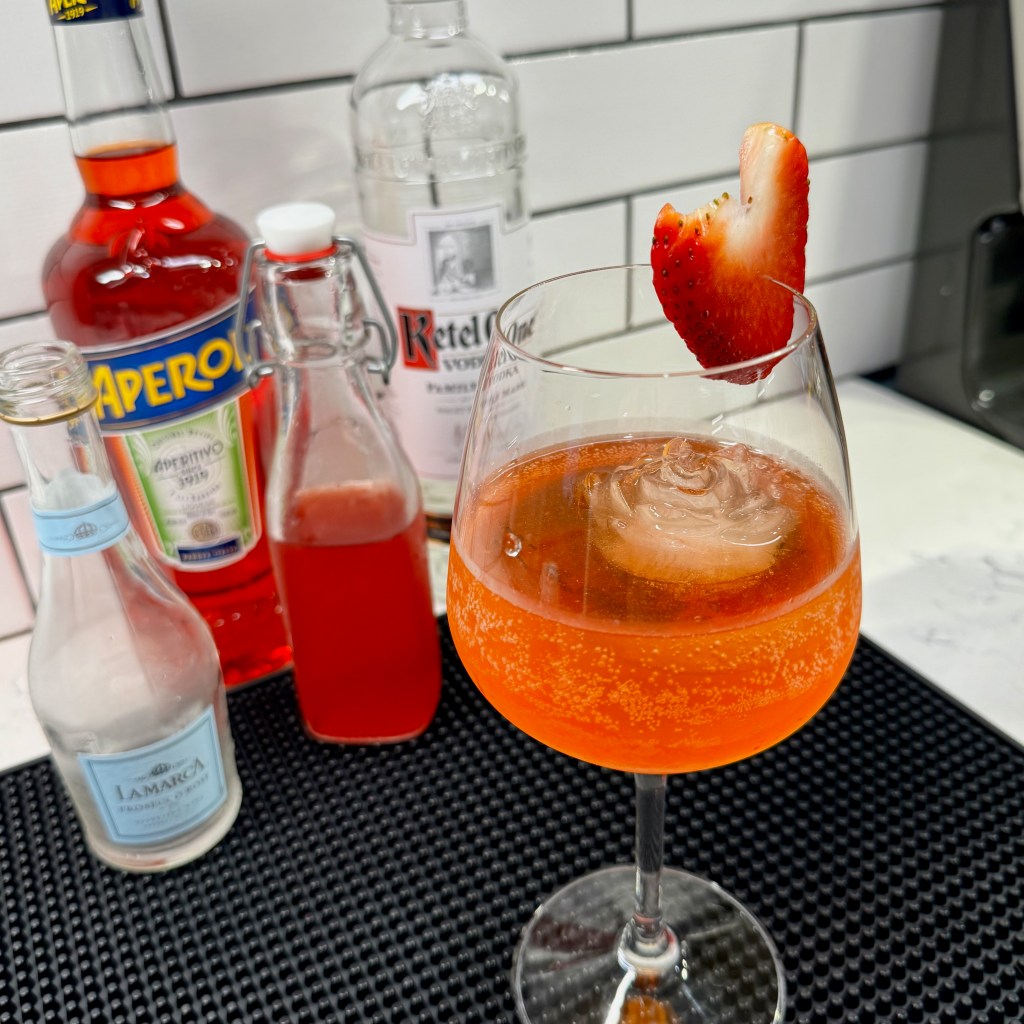
What kind of cocktails, you ask? Well, pick your poison because this strawberry syrup is very versatile— just right for jazzing up a classic Aperol spritz, a bourbon old-fashioned, a mezcal margarita and even a cool glass of lemonade. Think of it as a summery zhuzh for your cocktail repertoire!


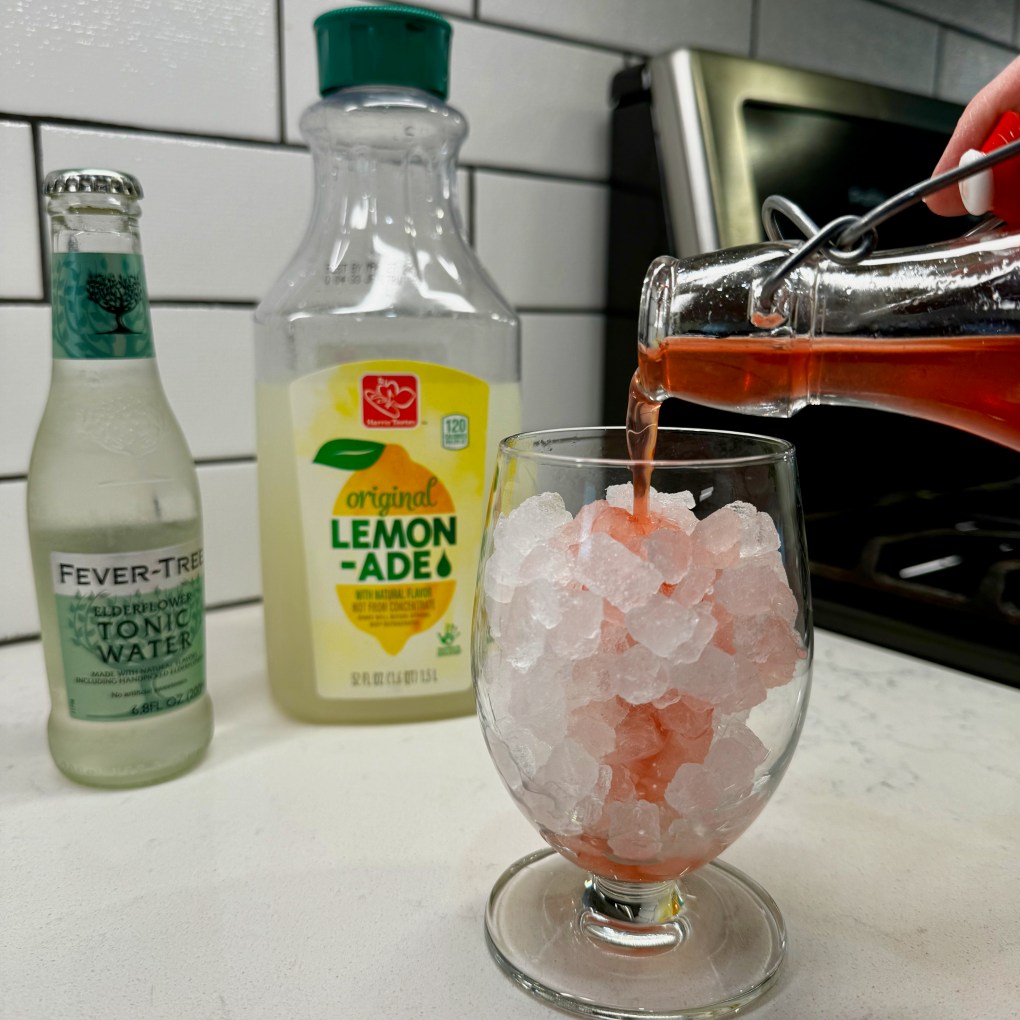
To get the party started, I’ll share a quick, alcohol-free recipe that I’m calling “Respect Your Elderflowers,” made with strawberry syrup and fresh lemonade and topped off with elderflower-flavored tonic. Recipe for this simple summer refresher is listed at the end of the click-to-print recipe card.


Strawberry Syrup for Summer Cocktails

  • Servings: Enough for about 10 cocktails
  • Difficulty: So easy!
  • Print

This gorgeous syrup is very easy to make, with only ripe berries and cane sugar, and it will put a summer spin on all varieties of cocktails!


Ingredients

  • 1 pound fresh organic strawberries, cleaned and cut into bits
  • 1/2 cup organic cane sugar

It’s best to use organic strawberries whenever possible, as these delicate berries are frequently at the top of Environmental Working Group’s “Dirty Dozen.” The sugar I use is organic (and vegan, without use of bone char for filtering), but regular white or even caster sugar would work well here.

Directions

  1. Add berries and sugar to a medium bowl and stir until sugar evenly coats all the berries. Cover and refrigerate for 36 to 48 hours, stirring a couple of times in between.
  2. Strain mixture through a mesh strainer, pressing on the berries with the back of a large spoon to extract as much juice as possible. Add the berries to cereal or use as topping for ice cream if desired.
  3. Filter remaining juice again through a fine mesh strainer to remove seeds. You should have about 3/4 cup of syrup. If syrup is very thick or sweeter than you’d like, add enough cold filtered water to make it one cup. Transfer syrup to a clean, sealable bottle or other glass container and refrigerate for up to two weeks. Give it a shake just before using.

Respect Your Elderflowers

  • Servings: One mocktail
  • Difficulty: Easy!
  • Print

This is a simple but sophisticated non-alcoholic drink, a great refresher for summer and super easy with my strawberry syrup.


Ingredients

  • 2 Tablespoons strawberry syrup (above)
  • 3 oz. freshly squeezed lemonade (homemade or store-bought, not from concentrate)
  • 2 oz. Fever Tree elderflower tonic

Directions

  1. Pour strawberry syrup over pellet ice or crushed ice. Add lemonade and stir gently to mix. Top with elderflower tonic for a refreshing, booze-free beverage.
  2. Garnish with mint, strawberry, lemon slice or all three!


Pink Sauce for Seafood Pasta

I’ve been taking a lot of shortcuts recently. Life has been extra busy, and I notice that my grocery runs are more to the corner store with scant selection than across town where I can knock out more of my list. Lately, in fact, I haven’t even had a list. Only the corners of the kitchen counters are clean, as I’ve merely shuffled clutter around to reach what I need in the moment. I’ve been in such a hurry that I even yank my sneakers off while they’re still tied— a move that, naturally, costs me extra time later. 

Why am I in such a rush, you wonder? Well, her!

Welcome home, sweet girl! 🥰

After 14 months without a dog in the house, my husband and I have adopted this beautiful creature as the newest member of our family, and it has been nothing short of ruckus (in a good way)! Gone are the days of sleeping in on weekends, relaxing after dinner and peacefully lounging on the sofa with our gentle cats. What we’ve had lately can better be described as chaos, and we are adjusting to the new dynamic of having an energetic, 10-month-old rescue pup in the mix. And oh my goodness, do we love her!

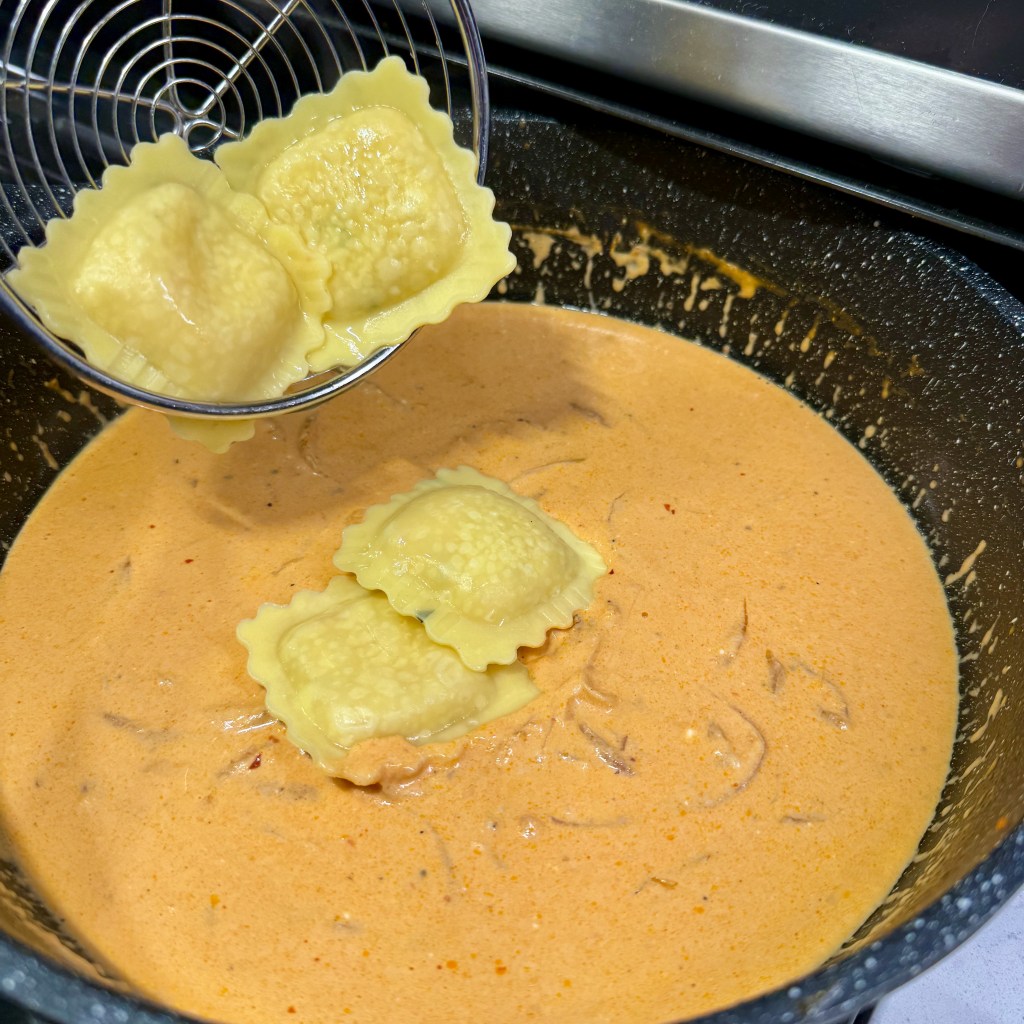
I’ll share more soon about this sweet girl, who answers to “Roxie,” but today I want to share about this pasta dish. I feel that I have “some ‘splaining to do” about why I purchased ready-made pasta rather than making it myself as I usually do. The reason is in the sauce! 


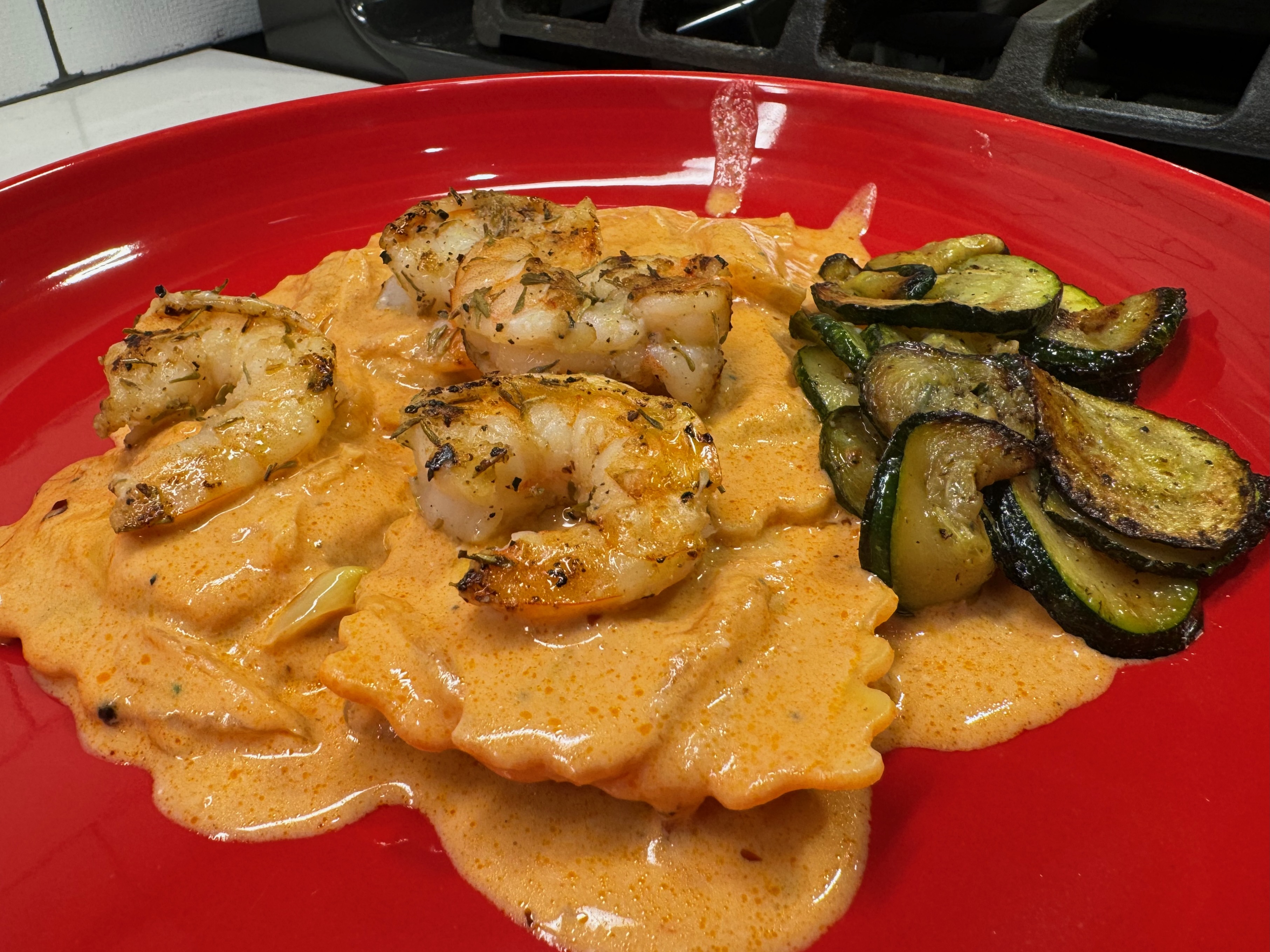
If there is one thing I’ve learned from my kitchen mistakes, it is that I should never take on too many new or complicated things at once. So when I spotted a twin pack of pre-made, fresh lobster ravioli during our last Costco run, I thought, “why not?” It gave me a head start on a meal that included a special sauce that I’ve wanted to try— a pink sauce for seafood pasta. I’ve had this type sauce in restaurants and loved it, but I knew that making handmade pasta at the same time would be overwhelming with everything else we have on our plate around here. So I focused on the sauce and conceded to taking a shortcut with the pasta.

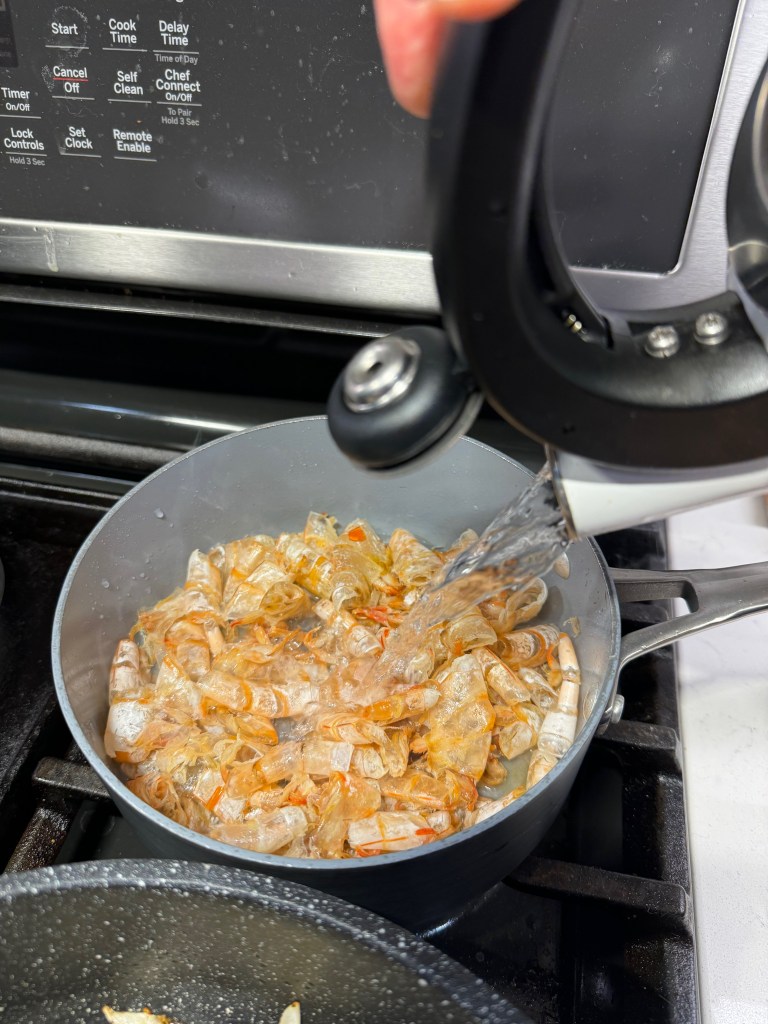
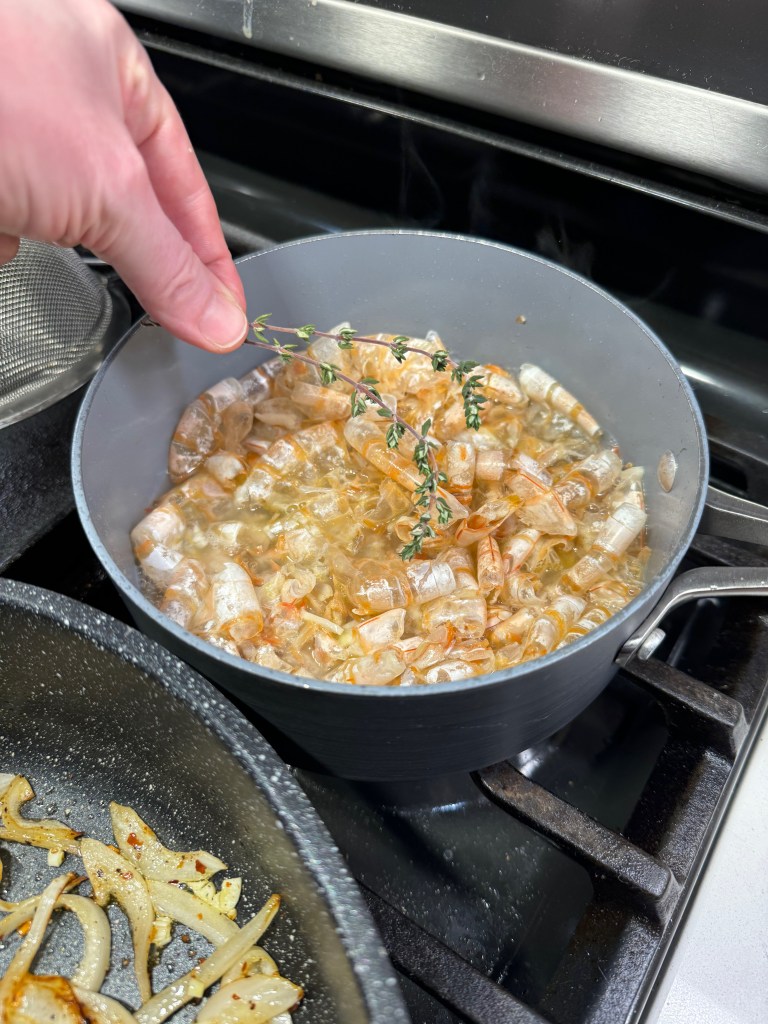
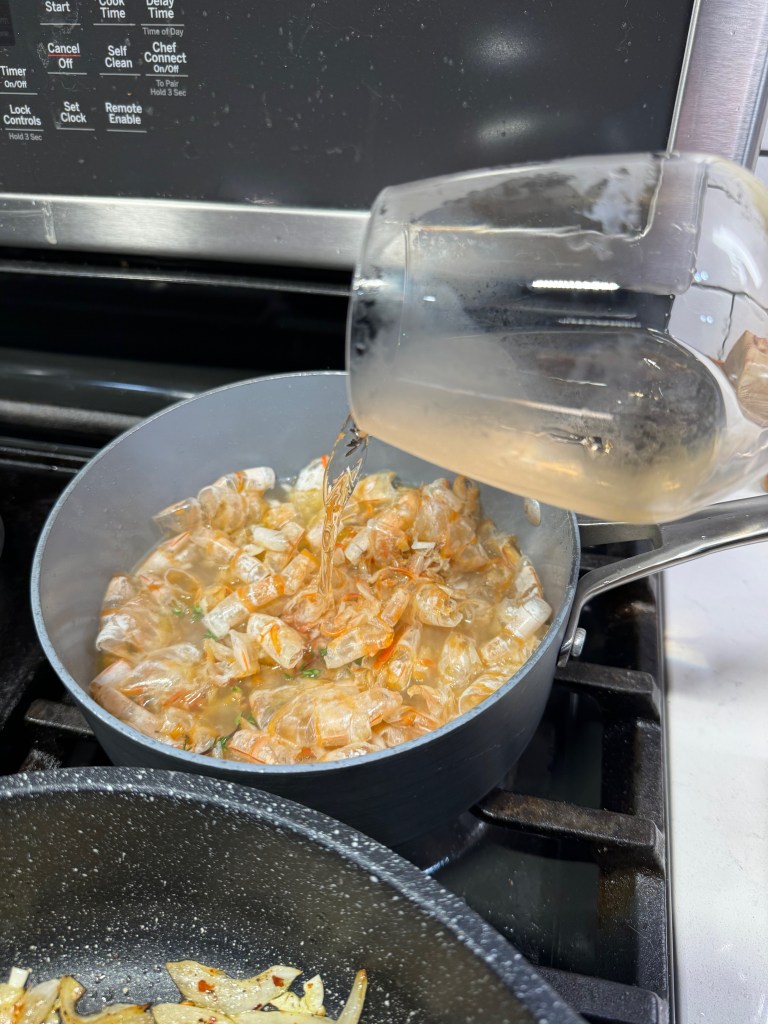
Now, before you get too excited about this lobster ravioli, or hit me up for the brand, let me assure you that it wasn’t great. We found the pasta itself to be on the bland side, and the filling was pasty with barely a hint of lobster flavor. Lesson learned. But this sauce? Oh, my my, was it delicious, and it turned out to be not complicated at all! I took my time developing the flavors, using up some shrimp shells I had stashed in the freezer to make a quick seafood stock with garlic, fresh thyme and a splash of dry rosé wine. 


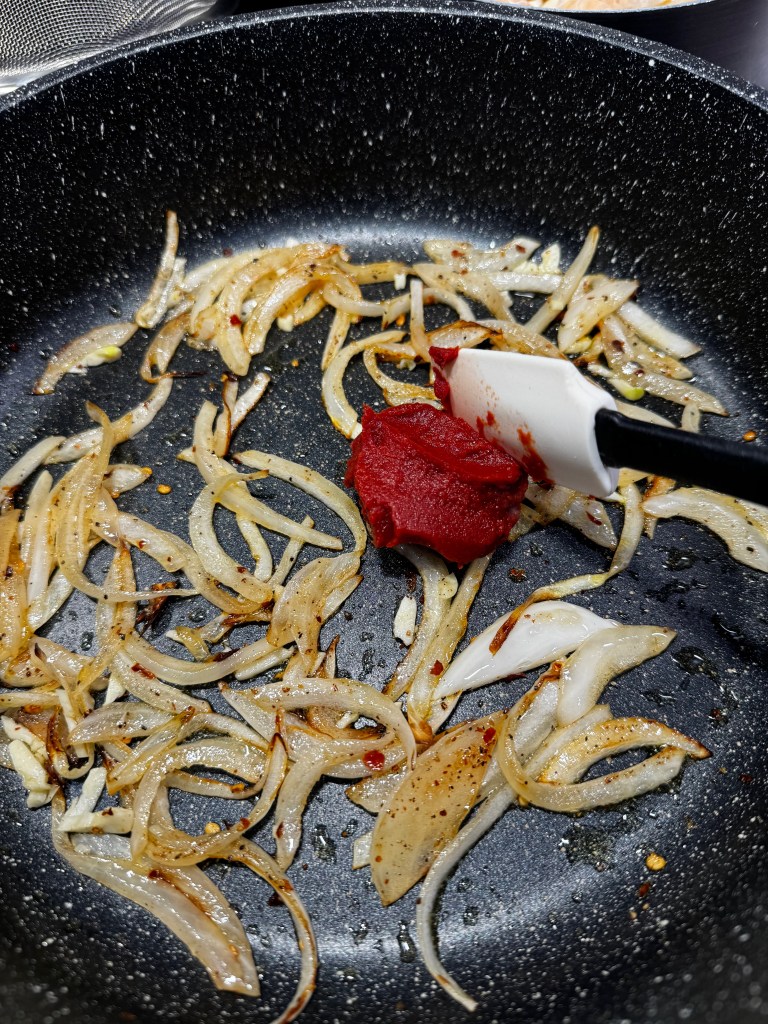
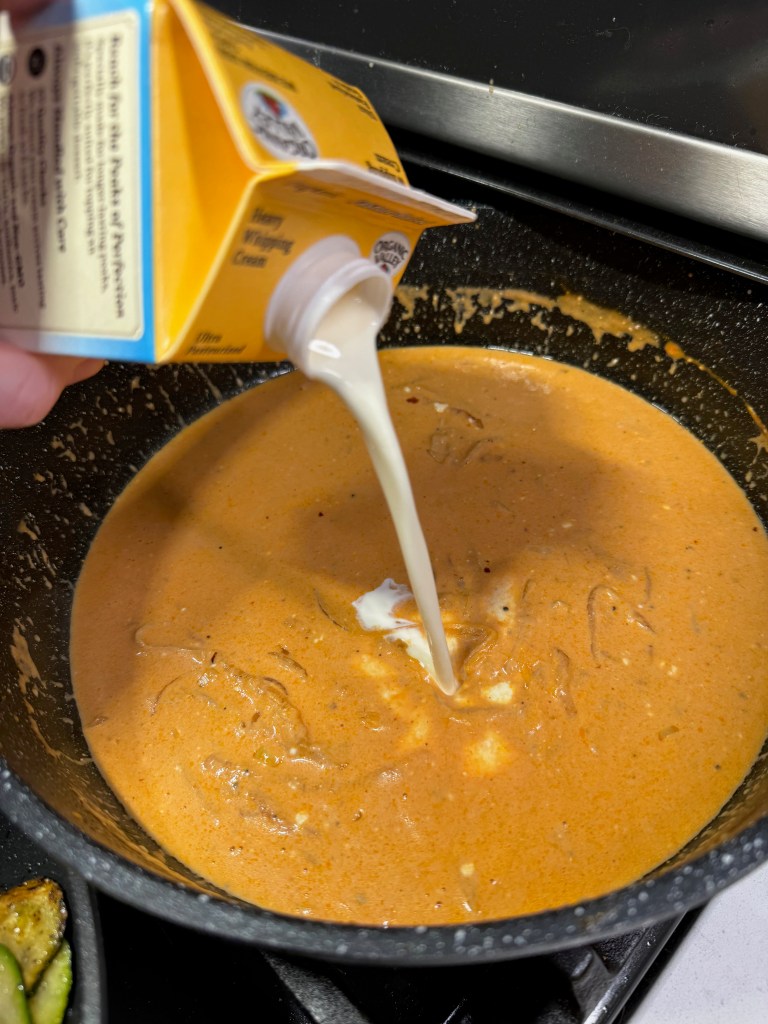
The sauce’s pink color comes from tomato paste, which I cooked in the olive oil remnants after sautéing sweet onions and garlic. I went easy on the heavy cream, subbing in cream cheese for a silky texture, and a quick stir-in of Parmesan gave it a salty rich finish. 


We topped the ravioli and pink sauce with some quick sautéed shrimp— a good move, given that the ravioli was skimpy on seafood flavor. This sauce was every bit as good as any I’ve ever had in a restaurant (Les licked up every bit with his thumb, which is always a good sign), and I look forward to making this again soon, with handmade lobster ravioli next time, obviously. Now, how many will be joining us for dinner?


Pink Sauce for Seafood Pasta

  • Servings: 4
  • Difficulty: Average
  • Print

Tomato paste and cream cheese give this sauce a pretty pink color, and a quick homemade shrimp stock adds a world of flavor!


Ingredients

  • 1 Tbsp. extra virgin olive oil
  • 1/2 sweet onion, sliced lengthwise
  • 1 clove garlic, chopped
  • Kosher salt and freshly ground black pepper
  • A quick shake or two red pepper flakes
  • 3 Tbsp. organic tomato paste
  • 1 1/2 cups shrimp stock (see below)
  • 4 oz. cream cheese or neufchâtel, at room temperature and cut into cubes
  • 1 or 2 Tablespoons heavy cream
  • 2 Tbsp. freshly grated Parm-Romano blend cheese

Directions

  1. Place a wide, shallow pot over medium heat. Add olive oil and sauté onions until softened. Add garlic and cook one more minute, taking care not to let the garlic burn. Add tomato paste and swirl it around the oiled pan a bit to release more flavor.
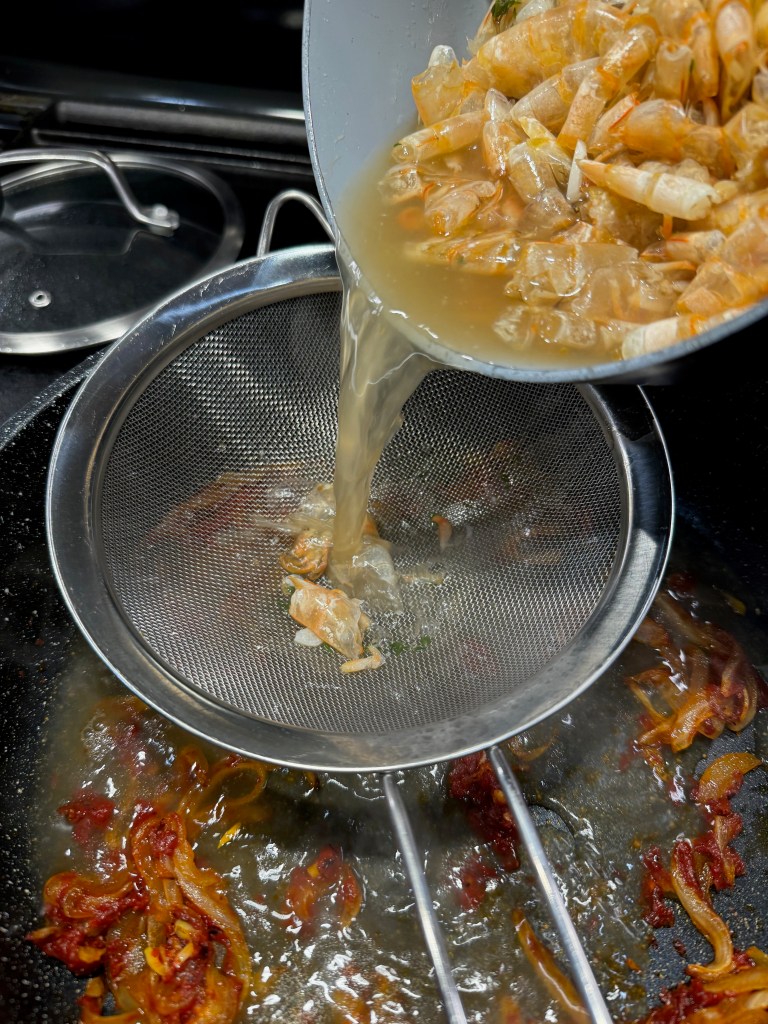
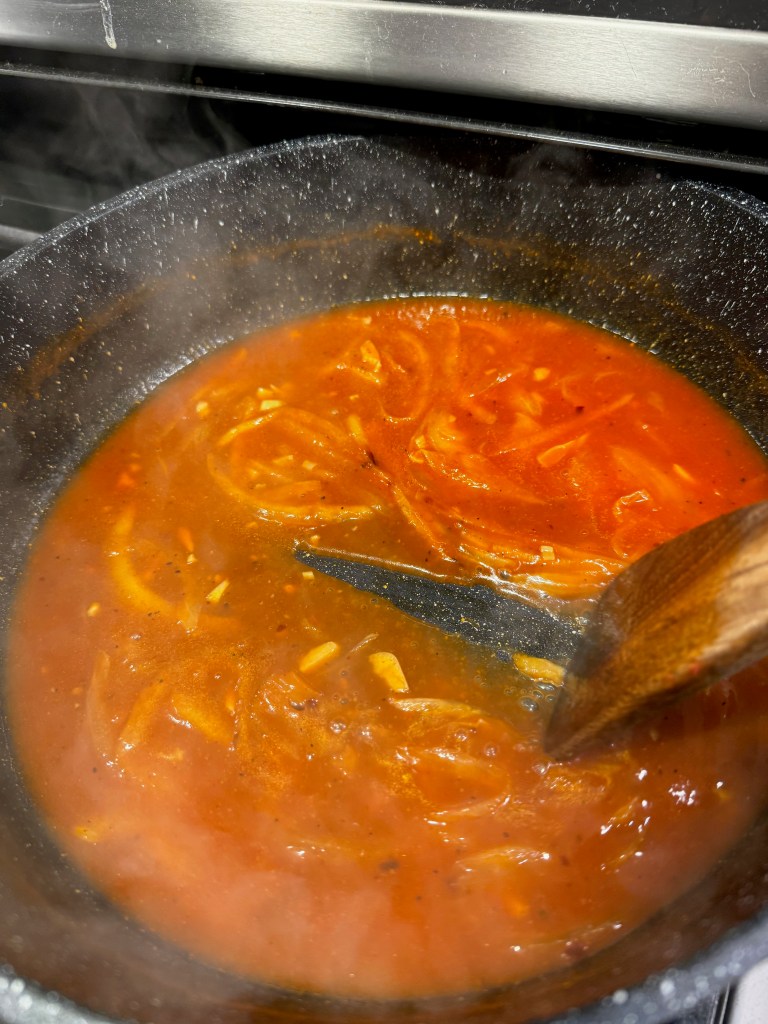
  2. Strain shrimp stock into the sauce pot, stirring to dissolve the thick tomato paste. Allow mixture to boil gently for a few minutes to blend flavors and thicken the sauce.
  3. Add cream cheese cubes, reduce heat to low and stir or whisk gently to melt the cream cheese into the sauce. When no visible bits of cream cheese remain, stir in heavy cream. Finally, stir in Parm-Romano cheese.
  4. Add al denté cooked pasta to the sauce and allow it to simmer at very low heat, just long enough for the sauce to cling to the pasta.

Note: Each time we cook shrimp, I stash the shells and tails in a zip-top freezer bag for future stock needs. If you don’t have shrimp shells, consider using a store-bought seafood stock. Stock can be made in advance and frozen in plastic containers for future use.

Ingredients

  • 1 Tbsp. extra virgin olive oil
  • Approximately 2 cups frozen shrimp shells
  • 1 clove garlic, chopped
  • 2 pinches salt and freshly ground black pepper
  • Water and/or low sodium vegetable broth to cover shells
  • Fresh thyme sprigs
  • 1/4 cup dry white or rosé wine

Directions

  1. Place a decent size sauce pan over medium heat. Add olive oil and heat until shimmering. Add shrimp shells and toss several times to cook.
  2. When shrimp shells are fully pink, add garlic and season with salt and pepper. Add just enough water or low-sodium vegetable broth to cover all the shells in the pan.
  3. Place thyme sprigs on top of shells and pour in wine. Cover, reduce heat and simmer for about 20 minutes.
  4. Pour through strainer and discard solids. Recipe makes about 1 1/2 cups stock.


Broccoli, Artichoke and Red Pepper Pizza

What’s your favorite veggie pizza?

While you ponder, I’ll explain how I answered the same question, posed by my high school bestie, Christine. She reached out a couple of weeks ago for ideas, as her daughter had a vegetarian friend coming to visit for a few days and she wanted to help her feel welcome. When you aren’t in the habit of making meatless meals (or if, like Christine, you have allergies to all the common plant-based proteins), the concept of meatless menu planning can feel daunting. I know that feeling well— it’s exactly how I feel about making desserts! 

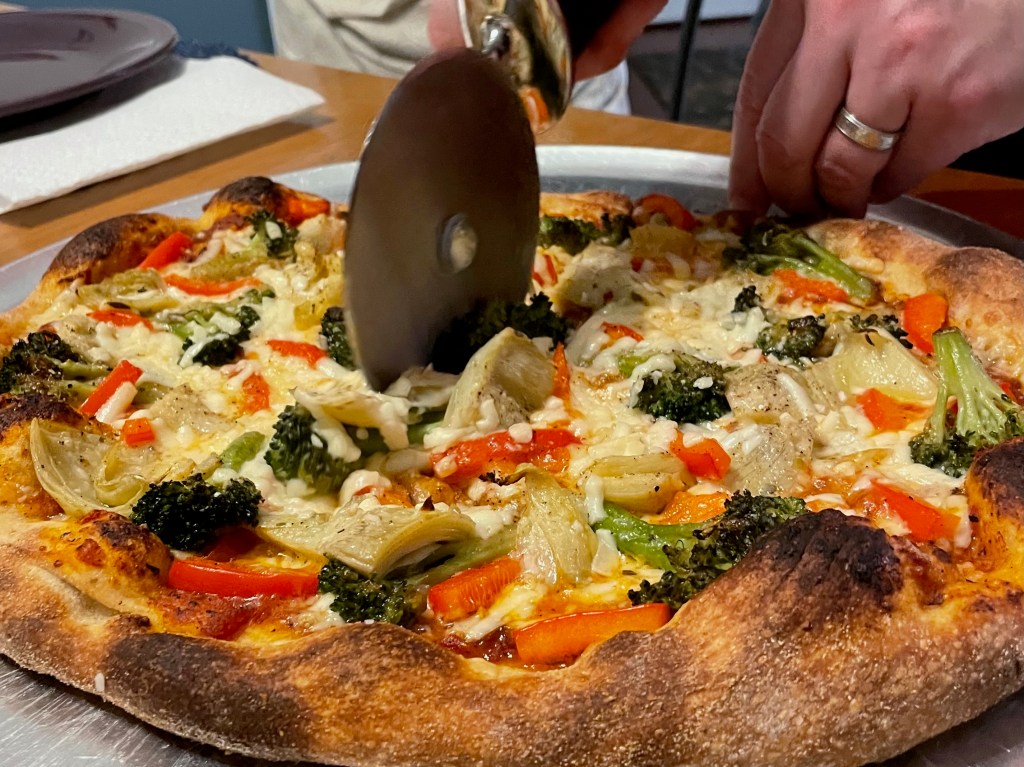
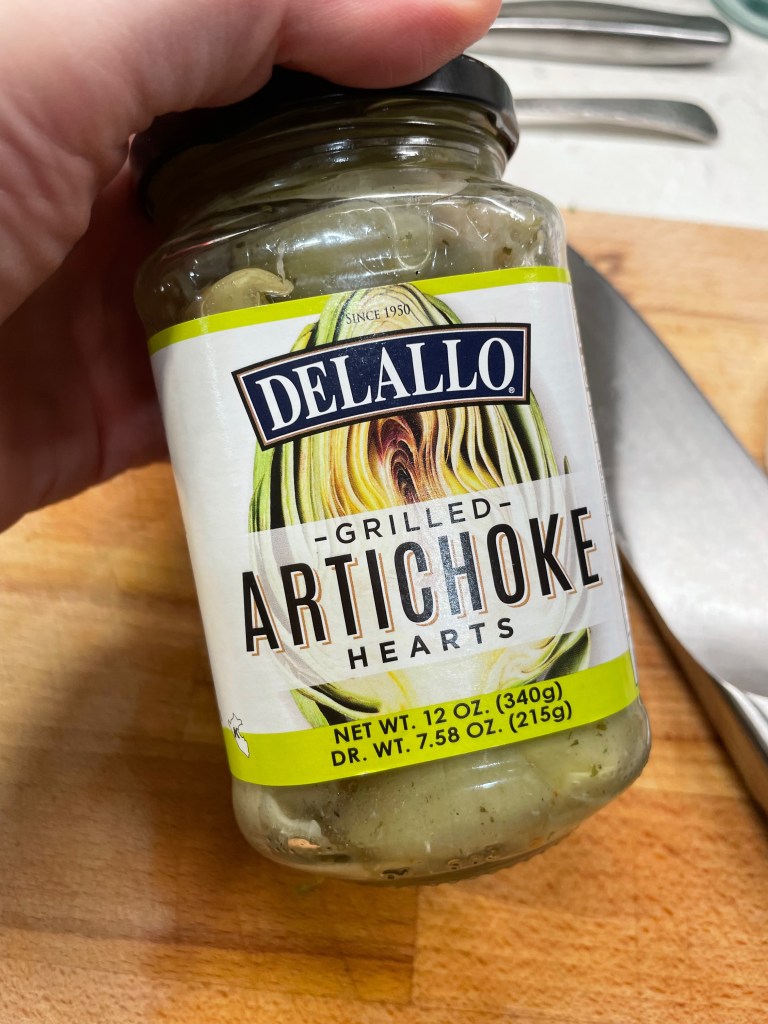
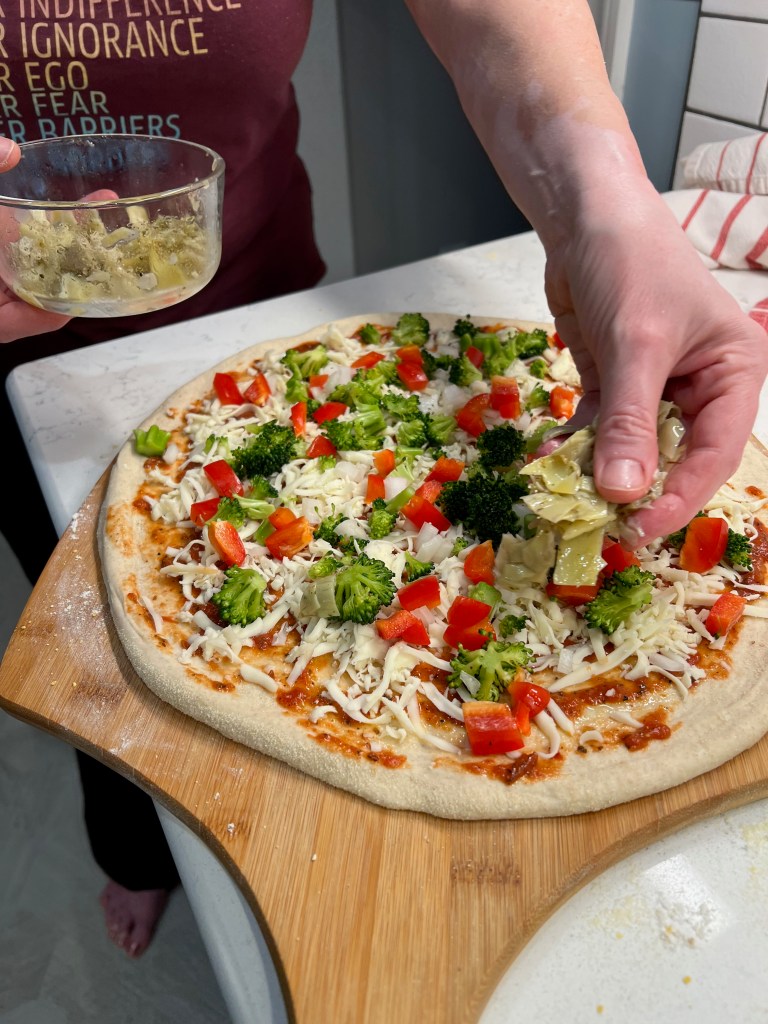
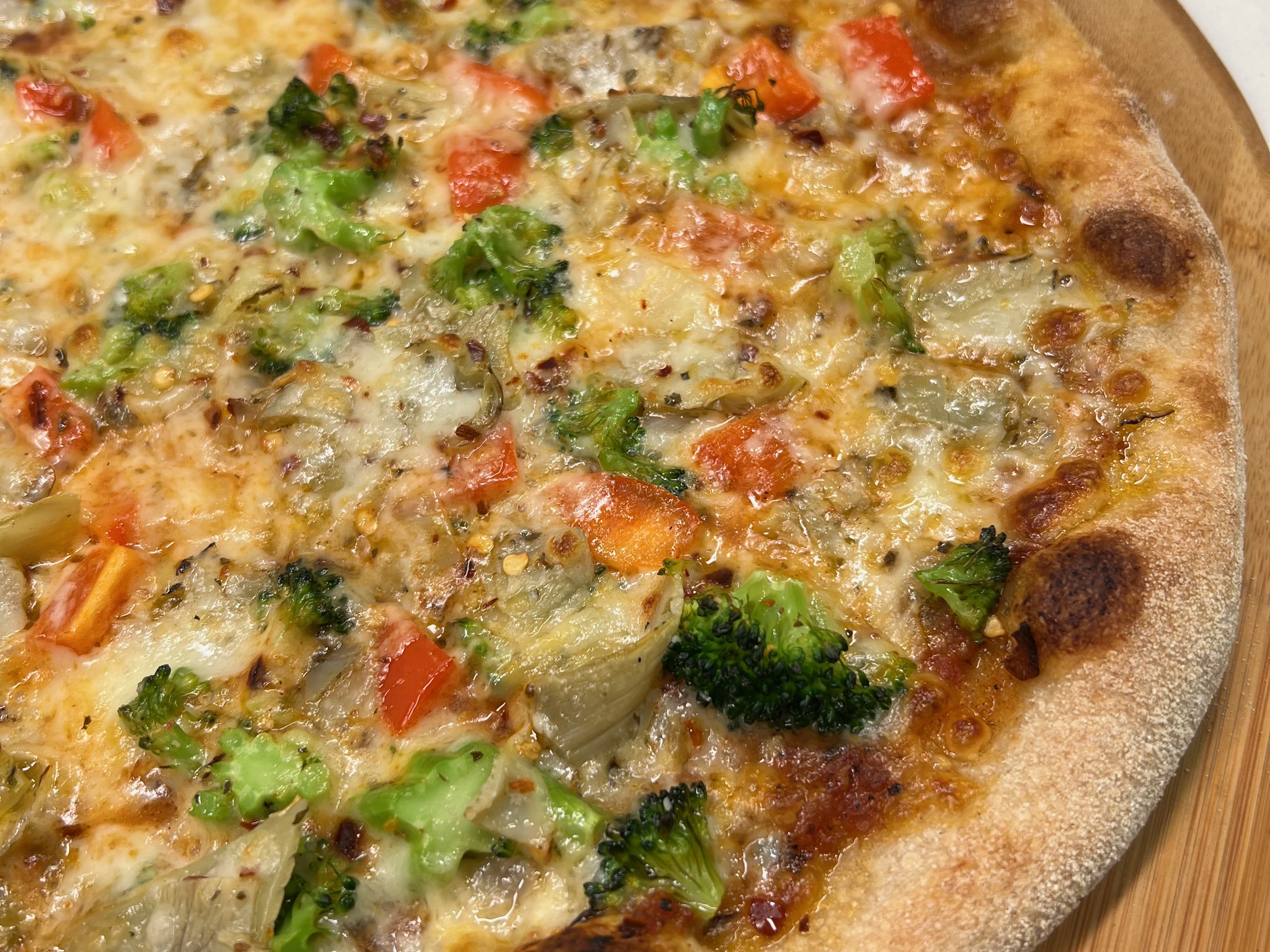
This pizza— with generous scatterings of chopped fresh broccoli, red bell pepper and marinated artichoke hearts— is my current favorite all-veggie pizza. What makes it work for me is the balance of flavors and textures that these ingredients bring to the slice. The red bell pepper bits are vegetal but sweet. The artichoke hearts, especially if you use the ones marinated with olive oil and herbs, are soft and slightly tangy. And the broccoli has a firm enough texture to make the pizza substantial and filling. 

With a healthy dose of fiber, protein (both the artichoke and broccoli contribute a good amount) and vitamins (the red bells have more Vitamin C than oranges), plus all that flavor, this pizza is a winner, any way you, ahem, slice it. 😉

I love the sound when my husband rolls the pizza cutter through the crispy, oven blistered crust! YUM!

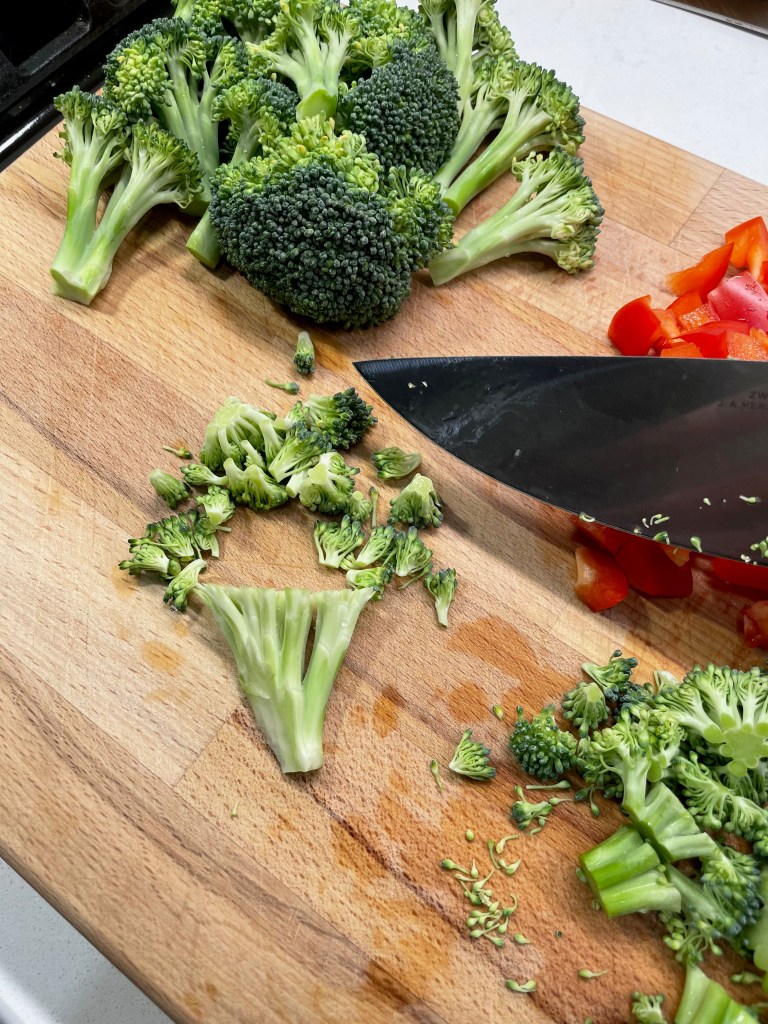
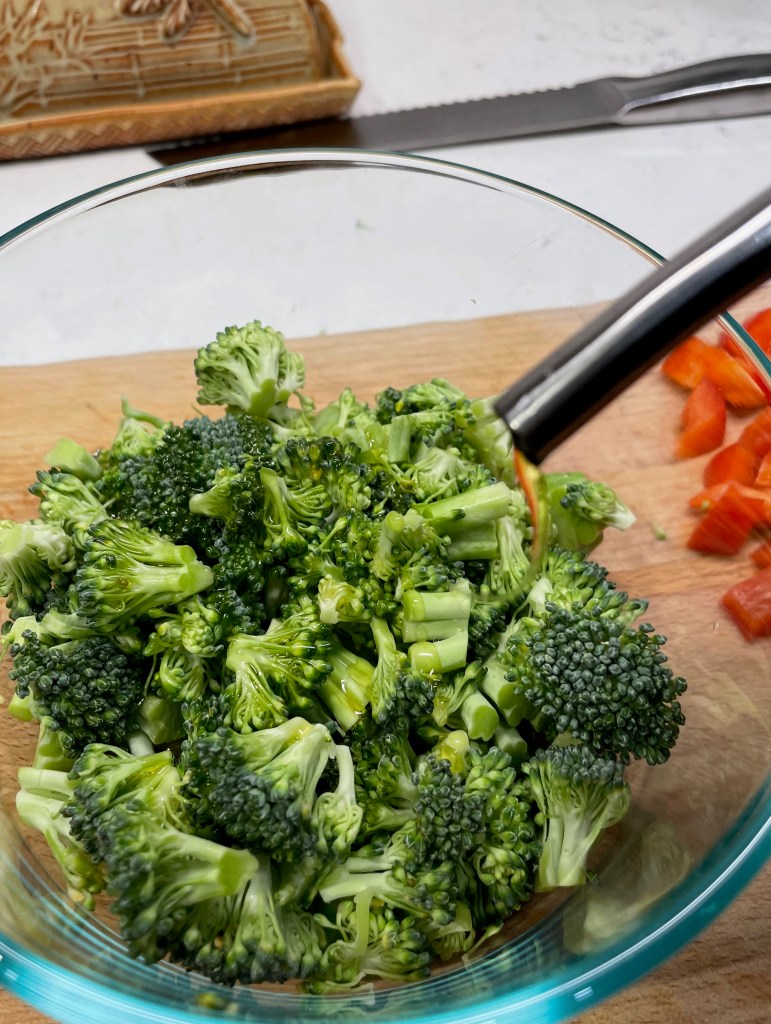
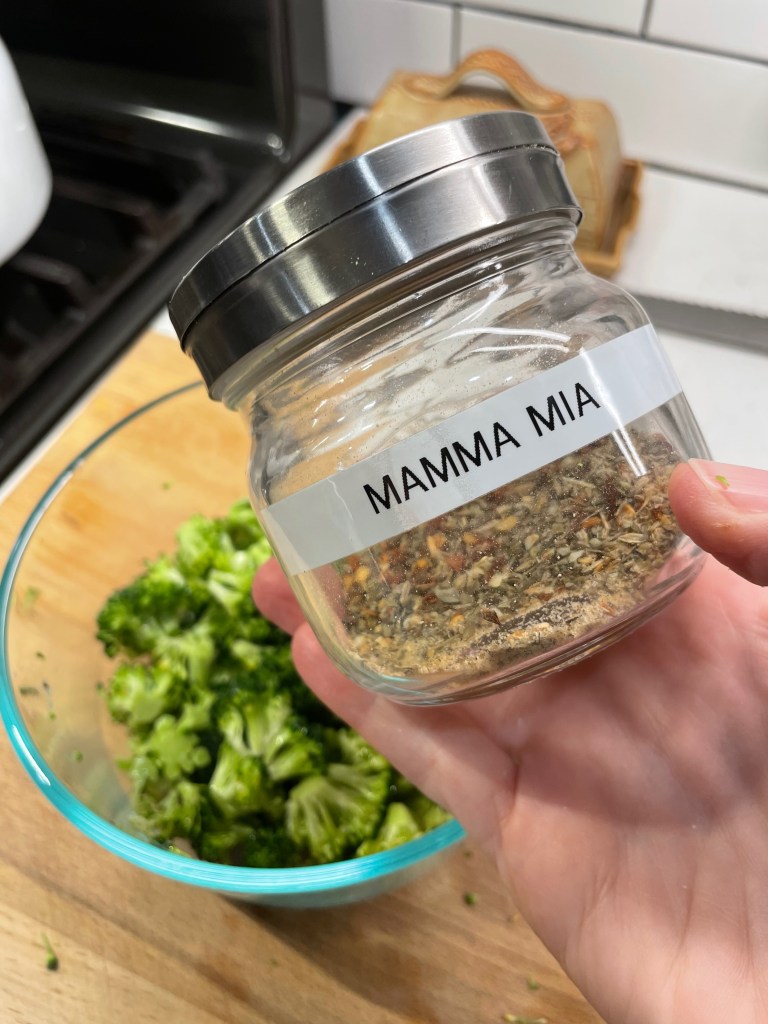
The first time I made this pizza, I used Asiago cheese (delish) and I prepped the ingredients in larger chunks, which made for tantalizing photos (as you can see above), but every bite tasted different because the pieces were farther apart. I also had to add an extra step of par-cooking and chilling the broccoli before topping the cheesy base of the pizza. On this go-around, I kept it simple, with smaller chopped pieces of raw broccoli and smaller chopped artichokes, and the end result was not only easier but a better outcome for the variety of flavor we enjoyed in each bite. A quick drizzle of olive oil and some Italian seasoning revved up the flavor of the broccoli.


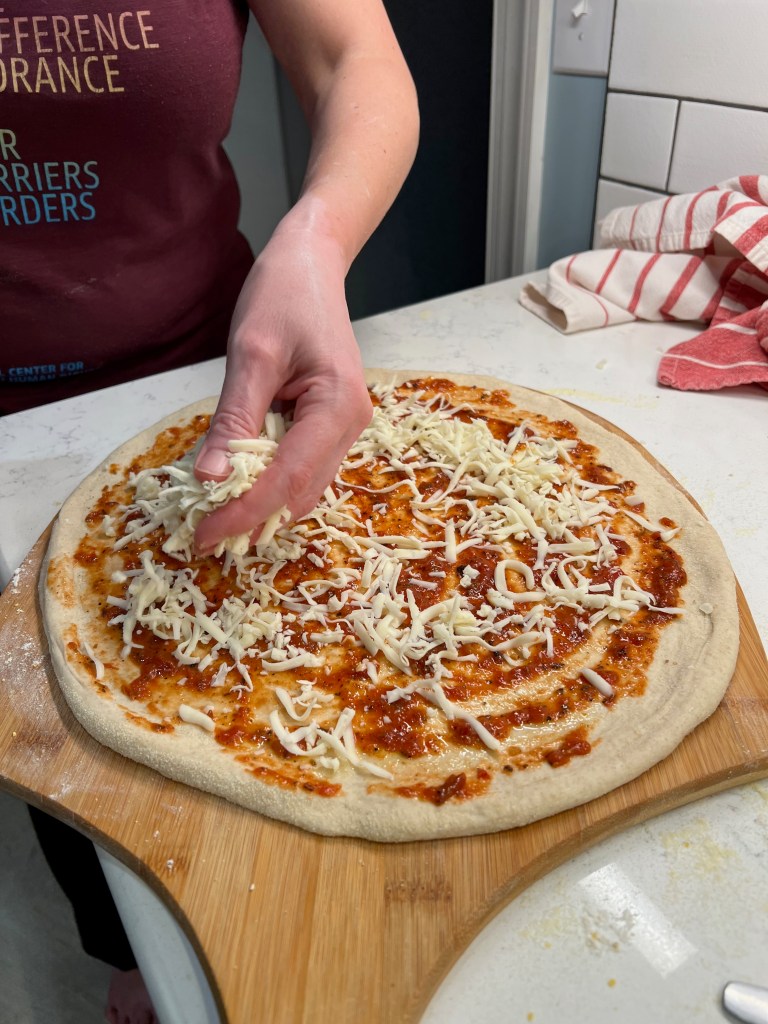
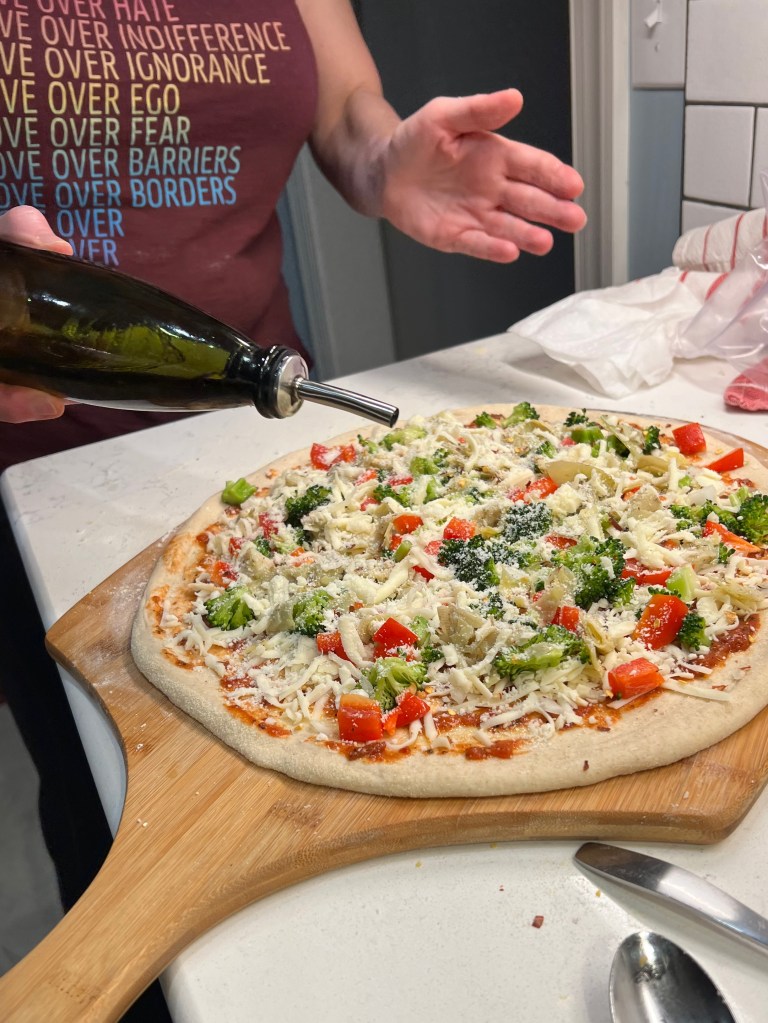
As for the rest of the pizza, you know how that goes at my house. My crust is almost always sourdough, cold-fermented for two days in the fridge drawer, hand shaped and topped with a thin layer of tomato sauce plus hand-grated whole milk mozzarella. A little Parm-Romano blend cheese sprinkled on at the end, plus a quick drizzle of extra virgin olive oil, which is a little trick I picked up during my “backstage” visit to Modern Apizza in New Haven a few summers ago. Here’s a link to my adventure at Modern, in case you missed it! 


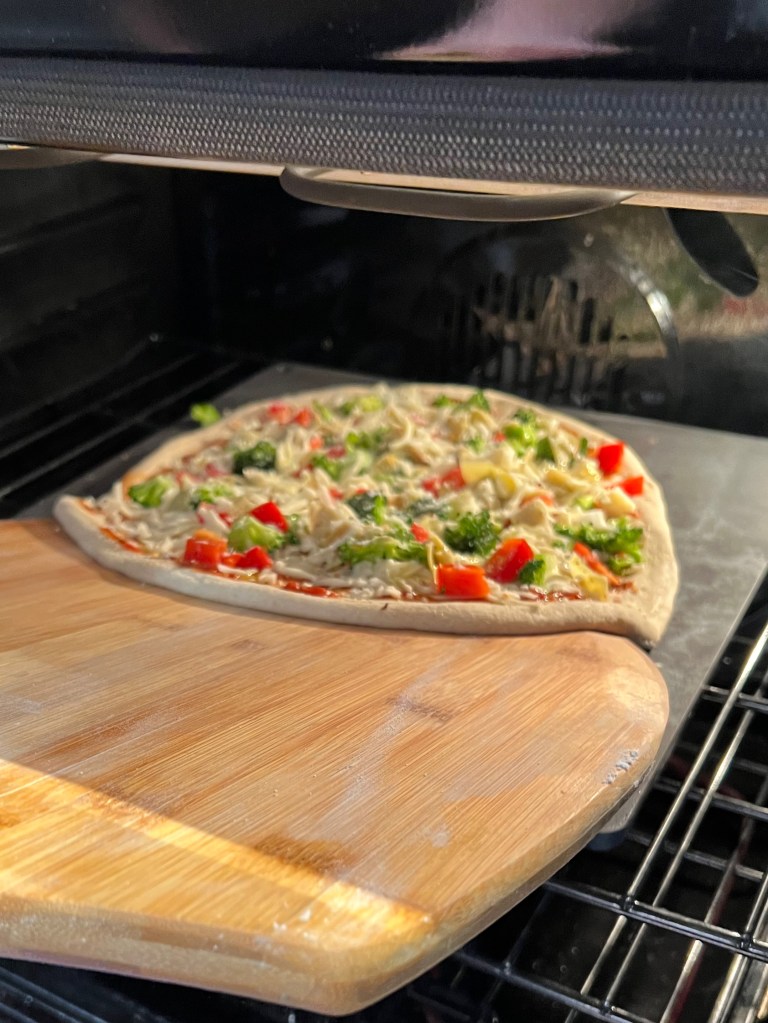
We use a steel for all of our indoor pizzas, preheated for about one hour at 550° F, which is the hottest our home oven goes. The intense heat permeates the steel slab for an exceptional crust, and our pizzas are finished to blistery perfection in about six minutes. It’s the closest we can get to brick oven-style pizza at home.

While that bakes, a quick (but important) mention about using cheese on a pizza for vegetarians, especially those who have chosen a meatless lifestyle out of concern for animals. Your guests may be OK with egg and dairy products, but be aware that many hard cheeses, including traditional Parmesan and Pecorino, are not technically vegetarian because animal rennet (an enzyme from the digestive system of young sheep or cows) is used in their production. This enzyme cannot be harvested from living animals, and that means it’s off the table for those following strict vegetarian practices. Thankfully, there are a few producers who have managed to adapt to using a plant-based enzyme to make such cheeses in a way that is approved for vegetarians. It’s a good rule of thumb to scan the label— if it does not explicitly state that it is suitable for vegetarians, you can bet that it isn’t. I only learned this myself a few years ago, so it bears sharing with my foodie friends. 

The smaller bits of veggie definitely work better, making every slice consistently delicious!

So there you have it, my current favorite veggie pizza! After the click-to-print recipe below, I’ll share links to a few others we’ve enjoyed at our house, including the one that Christine found irresistible for her pizza party with her daughter and visiting friend.

Now, your turn— what’s your favorite veggie pizza? I’m always on lookout for a new recipe, so please share! 

Broccoli Artichoke and Red Pepper Pizza

  • Servings: 8 slices
  • Difficulty: Average
  • Print

There's so much flavor and texture going on in this pizza, who needs meat?


Ingredients

  • One fresh pizza dough ball, about 11 oz., at room temperature
  • 1/4 to 1/3 cup favorite pizza sauce (we like Dei Fratelli’s “fire roasted”)
  • 2/3 cup hand-grated whole milk mozzarella
  • 2 cloves garlic, minced
  • 1 cup chopped raw broccoli, tossed with a teaspoon of olive oil and Italian seasoning
  • 1/2 cup diced red bell pepper
  • 1/2 cup chopped marinated artichoke hearts
  • 2 Tablespoons chopped fresh onion (sweet or yellow work well here)
  • 2 Tablespoons grated Parm-Romano blend cheese
 (check labels to ensure suitability for vegetarians)
  • Extra virgin olive oil to drizzle

We bake all of our pizzas at very high temperature on a steel slab, which gives us a near-brick oven quality pizza. If you will be using a pizza stone or pan, you may need to adjust temperature and baking time accordingly. I would highly recommend, for anyone who loves making pizza at home, investment in a pizza steel. I promise, you won’t regret it!

Directions

  1. Preheat oven with steel on center rack for one hour at 550° F. Dust pizza peel with flour and medium grind cornmeal for easy transfer in and out of oven.
  2. Shape dough by hand into 14-inch round, taking care not to deflate too many air bubbles. Salt and pepper the dough, and then spread sauce evenly over dough. You should be able to easily see the dough through the sauce.
  3. Scatter mozzarella all over the sauce, then top with fresh garlic, broccoli, peppers, artichoke hearts and onions. Sprinkle Parm-Romano over the toppings and give the whole pie a quick drizzle of olive oil.
  4. Transfer quickly to preheated steel and bake for six minutes, turning pizza after four minutes if needed for even browning of the crust.


Other veggie pizzas you might enjoy, left to right:

Zucchini and yellow tomato pizza, which I’m really looking forward to making again this summer, when both of these vegetables reach their peak flavor! 

Spanakopizza, loaded with fresh and sautéed spinach, leeks and feta, with a scatter of fresh dill for authentic Greek flavor. This is the one Christine made, and she declared it a big hit!

New Haven-style fresh tomato pizza, another one we enjoyed when we visited Connecticut, and a classic flavor for summer— almost like a margherita pizza but with fresh slices of tomato. So good!

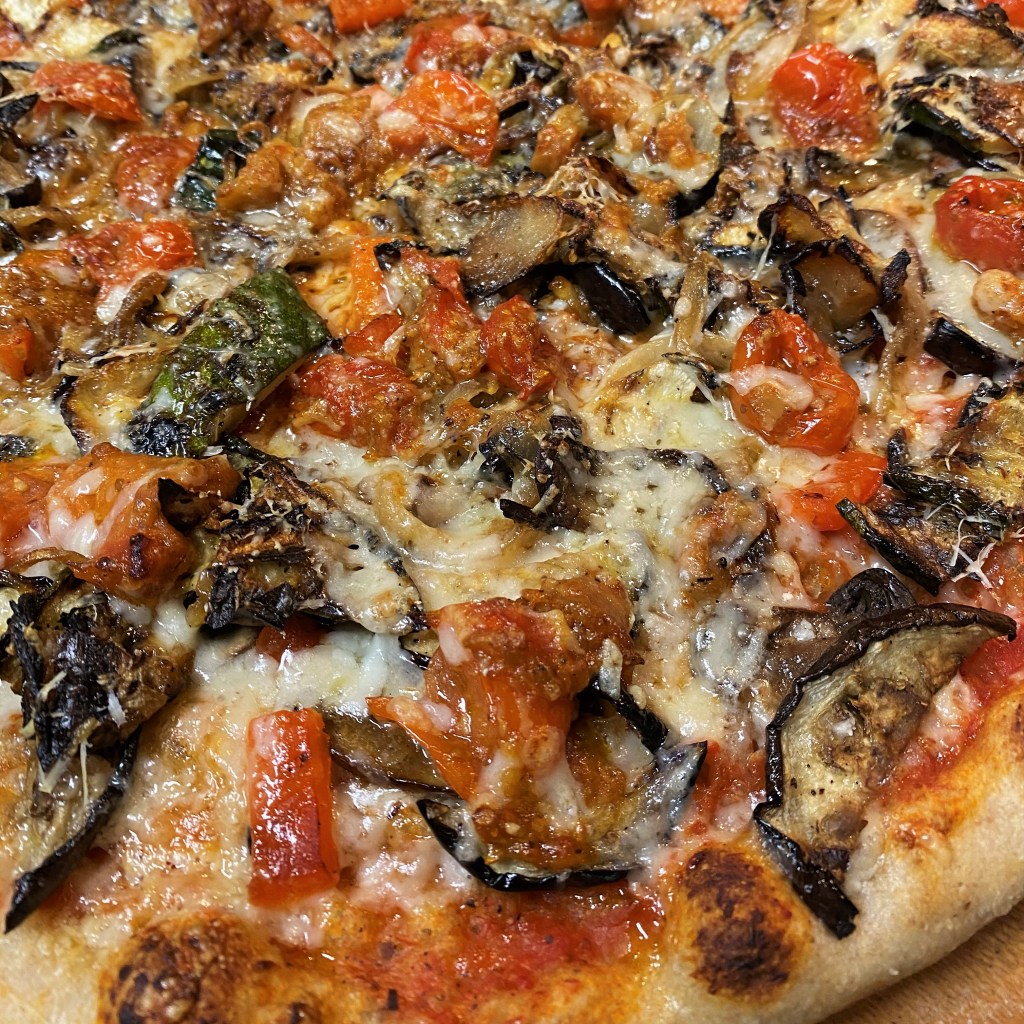
Ratatouille pizza, especially if you take time to grill the eggplant, zucchini, peppers and onions before piling them onto your favorite tomato sauce. 

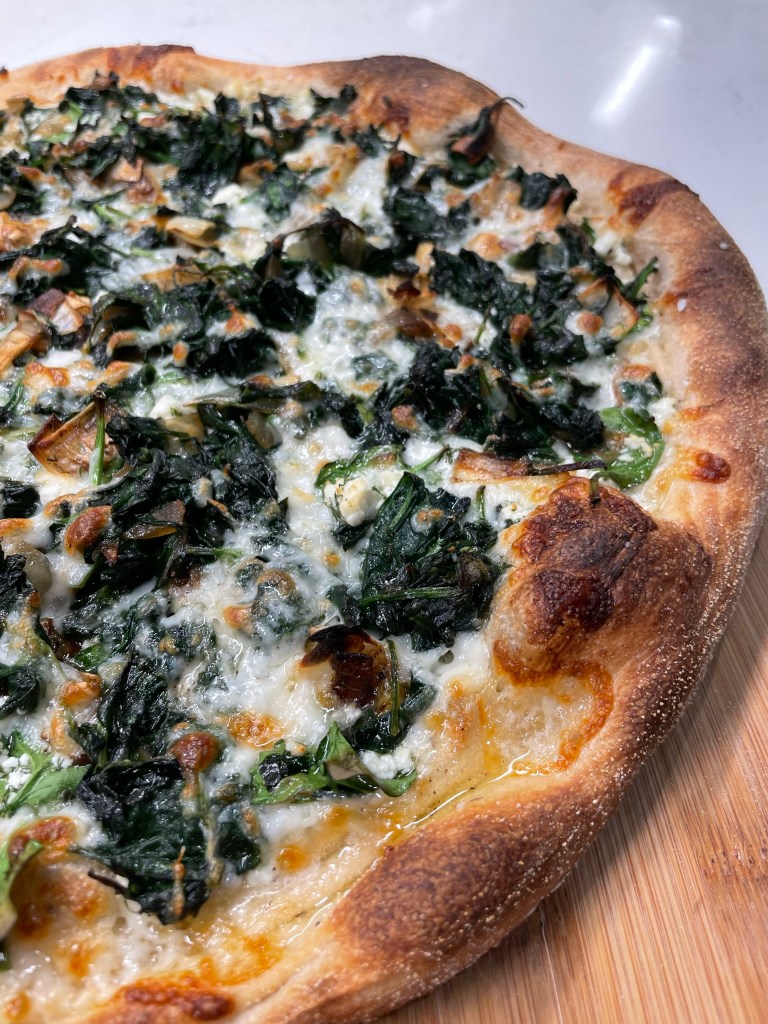
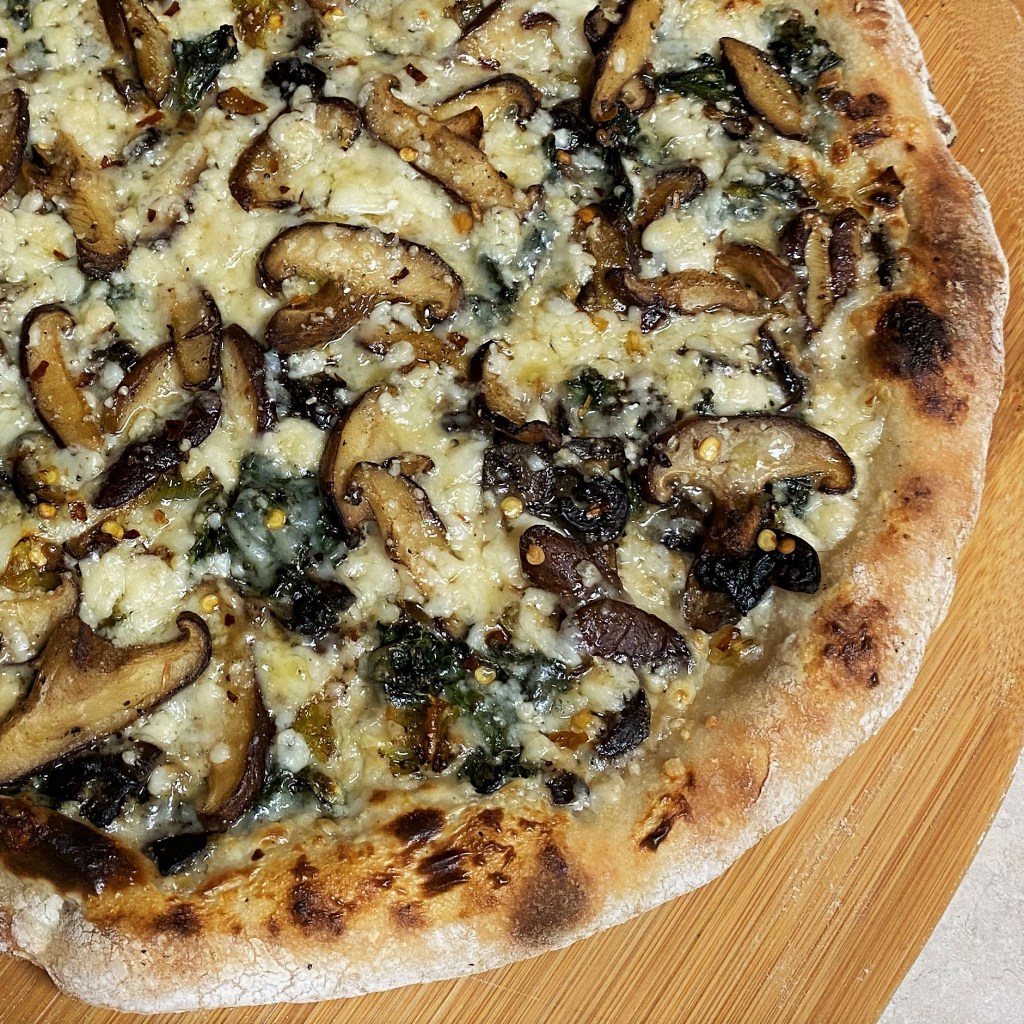
Creamy garlic mushroom pizza, with a roasted garlic béchamel base and two kinds of mushrooms (plus spinach) turns pizza night into a special occasion. My husband has been begging for this one to come back up in rotation, so I’ll be making it again very soon.

Eggplant parm pizza, but omit the crumbled Italian sausage, which I only used for that recipe because we had a very small amount left over from another meal. Trust me, this pizza would totally rock without the sausage. For this to be truly vegetarian, be mindful of the Parmesan label, to be sure that it uses plant enzymes rather than animal rennet.


Almond Citrus Cake

Hold up, another dessert already? It’s true— on the heels of my mint julep cupcakes (which were, by the way, as popular for this year’s Kentucky Derby shindig as last year), I am pushing ahead with another sweet treat. 

This decision defies one of my self-imposed blogging rules of alternating food categories to keep things interesting. Under these guidelines, I should be posting a salad right now, or a pizza or cocktail or something. After three or four more posts, then it would be acceptable for me to post another dessert. Here I am, though, breaking the rules with a bright and shiny citrus and almond cake that’s drenched in orange simple syrup.


Sometimes my own rules get in the way of my creativity. Where in the world does that rule even come from? I have found a clue, right here in the Spotify playlist that I frequently have running as I cook, bake and generally work around the house. One day recently, I was dumbfounded when the shuffle feature ended up playing a George Harrison tune right next to a Beatles track. I love both, but c’mon! With such a ginormous library, couldn’t they mix it up better than that? 

As a former radio personality— who also had the sometimes unenviable duty of pre-scheduling all of the music for my station— I am deeply conditioned toward two principles we called “rotation” and “artist separation.” The first speaks to the idea of giving a song a minimum rest time before you play it again, and the latter is an intentional placing of songs in a seemingly random order to ensure variety on a number of levels. On its face, this meant not scheduling two Beyoncé songs too close together (which was tricky after her solo success butted up against all the Destiny’s Child hits we were already playing).

But it wasn’t just the artists and bands by name. Mine was a Top 40 station, and that meant tempo, intensity, genre, vocal style and, yes, even gender were targets of this music scheduling protocol. It was a tough order, and we periodically bent some of the rules just to stay on the air. The worst was the one against playing two female artists back to back (this never applied to male artists, of course, and I’ll save my grievances about that b.s. for another day). From a purely logistical standpoint, separating the women artists was beyond difficult, especially after Lilith Fair came to town in the late 1990s.

The upshot is in that clumsy Spotify moment, I came to realize how much I subconsciously apply the concept of separation to other things in my life, including my food blog, and I’m thinking that it’s time to relax a few of these weird rules. Yes, my last post was about cupcakes. But maybe you don’t actually mind seeing and reading about another dessert this week, especially one as pretty as this!

Next time, though, probably a pizza. 😏


My inspiration for this almond-citrus cake came from Instagram, and a content creator named Betul Tunc, keeper of @turkuazkitchen. Her recipes are as relaxing to watch as I imagine they are delicious to eat. The backdrop is always the same— a rustic, Old World kitchen setup with a nearby window for natural light. We don’t see anything of her but her skillful hands and old-fashioned apron. You must already have some seasoned cooking skills to understand her techniques, and she usually pins a few specific instructions in the comments section of her posts. She is delightful, and her food always looks so comforting. She just finished a cookbook as well, due to be released this fall. I have no doubt that will be pure eye candy!


Amazing, right? When I watched Betul making this gorgeous cake, I knew that I wanted to adapt the layered citrus technique to a flourless, non-dairy version for Passover. I researched a few recipes for almond flour cake, adjusted ingredient amounts to accommodate a slightly larger pan, and then mixed and matched ideas for my own version of the gradient color cake. It turned out beautiful and delicious! Let’s get to it.

Tips for Success

I’ll share a few bits of advice that helped me along the way, plus suggestions for myself next time I want to make it. 

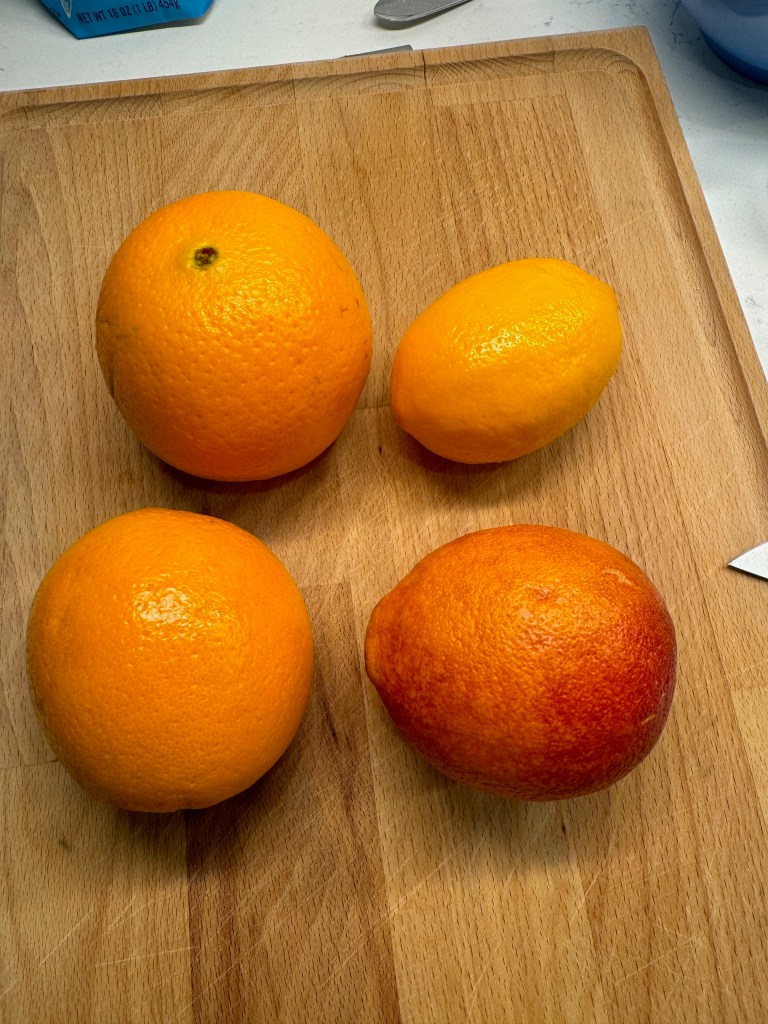
First, choose citrus fruits that are similar in size, so that overlapping the slices in the cake pan is easier and more uniform. One of my oranges was quite large and I found it tricky to make the layers work. I used two blood oranges (I got lucky with two different colors!), two cara cara oranges and a large Meyer lemon.

You’ll be eating the peel, so organic is best, and be sure to gently wash the citrus in warm, soapy water first— yes, you heard me. Wash the citrus with soap, and then rinse and dry it before slicing. You’d be shocked at the amount of dirty water I poured down the drain after this step. Use a dish detergent that has no fragrance.


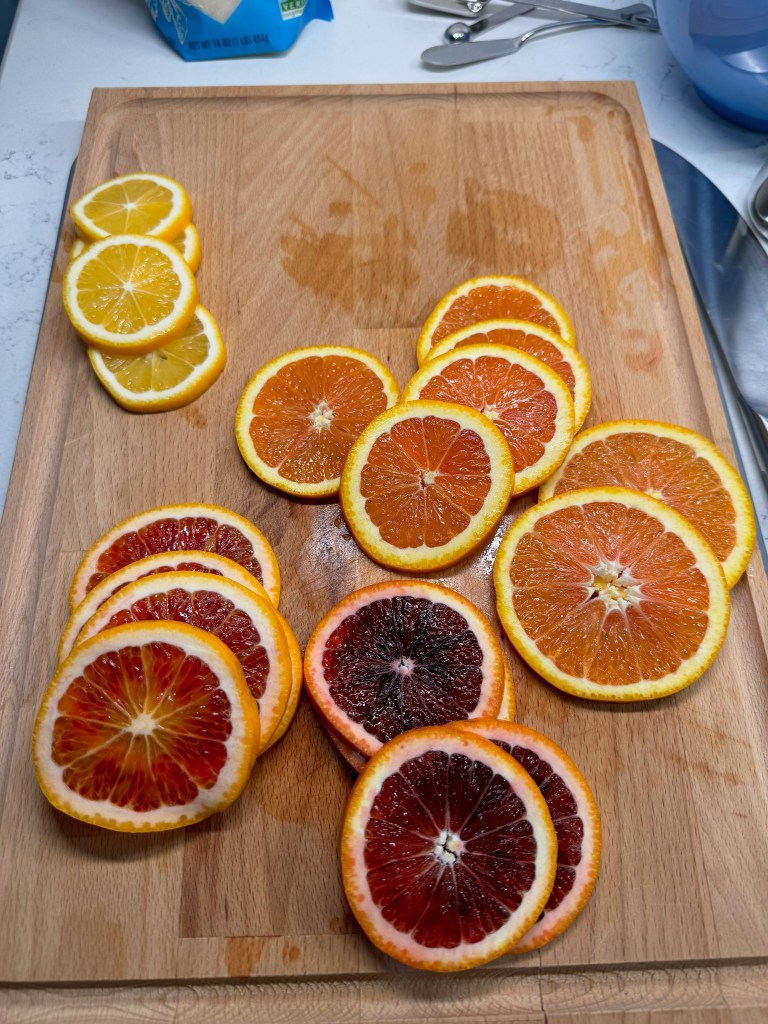
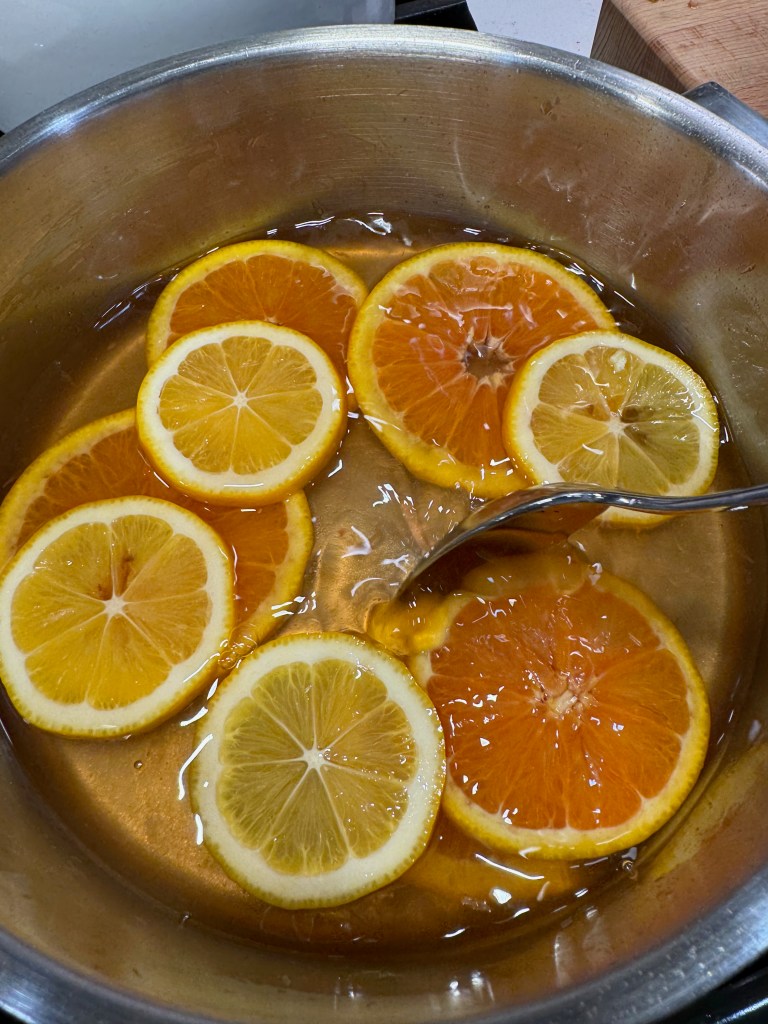
Slice the fruit in thin enough slices to layer, but thick enough to hold together. This will be somewhere between 1/4 and 3/8-inch slices, and they should all be the same. Give the citrus slices plenty of time to simmer in the simple syrup, so that the peel becomes soft and pliable. This helps remove the bitterness as well. Also, plan for the citrus to shrink a bit during the candy stage. I ended up simmering extra slices to ensure good overlap beneath the cake batter. Save the ends of the oranges for their juice in the final simple syrup that will be spooned over the cake.


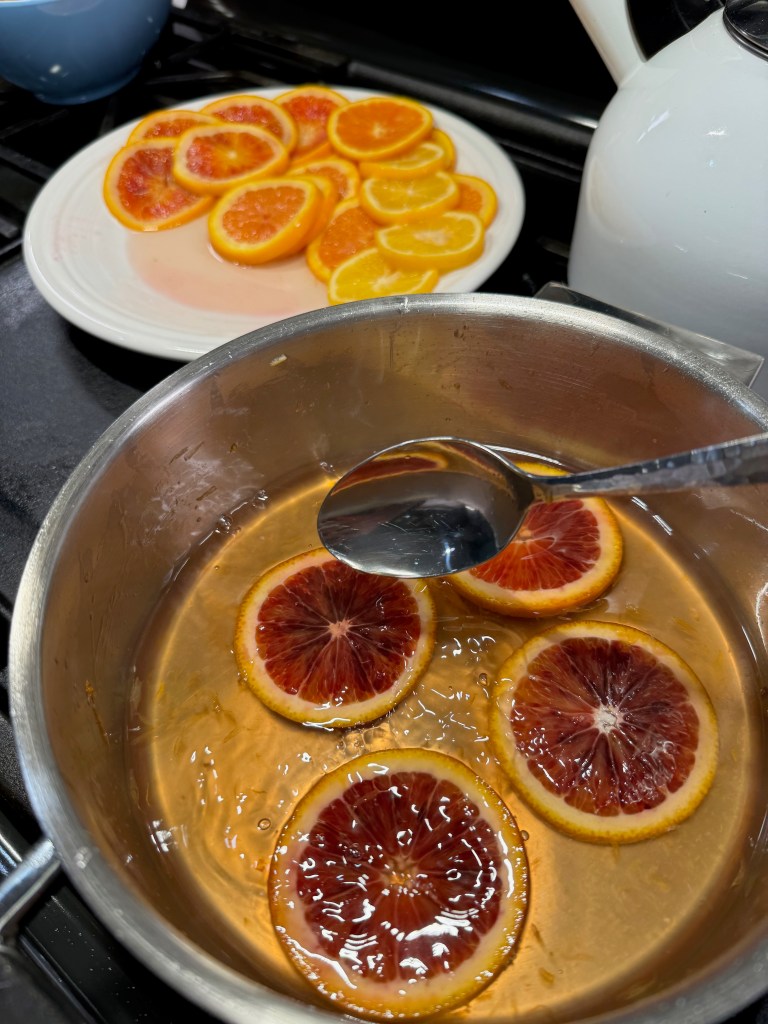
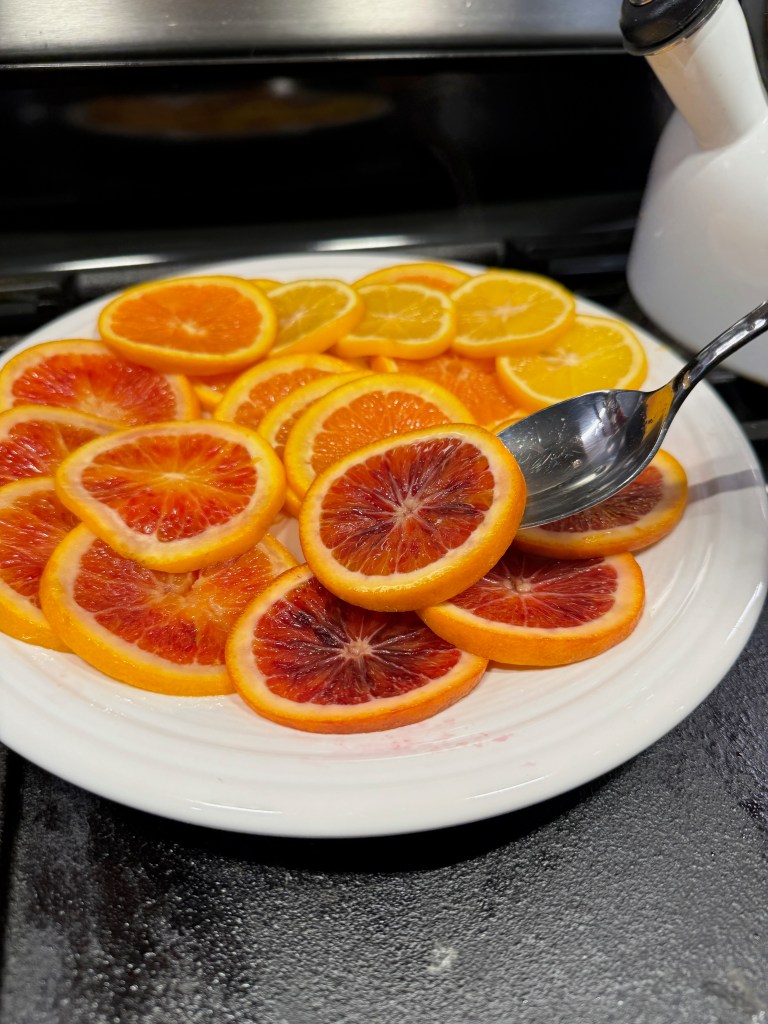
Simmer the lighter colored citrus to your simple syrup first! I discovered quickly how much the blood oranges gave off their brilliant color, and to prevent them staining the lighter slices, I pulled them off to a plate, finishing the simmering in stages. This took about 45 minutes total, and I feel quite sure that you could tackle this task a day ahead to save preparation time on baking day— but bring the orange slices back to room temperature before you bake. Do not discard the leftover syrup!


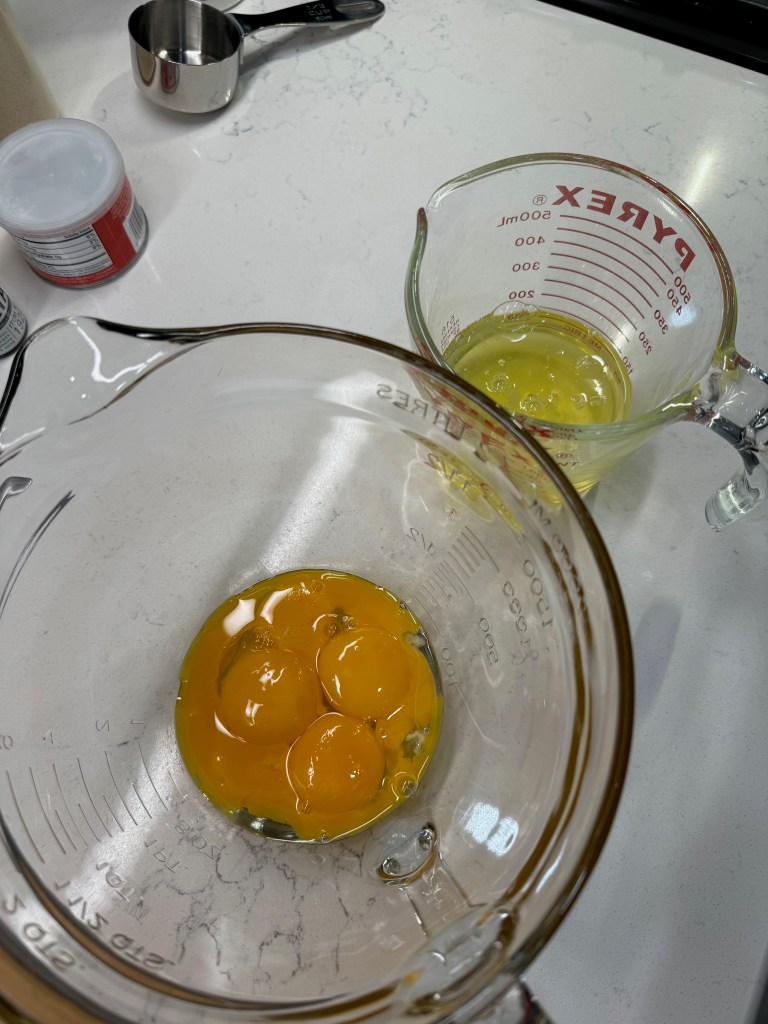
Separate your eggs while they’re cold, but bring them to room temperature before you begin making the cake. The whites will be whipped until fluffy and folded into the batter at the end. Remember that your mixing bowl and whisk must be completely clean, with no oils or even a drop of yolk, or the egg whites will not beat up fluffy for mixing into the batter. Use a paper towel and white vinegar to wipe them down, just to be sure.


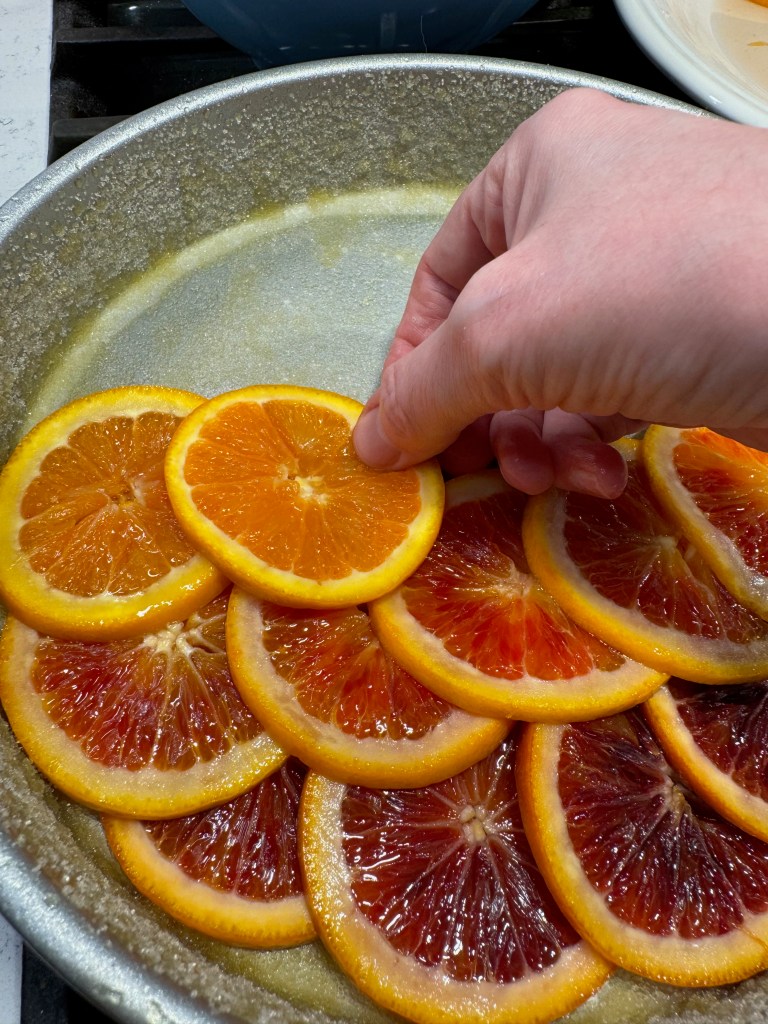
Finally, for preparation of the pan, use a fitted round of parchment paper in the bottom, to ensure that the thin citrus slices don’t stick and cause a problem. Spray the pan with olive oil spray and sprinkle sugar into it before carefully layering your citrus, overlapping tightly and completely so that no batter slips underneath.


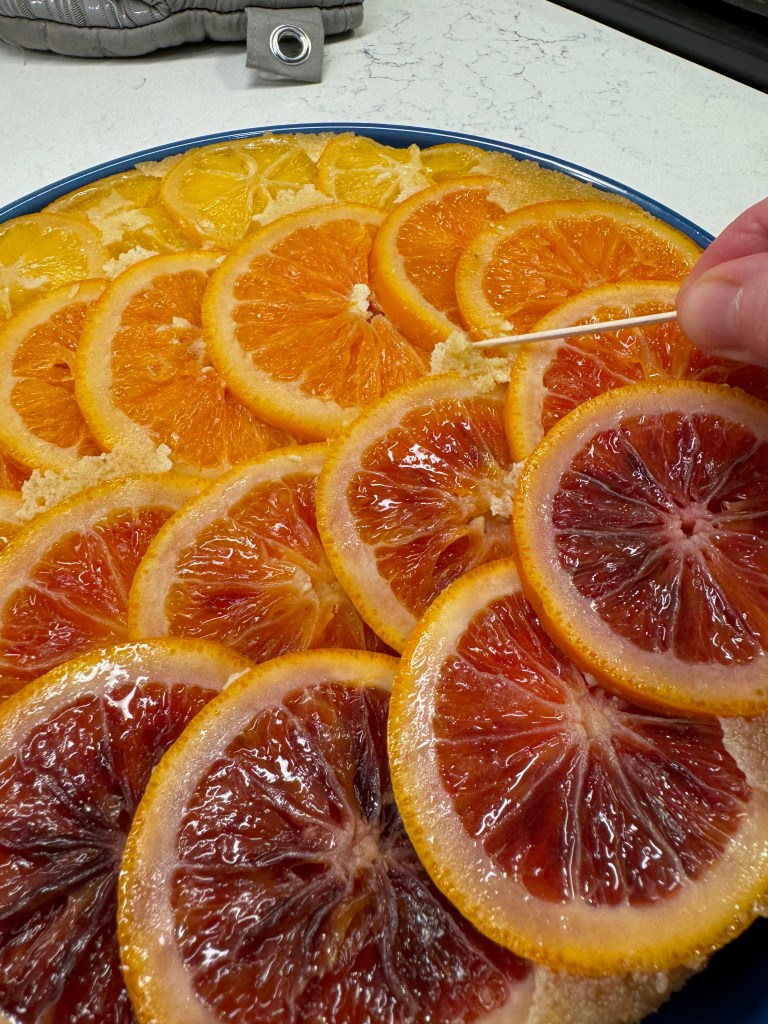
Ideally, you want the parchment to slide right off when you invert and plate the finished cake. If you have any lingering “eggy” edges, as I did, simply scratch them off with a toothpick before glazing the top of the cake with additional citrus syrup. Instructions for the final syrup are included below in the click-to-print recipe card.


This cake checked a lot of boxes for me— technique in the layer effect (thank you, Betul!), flourless batter (thanks, King Arthur, Eating Well and other sites) and beauty (thank you, nature, for lovely contribution of red, pink, orange and pale yellow citrus)!

We enjoyed this cake at a Passover meal with friends. It would be perfectly appropriate for a Mother’s Day brunch or dessert for company, and especially in the winter when the citrus are at their peak. Enjoy!

Almond Citrus Cake

  • Servings: 8 to 12 slices
  • Difficulty: Intermediate
  • Print

Inspired by @turkuazkitchen on Instagram, this cake incorporates a beautiful technique with a gluten-free, non-dairy cake that is as delicious as it is pretty!


For the gradient citrus “topper,” choose varying shades of orange, such as blood orange, cara cara, navel. Because you’ll be eating the peel, organic is best. Wash them thoroughly to remove any waxy coating applied for transit to the market. Plan to spend some time on the preparation of the orange slices, as they need several minutes of simmer time in the syrup so that the peels are softened enough. It would probably be fine to prepare the candied orange slices a day ahead.
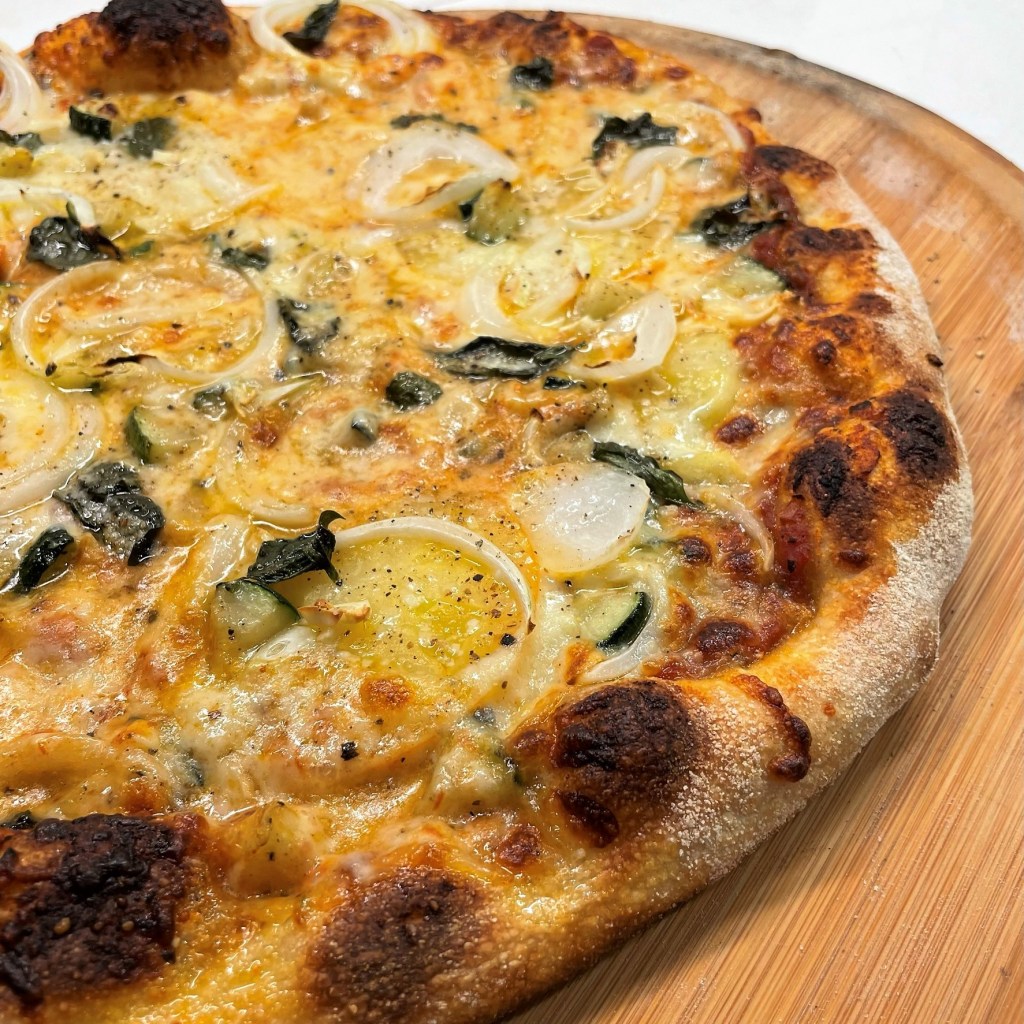
Ingredients

  • 4 oranges, different colors, cut into 1/4-inch to 3/8-inch slices (reserve ends for juice)
  • 1/3 cup organic cane sugar (plus another 1/3 cup that you’ll add to the final syrup at the end)
  • 1/2 cup water
  • 2 Tbsp. fresh orange juice (squeeze this from one of the orange ends)

Directions

  1. Combine water and 1/3 cup of the sugar in a large, wide sauce pot. Add orange juice and stir until all sugar is dissolved and syrup reaches a light boil.
  2. Add orange slices in batches (light colors first), and simmer for about 20 minutes, checking periodically to be sure each slice is getting equal time in the syrup mixture. Transfer slices to a plate to cool and repeat with remaining oranges until are candied. They should be soft and pliable, which will make it easy to layer them later. Reserve the remaining simple syrup for the step 8 of the cake instructions.
  3. When ready to bake, use spray oil to lightly coat a 9-inch non-stick pan, then place a round of parchment in the bottom. Spray the parchment lightly and sprinkle two tablespoons sugar all over the bottom and up the sides somewhat. Arrange cooled orange slices, overlapping so that no parchment is visible through the layers.

For the almond cake batter, you’ll need a couple of separate bowls. The egg whites will be whipped separately and added to the rest of the batter at the end.

Ingredients

  • 5 eggs, separated (do this when eggs are cold)
  • 1/2 cup organic cane sugar, divided + 2 Tbsp. for prepping pan
  • zest of one orange
  • 1/2 tsp. almond extract
  • 1/2 tsp. Fiori di Sicilia (or vanilla extract)
  • 1 3/4 cup fine almond flour
  • 1 1/4 tsp. baking powder
  • 3/8 tsp. fine sea salt

Directions

  1. Heat oven to 350° F, with oven rack in center position.
  2. In a stand mixer, with blade attachment, beat egg yolks and 1/4 cup sugar until evenly combined and somewhat fluffy.
  3. Add orange zests and extracts and beat until blended.
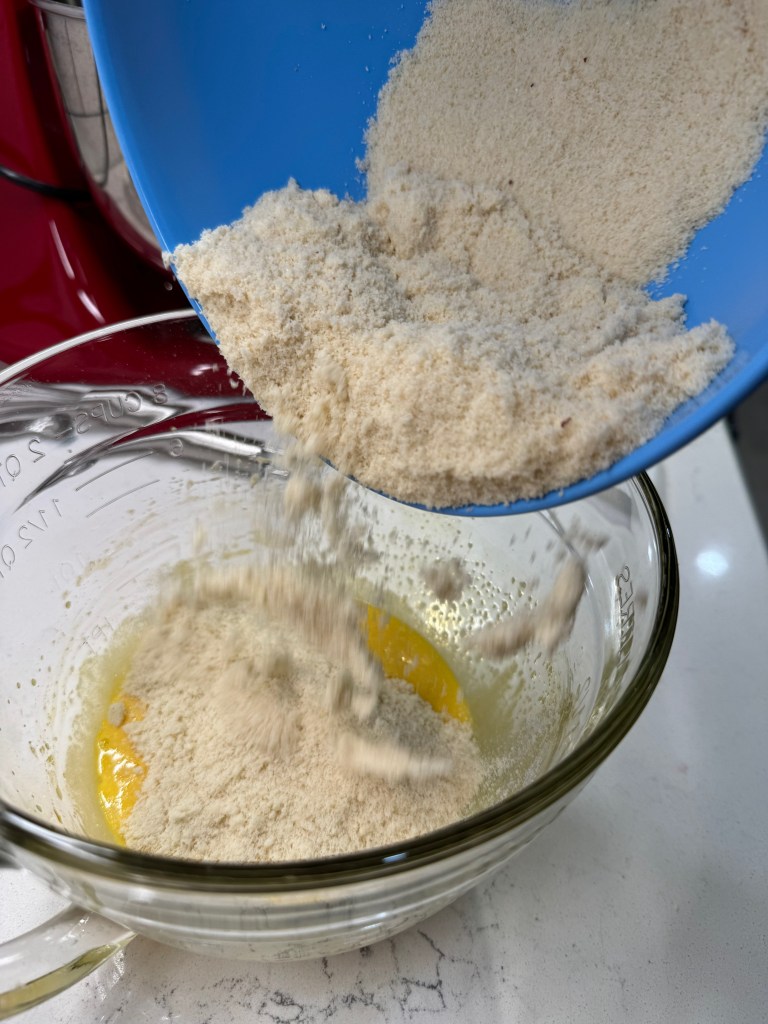
  4. In a medium bowl, whisk together almond flour, baking powder and salt. Add this mixture in batches to the egg mixture and beat until evenly combined. It will be a dense, almost paste-like batter.
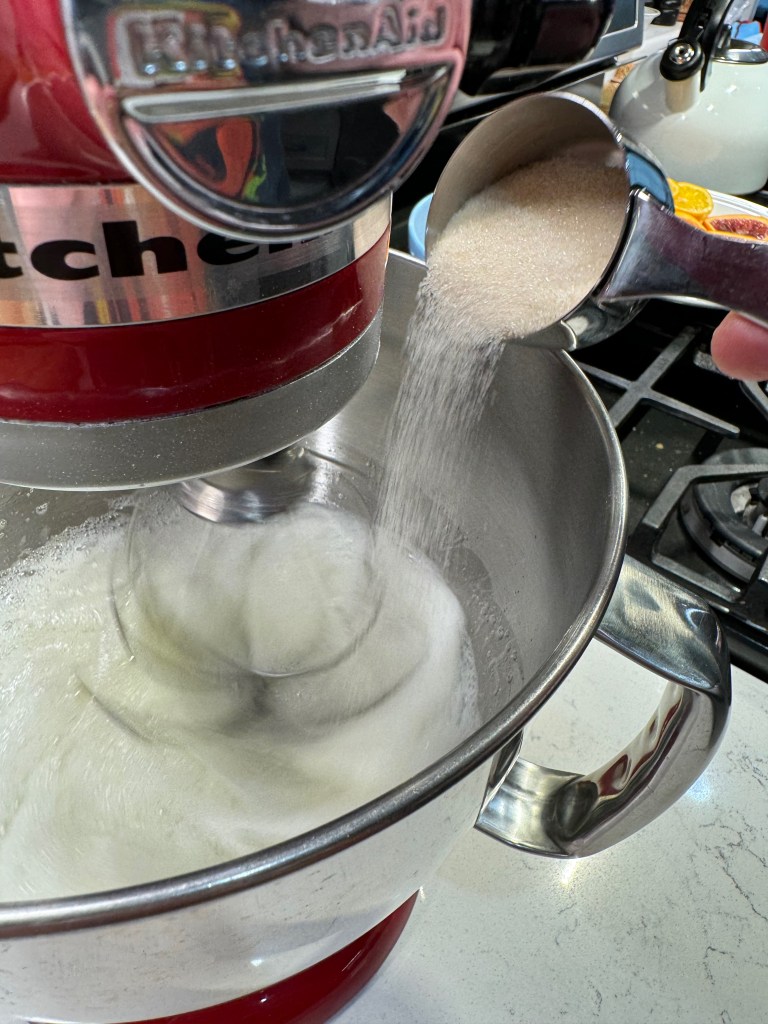
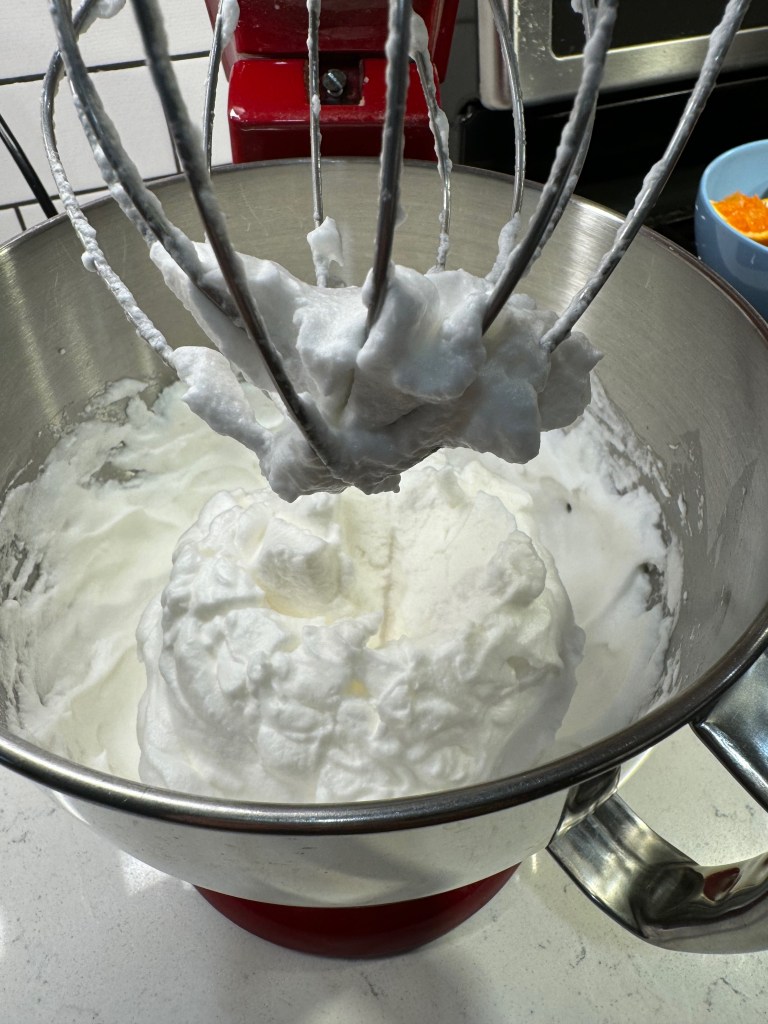
  5. In yet another bowl, use a hand mixer to whip the egg whites until frothy. Gradually add remaining 1/4 cup sugar while whipping, finishing when the whites reach a soft peak stage that resembles meringue.
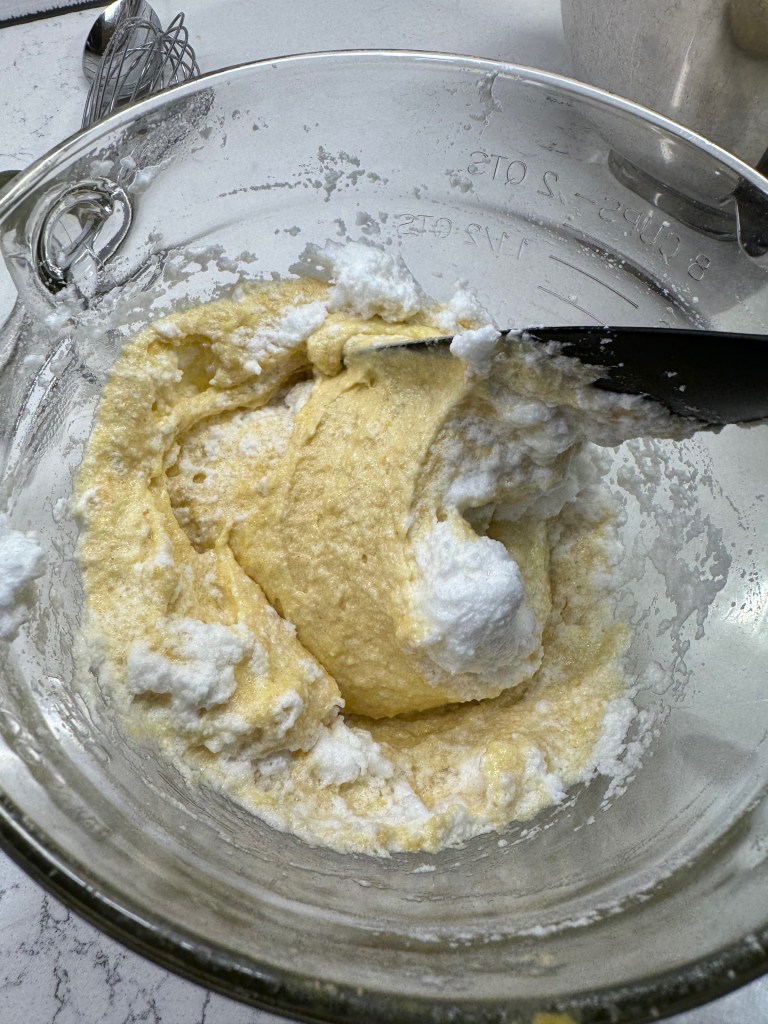
  6. Gently fold the whipped egg whites into the dense batter, beginning with only 1/2 cup and gradually adding more. It will feel impossible at first, but after the first two additions of whipped egg whites, it will become easier and smoother.
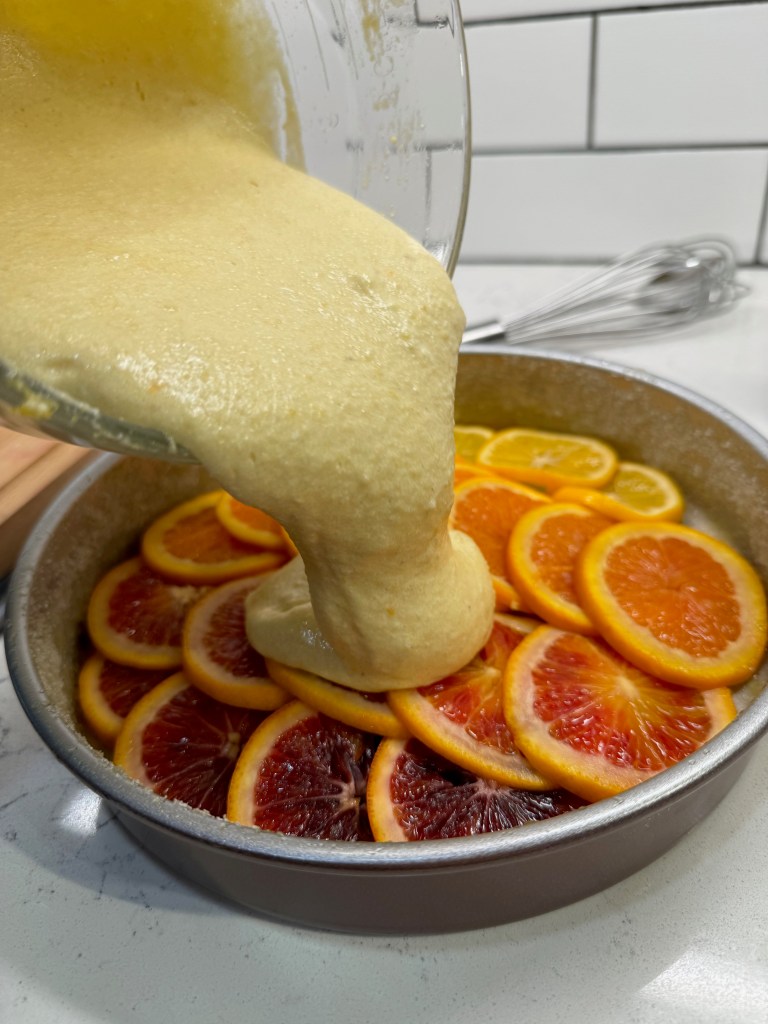
  7. Spoon the cake batter over the layered orange slices, taking care not to disturb the arrangement. Gently smooth the top of the batter. Bake for 30 to 35 minutes, until a toothpick inserted in the center comes out clean. Cool it in the pan for about 15 minutes, then invert onto a serving plate and peel off parchment. Use a toothpick to lift and remove any edges of batter that seeped under the citrus during baking.
  8. While the cake bakes, add another 1/3 cup sugar and the juice of all the remaining orange ends to the reserved simple syrup. Stir and cook until all sugar is dissolved. Spoon warm citrus syrup over the entire cake. Reserve remaining syrup to drizzle over at serving time.

After all was said and done, we had about 1/2 cup of the orange simple syrup left over. We bottled it and used it in cocktails!


Mint Julep Cupcakes

I have come to an important conclusion— that the only difference between me being a good baker or a bad one is my own level of commitment. How can anyone improve their skills without practice? Trial and error are an important part of the process, and I’ve seen plenty of that. Every once in a while, though, I land in the success column with both feet. Those are the good baking days!

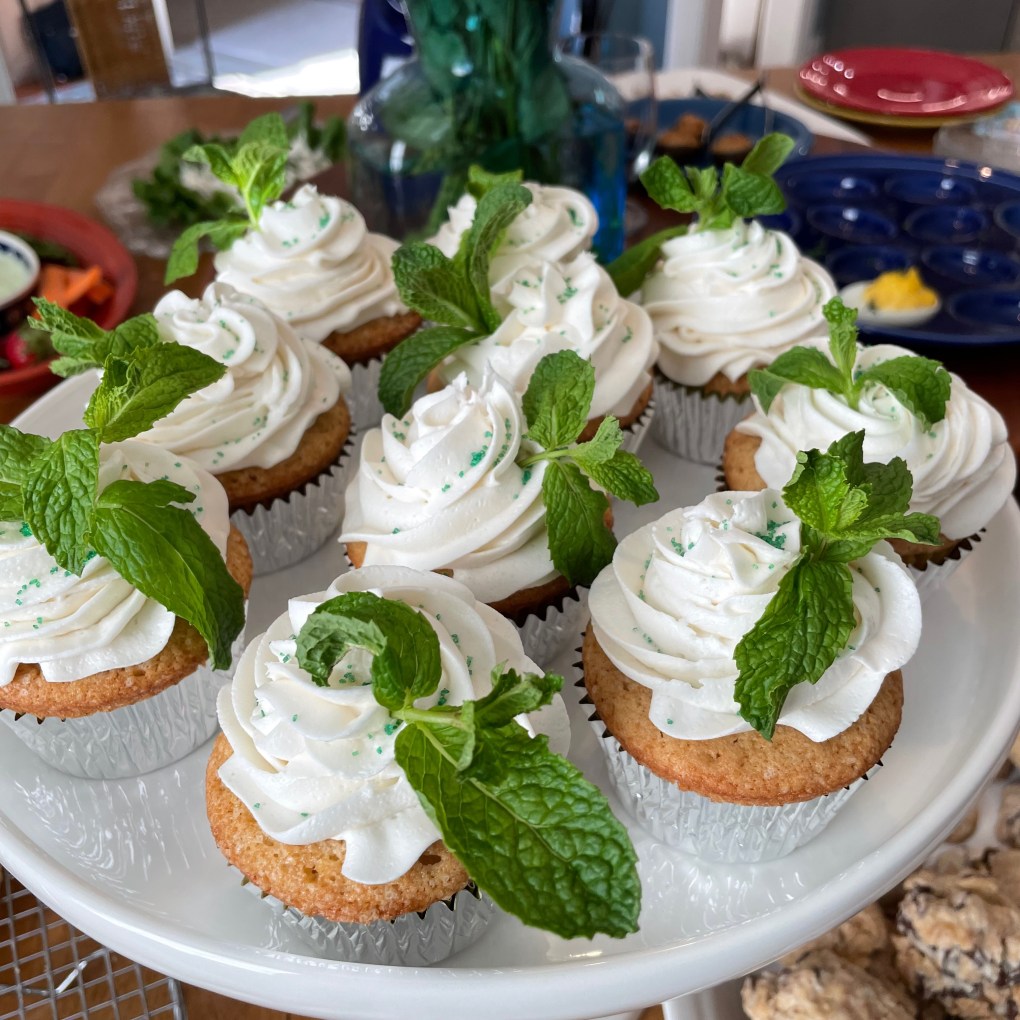
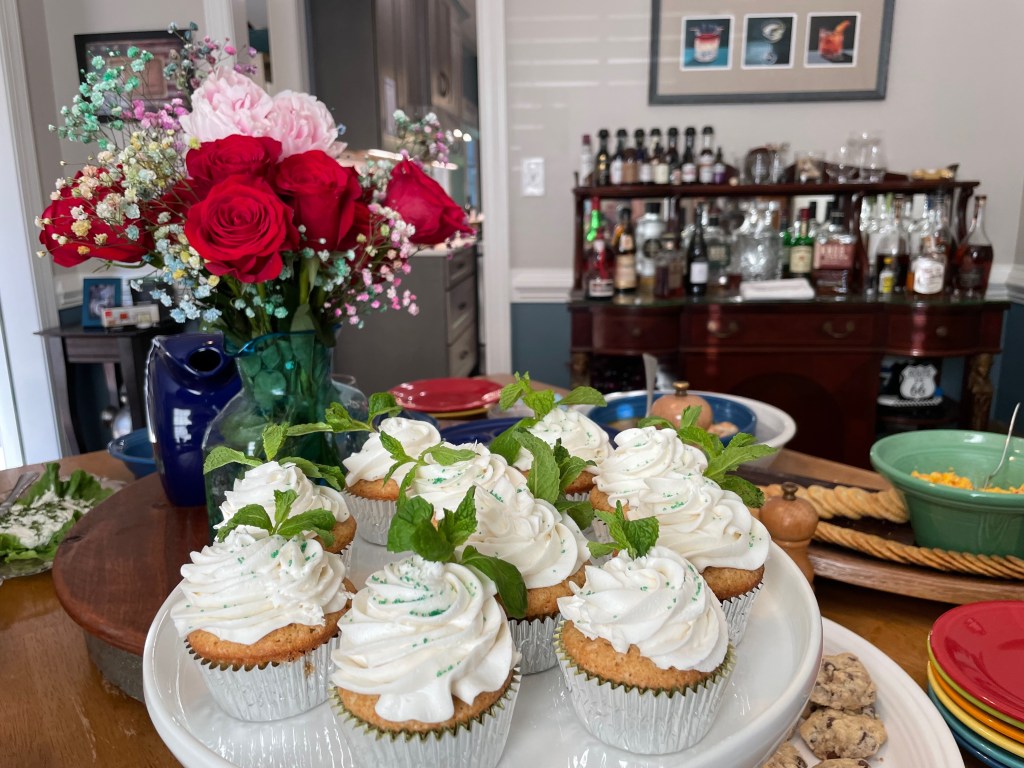
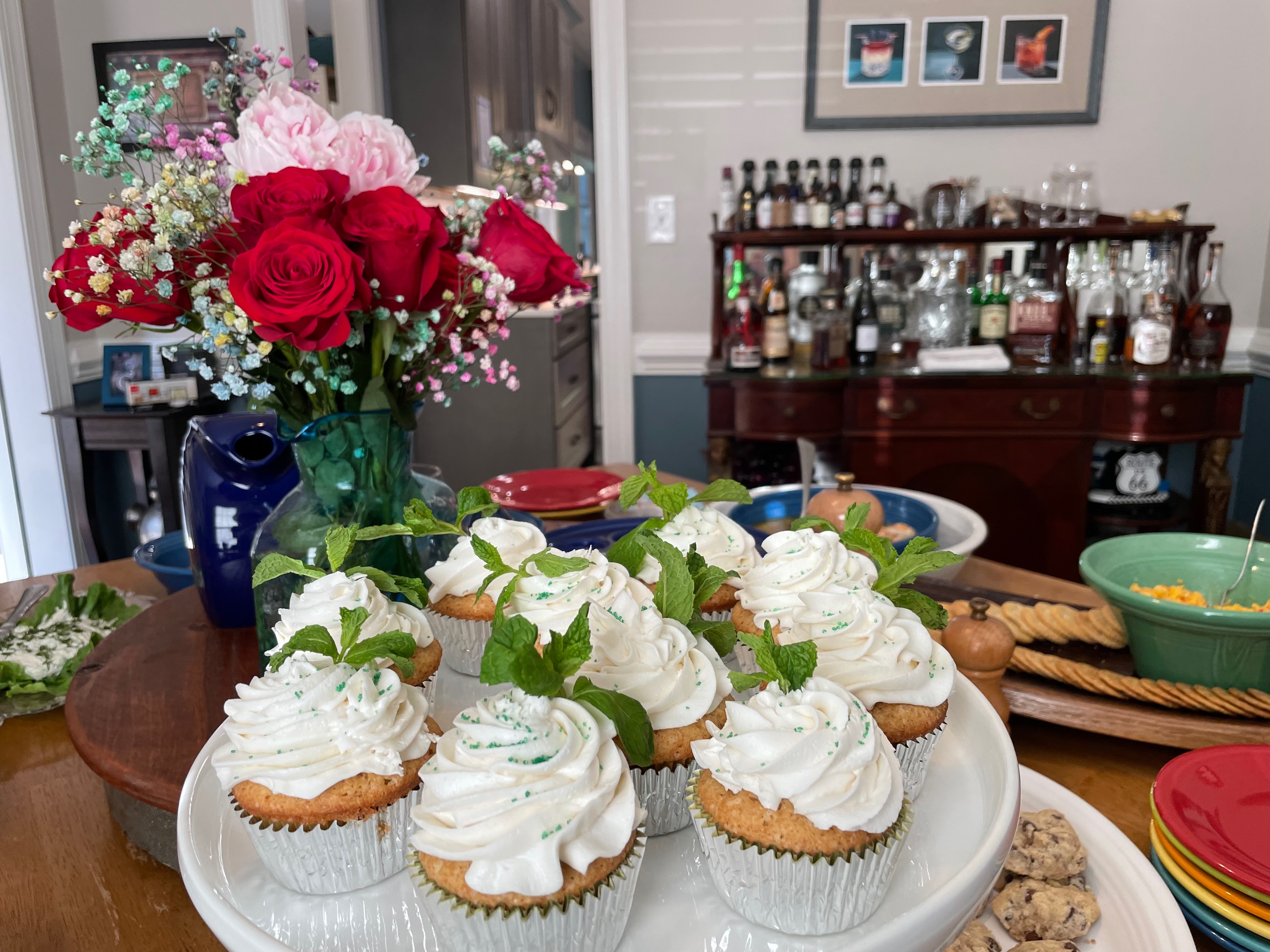
These cupcakes are a beautiful addition to the Kentucky Derby table.

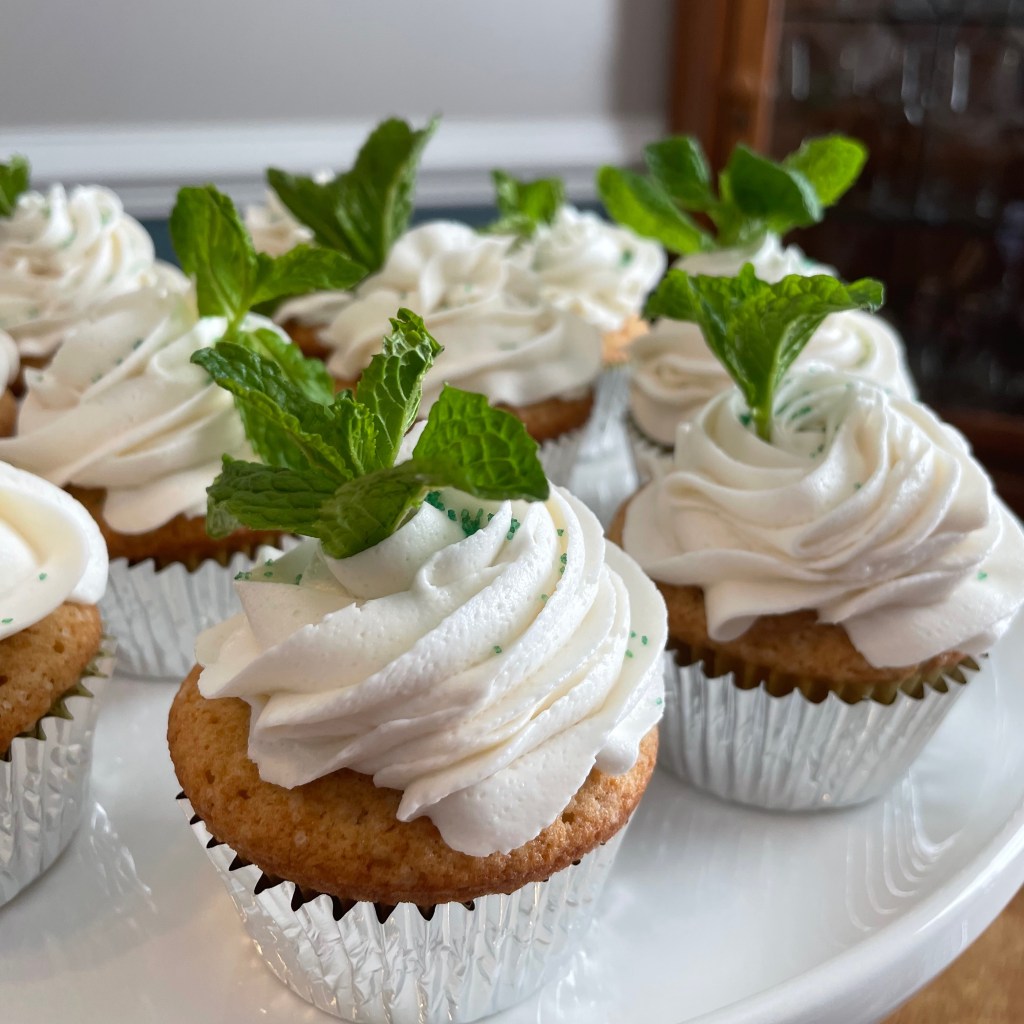
These cupcakes, which draw their inspiration from the Mint Julep, official cocktail of the Kentucky Derby, turned out so ridiculously good last year that my friend, Linda, practically demanded that I make them again this year. What makes these cupcakes so delicious— besides the obvious fact that, duh, they’re cupcakes— is that real Kentucky bourbon is added to both the cupcake batter and the icing. They are boozy, but not overly so. The sweet buttercream with accents of mint offsets any harshness that one might expect from the bourbon.


Kentucky Derby is an occasion that we enjoy for the theme as much (or more) than the horse race itself. It’s a rare event that gives me an excuse to wear a fancy hat, and I will try again this year to get my husband to put on a bow tie (we’ll see). My table will be filled with plenty of fancy finger foods, because it’s helpful to have one hand free to hold a mint julep or one of my other fun cocktails. When it comes to the mint julep cupcake— well, it’s another opportunity for me to have my cake— and drink it, too!

Did I sample two of the cupcakes before the party started? Maybe. 😉

Let’s Get Cooking!

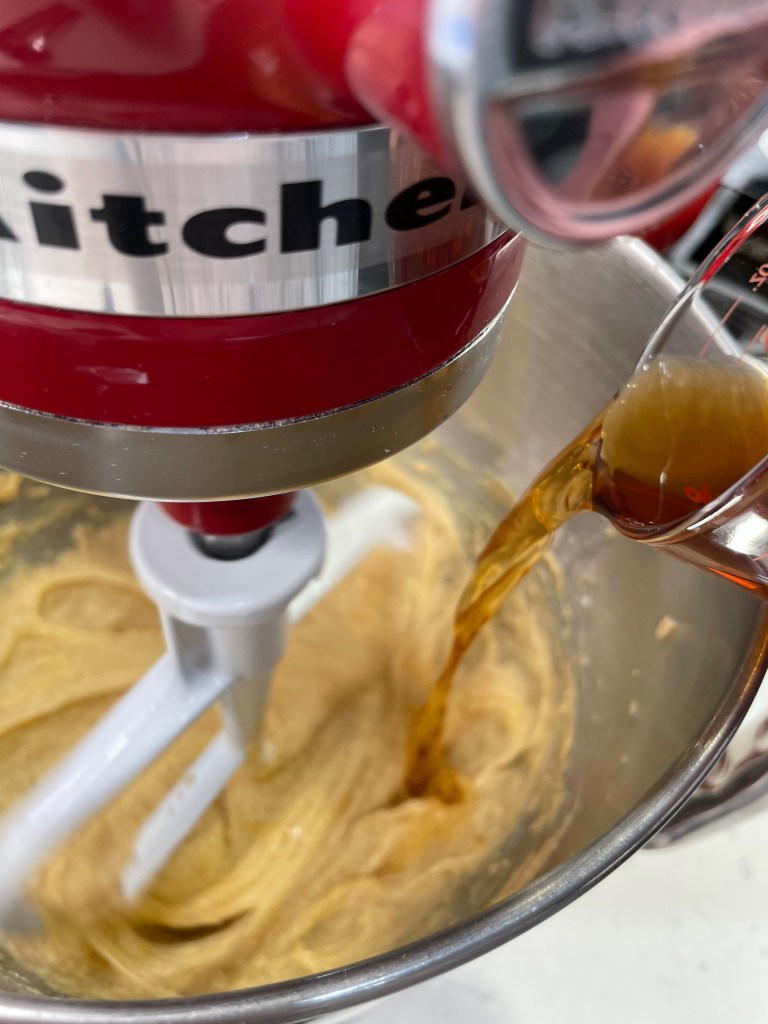
If there’s one bit of advice I would offer for successful baking— to myself as well as anyone else— it would be to plan ahead, measure everything out and line things up before starting a recipe. Having my ingredients at the proper temperature is important as well, both for easy mixing and having a reliable baking time. For these cupcakes, the butter and eggs should be near room temperature, and the flour should be measured following the fluff, sprinkle, level method. Measure out the bourbon, too, so that you aren’t trying to guess the amount straight from the bottle. I used my cocktail measuring cup, which worked perfectly.

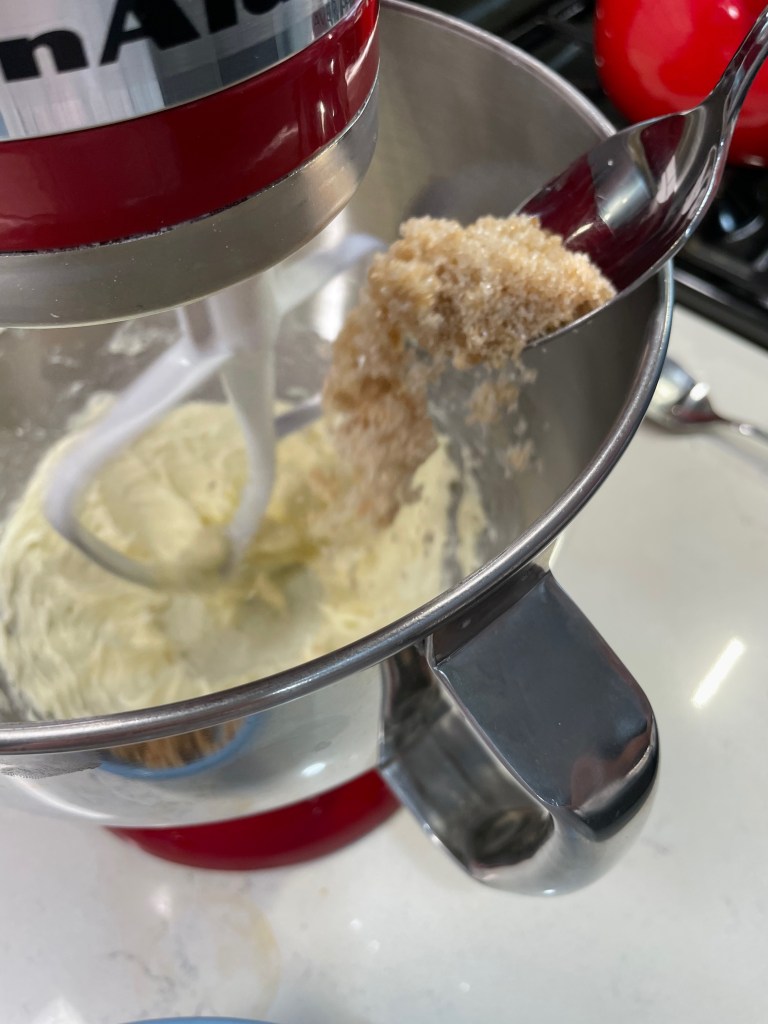
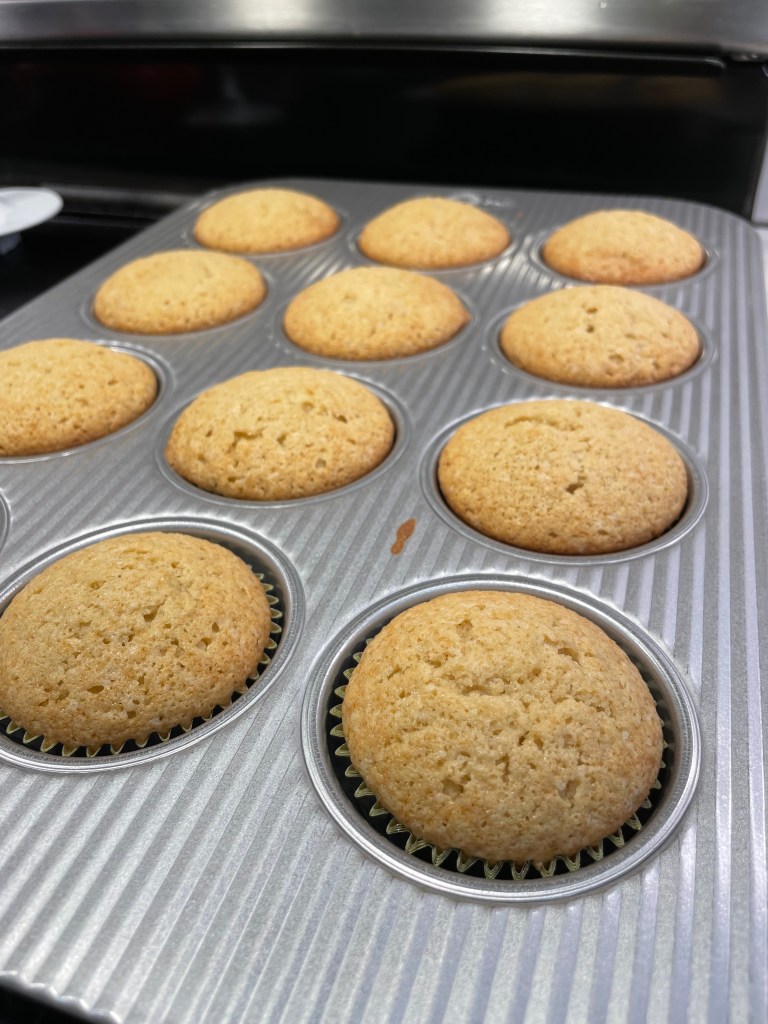
The cupcakes are definitely more substantial than a box mix cupcake, which makes a great base for piling on the sweet, minty buttercream. The batter includes both cane and brown sugar, which emphasizes those warm, caramel-like notes in the bourbon. I followed a typical method of creaming together the butter and sugar, then adding eggs and bourbon (in place of vanilla), and finally alternating additions of the flour mixture and milk. They baked up beautifully, and I cooled them completely before icing them.


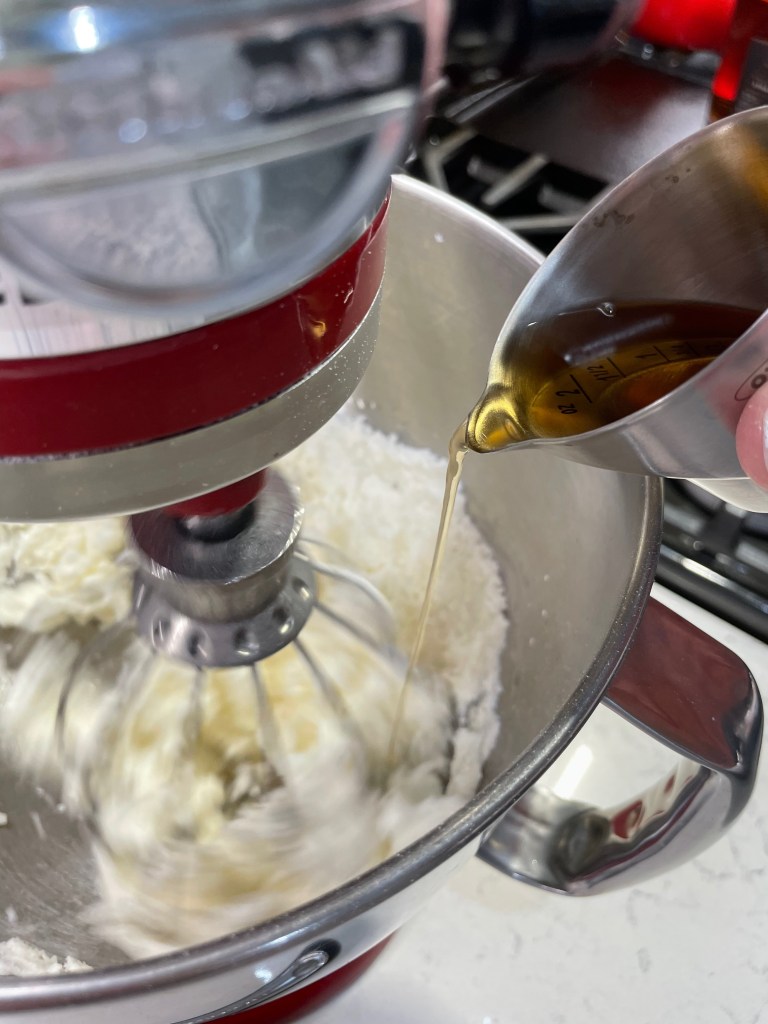
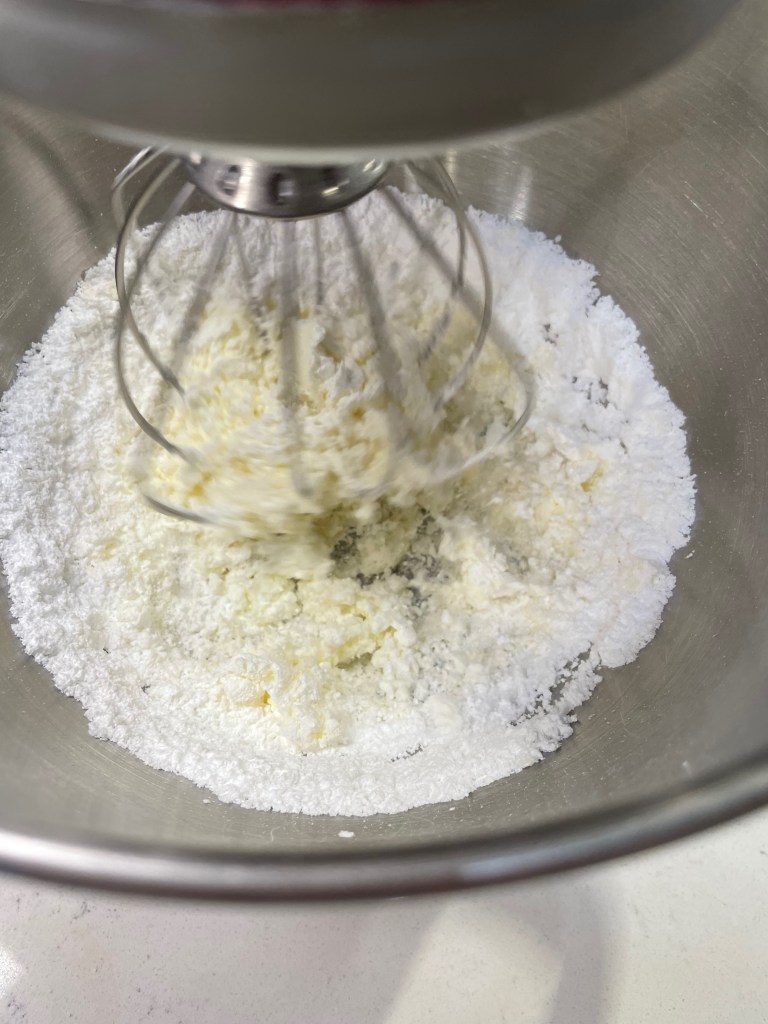
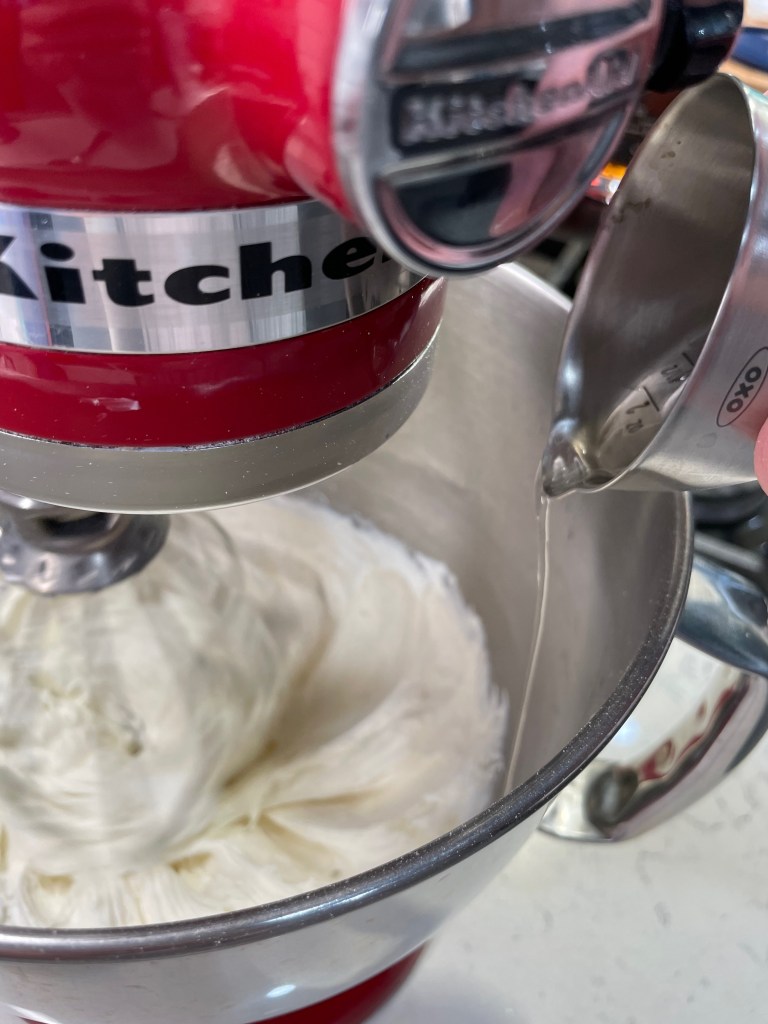
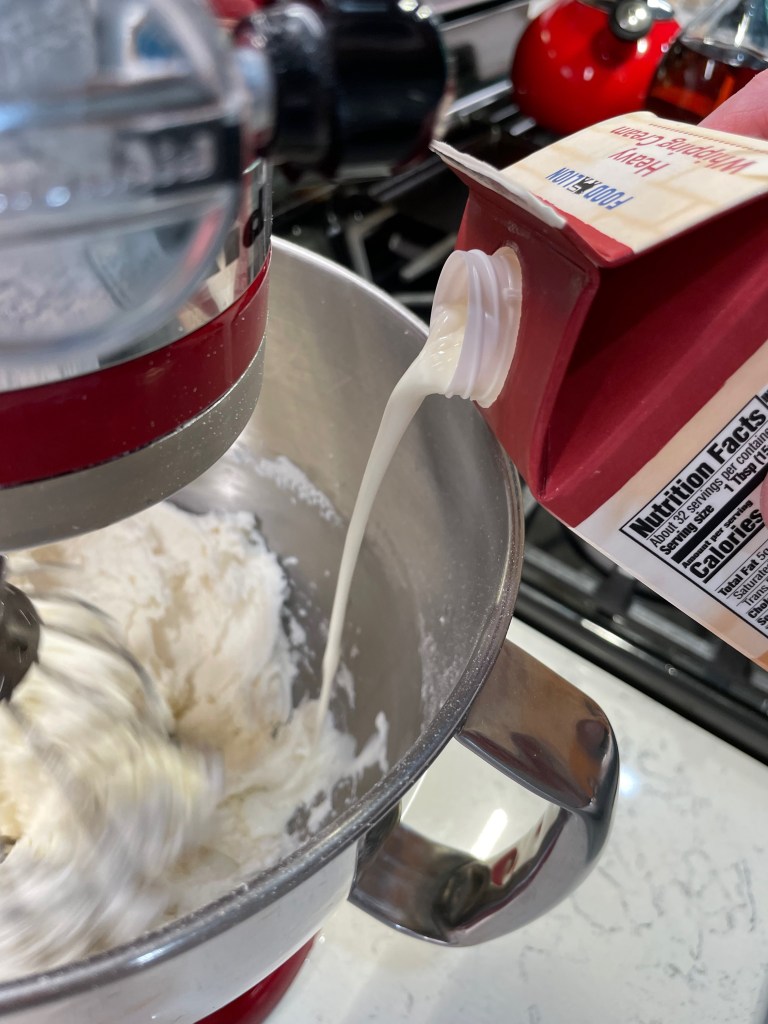
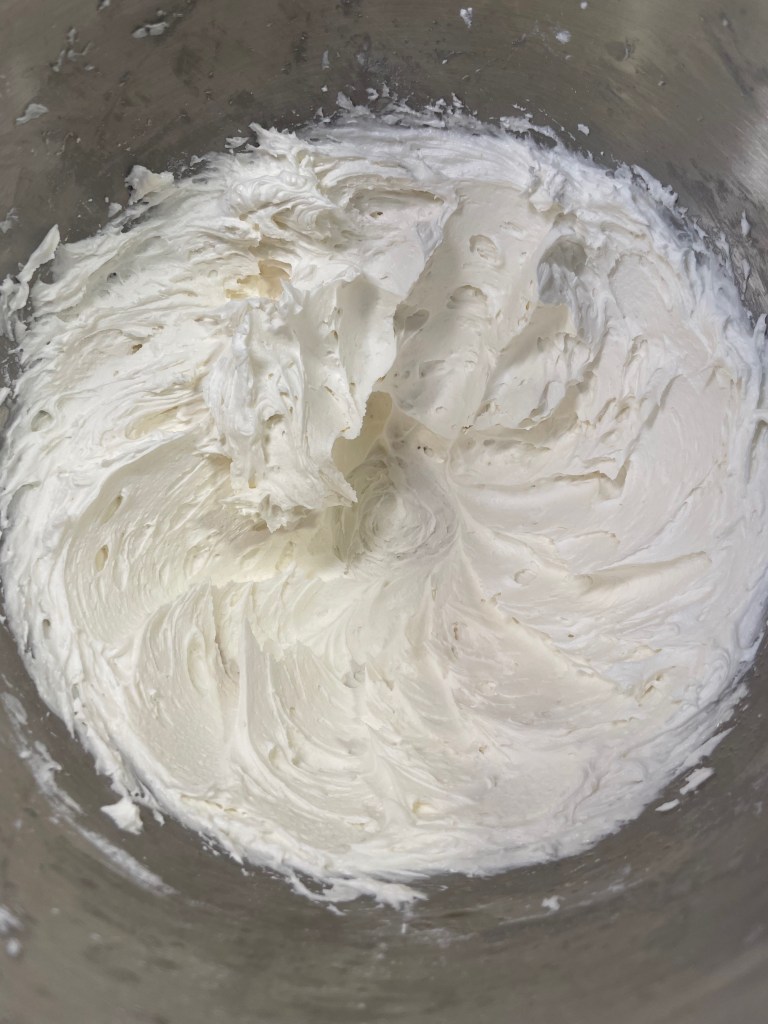
This was my first time making buttercream, and I’m not sure if it was beginners luck or what, but it turned out so much better than I expected. I used salted butter rather than unsalted, because a touch of salt emphasizes whatever other flavors are around it, including sweet ones. I mixed in the powdered sugar, one cup at a time, and drizzled in the bourbon and mint extract somewhere in between the sugar additions. A little bit of heavy cream helped me achieve the right consistency, so that the icing would still have enough structure to hold its shape when piped onto the cupcakes.


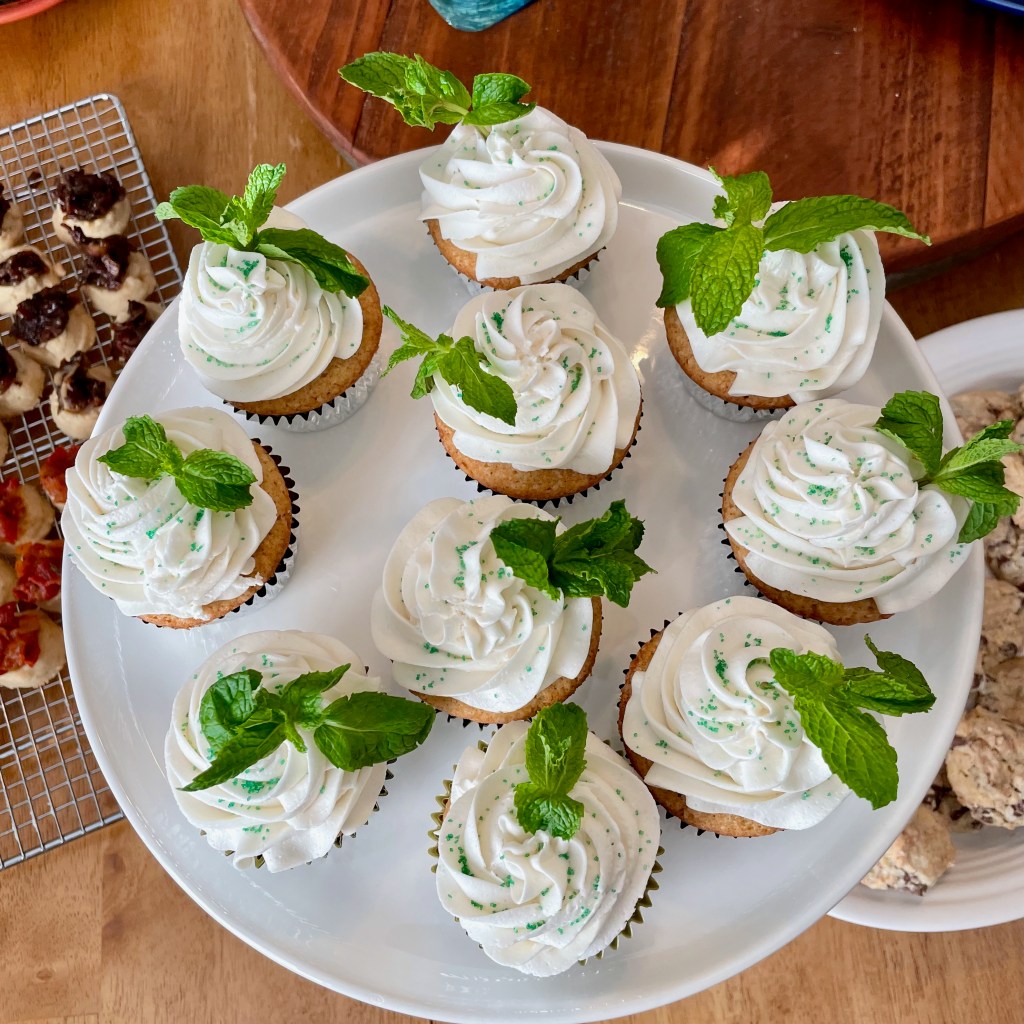
Silver foil liners, a pinch of green sanding sugar and fresh mint sprigs put the perfect finishing touches on these delightful Kentucky Derby treats.


Mint Julep Cupcakes

  • Servings: 1 dozen cupcakes
  • Difficulty: Average
  • Print

These pretty cupcakes have bourbon in both the batter and the minty buttercream icing, making them a perfect finish to any Kentucky Derby party.


For the cupcakes, begin by measuring the flour by the fluff, sprinkle, level method. If you dunk a scoop directly into the flour, your batter will be too dense. Butter, eggs and milk should be near room temperature for best results.

Ingredients

  • 1-1/2 cups all-purpose flour
  • 2 tsp. baking powder
  • 2 pinches kosher salt
  • 1/2 cup (1 stick) salted butter, softened
  • 1/2 cup sugar
  • 1/2 cup brown sugar
  • 2 eggs, room temperature
  • 1/4 cup bottled-in-bond bourbon
  • 1/3 cup whole milk, room temperature

Directions

  1. Preheat oven to 350° F, with oven rack in center position. Line a standard cupcake tin with paper liners inside foil liners.
  2. In a medium bowl, whisk together flour, baking powder and salt.
  3. Using a stand mixer (with beater blade attachment) or electric hand mixer, cream together the butter and sugars until fully blended and somewhat fluffy.
  4. Add eggs, one at a time, beating well after each addition. Stream in bourbon and beat until fully blended.
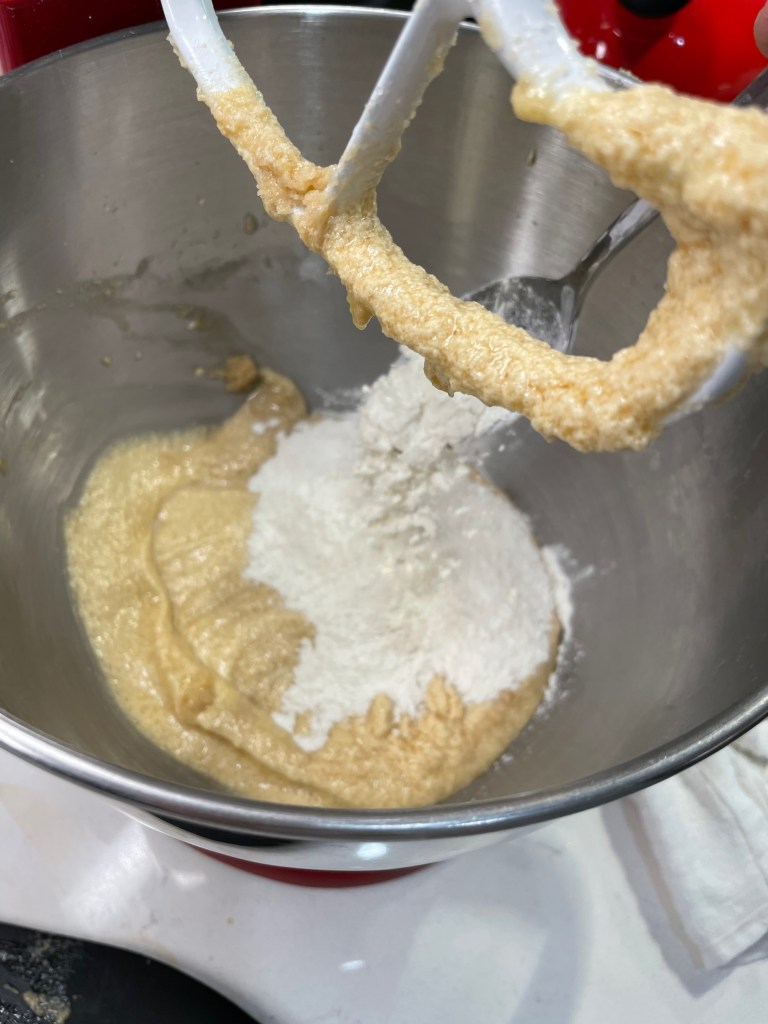
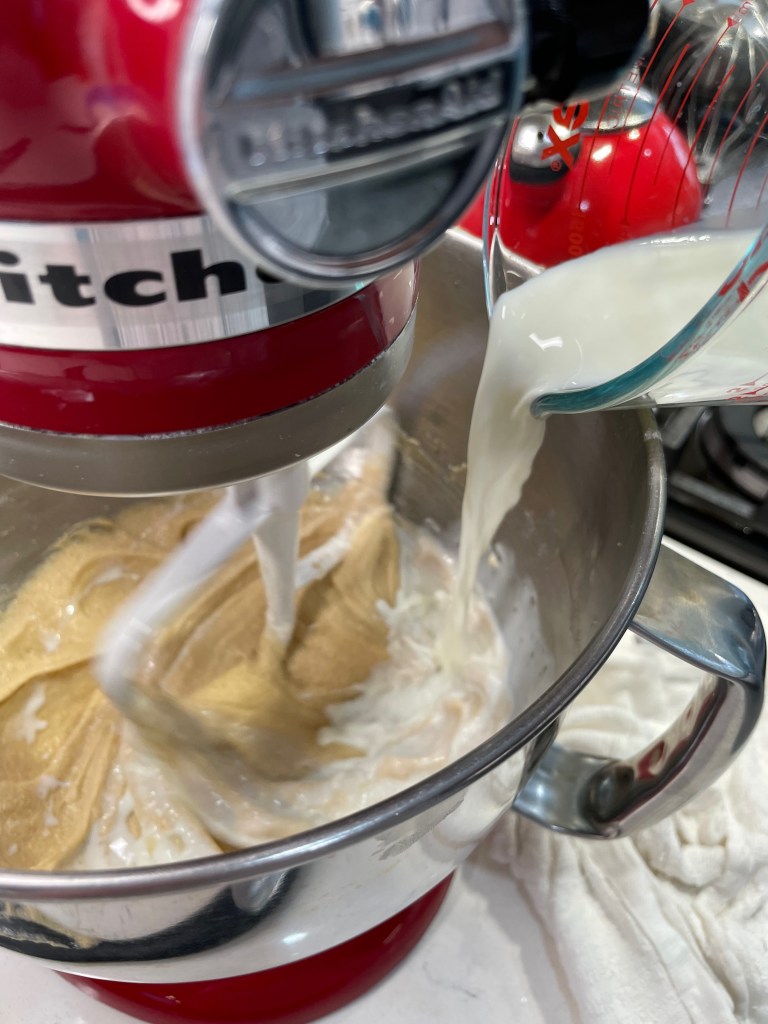
  5. Add flour mixture, a little at a time, alternating with the milk. Beat after each addition, but only until blended.
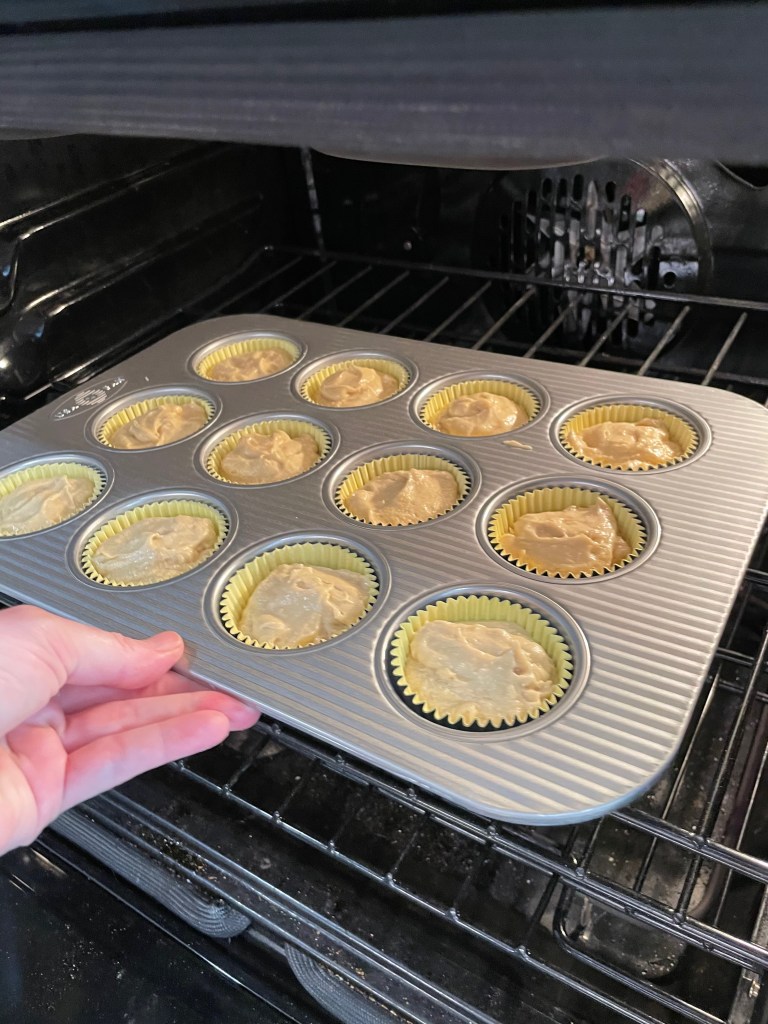
  6. Divide batter among prepared cups; each cup will be approximately 3/4 full. Bake for about 18 minutes, until cupcakes are golden and a toothpick inserted into the center of a cake comes out clean. Cool in the cupcake pan for 15 minutes before transferring to a wire rack to cool completely.

For the buttercream icing, you’ll want the butter softened to near room temperature. Make this while the cupcakes are baking, then refrigerate the icing in a piping bag until the cupcakes are completely cooled.

Ingredients

  • 1/2 cup (1 stick) butter, softened to room temperature
  • 4 to 4-1/2 cups confectioner’s sugar (depending on your sweet tooth)
  • 2 tbsp. Bottled-in-bond bourbon
  • 1 tsp. pure mint extract
  • Up to 1/4 cup heavy cream, as needed to loosen the frosting
  • Fresh mint leaves and green sanding sugar, for garnishing

Directions

  1. Using a stand mixer (fitted with whisk) or an electric hand mixer, beat butter until smooth and creamy. Add confectioner’s sugar, one cup at a time, beating until smooth after each addition. Drizzle in bourbon before the final addition of sugar.
  2. Beat in mint extract and enough heavy cream to loosen the icing to desired consistency. Transfer icing to a piping bag and refrigerate until shortly before you will be ready to serve the cupcakes. Pipe onto cupcakes with a flower tip. Sprinkle each with a pinch of green sanding sugar (if desired) and garnish each cupcake with a sprig of fresh mint.


O Canada!

I might have otherwise titled this post, “How I Spent My Eclipse Vacation,” but the dense clouds that encased Niagara Falls, Ontario, on Monday, April 8 rearranged the highlights of the trip we had planned for witnessing the totality of solar eclipse. There were many silver linings to the vacation and I’ll share them all, though I won’t deny the disappointment I felt in staring at fully overcast skies, trying in vain to figure out which direction we were even supposed to be looking with our UV-filtering protective eyewear. Yep, it really was that cloudy. We didn’t expect that our best picture of the eclipse would be the social media wall in our hotel lobby.

The view from our room, about two hours before the eclipse. Sigh.

Where are you, sun?

We ventured from our 15th floor hotel room, which offered a view of the American Falls, down a steep hill to Queen Victoria Park, a sprawling open space that abutted the main tourist attractions. The city of Niagara Falls had preemptively declared a state of emergency for that otherwise-ordinary Monday, anticipating a record crowd for this once-in-a-lifetime celestial event. The city was more than prepared, and as we scouted out a viewing spot on the lawn, we encountered people from every culture and every walk of life. Nothing like a natural spectacle (or two) to bring people together.

Hints of blue sky on the horizon, but not where we needed it.

Occasionally, we heard an eruption of cheers from the thousands of other hopeful eclipse watchers, as the tiniest break in the clouds gave us new (albeit brief) optimism for great views and photos. Alas, the main things we witnessed were the sudden total darkness at 3:18 and a big temperature drop, as the moon covered the peekaboo sun. Even that was exhilarating though, and it was one time that I wished my iPhone camera did not automatically adjust for ambient light. It was much darker in reality than our selfie suggested. And then, about three minutes later, it was over. Les caught a few decent shots just post-totality— what looks like a sliver of crescent moon was actually crescent sun— and then we trudged back up the hill with the rest of the throng and hit the hotel bar for a consolation cocktail.

We gave up on the UV filter. This was our best image, just after totality.

The other 5,756 minutes of our vacay

What we missed in eclipse excitement on Monday, we more than made up for with all of the other amazing things we had planned for our trip. Having grown up a few stones’ throws from Niagara Falls, I knew that we would have an awesome time, and seeing the falls up close never gets old for me.

It’s incredible to be so close to this wonder!

Les had seen the American side once many years ago, but his visit amounted to a drive-by while in Buffalo for an event for his daughter, so he was excited to do and see as much as we could on this trip. The falls did not disappoint, and we were blessed with fantastic weather for our Voyage to the Falls, Canada’s equivalent to Maid of the Mist.


The power and magnificence of the Horseshoe Falls is something that everyone should experience at least once in their lifetime. This was my second time seeing it this way, and as our boat churned forward with every bit of power its engines could muster, the ride became unsteady enough that I put away my iPhone camera and just took it in. As far as I could turn my head in each direction, we were surrounded by the falls, which are as high as a 12-story building. The loud, rushing water flooded my soul this time around, and as I stared up at this mighty force of nature, I felt myself fighting back tears. Truly, an incredible experience. A few days later, we went underground into the tunnels behind the falls for even more exciting, up-close views.


Toronto!

Toronto should be nicknamed “City of Glass!”

On the Saturday before eclipse day, we ventured around the tip of Lake Ontario to Toronto, Canada’s largest city. Toronto is, among other things, the home of the Hockey Hall of Fame, and we spent a couple of hours exploring the history of Les’s favorite pro sport, even getting up close and personal with the Stanley Cup.

We are pointing at the St. Louis Blues championship, favorite team of Les’s son, Alex.

A few blocks down, we explored St. Lawrence Market, which is essentially a humongous carnival for food lovers. Vendors in the market peddled everything from fresh and cured meats, cheeses and baked goods to spices, specialty pantry items, flowers and even prepared foods. I could have easily spent the entire day browsing this indoor market, but we had an important lunch date across the street.


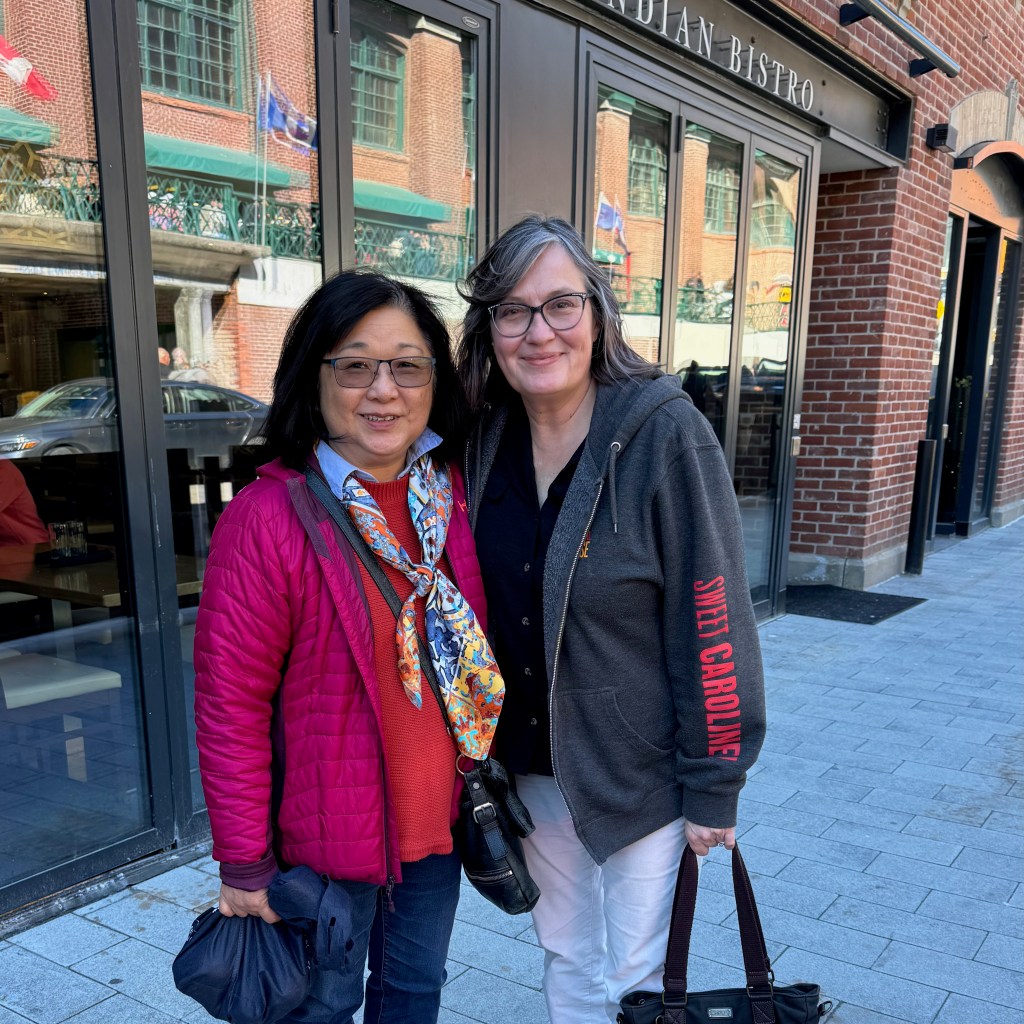
Another Blog Buddy!

When I started Comfort du Jour, I was hoping to find community with like-minded foodies. And I did find that, but I wasn’t expecting the comments sections of our respective blogs to become an incubator for such wonderful friendships. When Les and I finalized our decision to make Niagara Falls our eclipse destination, I reached out to Sandy, my blog buddy from The Sandy Chronicles. Sandy lives in Toronto for part of the year, and I’ve been intrigued by her experiments with International cuisines, as well as her posts about photography, art and travel.

It was great meeting you, Sandy!

We were so pleased that she was able to meet up with us for lunch at a fantastic Indian bistro she recommended, and we conversed about everything from food and travel to the sad state of American politics as we nibbled fish pakora, vegetable samosas and a delightful appetizer called sev puri. Those little gems were like flavor explosions!


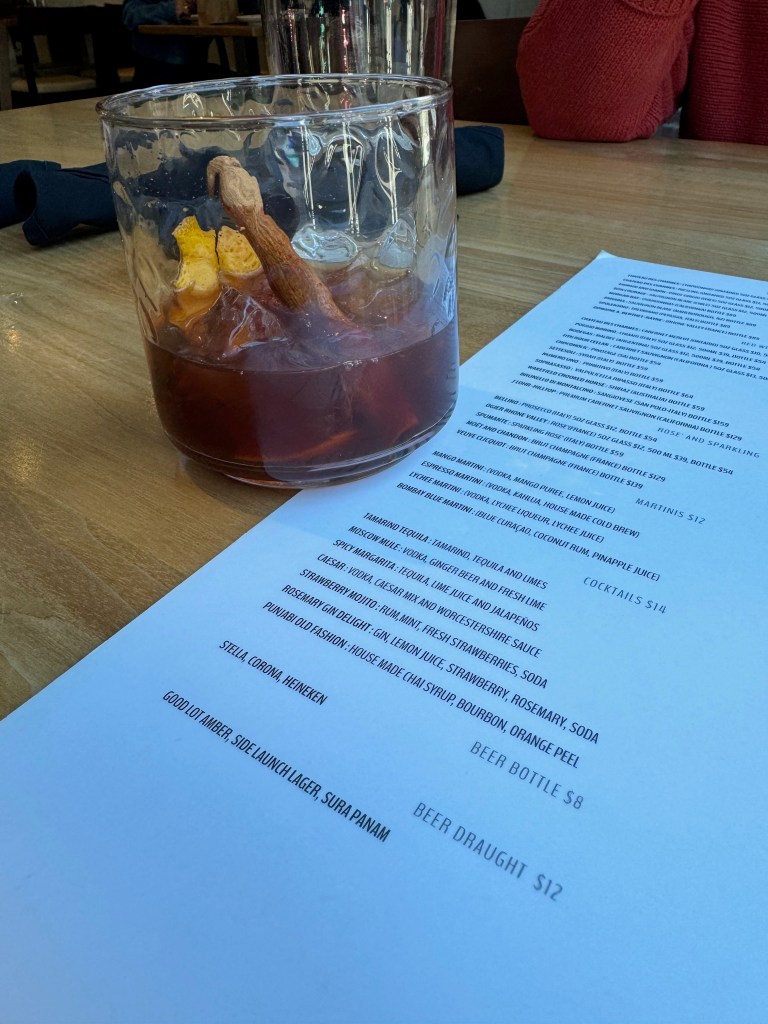
The Indian flavors were so comforting and satisfying, and I am feeling inspired to try making some of these special foods in the near future. Sandy even turned me on to a book to get me started, and you can bet I will re-create that Punjabi old fashioned cocktail soon, too. I wouldn’t have guessed that chai spices would be such a natural pairing with bourbon.

From Toronto to Tuscany

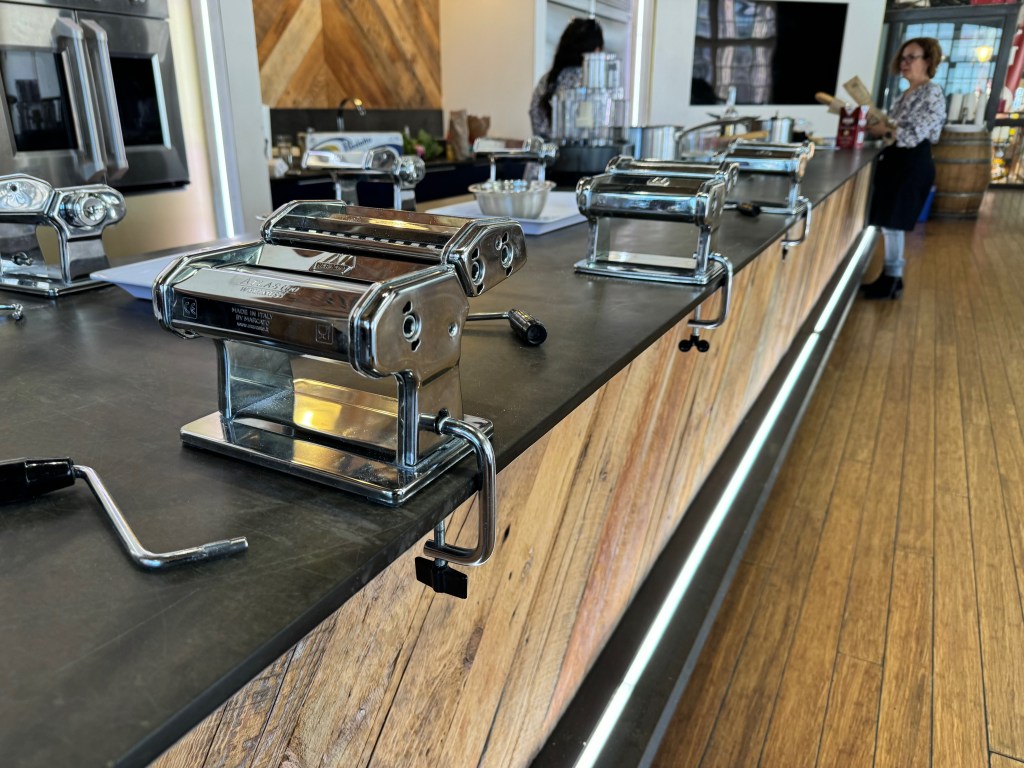
How do you suppose we sidetracked to Tuscany from Toronto? By way of a cooking class, of course! We were fortunate to have insider information from Sandy, who had sent me a link to the “My Place for Dinner” cooking school, led by Deb Diament. The Tuscan cuisine class took place in a loft studio that overlooked the St. Lawrence Market we’d visited earlier in the day, and it was a great and relaxing way to wrap up the Toronto leg of our vacation. We were treated to white bean crostini and Italian wine as we explored how to make arugula salad with lemon vinaigrette, handmade pasta with chicken piccata, and an orange-polenta cake with fresh berries. Most of the foods and techniques were already familiar to me, but what I enjoyed most was watching my husband become immersed in the lessons. The whole experience was a treat, and I can’t wait to put Les to work at home next time I want to make fresh pasta!


This whole trip was a lot to digest— no pun intended, well, maybe intended— and I’m still breaking down some of our experiences, so there will be more to share later, including one very special meal we enjoyed. But for now, I’ll keep you in the dark about that. 😉


Carrot Cake Waffles (with maple-cream cheese icing)

“Hey, what do you say we have our Easter breakfast outside on our new patio?” 

This was a brilliant suggestion from my husband this past Sunday, and right on the heels of his first suggestion that weekend— applying carrot cake flavors to homemade waffles! Just two more reasons to adore this man I married. And I can’t think of a more appropriate way to celebrate the fourth anniversary of Comfort du Jour than a recipe that twists up a classic into something unique, delicious and unexpected.

Who doesn’t want dessert for breakfast?!

Life has been very busy lately, and I’ve lamented not having as much time as I’d like to engage on my blog. I’ve been cooking, don’t get me wrong, but I’ve lacked inspiration, passion and time. What I needed most was a recipe that I was really excited about. This is the one, and it is exactly the kind of thing I had in mind when I launched my little blog on this date in 2020.

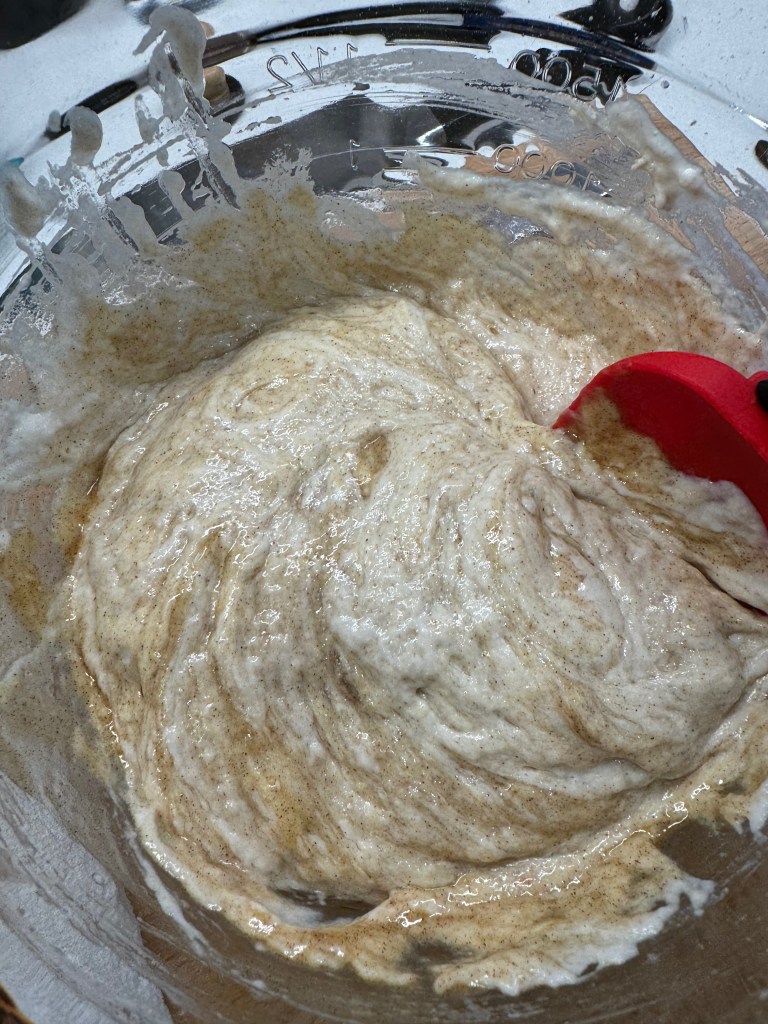
I started waffles as I always do— with half of my favorite King Arthur Baking Company’s “Classic Sourdough Pancakes or Waffles” recipe. It begins the night before with sourdough discard, flour, sugar and buttermilk— stirred together and left on the counter overnight to work its fermentation magic.

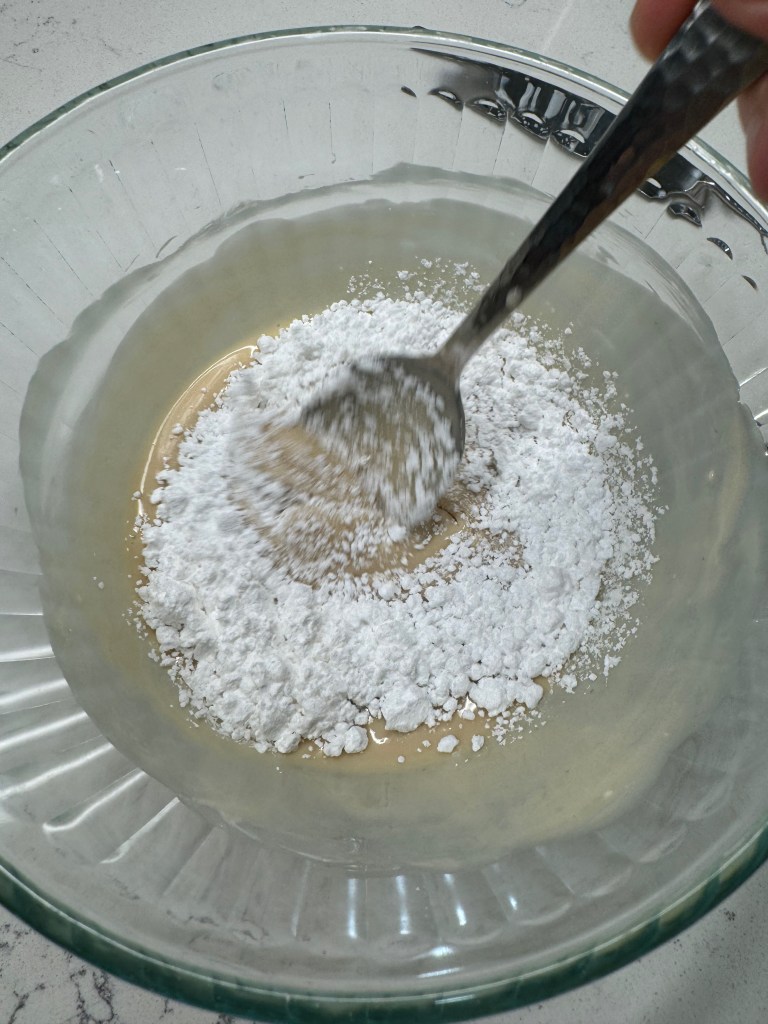
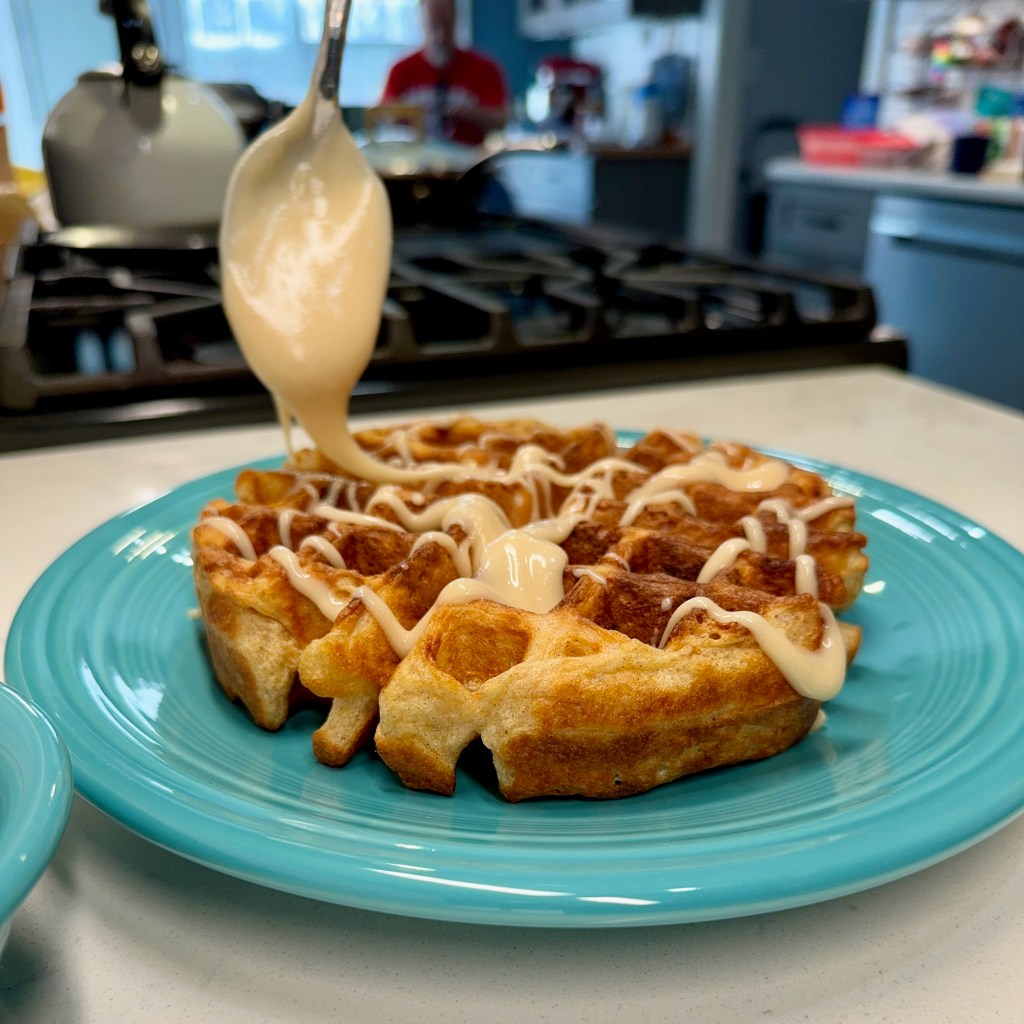
Easter morning, the first order of business was coffee, my favorite dark roast blend, 50/50 with decaf, French-pressed. Then, I whipped up a little cream cheese “icing” for my waffles. Maple cream, which is essentially just whipped maple syrup, was blended together with low-fat cream cheese. A touch more syrup (maple, infused with vanilla bean) and just enough powdered sugar to balance the tang of the cream cheese. Oh my goodness, I could’ve eaten the entire bowl with just a spoon!


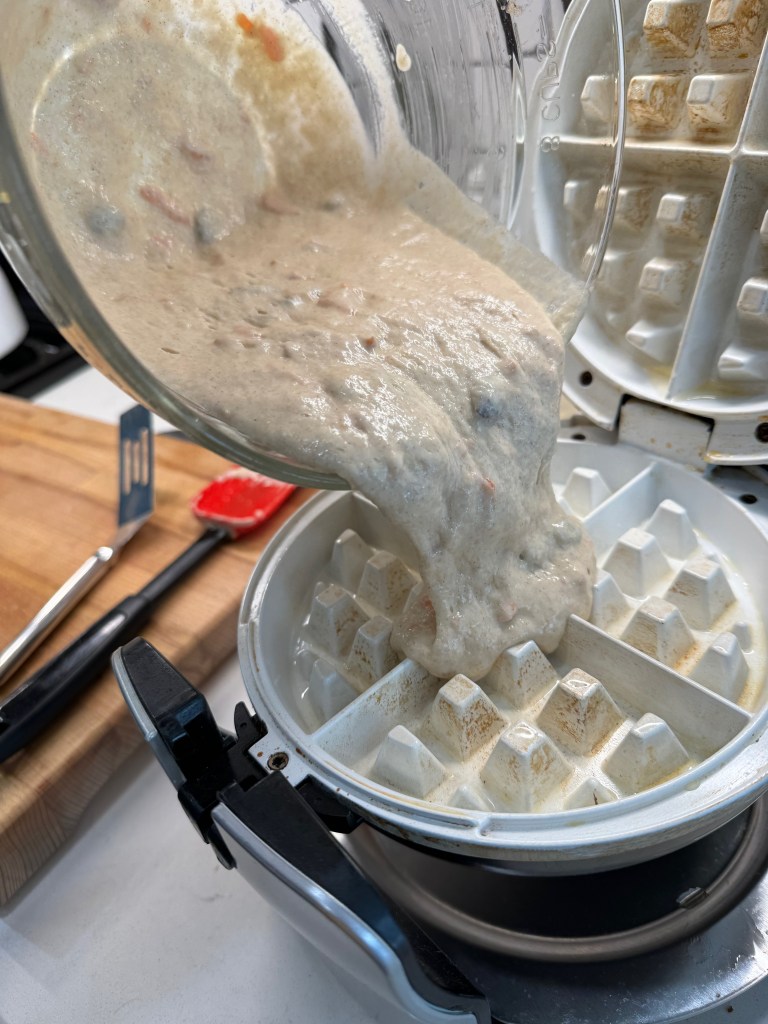
Then, to snazz up my waffle batter, which was nice and bubbly from its overnight nap, I added every flavor you’d expect in a carrot cake. That means plenty of warm spices (ground cinnamon and freshly grated ginger), an entire shredded carrot (patted dry after grating on the large holes of my box grater), and even a small handful of plump raisins (because I happen to love them in carrot cake, so why not)? 


Adding the carrots put a healthy touch on this recipe, and I played that up with two more adjustments: blood orange-fused olive oil stood in for the melted butter that my inspiration recipe suggested, and I went halvsies on the flour, subbing in 50% white whole wheat for all-purpose. An egg, a little salt and baking soda to counter the acidity of the buttermilk, and this was taking shape very nicely!


The Belgian waffle maker seemed right for these— it holds more batter so the waffles would be higher and larger— but a standard square or round iron would work just fine. I like to put a touch of oil on the hot plates right before adding the batter. This ensures a crispy exterior to contrast with the soft and fluffy insides.


Finally, the moment of truth. Would these taste like carrot cake, as we imagined? They absolutely did! Not as sweet, of course, and that was intentional. But a drizzle of that maple-y delicious cream cheese icing handled the sweet part, and a little sprinkle of pecan chips made this the perfect Easter breakfast— especially on a gorgeous Spring morning, on our new patio with the love of my life. 

Carrot Cake Waffles

  • Servings: 2 large Belgian waffles
  • Difficulty: Average
  • Print

A maple-kissed cream cheese icing really dressed up these waffles, which had all the flavor of carrot cake with a fraction of the guilt.


Ingredients

  • 1/2 cup sourdough discard
  • 1 cup real cultured buttermilk (mine was low-fat, but nonfat or whole is fine)
  • 1/2 cup all-purpose flour
  • 1/2 cup white whole wheat flour (or whole wheat pastry flour)
  • 1 Tbsp. organic cane sugar

The remaining waffle ingredients are added in the morning, and I recommend having your waffle iron pre-heated before you complete the waffle batter.

Ingredients

  • 1 large egg, beaten
  • 2 Tbsp. orange-fused EVOO (see notes)
  • 3/8 tsp. salt (1/4 + 1/8)
  • 1/2 tsp. baking soda
  • 1/2 tsp ground cinnamon
  • 1/2 tsp. freshly grated ginger (or 1/4 tsp. ground ginger)
  • 1 medium carrot, grated on large holes of box grater, blotted dry with paper towels
  • 2 Tbsp. raisins (if dry, rehydrated briefly with boiling water and then blot dry)
  • Expeller-pressed canola oil, for the waffle iron
  • Toasted pecan chips, for serving

For the Maple-Cream Cheese icing, I recommend making this first, so that it is ready when your waffles are and you have time to adjust the sweetness to your liking. If you end up with extra, do what we did and just eat it with a spoon.

Ingredients

  • About 3 oz. Neufchâtel (or regular) cream cheese, softened at room temperature
  • About 2 Tbsp. maple cream
  • About 2 Tbsp. maple syrup
  • About 3 Tbsp. powdered sugar
  • 1 tsp. real vanilla extract

Directions

  1. The night before, combine sourdough starter, buttermilk, flours and sugar. Use a large bowl, as the mixture will bubble up overnight. Cover and rest at room temperature for 12 hours.
  2. Make the maple-cream cheese icing by stirring together the Neufchâtel, maple cream, syrup, and vanilla. Stir in enough powdered sugar to achieve the drizzling consistency and sweetness you desire.
  3. Preheat the waffle iron according to manufacturer’s instructions. In a glass measuring cup, combine the egg, oil, baking soda, salt and cinnamon. Add to the overnight sourdough mixture and fold gently to combine (you will see some chemical reaction fairly quickly). Fold in the carrots, ginger and raisins.
  4. Brush or drizzle oil on the hot waffle plates and add batter. Cook according to manufacturer’s instructions until waffles are done through, crispy and golden.
  5. Spoon maple-cream cheese icing over the warm waffles and sprinkle with toasted pecan chips.


Roasted Cauliflower with Olives, Capers & Herbs

The newness of this season makes eating lighter feel more natural and easy, and I think I’m finally onto something in our recent quest to lighten up our meals. Up til now, my first thought for a new meal has been focused on the protein— deciding how to keep it “a smidge healthier,” as my blog pal, Bernadette from New Classic Recipe would say. 😉

It gets exhausting from a decision-making standpoint, though, and then by the end of my workday when I have figured out how to adapt the protein part of a meal, I’m fresh out of ideas for planning the sides. Here’s what happened when I stepped back and redirected my focus onto the vegetables.

This tackled all my flavor cravings. And won!

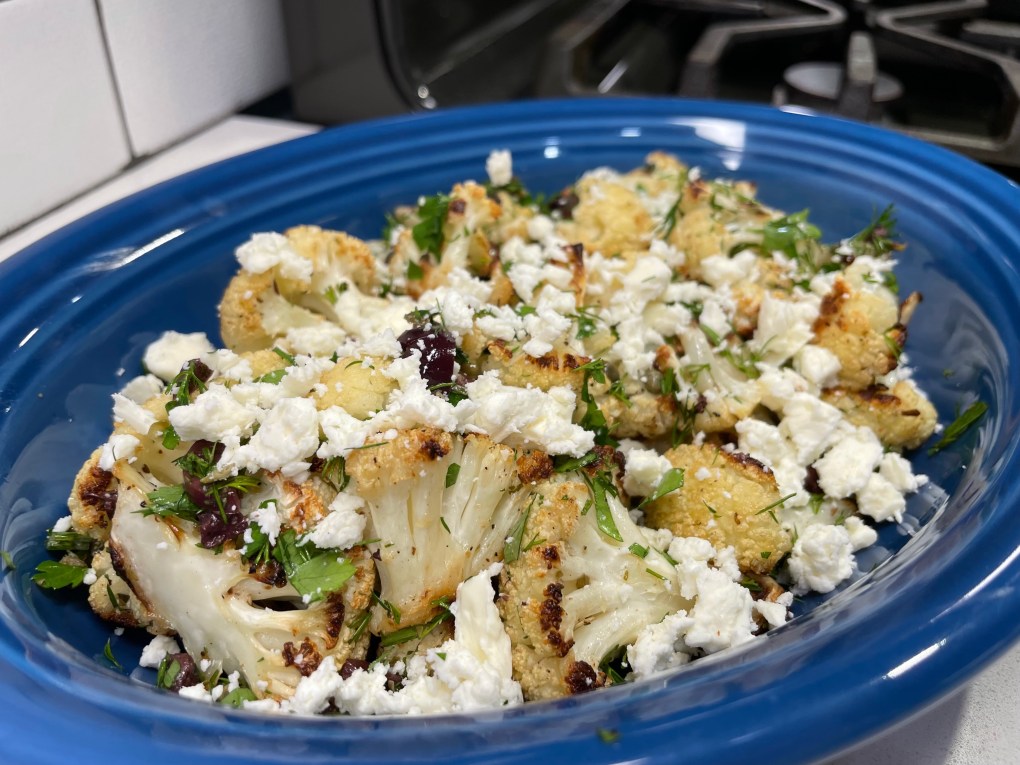
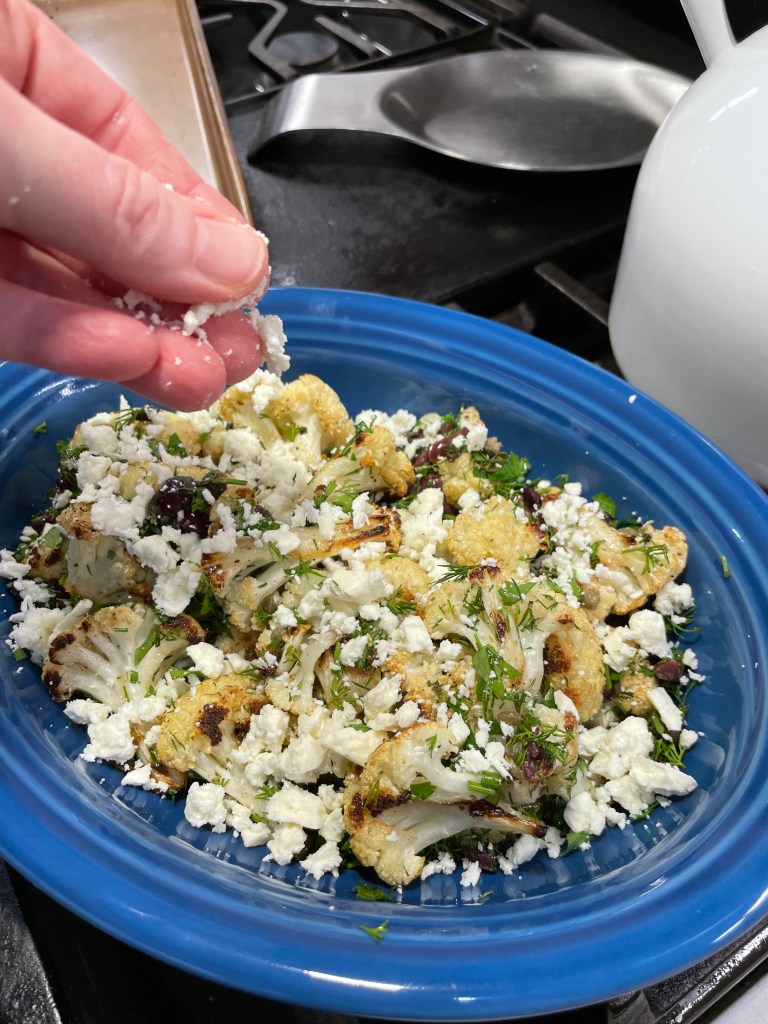
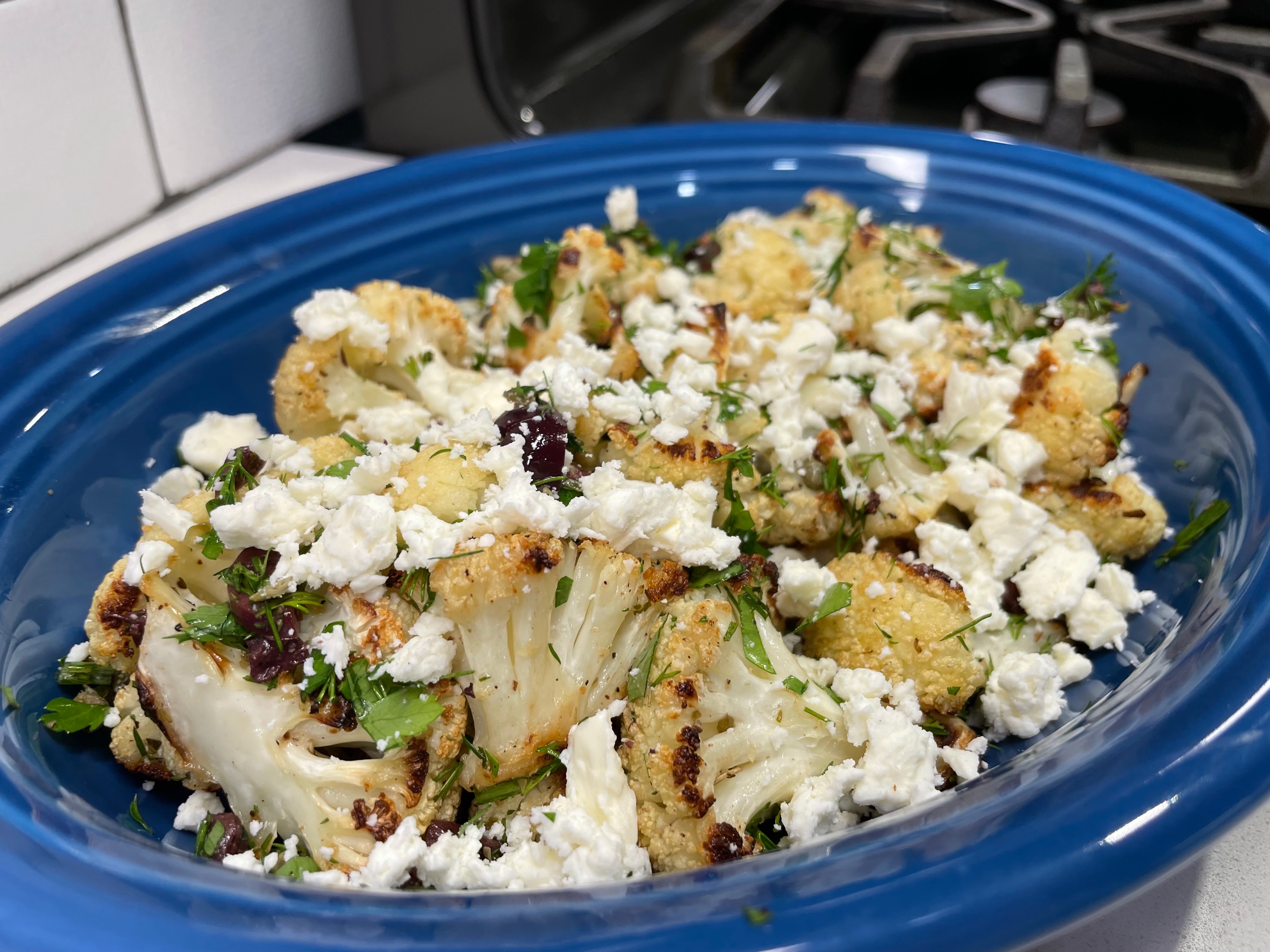
What grabs the eye in this photo isn’t the panko-crusted baked halibut, though it was truly delicious and satisfyingly easy to make. It’s the Greek-inspired roasted cauliflower stealing the show here, and no wonder. It’s embellished with tangy feta, kalamata olives, capers and herbs. Packed with flavor, and still very easy to make. 

Only an ounce of feta per serving, and it brought more than enough flavor.

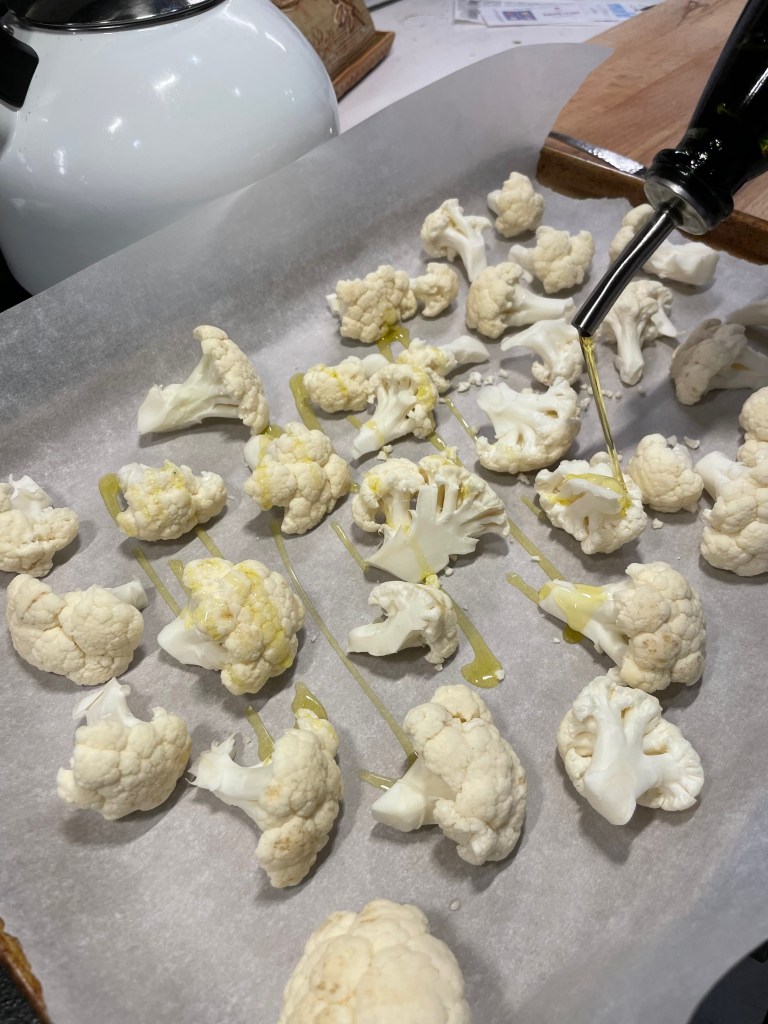
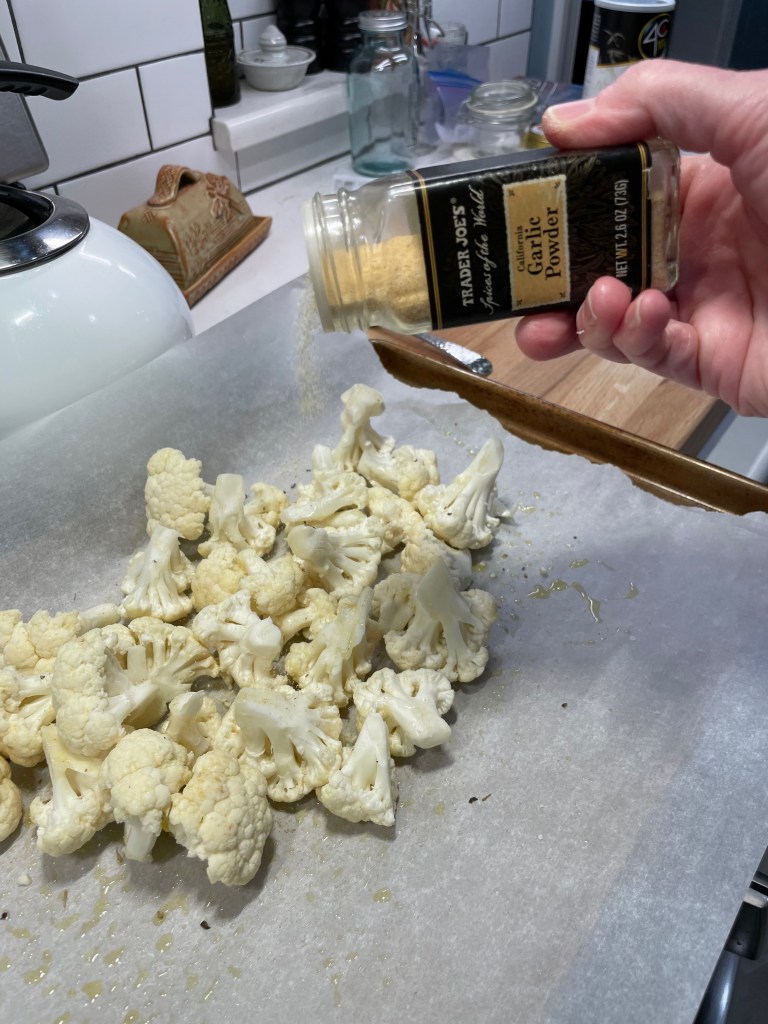
I chose cauliflower to carry these flavors because it is neutral on its own, suitable for just about any seasonings, and I kept the Greek flavors fresh by adding most of them after the cauliflower was roasted. My florets were drizzled with extra virgin olive oil and sprinkled with garlic powder, dried oregano, salt and pepper.


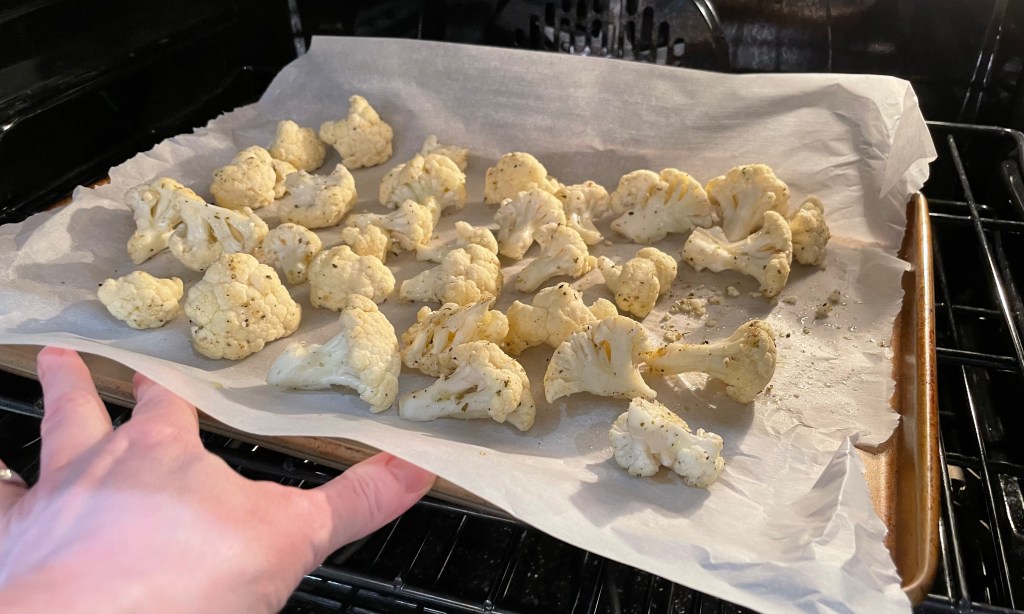
It’s best to roast vegetables at a higher heat, so that you get caramelization on the exterior before they have a chance to turn to mush on the inside. Mine went 25 minutes at 425° F, and the result was perfect for this recipe. The cauliflower held their texture and absorbed the flavors I tossed in at the end.


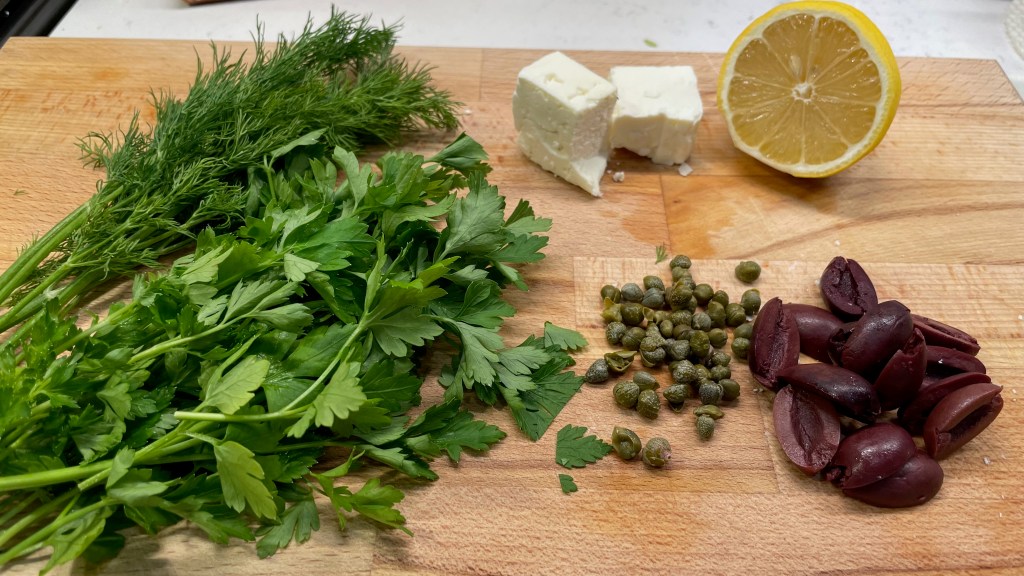
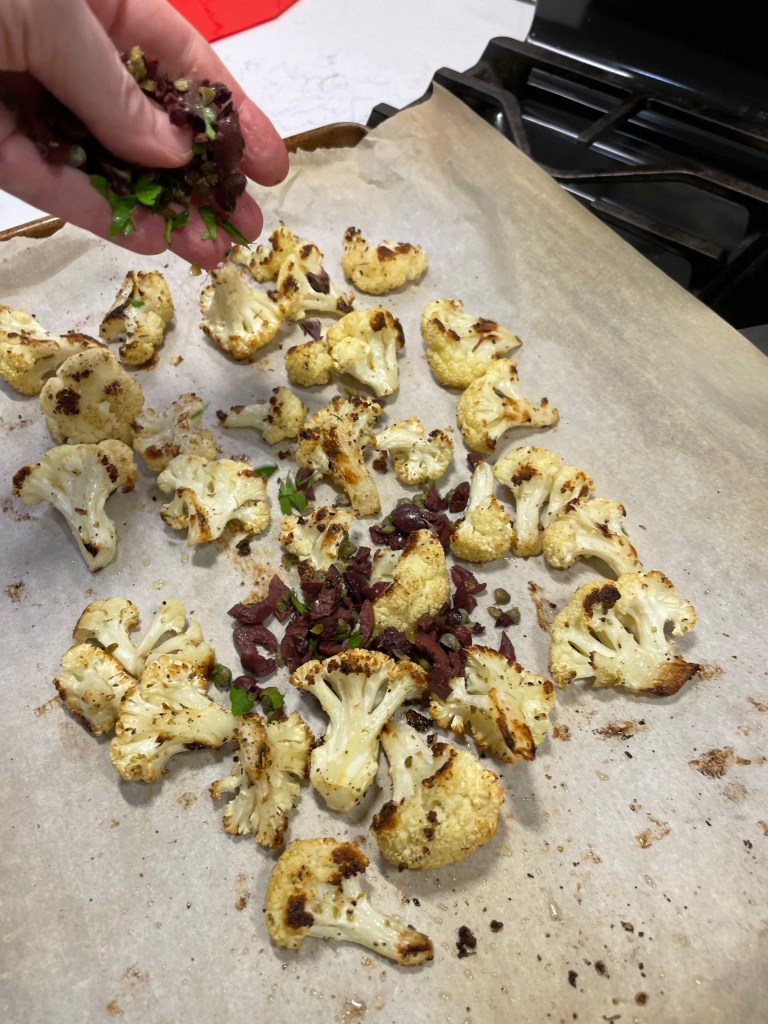
When the cauliflower emerged from the oven, browned on the edges and perfectly al denté, I simply tossed it with the chopped olives, capers and herbs and then gave it a good squeeze of fresh lemon, plus a final drizzle of the extra virgin olive oil. A scattering of crumbled feta finished the dish, and provided a sharp, tangy flavor that was great with my panko crusted halibut. Don’t worry, I’ll have that recipe for you in a few days!


I like this idea of putting the vegetables first, and I made a decision last week that sort of paints me into a corner so that I keep doing it. More on that soon. 😁


Roasted Cauliflower with Olives, Capers & Herbs

  • Servings: 4
  • Difficulty: Average
  • Print

This dish features all the lovely flavors of the Mediterranean, and is an easy, impressive side to fish or chicken.


Ingredients

  • Small head cauliflower, cleaned and broken down into florets
  • 3 Tbsp. extra virgin olive oil (use two for roasting, one for finishing)
  • Salt and pepper
  • A few shakes granulated garlic
  • A few shakes dried mediterranean oregano
  • 3 Tbsp. chopped kalamata olives
  • 1 Tbsp. capers, chopped but not rinsed
  • 2 oz. feta cheese, crumbled
  • Handful each of fresh parsley and fresh dill, chopped
  • A squeeze of fresh lemon

Directions

  1. Preheat oven to 425° F, with oven rack in center position. Line a baking sheet with parchment.
  2. Drizzle cauliflower with olive oil and toss with garlic powder, oregano, salt and pepper. Toss to coat evenly, then spread out over parchment-lined sheet, keeping a bit of space between pieces for more even browning. Roast for 25 minutes, or until browned edges are visible on most of the pieces. Taste a piece to be sure it is done to your liking.
  3. Add the olives, capers and fresh herbs to the roasted cauliflower and toss gently to distribute. Give the mix a light drizzle of olive oil and a squeeze of lemon to finish, and then transfer to a bowl and scatter feta over the entire bowl.


Harissa Tomato Soup

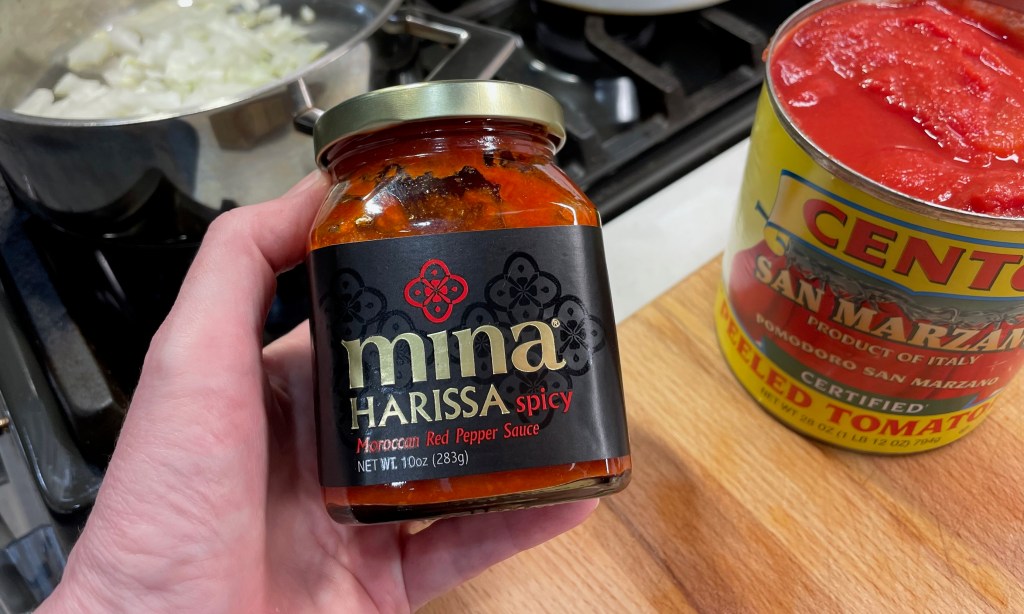
Raise your hand if you got a jar of harissa in your Christmas stocking this year. Really, I’m the only one? 😂 Sincerely, I love that my husband sneaks fun foodie surprises into my gifts, because it sets me up for interesting flavor adventures throughout the coming year.

I’m here to tell you, this isn’t that spicy. 😏

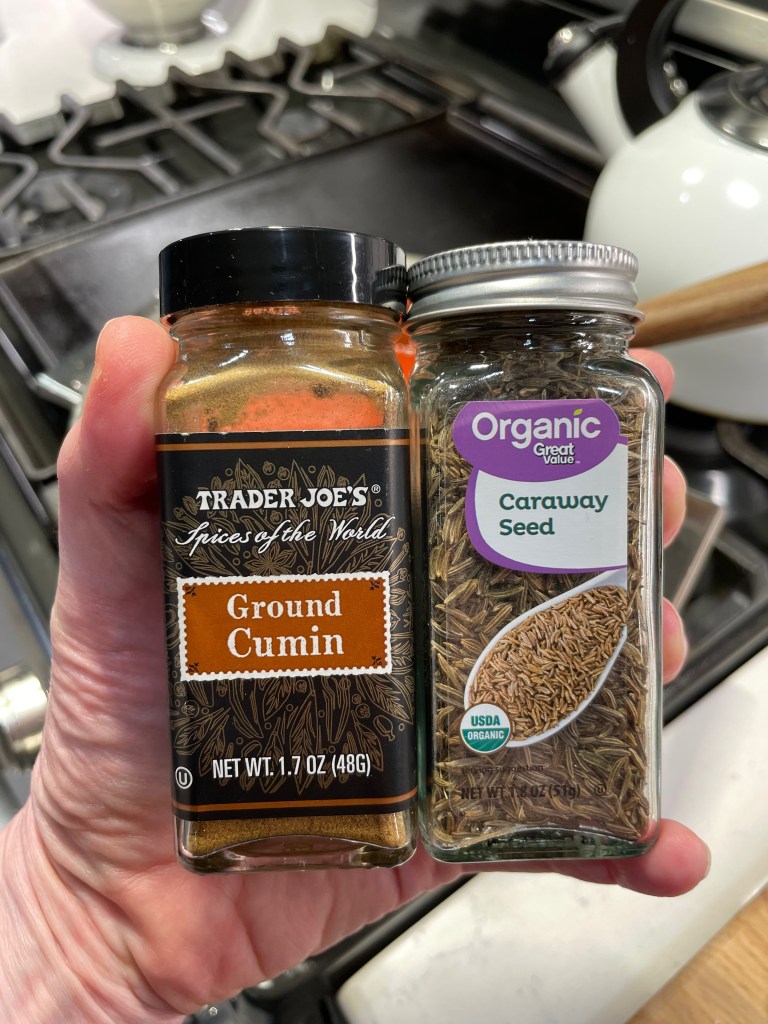
Harissa, if you’re not familiar, is a Moroccan concoction made with roasted red peppers— ranging from sweet to hot—along with garlic and what I like to call the “C spices” of cumin, caraway and coriander. It’s a complex blend of flavors that can be used in a marinade or added directly to a meat or vegetable dish to perk up the flavors. It is typically quite aromatic and spicy, so a little usually goes a long way.

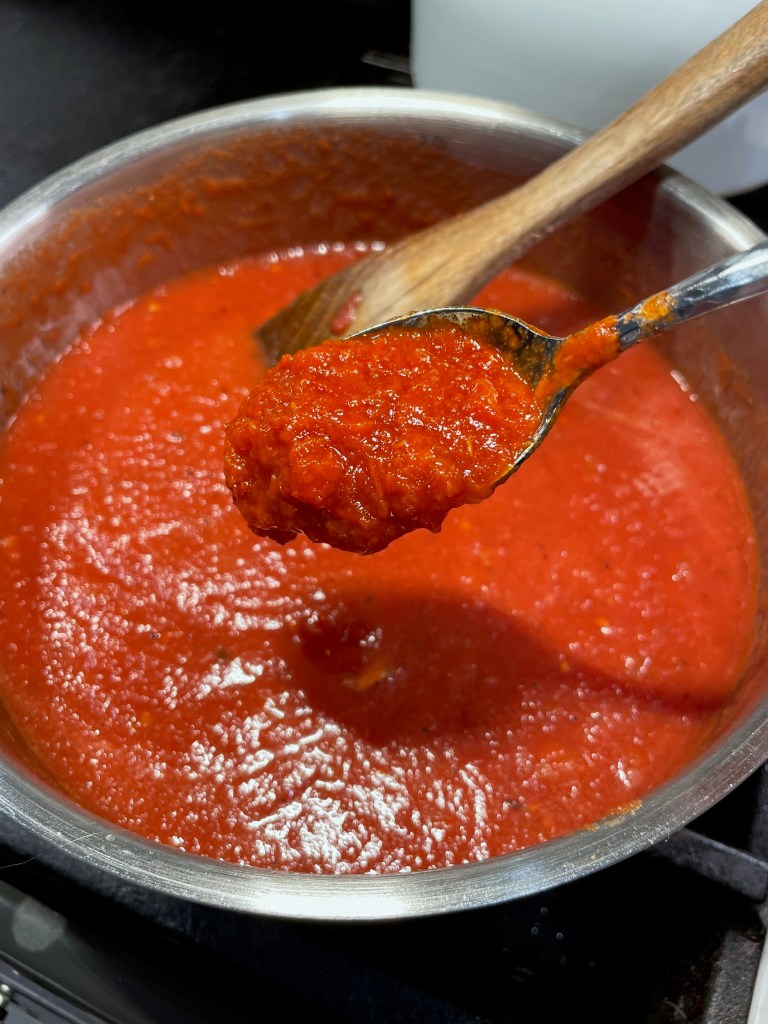
This jar of harissa has already served me well because it transformed what would otherwise have been an ordinary bowl of tomato soup. If you’re bored in the kitchen and tired of making the same things over and over, this post should inspire you to see how easily you can change things up with one ingredient swap or addition. A couple of generous spoonfuls of harissa, along with accompanying spices, elevated this simple, made-from-canned-tomatoes soup to such a degree that Les and I devoured the entire batch in one sitting.

I will confess here that I did not find this particular brand of harissa as flavorful as some others I have tried, including the one carried by Trader Joe’s. My first taste of harissa was during the few years that I worked in a specialty olive oil store. Our harissa-infused extra virgin olive oil was bold, spicy and flavorful, and this jar of harissa paste didn’t quite measure up in the flavor (or heat) department. Still, I found it a good base, which I jazzed up with more of the other flavors I expected— namely hot pepper flakes, cumin and caraway— and this soup did not disappoint!


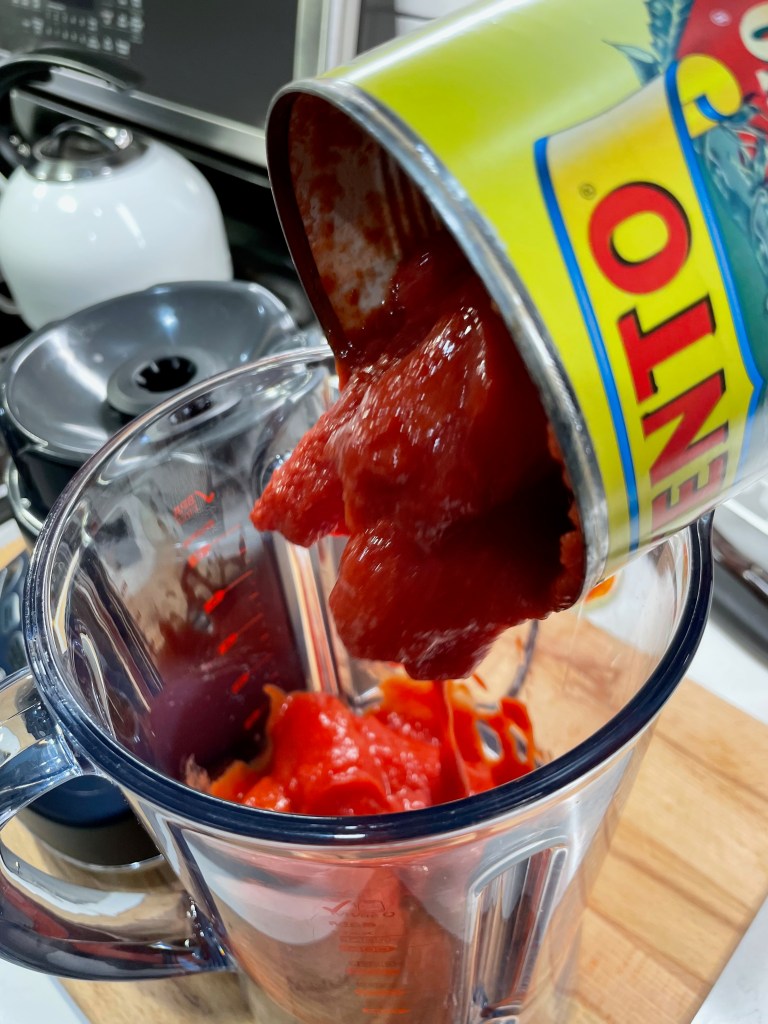
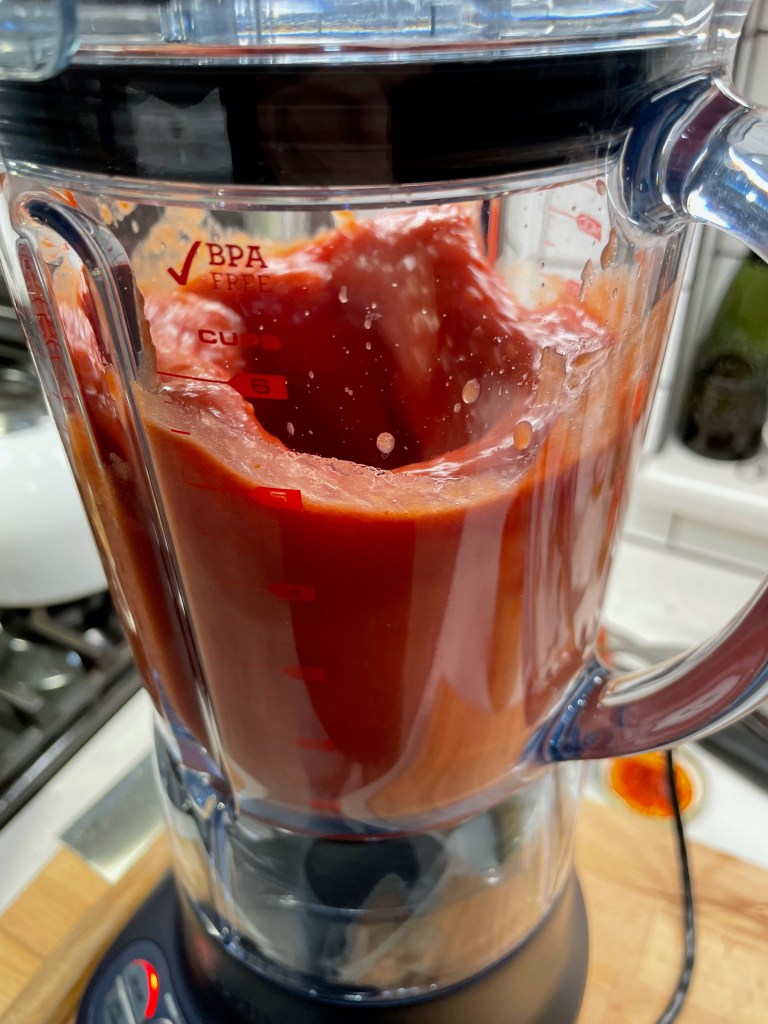
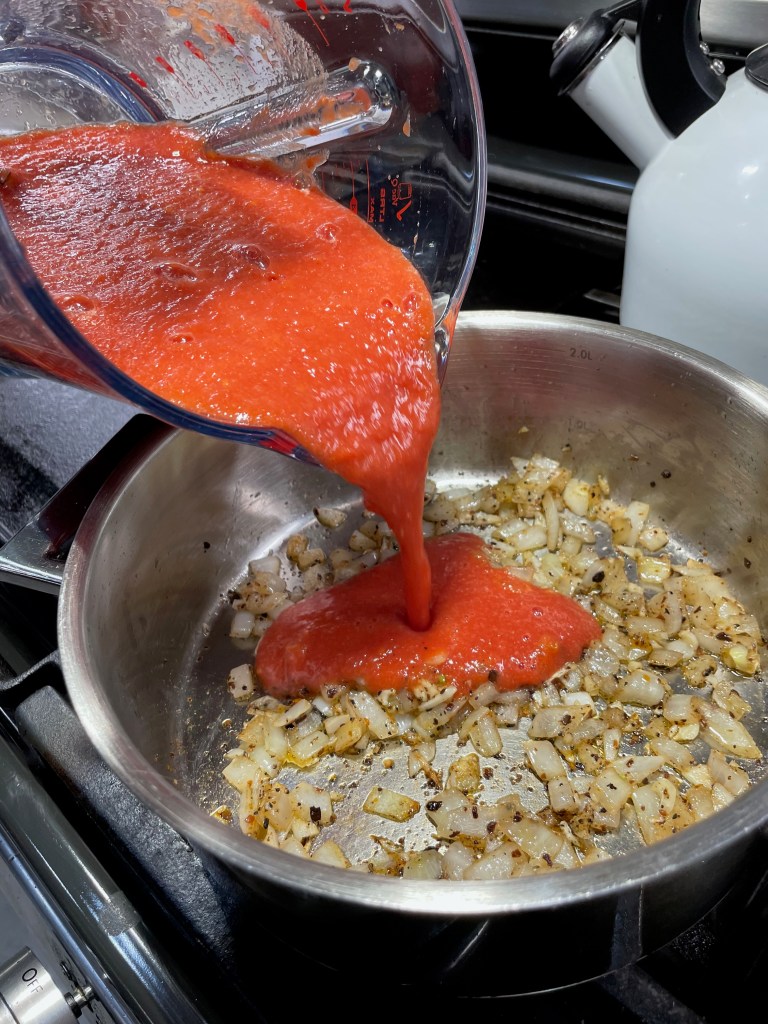
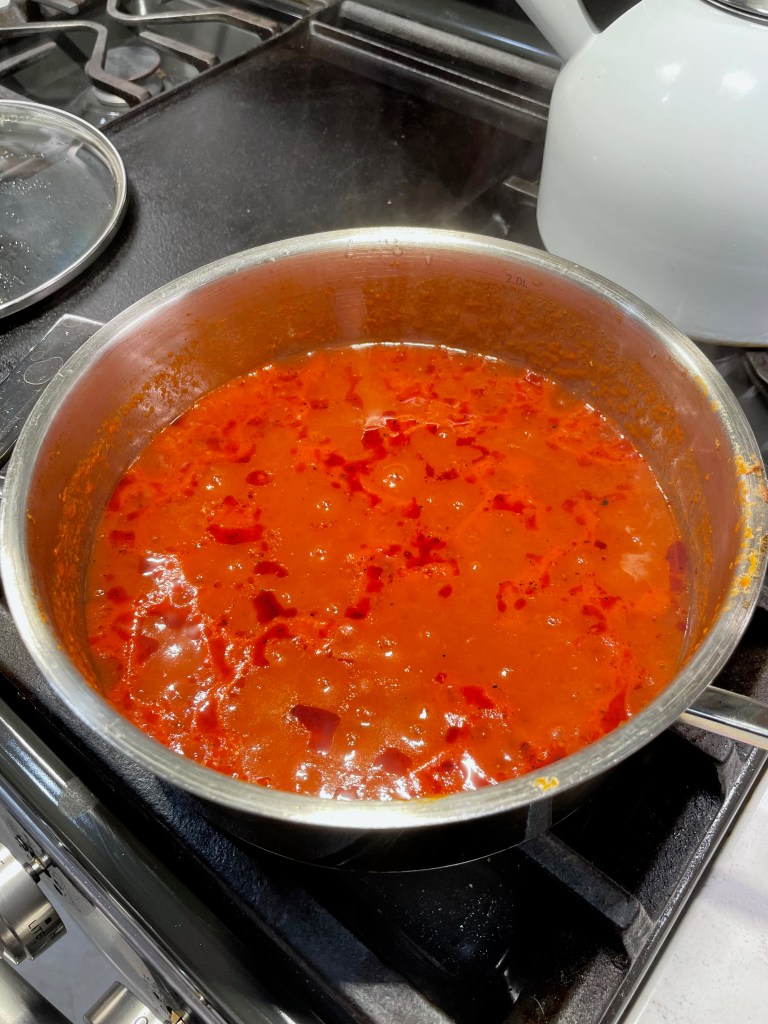
The base of any good tomato soup, of course, is tomatoes! And given that fresh tomato season is still about four months out, I reached for a big can of San Marzanos. I’ve learned the hard way that lesser quality tomatoes don’t have the same depth as real San Marzanos, so choose well. I whizzed these up in my George Clooney blender (so named because it is tall, handsome and versatile), and then I added it to lightly sautéed onions and garlic along with a few tablespoons of the harissa.


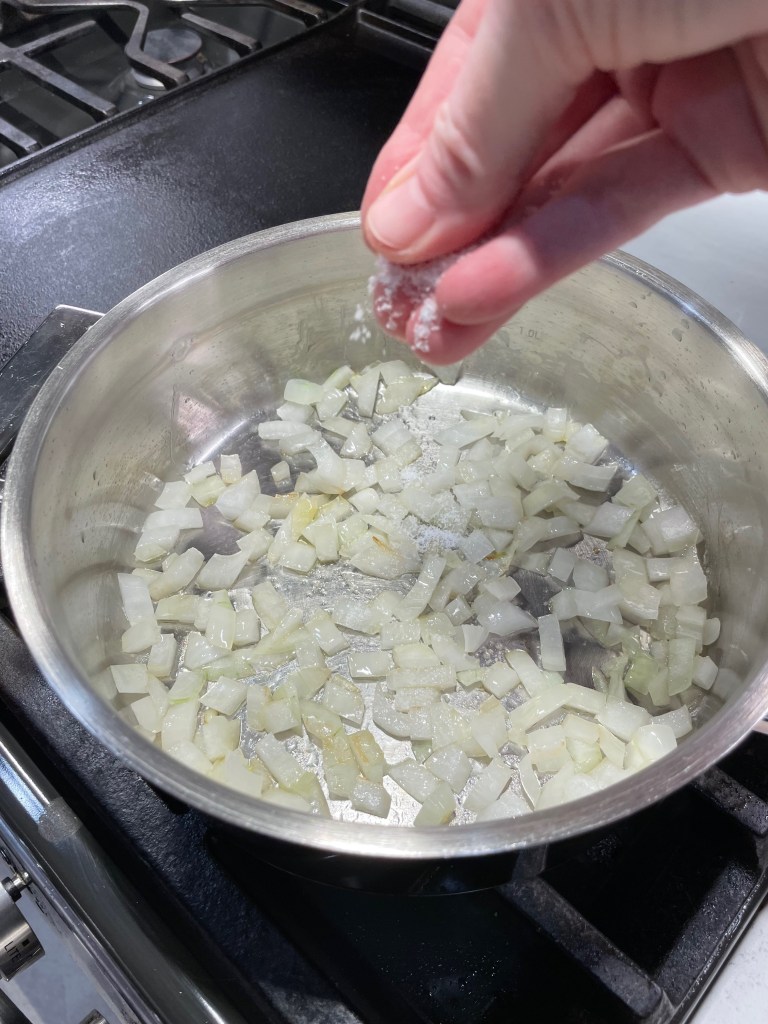
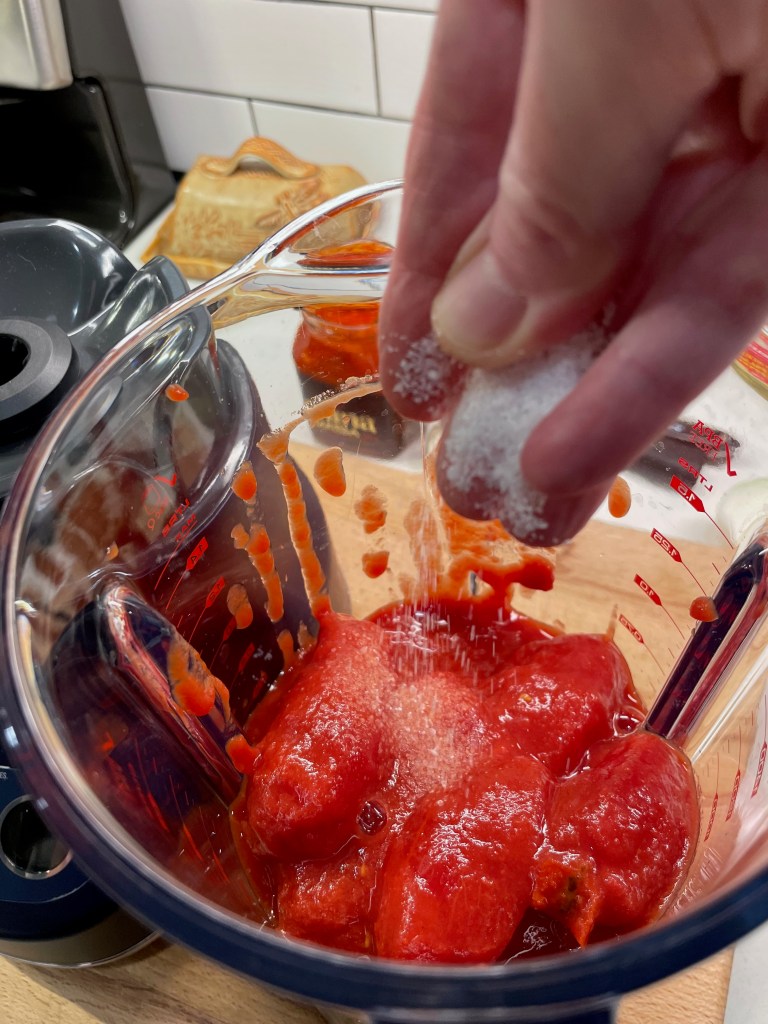
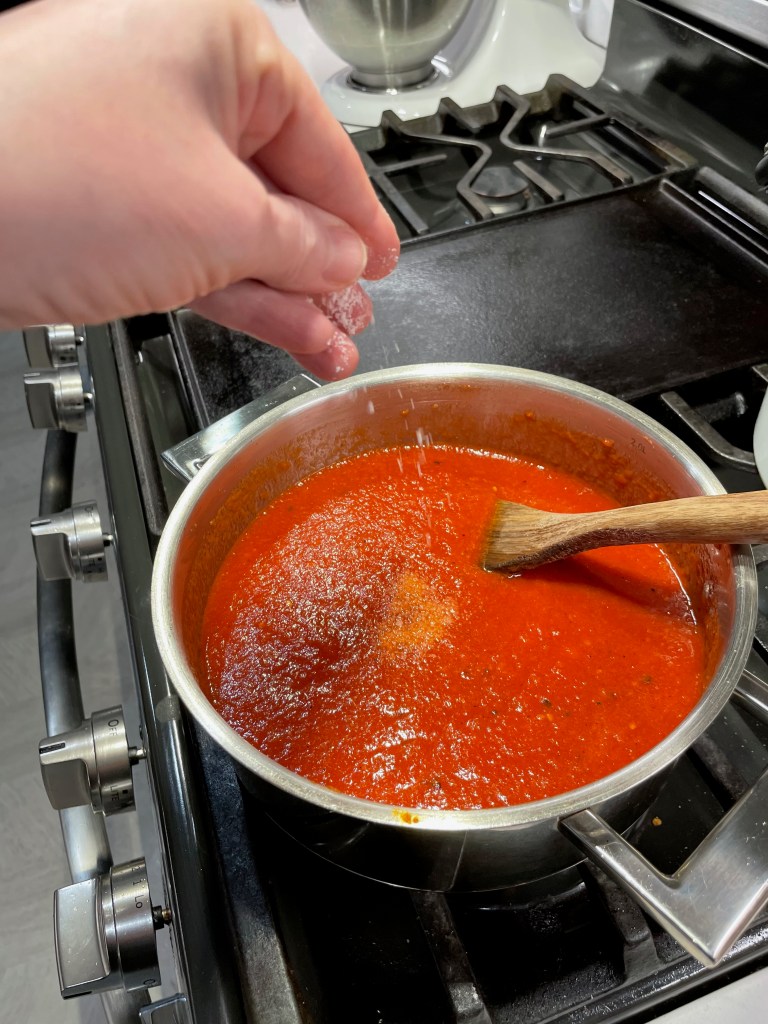
As with any recipe, I followed the advice of every culinary expert I respect, by seasoning every layer— during sauté of the onions, preparing the tomatoes and building the soup over heat. Salt has more purpose than just flavor, and if you miss seasoning the layers of a recipe, you may end up with a meal that tastes under-seasoned and over-salted at the same time.


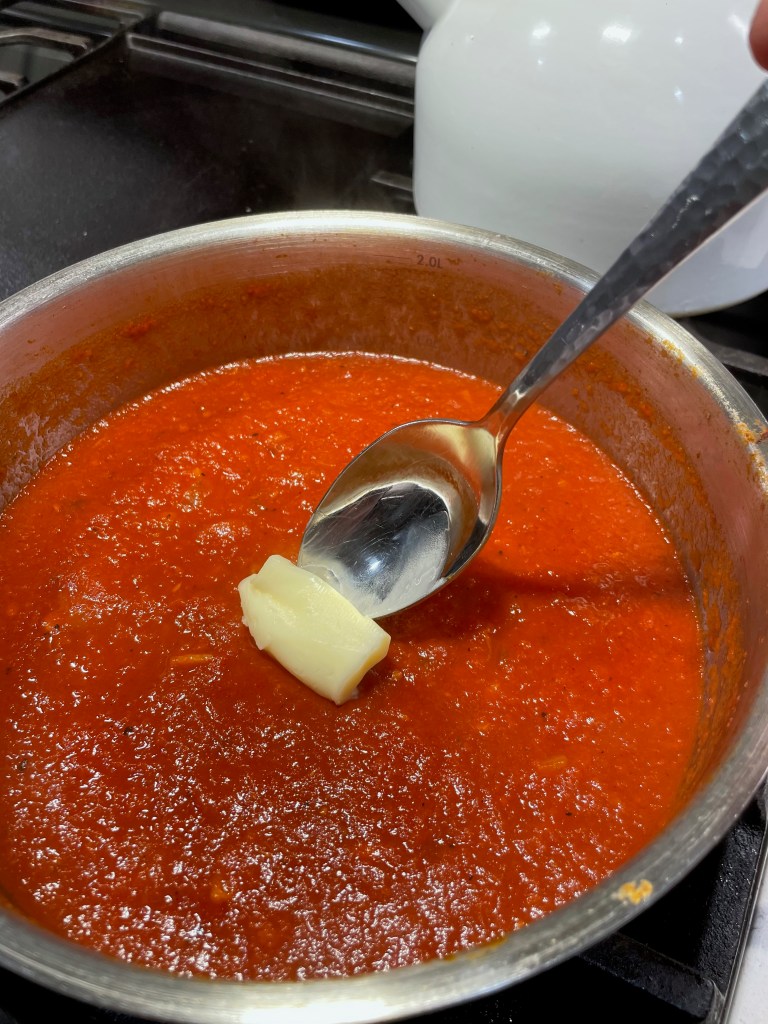
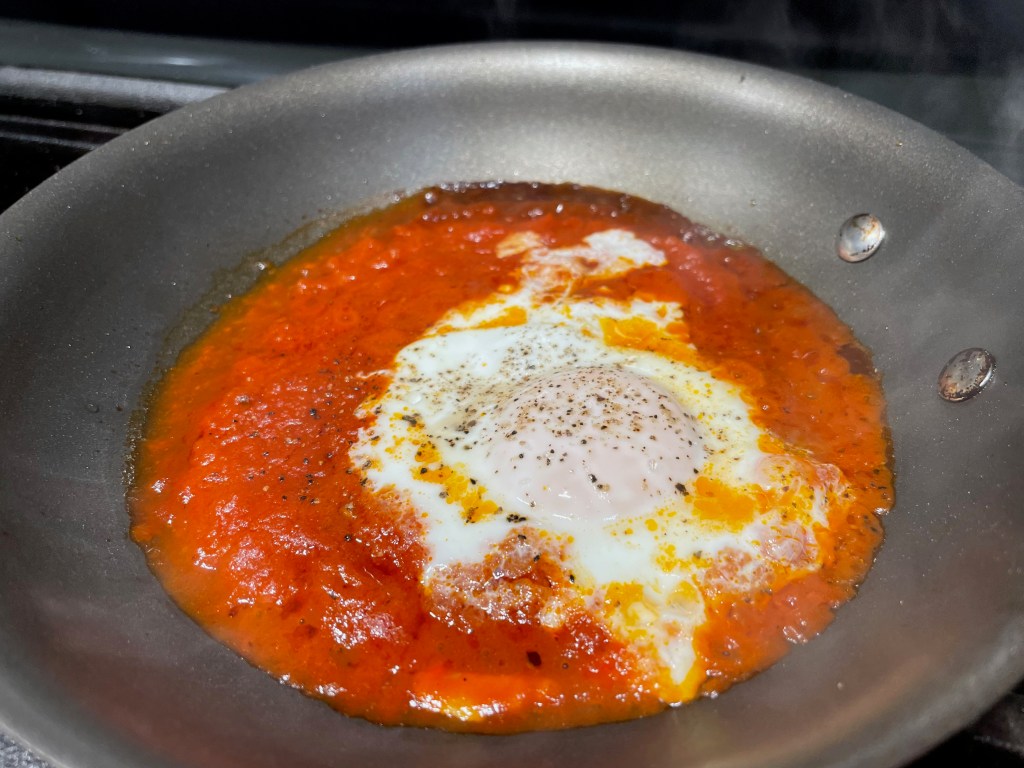
For a rich finishing touch, I melted in about a tablespoon of butter just before serving— borrowing a trick from the playbook of Italian chefs. This may have been the best tomato soup I’ve ever made, and I give credit to the harissa, if only for inspiration. I mentioned earlier that we devoured the whole pot that night. But that’s not quite right. I saved about a quarter cup, which I had in mind for a miniature shakshuka for breakfast the next day, and, no surprise, it was also delicious!

Next time, I’ll make a whole batch of shakshuka with harissa. This was divine!

Harissa Tomato Soup

  • Servings: 4 cups
  • Difficulty: Average
  • Print

It's amazing that a few tablespoons of harissa can elevate a classic soup so much, but it really does!


Ingredients

  • 2 Tbsp. extra virgin olive oil
  • 1/2 medium onion, chopped
  • 2 cloves garlic, minced
  • A few shakes red pepper flakes (I used Flatiron Pepper’s Uç Biber variety)
  • 28 oz. can real San Marzano peeled tomatoes, pureed in blender briefly with a pinch of salt
  • 2 Tbsp. Mina brand harissa paste
  • 1/2 tsp. ground cumin
  • 1/2 tsp. ground caraway seed
  • Salt and pepper for seasoning each layer
  • 1 Tbsp. unsalted butter

My recommendation for adding red pepper flakes, cumin and caraway is based on the mild nature of this particular harissa. If you use another brand with more flavor, adjust additions accordingly.

Directions

  1. Heat a heavy-bottomed pot over medium heat. Swirl in olive oil and sauté onions until slightly softened. Season with salt and pepper to aid in releasing moisture from the onions. Add red pepper flakes and garlic and cook another minute or so.
  2. Pour the puréed tomatoes into the pot with the onions. Add the harissa and stir to combine. Add a pinch of salt and the ground cumin and caraway. Bring the mixture to a low boil, and then reduce heat and simmer for approximately 30 minutes (longer if you have time). Give the soup a taste and adjust seasonings as needed.
  3. Just before serving, stir in butter.