Healthy Wheat Berry Salad

This probably should have been one of the first recipes I shared on Comfort du Jour. It’s been in my rotation of favorite simple sides for years, ever since I first discovered wheat berries in the bulk section at Whole Foods. If you’ve never had wheat berries (or maybe never even heard of them), let me introduce you to these versatile little gems.

What are wheat berries?

First of all, they aren’t really berries—at least not the way you’d think of fruit. Wheat berries are the individual dried grains of whole wheat. In their dried state, each grain is about the size of a fat grain of rice. When cooked, they plump up to triple in size.
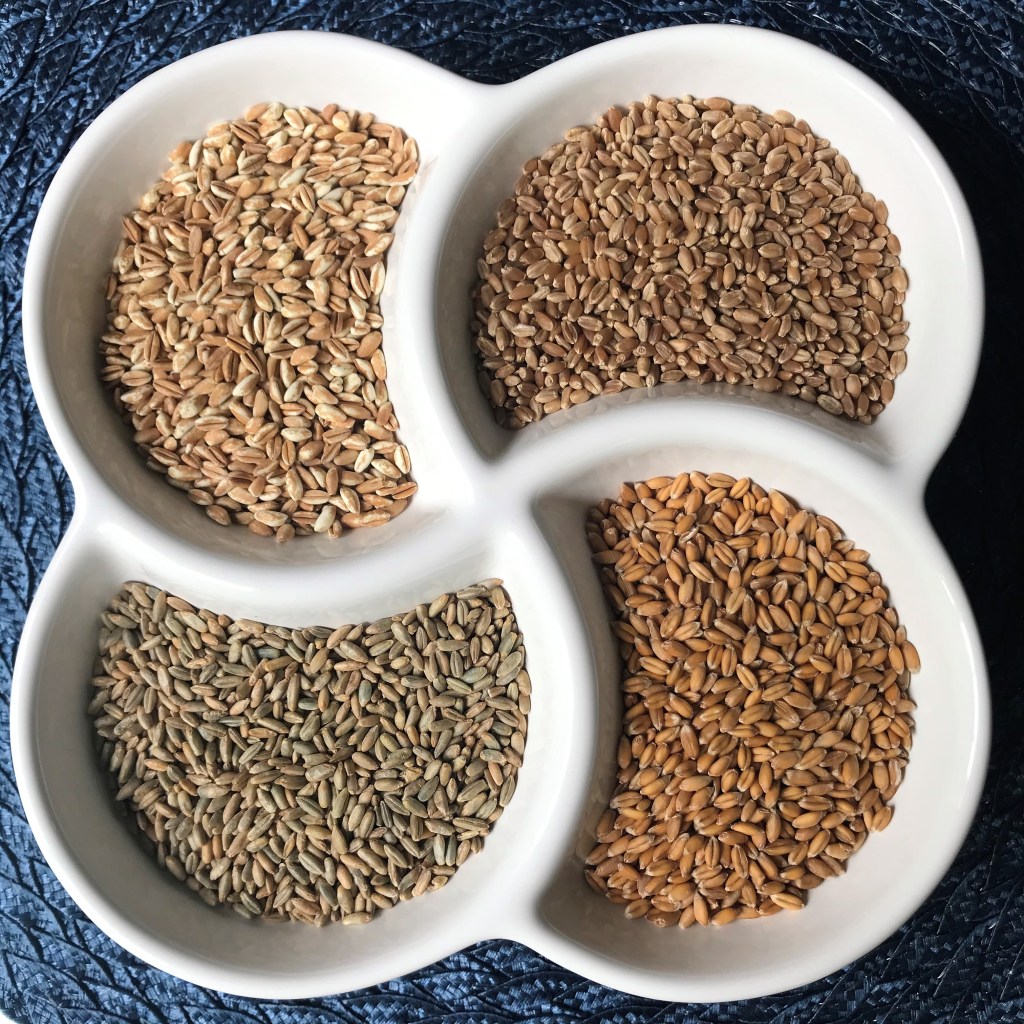
Clockwise, from top right: hard red winter wheat, spelt, rye and farro.

Where can you buy wheat berries?

Most natural foods stores and larger supermarkets with a bulk section are likely to stock varieties of whole grains, including wheat berries, oat groats, barley, and sometimes even rye, spelt or farro. You can also generally find them online from Bob’s Red Mill, though they’ve been in short supply during the pandemic. For this recipe, I’ve used Kamut, which is considered an ancient variety of wheat grain. I prefer it because it’s organically grown and hasn’t been hybridized and modified as conventional wheat has; it’s pretty much the same as it was thousands of years ago. Kamut is technically a brand name for the wheat variety Khorasan, native to Egypt and grown in abundance today in Montana and western parts of Canada. My aunt lives in Montana, and she sent the Kamut berries to me from her favorite natural foods market.
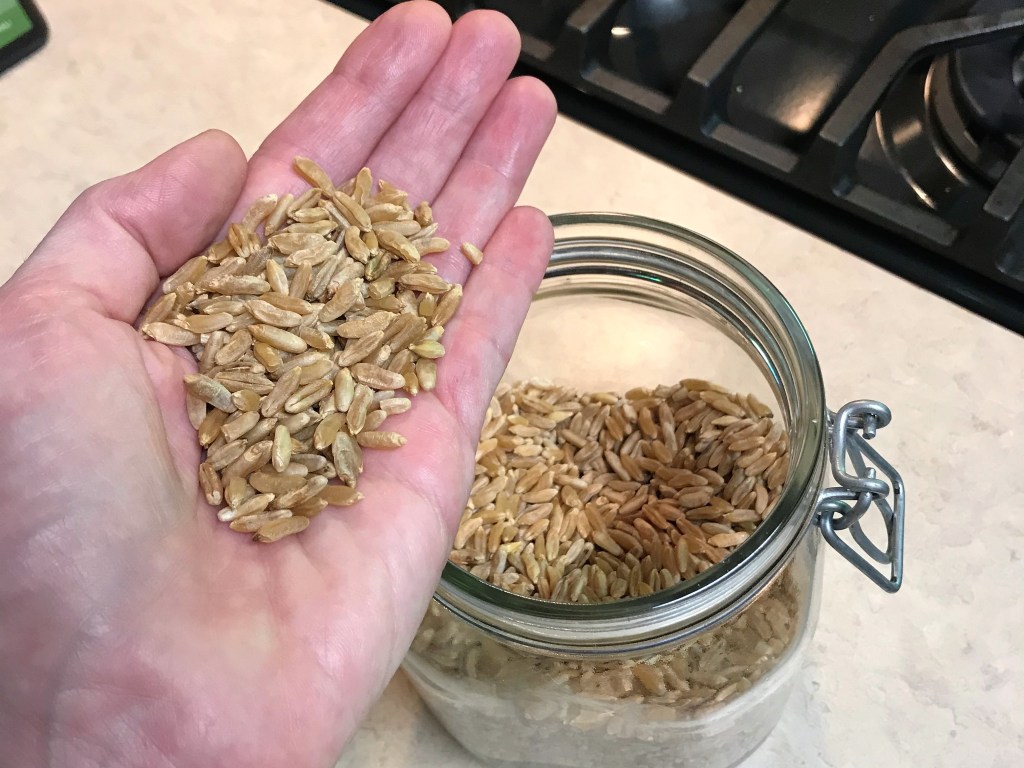
Kamut is a longer grain because it has not been hybridized for quicker harvest.

How do you cook wheat berries?

It’s a similar process to cooking beans from dried. Wheat berries are a natural product, so they need to be sorted and rinsed before cooking, in case of random small stones or other debris. After rinsing, combine them with water (at least 2:1 ratio) in a sauce pan. Bring to a boil, then reduce heat to a simmer and cook until the wheat berries are tender (about an hour), then drain and proceed with your favorite recipe. To use them in a cold dish, cool and refrigerate first.

What can you do with wheat berries?

Pretty much anything you can do with rice, you can do with wheat berries. They have a pleasant chewy texture, like al dente pasta, so they work really well in a main dish such as chili, soup or salad. If you’re into making homemade bread, knead about 1/2 cup of cooked wheat berries into the final dough to add more whole grain goodness. Of course, because they are wheat in whole grain state, you can also mill dried wheat berries into flour, if you happen to have the right equipment to do so. I’ve read recently that Kamut flour makes exceptional pasta, so I’m putting that on my culinary bucket list.

What do wheat berries taste like?

Wheat berries have a mild, almost nutty flavor that is similar to brown rice. Because they are neither sweet nor savory, you can take them in either direction, depending on what you add to them. Besides the chilies, soups and salads I’ve already mentioned, you could also easily toss them on top of Greek yogurt with fresh berries and cinnamon and just call it breakfast.

Now that you’re well acquainted with wheat berries, let’s talk about this salad!

How can something so good be so simple?

We’ve been eating entirely too many rich, heavy foods at our house lately. It’s interesting to me that most of the foods we think of as “comfort foods” are completely on the wrong side of healthy. Foods with simple starches, sugars and fats in abundance are usually what we reach for when we are under stress or facing uncertainty, so it’s not surprising, and maybe you’ve experienced the same.

Allow this salad to bring you back to a healthy place of comfort, with crunch, chew and fresh flavors, dressed in a light, Greek-inspired vinaigrette that’s easy to make from stuff you probably already have in the spice rack and the door of the fridge. Seriously, learn to make your own dressings and you’ll never buy it in the stores again.

We served this on a bed of baby spinach as a fresh, cool side to the meatless moussaka we had for a recent family dinner. If you can’t get your hands on wheat berries right away, any small size whole grain pasta would make an excellent stand in.

Ingredients

2 to 3 cups cooked wheat berries (or other whole grain)

1 can garbanzo beans (drained)

1/2 medium red onion, chopped

1 Persian cucumber*, trimmed and sliced

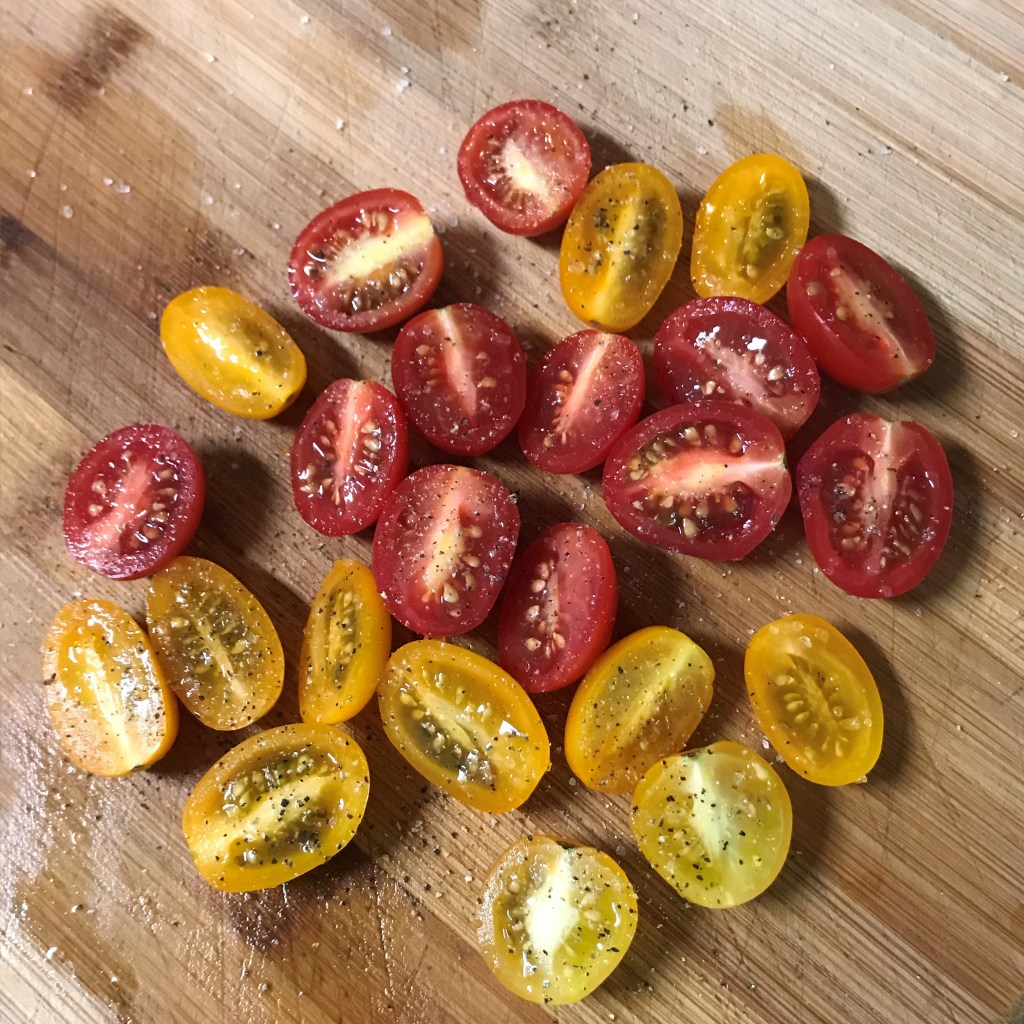
About 1 cup cherry or grape tomatoes, halved

1/3 cup pitted Kalamata olives, rough chopped

1/4 cup pepperoncini, chopped (optional)

chopped fresh parsley or dill for serving (optional)

Dressing

2 Tbsp. red wine vinegar

1 Tbsp. Sicilian lemon white balsamic vinegar*

1 tsp. garlic pepper seasoning* (see notes)

1/2 tsp. dried oregano leaves

3 Tbsp. extra virgin olive oil*

1 Tbsp. cold water

*Notes

Any kind of cucumber works here; I like the Persians for their compact size and minimal seeds. You want about 1 cup of cucumber slices or chunks. I’ve used my handy garnishing tool to strip part of the peel away, leaving a little bit for texture and the little bit of bitterness it adds to the salad. You could do the same with a small, sharp paring knife—or just peel the whole thing.

The lemon balsamic vinegar is a specialty item, purchased from one of the gourmet oil and vinegar shops that seem to have popped up everywhere. If you can’t find it, no problem—substitute a good squeeze of fresh lemon juice and a pinch of sugar.

Check your garlic pepper ingredients (or taste it) to see how much salt is in it. If you have a salt-free version such as Mrs. Dash, you’ll also want to add a couple pinches of salt to the dressing. We have McCormick brand, and the salt level is just about right. Lemon pepper seasoning would also be terrific.

There are so many choices for olive oil at most markets. This is a good recipe to bring out the “good stuff.” I generally use a more neutral flavor of olive oil (but still extra virgin) for everyday cooking and sautéing, but for a fresh dressing, I reach for the more pungent “grassy” varieties. If it has a little bit of bite or bitterness on the back end, it means it’s high in polyphenols—the stuff that makes it so good for you!
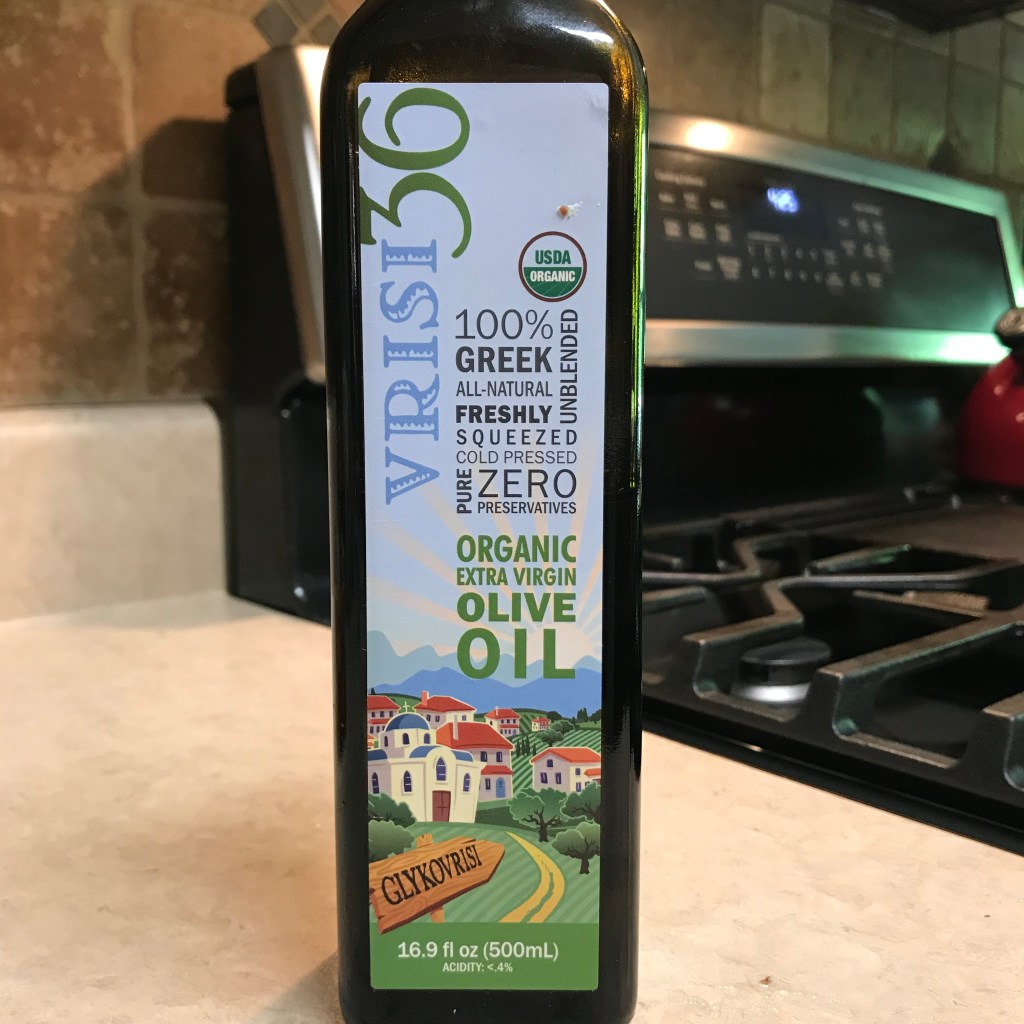
There’s no substitute for a good quality, REAL extra virgin olive oil.

The salad will come together on its own—you don’t need my help combining these simple, fresh ingredients. But if you’ve never made your own vinaigrette, it’s time you learn this simple and valuable trick. It takes less than a minute, and you don’t need any special tools or bottles. I usually make a vinaigrette in my glass measuring cup, just before I assemble my salad. For this one, work ahead a little bit so the dried oregano has time to soften and rehydrate.

Combine the vinegar and lemon white balsamic (or lemon juice and sugar), garlic pepper and dried oregano. Then drizzle the olive oil into the mixture in a slow, steady stream, while whisking constantly. This will help the oil and vinegar come together without separation. If you prefer, combine all the ingredients together in a covered jar and shake the dickens out of it. Allow the dressing to rest in the refrigerator for about an hour, then whisk or shake again and pour over the salad mixture and toss gently to combine.

The salad can be made ahead and it keeps in the fridge for several days. Fold it gently to redistribute the dressing just before serving, and sprinkle with fresh parsley or dill for an extra pop of color and flavor.

Want to print this recipe?


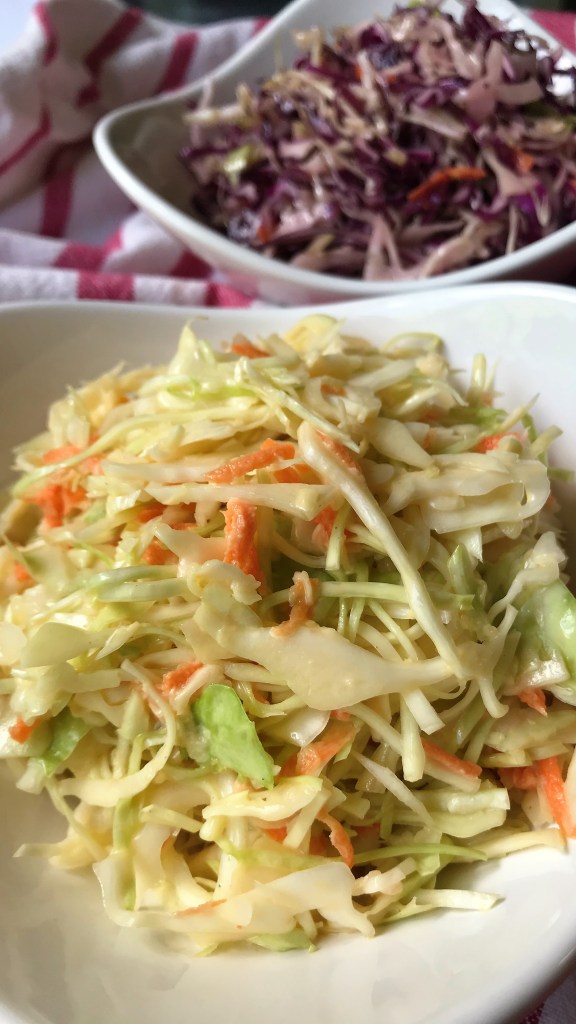
Cole Slaw Two Ways

There’s no good reason to depend on bottled cole slaw dressing, made up mostly of ingredients we’d never find in our own pantry cabinets. Not when it’s so quick and easy to make our own dressing from the fresh things we do have in our cabinets or refrigerators.

Whether you like the slightly tangy-sweet creaminess of a mayonnaise-based cole slaw (KFC-style) or an elegant, vinaigrette-type dressing that stands up better to extended time on a picnic table, you can handle it yourself in only a few minutes. The one thing for sure is it’ll taste infinitely better than the soybean oil-xanthan gum concoction you’d otherwise pick up in the dressing aisle.

Begin with a basic combination of 4 to 5 cups shredded or chopped cabbage (red, green or both—you decide) and carrots. Use a food processor to save time or chop by hand for a more rustic texture. Then, choose your style and dress it up!

Creamy Slaw Dressing

The creamy-style dressing is on the sweet side, with a distinctive white pepper flavor that is reminiscent of the “colonel’s” cole slaw.

Ingredients

About 1 Tbsp. finely grated onion* (see notes on this)

1/4 cup mayonnaise (I used canola mayo)

2 Tbsp. whole milk

2 Tbsp. buttermilk*

1 Tbsp. white vinegar or white balsamic vinegar*

1 Tbsp. fresh lemon juice*

2 Tbsp. cane sugar*

1/2 tsp. kosher salt

A couple pinches white pepper

*Notes

Grate the onion and use a paper towel to absorb as much excess juice as possible before proceeding with the recipe.

Real cultured buttermilk works best, but you could have similar results with the same amount of plain yogurt or Greek yogurt.

I am a big fan of flavored balsamic vinegars and olive oils, and whenever I have it on hand, I substitute the “Sicilian Lemon” white balsamic for the combined amounts of vinegar and lemon juice in this recipe. If you have access to this product from a specialty store in your area, it’s worth the expense.

Reduce the sugar by half with the white balsamic substitution.

Instructions

Empty the grated onion into a glass measuring cup. Add remaining dressing ingredients and use a mini-whisk or small spoon to blend into a smooth, even mixture.

Use less dressing than you think is correct. Trust me, you won’t mind eating the extra dressing with a spoon!

Pour half of the dressing over the shredded cabbage and carrots and toss to coat, then add more dressing as desired. As the creamy dressing settles in, the cabbage will soften and shrink a good bit. It’s easier to add dressing than to take it away. Cover salad and refrigerate a couple of hours until ready to serve.

Poppy Seed and Lime Vinaigrette Slaw Dressing

The vinaigrette-style dressing is tangy and onion-y, an elegant change of pace for your backyard cookout. The poppy seeds can be left out if you aren’t a fan.

Ingredients

1/2 small onion (sweet, yellow or red—whatever you like)

2 tsp. poppy seeds* (see notes)

2 Tbsp. sugar

Juice of 1/2 fresh lime

1 Tbsp. white wine vinegar

1/2 tsp. dry mustard powder

3/4 tsp. kosher salt

1/2 tsp. freshly ground black pepper

1/4 cup canola oil (or other neutral-flavored oil)

2 Tbsp. extra virgin olive oil*

*Notes

Poppy seeds are sold by the bottle in the spice section of most grocery markets. Celery seed would be a good substitute here, or if seeds cause you trouble, you could easily skip them altogether, but you still want to begin the recipe on the stove.

Extra virgin olive oils provide the most health benefits, but some of them have a very “green” or pungent flavor. For this recipe, use the most neutral-flavored olive oil you can find, such as arbequina. Specialty oil and vinegar shops offer free tastings to help you find your favorites.

Instructions

Grate the onion into a bowl, keeping the juice. Combine sugar, lime juice, vinegar, mustard powder, salt and pepper in a glass measuring cup.

Place a small, heavy-bottomed sauce pan over medium heat and add the poppy seeds. Swirl the pan constantly and toast the seeds for 2 to 3 minutes, until lightly fragrant. All at once, add the onion (with juice) and the lime juice mixture and stir until sugar is dissolved and mixture begins to simmer at the edges of the pan. Remove from heat and transfer to the small bowl of a food processor. Turn on processor and slowly stream canola oil into the mixture, then repeat with olive oil.

When mixture is fully emulsified, pour about 1/3 cup of it over cabbage mixture. Toss to coat, add more dressing if desired, and refrigerate slaw until ready to serve. Save leftover dressing for use on other salads–perhaps a spinach salad with fresh strawberries.

Want to print these recipes?


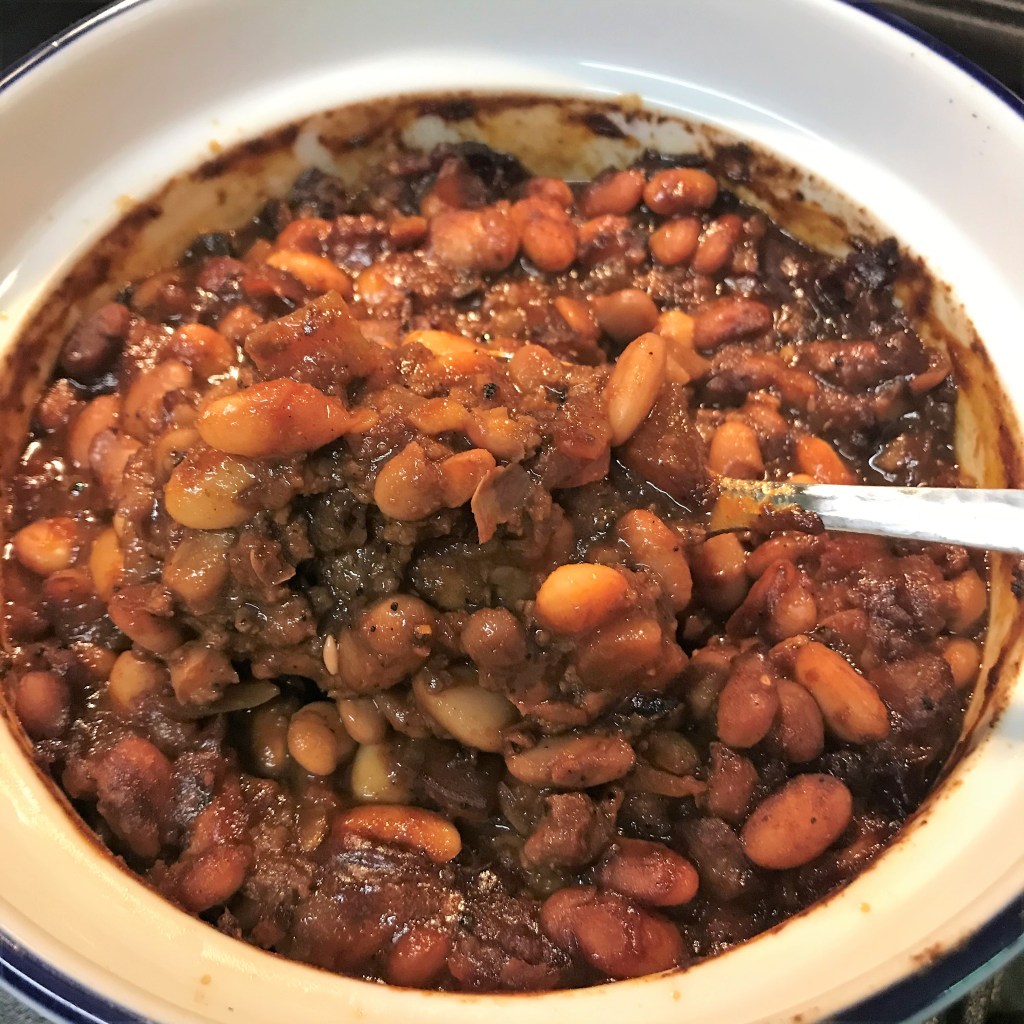
Savory Smoky Baked Beans

Just about every baked bean recipe I’ve ever eaten has hit me a little too heavy on the sweet tooth. Do they really need to have brown sugar and honey and molasses and maple syrup? Geez, it hurts my teeth just thinking about it. My version has some sweetness, but it’s a deep, earthy kind of sweet, thanks to molasses, and balanced with only a bit of brown sugar. There’s dark-roast coffee, cumin, ancho chile, coriander and ginger, too—plenty of savory notes to keep these beans off the dessert end of the potluck table.

You could sauté the onions in olive oil and this recipe would make even a vegan happy. But don’t lament, carnivores. Your beloved bacon will feel right at home in this dish, too. Y’all go ahead and make it your own!

Ingredients

About 4 cups cooked pinto and great northern beans* (see notes)

2 Tbsp. bacon drippings (or extra virgin olive oil)

1 sweet onion, chopped

1 Tbsp. spicy coffee rub*

1 tsp. coarse kosher salt

8 oz. can tomato sauce

2 Tbsp. ketchup (Heinz organic made with sugar)

3 Tbsp. molasses

2 Tbsp. brown sugar

1 Tbsp. maple-flavored balsamic vinegar*

(Optional) chopped cooked bacon and/or browned meat*

*Notes

I cooked the beans from dry, which is easy to do after an overnight soak. For me, the texture of from-scratch beans is worth the minimal effort, and a lot cheaper. If you prefer, use two or three varieties of canned beans. You’ll need 3 cans, and you’ll want to drain and rinse them well before proceeding.

My recipe for spicy coffee rub follows, or substitute any pre-made spice blend that includes coffee, sugar and chili spices, but be mindful of the sodium content and adjust the recipe accordingly.

I’m a very devoted follower of flavored oils and vinegars, and I think the maple balsamic brings a nice maple flavor to these beans, without more “sweet.” Use any other dark balsamic you like (perhaps espresso or dark chocolate), or omit it altogether. It’s kind of like the cherry on top of a sundae—nice, but not necessary.

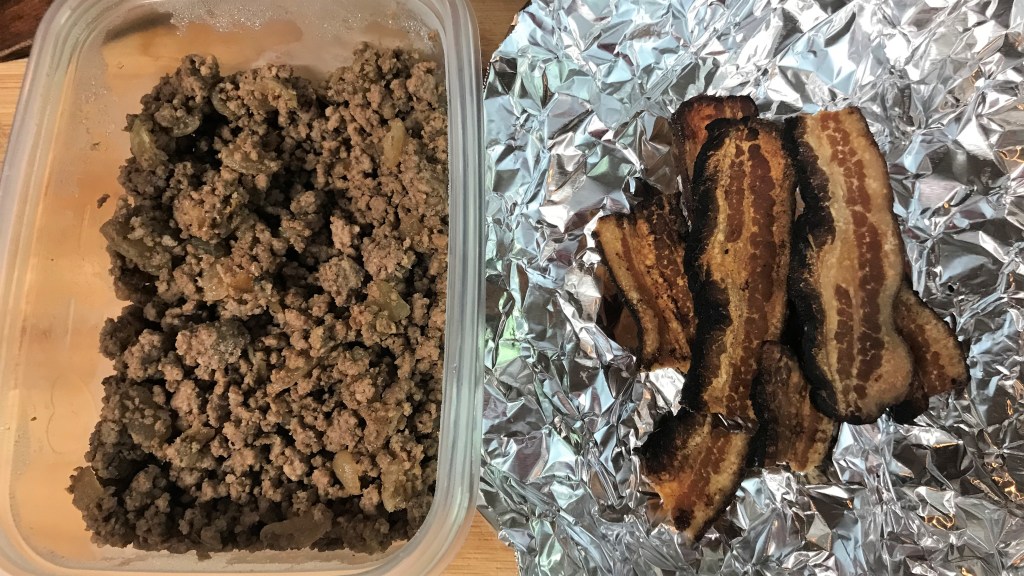
We had 3 slices of leftover cooked bacon from breakfast and about 1 cup cooked ground bison (a leftover from chili for hot dogs). Both found their way into the baked beans, and the dish was even more hearty and satisfying for it.

Instructions

Sauté onion in bacon drippings (or olive oil) until they’re slightly soft and translucent.

Add spicy coffee rub and salt, and cook until fragrant. Add tomato sauce, ketchup, molasses, brown sugar and maple balsamic vinegar. Cook until sugar is dissolved, and mixture is thick and syrupy.


Preheat oven to 350° F. 

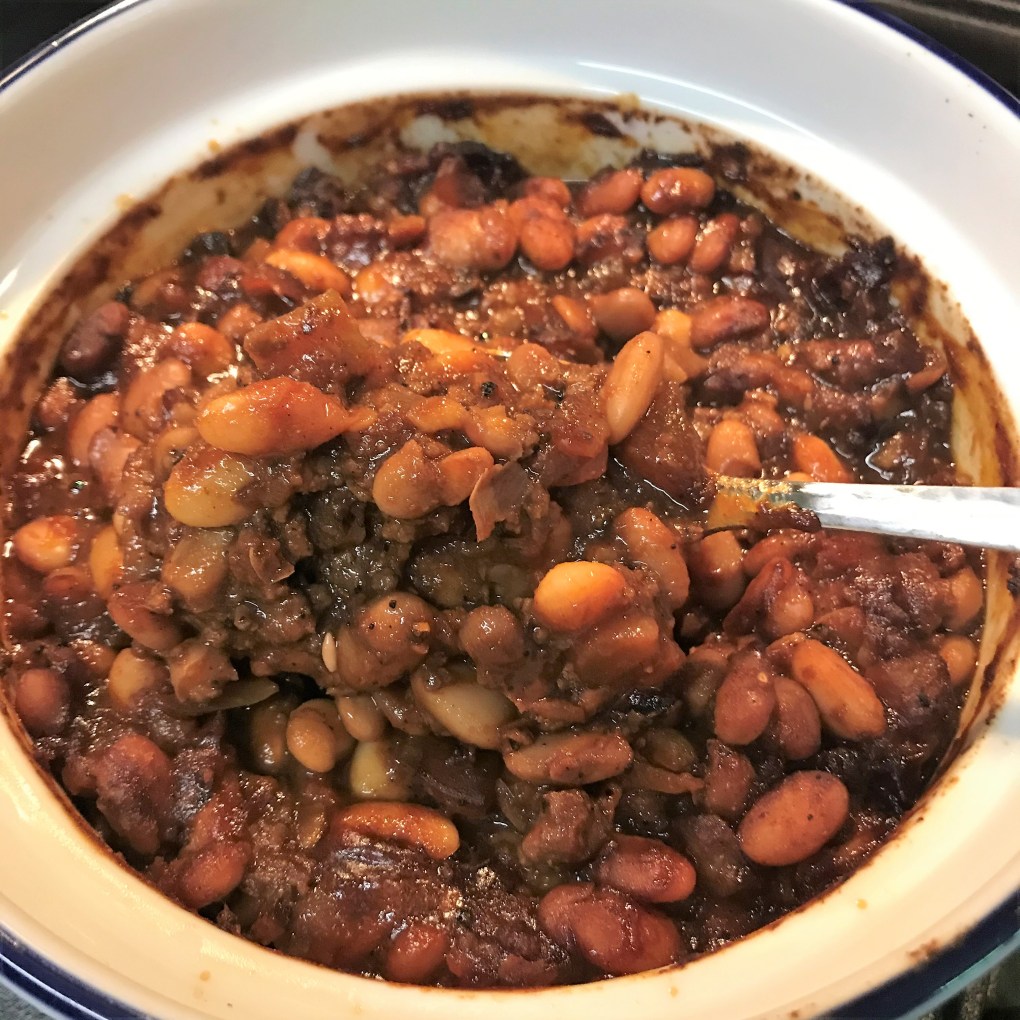
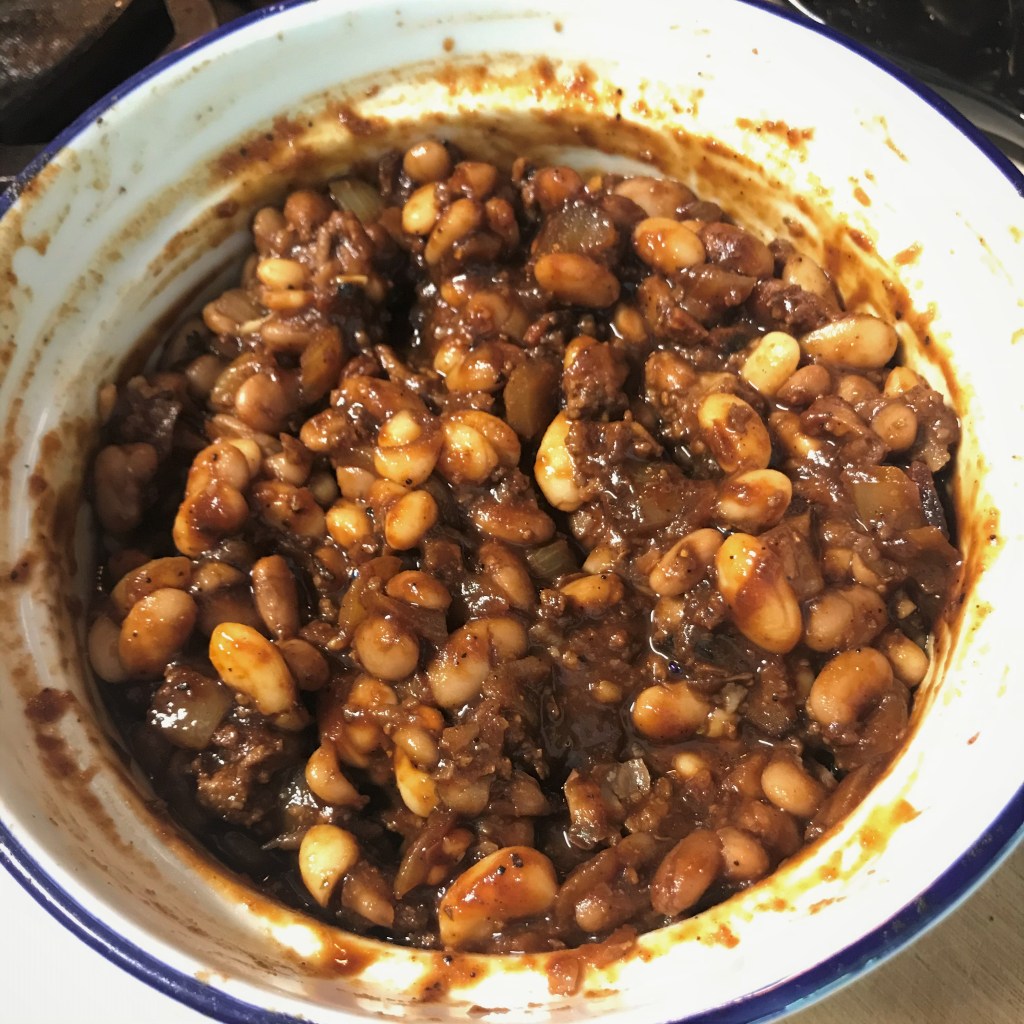
Put prepared or canned beans in an oven-safe, lidded casserole. Pour sauce over beans and fold gently to combine. Bake about 45 minutes, until fully hot and bubbly. I left the lid on for most of the baking time, but removed it for the last 15 minutes. That dark, sticky crust just makes me so happy, and I can’t wait to eat the leftovers cold from the fridge.

Spicy Coffee Rub – my take on a Bobby Flay recipe

Makes about 1 cup

1/4 cup ancho chile powder

1/4 cup finely ground dark roast coffee*

2 Tbsp. sweet Spanish paprika

2 Tbsp. dark brown sugar

1 Tbsp. dry mustard

1 Tbsp. ground black pepper

1 Tbsp. ground coriander seed*

2 tsp. ground ginger

2 tsp. ground cayenne pepper (optional to taste)

1 tsp. ground cumin

1 tsp. dried thyme leaves

1 tsp. kosher salt*

*Notes

The coffee should be ground as finely as powder, not just ground for coffee. If you have a spice grinder, that’s the best way to achieve the proper grind texture.

Coriander is the seed form of cilantro, but the taste is not similar. You can find it pre-ground at the market, but I much prefer the flavor of freshly ground seeds for this rub. I use a mortar and pestle to crush the seeds, but you could also use a spice grinder, as used for the coffee.

I keep the salt to a minimum in this spice rub recipe to allow more flexibility in its use. If you want a more intense flavor when you use the rub, you don’t end up making your end dish too salty.

Instructions

Combine all ingredients and keep in a tightly covered jar for up to four months.

Use it as a dry rub on steak or ribs before grilling, add a tablespoon to your favorite chili recipe or mixed in with your meat for burgers or tacos. Obviously, use it also in this recipe for savory baked beans.

Want to print these recipes?


Spanish Onion Sauce

For just about everyone, the term “comfort food” applies specifically to the foods we learned to love during childhood. For me, that’s the made-from-scratch foods I learned in my grandma’s kitchen, including applesauce, soft molasses cookies and bread pudding. For my husband, Les, it’s pretty much all the foods you can only find in a Jewish deli and on the streets of New York. I’ve grown to love many of these foods myself—the bagels, the knishes, the in-house pastrami from Katz’s deli and of course, the pizza (am I the only one hearing angels sing right now?).

Any true New Yorker will admonish you for assuming you could just pick up a bag of Lender’s and call it “close enough.” The best bagels are apparently made with NYC water, but we are thankful to have a very good option for them in our home city. Then there’s the matter of pizza, but let’s not even start on that, though I’m proud to report we’ve finally perfected our at-home pies to nearly the level of Les’s high standards. And although hot dogs (even the Kosher, all-beef kind) are readily available in every corner of these United States, there’s no match for a good, old-fashioned New York hot dog. And for one main reason. The Spanish onion sauce.

Honestly, no other condiments are needed.

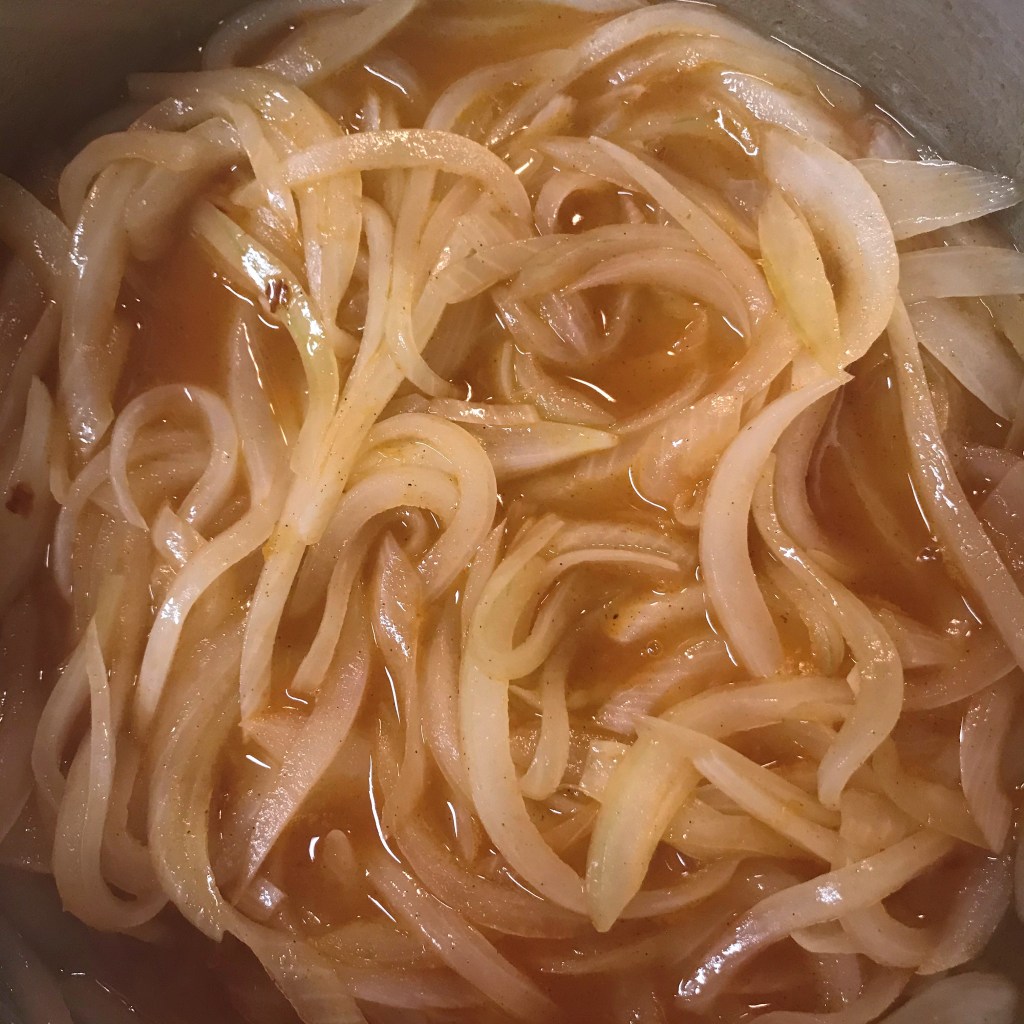
This stuff is simple enough, just sliced onions cooked in a thin, lightly spiced tomato sauce. But like any food that’s part of the very fabric of your life, it’s the memory of it that means something. You want it to taste the way you remember it. When I finished this batch of onion sauce, I cautiously asked Les to give it a taste and tell me what it needed. Last time, it was “pretty close,” so imagine my relief (and utter joy) when he licked the spoon and said, “Yep, that’s it!” Pardon me while I do the h-a-p-p-y dance. And though I’m only from “upstate” (not the same as New York, he reminds me, ad nauseum), and I don’t have my own early memories of this onion sauce, I have to say, it’s pretty darn tasty, and super easy to make. If this is all it takes to elevate his happy, I’m golden.

Ingredients

1 Tbsp. extra virgin olive oil

1 medium Spanish onion (about the size of a tennis ball)

3 Tbsp. tomato ketchup (preferably one made with real sugar)

2 pinches chili powder* (see notes)

Pinch of dried, crushed red pepper*

Pinch of ground cinnamon

1/4 tsp. kosher salt

1/4 cup water

*Chili powder is an ingredient that is wildly inconsistent, because different brands have different formulas and sometimes high amounts of salt. Use the most “neutral” chili powder you have, or substitute whatever makes you happy. For my most recent batch of onion sauce, I swapped out both noted spices for about 1 tsp. of the oil poured off a jar of Trader Joe’s “Chili Onion Crunch.” This earned an enthusiastic thumbs up from my New York-born taste tester. Don’t be shy about experimenting with the stuff in your cabinet—it’s how I’ve found all my best recipes.

Instructions

Cut the onion in half lengthwise. With flat side down, slice the onion into 1/4” crescent-shaped slices. For this recipe, I find it better to have similar-sized pieces of onion, rather than ring slices.

Heat a medium-size skillet over medium heat. Swirl in olive oil, then add onion slices and saute for about 8 minutes until softened and slightly translucent. Mix together the ketchup, spices, salt and water, and add to the onions. Stir to combine and bring to a slight boil, then reduce heat to low and simmer, uncovered, for about 30 minutes. Much of the liquid will evaporate, and you’ll be left with silky onions glistening in a light, tomato-y glaze.

Quite simply—it’s real Nu Yawk daawg sauce.

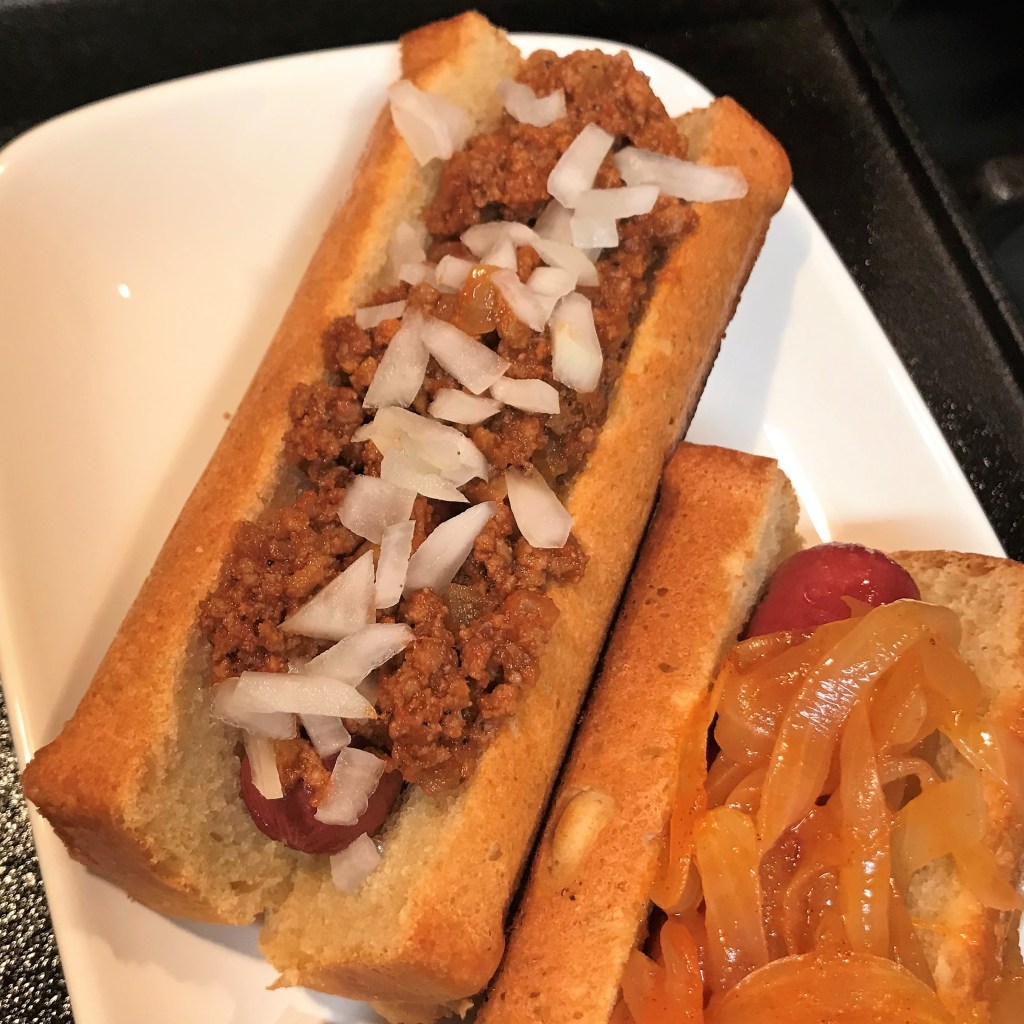
We served our Spanish onion sauce on uncured all-beef dogs and homemade potato buns. Delish!

Want to print this recipe?


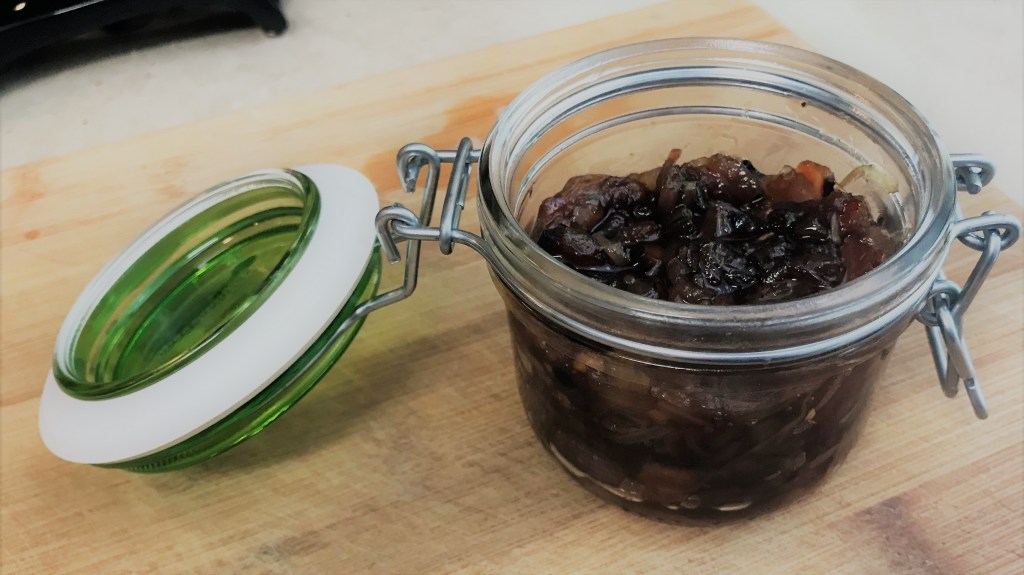
Maple Bacon Bourbon Onion Marmalade

There have never been two flavors more perfectly designed for each other than bourbon and bacon. My friend Linda would give an amen, and we’d be correct. Or maybe it’s chocolate and cherry. I’d ask my husband, but it would probably prompt further discussion of all the recipes we should concoct to incorporate all four—bourbon and bacon and chocolate and cherry. Maybe brownies? Or ice cream? That sounds like a rewarding challenge for later—I’ll work on it and let you know (wink).

For now, I’m cooking up a storm in advance of Memorial Day weekend. I know, none of us are likely spending the weekend quite as we’d planned. That’s a given on just about everything this year. My husband, Les, and I have already missed a dreamy beach weekend with Linda and her husband, and my heart positively aches for everyone who has sacrificed once-in-a-lifetime plans for weddings, graduations and funerals. Just thinking about that makes me feel guilty and selfish lamenting a weekend getaway. For sure, the pandemic is revealing all that we’ve taken for granted, and given us new appreciation for the simplest things in life—like a backyard cookout. So this weekend, Les and I are following tradition and firing up the grill to usher in the summer season, even if it ends up being just the two of us. Chances are, you’ll be doing the same.

Everyone has their own favorite thing to put on the grill, and our burgers are no better than yours. But if you’re looking for something new to dress up whatever you’re putting on the grill—well, cue the bourbon and bacon!

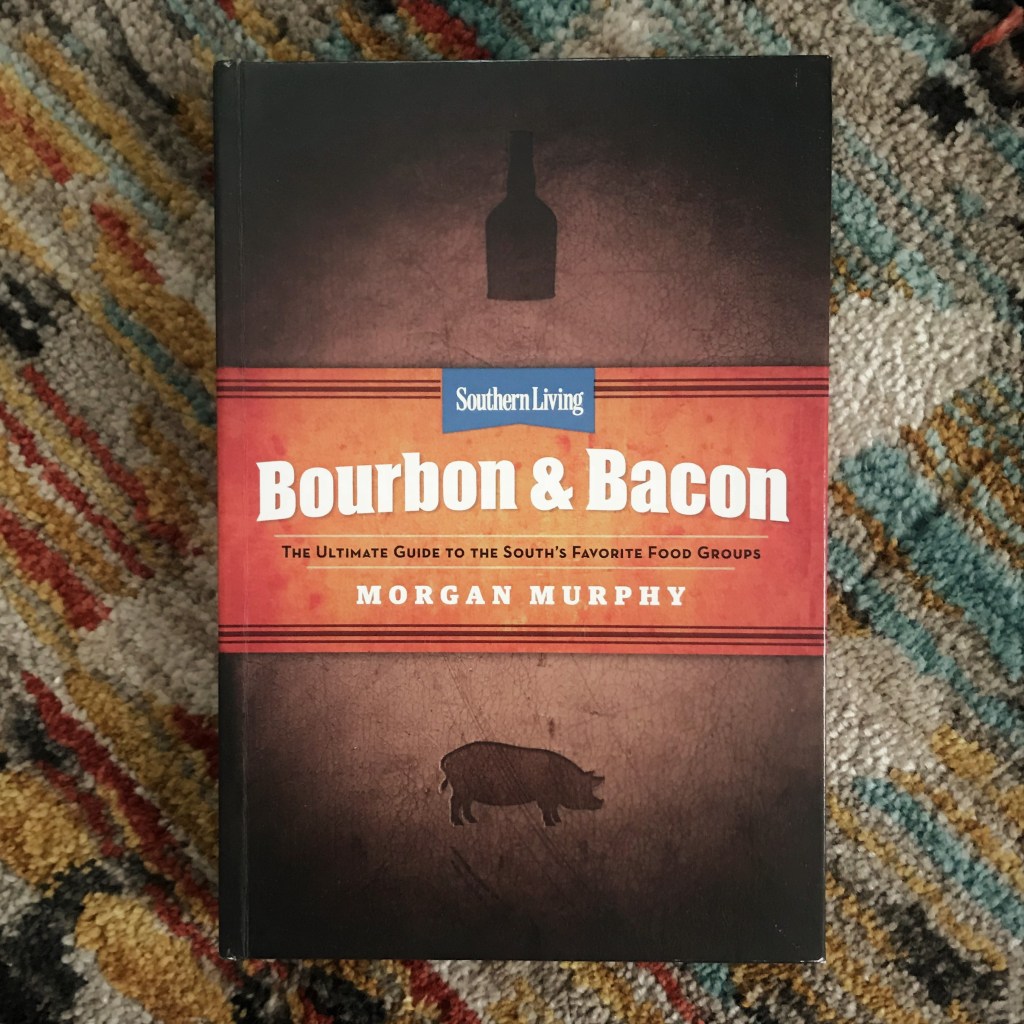
My inspiration for this recipe is a book that literally jumped into my cart a few years ago while I was casually browsing at a discount store.

What could possibly go wrong?

It includes plenty of discussion about bourbon etiquette and whiskey history, what type of glass is correct for different types of bourbon cocktails, and what it means for a bourbon to be “bottled in bond” (if you’re wondering, it’s the result of one season, one distillation, and one distillery, and it’s bottled at a minimum of 100 proof; that’s on page 28). But there are also dozens of mouthwatering recipes—for bourbon, for bacon and for a few crossovers that include both. The latter are, without question, my favorites. Here’s my adaptation of one of them, and I’ve elevated everyone’s happy with yet another complementary flavor, maple. Oh yes, I did. The end result is a delicious smoky, savory, sweet and slightly spicy topper for your burgers, steaks, chicken and perhaps even slipped inside a grilled cheese sandwich. (You’re welcome, Linda!)

The recipe will make just about 1 cup and it’ll keep in a jar in the fridge for several weeks. But you’ll be lucky if you have any left after the three-day weekend, especially if you find yourself eating it straight from the jar at 3 am while everyone else is asleep—not that I’ve done that.

Ingredients

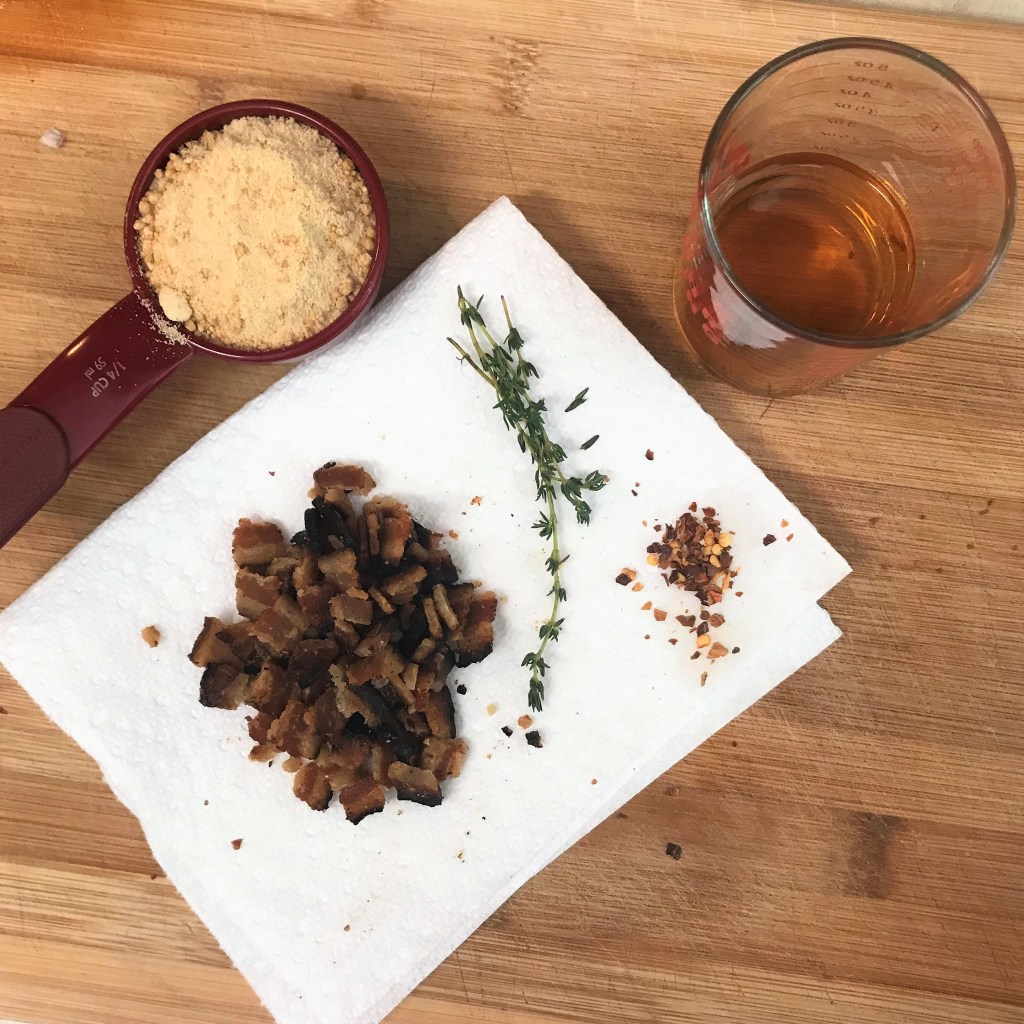
2 slices smoked, uncured bacon* (see notes), chopped into pieces

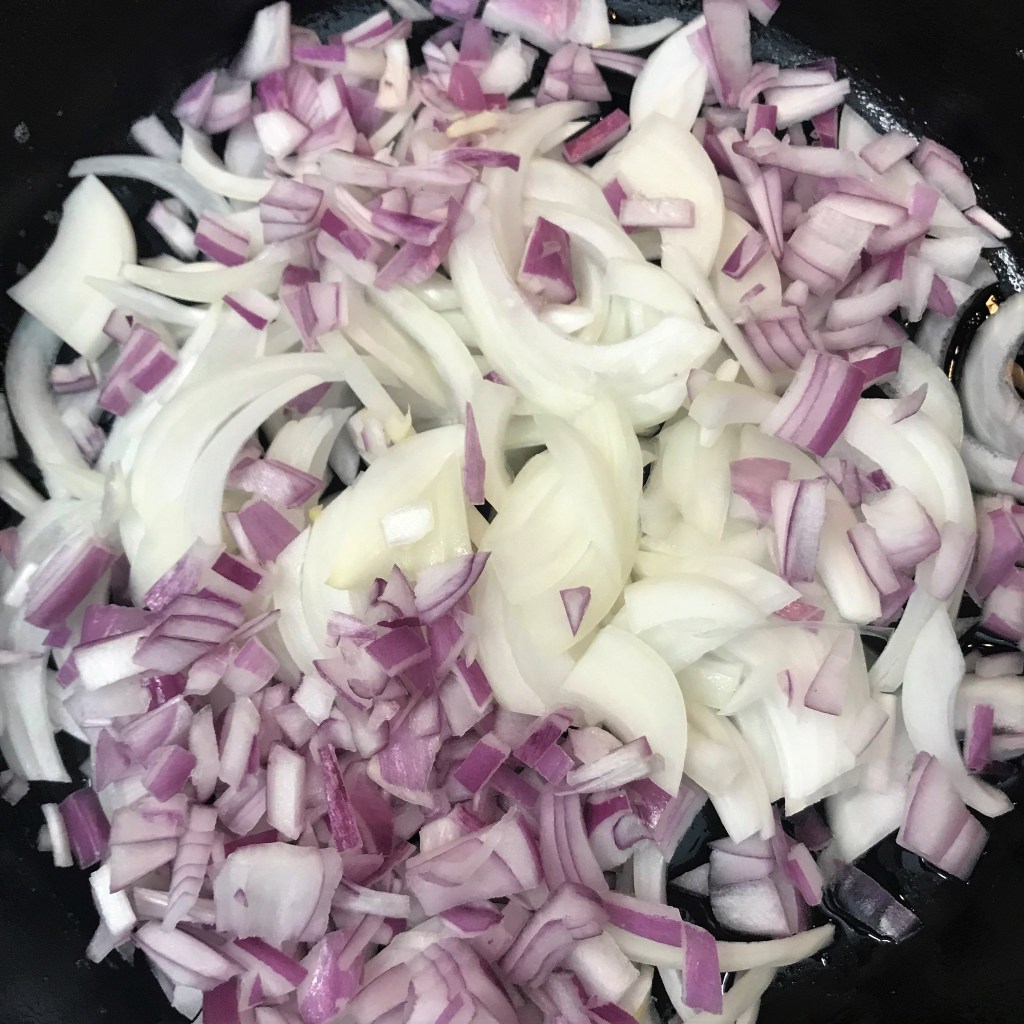
1 small sweet onion, cut into thin, crescent-shaped strips (not rings)

1 small red onion, roughly chopped into pieces

1/4 cup maple sugar*

2 Tbsp. apple cider vinegar

2 Tbsp. bourbon

Pinch of crushed red pepper (or as much as you like)

About 1 tsp. fresh thyme leaves

Pinch kosher salt (maybe)*

*Notes

I only purchase “uncured” bacon, which is free of the unnecessary preservative sodium nitrite. If you can find the maple kind of bacon, that’s a win-win. If you aren’t sure what “the maple kind” is, maybe you need to watch this. I literally cannot think or write about bacon without hearing this dog’s “voice.”

So, the maple bacon will be a nice extra touch, but the real flavor comes from the sugar.

Maple sugar is literally a dehydrated, granulated form of real maple syrup. I buy it online, directly from a sugar shack in upstate New York, my old stomping ground. Click here to get some from Big Tree Maple. If you can’t wait for it, substitute 1 Tbsp. light brown sugar and 2 Tbsp. real maple syrup.

You may not want additional salt in the recipe, depending on the sodium content of your bacon. Ours is house-cured by a local butcher and puts a perfectly salty kiss on this. Wait until your marmalade is finished, and add salt only if desired.

Instructions

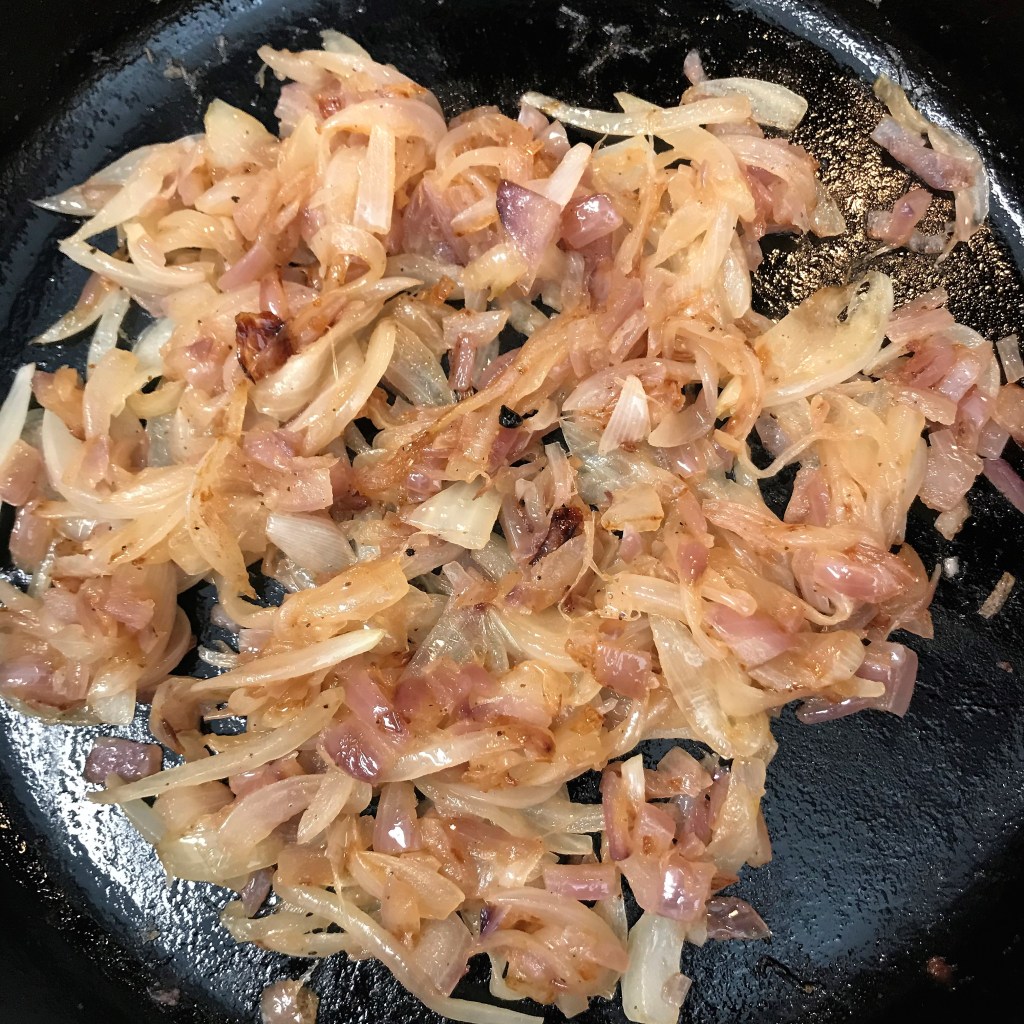
Cook bacon in a cast-iron skillet over medium-high heat until crisp; remove bacon and drain on paper towels. Drain and discard all but about 1 Tbsp. of the bacon grease. Add sweet and red onions to the same skillet. Cook over medium heat, stirring often, until onions are soft and caramelized.

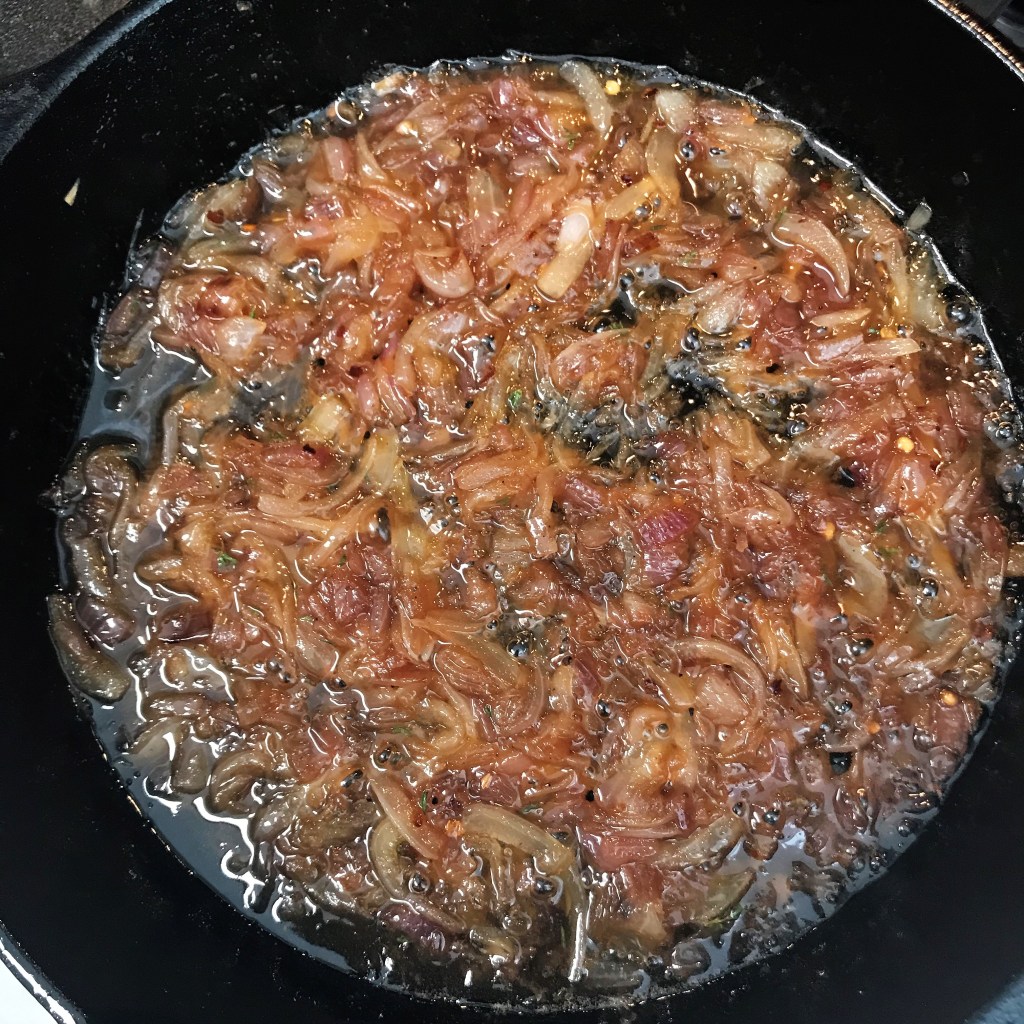
Add maple sugar, stir until dissolved. Stir in vinegar, bourbon, red pepper and thyme leaves. Cook a few minutes until liquid is the consistency of syrup.

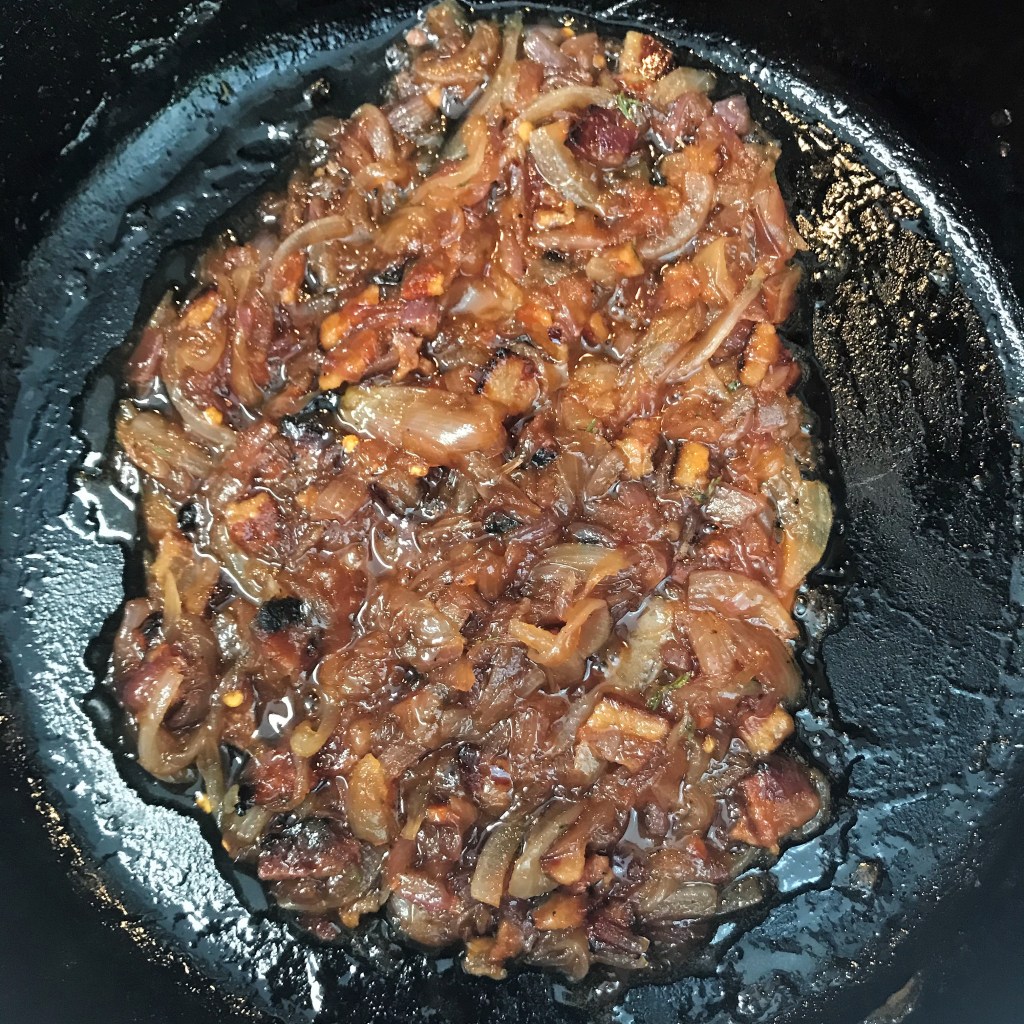
Crumble the bacon into smaller pieces, if desired, and add to the onion mixture. Continue to cook several minutes, until mixture is thickened to a jam-like consistency. Adjust salt to taste.

Transfer to a covered jar and store in the fridge up to a month. Slather it on your favorite grilled meat. Or just eat it with a spoon—there’s no judgment here.

The finished marmalade will keep nicely in a sealed jar, or any dish with a tight lid. Keep it in the fridge, but bring to room temperature when you’re ready to use it.

Want to print this recipe?


Chili for Hot Dogs

As I was jotting down the ingredients I used in this chili, I almost felt that I should put an asterisk next to every spice ingredient. Taste is subjective, and it seems no culinary divide is greater than the one created by spicy heat. Some people love it (hear, hear), some can’t tolerate it at all and others want a little kick as long as they don’t feel too much burn.

If you make some version of this chili, use the level of heat that makes sense for you and whomever else you’re feeding. My husband and I are so much on the same page when it comes to heat, and we are quick to admit, we want a little burn. We might pay a price for it tomorrow, but that’s a consequence we will be willing to accept. Every. Single. Time. If you’re shaking your head “no,” you might find some of the spice notes helpful for adjusting the amounts to your personal taste, while still enjoying plenty of flavor.

There’s no need to spend extra for packaged “chili powder.” Mix and match spices you already have and come up with a winner.

Chipotle

Made of dried and smoked jalapeno chiles, this is a smoky-style, medium heat spice. I usually don’t even think of this spice as being “hot,” because I’m mainly captivated by the smoke. But it does bring some heat, so if you’re squeamish, skip this one and look at ancho or cumin instead.

Cumin

This spice is made from seeds, not chile peppers, and it’s common to various Latin cuisines as well as some Indian and Northern African cooking. The flavor is warm and gently smoky. “Comforting” is a good word for this spice. I adore it in fried breakfast potatoes, and it finds its way into every kind of chili I make. Cumin doesn’t have heat, but it plays so nicely with hot spices, it’s never far off in recipes with chile spices.

Cayenne

No doubt, this is a speecy-spicy one! Cayenne is a long, skinny red pepper, the variety used widely in Cajun cuisine, and the main ingredient in popular bottled hot sauces, including Tabasco and Frank’s original “red hot” sauce, as well as Texas Pete, which doesn’t hail from Texas, but Winston-Salem, NC (go figure). It’s not as hot as habanero or ghost peppers (not even close on the Scoville heat scale), but it’s fair warning to say that if you can’t stand the heat, you should get the heck out of cayenne’s kitchen.

Ancho

Made of dried and smoked poblano chiles, this one has a little heat, but is mainly smoky and fruity, especially if the seeds are removed before grinding it into powder. Ancho chiles are a favorite of celebrity chef Bobby Flay, who puts it in nearly everything. It’s a very balanced chile flavor, and though it isn’t listed as an ingredient in my chili for hot dogs, you might find it a good substitute for the chipotle if you like smokiness and peppers with a little less kick.

Paprika

This is an overly general name for a spice that varies a great deal from bottle to bottle. Some paprika is smoked, some is sweet, some is hot—it’s just all over the place. If you do an online search for “what pepper is used for paprika,” you’ll find everything from red bell pepper to cayenne, so it’s clearly a bit of a gamble. The variety I used in this recipe is specifically labeled “sweet Spanish paprika,” and I appreciate that because it helps me know what to expect. It is light and kind of fruity, with the tiniest amount of smoke (probably on the red bell pepper end of the paprika spectrum), and it adds bright color and a pleasant sweet pepper flavor without bringing heat. A bottle labeled “hot Hungarian paprika” would turn this chili into something totally different, so take notice of the differences.

Wait, what about plain old “chili powder?”

Frankly, my dear, there is no such thing. “Chili powder” is a generic term used by every spice company out there, and what’s in it is anyone’s guess. Sure, you could look at the label ingredients, but they are usually suspiciously vague—a blend of “red chile powder” (okay, but which chile?), herbs and spices (again, which ones?), plus a whole lotta salt and usually some other unnecessary ingredients with long, unpronounceable names. Personally, I don’t touch the stuff because it presumes to know what my flavor and sodium levels should be. I’ll decide what goes into my chili, thank you very much, and hopefully this quick little chili tutorial will empower you to do the same.

Ingredients

1 Tbsp. extra virgin olive oil

1/2 lb. lean ground meat*

1/2 cup yellow onion, finely chopped

2 Tbsp. apple cider vinegar or red wine vinegar

1/4 cup water*

8 oz. can tomato sauce

Kosher or sea salt to taste

Spices

1/2 tsp. each ground black pepper, ground chipotle, cumin, sweet paprika, garlic powder, onion powder

1/4 tsp. ground cayenne pepper, if you’re living on the edge

*Notes

For this batch of chili, I used 90% lean ground bison. Beef is an easy go-to, and it would also be just fine with ground turkey.

Feel free to substitute beer for the water, if you wish, as my husband does with his famous Super Bowl chili. (I hope that wasn’t a secret, Babe!)

Instructions

Heat a cast-iron skillet over medium heat. Swirl in olive oil, then add ground meat, onions, vinegar and water all together. Cooking the meat in the water rather than browning it first will result in the fine texture that’s perfect for topping a hot dog. Stir the meat mixture frequently as it cooks, until the water has completely evaporated. Season with salt and pepper, then add tomato sauce and spices. Cook and stir several more minutes, until liquid reduces and chili thickens to your liking. I like this kind of chili to be on the thicker side, so it stays on the dog without making the bun soggy.

The chili is good on its own, but I throw on more onion just because.

Want to print this recipe?