Most of the times that I ask my husband, Les, what kind of cocktail he wants for our at-home happy hours, I get the same answer:
“Something with bourbon, surprise me.” And then I’m off to figure out what kind of old fashioned or whatever he would enjoy.
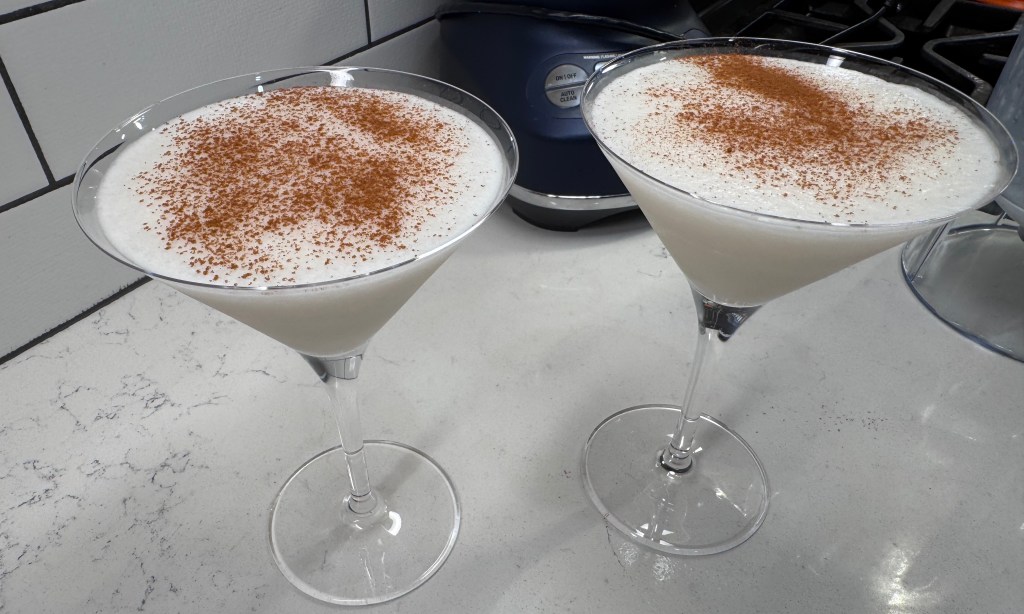
But every once in a while, Les asks me to try to re-create Will’s coconut martini. It’s frosty, coconut-y, and with just a hint of almond and a light dusting of cinnamon. The first time I tasted this drink, I thought it tasted a little bit like Christmas. I still think so!
I may have gone a little crazy with the cinnamon.
Will is part of my extended family— my husband’s cousin’s husband— and we made an instant connection on our first meeting at my (almost) mother-in-law’s 90th birthday party back in 2016. Will is charming and fashion-forward, always has a witty comeback for every situation, and makes even last-minute entertaining seem effortless. When we visited him and Cousin Evan on our tour of the Tri-State area a few years ago, Will pulled out the blender and whipped up these drinks like it was nothing. And Les went bonkers for it!
I asked for the recipe on the spot, but it was clear that Will had made them so many times, it was pure muscle memory for him. He said it was vodka, cream of coconut, a splash of Amaretto and ice. How much of each? Well, until it “tastes right.” 😂
Just a few ingredients keeps this drink simple.
Les has asked for this drink at home enough times now that I’ve finally managed to get the ratios pretty darn close to Will’s version. With today being Will’s birthday, I thought it would be fun to share this frozen concoction, and just in time for Winter Solstice and Christmas. It’s an easy drink to make as a batch, so increase your measurements for the number of people who’ll be enjoying it. And, of course, if it needs a little more of something or another for your taste, just fiddle with it until it tastes right. 😉
Cheers!
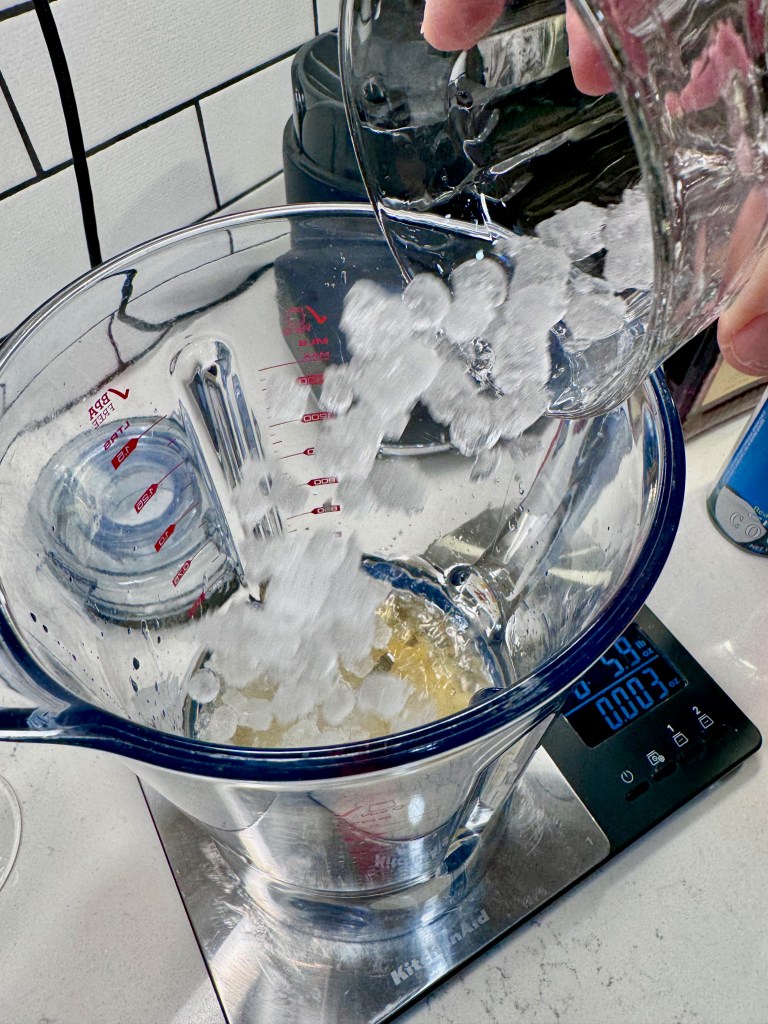
Pellet ice makes this even easier. See if your nearby fast food joint will sell you a bag or a large cup of it.
This is a really simple cocktail that is easy to batch for a group, and the subtle touches of almond and cinnamon make it taste like Christmas.
Ingredients
4 oz. (1/2 cup) vodka
2 oz. (4 tablespoons) Coco Lopez or Reàl Coconut (see note below)
1/2 oz. (1 tablespoon) amaretto
Ground cinnamon to sprinkle on as garnish
Note: Coco Lopez is canned cream of coconut, and it is sweetened. Do not confuse with culinary coconut cream, which has no added sugar. If you are making only a couple of drinks, or if you prefer to use a squeeze bottle, Reàl Coconut would be a good alternative. You can find both of these products in the cocktail mixer aisle of a grocery store.
Directions
Measure vodka, Coco Lopez and amaretto into a blender container.
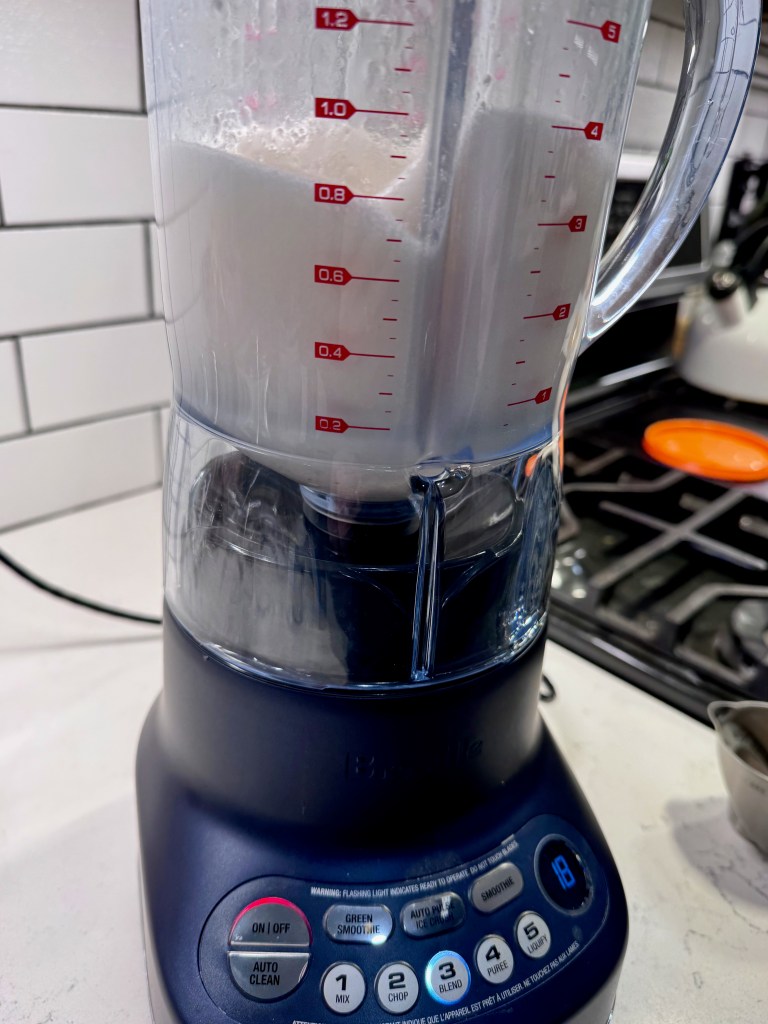
Add one cup of ice for each drink. Pulse the blender to break ice into smaller pieces, then run the blender continuously until the mixture is smooth and frosty.
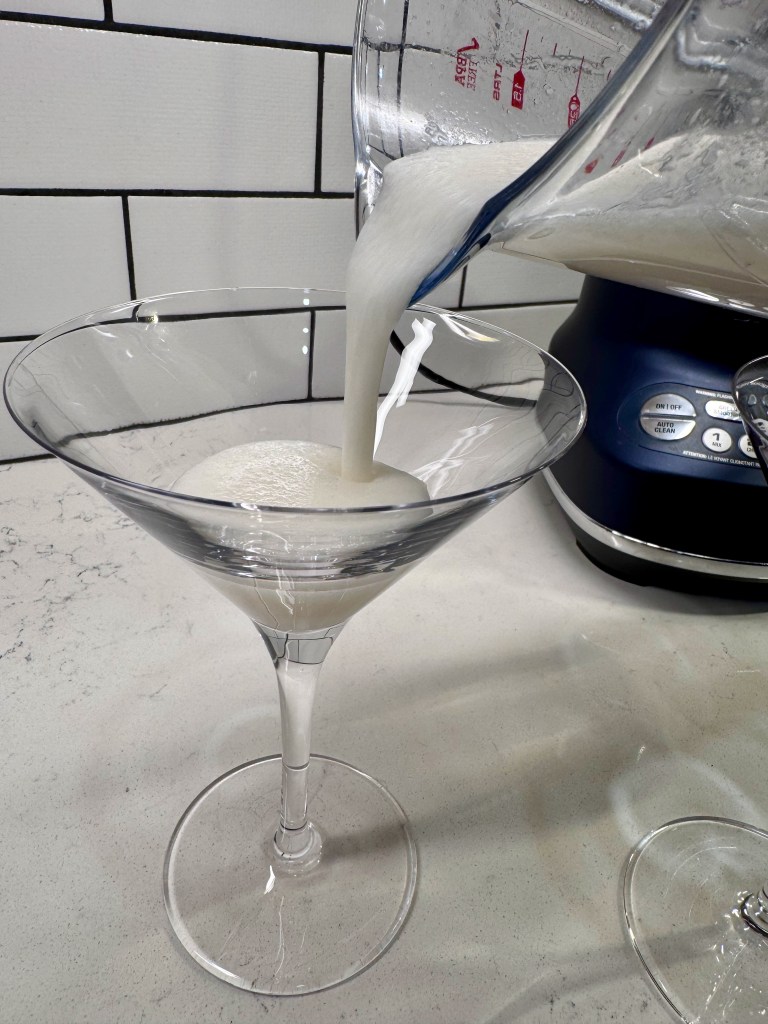
Divide the blended cocktail into two chilled martini glasses. Sprinkle the top of the drinks with cinnamon and serve immediately.
When all the chaos of shopping, prepping and cooking for Thanksgiving is done, there’s no happier feeling for me than hearing the doorbell, as guests begin to arrive for time spent together and stories and laughter around a carefully prepared meal. At our house, that ritual includes a cocktail, and this year, mine is a tipsy, on-ice adaptation of America’s favorite pie. Care to join in?
Why have a signature cocktail for holidays?
It might seem snooty to offer a signature cocktail for a holiday gathering, but hear me out on the reason that I started doing this. When guests arrive for dinner, we are almost always heading into the final stretch of prepping, which can be hectic or even intense at our house— depending on whose year it is for the turkey (this year, it’s mine). I love to play mixologist, and our bar is well-stocked to make just about any drink you could imagine, which is kind of the problem. Rather than overwhelm our guests with dozens of choices from our bar, I have found it beneficial to offer a thoughtful signature drink— something that captures the essence of the season with broad appeal for any number of tastes— and our guests seem to agree.
What goes into an apple pie old fashioned?
An apple pie old fashioned infuses the sweet and warm flavors of cooked apples with the smoothness of bourbon, and for an extra homey touch, I’ve “fat washed” the bourbon with an embellished browned butter— a nostalgic nod to an all-butter pie crust. The cooked apple flavor in this drink comes from an apple cider syrup, which replaces the sugar cube or simple syrup that would otherwise be muddled into the cocktail.
Does all of this sound complicated or intimidating? It isn’t! But it does take some advance planning so that you have your ingredients ready to wow your guests when they arrive. Watch me break it down.
Apple pie syrup
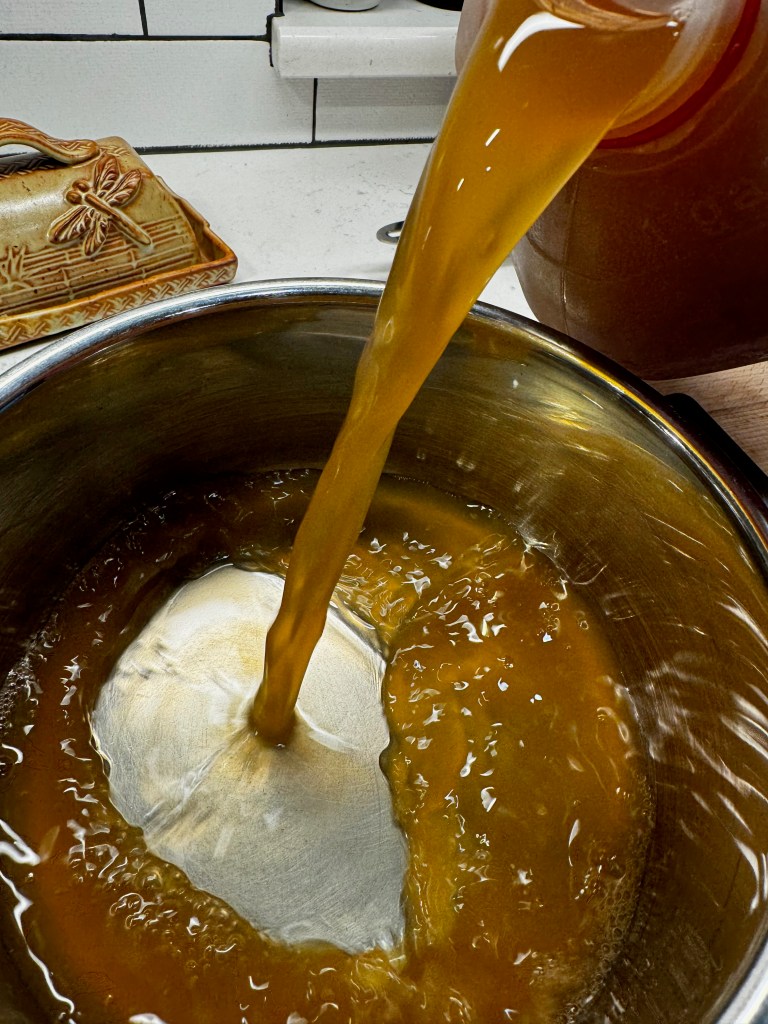
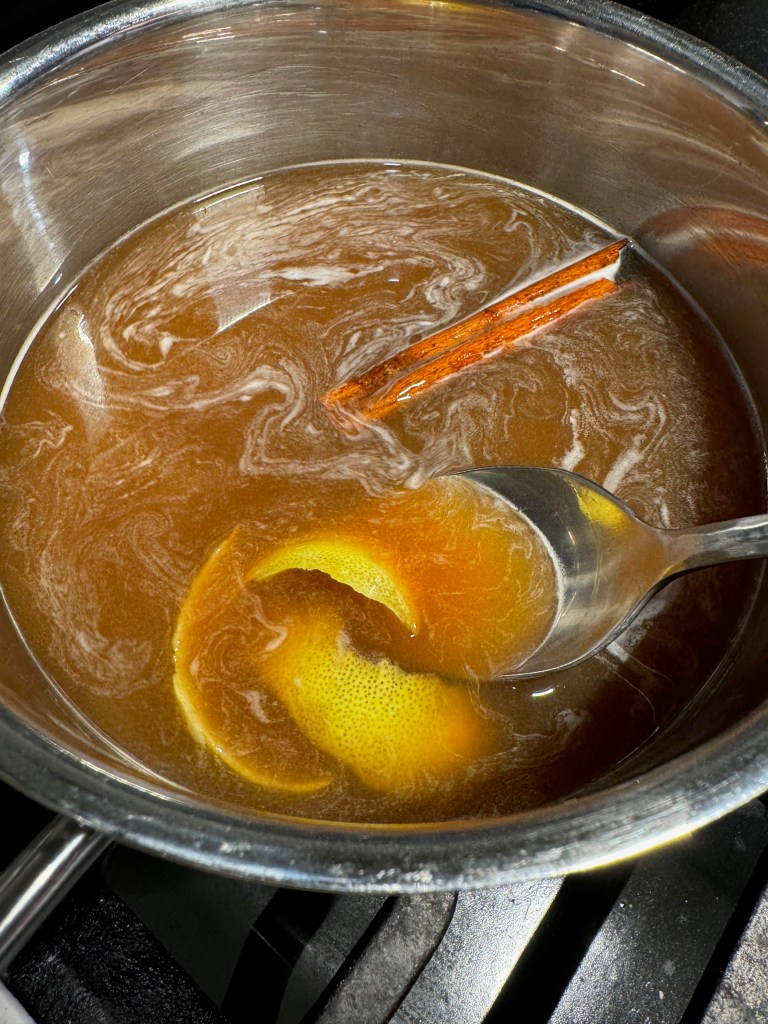
For best results, purchase a fresh apple cider from the produce cold case, rather than a bottled version off the shelf. If you can get one from a local supplier, that’s even better! Heat the cider with a spoonful of brown sugar, the peel of a lemon and a couple of cinnamon sticks. Reducing the cider is necessary so that you get enough apple flavor without adding too much cider and over-diluting the drink. Strain out the solids, and bottle it up! This will keep in the fridge for about three weeks.
This spiced apple cider syrup can be used in other cocktails, too.
The amplified browned butter wash
For the browned butter trick, I ventured into the science of food and tried the viral recipe trick for making the most delicious browned butter ever. You might recall mention of this last autumn, when I presented the caramel apple blondies that were also made with browned butter, but with a boost. An addition of dried milk powder enhanced the toasty, nutty flavor of browned butter, and the result was just beyond. I knew when I made the blondies that I’d have to try this trick again for a fat-washed bourbon, and here we are!
As if regular browned butter isn’t delicious enough? This is way over the top!
I waffled a bit on whether to use salted or unsalted butter for the cocktail, and when I tasted the outcome of my efforts using unsalted butter, I knew instantly that it was the wrong choice. Salt does the same thing for a cocktail as it does for a dish, so I remedied this with a pinch of salt in the finished butter— no harm, no foul. Pour the bourbon into the jar with the cooled browned butter and give the jar a few gentle shakes. Let the mixture settle and separate, and then refrigerate overnight or up to two days.
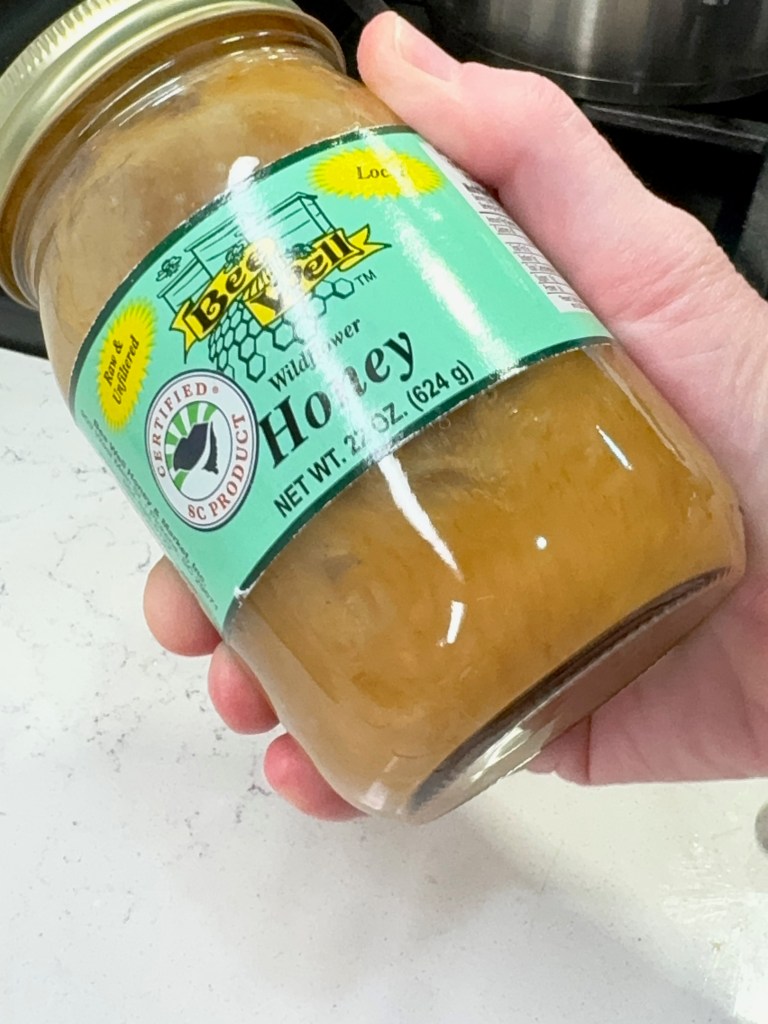
To clarify, there is no honey in this. I couldn’t get the label off the jar!
The extra milk fat from the powdered milk, plus that hint of salt, produced a deeply addictive flavor, which I infused into my bourbon overnight and then strained out through a coffee filter the next day. By the way, do not discard that butter! As the browned butter flavors the bourbon, so the bourbon flavors the butter solids. Repurpose the butter in your sweet potato casserole or green beans amandine or anything else that would enjoy a little kick of bourbon.
Scoop out the cold, hardened butter and strain the bourbon through a coffee filter. Be patient, this takes time.
It’s cocktail time!
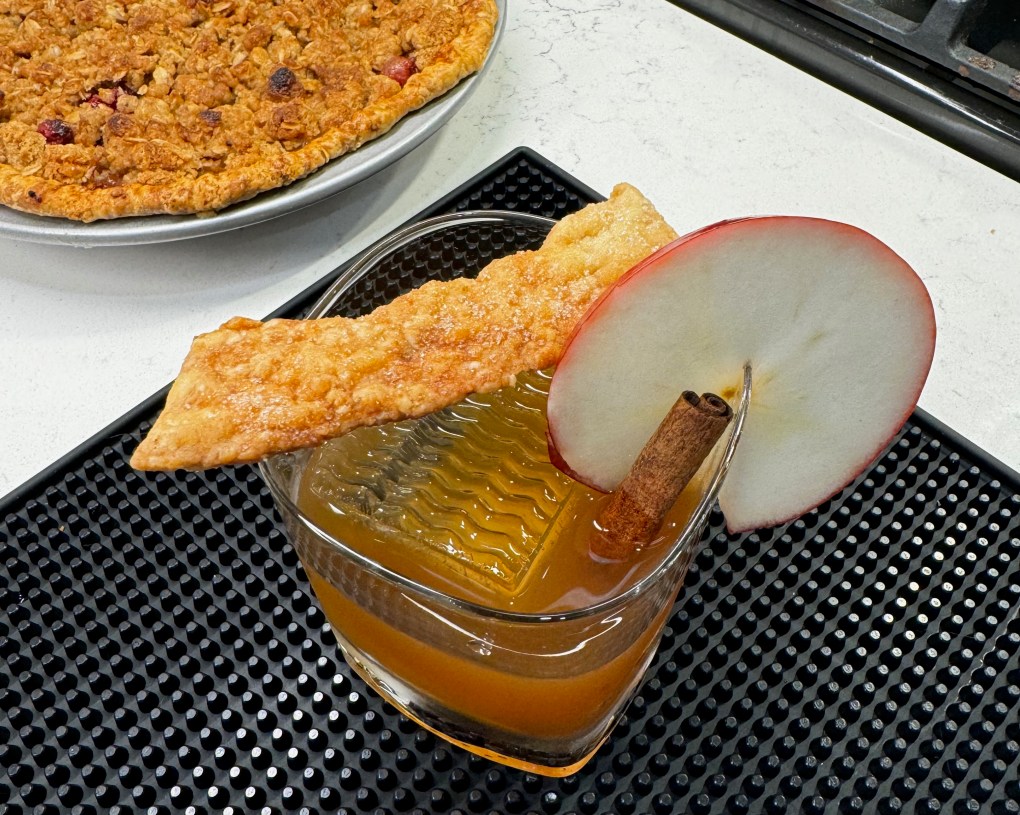
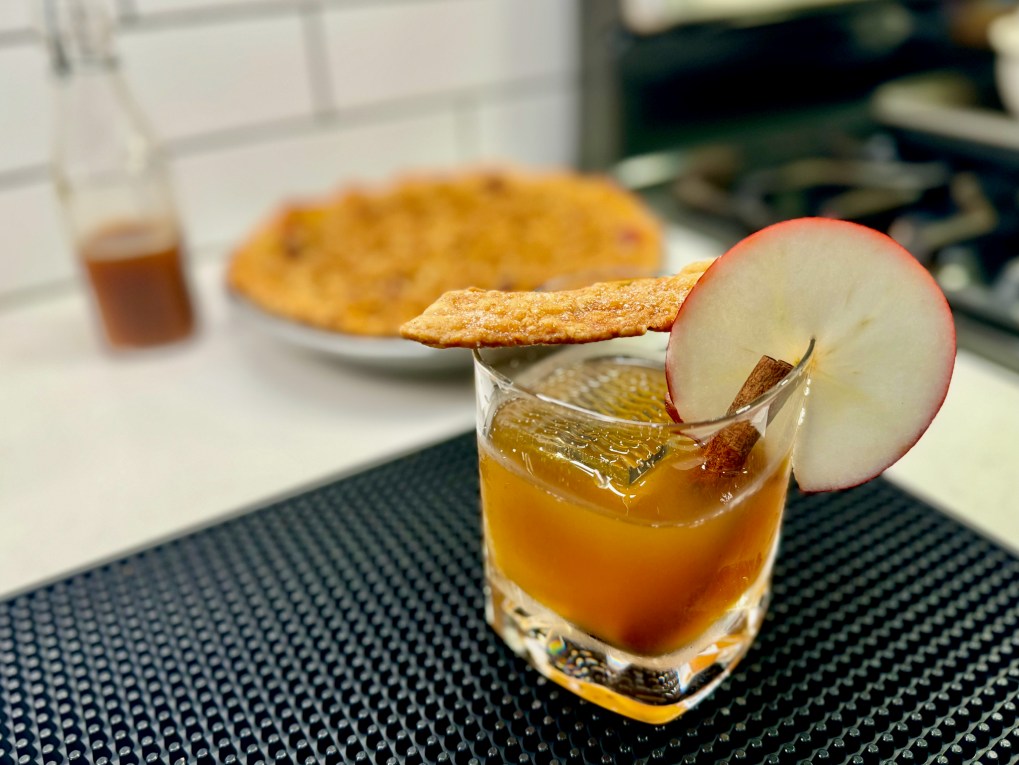
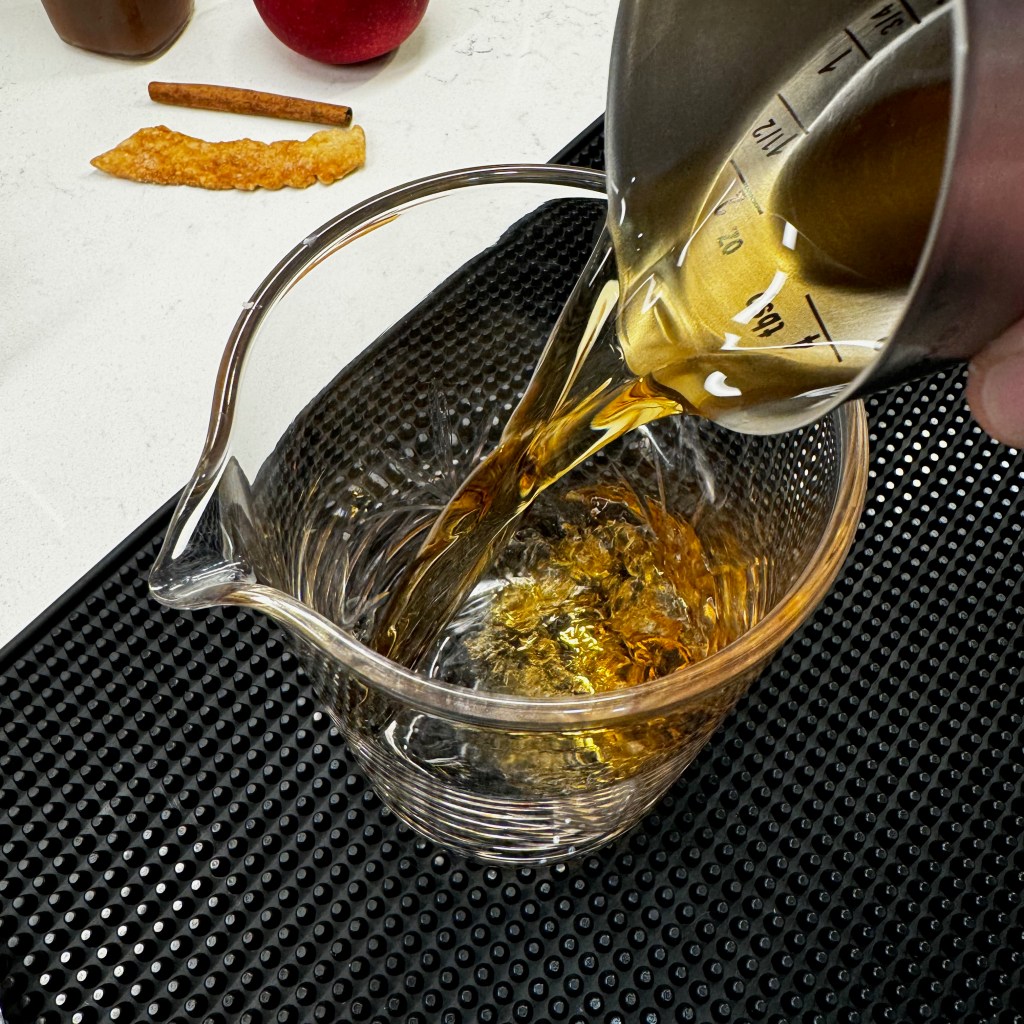
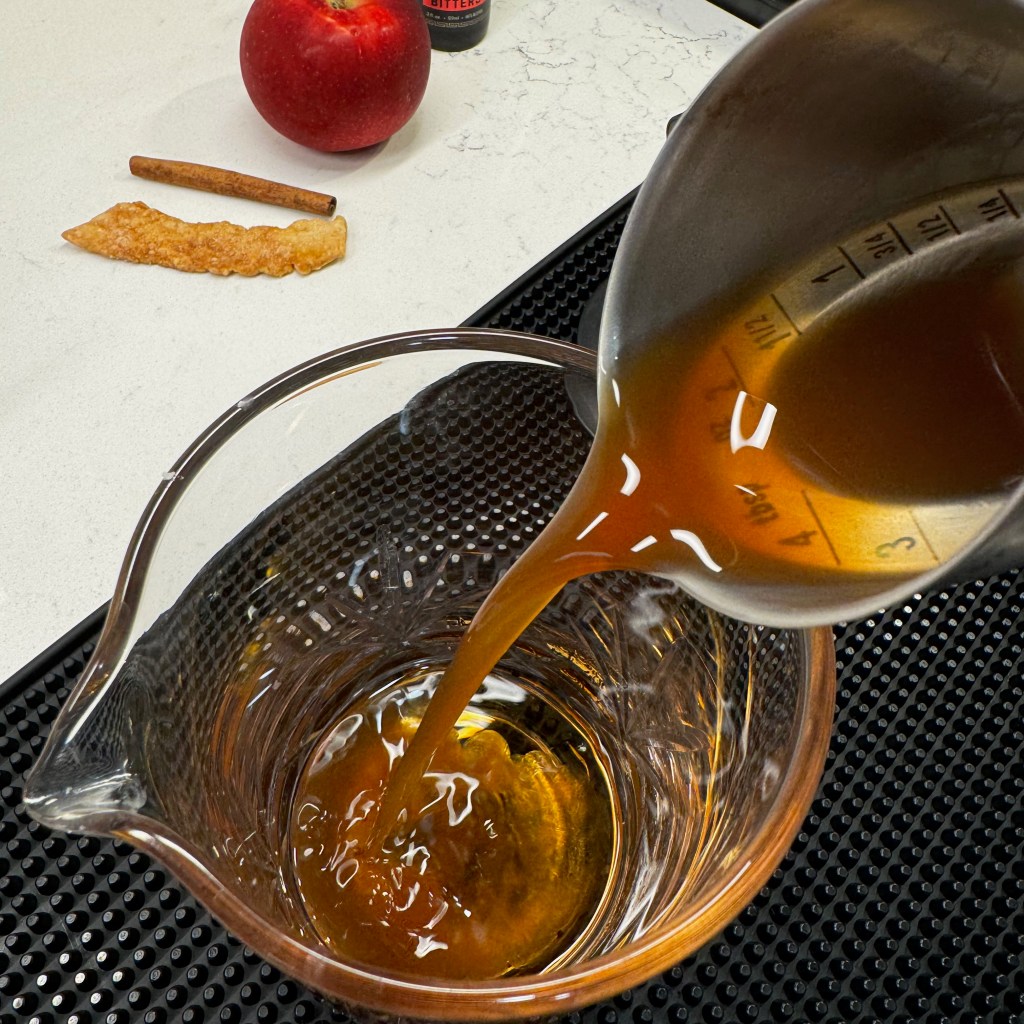
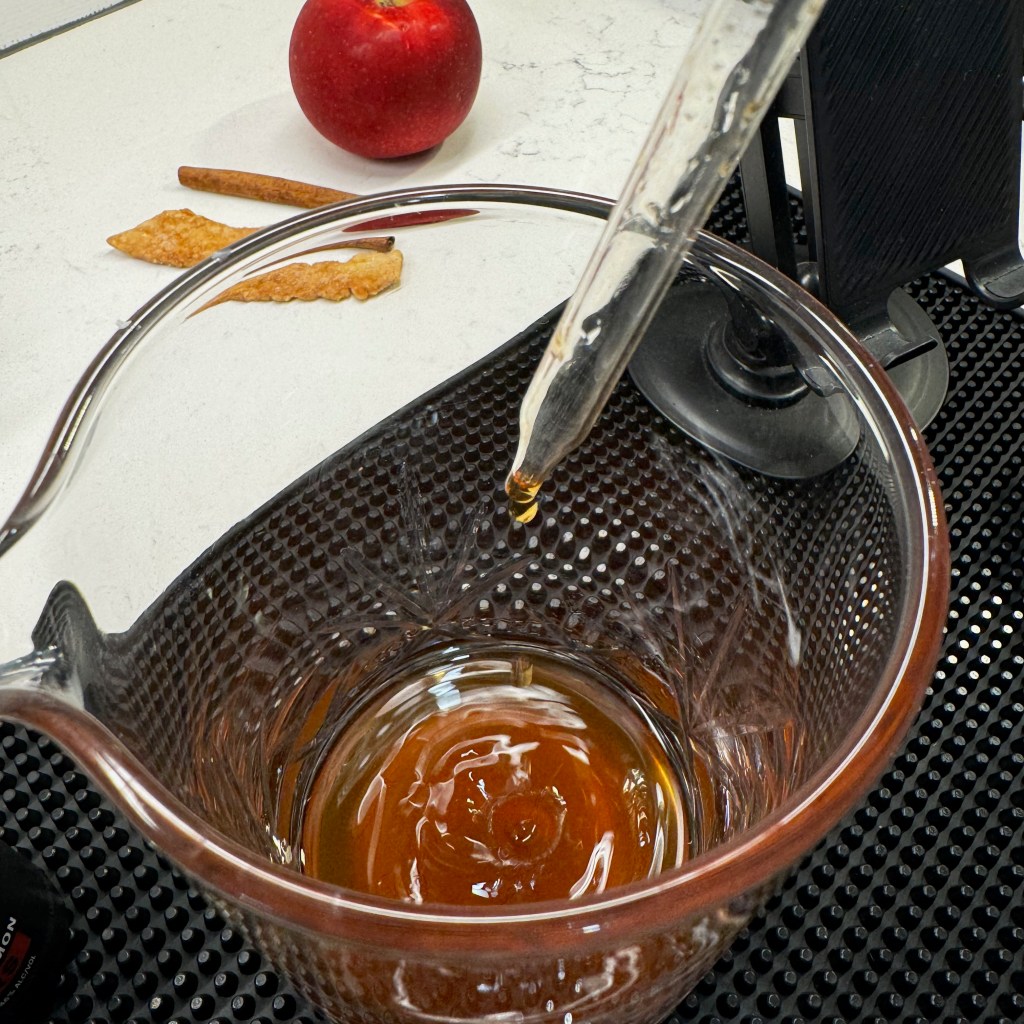
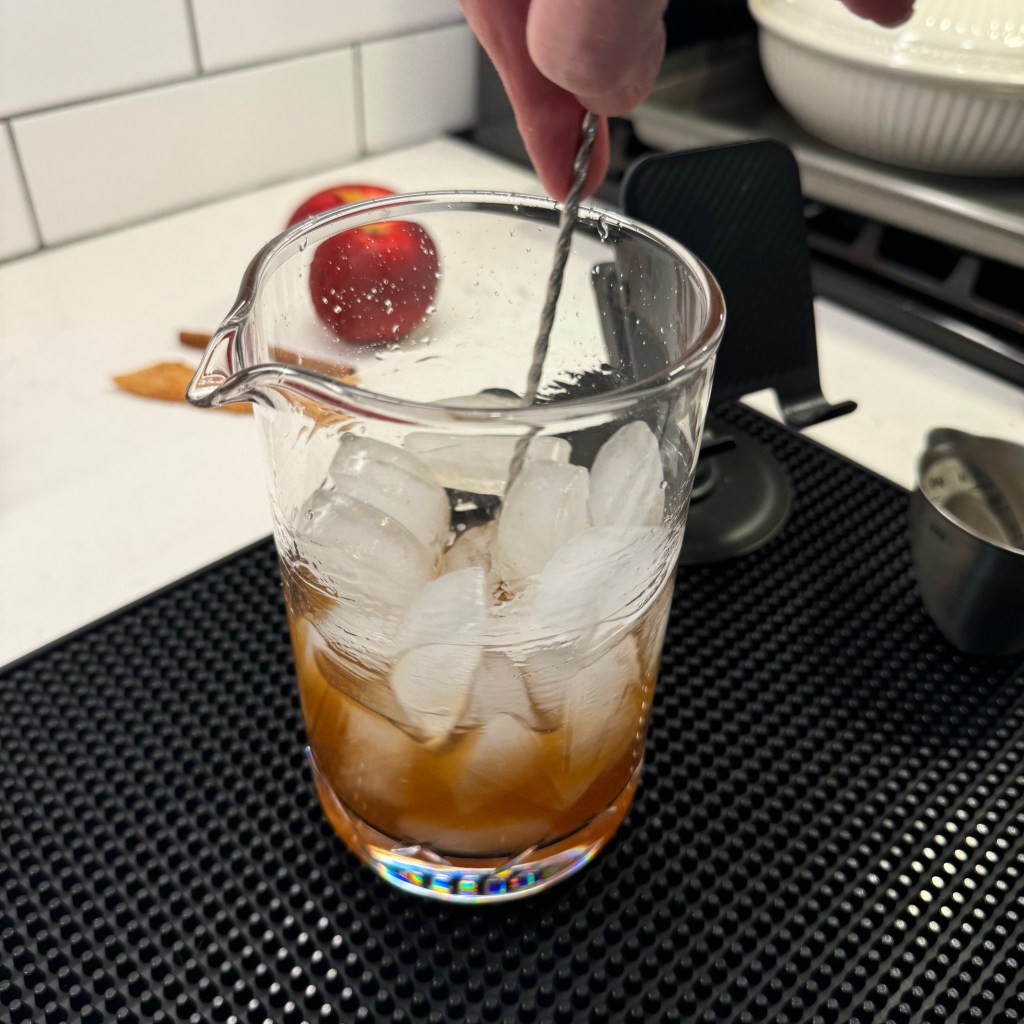
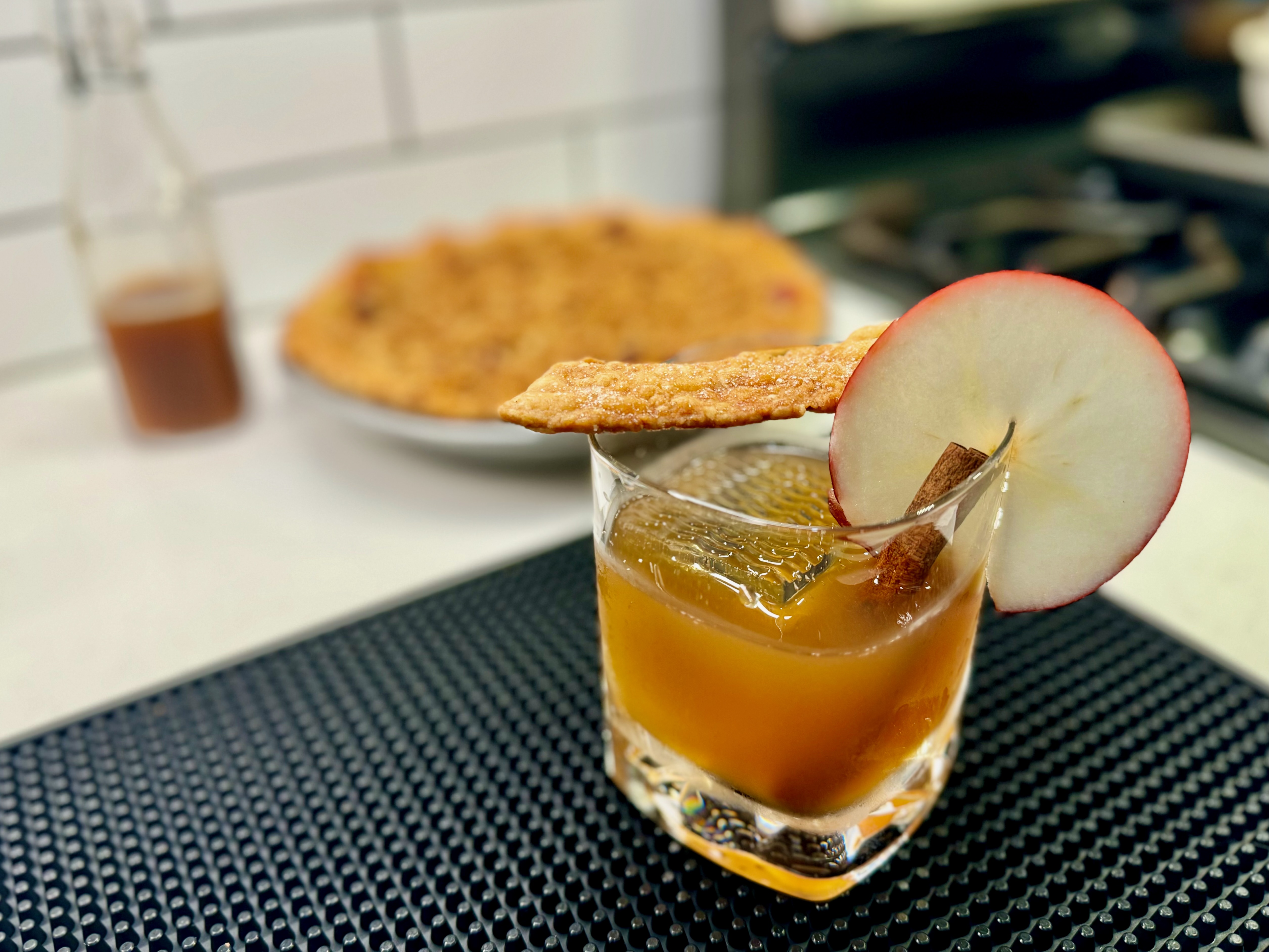
Having the apple cider syrup and browned butter-washed bourbon ready ahead of time makes it a snap to stir up these apple pie old fashioneds when your guests arrive for cocktail hour. The drink is easy to make, combining the browned-butter washed bourbon, a splash of the spiced cider syrup and a quick dash of spiced bitters in a mixing glass with plenty of ice, then strained over a fresh ice cube and garnished with an apple slice and cinnamon stick.
I love smoked cinnamon bitters here, but ginger or cardamom work great, too.
Wanna go for bonus garnish points? Balance a strip of cinnamon-dusted baked pastry dough on the edge of the glass, too. If you’re making a pie for the holiday, simply save a few strips of dough, giving them a sprinkle of cinnamon sugar before you bake to golden crispy goodness. These are best fresh; if you don’t have time, the apple and cinnamon stick will be impressive enough!
This cocktail requires some advance planning to prepare a cider syrup and browned butter-washed bourbon, but you can believe it's worth the trouble!
Ingredients
2 oz. browned butter-washed bourbon (description below)
3/4 oz. spiced cider syrup (instructions below)
a quick shake of cocktail bitters (cinnamon, cardamom or ginger work nicely)
big square ice cube
cinnamon sticks, fresh apple slices and sugared pie crust for garnish
Directions
Combine bourbon, syrup and bitters in a cocktail mixing glass or shaker. Add one cup of ice and stir for about 20 seconds. Strain over a large ice in a double rocks glass.
Garnish with an apple slice and cinnamon stick, plus a baked strip of sugared pie crust if desired.
Make the browned butter-washed bourbon ahead of time. Use salted butter for best results, and consider using whole fat dried milk powder if you can find it. The washed bourbon will keep for several weeks in the fridge, and you can repurpose the butter solids in a dessert or sweet potato casserole.
Directions
Melt one stick (8 Tbsp.) butter in a small saucepan over medium heat. When the butter begins to bubble and froth, quickly whisk in a tablespoon of dry milk powder and whisk constantly until the froth dies down and the milk solids take on a caramel color. Remove from heat immediately and pour the hot butter into a large glass jar to cool.
Pour two cups bourbon into the jar of cooled browned butter, cap it and give it a few gentle shakes. Allow it to settle and separate, and then put it in the refrigerator overnight.
Spoon out the butter solids and strain the bourbon through a coffee filter-lined strainer or pour-over device. Bottle the washed bourbon and keep refrigerated until ready to use. This is enough for eight cocktails.
Make the apple cider syrup ahead of time as well. For best results, use fresh-pressed apple cider from a farm stand or the produce department rather than bottled from the juice aisle.
Directions
Pour 2 cups apple cider into a small saucepan over medium heat. Add the thin peel of an organic lemon (none of the white pith, and wash it first!), and two or three pieces of cinnamon stick.
Bring the mixture to a slight boil, then reduce the heat to medium-low and simmer until the liquid is reduced by about half. Stir in a tablespoon of brown sugar until dissolved. Allow the syrup to cool before straining out the lemon peel and cinnamon sticks. Transfer to a bottle and refrigerate up to three weeks. This makes enough syrup for at least eight cocktails.
It’s no secret that fall is my favorite season. We are still a few weeks away from cozy sweaters, but the “official” arrival of the season has me feeling inspired. And to make things even more fun, this also Negroni Week, a fundraiser that benefits the Slow Food Movement, a cause that aims to make the world a better place with a focus on sustainability, equity and education around food and drink. Savvy bartenders get excited about Negroni Week because it gives them reason to flex their creativity with the classic Italian cocktail that is the event’s namesake.
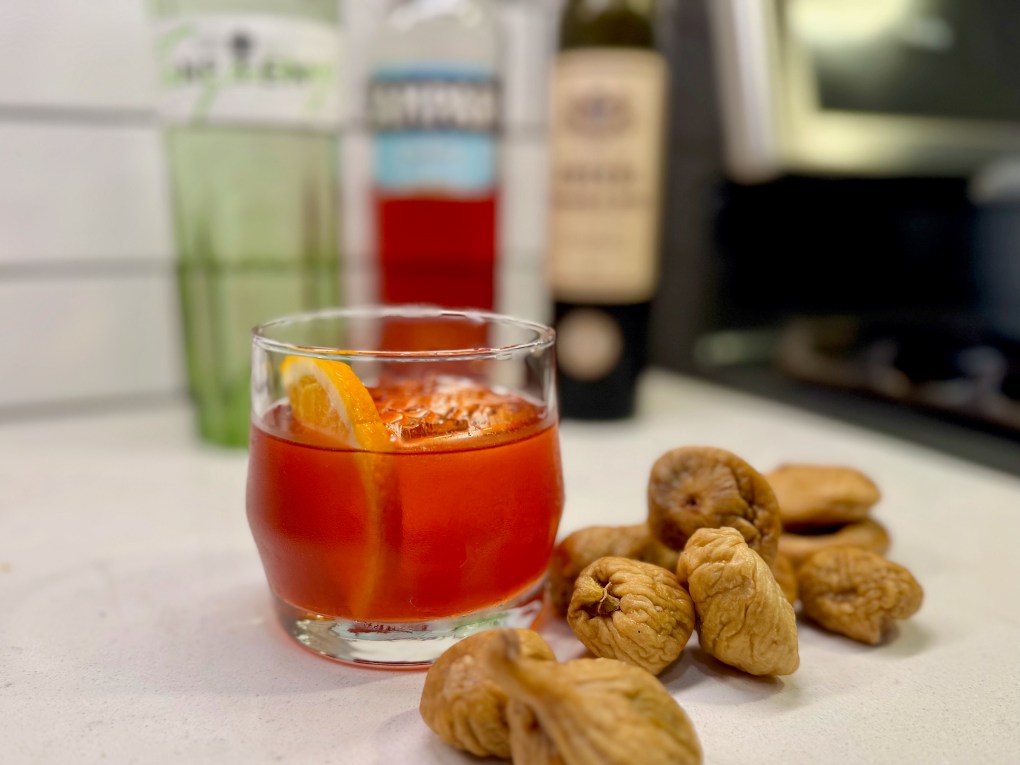
If I had my own bar— and believe me, I’ve pondered it— this is the twist I would serve for Negroni Week. Traditionally, a Negroni is an equal parts drink made with dry gin, sweet vermouth and Campari, the red bitter liqueur that makes Italy proud. Mine is all of that, plus an easy infusion of sweet, earthy fig.
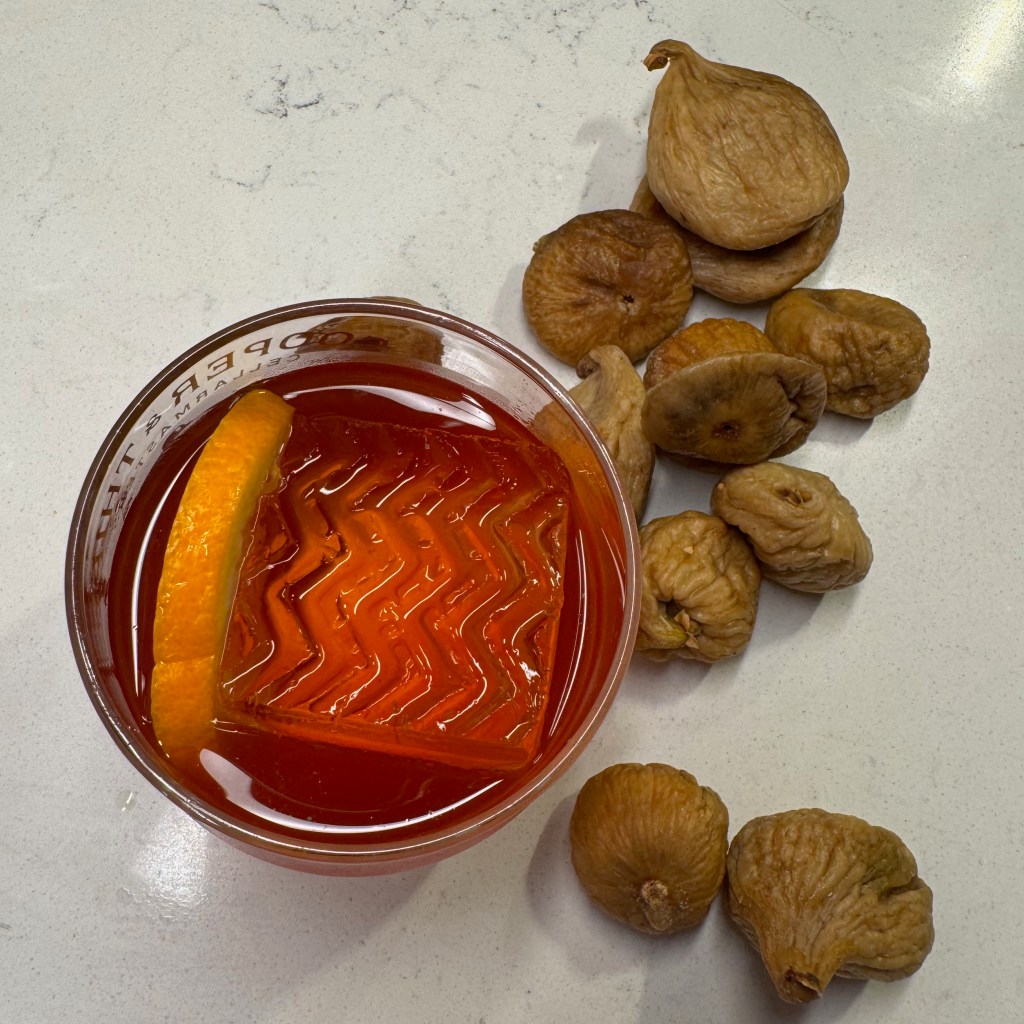
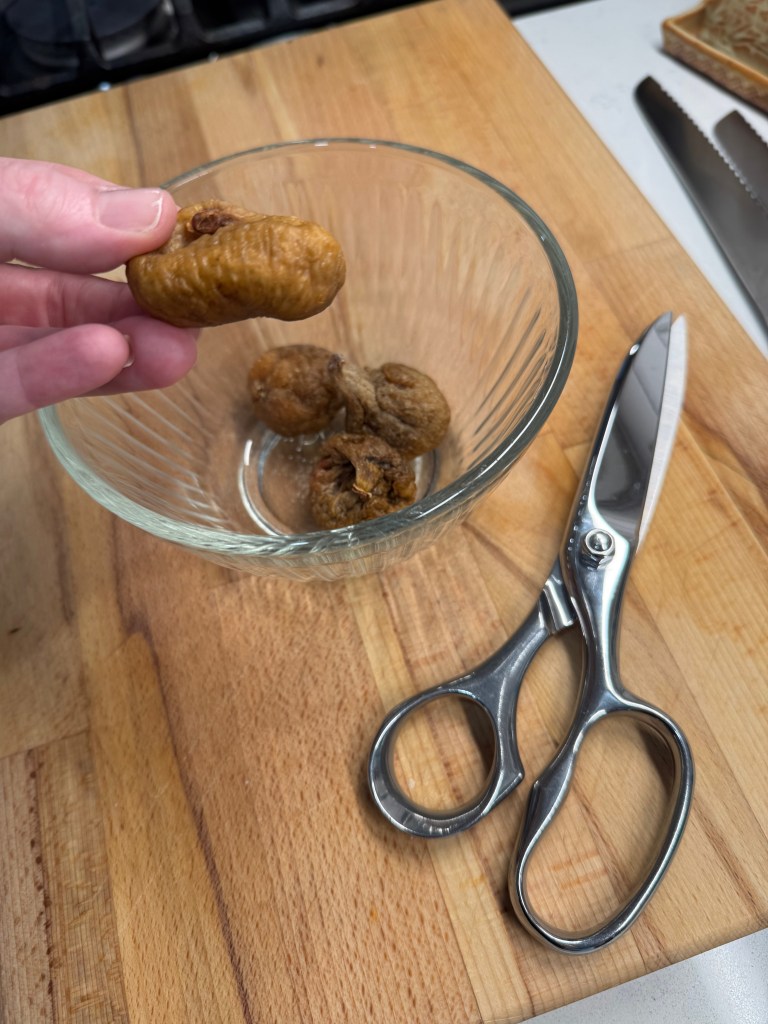
The lighter variety of fig helps keep the Negroni color true.
These flavors feel so right for fall, layered and complex, leaning more toward slow savoring than refreshment. This drink fits right in with cooler temperatures, gentle breezes and the first few leaves making their annual drift toward the ground. It makes me long for sweaters and cozy socks and conversation around our Solo stove. Negroni is delicious with cured meats, cheeses and olive trays, so this one gets high marks as a cocktail for casual entertaining.
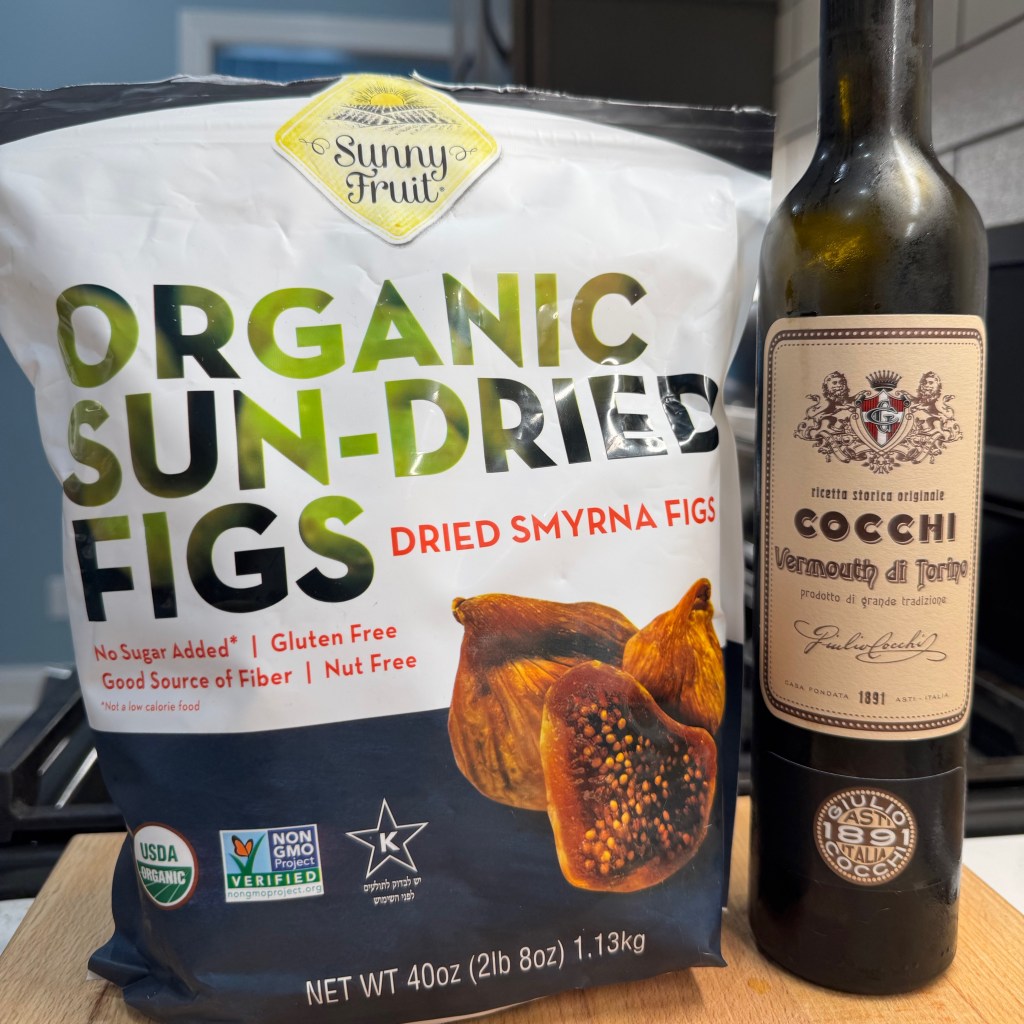
To maximize the fig flavor, I chose to infuse with dried figs rather than fresh. The drying process leaves a concentrated sweetness and intensity behind, and soaking the figs in sweet vermouth pulls that flavor into the spirit without watering it down.
The giant Costco bag of figs always seems like a good idea at the time! 😂
Why infuse the vermouth?
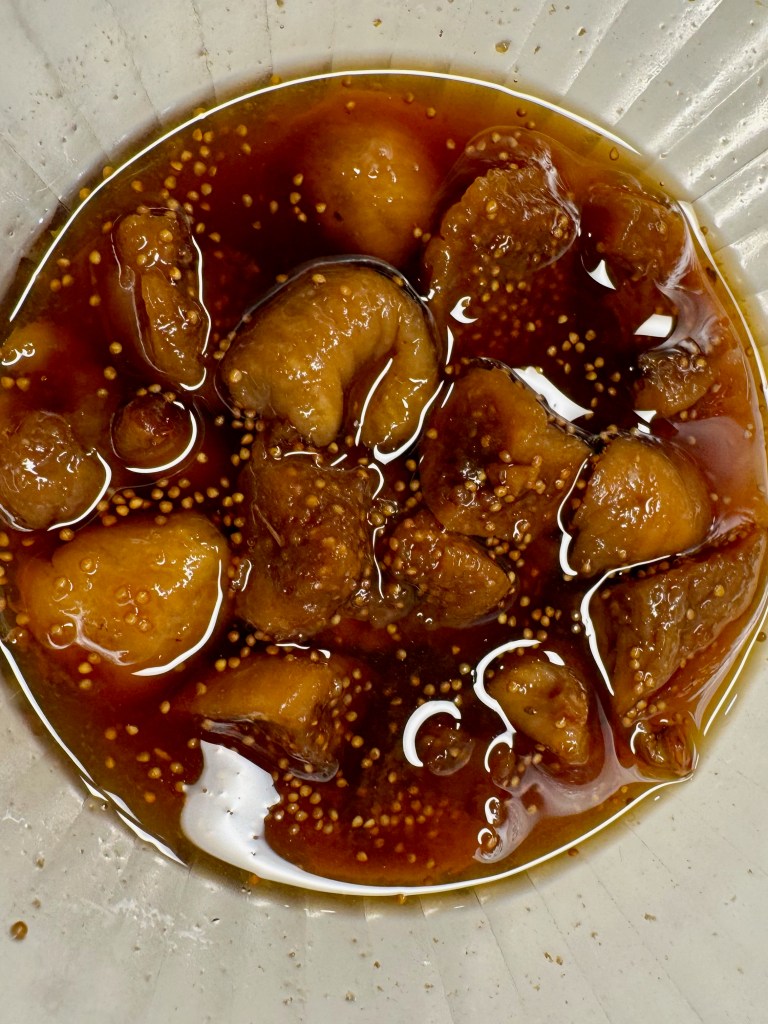
My decision to infuse the vermouth rather than the gin or Campari was quite intentional. Gin is the highest proof spirit of Negroni and I didn’t want to mess with that. I also knew that some of the booze would soak into the figs that I would repurpose— most likely in a bread pudding— and I couldn’t wrap my mind around the thought of Campari-stained figs, so the vermouth won out by elimination. It also bears mentioning that I wanted to try the fig-infused vermouth in a Manhattan, too; alas, I used it all up in my Negronis, so I’ll have to make more. Had I realized how much the figs would soak up the vermouth, I’d have made a double batch! Let this be a lesson to you.
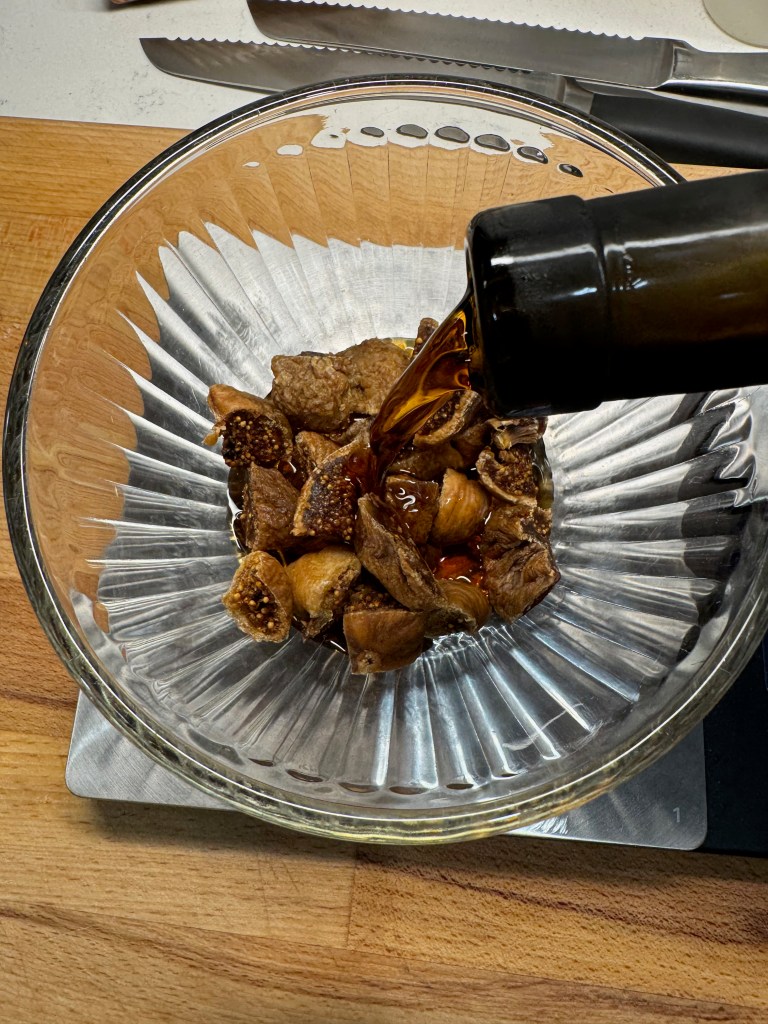
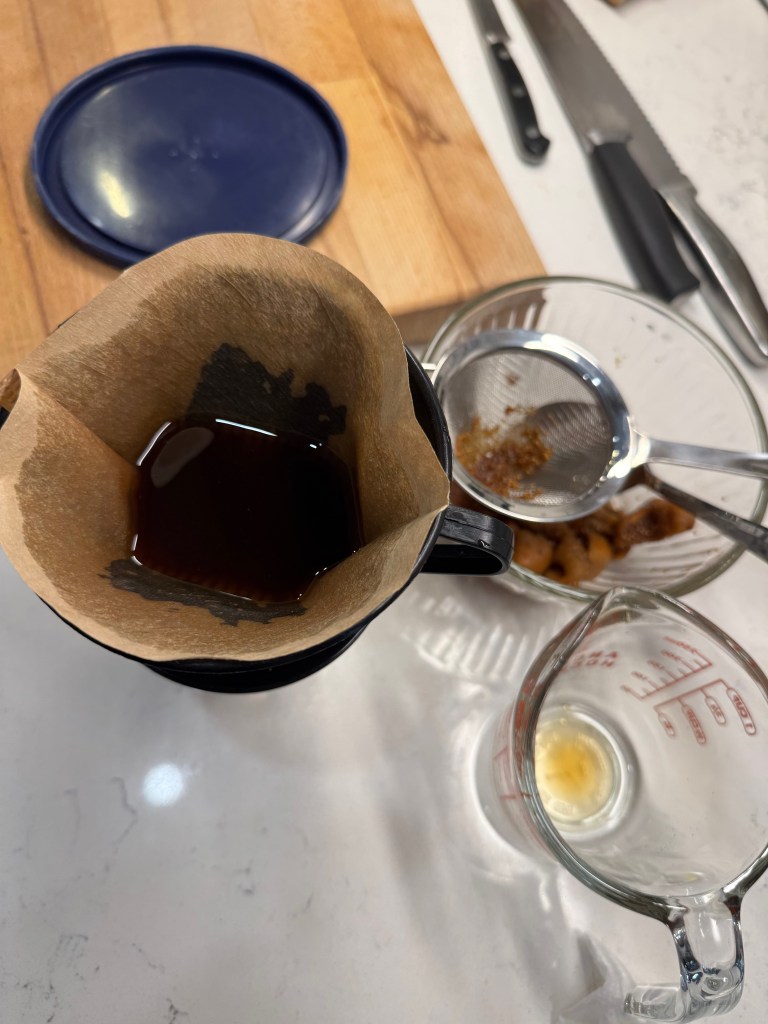
I snipped the figs into smaller pieces for maximum infusion. Straining through a coffee filter was near-impossible, so I shifted to a fine mesh strainer.
All things being equal
Negroni is one of the simplest cocktails to make because it is equal parts of only three ingredients, plus an orange slice. This means, no math! If you want a small drink, use 3/4 of an ounce of each— gin, Campari and sweet vermouth. For a longer sip, go for a full ounce of each. Living abroad where ounces aren’t a thing? Use whatever measure makes sense to you, and make it the same for all three ingredients. Simple is good.
That Negroni color!!!
A classic Negroni is made directly in the glass, but I like a little dilution on mine to wake up the nuances of the booze. Plus, the dried figs have turned my vermouth into a thin syrup and I want to be sure it mixes well, so my ingredients went into a cocktail mixing glass with a large cupful of ice. You could use a shaker, I suppose, but don’t actually shake it; just pour it back and forth with ice a couple of times. Strain it over a giant ice cube and garnish with a juicy orange slice.
Always remember to garnish!
Would I make another round?
Absolutely! I found this cocktail to be a real charmer that has lingered in my mind long after the fig-infused vermouth ran dry. If you already like Negronis, you’ll love it. If you’re on the fence or you typically find Negronis to be harsh, I can confirm that the figs soften those bitter edges in a pleasant way. Fig also happens to pair very well with orange, so the classic orange garnish is right at home. You may notice that I also used Tanqueray 10 for this cocktail; it’s distilled with tons of citrus, and that’s working great here.
If you’re into Negronis, I hope you’ll seek out a bar or restaurant in your area that is supporting Negroni Week, going on through Saturday. If not, then encourage your favorite watering hole to participate next year, and at least take a moment to learn more about the Slow Food Movement, which benefits us all, cocktail or no cocktail.
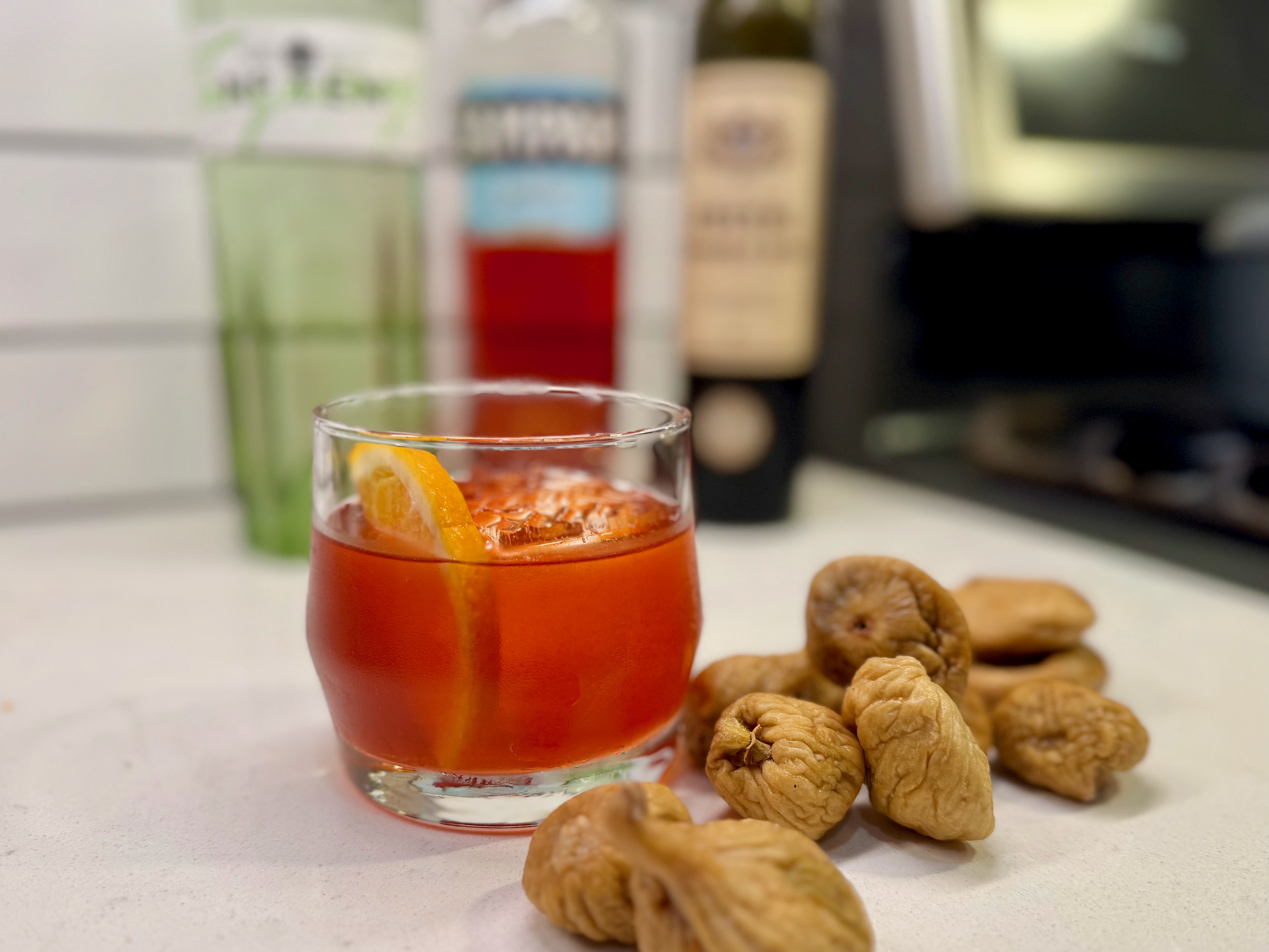
Sweet, earthy figs lend their flavor to one of the most classic apertivo cocktails, making this a fun twist for Negroni Week.
Ingredients
1 oz. citrus-forward gin, such as Tanqueray Ten
1 oz. Campari
1 oz. fig-infused sweet vermouth (details below)
Stir all together and garnish with an orange slice
Fig-infused vermouth is simple to make. Plan ahead, as you’ll need at least 24 hours ahead to infuse the vermouth.
Directions
Cut up about two cups worth of dried figs (mine were Smyrna figs, which are light in color) into a medium bowl, and pour enough sweet vermouth to fully cover them. This should be a little over one cup.
Let them rest at room temperature a few hours or overnight before stirring and transferring to the refrigerator for 24 hours.
Strain out the solids through a fine mesh strainer and transfer to a bottle. This will keep in the fridge for two weeks, and should make enough for at least four cocktails. Save the vermouth-soaked figs for another use, such as bread pudding or quick bread.
It’s that time of year again, and I don’t mean Christmas in July. I’m completing another trip around the sun this weekend, and what better way to celebrate than with a signature cocktail for the birthday girl?
My husband, Les, is throwing me a party, and though many of the party details are a secret (including most of the guest list), I do at least know what will be on the drink menu because the venue gave us the option to request a special cocktail—yay! I love a theme for a party, and I’ve decided that my signature birthday drink should be reminiscent of the one that was in my hand back in the days when I was first “of age” to imbibe. Oops, did I just give away my age?!
How is it possible that it was soooo long ago??
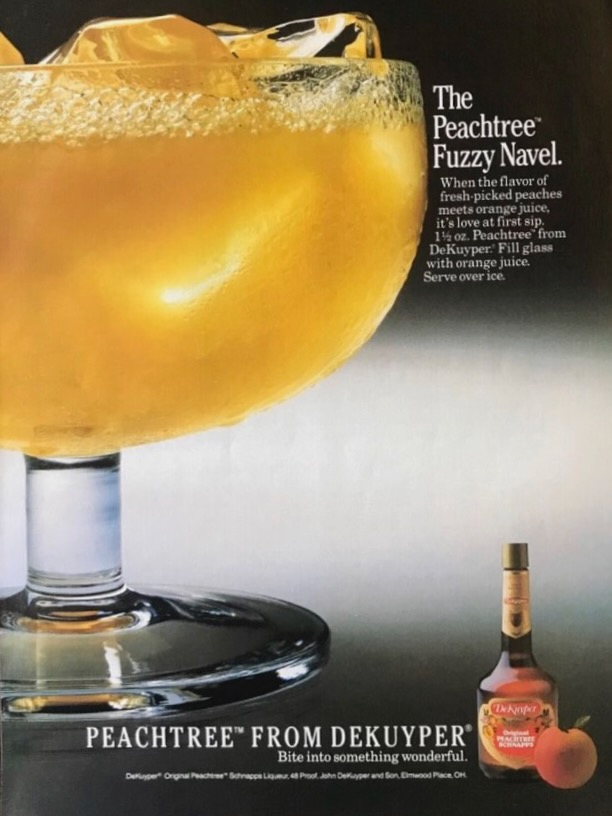
DeKuyper had just released its Peachtree™️ schnapps, and everyone who was anyone— at least among the girls— was sipping on fuzzy navels, a blend of this syrupy sweet schnapps and equally sweet orange juice. The drink gave us a fun little buzz, and it was perfectly simple for all the bridal showers that my girlfriends were having.
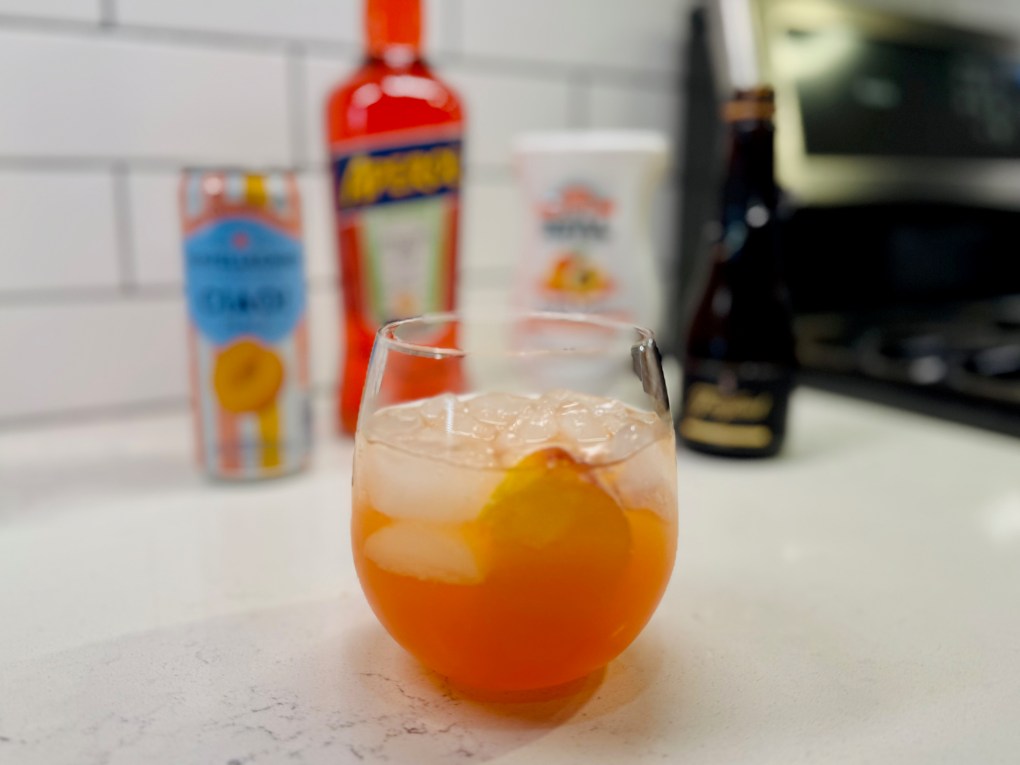
Fast forward, ahem, a few decades and I’m still fond of the “idea” of the fuzzy navel, though I could never stomach the sweetness of it today. So I did what I always do— a modern makeover of an old favorite into a cocktail that is familiar but fresh— this one is easy to make, easy to drink, easy on the alcohol and yes, easy on the eyes.
Hello, Gorgeous!
What’s fun about a fuzzy navel spritz?
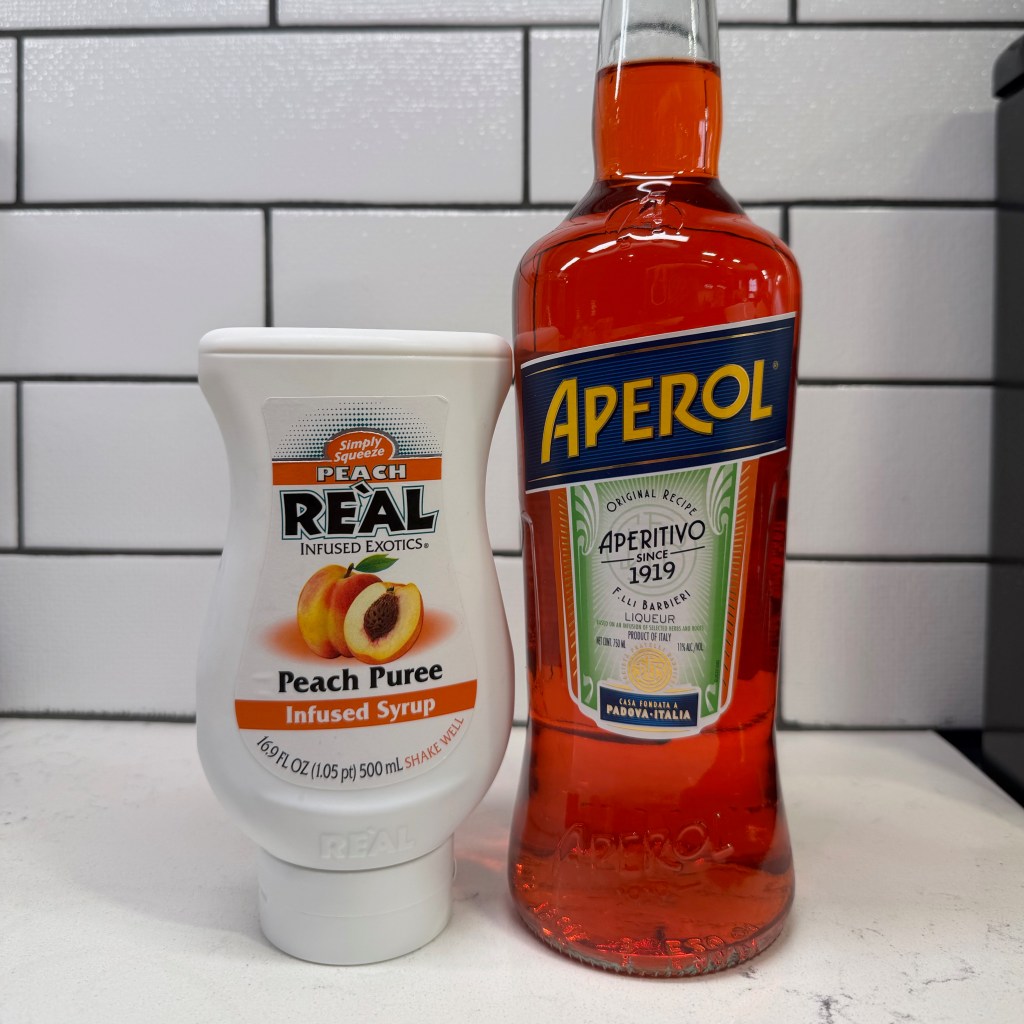
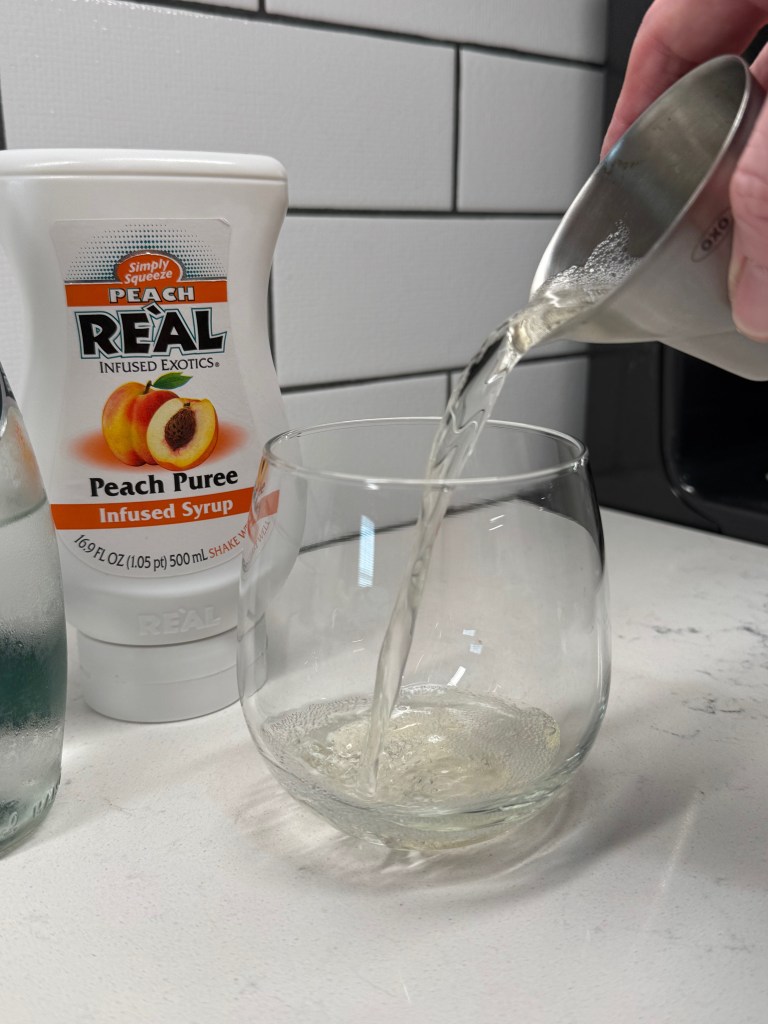
First of all, there’s no peach schnapps! The last time I tasted that stuff, I cringed at the artificial aftertaste. No, this glow-up gets its “fuzzy” flavor from a peach puree that concentrates real peaches into a thick syrup that plays nice with a number of alcoholic spirits— vodka, bourbon, blanco tequila, need I go on? It’s sweet (but naturally so), and a little goes a long way. You can find this product in the mixers section of a larger supermarket, or in the same aisle of a wine or spirits store.
The “navel” aspect of my upscale drink comes from Aperol. This slightly bitter, orange-meets-herbal aperitivo from Italy brings an instant citrusy balance to the sweetness of the peach puree. Aperol is having more than a fleeting moment of popularity, and I decided to ride that wave for my birthday.
The peach and orange flavors are covered here!
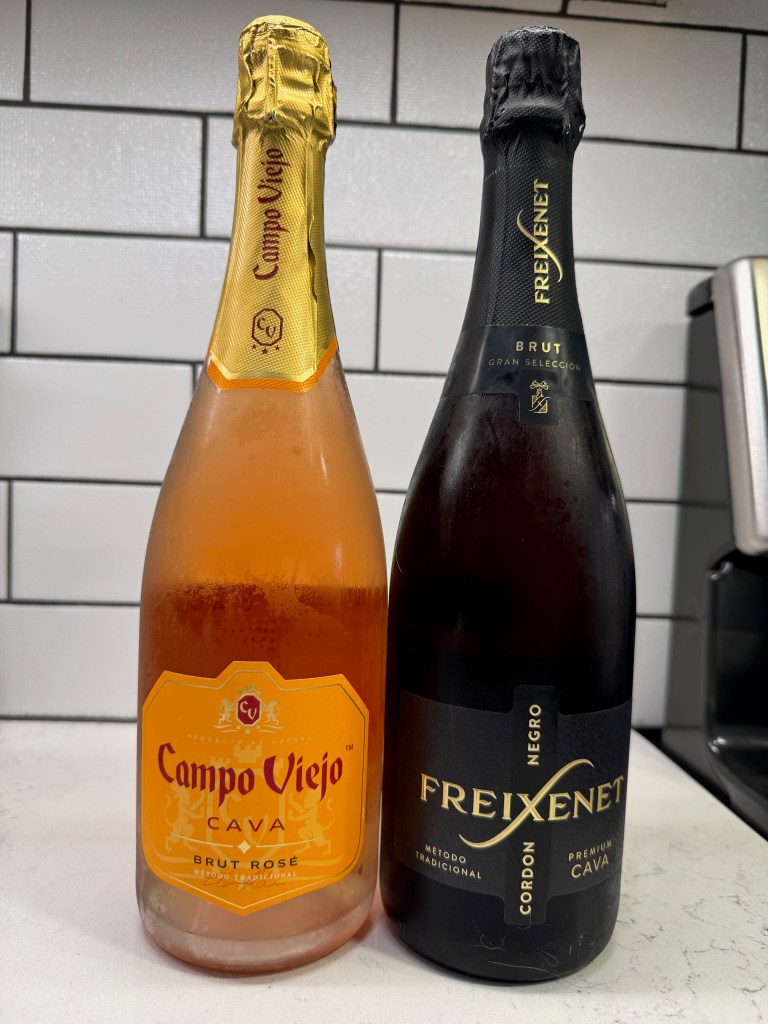
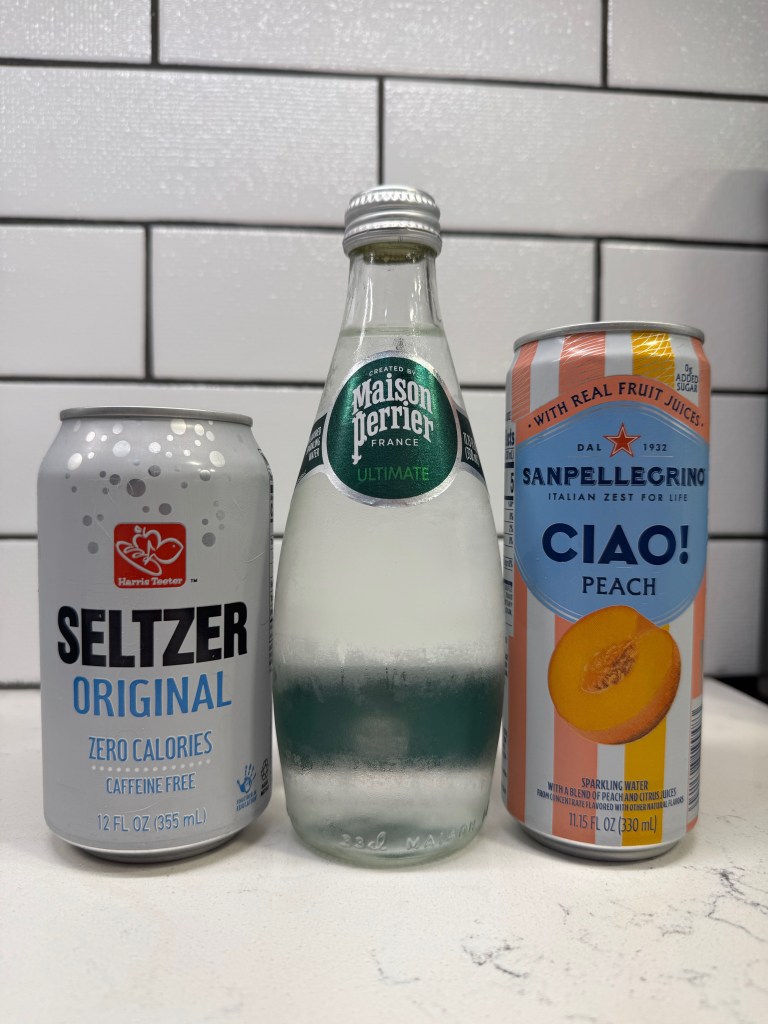
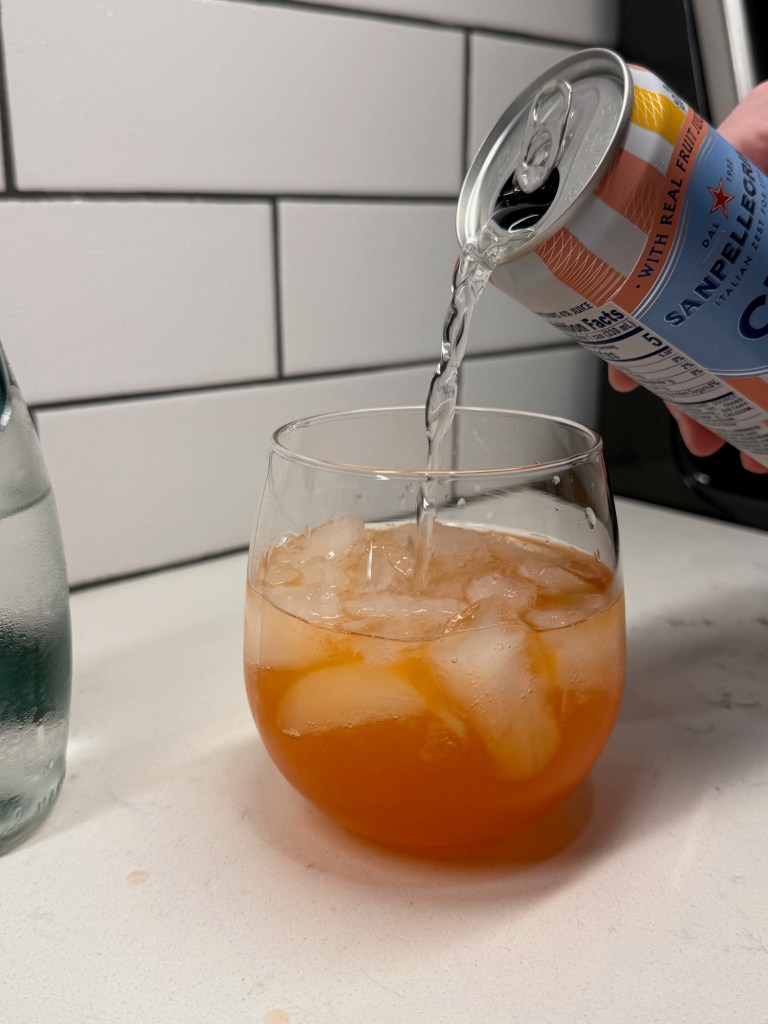
Finally, the base of the drink is Cava, Spain’s counterpart to champagne, bringing a little “fizzy” to my “fuzzy,” and a splash of sparkling water on top softens the drink for superb sipability. Any sparkling will do, whether club soda, seltzer or one of the fancy European options. If you happen to find one scented with orange or peach, even better!
Pick your poison! Any sparkling wine will work, but choose something dry.Please try to find the Ciao! peach. It’s awesome, even on its own.
If at first I don’t succeed, and I didn’t
This cocktail idea has been floating in my mind since at least my last birthday, but it was only in the past few weeks that I got serious about making it work. My first effort looked nothing like what you see here. It included vodka, peach nectar (which is not as peach-forward as it sounds), orange juice, Aperol and prosecco. It was too boozy, too sweet, not very peachy, not pretty and not refreshing at all. In other words, it needed a lot of work!
The peach flavor needed to be concentrated. I considered cooking peaches down into a puree to replace that so-called nectar, but would my birthday venue be willing to do that when I handed them the recipe? Relying on a pre-made mixer felt like cheating, but I am so glad that I checked out this peach puree. It’s just sugar, peaches, citric acid and a preservative—not so bad after all! Did I mention that it is great with bourbon, too? I’ll save that for another post. 😉
The vodka got 86’d because I wanted this to be a lower proof drink for easy summer sipping. Prosecco wasn’t right because the peach puree makes this drink sweet enough. Cava feels like the perfect choice, but a California brut would be great as well.
In the name of research and development, I’ve made quite a few iterations of this drink, fiddling with the ratios to balance the flavor. A traditional Aperol spritz follows a 3-2-1 ratio of bubbly, Aperol and sparkling water. But two ounces of Aperol was overwhelming to the peach, so I’ve cut it almost in half. The ratios you see in the click-to-print recipe below are my final decision, and I think it’s perfect.
Just one more thing…
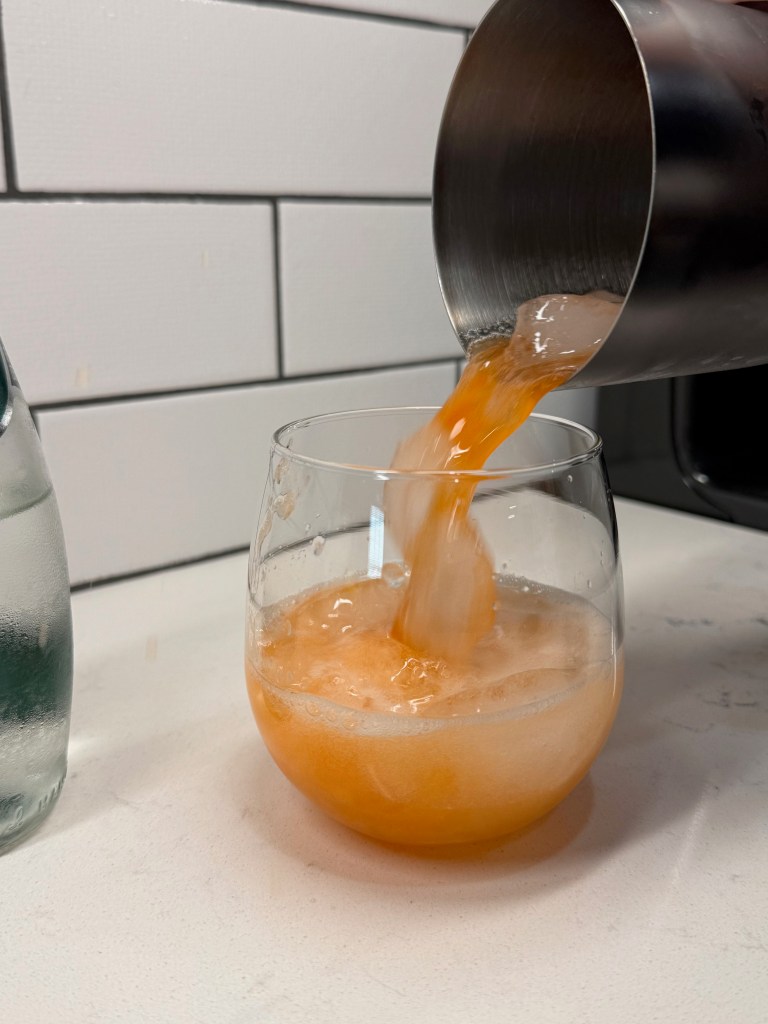
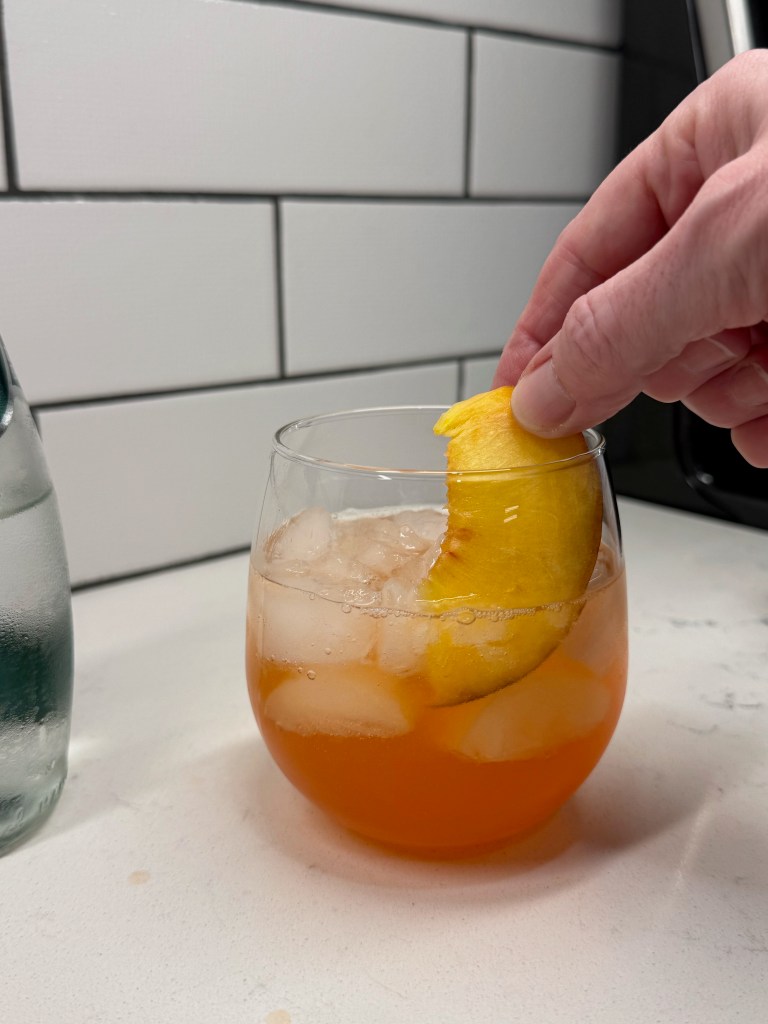
Though a spritz is typically mixed directly in the glass, this one does require a shaker to mix the Aperol and the peach puree, which is very thick. The bubbly ingredients should not go into the shaker, unless you want to clean the whole kitchen when it bubbles over! My method is to measure the chilled Cava into the glass first, shake up the Aperol and peach puree with a decent amount of ice, and then do what pro bartenders call a “dirty pour,” ice and all, into the glass with the Cava. A final splash of sparkling water at the end, and a wedge of fresh, juicy peach finishes this drink.
This is my modernized interpretation of a drink I loved back in the 1980s. It's less sweet than the fuzzy navels of my youth, but still light and very refreshing!
Ingredients
3 oz. Cava or other dry, sparkling wine
3/4 oz. peach puree syrup (Reàl brand)
1 1/4 oz. Aperol
1 or 2 oz. sparkling water, seltzer or club soda
Slice of fresh peach or orange, to garnish
Note: Most spritz cocktails are built directly in the glass, but this one requires a shaker for mixing the thick peach puree. Use a balloon glass, such as a red wine glass, that will hold all of the ice you use for mixing the drink.
Directions
Pour Cava into the serving glass.
Add peach puree and Aperol to a cocktail shaker. Add about one cup ice cubes and shake for several seconds until the shaker is frosty and very cold.
Pour the entire contents of the shaker (ice and all) into the glass with the Cava. Top with sparkling water. Garnish with a fresh fruit slice.
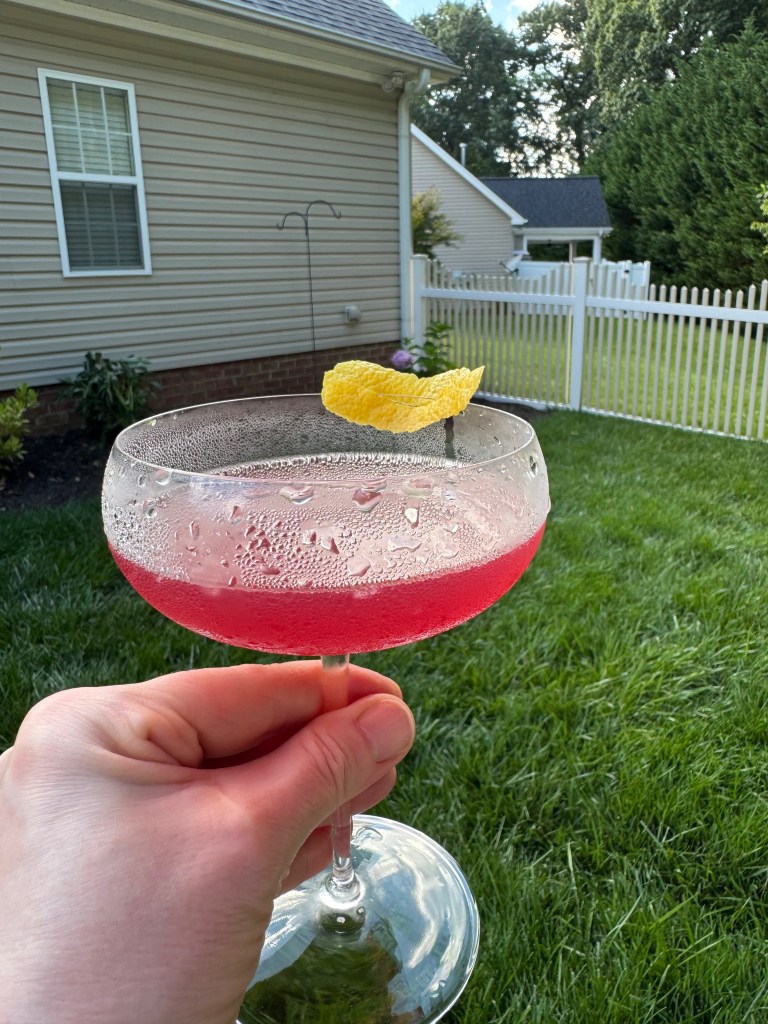
The saying goes that there’s nothing new under the sun, and though I generally believe it to be true with food and drink, I do think that sometimes a twist on a classic is different enough to warrant calling it “new.” Case in point, this tart and sassy summer cocktail.
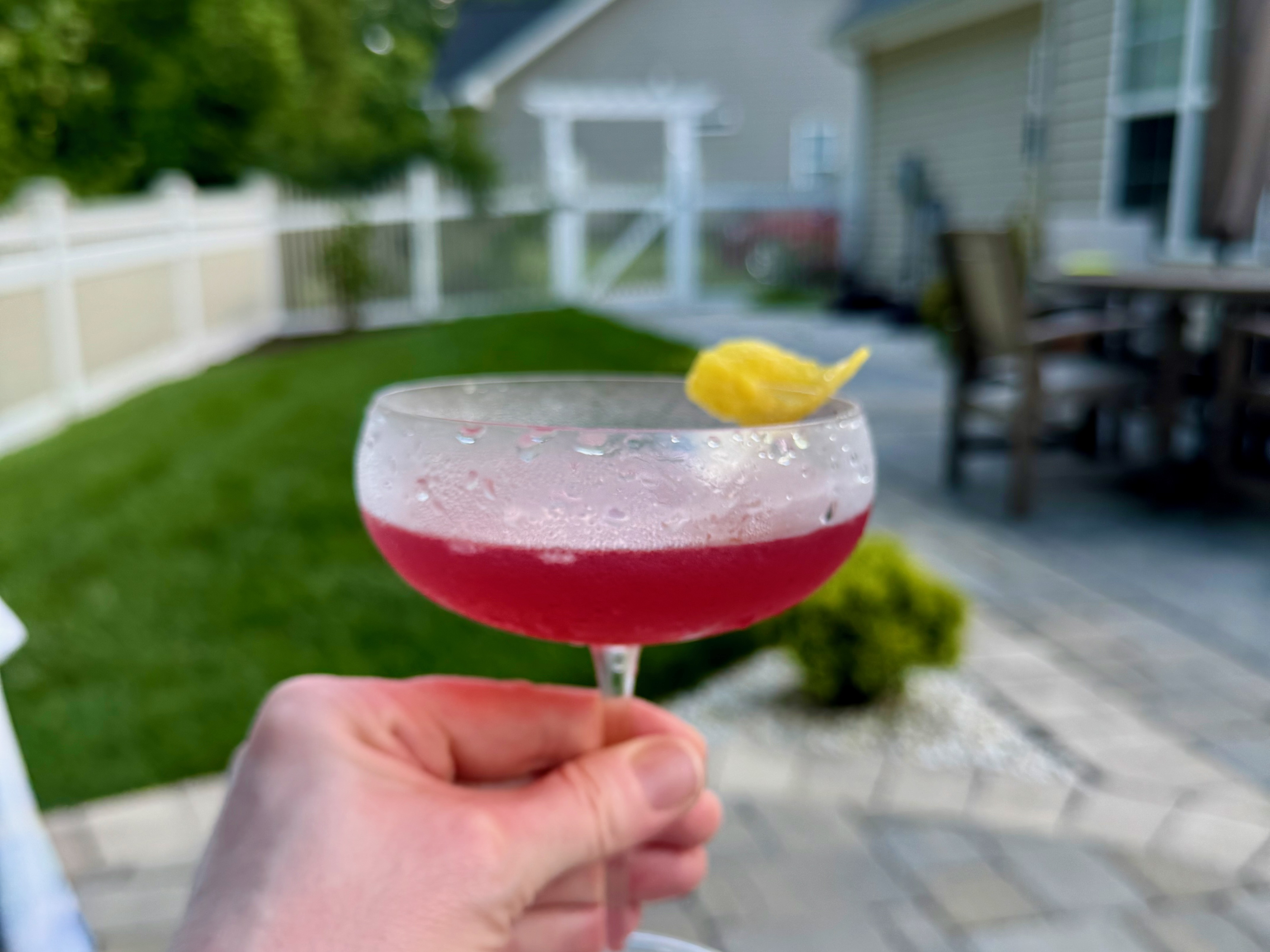
It’s refreshing, balanced and beautiful!
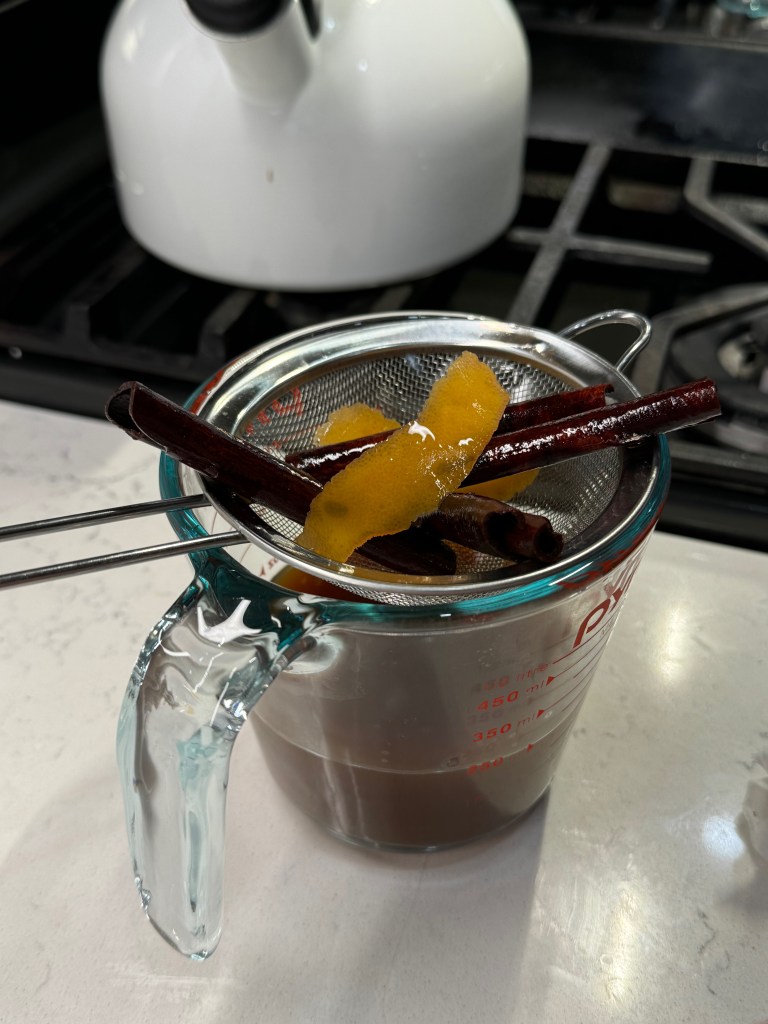
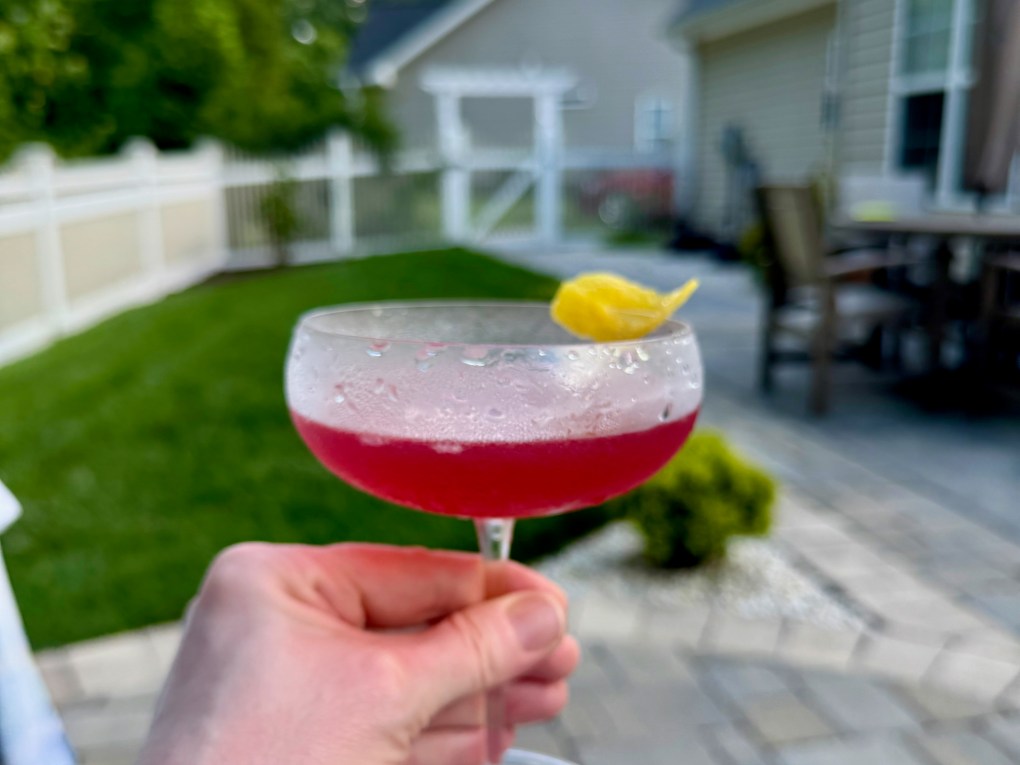
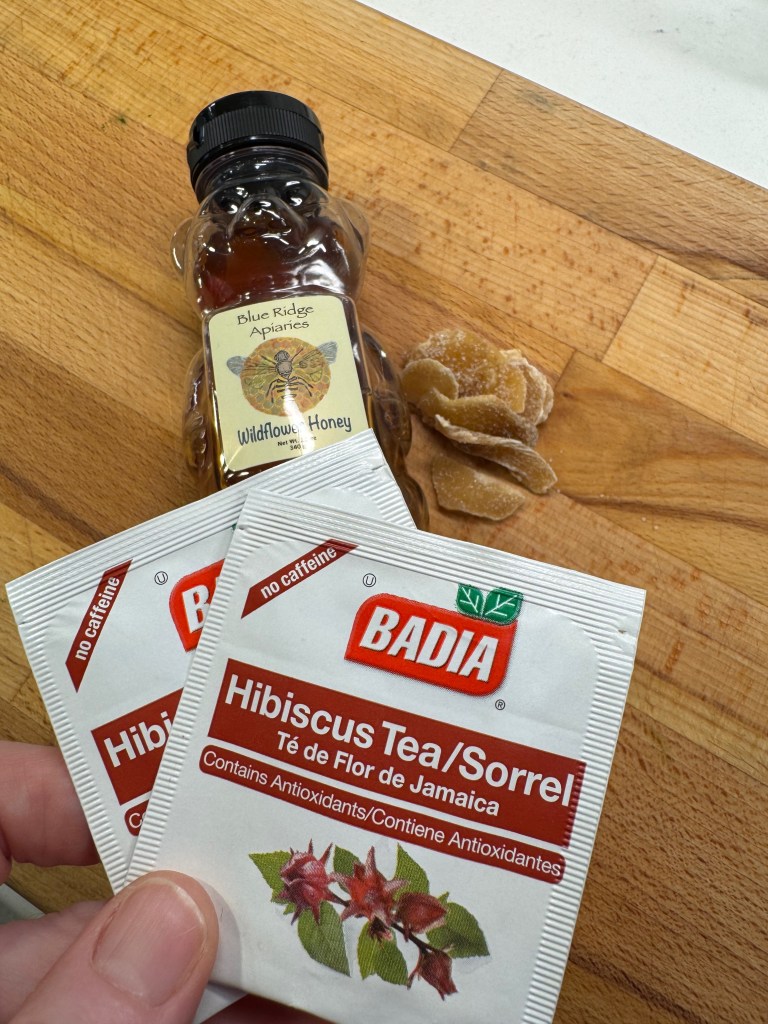
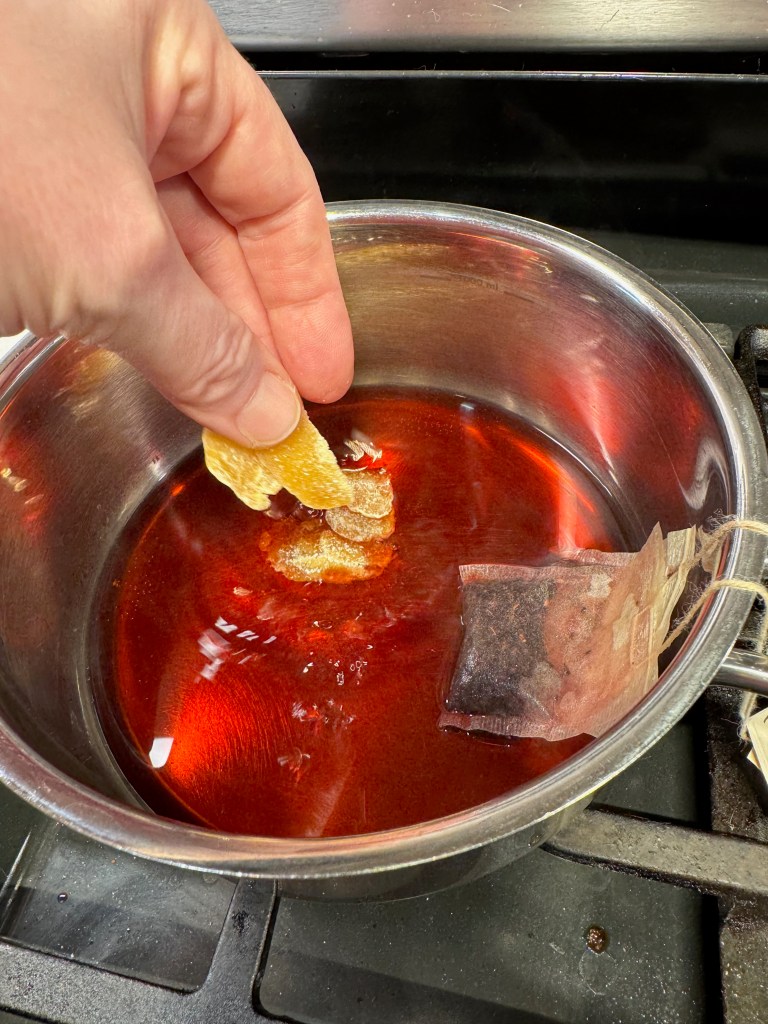
Mine is a two-ingredient update to a Prohibition-era cocktail, and it pushes a classic into the modern, with a vibrant reddish hue that is perfect for Juneteenth or the summer solstice. The key difference is hibiscus, in the form of pure hibiscus tea bags, which I simmered in boiling water long enough to draw out the tart, floral flavors. A few pieces of crystallized ginger added a subtle zing of spice, and I think it would be even better with fresh ginger if you like the flavor.
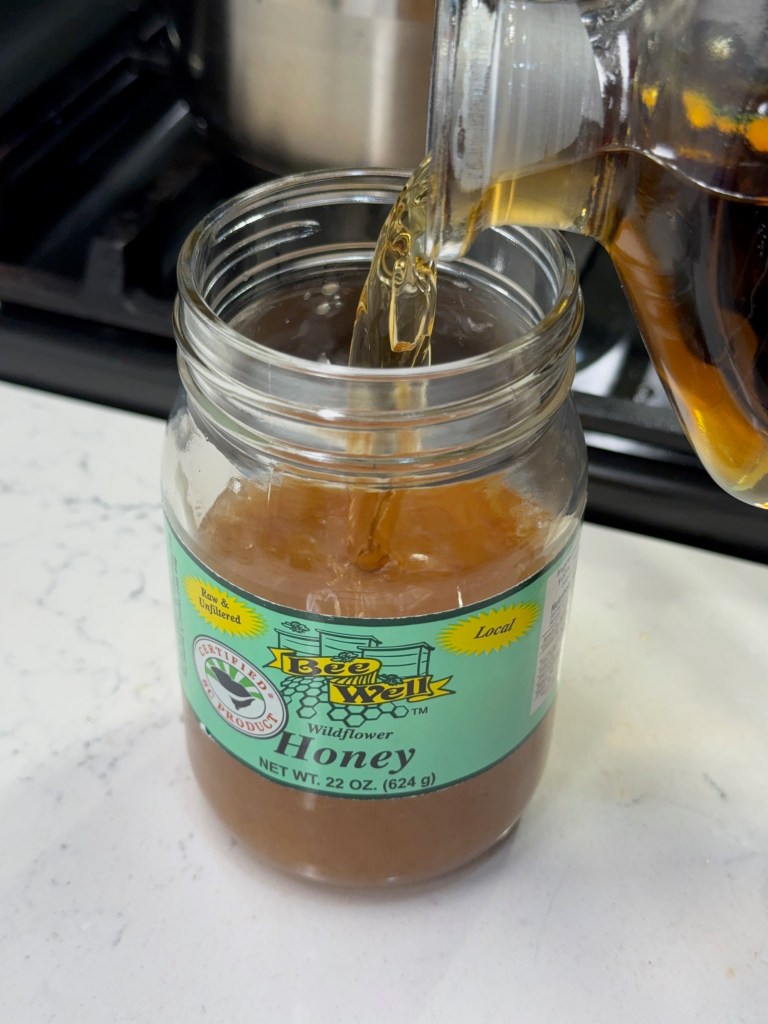
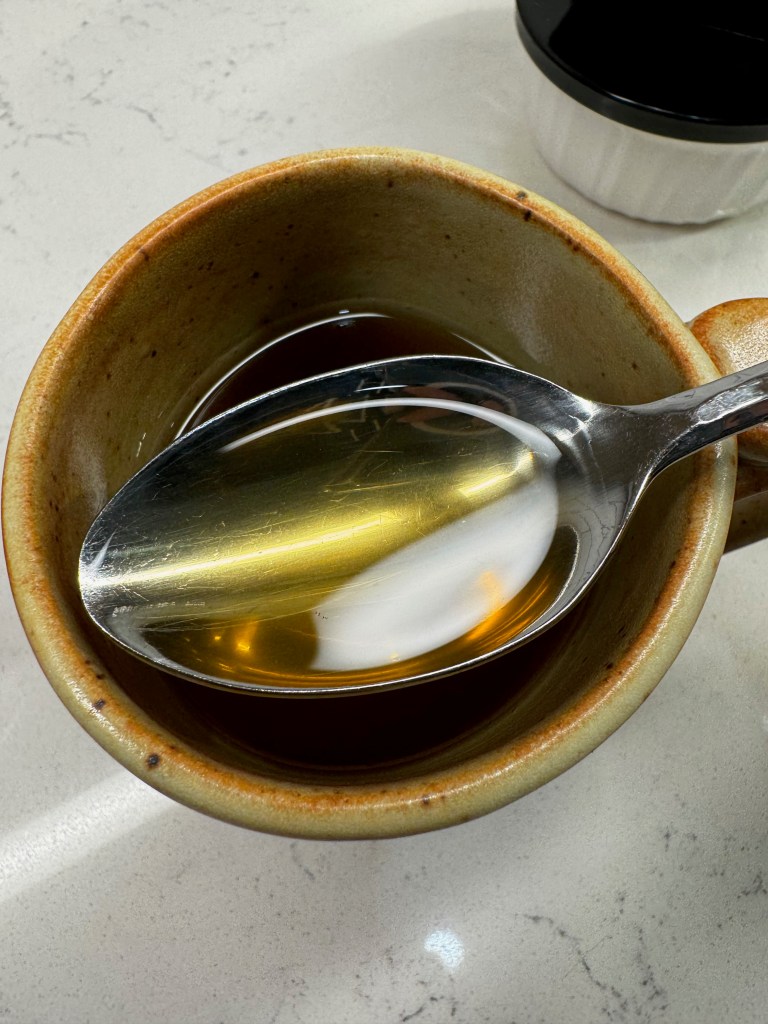
The resulting strong tea was sweetened with a generous squeeze of local honey, for a syrup that is thin enough to blend well with the cocktail ingredients in a shaker filled with ice. I do not recommend adding honey straight, as it would remain heavy and thick. But in an equal parts syrup, it’s perfect.
Mine was wildflower honey, but orange blossom or another variety would be interesting, too.
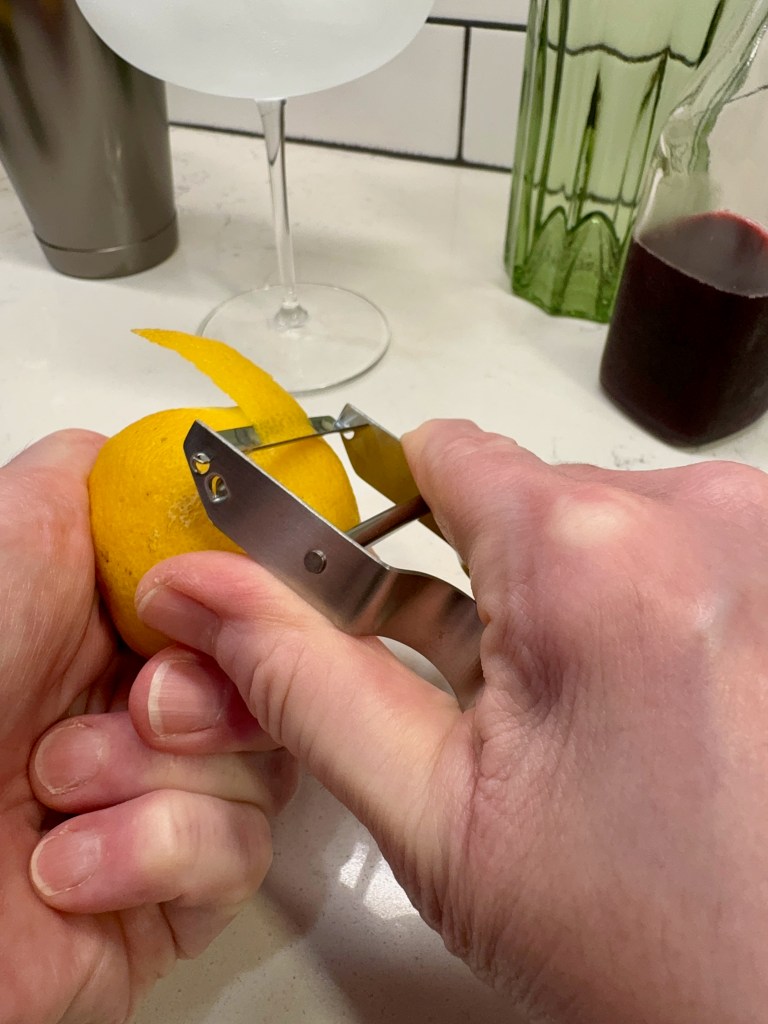
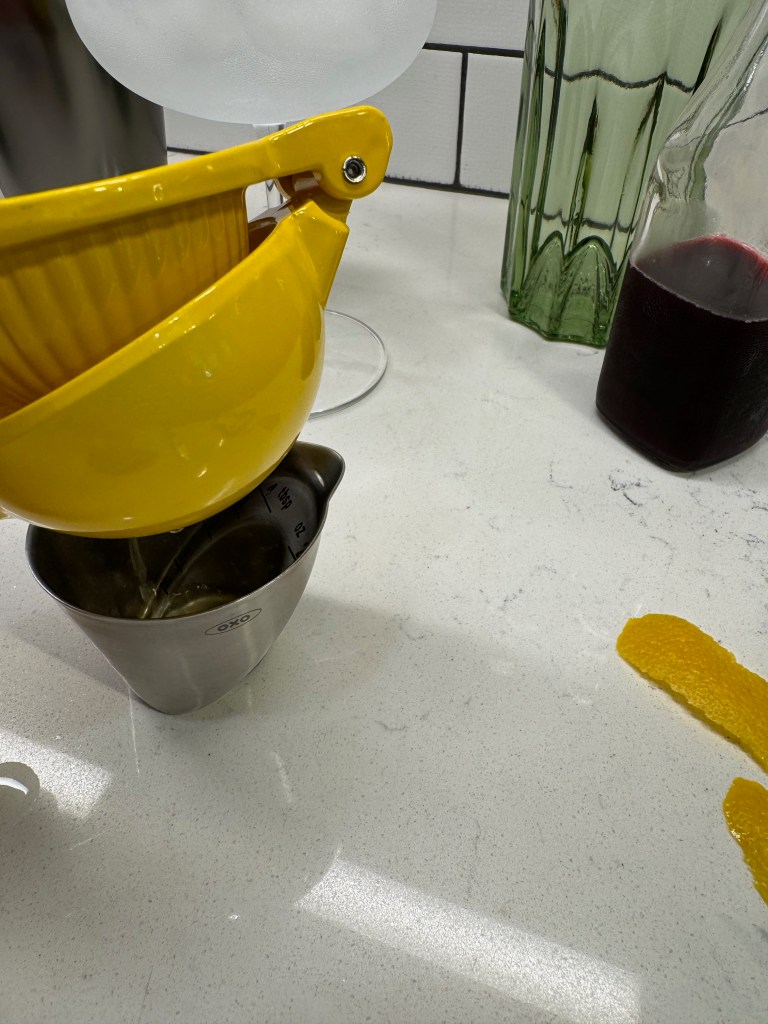
This hibiscus-ginger syrup will keep in the fridge for about two weeks, and I have no doubt that it would be great in other cocktails or even as a flavor enhancer for sparkling water or tonic on a hot summer day. But for this featured cocktail, we need gin— the traditional spirit for bee’s knees— and fresh lemon. Grab a cocktail shaker, a lemon squeezer and a peeler to strip a bit of peel for garnish, and chill down a cocktail glass with ice water.
Once the syrup is made, it’s quite a simple drink.
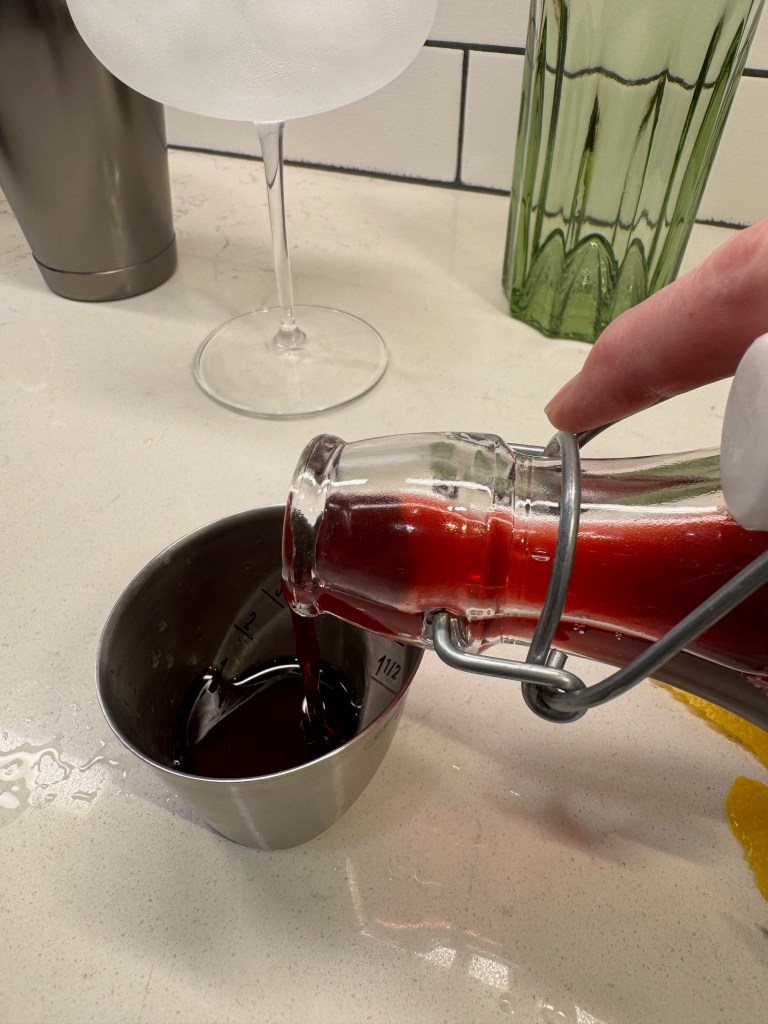
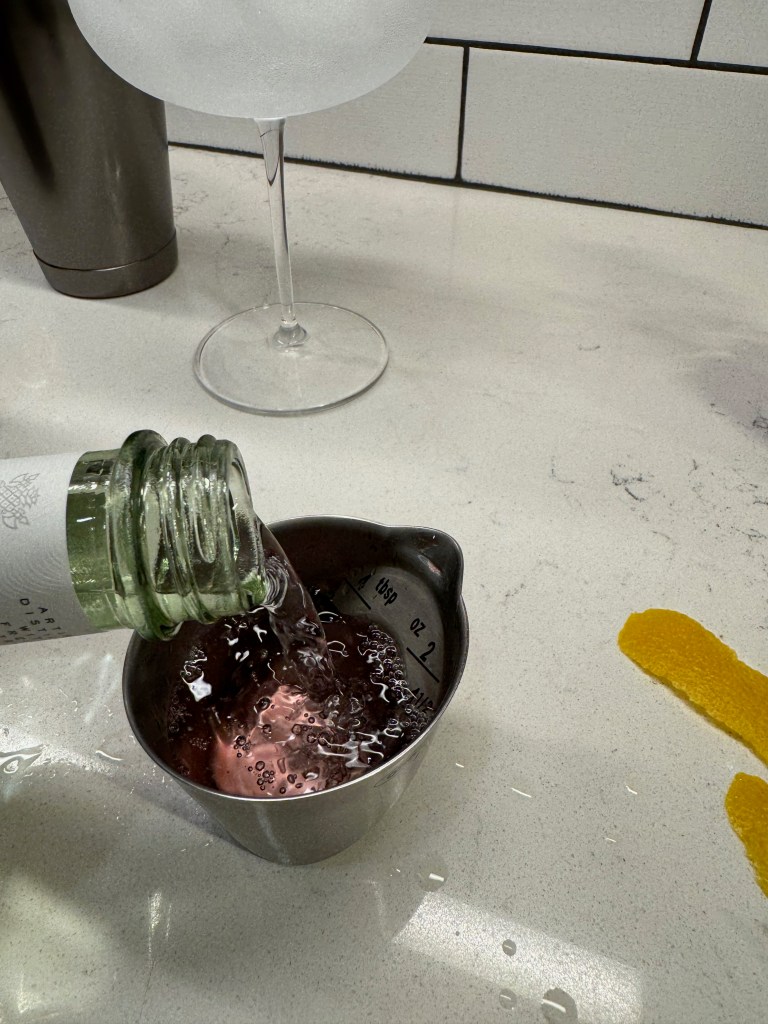
Get your lemon strip first, then cut the lemon in half for easy squeezing into the shaker. Add an equal amount of hibiscus-ginger honey syrup and then two ounces of your favorite gin. While you enjoy these refreshing images, let’s take a trip down nostalgia lane to learn more about the original “bee’s knees.”
Fresh lemon is essential here, and choose organic if possible, as you’ll be using the peel.
How did the bees knees come about?
Back in the days of Prohibition, otherwise known as “the U.S. Government’s 13-year attempt at controlling its citizens,” grown adults had to get creative to find ways to cover up the questionable flavors of crappy liquor, the only kind they could get their hands on at the time. There were bootleggers, of course, who smuggled booze into the cities. And there were also people making their own at home, and the term “bathtub gin” arose from that era, a fair description of what was likely not very palatable.
Honey and lemon juice, both strong flavors on their own, did a terrific job of hiding the paltry gin enough for them to choke it down and get their buzz on. People enjoyed the combination so much that the the drink became known by a phrase that everyone was using at the time to describe what was “the best.” The bee’s knees!
Early recipes for bee’s knees were in the “equal parts” category, meaning that they used the same amounts of gin, lemon and honey. Yikes. For modern times, the recipe is adjusted to a more standard ratio of 2 ounces gin and 3/4 ounce each of the other two ingredients. It’s nicely balanced, not too sweet and not too acidic.
I found a fun and informative article that delves deeper into the history of the bee’s knees, including its possible connection to “the Unsinkable Molly Brown,” as well as some interesting variations that I’d love to try sometime. Check it out here if you’re curious.
Back to our cocktail!
Today, of course, we have plenty of options for quality gin, and I imagine that your favorite would work just fine in this drink. I’ll also say that if you have always considered yourself to be a non-gin drinker, the bee’s knees might be the cocktail to change your mind.
I’ve chosen Tanqueray No. 10 this time, for no other reason than the store was sold out of my usual Ford’s gin. Actor Stanley Tucci recently collaborated with Tanqueray No. 10 in an ad campaign, where he discussed the proper way to order a martini, and his description of the spirit won me over. Or maybe it was his voice. Either way, there’s a distinctive citrus note running through this gin, making it a nice anchor for the lemon and hibiscus.
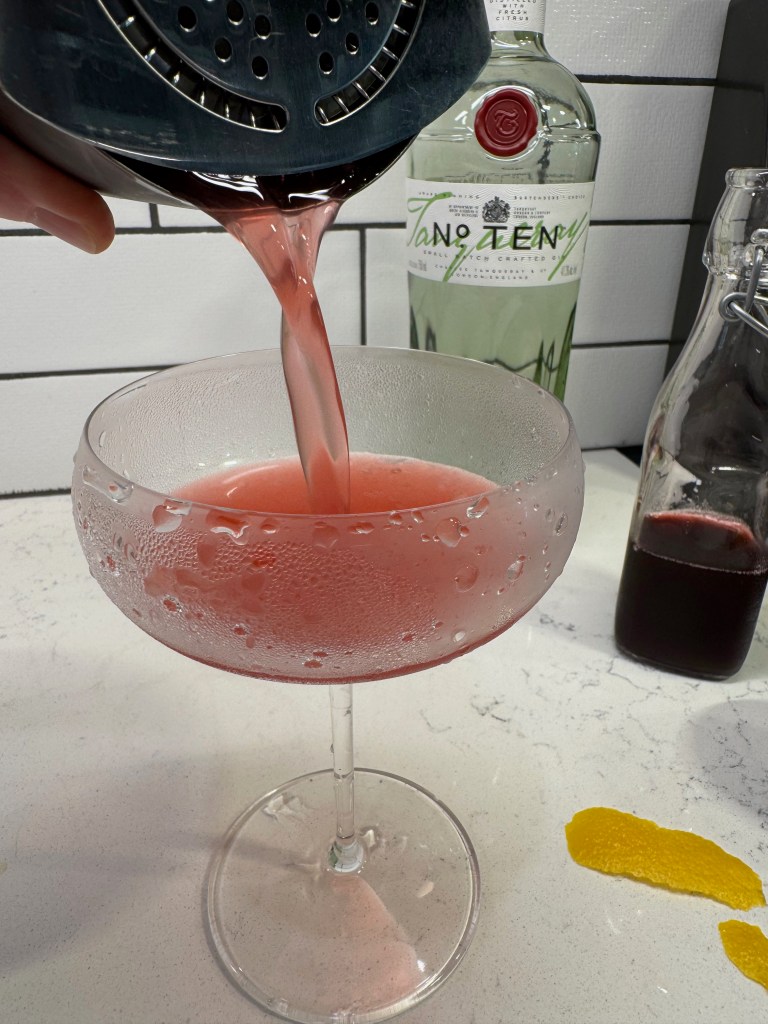
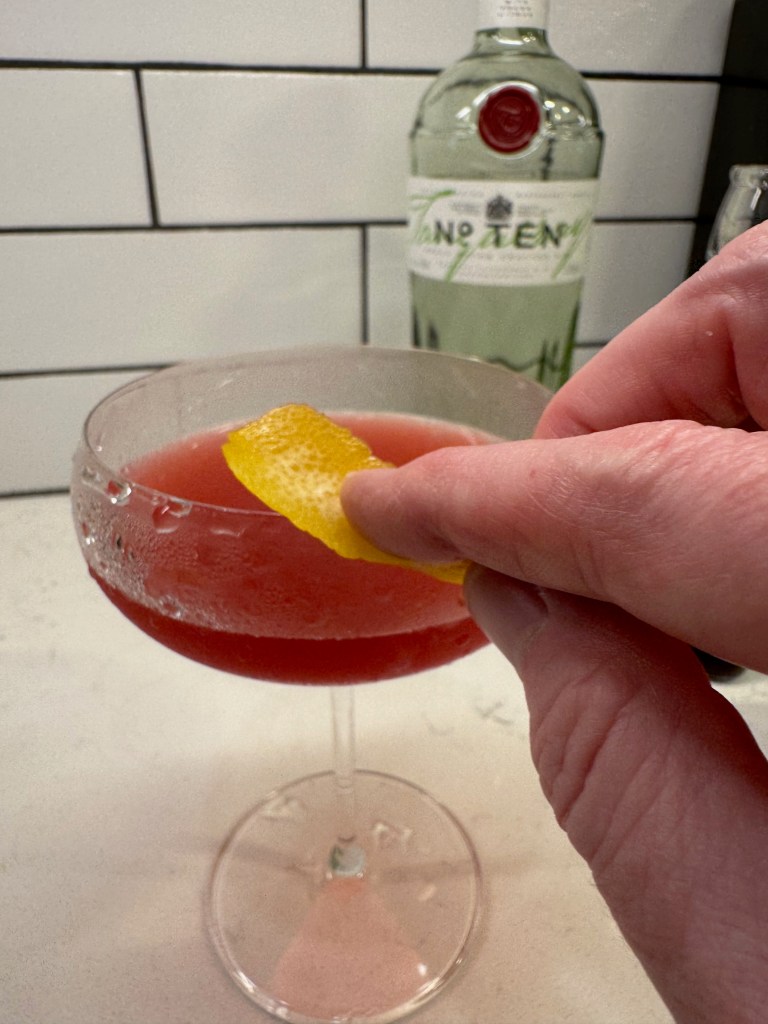
Shake your cocktail ingredients with plenty of ice until the outside of the shaker is uncomfortable to hold. Strain it into the chilled glass and express the lemon peel over the drink, finishing with a wipe of the oily side of the peel all around the edge.
The expressed lemon peel makes every sip fresh and citrusy!
The pretty, bright reddish hue of this drink makes it suitable for a Juneteenth celebration, where the color red symbolizes strength and resilience. And I can’t think of a more appropriate drink for summer than one made with fresh citrus and bright florals. This one deserves to be on repeat for the whole season!
This two-ingredient twist on a classic cocktail is bright, beautiful and delicious enough to deserve a spot in the rotation all summer long. Use pure hibiscus tea bags, or seek out dried hibiscus flowers to make the syrup.
Ingredients
2 oz. citrus-forward gin
3/4 oz. fresh lemon juice
3/4 oz. hibiscus-ginger honey syrup (see below for recipe)
A strip of lemon peel, for garnish
Directions
Add a generous amount of ice, plus water, to a cocktail glass to chill it down. Set aside while you prepare the cocktail.
Combine gin, lemon juice and hibiscus-ginger honey syrup in a cocktail shaker.
Add at least one cup of ice and shake vigorously for about 20 seconds. Strain into the chilled glass. Squeeze the outside curve of lemon peel over the drink, swiping the peel all around the edge of the glass. Drop peel in glass or cut a slit in it to balance it on the edge.
Note: Make the hibiscus-ginger honey syrup early enough to allow it to fully cool before using in cocktails. Strain the syrup into a sealable bottle or jar, and keep it in the fridge for up to two weeks. This recipe will make enough syrup for about six cocktails or cocktails.
Ingredients
1/2 cup cold water
2 pure hibiscus tea bags
About 6 pieces crystallized ginger (or half as much fresh sliced ginger)
1/2 cup local honey
Directions
Bring water to a gentle boil in a small saucepan. Turn off heat and add tea bags and ginger, swirling and steeping for about five minutes. Remove tea bags. Stir honey into the tea and continue to steep with the ginger until cooled to room temperature.
Strain out solids and transfer syrup to a jar or bottle.
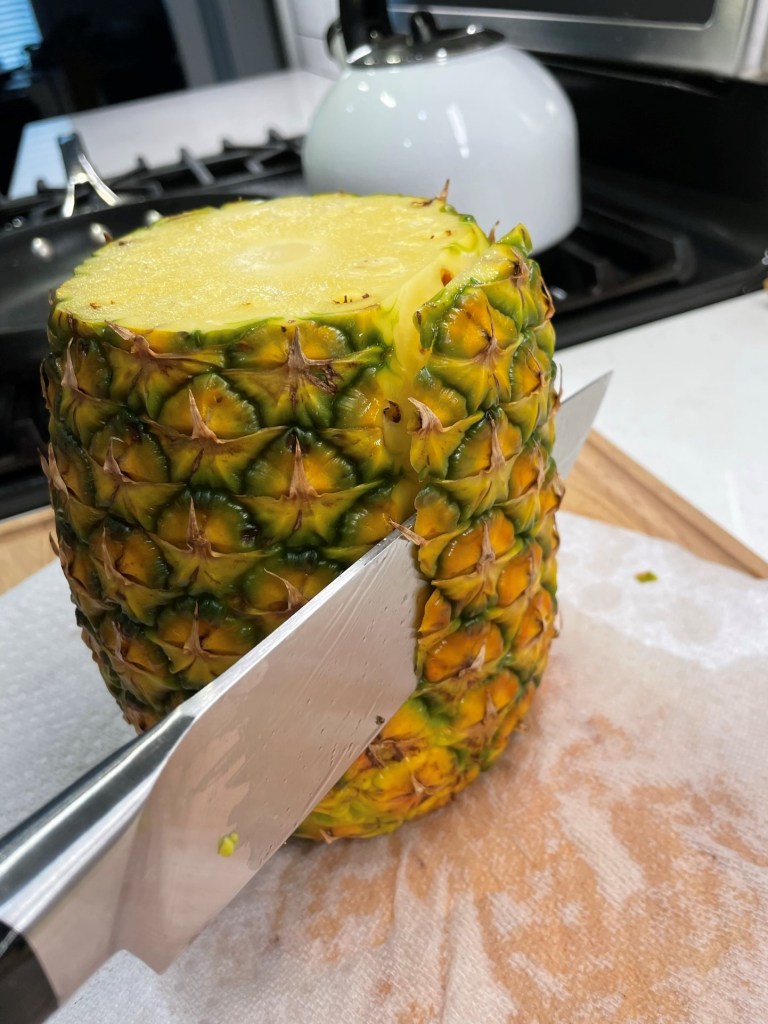
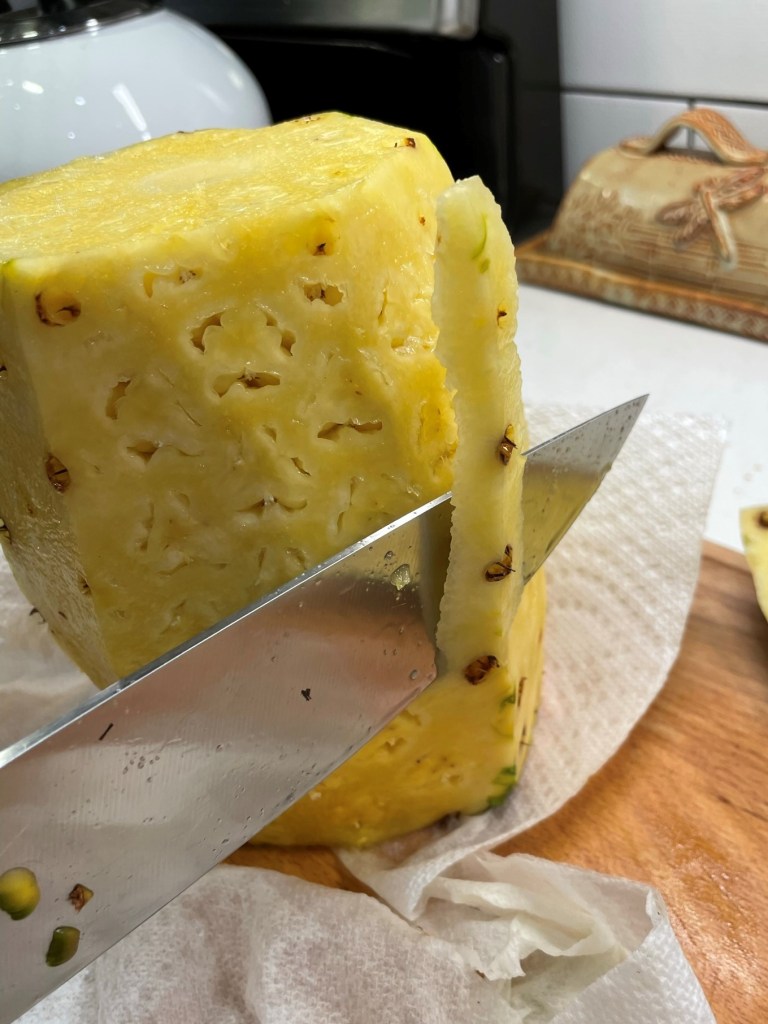
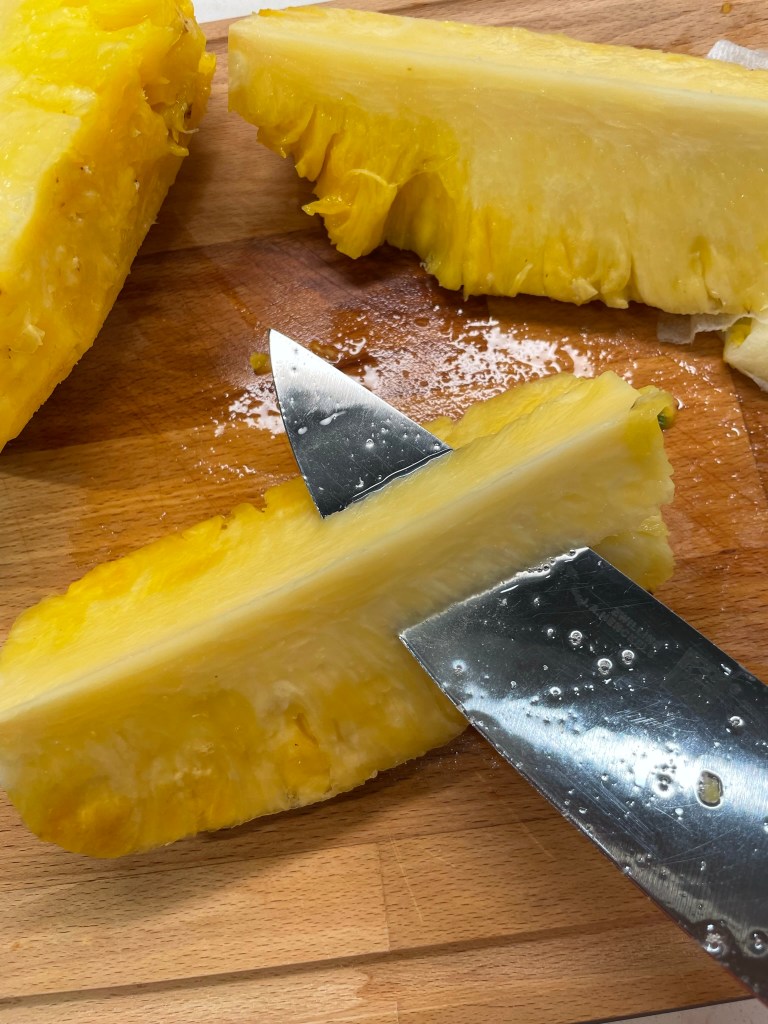
You’d think after so many years of creating in the kitchen, that it might take a really innovative technique or recipe to wow me. And that would be incorrect. Sometimes, it’s the simplest of things. Take for instance, my recent decision to “do something, anything” with the scraps of rind and core that I trimmed from a perfectly ripe, fresh golden pineapple.
It seems like such a waste to discard the pieces that aren’t edible.
Was I channeling my pal, Dorothy from New Vintage Kitchen, and following along with her “Scrap Happy Planet” series of ideas about reducing food waste? Sure, I was. And did I feel a sense of pride in knowing that my frugal grandmother would also be giddy at my effort to use up every bit of the pineapple? Of course. What I didn’t see coming was the flood of ideas I would conjure for using the glorious syrup that resulted from this experiment, and I’m eager to hear your ideas as well.
I’ll admit that I did not entirely come up with this “pineapple syrup” idea on my own; rather, it struck me when I received an email from Imbibe magazine. I’ve been subscribed to this publication (print and digital) since Covid began, and I’m always inspired by the innovative approaches of top bartenders across the country. Check out their site for even just a few clicks and you’ll see what I mean.
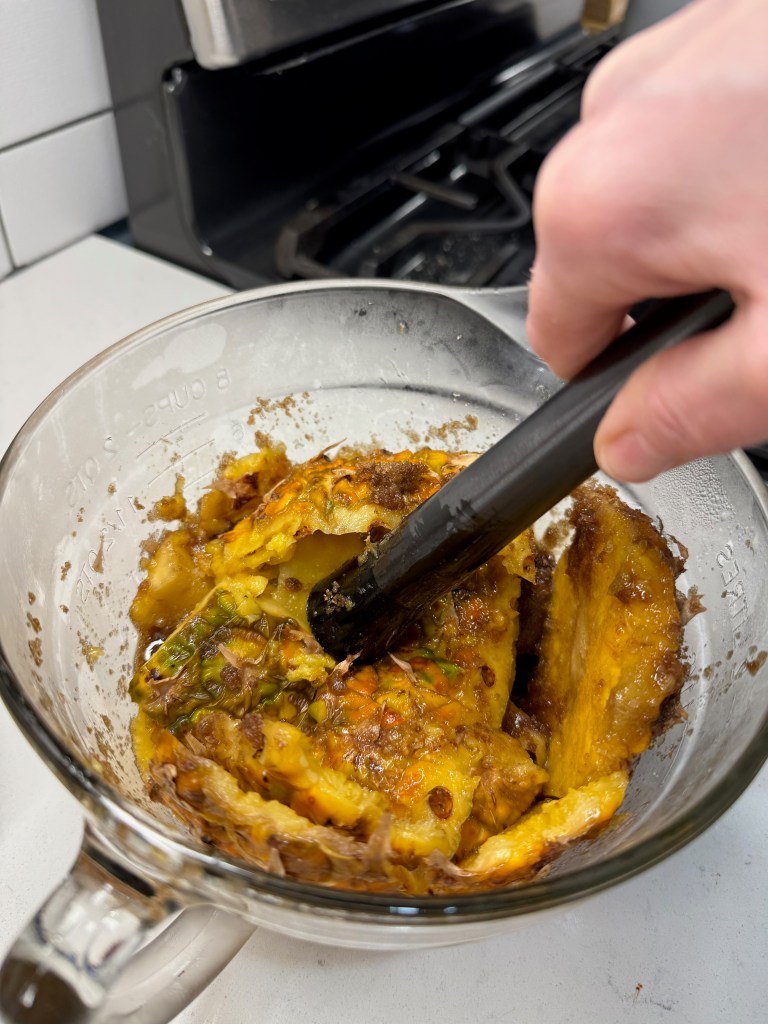
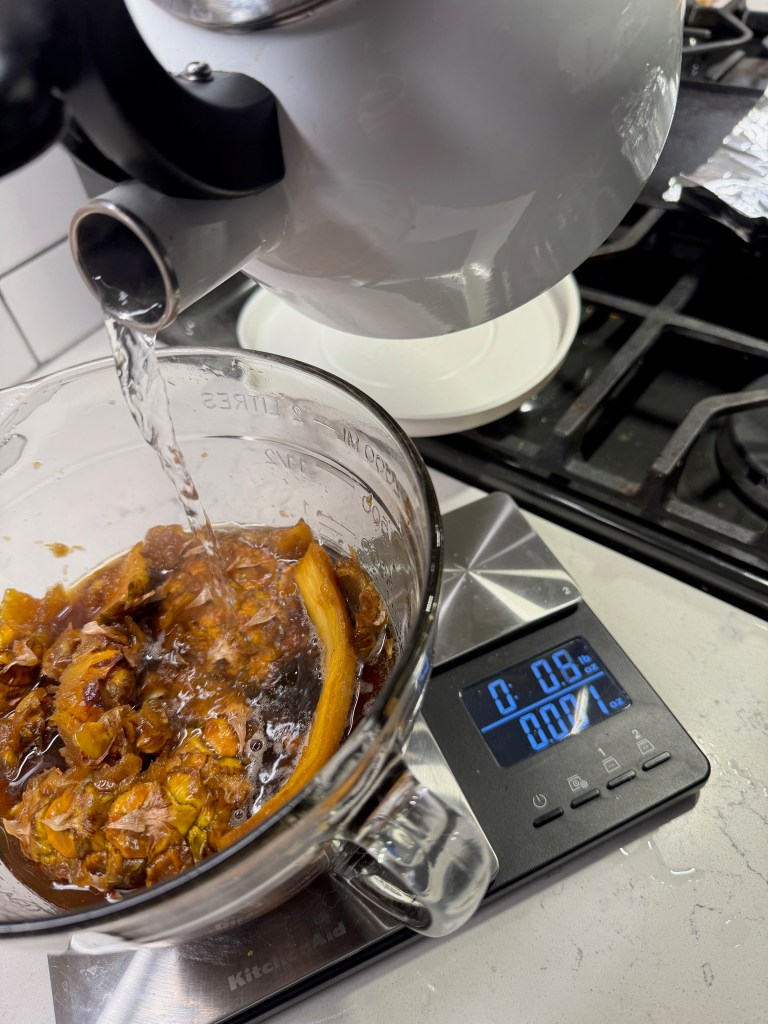
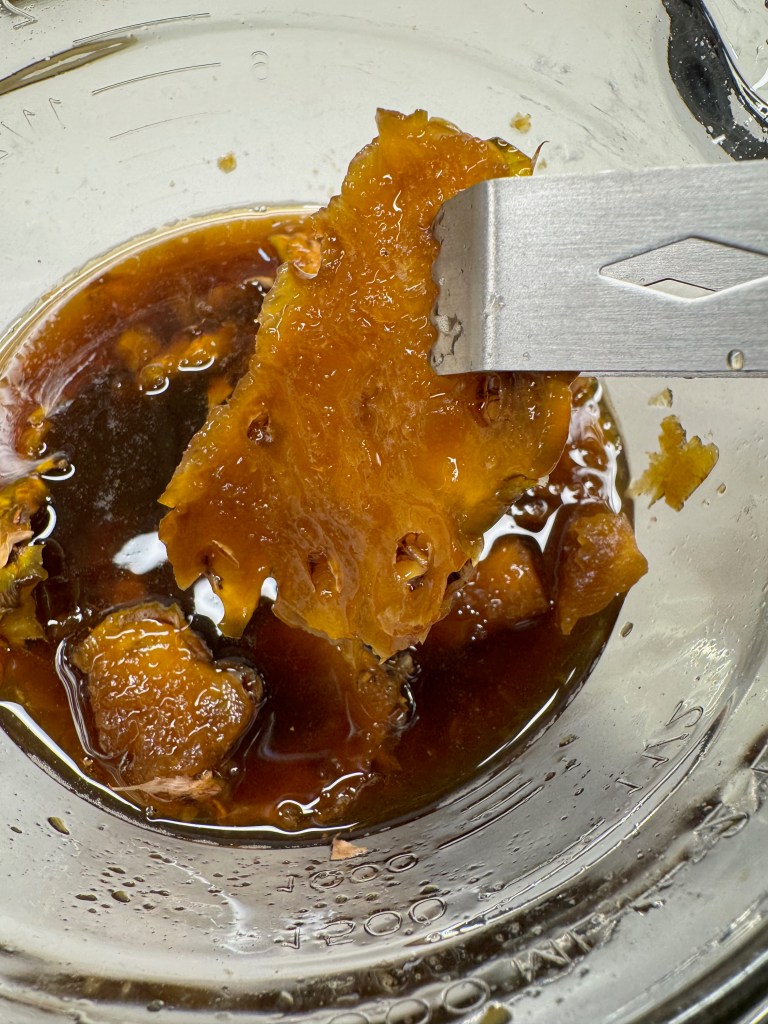
What dropped in my inbox was a recipe for a cocktail called “Pineapple Old Fashioned Du Jour,” and I couldn’t leave that alone because it already had half of my blog’s name on it. My husband, Les, and I both adore old fashioned cocktails and this one sounded sweet, tropical and perfect. Most of all, it gave me inspiration for the pineapple scraps that were staring at me from the fridge. A sweet syrup is created when Demerara sugar (or a mix of light and dark brown sugars, which is what I had in the pantry) is muddled with the leavings of the pineapple, drawing out all that beautiful sweetness. After several hours of macerating, you add a splash of boiling water to thin it out a bit and then strain out the solids.
Oooh, we are gettin’ “scrap happy” over here, indeed! 😂
It was so easy, and a great way to eke out every last bit of flavor from my pineapple. The only problem now is that I have almost too many ideas for this pineapple syrup, which tastes exactly like the sticky sweet part of pineapple upside-down cake. I mean, exactly.
Pretend you didn’t catch me enjoying this! 😂
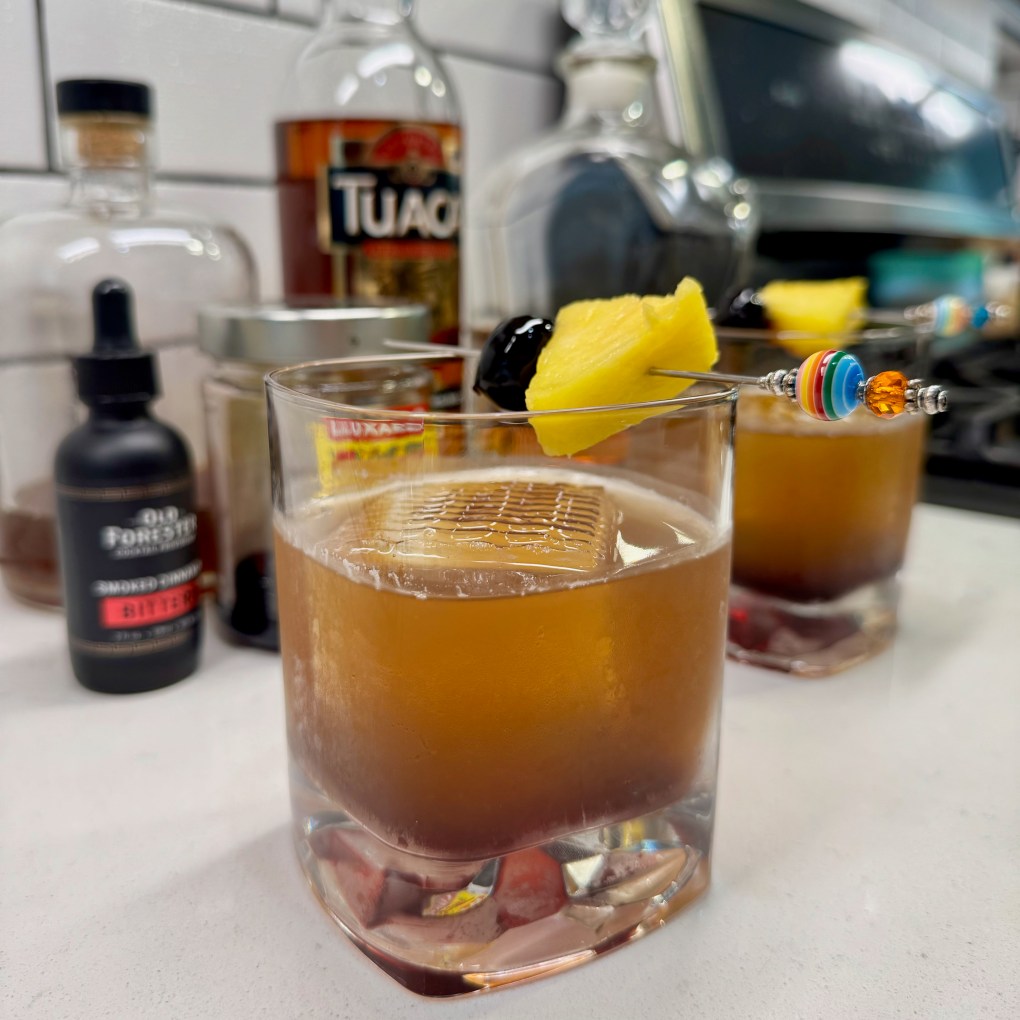
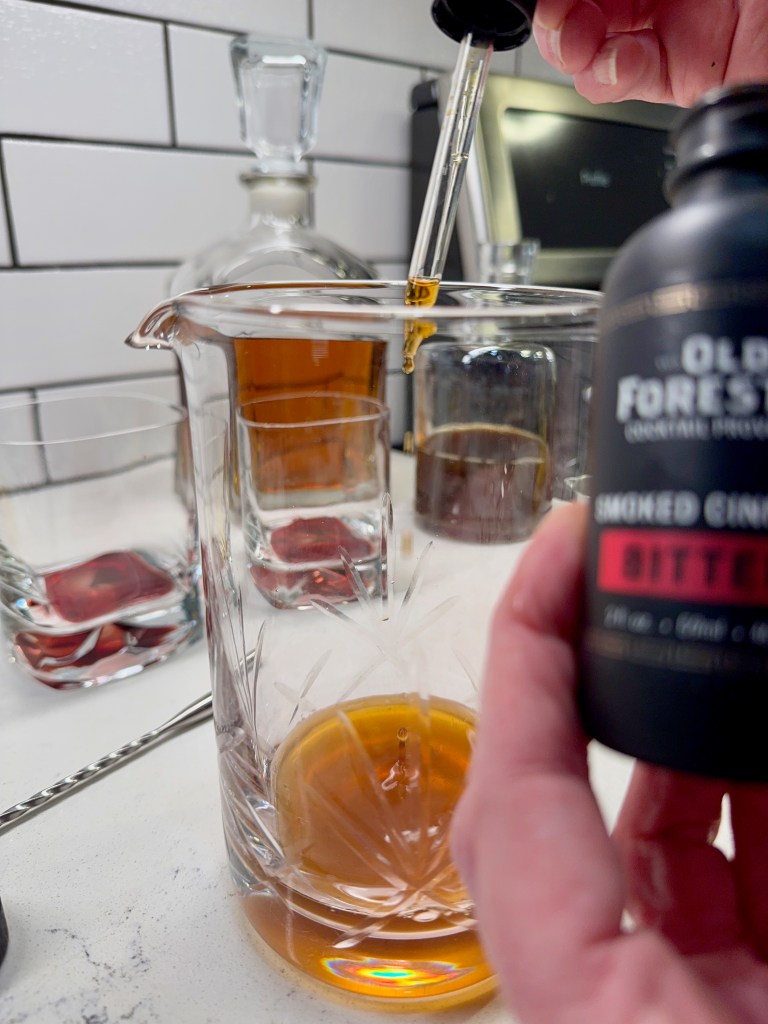
For the sake of follow-through, I tried the pineapple old fashioned du jour that Imbibe had dropped in my inbox. It was tasty, but didn’t hit all the notes I expected after nibbling on that syrupy pineapple core. Call me greedy— I wanted the whole dessert at that point, so I came up with a twist that incorporated a bit of vanilla-scented Tuaca, an Italian brandy liqueur that seems to make everything taste a little bit like cake. I increased the amount of pineapple syrup for my drink and used smoked cinnamon bitters to further emphasize the dessert flavors.
In case you’re wondering, the drink does benefit from having fancy ice!
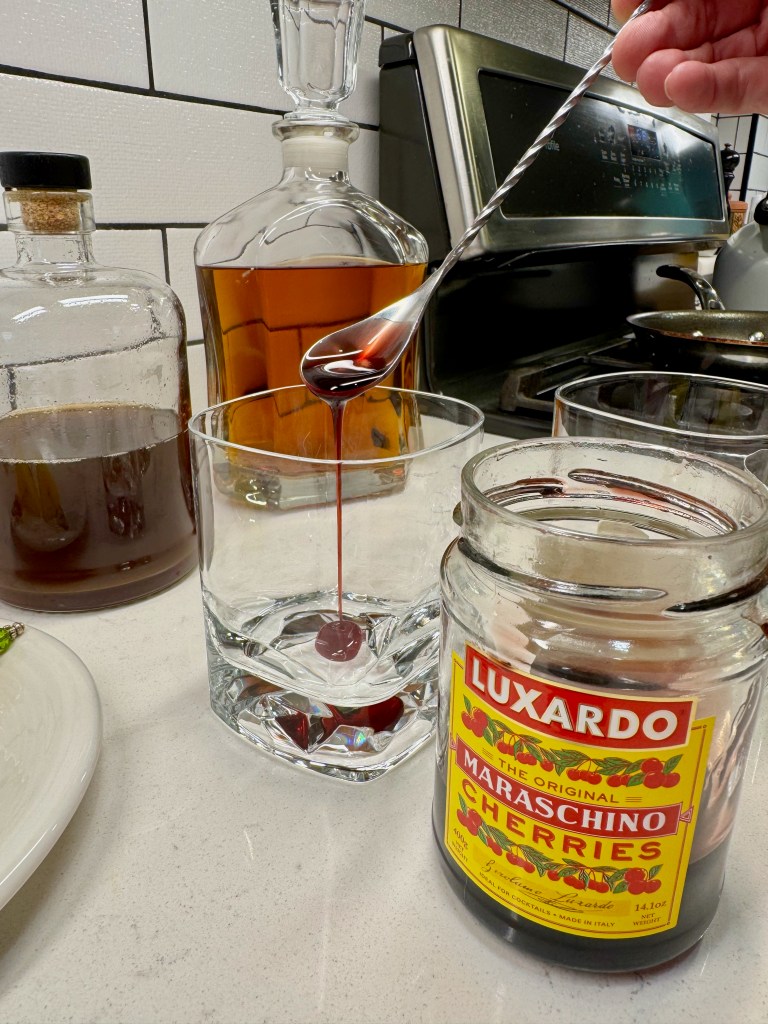
A drizzle of Luxardo cherry syrup syrup into the bottom of the glass gave it an “upside-down” vibe, and a classic pineapple and cherry garnish was just too obvious.
Cheers to having your cake and drinking it, too!
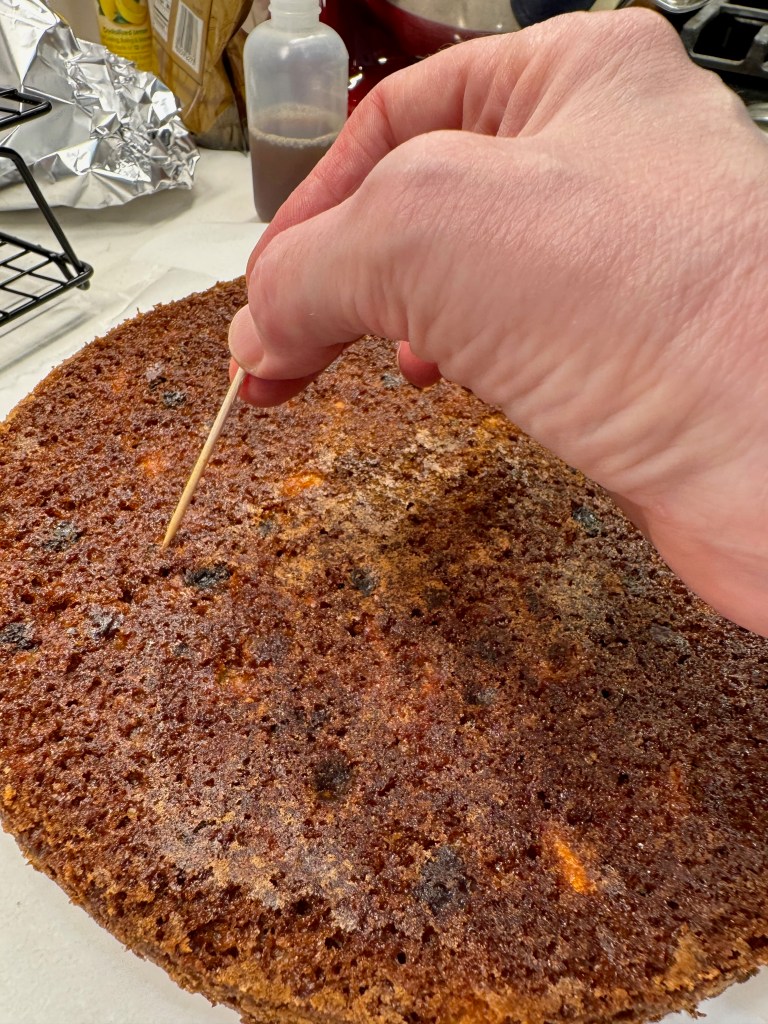
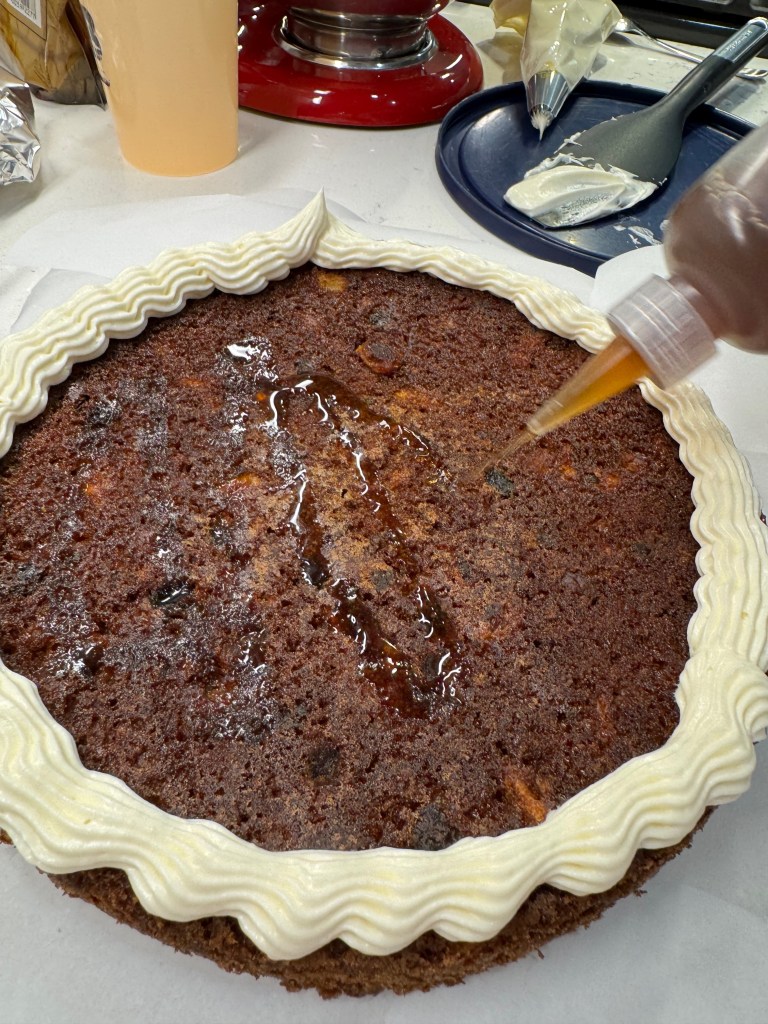
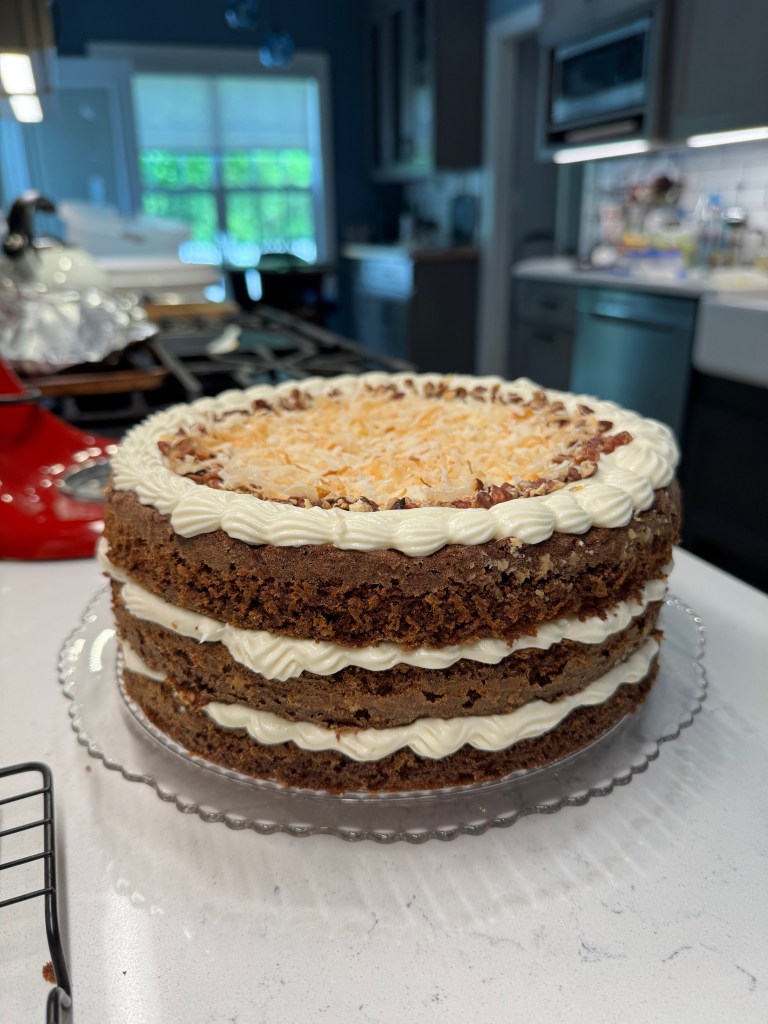
This process creates quite a large amount of syrup, and it only keeps for a couple of weeks in the fridge. We love the old fashioned drinks, but we couldn’t finish this in drinks alone. So I went for broke and made a carrot cake for Easter, using up a generous glug of this intense pineapple syrup to drench the layers before slathering on the lemony cream cheese icing. Dorothy loved this idea as well, especially with crushed pineapple in the cake itself. Here’s how it turned out.
Piercing the cake with a toothpick coaxes the syrup deep into the layers. Let it absorb before icing.
The syrup would also be delicious drizzled over vanilla ice cream— or, better yet, my easy cinnamon ice cream! With a cherry on top, of course! My hairstylist had another easy idea (she and I always share foodie stories), and she asked, why couldn’t you even just drizzle that syrup on a slice of pound cake and top it with some whipped cream? Yes, Julie, why the heck not?!
What would you want to do with this delicious idea?
This deliciously dessert-y cocktail makes use of all the scraps trimmed from a fresh pineapple, and I highly recommend seeking out the Tuaca liqueur for the cake-like notes it brings to the glass. Cheers!
Ingredients
3 oz. bourbon (I used Elijah Craig small batch, which is 94 proof)
1 oz. Tuaca liqueur (Italian brandy with notes of vanilla)
2 oz. pineapple syrup (recipe below)
2 dropper tips smoked cinnamon bitters
2 bar spoons Luxardo cherry syrup for the bottom of the glass
Pineapple chunks and Luxardo cherries to garnish
Notes: Amarena cherries or another high-end cocktail cherry brand would be a fine substitute for Luxardo. The important thing is that the syrup should be thick so that it remains at the bottom of the glass rather than blending into the drink. If you only have maraschino cherries, I’d recommend omit the syrup layer or perhaps use a syrupy grenadine for the aesthetic.
My smoked cinnamon bitters are Old Forester brand, and I found them online at Bourbon Barrel Foods. They are excellent!
Directions
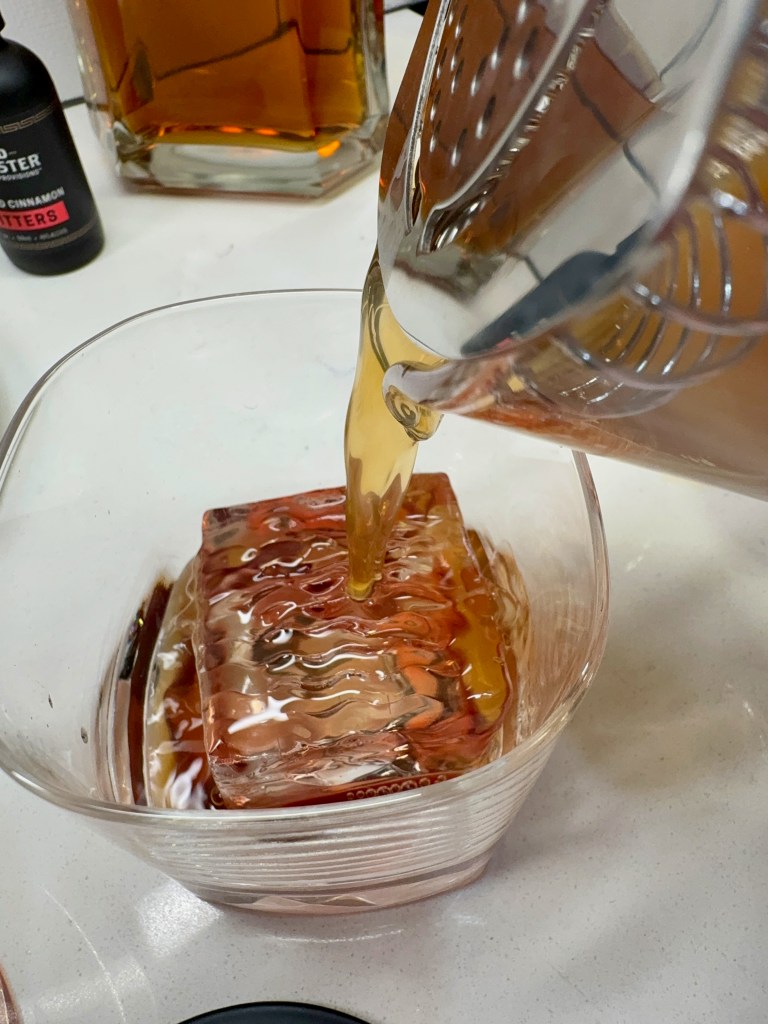
Drizzle Luxardo syrup into the bottom of the glass and place a large ice rock on top of it.
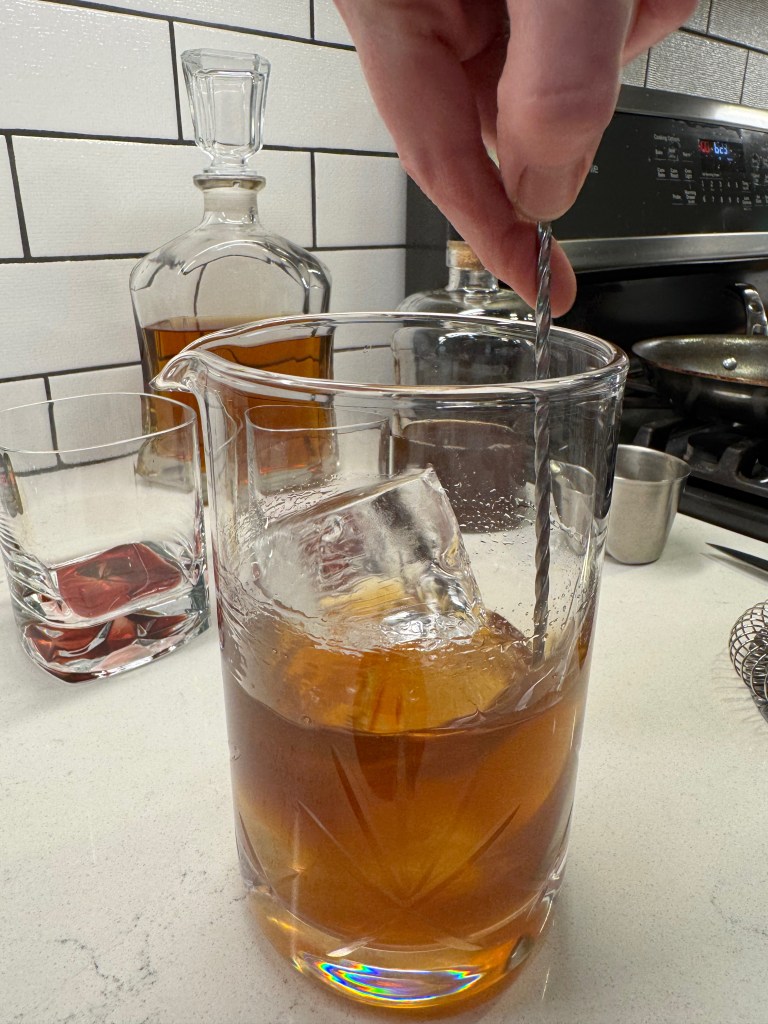
Combine bourbon, Tuaca, pineapple syrup and bitters in a cocktail glass. Add a generous amount of ice and stir to mix until the outside of the mixing glass is frosty.
Strain slowly over the ice so that the cherry syrup does not incorporate. Garnish and enjoy!
Note: This cocktail recipe does require a fair amount of advance prep. Make the pineapple syrup the day before, and be sure to select a pineapple that is fully ripe for best results. Clean it really well and rinse with white vinegar solution before you begin breaking it down. This process yields about two cups of syrup, and it will keep in the refrigerator for two weeks.
Ingredients
All the rind and core pieces of a large, ripe pineapple
1 1/2 cups brown sugar (I used a combination of dark and light; Demerara sugar was suggested by my inspiration recipe)
1/2 cup boiling water
Directions
Place all the pineapple parts in a sealable bowl (break or cut them into smaller chunks if needed). Sprinkle brown sugar over the scraps and use a cocktail muddler or heavy wooden spoon to smash the sugar into the pineapple. After a few minutes, the juices will begin to soften things up. Cover and let it rest for several hours to overnight. Stir a few times as needed to keep things macerating evenly.
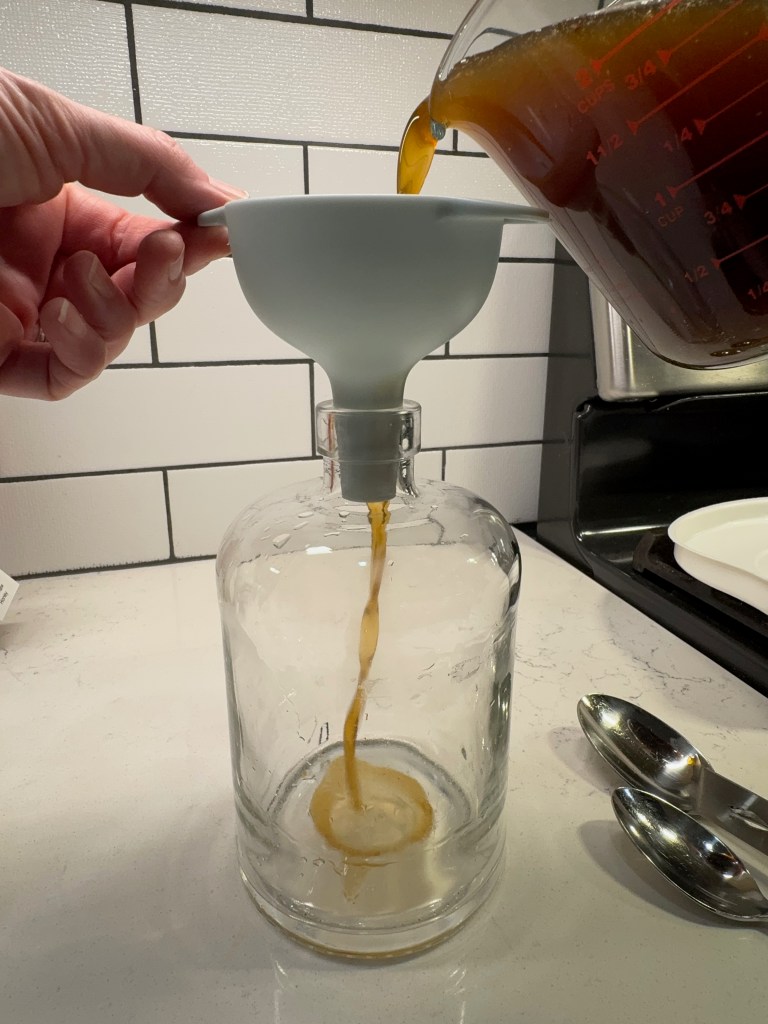
Pour boiling water over the macerated pineapple and stir gently to loosen up and dissolve any remaining sugar. Carefully remove the solid pieces and then strain the syrup through a fine mesh strainer. Transfer to a sealable jar or bottle and keep it in the fridge.
Not for lack of things to say, but I haven’t had it in me to blog much recently. The flood of “information” that has been coming out of Washington for the past month has been, frankly, a bit much for me. OK, that’s an understatement. Truth is, I’m working on an exit plan. I’m not sure what it would be like to live in another country, but I’m game to find out. The fact that I love other cultures more than my own helps a lot.
Today is National Margarita Day, which should be a time to only be happy about a fun cocktail, but has somehow (for me, anyway) become but a temporary escape from the living hell before us. Billionaires driving the bus of our nation. Fascists calling the shots. Christian Nationalists pretending they know what Jesus would do.
I’m done. I’ve held my tongue longer than is reasonable for these times, and I feel like I’m about to explode. Enter, tequila. Thank you, Mexico, for everything. Seriously, I’m feeling a little spicy, and I don’t care if it shows.
Right?
Lord, give me the gumption of my grandmother, who lived through the Great Depression, and of my great grandmother, who was the first generation on the female side of my family to earn the right to vote. I need to embody all of their strength today. Oh yes, indeedy-doodee-daddy, I need to remember where I came from— I need to feel it in my bones. I’ve seen on numerous Instagram posts recently that women in the 1930s and ‘40s wore red lipstick as a means to protest fascism and piss off the people in power, so until further notice…
I can’t say quiet.
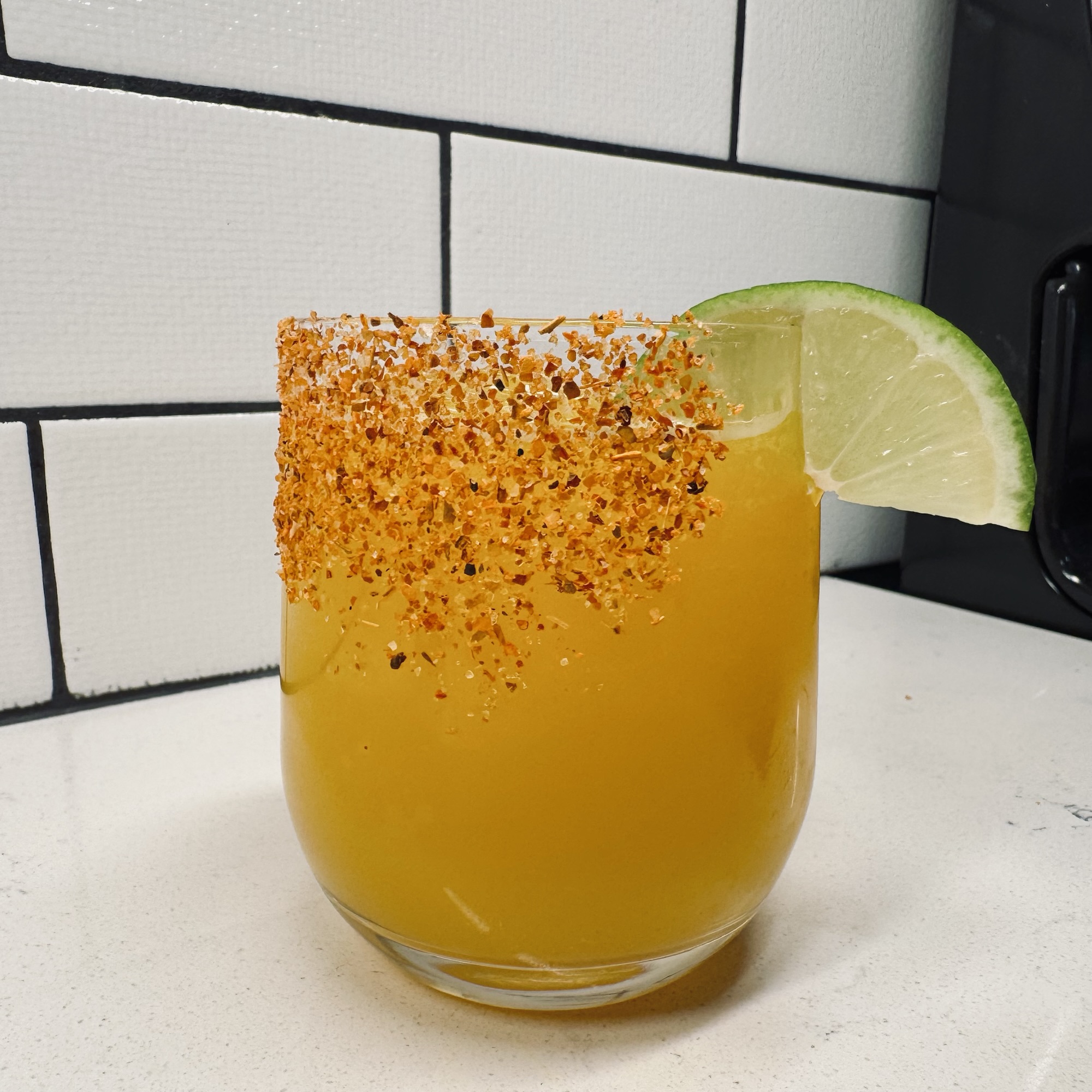
With that off my chest, I present the cocktail that easily found its way into my repertoire this week. The spicy mango-melon margarita. It is a super easy, flavorful cocktail that melts my rebel heart with its spicy-meets-sweet flavor profile, and a spirit that says, “hell, no!!” The recipe is a bit of a shortcut—something I don’t do very often— and it works here, because I’ve been trying so hard to keep everything else between the lines that I haven’t had time to create many things from scratch. But I trust Q brand mixers, and using this one means that the drink is EASY to make at home. Even if you can’t even.
I’m keeping it simple with a tasty, store-bought mixer.
The key ingredients you need are tequila (any would probably work, but reposado is appropriate for the pause I’ve taken in sharing my true feelings), melon liqueur (Midori seems obvious because it is the real deal, not a knock-off) and the Q brand spicy mango margarita mixer, which has all the stuff I love and none of the stuff I don’t. Truth be told, I could probably drink this mixer over ice by itself and feel that I’ve accomplished something. But not today. I’m grateful for the tequila. Here we go, beginning with prepping the glass:
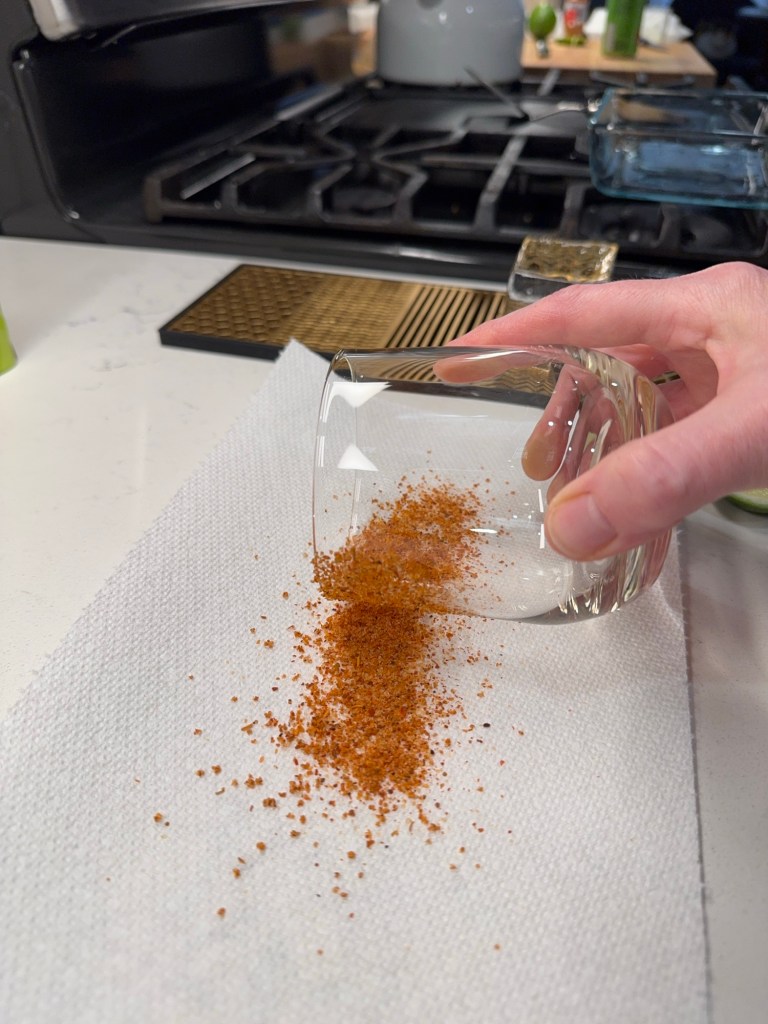
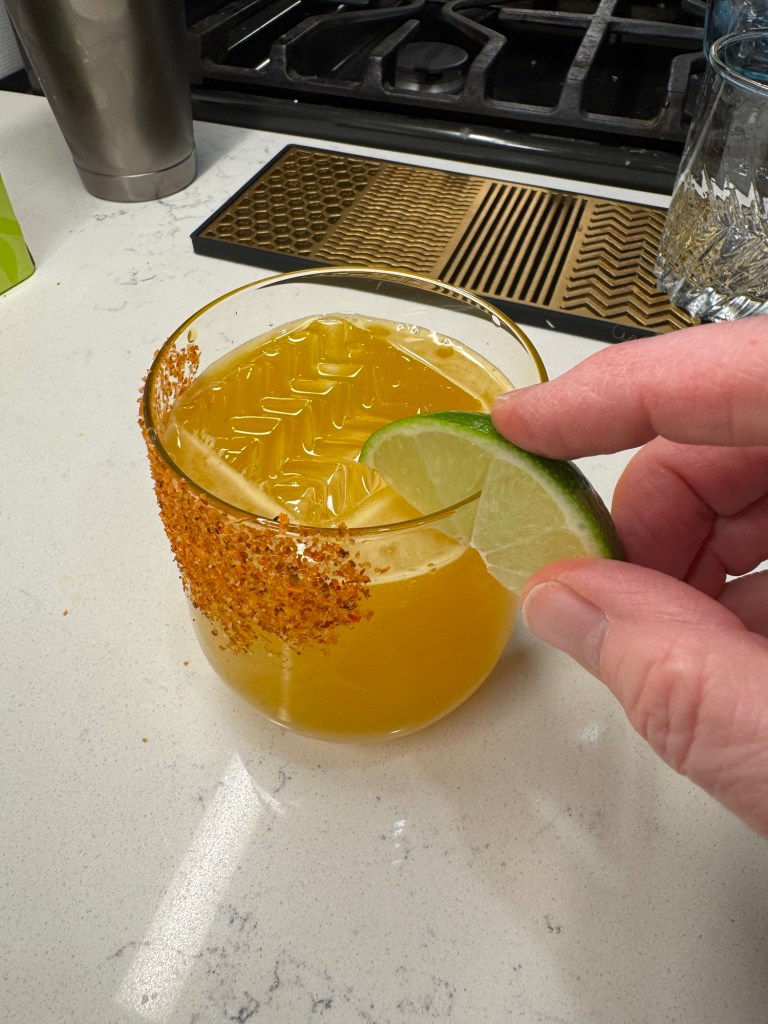
Swipe a fresh lime wedge on the edge of the glass, and then roll the outside in the Tajin spice.Shake with ice, strain over a big rock and garnish with a lime.
This may seem like an opinion piece, and maybe it is— only you can decide what it means to you. But I’m sticking with my red lipstick and my spicy cocktail and my spicy attitude. It’s still a free country, after all. At least, for now.
A store-bought shortcut makes this spicy, sassy cocktail super easy, and just in time for National Margarita Day!
Ingredients
2 oz. reposado tequila (recommended 1800)
3/4 oz. Midori melon liqueur
3 to 4 oz. Q brand spicy mango margarita mixer (lesser amount results in a stronger drink)
fresh lime and Tajin spice to decorate glass
Note: I don’t typically use store-bought cocktail mixers, but I’ve made an exception here because the Q mixer brand does not use high fructose corn syrup or fake flavors. I was startled at how much I liked this mixer, even on its own. You can trust it here.
Directions
Use a lime slice to moisten rim of a cocktail glass. Roll outside rim of glass in Tajin spice.
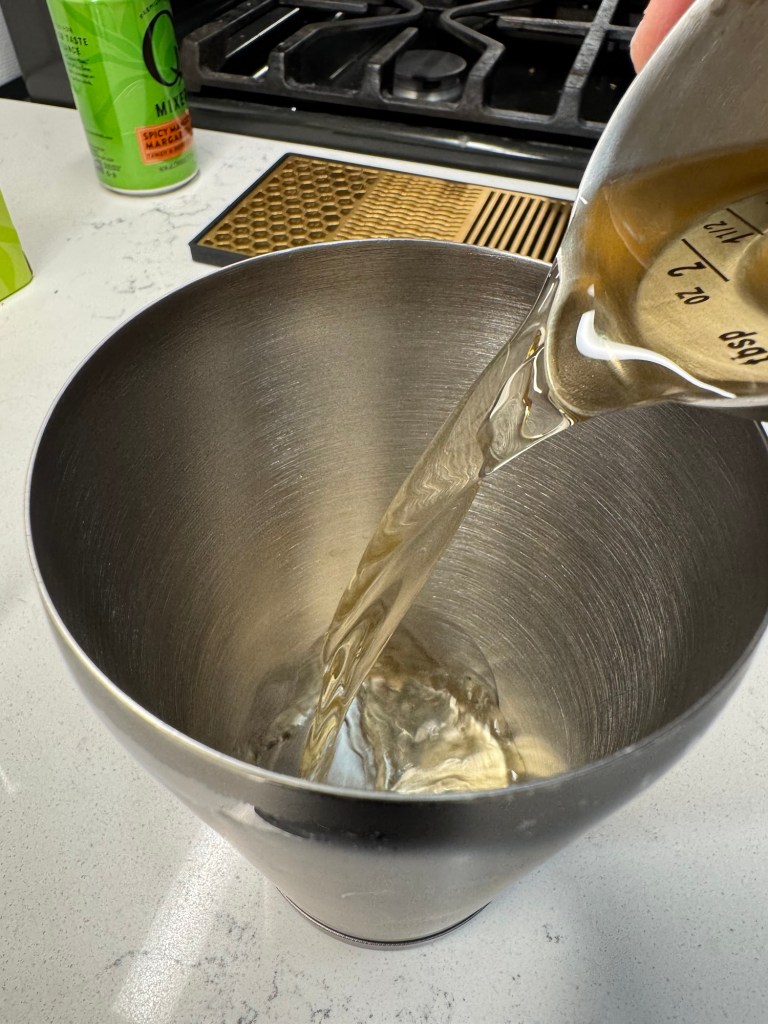
Add tequila, melon liqueur and margarita mixer to a cocktail shaker. Add one cup ice cubes and shake the hell out of it, like you’re pissed off at the state of everyting.
Strain over a fat ice cube into the prepared cocktail glass.
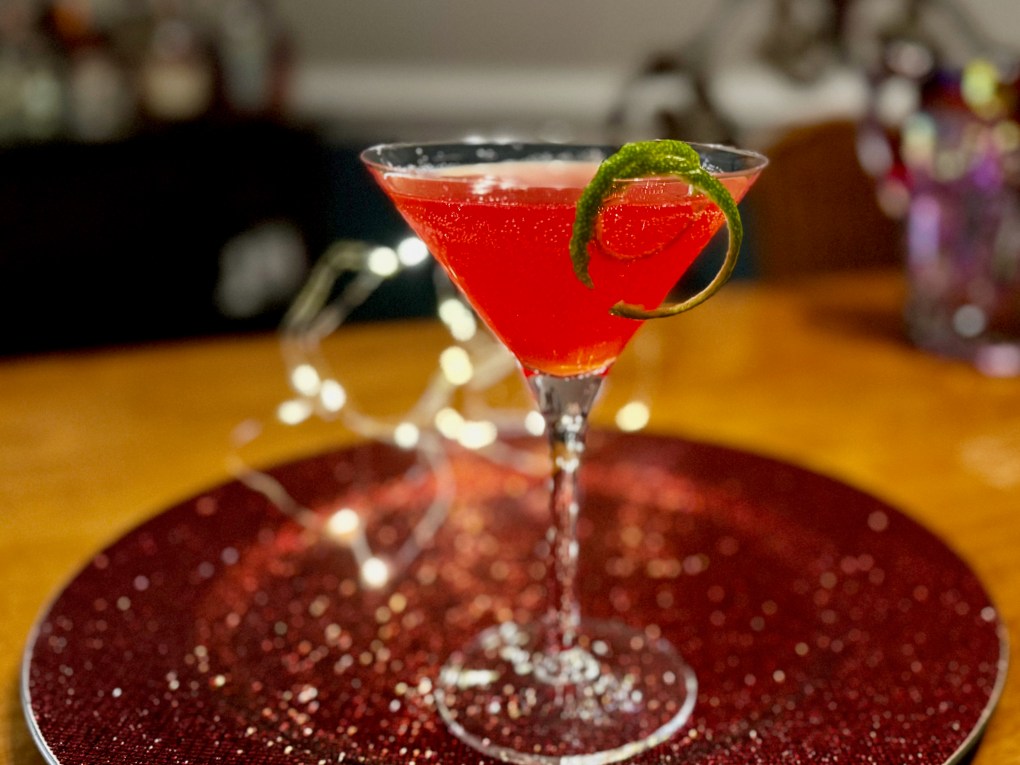
I know I promised you a cocktail before Thanksgiving, and I should know by now that late November is not the time to make promises I might not be able to keep. 🤷🏻♀️ Better late than never, and it’s all good because what I’m about to share with you could be the holiday miracle your entertaining plans have been waiting for. This drink became an accidental star at our Thanksgiving happy hour, and the great news is that its seasonal flavors and fancy presentation make it perfect for all the holidays coming up.
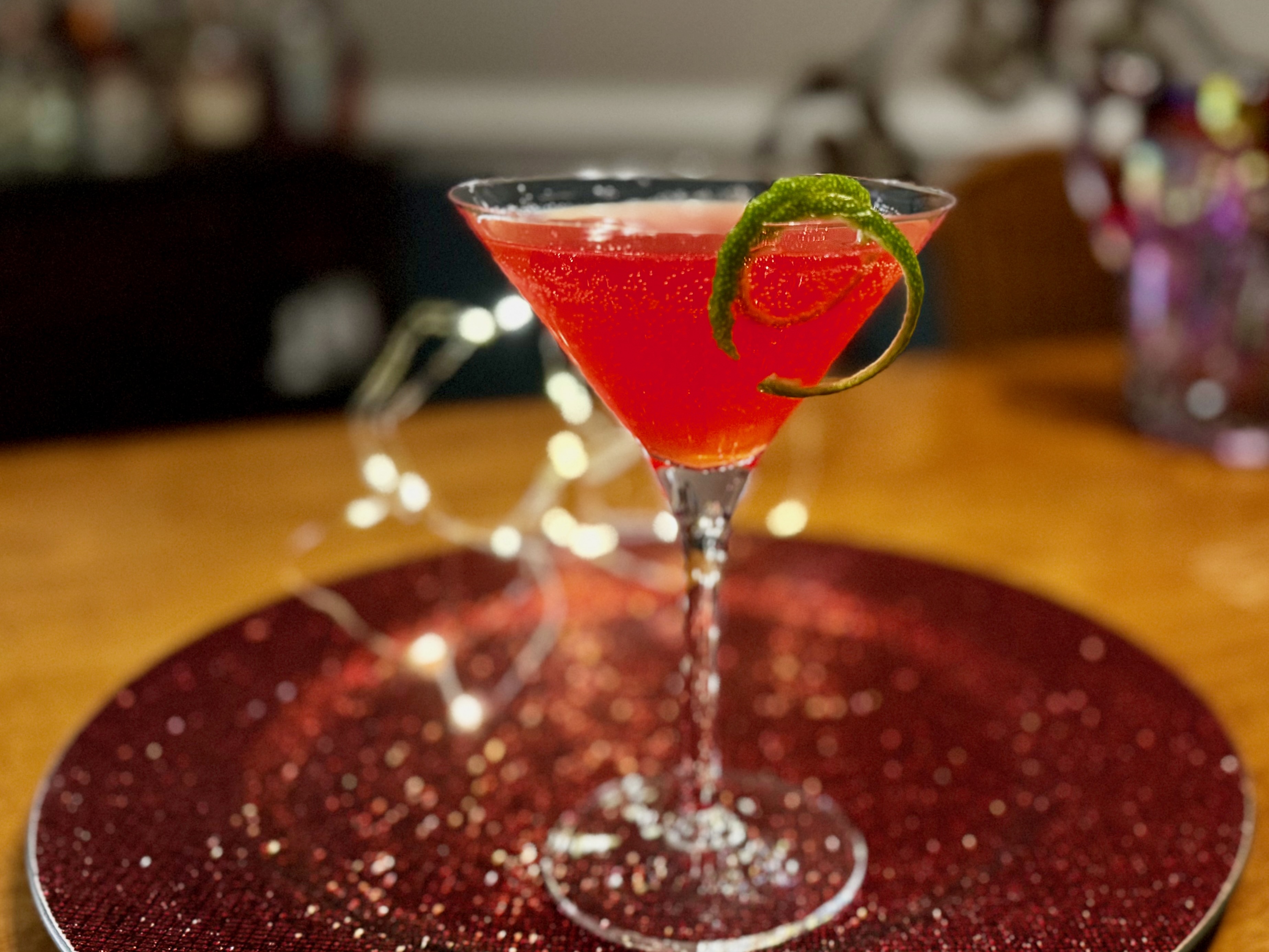
I found this inspiration quite unexpectedly while scrolling Instagram in the wee hours, as I am wont to do. A few days before Thanksgiving, Food Network had posted a slideshow of recipes offered by its celeb chefs. There were variations on casseroles and desserts and—oh, who am I kidding? I have no idea what else was in the photo carousel because the fresh cranberry cosmo stopped me dead in my tracks. The ingredient list was simple, the technique brilliant and the drink divine.
Cheers, Christmas!
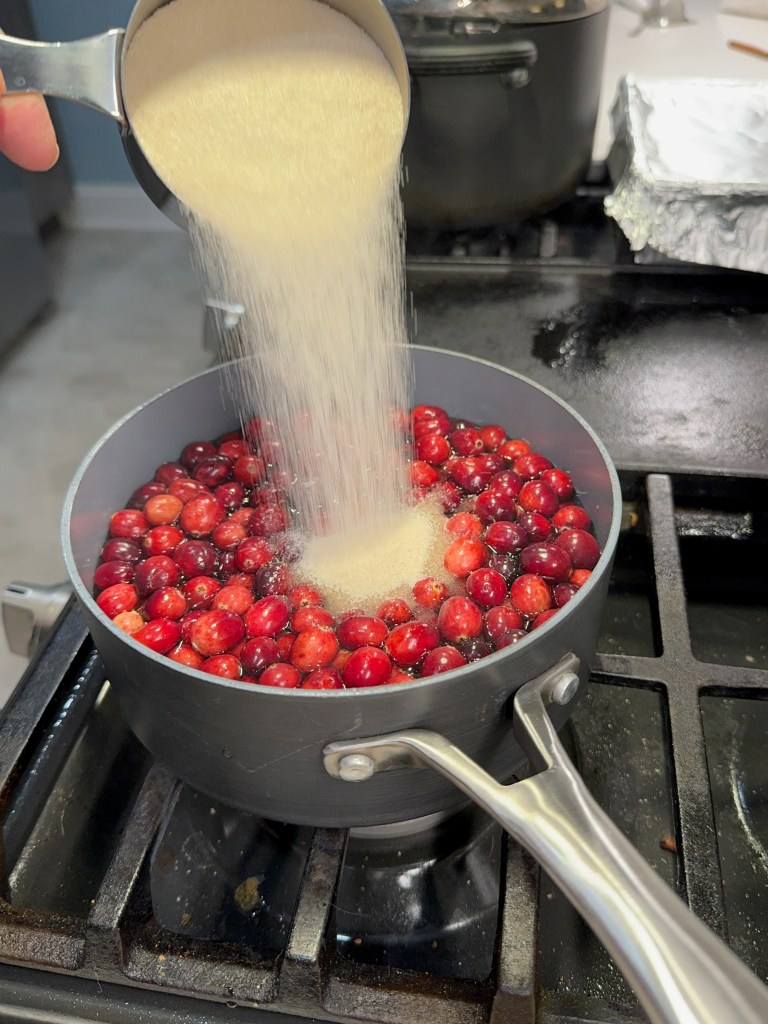
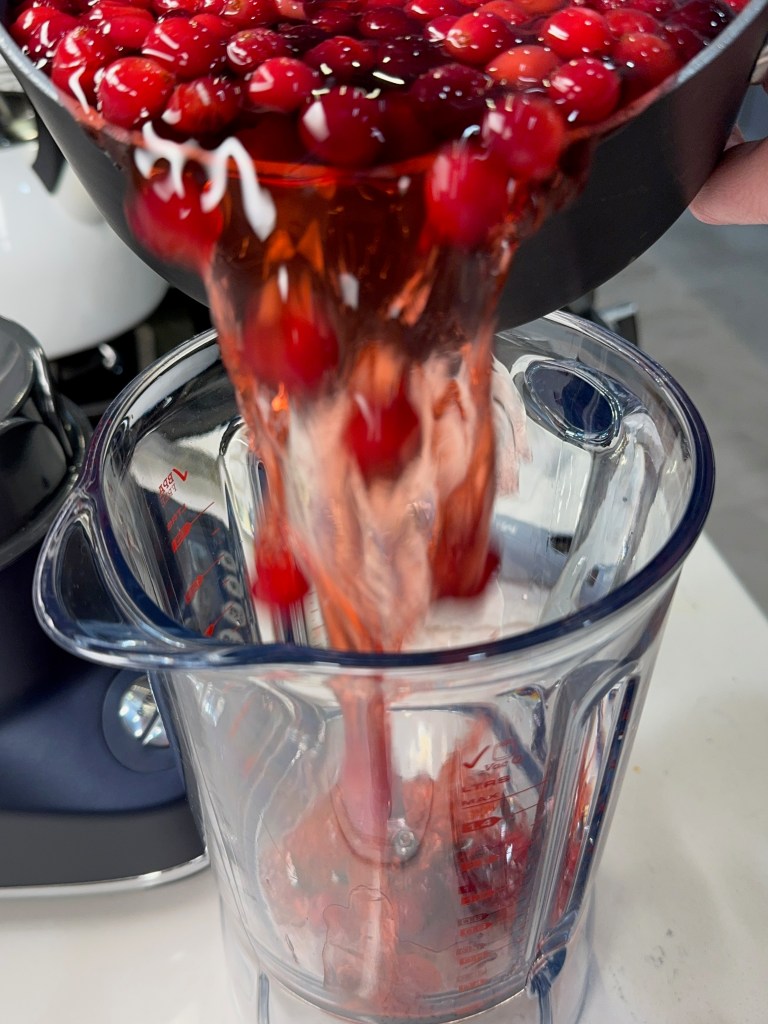
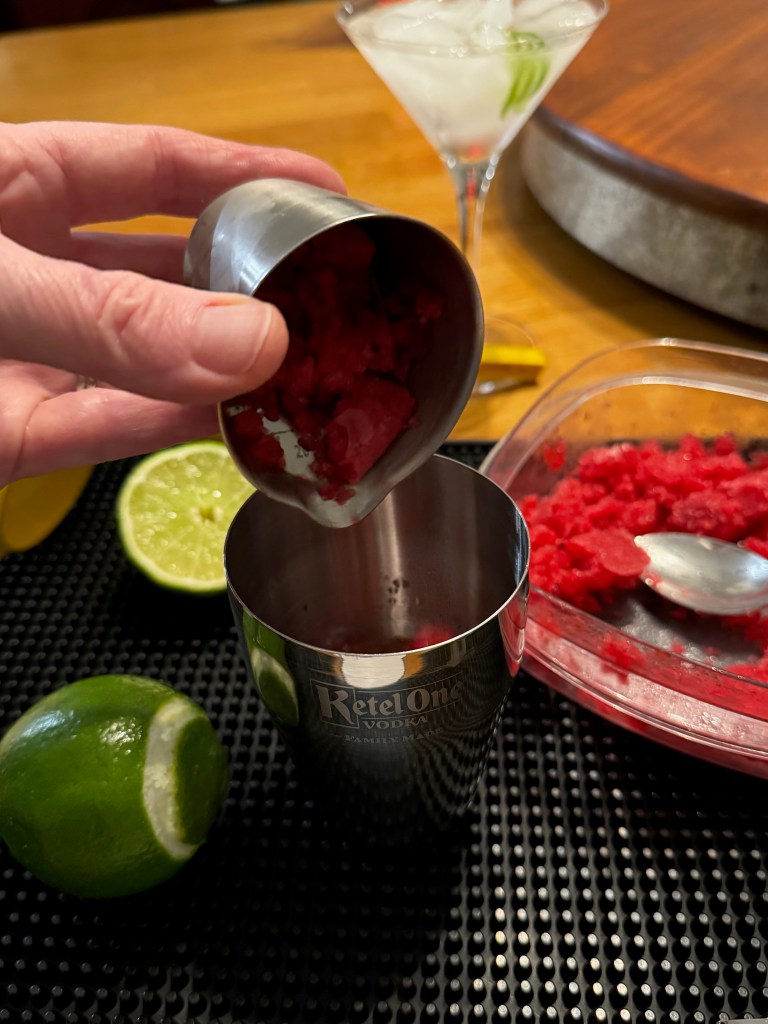
It was star chef Alton Brown who presented the formula for the cranberry granita that is the base of this stunning, neon-colored drink, and the granita itself could be served as a palate cleanser or even a light dessert after a rich holiday meal. His granita was made by simmering fresh cranberries, sugar and lime zest in a fair amount of water, and then blending, straining and freezing. Later, he used a fork to shred the icy mixture into a substance not unlike a snow-cone. That granita mixture is then shaken with vodka and fresh lime juice— no additional ice necessary— and strained into a martini glass for the brightest, freshest seasonal cocktail I’ve ever enjoyed.
Of course, I couldn’t leave it at that (do ya know me?), and Alton himself is partly to blame for my tendency to twist a classic. During the early aughts, I hardly missed an episode of his “Good Eats” program on Food Network, and that was unquestionably when I became fascinated with the science of food and drink, inspiring me to push the culinary boundaries in my own kitchen. So, Alton, I’ll see your cranberry granita and I’ll raise you some crystallized ginger and orange zest. Because, Christmas. 🎁
Cranberry, ginger, citrus. It even smells like the holidays!
You don’t want to know how many spoons I used tasting this stuff along the way, nor how many sample cosmos I made for myself, just to be sure I wasn’t imagining how good it was. The cranberry-ginger granita is equally tart and sweet, and my mind is still racing with possibilities for drinks beyond this festive cosmo. Imagine swapping the vodka for blanco tequila— instant Christmas margarita! Or substitute white rum for a cranberry-ginger daiquiri. Seriously, can anyone give me one reason not to mix it with gin and lemon and top it with champagne for a cranberry-ginger French 75? Could this be the little black dress of the holiday cocktail season?
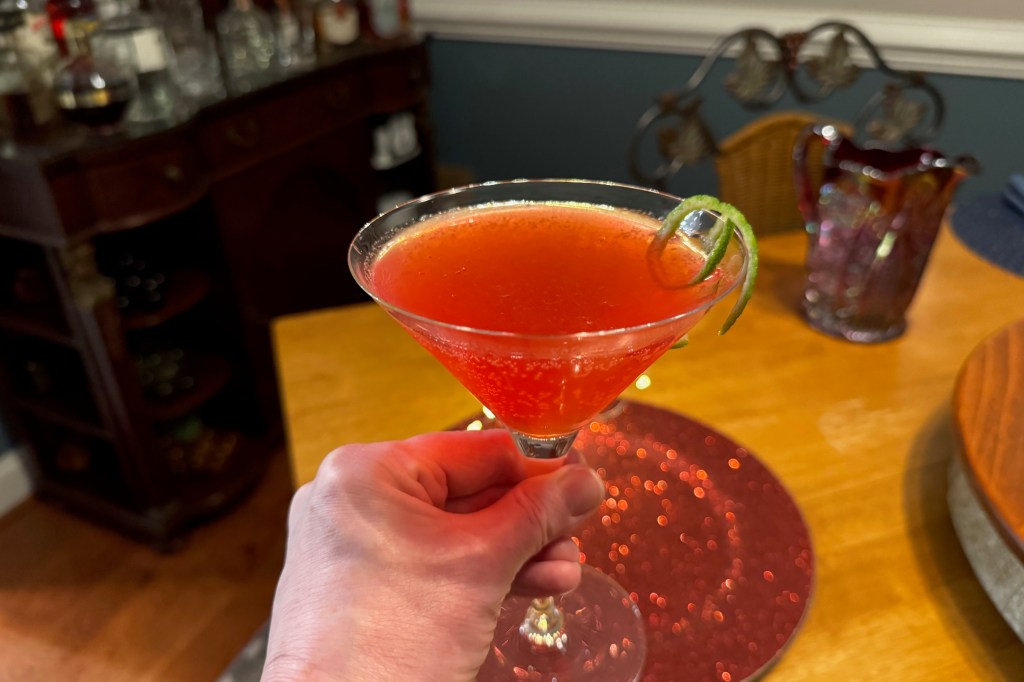
For that matter, I should also be able to sub something non-alcoholic for a tasty mocktail to delight non-drinkers at my party, right? I did that for one of our Thanksgiving guests, and I guarantee you can’t tell which of these glasses held the zero-proof drink. She said it was delicious.
I’ll give you a hint: it wasn’t mine. 😂
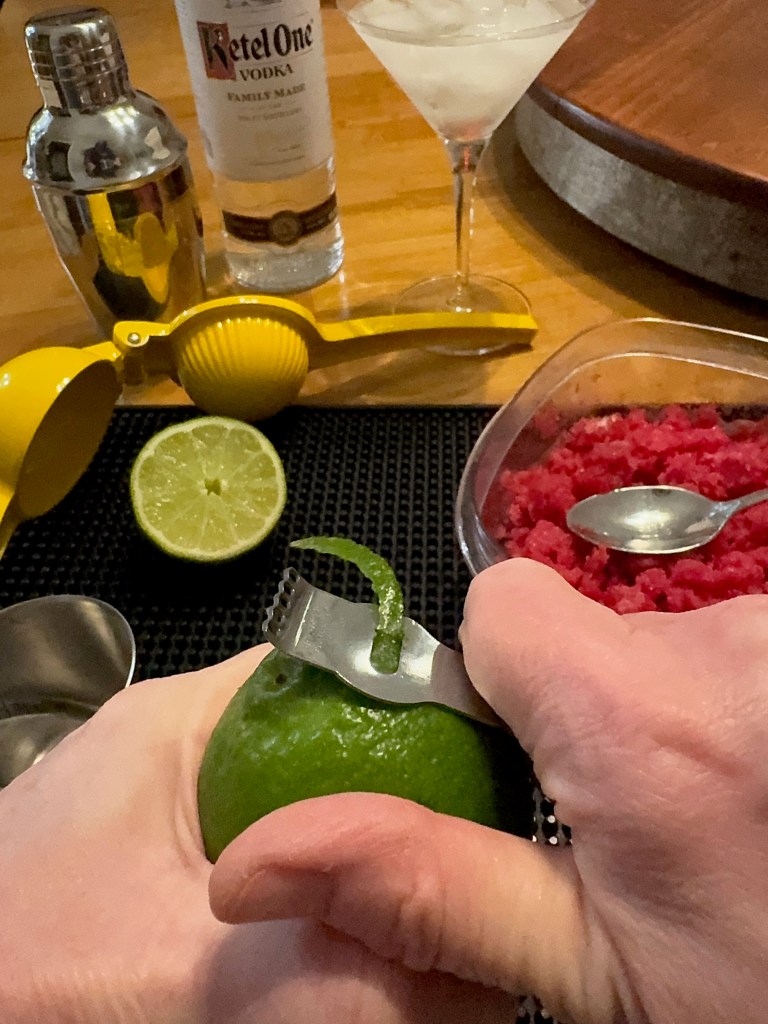
Making this sparkling fresh cranberry-ginger cosmo couldn’t be easier, and I’ll also share my tips for the mocktail in the click-to-print recipe card you’ll find at the bottom of the post. Start by making the granita a few days before you plan to entertain, and wash up several fresh limes so they are ready for happy hour. Plan on one lime for every two drinks; you’ll use the juice in the drinks and a strip of zest for garnish. And for a little extra holiday pizzazz, pick up a four-pack of blood orange ginger beer to top off your cocktails with a sparkly finish. Chill your cocktail glasses while you mix, and use a fine mesh strainer if you don’t want little bits of zest floating in your glass.
A channel knife is great for making a zest strip. Otherwise, use a potato peeler and trim with a sharp knife.
This gorgeous holiday drink uses a make-ahead cranberry-ginger granita that is so delicious, you'll want to use it in other drinks, too!
Ingredients
1 1/2 oz. Ketel One (or other premium) vodka
2 1/2 oz. cranberry-ginger granita (recipe follows)
1/2 oz. freshly squeezed lime juice
1 oz. Fever Tree blood orange ginger beer (or regular ginger beer, if desired)
lime zest twist to garnish
Notes: Make the cranberry-ginger granita ahead of time, and transfer to airtight containers in your freezer for safekeeping. I recommend using a fine-mesh strainer when pouring the drink into the glass, unless you’re OK with having the zest bits floating in the drink.
For an easy mocktail, swap in Simply Lemonade for the vodka, use 1/4 oz. lime juice and increase the ginger beer a bit. When making both alcohol and non-alcohol drinks for party guests, consider using two separate shakers to avoid mixups and in-between cleanings.
Directions
Chill cocktail glass with ice water, or place in freezer 20 minutes before mixing the drinks.
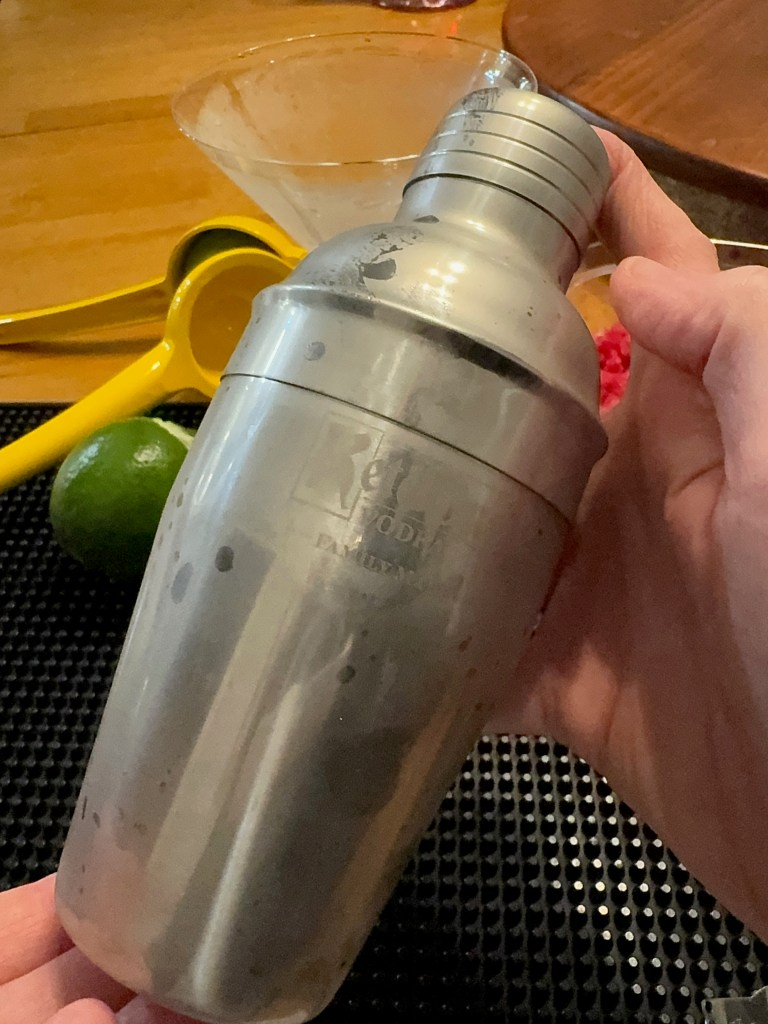
Measure vodka, granita and lime juice into a shaker. Cover and shake the shake out of it until the thing is too frosty to hold comfortably. The granita will melt with the other ingredients, so no ice is required for this step.
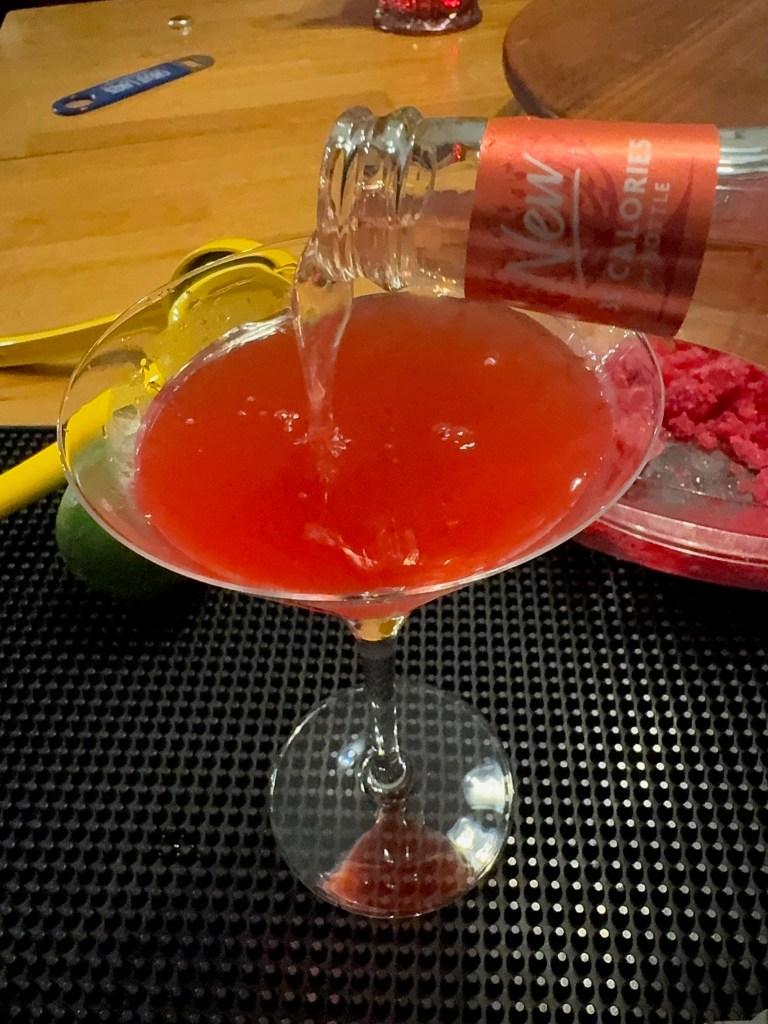
Strain into the glass, top off with ginger beer and garnish with the lime strip.
Notes: The cranberry-ginger granita will be enough for about 20 cocktails. Make it ahead and keep it in the freezer so it’s ready for all the holidays.
Ingredients
3 cups water
2 1/4 cups fresh whole cranberries
1 cup plus 2 tablespoons organic cane sugar
2 tablespoons minced crystallized ginger
Zest of one lime and half an orange (organic is best and washed thoroughly)
Directions
1. Combine water, cranberries, sugar and ginger in a medium saucepan over medium-high heat. Bring to a boil and then simmer for several minutes until the berries soften and split. Remove from heat and cool for a few minutes.
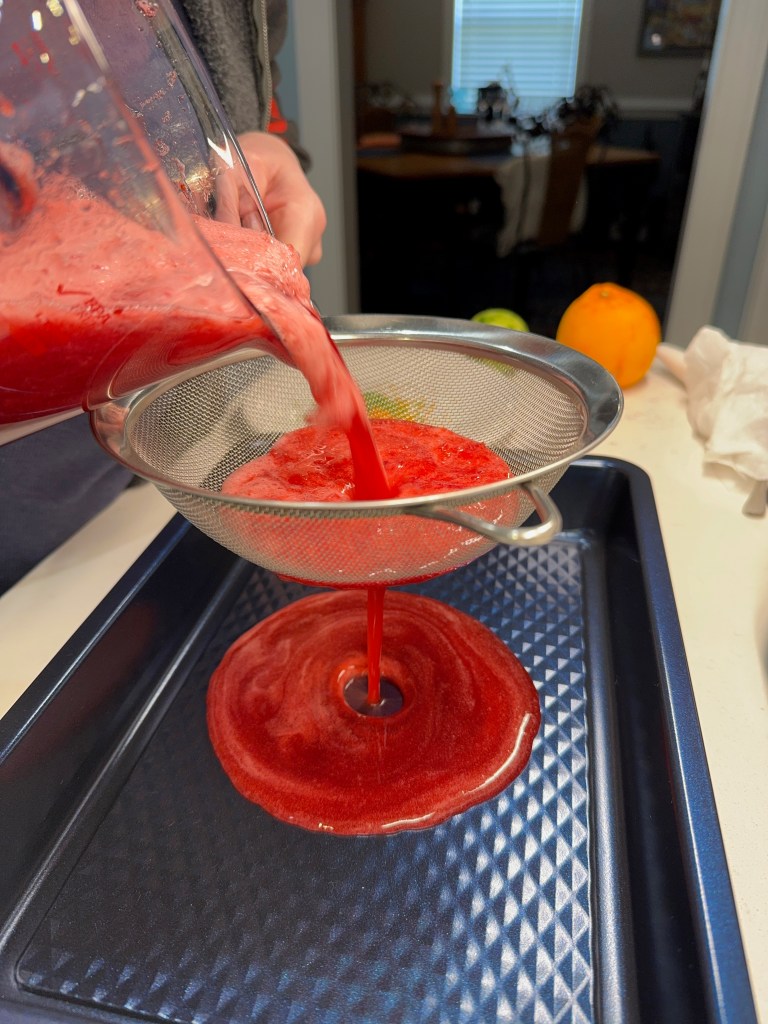
2. Transfer cranberry mixture to a blender (remove vent cover) or use an immersion blender to puree the mixture into a slurry. Pour through a mesh strainer into an oblong, shallow pan. I used a silicone scraper to gently move the puree back and forth on the strainer surface, as the pectin from the berries was quite heavy.
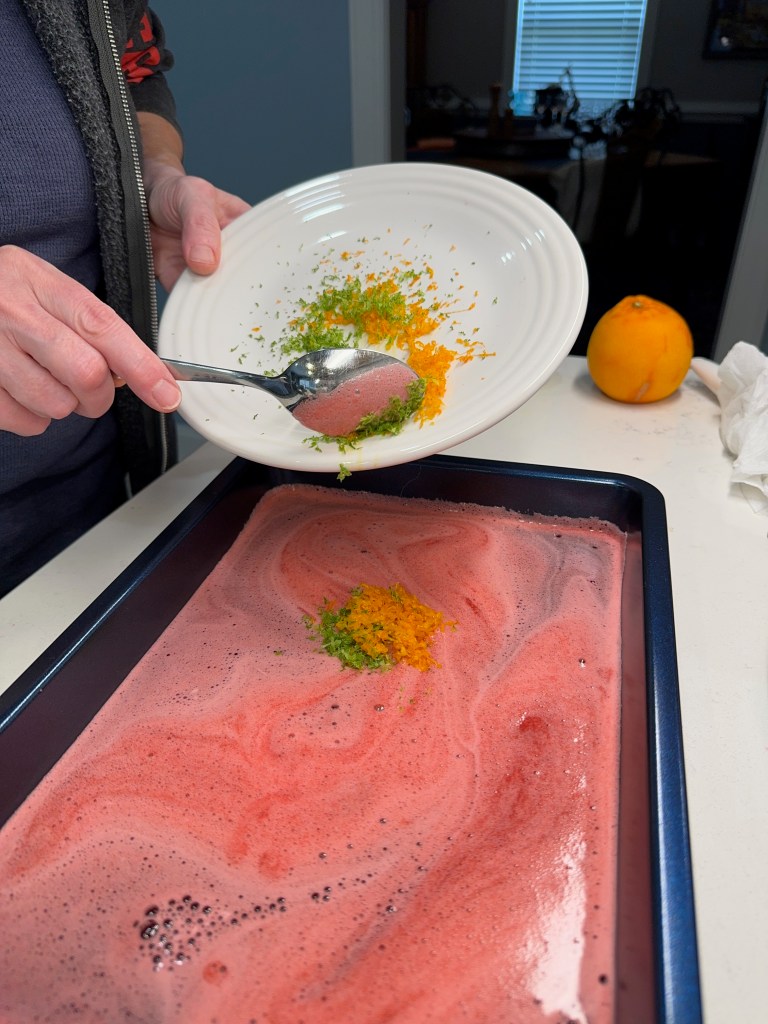
3. Stir in the citrus zest. Cover with plastic wrap and place the pan flat in the freezer for several hours until solid (overnight is fine).
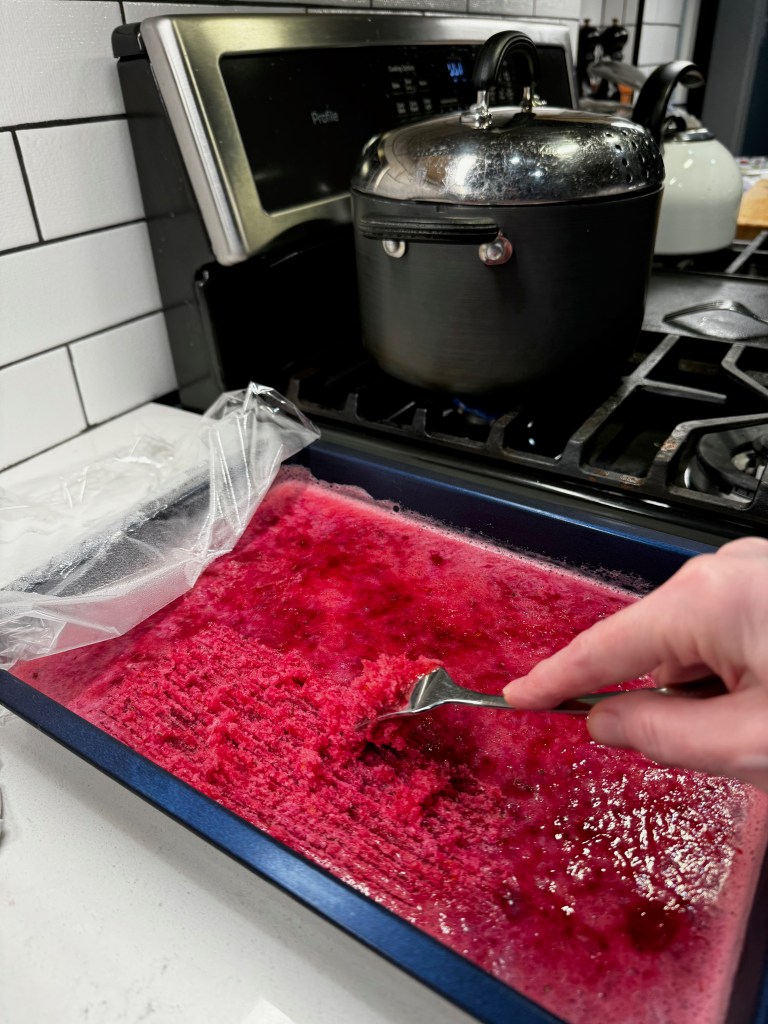
4. Use a fork to scrape the surface of the mixture until you have multiple layers of icy granita. Note that the mixture will likely clump as it refreezes. If you want it to be uniform consistency for cocktail hour, transfer it to a food processor and pulse a few times.
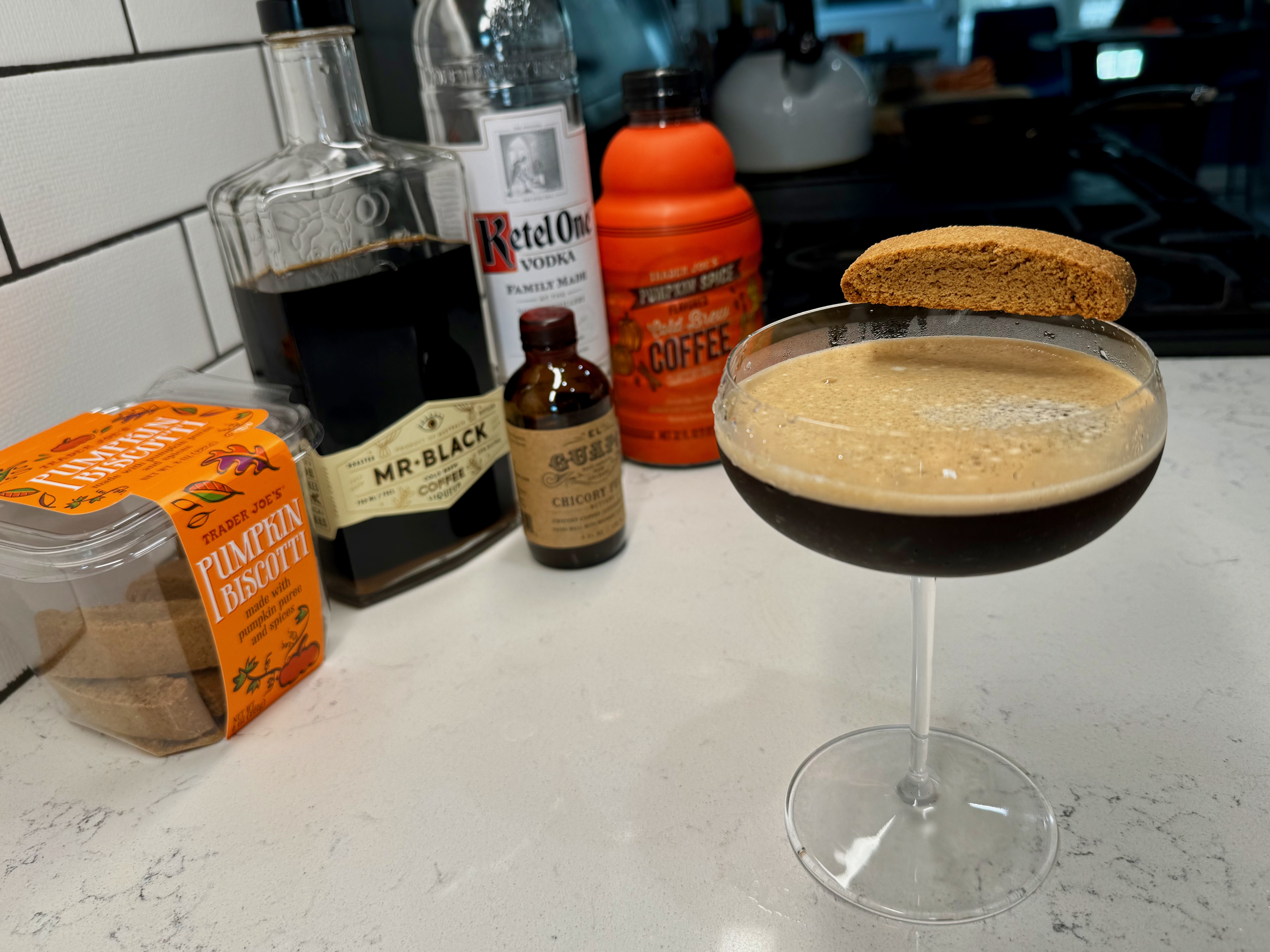
Well, now I’ve gone and done it, haven’t I? I’m fully confessing to a moment of weakness during a recent visit to Trader Joe’s, but I’m not apologizing. The whole pumpkin spice thing was just too much for me to ignore this year, and I’m not saying that I was on the wagon against pumpkin spice, but if I had been on the wagon— well, this martini would sure as hell knock me off.
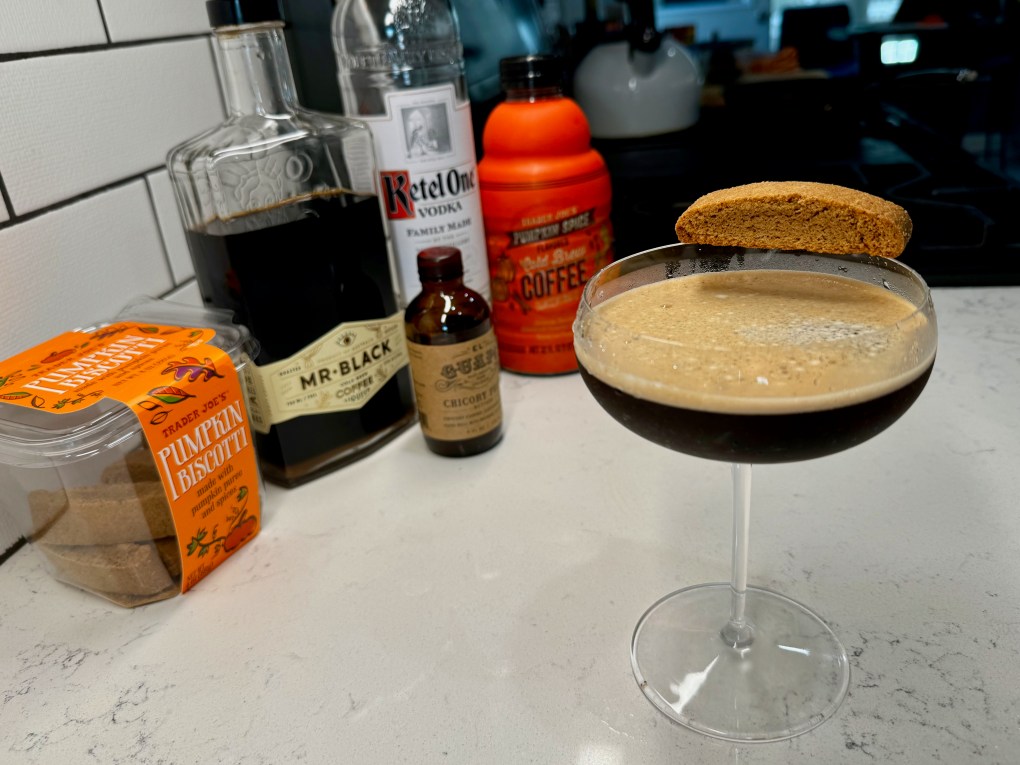
The only actual pumpkin here is the biscotti garnish.
For those of you cringing at the idea of a pumpkin spice espresso martini, here’s a reality check. No pumpkins were harmed in the making of this martini, because the “pumpkin spice” cold brew concentrate from Trader Joe’s has exactly ZERO percent pumpkin; it’s only spices that one might use with pumpkin pie— cinnamon, ginger, clove, nutmeg and orange peel— and it turns out they are fine companions to arabica coffee, with or without the other things that make this a cocktail.
So, would you feel better if we called this an autumn spice espresso martini?
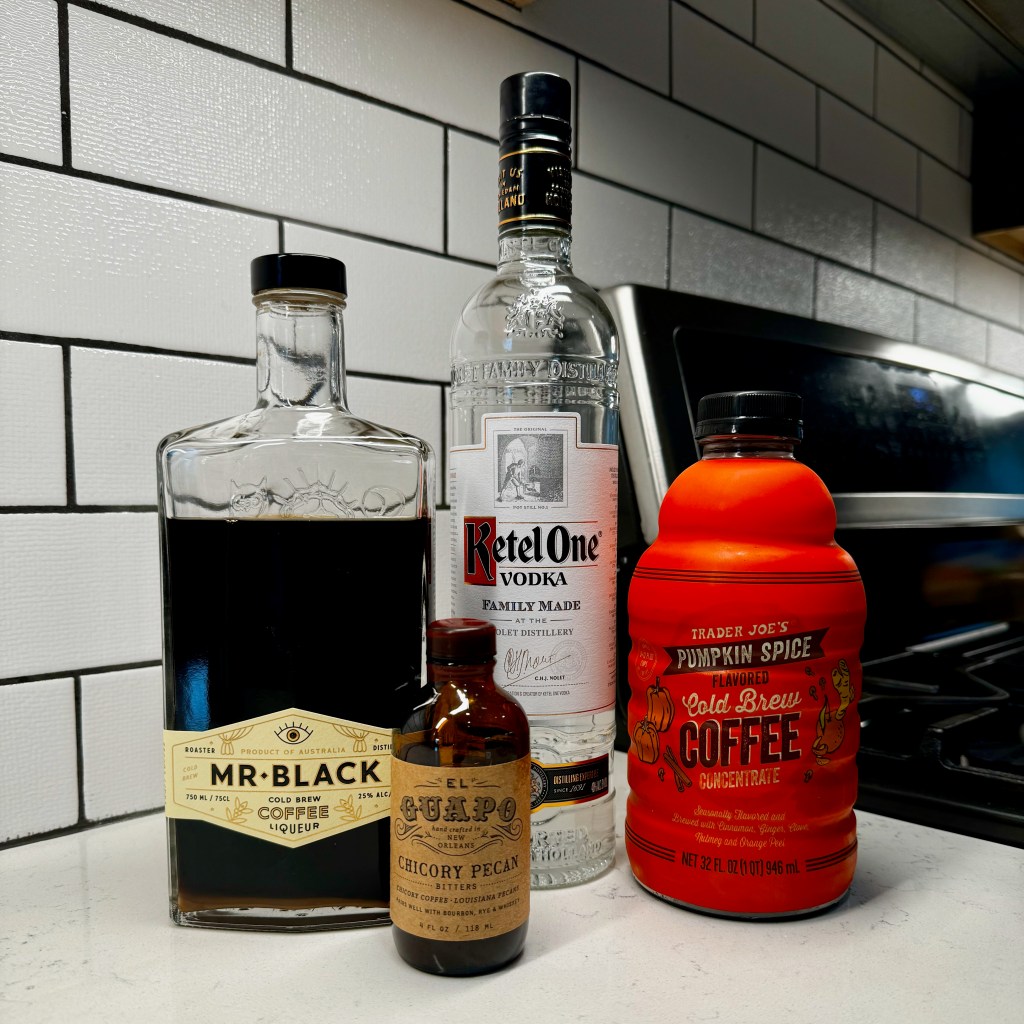
My new favorite fall lineup!
I mentioned when I shared my favorite new Negroni cocktail that Mr. Black cold brew liqueur was going to show up here again soon, and though I don’t usually share two cocktails so close to each other, I didn’t want to wait because we all know that Trader Joe’s has a short attention span with their limited season items. If you’re thinking about making some of these, leave right now to get your cold brew concentrate. I’ll wait. And while you’re at it, pick up the miniature pumpkin biscotti; they’re delicious with your morning coffee and equally good for garnishing this cocktail.
Should an espresso martini be sweet?
This is strictly a matter of opinion, and for this black coffee drinker, the answer is no. The difference between Mr. Black and other coffee liqueurs I’ve tried— Kahlua, Tia Maria and a Kentucky-made liqueur called Grind— is the level of sweetness. If you have a sweet tooth, these other options are probably right up your alley, especially if you take sugar in your morning coffee. But for me, an espresso martini with those options is essentially just a Black Russian in a different glass. I want the deep, dark, roasty flavor, and I’m happy to report that Mr. Black brings it!
Should an espresso martini be creamy?
People who take cream in their coffee probably also expect the creamy touch that Bailey’s liqueur or half-and-half bring to an espresso martini, but not me. Too many bars I’ve visited have turned this on-trend cocktail into something akin to a mudslide, even so far as drizzling chocolate syrup drizzled inside the glass. I can’t even. As with coffee, all of this is personal preference.
My perfect espresso martini
One of the things that held me back for a while from trying this drink at home is that I don’t have an espresso machine, and cold coffee just isn’t the same. But I have found that cold brew concentrate is a fantastic substitute because it is dark and robust, and it contains enough of the natural coffee oils that can be frothed for that beautiful coffee foam on top of the drink. The cold brew concentrate has caffeine, obviously, but each drink only uses two tablespoons, so it isn’t going to keep me up all night— unless I have three of them. 😂
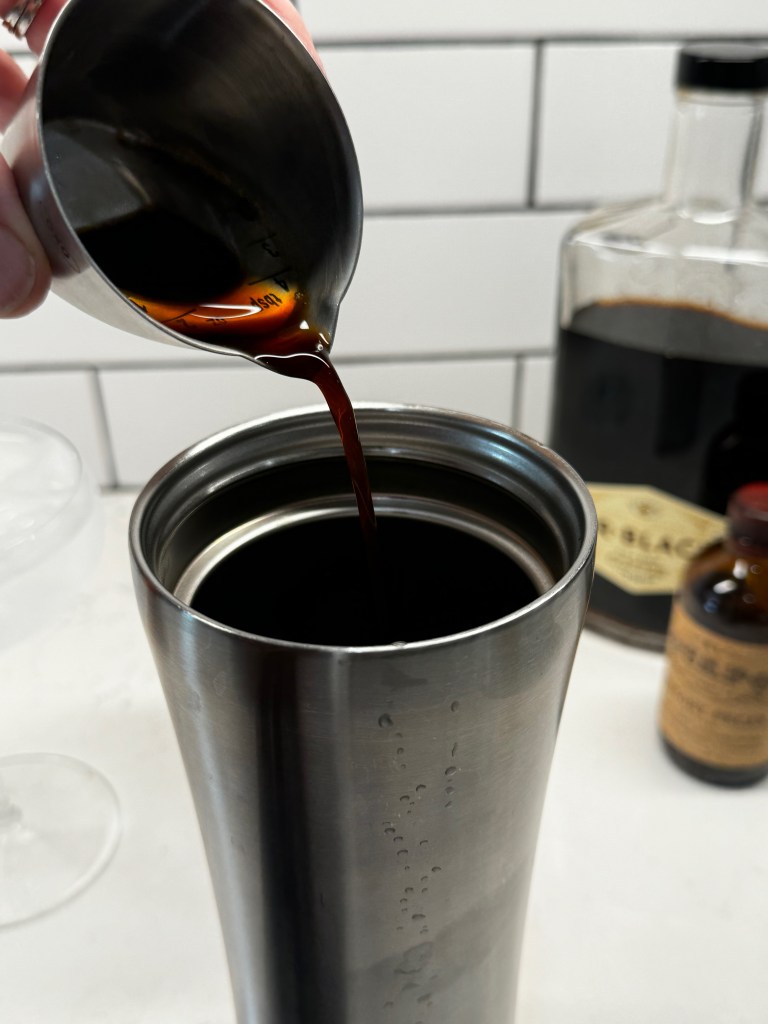
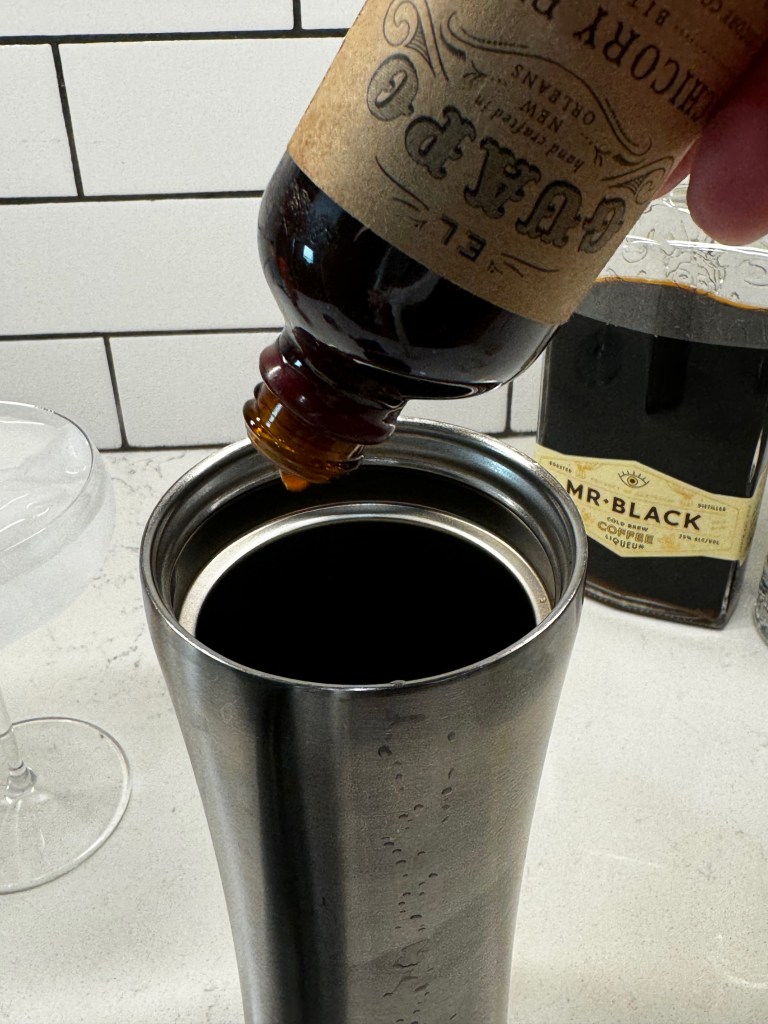
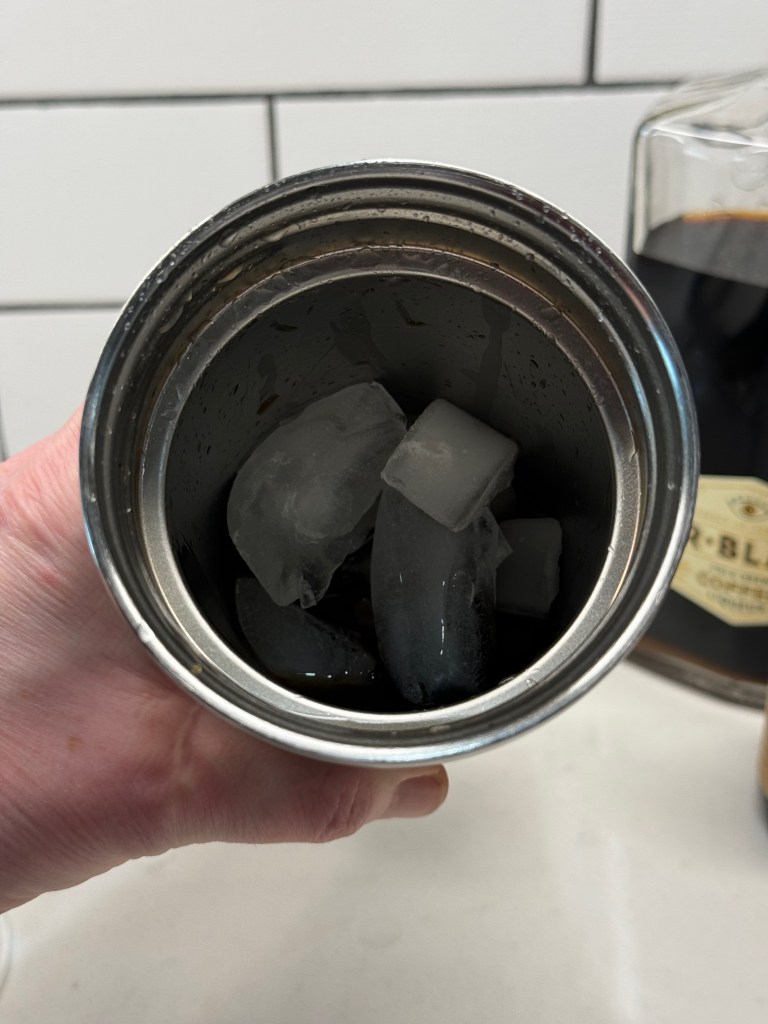
Ice and water chills the glass faster than ice alone.The coffee liqueur has its own bitter notes.The chicory and pecan bitters make this cocktail next level!Add ice to the shaker after all the other ingredients are in there.
Combine a quality vodka (I like Ketel One), Mr. Black, a shot of cold brew concentrate and a smidgeon of simple syrup— or if you want to go crazy, try smoked maple syrup (OMG). For extra pizzazz, I’m loving a couple of dashes of chicory and pecan bitters, the same product I used last year in my sweet potato casserole old fashioned. The bitters are not necessary because the coffee already carries the bitter flavor, and you could either omit them or substitute chocolate or even orange bitters, if you’d like. I like the warmth and extra roast flavor that the El Guapo bitters add.
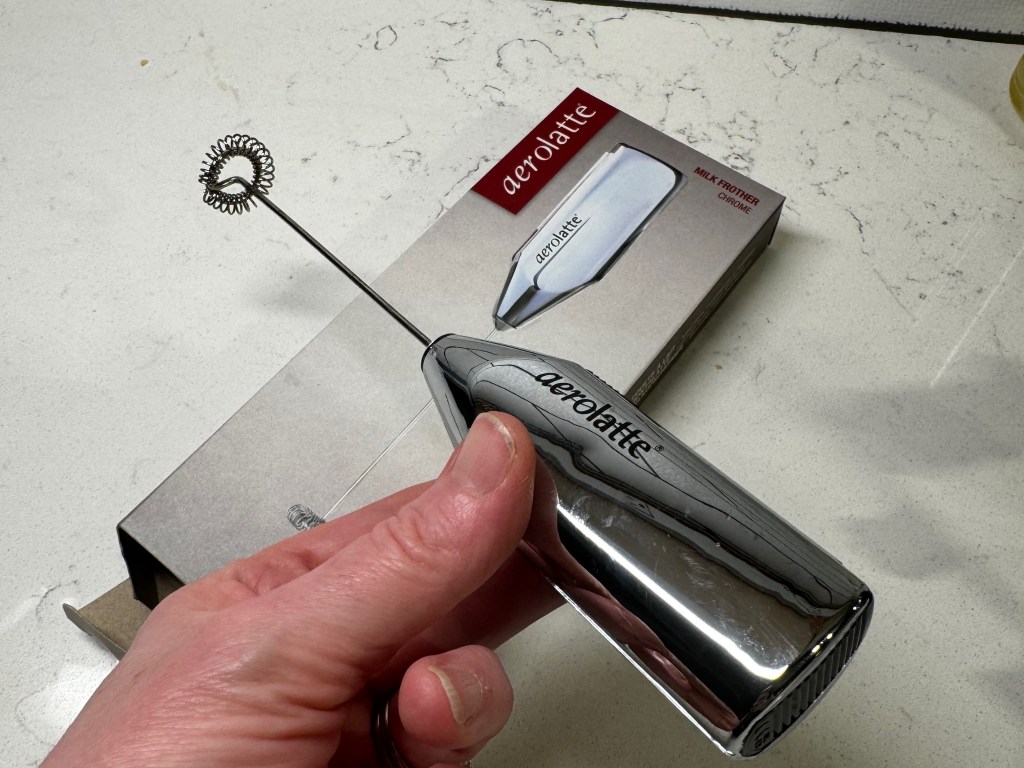
Finally, add one cup of ice and shake the dickens out of it. The more you shake, the better chance you have of frothing up that cold brew concentrate. But if you really love the rich, foamy layer on top of your martini, I have a simple trick for that, too. You will need one of these little gadgets.
It’s sold as a “milk frother,” but I call it the espresso martini magic maker!
I bought this simple little device last year for Les’s Christmukkah stocking, thinking that it would elevate his hot chocolate, but it found its way into my cocktail tool kit. Here, I added a bit of the cold brew concentrate plus a splash of simple syrup to a separate glass and used the frother to whip it up into a foamy topping for my espresso martini. Surprisingly, you don’t have to pour this on top of the cocktail; you can actually pour it right into the glass and then pour the shaken drink over it. Because the foam is whipped full of air, it will remain on top of the drink either way.
Cheers. 😎
A word to the wise
As simple and innocent as this drink might seem, it goes down extra easy. Not only does the alcohol sneak up on you; too many will keep you up all night. So, if you’re making these at home, you’ll probably want to keep score.
My version of espresso martini forgoes the sweetness and cream in favor of a deep coffee flavor. The spice blend (which doesn't have a bit of pumpkin) is not only fun but really delicious. If you cannot get the Trader Joe's flavored cold brew concentrate, check Starbucks for their version.
Ingredients
1 1/2 oz. Ketel One vodka
1 1/2 oz. Mr. Black cold brew liqueur
1/2 oz. Trader Joe’s pumpkin spice cold brew concentrate
1/4 to 1/2 oz. simple syrup (depending on your sweet tooth)
2 dashes El Guapo Pecan Chicory bitters (see notes)
For the foam: 1/2 oz. cold brew concentrate and 1/4 oz. simple syrup
Just for fun, a pumpkin spice biscotti for garnish
Notes: If the spices aren’t your thing, you could easily substitute a regular cold brew concentrate here and still enjoy a wonderful drink. The chicory bitters can be purchased online and they add another layer of roasty flavor to this drink. If you can’t find them, omit them or sub in another type of bitters, especially chocolate or orange.
Directions
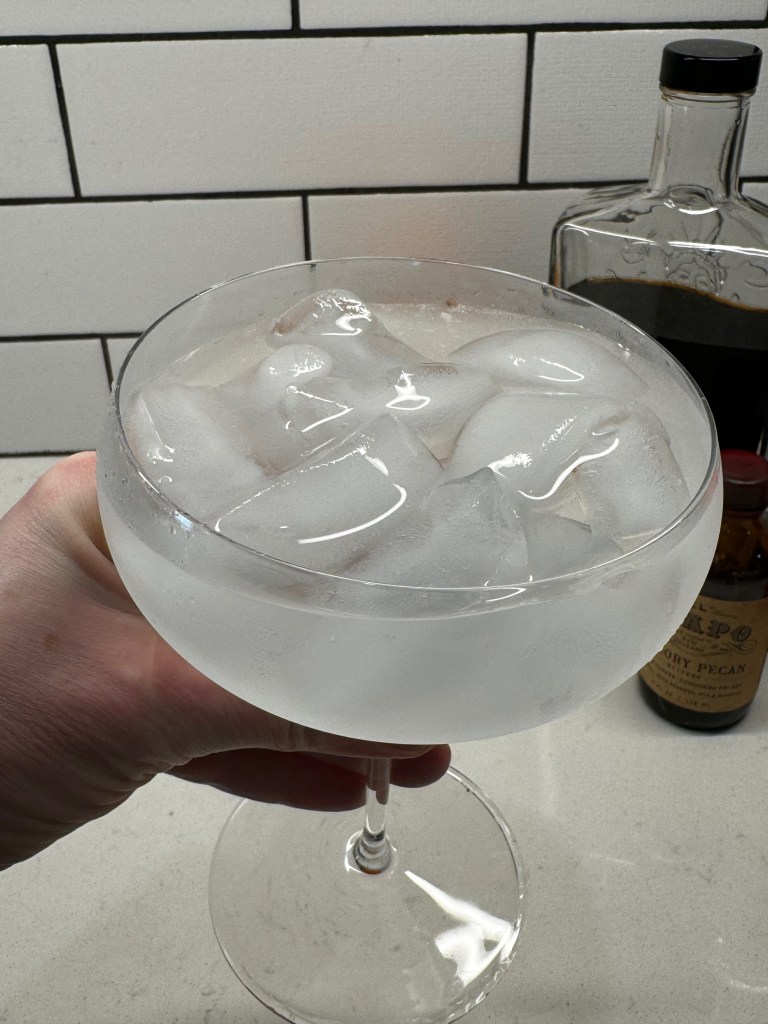
Chill a coupe or martini glass with ice and a splash of water.
Measure vodka, Mr. Black, cold brew concentrate, simple syrup and bitters into a cocktail shaker. Add one cup ice and shake vigorously to blend and dilute the drink.
In a separate glass, measure the additional cold brew concentrate and simple syrup. Use the milk frother to whip this into a foamy mixture.
Dump out the ice chilling your glass. Pour the foam directly into the glass, and then pour the espresso martini over the foam. If you prefer, pour the cocktail first and the foam on top; either way, the foam will stay on top.
Garnish with a pumpkin spice biscotti, if desired.
If your social media feeds are flooded with Negroni cocktails lately, there’s good reason. It’s “Negroni Week,” an event launched in 2013 by Imbibe (print and online) magazine and Campari as a means to spotlight a worldwide sustainable food movement called Slow Food. This program has an ambitious but very noble goal of ensuring “good, clean and fair food” for all human beings everywhere. I’m all for feeding people good food, but let’s explore how a cocktail benefits this cause. The organizers pitched an idea to the hospitality industry— register your venue with the Negroni Week site, and share a percentage of Negroni sales to benefit the Slow Food movement. That might not seem like much but to date, they’ve raised more than $5 million, so it’s working!
You can learn more about Slow Food here: https://www.slowfood.com/, and find a participating Negroni Week venue near you here: https://www.negroniweek.com/find/. If you can’t find a local bar that’s taking part in the annual event, why not donate to a similar cause close to home and make the cocktail (or some version of it) yourself? I’ll show you how.
What exactly is a Negroni?
The Negroni cocktail— invented in 1919 in Italy— is traditionally considered to be an “equal parts” drink with dry gin, sweet vermouth and Campari, the bright red Italian bitter aperitivo. The components are stirred with ice and then the drink is garnished with a juicy slice of fresh orange. It is both refreshing and appetite-stirring, sophisticated yet bold and gutsy.
My first introduction to Negroni came only a few years ago (during Covid, probably), and it took me a while to consider making this drink at home. I didn’t want to drop big bucks on a bottle of Campari unless I was fully committed. The Negroni is what I call a “strong drink”— it’s literally all booze— and if you can’t handle bitter, you definitely don’t want one. But there is something that really works about combining these spirits, and now that I’ve acclimated to it, I cannot refuse a Negroni.
Of course, me being me, I have joined the throng of amateur and pro mixologists on a mission for new ways to twist up this classic. There are already several notable riffs out there, including many that swap the gin for various other base spirits, including bourbon, rum and tequila. I enjoyed a particularly good Negroni variation that subbed Spanish sherry for the vermouth and Cynar for the Campari when we visited Cúrate in Asheville, North Carolina. I can still taste it in my mind. It was so good.
The base personality of a Negroni is the botanicals and bitterness— if these are not your thing, stick with a vodka martini or an old fashioned. But if you do happen to enjoy an adventurous, spirit-forward cocktail that whets the appetite before dinner, I propose my take on this lovely libation for Negroni Week 2024. Cheers!
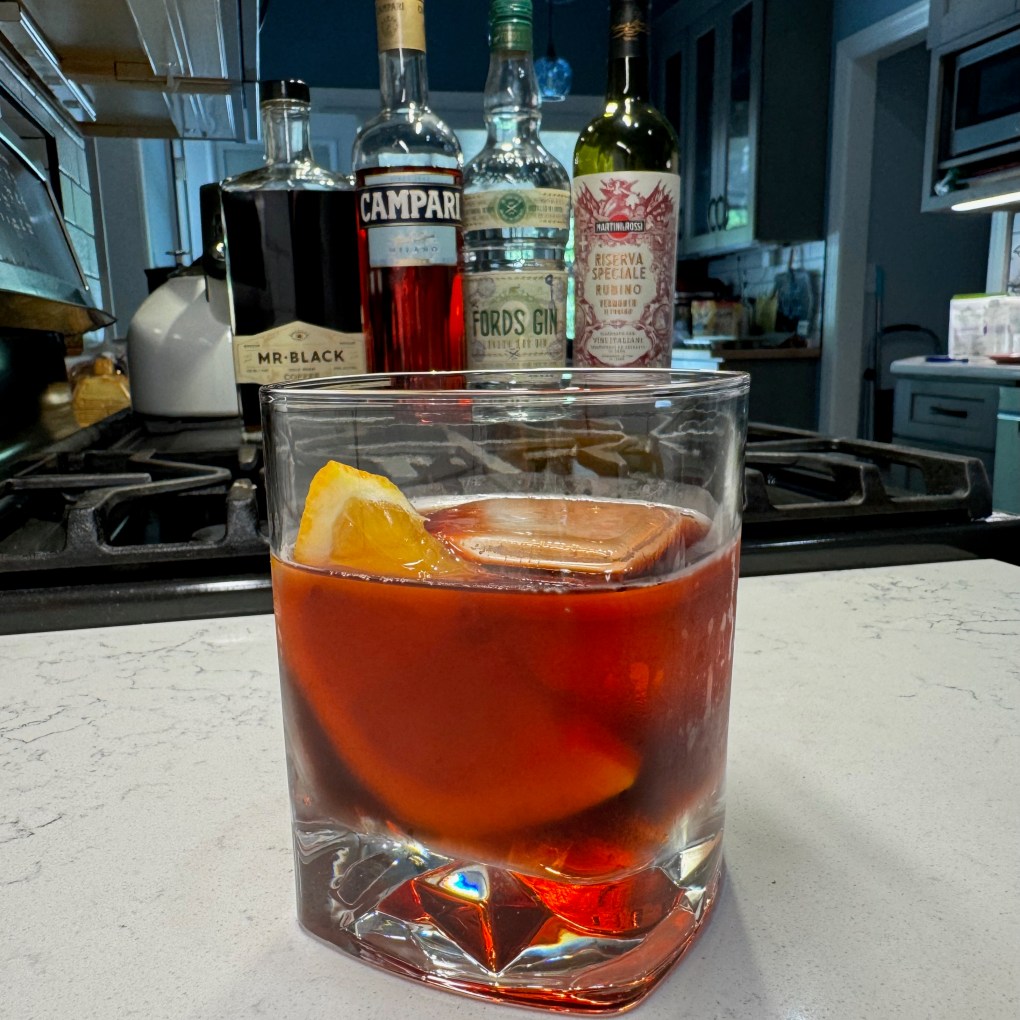
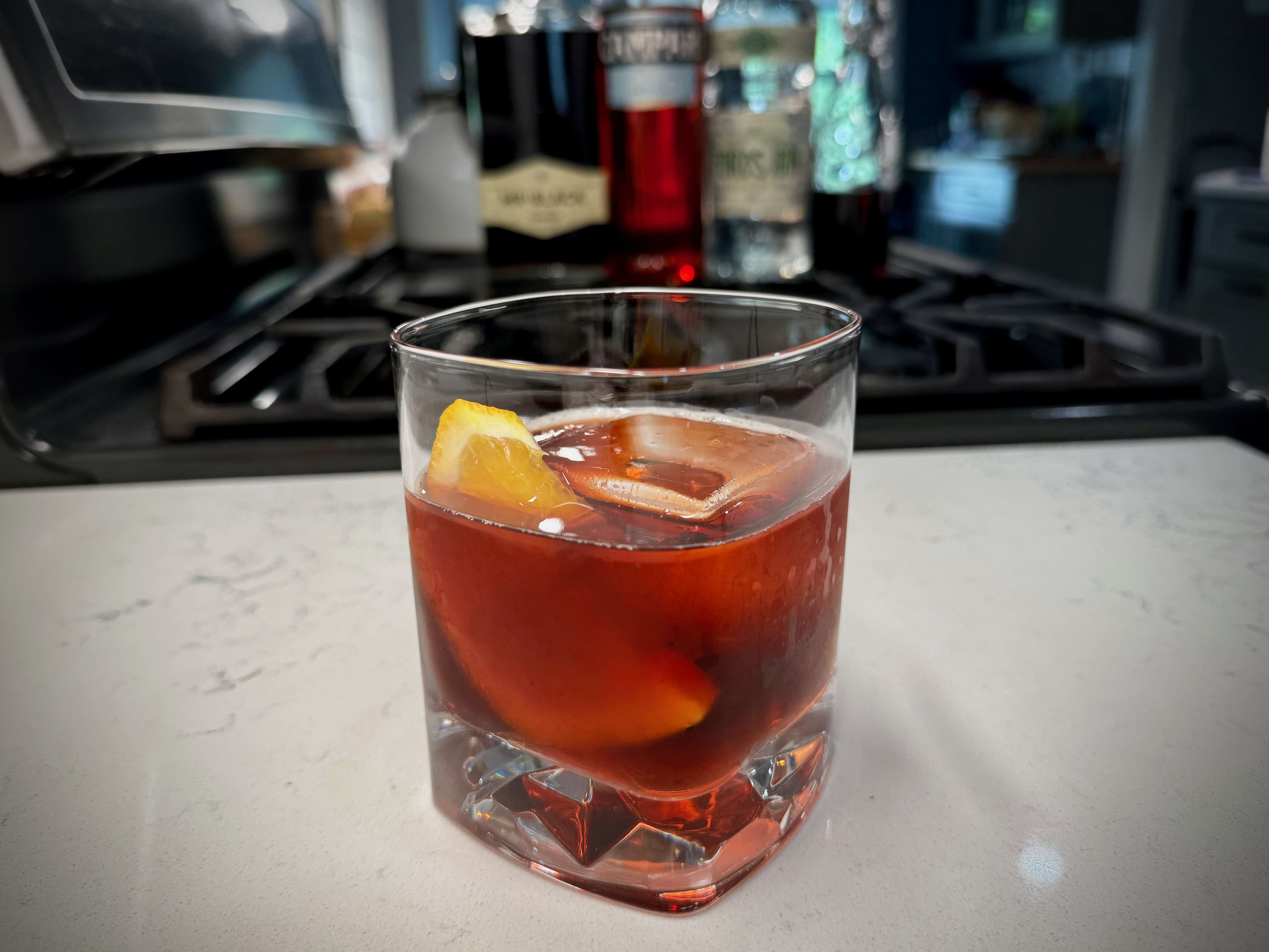
Cinnamon Espresso Negroni
The color and aroma of this drink are really special!
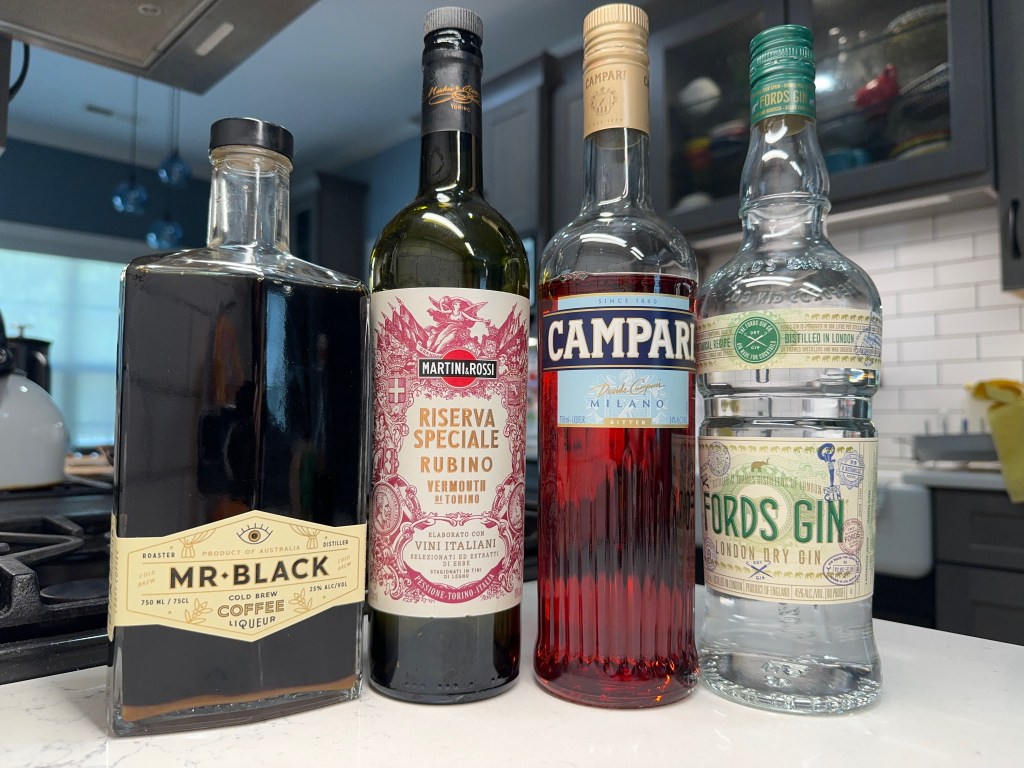
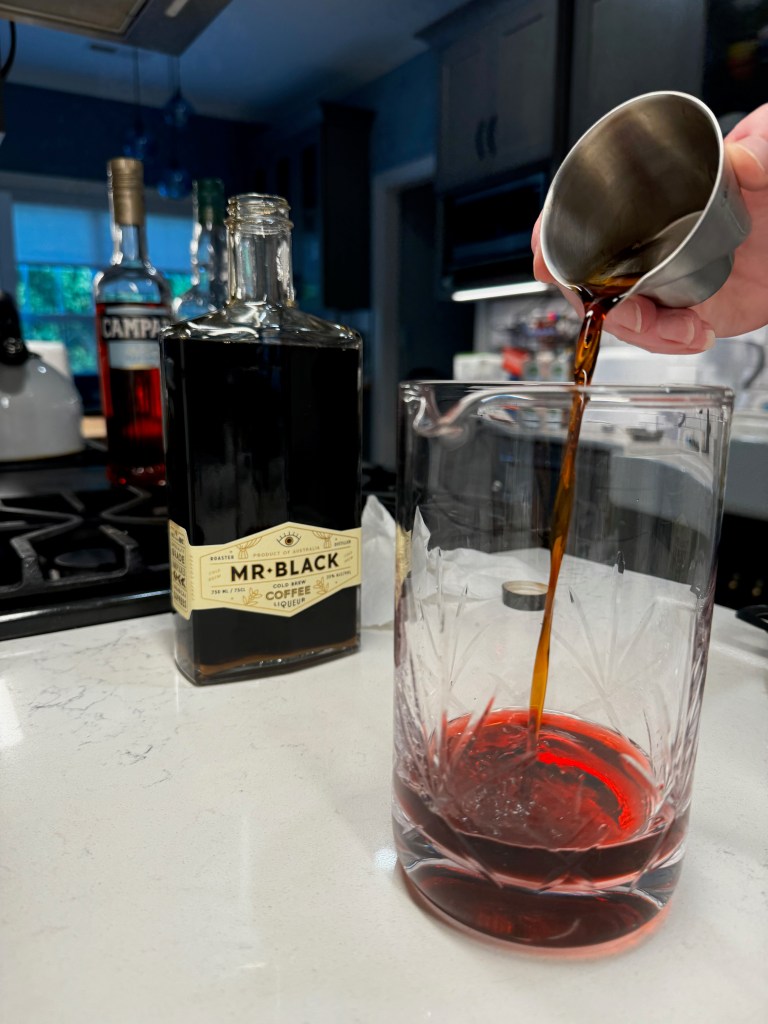
My version includes a couple of twists, including addition of cold brew coffee liqueur. I split the Campari element of the drink 50/50 with the coffee-flavored spirit I like best, Mr. Black. Yes, you could use Kahlua, Tia Maria or Grind Double Espresso liqueur, but I find all of these rum-based spirits to be too sweet for Negroni. Mr. Black is a vodka base, so the emphasis is on the coffee. I had to search for months to find it because our state-run liquor stores are pitifully limited in inventory, but it was worth the wait. I also happen to like Mr. Black in an espresso martini, which I am still working on and will share when I get there.
Ford’s is my house brand of gin. Any London dry is suitable for Negroni, so use your favorite.
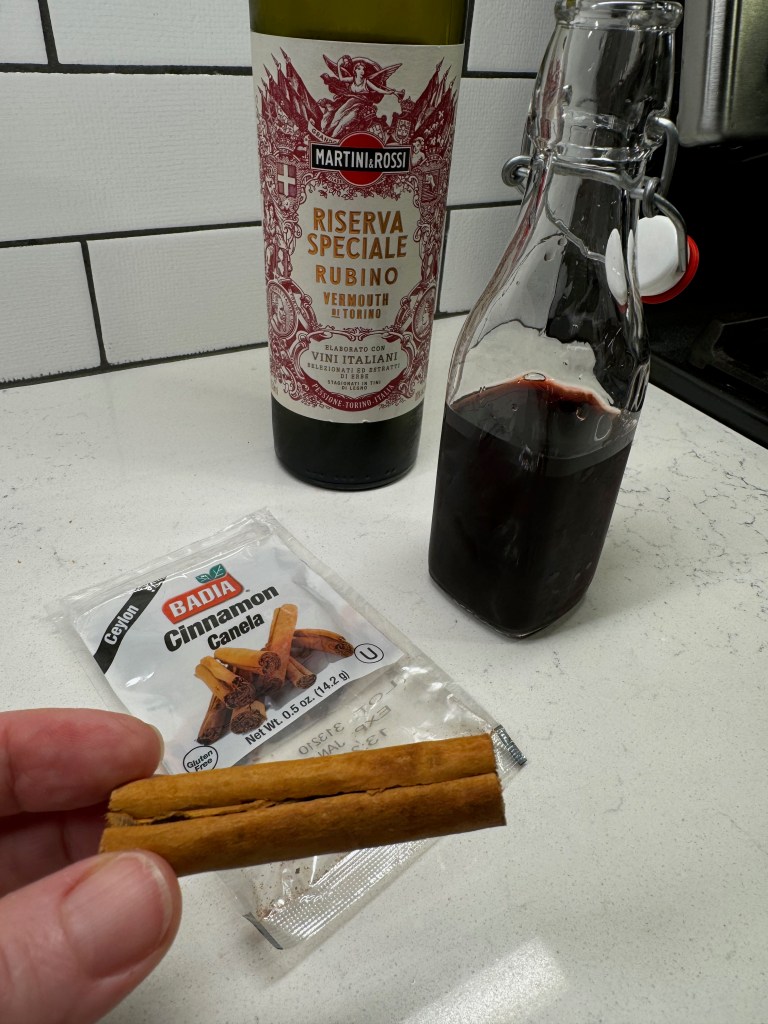
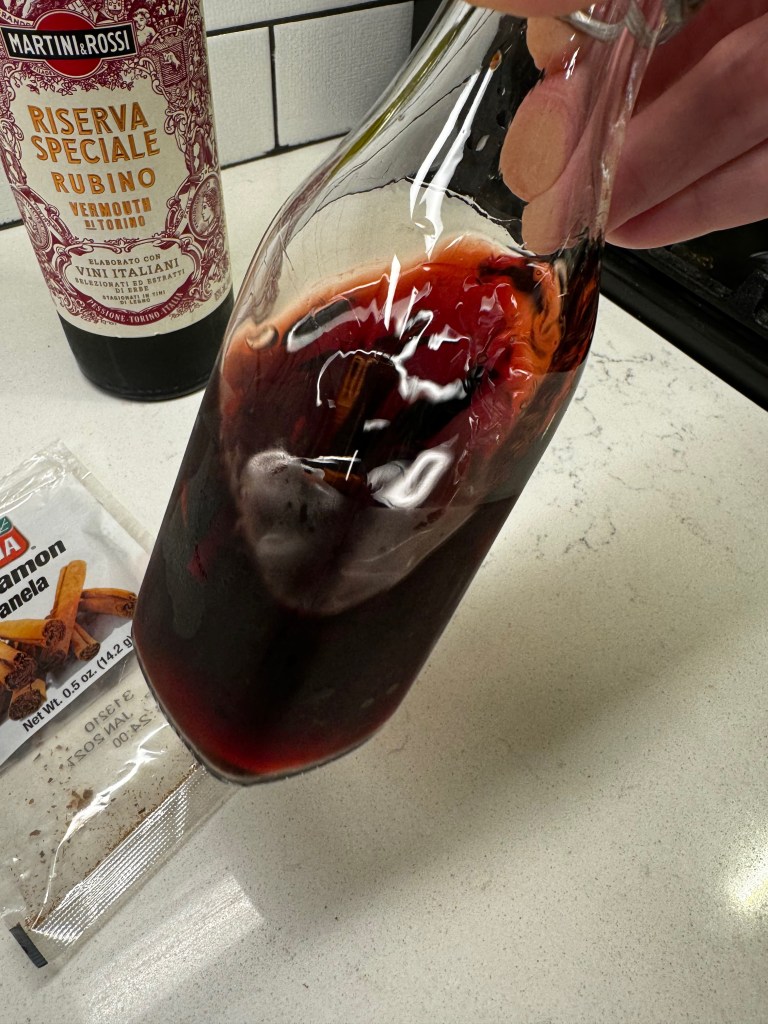
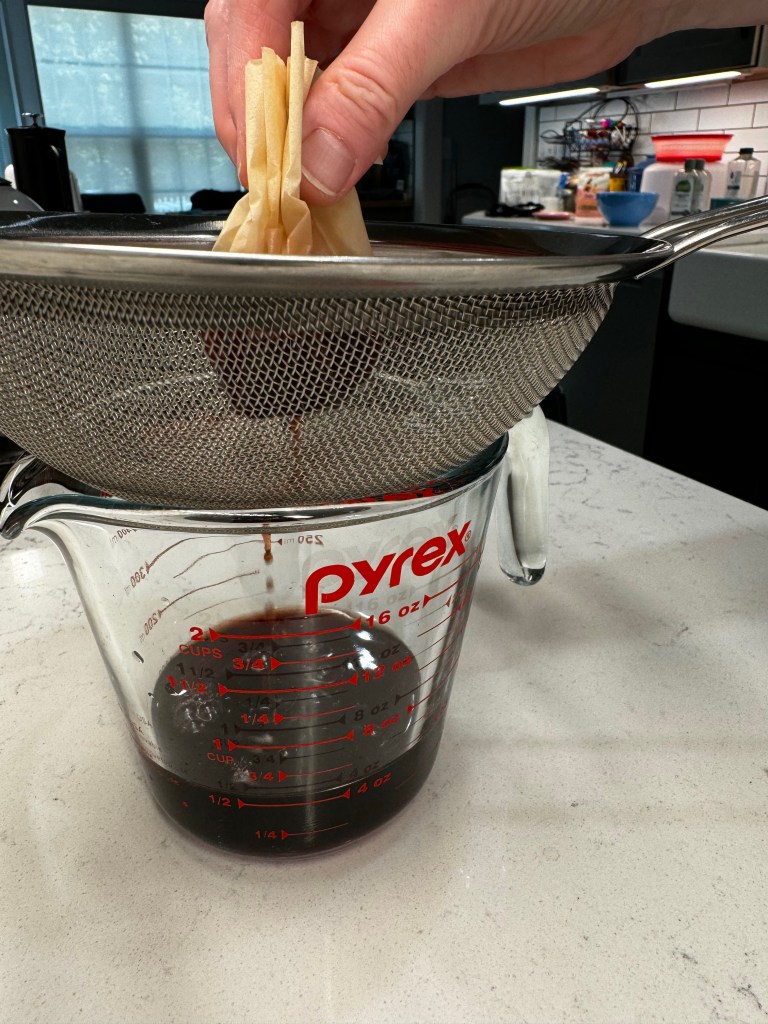
The cinnamon enters the mixing glass in the form of an infusion in the sweet vermouth, and this requires a bit of advance preparation. I added a ceylon cinnamon stick to the vermouth in a small bottle and gave it a day and a half before straining out the cinnamon and filtering the vermouth back into the bottle.
Ceylon cinnamon is more aromatic than cassia varieties, but also delicate in structure.I used a whole stick of it to infuse my vermouth.36 hours later, I strained out the solids.
The cinnamon lends a delightful warmth to the vermouth that spices up my Espresso Negroni in the best possible way, and I cannot wait to try this in a Manhattan. My vermouth brand is Martini & Rossi Riserva Speciale Rubino. I’m willing to pay a bit more for the spicy richness and deep ruby red color of this premium vermouth. I panicked last year when our Total Wine stores stopped carrying this product, and then I remembered— it’s a fortified wine, legal in my state for online purchase. Sure enough, I hit the buy-it button on the M & R website and had two bottles shipped directly to my door within days. Thank you, internet! If you already have a favorite sweet vermouth, I’m sure it’ll be just fine.
Campari is what it is, and frankly, there is no true substitute. It is bright red, bitter and complex. Don’t be fooled by other spirits that cost less and claim to be the same— they’re not. If a Negroni riff calls for something else, then the substitute probably works with the other ingredients. But if you love the classics, or if you’re trying a Negroni for the first time, Campari is the right stuff. Also, because Campari is a presenting sponsor of Negroni Week, your purchase will help the sustainable food cause in a secondary way, even if you don’t find a bar participating in Negroni Week.
How to Make a Negroni
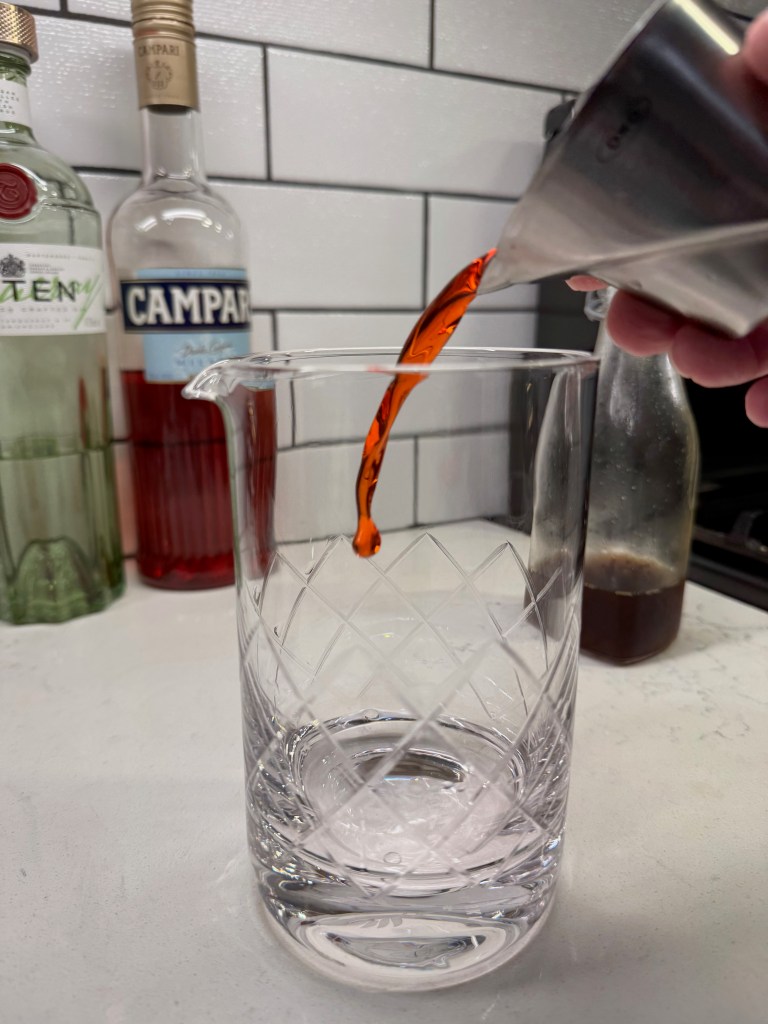
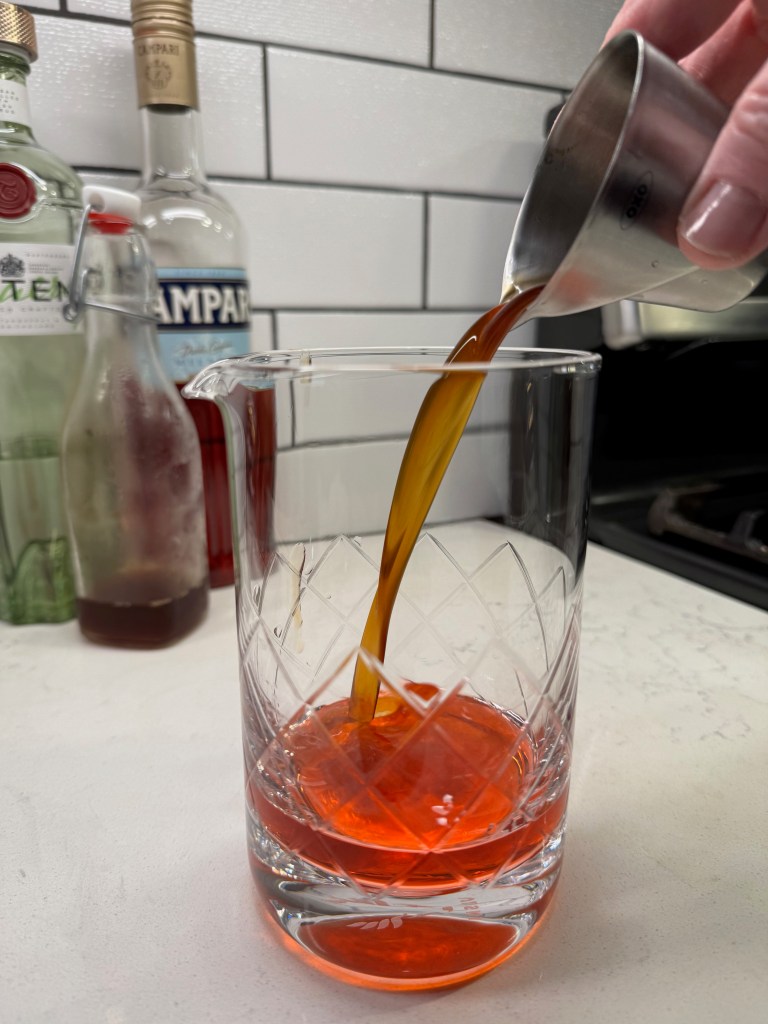
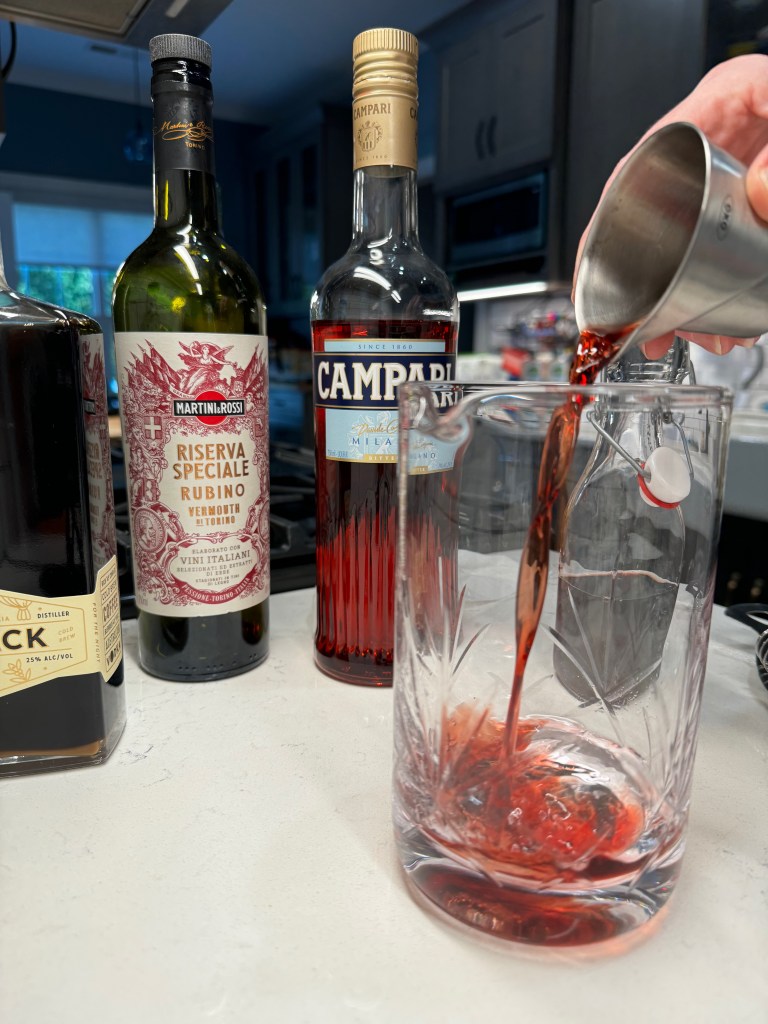
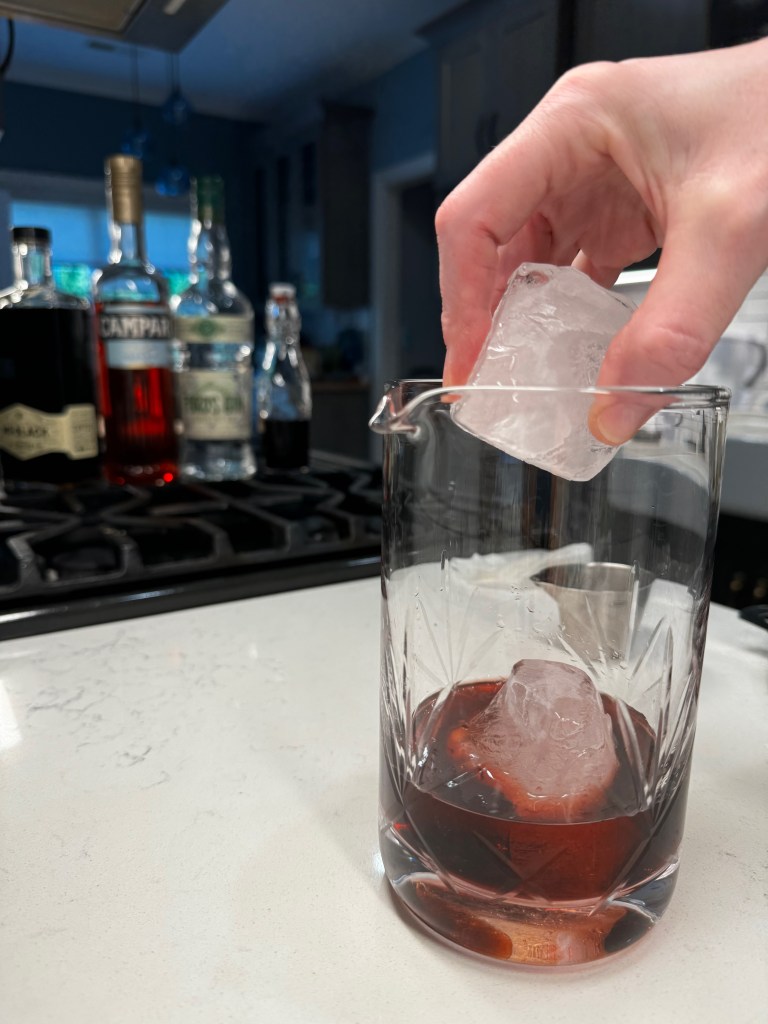
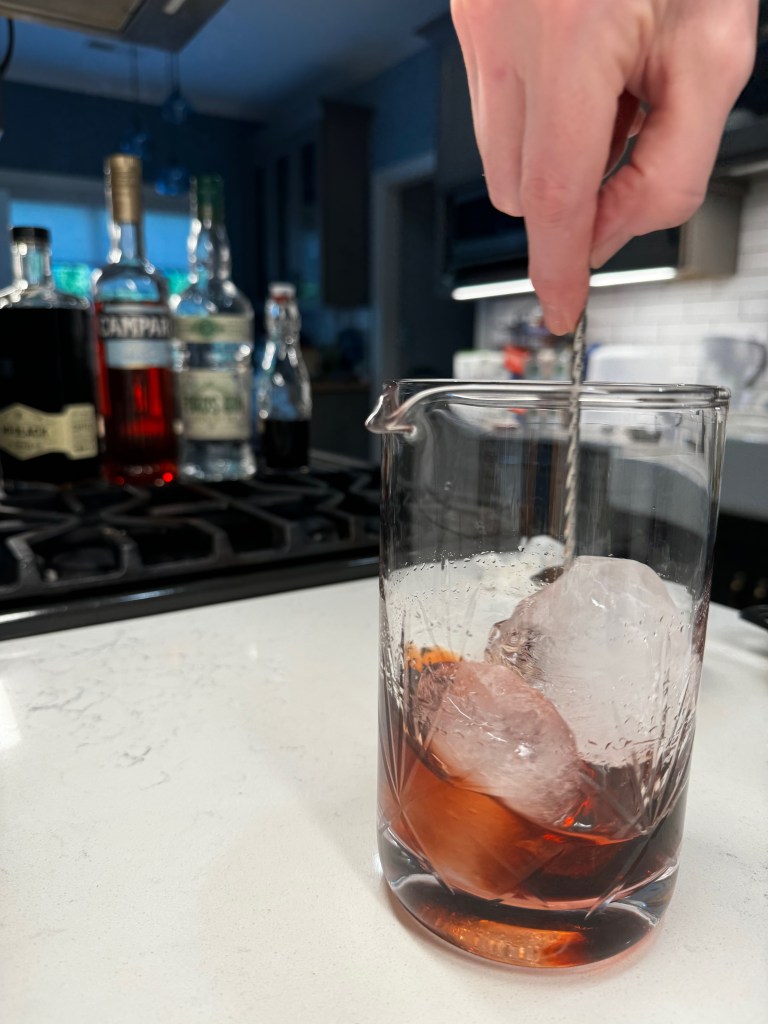
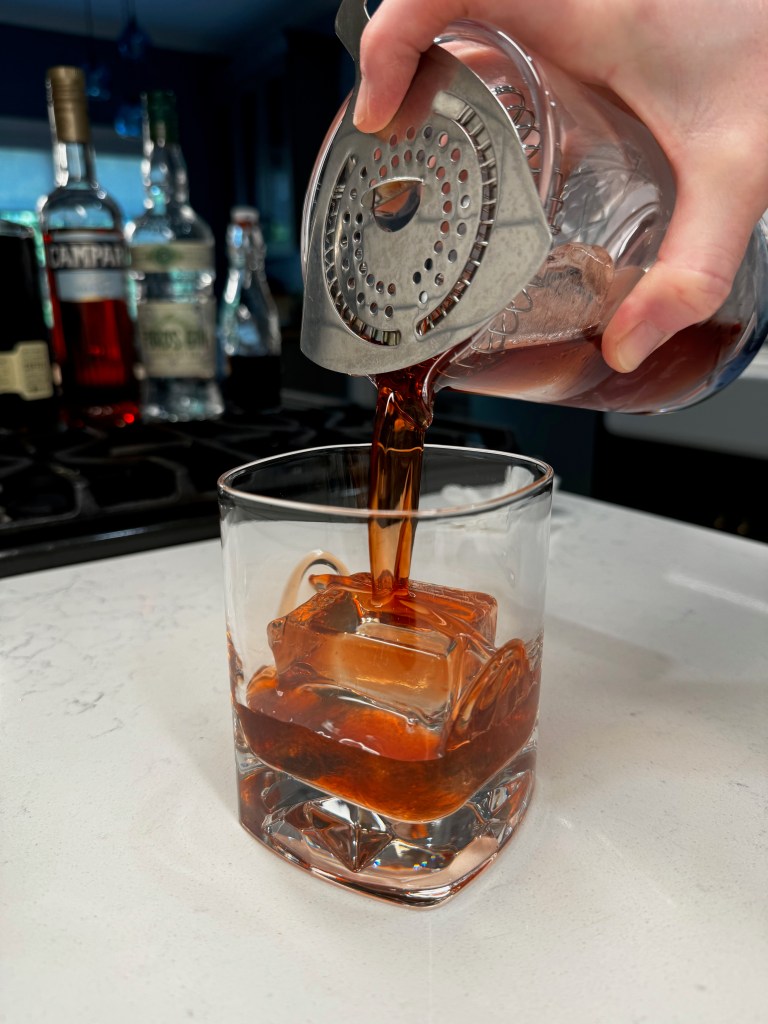
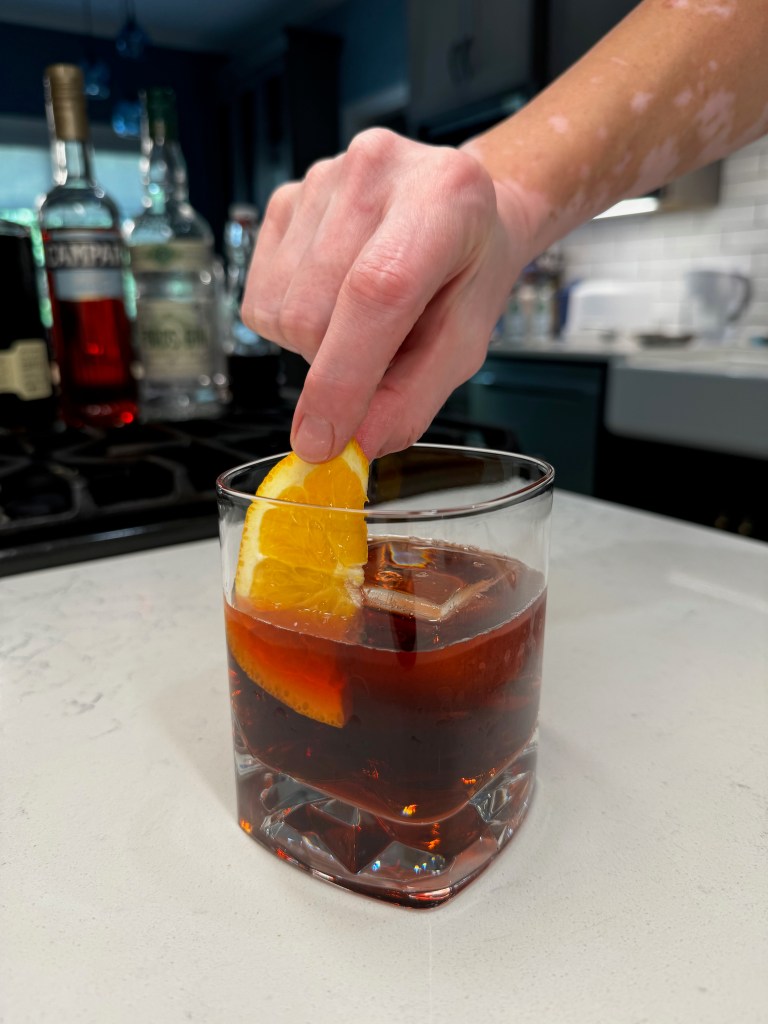
My other red vermouths are not this gorgeous.The Mr. Black even looks like coffee!Mixing ice goes into the glass last.Stir until the glass is frosty.I use TrueCubes mold for crystal clear cocktail ice.Remember the garnish! 😉
The traditional way to make a Negroni is to build it directly in the glass over ice, but that’s not how I like to do it at home because I prefer equal dilution of the ingredients. Here’s what I mean— let’s say you start by pouring the gin first; it’s generally room temperature and it’s going to start melting the ice immediately. If the vermouth goes in next, and the Campari at the end, both are going to be less diluted than the gin because the total contents of the glass are already cold.
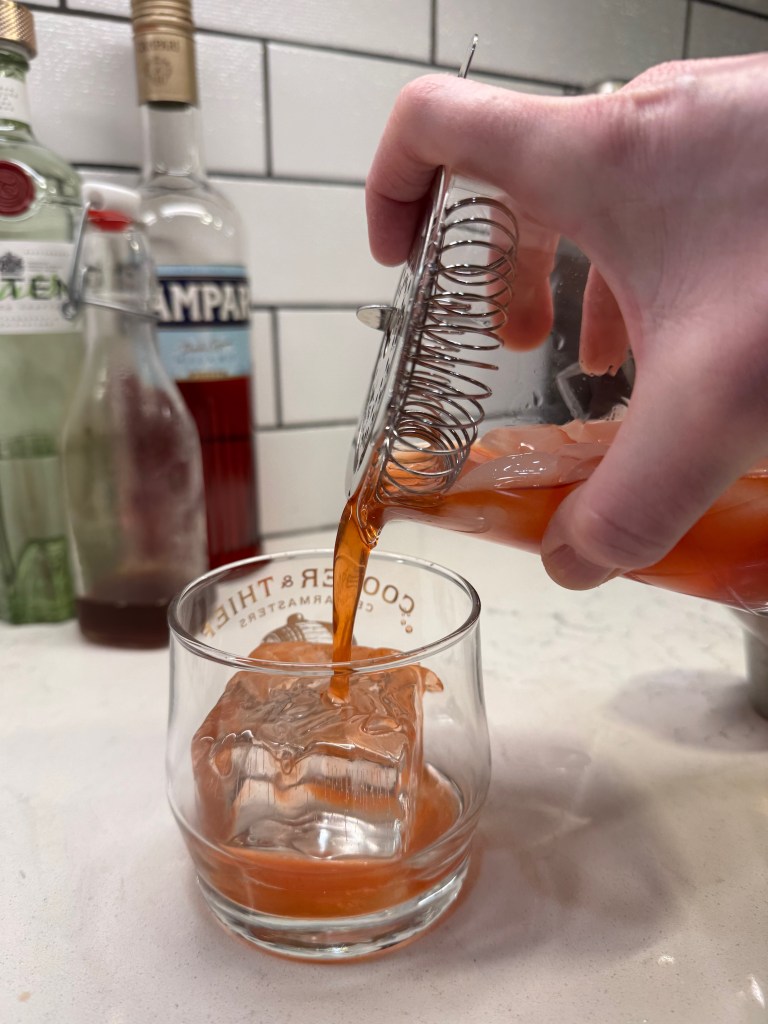
Mixing the ingredients in the glass and then adding the ice doesn’t work for me either, because my giant ice cube will melt at the bottom, creating a weird, top-heavy shape. So what’s the solution? My go-to method is to add the ingredients to a mixing glass first, then add a bunch of ice to chill the whole thing down quickly. Give it a gentle stir for about 30 seconds, or until the outside of the mixing glass is nice and frosty. Then strain it over a big cube of clear ice for a perfectly diluted, evenly chilled cocktail.
For Negroni Week, I am sharing my own favorite variation including espresso liqueur and my favorite autumn spice. Infusing the sweet vermouth with cinnamon lends a warm, familiar flavor to the classic Italian cocktail.
Ingredients
1 oz. London dry gin
1 oz. cinnamon-infused sweet vermouth (recipe below)
1/2 oz. Campari
1/2 oz. Mr. Black cold brew coffee liqueur (see notes for substitution ideas)
1 cup ice
Orange slice for garnish
Notes: If you cannot find Mr. Black liqueur, you may substitute another coffee liqueur, but note that most of them are sweeter and this will change the outcome of the drink. My suggestion would be to sub in an equal measure of cold brew concentrate, which you can find in the coffee aisle of the supermarket.
Directions
Add gin, vermouth, Campari and coffee liqueur to a cocktail mixing glass. Add a generous amount of cracked ice and stir about 30 seconds for proper dilution and chilling.
Strain over a large, clear ice cube into a double rocks glass. Garnish with the orange slice.
For the cinnamon-infused sweet vermouth: measure out six ounces of vermouth into a mixing bottle or clean jar. Add a 3-inch piece of whole cinnamon stick and infuse 24 to 36 hours in the refrigerator (where vermouth should live anyway). Strain out the cinnamon stick and any lingering shreds through a coffee filter-lined mesh strainer; return the vermouth to the bottle or jar and keep in the fridge for up to two weeks. This will be enough for six Negroni cocktails.































 Comfort du Jour