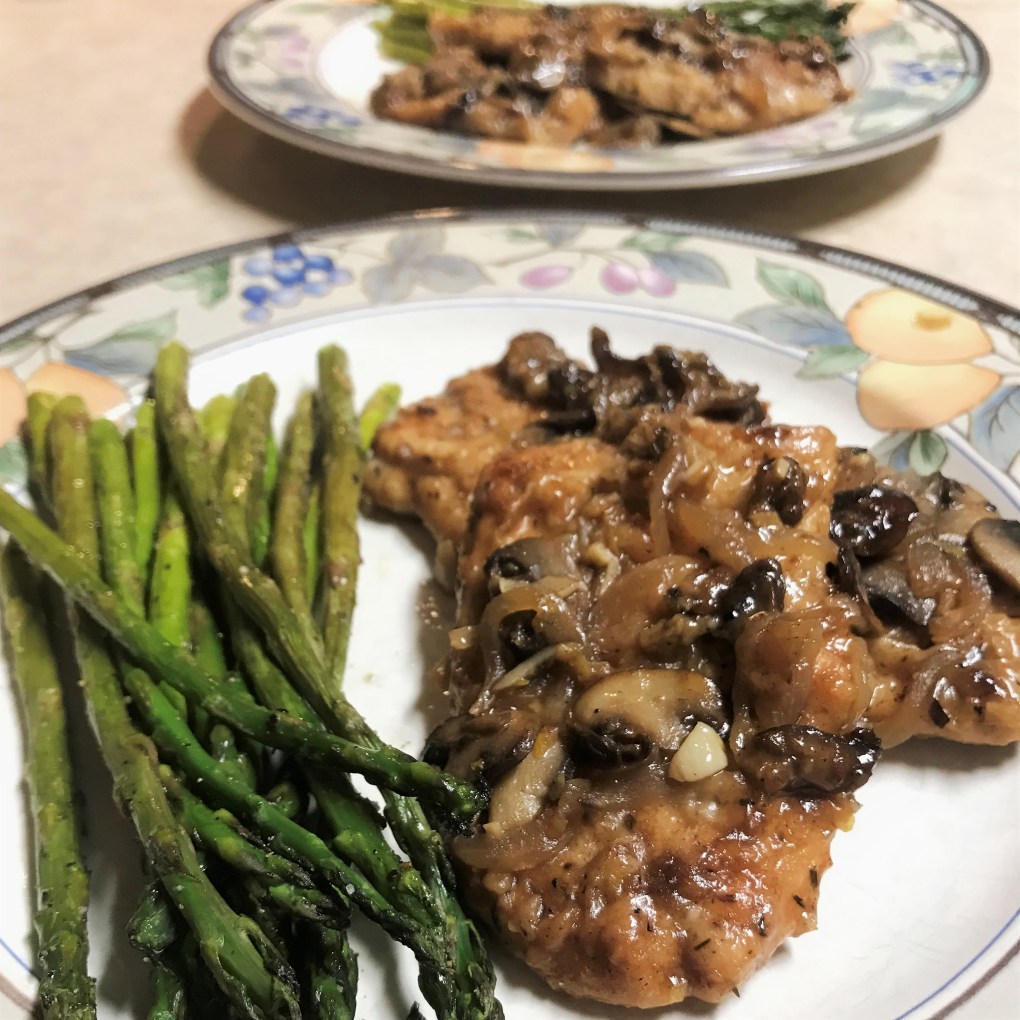
Lemon Mushroom Chicken

Three favorite key ingredients, plus onions, garlic, butter and a splash of white wine—it sounds simple, because it is. This is a delicious entrée I like to call a “Sunday Supper” because there are a few extra steps that make it special without making it complicated. A recipe that takes a little more time is what I love, in part because it feels relaxing to prepare food slowly with more intention, but mostly because as the meal develops and the house becomes increasingly filled with savory aromas, it creates a tension and anticipation that isn’t often present with a quickly cooked weeknight meal.

The result of the extra care and patience required for this dish is well worth the time and effort—tender, juicy bites of chicken with a rich, onion-y mushroom gravy-like coating. It’s satisfying and comforting, in a way that only a home-cooked meal can be. You can taste the love in this kind of food. The mushrooms contribute an earthiness that is not overwhelming, and the freshly squeezed lemon, thyme and white wine give the impression of something far more gourmet than the simple instructions I’m about to describe.

I prefer to make this recipe on the stove in a skillet because it’s usually just me and my husband at the dinner table, and I like to keep my counter space open. But if you are doubling the recipe and happen to have a large electric skillet, that would be a terrific option—provided it has a cover, which is an important part of finishing the recipe. I’ll walk you through preparation of the dish, but if you’re ready to dive straight into it, you can scroll to the bottom to download a printed copy of the recipe. But then, of course, you’d miss the pictures. 🙂
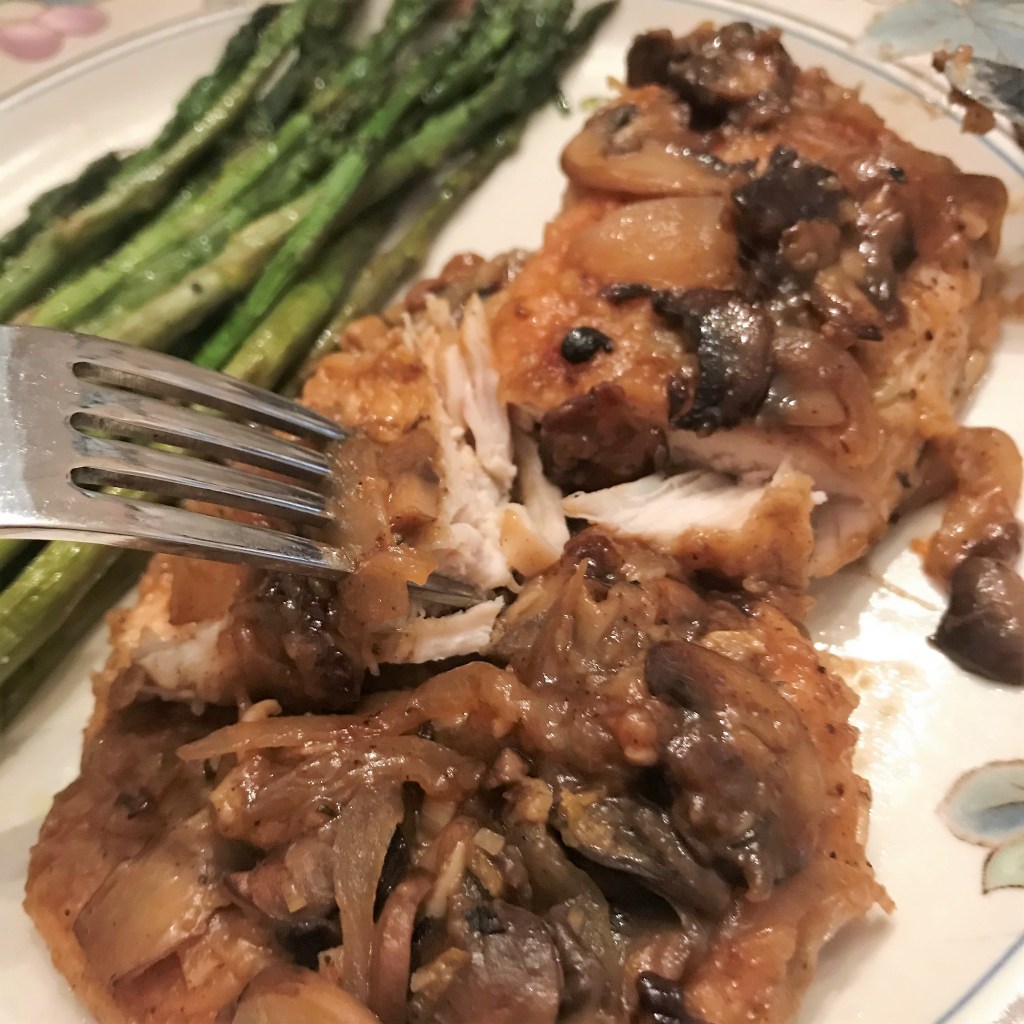
A quick twist of the fork is enough to grab a bite of this lemon mushroom chicken. How scrumptious and tender is that?

Here’s how to make it.

First, the chicken breasts are sliced and pounded thin to ensure tender, uniform pieces. I do this myself at home because it’s an easy way to save the extra cost of pre-sliced cutlets. It’s OK if you don’t have a meat tenderizer; you can use the bottom of a small pot to do the same. Next, season the pieces with salt and pepper and a couple of pinches of dried thyme. It’s important to do this first, because you want the seasoning in the chicken—not just on the coating. Then drag the cutlets through some seasoned flour and let them rest while chopping a sweet onion and a couple cloves of garlic.


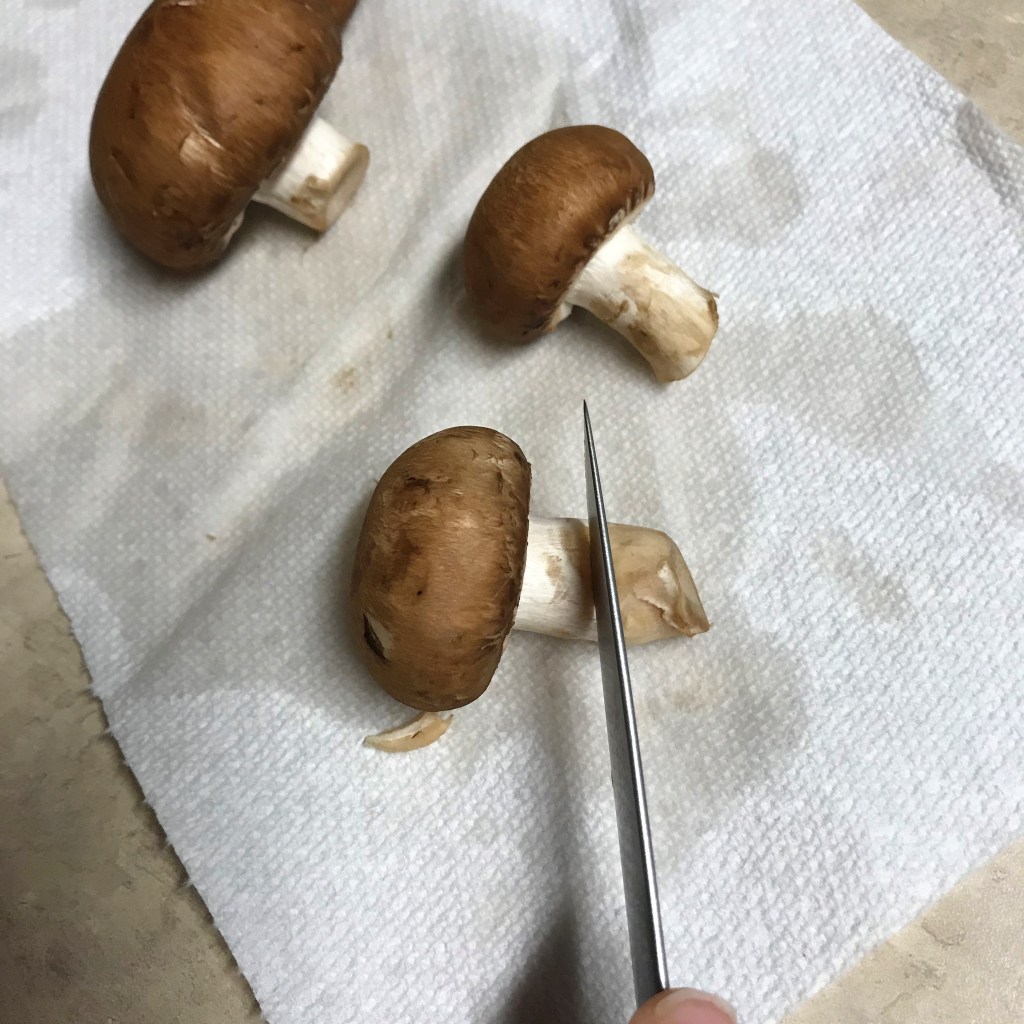
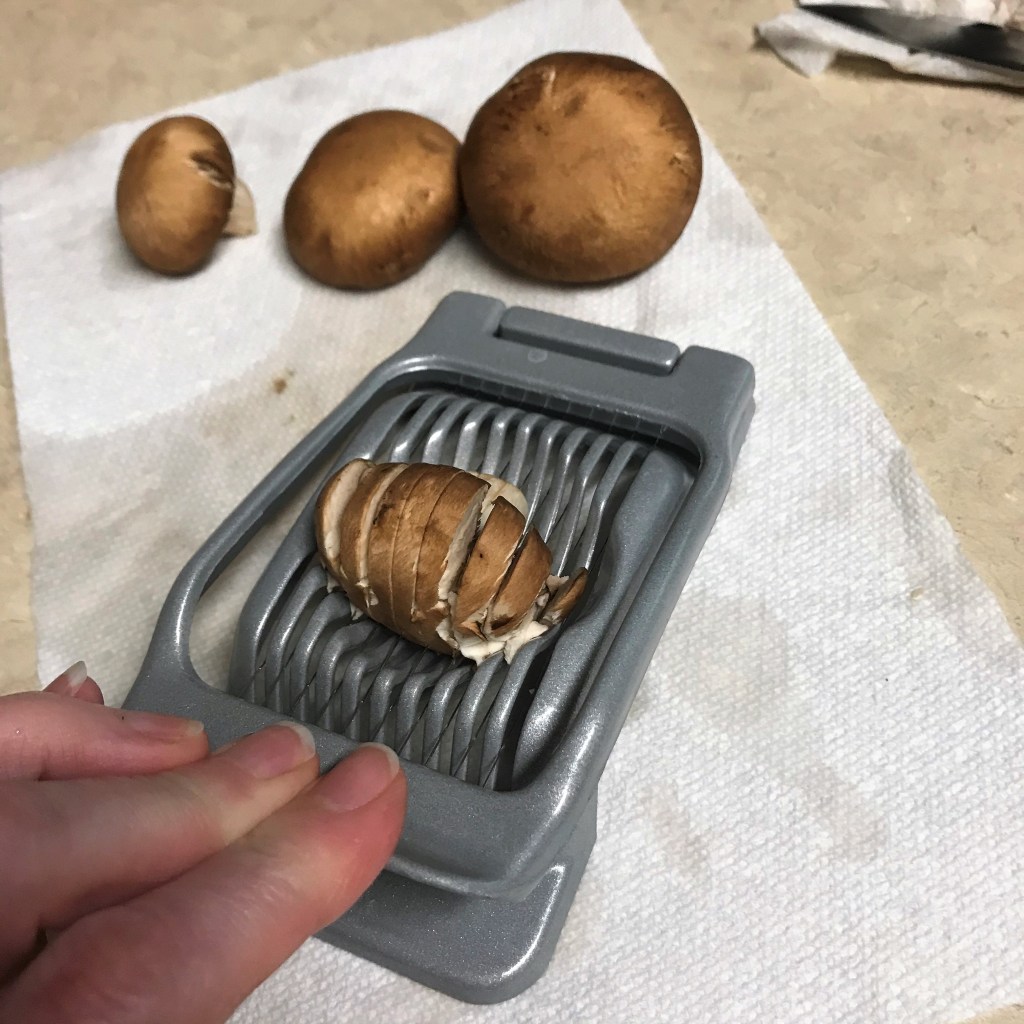
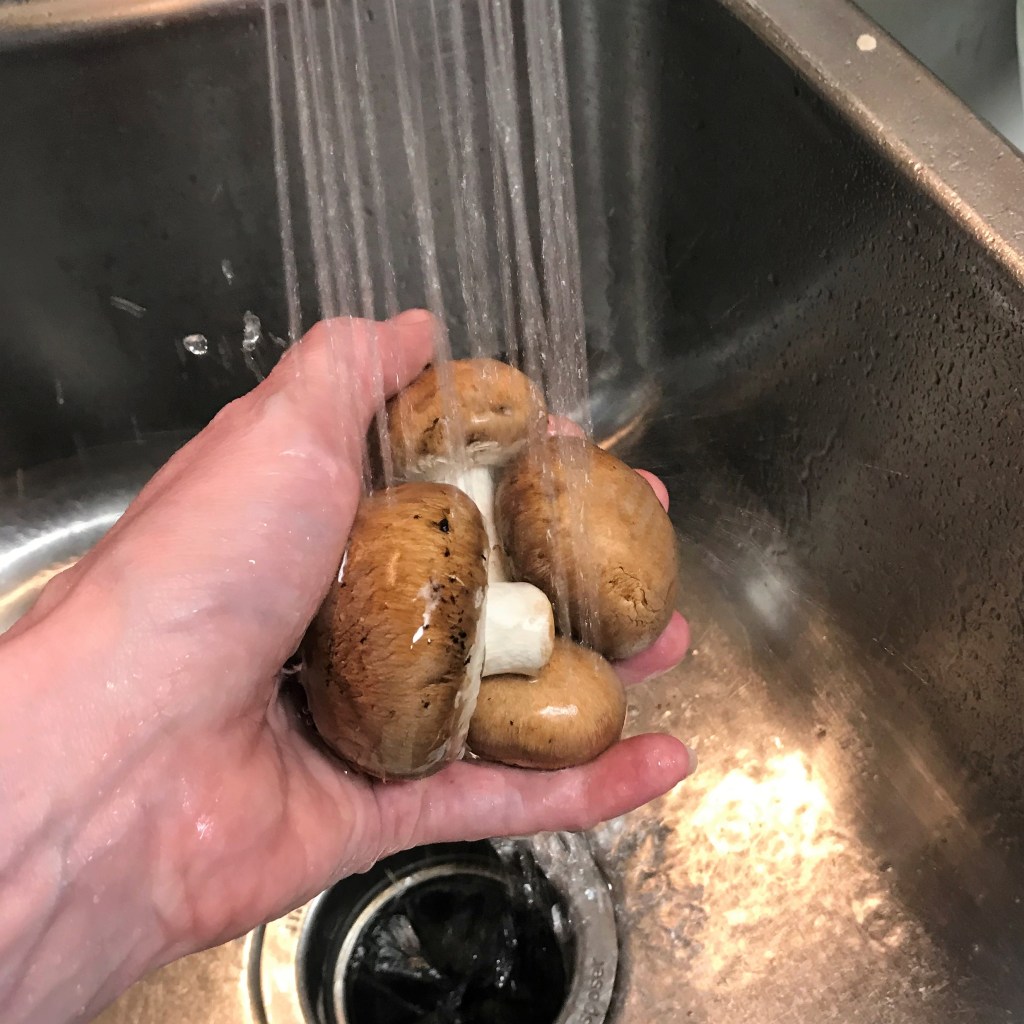
Clean and slice a full package of fresh mushrooms. It may seem overkill for a four-serving recipe, but they cook down considerably and they are a key component of the dish. My favorite type is cremini (sometimes called baby portabella, though technically they are not), but white button mushrooms or shiitake would work fine as well. Are you on the fence about the right way to clean mushrooms? I used to be afraid that rinsing them would make them soggy, but I learned a few years ago that mushrooms don’t absorb much water unless you soak them (thank you for that, Alton Brown!), so go ahead with a thorough cold water rinse then use a clean paper towel to dry them and wipe away any remaining debris. Finish the prep by trimming the stems and slicing them into 3/8” thick, perfectly uniform slices. Say what? Here’s how to do the slicing part in less than one minute:

My egg slicer is made of metal, with cutting wires that are sturdy enough to tackle slicing mushrooms and strawberries, and I love that I get clean, uniform slices with minimal effort. Maybe someday I’ll use this thing to slice eggs. If you don’t have an egg slicer, use your best sharp knife, and don’t sweat over the thickness—just slice them as evenly as you can, but not paper thin.

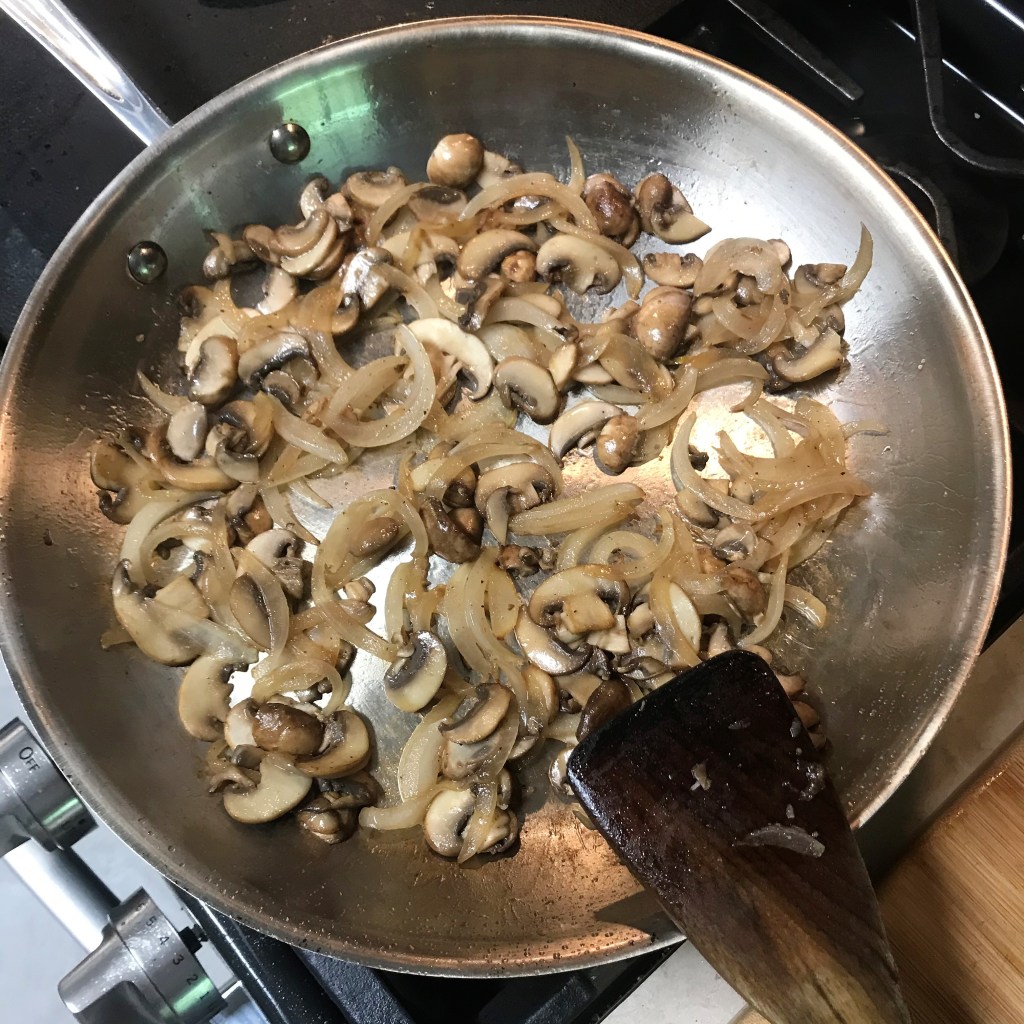
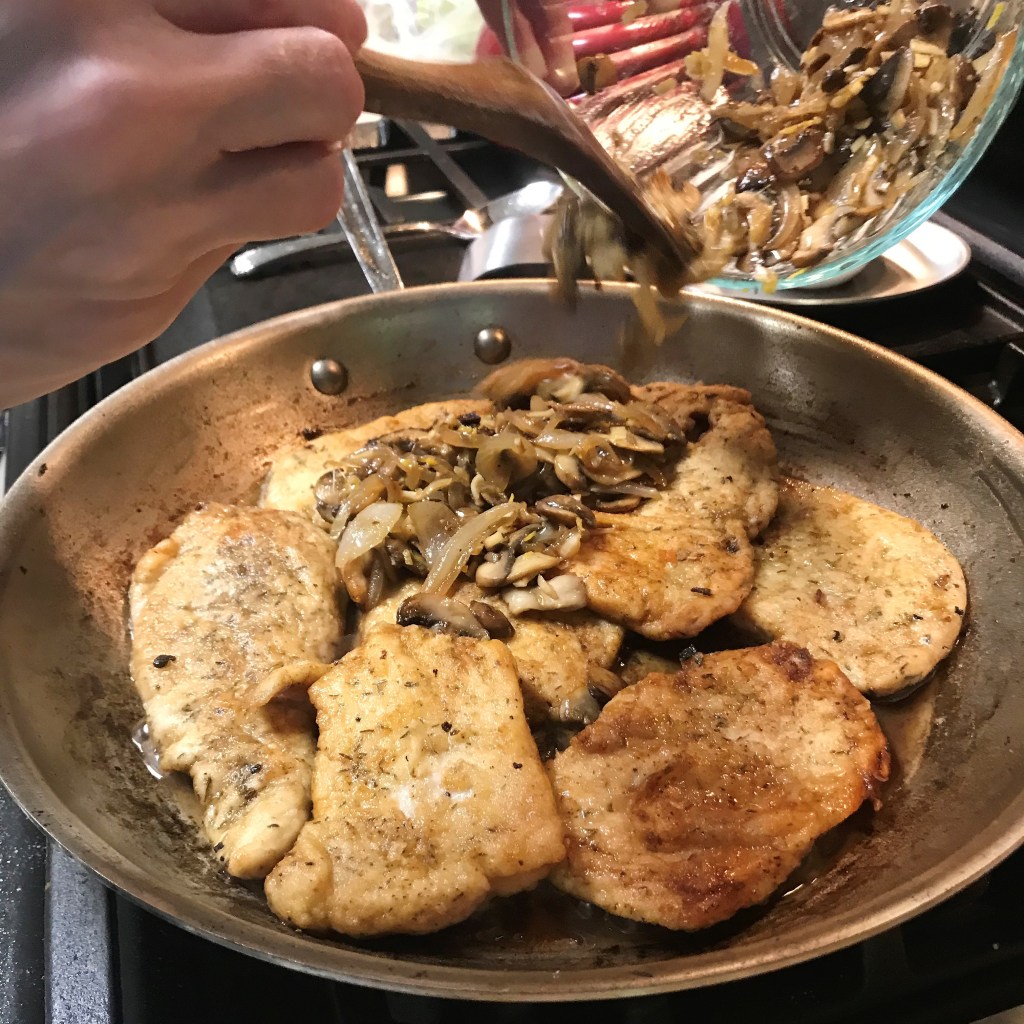
The onions go into a heated skillet with olive oil, but you’ll notice in the photos that I don’t take them very far toward caramelization. You want them to be nice and soft, so keep the heat in the medium-low range and cook just until they soften and begin to look translucent. Add the mushrooms in batches and cook them without crowding the pan. These guys give off a lot of moisture when they cook, and if you have too many at once, they will steam rather than brown. Take your time, and when the first handful of mushrooms reaches that “lightly browned” stage, move them aside and add another handful. When the whole batch is finished, add the chopped garlic and sauté briefly, then transfer the mixture to a bowl.


Give the cutlets another quick dip through the seasoned flour while you melt butter in the same skillet. It’s not unusual for the flour to absorb moisture from the chicken during the initial rest, and they should be completely (but lightly) coated before they hit the hot butter. This will create a roux-like coating on the chicken, and the broth you add later will break that down into delicious gravy as it simmers.

When the butter is melted and bubbly, carefully arrange the cutlets into the pan in a single layer, again taking care not to crowd the pan. Depending on how many pieces you have, this may need to be done in batches as well. Turn the cutlets over when they are a nice golden brown on the underside, and stack them on top of each other when both sides are done, to make room in the pan for any remaining cutlets.

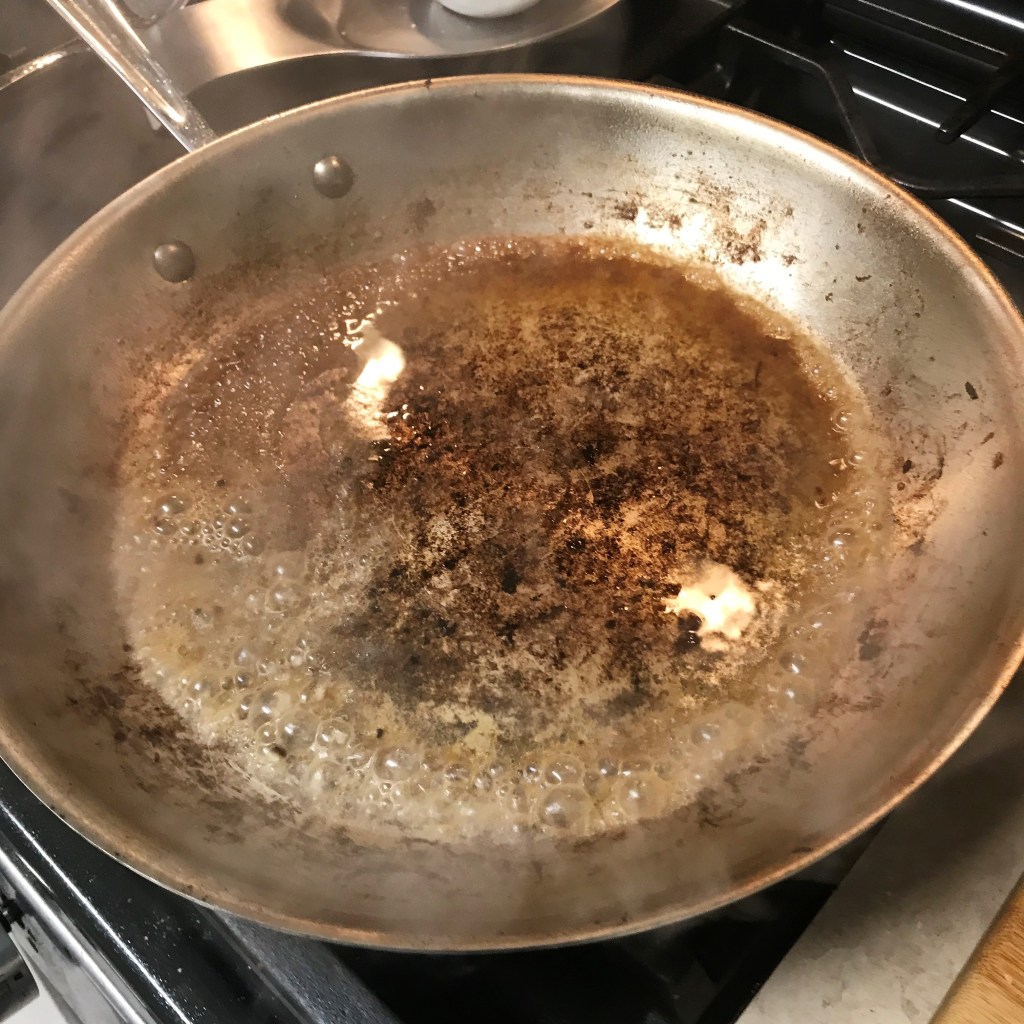
Remove the browned cutlets and rest them on top of the reserved mushroom-onion mixture. This will make room for you to de-glaze the skillet, bringing all the beautiful browned bits back into the dish. Reduce the heat to low, then working quickly, pour in the white wine and use a whisk or other utensil to scrape up those flavorful remnants. Squeeze in the lemon juice and swirl the pan to combine. Place the chicken cutlets back into the skillet and pile the mushrooms and onions on top. Carefully pour in chicken broth, but only enough to slightly cover the chicken. Give the skillet a gentle shake to help the broth get under and around the chicken, then cover the skillet and walk away.
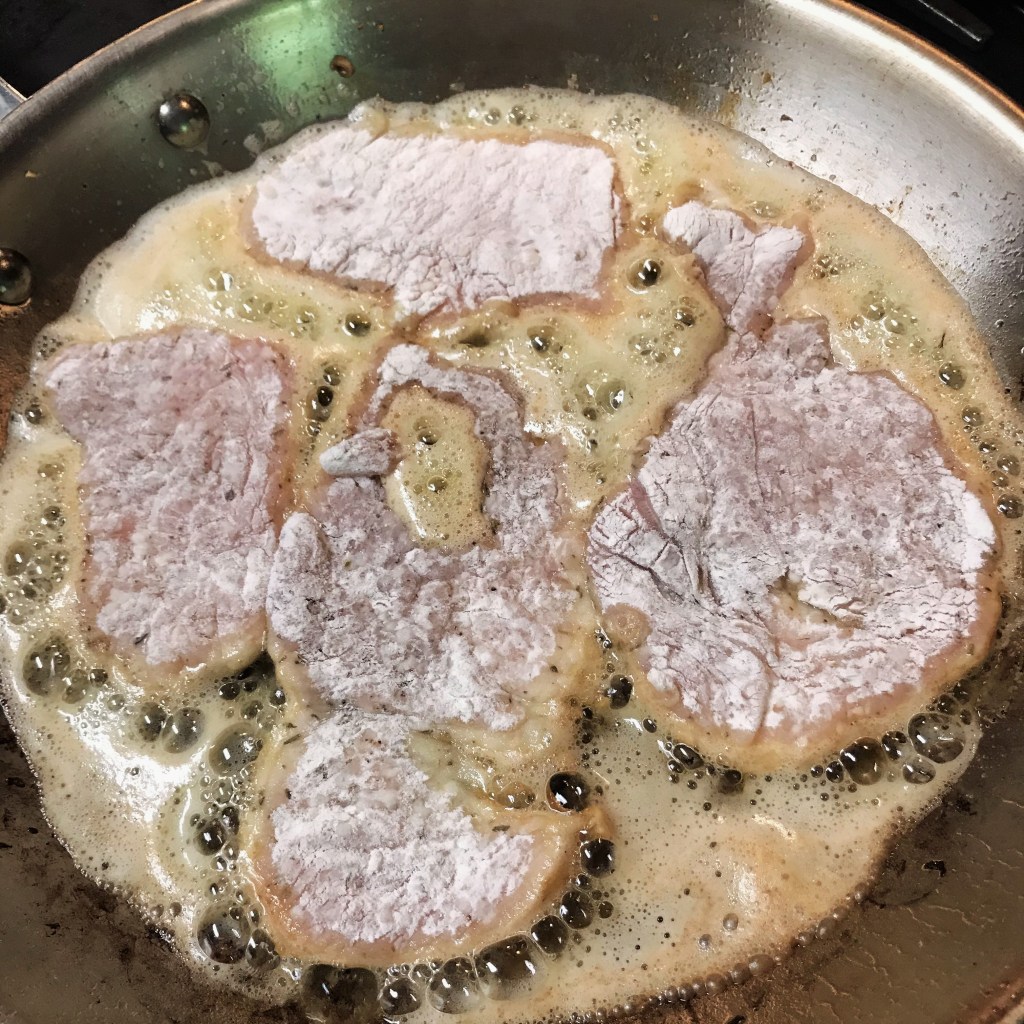

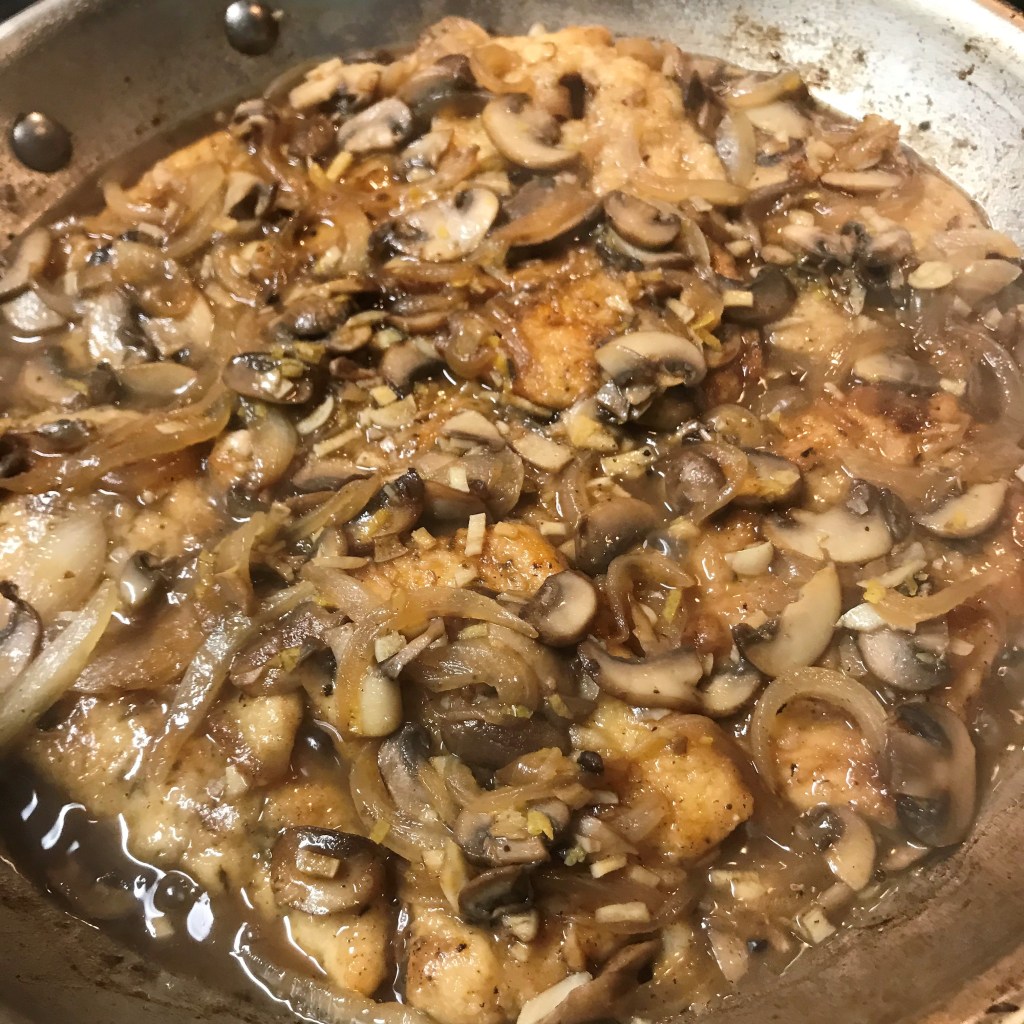
The chicken will simmer at this low temperature for 35 to 40 minutes. It will be fully cooked well before this time, but the long simmer will result in the tenderness and richness I described at the beginning. What’s great about a recipe like this is that while the magic is quietly happening in the skillet, I have time to tidy up the prep dishes, set the table and enjoy a glass of wine with my husband. This is also a good time to prep whatever vegetable or salad I plan to serve. When the main dish is more involved, as this one is, I usually opt for a simple vegetable side. The lemon mushroom chicken deserves center stage.

I love how the sauce becomes part of the chicken, rather than being poured over it. This dinner will melt in your mouth.

For this meal, I roasted fresh asparagus. If you are cooking asparagus some other way, I will be so bold as to declare you have been missing out! Try roasting once and you’ll see what I mean. Rinse and trim the stalks, arrange them on a parchment lined baking sheet, drizzle with olive oil and roll them around to coat. Give them a little salt and pepper to taste, and pop them into a 400° F oven for 15 minutes. They should be slightly tender and retain a bright green color. Easy, yet so elegant.


And there you have it—this “Sunday Supper” dish takes a little more time than an average weeknight meal, but the payoff for your patience is a tender portion of delicate chicken, covered in savory mushrooms and fully enveloped in a rich, gravy-like coating. We like this on its own with a fresh roasted vegetable or salad, but it would also be beautiful on top of your favorite mashed potatoes, rice or linguine.

Ingredients

1.5 lb. package skinless, boneless chicken breast (or same weight of prepared thin cutlets, if you prefer)

Salt, pepper and 1/2 tsp. dried thyme leaves

1/2 cup all-purpose flour

Extra virgin olive oil

1 medium sweet onion, sliced into crescent shapes

8 oz. package fresh cremini mushrooms, cleaned and sliced

2 or 3 cloves of fresh garlic, finely chopped

4 Tbsp. unsalted butter (cold from the fridge is fine)

1/3 cup dry white wine (I use pinot grigio, or sometimes dry vermouth as substitute)

1 fresh lemon 

1/2 to 3/4 cup low-sodium chicken broth (use enough to just cover the browned cutlets)


Ready to make this recipe?

If you make this lemon mushroom chicken, please let me know in the comments how it turned out for you.

Confetti Chicken Meatballs

Once upon a time, I cooked these fun and colorful meatballs for a little girl…

OK, it wasn’t that long ago, and it wasn’t “once” upon a time—rather, multiple times over the better part of a decade. During a previous marriage, I had the joy of cooking for (and eventually, with) a bright and sassy, food-loving child who was my stepdaughter. From a distance, it was clear that this blue-eyed towhead was not a blood relative. Up close, however, one might swear that she must have been mine, given that she swooned over cooking shows such as Emeril Live, Good Eats and The Next Food Network Star. The child was obsessed, even, and she always had something intelligent to say about whatever food was being prepared on our TV screen.

“I’ll bet Emeril’s gonna put that skillet into the oven to finish it.” And, sure enough, that’s what he would do.

To nurture her curiosity and passion for food, I did the only thing that made sense to me—I bought her a junior-sized denim apron and put her to work alongside me in the kitchen. I passed down to her the food lessons and techniques that had been passed down to me, and it wasn’t long before she was the most excellent sous chef. I could ask her to “julienne those two carrots over there” and she’d return in short order with perfectly uniform little matchsticks. She knew what it meant to “chiffonade” fresh basil or “caramelize” onions without burning them. Her palate became even more sophisticated as she continued to help in the kitchen, and by the time she left home for college, she requested written copies of some of her favorite recipes that we had made together.

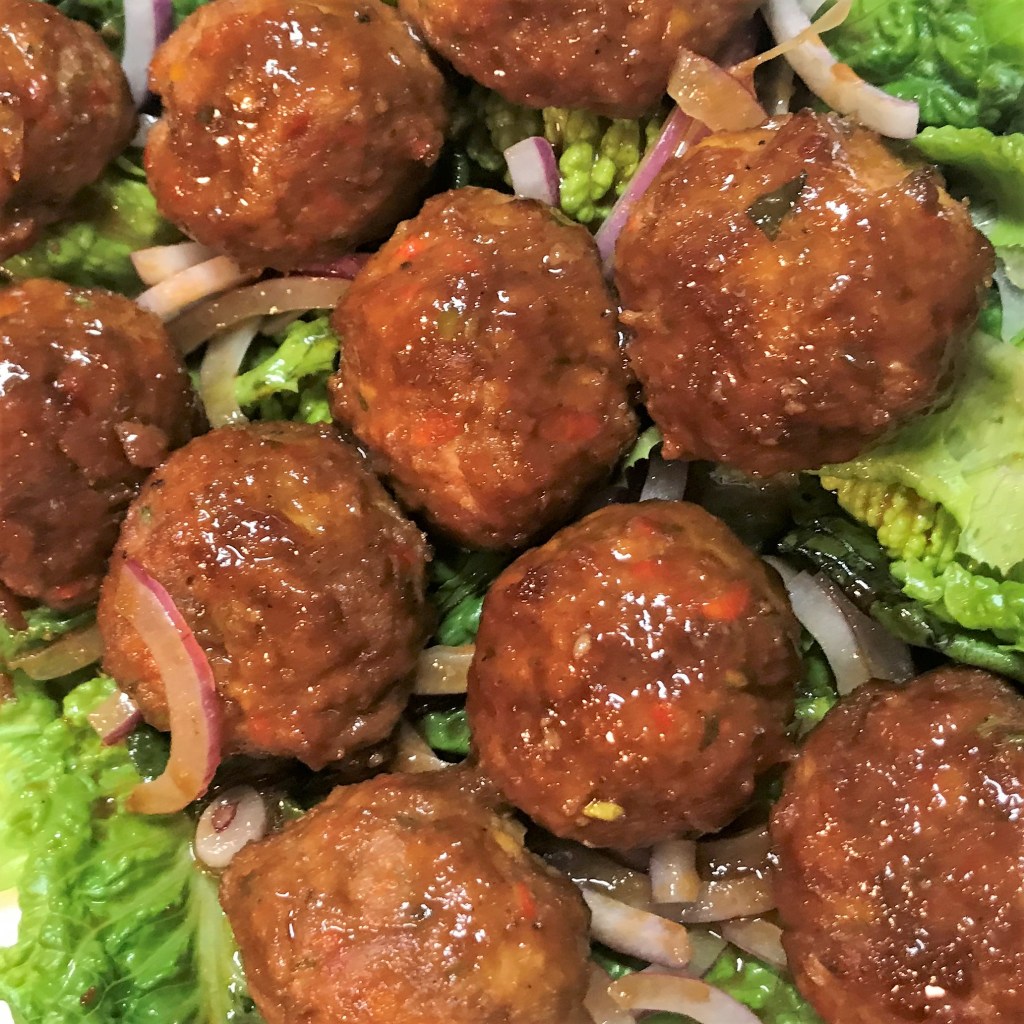
Whether this recipe was included in the request I cannot recall, but it was undoubtedly one of her favorites. I’ve tweaked it recently, opting to make my own dressing rather than depending on a bottled version from the supermarket, though we’d have no objection to anyone taking that shortcut. I’ve also discovered that coconut sugar produces a better glaze on the meatballs than my original method of rolling them in regular sugar. Coconut sugar is richer, both in color and flavor, and it’s lower on the glycemic index, so probably a better choice anyway.

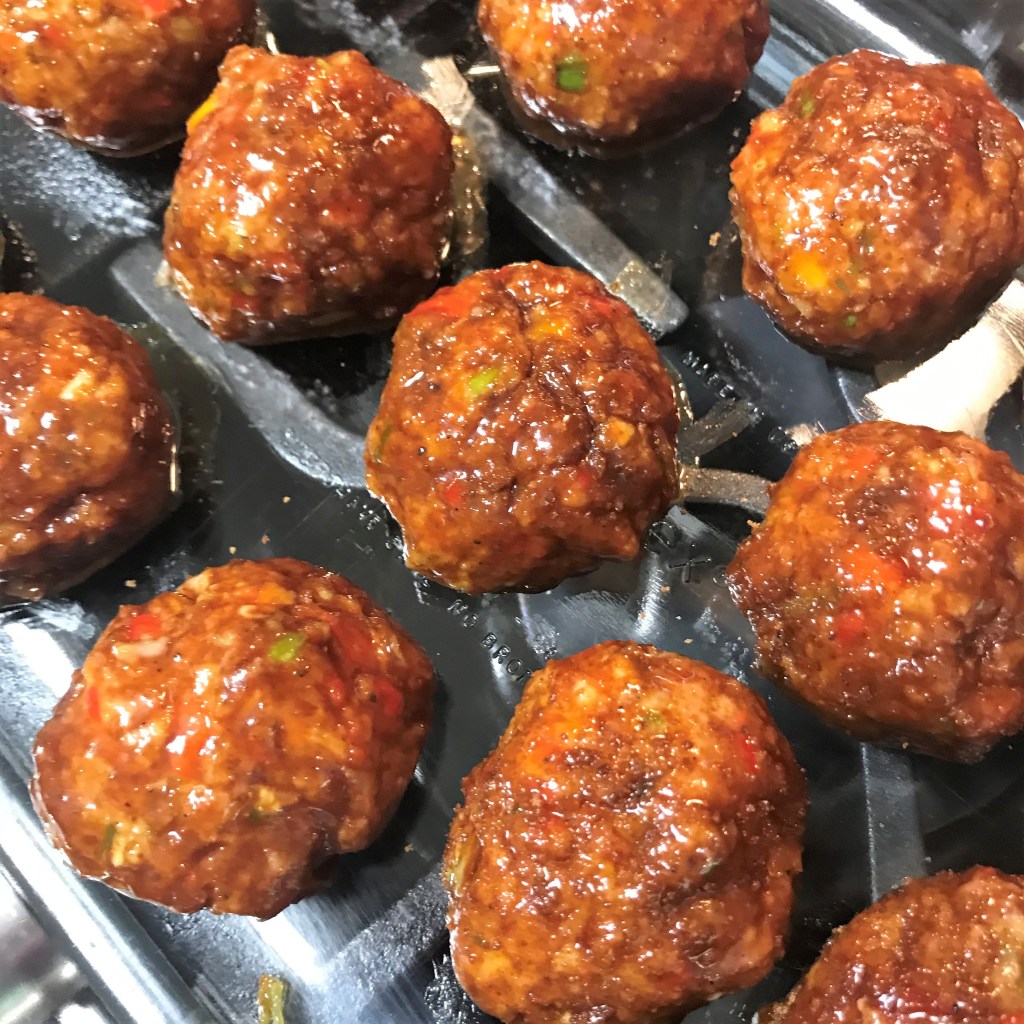
This dish is similar to my copycat chicken lettuce wraps, but only in the fact that both contain ground chicken and Asian-inspired flavors. Although the “copycat” version is distinctly spicy and savory, this dish is more of a mixed bag of flavors and textures. The chicken is shaped into firm meatballs, each one carrying its own little confetti explosion of sweet bell pepper and sharp garlic and scallion, but softened on the outside by a sweet, sticky glaze. The sesame ginger dressing permeates the senses from the moment it reaches the table, and no wonder—it’s inside the meatballs, too.

The coconut sugar produces a lightly sticky glaze, boosting the flavors over the top and complementing the barely spicy, tangy dressing.

Serve this on its own or with steaming hot jasmine rice. As a meal, it’s good for 4 servings. If serving as appetizers, the recipe makes 18.

Ingredients

1 lb. ground chicken (not chicken breast)

3 scallions (white and green parts)

2 or 3 cloves garlic, chopped

1/2 large red bell pepper

1/2 large yellow bell pepper

1 egg

1/2 cup unseasoned panko bread crumbs

1 tsp. sesame seeds

About 1 Tbsp. Sesame Ginger dressing (recipe below)

1/2 cup coconut sugar (to “frost” the meatballs before baking)


For Serving

1 large romaine heart, rinsed, dried and separated into individual leaves

1/2 medium red onion, cut into thin slices

A handful of fresh cilantro leaves (optional, but recommended for serving)

Additional sesame seeds to sprinkle (optional, or serving)

Jasmine rice, if desired, for serving


Sesame Ginger Dressing

2 Tbsp. rice vinegar

2 Tbsp. low sodium soy sauce (or Tamari)

1 Tbsp. coconut sugar

1 tsp. sriracha (optional, if you like a little heat)

1 tsp. fish sauce

3 Tbsp. canola or peanut oil

1 or 2 tsp. toasted sesame oil (depending on taste)


Instructions

First, the visuals:


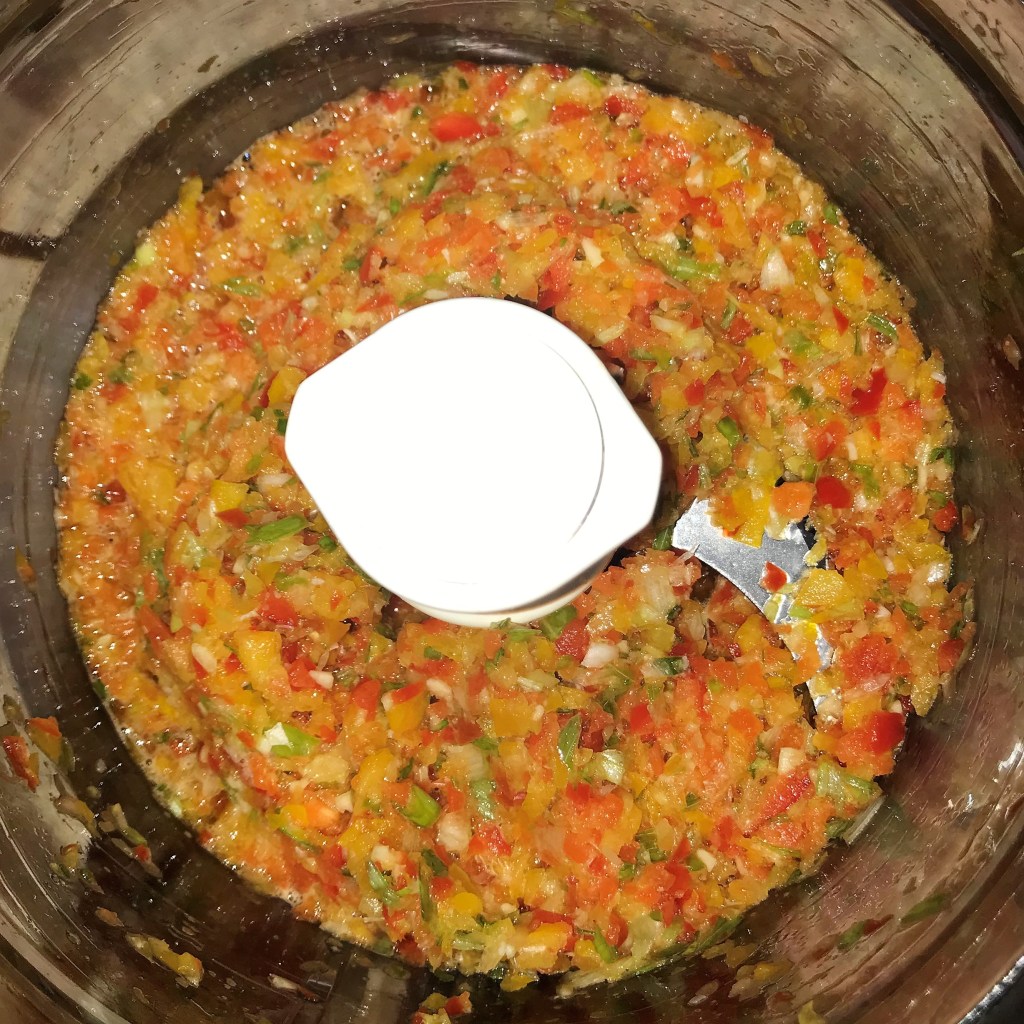
  1. Combine the garlic, peppers and scallions in the bowl of a food processor. Pulse 10 times, for 1 second each, until the mixture looks like colorful confetti. Sprinkle a generous pinch of kosher salt over the pepper mixture.
  2. Line a colander with double thickness paper towels and transfer the processed pepper mixture to it. Allow it to rest in the colander long enough to absorb the excess moisture from the mixture, about 10 minutes.
  3. In a glass measuring cup, whisk together the first five dressing ingredients. Slowly drizzle in the canola or peanut oil while whisking constantly. This will help to emulsify the ingredients. Whisk in 1 teaspoon of the toasted sesame oil and give it a taste. Add more if you like. This oil is very pungent, so generally speaking, a little goes a long way.
  4. Season ground chicken with kosher or sea salt and fresh ground black pepper. Combine confetti veggies with chicken, egg, a splash of sesame ginger dressing, sesame seeds and panko crumbs. Mix with a wooden spoon or your hands. It will be a gooey mix, but if it’s too wet to hold together, add an extra sprinkle of bread crumbs. If it seems dry, add another splash of sesame ginger dressing.
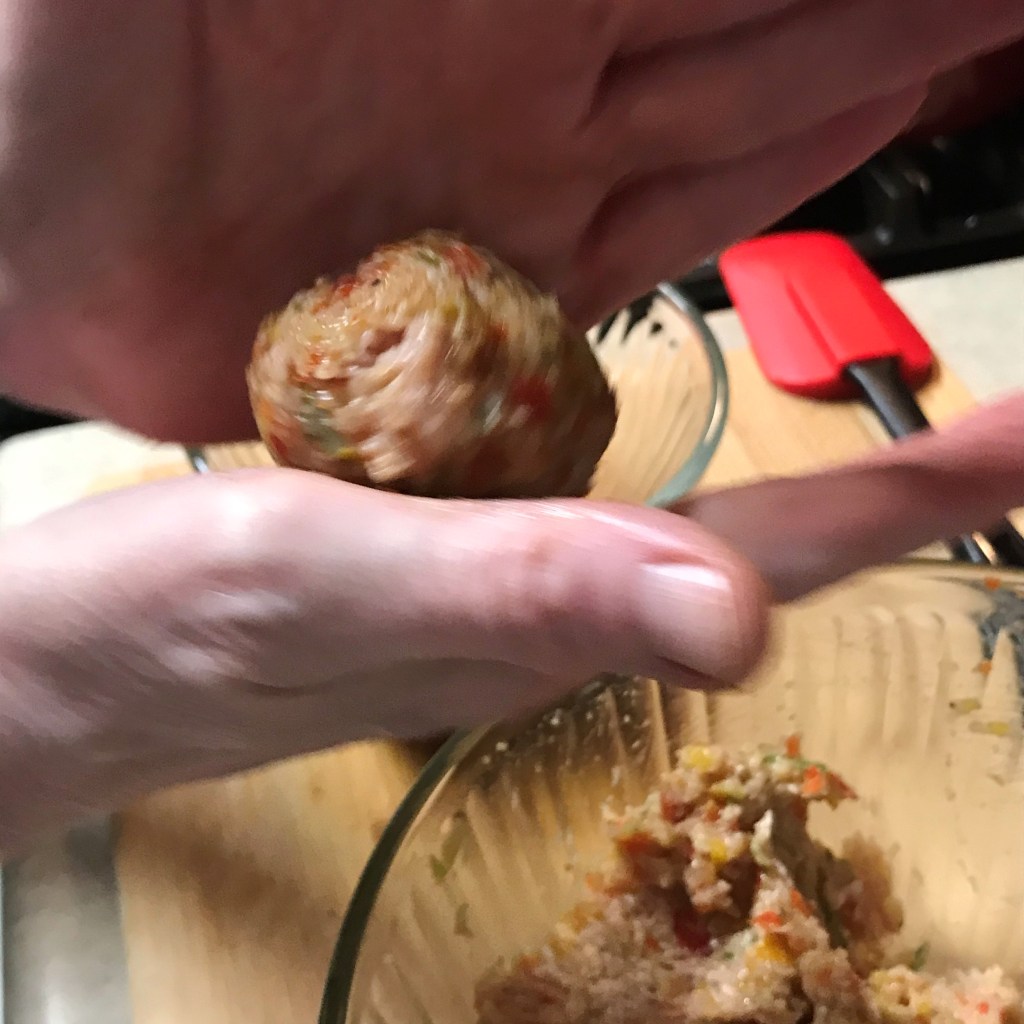
  5. Add coconut sugar to a shallow dish or small bowl.  Shape the mixture into meatballs about 1 1/2” diameter. Working quickly, roll the meatballs through the sugar, just enough to frost each one, and roll again in your hands to fully adhere the sugar, which will become a glaze on the baked meatballs. Place meatballs into a 9×13 glass baking dish, allowing space between them. Bake at 350° for 25 to 30 minutes.
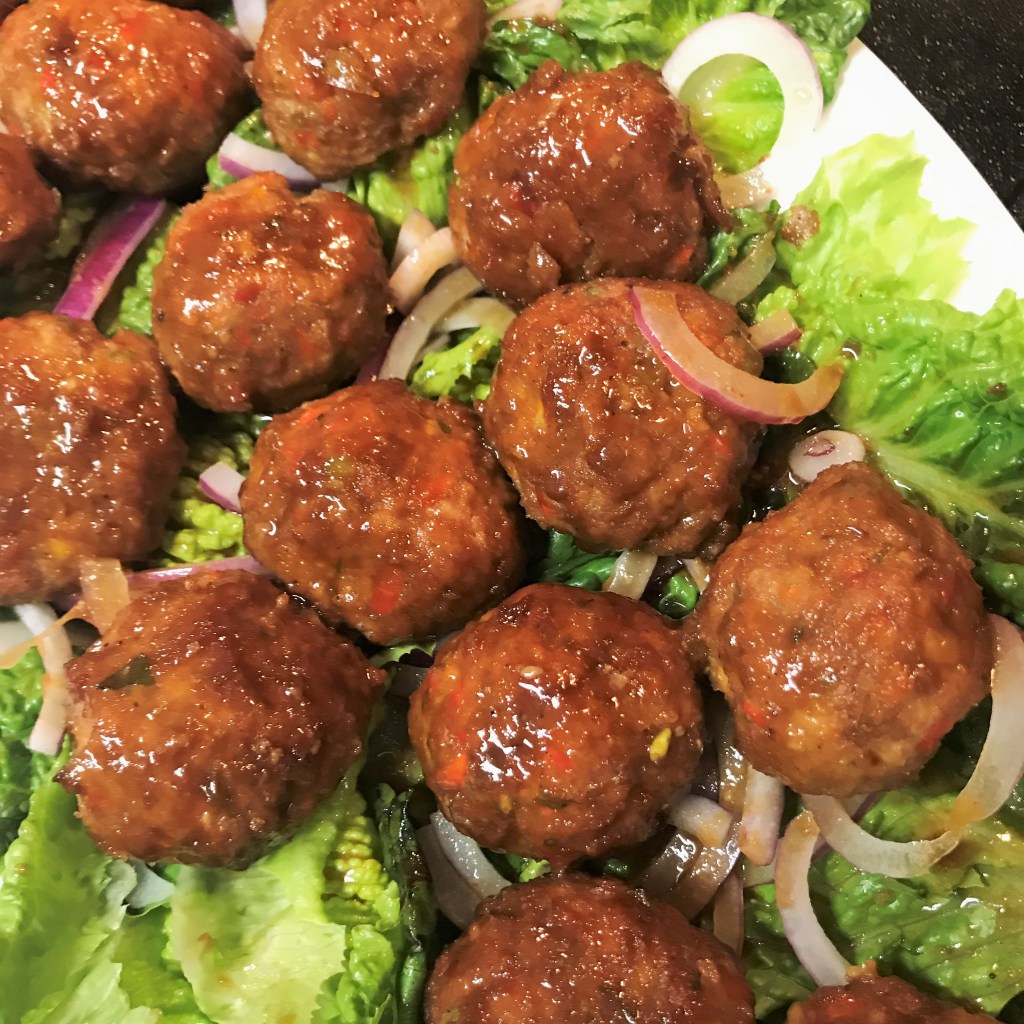
  6. Arrange romaine leaves on a platter, then bed your meatballs on them. Whisk the dressing ingredients again. Scatter red onion slices over the top and drizzle with the sesame ginger dressing. Sprinkle with cilantro leaves and sesame seeds and serve (with rice, if desired).
What happened to the 18th meatball? And why am I licking my lips right now?

Want to print this recipe?


“Copycat” Chicken Lettuce Wraps

Ever since I started browsing recipes on Pinterest, I’ve noticed something that bothers me—the prominence of so-called “copycat” recipes. For some reason, everyone seems to be obsessed with the idea of bringing home the dishes they’ve enjoyed in a restaurant. And with great frequency, the restaurant they copy is a chain.

How did we get here? I remember a time when restaurants made claims like “as good as Mom used to make,” or “from a three-generations-old recipe.” Does this mean I’m old? When did we make this shift from holding restaurants to standard of homemade foods we remember from childhood—to seeking a fettucine alfredo that’s “just like the Cheesecake Factory?”

Most of the time, chain restaurant menus strike me as calorie- and sodium-laden oversized portions, often indistinguishable in terms of cuisine style. For example, it wouldn’t seem so strange to find a salad on a chain menu with blackened chicken (Cajun), a soy-based dressing (Asian), topped with roasted corn (Tex-Mex) and dried cranberries (um, what?). These are the kind of things that keep me up at night. What is a salad such as that even trying to be?

So when I asked a friend a couple of years ago for her preference for a girls’ lunch date, I admit that I cringed at her response—“How about P.F. Chang’s?”

A chain? Ugh. It’s my own fault, but my friend’s workplace isn’t near to many independent spots, so I agreed, and as luck would have it, I’m glad I went. Not because the food was exceptional (it was fine), but because I (finally) became inspired to delve into cooking the mouthwatering world of Asian food. For years, I loved the flavors but felt intimidated by this particular cuisine, with all of its complex special sauces and high-temperature cooking techniques. So how did a single meal at an Asian chain restaurant open my culinary mind?

Two words. Lettuce wraps.

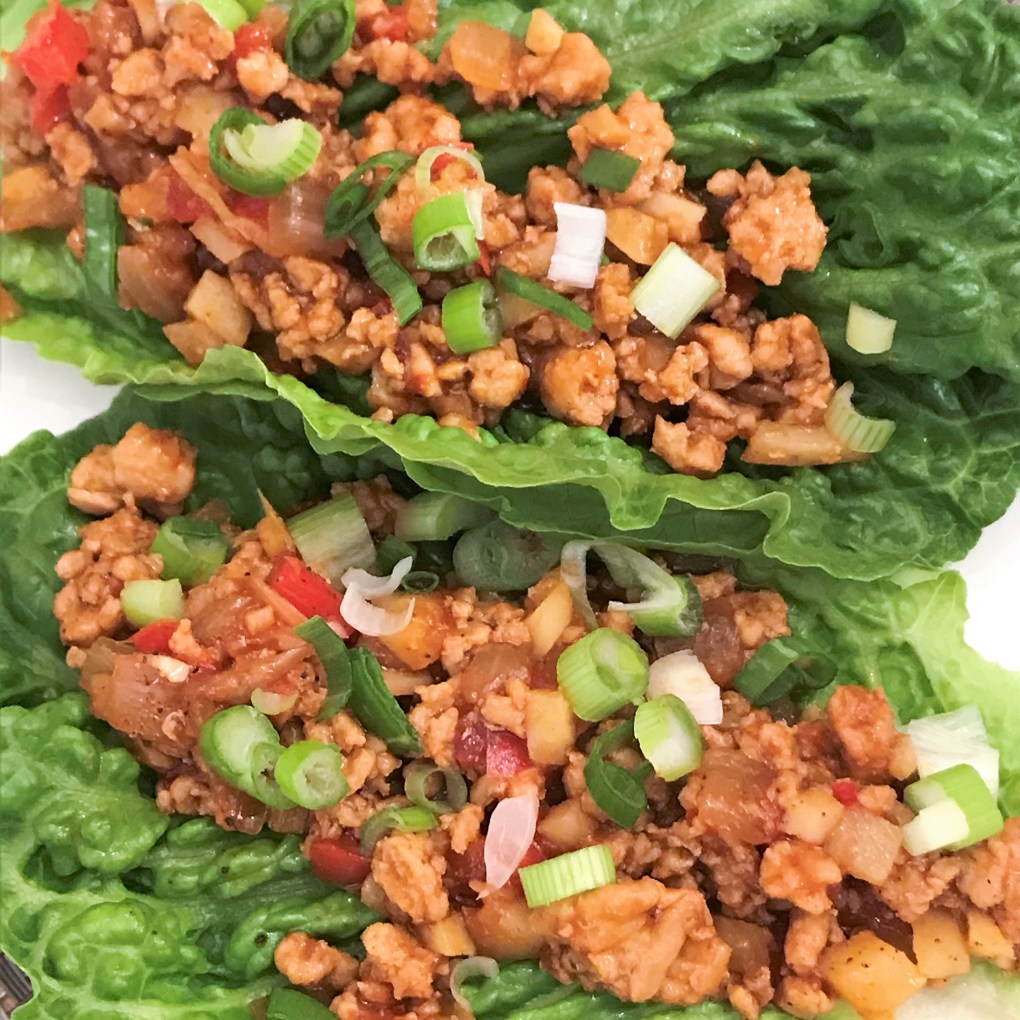
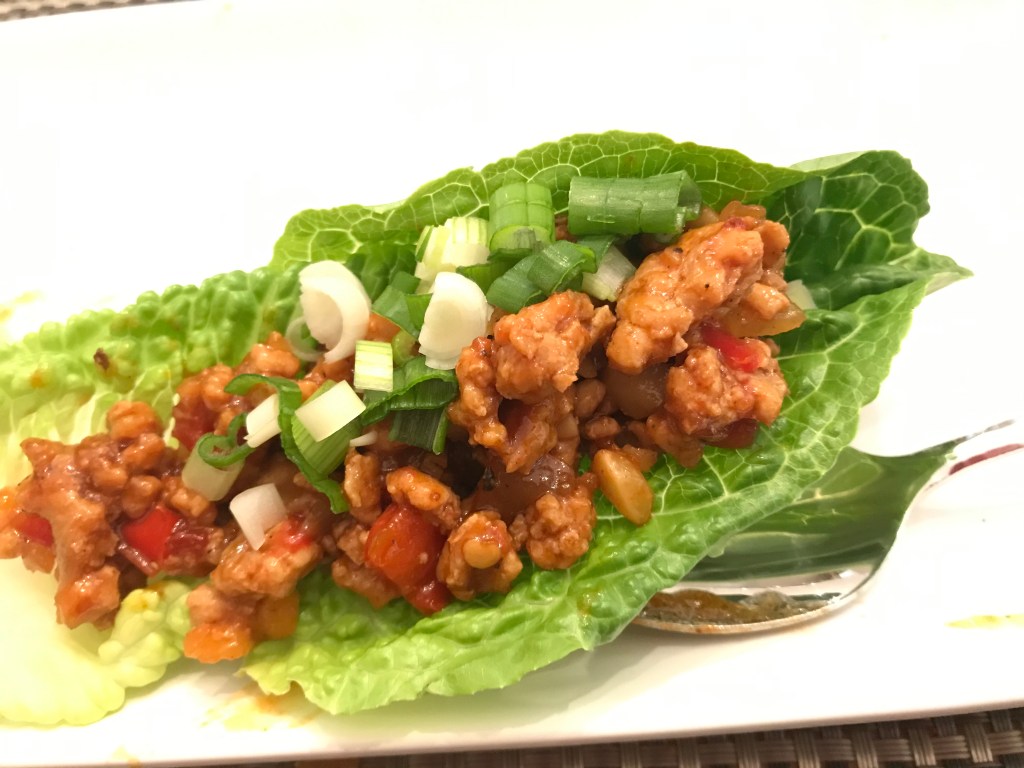
Spicy, fresh and crunchy. Why did I wait so long to discover these?

I loved the idea of the lettuce wraps—crunchy fresh lettuce wrapped up around a small mound of spicy sauced chicken with flash-fried rice noodles on the side. It seemed fresh and healthy, and the server was happy to bring me a side of their “ring of fire” sauce, which is pretty much the hottest thing you’d ever imagine ingesting. Man, that stuff was good. But later in the day, after my fourth glass of water, I remembered why I steer clear of the chains. My food was really, really salty. After a quick online lookup, I discovered that my lunch, considered an appetizer on the Chang’s menu, had 1,820 mg of sodium. In one appetizer.

That sent me off in search of a better way. I went to the market and discovered that nearly every Asian sauce is available in a reduced sodium version, so those were the ones I brought home (after inspecting the label ingredients for any other deal breakers, of course). I tasted each one, experimented with flavor combinations and figured out some other ways to add texture and flavor. And today, I present my very own copycat recipe—for chicken lettuce wraps. My version is decidedly lower in sodium, swaps out boring iceberg leaves in favor of crunchy romaine, with addition of sweet red bell pepper (did you know they are higher in vitamin C than oranges?), and nutty brown rice rather than bland, deep-fried rice noodles.

So maybe this is the reason for all the copycats on Pinterest. Perhaps other amateur chefs have the same idea—to enjoy the flavor they’ve had in other places, but with more control over the ingredients, the fat and the sodium. It also has occurred to me that because I grew up in a small community with no chain restaurants at all, I do not have any history of food memories tied to them, as others probably do. In the end, I learned something and found a new favorite to make at home.

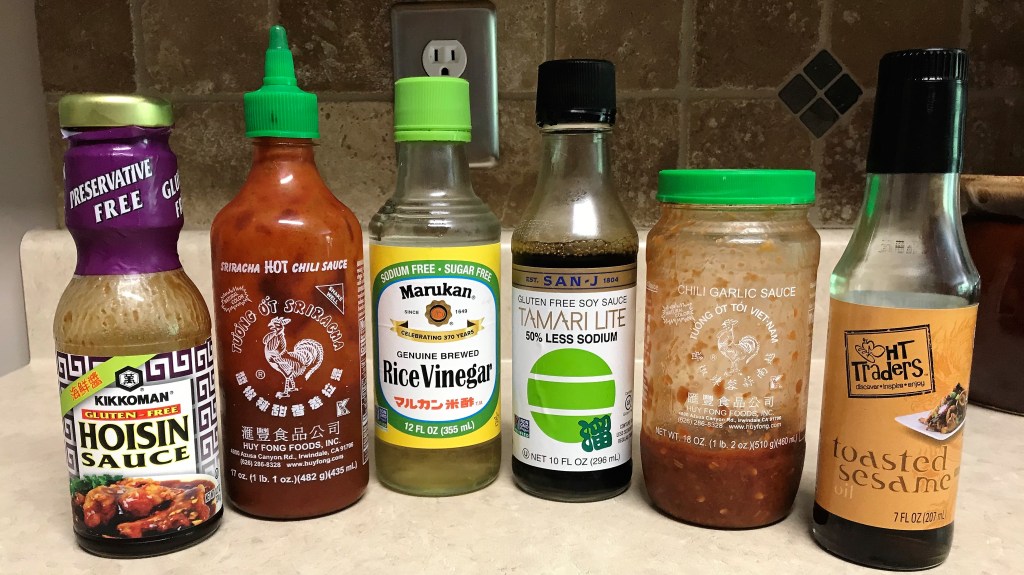
These wraps are delicious, the heat is adjustable (either way) to taste, and my husband and I enjoy them so much, that lettuce wraps are now in our regular menu rotation. All because of lunch at a chain restaurant. If you’ve been nervous to try an Asian recipe at home, allow me to introduce you to a few of the key ingredients:

You can mix and match these in so many ways.

What is in hoisin sauce?

Hoisin sauce is a sweet, sticky sauce, made from fermented soy beans and garlic, and flavored with aromatic spices such as fennel, cinnamon and star anise. It is very common in Chinese and Thai dishes, sometimes used as a cooking ingredient but also sometimes as a dipping sauce. Think of it as an Eastern-world barbecue sauce. It’s delicious!

What is tamari?

Tamari is a wheat-free alternative to traditional soy sauce. The organic, low-sodium versions are often significantly lower than the low-sodium soy sauces, but the flavor is nearly identical. Because it’s wheat-free, it’s suitable for gluten-free diets—but for this recipe, be sure to check every other ingredient label for hidden sources of gluten if this is a concern.

What is sriracha?

Sriracha is an Asian-style condiment, made from aged hot peppers, vinegar, salt and a bit of sugar. It adds plenty of heat to this recipe but is balanced with the tang of the vinegar. Adjust this one to suit your taste but consider using at least 1 teaspoon to get the chili flavor that makes this dish special.

What’s different about chili-garlic sauce?

Chili-garlic sauce is similar in flavor to sriracha, but it’s a chunkier sauce that adds texture and a lot of savory heat, with underlying notes of garlic and not a lot of salt. If you love spicy food, double it (as I often do); if you aren’t into as much heat, use half or skip it altogether.

Anybody besides me getting hungry?


Ingredients

1 lb. lean ground chicken* (see notes for vegan option)

1 medium onion, chopped

1 small red bell pepper, chopped

3 cloves fresh garlic, minced

1-inch piece fresh ginger, peeled and finely minced

1/2 can sliced water chestnuts, drained and diced small*

Sauce

4 Tbsp. hoisin sauce (low sodium)

2 Tbsp. rice wine vinegar (not the “seasoned” variety, which has extra salt)

2 Tbsp. low sodium soy sauce (or tamari, which is even lower)

1 Tbsp. sriracha sauce

1 Tbsp. chili-garlic sauce

For serving

2 tsp. toasted sesame oil*

Fresh romaine heart, trimmed and prepped*

Hot cooked brown jasmine rice

3 scallions (green onions), trimmed and thinly sliced

Sesame seeds (optional), sprinkled on for serving


*Notes

Want to make this vegan? Swap the chicken for firm, cubed tofu (patted very dry) and a handful of cashews. Delicious!

In case you’re wondering, it’s not accidental that salt is not listed in the ingredients. Part of the goal with this recipe is reduction of the high sodium in the original dish. The sauces have enough to cover it.

Most supermarkets sell water chestnuts in their Asian section, and sometimes they are available in a diced form, but the pieces are almost as large as sugar cubes. I prefer the slices, because it’s easier to cut the slices into a smaller dice.

A little bit of toasted sesame oil goes a long way, so don’t be tempted to use more of this. Additionally, you don’t want to cook in this pungent oil because its low smoke point will cause it to scorch.

To prep the romaine heart, trim the stem end and rinse the individual leaves under cold running water. Drain them of excess water, then wrap them up in paper towels and place the bundle in the fridge until it’s time to serve. The chilly air will keep them crisp, and the towels will absorb lingering moisture.


Instructions

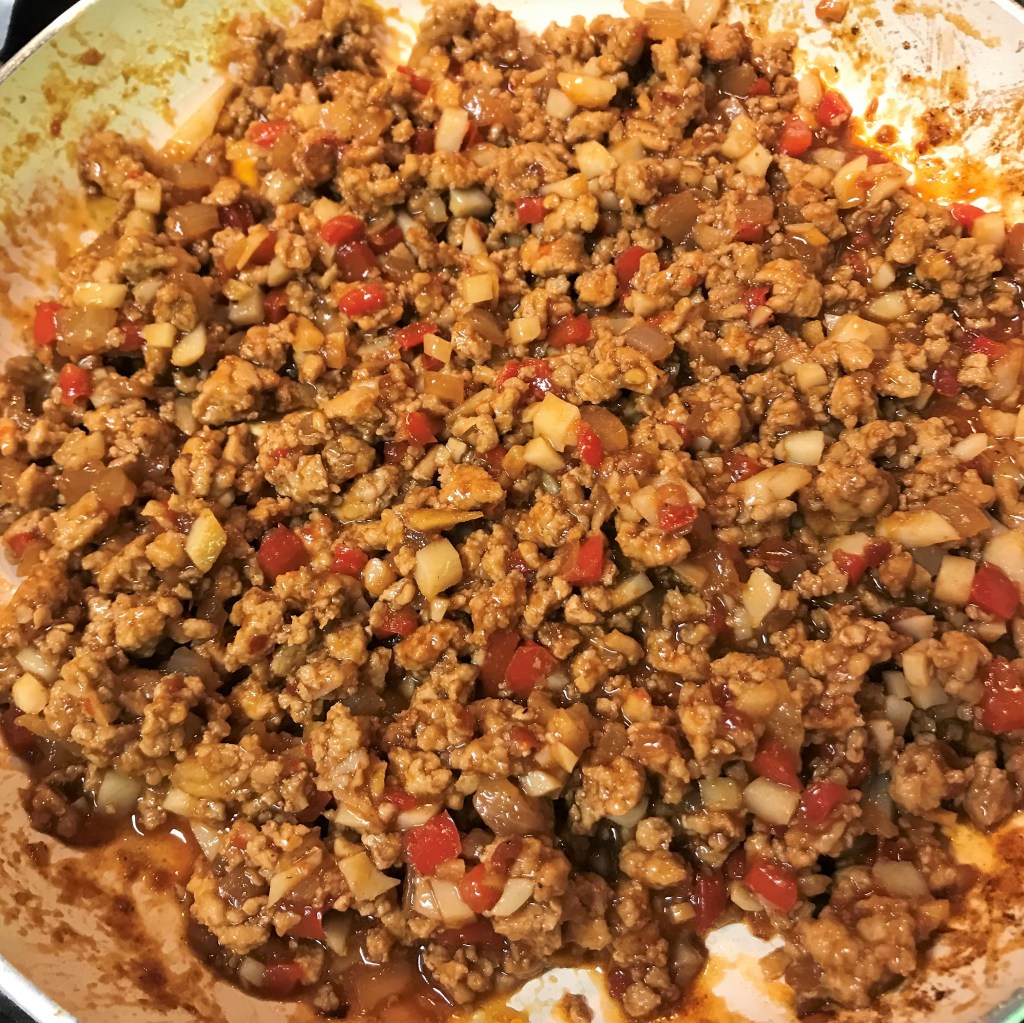
Heat a large skillet over medium heat. Add canola oil, then brown the ground chicken together with the garlic and fresh ginger. Add the chopped yellow onions and red bell pepper and sauté until the vegetables are soft. Add the chopped water chestnuts and heat through.

In a measuring cup with a pour spout, combine the hoisin sauce, soy or tamari, sriracha, chili-garlic sauce and rice wine vinegar. Whisk to combine.

Adjust the heat level up or down, simply by changing the amounts of sriracha and chili-garlic sauce.

Pour the sauce combination over the chicken and stir to coat evenly. Just before serving, drizzle in the toasted sesame oil and stir to combine.

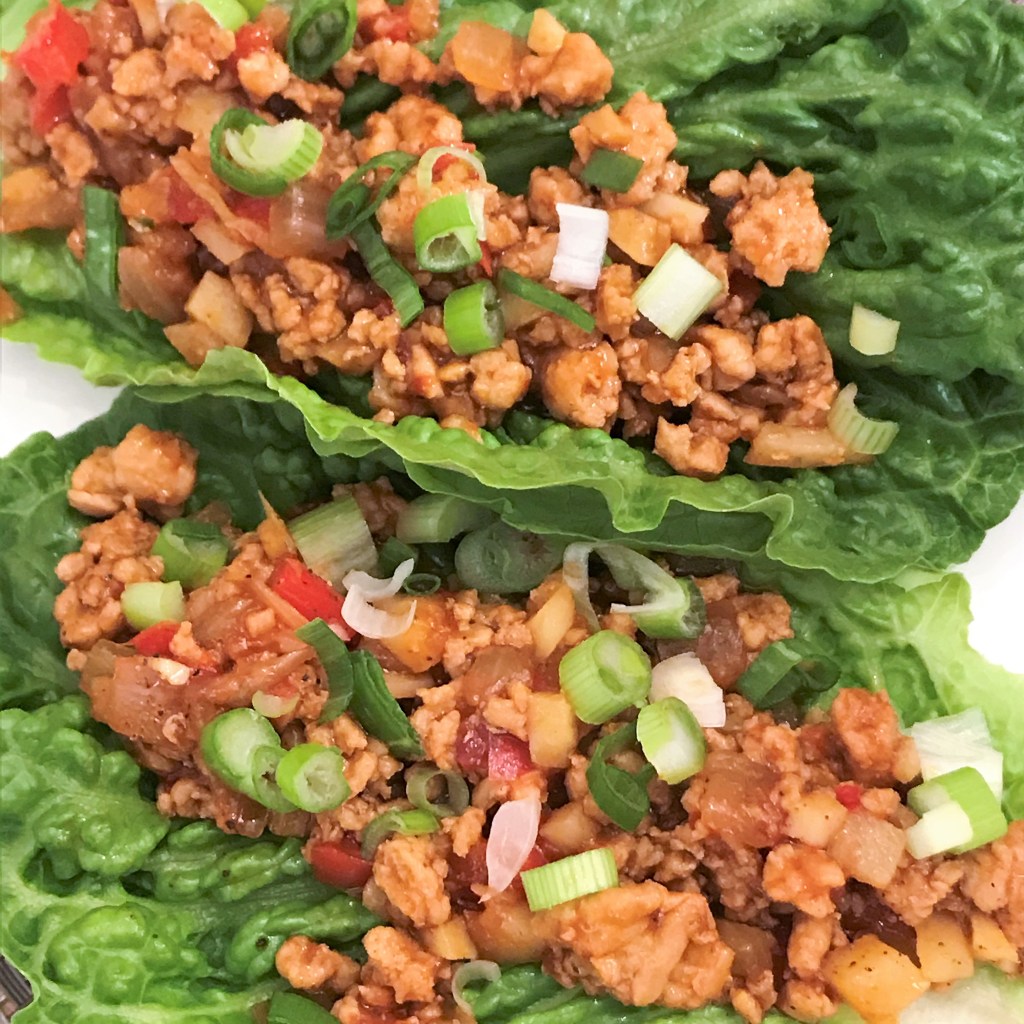
Yes, they’re as fresh and yummy as they look.

For serving

You could probably pre-fill the lettuce leaves with the chicken mixture for serving, but we enjoy the DIY aspect of serving it at the table. Arrange the lettuce leaves on a plate, with the brown rice in one bowl and the meat mixture in another, sprinkled with sliced scallions and sesame seeds.

Want to print this recipe?

What restaurant recipes have you copied (or wanted to)? Leave me a comment, and maybe we can tackle it together!


Buffalo Chicken Pizza

For this western New York girl, Buffalo chicken pizza is a favorite non-traditional pie, for those times when you just can’t quite decide between pizza and Buffalo wings. From the authentic Frank’s “Red Hot” sauce to the funky bleu cheese crumbles, and right down to the crunchy bits of celery, this pie delivers. All. The. Flavors.

These pizzas move very quickly once the dough is shaped, so do yourself a favor and prep all the ingredients as much as a day ahead. You’ll appreciate having more space in the kitchen, and I’ve recently discovered that placing cold toppings on your freshly shaped pizza dough seems to make it easier to slide the pie off the peel into the screaming hot oven.

We bake all our pizzas on a steel, which has quite literally been a game changer in our quest for the perfect slice. If you use a pizza stone or metal pan, please follow the alternate baking instructions.

Ingredients

1/2 lb. lean ground chicken

1/2 small onion, chopped

1/3 cup Frank’s original red hot sauce* (see notes)

1 Tbsp. fresh garlic, chopped

1 stalk celery, ribbed and sliced thin on diagonal

1 Tbsp. finely chopped jalapeno

1/3 cup whole milk ricotta cheese

1/2 cup shredded pepper jack cheese

1/2 cup crumbled bleu cheese*

1 ball real New York pizza dough (link to dough recipe)

Extra virgin olive oil

Salt and pepper (as you like it)

Notes

Not a fan of bleu cheese? Try feta instead, to mimic the texture and saltiness, but without the funk.

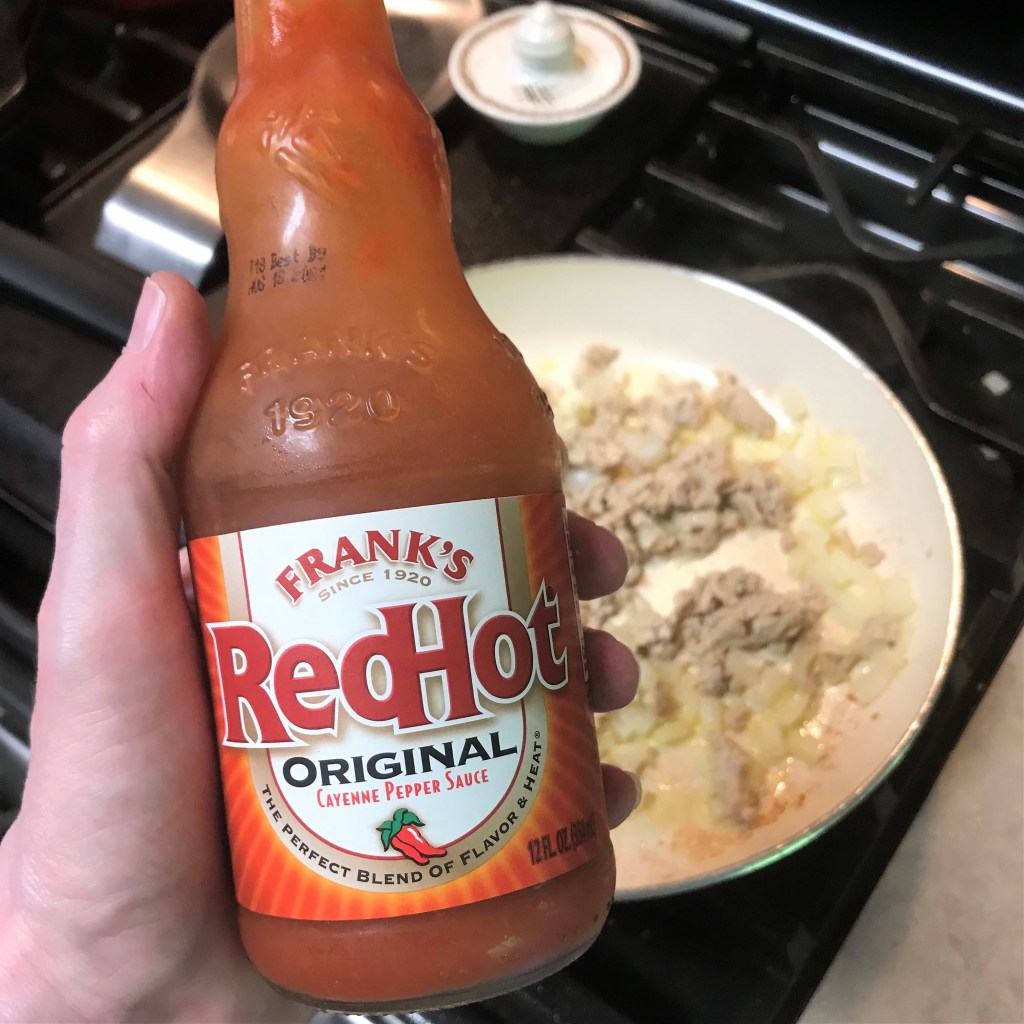
Don’t get confused when you see the selection of Frank’s sauces. They used to make only one (now labeled “Original”), and this is the one you want. Trust me, I’ve been eating it on wings since the 1970’s.

Frank’s has developed several new flavors since they began, but the “Original” red hot sauce is exactly what you want. True Buffalo sauce flavor.

Instructions

Heat a skillet over medium heat. Add a swirl of extra virgin olive oil and cook chicken with onions until browned. Remove from heat, stir in Frank’s Red Hot sauce and chopped garlic.

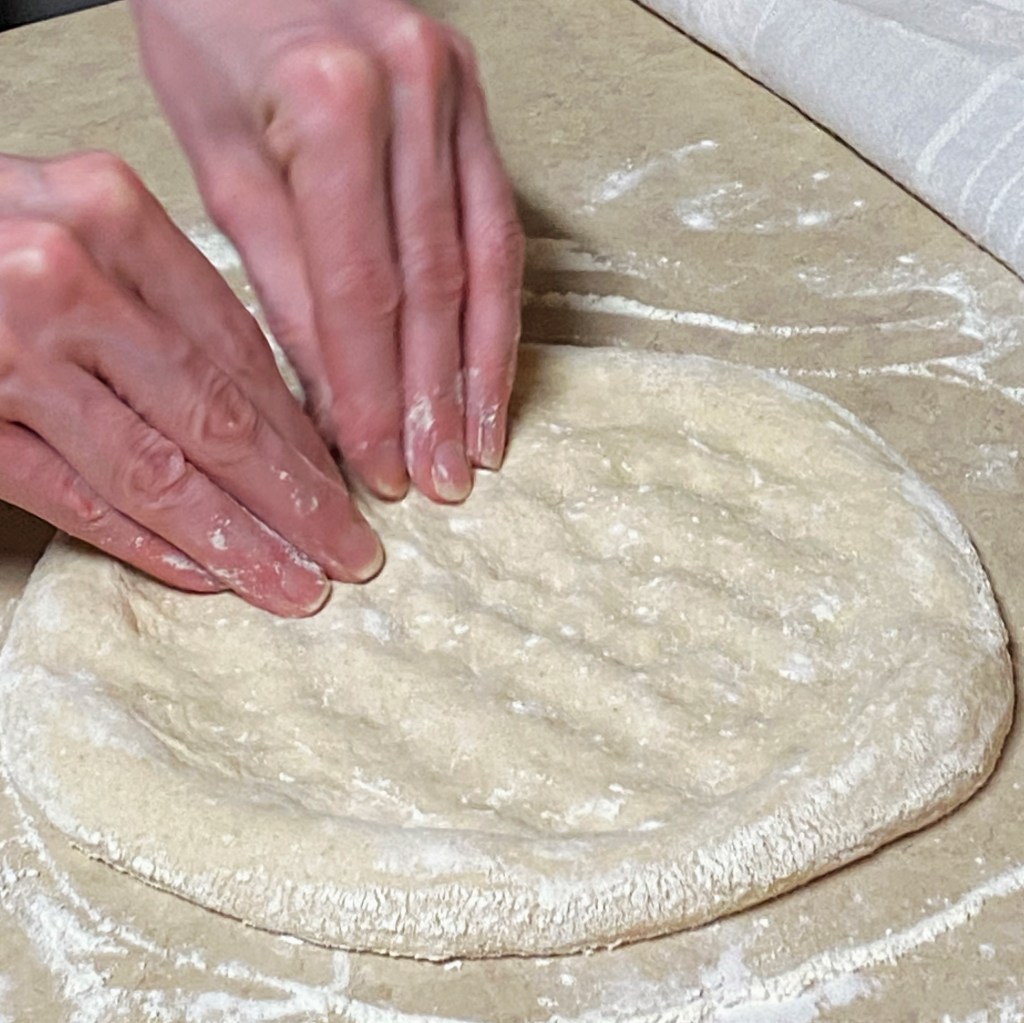
Shape pizza dough into 12- to 14-inch disk. If you missed the tutorial, here’s a quick recap for shaping your pizza dough.

Brush or spray with olive oil and season with salt and pepper. Spread ricotta evenly over dough, keeping about 1/2 inch border on dough. As with any other sauce or base, you want to spread it thinly enough that you can see glimpses of dough through it.

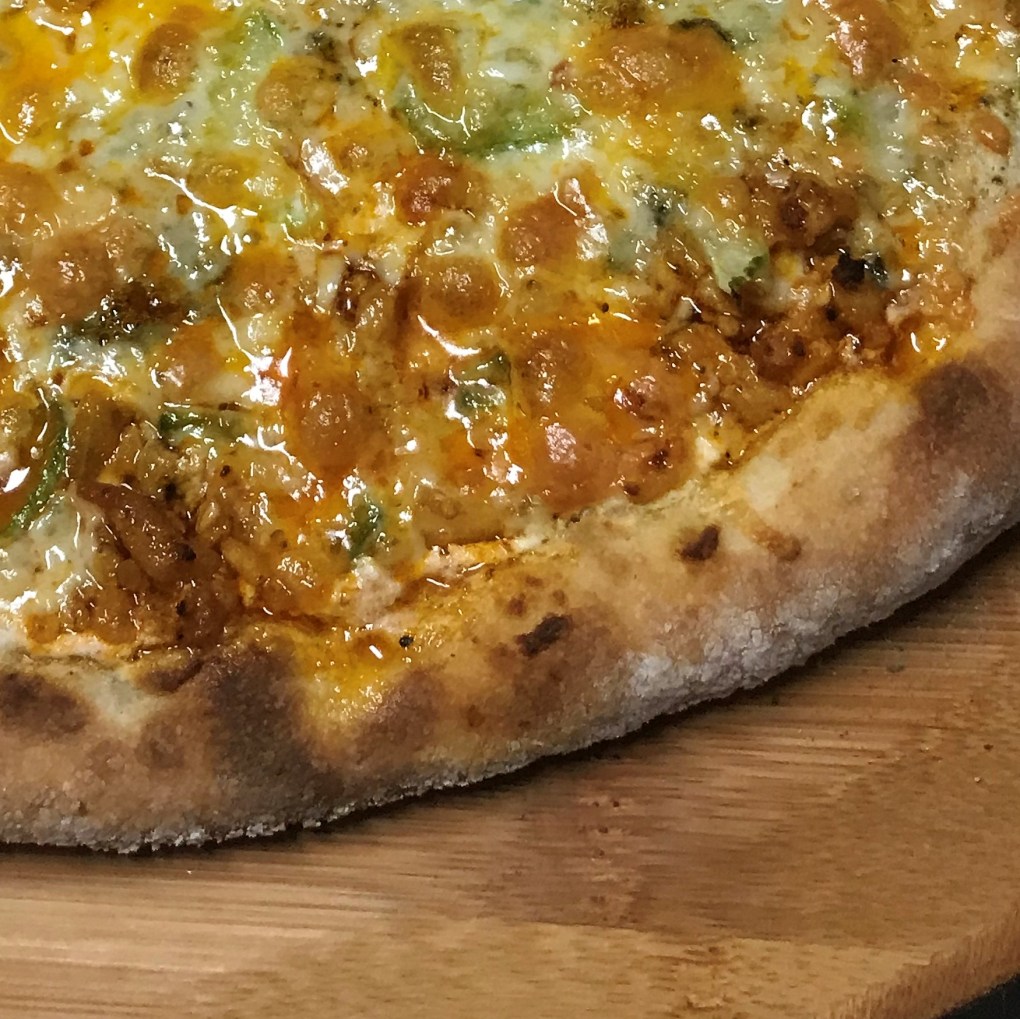
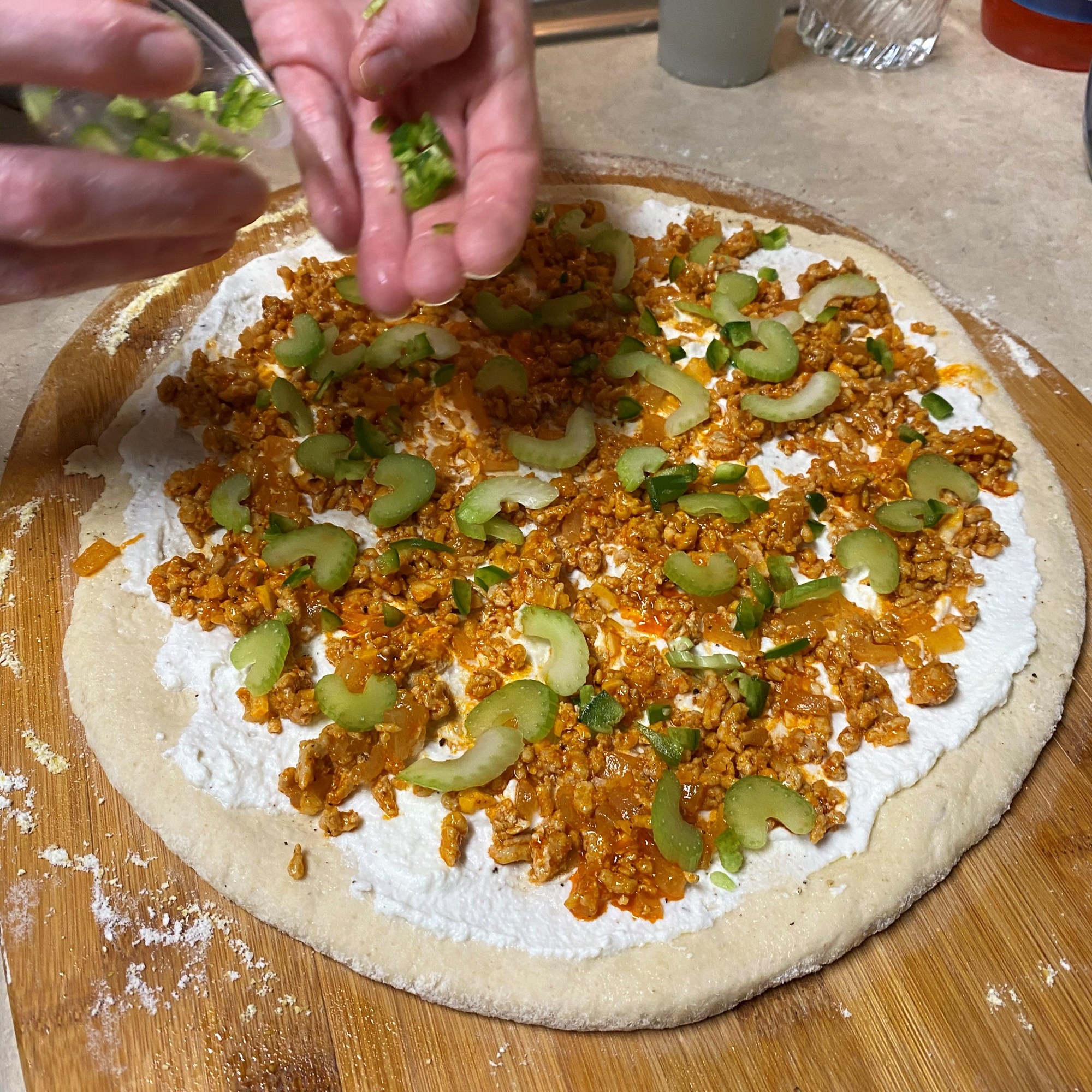
Scatter chicken mixture evenly over ricotta base, then top with celery slices, jalapeno and pepper jack. Sprinkle bleu cheese crumbles over the top of the pizza and bake on a preheated steel at 550° F for about 7 minutes, until crust is golden brown and cheese is bubbly.

See what I mean? ALL the flavors!
You might even go crazy and drizzle a bit of bleu cheese dressing right on top before you slice it.

For baking on a pizza stone, follow manufacturer’s instructions regarding maximum temperature. Some stones will crack or break at higher temperatures. For baking on a pizza pan, lightly grease the pan before placing dough on it, and bake in the lower third section of your oven for a few minutes longer than recommended in the above recipe.

Want to print this recipe?

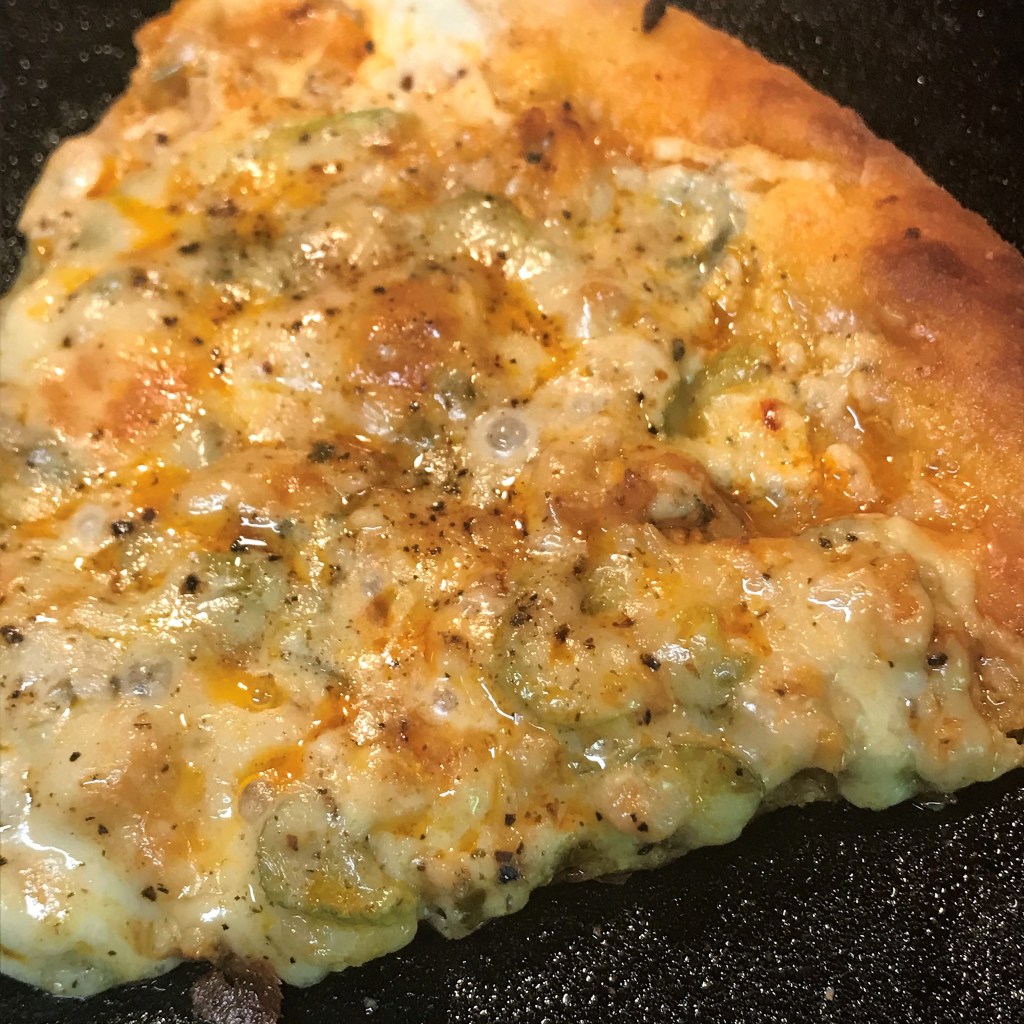
If you’re lucky enough to have leftovers, do you know the best way to reheat them? If you just said, “the microwave,” you’re excused from my blog. Just kidding! You can enjoy the leftovers as much as the original pizza, by placing the slices in a skillet or on a griddle, over very low heat. Place a vented cover over the slices, or lay a loose tent of foil over the top. This helps the cheese return to a glorious melty state, while the constant gentle heat on the crust surface brings back the crunch.

If you look at the spot right exactly in the center of this image, you’ll see the cheese getting bubbly again.

Chicken Caesar Salad (on the grill)

We must be headed into summer, because I can hardly tear myself away from grilled food ideas. I’m dreaming about classic summer favorites, but I’m also having fun imagining new ways to enjoy fruit, vegetables, pizza and who knows what else on the grill. One thing you can expect from me in the coming weeks is a grilled watermelon gazpacho. True story, I woke up thinking about it the other day. After a bunch of rainy days and weekends, we’ve finally eased into some nicer days, and cooking outside is the best part of that!

Most of the time, mentions of grilling conjures images of burgers and ribs and heavy smoky things. But I’ve definitely been feeling it more for freshness lately, and craving lighter foods that will help me feel less sluggish after so many weeks of “comfort food,” Zoom happy hours and going absolutely nowhere.

Over the next few weeks, we’ll be planning an expansion of our patio and some other embellishments to help make it even more inviting. And hopefully one day soon (or at least not too far off), we will be able to share the space with friends more than current circumstances allow.

Our sweet little patio is our safe haven right now.

For now, we’re thankful to have comfy patio chairs, a private backyard, and a great Char-Broil gas grill, and tonight we’re cooking up a grilled chicken Caesar. Not just grilled chicken on the Caesar, mind you—more than that, the Caesar will be grilled as well. If you have not yet enjoyed grilled romaine, it’s such a treat, and yet so, so simple. It’s basically a poster child for Comfort du Jour—a familiar comfortable food, but with a fun and simple twist to elevate your happy. Let’s get cooking!

Recipe serves 2.

Ingredients

2 boneless, skinless chicken breasts (preferably free range)

2 Tbsp. red wine vinegar

Juice of half a lemon

1 tsp. prepared Dijon mustard

1 tsp. garlic pepper seasoning*

3 Tbsp. extra virgin olive oil

1 romaine heart (the tender inside part of romaine lettuce)

Sea salt and freshly ground black pepper

4 Tbsp. bottled Caesar dressing (the simpler, the better)

4 anchovy fillets

Freshly shaved parmesan or pecorino romano cheese for serving

*Notes

Check your brand of garlic pepper seasoning for salt content, and adjust your marinade ingredients to taste. We have McCormick brand, and the salt is just right. If yours is salt-free, you’ll probably want to add about 1/4 tsp. salt along with it, or season the chicken with salt before you add the marinade.

In our house, we’re careful to avoid a lot of highly processed ingredients, such as high-fructose corn syrup and just about any version of soybean oil (it has no nutritional value and is usually genetically modified). We like the brand pictured in this post (Marzetti’s “Simply Dressed”) because it’s made with real ingredients and nothing that makes us cringe. Find it refrigerated in the produce section of your market.

Anchovies have gotten a bad rap, in my opinion. For a long time, I assumed I didn’t like anchovies because other people didn’t like them. But in small amounts, and paired with the right things, they add a fantastic savory pop to a dish. If you haven’t tried them lately, give them a shot in this recipe!

Instructions

Pat the chicken breasts dry with paper towels and set aside while you prepare the simple grilling marinade.

In a small bowl, combine red wine vinegar, lemon juice, Dijon and garlic pepper seasoning. Drizzle in olive oil in a slow and steady stream, whisking constantly to incorporate and emulsify. Pour the marinade over the chicken breasts in a covered glass dish or a zip top plastic bag. Put in the fridge until about 30 minutes before grilling.

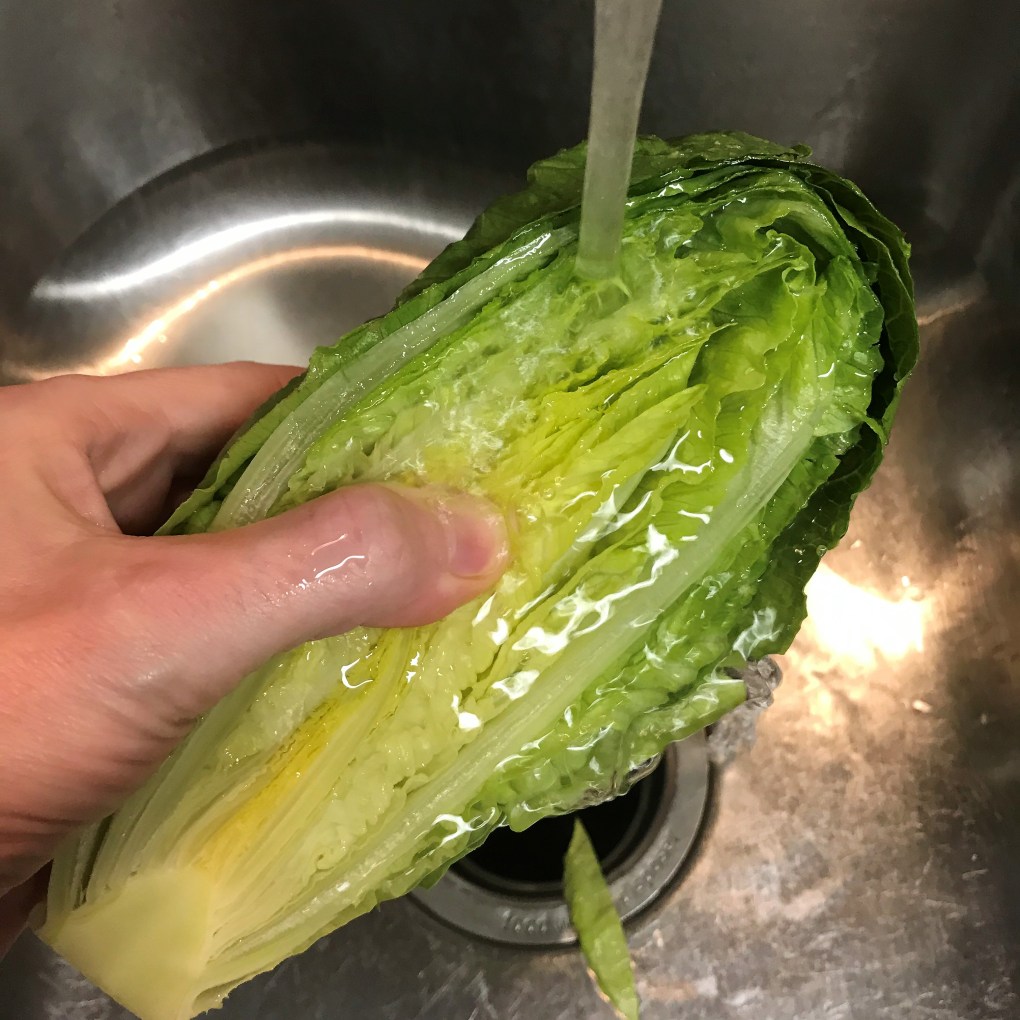
Next, prep the romaine for grilling by trimming the end and any loose leaves, and cut in half lengthwise. Rinse under cold water, ruffling the leaves to let the water get inside the layers. Shake off excess water and place romaine halves, cut-side down, on a plate lined with a double layer of paper towels. Lay a damp paper towel over the top and put the plate in the fridge for several hours. The water will continue to drain from the cut leaves, and the romaine will get nice and crunchy during its chill time.

I always rinse with cold running water, and I “fluff” the leaves to let the water work all the way through.

Preheat your grill or grilling pan to about 450° F. The chicken should rest at room temperature about 30 minutes. This isn’t absolutely necessary, but it helps the chicken cook more evenly. Reduce the temperature to about 350° and grill the chicken until it’s nicely charred on the outside and the juices run clear. At this point in the recipe, I usually bid adieu to my husband, Les, who handles most of our outdoor cooking. He’ll tend the chicken while he sips on a cold one and catches up with his Facebook feed. I have my own business to tend—the dressing.

Straight honest truth, if you’ve ever had authentic, scratch-made Caesar dressing, you know that there simply is no equal. The lemon, egg, anchovy and garlic create a perfect harmony that literally is the Caesar salad. Without it, you have basically a pile of romaine. But on a busy weeknight, who has time to coddle eggs? Me neither. What we can do instead is elevate a store bought “Caesar” dressing (I’ve yet to find one that has all the right stuff) with the addition of a couple of simple ingredients.

Homemade Caesar dressing is the absolute bomb.
But this is my simple “cheat” to add pizzazz to a store-bought dressing.

Don’t start making faces now. Anchovies are surprisingly delicious if you don’t overdo it, and we definitely won’t here. I’m only using a few fillets of these salty little fishes, and they will add a whole new layer of flavor to my otherwise “OK” dressing.

Chop them into small pieces (so you don’t get too much in any single bite), then stir or whisk them into the Caesar dressing. If the dressing seems a little thick, also pour in a little of the oil packed with the anchovies. Give it a quick taste—if it’s too salty, add a squeeze of fresh lemon juice to tone it down. Grind some fresh black pepper into it for a little more bite. This is your salad, so make it work for your taste.

Pull the romaine from the fridge and move it to the next step by drizzling good quality extra virgin olive oil over the cut side. Allow the oil to trickle down between the leaves a little, but don’t drench it. Season the halves with sea salt and freshly cracked pepper, then take it out to the grill.

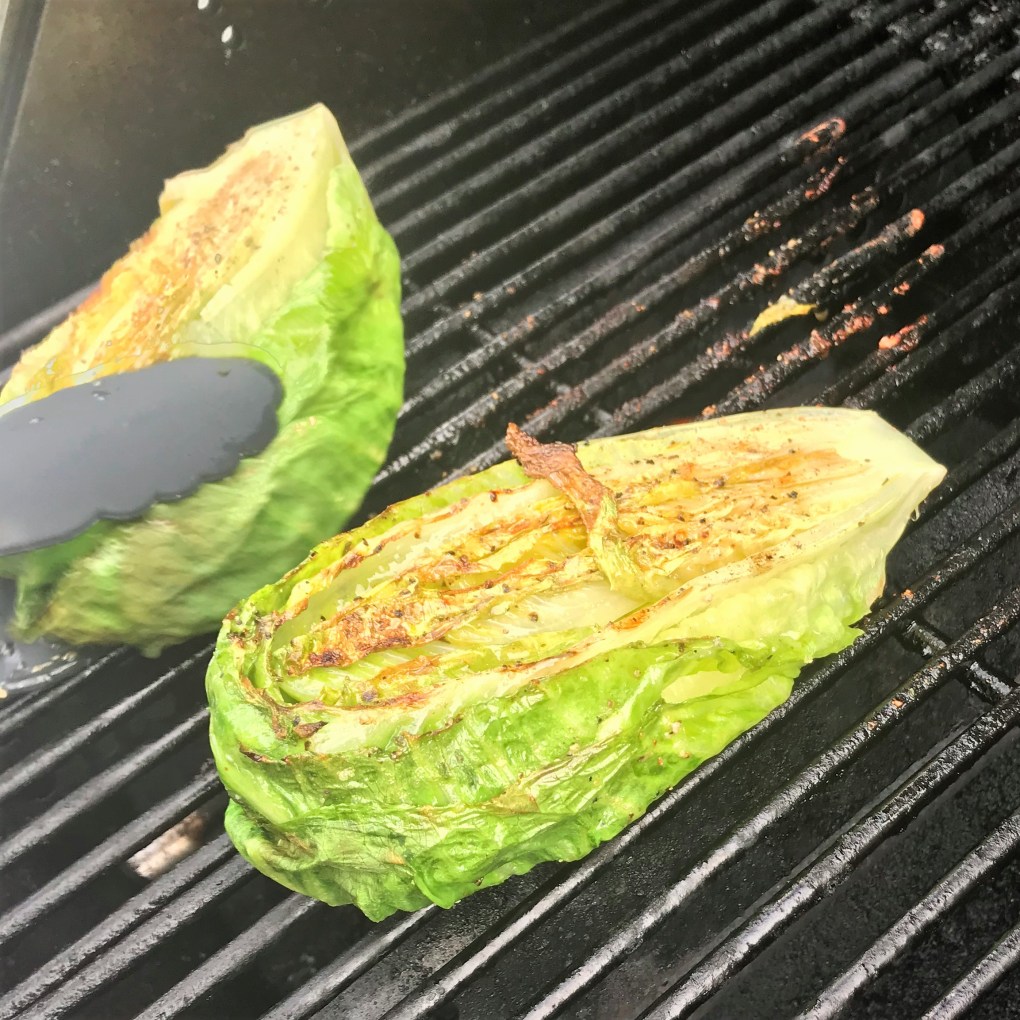
When the chicken is nearly finished, place the romaine halves directly on the grill, cut side down. And leave it. The first time I made grilled romaine, this felt so strange—putting delicate lettuce on the grill? But it’s really an incredible difference it makes in the salad, and I look forward to grilling season for things just like this. Obviously, we can eat salad all year, but in our winter months, it isn’t always practical to fire up the grill. For sure, my hubby isn’t gonna stand out there in 20° weather. Especially in the dark (which is usually is at dinner time during winter). It is, of course, possible to do this on an indoor grill pan, but there’s something more special about it when it’s cooked outside.

When the romaine has a nice amount of caramelization on the cut side (you decide when it reaches that point), turn over the halves and allow the other side to grill for a minute or two.

To serve, rest the chicken breasts then slice into crosswise strips. Serve alongside the romaine half, drizzling both with the jazzed-up Caesar dressing and a sprinkling of freshly grated parmesan or romano cheese. If you prefer, chop the grilled romaine as well, and toss it together with the chicken and dressing, then divide on two plates and top with shredded cheese.

Enjoy!

A good drizzle of our “spiked” Caesar dressing, and freshly grated parm. Dinner is served!

Want to print this recipe?