PB&J S’mores

From my first year of blogging on Comfort du Jour, I’ve celebrated National S’mores Day by putting a s’mores twist onto everything from cocktails to pizza to ice cream and then some. As the calendar inched toward Aug. 10th this year, it occurred to me that I’d never experimented the other way— putting a fun twist onto the s’mores themselves. Now I have!
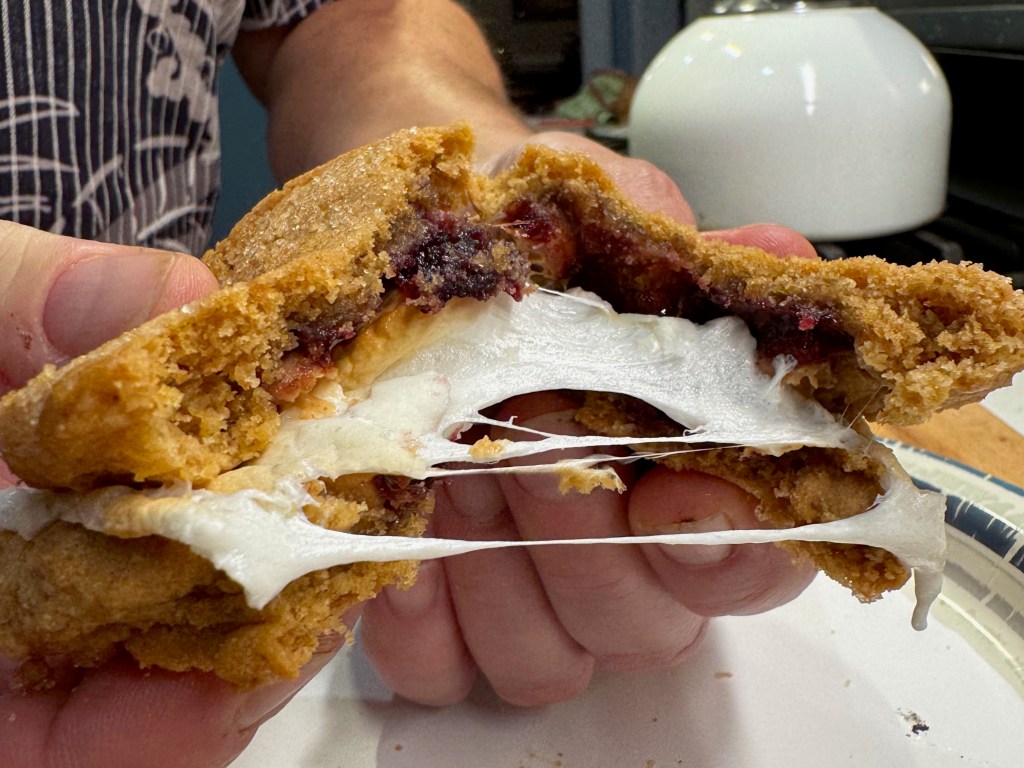
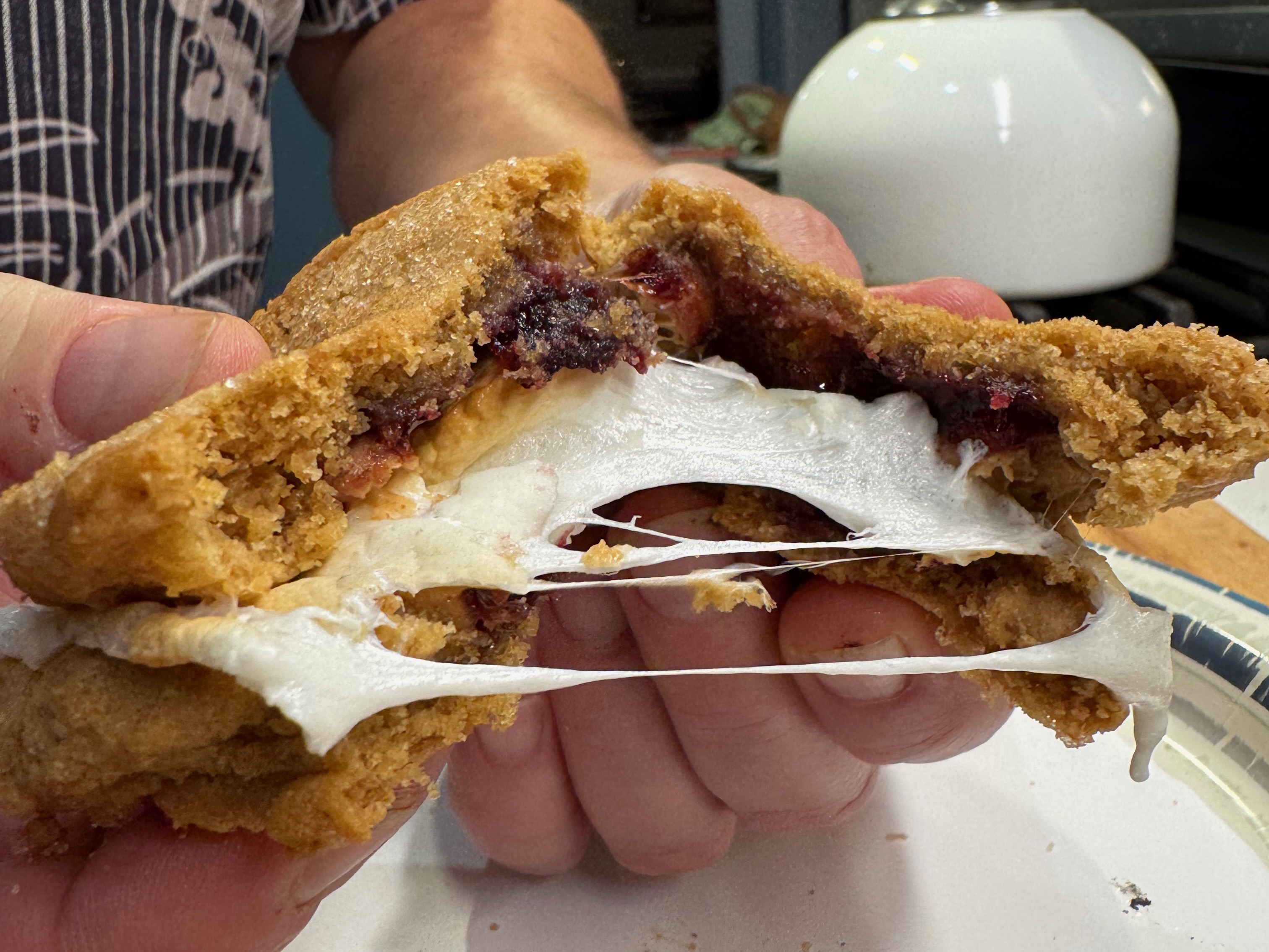
Definitely ooey-gooey!

By replacing the graham crackers with a classic homemade cookie, and subbing out chocolate for another sweet and gooey filling, I’ve reimagined this childhood favorite with fun, familiar flavors. Now, this idea didn’t just fall together, as there were several things to consider for a successful outcome and I had to do a bit of testing to bring my vision to life. First, the cookie!

What kind of cookie works for s’mores?

Obviously, I needed a cookie that would be sturdy enough to squish the toasted marshmallow, and that meant that soft, crumbly cookies were out. It needed to be thin enough that you could stack two together with a marshmallow in between, for easy eating. Graham crackers are perfectly suited to the task but not especially flavorful.

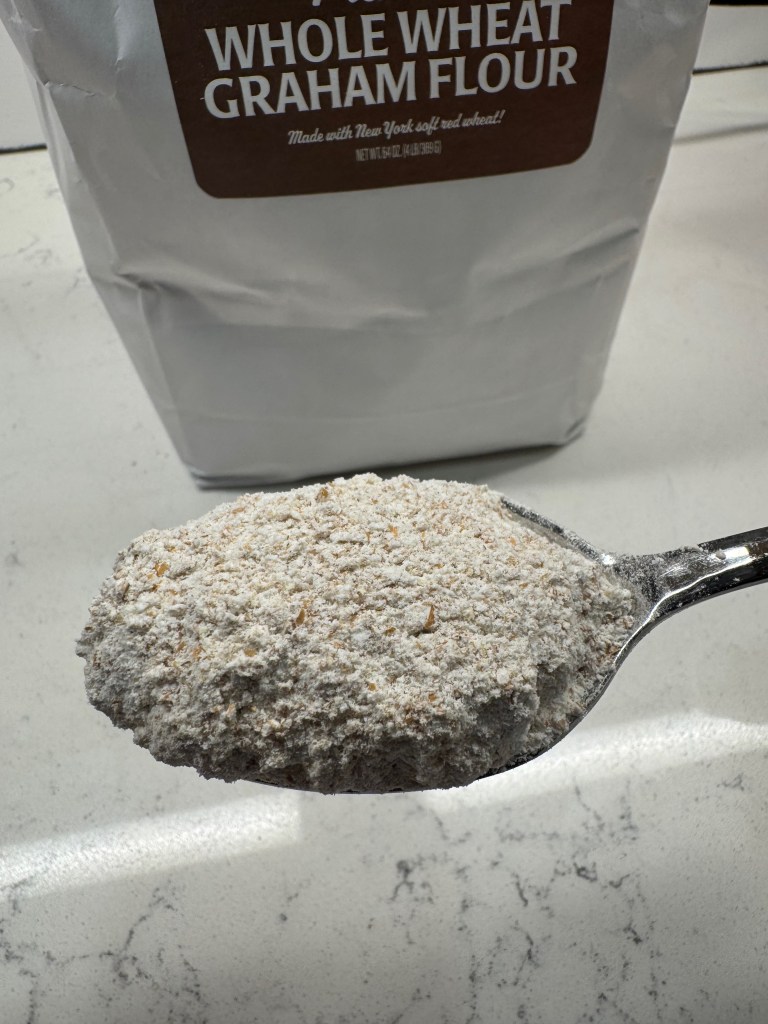
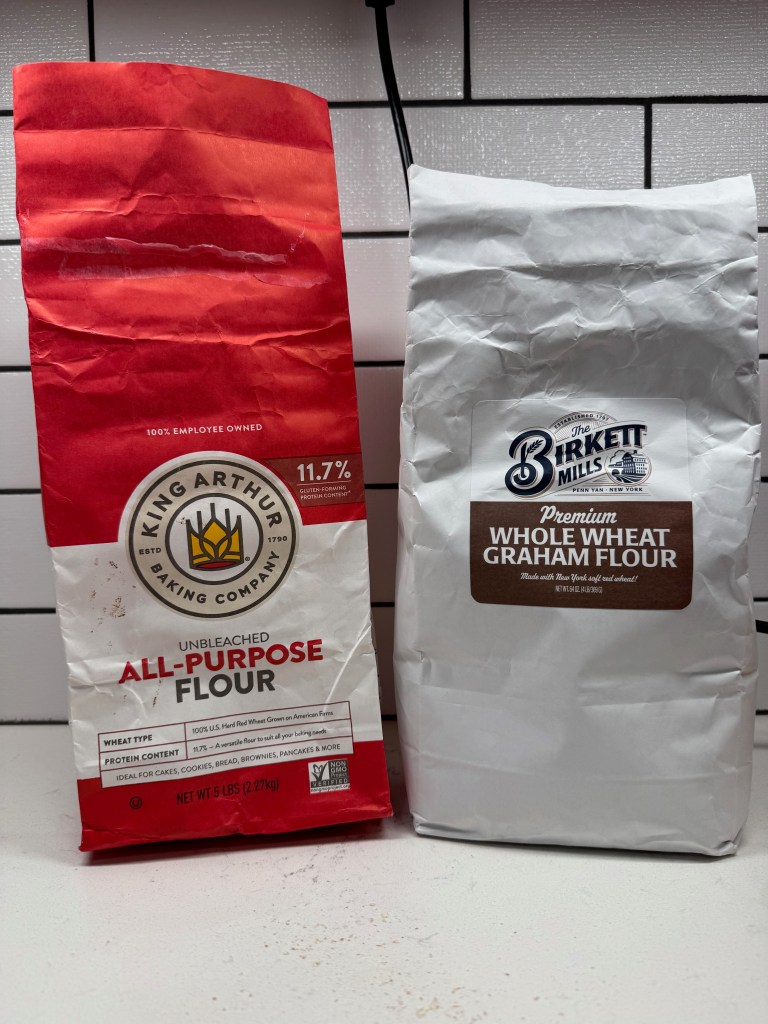
Peanut butter cookies really appealed to me, but most recipes produce a soft, pillowy cookie and I’d need to adjust a few things for a thinner, more crisp cookie. After consulting with experts— OK, it was an internet search 🤭— one tip stood out as important, and that is to use a lesser amount of peanut butter in the dough. I could add peanut butter chips to make up the lost flavor. White sugar makes a crispier cookie, so I’d go halvsies with the brown sugar, and I could sub in a portion of whole wheat graham flour for more texture and structure that would be similar to a graham cracker. The cookie part was easy.
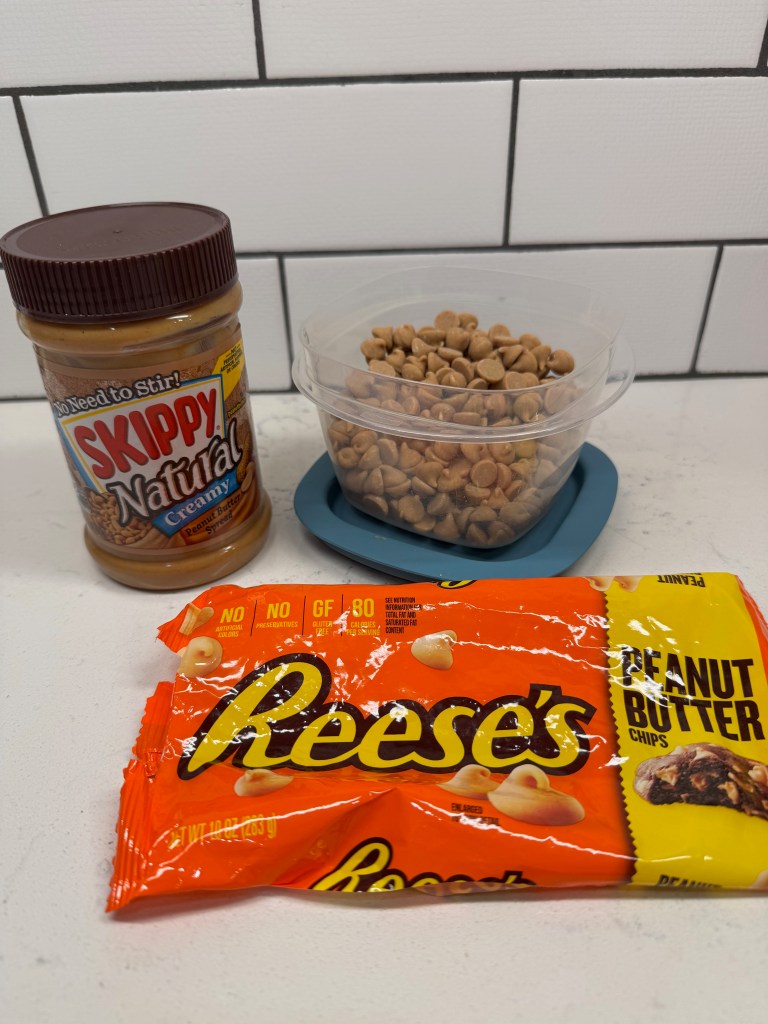

What could stand in for the gooey melted chocolate?

My initial intention was to melt a chocolate square onto my s’mores, but the kid in me couldn’t shake the idea of pb & j, the flavor combination that was the backbone of my childhood. I still get nostalgic for a simple, satisfying pb&j sandwich— my favorite being griddled into a melty, wonderful mess. I thought about the Ghirardelli chocolate squares with raspberry filling, but that didn’t bring enough“jelly” and the more I thought about it, the less I wanted chocolate at all. Why couldn’t I make a “thumbprint-style” peanut butter cookie with a jelly filling, one that would get a little bit melty again when the warm marshmallow hit it? And just like that, I was on my way to these s’mores!
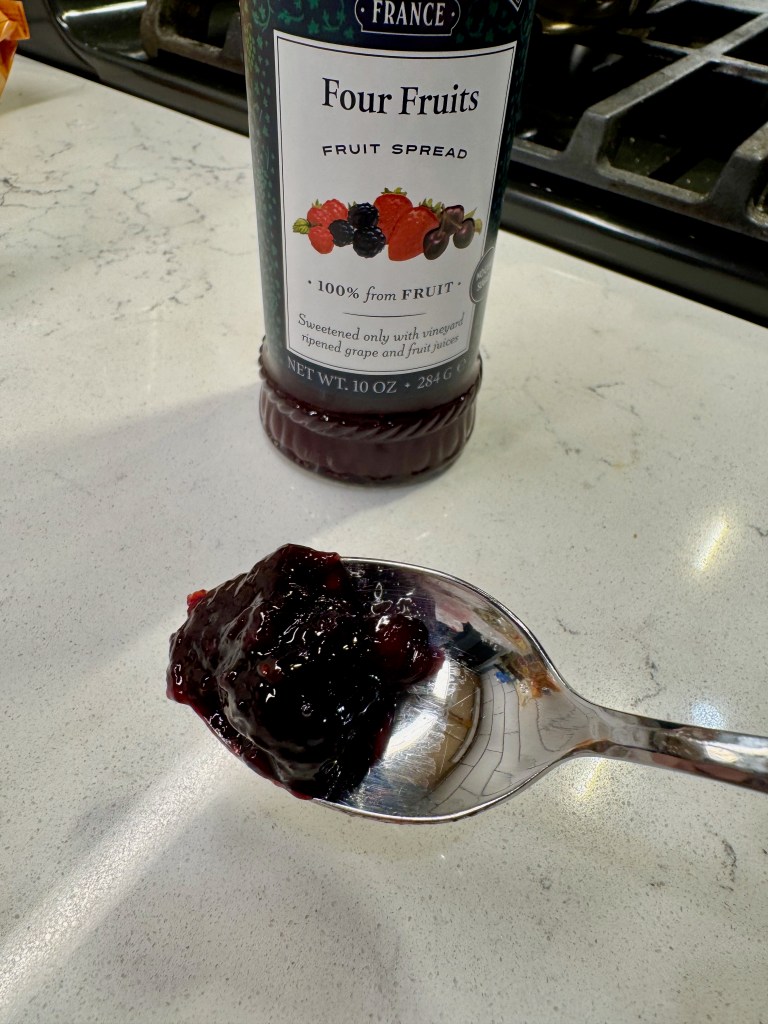
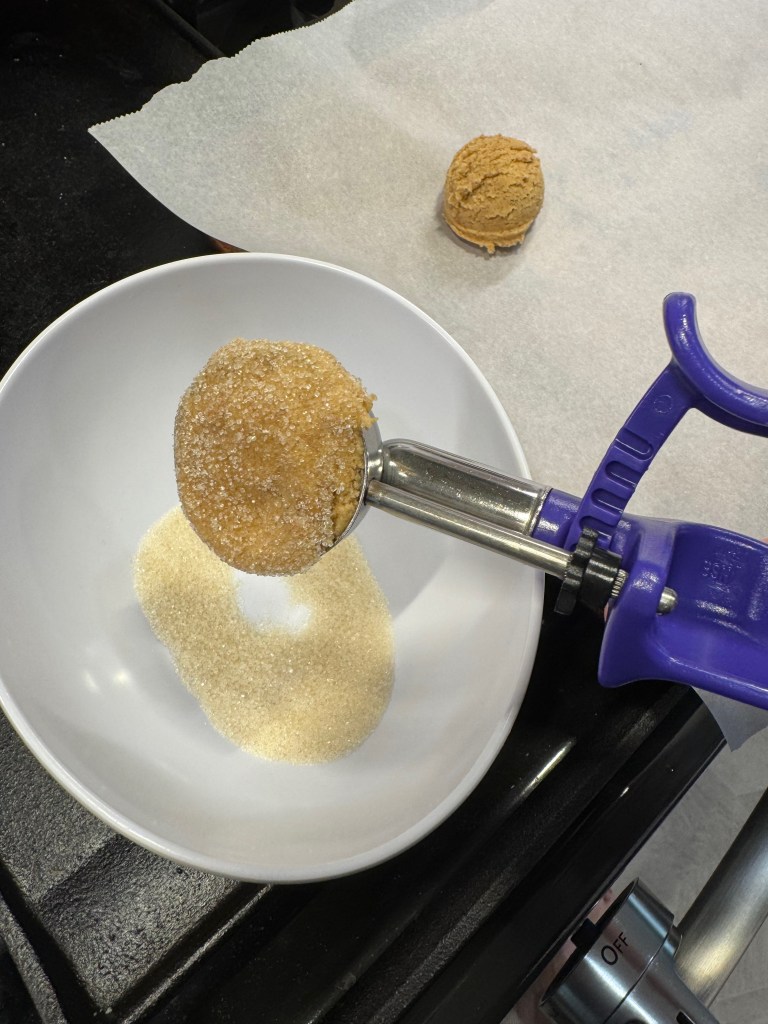
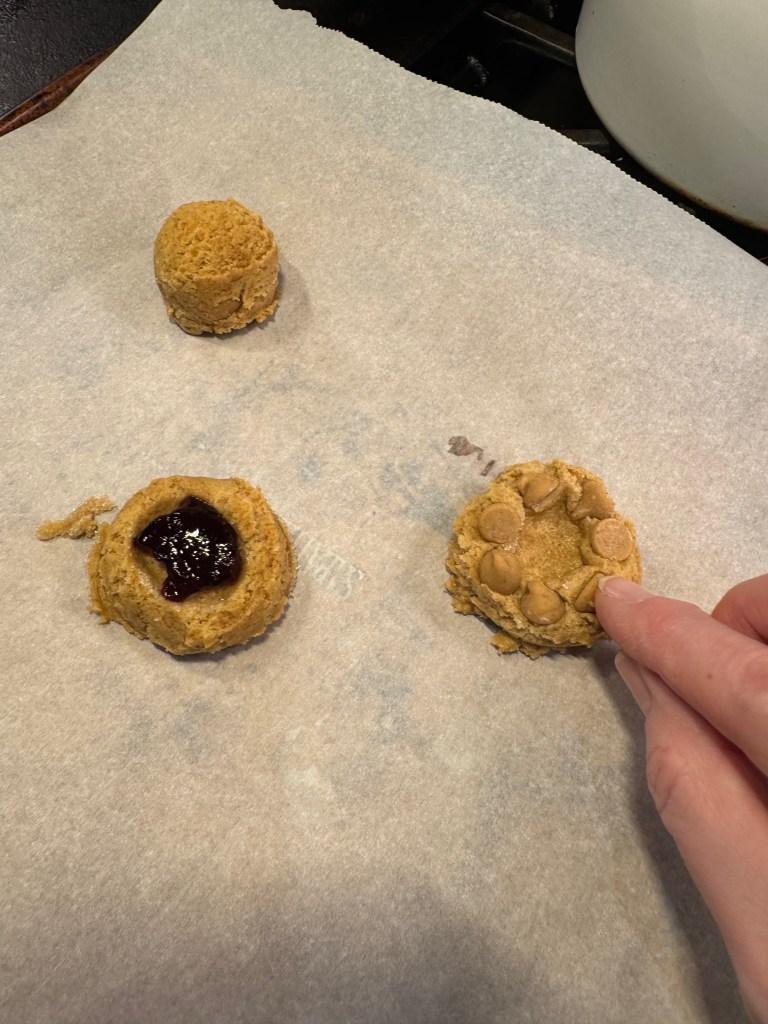
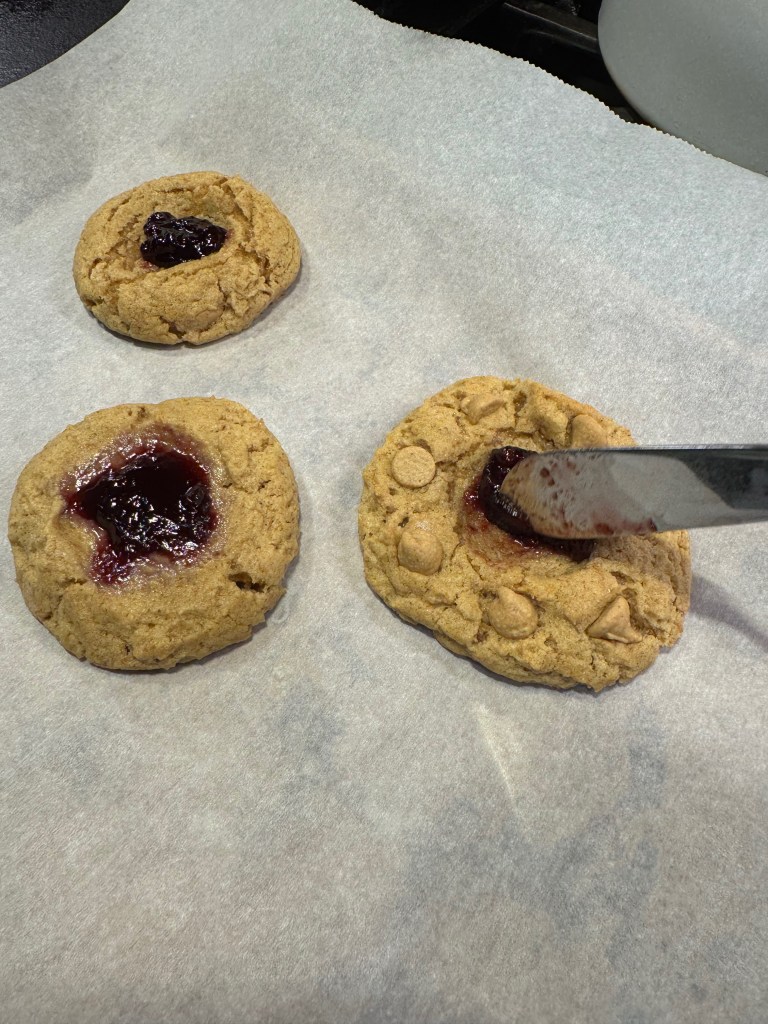
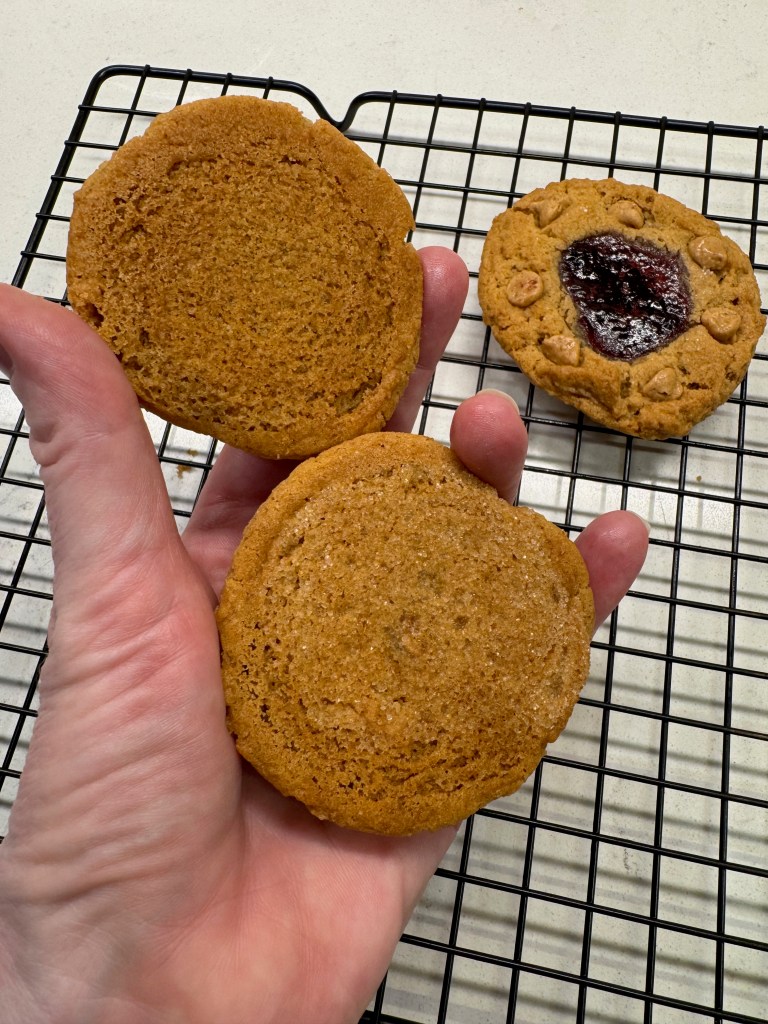
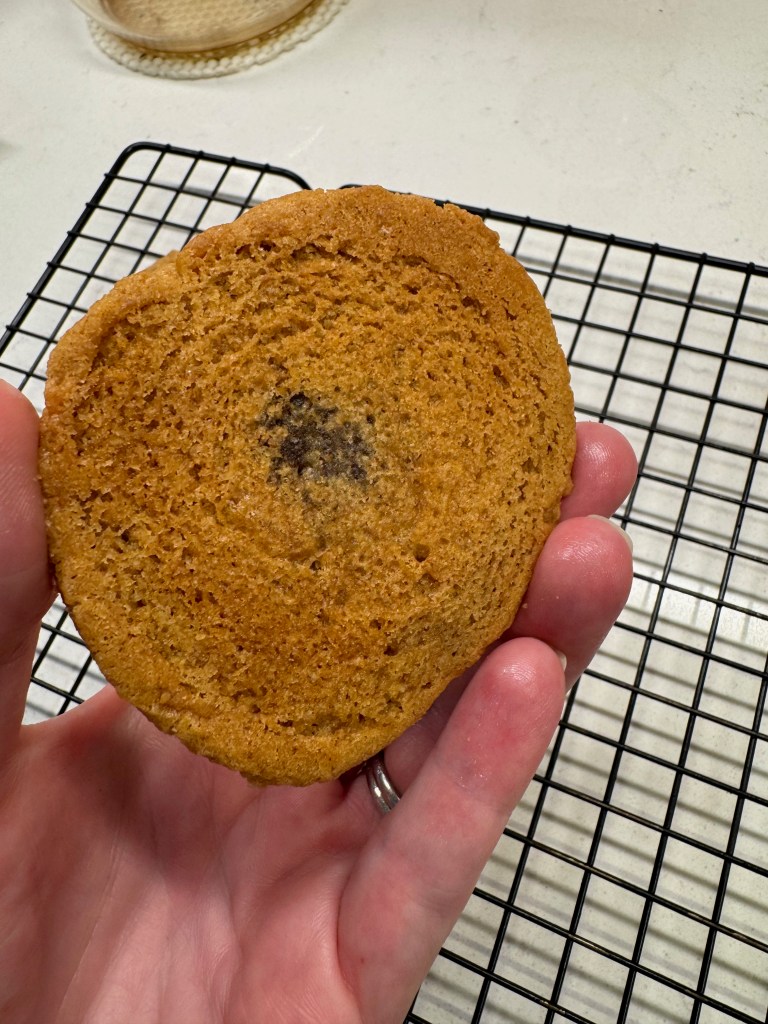
I had a time deciding what flavor jelly would be right, and it hinged on the texture of the spread.  See? Y’all had no idea how much pressure I put on myself to create these fun things! A true jelly would be too wet and ooze all over the oven, so I started looking at preserves with bits of actual fruit. This blend of four fruits was perfect, bringing berries and cherries into the mix. I set up an experiment with three cookies to see whether it was best to bake them with the preserves already in, or to create thumbprints halfway through baking, and whether it made sense to add a ring of extra peanut butter chips on top for a little more melting impact with the marshmallow. 
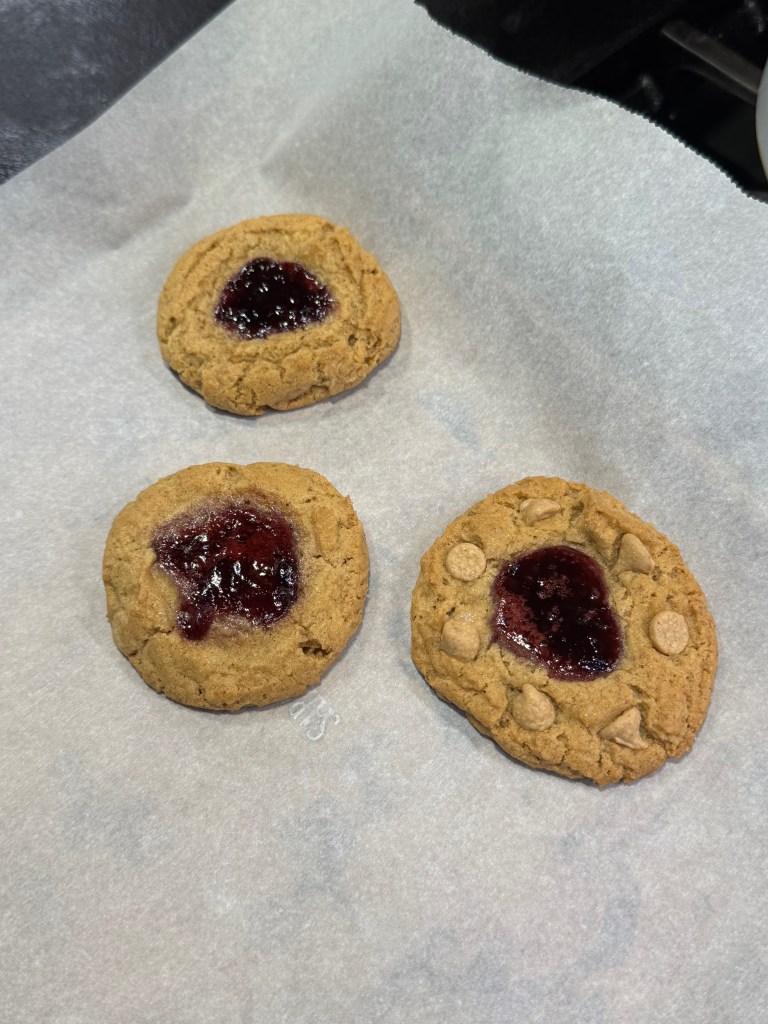

In the end, the best cookies had sugar on the bottom for more crispness and the preserves baked into the cookie for the full baking time, which was 14 minutes. On their own, these cookies are delightful, and I couldn’t wait to turn them into s’mores!
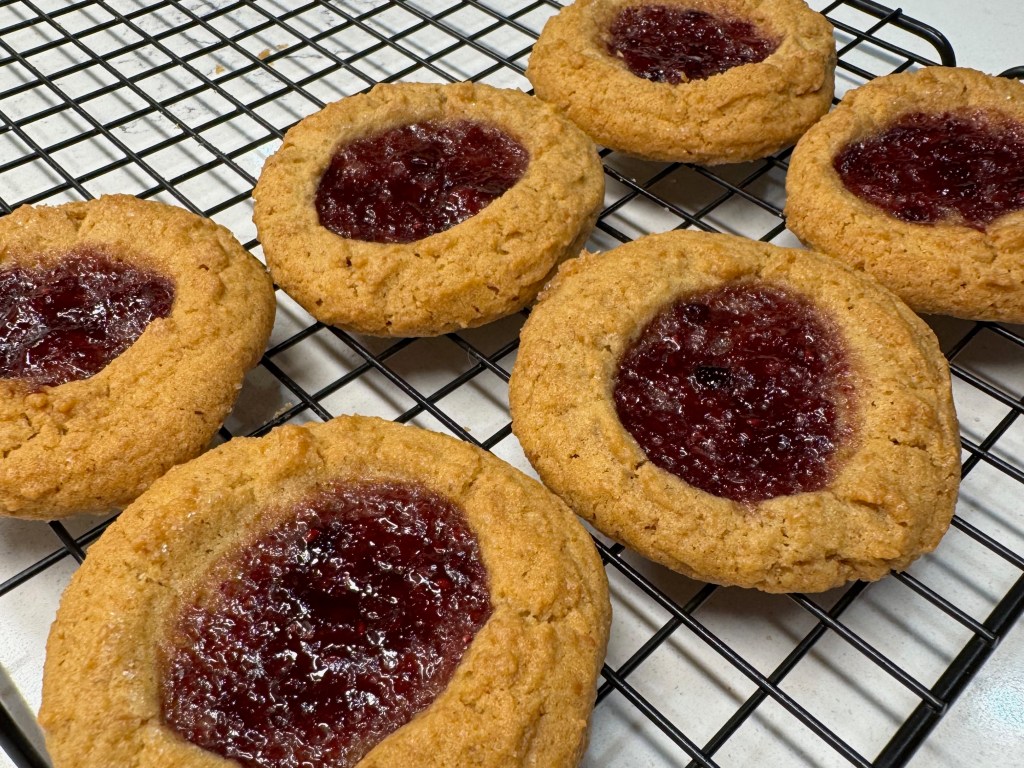
If you don’t feel like doing the marshmallows, you’d probably enjoy these cookies as they are.

In case you’re wondering, yes, we are the crazy ones in the neighborhood, building a backyard fire in the Solo stove when evening temperatures are in the 80s. We are always up for adventure, especially when food is involved!
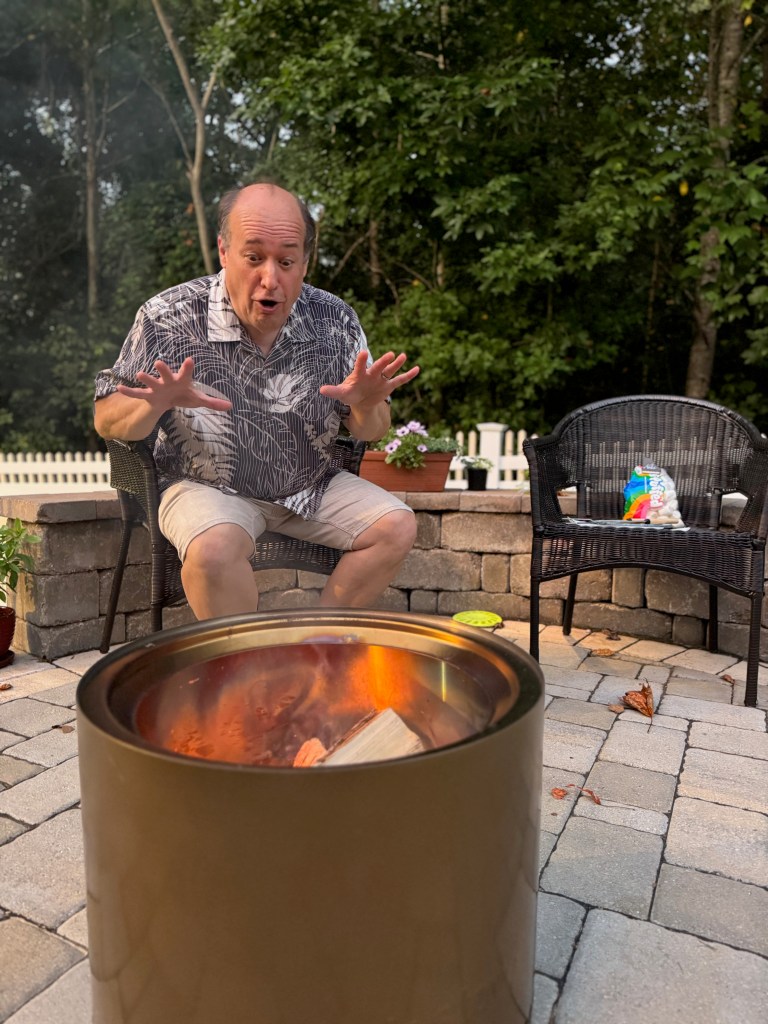
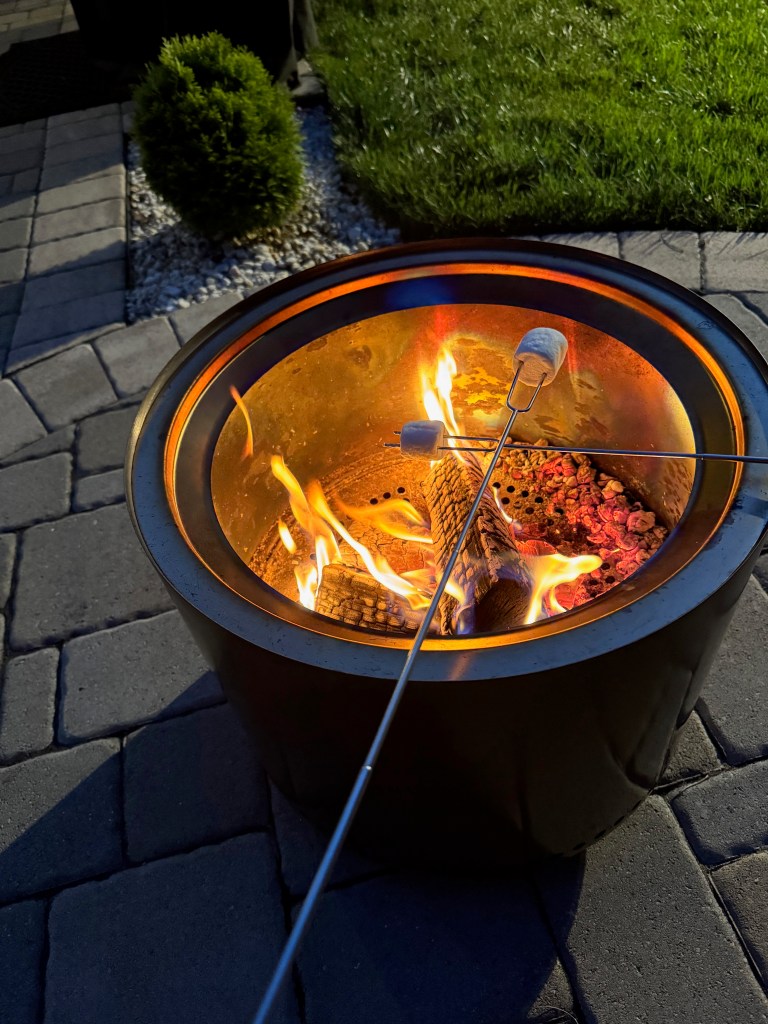
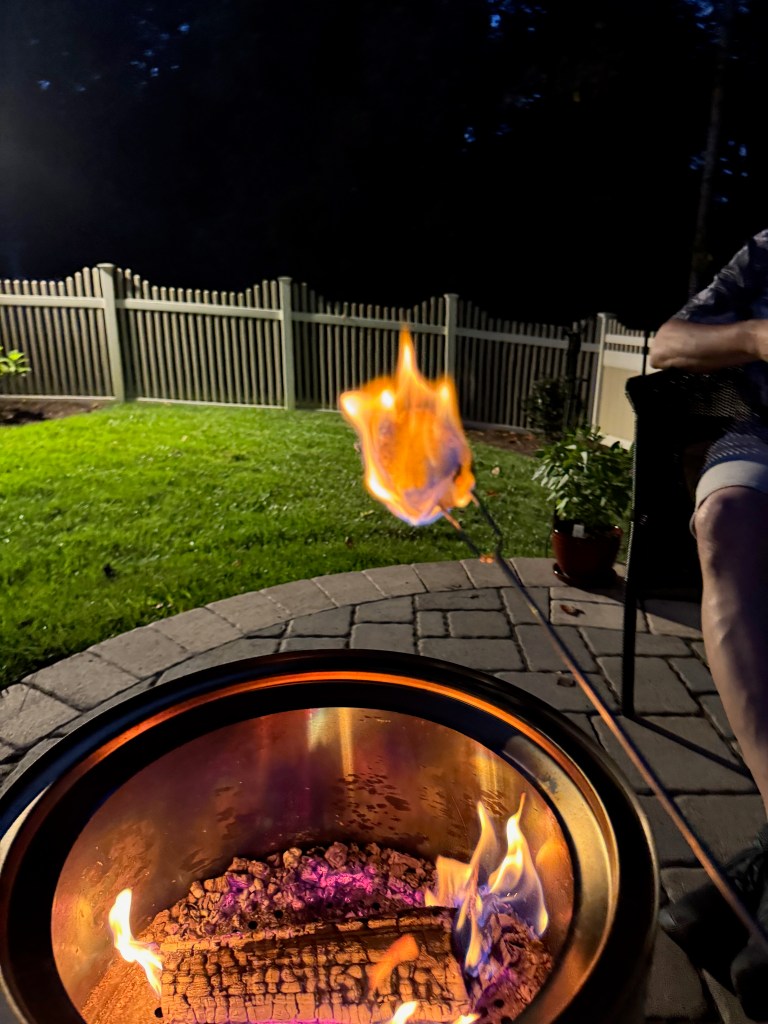
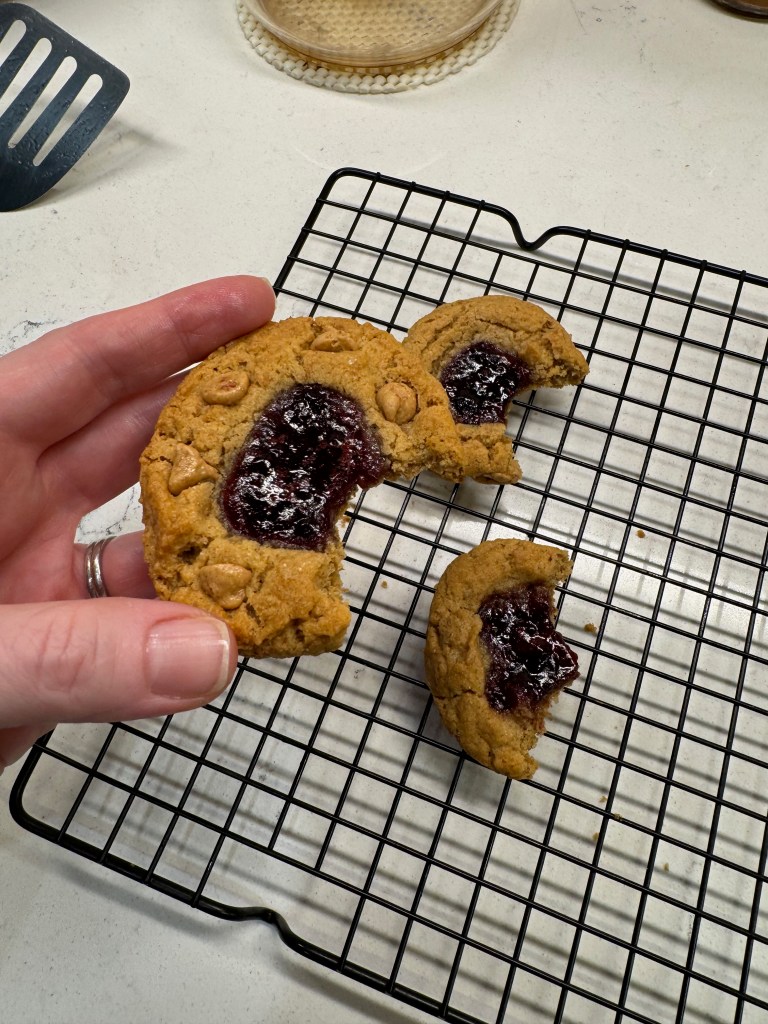
We toasted large marshmallows to personal taste— I like mine set ablaze and charred on the outside and Les likes them lightly golden— and then we squished them between two of these peanut butter-and-jelly cookies, with the jelly side in, of course. And the verdict?

My dentist would like a word with me.

Well, for starters, the peanut butter cookies did not remain crispy. By the time we did our s’mores, they were soft and bendy, which worked out great for the photos of us tearing them apart. The “jelly” aspect was all but lost, as I didn’t really detect it in my sample bites. It was, for me, way too much sugar, and— darn it!— after all that overthinking, I missed the oozy element of melted chocolate. Not a total miss, but not what my imagination wanted it to be. The cookies themselves are great.

If you have kids or grandkids and love a fun, sugary experiment, I’d say give it a go, perhaps with a twist of your own. Would I make them again? Probably not, but mainly because I only think about s’mores a couple times a year and by the time National S’mores Day rolls around again, I will have concocted another wild idea. I’ll probably pick up some grahams and chocolate before the weekend is over to make real s’mores. Some things are classic for a reason. ✌🏻

PB&J S'mores
  • Servings: About 12
  • Difficulty: Average
  • Print

A fun experiment for any s'mores enthusiast! I replaced two of the classic components of this campfire treat with a pb&j. It was sweet enough to melt your teeth, and isn't that kind of the point?


Ingredients

  • 1 stick butter (8 Tbsp.), softened slightly
  • 1/2 cup smooth peanut butter
  • 1/2 cup light brown sugar
  • 1/2 cup organic cane sugar
  • 1 large egg, at room temperature
  • 1/2 tsp. vanilla extract
  • 1 tsp baking soda, dissolved in a small amount of hot water
  • 3/4 cup all-purpose flour
  • 3/4 cup whole wheat graham flour
  • 1/2 tsp. kosher salt crystals
  • 1/3 cup peanut butter chips (optional)
  • About 2 Tablespoons cane sugar (for sugaring the bottom of cookies)
  • About 1/4 cup thick fruit preserves
  • Large marshmallows, roasted for s’mores
  • Plenty of napkins

Directions

  1. Combine butter and peanut butter in the bowl of a stand mixer or large mixing bowl. Beat on medium speed until evenly combined and smooth. Slowly add sugars while mixer runs, and beat until mixture is somewhat fluffy. Stop the mixer and scrape down the sides of the bowl.
  2. Add egg and vanilla and beat again until fluffy. Drizzle in the dissolved soda and beat just until combined.
  3. Whisk flours and salt together in a small bowl and add to the cookie batter, about half at a time, beating after each addition and scraping down the sides of the bowl.
  4. Scatter peanut chips (if using) over the dough and use a spatula or wooden spoon to press them into the dough. Cover the dough with plastic wrap and cover the bowl. Refrigerate for at least one hour before proceeding to shape and bake the cookies.
  5. Preheat oven to 350° F, with oven racks in upper and lower positions. Line two cookie sheets with parchment paper and spoon preserves into a zip-top bag for easy piping into the cookies. Measure a few tablespoons of cane sugar into a small bowl for the bottoms of the cookies.
  6. Use a tablespoon-sized cookie scoop to measure out the dough. Flatten the dough in the scoop and dip the flat side into the cane sugar before turning the dough out onto the parchment. Do not flatten the cookies. Use a cork or your thumb to create dimples approximately half the depth of the cookie balls and two-thirds across the cookie. Pipe 1/2 tsp. fruit preserves into each cookie. Place a ring of additional peanut butter chips around the preserve filling if you want to be fancy about it.
  7. Bake cookies for 14 minutes, rotating pans top to bottom if using both at once. Allow the cookies to cool on the pan for a few minutes, and then transfer them to a rack to cool completely.
  8. For s’mores, toast marshmallows and squeeze two cookies together around the marshmallow, with the preserves on the inside. The melted marshmallow will soften and melt the preserves for an oozy-gooey treat.
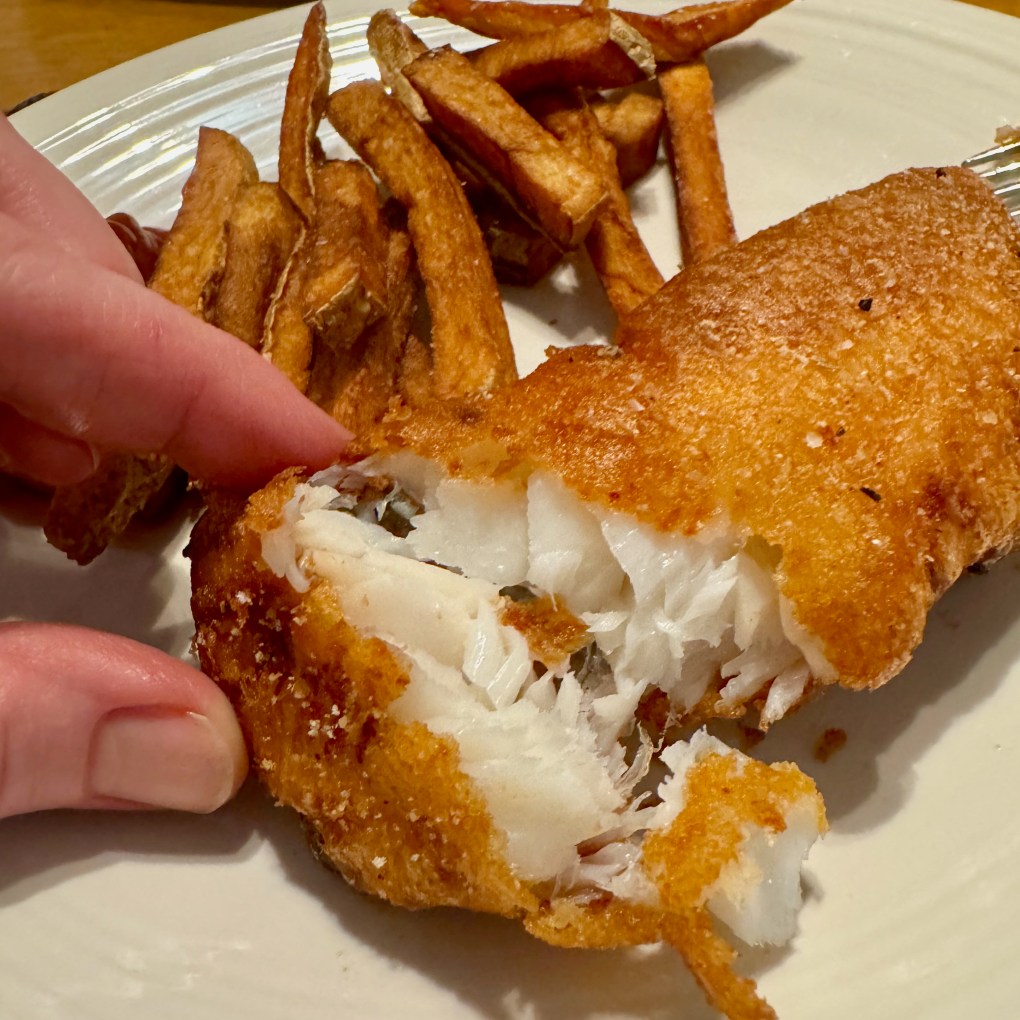

Real Deal, Western New York Fish Fry

This meal reminds me of my hometown in rural upstate New York, and it’s one of the things I couldn’t wait to share with my husband, Les, when we did a drive-by on our solar eclipse-chasing trip to Canada last year. I served up many a fish fry myself during the mid-1980s when I waited tables in a now-closed restaurant called The Cottage, just before I packed up my vinyl albums, Aqua Net hairspray and my cat to move to North Carolina. But my strongest memories of fish fry all happened in a nondescript white house on a side street in my hometown— the American Legion.

Doesn’t look like much, right?

Nearly everyone in my town of 1,200 was a member of the Legion, either by direct military experience or auxiliary membership from a relative’s service. Families gathered there for anniversary dinners and retirement parties and to celebrate the lives of loved ones passed. Technically, it was considered a private club; we had to hit a little doorbell button by the back door that triggered a buzzer for the bartender, and then you’d wait for the click that signaled the lock had been released and you were welcome to enter. Why it had to be such a fuss, I don’t know.

The Legion smelled as old as its furnishings looked. Not musty, but with the lingering aroma of spilled draft beer, frying oil and, in those days, cigarette smoke. It was a popular gathering spot for folks after work and on weekends. And the place was always jumping from open to close on Fridays and Saturdays, when everyone’s order was the same. Fish fry, please!

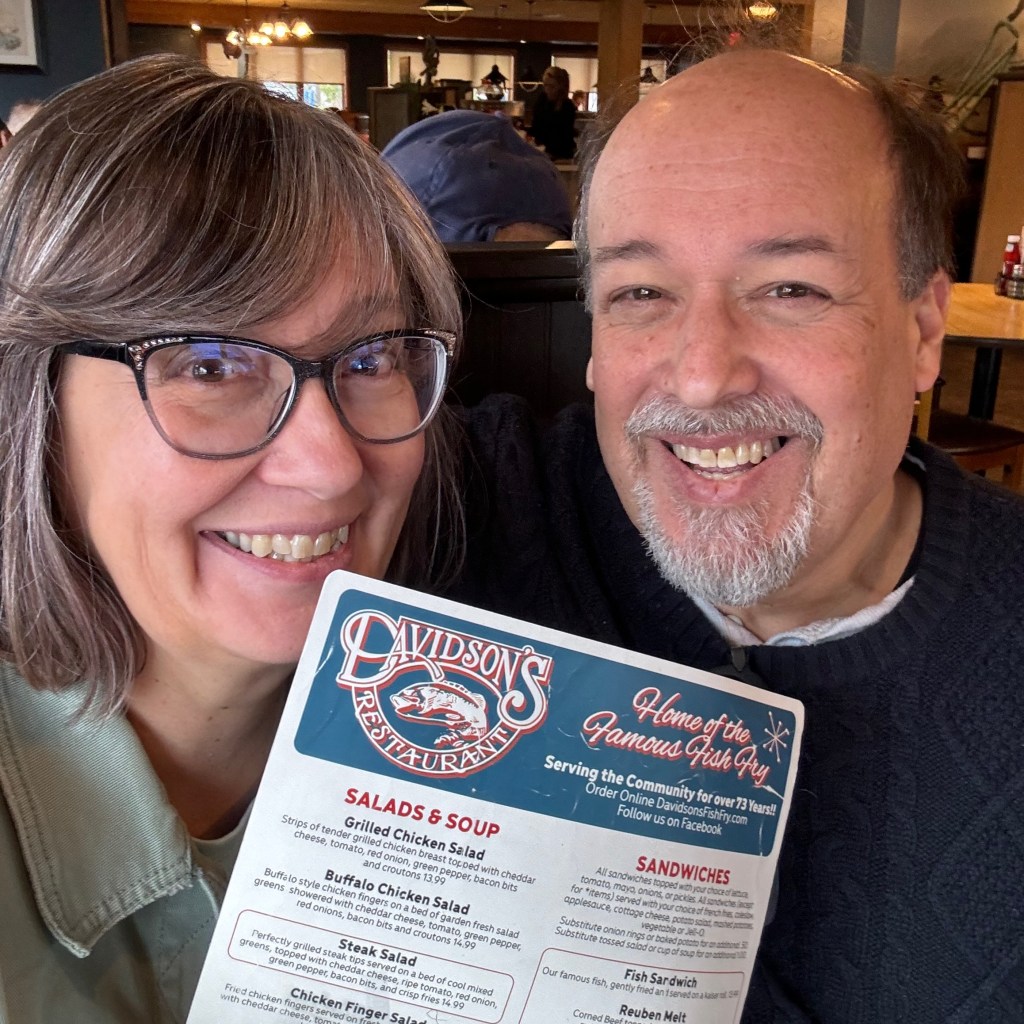
The same is true for Davidson’s Restaurant in nearby Lakewood, New York— except that they serve fish fry every day—  and that’s where Les was introduced to this culinary experience on our eclipse vacation last year. I had talked it up so much, and I was hoping that it would be all that I remembered. Well, Davidson’s did not disappoint. The deep-fried exterior was perfectly crunchy, and the fish inside was tender, flaky and moist. Believe it or not, this was the lunch portion.


Not the same as “fish and chips”

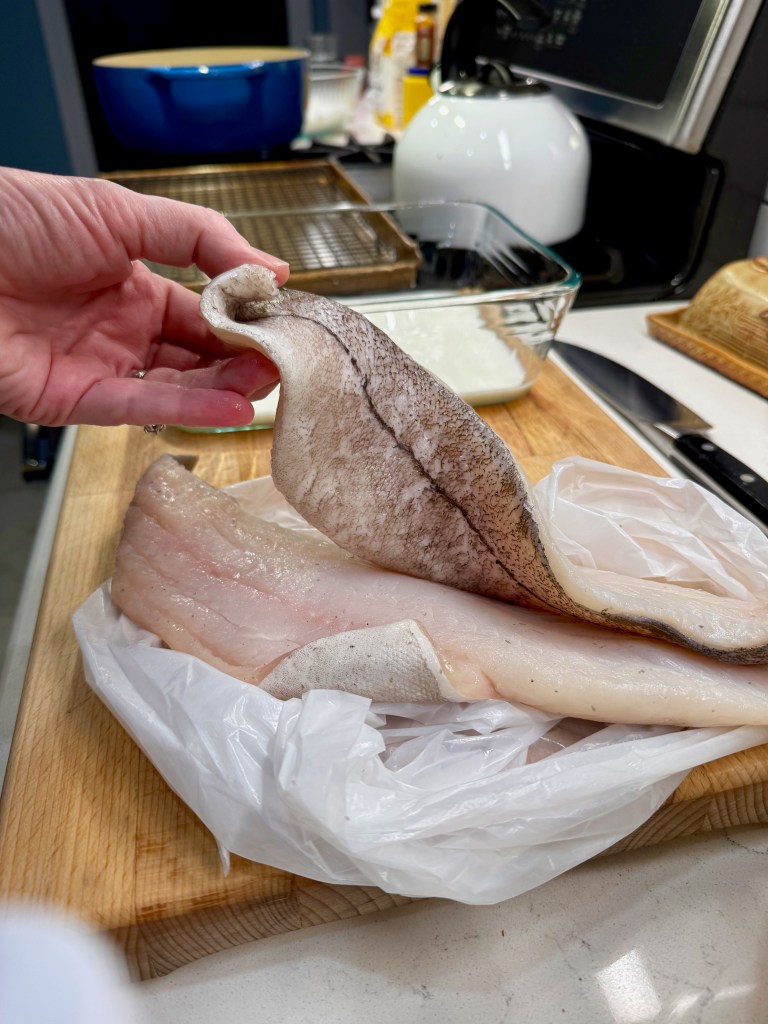
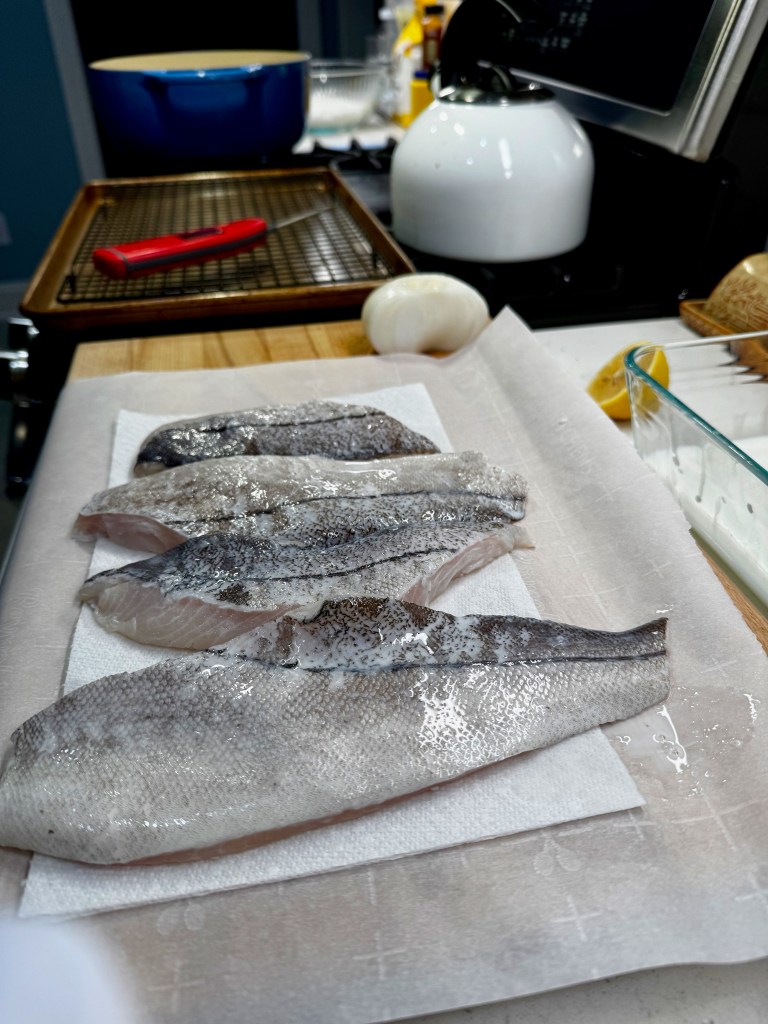
I’d dare say that if Buffalo wings had not come along, it would have been this beer-battered fish that Western New York would have become famous for. It’s a far cry different from the cornmeal-crusted fried fish we see throughout North Carolina, and not even quite the same as the beer-battered cod you’d find in a typical Irish pub. Haddock is the seafood of choice, a North Atlantic whitefish that is tender and flaky, a bit more “fishy” than cod. The fillets are long and slender, and I chose to cut them into smaller pieces so they were more portion-appropriate, and also so that they would fit in the Dutch oven I would be using for frying.


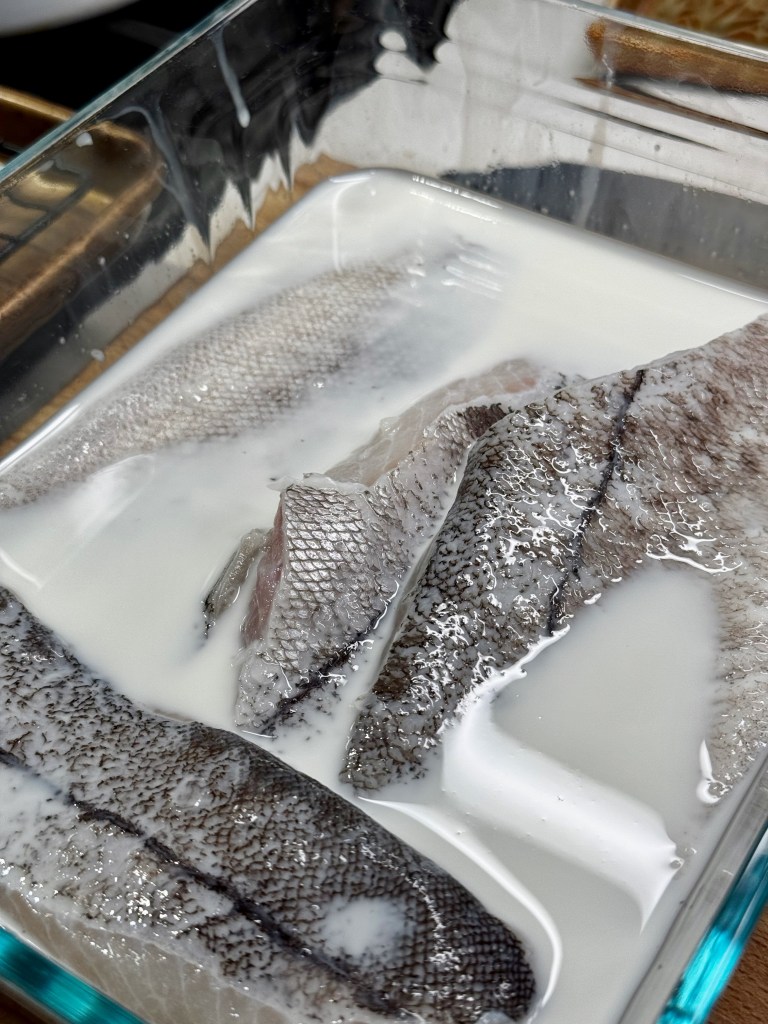
To minimize the fishy smell (and taste), follow my lead and soak the fillets in milk for 20 minutes. The odorous compounds in the fish will cling to the milk proteins, leaving the fillets mild and sweet. This is the first time I’ve done this step, and it will be the new standard, as it also reduced the smell of fried fish in the house after this meal. Take note, though, that this step is not meant to “save” any fish that is past its freshness range; this is an optional step for less fish smell in general.

What about this beer batter?

I’ve lost count of how many conversations I’ve had with my Aunt Joy, my fellow fish fry aficionado, about our trials and errors on the beer batter. Did the batter need egg? How thick should it be? Should it be a certain kind of beer or could you use other liquids? We had a lot of questions! 

Aunt Joy gets most of the credit for the testing, for all the experiments she set up trying to achieve that familiar, crispy texture we both remember so well. She discovered that egg made the batter too heavy, putting a dense, cake-like coating on the delicate fish, and she narrowed down that beer was indeed the right thing. She even tried a recipe that I forgot I had given her, which called for a shot of vodka in the batter. I suppose this might have the same effect as vodka in a pastry dough, though I truly can’t remember whether I’ve tried it myself.


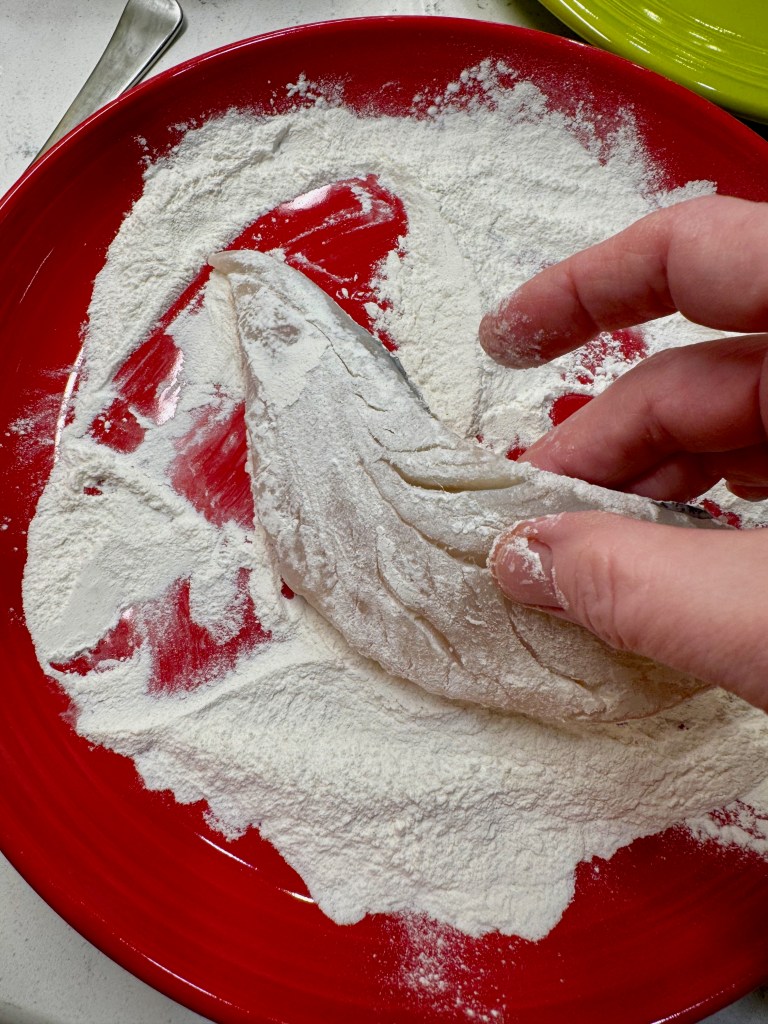
All this testing resulted in the batter I used this time, and it was perfect! Self-rising flour, which already includes baking powder and salt, is the base for it. A couple of tablespoons of corn starch in the mix ensures a light, crispy finish, and a few shakes of sweet paprika lend a nice color and a hint of bright flavor. After whisking this together, I spooned out enough to dredge the haddock fillets, then returned the flour to the batter bowl. Keep the beer (light lager or pilsner-style) on ice until you’re ready to fry.

Time to fry the fish!

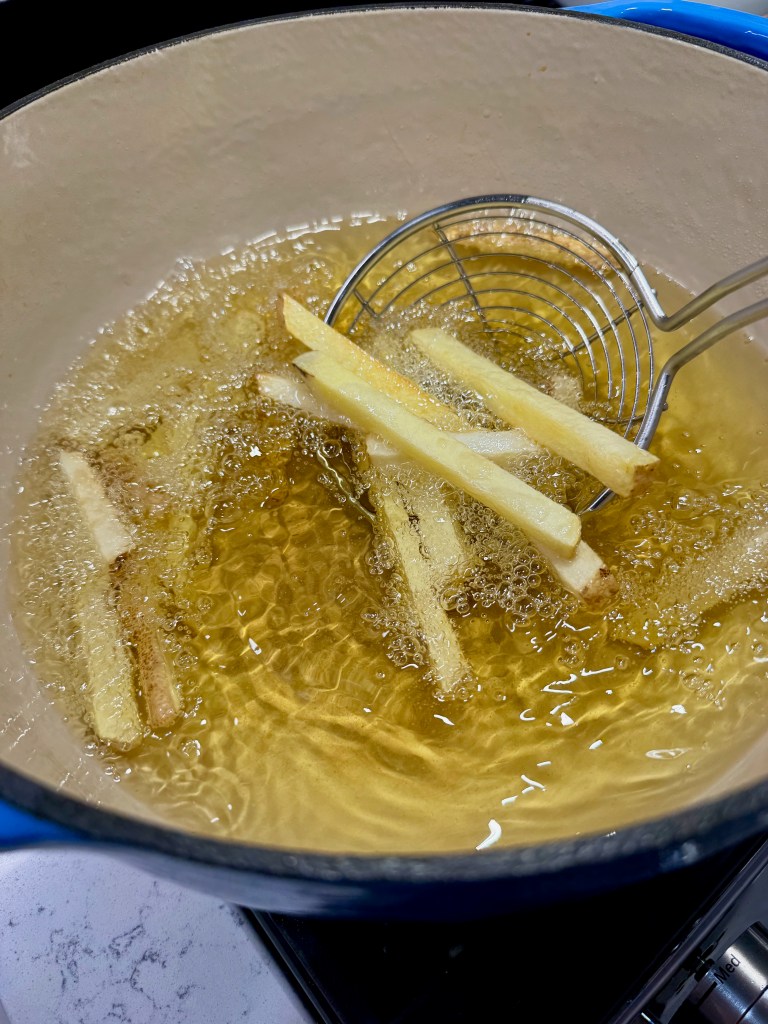
May I recommend, if you choose to make this fish fry, consider not trying to also do deep-fried french fries. Stick with oven fries or some other side, so that you can focus on getting the fish right. You won’t be sorry, and you’ll only have to wait for the oil to reach temperature once.


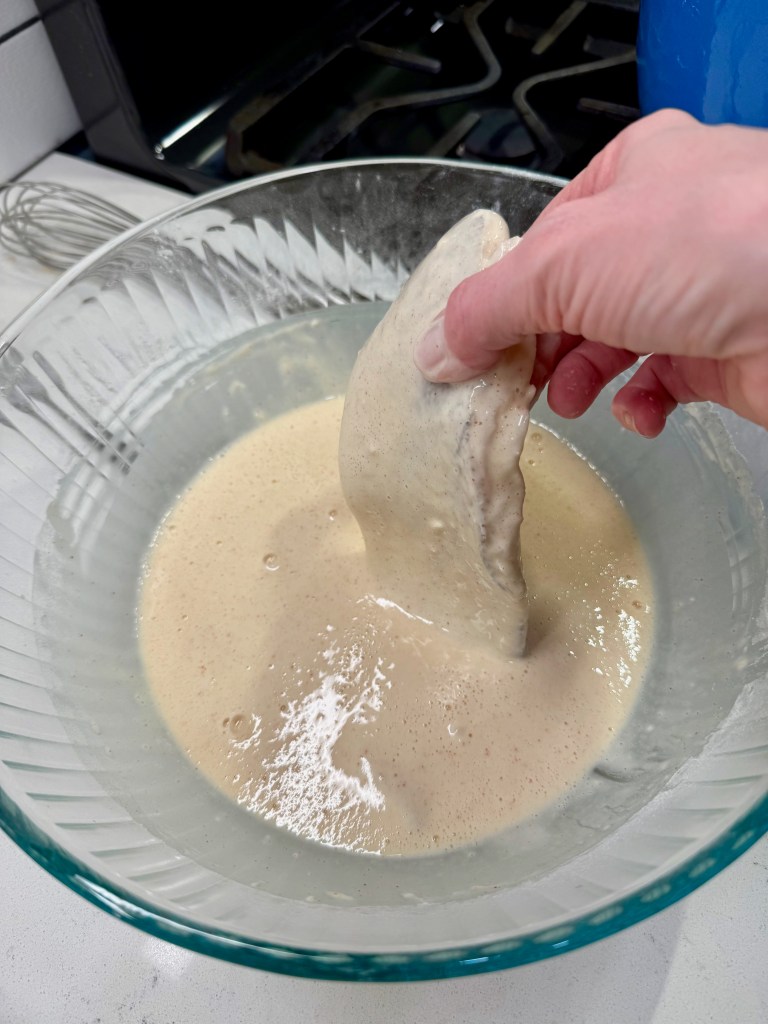
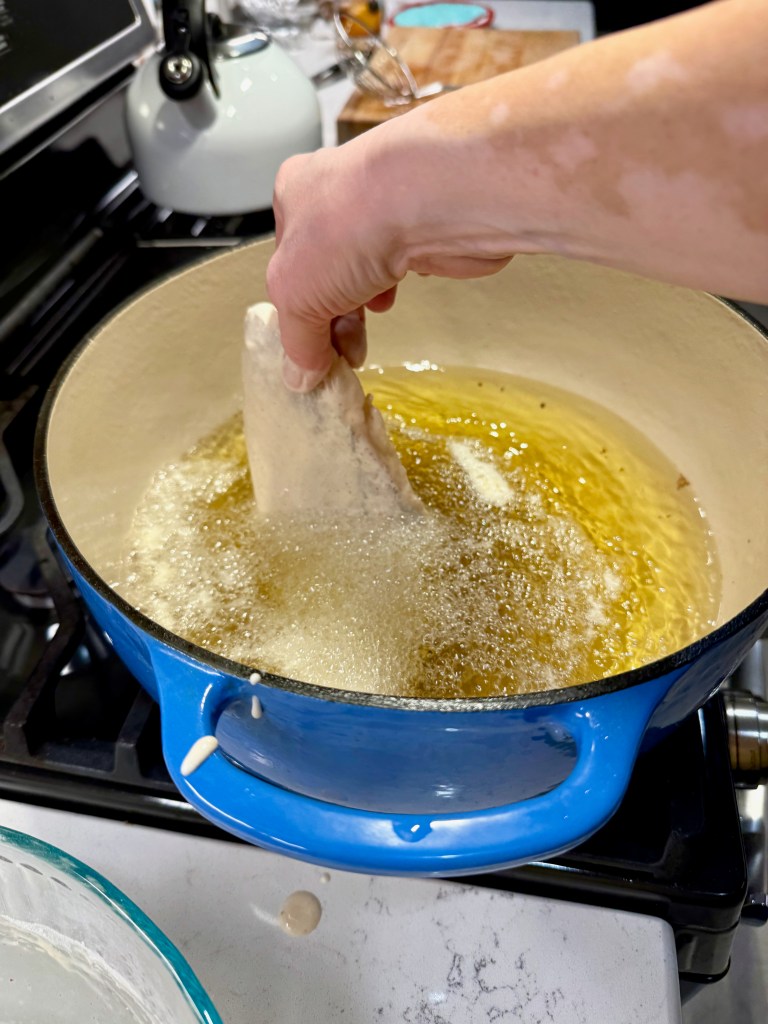
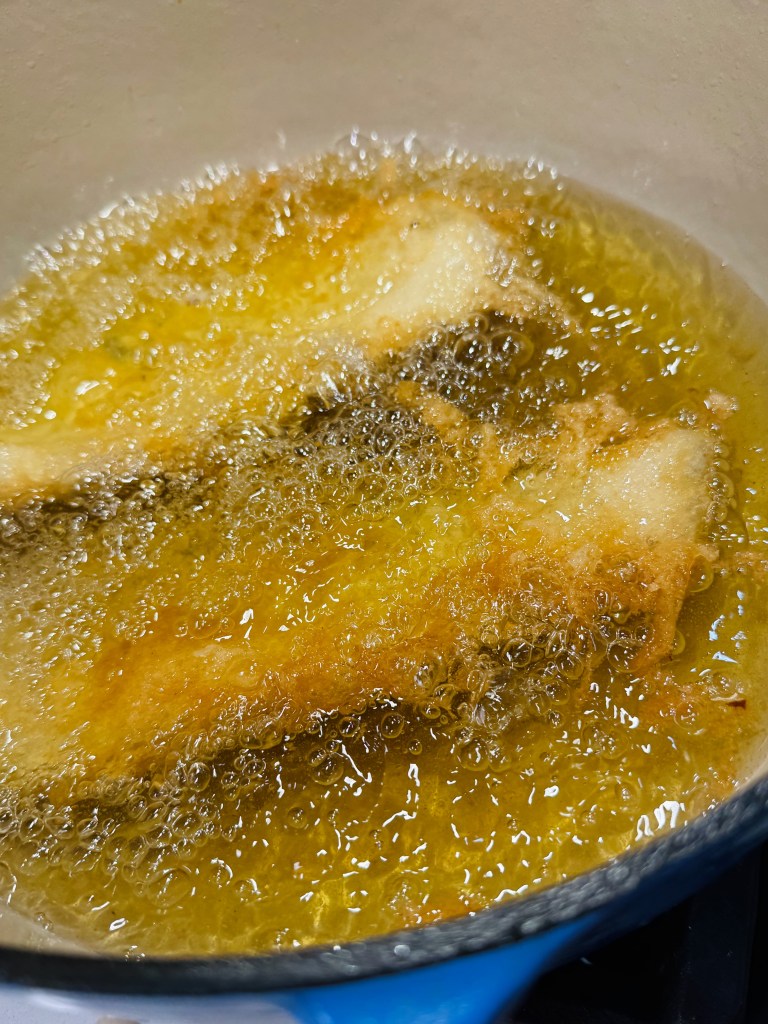
Keep the beer ice cold until go time, and whisk the batter only long enough to achieve a smooth consistency. Dip the flour-dredged haddock into the batter, lifting to allow the excess to drip off before gently placing it into the hot oil. Let it bubble and fry for about six minutes (it goes quick!), or until the batter is a deep golden color with frilly, crispy edges all over. 


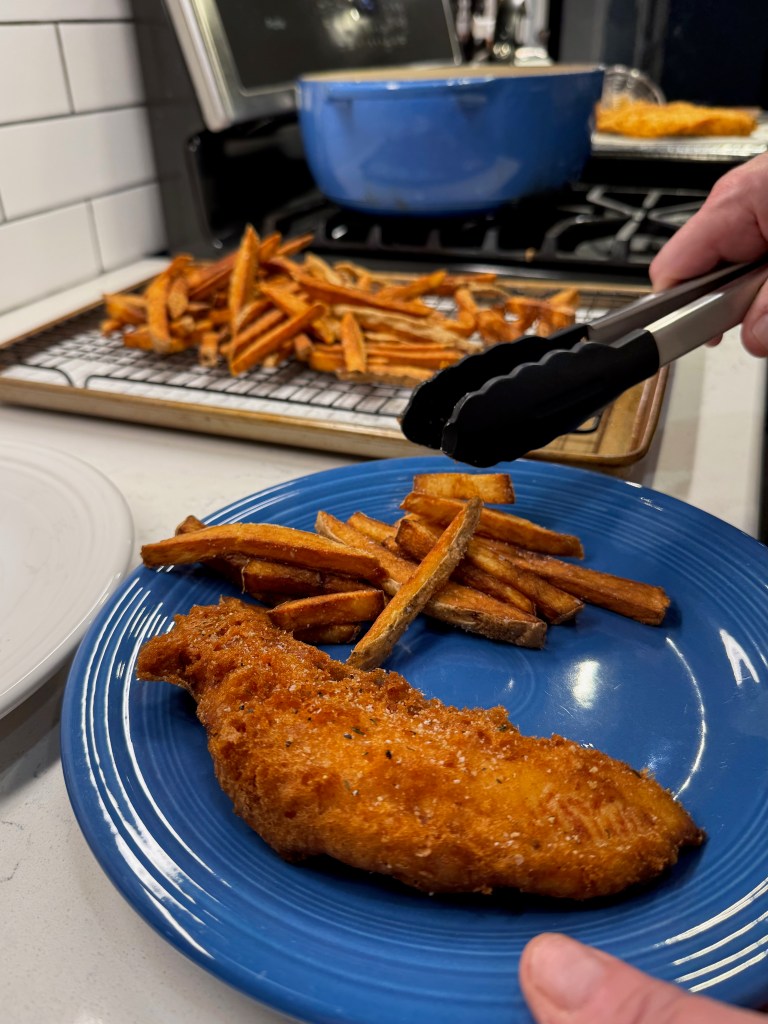
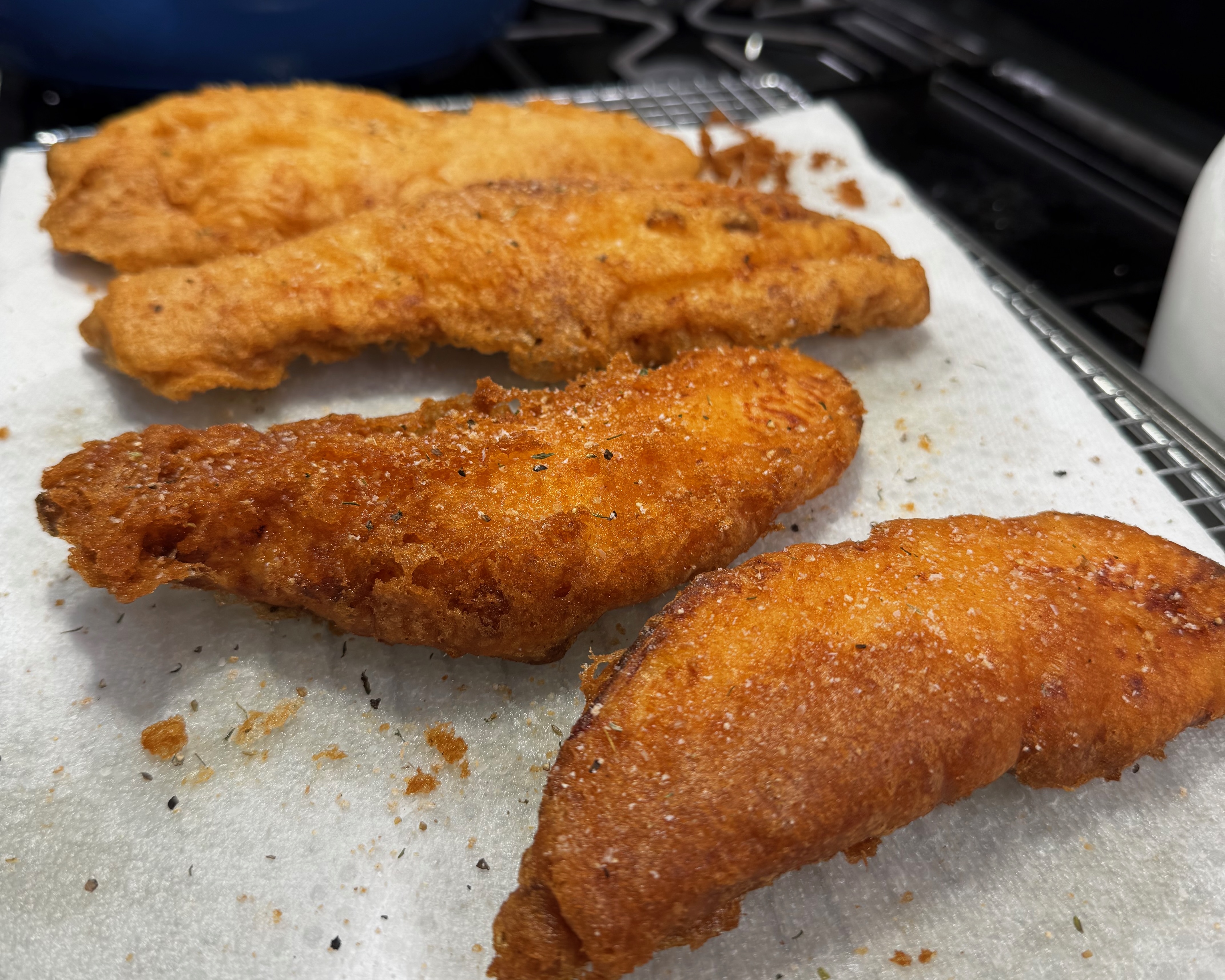
Use a spider utensil to lift the fillets onto a paper-lined cookie sheet, and season immediately with salt. For a true, Western New York experience, serve with French fries, creamy coleslaw and an ice cold beer.

Western New York Fish Fry

  • Servings: 4
  • Difficulty: Intermediate
  • Print

A Western New York fish fry is made with haddock and a very distinctive batter. It's crispy and light, golden brown and utterly addictive. This is the closest I've ever gotten to perfect with it, and just in time for Friday!


Ingredients

  • 1 1/2 pounds fresh haddock fillets
  • 1/2 cup milk (skim, 2% or whole will work)
  • 1 cup self-rising flour
  • 1 1/2 Tbsp cornstarch
  • Few shakes paprika
  • Pinch salt
  • 10 oz. ice cold beer (drink the rest!)
  • High temperature oil for frying (canola, grapeseed or peanut oil will work well)


Directions

  1. Prep fish by soaking in the milk for about 20 minutes to remove excess fish smell.
  2. Add oil to a deep fryer or Dutch oven, about three inches deep. Bring oil to 375° F. Preheat oven to 200° F for keeping first batches of fish warm.
  3. While the oil heats, combine flour, cornstarch, paprika and salt in a shallow bowl. Measure out 1/4 cup of the seasoned flour. Pat haddock fillets with paper towels and dredge them in the measured out flour. Place fillets on a parchment-lined plate. Return excess dredging flour back to the bowl.
  4. When oil reaches temperature, whisk the cold beer into the flour mixture, blending only until no lumps appear.
  5. Dip fish fillets into the batter, allowing excess to drip off into the bowl. Carefully lay battered fillets into the hot oil. Use a spider utensil to gently turn the fillets over when the underside becomes golden and crispy, about four minutes. Fry second side until deep golden in color. Use a spider utensil to transfer fillets to a paper towel-lined rack and immediately season them with salt. Keep in the warm oven while the next batch is frying.


Apple Pie Ice Cream

The kid in me comes out to play in July. It’s my birthday month, and so my memories call me back to childhood more than in other months. But I also think it’s because I learned a few years ago that July is National Ice Cream month. And what kid (even a grownup one) doesn’t love ice cream in the summer?

There’s a saying out there, attributed to President Harry Truman, that “there is nothing new in the world except the history that you do not know,” and though most U.S. citizens grew up believing that apple pie is an all-American dish— right alongside baseball, hot dogs and Chevrolet, remember?— the backstory of apple pie is much older. I found this article in Southern Living interesting; if you like rabbit holes (as I do), then dig into this after we finish this ice cream.

We may not have invented it, but we do indeed love apple pie in this country, and I have many fond childhood memories of my grandmother making pies and applesauce from the tart green apples produced by a tree next to the side of her house in Western New York. My cousins and I would go out there to pick them (sometimes off the ground), and Gram would spin a few other ingredients around like magic, and just like that, a pie would appear. A slice of that pie, alongside a scoop of vanilla ice cream and a wedge of sharp New York cheddar— oh, it was like heaven.

This year, the kid in me was craving something a little simpler, and so for our July Fourth celebration this year, it’ll be this apple pie ice cream. Two summer favorites in one scrumptious scoop!

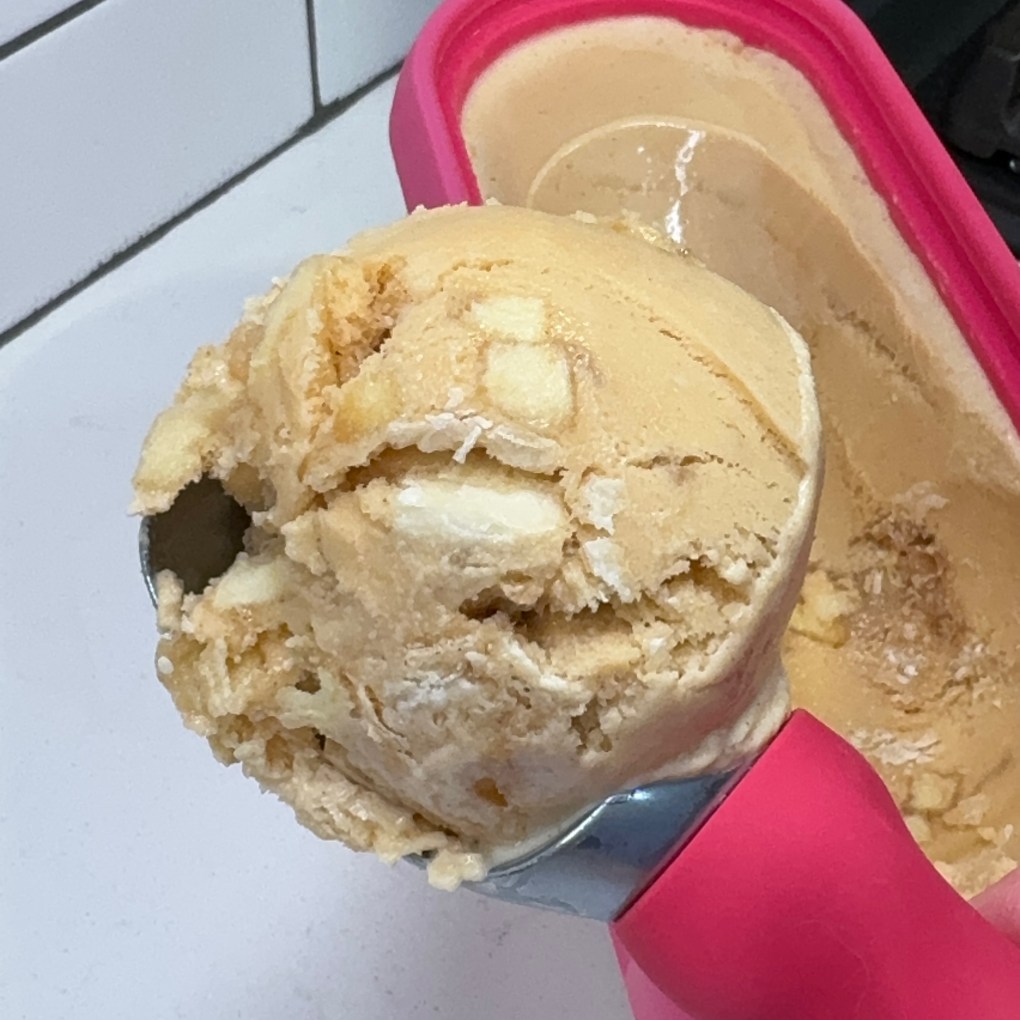
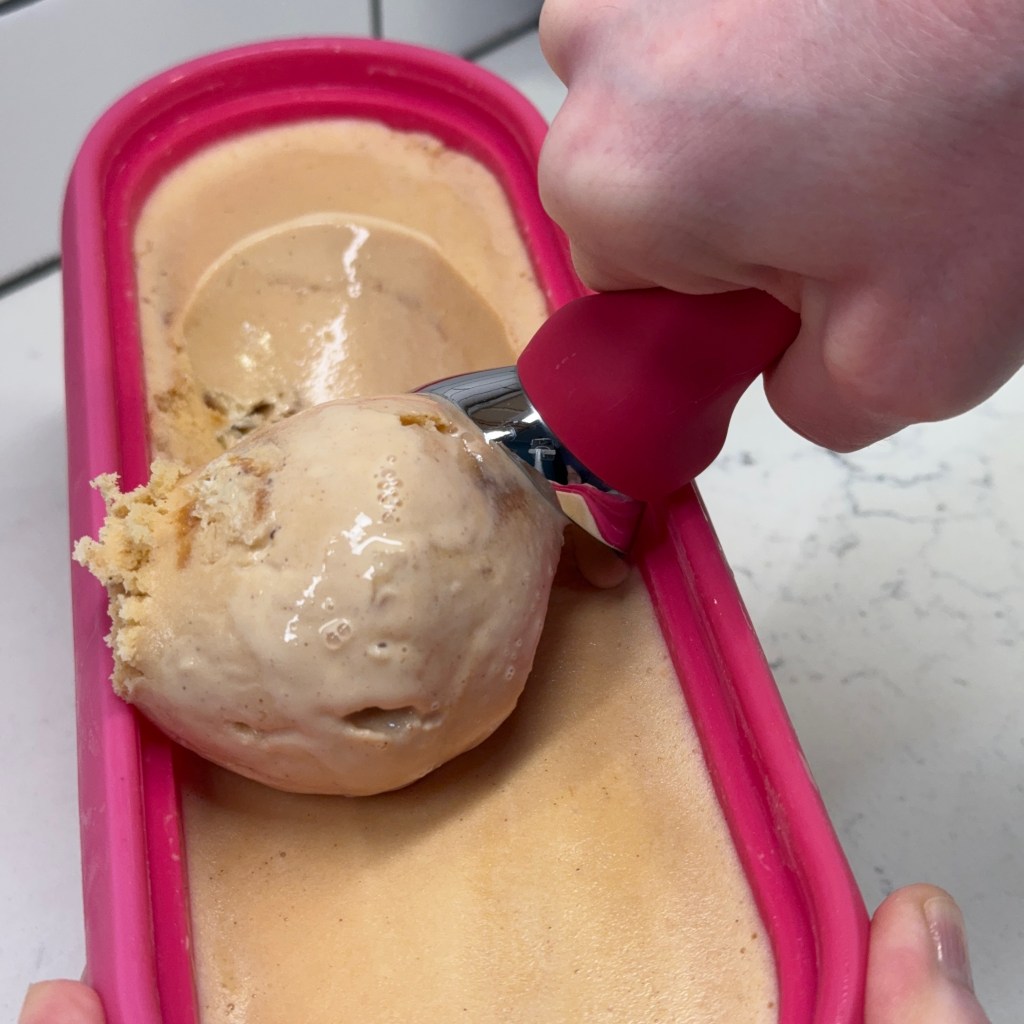
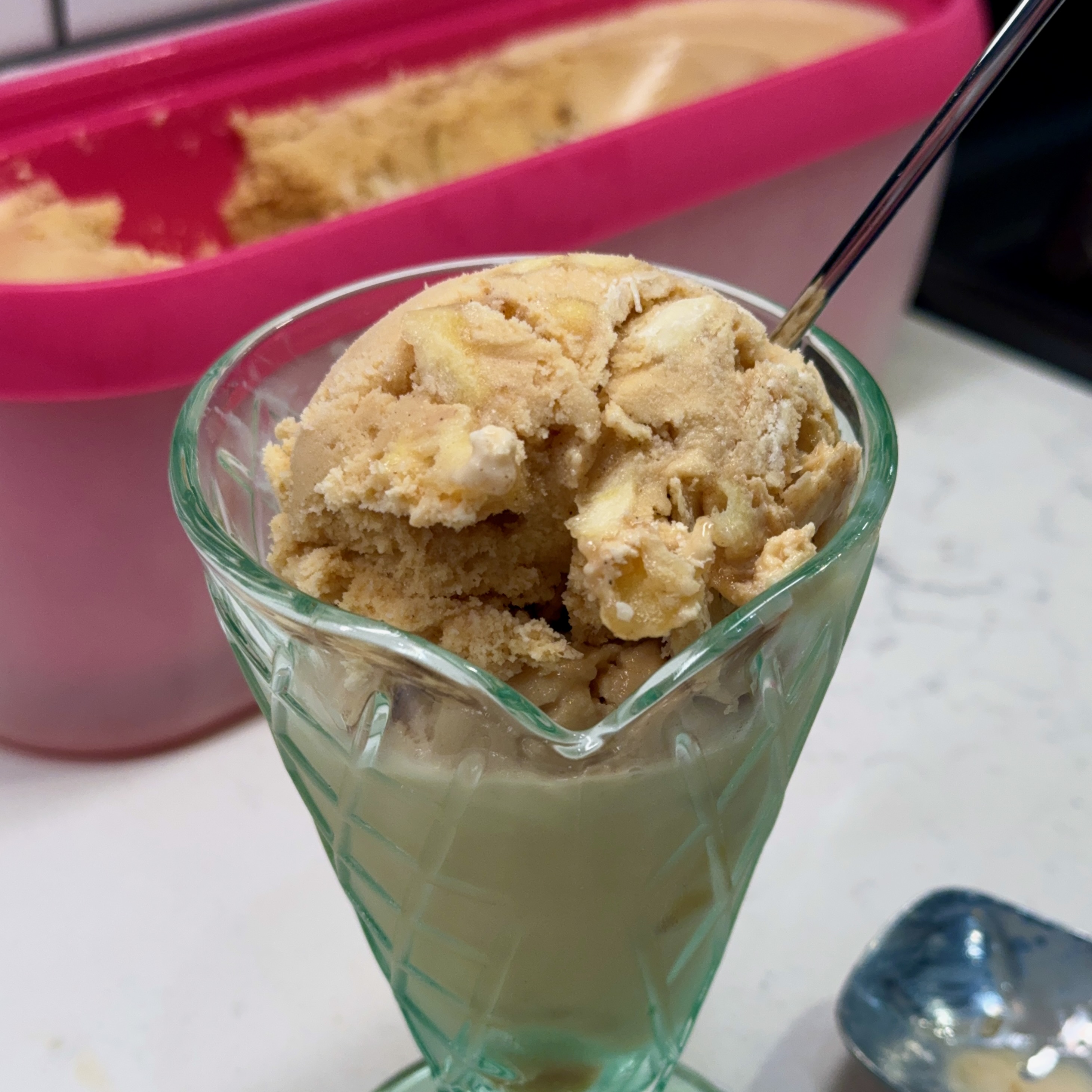
It’s apple pie and à la mode, all in one!

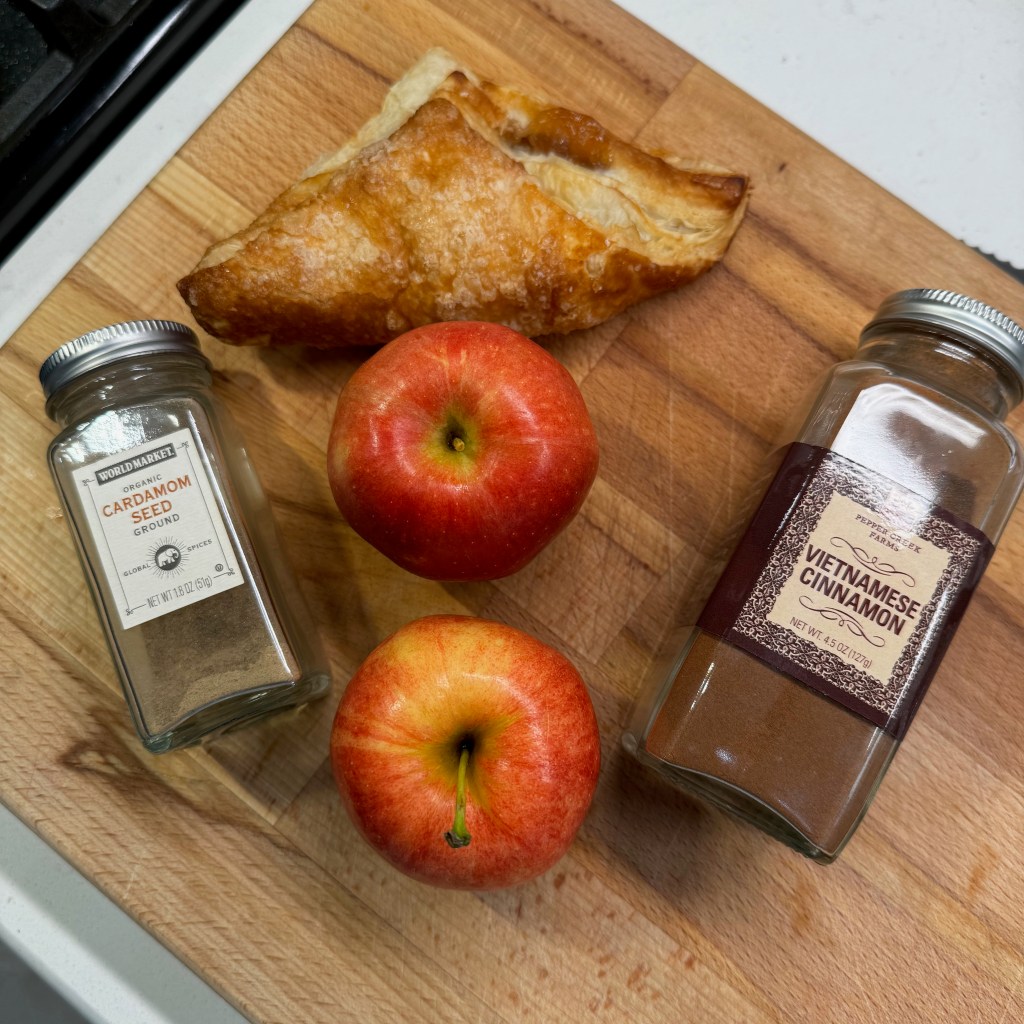
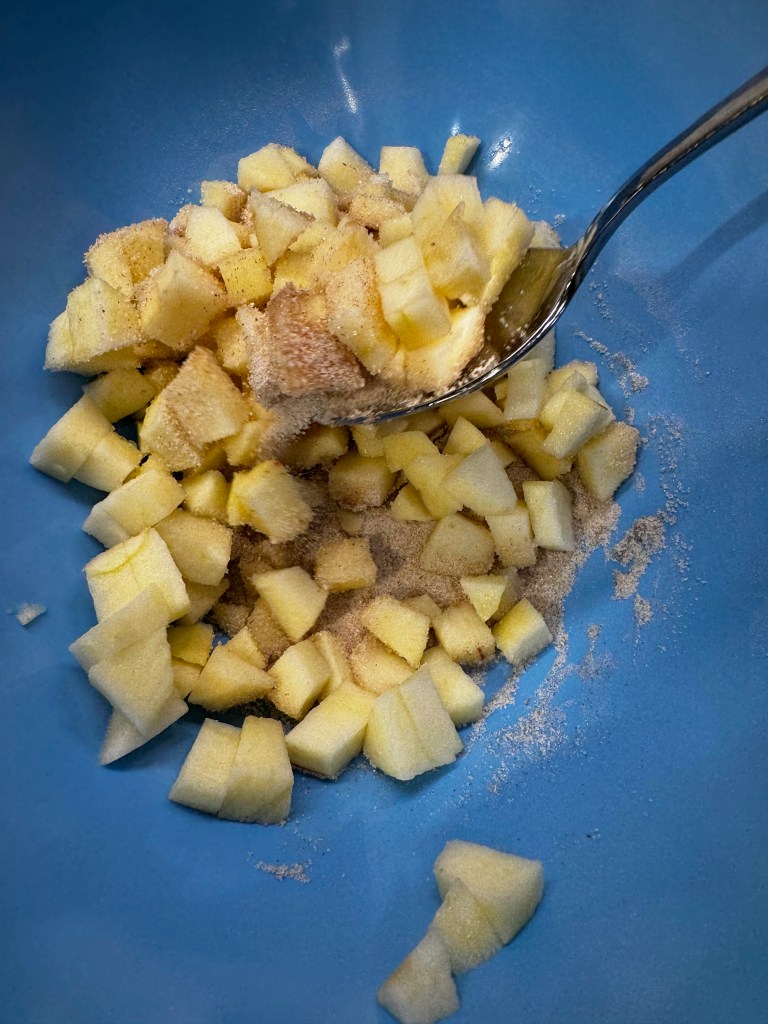
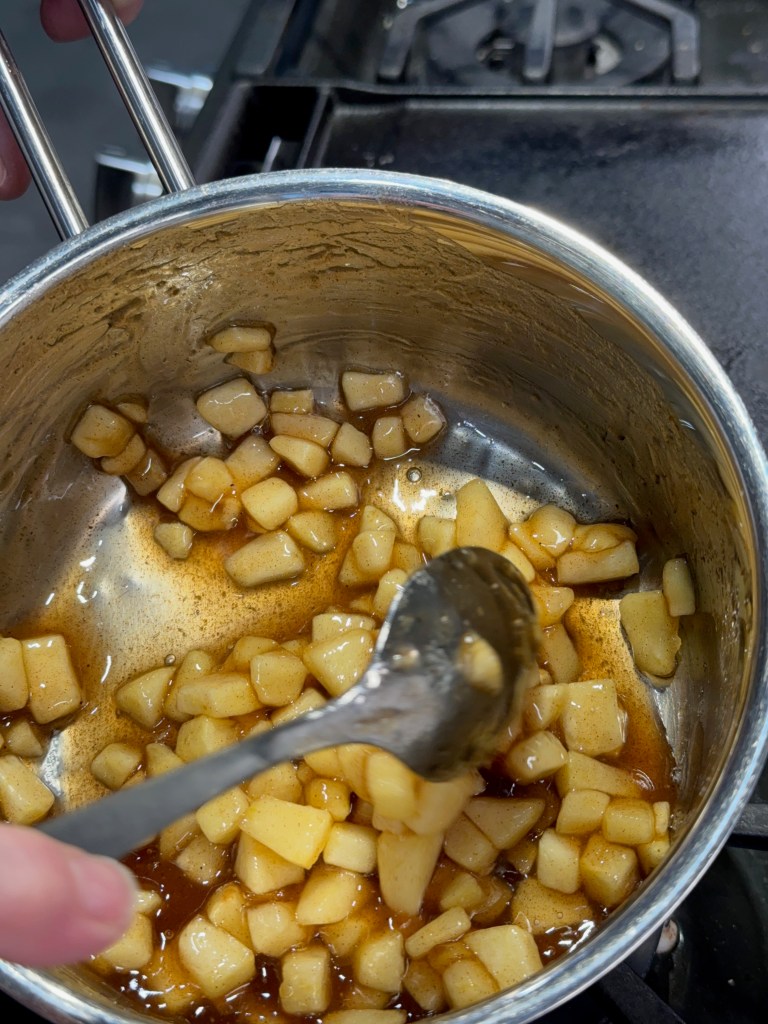
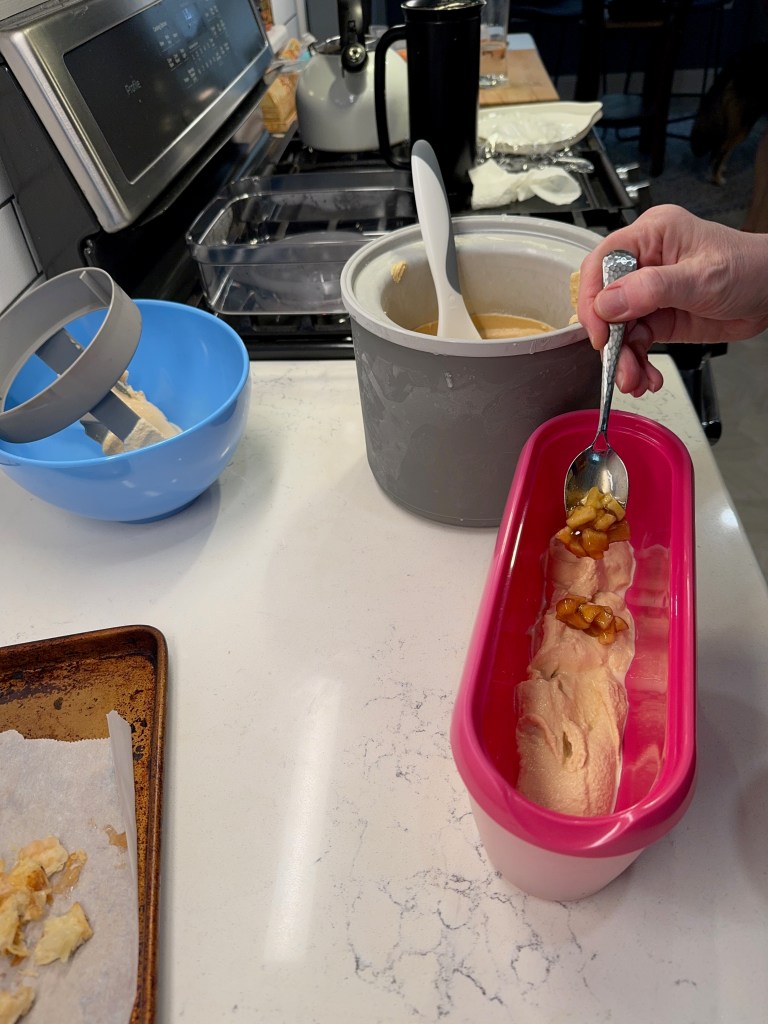
There’s no magic to it, and only a little bit of cooking to get the chopped apples softened and syrupy with cinnamon, sugar and cardamom flavors. I used two small Gala apples, which cooked down to approximately one half cup of syrupy deliciousness. I was on the fence whether to blend those bits into the ice cream base itself or merely layer with the base at the end. Ultimately, I layered them because I love the visual appeal of all the tasty flavors swirled into each scoop.

These flavors were begging to be worked into an ice cream!

The “pie” part of my recipe comes not from pie crust, but from buttery, flaky apple turnovers. I took a shortcut by using store-bought pastries, but it was a relief to not turn on the oven. If you make the turnovers yourself, you are officially the apple of my eye! 🤩


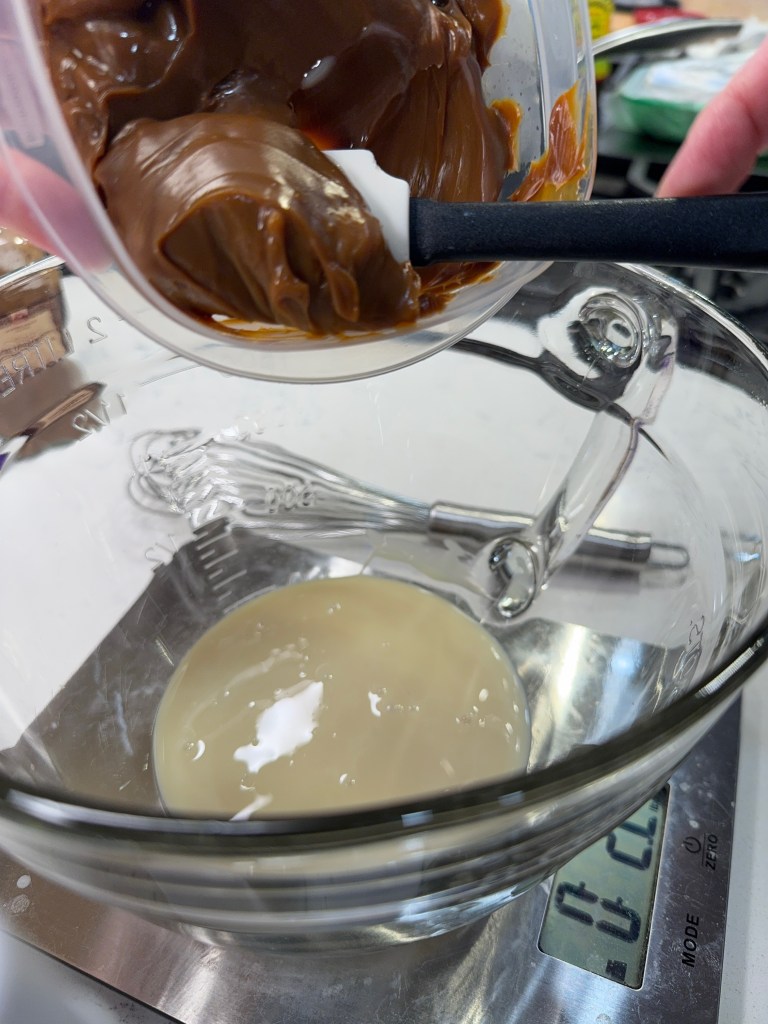
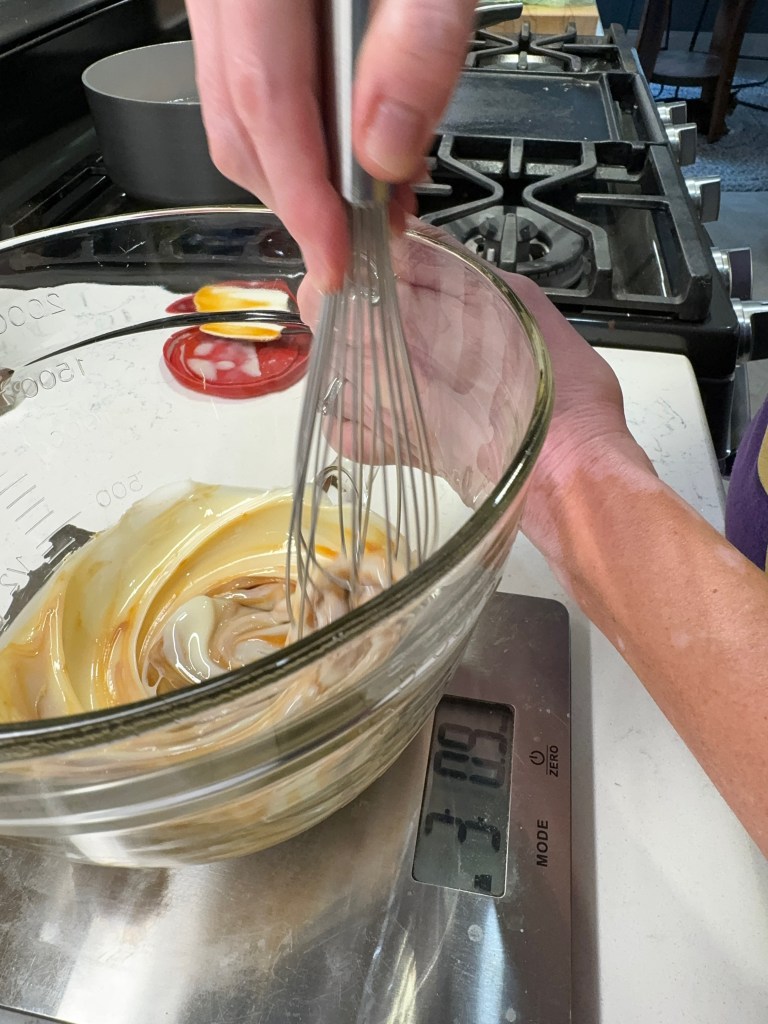
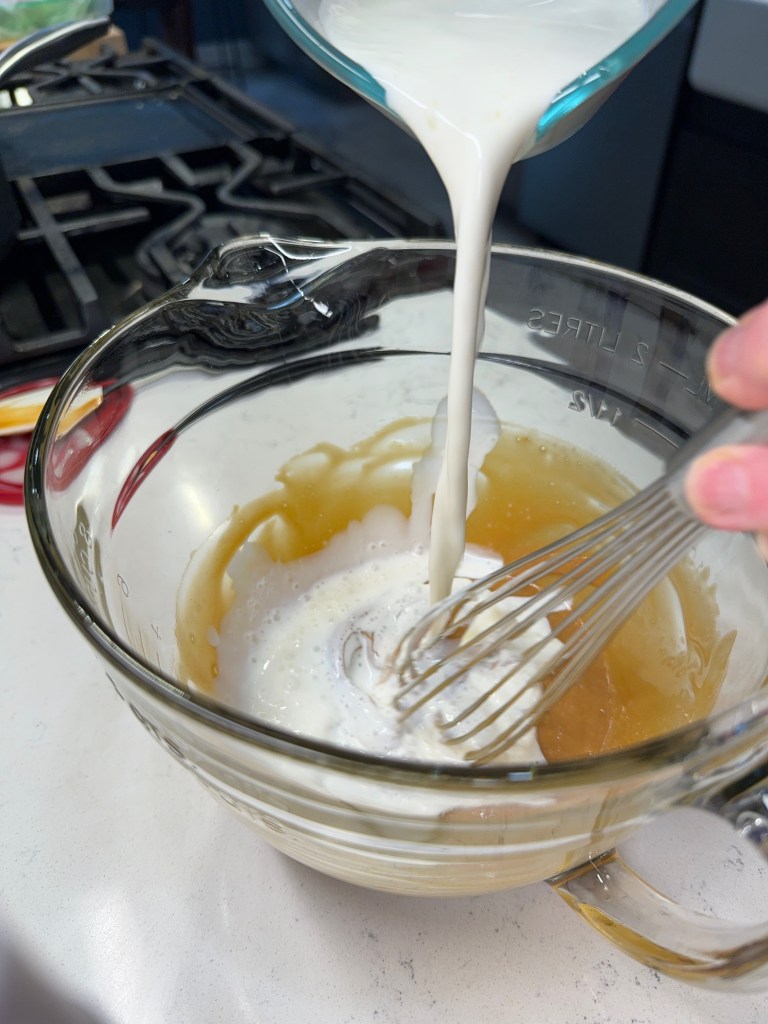
The ice cream base I used is my go-to, with sweetened condensed milk, cream, whole milk and a touch more cinnamon. This time, though, I got a notion to swap in a portion of dulce de leche sweetened condensed milk. It’s a thicker, caramelized version of condensed milk, and its rich, caramel-y flavor gave my ice cream even more of an apple pie vibe. Notice that I did not include vanilla? I wanted no distraction from the apples, caramel and spices.


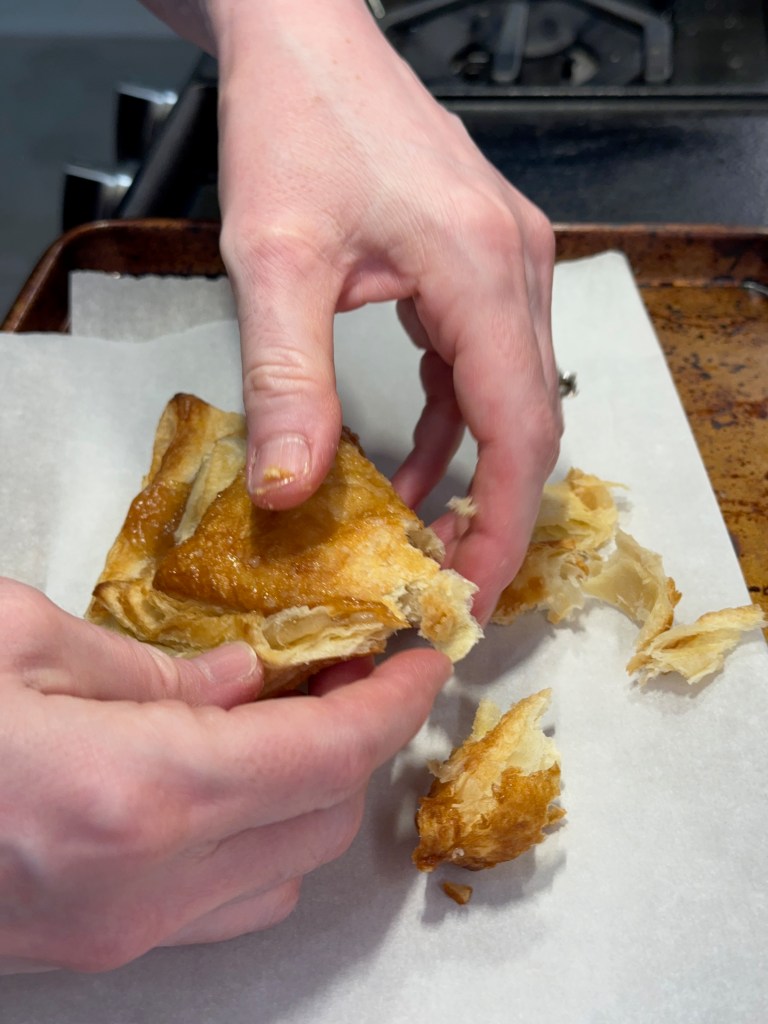
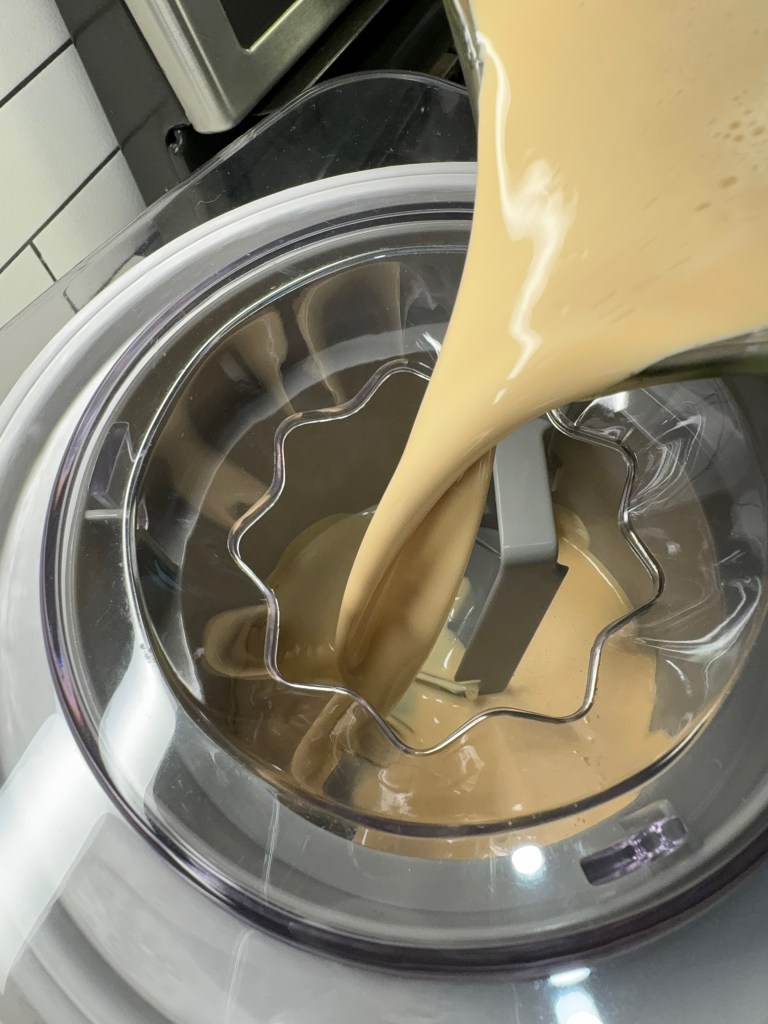
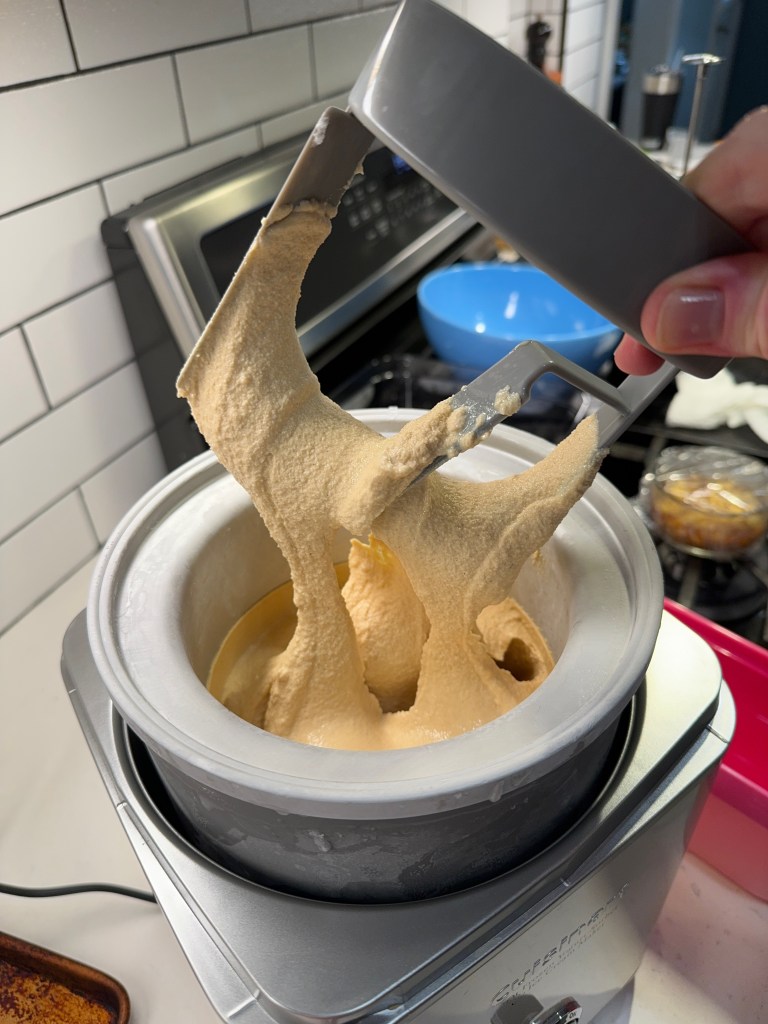
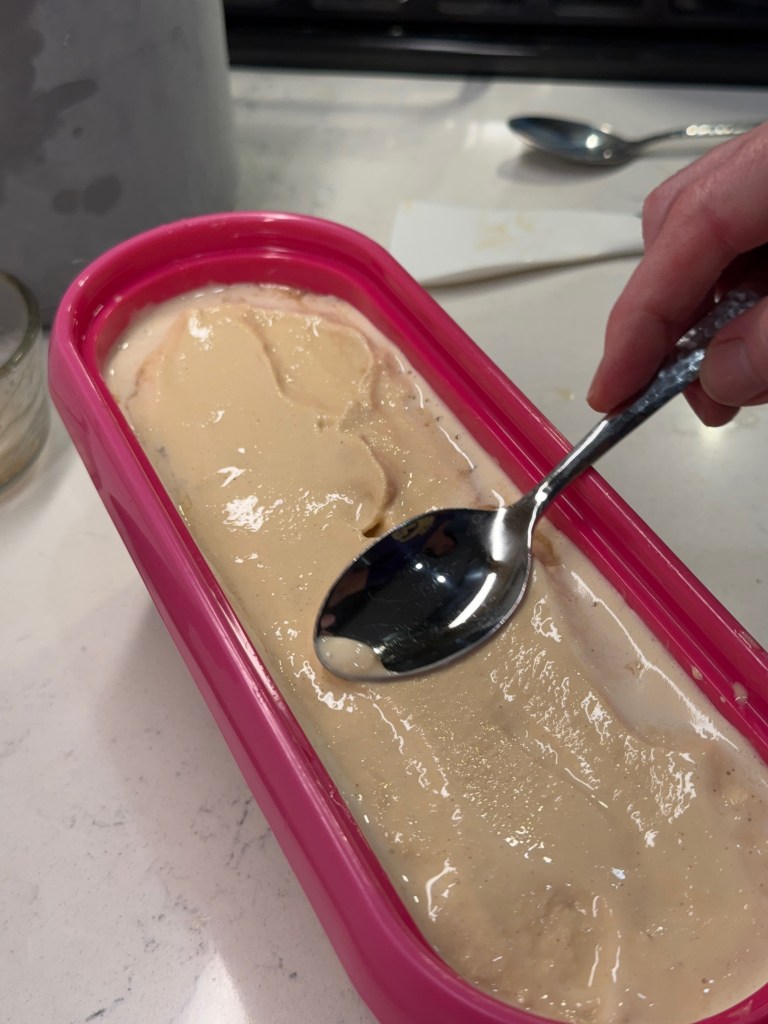
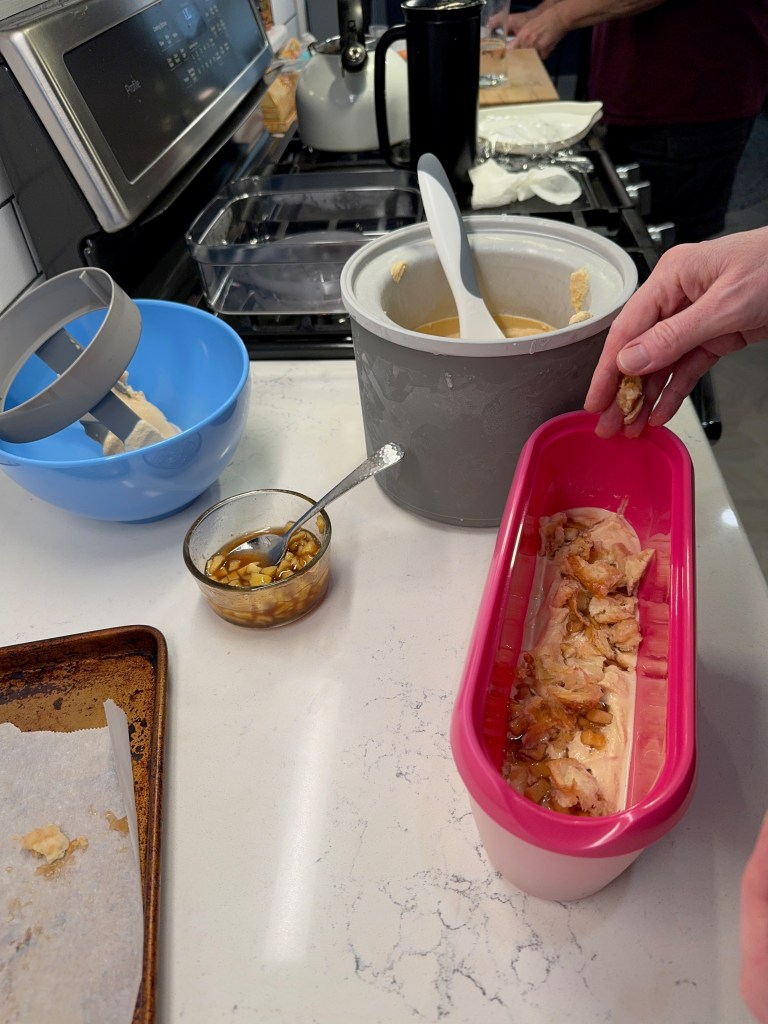
After churning the ice cream in my handy Cuisinart machine, which has paid for itself dozens of times over since I bought it more than 15 years ago, I layered the sweet base with those syrupy apples and some torn up bits of apple turnovers.


My inner kid is grinning ear to ear for this one, and it feels like a perfect way to kick off National Ice Cream Month. Don’t be surprised to see a few other fun flavors pop up here in the weeks to come. Hello, July! 😎


Apple Pie Ice Cream

  • Servings: About 12 scoops
  • Difficulty: Average
  • Print

This is my adaptation of two favorite summer treats, all layered together into one scrumptious scoop!


Ingredients

  • 14 oz. sweetened condensed milk (or swap in a small amount of dulce de leche)
  • 1/2 tsp. cinnamon
  • 1 cup whole milk
  • 1 cup light cream
  • 2 small gala apples, peeled and chopped into bits
  • 1/4 cup sugar
  • 1/4 tsp. cinnamon
  • 1/8 tsp. ground cardamom
  • pinch of salt
  • 2 tsp. pie filling enhancer (a King Arthur product, or sub a teaspoon corn starch)
  • 2 Tbsp. water
  • 1 large baked apple turnover, torn into small pieces

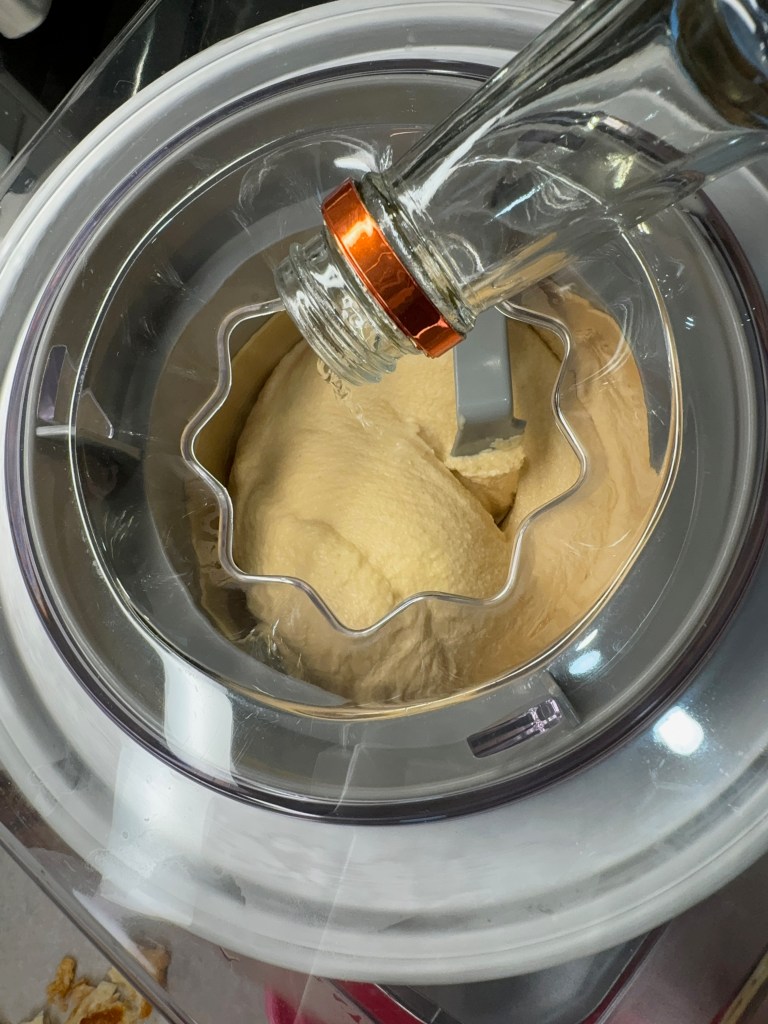
Notes: Do your prep ahead so that everything has time to chill thoroughly in the fridge before churning and layering the ice cream. For easy scooping straight from the freezer, add a tablespoon of vodka during the final minute of churning. This ice cream is best after ripening in the freezer at least 8 hours or preferably overnight.

Directions

  1. Whisk together sweetened condensed milk and cinnamon. Add milk and cream, and whisk until smooth. Refrigerate until mixture is completely cold.
  2. Toss apple bits with sugar, cinnamon, cardamom, salt and pie filling enhancer (or corn starch). Add to a small saucepan with water and cook over low heat until mixture is thickened and apples are soft with only a light resistance to the bite. Transfer to a small bowl to cool and refrigerate until chilled.
  3. Chop or tear the apple turnover into small pieces. Spread the pieces out on a parchment lined plate or small baking sheet and place in the freezer for at least one hour.
  4. Churn the dairy base in ice cream machine, following manufacturer’s instructions. If using vodka for texture, only add it during the final minute of churning. Transfer ice cream to an insulated freezer container, layering with stewed spiced apples and torn bits of frozen turnover. Ripen in freezer several hours (overnight is best).


Blue Moon Ice Cream

How in the world can an ice cream stir up such a mixed bag of emotions? That’s what I have been asking myself for the past week as I wrestled with the decision to share this post. I almost didn’t even bother, but it seems so appropriately timed to tonight’s “blue supermoon,” an astronomical phenomenon that we haven’t seen since 2009 and won’t see again until 2037. So, I reasoned, it was now or never.

But oh, the drama! Allow me to explain.

For me personally, a very specific childhood event involving this ice cream dredges up difficult feelings about being gaslighted into becoming a timid kid. I’ll spare you the dreadful details, but in some weird, wishful-thinking way, I thought that revisiting the event by making this ice cream would redeem those feelings. It didn’t, but that is not the ice cream’s fault.

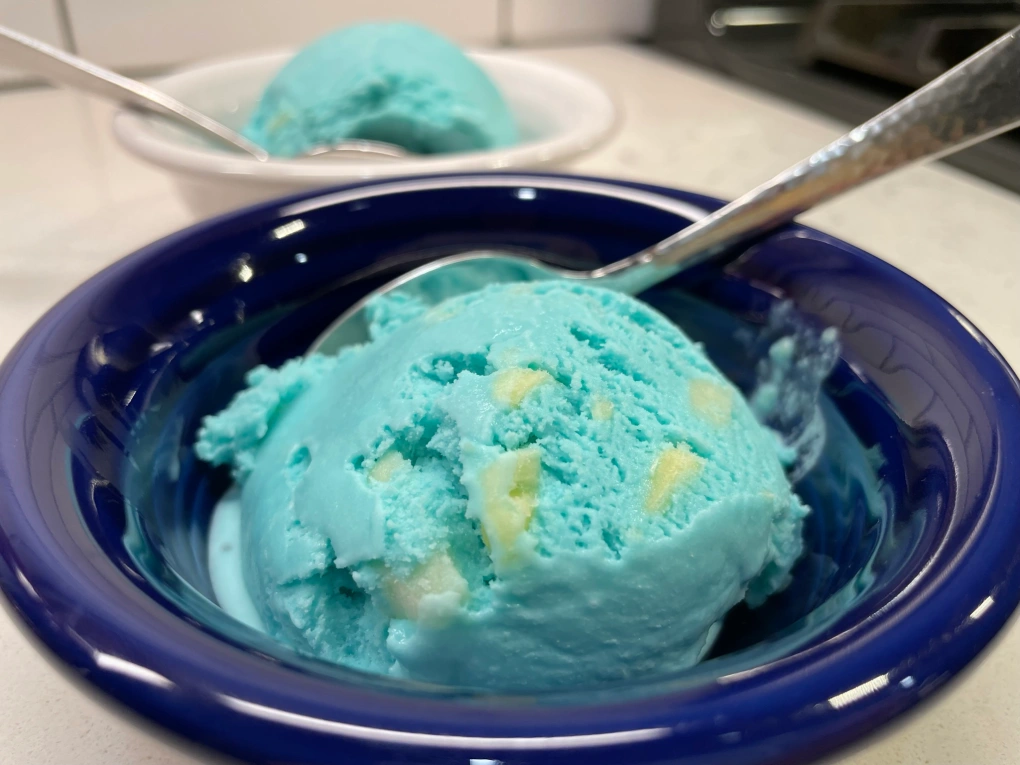
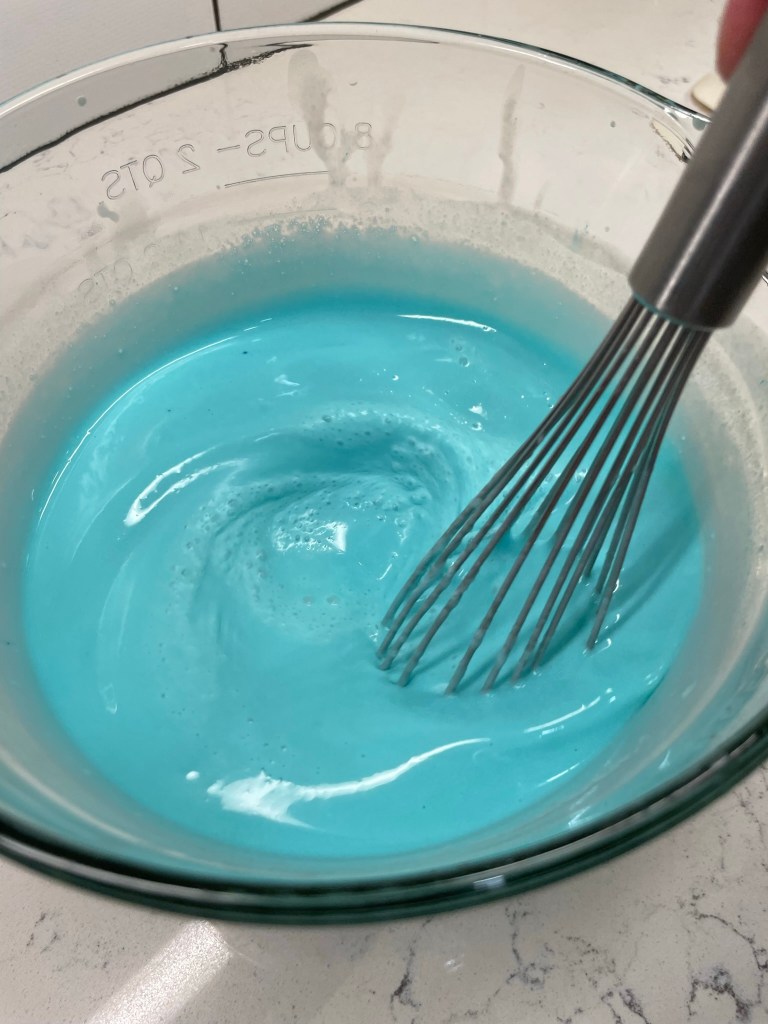
The recipe itself is a bit of an enigma, given that nobody really seems to know for sure what flavors go into blue moon ice cream, and I struggled with my own memory to describe the flavor of it, which is “fruity,” but not specific to a single fruit. Is it raspberry or lemon? Almond or vanilla? In my memory, it tasted like some mashup of bubble gum, cotton candy and tropical fruit punch. Oh, and with pineapple bits. And that’s where this adventure began to go off the rails.

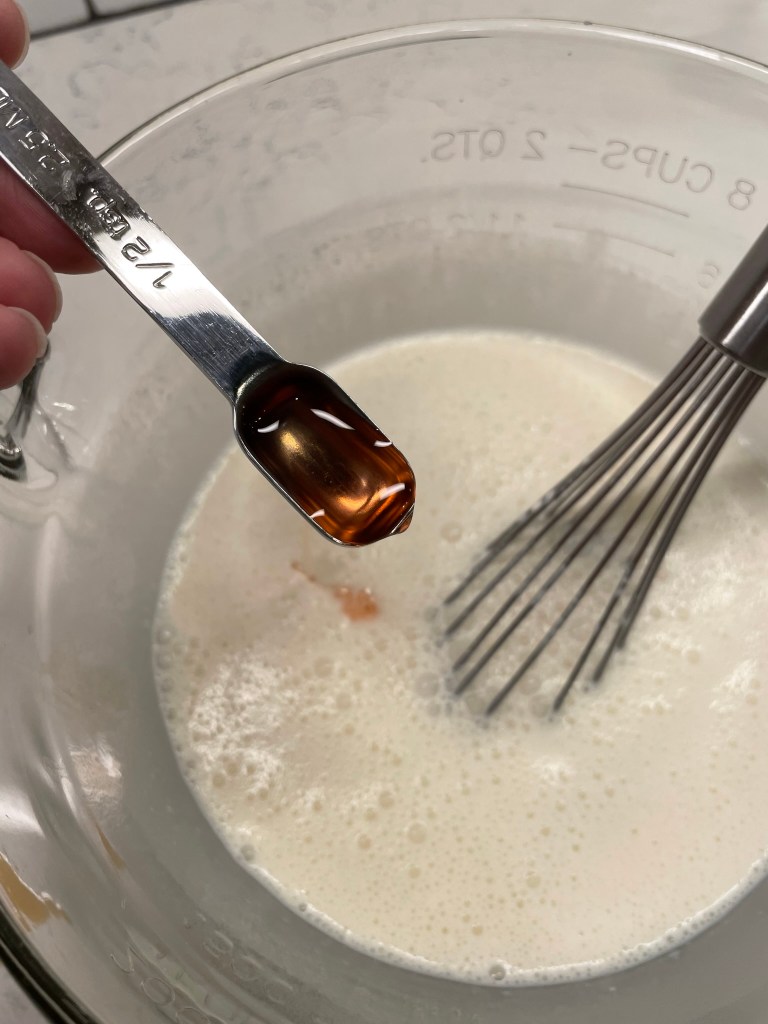
I pulled several extracts from my pantry for this experiment.

My search for an inspiration recipe for blue moon ice cream turned up massive volumes of  denials of my own memory of it. Nearly every recipe on the internet emphatically declares (often in all caps) that “blue moon DOES NOT contain pineapple!” But here’s the problem— I was there during my childhood and the blue moon ice cream I had most certainly did contain pineapple; in fact, it was the pineapple that I remember most. Lovely little bits of crushed pineapple amid all that artificially teal ice cream base. Another thing that struck me odd about the online recipes I found was that most of them included a package of instant vanilla pudding, which sounds so wrong to me. What would instant pudding add to an ice cream, I wondered, besides more artificial flavoring? Wasn’t the teal blue color artificial enough? My iPhone camera certainly thought so!


The discrepancy of opinion on the flavor of this ice cream, and especially the pineapple,  apparently results from the fact that blue moon originated in the Midwest— Michigan to be specific— and my experiences of it were in upstate New York. What I enjoyed as a kid was obviously an adaptation of the original recipe, but it was still sold as “blue moon.” Was I wrong to enjoy it that way? I can not bear this level of gaslighting.


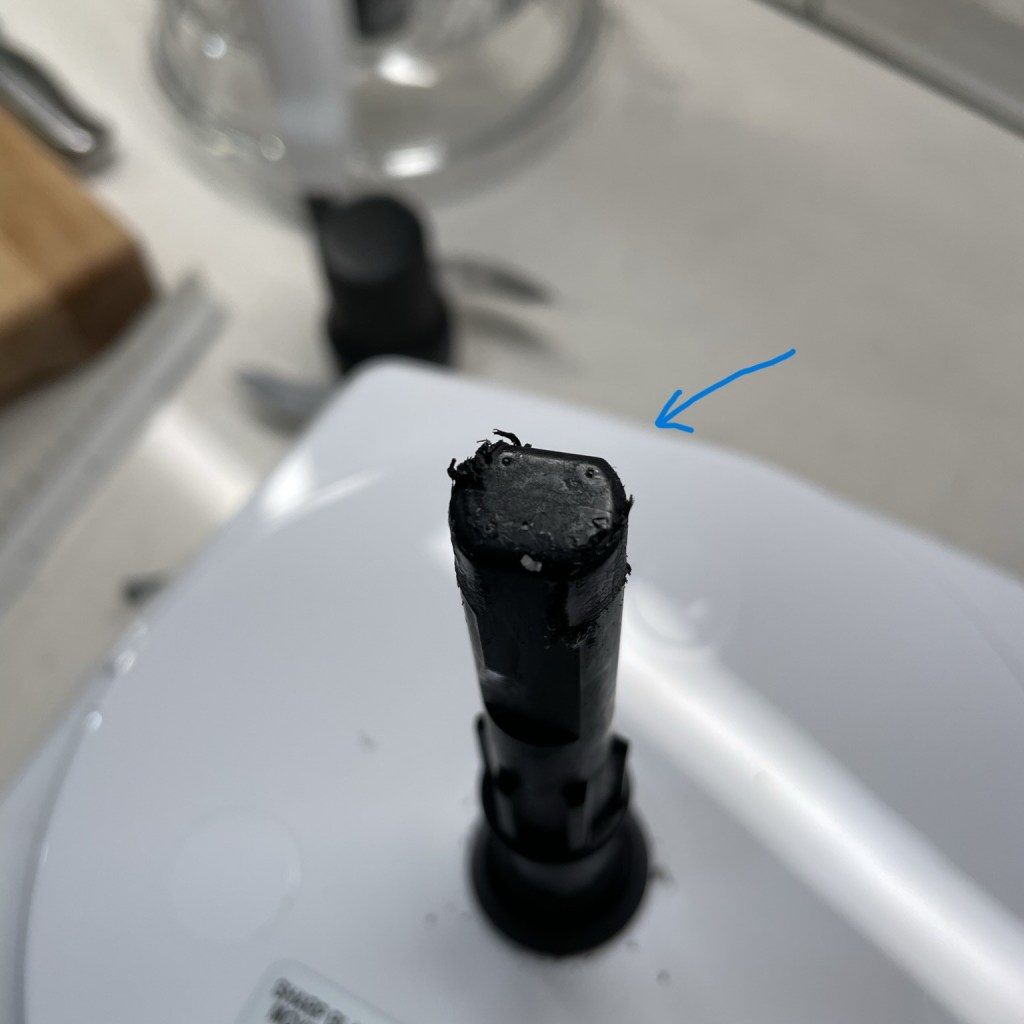
If the argument around this was not turbulent enough, I also had the unfortunate experience of damaging my fancy new French-made food processor in the making of my blue moon ice cream. As I have done many times before, I used my processor to pulse partially frozen pineapple into smaller chunks, and this was to be mixed into the blue base at the end of churning in my ice cream freezer. But something went terribly wrong, and my processor is currently on a UPS truck, headed to the service center for a warranty repair. Was this the universe’s way of confirming that pineapple is NOT meant to be in blue moon ice cream? Good golly, what chaos! 

The stem of my food processor was stripped in the process of this misadventure.

After all my tinkering with the raspberry, vanilla, lemon and almond, plus the addition of the pineapple, I’m still not sure I got it right (Les disliked it so much, he didn’t even finish a serving of it). Perhaps the proof is in the pudding, but I have neither the time nor the motivation to make blue moon ice cream again right away. At the end of this ridiculous string of events, I decided that it was at least worth sharing because it does move an item to the done column of my culinary bucket list, and just in time for tonight’s blue supermoon.  Blue moon ice cream is now completed, and even though I didn’t particularly appreciate the resulting flavor, I did learn an important lesson, which can be summed up in a line from a Don Henley tune:

Out on the road today, I saw a Deadhead sticker on a Cadillac.
A little voice inside my head said, “don’t look back, you can never look back.


Don Henley ~ “The Boys of Summer”

I wish I had left blue moon ice cream in my memories, where it still held mystery and intrigue. It could be that 11-year old Terrie enjoyed it just because it was different from the mint chocolate chip ice cream that everyone else my age was screaming for that summer. I probably should have followed my own advice about recipes and disregarded the “alternate facts” presented by so many others on the internet regarding the pineapple. Finally, if I hadn’t pushed so hard to make sense of the whole thing, I could be making hummus or spiralizing zucchini or pureeing fresh tomatoes into gazpacho today. Instead, I’m checking the UPS tracking to be sure my food processor arrives at the warranty service center in one piece. I hope it get it back in time for Thanksgiving.

As for the blue supermoon, I wanted to be excited about it as well. Supermoons are fairly common during the summer, but the odds of a blue moon (second full moon during a single month) also being a supermoon (appearing closer and larger than usual) are extraordinary. The blue supermoon will be a spectacle to behold, beginning after 9pm ET tonight. But I learned today that this supermoon— which is expected to exaggerate high tide— will likely wreak additional havoc on the gulf coast of Florida, where folks are already underwater from Hurricane Idalia.

At least I know my ice cream didn’t cause that.

For those of you wishing to recreate this astronomical mishap, here’s an easy, click-to-print recipe for you. Pineapple, of course, is optional. 😉


Blue Moon Ice Cream (WITH pineapple)

  • Servings: About 8
  • Difficulty: Average
  • Print

This recipe is my best effort at recreating a childhood favorite. Adjust the flavors to your liking, and decide for yourself whether to add the pineapple.


Ingredients

  • 14 oz. can sweetened condensed milk (regular or fat free is fine)
  • 1 cup whole milk
  • 1 cup heavy cream
  • 1 1/2 tsp. almond extract
  • 1 1/2 tsp. raspberry extract
  • 1 tsp. vanilla extract
  • 1/4 tsp. pure lemon oil
  • 1/8 tsp. Fiori di Sicilia extract (optional, and probably redundant to the lemon and vanilla)
  • 2 Tbsp. cream of coconut (for extra sweetness)
  • 1/2 tsp. blue food coloring gel (this is more concentrated than liquid colorant)
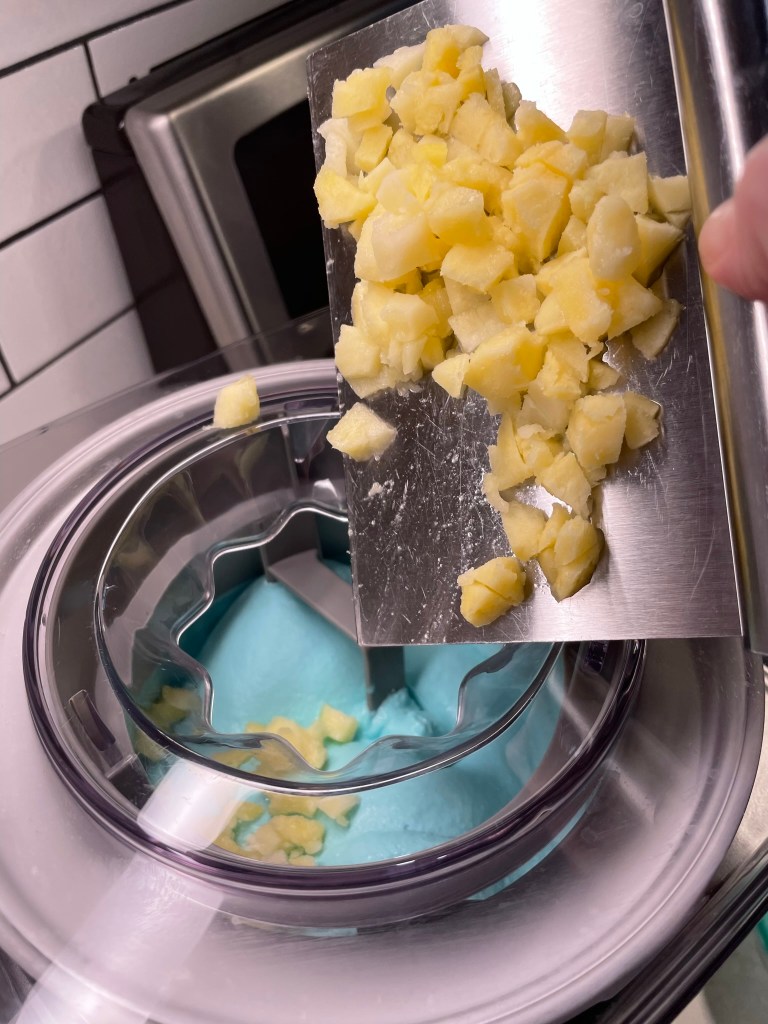
  • 1/2 cup pineapple tidbits (added during final few minutes of churning)

Most recipes for the “Midwest” version of blue moon ice cream do not include the pineapple, so adding them is entirely up to you. The ice cream I knew and loved from my childhood in Western N.Y. included pineapple, so my nostalgia required it. 😉

Directions

  1. Combine condensed milk, whole milk and heavy cream in a large mixing bowl or pitcher.
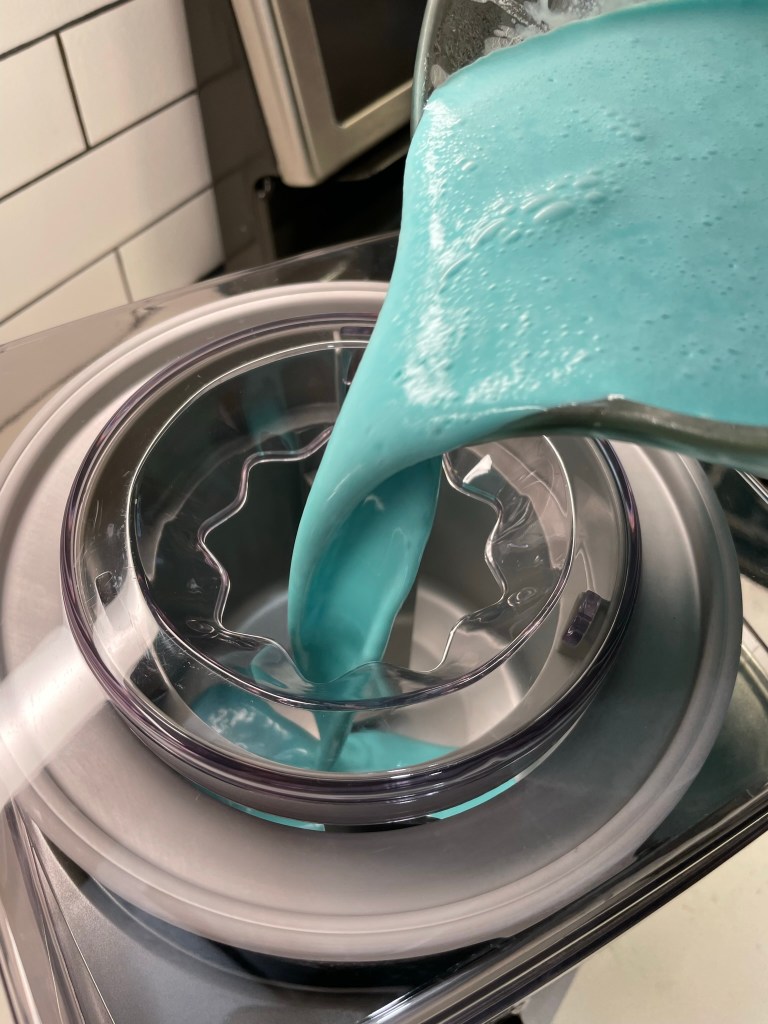
  2. Stir in extracts, a little at a time if you wish, and adjust flavors to taste. Stir in food coloring gel. Refrigerate until base is completely chilled.
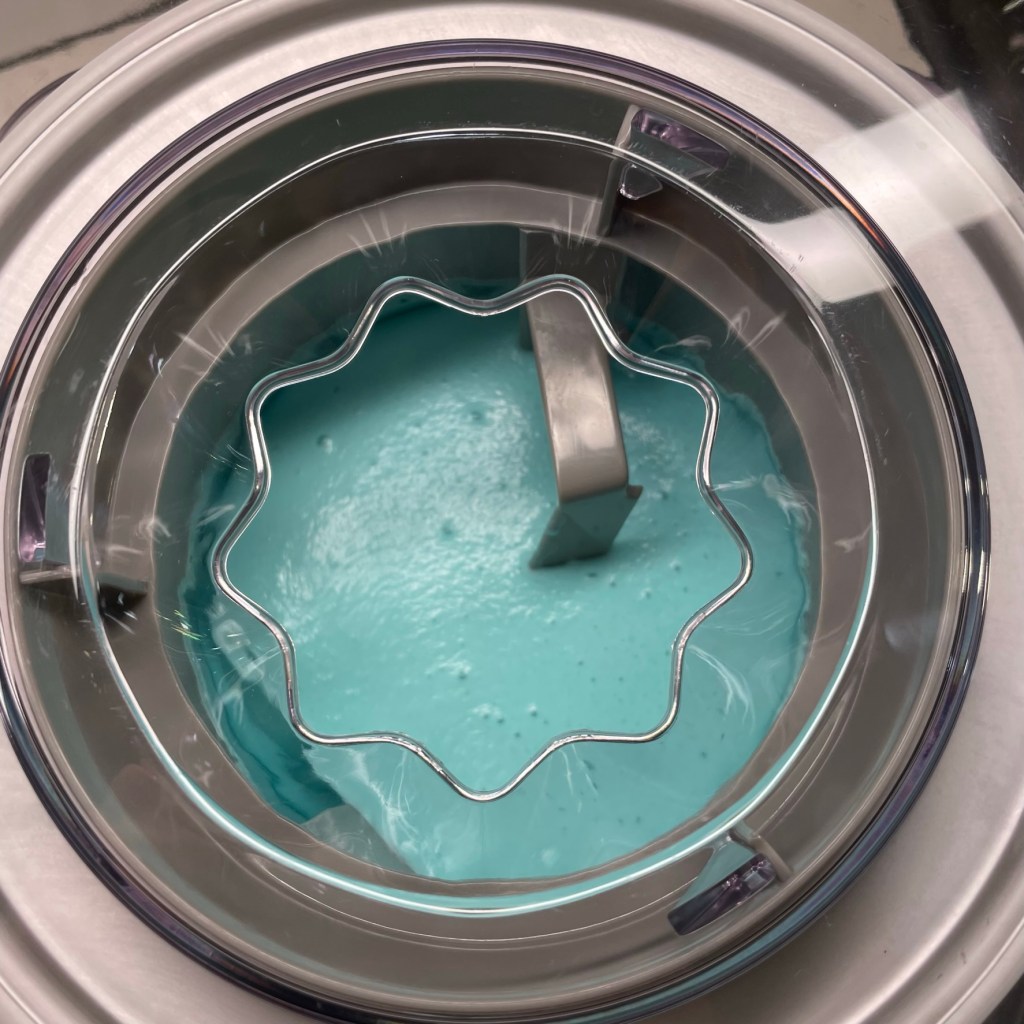
  3. Freeze according to manufacturer’s instructions, adding partially frozen pineapple bits during the final few minutes.
  4. Transfer to an insulated ice cream container and freeze several hours to overnight, until firm.


Green Chili Burritos

This is not a fancy dish by any means, but it is one of the oldest comfort foods from my childhood. My mother began making a ground beef version of this flavorful chili when I was about 6. It’s easy to estimate my age at the time because we moved around a lot, and I can recall where we lived when certain memories were made. My mom was newly remarried and we had moved out west from upstate New York for my stepfather’s job as a truck driver. I loved my stepdad, but he was gone a lot, so it was frequently just my mom and me taking up space in a single-wide mobile home in rural southern Colorado, where Mexican flavors reign supreme.

You could barely see our little box of a house from the main road, which ran a straight line through the tiny town of about 350 people. There was a long, dusty driveway leading from the school bus stop, over some railroad tracks and past the big white propane tank that provided us fuel for heating and cooking. Occasionally, during deer season, I’d see a carcass hung up from a tree near our house, and that meant my new daddy had a good hunting trip and venison would soon be on the menu. Most days after school, our sweet little dog, Ginger, would meet me halfway on my walk from the bus, and on the days that I’d catch a whiff of my mom’s green chili when I opened the door—well, that’s a very happy memory.

A short time after, many things changed in my world. For the second time in my young life, my parents split. We moved again and the relationship with my mom began a sad but steady decline. I shuttled back and forth between parents (and states) until high school graduation, and then made the decision to move away on my own. Visits with my mother became few and far between, and eventually when I visited as an adult and requested the green chili, I learned that her recipe had shifted from the familiar ground beef to cubed pork. It was tasty, but I longed for the texture of the tender ground meat.

What I really wanted was a taste of happy childhood. Isn’t that what comfort food is?

I can taste my childhood in this chili.

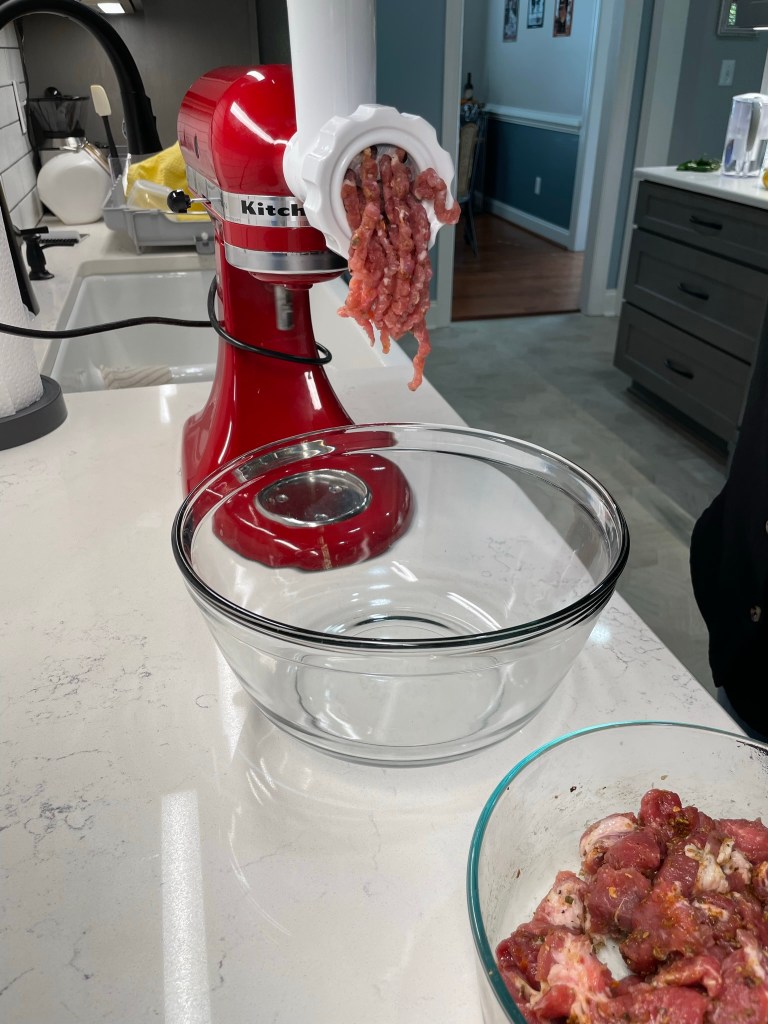
The first time I made my own green chili, about 15 years ago, I used a flavorful pork sausage I had discovered at Whole Foods. The sausage was made in-house and was utterly addictive with its mild, smoky green chiles and spicy habanero peppers, and I found it a happy medium to provide the soft meat texture I loved about the first version of green chili I ever had and the rich, savory flavor of pork. When my local Whole Foods stopped making it, I was beyond disappointed. I figured I’d have to settle for plain ground pork going forward.

But recently, necessity being the mother of invention and all, I learned how to make my own spicy sausage and baby, I’m back!


I’m still in the learning stages of sausage production, but my imagination has run pretty wild, considering all the unique flavor possibilities before me. I have delved into a few other flavor combinations already, but I know it won’t be long before this one comes up in rotation again. It’s because the green chili burritos I made from the sausage was just that delicious—even better than any of the versions I made before. Link back to the homemade pork sausage post for the particulars on this sausage, or choose a store-bought sausage that has green chile flavors if you want a shortcut. Heck, maybe your Whole Foods still sells that sausage, and you’ll be in business.

This is my happy place. 🙂

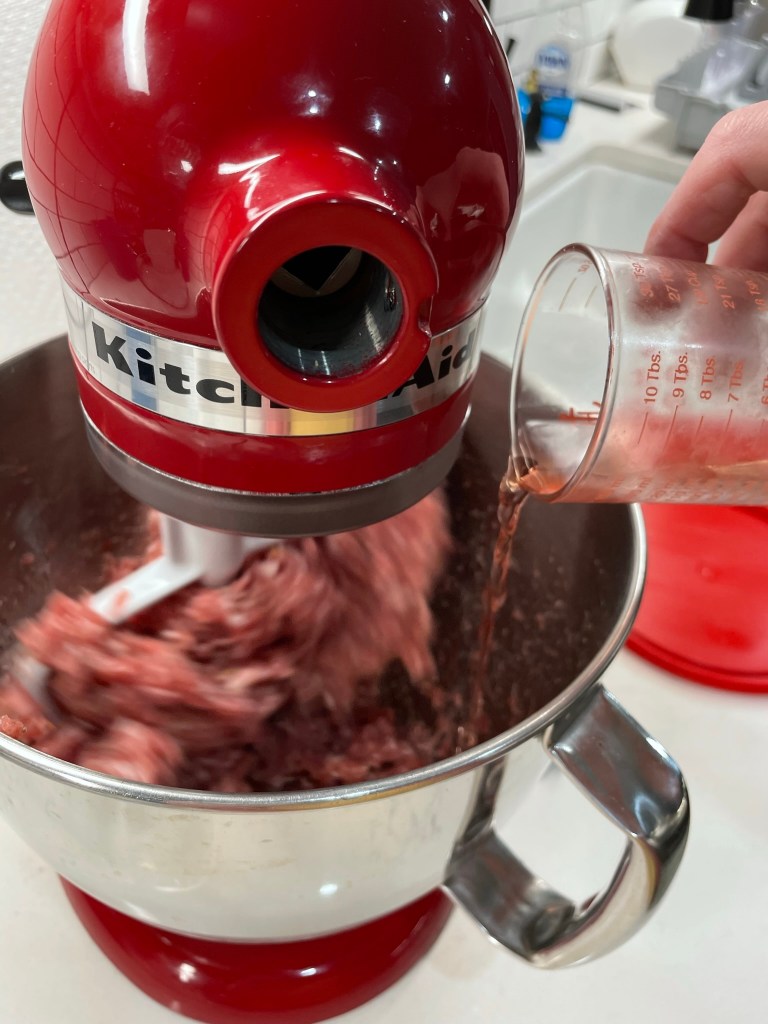
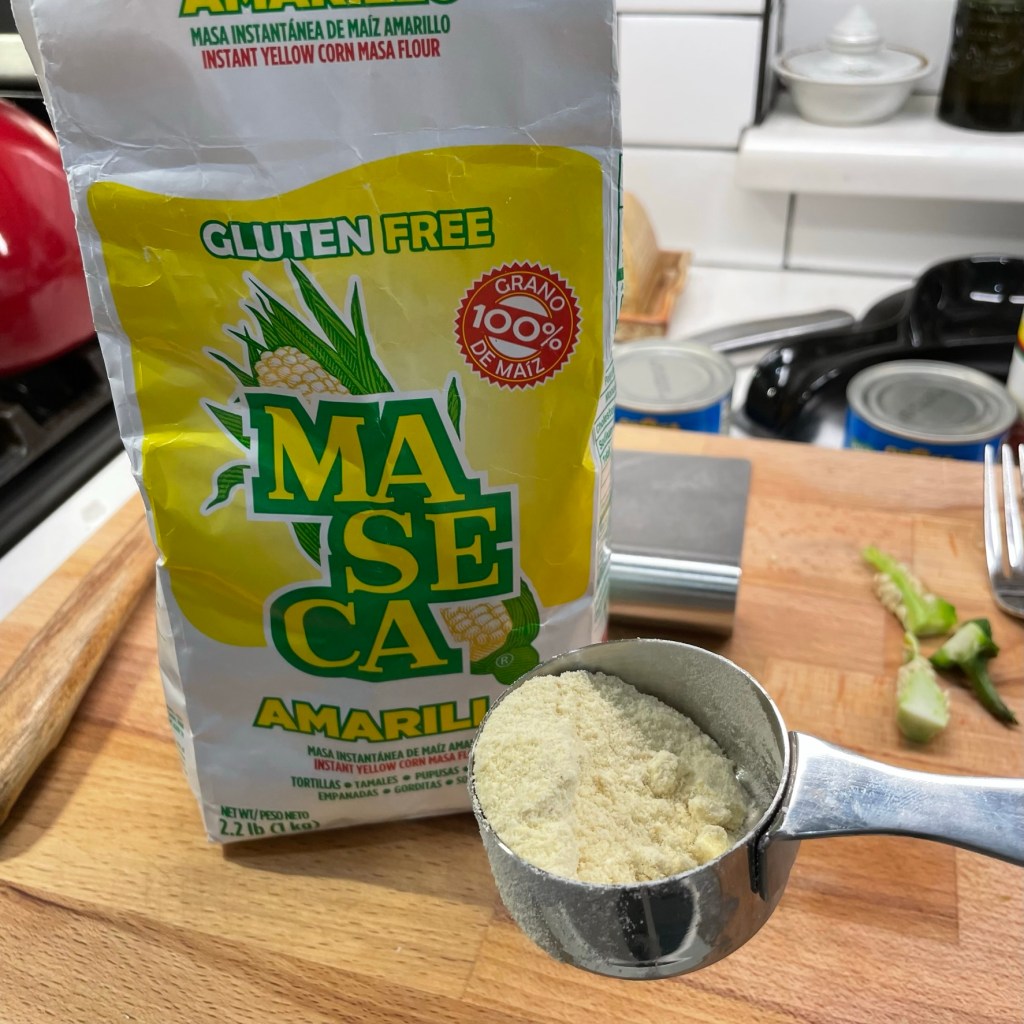
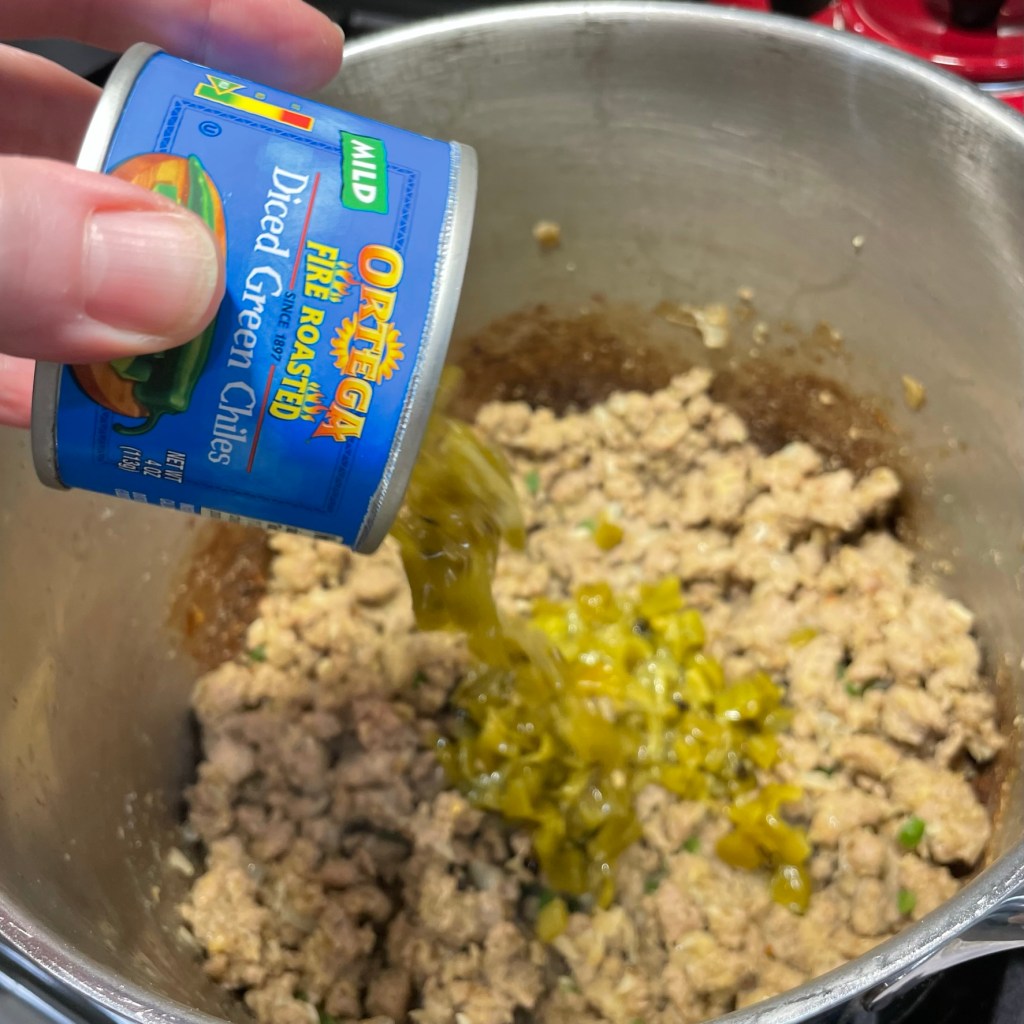
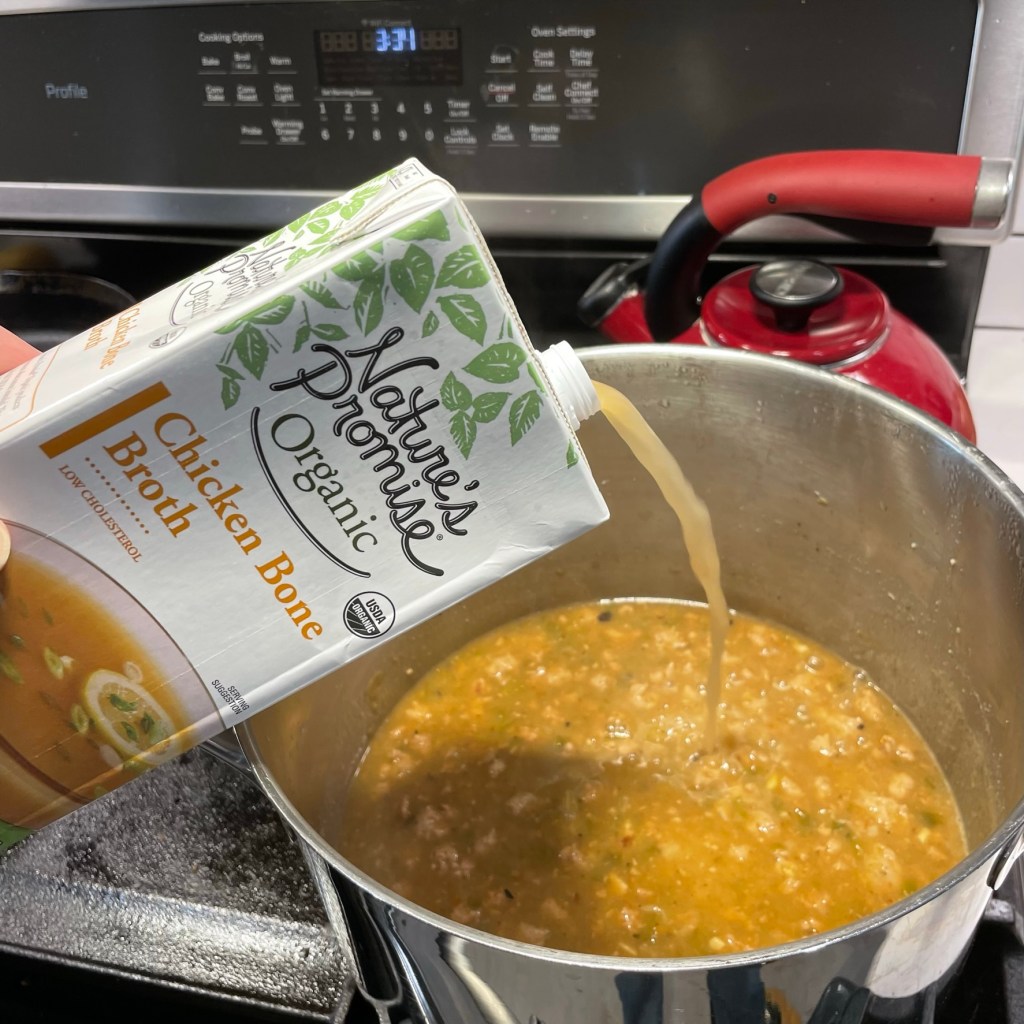
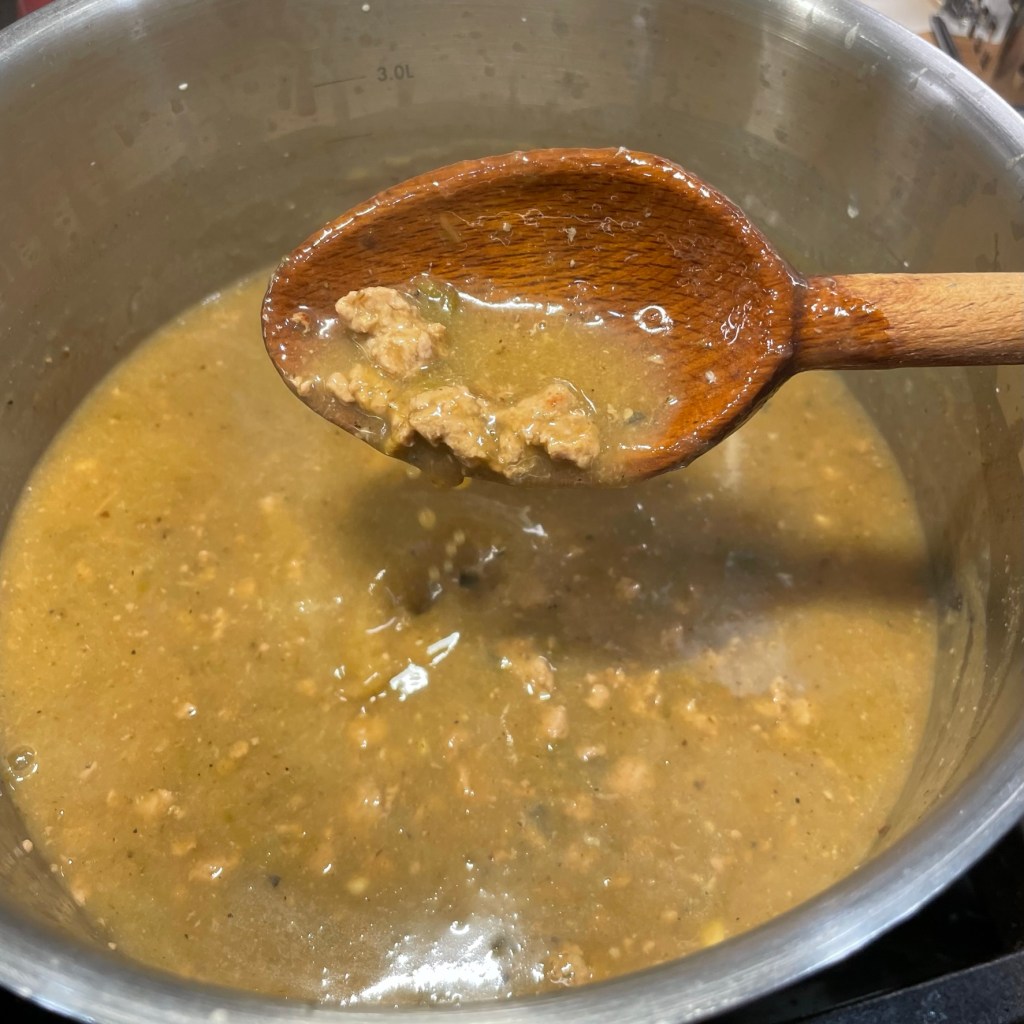
The chili itself is the star of these burritos; the rest is just a tortilla rolled around seasoned beans and cheese. Accompanying the sausage were onions, garlic, flour and masa flour (for thickening), canned green chiles, fresh jalapeno (if you love the heat, as we do), a few simple seasonings, and broth (I used both veggie and chicken). Putting the chili together is easy, and then it settles in for a long, low simmer. If you have an extra day, let it sit in the fridge overnight because the flavors mingle even more for better flavor.


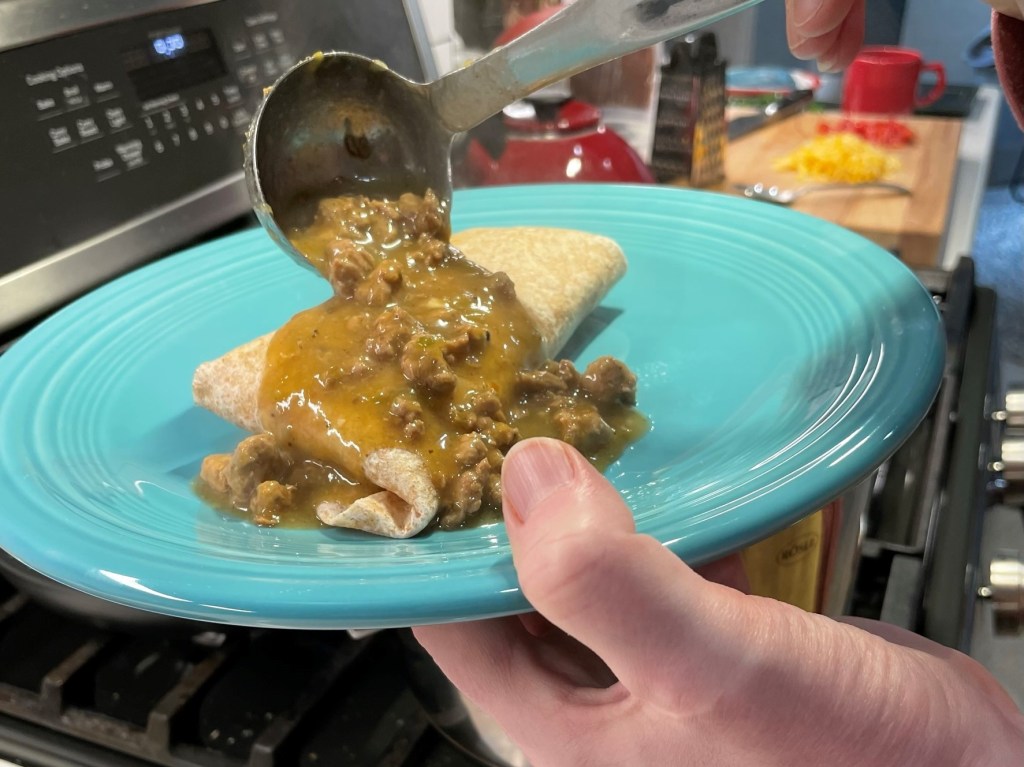
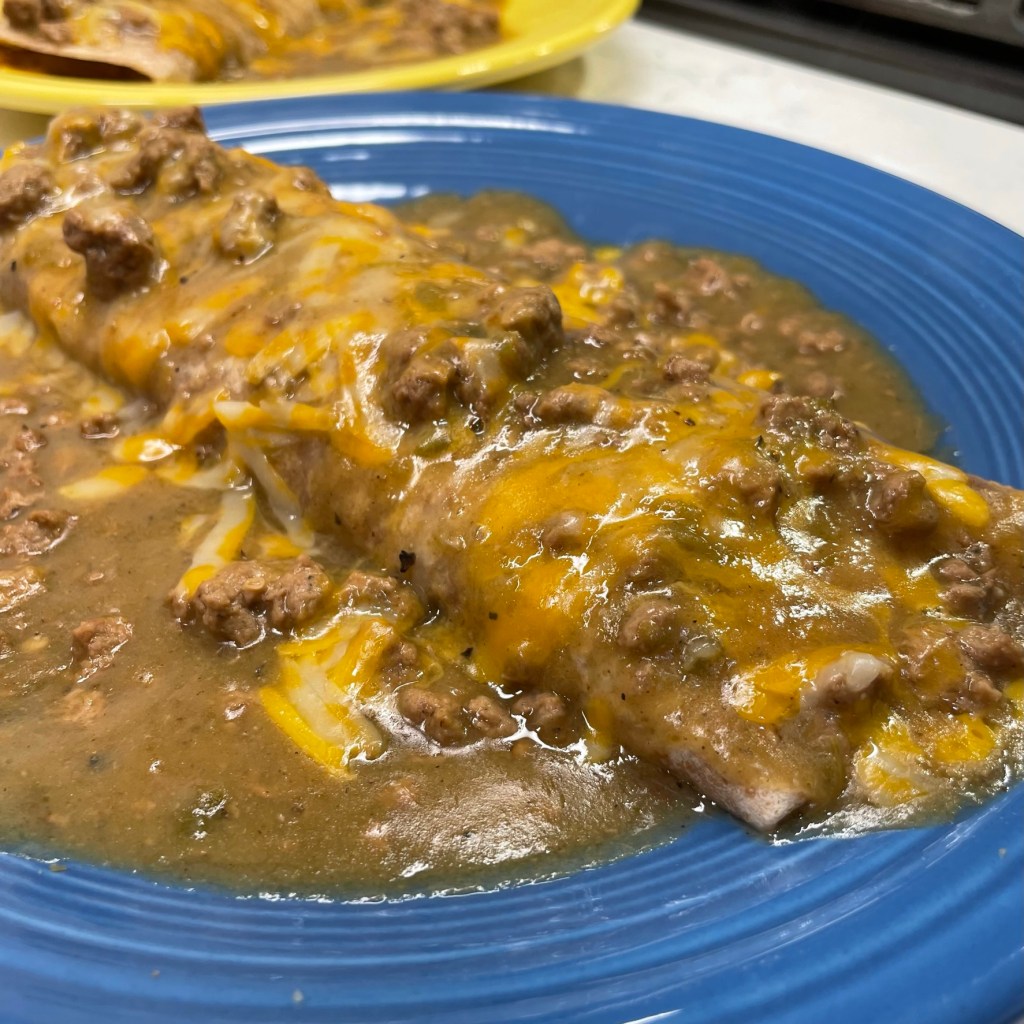
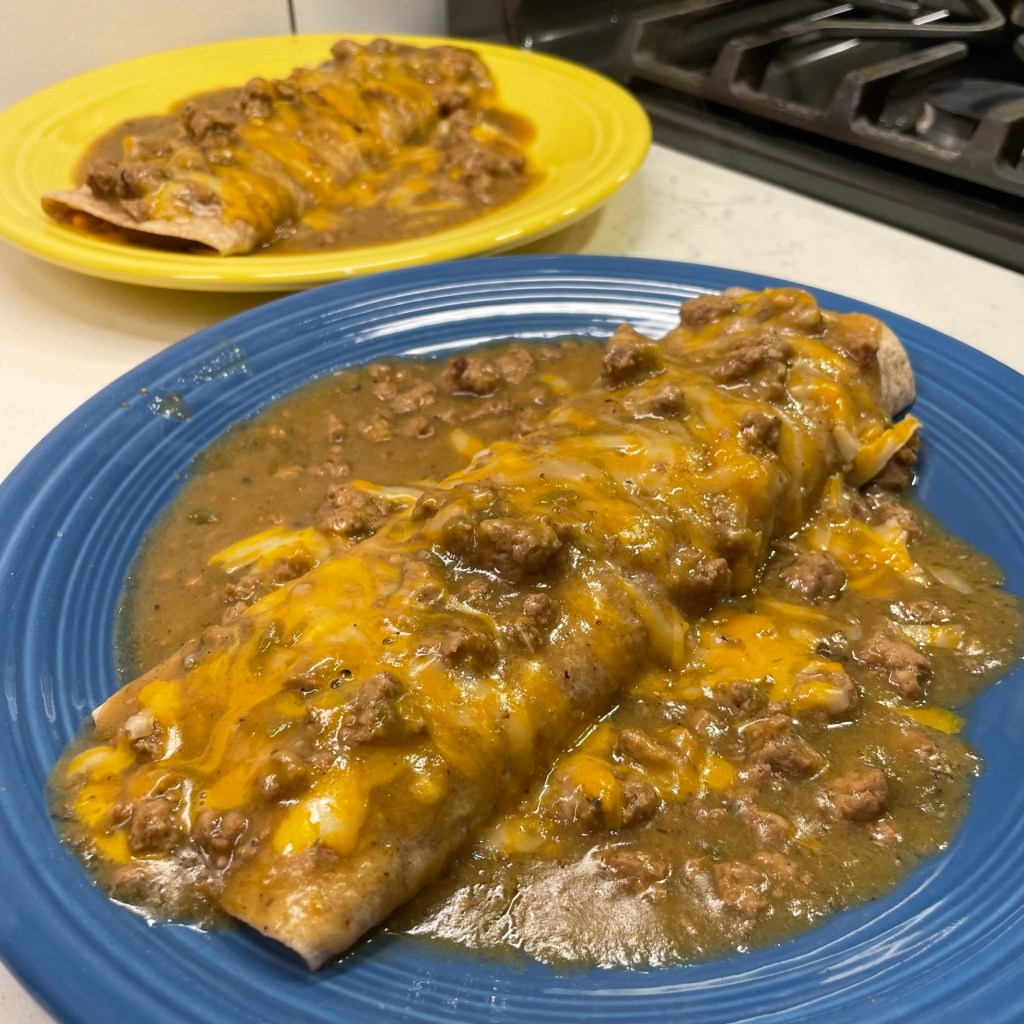
If you like, you can serve the finished chili just as it is—either by the steaming bowlful with a handful of shredded cheese or by ladling it over a burrito—but if it thins out more than you prefer during the cooking, whip up a bit of corn starch slurry and stream it in over medium heat. When it’s thickened and glossy, it’s ready to go.


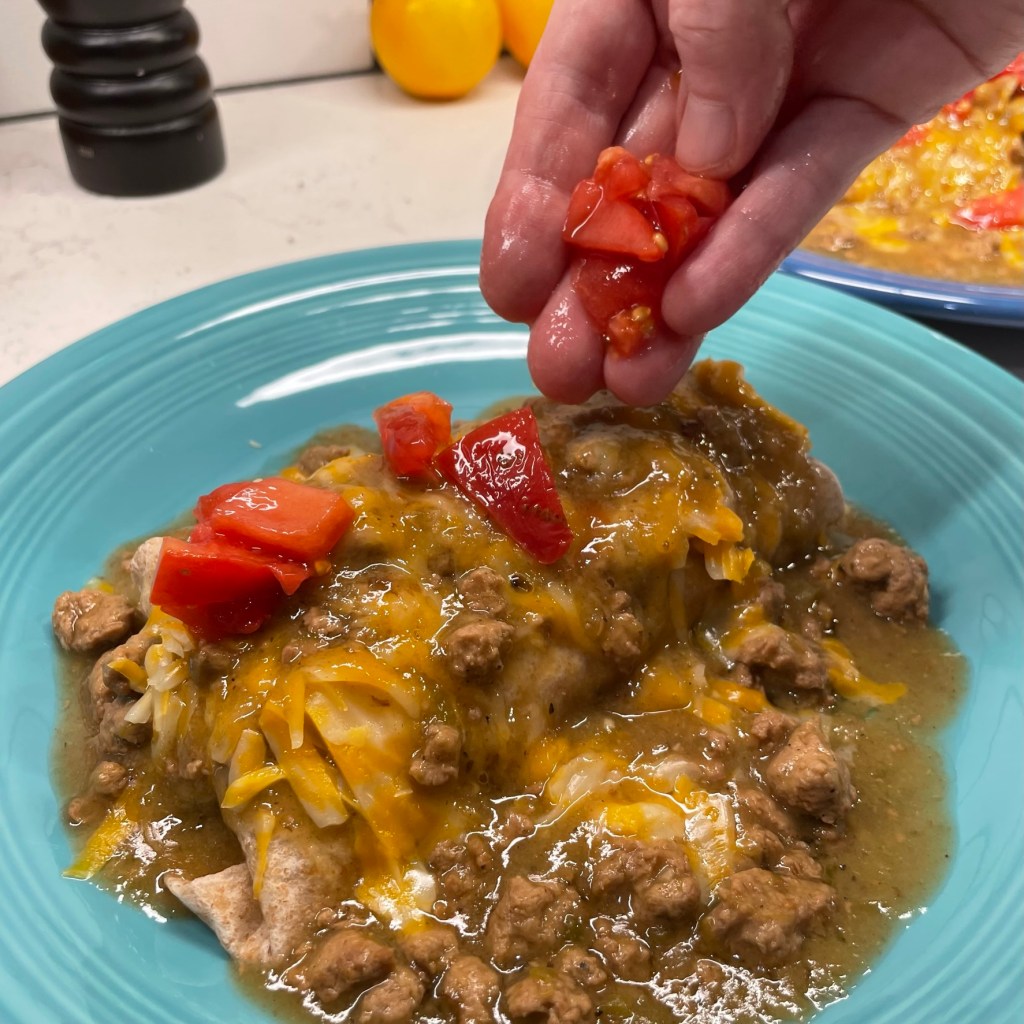
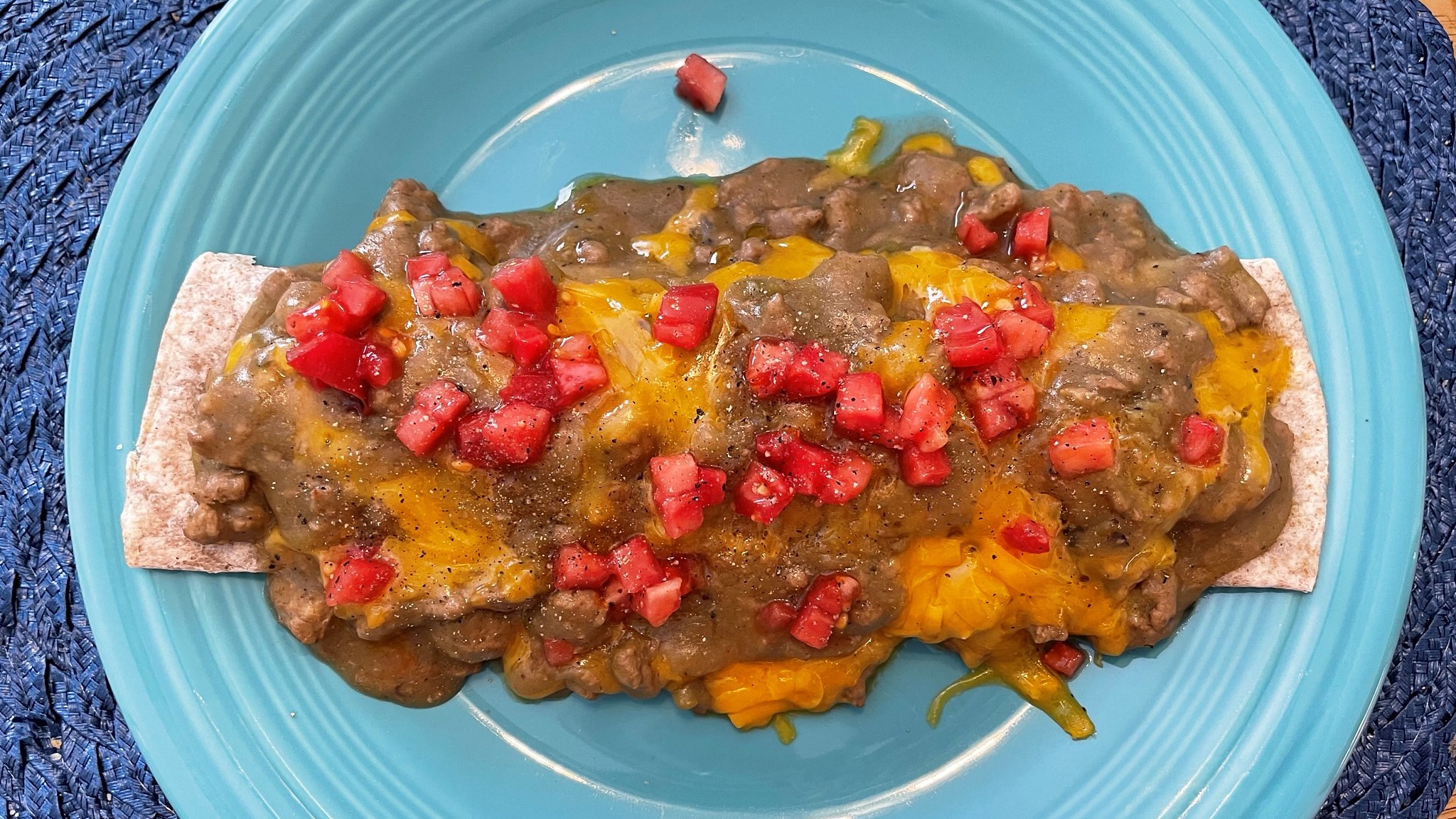
At our house, we enjoyed this at dinner, lazily draped over bean and cheese burritos. And we enjoyed it again for a weekend breakfast, stuffing our tortillas with black beans, scrambled eggs and cheese, plus a scatter of fresh chopped tomatoes.


Green Chili Burritos

  • Servings: About 8
  • Difficulty: Average
  • Print

This dish speaks the language of my childhood, with comforting chili made from ground pork and all that beautiful, melty cheese.


Ingredients

  • 1 large yellow onion, chopped
  • 3 or 4 cloves garlic, minced
  • 1 Tbsp. EVOO
  • Kosher salt and freshly ground black pepper
  • 2 tsp. dried green chile flakes (mine were from Flatiron Pepper Co., available online)
  • 1.5 lbs. green chile pork sausage (store-bought, or my recipe which is included below)
  • 1 whole fresh jalapeno, seeded and chopped (keep some of the seeds if you like it hot)
  • 2 or 3 Tbsp. additional EVOO to provide fat for roux
  • 1/4 cup all-purpose flour
  • 3 Tbsp. masa flour (Maseca)
  • 2 small cans (4 oz.) fire roasted diced green chiles
  • 1 1/2 tsp. ground cumin (from toasted seeds if possible)
  • 4 cups low-sodium veggie or chicken broth (I used 2 cups of each)
  • Corn starch slurry with equal parts corn starch and ice water (About 1/3 cup total)
  • 2 cans refried beans, warmed with oil and onions (for serving burritos)
  • Large flour tortillas (for burritos)
  • 8 oz. block cheddar, colby jack or pepperjack cheese, shredded
  • Fresh tomatoes, chopped (optional)

Directions

  1. Saute onions and garlic in olive oil, season with salt and pepper.
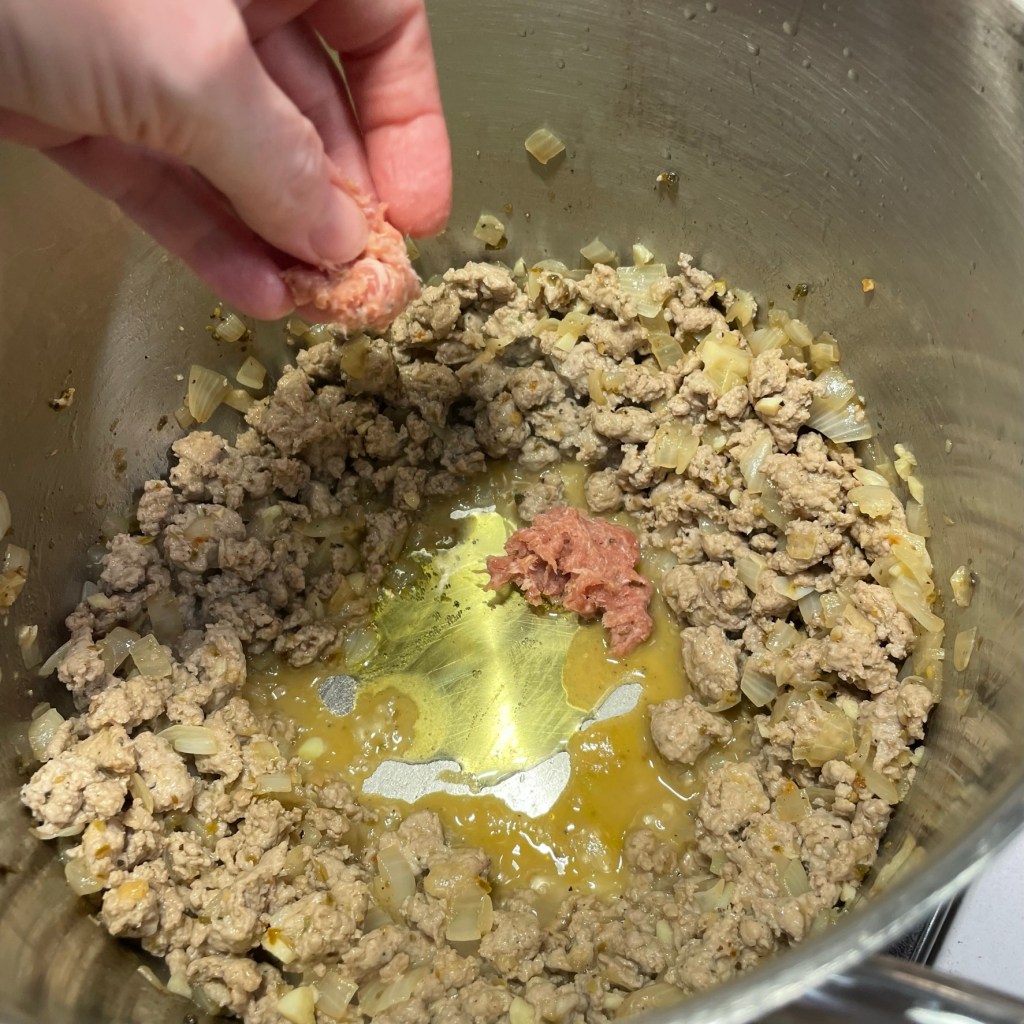
  2. Add sausage, a bit at a time, to brown it without overcrowding the pan.
  3. Add jalapeno and drizzle with olive oil to provide fat for the roux. Stir in ground cumin.
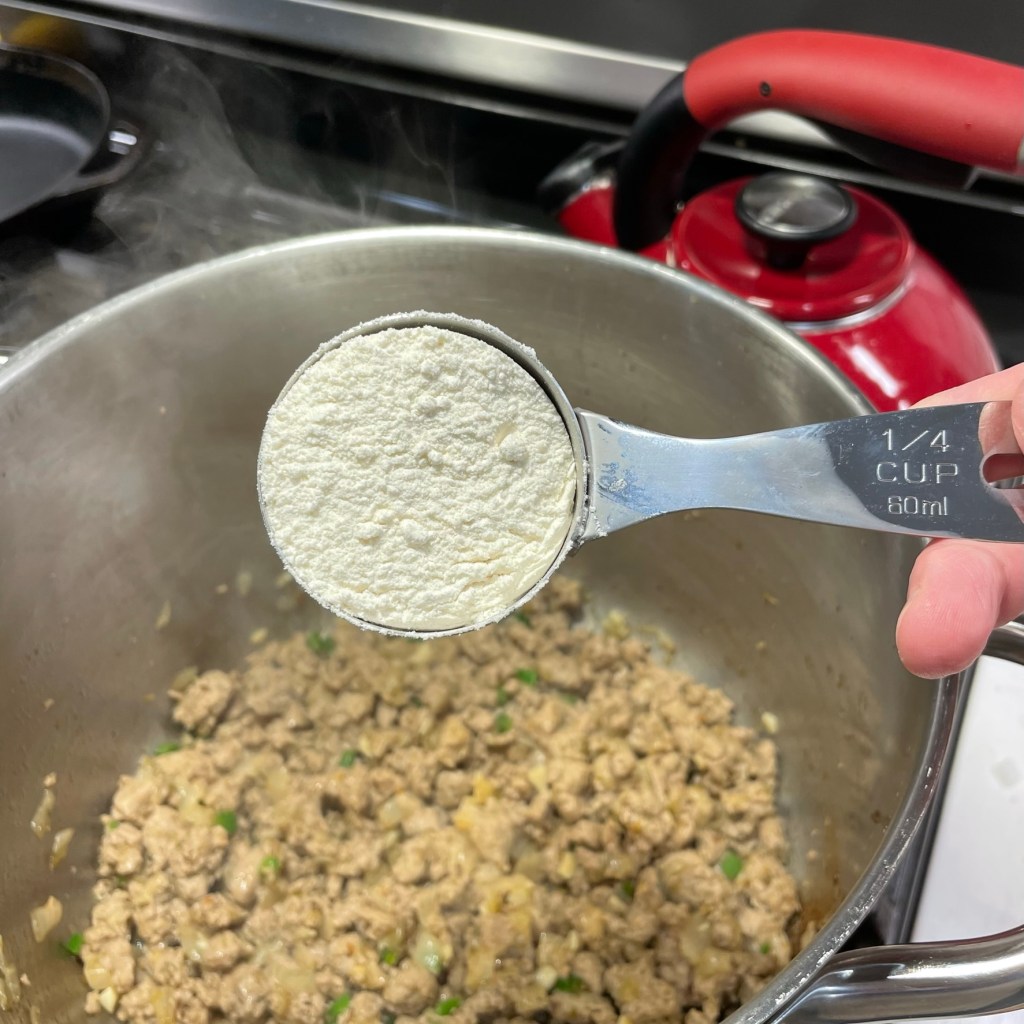
  4. Sprinkle flour and masa all over the meat mixture and toss to coat, adding more oil if needed to make it sticky and evenly coated.
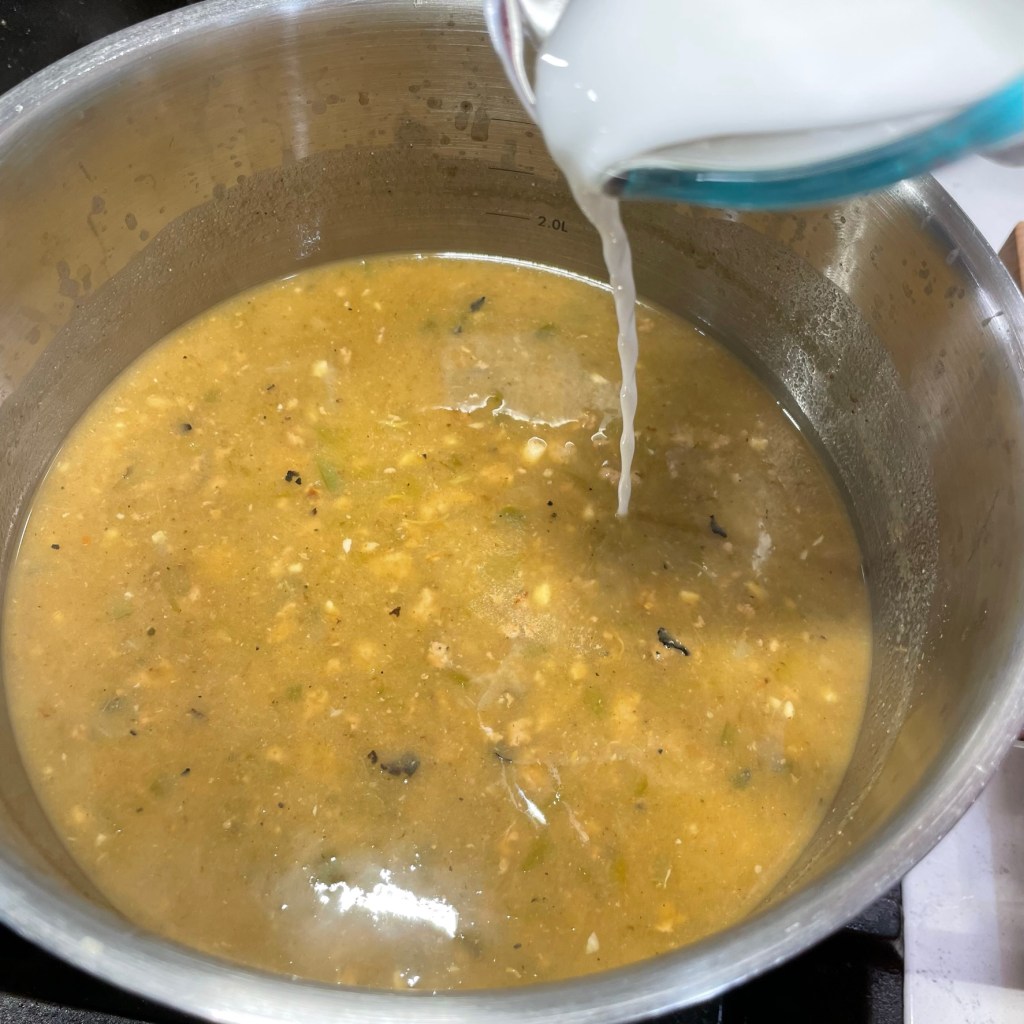
  5. Add veg or chicken broth, half at a time, stirring each to blend and thicken.
  6. Cover the pot, reduce heat and cook at a low simmer for a couple of hours. Aim to keep it below the boiling point so that the thickening doesn’t cook off. If the chili seems “thin” after its simmer, use the corn starch slurry to thicken it back up. Be sure to let it simmer vigorously for a few minutes to cook off the starchy flavor.
  7. To serve the chili over burritos, warm the refried beans in a skillet or deep saucepan with some sautéed onions. Add a generous spoonful of the beans onto the center of a large flour tortilla. Add a small handful of shredded cheese and roll it up, placing it seam side-down on an oven-safe plate. Ladle chili over the burrito, sprinkle on more shredded cheese and just a small amount of extra chili. Place in the hot oven or microwave to melt the cheese.

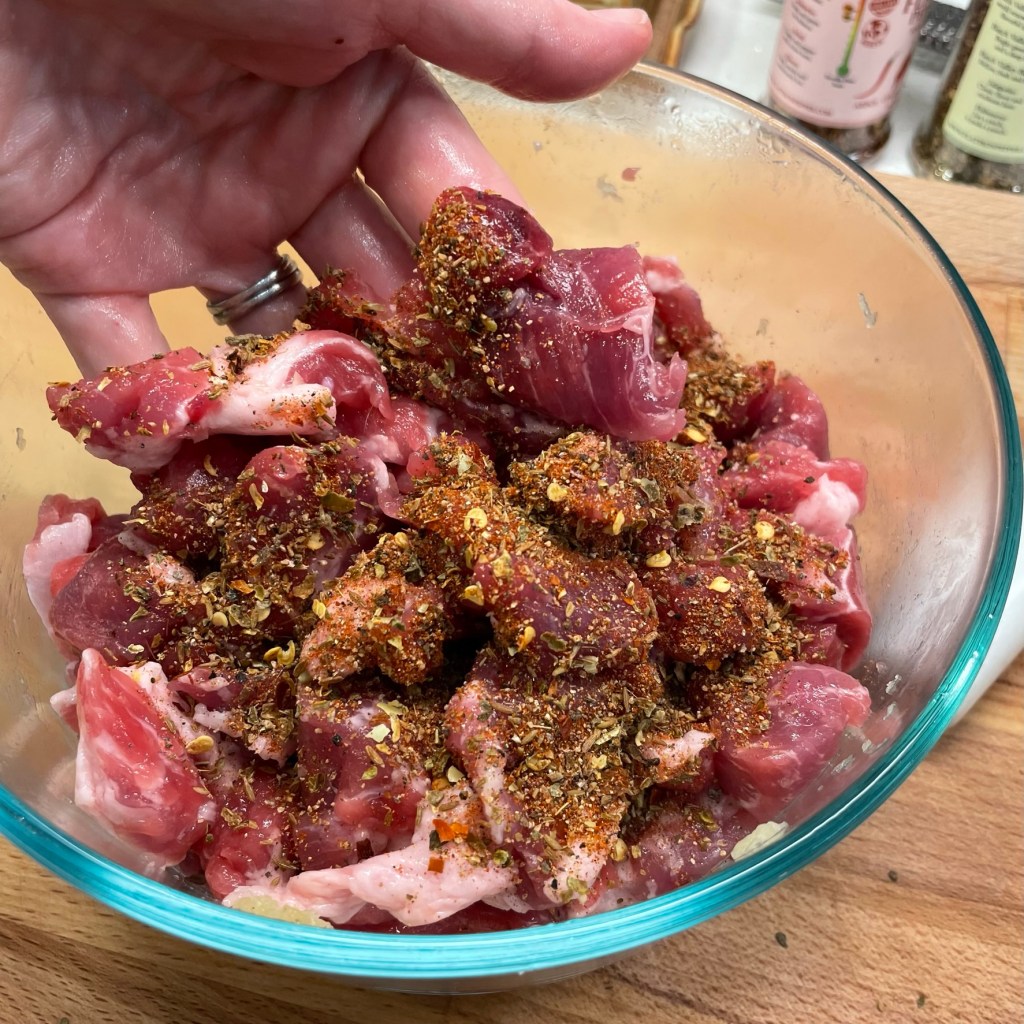
Below are the ingredients I used in the green chile sausage. Full instruction for making the sausage can be found in my previous post for homemade pork sausage.

Ingredients

  • Pork shoulder cubes (gram weight of pork determines how much seasoning blend to use)
  • 1 tsp. Flatiron Pepper Co. hatch green chile blend (for mild, smoky flavor)
  • 1 tsp. Flatiron Pepper Co. four pepper blend (includes chiles de arbol, ghost and habanero for lots of heat)
  • 2 cloves garlic, grated on a microplane
  • 1 tsp. dried Mexican oregano
  • 1/2 tsp. ground cumin
  • 1/2 tsp. freshly ground black pepper


Almond Joy Brownie Bites

My taste for chocolate has evolved exponentially since childhood. The candy bars I loved back then—Kit Kat, Snickers, Mounds and Almond Joy were some of my favorites—all fall a little flat now that I have experienced fine, artisan chocolates. After you develop a palate for high quality, single-origin chocolate, it’s tough to go back. But occasionally, nostalgia sneaks in and makes me crave a taste of yesteryear, and that’s what happened when I had to reach past a jar of unsweetened coconut to get to my go-to brownie mix.

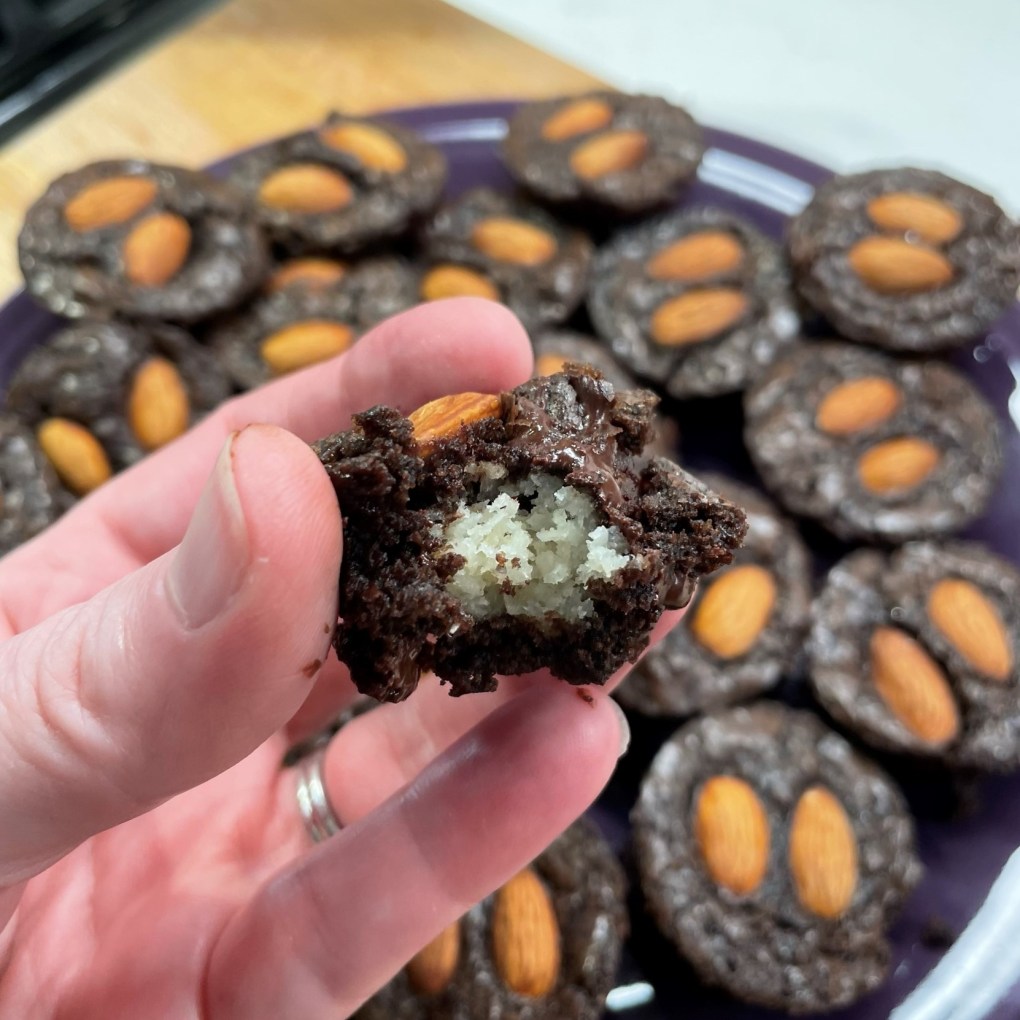
Why couldn’t I turn my brownies into a play on an Almond Joy candy bar, I thought, but with an elevated presentation and more texture? I reached for almonds, too, and had only one dilemma—how to incorporate the coconut so that it didn’t get lost into the brownies. I didn’t just want the flavors of an Almond Joy to be present, I wanted it to look kind of like an Almond Joy candy bar, too, and that meant I could not just add coconut to the brownie mix. No, I needed to create a filling that would be enveloped inside the brownie, and I wanted it to be bite size with two almonds, just like the candy bar.

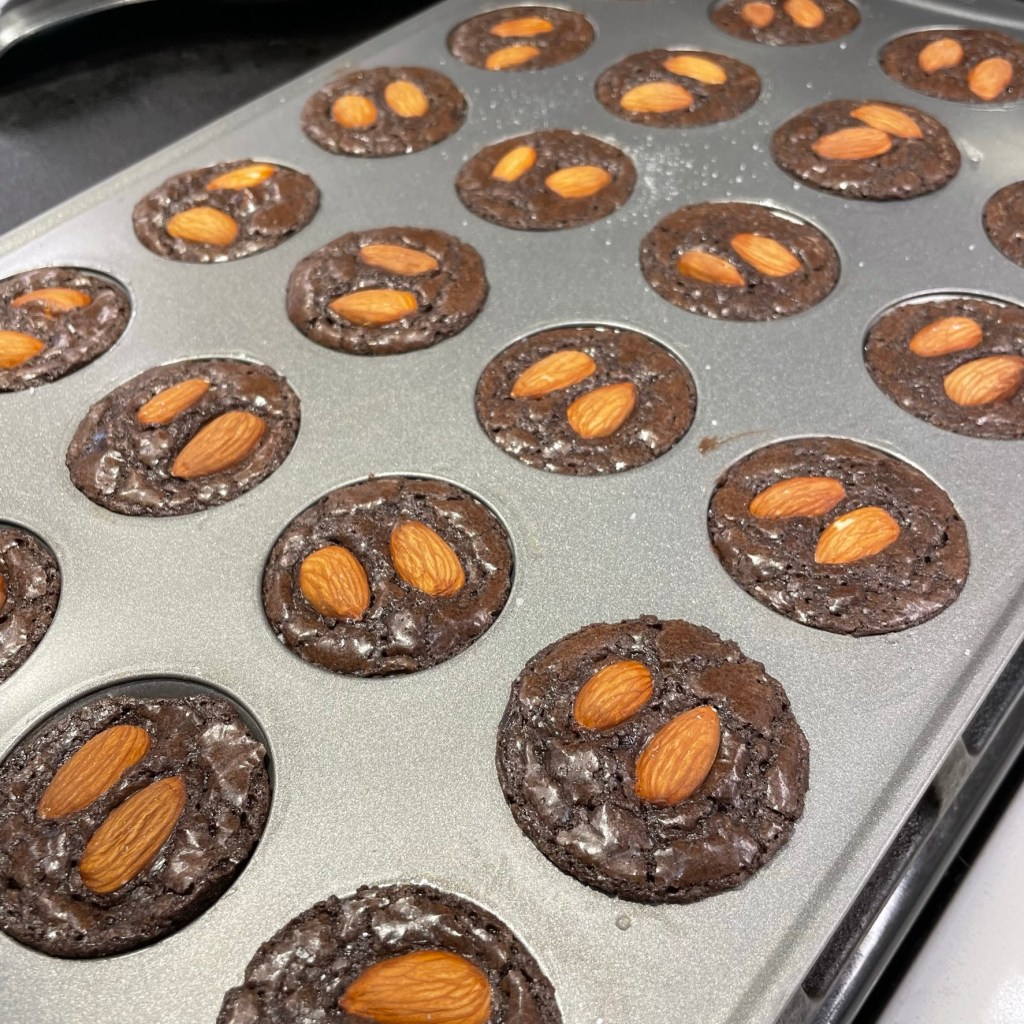
These miniature, two-bite brownies were a home run!

I found a recipe on Pinterest for a coconut filling intended for layer cakes, and as I considered the steps of cooking the milk and sugar together until it was dissolved and thickened, it occurred to me: isn’t that basically sweetened condensed milk, and why not just use that? It was perfect for transforming plain, shredded coconut into a thick, sticky, coconutty filling.


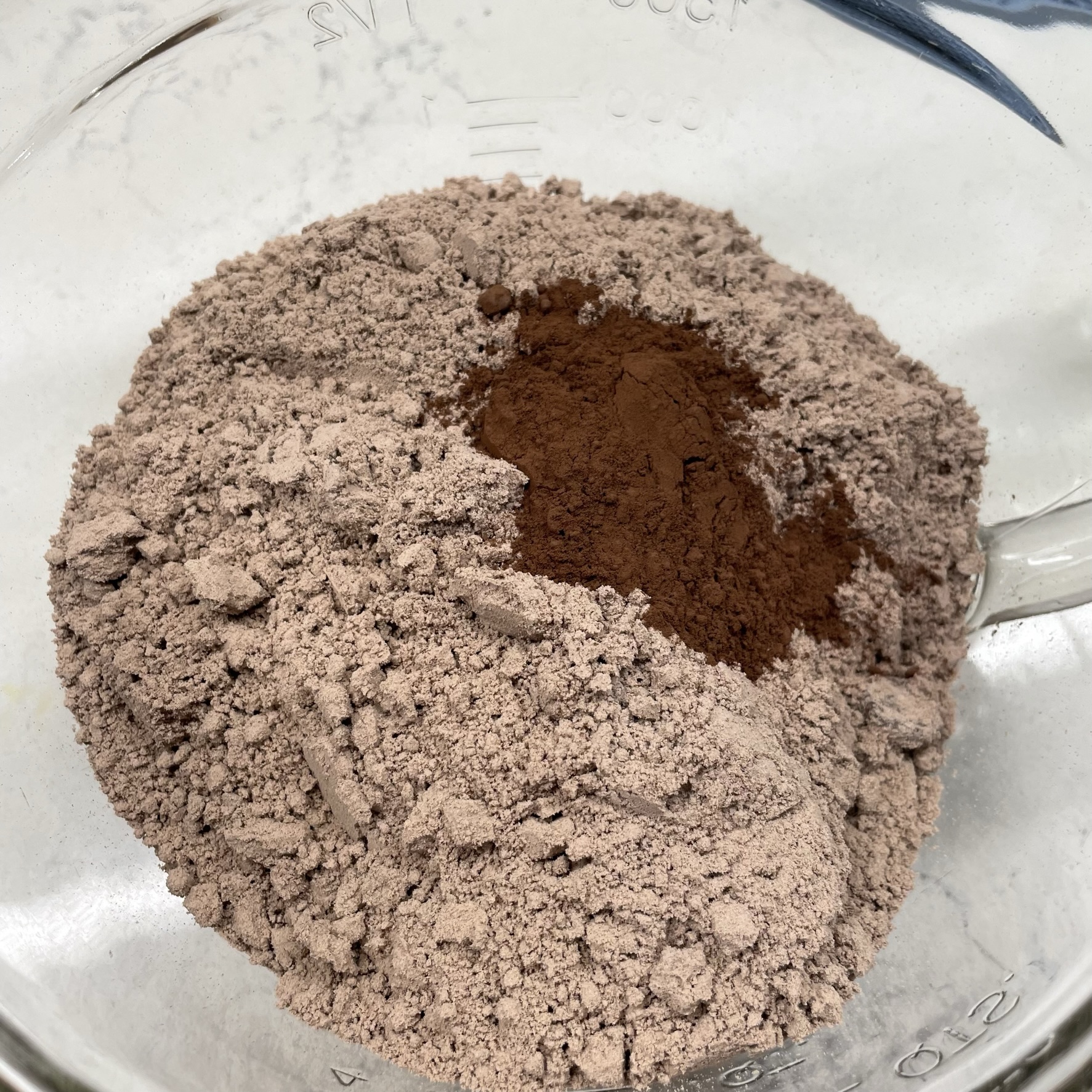
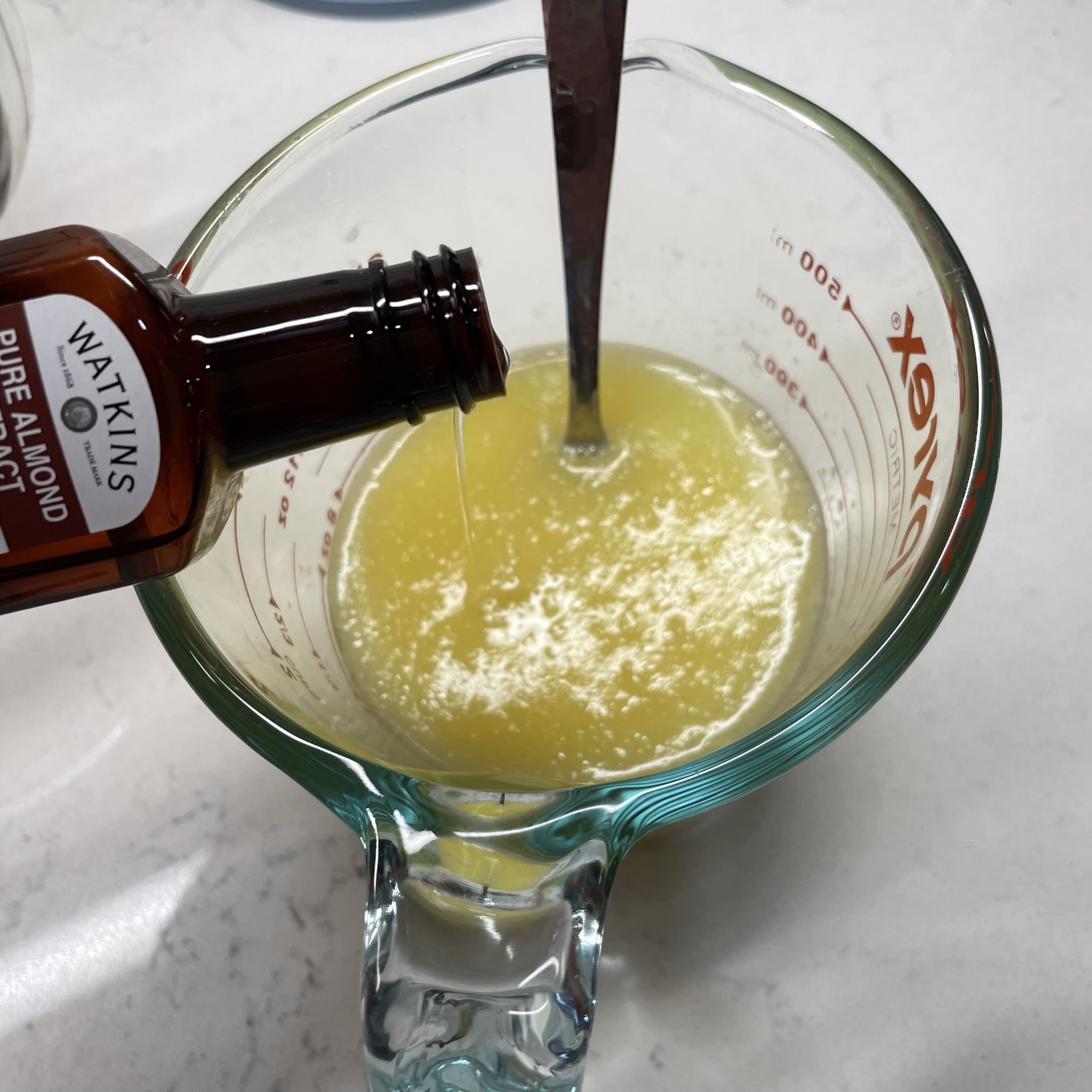
My brownie mix got an extra boost of dark chocolate from a spoonful of dark cocoa powder. I did this because I always wished that the candy company had made a dark chocolate version of the Almond Joy—sort of a Mounds-Almond Joy combination thing. I also gave the almond flavor a boost with a touch of almond extract added to the liquid ingredients used to make the brownie batter.


A few more notes worth mentioning before I dive into a visual walk-through of how I put these fun little treats together:

To keep this from being too sweet, I combined equal amounts of sweetened and unsweetened shredded coconut. The latter is sometimes labeled “dessicated” coconut, and you can find it in the baking aisle of a well-stocked supermarket or online from Bob’s Red Mill (where I get it). This is my preferred coconut for most recipes—cookies, smoothies, muffins, etc.—and I chose to use some of it here because I knew the filling would be sweet enough with the addition of the condensed milk and the amount of sweetened coconut. I pulsed the coconut in the food processor, too, to knock down some of the shaggy texture.

My go-to brownie mix is Ghirardelli Dark Chocolate, but (I can’t believe I’m about to say this) the chocolate chunks included in the mix may not be right for this recipe. If you are making this as mini muffins, as I did, you will find that the melted chocolate bits hinder the work of loosening and removing the brownie bites from the pan. The dark chocolate flavor is great but consider using a brownie mix that doesn’t have chips or pieces of chocolate in it; you’ll have an easier time removing the brownie bites without breaking them.

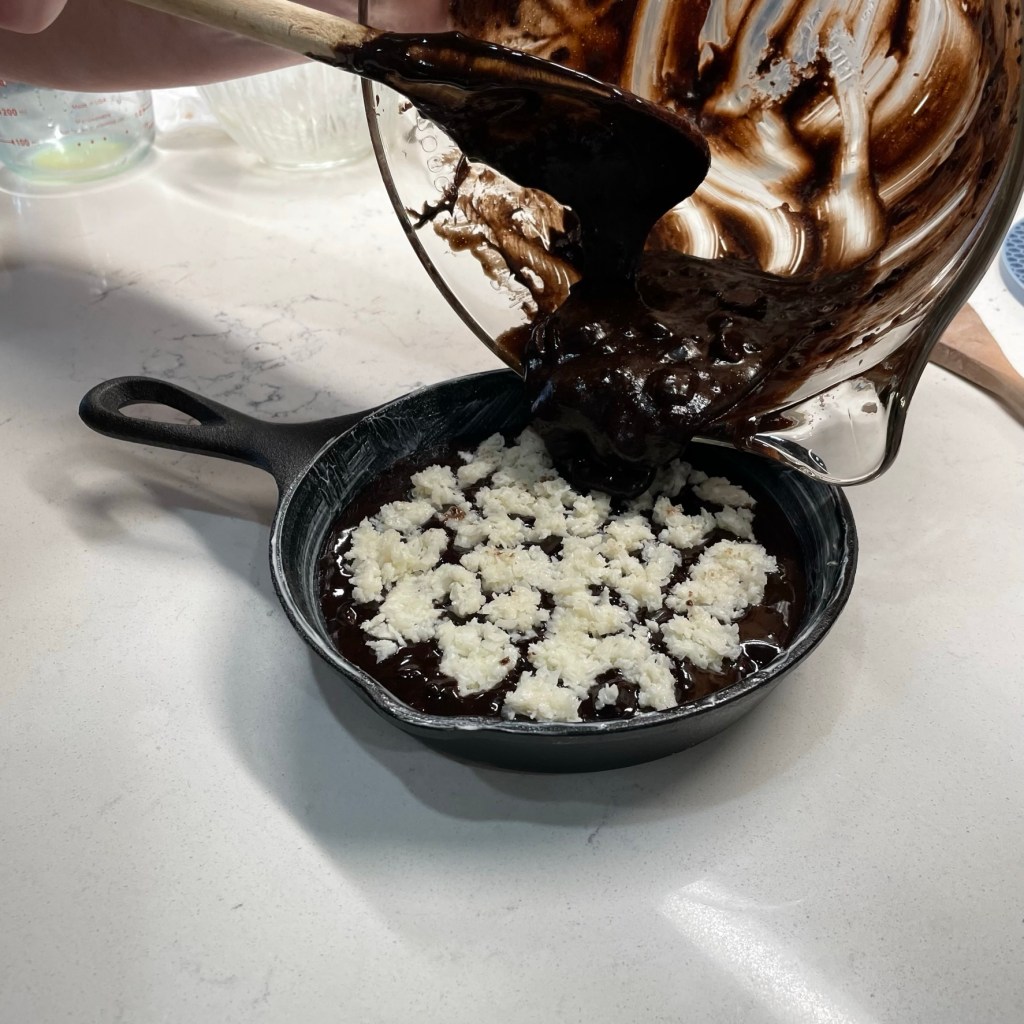
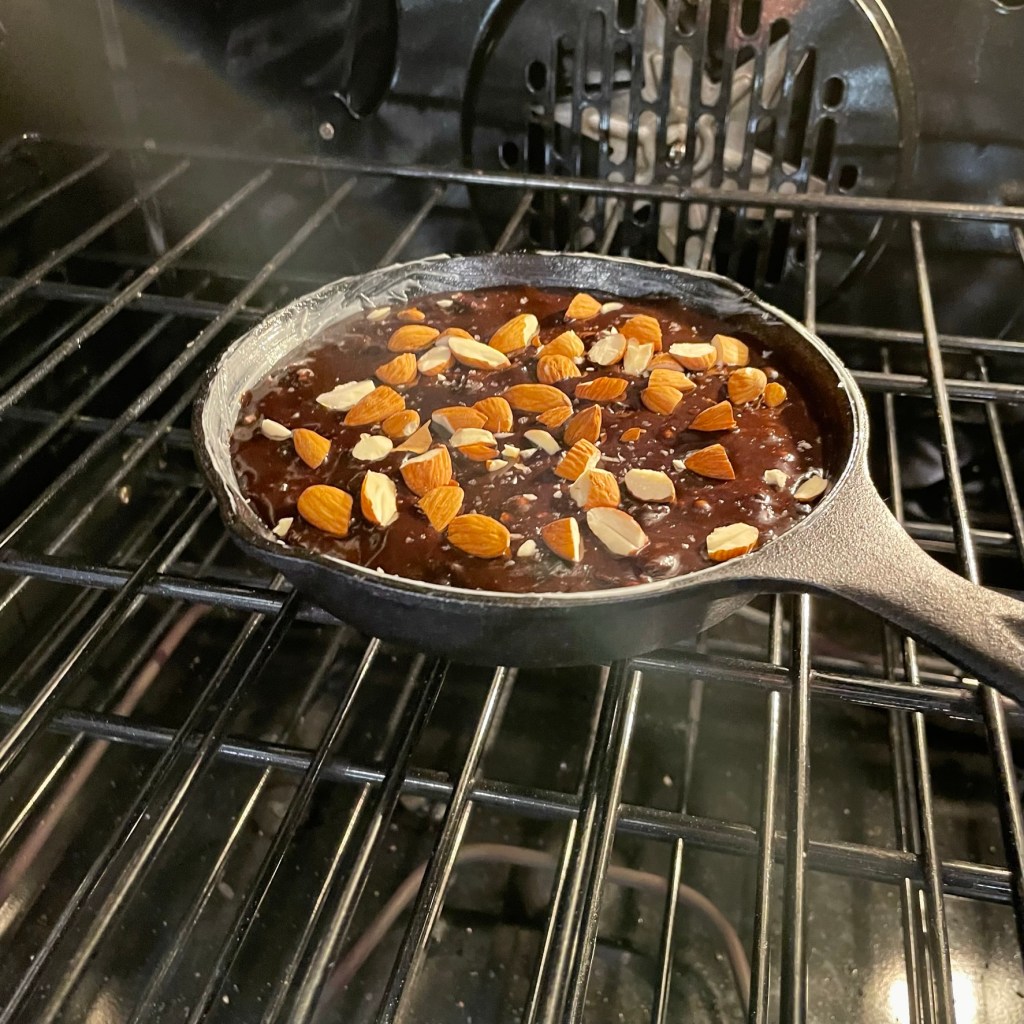
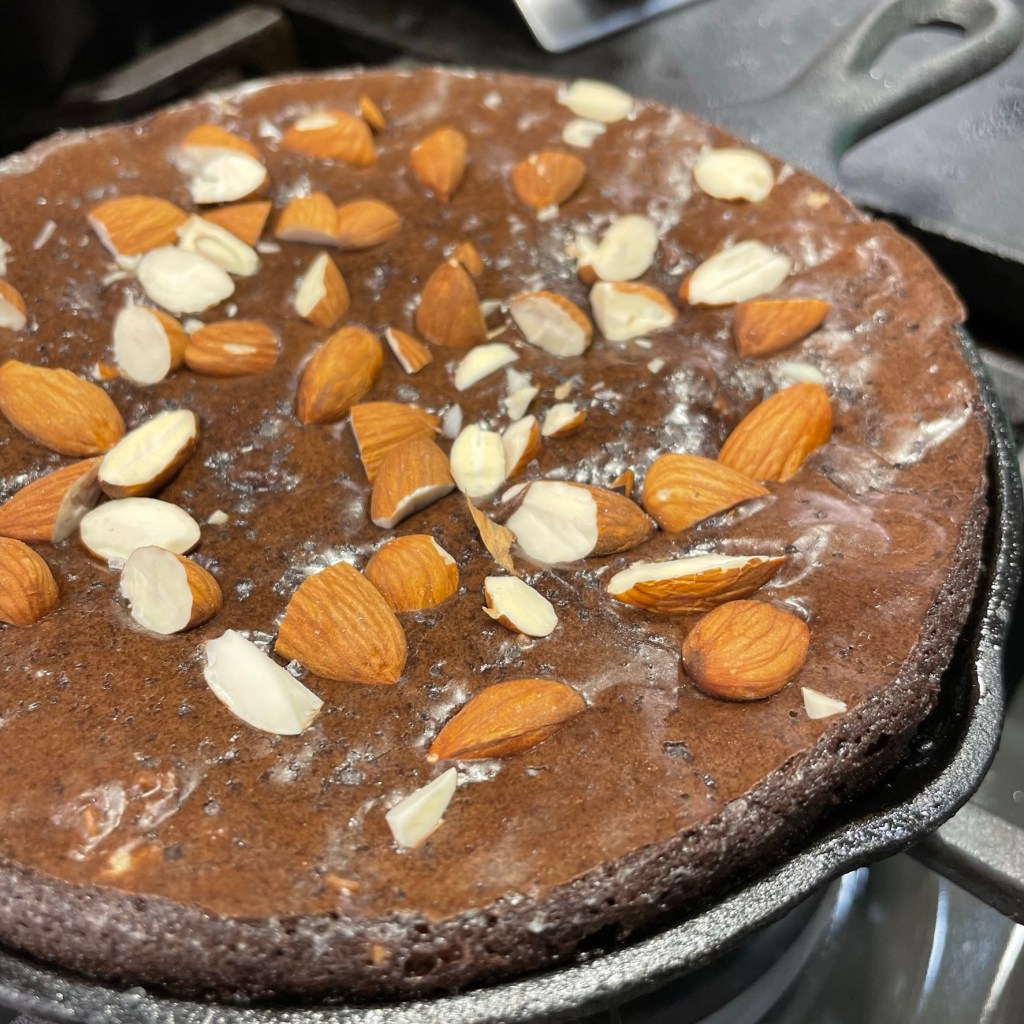
Finally, and this is important, the amounts of brownie batter and coconut filling exceed what is needed in the 24-count mini muffin pan. I had enough of both left over to make a small skillet brownie, and trust me when I tell you, that was not a bad decision either. If you decide to do this, I’d like to suggest that you eat it warm. Mmm…

Yes, really.

OK, preheat the oven to the temperature suggested on your brownie mix, and let’s get this started!

So, was all this necessary? Couldn’t I have just chopped up some Almond Joy candies and added them to the brownies, the way I did with the Leftover Snickers Brownies I made at Halloween a few years ago? Sure, and that would have been tasty, too, but this was a lot more fun. 😊


Almond Joy Brownie bites

  • Servings: 24 brownie bites
  • Difficulty: average
  • Print

This is a fun way to dress up a box mix, bringing together the flavors of a classic candy bar with fudgy, soft and chewy brownies.

Ingredients

  • 1/2 cup sweetened shredded coconut
  • 1/2 cup unsweetened shredded coconut
  • 1/4 cup sweetened condensed milk
  • 1 box brownie mix plus ingredients on package to make them
  • 1 Tbsp. dark cocoa powder, optional
  • 1/2 tsp. almond extract, optional
  • 24 whole raw almonds
  • a few pinches flaky sea salt, optional

Note that this recipe will yield more batter and coconut filling than you will need for a single pan of mini muffin-size brownie bites. Plan ahead to use up the rest in a small baking dish or extra mini muffin pan.

Directions

  1. Preheat oven to 325 F, or whatever temperature is recommended for the brownie mix. Generously butter the inside of every cup on a mini muffin pan.
  2. Combine sweetened and unsweetened coconuts in the bowl of a food processor and pulse several times to make a finer texture. Transfer the coconut to a bowl. Add the sweetened condensed milk and stir until evenly blended. This will be a thick, sticky mixture.
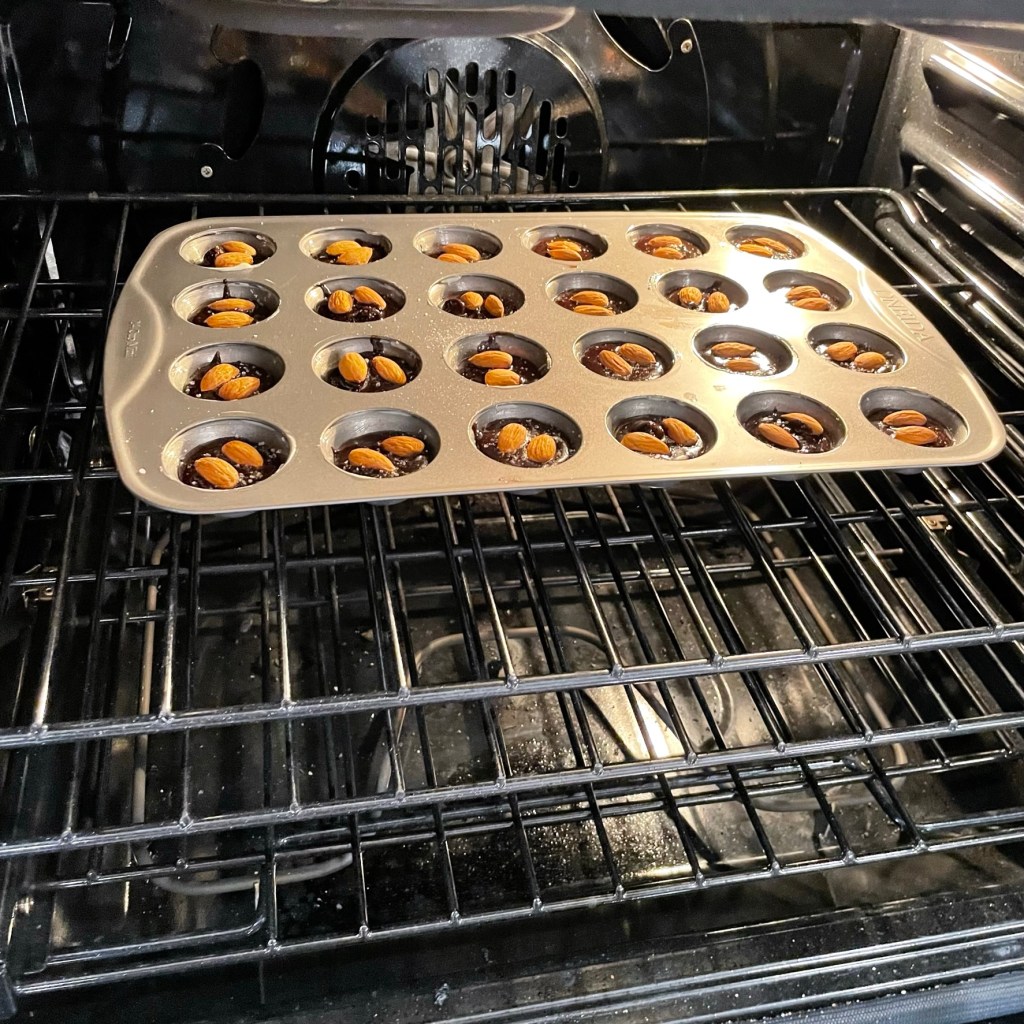
  3. Prepare brownie batter, adding the dark cocoa to the dry mix and the almond extract to the liquids. Fill the mini muffin cups about halfway. Scoop out a small amount of coconut filling and roll it between your hands into a ball about the size of a marble. Press the coconut ball into a muffin cup, letting the batter come up the sides around it. Repeat with the remaining muffin cups, then drop a slight spoonful of batter on top to fully enclose the coconut ball. You will have a significant amount of batter left over. See Step 5 for suggestions.
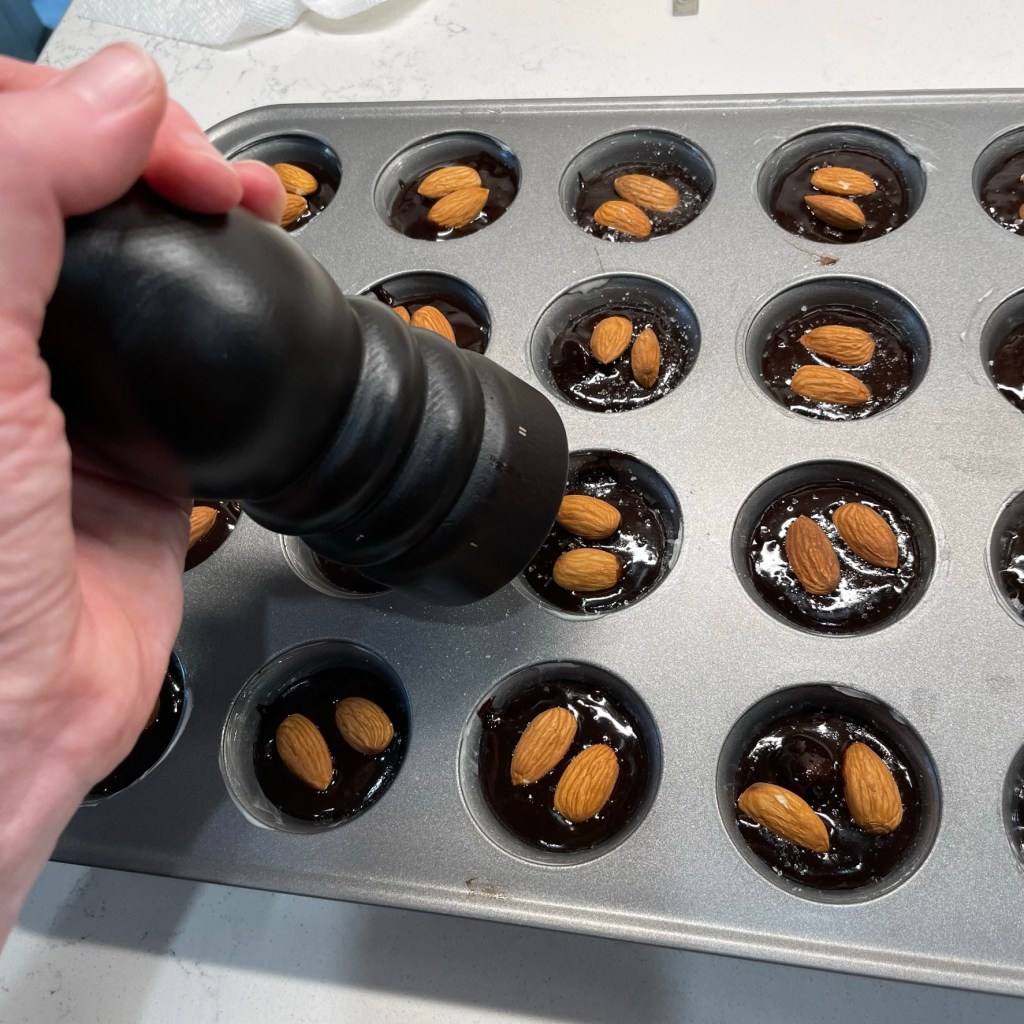
  4. Place two almonds on each brownie bite and scatter a few small pinches of flaky sea salt over the pan. Bake at 325 for 15 minutes. Allow brownie bites to cool in the pan until they are easy to handle. Run a thin rounded knife around the edges of the brownie bites to aid in releasing them. Let them cool completely on a plate or tray.
  5. With the remaining batter and filling, we made a warm miniature skillet brownie for two. This could also be baked up in a small glass baking dish, or make a second batch of mini brownie bites when the pan is fully cooled. Use the same method of layering coconut filling over about half of the batter, then pour the last of the batter over to cover it. Sprinkle with chopped almonds and bake for 30 minutes. Enjoy warm!


Raspberry-Rhubarb “Pop Tarts”

Show me a kid who doesn’t eat pop tarts, and I’ll say that kid doesn’t spend nearly enough time at Grandma’s house. For me, one of the treats of being with Gram—besides that I simply loved her company and always had fun learning and making things—was getting “spoiled” a bit with certain foods that were not necessarily available at home. It isn’t that I loaded up on junk food at her house; that definitely was not the case. But I was allowed to grab handfuls of Cap’n Crunch cereal, right out of the box, to munch on while I watched Saturday morning cartoons from the big wing chair. Gram could be persuaded to purchase an occasional box of strawberry Pop-Tarts (assuming she had a coupon), and I did so love spreading my toast with banana- or cinnamon-flavored peanut butter. Please tell me you do remember Koogle, don’t you?


I would give anything to relive some of those sweet childhood memories and to appreciate the simple joys more than I did in the moment, especially the sputtering sound of Gram’s pressure cooker or the metronome-like sound of the pendulum on the cuckoo clock that hung on the back wall of the den. Just remembering the zipping sound it made when Grandpa pulled down the clock chains to reset it every evening makes me feel calmer inside. And, just like that, my eyes are misty—talk amongst yourselves, I need a moment.


These days, all the clocks in my house are digital display, with blue lights, and most of them keep me awake at night. Sugary cereals and funky-flavored peanut butters don’t stand a chance in my kitchen, and neither do most of the convenience snacks that have all kinds of who-knows-what ingredients. But I have been thinking about how simple it would be to make a homemade version of at least one favorite childhood treat, and to incorporate a flavor that Kellogg’s never would have thought of.

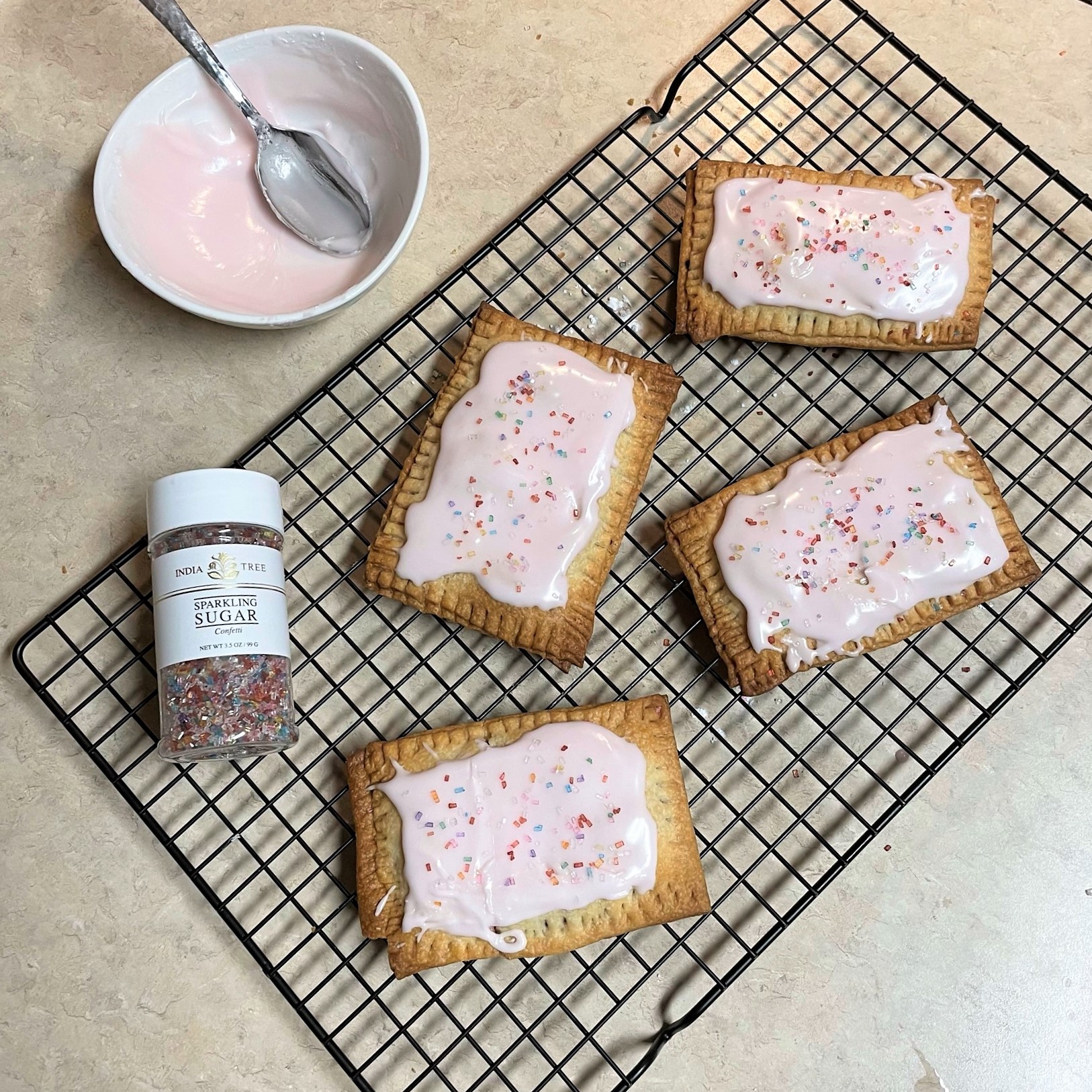
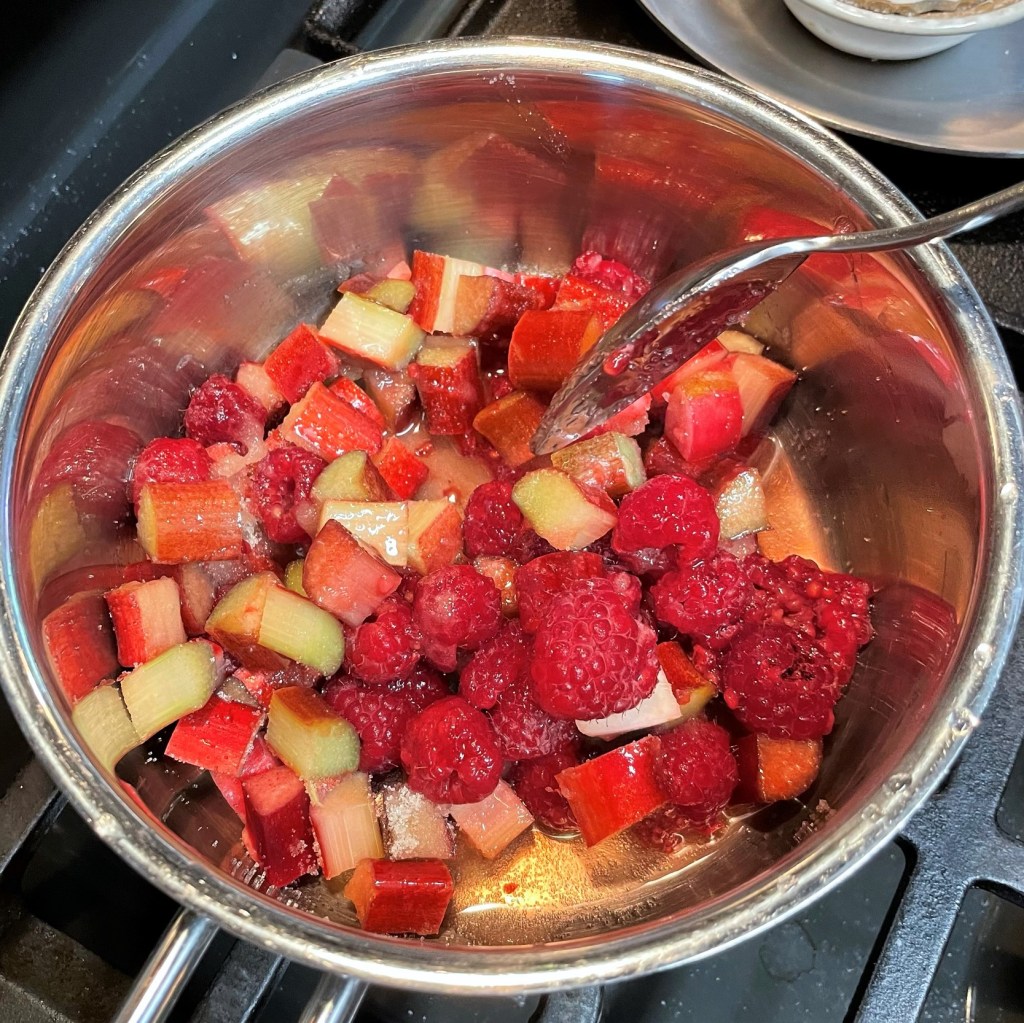
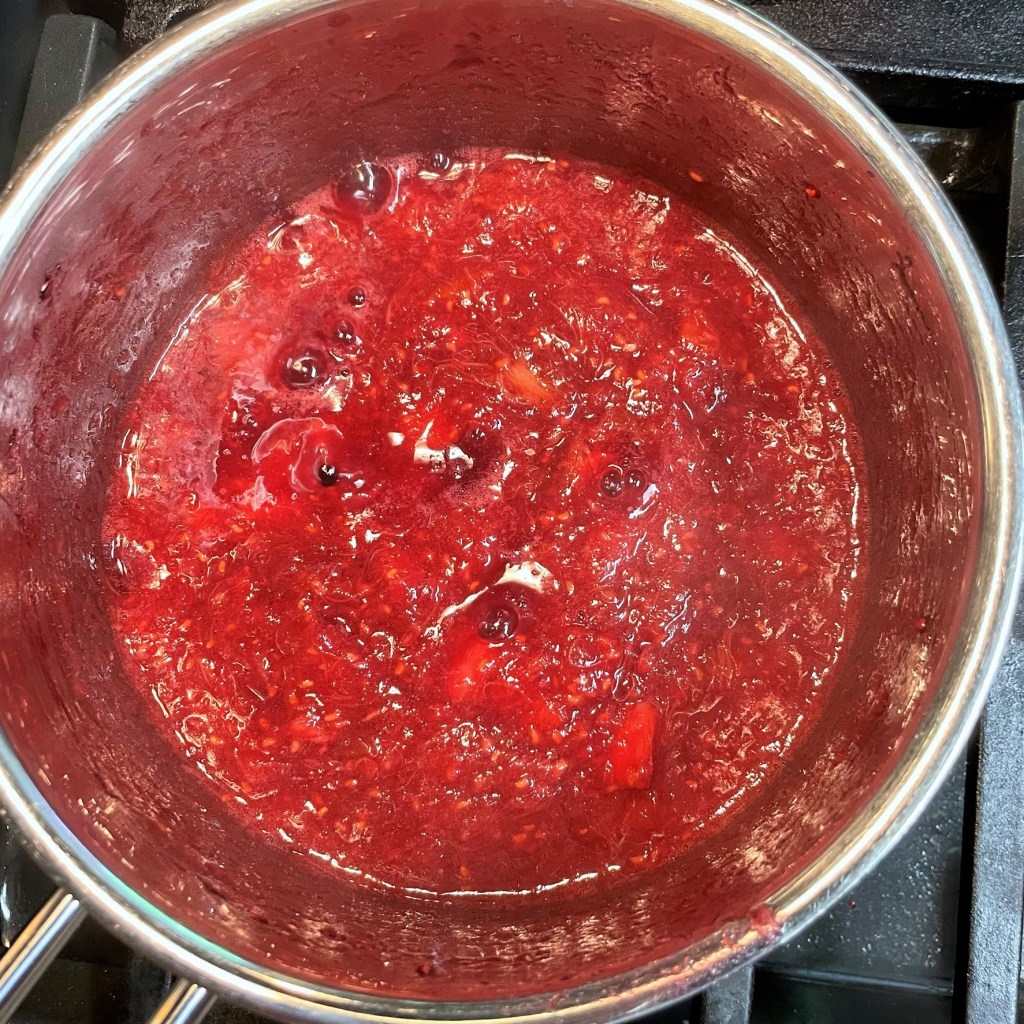
That’s how these raspberry-rhubarb “pop tarts” came to be, and they were ridiculously simple to make with store-bought pie crust dough and a fruity mashup that I made with my most recent score of rhubarb. Gram always had rhubarb in the spring and summer, and I learned to love it when I was knee-high to a grasshopper. Why not make it a filling for pop tarts? I cooked it with raspberries, which have pectin for thickening power (rhubarb doesn’t), but there’s no reason you couldn’t use any flavor of ready-made preserves, homemade or otherwise, as a filling for this treat. And you could skip the sugary frosting if you’d like, too. I only made it because I wanted the pictures to be pretty.
OK, pretty and girly. 🙂

Word to the wise, I would not recommend actually putting these in the toaster. The pie crust pastry is more delicate than a commercial pop tart, and I’m pretty sure you’d have a mess on your hands (not to mention inside the toaster). Also, because these tarts are not filled with preservatives, you will want to eat them up once they are made, but I doubt that will be a problem.

This was a fun, whimsical project, and the tarts were delicious. The icing, however, made them very sweet, so I won’t likely make this exact version again anytime soon. But I’ll tell you this much—if I had grandchildren, we’d be making these easy homemade pop tarts every visit, in as many flavors as the little ones could think up!

What flavor would you make?


Ingredients

Enough to make 8 tarts

Pastry dough for double crust pie (I used store-bought)

About 1/2 cup raspberry-rhubarb filling:

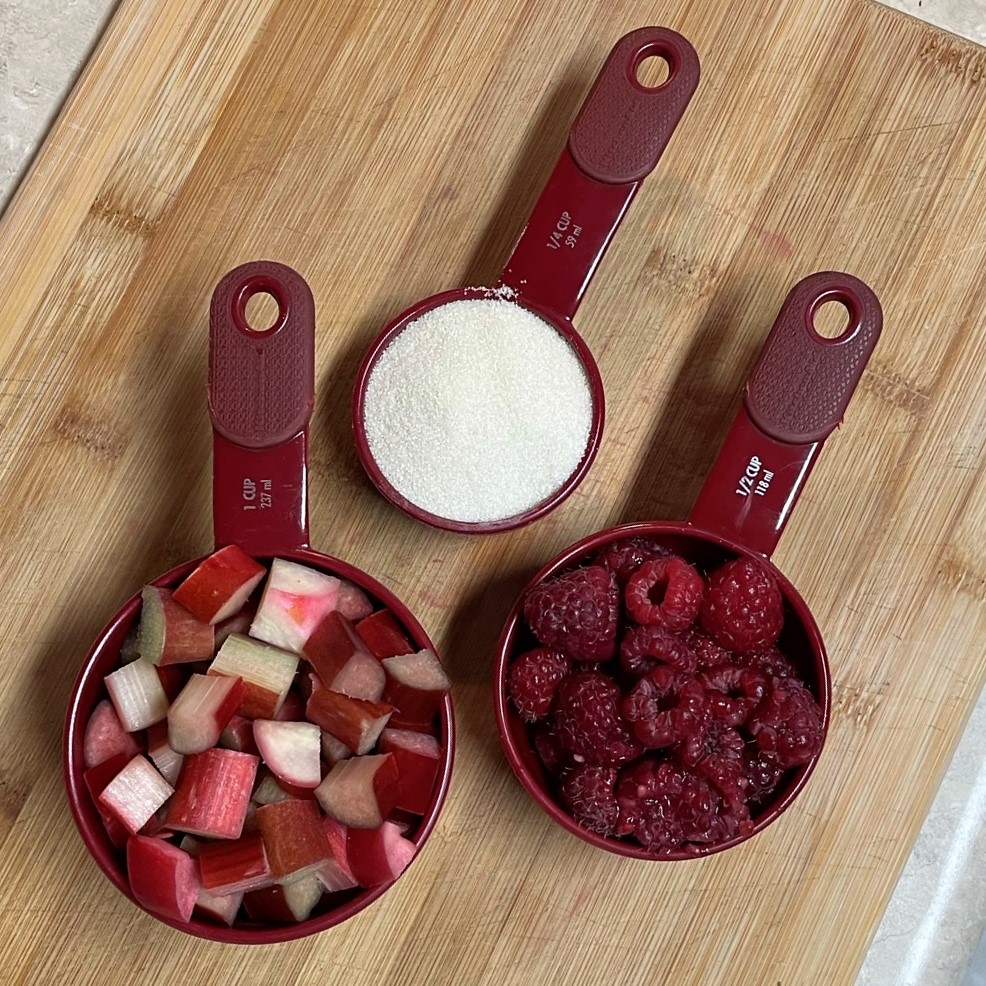
1 heaping cup rhubarb chunks

1/2 cup fresh raspberries

1/4 cup cane sugar

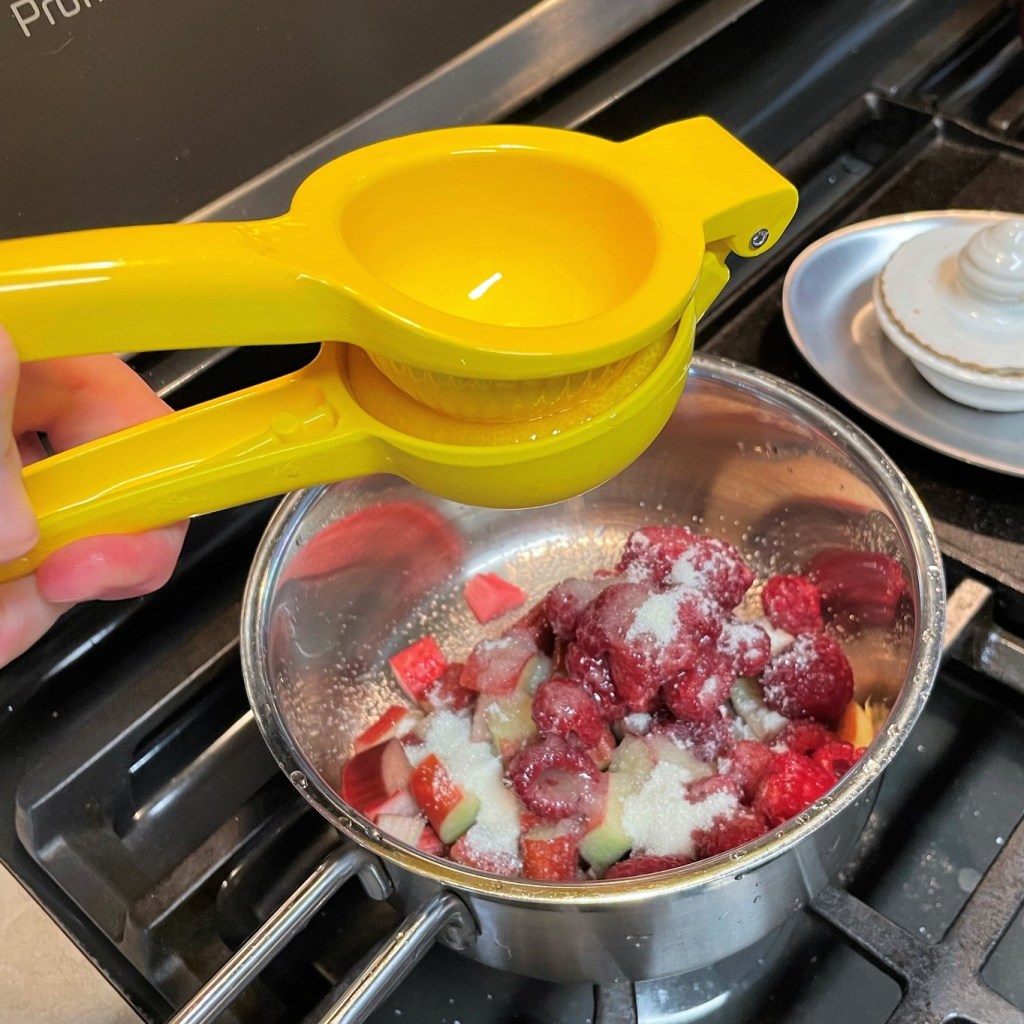
Juice of 1/2 lemon

1 Tbsp. corn starch, dissolved in 1 Tbsp. cold water


Glaze Icing (optional)

1 Tbsp. heavy cream

2 Tbsp. light corn syrup

About 2 cups powdered sugar

Food coloring, optional

Sparkling sugar, optional


Instructions

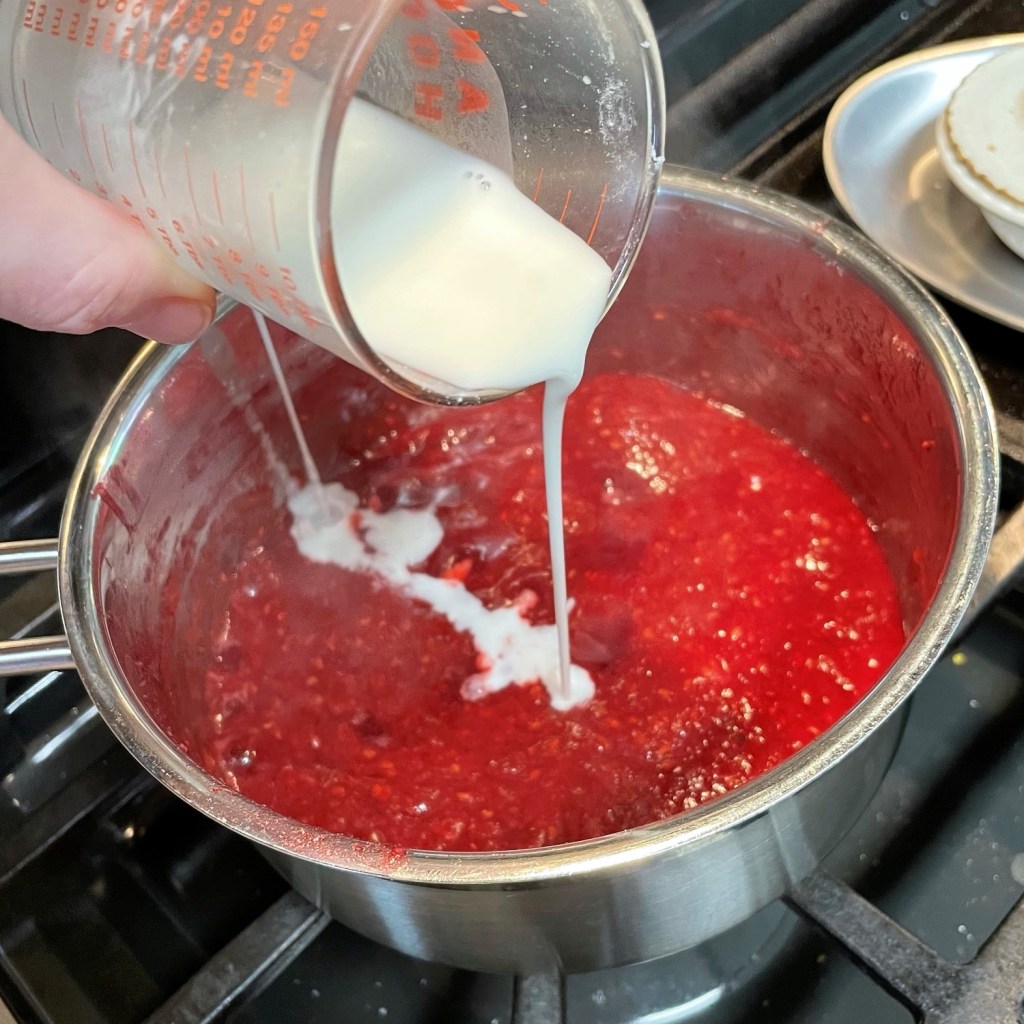
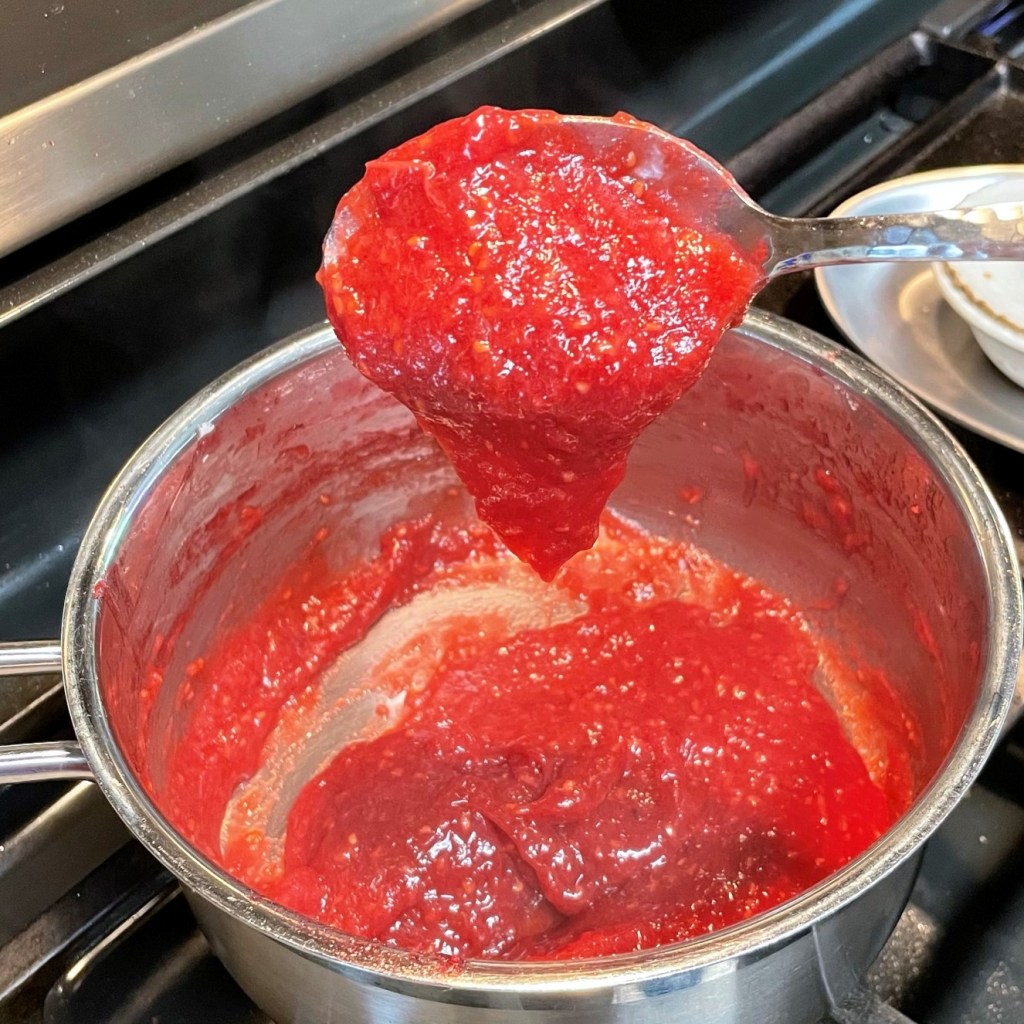
Make the fruit filling first, and give it plenty of time to chill in the fridge before making the pastries. Combine rhubarb chunks, raspberries, sugar and lemon juice in a small saucepan. Cook over medium-low heat until the fruit breaks up and mixture is thick, syrupy and bubbling. If the mixture seems thin, whisk in a small amount of cornstarch slurry and cook until it is no longer cloudy in appearance. Transfer to a covered bowl and refrigerate.

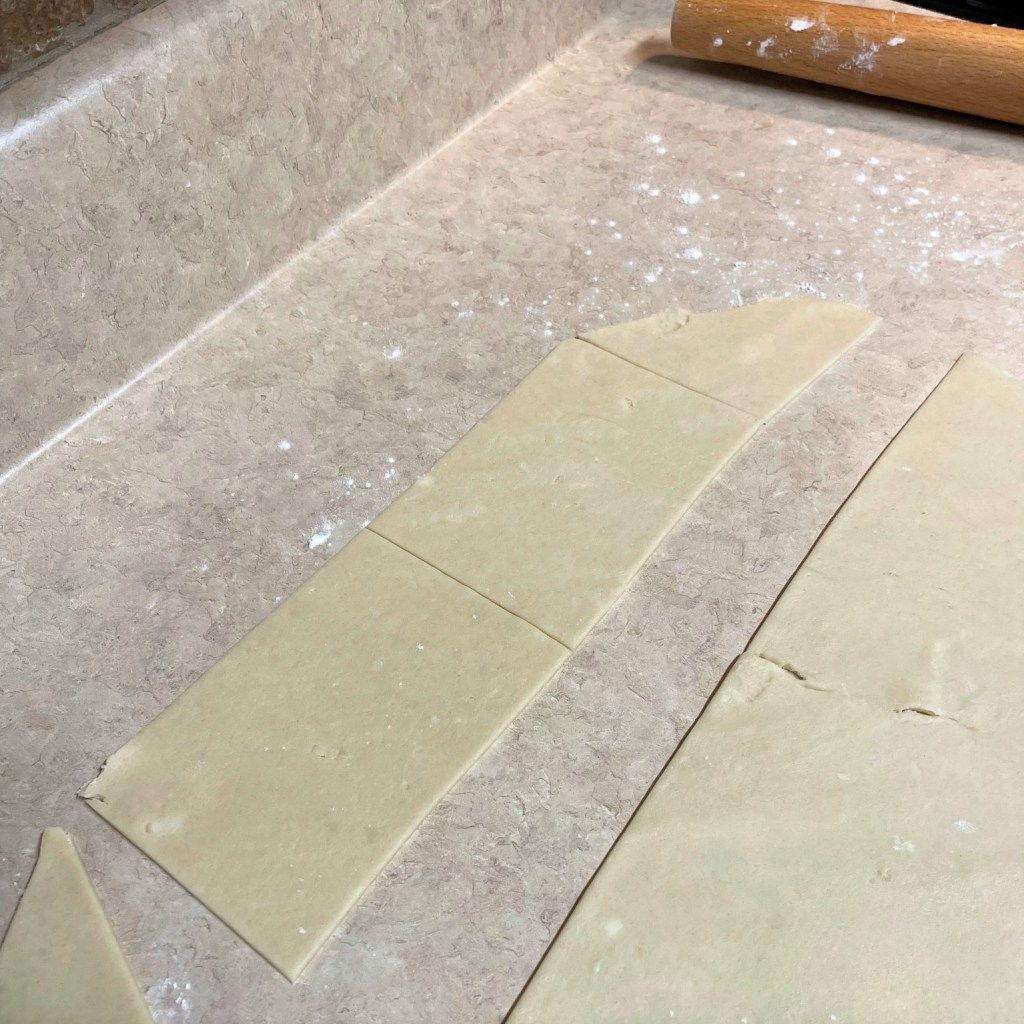
To assemble the pastries, spread the pie crust dough out onto a lightly floured countertop or board. If you are using a store-bought rolled crust, use a rolling pin to even out the wrinkles, but do not aim to make it thinner than 1/8 inch. Pinch together any breaks in the dough as best you can. Cut the dough into approximately 3-by-5-inch rectangles. You should be able to get 8 rectangles from each pastry round. Discard the scraps, or do what my Gram always did with extra pie dough: brush the scraps with egg wash and sprinkle with cinnamon sugar, then bake them and have the kids try to guess what animal they look like. 🙂

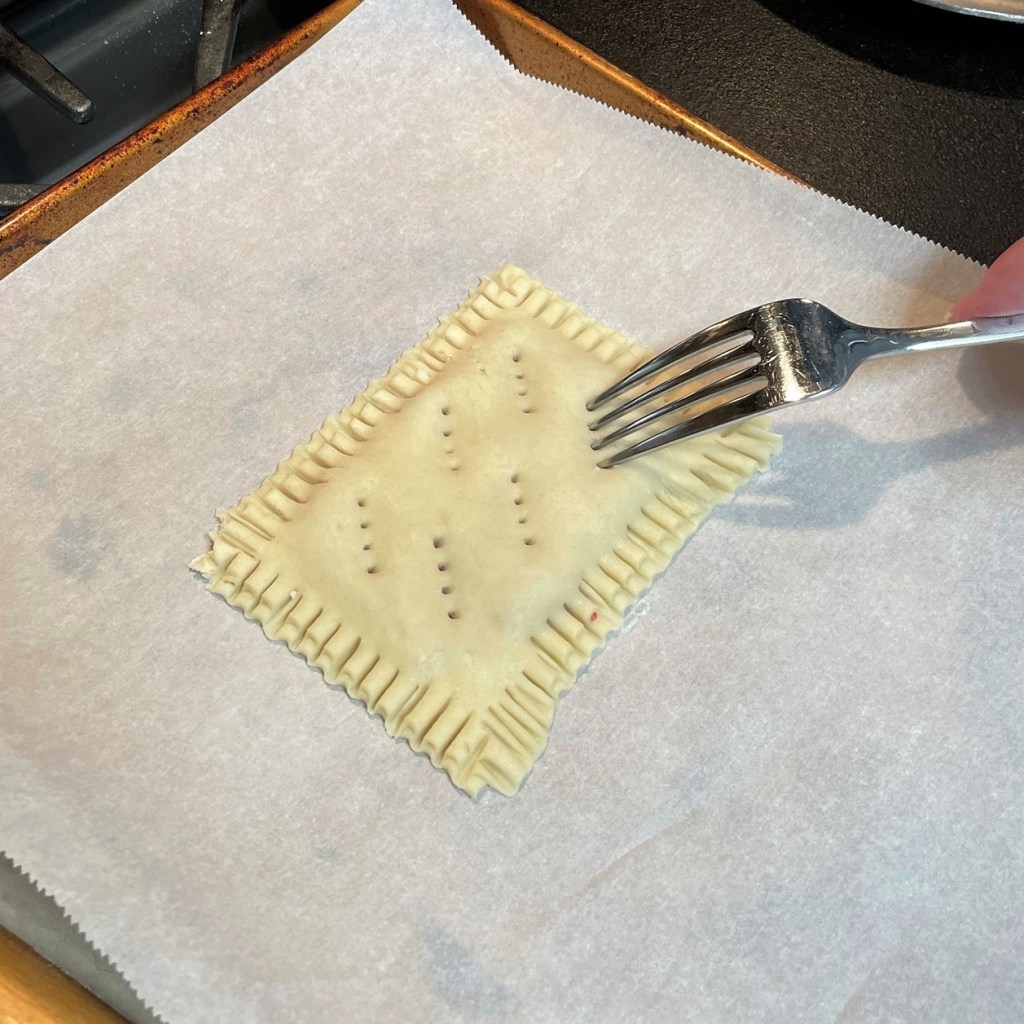
Carefully spread about 1½ tablespoons of the chilled fruit filling onto one set of rectangles, keeping the edges clean at least 1/2 inch on all sides. Top each pastry with a second rectangle. Use a fork to crimp the edges all the way around and to pierce shallow holes in the top surface. It occurred to me while I was doing this step that I could have used egg wash to seal the pastry, but they turned out fine without it. Transfer the pastries to a parchment-lined baking sheet and place the sheet in the freezer while you preheat the oven.
Preheat oven to 400° F, with rack set in center position. If you do not plan to put icing on the tarts, give them a quick brush with egg wash or milk before baking. Transfer the baking sheet to the oven for about 15 minutes, but watch them closely, as the edges of the tarts may want to burn. Carefully transfer the tarts to a rack and cool them completely before icing.

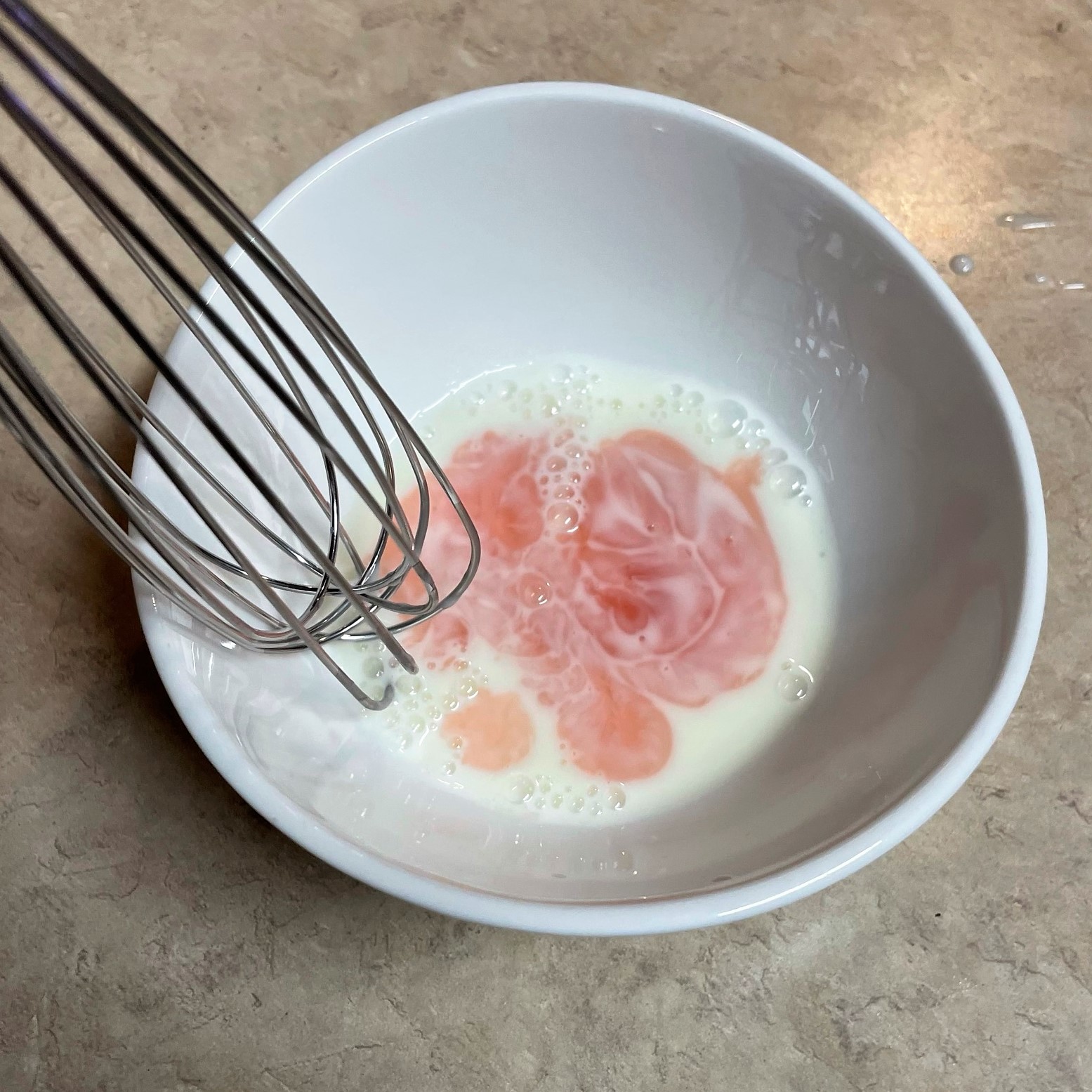
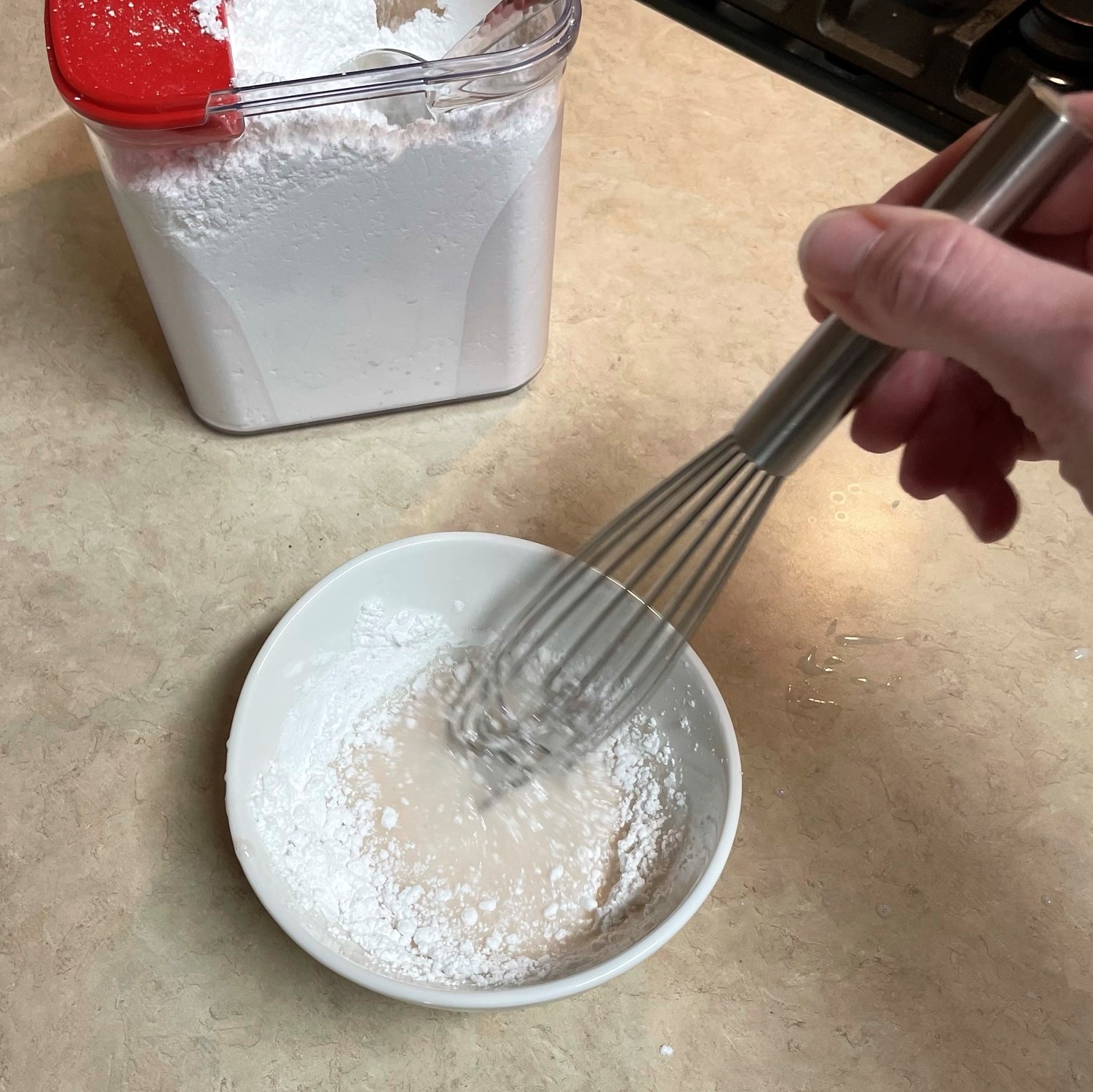
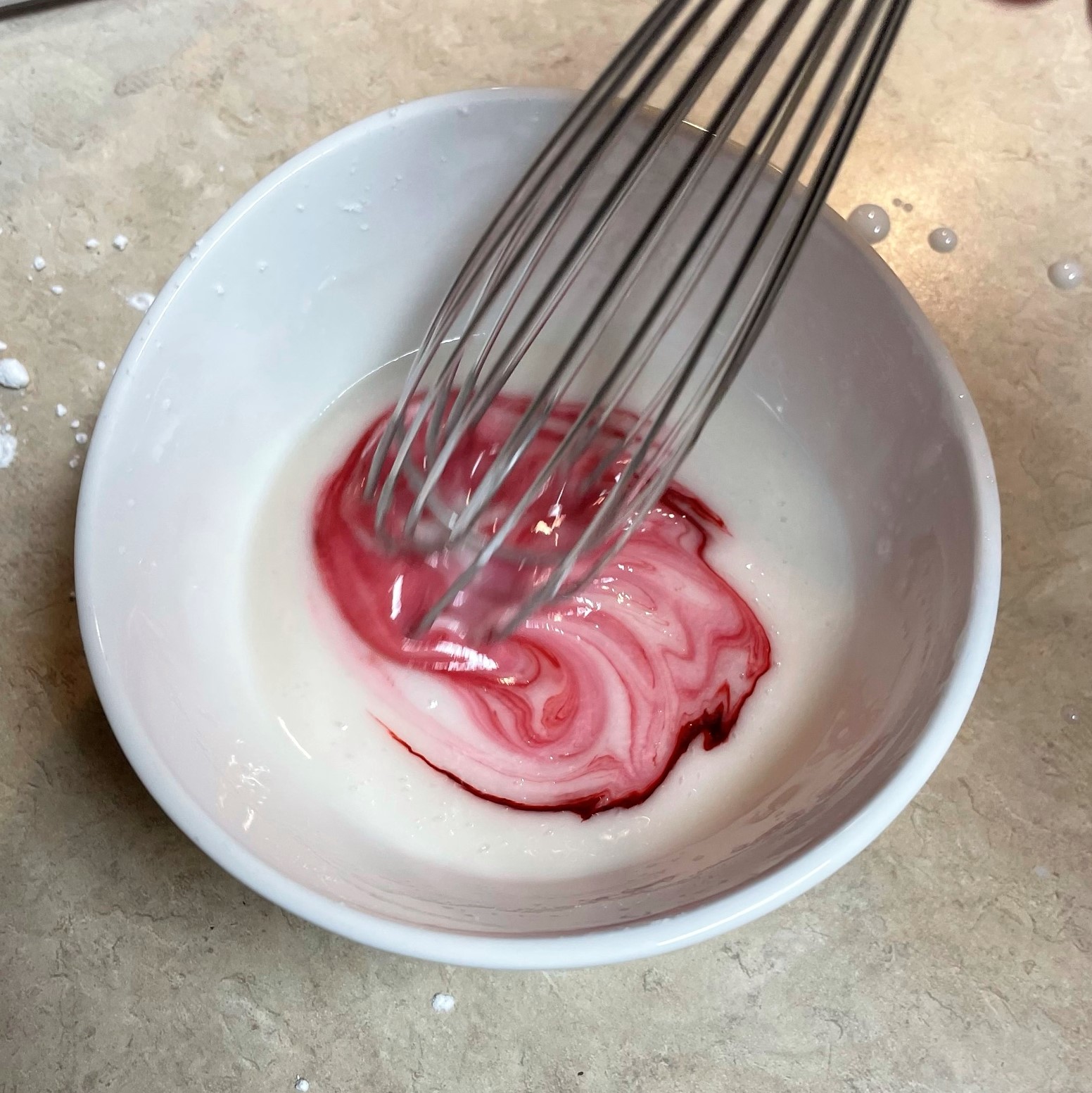
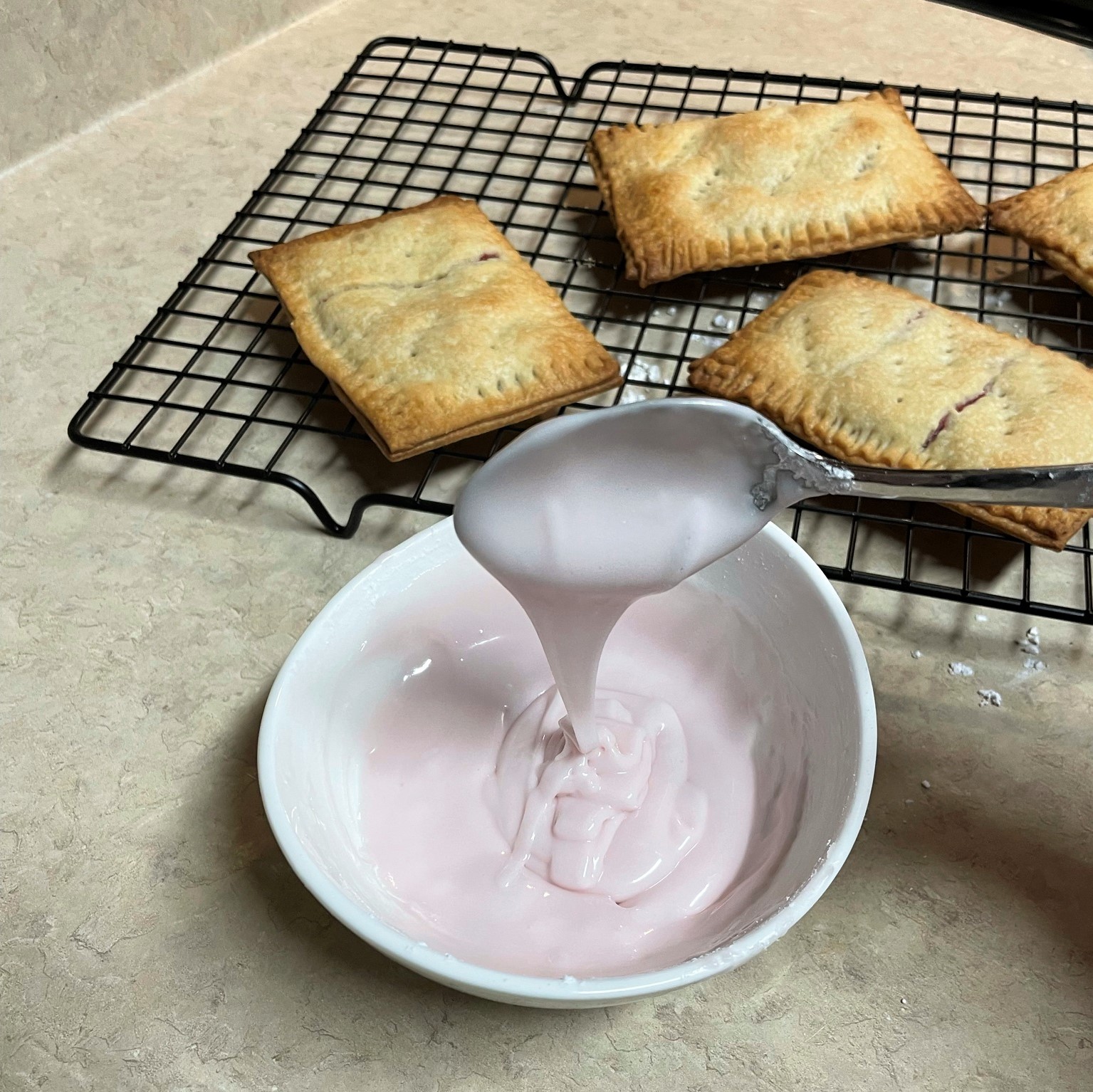
For the icing, whisk together heavy cream and corn syrup until smooth. Gradually add up to 2 cups of powdered sugar, whisking in each addition until smooth. Stir in a couple pf drops of food coloring, if desired, in one of the early sugar additions. The icing should be thick enough to form ribbons when dripped from a spoon, but thin enough to smooth out after a few moments.

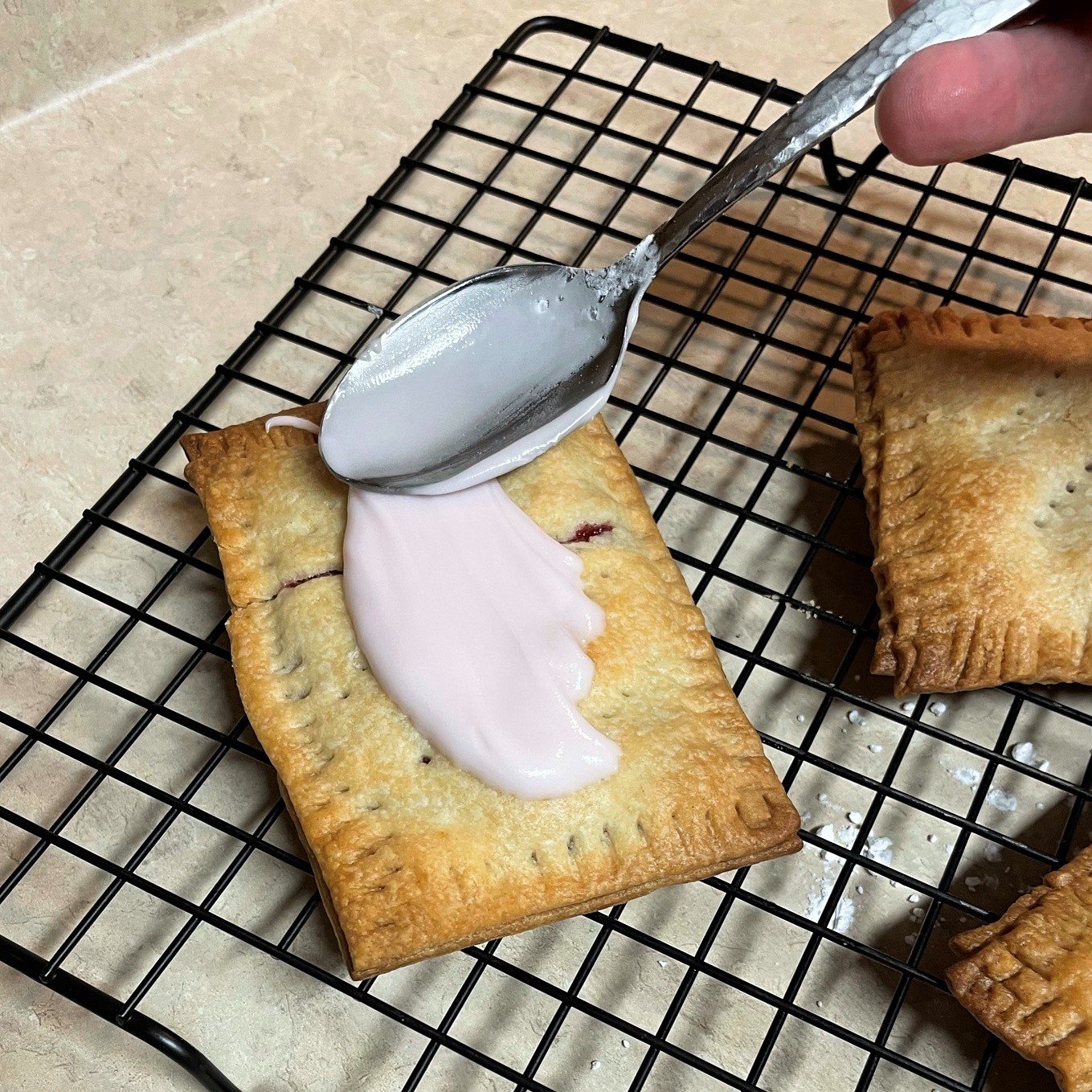
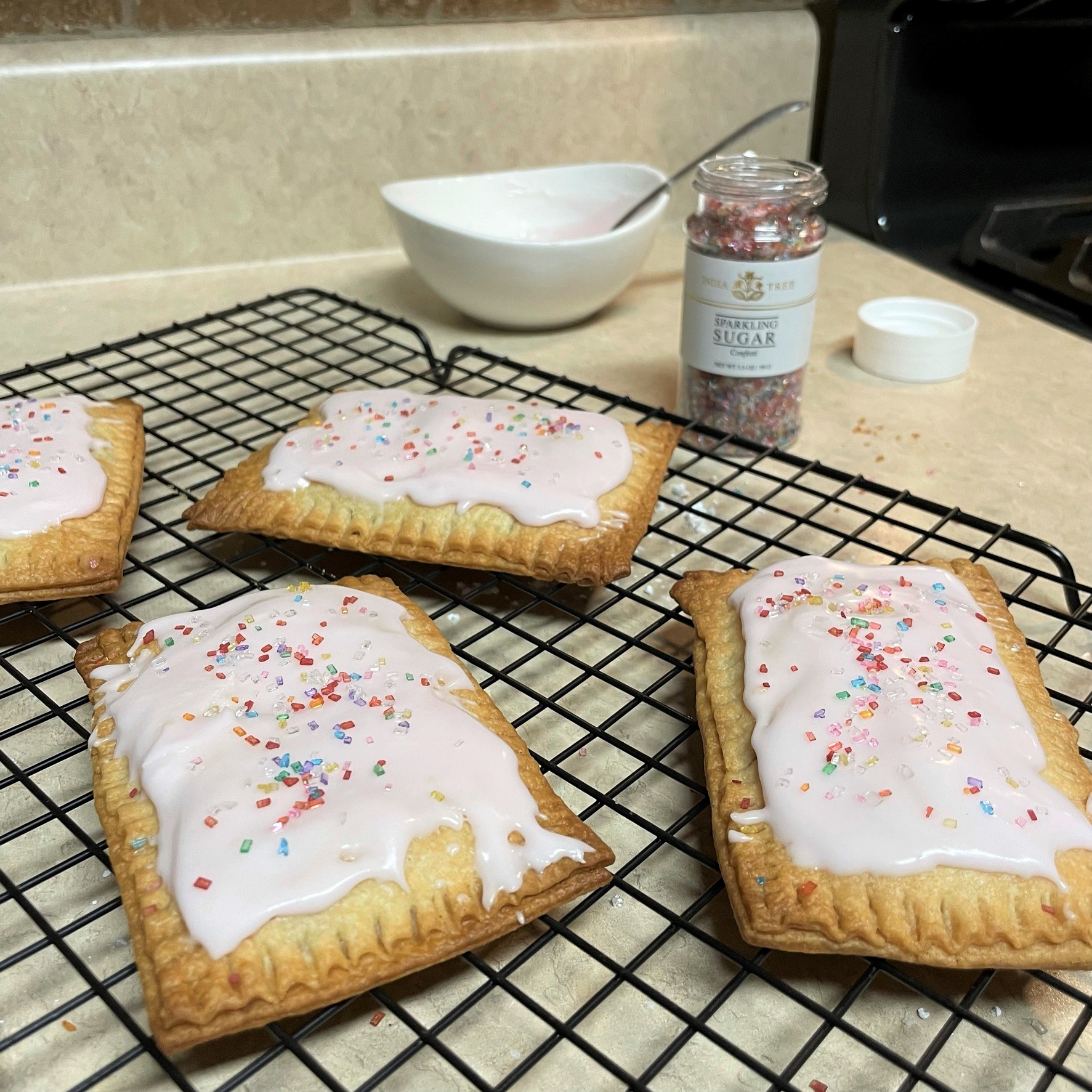
Drizzle it thinly over cooled tarts and sprinkle with sparkling sugar or candy sprinkles, if desired. I mean, why not?

Just tripping down memory lane over here… ❤