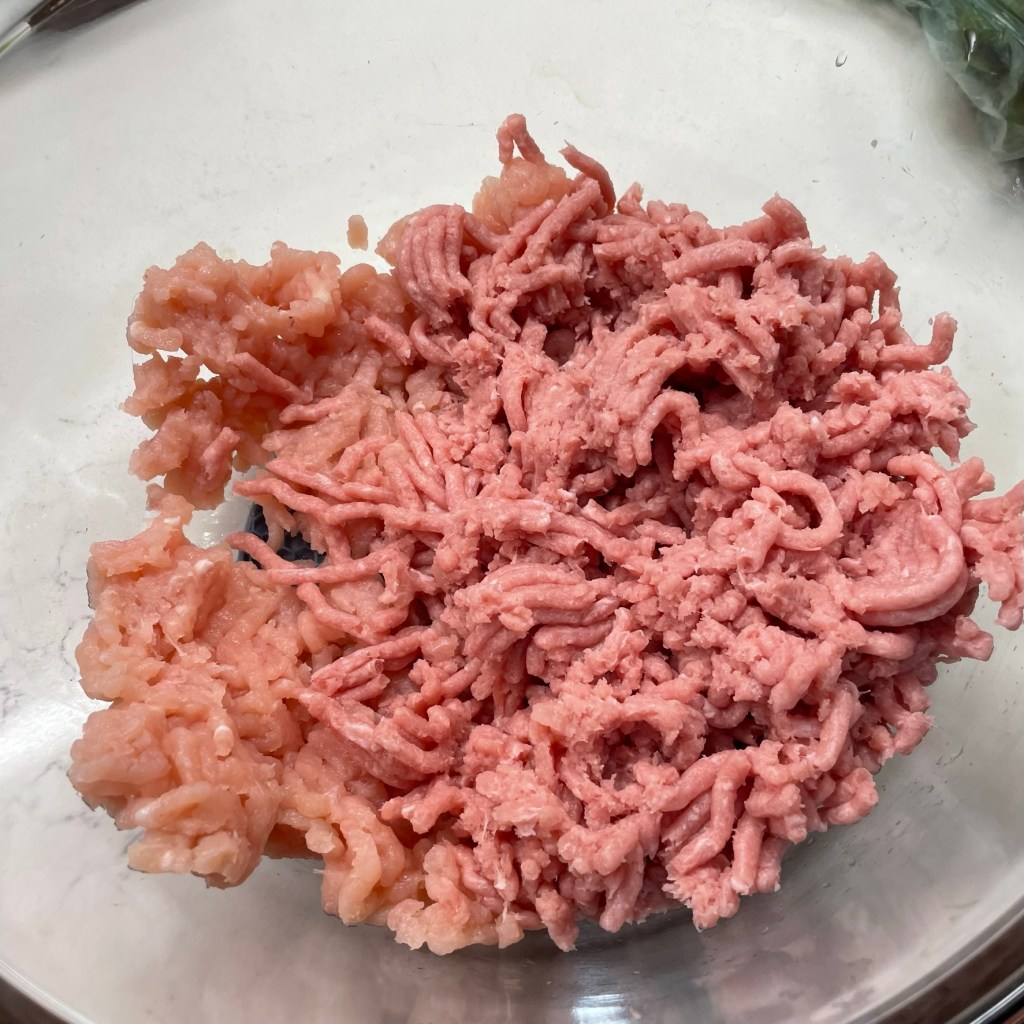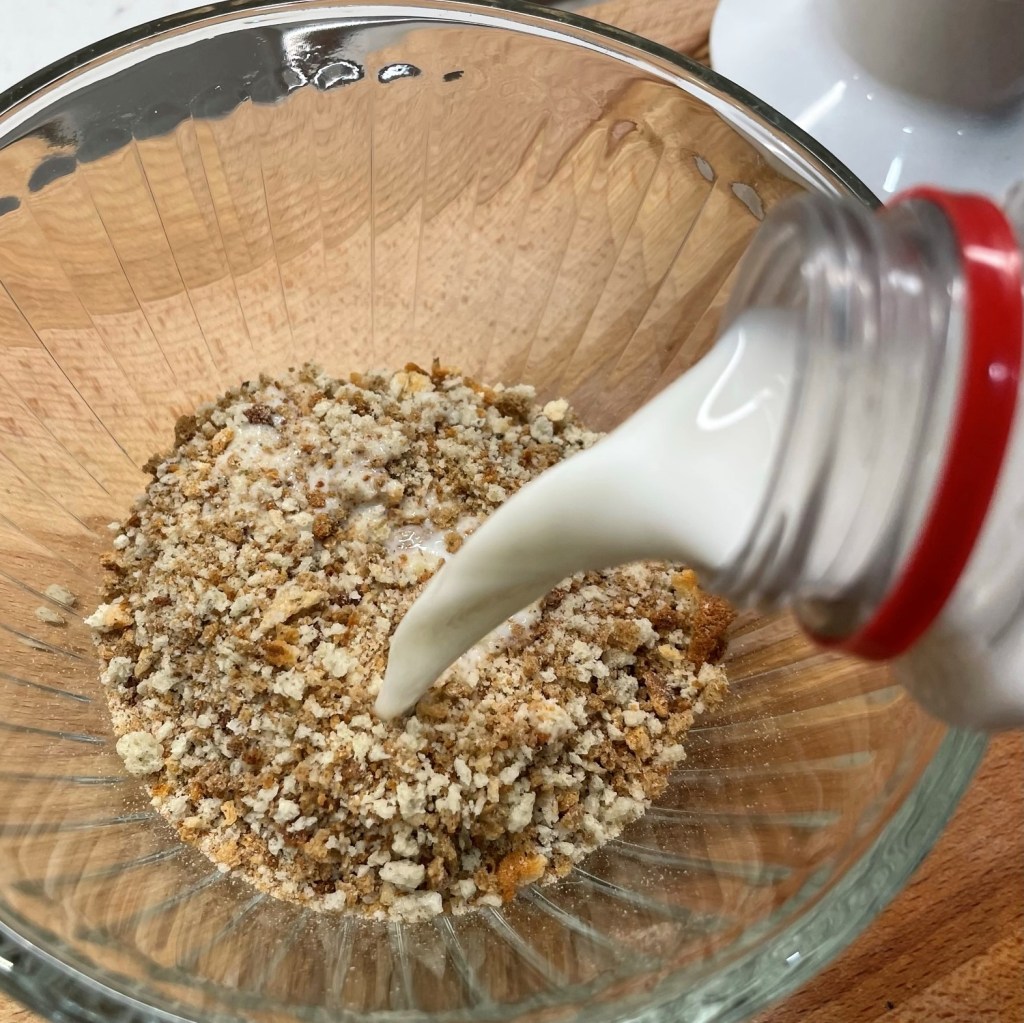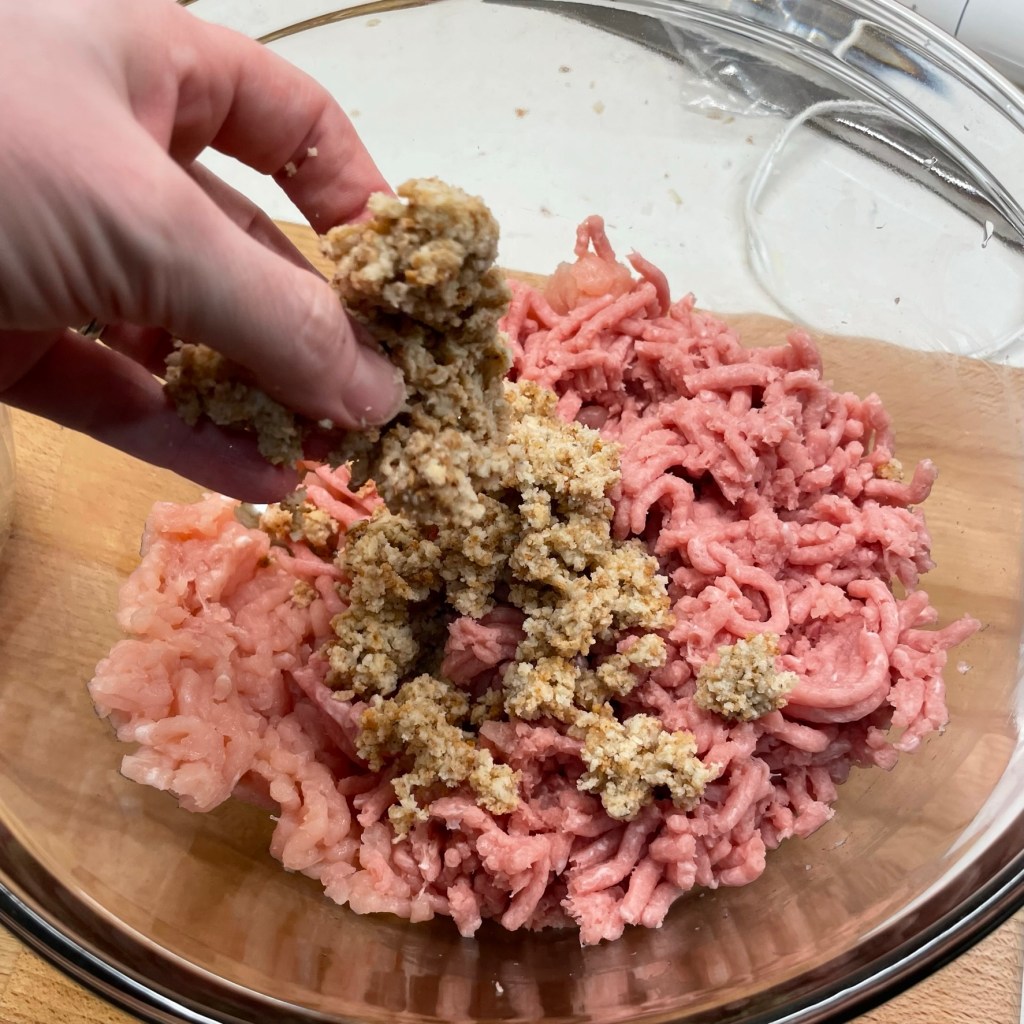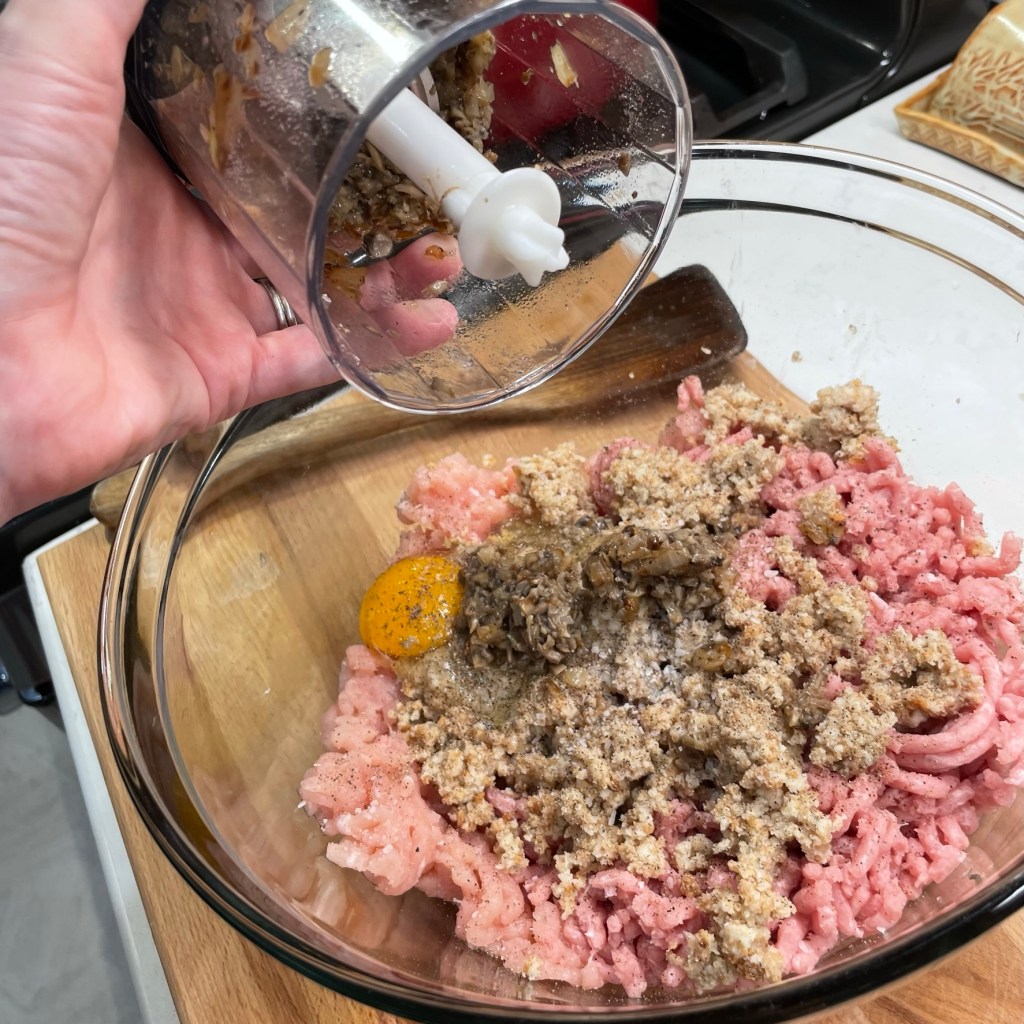
Butternut Squash Mac & Cheese

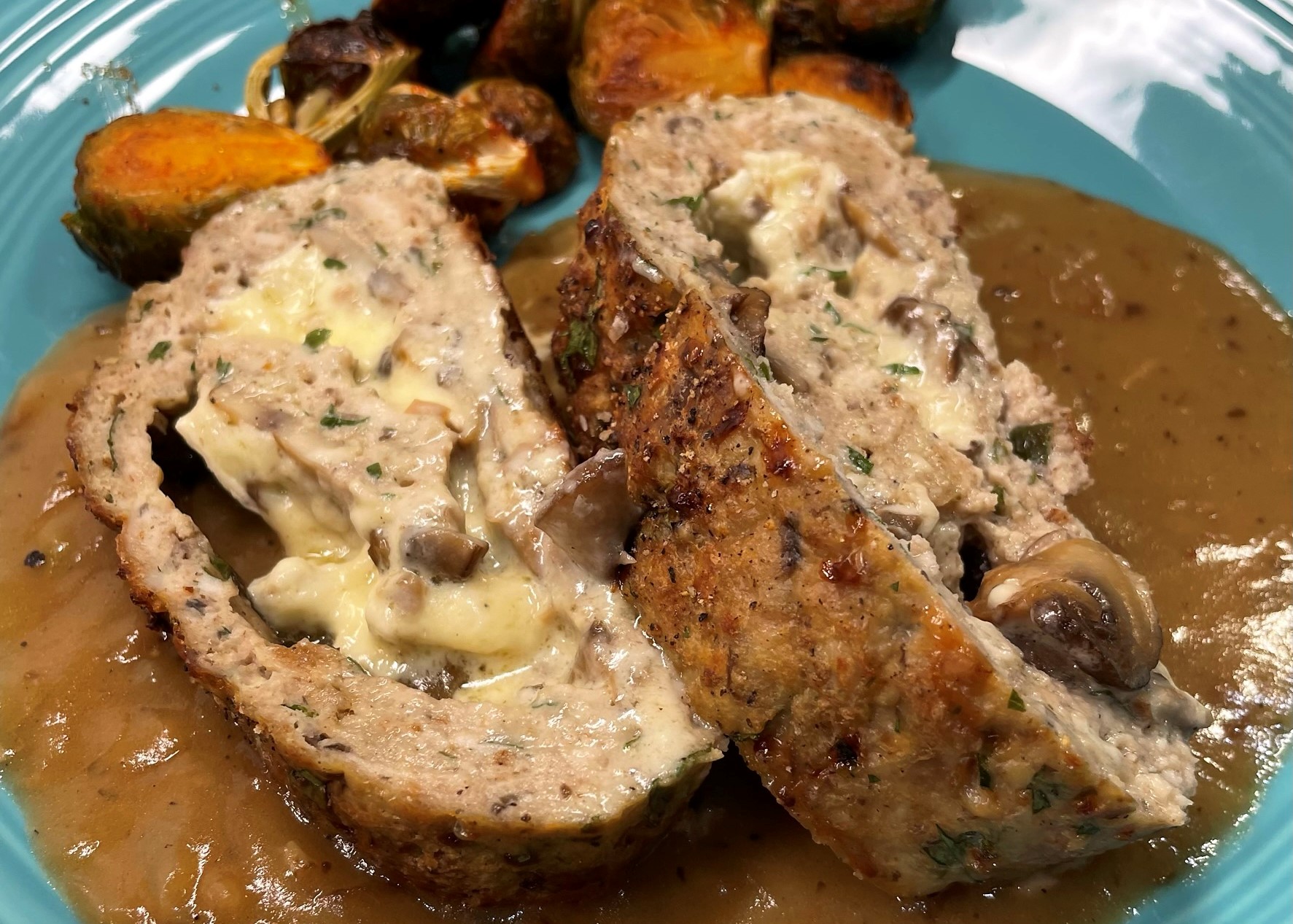
Sometimes a recipe idea has an unexpected side benefit, and that was the case with this macaroni and cheese recipe I made for our Thanksgiving meal last year. Though I intended it a way to “sneak” a few more vegetables onto our plates— namely butternut squash and cauliflower— my husband surprised me with his assessment that this was “the best mac and cheese” I’d ever made! My memory tells me he may have said this about a few others as well, but still, it’s high praise!

Mac and cheese is a standout comfort food, and I love bending it into various flavor directions, which you already know if you’ve been following me for any length of time. It is the “comfort” in Comfort du Jour and was the first recipe I posted when I began this blog more than five years ago. Mac and cheese is in a category that I call “blank canvas foods,” open for suggestion and adaptation with endless possibilities or, should I say, “pastabilities?” 😉

I don’t usually include mac and cheese on the Thanksgiving table because it’s a dish that I make year-round and we have so many other seasonal dishes that demand space. Our guests would revolt if we didn’t have Les’s incredible garlic mashed potatoes or his cranberry sauce with Mandarin oranges. And Brussels sprouts of some variety are a must. But this mac and cheese feels unique with the butternut squash that brought a distinctively “autumn” flair. I can easily make a case for adding this to the list of Thanksgiving standards. Come along, and I’ll show you how easy it was to make!

Stand-ins for the squash

There are two substitutes that come to mind if butternut squash isn’t your thing or if it’s out of reach for any reason. Pumpkin and sweet potato each have similar texture and color, and either would work great here— just be sure they are cooked soft enough to puree smoothly. Canned pumpkin is a good option, and I made a savory pumpkin mac and cheese a few years ago that proves this point. 

Prepping the vegetables

Both the squash and cauliflower will be pureed, so I needed to cook them to full tenderness ahead of making the dish. My steamer insert doesn’t get much action, but it earned its keep this time, as I boiled the squash cubes and simultaneously steamed the cauli in the insert. Three cheers for only needing one burner! This took about 25 minutes. I pressed the squash through a mesh strainer and then blotted away excess moisture with paper towels. The cauli only needed to cool.
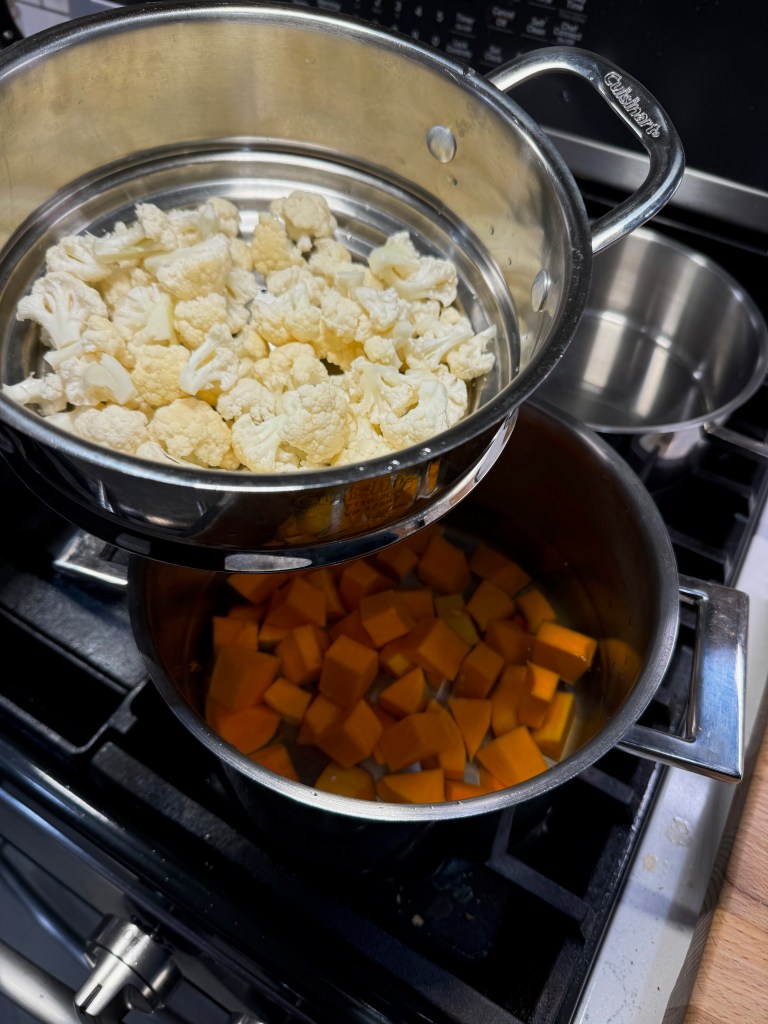
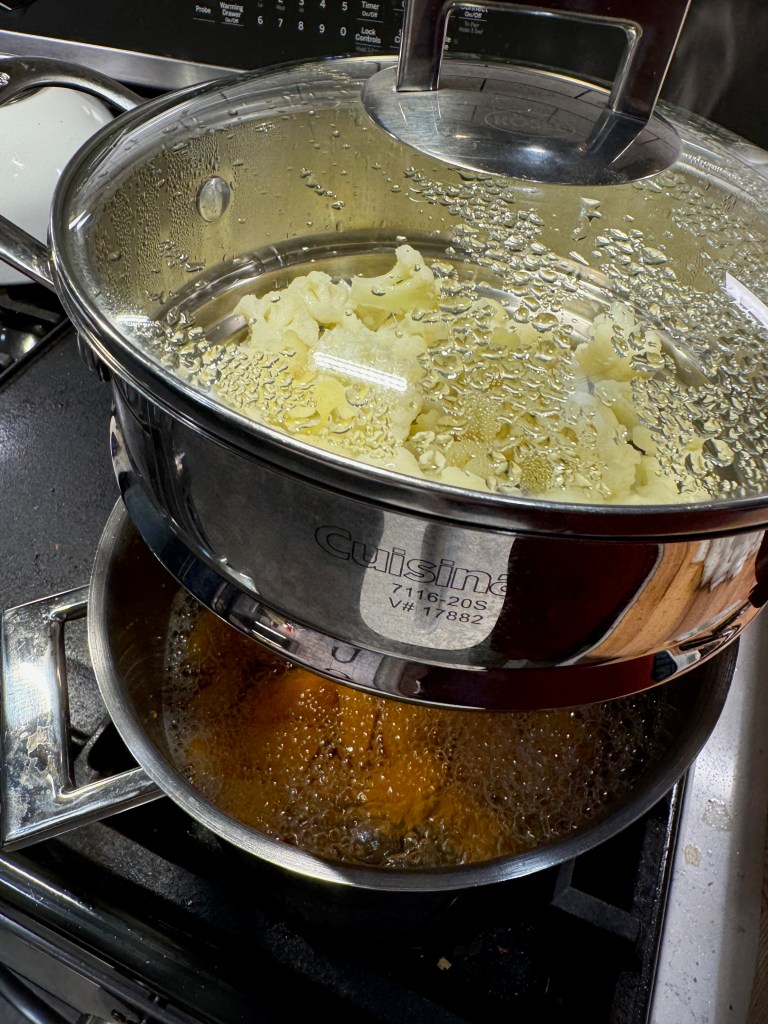
The cheese sauce

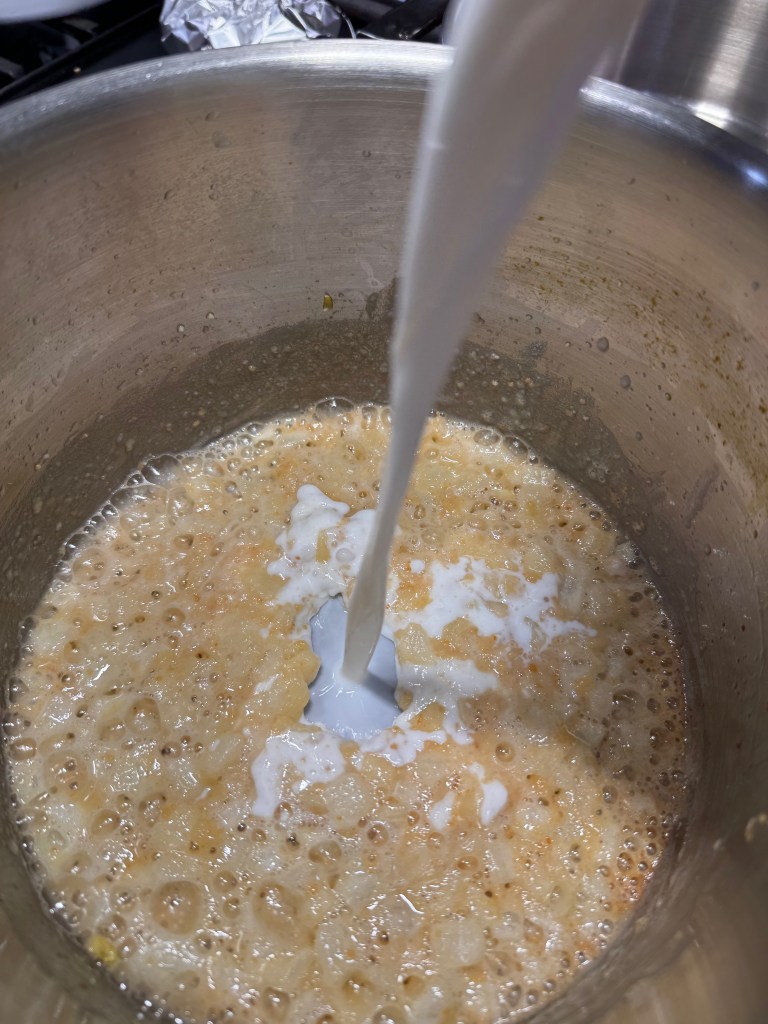
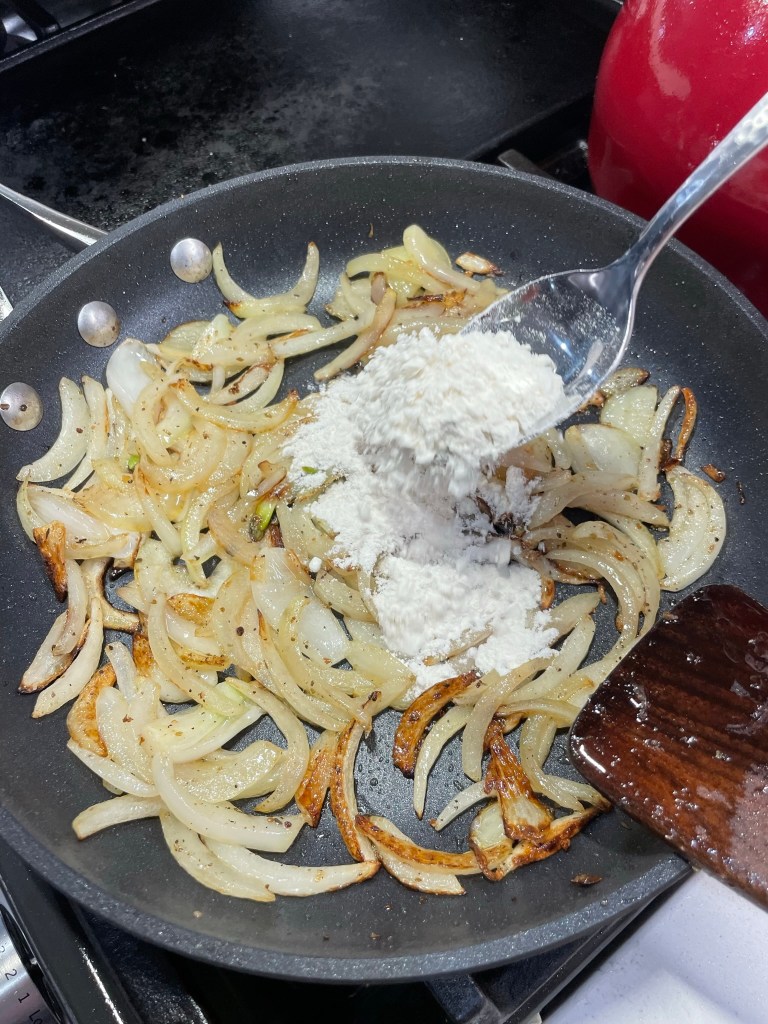
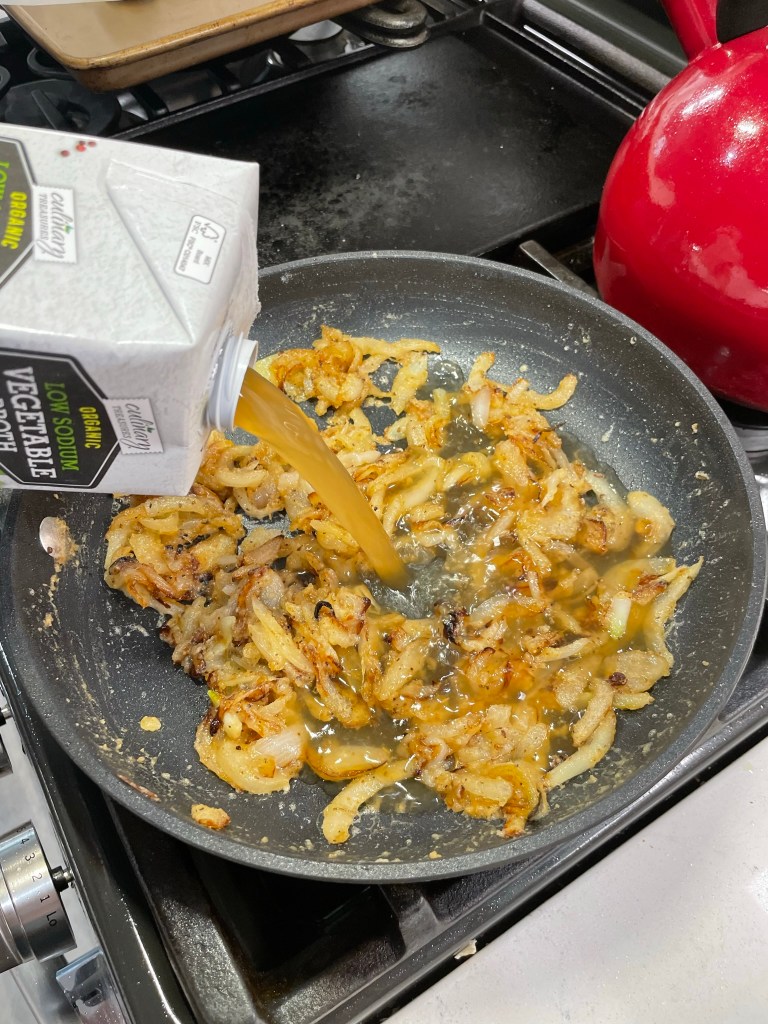
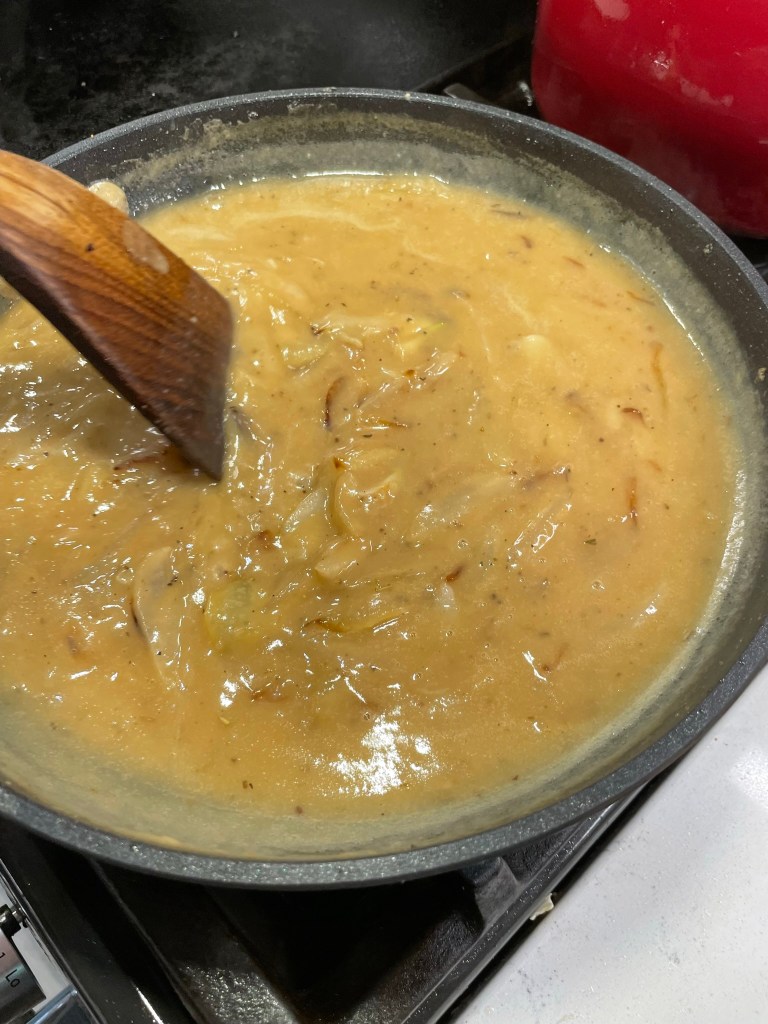
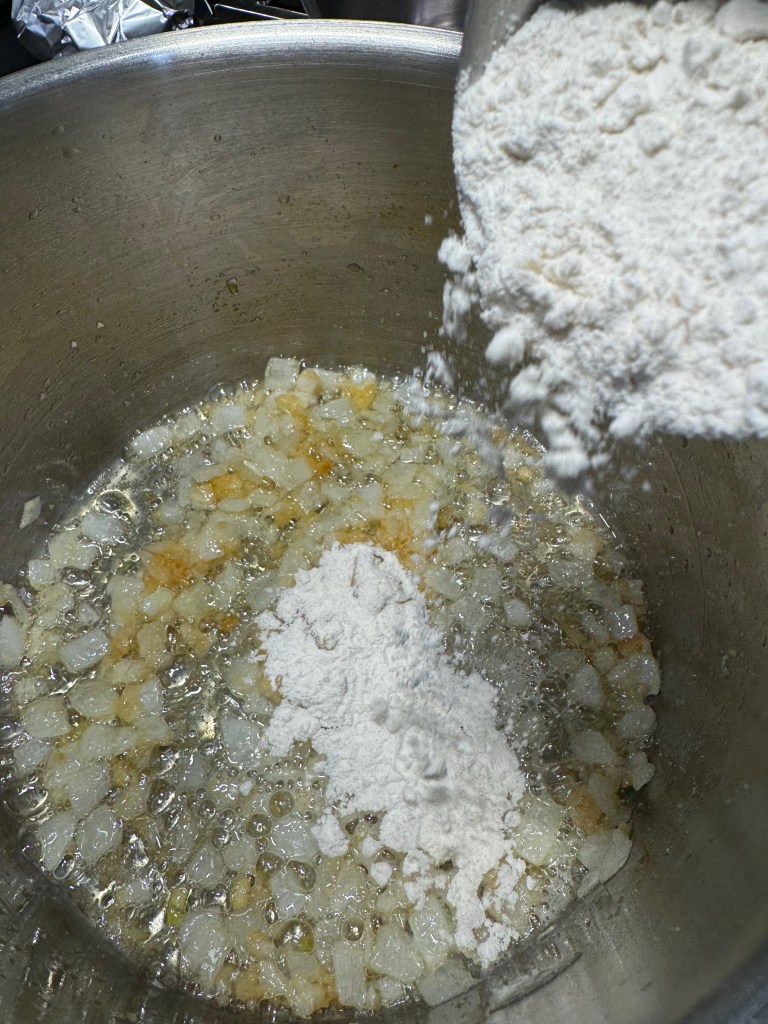
All my mac and cheese recipes begin the same way— with a roux. This simple mixture of butter (or oil) and flour creates a thickening base for whatever liquid you plan to use (in this case, milk). It’s one of the first important lessons I learned in my grandmother’s kitchen when I was barely even tall enough to reach the stove. While my butter melted and browned slightly, I tossed in some finely diced onion for flavor before adding the flour and, eventually, the milk. 

The cheese came next, beginning with a few ounces of American processed cheese. I know, I know, some say that this isn’t “real” cheese. But as Kenji López-Alt, one of my culinary idols, has said, it’s like saying that meatloaf isn’t meat. American cheese is just cheese that has been chemically adjusted with certain salts and stabilizers that prevent fat separation when you melt it. Using a little bit in my cheese sauce sets the stage for the other cheeses to remain more stable. In other words, it keeps my cheese sauce more creamy than gloppy! The other cheeses I used were gruyere, which I love for its nutty flavor, and sharp white cheddar. 
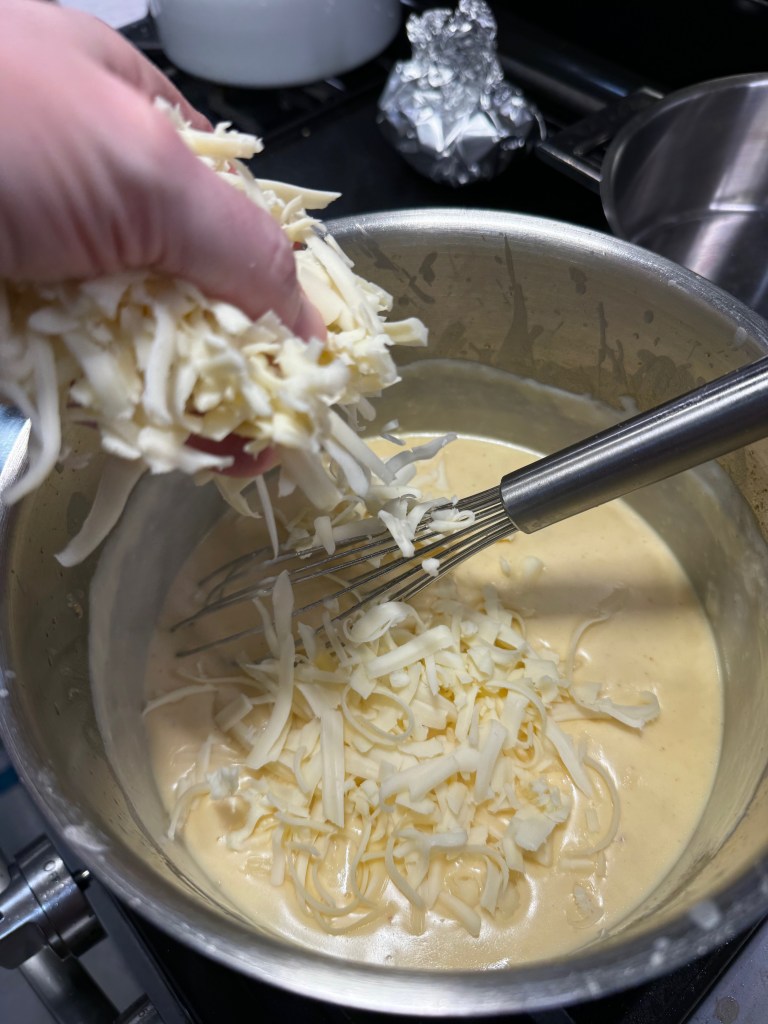

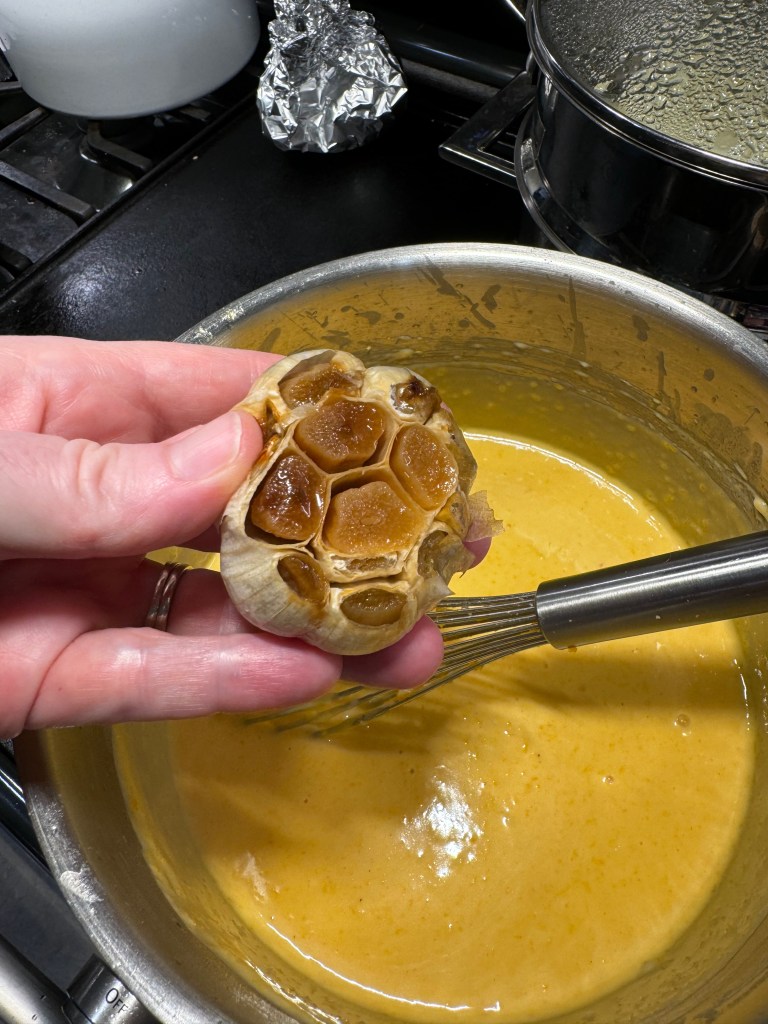
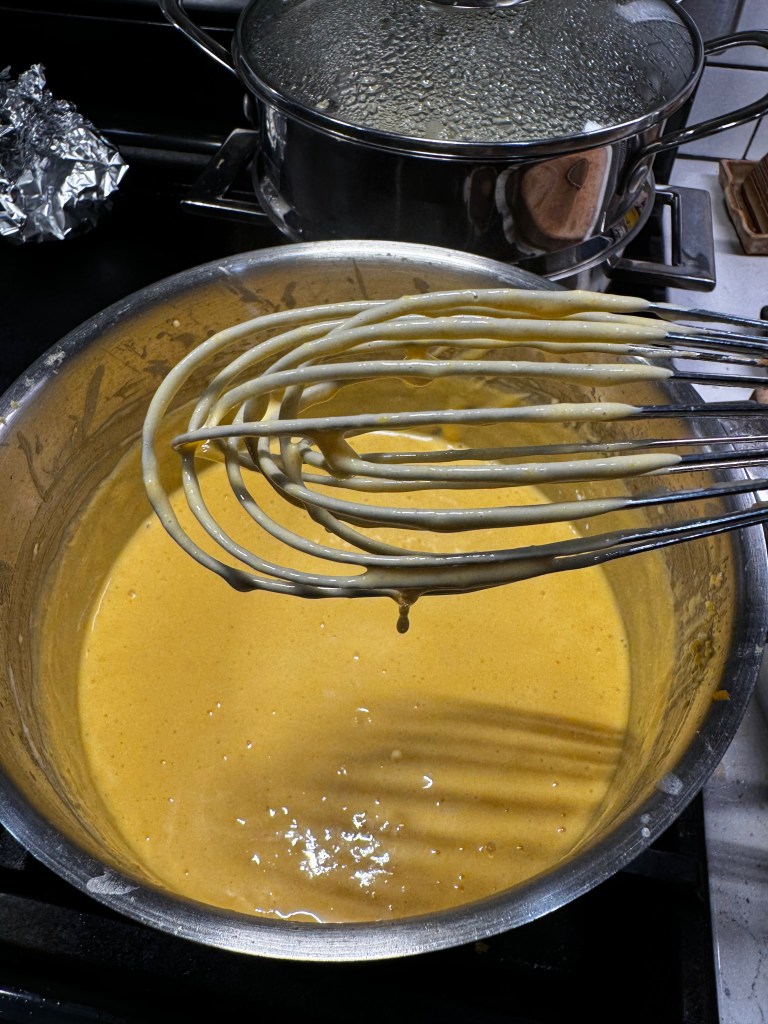
Do you see my secret weapon there? Roasted garlic adds incredible depth of flavor to a cheese sauce, and I squeezed out the entire thing into this one, plus the squash puree and (though I missed getting a picture of it) the tender steamed cauliflower. After whisking it all together, you can see that my sauce looks a little broken, but my immersion blender takes care of that! 
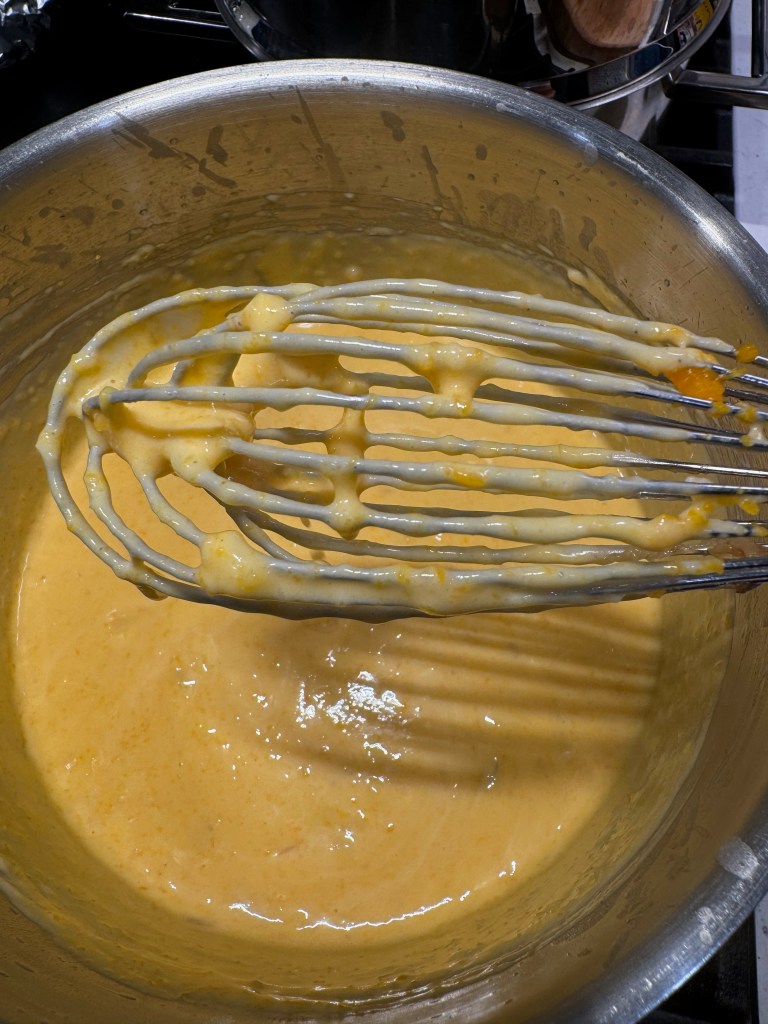

I started using this trick a few years ago and I’ve been very pleased with the smooth consistency of my cheese sauces. I highly recommend, though it isn’t a dealbreaker if you don’t have one. Try pureeing the squash, garlic and cauliflower in a bullet or regular blender with a bit of warm milk or cream before whisking it into the sauce. Be sure the components are cool first!

Putting it all together

Despite my efforts, sometimes I mess up and forget to take pictures at certain stages of making a dish, and that’s exactly what happened here. For a full rundown on how I finished this mac and cheese, check out the click-to-print recipe card at the end of the post. Here’s the Cliffs Notes version:

  1. Cook the large elbow until al denté and stir in the cheese sauce while the pasta is hot.
  2. Make some buttery toasted panko crumbs.
  3. Sprinkle the crumbs on top and bake until the cheese is ooey-gooey and bubbly and the crumbs are crispy crunchy toasty. Because in my kitchen, it’s all about texture!

What’s happening in your kitchen this Thanksgiving? Let’s find out in the comments whether you’re sticking with the standards or adding something new to the repertoire! And what would cause a revolt in your family if you omitted it from the table?

Butternut Squash Mac & Cheese

  • Servings: About 8
  • Difficulty: Average
  • Print

This was meant to be a way to sneak extra vegetables into my dish, but the squash and cauliflower actually gave this a terrific flavor. Use an immersion blender if you have one, to make the sauce extra smooth and creamy.


Ingredients

  • 4 Tbsp. salted butter
  • 1 cup diced sweet onion
  • 1/2 tsp. kosher salt
  • 3 Tbsp. all-purpose flour
  • 2 1/2 cups whole milk
  • Several grates fresh nutmeg
  • About 1/4 tsp. white pepper
  • About 4 oz. American cheese, shredded or cubed
  • 8 oz. gruyere cheese, shredded (reserve some for the top)
  • 6 oz. sharp cheddar cheese, shredded
  • 1 cup butternut squash puree, pressed dry with paper towels
  • 1 whole bulb roasted garlic
  • Most of a box large elbow macaroni, cooked to slightly firmer than al dente
  • 1 1/2 cups cauliflower mini florets, steamed until tender and smashed with a fork
  • 1/2 cup unseasoned panko crumbs
  • 1/4 cup grated Parm-Romano blend cheese (freshly grated)
  • 2 Tbsp. butter

Note: If you don’t have an immersion blender, you can take a different route to achieve a smoother sauce. After the butternut squash and cauliflower have cooled to near-room temperature, add them to a blender with the roasted garlic and about 1/4 cup cream or milk. Blend until puréed and smooth, and then whisk this into the cheese sauce. Do not use a blender while these ingredients are hot, unless you remove the top vent cover. If you have a bullet-style blender, the mixture must be no more than lukewarm.

Want to work ahead? The vegetables can be prepped and cooked the day before, and you can make the mac and cheese ahead of time and refrigerate. Bake it cold, but give it a few extra minutes to heat through and become bubbly.

Directions

  1. Melt butter over medium heat in a small stockpot. Add diced onion and salt and cook until the onions are tender and translucent, but not brown. Sprinkle in flour and cook, stirring constantly, until the roux is bubbly and golden in color. Pour in half of the milk and whisk until smooth and thickened; repeat with the rest of the milk.
  2. Add the American processed cheese to the sauce, whisking until fully melted. This cheese will aid in achieving a sauce that is smooth and creamy rather than grainy. Add the gruyere and cheddar in handfuls, mixing and melting after each.
  3. Whisk in the butternut squash puree, roasted garlic and tender cauliflower. The mixture will be slightly textured.
  4. Use an immersion blender to puree the sauce directly in the pot. When it’s smooth and creamy to your liking, pour it over the cooked elbow macaroni and fold several times to coat the pasta. Be intentional about this step, so that the sauce has a chance to seep inside the hollow macaroni shapes.
  5. In a separate small skillet, melt the two tablespoons of butter and toss the panko crumbs until they are toasted and golden. Season with salt and pepper, plus garlic or onion powder if you wish. Remove from heat and stir in the Parmesan.
  6. Transfer the mac and cheese to a large baking dish. Top with the buttered crumbs and preheat the oven to 350° F, with the oven rack in center position. Bake the mac and cheese for about 30 minutes, or until bubbles appear all the way around th edge of the dish. Let rest for 10 minutes before serving.
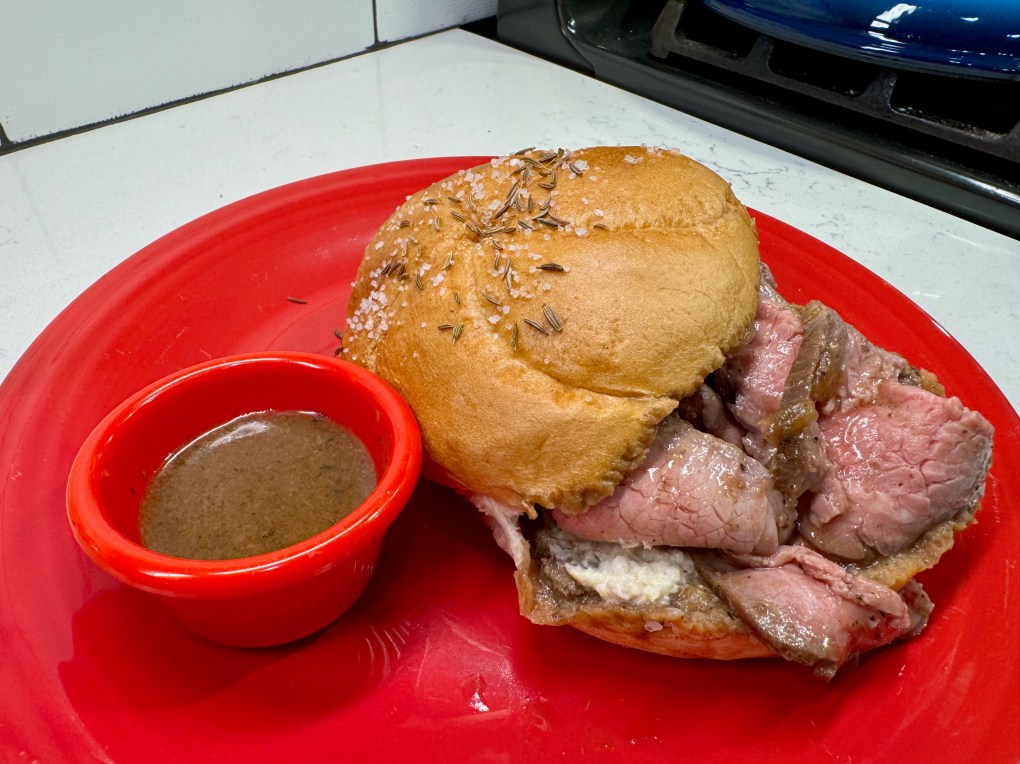
Beef on Weck (another Western New York classic)

Saturday marks the fifth anniversary of Comfort du Jour. I am 448 blog entries into the story of my life through food, and that boggles my mind a bit. I cannot reflect on my culinary passions without thinking of my maternal grandmother, and thinking about her makes me long for the flavors of “home.” This simple yet iconic sandwich of my old neck of the woods has been pushed around on my culinary bucket list since 2020, and I am aware that my procrastination in making it has nothing to do with ingredients or complexity. It has everything to do with my own expectation and the same old, six-word worry: 

What if I mess it up? 

Fear is a weird phenomenon, isn’t it? And for people who’ve been raised by perfectionists and other hard-to-please grown-ups, it becomes a normal state of mind that lingers long after the initial disappointees have faded into the background. Fear has kept me from a million things in this life, culinary challenges among them. But I threw caution to the wind last week and tried my hand at beef on weck, figuring, seriously, what’s the worst that could happen?

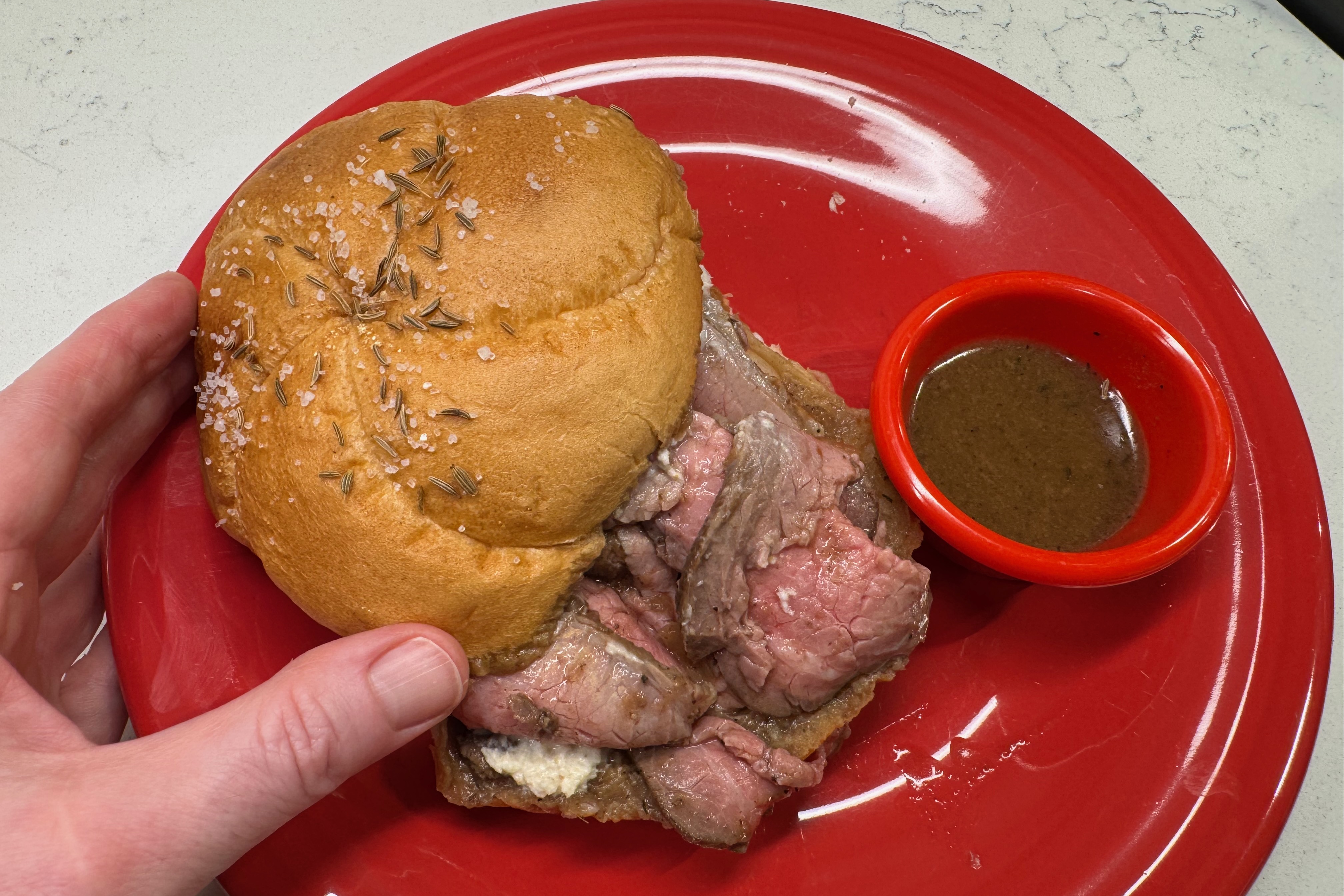
Yes, it was as delish as it looks!

This experiment was not without lessons, mind you, but the outcome was so delicious and so well received at my house (I made it while my husband’s son, Alex, was visiting from his home in Hungary), that you can bet I’ll be making it again and again, with these notes as my template. 

Whattya mean, no sandwiches?!

I am always happy to see Alex arrive for a visit. He’s a cool millennial kid who, like his dad, never met a stranger. His knack for making friends quickly is a great asset for someone who co-owns and operates a hostel in Budapest. In the quiet breaks in my work-from-home schedule, Alex and I had some great conversations, including several around food. When I asked him what kind of sandwiches are popular in Budapest, he hesitated a few beats and then admitted, “none, really.” Despite the constant stream of international tourists, the Hungarian capital is oddly bereft of good sandwich shops amid all the Asian and Italian hot spots aimed at visitors.

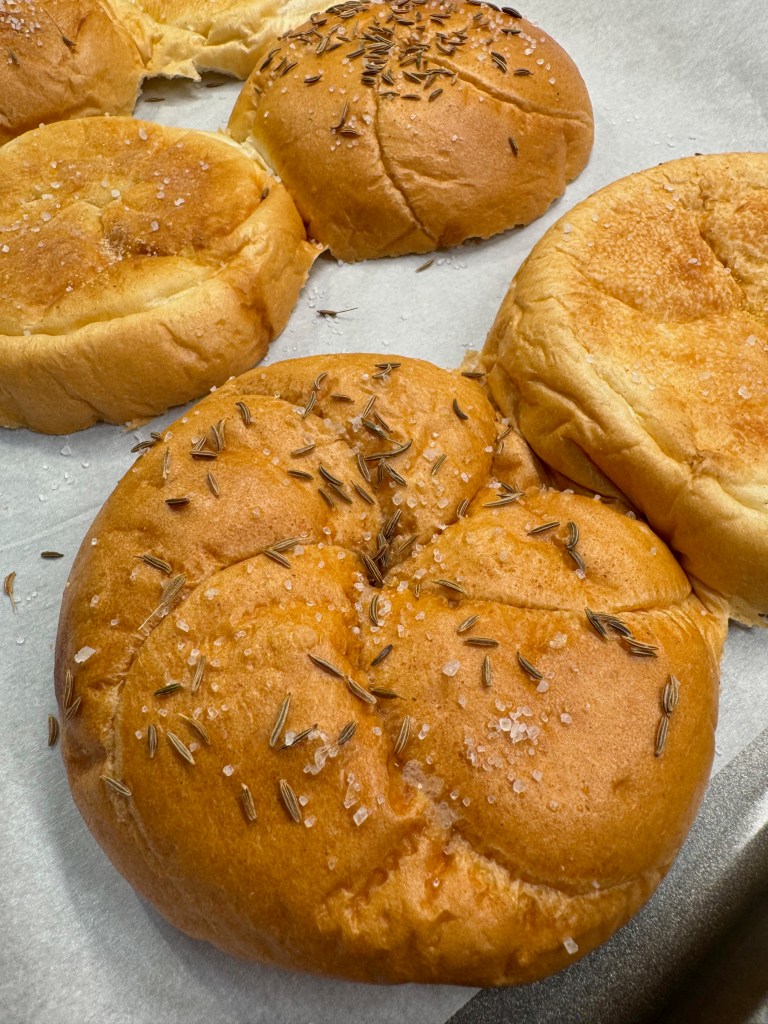
This, I thought, was a tragedy, and it was the final push I needed to get on top of making beef on weck. What American-born man doesn’t want a good, medium-rare roast beef on a bun? The bun, in this case, being a kummelweck roll (or kimmelweck, depending on who you ask), which is essentially a kaiser roll that has been adorned with aromatic caraway seeds and coarse salt. I wanted so much to make my own rolls for this, but I cheated a bit and gussied up plain kaiser rolls from my supermarket bakery. It worked perfectly.

The butcher always knows…

We are very fortunate to have a high quality, local-sourcing, independent butcher in our city. The guys at @SmokeCityMeats in Winston-Salem always set me up for success. When I asked Matt about getting an eye of round roast for beef on weck for three people with plenty of leftovers, Matt replied that he may as well set aside a whole one for me, and this cut was a little over five pounds. It seemed like A LOT, but it turned out to be exactly what we needed for our meal plan. This is why I trust my butchers, the same guys who hooked me up with the pork belly and tenderloin that became my fabulous porchetta, and the lamb for my tasty grilled lamb burgers and the duck breasts for my crispy five spice duck with cherry-pinot noir sauce, and the strip steaks I used in my reverse-sear experiment. They always know best, and I’m grateful for their expert suggestions.

I know it probably sounds like a commercial, but I swear that they are not paying me to promote their shop. I’m genuinely a happy customer who is proud to support local, and in return, we get to enjoy responsibly raised, incredibly flavorful local meats. It’s truly a win-win.

A method to my madness

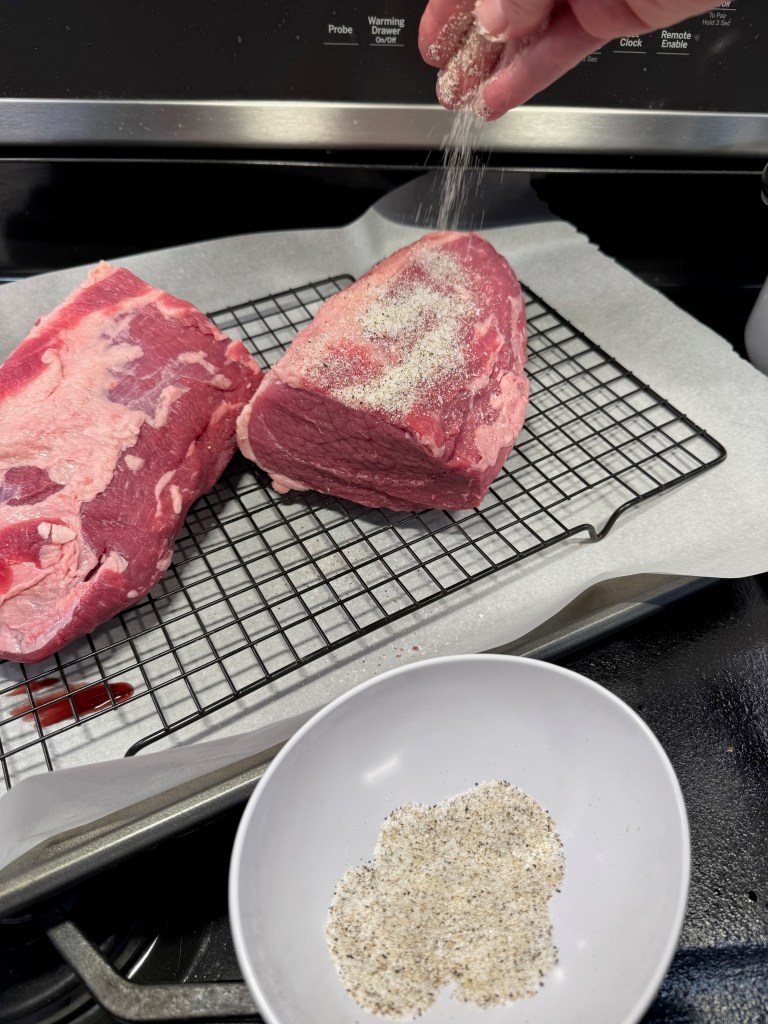
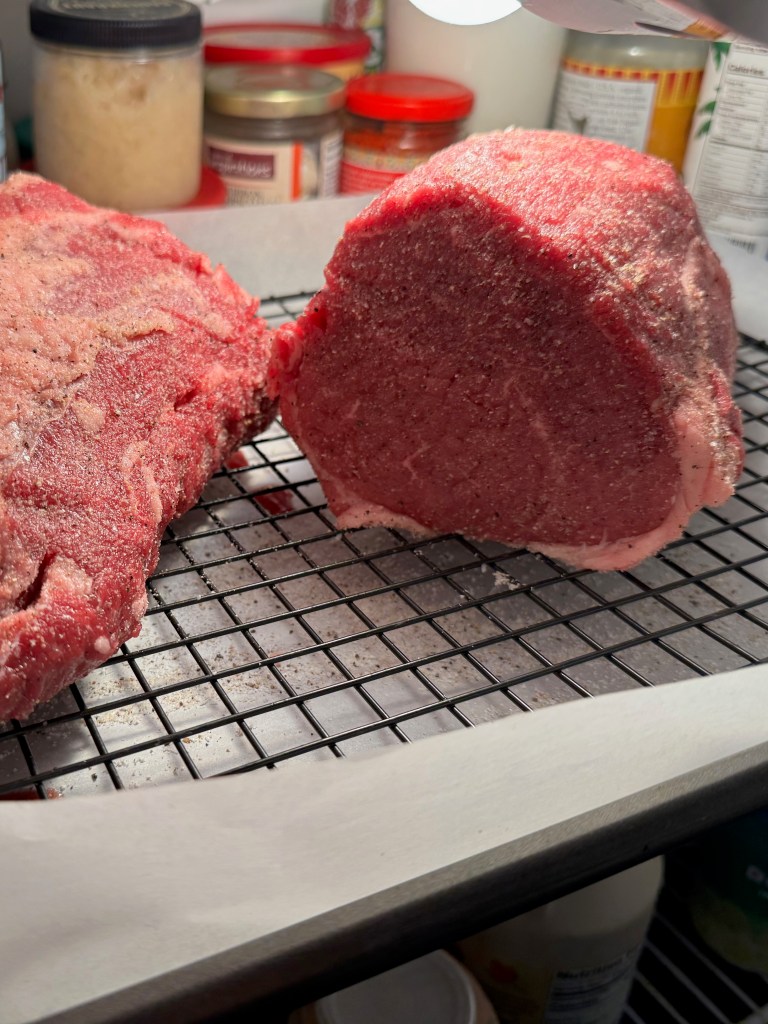
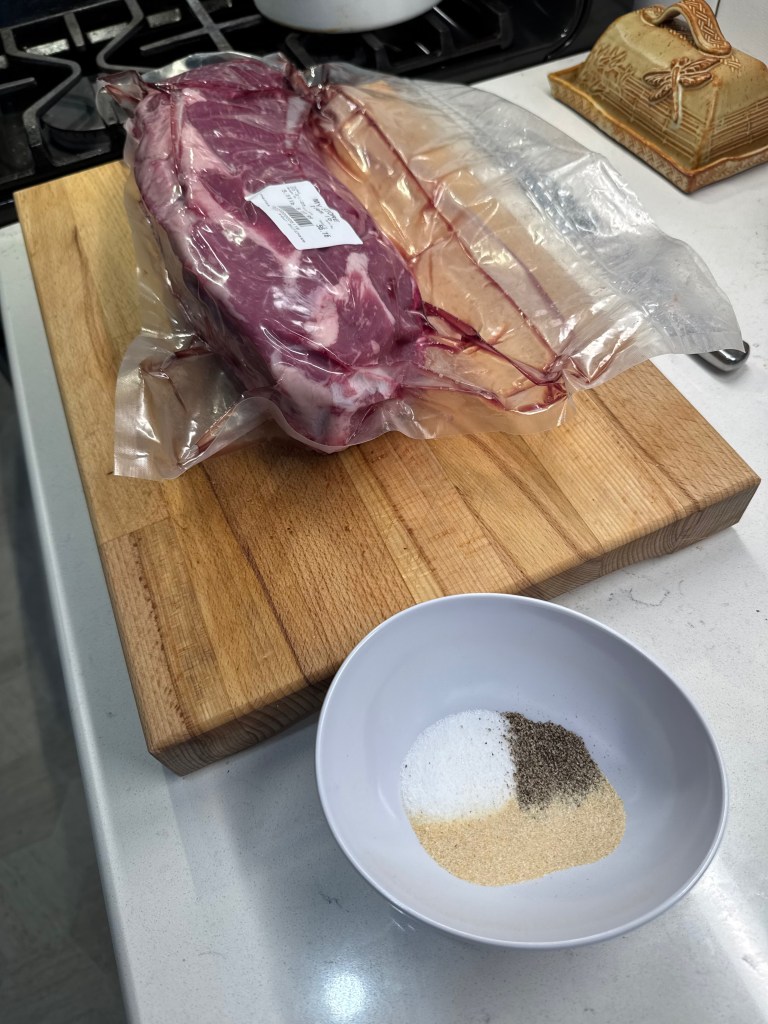
It isn’t enough to have an incredible cut of meat— one also needs to know the best technique for preparing it, and for that, I’m trusting J. Kenji Lopez-Alt, the science-y chef whose method for dry brining has become my standard. Whether I’m prepping duck breasts, a Thanksgiving turkey or a pulled pork shoulder, you can bet I’ll be sprinkling it with salt and stuffing it into the fridge overnight. I cannot overstate how much this technique has elevated my cooking. The key is to place the meat in the fridge uncovered, so that the salt draws out moisture, dissolves into a brine and then soaks back into the meat. For my beef on weck, my salt was also peppered and spiked with onion powder.


This is scary the first time, because when you open the fridge the next day, the meat will look dry, tight and somewhat shriveled. The level of panic you feel will be directly related to the price you paid for the meat in question. My first time dry brining was a heritage-breed Thanksgiving turkey, and the price tag was about $100, so it was a huge amount of faith placed in Kenji’s knowledge and experience. It was also one of the most delicious turkeys I’ve ever done. This time, it was a $56 eye of round roast, and I was confident as could be. Try it once, and I promise you won’t be disappointed.

Horseradish and kummelweck (the signature flavors)

The horseradish sauce is merely a small bowlful of drained, prepared horseradish mixed with a spoonful each of sour cream and mayonnaise. It is quite pungent, and if you are not a fan of horseradish, you may want to skip this. But it is a key component in an authentic beef on weck. The important thing is keeping the horseradish flavor front and center, with only enough of the creamy ingredients to make it somewhat spreadable. You can make this ahead and keep it in the fridge until ready to serve.

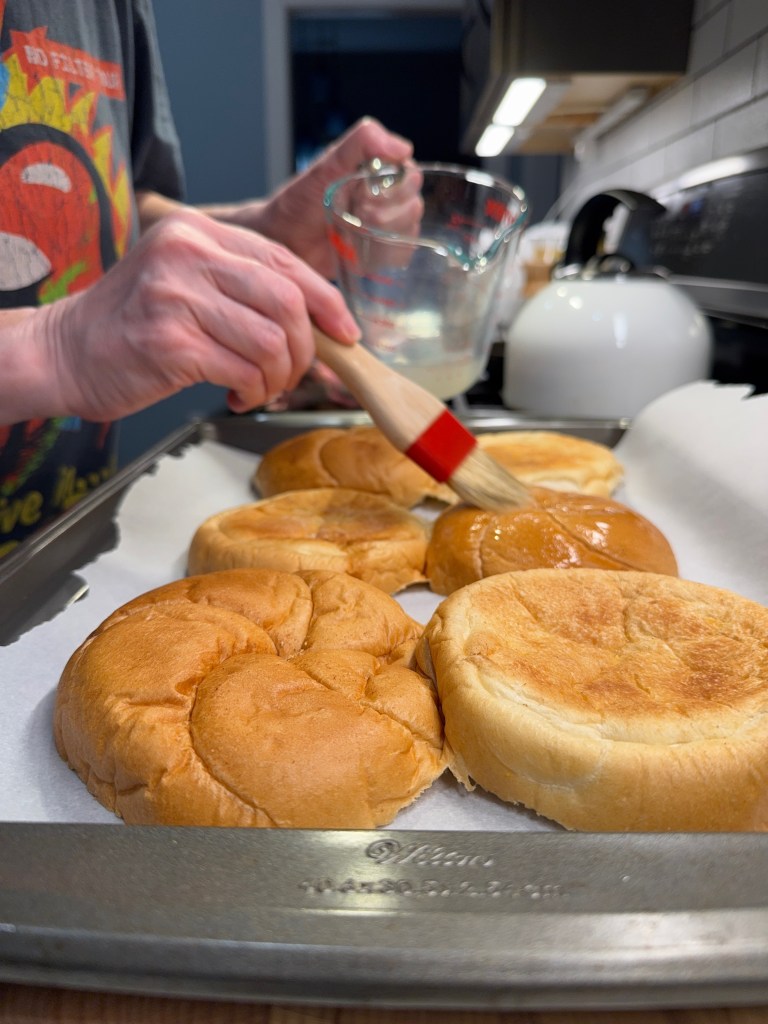
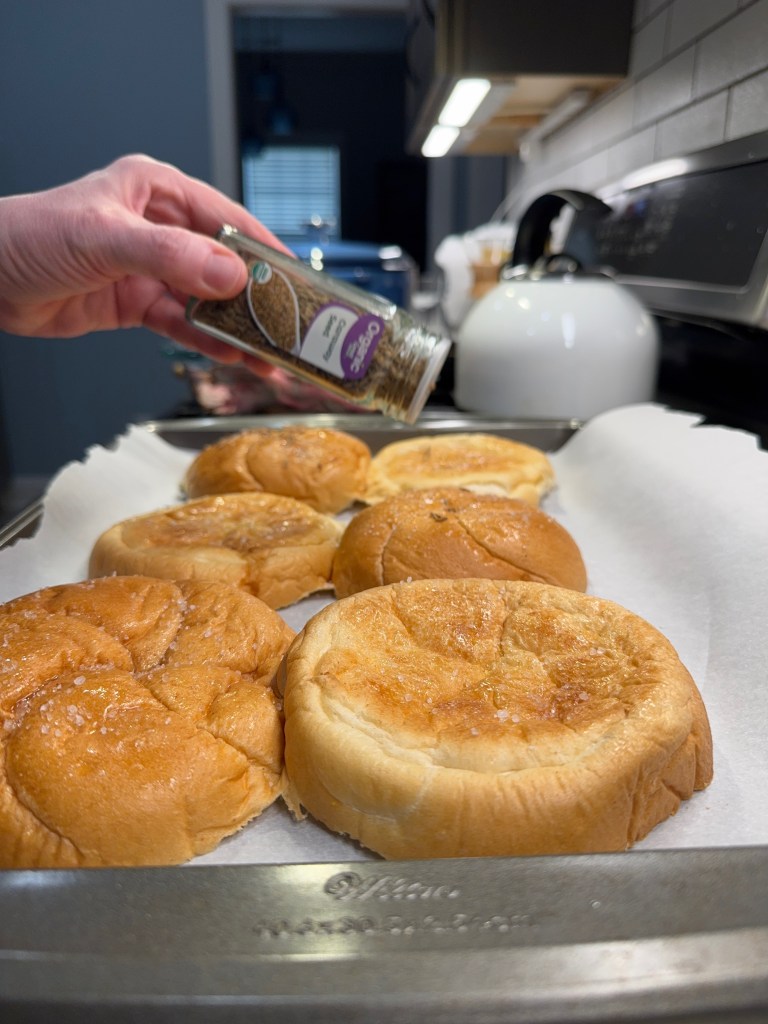
For the kummelweck rolls, you may not find them ready-made if you are outside the Western New York area. Fortunately, it is easy to transform more readily available kaiser rolls simply by brushing them with a cornstarch slurry, sprinkling with coarse salt and caraway seeds, and baking until the seeds are set and the rolls are crispy again. The caraway, like the horseradish, is also very traditional for this sandwich. If you don’t care for the flavor, go with a sesame-topped kaiser instead. But if you skip both the horseradish and the caraway bun, you’re basically just eating a roast beef sandwich.


Achieving the perfect roast beef

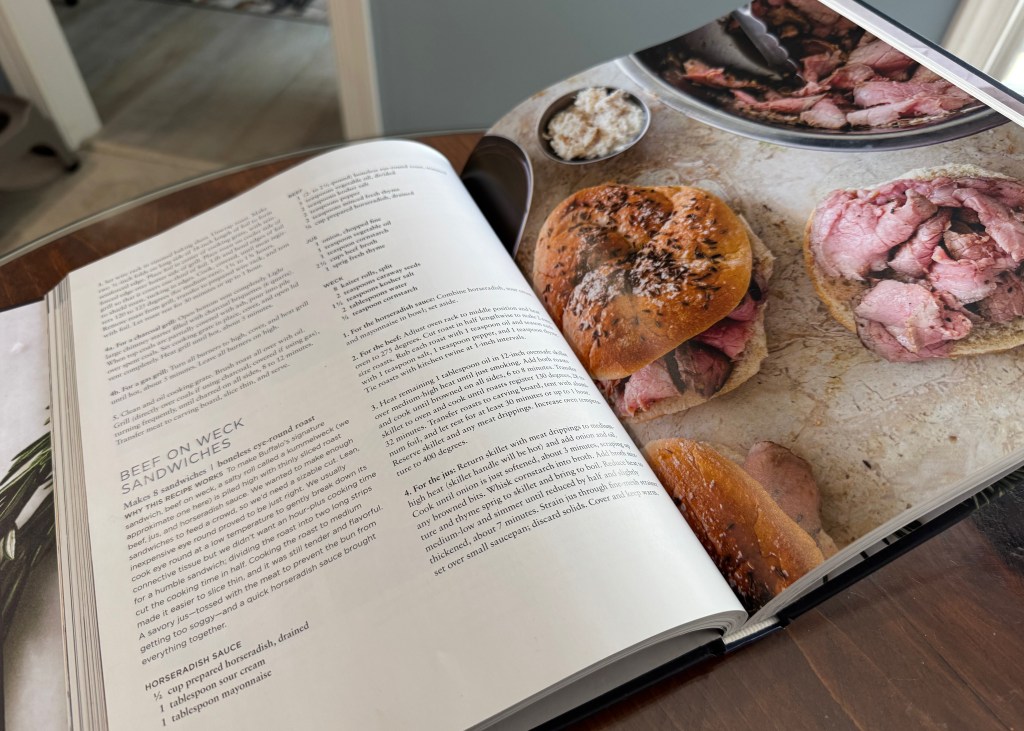
This is not in my wheelhouse (hence my hesitation making beef on weck in the first place), but as luck would have it, a book that I gave Les at Christmukkah happened to have instructions for roasting eye of round— for beef on weck— right there on page 134! 

I didn’t follow every part of this recipe, but the roasting instructions were very helpful!

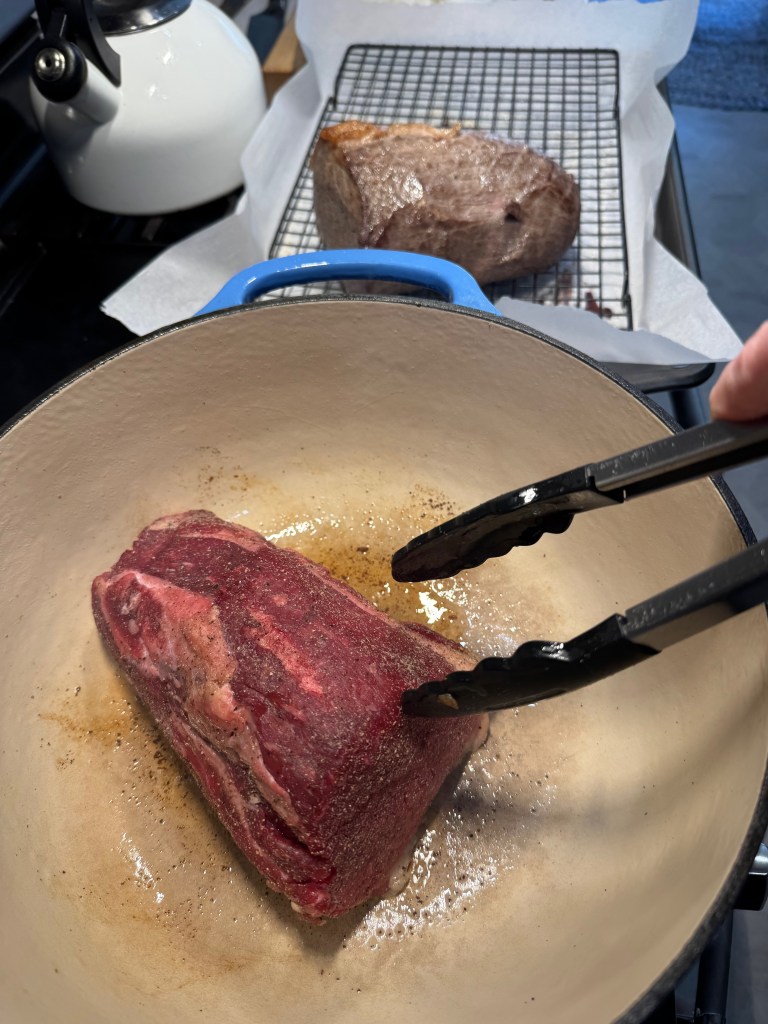
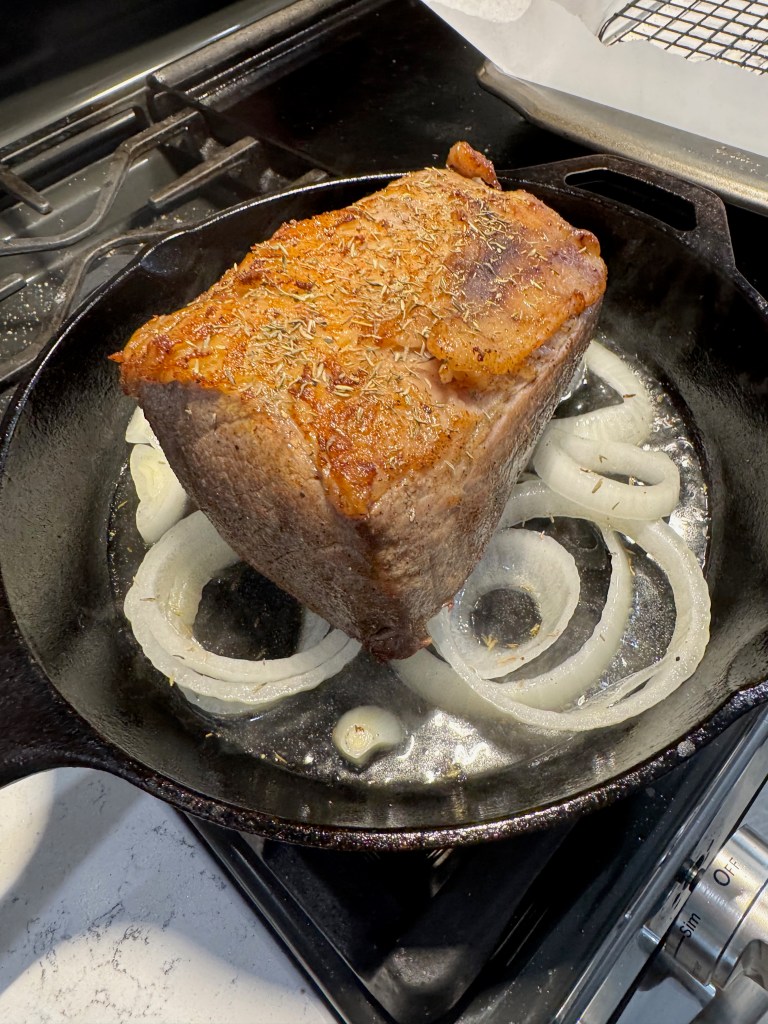
To this point, the only thing my recipe had in common with the one I found in Meat Illustrated was the specific cut, eye of round. Mine was twice the size called for, and I had already done the 20+ hour dry brine, which was not outlined in the book. But I needed a solid method for cooking said roast, and this one was perfect. It prescribed a low oven (275° F), a couple of heavy skillets (I went with a cast iron and my enameled Dutch oven) and a bit of oil for searing all the sides of the meat. My own instinct told me to placed the seared roasts onto beds of sliced onions, as I really wanted that flavor in the final mix. 


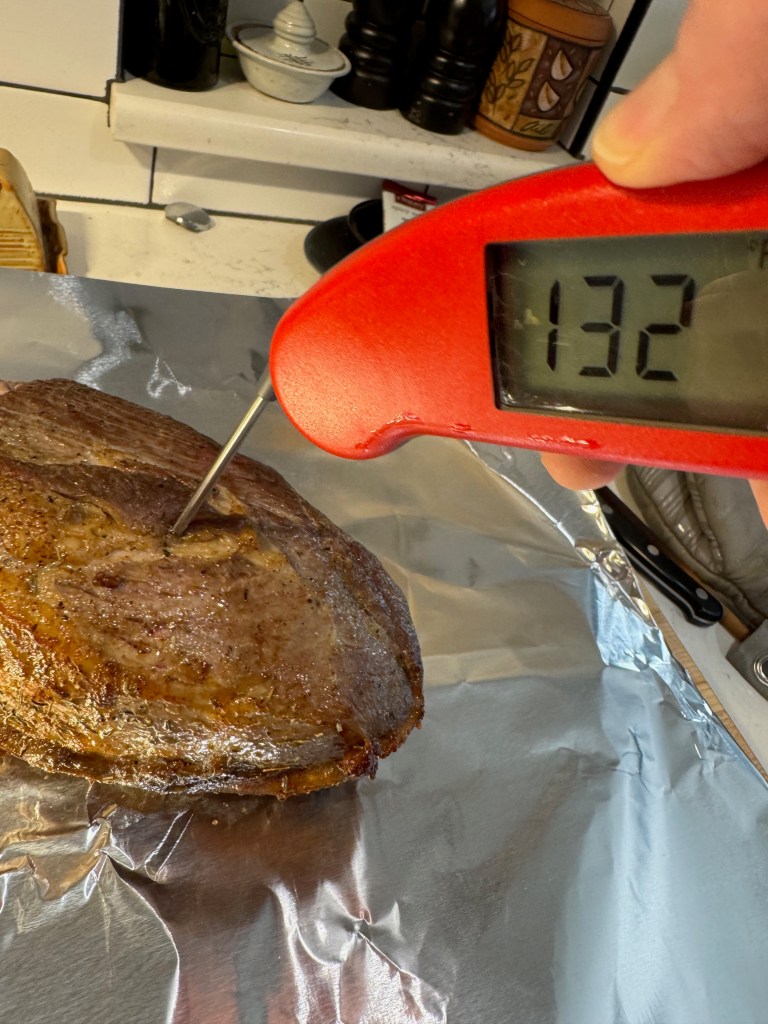
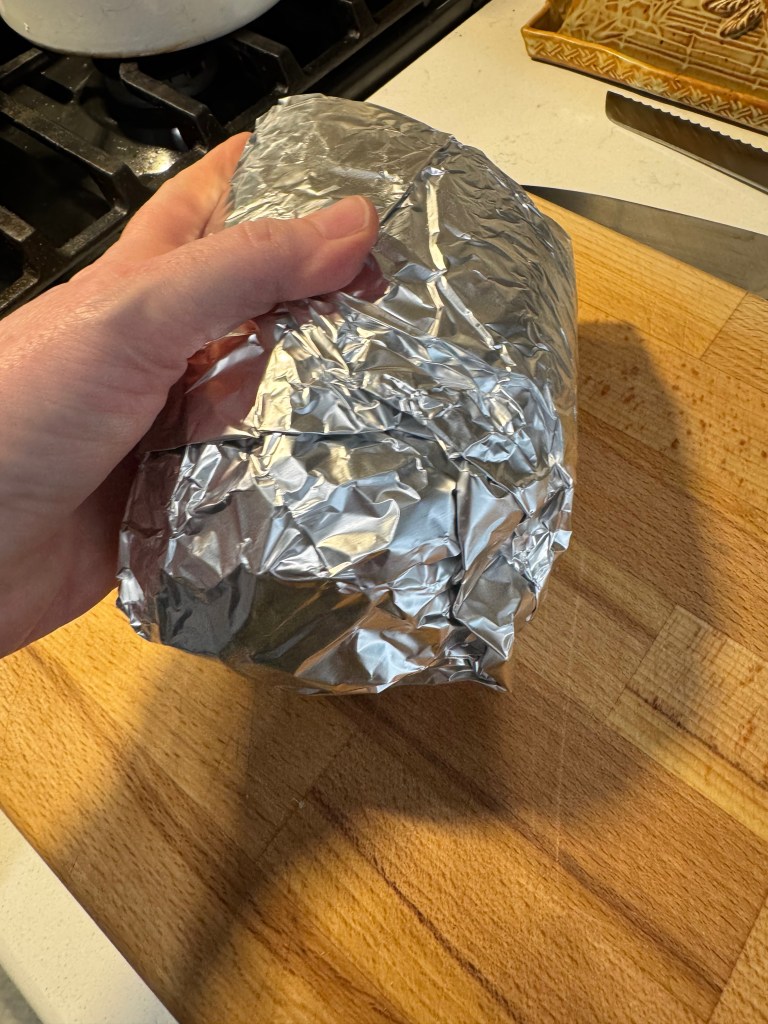
The first roast (in the Dutch oven) reached optimal temperature within 45 minutes, significantly less time than the second (in the skillet), which took an hour and 20 minutes. They were roughly the same size and went into the oven at the same time, so my best guess on this difference is that the ambient heat from the high sides of the Dutch oven get credit for the quicker result. Because the time cannot be trusted for consistency, I strongly recommend using an internal thermometer to gauge doneness. I followed instructions to wrap the finished roasts snugly in foil, which ensures that the juices redistribute evenly through the meat.

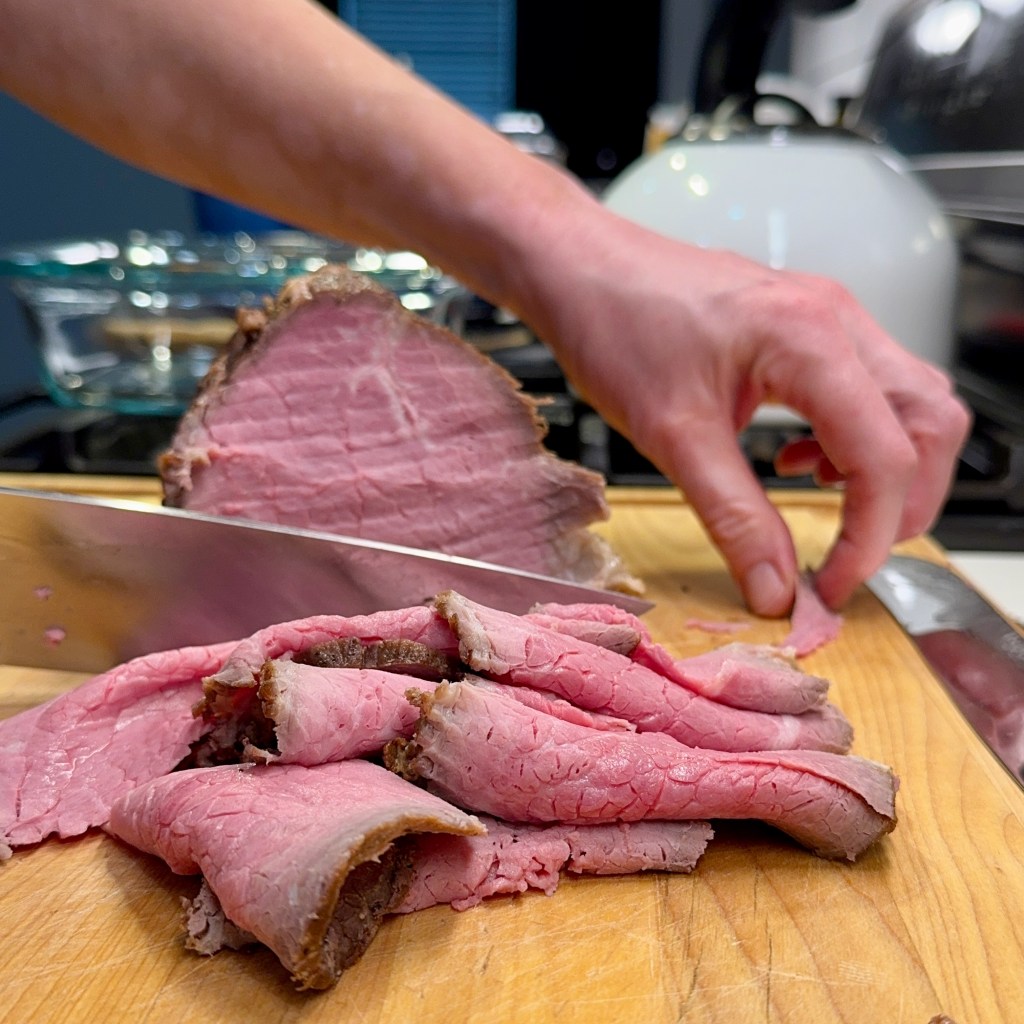
I could not resist carving the first roast as soon as it had finished resting, but my recommendation is to chill the meat overnight so that it can be sliced super thin for these iconic sandwiches.

Last but not least, the jus!

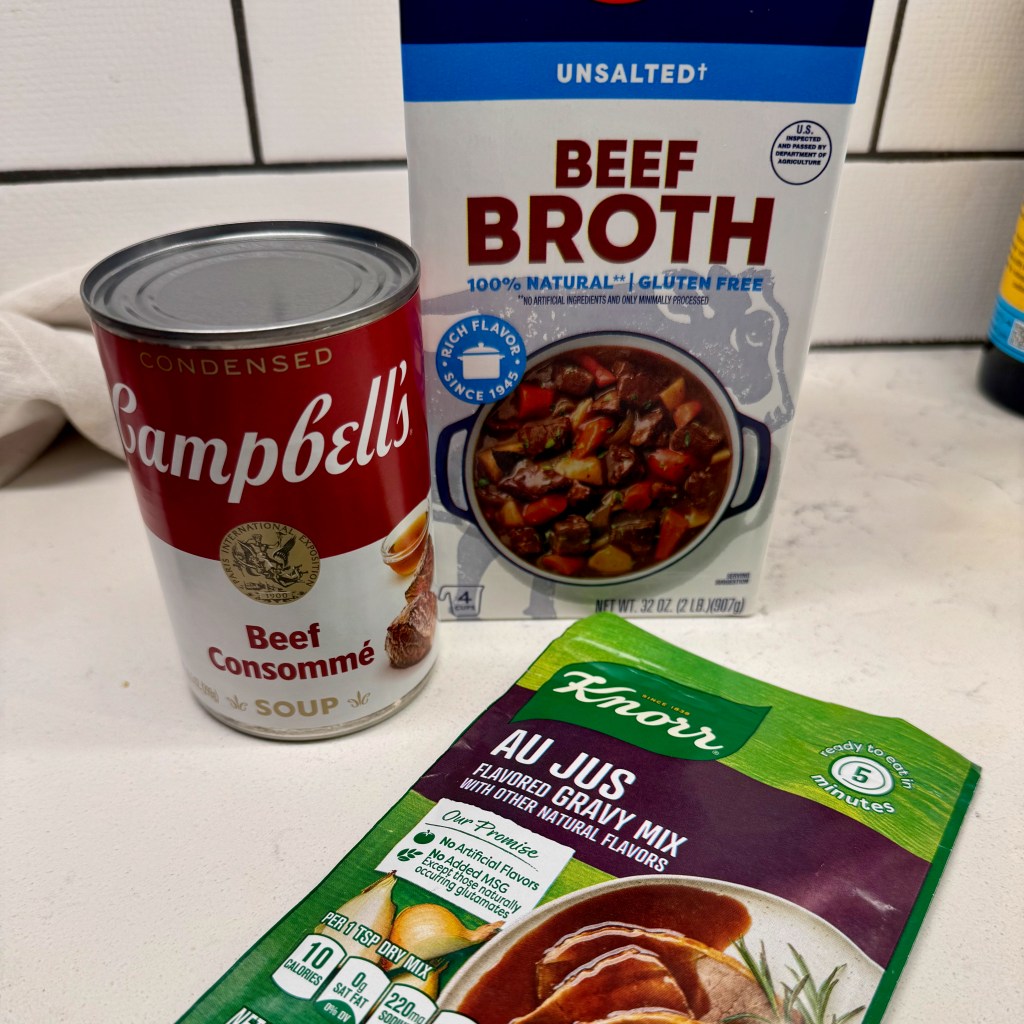
This part of the sandwich gave me the most pause, as I struggled to remember how the side sauce tasted. It was beefy, but not gravy-like. It was similar to au jus that one might find alongside a French Dip sandwich, but not as salty. I waffled quite a bit on how to achieve this traditional flavor, and of the three options I purchased, there was a very clear winner. 

This decision threw me for a loop, but the answer was so obvious in the end.

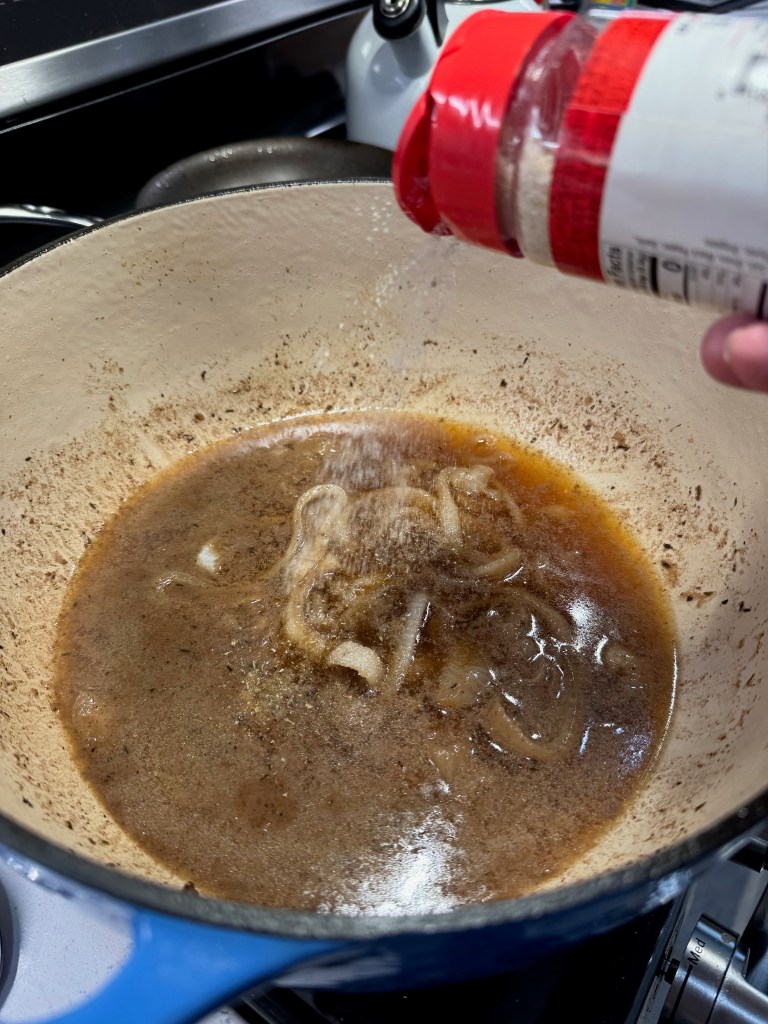
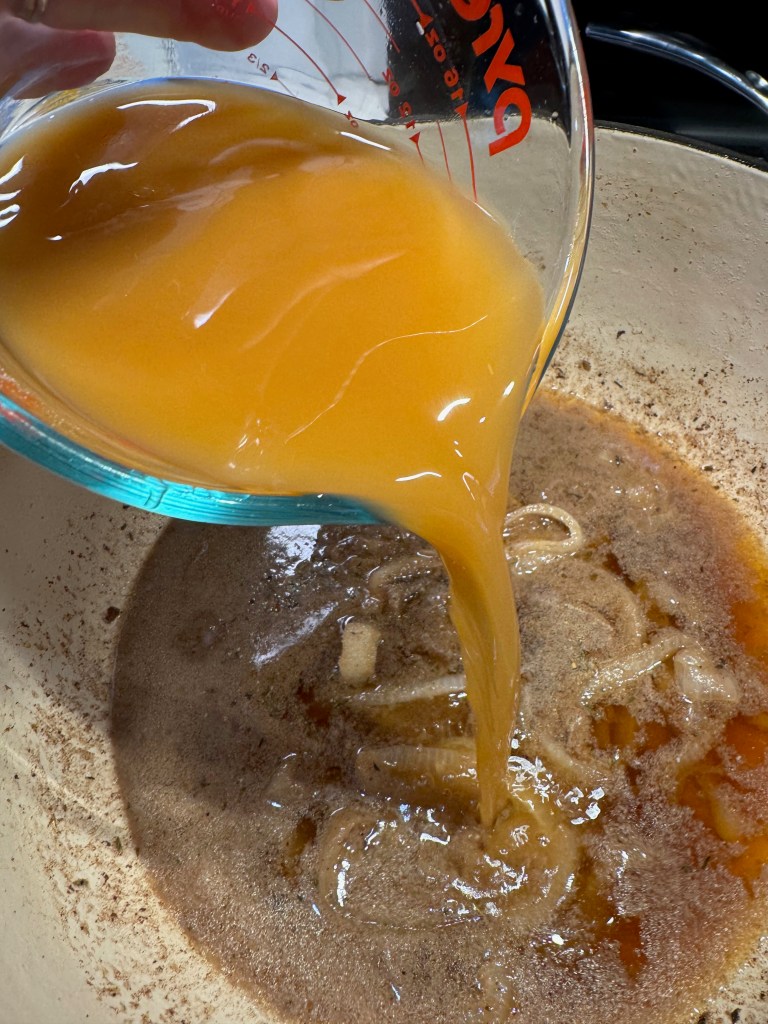
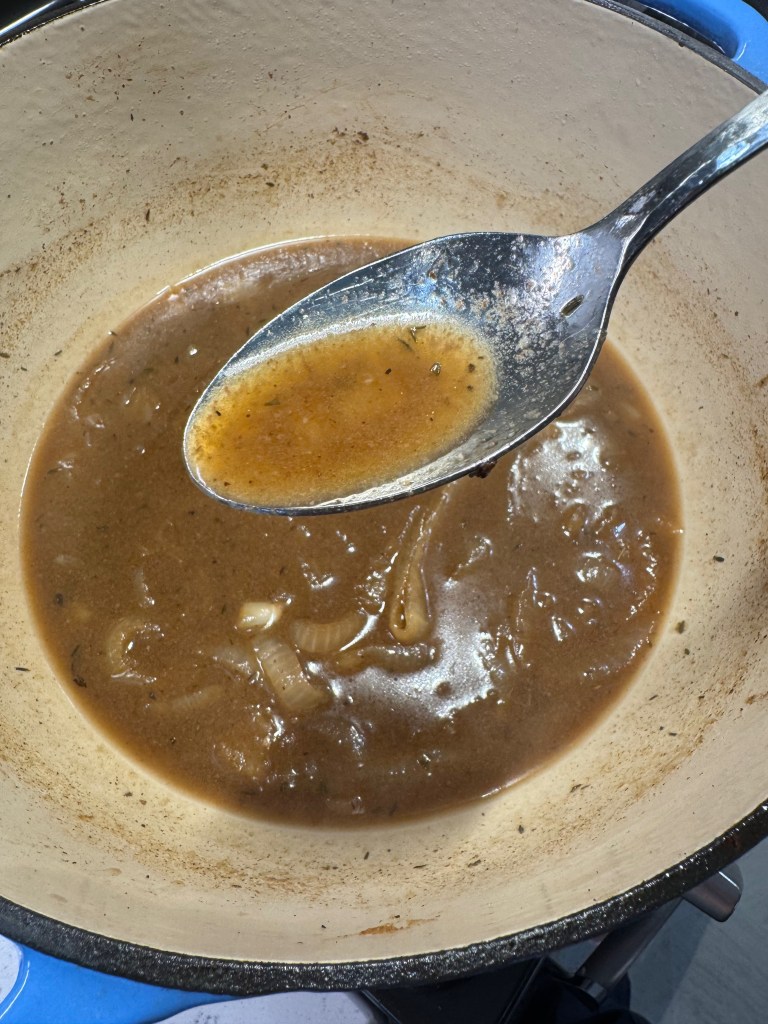
Let me cut to the chase and tell you that the beef broth won this battle. The consommé had a heavy soy flavor that was not working, and the dry jus packet (which I didn’t think to inspect until I was home with it) had exactly zero beef ingredients, so that was a hard no. My hungry husband, who had never had beef on weck in his life, made the winning suggestion to add a half packet of dry French onion soup mix to the sodium-free beef broth. It was perfect!


Assembling the beef on weck

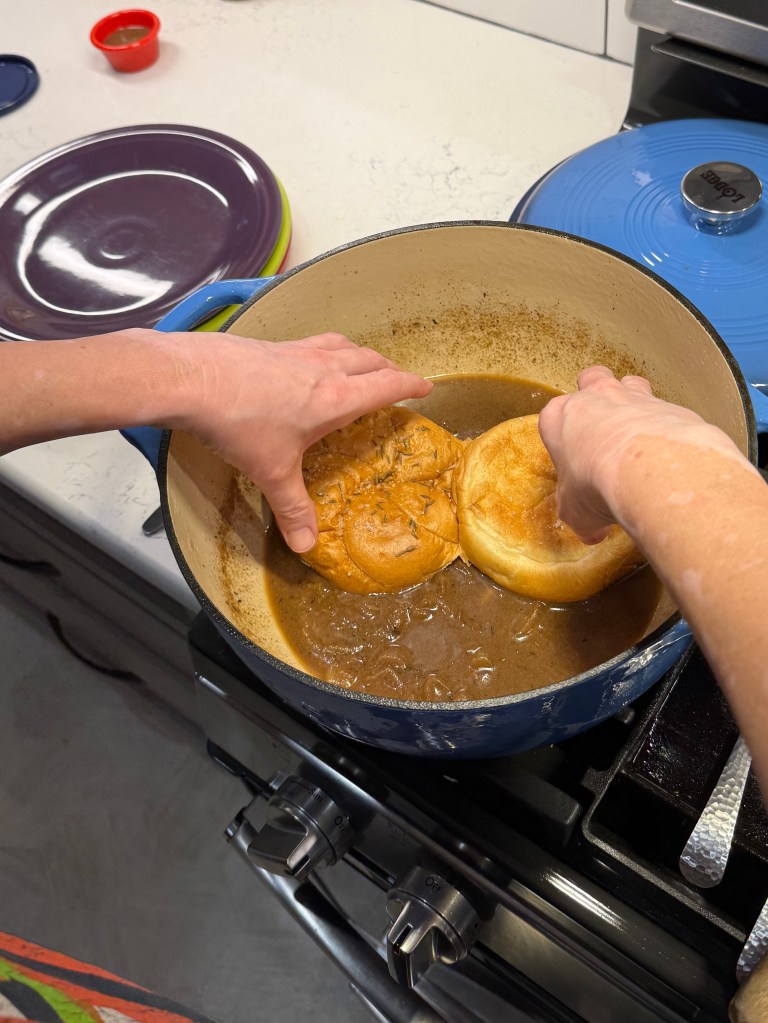
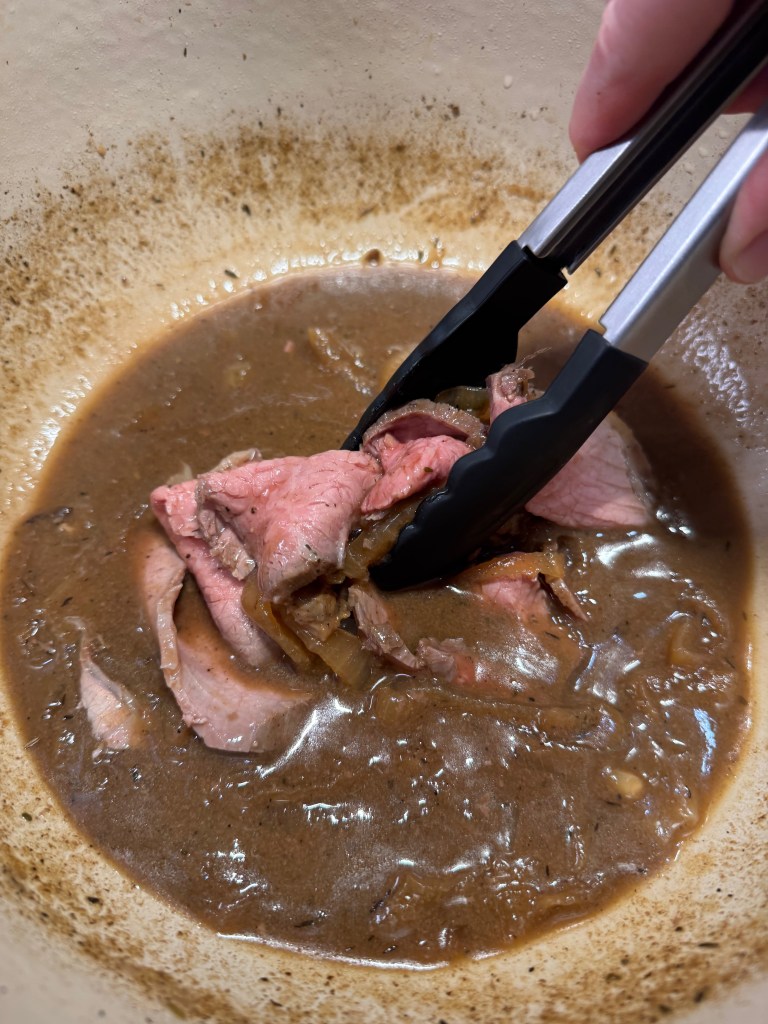
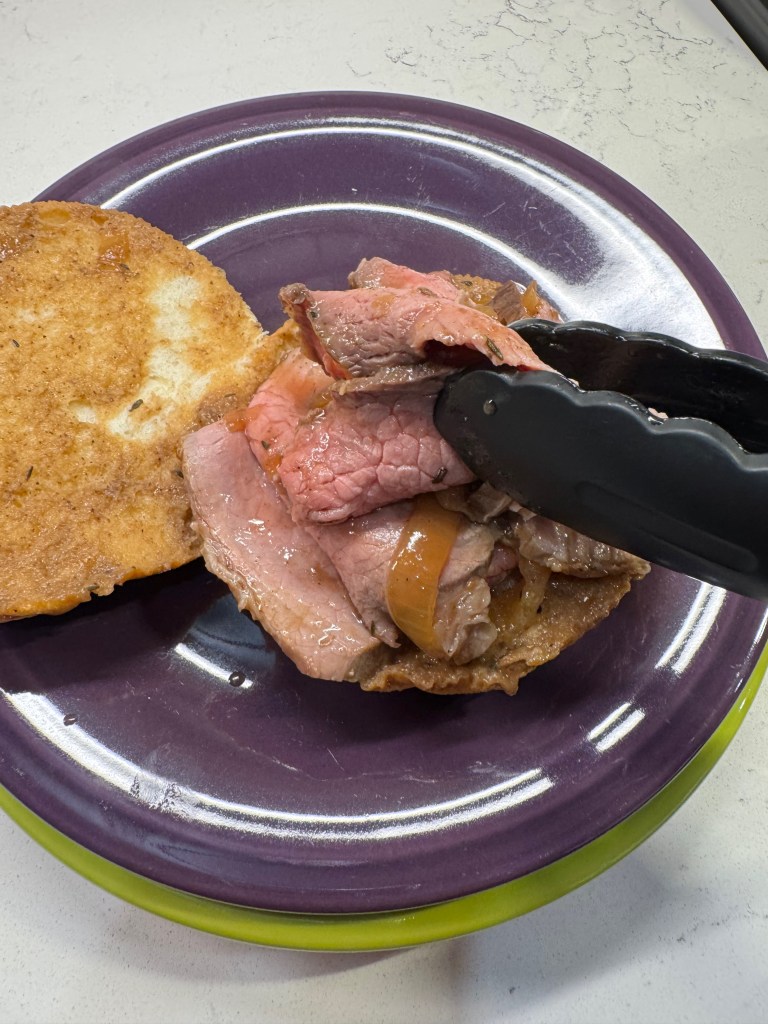
The traditional, Western New York way to serve this sandwich is to first dip the cut sides of the kummelweck roll into the jus, then smear on a little horseradish spread and pile on the meat. I warmed the thinly sliced beef in the hot jus, and so I grabbed a few of the soft onions in the process, and this was not a problem at all. Extra jus and/or horseradish may be served on the side. 


Beef on Weck (a Western New York classic)

  • Servings: About 12 sandwiches worth
  • Difficulty: Average
  • Print

I've been craving this taste of home for a very long time, and a few trusted tricks helped me move this into the done column of my culinary bucket list!


Ingredients

  • 5 lb. eye of round roast, locally sourced if possible
  • 4 tsp. kosher salt
  • 25 twists freshly ground black pepper
  • 1/2 tsp. onion powder
  • 2 Tbsp. extra virgin olive oil
  • 1 large sweet onion, cut into thick slices
  • 1/2 cup water
  • 2 1/2 cups no-salt beef broth, combined with a teaspoon of cornstarch
  • 1/2 packet French onion soup mix
  • Horseradish sauce (recipe in notes)
  • Kummelweck rolls (see notes for instruction)

Note: For most tender, flavorful results, apply the dry brine ingredients to the meat and refrigerate at least overnight (up to 24 hours) before roasting. This will allow the salt to dissolve into the meat, creating a brine that ultimately absorbs back into the meat. You will need either a very large Dutch oven or perhaps two cast iron skillets for the roasting. If you only have one vessel, consider roasting only one piece of meat at at time. Rest meat at room temperature for one hour before roasting!

This roast is best sliced when very cold. If time allows, roast it the day before you intend to serve so that it can chill completely in the refrigerator after roasting.

For horseradish sauce, combine 1/2 cup drained prepared horseradish with 1 tablespoon each sour cream and mayonnaise.

Plain kaiser rolls are easily transformed into kummelweck rolls with a few simple ingredients. Heat oven to 400° F. Combine 2 tablespoons cold water with 1/2 teaspoon corn starch. Microwave the mixture until it thickens slightly. Brush onto tops and bottoms of sliced kaiser rolls, then generously sprinkle kosher salt and caraway seeds onto the rolls. Bake for about six minutes until seeds are set and rolls are slightly crispy.

Directions

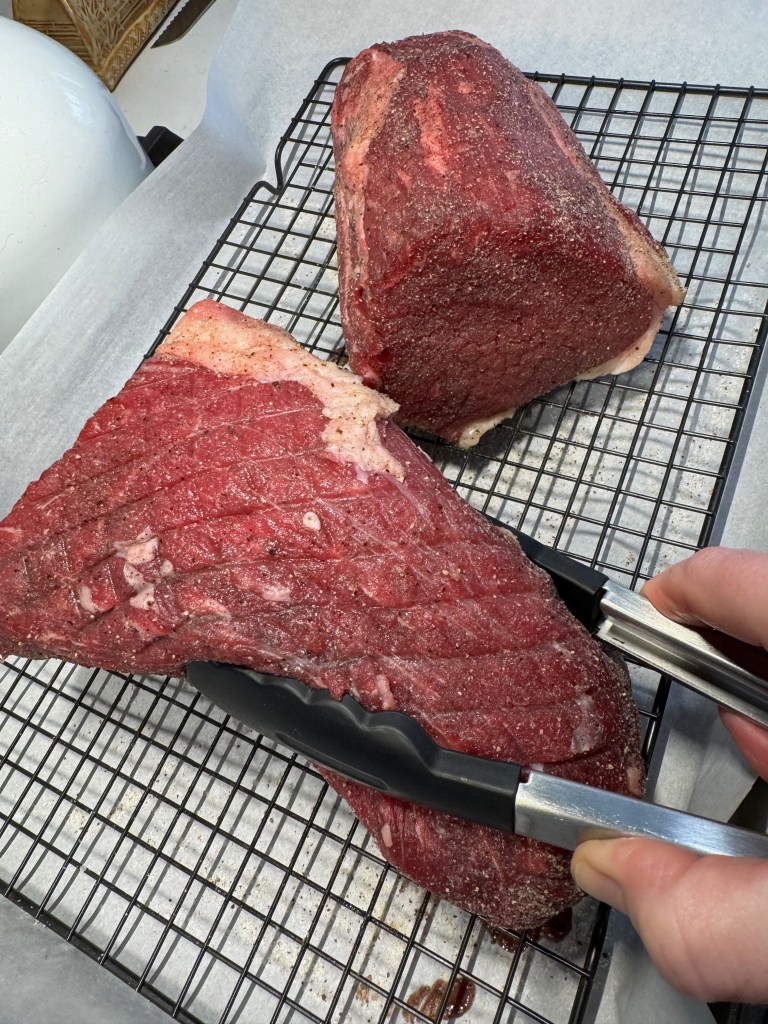
  1. Trim eye of round of excess fat and cut crosswise into two equal-ish chunks. Place meat on a rack over a parchment-lined baking sheet.
  2. Combine salt, pepper and onion powder in a small bowl. Sprinkle dry brine mixture generously over the entire surface of both roasts. Gently pat the mixture so that it adheres well. Place the sheet, uncovered, into the fridge for up to 24 hours.
  3. Preheat oven to 275° F, with oven rack in lower third of the oven. Place Dutch oven or oven-safe skillet over medium heat with olive oil. When oil is glistening, Use tongs to sear every side of the eye of round until browned. Set aside.
  4. Add onion slices to the pot and toss to cook for about one minute. Add 1/4 cup water and scrape up any browned bits stuck to the pot. Place browned roast on top of onions and transfer to oven, roasting until meat is 130 to 135° F internal temp for medium rare doneness. Remove from pot and wrap tightly in heavy duty foil, resting at room temperature for at least 30 minutes (longer is better, chilling is best) before slicing.
  5. Add French onion soup mix to the softened onions left in the roasting pan. Dissolve cornstarch into beef broth and add the liquid to the pot, stirring and cooking until bubbly and slightly thickened.
  6. To assemble sandwiches, dip cut sides of kummelweck rolls into the beef jus and then swirl a handful of sliced beef at a time in the hot jus. Pile the meat onto the buns and serve immediately with horseradish sauce and a cup of jus.


Red Beans & Rice

The exuberance and joy of Mardi Gras season calls to me, especially since I learned in recent years that it is more than drunken revelry and people throwing beads at women flashing their boobs. Yes, that does happen when tourists descend on Bourbon Street, and of course that’s what we see in the media— which loves a circus, as evidenced by the news of late— but the true season of Mardi Gras is much more interesting (thank goodness). It’s filled with family-friendly cultural celebrations highlighted with parades, colorful costumes and decorations, and, naturally, amazing foods!

Rather than pretend I know all about Mardi Gras, I’ll point you to my blog buddy, Maylee, who shares the inside scoop on her blog, Beyond Gumbo. Over the weekend, Maylee posted a gorgeous “Best-Ever King Cake,” one of the most signature treats of the Mardi Gras season, with its festive green, yellow and purple sugar accents. Have fun exploring Maylee’s blog, with first-person detail on the parades and so many foods that are truly authentic to Cajun country— far “beyond gumbo,” as her blog suggests.

My own love affair with Louisiana foods also extends beyond gumbo (though I do love it!), and today I’m sharing my first-ever attempt at making red beans and rice, a layered-with-flavor Cajun staple that is as tasty and satisfying as it is humble and simple to make. The first time I tried this classic dish, it was from a package mix (I know, and I’m sorry) and it didn’t impress me much. I was only about 24 at the time, and my curiosity about it emerged after my conversation with the one-and-only Bette Midler. This deserves an explanation, but first, the dish!

Worth the trouble to make from scratch!

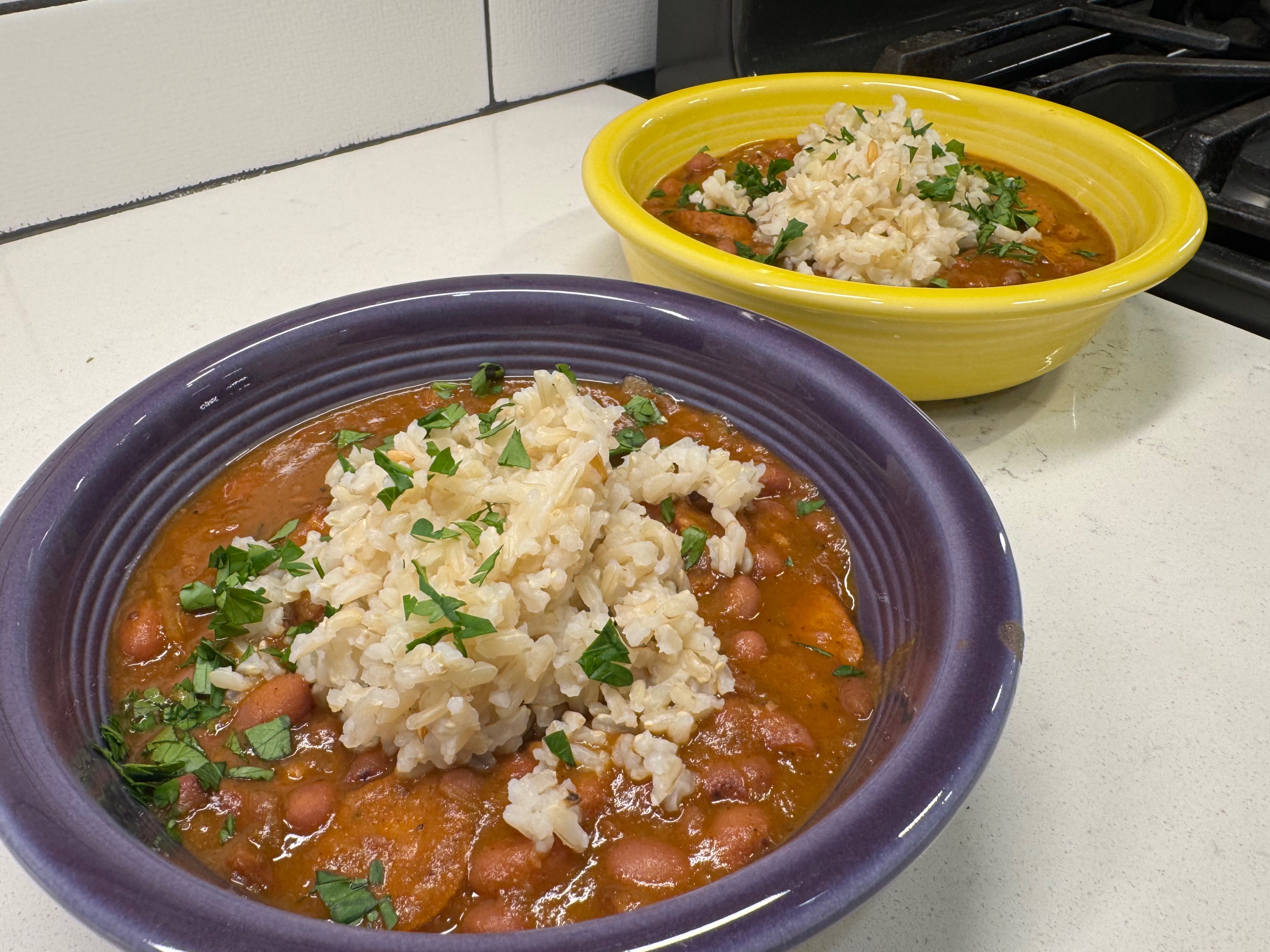
This meal comes together with pretty simple ingredients— red beans, of course, and I used small red beans, though dark red kidney beans seem popular; andouille sausage (I used a chicken variety to reduce the fat); the holy trinity of onions, celery and bell pepper; plenty of spice in the form of garlic, cayenne, smoked paprika, bay leaves and fresh thyme leaves; chicken stock and a touch of tomato paste (which might make it more Creole than Cajun, but it worked). 


The whole thing is stewed and simmered until the flavors meld, and then it’s served with cooked rice (mine was brown for nutrition and health reasons). Red beans and rice is hearty, incredibly aromatic, comforting and just spicy enough that I’ve been wondering why I waited so long to make it from scratch. This much I know— it won’t be the last time. 

If you get really close, you may be able to smell how delicious this is!

An unusual inspiration

Now, if you’re wondering what in the world Bette Midler had to do with anything, let’s rewind to my first full-time radio job, where I frequently had the pleasure of meeting and interviewing artists that I’d otherwise never cross paths with. The Divine Miss M was among them, and I could not have been more awestruck!

Most of my celeb interviews were not in-person, but by telephone, and right around the time that Midler’s hit, “From a Distance,” was charting on Top 40 and Adult Contemporary radio, riding the wave of popularity that followed “Wind Beneath My Wings,” her record label arranged interviews with influential radio personalities across the country. Don’t ask me how I got looped into that, because I was definitely a novice at that stage of my career, barely holding influence over myself on the best of days. I considered myself incredibly fortunate.

What I remember most about the 10-minute interview, which was unusually chaotic because there were multiple radio folks on the call, is not Midler’s answer to my own question when it was my turn to speak. I was nervous, and probably asked her something stupid, like “what was your inspiration for the song?” Had I done even the slightest bit of homework, I’d have known that it was a cover, not her own song, and that Nanci Griffith had recorded it first three years prior though that one didn’t make a dent on the American Billboard chart.

Nope, I was far too green to realize that celebrities— the best of whom usually prefer to be treated as regular people, rather than idols— are most excited to answer questions that relate to ordinary things. Thankfully, a more seasoned radio pro asked her the most meaningful question of the call— “Miss M, what is your favorite food?”

And, of course, it was red beans and rice. I’ll never forget it.


How to make red beans and rice

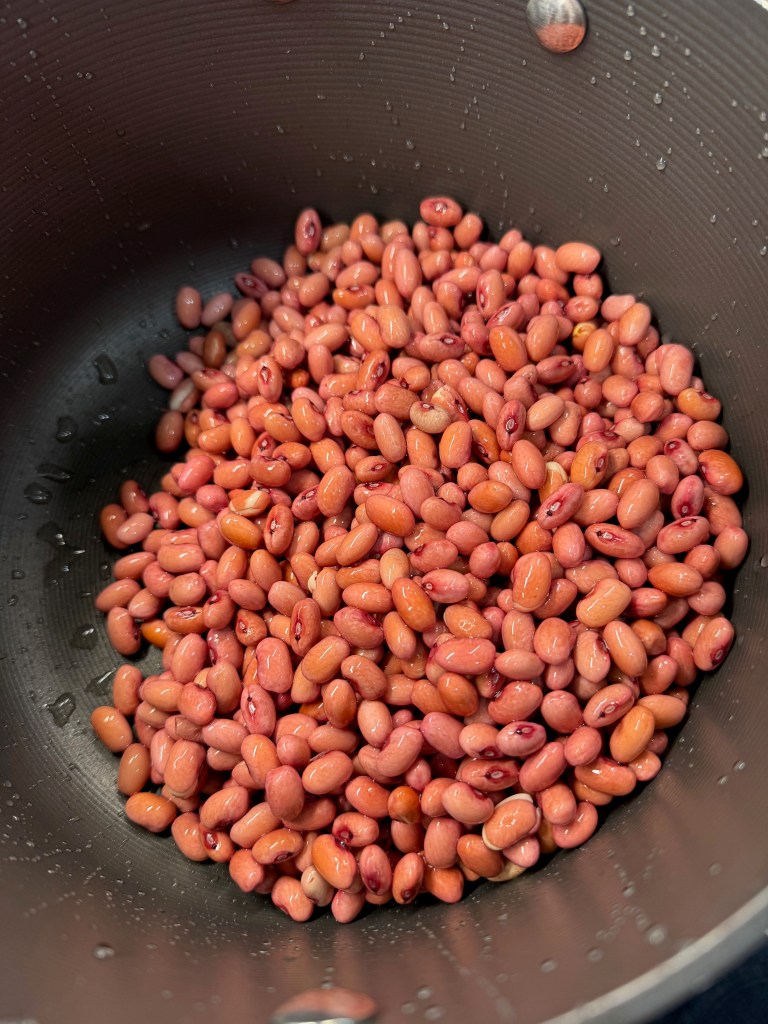
Never one to actually follow a recipe, I set out to learn the techniques that are important for red beans and rice, and there is no shortage of recipes online. My version is a mash-up of various suggestions I considered. As expected, it began with an overnight soak of the red beans. I had seen online that canned beans could be used, but when I have time to take the long route, I’m doing it. Good things happen in a long simmer, and it was no more effort to use dried beans. Be sure to drain and rinse them a couple of times before proceeding.


Getting the flavor party started

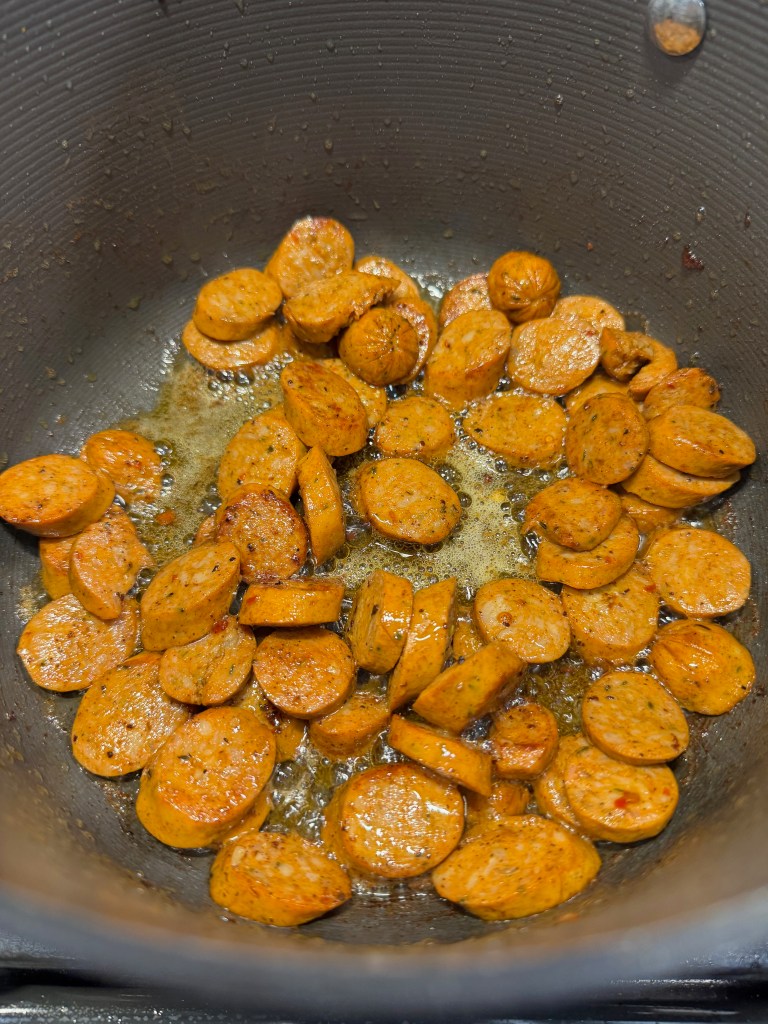
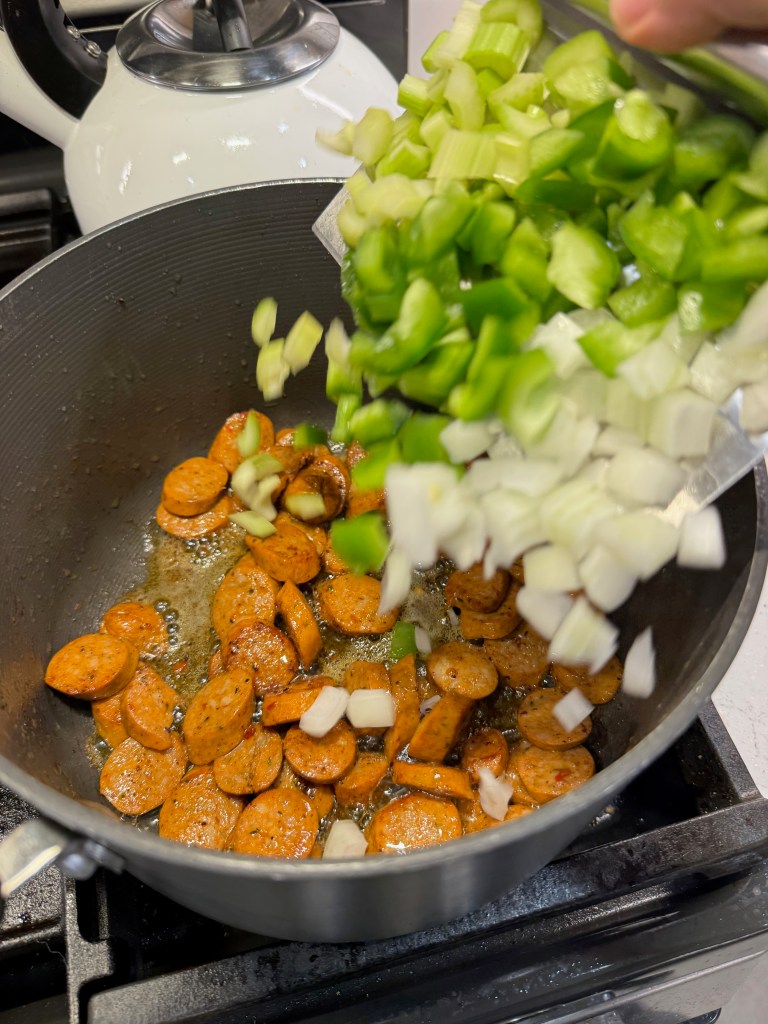
The flavor layering begins when you brown the andouille sausage in hot oil. I browned mine in bacon grease, rendered from a garlic- and onion-seasoned bacon I scored at Publix. This bacon was nothing short of fantastic, and though I don’t think it’s quite the thing for breakfast, it would be terrific on sandwiches and it was great in my red beans and rice. 


It’s getting aromatic in here!

Next came the trinity, which I had diced up small enough that each bite of my finished dish could have a little of each aromatic ingredient. Unfortunately, about that time, I realized that my chicken variety of andouille didn’t have any kind of casing, and I knew that it wouldn’t hold up under simmer for two hours while the beans cooked. So I hit the pause button long enough to fish out every last piece of andouille with a slotted spoon. I do not recommend this approach, but this was my own fault. 


Simmer down, now.

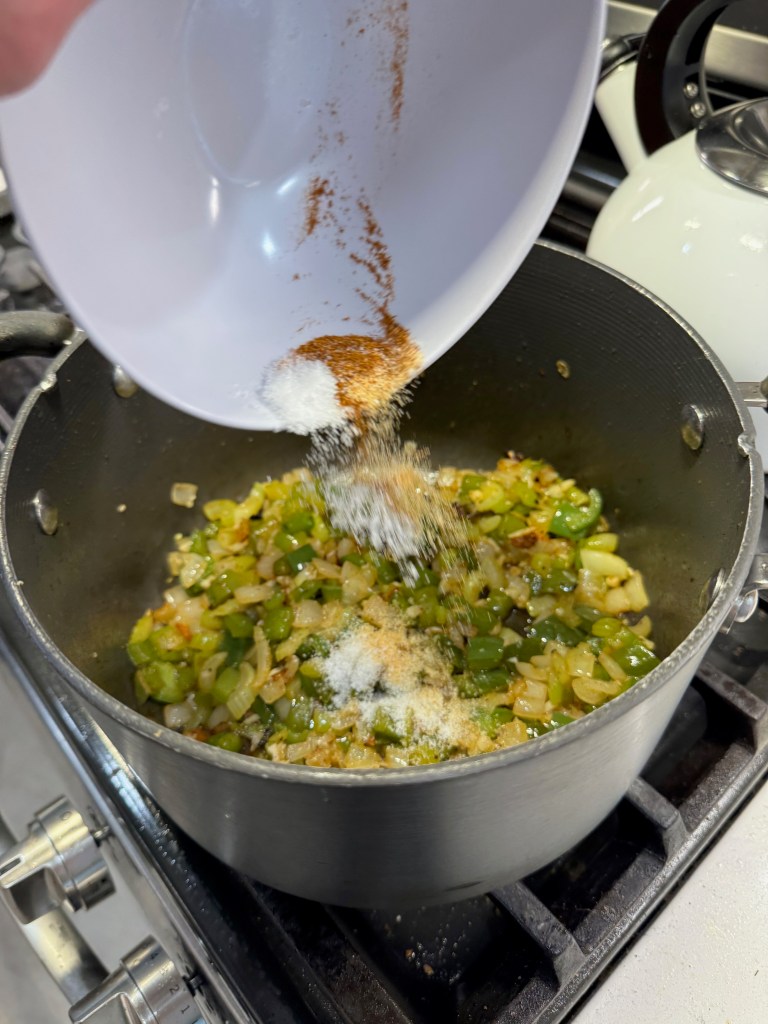
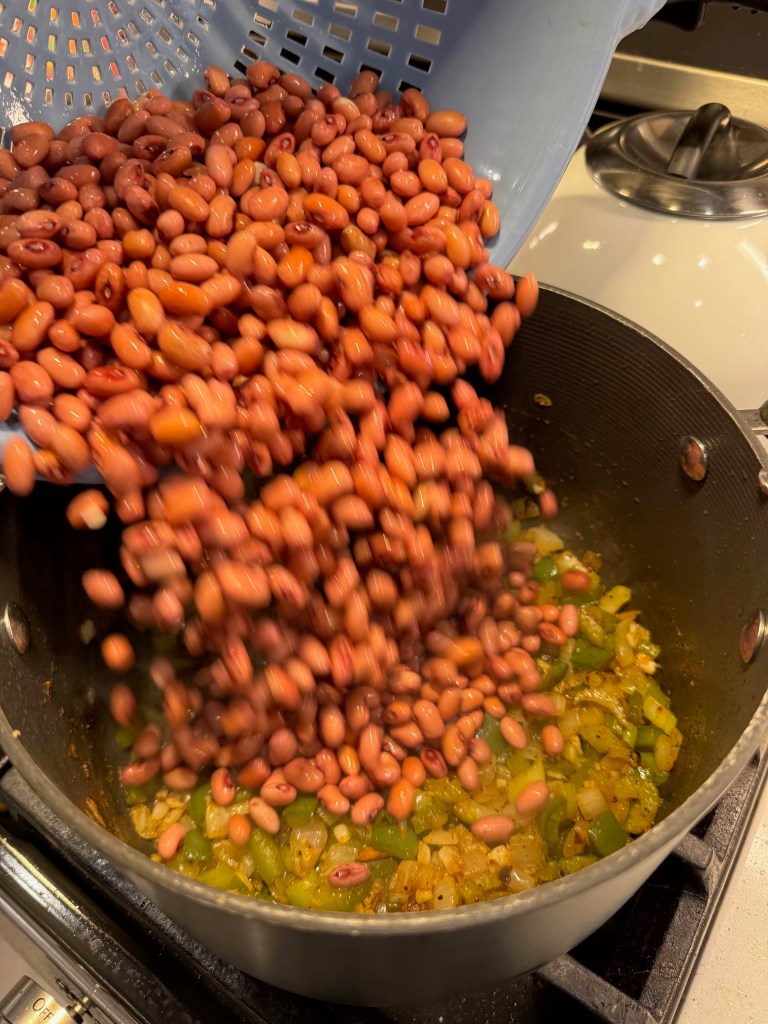
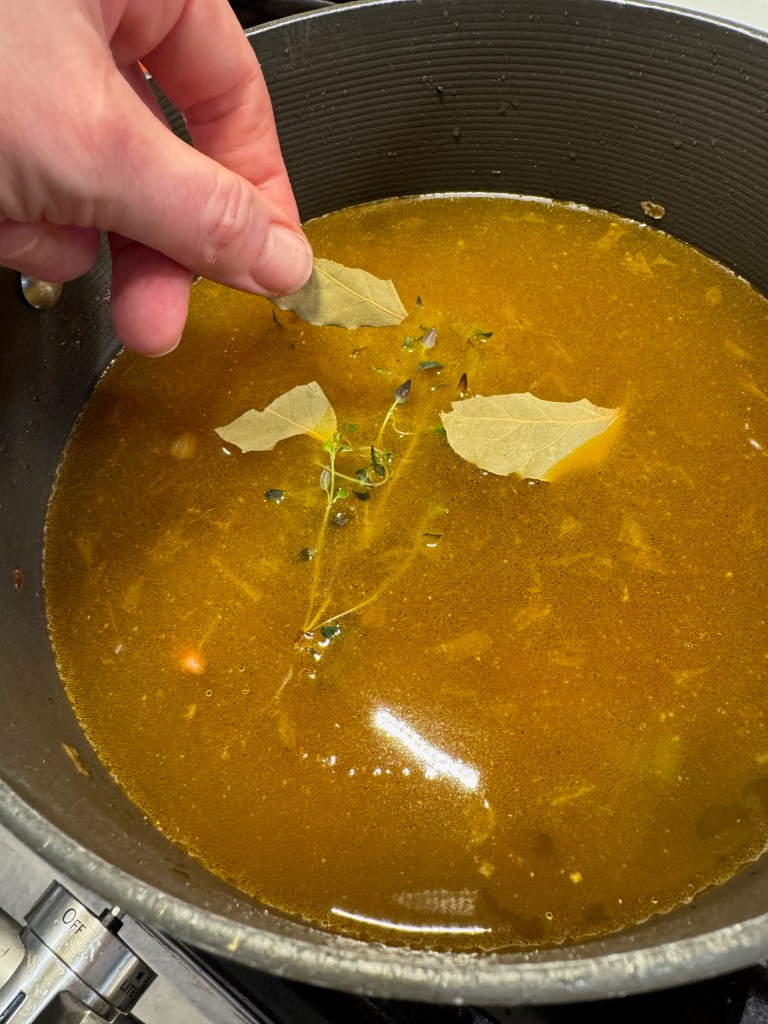
Time for the fresh garlic and dried seasonings. I wasn’t sure how much salt I’d need, given that the bacon and sausage had their own, and my chicken stock was not low sodium. So I played it conservative with salt, but still used black pepper and cayenne powder. I added the drained beans and six cups of liquid— four of chicken stock and two of water, plus a sprig of fresh thyme and couple of broken dried bay leaves— I rarely simmer anything without them. I panicked a bit at this point because the pot seemed so liquid-y, but there was no turning back at this point. I kept the lid off while the pot simmered, and I figured that would help reduce the liquid quite a bit.


The final stretch…

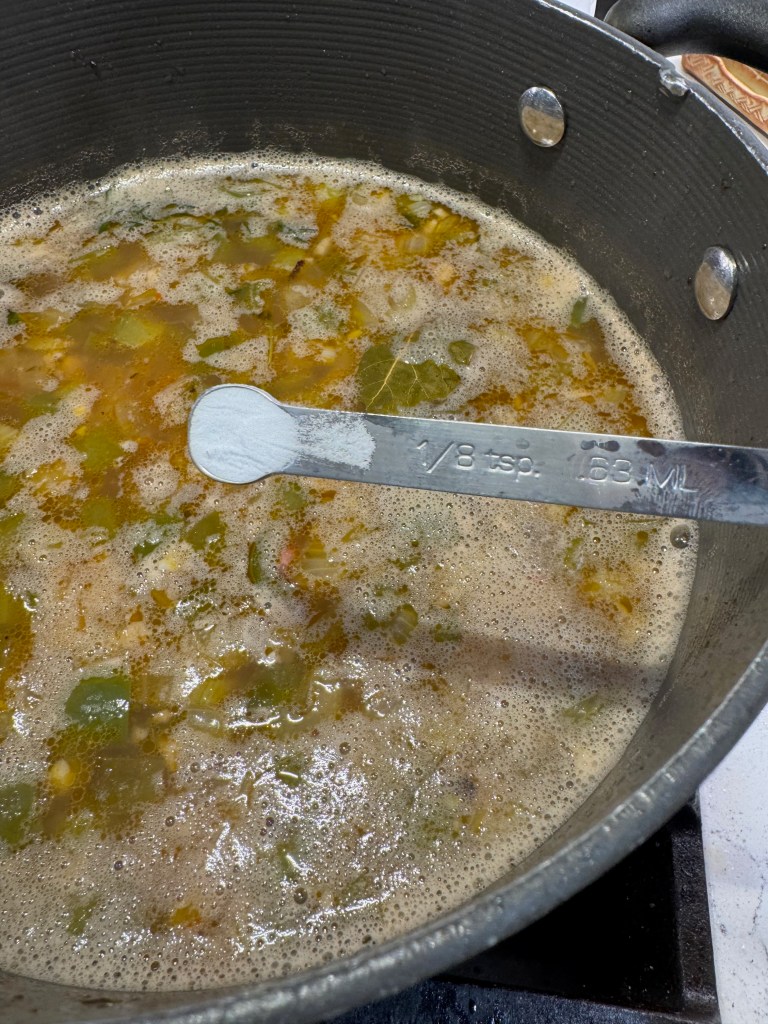
At this point, I also followed my new rule of thumb for cooking dried beans, which is to go ahead and add a skimpy spoon of baking soda to the pot. This alkalinizes the cooking liquid, in turn helping the beans to soften as they simmer. It does not change the flavor of the mixture with such a small amount. I wish I’d had my camera ready after the soda was stirred in, because there was a momentary fizzing that was quite dramatic, and then it settled down.


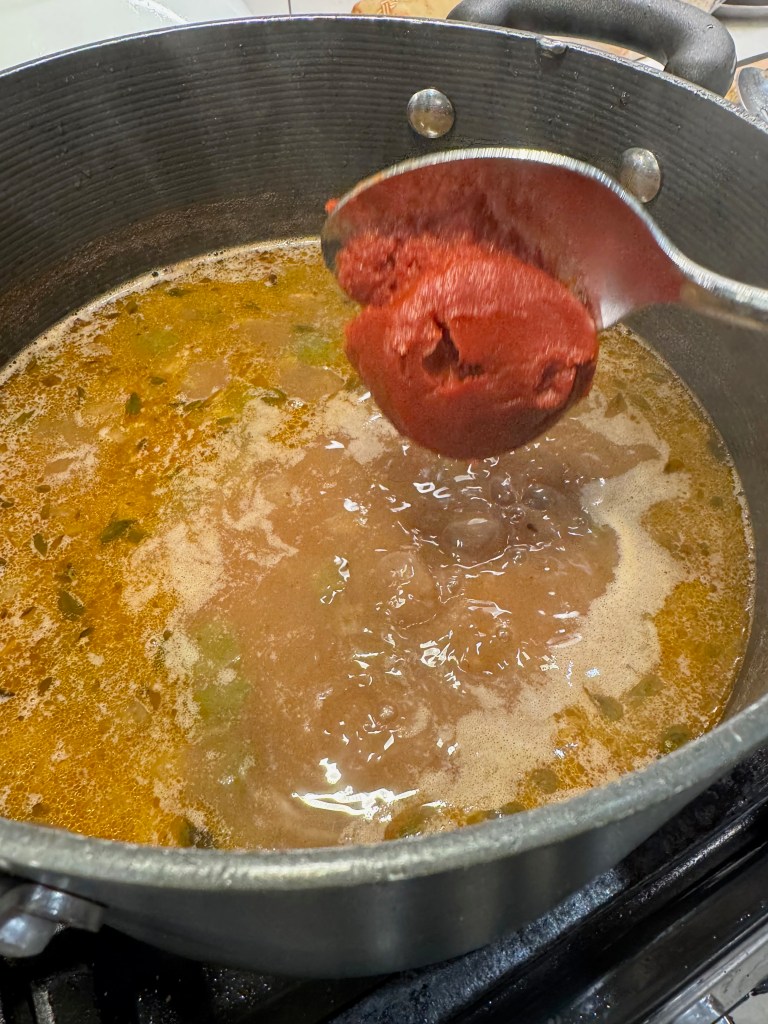
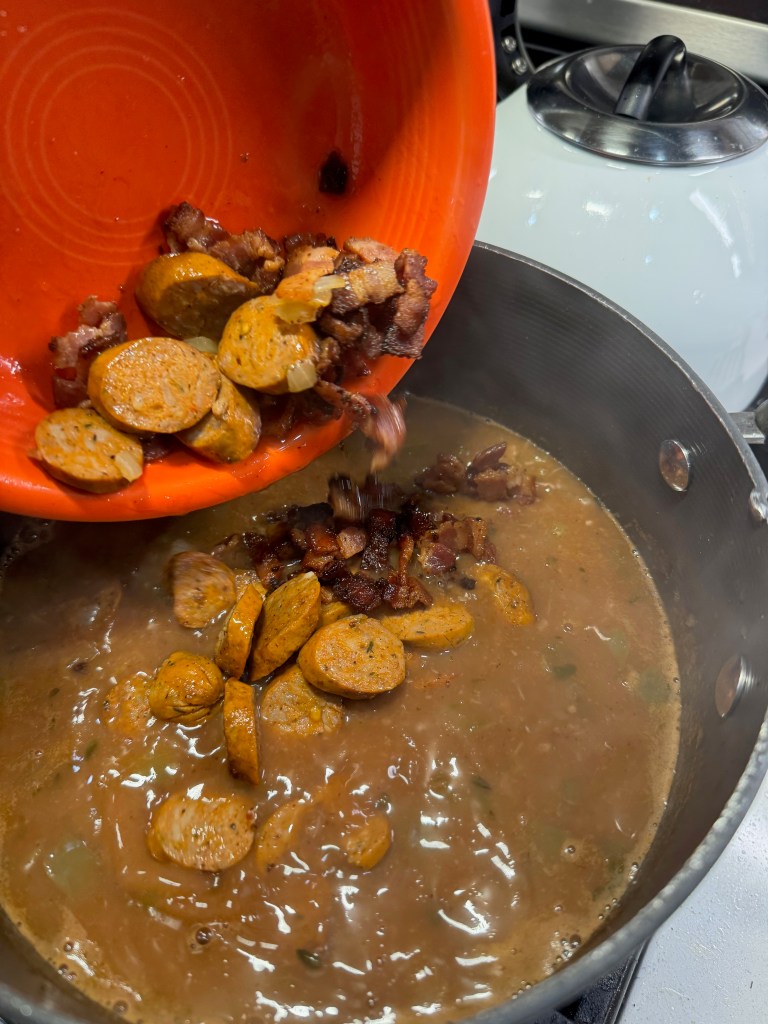
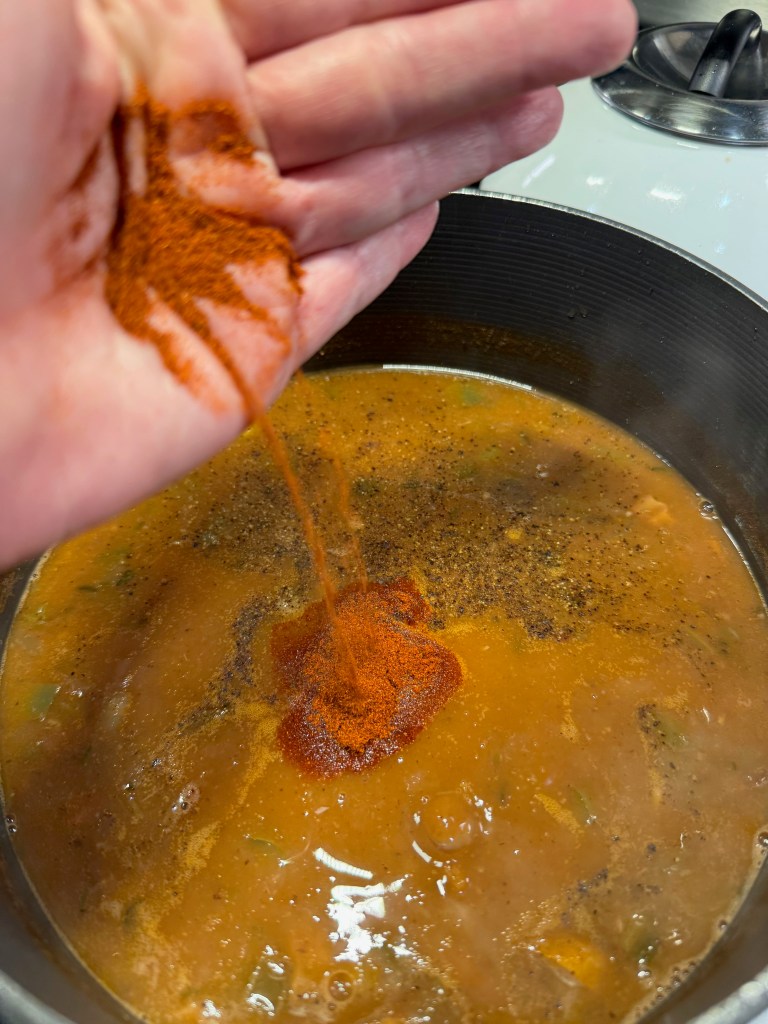
I gave the pot a stir only about twice over the next two hours, and after confirming that the beans were tender, I stirred in two tablespoons of tomato paste. You cannot jump the gun with tomato or anything else acidic when cooking dried beans, or they may never soften. I emptied the cooked andouille and bacon back into the pot, along with a bit fat pinch of smoked paprika, which I probably should have added at the beginning (still learning here). Another 45 minutes of simmering, and my red beans and rice was ready to serve! 

Red Beans & Rice

  • Servings: About 8
  • Difficulty: Average
  • Print

This dish definitely should not be reserved for Mardi Gras! It's immensely flavorful, comforting and richly satisfying.


Ingredients

  • 1 lb. dried red beans (I used small red beans, but kidney beans are ok, too)
  • 6 slices good uncured bacon, cut into 1-inch pieces
  • 12 oz. package andouille sausage, sliced into 1/2-inch thick slices (I used a low-fat chicken version, which had no casings; pork variety is more traditional)
  • 1 cup each yellow onion, celery and green bell pepper, chopped into 1/2-inch dice
  • 6 cloves garlic, smashed and minced
  • 1/2 tsp. salt
  • 1 tsp. freshly ground black pepper
  • 1/2 tsp. ground cayenne
  • 1 tsp. smoked Spanish paprika
  • 4 cups chicken broth or stock
  • 2 cups water
  • 1 sprig fresh thyme
  • 2 dried bay leaves
  • 1/8 tsp. baking soda
  • 2 Tbsp. tomato paste (do not add until beans are cooked soft!)
  • A few shakes Louisiana hot sauce, if desired for heat
  • cooked rice for serving
  • chopped fresh parsley for serving

Notes: This recipe uses dried beans, which require a longer cooking time. If substituting canned beans, use 4 standard cans (drained) and reduce simmering time to one hour.

Directions

  1. Sort and rinse beans to rule out any duds. Add beans to a large pot and cover with several inches of water. Soak at least 12 hours, and then drain and rinse twice before proceeding with the recipe.
  2. Heat a heavy-bottomed pot over medium heat. Cook bacon pieces until crisp, then transfer bits by slotted spoon to a separate bowl. Add the andouille sausage pieces to the pot, browning in the bacon fat until crisp on edges. Transfer sausage to the same bowl with bacon and set aside.
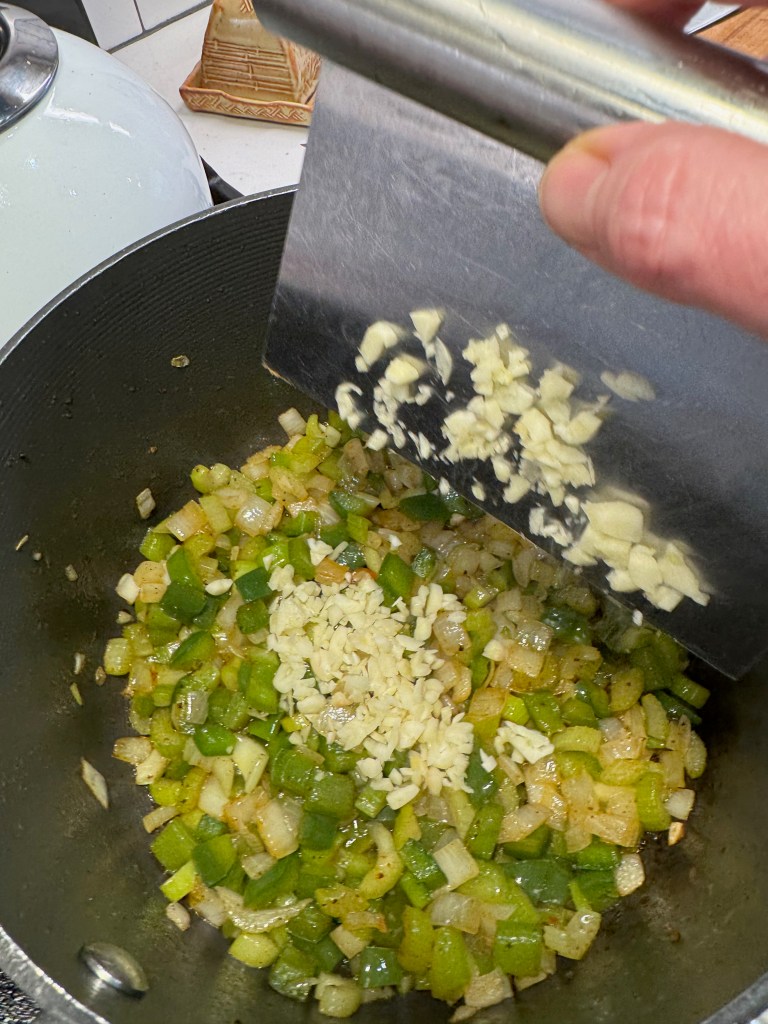
  3. Add onions, celery and bell pepper to the pot. Stir and sauté until softened and slightly translucent. Add garlic and stir for one minute. Season with salt, pepper, cayenne and paprika.
  4. Add drained beans to the pot; cover with chicken broth and water. Bring pot to a boil, then reduce heat to a simmer. Add thyme and bay leaves. Stir in baking soda to neutralize any acid in the pot (this is not necessary if using canned beans)
  5. Simmer, uncovered, for 1 1/2 to 2 hours or until beans are tender. Use a potato masher to smash some of the beans for richer, thicker texture. Alternatively, you can smash the beans against the sides of the pot with the back of a large spoon. Stir in tomato paste and a few shakes of hot sauce if you want more heat. Adjust salt and pepper to taste.
  6. Return cooked bacon and sausage to the pot and stir to combine. Continue to simmer for about 45 minutes to thicken beans.
  7. Remove bay leaves and thyme stems. Serve red beans with cooked rice.


Chicken Curry with Autumn Vegetables

The best thing about Thanksgiving leftovers— for me, anyway— is when they are gone. For all the excitement leading up to the biggest food holiday of the year, I’m usually over it after two rounds of leftovers. Yes, I look forward to a good turkey sandwich, usually with a thin layer of leftover dressing and a smear of tangy cranberry sauce, plus a dab of mayo and perhaps a piece of lettuce in a ridiculous effort to offset all those carbs. And obviously, I enjoy transforming the turkey bits into spicy dishes, such as my turkey and black bean enchiladas or a delicious, comforting bowl of leftover turkey gumbo.

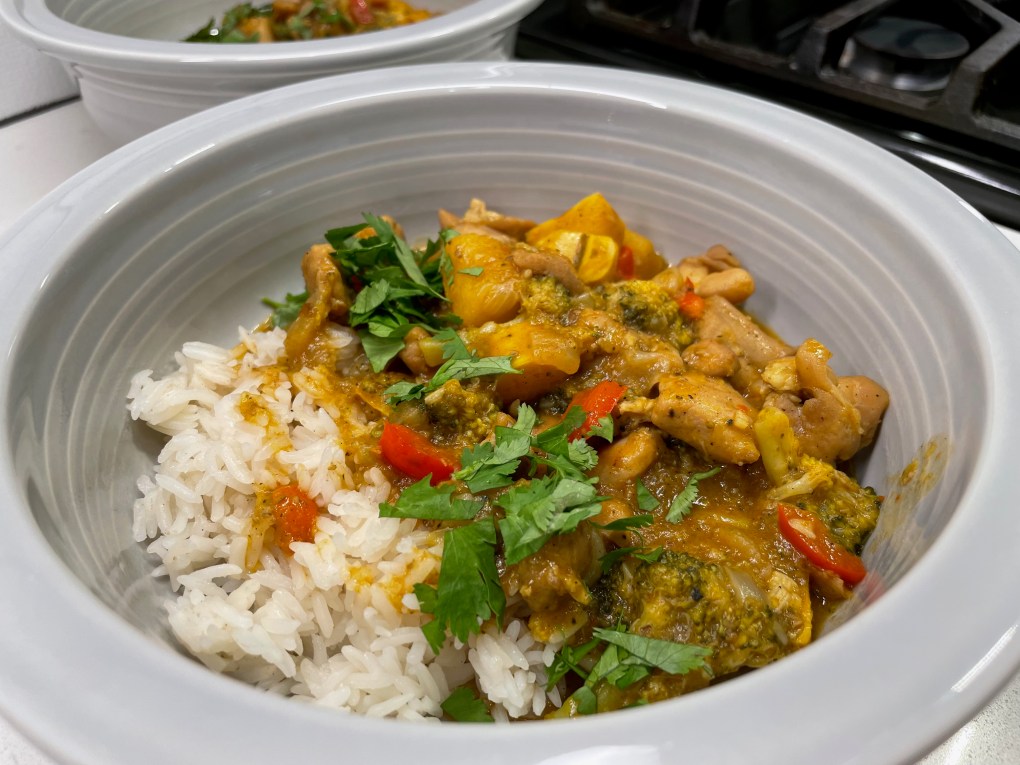
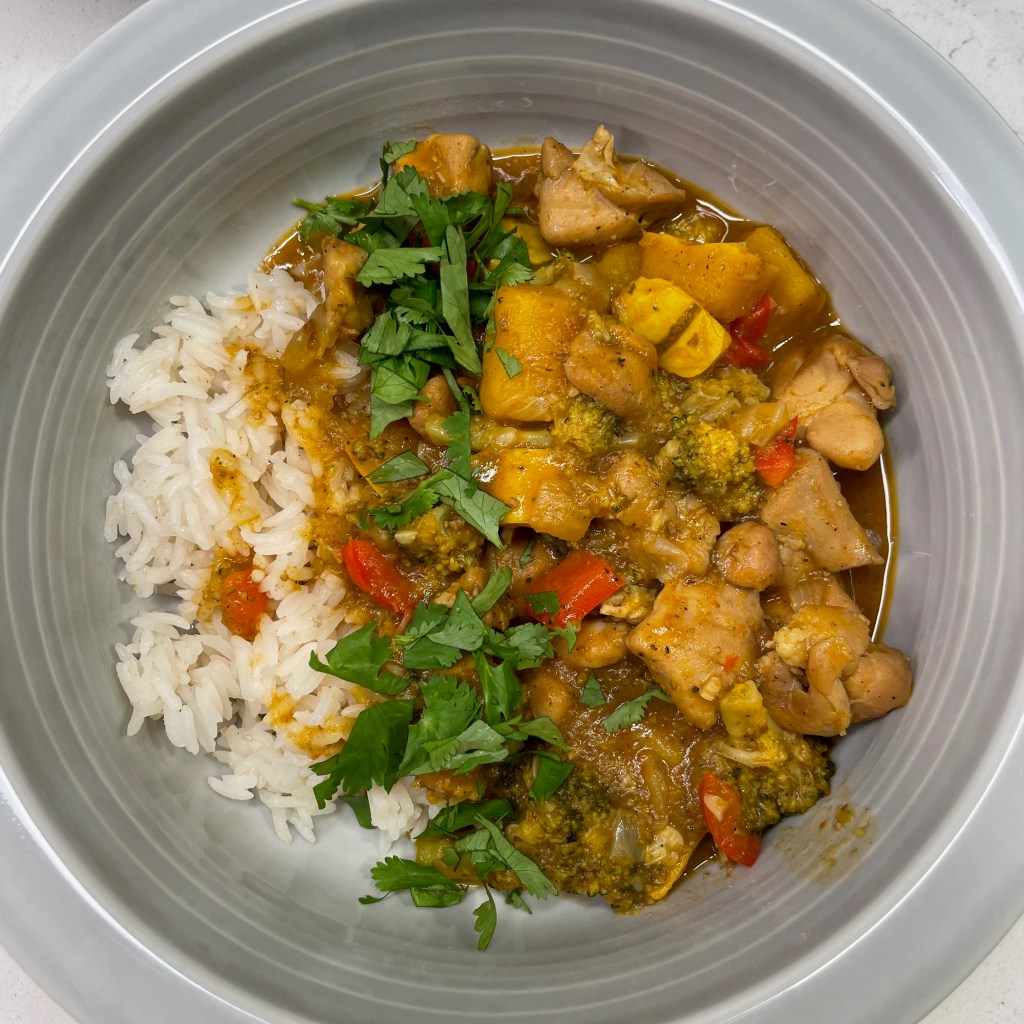
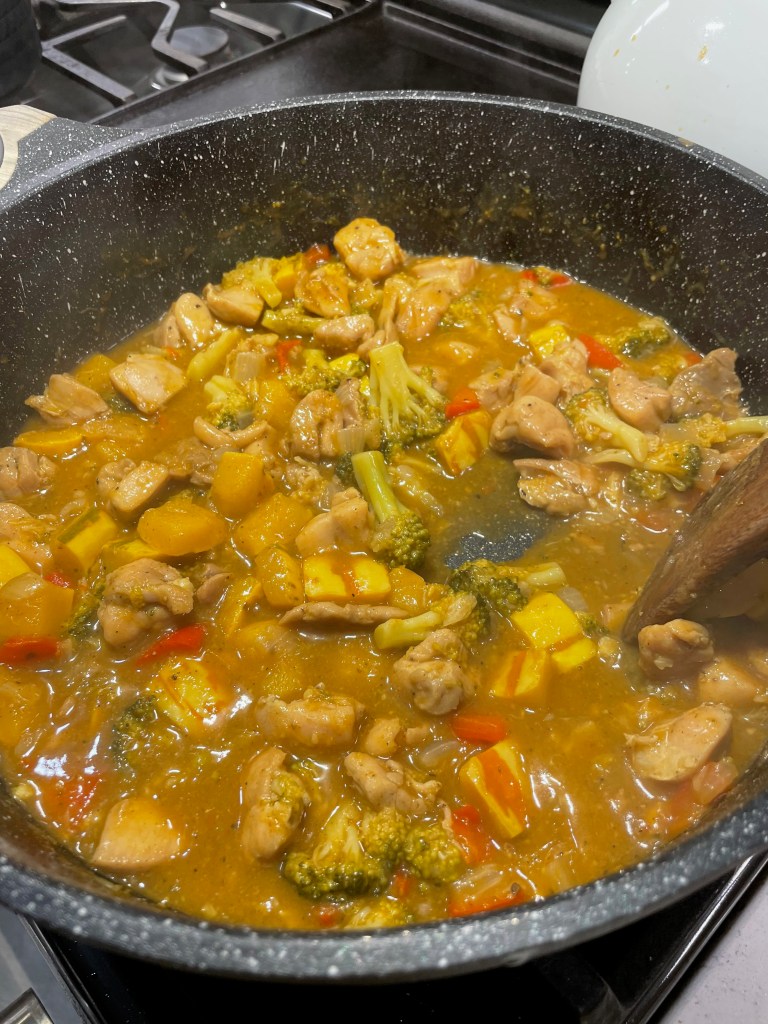
But my taste buds get weary after all that butter and gravy, and I start craving something with more pizzazz, and (for reasons I cannot explain) preferably from a culture other than my own. This impromptu Indian-inspired meal gave me not only delicious, warm spicy flavors, but also a generous dose of comfort on a dreary November night. My chicken curry came together more quickly than you might imagine, and it was a great way to incorporate some nutritious autumn vegetables and use up a package of skinless chicken thighs that I had stashed in the freezer.

There’s flavor, color and loads of nutrients. What more could I ask?

Curry is not a cuisine of my youth; I first learned to enjoy it about 15 years ago in a local Thai restaurant, and I finally got brave enough to try making it at home within the past few years.  There are many varieties and styles (or colors, if you will) of curry, and it has taken me some time to learn which ones I like best. In Thailand, a green curry might include lemongrass, garlic, kaffir lime and hot chile spices, and those flavors are spectacular with seafood in a broth softened with coconut milk. In nearby India, a curry looks altogether different and usually gets its flavor from a blend of dry spices, including cardamom, coriander, ginger, cumin and turmeric. If you purchase a jar or can of “curry powder,” it may contain any combination of those pre-ground ingredients, but it’s easy enough to mix and match your own flavors if you already have the individual spices.


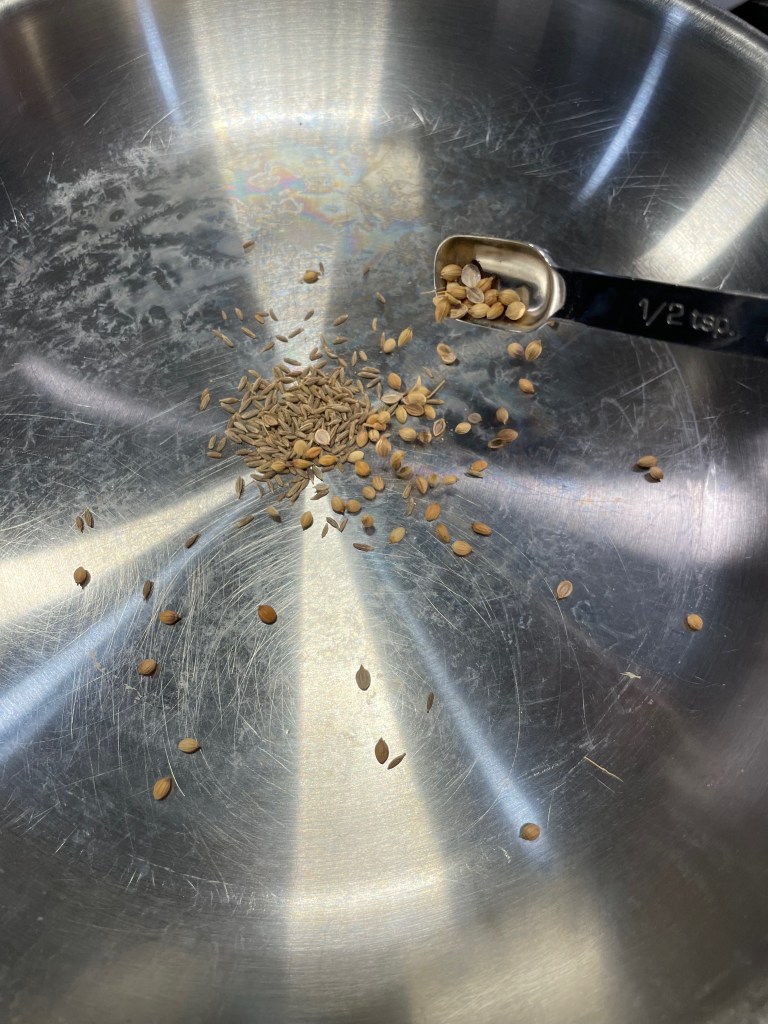
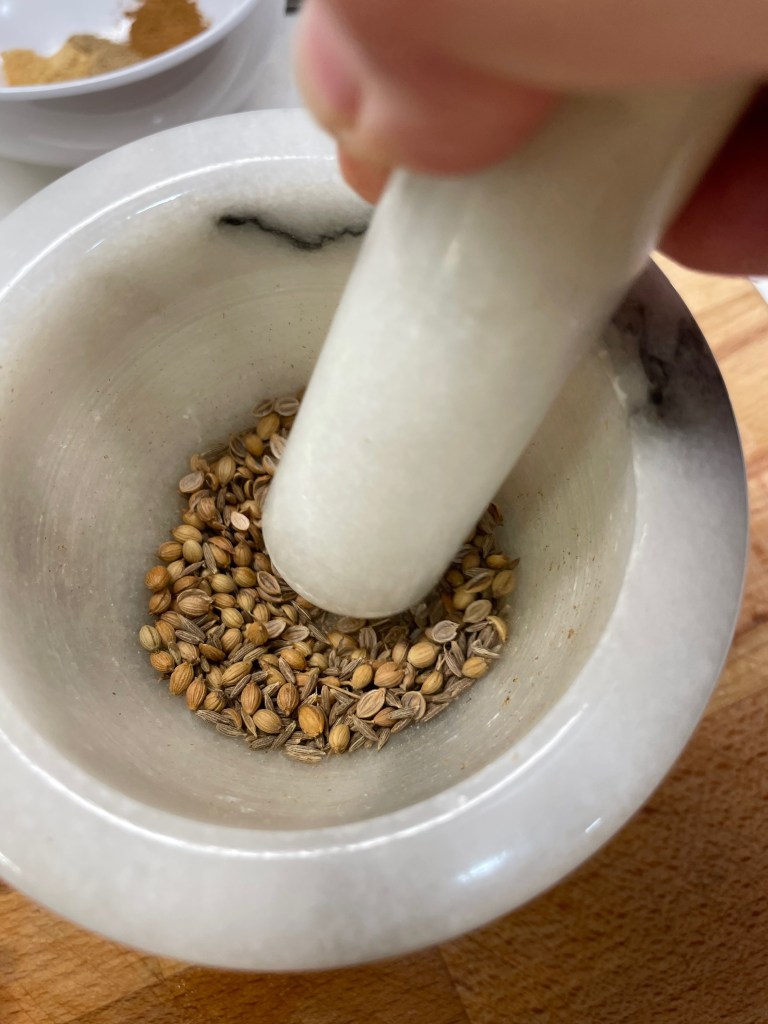
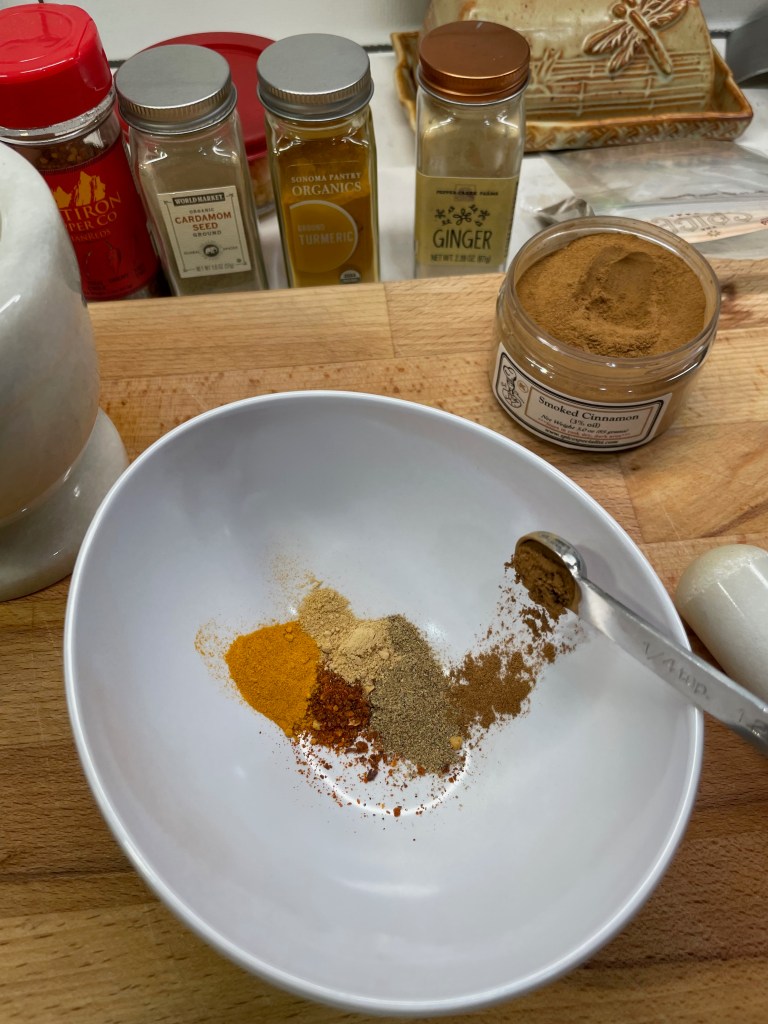
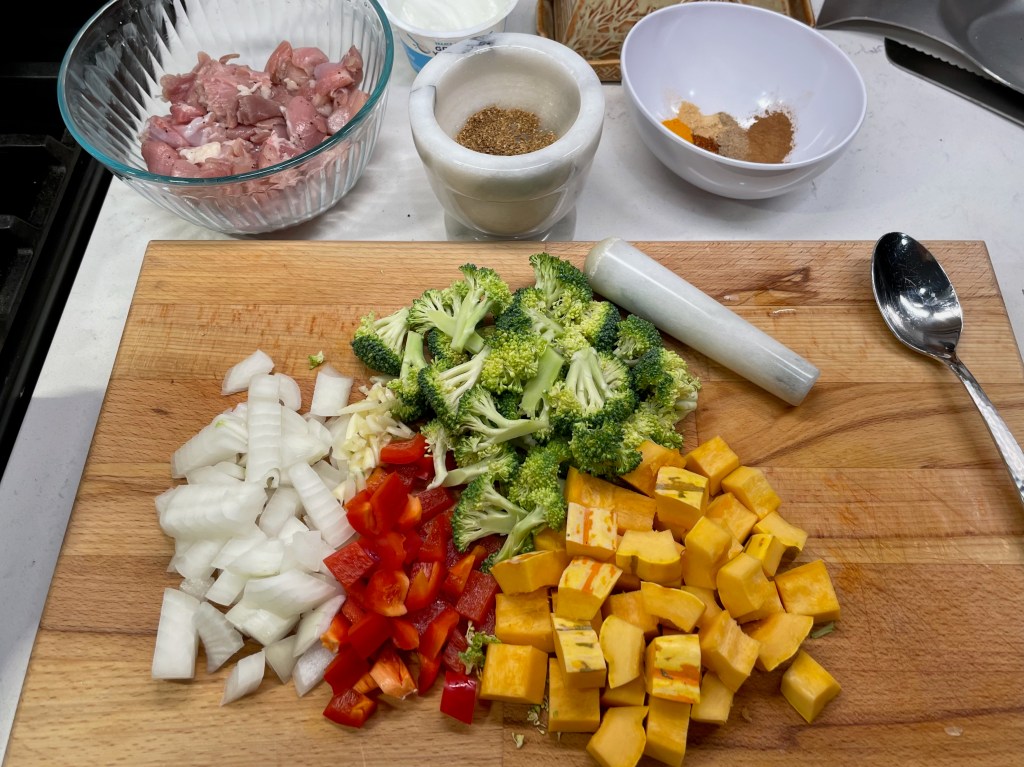
My chicken and autumn veggies dish is more similar to an Indian curry, and I started my blend with a quick toasting of whole cumin and coriander seeds. Heat brings forth the intense flavors, whether by toasting whole spices or by adding ground spices to hot oil in the pan. The technical term for this is “blooming,” and you don’t want to miss this easy step for the extra flavor it imparts to your final dish. I toasted the seeds in a hot, dry skillet— swirling the whole time for about 45 seconds until they were intensely fragrant— and then let them cool before crushing them in a mortar and pestle. Next up, I assembled my other dry, pre-ground spices, including ginger, cardamom, turmeric, cinnamon and hot chile flakes.


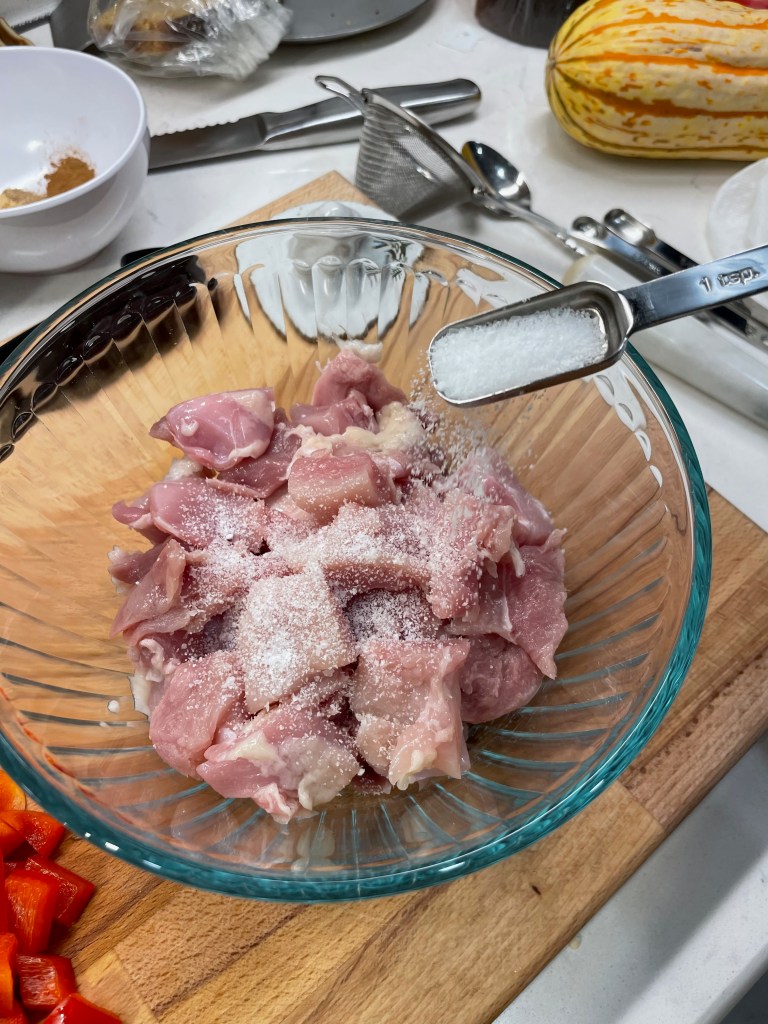
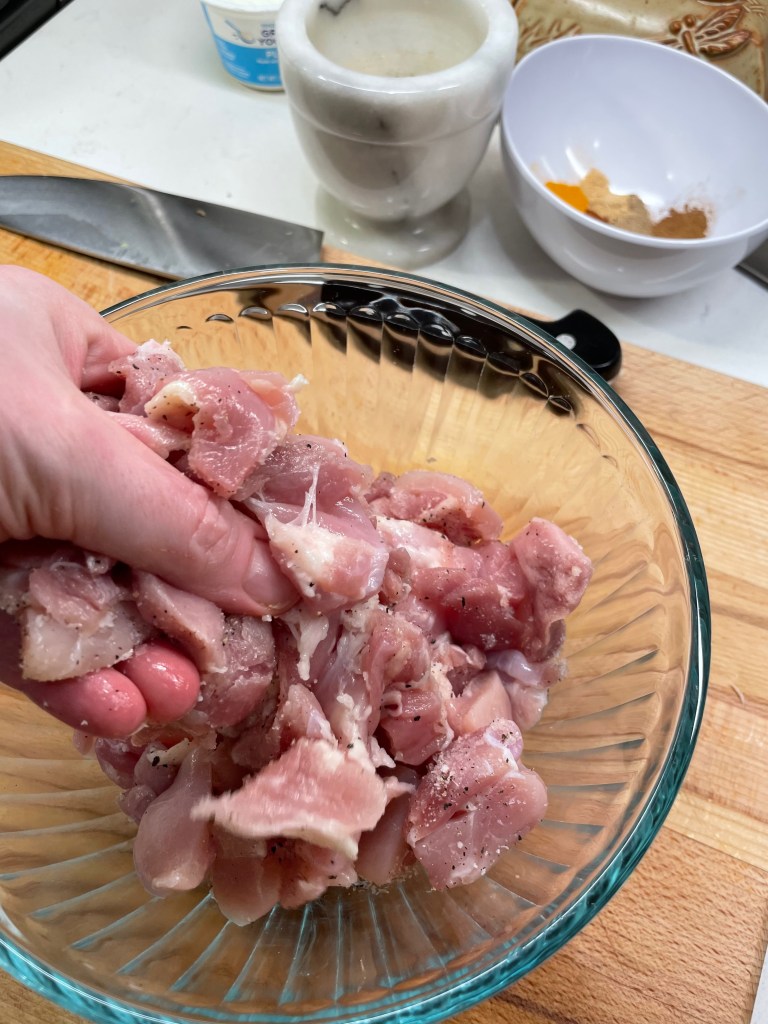
I chose boneless chicken thighs for their texture and flavor, but chicken breast or tenderloins would also be delicious here. I cut them into one-inch chunks, seasoned them with salt and pepper and let them rest while I cut up onions, red bell peppers, fresh broccoli and delicata squash. For this dish, I highly recommend getting all your components lined up and ready, as the cooking goes quickly once it begins.

Behold all the vitamins and fiber on that cutting board!

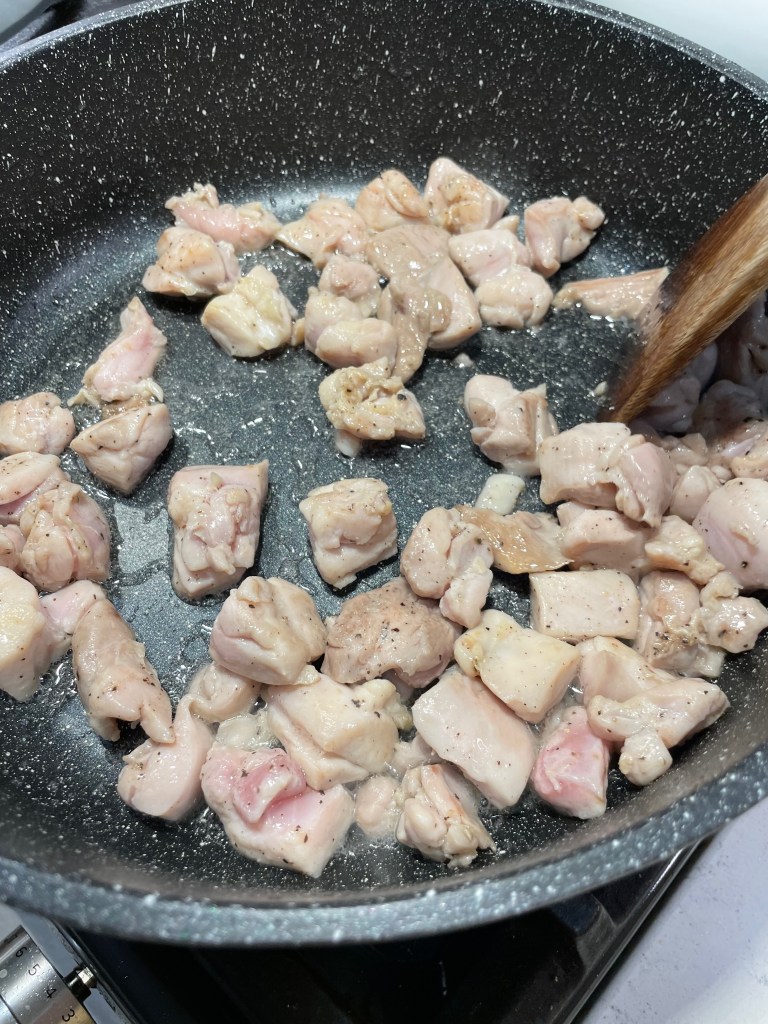
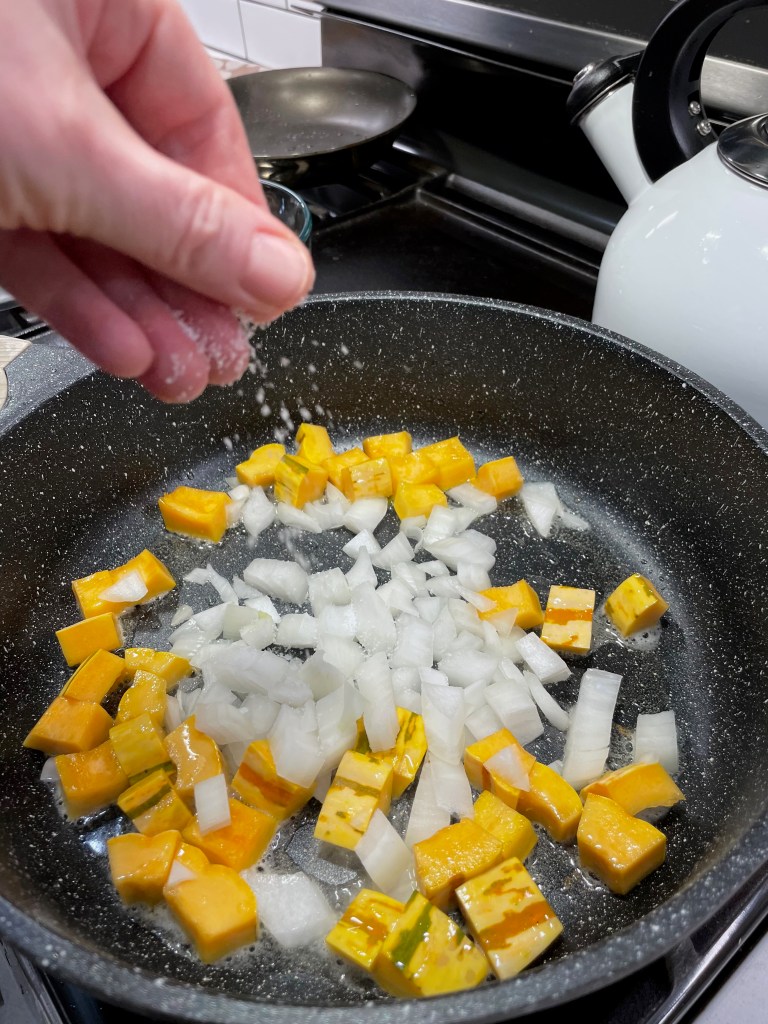
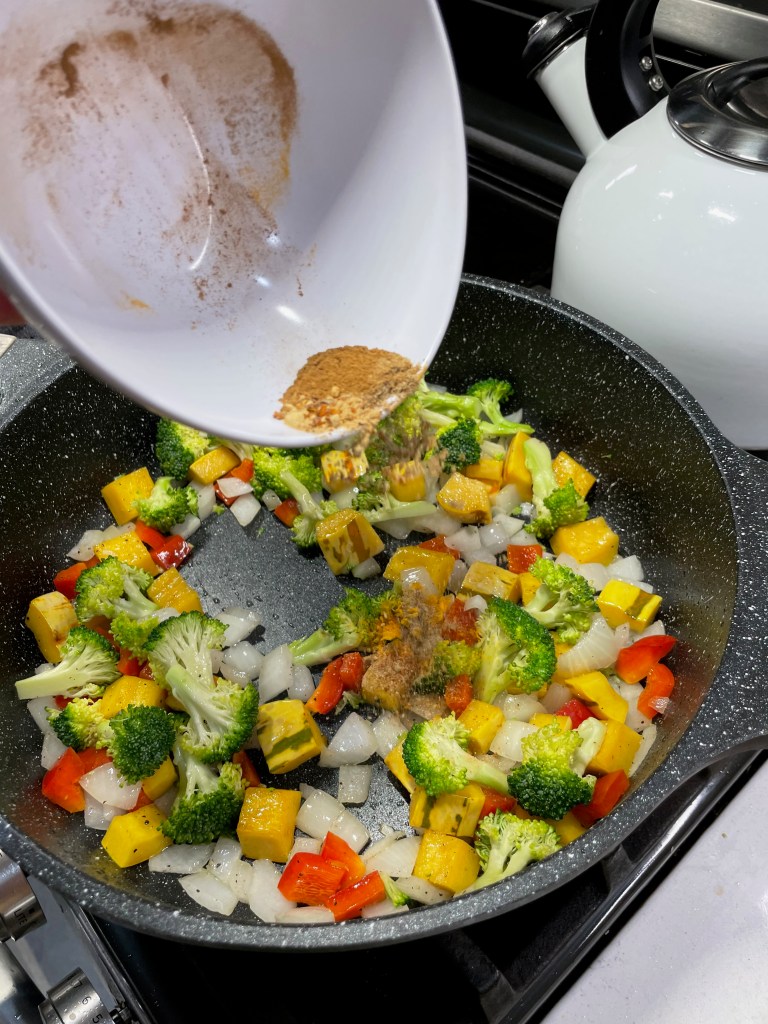
You’ll also need a bit of oil to get things started. Choose an oil that performs well over high heat, such as canola, peanut or coconut oil. I cooked the chicken first, just until the bits were no longer pink, and then transferred them to a separate bowl while I sautéed the vegetables. When I’m cooking veggies of varying textures, I usually begin with the firmer ones, adding the rest in descending order of necessary cooking time. The best time to add the spices is just before adding more vegetables— this allows them to bloom in the hot oil that coats the veggies. Season along the way, of course, with salt and pepper as well. This does more than add salty flavor; salting during cooking helps to draw moisture out of the ingredients for better texture.


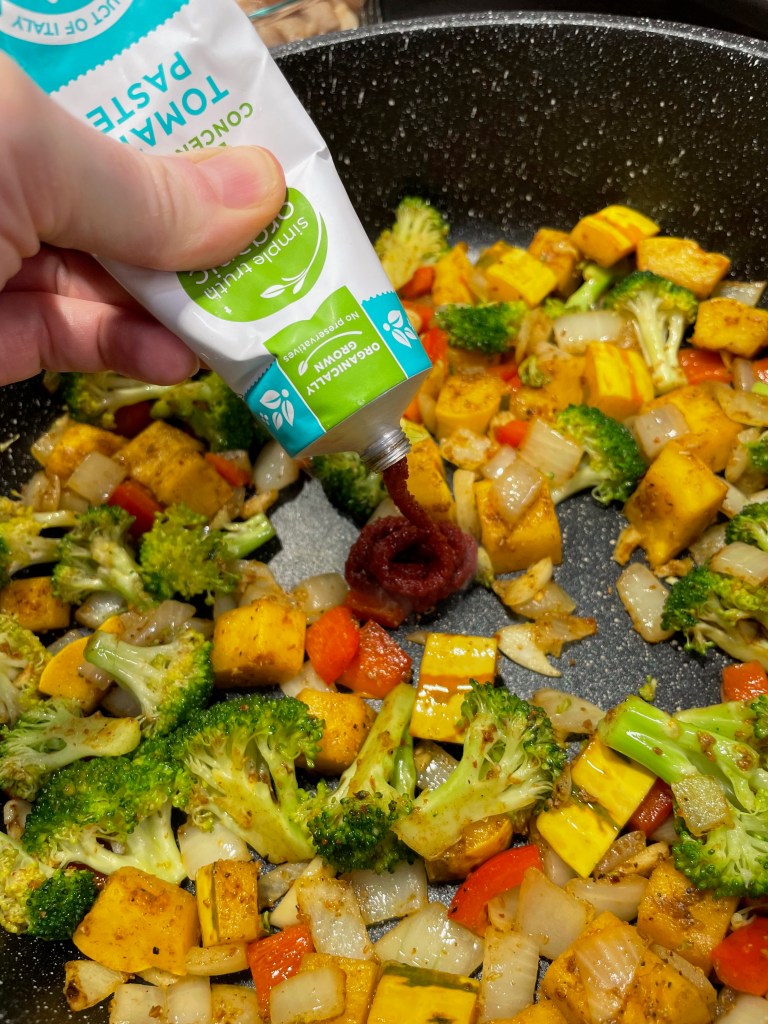
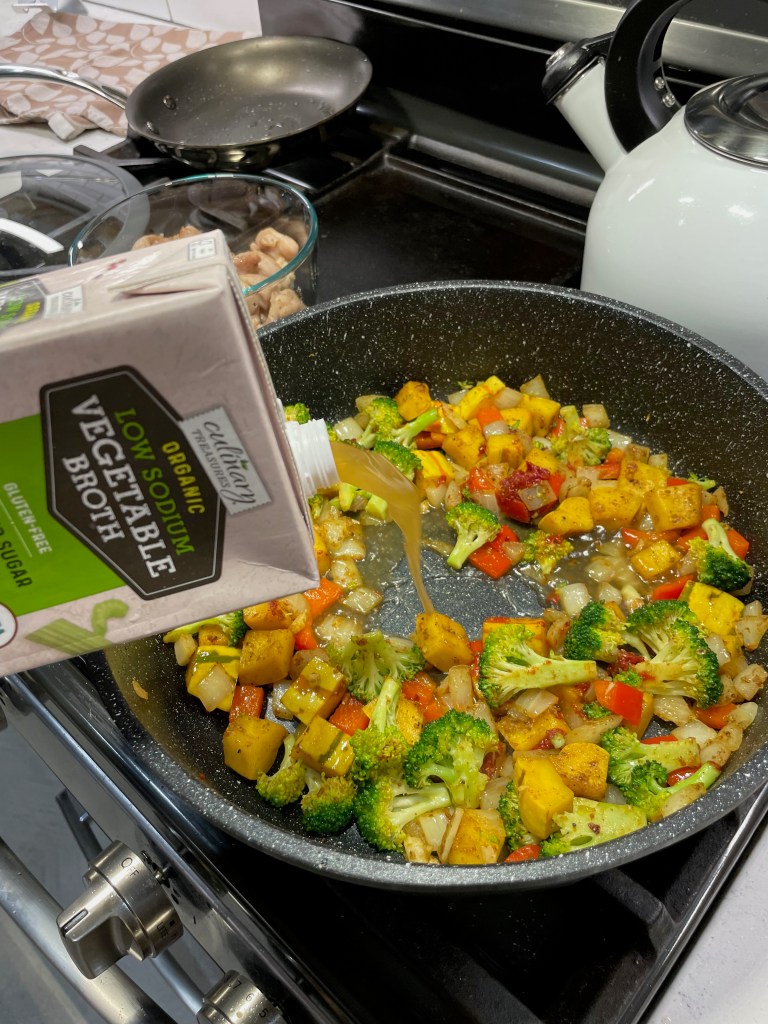
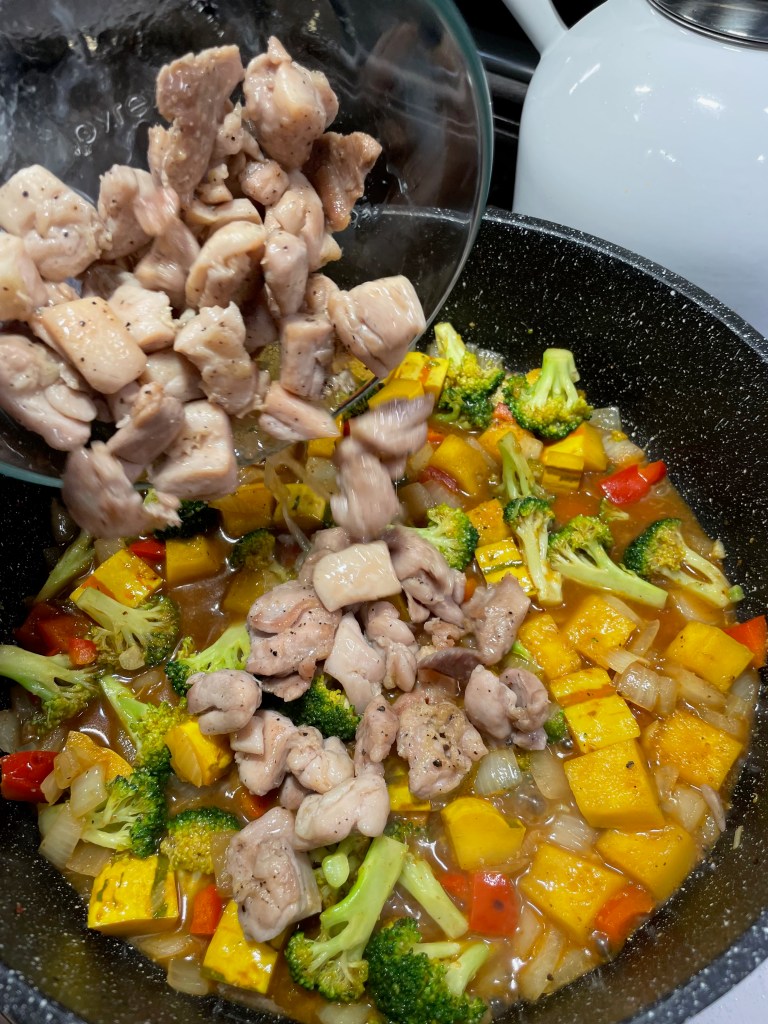
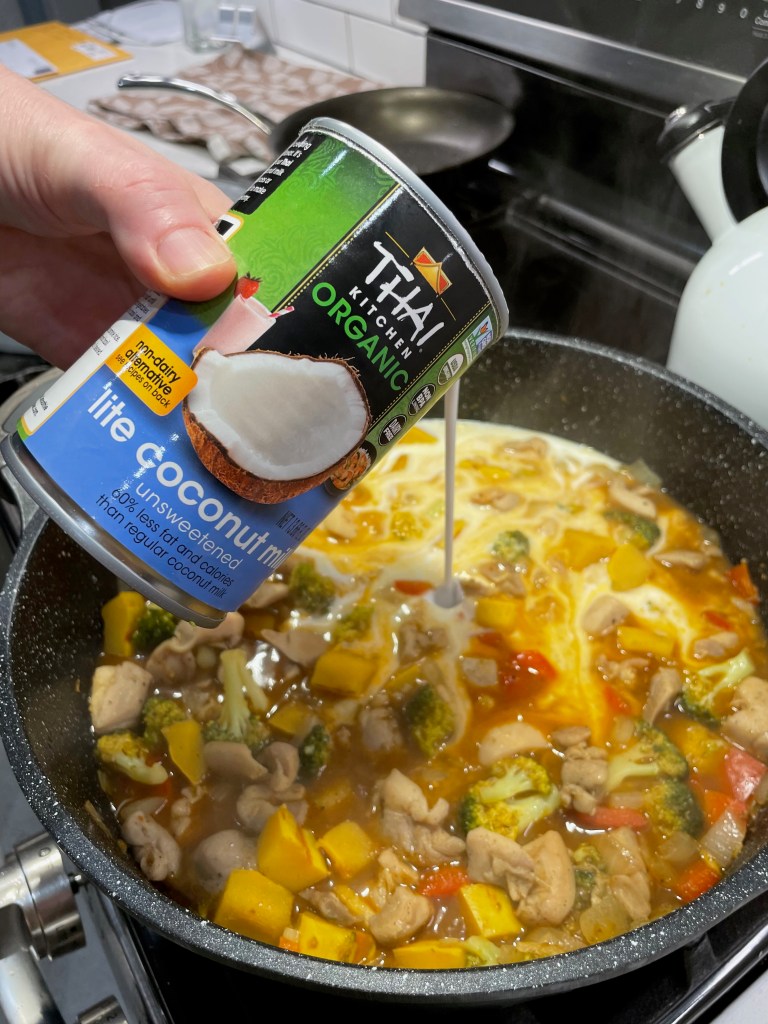
A dab of tomato paste in the center of the pot adds a rich, warm color and also a burst of umami flavor from the concentrated glutamates in the tomatoes. A little broth to thin it out, and then the chicken goes back into the pan with half a can of light coconut milk to simmer until everything is nice and tender. This took about 30 minutes, long enough to cook up a pan of basmati rice, perfect for soaking up the flavorful curry.


This kind of meal hits the spot after so much gravy, dressing and mashed potatoes, and the heavy load of vegetables does the body good, too! 

Chicken Curry with Autumn Vegetables

  • Servings: 4
  • Difficulty: Average
  • Print

This dish ticks all the boxes with big flavor, warming comfort and exceptional nutrition. It's easy enough for a busy weeknight and rich with autumn comfort.


Ingredients

  • 1 pound boneless, skinless chicken thighs, patted dry and cut into 1-inch chunks
  • Kosher salt and black pepper
  • 1/2 tsp. whole cumin seeds
  • 1/2 tsp. whole coriander seeds
  • 1/4 tsp. EACH cardamom, cinnamon, red pepper flakes, ginger, turmeric (see recipe note below)
  • 1/2 sweet or yellow onion, chopped
  • 1 small delicata squash, cleaned and cut into 1-inch chunks
  • 1/2 bunch fresh broccoli, cut into small florets
  • 1/2 red bell pepper, chopped
  • 2 Tbsp. high-heat cooking oil (I used coconut, but canola or peanut would be good)
  • 1 to 2 Tbsp. tomato paste
  • 1/2 cup low sodium broth (chicken or vegetable)
  • 1/2 can light coconut milk
  • Basmati or brown rice for serving
  • Fresh cilantro for serving (optional)

Recipe Notes: I created my own curry spice blend because I have the individual ingredients, and 1/4 teaspoon each was a good starting point for my adjustments. This is a good way to control the heat and balance the blend with the spices you like best, but there’s no harm in buying a pre-made curry powder. Use 1 to 2 teaspoons, depending on how intense you’d like the flavors to be.

Because this dish moves quickly once cooking begins, I recommend having all ingredients prepped and on standby before you turn on the burner.

Directions

  1. Season the chicken chunks with about 3/4 teaspoon salt and a few twists of black pepper. Toss to coat, and allow it to rest at room temperature while you prep the spices and vegetables.
  2. Heat a small dry skillet over medium-high heat. Add seed spices and toast, swirling the pan constantly until the spices are very fragrant. Transfer to a bowl to cool, and then grind in a mortar and pestle or electric spice grinder.
  3. Measure remaining spices into a bowl and set aside.
  4. Place a wide, heavy-bottomed pot over medium-high heat. Add oil and heat until shimmering, then toss the chicken pieces just until all sides are no longer pink. Transfer chicken to a bowl and keep warm.
  5. Add vegetables to the pot, beginning with the firmest and adding the others in descending order of time needed to soften. Season with a pinch or two of salt to help draw out the moisture. Add spice blend and ground seed spices to the hot vegetables and toss to coat.
  6. Stir in tomato paste for rich color and burst of umami flavor. Add broth and cook until the liquid begins to simmer.
  7. Return chicken to pan. Stir in coconut milk. Cover pan and reduce heat to simmer the curry for about 25 minutes. Serve with basmati rice and sprinkle with chopped cilantro, if desired.


Porchetta

I woke up this morning, fully aware of Autumn. I did not need the calendar to tell me that it has officially begun; the weather spells it out quite clearly— gentle rain from the mid-season tropical system moving up our coast a few hours away, cooler temperatures and a stillness that I haven’t witnessed since I’m not sure when. Even the cicadas, which North Carolina sees and hears every summer, have gone about their business.

This is my favorite time of year, and the gears in my mind are churning out visions of stews and soups and homemade breads and all-day roasts. I tolerate the blistering heat of these southern summers only for the joy of autumn, and it should come as no surprise that the foods are my favorite thing. This is the start of Sunday Supper season!

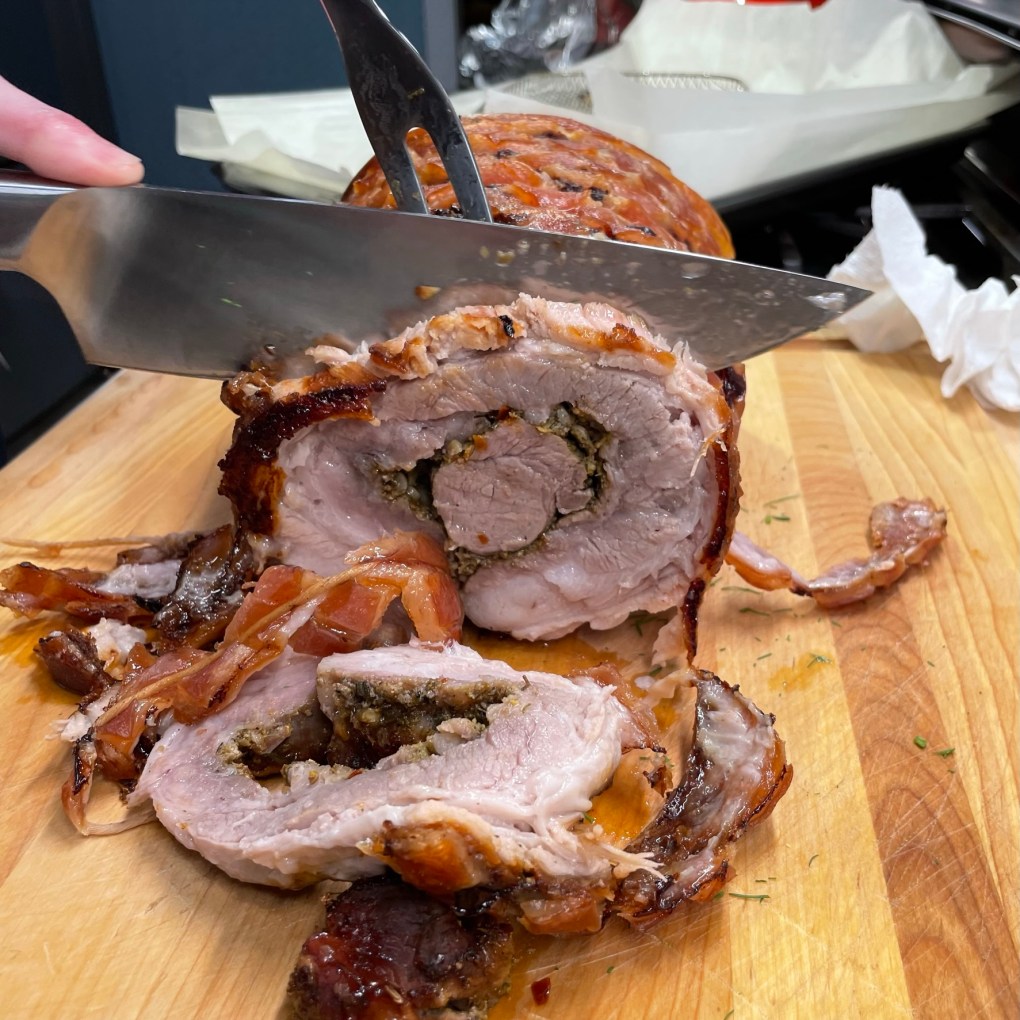
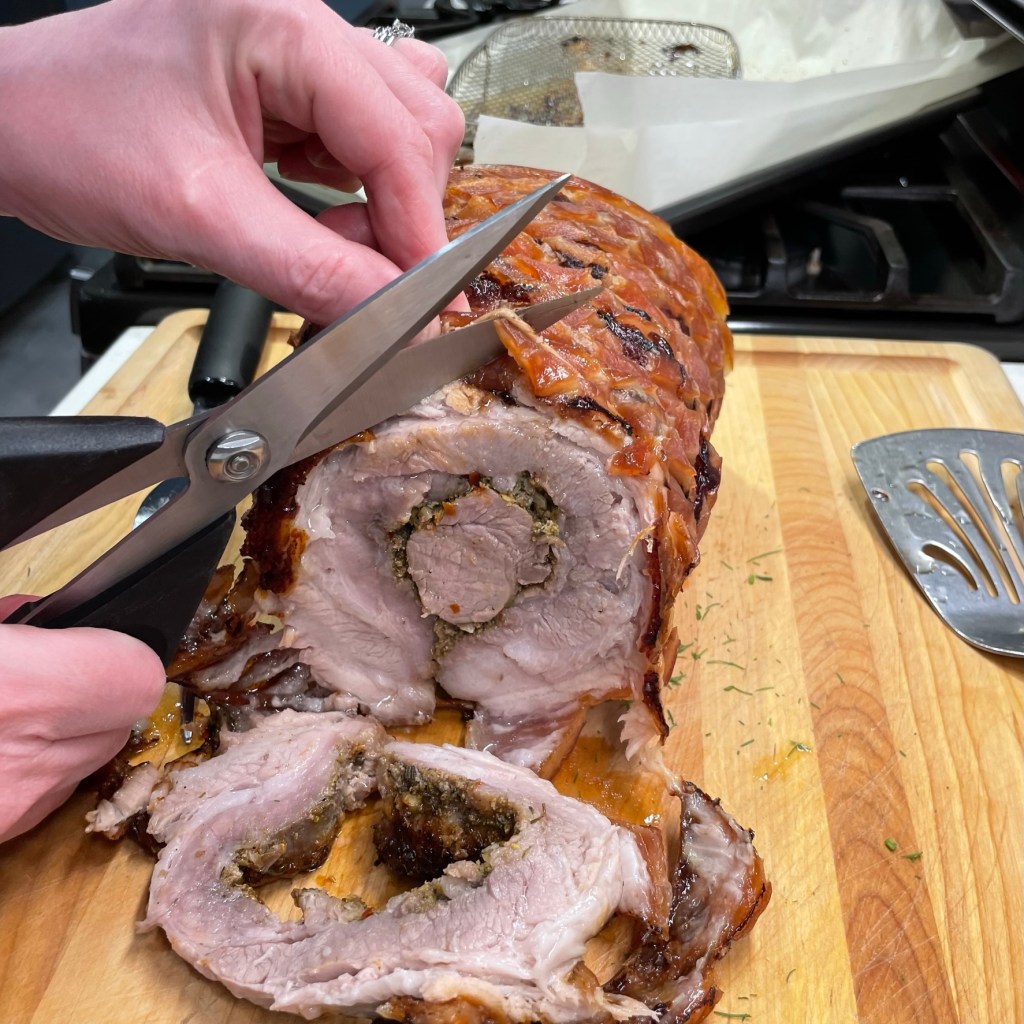
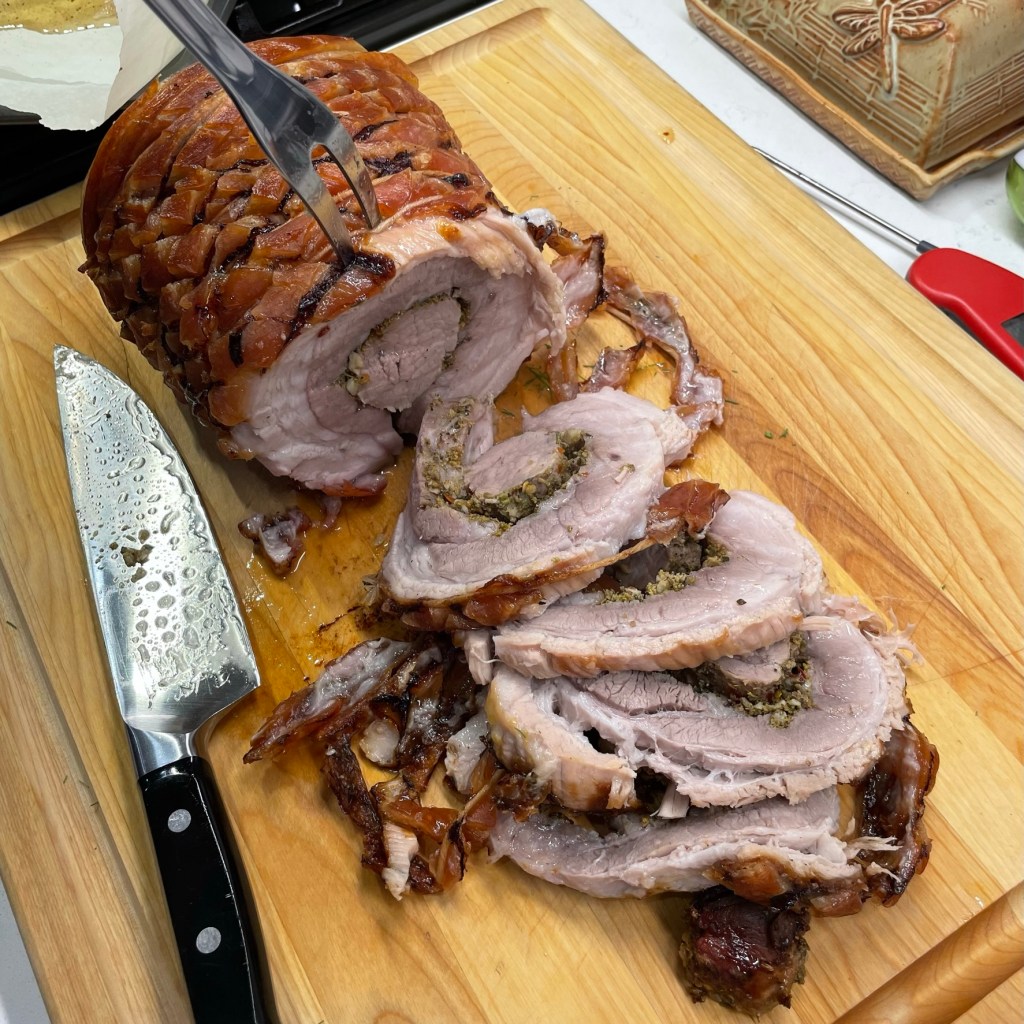
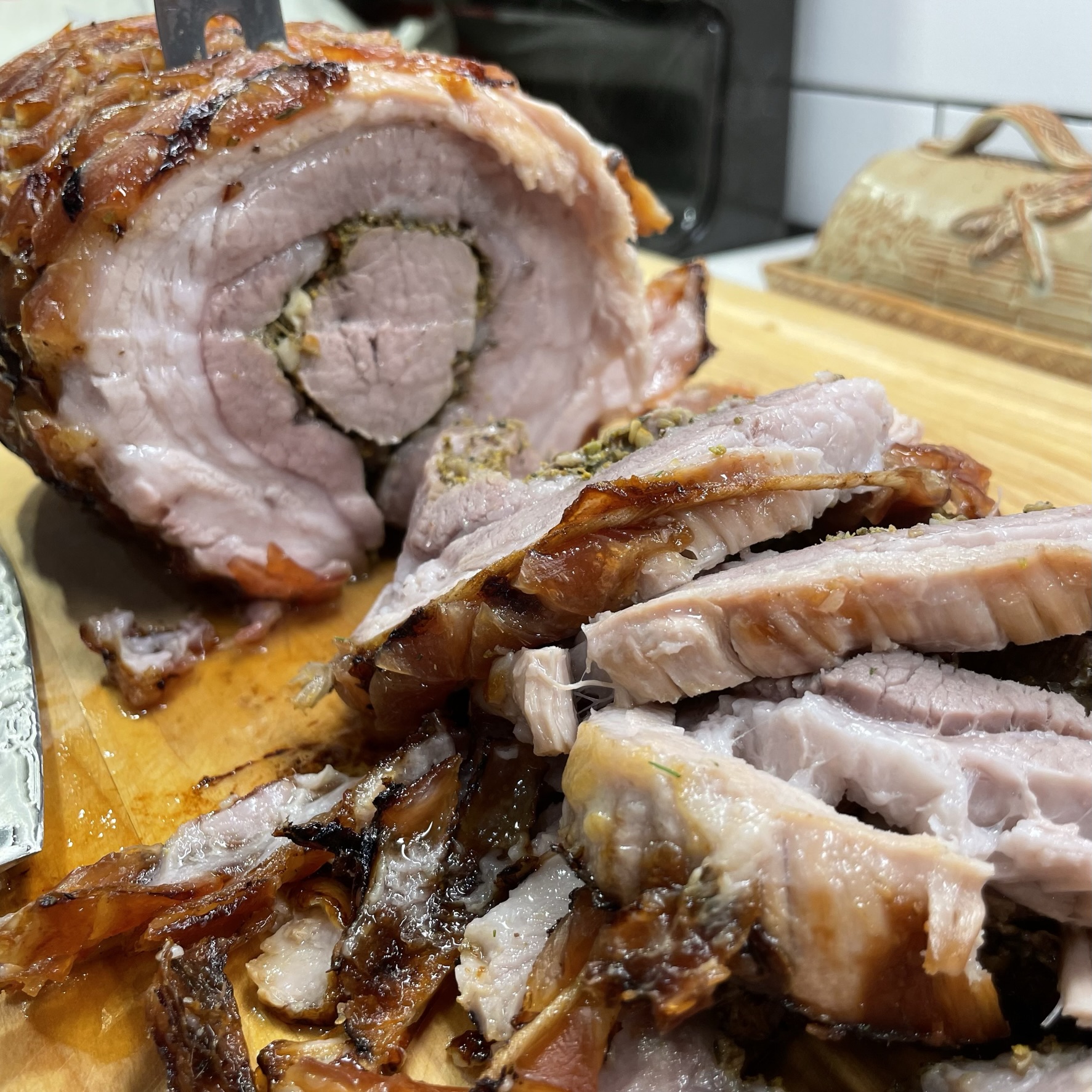
Porchetta— a recipe of central Italian origin— had been on my culinary bucket list since before I started this blog, and for the life of me, I don’t know why I imagined it to be complicated. As roasts go, it was probably one of the simplest I’ve ever made. Perhaps it is because I have looked it up so many times over the years that I already had a sense of how to make it. Or maybe it really is just easy. I’ll let you review my process and decide.


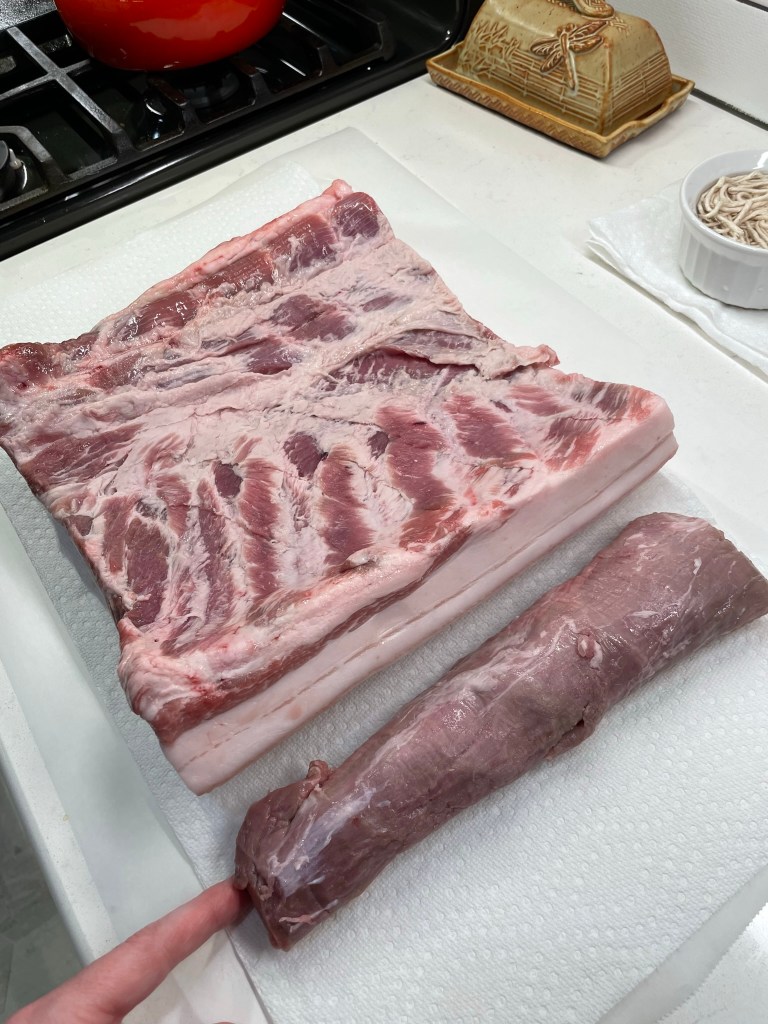
There are many, many recipes for porchetta on the internet. Opinions vary (of course) about what makes it truly authentic, and this argument seems to be regional. In some parts of Italy, it might be an entire suckling pig that is stuffed with herbs (or not) and roasted. In others, it would be only the pork belly, rolled upon itself with a filling of the pig’s entrails (yuck). Still others have you wrapping the belly around a pork loin or (as is the case with mine) tenderloin.

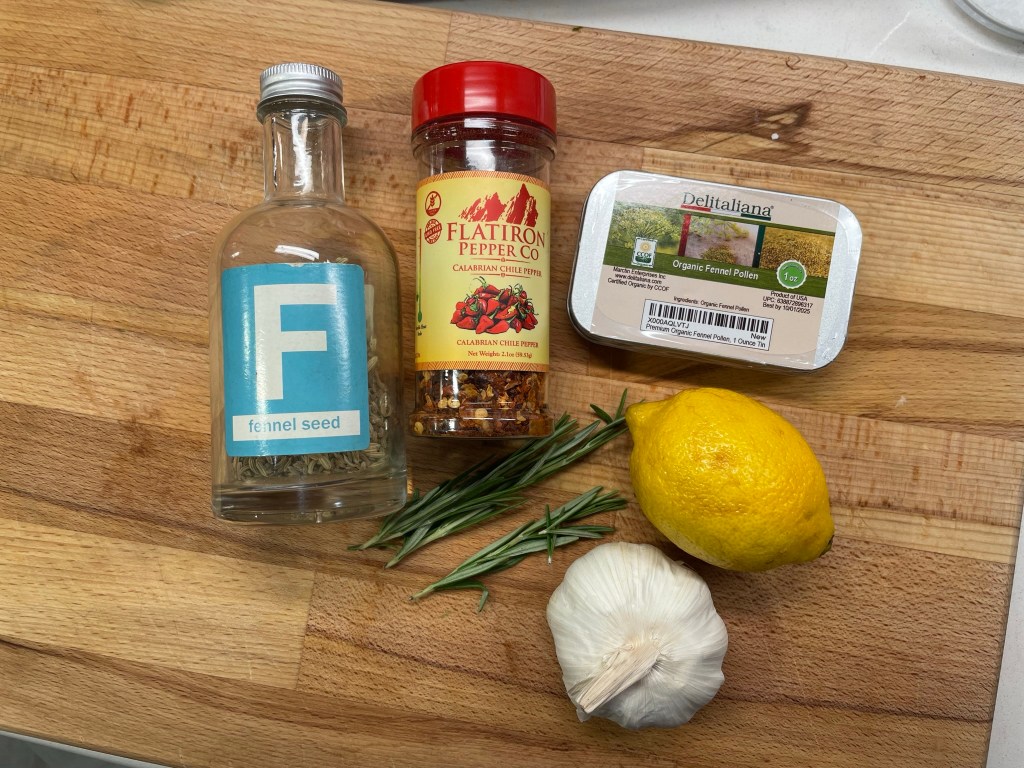
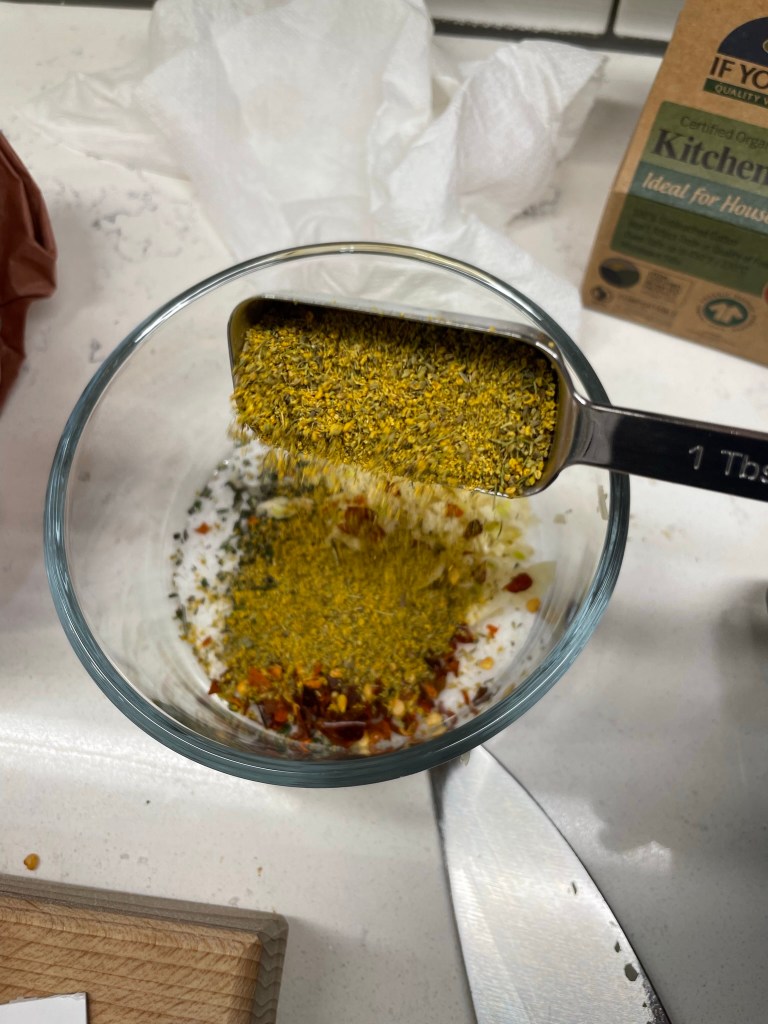
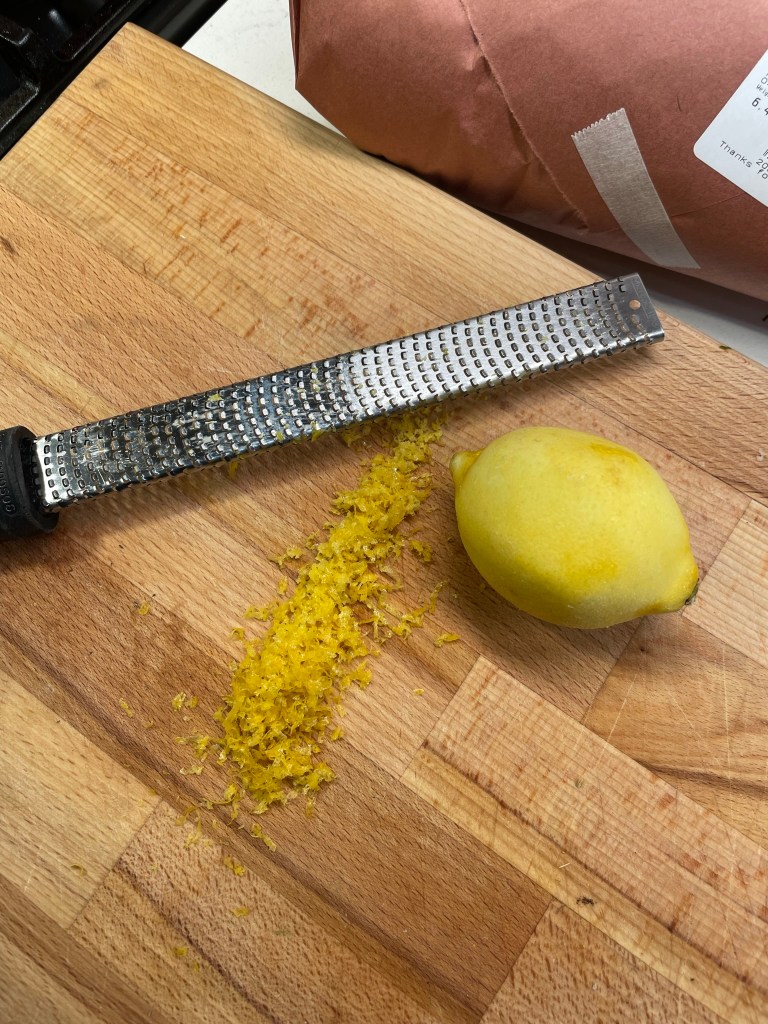
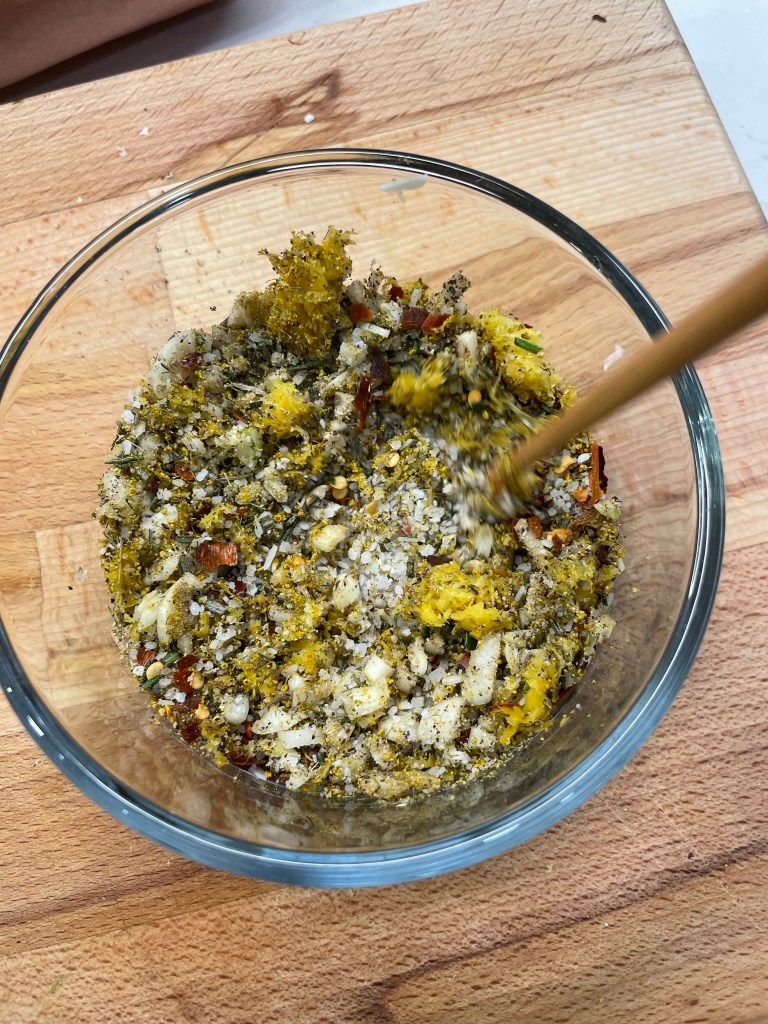
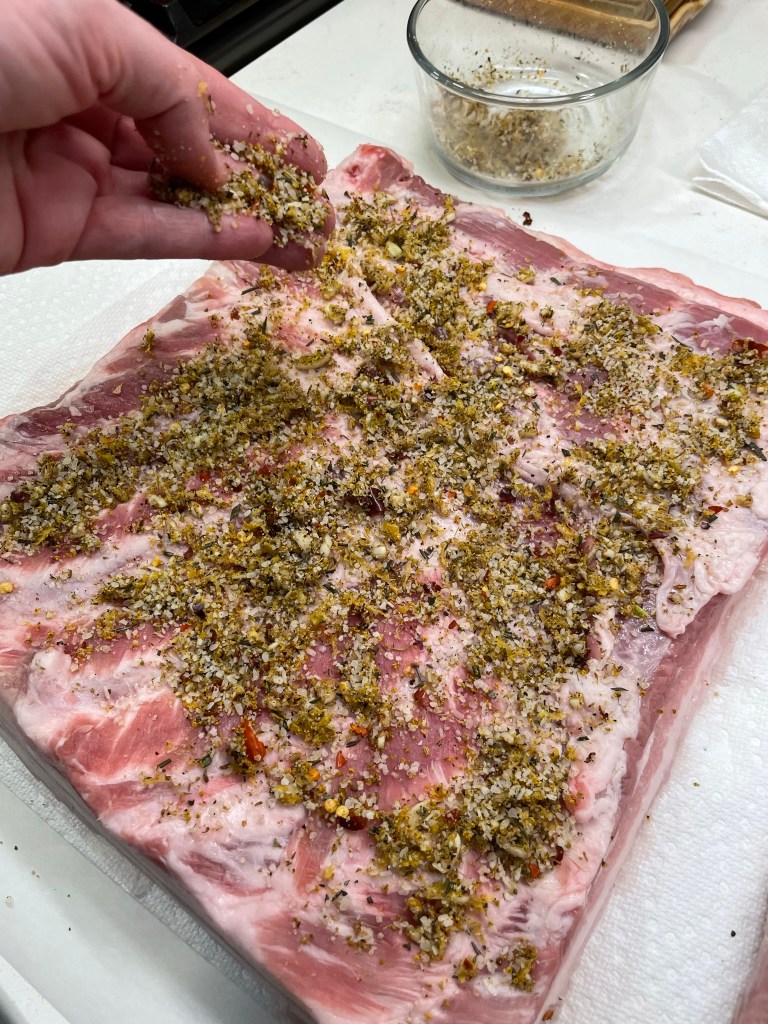
My kitchen is not located in any region of Italy, so I took a few liberties, based on what sounded like the most flavorful “authentic” option. My filling was very fragrant and herbal, with garlic, fennel and rosemary, plus a generous spoonful of lemon zest and a few shakes of dried Calabrian chile flakes. I want to make another batch of this just as aromatherapy when I’m having a bad day.


In my research, I learned that there is a difference between fennel seed and fennel pollen, the latter of which I had to purchase online because no stores around here carry it. Perhaps where you are, an Italian market could set you up with some. The fennel pollen is very delicate and fragrant and is distinctly brighter and lighter than fennel seed. The small tin, which is roughly half the size of an Altoid tin, set me back about $18, but I only used one-quarter of it. 


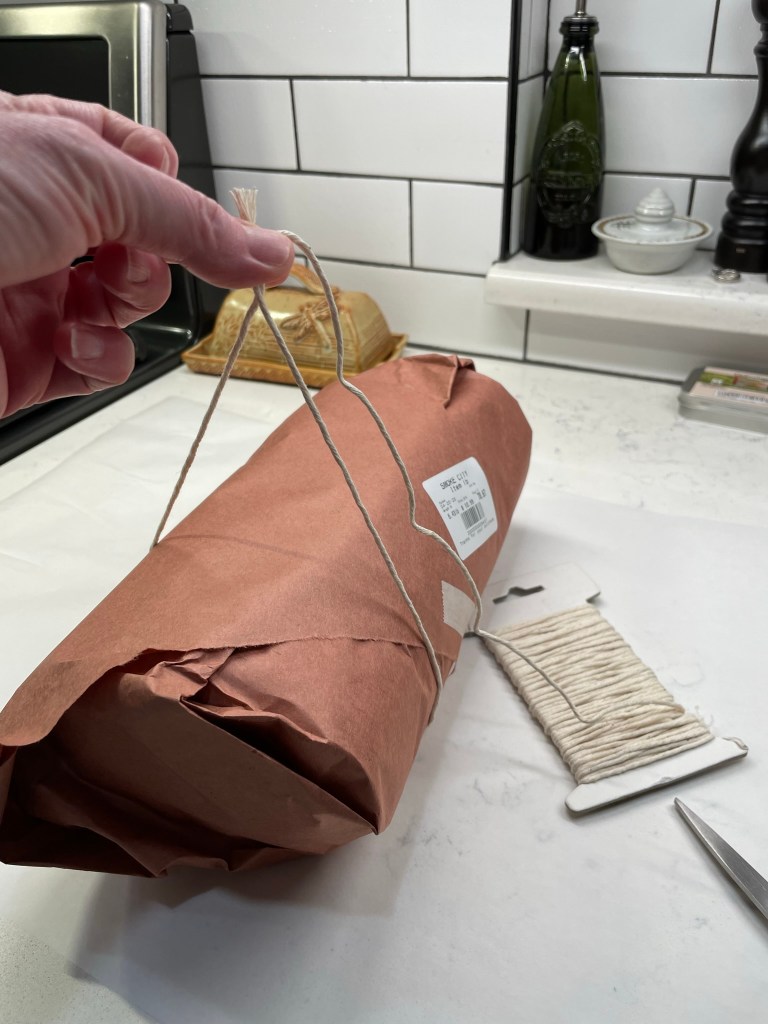
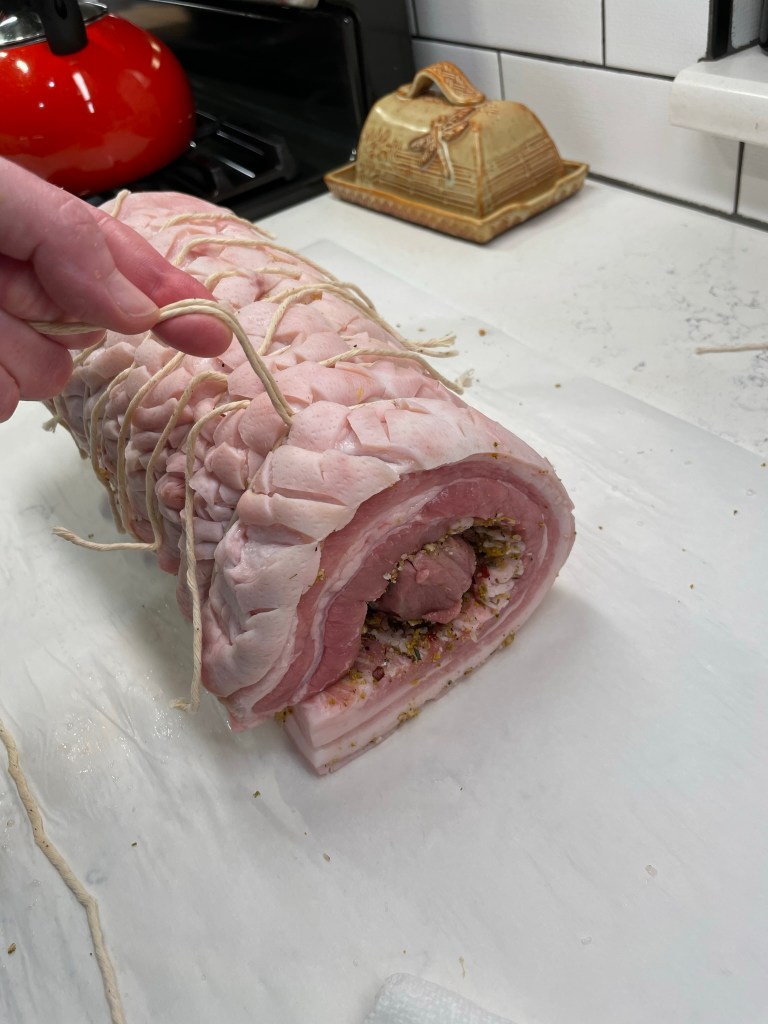
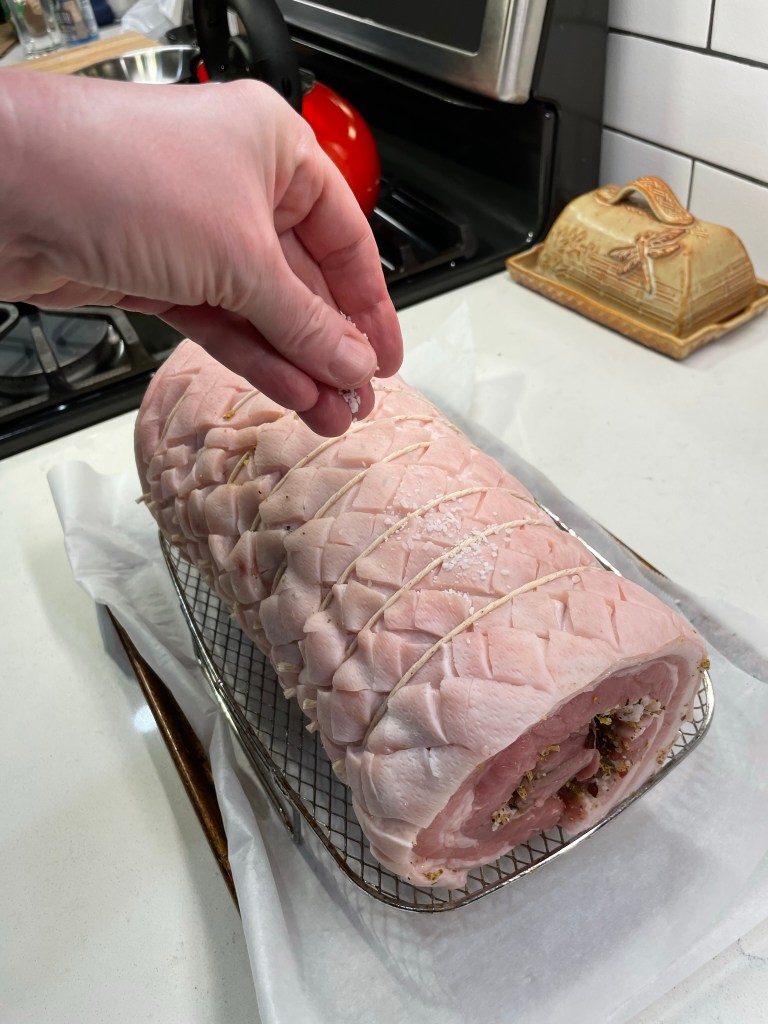
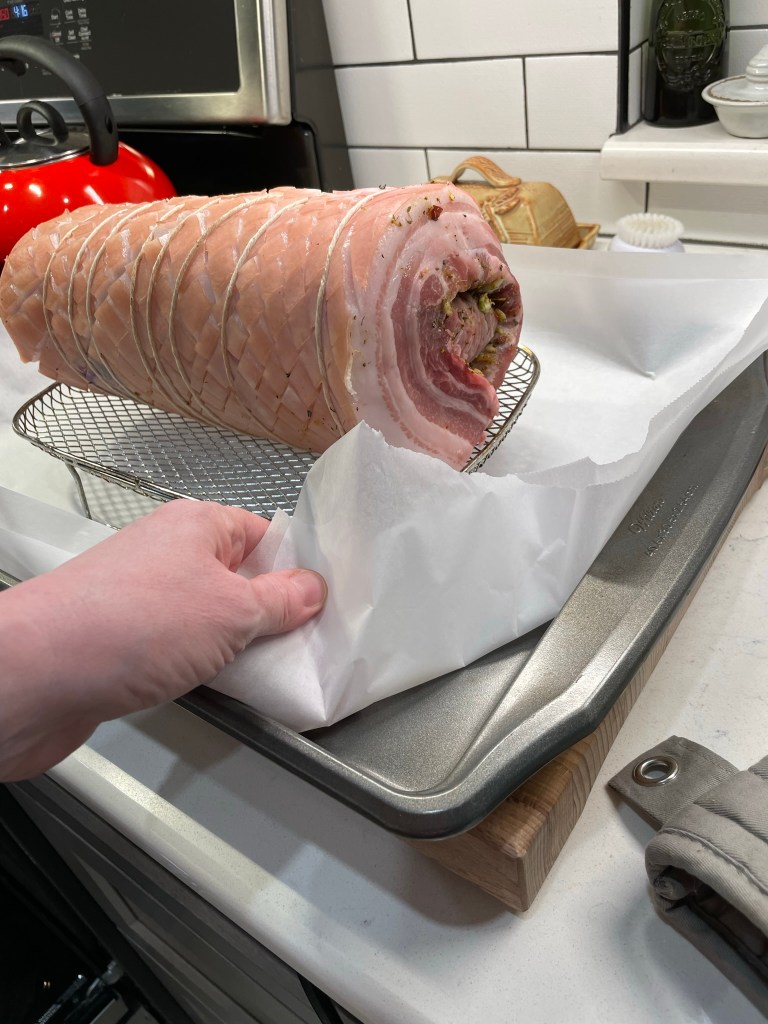
Putting the roast together was so easy. I began by measuring a piece of kitchen twine around the package of pork, and then I cut several pieces to that length and soaked them in cold water, for tying up my porchetta. My local butcher had cut the belly piece to match the length of the tenderloin, and even took time to show me the right steps for success, as the belly must be rolled in a certain direction for easy slicing and perfect tenderness.


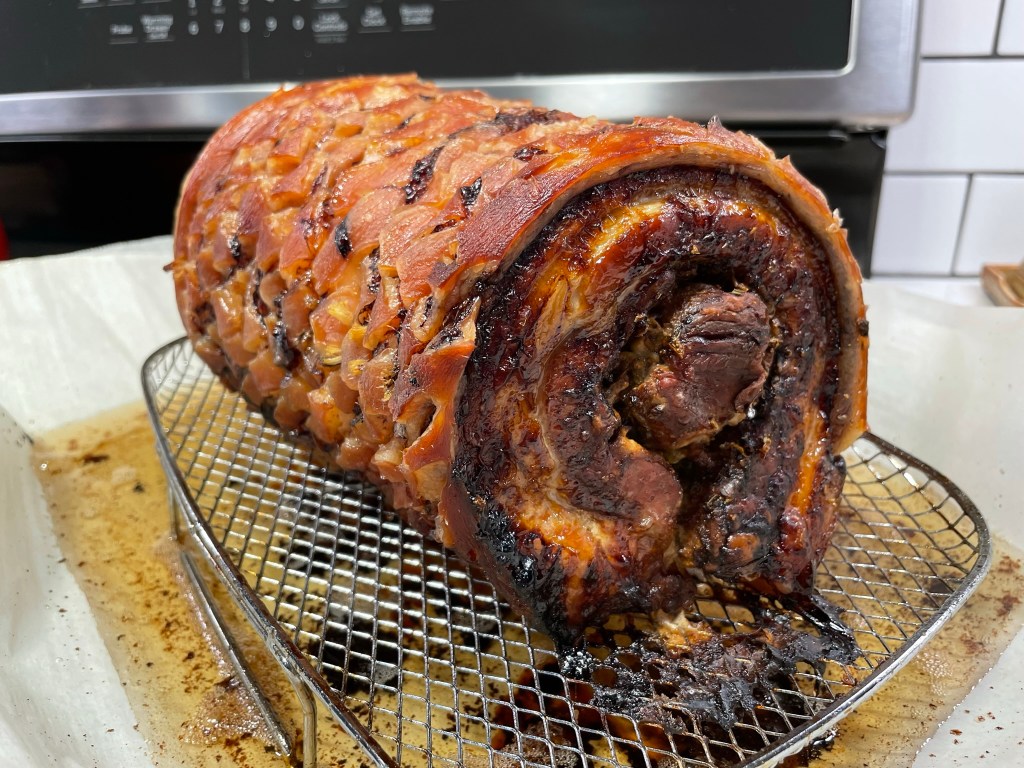
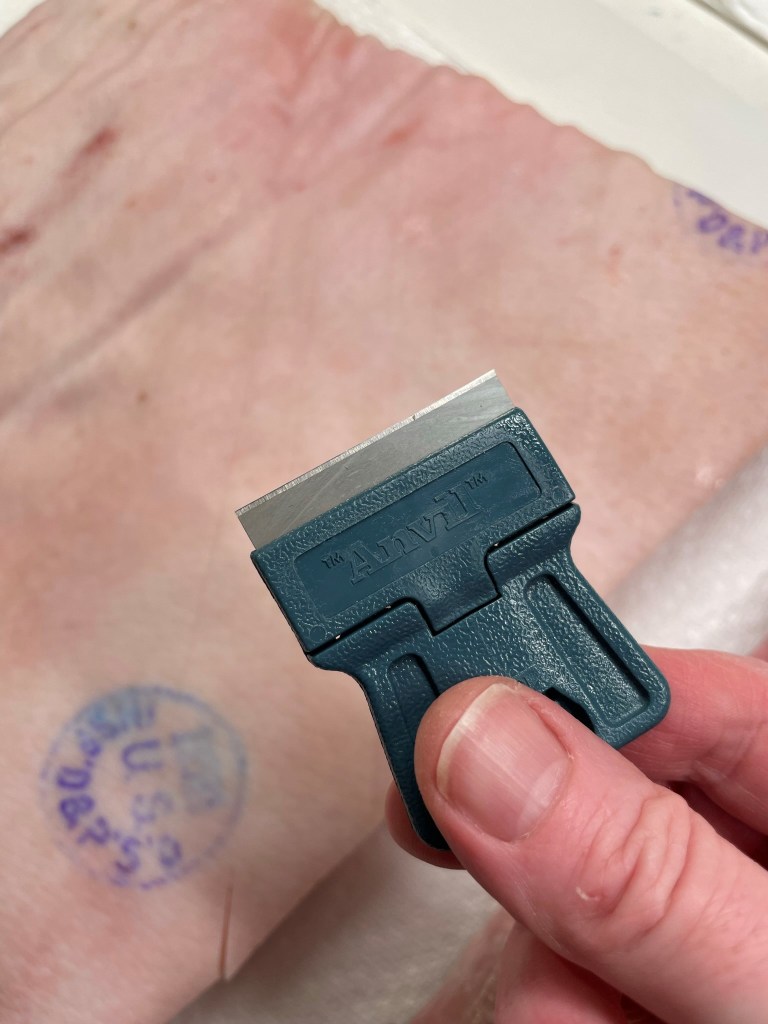
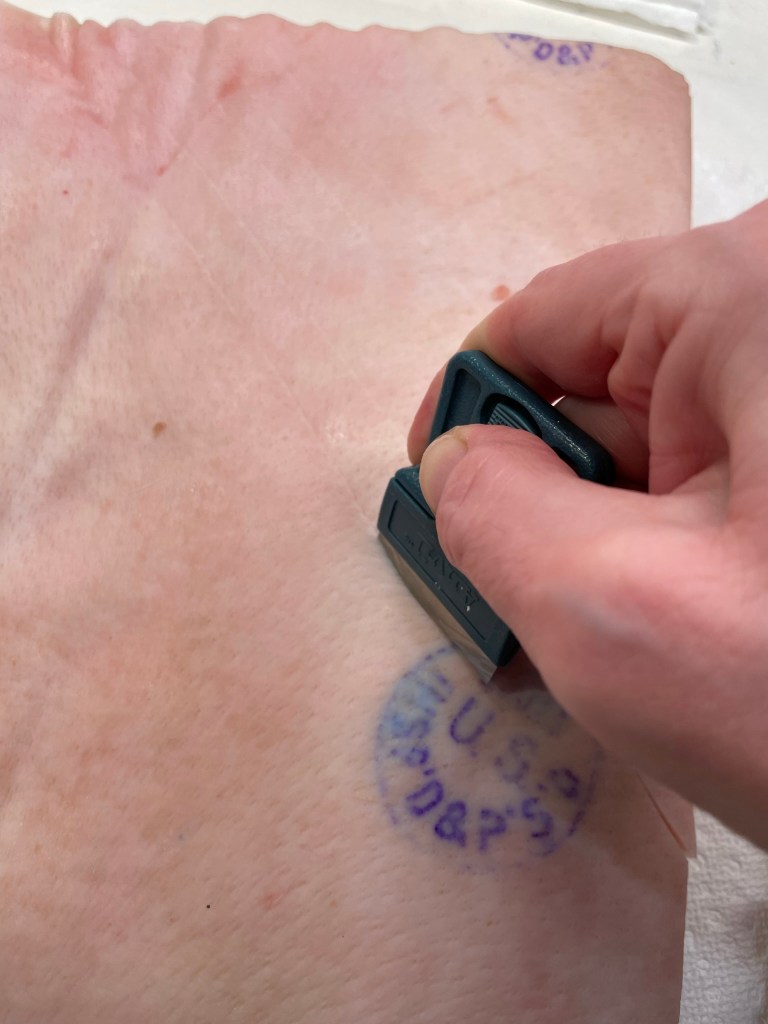
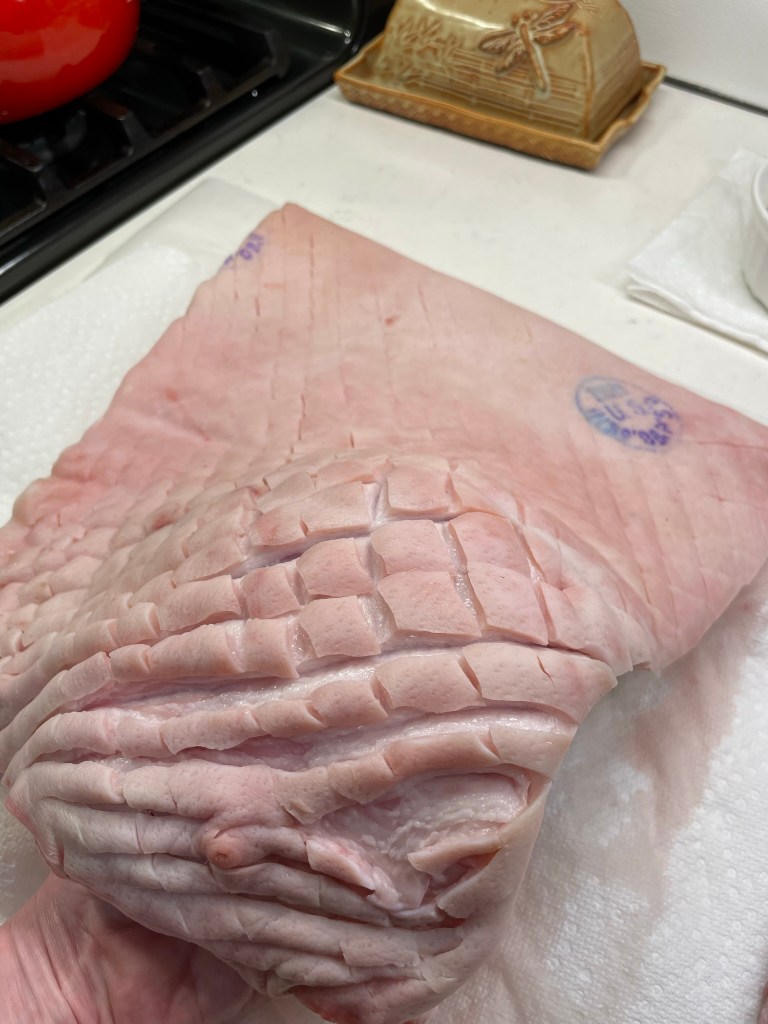
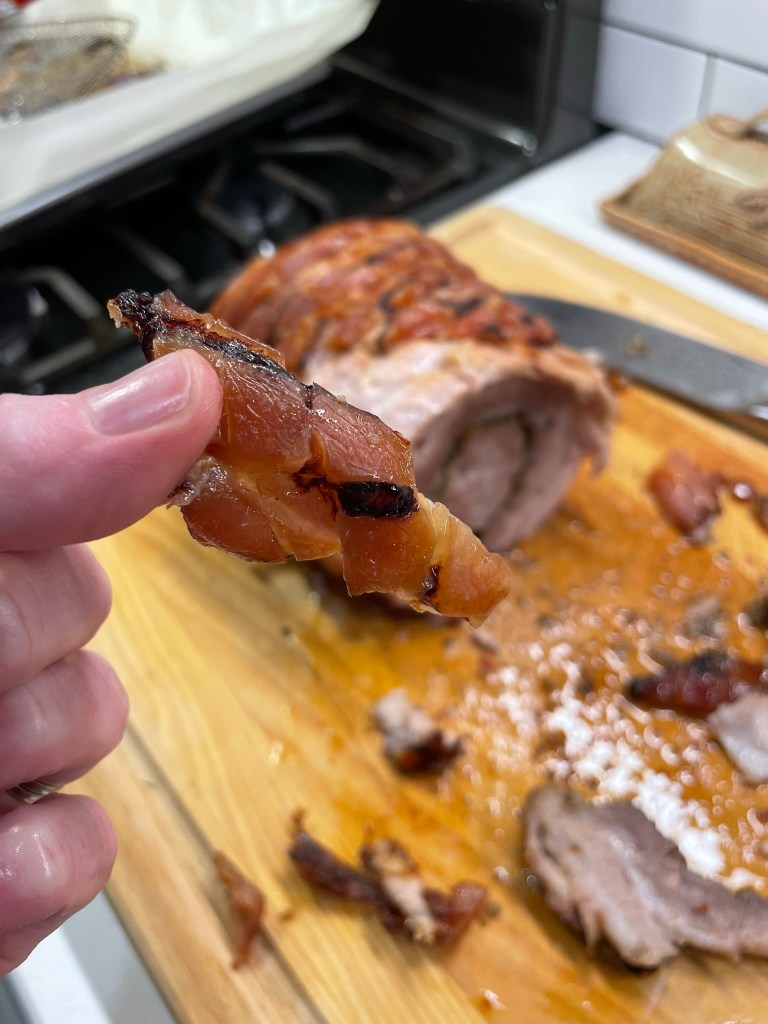
He had also echoed what I had seen in every recipe, which is that the roasted skin should be golden brown and “crackling” crisp. To achieve this, I scored the skin side of the belly in a crosshatch pattern, which would ease the rendering of the thick layer of fat. This process is simple to do, but you need to use something very sharp to cut through the heavy skin. I opted for a razor blade scraper— yep, the same kind of tool you’d use to scrape paint off a window pane. It may sound odd, but it was perfect because it was easy to control the cuts and nearly impossible to go too deep. Scoring the skin this way also made it more flexible for wrapping around the tenderloin.


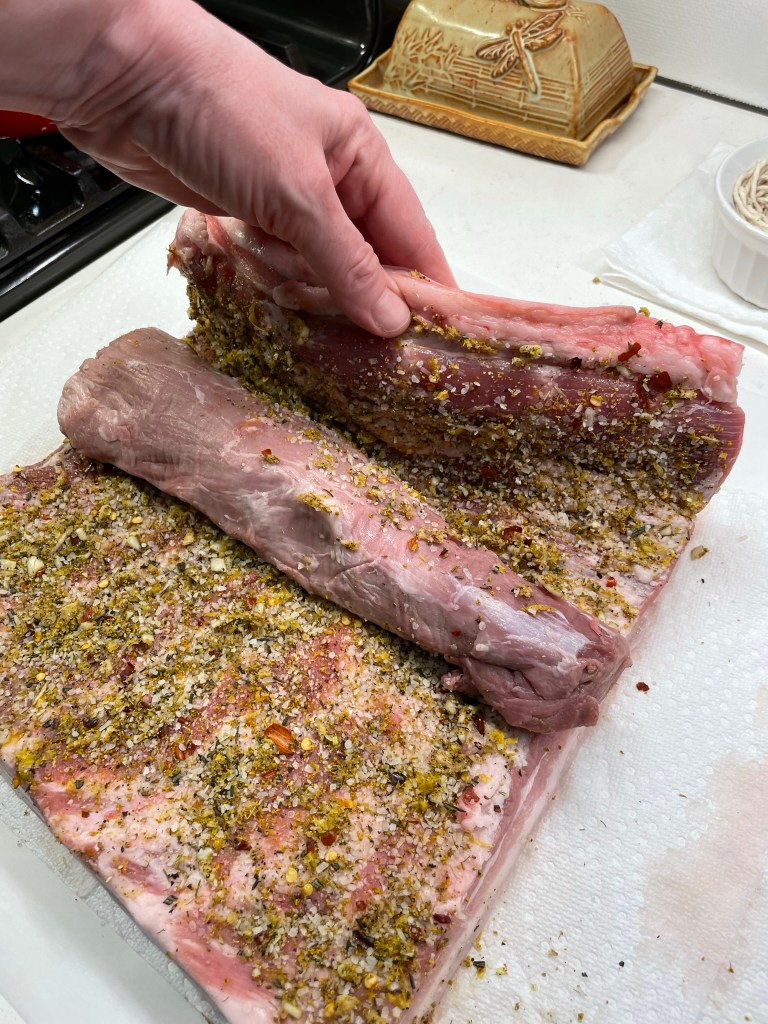
I spread that aromatic filling evenly over the inside of the pork belly, all the way to the edges, and rolled it up around the tenderloin and then laid it across my soaked twine pieces. I tied it up, sprinkled it all over with kosher salt and laid it on a rack to dry out overnight in the fridge. If it seems counterintuitive that drying out the meat before roasting leads to a juicier finish, believe me, I feel you. This was a huge mental hurdle for me when I first read about dry brining, but I have such incredible results that I will never look back.


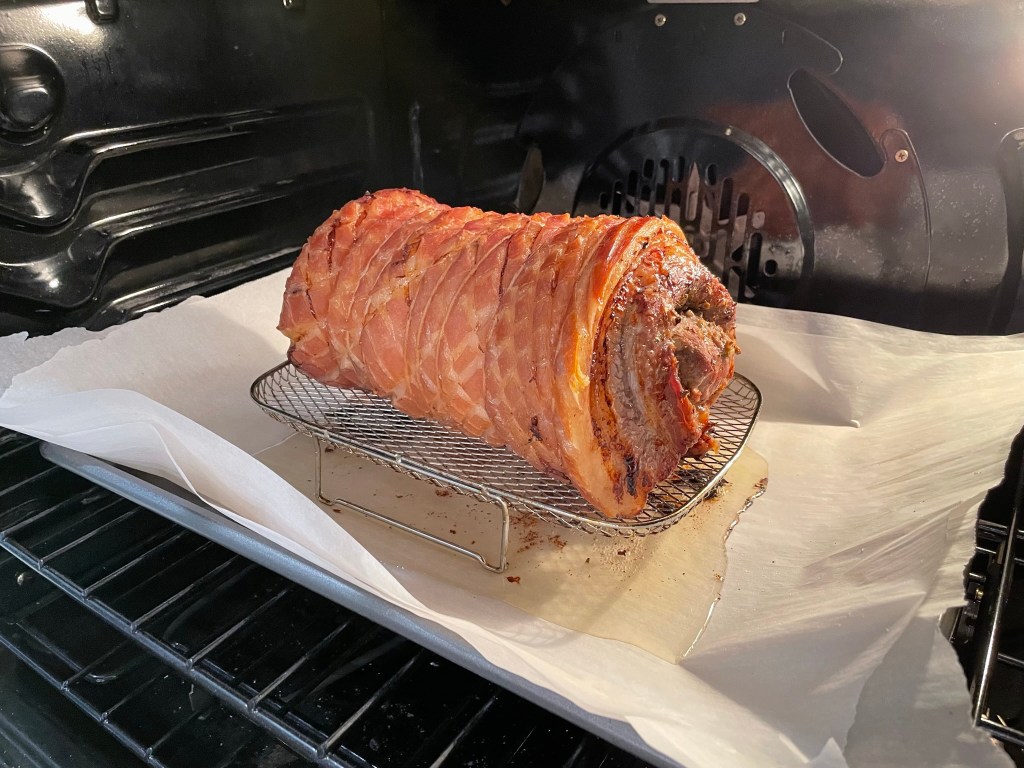
Eighteen hours later, when I was ready to roast my porchetta, I pulled it from the fridge and gave it some time to rest at room temperature while I preheated the oven to 350° F. There was nothing left but to roast it!


Sometimes the simplest dishes intimidate me, and I attribute this to unfamiliarity. I don’t have an ounce of Italian heritage, so nobody in my family has ever made porchetta. The only way to overcome insecurity in the kitchen is to muster up the courage to try that new thing. I’m thrilled to move porchetta into the done column on my bucket list!


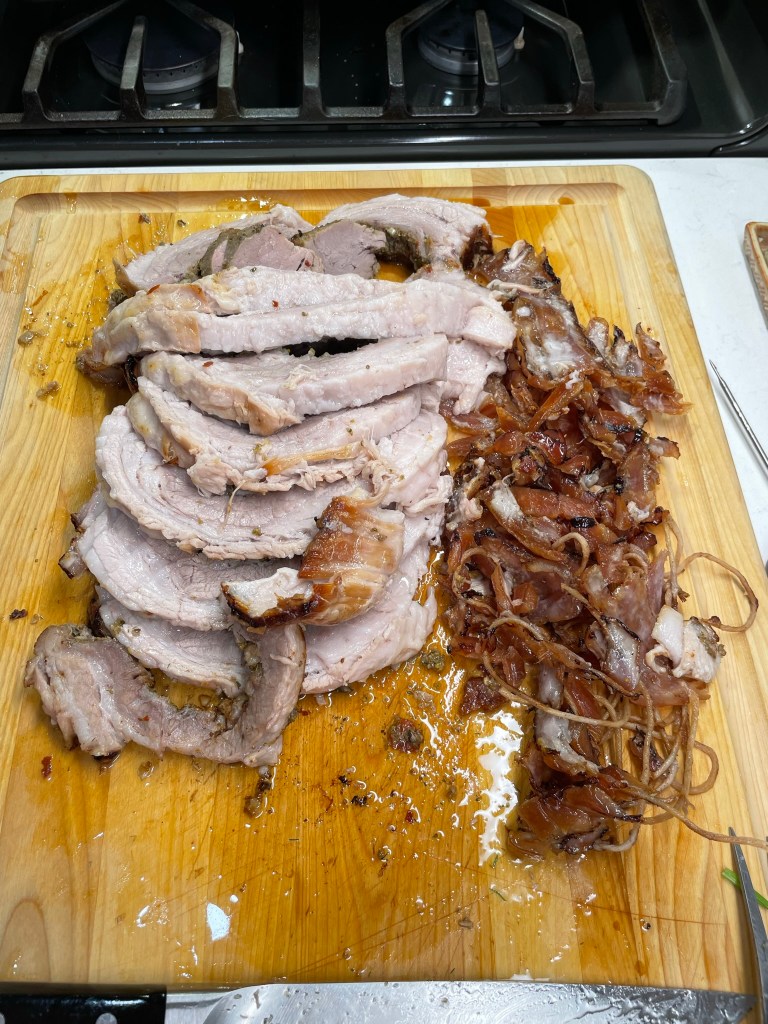
It may surprise you to know that porchetta is likely a one-and-done for me, but not for any bad reason. The roast was off-the-chart delicious, easy to make, and it produced fantastic leftovers.

My hesitation for a repeat begins with the cost. Sure, a grocery store pork belly and tenderloin would be cheaper than the $70 I spent at my local butcher. But we don’t buy a lot of grocery store meat because we object to most conventional production methods. Our local butcher sources its meats from area farmers who follow sustainability practices such as regenerative farming. This is better for the environment and the animals, and also a vast improvement in terms of flavor.

Porchetta is not the kind of thing you can make in small quantity for a party of two, though, which is how we usually cook and eat. I might consider making it again for a special occasion meal with guests, but many of our friends steer clear of fatty meat, and that is another point of contention for us. A single slice of porchetta includes the equivalent of three to four pieces of bacon, and that’s a lot of fat to consume in one meal, no matter how delicious (and boy, oh boy, it is). With more practice, I could probably figure out how to tie up and roast the porchetta for more even fat rendering, so that we didn’t end up with a lot of bulky fat that was not suitable to eat.


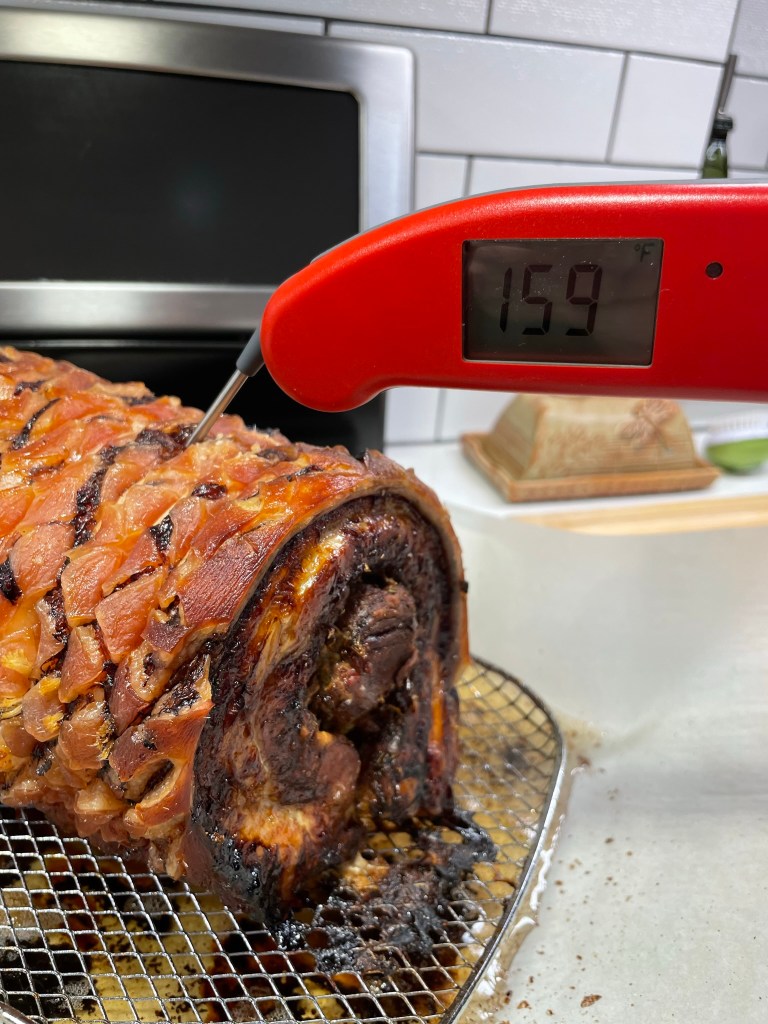
Finally, there’s the skin, which— for all the ruckus and raving about the crackling crispness— did not impress me much. Our porchetta did get very crackly, but that “perfect” skin simply is not edible. It was like biting into a Lego. And the hardness of the crackled skin also made slicing the porchetta quite challenging. If I ever do make this again, I’d probably score the skin in straight squares rather than on a diagonal, so that I can use the score lines as a guide for slicing. But it’s still kind of a waste because you can’t eat that beautiful skin.

Here’s what I’m thinking: the best things about this porchetta were its tenderness and the incredible aroma and flavor of the filling. So why couldn’t I apply the fennel pollen mixture to some other cut of marbled pork? Maybe a boneless, butterflied shoulder, which I could roll up with the herb filling and slow roast (or smoke— wouldn’t that be something)? I’m even imagining that incorporating the fennel pollen filling ingredients into a homemade sausage isn’t a terrible idea, so don’t be surprised if that shows up here in the near future.

If you have been jonesing to try porchetta yourself, it’s definitely worth the effort, and maybe you’ll find something useful for your own experience in my click-to-print recipe below. Please slip a note in the comments if you have tips that might make it worth a second run for me, and do let me know what autumn meal you’re most looking forward to!  

Porchetta

  • Servings: About 8
  • Difficulty: Surprisingly easy
  • Print

There's so much incredible flavor in this Italian-born pork roast, and the leftovers are even tastier!


Ingredients

  • fresh pork tenderloin
  • fresh pork belly, cut to length of tenderloin
  • kosher salt, weighing 1.5% of total meat weight
  • 2 Tbsp. fresh minced garlic (this was about 5 cloves)
  • 1 Tbsp. fresh lemon zest (organic is best)
  • 1 Tbsp. fennel pollen (tricky to find; check Italian market or online)
  • 1 tsp. red pepper flakes (I love the Calabrian chiles from Flatiron Pepper Co.)
  • 1 tsp. fresh rosemary, chopped (I would have used more of this if my hubby was a fan)
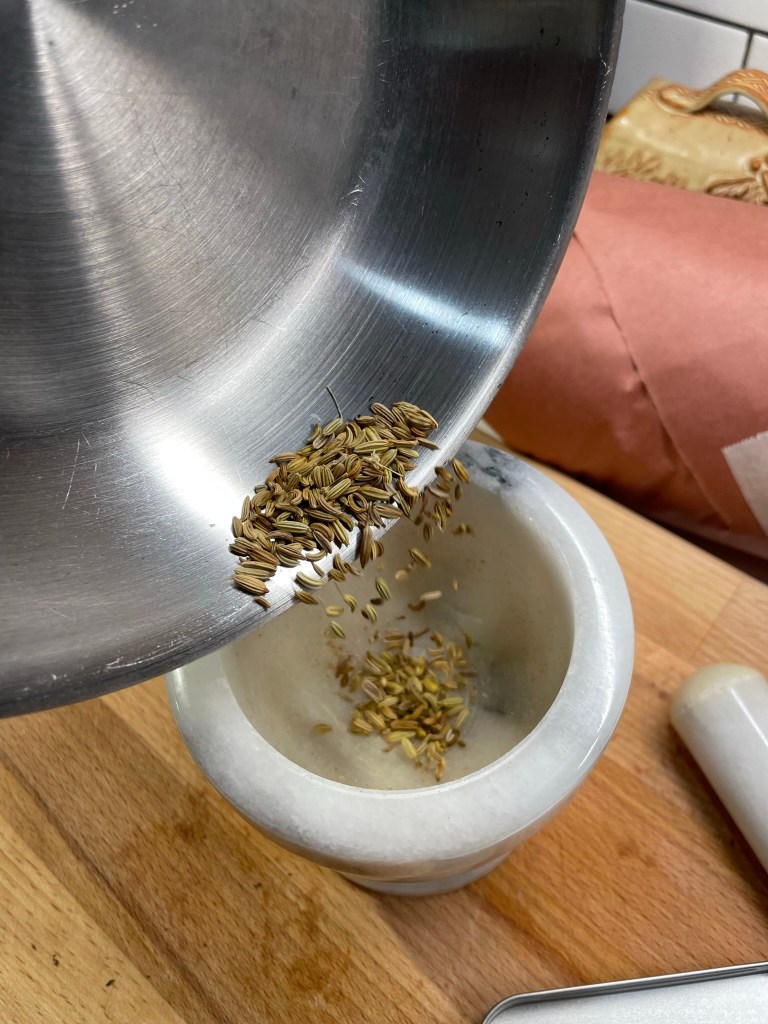
  • 1 tsp. fennel seed, toasted until fragrant and then crushed to nearly a powder
  • About 30 twists of freshly ground black peppercorn

Notes: You will need a few things for success with this recipe. First, kitchen twine for tying up the roast. Plan for at least 5 feet, and soak it in cold water while you prep the roast. Also, a roasting rack to keep the porchetta above the pan during overnight fridge rest and roasting. Finally, a good meat thermometer to help you track the internal temperature.

Directions

  1. Score skin side of the pork belly with very sharp knife or razor blade. This will help render the fat better during cooking, plus it will deliver a crackling skin. Scoring also makes the belly a bit more flexible for easier wrapping around the tenderloin.
  2. Cut several pieces of unbleached butcher’s twine, long enough to wrap and tie around rolled up belly. I used the packaged meat to help me determine how long I needed the pieces to be. Soak the twine lengths in cold water until ready to wrap.
  3. Mix the herb filling, including salt that equals 1.5% of the meat weight.
  4. Line a sheet pan with parchment or foil and place a small roasting rack on it to hold the porchetta roast.
  5. Spread the herbal filling over the meat side of the pork belly, all the way to the edges. Place the tenderloin on the belly, perpendicular to the lines on the cut sides of the belly. The sides of the belly resemble the lines of bacon.
  6. Roll up the roast, but not so tightly that you lose the filling. Check the open ends; the tenderloin should look as if surrounded by a ring of bacon.
  7. Place the rolled roast across several soaked pieces of twine and tie it up, securing each twine with a knot. Sprinkle the porchetta all over with about 1 teaspoon kosher salt and place the sheet pan (uncovered) in the refrigerator overnight, up to 24 hours.
  8. Remove roast from the fridge and bring to room temperature while preheating oven to 350° F. Oven rack should be slightly lower than center.
  9. Roast uncovered for about 4 hours, until skin is crackled all over and internal temperature is 160° F. Cover loosely with foil and rest for about 15 minutes before slicing.


Mile High Apple Pie

Once upon a time— okay, it was the early 1980s—there were two best friends. It was me and Christine, a girl who befriended me when I was an incoming sophomore to a large high school in Colorado Springs, where I spent two years living with my mother. It was a far cry from rural upstate New York, where we only had two schools— K-6, and the other one that combined junior and senior high. This school had three or four large buildings for 10-12, and I was sure I’d get lost and would never learn the names of all my classmates. Christine was new at the school, too, given that she transferred from a Catholic school. At first glance, we could not have been more different. She was raised in a nuclear family with a healthy support system and I had, well, none of that. Still, we found enough in common that we became fast friends. I’m talking, the kind of friend who gets to sign an entire page of your yearbook!

Life took us in different directions after our two years of inseparableness. I returned to my dad’s in upstate New York for my senior year and then moved south in my 20s, where I pursued my dream of being on the radio. Christine was swept off her feet by the guy who is still her husband, and they welcomed three children, moving to Texas in the process. It was before the internet and even cell phones, and staying in touch proved challenging. We had fun catching up on the occasions that we reconnected, but with little in common, the occasions were fewer and farther between.

And then out of nowhere last December, I started getting emails from the Classmates site, claiming someone I went to school with “wanted an update on my life.” Truth is, I never followed up after my initial early signup to the site, and I don’t even know my password to log in; social media has never been my thing. Anyway, there was only one friend that I could imagine might want to be in touch with me from that school, and it got me curious. A few Google clicks later, I had Christine’s phone number (only, it turned out to be her daughter’s), and after a few text exchanges and FaceTime calls, she booked a flight to visit me in North Carolina! No, she had not been messaging me, and she also had been receiving random messages from Classmates, but at least the company’s dubious marketing effort catalyzed our finding each other again.


Christine and I had a grand time reminiscing through my old yearbooks and pondering whatever happened to this classmate and that teacher. We filled in the gaps of each others’ lives during the time gone by— her move to Texas and back, some scary health situations, my rebound to happiness after divorce— and we had one very poignant moment, during a video call with her parents, when I tearfully thanked them for the positive impact they had so long ago on a lonely teenage girl who desperately needed to see what family could look like. Yes, it was a special four and a half days, and we have vowed to not lose touch again.

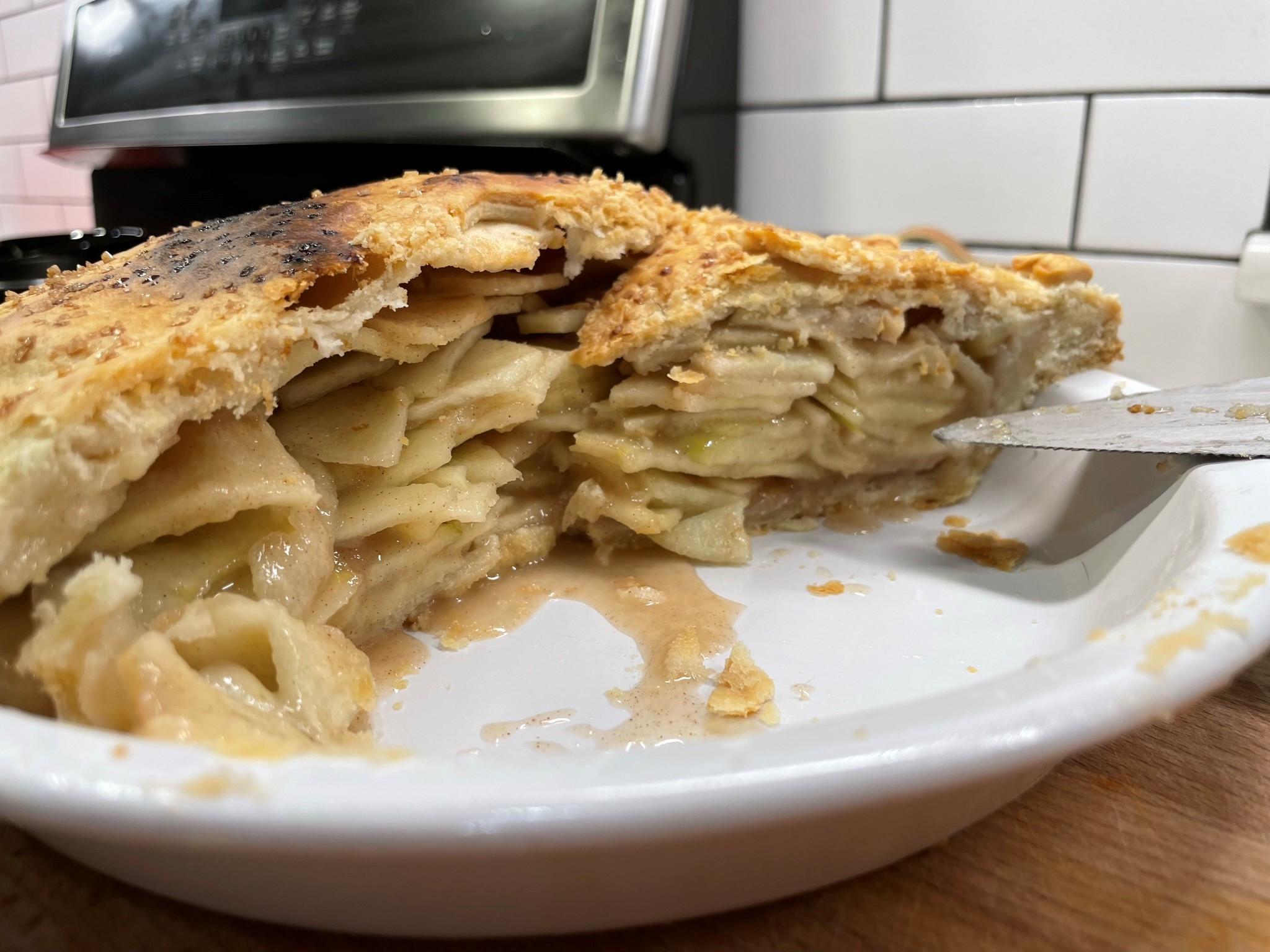
Somewhere amid all of that catching up was a lot of really good food. We enjoyed a meal at one of my favorite local restaurants, Les fired up the smoker with a brisket and a whole side of salmon, and we checked out the Greek Festival for authentic gyros and honey-drenched loukoumades. I whipped up some key lime pie martinis and homemade pizzas, indulged her request for fresh seafood, and we visited a local winery. And Christine indulged me, too, by sharing her tips for making a delicious sweetheart of a pie—something I’m not very good at myself.

Nothing went to waste! She used the extra pie dough to decorate the edges. ❤

I’ve made no secret on Comfort du Jour of my lack of confidence in the pastry department. Yes, I can whip up a round-braided sourdough challah, no problem, but I’m still tiptoeing my way into making cakes, and the notion of mastering flaky pastry dough (or even biscuits, for that matter) has always felt just out of reach for me. Christine, on the other hand, had been texting me pictures of mouthwatering pies and pastries she makes on the regular, and well, I had plenty of questions.

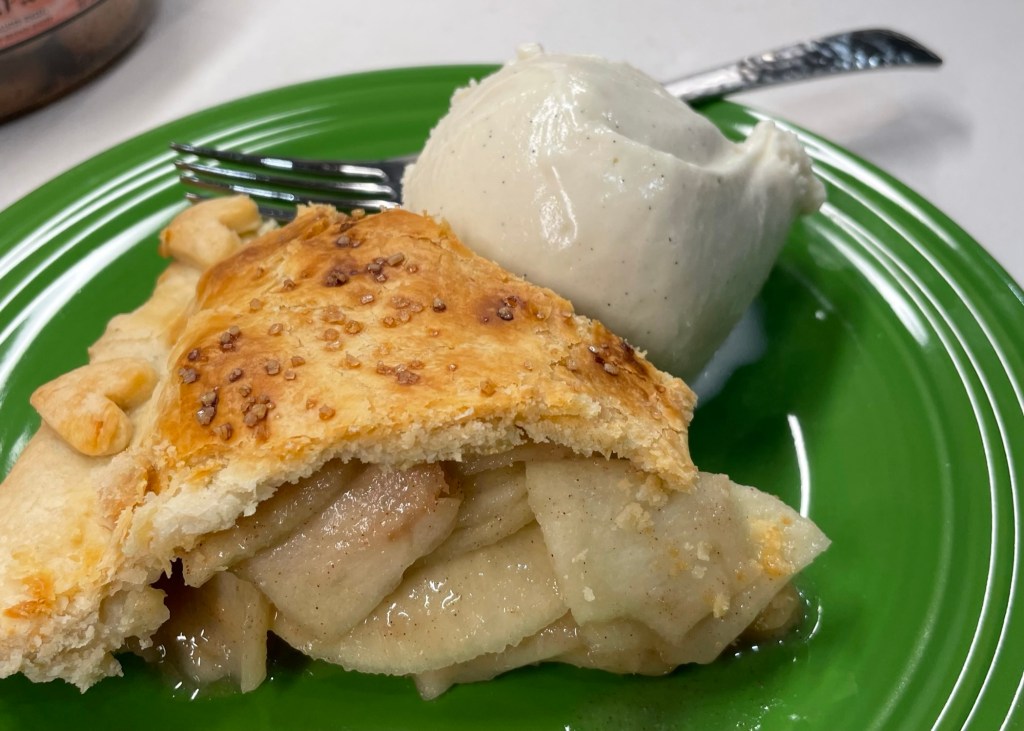
YUM!

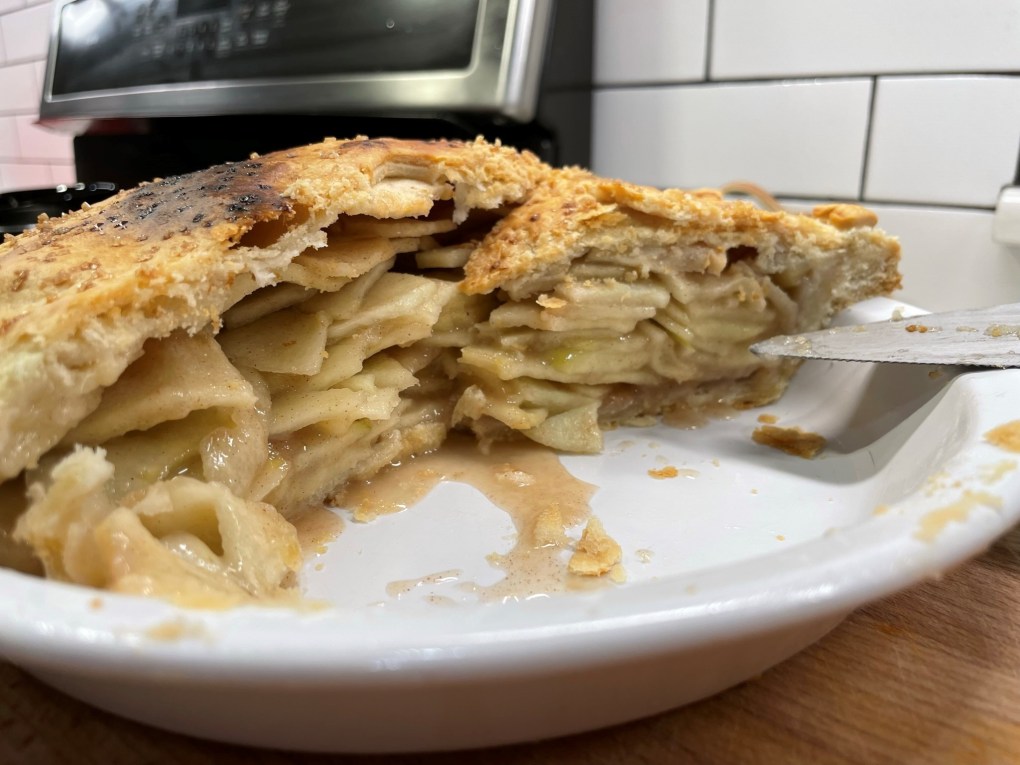
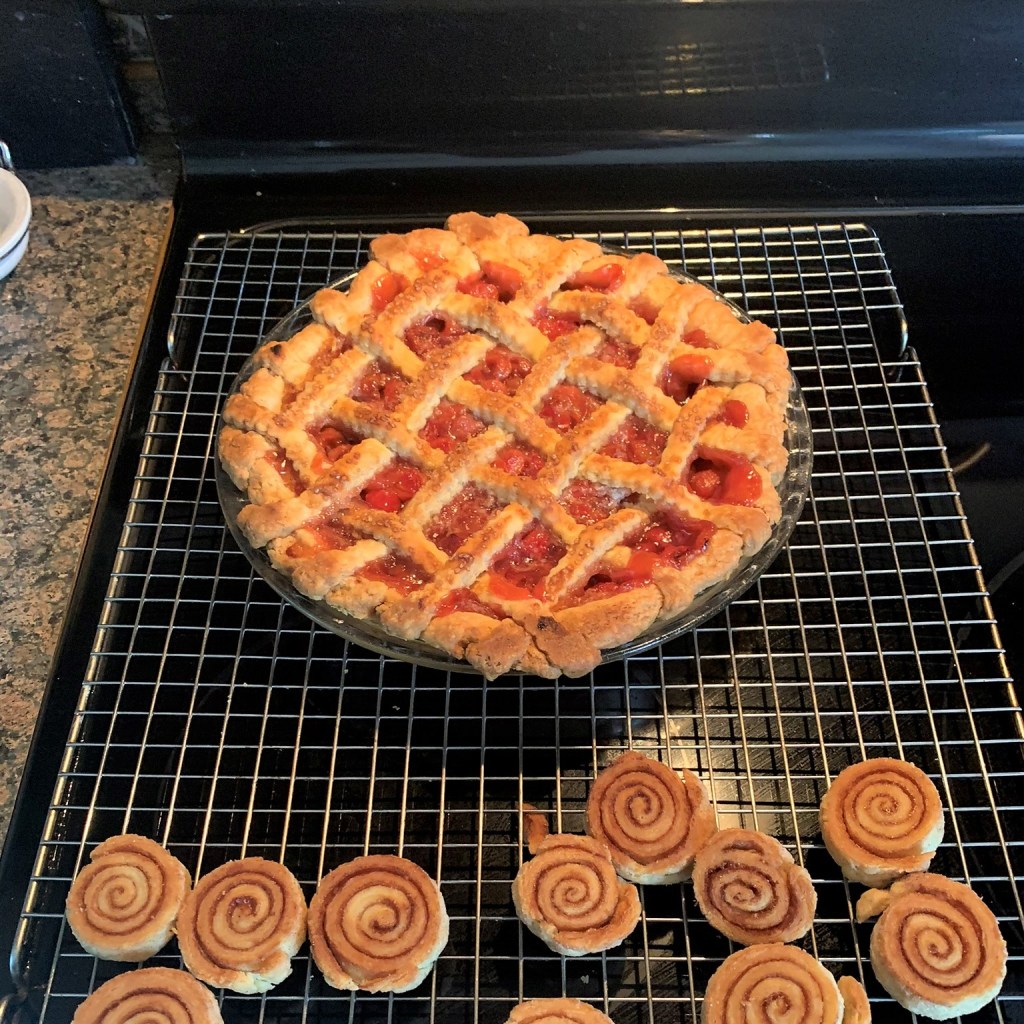
We could not make her favorite kind of pie— sour cherry is her blue ribbon best— because I don’t have a cherry tree in the backyard, as she does. But we found some shiny Granny Smith apples, and I thought it would be perfect for sharing as we head toward July 4th. We served up each mile high slice with a scoop of my reduced-guilt vanilla ice cream!

The crust is my favorite part of everything, so I really want to get good at this!

Christine did all the pie work here, and my job was to pay attention and take pictures. I took lots of mental notes as she worked on this masterpiece, but still forgot a few of the important details. Luckily, she was generous to share her exact crust recipe by text as I wrote this, and I’ve included it below in a printable format.

As for my lessons that day, I discovered three important takeaways for perfect pastry dough. First, I apparently need to start watching the Great British Baking Show, which is where Christine has honed her knowledge that led to her own baking skills. I’ve bookmarked it on Netflix for future binge watching. 🙂


Second, I need to follow a simple rule of thumb for tender, flaky pie crust, and that rule is “more fat, not more water.” For real, this is probably one of the ways I’ve gone astray, as I tend to just add more water when the dough doesn’t come together easily. Christine says a little extra butter (and frozen, at that) worked into the flour is what produces the flaky, delicate layers I long to achieve. Finally, I need to not be afraid to practice, because it’s the only way I will gain confidence to make a good pie. I know she’s right, of course.


That brings me to my final lesson in successful pie making, which is don’t skimp on the filling— another mistake I now know I have made. Christine used six ginormous apples in this pie, and it wasn’t even deep dish! With so much filling, and given where our friendship began, I named it Mile High Apple Pie. Enjoy!

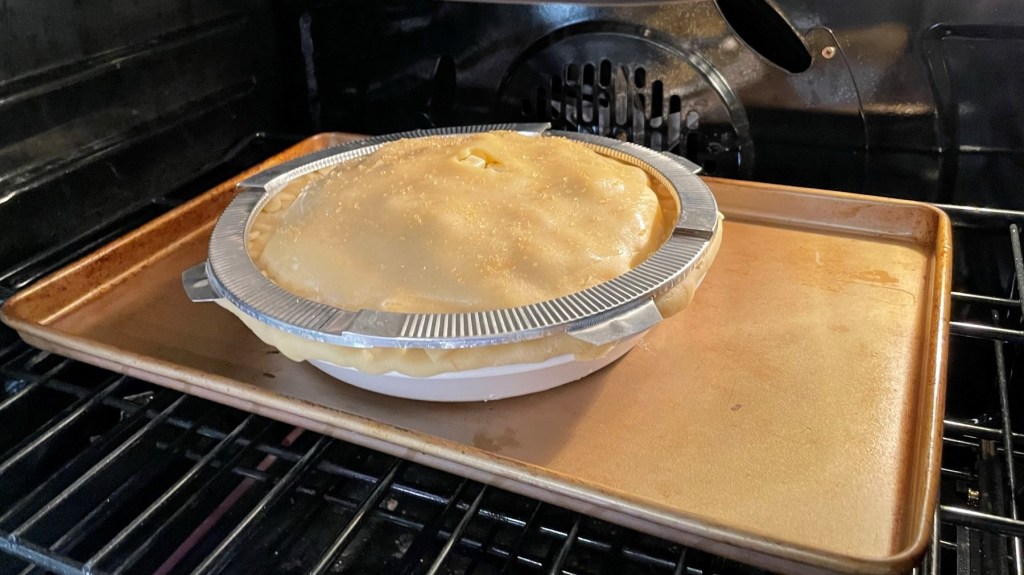
She brushed the top crust with milk and sprinkled on turbinado sugar before it went to the oven.
Pie crust protectors kept the delicate edges from burning.

Mile High Apple Pie

  • Servings: 8 generous pieces
  • Difficulty: Easy, if you're Christine
  • Print

My bestie from high school walked me through how to make a good, flaky pie crust! Three most important lessons; use frozen butter, chill the dough and practice, practice, practice!


Ingredients

  • 2 1/2 cups flour
  • 1 tablespoon sugar
  • 3/4 tsp. salt
  • 2 1/2 sticks frozen, unsalted butter
  • 5 Tablespoons ice water

Planning ahead is important for successful pastry dough. It should be chilled at least 30 minutes, but preferably longer, before filling and baking.

Directions

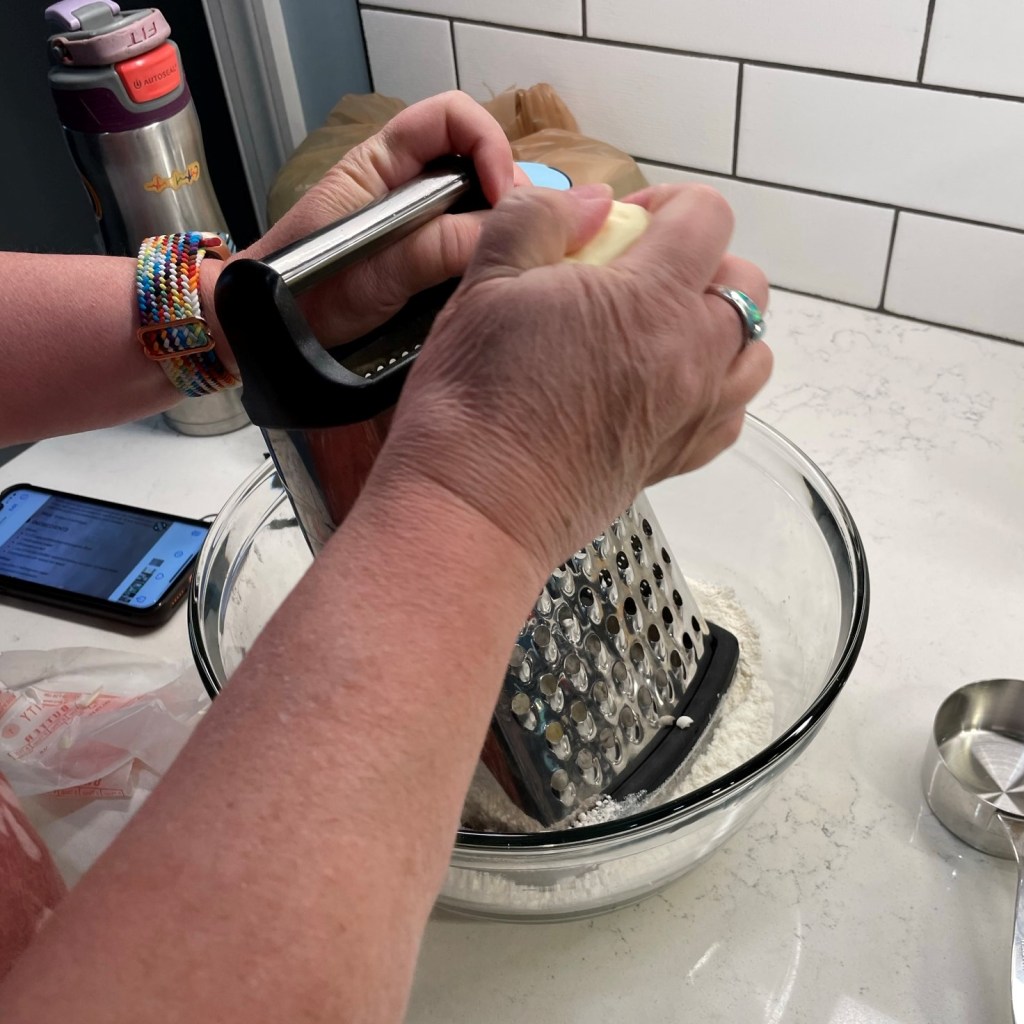
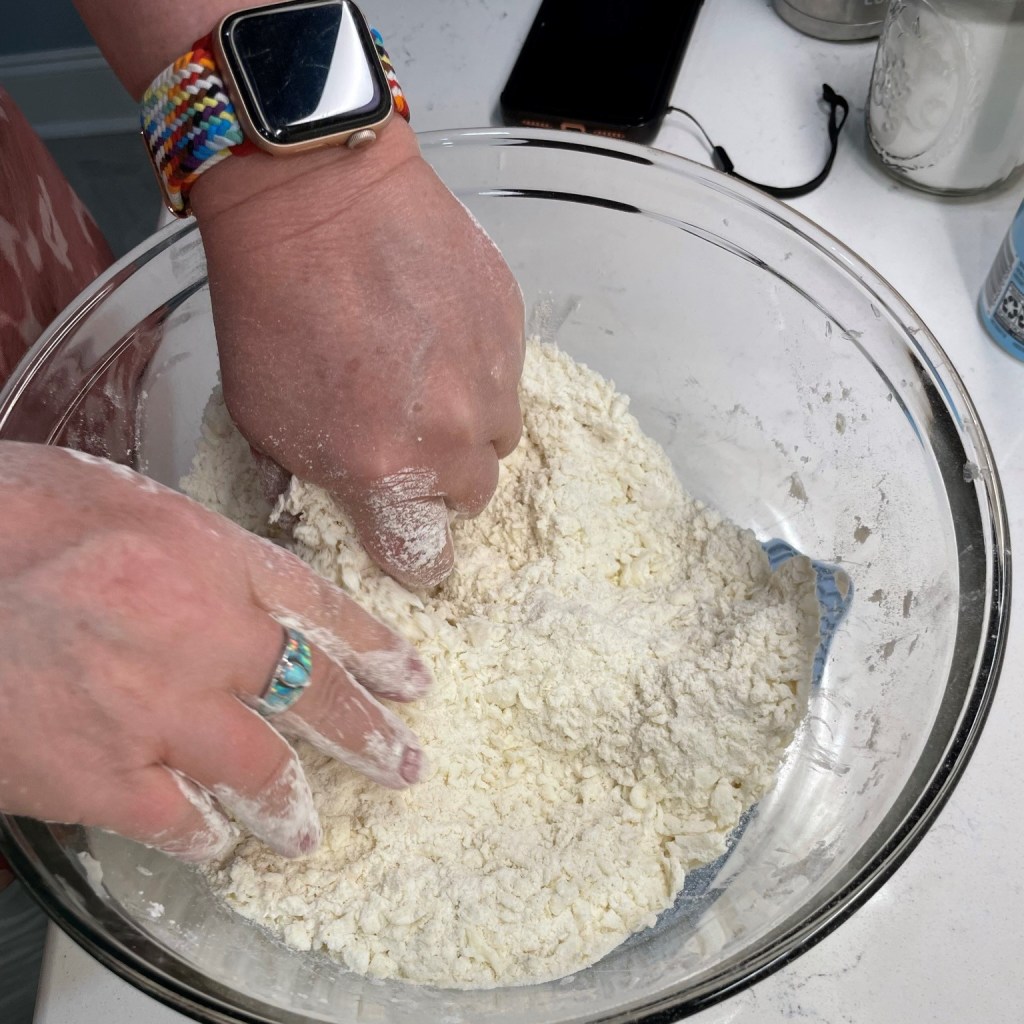
  1. Whisk the flour, sugar and salt in a large bowl. Grate butter over flour through the large holes on a box grater. Rub in with fingertips until small pea-size clumps form. Add 5 tablespoons of water and mix lightly with fork until dough holds together when small pieces are pressed between fingertips, adding more water by teaspoonful if dough is dry.
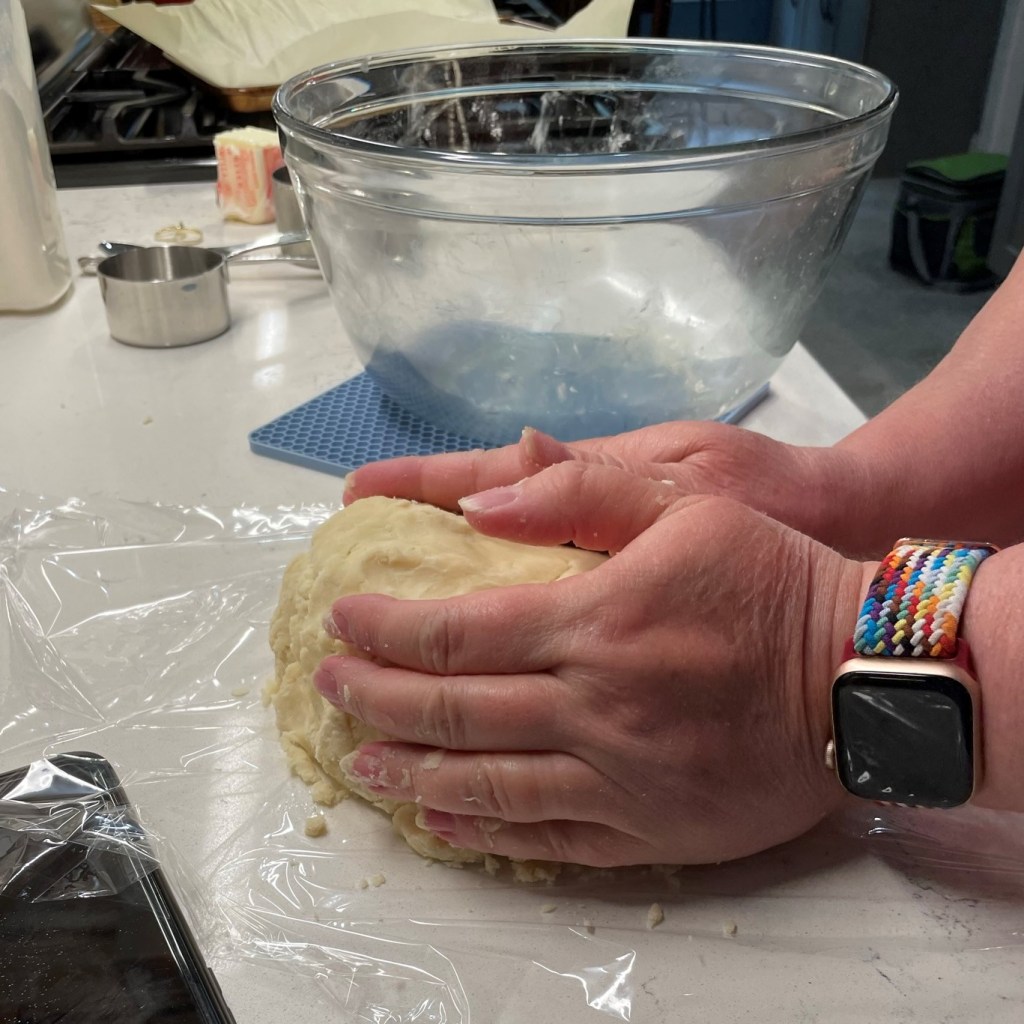
  2. Gather dough together; divide into 2 pieces. Form each piece into ball, then flatten into disks and wrap in plastic. Refrigerate at least 30 minutes, but you can do this up to 2 days in advance.

Remove chilled dough from fridge a few minutes before rolling out. Get the filling mixed up first, then roll the dough.

Ingredients

  • 6 large, Granny Smith apples, peeled and sliced thin
  • Juice of 1/2 fresh lemon
  • About 2/3 cup sugar (more if you like it sweet, I suppose)
  • 2 tablespoons flour, to toss and coat the apple slices
  • 1 teaspoon ground cinnamon
  • 1/4 teaspoon ground cardamom (she added this at my request, because I love it with apples)
  • 4 Tablespoons cold, unsalted butter

Directions

  1. Preheat oven to 375 F, with rack slightly lower than center position.
  2. Toss apple slices with lemon juice to prevent browning. Add sugar, flour, cinnamon and cardamom to the apples and fold to coat until no visible flour remains.
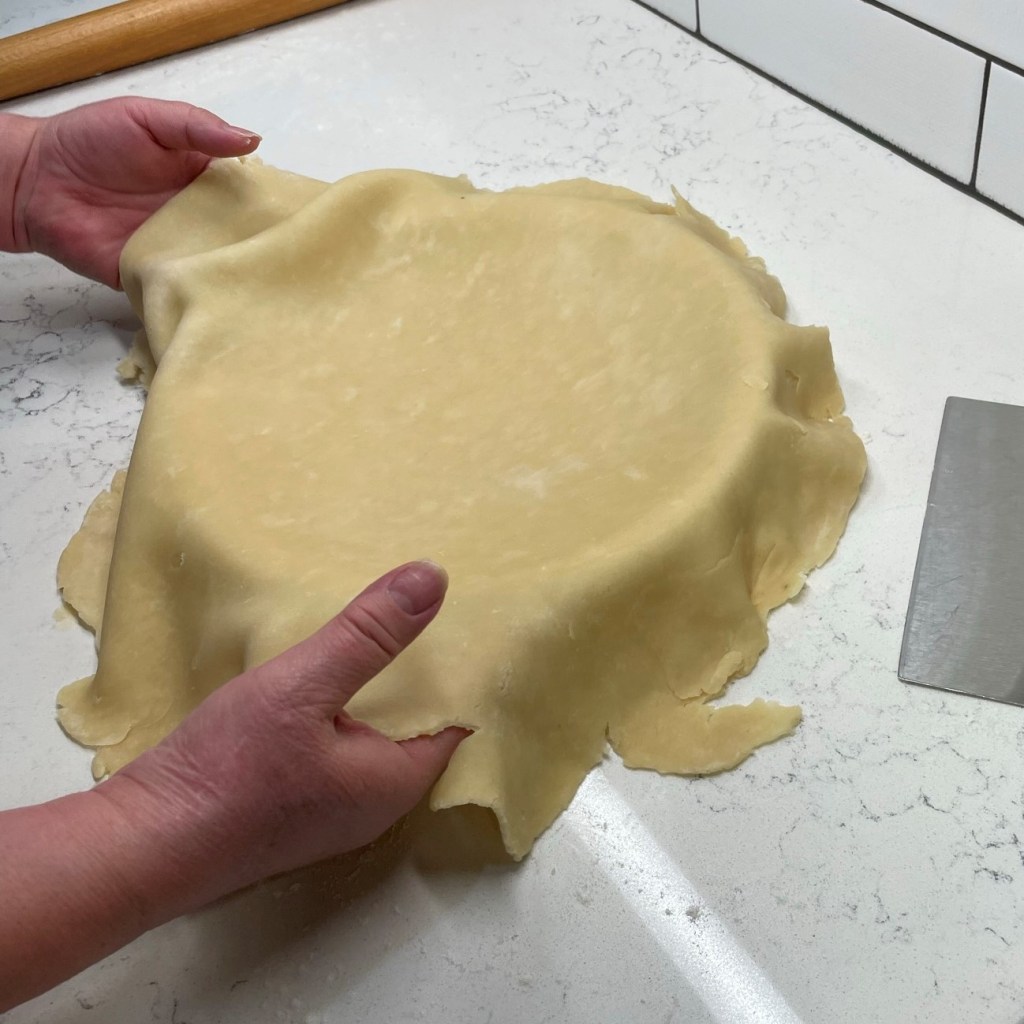
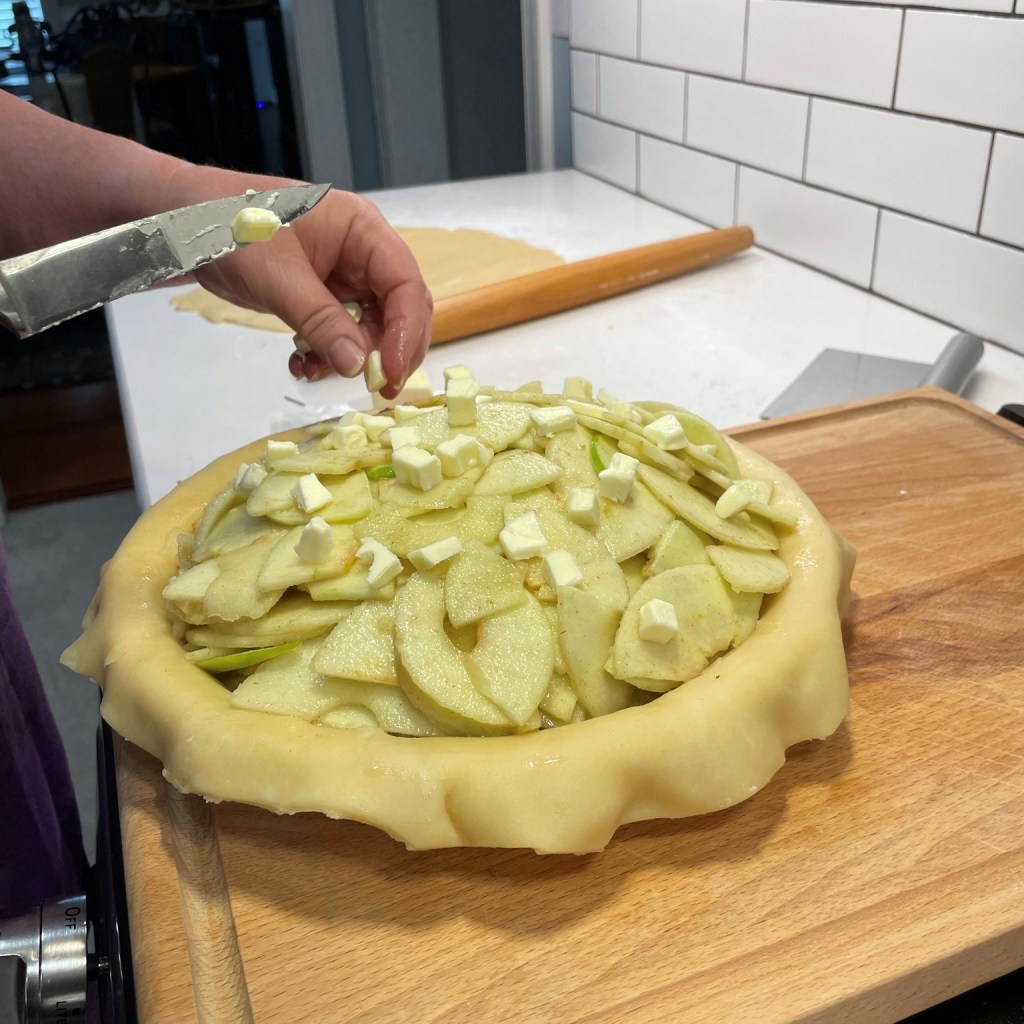
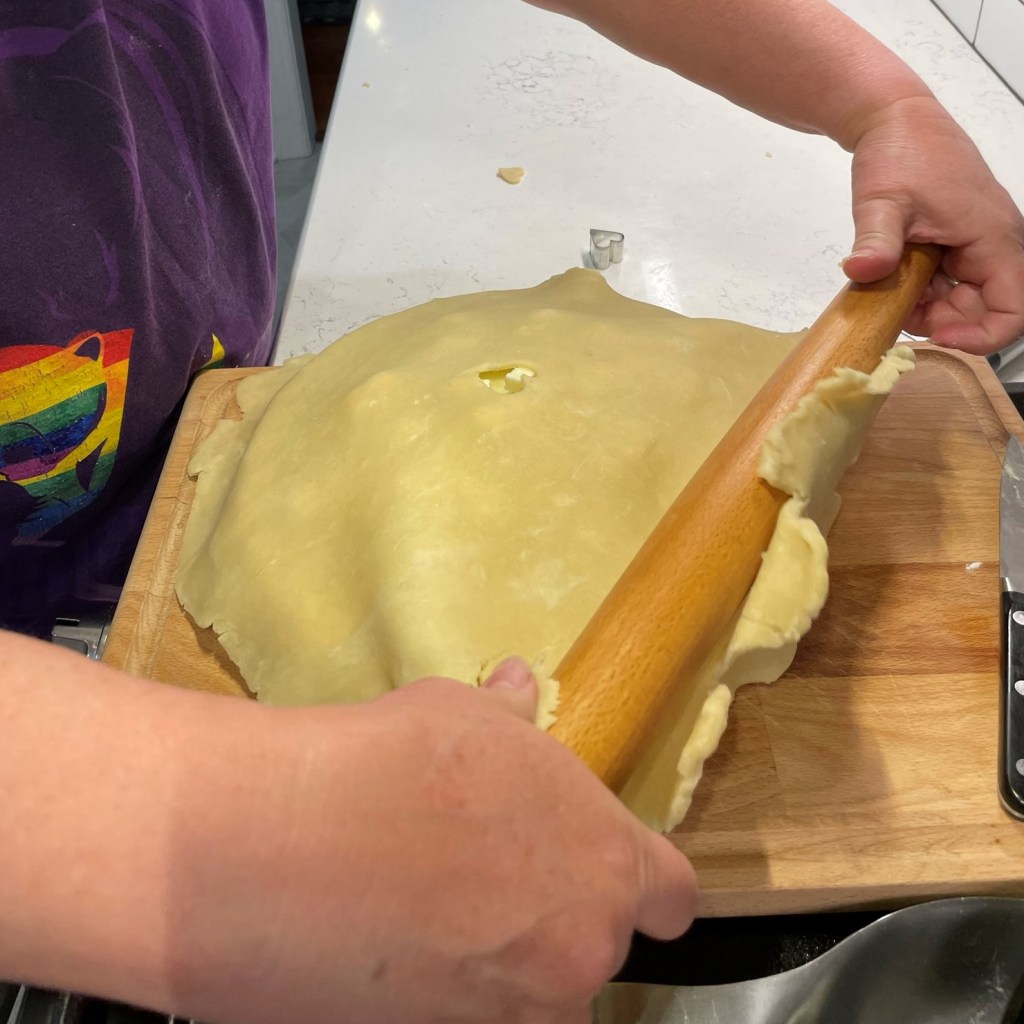
  3. Roll out the first disk of pie dough into a large circle and place it in a 9-inch pie plate. Transfer the apple filling to the pie plate. Cut butter into cubes and arrange the cubes all over the apple filling. Roll out the second dough disk, cutting a shape in the center as a steam vent (if you happen to have a tiny heart-shaped cookie cutter, use that). Roll the top dough around the rolling pin for easy roll-on transfer to the top of the pie. Trim and crimp the top and bottom edges to seal together. If you have extra dough, cut more heart shapes and place them around the edges of the pie.
  4. Brush the whole pie crust with milk and sprinkle with coarse sugar. Bake for about one hour, until pastry is golden brown all over and filling is visibly bubbly through the steam vent.


Easy Slow Cooker Beef Stew

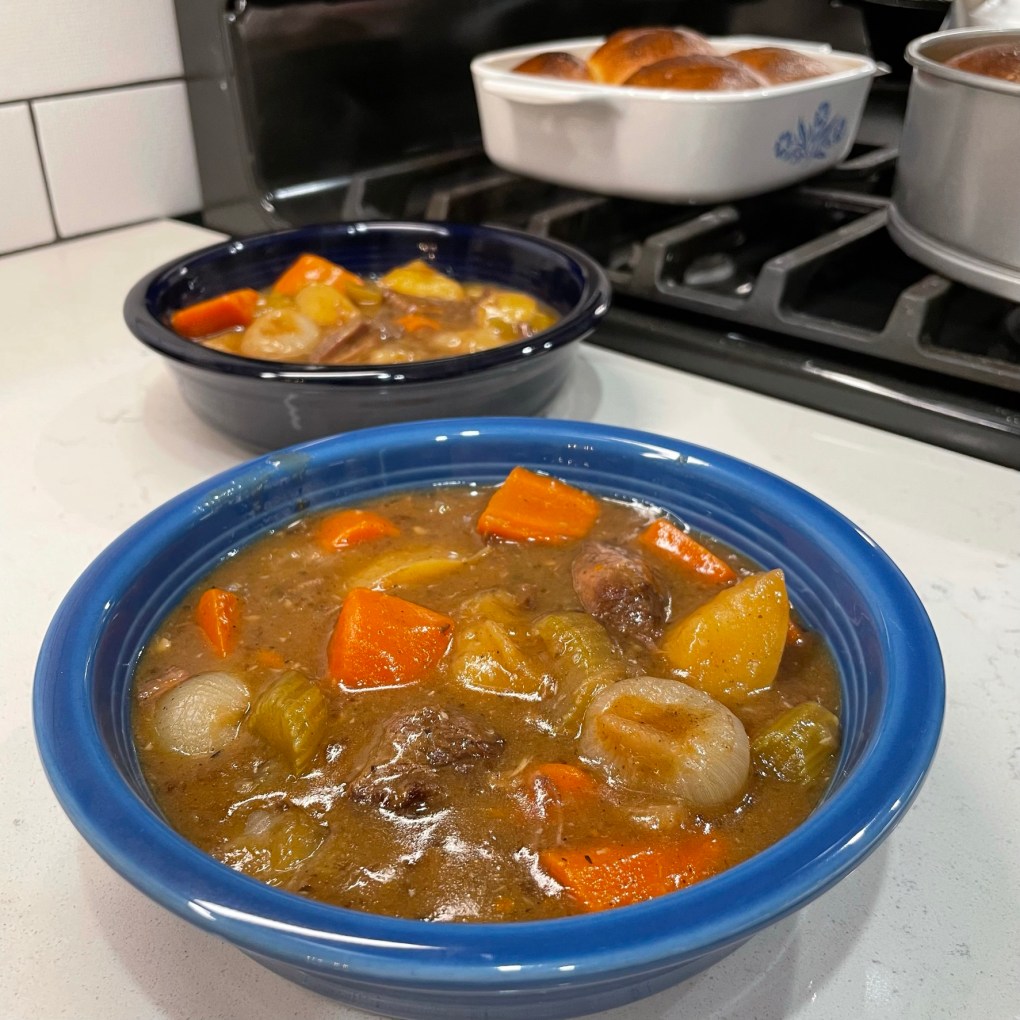
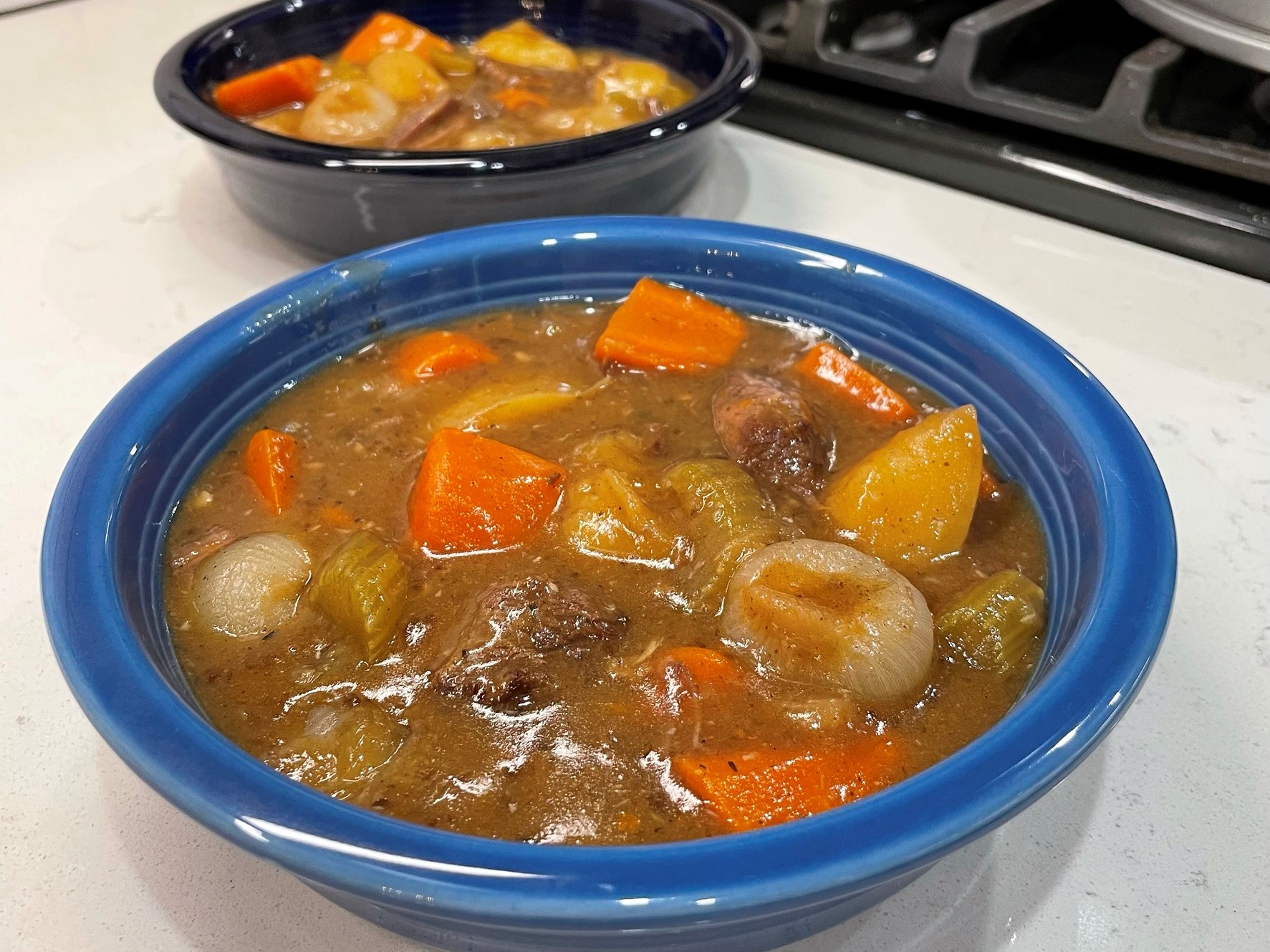
There is nothing earth-shattering or revelatory about beef stew in the fall, is there? The ingredients in my version are as one would expect—big chunks of vegetables, potatoes, beefy morsels and a thick, rich braising gravy—yet this is exactly the kind of comforting, satisfying, rib-sticking classic fall food I’ve been dreaming about since the temperatures first began to drop. So, even though I expect you may have your own recipe for beef stew, I’m going to share mine visually, just to make you hungry and ready to celebrate the season in comfort (you’re welcome).


Under less busy life circumstances, I might have made this one-pot stew right on the stovetop in our enamel-coated Dutch oven. But when I’m upside down with my day job, busy with home updates and wrangling our pets, I really appreciate the versatility of our slow cooker. Ours has extra options, including a setting for browning meat, so I was able to get this done without shifting ingredients from one pot to another. If your slow cooker has more simple settings, just brown the meat first in a skillet on the stove and transfer it to your slow cooker when it’s ready to braise.

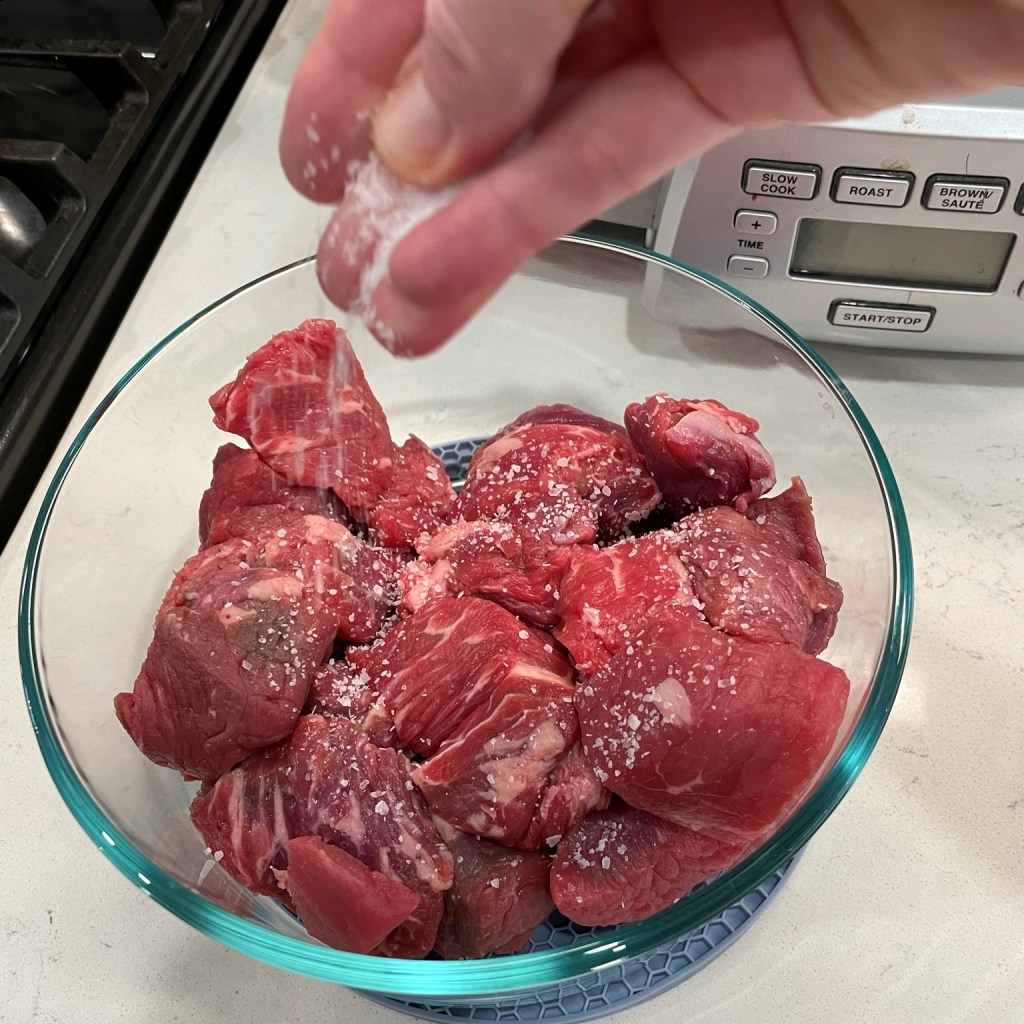
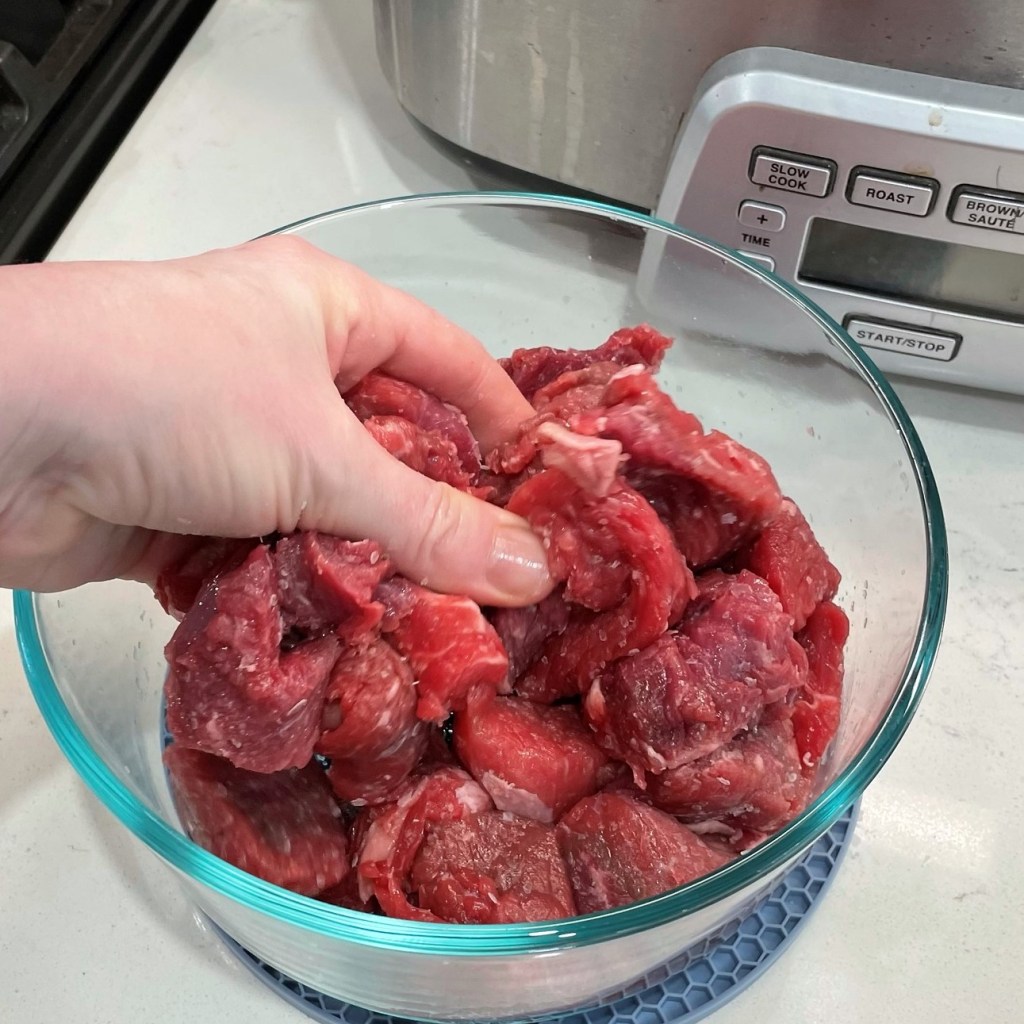
I selected grass-fed, locally raised beef for my stew. It’s easier on my digestive system than conventional beef, and we feel strongly about supporting local suppliers. Choose the best beef you can find, and a cut that is mostly lean, but with some marbling for flavor. I tossed the beef chunks with a few generous pinches of kosher salt and let them rest 15 minutes while I prepped my other ingredients and got my slow cooker up to speed.


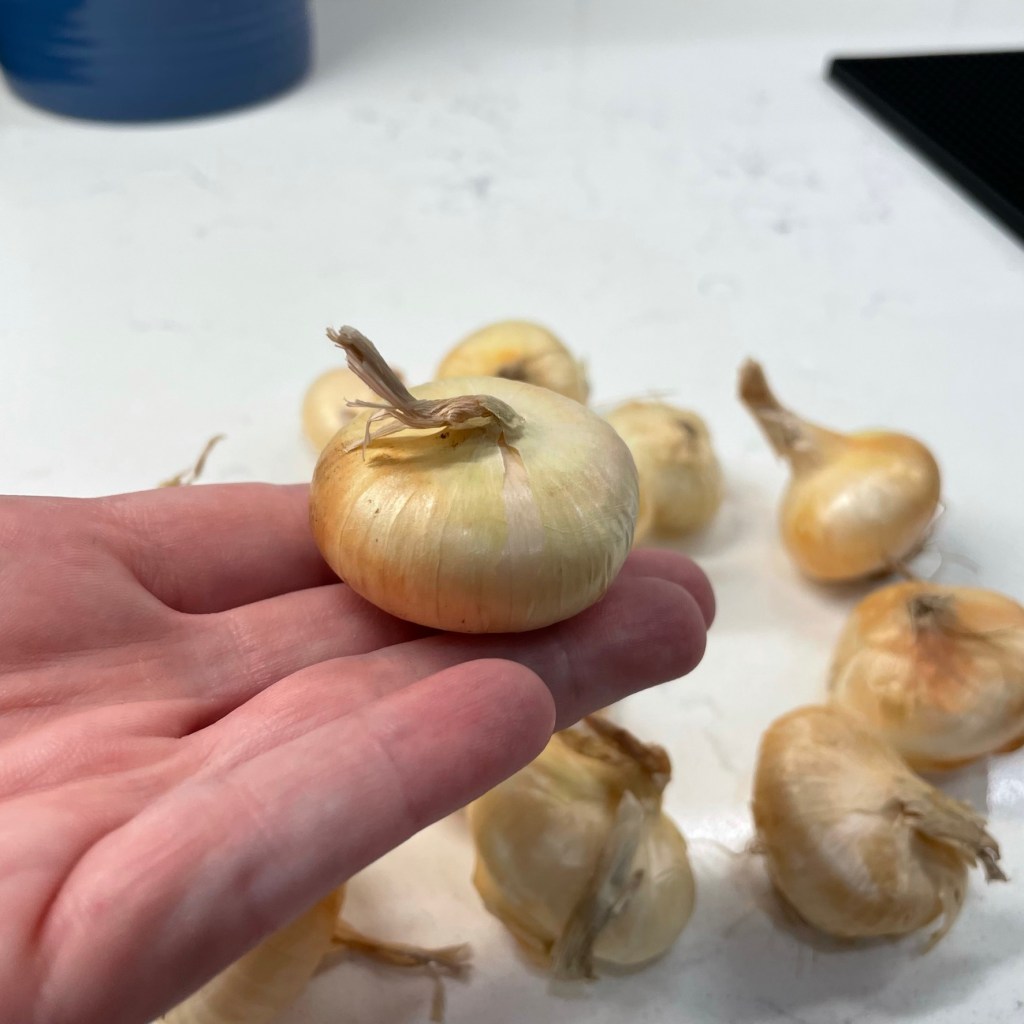
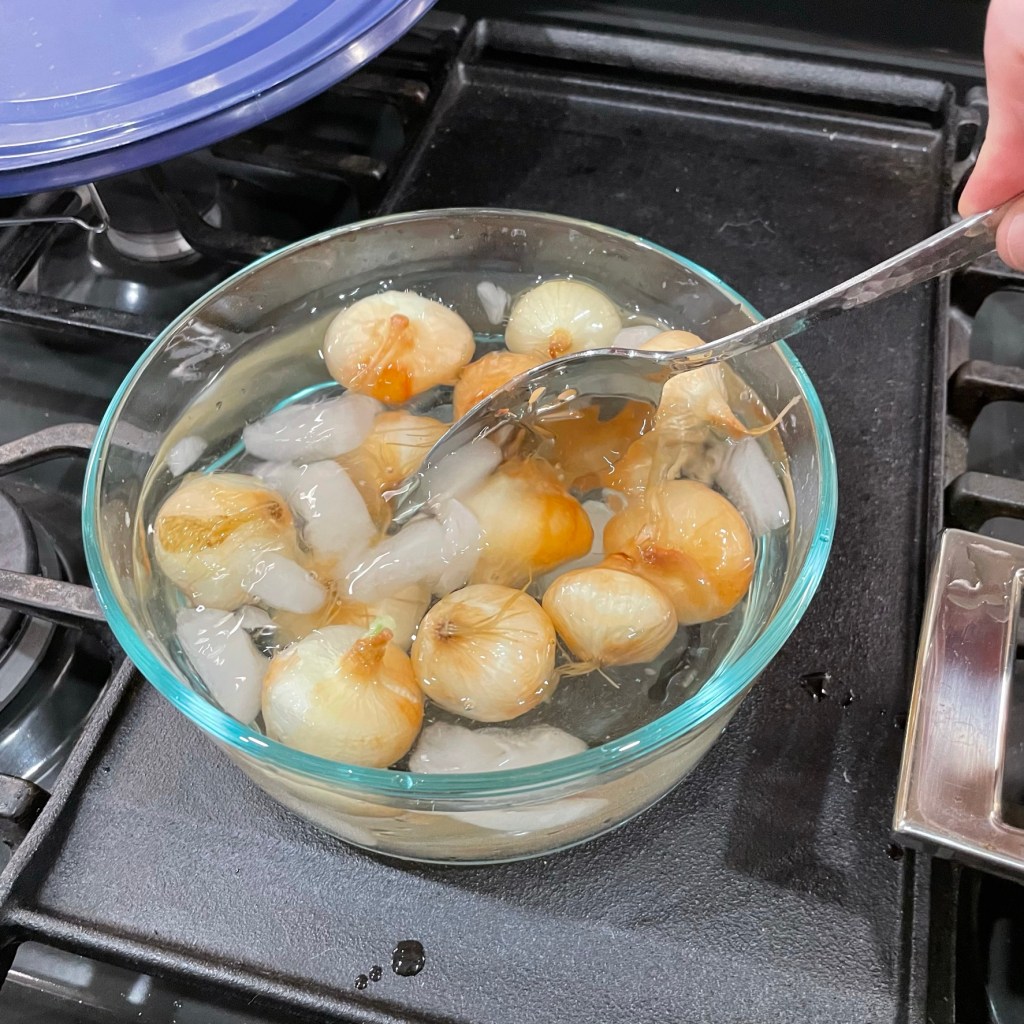
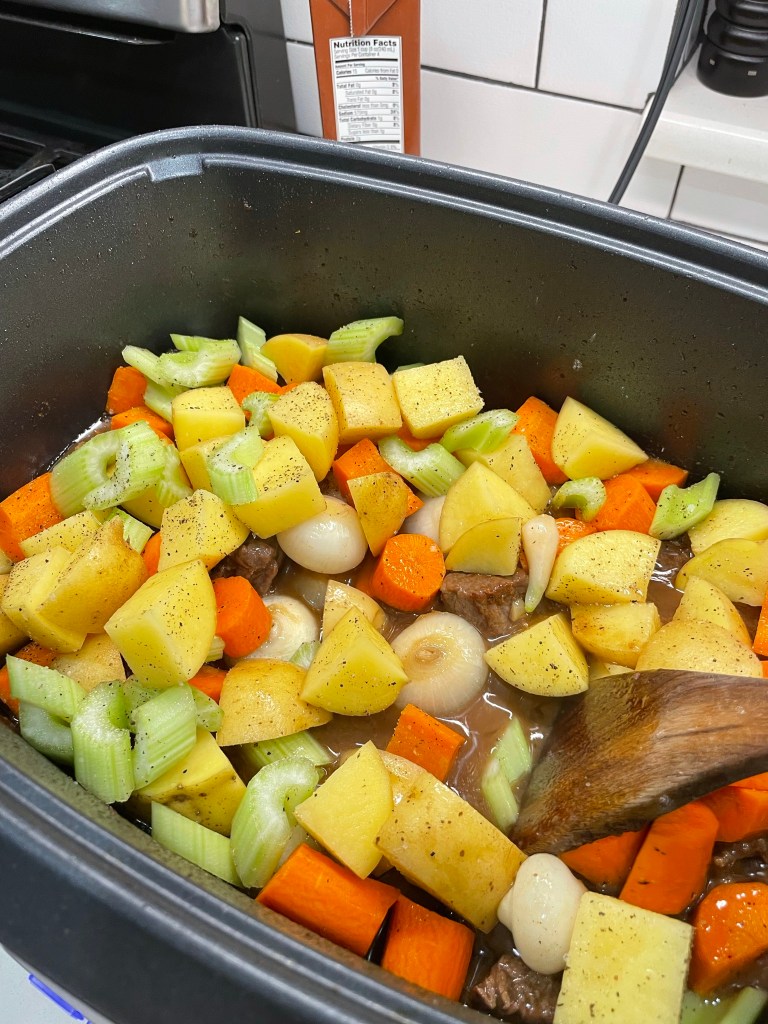
For no special reason, I decided that I would use fancy onions for my beef stew. I chose cippolini onions, which are small and squatty—kind of like miniature vidalias—and they need to be peeled before cooking. This was easy to do, with a quick bath in simmering water, then a shock in an ice bath. For the sake of uniformity, I cut my other vegetables to match the size of the cippolinis. If you wish, use a large sweet or yellow onion, cut into large chunks. 


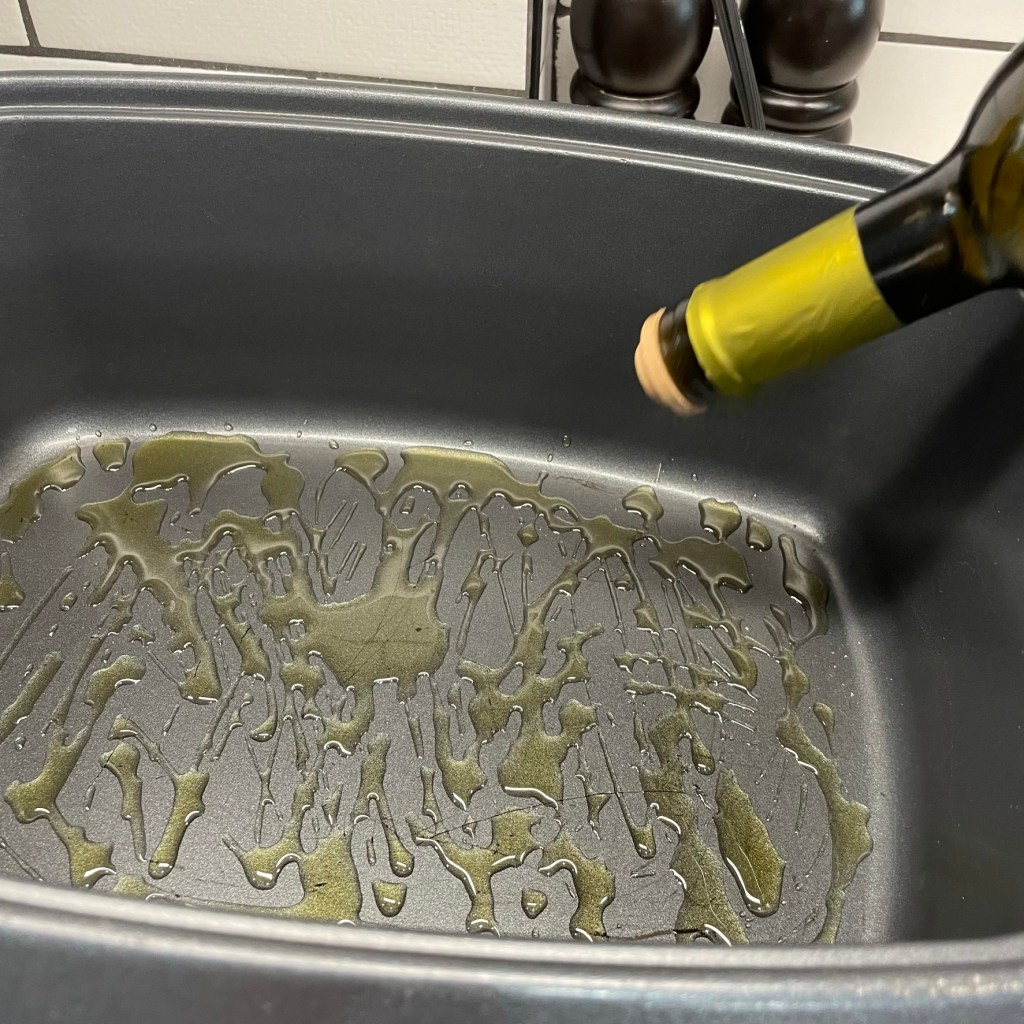
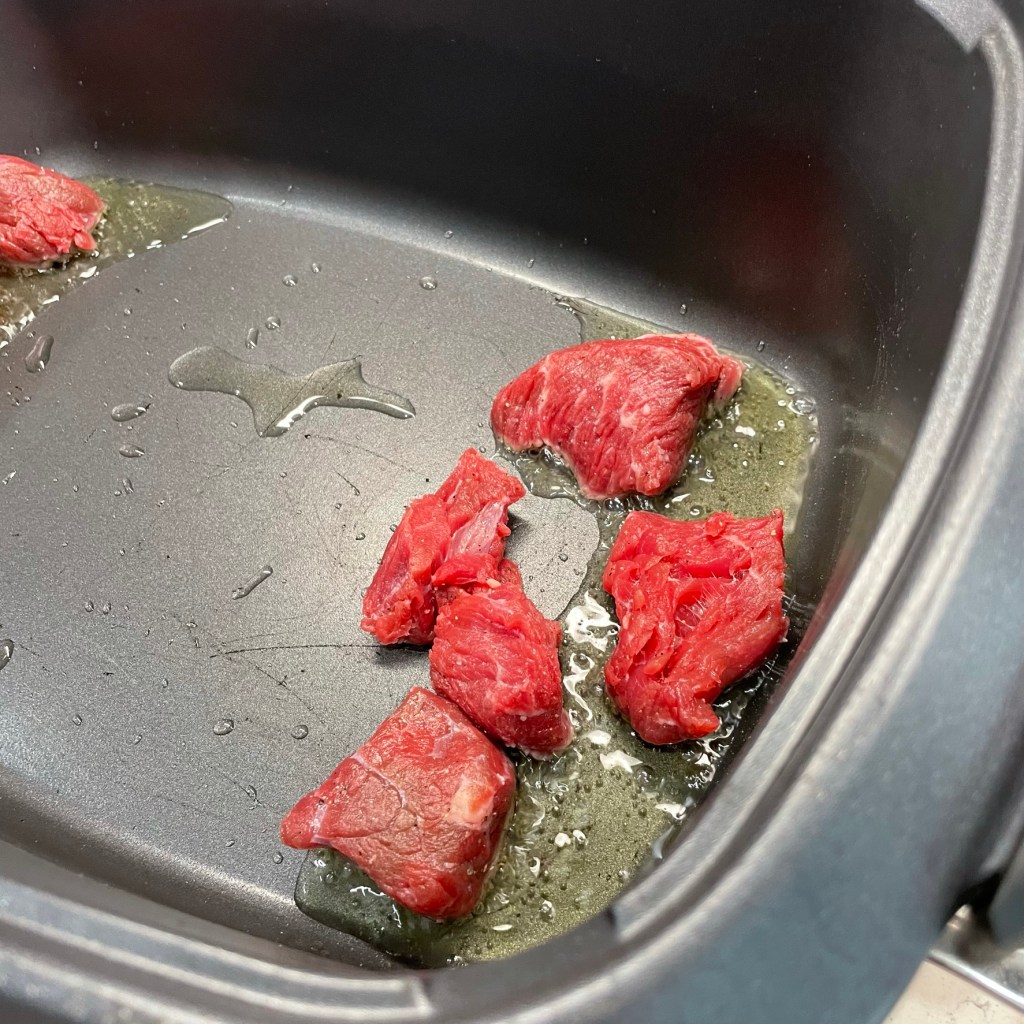
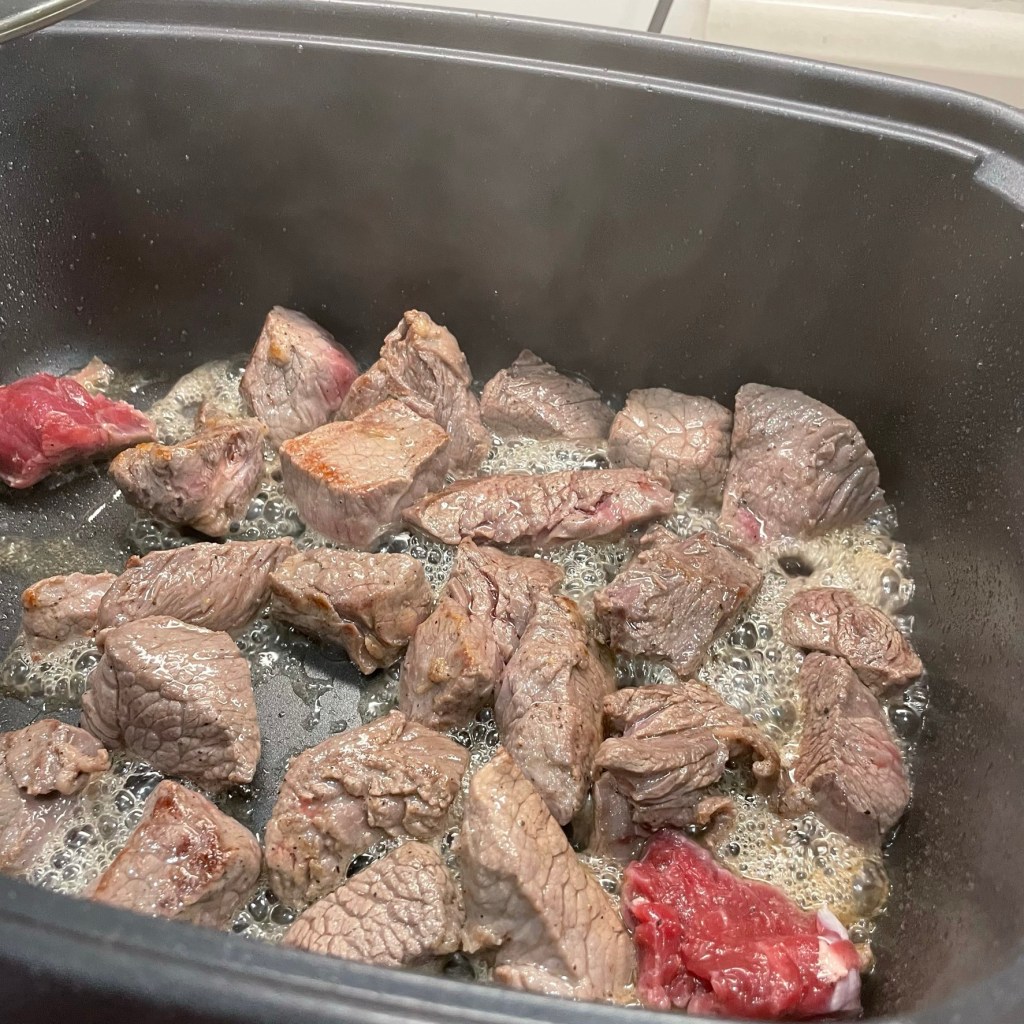
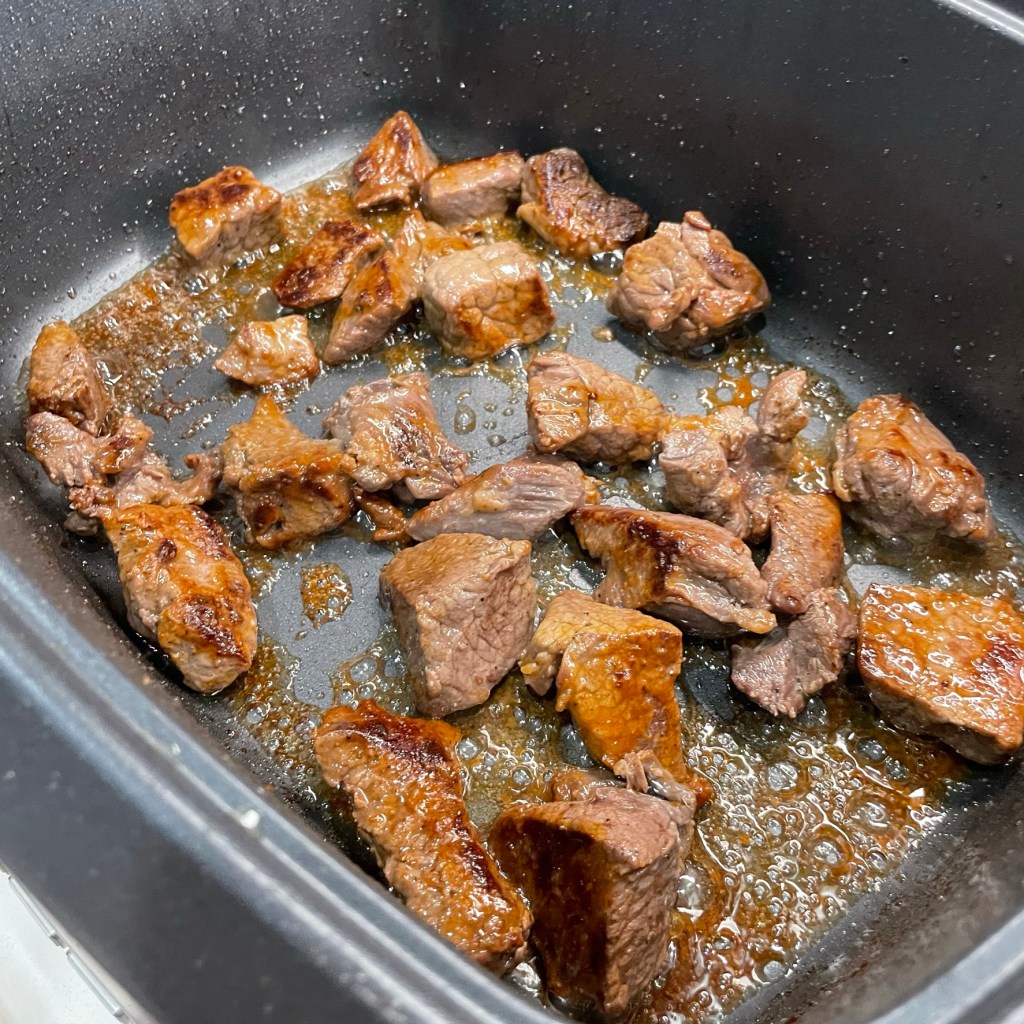
Browning the meat encourages more flavor because of something called the Maillard reaction, and if you want to geek out on food science, you could read this article to understand what that’s all about, or you could simply trust the process and brown the meat (your taste buds will thank you). When the oil in my slow cooker was ready, I added the salted meat a few pieces at a time to avoid a sudden temperature drop and turned them frequently to ensure even browning.


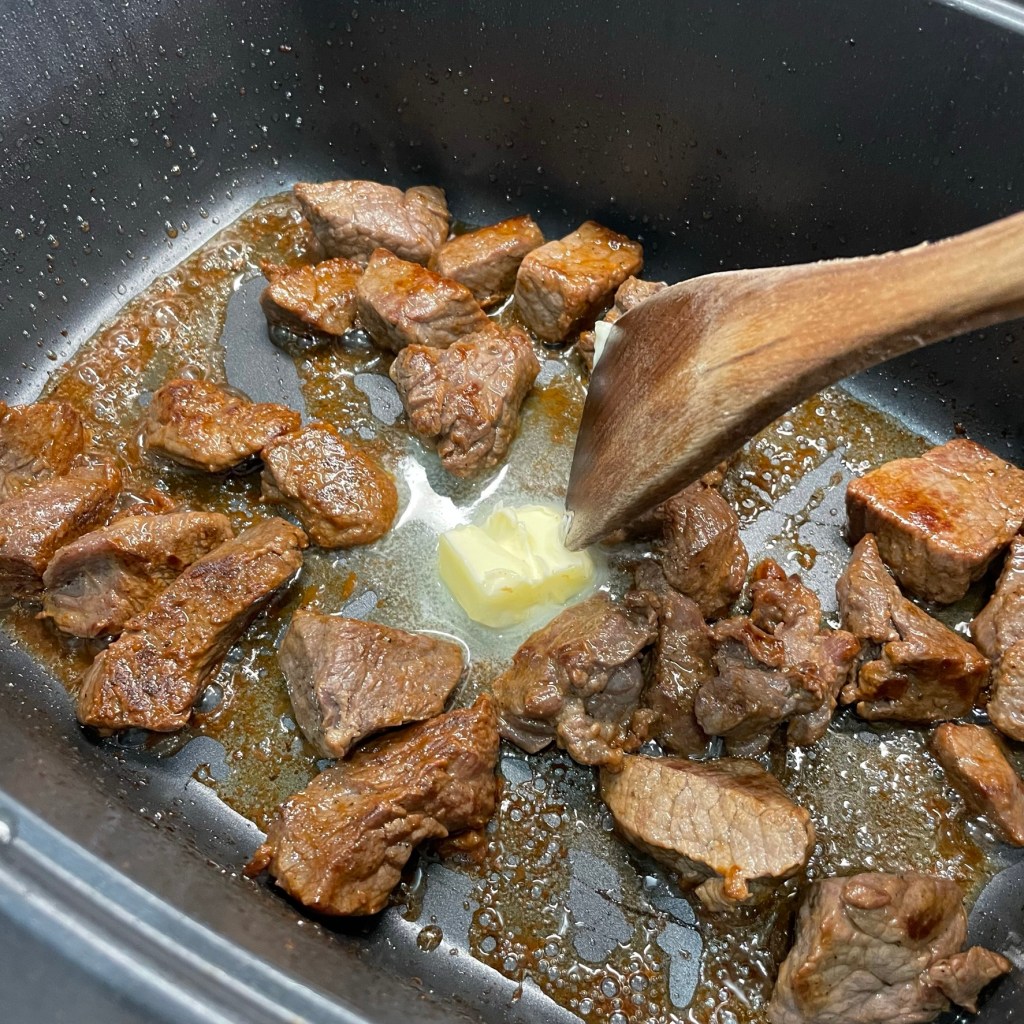
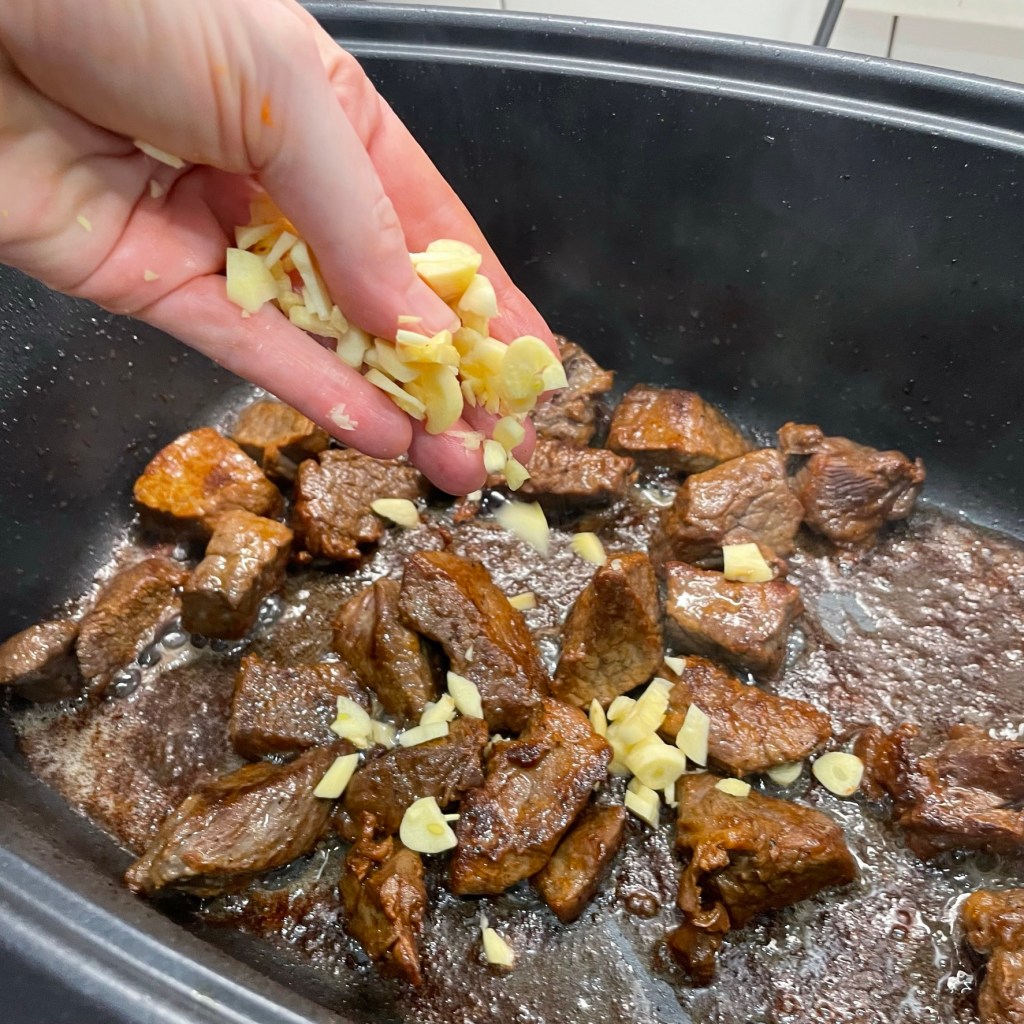
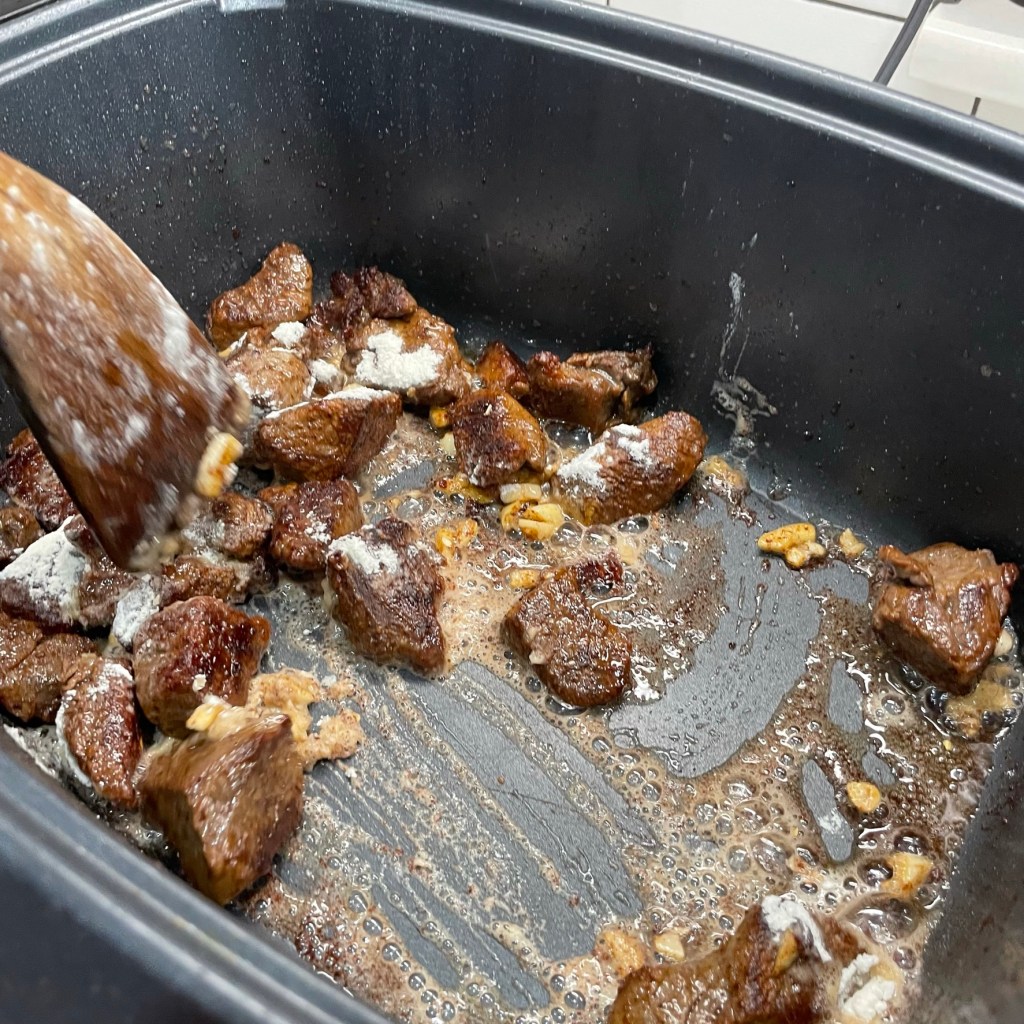
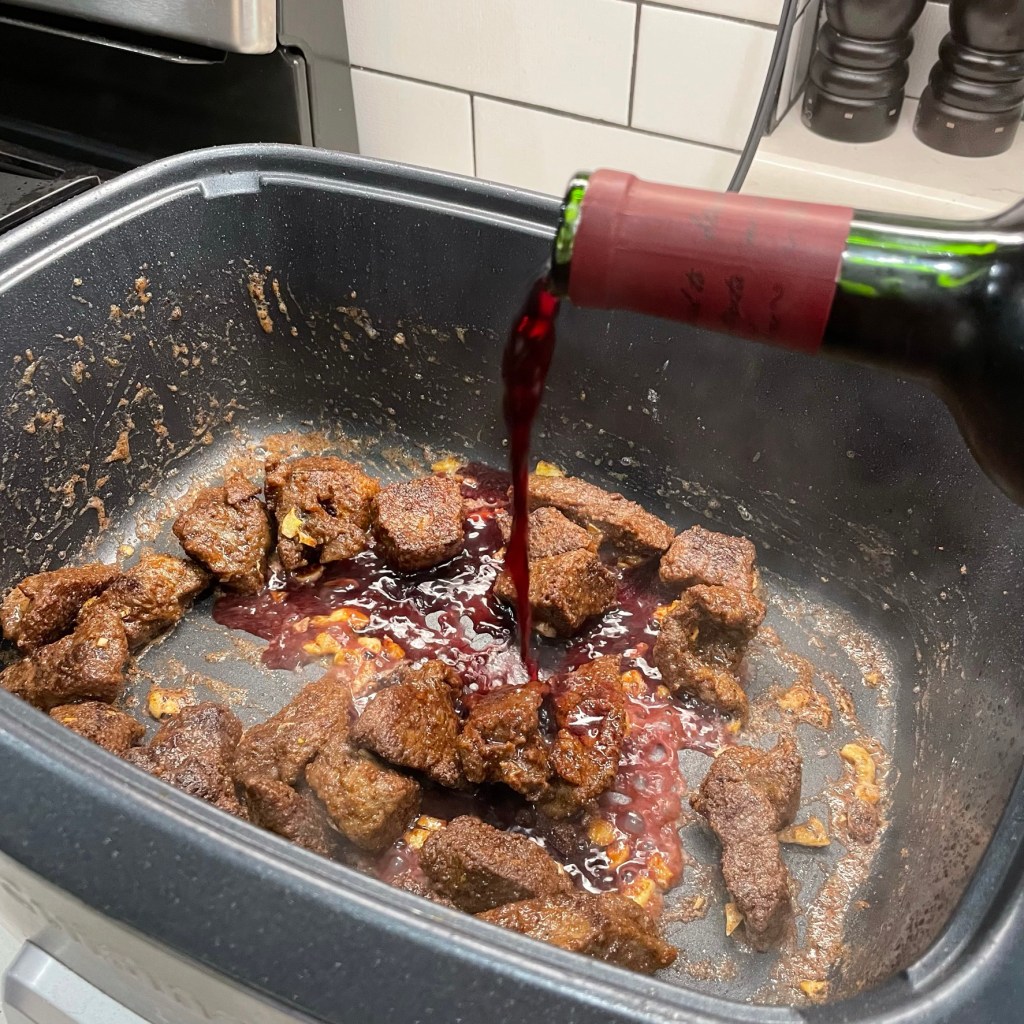
As soon as the meat was browned, I added a pat of butter and a few cloves of chopped garlic. A dusting of flour coated the meat and set the stage for gentle thickening, and then I splashed in about 1/4 cup of dry red wine. This adds depth of flavor to braising liquid, but if you don’t care for wine in food, you could substitute a splash of red wine vinegar or apple cider vinegar for a similar effect.


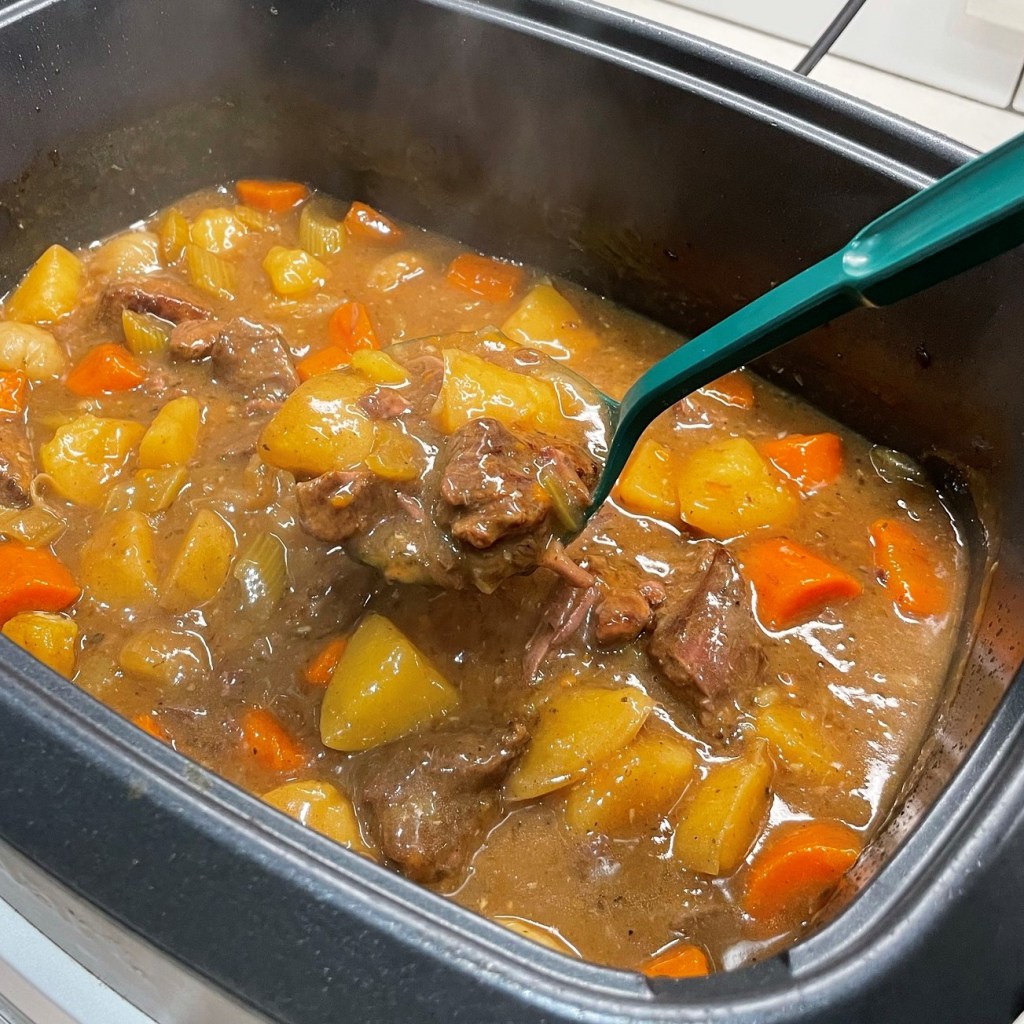
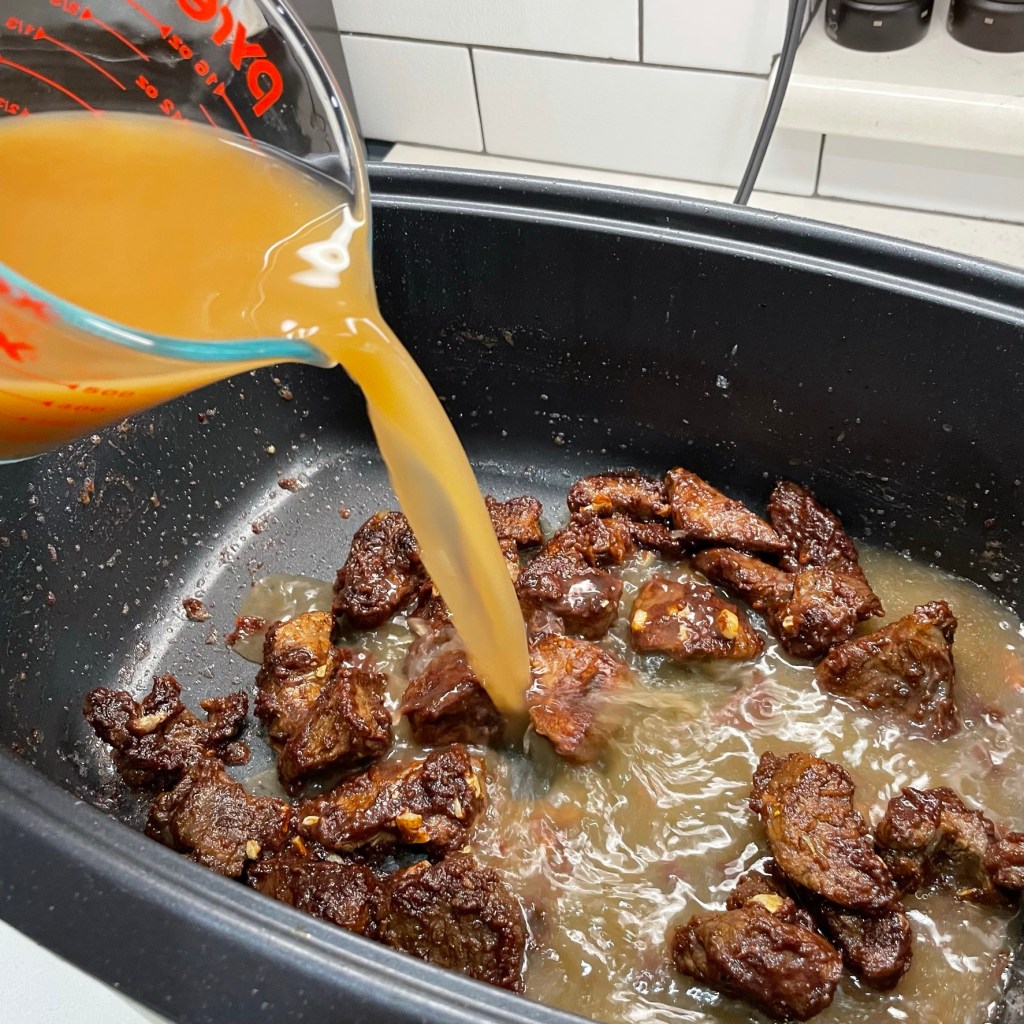
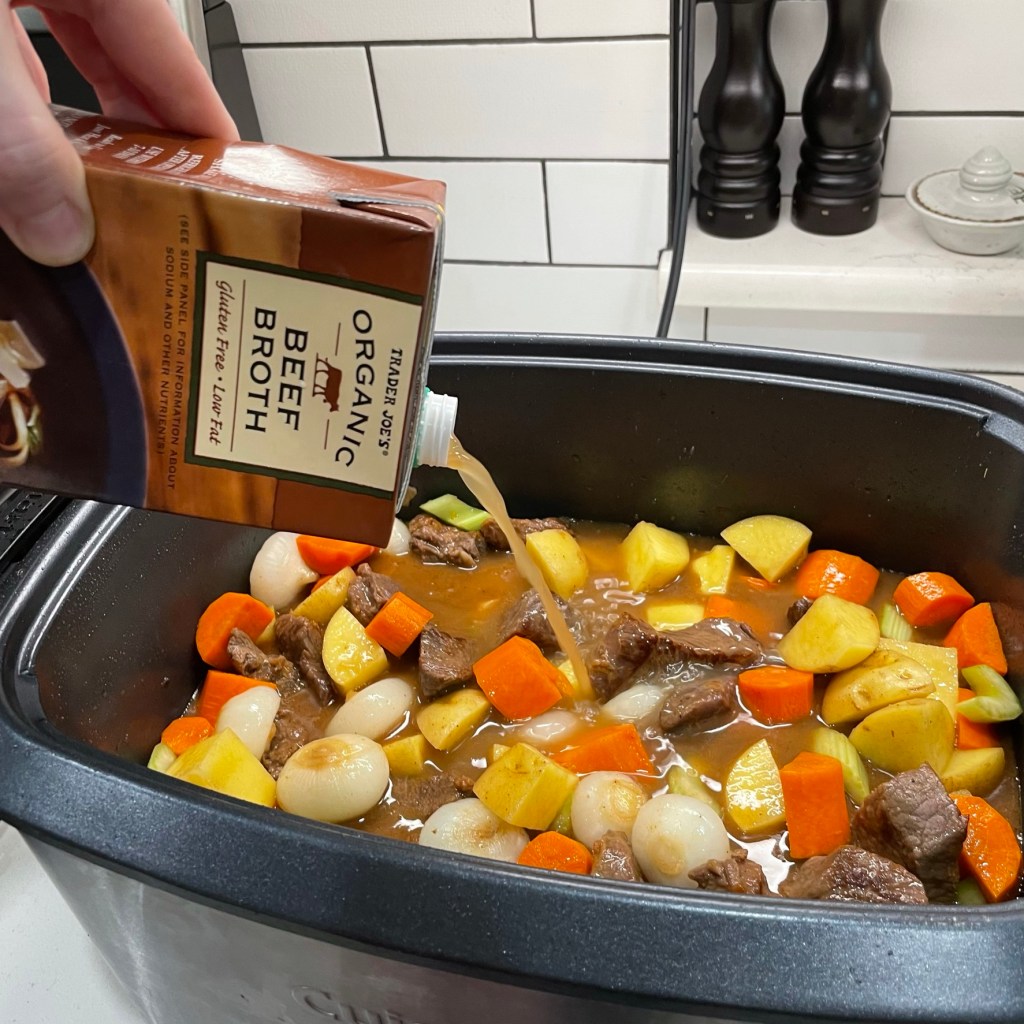
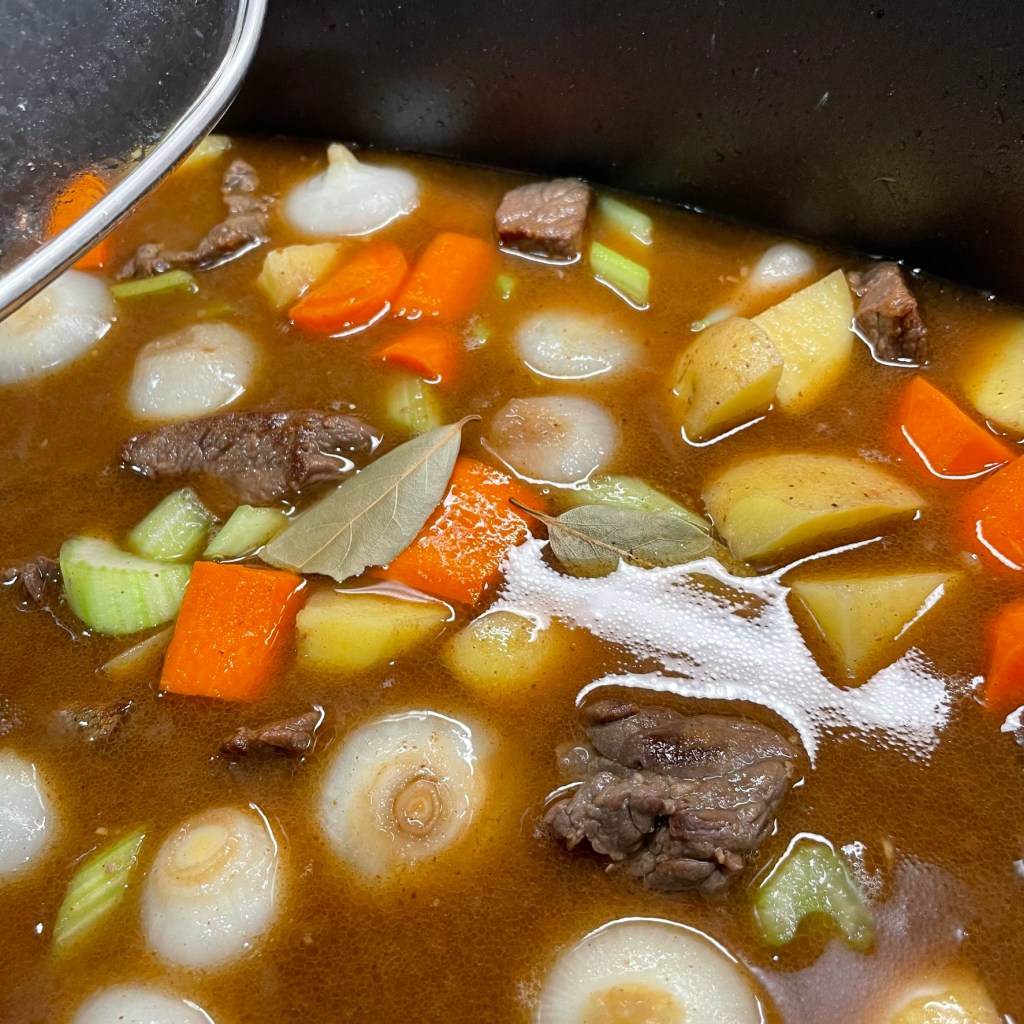
This is the time to transfer the browned meat to the slow cooker if your appliance only has heat settings, and it helps to have the cooker set on high heat setting when you do so. Add two cups of broth to the meat and stir it around until it begins to thicken slightly. Add the cut-up vegetables and cippolini onions, then add enough additional broth to just cover the cooker ingredients. Drop the temperature to low setting, add a couple of bay leaves into the stew, cover it and let it simmer for about six hours.


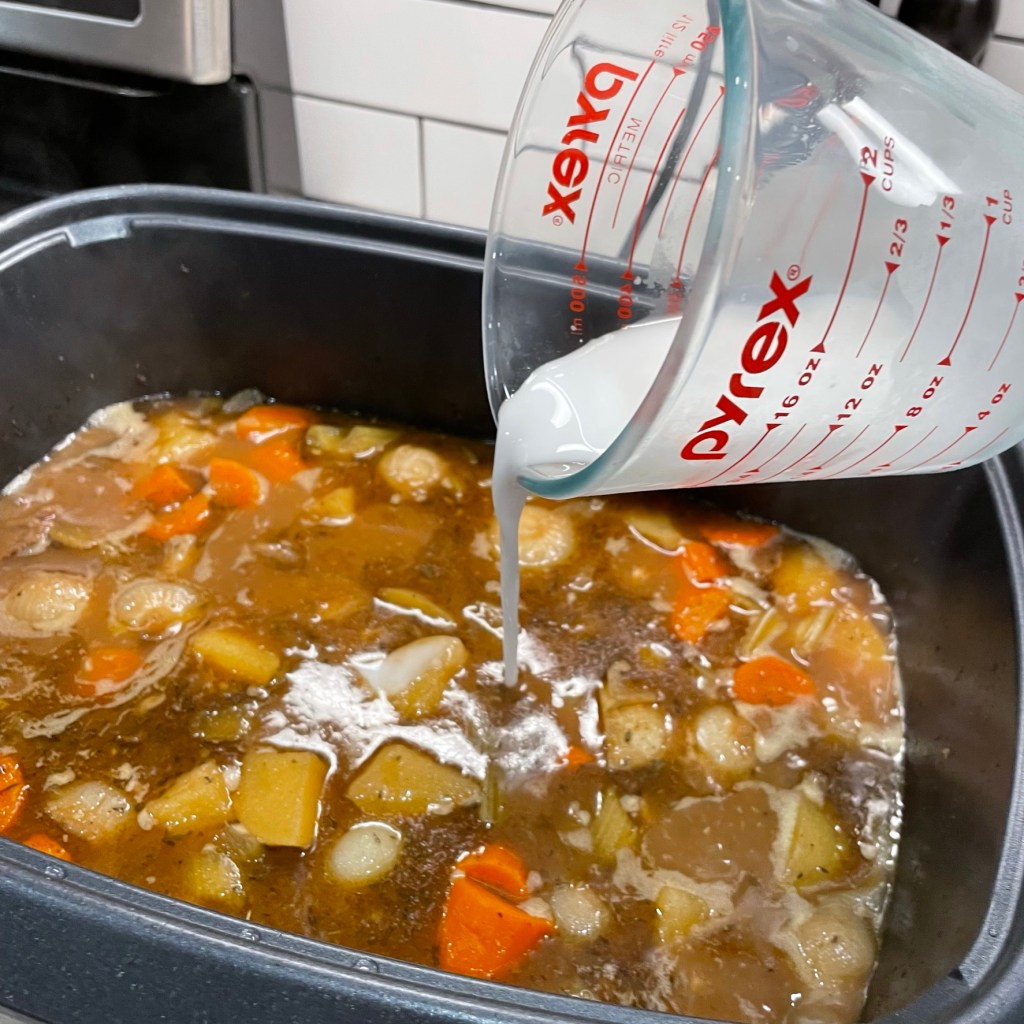
By that time, the beef will be very tender and the vegetables will be soft to the bite. If you like your stew a little thicker, a corn starch slurry will do the trick without giving an off taste. Turn the cooker heat back up to high and remove the bay leaves. Whisk together corn starch with equal amount of very cold water until smooth, and drizzle a stream of the slurry into the stew. When the braising liquid reaches a gentle boil, it will thicken to perfection.


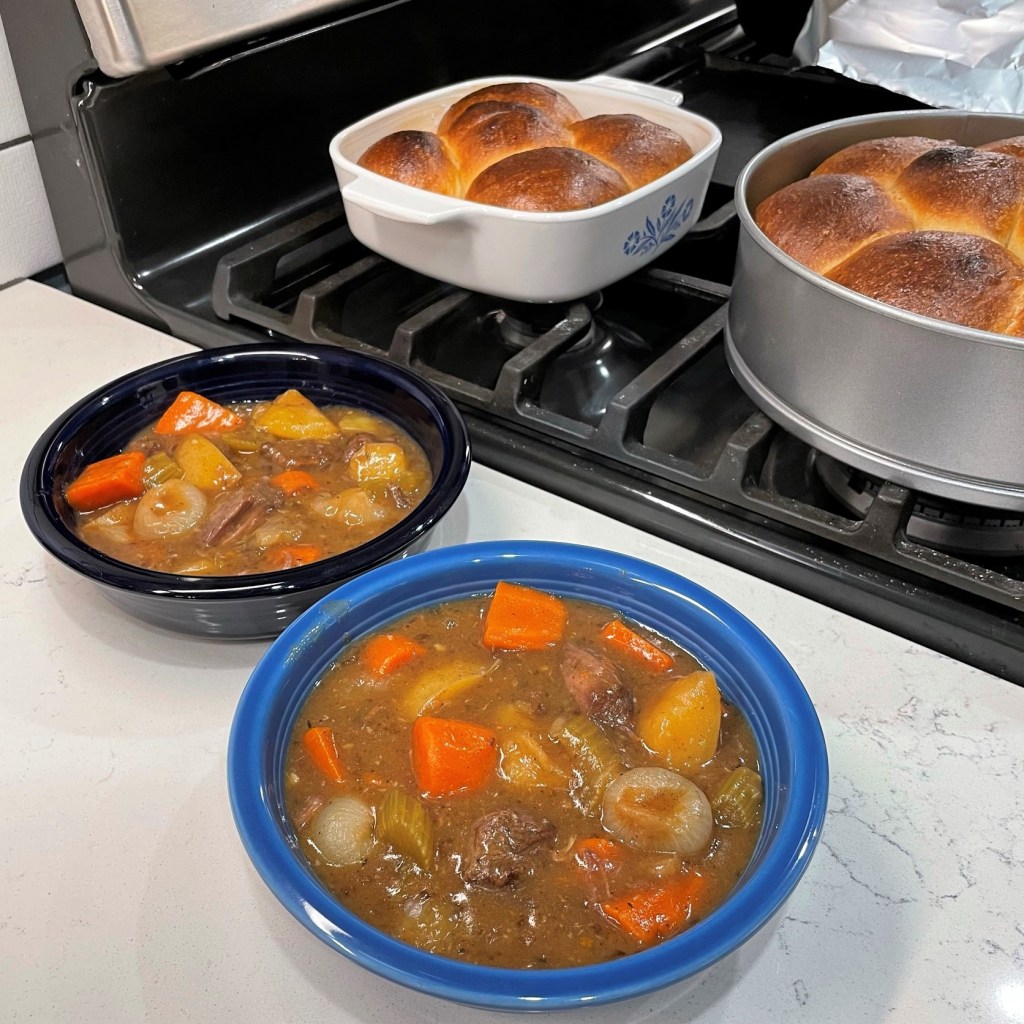
We served our beef stew with some homemade, warm-from-the-oven dinner rolls. Now, aren’t you glad it’s autumn? What comfort food have you been craving?


Easy Slow Cooker Beef Stew

  • Servings: About 8
  • Difficulty: average
  • Print

There's an easy way to enjoy an all-day stew without giving it all-day attention. Grab your slow cooker and let's get cooking!


Ingredients

  • 1 1/2 pounds grass fed stewing beef, or chuck roast cut into pieces
  • 3 Tbsp. extra virgin olive oil
  • 4 to 5 cloves garlic, smashed and chopped
  • 1 Tbsp. salted butter
  • 1/4 cup all-purpose flour
  • 1/3 cup dry red wine
  • 4 cups low-sodium beef broth, divided
  • 7 oz. cippolini onions, blanched for easy peeling
  • 2 cups fresh carrot chunks
  • 2 cups Yukon gold potato chunks (skin-on is OK)
  • 1 cup chopped celery, ribs removed
  • Kosher salt and freshly ground black pepper
  • 2 dried bay leaves
  • 2 Tbsp. corn starch blended with 2 Tbsp. ice water (optional, for additional thickening)

Directions

  1. Blot stewing meat (or chunks) dry with paper towels. Sprinkle with one heaping teaspoon kosher salt and black pepper to taste. Rest meat at room temperature for about 30 minutes.
  2. Heat olive oil in a cast iron skillet, Dutch oven or slow cooker (if yours has a browning function). Brown meat on all sides over medium heat. Add garlic and cook about 2 minutes, taking care to avoid burning it. Sprinkle flour over meat and garlic, and toss until it appears absorbed onto the browned meat.
  3. Pour wine over meat and quickly toss, scraping up any browned bits from the surface of the pot. The wine should thicken quickly, creating a sticky coating all over the meat. Transfer the meat (if using a separate pot) to the slow cooker on high setting.
  4. Add 2 cups of the beef broth and stir meat around until the broth begins to thicken slightly. Add onions, carrots, potatoes and celery and toss to combine. Add remaining broth and stir. Place bay leaves and thyme sprigs on top of the stew mixture. Reduce slow cooker to low setting and cook for about 6 hours, until beef pieces and vegetables are tender.
  5. If desired, stir in corn starch slurry during the last 30 minutes of cooking time (use high heat). Serve with crusty rolls to sop up all the delicious gravy!


All-day Tomato Bisque

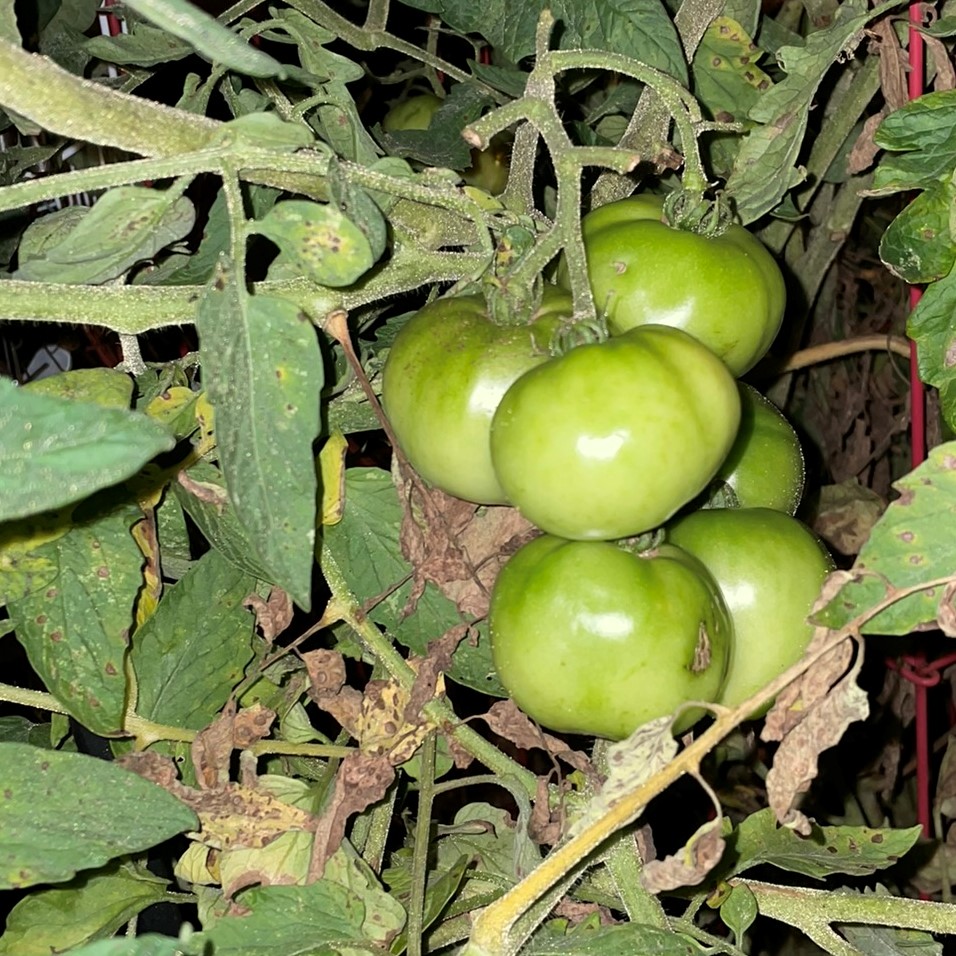
It was almost unbelievable to me, when I walked out toward our shriveled-up raised bed garden to begin breaking down the zucchini trellis and found—get this—new tomatoes!!!

It’s true that Southern summers tend to run a bit longer than some other regions, but I didn’t expect a tomato comeback, especially in the last days of September and given that our nighttime temperatures are sinking into the 40s. Mother Nature is something else though, isn’t she?


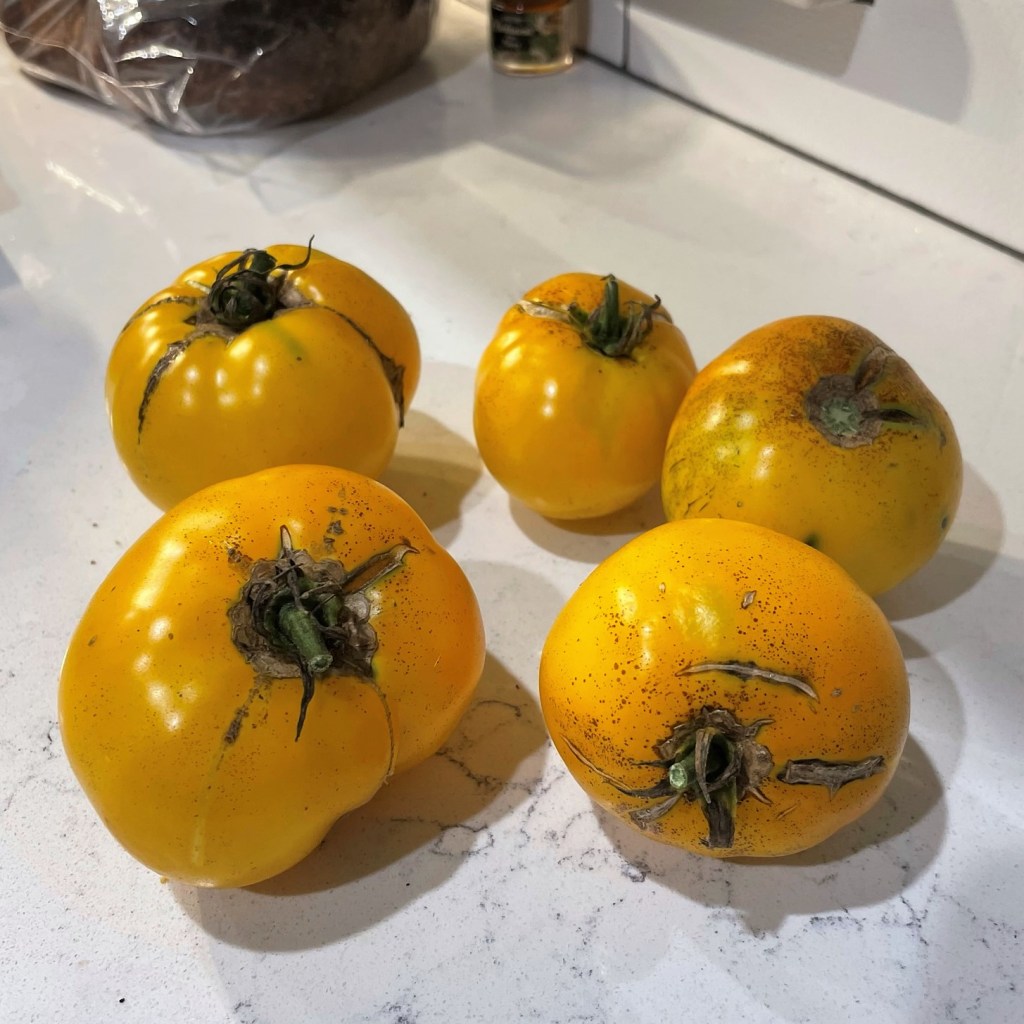
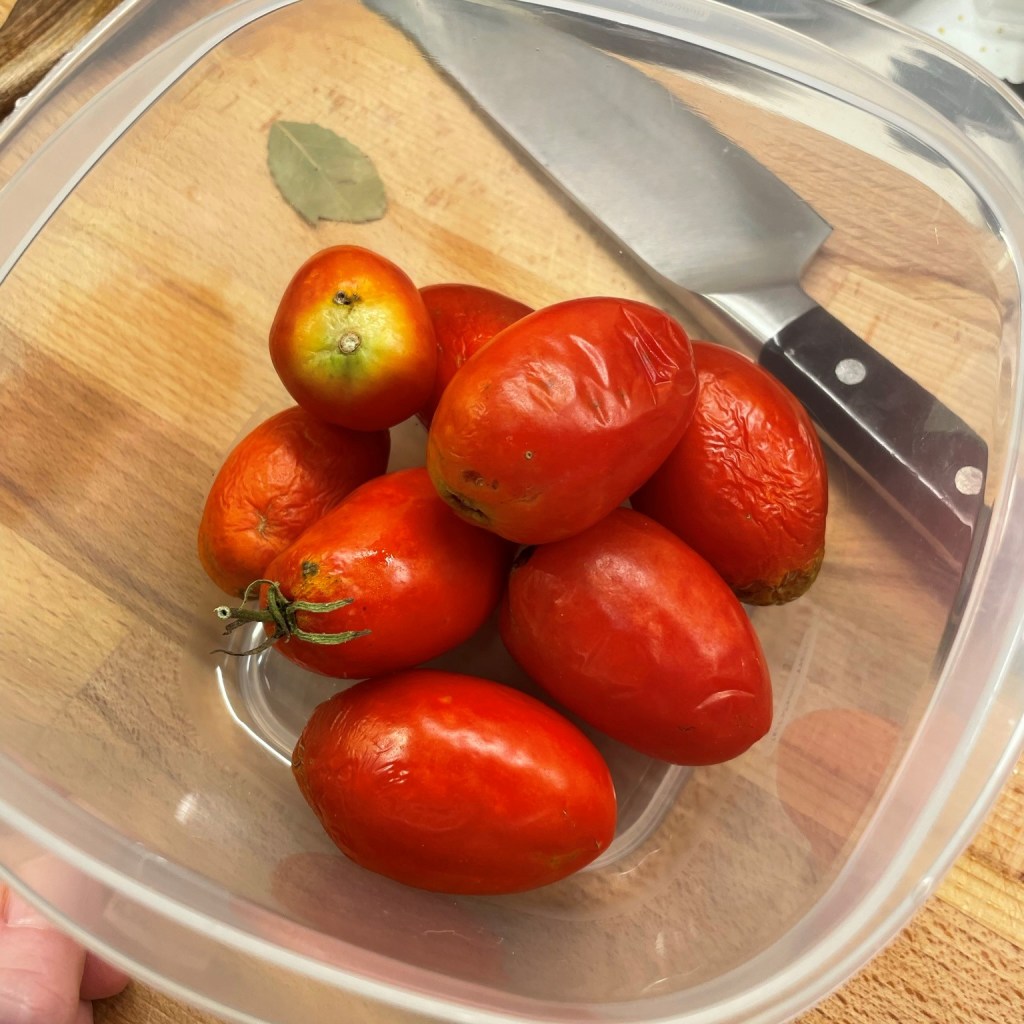
In addition to the lemon boy heirlooms (ripe and otherwise), we also had a bumper crop of a handful of Romas and though they didn’t look as pretty as the ones we enjoyed earlier in the summer, they were perfectly ripe and had a great flavor. I knew they’d be an excellent ingredient for homemade tomato bisque, which happens to be my husband’s favorite.

To be clear, you don’t literally need all day to make this bisque; I just needed something to do over the weekend, when our area was awash with the remnants of Hurricane Ian. Rather than making soup to freeze for a rainy day, I spent an entire rainy day making the soup we’d enjoy later. If you have half an hour, and don’t need to cook down fresh tomatoes, you could whip up this soup and use the simmering time to make a grilled cheese sandwich (our favorite side for this soup).

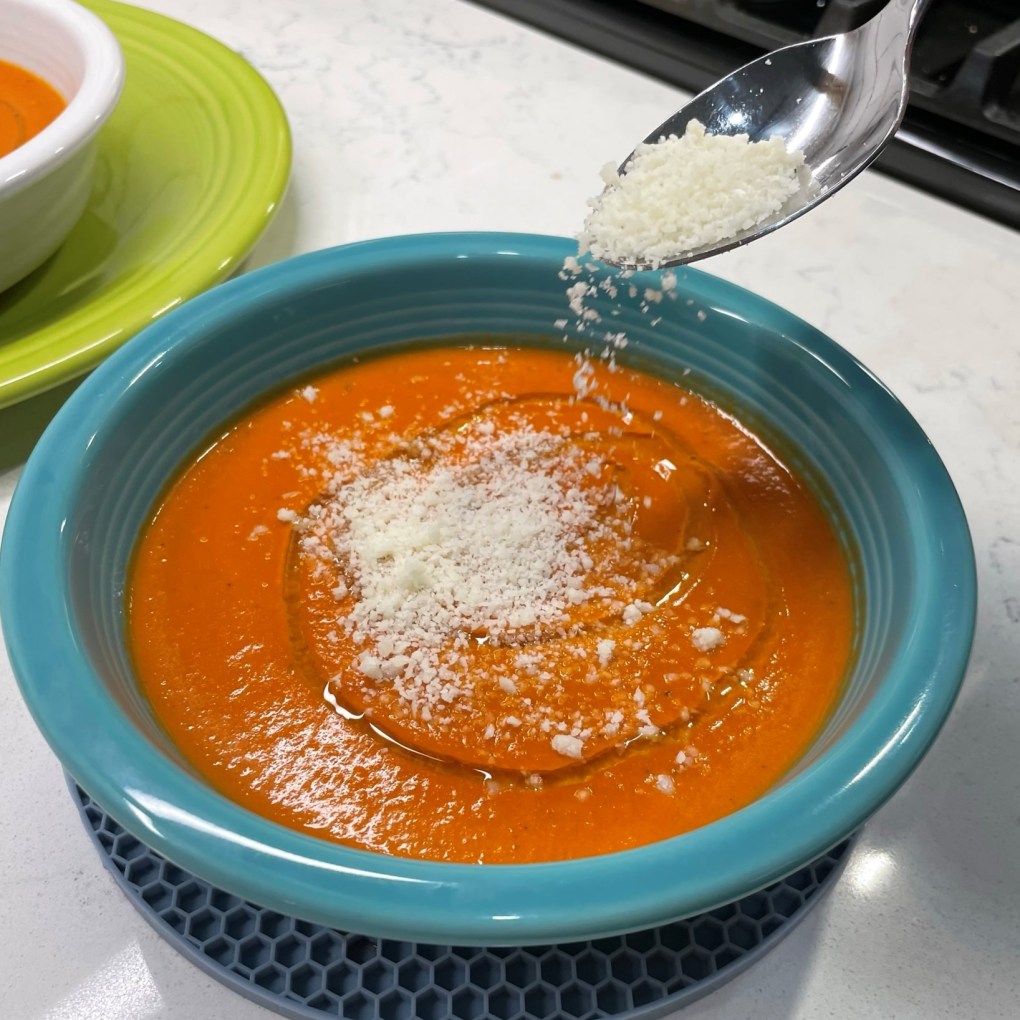
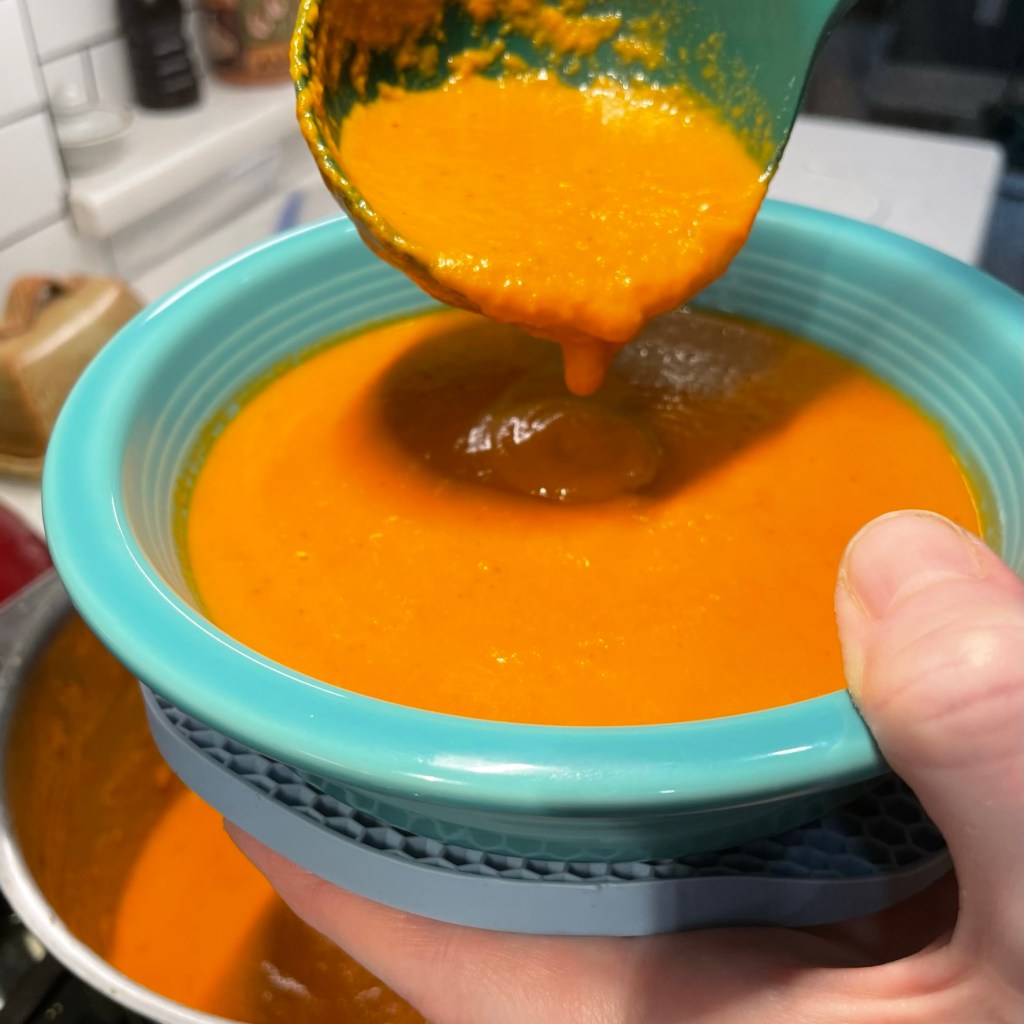
This is what a bowlful of comfort looks like.

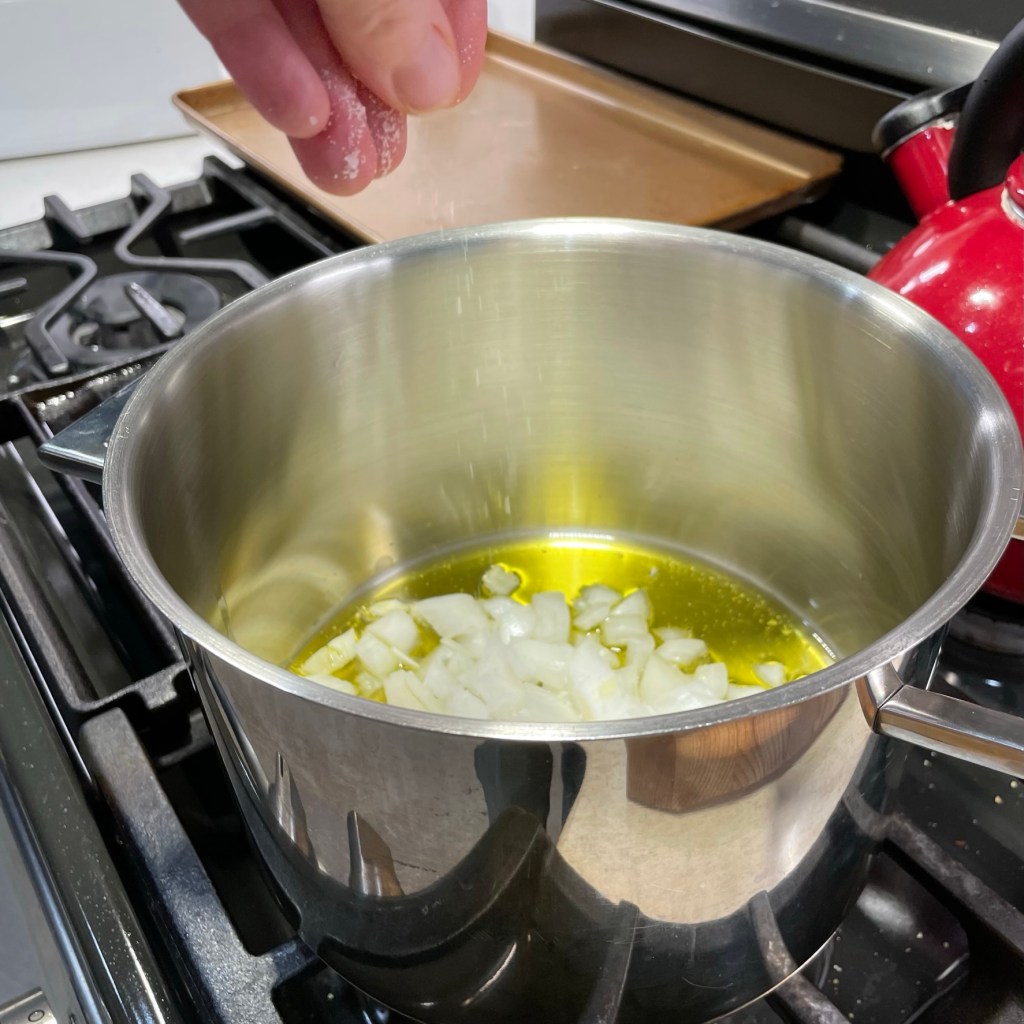
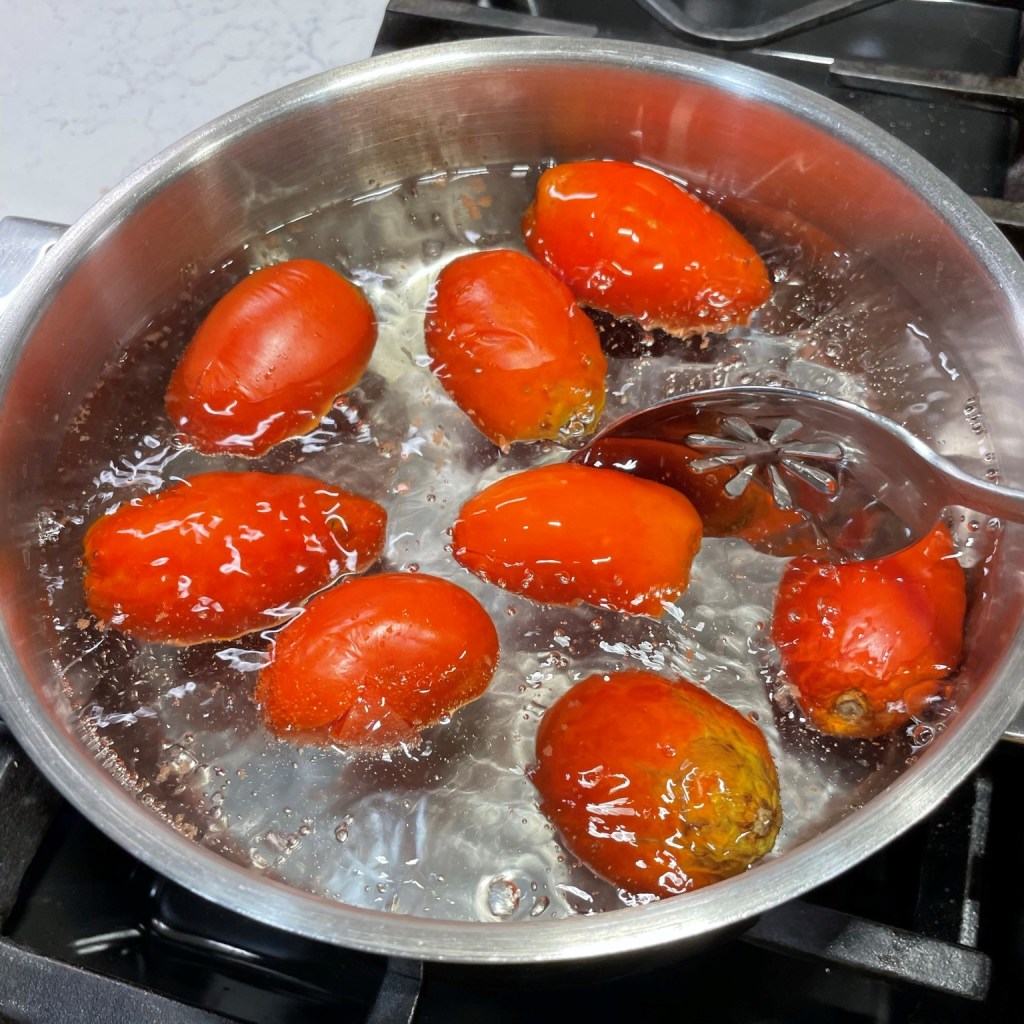
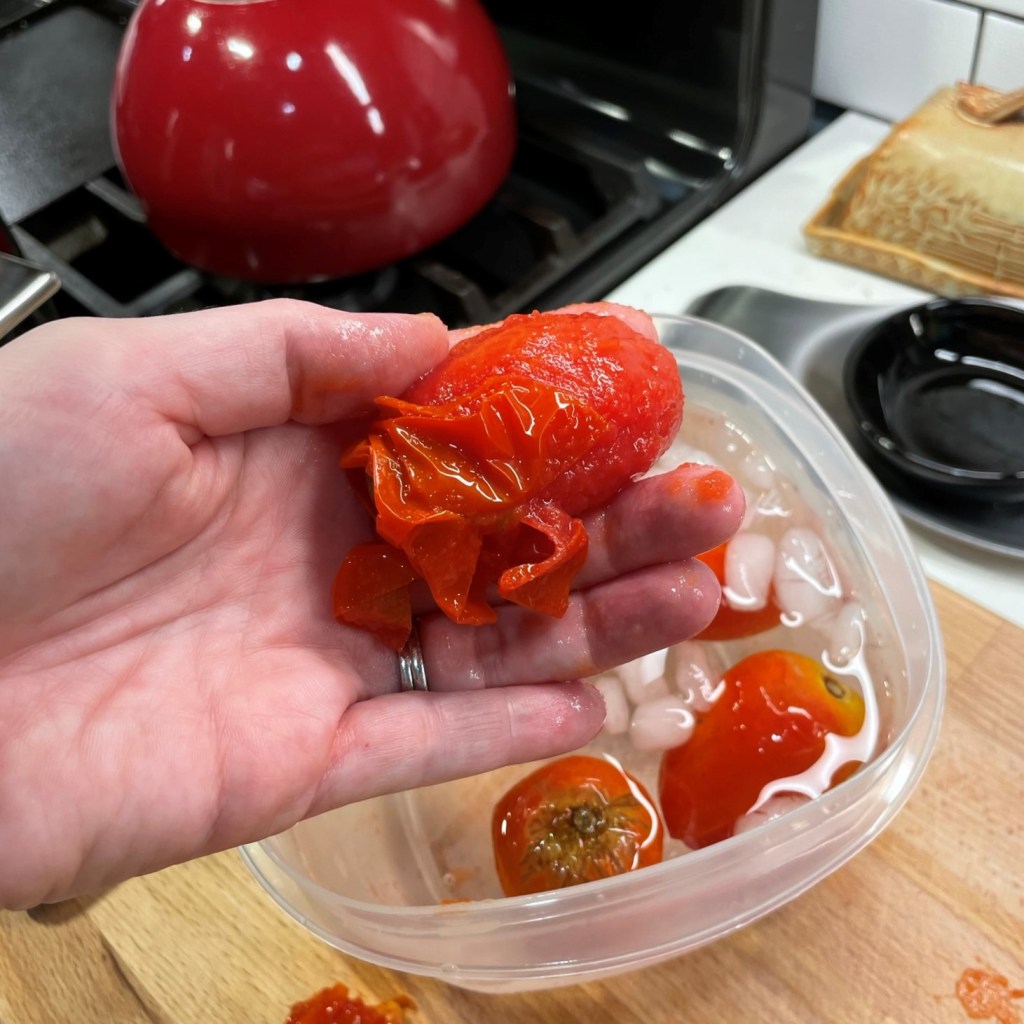
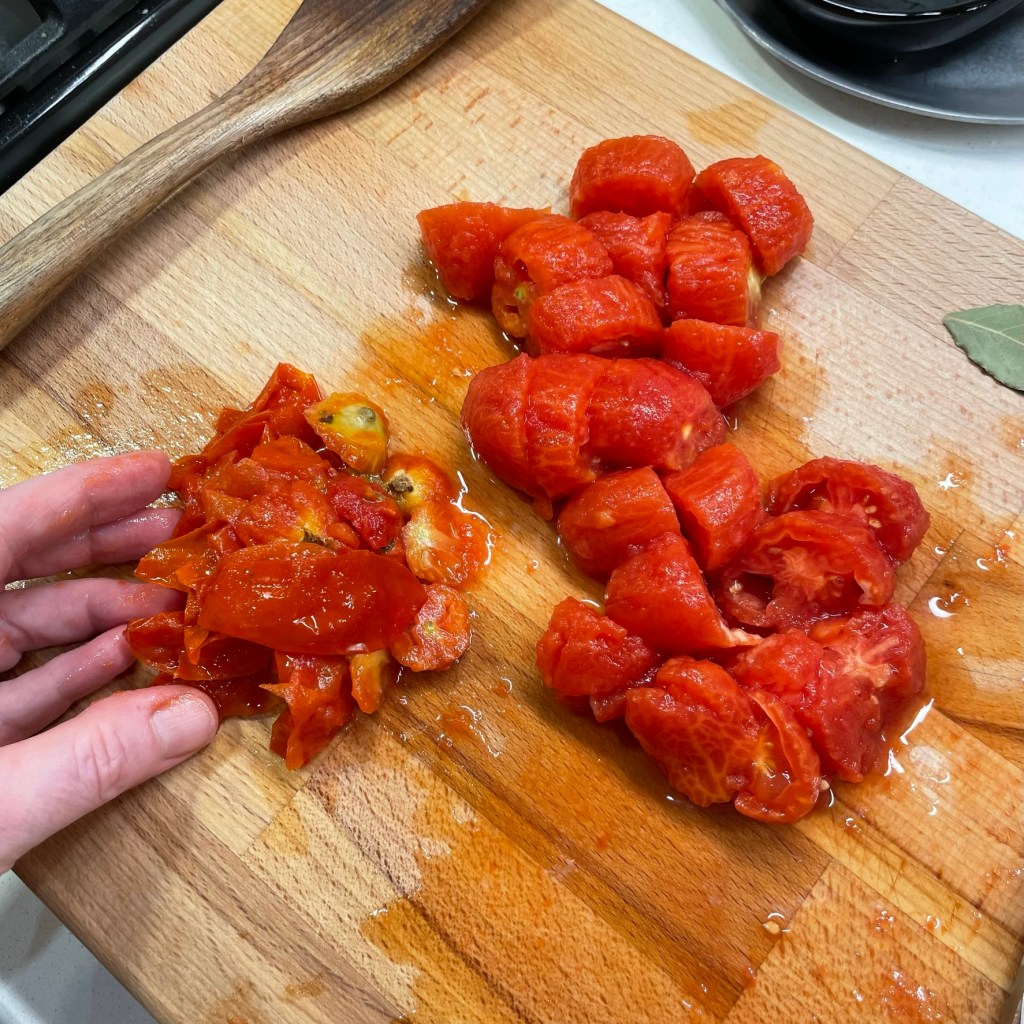
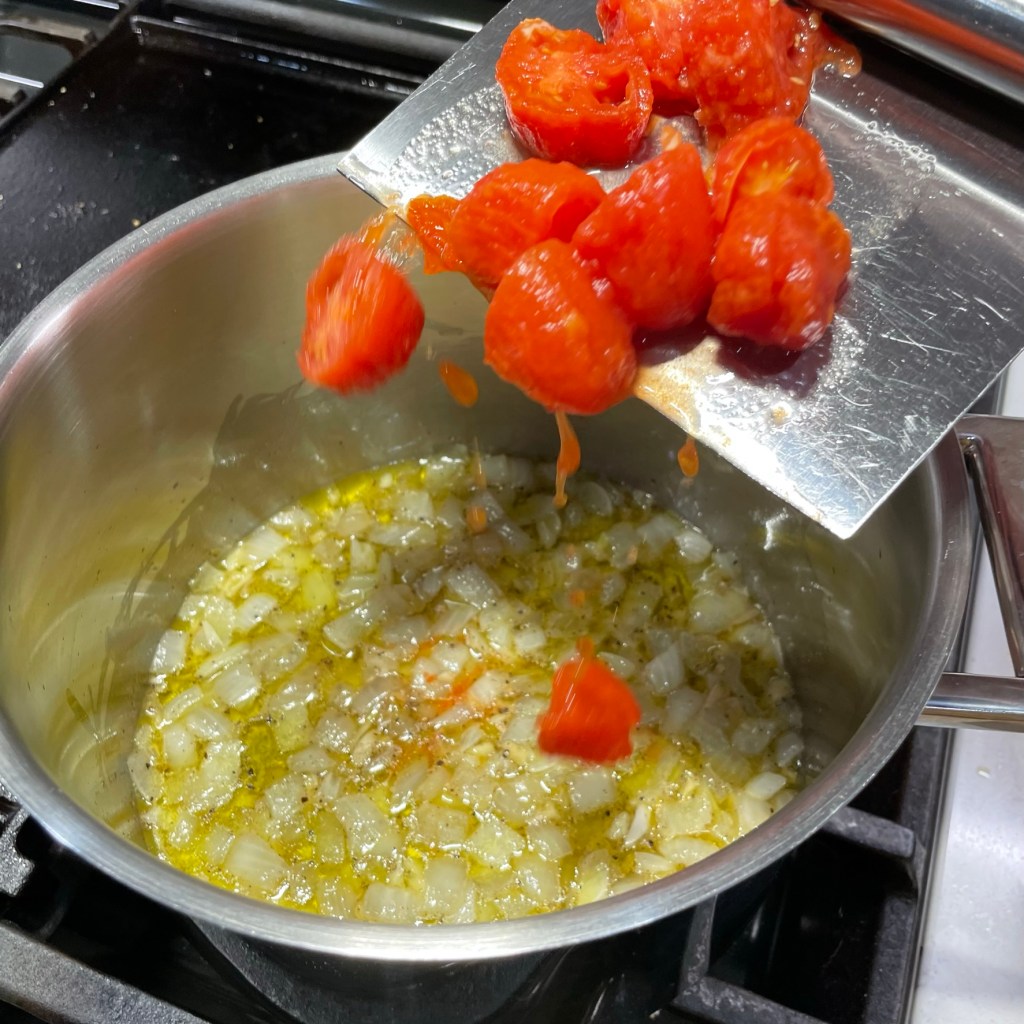
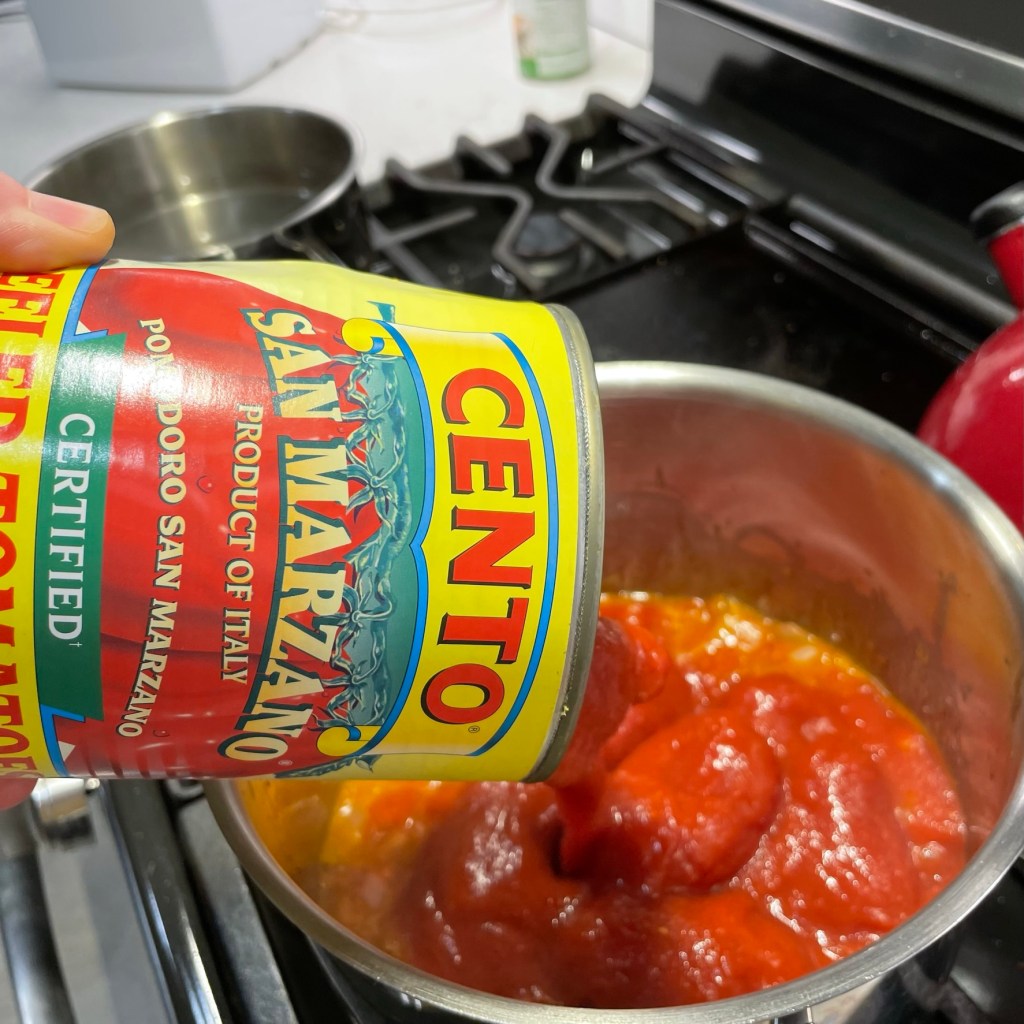
My plan for the bisque came together in seconds: I’d blanch and shock the tomatoes for easy peeling, then chop them up and add them to my soup pot along with sauteed onions and garlic, plus a large can of Italian tomatoes (San Marzano, of course) and give the mixture a nice, long simmer to marry the flavors.


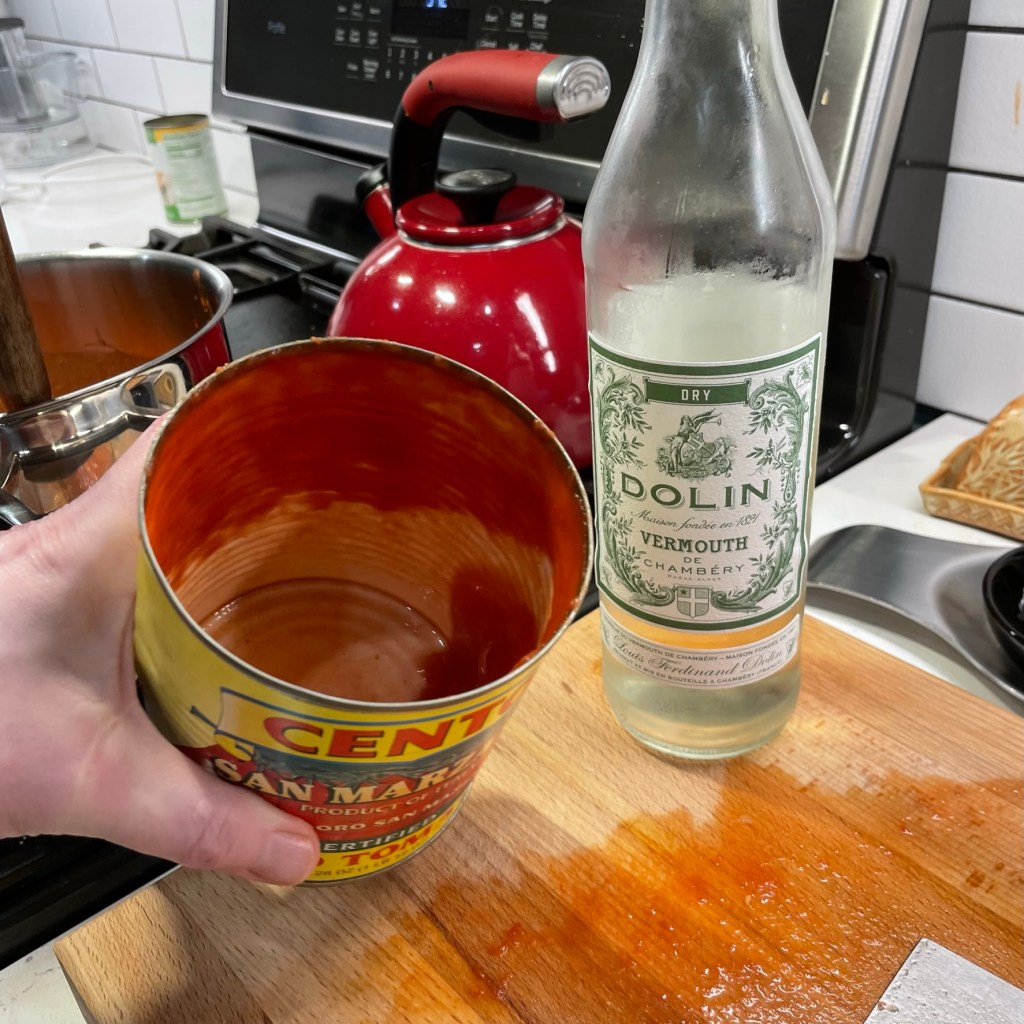
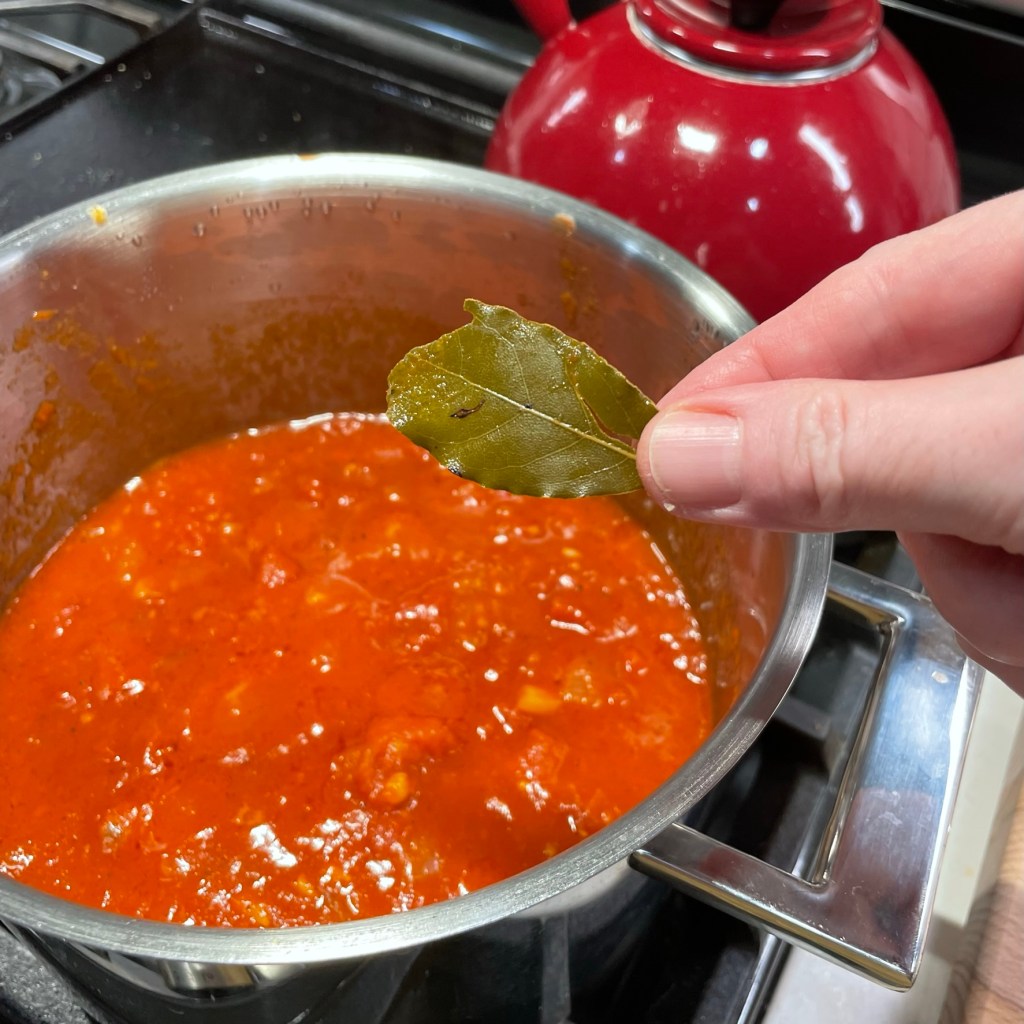
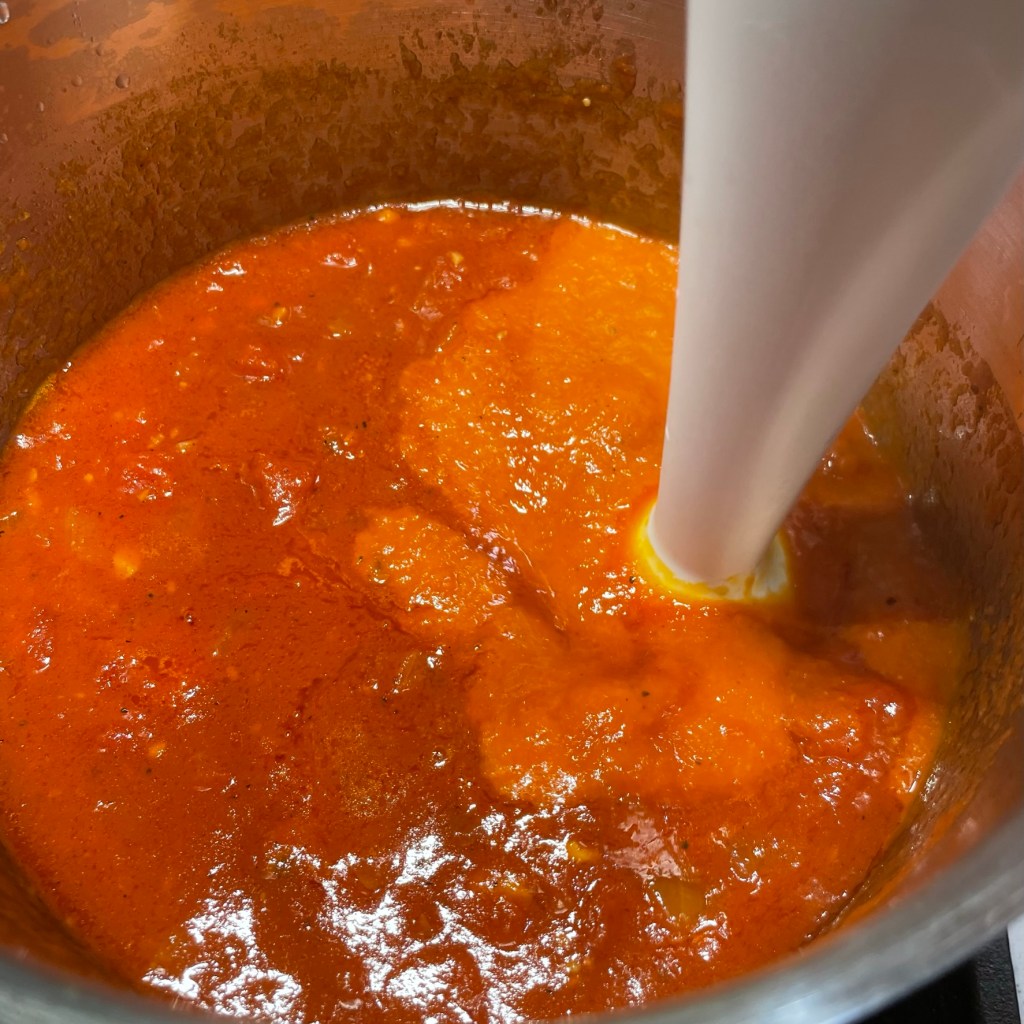
For a flavor boost, I swished out the tomato can with a few tablespoons of dry vermouth (the same spirit I put in my favorite martini) and dropped into the pot a dried bay leaf, which is always a good bet for a dish that is going in for a long simmer. Two hours later, I removed the bay leaf and brought out the immersion blender to puree the soup into the creamy texture that my hubby loves.


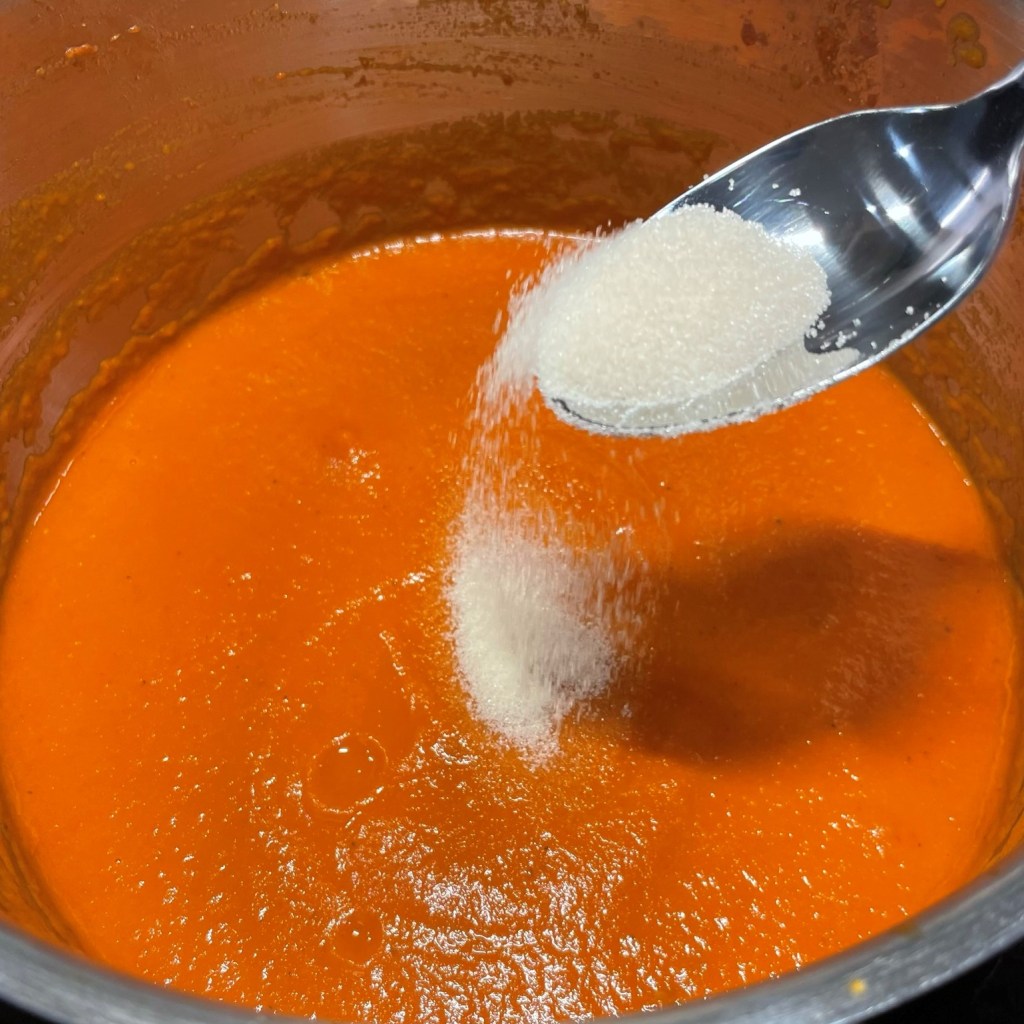
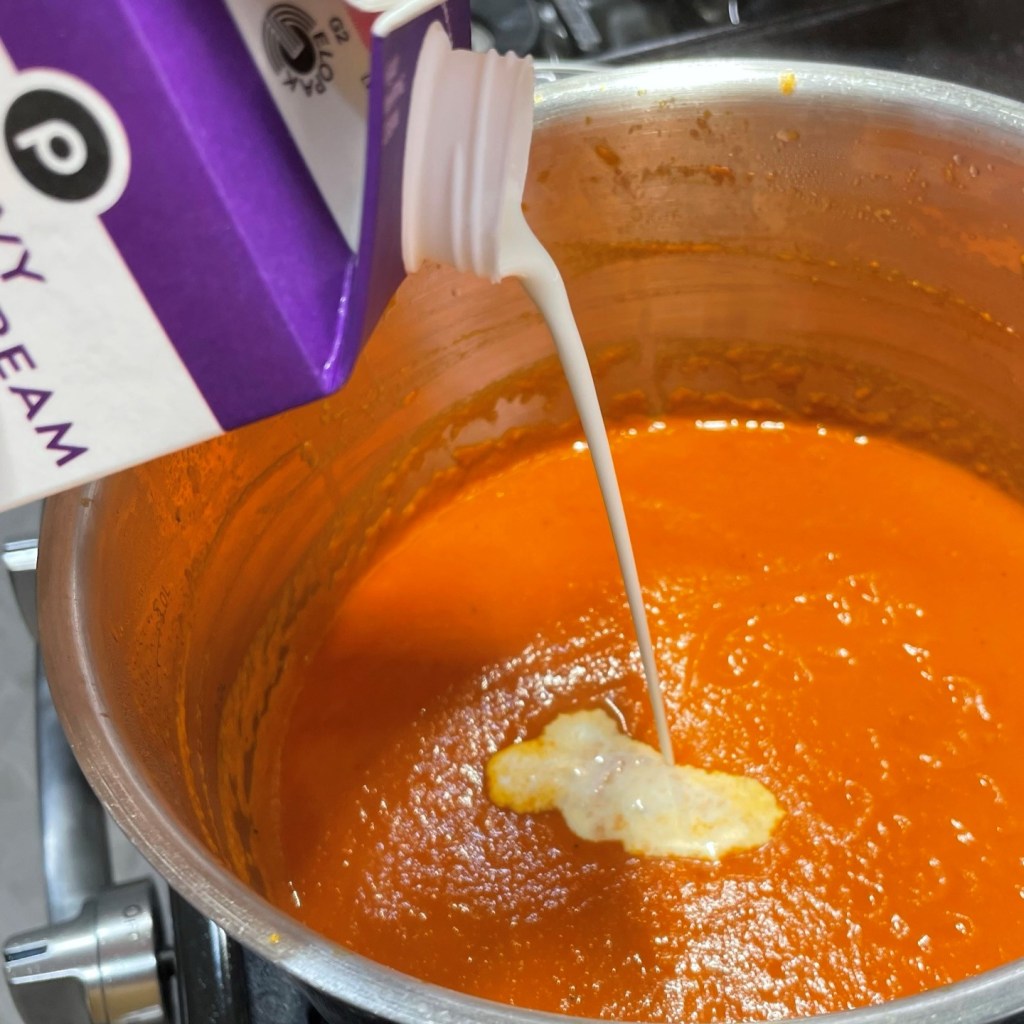
The resulting soup was really good, and I could taste the freshness that my surprise Romas contributed to the pot. It needed a little more depth, though, and definitely a little more color. Maybe you have noticed, as I have, that a homemade tomato soup or sauce tends to come out more orange than red, and it turns out there is a good (and scientific) reason for that, as I learned a few days ago in this article in my news feed. A little bit of tomato paste deepened the color and intensified the tomato flavor, a slight spoonful of sugar balanced the acidity, and a generous splash of cream made it bisque-y.


This was a great use of my encore tomatoes, though this easy homemade soup would be delicious with only canned tomatoes, which are usually packed at their peak of freshness. You might replace my fresh tomatoes with an extra, 15-ounce can, or simply reduce the other ingredients a bit for a smaller batch.

As for us, we are glad for a little extra, as a warm homemade soup will be most welcome at the end of today’s Yom Kippur service (that’s the Jewish holiday that has a 24-hour complete food-and-water fast), and we will undoubtedly devour our leftovers!

All-day Tomato Bisque

  • Servings: 8 cups or 6 bowls
  • Difficulty: Average
  • Print

Of course, you don't really need to spend all day making this soup, but the long simmer time makes a world of difference in flavor, especially when using fresh garden tomatoes.


Ingredients

  • 8 fresh, small plum tomatoes (or substitute a 15-ounce can of diced tomatoes)
  • 2 to 3 Tbsp. extra virgin olive oil, depending on taste
  • 1/2 large onion, chopped
  • 2 cloves garlic, smashed and chopped
  • Kosher salt and black pepper to taste
  • 28-ounce can whole, peeled tomatoes (San Marzano or another type that is packed in puree)
  • 1/4 cup dry vermouth (or dry white wine, such as pinot grigio)
  • 1 whole dried bay leaf
  • 2 Tbsp. tomato paste
  • 1 tsp. sugar (optional)
  • 1/4 to 1/2 cup heavy cream (use less or substitute half and half for reduced fat)

Directions

  1. Put on a pot of water to boil for blanching the fresh tomatoes. Wash and score the bottom (blossom end) with an X for easy peeling. Carefully immerse the tomatoes into the boiling water for a minute or two, just long enough for the skins to split. Transfer immediately to a bowl of ice water, then peel and chop them.
  2. While water is boiling, heat olive oil in a heavy-bottomed soup pot over medium heat. Add onions and sprinkle with salt. Cook until softened and slightly transparent. Add the garlic and cook another minute.
  3. Add the fresh, chopped tomatoes to the pot and stir to heat through. Add the large can of tomatoes (juice and all, but remove basil sprigs) and break them up with your cooking utensil. If you wish, you can squeeze the whole tomatoes with your hands as you add them to the pot, and I would recommend this if you’re in a hurry. For long, slow simmering, the heat will break them up just fine.
  4. Add vermouth (or wine) to the tomato can and swirl it to rinse out the leavings. Add this to the soup and bring the pot to a slight boil, then cover and reduce heat. Add the bay leaf and simmer for at least 30 minutes or up to several hours. Check the soup occasionally and stir to keep it from burning on the bottom.
  5. When tomatoes break easily under pressure from your utensil, use an immersion blender to puree it as smooth as you like. Be sure to remove the bay leaf first! If you don’t have an immersion blender, allow the soup to cool and puree it in batches in a regular blender. Keep the vent cap open for safety.
  6. Stir in tomato paste and sugar (if using), and adjust salt and pepper to taste. Stir in cream just before serving.



Slow Cooker Cuban-style Pork

Between my husband and me, there is exactly zero percent Hispanic heritage—yet somehow, the foods of Hispanic cultures fall squarely into the “favorites” category for both of us, and it has been this way for all of our adult lives. For me, the passion for Hispanic flavors started much earlier, during my younger childhood when I lived with my mother in southern Colorado, where at least half the kids I went to school with were of Mexican descent. Their moms made the best food.

Les, who grew up in New York, was surrounded by the foods of seemingly every culture except Mexican, though other Hispanic flavors were obviously present in the Puerto Rican-populated areas of the city. He remembers his section of Queens, famed for being among the most multicultural in the world, was the first to create “fusion” foods, but alas, he says, he never ate at “La Casa Wong.” His first experience of addictive Spanish-influenced foods didn’t come until he spent a few young adult years in southern California, but even then, he didn’t get the full effect because those restaurants were mostly chains.

Today, thanks to our collective passion for cooking and adventurous approach to food, we are enjoying more than our fair share of all the world’s flavors, including those of cultures we have yet to visit.

Over the past few months, the 2014 movie Chef, with Jon Favreau leading a tremendous all-star cast, has been in hot rotation on our streaming service. Les and I both saw this movie in the theater when it was released (a good year before we started dating), but we still can’t resist watching it every time it appears in our program lineup. We love it, not only because it’s a compelling story of a talented chef who walks away from an unfulfilling restaurant job to start a food truck, but also for the joyful Latin music, the sweet relationship that develops through teachable moments with his adorable, mop-headed son, and the fantastic food that results from his commitment to doing food right and making it from the heart. If you haven’t seen this film, we highly recommend it.


The main food that always gets us drooling when we watch Chef is the Cuban pork, and the most authentic version would be slow roasted in the oven, as sous chef Martin prepares it in the film. But this is my version of it, done the easy way in a slow cooker. The key to exceptional flavor and texture is low-and-slow cooking and (of course) the marinade. My first taste of this mouthwatering, slow-roasted meat was in Key West, and rumor has it that was most likely the origin of the dish. But let’s not go down any rabbit holes of debate about that, because there’s cooking to be done!


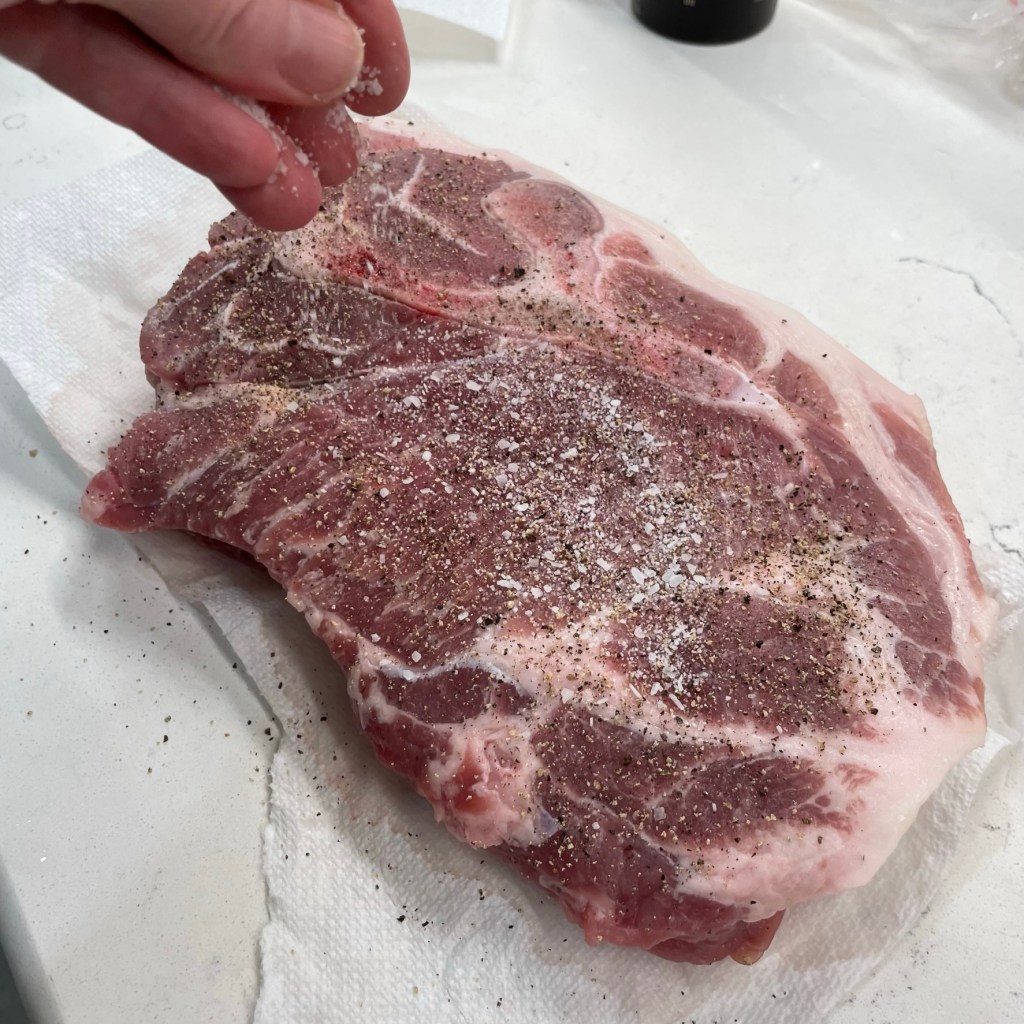
Start with a pork shoulder, and for the best flavor, get one with the bone in. Trim off some of the excess fat, but don’t take it all off because there’s a world of flavor in it, and it will help protect the meat from drying out during cooking; you can easily skim it off the braising liquid later if you so choose. Rinse the shoulder to rid it of any bone shards, pat it dry with paper towels and give it a dose of salt and pepper on all sides. If your shoulder is very large, cut several slits all over the meat and insert smashed cloves of garlic into them. Mine was only three and a half pounds, so the marinade was enough to flavor it all the way through.


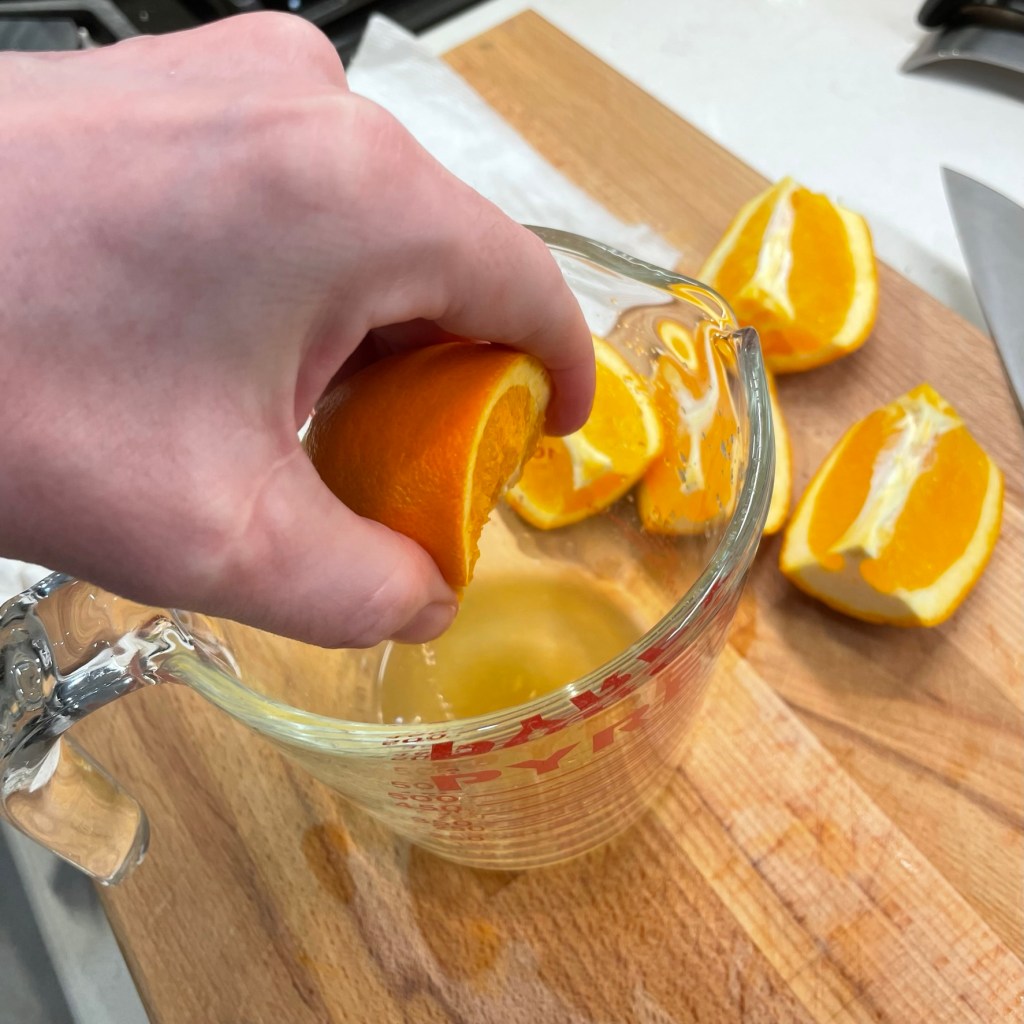
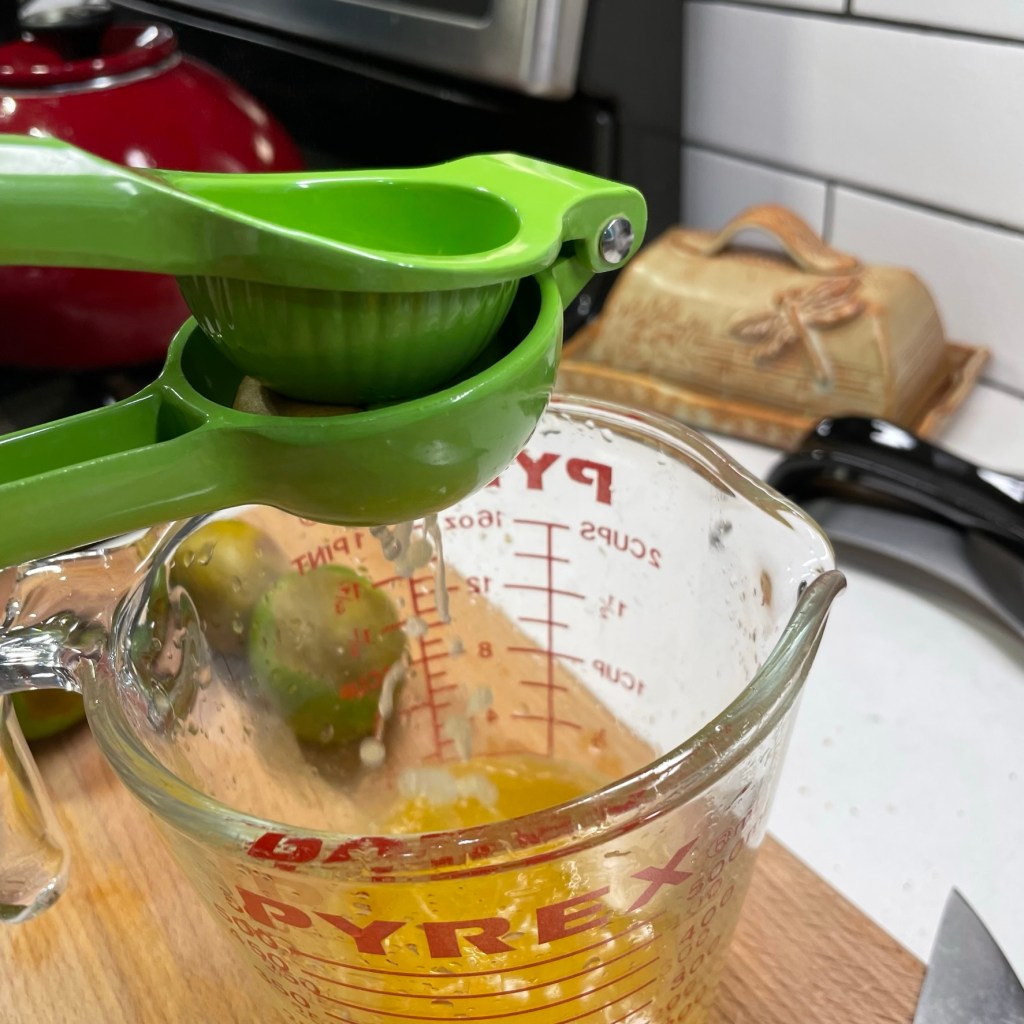
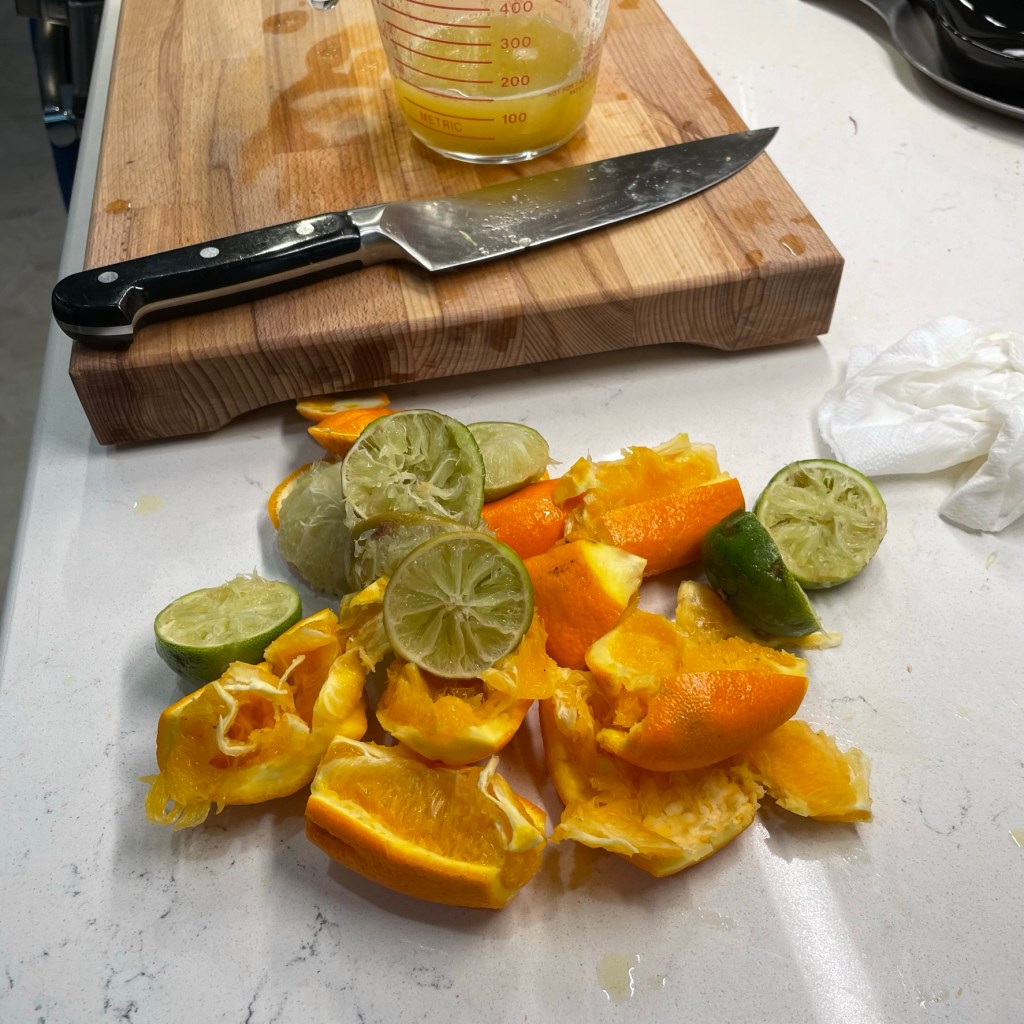
The marinade for this pork is called mojo, not like getting your mojo back or Mr. Mojo Risin’, but Spanish “j,” pronounced as an “h.” Try it with me: “mo-ho.”. The marinade begins with the juice of oranges and limes. For truly authentic mojo marinade, you’d use only Seville oranges, which are sour compared to typical navel oranges, but they aren’t easy to come by in the States, so a combination of navel oranges and limes is a common substitute. I kept a few of the spent orange wedges after juicing, and I’ll explain why in a moment.


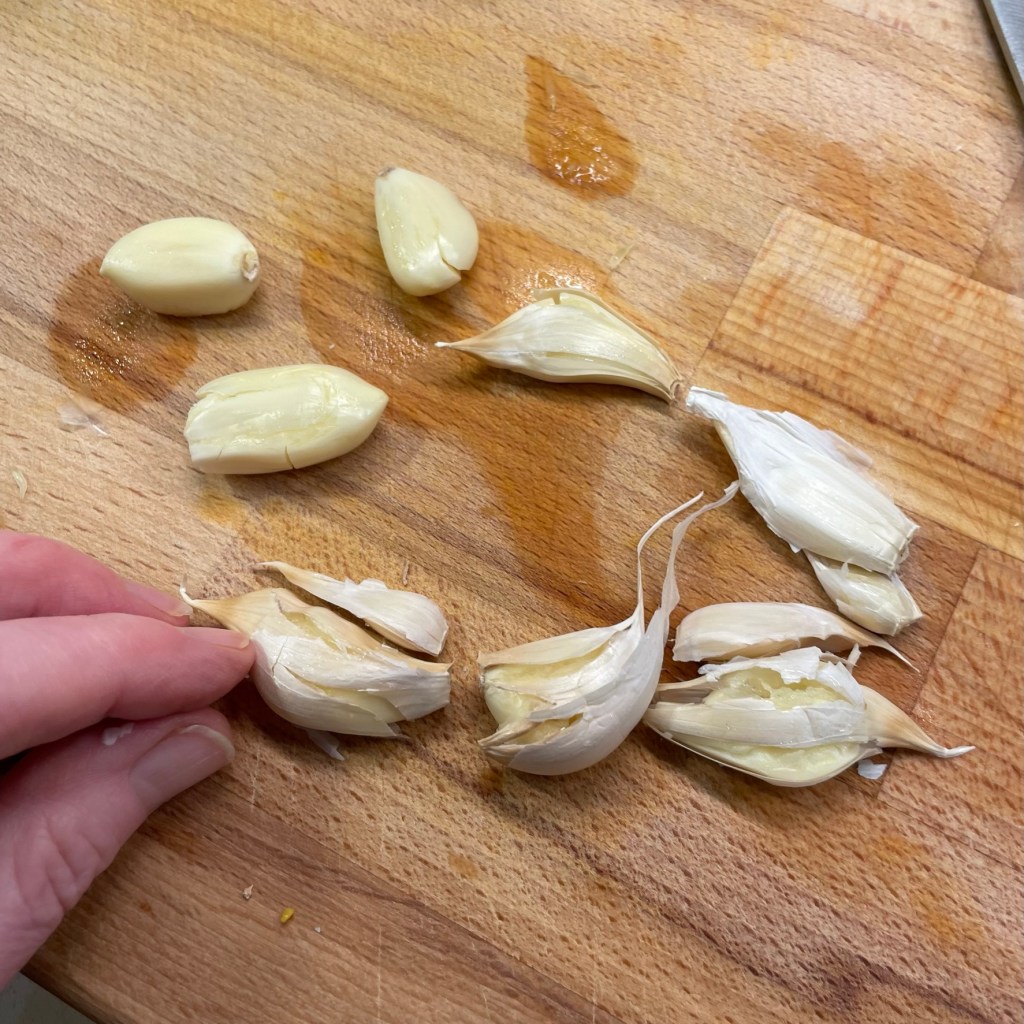
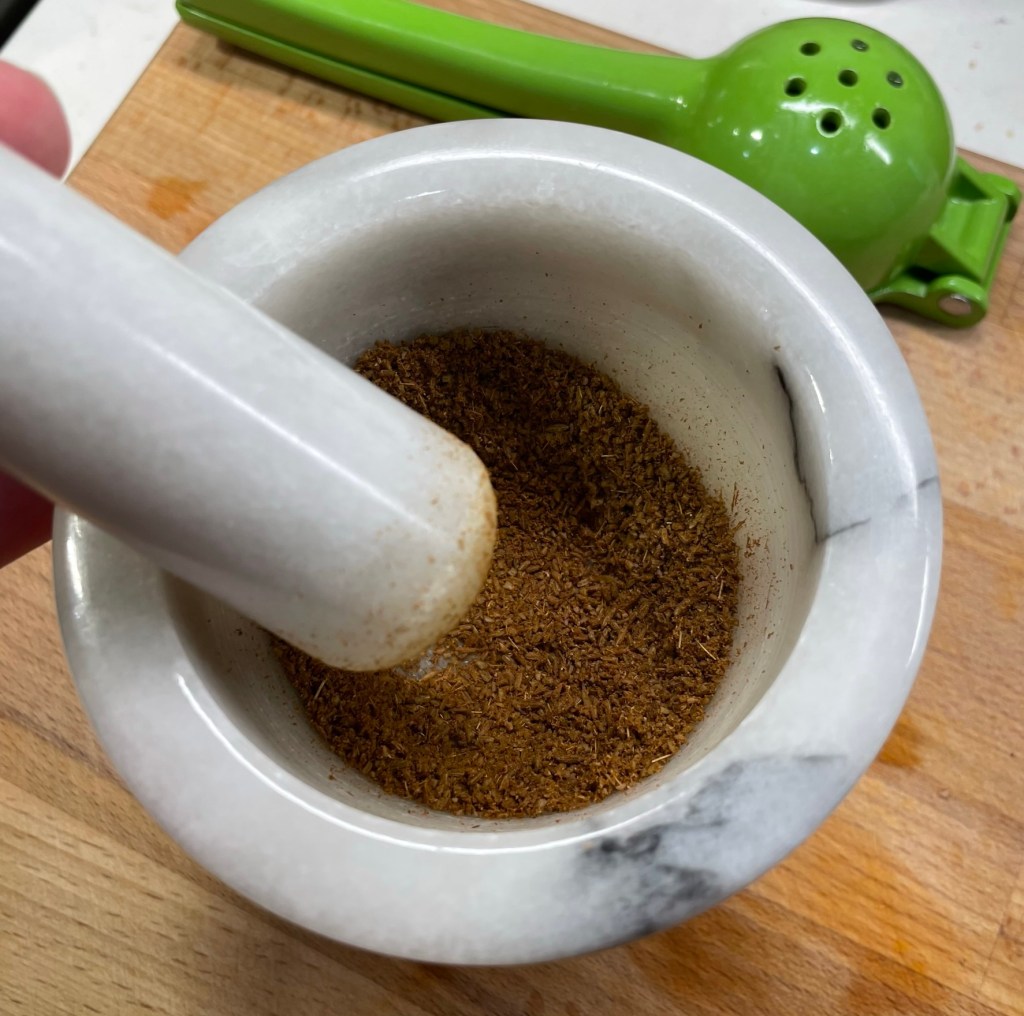
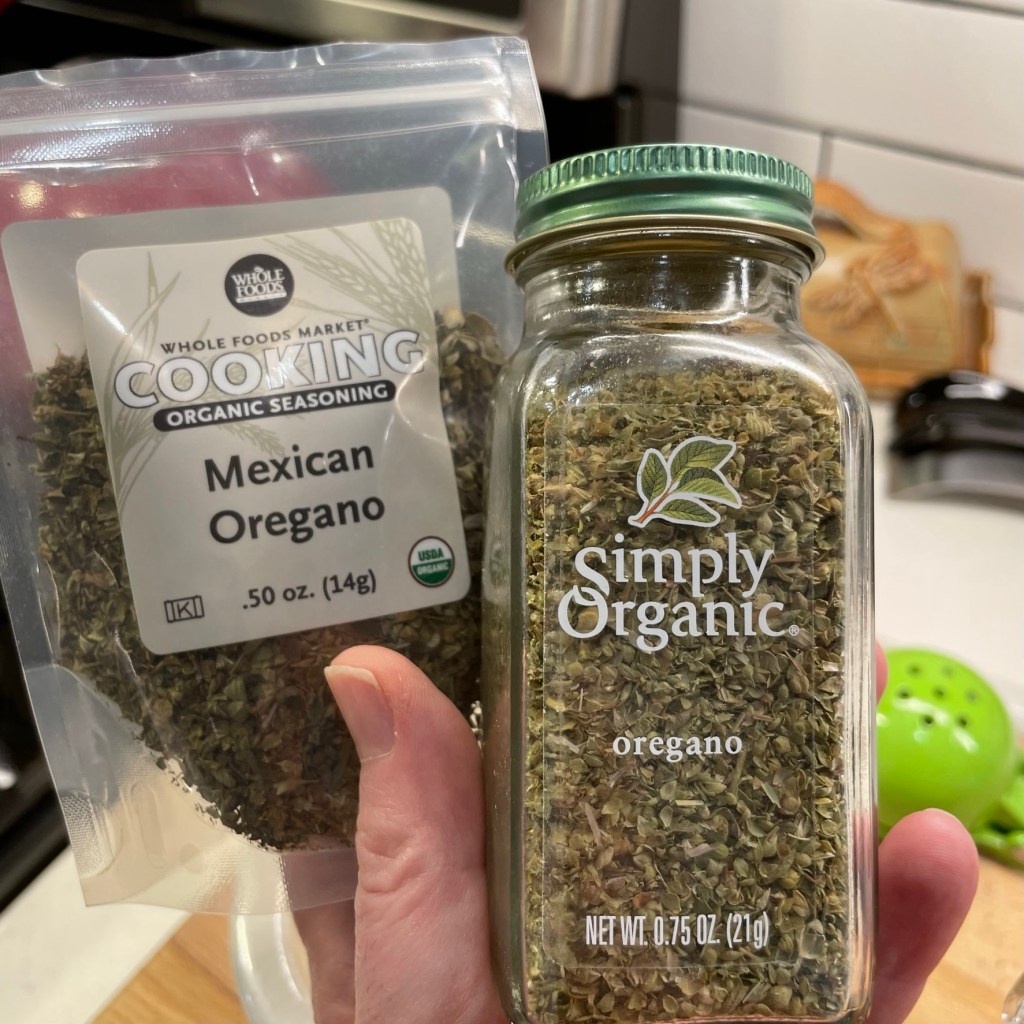
You need a lot of fresh garlic for a mojo marinade. Smash the cloves first, and then peel and mince them up so the flavor permeates every pore of the pork shoulder. That’s an important thing to know about garlic; the smaller the bits, the more pungent the flavor. Cumin is traditional, and I like to use whole seeds, slightly toasted in a dry skillet and then crushed to a powder in a mortar and pestle. This fragrance on its own puts me in a state of near-euphoria. Oregano adds an herbal note, and I couldn’t decide between regular and Mexican, which is earthier with a slight note of anise, so I used half of each.


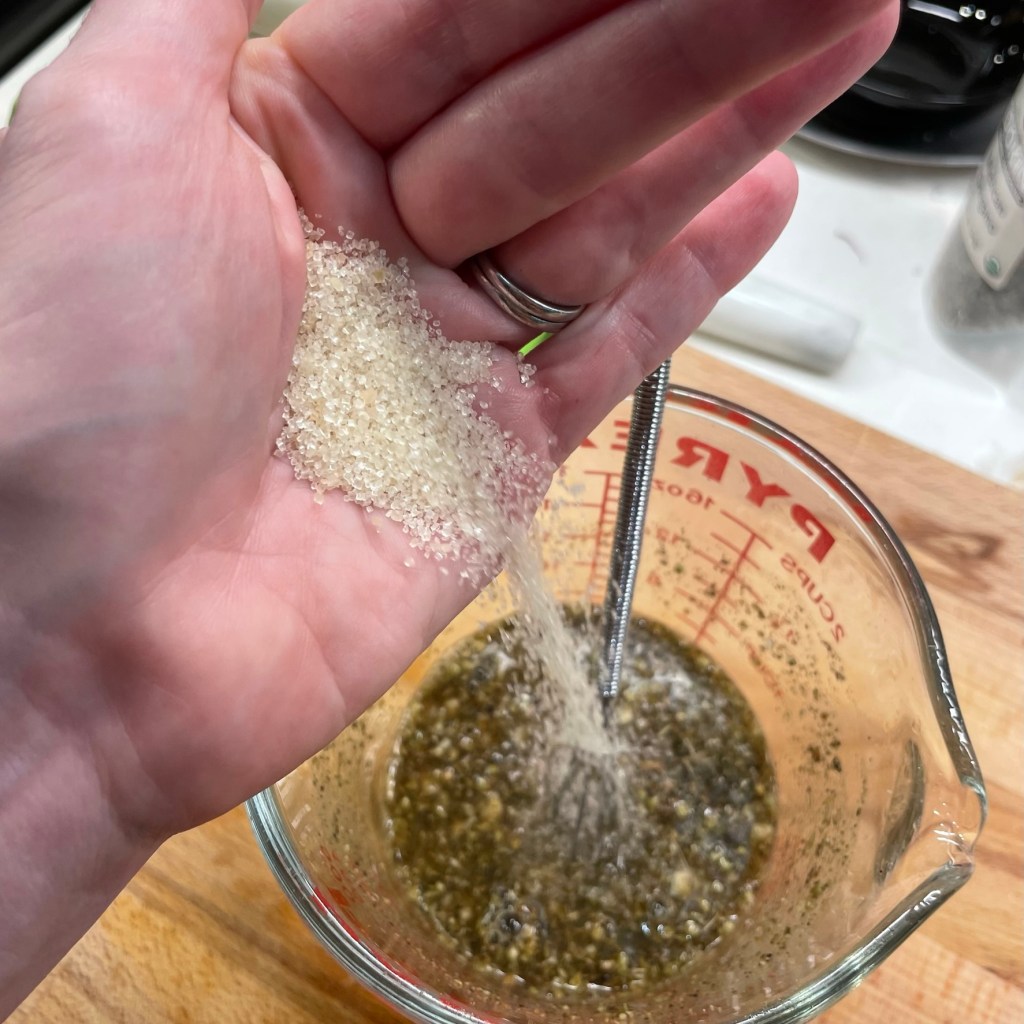
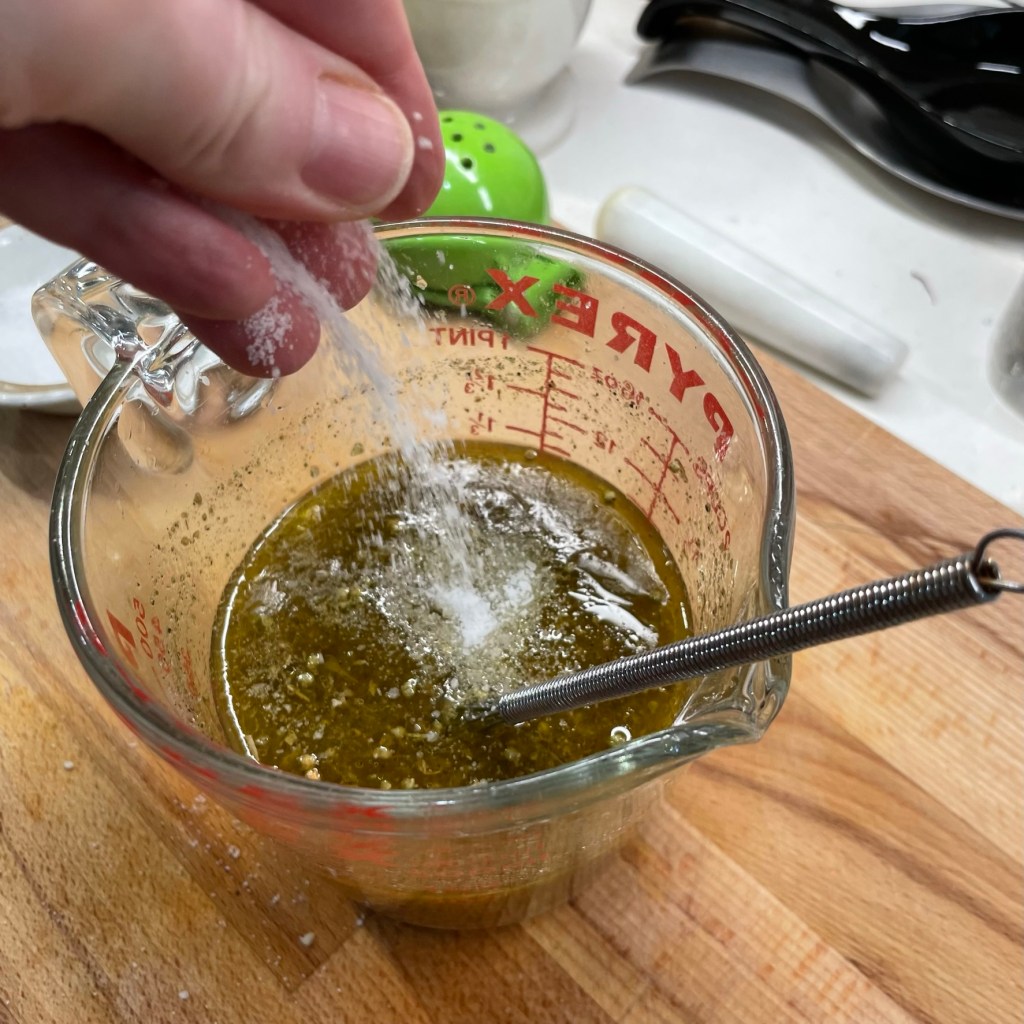
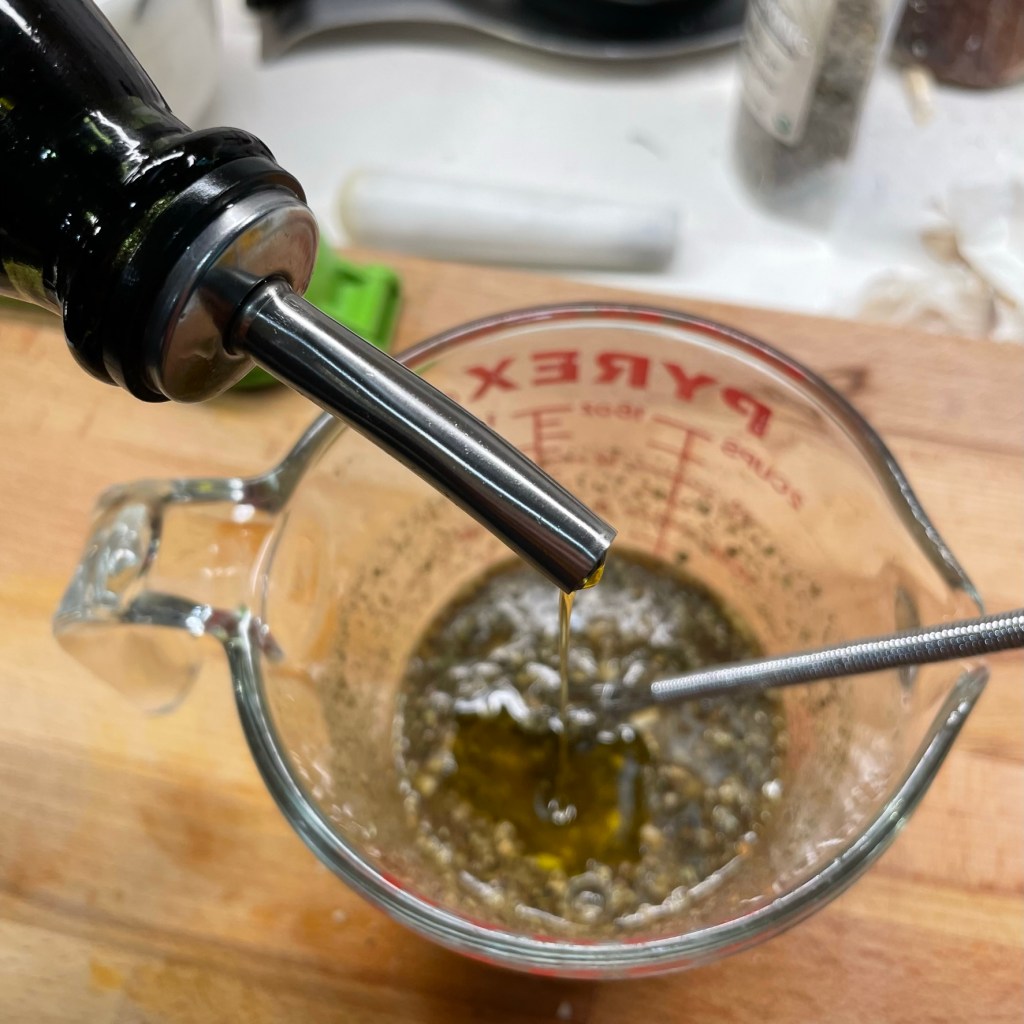
A pinch of sugar is decidedly not traditional, but we put a pinch of sugar in every damn thing here in the South. I like it for balance, but don’t go overboard. Season the mixture with salt and black pepper, of course, and whisk in a few generous glugs of extra virgin olive oil to finish the marinade. Time to cook!


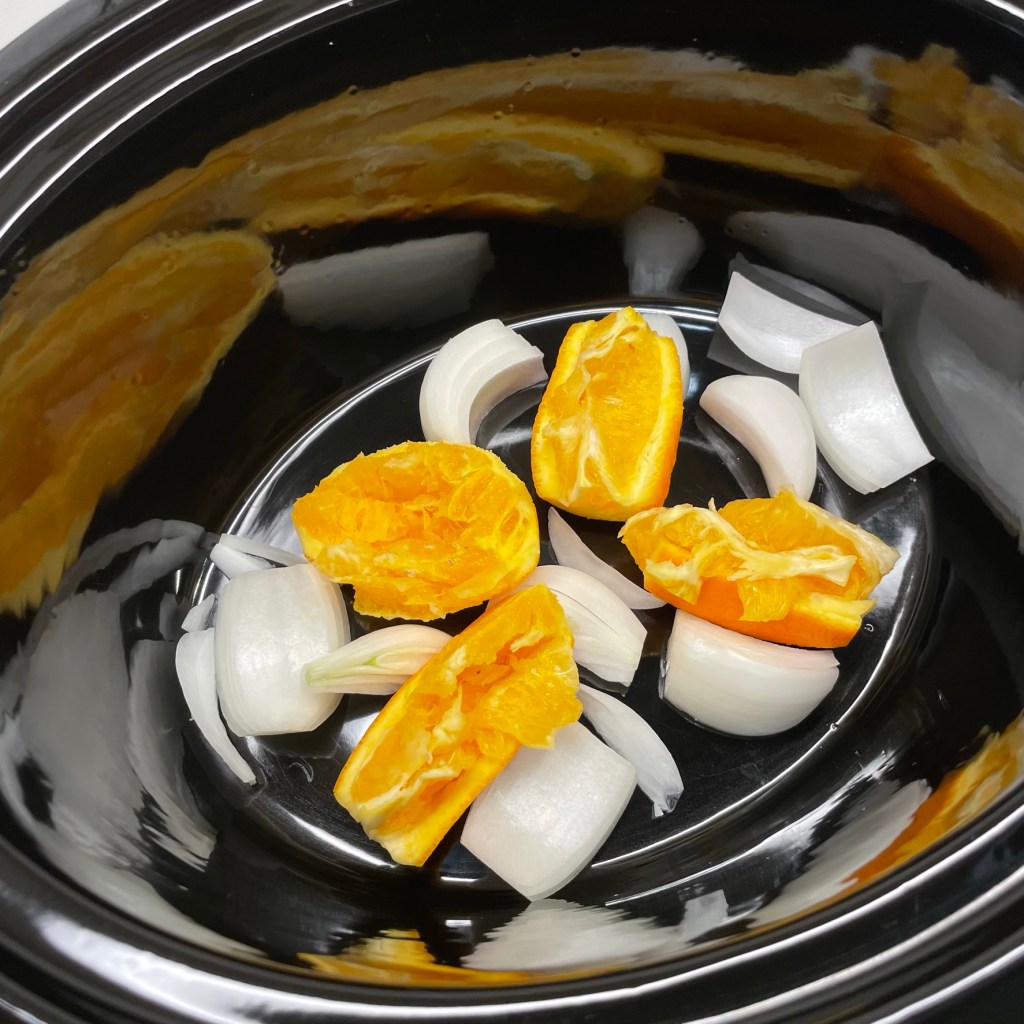
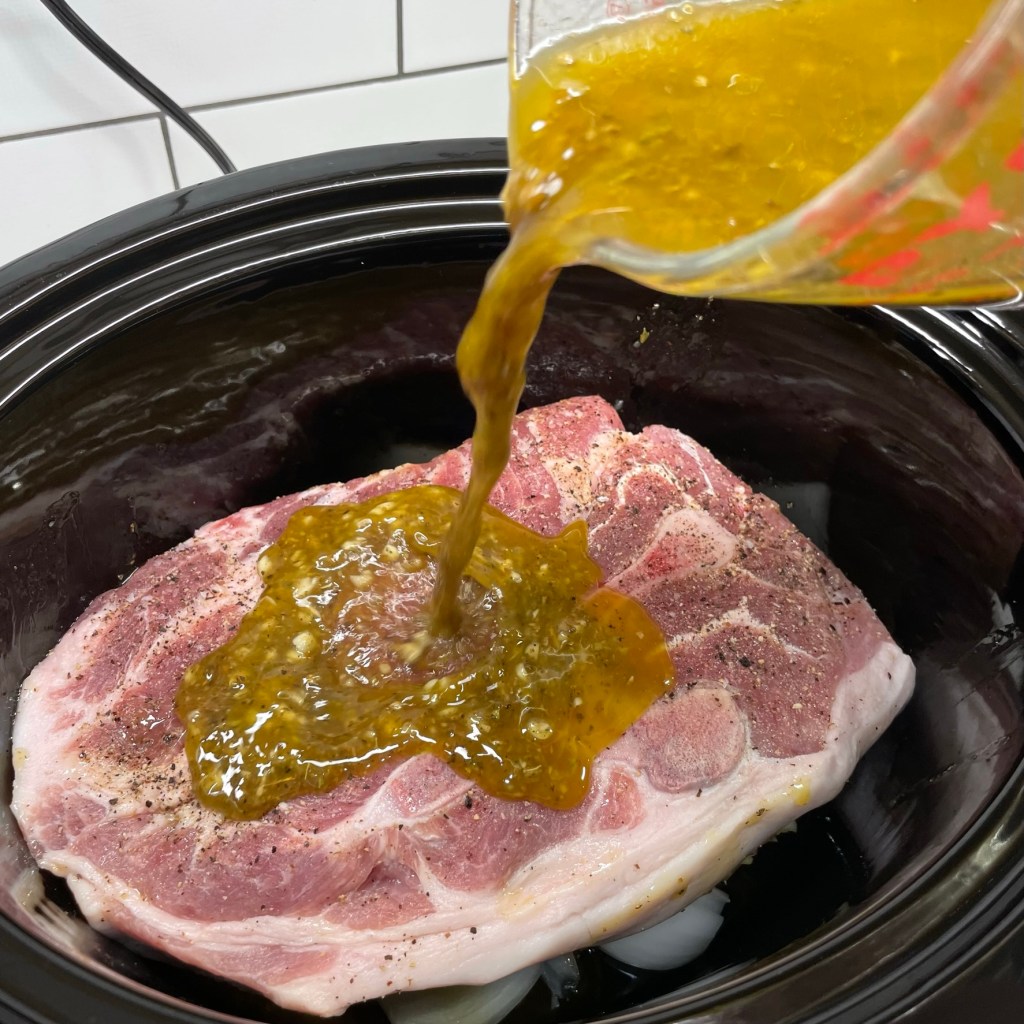
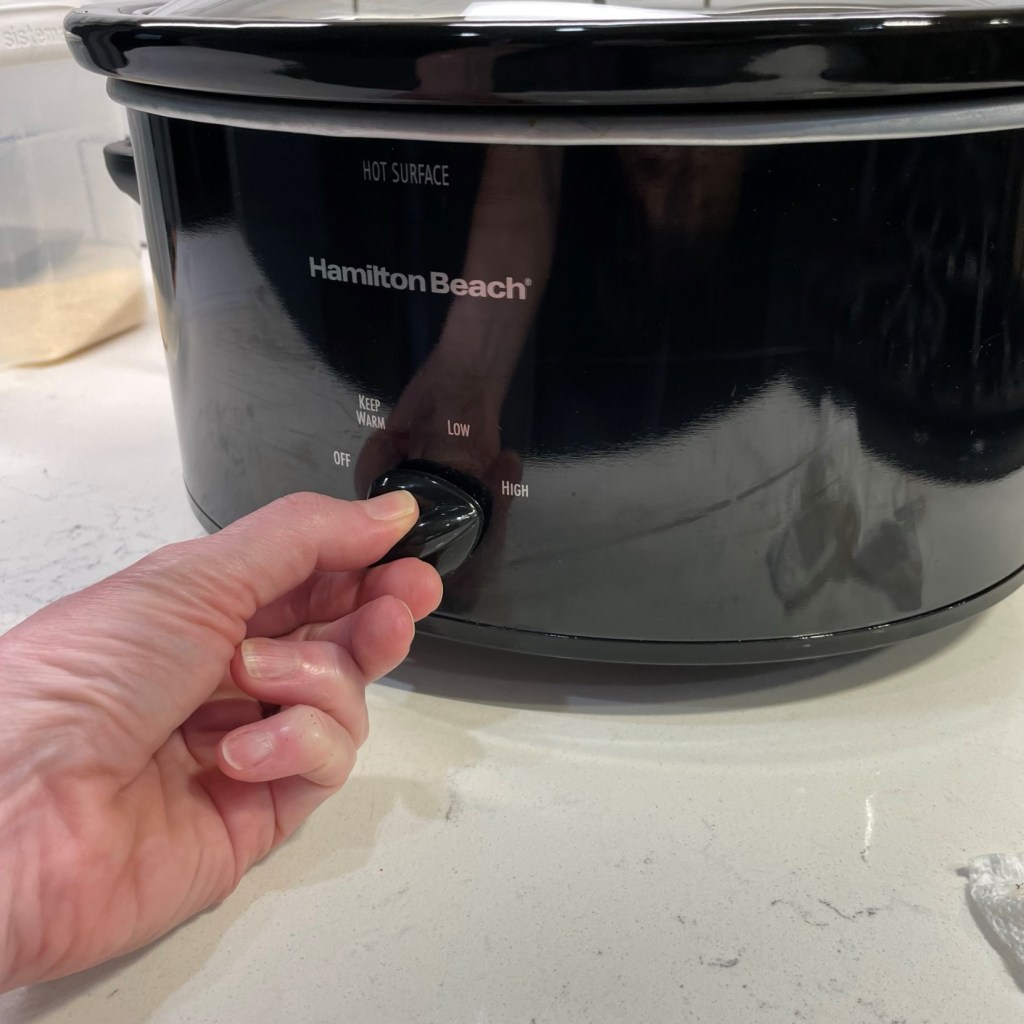
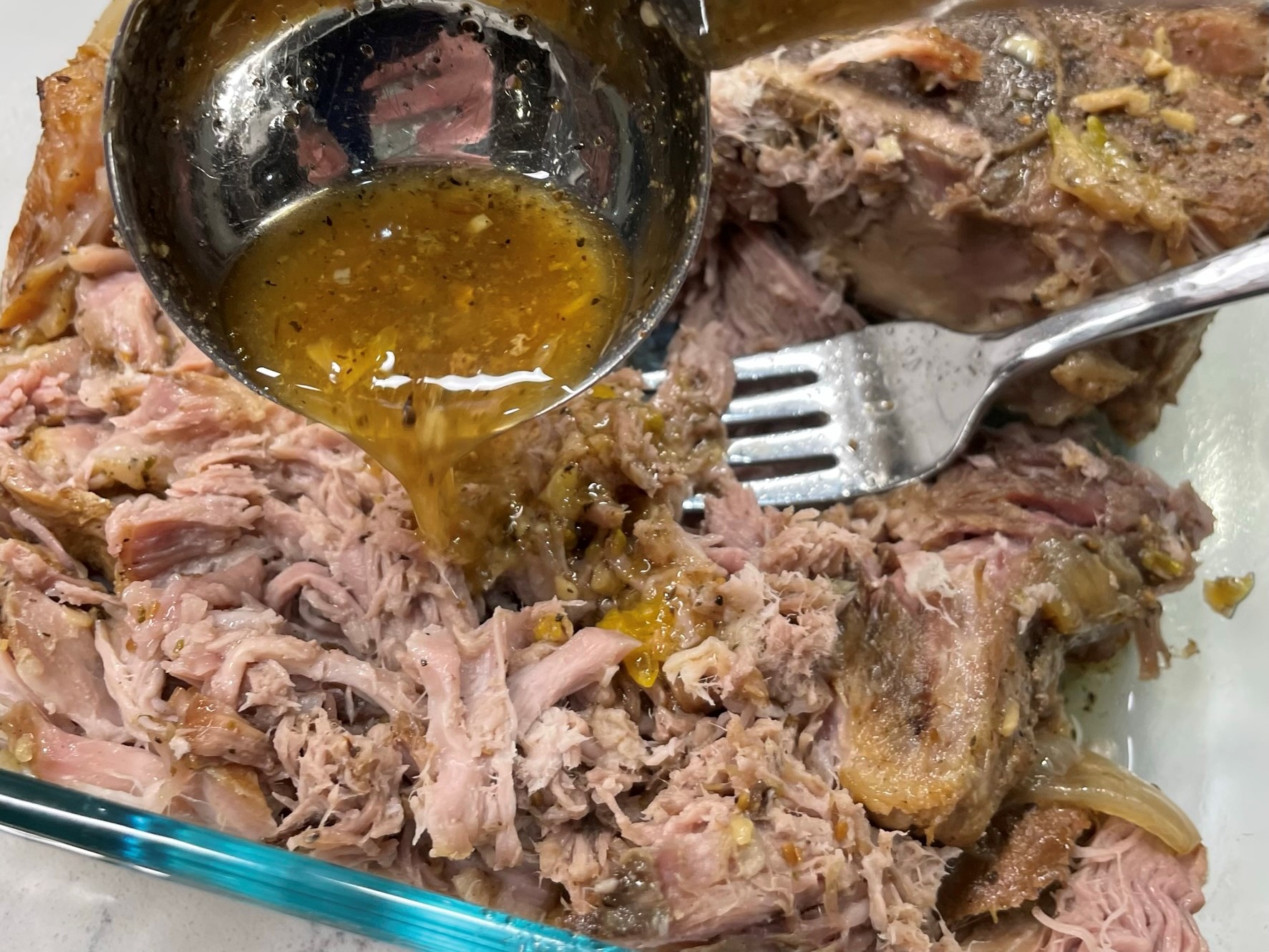
Here’s where I used the spent orange pieces, along with some onion wedges; they were a bed for the pork shoulder in my slow cooker, allowing the mojo marinade full access to the meat’s surface. I poured about a third of the marinade over the shoulder, then turned it over and poured another third, reserving the last portion of marinade mixture to pour over the roast at serving time. Set the cooker on high for 45 minutes to bring it up to cruising speed, and then knock it down to low and walk away for five hours.


Low and slow makes it a winner!

Did you get that? You don’t want to cook it on high setting for five hours, or you’ll end up with tough, overcooked shoulder. The high setting is just to bring the temperature up more quickly, and then the cooking should all happen on low setting. Very important.

I had a busy afternoon, so I wrapped up my work emails, did a load of laundry and went out for a pedicure during this time, and having the freedom to tackle my to-do list reminded me how much I still love using a slow cooker on occasion. When I came home, the house already smelled amazing. I flipped the pork shoulder over for a final hour of cooking, and went about the business of making some jalapeno-simmered black beans.

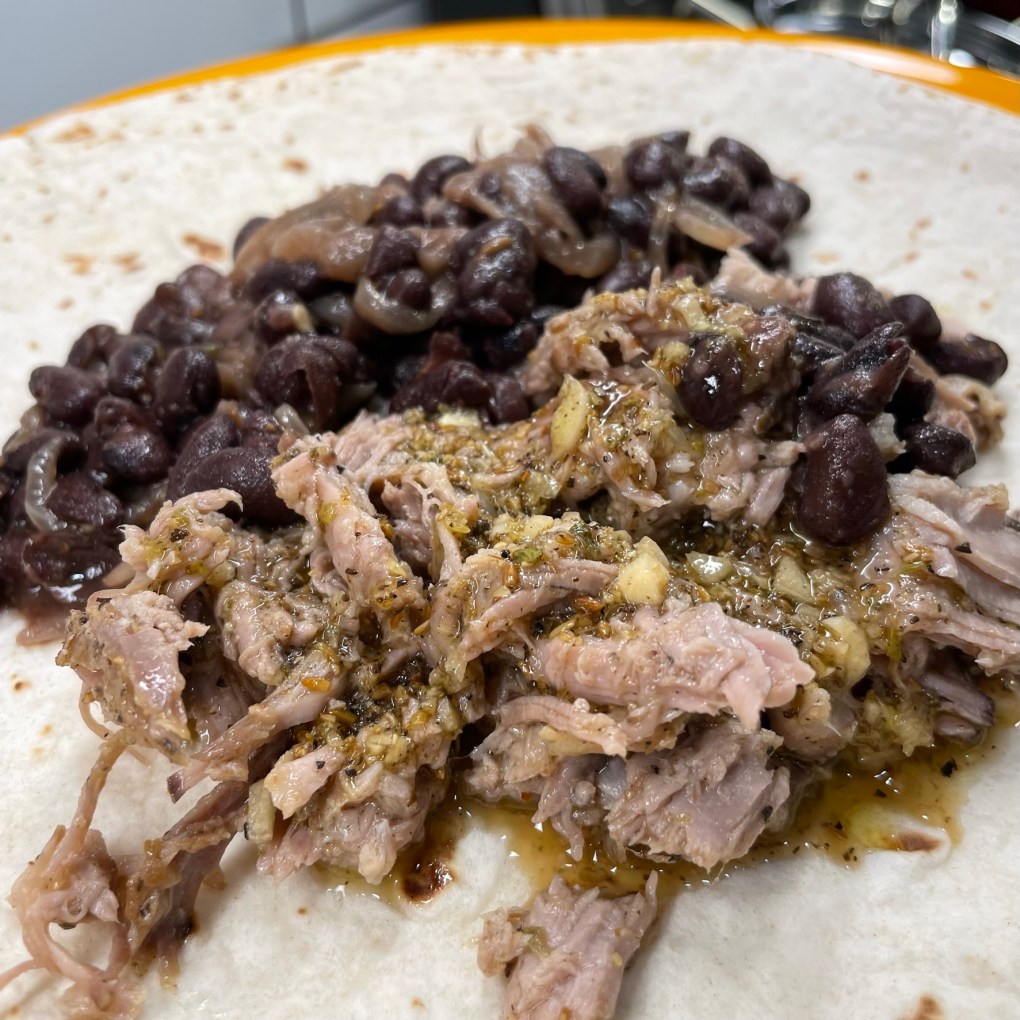
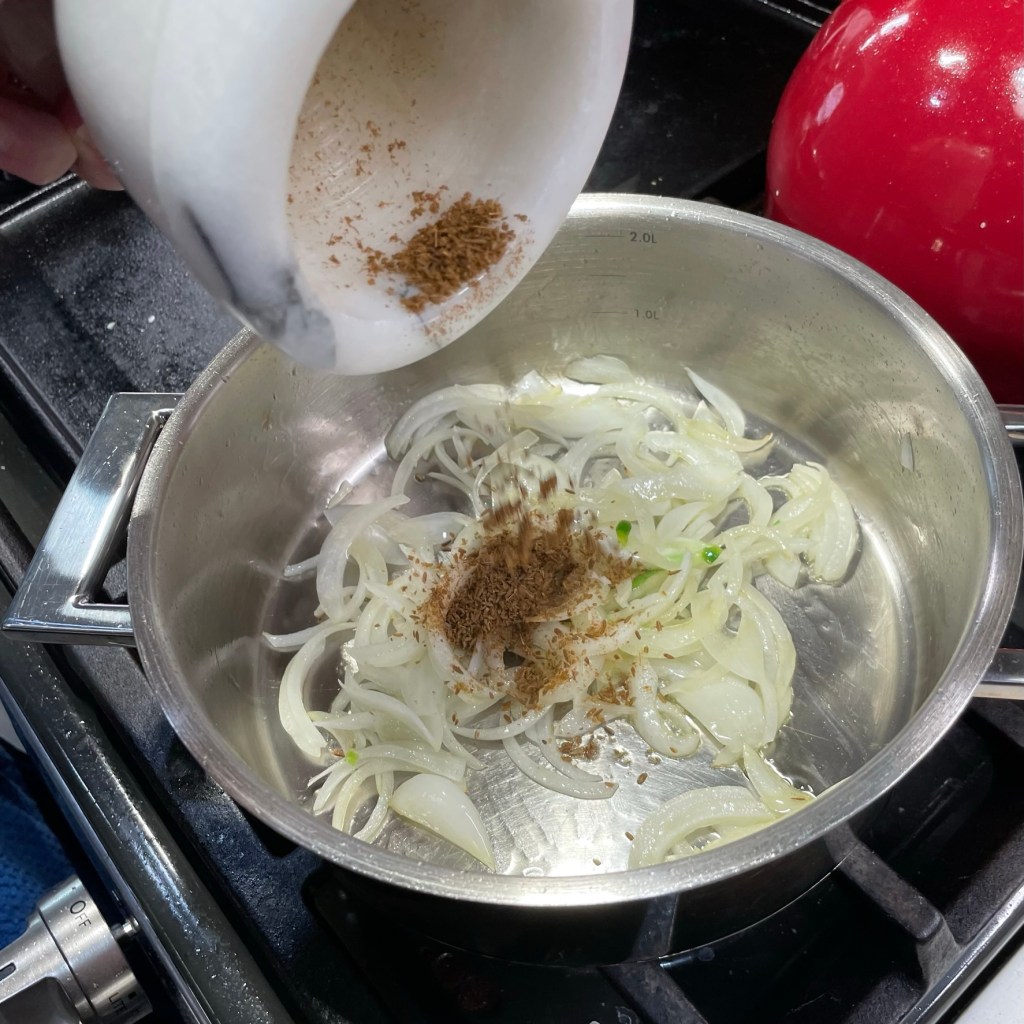
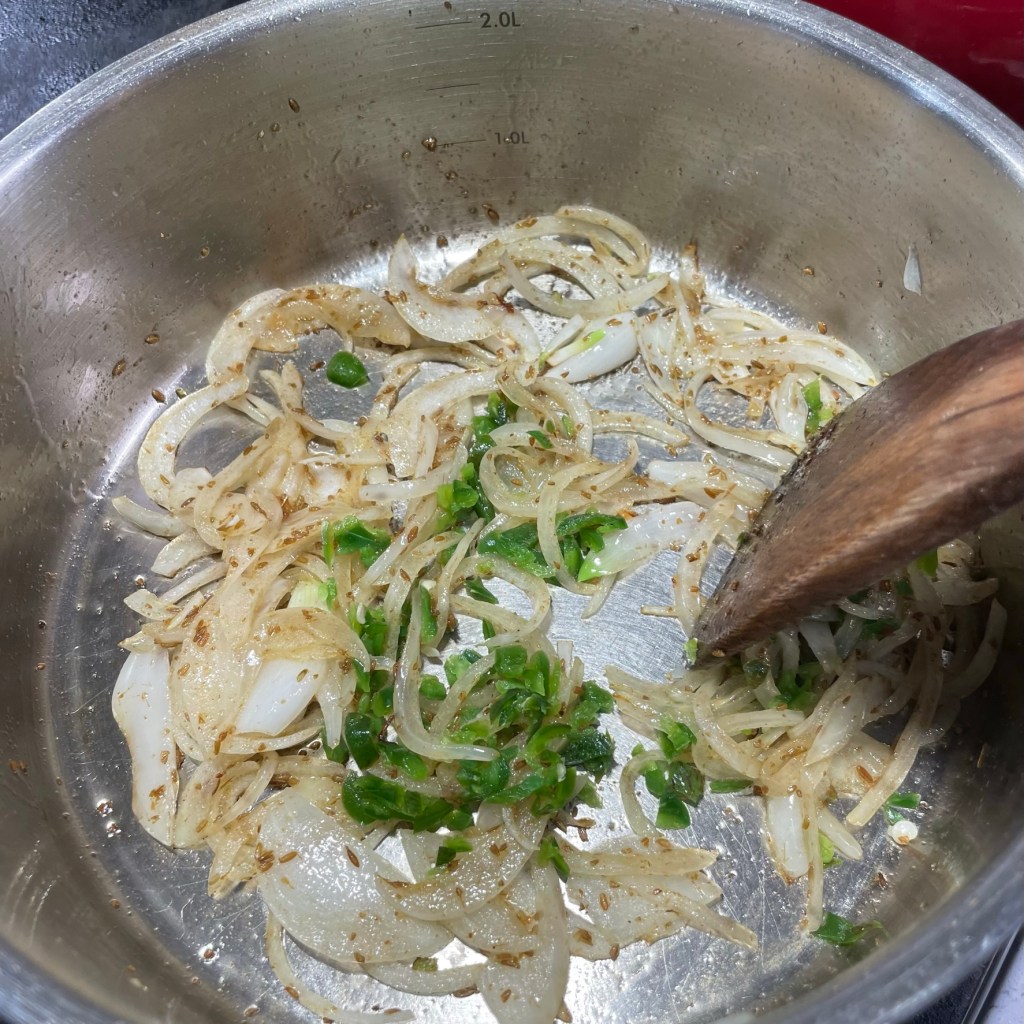
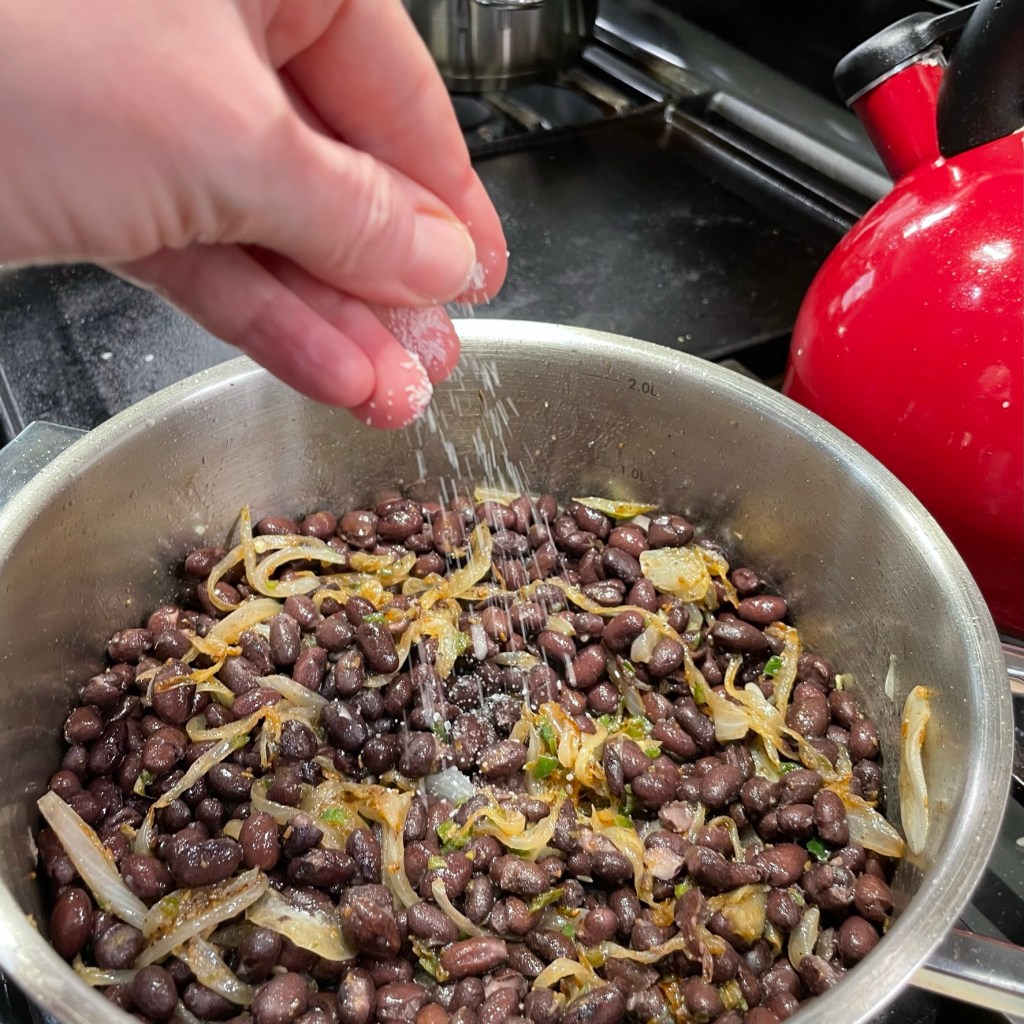
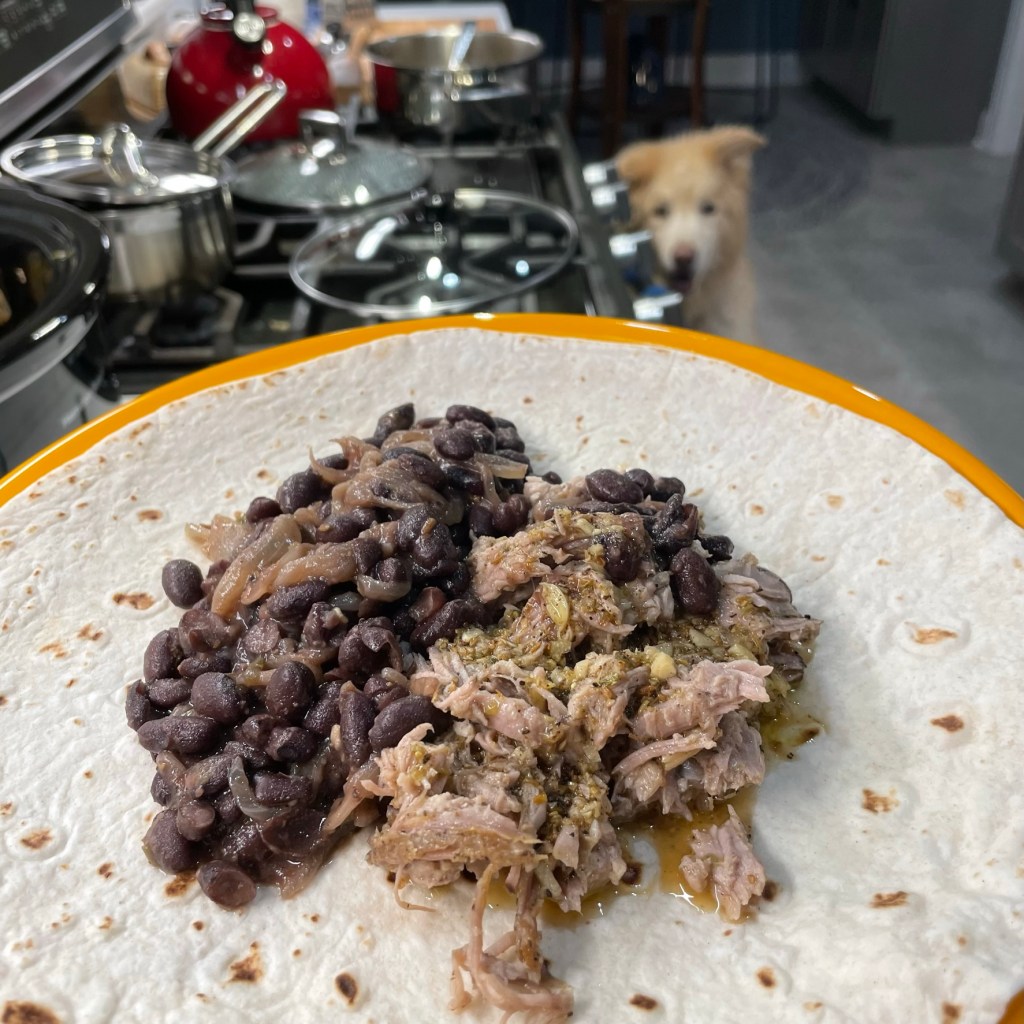
I cut half of a sweet onion into crescent slivers, and diced up a fresh jalapeno from our post-summer garden, leaving most of the seeds behind. I sautéed those in olive oil, along with a touch of ground cumin, then added two cans of rinsed black beans. Salt and pepper, and a splash or two of the Cuban-style pork braising liquid and we had a perfect, if not authentic, side dish for our delectable pork.


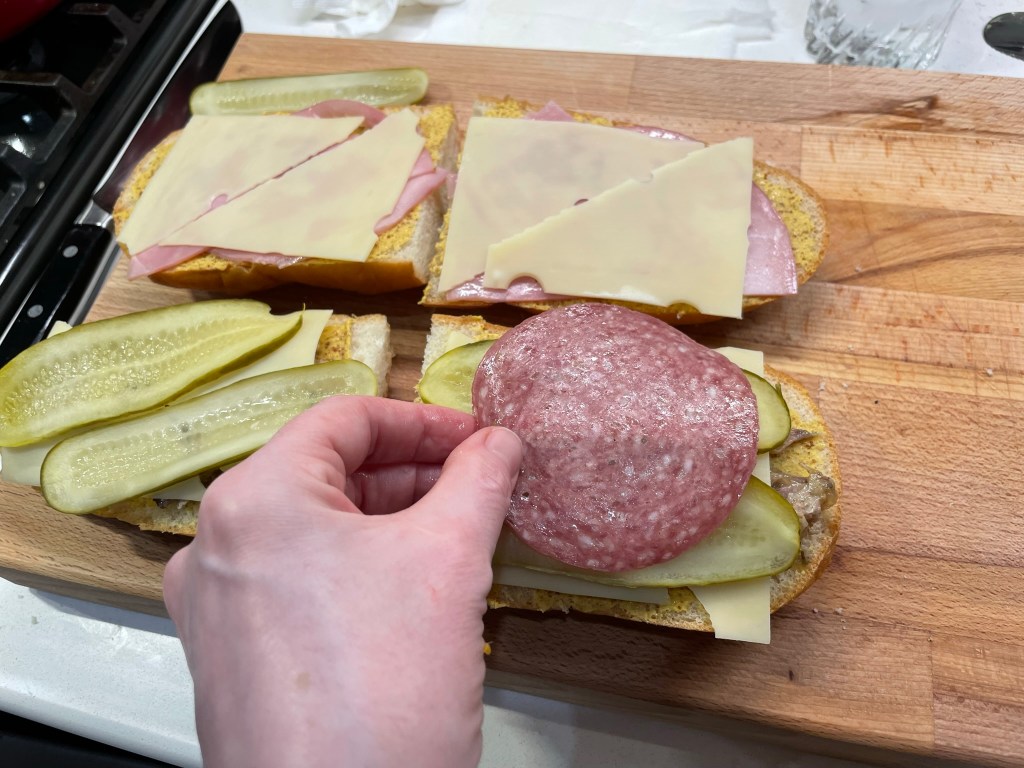
Test doneness of the pork by inserting a fork and twisting lightly. If it shreds easily, it’s ready! We enjoyed the meat on its own that first night, and tried our best a couple of nights later to make Cubano sandwiches, just like Chef Carl Casper and his crew. The bread wasn’t quite right, but it was still pretty darn delicious. 🙂


Slow Cooker Cuban-style Pork

  • Servings: About 8
  • Difficulty: average
  • Print

My version of this Cuban classic has all the right flavors, and it was super easy to make in my slow cooker.


Ingredients

  • 4 lb. bone-in pork shoulder (sometimes called Boston Butt)
  • 2 navel oranges, wedged and juiced (reserve a few of the spent wedges)
  • Juice of 4 limes
  • About 2 Tbsp. crushed and minced garlic
  • 2 tsp. cumin seed, toasted and ground
  • 1 tsp. sugar (not authentic, but a touch helps balance the citrus)
  • 2 tsp. black pepper (mine was half smoked)
  • 1 Tbsp. dried oregano (I used half regular, half Mexican)
  • About 1/4 cup EVOO, whisked in
  • About 1 Tbsp. kosher salt
  • 1/2 large onion, cut into wedges (used as base in slow cooker)

Directions

  1. Rinse shoulder and wipe dry with paper towels. Salt and pepper both sides and let rest at room temp while you prep the marinade.
  2. Combine the citrus juices, garlic, cumin, sugar, pepper and oregano in a glass measuring cup. Whisk in olive oil and season with salt according to your taste (somewhere between 2 and 3 teaspoons is good).
  3. Place onion chunks and spent orange peels in the bottom of the slow cooker and place the shoulder on top. Pour in about 1/3 of the mojo, then turn the shoulder over and pour in another 1/3, reserving the rest for serving over the tender, shredded pork.
  4. Use the cooker’s high setting for about 45 minutes to get the heat going, then reduce to low setting and cook for 5 hours.
  5. Use tongs to turn shoulder over and continue to cook on low setting for another hour. Transfer shoulder to a glass dish and use forks to shred the meat. Stir the braising liquid and ladle some of it onto the shredded pork. Pour the reserved marinade mixture onto the pork as well. The freshness of the uncooked marinade brightens up the flavors of the tender pork.
  6. Strain the solids from the slow cooker, and keep the remaining liquid for packing the leftover meat. It will retain moisture better in the fridge this way.

Serve pork with jalapeno black beans and, if desired, white rice.

Ingredients

  • 1/2 medium onion, sliced into crescent shapes
  • 1 Tbsp. extra virgin olive oil
  • 1/2 tsp. ground cumin
  • 1 small jalapeno, seeded and minced
  • A few pinches kosher salt and several twists ground black pepper
  • 2 15 oz. cans black beans, drained and rinsed
  • 1/4 cup vegetable broth or Cuban-style pork braising liquid

Directions

  1. Heat oil in a large saucepan over medium heat. Toss onions and cumin until fragrant, then add jalapeno and season with salt and pepper.
  2. When onions begin to caramelize, reduce heat and add black beans. Add broth or braising liquid and cover to simmer until heated through.


Brie & Mushroom-stuffed Meatloaf

To say that I’m excited for fall is a bit of an understatement. After stiflingly humid North Carolina summers, I am always eager for the relief that comes in mid-September. I can finally open the windows each morning to let the cool, fresh air permeate our space (at least until afternoon, when the temps rise back into the 90s), and my soul starts longing for all the culinary comforts of the fall and winter seasons—warm herbal teas in the evening, soups and stews that nourish us from the inside out, and the return of what I like to call the Sunday Supper.

This meatloaf is one of my very favorites, though calling it a meatloaf may not do justice to the elegance of the meal, especially if you go the extra mile to make the French Onion Gravy recipe that accompanies it on my plate.

No mashed potatoes necessary.

My first inspiration for this recipe came many years ago when I spotted a wedge of creamy, mushroom-studded brie in the specialty cheese section at Trader Joe’s. It was begging to be part of something special and so I incorporated it into my usual, plain-Jane turkey meatloaf and I never looked back. I have since seen the cheese branded by other companies as well, and I actually bought this one from another supermarket. If you cannot find brie with mushrooms, substitute any other brie, and preferably one that is sold in large wedges, as it is easier to slice evenly for the rollup.


There will be plenty of mushroom in the mix anyway, as I slice and brown nearly a whole package of “baby bellas” to layer with the brie. Oh, and sauteed mushrooms and onions also get chopped and blended right into the meat mixture as well. Yes, this is definitely a mushroom-lover’s meatloaf!


I like using a combination of ground turkey (93% lean) and ground turkey breast (99% lean) for this, because the turkey breast on its own tends to go dry during baking, and the other on its own is almost too soft to shape properly. I suppose this meatloaf could also be made with lean ground beef, but I love it with ground turkey, which has a lighter flavor and leaner calorie load—though I’m sure the brie filling that oozes out into every bite probably cancels out that second part.


To give this meatloaf a hint of Thanksgiving (we are already counting down at our house), I have used dry stuffing mix (which I crushed into crumbs) in the panade, and it forms a glue to hold it all together. Feel free to substitute your favorite bread crumbs. Use less milk for this one than you normally would in a panade, because the turkey meat mixture is fairly loose and it benefits from the sturdier, almost crumbly panade.

The richness of the brie demands a little balance as well, so don’t omit the fresh parsley. Putting this meatloaf together is not as complicated as it might seem. At the end of the post is a click-to-print recipe, but I’ll walk you through it so you can see how easy it really is.


Parchment paper is my best friend for the task of shaping the meatloaf, but waxed paper would work in a pinch. Take your time, be sure the long edge and ends are sealed, and bake it on a cookie sheet rather than in a pan, for a beautiful crust. Give it 45 minutes at 400° F, and let it rest for at least 10 minutes before slicing.
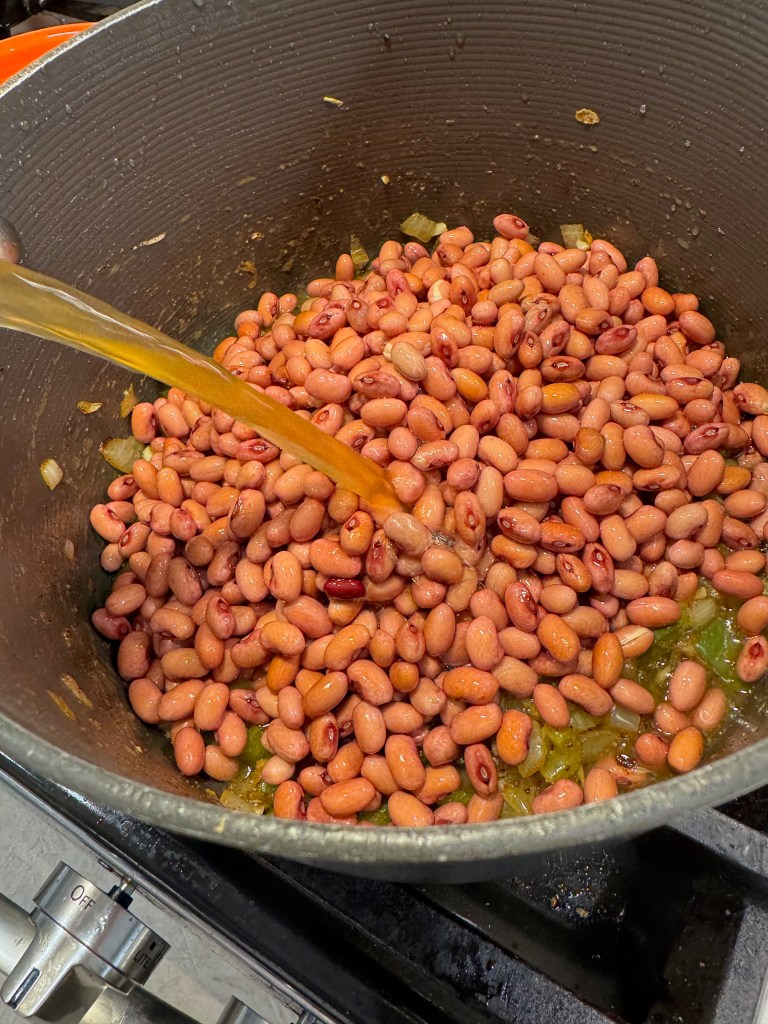

Look at that gorgeous crust!

As for the gravy, well, I probably had you at “French onion.” It’s simple enough to make, but it does call for a special ingredient in the Herbes de Provence, which is a blend of herbs well known in the south of France. If you don’t have or can’t find it, substitute a blend of thyme, rosemary, marjoram and lemon peel. It won’t be quite the same, but these flavors will help to highlight and complement the onions. Use sweet or yellow onions and your choice of chicken or vegetable broth.
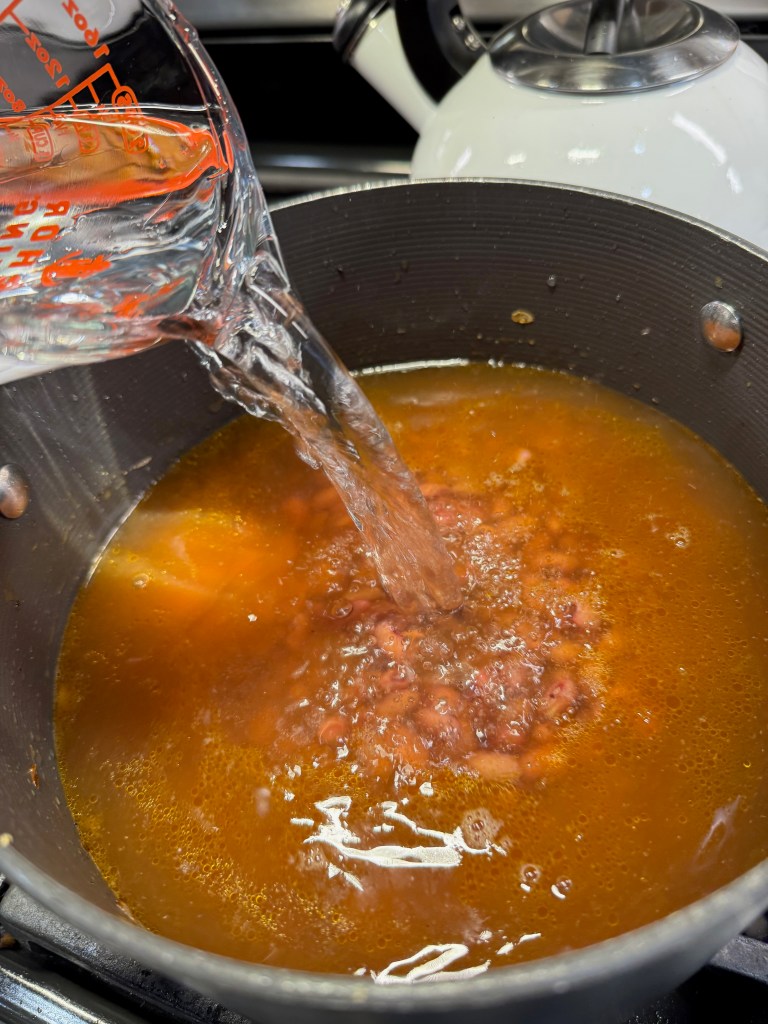

Serve the meal by ladling a portion of gravy directly onto the plate, and top with thick slices of the brie and mushroom-stuffed meatloaf. This entree does not need mashed potatoes, but if you crave them, may I suggest my hubby’s fantastic Garlic Mashed? You won’t regret it. 🙂

Brie & Mushroom-stuffed Meatloaf

  • Servings: About 8 slices
  • Difficulty: intermediate
  • Print

Don't let the fancy swirl pattern in these meatloaf slices intimidate you! With a little patience and a sheet of parchment paper, you can make this delicious turkey meatloaf that literally oozes with comfort!


Ingredients

  • 3/4 cup dry herb stuffing mix (such as Pepperidge Farm), crushed into small crumbs
  • 1/2 cup milk
  • 3 Tbsp. extra virgin olive oil, divided (note directions for when to use)
  • 1/2 sweet onion, minced
  • 12 oz. carton cremini mushrooms, divided
  • 1 lb. ground turkey (93% lean)
  • 1/2 lb. ground turkey breast (99% lean)
  • 1 large egg
  • Kosher salt and freshly ground black pepper
  • Small handful chopped, fresh parsley
  • 6 oz. brie (with mushrooms, if possible)

Directions

  1. Make a panade, combining the dry stuffing mix with milk. You should have just barely enough milk to cover the stuffing mix. Let this rest while you prepare the rest of the meatloaf mixture.
  2. Clean and trim all the mushrooms and divide them, chopping enough into small pieces to measure about 1/2 cup. Slice the remaining mushrooms into thin slices and set aside.
  3. Place a non-stick skillet over medium heat with a tablespoon of olive oil. Sauté the minced onion until translucent. Season with Herbs de Provence, salt and pepper. Add the chopped mushrooms and sauté together until the mushrooms are soft and most of their moisture has evaporated. Cool this mixture and then process (or chop) into smaller bits.
  4. Add another tablespoon of olive oil to the skillet and brown half of the sliced mushrooms until they are golden on both sides. Repeat with the remaining oil and mushrooms. Don’t be tempted to cook the mushrooms all at once, unless your pan is very large. If they are crowded in the pan, they will cook by steaming rather than browning, and you’ll lose the texture of the mushrooms. Transfer the browned mushroom slices into a bowl to cool.
  5. In a large mixing bowl, combine the ground turkey (both), egg, panade, mushroom-onion mixture and parsley. Toss in a generous pinch of salt and a few twists of black pepper. Use your hands to evenly combine these ingredients until they are uniform, but try not to overwork the mixture.
  6. Line a baking sheet with parchment paper. Transfer the meatloaf mixture onto the parchment, using oiled hands to pat it into a rectangle about 9 by 12 inches, and about 3/4-inch thick. Layer the browned mushrooms evenly over the surface, leaving a 1-inch border around all edges. Cover with plastic wrap and refrigerate about 30 minutes to firm up. Use this time to preheat the oven to 400° F and to prepare the French onion gravy.
  7. Slice the brie cheese wedge into uniform thickness pieces, about 1/4-inch thick. Arrange the slices in a single layer all over the chilled meatloaf, keeping a 1-inch border along both sides, and at least 2 inches from the far, short end. This will help prevent the brie from melting out of the meatloaf during baking.
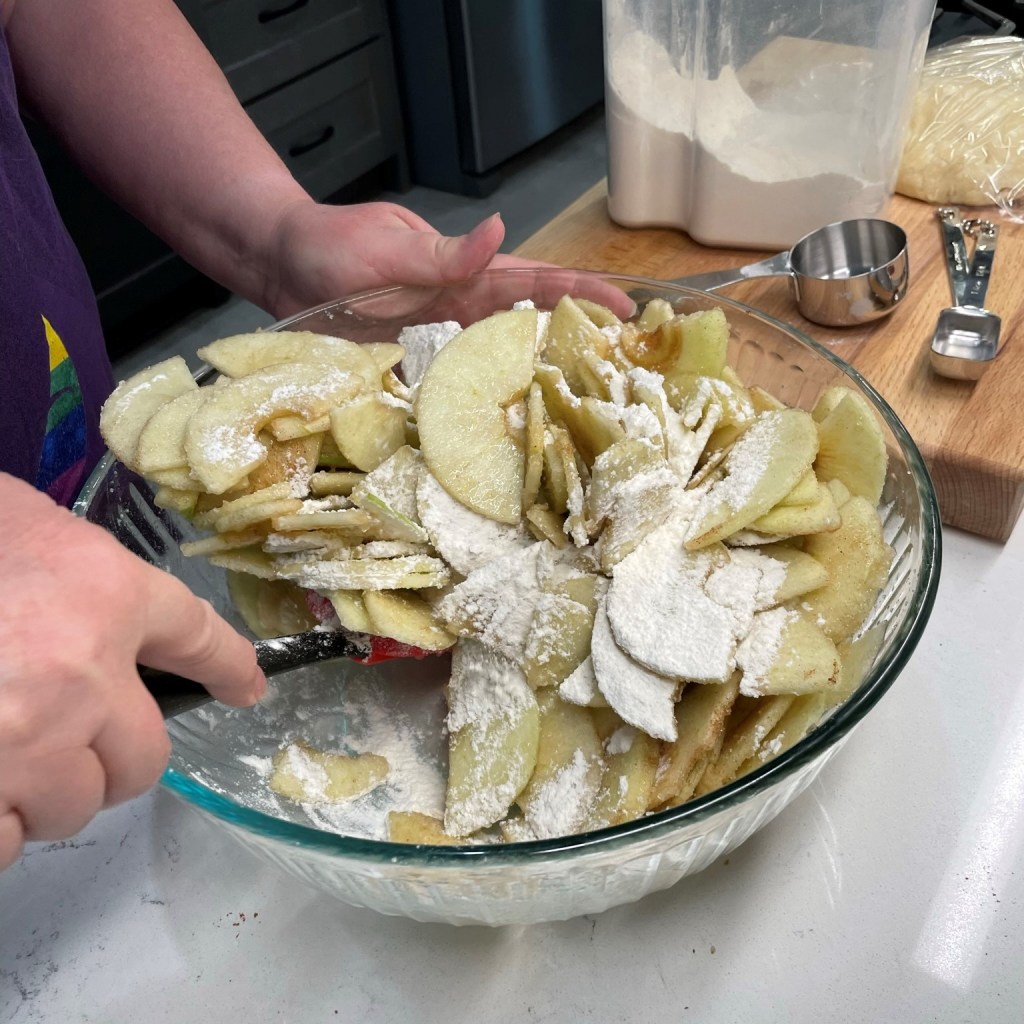
  8. Use the parchment paper to assist rolling the meatloaf, beginning with the short end near you. Bend the brie, if needed, so that it will roll easier. Keep the roll snug as you go, and pinch to seal all edges, finishing with the end seal on top of the roll. Sprinkle the surface of the meatloaf lightly with kosher salt and bake for 45 minutes, until the meatloaf is browned with a slight crust all over; internal temperature will be about 160° F. Remove it from the oven and allow it to rest about 10 minutes before slicing. The residual heat will continue to cook the meatloaf during this time.
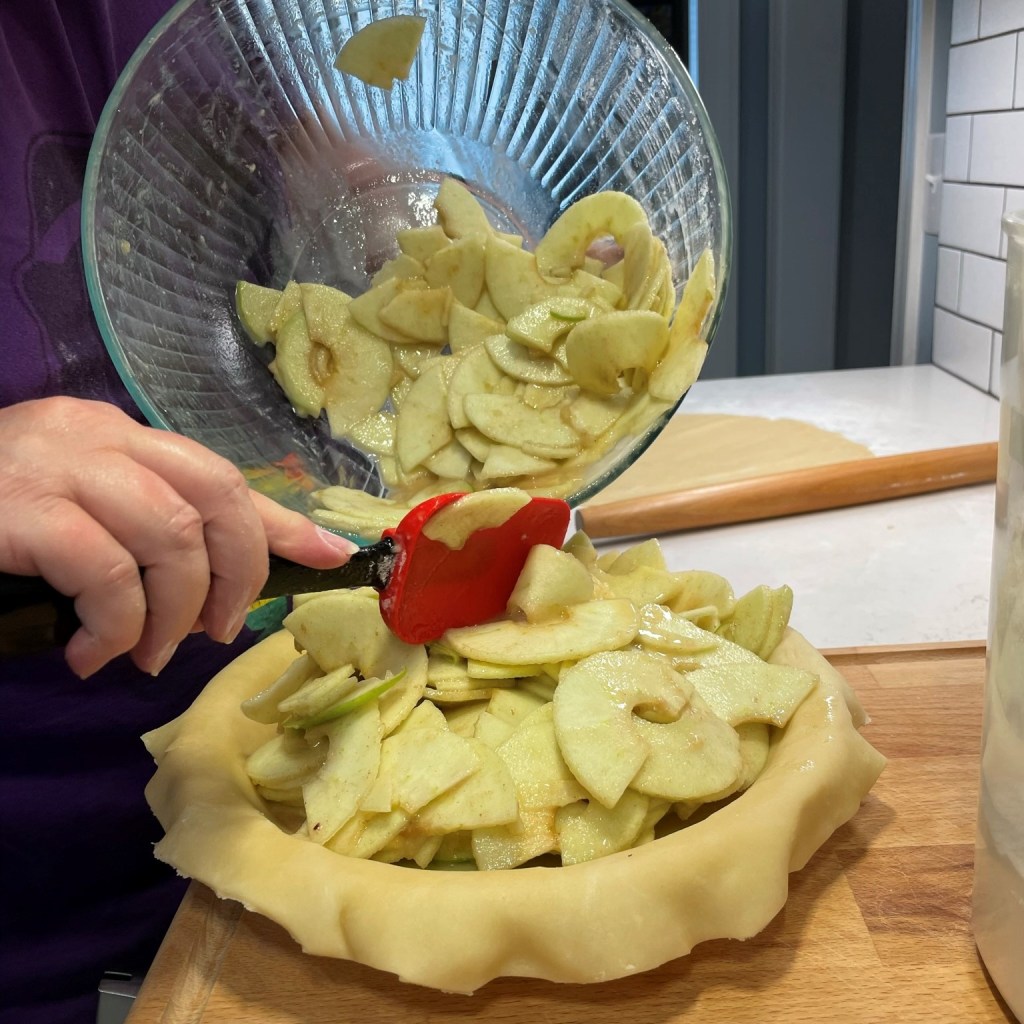
  9. Serve with French Onion Pan Gravy.


French Onion Pan Gravy

  • Servings: 3 cups
  • Difficulty: average
  • Print

Ingredients

  • 1 large sweet onion, thinly sliced into crescent shapes
  • 2 Tbsp. extra virgin olive oil
  • 1/2 tsp. Herbs de Provence seasoning
  • Kosher salt and freshly ground black pepper
  • 2 Tbsp. butter
  • 2 Tbsp. all-purpose flour
  • 2 Tbsp. dry vermouth (or dry white wine)
  • 3 1/2 cups low-sodium vegetable broth
  • 1 tsp. bouillon paste (optional, for richer flavor)

Directions

  1. Heat a large skillet or shallow sauce pot over medium heat. Swirl in olive oil and saute the onion crescents until translucent. Season with Herbs de Provence, salt and pepper and continue cooking until onions begin to caramelize.
  2. Sprinkle flour over the onions and add the butter, stirring to melt the butter and evenly coat the onions in roux. Cook until the onions no longer appear dry from the flour, about 5 minutes.
  3. Add dry vermouth to the skillet and stir to deglaze any browned bits. The liquid will probably dissipate rather quickly. Add broth, about half at a time, stirring to distribute evenly. When sauce begins to bubble and thicken, reduce heat to low and cover the skillet. Let it simmer while meatloaf is in the oven.
  4. Just before serving, taste and adjust seasonings. For additional richness, swirl in a heaping teaspoon of bouillon paste.
  5. Plate a ladle-ful of gravy, and top it with slices of the brie and mushroom-stuffed meatloaf.