Clambake pizza — a delight for Leos!

My interest in astrology has always been one of curiosity. I’ve never been fully invested in the idea that my personality was pre-determined by the stars or whatever phase the moon was in when I took my first breath at the exact latitude and longitude where I was born. I mean, for starters, if I were to ask all-knowing AI for a general description of Leo, this is what I get. Honestly, does this sound like me? 

OK, I’m guilty as charged. 😂

I want to say that it’s all a bunch of hooey, but the Leo description is very much on point. Ahead of my milestone birthday recently, I looked up Leo traits and another related prompt came up in my search: “the best foods for Leos.” This oughta be good, I thought, given that I can count on one hand the foods that I don’t like. The first site that popped up was Harry & David— you know, the mail order fruit basket company— and here’s what it suggested:

Leo (July 23–August 22)

Corn, clams, spinach, and mozzarella are some of the foods to which this fire sign is drawn. This is due in part to some — such as tomatoes — being in season during the sunny summer months when Leos are born.

The moment I read that, I knew exactly what to do.
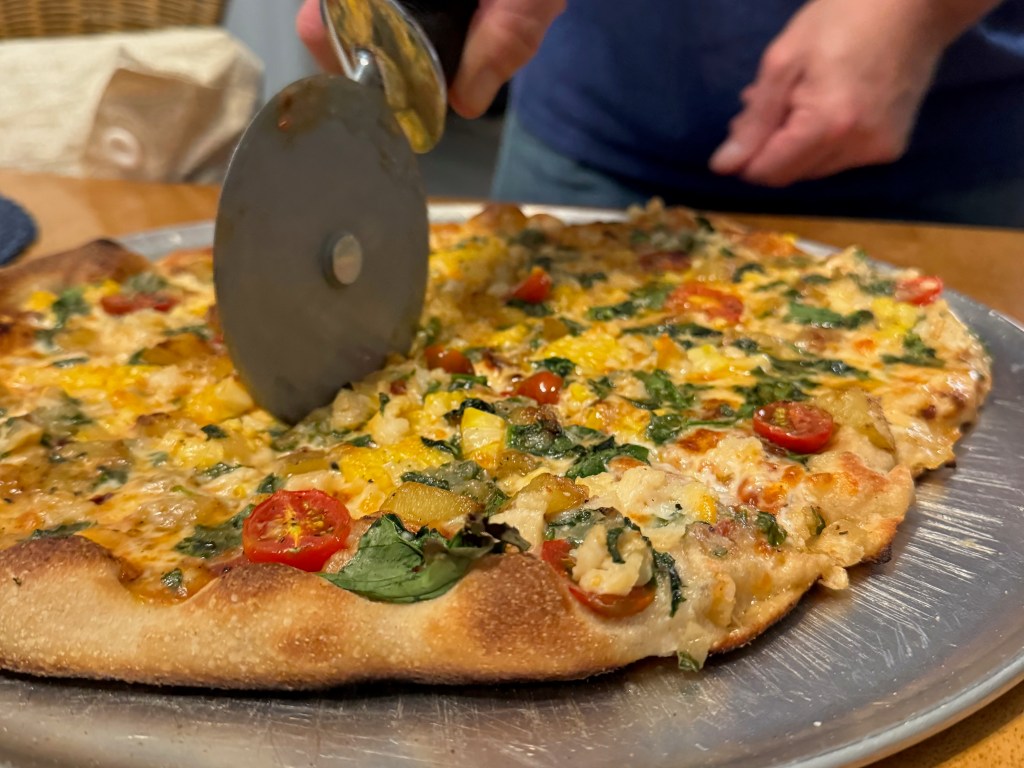
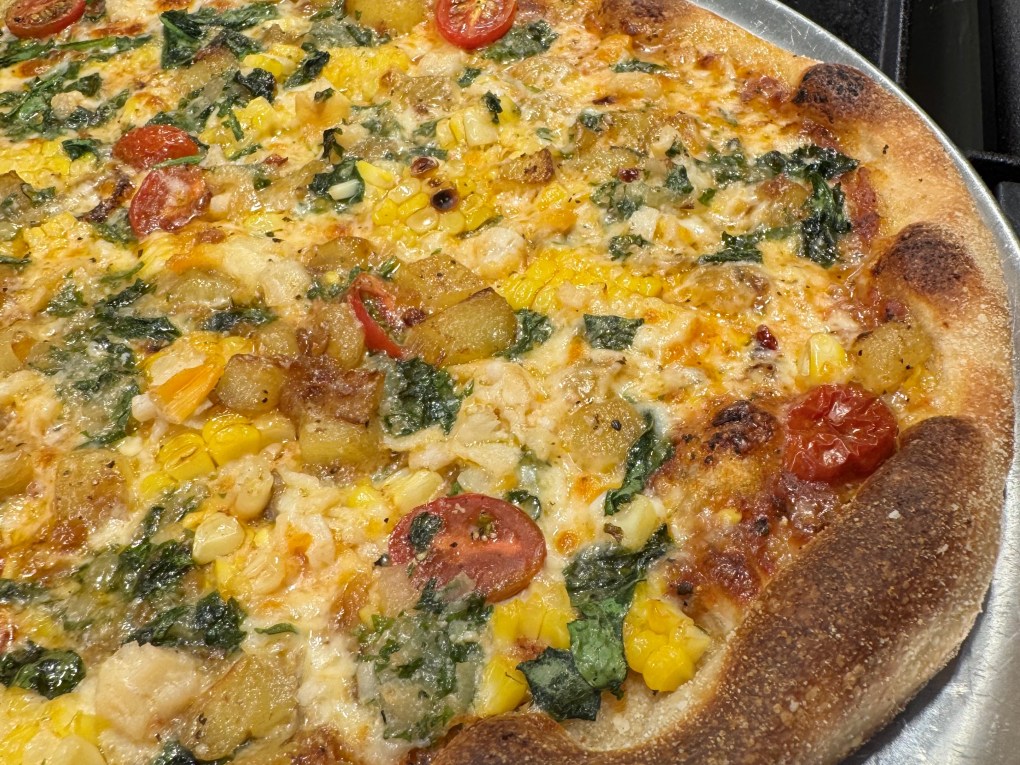
Behold, the clambake pizza!

The clambake connection

Clambakes are not exactly “native” to North Carolina, but we did have a fun one associated with the Crosby pro-am golf tournaments that used to be held around here. This was a charity tournament that Bing Crosby started at Pebble Beach many moons ago, and his widow, Kathryn, moved it in the mid-1980s to Bermuda Run just outside Winston-Salem, where it stayed for 15 years. 

The golf tournament was unsanctioned, so we didn’t always see big-name pros, but there were plenty of stars from the stage and screen and it was always an exciting week in our small city. Anyone could go to the tournament, but tickets to the clambake were highly coveted— I was only able to get in because I dated a guy who worked for Cadillac, one of the sponsors.  It’s where I first fell in love with the music of a barely known country artist named Vince Gill, and everyone who saw him at Groves Stadium knew in an instant that he would become a huge star. Let’s enjoy his breakout song while we talk about this pizza, shall we?

Press play for an enjoyable musical accompaniment!

Ingredients for a clambake pizza

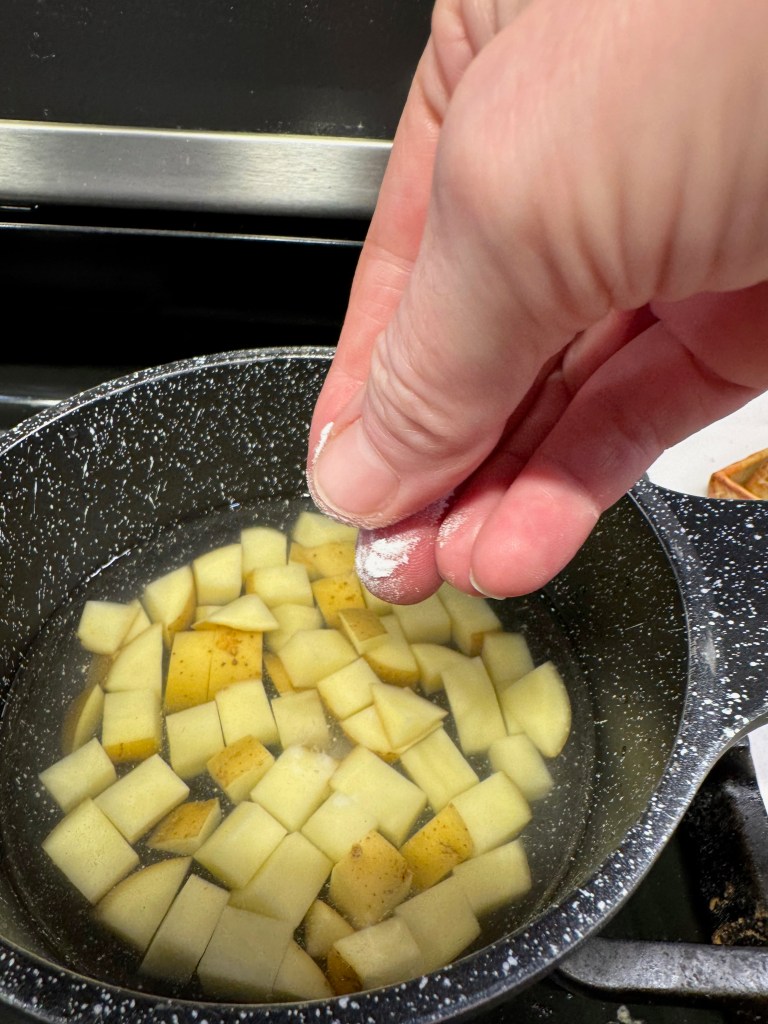
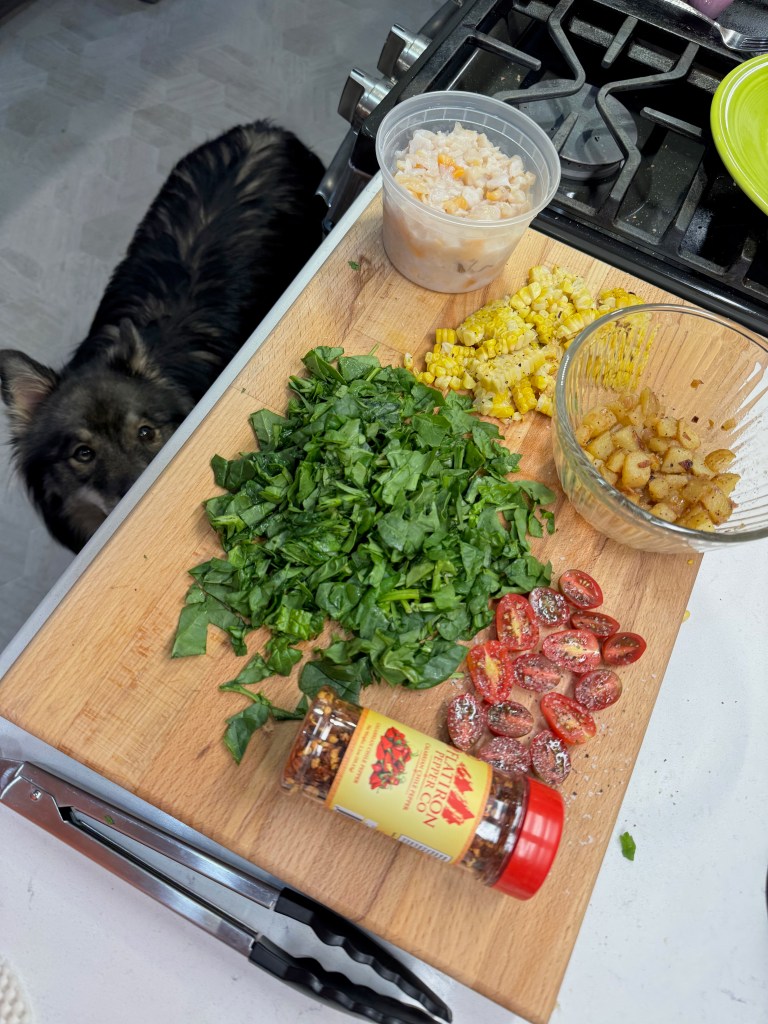
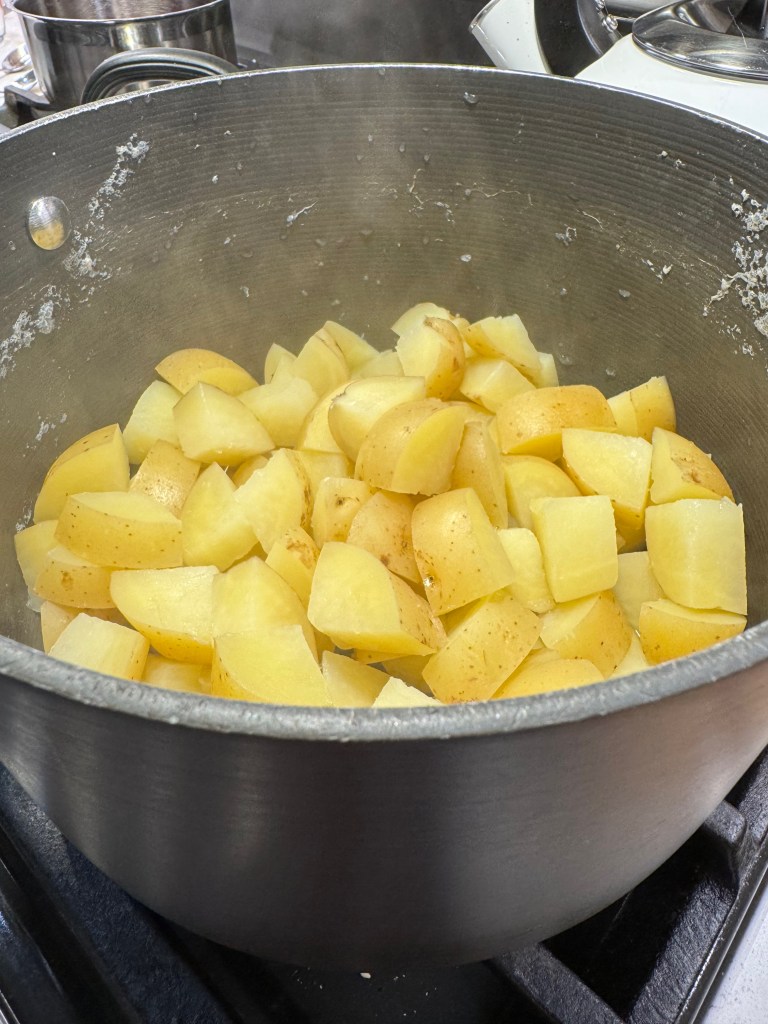
A typical clambake is outdoor cooking at its finest yet most humble. Simple ingredients, cooked over a smoldering fire until the natural flavors of ocean and earth reach their peak. Clams, corn, potatoes, onions, fresh herbs and lemon are the basic ingredients, and my list of “Leo-approved” foods was already overlapped quite a bit. Spinach would be great on this pizza, and baby tomatoes would add a nice pop of color and acidity to balance the richness of the clams. Potatoes may seem like an odd topping for pizza, but it worked really well on my steak and potato pizza a few years ago, so why not? I parboiled cubed Yukon golds and then fried them up in butter with the shallots. 
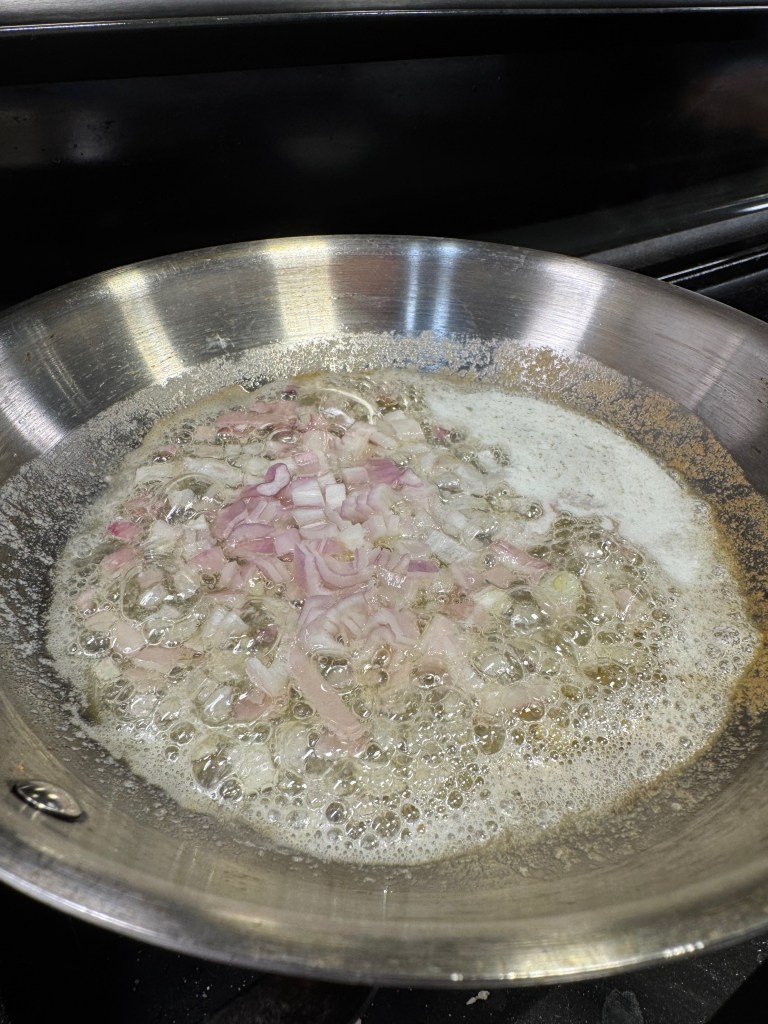

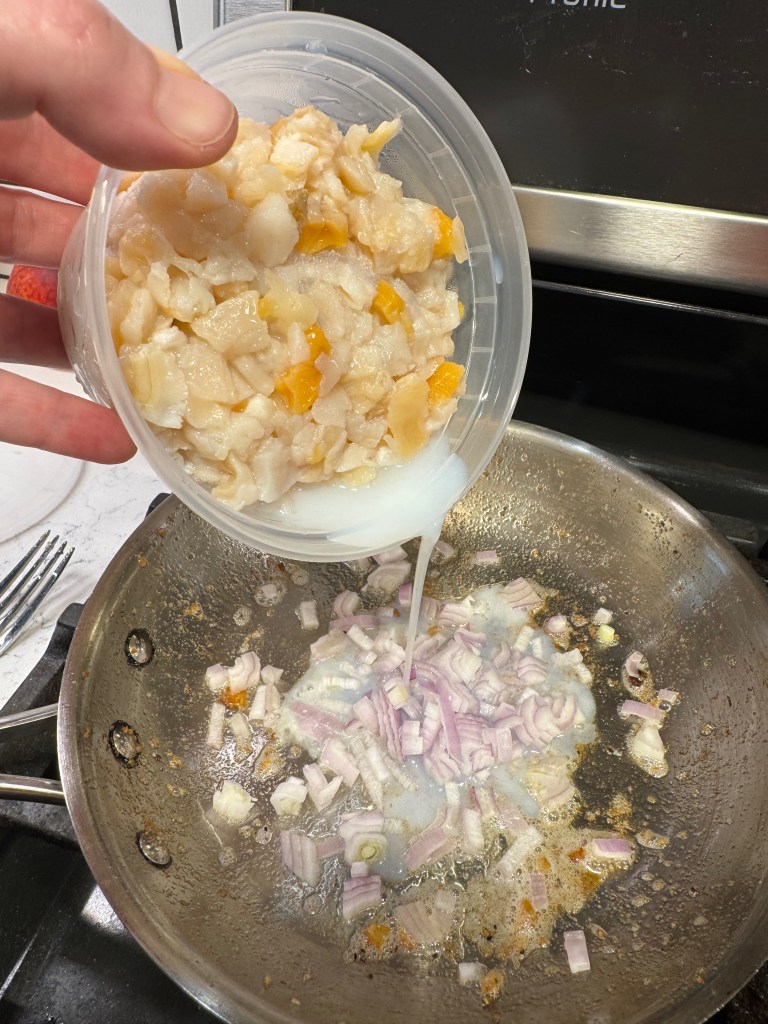
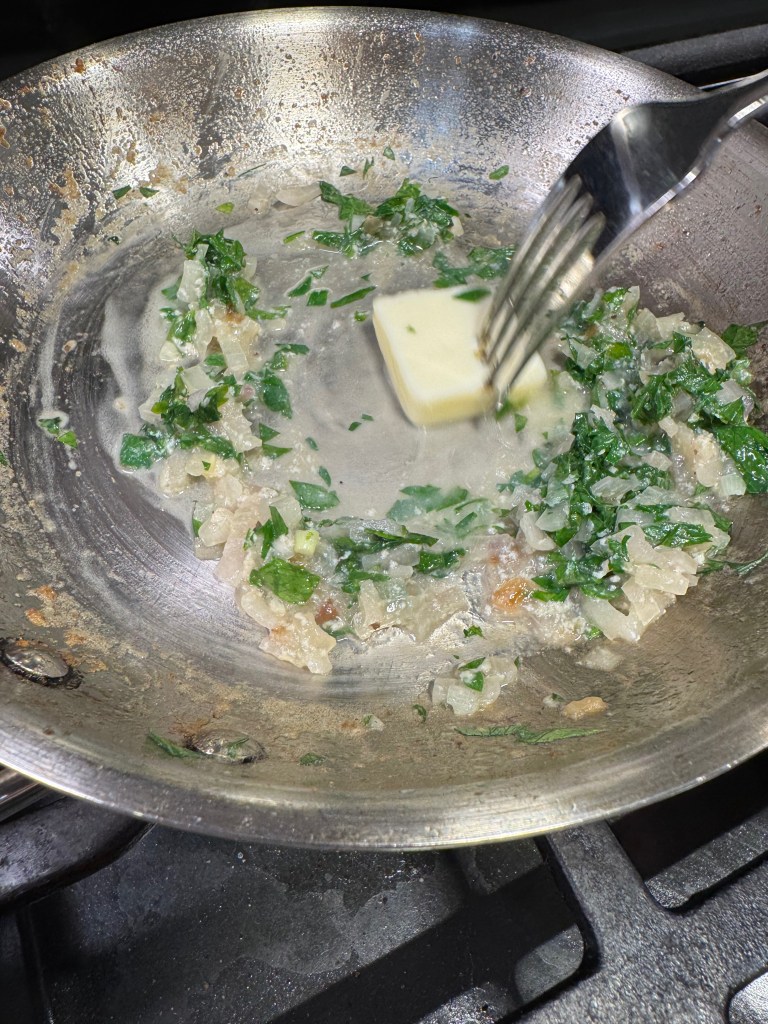
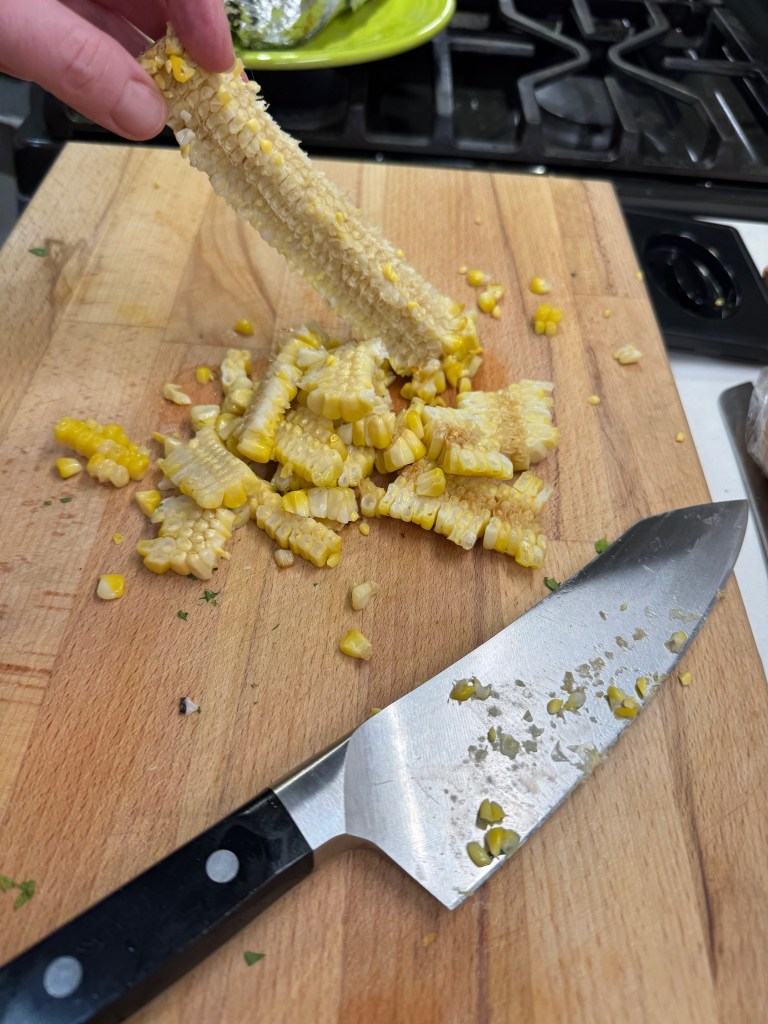
My littleneck clams came from my favorite local seafood shop— fresh from the Atlantic, already cleaned, shucked and chopped. For obvious reasons, they couldn’t go onto the pizza in their shells. After the potatoes were crisped up, I poured the flavorful clam “liquor” into the pan, and swirled in some butter with fresh parsley to dollop on the pizza before baking. I stripped an ear of grilled corn and chopped up the baby spinach, and we were ready to rock and roll.
Cooking pizza on the grill

My pizzas are usually done in my home oven, outfitted with a 3/8”-thick slab of steel, preheated to 550° F for at least an hour. In other words, hot! For this one, though, my husband and I did the baking outdoors (clambake style!) on our Napoleon gas grill, which gets even hotter than the oven. We purchased a Weber pizza stone that works great for summer baking when we don’t care to heat up the house. Les handled all of that while I prepped inside, beginning with shaping my dough into a 14-inch round and laying it on a flour- and cornmeal-dusted bamboo peel.
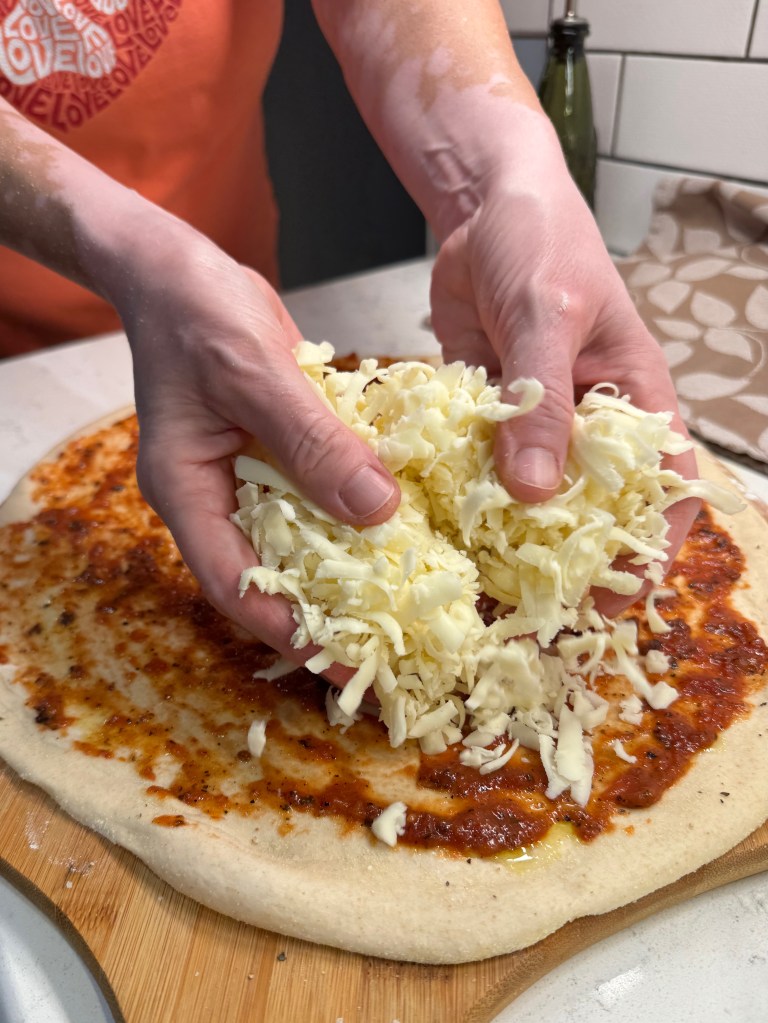
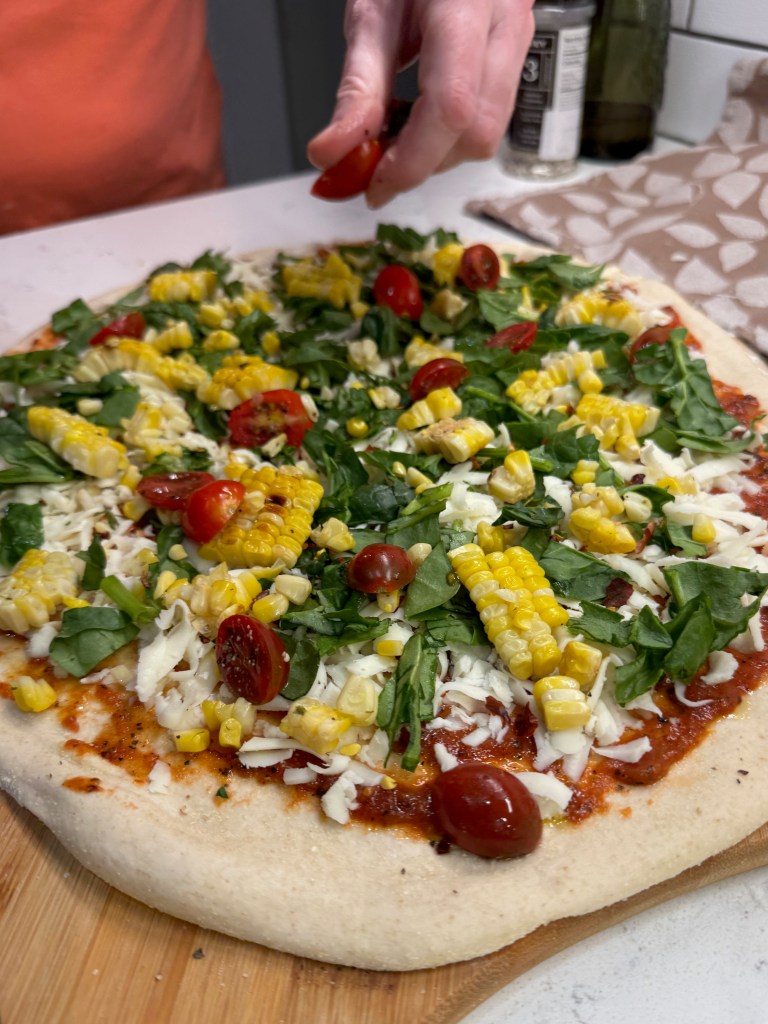
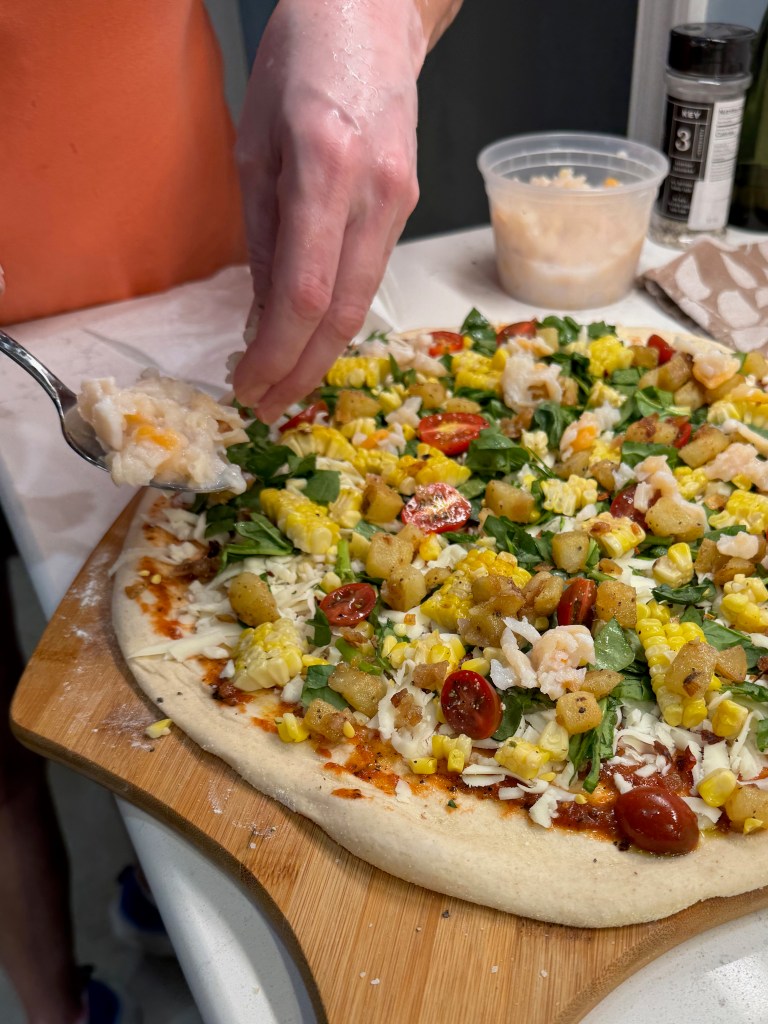
The toppings are straightforward, and I’ve put the wettest ingredients— the corn, tomatoes and clams— on top of the drier ingredients. I want them to get the benefit of the heat without creating too much steam underneath, which would wreck my crust. The clam liquor-butter mixture was laid on last in dollops and this was ready for the bake!
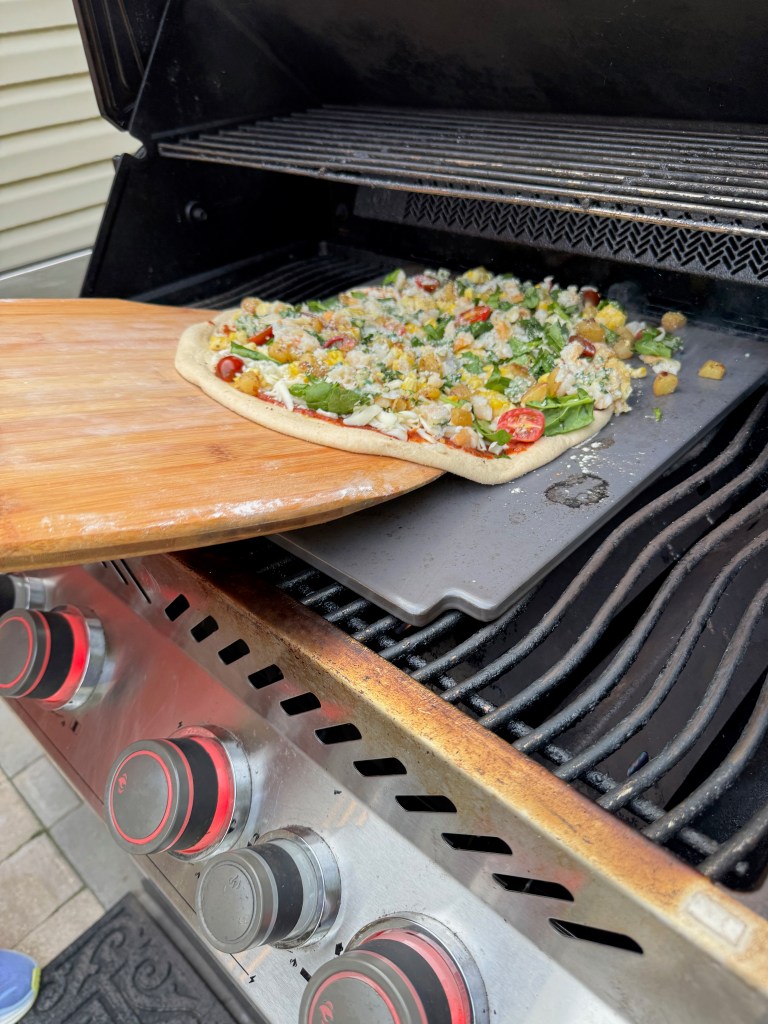
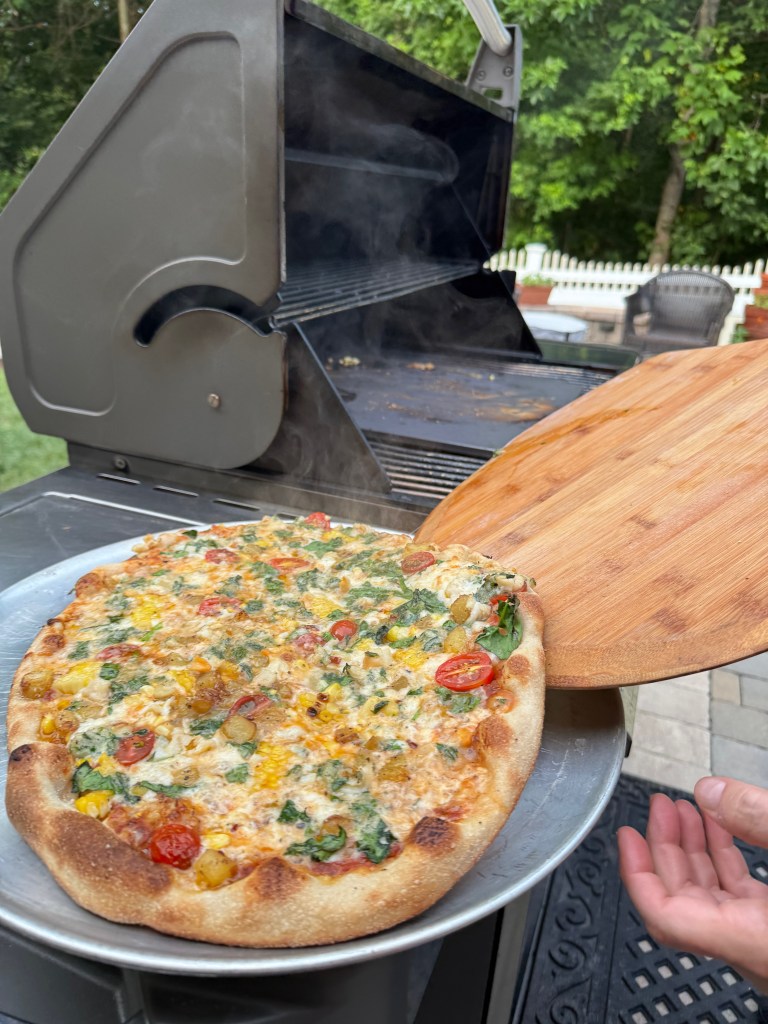
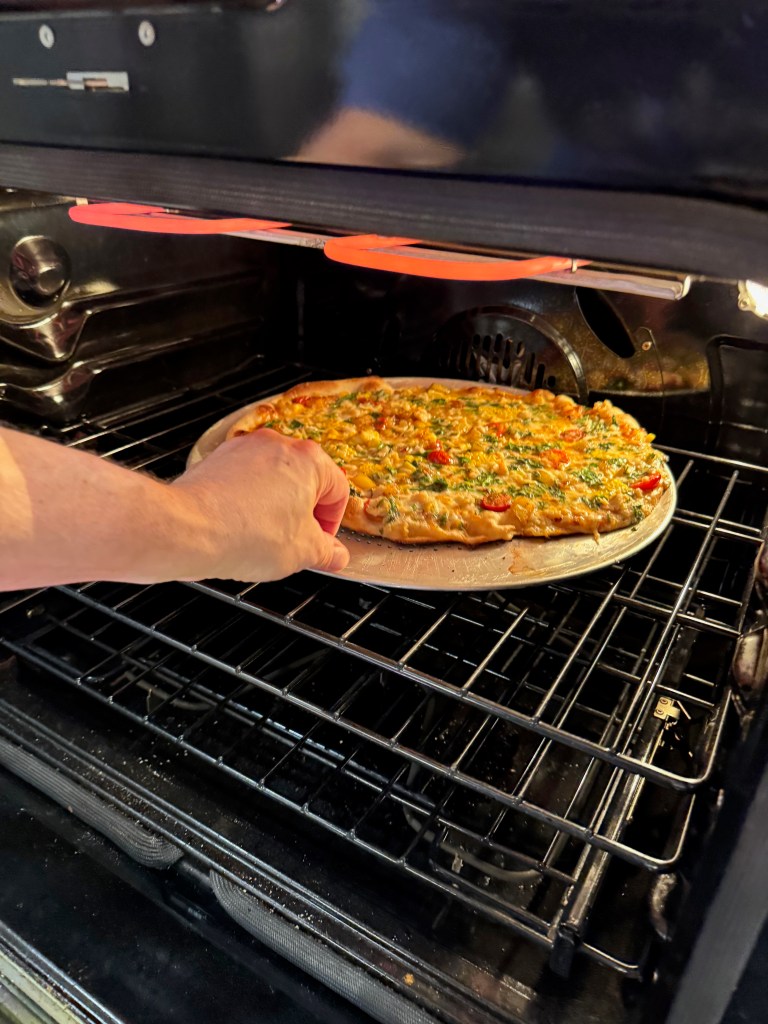
One minor shortcoming of our grill for pizza is that the top of the pizza doesn’t have a chance to brown as it would in the oven. Solution? Easy— we just slide the finished pie under the high broiler in the oven for 30 to 60 seconds. Voila! Blistered crust and perfectly browned toppings, but without heating up the whole house for hours in the dead heat of summer. 

It even smells like a clambake!

So how was this lovely creation, made of Leo-favored ingredients and served up on this last day of my zodiac sign? Delicious! My husband and I have both come to love clams on pizza, ever since our trip to New Haven and our own adventures with white clam pie, which I’m now Jonesing to do again soon. This fun interpretation brought plenty of other tasty ingredients into play, and we could taste each of them. The tomatoes were a good addition, and the trick of reducing the clam liquor with the buttered onions really added a great finishing note of ocean flavor. Would I make it again? Definitely! And I probably won’t wait until Leo season rolls back around. 

Tomorrow is the first day of Virgo. Now, I wonder what they like to eat? 😉

Clambake Pizza
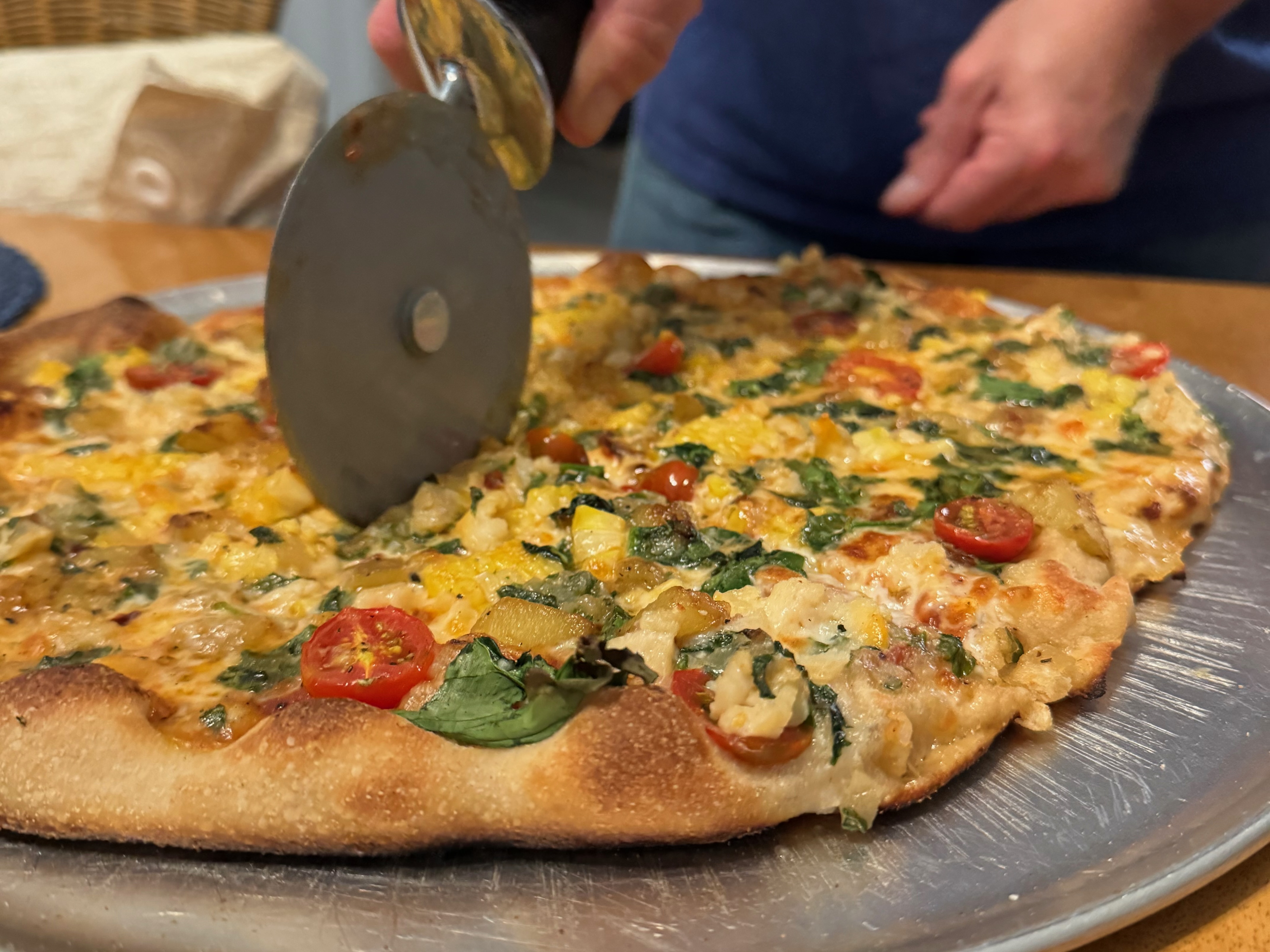
  • Servings: 6 slices
  • Difficulty: Average
  • Print

Apparently, my zodiac sign (Leo) loves clams, corn, spinach and mozzarella. What else could I do with this information but make a clambake pizza?


Ingredients

  • 2 Tbsp. salted butter (half for cooking onions, half for clam-herb butter)
  • 1 small shallot, minced
  • 1 medium Yukon gold potato, cubed and boiled to al denté tenderness
  • A pinch of baking soda in the potato cooking water
  • 11 oz. pizza dough ball, at room temperature
  • 1/3 cup favorite pizza sauce
  • 3/4 cup freshly grated firm mozzarella
  • 1 ear of grilled corn, stripped from cob
  • A handful of cherry or grape tomatoes, halved and salted
  • A fat handful (about 2 cups) fresh baby spinach, rough chopped
  • A few shakes of crushed red pepper, if you like heat
  • About 1 cup fresh chopped littleneck clam meats (reserve some of the liquor for the herb butter)

Notes: My pizzas are baked on an oven steel, preheated to 550° F for one hour. Alternatively, bake on a pizza stone designed for a gas grill, following temperature instructions for your stone and adjusting time as needed. Either setup will help you achieve a brick oven-style pizza at home.

Directions

  1. Heat a small sauté pan over medium heat with a tablespoon of butter. Sauté the shallots for a few minutes until slightly softened. Drain the potatoes and add to the pan, tossing to crisp up the sides.
  2. Transfer the cooked potatoes to a small bowl. Pour some of the clam liquor into the sauté pan with the shallots and butter and simmer to reduce the liquid. Remove from heat and swirl in the other tablespoon of butter, along with the fresh parsley. Set this aside as a final topper to the pizza.
  3. Shape pizza dough into a 14-inch round and place it on a flour- and cornmeal-dusted peel. Swirl sauce over the pizza and scatter the mozzarella all over it.
  4. Layer toppings on, beginning with the spinach, pepper flakes and corn, then the tomatoes, potatoes and clams. Finally, arrange dollops of the clam liquor-infused herb butter all over the pizza, emphasizing the clams as much as possible.
  5. Transfer to the pizza to the preheated steel (or stone) and bake for 6 to 7 minutes, using peel to turn pizza at the 4-minute mark. If baking on the grill, transfer finished pizza to a heatproof pan and slide it under the high broiler of your oven for up to 60 seconds, to get the roasted appearance of an oven-baked pie.
  6. Wrap any leftover slices individually in aluminum foil. Reheat on a preheated griddle or skillet, loosely tented with foil. This preserves the crispy texture of the crust while allowing the cheesy topping to melt.

Just for fun…

A few famous Leos: 😎 Looks like I’m in excellent company!

Jennifer Lopez
Barack Obama
Mick Jagger
Helen Mirren
Antonio Banderas
Sandra Bullock

Charlize Theron

Steve Carell
Meghan Markle
Arnold Schwarzenegger
Halle Berry

Madonna
Steve Martin
Tony Bennett
Martha Stewart


Mexican Street Corn Potato Salad

Summer officially hit last night at 10:42pm ET, and you know what that means. Millions of backyard barbecues, picnics, family reunions and summer parties are straight ahead! Some of my fondest memories are closely tied to the foods served at such occasions, and I’m a firm believer in the notion that one can never have too many recipes for summer side salads.

For the past couple of summers, I’ve steered away from mayonnaise-based salads, mainly because they don’t hold up well in the summer heat, at least for outdoor parties. So my husband’s special request last weekend should not have been any surprise when I mentioned whipping up a potato salad to serve with our grilled coffee-rubbed tri-tip.

“Can you make more of a mayonnaise-y dressing this time? Not one of those vinegar things you’ve been doing.”

Well, okey-dokey! We have a running joke at our house about how long it takes for foods to come back around in “rotation,” so I’m happy to oblige a sincere requst.

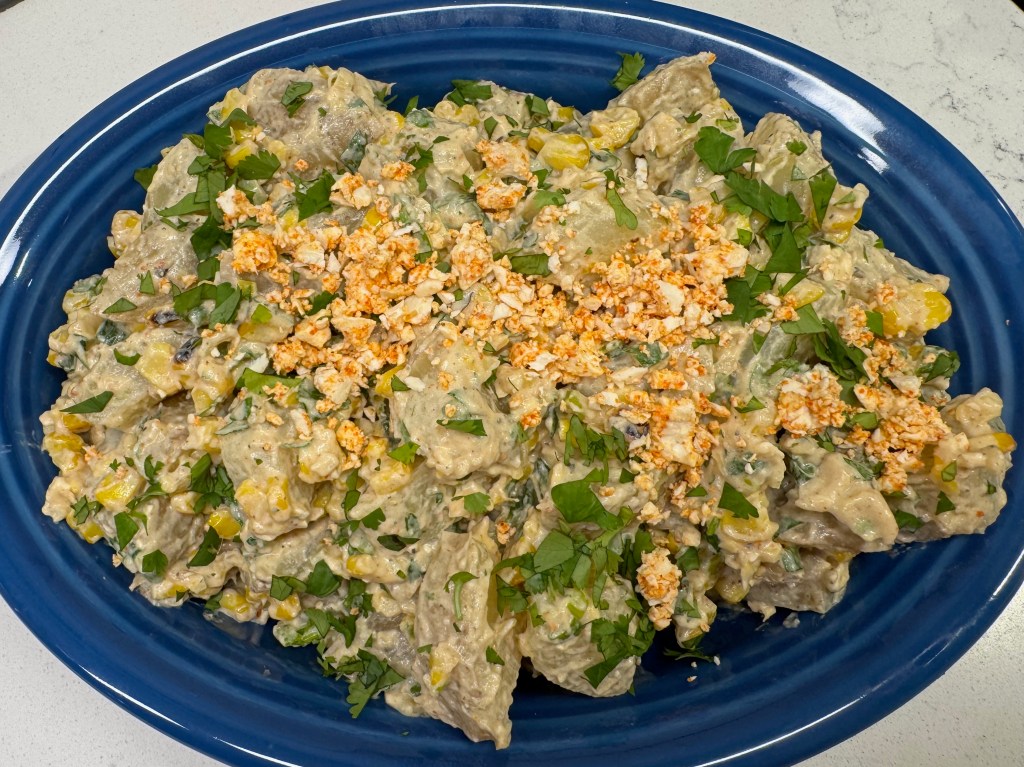
I think I satisfied his craving with this creamy, mayo-dressed potato salad that conveys all the flavors of Mexican street corn, also known as eloté. The textures were great, and the dressing and seasonings were unmistakably eloté— creamy, sweet bite on the corn, tangy from the mayo and lime, a sharp saltiness from the crumbled cheese, and just spicy enough to be interesting. It was fantastic with the tri-tip he grilled for us, and we enjoyed this salad again with lunches during the week as well as with spicy grilled chicken tenders a couple nights ago. I’m sad that it’s gone!

This recipe makes enough for eight servings (unless you do excessive taste-testing like I did).

Ingredients for my Mexican street corn potato salad

Any finished dish is only as good as what goes into it, and given that this is a bit of a twist, I’ll break down the role that each ingredient played in this salad. Note that some ingredients may be tricky to find, so I’ve offered reasonable substitutions for those. Here we go!

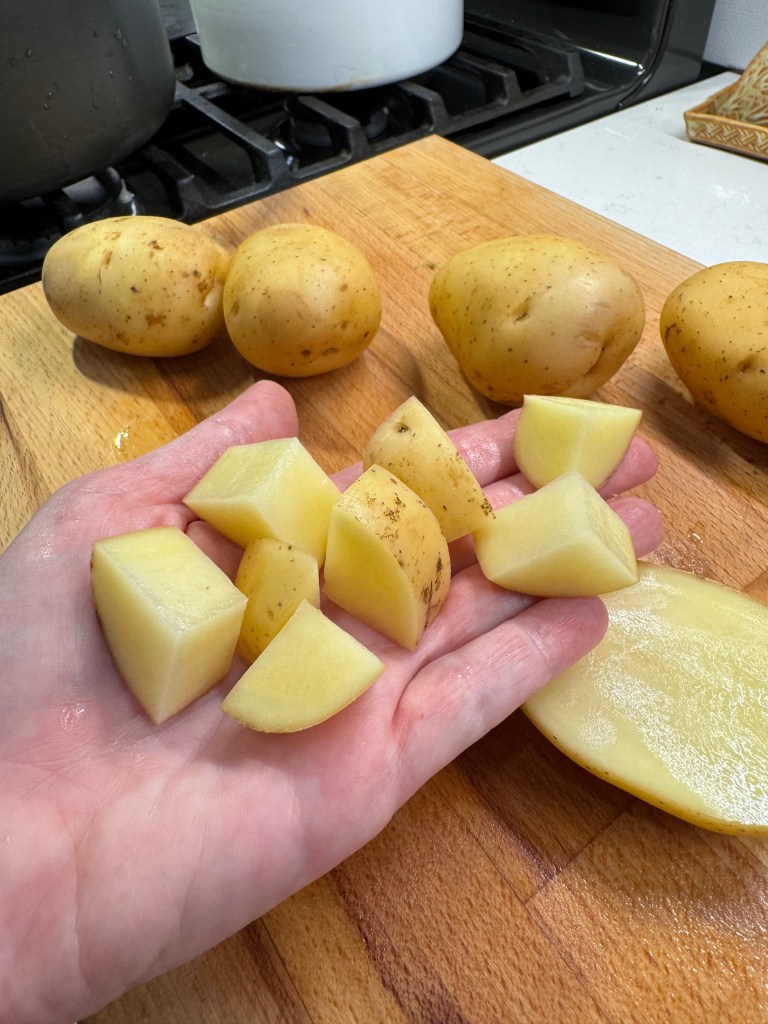
Yukon gold potatoes – these are a perfect balance of creamy and starchy, and because the skin is so tender, I don’t bother peeling them. Choose potatoes on the smallish side if possible, so that every chunk has a bit of skin on it. You’ll cook them gently in salted water until fork tender, then drain and let the steam roll off before chilling.


Mayonnaise and sour cream – My dressing is made with equal parts of these two, and if you can get your hands on Mexican crema, use that in place of sour cream. 

Roasted corn – we love grilling corn in the summer time, and we sometimes make extra ears so that we have them for dressing up another dish. If you don’t have a grill (or the time to mess with grilling corn), pick up a bag of frozen fire-roasted corn, which will work just as well. We like the one that’s available from Trader Joe’s.


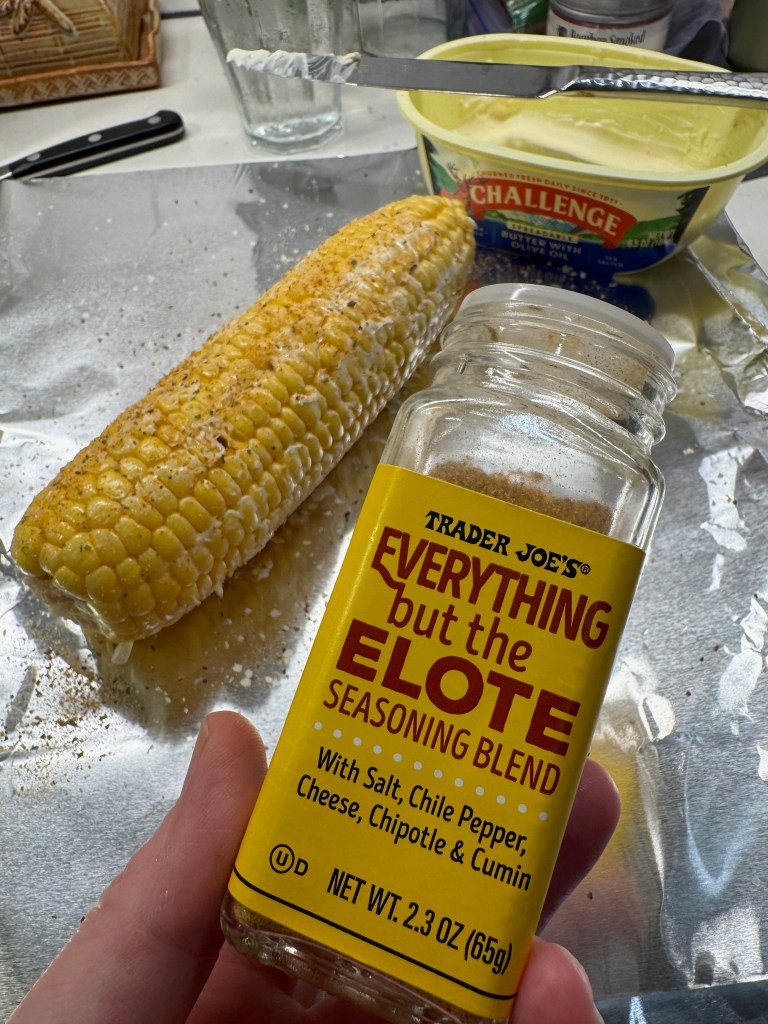
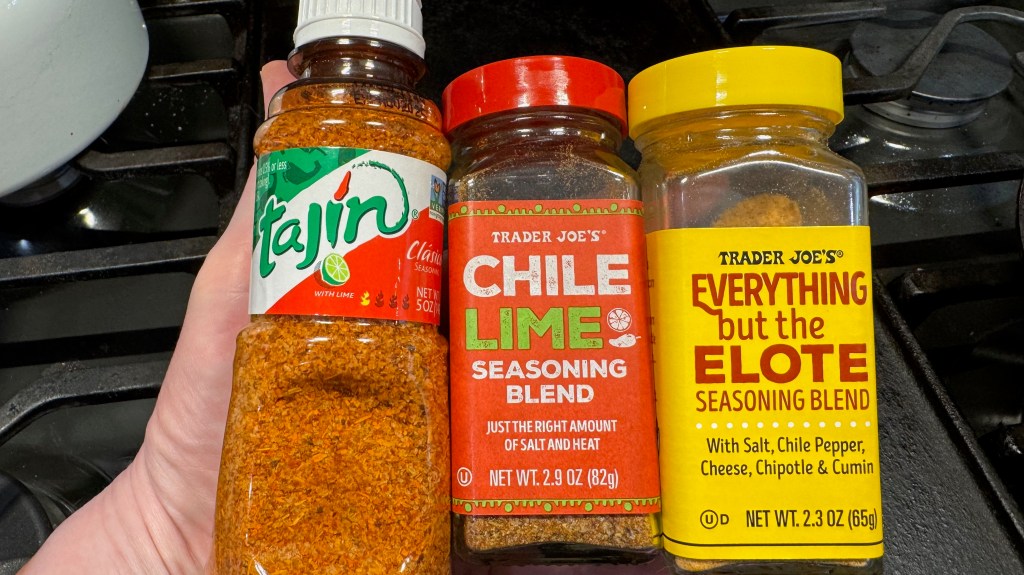
Eloté spices – traditionally, Mexican street corn is seasoned with any number of ground chile powders, including chipotle, cumin, cayenne, ancho or pasilla. I used ground ancho and cumin in my dressing, but if you don’t have the individual chile powders, don’t sweat it! Just pick up a bottle of Tajin seasoning, either in the spice aisle or the International aisle. Trader Joe’s chili-lime seasoning is very similar, and I also love their “Everything But the Eloté,” to season my corn before grilling. It also happens to be excellent on popcorn!

Three terrific options for flavoring this salad, from hottest to mild.
Check out the saltiness ahead of time so you know what to expect.

Scallions – this is not traditional for Mexican street corn, but I can’t make potato salad without some variety of onions, and this one works well with the other ingredients. Use the white and green parts, and slice them thin.

Lime – the lime zest and juice are what really make the flavors of this salad pop. Purchase organic citrus because you’ll be using the peel, and choose heavy fruit with a smooth skin for the most juice and brightest flavor.

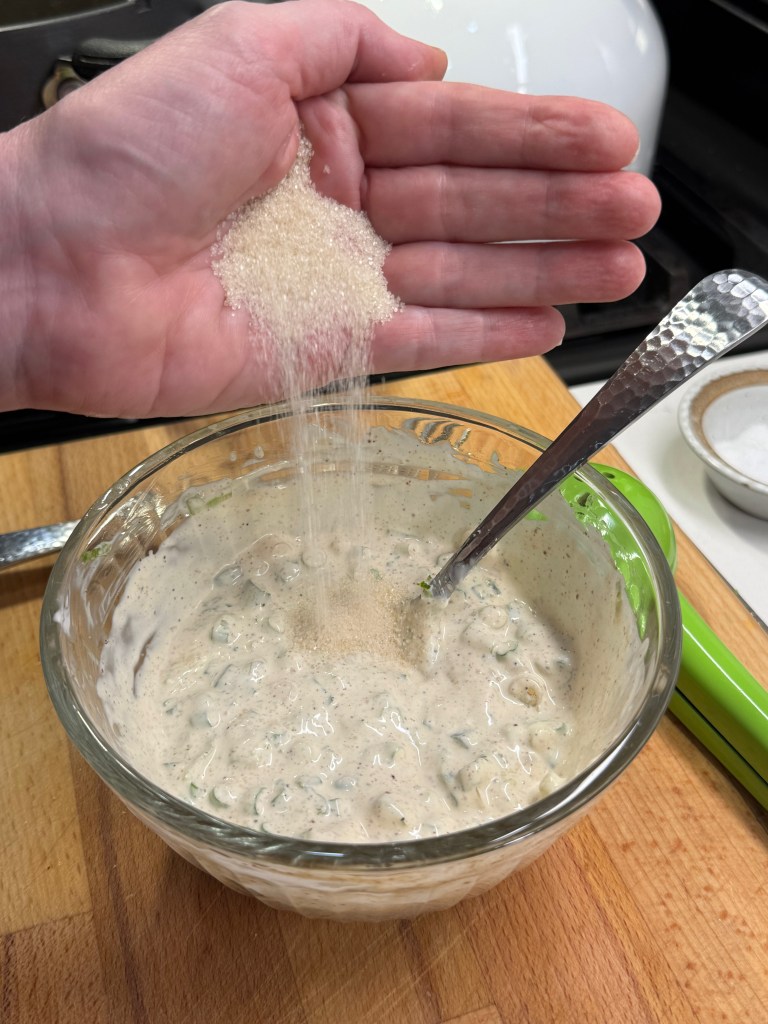
Sugar – every Mexican street corn I’ve ever tasted had a slightly sweet flavor, and a small spoonful of sugar in the dressing made this perfect. Don’t skip it. 

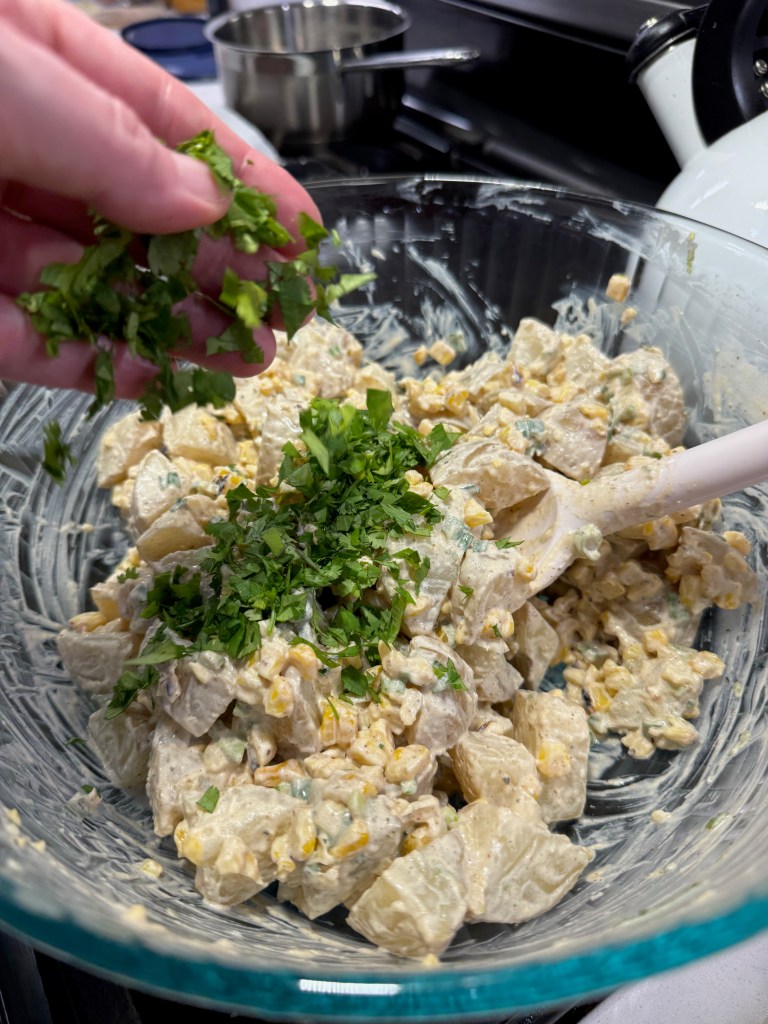
Fresh cilantro – authentic for Mexican street corn, but if you are among the 20% who find that it tastes like dish soap, then just skip it. There isn’t another herb similar enough, and the dish won’t suffer without it.

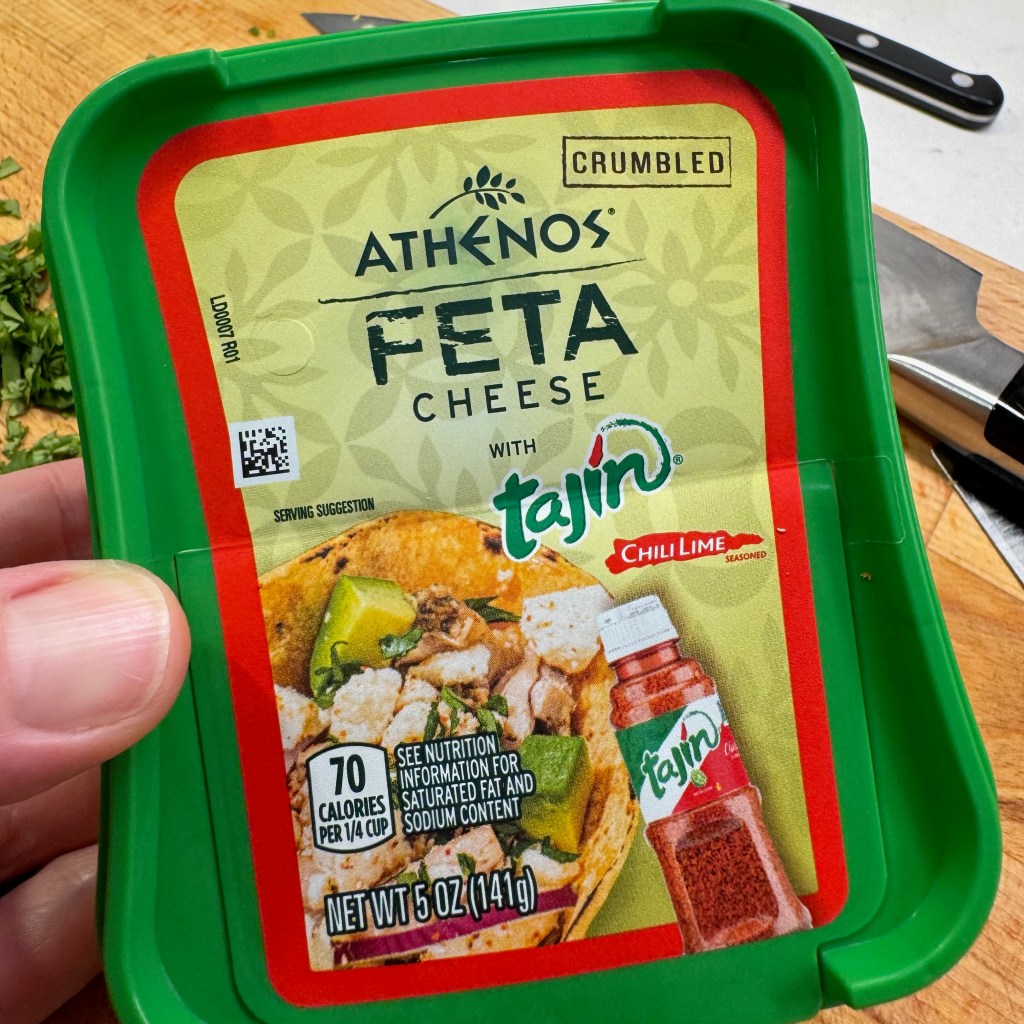
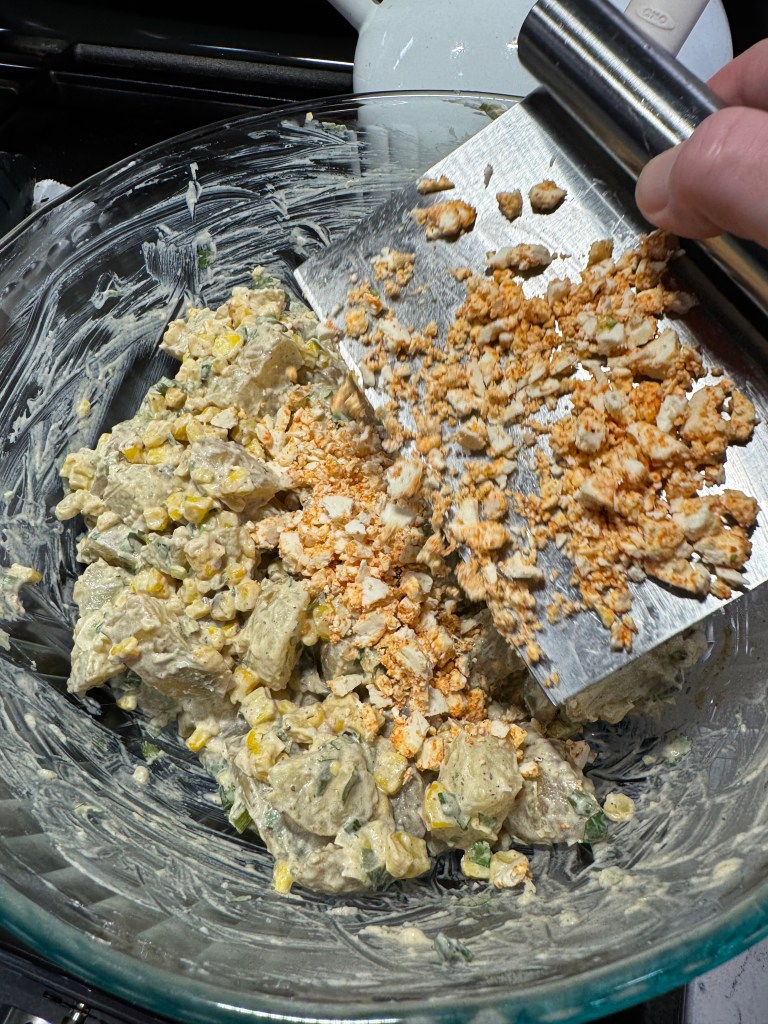
Crumbled cheese – ah, I saved the best for last! Mexican street corn is traditionally slathered with mayonnaise dressing and sprinkled liberally with cotija, a Mexican hard cheese that is reminiscent of parmesan, but less pungent. Cotija can be a little tricky to find outside of a specialty cheese section, but not to worry— feta, the dry crumbly kind, is a lovely substitute. And that leads me to a funny story…

A side note, on “sending the husband to the grocery store”

I love my husband dearly, and his sensibilities in the kitchen are usually right on target, but sometimes, I still make specific and detailed notes on the list when I send him to the store by himself, and I might even text him a picture of an exact item I need. For this recipe, I was very clear that if cotija cheese was not available, he should get “dry crumbled feta,” and in the margin, I wrote, “PLAIN, NO FLAVORS!” So you can imagine the stink-eye he received when he returned with a “flavored feta that sounded interesting.” My dramatic Leo side went bonkers as I yelled, “Geezus, can you not read???” But then I saw what he found, and of course, it was literally perfect for this recipe! Gotta trust my man sometimes, ya know?

You NAILED it, Babe! 😘

Making this Mexican street corn potato salad

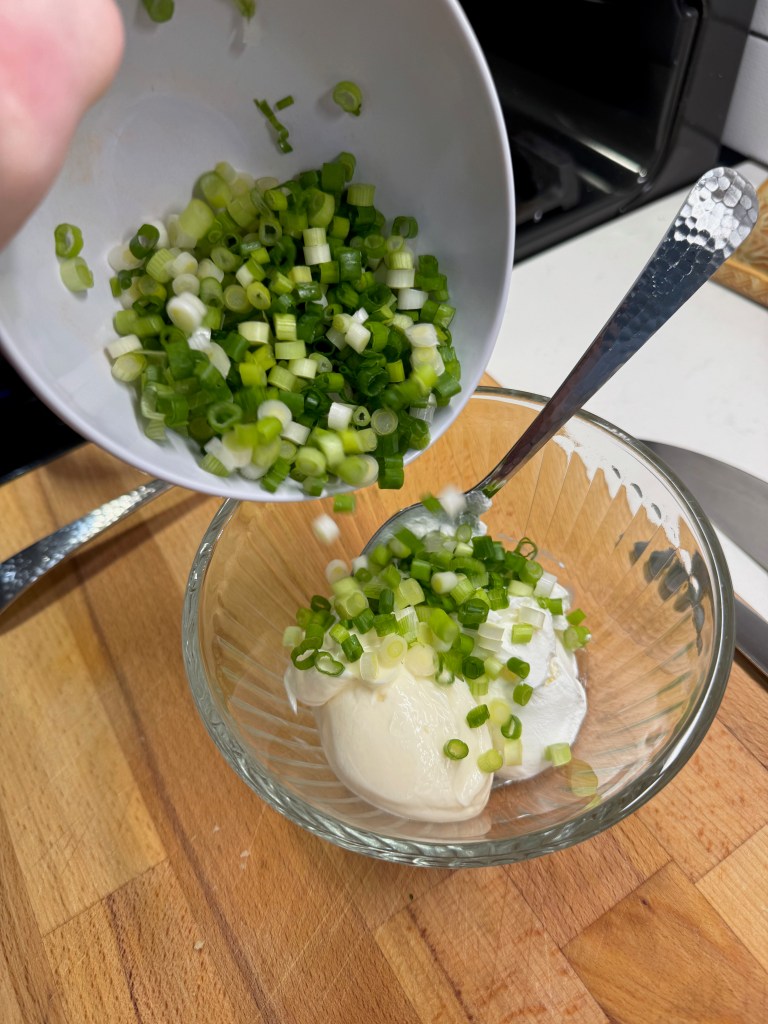
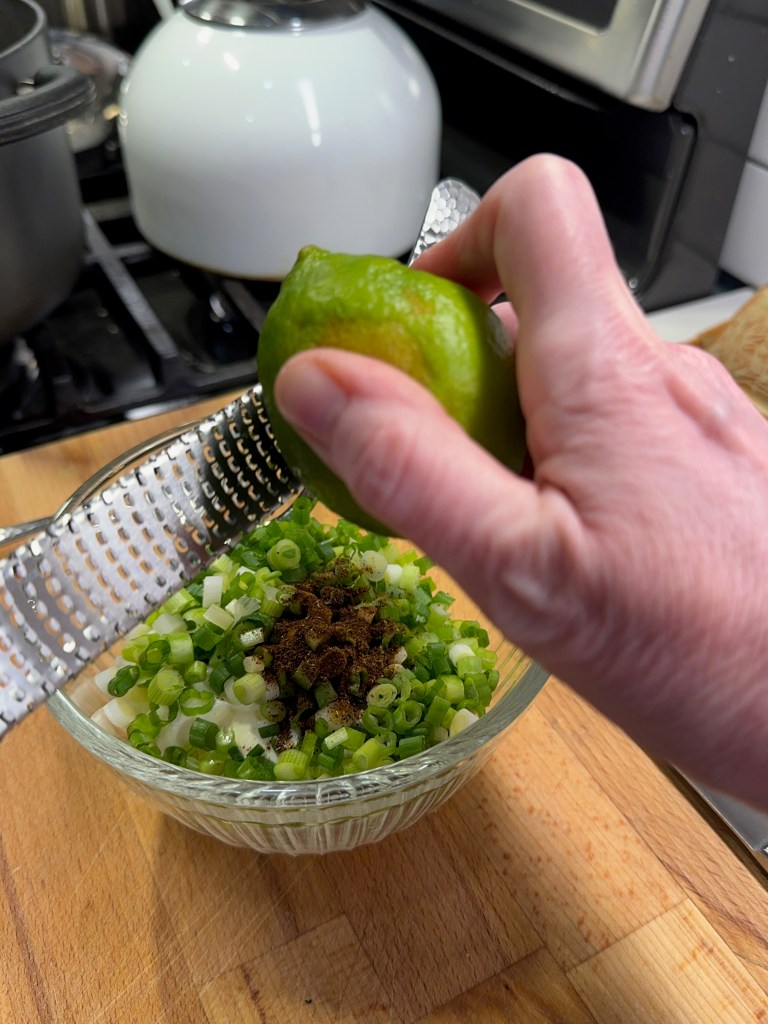
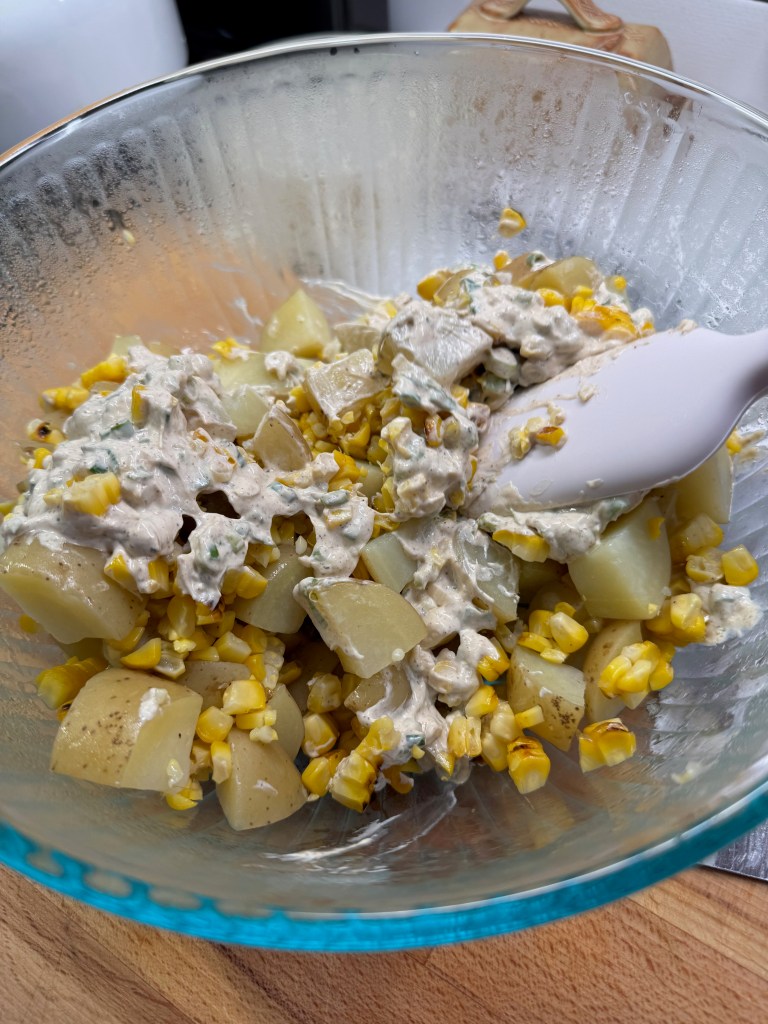
From this point, it’s a pretty standard potato salad in terms of mixing, so I’ll let my photos do the talking while you imagine this deliciousness coming to life in your own kitchen. Find full instructions below in an easy, click-to-print recipe card that you can save for your files. Welcome back, summer! 😎


Mexican Street Corn Potato Salad

  • Servings: About 8
  • Difficulty: Average
  • Print

This is two of my all-time favorite carbs, together in one really flavorful salad! Plenty of seasoning options, so you can make it as spicy (or not) as you like it!


Ingredients

  • 2 lbs. Yukon gold potatoes, skin-on and cut into 1-inch chunks
  • 1/4 cup mayonnaise
  • 1/4 cup Mexican crema (or sour cream)
  • 3/4 cup finely sliced scallions
  • 3/4 tsp. ancho chile powder
  • 1/4 tsp. ground cumin
  • Salt and pepper
  • Zest and juice of one lime
  • 1 tsp. cane sugar
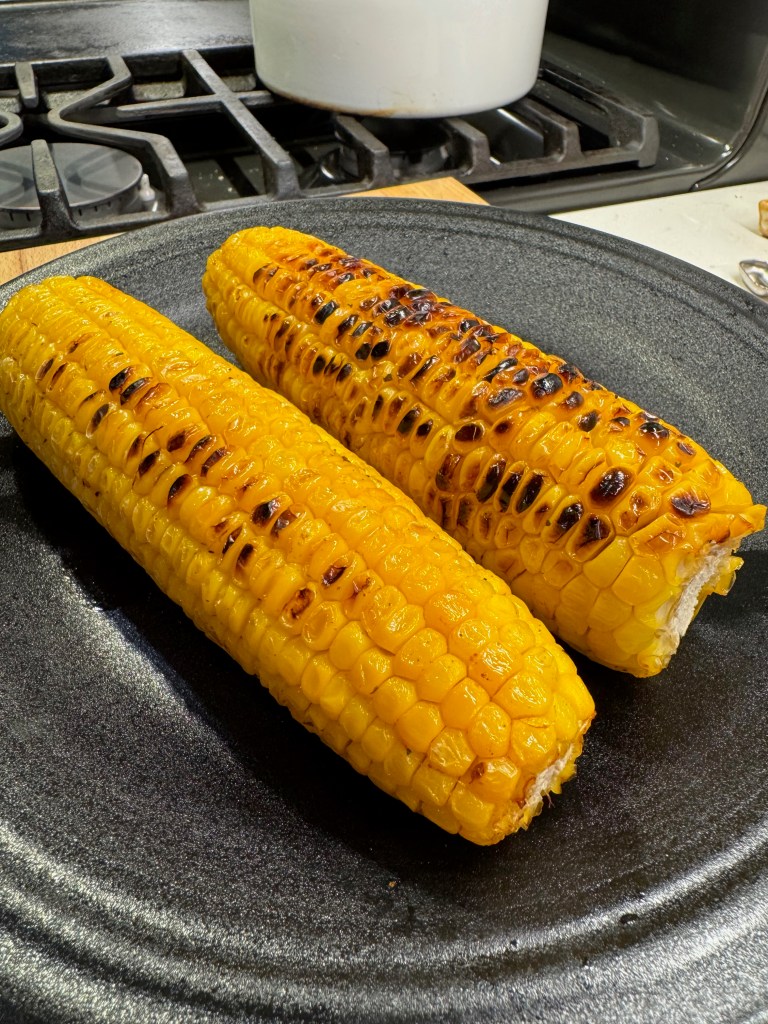
  • 2 ears fresh yellow sweet corn, roasted or grilled until charred but tender
  • 1/3 cup cotija cheese, divided (you’ll mix some into the salad and sprinkle the rest on top)
  • fresh cilantro

Substitution notes: If you don’t have the means to roast or grill the fresh corn, don’t hesitate to pick up a bag of frozen fire-roasted corn. We love the one from Trader Joe’s, and it would work terrific here. If you cannot find cotija cheese, dry crumbled feta is a reasonable substitute; consider chopping it finer if the crumbles are larger than peas. Ancho chile powder is a spice unto itself, without salt or other ingredients. If you can’t find it, or if you want flavor without heat, swap in smoked paprika.

Directions

  1. Place the potatoes in a pot with cold water, and heat over medium-low until they are fork tender. Drain gently and return to the hot pot with the lid off, so that excess moisture can escape through the steam. Sprinkle 1/2 tsp. salt over the hot potatoes and cool them to room temperature, then transfer to a large mixing bowl and refrigerate for an hour or longer.
  2. In a medium bowl, combine mayo, crema, scallions, spices, lime and sugar. Adjust to taste with salt and pepper. Put the dressing in the fridge to chill until you’re ready to assemble the salad.
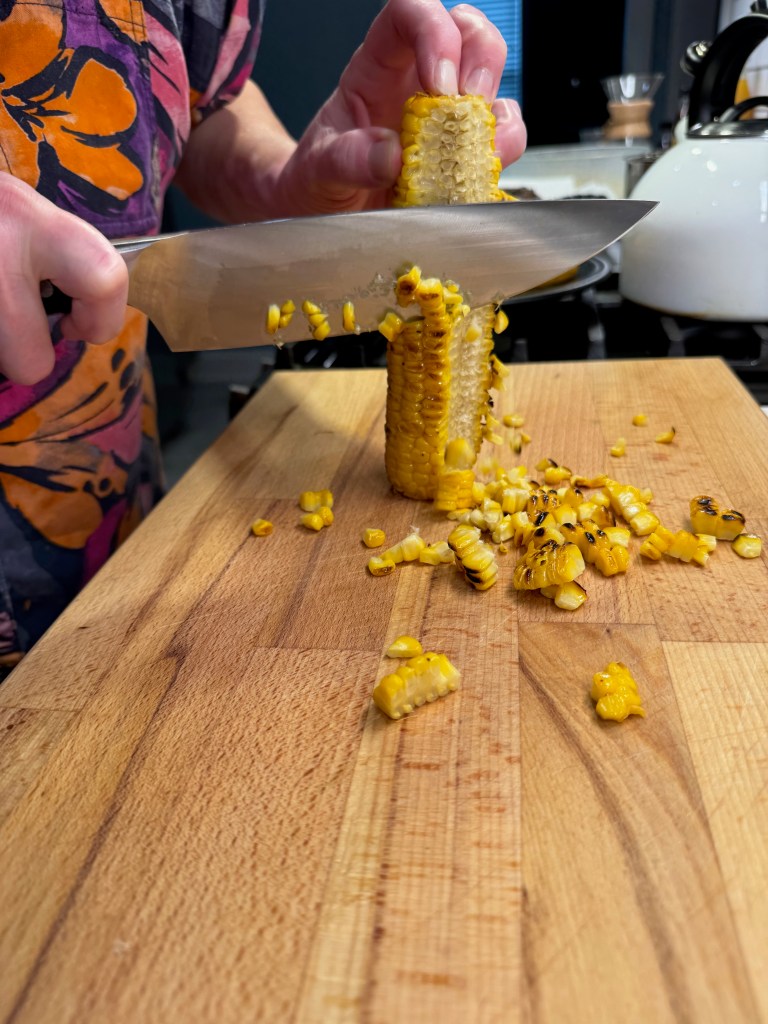
  3. Stand the corn on end and use a sharp knife to cut the roasted kernels off. Add them to the potatoes and fold in gently with the dressing until the salad is consistently coated. Fold in about half of the cotija cheese and a bit of the chopped cilantro, reserving the rest for garnish.
  4. Transfer the potato salad to a serving dish, and sprinkle the top with remaining cheese and cilantro.


Shrimp & Grits with Too Much Going On!

No matter where you go in the coastal region stretching across the Carolinas, you’ll find shrimp and grits. It’ll be different in each place, naturally, but delicious however it’s served. Some folks make it Cajun spicy, others use a gravy base, and a few take liberty with the grits, adding cheese or turning them into little fried cakes with the shrimp piled on top. Everyone has their favorite, and all of them are favorites for me. But I learned an important lesson when I tried to recreate a restaurant dish, and it can be summed up in a phrase that my husband hates: less is more.

When Les swept me away to Hotlanta for the Rolling Stones concert back in June (it was awesome), he went the extra mile (300 of them, actually) to extend our adventure for three days in Charleston, South Carolina. The city is a lovely place to visit, with a rich history, incredible food and beautiful architecture, and it’s also the unofficial shrimp and grits capital of the world.

Cheers, Charleston! 🍸

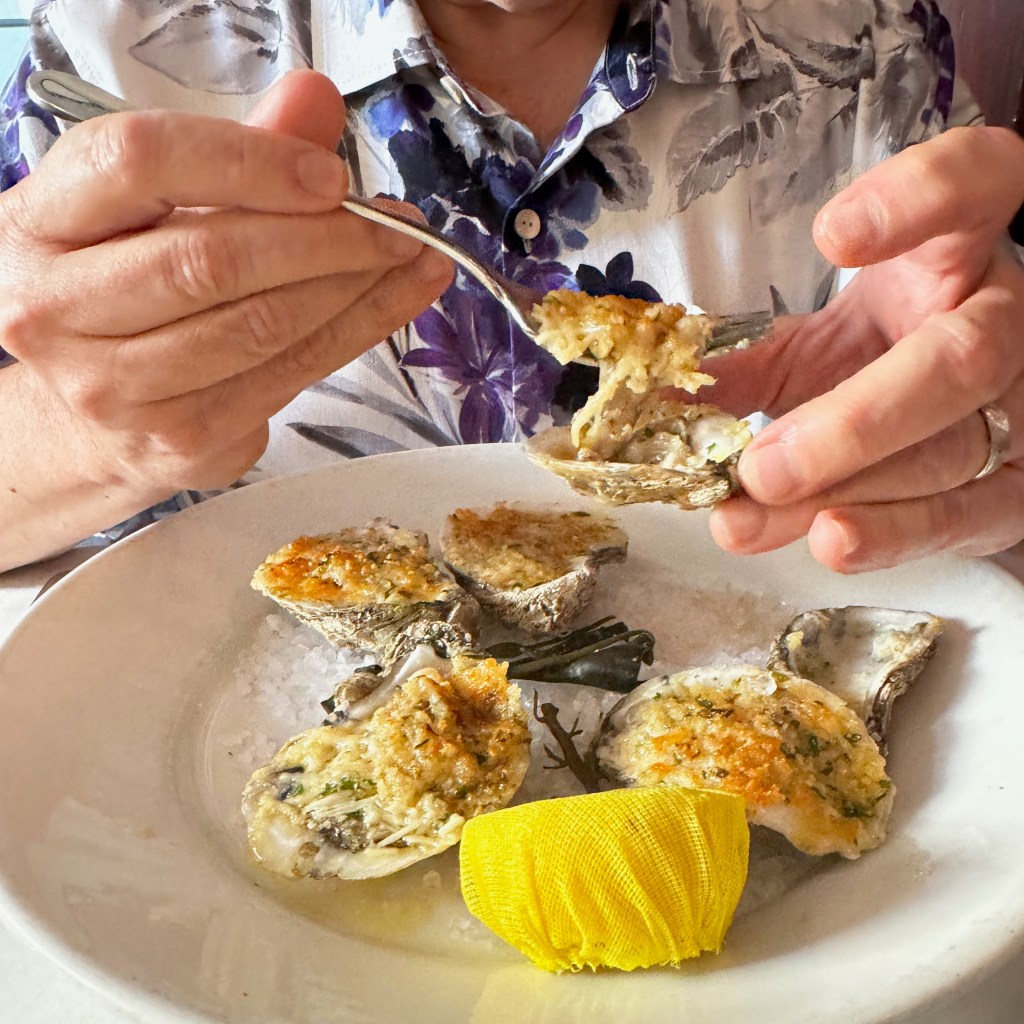
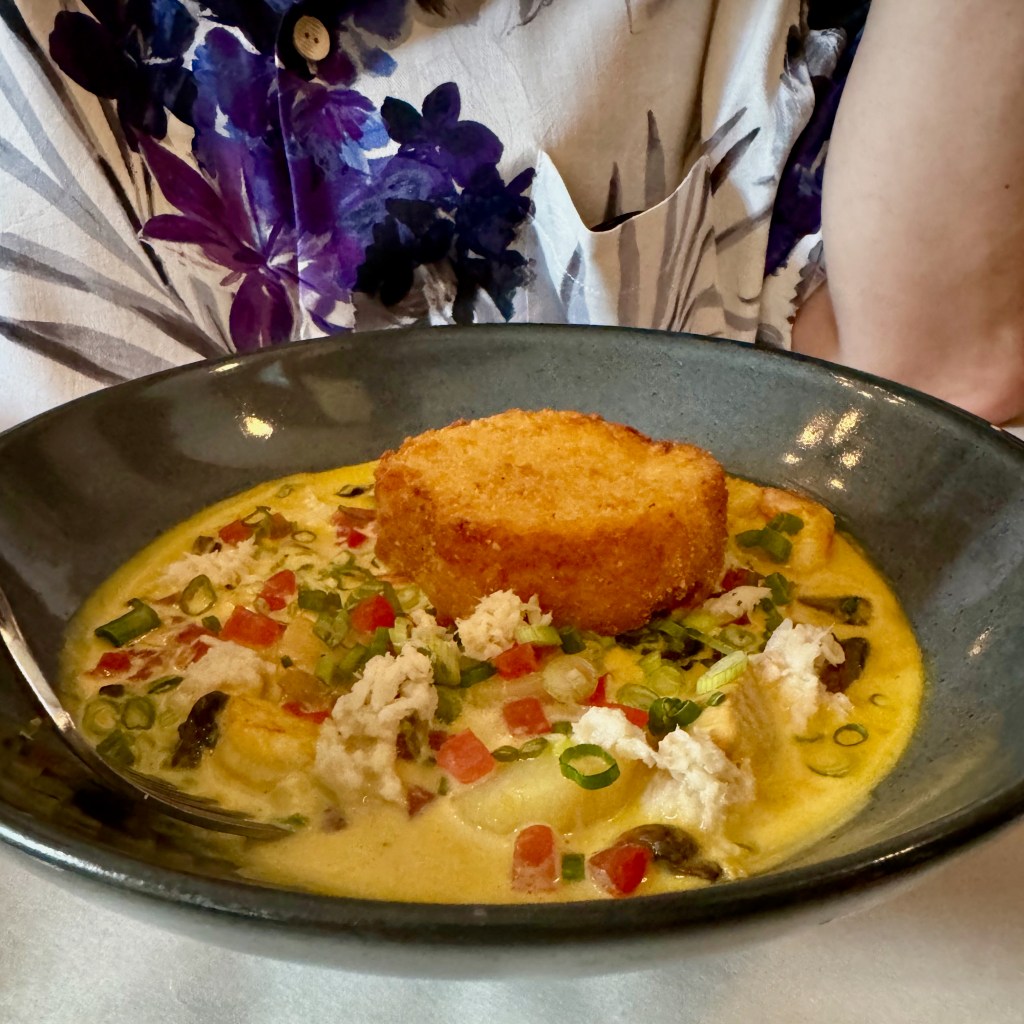
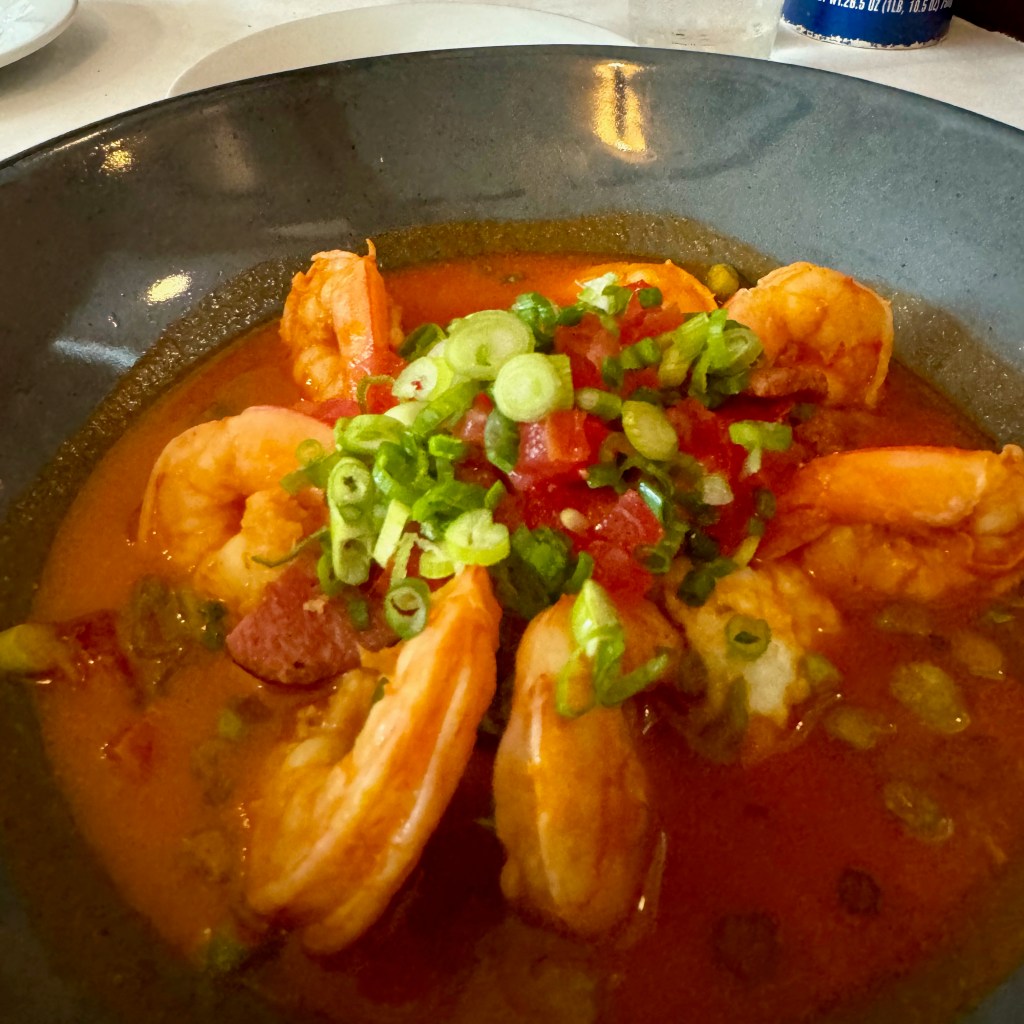
On our first night in Charleston, we had reservations at Hank’s, well-known by locals and visitors for its delectable seafood. We got there early to enjoy a cocktail at the bar, and then feasted on appetizers—oysters casino and she crab soup (another Charleston classic)—at the table. Finally, dinner arrived! Notice the crispy grit cake on Les’s scallop and crab dish? And I couldn’t resist the shrimp and grits with smoked andouille and tomato jus, which I promptly declared to be my favorite shrimp and grits to date. My goodness, it was delicious!


The shrimp were plump and juicy, and I love that Hank’s serves them with the tail on. The grits were cooked to creamy perfection with only a slight firmness to the bite. But the real star of the show was the incredible tomato jus— it was light and delicate, almost too refined for this low country classic, but so, so good.

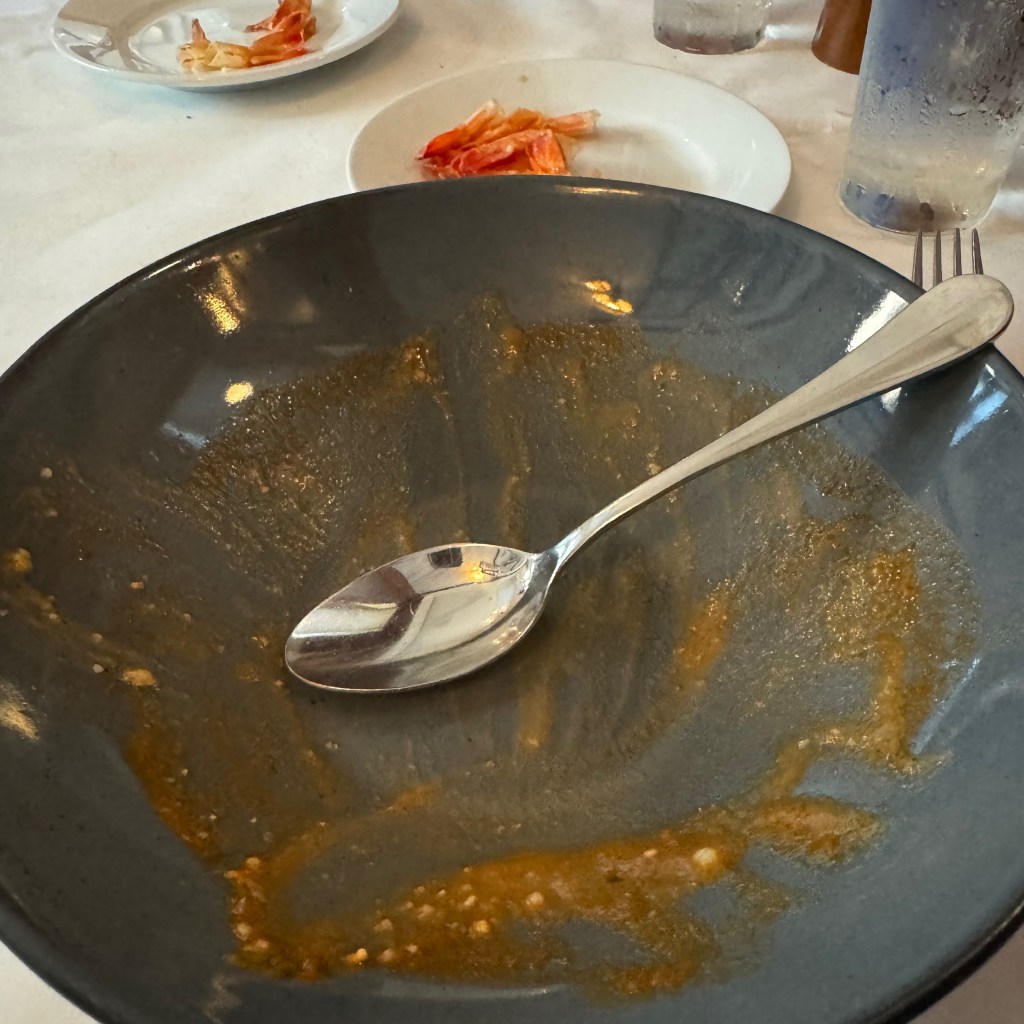
Pardon me while I lick my bowl!

I left Charleston knowing that I had to try to recreate this delectable dish, or something similar, at home. This was my first attempt, and it wasn’t perfect but it won’t be my last.

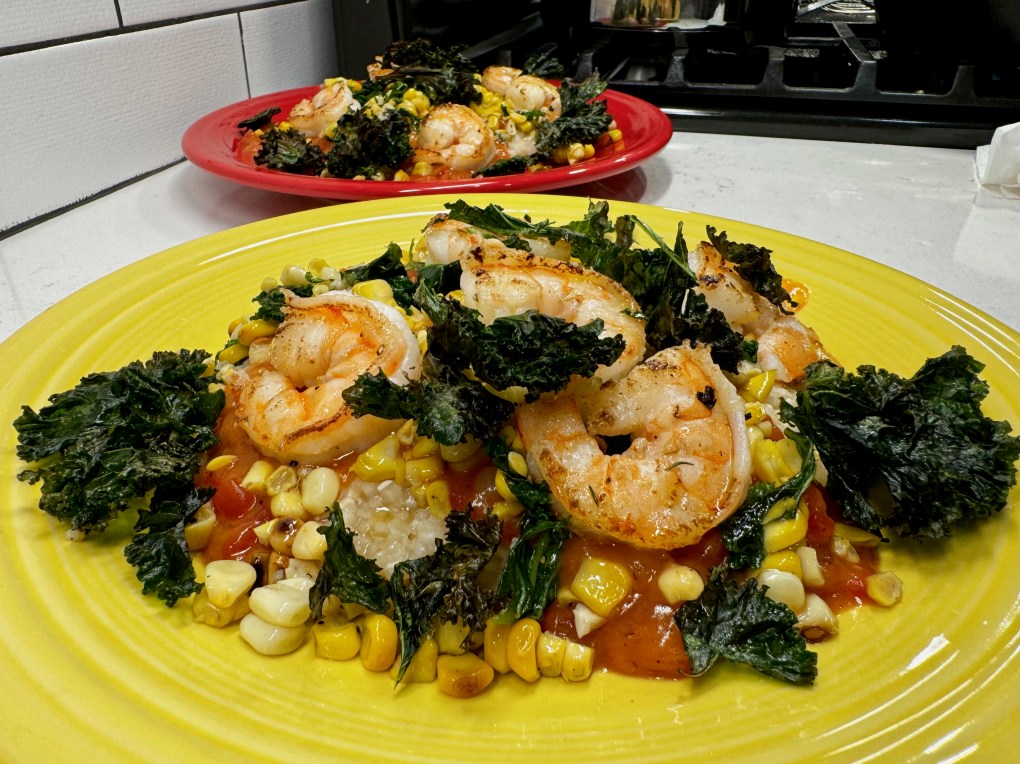
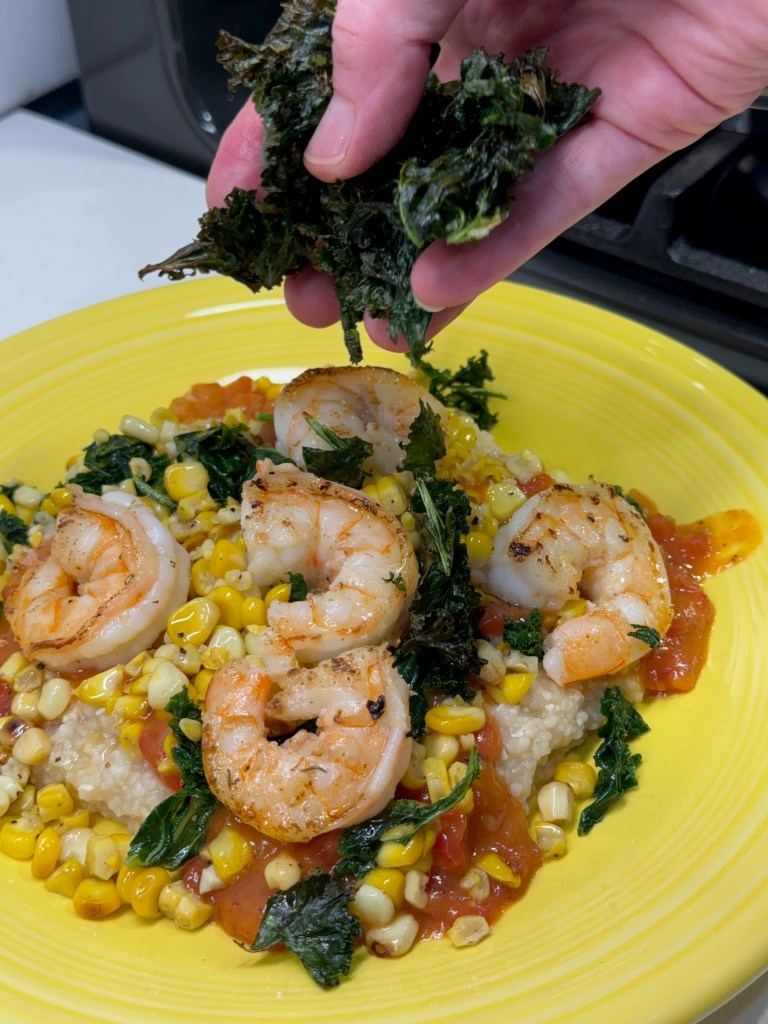
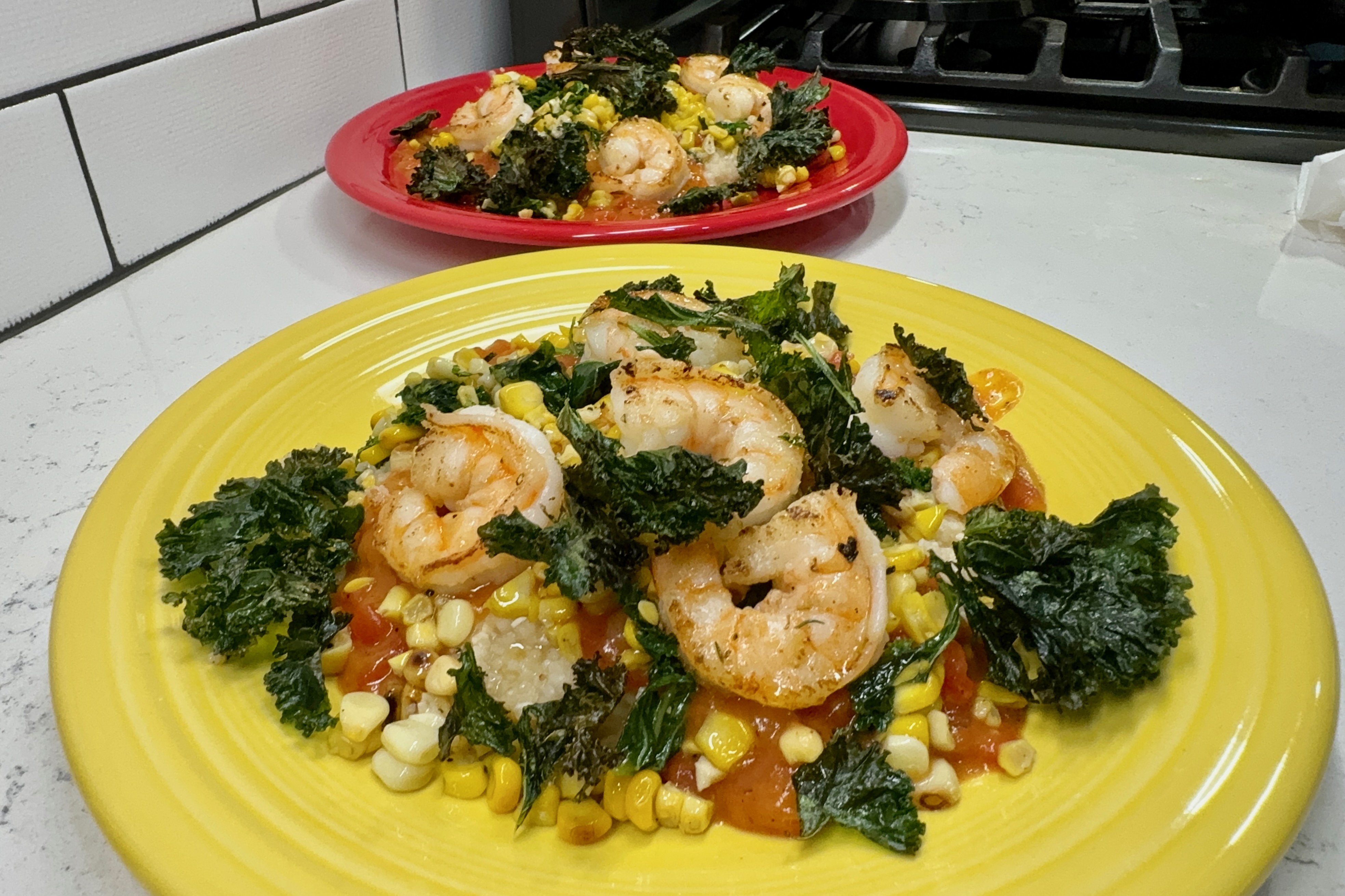
My late summer shrimp & grits with kale, corn and tomato gravy

Plenty of flavor here, but maybe too much.

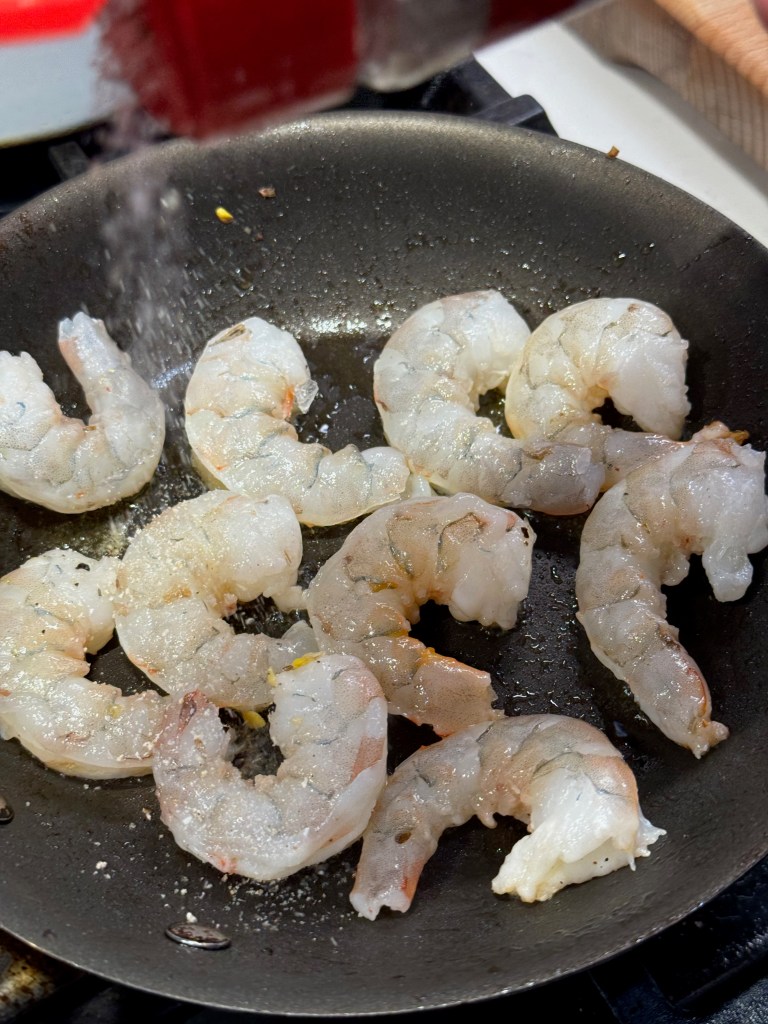
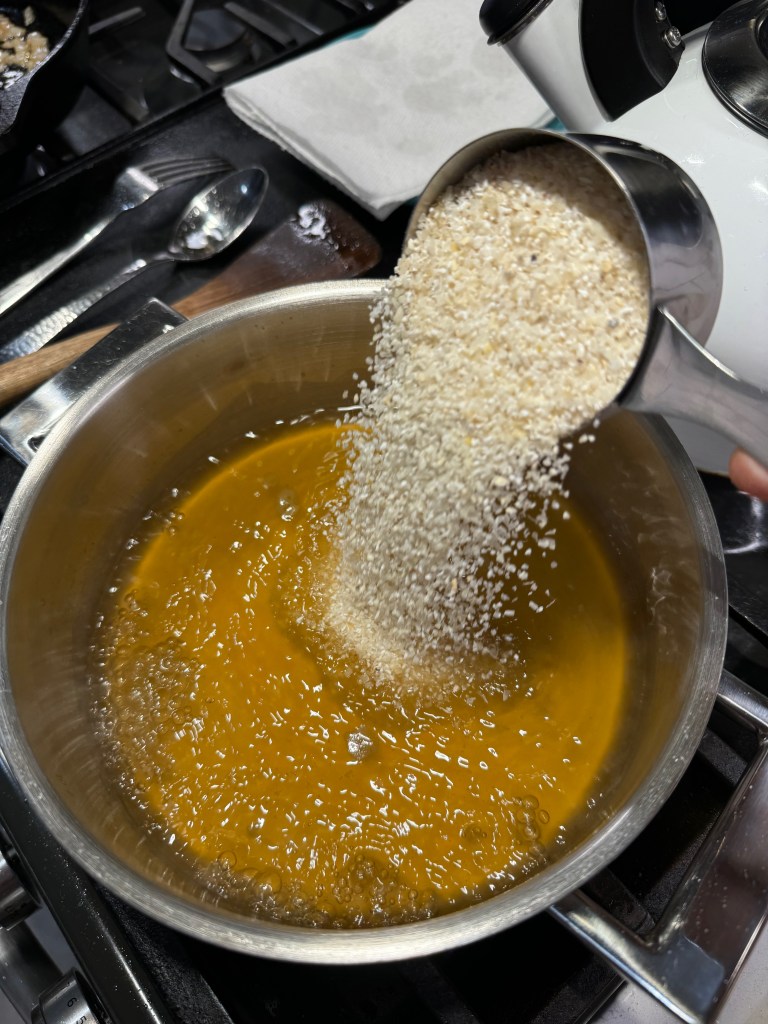
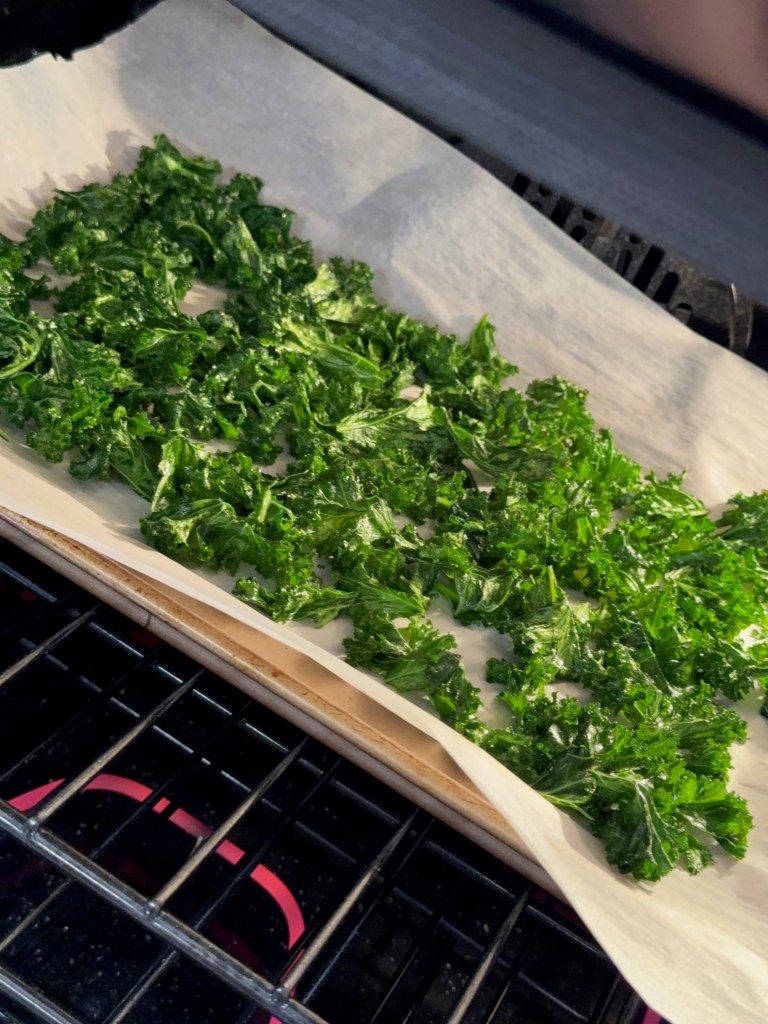
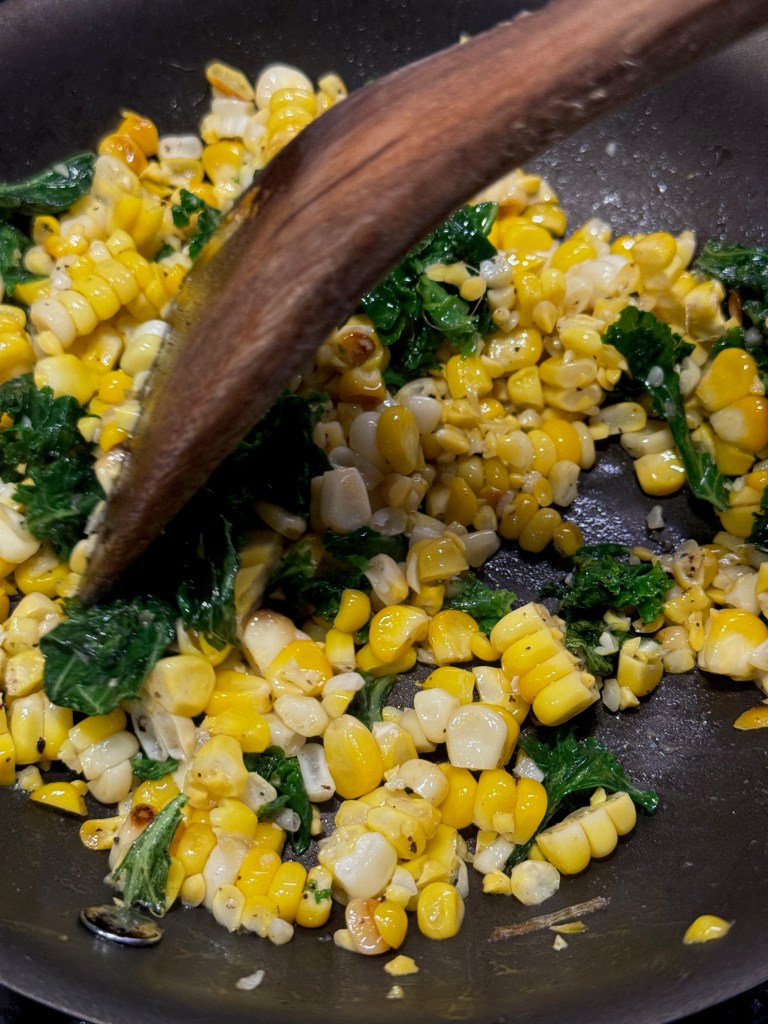
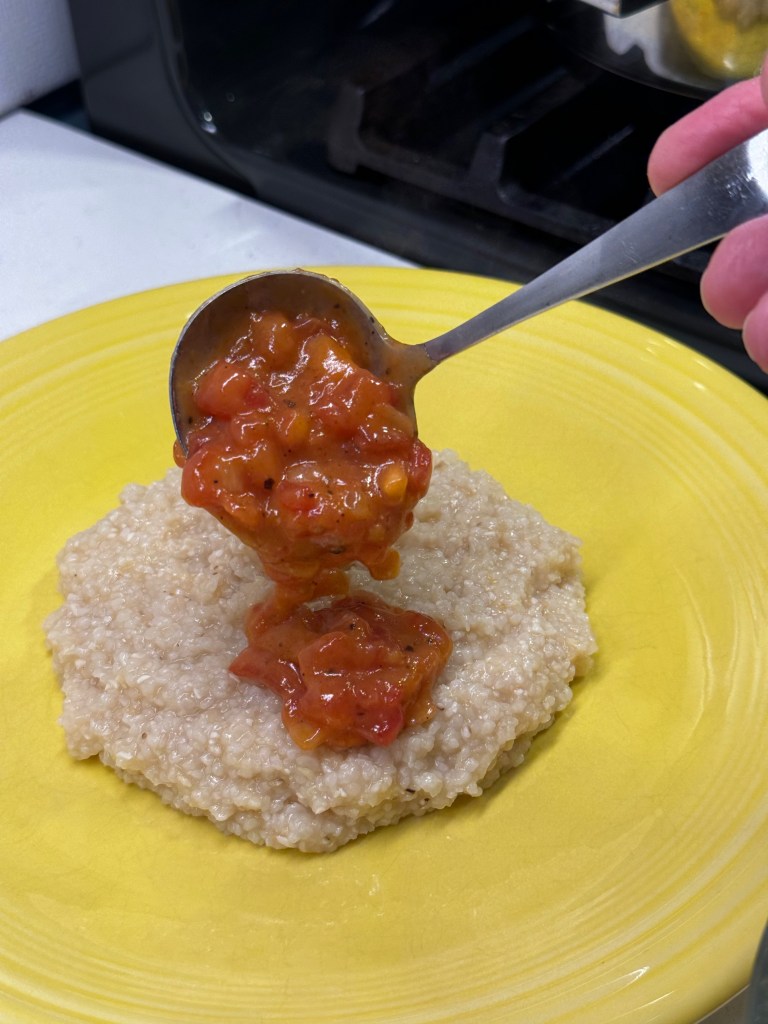
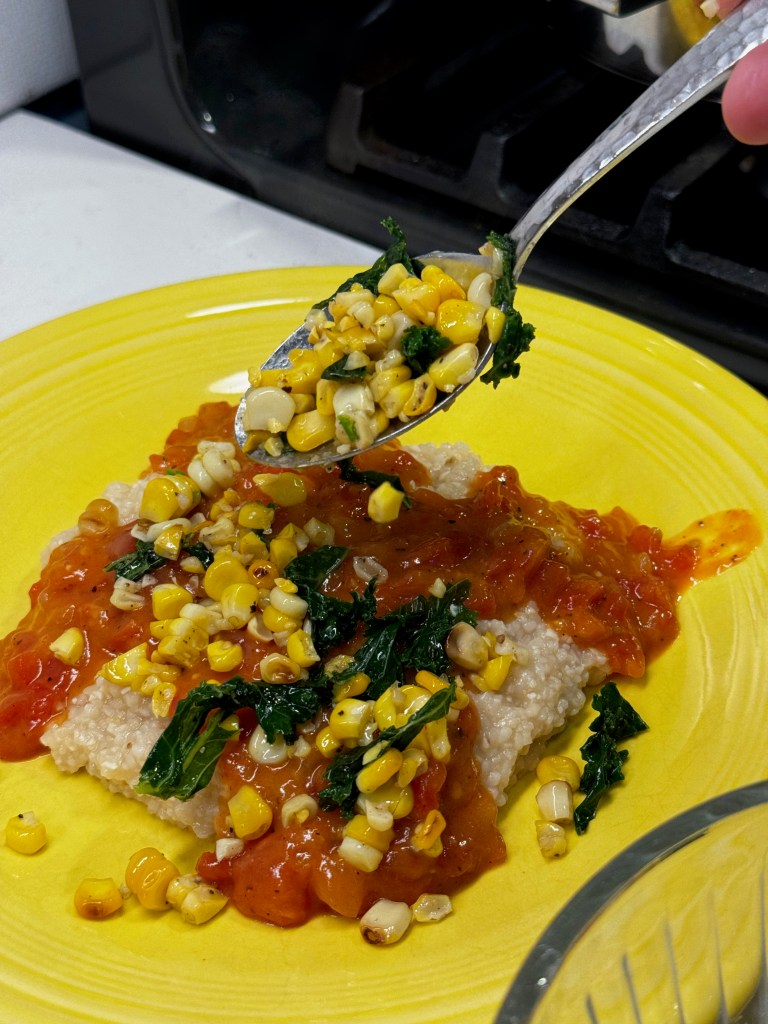
There would be four elements to prepare for my dish (Coco Chanel would say one accessory too many, and I’ll get to that later). First, the fresh North Carolina shrimp, which I sautéed at the last minute with only salt and pepper; the grits, a stone-ground white corn that I cooked low and slow in chicken broth until creamy; the kale, which I roasted for a crispy contrast on top of the other textures; and the tomato gravy, with fresh ripe tomatoes gifted to us by a generous neighbor. The ear of corn, left over from a previous meal, was a bonus ingredient that gave a friendly howdy to its cousin, the grits.


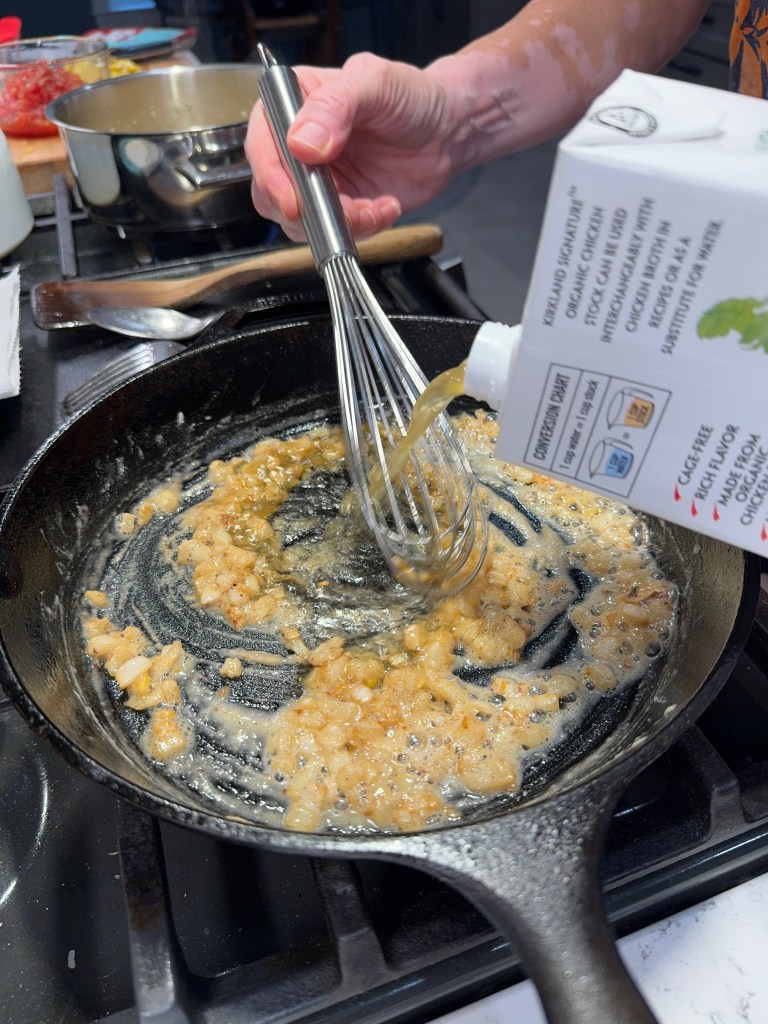
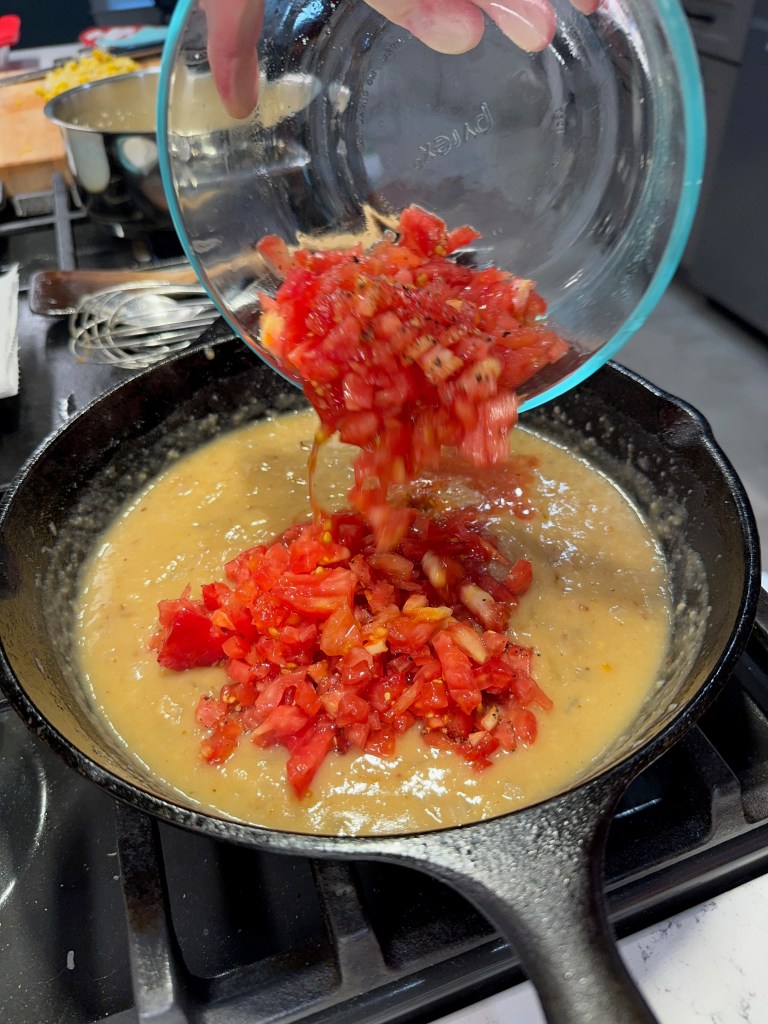
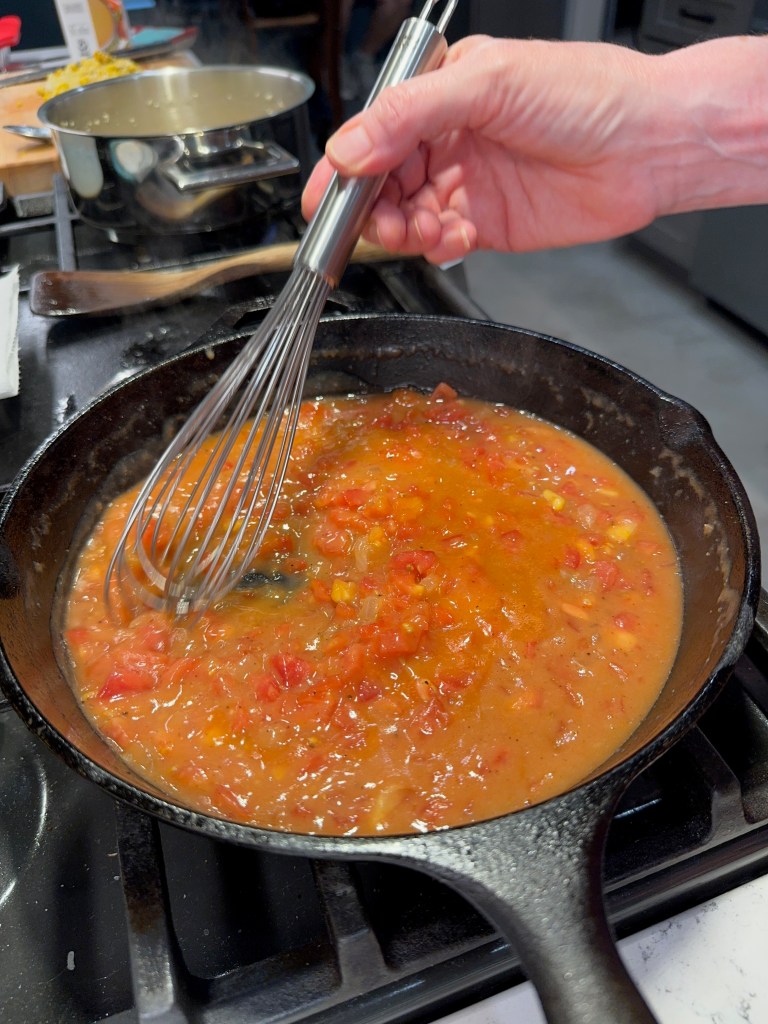
The tomato gravy was the big learning experience for me, and there isn’t much about this that I would repeat. I used bacon fat to sauté the onions, then cooked in some flour to thicken it when I added chicken broth. The result was a heavy gravy that overwhelmed the bright acidity of the ripe summer tomatoes. Edible, but not remarkable.


Here’s what I’ll do next time— and what I’d encourage you to try if you choose to make your own version of this dish— use a bit of olive oil to sauté the onions, skip the flour thickener, and use a splash of white wine to loosen up all those tomatoes. After reducing the liquid, I’ll take it off the heat and quickly whisk in a few pats of cold butter— sort of a beurre blanc treatment, if you will— to add body to the sauce without crushing the spirit of the tomatoes. A thinner consistency would also allow the “gravy” to weep over and around the grits so that you get a bit of it all the way to the last bite.


Finally, I’d kick the kale to the curb. Honestly, it was a distraction from the best parts of this dish, like a chunky statement necklace with an elegantly tailored suit. This is an important reminder for me in the kitchen, because most of the time, it’s the simple dishes that make everyone happiest. Find one thing about a classic, and elevate that one thing into something extraordinary— we live and learn, don’t we? 😉

And yes, the Stones were as amazing as ever. Great show!

Shrimp & Grits with Kale, Corn and Tomato Gravy

  • Servings: 2
  • Difficulty: Average
  • Print

This dish has a little too much going on, but it made use of some great late summer ingredients I had on hand. In the notes, I've added suggestions that would probably make this dish even better.


Ingredients

  • 1/2 medium onion, chopped
  • 2 Tbsp. bacon fat
  • 1 Tbsp. all-purpose flour
  • 1/2 cup low-sodium chicken broth
  • 2 medium ripe tomatoes, peeled and chopped
  • 1 small bunch fresh kale, roasted (see notes)
  • kernels from one ear grilled corn
  • 2/3 cup stone-ground white grits
  • 2 cups chicken broth, water or some combination of both
  • 2/3 lb. fresh shrimp, peeled and deveined
  • Salt and pepper
  • 1 Tbsp. olive oil, divided (use half to warm corn, half to cook shrimp)

The kale was an unnecessary distraction in this dish and I wouldn’t use it again. If you wish to try it, wash and tear up the leaves and massage them in a large bowl with a drizzle of olive oil and a pinch of salt. Roast on a baking sheet for about 20 minutes until fragrant and crispy.

For a lighter flavor that keeps the attention on the tomatoes, swap in olive oil for the bacon fat, omit the flour thickener and use 1/4 cup white wine in place of chicken broth used for the tomato gravy. When the tomatoes are cooked and liquid has reduced, remove from heat and swirl in two cold pats of butter, about 1 Tbsp. each.

Directions

  1. Place a non-stick skillet over medium heat and sauté onions in bacon fat until softened. Stir in flour and cook until bubbly. Add chicken broth, whisking until mixture is even and bubbly. Add chopped tomatoes and cook, stirring frequently, until tomatoes are broken down and mixture is bubbly all over. Season to taste with salt and pepper. Add another splash of liquid if needed to thin the gravy.
  2. Cook the grits in a heavy-bottomed pot. Bring broth or salted water to boil, then reduce heat and stir in grits thoroughly to prevent clumping. The key to good, creamy grits is to keep the temperature low and stir frequently. Keep a tea kettle of hot water nearby, and add as needed to maintain a creamy consistency.
  3. Heat a swirl of the olive oil in a small skillet, and cook a few leaves of kale (if using) with the corn kernels, just until heated through. Transfer to a separate bowl and use the same skillet to sauté the shrimp in remaining olive oil.
  4. Plate the grits, ladle the tomato gravy over each portion, and then top with the corn/kale mixture and the sautéed shrimp. Scatter roasted kale over the top and serve immediately.


Sweet Corn Ice Cream 2.0 (with a boozy blueberry ribbon)

It was only a matter of time before I would begin revisiting recipes that I’ve already shared here on Comfort du Jour. And it’s not because I’m out of ideas. Rather, it’s because I cannot leave well enough alone, and I am always fiddling with successful recipes— even my own. When I first gave you the scoop on this sweet corn ice cream with a blueberry whiskey ribbon (it was July 2020 if you missed it), I was stuck in a rut of making a custard base that required whipping egg yolks with sugar and then tempering them with hot milk and cooking until thick. Those days, however, are gone. More gone than National Ice Cream month (July) and more gone than the so-called dog days of summer (which ended last week).

My discovery of the sweetened condensed milk variety of ice cream has changed everything, and as most of the United States enters peak sweet corn harvest season, I can’t find any reason to postpone sharing my 2.0 experience with this delightful, unexpected flavor combination. That’s right, I’m not going to make you wait until next July (you’re welcome)!

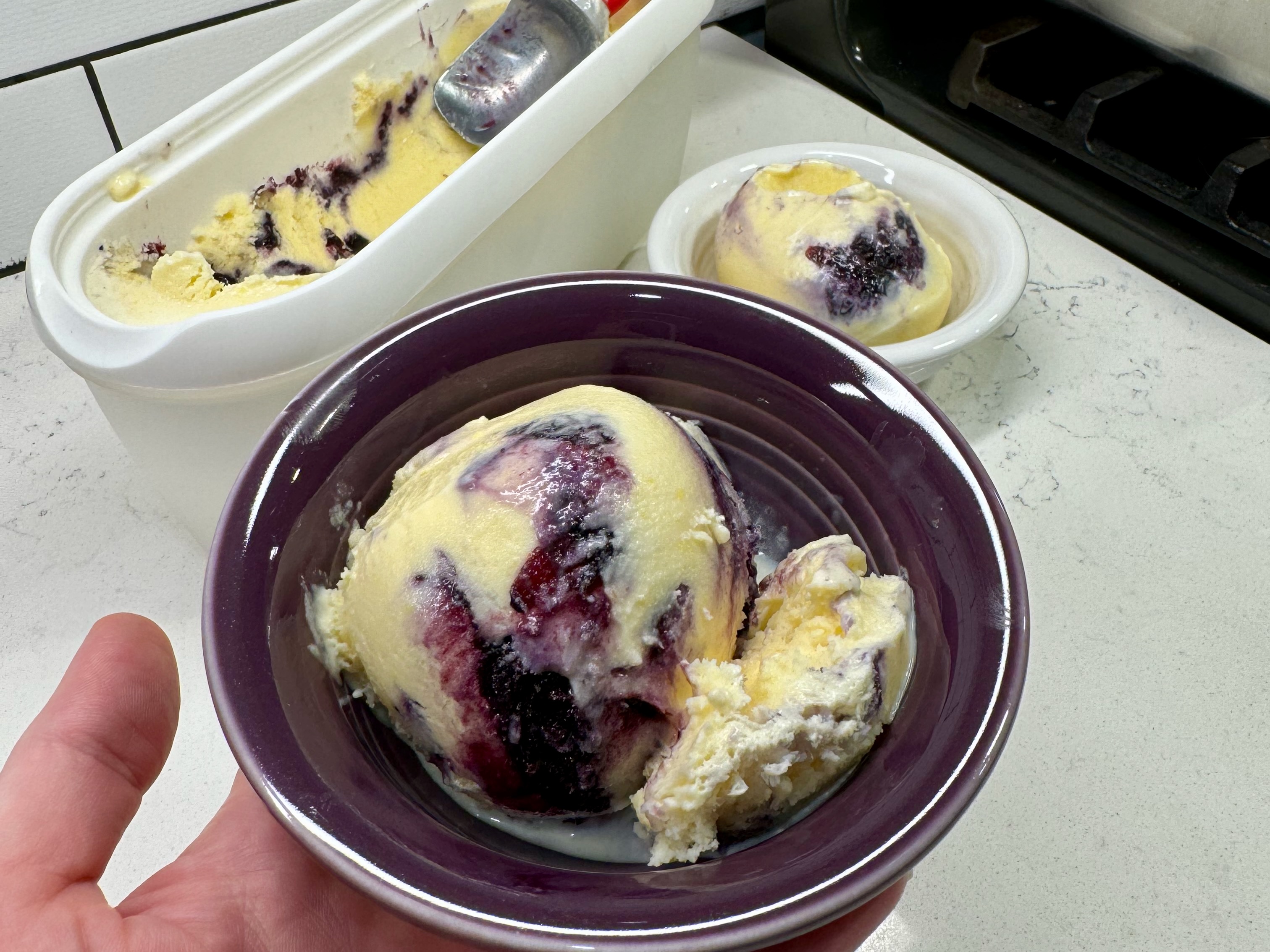
Ice cream month is over, but this flavor is still worth celebrating!

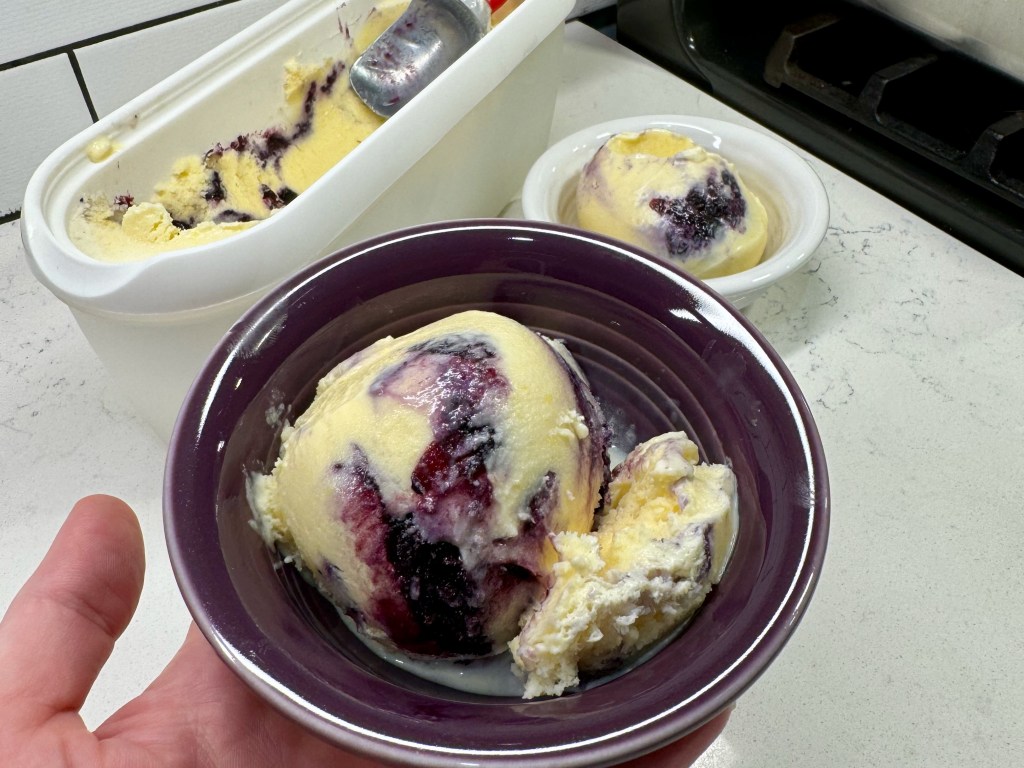
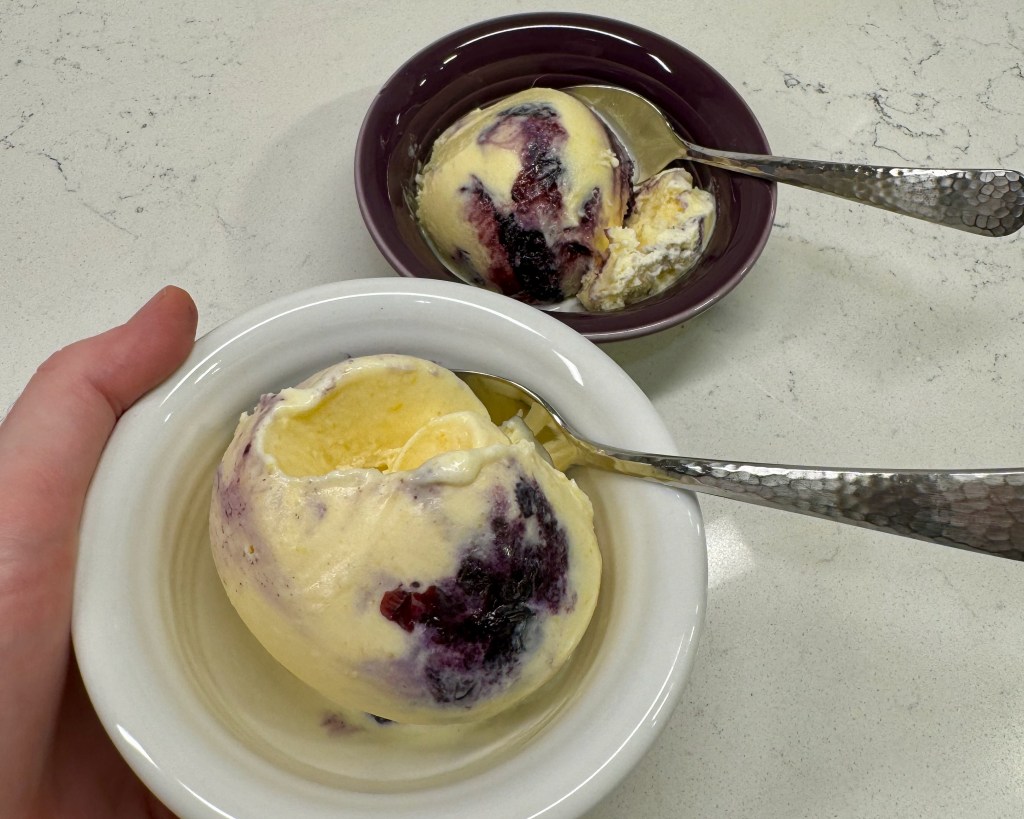
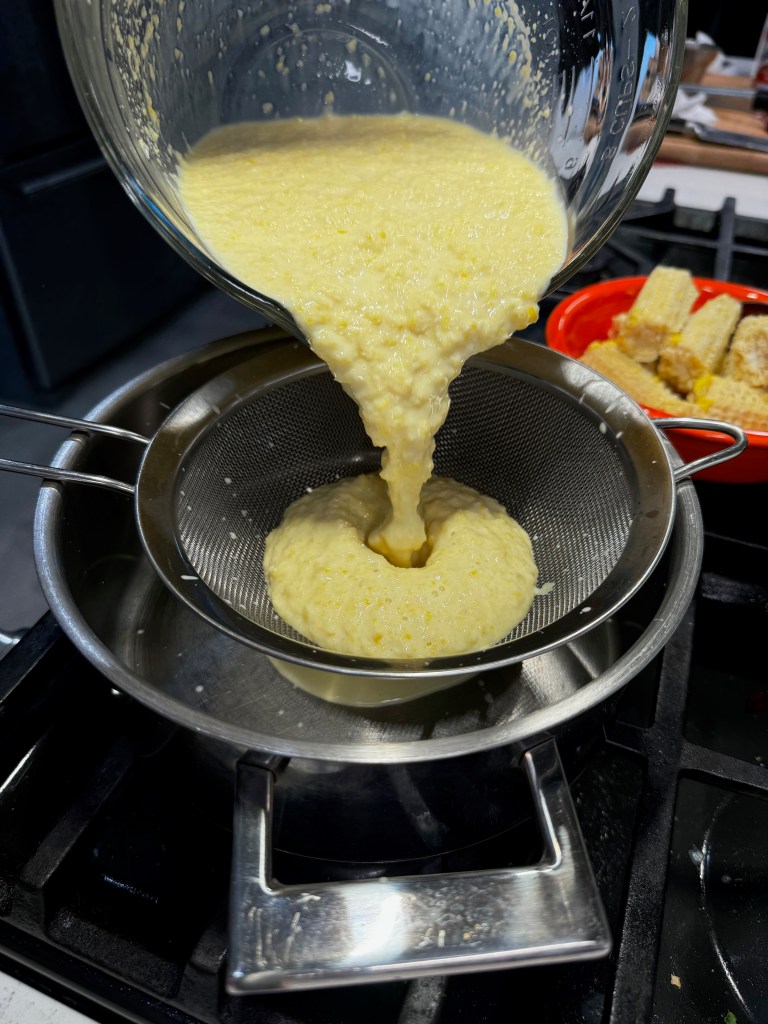
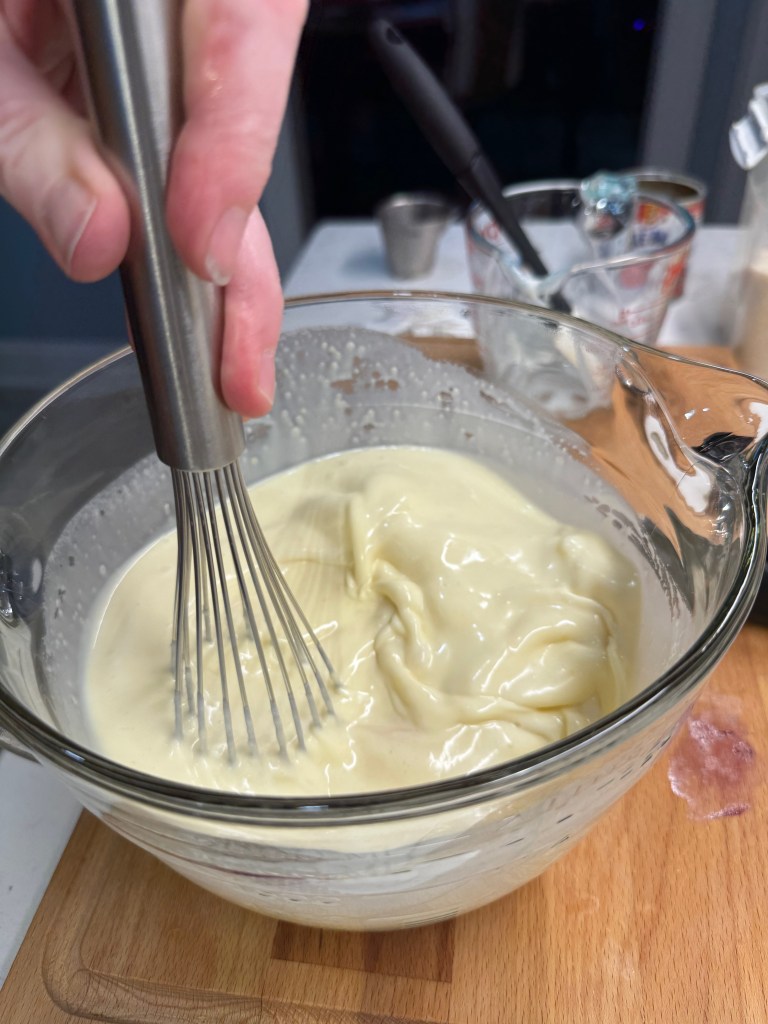
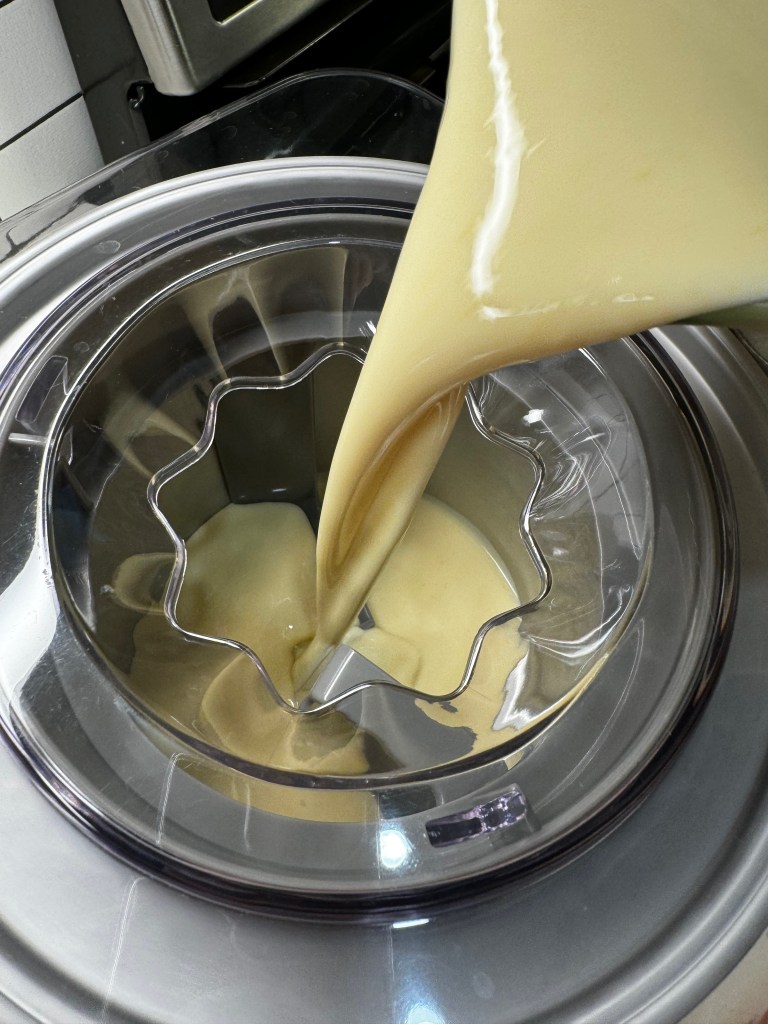
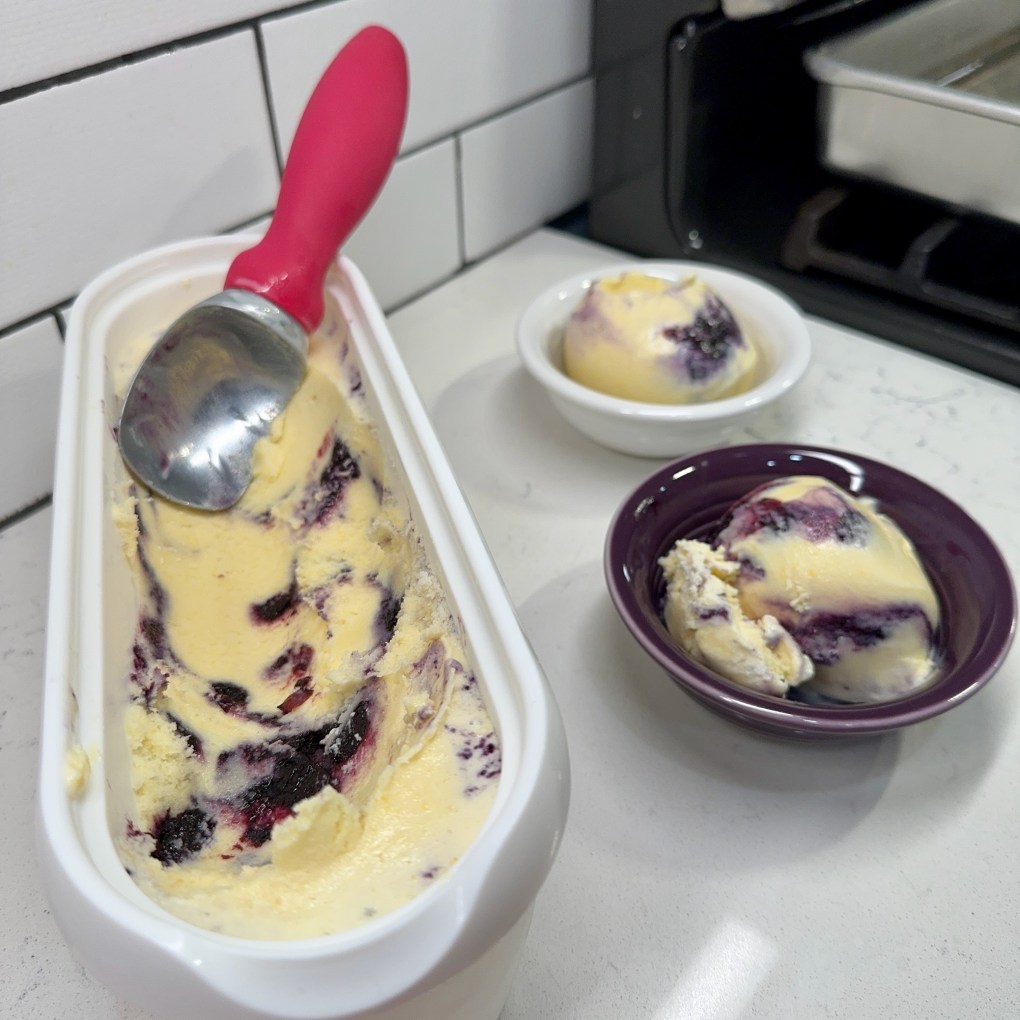
Like my custard-based version, this ice cream gets its flavor from real corn, simmered in milk and then pulsed and strained to coax every bit of flavor from the plump kernels. But replacing the rich, eggy custard with a flip-top can of sweetened condensed milk is not only easier and quicker, it’s a better outcome, texture-wise. Why bother with custard when this turns out so good? The ice cream base gets layered (after freezing, of course) with a sweet and boozy fresh blueberry compote, and I am officially going on record to say this is my favorite summer flavor combination. Come along, let’s make some!

It’s easier than it looks!

What are the ingredients for sweet corn ice cream?

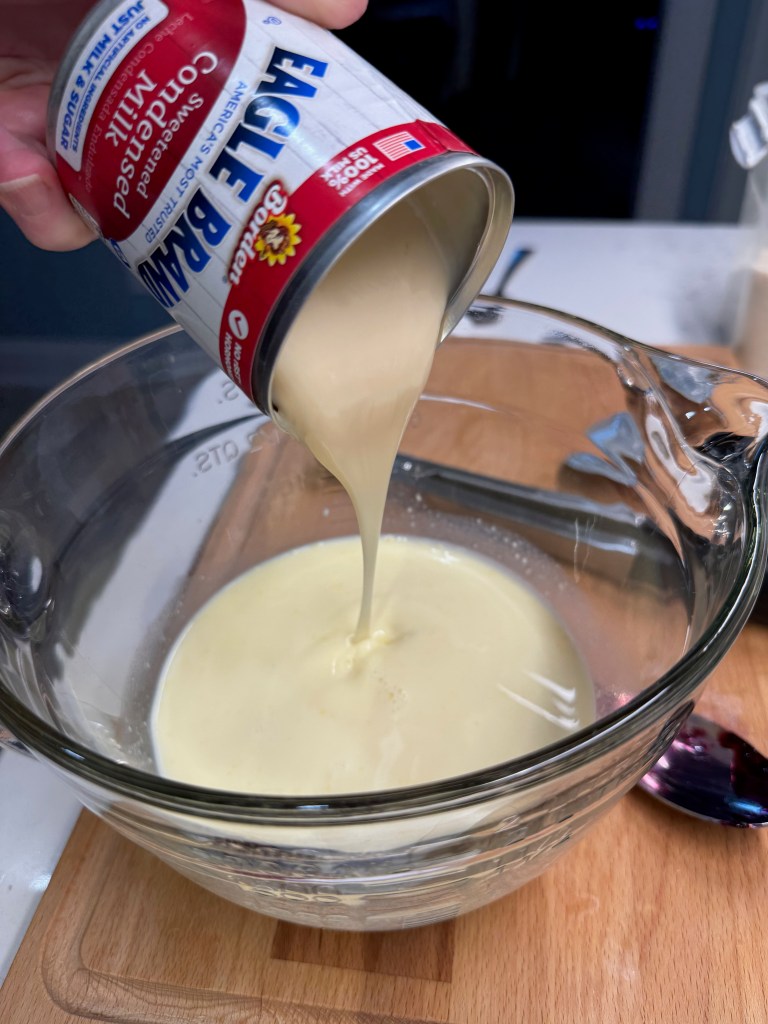
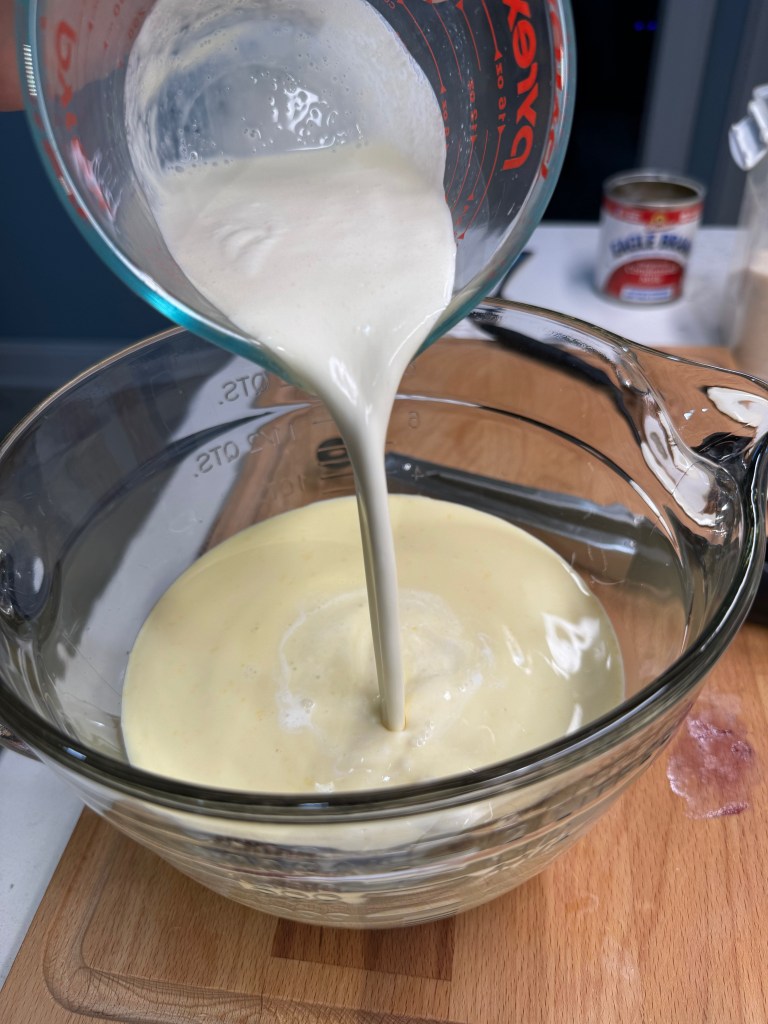
The ingredient list for this ice cream is almost too simple. My usual base formula is one can sweetened condensed milk, one cup whole milk and one cup heavy cream (keep it simple, sweetheart). But on the day I made this, I messed up. I had only a splash each of milk and heavy cream, so I made a quick pivot and subbed half and half for most of the dairy. The fat content ended up being about the same as my go-to, and guess what? This was not a dealbreaker. Sometimes you just have to go with what you’ve got. The rest of the ingredients are fresh sweet corn, cane sugar and the blueberry compote, which is also a short list: fresh berries, sugar, corn syrup and this blueberry-infused whiskey.

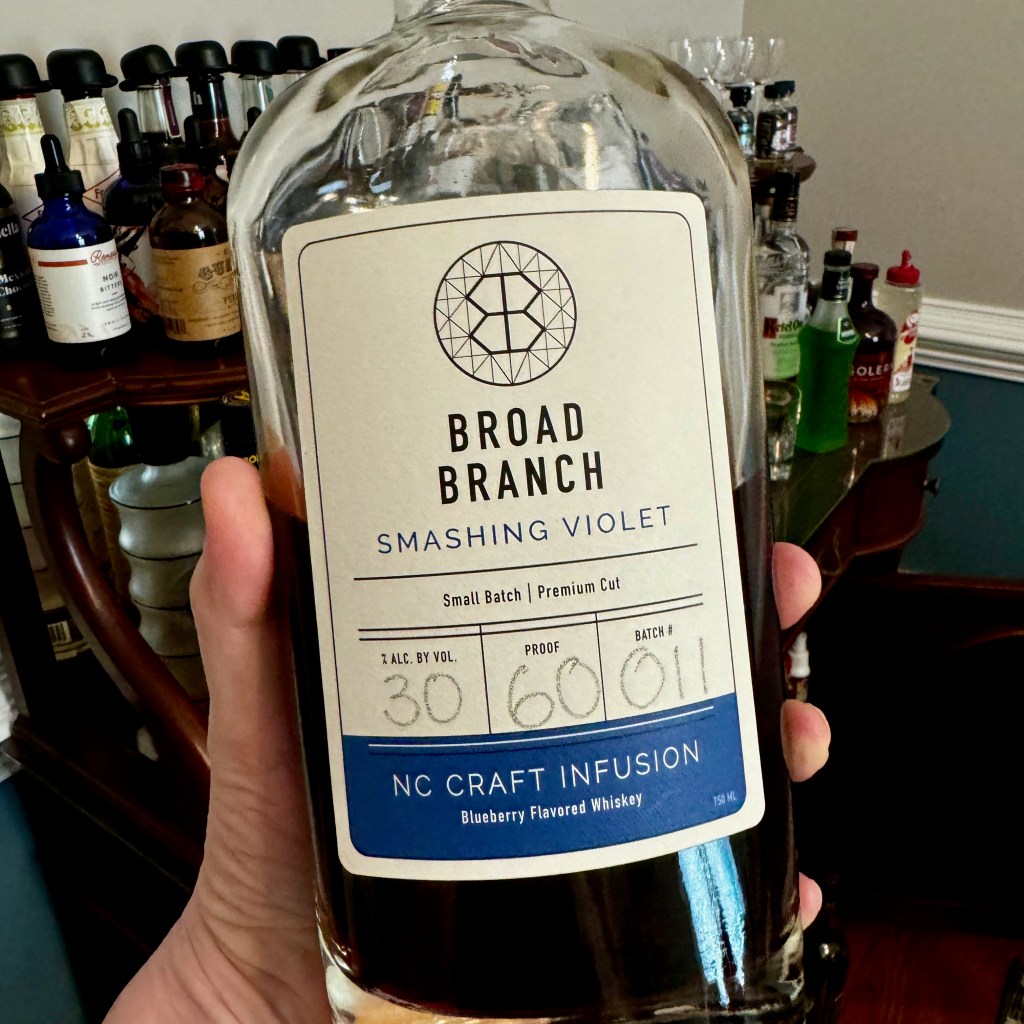
This is excellent for sipping, too!

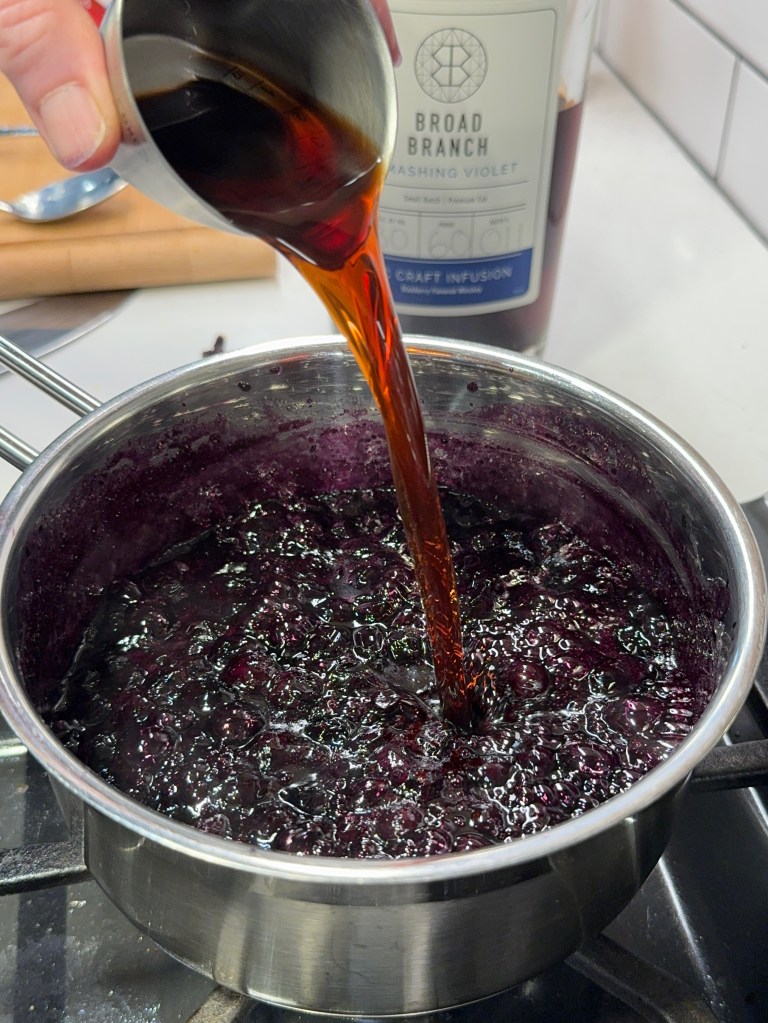
My recommendation for readers outside of North Carolina, where this “Smashing Violet” whiskey is available in ABC stores, would be to seek out a distiller near you that might offer a similar whiskey with blueberry infusion. Or, if that is a no-go, choose a lower proof sweet-variety bourbon and supplement with pure blueberry juice. Or skip the booze altogether (if you must), and add pure blueberry juice and a squeeze of lemon for a bit of acidity.

Let me pause for a quick sec to call out what I didn’t add to this recipe. Did you notice? As much as I adore vanilla, and especially after I was recently gifted a gorgeous bottle of homemade vanilla extract from a sweet foodie friend (thank you, Dorothy!), I didn’t want anything competing with the flavor of the corn. Not even vanilla. So it is a rare but intentional omission for this batch of ice cream.

Do I need any special tools to make sweet corn ice cream?

There are a few things you’ll need for best results— first, an ice cream machine, which I highly recommend for anyone interested in making ice cream at home. Sure, there are a million “no churn” recipes on the internet, but to me, this is equal to trying to make toast without a toaster. It can be done, but why would you want to MacGyver it? The second item you’ll need is some kind of tool to process the corn after it simmers in the slightly sweetened milk. This might be an immersion blender, or perhaps a regular blender, but definitely one that you can “pulse” rather than just puree. Finally, have a stainless mesh strainer for separating the processed corn solids out of the milk mixture, and it should be large enough to hold about three cups of mixture. A smaller one will work if you’re willing to do it in batches. I don’t have that kind of patience. I just want to get to eating this ice cream!

The first scoop always tastes the best!

Tips for success

Use the sweetest, freshest corn you can find. Farmers’ market or homegrown is ideal; pre-husked and shrink-wrapped at the grocery store, not so much. I can’t say for sure how many ears you’ll need because corn varies in size. After cutting the kernels off the three large ears I used, I had roughly two and a half cups of corn, so let that be your guideline.


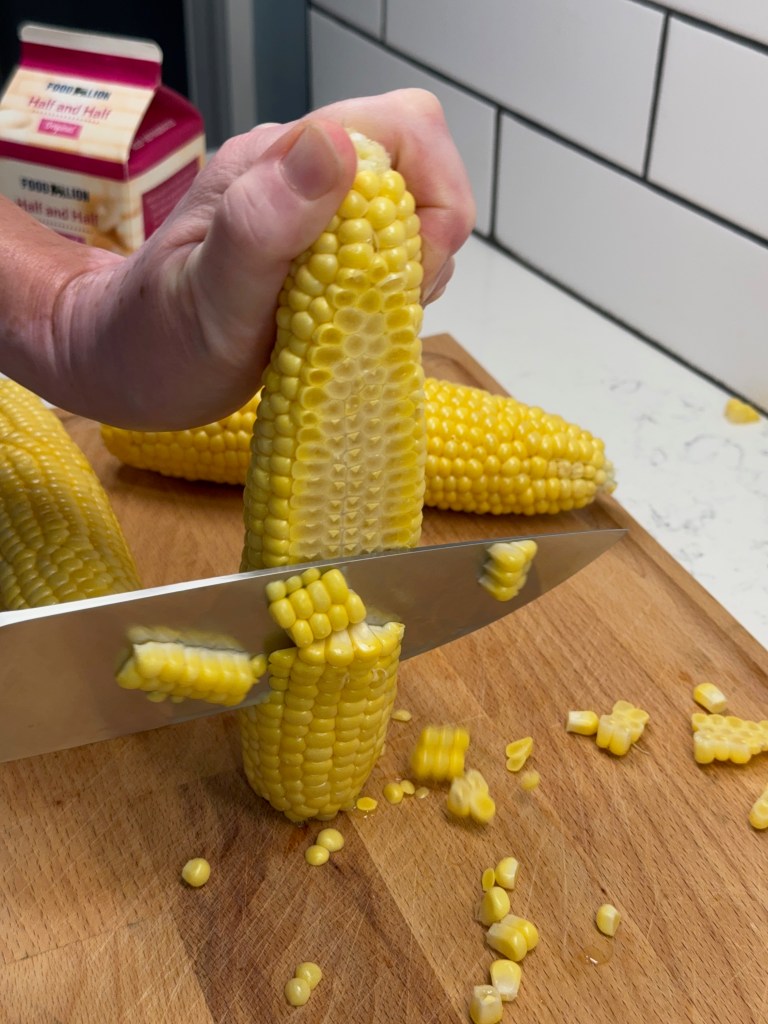
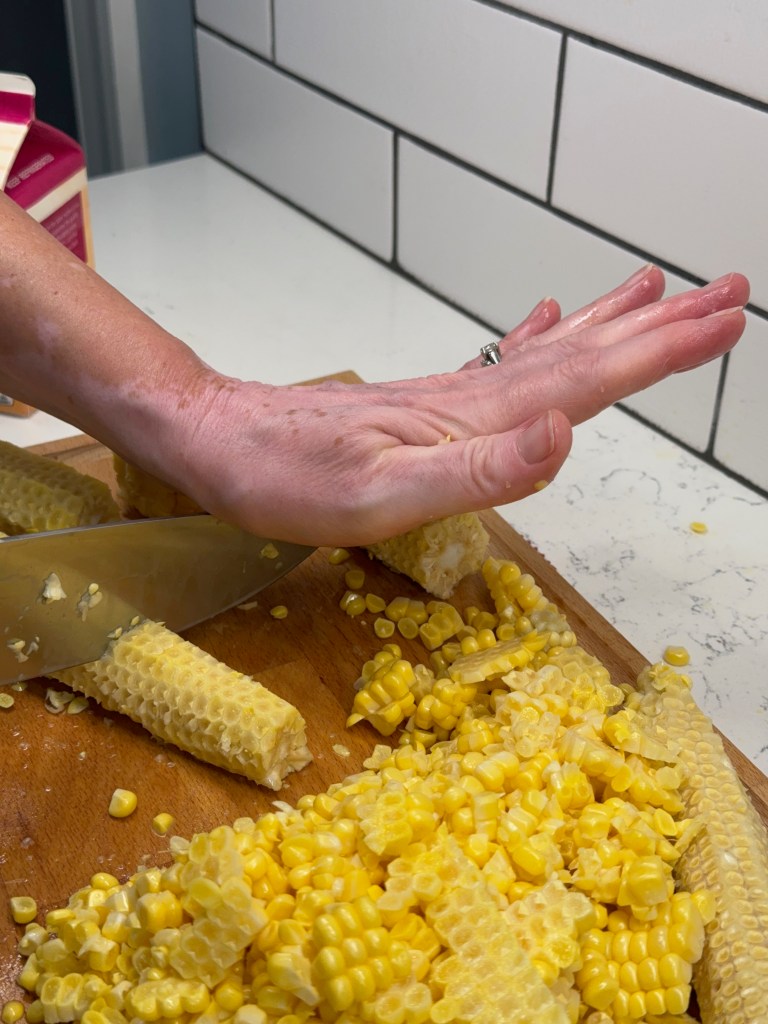
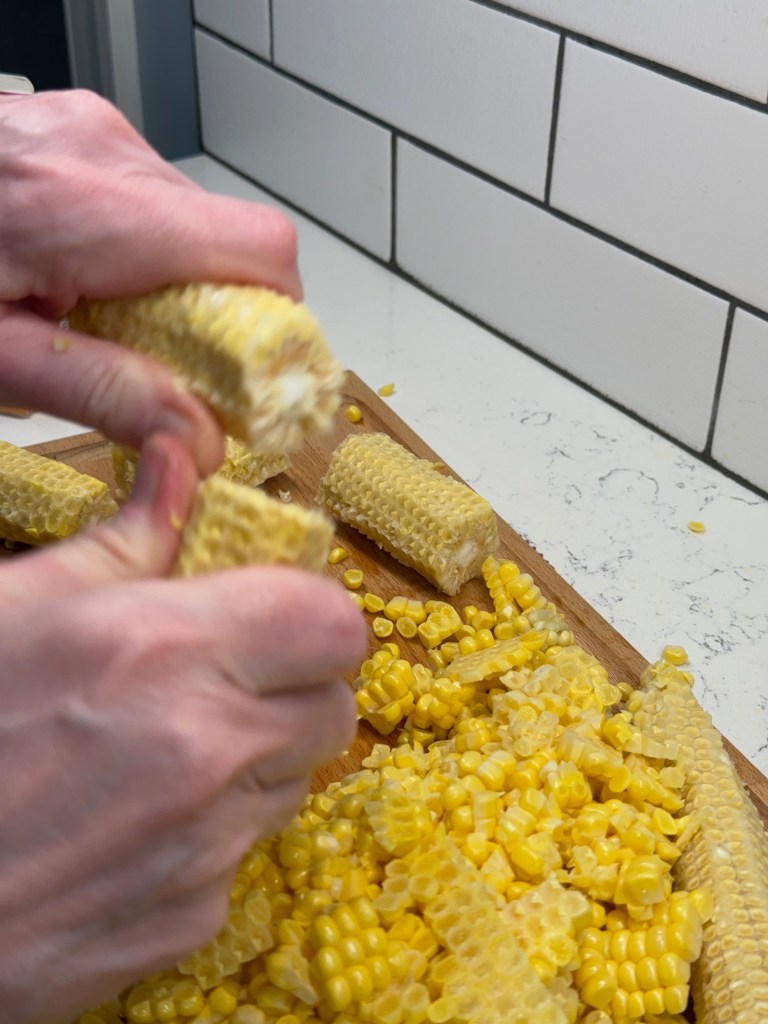
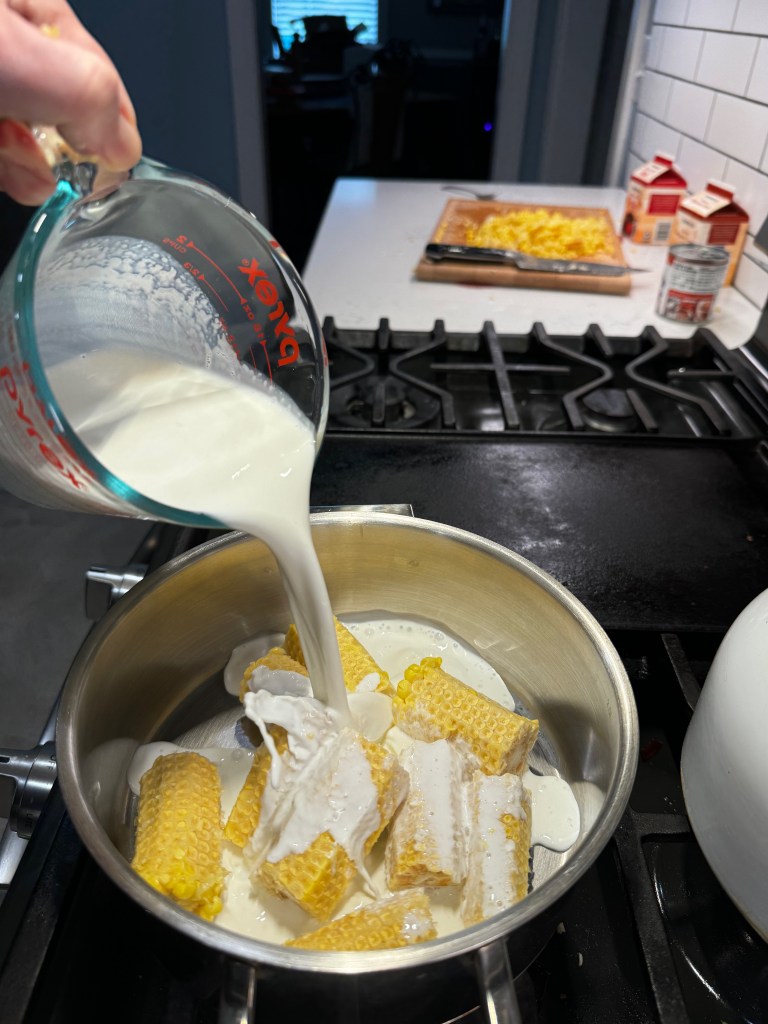
Also, don’t toss the cobs! Trim the ends and cut them into chunks that will fit in your pot. It can be difficult to cut through uncooked corn, so here’s another tip: Cut down about a half-inch into the cob, and then use your hands to snap the cob where you’ve scored it. No sense chopping off a finger.

Use a heavy-bottomed pot to prevent scorching while you simmer the corn in the half and half. Use a medium-low temperature at first, and then when you begin to see a few bubbles around the edges, turn it down to low. Do not let the mixture boil, as this will curdle the proteins and burn the sugars. This will simmer— or steep, really— for almost an hour. Cool it to room temp before blending.

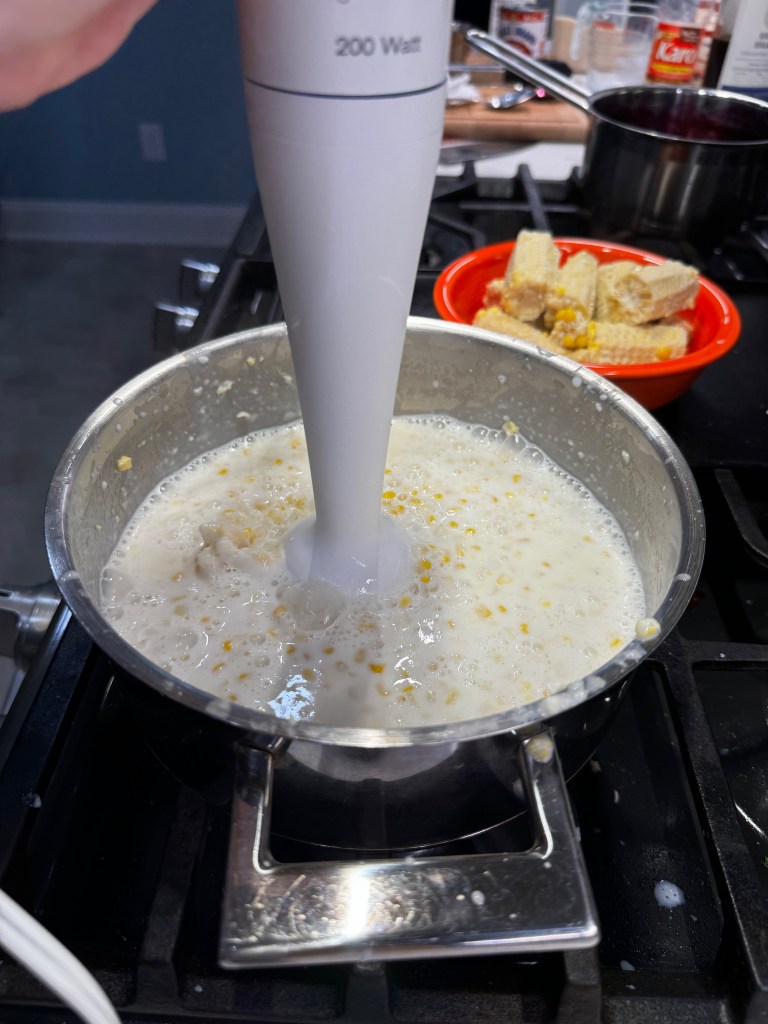
Use an immersion blender right in the pot, or transfer in batches to a regular blender, and only pulse to chop up the tender kernels so that they release the flavor inside. Do not puree it, as this will leave you with a weird texture that will be impossible to strain. Don’t use a food processor unless you have plenty of time to clean up the mess it will make. You know what would be great here, and probably what my grandmother would have used? An old-school food mill. Oh, how I wish I had hers! 🥹


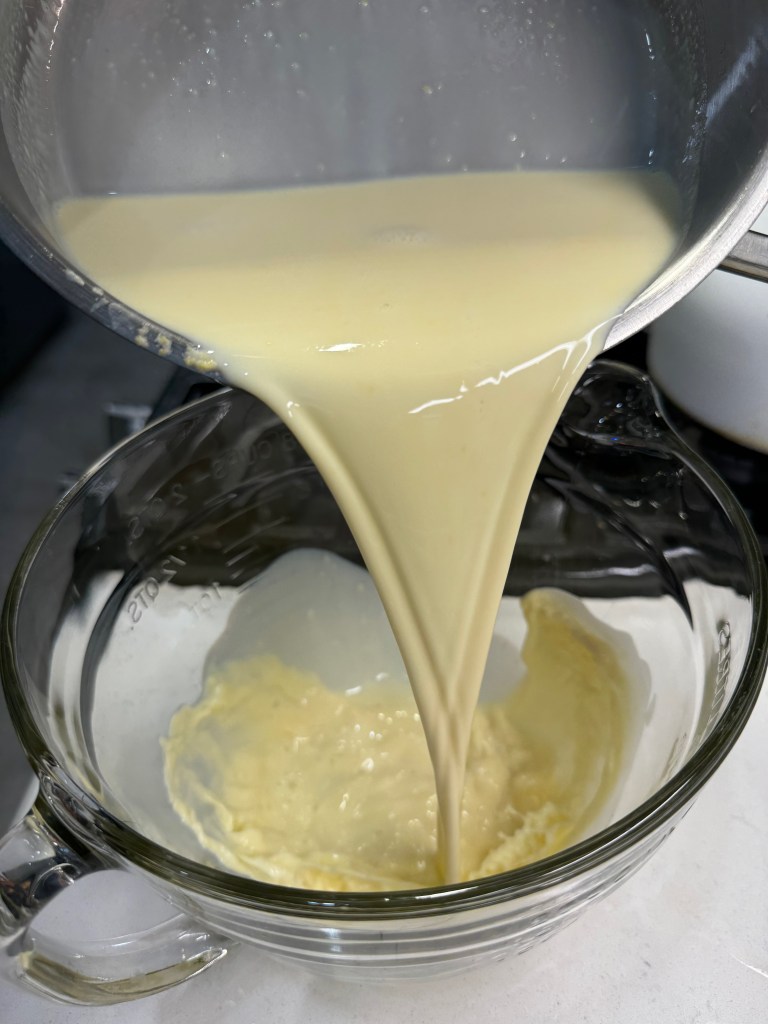
Don’t discard the solids after straining! Even though they’ve given up the ghost for this ice cream, they still have quite a bit of flavor themselves. Add half of them to a batch of corn muffins or pancakes (I love this recipe from King Arthur Baking, if you happen to also be a sourdough baker), and throw the rest into a chowder. Blend in the condensed milk and heavy cream to the corn-infused half and half and chill it at least several hours, preferably overnight.


No fresh blueberries? No problem! I have made this ice cream several times with frozen blueberries— I’m especially fond of the “wild” ones— and it works absolutely fine.

For the most intense blueberry flavor in your compote, especially if you don’t have the blueberry whiskey, add some bottled blueberry juice to the fresh or frozen berries as they simmer with the sugar. Find it in the juice aisle, and verify the ingredient list to ensure that it is only blueberry juice. Don’t be misled by claims of “100%” juice, which might just mean that it has an apple or pear juice base with enough blueberry to color it. Also, the juice should not have added sugar (or if it does, reduce what you add to the compote).

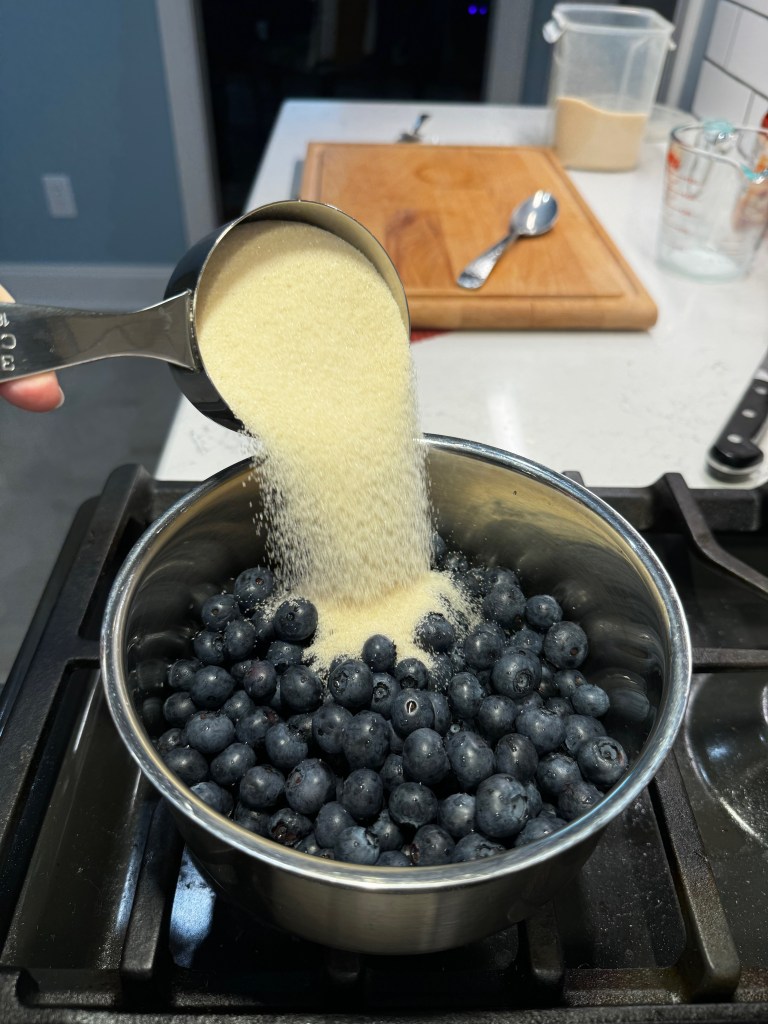
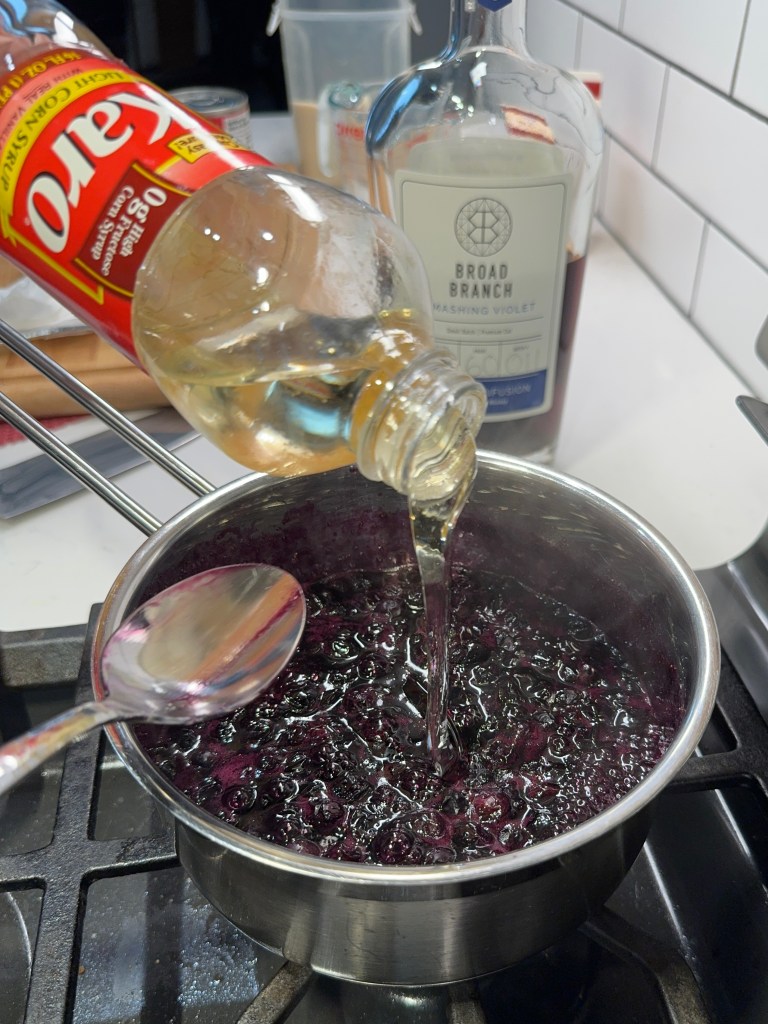
On the subject of the compote, for goodness sake, don’t rush it. The berries need to be softened to the point of being mushy, and the liquid must evaporate so that the added sugar creates a syrup. Add a bit of light corn syrup to prevent the sugar from crystallizing when it cools. Cook this over medium-low heat until it is very bubbly all over. Add the whiskey and simmer again until it reaches the same stage. Then, turn it off and cool to room temp before transferring it to a bowl. Expect this to take at least 30 minutes from start to whiskey.

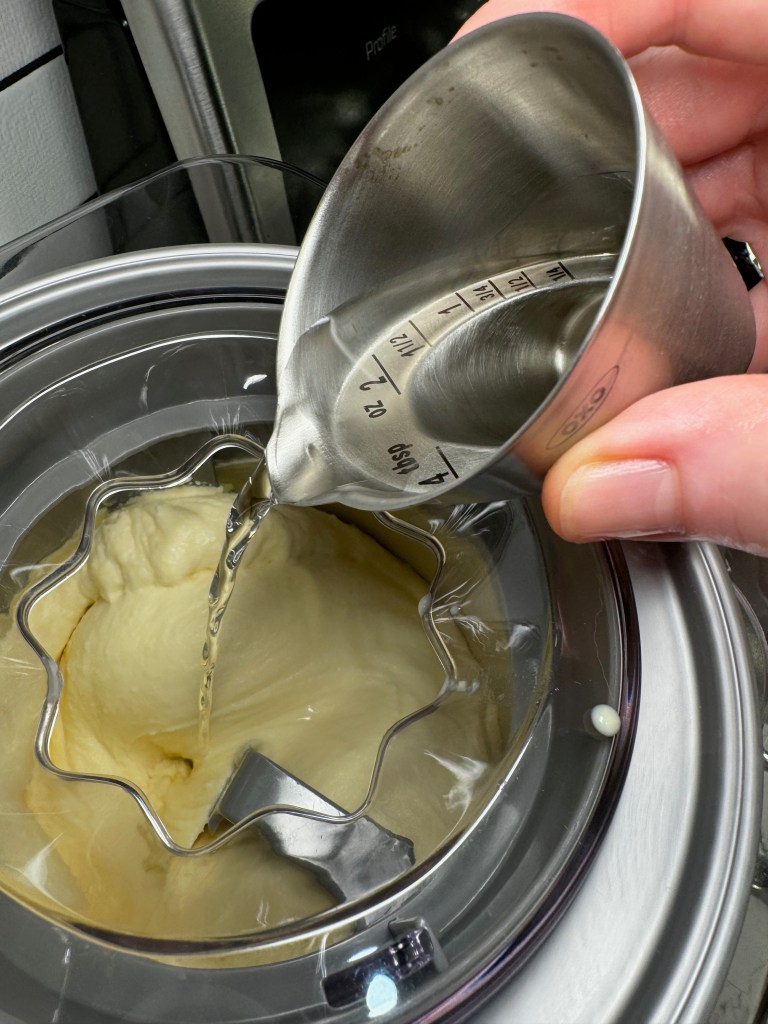
Be sure the ice cream bowl for your machine has been in the deep freeze for a minimum of 24 hours before churning. When it finishes in the churn cycle, consider adding a tablespoon or two of vodka during the final minute. This is not essential, but it improves the texture of the ice cream so that you can scoop it out straight from the freezer without waiting. If you choose to skip this, plan to remove the ice cream 10 to 15 minutes before serving time.


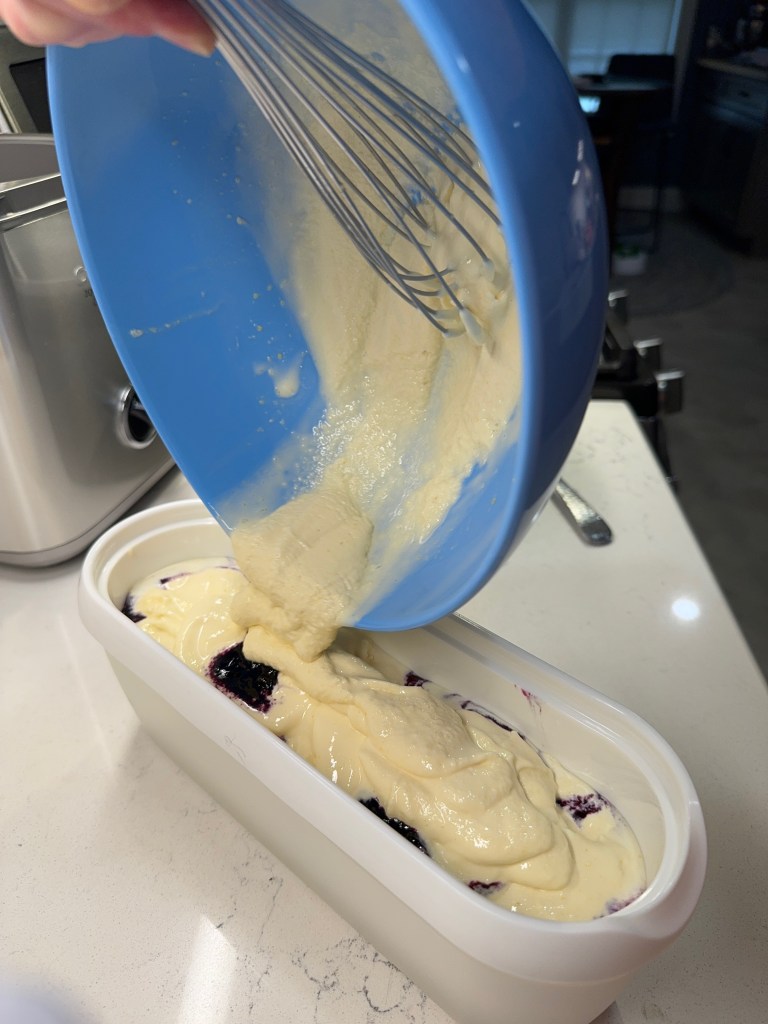
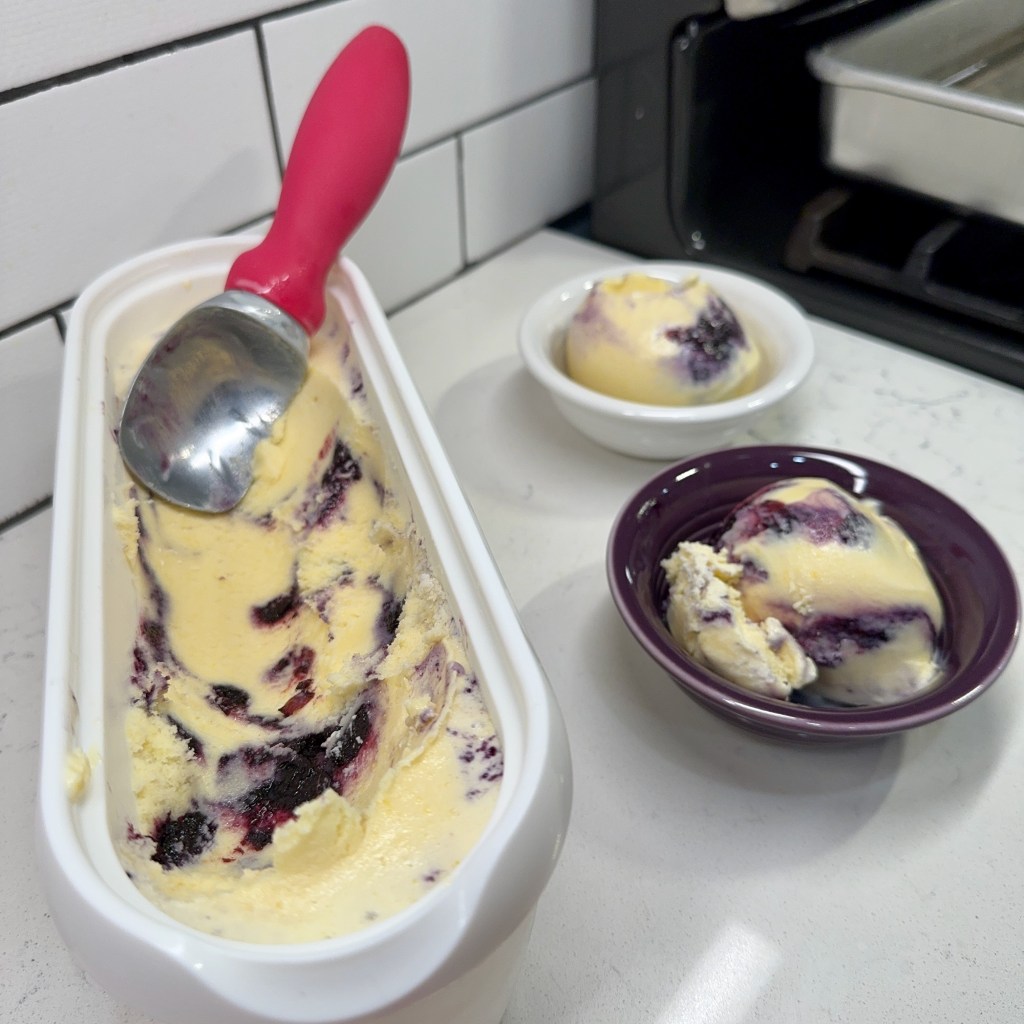
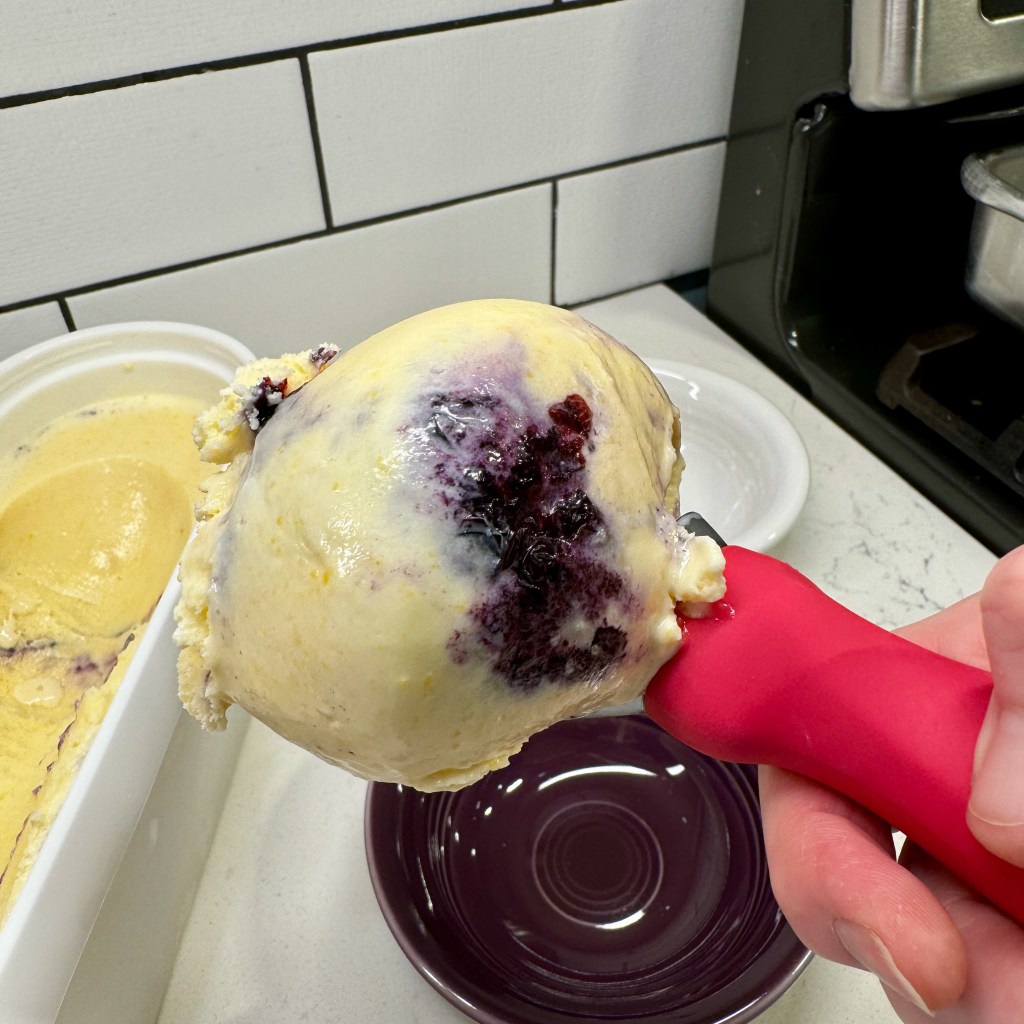
Layering the ice cream with compote is as easy as it sounds, and I discourage any attempt to “swirl’ it during this stage, as you may end up with a muddy look when you scoop it. Trust the process. The swirl will happen like magic later when it’s ready to scoop and serve.

Finally— and this is so important— put this ice cream in the freezer and do your best to forget about it for a full day. You’ll be tempted to dig right in, especially if you have tasted things along the way as I always do. But homemade ice cream needs time to “ripen” in the deep freeze, and with the layer of sticky compote, scooping this one too soon would be nothing short of disaster. Go read a book, shampoo the carpets, binge-watch another bad HBO series. Do anything, but give this ice cream 24 hours to set up properly before you scoop and enjoy. You won’t be disappointed!

Sweet Corn Ice Cream with Blueberry Whiskey Ribbon

  • Servings: About 8
  • Difficulty: Intermediate
  • Print

This is my custard-free version of one of my favorite summer ice creams, using sweetened condensed milk for the silkiest, creamiest texture you can imagine. Take your time with this one; I promise it's worth the trouble and the wait!


Ingredients

  • 3 large ears ripe sweet corn, husked and cleaned
  • 1 1/2 cups half n half
  • 1/4 cup organic cane sugar
  • pinch of salt
  • 14 oz. can sweetened condensed milk
  • 1/2 cup heavy cream
  • 1 Tbsp. vodka (optional, added during final minute of churning for improved texture)

Note: Use a heavy-bottomed pot for simmering the corn and cobs, to prevent scorching. Take care not to boil the milk mixture, and wait until after the corn is processed and strained to add the sweetened condensed milk and cream. You will need an immersion blender, regular blender or food mill to process the corn-milk mixture and a stainless mesh strainer to filter out the solids.

Directions

  1. Using a sharp knife, stand each ear of corn on end and cut off all the kernels. Cut the cobs into pieces that will fit in your cooking pot.
  2. Combine corn, half and half, sugar and salt in the pot over medium heat. Watch it closely, and reduce the heat to very low once it begins to barely bubble around the sides of the pot. Steep without allowing it to boil for almost one hour, until the kernels are very soft. Remove from heat and set aside for a few minutes.
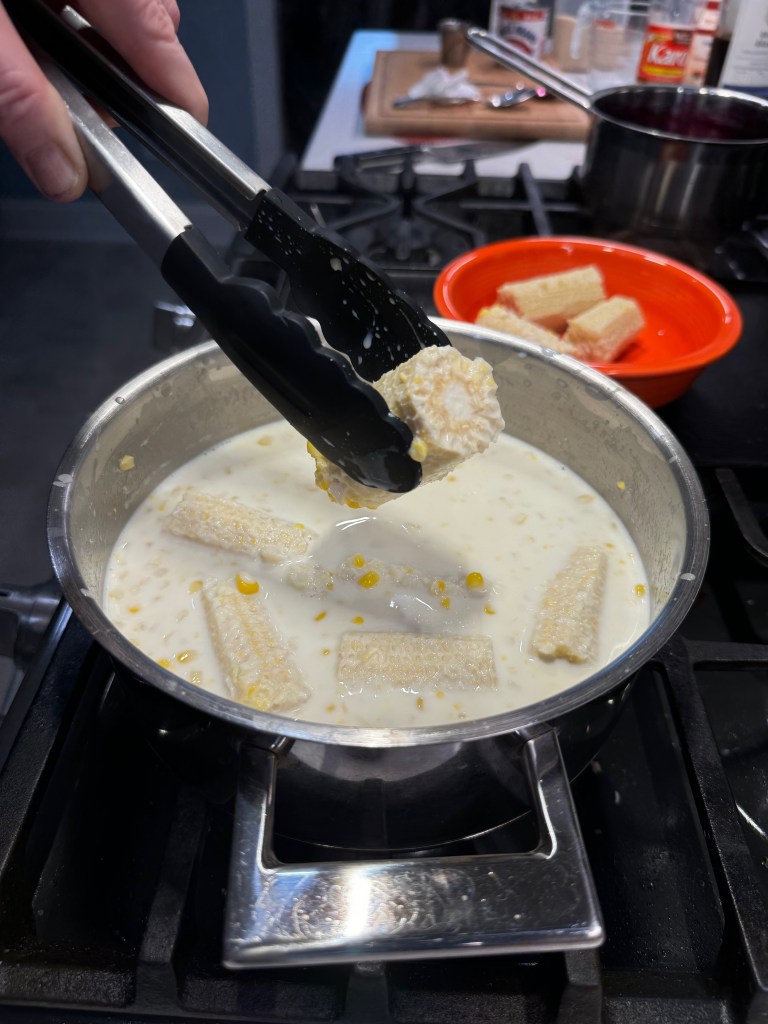
  3. Use tongs to remove the spent corn cobs, allowing excess milk to drip into the pot. Pulse the mixture with an immersion blender to break up the softened kernels, but do not try to process smooth. There should be plenty of shredded bits of corn visible in the mixture.
  4. Strain through a mesh strainer into a clean pitcher bowl. Gently stir in sweetened condensed milk and heavy cream. Cover and refrigerate several hours to thoroughly chill before freezing.
  5. Make the blueberry compote while the ice cream base is chilling.

Ingredients

  • 1 cup fresh (or frozen) blueberries
  • scant 1/2 cup organic cane sugar
  • 2 Tbsp. water
  • 1 Tbsp. corn syrup (to prevent crystallization)
  • 3 Tbsp. Broad Branch Distillery Smashing Violet blueberry-infused whiskey (see notes for substitute)

Note: If you cannot find this whiskey (or a similar local product), substitute with two tablespoons of a low-proof bourbon, and swap in pure blueberry juice for the water used for simmering the berries. If you prefer a no-alcohol recipe, omit the whiskey entirely and swap in double amount of blueberry juice for water, plus a squeeze of fresh lemon. You may need to slightly increase the cooking time of the compote to get a proper reduction.

Directions

  1. Combine berries, sugar and water in a heavy-bottomed pot over medium-low heat. Stir frequently to ensure that the mixture doesn’t scorch. After sugar dissolves, stir in the corn syrup to prevent crystallization of the sugar when the mixture cools later.
  2. When the mixture is syrupy and reduced by about half, it should be bubbly all over even when stirred. Add the whiskey and allow it to boil again, but only for about 30 seconds. Remove from heat and cool to room temperature before transferring to a bowl to be chilled in the fridge.

Note: Be sure your ice cream maker’s freezer bowl has been frozen for at least 24 hours for best results.

Directions


1. Gently stir the ice cream base just before churning to reincorporate any ingredients that may have settled. Pour into the ice cream machine and freeze according to manufacturer’s instructions. During the final minute of churning, add optional vodka.
2. When ice cream base has finished freezing, spread one-third of it into an insulated ice cream container. Carefully spoon on a zigzag of the blueberry compote, about a quarter cup worth. Do not attempt to swirl it into the ice cream as this will lead to a muddy appearance (the swirls happen naturally during scooping).
3. Repeat with another layer of ice cream and another zigzag of compote, and then finish with the remaining ice cream. Smooth the top, cover it and place it in the freezer for 24 hours before enjoying.


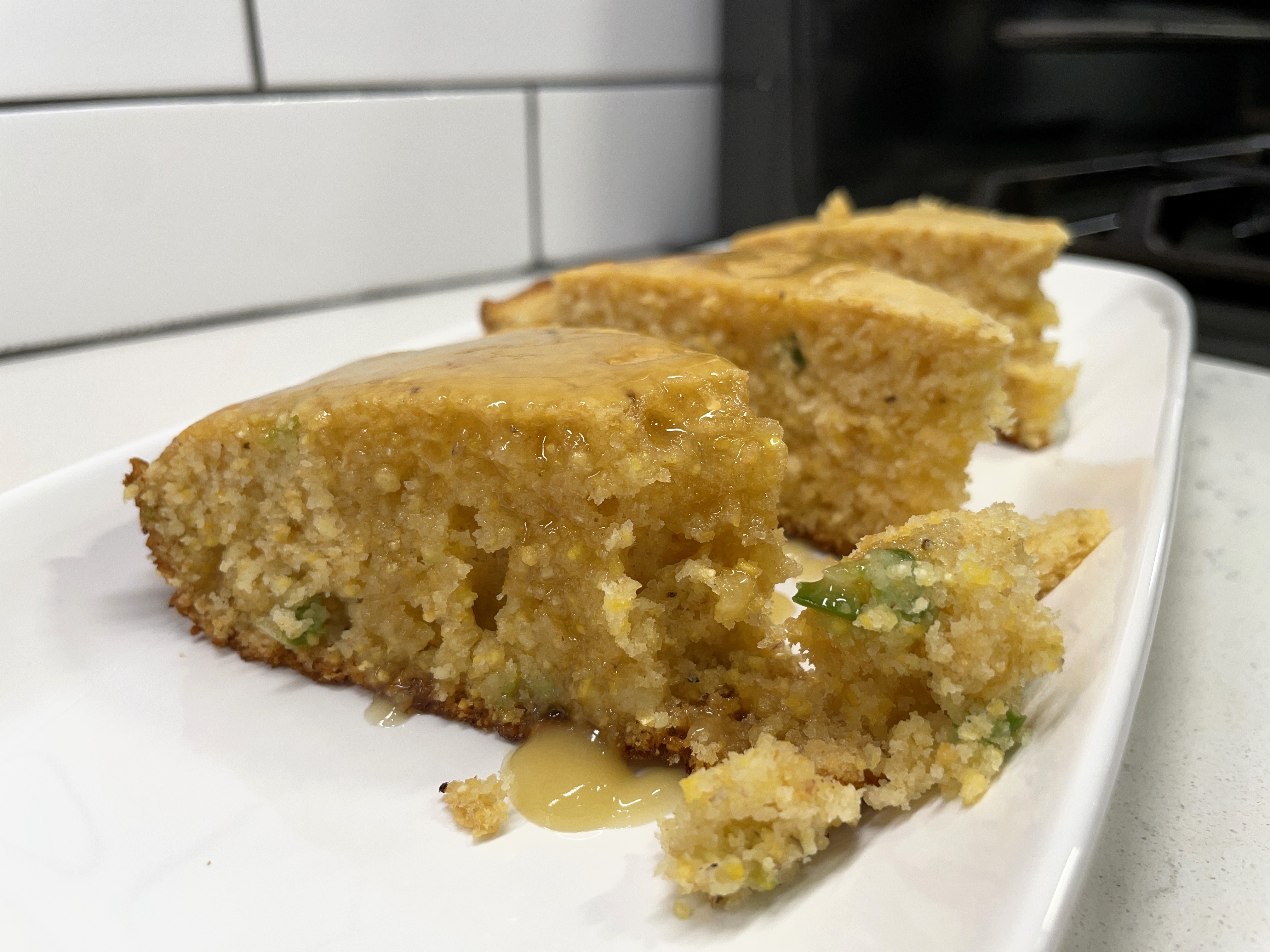
Jalapeño-Honey Cornbread

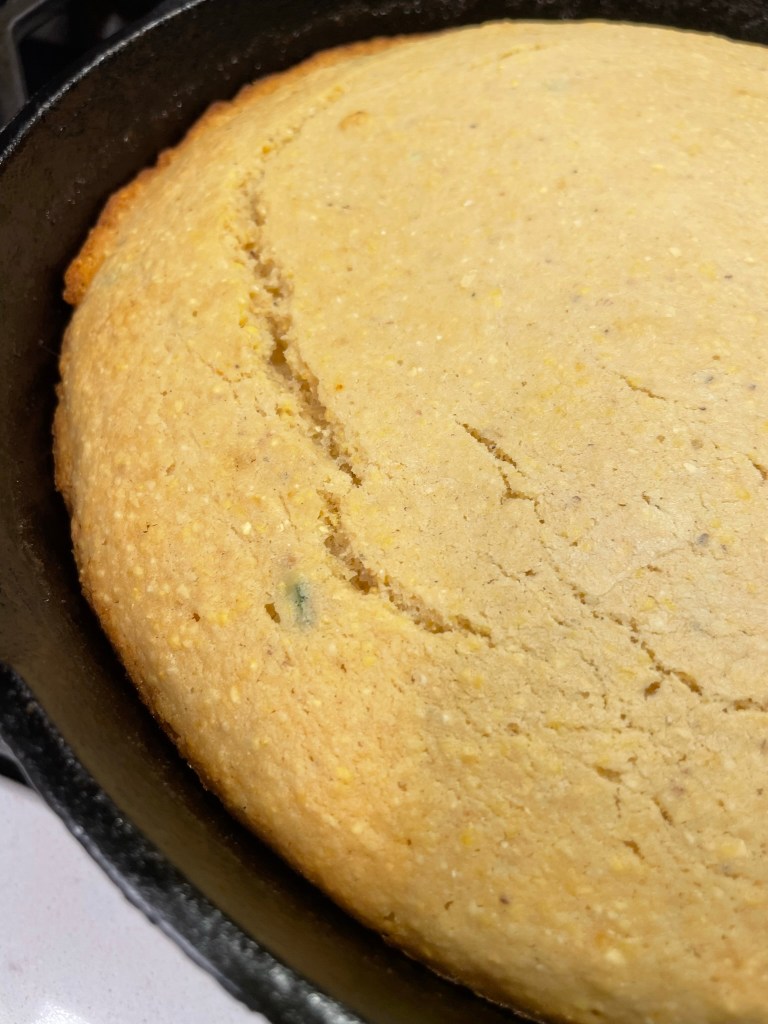
A shrug. That’s pretty much all I get from my husband when I mention that I might whip up a batch of cornbread. As a born-and-raised New York City guy, he’s more into bagels and dinner rolls than grainy, dense cornbread. 

But that was before I decided to put jalapeño and honey into it. 😉

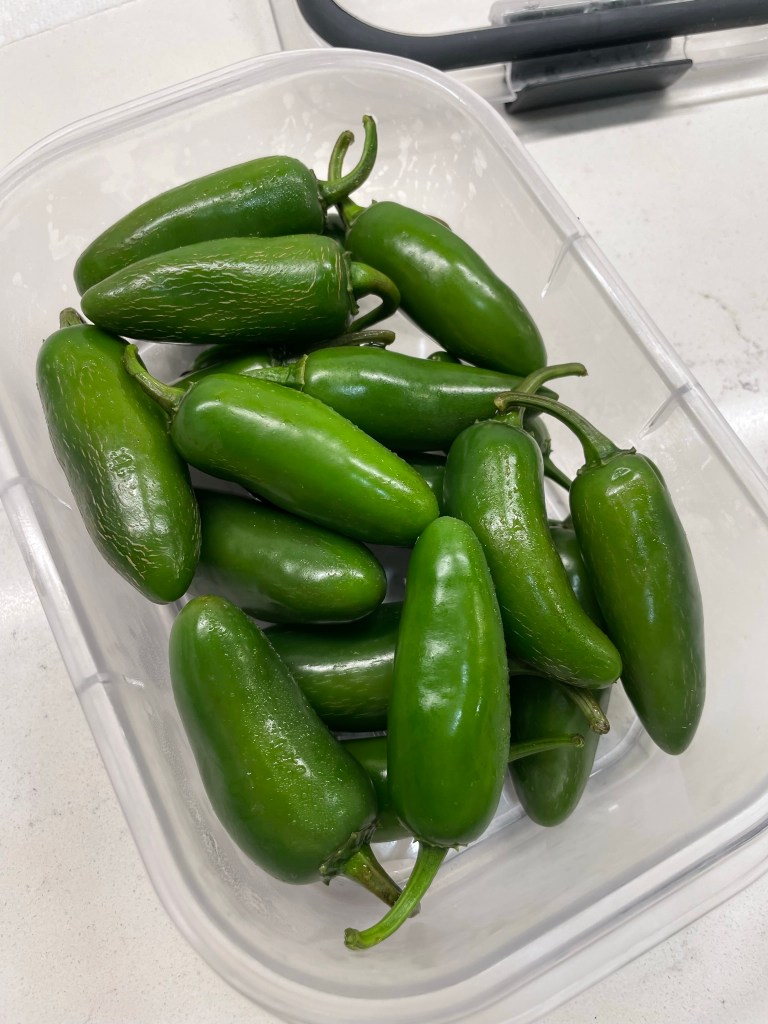
We are counting the days until we tear out what’s left of our “well, we tried” summer garden, and the jalapeños are making a valiant effort to compensate for the disappointment of everything else I attempted to grow this year. With four jalapeño plants, and plenty of post-summer full sun, I’m pretty much sneaking these spicy peppers into everything I can. That works out great for my heat-loving husband, and I found it easy to substitute honey for the usual sugar in my favorite cornbread recipe.


And that brings me to an important point— you don’t have to use my recipe to enjoy jalapeño-honey cornbread. If you have a favorite recipe already, a few simple adjustments might just make this a favorite at your house, too.

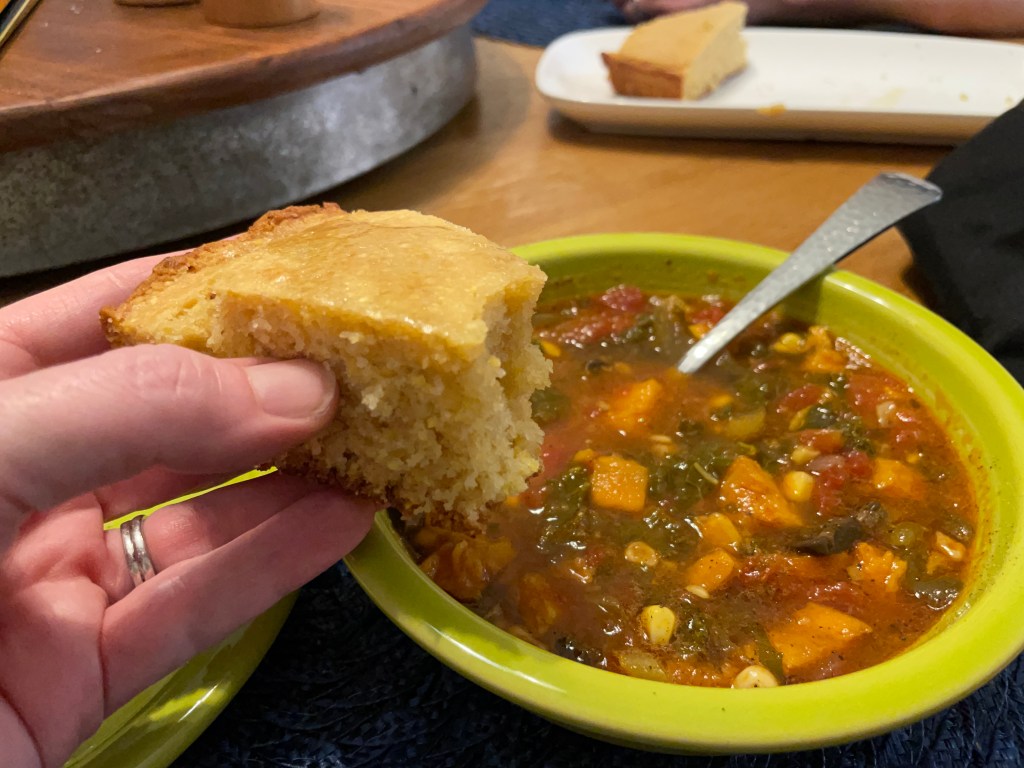
This was so good with leftover autumn minestrone!
Imagine it with a bowl of chili or black bean soup. Mmm.

A couple of quick notes— jalapeño can range in Scoville units (the heat factor), but you can take charge of the overall intensity with a simple decision of keeping or removing the seeds and membranes. The other note is about the honey. I used a local wildflower honey, and because honey is sweeter than cane sugar, you can get away with using a little less than the amount of sugar called for in the recipe.


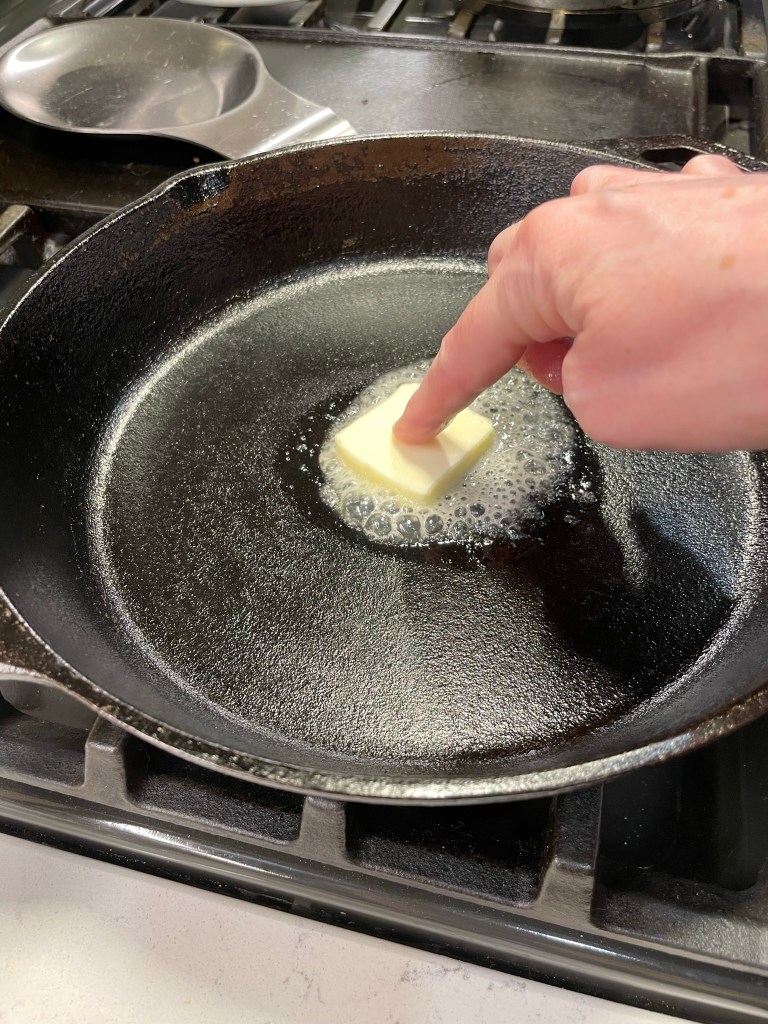
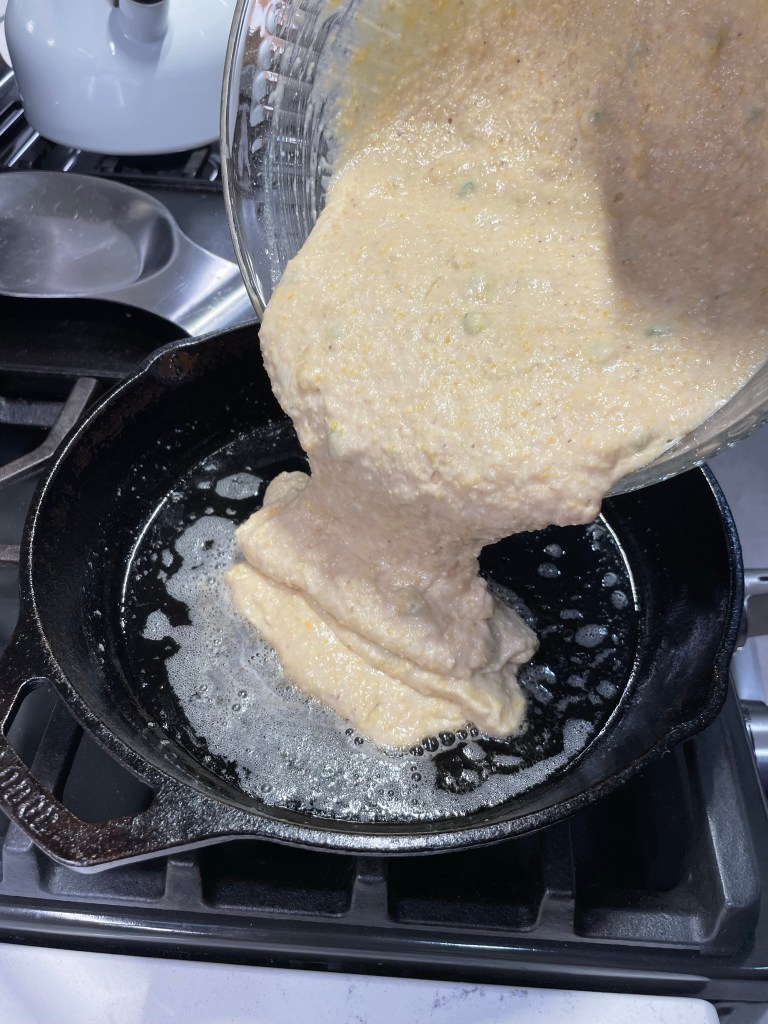
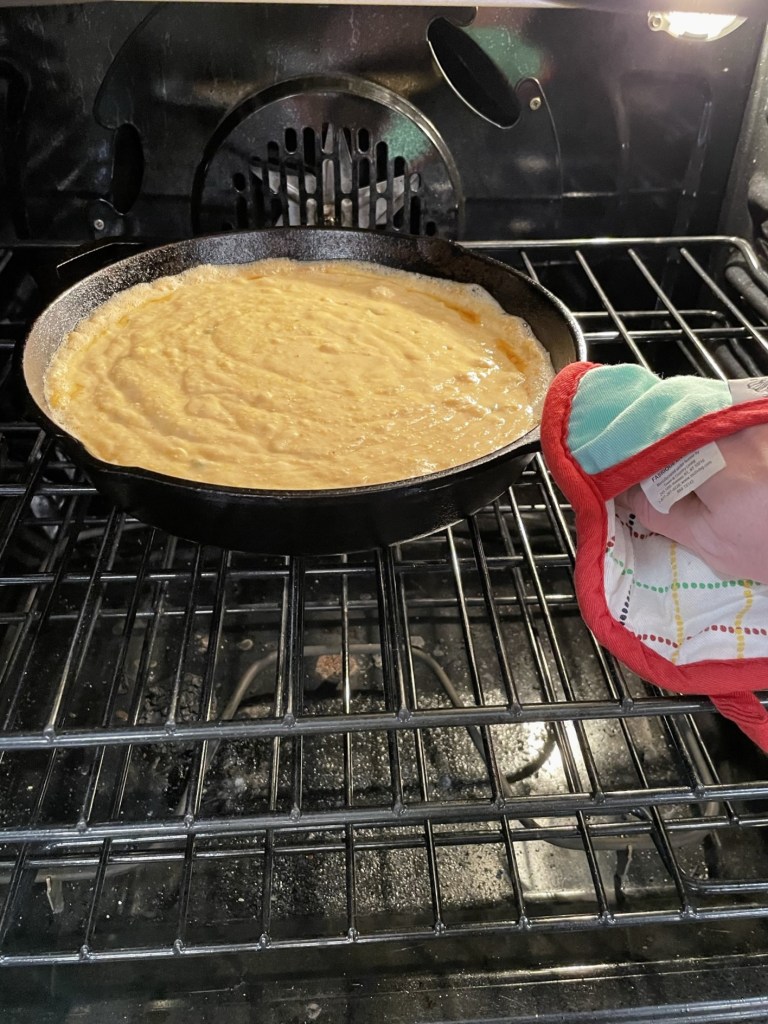
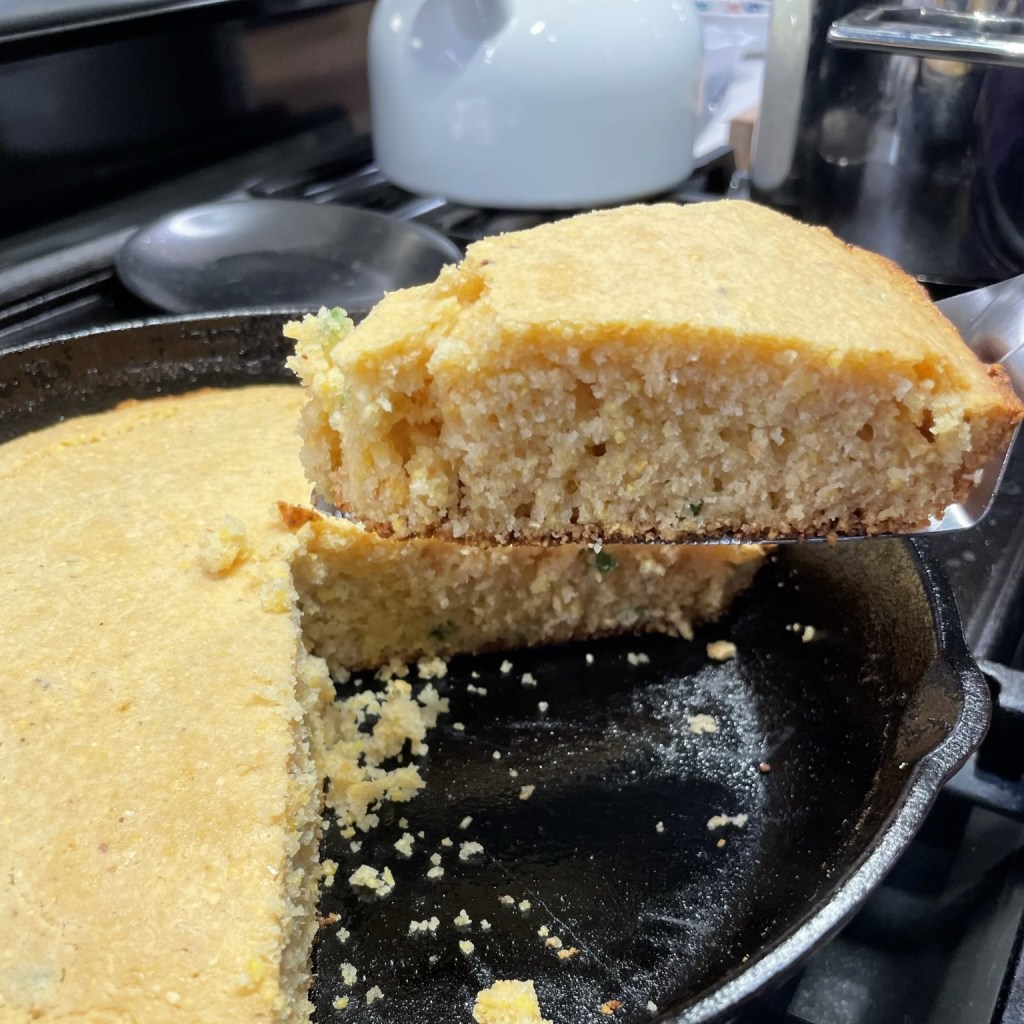
If you’d like to bake your cornbread in a cast-iron skillet, I recommend melting a tablespoon or so of butter in the skillet over medium heat before adding the batter and moving it to the oven. This extra butter will ensure clean, even wedges straight from the pan and almost no cleanup!


My inspiration recipe, as expected, comes from my favorite flour company, King Arthur Baking. I made a few modifications, including swapping honey for sugar and subbing in a portion of white whole wheat for nutrition and flavor. Plus, of course, the jalapeños! I also whipped up a small batch of honey butter for drizzling at serving time. 😋

Jalapeño-Honey Cornbread

  • Servings: About 8
  • Difficulty: So easy!
  • Print

Just two ingredient swaps are throwing a big flavor twist onto a classic cornbread. This will be great with almost any rustic soup you make this fall and winter!


Ingredients

  • 1 cup all-purpose flour
  • 3/4 cup white whole wheat flour
  • 1 cup cornmeal
  • 2 tsp. baking powder
  • 1/4 tsp. baking soda
  • 3/4 tsp. fine sea salt
  • 1 large jalapeño, diced (seeds or no seeds, depending on your heat tolerance)
  • 1 1/4 cups milk, warmed (I used whole milk, but 2%, skim or plant milk would be fine)
  • 3 Tbsp. local wildflower honey
  • 1 large egg, room temperature
  • 1/4 cup expeller-pressed canola oil
  • 1/2 stick butter, melted (plant butter would be fine)
  • 1 additional tablespoon butter for melting in the skillet (or buttering a baking dish)

This is delicious drizzled with honey butter. To make some, stir honey into softened, salted butter until smooth. At room temperature, it will drizzle nicely over the warm cornbread. If chilled, it will be more firm but still spreadable. Store leftover cornbread wrapped tightly in foil, or freeze for later.

Directions

  1. Preheat oven to 350°F, with rack in center position. Place a cast iron skillet over medium heat and melt the extra tablespoon of butter into it.
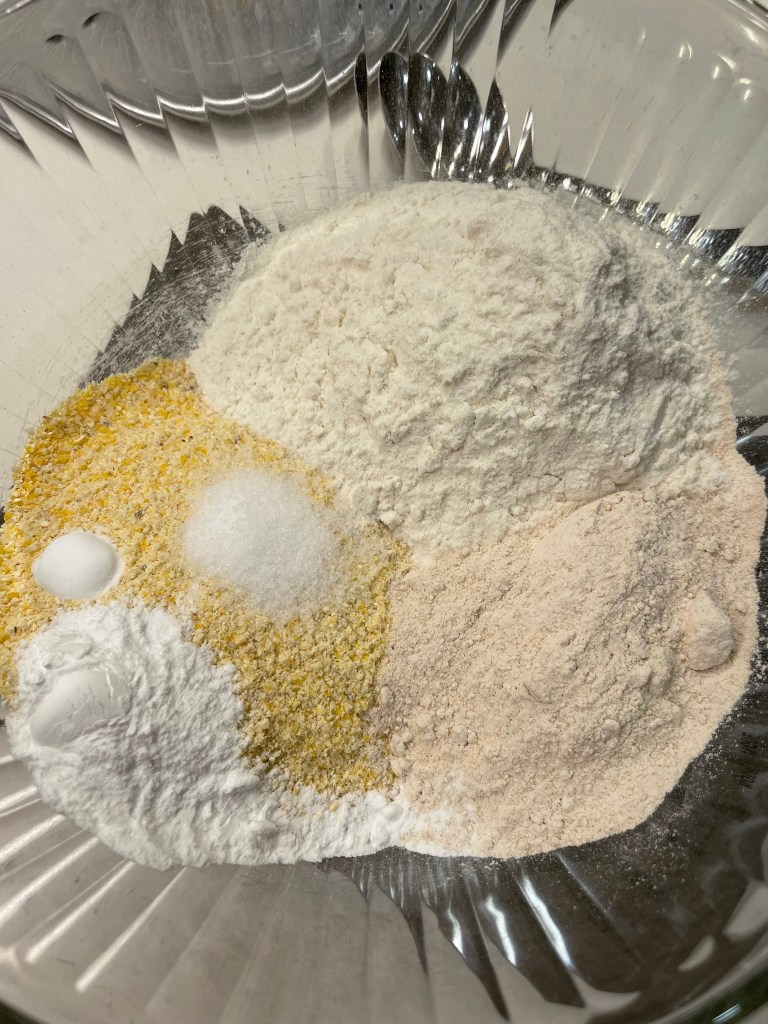
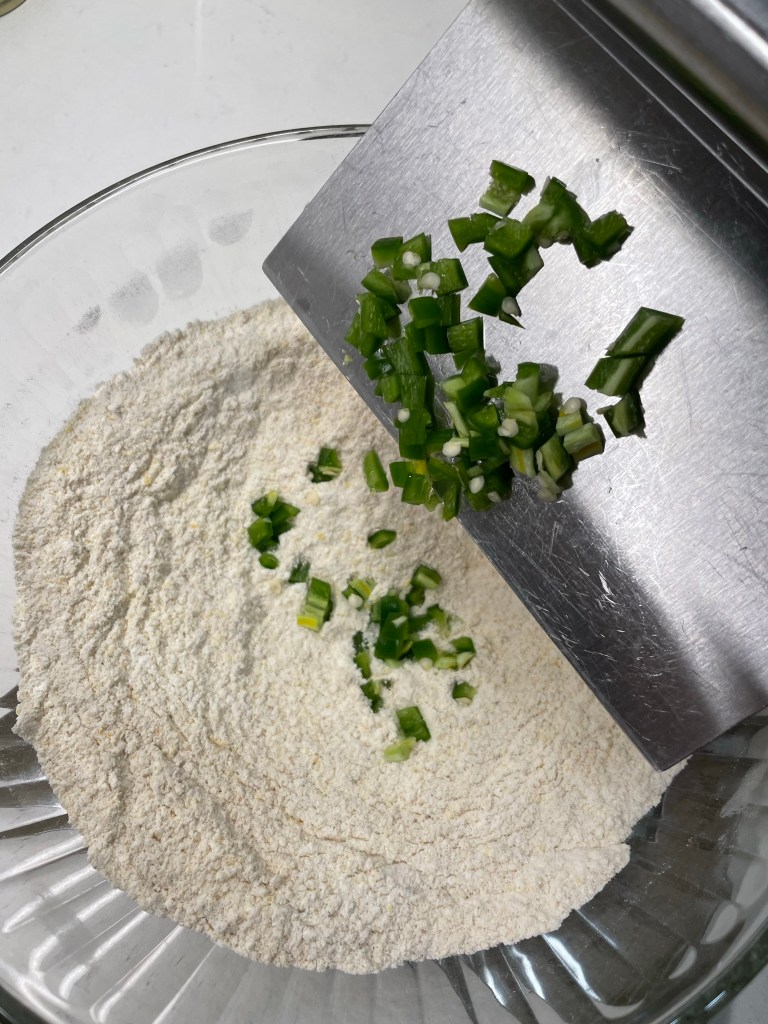
  2. Measure out and whisk together the dry ingredients in a large batter bowl. Toss the jalapeños into that mixture as well.
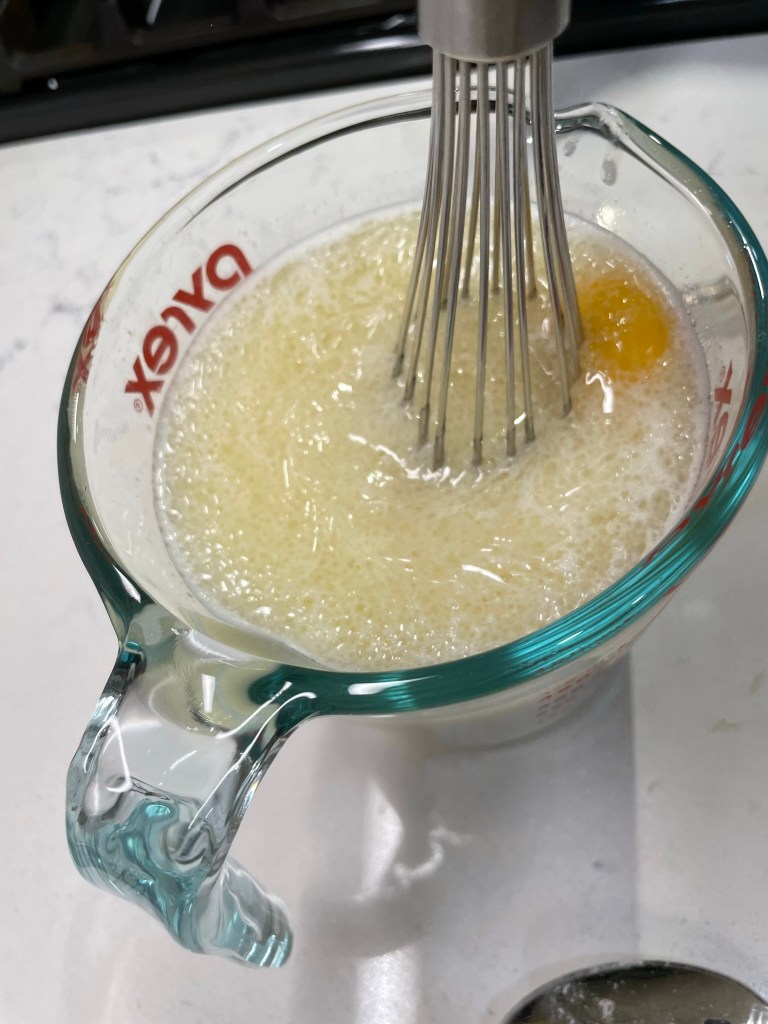
  3. Combine the wet ingredients, blending well to completely mix in the honey.
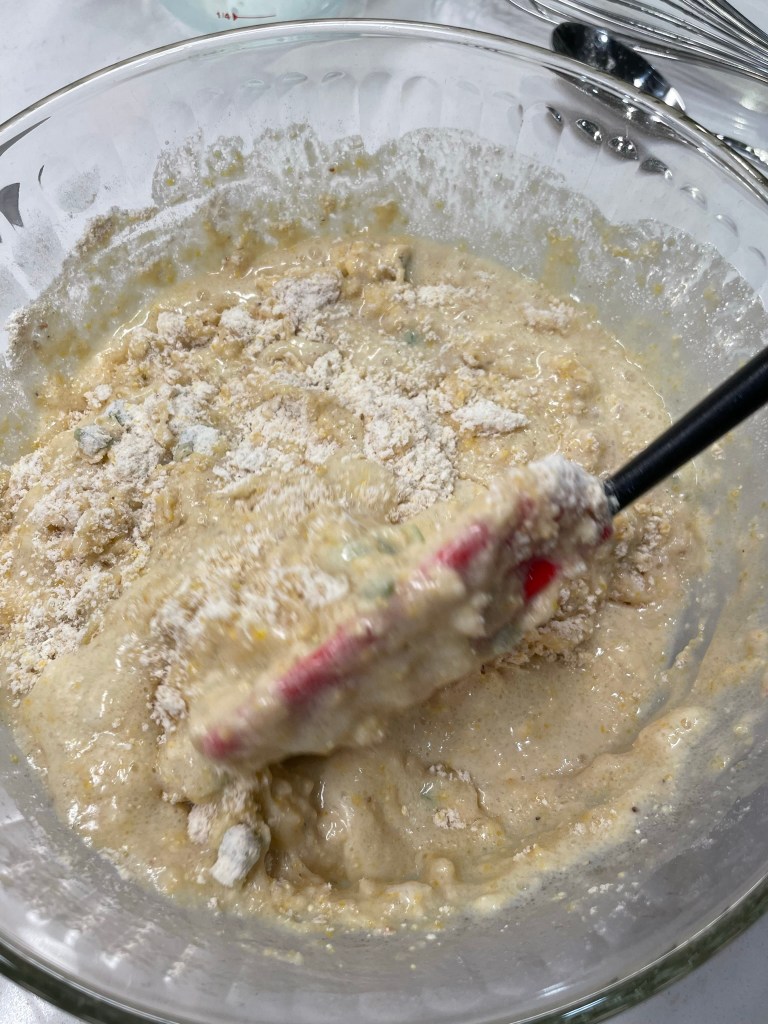
  4. Pour the wet mixture into the bowl with the dry ingredients and fold gently several times until dry ingredients are fully incorporated.
  5. Pour the batter into the hot, buttered skillet and slide the pan into the oven to bake for about 20 minutes. Cool for a few minutes, then cut into wedges and enjoy!


Heat & Sweet Baked Beans

As far as I’m concerned, baked beans should be right up there with baseball, hot dogs, apple pie and Chevrolet— a true American classic. And as demonstrated by my relatives at every Fourth of July gathering during my childhood, there are many, many ways to prepare them. You can make them sweet, bacon-y, onion-y, molasses-y or pretty much whatever you want. I happen to want them all, and I’m on a mission to keep pushing the flavor boundaries until I run out of ideas.


For this version, I went rogue with both sweet and spicy additions to a can of prepared baked beans that my husband’s son, Alex, had left behind following his visit here from Hungary back in March. There are only so many things one can pack in a checked bag before you reach the weight limit imposed by the airline, and Alex had to choose between the bottle of Wild Turkey 101 or this can of beans. You guessed it, he took the bourbon back to Europe! Seriously, anyone could have called that one.

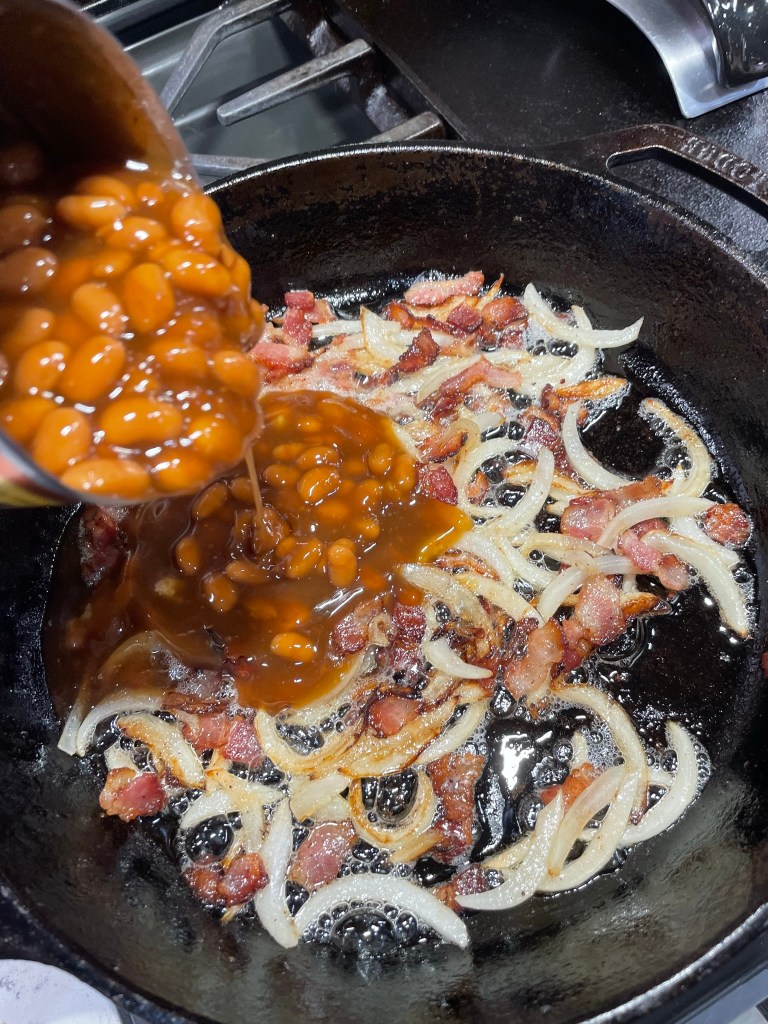
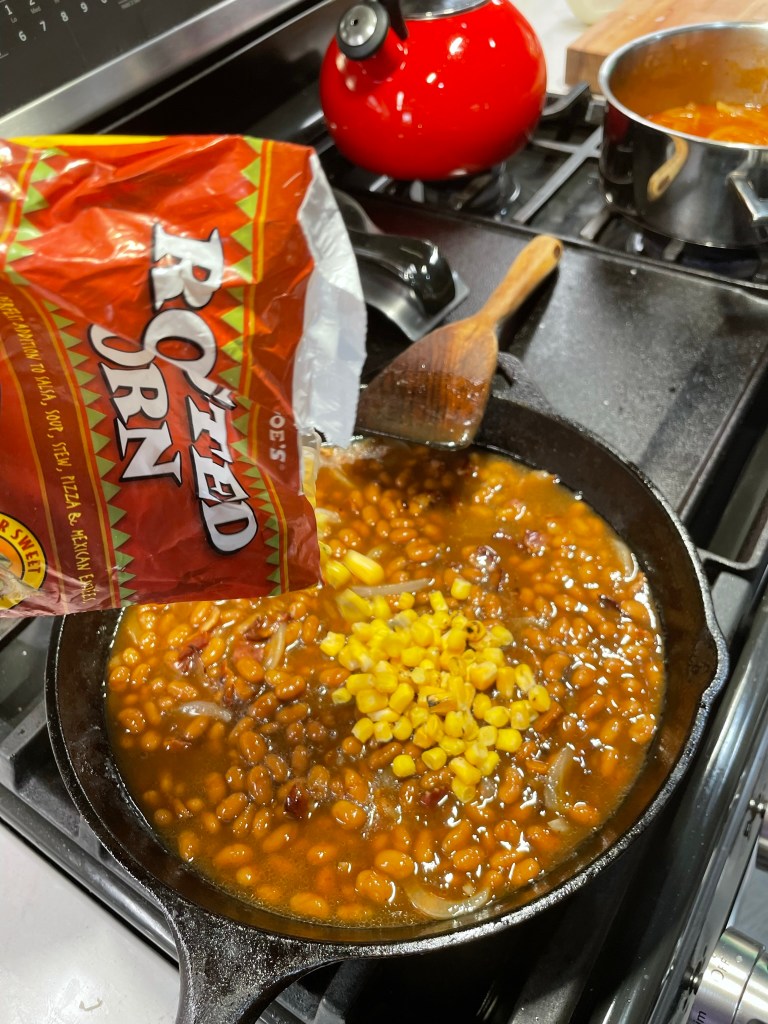
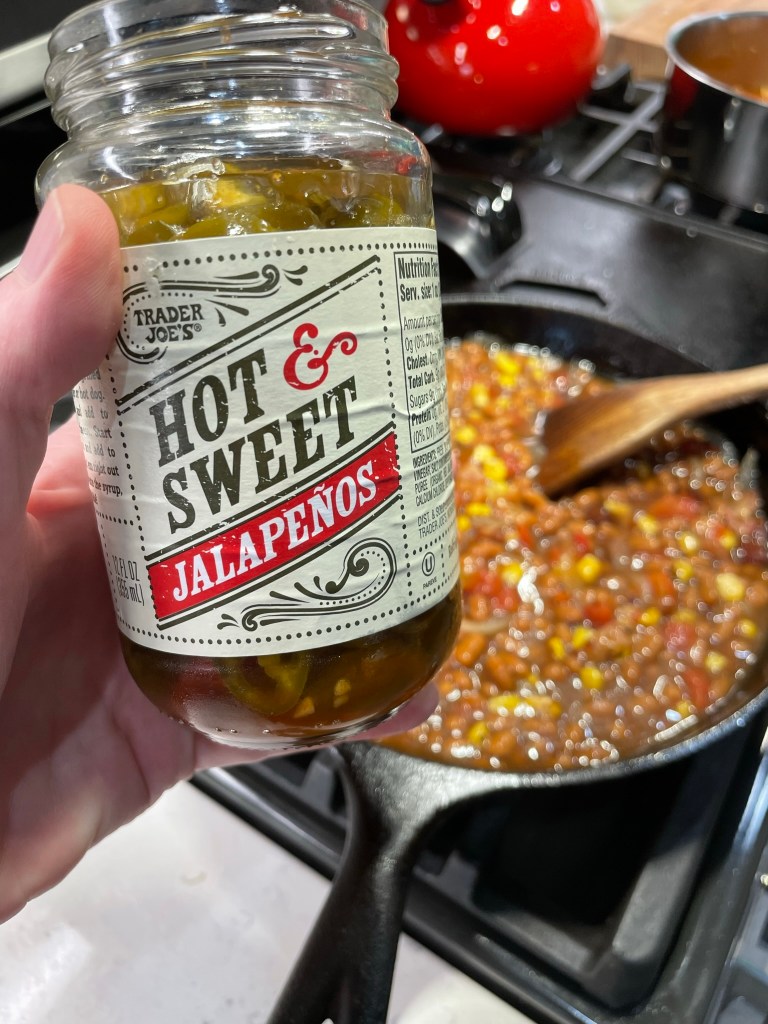
Alex’s choice left me with the enviable task of elevating the canned beans, which had a label touting “extra brown sugar.” I wanted something a little different, but not too crazy, so I started with onions and bacon— the two ingredients that always push baked beans into the savory zone. The canned beans had enough sweetness already, so I set my sights on texture and contrast. I tossed in some roasted corn (I used frozen from Trader Joe’s, but fresh would have been awesome) and about half a can of hot Rotel tomatoes, left over from a batch of Les’s amazing pimento cheese from a recent gathering of friends. For a huge kick of heat, I added a fat handful of sweet pickled jalapeño slices— also from Trader Joe’s— and I didn’t bother to drain or chop them. The only other seasoning I added was salt and pepper. Sooo easy!


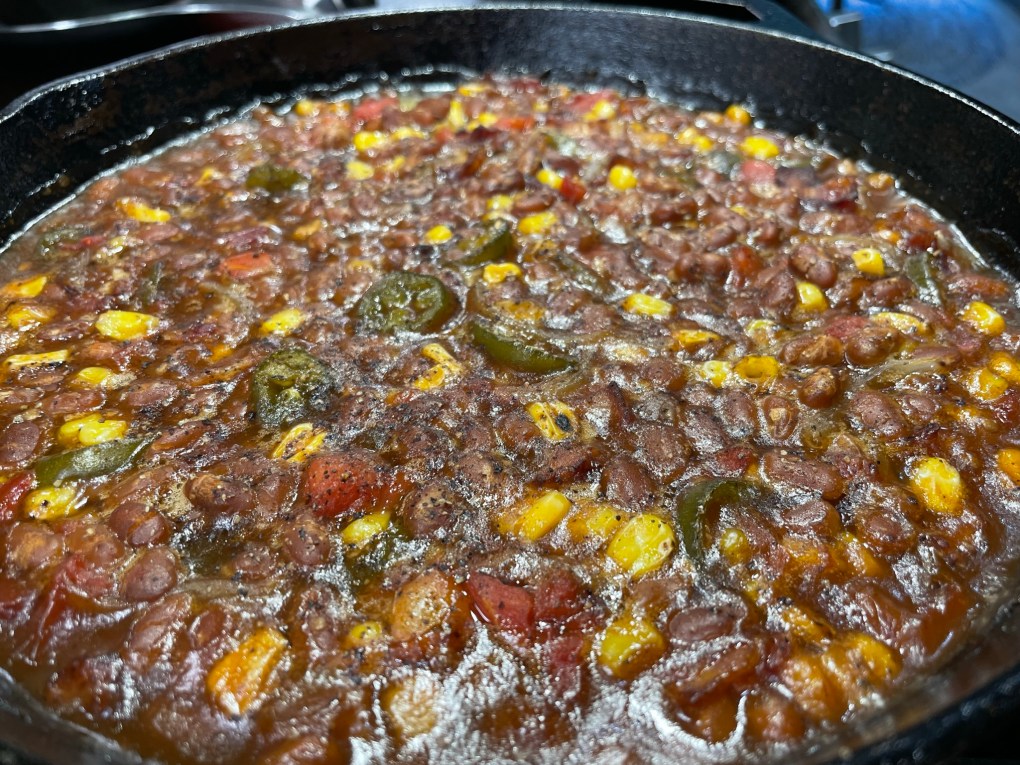
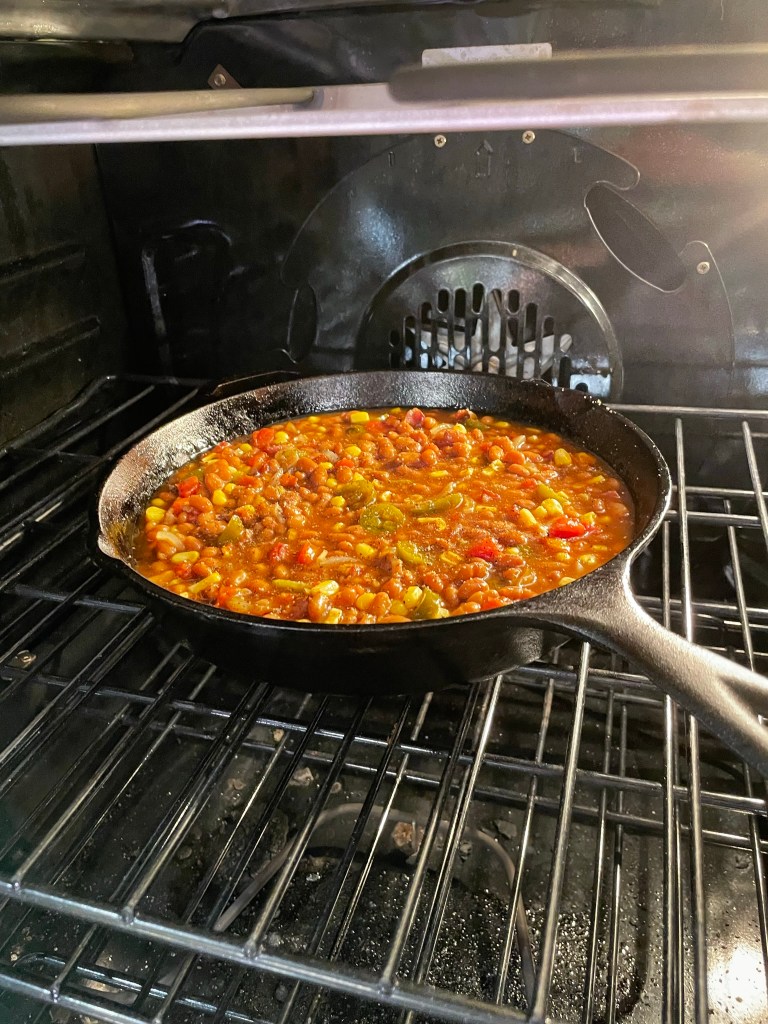
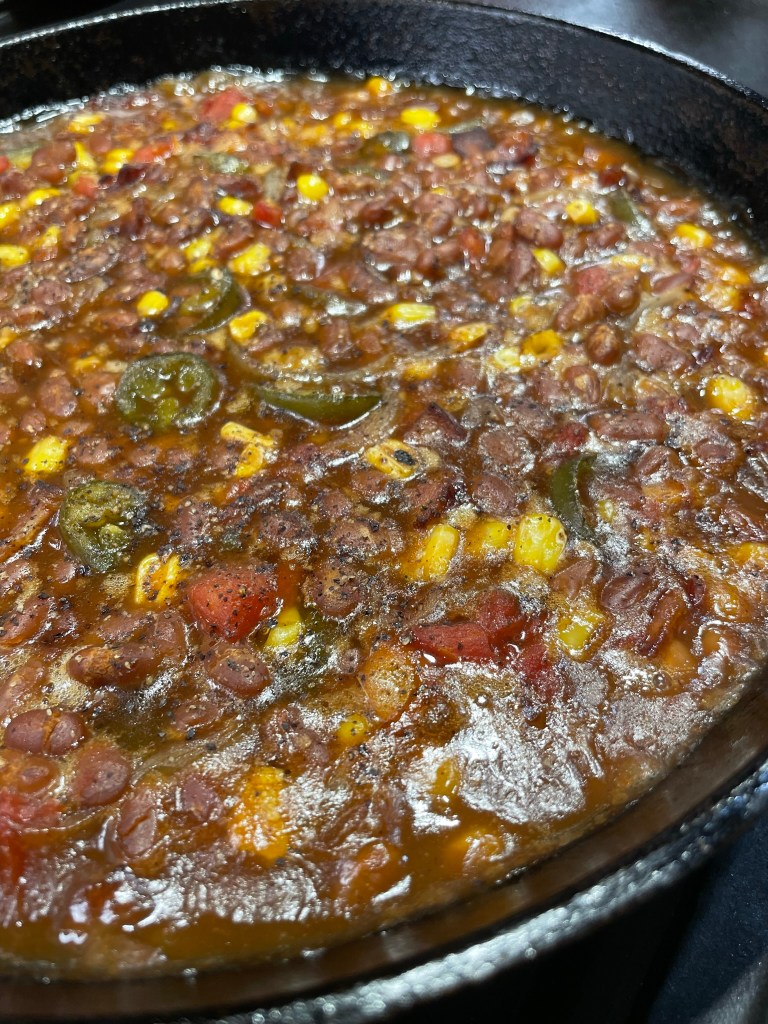
I mixed them up in the same cast-iron skillet I used to cook the bacon and onions, and then slid the skillet into a 350 F oven for about half an hour. The beans emerged hot and bubbly, but could have benefitted from a bit more oven time, so I would recommend 45 to 50 minutes if you like the sticky, candy-like sauce around the edges as much as I do.


Wow, this was one addictive batch of baked beans! There was more than enough kick, thanks to the Rotel and the jalapeños, and interesting texture from the corn and pickled jalapeños. Every bite was sweet at the start, and then the slow burn kicked in, making you desperate for another sweet bite, and so on. The leftovers were also delicious cold from the fridge. For sure, Alex would approve of what I did to his left-behind can of beans. 

Good thing I wrote it down for his next visit. 🙂


Heat & Sweet Baked Beans

  • Servings: 6 to 8
  • Difficulty: Average
  • Print

These baked beans are hot, sticky and sweet, with plenty of savory flavor and interesting texture. My latest homage to the Fourth of July gatherings of my childhood.


Ingredients

  • 1 large can Bush’s baked beans with extra brown sugar
  • 1/2 medium sweet onion, cut into slivers from top to bottom
  • 3 slices uncured bacon, cut into 1-inch pieces
  • 1/2 cup fire roasted corn (frozen is fine, or fresh if you have it)
  • 1/2 can Rotel tomatoes (habanero variety)
  • 1/4 cup hot and sweet pickled jalapeños
  • Salt and pepper to taste

Directions

  1. Preheat oven to 350 F, with rack in center position.
  2. Place a 10-inch cast-iron skillet over medium heat. Add bacon pieces and cook until some of the fat renders and bacon begins to curl. Add onions and cook until bacon is slightly crispy. Season with a little bit of salt and as much black pepper as you’d like.
  3. Add the entire can of baked beans. Swirl the can with a couple of tablespoons of water to rinse out every drop of sauce into the skillet.
  4. Add corn, tomatoes and jalapeños and stir until evenly blended.
  5. Transfer skillet to preheated oven and bake 45 to 50 minutes, until beans are bubbling around all the edges of the skillet. Allow the beans to cool about 10 minutes before serving.


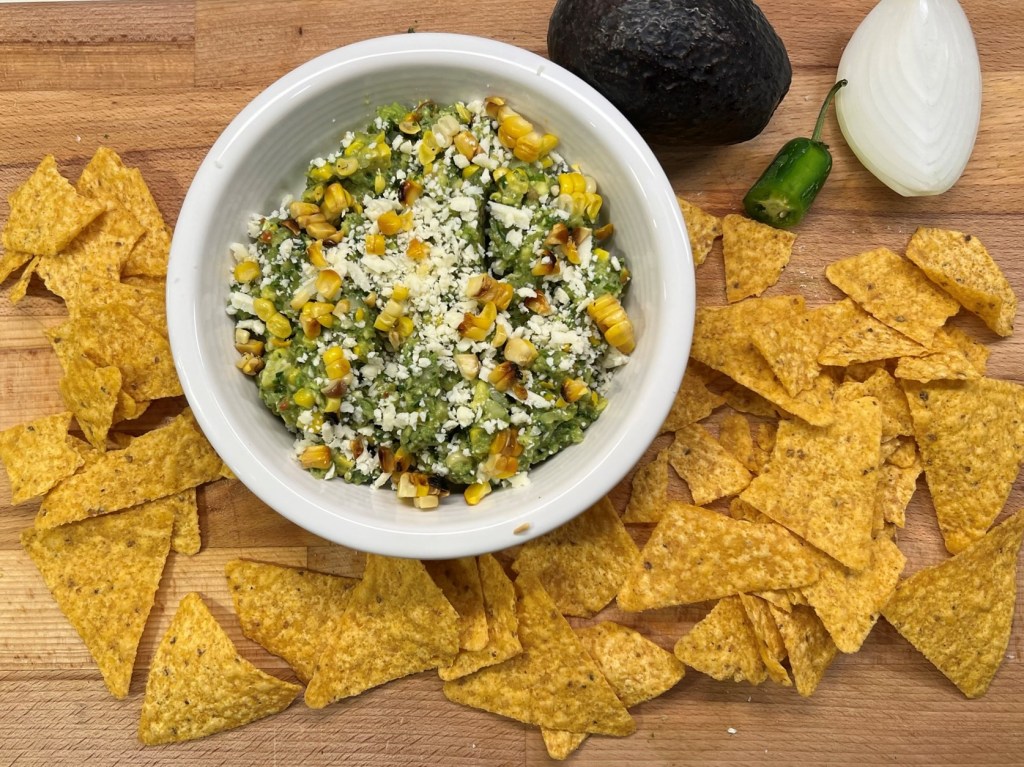
Mexican Street Corn Guacamole

I guess you could say that I have been on a “Kenji kick” lately, channeling my secret inner scientist and learning so much about food that I can hardly keep up. If you’ve been following my posts, you know how inspired I am by J. Kenji López-Alt, the chef who pushes all the boundaries of science and food, and today, I present another example of new tricks I’m learning from Kenji.


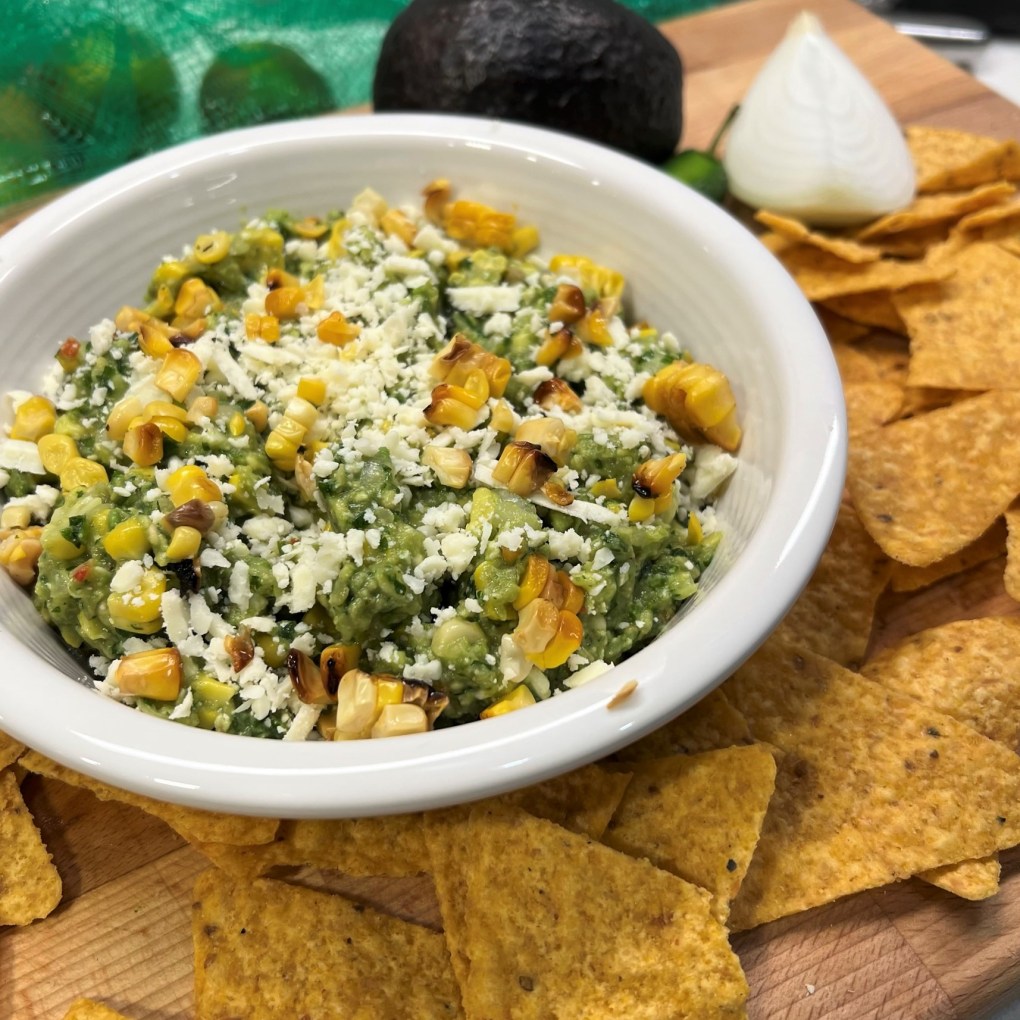
I have attached the name “street corn” to this recipe, though it is technically missing a few of the signature street corn ingredients (specifically, mayonnaise and chile sprinkles). But the mouthwatering combination of flavors it does have—lime, cilantro, grilled corn and cotija cheese—gives me such an impression of street corn that I couldn’t help myself.


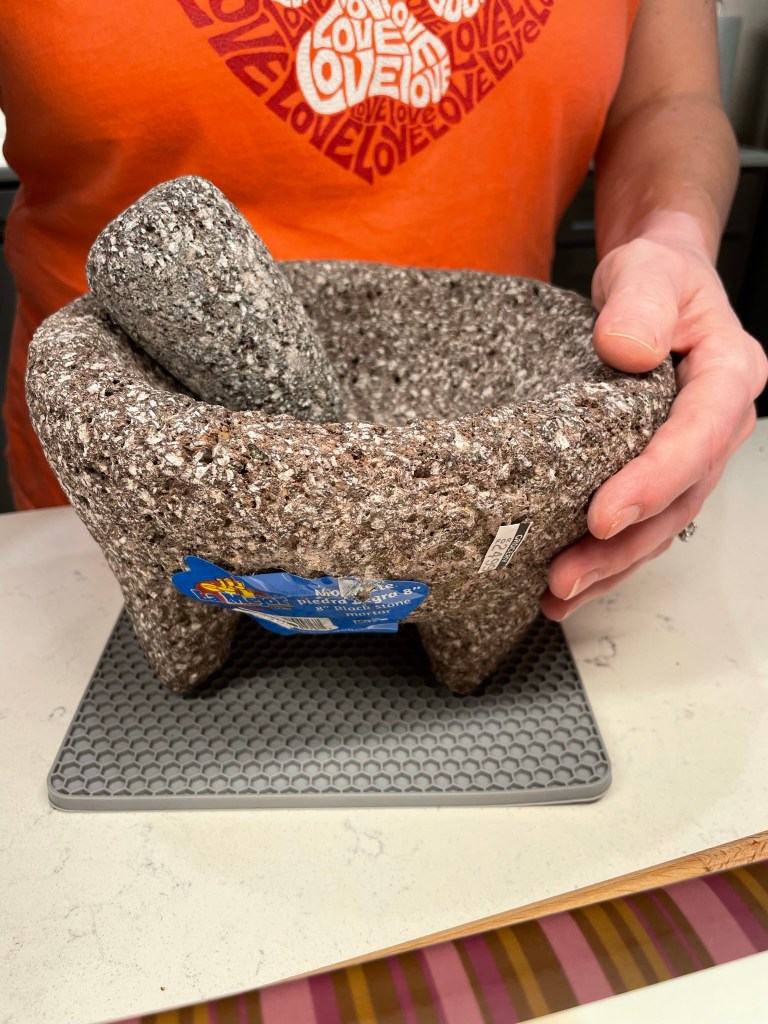
Besides, I felt an obligation to change the name because I couldn’t quite make the recipe (which comes from the pages of NY Times Cooking) as directed by its author, and that’s because I don’t have the proper tools of a Mexican cocina. Nope, this gringa relies mostly on her countertop electrics for heavy chopping, dicing, mincing and pureeing, and that works fine most of the time. But when it comes to making salsa or guacamole, the better and more authentic method would involve a molcajete, a huge, primitive looking mortar and pestle carved from a chunk of volcanic rock.

The rough interior of a molcajete (pronounced mowl-kuh-HAY-tay) makes the flavors more intense, because as you grind solid ingredients into it, you crush rather than chop, and that releases the essence of seed spices, herbs and onions in a way that modern appliances simply can’t compete. For this recipe, even though I recently spent several hundred dollars on a made-in-France food processor that basically requires a college course to use, I set out instead to find a molcajete, a culinary tool that you have probably seen in Mexican restaurants.

Originally, my plan was to share this scrumptious guacamole recipe in observance of Hispanic Heritage Month, but my research about molcajetes led me to realize that the tool really is primitive, and it is considered “pre-Hispanic” because it was created and used by the Aztecs, long before Spain began to influence the cultures that we recognize today as Hispanic—including Mexico, where most molcajetes are still made to ancient standards.


My first stop for one of these nifty devices was Amazon, but after scrolling through three pages of “authentic” molcajetes, I wasn’t convinced that they weren’t made in China, and possibly of concrete. Next stop, Williams-Sonoma, because who knows more about authentic Mexican cooking, right? OK, maybe not, though they did have some impressive-looking molcajetes, and (not surprisingly) at really impressive prices.

Finally, I wised up and headed across town to the Mexican supermarket. Les and I love visiting this interesting store, where we find all the spices, dried peppers and other Mexican ingredients we could ever want. They have the largest bin of fresh jalapenos I have ever seen (perfect for Les’s Atomic Buffalo Turds recipe), as well as a few ingredients I can’t pronounce and wouldn’t begin to know how to use (yet). English is not the first language for the workers in this market, nor for most of its customers, and I’m good with that because every visit feels like an adventure.


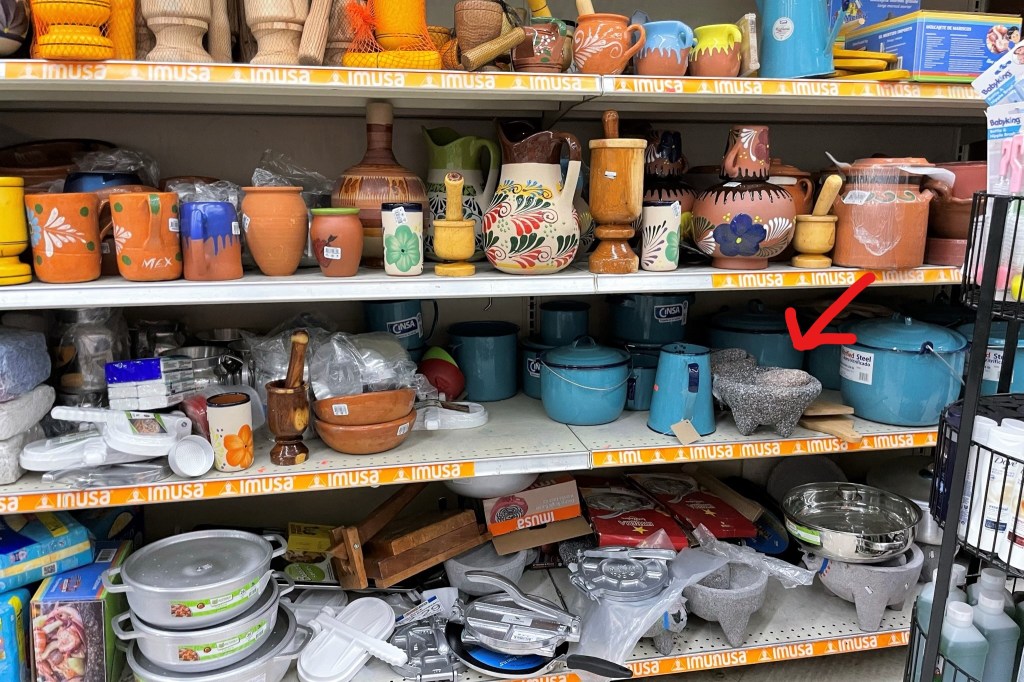
This is the same store where I found my cast iron press for making handmade corn tortillas, and I knew we would find a traditional molcajete as well—and there it was, conveniently nestled among all sorts other gadgets, right next to the carousel rack of shampoo and rubbing alcohol, of course. As I said, it is an interesting store (remind me to tell you sometime where to find the mayonnaise)!

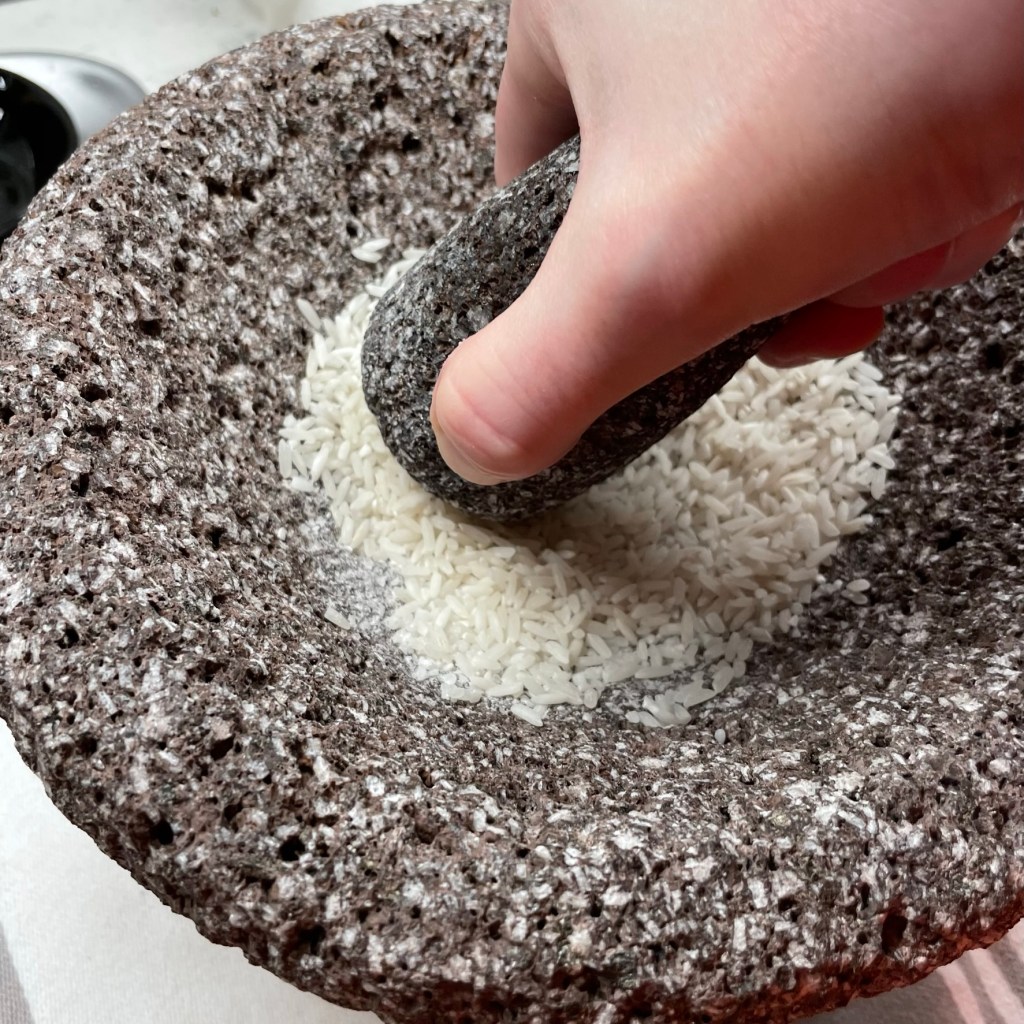
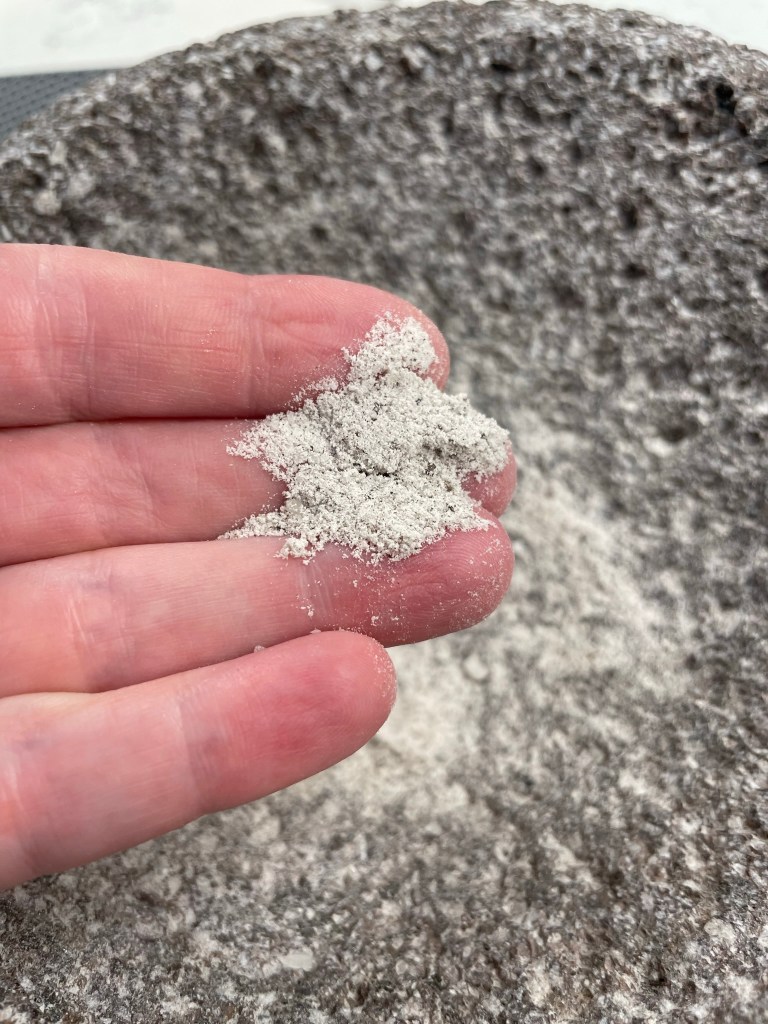
What I had not realized at the time of my molcajete purchase was the curing, or “seasoning,” that is required. The pores are huge in the volcanic rock, and a great deal of dust and grit is encased in there. First, you must scrub the inside and outside with hot water (no soap) and a stiff-bristled brush to release the surface grit and grime, and tip it sideways to air dry. Then you grind raw, whole rice into the thing, which draws out additional gray, powdery grit.

You rinse and repeat as many times as it takes, until the rice comes out clean. At that point, you’re ready—unless you follow some experts’ instructions to also season the food-touching surfaces with salt and garlic. OK, all of that sounded time consuming, but easy enough!

Or, maybe not.


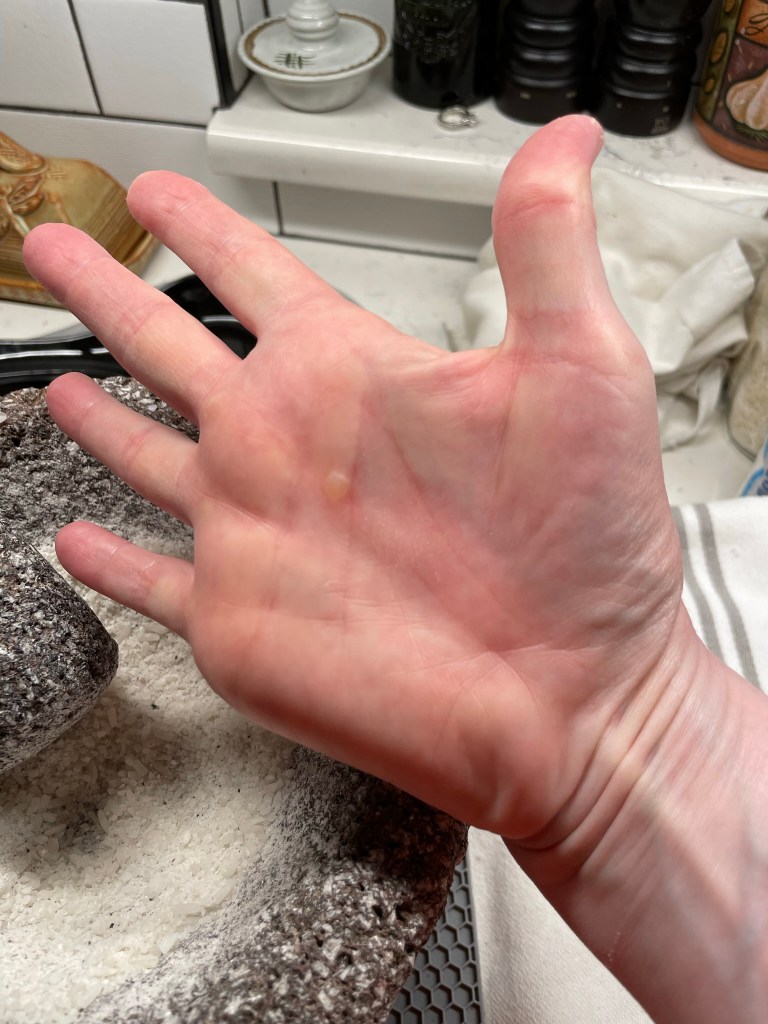
A mere 20 minutes into this process, I had to give up because I already had a blister from gripping the rough surface of the pestle so tightly. Les took a crack at it, too, and we soon realized this was not going to happen in time for us to make Kenji’s gorgeous guacamole, and that’s where the chef’s scientific expertise came to the rescue. As with most of his recipes, Kenji offered a workaround for crushing the ingredients with coarse salt, and it was so simple, we could do it with nothing more than a bowl, a cutting board and a good knife. Here goes!


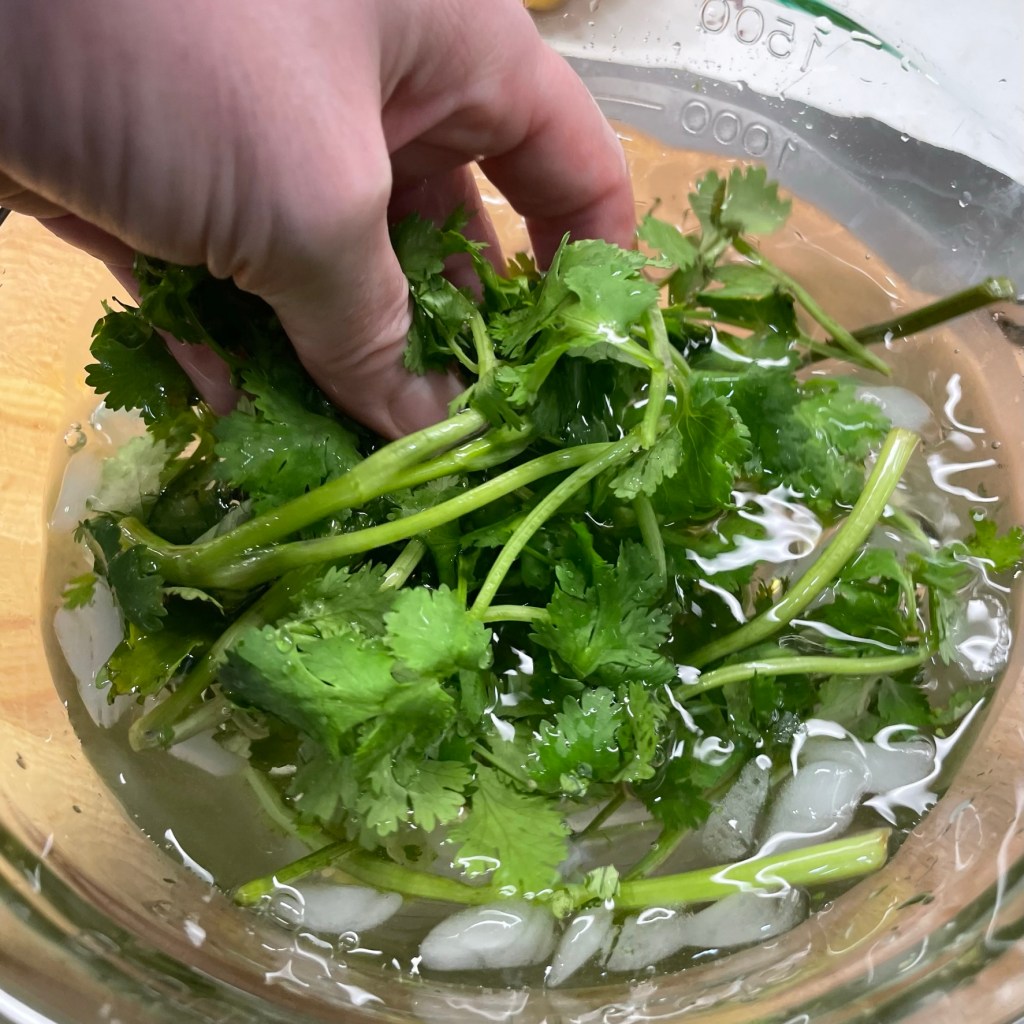
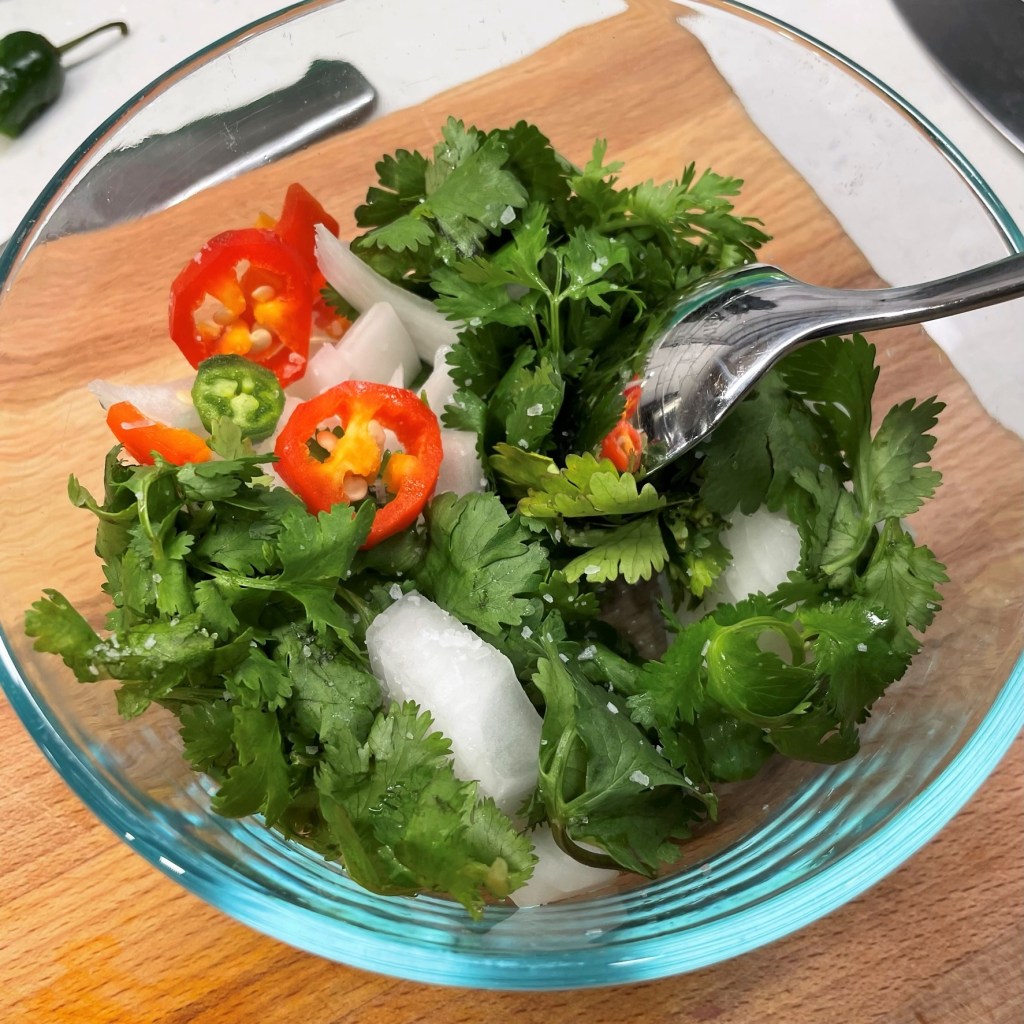
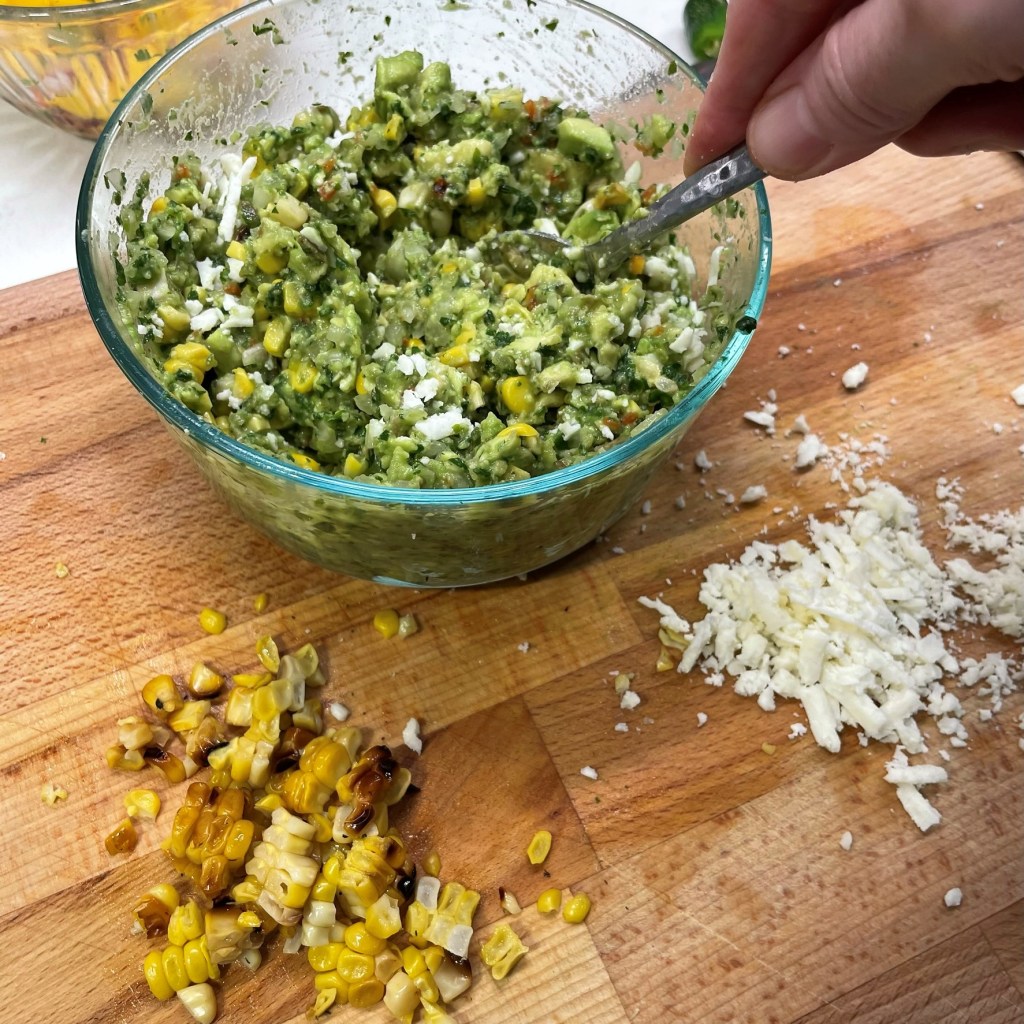
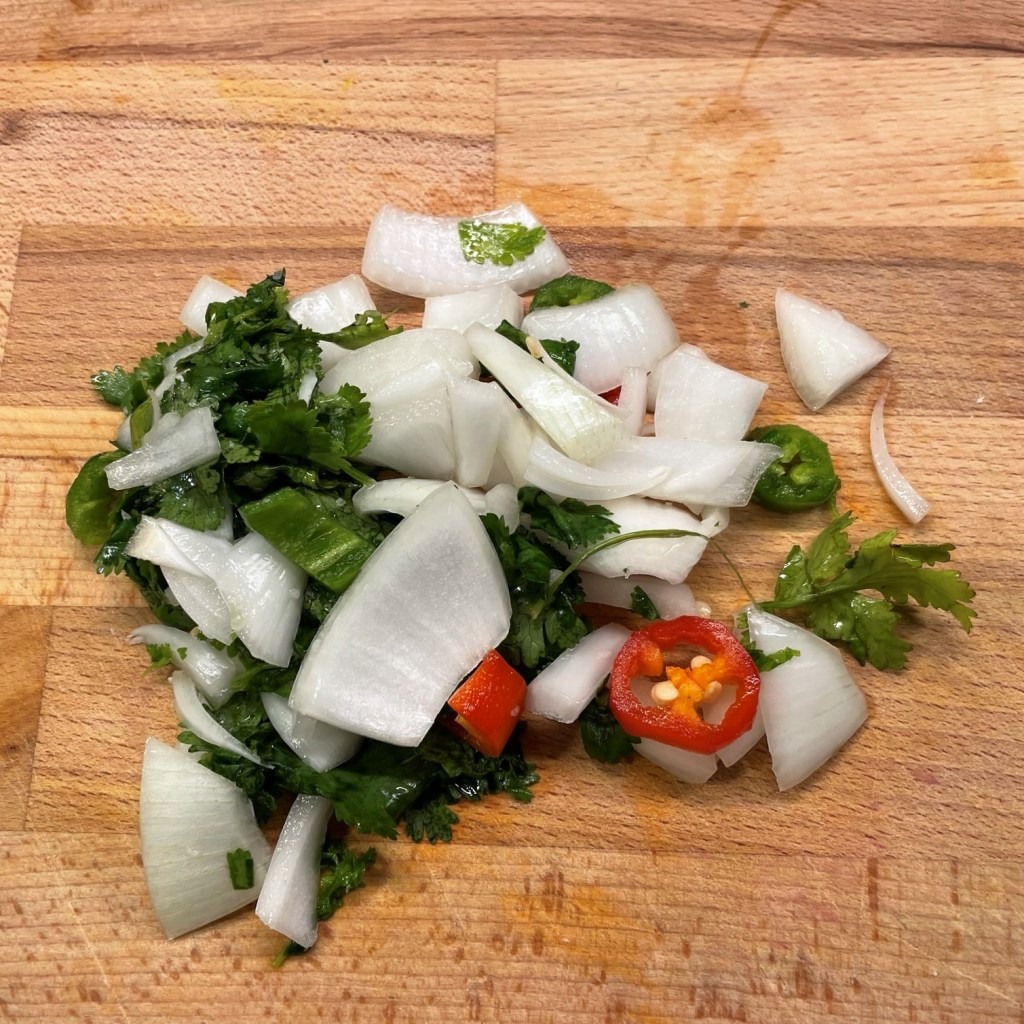
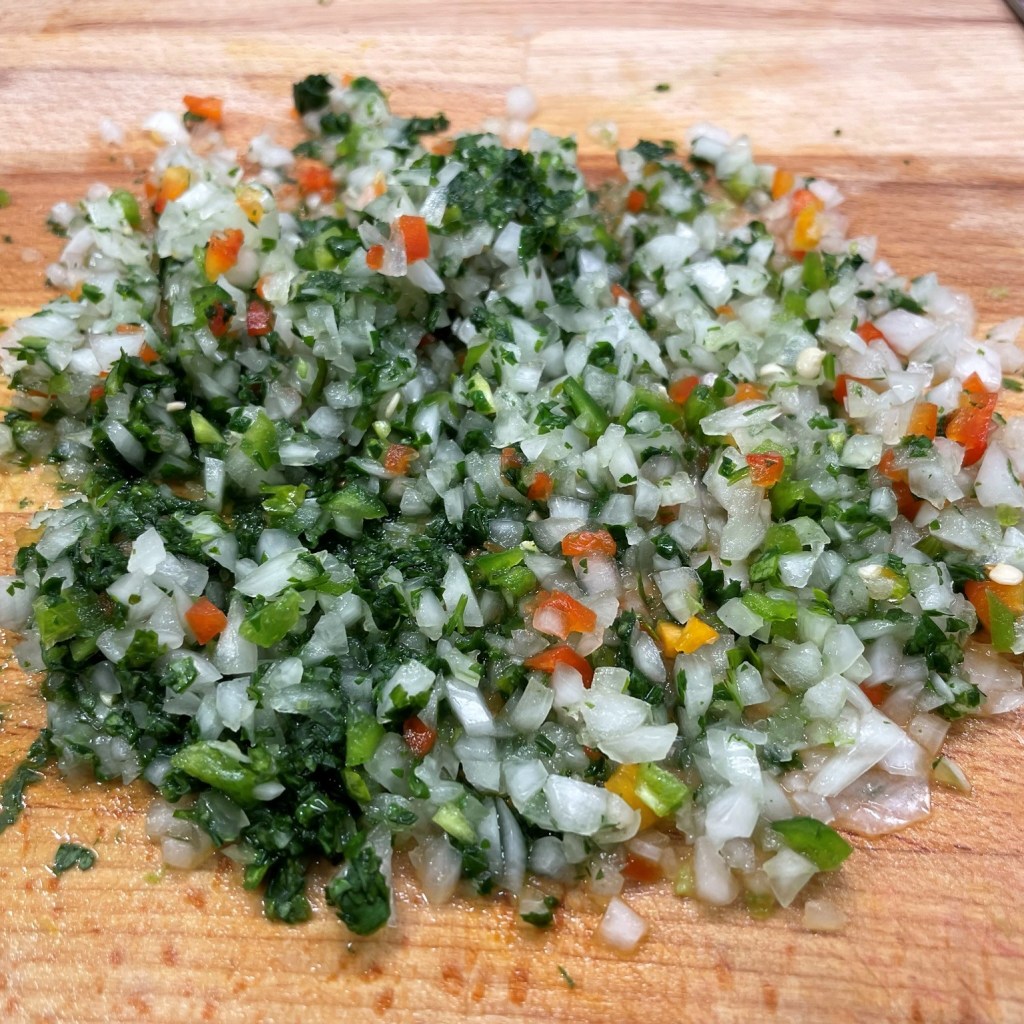
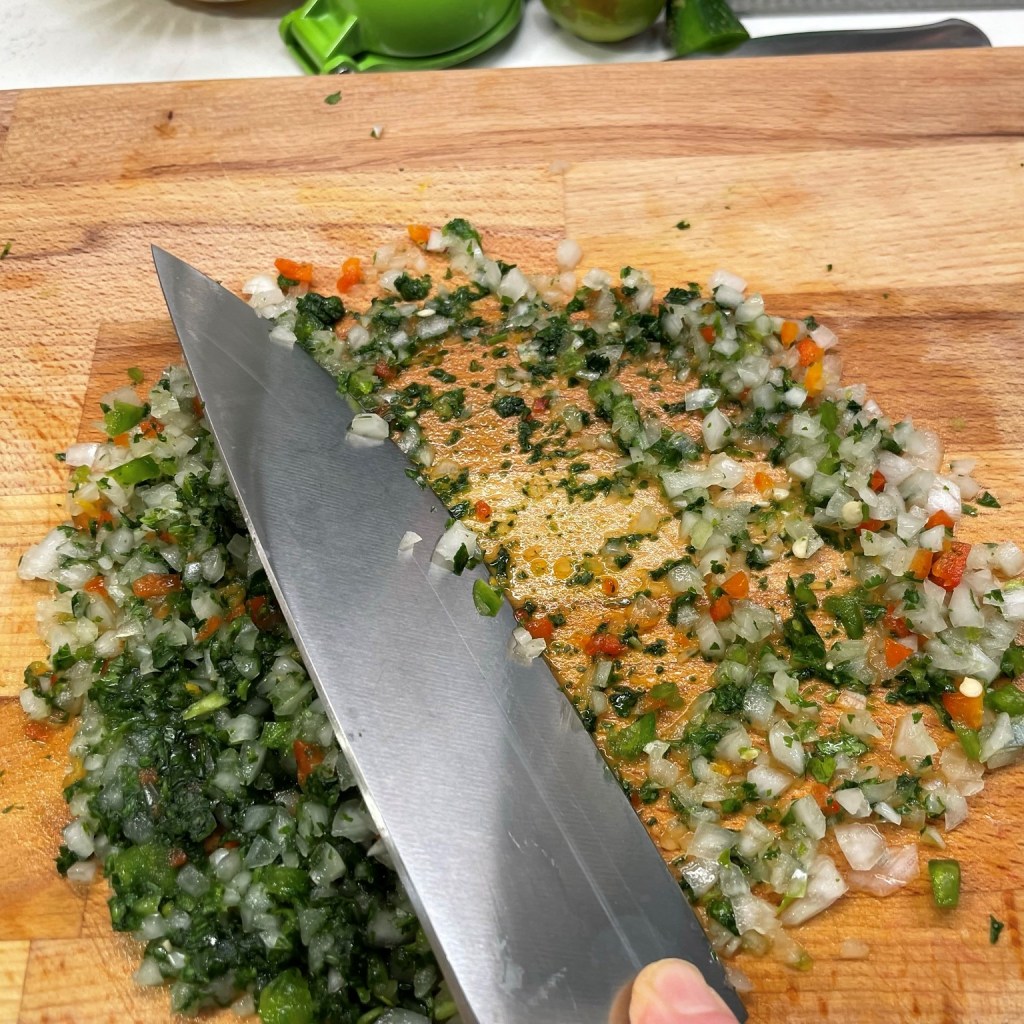
Salting the white onions, jalapeno and cilantro for 15 minutes breaks down the cell walls and makes it easier to extract the flavors than if you started chopping it straightaway. Next, you mince that mixture finely, and then lay the blade of your knife nearly flat against the cutting board, dragging the mixture to a paste-like consistency. Transfer it to a bowl and carry on with the recipe.


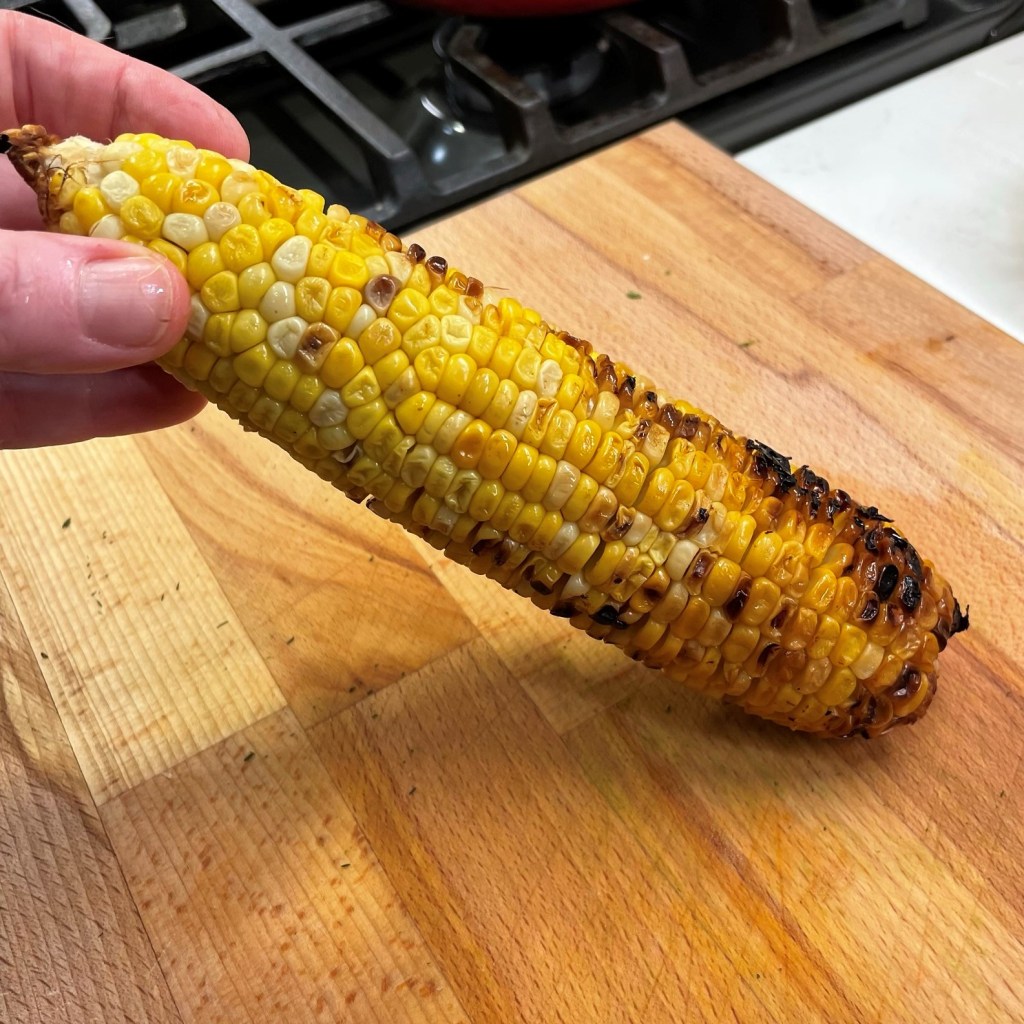
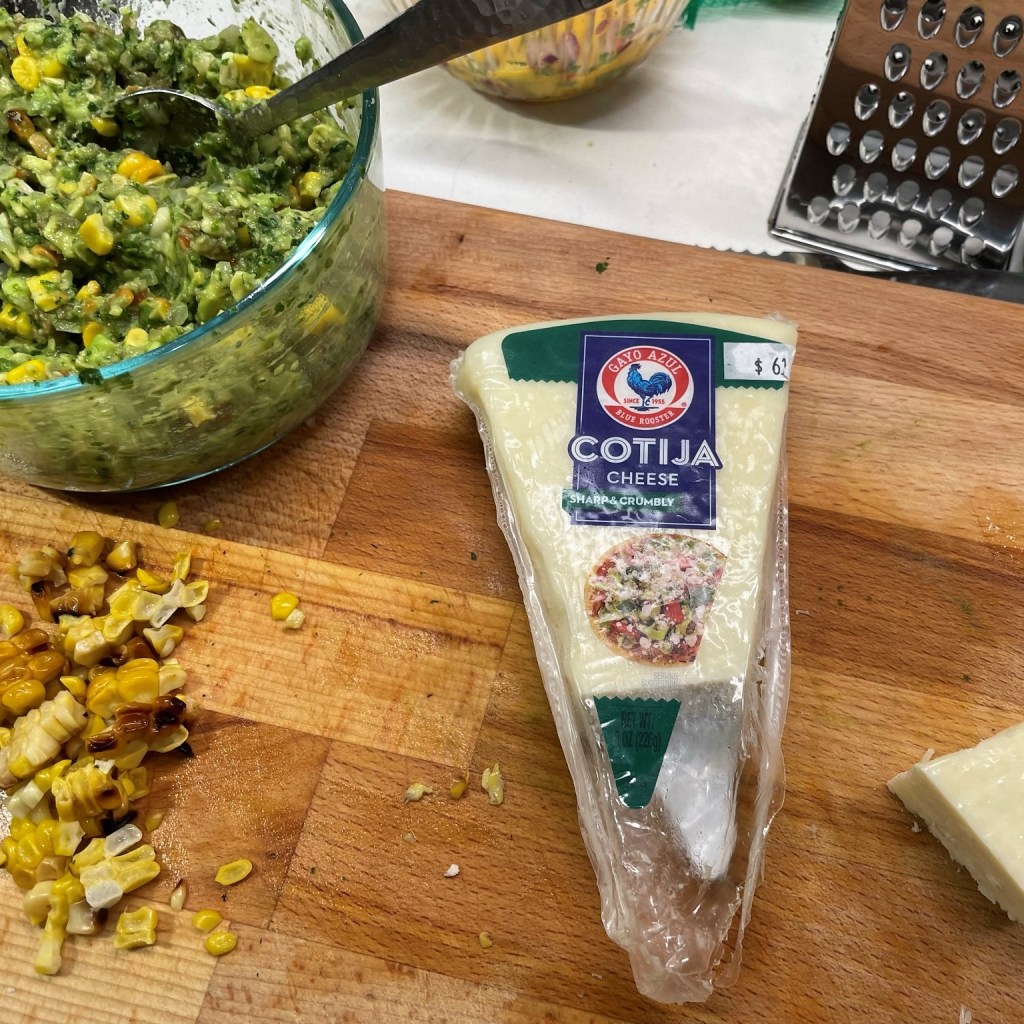
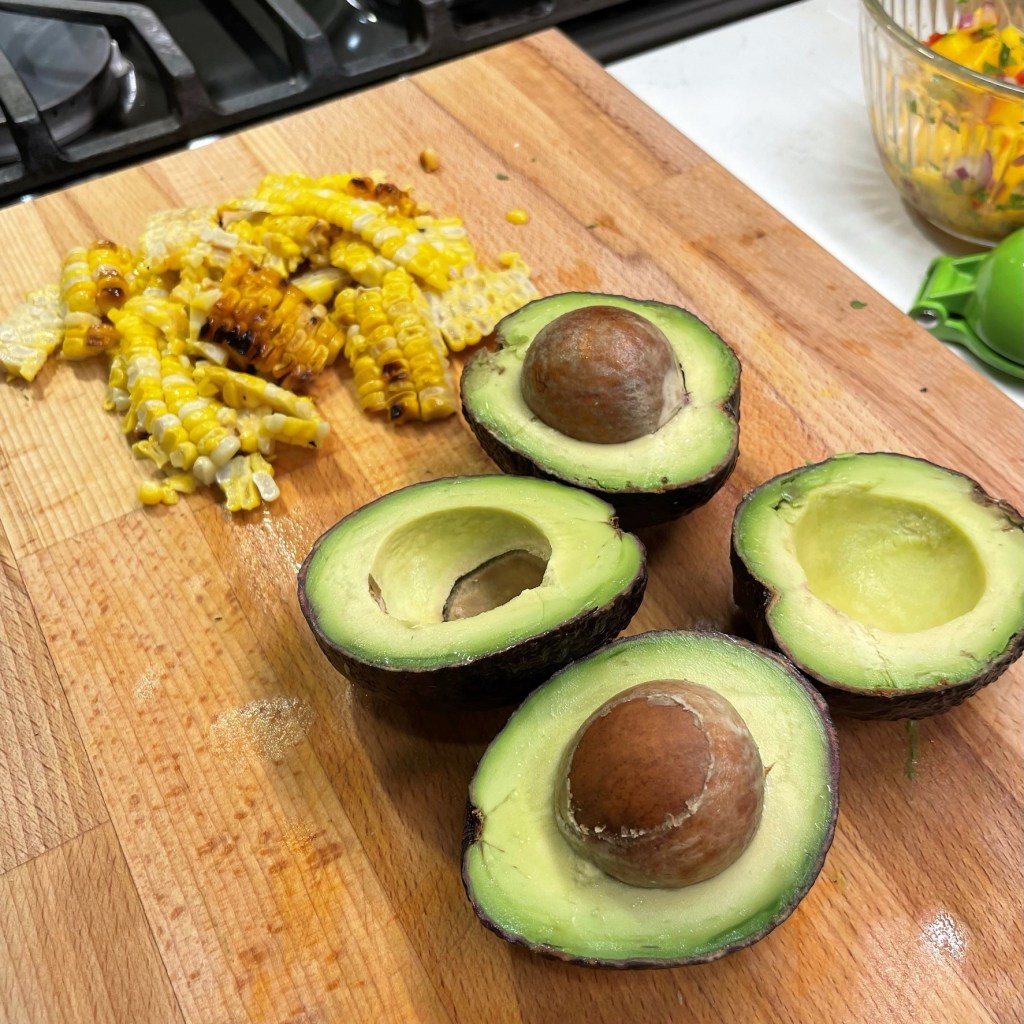
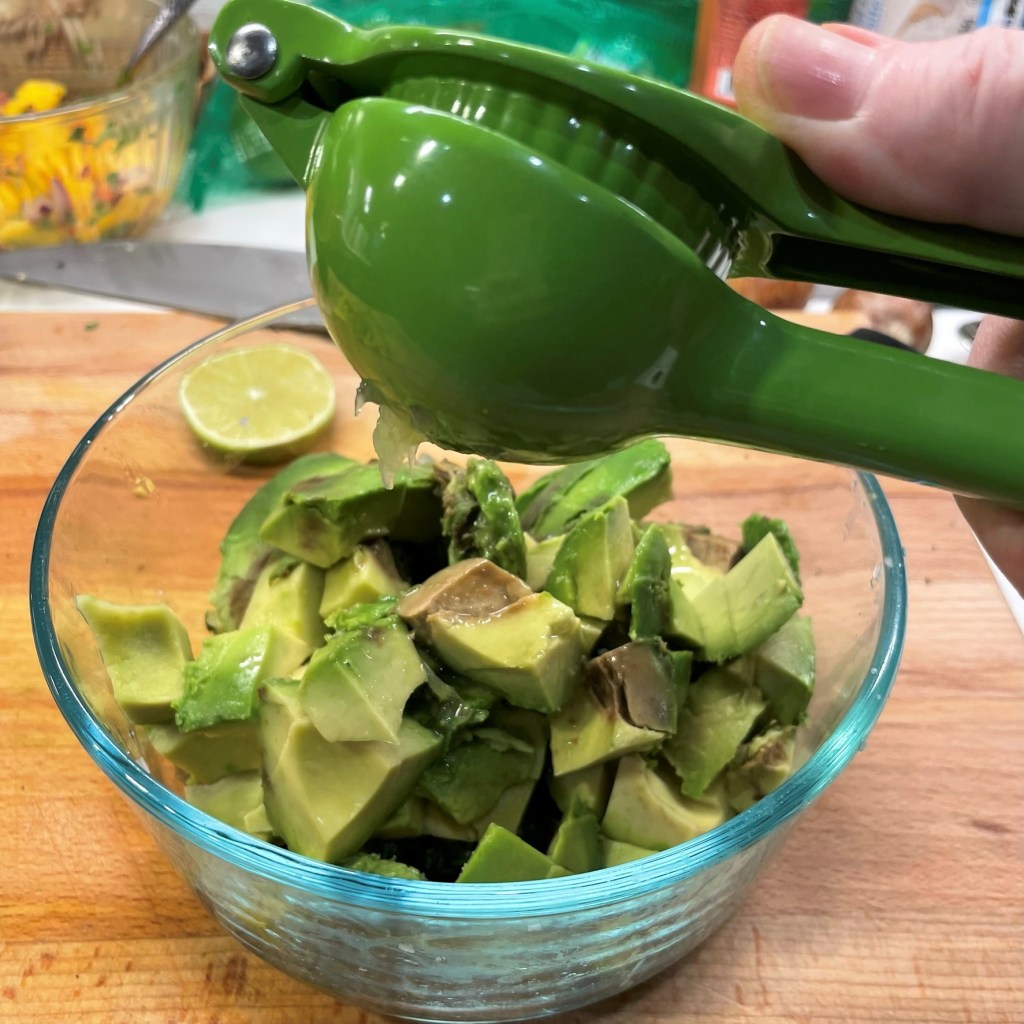
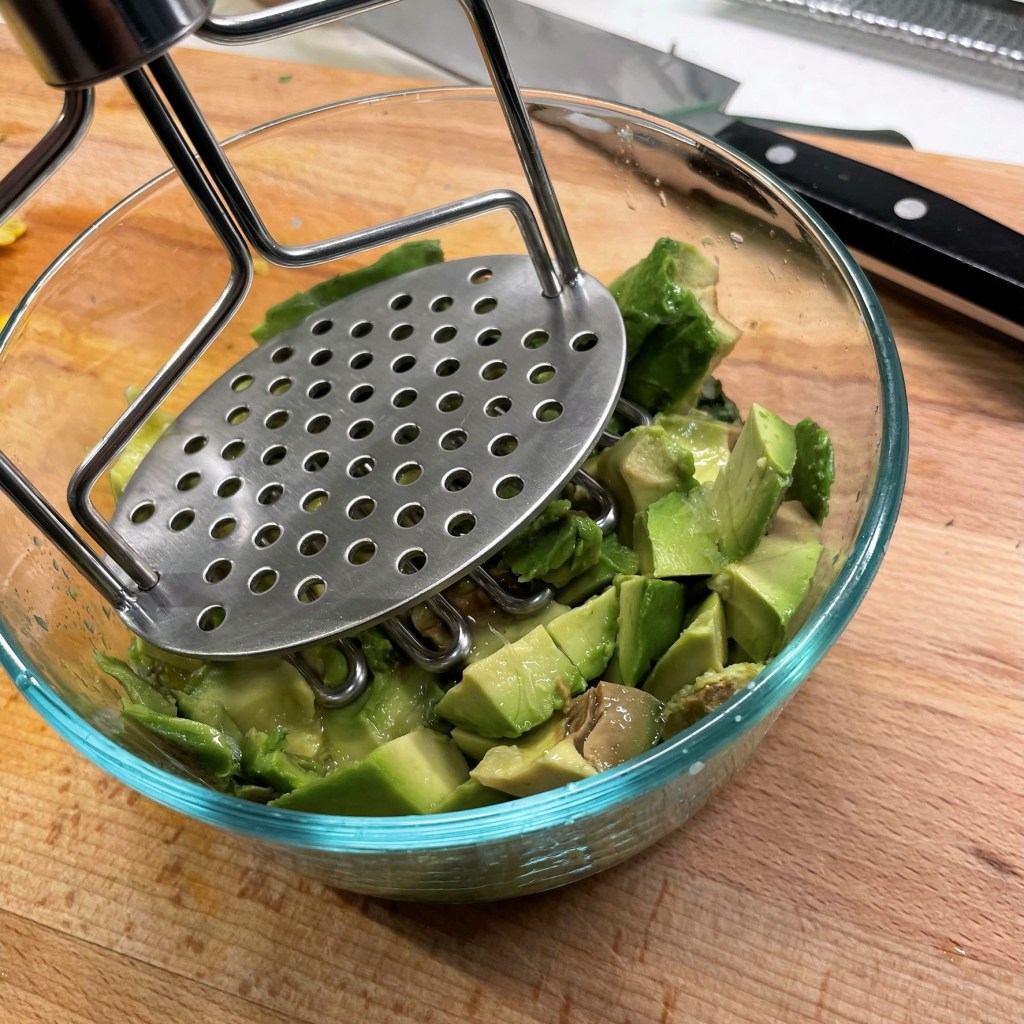
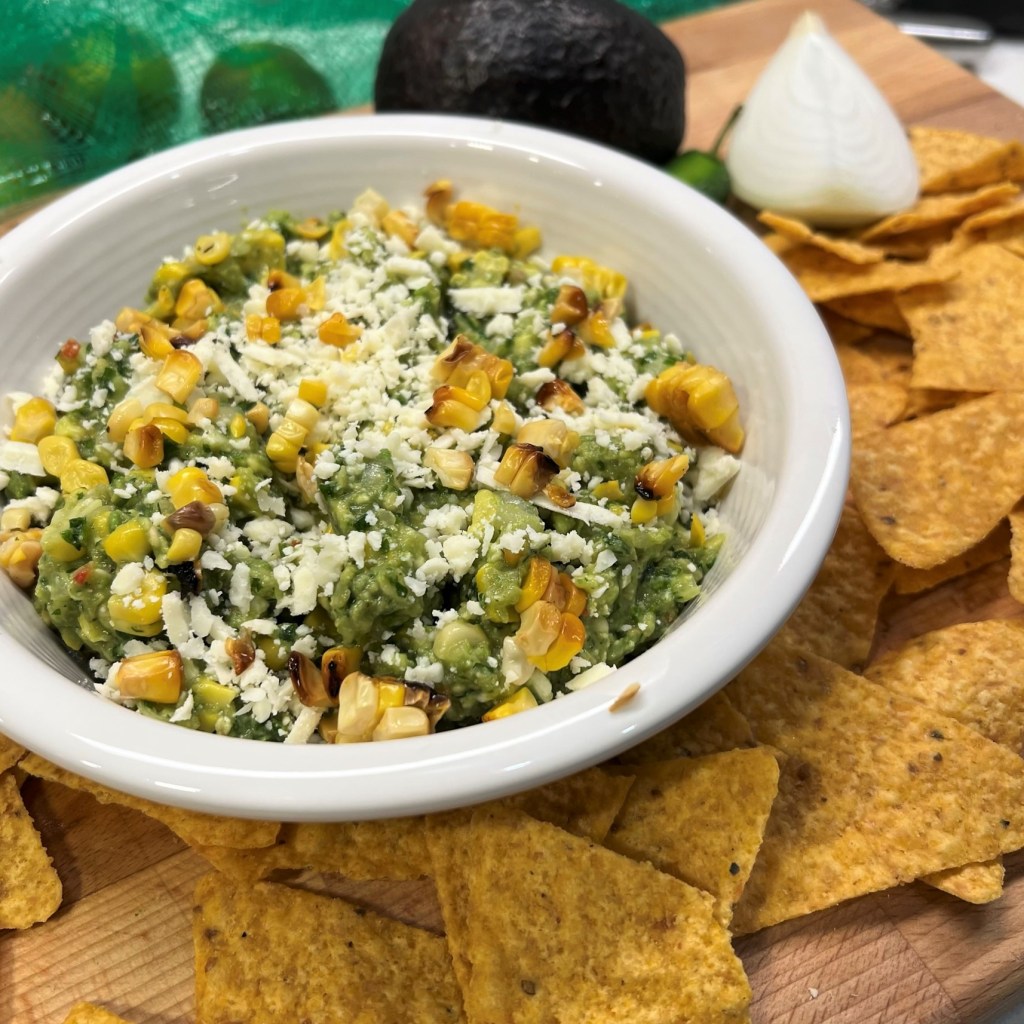
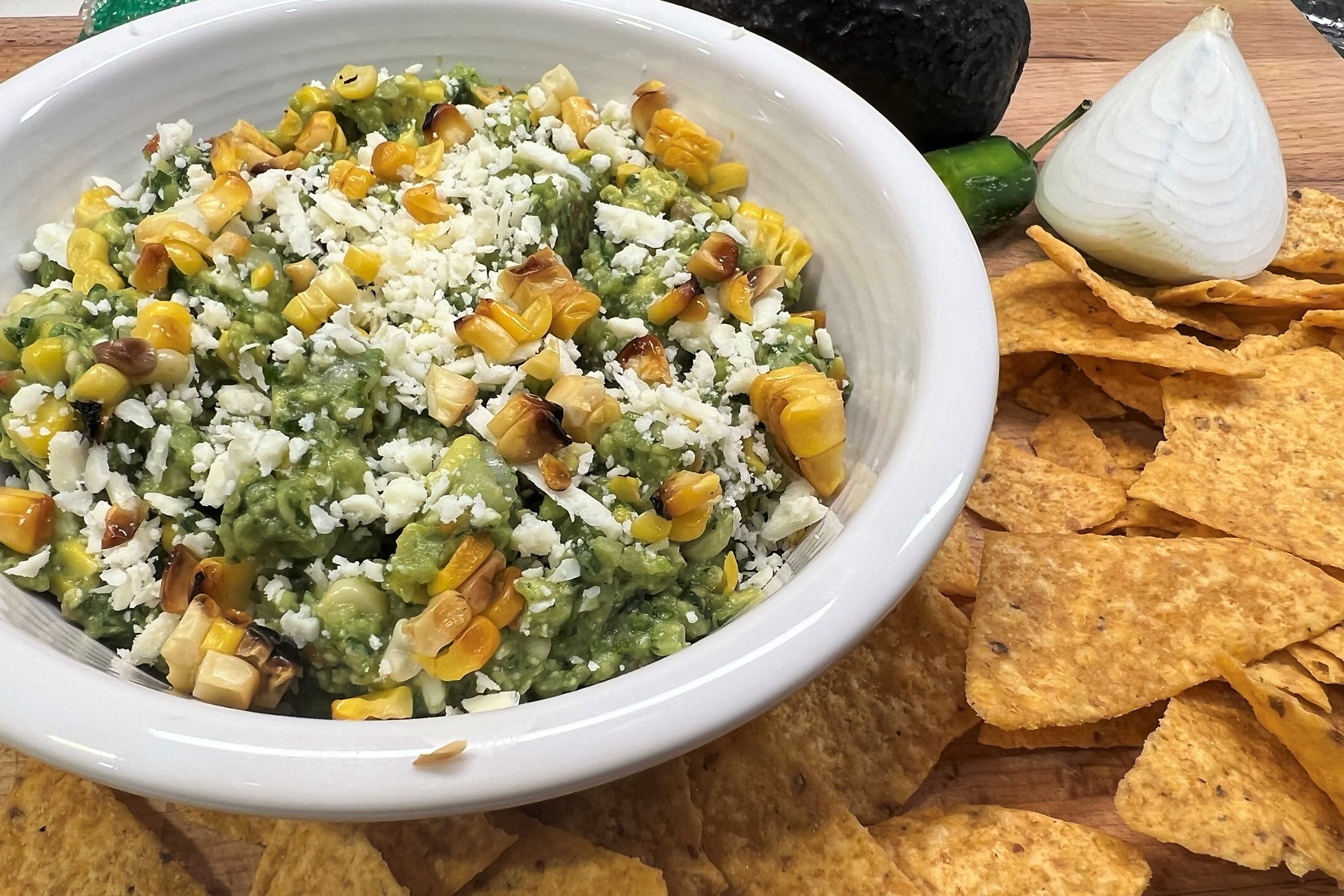
We grilled our corn ahead of time and stripped off the kernels, but I imagine in a pinch you could even use (thawed) frozen fire-roasted corn, like the kind we frequently buy at Trader Joe’s. Squeeze lime juice over the avocados to preserve their color, and use a box grater to shred the cotija cheese into coarse crumbles. Blend it all together, mashing the avocado with the back of a fork or potato masher, and reserve some of the corn and cotija for topping your beautiful creation.


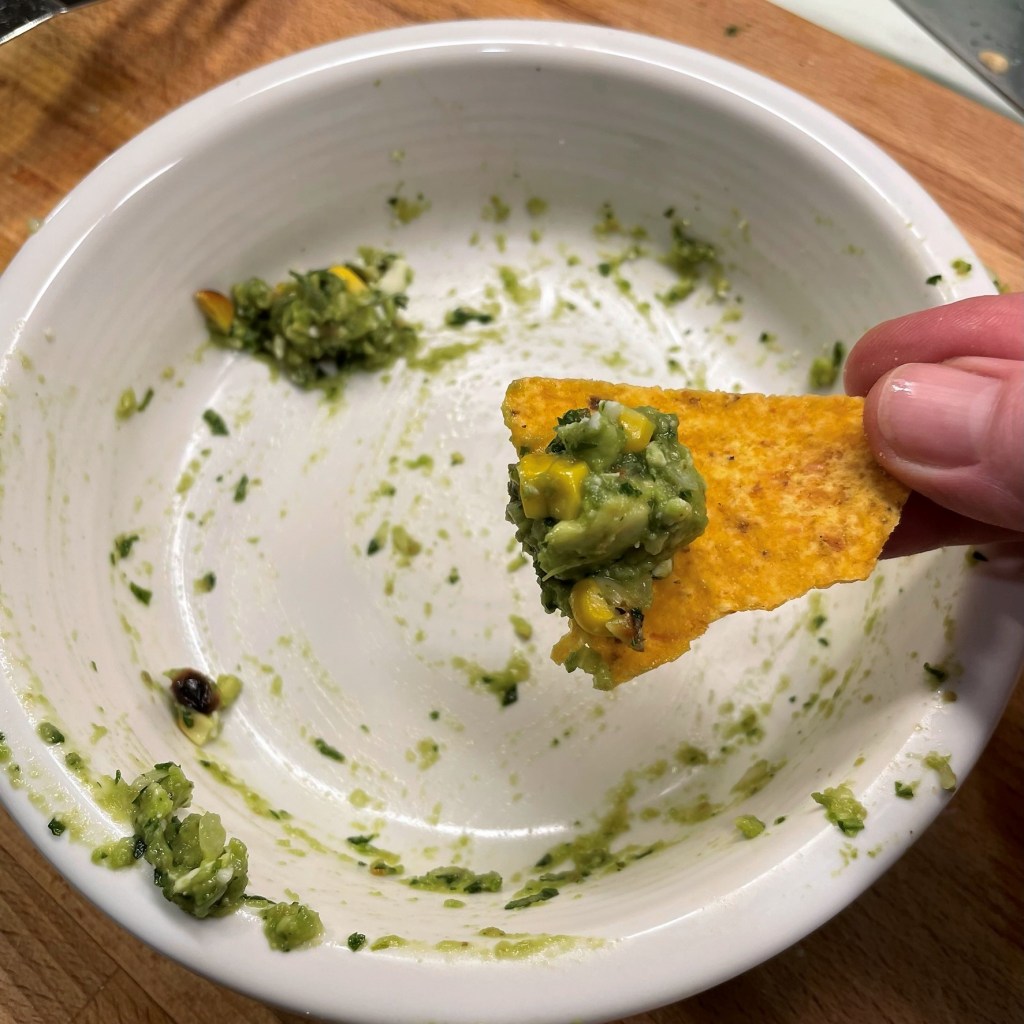
Friends, this guacamole was so freaking delicious, the two of us devoured the entire bowlful in less than half an hour!


You can make the guac as spicy as you want it to be by adjusting the jalapeno, or simply by leaving in some of the seeds. Choose the most ripe, ready avocados you can find and, if you don’t have a molcajete, take advantage of the workaround that Kenji shared because it really does make a difference. I readily admit that up to this point, Les and I had merely cut up our guacamole ingredients, but we look forward to applying this fabulously simple technique the next time we make the Smoky Chipotle Guacamole that Les has made famous at our house. And, of course, we will continue to grind away at the molcajete—hopefully, it will be properly seasoned in time for Super Bowl!

Mexican Street Corn Guacamole

  • Servings: About 2 cups
  • Difficulty: Average
  • Print

Even without the proper, authentic tools, I found this Kenji-inspired appetizer very manageable and absolutely delicious! Save yourself some time by grilling an extra ear of corn a day or two ahead, and use avocados that are at peak ripeness!


Ingredients

  • 1/4 cup white onion, rough-chopped
  • 1 jalapeno, seeded and rough-chopped
  • 1 cup loosely packed cilantro leaves and tender stems
  • 1/2 tsp. kosher salt or coarse sea salt
  • 1 ear grilled corn, cooled
  • 2 average size, ripe avocados
  • Juice of 1/2 large lime
  • 2 oz. cotija cheese, shredded on large holes of box grater
  • Additional salt, pepper and lime to taste
  • Tortilla chips for serving

Directions

  1. Combine onions, jalapeno and cilantro in a medium bowl and toss it with the kosher salt. Allow it to rest 15 minutes, to draw out moisture. Finely chop these ingredients together, then lay a chef’s knife nearly flat and drag them across the cutting board to create a mixture similar to paste. Some bits will remain, and that’s OK. Transfer the mixture to a bowl that’s large enough for mixing your guacamole. During the rest time, prep the corn and cotija.
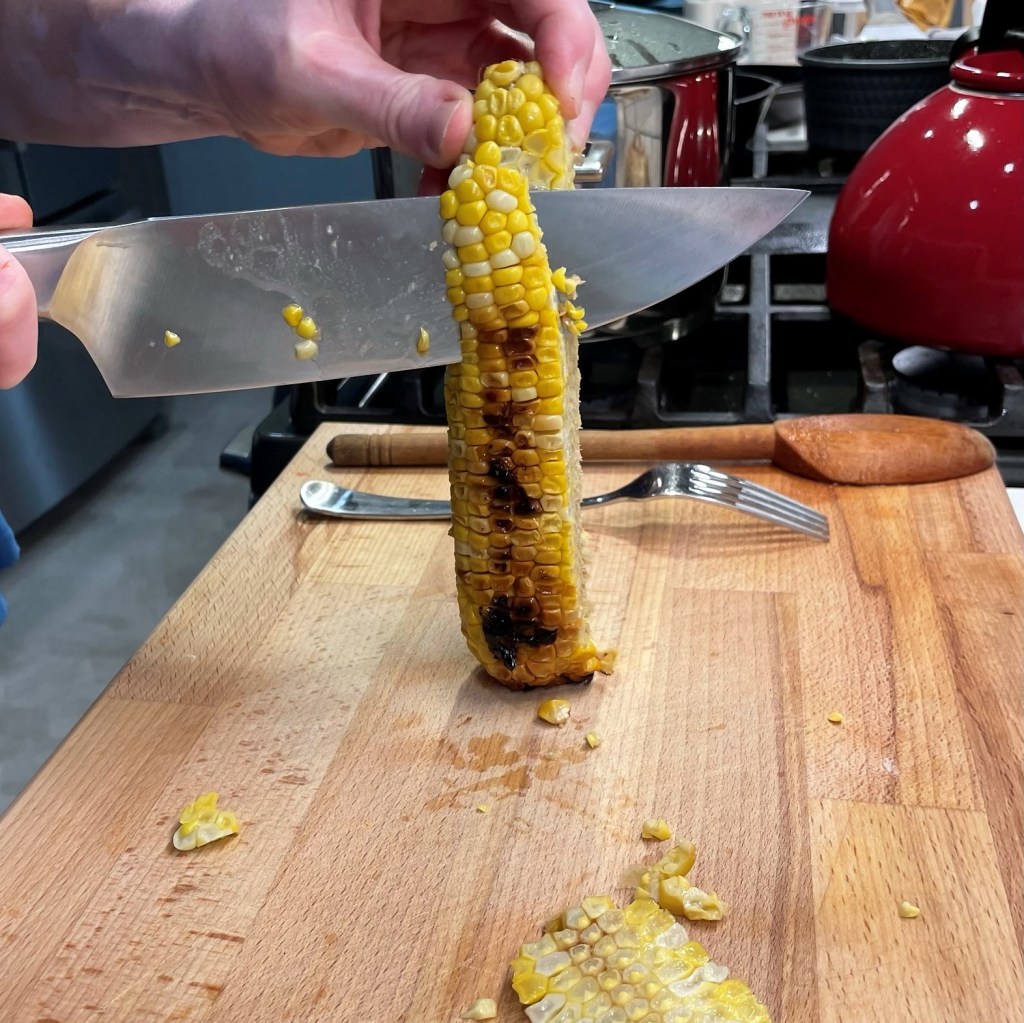
  2. Trim the fat end of the ear of corn, and stand it up on your cutting board to cut down the cob, releasing the kernels. Break apart any large clumps.
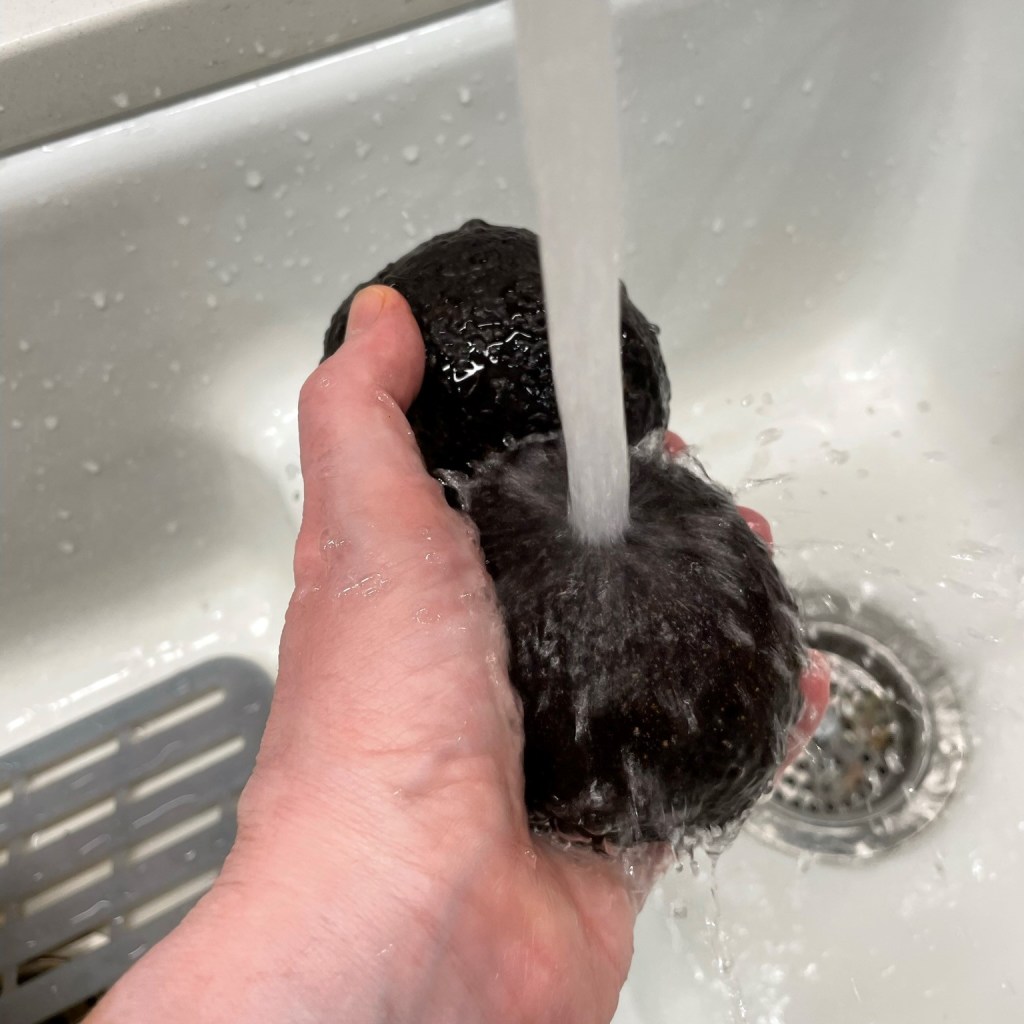
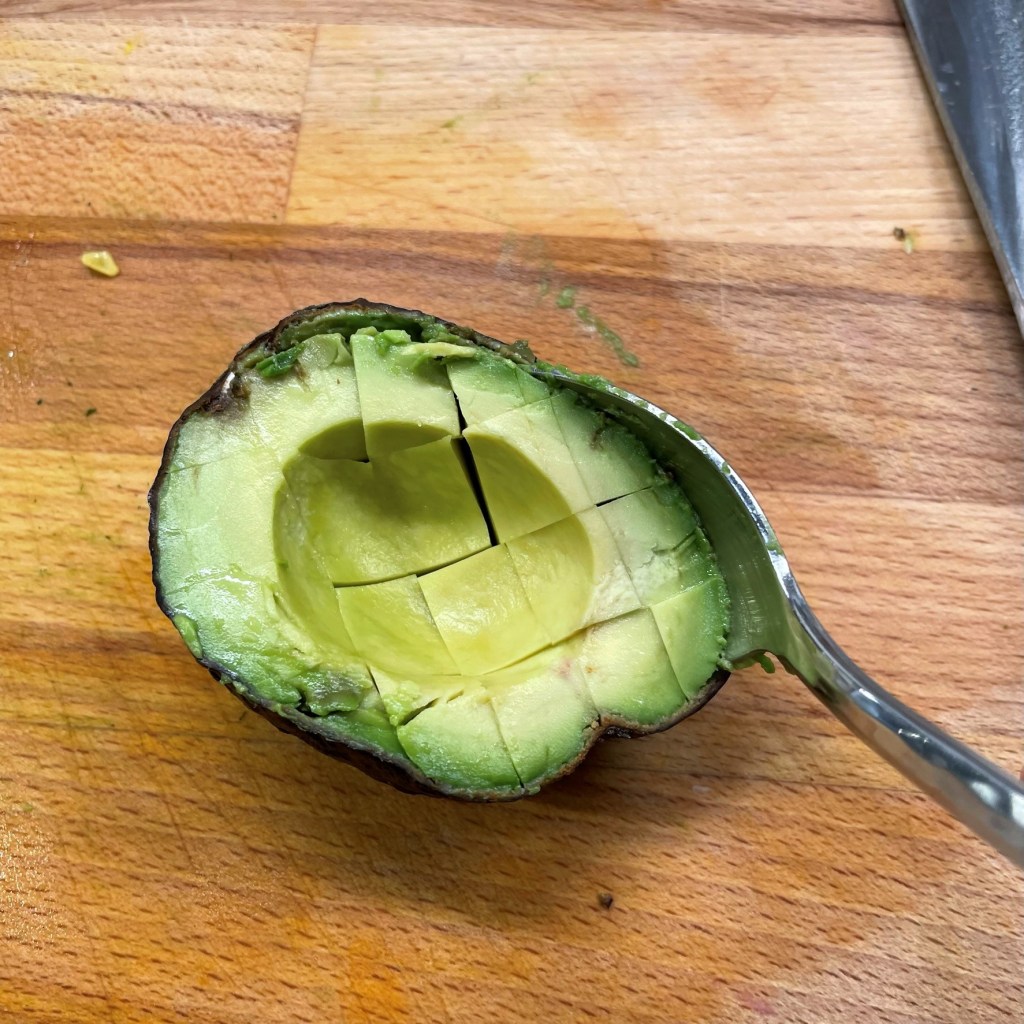
  3. Wash the avocados, then cut them in half and discard the pits. Score the flesh into cubes and spoon it out into the bowl with the onion mixture. Squeeze the lime all over the avocado and toss lightly. Use a potato masher or the back of a fork to gently mash the avocado flesh to your desired texture.
  4. Add most of the corn and cotija to the guacamole bowl and fold or mash to combine. Adjust salt, pepper and lime to taste. Transfer guacamole to a serving bowl and sprinkle remaining corn and cotija on as a garnish.
  5. Serve immediately with tortilla chips and watch it disappear!


Late Summer Succotash with Chicken & Waffles

Something about the change of seasons makes me happy, and this is especially true when we can see Labor Day just up ahead. This time last year, my husband, Les, and I were gallivanting all over New Jersey, Connecticut and New York, visiting old friends, meeting new ones and satisfying our culinary curiosity with so many delicious foods. Our plans this year have kept us mostly at home, and so the transition to fall doesn’t feel nearly as dramatic, but we have at least fulfilled the delicious food requirement. The big food news of our week occurred when we celebrated my hubby’s birthday with a fantastic veal and eggplant Parmesan dish, which he will be proud to share on Comfort du Jour soon (it will be an excellent way to re-welcome the Sunday Supper category).
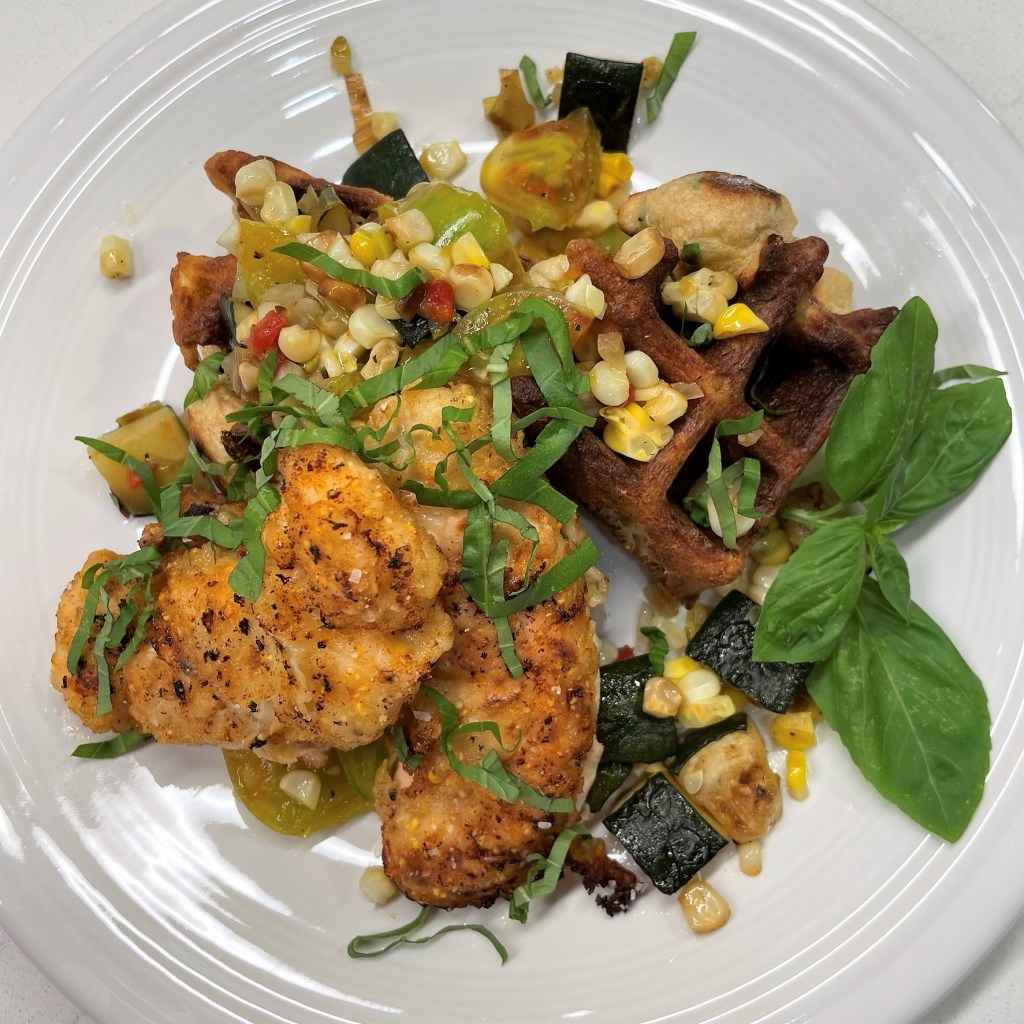
Yes, the countdown to autumn has begun, and I’ll be at the front of the line to greet it. For now, I’d like to share this colorful, late-summer dish that I whipped up last month, just before our garden tomatoes started coming in. It’s a “healthy-ish” play on chicken and waffles, and a great way to hang onto the lingering days of summer as we prepare to roll out the welcome mat for the glorious comfort foods of autumn.


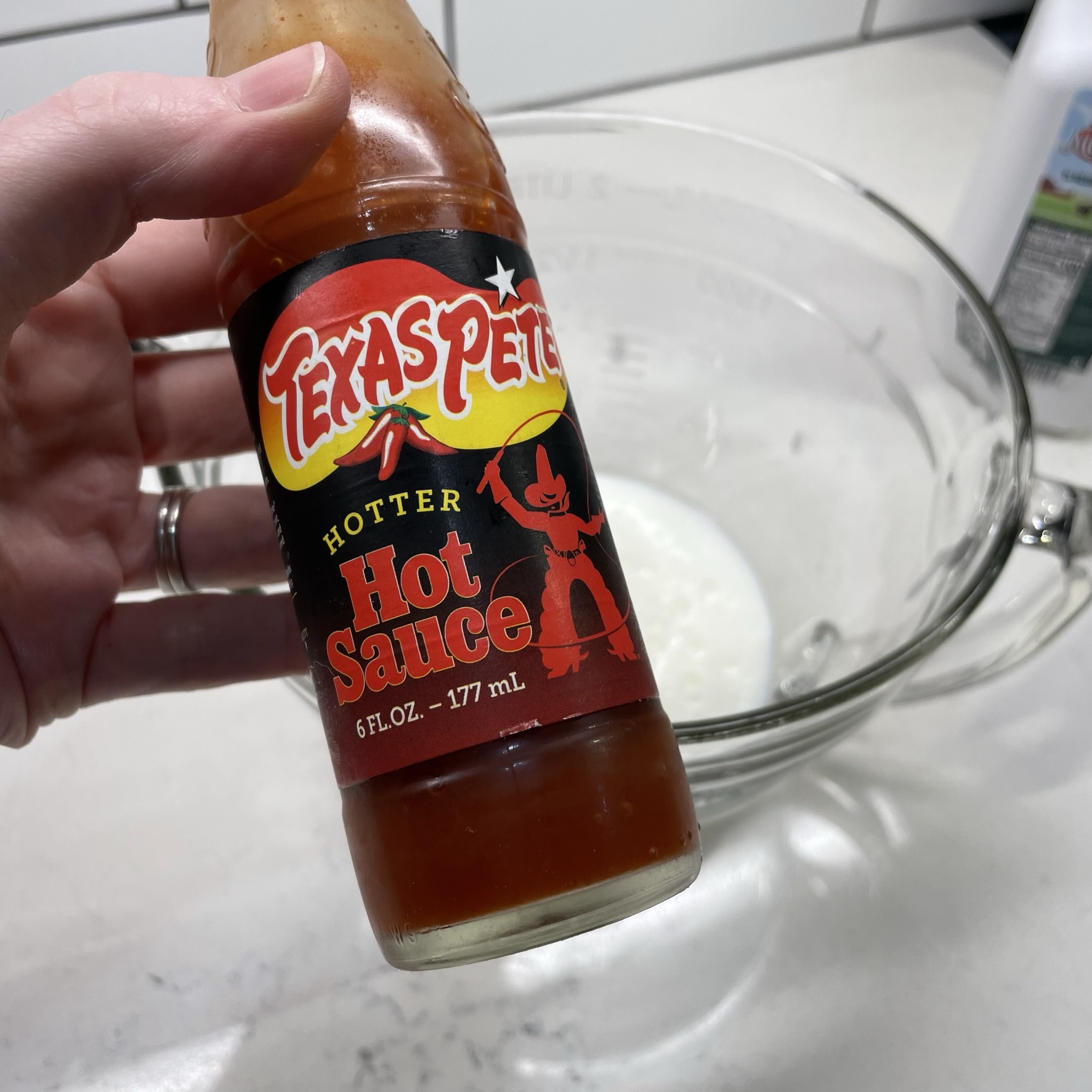
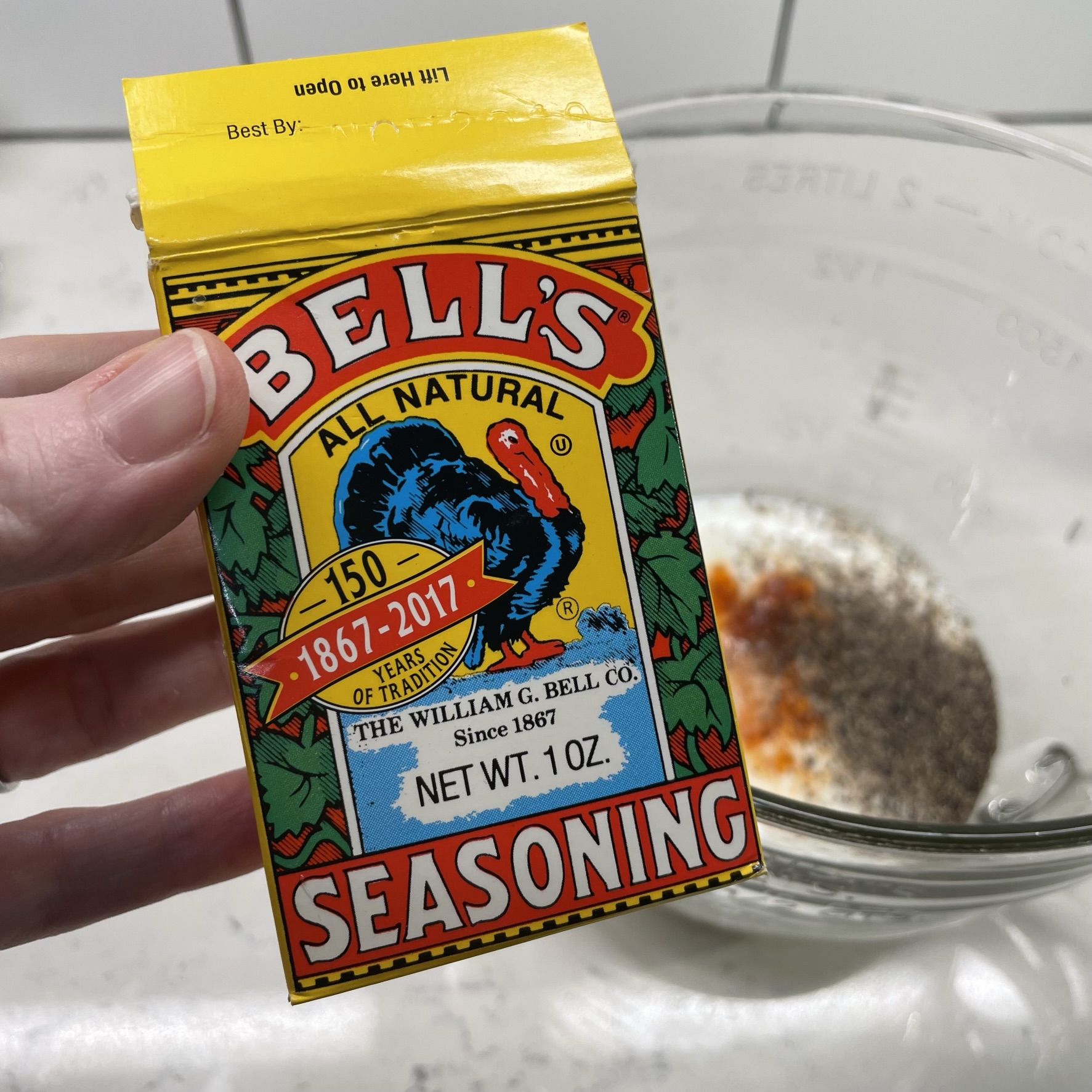
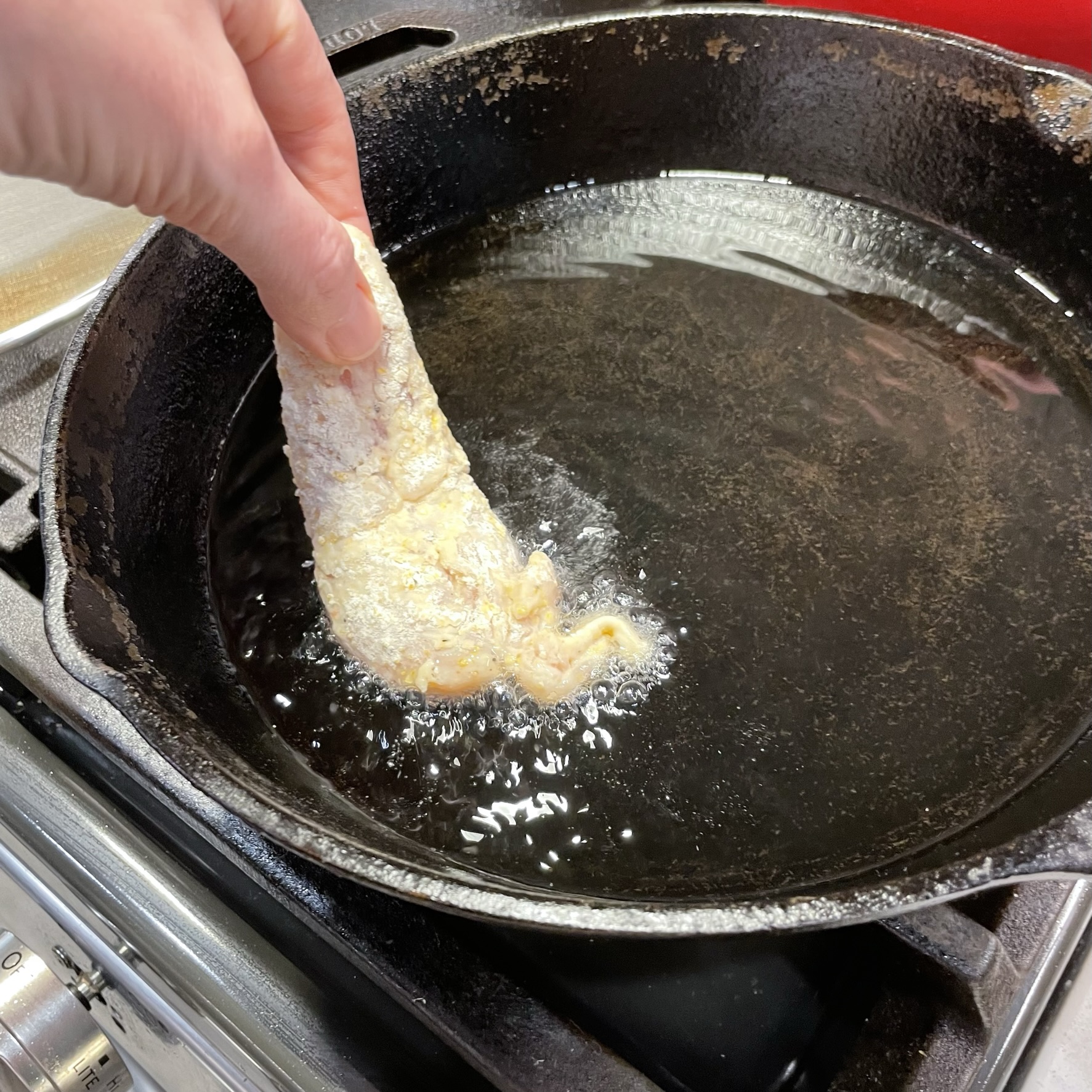
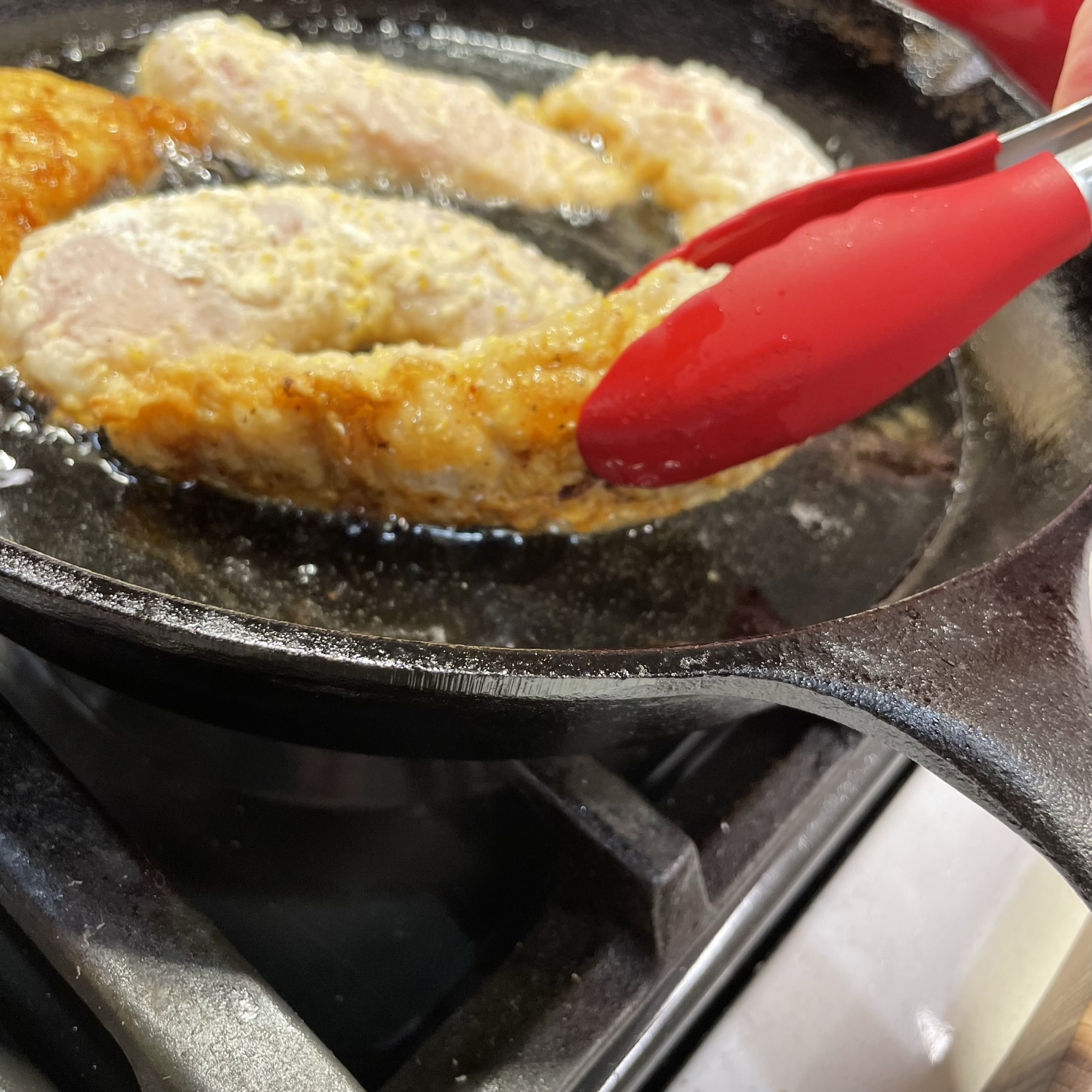
It may seem that “chicken and waffles” could not qualify as healthy-ish, but I did lighten this up in a number of ways. First, I used skinless chicken tenders (rather than skin-on, bone-in pieces), which were drenched in flavor after a two-hour bath in buttermilk, seasoned with plenty of hot sauce and a bit of Bell’s poultry seasoning. Never miss an opportunity to add flavor—that’s one of my key approaches to cooking. Rather than deep frying the tenders, I dipped them in seasoned flour and crisped them up lightly in a cast-iron skillet. And with a high volume of vegetables in the succotash, each serving only included two of the fried tenders. Portion control is one of the simplest ways to reduce calorie intake. 🙂


The waffles for this dish were on the healthy side of things, too, and based on a sourdough pancake recipe from my favorite baking site, King Arthur Baking Company.

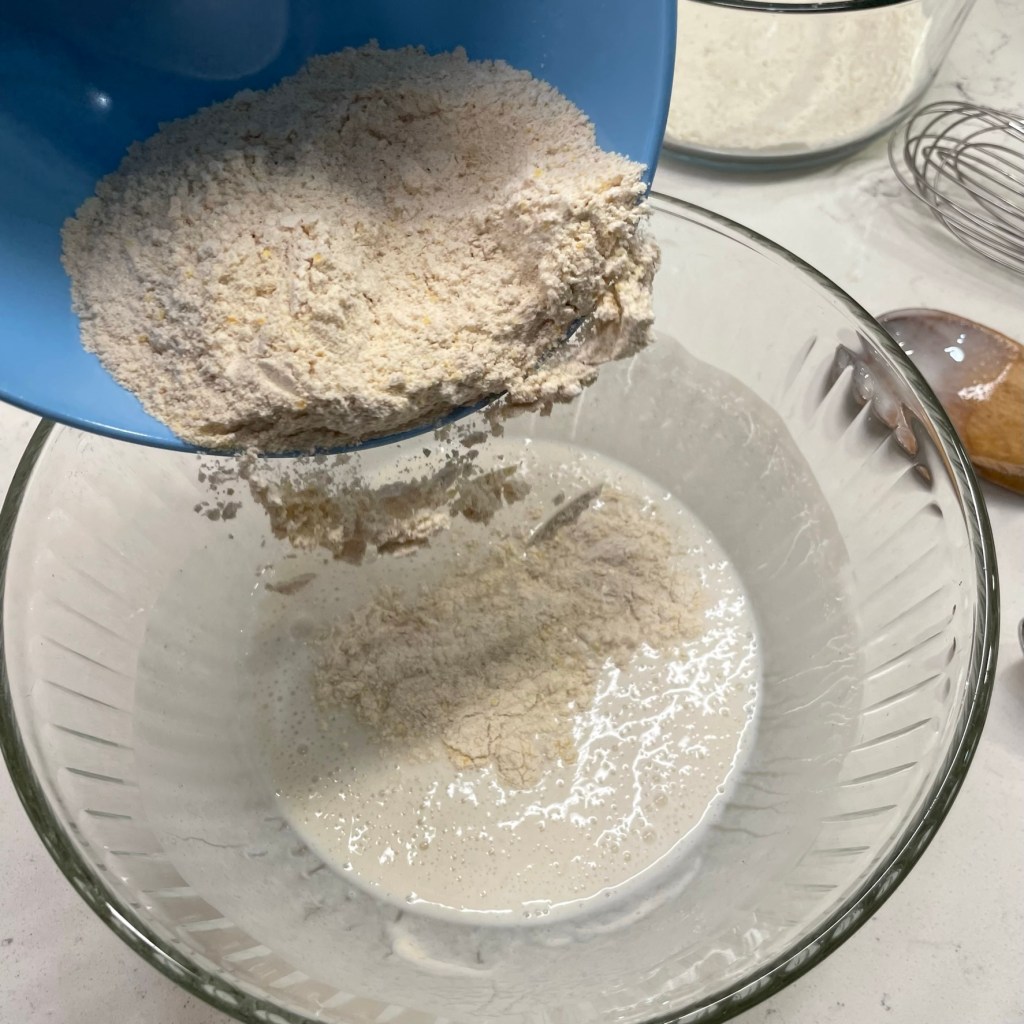
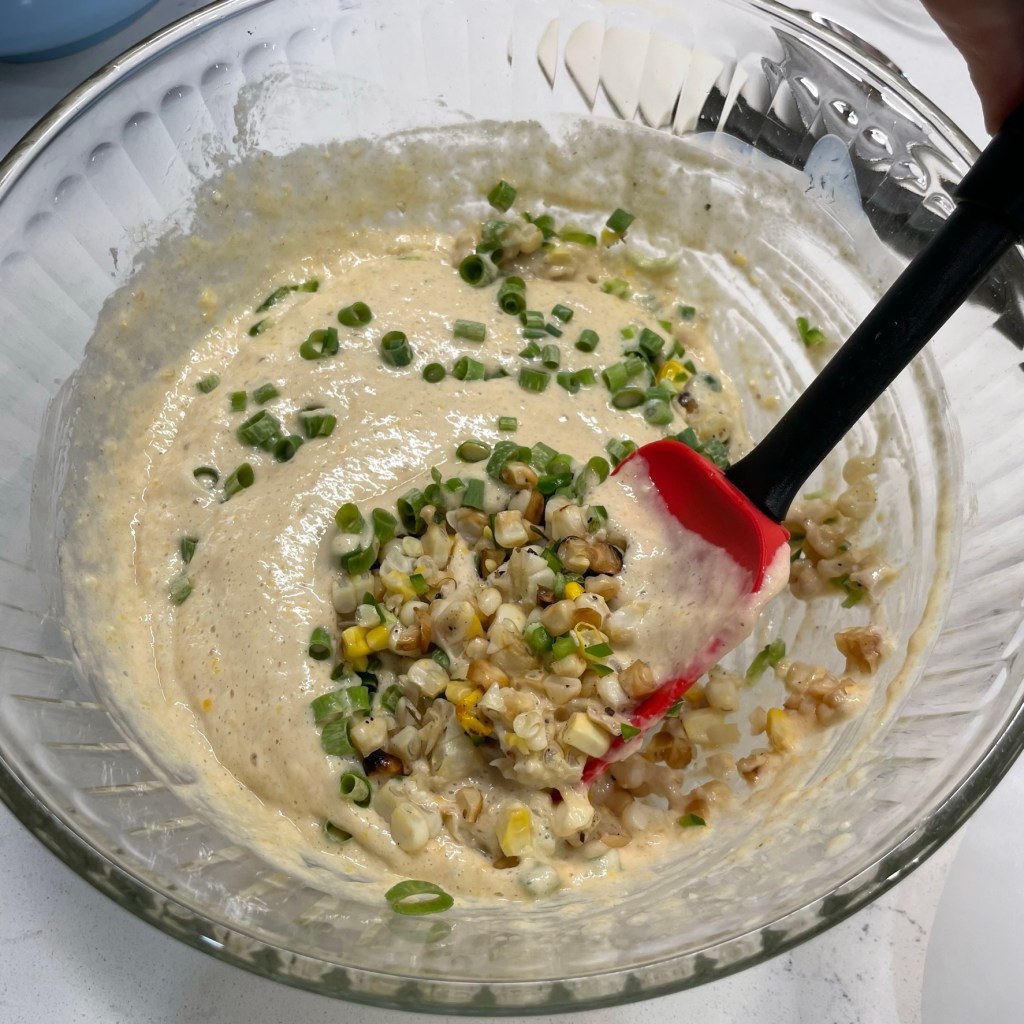
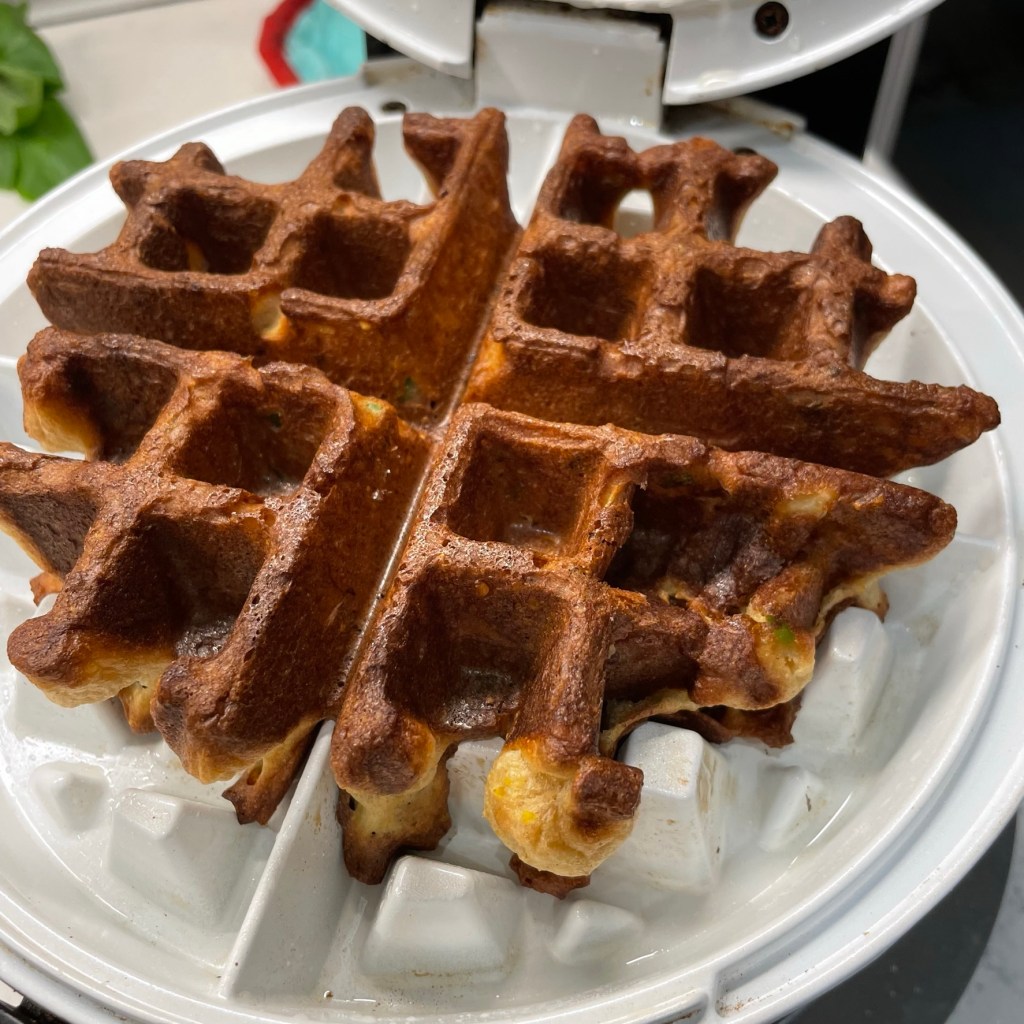
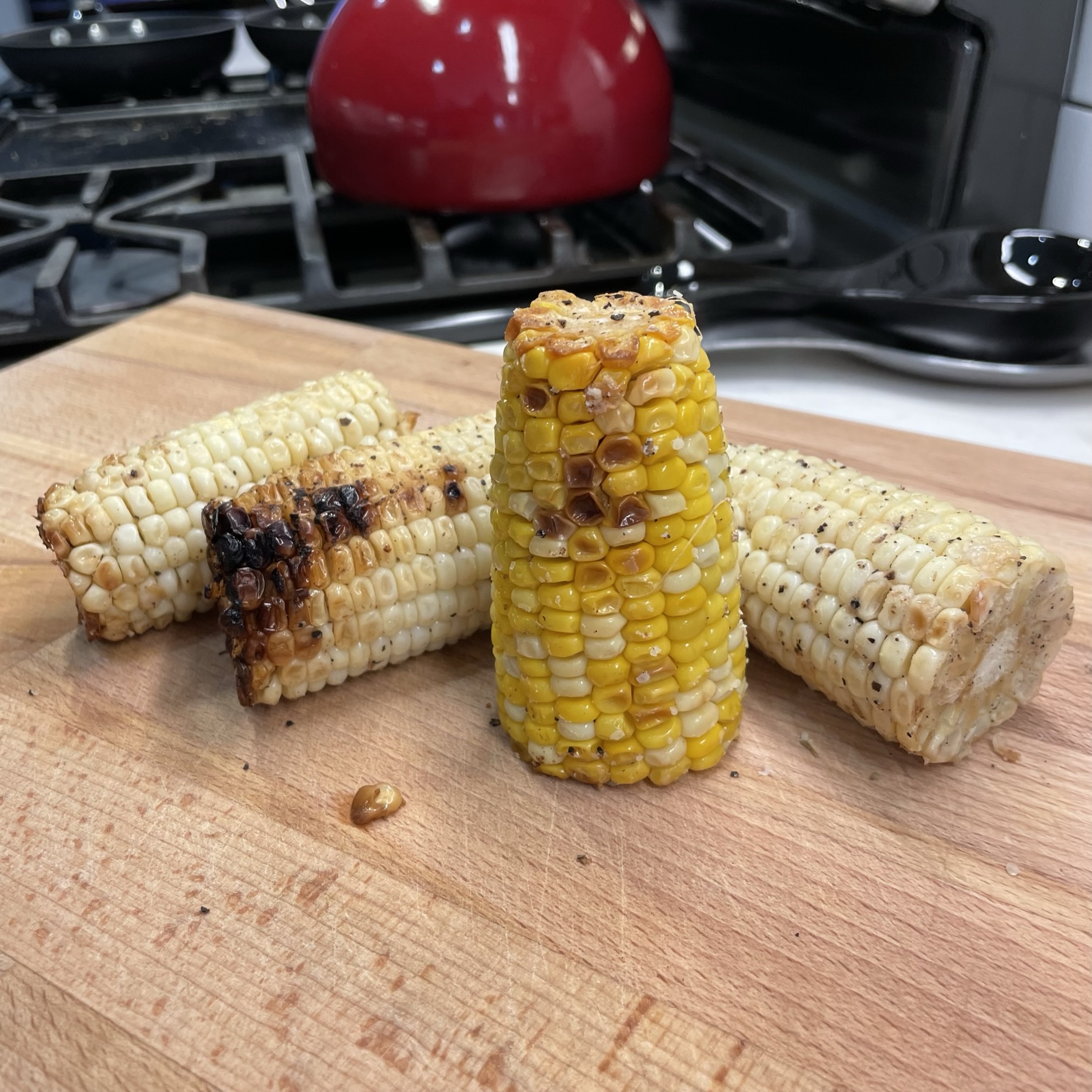
I followed the King Arthur recipe as written, except that I halved it, swapped in white whole wheat flour with a little cornmeal, and bumped up the oil just enough to prevent them from sticking to the waffle iron. The scallions and leftover grilled corn folded into the batter made the waffles extra hearty, and sourdough can’t be beat for this application because of the amazing crispy texture it puts on the waffle exterior. If you aren’t riding the sourdough train, there’s no reason in the world you couldn’t substitute another waffle recipe you like and add the corn and scallions to it.


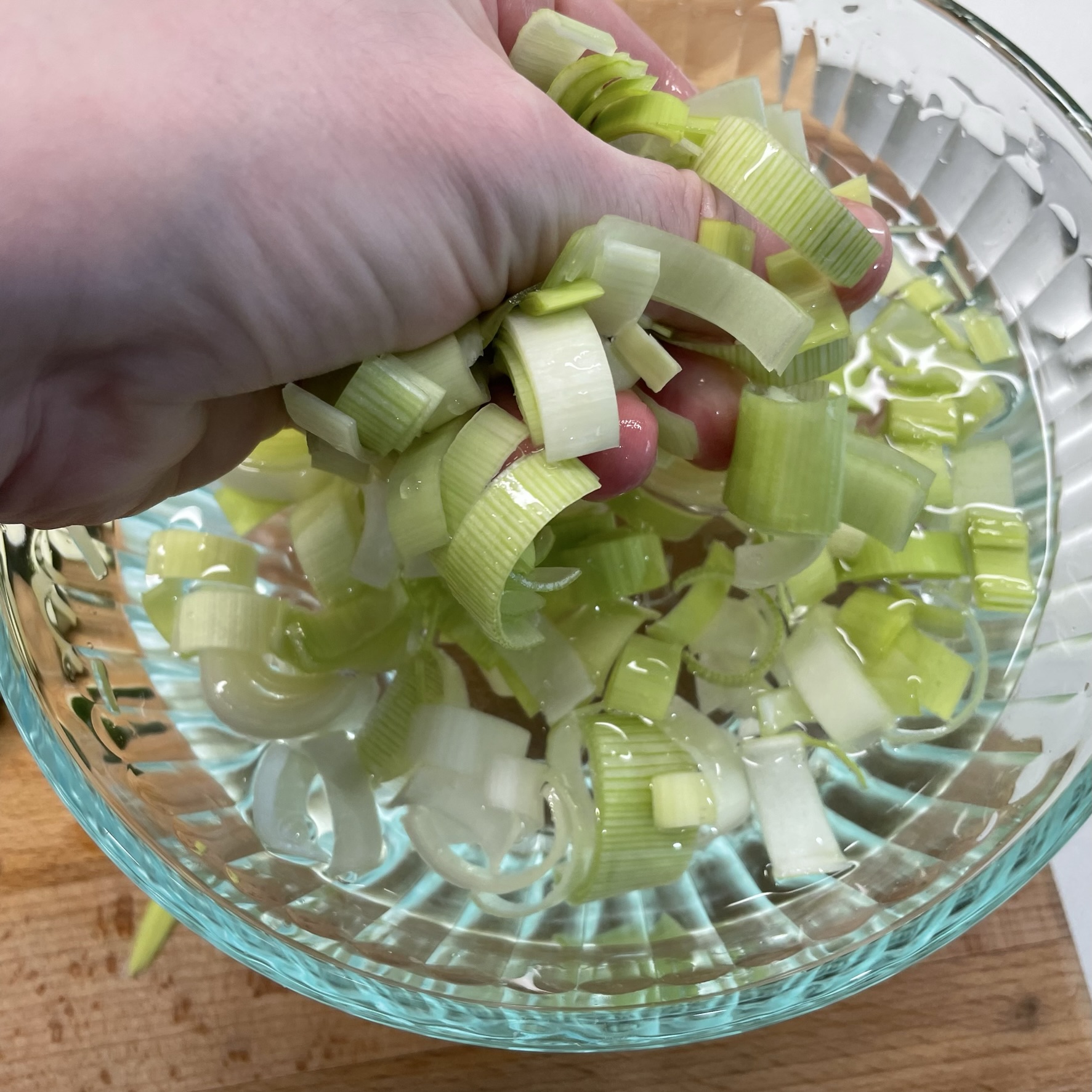
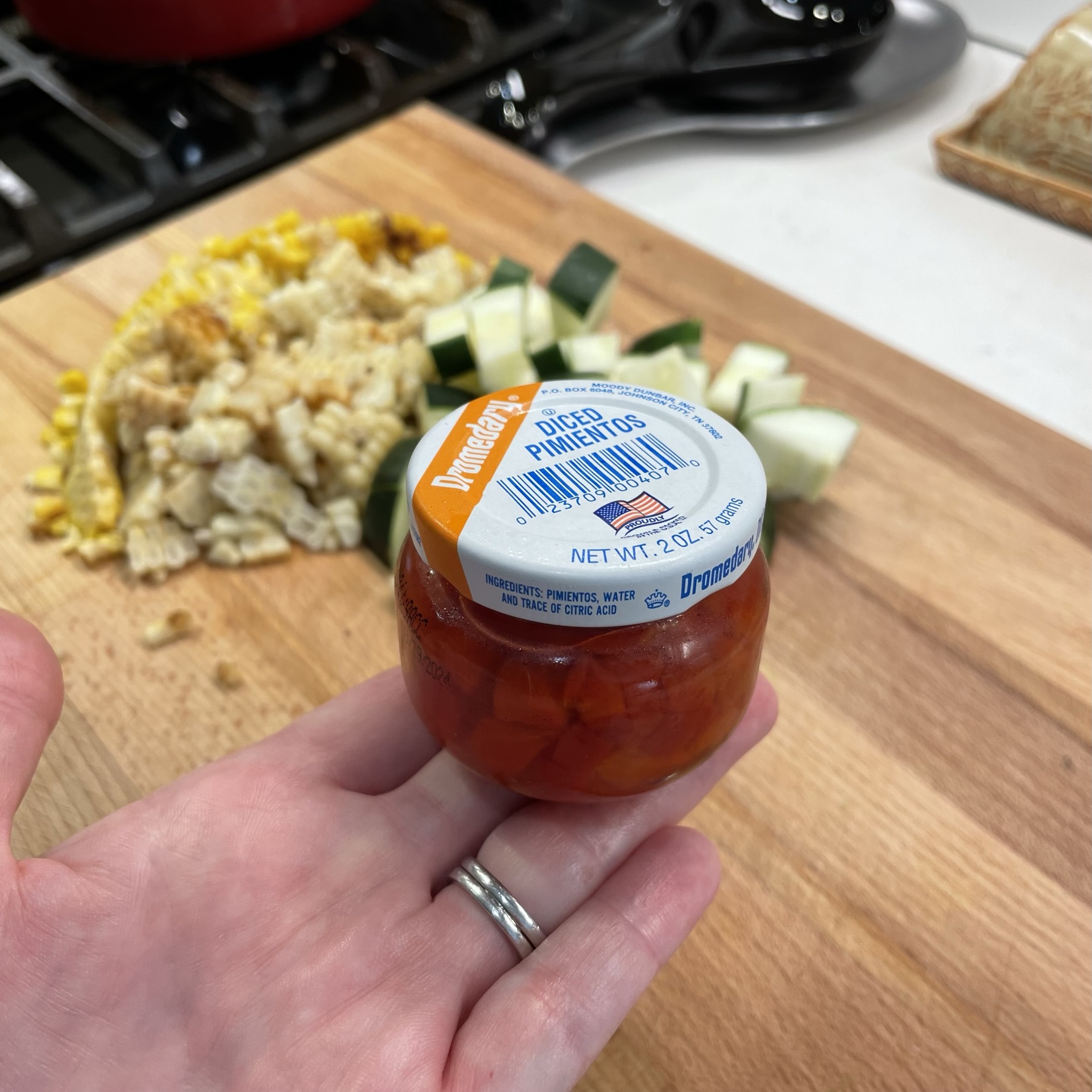
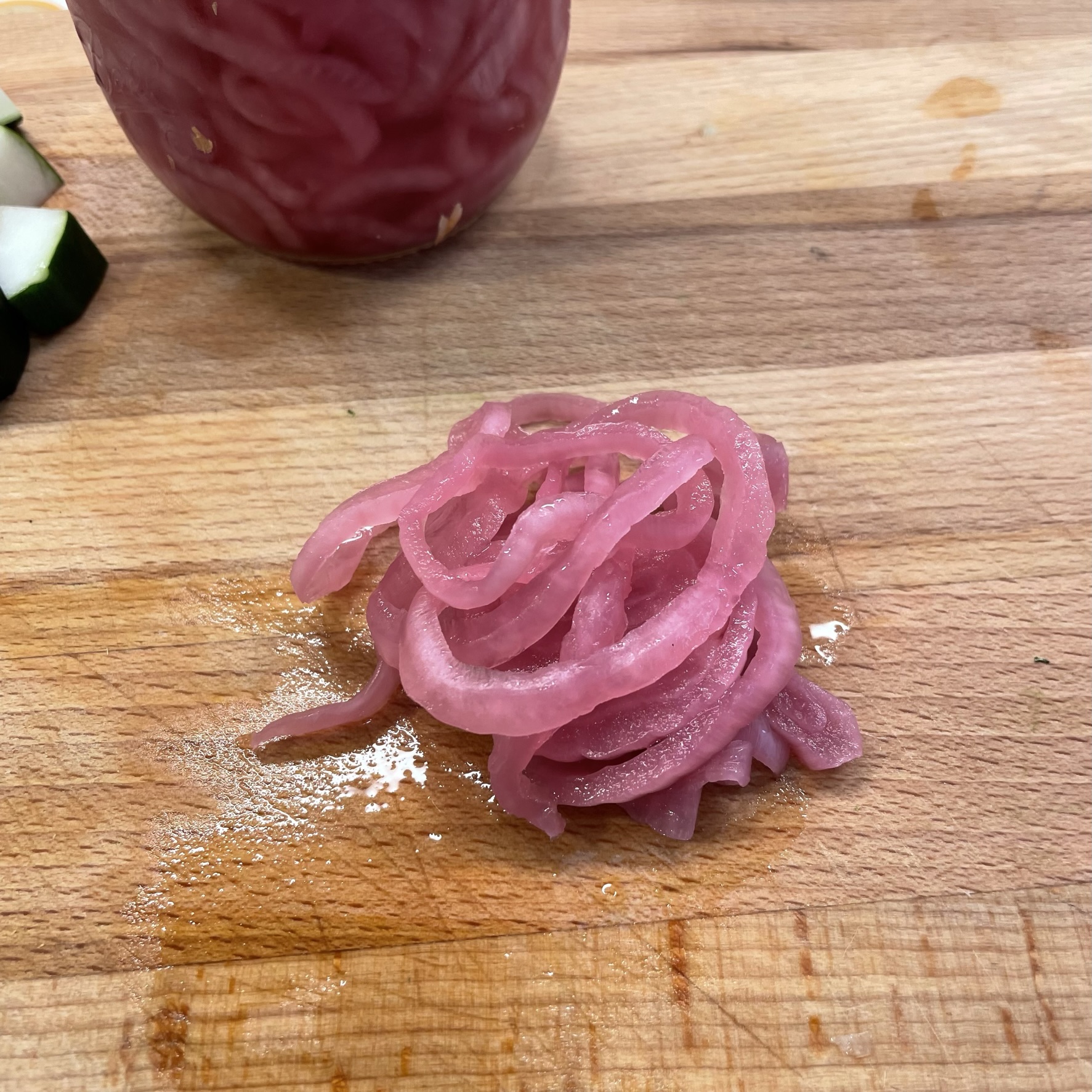
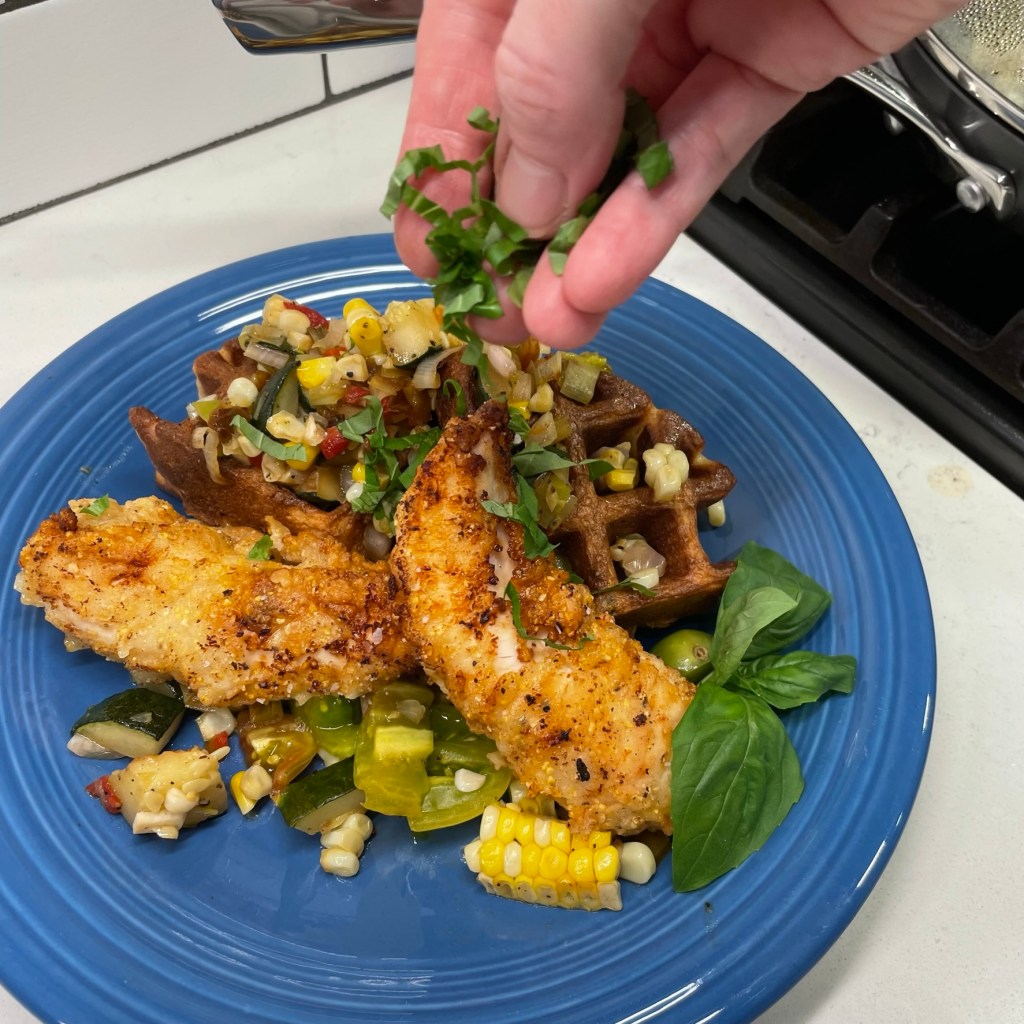
The succotash (technically this isn’t one because it doesn’t have beans) has everything that I love—zucchini (still plenty of it at the farmers’ market), grilled corn, leeks, ripe baby tomatoes, pickled onions and half of a tiny jar of pimentos we had in the fridge. I used one of my favorite prep-ahead techniques for this meal, which is layering the cut-up ingredients in reverse order in a single prep bowl that I can tuck into the fridge until I’m ready to start cooking.


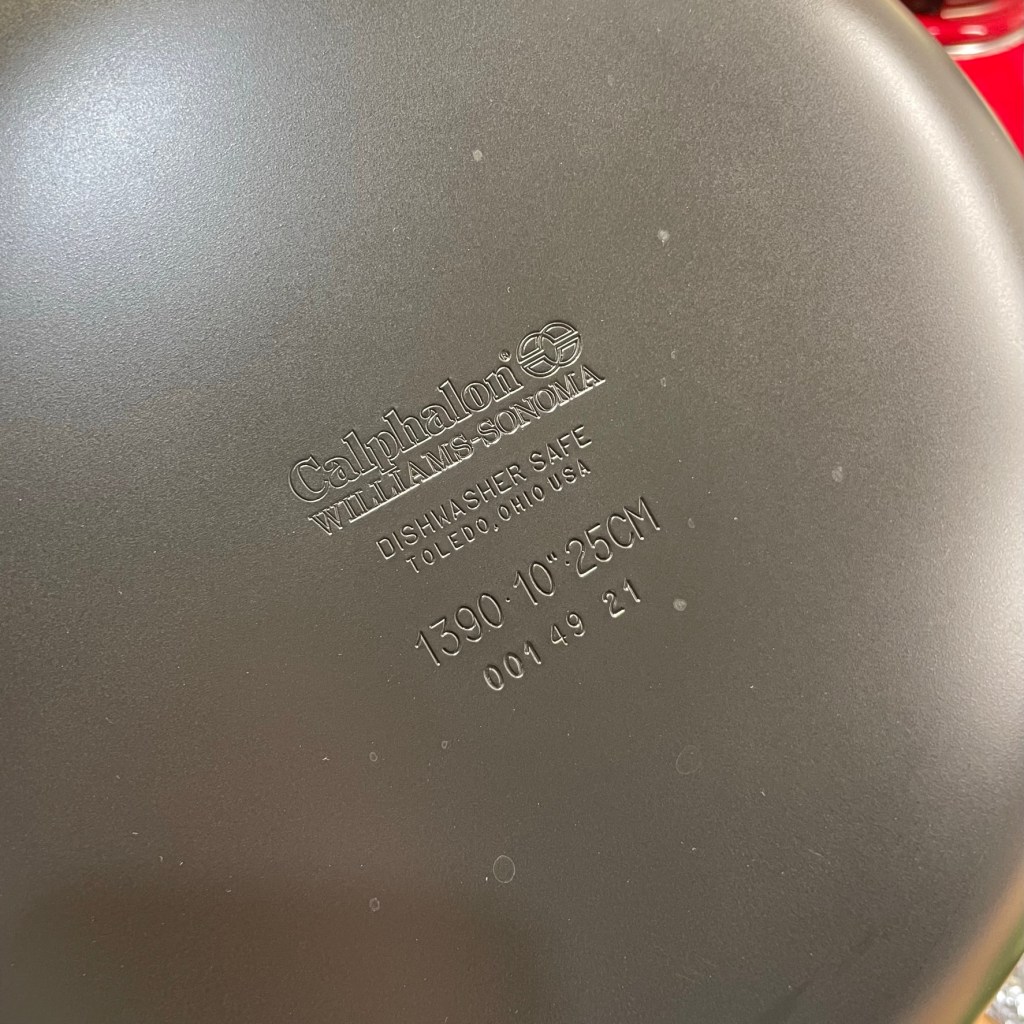
This recipe gave me a first chance to use the new non-stick skillets we bought this summer; Les and I had looked high and low for replacements that didn’t feel chintzy and weren’t made in some factory overseas. Les learned via online research that the only pair of American-made non-stick skillets were a specific set of Calphalon pans that were sold by Williams-Sonoma (most of Calphalon’s products are made in China, but this set is made in Ohio). They are available online if you don’t have a store near you.

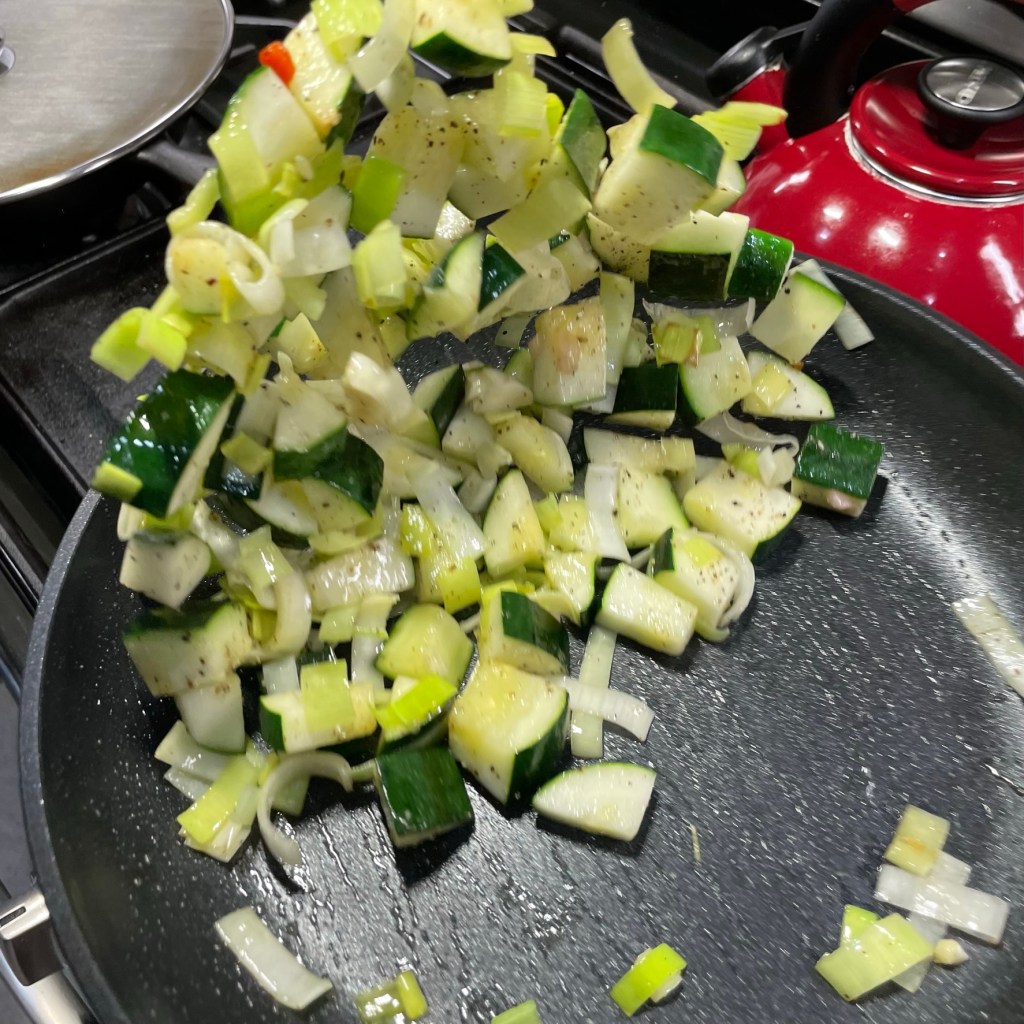
The non-stick coating is great, and I love the sturdiness of our new pans, but for me the real test of a new skillet is “how easily can I flip my ingredients?” Sometimes when I have a lot going on at once, I don’t want to take time to pick up a utensil so I’ll employ the flipping technique I learned during my catering days. It worked fine, though the pan was a bit heavy, so I’m counting it as upper-body exercise (and I only lost a few pieces of onion to the floor).


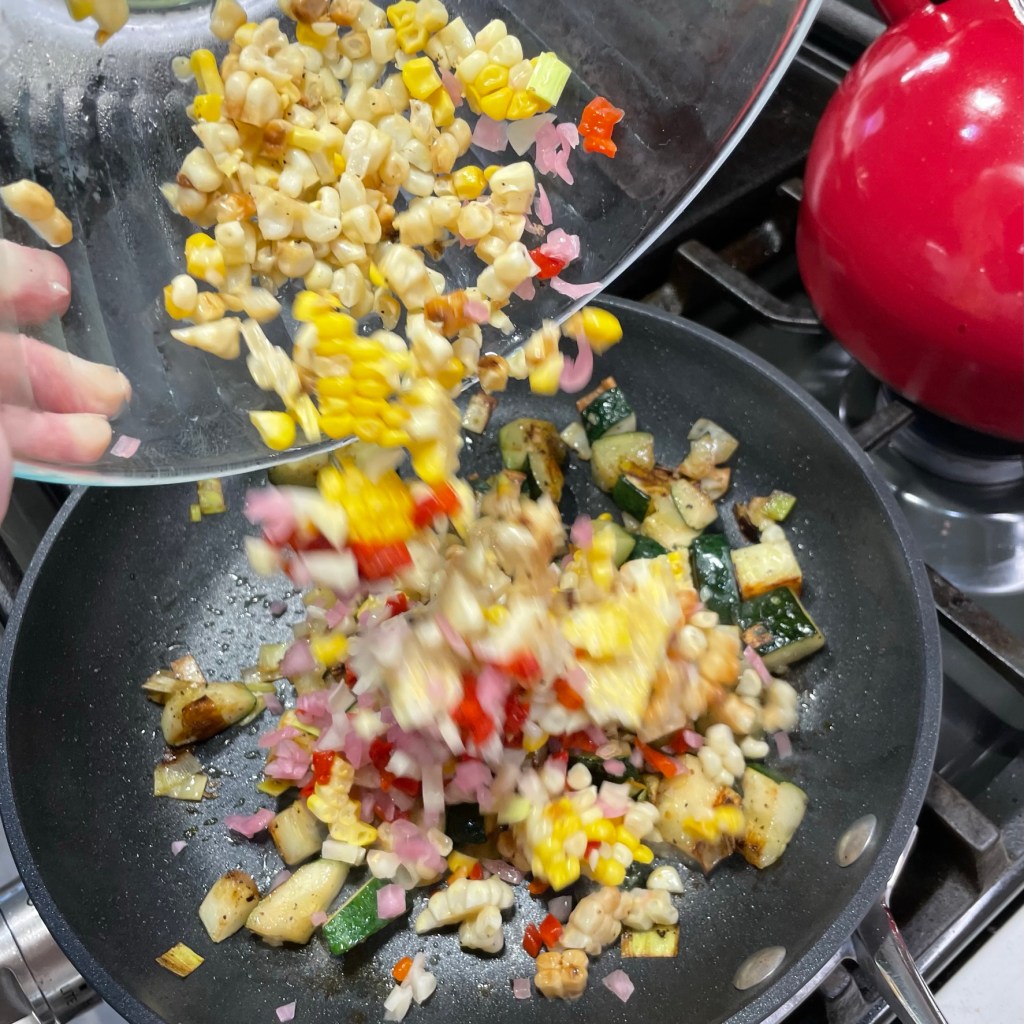
Having one prep bowl filled with vegetables makes cooking a snap, as I simply empty them into the skillet as I need them, and there’s no jumbling around in the fridge to find what I need or washing extra prep dishes. When the zucchini started to become tender, I moved deeper into the bowl for the other ingredients until I had everything in the pan.


All three components of this dish—the waffles, the chicken and the succotash—happen simultaneously, but you could certainly make the succotash ahead and simply rewarm it when you’re ready to serve. Keep the waffles warm on your oven’s low setting if needed, and aim to make the chicken the last thing you prepare. Remember to season it with a light touch of salt from the skillet!

Pile it onto a plate, with the succotash underneath and over top of the crispy waffles, and the chicken tenders leaned against it. Finish the dish with a scattering of fresh chopped basil leaves, and dinner is served!

Not only does this presentation look beautiful, it serves the purpose of keeping everything warm until you make it to the last delicious bite!


Late Summer Succotash with Chicken & Waffles

  • Servings: About 3
  • Difficulty: Intermediate
  • Print

This meal takes some time to prepare, but the combination of sauteed summer ingredients and lightened-up chicken & waffles is well worth the effort! Prepare the three components of this dish at your own pace; if time is limited, the succotash can be made ahead and warmed at serving time. If you plan to make everything concurrently, consider setting the oven to warm and tuck away the waffles or chicken tenders on a rack placed over a baking sheet.

Ingredients

  • 1 pound boneless, skinless chicken tenders, patted dry
  • 1/2 cup cultured buttermilk
  • Up to 1 Tbsp. bottled hot sauce
  • 1/2 tsp. poultry seasoning
  • Salt and pepper
  • 1 cup neutral oil (for skillet frying]
  • 1/4 cup all-purpose flour
  • 2 Tbsp. medium-grind corn meal
  • 1/2 tsp. garlic powder

Directions

  1. In a medium bowl, combine buttermilk, hot sauce, poultry seasoning, salt and pepper. Add chicken tenders to the bowl, tossing to coat. Allow this to rest at room temperature at least 30 minutes, or refrigerate up to a few hours if working ahead. Take them from the fridge 30 minutes before pan-frying them.
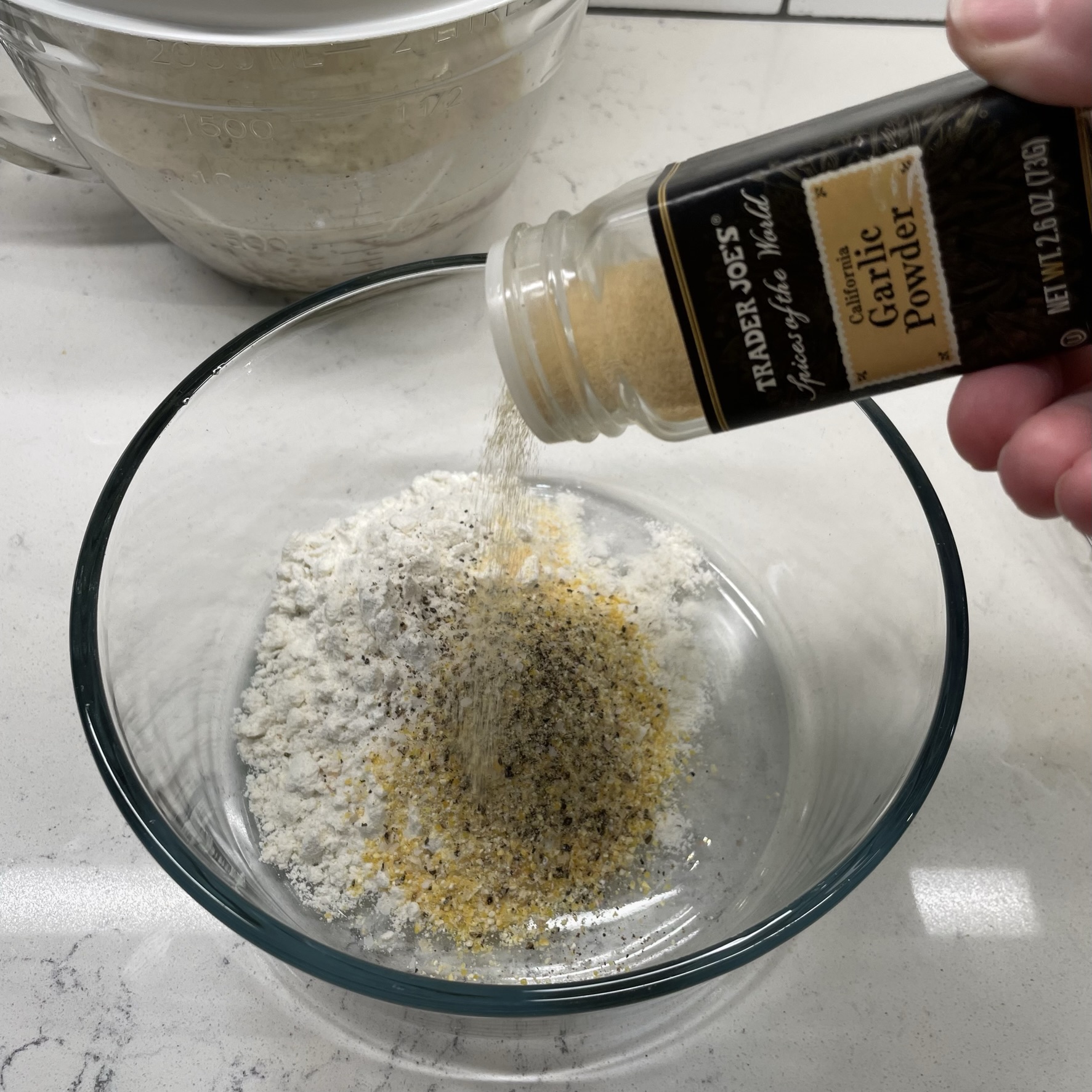
  2. In a small bowl, combine flour, corn meal and garlic powder, plus a few shakes each salt and pepper. Set this aside for breading the chicken tenders.
  3. Heat a cast iron skillet over medium heat, with 1/2-inch oil.
  4. When oil is hot, remove tenders from buttermilk mixture, allowing all liquid to run off. Dip the tenders into the breading mixture; coat evenly without dredging too heavily. Carefully place each tender into the hot oil, taking care to not crowd the pan too quickly, as this will drop the temperature of the oil and result in greasy chicken. Turn tenders when the first side is golden brown; transfer them to a paper towel-lined plate when done. Season immediately with a light sprinkle of salt.

Ingredients

  • 1/4 cup fed sourdough starter
  • 1/2 cup cultured buttermilk
  • 1/2 cup white whole wheat flour
  • 3 Tbsp. medium-grind cornmeal
  • 1/2 tsp. baking soda
  • 1/4 tsp. salt
  • 1 large egg
  • 1 Tbsp. extra virgin olive oil
  • 1/2 cup leftover grilled corn kernels
  • 3 chopped green onions (scallions), white and green parts

Directions

  1. In a medium batter bowl, combine sourdough starter and buttermilk. Add flour and cornmeal. Stir until smooth; cover and leave at room temperature at least 30 minutes, up to about 2 hours.
  2. In a small bowl, combine flour, cornmeal, baking soda and salt. Set aside.
  3. Set waffle iron to medium heat. While it preheats, add egg, oil, soda and salt to the sourdough batter. Stir until smooth. Fold in corn and scallions.
  4. Brush waffle iron with oil. Add a scoop of batter and bake until crispy, following manufacturer’s instructions. As a visual cue, watch for steam to dissipate from the iron. Generally, if the waffles are sticking, they aren’t finished baking. If working ahead, place finished waffles on a rack over a cookie sheet and keep them in a warm (250° F) oven.

Ingredients

  • 1 medium zucchini, chopped into chunks
  • 1 small leek or onion, chopped
  • 1 cup leftover grilled corn kernels
  • 1/4 cup pickled onions, chopped (I like the “pickled” flavor here; substitute anything pickled, such as okra, green beans, cucumber)
  • 2 Tbsp. jarred pimento, drained
  • 2 Tbsp. extra virgin olive oil
  • 1 cup ripe baby tomatoes, halved
  • Salt and pepper
  • Fresh basil or parsley, to garnish

Directions

  1. Heat a large, non-stick skillet over medium flame. Add olive oil and saute zucchini with leeks or onions until slightly tender.
  2. Add remaining vegetables, except tomatoes, and toss until evenly combined. Reduce heat to low and cover skillet with a lid so that the pan ingredients can heat through without much more cooking.
  3. Add tomatoes at the end, tossing just to combine.

To assemble the dish, spoon out some of the succotash, and then place a waffle section, topped with additional succotash. Arrange the chicken tenders by leaning them up against the waffles. Sprinkle with chopped, fresh basil or parsley.


Slow Cooker Turkey Chili Soup

Can someone please explain to me how time works? Because it has only been nine days since my last post, but it feels like 29. Some of the days have been a blur, as we have had non-stop activity in the kitchen during the demolition of the old and especially the arrival and installation of the new. And then, other days it has been so quiet it seems that even the crickets are on vacation. This morning, I literally had to ask my husband, “what day is today?” because amid the ruckus, I couldn’t quite remember. Only one week down and at least five to go—oy, vey!

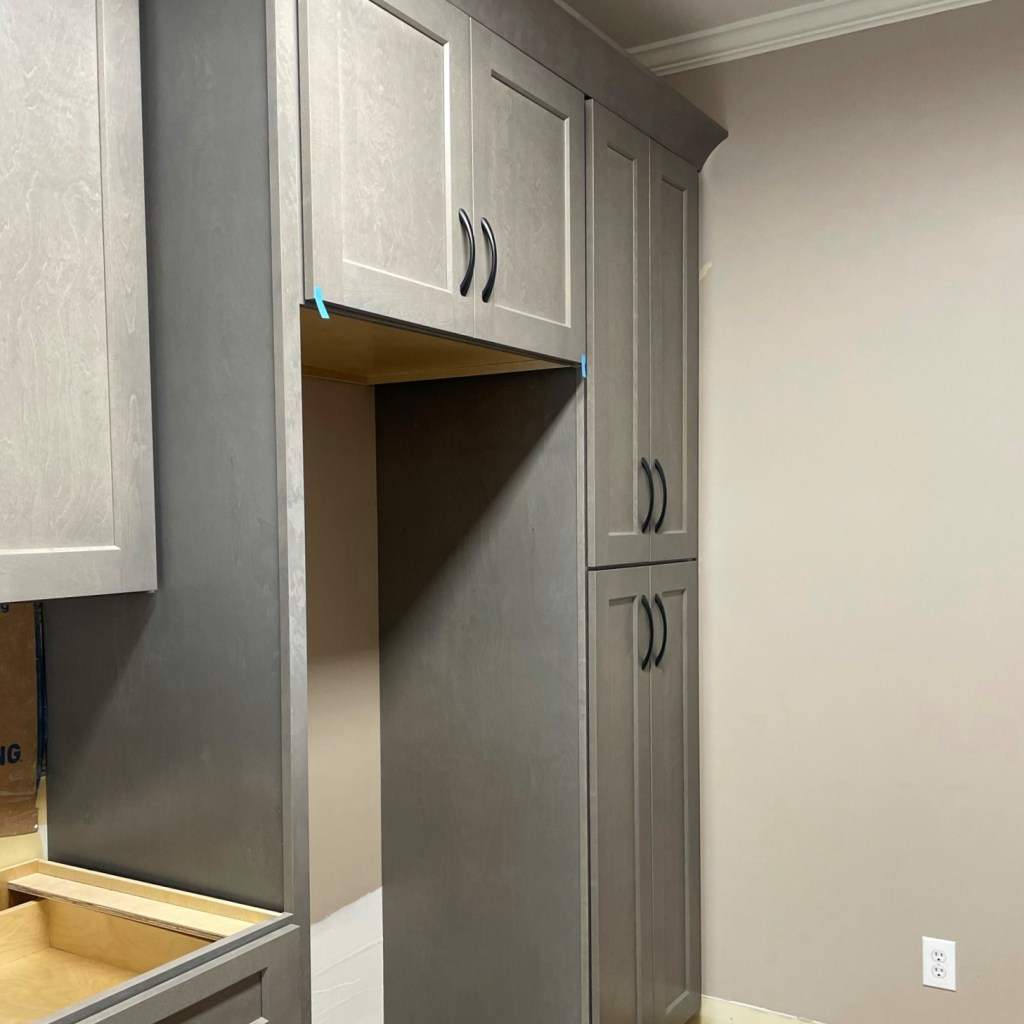
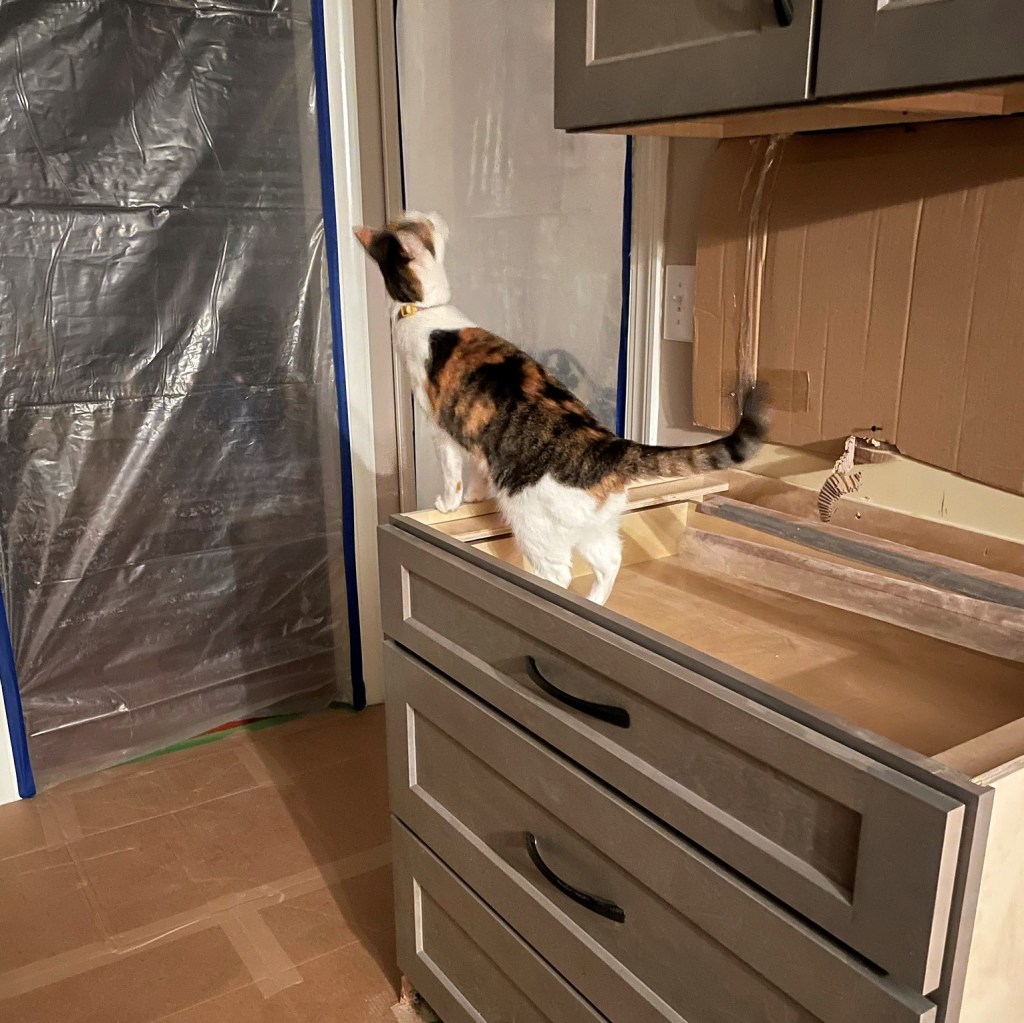
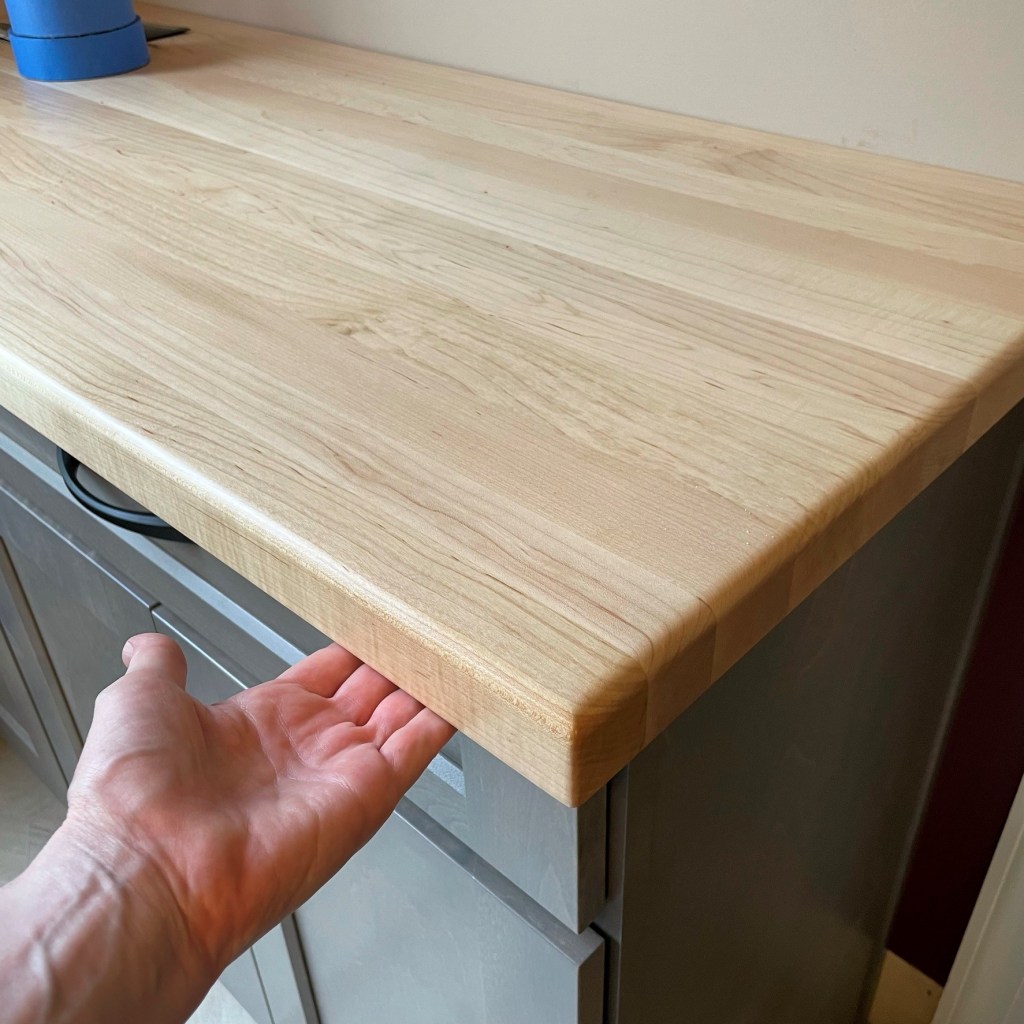
It would be premature at this point to show you the progress of our remodel, given that we don’t yet have a countertop and the floor is covered in protective cardboard and there is new and ongoing discussion about how much we can configure our backsplash for a couple of design features I’ve been desperate to have. Well, OK, maybe just a few quick photos, but I want to save some for the big reveal!


There is much more to be done, and some of the details our contractor is working through are special enough to be considered “fussy,” so we are fine with some intermittent slowdowns. As far as we know, and barring any future catastrophes, things are still on track for us to be back in the kitchen by mid-November!

The biggest challenges have been exactly as expected—keeping the pets calm and cared for, which has been manageable so far because the weather is nice enough for our cat to chill outside (which she loves anyway) and our next-door neighbor has generously invited me and the dog over for some peace and quiet whenever things get wild over here. The other obvious challenge has been cooking without a kitchen, and today I’m sharing the first real, “cooked” recipe I’ve made since we started the remodel project. Breakfast doesn’t count because we are mainly just using the toaster. And until Friday of last week, we had relied on take-out and sandwiches for lunch and dinner. And (of course) cocktails for me, but that will be another post. 😉

Our first real meal could not have been more perfect for the fall season, and it also could not have been simpler to make, despite the fact that I did not have a stove, a microwave, a sink or a countertop. How did I pull it off?

It’s my multi-purpose friend, the slow cooker!

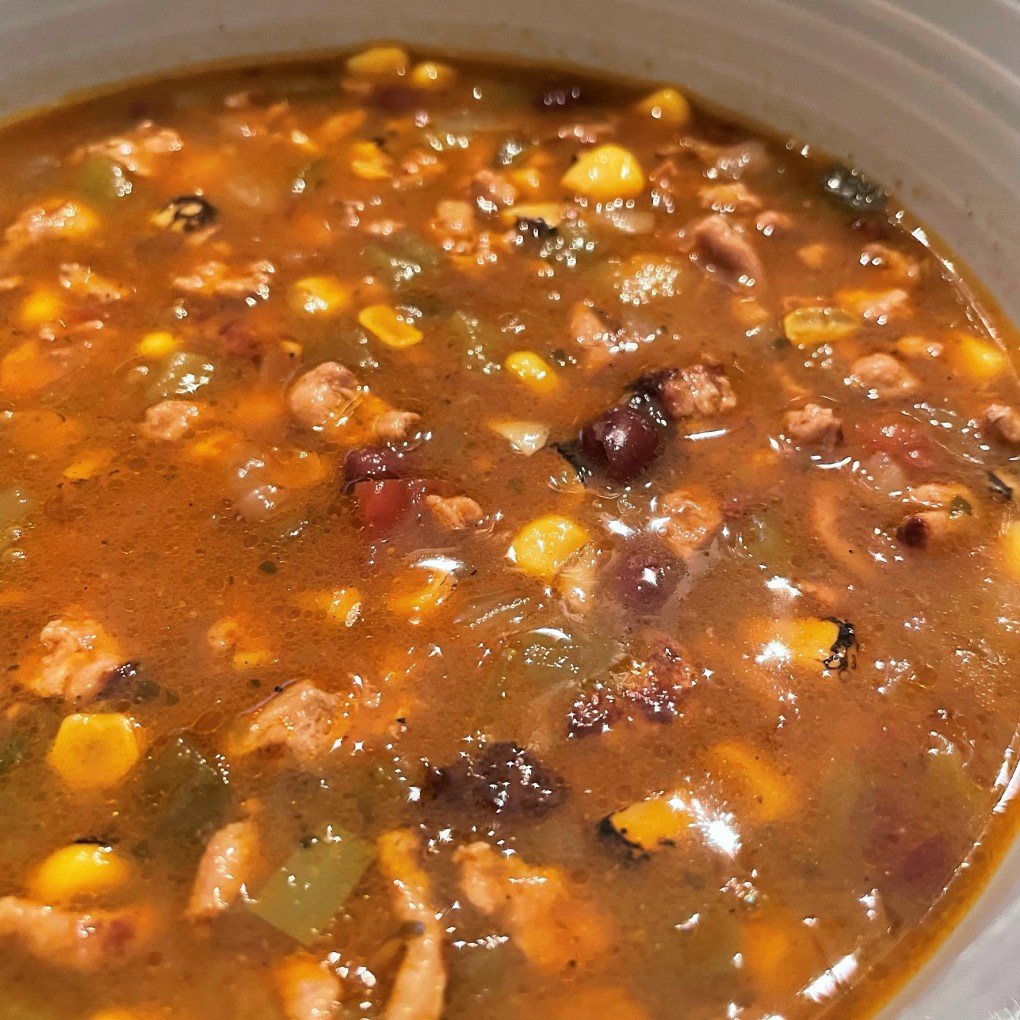
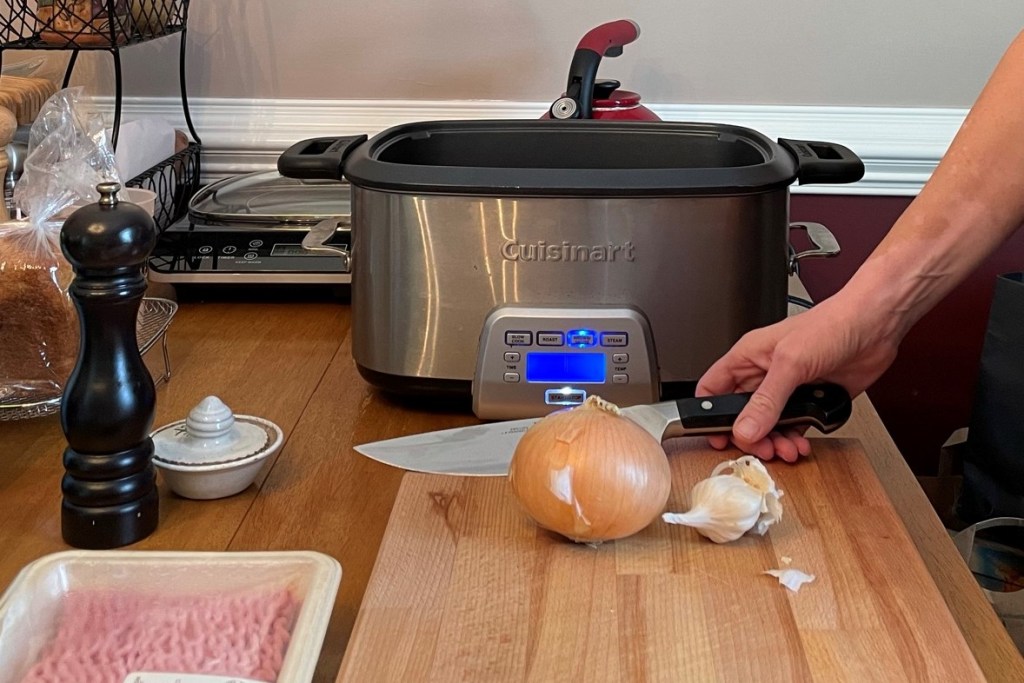
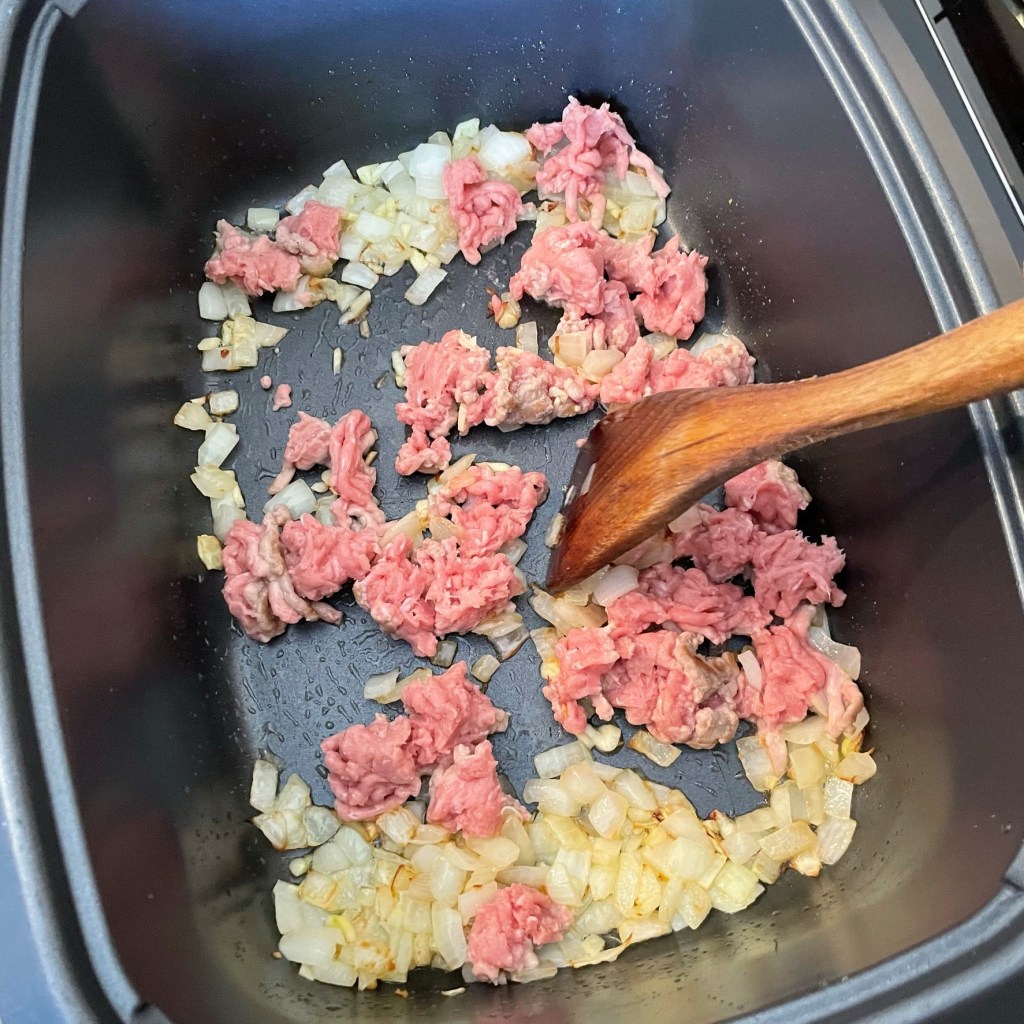
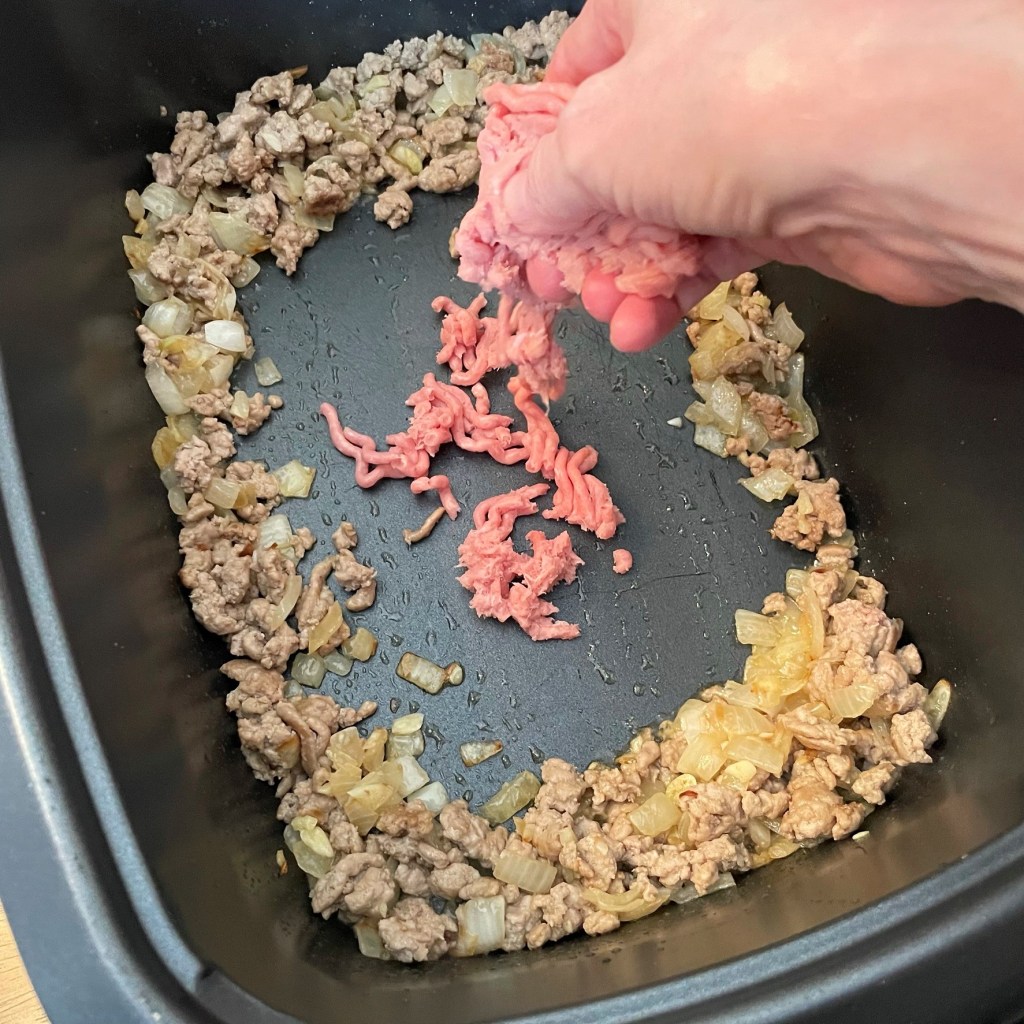
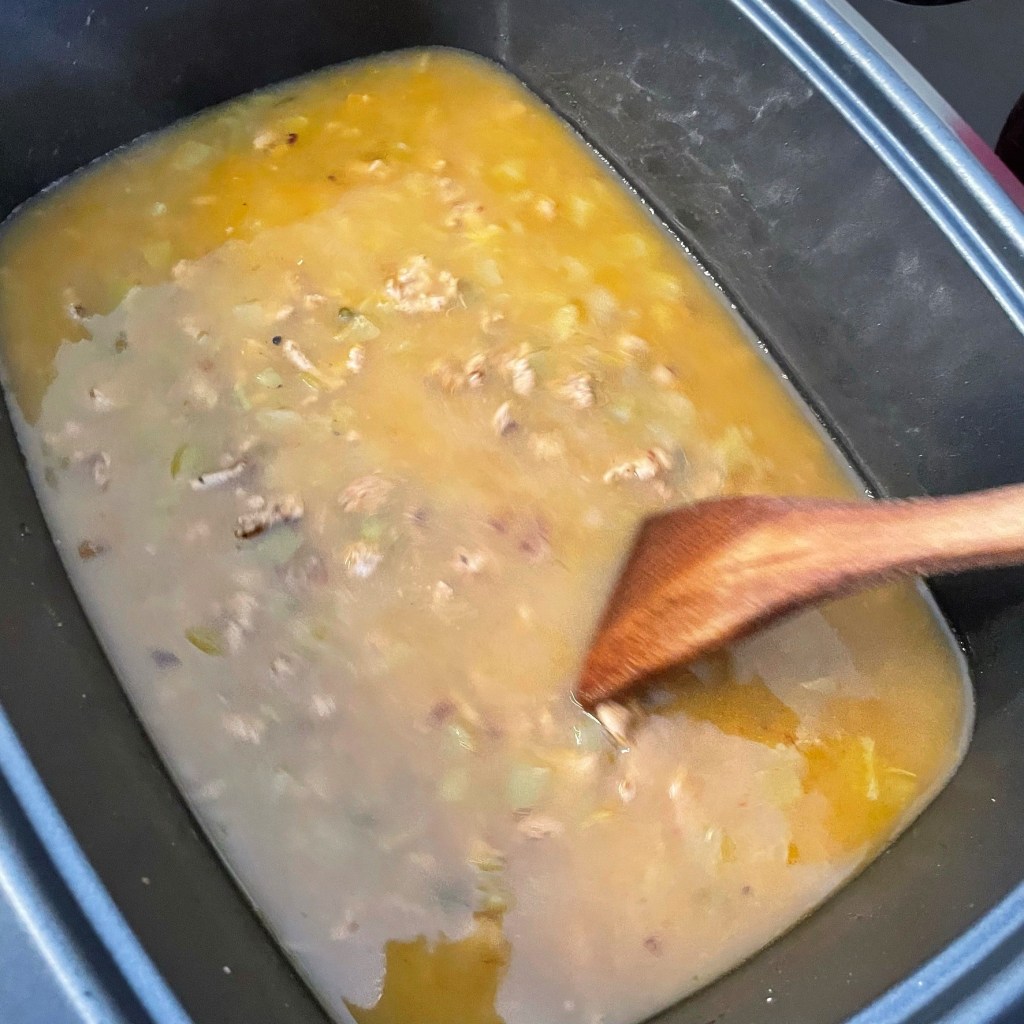
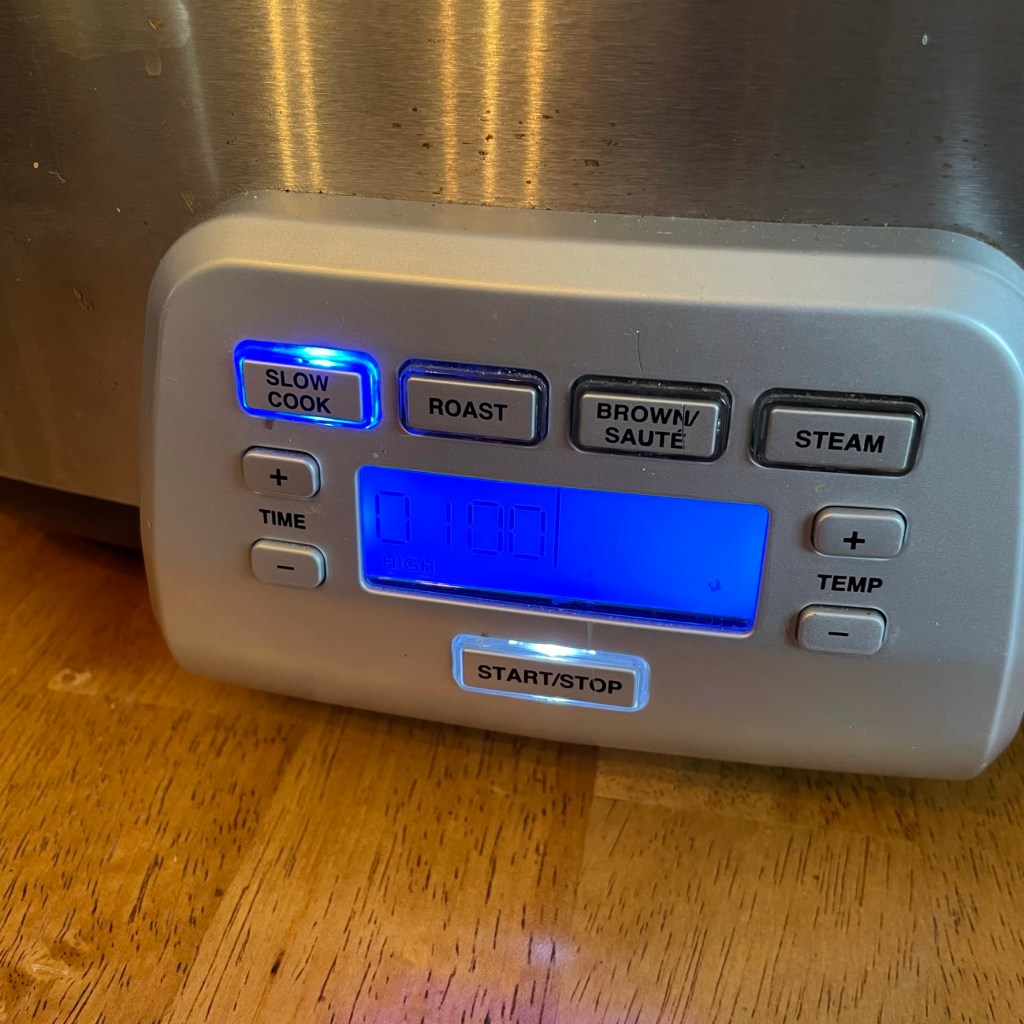
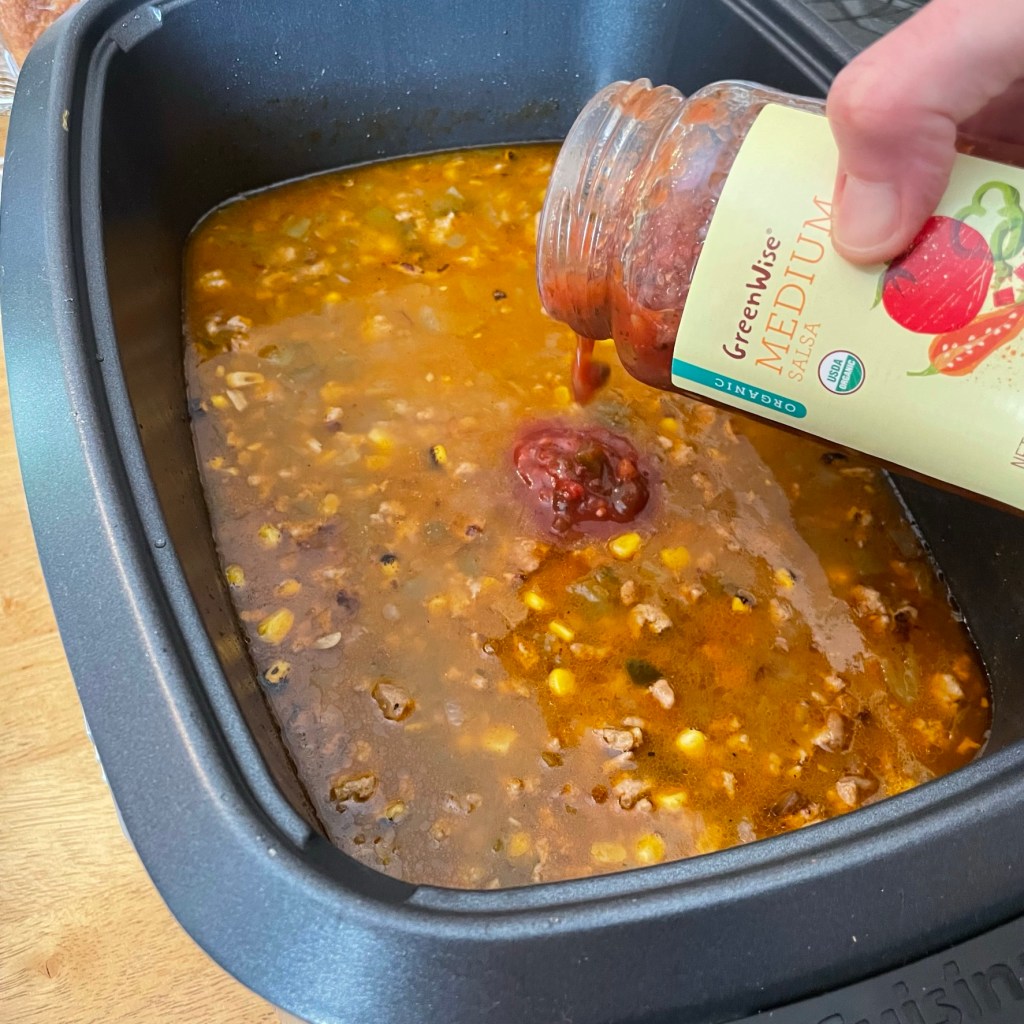
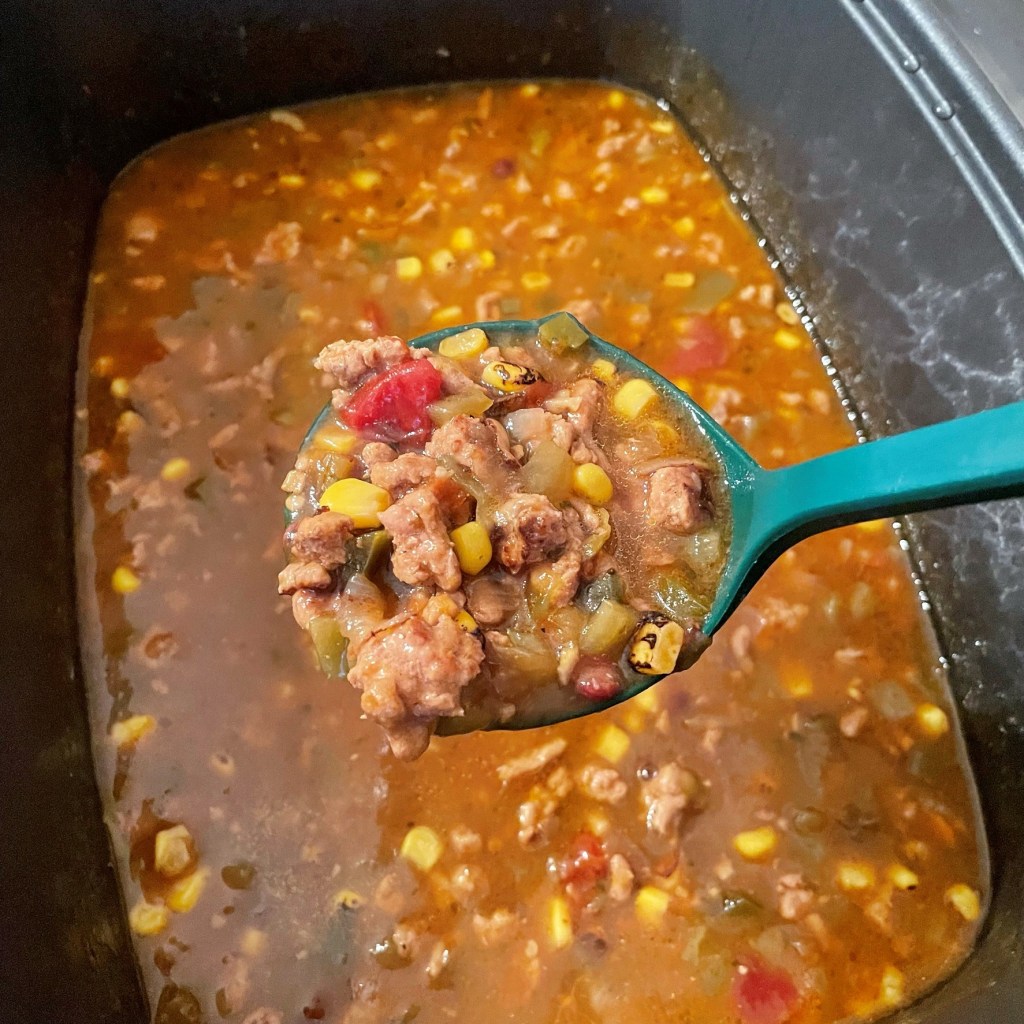
Say hello again to our multi-purpose slow cooker, the same one I used for our final “Chopped” challenge when Les tricked me into cooking all that kielbasa. The “browning” setting on this 7-in-1 appliance saved the day for my new adventure of “cooking without a kitchen.” I browned the ground turkey and onions, then added all the other ingredients, switched it to the slow cook setting, and let it simmer until Les walked in the door at the end of his workday. I was so excited to have actually cooked, and there was something very comforting about having the aromas of that chili soup filling the house. We needed a good, home-cooked meal at the end of such a crazy, noisy week. And, because it all came together in one pot, even the cleanup was easy.

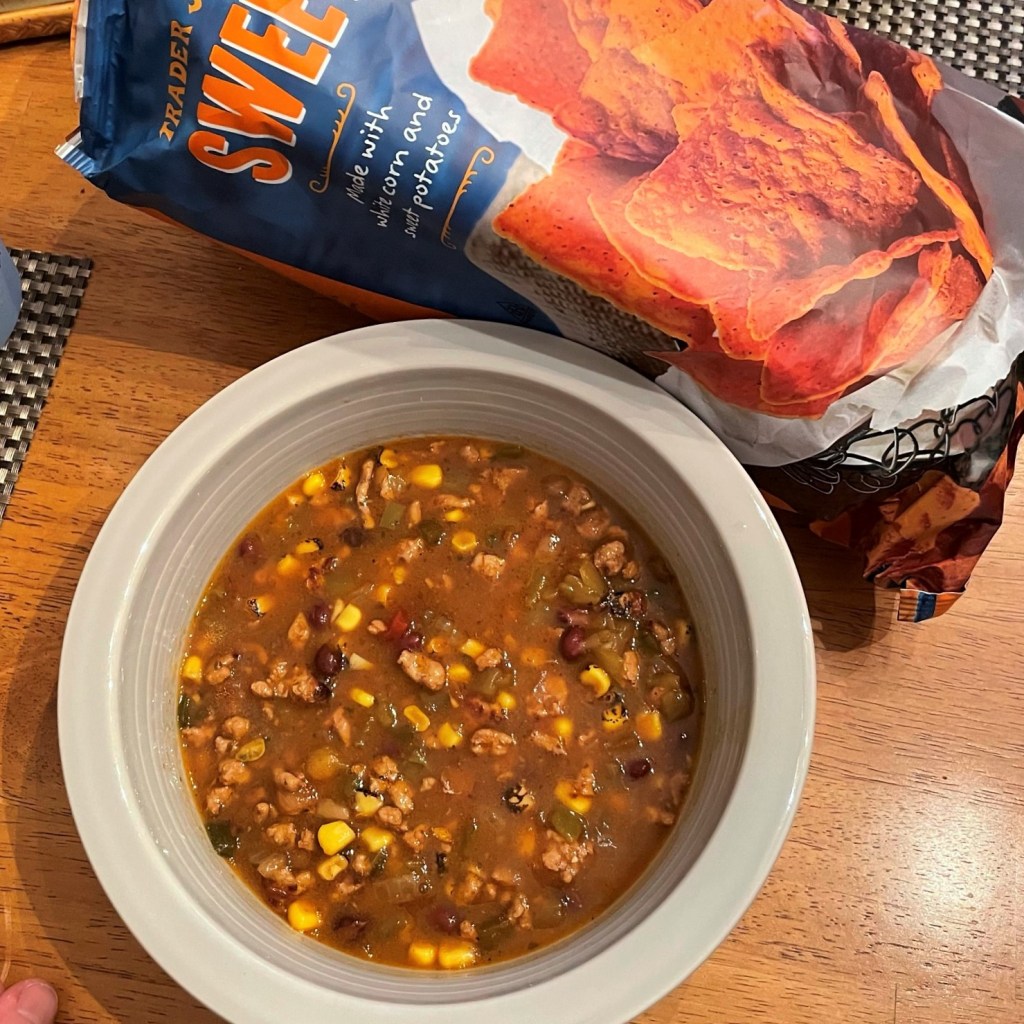
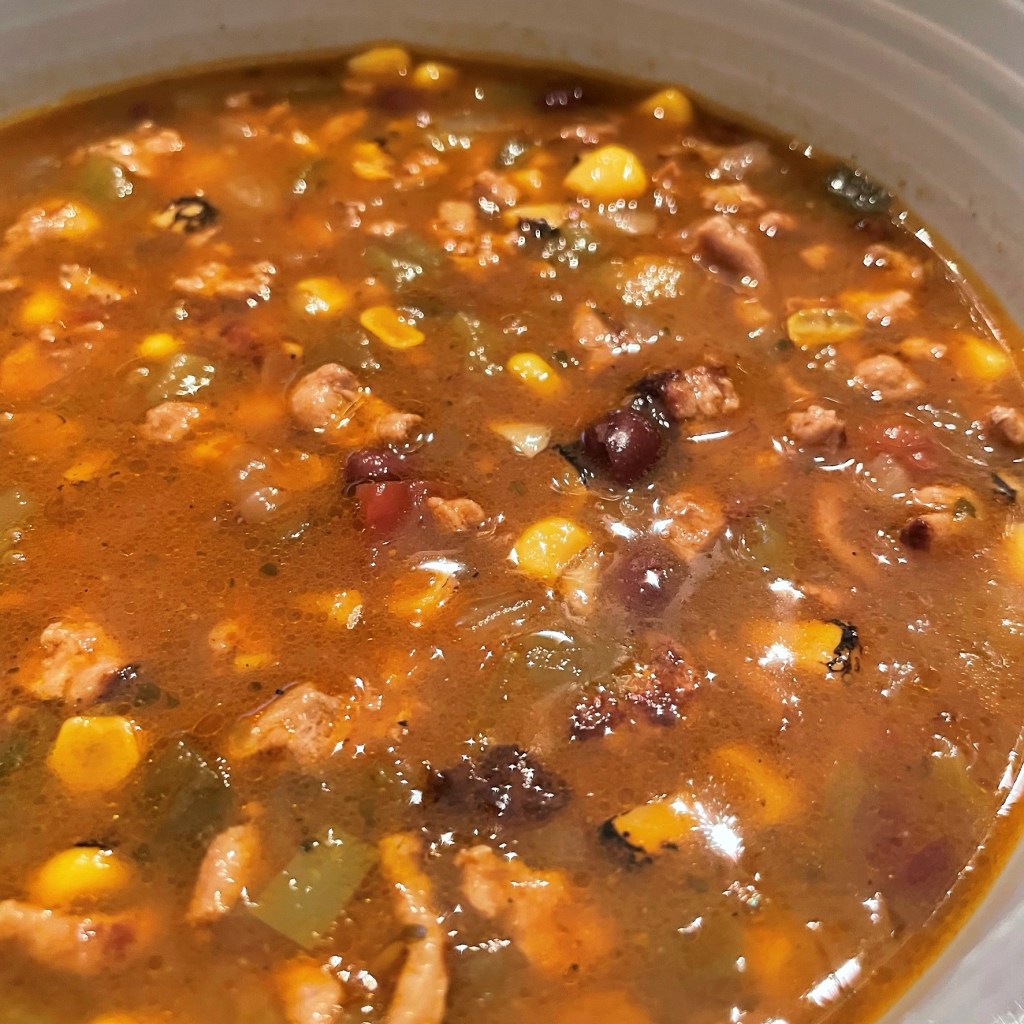
This original recipe is one of my favorites, and it conjures warm and fuzzy memories for me. A few years ago, on a gloomy February day during another crazy time in my life, I’d scrambled through the cabinets for something to make that did not require a trip to the grocery store. I didn’t have a whole can of tomatoes, but I did have a small can of salsa, plus some roasted green chiles, half a bag of frozen corn, a can of beans and a carton of chicken broth. When I settled in with a bowl of this delicious concoction, which is not quite chili and not quite soup, I loved it so much, I took time to write it all down, and I’m glad I did because it was just right for such a crazy time as this. And there’s another benefit to it—easy leftovers!

Of course, you don’t need to have a special slow cooker to make it. Feel free to use a soup pot or Dutch oven. I’m pretty sure that’s what I’ll do next time—you know, when I have a shiny new kitchen!

If I had an oven this week, I would have made a batch of cornbread to accompany this tasty chili soup!

Ingredients

3 Tbsp. extra virgin olive oil

1 small sweet onion, chopped

1 lb. ground turkey (or turkey breast, if you prefer leaner meat)

3-4 cloves garlic, chopped

1/2 tsp. ground cumin

1/2 tsp. sweet Spanish paprika

1/2 tsp. ancho chile powder

Salt and pepper

3 Tbsp. all-purpose flour

4 cups chicken broth (this is equal to 1 large carton)

7 oz. can roasted green chiles, chopped

1 small can Herdez salsa (about 8 oz.)

1 1/2 cups frozen roasted corn

1 can black beans, drained

Tortilla chips for serving


Instructions


  1. Add olive oil to the slow cooker (or pot), on a medium heat setting. Saute the onions until they are soft and translucent, then push them to the outside of the pot.
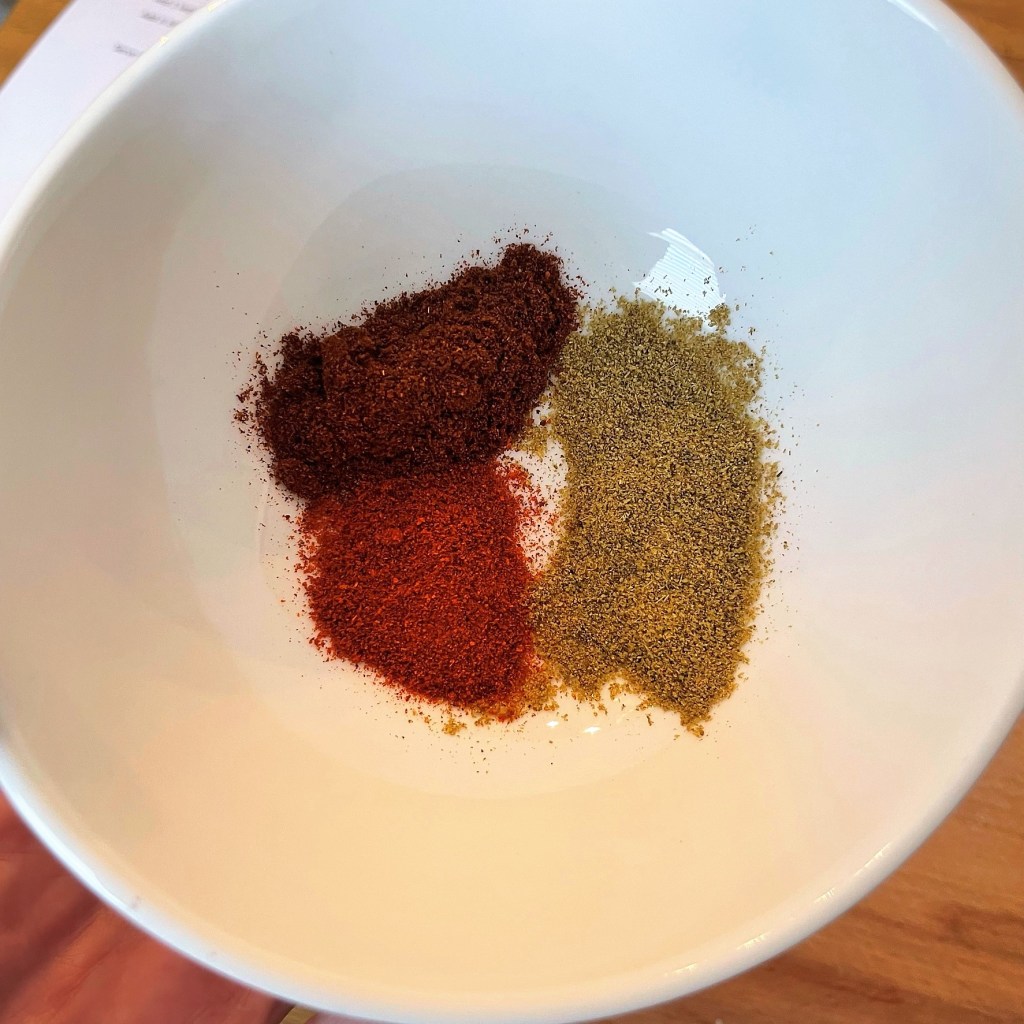
  2. Add the ground turkey, about half at a time, breaking it up into bits with your fingers as you go. When you brown ground meat, it’s a good idea to cook a small amount at a time to maintain a steady heat. Otherwise, the meat will just steam. When all the turkey is browned, add the chopped garlic and the spices, plus salt and pepper, and cook about one minute until the garlic is fragrant.
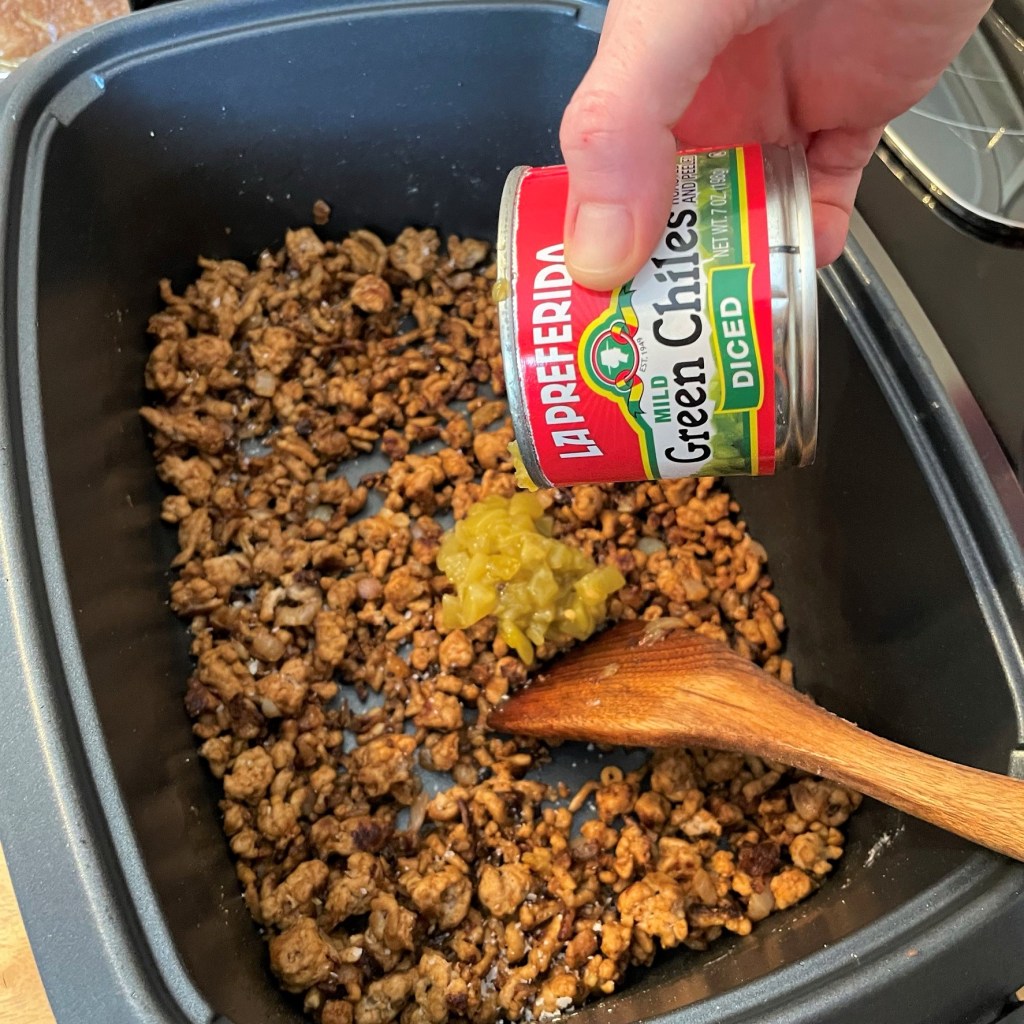
  3. Sprinkle the flour over the ground meat mixture and stir it around to evenly coat all the meat. It should seem a little dry on the surface of the meat; add a touch more flour if needed to get this appearance. Cook the mixture two minutes, add the green chiles and cook two more minutes.
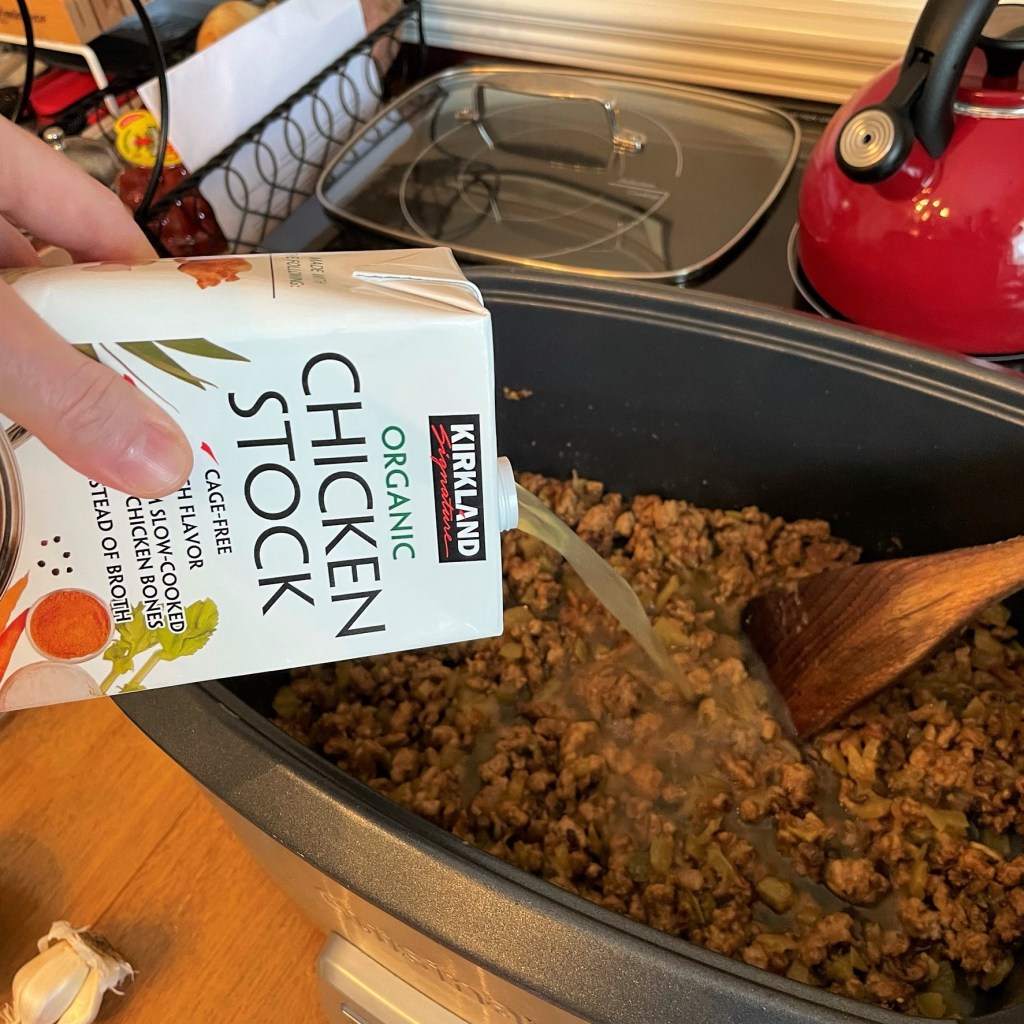
  4. Add the chicken broth to the pot all at once. Stir gently to mix the broth with the roux-covered meat mixture and cook until it reaches a slight boil, then reduce the heat and simmer about one hour. At this point, I switched the slow cooker setting from “browning,” which is essentially the same as cooking on a stove top, to “high slow cook.”
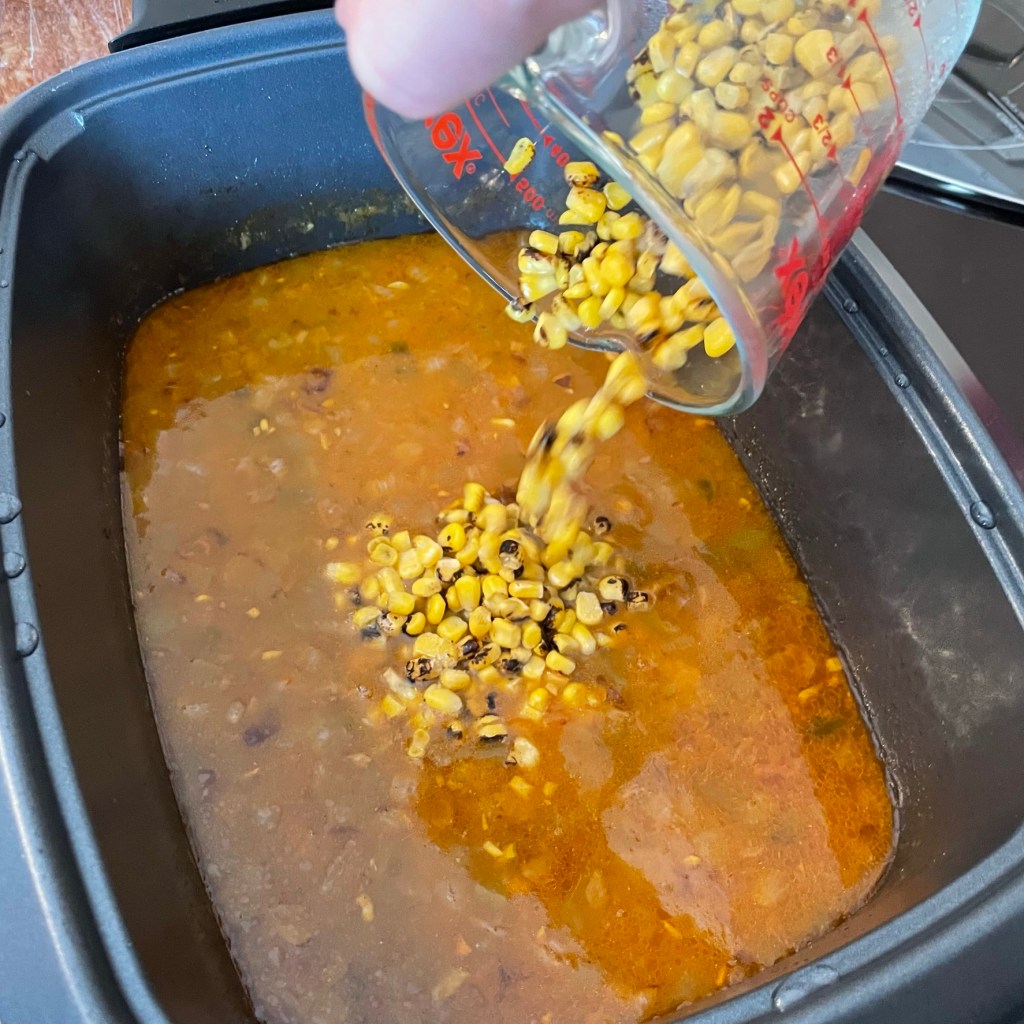
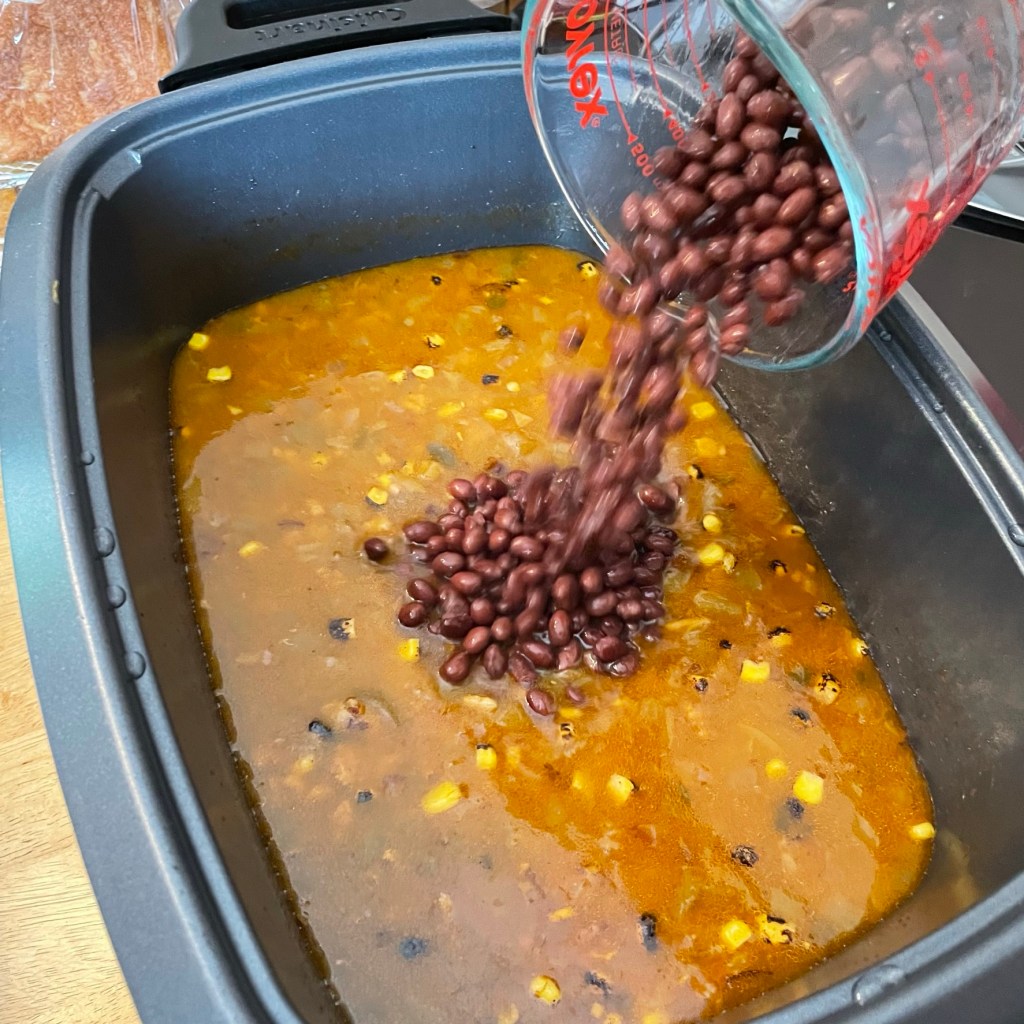
  5.  Add the roasted corn, black beans and salsa and stir to combine. Adjust seasonings to taste. Simmer on low setting for two hours or more, until you’re ready to serve.

For our first “cooking without a kitchen” meal, I served this comforting turkey chili soup with tortilla chips, but it’s really delicious with a fresh batch of skillet cornbread.


Handmade Corn Tortillas

There are plenty of things I don’t buy pre-made anymore—bread, salad dressing, pizza dough, ice cream, pasta—but corn tortillas are among the simplest, and the flavor is far superior to the ones I find in the supermarket. Even the “authentic” corn tortillas at the grocery are mass-produced with all kinds of processed ingredients, conditioners, preservatives and heaven knows what else. When you make them from scratch, you only need two ingredients—masa harina, which is finely ground corn that has been alkalized with lime (the mineral, not the citrus), and water. The dough rests for a short time, then it is rolled into balls and flattened into discs. Cook them on a hot griddle or cast-iron skillet, and you’ll enjoy tortillas that will make you skip store bought forever.

Flavoring the tortillas is simple, also. I like to put a couple of shakes of onion powder into a basic batch, for a quick little savory “something.” But if you want more noticeable flavor—spinach, for example—simply puree a small amount of cooked spinach with some water and measure it out in the same measurement as water in the recipe. You could do the same with cilantro, pumpkin, garlic, tomato or black beans. If you can imagine it, you can make it. Experimenting in the kitchen has resulted in some of my favorite foods!

I use a tortilla press to create the perfect round shape, but you can also use the flat bottom of a large glass bowl to do this. Once cooked, the tortillas can be used for soft tacos or enchiladas, fried crisp for hard-shell tacos or tostadas (one of my faves), or cut into wedges and fried to become homemade tortilla chips, perfect for dips and salsas.

Making tortillas can be a little challenging at first. The ratio of ingredients is printed on the masa flour bag, but your technique can only be developed with practice. See my tips for success at the end of the instructions. No reason you should go through all the frustrating mistakes I’ve made. One of these days, I’ll make a list of all the cuss words I’ve made up in the kitchen. 😊


Ingredients for Basic Tortillas

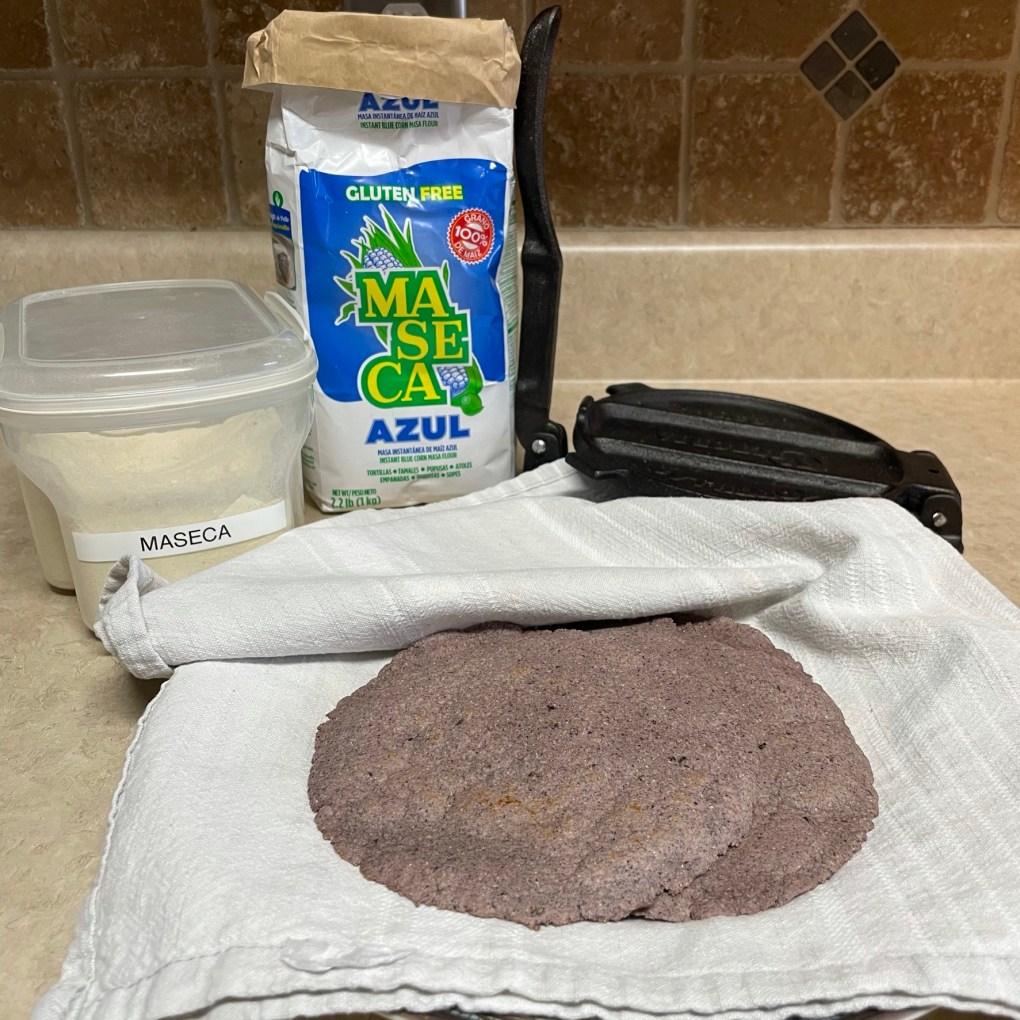
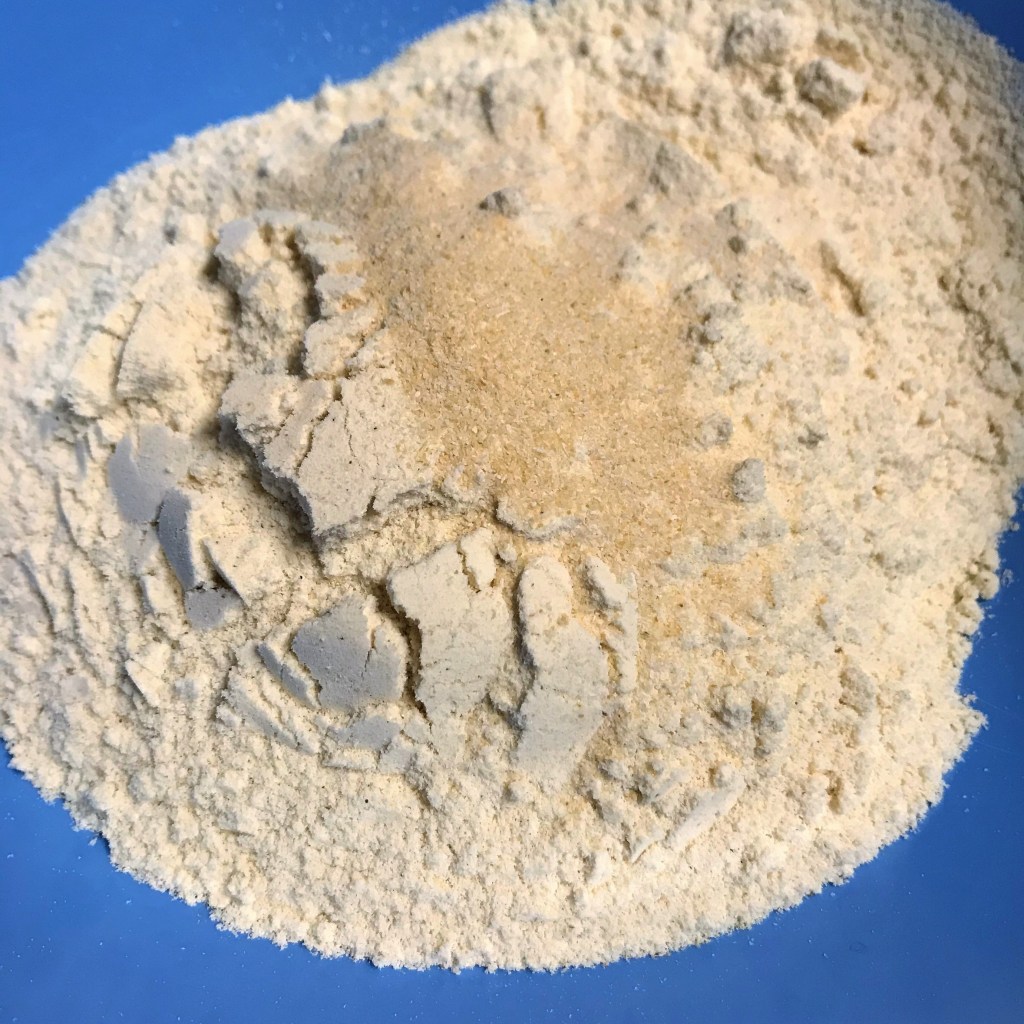
1 cup masa harina (I like Maseca brand, white, yellow or blue)

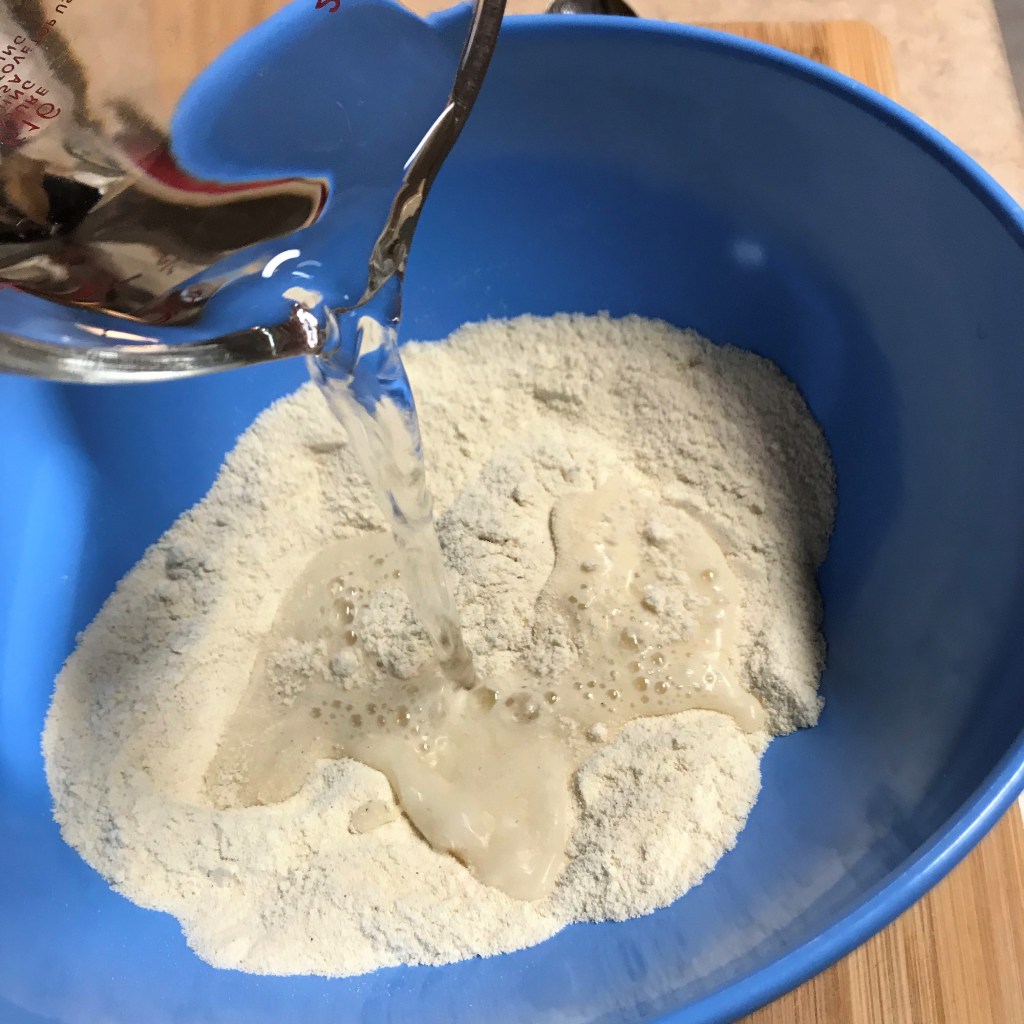
2/3 cup very warm water (or 50/50 mix of water and puree of choice)

A pinch of kosher salt


Instructions

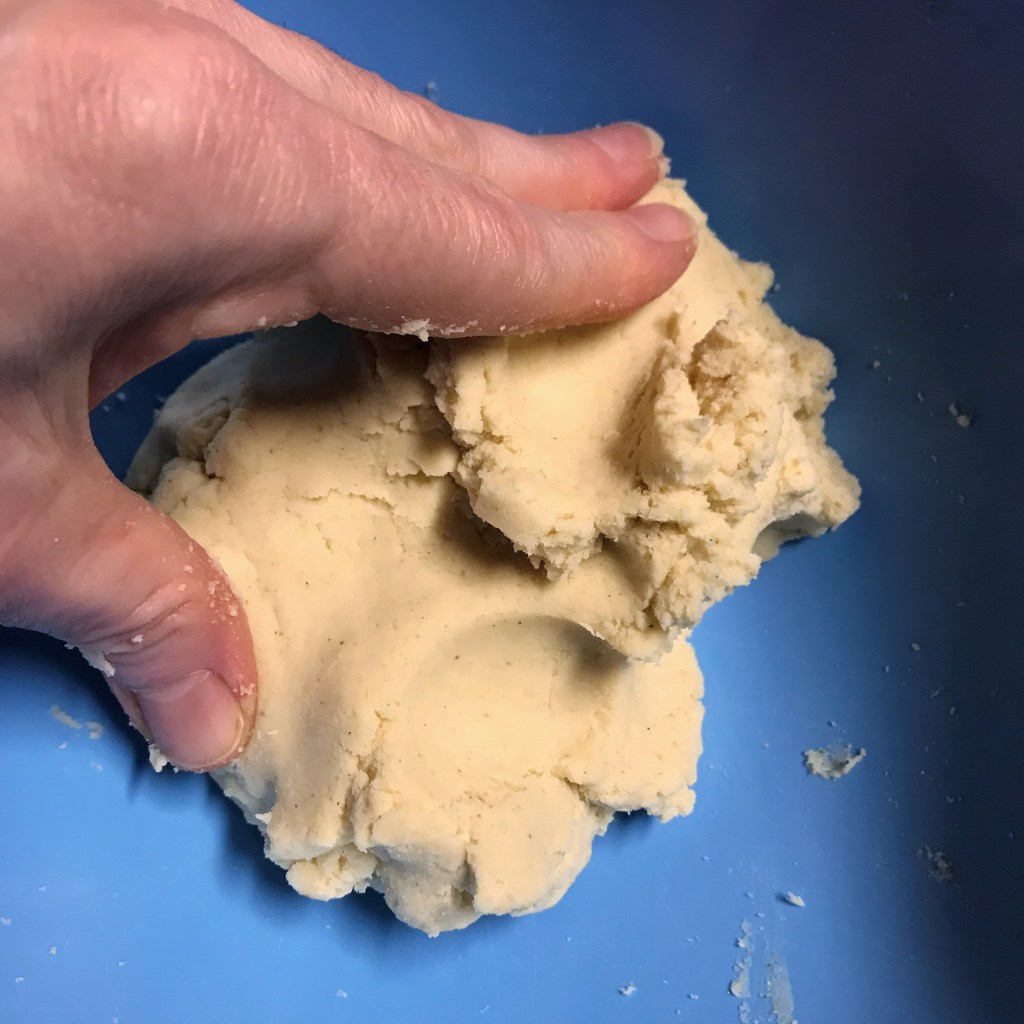
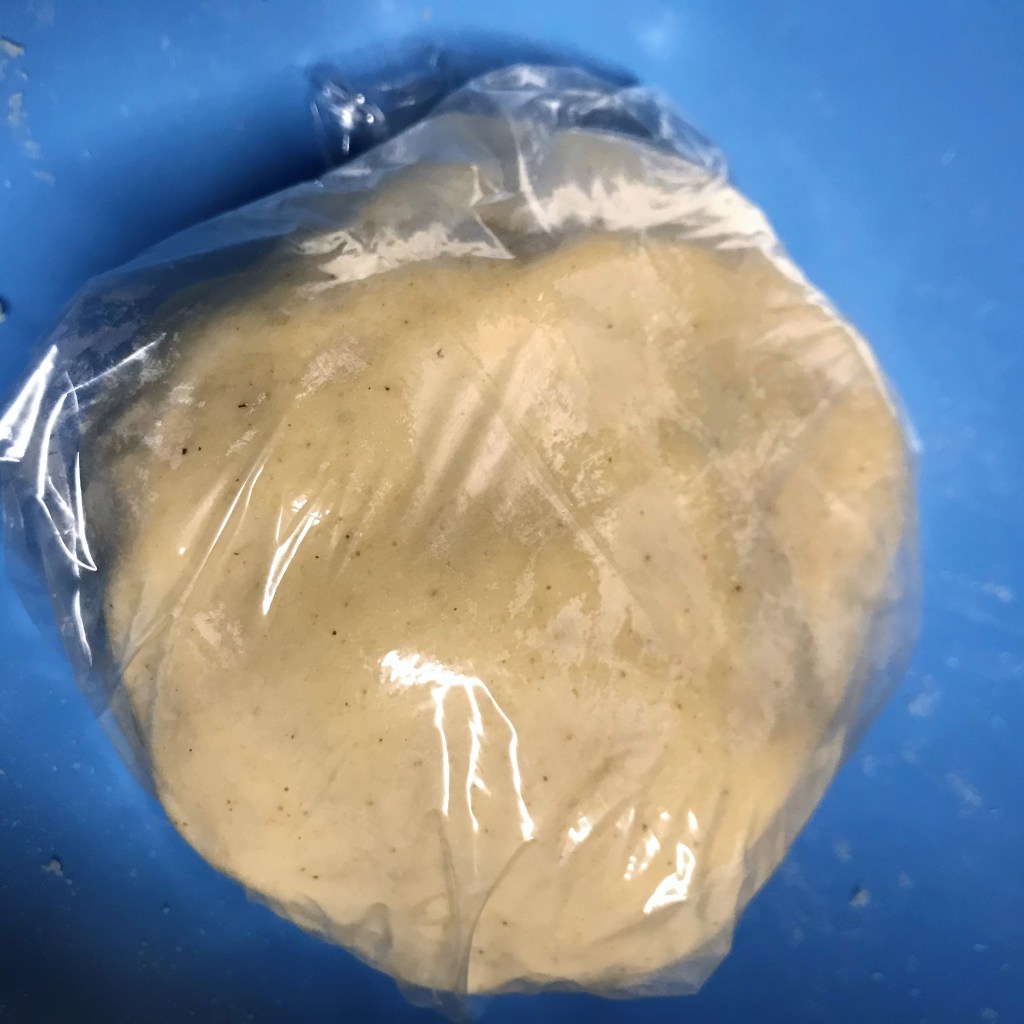
  1. Combine all ingredients in a bowl and stir until liquid is absorbed. Knead the dough ball a few times until mixture is smooth, soft and uniform in texture. Cover the dough ball snugly with plastic wrap and allow it to rest at least 20 minutes.
  2. Preheat a cast-iron skillet or griddle over medium-high heat, about 375° F.
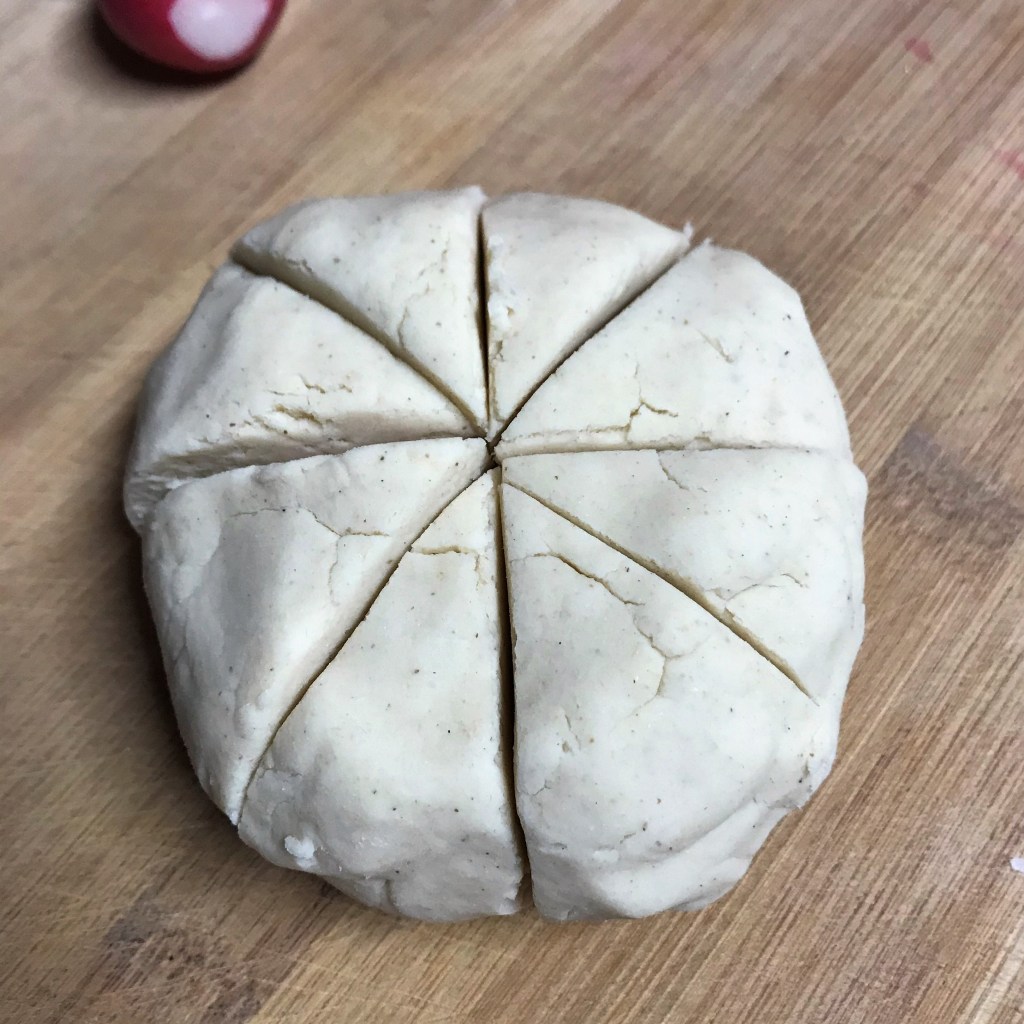
  3. Divide masa dough into 8 equal pieces, then roll each piece into a smooth ball. Keep the dough balls covered to prevent drying out as you shape and press them into flat tortillas.
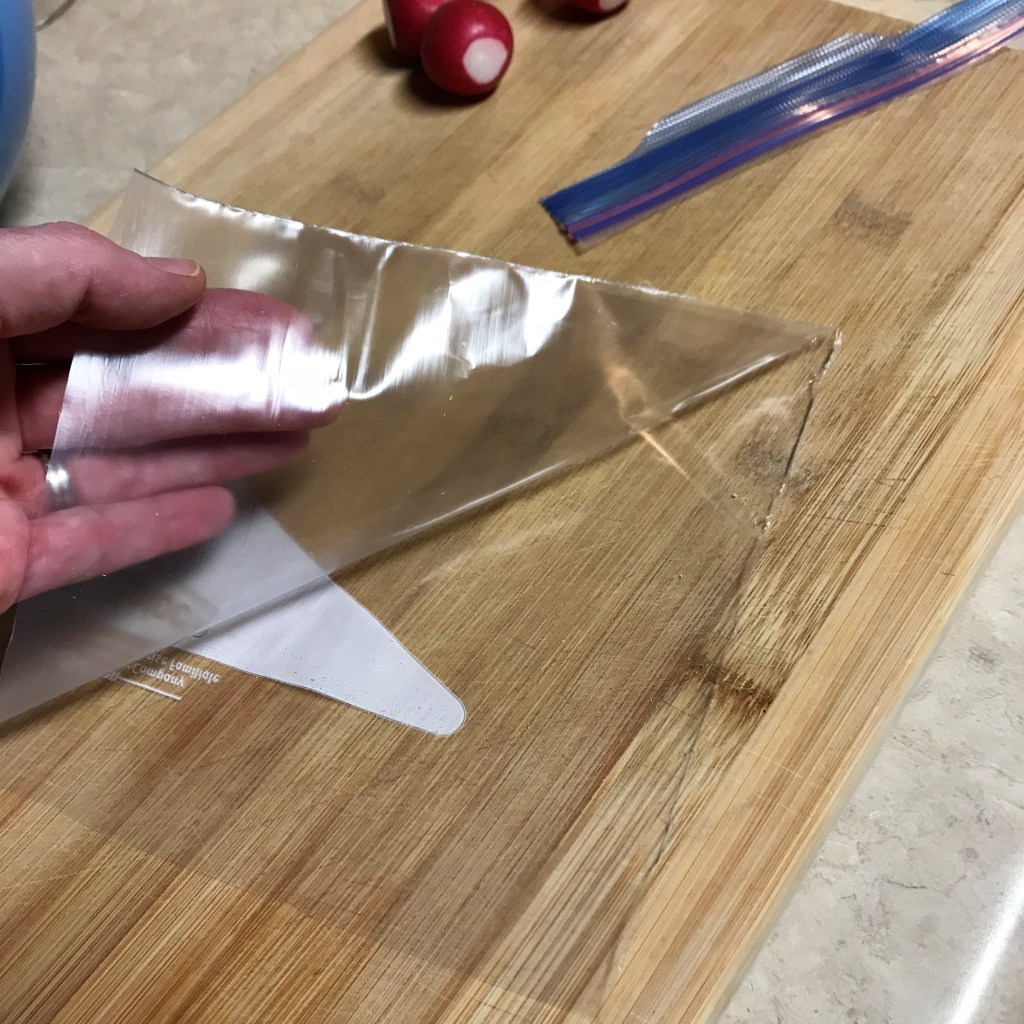
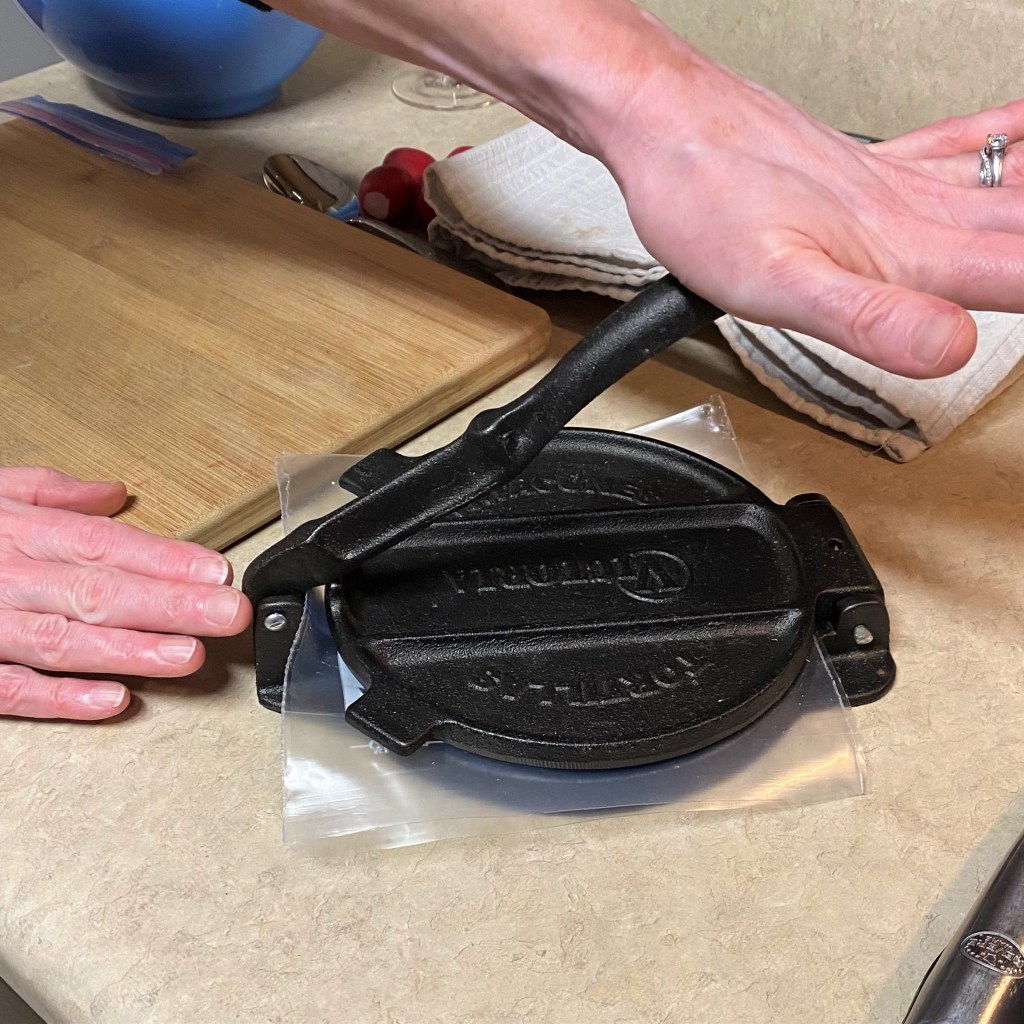
  4. Place a dough ball between two squares of plastic wrap, or cut apart a zip-top bag. The thicker plastic gives better results. Use the tortilla press to slowly flatten the dough to a disc that is about 5 to 6 inches across. Alternatively, press the flat bottom of a clear glass bowl evenly over the surface of the dough ball until the tortilla is about 5 to 6 inches across.
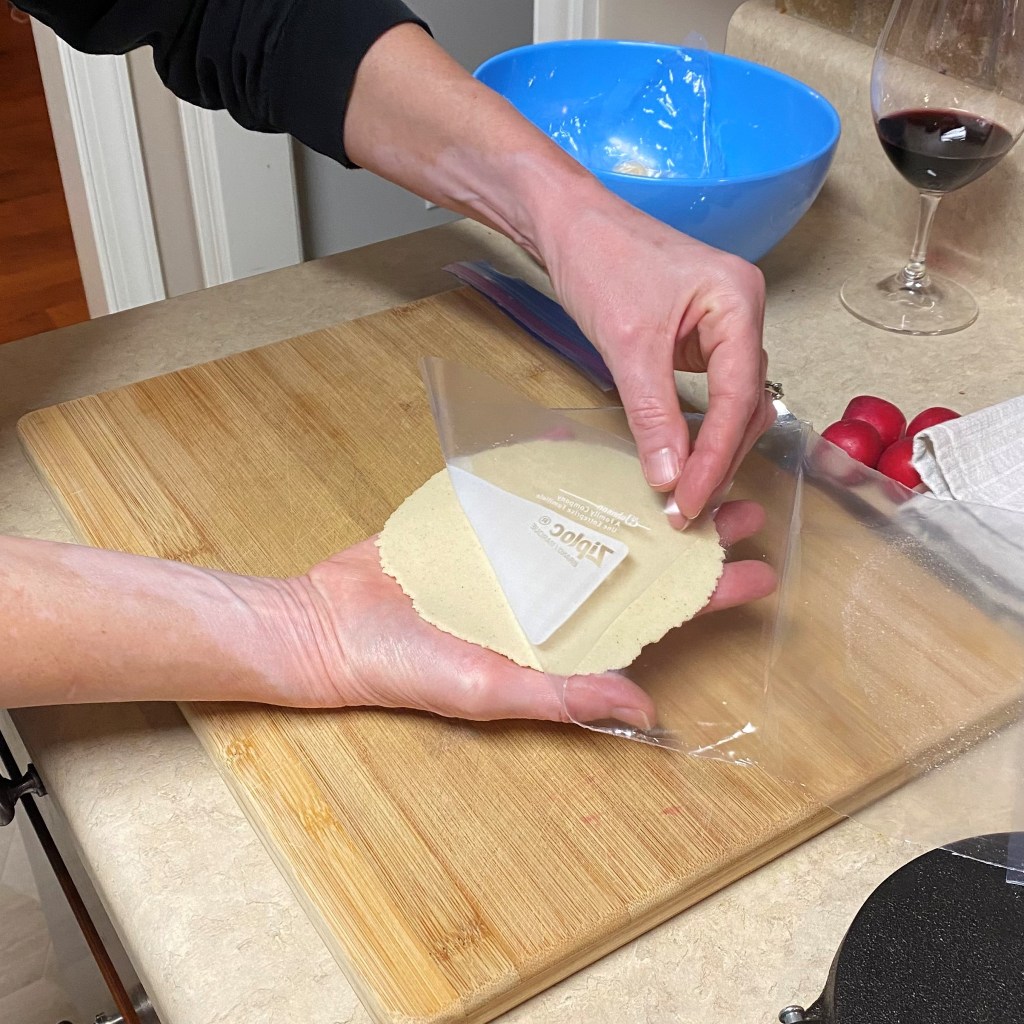
  5. Carefully peel one side of the plastic away from the tortilla, then turn the tortilla out into your hand and peel away the second piece of plastic. Be prepared to ruin a few, but don’t panic if you do (see Tips below)!
  6. Turn the tortilla onto the preheated griddle and cook the first side 60 to 90 seconds, until the edges look dry and steam is emerging from underneath. Use a spatula to flip the tortilla over and cook the second side about 60 seconds.
  7. Transfer the hot tortilla to a plate lined with a clean kitchen towel and fold the towel over to keep them warm as you finish the remaining tortillas.


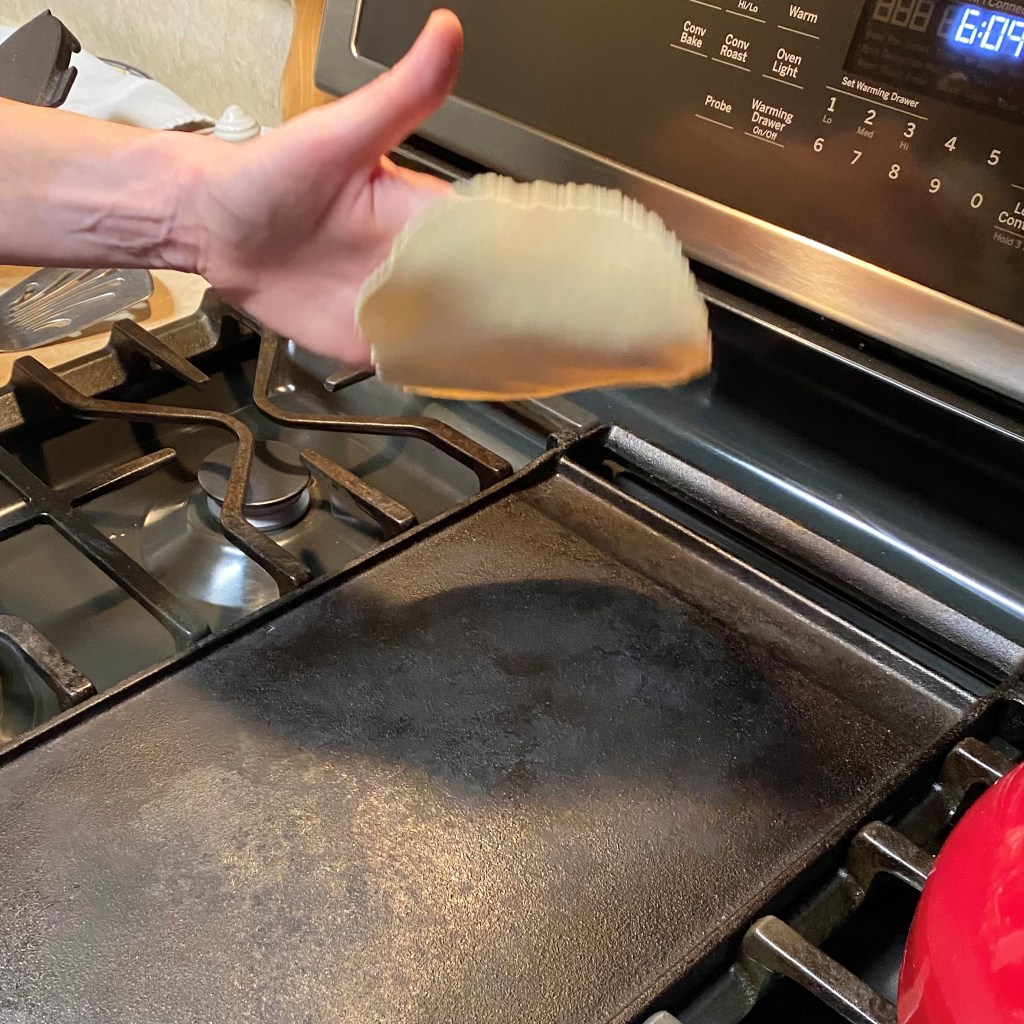
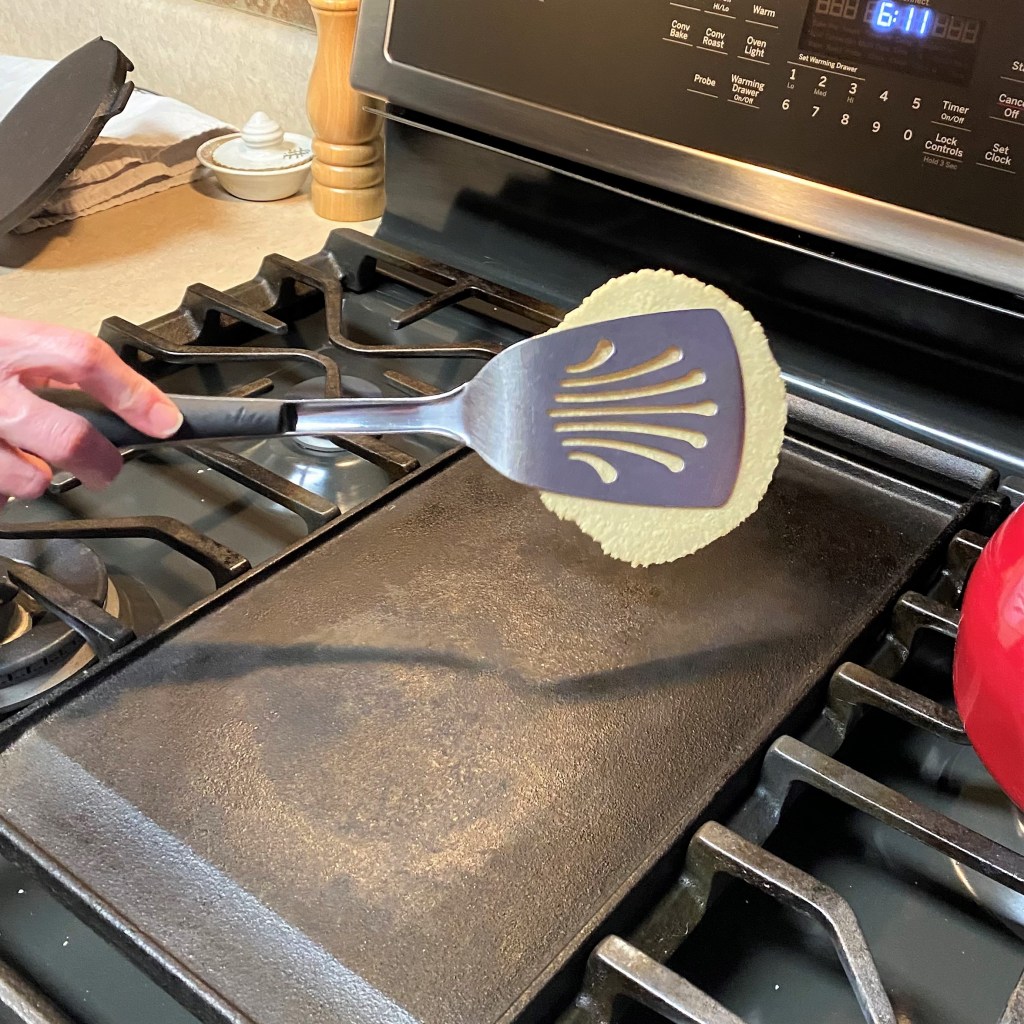
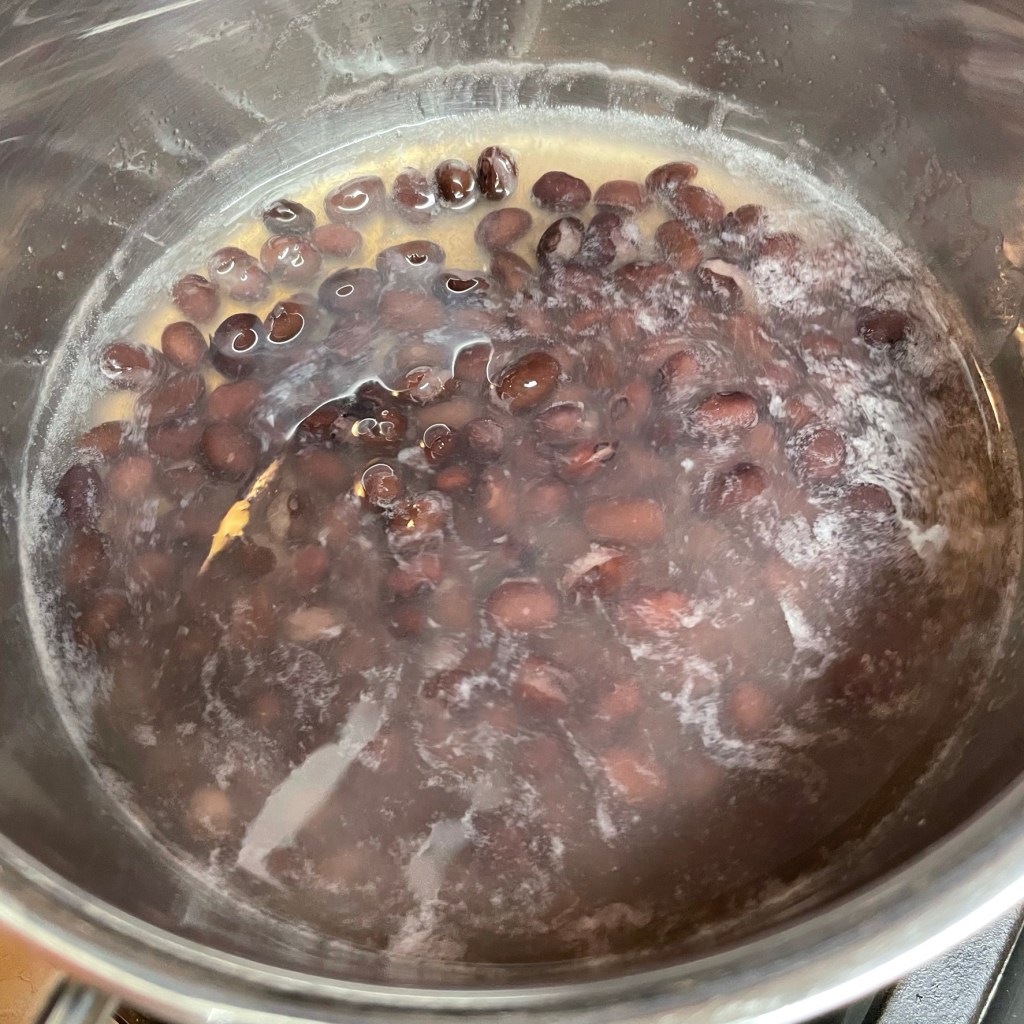
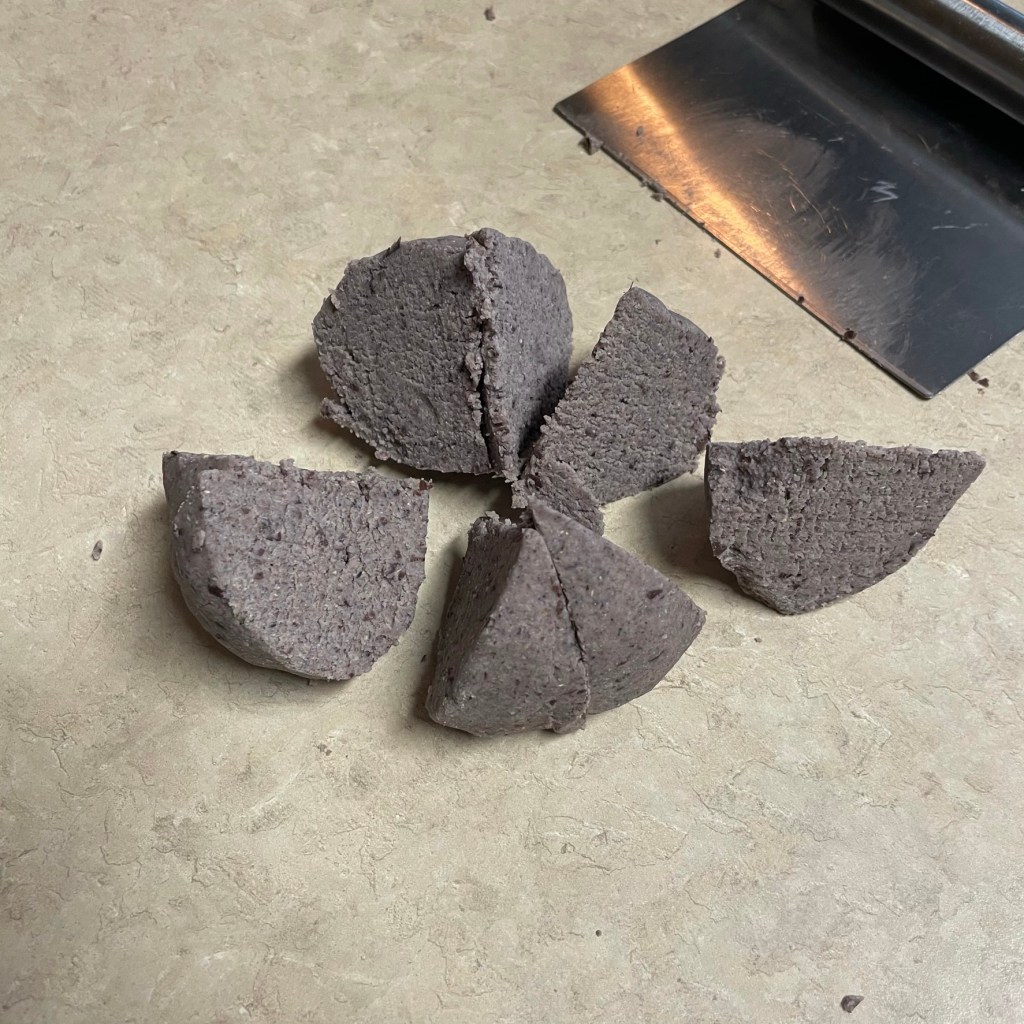
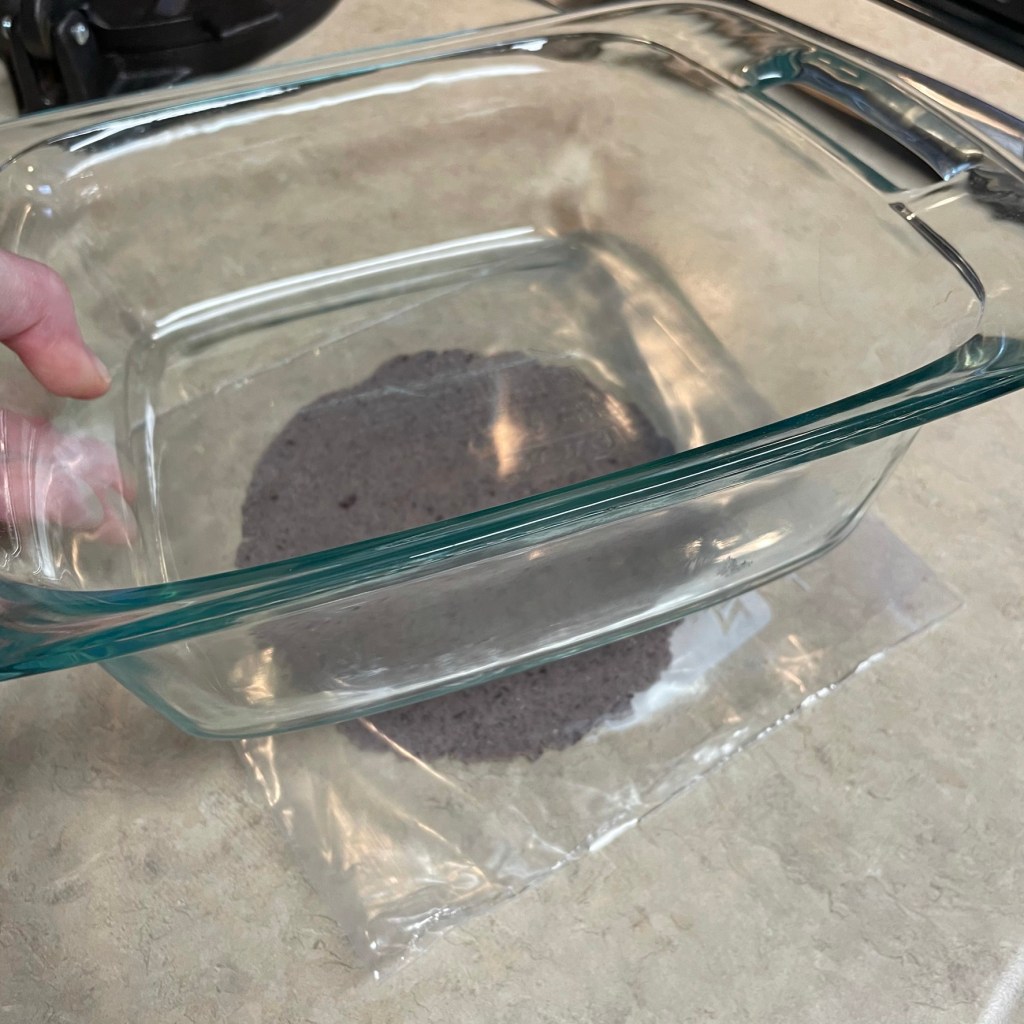
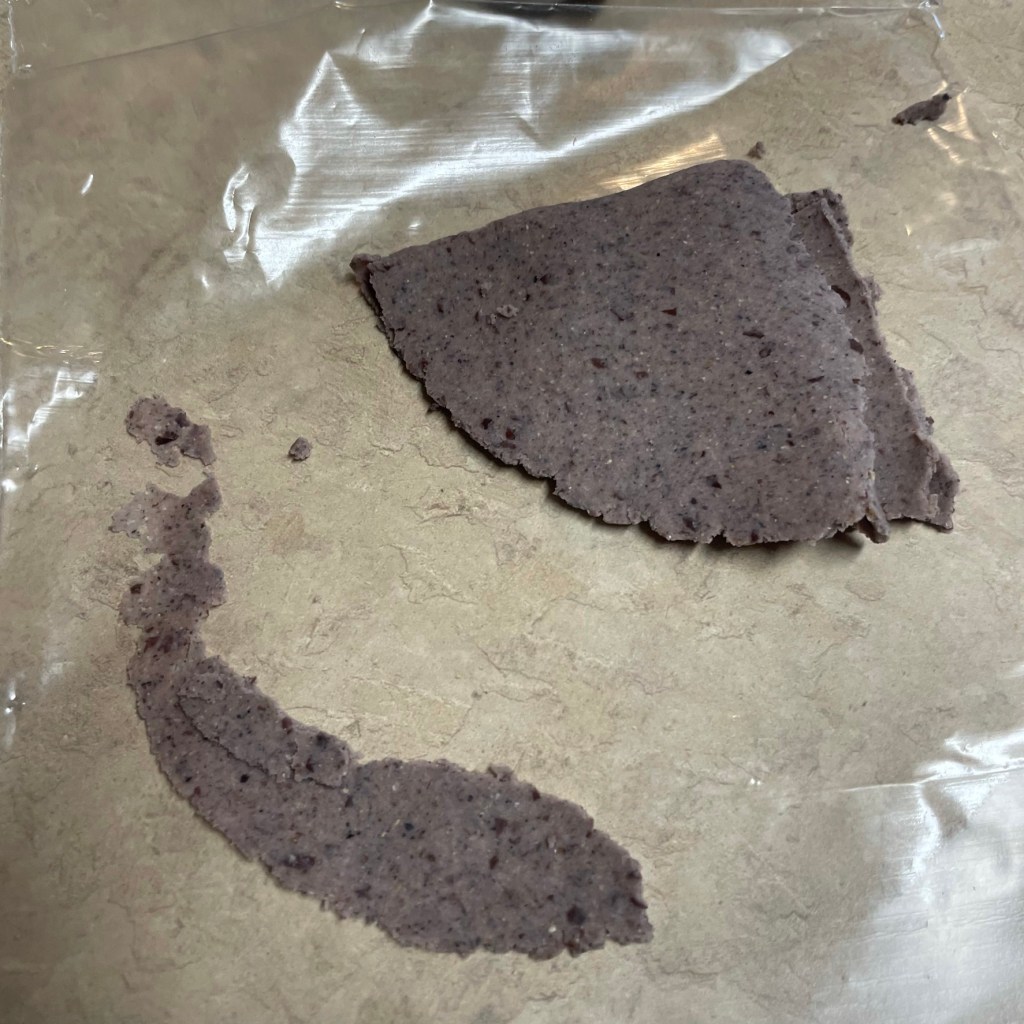
If you love corn tortillas and want to make them at home more regularly, I recommend investment in a tortilla press because it makes it so simple. I picked mine up in a specialty market that carries a wide array of foods and products for Mexican cuisine, and you can easily find them online, too. But what if you’re jonesing to make them right now? Here’s one easy way to do it, using a flat-bottomed glass dish as your “press.” For this batch, I used the blue corn masa harina, and I demonstrate how to incorporate another ingredient: black beans!


Once you get the hang of it, you’re good to go!

Tips for Success

Follow the same guidelines for measuring the masa harina as I offer for measuring flour—fluff it up, sprinkle over the measuring cup to overflowing, and then level it off. If you dig a measuring cup directly into the masa bag, you’ll end up with too much and the dough will be dry. The masa should be soft and loose in the measuring cup, not packed tight.

Use warm water, not cold, to mix with the masa flour. I’ve found that the warm water is more easily absorbed and helps to create better dough. Knead the dough until it is soft and smooth, which is usually only a minute or two, though longer kneading will not cause any harm.

Don’t skip the rest time after mixing the masa. This gives enough time for the masa to hydrate fully. If you rush this step, you may find the dough crumbly or sticky (or both) during pressing.

When you roll the dough into balls, it should hold together easily without sticking to your hands, and only showing slight cracks. Trust your instinct; if it feels too dry, wet your hands and knead a few more times. If it’s sticky, lightly dust it with additional masa flour, then knead and rest it again.

I have found a modified zip-top bag more useful than plastic wrap for pressing the tortillas. Use a freezer bag if possible, as it is thicker than a sandwich bag. Cut off the zipper top entirely, and cut down the sides, leaving only the bottom of the bag attached.

Shape the sections of dough into balls all at once, and then place one dough ball inside the zip top bag layers. Keep the other dough balls covered with a damp paper towel or plastic wrap so they don’t dry out. When placing the dough ball in the tortilla press, arrange it slightly off center toward the hinge side. Close the press and use the lever to apply gentle pressure. If the tortilla is noticeably thinner on one edge, turn it and gently press again to even it out. Until you get used to this process, it may help to make slightly thicker tortillas. If you are using a flat-bottomed dish to press them, press your hands on it in a rocking motion all the way around until the tortilla is about 5 inches across. It’s helpful to have a clear dish so you can see the progress.

Focus on peeling the plastic away from the dough, not the other way around, and accept that you may find the first few tries unsuccessful. Hold the plastic bag flat in one hand, and use the other hand to peel, keeping the plastic at a sharp angle to the tortilla. Don’t peel straight up or the tortilla will tear. If the tortilla falls apart, just scrape it into a ball and try again. There is no gluten in corn tortillas, so they will not get tough from extra handling. If the dough feels dry after a few failed attempts, wet your hands and knead it a bit.

The initial cooking of the tortillas should be on a dry skillet or pancake griddle. If you want to fry them later to suit a dish you are making, that will be a separate process. Think of it as a form of bread, which must be baked before it can be toasted or grilled.

Give your griddle or cast-iron skillet enough time to pre-heat, and plan to let your first tortilla be a test. It may take some practice to get the right temperature on your stove or griddle. Be ready to flip them when they look “right,” not by the clock, but aim for somewhere between 60 and 90 seconds.

Have a plate ready, lined with a clean kitchen towel. You’ll want to keep the freshly cooked tortillas wrapped as you complete the rest of the batch—for warmth and also for softness.

If you decide to use pureed vegetables to make flavored tortillas, start with a liquid mixture that is at least 50% water. Pureed vegetables such as spinach or pumpkin are wet, but there is also fiber in them that may change the consistency of the masa. I recommend making basic tortillas a few times to get used to it. As you gain experience making them, you will instinctively know what the dough should feel like, and how to best adjust ratios of other ingredients to produce fun colors and flavors. Here are a few of my favorites: spinach, black bean, pumpkin, cilantro, roasted garlic.