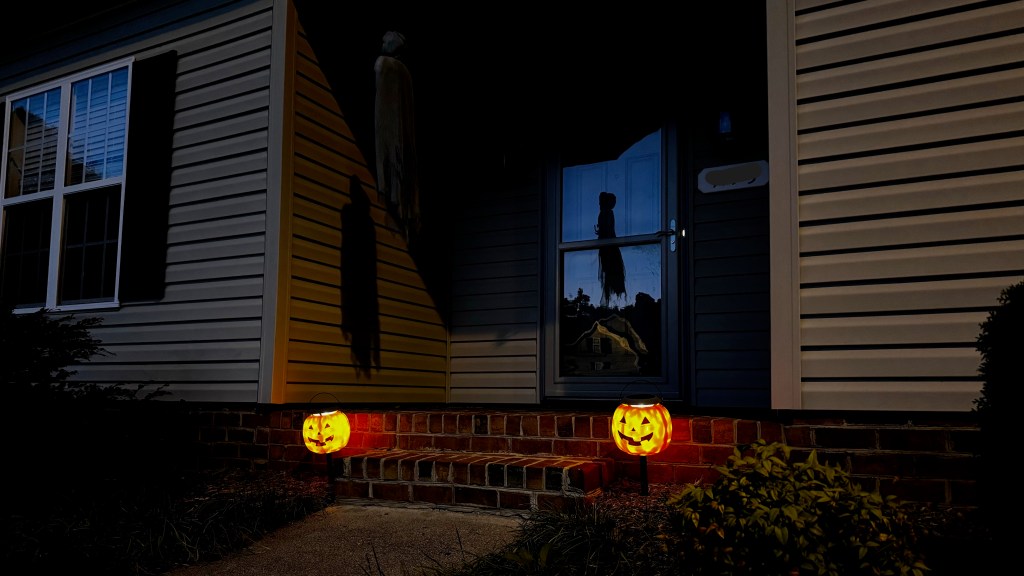
It’s October, and that means that my front door is now being guarded (or is it watched?) by Mr. Bones, the spooky, gauzy dude that my husband has placed on our porch every October since 2007. He gives me the major creeps because every time I open the front door, he’s staring at me. It doesn’t matter which way we hang him on the nail of our entry, either. He turns on the breeze to stare me down. But in his defense, he was here long before me, so I adjust. 💀
Could you not, Mr. Bones?!
Last year, in my attempt to entice more than five trick-or-treaters to our house for Halloween, I added to the theme with the fun DIY project that I’m sharing today. This cute little decoration was inspired by something I saw on Pinterest, but it was unclear who actually made and posted the lanterns. That’s one of the things about social media— a great idea can be shared by someone who doesn’t understand the settings of their account, and sometimes it ends up being just a photo with no accompanying information. What can you do?
But in this case, it was clear to me that the project involved plastic pumpkin candy buckets and solar lights, and I figured, “how hard could it be?” Turns out, it wasn’t difficult at all.
The pumpkins make Mr. Bones look even more creepy.
What materials do you need for a DIY solar jack o’lantern?
This kid-friendly project requires only the plastic pumpkins and some solar yard lights sized to match the top opening of the bucket. My lights were nothing special, just some off-the-shelf items I picked up at Lowes, and I found the pumpkins in the seasonal section at Walmart. Naturally, you want to be sure that some light will shine through the pumpkin buckets before you cut them, and you can easily test this by holding a bucket upside down over a lamp bulb in your home. If the bucket is translucent enough to let the light shine through, you’re good to go!
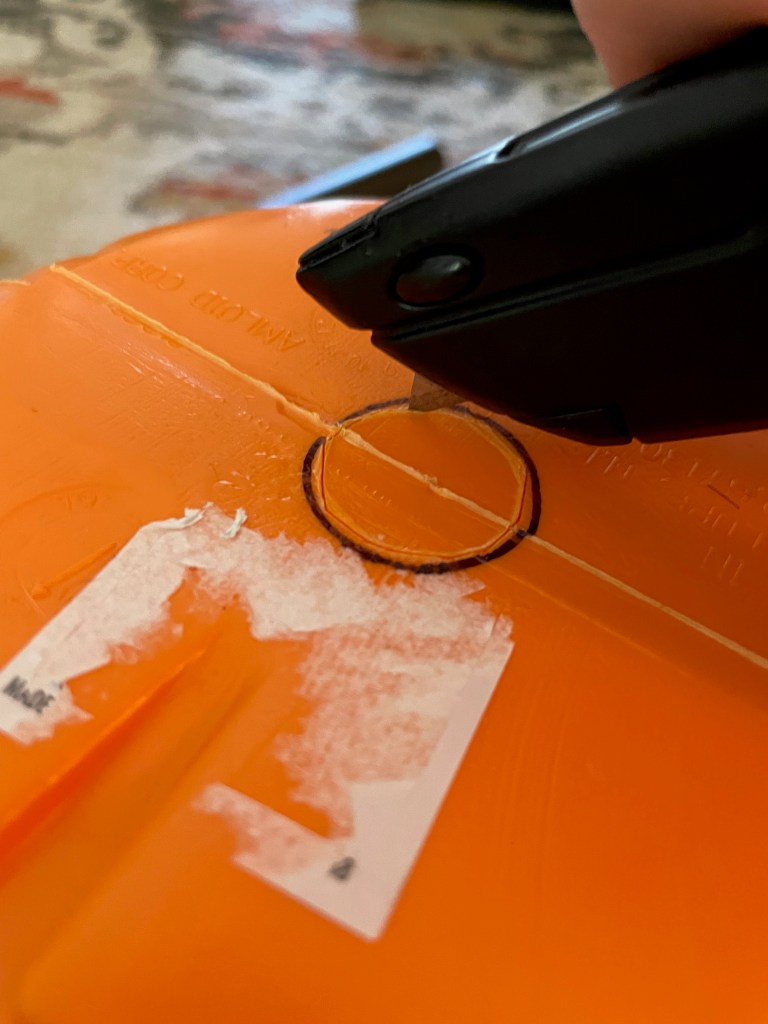
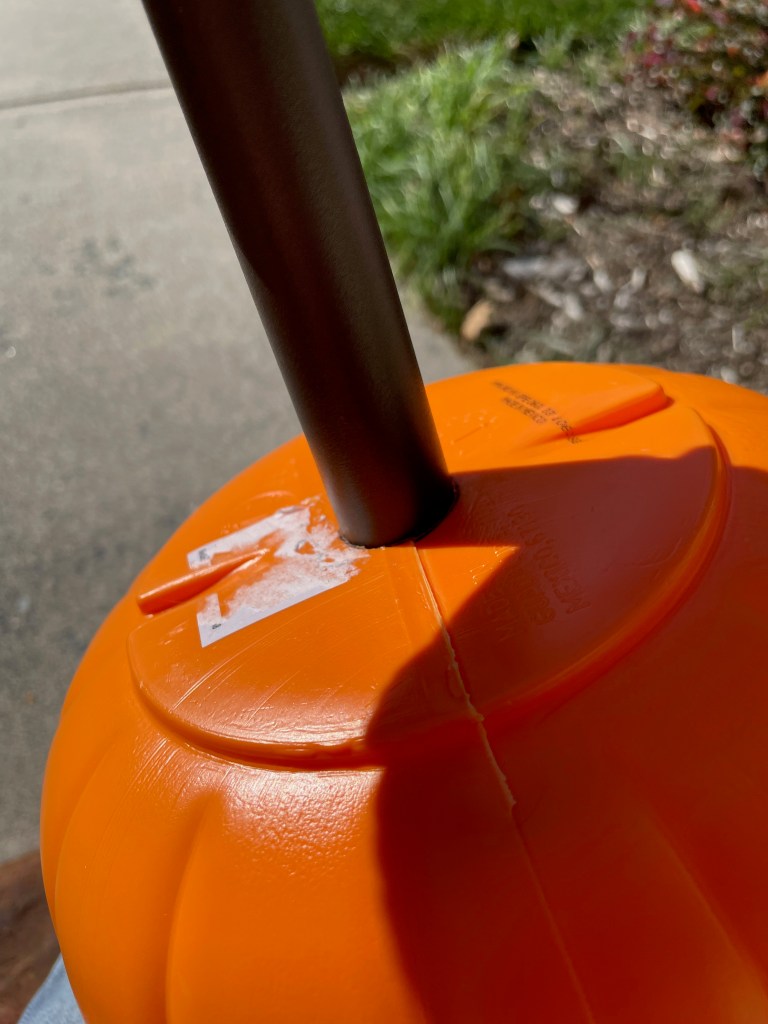
A couple of easy tools are necessary for this project, including a pen (for tracing around the solar light stem onto the bottom of the pumpkin) and either a utility knife or a cordless drill fitted with a hole drill bit the size of your circle. For safety sake, only an adult should tackle this part of the project. I used a utility knife, and to minimize risk of injury, I adjusted the knife so that only a small point of the blade was exposed.
I had the most adorable helper! Nadia was only about 5 months old when I made these.
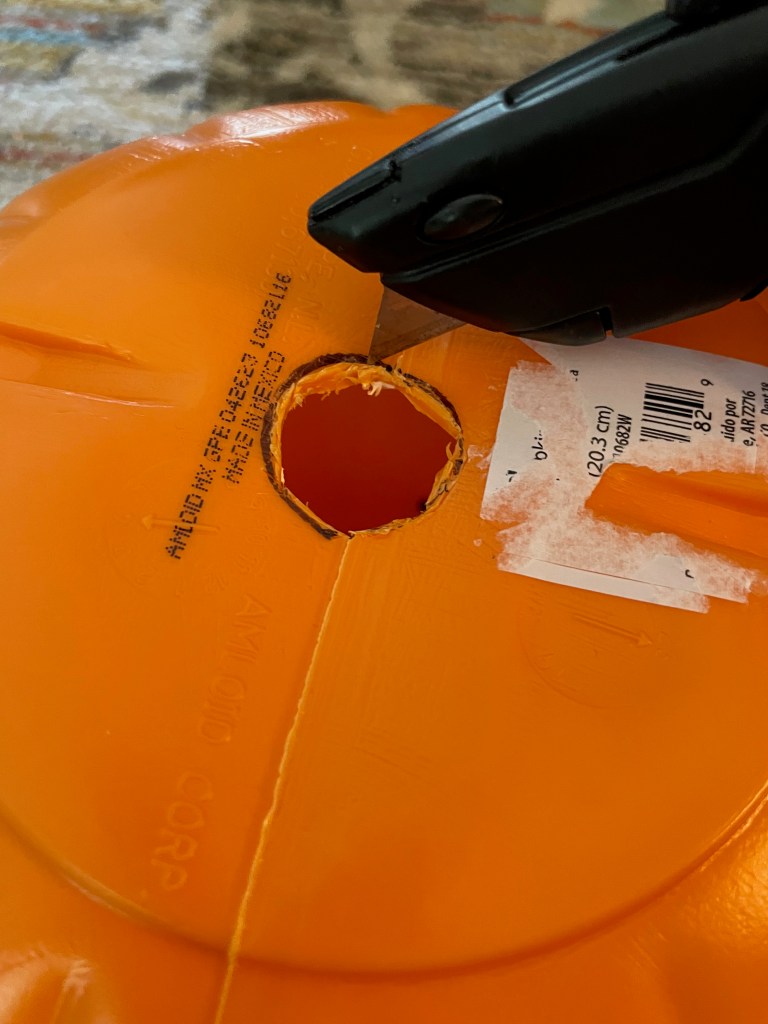
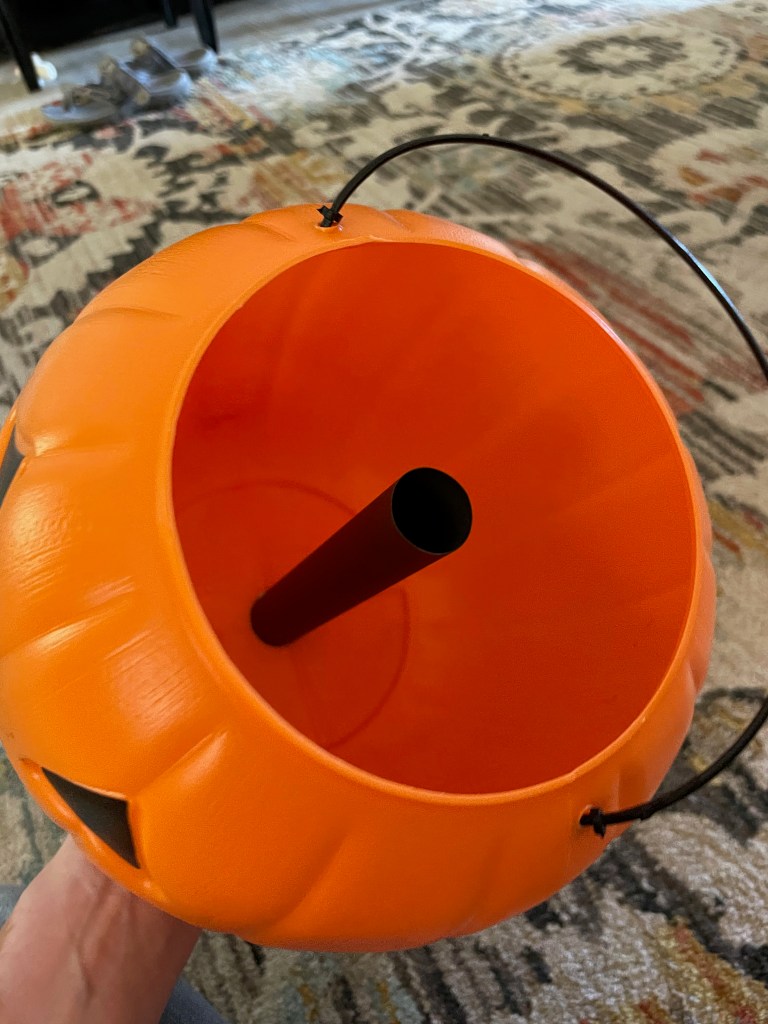
The first pass with the knife was only to “score” the plastic, and I made subsequent passes to make a deeper cut until the circle could be punched out. A quick test with the solar light stem, and adjustment if needed, and then reassembly of the solar light.
For a snug fit, try fitting the light stem with a heavy rubber band.
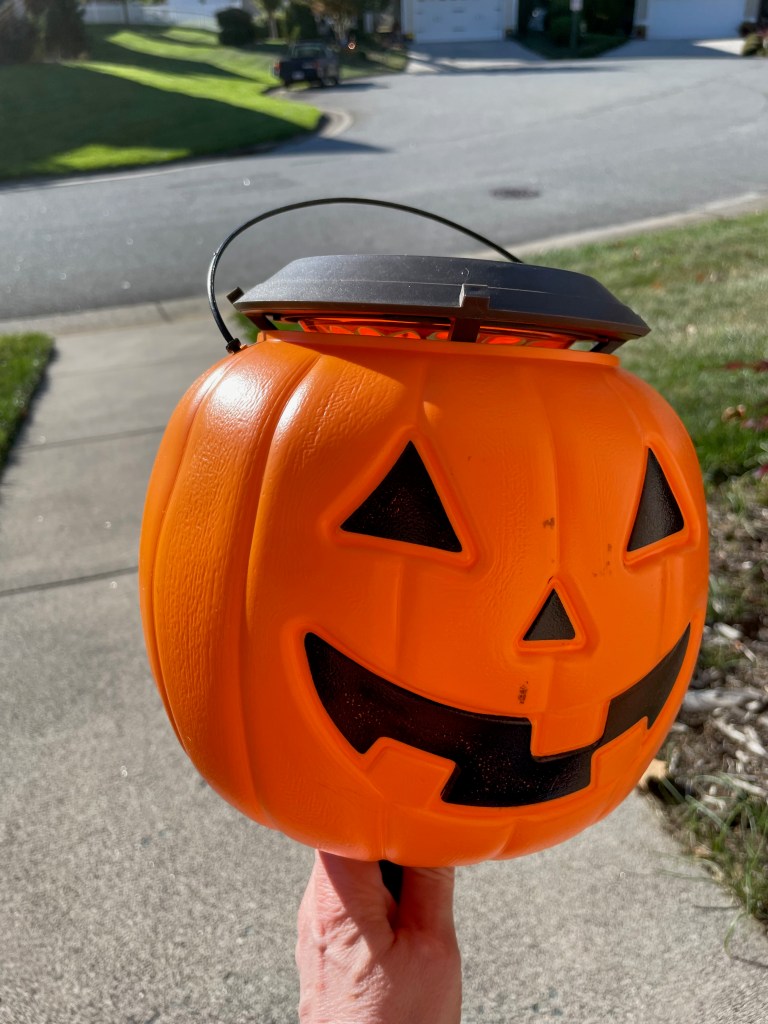
The solar light cap should be slightly larger than the top opening of the pumpkin bucket, so that rain water does not collect inside. Mine look like the pumpkins have a little hat! The pumpkin buckets wanted to slide down the lamp stems after a few minutes, so I used a couple of heavy rubber bands— the thick kind that grocery stores use on broccoli— to snug around the stems, keeping the pumpkin in place all month long. Another fun thing about this decoration is that you can remove the pumpkins from the solar lights after Halloween and set them aside for next year.
Please ring our bell. Plenty of candy inside!
My solar lights have a slight “bubble” texture to them, so the pumpkins also have a dappled glow. I can’t say that the solar jack o’lanterns made a difference in our trick-or-treater turnout— we still ended up with a mountain of leftover candy, as usual— but I guess changing neighborhood habits can’t be as easy as this little project.
Nobody ever accused me of having a green thumb, and when I made the decision last fall to rip out what was left of my sad, deer-raided vegetable garden, I knew that I would miss a few things. There is a certain joy in taking twenty steps out the door and returning with zucchini so fresh that the stem is still oozing its sap, or tomatoes that are perfectly ripe and juicy, ready to be sliced up for a sandwich or salad. But for me, the bad things about gardening outweighed the good, and I just got too frustrated with the weather, the weeds, the vine-boring pests and the resident deer. I don’t regret leveling the thing and planting grass. I can buy myself flowers (and vegetables) at the farmers’ market for a lot less hassle.
You can’t even tell a garden used to be here!
The thing I miss, though, is the satisfaction of watching something grow under my watch, and for a fix in that department, I present to you my chair garden!
When I dragged this abandoned chair to the checkout of a local consignment store a few years ago, my husband, Les, thought I was nuts. What was I gonna do with just one chair, especially with the hideous striped fabric on the padded seat. But it was a steal at seven dollars, and I had a special plan to turn it into something that was part art, part garden.
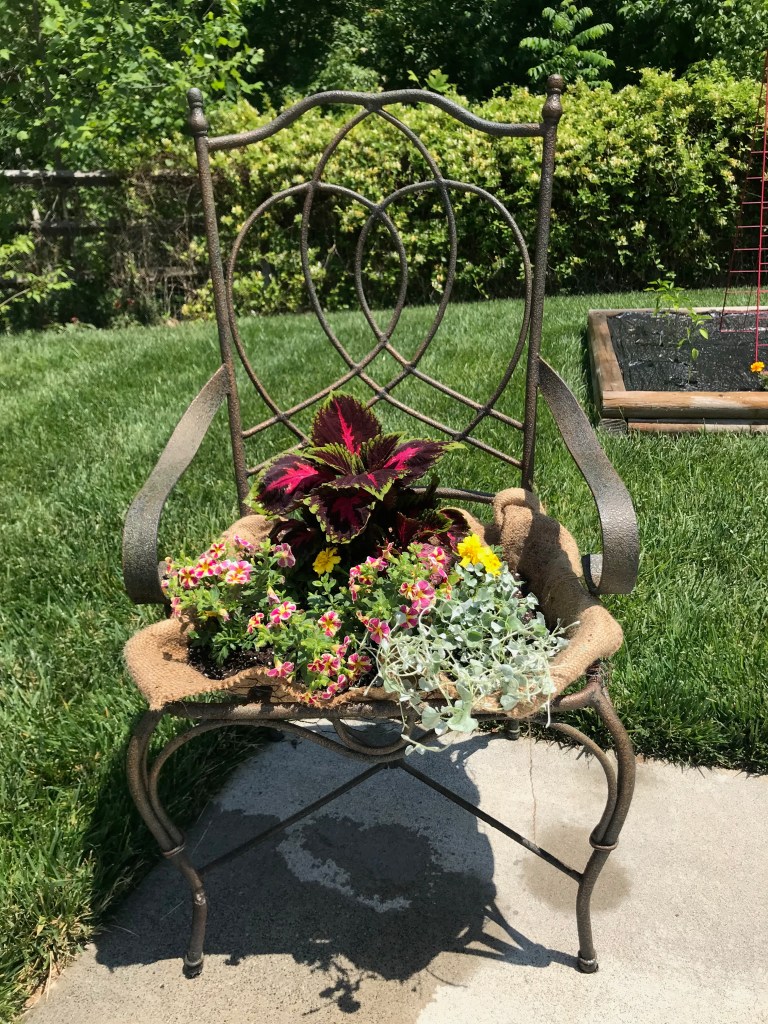
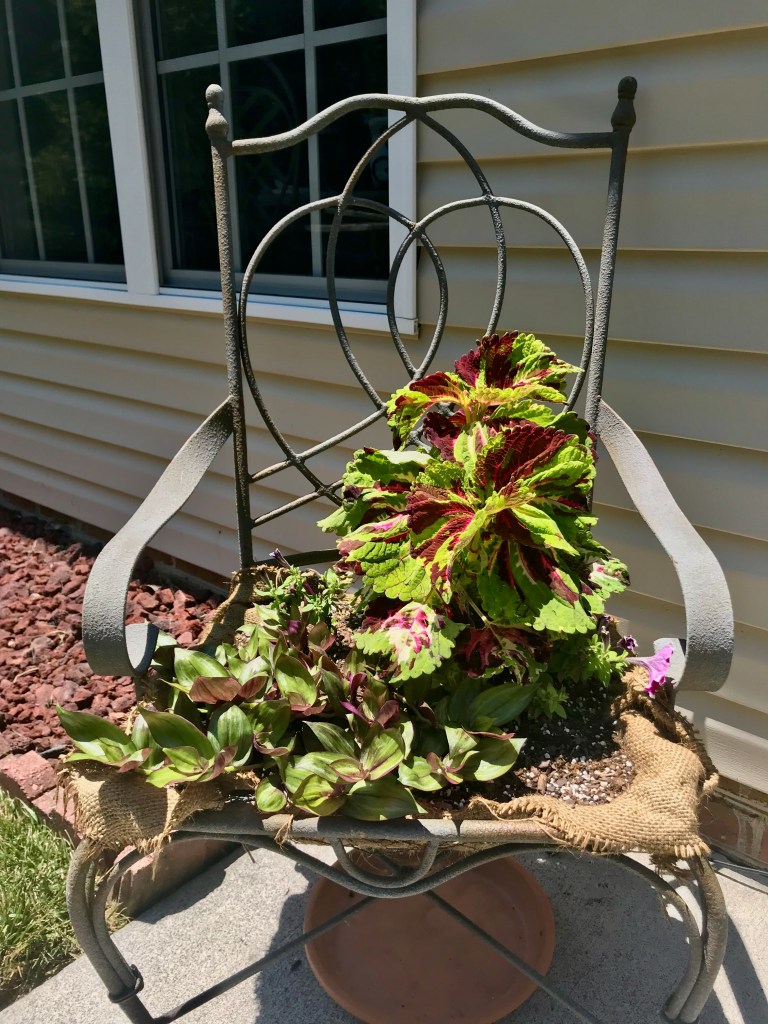
My chair garden in 2018, 2019 and 2023. Which is your favorite?
What I realized as I was looking back through my photos is that during the height of COVID, I didn’t bother to put my garden chair together, and that coincides with the years I was trying so hard to keep a vegetable garden. But I’m back to it this year, and I thought it would be fun to walk you through how I made it. You know, if you’re feeing creative and by some chance you happen upon a single, seven dollar wrought iron chair at your nearest consignment shop.
Prepping the chair
If you’re going to do this as an outdoor piece, be sure you use a very solid chair that won’t easily topple in wind or be otherwise ruined in bad weather. This chair is really heavy, especially when fitted with a few pounds of potting soil and plants. Remove the seat cushion by loosening the screws on the bottom. Next, you need something to serve as a sling or hammock to hold a plant liner and soil. We had a scrap piece of chicken wire in the garage (from what, I don’t know), and I hooked that around the iron frame of the chair to serve as support.
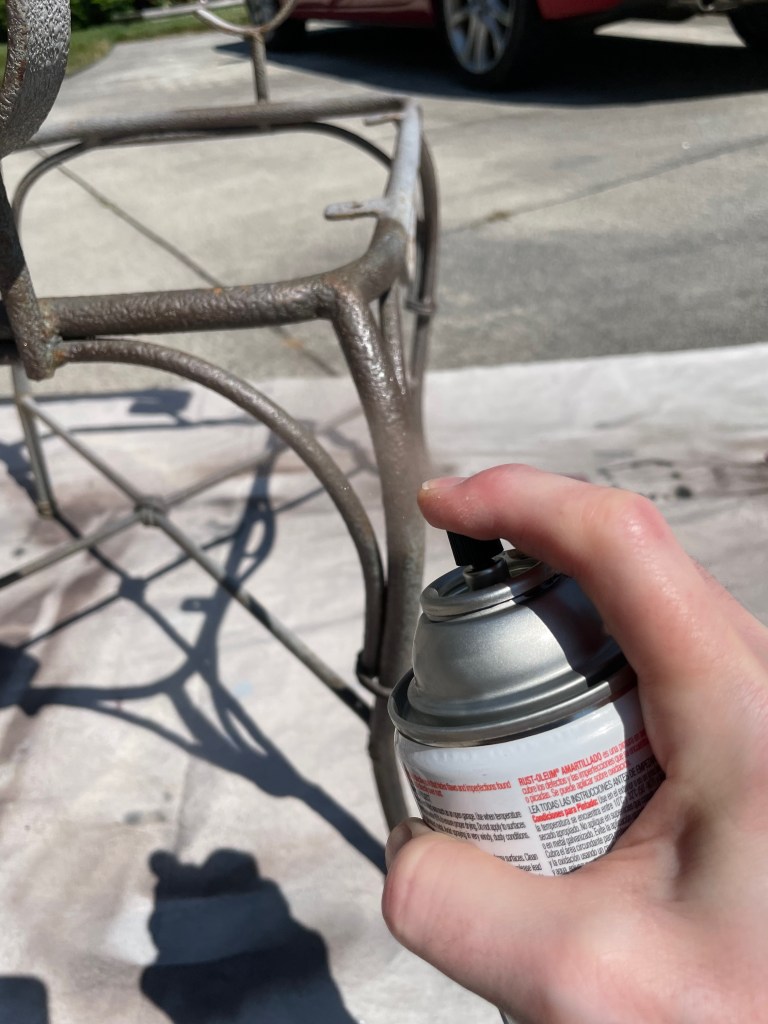
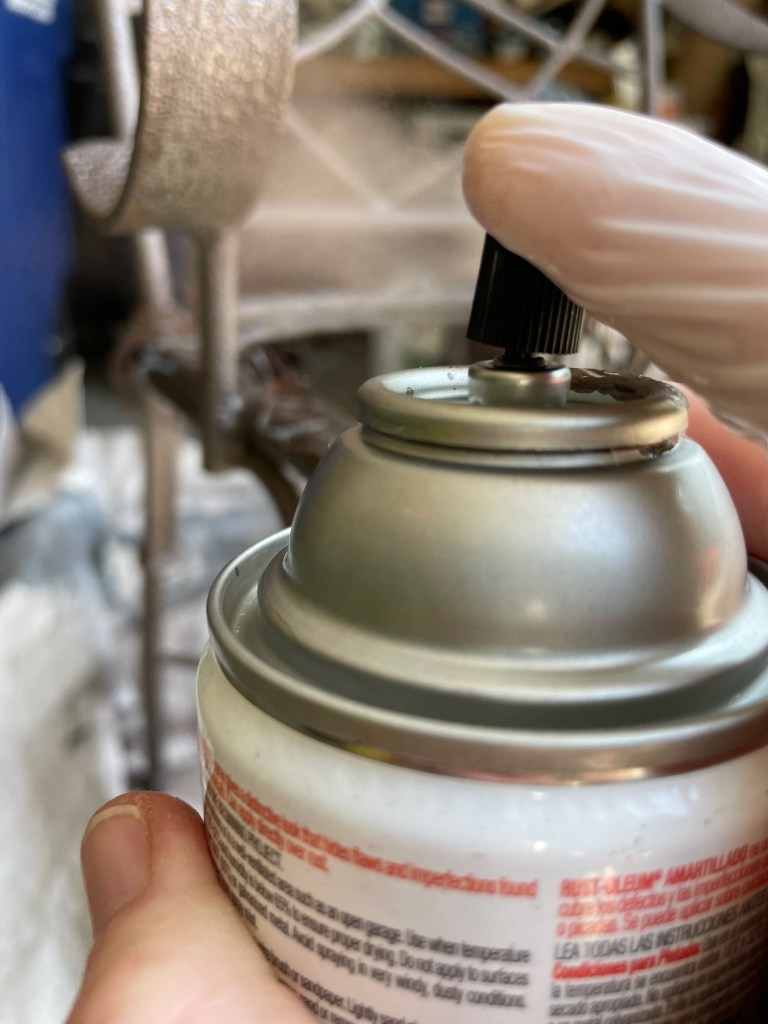
My chair’s makeover began last summer, when I applied a solid coat of Rustoleum spray paint, for a protective coating against the harsh and humid southern summers. I washed and dried the chair first and used a bit of sandpaper to knock off random rust buildup, and then I sprayed paint onto the chair from every angle to ensure good coverage. After it dried, I looked at it in different light and retouched a few areas that I had missed the first time.
When using spray paint, it helps to examine your piece in different light and from different angles.
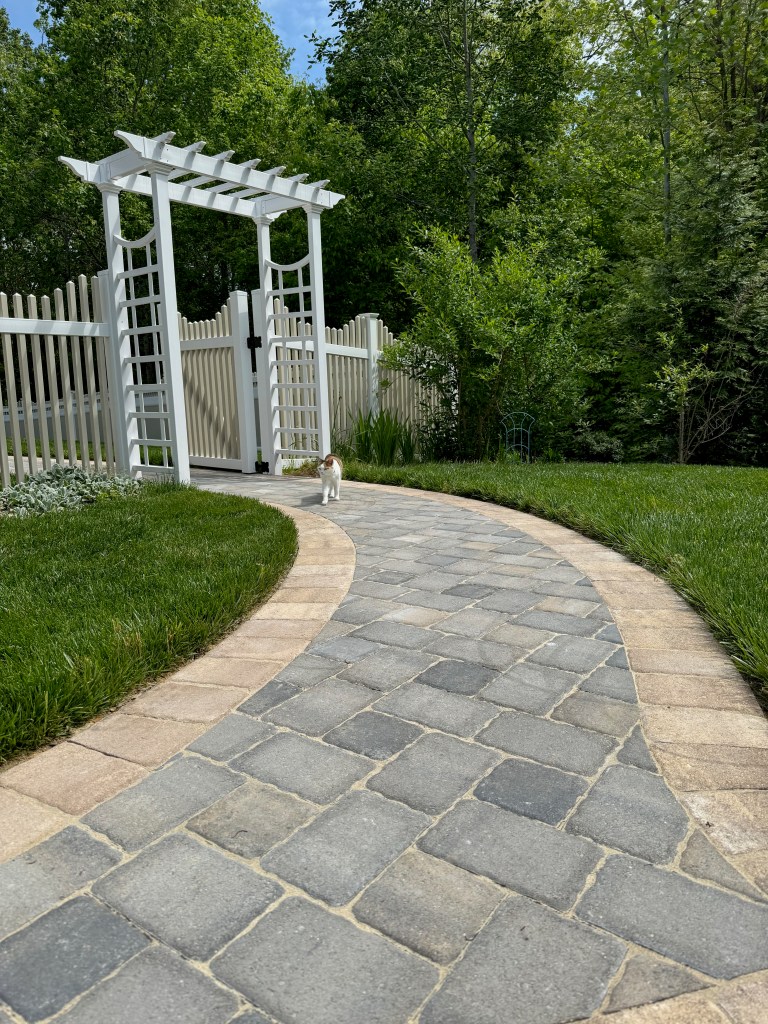
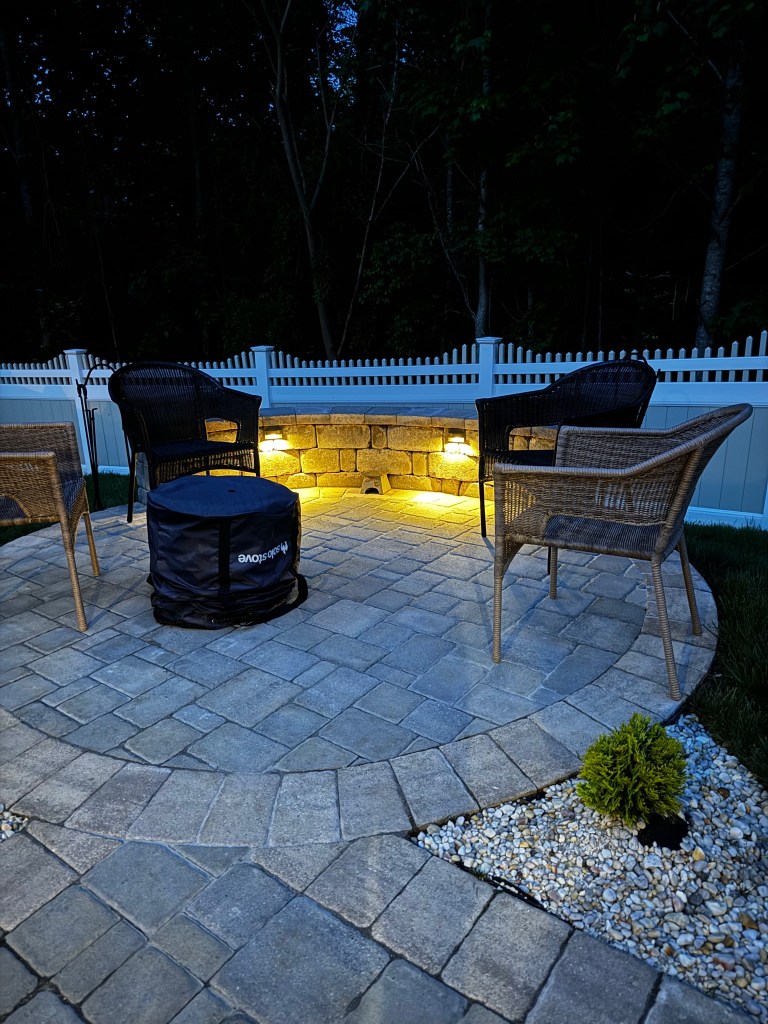
My vision for the chair this year was to complement the theme we are building for our newly remodeled patio and backyard space. Since last July, we’ve upgraded our patio with a paver border, round seating area and sidewalk. We also installed a new fence that matches the house, plus professional lighting and numerous shrubs and plants to pretty up the space. We love it!
This is a terrific upgrade from the plain old concrete slab we had last year. Taz agrees!
There’s one bummer spot near the garage end of the house where the utility lines all run underground, so planting there is not an option. I thought, why not make use of my garden chair to add dimension and interest to that corner? So I gathered up supplies and handed Les my phone for pictures. Here we go!
The basics for container gardening
For a small container such as this, no fillers are necessary in the bottom of the planting vessel. Even with the chicken wire hanging below the seat level, there’s only room for about six inches of soil. For a very deep container, it’s recommended to put some kind of filler material in the bottom, both for drainage and to limit the expense and weight of so much potting soil. Rocks are not a great option, unless it’s a smaller container. Use styrofoam packing peanuts, empty starter pots, smashed soda cans or any other lightweight material that allows air and water to move through. If you will be planting herbs or any other edible plant, be sure all your materials are non-toxic. Whatever you’re using as a container for a garden, it’s important to have some method of drainage at the bottom; without a place for water to escape, your plants could succumb to fungus.
I got mise en place, just like in the kitchen! 😉
Speaking of soil, you definitely want potting soil designed for containers, as this variety contains small granules of absorbent material for moisture retention. A container garden can dry up quicker than something planted in the ground, so this is important. You might even consider cutting up a cellulose kitchen sponge into pieces and mix them into the bottom layer of soil for the same purpose. The sponge pieces would take in extra water for slow release into the soil later when the plants need it. For a “container” as small as my chair, this wasn’t necessary.
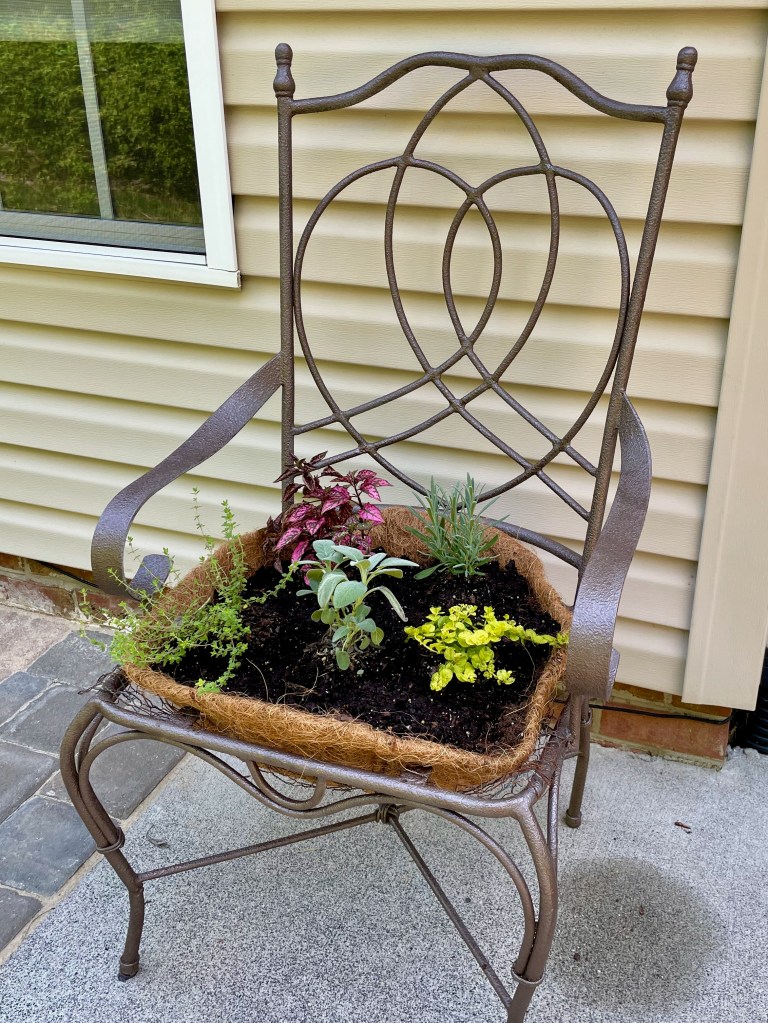
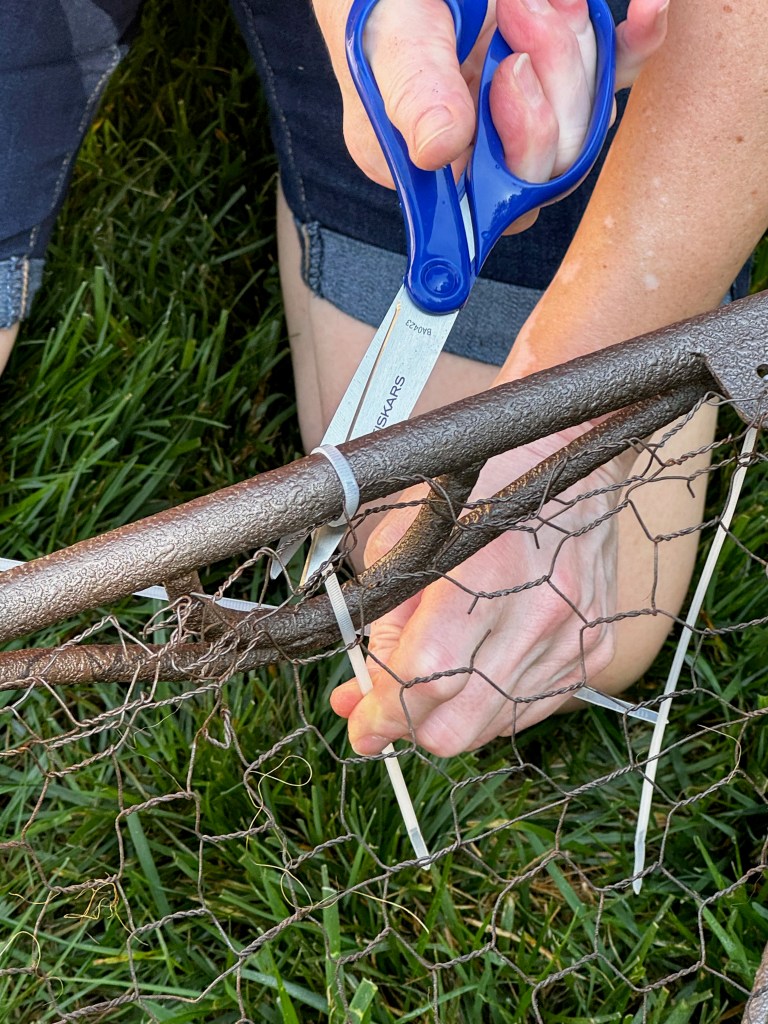
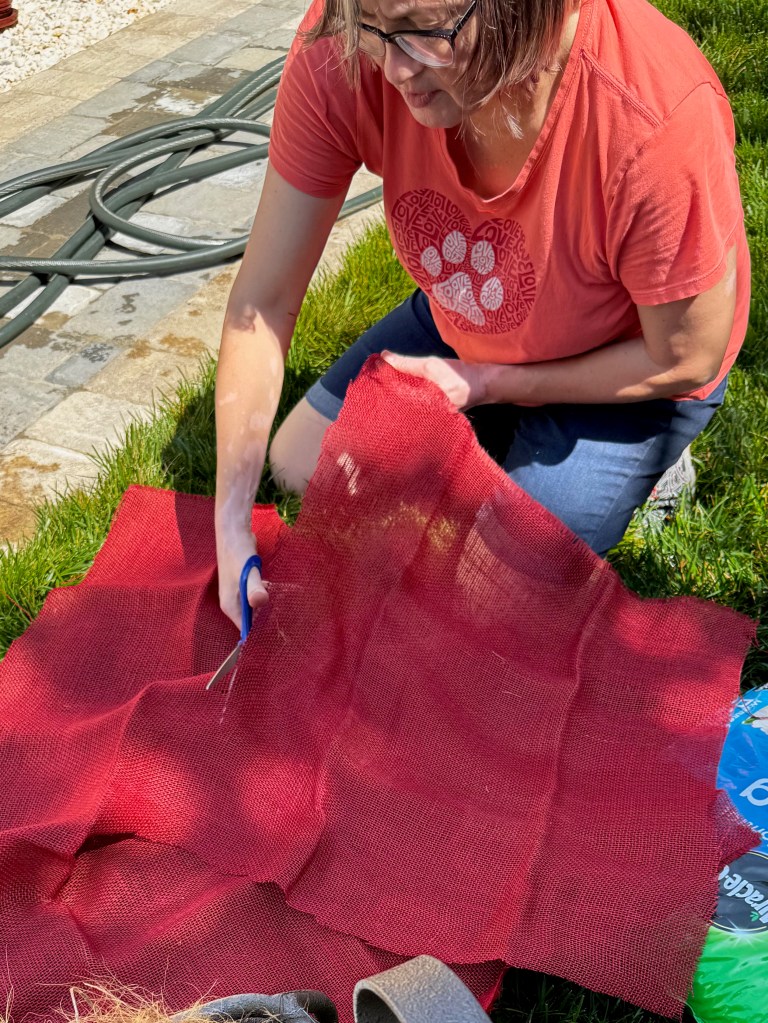
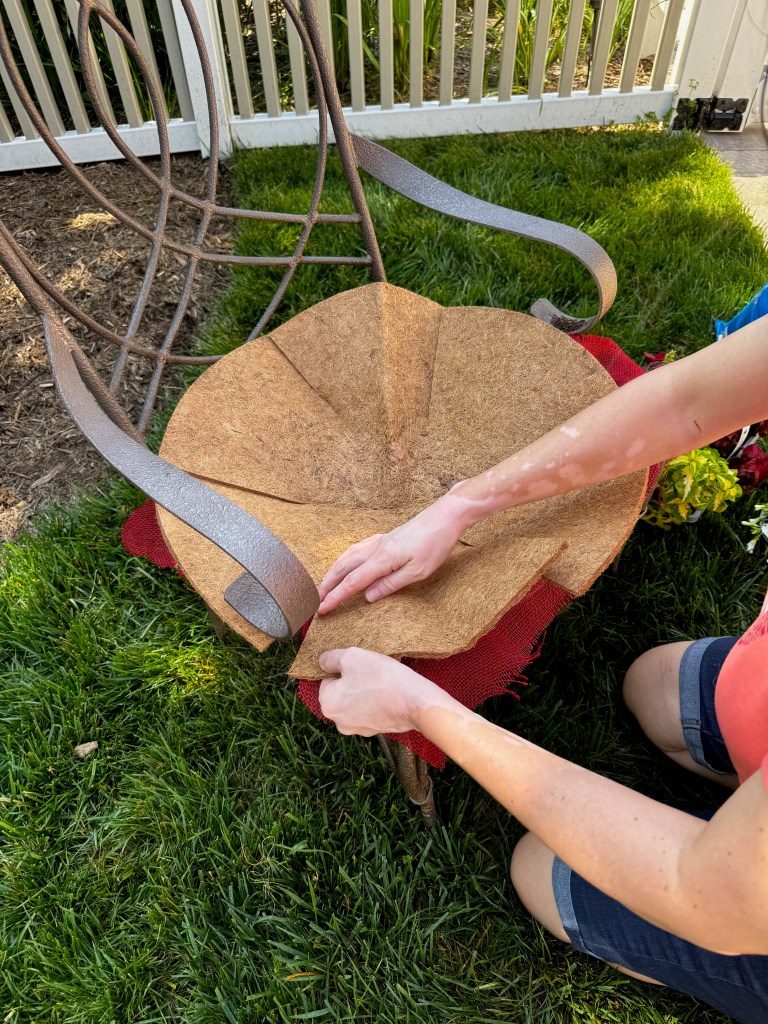
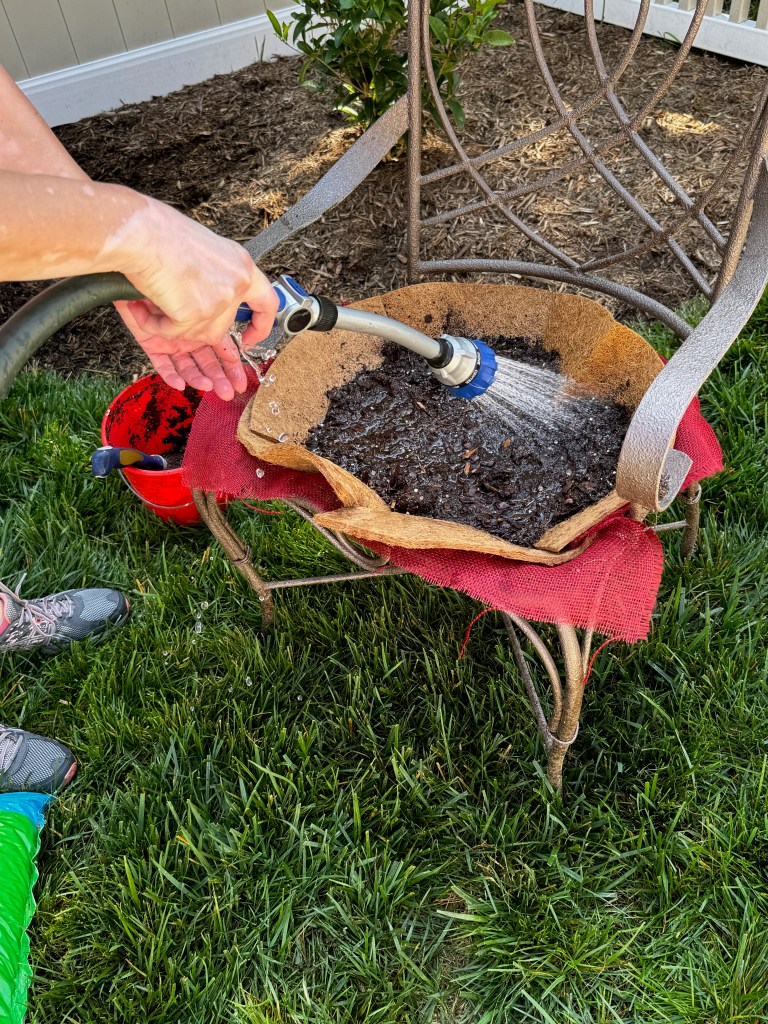
I fortified the chicken wire sling this year with zip ties, to ensure that things stay put, and I cut off the excess length of the ties. Next, I cut a piece of brightly colored burlap fabric to complement the color of our patio umbrella and laid it over the chicken wire. This alone would not be enough to hold the potting soil, though, so the next layer was a flexible cut coco liner that I found online. In previous years, I had only found the ready-made round liners that are designed for hanging baskets, but they never quite covered the full chicken wire. I found these pre-cut liners a better option for the shape of my chair seat. I added potting soil, mixing in water from the hose after every few handfuls to give my plants a good start.
The red burlap has faded quickly; I’ll find a more durable solution next year. The shape-to-fit coco liner was awesome!
Choosing the plants
There’s a simple rule of thumb for a striking container garden; you need a thriller (one or two plants to stand tall and steal the spotlight), a spiller (one that trails or falls out of the container) and a filler (one that spreads throughout the garden as it grows). Choose colors and textures that contrast, but complement one another. Most nursery plants come with a tag that indicates sun or shade needs, mature height and watering requirements. Pay attention to those as you select your plants. The corner where my chair will go gets a few hours of late morning sun, and is in the shade by 1:30 in the afternoon, so I had plenty of options.
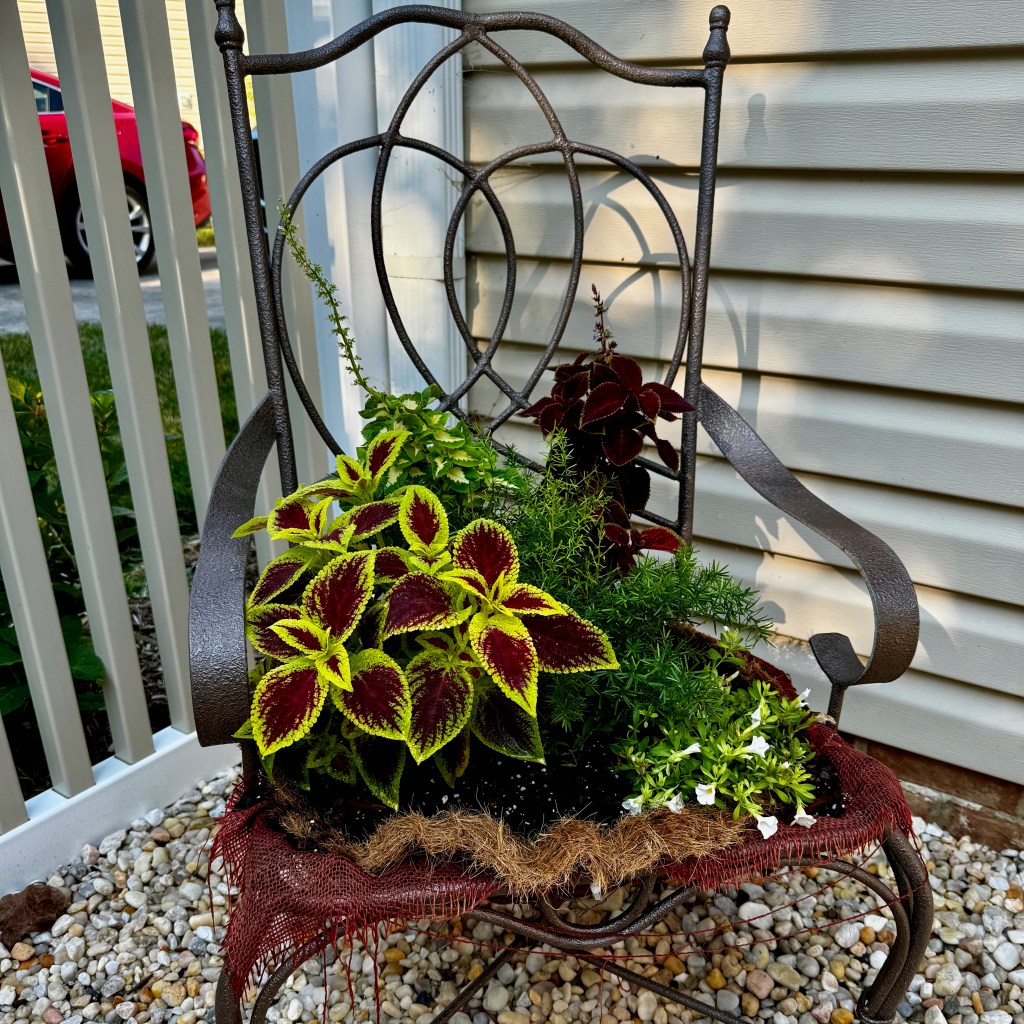
Almost every year, a coleus has been the thriller plant of my chair garden. I love the rich hues of coleus, and I’ve been lucky to find many varieties of it at my local nursery. My spillers have been everything from creeping Jenny to wandering Jew and variegated thyme. For fillers, I’ve chosen mostly flowers and herbs, including petunias, sage and calibrachoa, which is a favorite because it comes in a variety of colors, the blooms are small and plentiful, and it also trails a little bit. I used three coleus of different sizes this time around, filling the space with an asparagus fern, and using a white calibrachoa as my spiller (still waiting for it to spill, though).
Arranging your container garden
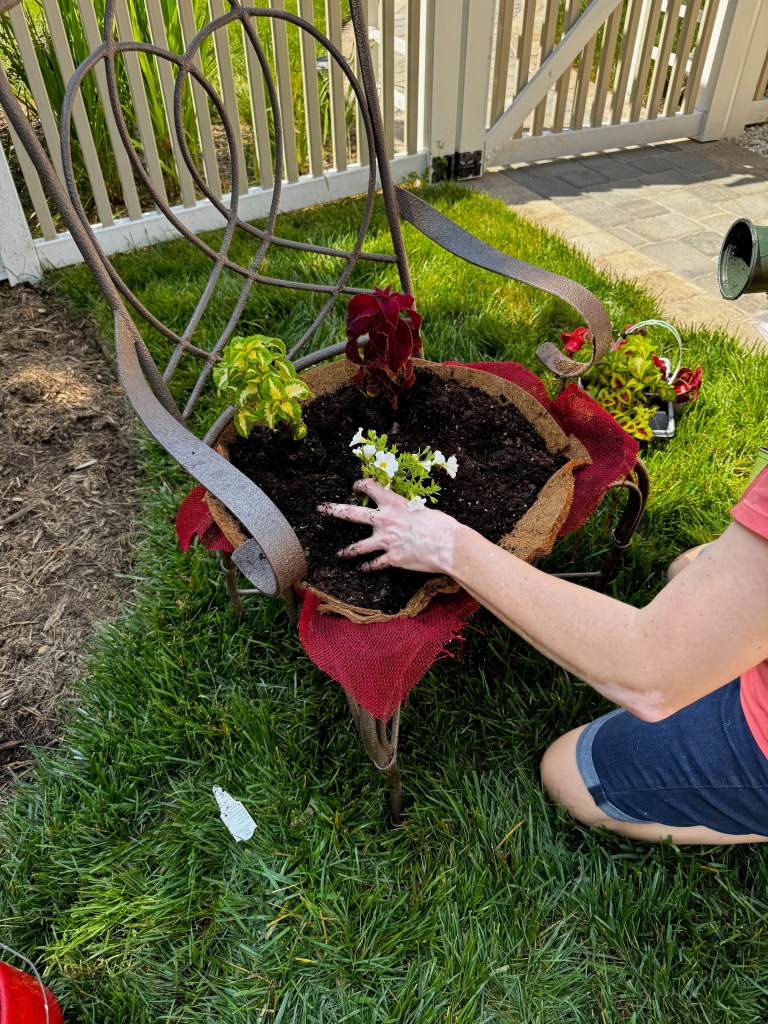
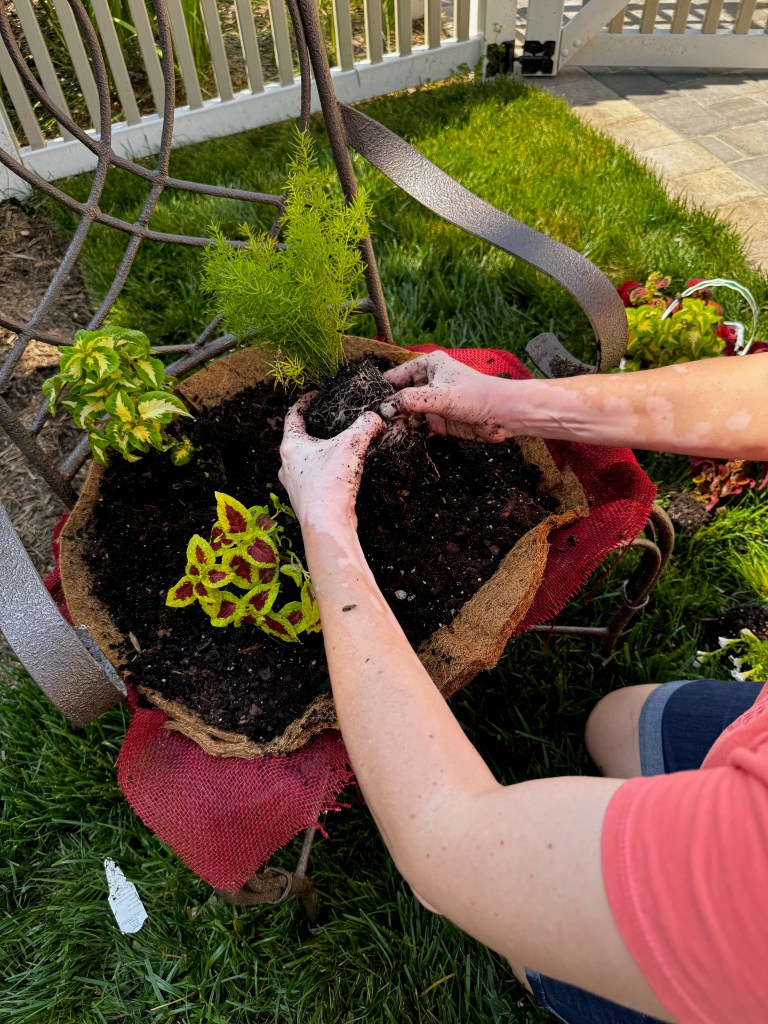
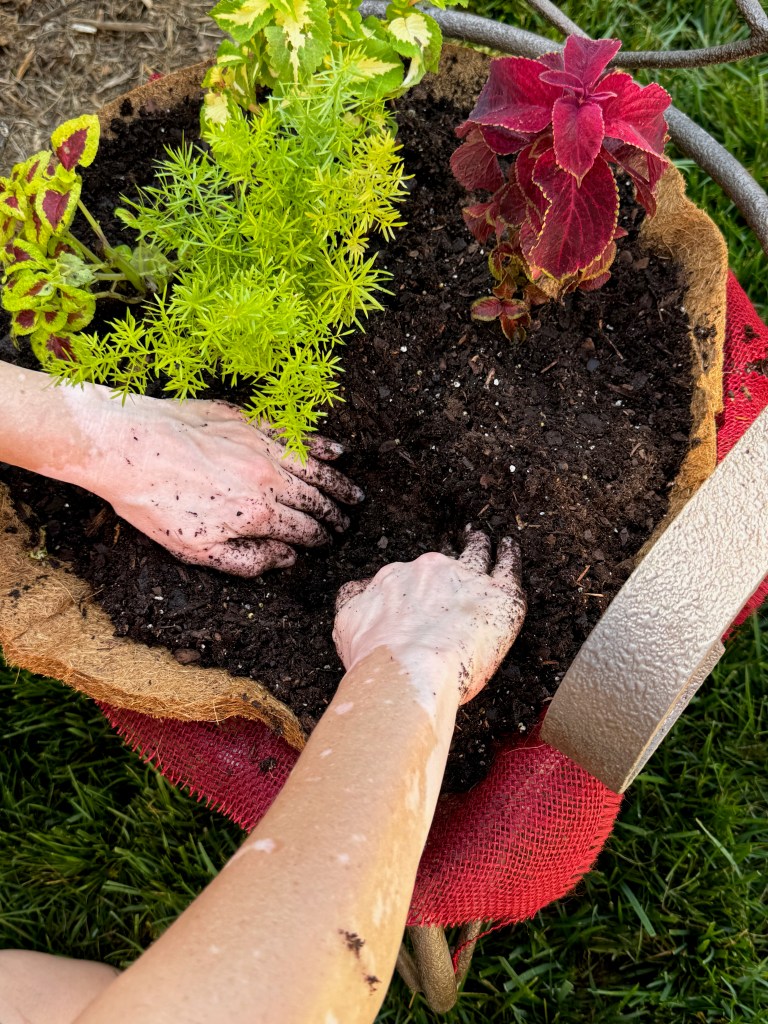
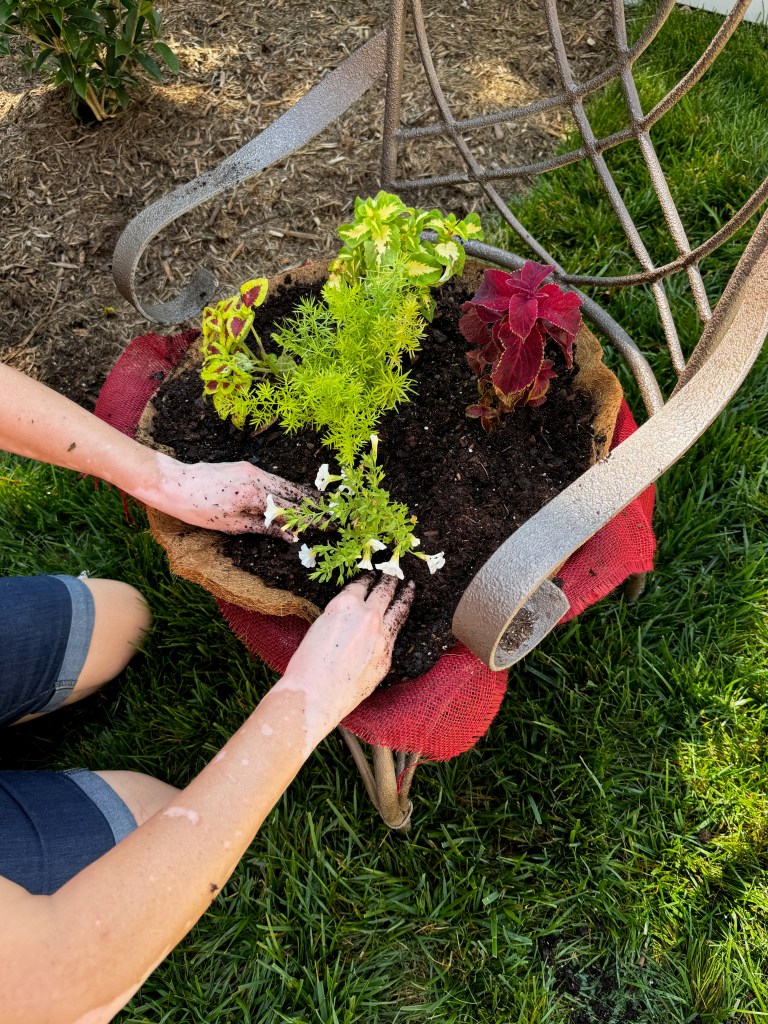
It’s fairly obvious that you want your thriller plant to be the center of attention, but that may not mean the center of the container garden. Consider the shape of your container, and whether it will be seen from all sides or only from one angle. For my chair, which will be positioned in a corner, it makes sense to place the thriller near the back; Asparagus fern, which I’ve never grown before, went in the center, a smaller variegated coleus in the front corner, and the white calibrachoa in front on the other side. Position them a few different ways until you achieve the look you want, and then make a large enough hole for the plants, watering thoroughly for each one.
Try different arrangements until you find what you like. Be sure the soil is moist so your plants adjust easily to their new home.
As a final touch, spread extra potting soil over and around all the plant bases, even to the point of heaping, as after some time (and rain), the soil will settle. Our garden chair looks great in its new corner spot. Now, who has ideas for hiding all those ugly utility boxes? 😂
Tips for success
My chair garden has had varying degrees of success, determined by my choice of plants, location of the chair, attention to watering and, in general, the weather. Do your best to keep the soil watered as needed— gently, so that you don’t displace the soil— and if it gets very dry, don’t give it a flood of water all at once. Place ice cubes across the top of the soil and allow them to melt, giving the garden a slow watering before you pour water onto it.
If you are reusing a container from last year, give it a thorough cleaning with soap, scrubbing with a brush as needed to remove debris and any fungus that might be lingering from previous plants. Let them dry in the sun before prepping and planting for the new season.
Choose your garden’s location carefully before you begin, especially if your container is heavy to lift, as it may be best to build the garden in place.
Most of all, enjoy your handiwork! Keep good notes for what you’d do differently next time. As with cooking, there’s always something new to learn and experience is the best teacher!














 Comfort du Jour