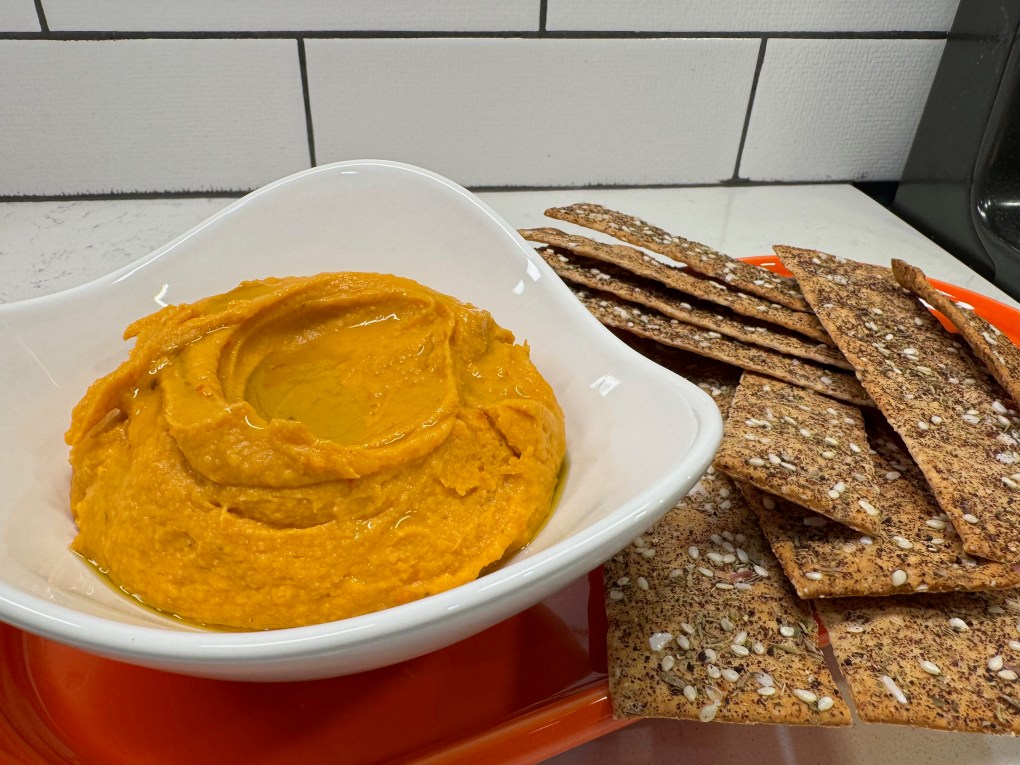
Sweet Potato-Harissa Hummus

It’s sweet potato season, and I’m committed to finding ways to enjoy this vegetable that grows prolifically in my state of North Carolina. Sweet potatoes are incredibly versatile and highly nutritious, yet they frequently get turned into something that looks like dessert, especially around Thanksgiving. I’m picturing that marshmallow crusted calorie bomb that everyone calls a casserole. Or my own classic sweet potato dish with loads of butter, brown sugar and pecans. Come to think of it, that one is quite delicious. It’s probably why I turned it into a signature cocktail a couple of years ago. But I digress.

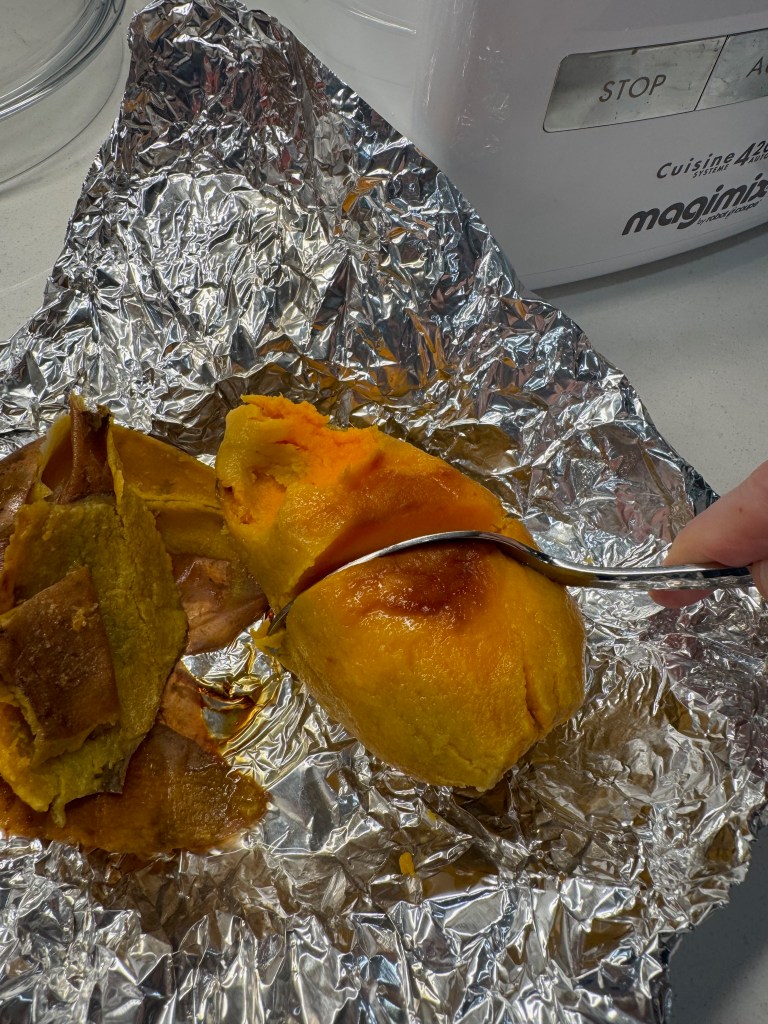
Anyway, today I’m honoring the savory nature of sweet potatoes with an easy-to-make hummus, embellished with roasted sweet potato and harissa. It’s a fun little twist that celebrates the health benefits of sweet potato— antioxidants, potassium and lots of fiber— with just enough Moroccan spice to make it interesting and unique.
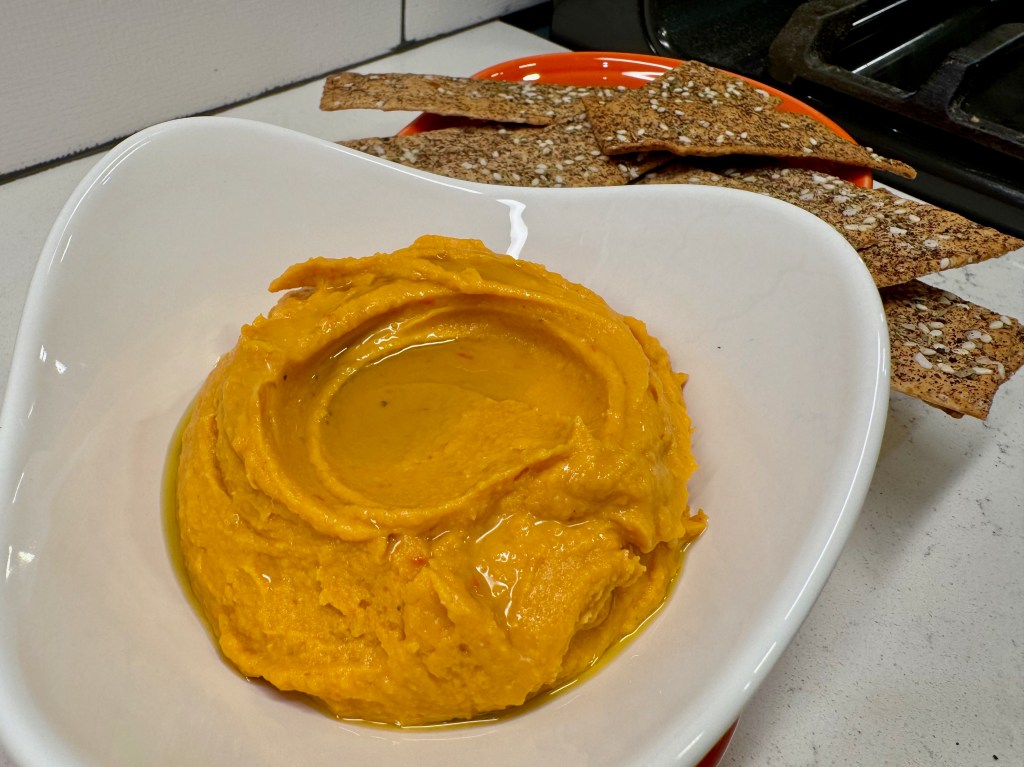
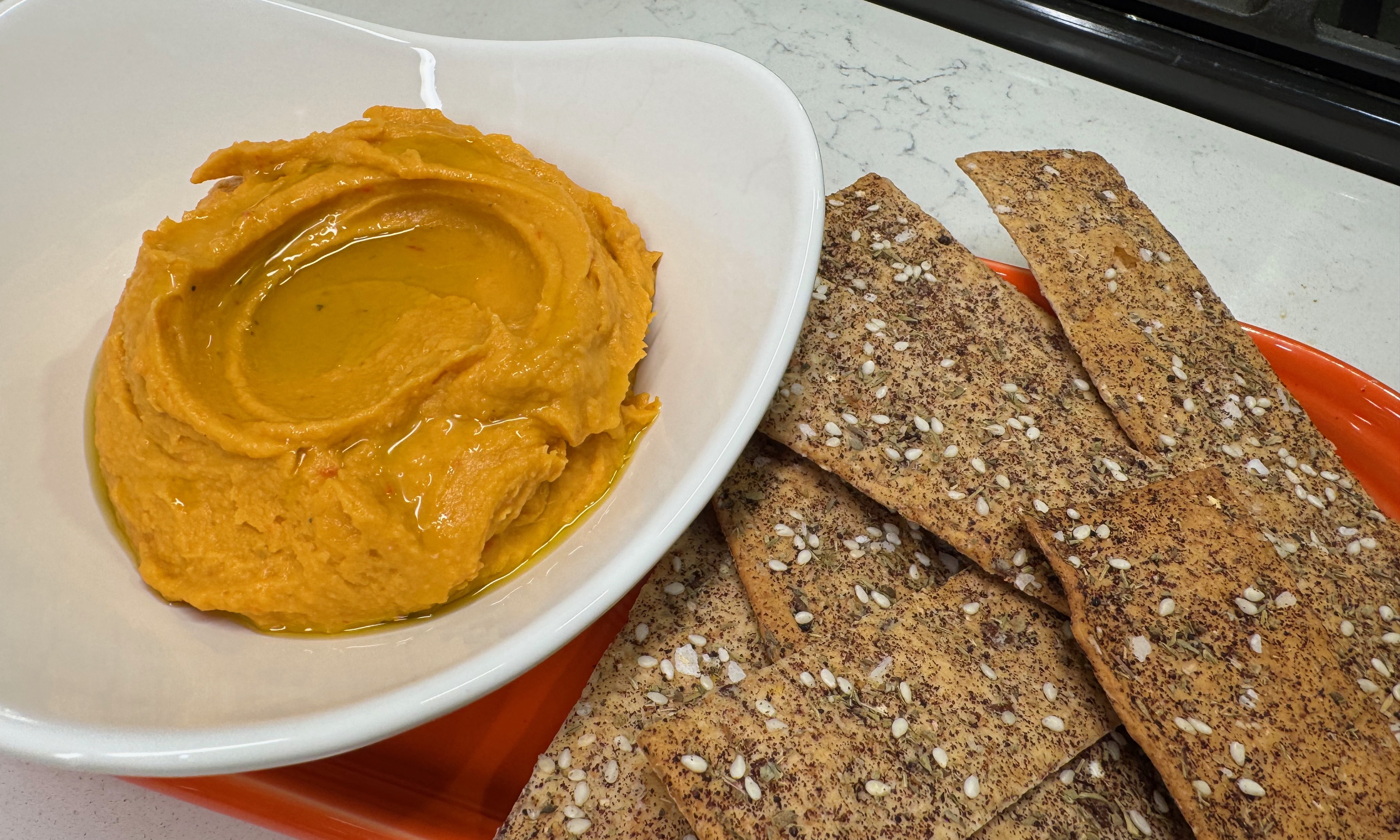
A little swirl of olive oil at serving time is the perfect finish.

I happened to mention this hummus recently when we were out to dinner with friends, and they were so intrigued that I’ve decided to make it again when they come over for cocktails and appetizers in a couple of weeks. I’m determined to heed my own advice about carving out time to get together with friends more frequently, even if it’s only for a casual bite (or maybe especially so). It’s the company that matters most, and who doesn’t love appetizers? Come along and I’ll show you how easy this one is!

Ingredients for hummus

Gather up a few key ingredients, including: garbanzo beans, which I like to call “chickpeas;” tahini, which is a thin sesame seed paste; olive oil and some seasonings. You’ll need a food processor or a good strong blender to make it, though I would not recommend using a bullet-style blender. The mixture will be somewhat hot, so you need to vent the container you use to blend it. If you only have a bullet blender, let it cool before you get to that step (for safety sake).

I generally take the shortcut of using canned chickpeas, but freshly cooked is probably even better— just be sure you cook them tender enough to blend well, and hold back some of the cooking liquid, too. Here’s a bit of good news for readers with certain legume allergies, including my high school bestie, who cannot eat chickpeas, soybeans or lentils. You can absolutely make hummus with other canned beans, including cannellini, which I think are divine! They are softer than chickpeas so a few adjustments are needed, and I’ll spell those out in the click-to-print recipe card you’ll find at the end of this post.

The process for making hummus

One burning question my friend, Charlotte, asked when I shared the exciting news of this sweet potato hummus was, “did you peel the chickpeas?” And this is a fair question, given that some traditionalists say it’s necessary. The answer is no, though I have done it once and I found it to be a complete waste of 90 minutes, only to end up with a pile of chick peas roughly half the size of when I started and a huge pile of skins that went straight to the trash. The theory behind this frustrating and tedious step is that the thick skins hinder achieving the smooth, silky texture that is so wonderful about hummus. And it’s true that the skins can be a little chunky, but I have an easier way around that.

My first tip is to look for chickpeas that don’t have “calcium chloride” listed as an ingredient. This additive helps beans hold their shape during the high-temperature canning process, and it may be fine if you intend to put the beans on a salad or crisp them up as a topping for something. But for hummus, you want them to blend smooth, so avoiding calcium chloride will help you get there. The easiest route to avoiding it is to pick up a can labeled “organic.”

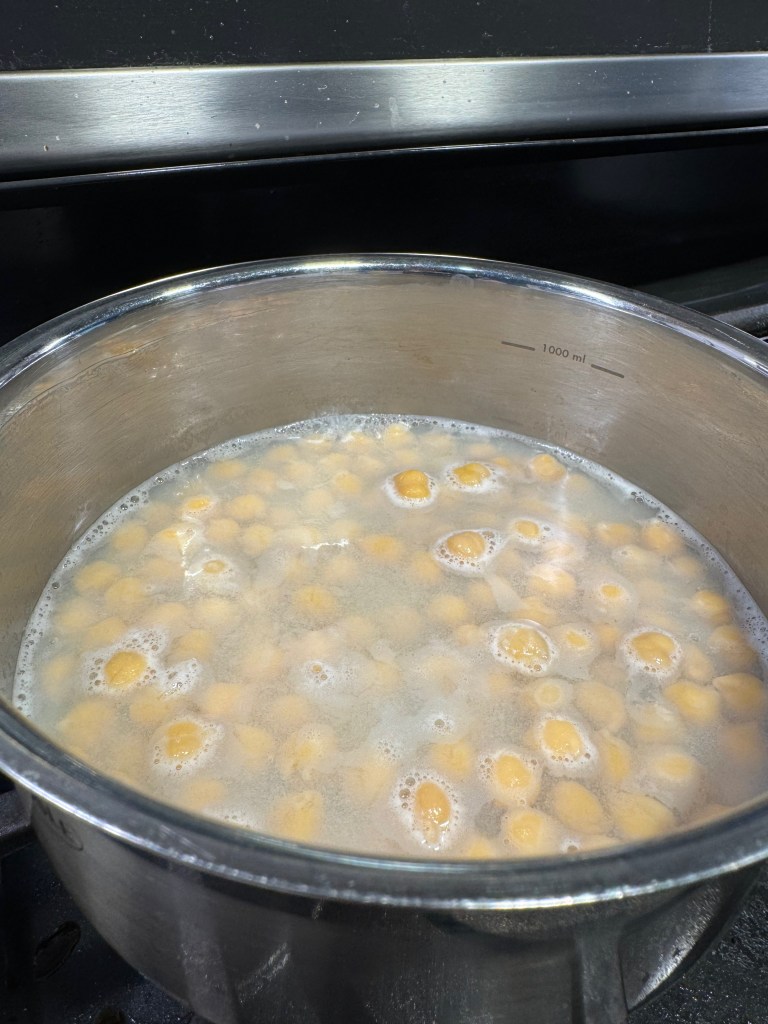
My second tip is simple— heat the garbanzo beans in their liquid before blending, and add a pinch of baking soda to soften up the skins. Dump the entire can (liquid and all) into a small saucepan over medium low heat and let them go until you see small bubbles and steam coming off the pan. Strain the chickpeas through a mesh strainer, but keep the liquid because you’ll need some of it for blending.

Let’s make sweet potato hummus!

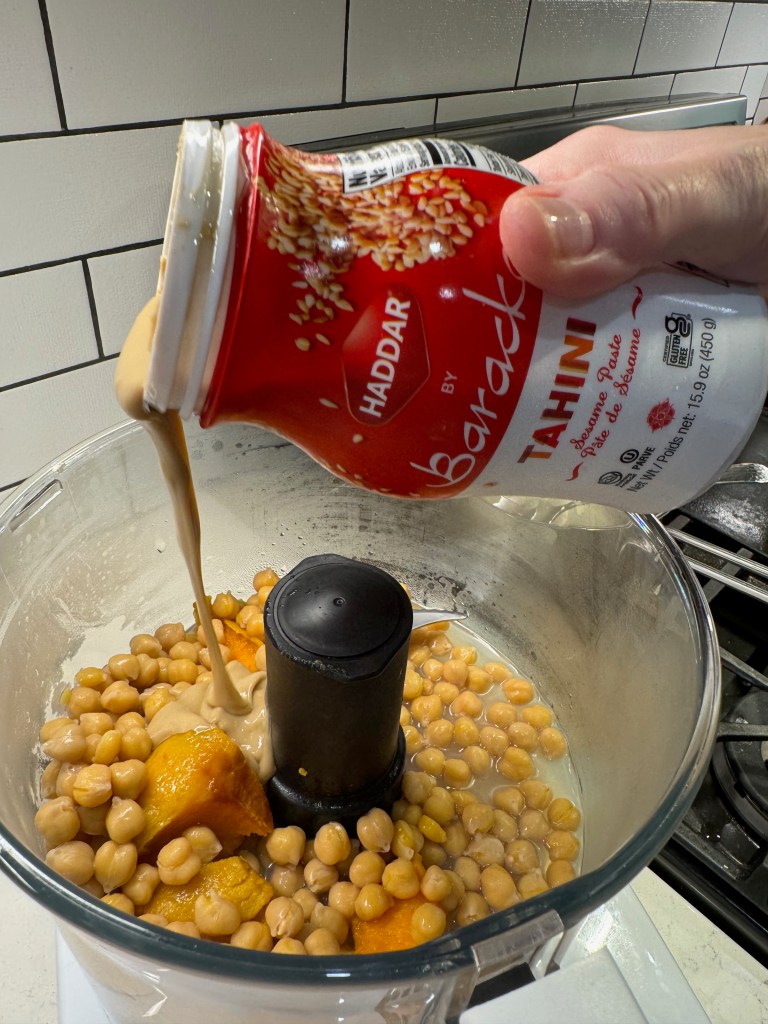
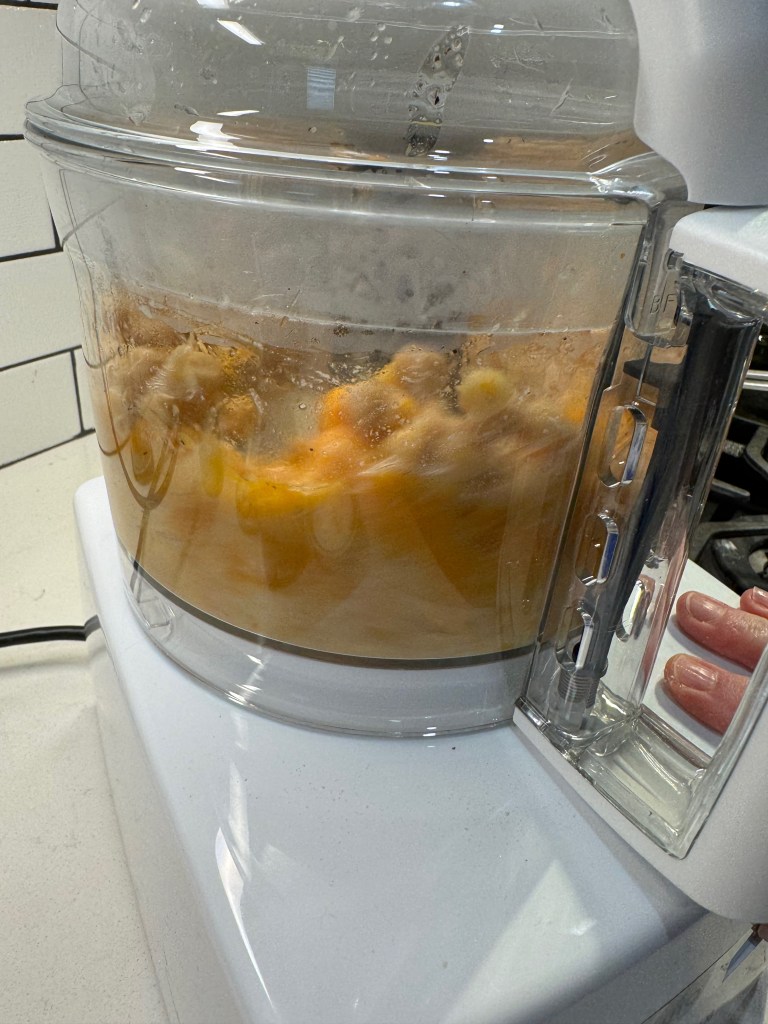
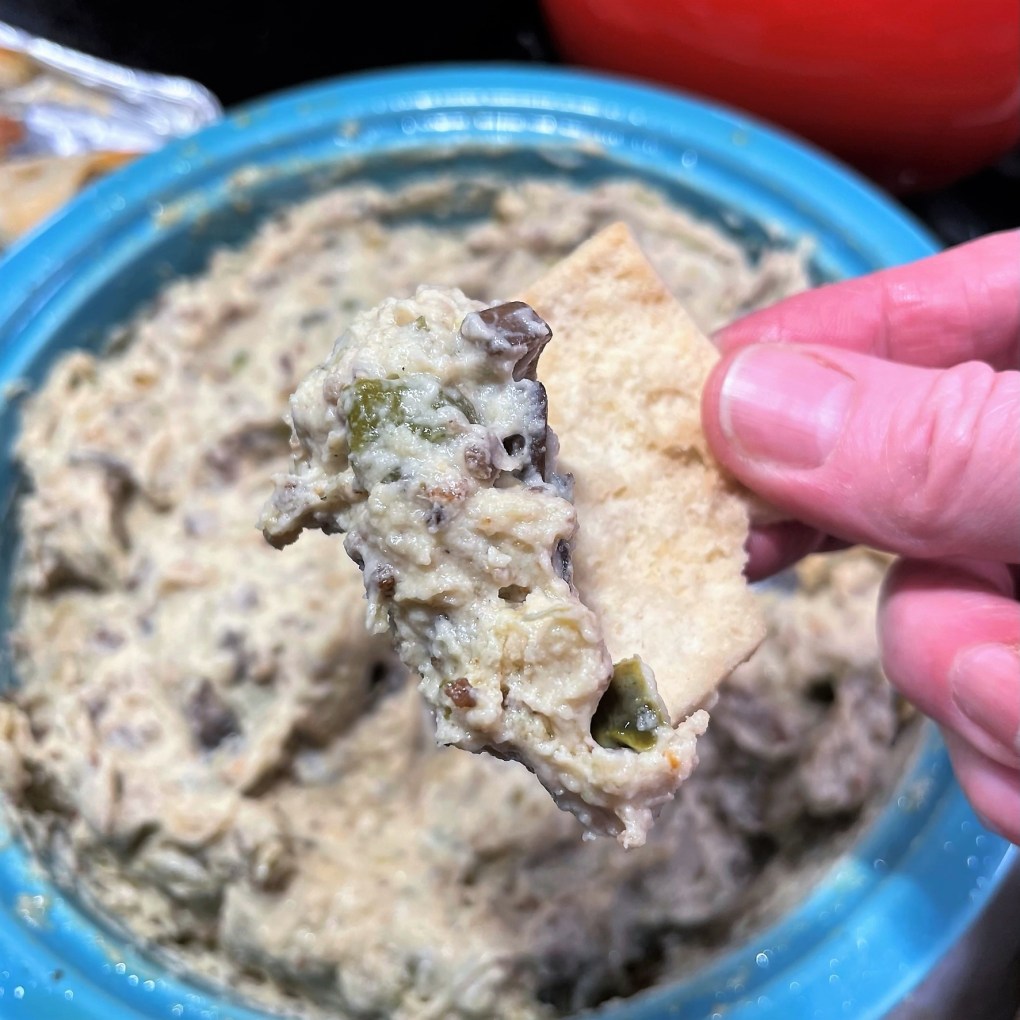
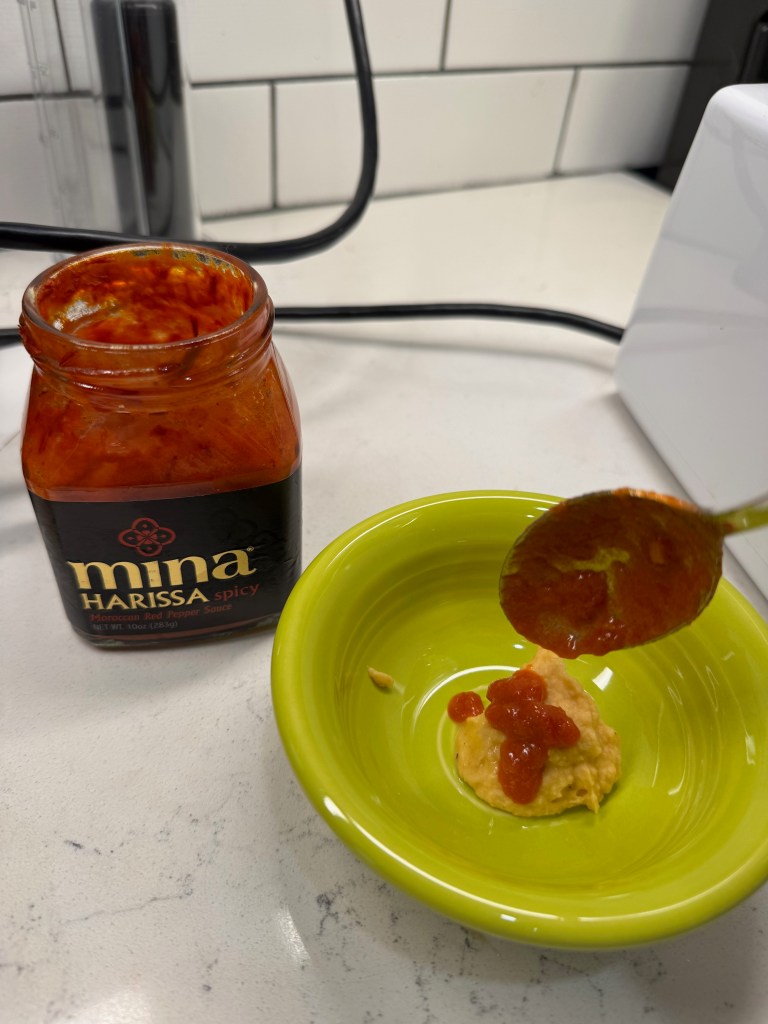
Use the large bowl of a food processor (or a good blender with the vent cover off) to combine the warm chickpeas plus a little bit of the liquid, half a roasted sweet potato, some tahini and salt. Pulse several times until you have a somewhat smooth mixture of hummus. This was my first shot at using harissa in hummus, so I gave it a quick sample test and found it to be a great pairing with the sweet potato! If you are not familiar with harissa, it’s a spicy chile pepper paste common to Morocco and other mideast cultures. It usually includes some variety of chiles, plus garlic and seed spices, such as caraway, coriander and cumin.

This brand of harissa is labeled “spicy,” but don’t you believe it. I barely tasted any heat at all and my husband said the same. If you are sensitive to capsaicin heat, be sure you evaluate the level in your harissa and use your judgment on how much can be added without it sending you to the ER. If your body can’t take capsaicin at all, simply omit it. The sweet potato hummus is delicious without further embellishment.
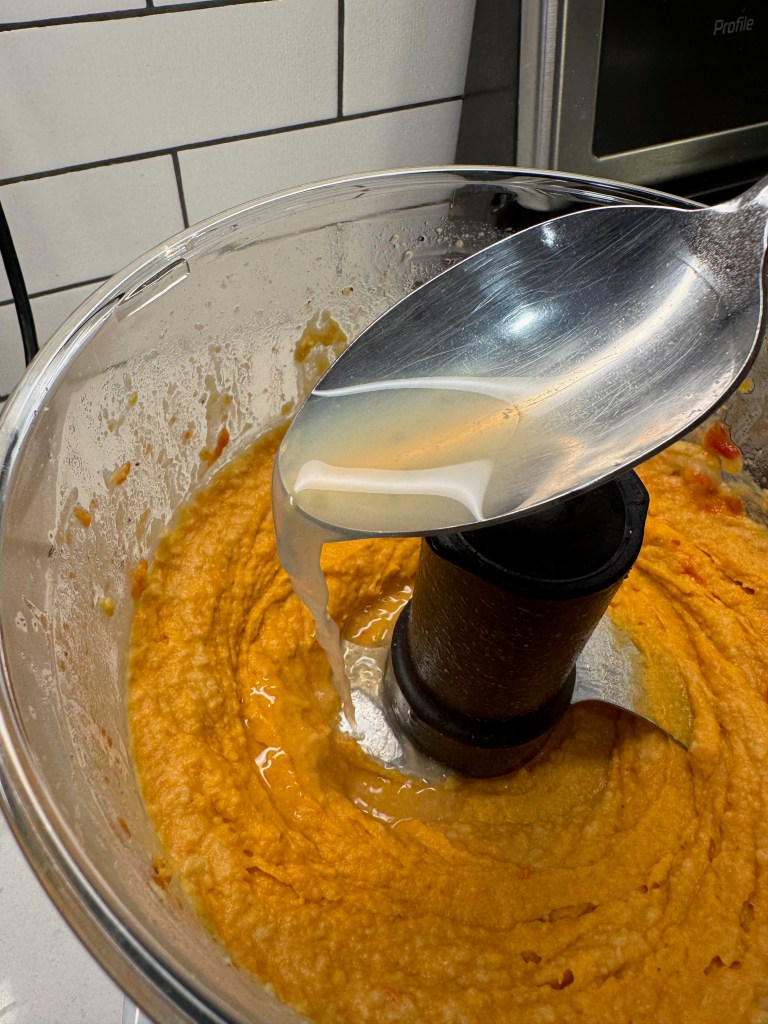
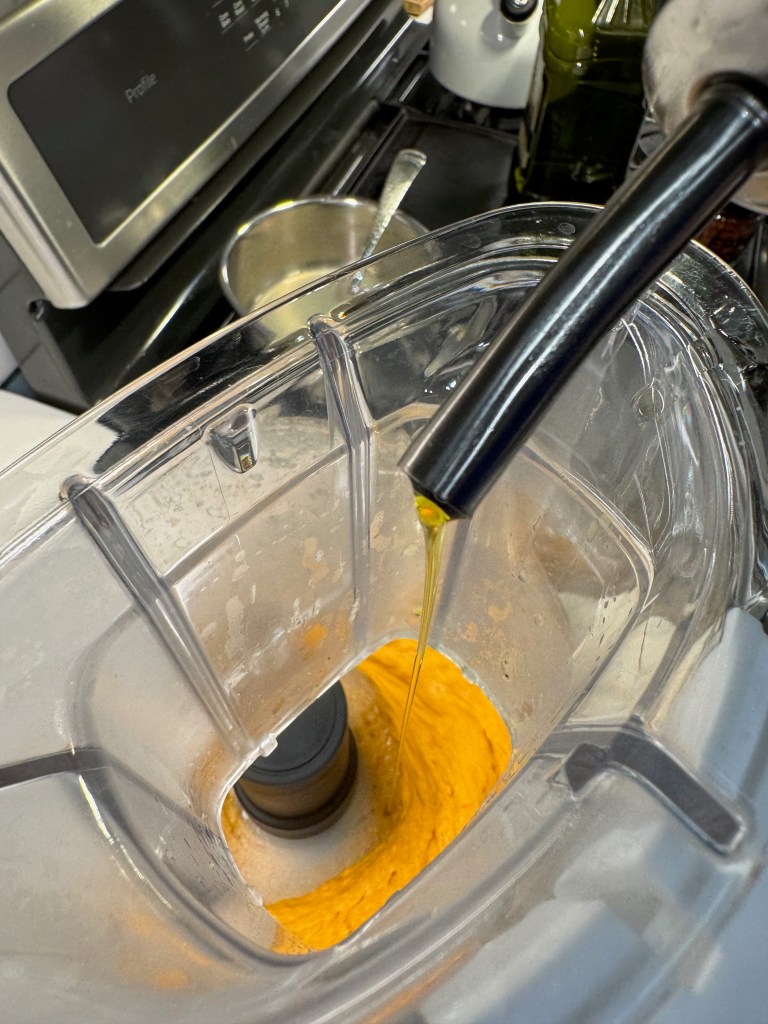
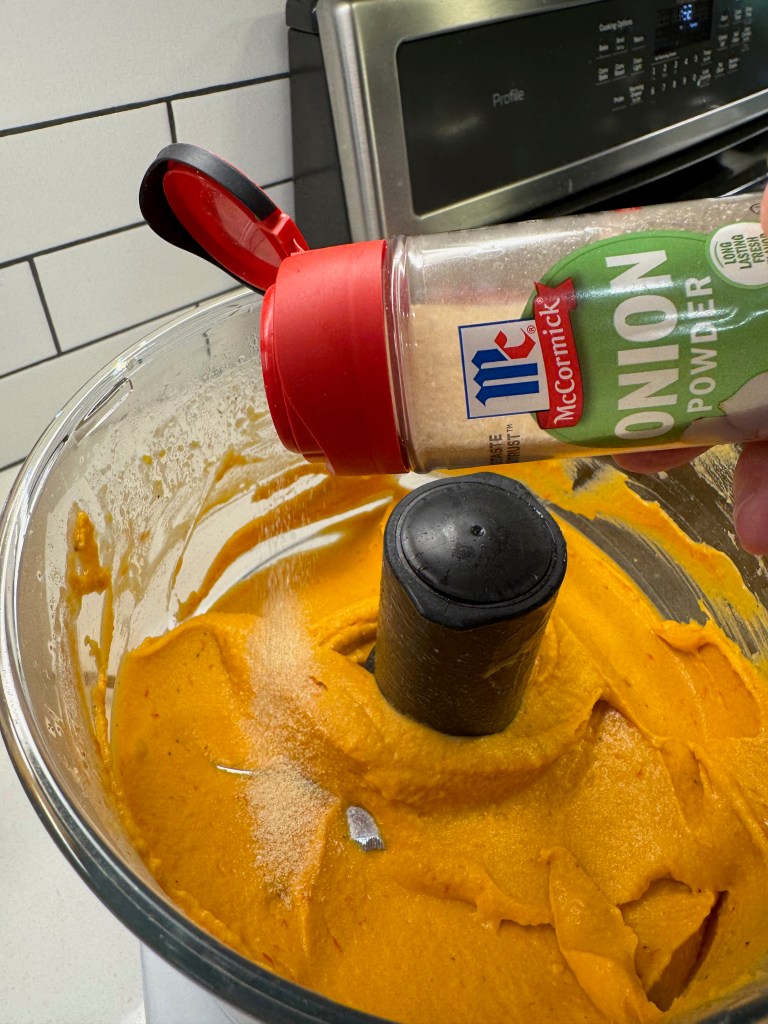
For this final step, scrape down the sides of your processor bowl and then run it continuously until the hummus is a silky consistency. If you find the mixture to be too stiff, stream in a little more of the chickpea liquid and process again. Keep in mind that the hummus will be thicker once it’s chilled. Drizzle in olive oil while the machine is running. When it is smooth to your liking, give it one more taste test and adjust seasoning as needed. For mine, I decided to add a few shakes of onion powder to emphasize the savory flavor of the harissa, but I’ll leave that up to you.

Would you try this sweet potato and harissa hummus? What are your favorite appetizers for sharing with friends at home? 

Sweet Potato-Harissa Hummus
  • Servings: Makes about 2 cups
  • Difficulty: Average
  • Print

This is a fun, savory twist on classic hummus, using harissa paste from Morocco and seasonal sweet potatoes. Other beans may be substituted for chickpeas as noted.


Ingredients

  • 1/2 cup roasted sweet potato
  • 15 oz. can organic garbanzo beans (chickpeas)*
  • 1/8 tsp. baking soda
  • 3 Tbsp. tahini paste
  • 1/4 tsp. kosher salt
  • 3 Tbsp. harissa paste (see notes)
  • 2 Tbsp. extra virgin olive oil
  • 1/4 tsp. onion powder
  • Crackers, crostini or pita chips for serving

Note: Hummus may also be made with other canned beans, such as navy, Great Northern or cannellini. These alternative beans will be softer than chickpeas, so plan to adjust your liquid amounts accordingly. I still recommend warming them before blending for the smoothest consistency.

Harissa paste varies significantly by brand in both heat and thickness. Take note of the heat intensity before you add it to your hummus, so you may adjust the amount to suit your taste. My brand was Mina, labeled “spicy,” but had almost no heat at all. I’ve purchased other brands of harissa that were extremely hot, so it bears checking.

Directions

  1. Pour entire can of garbanzo beans (including the liquid) into a small saucepan over medium-low heat. Add baking soda and bring to simmer until you notice light boiling around the edges and steam rising from the pan. Remove from heat and strain the beans, reserving the liquid.
  2. Add beans, plus about 1/4 cup of the liquid, to the large bowl of a food processor or blender (with vent cover removed). Add sweet potato, tahini and salt to the processor and pulse several times until the mixture is blended but still slightly coarse. Use a spatula to scrape down the sides of the processor bowl.
  3. Add harissa to the processor and pulse a few times. If the hummus seems too thick, add another tablespoon or two of the chickpea liquid to attain desired consistency.
  4. Run the processor consistently while you drizzle the olive oil into the chute. Give it a final taste test, adjusting as needed with onion powder, garlic powder, salt and/or pepper. This hummus is best after refrigerating for a few hours, and it will firm up a bit in the fridge.

Easy Pickled Shrimp

Every region has its favorite foods. You know, the things that you can expect to find multiple variations of at a potluck, family picnic or church social. In the South, that would be a relatively short list of ham biscuits, pimiento cheese, collard greens, deviled eggs, pulled pork bbq, banana pudding and sweet tea. 

If I could add one item to that list, it would be this pickled shrimp. It’s a quick and easy way to serve up everyone’s favorite shellfish, without frying it or burying it in sauce. If you can boil water and slice an onion, you can make this, and you’ll find it incredibly versatile.


I found this recipe on Pinterest when I was looking for— wait, what was I looking for? Who cares, because I stopped scrolling when my eyes caught the name on this recipe clipping: Pat Conroy.


The name Pat Conroy may not ring a bell for you, but I’ll bet you know some of his work. The late American novelist wrote numerous books, fiction and non-fiction, including The Prince of Tides, which he adapted into a screenplay for a Barbra Streisand-produced film that earned seven Oscar nominations.

Pat Conroy had a thing for the South, especially South Carolina, where he is buried. I first learned about him when I visited Hilton Head many years ago and dined at a restaurant that carried his name. Conroy’s—now permanently closed— was an elegant-meets-coastal-casual place inside the Marriott hotel, and its she crab soup made such an impression that I dined there three times over the course of a week, even though I was not a guest at the hotel. The rich and creamy seafood bisque was said to be one of Pat Conroy’s favorites, and I decided then and there that he was my kinda guy.

So when I saw this recipe for pickled shrimp, straight from Conroy himself, I knew it would be a winner. The ingredients are straightforward— onions, garlic, capers, crushed red pepper, spices, vinegar, lemon juice and olive oil— and as I blended these things together, it occurred to me that you could substitute any number of things for variations of this delicious mix. Why not use pimientos instead of capers, or jalapenos instead of crushed red pepper? Couldn’t you put a Greek spin on it with some oregano and chopped kalamata olives? Oh, the possibilities!


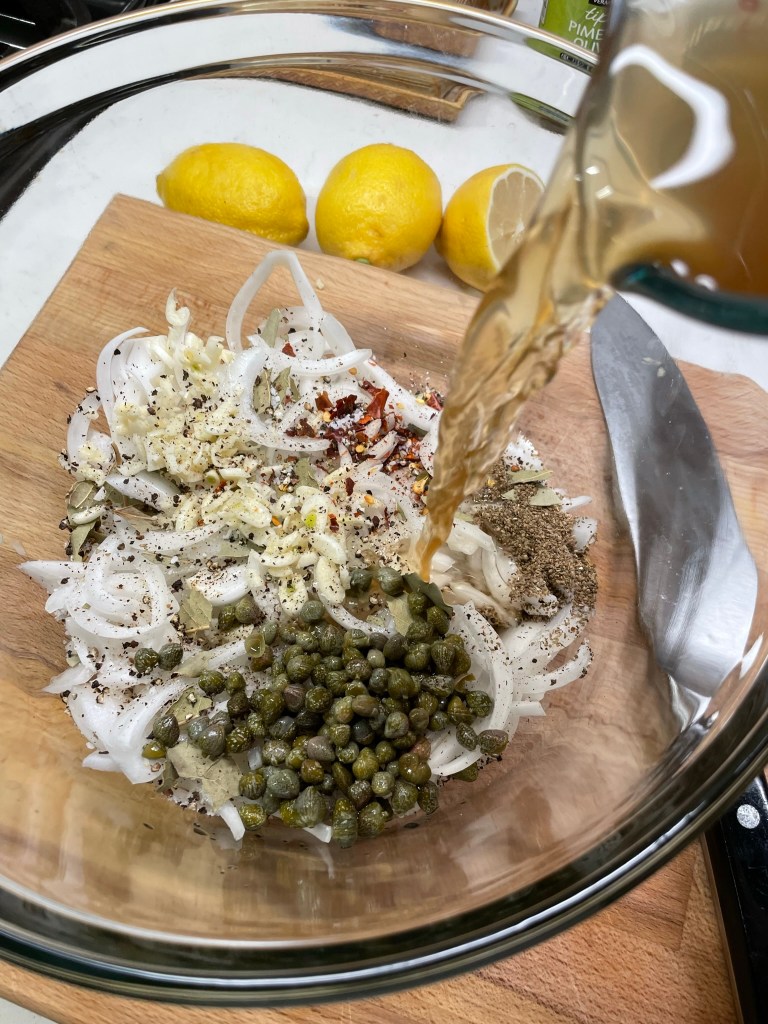
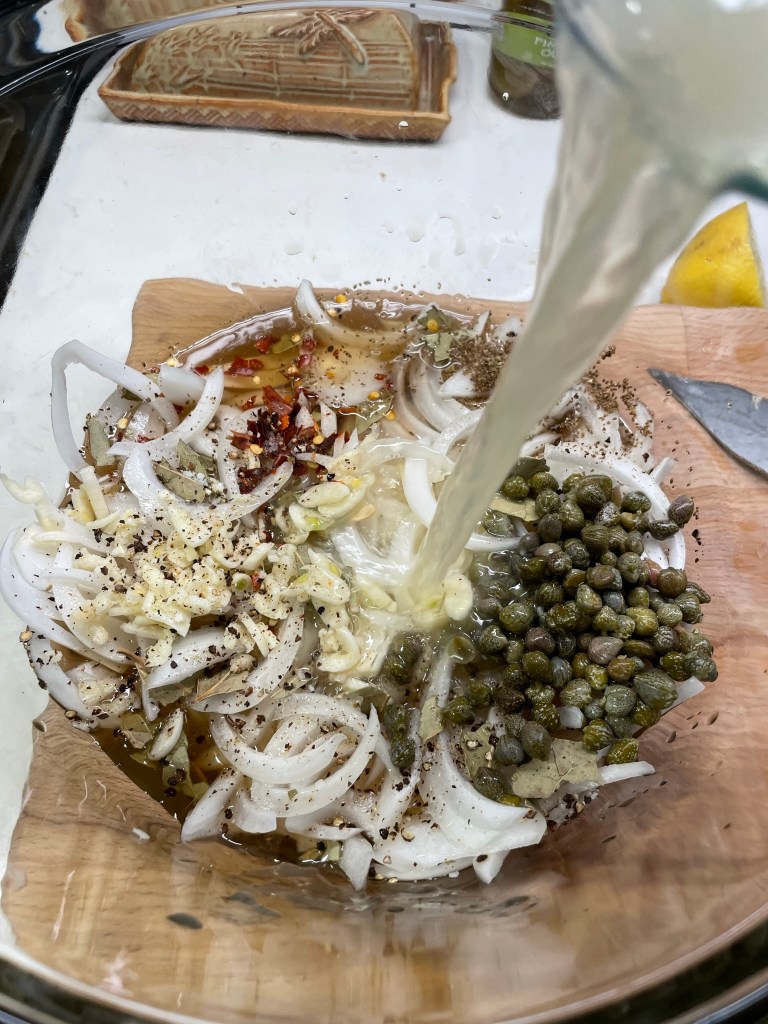
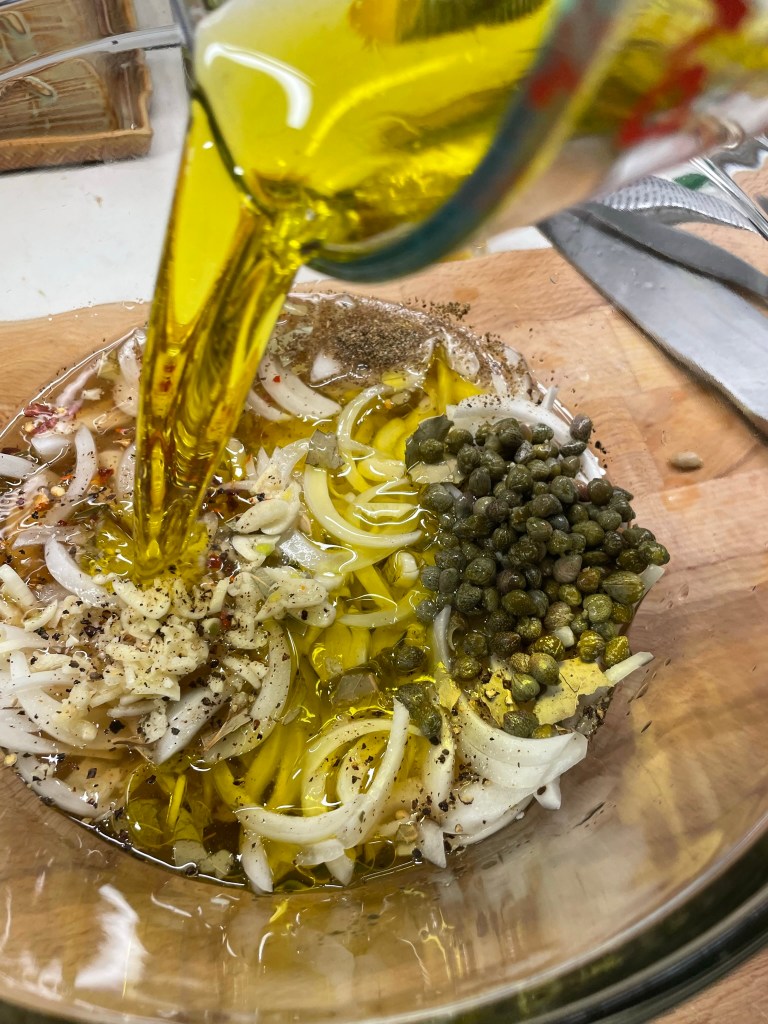
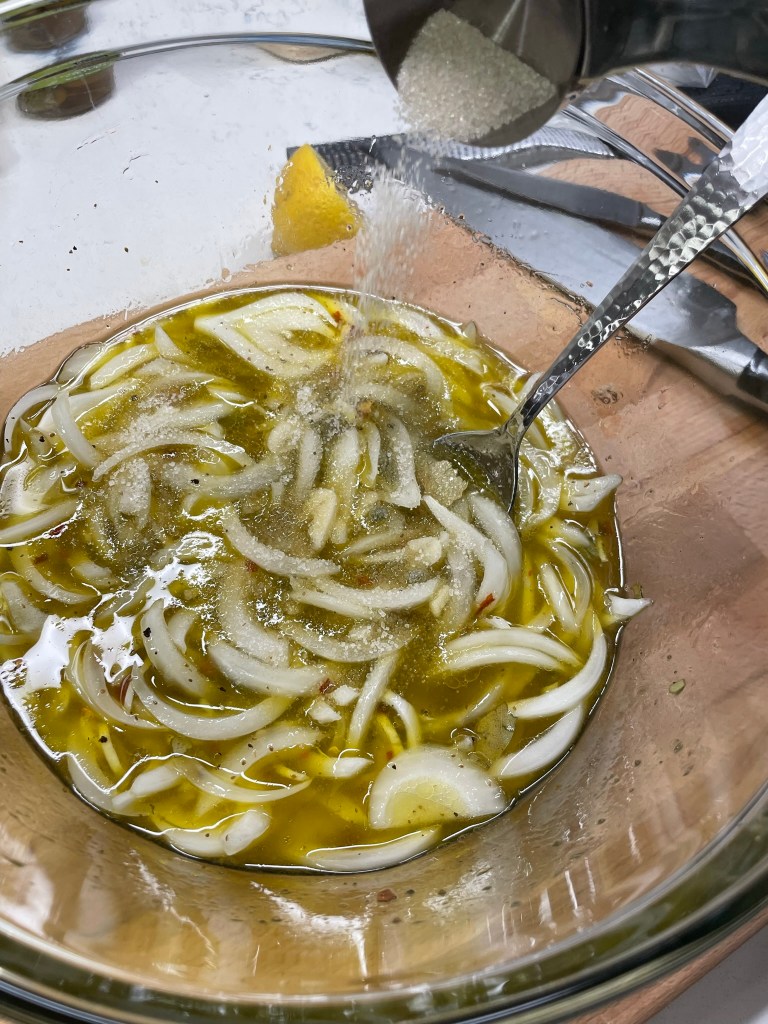
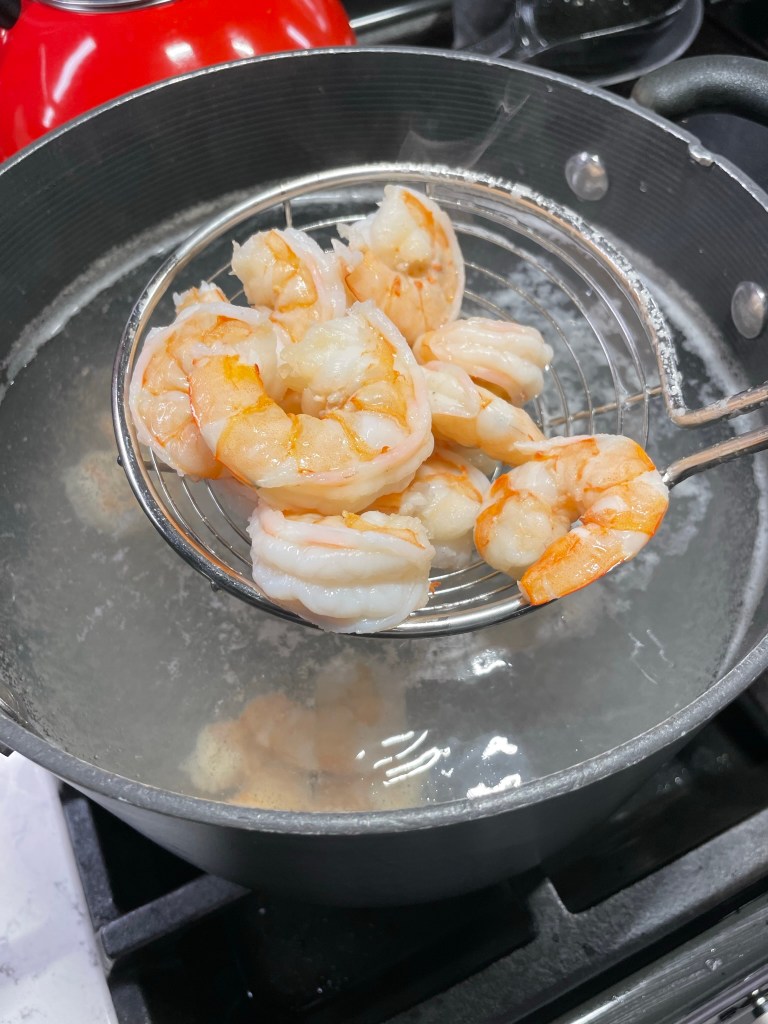
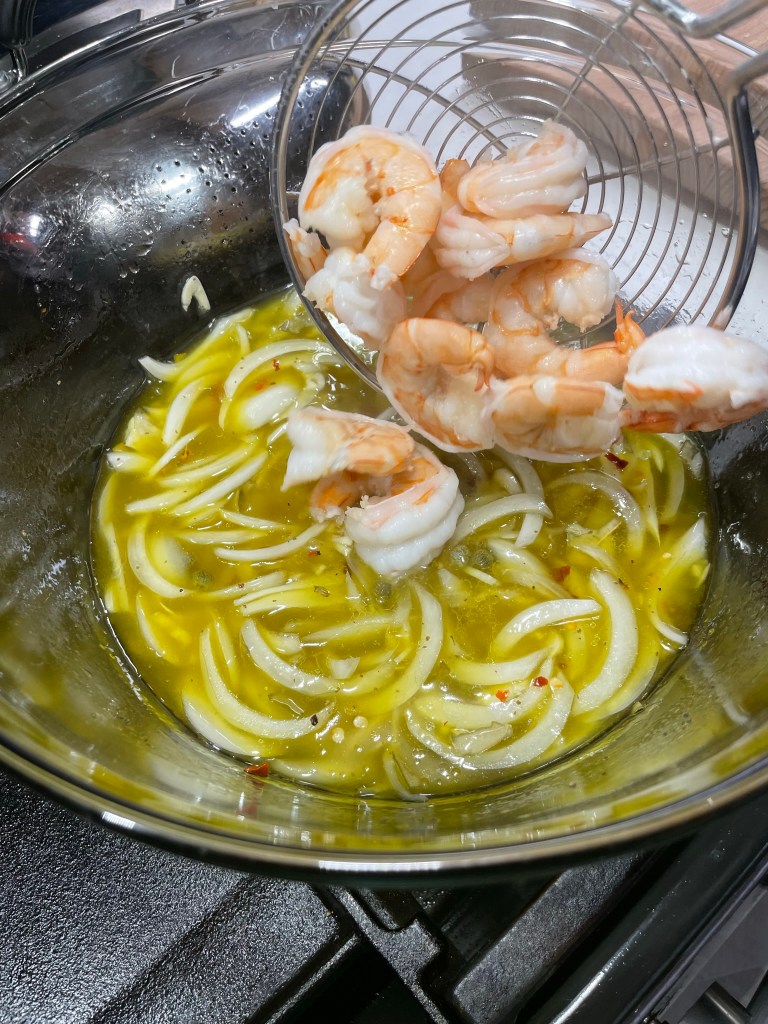
I added a spoonful of sugar, just because it’s the South and well, it’s what we do here. That little touch of sweet is a nice balance to the acidity of vinegar and lemon. Then, I dipped the shrimp ever-so-briefly into simmering water before spilling them into the pickling liquid. The prep and cook time are minimal in this dish, and the rest of the magic happens in the fridge when the mixture melds and mingles overnight. I doubled the weight of shrimp in my recipe and found that the marinade was sufficient. If you do the same, plan to give the mixture a stir every few hours.


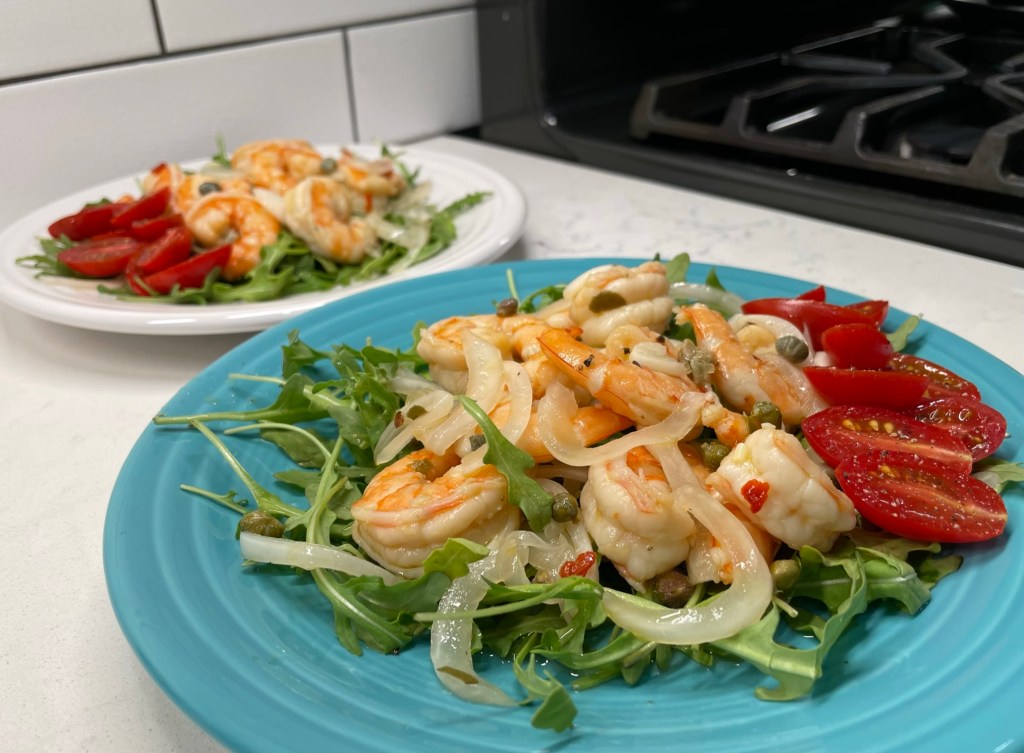
This pickled shrimp is tangy, briny, fresh, herbal, spicy and altogether perfect for spring or summer. For sure, it’s a Southern thing that I have only made twice myself, but that is going to change, especially now that my mind is set on swapping in other flavors. We served this shrimp on the hors d’oeuvres table for Kentucky Derby, in a large bowl tucked inside an even larger bowl filled with crushed ice— so easy! Our guests raved about it, and what little bit was left over turned a simple pile of arugula into a weeknight dinner salad that was as delicious as it was effortless.

Now, if you’ll excuse me, I’m off to begin my search for the perfect she crab soup recipe. I’m sure Conroy has one out there somewhere!


Easy Pickled Shrimp

  • Servings: About 10
  • Difficulty: So Easy!
  • Print

This easy recipe is a good one to have in your pocket for a brunch, potluck or any summer gathering. For best results, use fresh, never frozen shrimp.


Ingredients

  • 1 medium sweet onion (preferably Vidalia), cut into thin, lengthwise slices
  • 3 garlic cloves, finely chopped
  • 3 ounces non-pareil capers, drained and lightly chopped
  • 4 dried bay leaves, crushed into small pieces
  • 1 cup apple cider vinegar
  • 1/4 cup freshly squeezed lemon juice (zest, too)
  • 1 tsp. kosher salt
  • Several twists of freshly cracked pepper
  • 1 tsp. celery seed
  • 1 tsp. crushed red pepper flakes
  • 1 Tbsp. sugar
  • 1/2 cup good quality, extra virgin olive oil
  • 2 pounds fresh large shrimp, peeled and de-veined

Directions

  1. Combine all ingredients except shrimp in a large bowl fitted with a lid.
  2. Bring a large pot of water to boil. Add 1 tablespoon kosher salt to the pot and stir to dissolve. Reduce heat to medium to keep water at a consistent simmer.
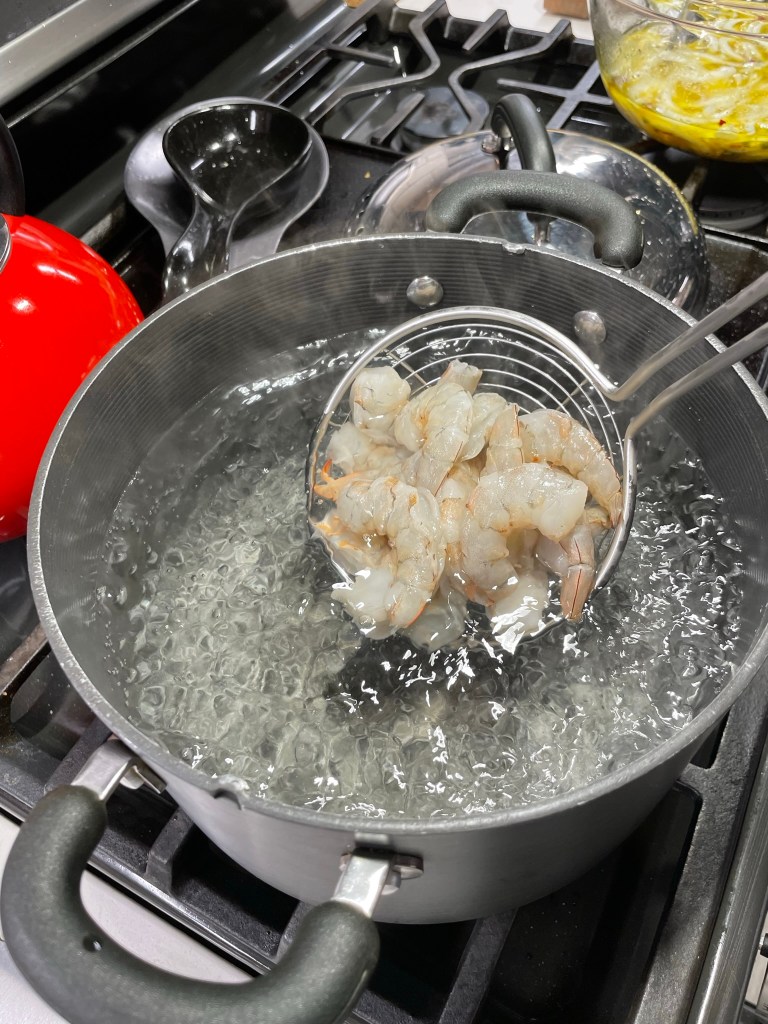
  3. Using a spider strainer or other mesh-style scoop, add shrimp, about 1/2 pound at a time, and cook only until shrimp is bright pink and slightly curled (60 to 90 seconds). Transfer immediately to the bowl of pickling liquid and toss gently to coat the shrimp in the liquid. Repeat until all shrimp are cooked.
  4. Let the shrimp cool for about 20 minutes, then cover bowl and transfer to the fridge to chill for 6 to 8 hours. Give it a gentle stir every few hours and just before serving.
  5. Serve in a large bowl, with pickling liquid, inside a larger bowl filled with crushed ice to keep it cold.


Philly Cheesesteak Dip

I don’t care about football. Let’s get that out of the way, OK? But I do love a theme and the camaraderie of a big-game party with friends, and especially the food!

There is no better food for a die-hard Philadelphia Eagles fan than a real Philly cheesesteak, with its peppers and mushrooms, all that gooey melted cheese and loaded up with thinly sliced steak. It’s a hearty, flavorful sandwich— and it screams Philly. 

It would be the perfect thing to serve for this weekend’s NFC Championship game, right? If only it wasn’t a fat, messy sandwich.

When things get intense and your team is vying for a spot in the NFL’s biggest game of the year, you’ve gotta have an easier way to chow down on those flavors, or you’ll end up with it spilt all over your green jersey! This recipe has all the right stuff, but in a simplified format so you can take a warm, meaty, cheesy bite in between yelling at the refs and cheering your team on to victory.

Our good friends, Bob and Peg, are two such die-hard Eagles fans and they have generously shared Bob’s recipe for this scrumptious, game day party dip. It’s perfect for halftime snacking, regardless of which team you’re pulling for this weekend. But if you’re at Bob and Peg’s house, you’d best be pulling for Philly.

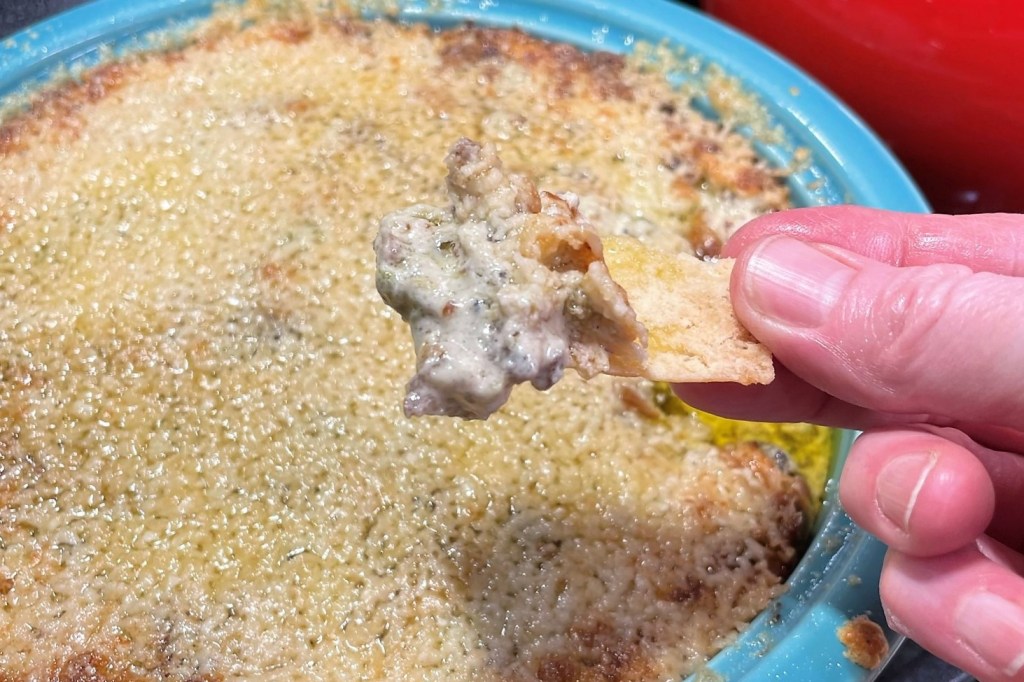
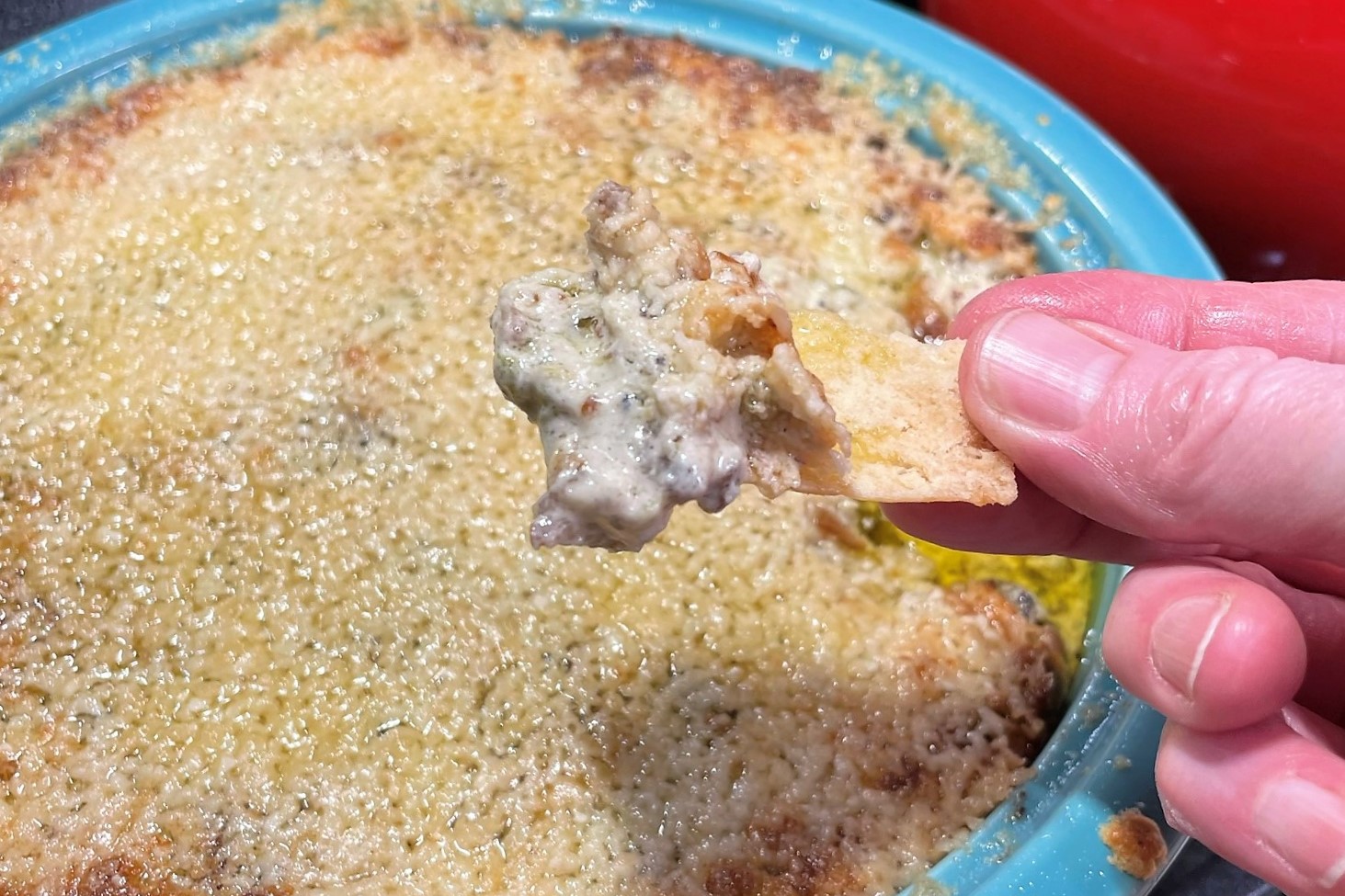
So delicious, hot from the oven!

The game will be aired on FOX this Sunday at 3:00 PM Philadelphia time, and if you have plenty of time to get this dip ready.

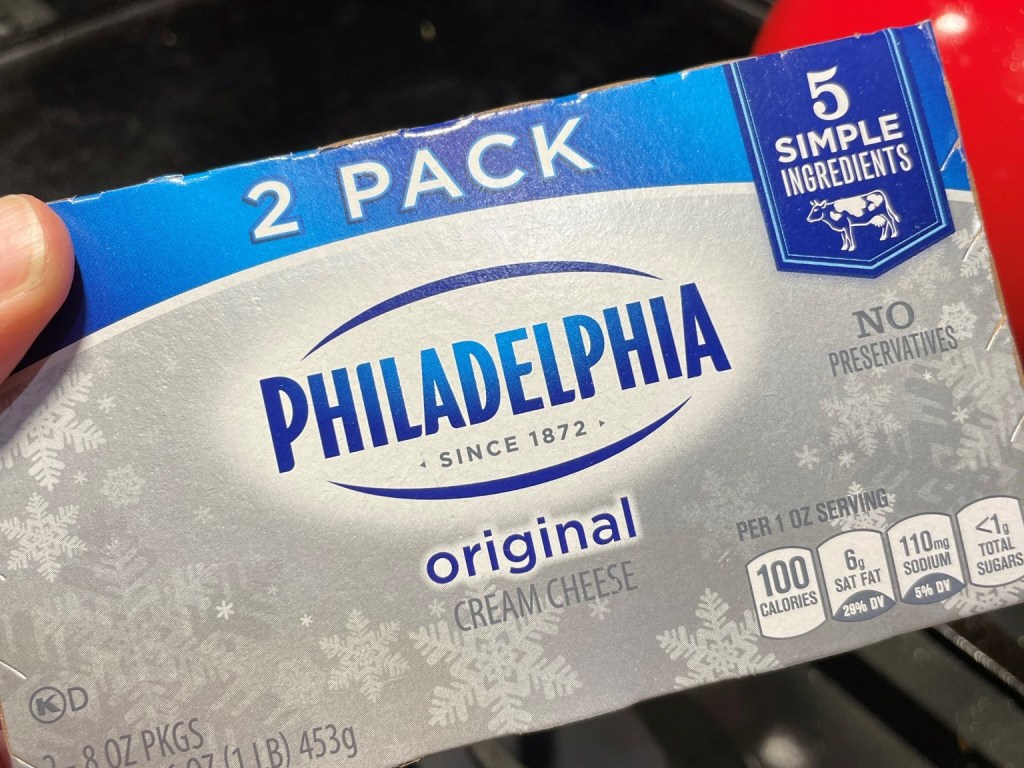
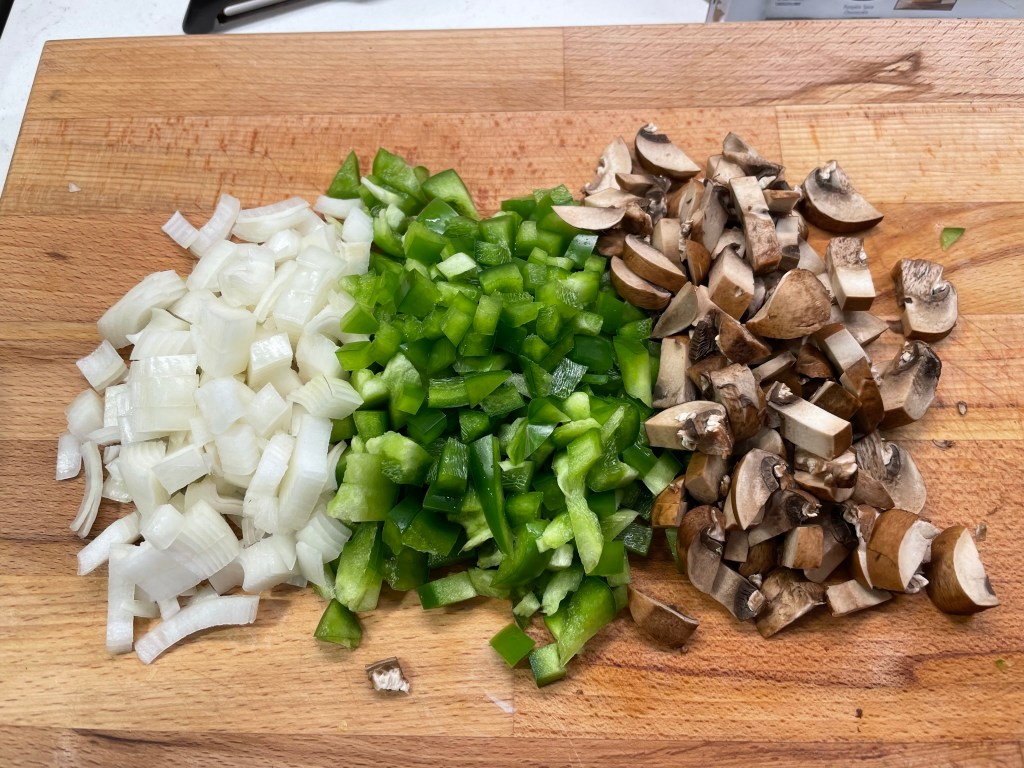
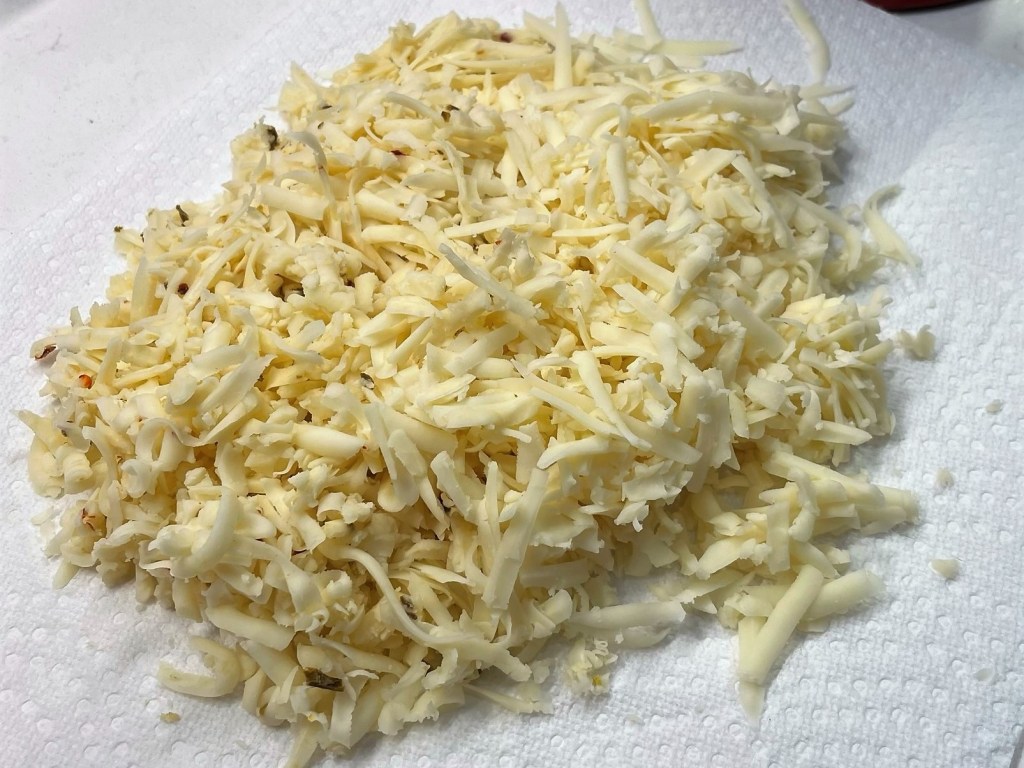
Bob’s cheesesteak dip begins with easy-to-find ingredients, and the prep is super simple. You’ll need cream cheese (Philadelphia brand, obviously), onion, bell pepper and mushrooms, a mountain of white cheese and very thinly sliced steaks. Bob’s recipe suggests an Italian “6-cheese” blend, but I used mainly Monterey Jack and pepper jack cheeses because I already had them in the fridge. Some amount of white American cheese would give a nice, melty quality to this dip, too. I’d recommend steering clear of very sharp, hard cheeses, as they tend to break under heat.
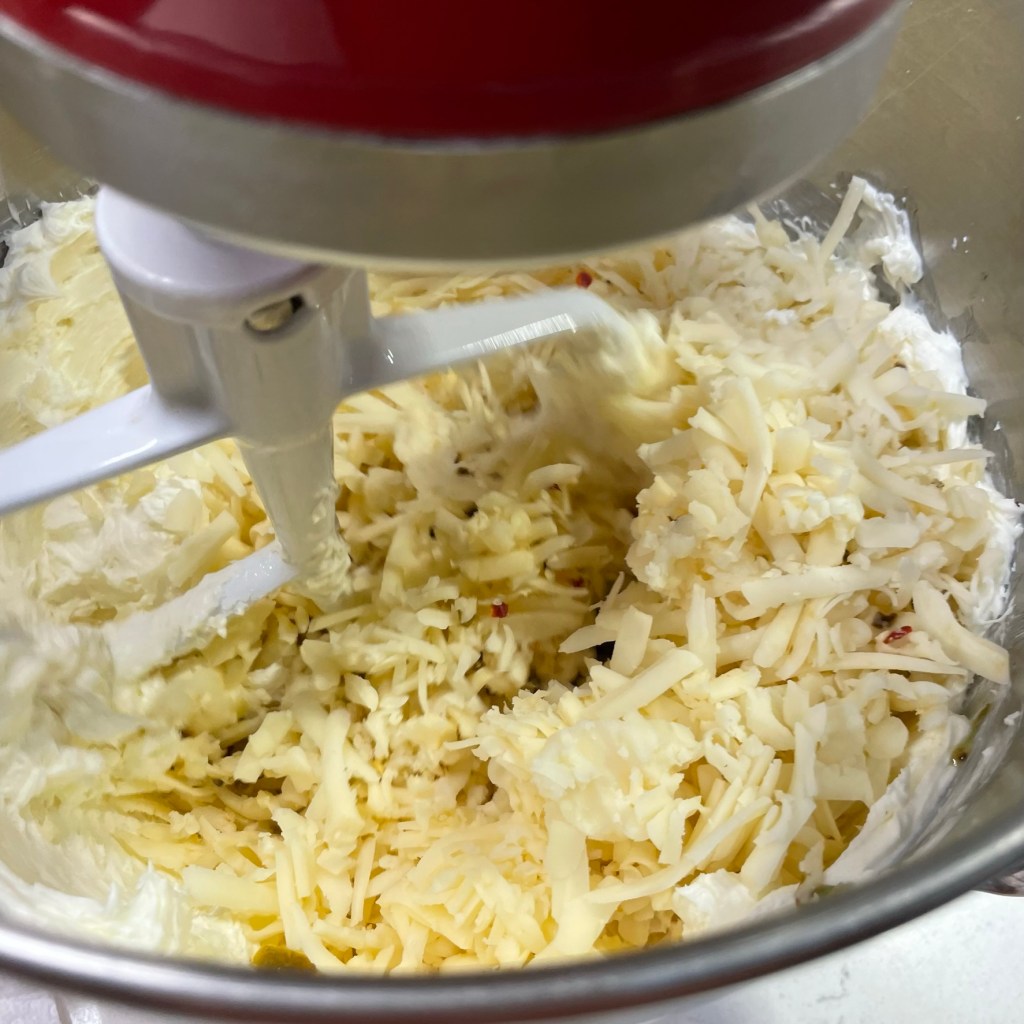

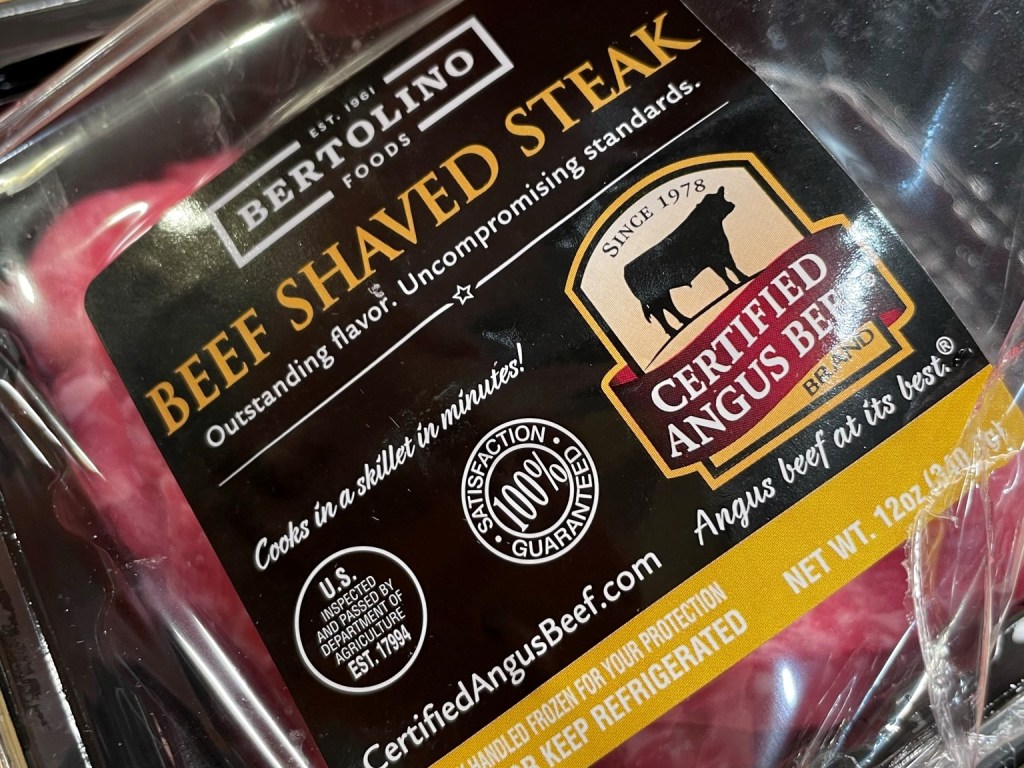
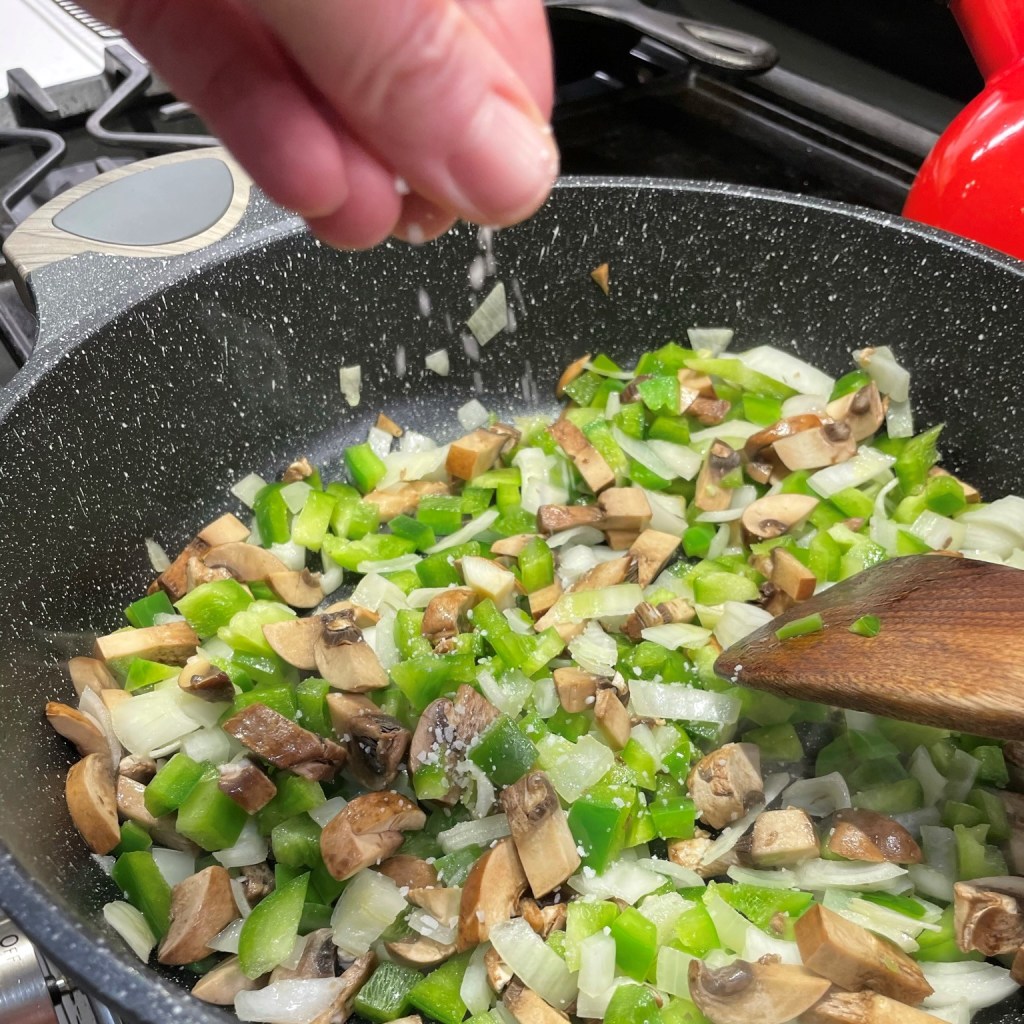
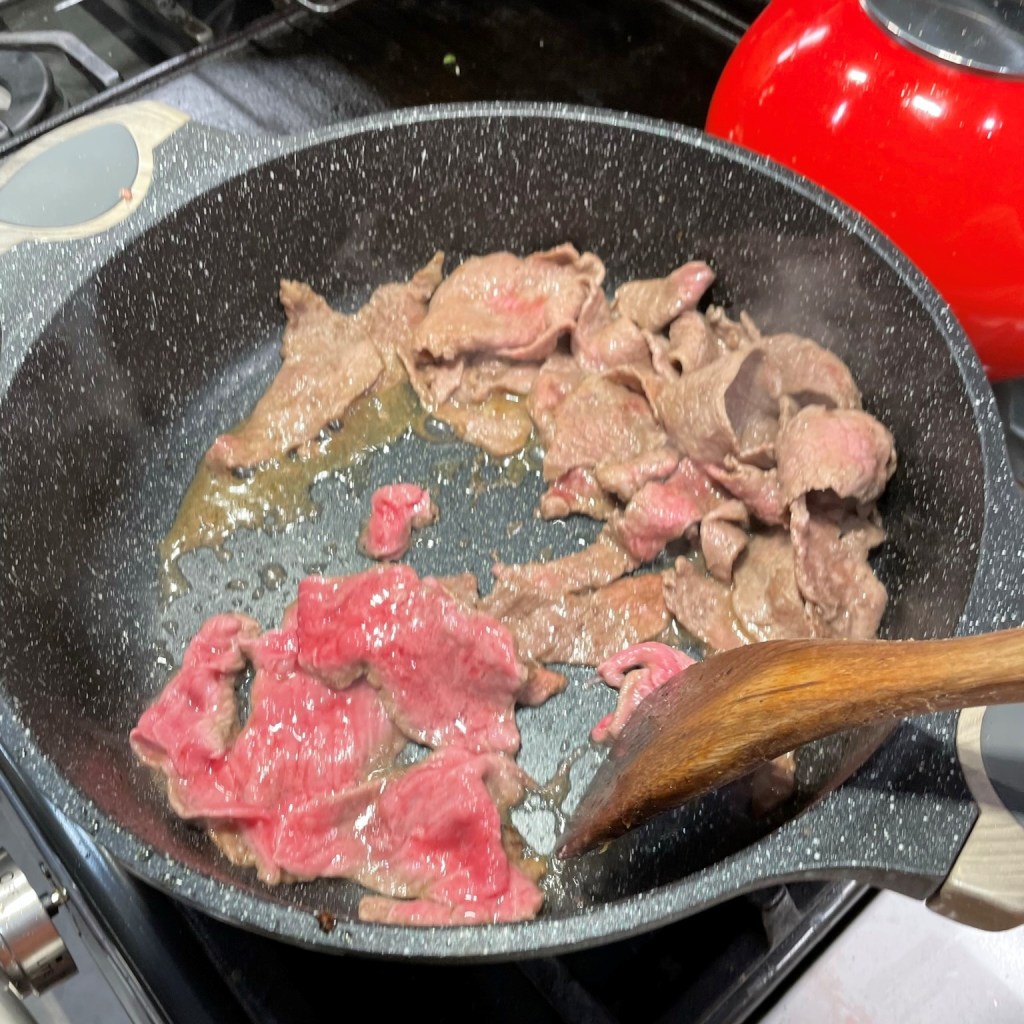
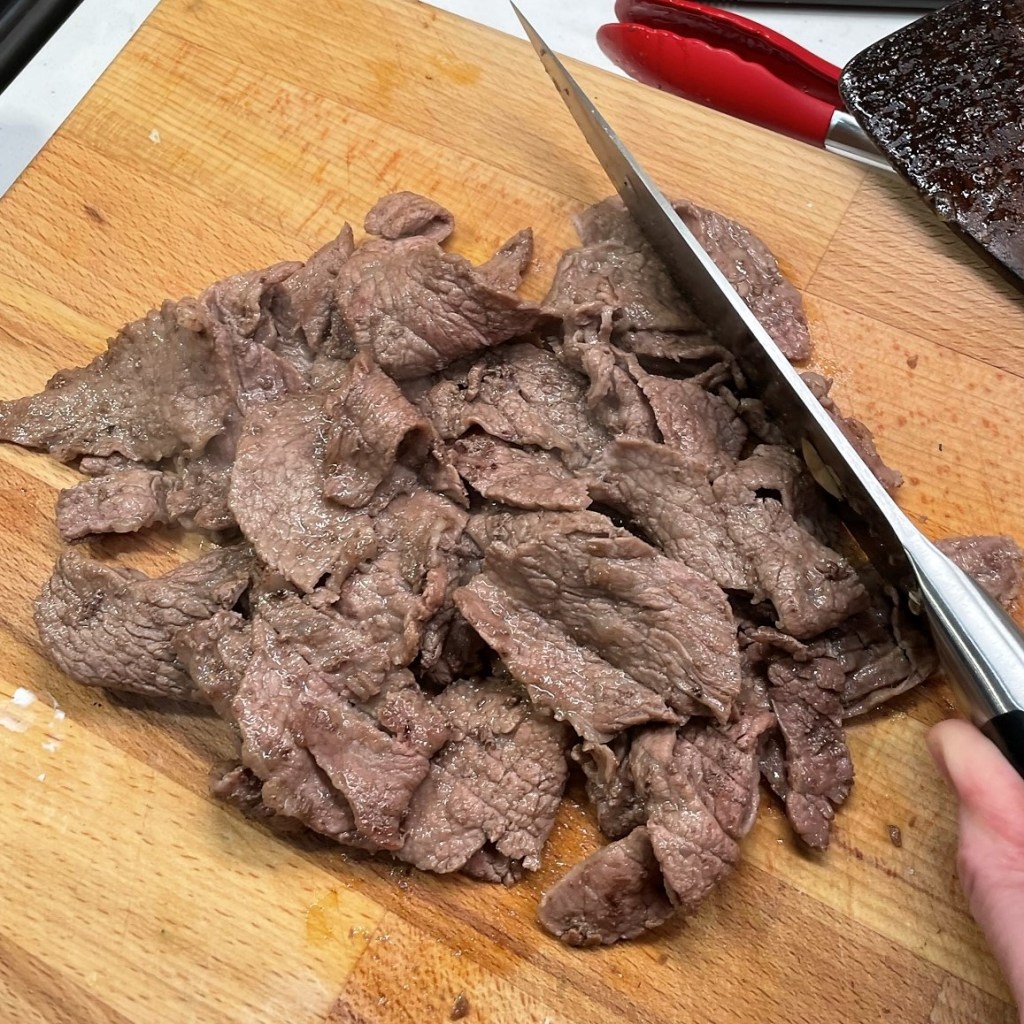
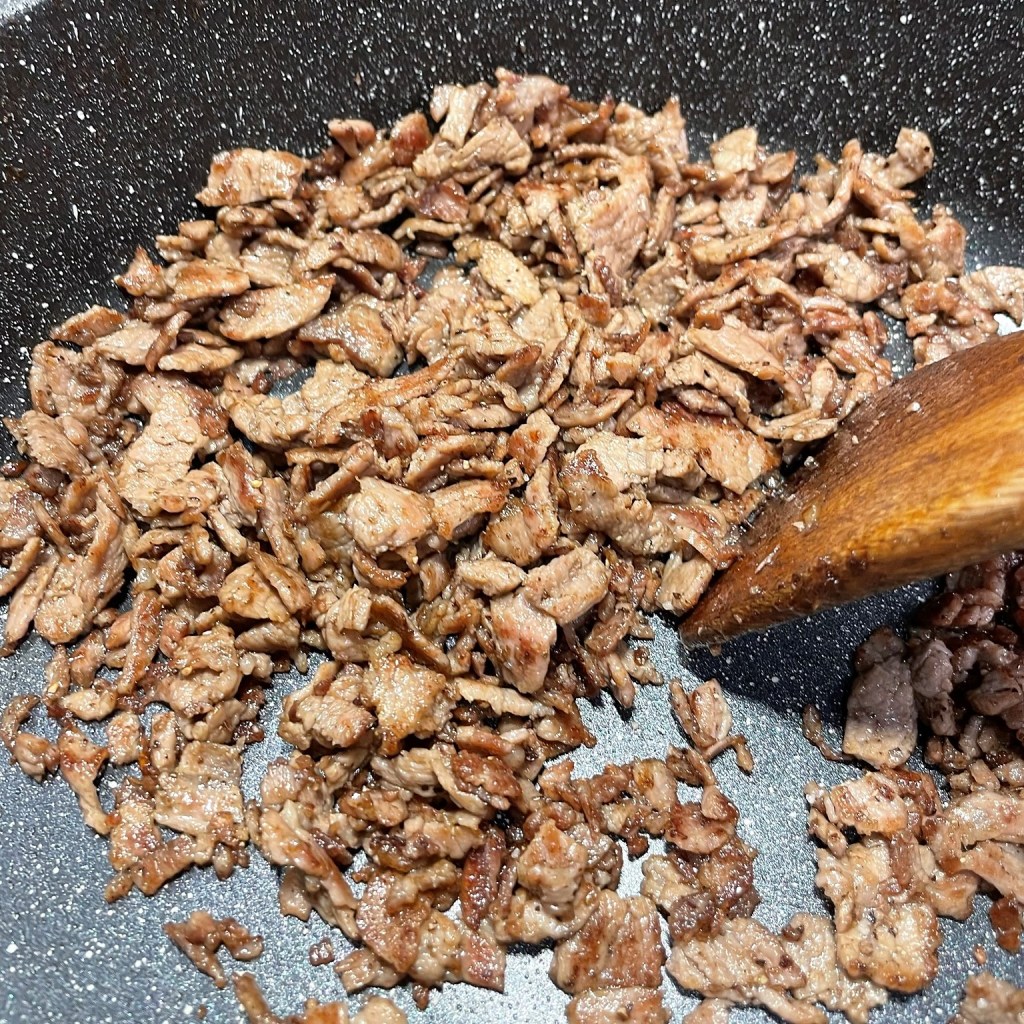
Put the veggies in a skillet and sauté until they’re soft. Then cook up the thinly sliced steaks and chop them into smaller pieces. I scored a package of fresh, shaved Angus steak in the meat case of my supermarket, but these aren’t always available. Bob’s recipe suggests using Steak-umms, specifically the 14-steak package.


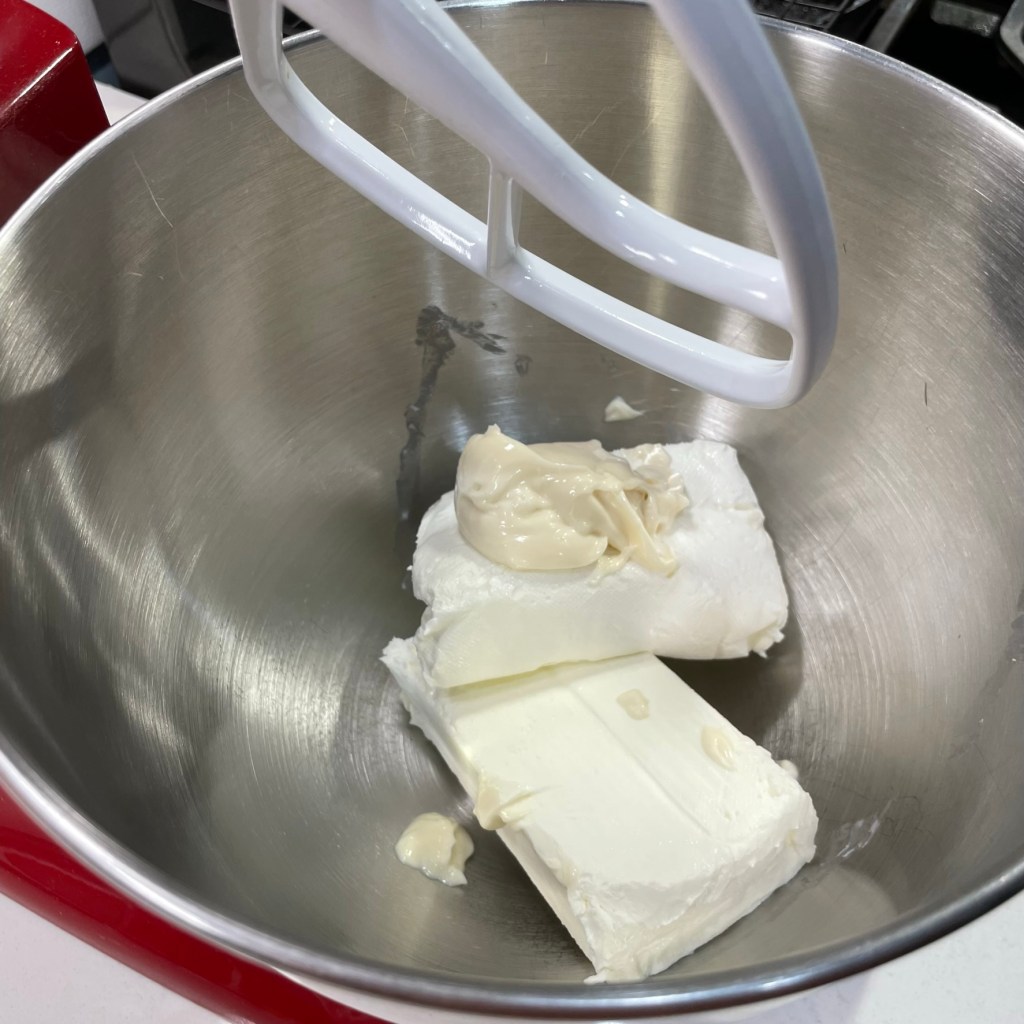
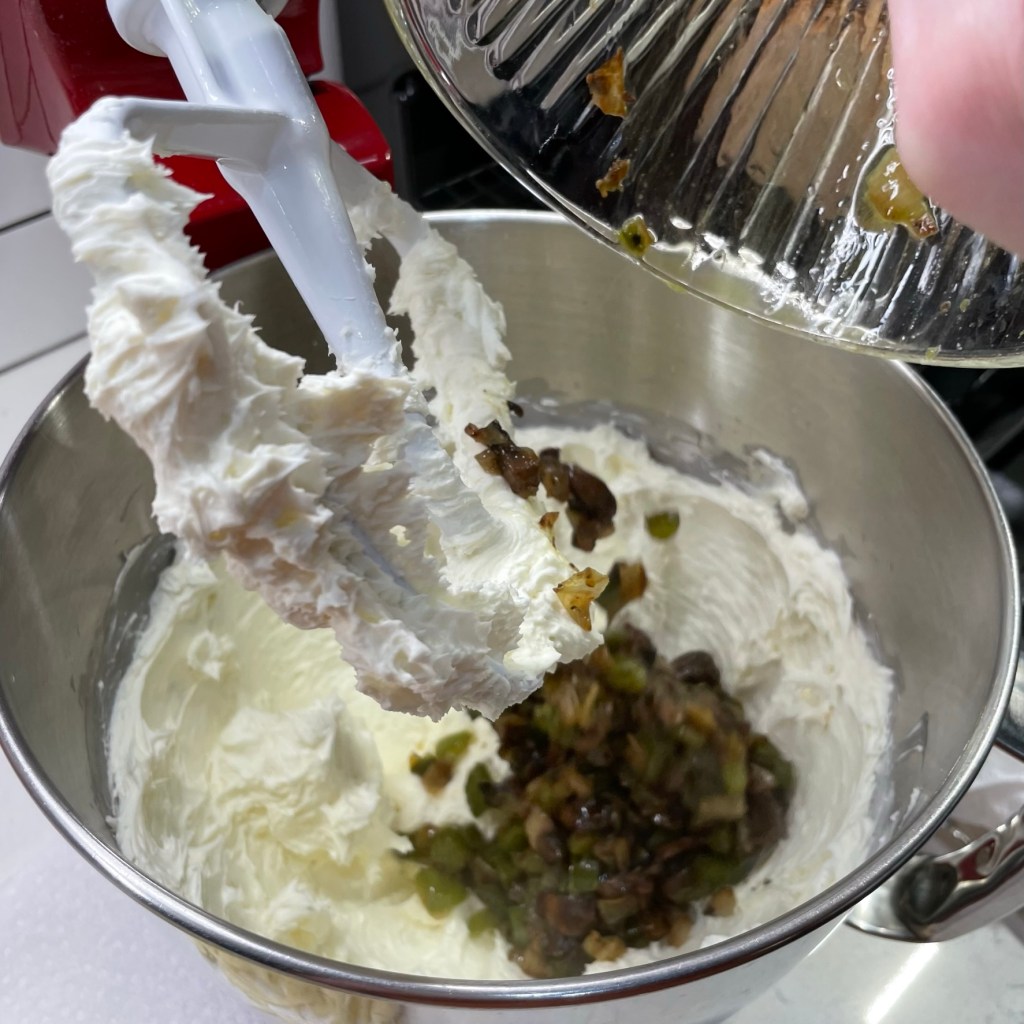
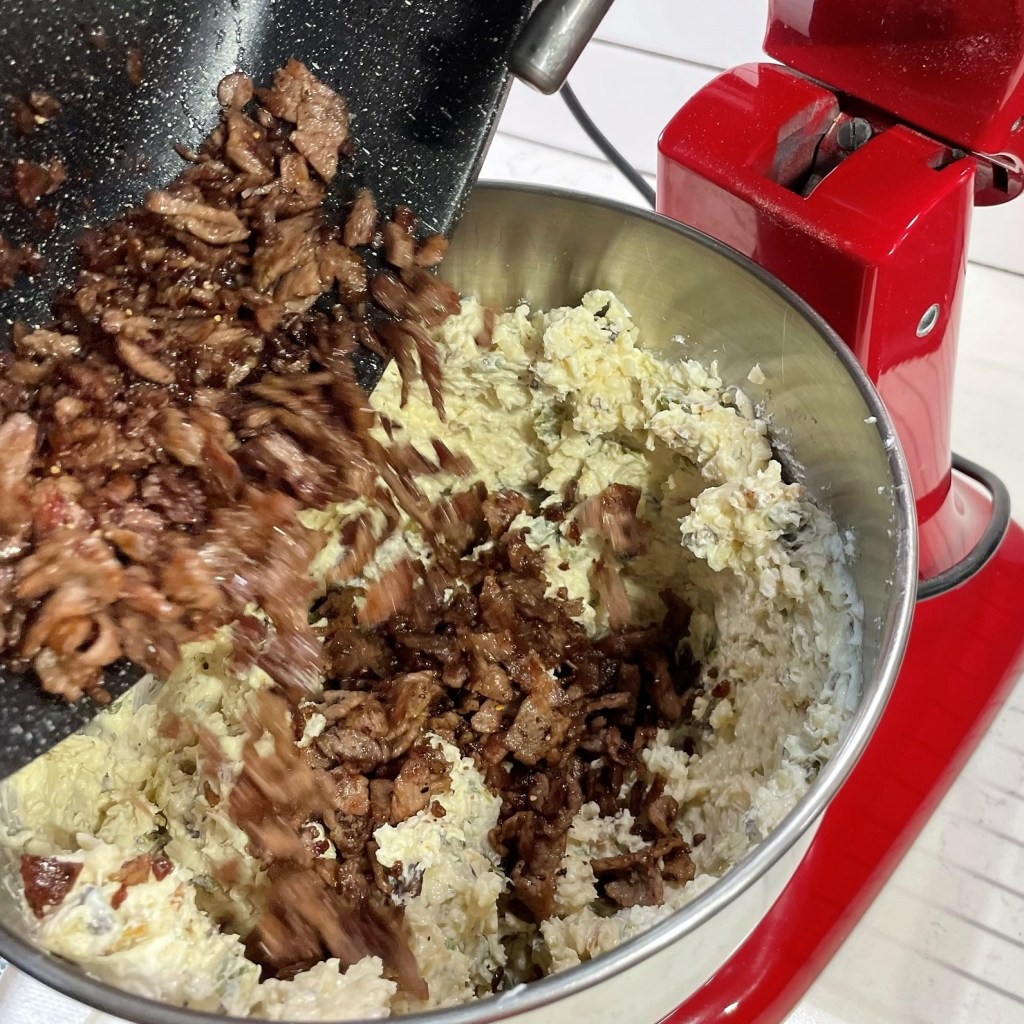
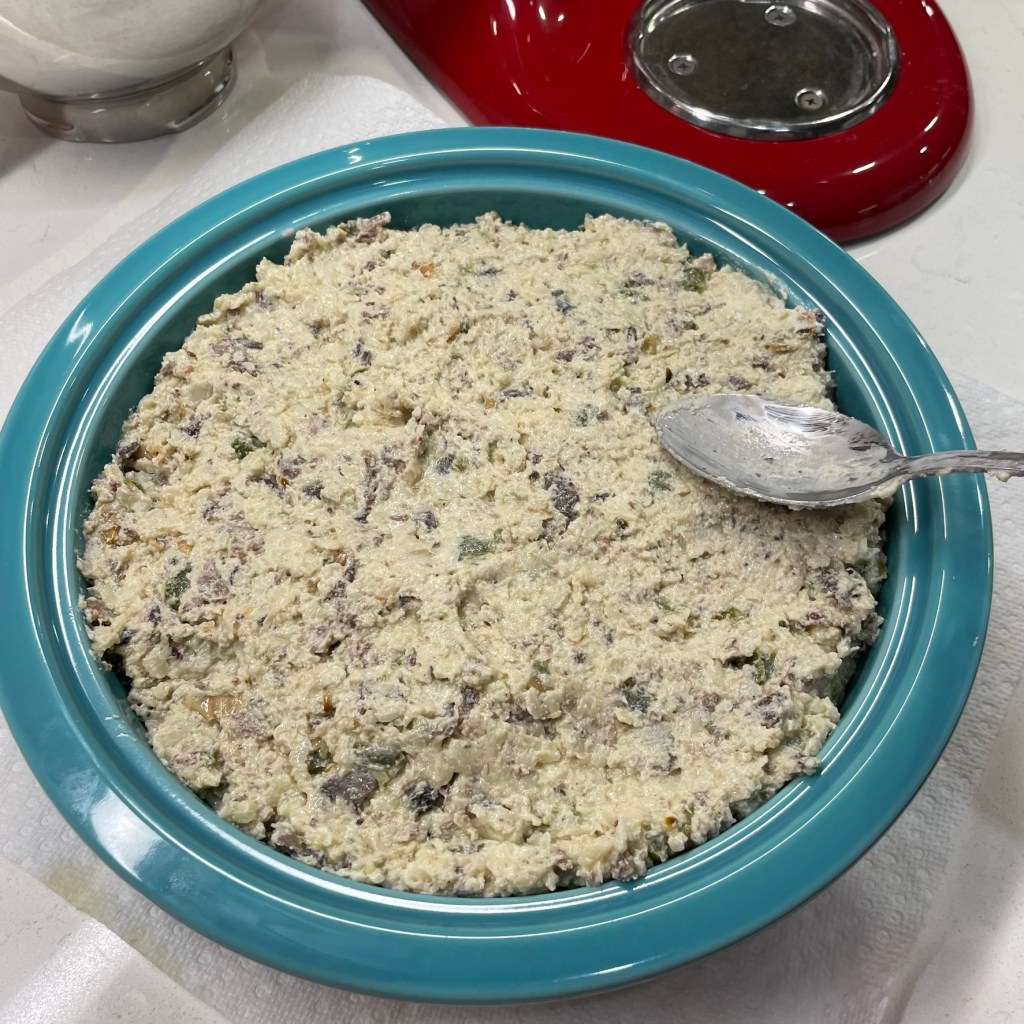
While the veggies and meat cool a bit, blend the softened cream cheese together with a dab of mayo, and then blend in the veggies, shredded cheese and chopped steak. It may be a bit clumpy at this stage and that’s OK; it will melt and smooth out during baking.


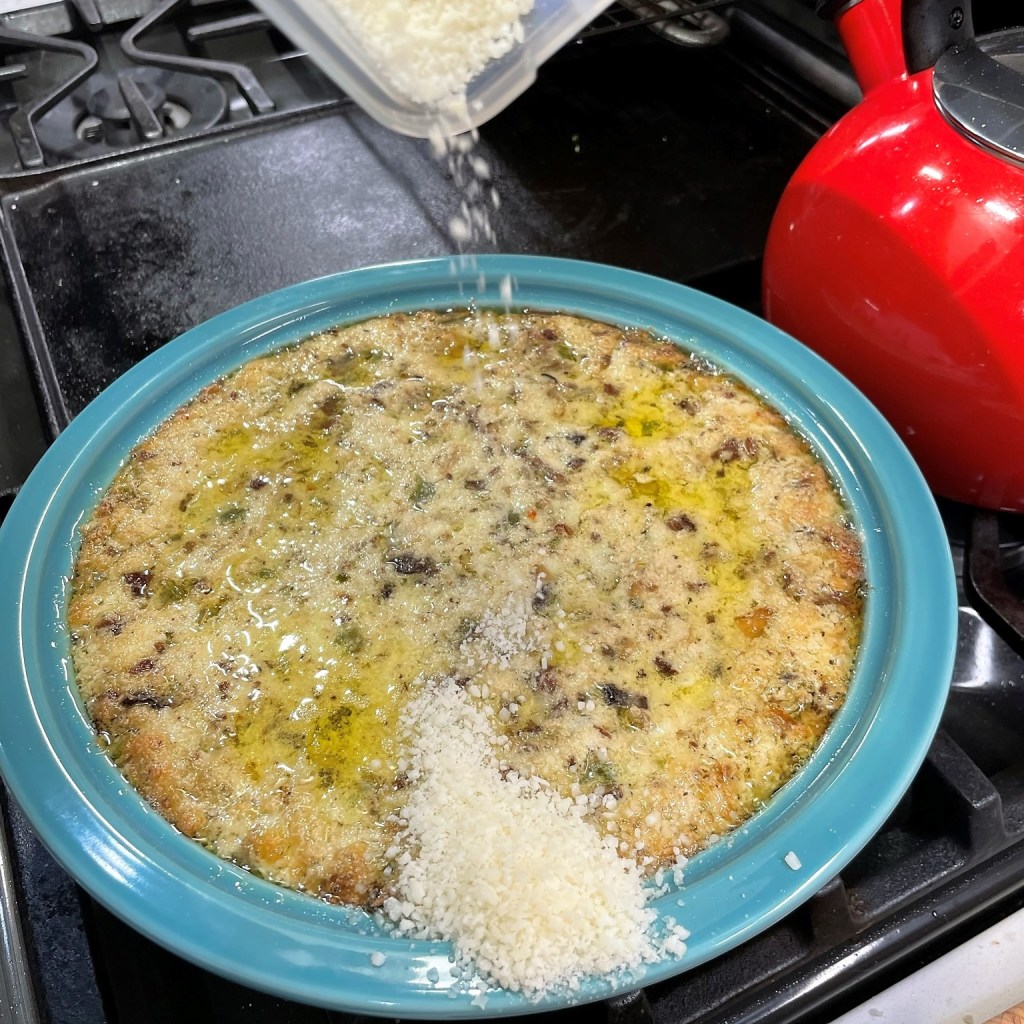
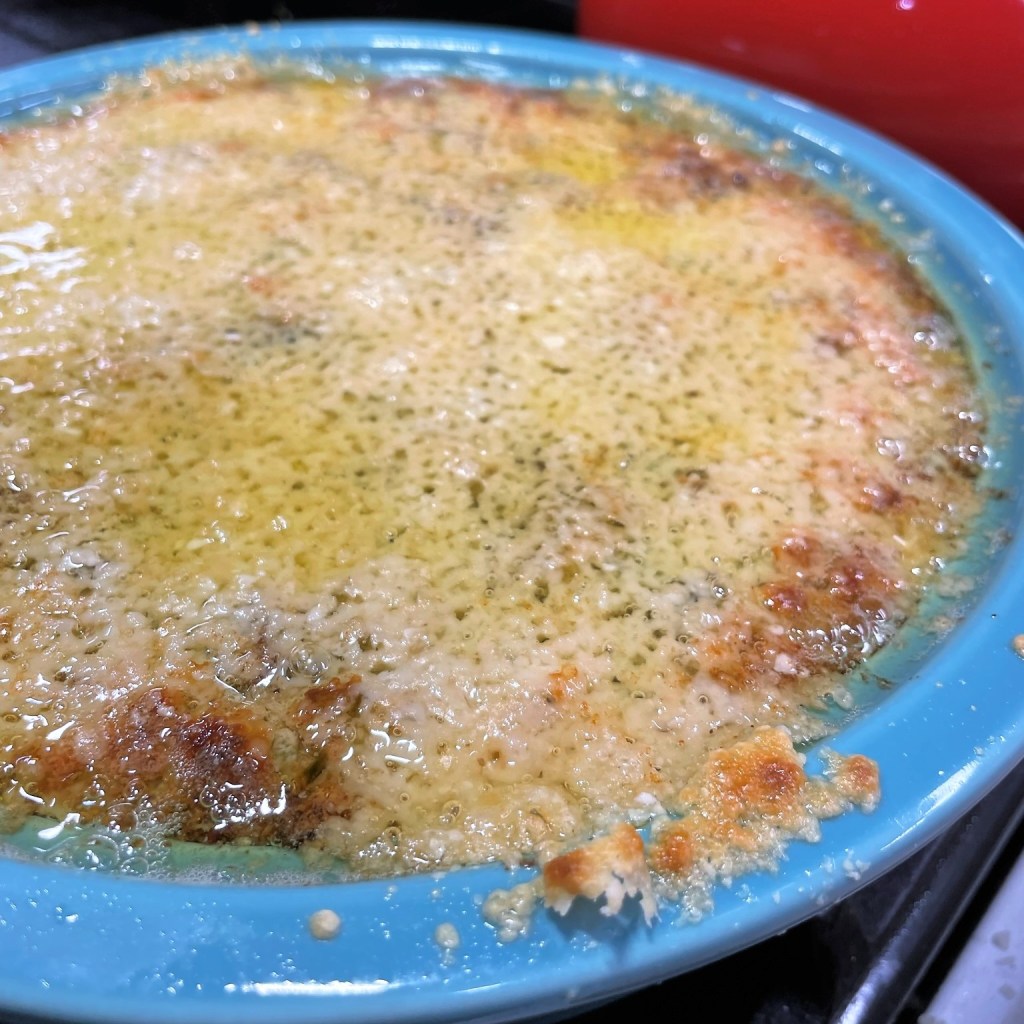
Transfer the whole delicious mess into an oven-safe dish and pop it into the oven at 350 F for half an hour, then top with more cheese (I used our favorite Parm-Romano blend) and put it under the broiler just long enough to get it browned and bubbly on top.


Serve your cheesesteak dip with slices of French baguette or, as we did at our house, crunchy pita chips. It occurred to me when we were enjoying this that the mixture could also be blended and transferred to a small slow cooker. I’d recommend warming it on the high setting until it’s bubbly, then give it a good stir and drop to low or warm setting to keep it nice and gooey from kickoff until the game is over.


Philly Cheesesteak Dip

  • Servings: About 8
  • Difficulty: Average
  • Print

All the scrumptious flavors of a classic Philly cheesesteak sandwich, but easier to eat while cheering your team on to victory!


Ingredients

  • 1 medium onion, chopped (about 2/3 cup)
  • 1 large green bell pepper, chopped (about 1 1/2 cups)
  • A large handful fresh mushrooms, chopped (about 2/3 cup)
  • 2 Tbsp. extra virgin olive oil
  • Salt and pepper
  • A quick shake or two of garlic powder
  • 14 slices very thin steak (Steak-Umms work great)
  • 2 bricks cream cheese (Philadelphia brand, duh!), softened
  • 2 Tablespoons mayonnaise
  • 12 oz. shredded white cheese (Italian, Monterey Jack, pepper jack are all good choices)
  • About 2 Tbsp. shredded Parm-romano blend cheese

Directions

  1. Preheat oven to 350 F. Heat a deep skillet over medium heat. Add olive oil, then add onions, peppers and mushrooms. Season with salt and pepper. Sauté until vegetables are softened and slightly translucent. Transfer to a bowl.
  2. In the same skillet, fry the steak slices until browned and cooked through. Transfer to a cutting board and chop into small pieces. Season with salt and pepper, plus a little shake of garlic powder. Add to the bowl with sautéed veggies.
  3. Using a stand mixer fitted with the beater blade, gently beat the softened cream cheese together with mayonnaise until creamy.
  4. Add sautéed veggies, shredded cheese and browned steak to cream cheese mixture. Mix until evenly blended. Transfer mixture to an oven-safe casserole dish.
  5. Bake cheesesteak dip for 30 minutes, then sprinkle with Parmesan or Parm-Romano blend and broil for 2 to 3 minutes until browned and bubbly.
  6. Remove cheesesteak dip and serve immediately with pita chips or sliced French baguette.

Alternatively, follow instructions through step 4. Transfer mixture to slow cooker on high until bubbly. Reduce to low heat or warm setting so dip stays warm and gooey.


Green Gazpacho Shooters

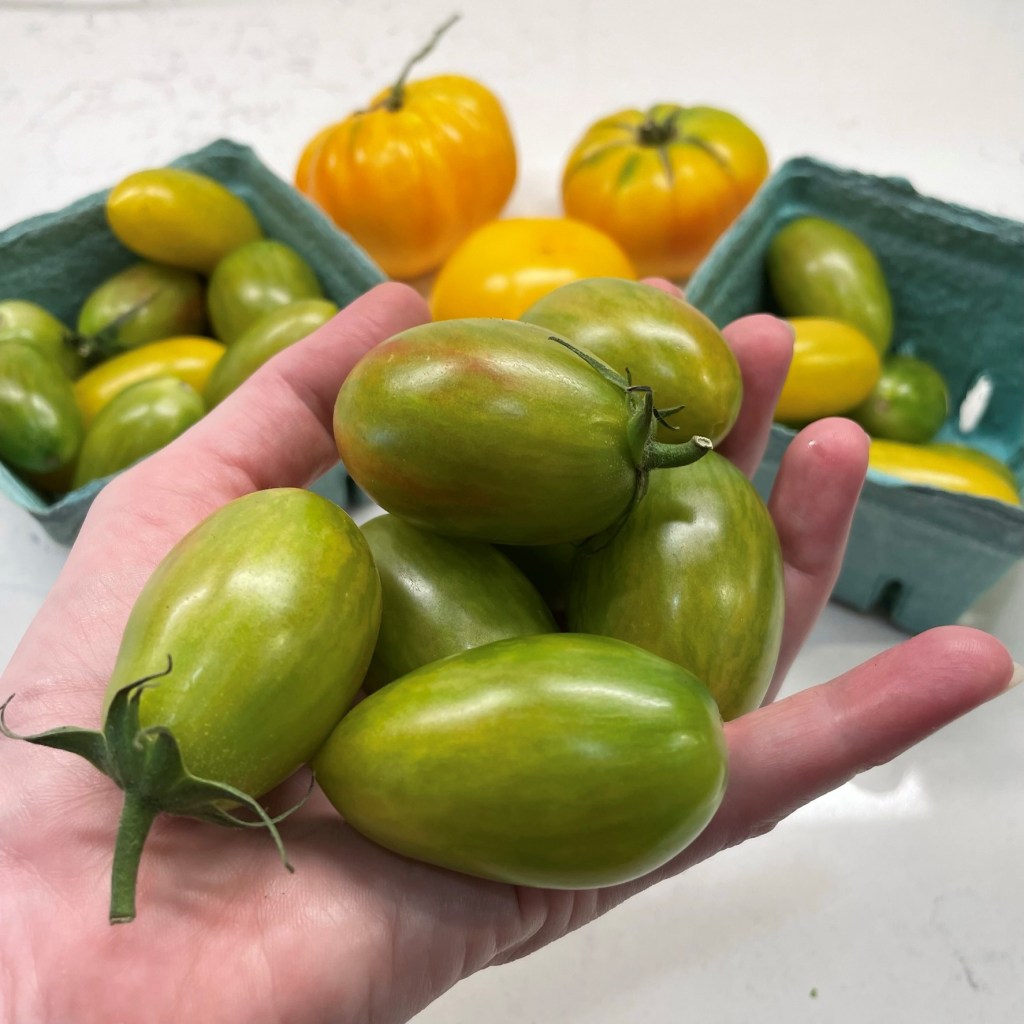
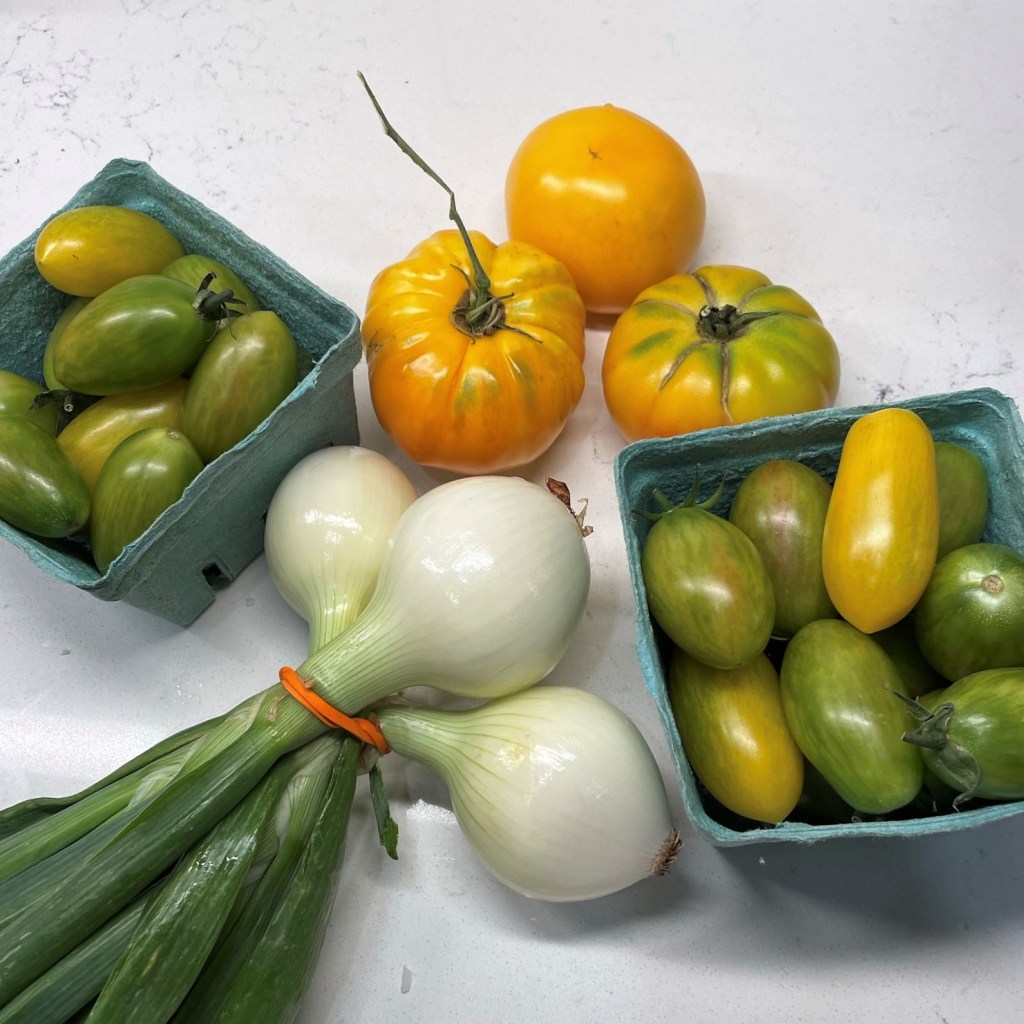
It isn’t easy being green—unless you happen to be this gazpacho! I know, you’ve probably only seen gazpacho in shades of red, and perhaps with a few green bits of pepper or scallion on top. But when I visited our farmers’ market last weekend, I discovered that most of the tomato vendors had sold out. That is, until I spotted these beauties at a booth near the back.

In the end, I was glad that all the red ones were sold out!

The grower assured me that these little gems were indeed ripe, and as sweet as any other baby tomatoes. I don’t remember the variety of the tomato (artisan-something-or-other), but I figured it would be, at the very least, a fun twist on the chilled summer soup I planned to serve at our 3rd of July shindig. I picked up some fresh spring onions and a few yellow tomatoes, too, figuring they would help supplement my gazpacho with garden-fresh goods. The soup wouldn’t be red, but it would be interesting, and I was committed to using farmers’ market ingredients as much as possible.

That raises an important point about shopping local and eating with the seasons—it puts you at the mercy of the harvest, and you either go with the flow or go hungry!

I consider every trip to the farmers’ market to be a treasure hunt!

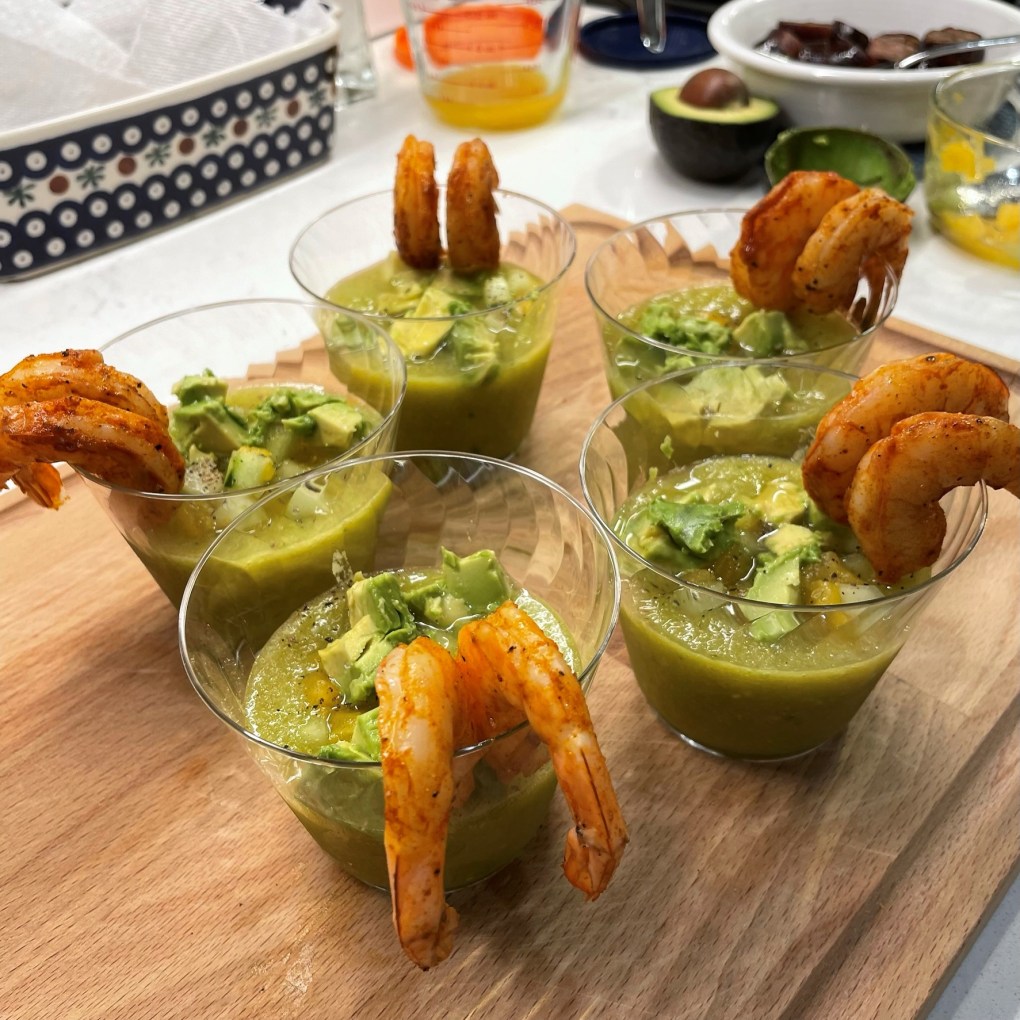
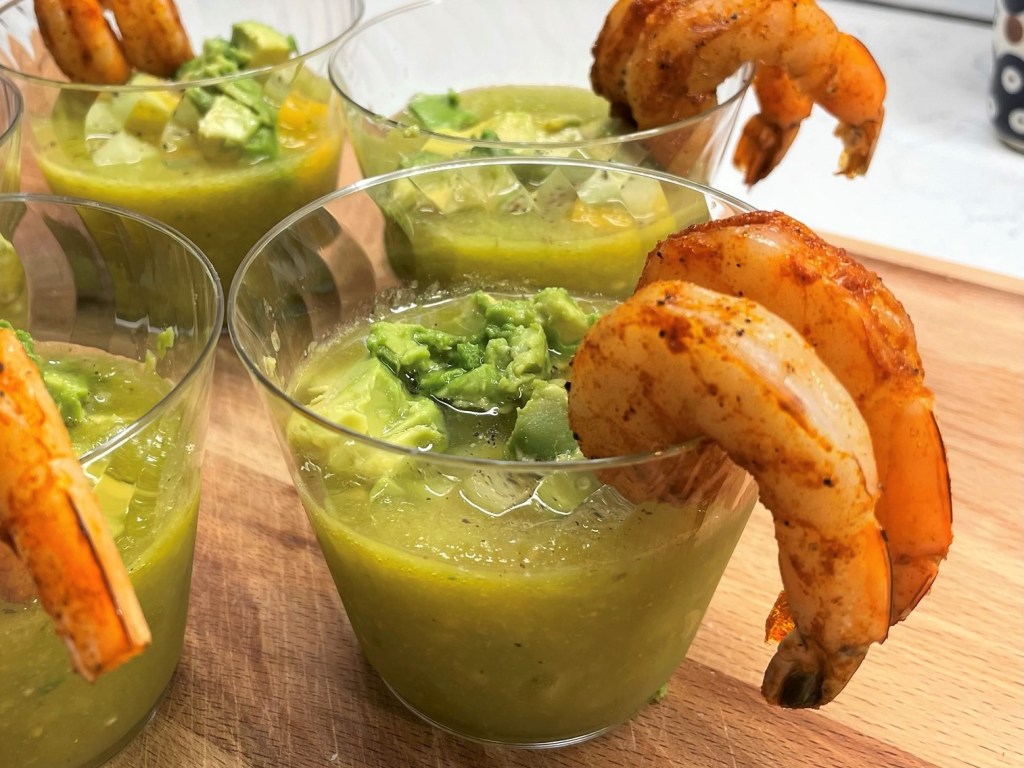
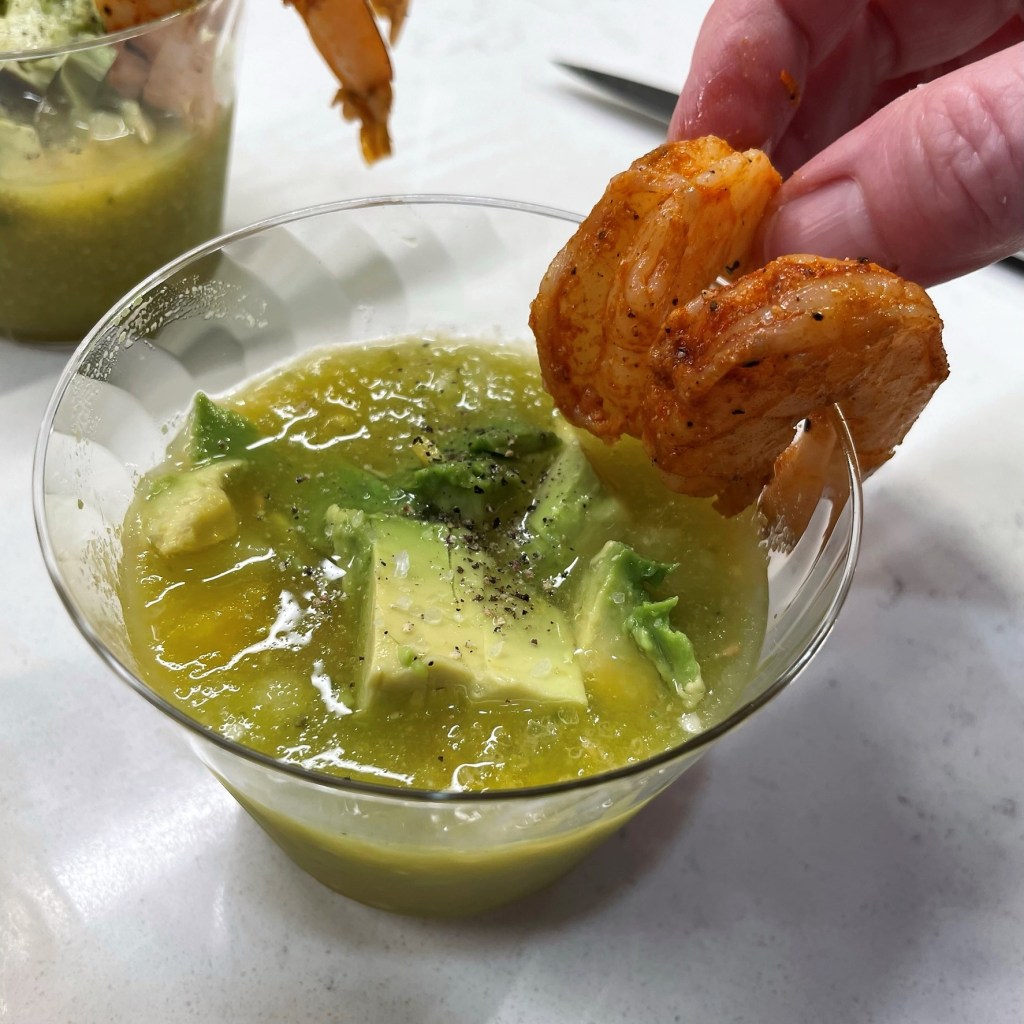
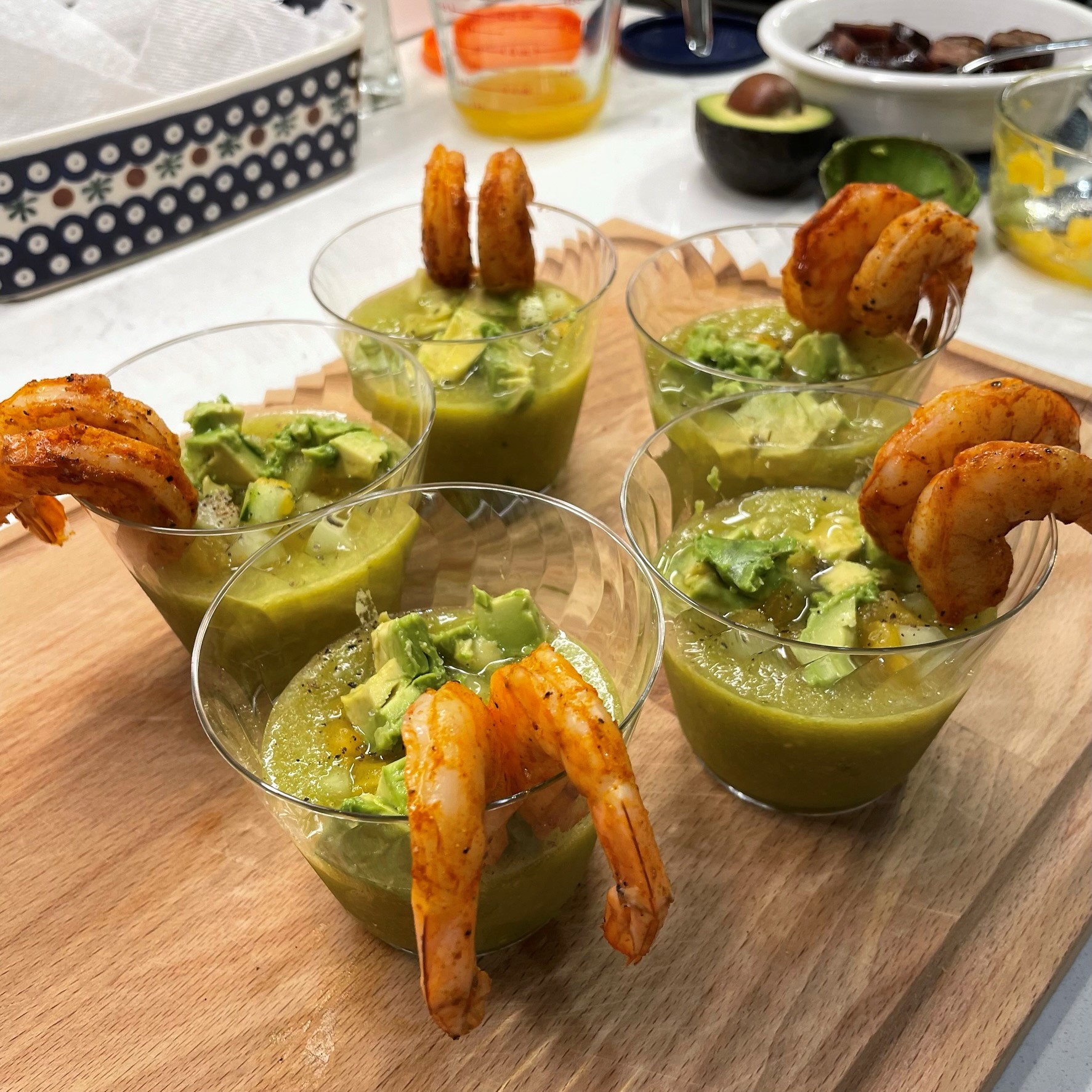
Fortunately, nobody went hungry at our house that evening, and this easy appetizer was the first thing we shared to get the party started. My instinct was to serve the gazpacho as “shooters,” a quick and simple starter that could be prepped ahead and served, sans silverware, as guests arrived. And I could have served them that way, if I had left off the delicate cubes of yellow tomato, cucumber and avocado, but those made the cups so much prettier, even if we did need to hand out spoons! An additional “garnish” of roasted paprika-dusted shrimp made the shooters substantial enough to hold everyone over for the feast that would come off the grill later.

This was a fun way to welcome guests with a fresh taste of summer!

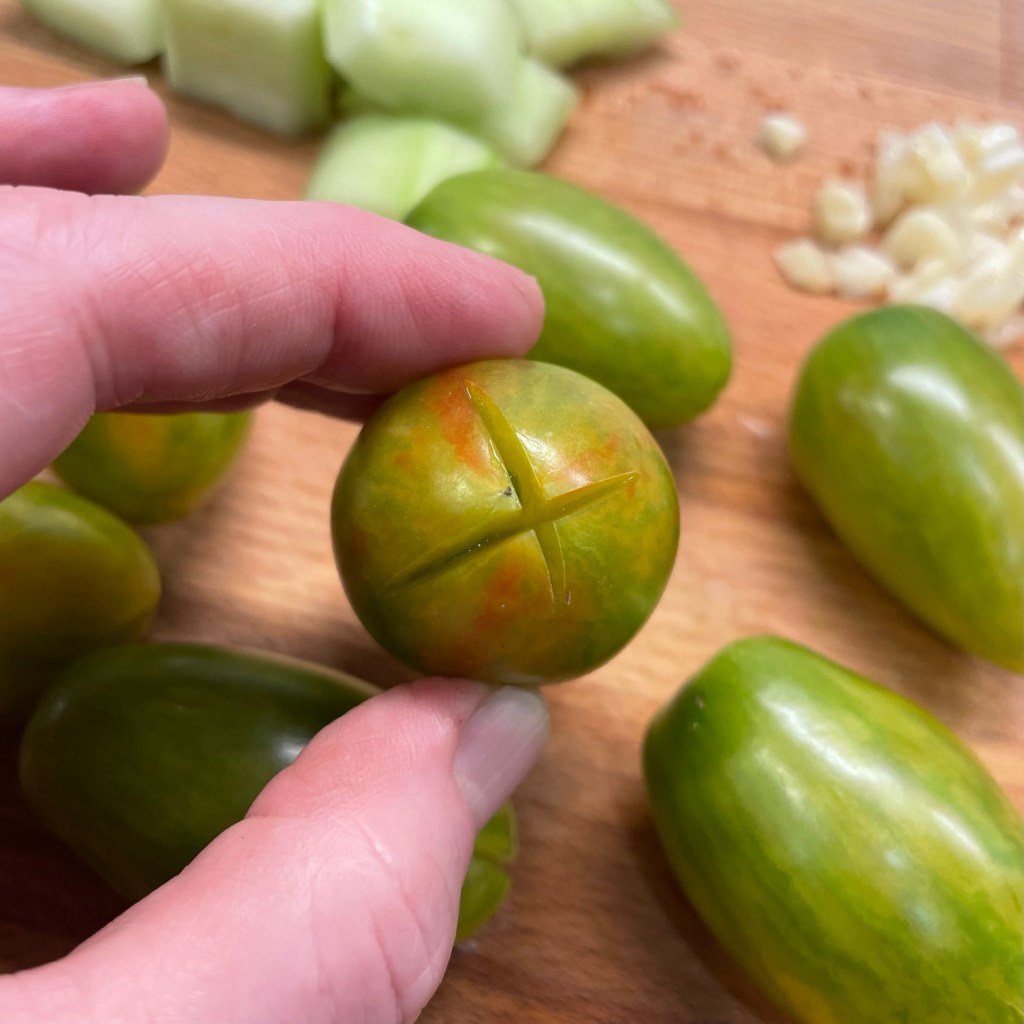
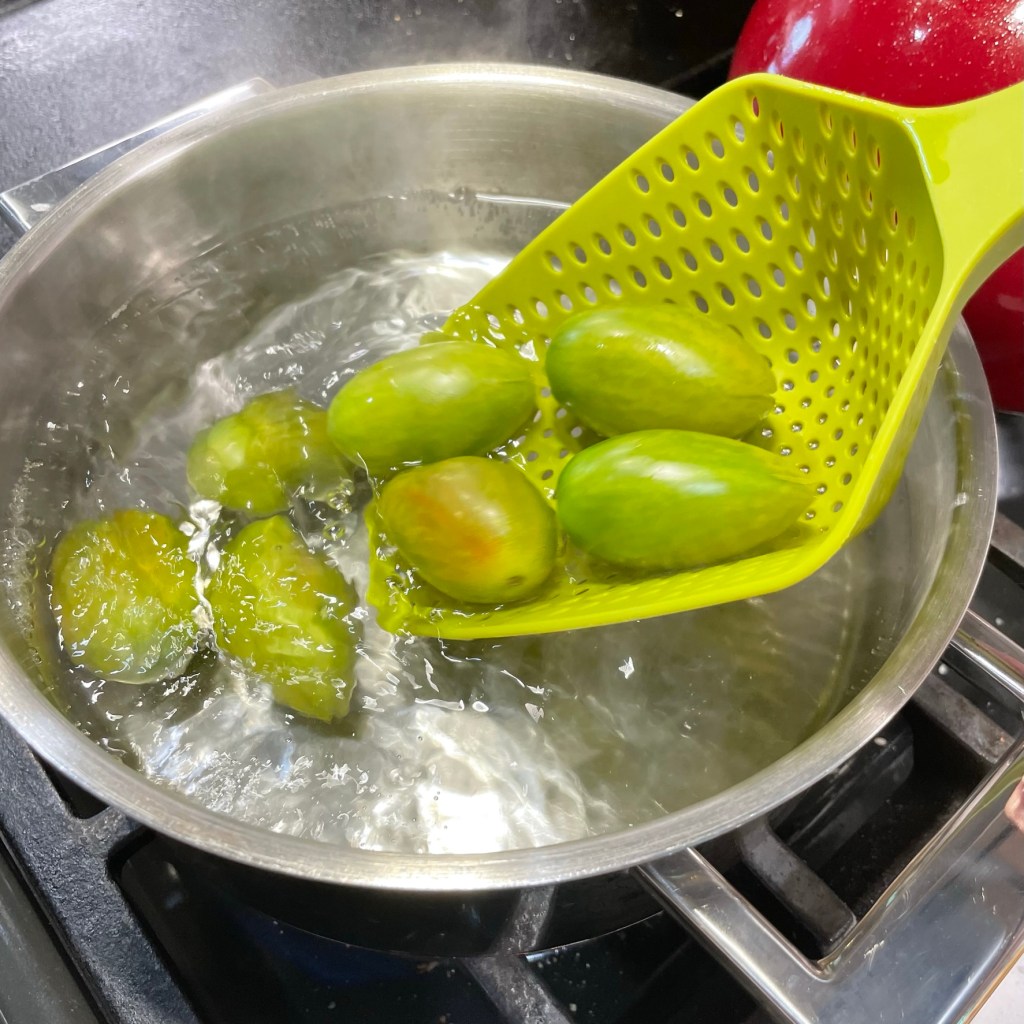
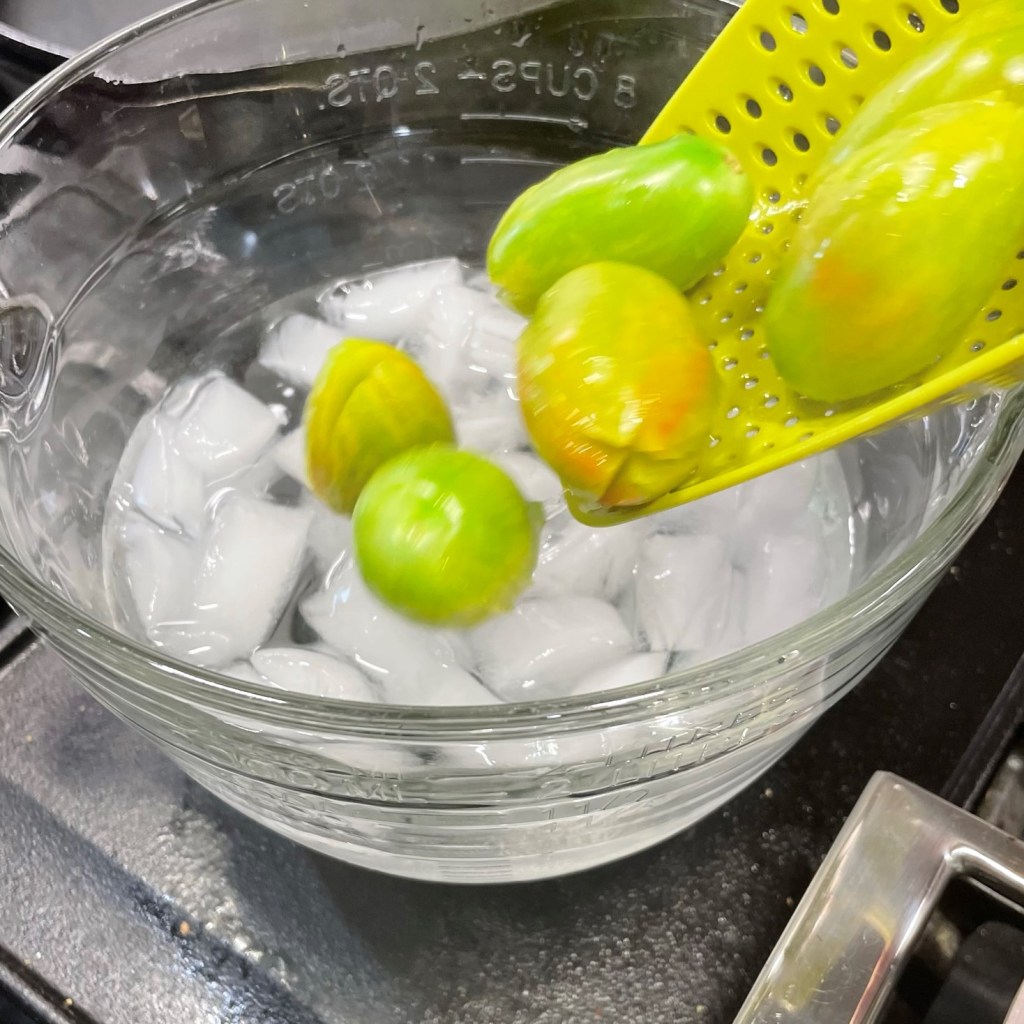
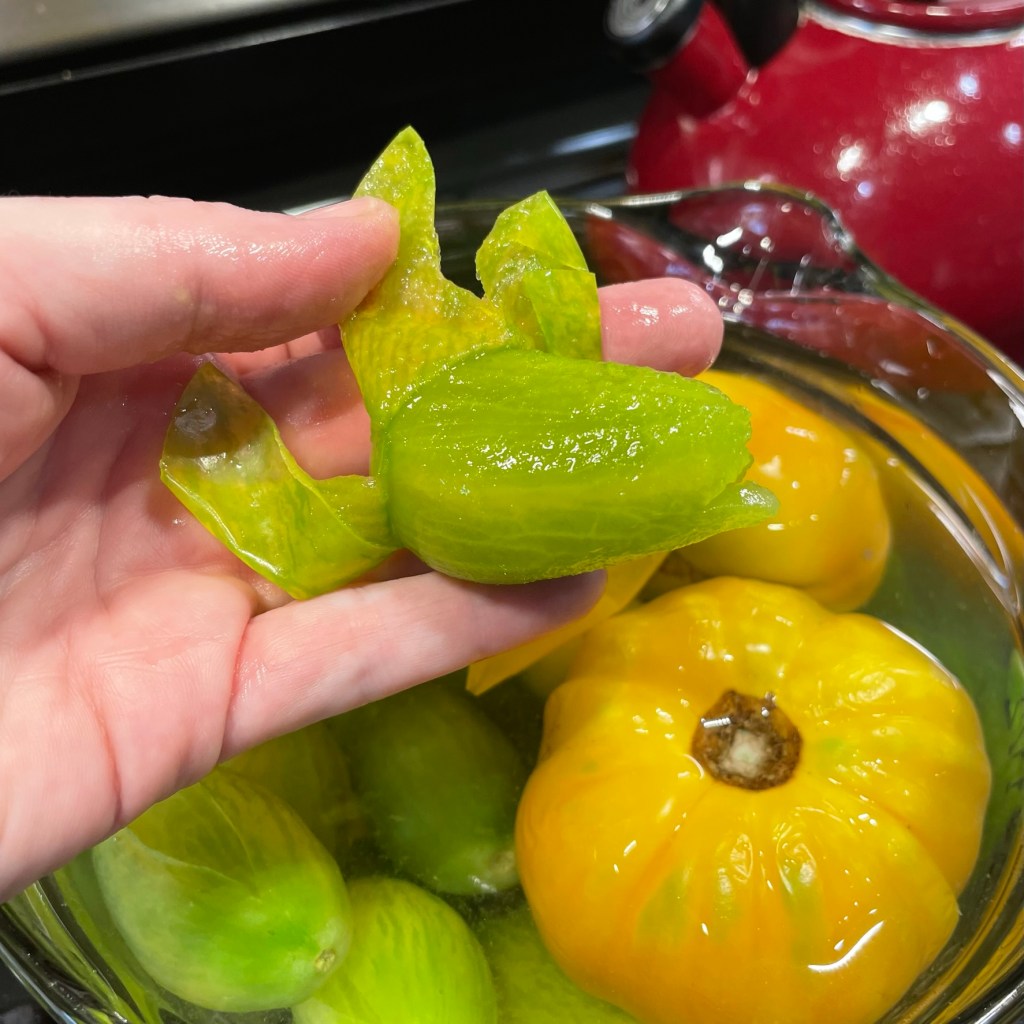
This recipe was very easy to make (gazpacho always is), and I prepped everything but the shrimp a day ahead, which worked well because gazpacho flavors really develop overnight. Step one was to strip the skins off the tiny tomatoes—you don’t want to put those in the processor, unless you like little bits of peel sticking to your teeth. For this task, I did a quick blanch-and-shock treatment. Bring water to a boil in a pot, and prepare a separate bowl filled with ice water. Cut an “x” on the bottom of each tomato to give the peel an easy place to break. Gently lower the tomatoes into the boiling water, a few at a time, and only for about a minute, and then immediately scoop and transfer them into the ice water. This immediately stops the cooking process, shocking the tomatoes so that the peels can be easily stripped away.


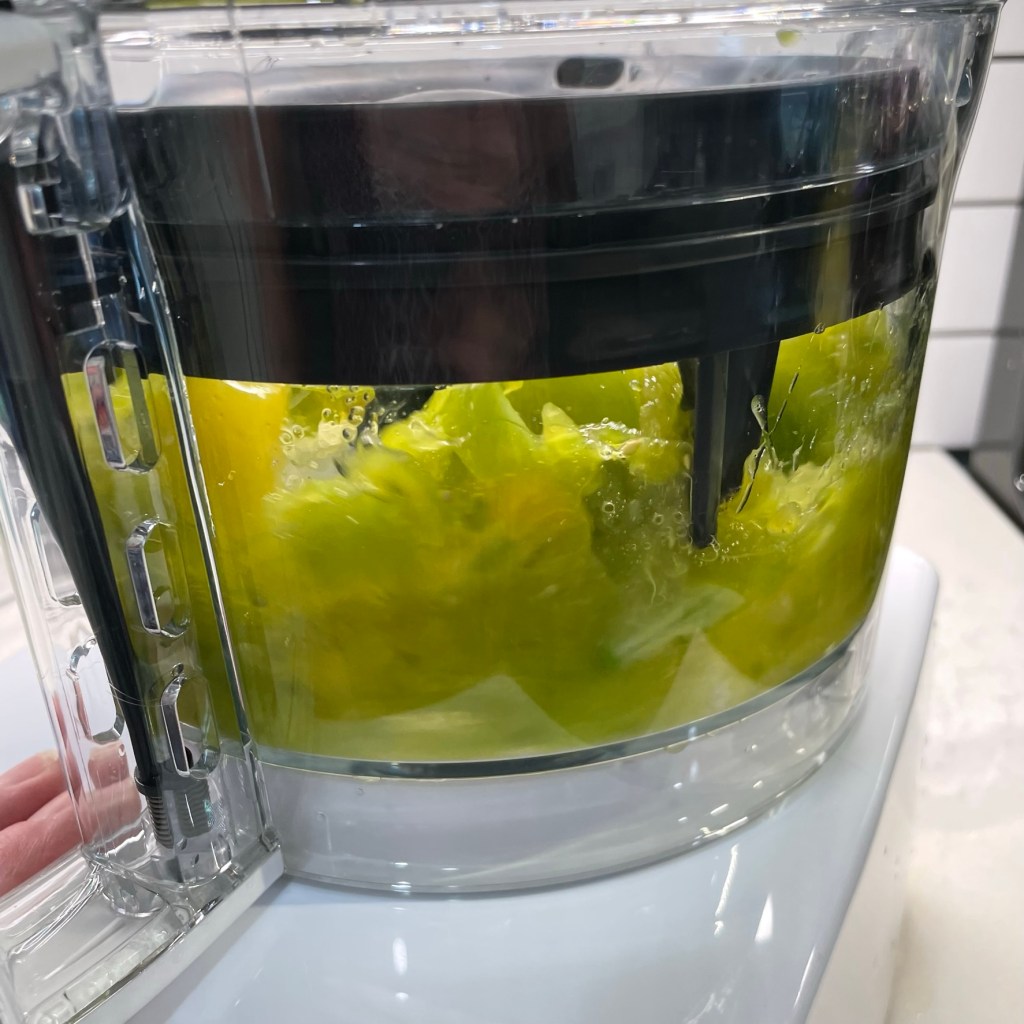
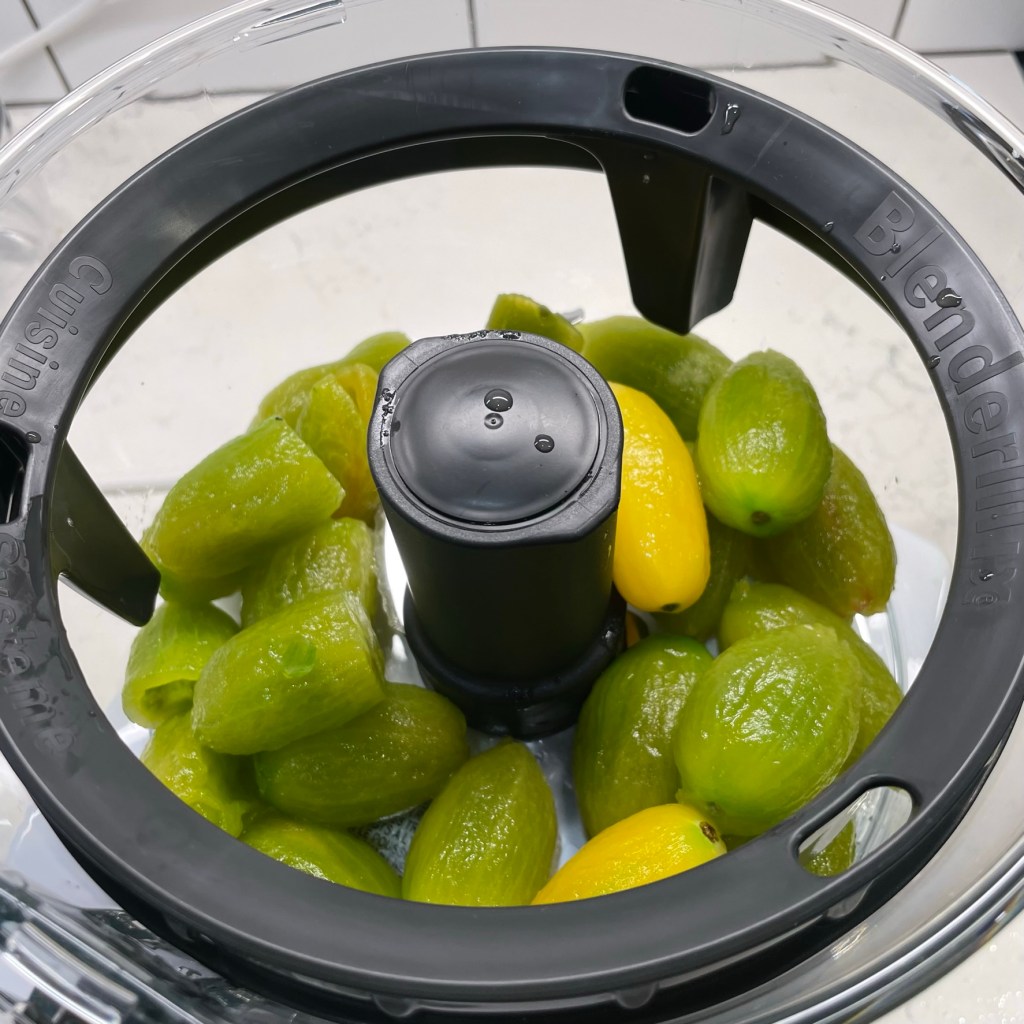
I repeated the process with the larger, yellow tomatoes, which I took time to de-seed first (I kept the seeds for another purpose). I held back the flesh of about half a yellow tomato to use later for garnish, and the rest went into the large bowl of my food processor with the little green tomatoes. A few of them had tougher stems, which I cut off, but most of them were tender enough to toss into the mix.

I haven’t shared much about my processor yet, as I’m still learning all the bells and whistles, but I promise I’ll give it a proper introduction soon. For now, I’ll say that it is quite large (14-cup capacity) and it has a cool “Blendermix” ring that is designed to keep the bowl contents in check when you puree ingredients. I love this because it eliminates the need to stop and scrape down the bowl during mixing. Less work for me is never a bad thing!


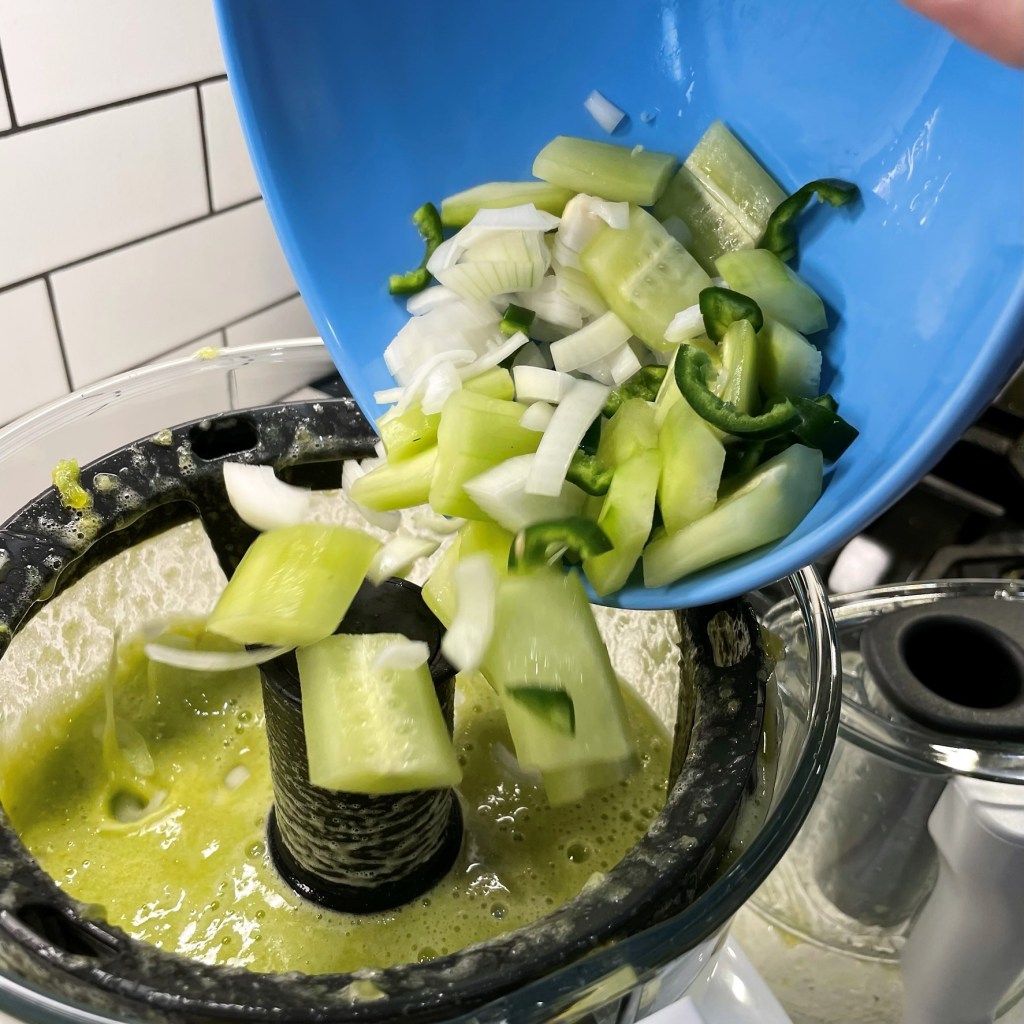
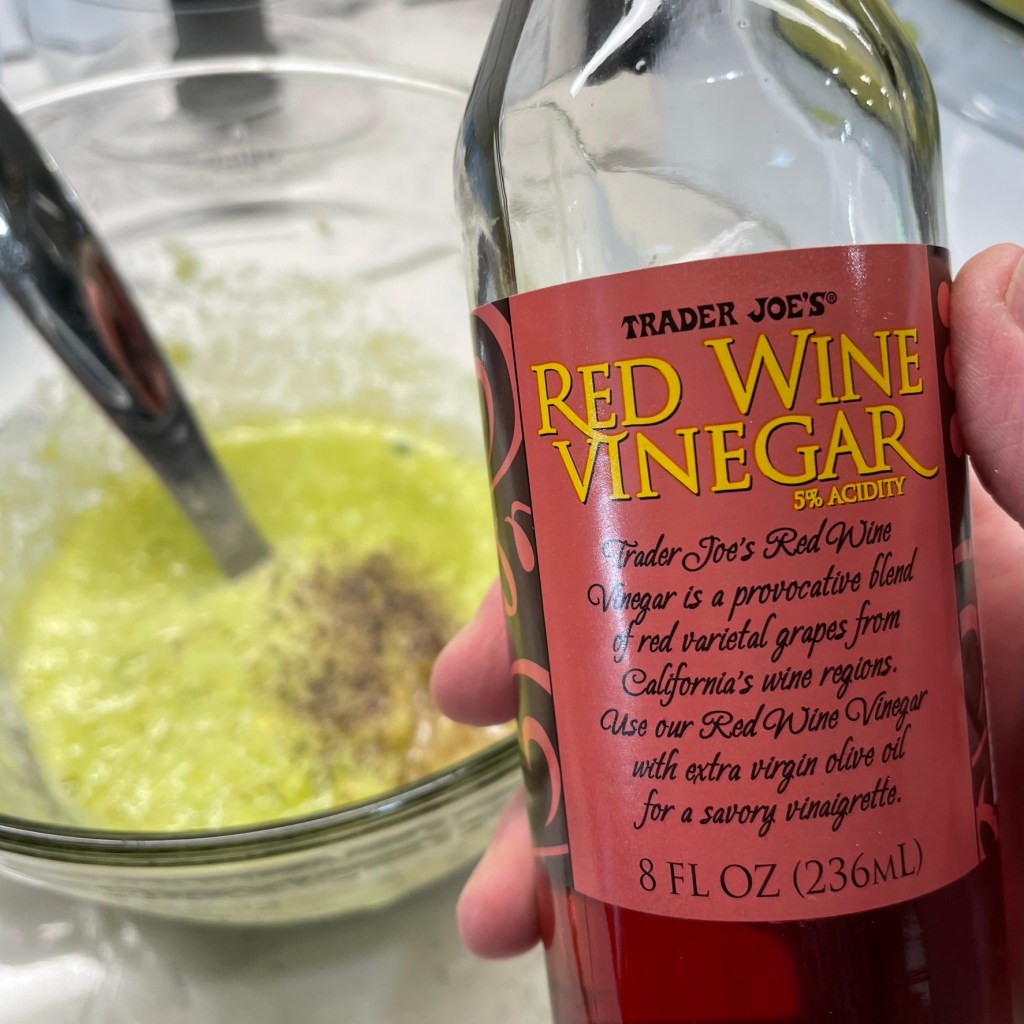
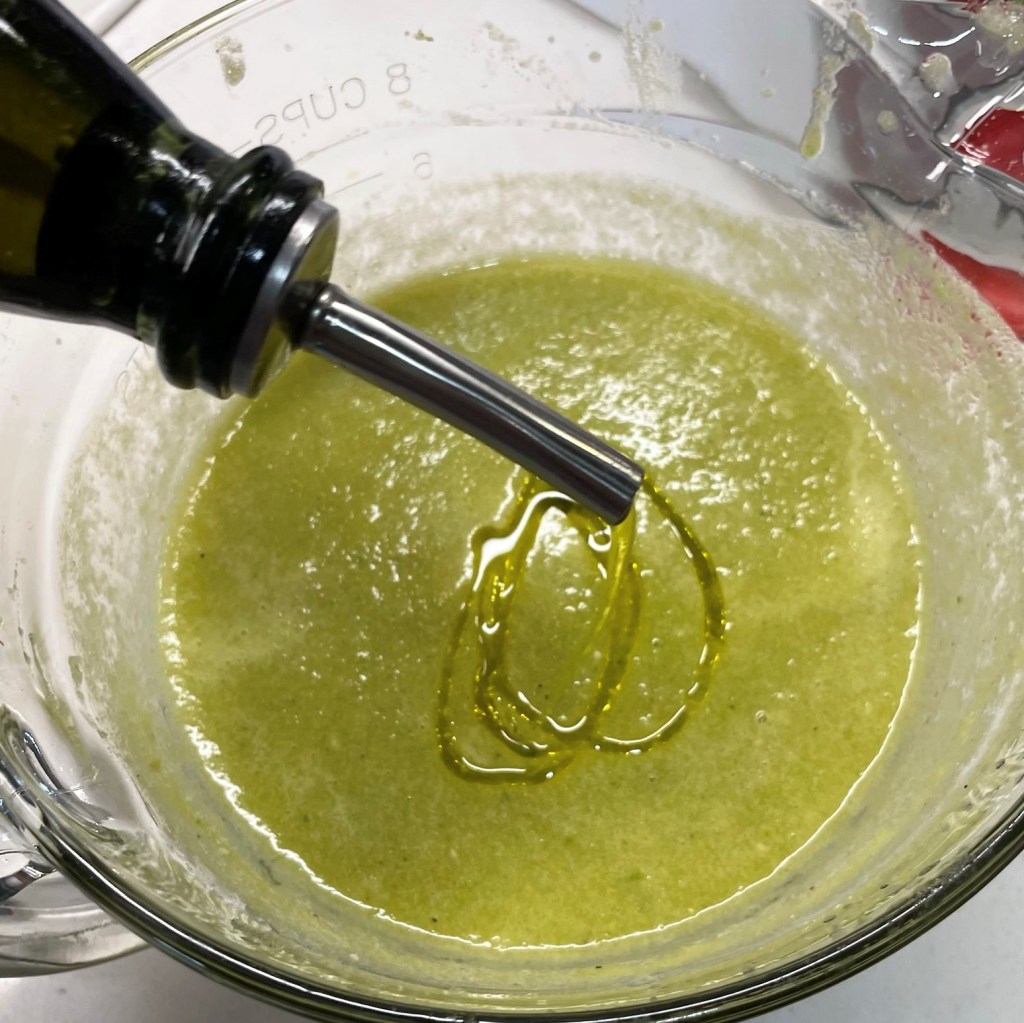
When I was satisfied with the smoothness of the tomatoes, I tossed in most of a peeled and seeded, cut-up cucumber (I reserved part of it for a topping), a chopped spring onion and about half of a chopped jalapeno. If you like heat, you can leave the seeds in the jalapeno for a bigger bite. I stripped them out to accommodate guests who may not enjoy heat as much. It’s always easier to add spice than to take it away! Depending on how much texture you want in your gazpacho, you could either pulse in these extra goodies or puree the dickens out of them. I went with plan B and whizzed it up nice and smooth, then transferred the soup to a pitcher bowl and stirred in a splash of red wine vinegar and a quick swirl of good, extra virgin olive oil (Spanish, of course).


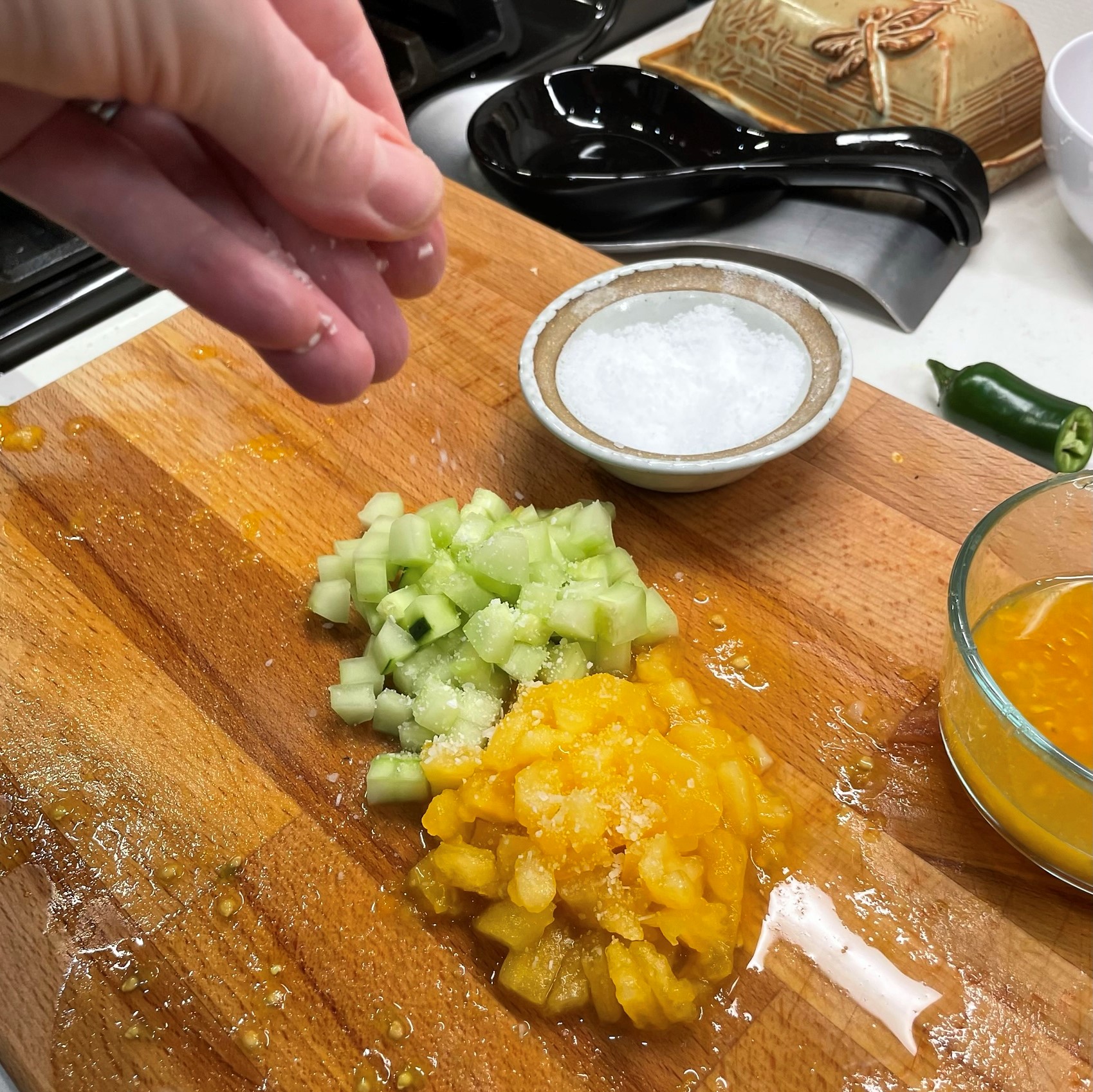
Gazpacho is best when it has had some time to “relax” in the refrigerator, so at that point, I covered the pitcher bowl and chilled it overnight. Remember the yellow tomato I set aside earlier, and the last bit of cucumber that didn’t get pureed? My intention was to use them as a garnish/topper on the gazpacho at serving time, so I sprinkled them with salt and combined them in a small bowl that also went into the refrigerator. A little bit of texture on top of the gazpacho would add visual interest and something to tantalize the taste buds on those first few bites.

Even the yellow tomato was so juicy! I reserved the seeds and excess juice for another purpose.

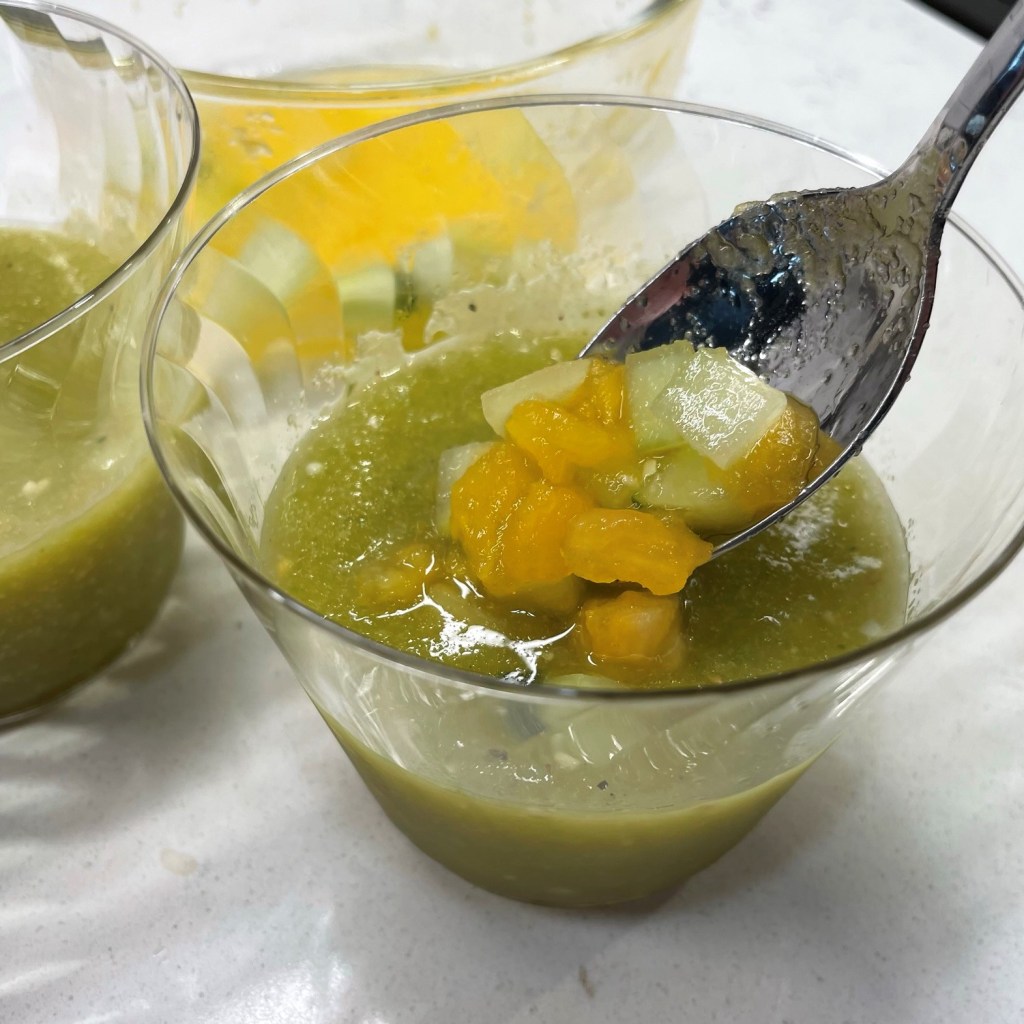
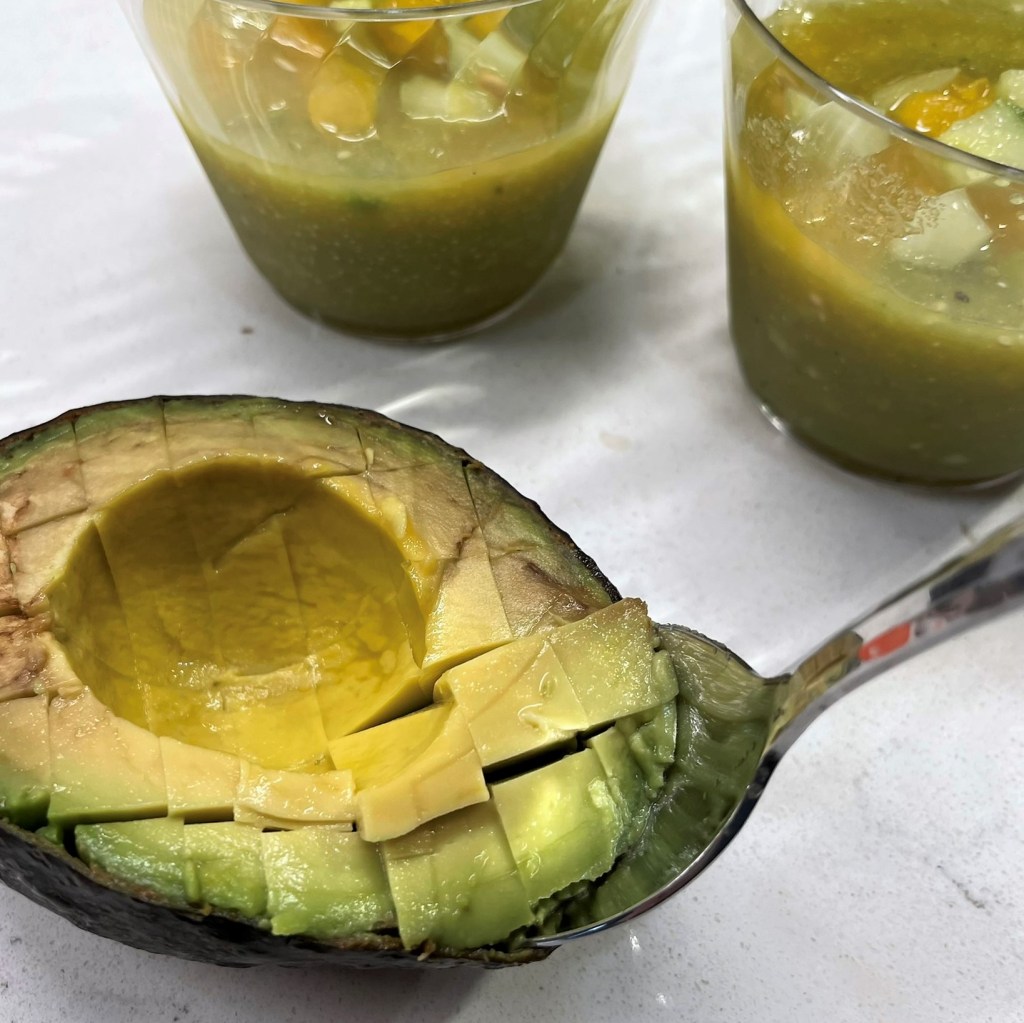
To serve the gazpacho, divvy it up into cute little cups or glasses. We did this an hour or so ahead of our friends’ arrival to save time and last-minute fussing, then tucked them back into the fridge. Top each cup with a few cubes of the reserved tomato-cucumber mixture, and a few cubes of fresh avocado. If you wish to garnish with the roasted shrimp, check out my previous post for Bloody Mary Shrimp Cocktail—the process was the same, but for this gazpacho recipe, I tossed the shrimp with a little bit of salt, garlic powder and sweet Spanish paprika.

This green gazpacho was a perfect starter for the summer meal to come from the grill. It was light, flavorful and very refreshing, and though it was a simple course—from its short list of ingredients to its ease of preparation—everyone loved it so much, they were still talking about it as we hugged our goodbyes.

It doesn’t get much sweeter than that!

Green Gazpacho Shooters

  • Difficulty: average
  • Print

This easy green gazpacho can be made ahead in half an hour and is terrific as a starter course for a summer meal off the grill! This recipe requires a food processor, or it can be made in a blender, though you may need to process the tomatoes in batches.

Ingredients

  • 2 dry pints of ripe baby tomatoes (green or otherwise)
  • 3 smallish yellow tomatoes (one will be reserved to chop for topping gazpacho)
  • 1 spring onion or small sweet onion, rough chopped
  • 1 large cucumber, peeled and quartered with seeds removed (reserve a chunk of this for topping)
  • 1/2 medium jalapeno, rough chopped (use the seeds if you like it hot)
  • Kosher salt and freshly ground black pepper
  • 1 Tbsp. red wine vinegar
  • 1 Tbsp. good quality, extra virgin olive oil (preferably a Spanish, fruity variety)
  • 1/2 ripe avocado, cubed (this will be a garnish at serving time; do not add it to the blended gazpacho)
  • Roasted paprika-dusted shrimp, optional for garnish (cooking instructions included in note below)

Directions

  1. Bring a pot of water to boil and fill a separate, large bowl with ice water.
  2. Wash all tomatoes and use a paring knife to cut a small “x” on the bottom of each.
  3. Carefully lower the tomatoes (a few at a time) into boiling water, and turn them a few times until the peels begin to loosen. This will only take about one minute, unless the tomatoes are less ripe. Scoop them out and immediately transfer them to the ice water bowl, taking care to fully submerge them. Repeat until all tomatoes have been blanched and shocked.
  4. Drain the tomatoes of excess water and transfer them to the bowl of a food processor, fitted with the large blade. Season with salt and pepper. Pulse a few times to break up the large pieces, and then process continuously until the tomatoes are pureed to a smooth consistency.
  5. Add the cut-up onion, cucumber, and jalapeno to the processor. Pulse, then puree continuously to desired consistency.
  6. Stir in the vinegar and olive oil. Adjust salt and pepper to taste. Transfer gazpacho to a pitcher bowl and refrigerate several hours or overnight.
  7. Dice the reserved yellow tomato and cucumber into bite-sized bits. Sprinkle with salt and pepper. Combine these in a bowl and refrigerate to use as a garnish on the soup.
  8. To serve, divide the gazpacho into cups and top with reserved tomato and cuke bits, plus roasted and chilled paprika shrimp (below).

These paprika-spiced shrimp are very simple to make, and you may prep these up to a day ahead. Be sure to give them enough time to chill completely in the fridge before serving time.

Ingredients

  • 12 to 16 shrimp (enough for two shrimp per gazpacho serving)
  • 1 Tbsp. extra virgin olive oil
  • 1 tsp. Spanish sweet paprika
  • 1/2 tsp. garlic powder
  • 1/2 tsp. kosher salt
  • several twists freshly ground black pepper

Directions

  1. Preheat oven to 400 F, and line a baking sheet with parchment paper.
  2. Peel and de-vein shrimp, keeping tails intact for presentation. Pat dry with paper towels.
  3. Add shrimp to a zip-top freezer bag. Drizzle in olive oil and add seasonings. Seal and shake to evenly coat the shrimp with seasonings.
  4. Arrange shrimp on baking sheet. Roast for about 6 minutes, or until shrimp are just barely opaque. Remove from oven and arrange in one layer on a plate. Place the plate directly into the fridge or freezer for a few minutes to stop the cooking process. Transfer to a covered container and keep chilled until ready to serve.


Kentucky Hot Brown Swirls

The funnest thing about doing a food blog is putting all the new spins on the old dishes. Wait, did I just write “funnest?” Well, a word like that fits the situation, given that I am feeling playful about twisting up a classic. If I’m taking all kinds of liberties with the flavors so beloved for Kentucky Derby, I may as well do it with my words, too.

My celebration of the Kentucky Derby—which is Saturday, by the way, in case time has gotten away from you—is purely vicarious. I’ve never been to the Derby and honestly don’t know how I feel about the way they pressure the horses to perform for profit, but I know that I like the pomp and circumstance, the food traditions, the fancy hats and especially the bourbon! The Kentucky Hot Brown is the most classic dish associated with the Kentucky Derby, and I have twisted it up in several ways already, including a Kentucky Hot Brown Benedict, a Kentucky Hot Brown Pizza and a super simple Kentucky Hot Brown Dip. When Derby time rolled around this year, I wanted to make a fun, crowd-ready food that’s easy to pick up and enjoy in just a few bites because, honestly, who wants to sit down in the middle of a party with a knife and fork and eat a messy, traditional Kentucky Hot Brown open-faced sandwich, with all its oozing Mornay sauce? Yeah, these are much easier!

It’s no coincidence that these Kentucky Hot Brown swirls are delicious with bourbon.

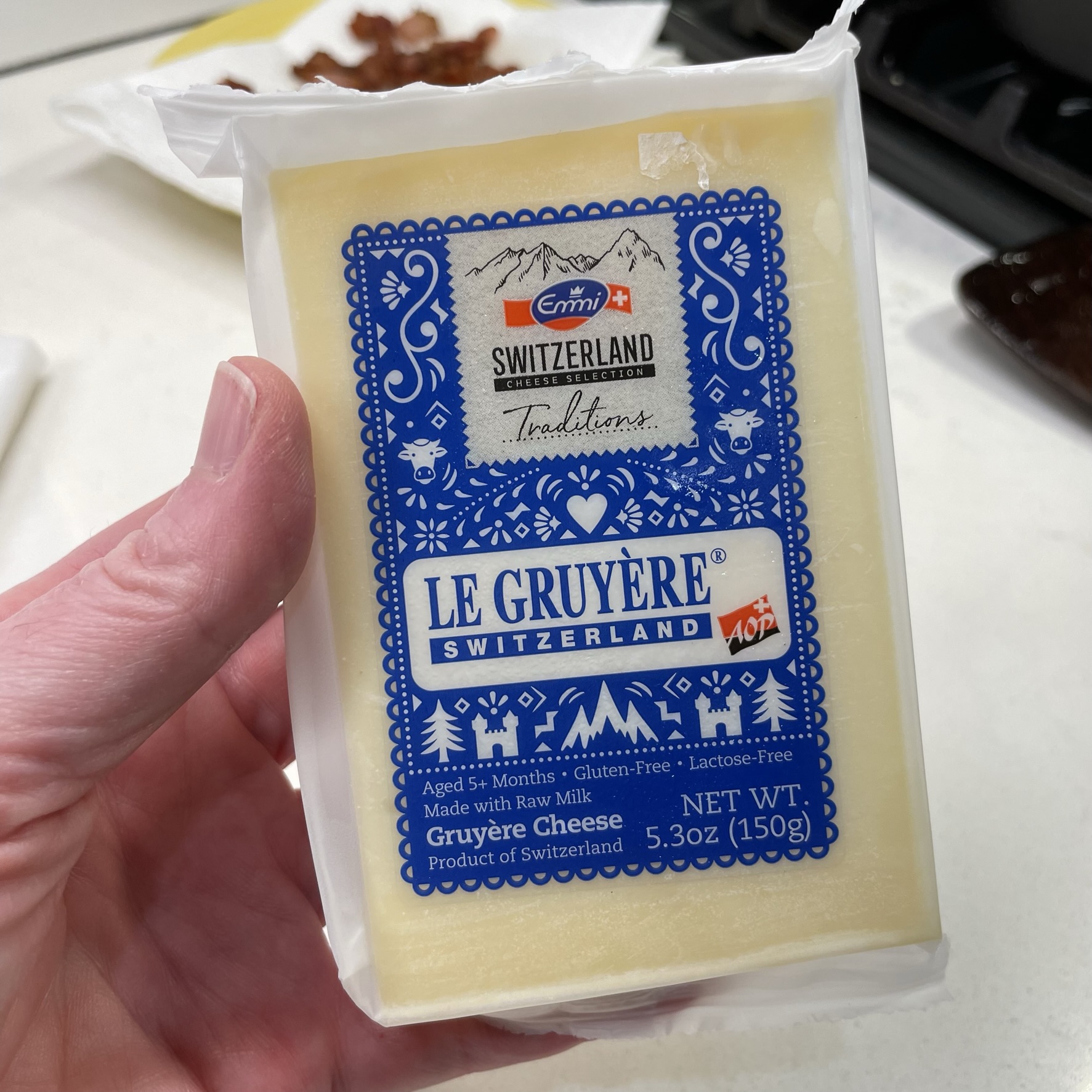
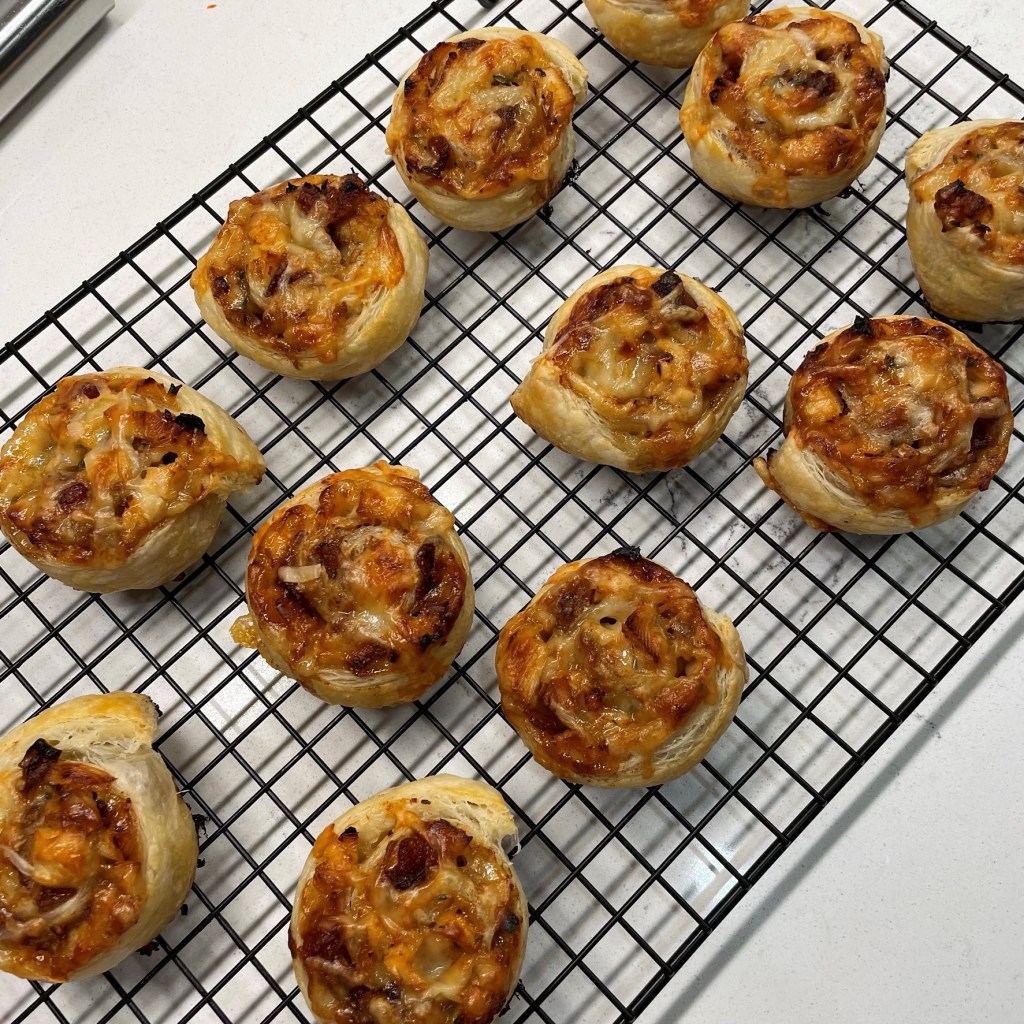
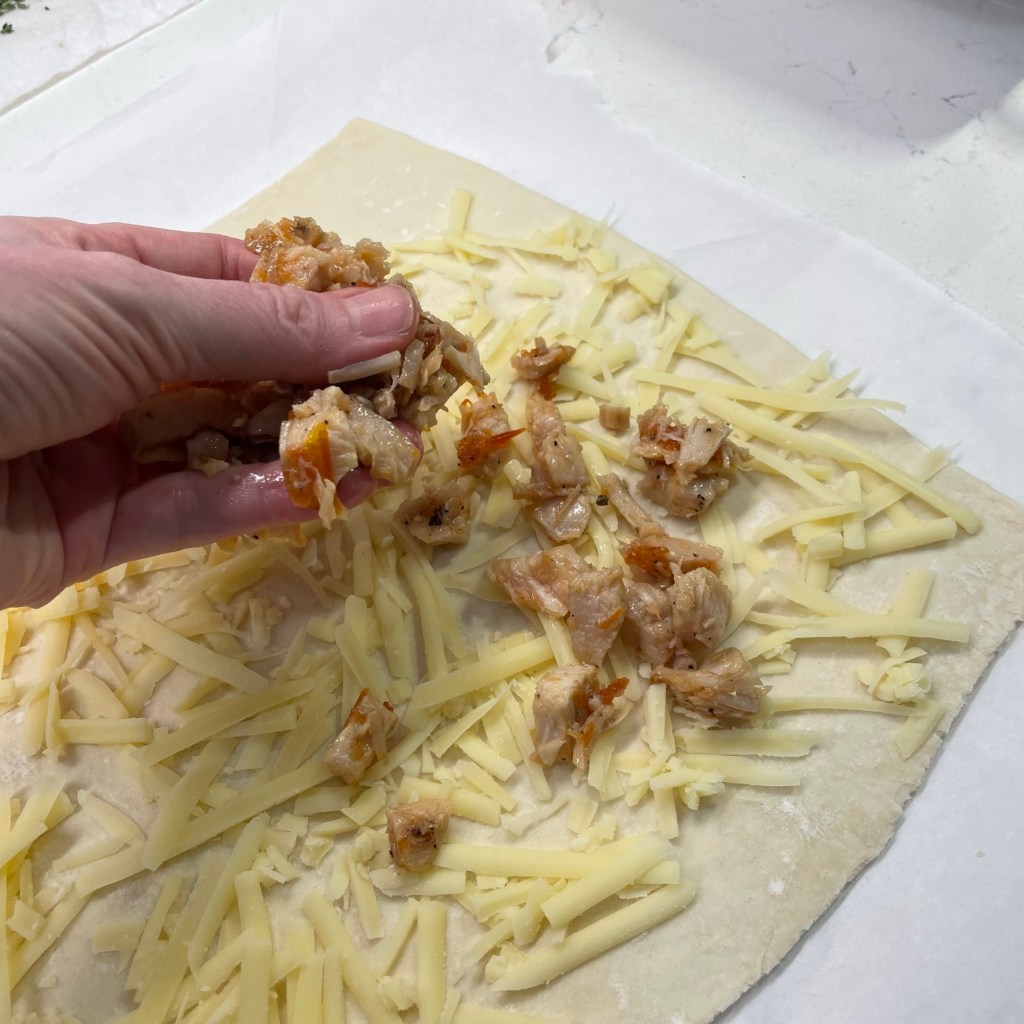
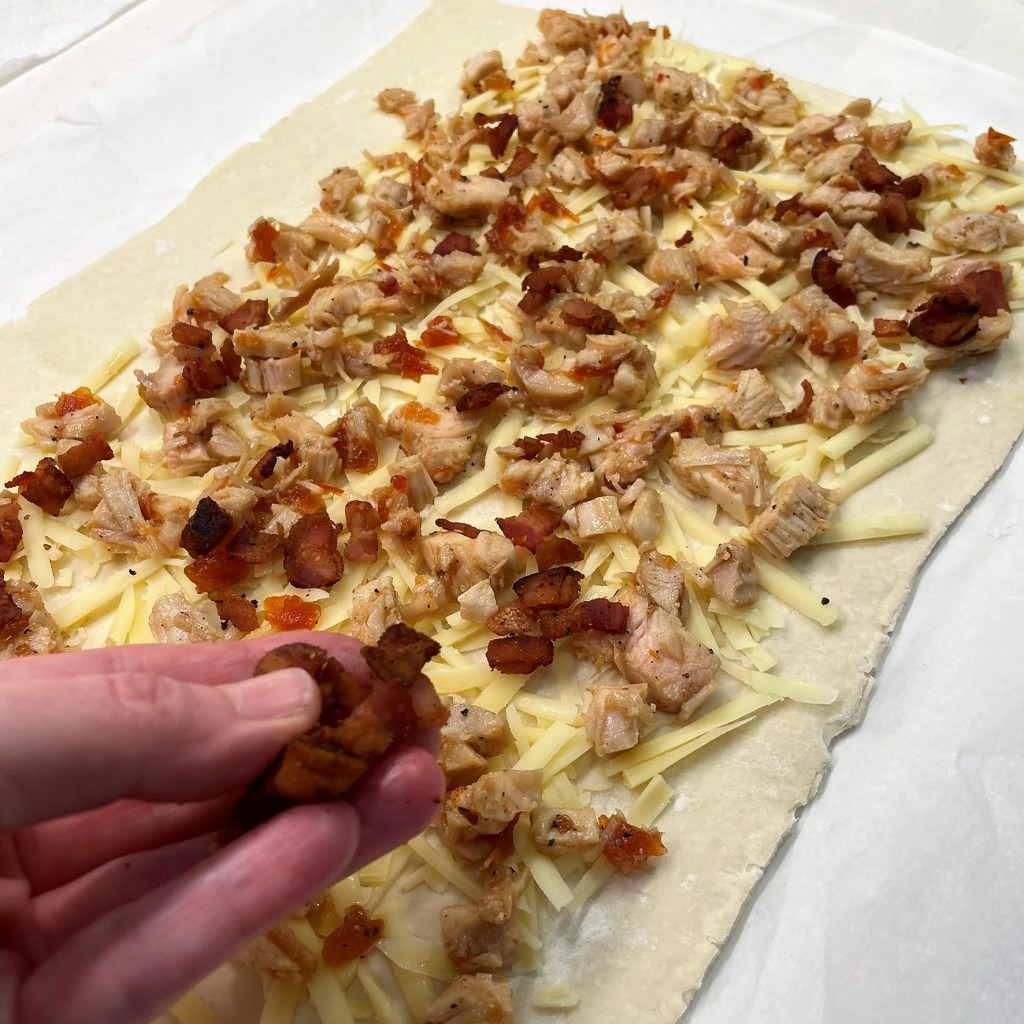
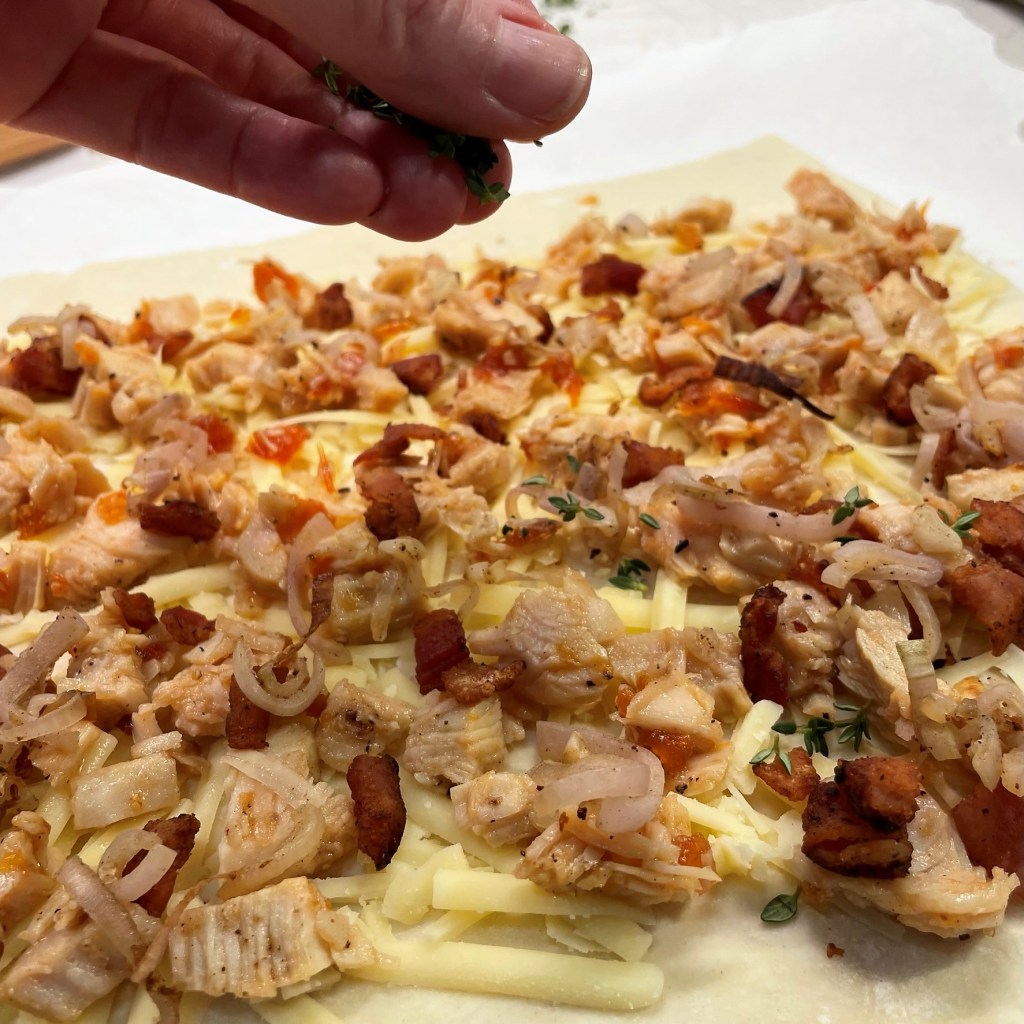
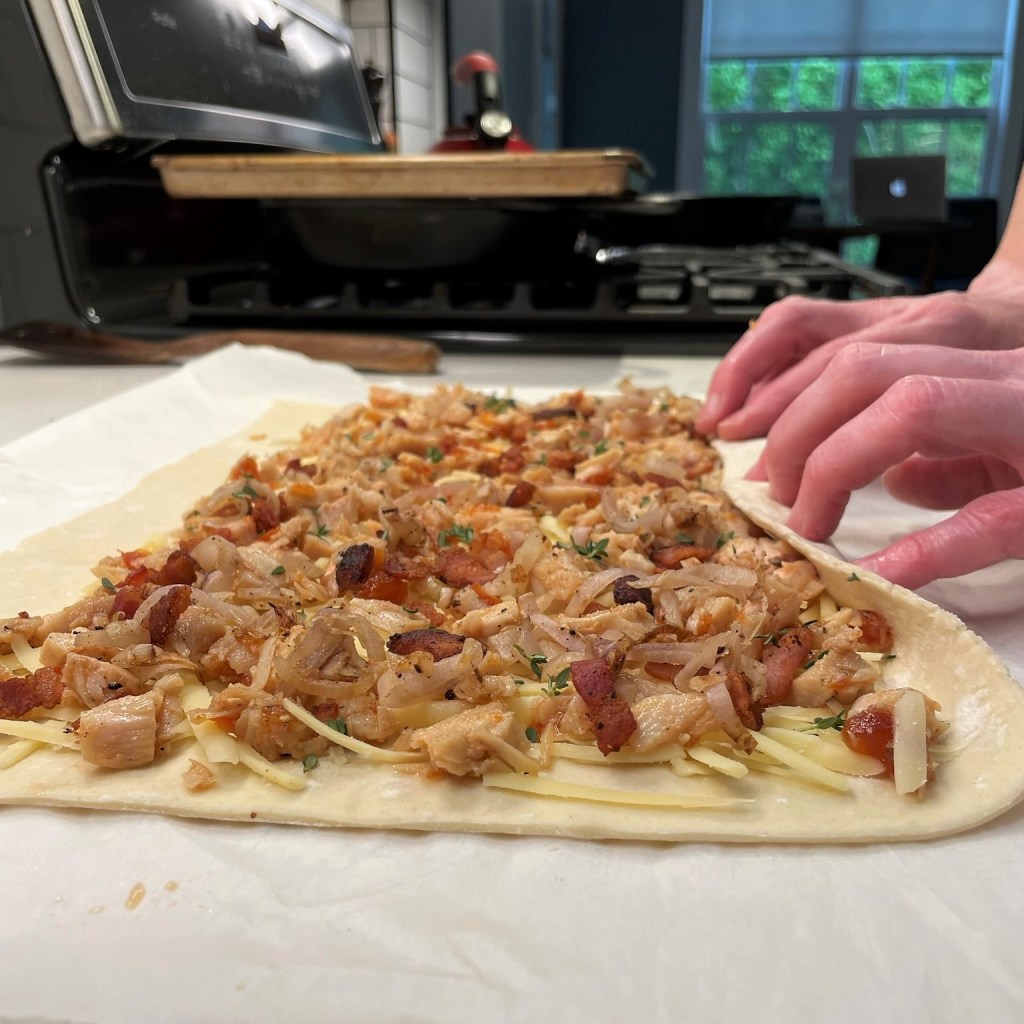
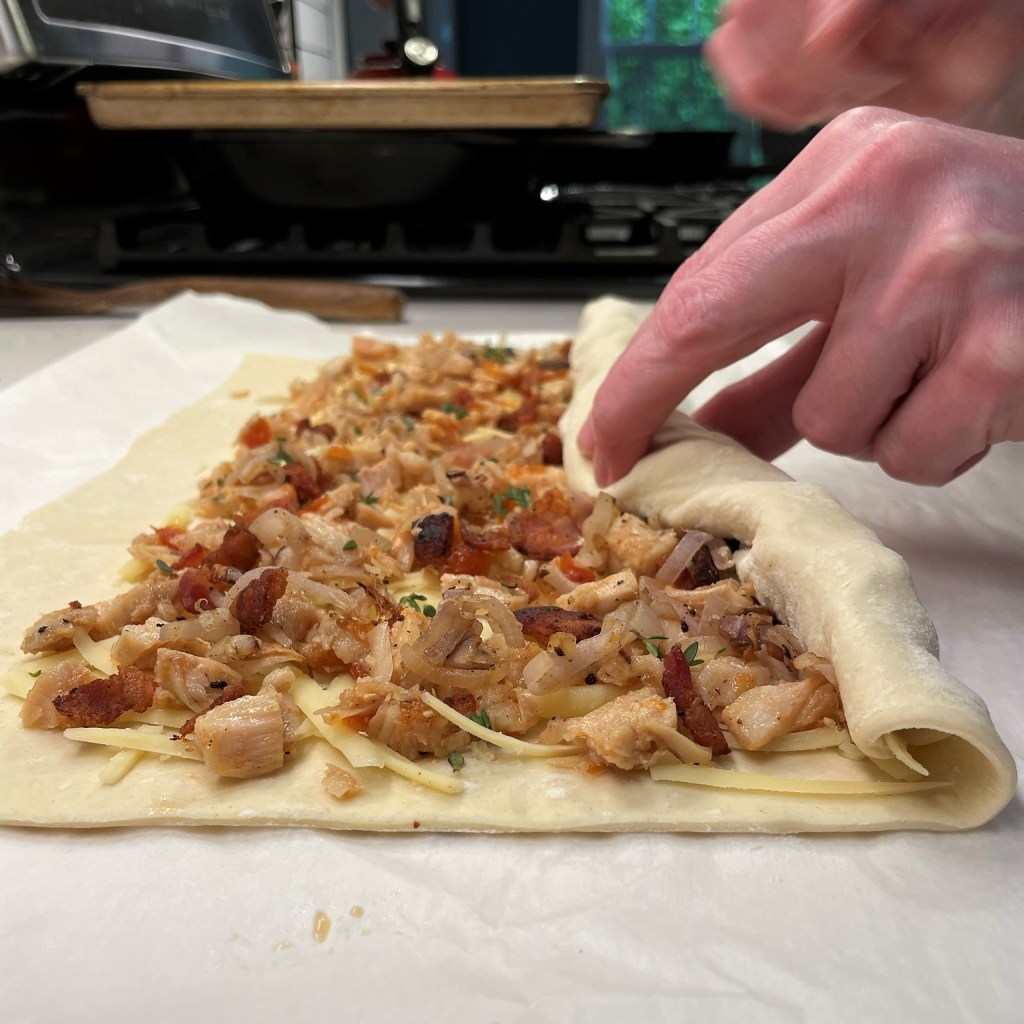
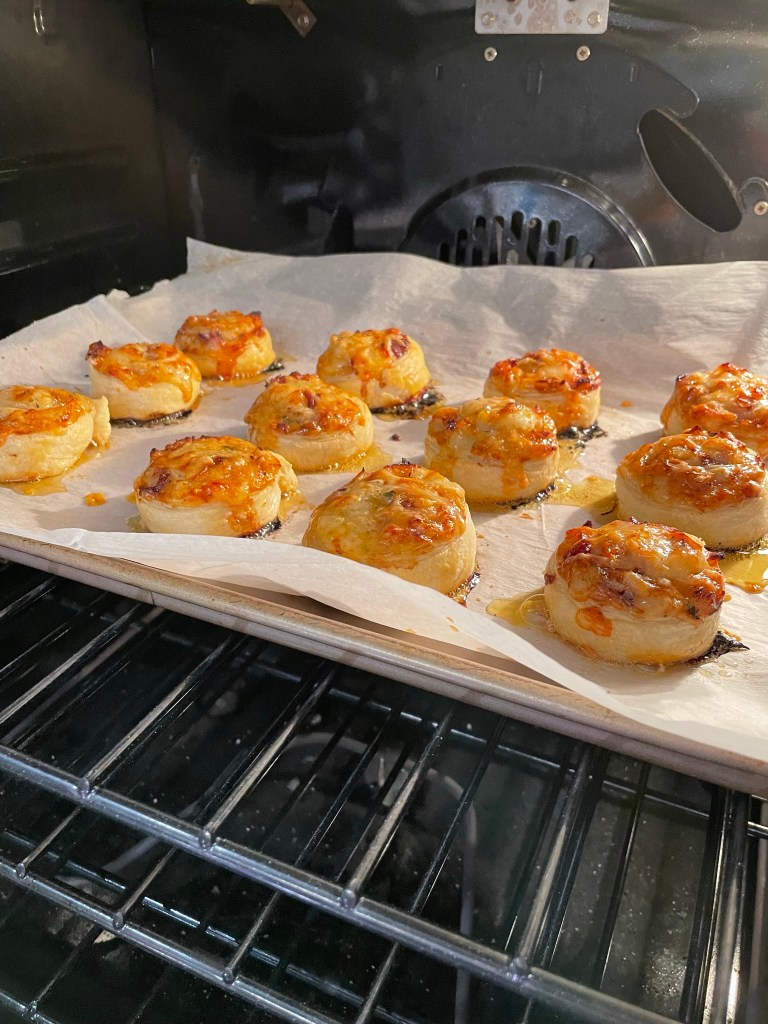
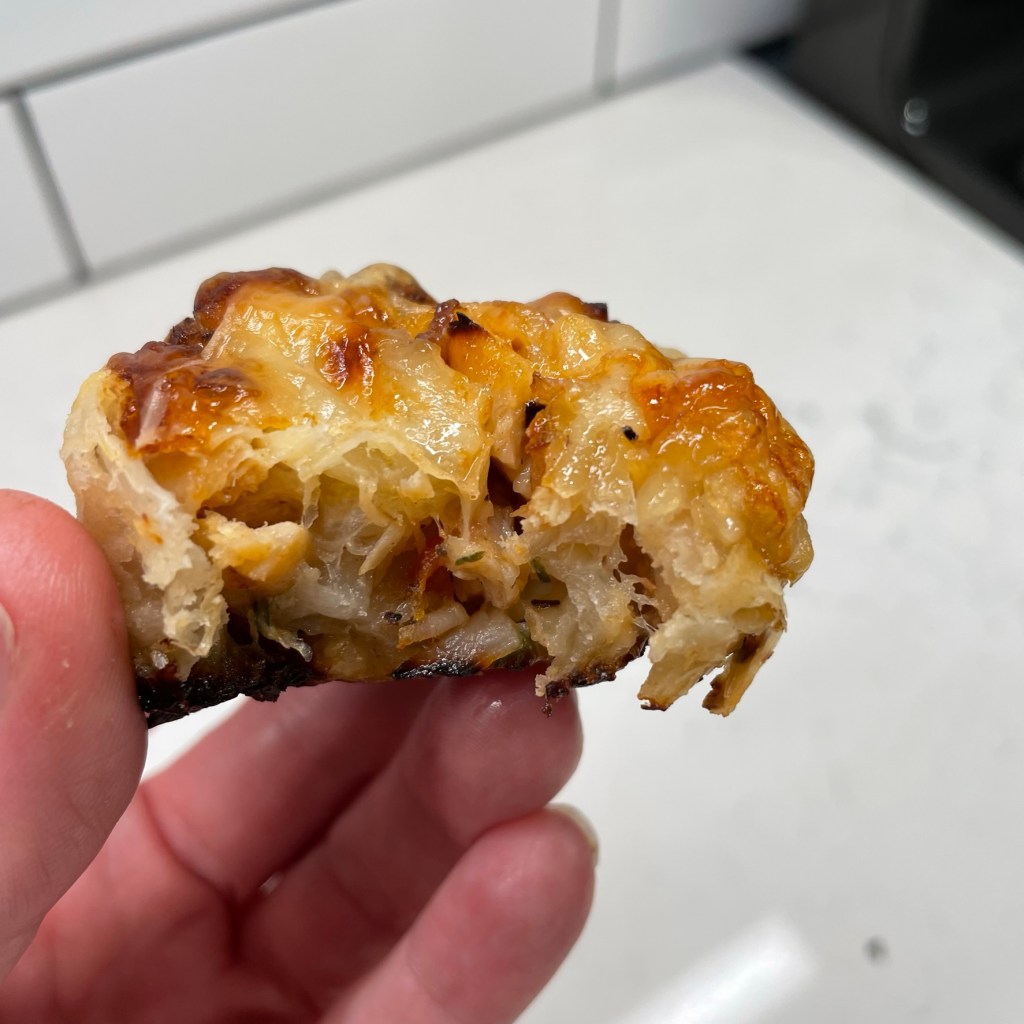
If you’re entertaining friends for the afternoon leading up to the “most exciting two minutes in sports,” may I suggest these adorable little puff pastry swirls? They have all the flavors of the beloved Kentucky Hot Brown, including roast turkey, bacon, tomatoes and gruyere, plus a touch of sauteed shallot and (in a nod to the catering kitchen where I worked so long ago) “A Pinch of Thyme.”

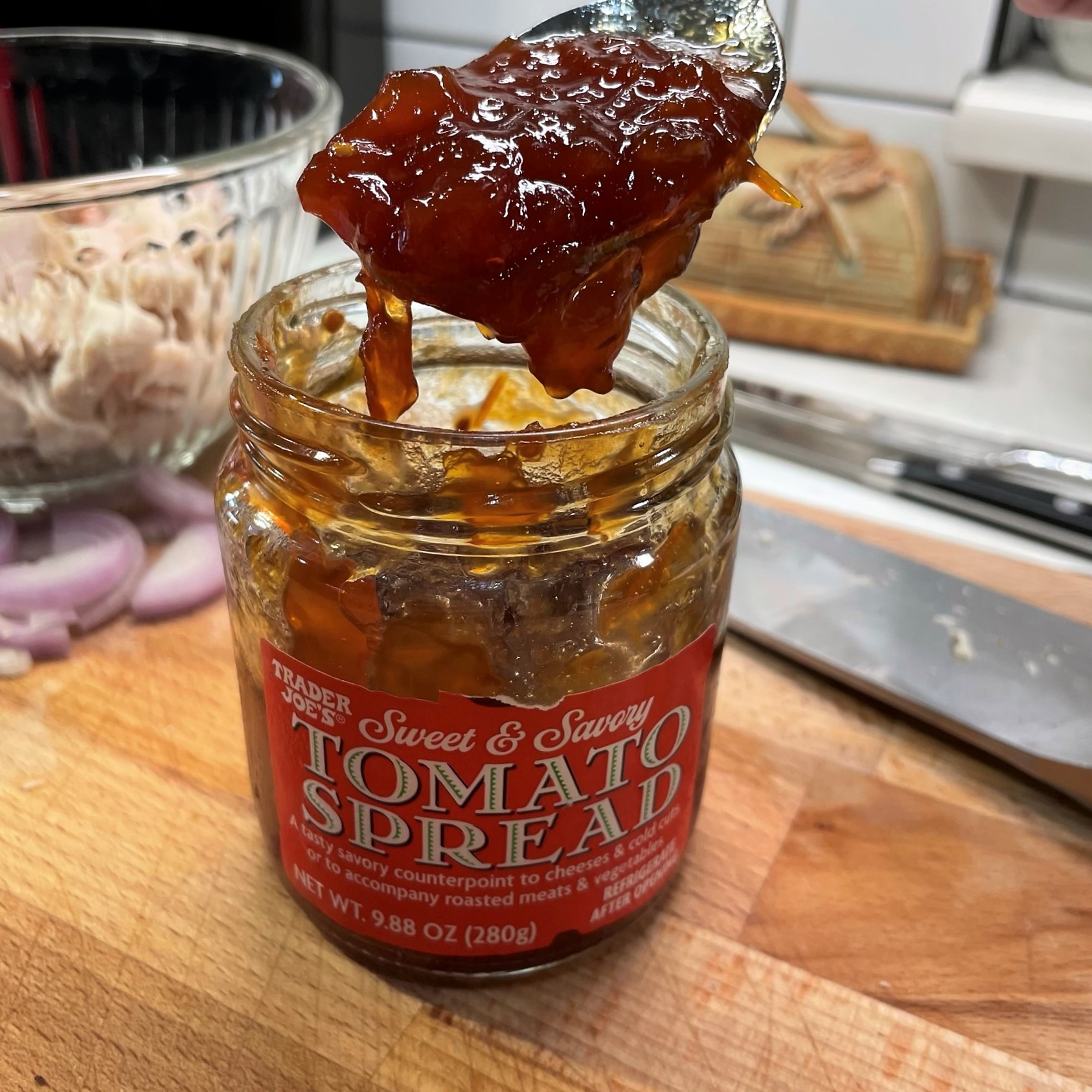
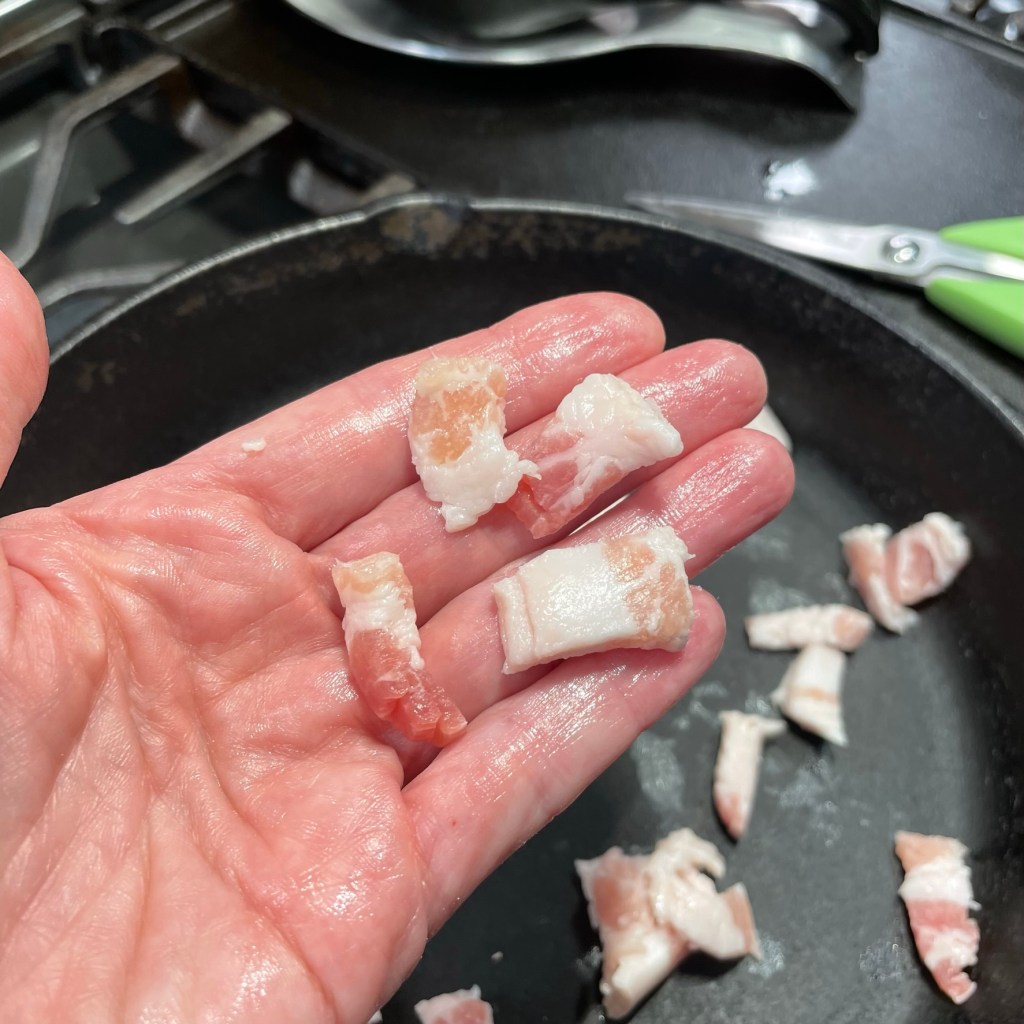
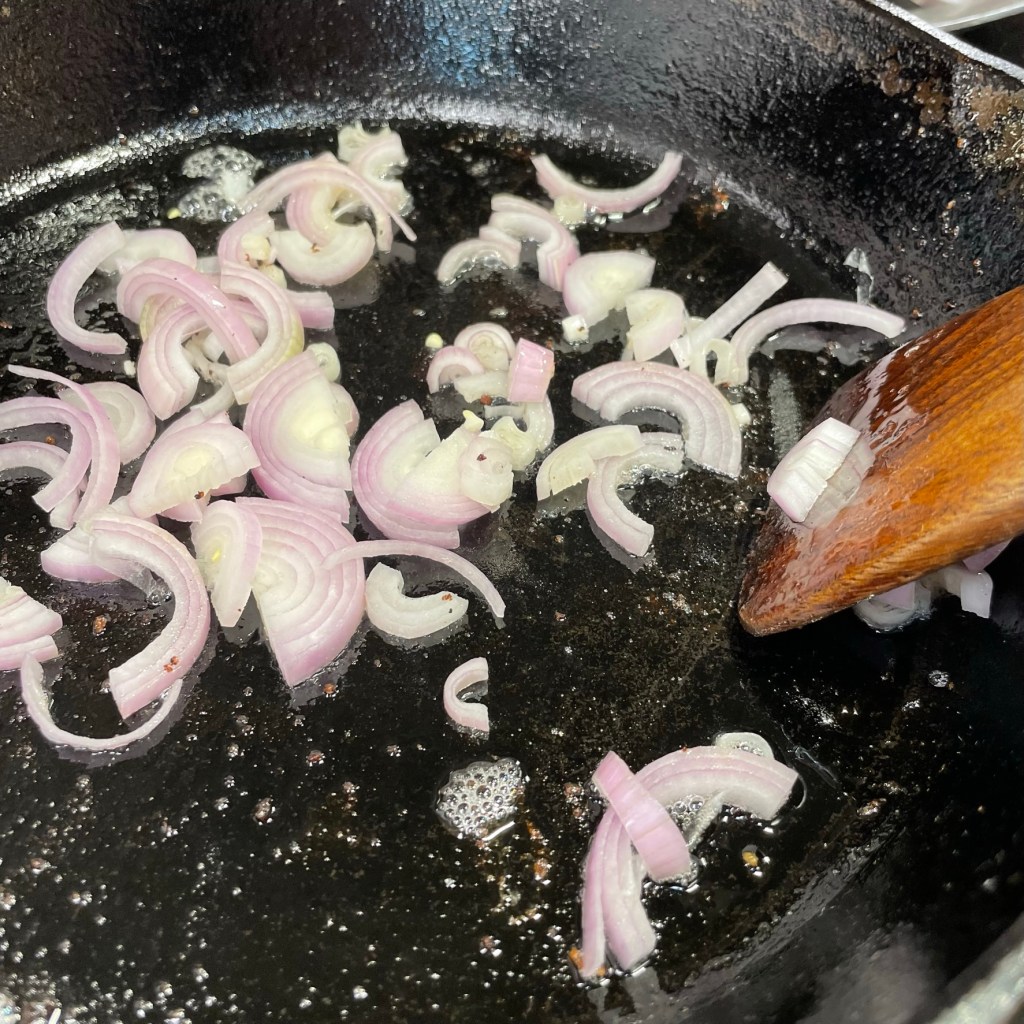
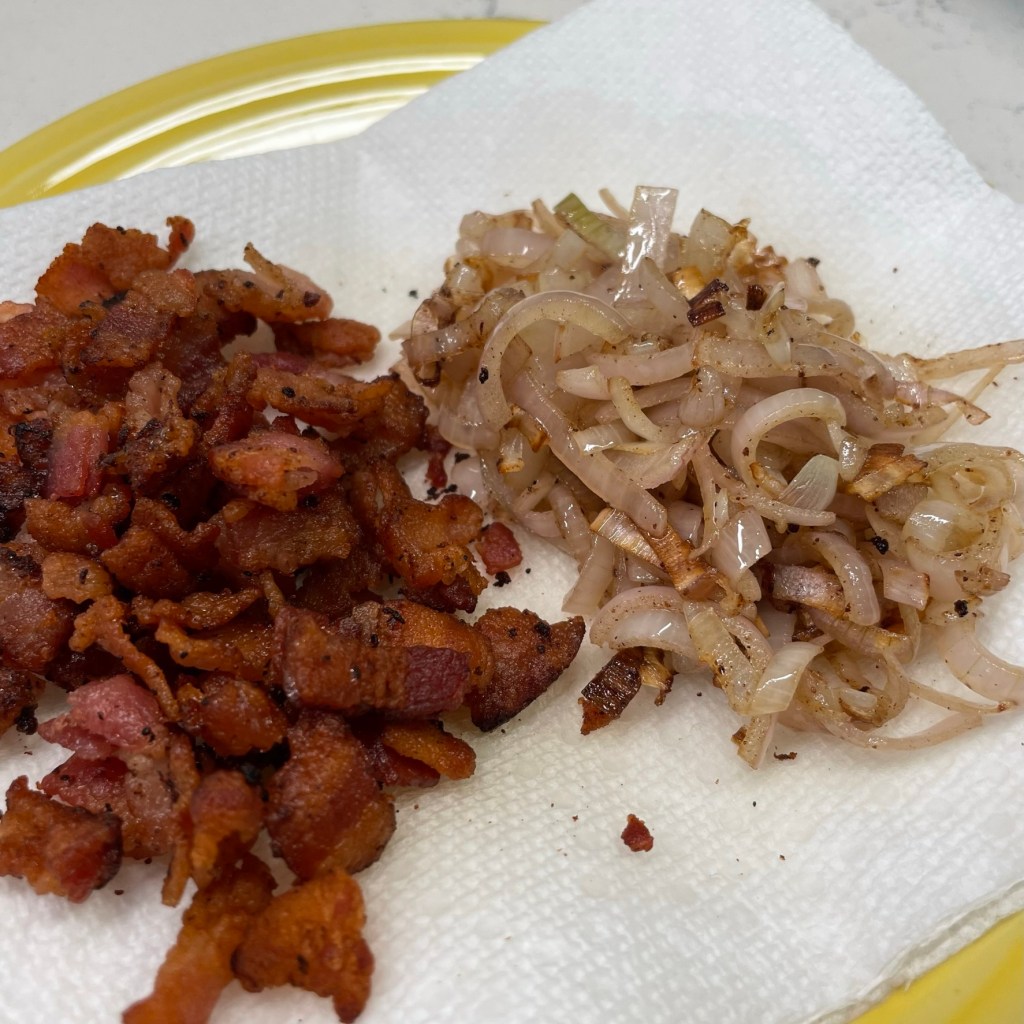
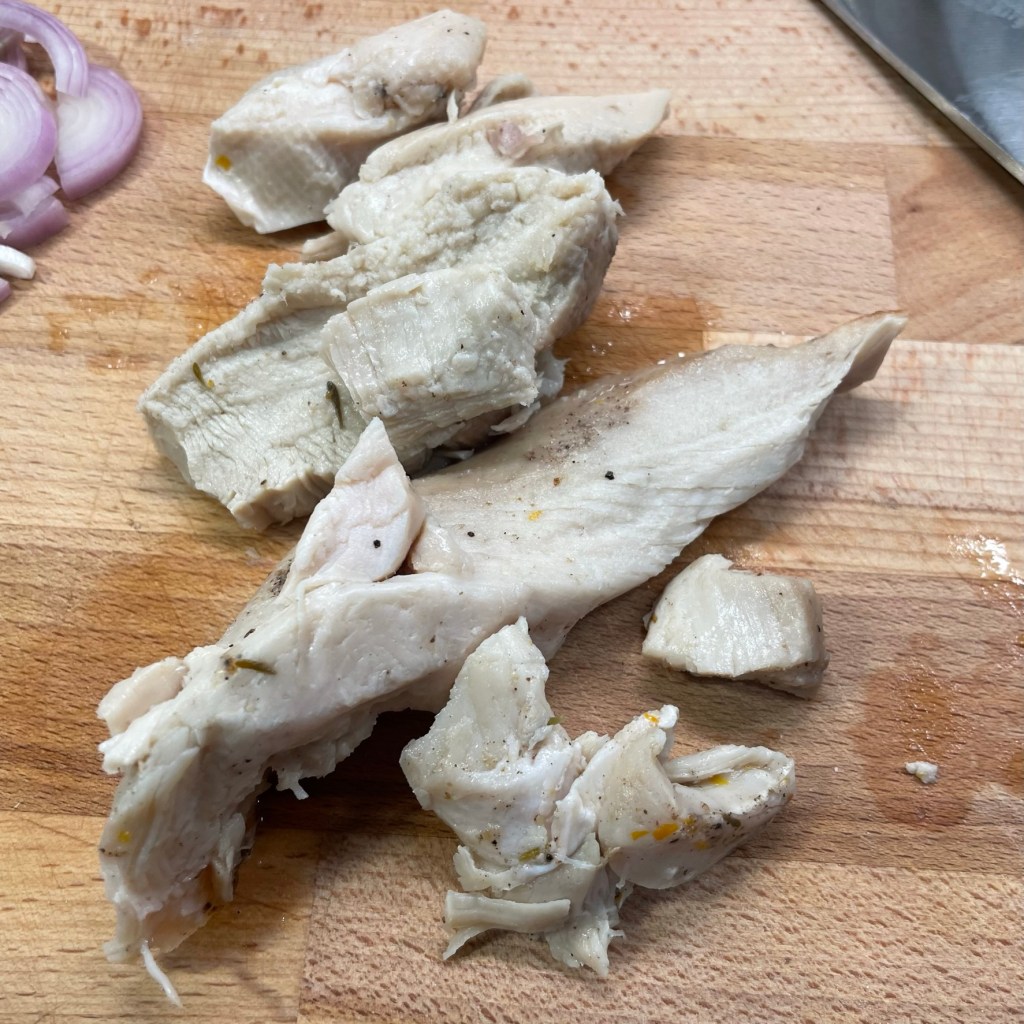
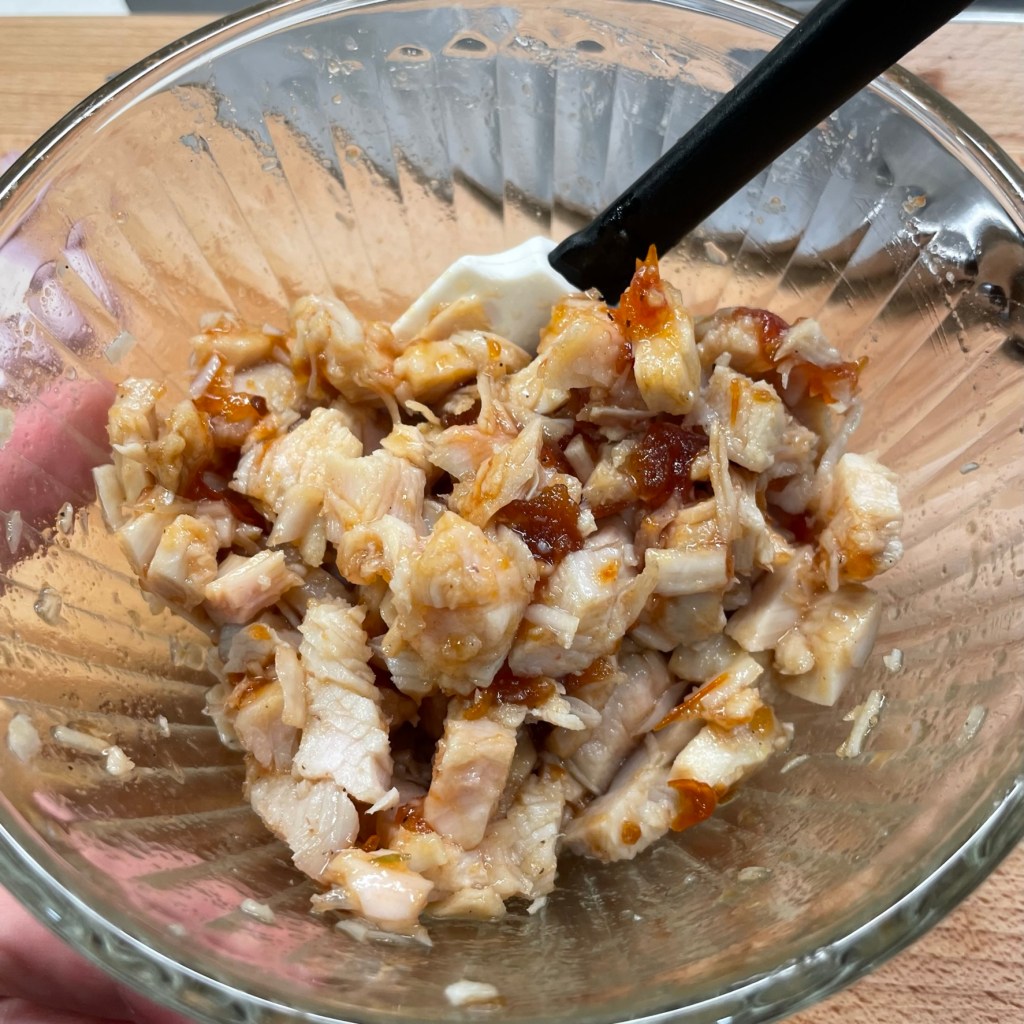
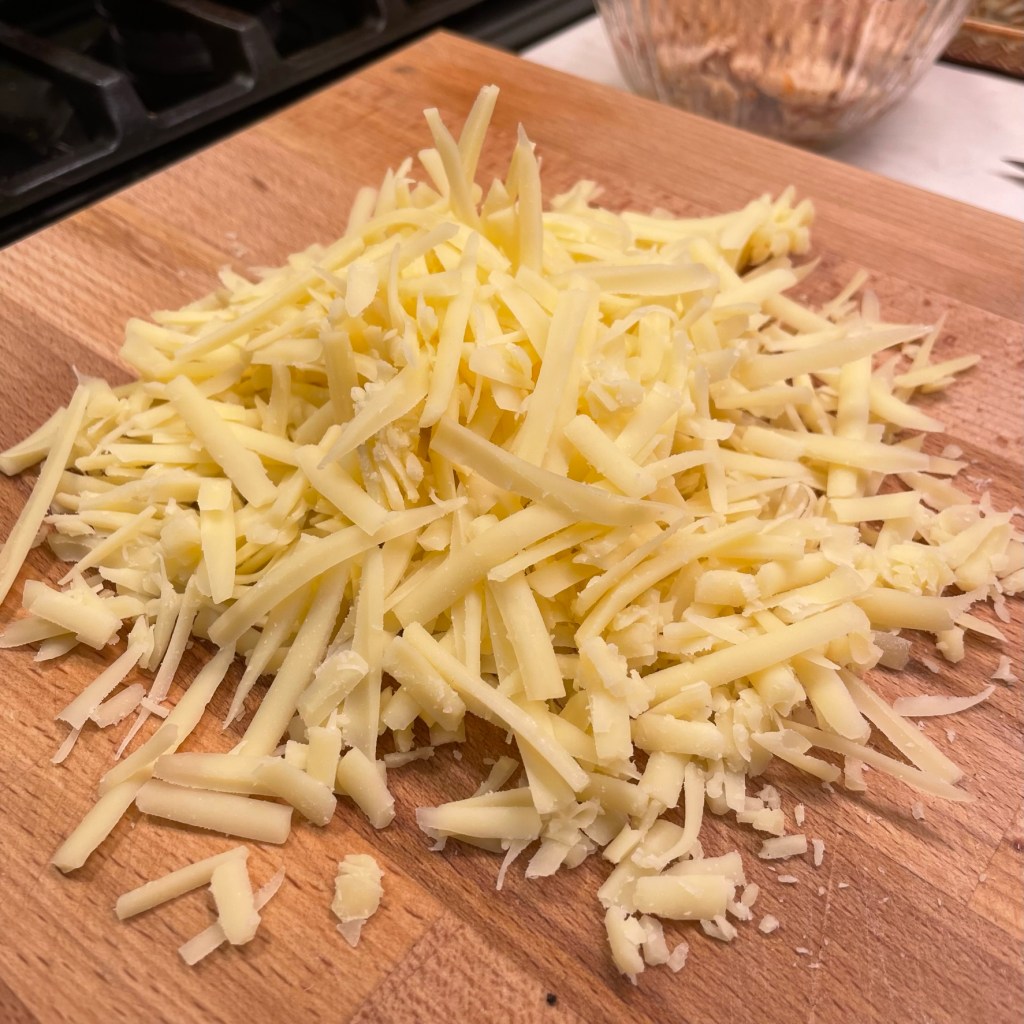
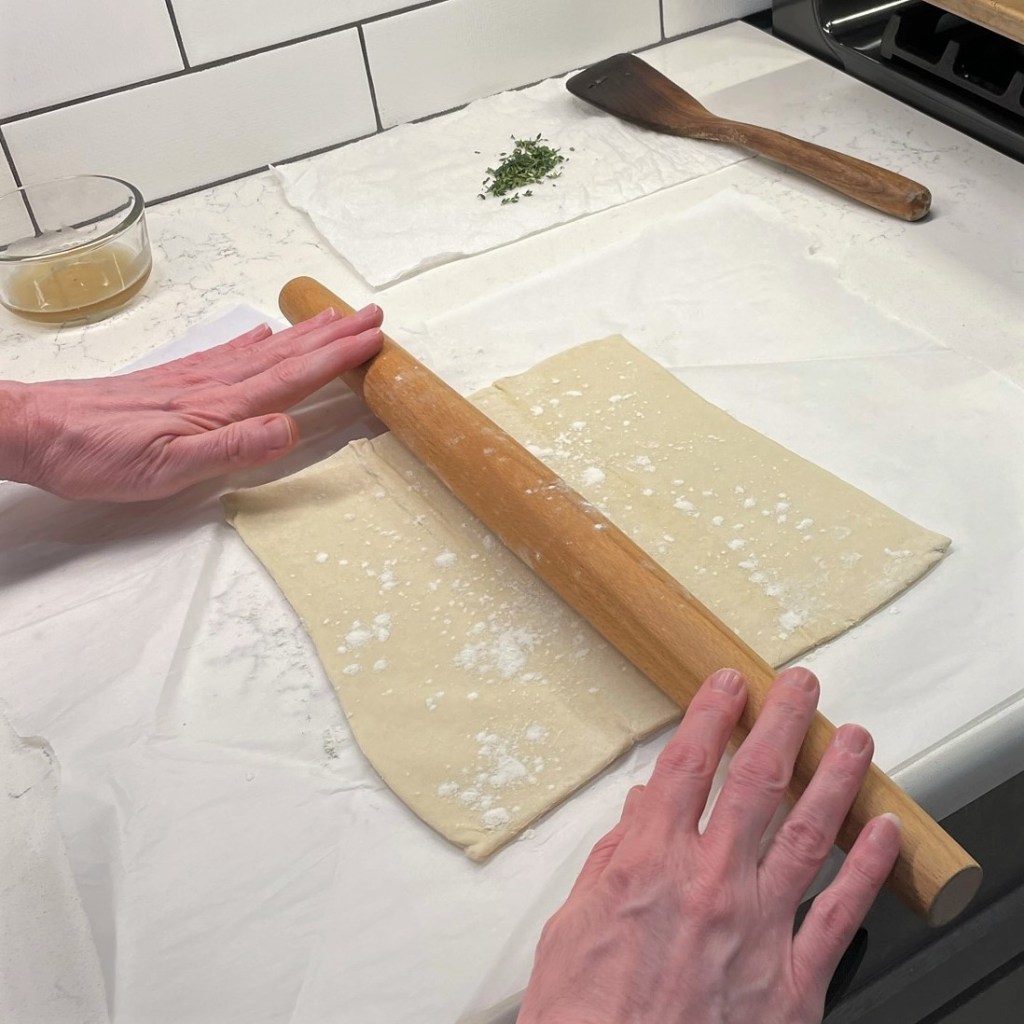
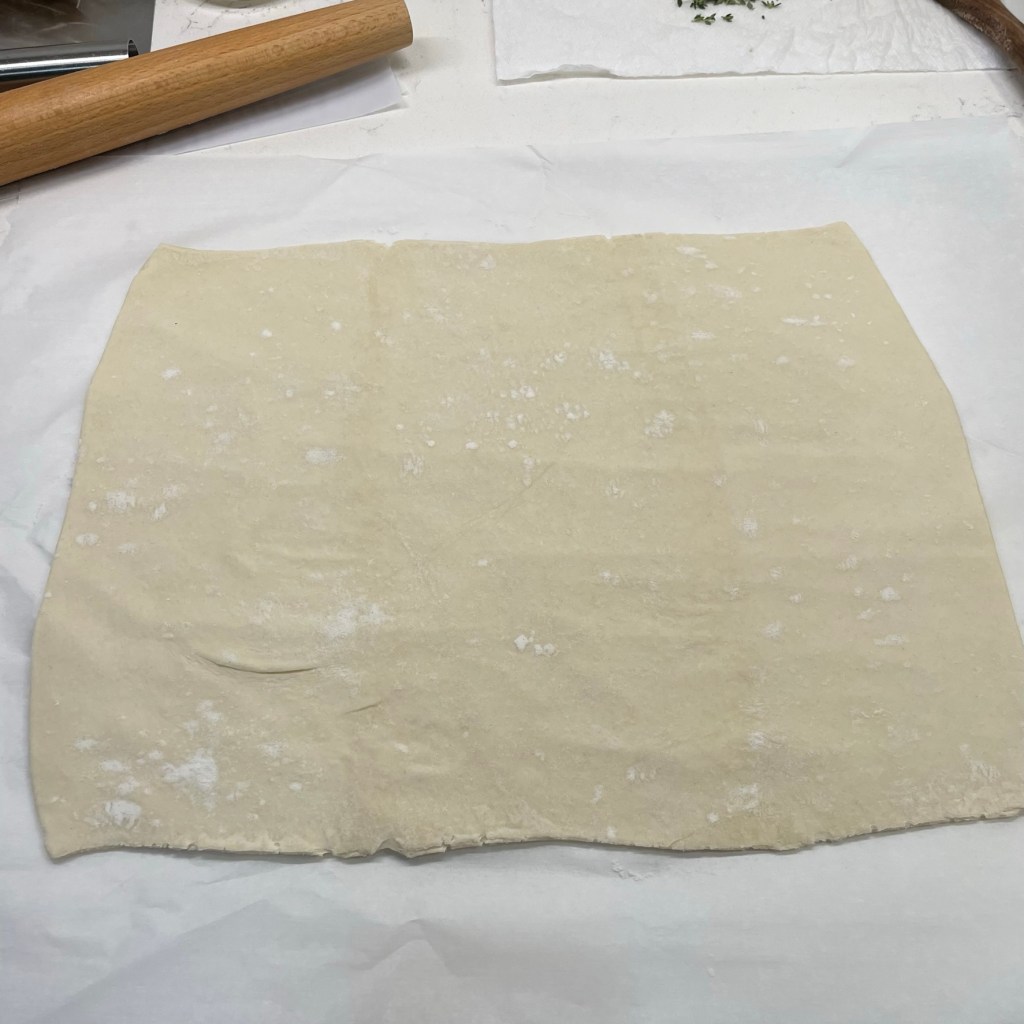
I expected a few obstacles along the way to these tasty rollups, mostly because puff pastry can be fussy to work with. It bakes up best if it goes into the oven cold, so the first thing I planned was to work quickly. Get all your filling ingredients ready first, and refrigerate the ones that are cooked, such as the bacon and shallots. Cook the bacon long enough to render as much fat as possible, so the lingering fat doesn’t make the pastry soggy, but not so much that hard edges will tear the pastry. Shred the cheese and keep that in the fridge until assembly time, too. Fresh roast turkey is probably better than deli turkey (mainly for keeping the sodium in check), and I confess that I used leftover turkey that we had stashed in the freezer after Thanksgiving. As for the tomato, I knew that my sweet and savory tomato jam would not spread neatly onto the puff pastry without tearing it, and I didn’t want to heat it (see the first point about baking puff pastry cold), so here’s how I overcame that challenge—I added a few tablespoons of tomato jam to the bowl with chopped turkey and stirred it together. Problem solved!

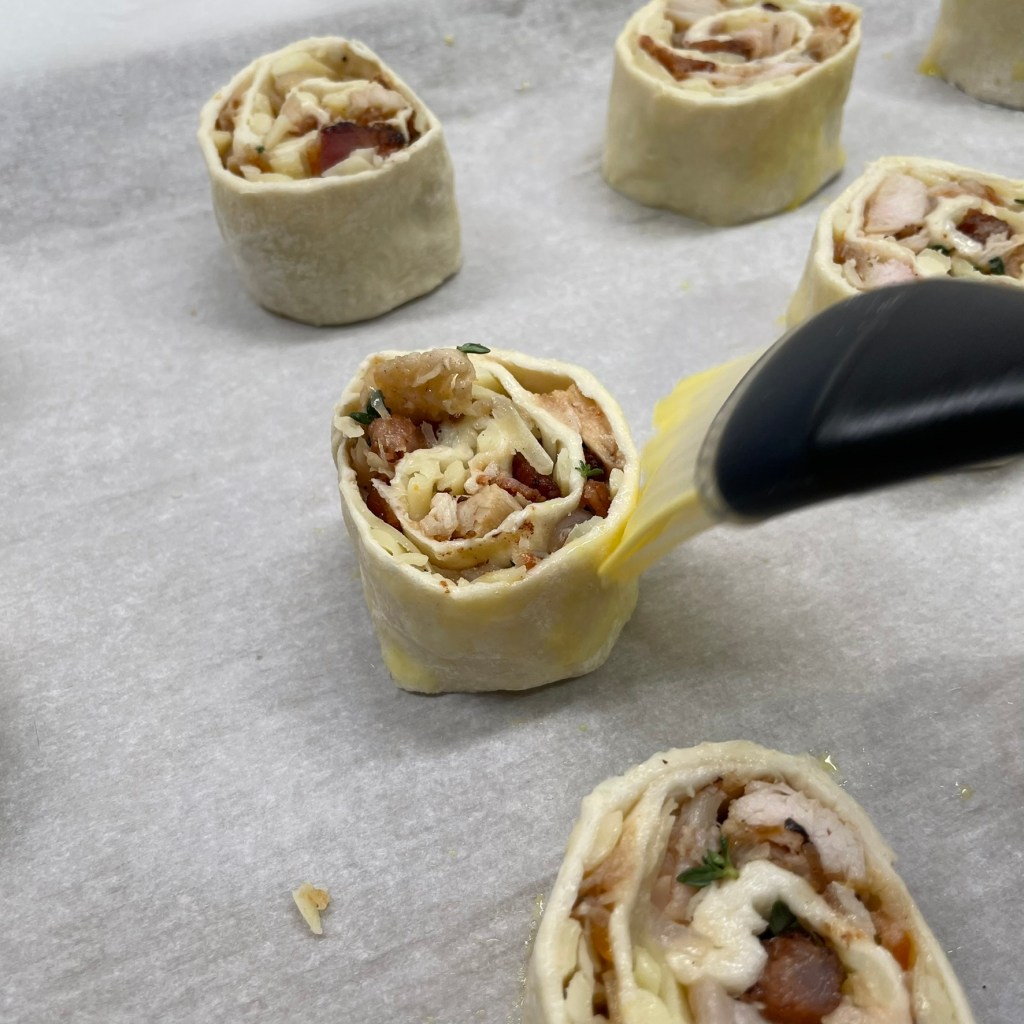
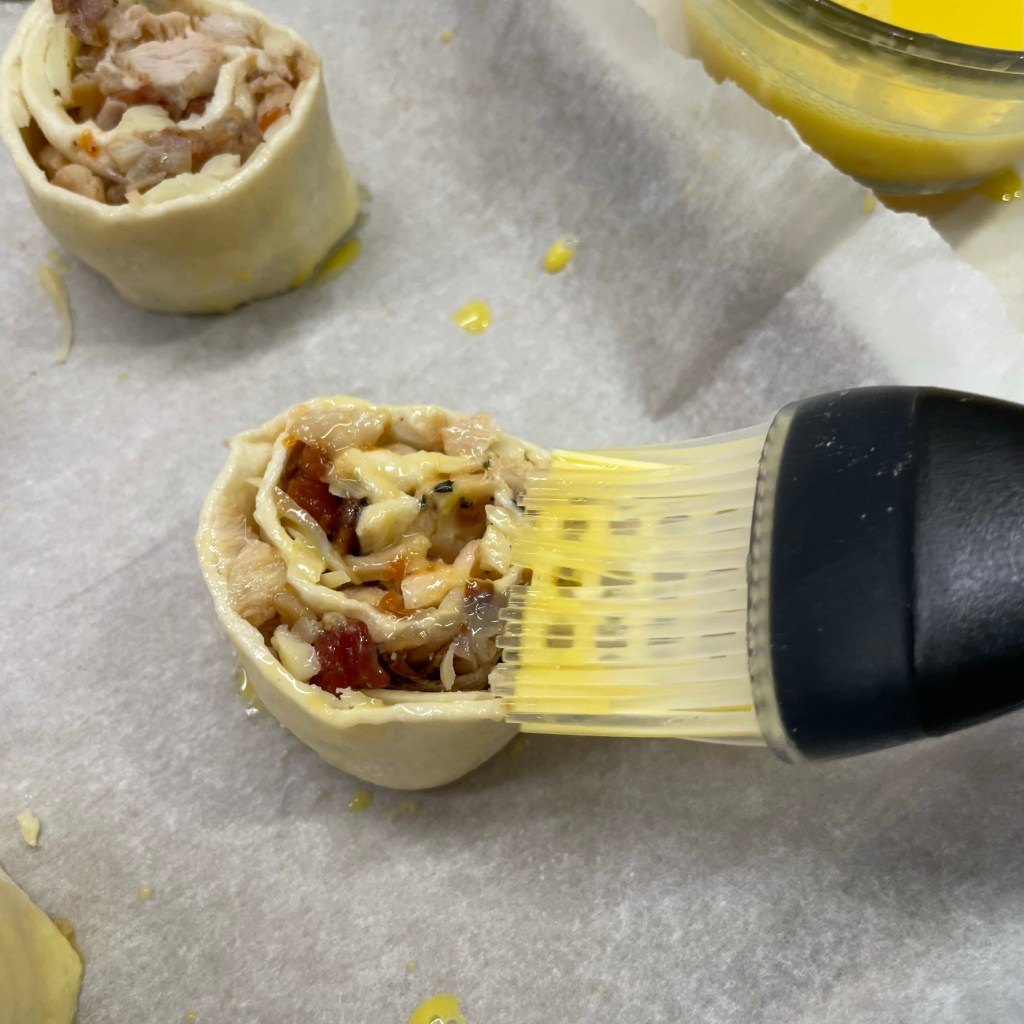
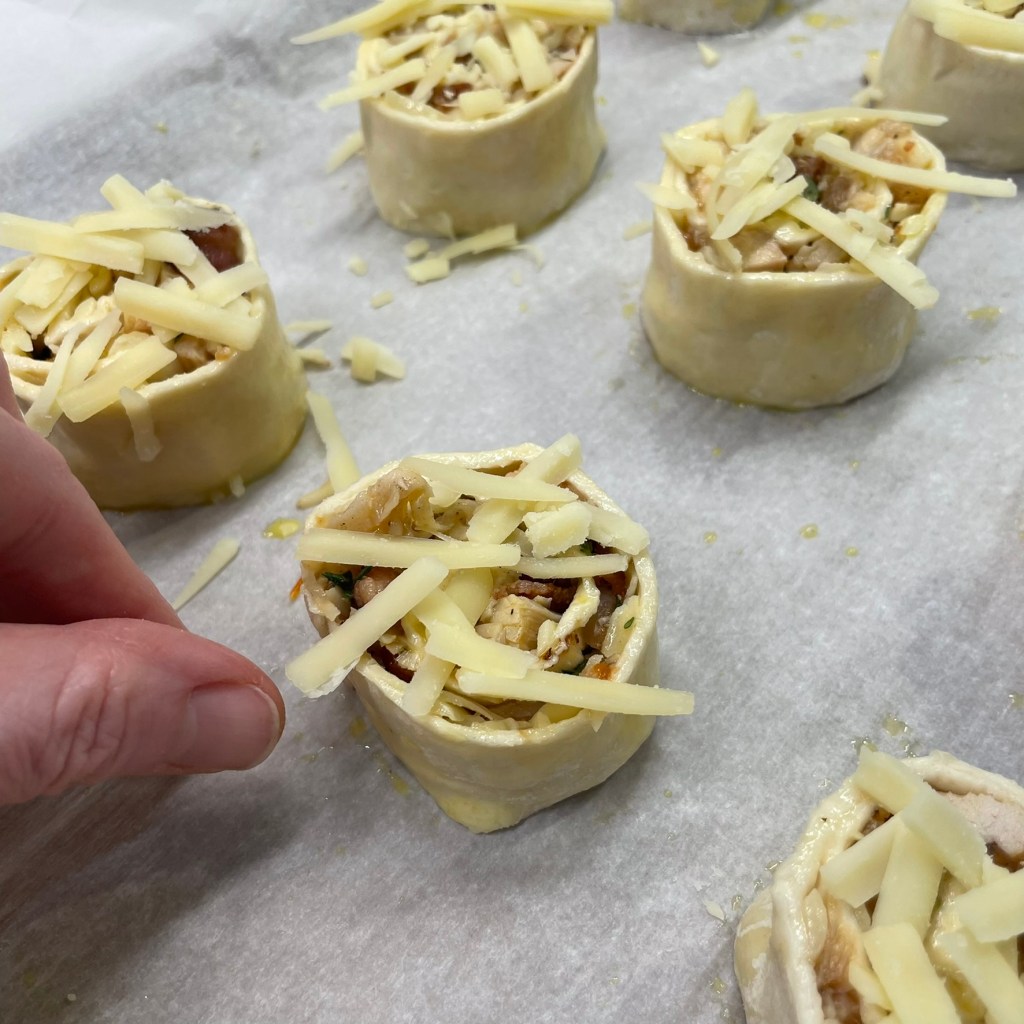
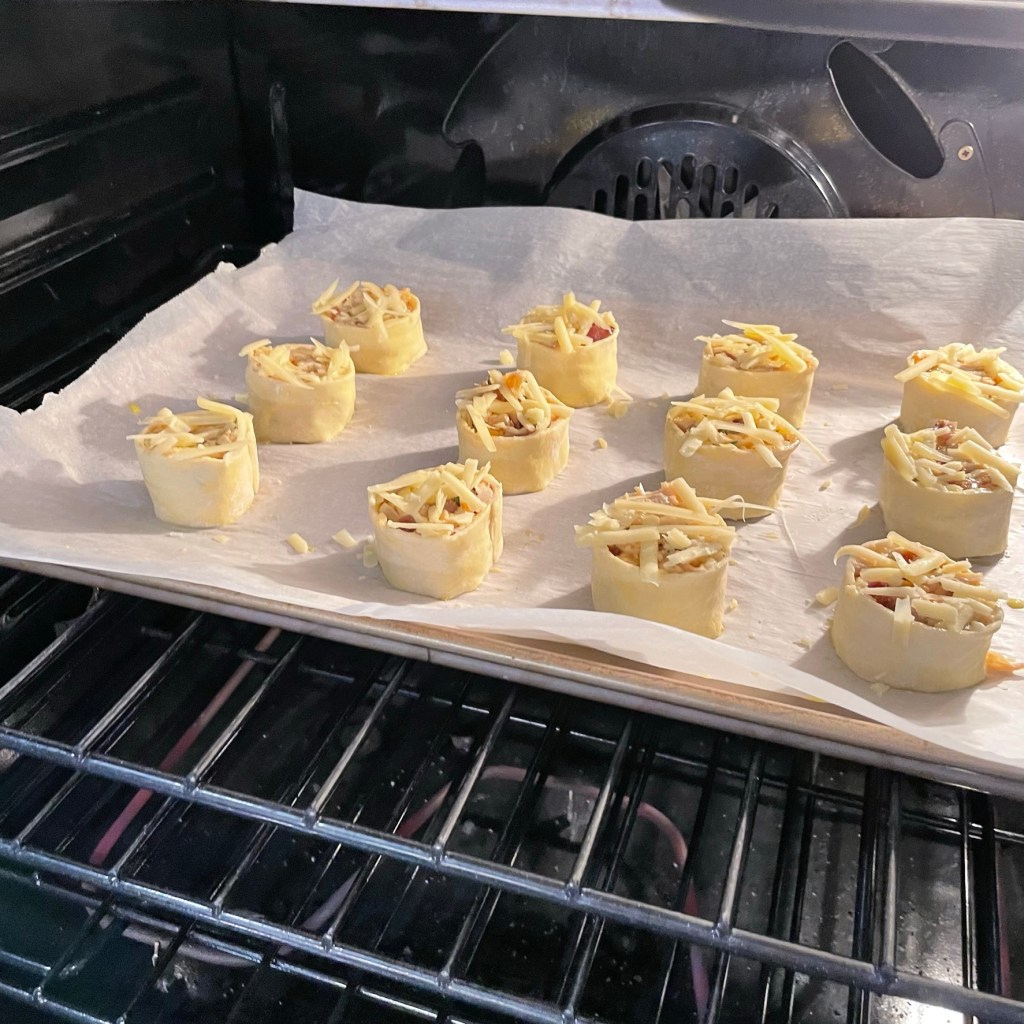
You can put these two-bite treats together in the morning or afternoon, even the night before, all the way up to slicing them into swirls, and then refrigerate them until about a half hour before your guests arrive. A quick egg wash and some extra sprinkles of gruyere just before they hit the oven, and, well—riders up!


This recipe makes 12 swirls, just about right as appetizers for 6 people.

Ingredients

3 slices smoked bacon, cut into pieces no larger than a postage stamp

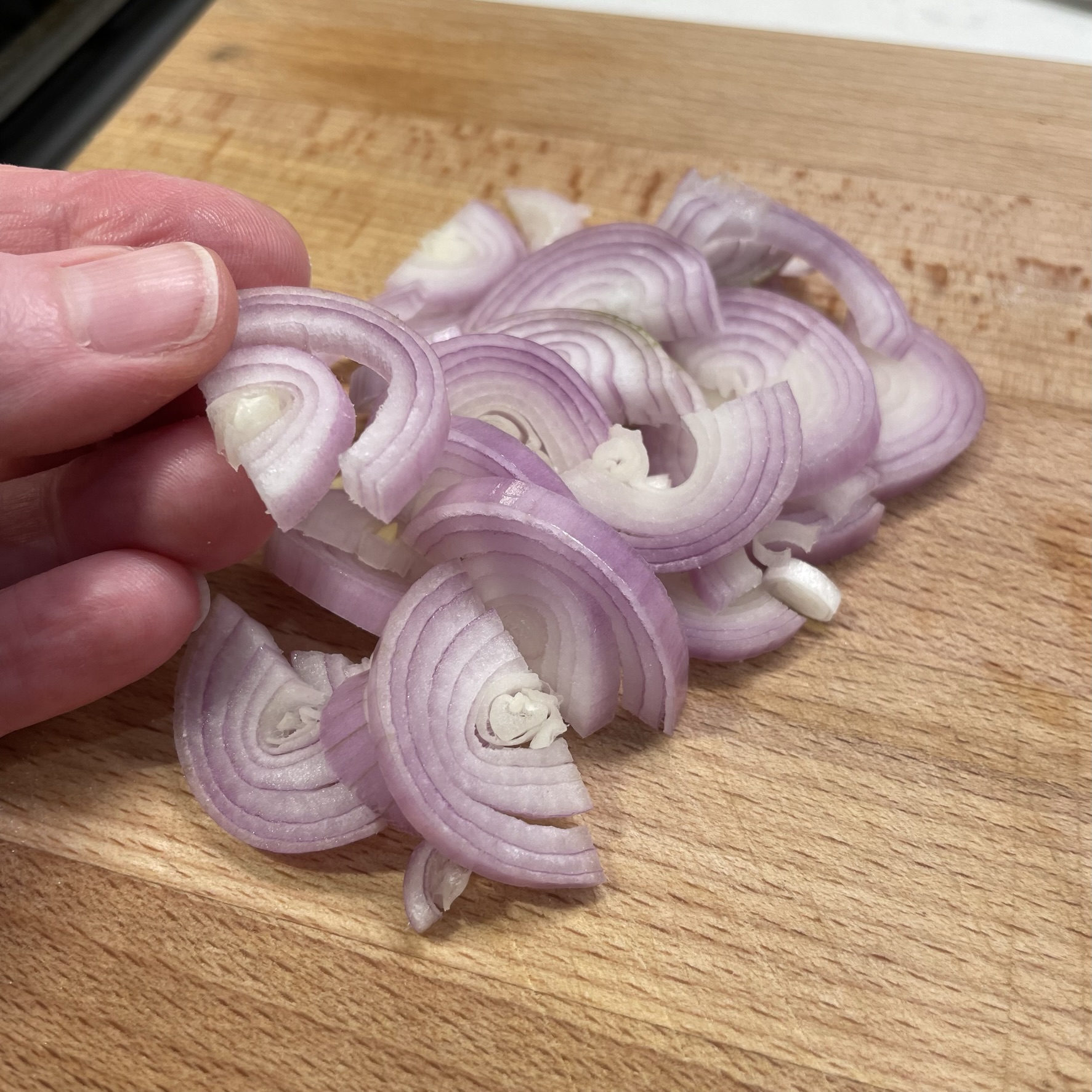
1 smallish shallot, peeled, halved and cut into half-moons

1 cup chopped, cooked leftover roast turkey breast

3 Tbsp. tomato jam (store-bought or homemade, if you have it!)

1 heaping cup shredded gruyere cheese (or Swiss), divided

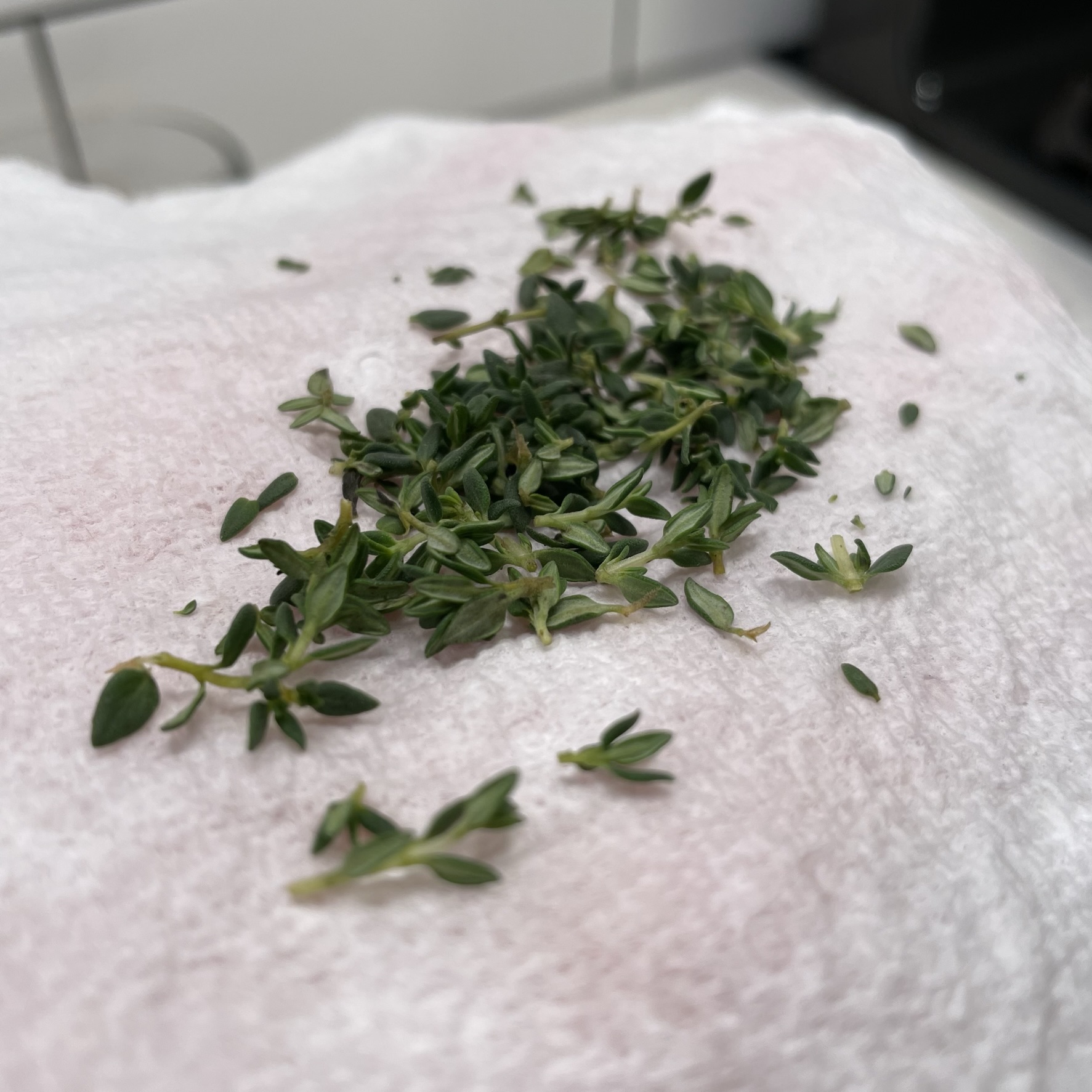
A few sprigs fresh thyme, leaves stripped

1 sheet store-bought puff pastry, thawed according to package instructions

1 egg, whisked with a teaspoon of water, for egg wash just before baking


Instructions

Ready to make them?


Roasted Garlic Ranch Dip

There was a time (in the not-so-distant past) that we didn’t rely on overly processed food from the supermarket for every little thing. Before the grocery aisles were jam-packed with 173 kinds of salad dressing, there was oil and vinegar, and people spiced those up by whisking in a handful of other common items to create dressings far tastier than the pre-made stuff. Vinaigrette is one of the simplest dressings to make from scratch, and creamy dressings are equally simple with a few basic ingredients.

You might be amazed at how much flavor you will be able to create at home with nothing more than simple fridge items, a few spices and a whisk (or, as I’ll show you today, a food processor). On the economic side, it costs pennies on the dollar to make your own dips and dressings, and it only takes a few minutes to pull them together.

The other benefit of making your own dressing—besides the savings and the flavor factor—is that you will know exactly what is in it. Commercial dressings contain so many stabilizing and preservative ingredients that aren’t necessary. And if it seems a healthier bet to buy the packets of ranch dressing mix and “make it yourself” with fresh buttermilk, all I can suggest is to take a closer look:

As soon as I see maltodextrin and monosodium glutamate (MSG), I’m gone!

I suppose these ingredients might be perfectly harmless (remember when they said that about partially hydrogenated vegetable oil?), but it’s a fair assumption that the fresh herbs and minimal spices you add to a real homemade dressing will present a lesser concern. And your dressing will taste better, which might even lead you to enjoying more salads and vegetables.

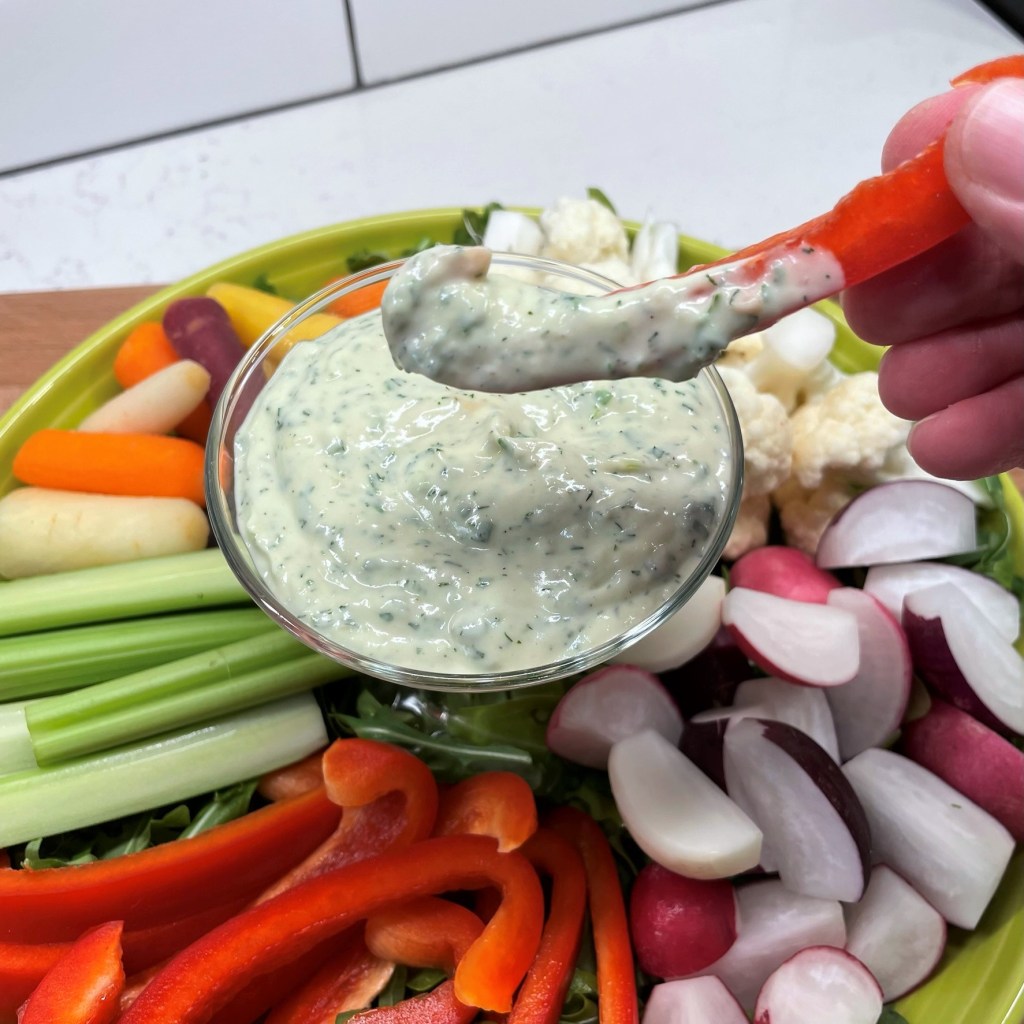
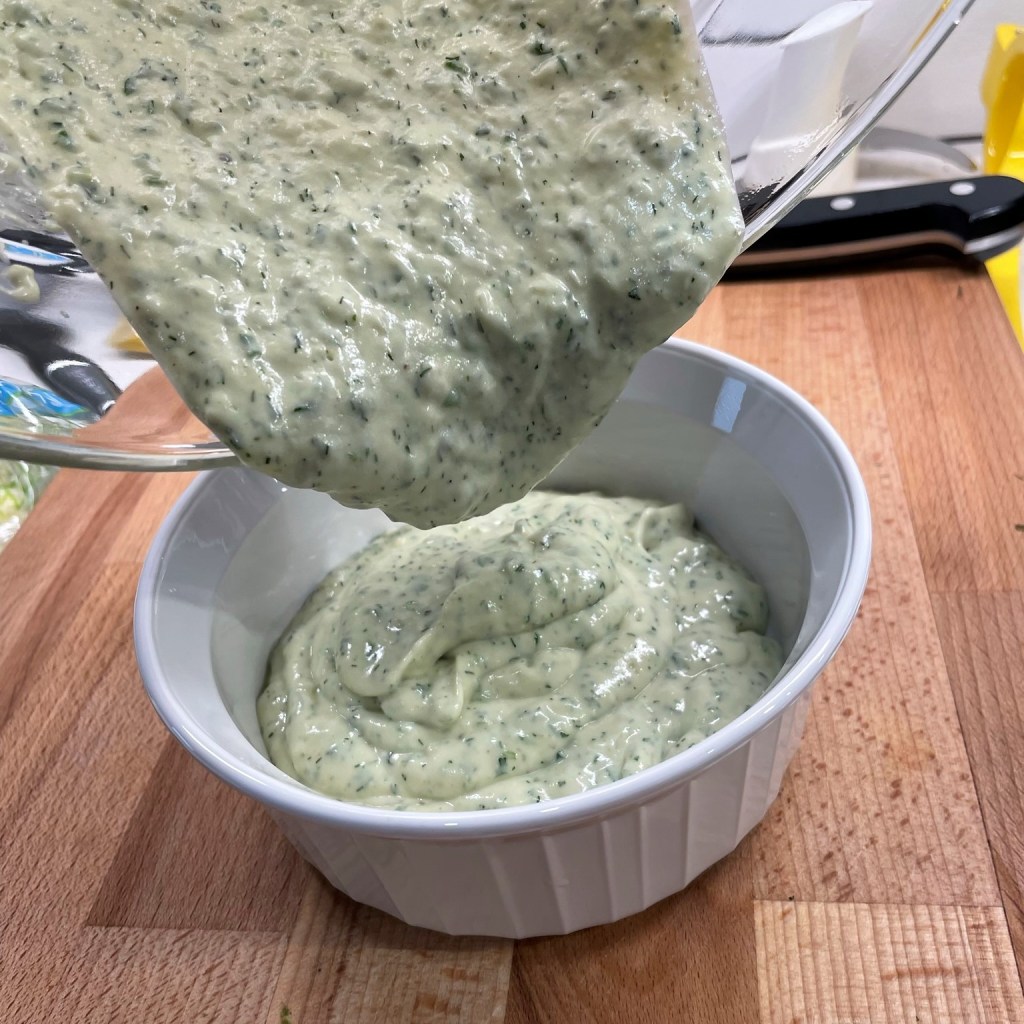
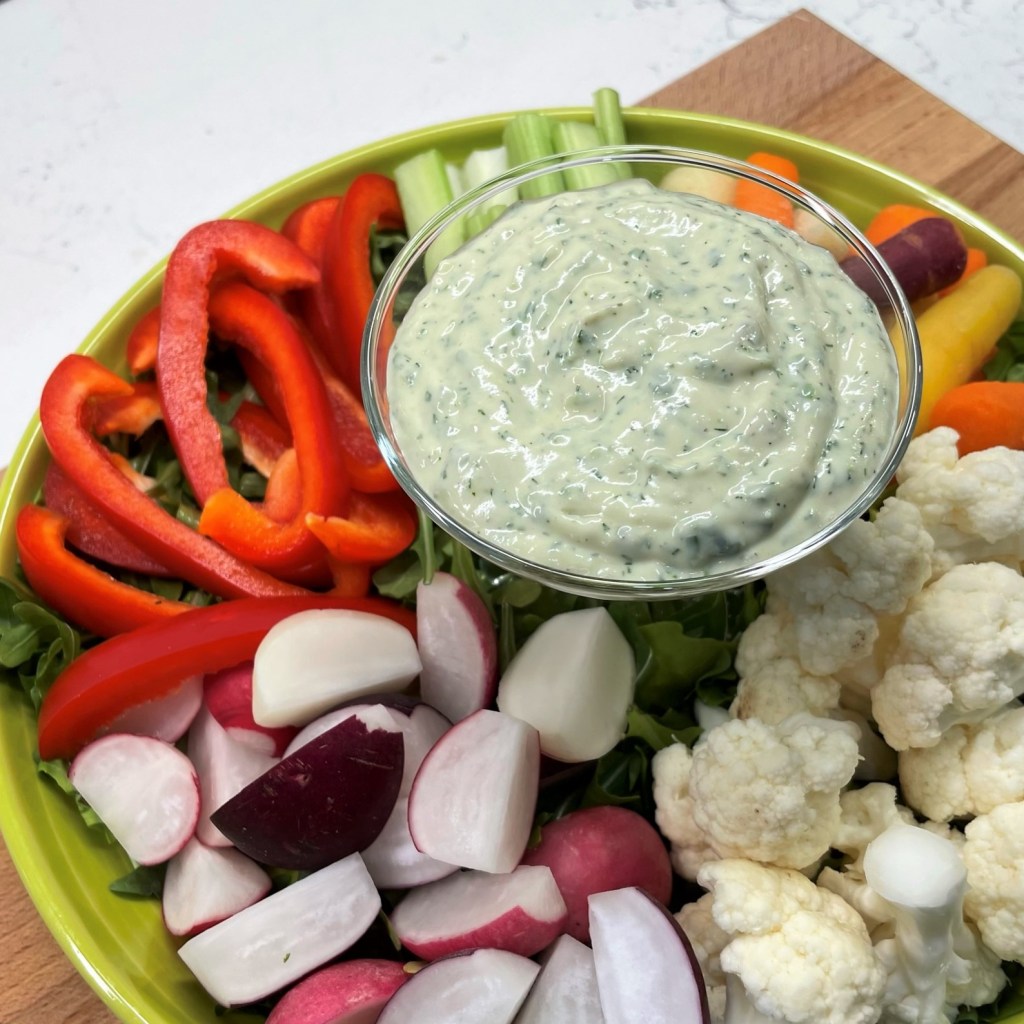
For this creamy ranch dressing dip, I have used a whole bulb of roasted garlic to add a mellow flavor to plain Greek yogurt, buttermilk, olive oil-based mayo and a bunch of fresh herbs. A little salt and pepper, a squeeze of lemon, and that’s all there was to it. If you prefer a bit more zing, use fresh garlic, but only a fraction of what is called for here. If you don’t have the same fresh herbs, substitute what you have or what you like. If you want to add half of a ripe avocado in place of some of the mayonnaise, go for it.

Nice to have something a little healthy for a game day snack!

My homemade roasted garlic ranch dip was intended for dipping fresh veggies as a game day snack, but if you prefer a more pourable dressing for salads, simply ease up on the mayo and use more buttermilk.

This recipe makes about 1 1/4 cups.


Ingredients

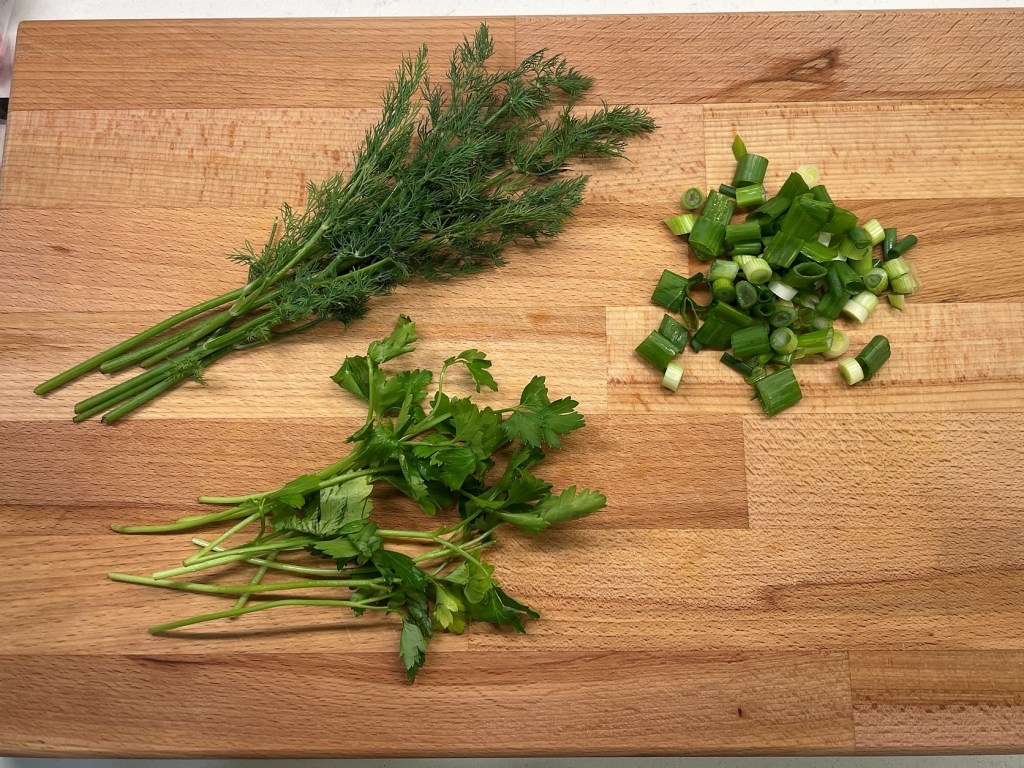
2 scallions, white and green parts

1 small handful fresh parsley

1 small handful fresh dill

1 tsp. Dijon mustard

2 Tbsp. freshly squeezed lemon juice (about 1/2 an average-sized fruit)

1 Tbsp. olive oil

Kosher salt and black pepper

1/2 cup mayonnaise* (see notes)

1 bulb roasted garlic*

1/4 cup thick, cultured buttermilk*

1/4 cup stirred Greek yogurt (whole fat or 2% recommended)

1/4 tsp. onion powder

1/4 tsp. carboxymethylcellulose (just kidding—I’ve never heard of this, but it’s in the store-bought ranch mix!)


*Notes

Choose a mayonnaise that you trust, bearing in mind that labels can be misleading. The front of the jar may suggest that your mayo is made with olive oil, but on further inspection, soybean oil could be listed as the first (most prominent) ingredient, with the healthier oil listed much later. Learning what your food is made of can be an eye-opener, and when you do find a product that meets your health standards, you will be able to build on it to make a lot of other foods serve you better.

Thick buttermilk works especially well for dip-style dressings. Look for a brand that doesn’t have a lot of “gum” ingredients, which are unnecessary stabilizers. Bacterial cultures should be present in good buttermilk as well. And for this dip, I do not recommend making a buttermilk substitute using regular milk and lemon juice or vinegar. That works for some baking recipes, but not in this instance, as you will miss the smooth textural element that buttermilk lends to your dip or dressing.

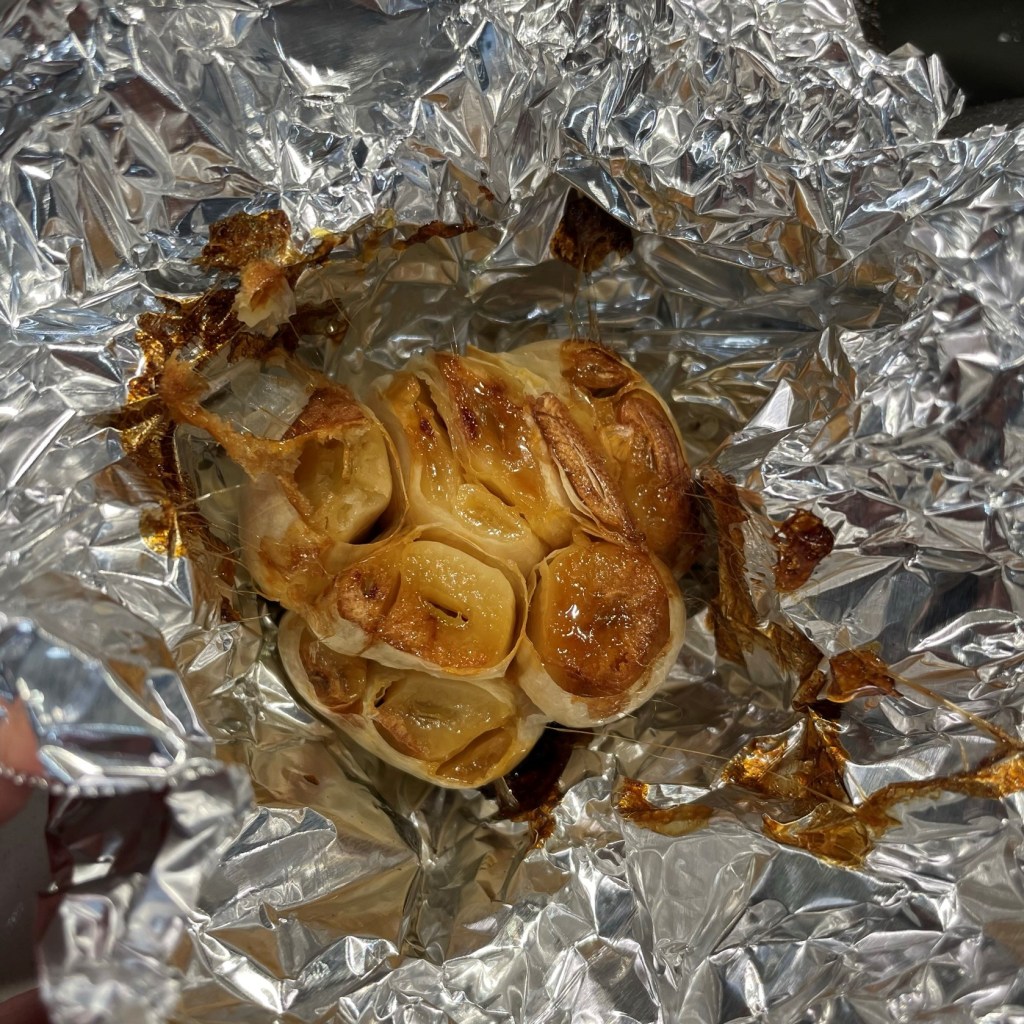
I love roasting garlic for use in many things, and it is easy to do. If you have never made your own, you may find some helpful tips in my previous post for making your own roasted garlic. When roasted, the garlic takes on a mellow, somewhat nutty flavor that lends a lot of depth to foods. If you prefer fresh, or simply don’t have the time or patience to roast it, I would recommend only using one or two segments of the garlic rather than a whole bulb (unless you’re battling vampires, obviously).


Instructions

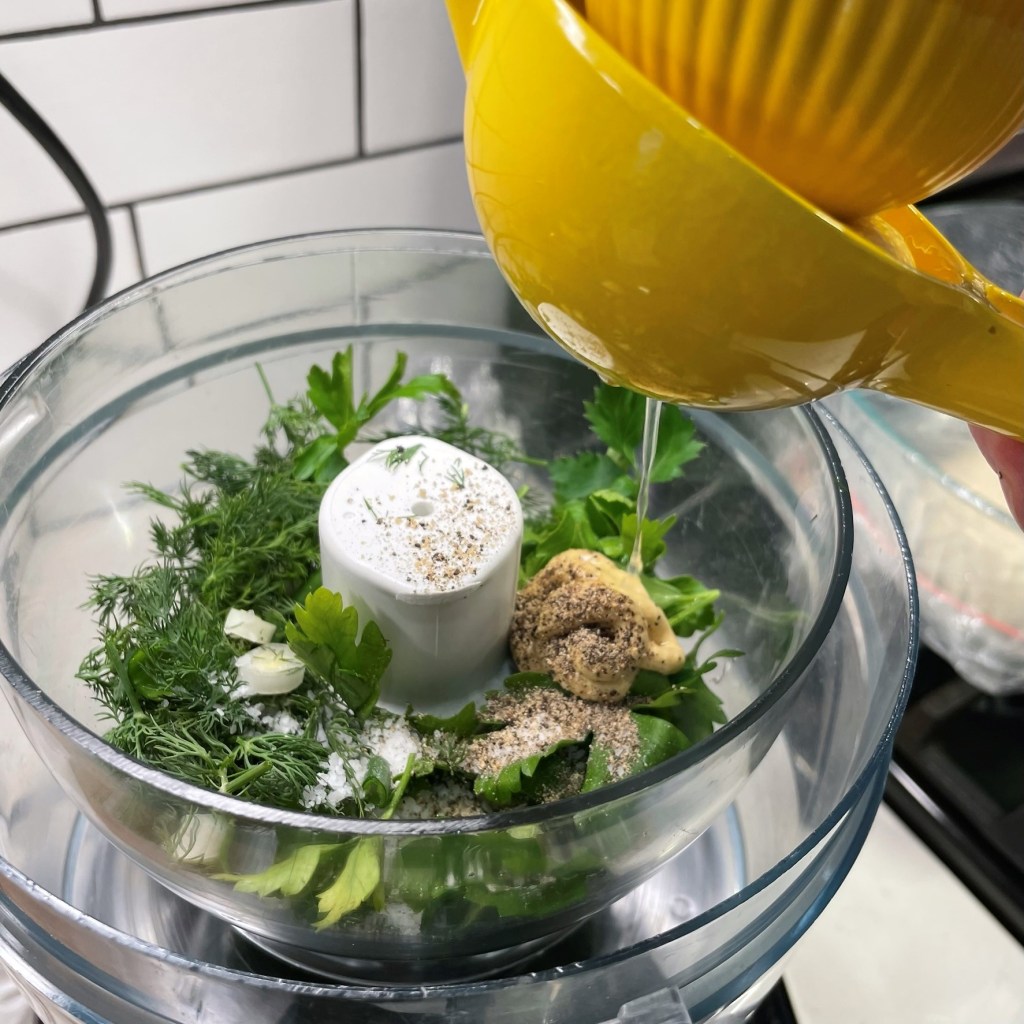
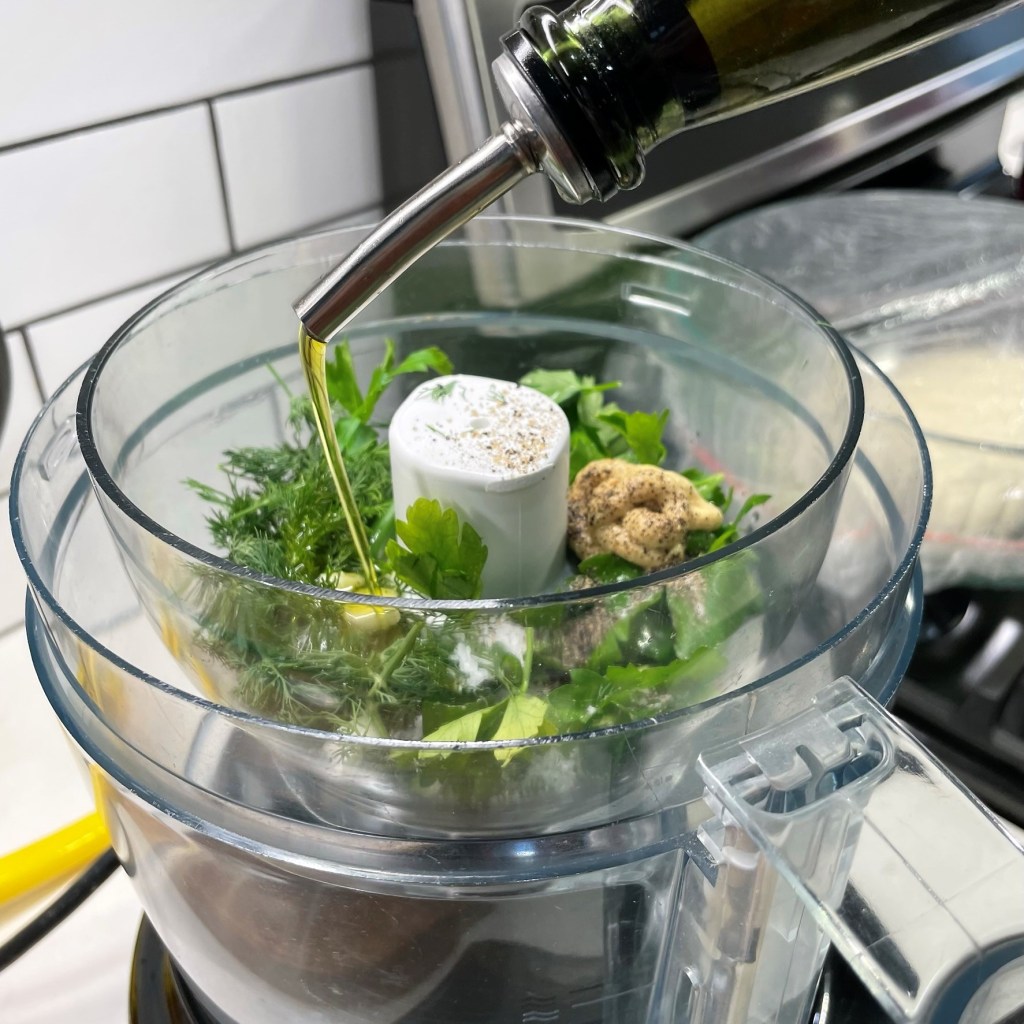
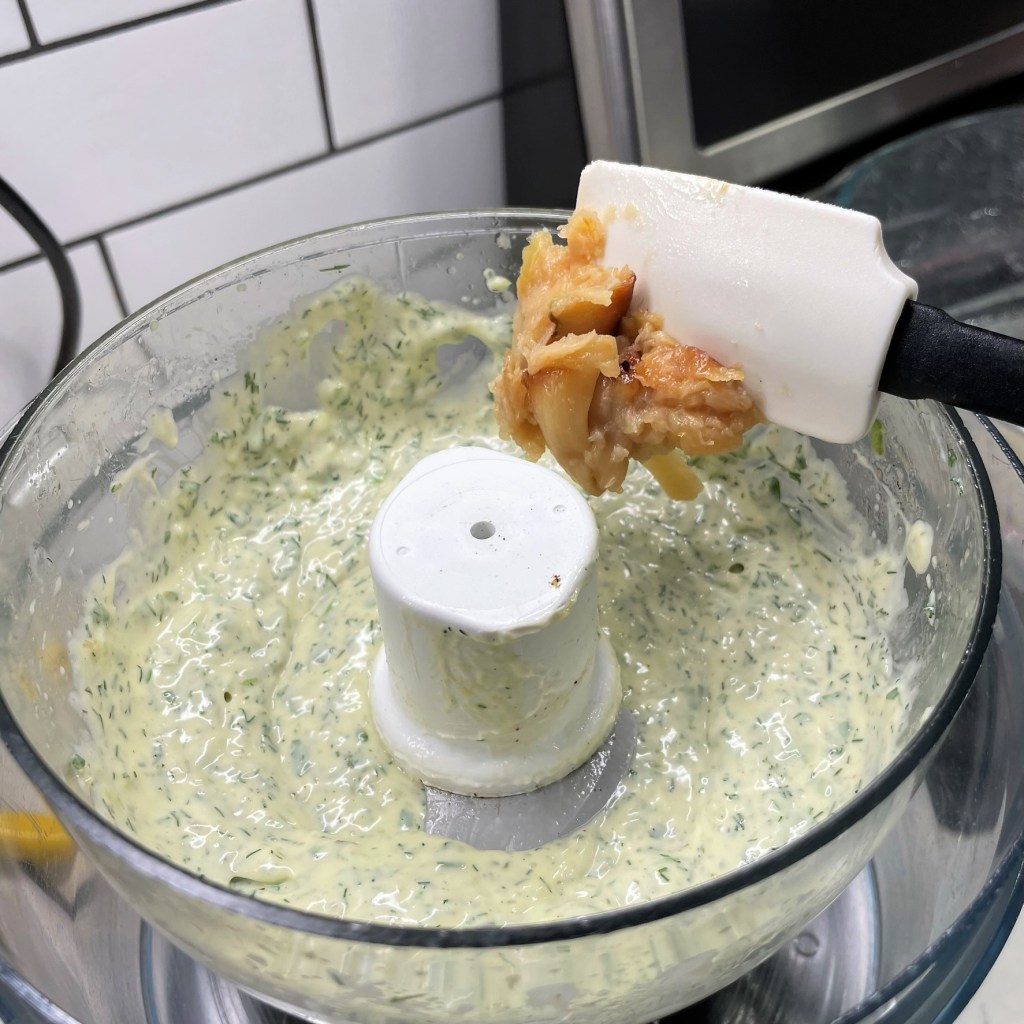
  1. Begin by chopping up your fresh herbs, together with the Dijon, salt, pepper, lemon juice and olive oil. I made a small batch this time, and my processor only rough-chopped these ingredients, even in the small insert bowl. As long as the volume reduces to make room for the other ingredients, it’s fine.
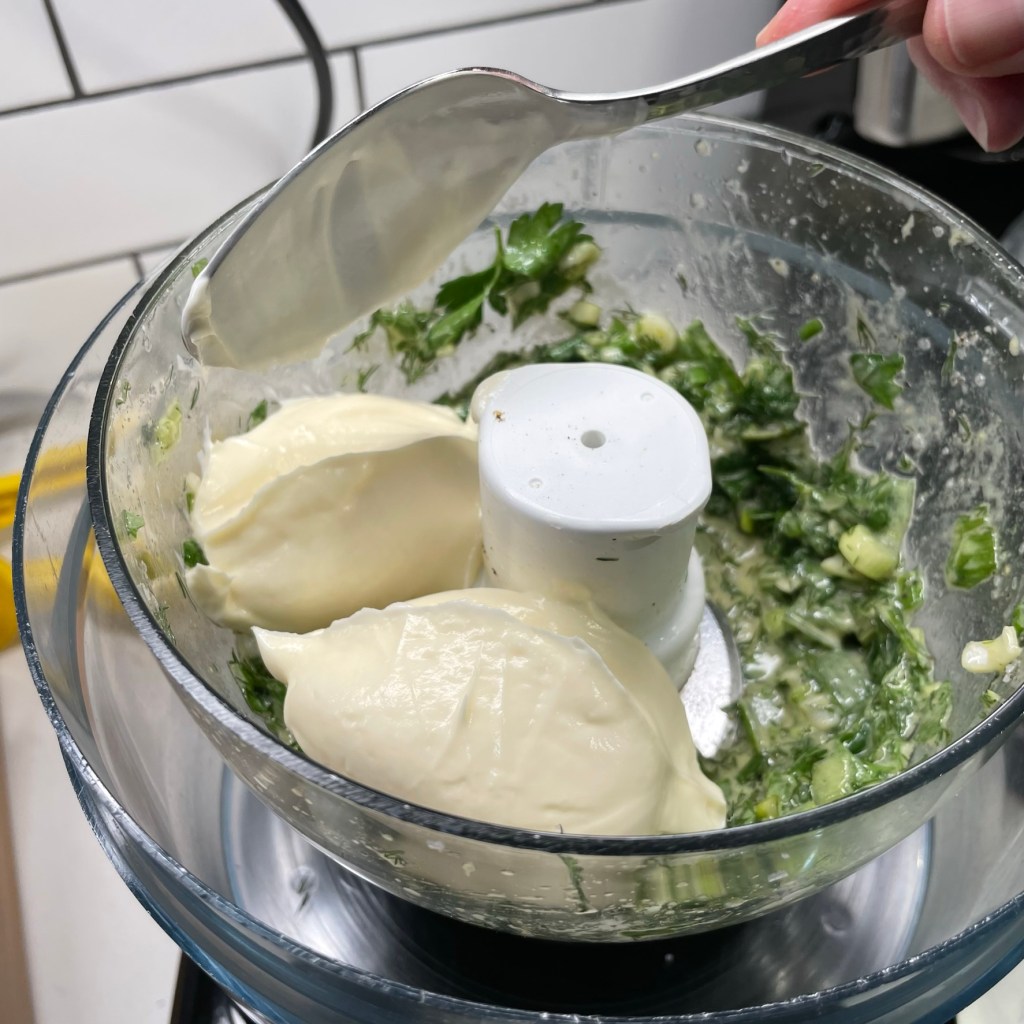
  2. Add the mayo and pulse to combine. Add the roasted garlic and process until you no longer see visible bits of the garlic.
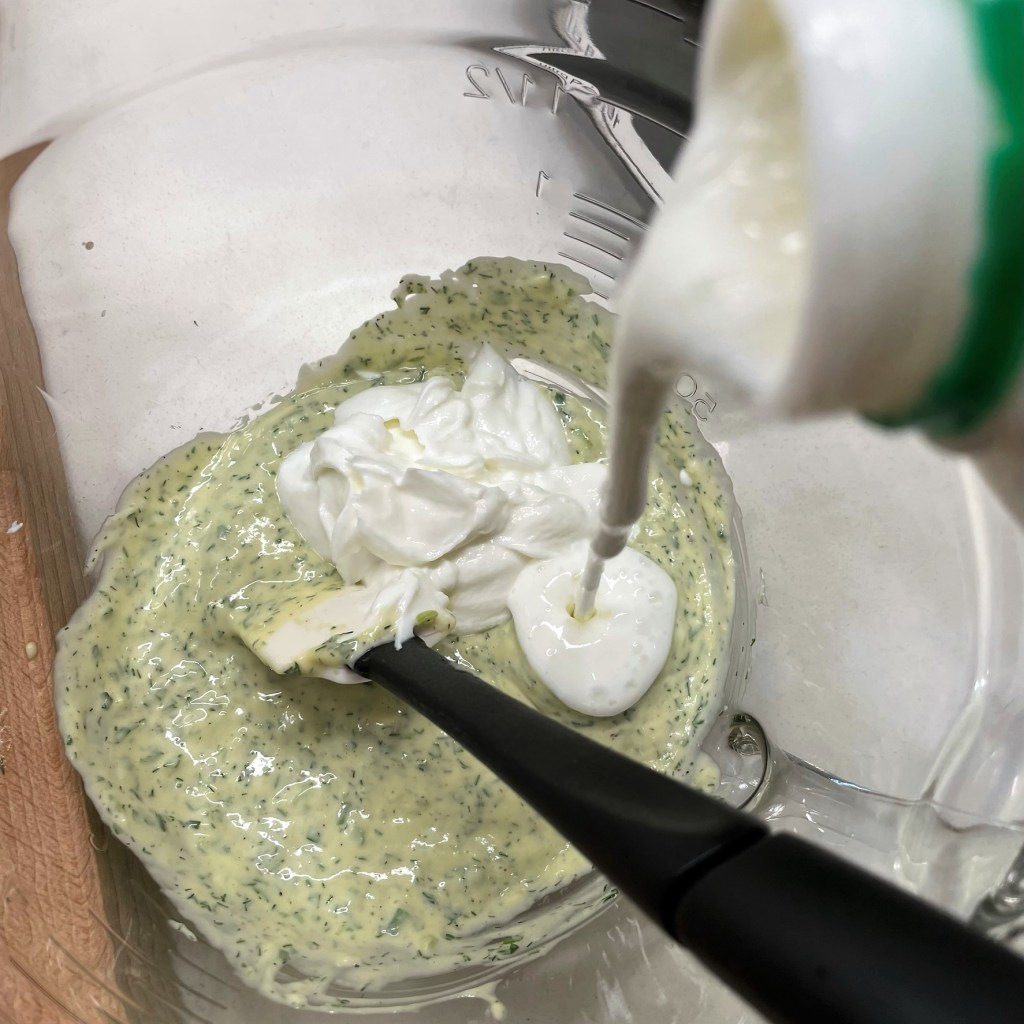
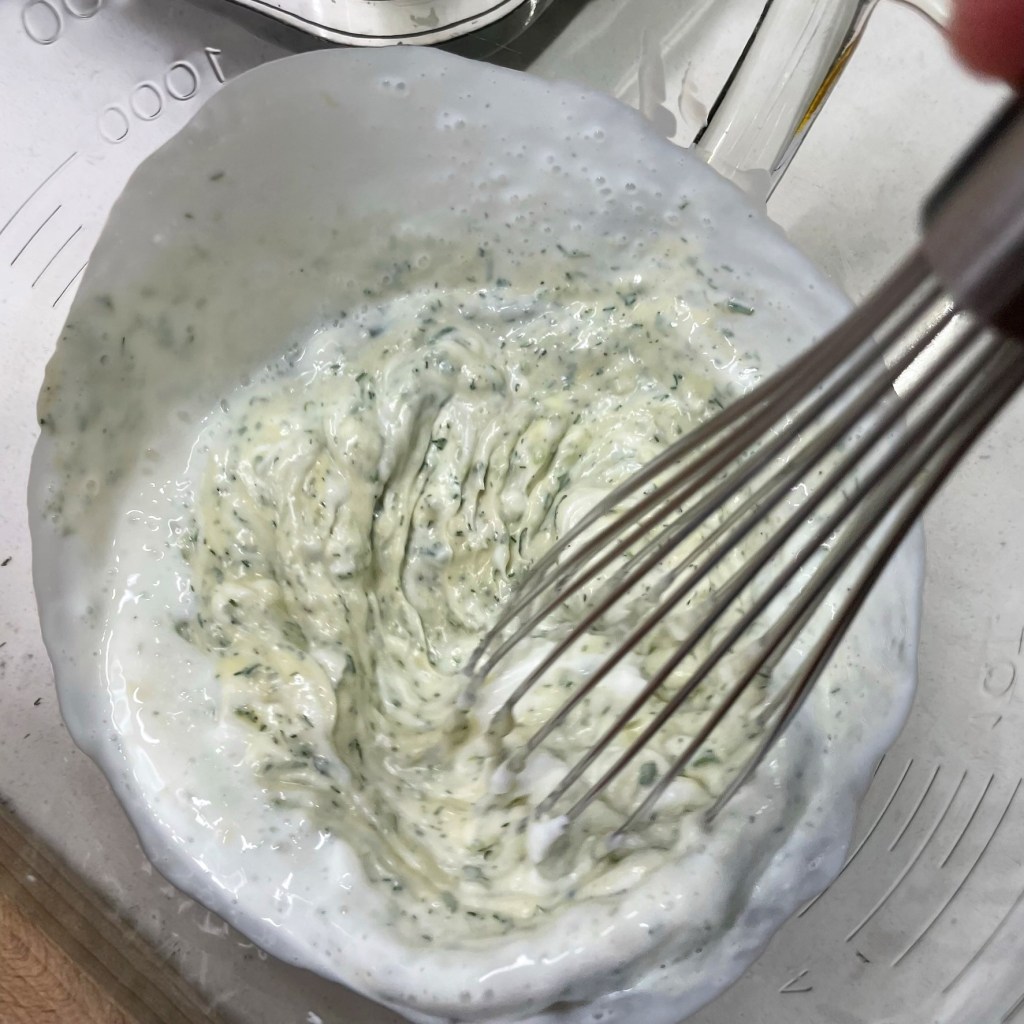
  3. Transfer the mixture to a bowl. Add yogurt, buttermilk and onion powder, and whisk until smooth. Adjust seasoning to taste (remember that additional salt will need time to dissolve, so you may want to let it rest a few minutes before final taste adjustments).
  4. Chill the dip at least one hour before serving. Enjoy within a few days for best freshness and give it a good stir when you take it out of the fridge.


Hot Artichoke-Cheddar Dip

When you make a recipe so many times, you no longer need to review the ingredients list or even bother measuring, and that is the case for me with this hot artichoke cheddar dip, which I made umpteen dozen times during my stint as a prep cook for a catering company called A Pinch of Thyme.
The holiday season was wild in the “Pinch” kitchen, as many of our regular, affluent clients planned and hosted extravagant parties and, naturally, they did not prepare the food themselves. My friend, Tammy, was the events manager for Pinch, and she often shared colorful stories about some of the luxurious homes where our food was delivered (like the one with copper pipes running hot water underneath the marble floors to keep everyone’s tootsies warm), and I often wondered if those hosts supposed the food came from an equally posh kitchen and was prepared by consummate culinary professionals donning crisp, white chef coats and hats.
If they only knew.

My day job at the radio station usually had me out the door by noon, which gave me plenty of time to change into my most worn-out jeans and a WKZL T-shirt before tackling the party menus at the kitchen. The rock music would be blaring, Chef Rodney would be barking orders to everyone, the dishwasher would start running full-steam ahead and, somehow, we’d get it all done in time for the serving crew to load the truck and shuttle our delicacies to the client. The menu for such a shindig might have included a whole roasted beef tenderloin and buttered red bliss potatoes, some exquisite pastry dessert that I probably can’t even pronounce, bacon-wrapped dates stuffed with bleu cheese and, more often than not, this artichoke cheddar dip. Because, simple though it was, everyone loved it.

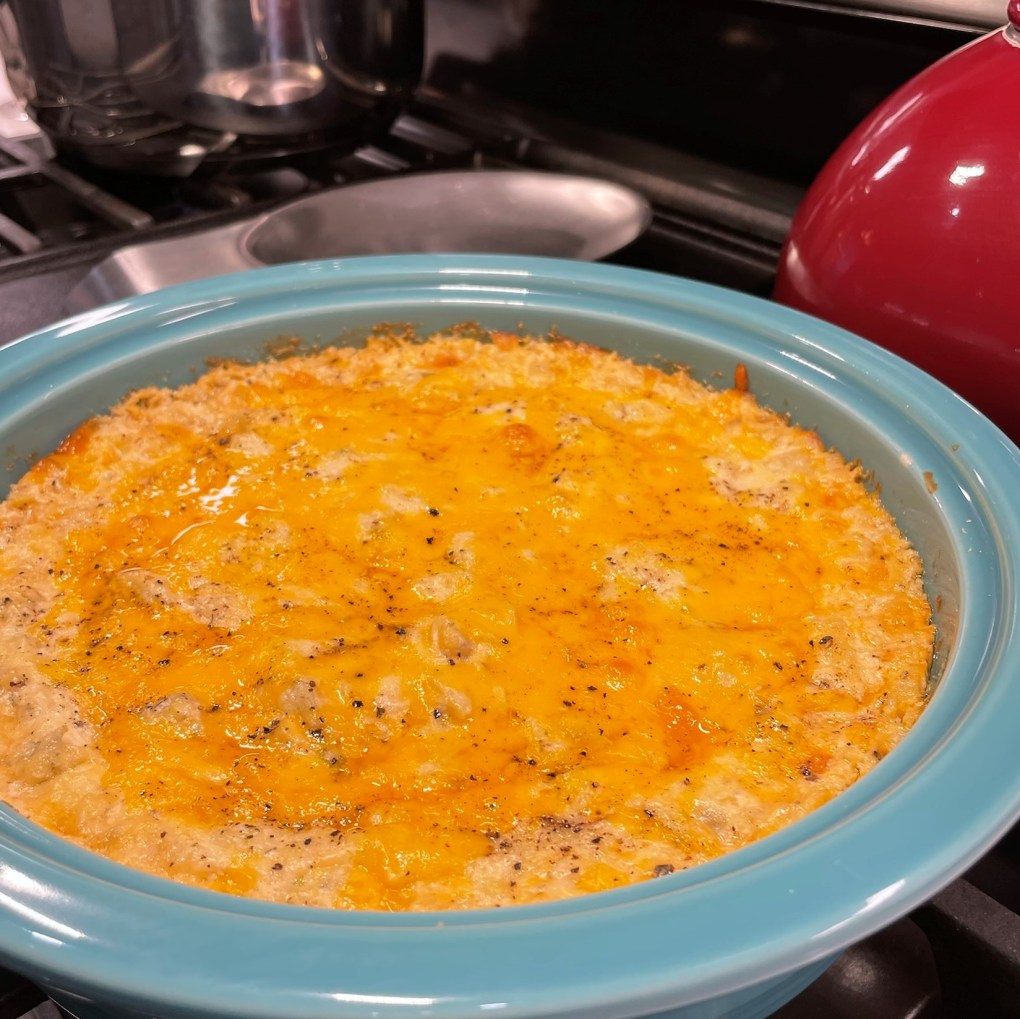
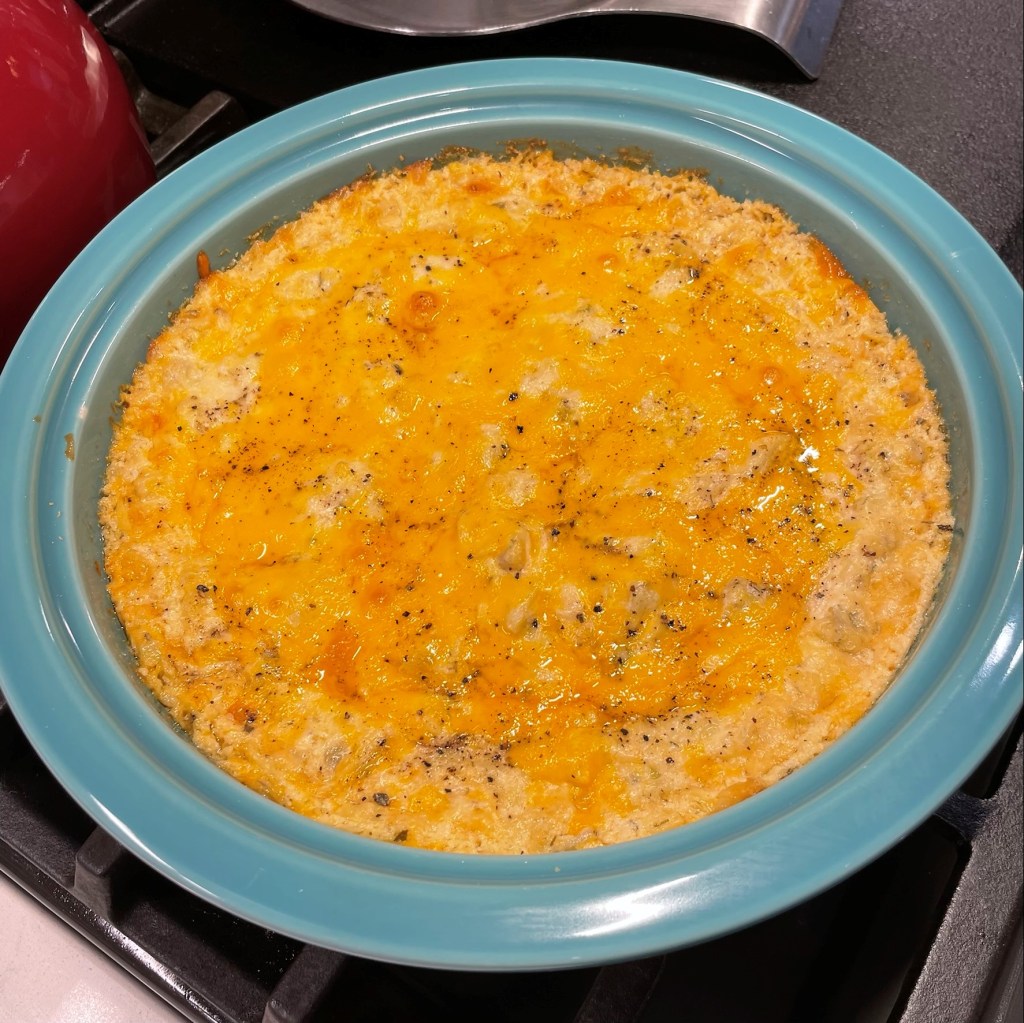
Warm and bubbly from the oven, this artichoke cheddar dip is delicious served with pita chips or crostini!

No matter how elaborate (or not) you intend your holiday get-togethers to be this year, I promise this dip will bring rave reviews. From memory, I scaled down the recipe to make it at home and, over time, I have modified it to reduce the ratio of mayonnaise in favor of smooth cream cheese; I think it endures better, especially when guests will be mingling for a while. The cream cheese keeps this dip silky, the cheddar gives a little sharpness and the artichoke hearts are satisfying and tart with their lemony zing.
If you want to go overboard, as we usually did in the Pinch kitchen, you might serve the dip in a silver chafing dish with handmade toasted herbed pita chips, which we typically made in quantity to fill up a hotel laundry cart. We would cut pita breads into wedges, split them to expose the shaggy insides, brush them with melted butter and then toss them with dried oregano, basil and garlic powder before baking them to perfect crispness. It was delicious, for sure, but at our house this year, we simply baked the dip in a pie plate, opened a bag of Stacy’s multigrain pita chips and had ourselves a party!


Ingredients

8 oz. brick of cream cheese (full fat or Neufchatel)

1/3 cup mayonnaise

1/4 cup sour cream or plain Greek yogurt

A few shakes hot sauce, such as Tabasco or Texas Pete

2 cloves fresh garlic, finely minced

8 oz. brick cheddar cheese (medium or sharp), freshly shredded* (see notes)

Freshly ground black pepper

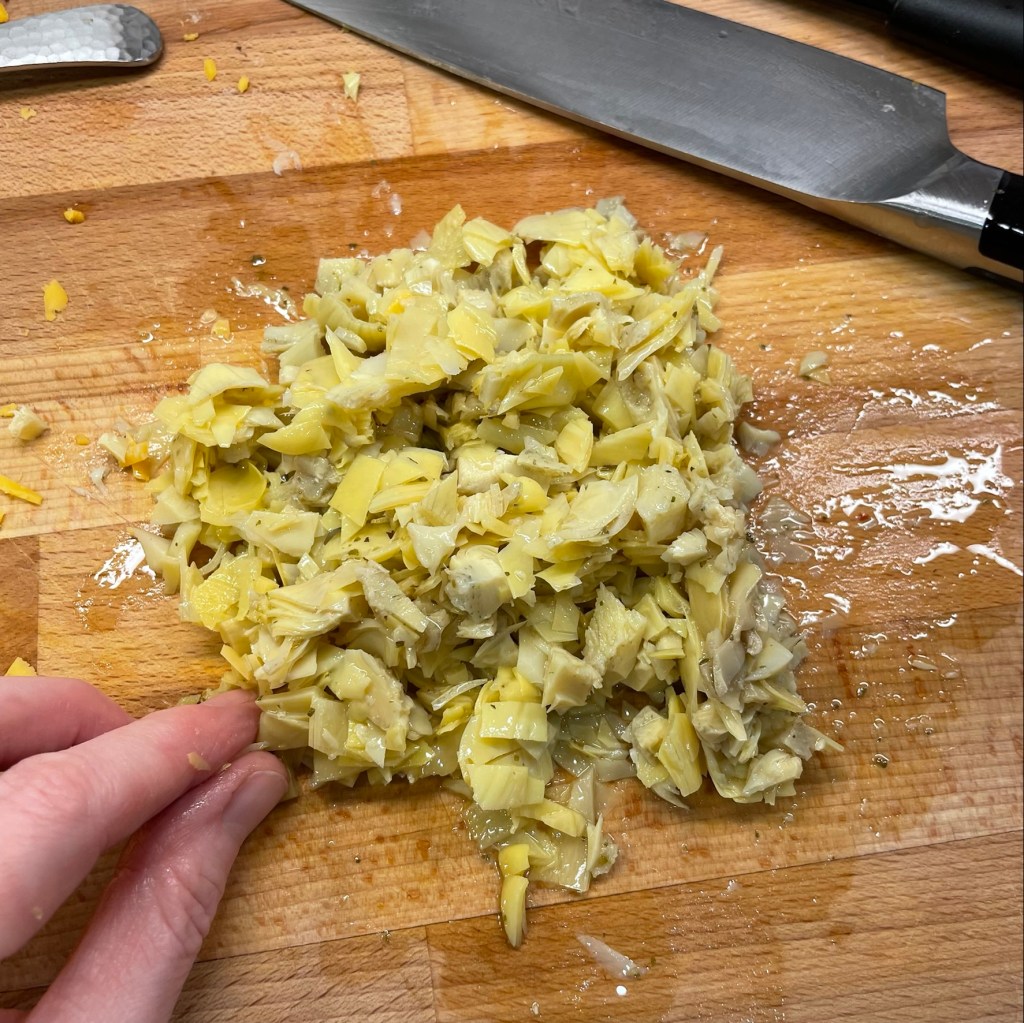
1 cup marinated artichoke hearts, finely chopped*

1/2 tsp. dried oregano

A pinch of dried thyme (of course)

1/4 cup parm-romano blend*


*Notes

I know that it’s tempting to use pre-shredded cheese from a bag, but don’t. The stuff is coated with a powdery substance that keeps it from clumping, which may be great for the purpose of packaging, but not great for cooking because it does not melt well. Break out the box grater and shred the cheese yourself. You’ll be glad you did!

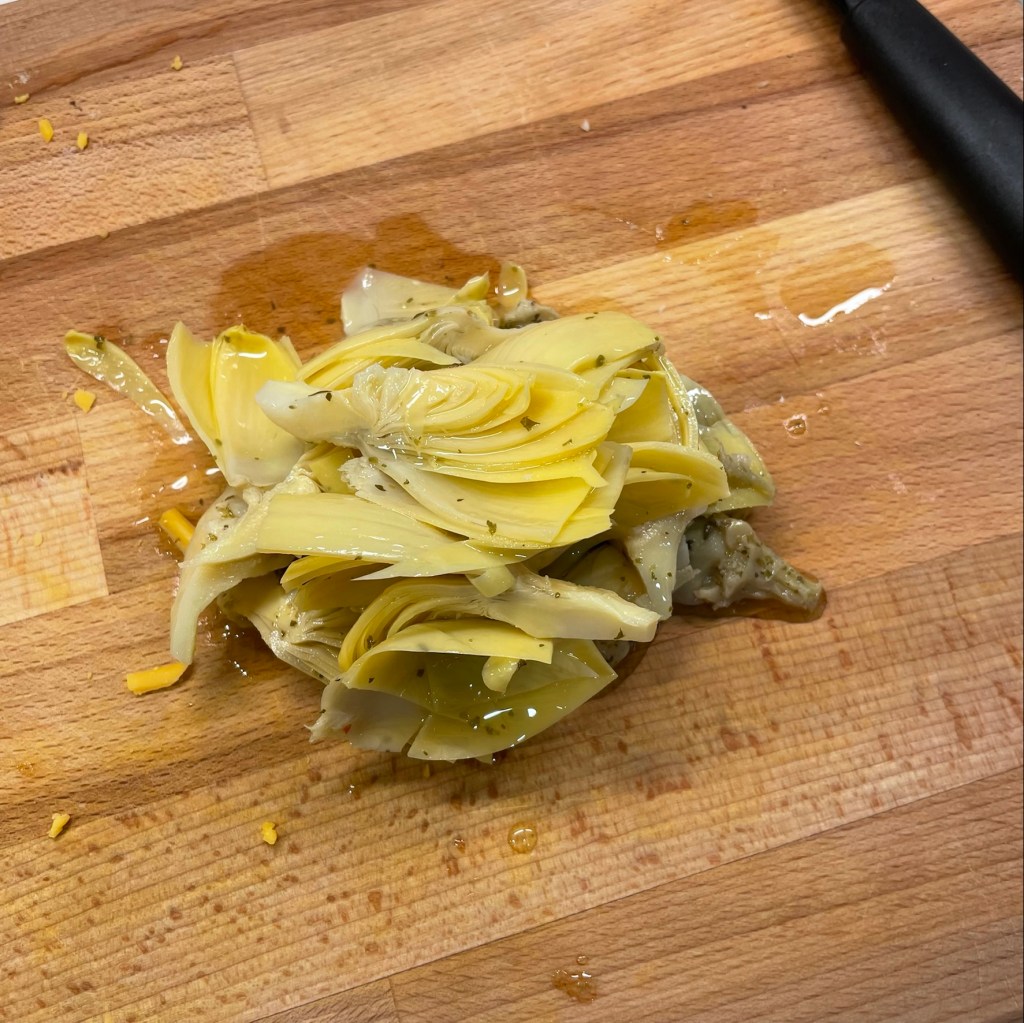
I use artichoke hearts that are marinated in spices and oil, and I usually scoop them out of the jar with a slotted spoon without draining them. The herbs and oil add a pleasant layer of flavor. If you use artichoke hearts packed in water, drain them thoroughly and also drizzle them with a bit of olive oil before mixing into the dip. If they are plain, consider increasing the dried herbs slightly.

I use oil-marinated artichoke hearts. There is no need to rinse or drain them, and the herbs add flavor.

We make our own parm-romano blend, which is easy to do and super convenient, because we love the piquant flavor in so many dishes. If you don’t care to do this (or if you just don’t have the time), substitute a good quality grated parmesan from the supermarket.

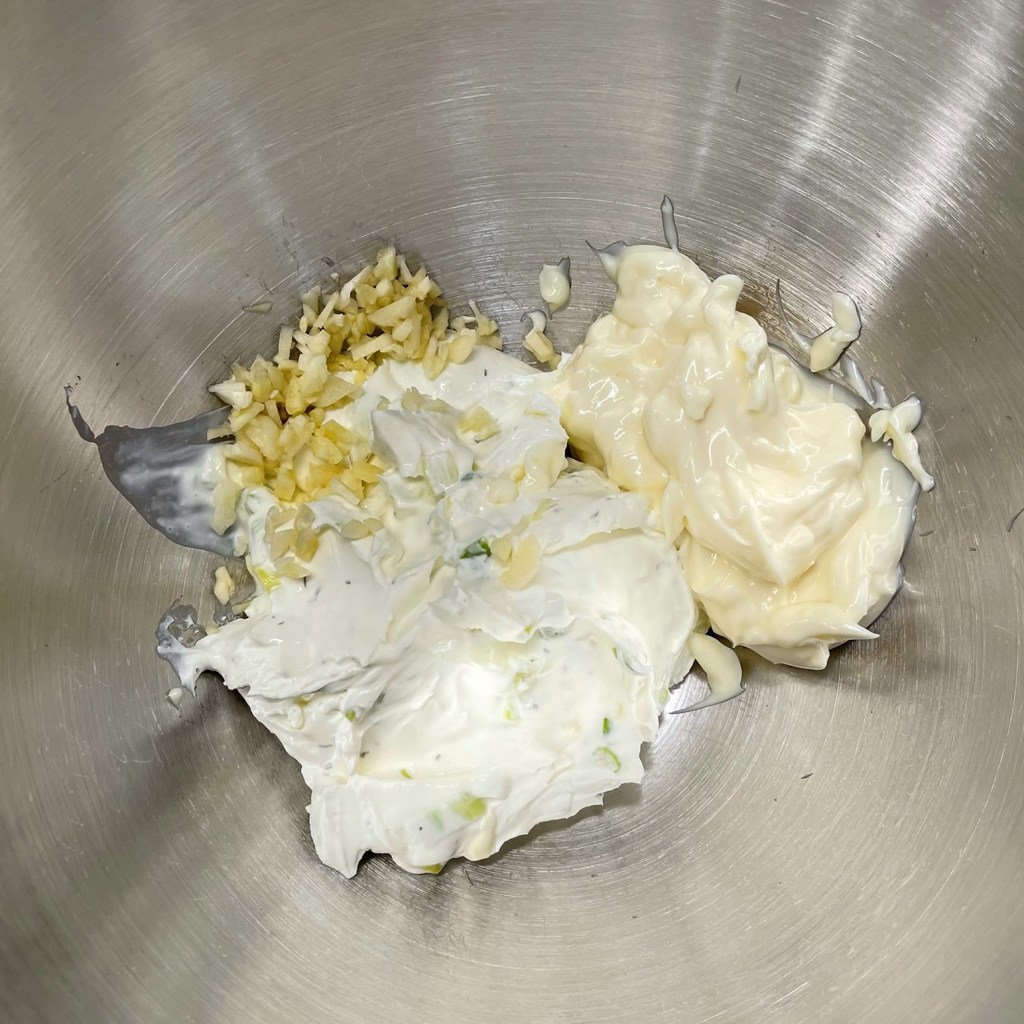
Before we get into the making of this recipe, I have a confession (as you’ll see in the photos). To satisfy our shopping list on the day I made the dip, my husband had to visit four grocery stores. I decided not to wait for the new package of cream cheese, and I dipped into our fresh batch of spreadable scallion cream cheese, which we make regularly as a bagel schmear. The spread has a bit of sour cream in it, plus chopped scallions and a touch of dill. I scooped out a heaping cup of it for this recipe and it worked great. Improvisation has led me to some of my favorite flavor discoveries, and I’ve learned to not be strictly bound to a recipe.


Instructions

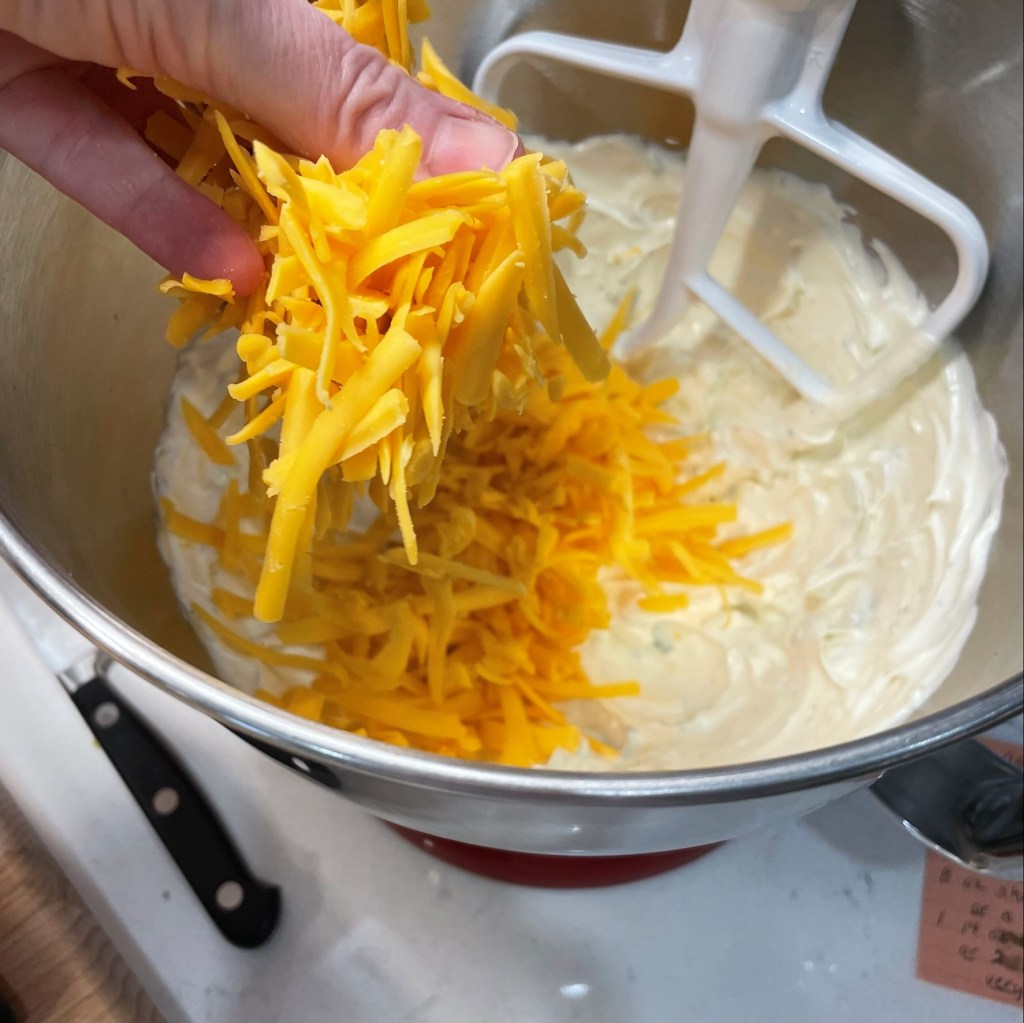
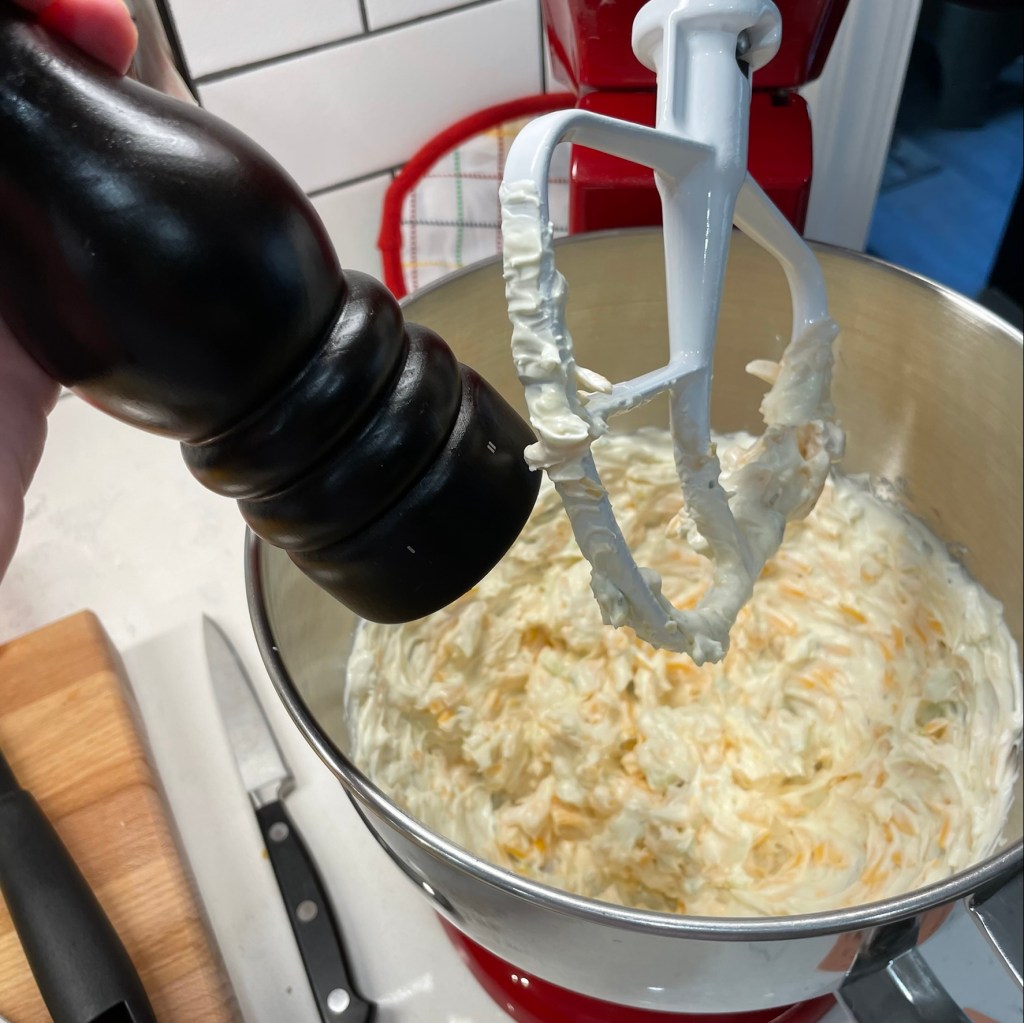
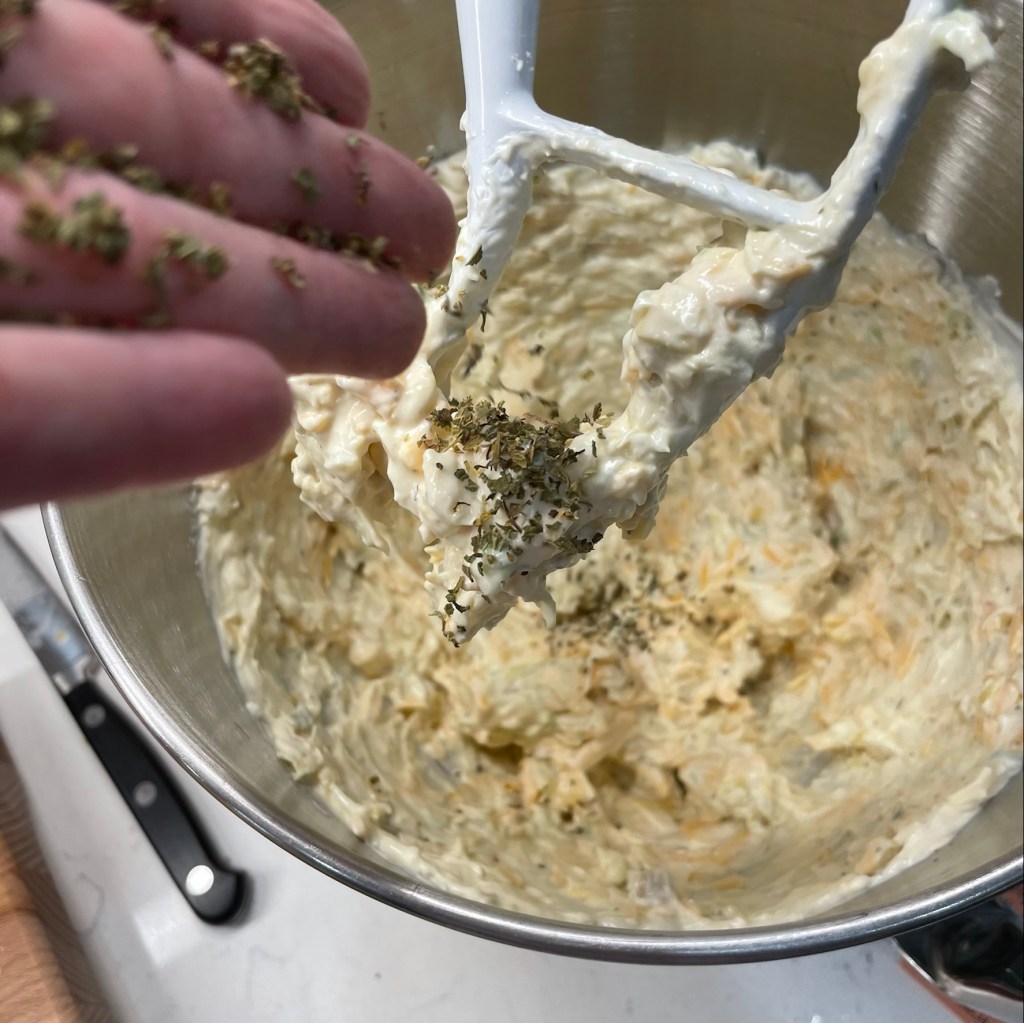
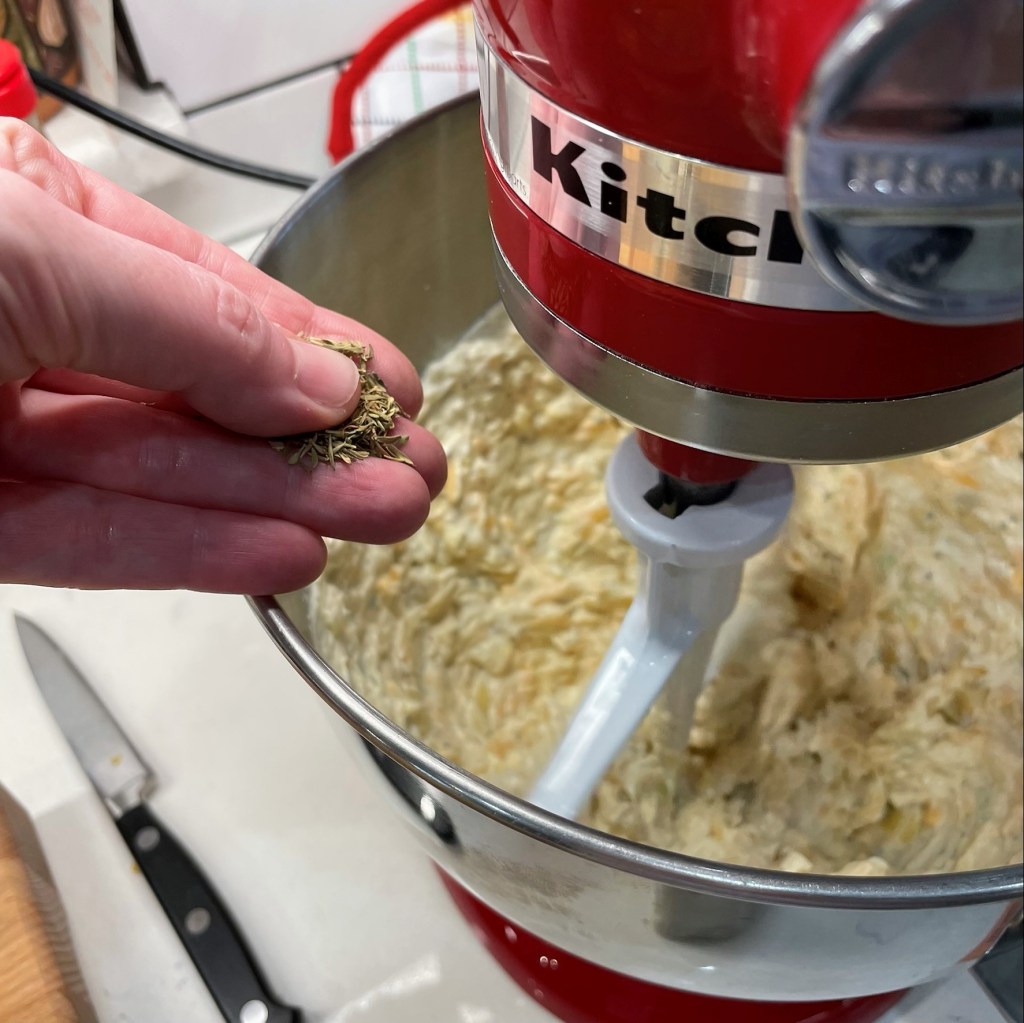
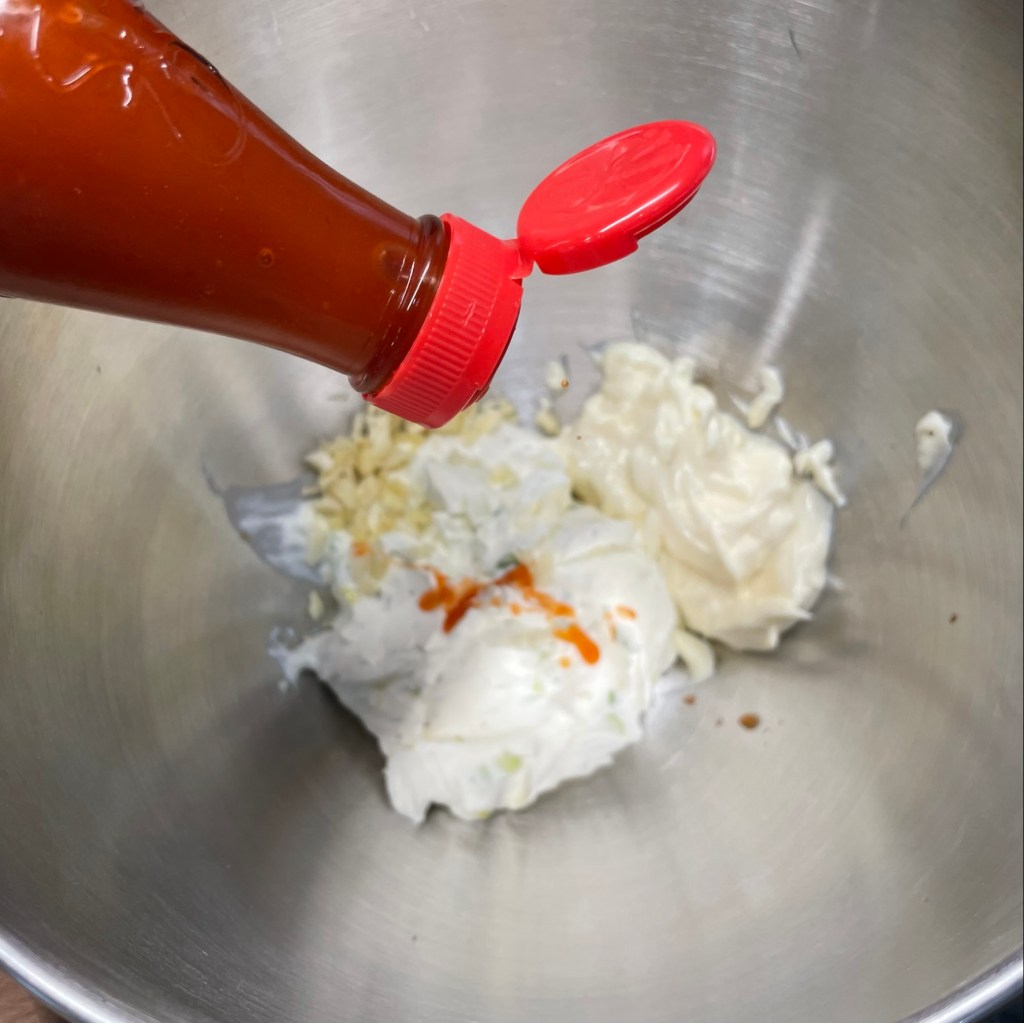
Using an electric mixer, blend the cream cheese, mayonnaise and sour cream together. Add garlic and hot sauce and mix until smooth. Give it a taste and adjust hot sauce to your liking. Add about 2/3 of the shredded cheddar and mix again. Season with about 15 twists of freshly ground black pepper. Blend in the chopped artichoke hearts until evenly distributed. Add oregano and, in keeping with the original recipe, a pinch of thyme.

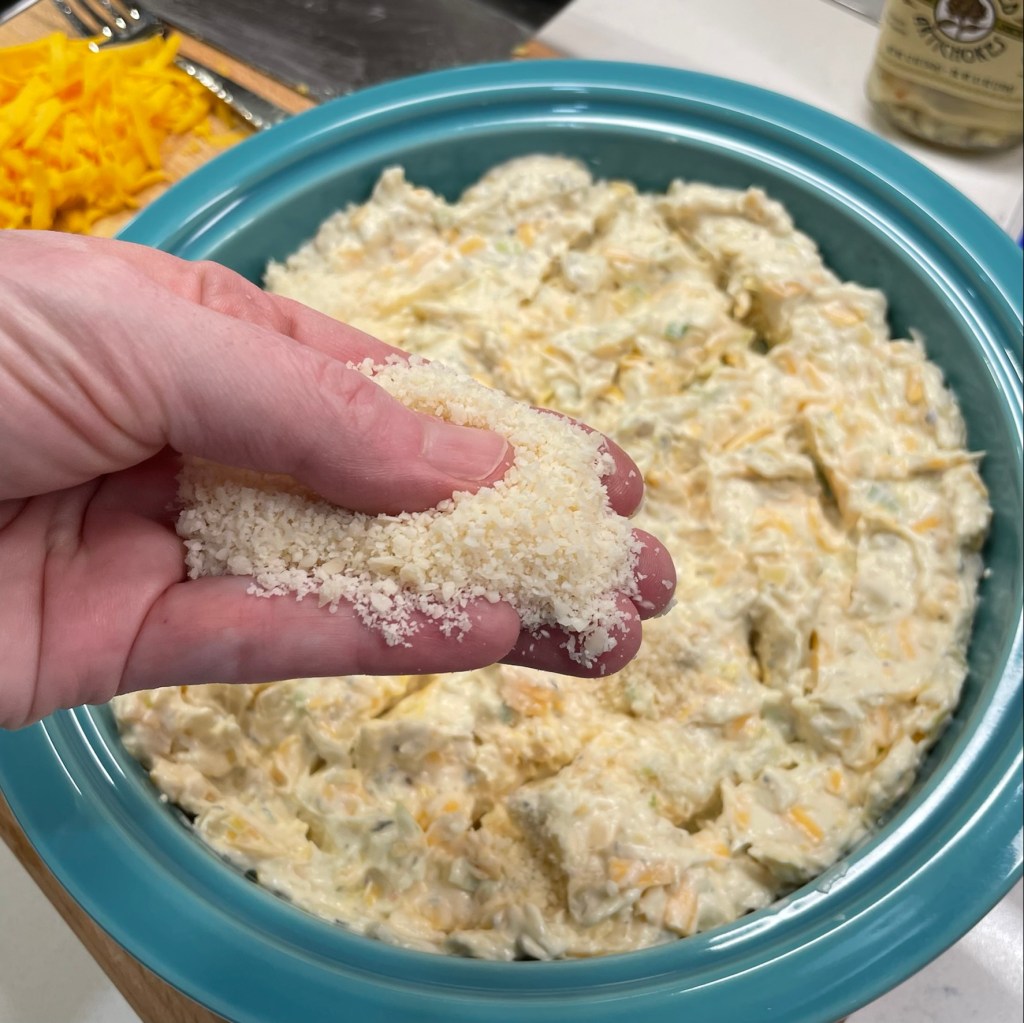
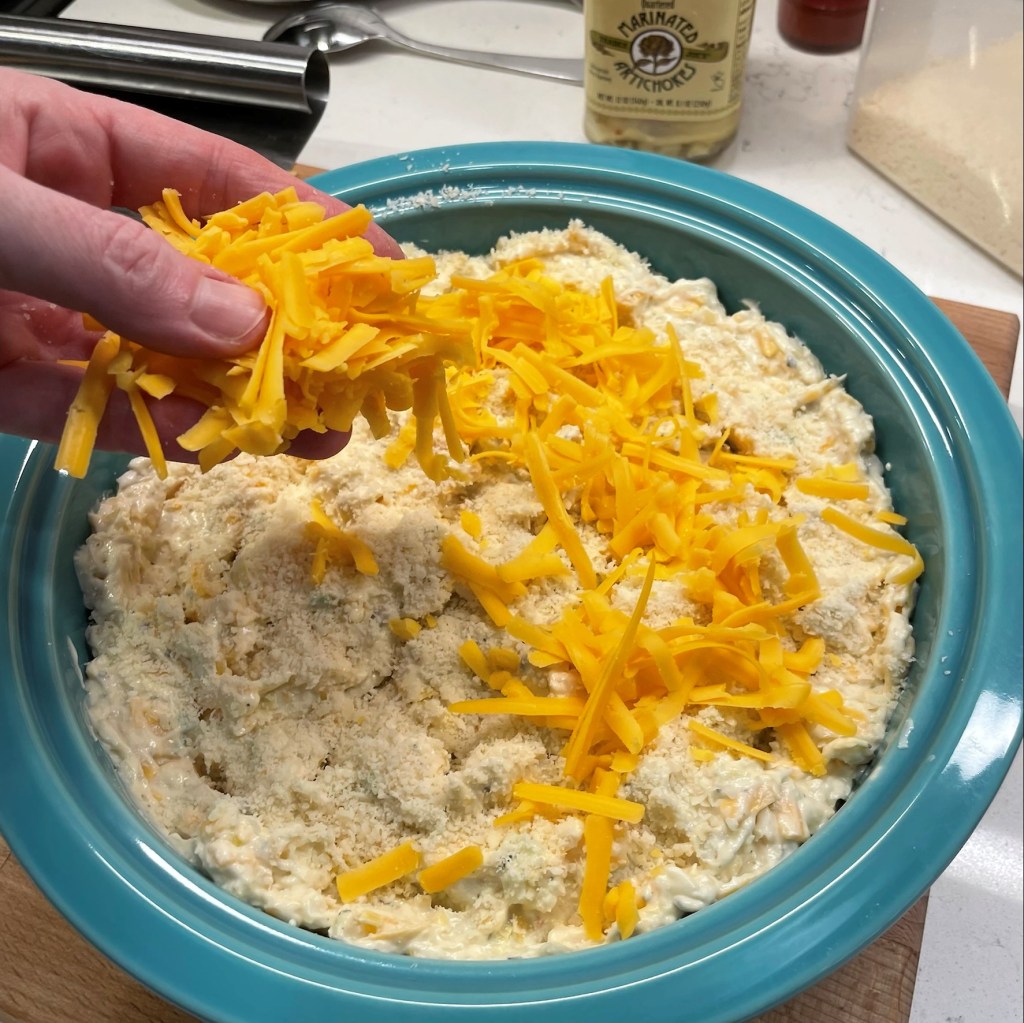
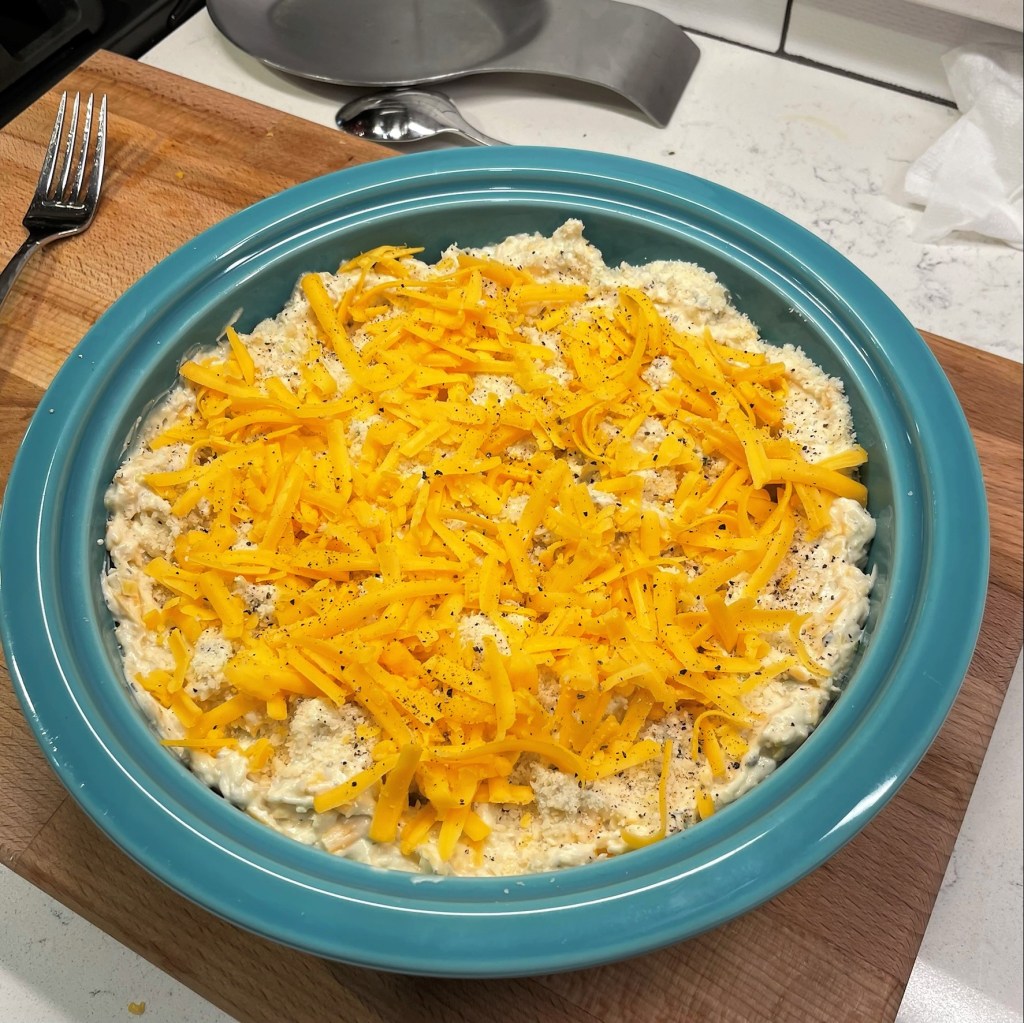
Pile the mixture into a deep pie plate or 8 x 8 glass baking dish. Sprinkle on the parm-romano blend. Top with remaining shredded cheddar.

Bake at 375° F for about 25 minutes, until dip is heated through and cheese is bubbly. Serve warm with pita chips, sturdy crackers or crostini.


Buffalo Deviled Eggs with Bleu Cheese

There was more than a little bit of disappointment this year in limiting the number and scale of dishes my husband, Les, and I create for our annual Super Bowl party. Obviously, we didn’t have 25 people in the house this year—that would be ludicrous in these times—but the Super Bowl wasn’t cancelled, and neither was our celebration, even if reduced to just the two of us. The challenge for us was finding new ways to enjoy the flavors we’ve come to expect on this ultimate football occasion.

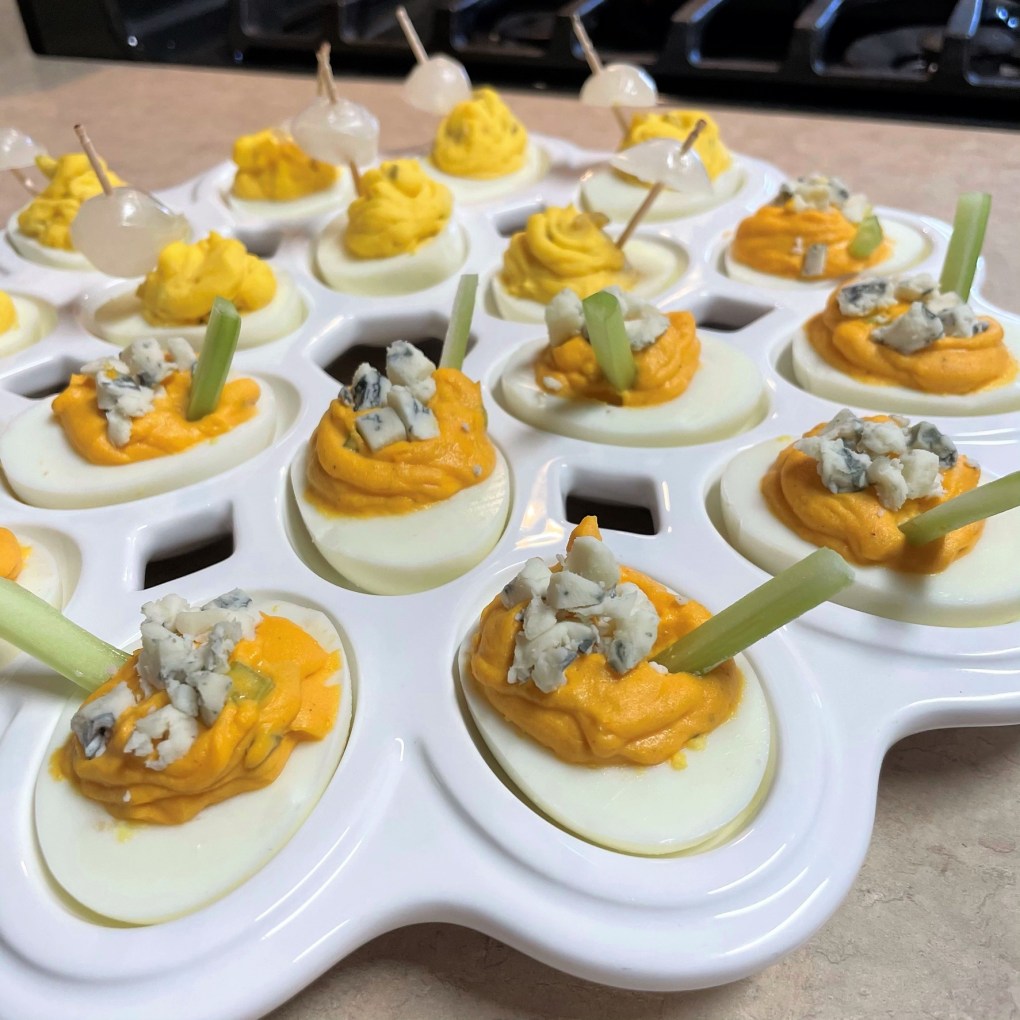
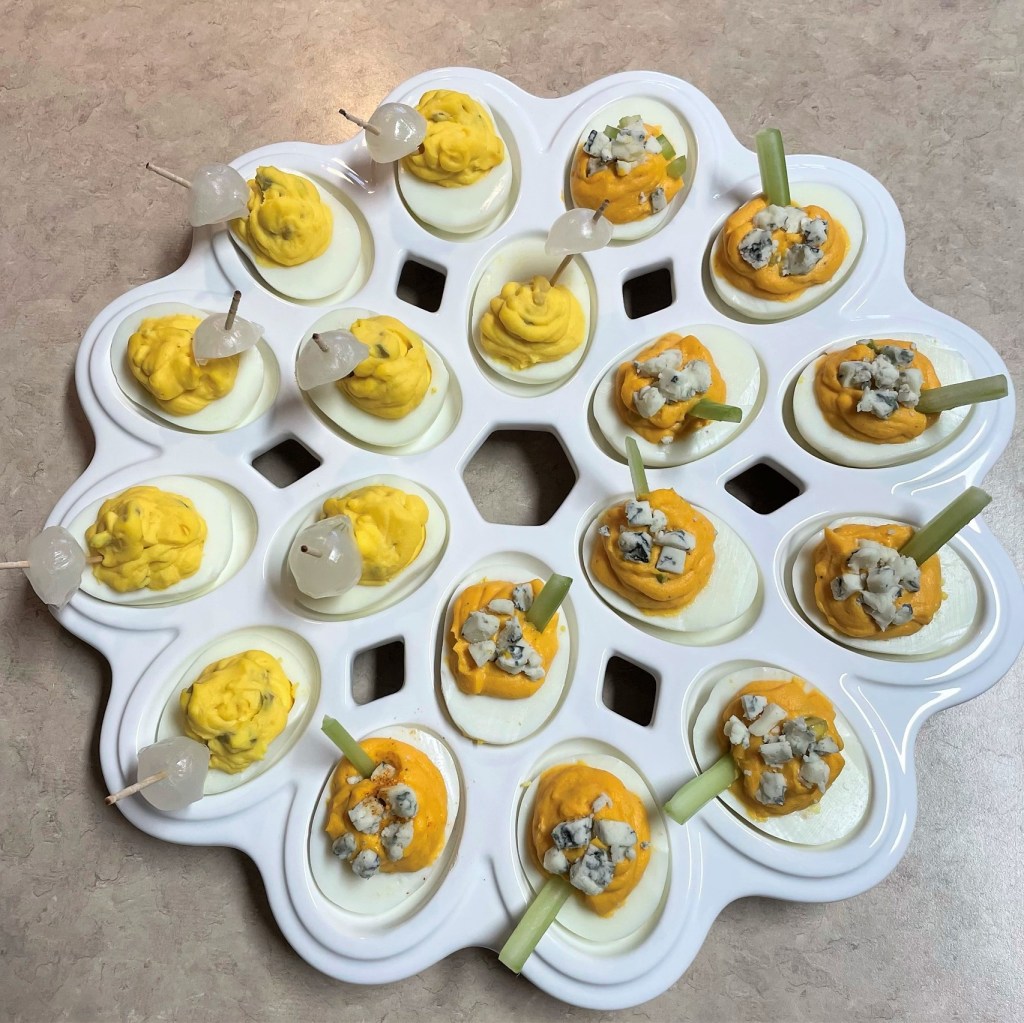
Deviled eggs are always on our party table and so are Buffalo wings. Why not combine the flavors into one tasty bite?

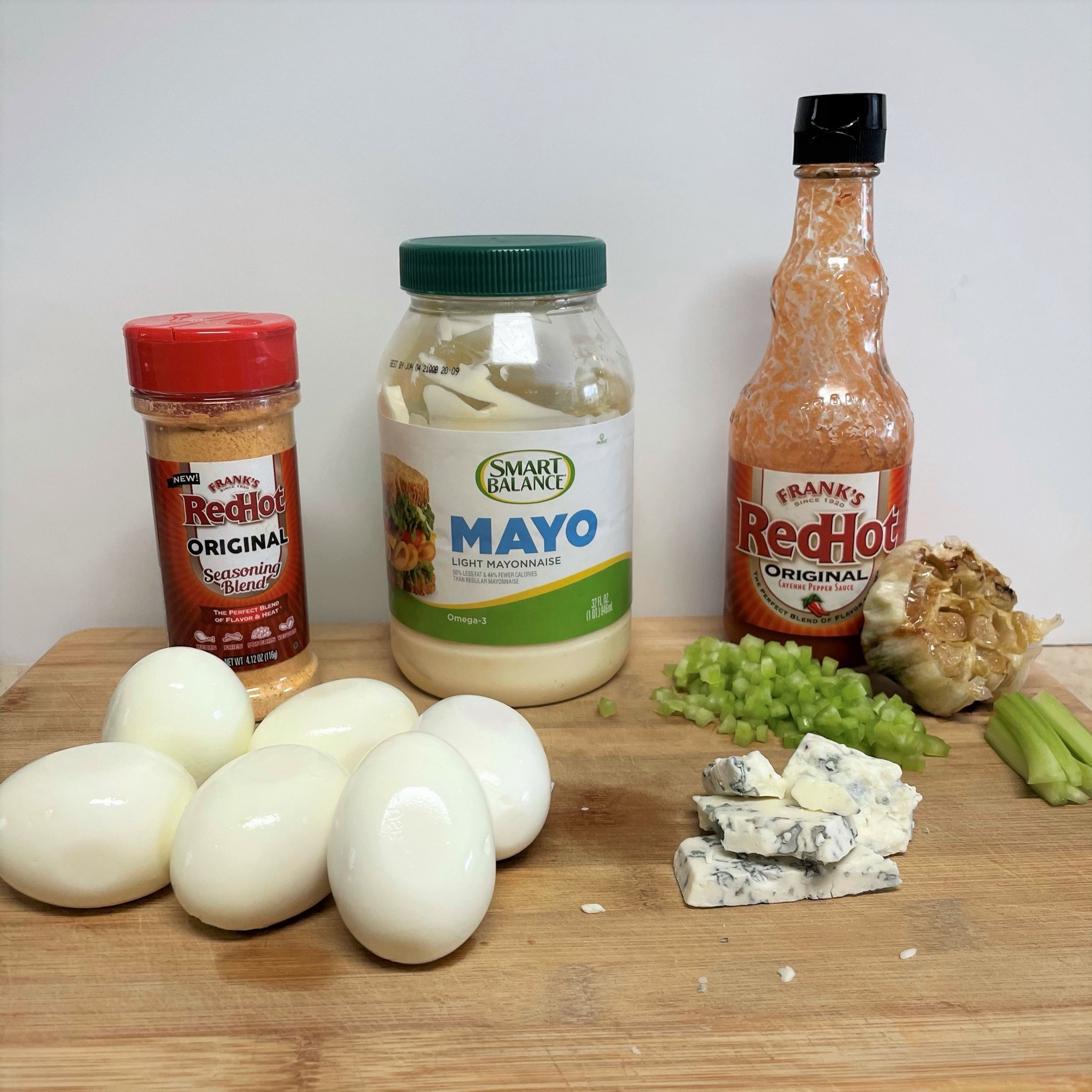
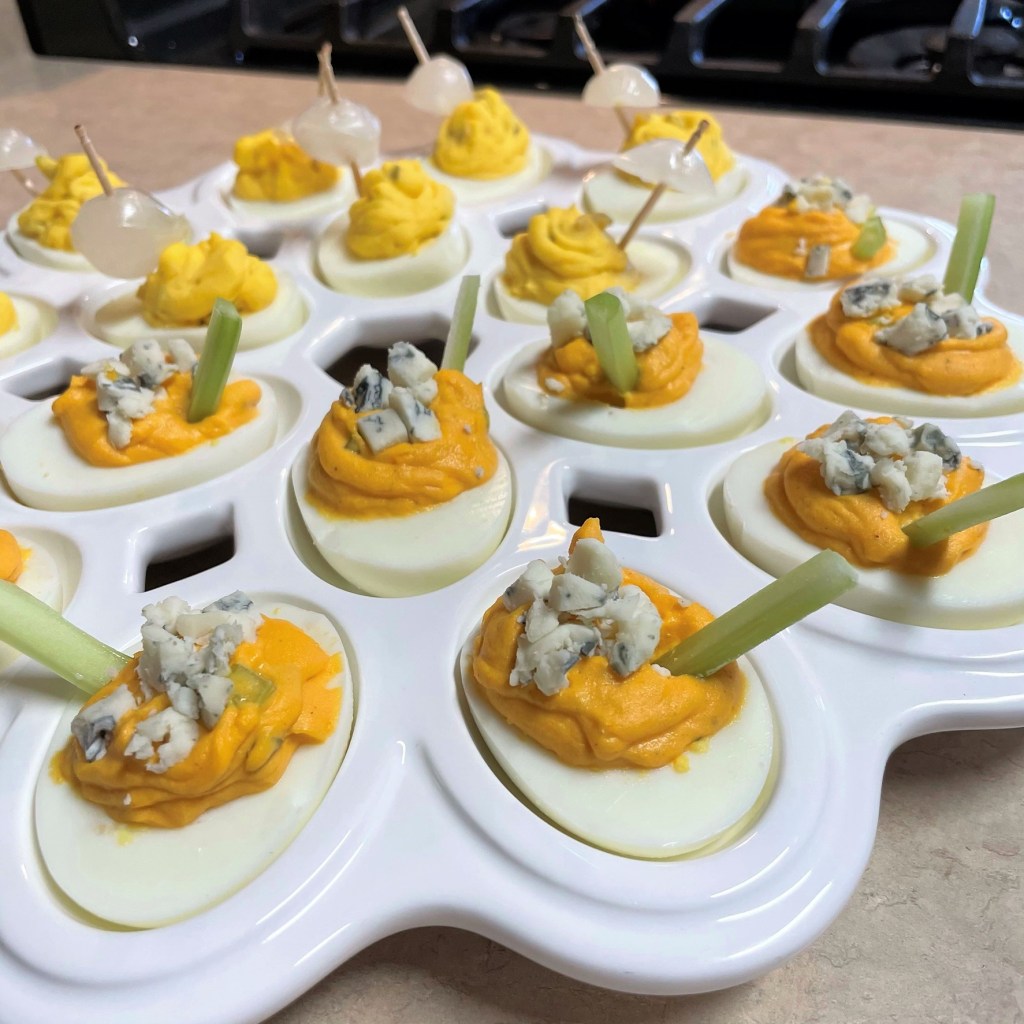
These little hors d’oeuvres have the big, bold flavor of Frank’s RedHot sauce, which is the only acceptable flavor for Buffalo wings, in this Western New York girl’s humble opinion. Little bits of crunchy celery do their part to mimic the experience, and crumbled bleu cheese is the proverbial icing on the cake.

Deviled eggs are one of my favorite “blank canvas” foods, meaning that you can twist up the flavors to suit the occasion. I made these Buffalo-flavored eggs at the same time as the Dirty Martini Deviled Eggs, which is in keeping with my usual practice of putting more than one flavor on the table. The ingredients and instructions below describe my process for splitting the two flavors, but if you’d prefer to make only the Buffalo deviled eggs, no problem—simply double the ingredients as noted below.

Two flavors are better than one!

If you are intrigued with the idea of trying new flavors, check out my post from last spring, Egg-stravaganza. I’ll bet you will find a flavor combination that’s right up your alley!

Ingredients

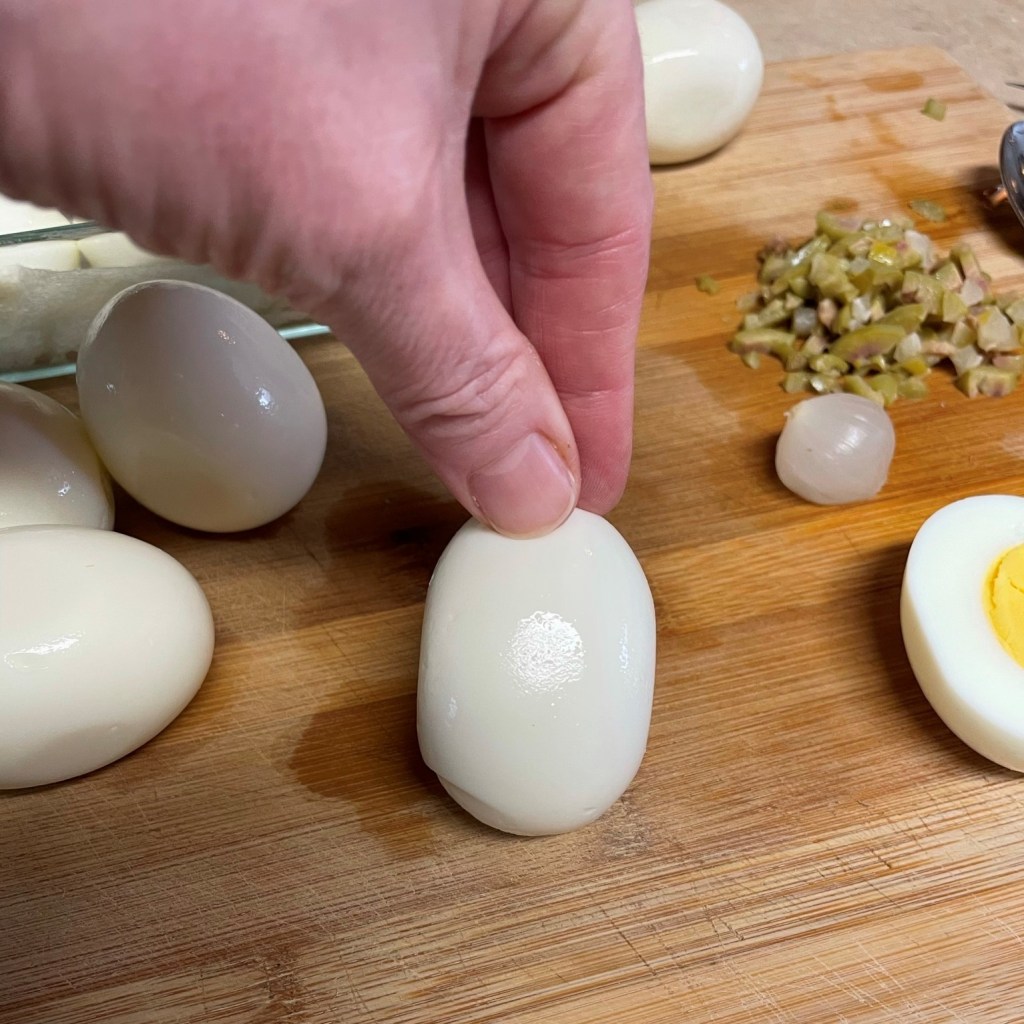
9 large eggs, hard-boiled and peeled

1/4 cup + 1 Tbsp. light mayonnaise


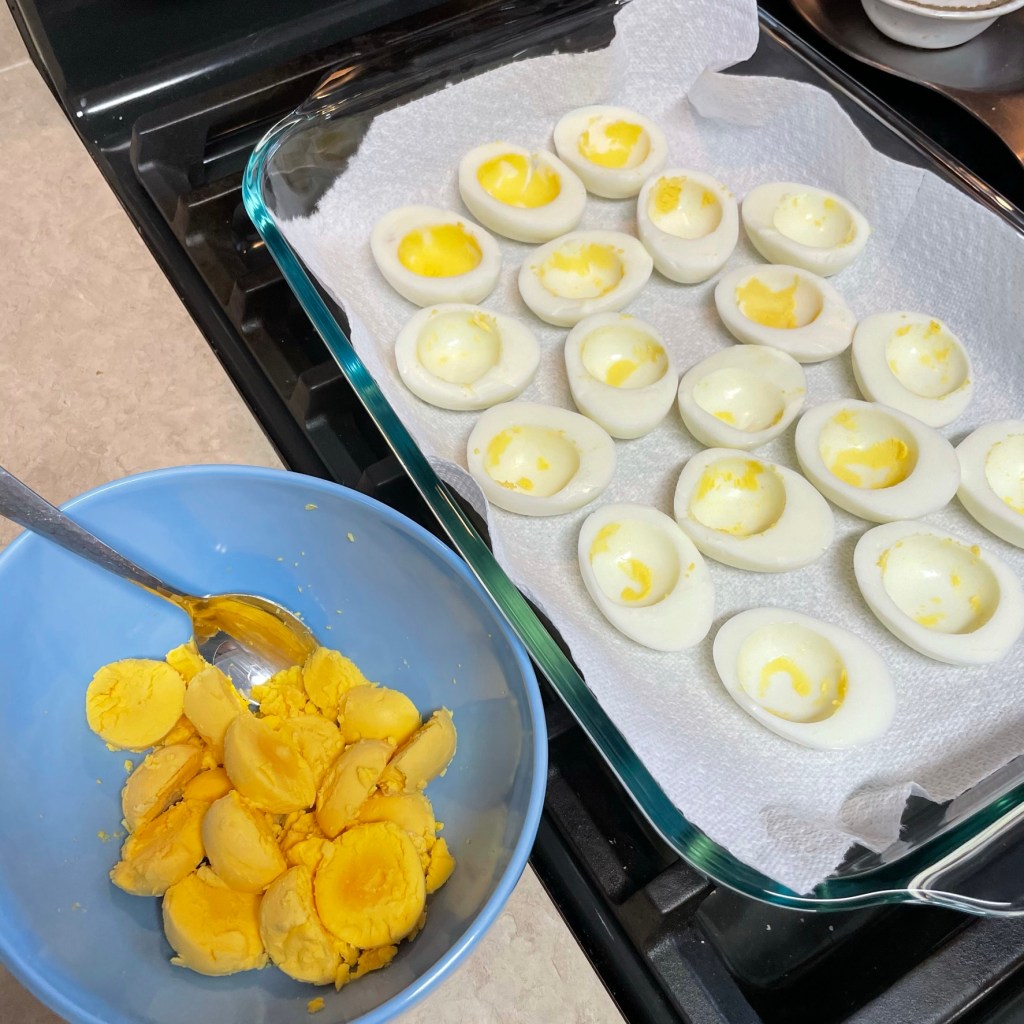
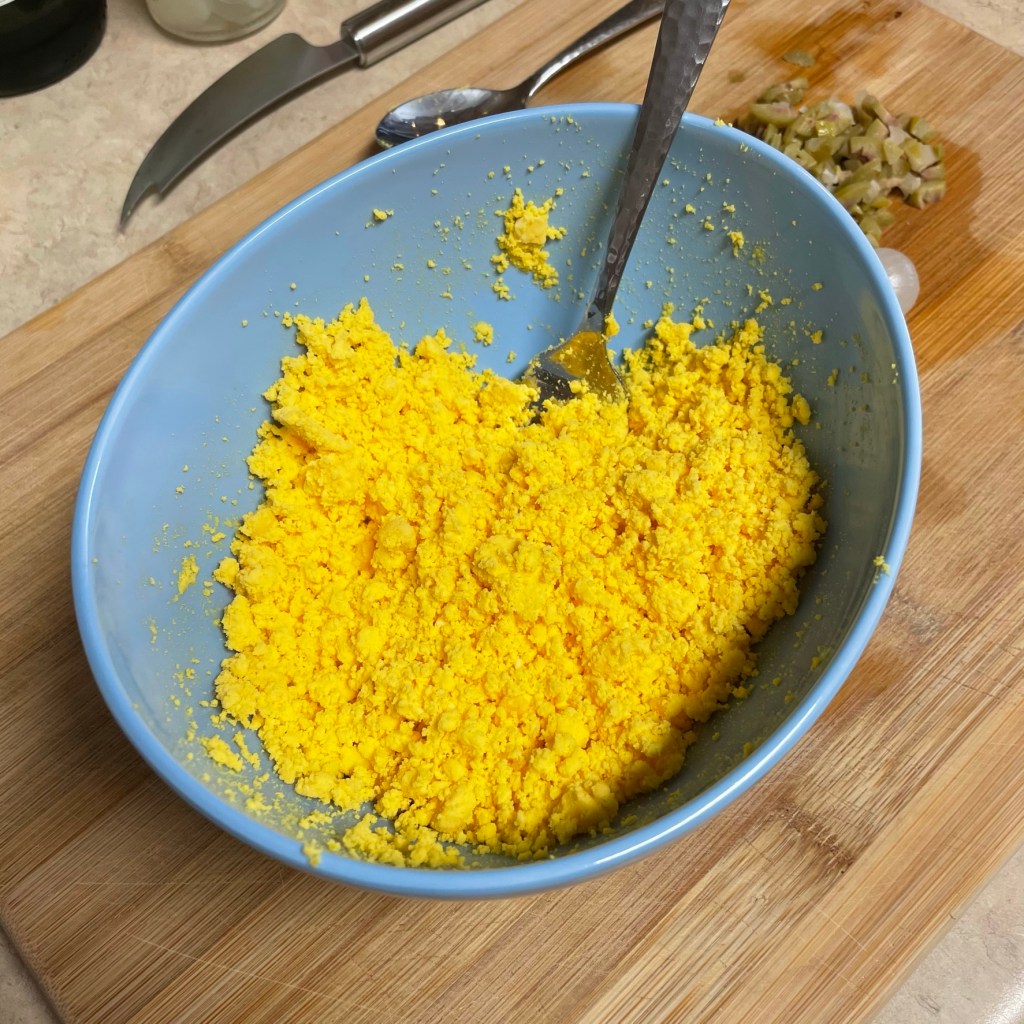
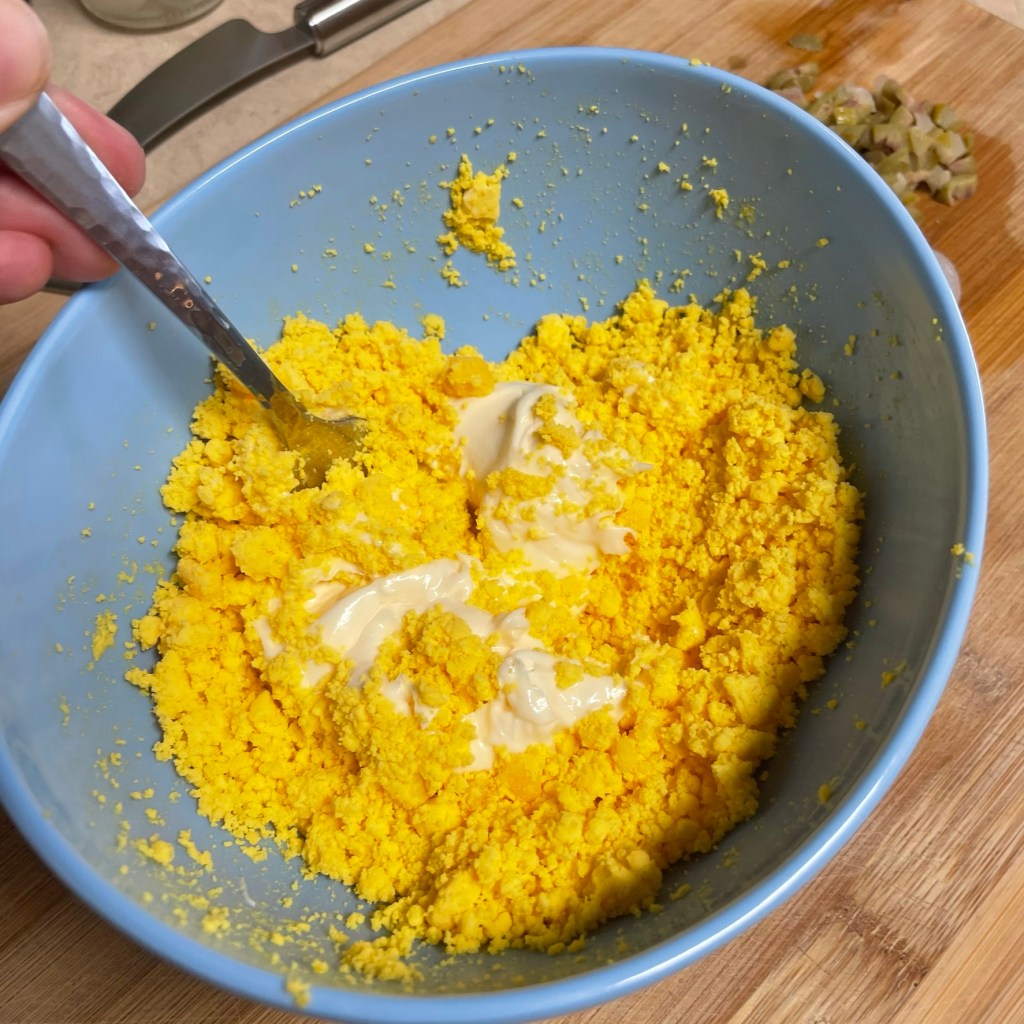
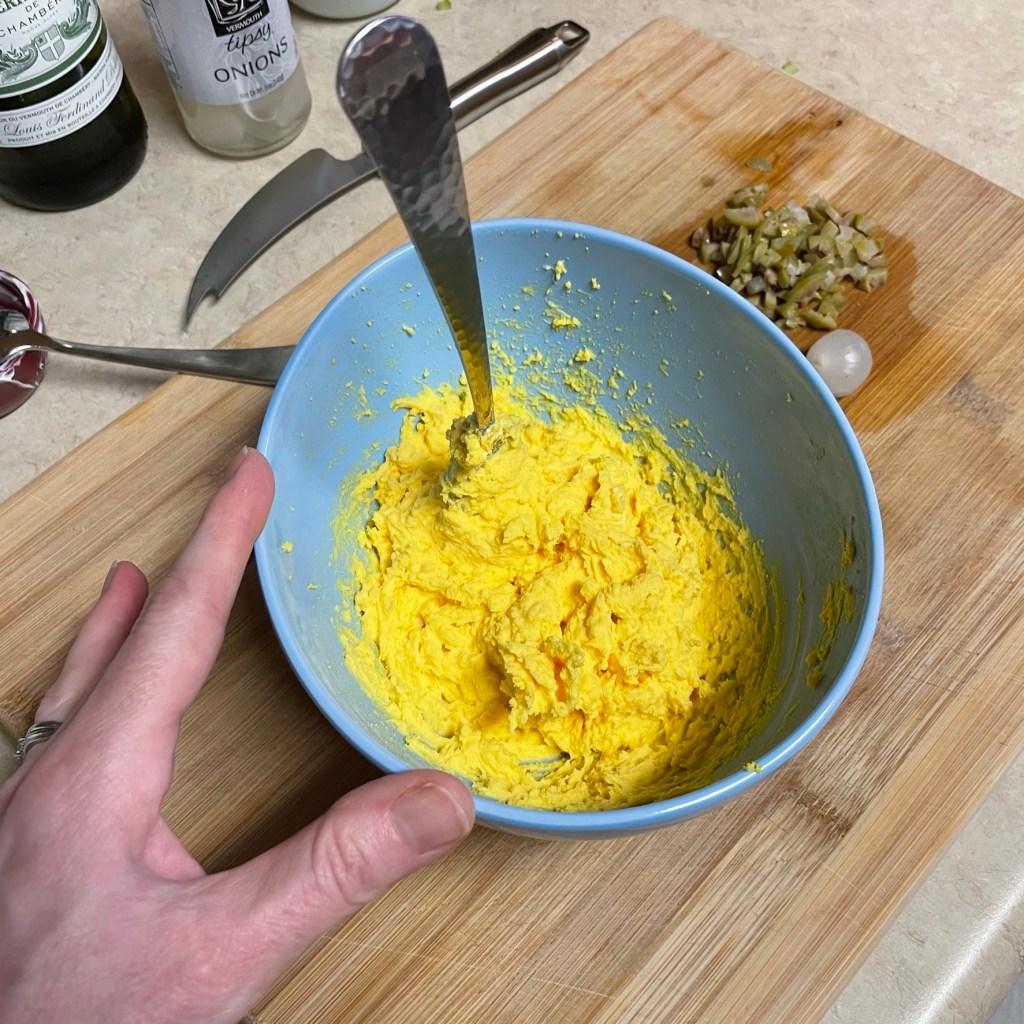
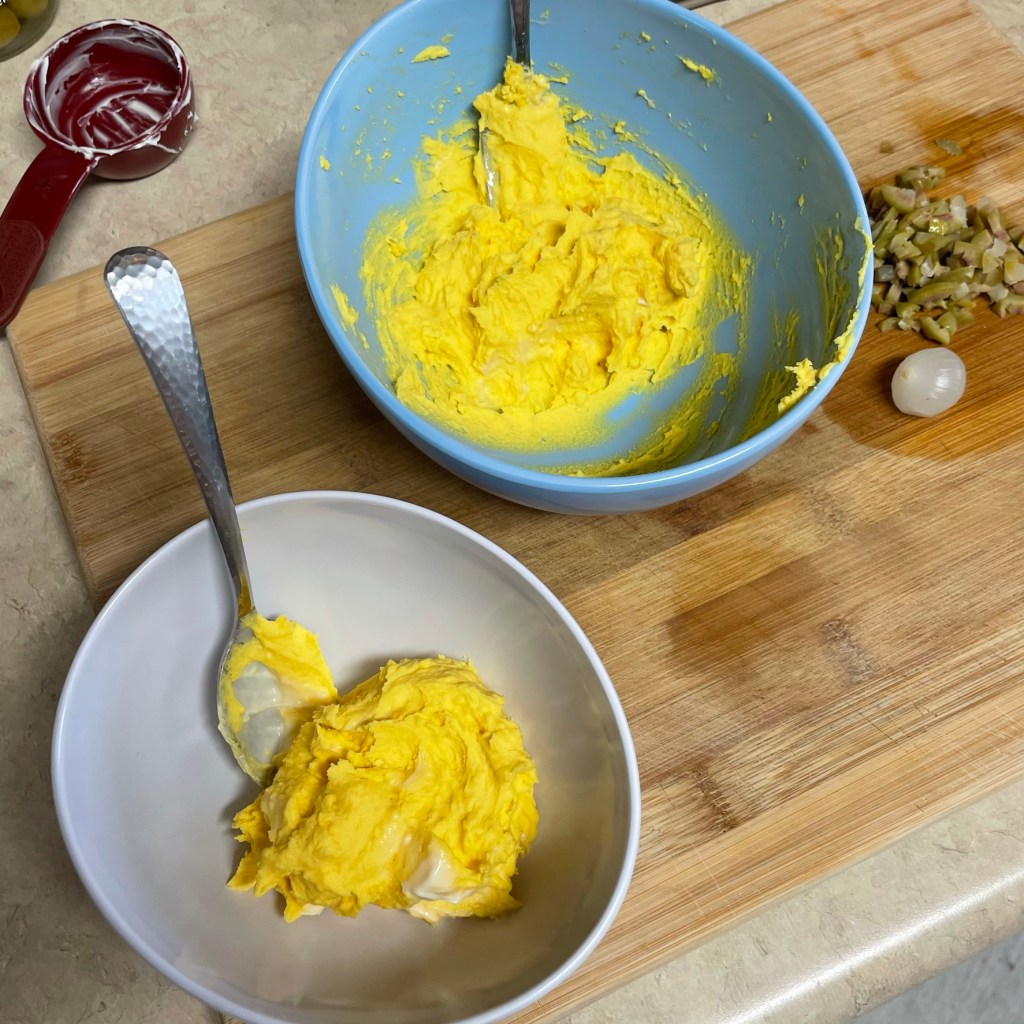
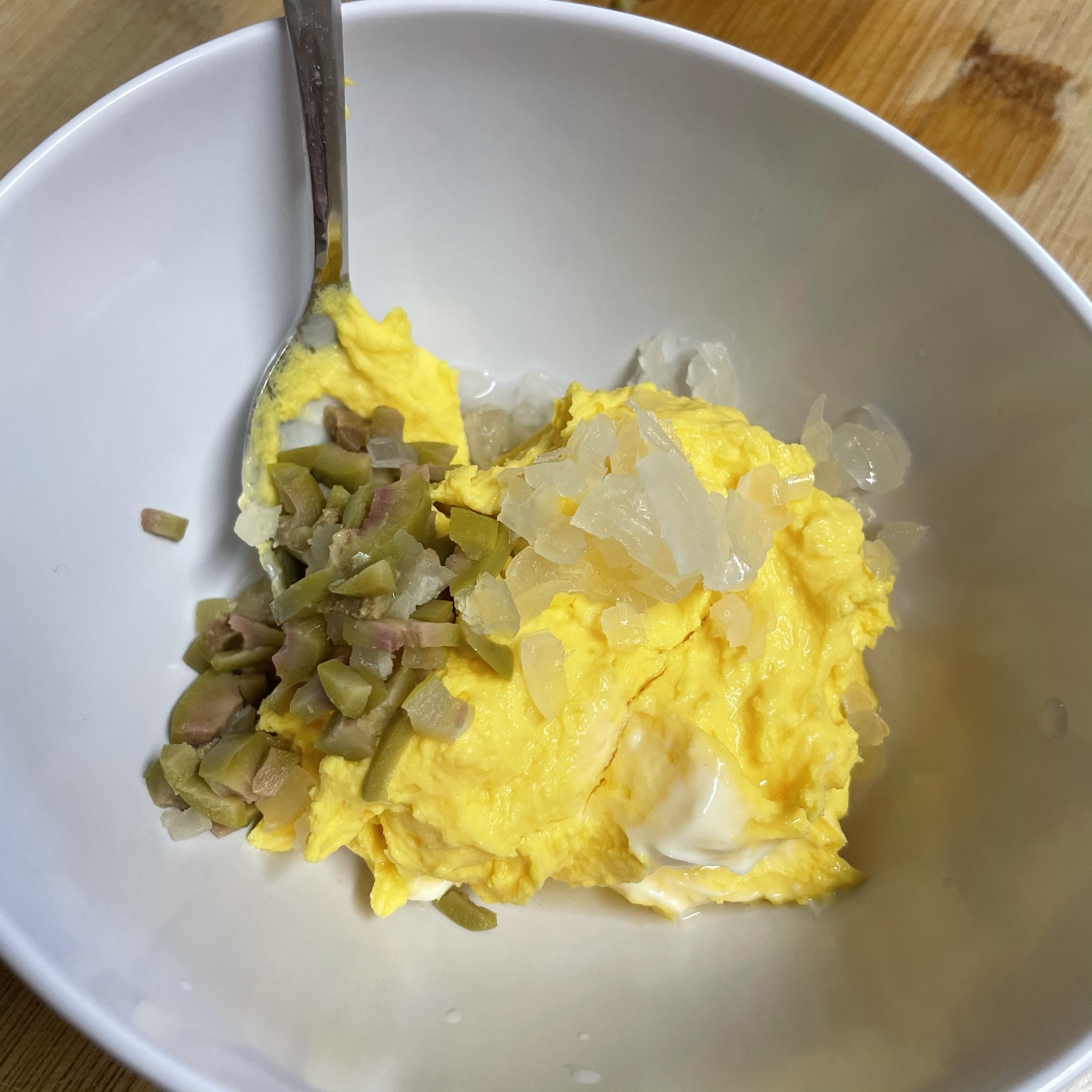
Carefully turn out the egg yolks into a medium-sized bowl. Mash thoroughly with a fork until yolks resemble dry crumbs. Add mayonnaise and blend until smooth. Divide yolk mixture by transferring half to a second bowl (unless you intend to make all one flavor). Follow additional instructions below for making the two kinds of deviled eggs I made this particular day.


For the Buffalo flavor (double if making all nine eggs)

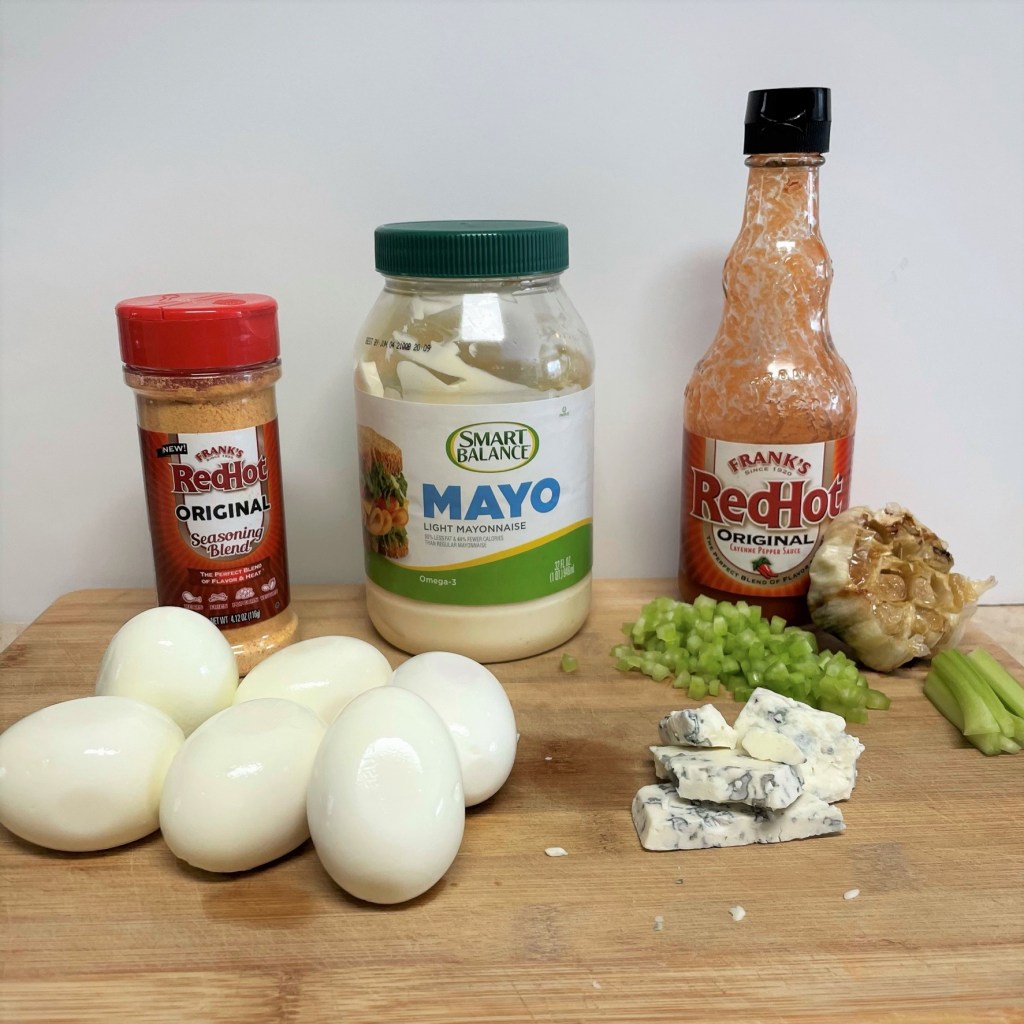
All the flavors of Buffalo wings, ready to take over my deviled eggs.

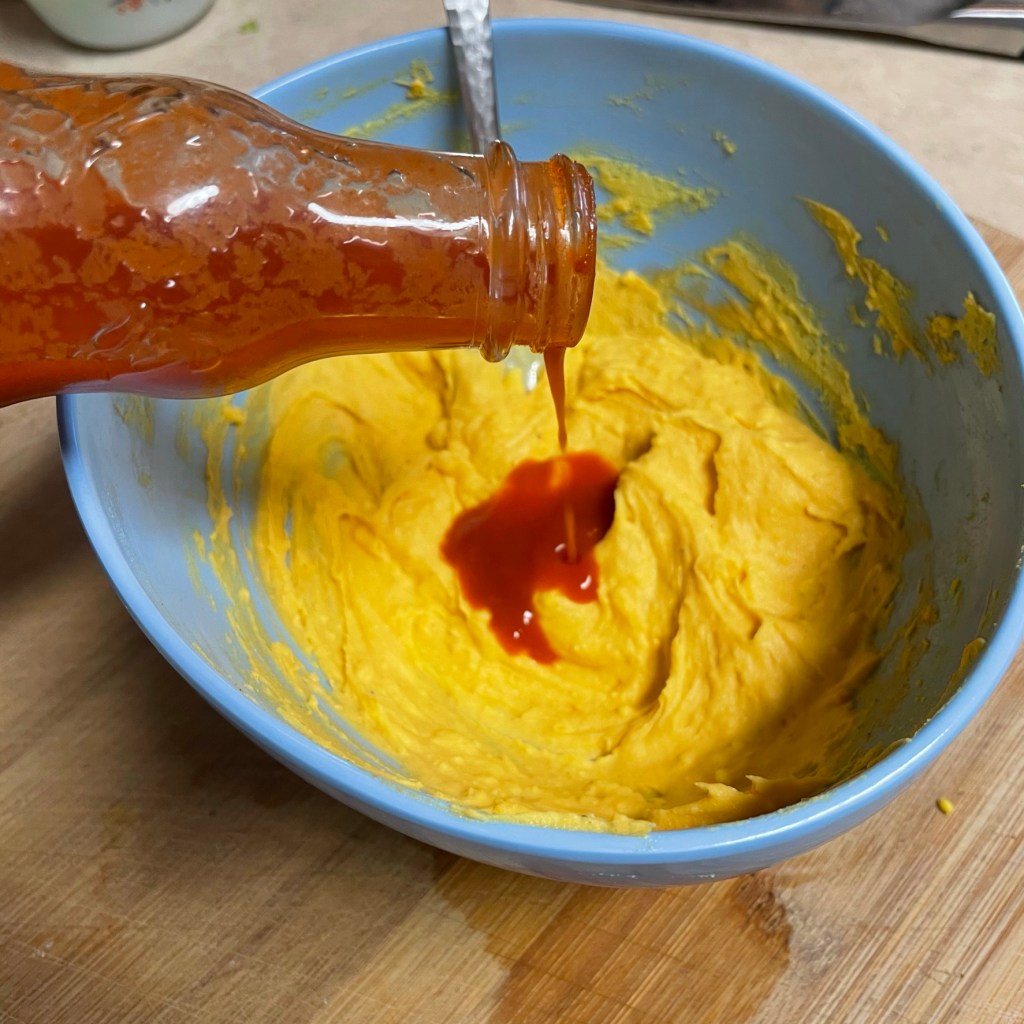
2 or 3 tsp. Frank’s original RedHot sauce (adjust to your heat preference)

2 cloves roasted garlic or 1/4 tsp. garlic powder

Freshly ground black pepper

1 Tbsp. celery, finely chopped (for filling) + small, thin sticks celery (for garnish)

1 1/2 Tbsp. finely crumbled bleu cheese

Frank’s RedHot dry seasoning, to sprinkle on at serving time (or substitute paprika)


Instructions for Buffalo eggs

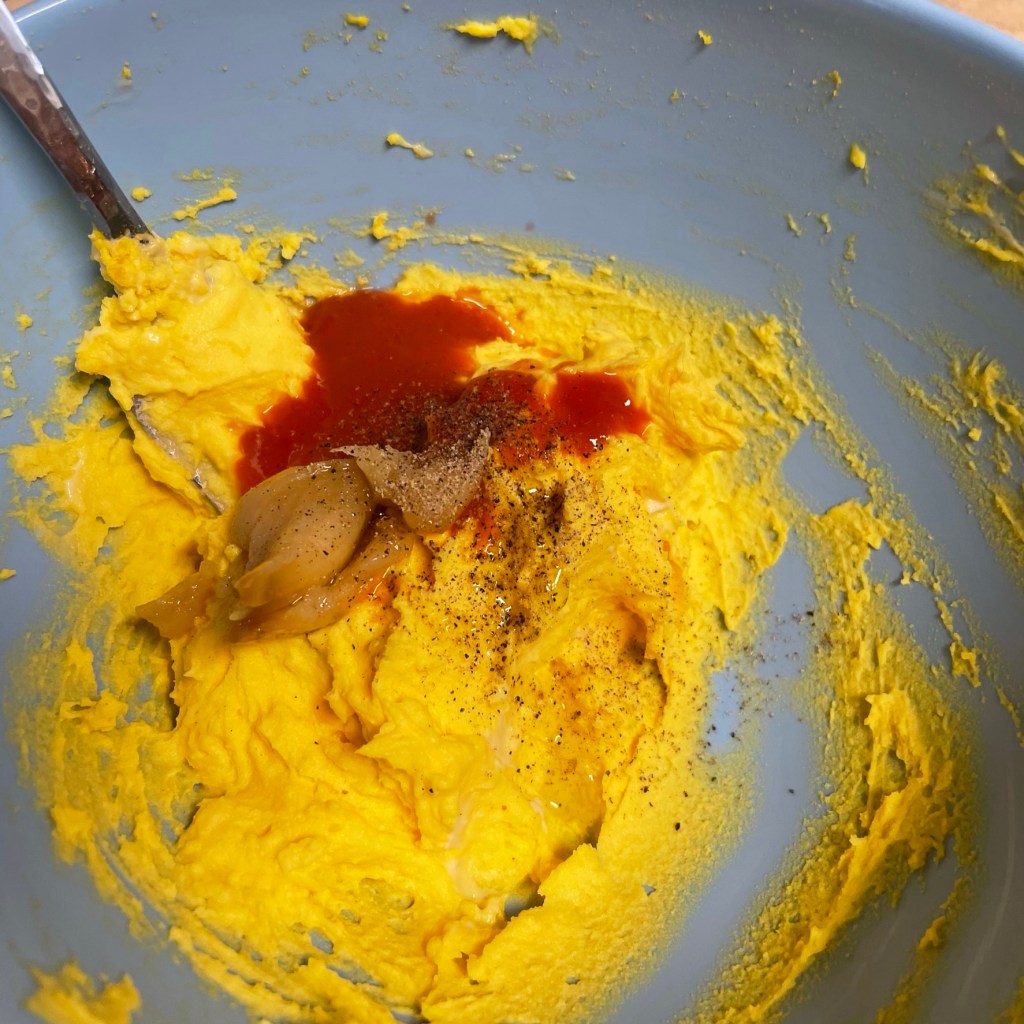
  1. Add RedHot sauce, roasted garlic and black pepper to one bowl of the yolk mixture. Blend smooth with a fork or spoon. Fold in chopped celery bits.
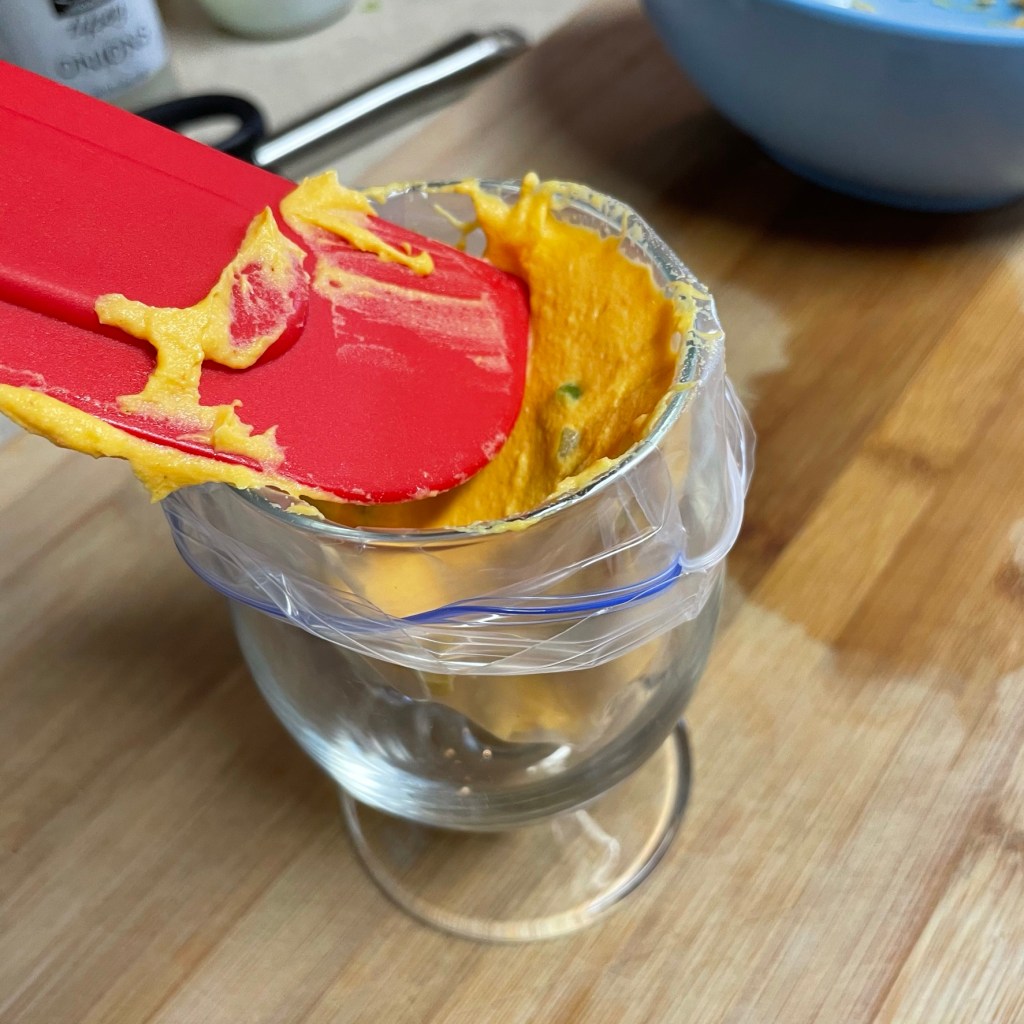
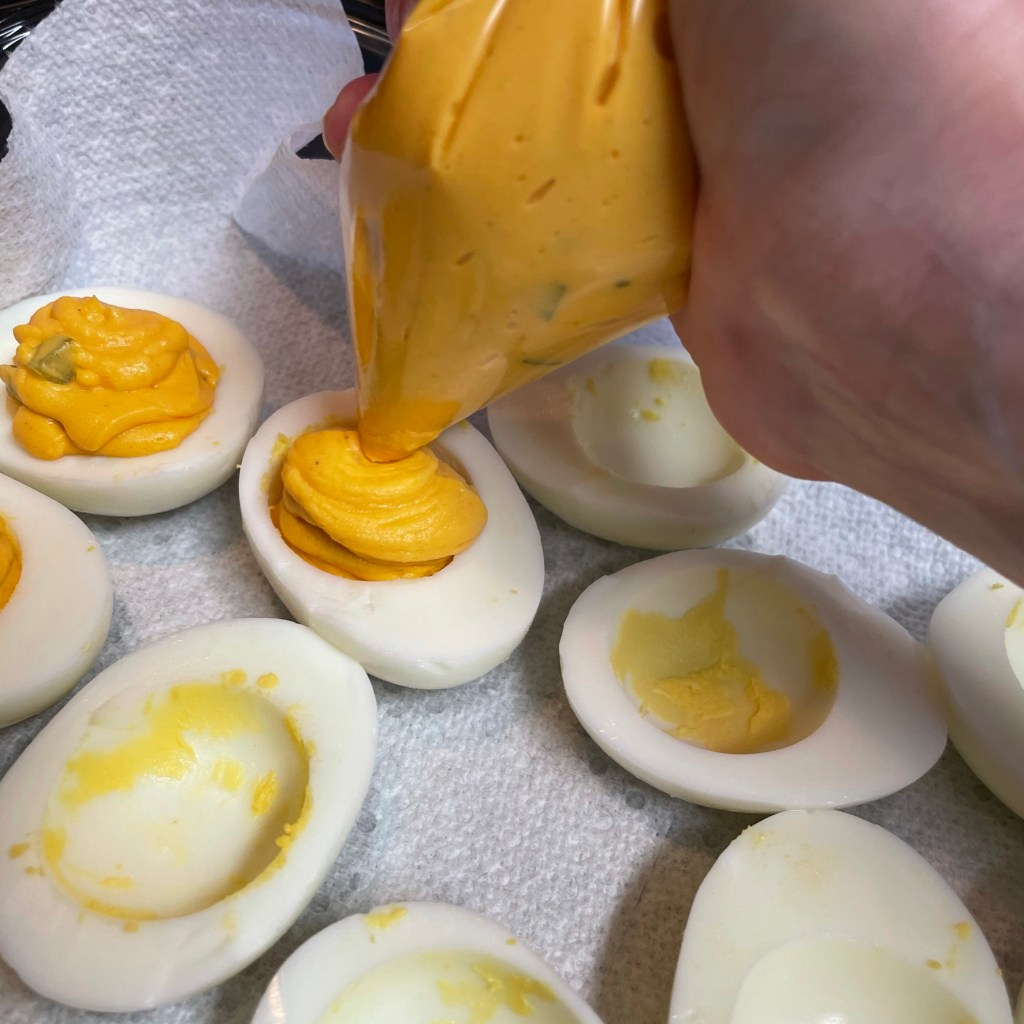
  2. Place a small zip-top bag into a glass, and use a spatula to scoop the filling mixture into it. Seal up the bag, snip one corner to create a makeshift piping bag, and gently fill half of egg whites. Garnish top of Buffalo eggs with crumbled bleu cheese and mini celery sticks.

For the Dirty Martini flavor (double if making all nine eggs)

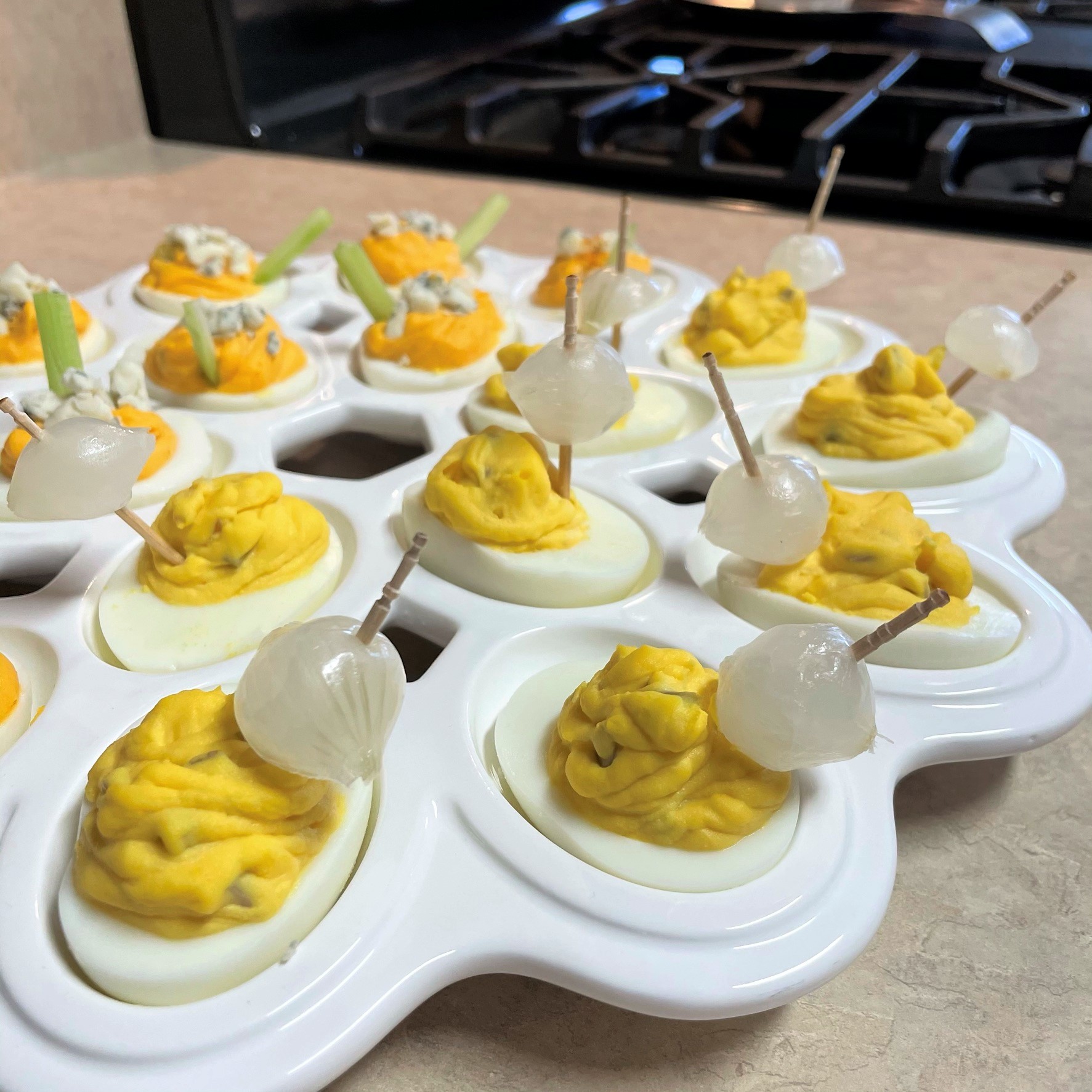
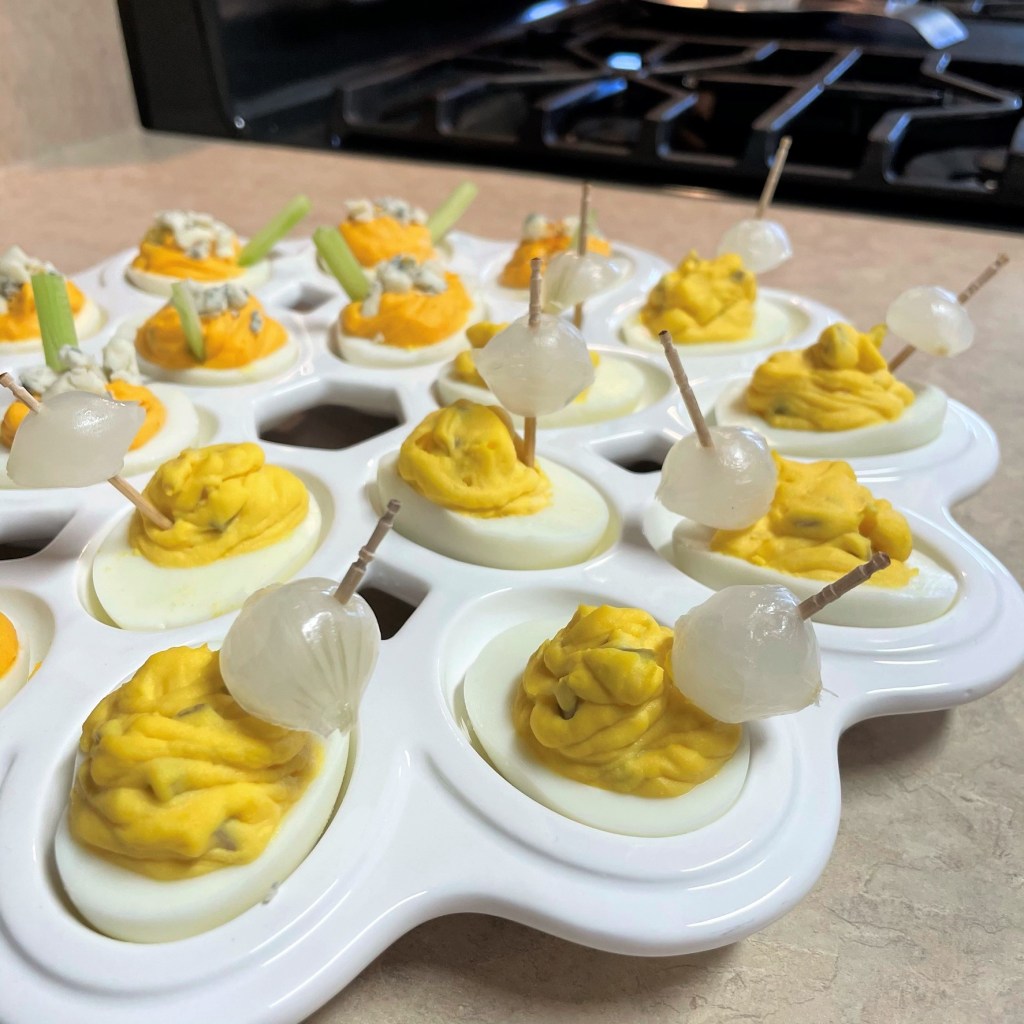
No vodka or gin in my dirty martini deviled eggs, but the vermouth and garnishes add all the right flavors.

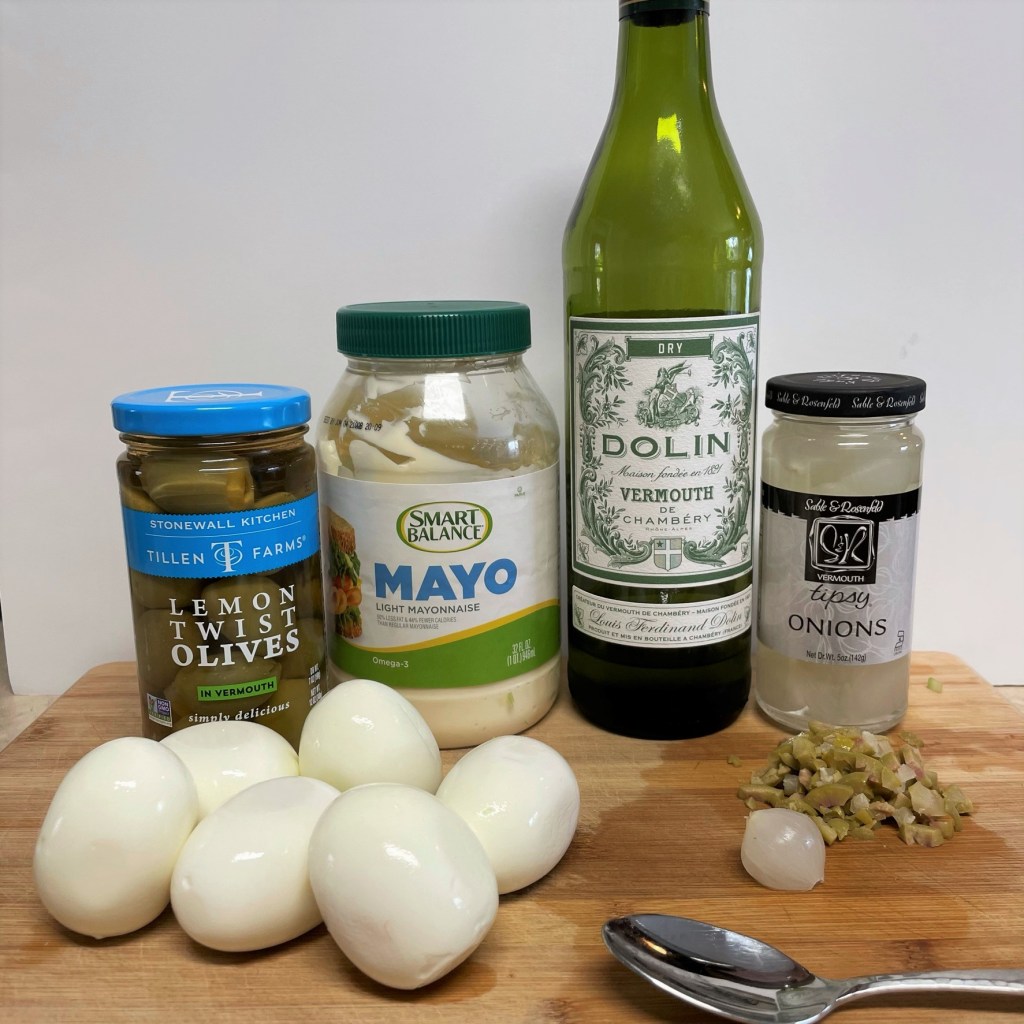
1 Tbsp. dry vermouth (or use additional olive brine)

2 cocktail olives, finely chopped

1 or 2 cocktail onions, finely chopped (for filling)

1 tsp. olive brine

4 cocktail onions, halved (for garnish)


Instructions for Dirty Martini eggs

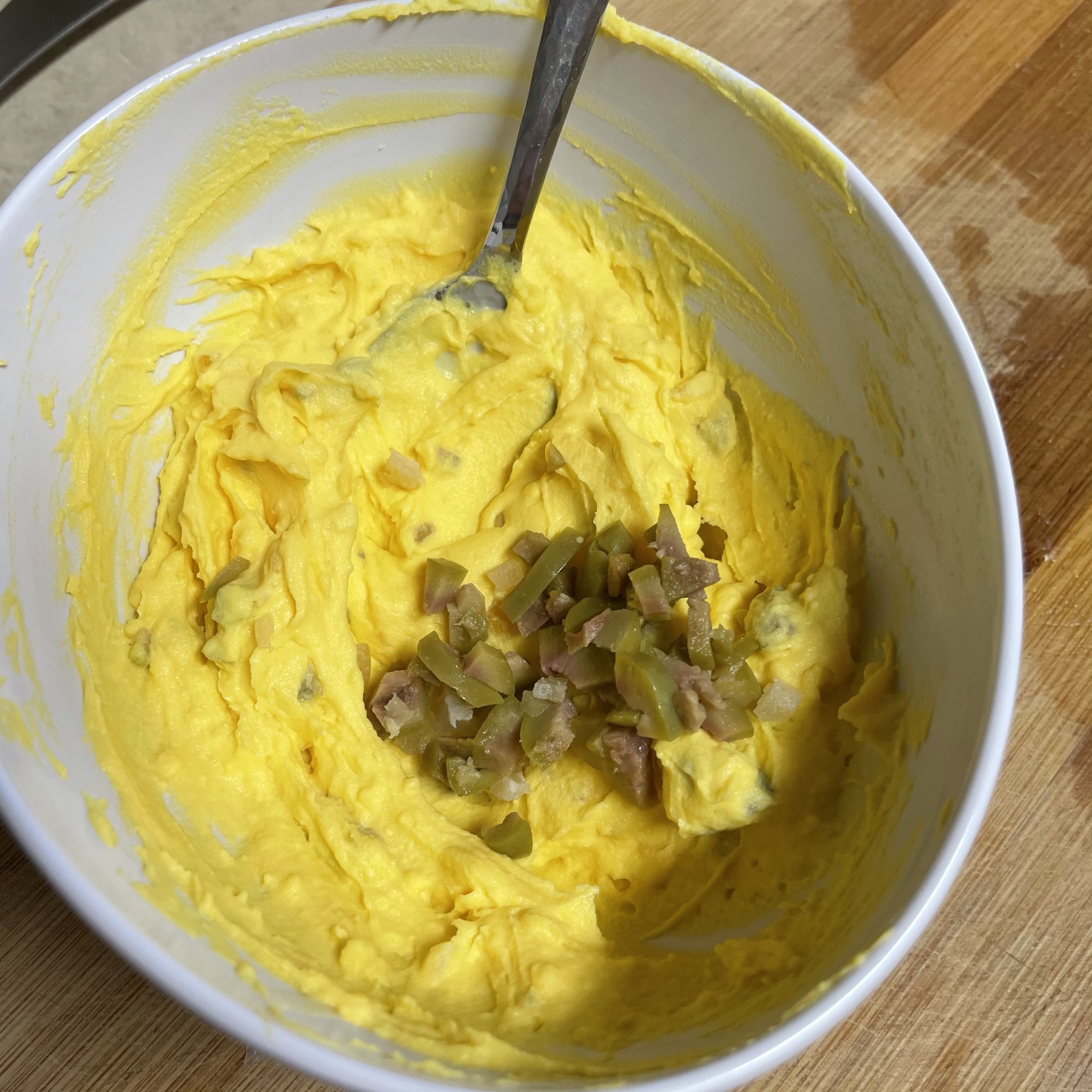
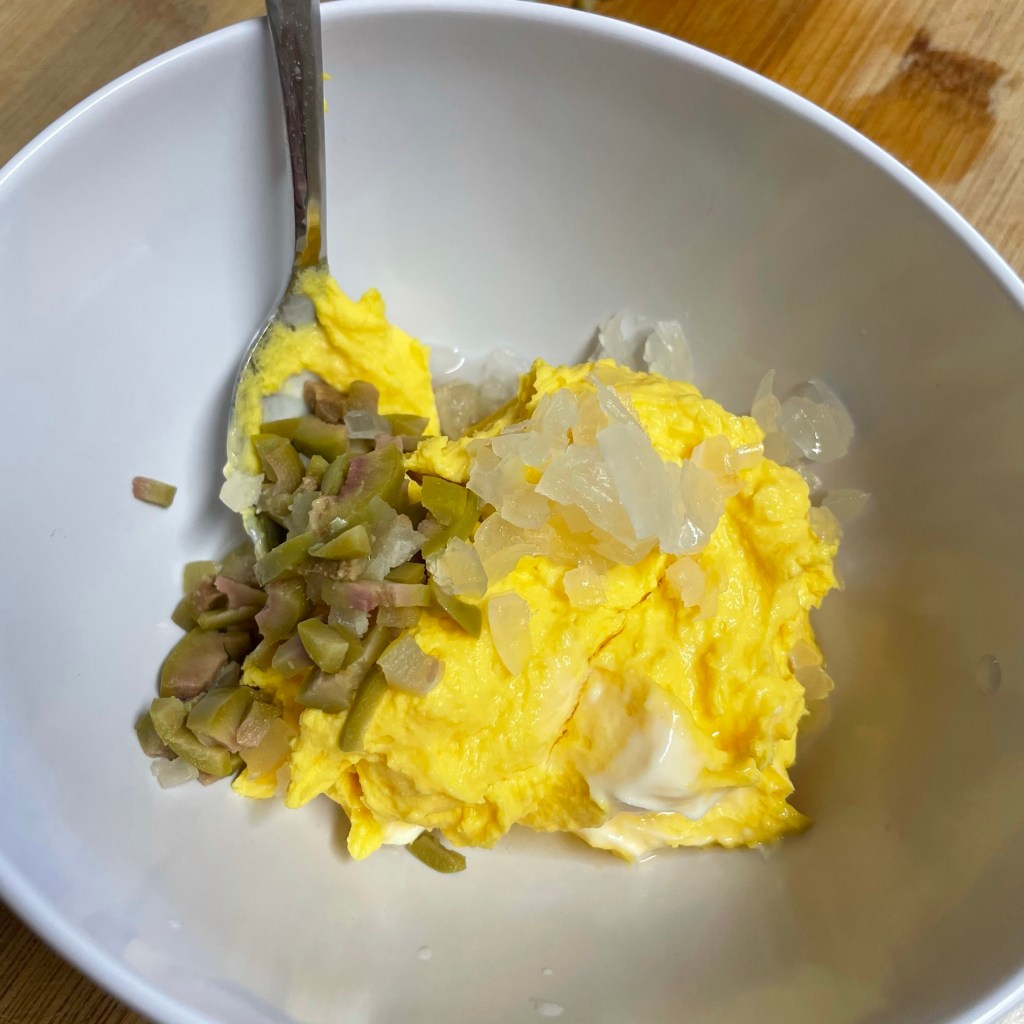
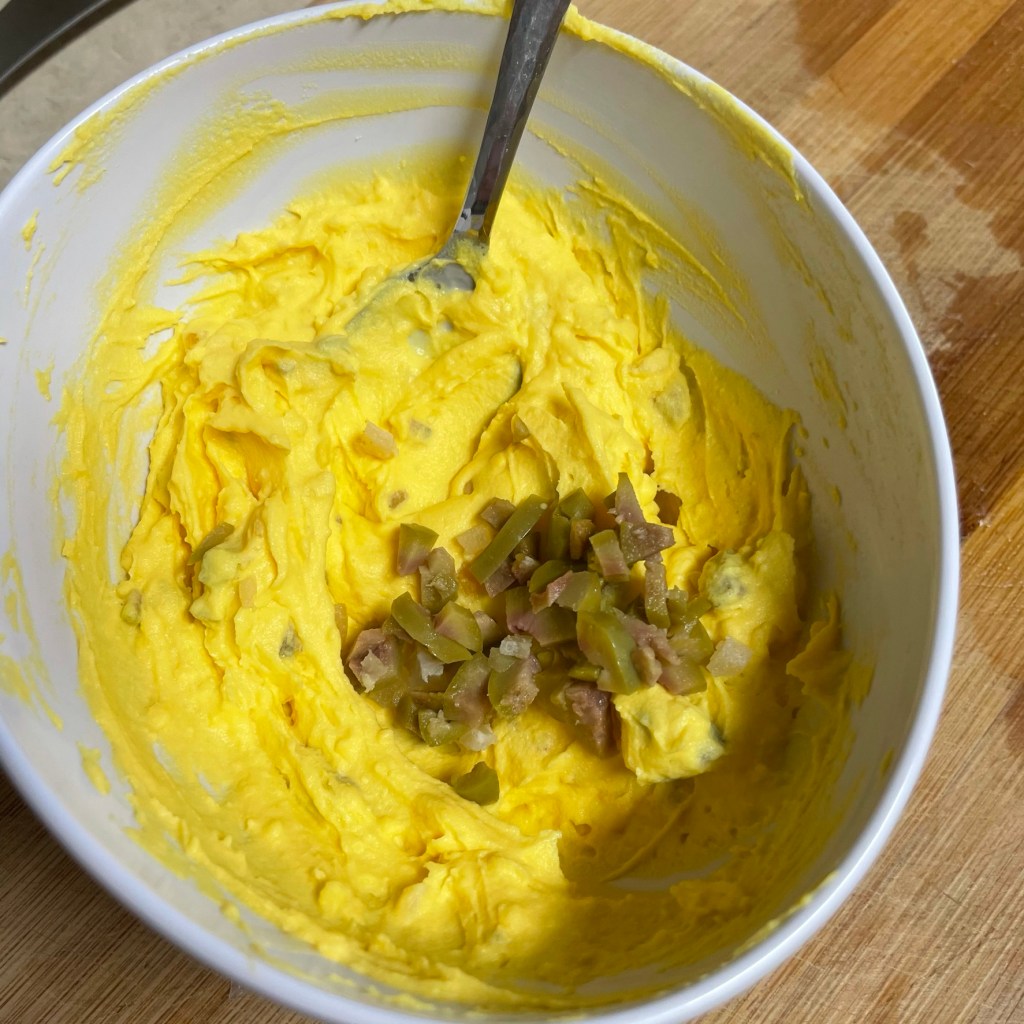
  1. Add dry vermouth, chopped olives, onion and brine to yolk mixture. Blend smooth with a fork or spoon.
  2. Place a small zip-top bag into a glass, and use a spatula to scoop the filling mixture into it. Seal up the bag, snip one corner to create a makeshift piping bag, and gently fill half of egg whites. Garnish with cocktail onion halves, skewered on a toothpick if you wish, to mimic the appearance of a martini.


Want to try these deviled egg recipes?


At serving time, I sprinkled the Buffalo eggs with the Frank’s dry seasoning. These deviled eggs made a fine appearance at our Super Bowl party for two! 🙂


Dirty Martini Deviled Eggs

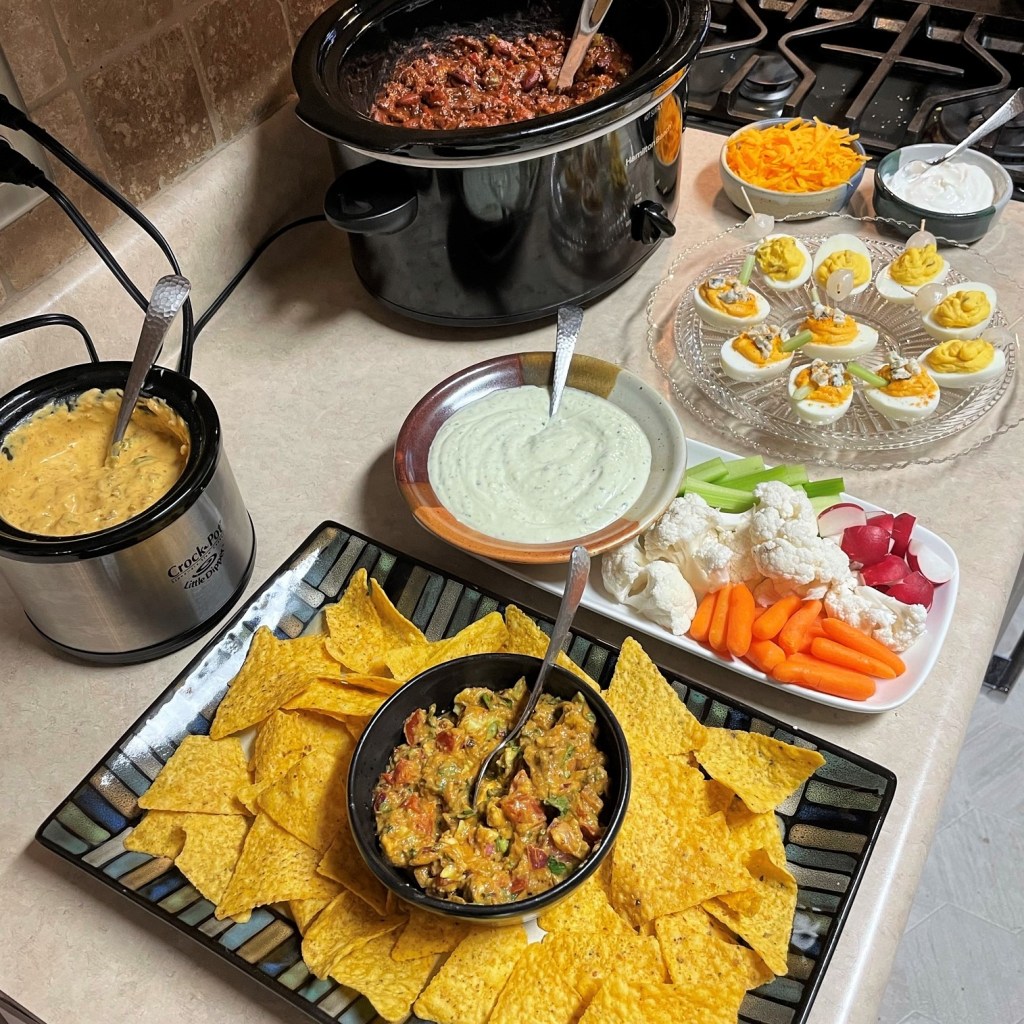
Every Super Bowl party my husband, Les, and I have hosted together has been a little different in terms of food offerings, but you can count on two things—his incredible, thick and meaty chili (one day I promise I’ll squeeze the recipe out of him) and at least a couple of flavors of deviled eggs. This is one of those foods that everybody (except the vegans) goes a little nuts over, and I love making them because the deviled egg is what I call a “blank canvas” food. If you can dream up a flavor, a deviled egg can probably carry it.

When I shared my Egg-stravaganza post last spring, I made mention of my “Bloody Mary” deviled eggs, filled with all the signature savory flavors you’d find in the ubiquitous Sunday brunch cocktail. Today, I’m presenting a non-spicy counterpart in this Dirty Martini version of deviled eggs, which includes the tangy brininess of lemon-stuffed cocktail olives, pickled cocktail onions and a splash of dry white vermouth. This new riff on a classic hors d’oeuvres will undoubtedly make a repeat appearance on our table at some point in the future, and it’s a fun way to enjoy one of my favorite cocktail combinations, too.

Two flavors are better than one!

I made these tasty bites at the same time as my Buffalo Deviled Eggs with Bleu Cheese, and the ingredients and instructions below describe my process for splitting the two flavors. If you’d prefer to make only the dirty martini deviled eggs, no problem—simply double the ingredients as noted below.

Cheers!


Ingredients for base filling

9 large eggs, hard-boiled and peeled

1/4 cup + 1 Tbsp. light mayonnaise


Carefully turn out the egg yolks into a medium-sized bowl. Mash thoroughly with a fork until yolks resemble dry crumbs. Add mayonnaise and blend until smooth. Divide yolk mixture by transferring half to a second bowl (unless you intend to make all one flavor). Follow additional instructions below for making the two kinds of deviled eggs I made this particular day.


For the Dirty Martini flavor (double ingredients if making all nine eggs)

No vodka or gin in my dirty martini deviled eggs, but the vermouth and garnishes add all the right flavors.

1 Tbsp. dry vermouth (or use additional olive brine)

2 cocktail olives, finely chopped

1 cocktail onion, finely chopped

1 tsp. olive brine

4 cocktail onions, halved (for garnish)


Instructions for Dirty Martini eggs


  1. Add dry vermouth, chopped olives, onion and brine to yolk mixture. Blend smooth with a form or spoon.
  2. Place a small zip-top bag into a glass, and use a spatula to scoop the filling mixture into it. Seal up the bag, snip one corner to create a makeshift piping bag, and gently fill half of egg whites (See slides for Buffalo deviled eggs for a visual on this technique). Garnish with cocktail onion halves, skewered on a toothpick if you wish, to mimic the appearance of a martini.

For the Buffalo flavor

All the flavors of Buffalo wings, ready to take over my deviled eggs.

2 or 3 tsp. Frank’s original RedHot sauce (adjust to your heat preference)

2 cloves roasted garlic or 1/4 tsp. garlic powder

Freshly ground black pepper

1 Tbsp. celery, finely chopped (for filling) + small, thin sticks celery (for garnish)

1 1/2 Tbsp. finely crumbled bleu cheese

Frank’s RedHot dry seasoning, to sprinkle on at serving (or substitute paprika)


Instructions for Buffalo deviled eggs


  1. Add RedHot sauce, roasted garlic and black pepper to one bowl of the yolk mixture. Blend smooth with a fork or spoon. Fold in chopped celery bits.
  2. Place a small zip-top bag into a glass, and use a spatula to scoop the filling mixture into it. Seal up the bag, snip one corner to create a makeshift piping bag, and gently fill half of egg whites. Garnish top of Buffalo eggs with crumbled bleu cheese and mini celery sticks.

Want to make these deviled eggs?


If you like the fun idea of switching up flavors on your next batch of deviled eggs, have a look at my previous post for Egg-Stravaganza, and see how I made these fun varieties!

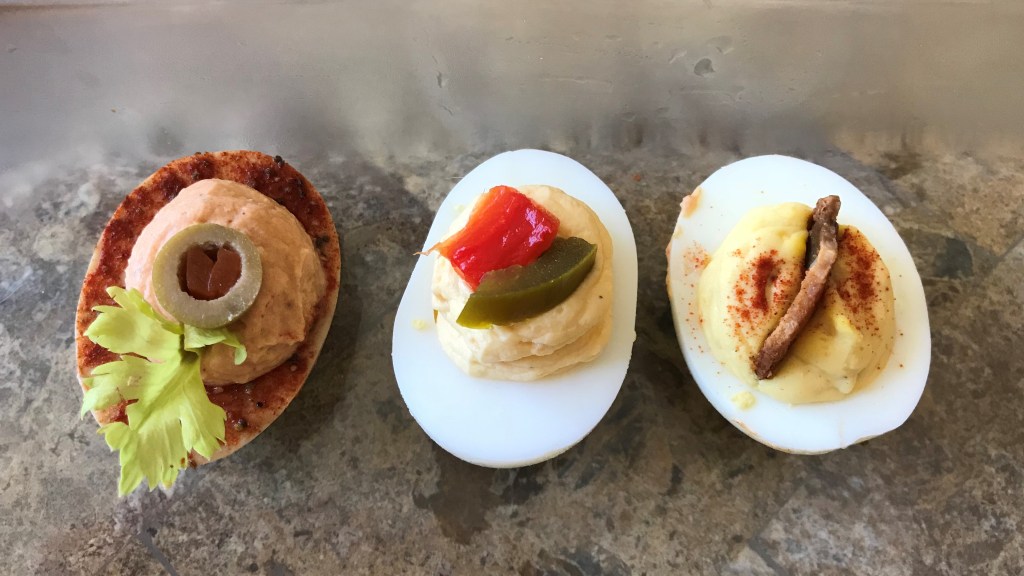
(L to R) Bloody Mary, jalapeno pimiento cheese, bacon, egg and cheese.

Smoky Guacamole

Terrie and I enjoy surprising each other with gifts that we know the other will appreciate and play to our sense of adventure in the kitchen. So it was a few Christmases back when I opened one of my gifts and unveiled the book Buenos Nachos! by Gina Hamadey. Terrie knew that I already enjoyed making different kinds of nachos and had come to recognize herself how enjoyable nachos could be as a dinner, and relatively healthy, too, if you plan for it. The book is, as the title indicates, a treasure trove of nacho recipes, many of which come from restaurants whose owners shared their secrets. The part of the book I’ve put most to use, though, is in the smaller section on accoutrements such as salsa, guacamole, queso and “refreshments.”

Specifically, I’ve latched onto “Smoky Guacamole” as a go-to offering at parties or pre-dinner snacks at our house. I was a latecomer to guacamole, I have to admit. I moved to Southern California after college and refused to get into the chill, SoCal swing of things and eat a disgusting-looking condiment with a questionable consistency. Instead, I simply expanded George Carlin’s skepticism about “blue foods” to include pasty green stuff. I don’t remember exactly when I gave in and tried guacamole, but I cannot imagine life without it now. The freshness of the lime and cilantro added to chunks of avocado and tomatoes was made for a nacho chip. Or, in the recent case in our household, as a side/add-on to homemade barbacoa tacos.


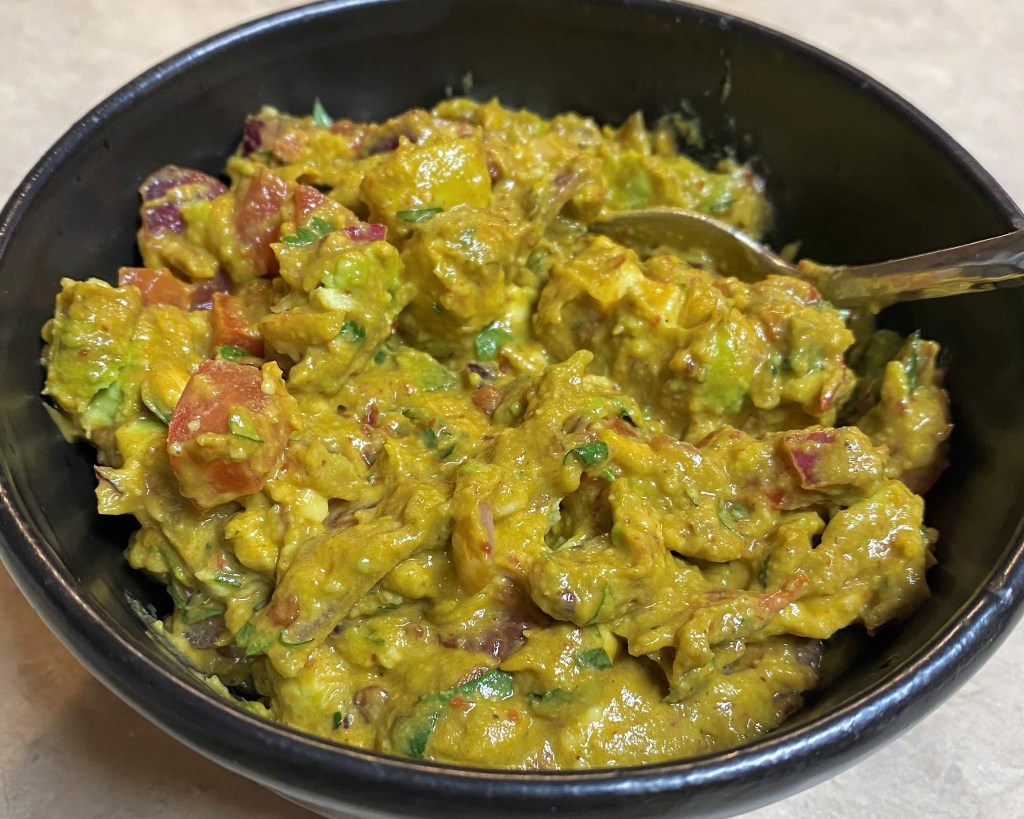
The reason I like this particular recipe—the very first one I tried from Buenos Nachos!—is the boost guacamole gets by simply adding in a couple of tablespoons (or more, as I like to do) of chipotles in adobo sauce. The smoky spice of the adobo sauce gives guac exactly the kind of “elevate your happy” that my better half talks about so often.

Coincidentally, smoky guacamole also serves as a fine topping or side for any of the nacho dinners I put together. Next up for me out of Buenos Nachos! will be liberating and enhancing a savory cheese sauce from one of the nacho recipes. But for now, I hope you enjoy this smoky guacamole as much as we do.


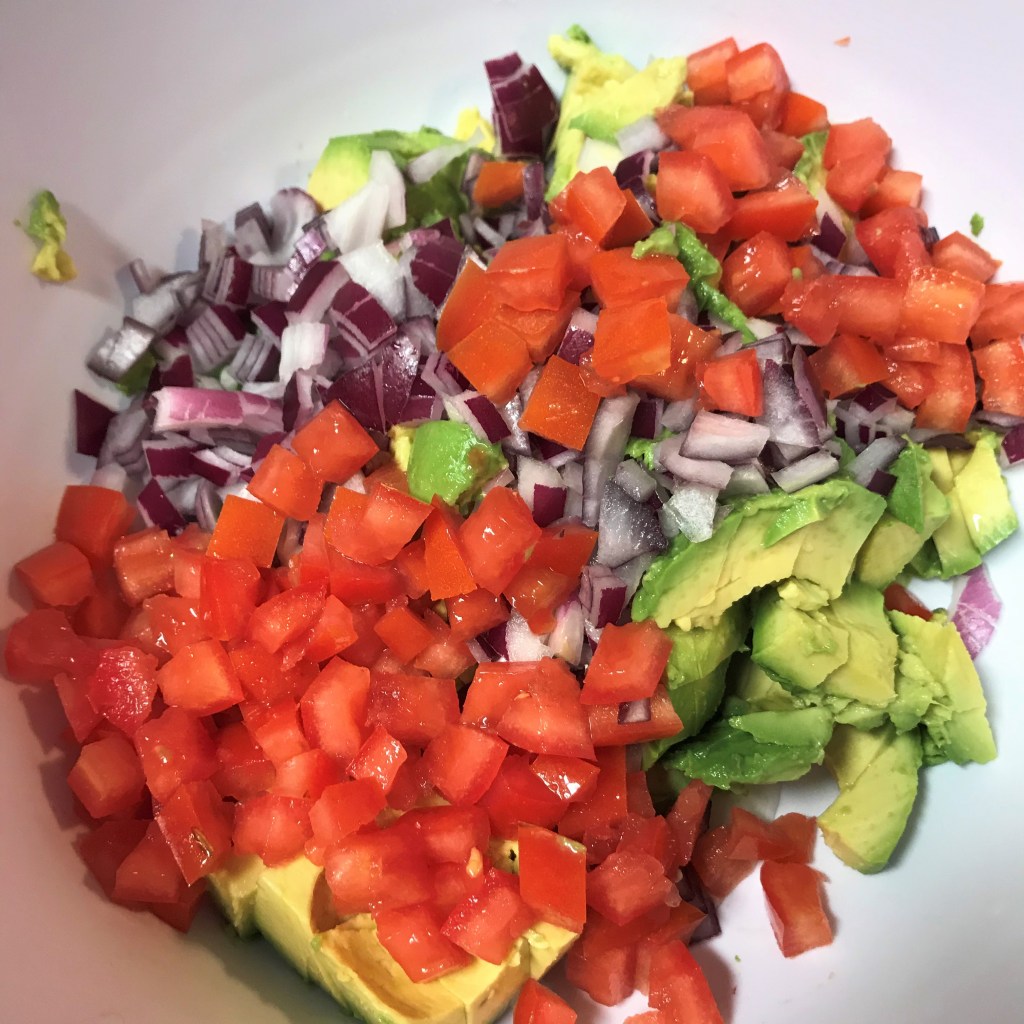
The usual guac suspects are all here, but the chipotles in adobo is the standout ingredient that puts the smoke in Smoky Guacamole.

Ingredients

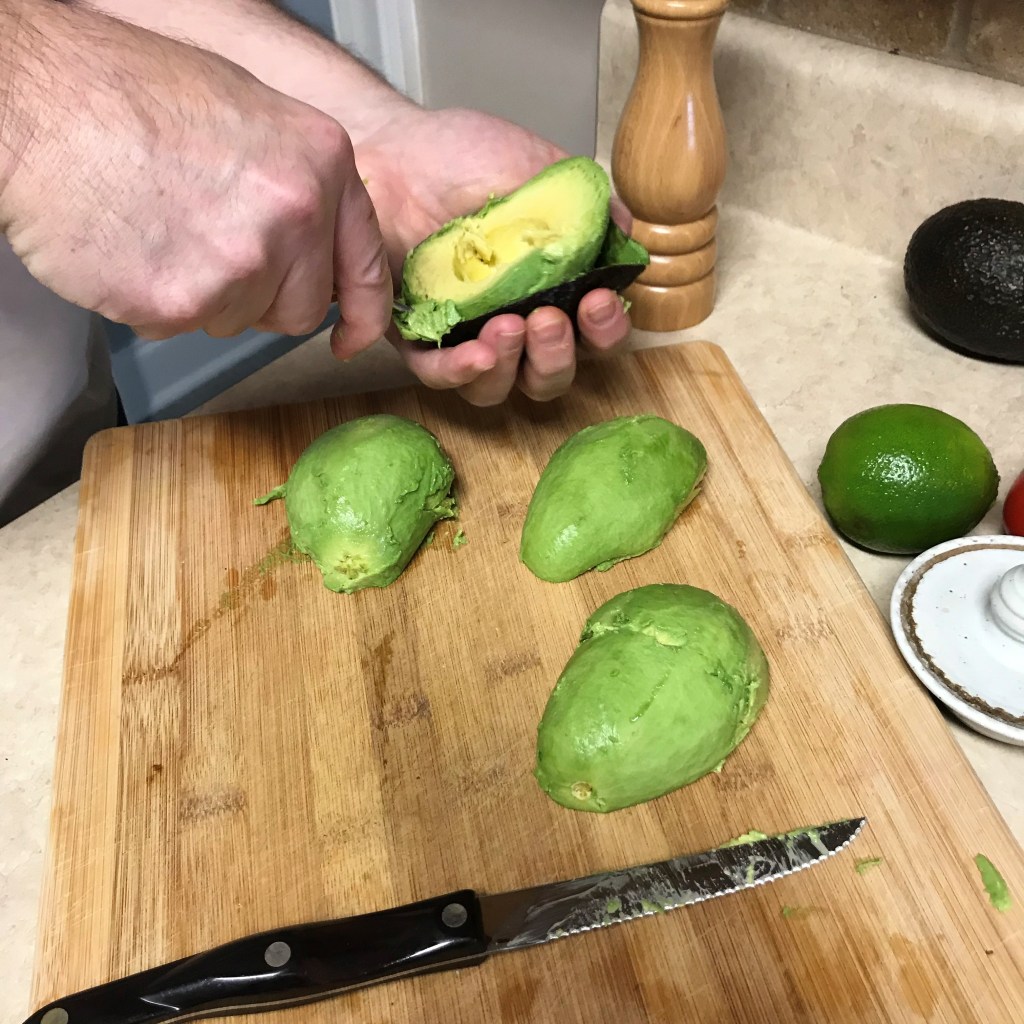
3 avocados, halved and cubed

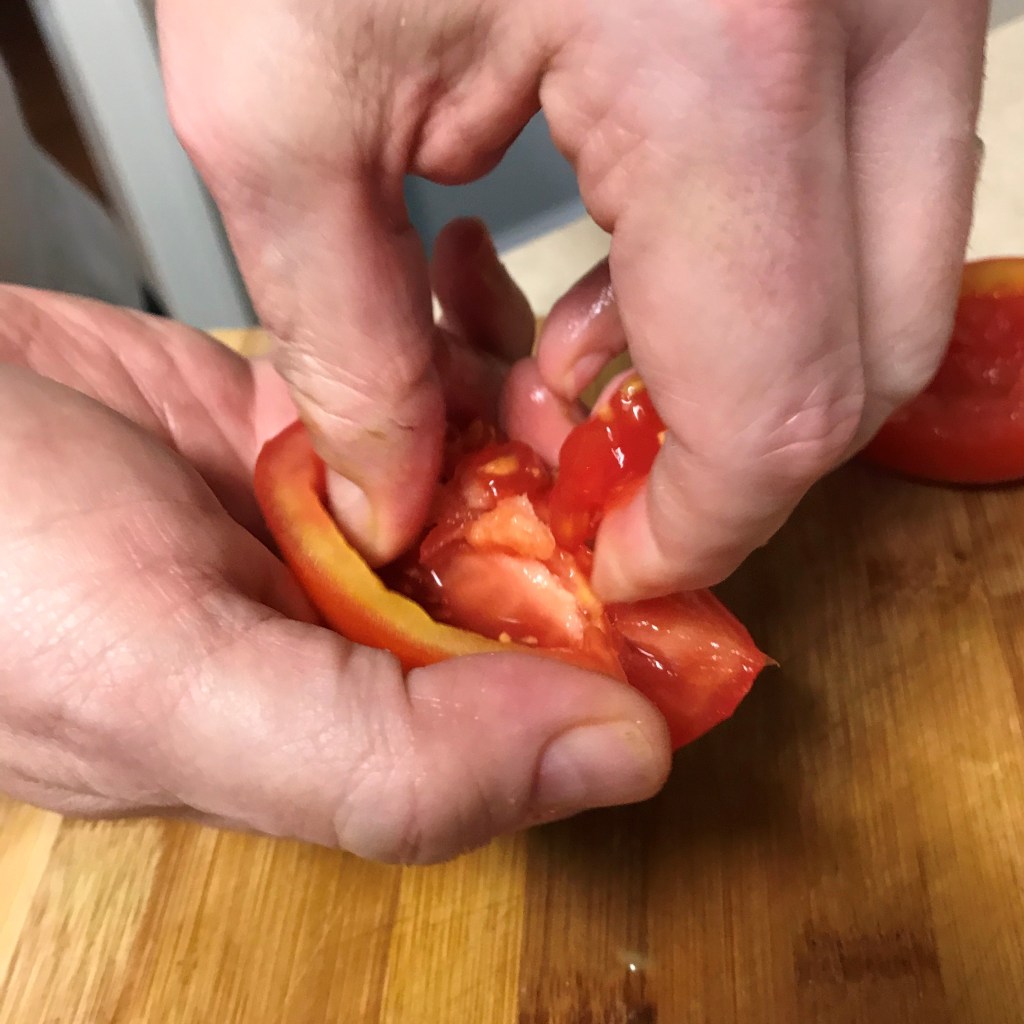
2 Roma tomatoes, seeded and chopped

Juice of half a lime

1/2 medium red onion, chopped

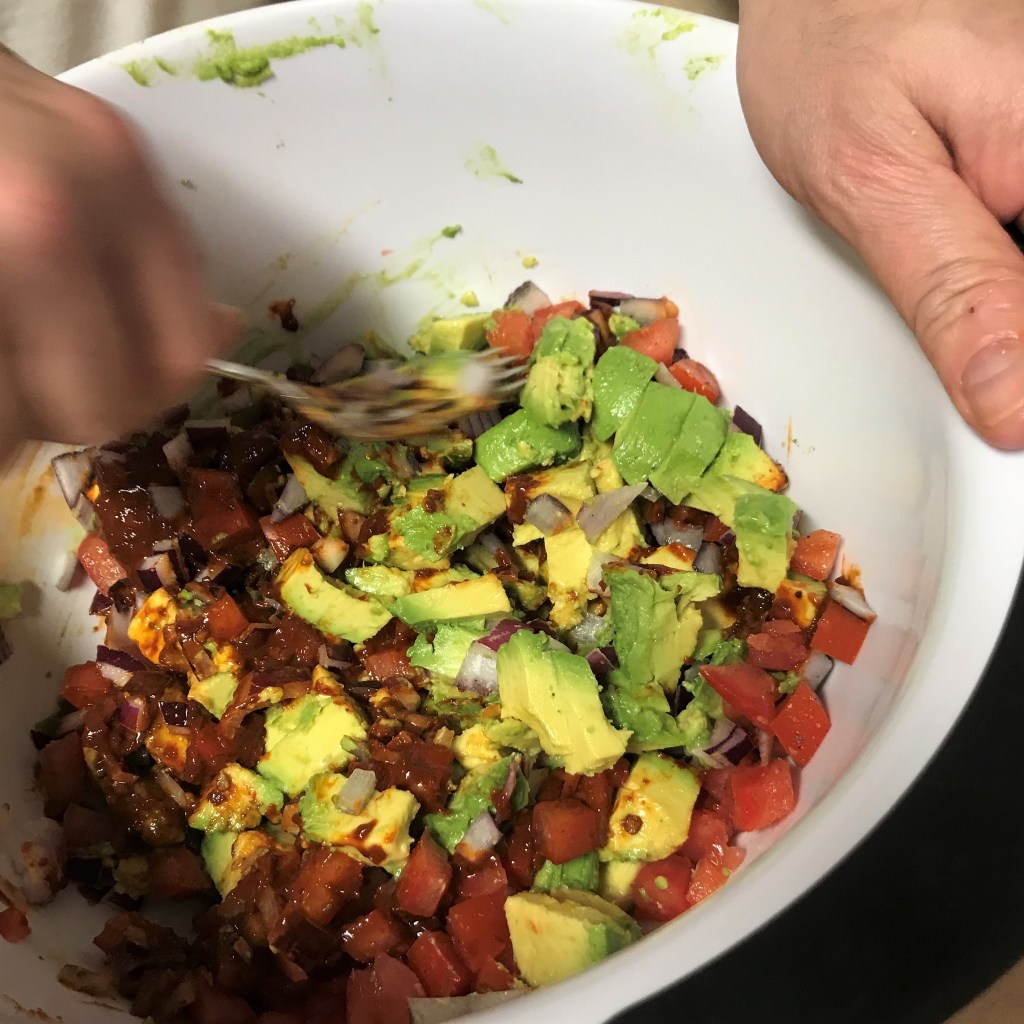
2 Tbsp. or more pureed chipotles in adobo sauce* (see notes)

3 Tbsp. chopped fresh cilantro

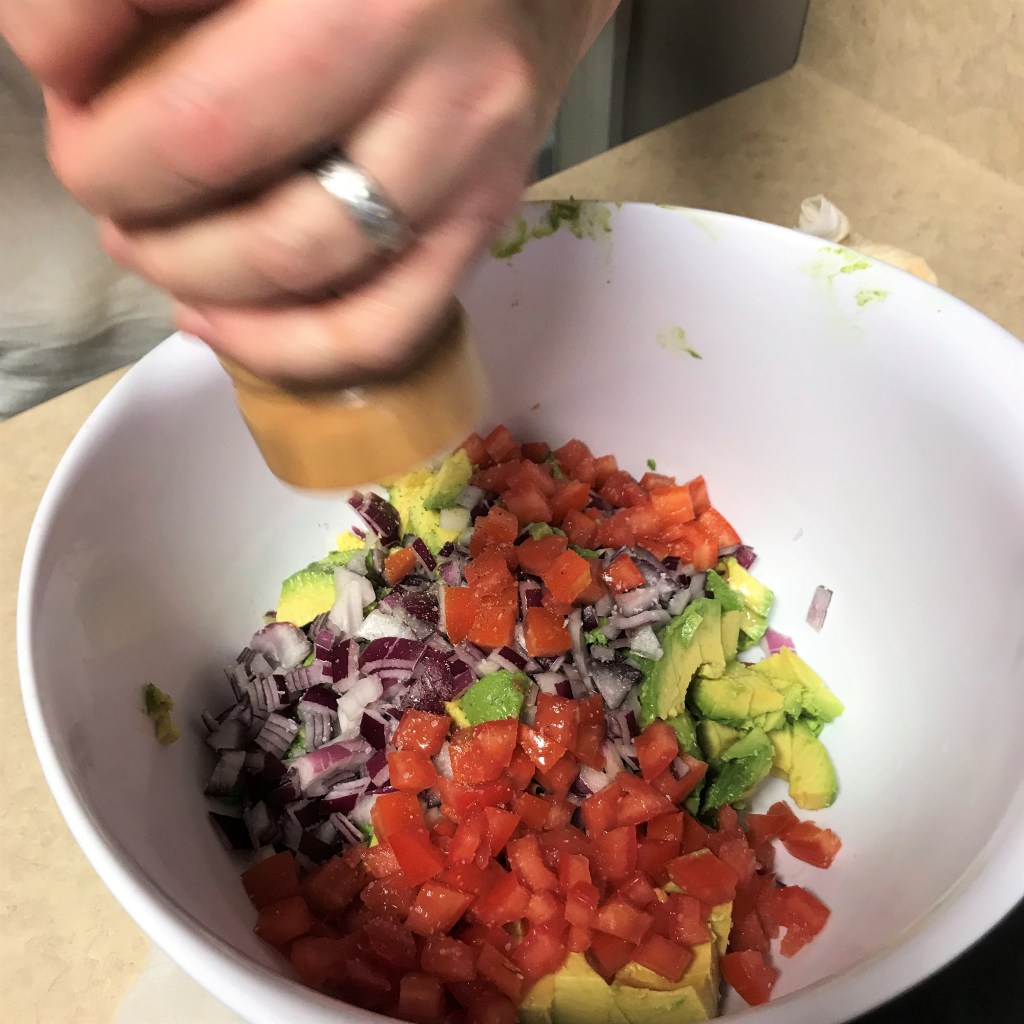
Salt and pepper


*Notes

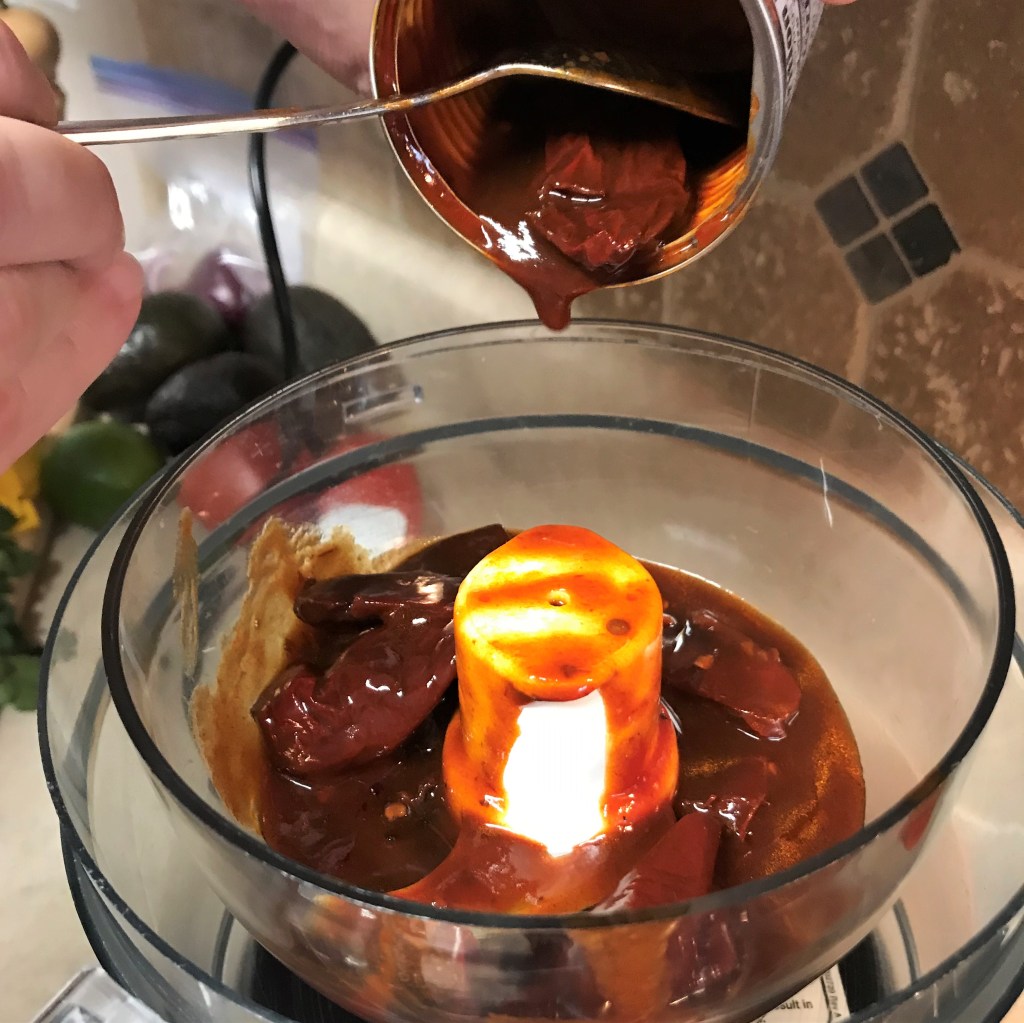
To make the chipotle puree, empty an entire 7 oz. can of chipotle peppers with adobo sauce into a food processor. Pulse several times until mixture is mostly smooth. Transfer mixture to a bowl and keep in the fridge for about two weeks. In this recipe, use as much adobo as your spice meter desires. Add some to your next batch of chili, or use it to kick up a homemade bbq sauce.


Instructions


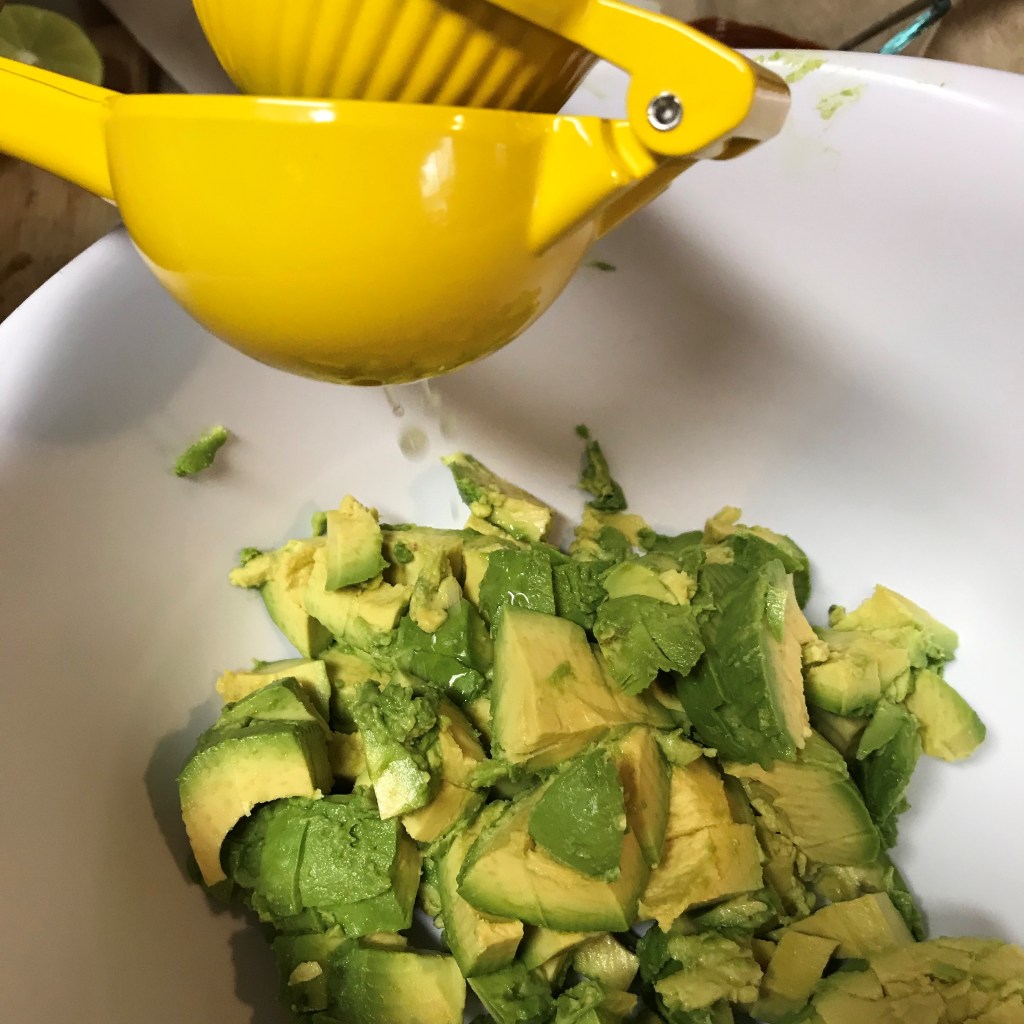
  1. Put the diced avocado in a large bowl and add the lime juice. Toss lightly to prevent the avocado browning.
  2. Add in the tomatoes, onion and chipotle-adobo puree. Stir with a large spoon or mash with a fork; if you prefer a smoother guacamole, you can mash the avocados first, but fans of chunky texture can settle for just mixing up the ingredients.
  3. Season with salt and pepper to taste. Finally, add the cilantro and fold again.

Buenos nachos!

Heaven on a chip.

Want to make this recipe?