Creamy Spinach & Mushroom Tortellini

It seems like a never-ending battle, trying to evict leftovers from our fridge and stay on top of the new groceries coming in. Four months into pandemic lockdown, I still haven’t mastered the challenges of “shopping for the week.” But my culinary muse has been on some kind of caffeine kick lately, and I’m at it again today with a Meatless Monday-worthy pasta dish, made almost entirely with leftovers. Not to worry, though—I’m sure it would be fantastic with fresh-bought ingredients, too.

This one uses up leftover fresh tortellini from a soup recipe last week, and a few fresh produce items starting clamoring when I opened the fridge, so in they went! Cremini mushrooms, with all their warm, earthy flavor, plus baby spinach, sweet onions and fresh garlic. I happened to have a half bag of sweetly sun-kissed dried tomatoes in the pantry cabinet, and we’re off and cooking. I’m gonna get to the bottom of this cluttered fridge yet!

We are empty nesters, and many of my recipes are designed to serve two people. But doubling a recipe such as this one is easy, as long as you’re mindful about the size of your pan.
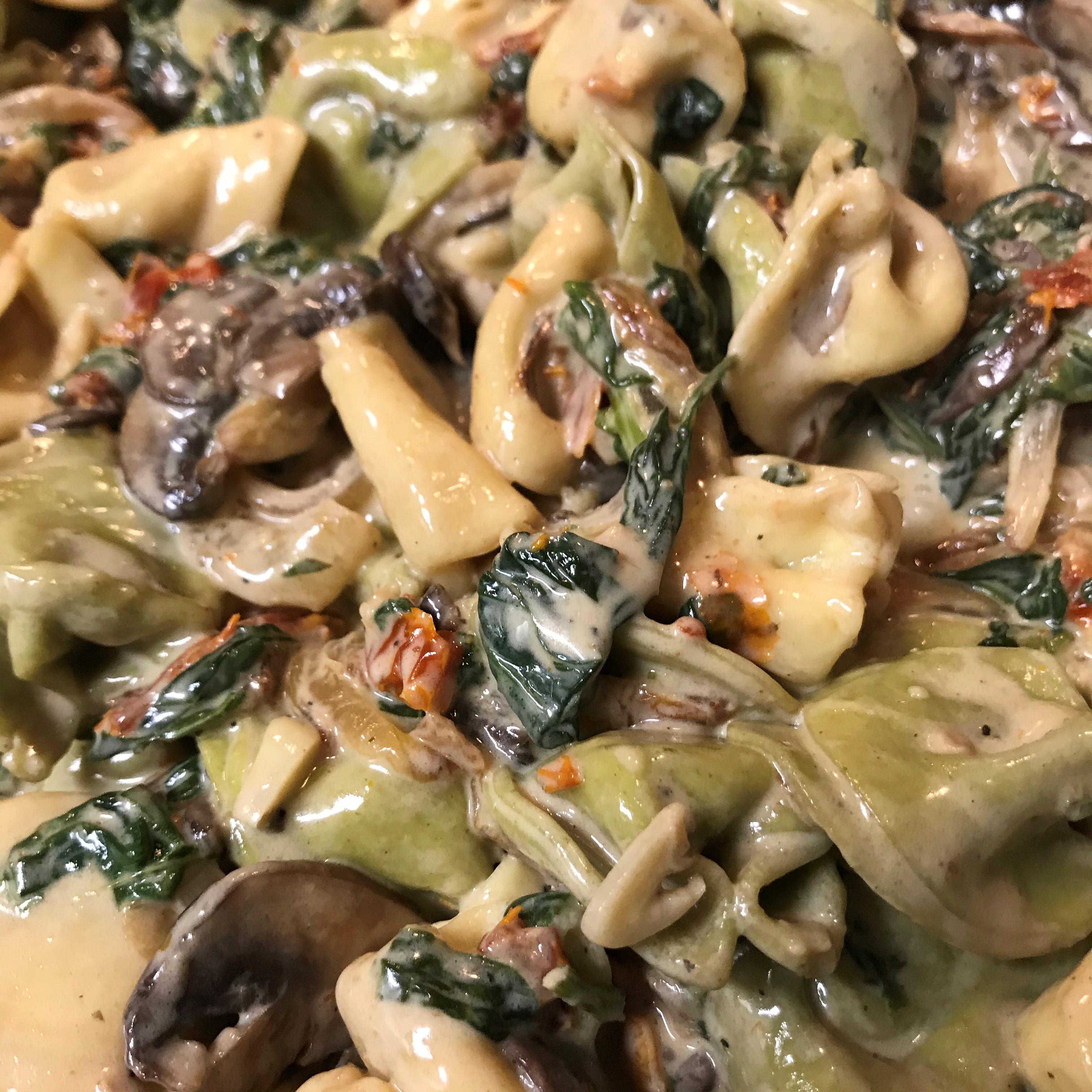
It’s creamy, rich and packed with earthy flavor!

Ingredients

Extra virgin olive oil

1 medium sweet onion (tennis ball size), cut in half and sliced into crescent shapes

8 oz. cremini mushrooms, cleaned and sliced

3 handfuls fresh baby spinach, rough chopped

1/4 cup soft sun-dried tomatoes*

2 cloves garlic, chopped

Kosher salt and black pepper

1/2 cup heavy cream* (see notes for a lighter option)

1/4 cup dry white wine* (something like Pinot Grigio is perfect)

2 cups fresh cheese tortellini (this was half a large package)

Trader Joe’s umami seasoning, optional

3 Tbsp. parm-romano blend* (plus extra for serving)


*Notes

My sun-dried tomatoes are the soft variety, packed in a zip-top bag. If yours are dry and hard, it’s probably a good idea to rehydrate them for a few minutes in hot water before proceeding. If they’re packed in olive oil, you’re good to go.

Want to lighten this up? Here’s a trick that works great in recipes where the fat of heavy cream isn’t as important as the texture. Swap it out in favor of canned evaporated milk. It is more concentrated than fresh milk, but with a fraction of the fat. Give it a try!

If you prefer, you could substitute a vegetable broth for the wine, plus a squeeze of lemon juice or splash of red wine vinegar. This will make up for the acidity the wine adds to the dish.

We go through a LOT of parm-romano blend at our house, and I mention this ingredient in many of my recipes. Rather than purchasing the pre-grated stuff at the market, we buy parmesan and romano in blocks and grate it in our food processor. It’s terrific to be able to reach into the fridge and have a container of it ready to go, plus it’s fresher and more flavorful with no added stabilizers or anti-caking agents. Did I mention we save money with this method?


I’m a visual learner, and if you are as well, have a look at the slideshow before you advance to the recipe. Fair warning: it might make you hungry!

Instructions

  1. Place a large pot of water on to boil over medium-high heat, for cooking the tortellini.
  2. Heat 2 Tbsp. olive oil in a large non-stick skillet over medium heat.
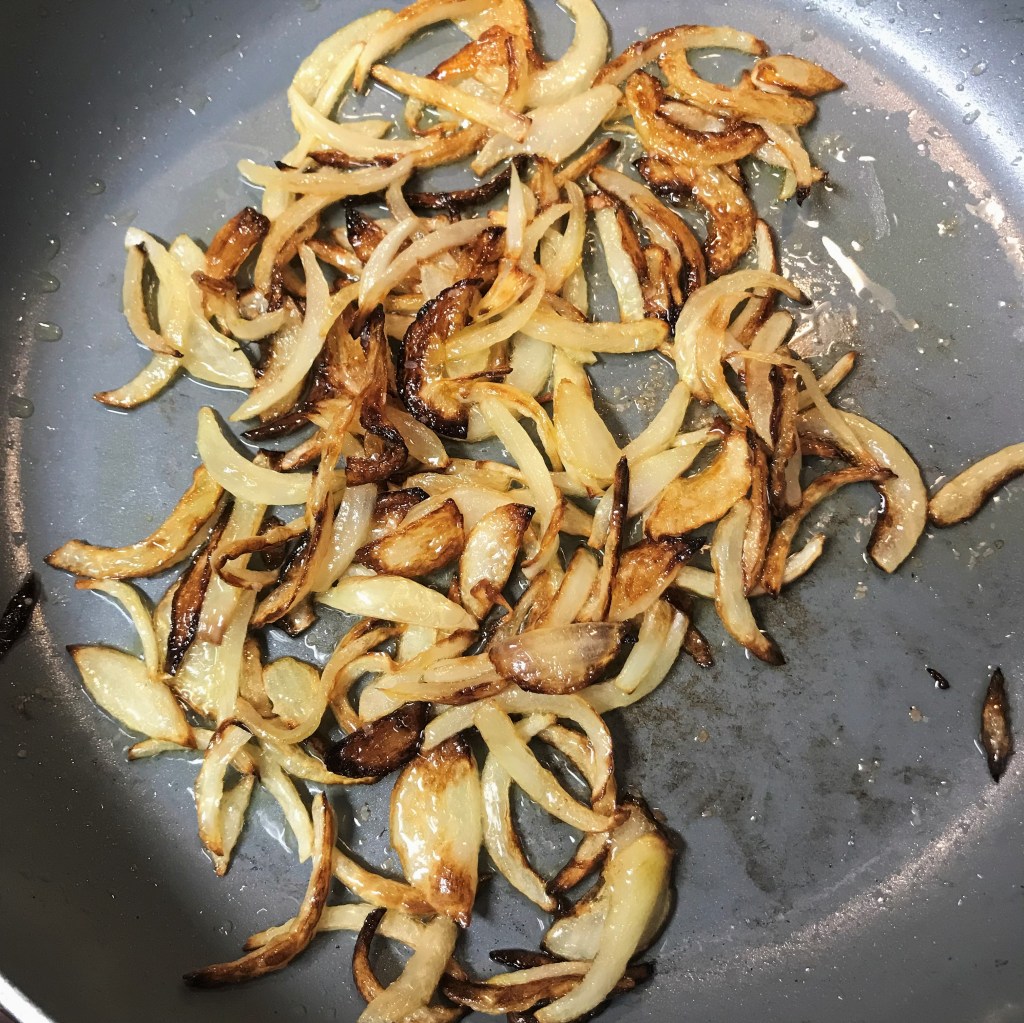
  3. Add onion slices to the skillet and cook, tossing occasionally, until softened and browned on the edges.
  4. Remove onions to a bowl, add another splash of olive oil to the pan and toss in the mushrooms, cooking and tossing until they are soft and moisture has evaporated. Season with salt and pepper.
  5. Move the mushrooms to the outside edges of the pan and add the spinach leaves to the middle. Toss them around until wilted then add the sun-dried tomato pieces.
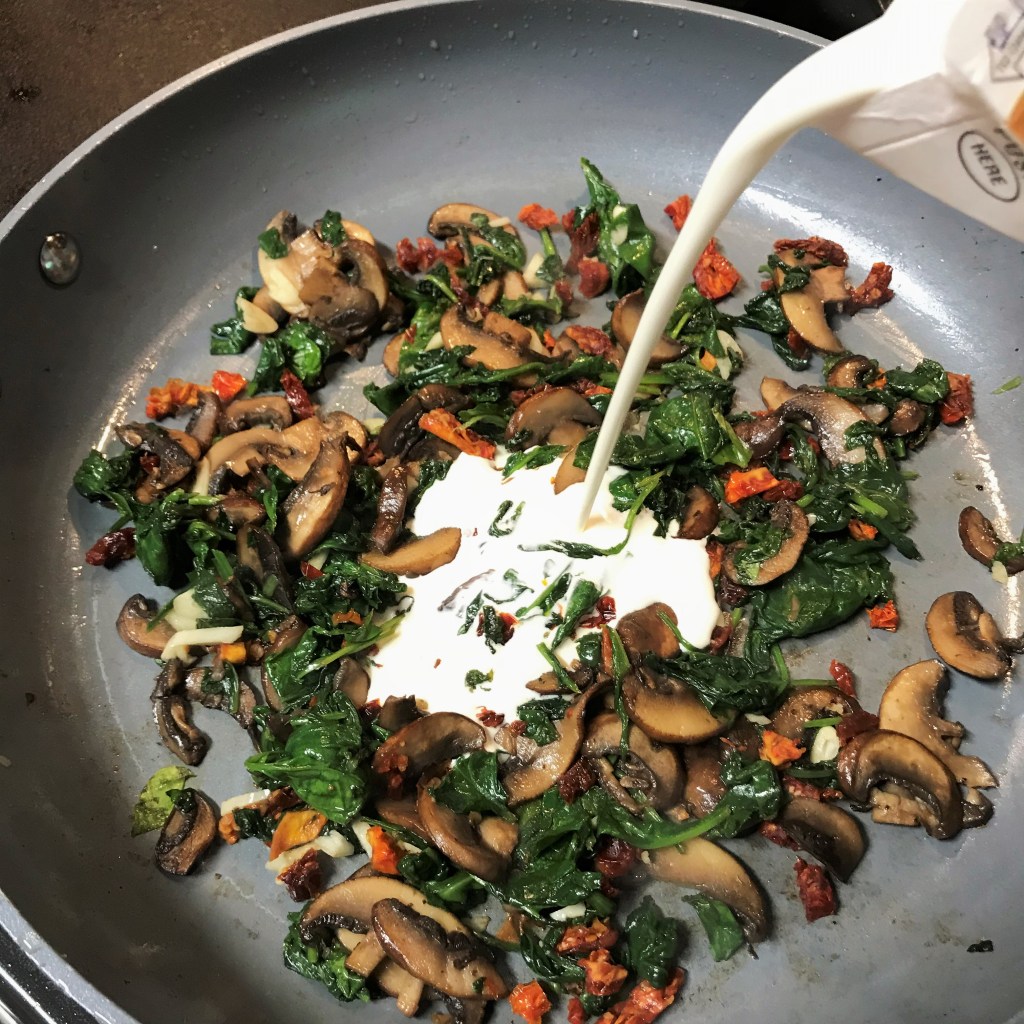
  6. Stir in the heavy cream, then add the white wine and parmesan-romano blend and reduce heat. Return the caramelized onions to the pan. Cover and allow mixture to simmer on low heat a few minutes while the pasta cooks.
  7. When water comes to a boil, season with 2 teaspoons kosher salt (don’t worry—most of the salt ends up down the drain). Add tortellini and stir immediately to prevent sticking. Reduce heat to medium and allow pasta to cook at a low boil for about 5 minutes. It’s OK to undercook them slightly because they’ll cook further in the sauce.
  8. Drain tortellini (or use a large straining spoon, as I did) and add to the sauce mixture. At this point, I tasted and decided it need just a little something. Remember the Trader Joe’s “umami” seasoning we introduced in the Lentil Moussaka? It’s perfectly at home in this dish, underscoring the flavor of the mushrooms already in the dish, and throwing on just a touch of extra savory depth.
  9. Give it a good toss to thoroughly coat the tortellini, then go set the table. It’s a good time to pour another glass of wine, while you’re at it.
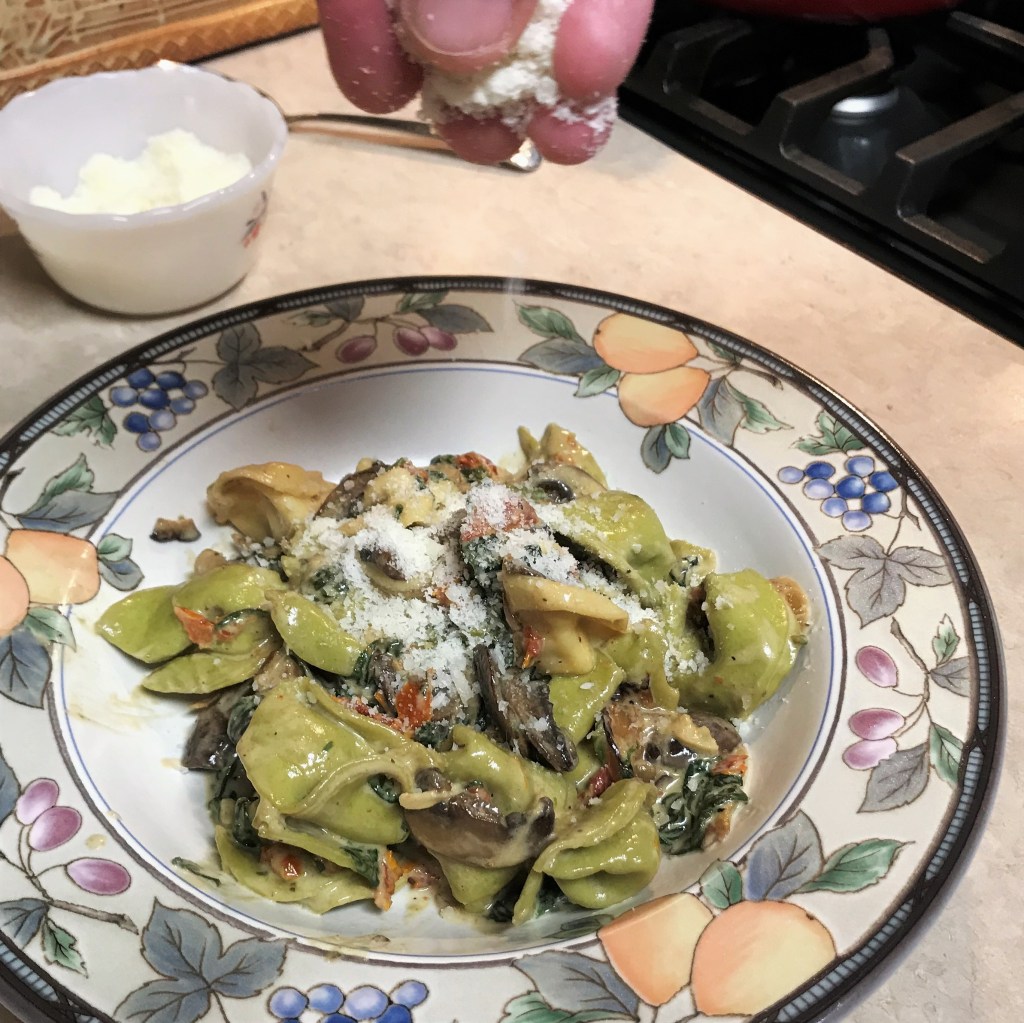
  10. Divide the creamy pasta between two pasta bowls, sprinkle with additional parm-romano blend and serve.

It doesn’t look like leftovers and it sure doesn’t taste like it, but I’ve regained some ground on the shelves of my refrigerator. Plus, we ended up with one lingering portion of this dish, perfect for my husband to reheat for a work lunch. And that’s a win-win!

Want to print this recipe?


Jamaican Jerk Chicken Stuffed Peppers

If there’s a better way to knock down a huge pile of peppers, I don’t what it is other than stuffing them with great flavors. Like you, I’ve had them the traditional way—with ground beef and rice, topped with tomato sauce. One of my go-to recipes through the years has been turkey stuffed peppers. But this time, my pepper purchase included a half dozen of these huge red beauties, and they have been begging me for something a little special.

Red bell peppers have so much going on. They are far sweeter than green bell peppers, packed with vitamin C (more than oranges, in fact) and well-suited to a number of terrific ethnic cuisines, including Italian, Asian, Spanish and, as we’re about to dive into today, Caribbean.

You don’t have to love spicy flavors to enjoy Jamaican jerk, but it certainly helps. A traditional jerk blend includes fresh thyme, allspice, scallions, a bunch of black pepper, ginger, nutmeg and a good dose of super-hot habanero pepper. But it’s not difficult to find a seasoning that backs off the habanero, and of course, you can always make your own from scratch.

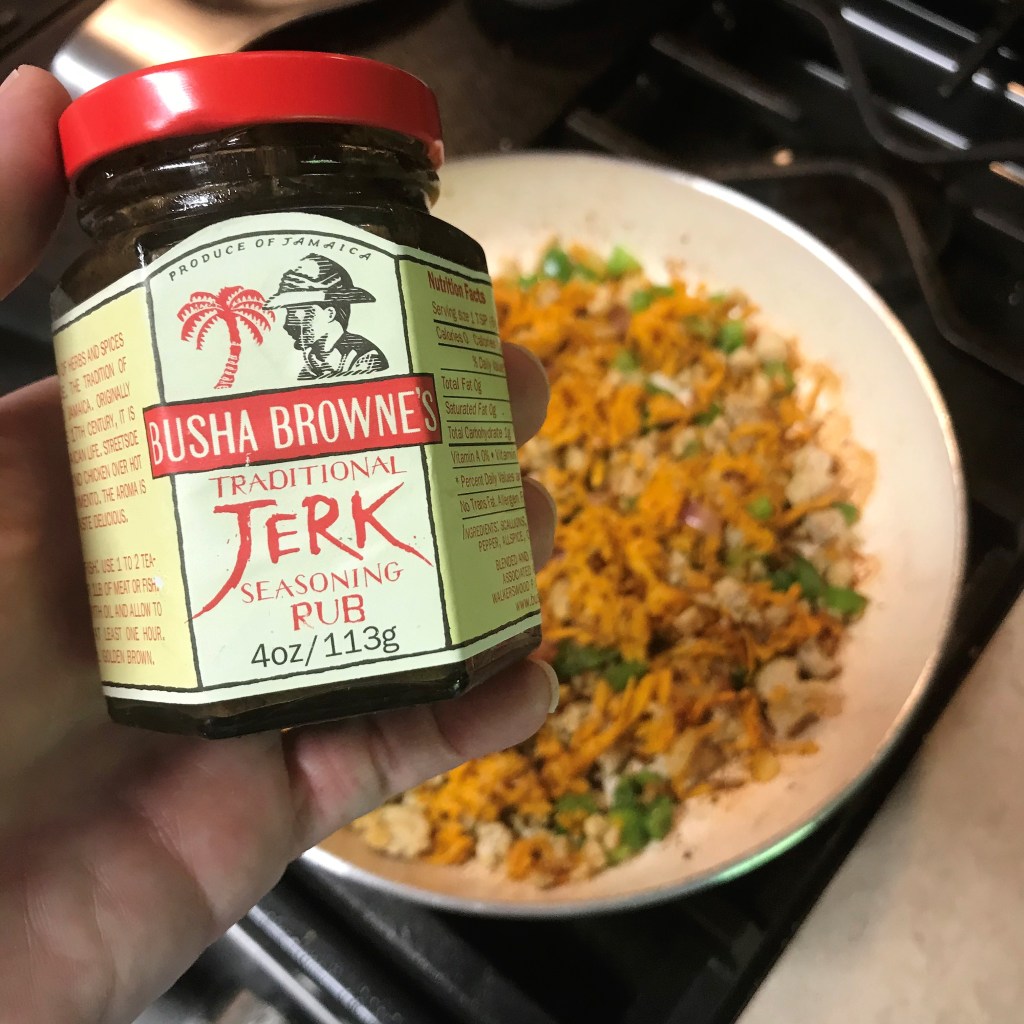
This is the stuff, right here! Find it at Whole Foods, gourmet specialty stores or online.

This one happens to be my favorite, straight from Jamaica (as it should be) and packing plenty of heat. The brand is available at most Whole Foods stores or online. If your market doesn’t carry it, look for another with the aforementioned ingredients.

Another thing I love about the flavors in this recipe is that it’s very adaptable to vegan preferences. I’m always on the lookout for ways to make a recipe completely plant-based, because we never know when Les’s daughter may be free for a visit, and this one would be a snap. Just omit the chicken and double the sweet potato and black beans—done!

This recipe serves 2, double it up to feed a hungry family.


Ingredients

Extra virgin olive oil

1/2 lb. ground chicken

1 small red onion, chopped

1 medium raw sweet potato, shredded* (see notes)

1/2 can black beans, drained and rinsed

1/2 green bell pepper, chopped

1 Tbsp. Jamaican jerk seasoning*

2 large red bell peppers

*Notes

Shredding the sweet potatoes helps speed up the recipe because they cook so quickly. If you prefer, you could cut them into small cubes and give them a little more time to soften before adding the black beans. I used the food processor to shred them, but a box grater would also work.

The jerk seasoning I like is meant to be a rub for grilling or smoking, rather than an add-in, so it’s tipping the scale toward the sodium side. For this reason, no additional salt is mentioned in the recipe—the jerk seasoning has it covered. I always recommend examining the nutrition information on labels so you know what you’re getting into. If you use a dry jerk seasoning rub, it’s likely to have even more salt, so use your judgment and cut back to a lesser amount accordingly.

Instructions

  1. Preheat oven to 350° F, with rack in the center.
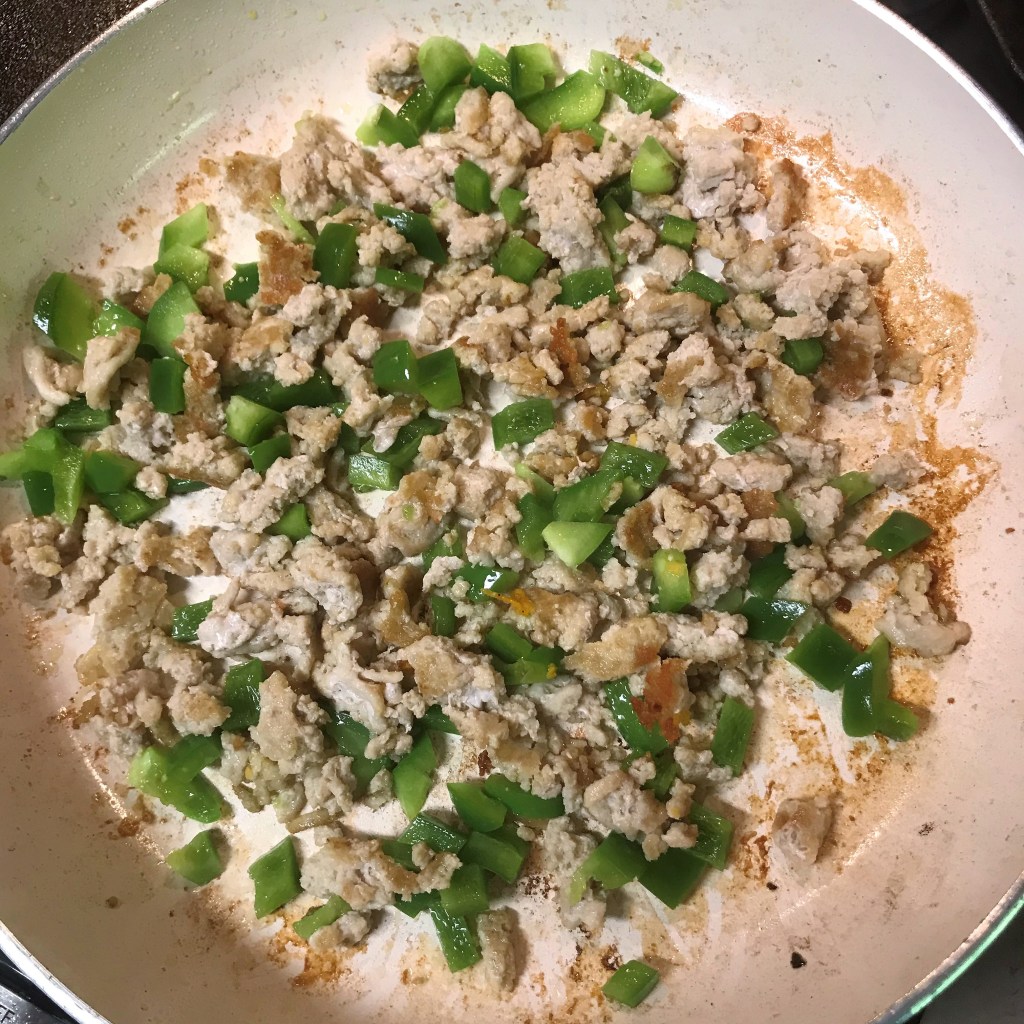
  2. Heat a non-stick skillet over medium heat, swirl in olive oil and brown the ground chicken with the onion and green bell pepper. When chicken is no longer pink and vegetables are softened, add shredded sweet potato and black beans. Cook a few more minutes, until sweet potato is tender. Mix in the Jamaican jerk seasoning rub and stir to combine.
  3. Prep the red bell peppers by cutting the tops just below the stem line. I like to replace the top during baking and presentation, so it helps to cut low enough to keep the stem intact. Use a paring knife to cut around the seed pod and remove seeds and membranes.
  4. Soften the whole peppers by putting them upside-down in a microwave-safe dish with about 1/2” water (with the tops squeezed in the side), and microwave at full power about 2 minutes.
  5. Fill peppers with jerk chicken mixture, replace tops and cover peppers tightly with foil. This will help retain moisture while the peppers bake for 35 to 40 minutes.

They’re spicy, fresh and satisfying, packed with plenty of nutrients. Serve the peppers piping hot, just as they are, or with your favorite island-inspired sides. This was a test run for me, and now that I know it’s a keeper, I’ll make some mango-scallion rice to go with it. Won’t that be pretty?

There’s so much flavor and nutrition packed into this dish. My husband feared he wouldn’t be able to finish his portion.

Want to print this recipe?

Yep, he finished it.

Spotlight on Peppers

Some women are dazzled by diamonds, others by expensive cars. Me, I tend to get overjoyed with really simple things, such as this stunning display of fresh peppers I ran into on one of my recent grocery runs. There are so many things I can do with peppers, and I couldn’t resist buying up a bunch of them.

But all of my best intentions lost a bit of their sparkle when I came home to the harsh reminder that we still don’t have enough room in the veggie drawer for two weeks’ worth of fresh stuff. So I had to come up with a plan, and fast. As a result, this week and next I’ll be focusing on some go-to recipes, along with new twists and some experiments, for using up those peppers. Along with some (hopefully) great dishes, I’ll show you a few of the tips I’ve learned for working with them, especially from my time in the catering kitchen, where every minute counted.

But first, a lesson, and forgive me if you’ve already seen this on Pinterest:

Who knew?

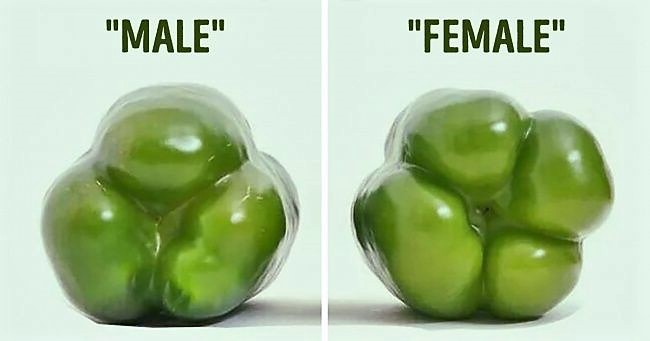
Did you know about the idea that bell peppers with three lobes on the bottom are males, best for cooking, while peppers with four lobes are females, chock-full of seeds, but sweeter and better for eating raw? This is fascinating to me.

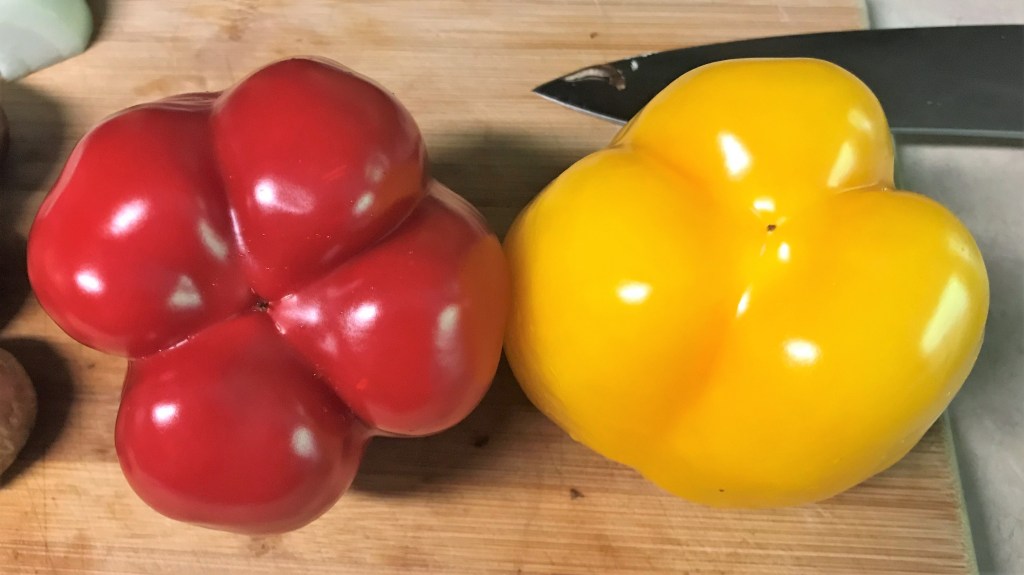
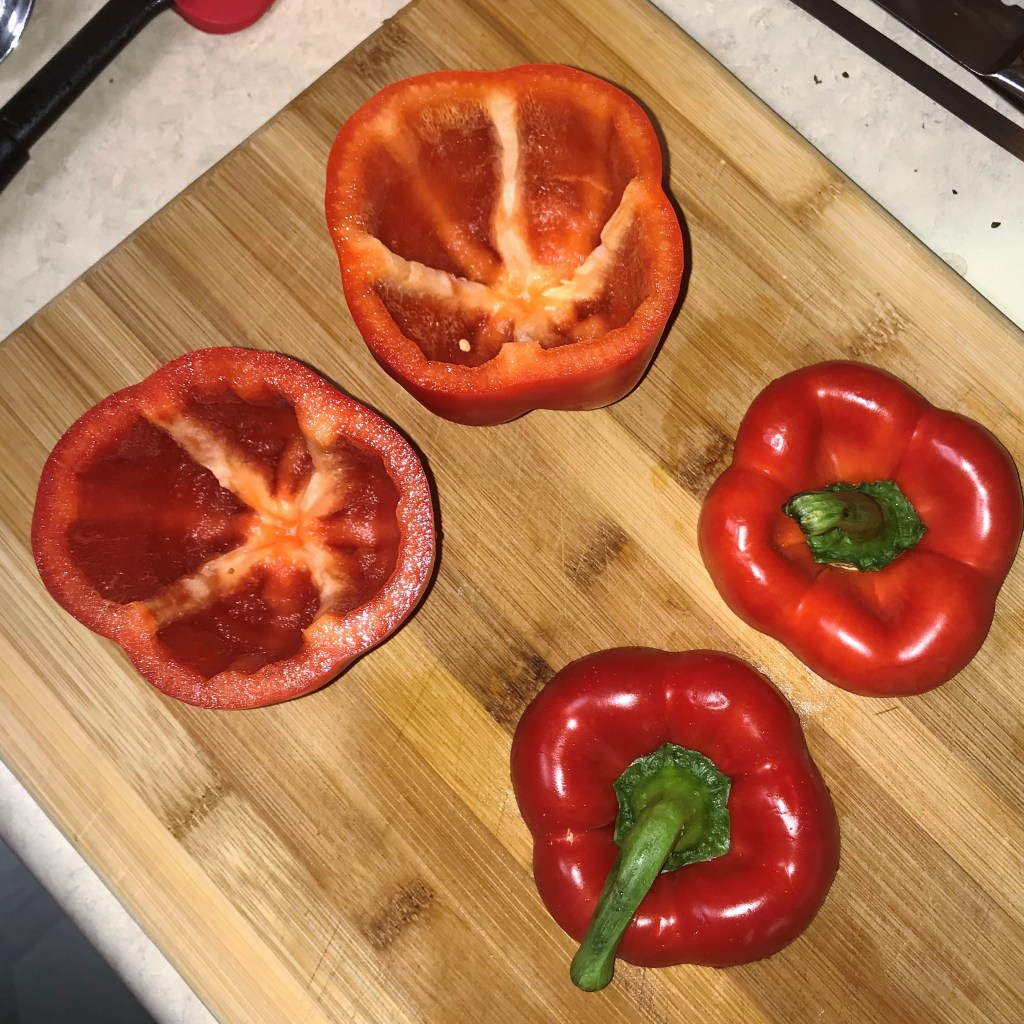
As luck would have it, I have one of each—a yellow “male” and a bright red “female.” We’ll test this claim, but more importantly, here comes my first tip. To avoid getting seeds everywhere when you cut open a pepper, turn it upside down and use a sharp paring knife to just barely cut through the skin, along the natural lines of the pepper. Then, pull the individual sections of pepper out and down toward the stem, like you’re peeling an orange. Keep going until the section snaps at the stem end, leaving the seed pod behind. Repeat with the other sections until all you have left is the stem and seeds.

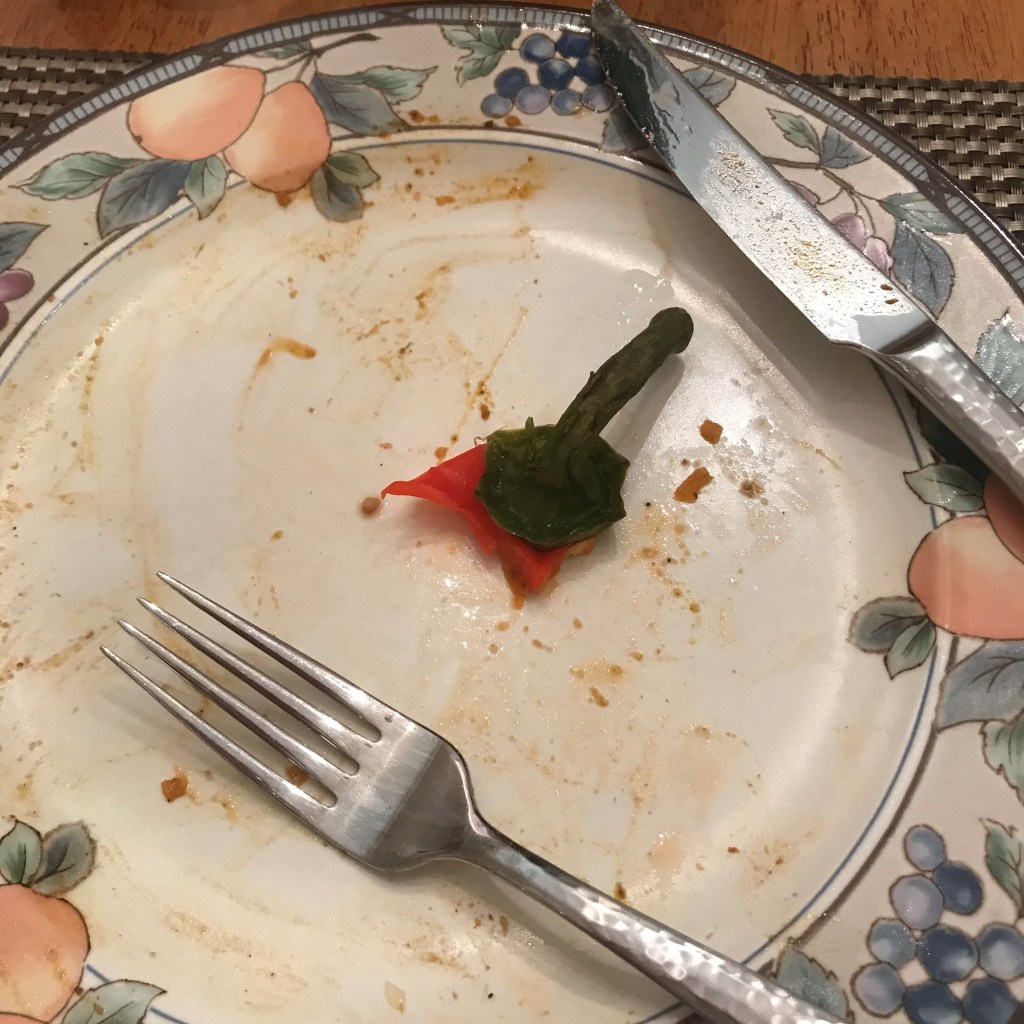
Almost all the seeds remained with the stem piece, which means less time you’ll spend wiping them off your knife blade or sweeping them away from the cutting board. I did the same with the “male” pepper, and you can see the two compared. The yellow pepper definitely cut apart cleaner, which is more about how I cut it than anything else—no messy seed cleanup. But how about that claim that the “female” pepper is sweeter and has more seeds?

OK, the red pepper probably is sweeter, but not because it’s female. It’s because of the color. All deeply colored fruits and vegetables are more flavorful than their paler counterparts because they are more ripe. Without standing here and counting the seeds, I can honestly say I don’t see much of a difference between the two stems I’m holding.

As cool as it would have been to get the skinny on the whole male vs. female pepper thing, the truth is it’s a bogus claim. And although the rumor continues to spread faster than kudzu all over the internet, botanical experts everywhere have declared it has no merit, so let’s just move along because it’s almost dinner time and I think we can all agree we’re getting hungry just staring at all these fresh peppers, especially now that I’ve thrown in a zucchini.

We are getting about six servings of vegetables in this one meal!

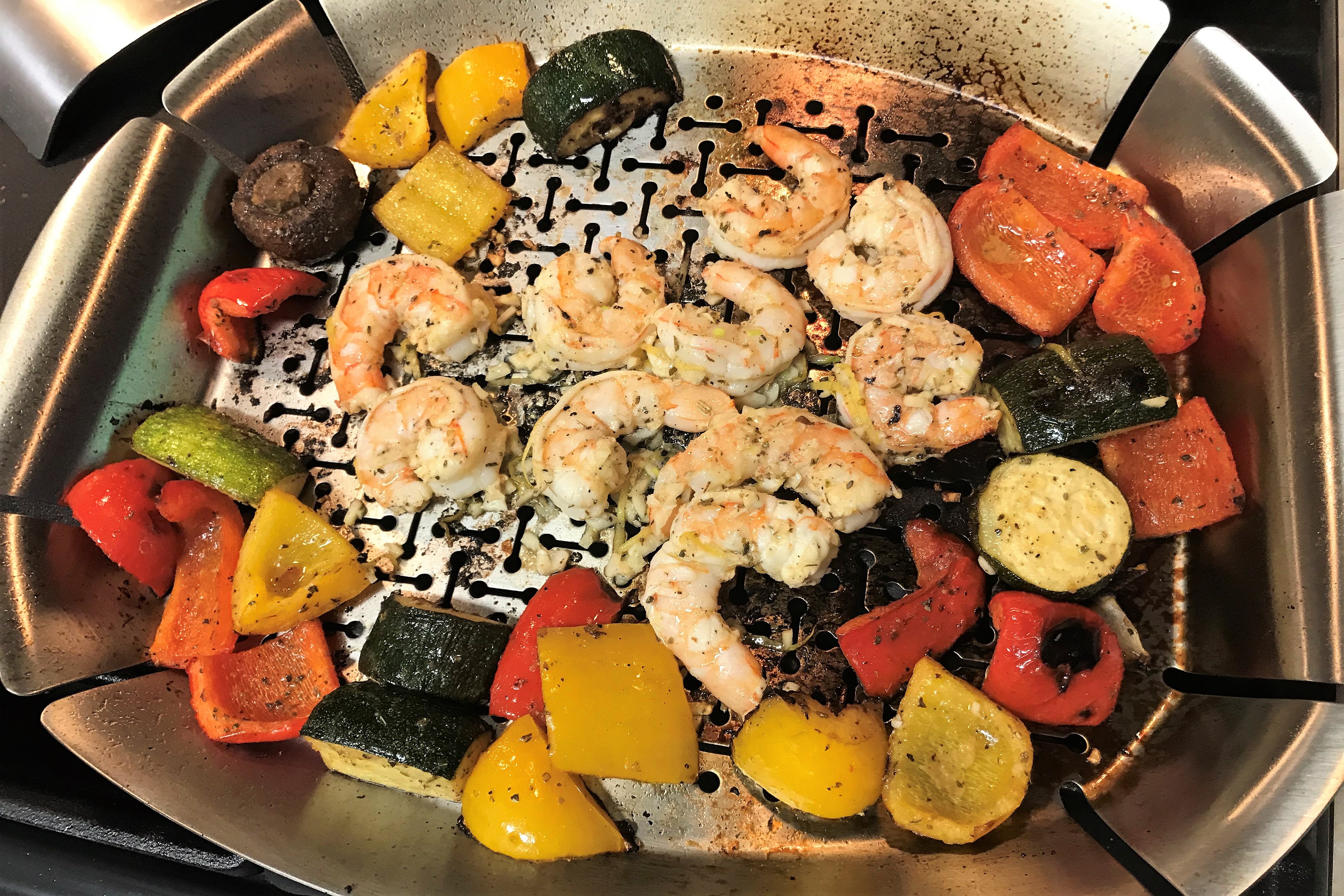
This first “spotlight on peppers” recipe is super simple, perfect for outdoor cooking and an easy way to max out our daily servings of vegetables. It doesn’t hurt that we also won’t have a lot of cleanup, because we’re moving this party outside—to the grill!

You’ll need some grilling skewers for threading the vegetables and shrimp, or, even easier, one of those cool stainless steel grilling baskets.


Ingredients

1 red bell pepper  (any gender is fine) 🙂

1 yellow bell pepper

1 medium onion, cut into large chunks

1 medium zucchini, cut into large chunks

8 oz. package fresh cremini mushrooms, cleaned and trimmed


Marinade*

1 Tbsp. Dijon mustard

3 Tbsp. red wine vinegar

Garlic pepper or lemon pepper seasoning

1/2 tsp. dried herb leaves (oregano, basil, whatever you like)

3 Tbsp. extra virgin olive oil


About 1 lb. fresh shrimp, peeled and deveined

2 cloves garlic, finely minced

Juice of 1/2 fresh lemon, plus a little of the zest

1 Tbsp. extra virgin olive oil

Kosher salt and freshly cracked black pepper


*Notes

Much of the time, I don’t even bother marinating veggies before grilling, because a little olive oil and plain old sea salt and pepper brings out enough of their flavor. But on this occasion, I discovered an almost-empty bottle of Dijon mustard in the fridge, so it seems like a good time to offer one of my favorite tricks for using every last little bit. I use Dijon anyway to aid in blending a vinaigrette-style dressing or marinade, and when I can’t squeeze any more out of the bottle, I just add the other ingredients to it and shake it up to use what’s left. As a bonus, it further reduces the dirty dishes, because I can discard or recycle the bottle when I’m done with the marinade.

I realize the odds are low that your own Dijon is also down to the dregs, so I’ve offered approximate amounts, but keep this idea in mind the next time you’re at the bottom of a bottle (of mustard, that is).


Instructions

Combine the marinade ingredients, then toss the peppers, zucchini and mushrooms and let them rest while you prep the rest of the recipe. I’ve gently tossed the onions chunks in a different bowl, so they don’t separate too much before I thread everything onto skewers.

Combine the garlic, lemon juice and olive oil and toss the shrimp to coat. They don’t need to be dripping in the marinade—just a light coating is fine.

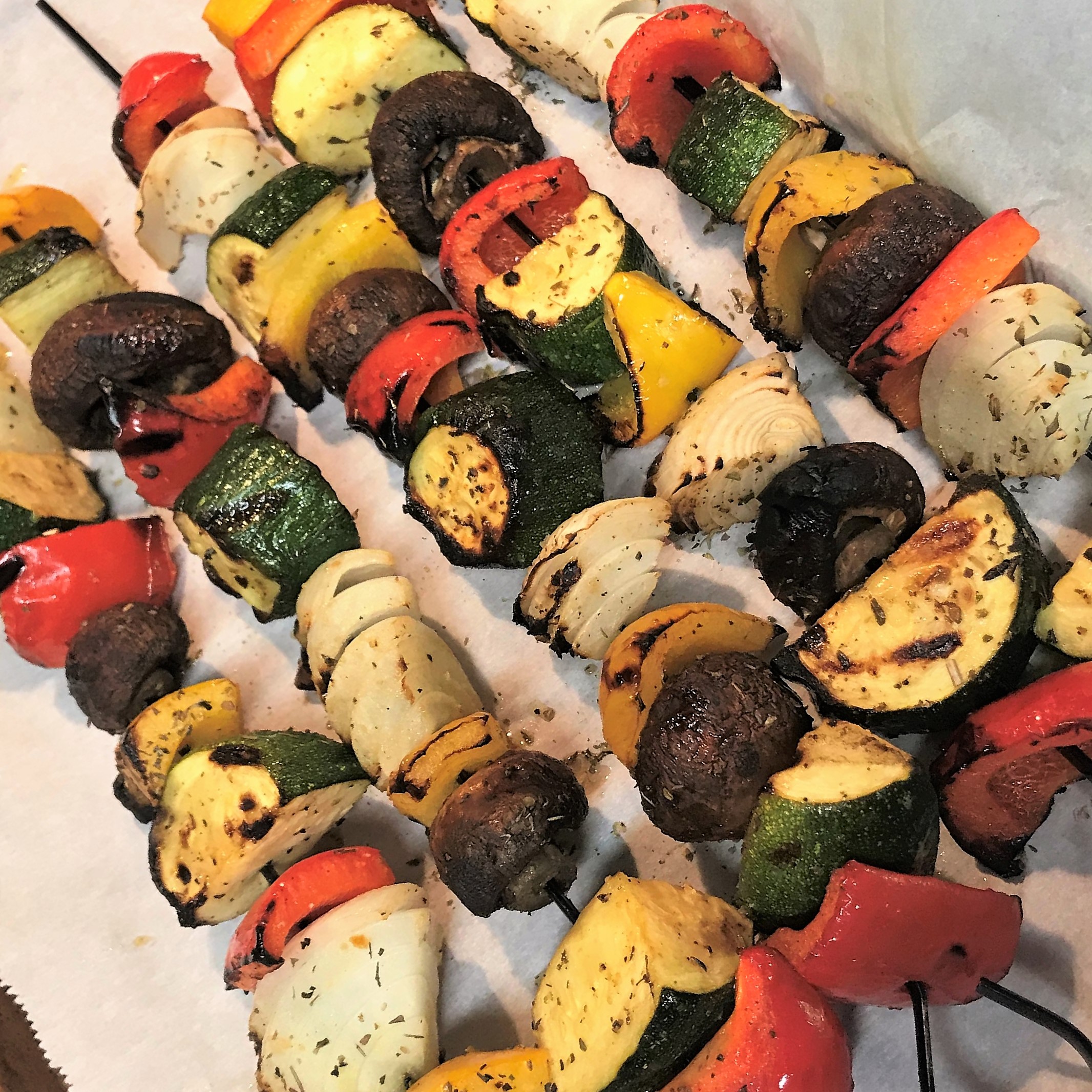
Preheat the grill to medium heat, and thread the veggies onto the skewers however you’d like—if you want to keep all peppers together, separate from skewers full of mushrooms or zucchini, that’s cool. I usually mix them up, but I always keep the shrimp separate because they don’t require as much time.

Here’s a quick tip I’ve found on the skewering, to prevent spearing yourself when you thread them—especially if they’re a little slippery from the marinade. Put the veggies flat on the cutting board and then stab the skewer down into them. It keeps your hands out of the line of fire. No sense turning an easy dinner into an all-night adventure at urgent care.

Move the skewered veggies to the grill and cook over low to medium heat until tender and lightly charred. The shrimp cook quickly, so add them to the mix when everything else is nearly done.


Light, fresh and healthy. Les and I love this simple kind of meal just as it is, but it would also be great over a bed of herbed rice, pasta or polenta.

Want to print this recipe?


Bonus tip:

For the record, sometimes I do recommend peeking at the bottom of peppers and selecting the ones with four lobes instead of three—not because of any weird gender claim, but simply because they stand up better when they’re stuffed with meat or rice if they are even and balanced on the bottom. Let’s revisit that when we make some Caribbean stuffed peppers next week.


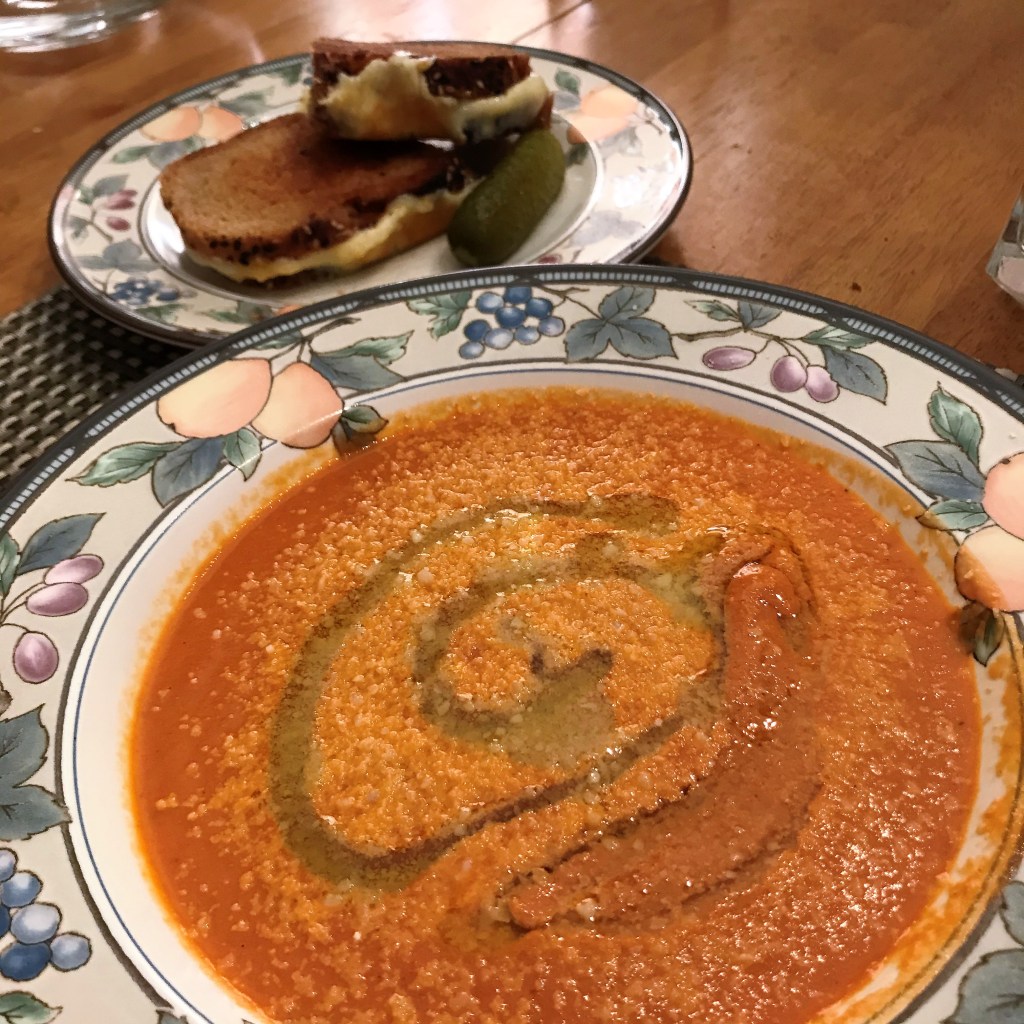
Creamy Tomato Bisque

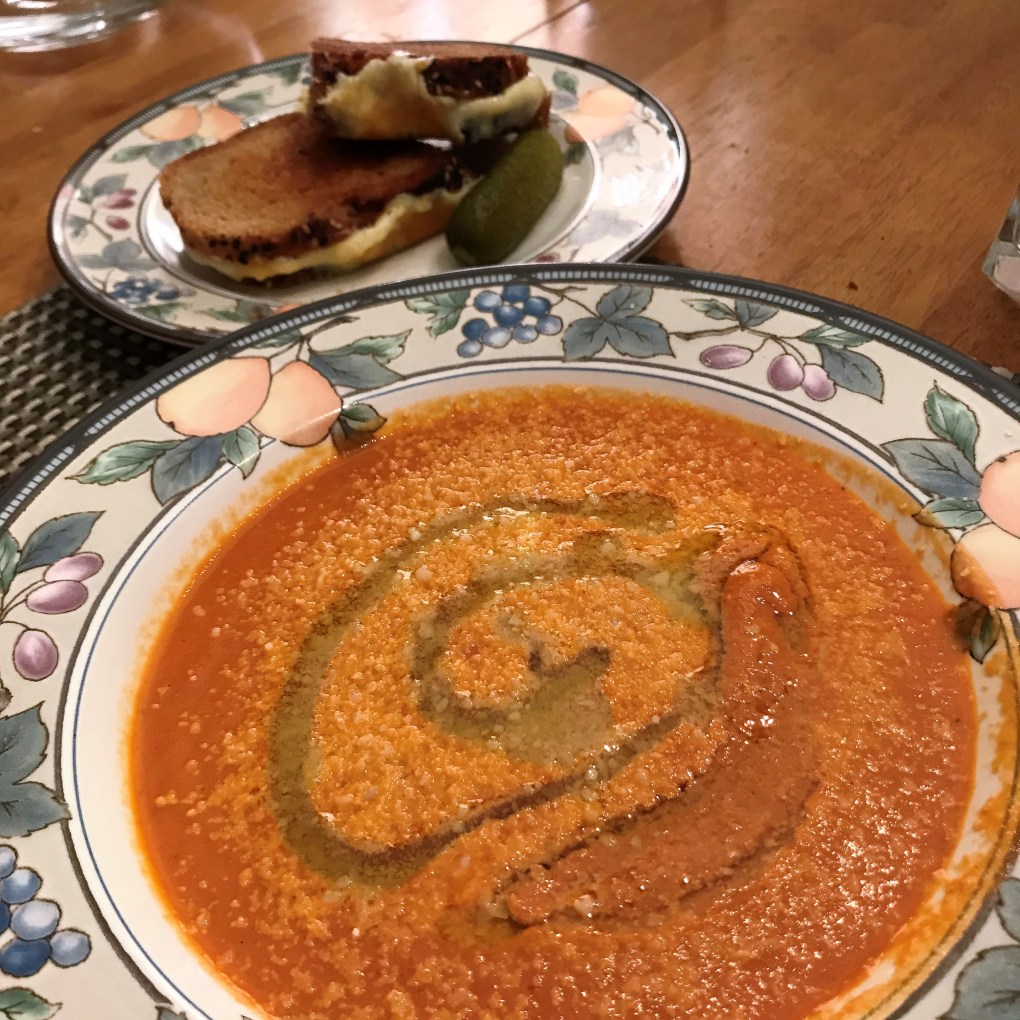
There’s a reason “tomato bisque” is on so many restaurants’ menus. It’s a classic comfort food, and so simple to make from regular pantry ingredients you’ll wonder why you ever settled for the stuff in a can. My version includes a bit of red bell pepper and carrot for a touch of extra flavor and sweetness. This is perfect on a chilly day or rainy night, and we love to pair it with a tuna on homemade rye or classic grilled cheese sandwich.


Ingredients

Extra virgin olive oil, salt and pepper

1 medium onion, chopped (I like sweet onions, but yellow works well here, too)

1/2 medium red bell pepper, seeded and chopped

1 medium carrot, peeled and diced

3 cloves garlic, peeled and chopped

1 tsp. Italian herb seasoning (or some combination of oregano, basil, thyme, rosemary)

A pinch of crushed red pepper

28 oz. can peeled plum tomatoes (San Marzano, if possible)

1/2 cup vegetable broth or 3/4 cup V-8 juice

1/4 cup whole milk, half-n-half or heavy cream (omit or substitute canned coconut milk if vegan)

Freshly grated parm-romano cheese blend (omit for vegan) and chopped parsley or basil for serving

Tools

cutting board and knife, heavy-bottomed tall pot, flat wooden utensil or spoon, immersion blender*


Let’s Get Cooking!


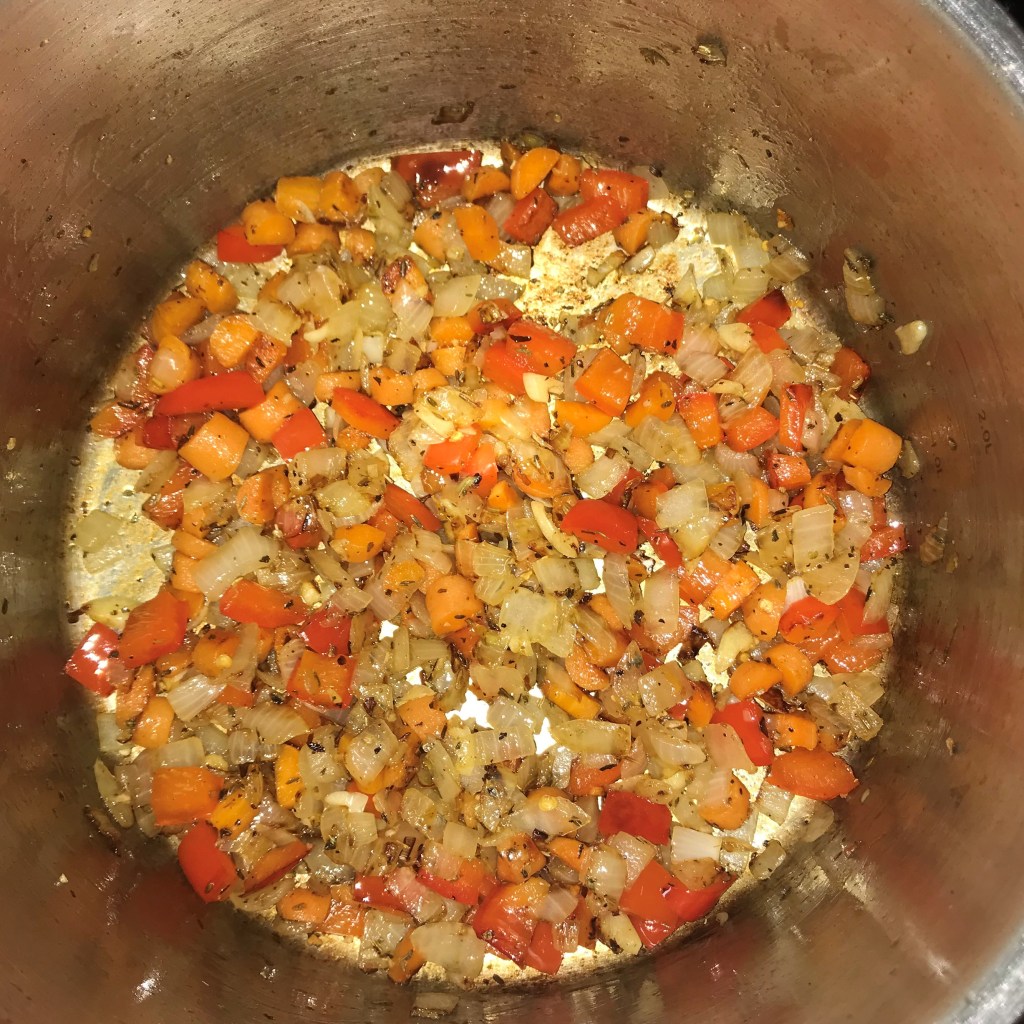
Place a deep, heavy-bottomed pot over medium heat. Add a generous swirl of olive oil (about 2 to 3 tablespoons). When oil begins to shimmer, add onion, pepper and carrot all at once. Salt and pepper to taste, then stir and cook until all begin to soften. Add chopped garlic and seasoning blend, stir and cook another minute or two until onions seem slightly translucent.

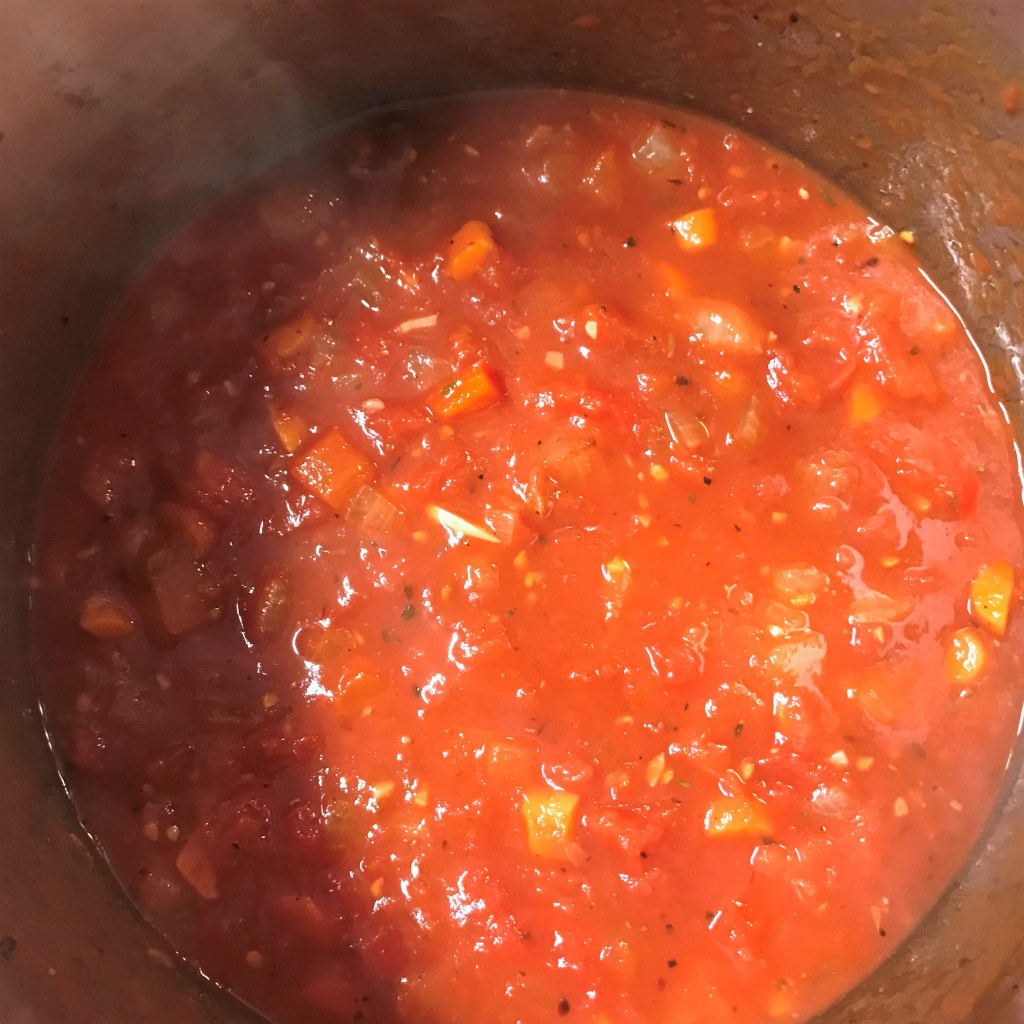
Add the plum tomatoes, using your hand to squeeze each tomato into the pot. This helps release the juices and gives them a head start on breaking up in the pot. Squeeze slowly and gently so you don’t wear it! Add all the tomatoes plus all remaining liquid from the can, but discard any basil leaves that may be in the can. Add broth or juice, stir to mix evenly and bring just to a boil, then reduce heat and simmer uncovered on medium-low about 30 minutes. Stir occasionally to prevent burning. Adjust seasoning to taste.

When mixture appears less chunky and somewhat reduced, turn off heat and use an immersion blender to puree until mixture is as smooth as you like. Simmer on low another few minutes to allow air bubbles to disperse and soup to reduce to your preferred thickness. If it’s too thick, stir in a bit more vegetable broth. Remove from heat and swirl in milk or substitute. Ladle into bowls and swirl a drizzle of olive oil over the top of the soup and sprinkle with parm-romano cheese and fresh chopped herbs as you like.

Dinner is served. We love it with a sourdough grilled cheese, but any kind of sandwich is a good side.

Want to print this recipe?