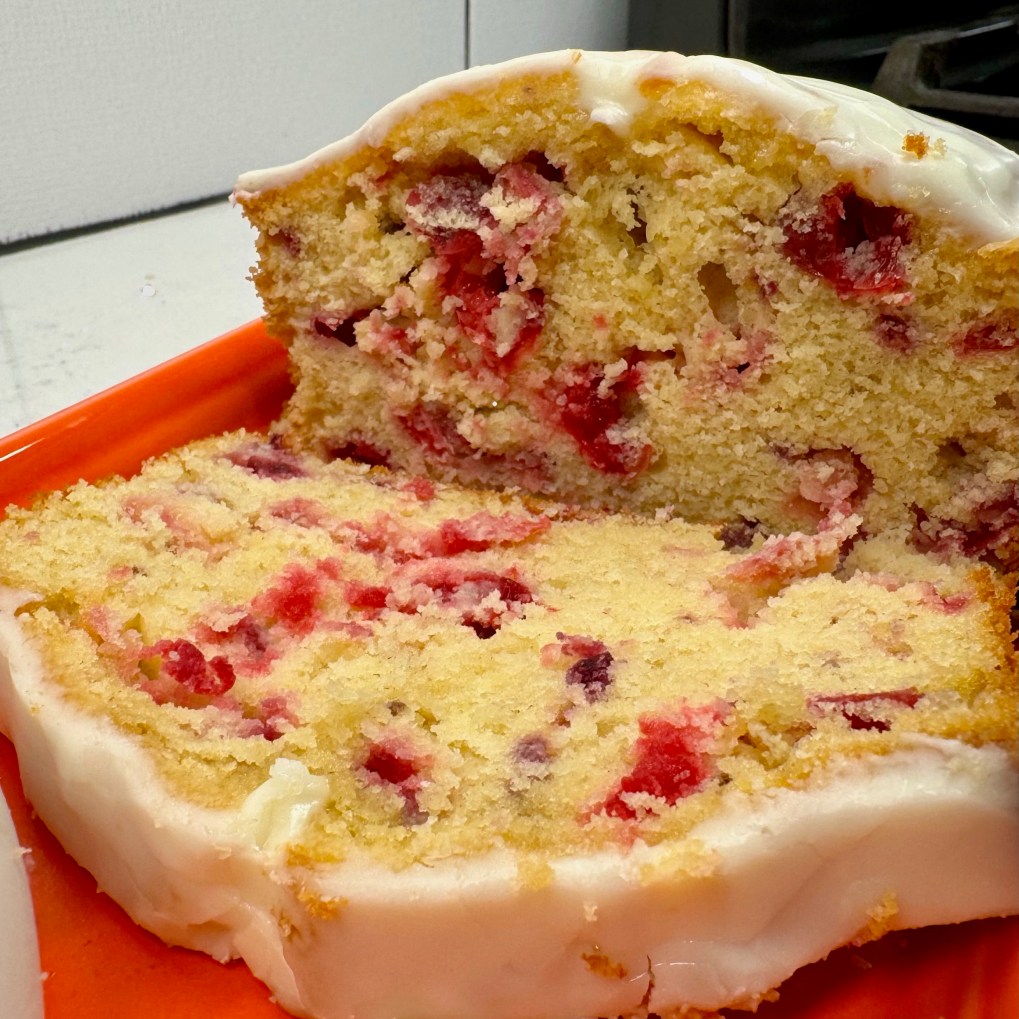
Cranberry Quick Bread

It’s a question that has always piled on stress, and one that is virtually inescapable this time of year, asked by friends and strangers alike.

“Are you ready for Christmas?” 

And this year, I actually am! Not for having crossed off a multitude of items on a gift list or for having my proverbial ducks in a row for holiday entertaining or gathering or what-have-you. Nope, this year I’m “ready” because my husband and I made a conscious decision to forgo most of the hubbub that is typically associated with the holiday season. You could say that we are quiet-quitting Christmas. Except for the tree!


Our tree is all we’ve done so far this year, and it’s simple. We are not the family who has a perfectly color-matched tree, nor do we want to be. Our tree has a hodgepodge of trimmings, many of which symbolize memories we’ve made since we’ve been together, and others that were gifted to me by my maternal grandmother as long ago as 1972!



We will exchange small gifts, and I’ll go overboard for the pets, but there isn’t a darn thing we need. Instead of the hustle and bustle involved in “finding the perfect gifts,” we are taking time to enjoy being together, and doing fun things that improve our moods, such as watching holiday-themed films, sipping hot cocoa by our patio fire and— you knew this was coming— cooking and baking!
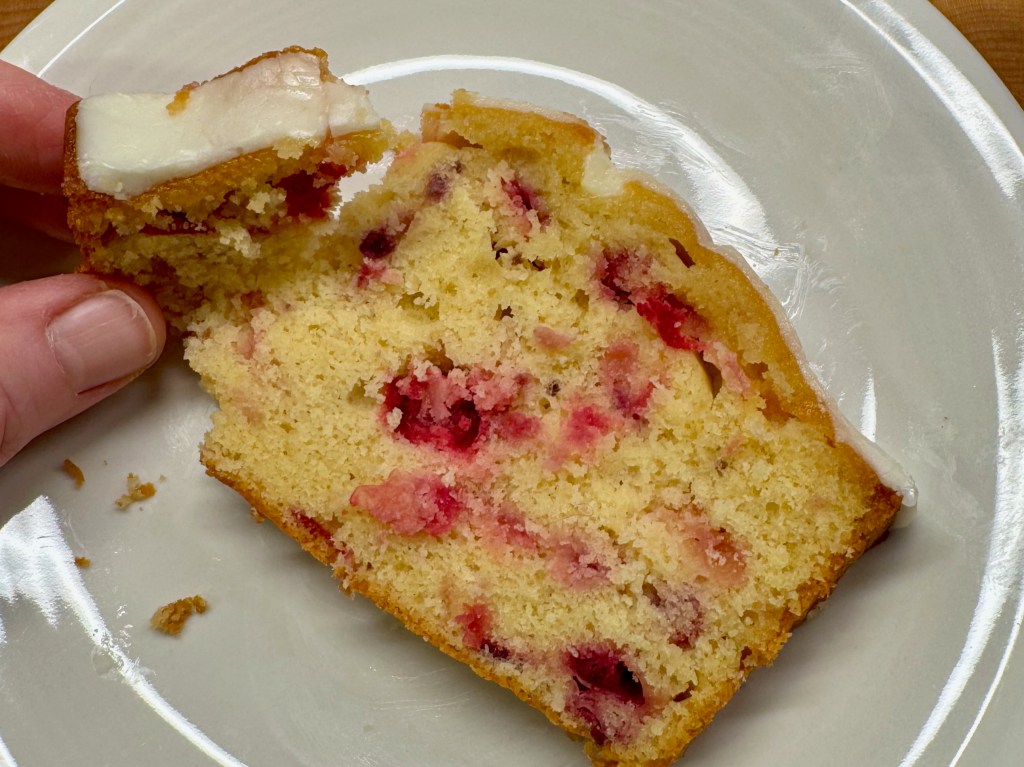
Nice enough for company, but easy enough for an average Tuesday!

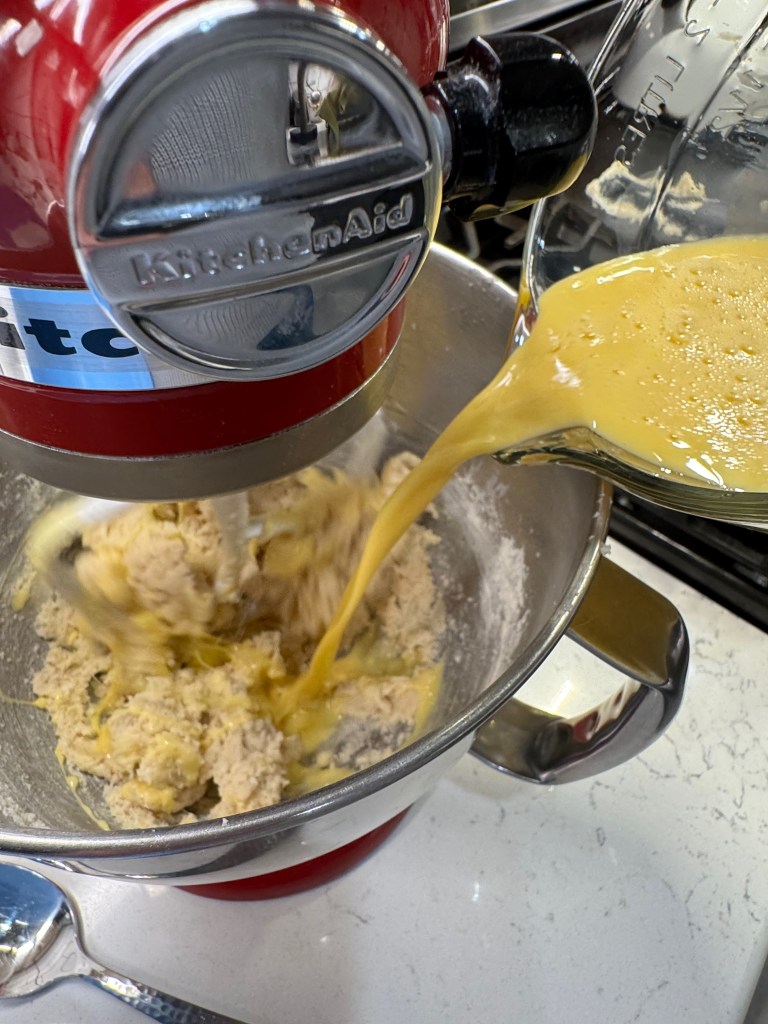
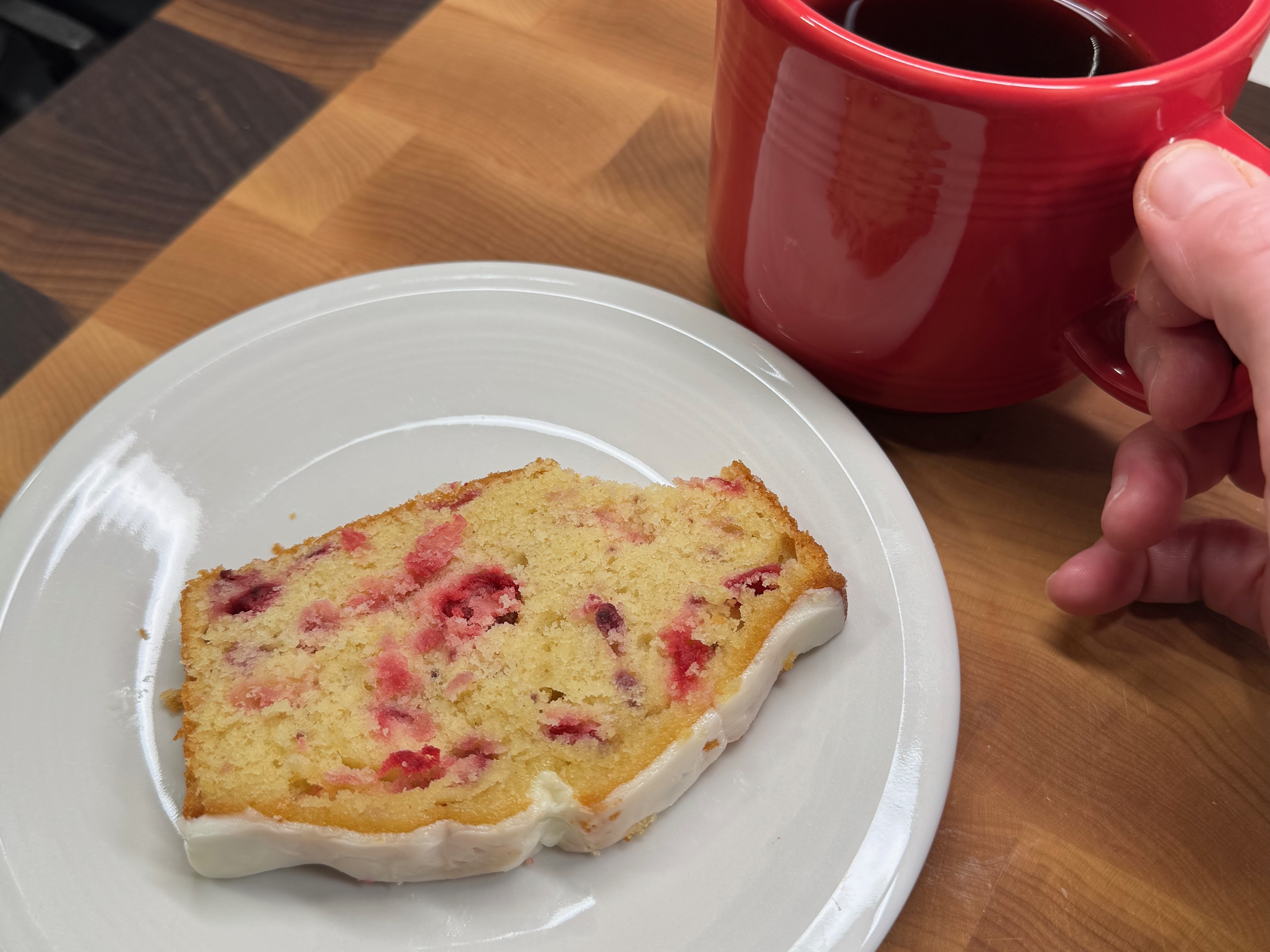
I’ll never ever say that the food of the holidays is too much trouble, and this seasonal combination of cranberry and orange is one of my all-time favorites. My first instinct was to make a challah, featuring dried cranberries and candied orange (as I shared back in 2022), but to keep things sweet and simple, I decided on a quick bread instead. It’s been forever since I made one, and the King Arthur Baking site, my go-to resource for all things baking, had a recipe that satisfied most of my intentions. I embellished their recipe, adding a touch of orange oil (because I didn’t have a fresh orange for zest) and subbing in a portion of white whole wheat (because it’s what I always do).
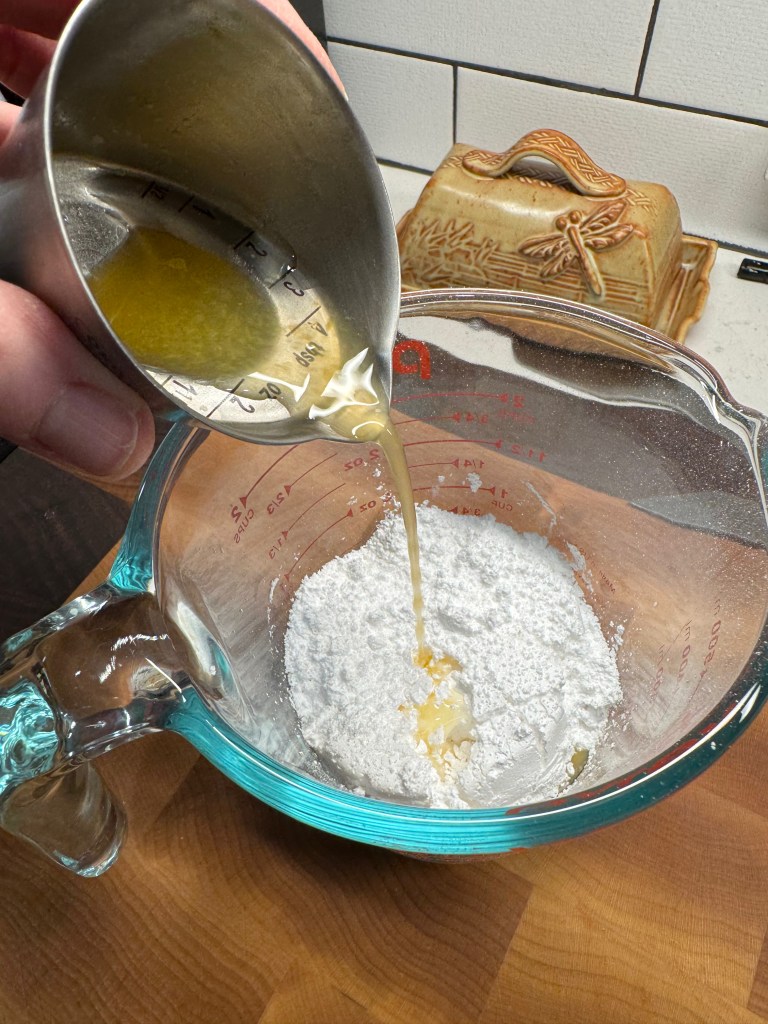
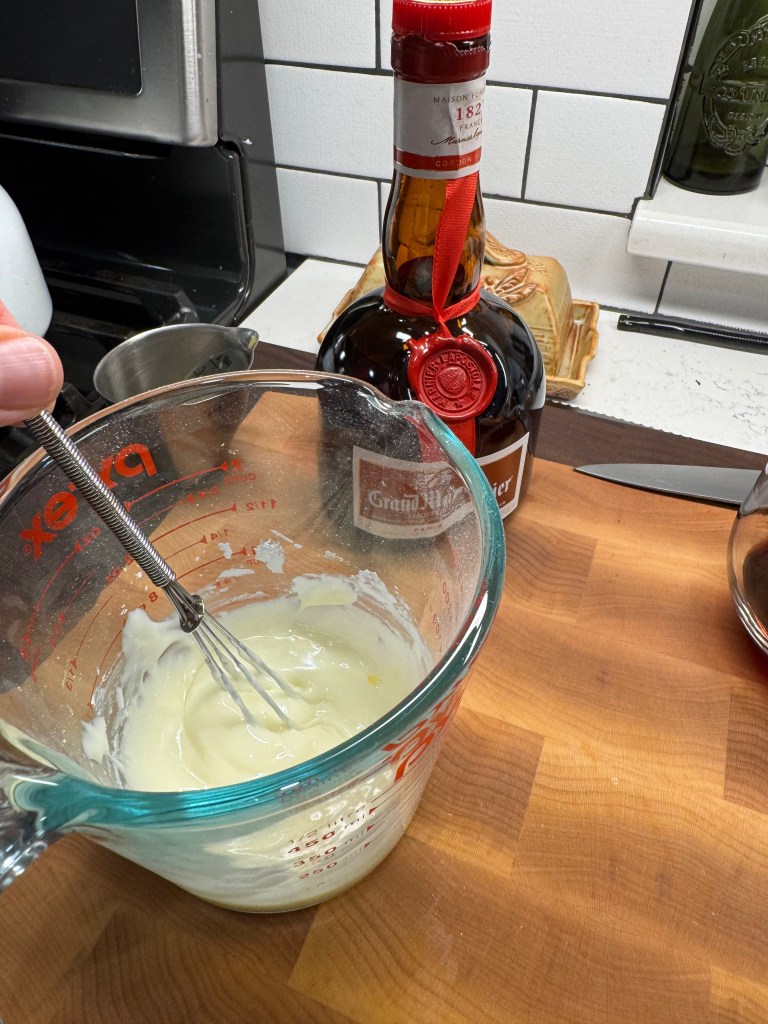
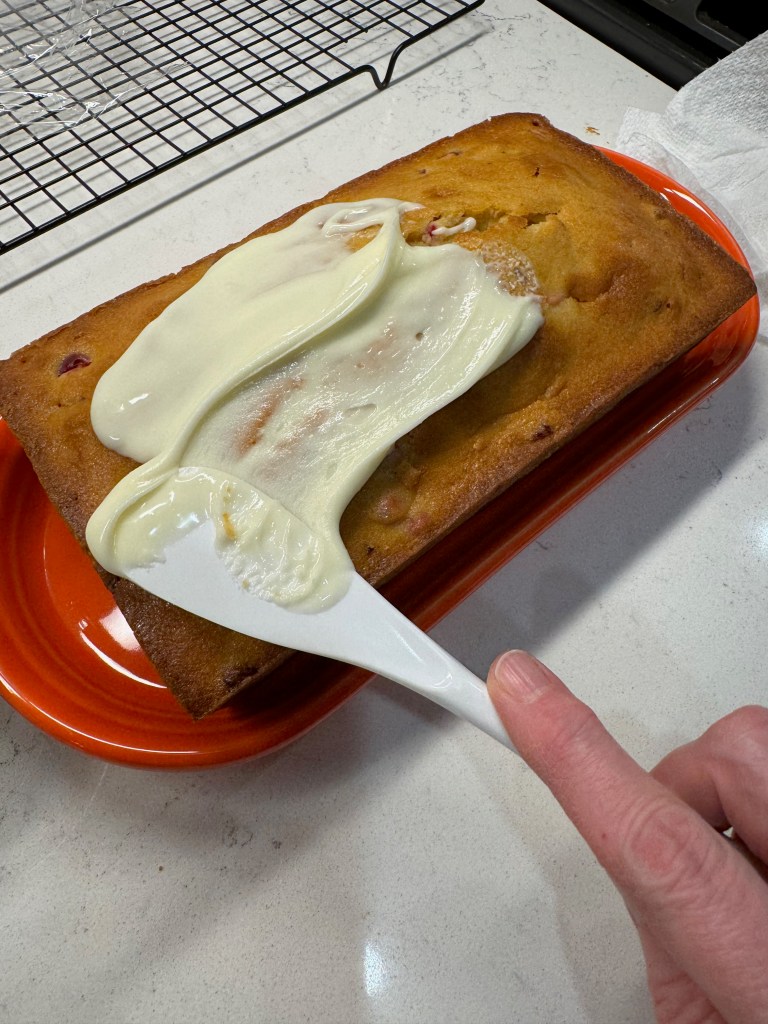
The glaze was simple, too— just powdered sugar, fresh orange juice (by that time, I had made a grocery run) and just enough Grand Marnier to make it feel extra special.
Now, if I can get through the rest of the holidays with this much ease, I’ll be golden! How about you?

Cranberry Quick Bread
  • Servings: 10 slices
  • Difficulty: Easy!
  • Print

This is my adaptation of a King Arthur Baking recipe. The fresh cranberries and bright citrus flavor are perfect for the holiday season, and the bread is elegant enough for company but easy enough for a weeknight.


Ingredients

  • 8 tablespoons (one stick) salted butter, at room temperature
  • 3/4 cup (149g) granulated sugar
  • 1/2 teaspoon table salt
  • 1 cup (120g) King Arthur Unbleached All-Purpose Flour
  • 3/4 cup (90g) King Arthur Golden Wheat Flour (formerly called White Whole Wheat)
  • 1 teaspoon baking powder (see notes to test its activity)
  • 3 large eggs, at room temperature
  • 1/2 cup (113g) milk
  • 1 teaspoon King Arthur Pure Vanilla Extract
  • 1/2 teaspoon orange oil or extract (see notes)
  • 1 cup (most of a bag) fresh cranberries, roughly chopped
  • 3/4 cup (85g) confectioners’ sugar
  • 1 tablespoon (14g) fresh orange juice
  • 2 teaspoons Grand Marnier orange liqueur (optional, or use extra juice)

Notes: Has it been a while since you used your baking powder? You can test it for freshness by measuring 1/2 teaspoon into a bowl, and then add a few tablespoons of boiling water. If it bubbles up and makes a fuss, it’s good. If not, it is past its prime and should be replaced. Better to know before you bake!

I’m the weirdo who has orange oil but not fresh oranges. If you have a fresh orange, wash it well and use a microplane or the small holes of a box grater to shave all of the bright orange zest. If you really love citrus, use both!

Directions

  1. Preheat oven to 350° F, with oven rack in center position. Lightly grease a standard loaf pan and set aside.
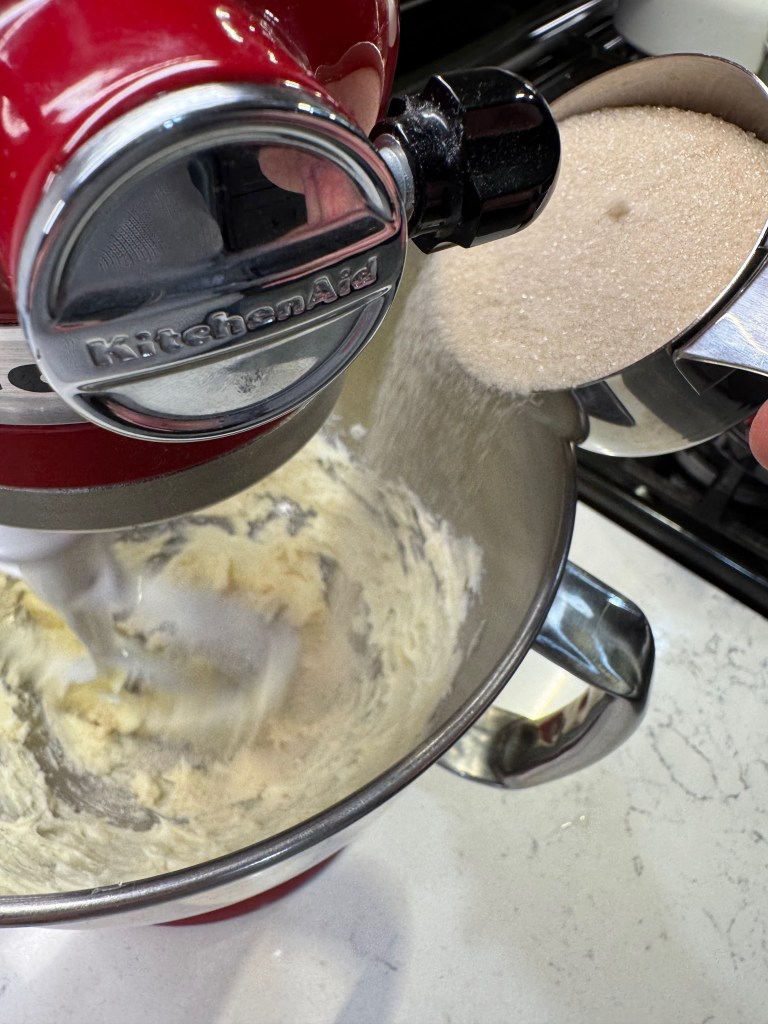
  2. Use an electric hand mixer or stand mixer fitted with the beater blade to cream the butter and sugar together. This mixture should be soft and somewhat fluffy.
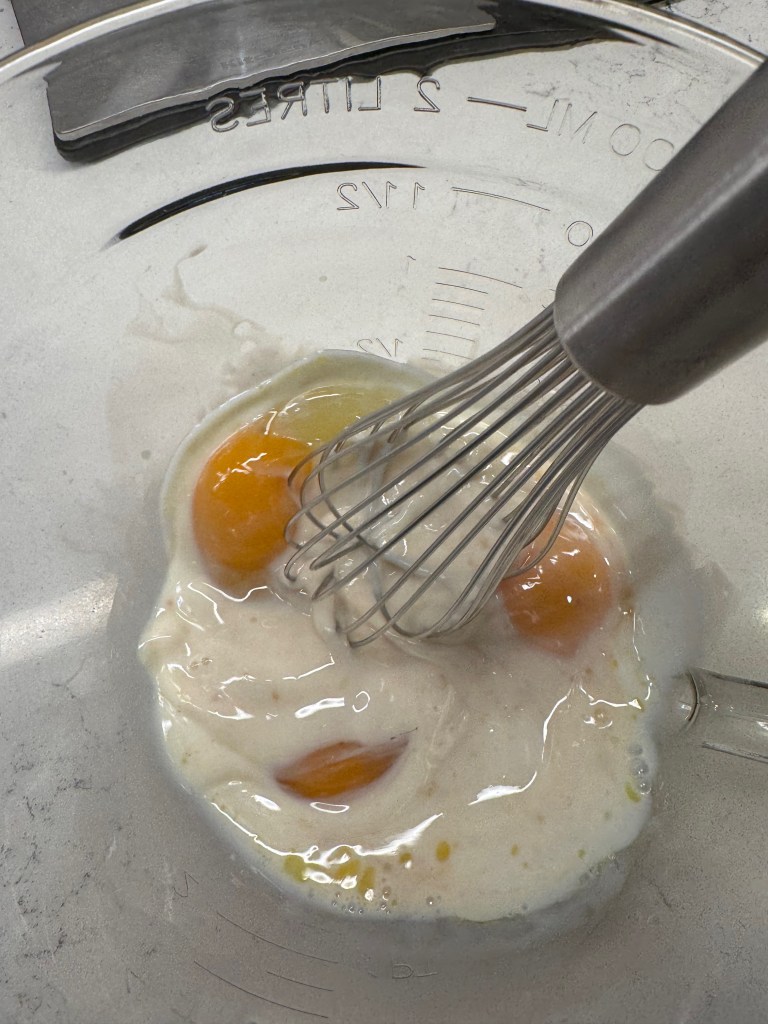
  3. Whisk together flours, baking powder and salt in a medium bowl and set aside. Whisk together milk, eggs, vanilla and orange oil (or zest).
  4. With mixer running on low speed, blend in the flour and liquid ingredients, alternating and scraping down the bowl as you go.
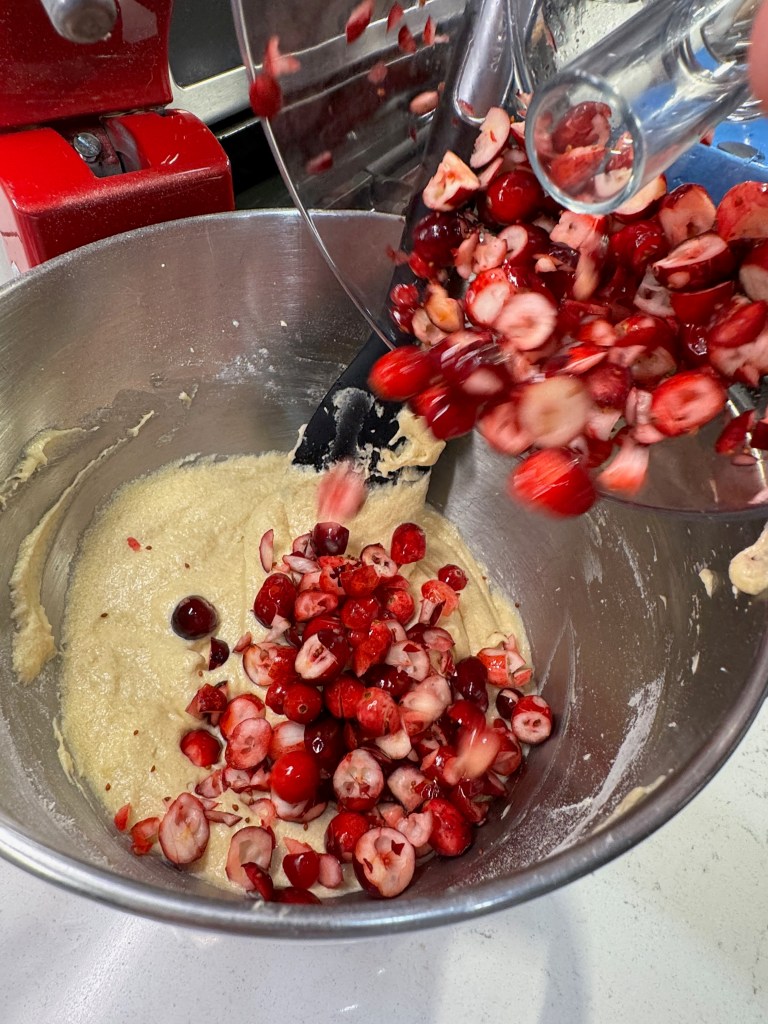
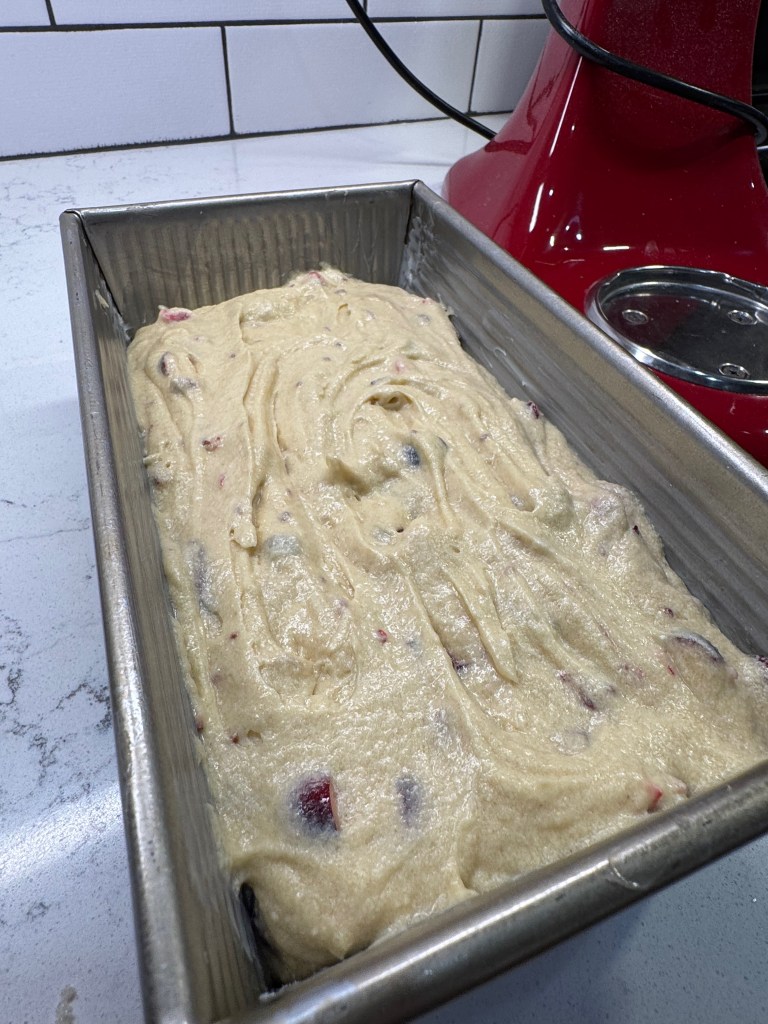
  5. When the batter is evenly blended, gently fold in the chopped cranberries. Pour the batter into the prepared loaf pan, using a spatula to smooth the top.
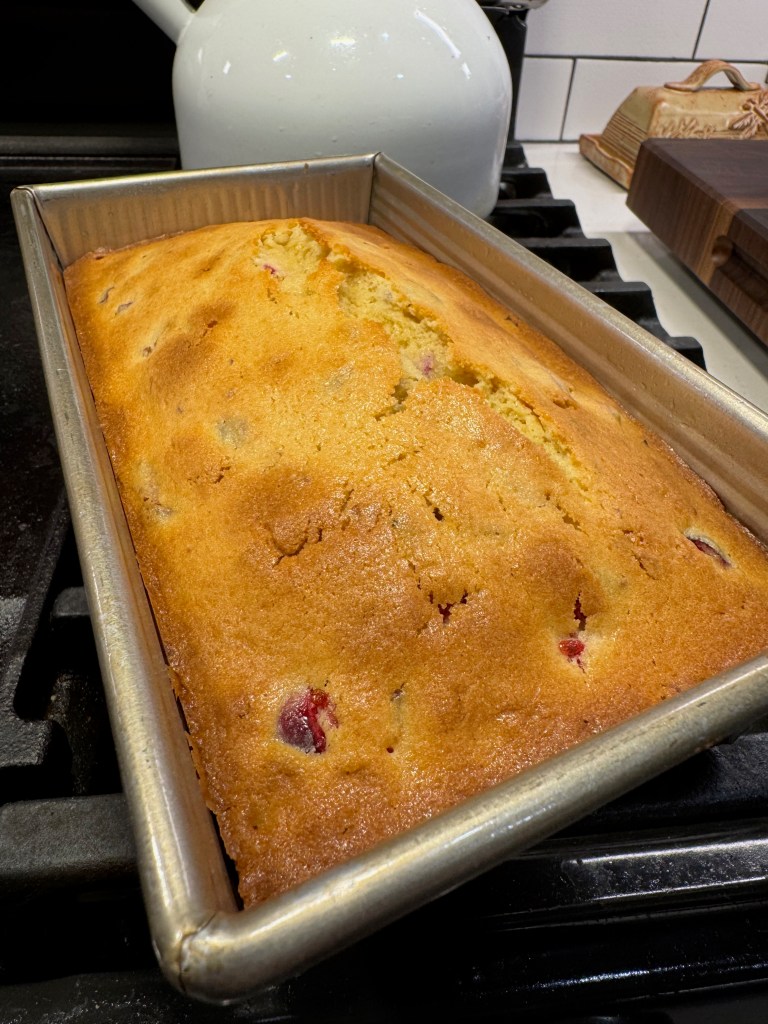
  6. Bake 50 to 60 minutes, or until cake passes the toothpick test. Cool in the pan for a few minutes, then carefully transfer the cake to a rack to cool completely.
  7. Mix glaze ingredients together until smooth; drizzle and spread over top of quick bread.

Festive Chicken Roulades

Special occasion food doesn’t have to be complicated. Sometimes, it’s the simplest flavors that have the most impact, and this is one of many lessons I learned during the few years that I pitched in at a catering kitchen back in the ’90s. But when an occasion calls for something “fancy,” there are a few tricks you can use to elevate your presentation of simple ingredients. Roulades are a great example of this concept, and it’s only a little bit of extra effort, but the impact is always great!
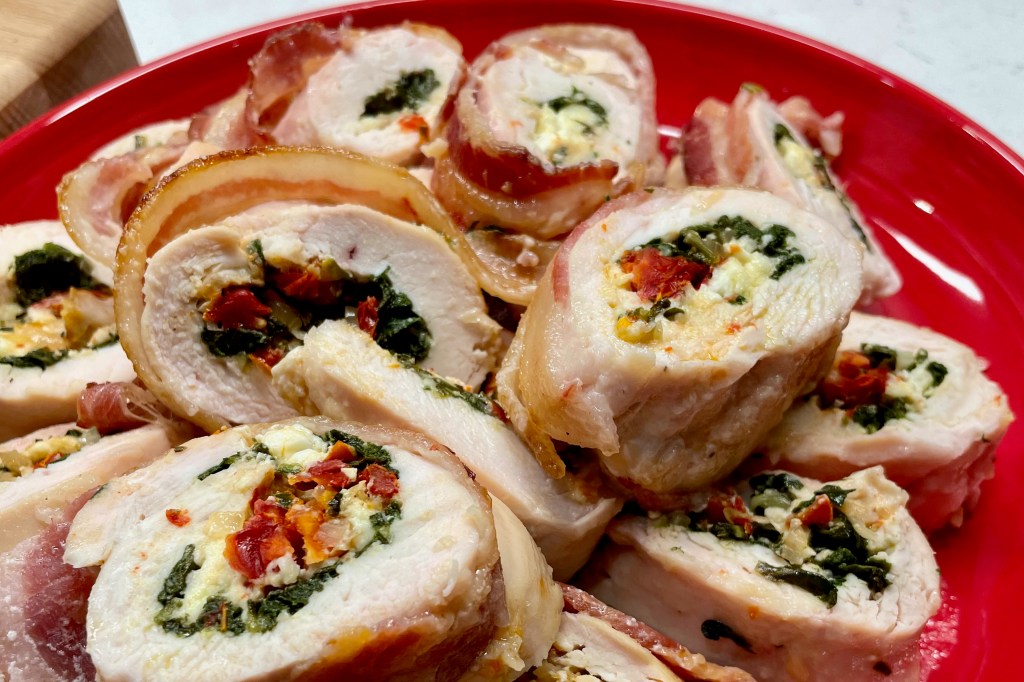
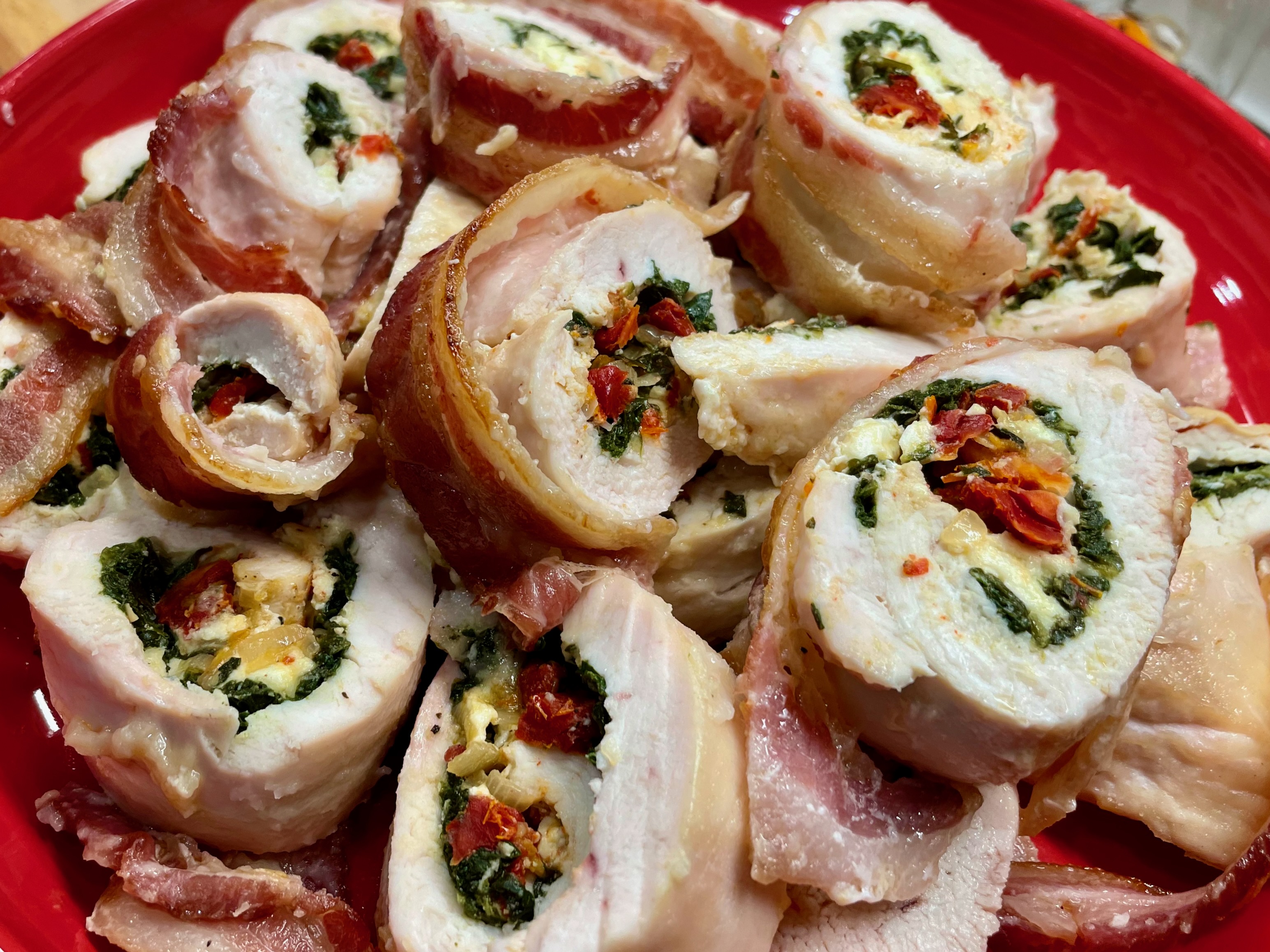
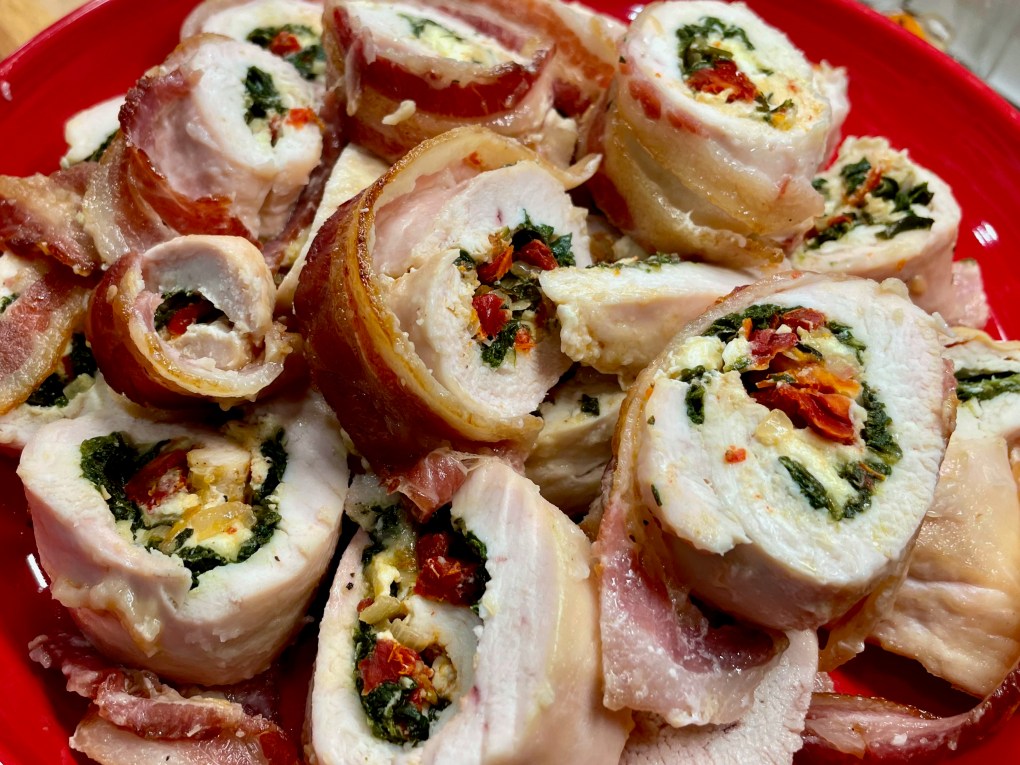
Despite the special appearance of roulades, they’re actually quite easy to make, using whatever fillings sound good to you. This time, mine are bearing festive hues of green and red (just like Christmas), with crowd-pleasing flavors of spinach, feta and sun-dried tomato. The filling is accented with sautéed shallots, garlic and Italian herb blend, and these pretty pinwheels are delicious alongside some roasted garlic mashed potatoes

Are you ready to get cookin’?

My flavors are Mediterranean, but there are so many possibilities!

Special tools

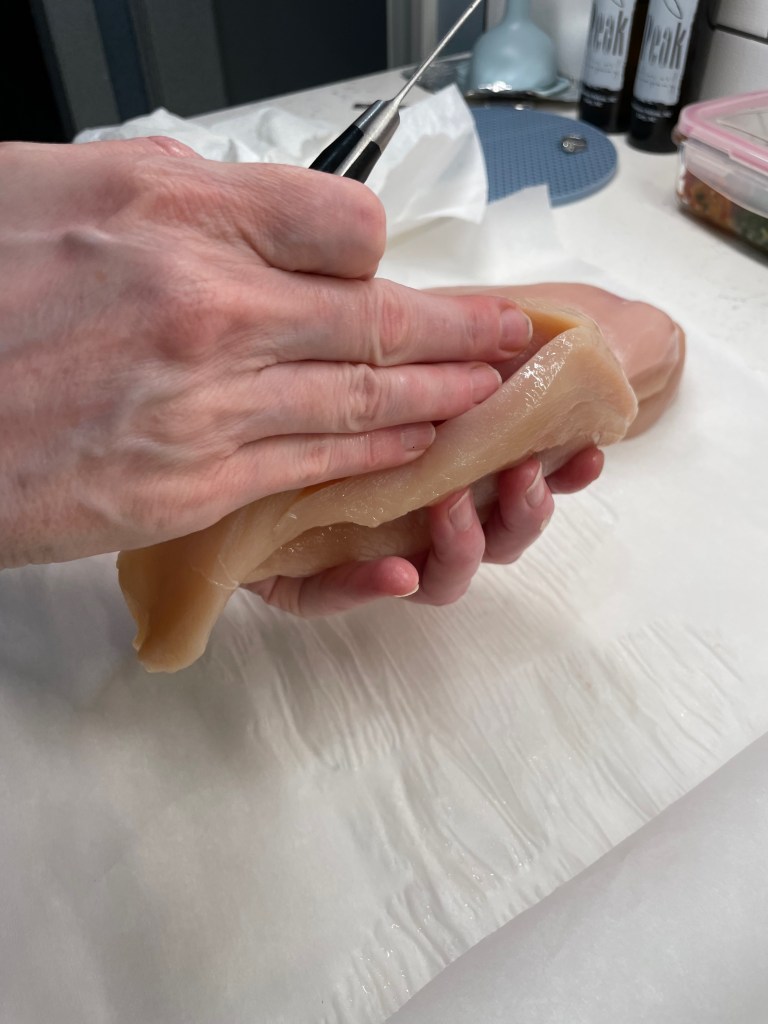
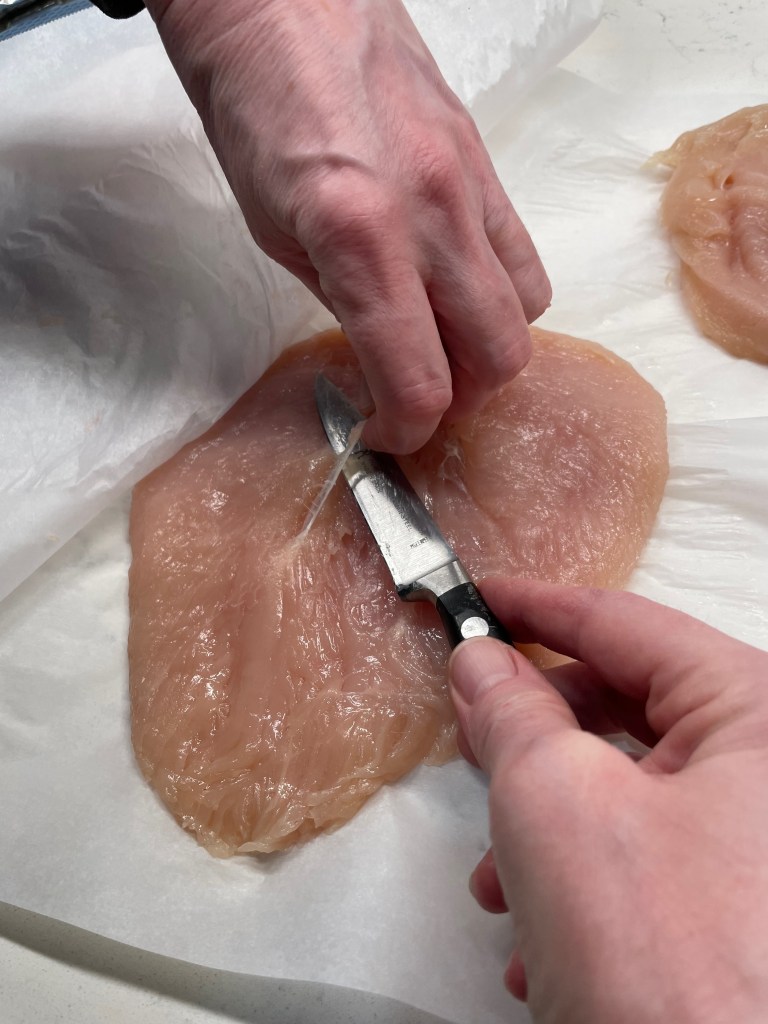
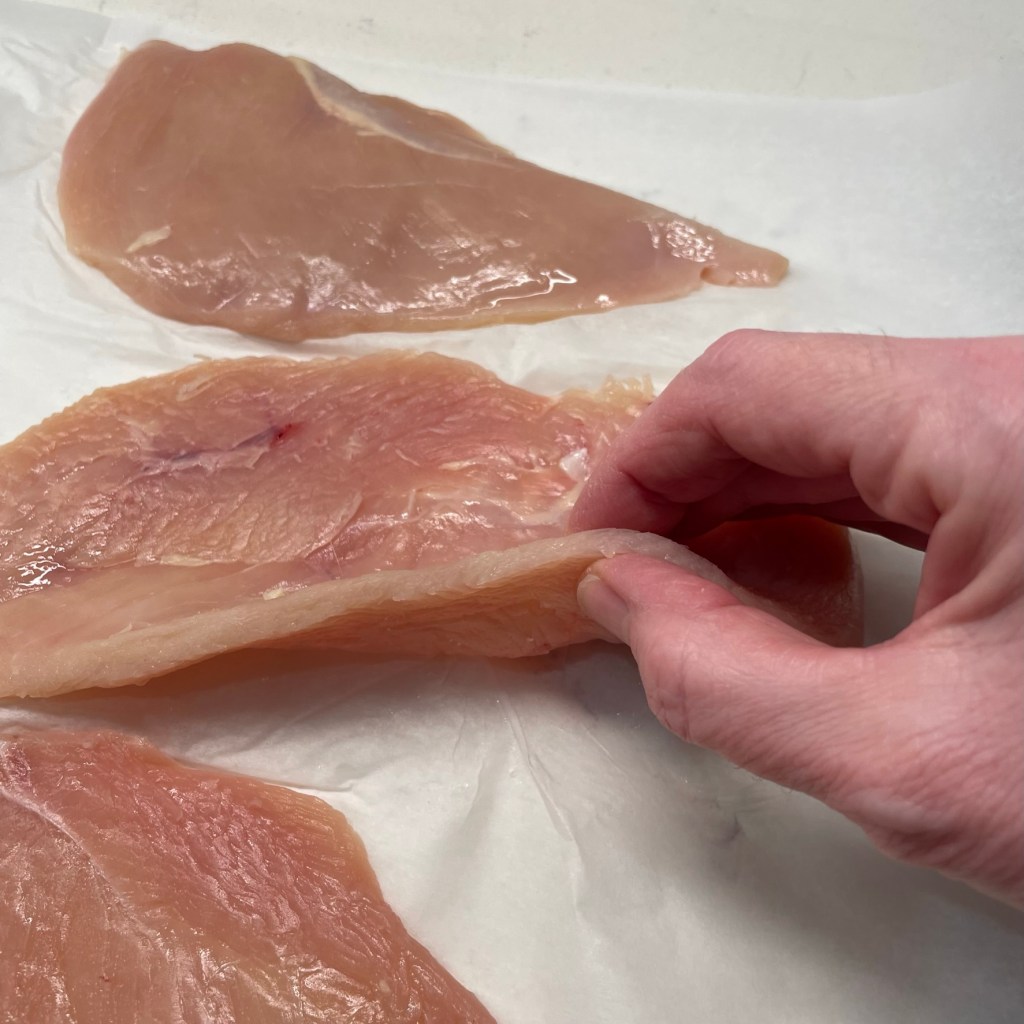
You’ll want to have a few items handy to successfully prep the chicken breasts, and the most important is a sharp, sturdy paring knife that you can use to open up a plump breast into a wider piece that can be pounded flat. A large chef’s knife is not recommended for safety reasons; using a smaller knife allows you to cut with more precision. Begin by holding the thick side of the breast toward you, and make several shallow slits lengthwise, opening the breast as you go, until it lays flat on the parchment. Take your time, and don’t use heavy pressure on the knife. Nobody wants to be at urgent care the week before Christmas.


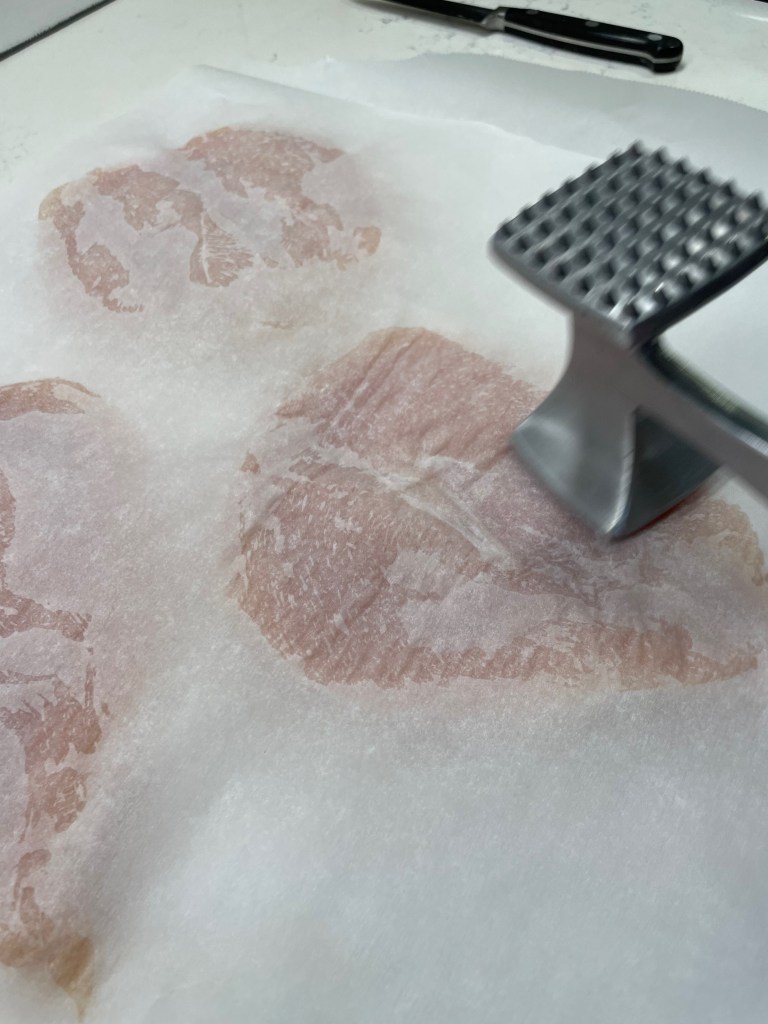
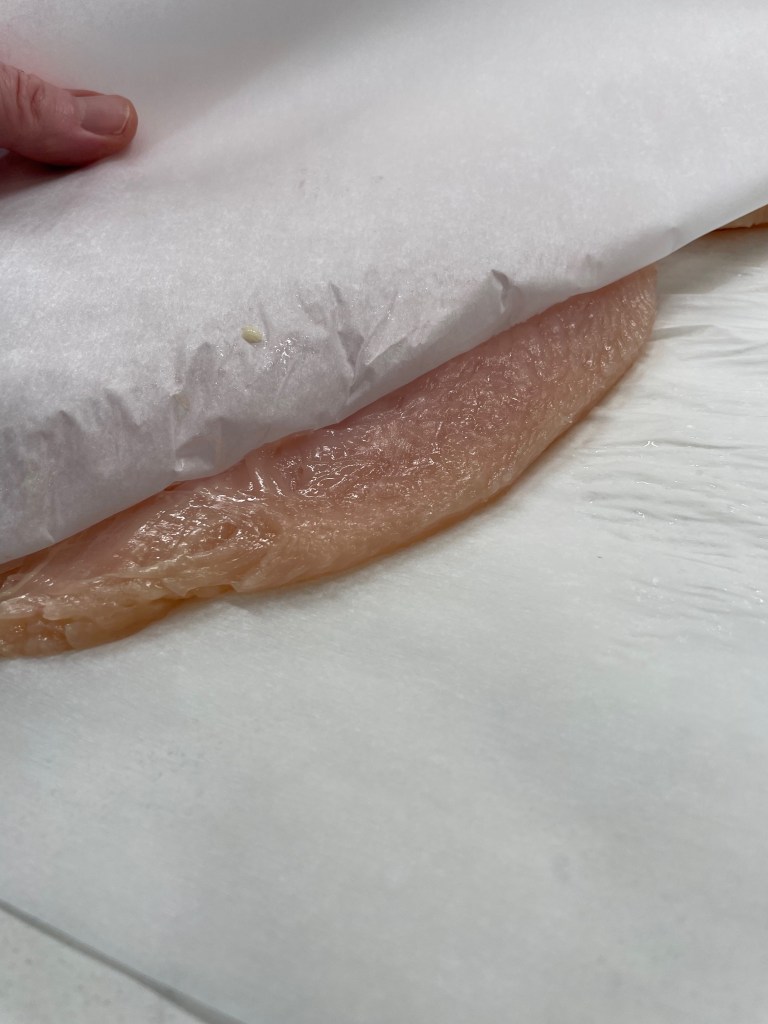
Next, you’ll need parchment or waxed paper and a smooth meat mallet for pounding the chicken. Don’t rush this, and don’t use the textured side of the mallet or you may accidentally split the fibers of the meat. The goal is to gently pound out the breast between layers of paper until it is an even 1/4-inch thickness (or as close to it as you can get). This makes the chicken more flexible for rolling up around your chosen filling ingredients, but don’t go thinner than 1/4-inch, or your chicken will tear apart.


Filling for the roulades

Just about any ingredients you like can be layered into chicken roulades, though I don’t recommend “melty” cheeses because they will always ooze out and make a mess in the oven. If you want a cheesy accent, stick with small amounts of firm cheeses, such as feta, bleu or Parmesan. Whatever vegetables you choose, chop everything small so that the filling rolls up easily and doesn’t fall out of the roulades when you bake them.


Second, cook any vegetable fillings until they are soft and tender. Raw ingredients rolled up inside the chicken will give off extra moisture and throw off the cooking time, and you’re also likely to have some unpleasant textures. To make the colors of my filling stand out, so I cooked the sun-dried tomatoes and spinach separately, but there would be no harm in cooking it all together to save a little time.

Don’t miss a chance to add flavor!

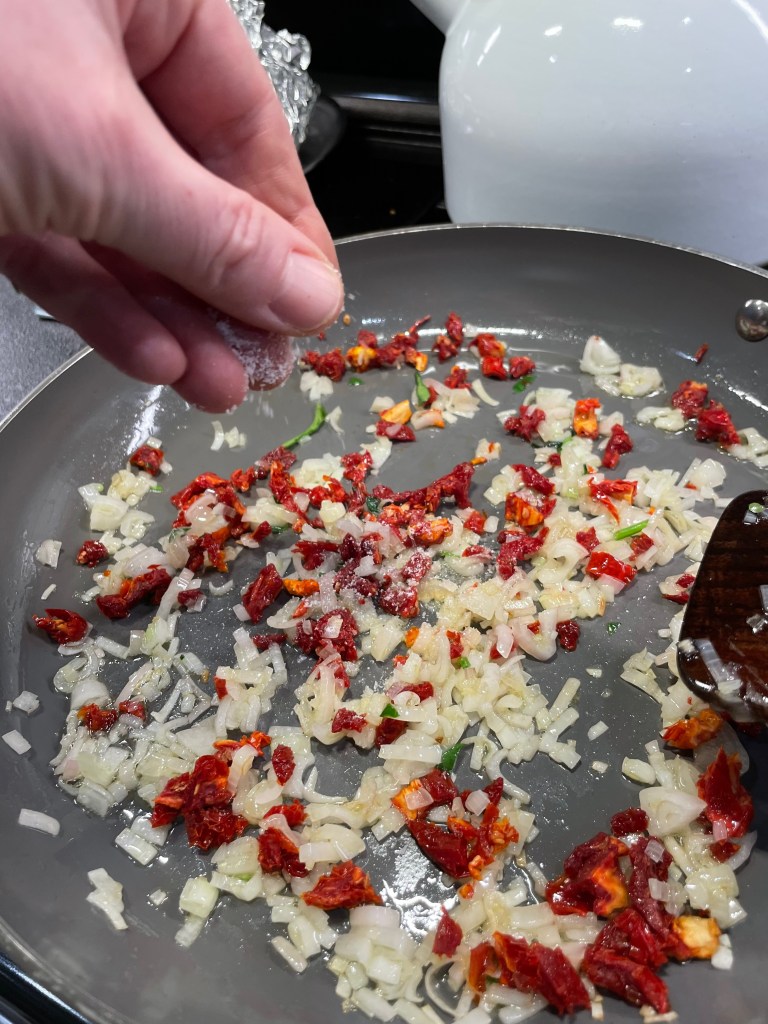
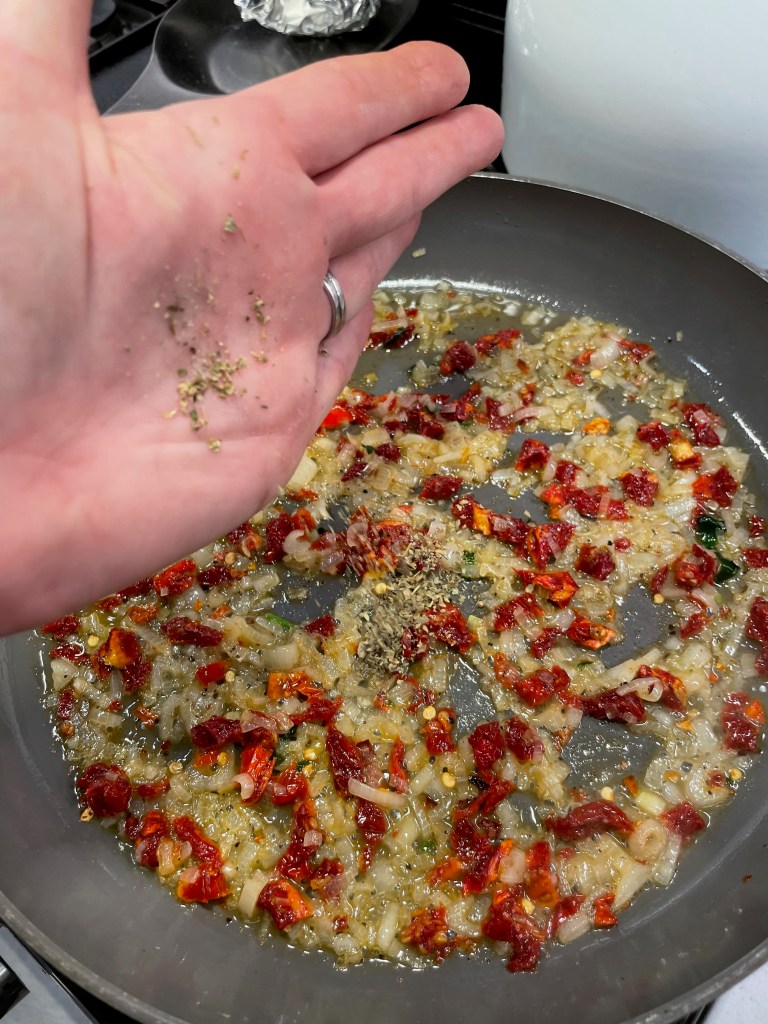
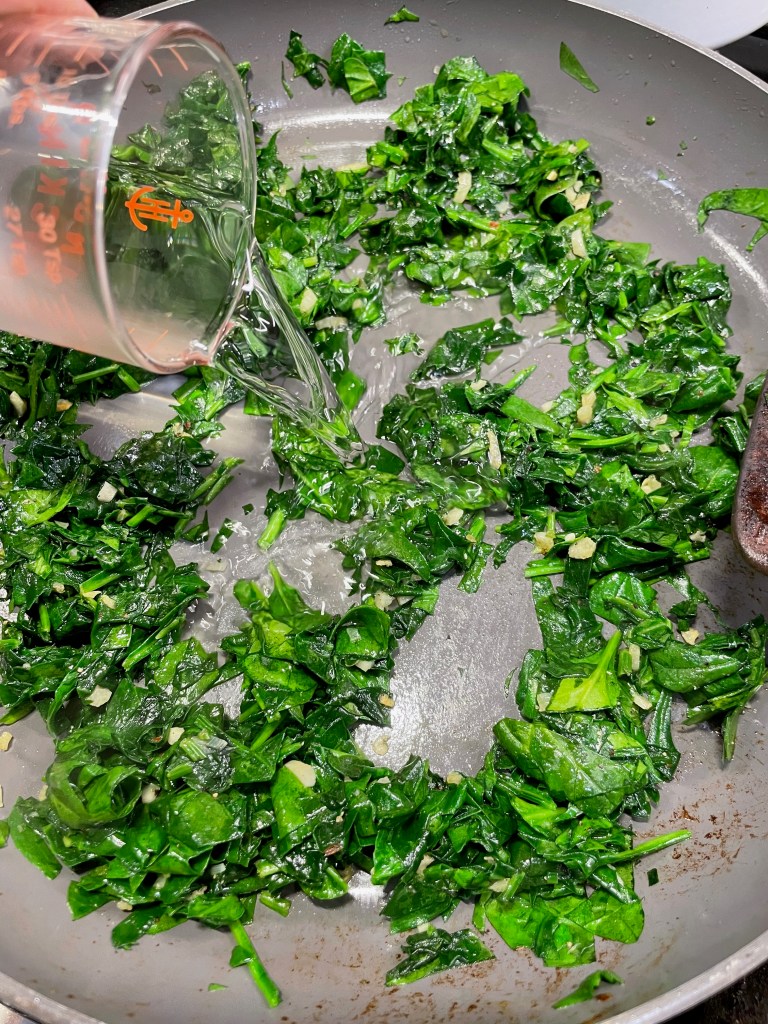
A little Italian herb seasoning and a pinch of Calabrian chile flakes gave my sun-dried tomato mixture some pizazz, and then I simmered with a splash of chicken stock until all the liquid was cooked off. To add depth to the spinach and garlic filling, I braised it in a shot of dry vermouth, again cooking until the excess moisture was evaporated. Dry white wine would be fine here; I just never have one open anymore and the vermouth is more interesting.

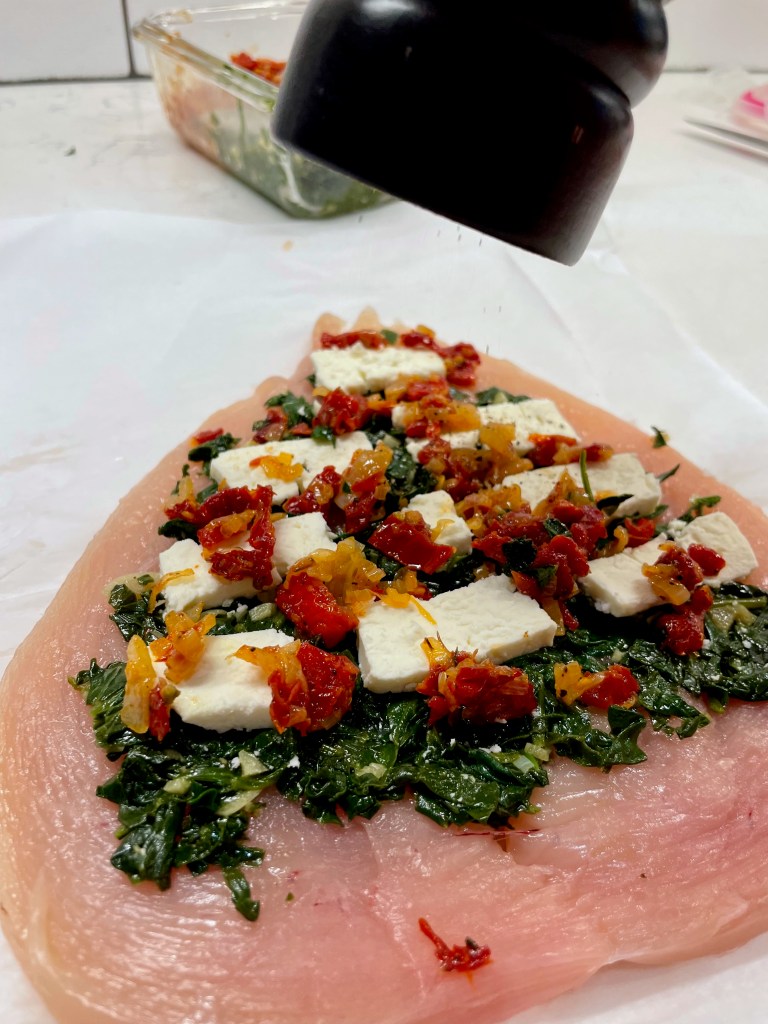
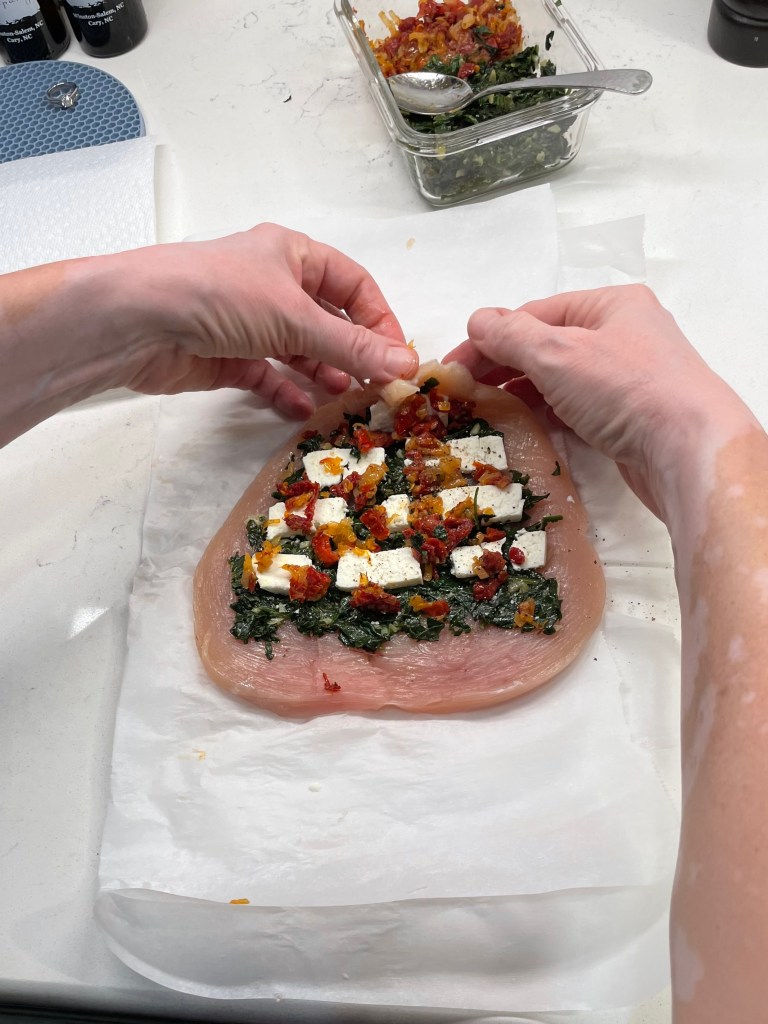
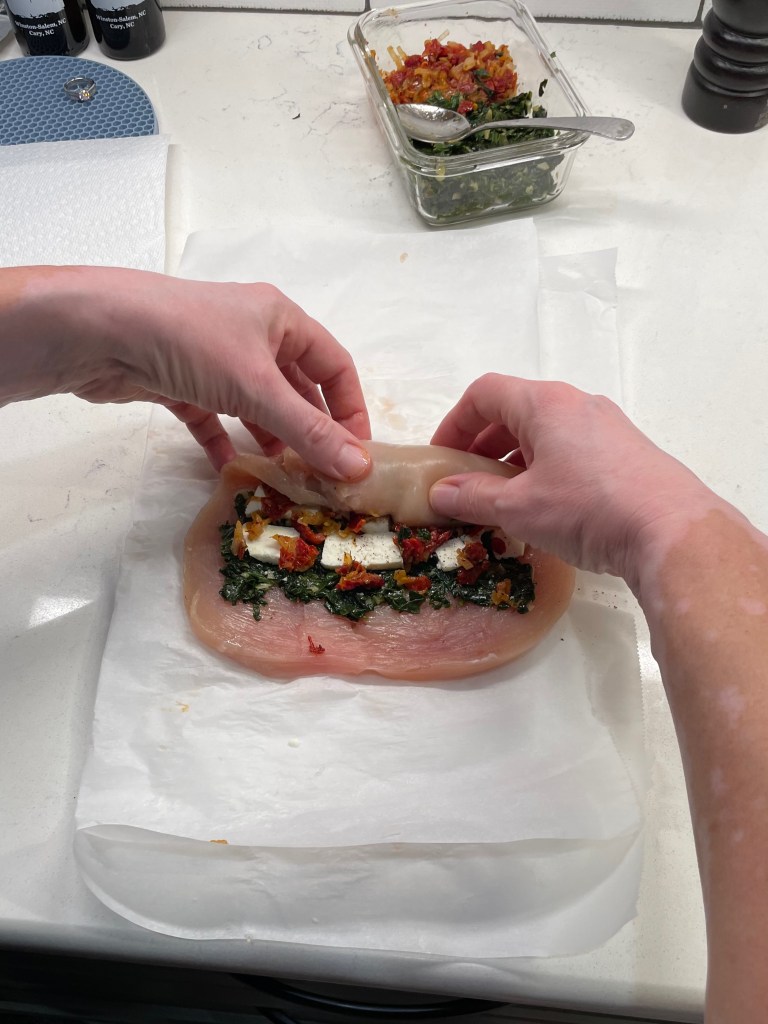
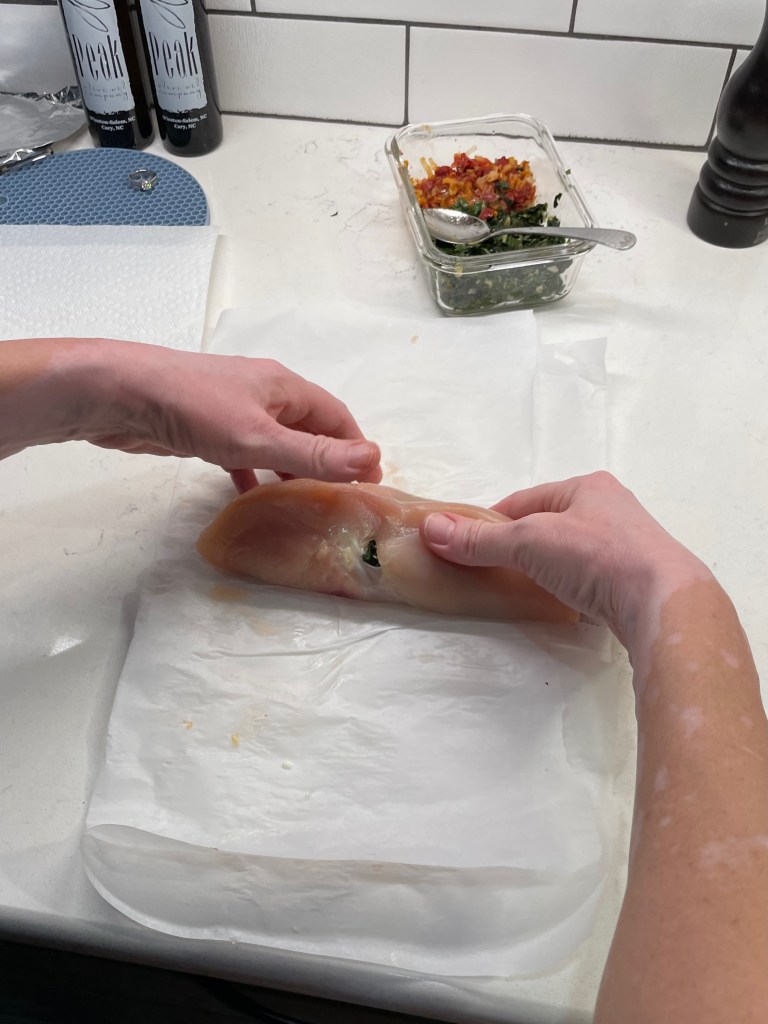
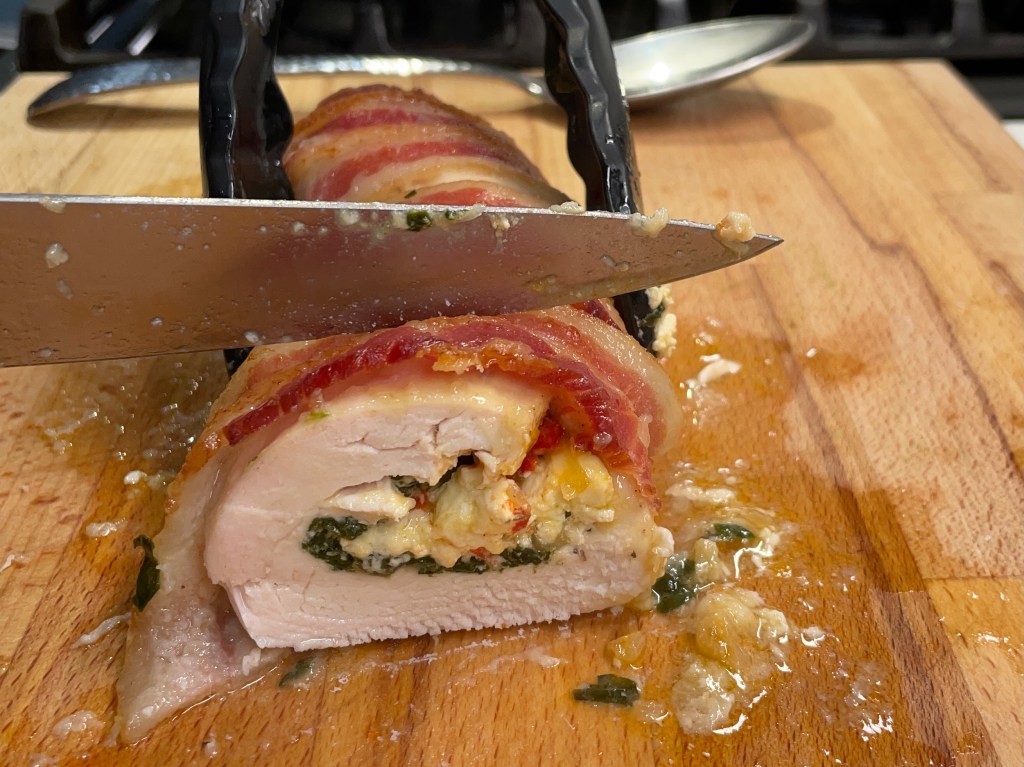
My chicken was layered with the spinach mixture, then thin slices of salty feta, and finally the sun-dried tomato mixture. Begin rolling from the pointed end of each butterflied breast, so that the fillings stay secure inside. The great thing about roulades is that any part of this could be done in advance to save precious time when you’re ready to entertain. You could even roll and refrigerate them in advance and just pull the whole baking sheet out of the fridge an hour before you bake.


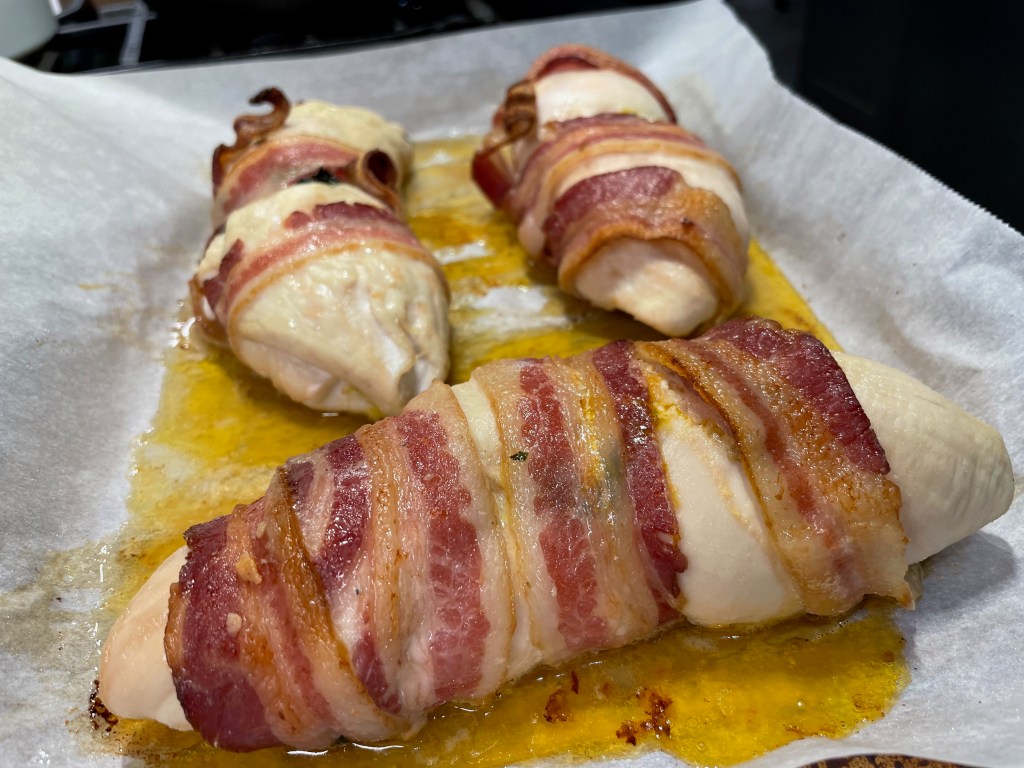
Secure the roulades with toothpicks, or stretch and wrap thin bacon slices all around before placing them (seams or bacon ends down) on a parchment-lined baking sheet. These go straight into the oven— no browning or searing is needed— and they’ll need about 40 minutes at 350° F. Let them cool a few minutes before slicing into one-inch thick rounds. Serve immediately.


These festive chicken roulades were moist, tender and so flavorful. It made a delicious entree with Les’s amazing roasted garlic mashed potatoes, but I could also imagine them with polenta or risotto with these Italian-themed ingredients. But there are lots of other flavorful possibilities. Now that you know how to make roulades, drop a note in the comments to let me know what filling flavors you would like to try!


Festive Chicken Roulades

  • Servings: 4 generous portions
  • Difficulty: Average
  • Print

With favorite flavors and a few easy techniques, you can transform simple ingredients into something special for holiday entertaining. These roulades are filled with spinach and sun-dried tomato, but as long as your filling ingredients are chopped small and pre-cooked, the possibilities are endless!


Ingredients

  • 1 1/2 pound package skinless, boneless chicken breasts (see notes)
  • 2 Tbsp. extra virgin olive oil, divided (you’ll use half each for sautéing the spinach and tomato mixtures)
  • 2 fat handfuls baby spinach leaves, chopped
  • 2 cloves garlic, finely minced
  • 2 Tbsp. dry white wine (or vermouth, which is my go-to)
  • 1/4 cup chopped sun-dried tomatoes (see notes)
  • 1 medium shallot, finely diced
  • 1/2 tsp. dried Italian herb blend
  • A pinch of red pepper flakes
  • 1/4 cup chicken broth or stock
  • Kosher salt and freshly ground black pepper
  • 4 oz. dry feta, cut into thin slices or crumbled
  • 2 slices thin-cut bacon for each chicken breast used

Notes: The chicken breasts can be any size, and you don’t need to have one breast for each person you’re serving. They will be sliced into rounds, so as long as you have the appropriate weight package, you’ll have enough.

The sun-dried tomatoes I use are soft and pliable, ready straight from the package. If using very dry ones, rehydrate them briefly in hot water or chicken broth and then pat them dry. If using sun-dried tomatoes packed in oil, there’s no need for additional oil for sautéing them with the shallots.

Directions

  1. Preheat oven to 350° F, with rack in center position. Line a baking sheet with parchment paper.
  2. Butterfly the chicken breasts; use a sharp paring knife to cut shallow slits along the fat edge of the breasts, opening as you go until the breasts lay flat on the counter. Place between layers of parchment or waxed paper and pound gently with the smooth side of a meat mallet until they are a uniform, 1/4-inch thickness. Season with salt and pepper and set aside.
  3. Heat one tablespoon of the oil over medium heat. Add the sun-dried tomatoes and shallots and sauté until tender. Season to taste with salt and pepper, plus Italian herb blend and red pepper flakes. Add chicken stock or broth, simmering until the liquid evaporates. Cool completely.
  4. Heat remaining olive oil over medium heat. Add the chopped spinach and garlic and sauté until spinach is fully wilted. Season with salt and pepper, and stir in dry white wine; continue cooking just until the liquid evaporates. Cool completely.
  5. Place the butterflied chicken breasts in front of you, with the pointed ends at the top. Divide spinach mixture evenly over the breasts, then arrange the feta and sun-dried tomato mixture. Roll each chicken breast tightly, starting at the narrow top so that you finish with a long edge. Use toothpicks to secure the edges of the chicken to the roulades, or gently stretch two slices of bacon to wrap around each breast, covering as much as possible.
  6. Bake the roulades (uncovered) 35 to 45 minutes, or until bacon is fully cooked and chicken is opaque but not dry. Internal temp should be ~165° F. Let roulades rest at least five minutes, then slice into one-inch thick rounds and serve immediately.


Lemon Cream Pie Cocktail

The summer has gone by so quickly this year, and in a few ways, it has been a bummer of a season. First there was not enough rain and all the grass died, then too much rain and everything flooded. It was too hot to be outside for very long, and we were too busy to slow down and sip on a sweet taste of summer in the backyard. And then, of course, our grill died (sigh). Despite the fact that Labor Day is behind us, we still technically have a few weeks left of summer and I’m here to enjoy the last of it.

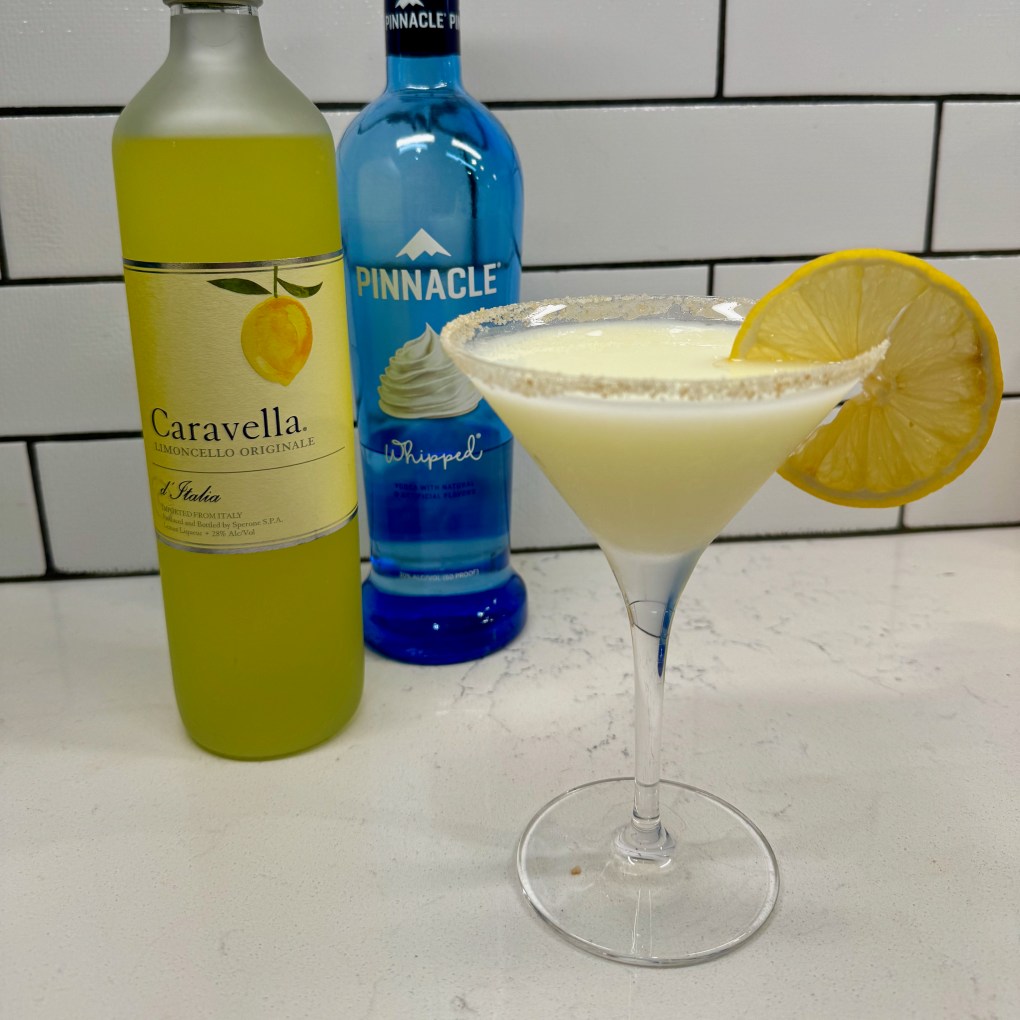
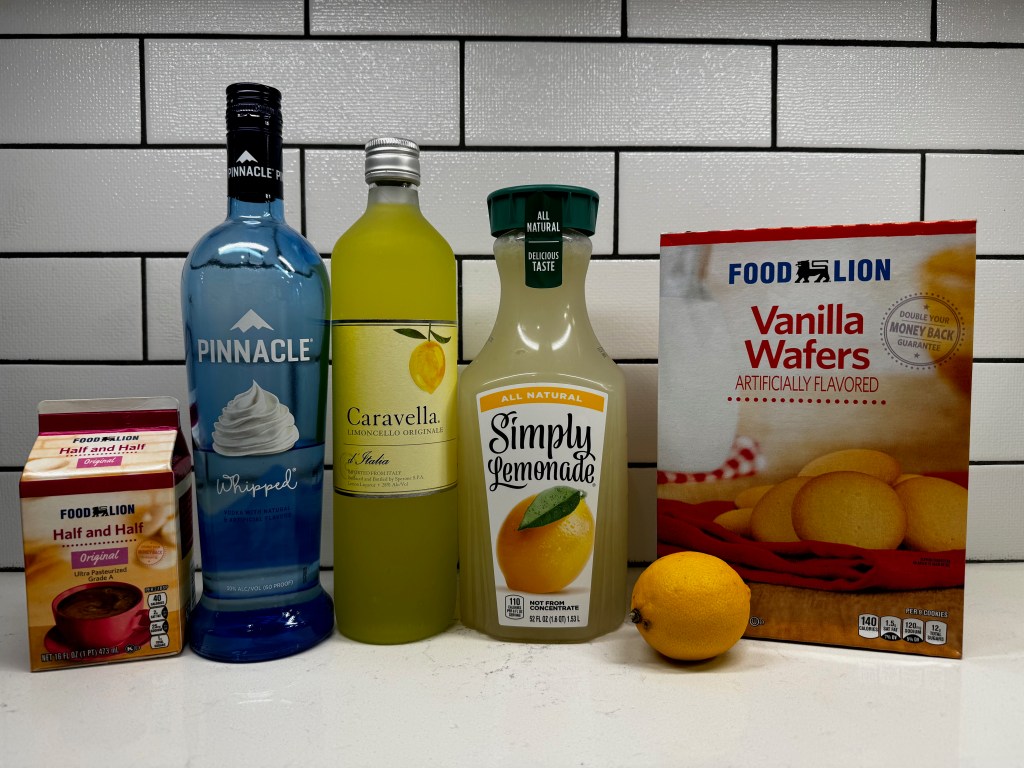
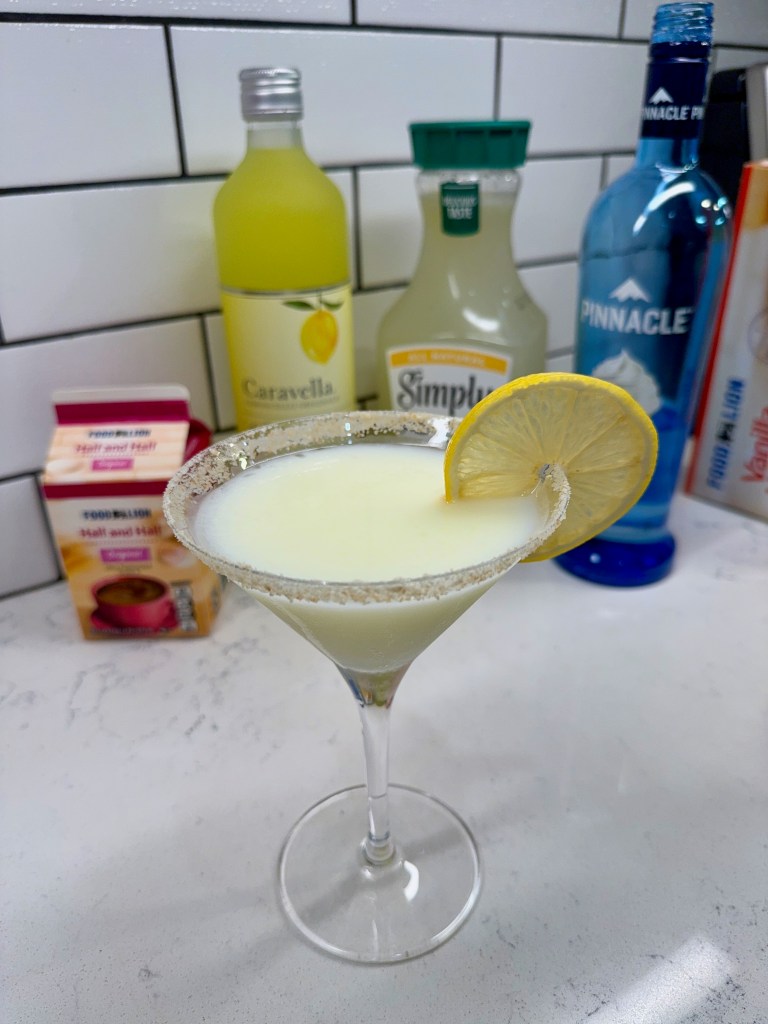
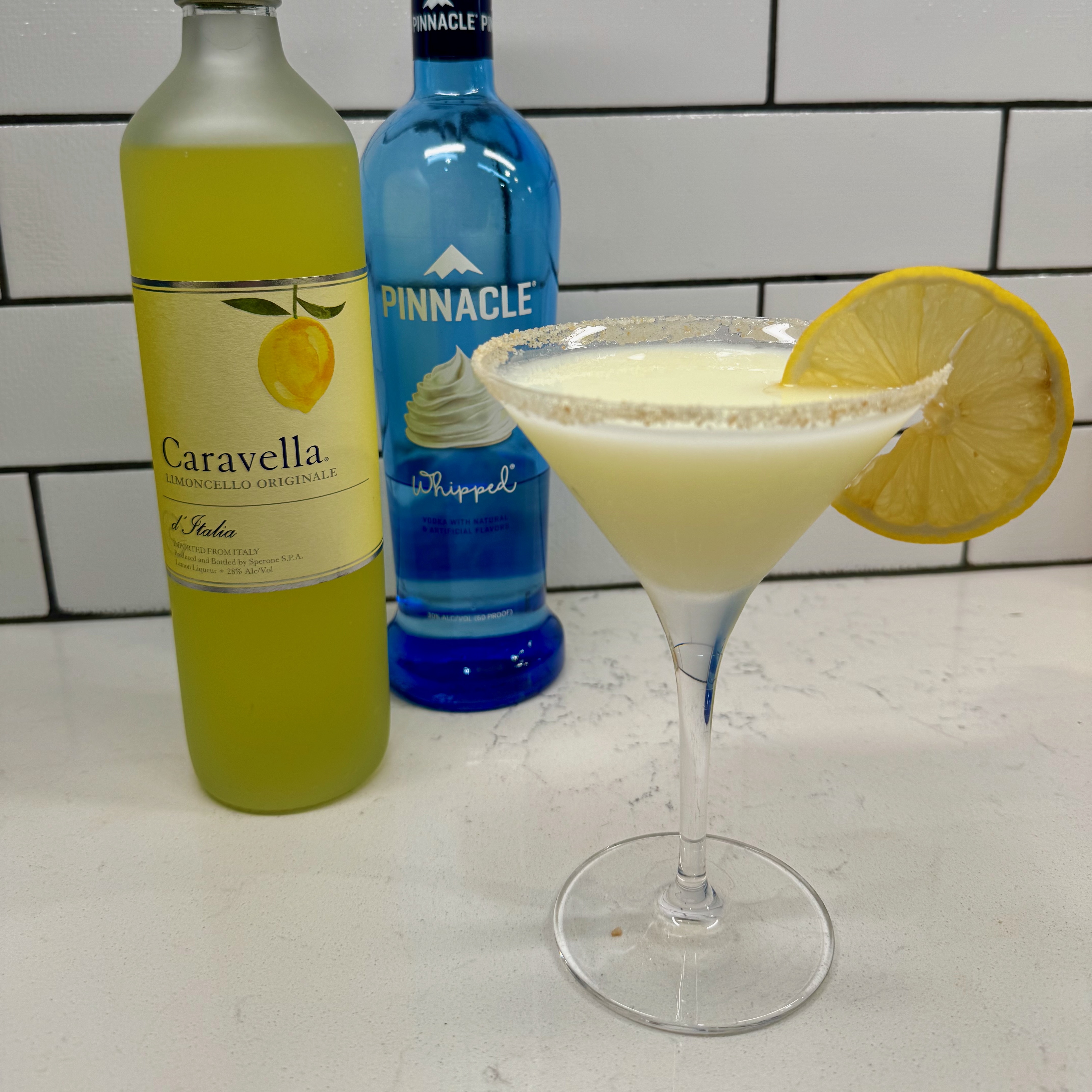
This lemon cream pie cocktail is simple, but still feels fancy enough to turn an ordinary September weekend into a special occasion. There are no fancy syrups or bitters required, and no hard-to-find spirits. All you need is a shaker, some ice from the freezer door, a few vanilla wafers if you want a dessert-inspired rim, and four liquid ingredients:

It already looks like dessert, doesn’t it?

Limoncello is the star of this show, and I’m hard pressed to find anything that tastes more summery. It is a popular Italian liqueur, traditionally made from lemons grown on the Amalfi coast. The process for making limoncello involves stripping the bright yellow peel from a basketful of fresh lemons, macerating them in sugar and mixing with neutral grain alcohol (usually vodka). It is delightful for sipping or mixing into other drinks. My particular brand of limoncello checks in at only 28% ABV, which translates to 56 proof. Nice and easy. 😎

Whipped cream vodka is a novelty spirit, and it tastes exactly as you might expect. Like a boozy, sweet whipped cream. This is not my usual path to “happy hour,” but every now and again, it’s fun to use in a frilly drink. Eventually, I will share my other recipes to help you use up your bottle. Like the limoncello, this whipped cream vodka is also on the easy end of the booze meter at 60-proof. Several brands make whipped cream vodka; if you can’t find it, check out my substitution tips in the notes section of the click-to-print recipe card below. 

The other two ingredients needed for this drink are lemonade— fresh homemade would be awesome, but I use Simply Lemonade— and a splash of half and half. 

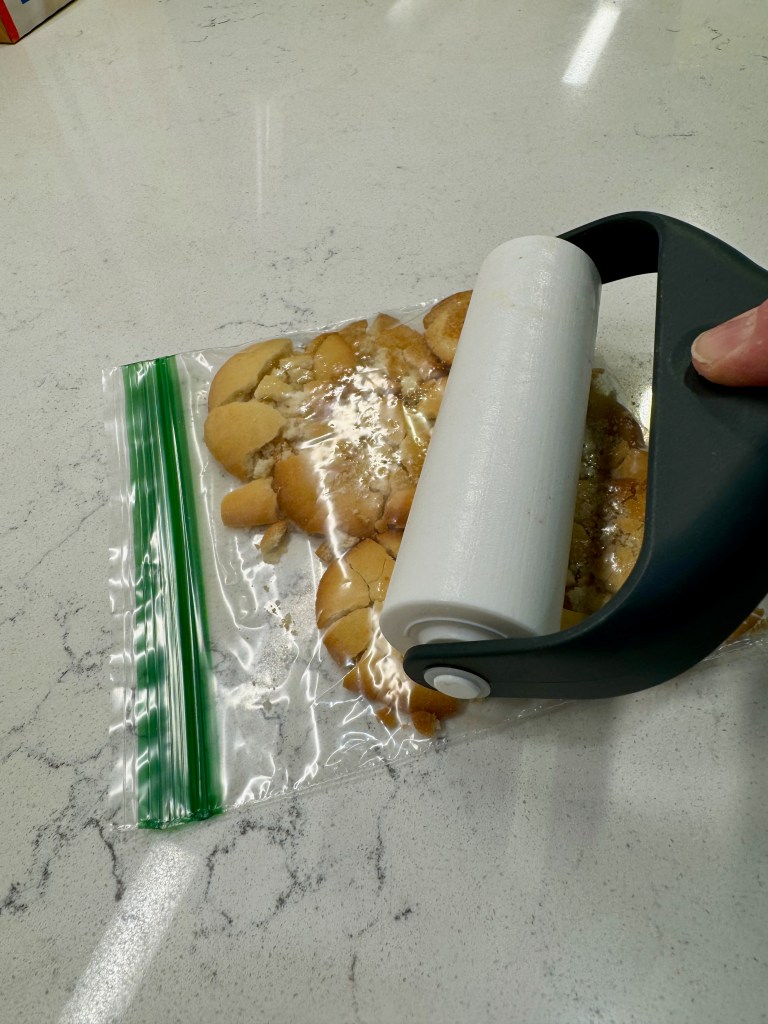
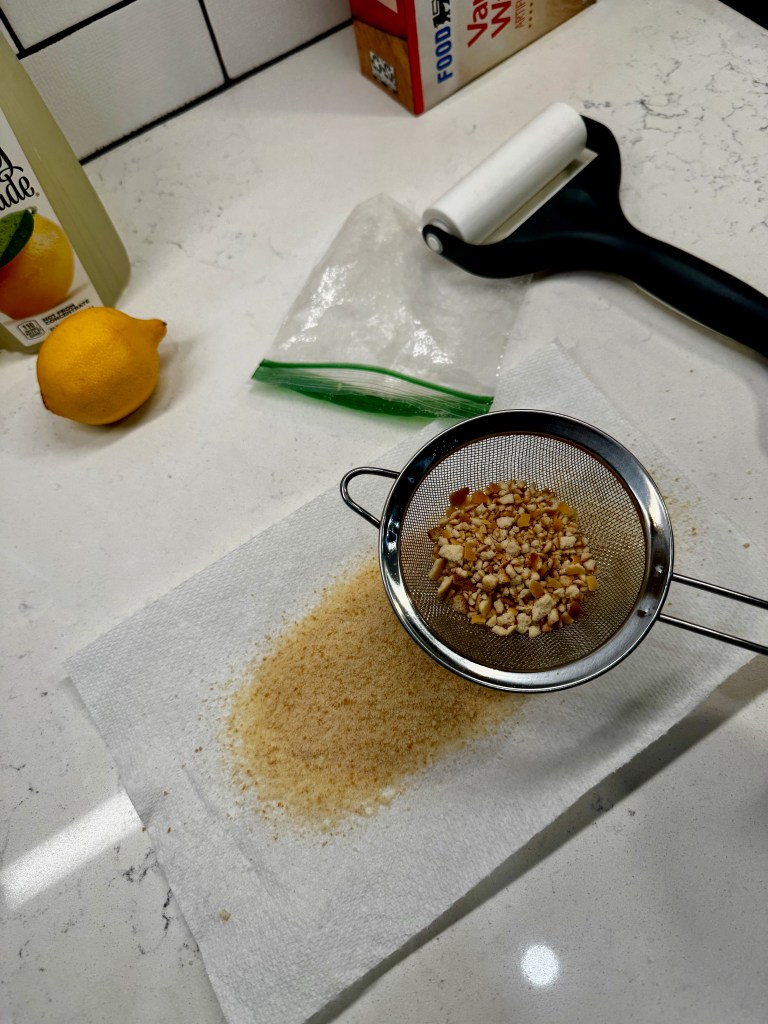
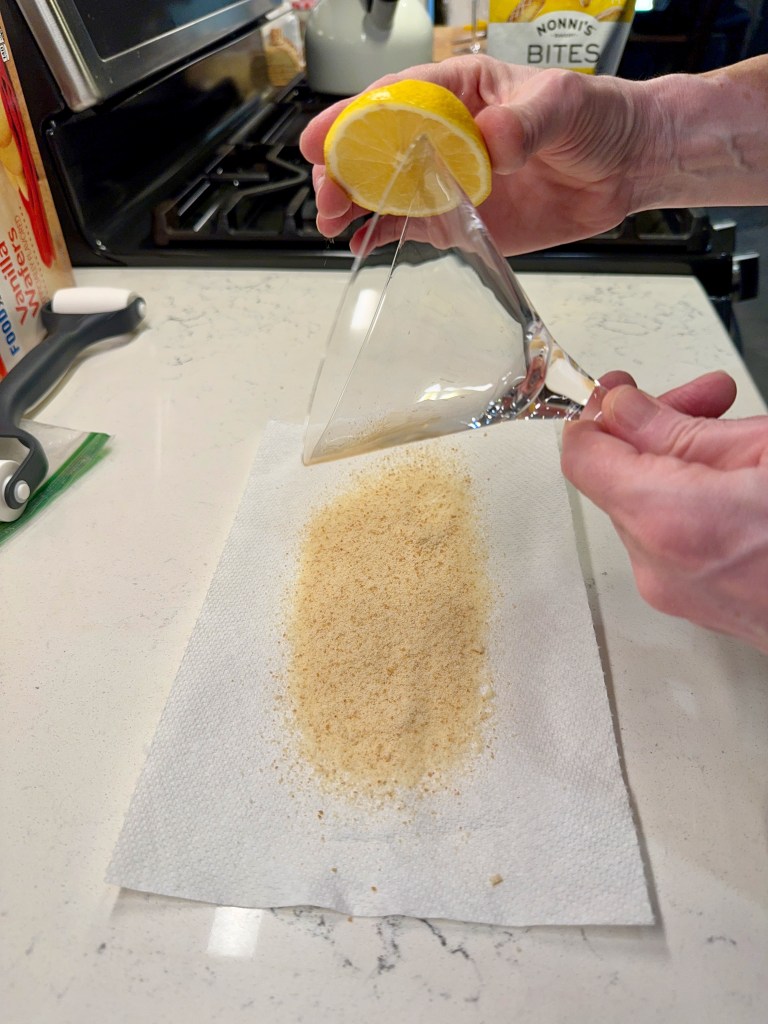
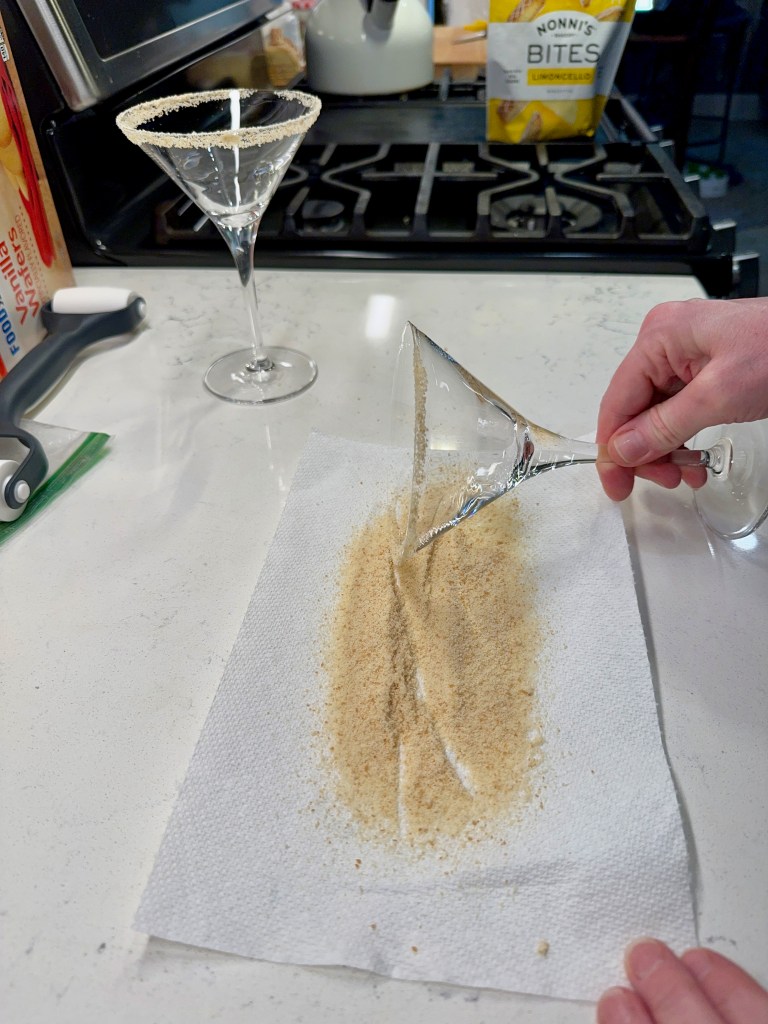
Finally, if you want your lemon cream pie cocktail to have more of a “dessert” vibe, consider crushing few vanilla wafer cookies for the rim of your martini glass. This was a suggestion by my friend, Pam, who is wild about both lemon and fancy cocktails. As I was developing this drink, I had invited Pam over for sampling, and we pondered what might be a pretty garnish for such a light, fresh drink. As we sipped and marveled over how much it tastes like lemon cream pie, the idea of a vanilla crust came to Pam, and here we are!


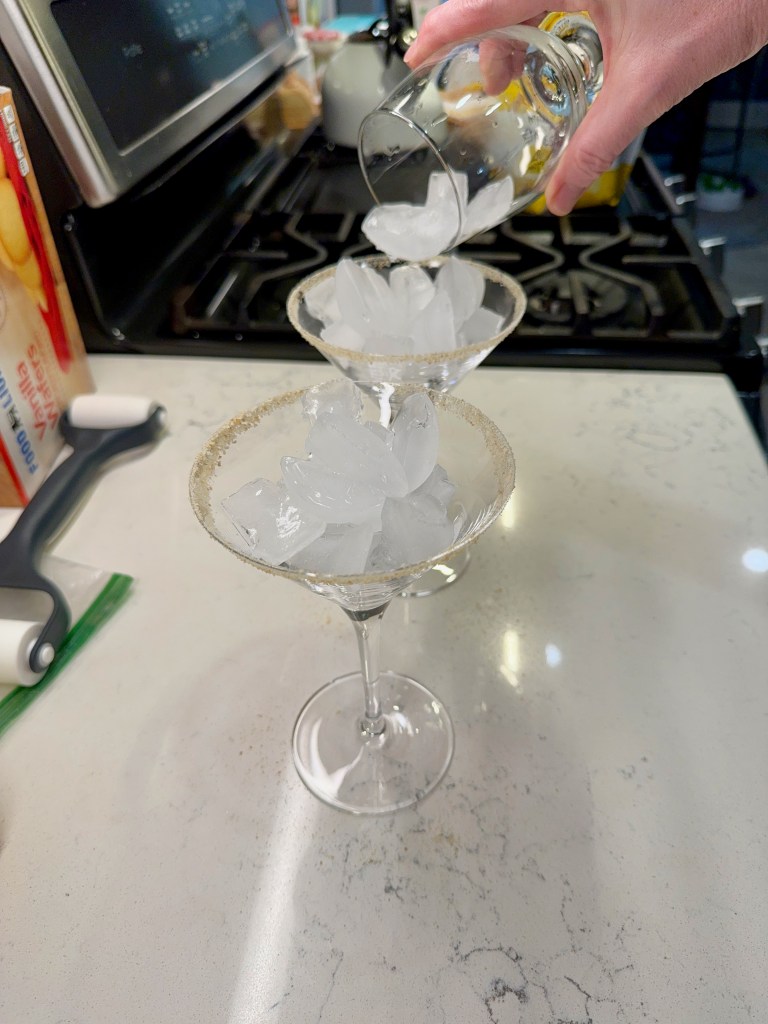
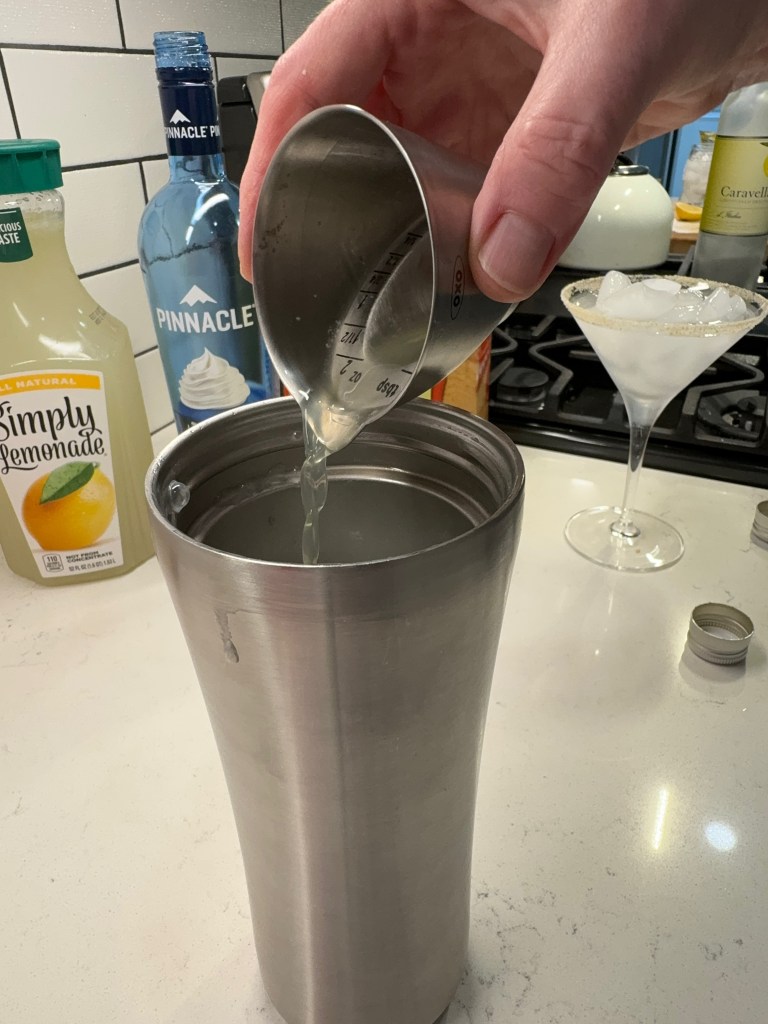
Warm weather’s a-wasting— let’s get to making this drink, shall we? For each drink, you’ll need two ounces of that lovely limoncello. This may seem heavy handed, but remember that it’s low-proof. An ounce of the whipped cream vodka is next, and then a half-ounce each of the lemonade and half-and-half. Combine all of that in your shaker and give it a little swirl before adding a cup of ice. I’ve learned along the way that it’s best to add ice after all your other ingredients are in the shaker; otherwise, they will not dilute at the same rate.


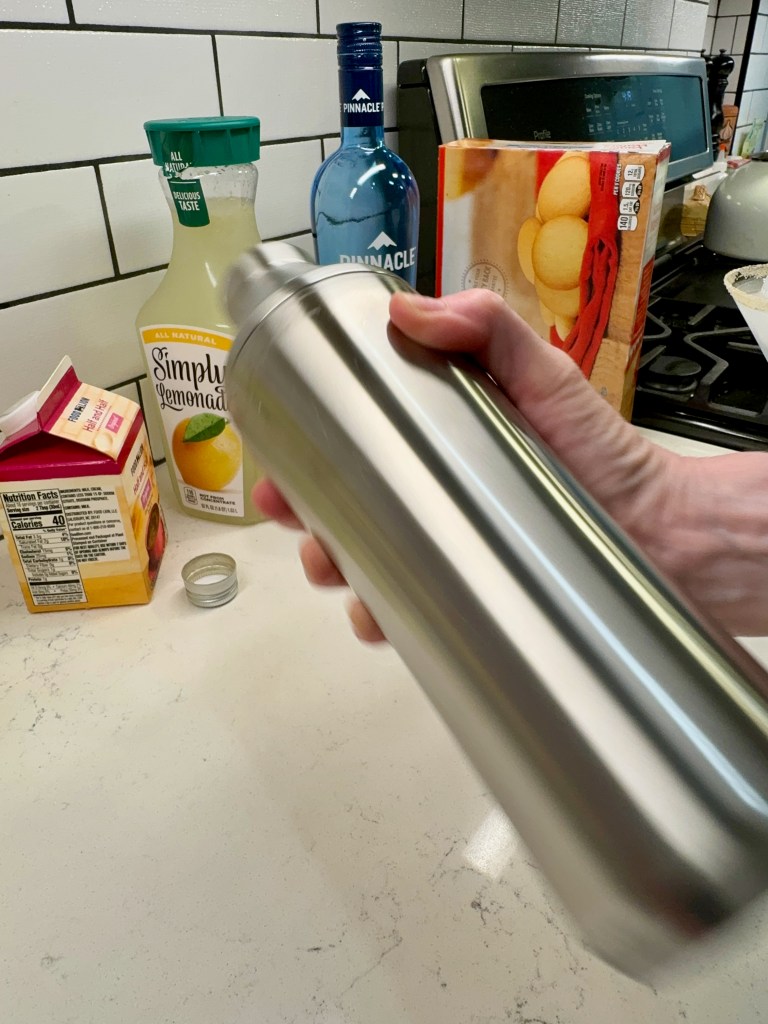
Give it a solid shake for about 20 seconds, then strain into your prepared glasses and enjoy the rest of summer with a little taste of sunshine!

Lemon Cream Pie Cocktail

  • Servings: 1 drink
  • Difficulty: So Easy!
  • Print

This pretty drink is easy to make from simple ingredients. Add an extra touch of dessert by rimming the glass with crushed vanilla wafers!


Ingredients

  • 2 oz. limoncello liqueur
  • 1 oz. whipped cream vodka (see notes for substitution)
  • 1/2 oz. fresh lemonade
  • 1/2 oz. half-and-half
  • A handful of vanilla wafers, crushed (for glass rim, if desired)
  • Thin slice of lemon (for garnish, if desired)

Notes: Whipped cream vodka is a lower proof, flavored sweet vodka, and several spirit companies make a version of it. If you can’t get your hands on it, substitute regular vodka (but only 3/4 ounce), and use a sweetened whipped cream in place of half-and-half. This won’t be exactly the same, but close enough to keep the balance of sweetness without too much harsh alcohol bite.

For non-U.S. readers, half-and-half is a dairy product containing approximately 12% milk fat, somewhere in between whole milk and heavy cream. If you cannot get your hands on it, go with light cream or whipping cream. Milk will be too thin. Be sure to shake the drink really well before straining.

Directions

  1. Prepare glasses by swiping a lemon slice around the outer edge of a cocktail glass, then rolling the outside only through the crushed vanilla wafers. Fill the glass with ice and set aside to chill for about 5 minutes.
  2. Add limoncello, whipped cream vodka, lemonade and half-and-half to a cocktail shaker and give the mixture a little swirl to blend. Add one cup of ice cubes and shake firmly for 20 seconds, or until the outside of the shaker is uncomfortably cold.
  3. Empty ice from glasses and then strain the cocktail into the glass. Garnish with a slice of lemon.


Chocolate & Cherry Crepes

I have mixed feelings about special occasions that fall in the middle of the workweek, and with Valentine’s Day on a Wednesday this year— not to mention in the same week as Super Bowl and Mardi Gras— I’m both frustrated and relieved that it won’t be as big a deal. 

I’m not one to go nuts over this “holiday,” which smacks of overdone commercialism and sky-high expectations for everything to be perfect. My husband and I usually stay home and either cook for each other or, as will likely be the case this year, keep it low key and simple. I don’t need roses, wine and chocolate to know that I’m loved.

But this year, the easiest time to make a lovely homemade meal for Valentine’s Day would be this Saturday; unfortunately, it’s getting crowded out at our house by the Super Bowl. I’m reminding myself that I don’t need grand gestures, but the truth is I’m disappointed. My husband will feel loved if the table is loaded with spicy queso dip, Buffalo wings and cold beer, but I will genuinely miss preparing an elegant, more “fancy” meal. 

If nothing else, I will find a way to throw a little romance onto the scene this weekend, probably in the form of dessert. And I know exactly what he craves— chocolate and cherries!

I can’t go wrong with this flavor combination!

For Valentine’s Day last year (which was a Tuesday, also not ideal), I re-created our 2020 sweetheart meal of crispy duck breast with cherry-pinot noir sauce, and Les was thrilled. For dessert, it was an encore performance of chocolate and cherry crepes. My iPhone camera did not capture good photos of the dish itself that first time— it was before I began blogging— but I believe you can see the bliss in my lover’s eye as he enjoyed his special dessert. 

Even with crappy lighting, it’s easy to see that this dessert made him happy!

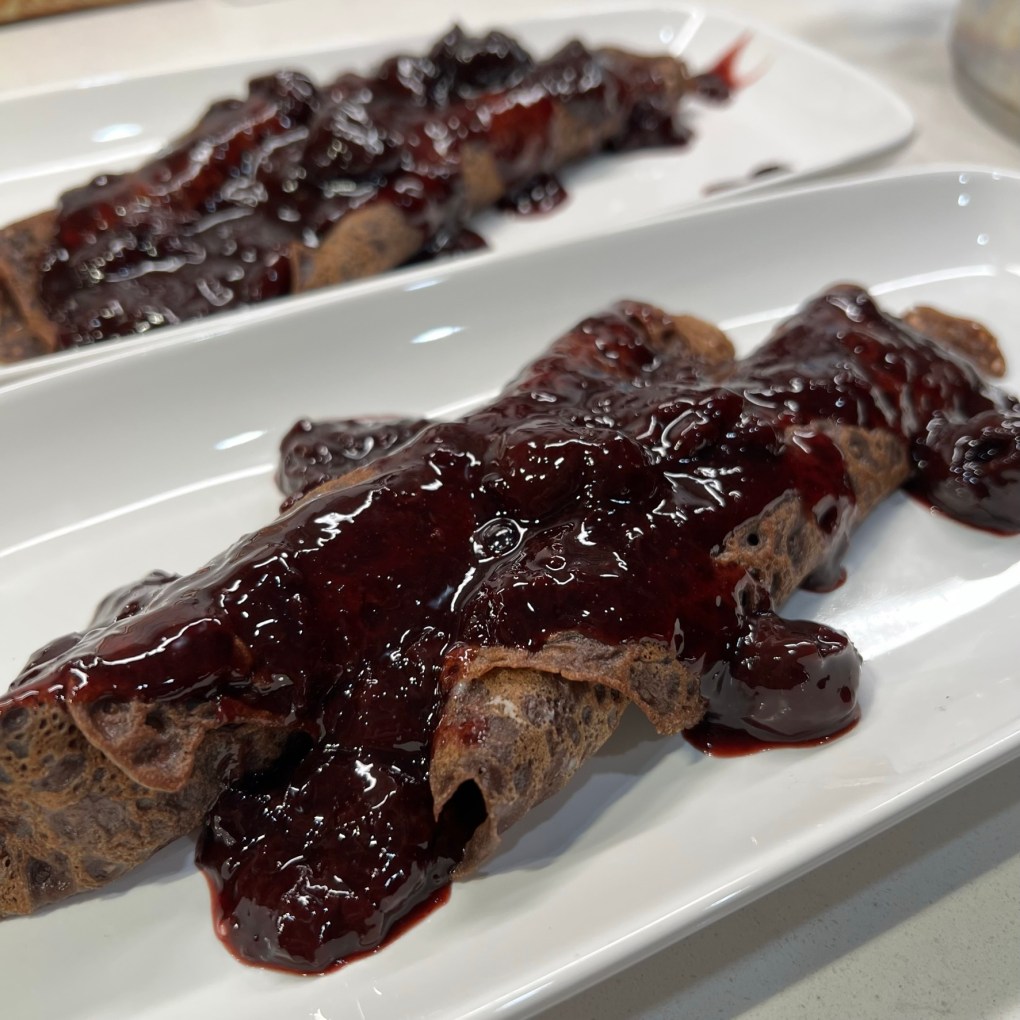
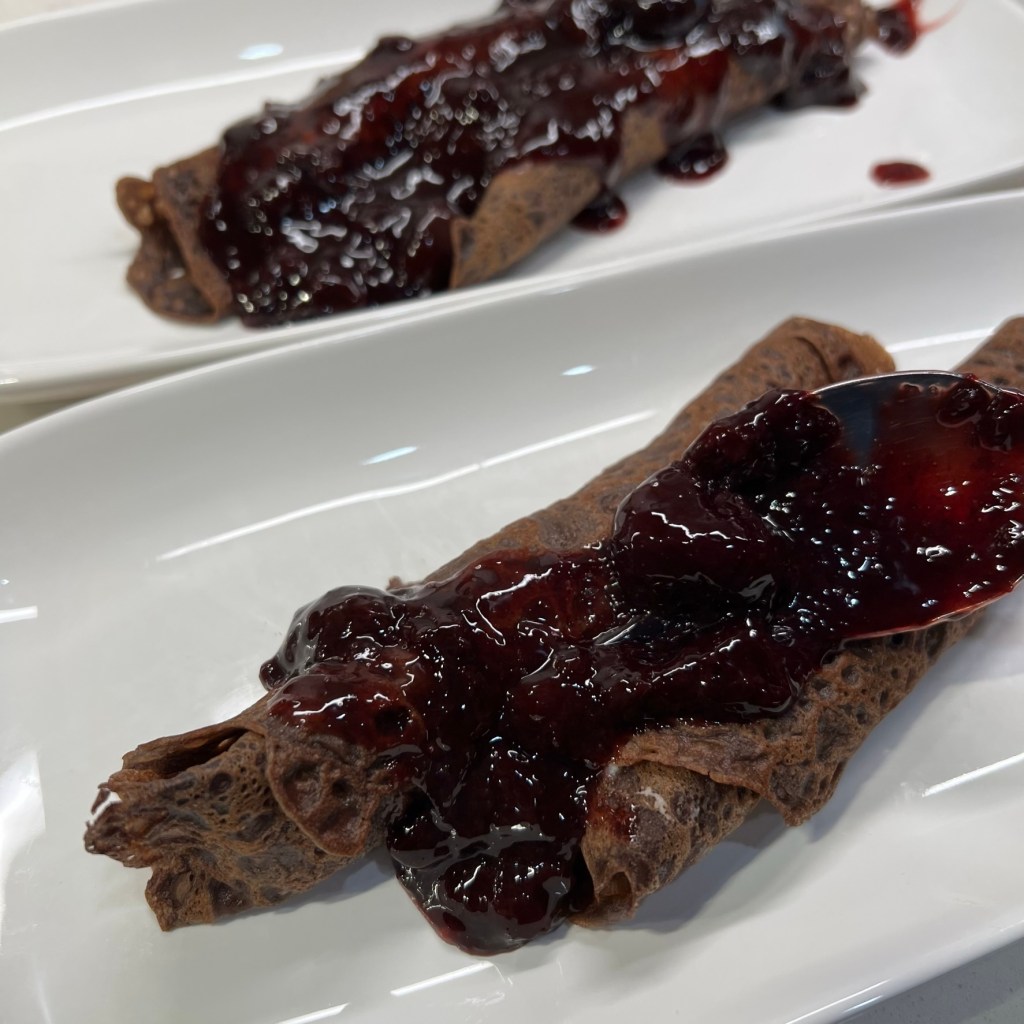
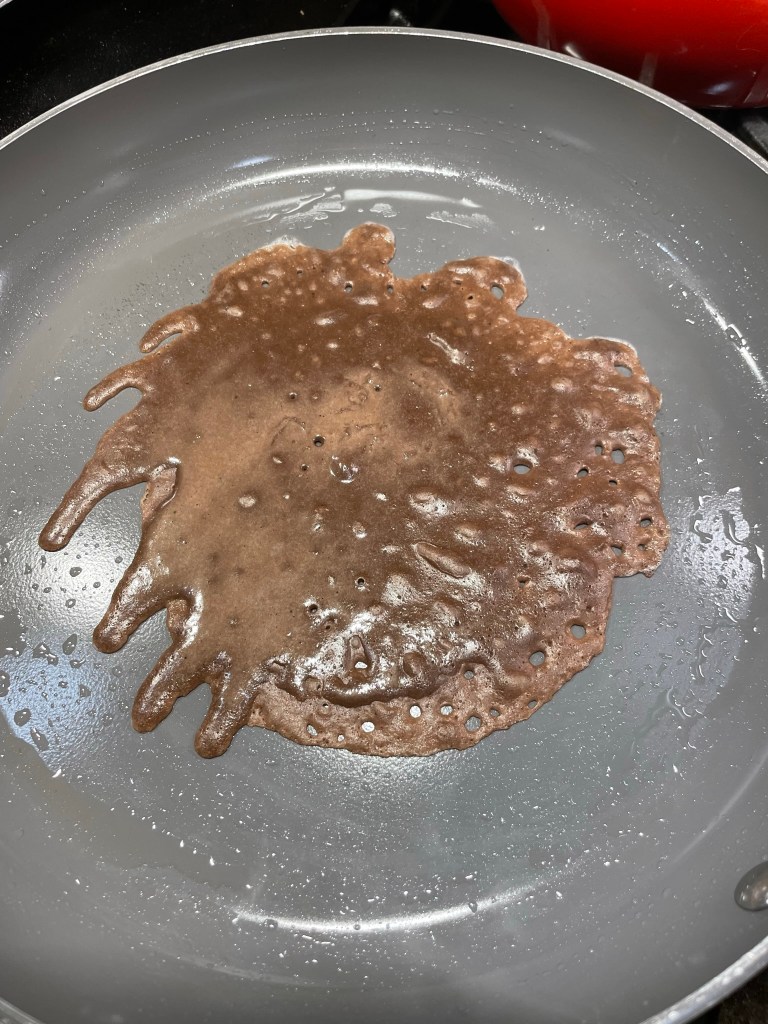
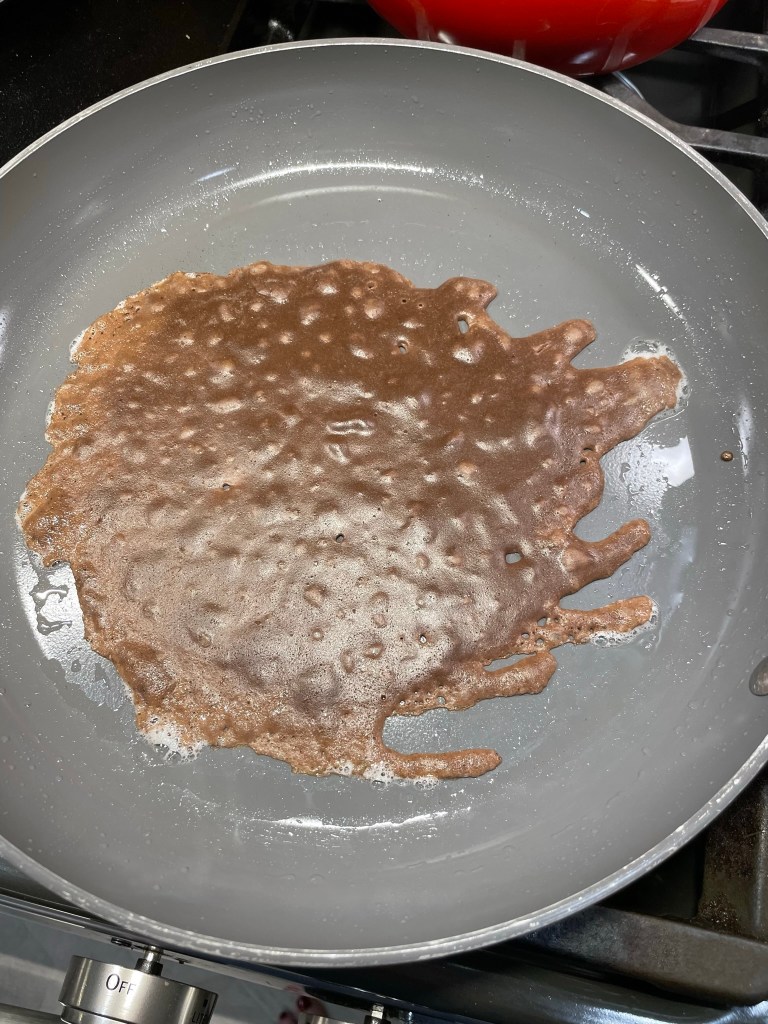
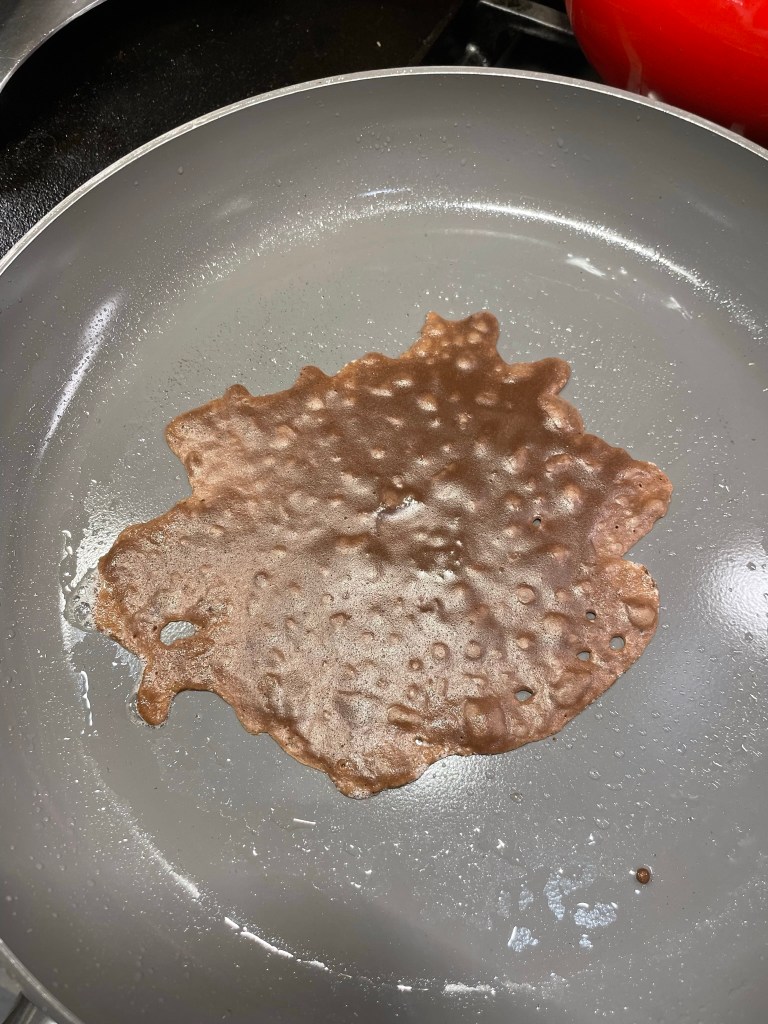
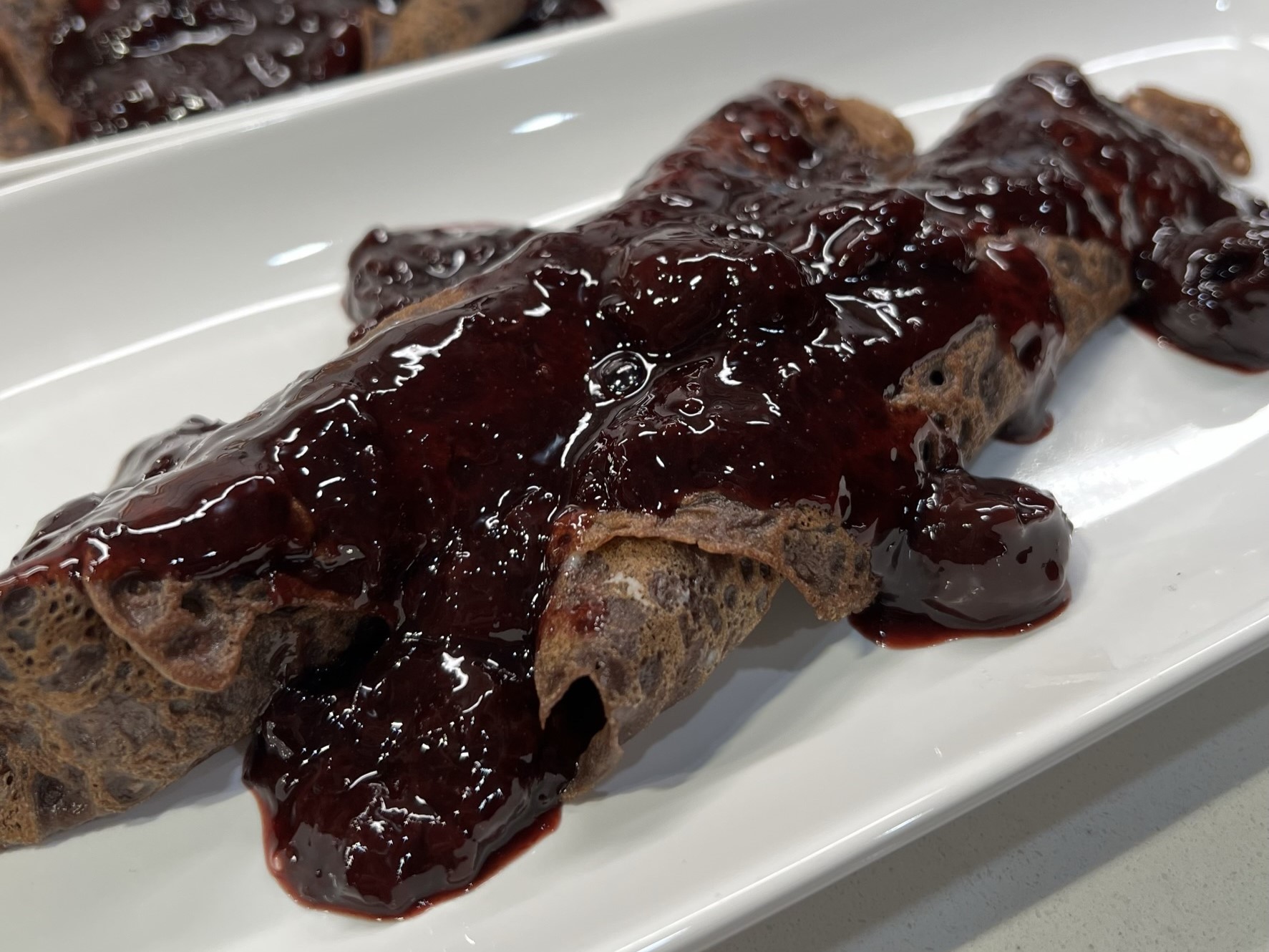
These are homemade chocolate crêpes, created with double dark cocoa powder and rolled up with an almond-kissed, sweetened mascarpone filling, and then topped with a simple-to-make sweet cherry sauce. And though I’m still a novice when it comes to making crêpes (try not to laugh when you see my photos), I can confirm that after you roll them up and bury them in cherry sauce, nobody will notice if they aren’t perfect.


The best thing about these crêpes— besides the fact that the flavors are divine— is that you can make every part of them in advance and assemble them when you’re ready to sweep your lover off his or her feet. The crêpe batter actually benefits from some fridge time, so you can even make it the day before. One of these days, I’ll get the hang of cooking them pretty, but for now, the advice I’ll offer is to make extra batter (in case your first ones are duds) and cook them ahead of your occasion. The crepes can be layered with parchment or waxed paper and stored in a zip top bag in the fridge until you’re ready to assemble them with the filling and sauce.


The mascarpone is super simple and the cherry sauce, which is conveniently made with frozen dark cherries, can be made ahead and warmed in time for dessert.


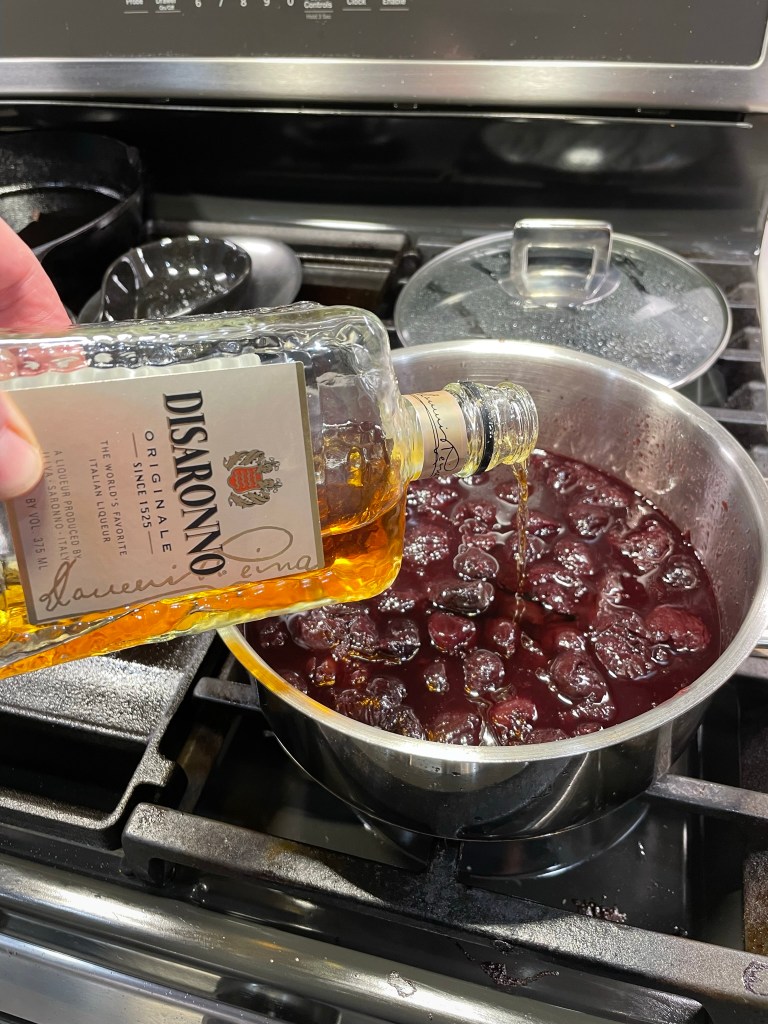
The cherry sauce is so delicious, even if you don’t want to mess with the crêpes, you might find this a perfect topper for ice cream or a brownie or pound cake or anything else you and your Valentine enjoy. I flavored mine up with a splash of amaretto because I love the combination of cherry and almond, but you could skip this or swap in a splash of rum or brandy if you’d like. Assembly of the crêpes is a snap.


Chocolate & Cherry Crêpes

  • Servings: 4
  • Difficulty: Average
  • Print

The best thing about this dessert, besides the marvelous flavor combo, is that you can make every part of it ahead and simply assemble the crêpes at serving time.


The crêpe batter should be made ahead and left to rest in the refrigerator for several hours, up to a full day. Give it a gentle whisking just before cooking to reincorporate any ingredients that have settled to the bottom of the bowl.

Ingredients

  • 1/2 cup milk
  • 1/4 cup water
  • 1 cup all-purpose flour
  • 1 Tbsp. double dark cocoa
  • Pinch salt
  • 1 Tbsp. cane sugar
  • 1 egg
  • 2 Tbsp. melted butter
  • ½ tsp. vanilla
  • Additional butter, used for cooking the crêpes (about 1 tablespoon)

Directions

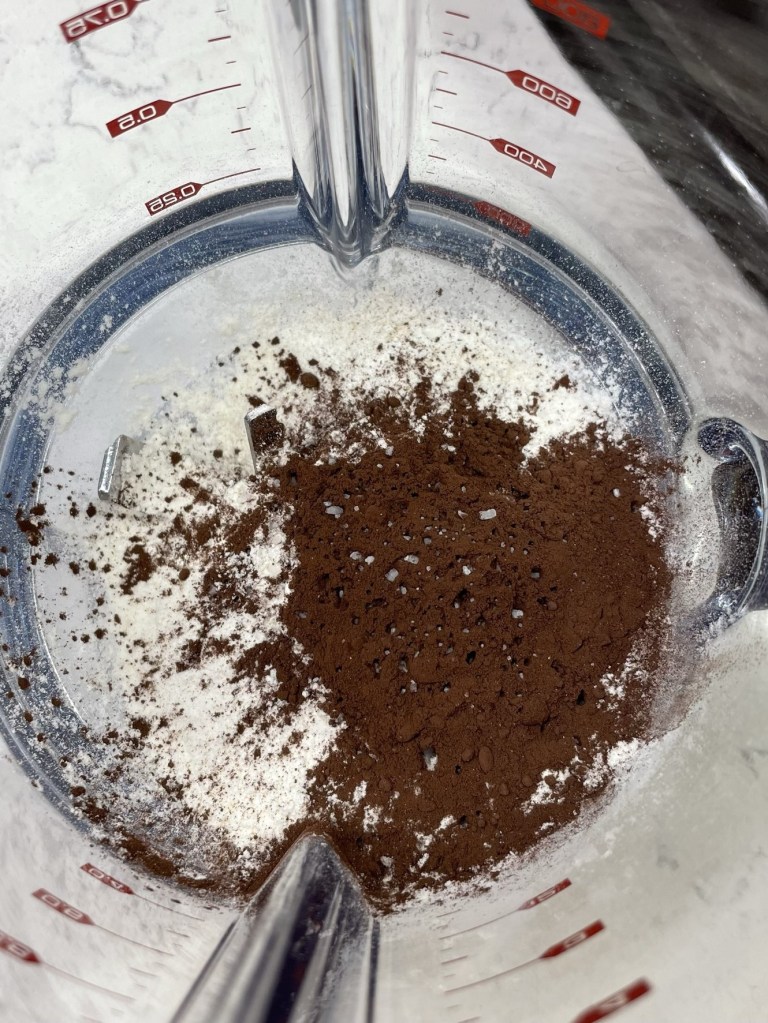
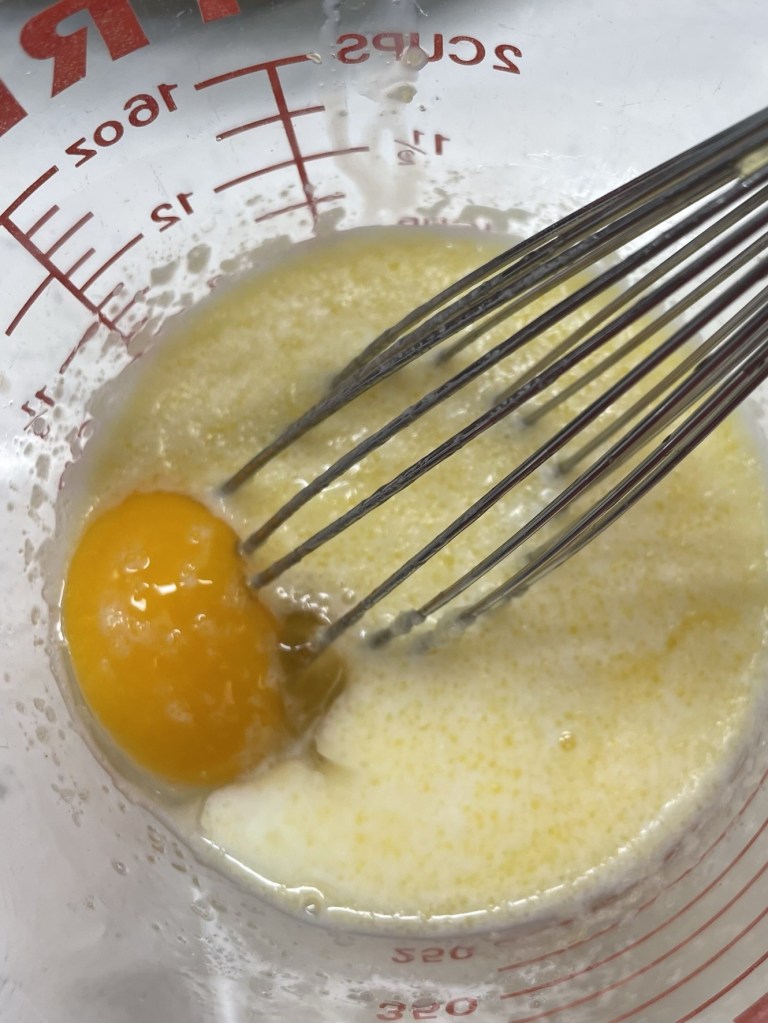
  1. Combine all ingredients in a blender container and blend until completely smooth.
  2. Transfer to a bowl, cover and refrigerate at least an hour or up to one day.
  3. When ready to cook, heat a small pat of butter in a large, non-stick skillet over medium-low heat. When butter begins to brown slightly, ladle 1/4 cup of the crêpe batter into the center of the pan. Swirl the pan gently to spread the batter around into a shape as close to a circle as you can. Cook one minute, then gently turn the crêpe (a silicone spatula is useful here) to cook the other side.
  4. Stack the cooked crêpes between layers of parchment paper and store them in the fridge until you’re ready to assemble.

The mascarpone filling is lightly sweetened and kissed with a touch of vanilla and almond. This is a lovely complement to the dark chocolate crêpes and the sweet cherry topping. Make it ahead and refrigerate until ready to assemble.

Ingredients

  • 8 oz. mascarpone, at room temperature
  • 2 oz. cream cheese (full-fat recommended; this is approximately 1/4 of a standard block)
  • 3 Tbsp. powdered sugar
  • 1/2 tsp. vanilla extract
  • 1/2 tsp. almond extract

Directions

  1. Use a sturdy spoon to blend the mascarpone and cream cheese together in a medium bowl.
  2. Add powdered sugar and extracts. Blend until fully combined and smooth. Refrigerate until ready to assemble the crêpes.

This dark cherry sauce is so easy to make, and provides most of the sweetness in this dessert. It’s delicious when served slightly warm over the crêpes.

Ingredients

  • 3 heaping cups frozen dark sweet cherries
  • 1/4 cup cane sugar
  • 3-inch stick whole cinnamon
  • Pinch of salt
  • Juice of 1/2 lemon
  • 1/4 cup cherry juice
  • 2 Tbsp. amaretto
  • 2 Tbsp. corn starch, mixed with 2 Tbsp. cold water (used to thicken sauce)

Directions

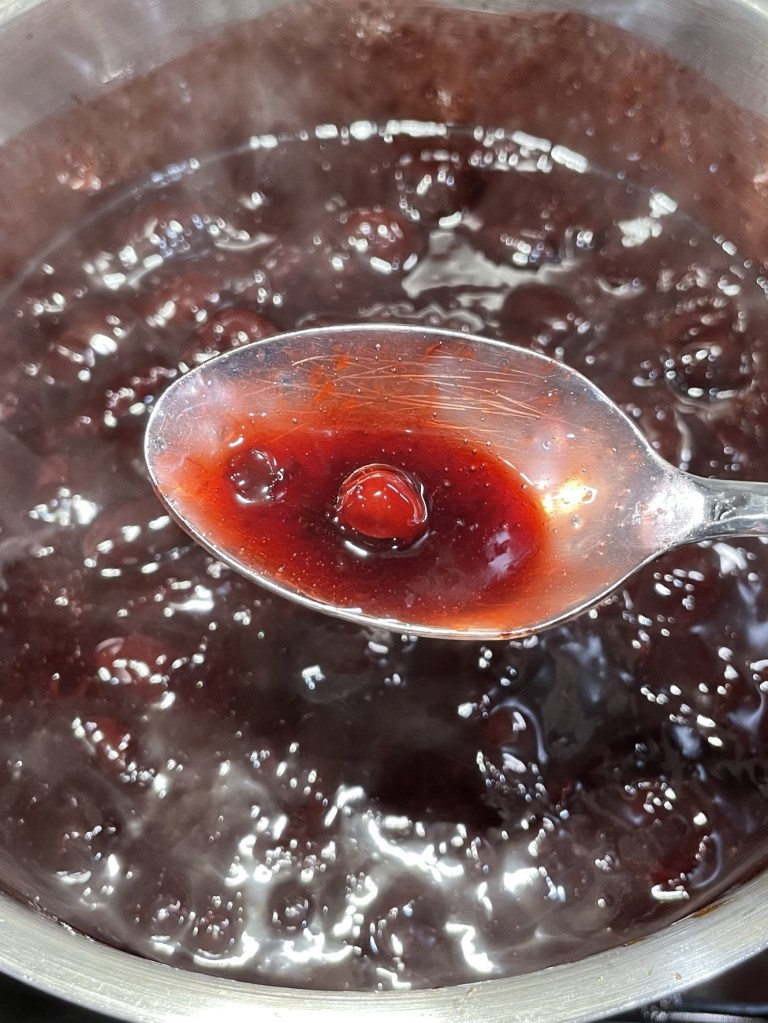
  1. Combine cherries, sugar, cinnamon stick, salt, lemon juice and cherry juice in a large sauce pan over medium heat. Bring to a boil, and then reduce heat to a simmer until cherries are completely softened. Remove from heat and cool to room temperature.
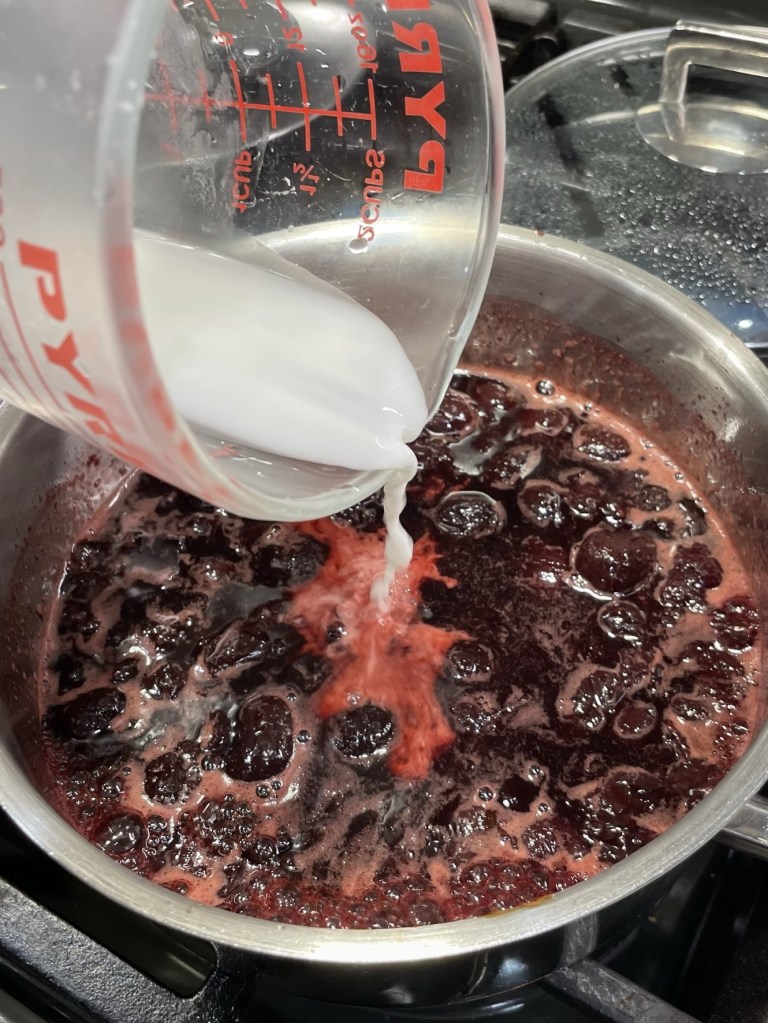
  2. Bring cherry mixture back to a simmer and stir in amaretto. Remove cinnamon stick and blend corn starch slurry in to thicken. Let the mixture cool slightly before topping crêpes.
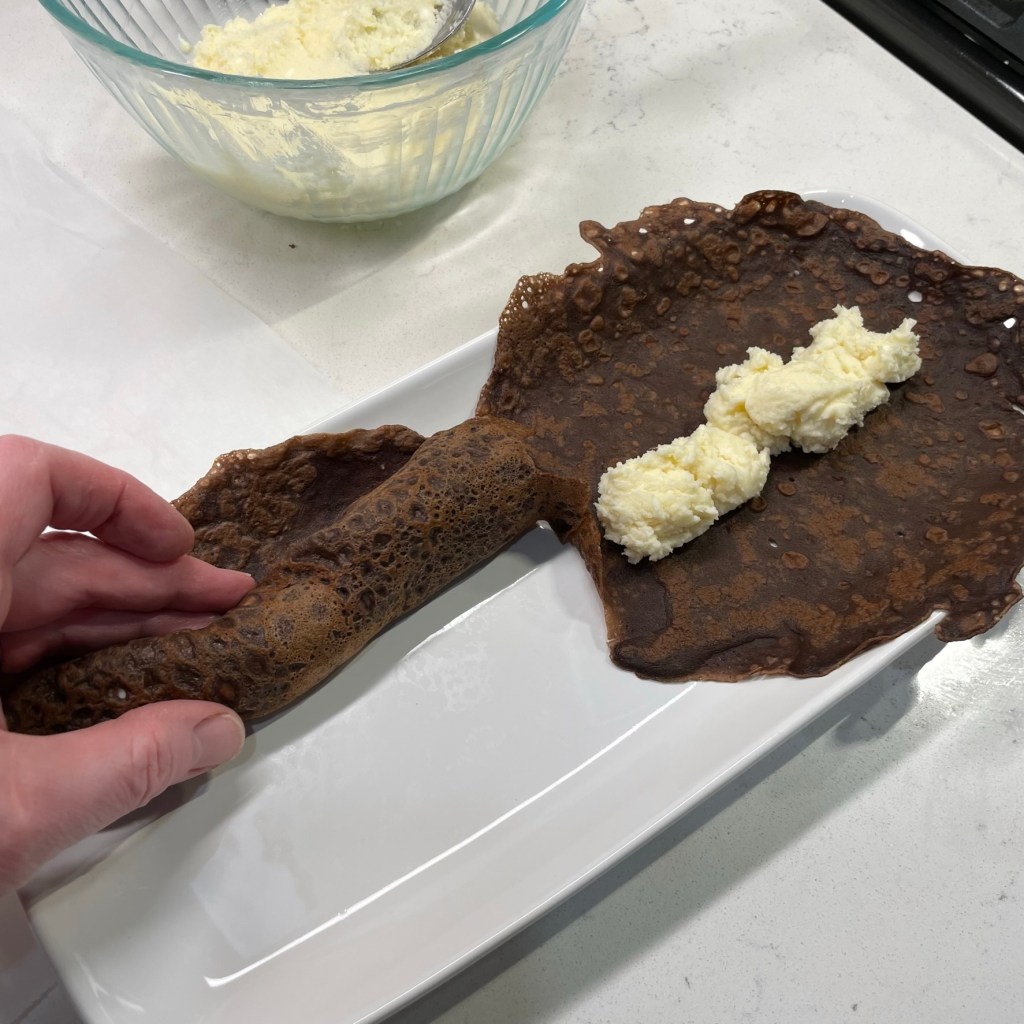
  3. Assemble crêpes: Lay a single crepe on a plate or piece of parchment. Add spoonfuls of the mascarpone mixture across the center. Roll up the crêpe and arrange on a dessert plate. Repeat with a second crêpe for each serving. Spoon the cherry sauce over and prepare to swoon.


One last note: Remember that store-bought frozen cherries are pitted mechanically, and every once in a while, the machines miss one. Inspect the cooked sauce thoroughly, just in case!


My Chicken Marsala

My husband doesn’t ask for much. We have a terrific give-and-take kind of relationship, and I love that when I’ve had a hectic day, or don’t feel in the mood to prep a meal, he happily steps up to the plate, either by grabbing some takeout on his way home, dragging me out to a restaurant, or sometimes taking a turn at the stove himself. And he’s a really good cook, too—one of many things that kept me around in our earliest days together. I couldn’t be with someone who doesn’t enjoy the simple pleasures of food.

So when Les asked me recently to put chicken Marsala back into the meal rotation, I took it to heart. The “rotation” is a running joke at our house—it takes a while for most dishes to cycle back around. I attribute this in part to my having worked 15 years as a deejay at a Top 40 radio station, where every single day was a rearrangement of the same songs I played the day before. We referred to our playlist as a “rotation,” and that’s exactly what it was—‘round and ‘round, over and over. If you think it gets old to hear the same songs every day, well, imagine having to play them! I crave variety, and most of the time, my cooking style is more like a big stack of one-hit wonders than a greatest hits album. Some dishes never get another play in my kitchen, and when they do, they often appear with changes or twists, almost like a “cover” of the original.

I couldn’t distinctly remember the last time I had made chicken Marsala for Les, so I was happy to revisit this dish. It deserves a spot in the Sunday Supper category, not because it requires extra time or a ton of effort (it doesn’t), but because there is a specialness about it that comes from the gentle mushroom gravy that envelops the tender, pan-fried chicken cutlets.

I’m happy to play my hubby’s request!

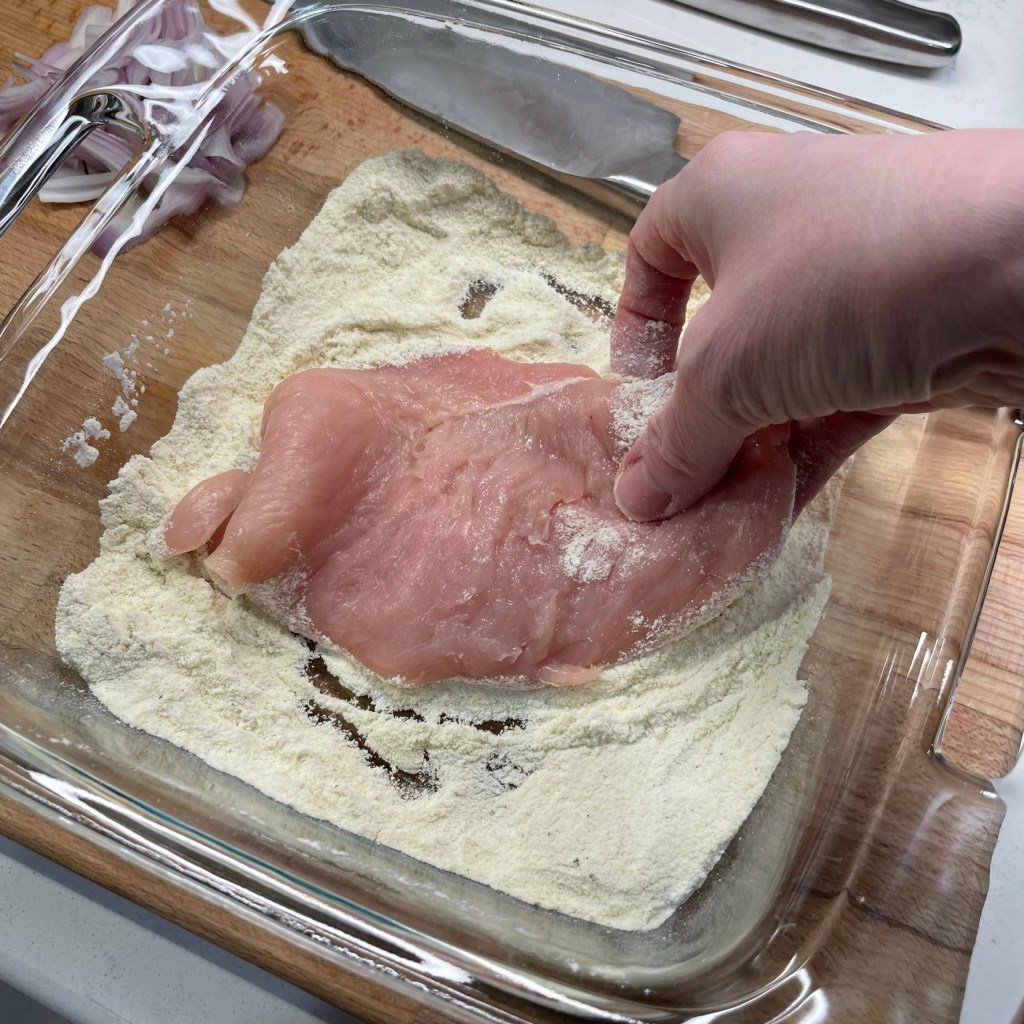
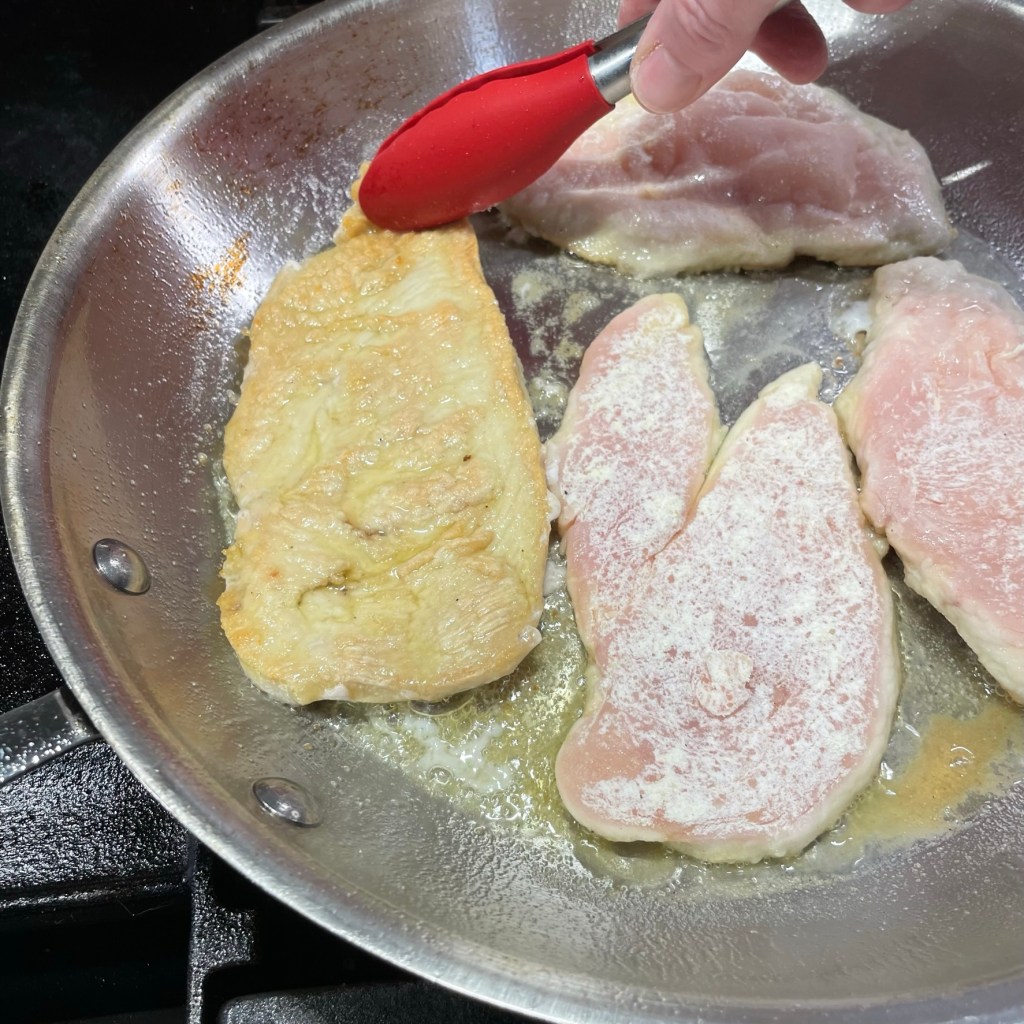
I went off-script a bit with this Italian classic, beginning with the flour coating. Rather than using plain all-purpose flour to dredge the cutlets, I mixed it half and half with semolina flour—the same kind I use when I shape my pizza dough. My reason for this is that all-purpose flour on its own tends to get soaked by the natural moisture in fresh meat, and that can give it a somewhat gummy texture after frying. Semolina remains drier and creates more of a natural barrier to the hot oil in the pan. I was pleased with the result of this substitution and will likely use all semolina next time this golden oldie comes up in “the rotation.”


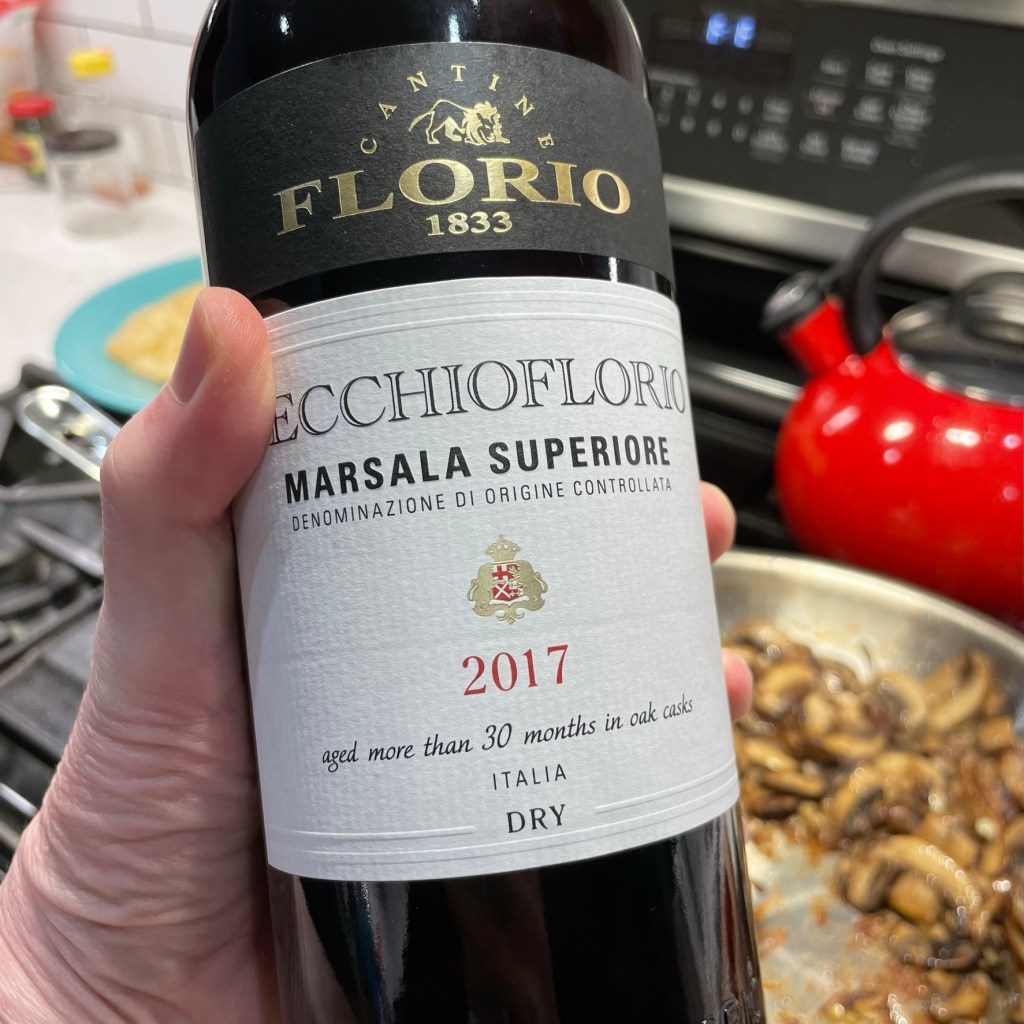
Which kind of Marsala is correct for this dish? Depends on who you ask, as some cooks like the sweet version. Marsala is a fortified Italian wine with warm, gentle flavors of dried fruit and it is frequently paired with chicken and veal. Even the dry version has subtle sweetness, almost like a touch of honey. “Sweet” is not my favorite genre in an entrée course, unless it is balanced with hot, salty or sour—say, Asian food or barbecue sauce. So I found a lovely, dry Marsala in a wine shop rather than the grocery store (which only carries the cheapest bottles). This was an excellent choice and it’s a good quality Marsala that I plan to use again soon—maybe as a sipper with a plate of cured meats, dried figs and salted almonds. Am I teasing an upcoming record in my next quarter hour? 😉

I’m looking forward to enjoying this again!

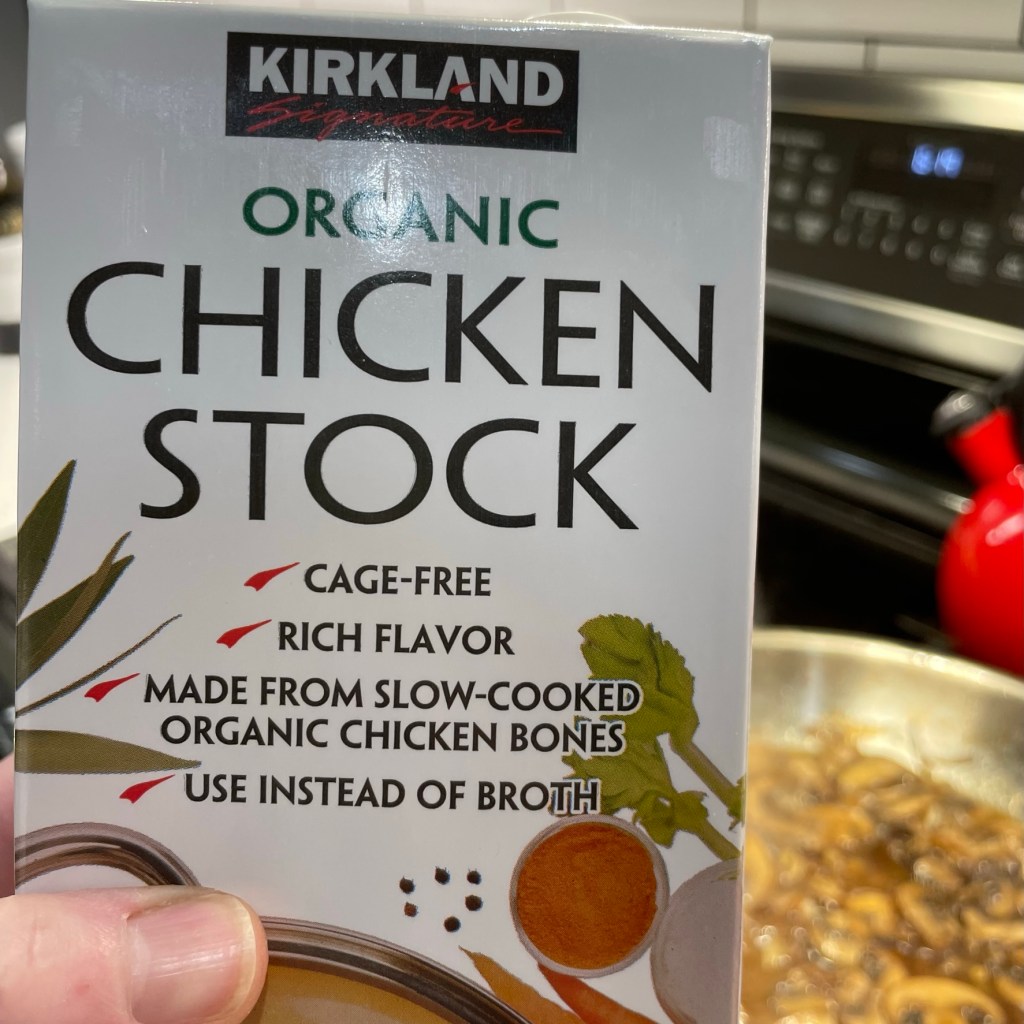
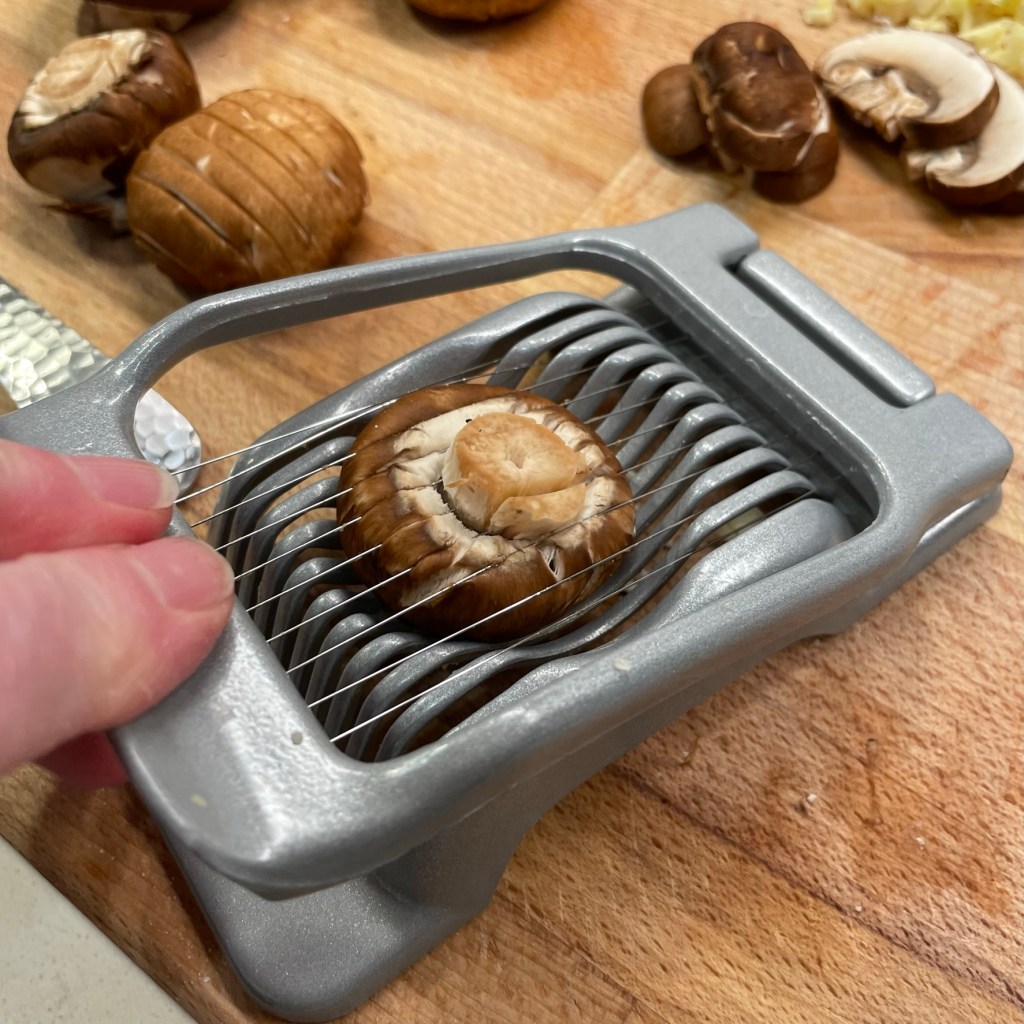
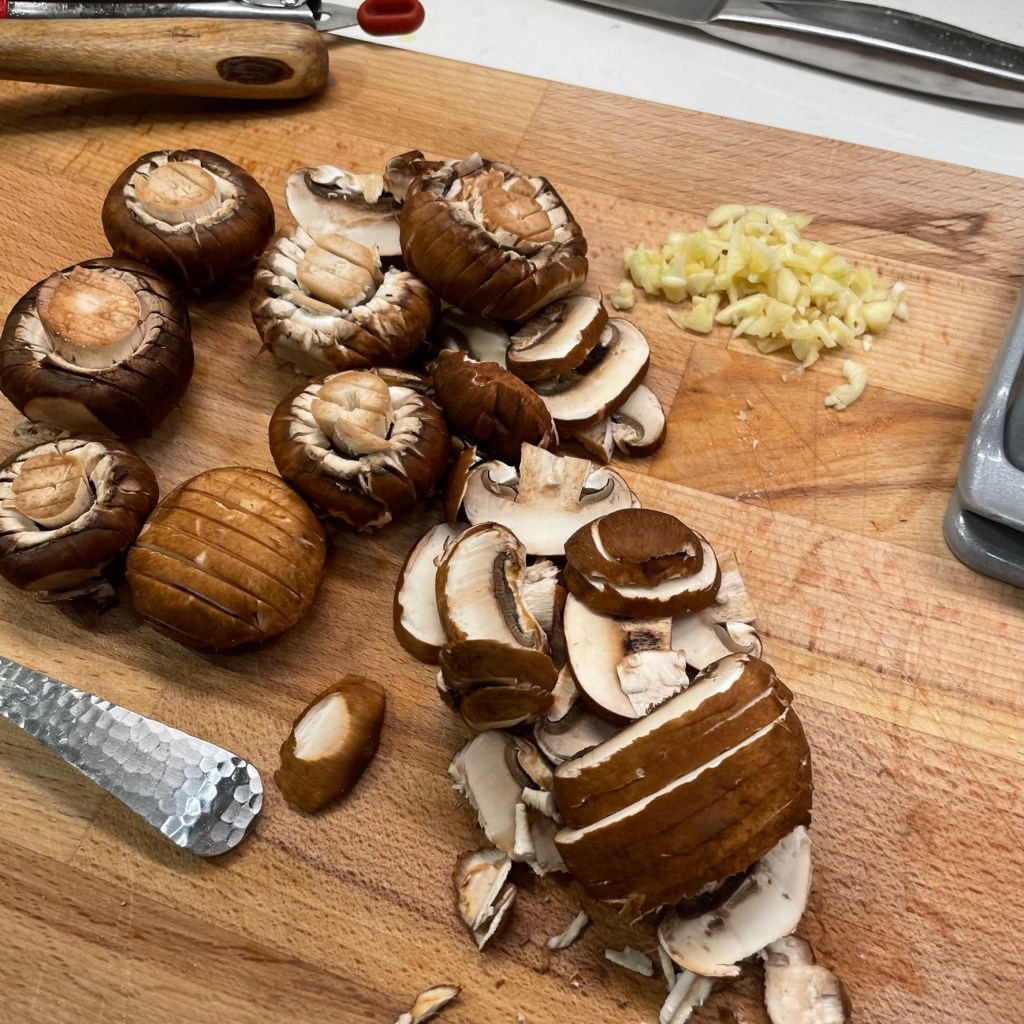
My other twists on the classic preparation were shortcuts—If time had not been an issue, I would have slow-simmered some chicken parts to make my own rich stock, but I was a bit rushed, so I used a store-bought stock. I definitely recommend stock over broth, because the result is richer and more flavorful. My other shortcut helped me save time on slicing all those plump mushrooms. I needed a whole carton of mushrooms sliced into perfect, ¼-inch slices, so I dug out my trusty egg slicer. It’s the simplest way to make quick work of this part of my recipe.


Ready to get cooking?

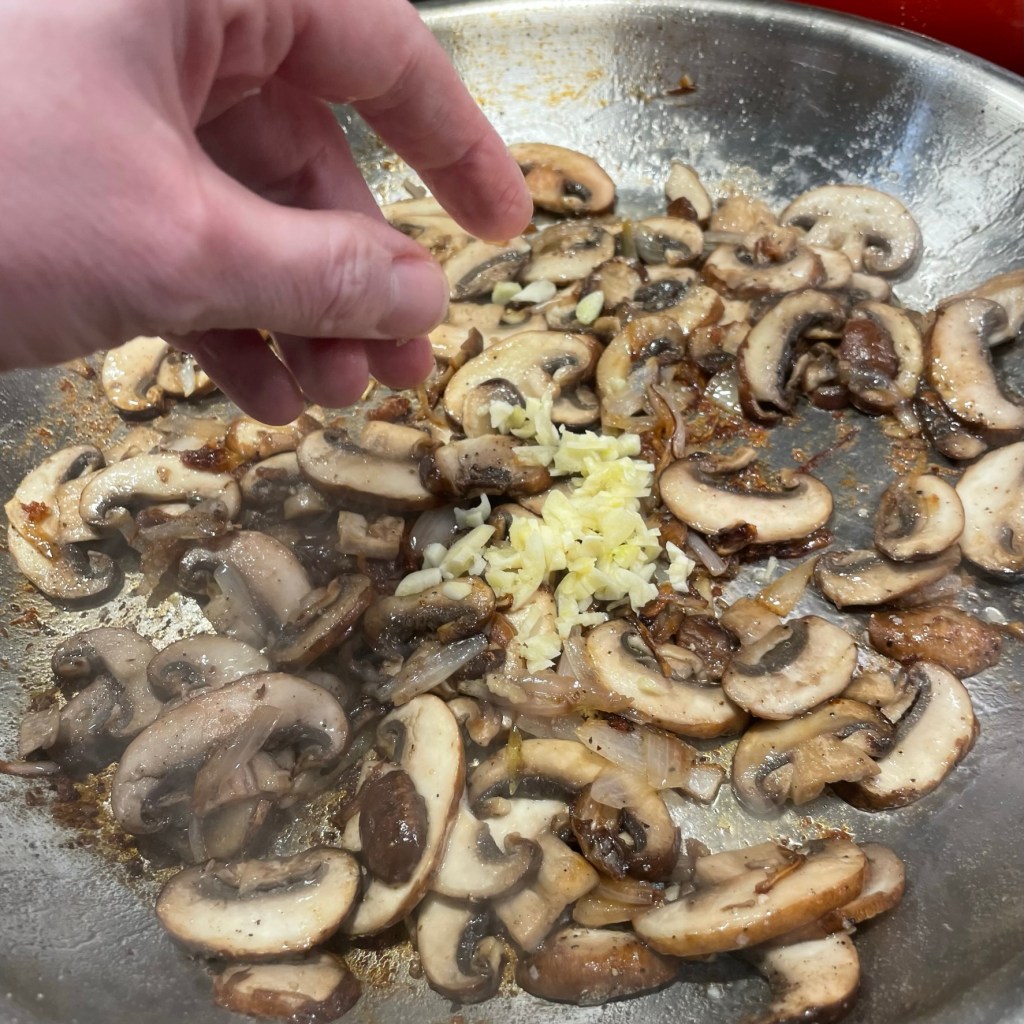
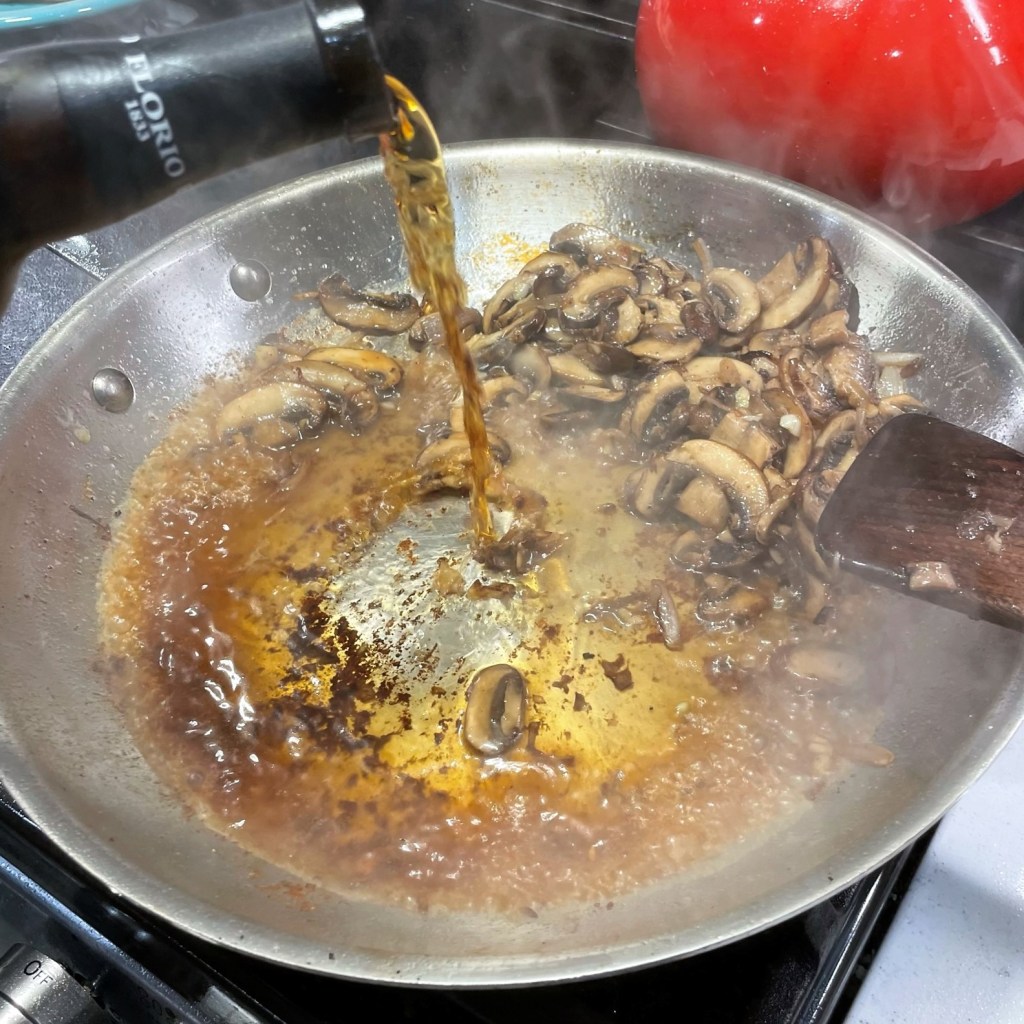
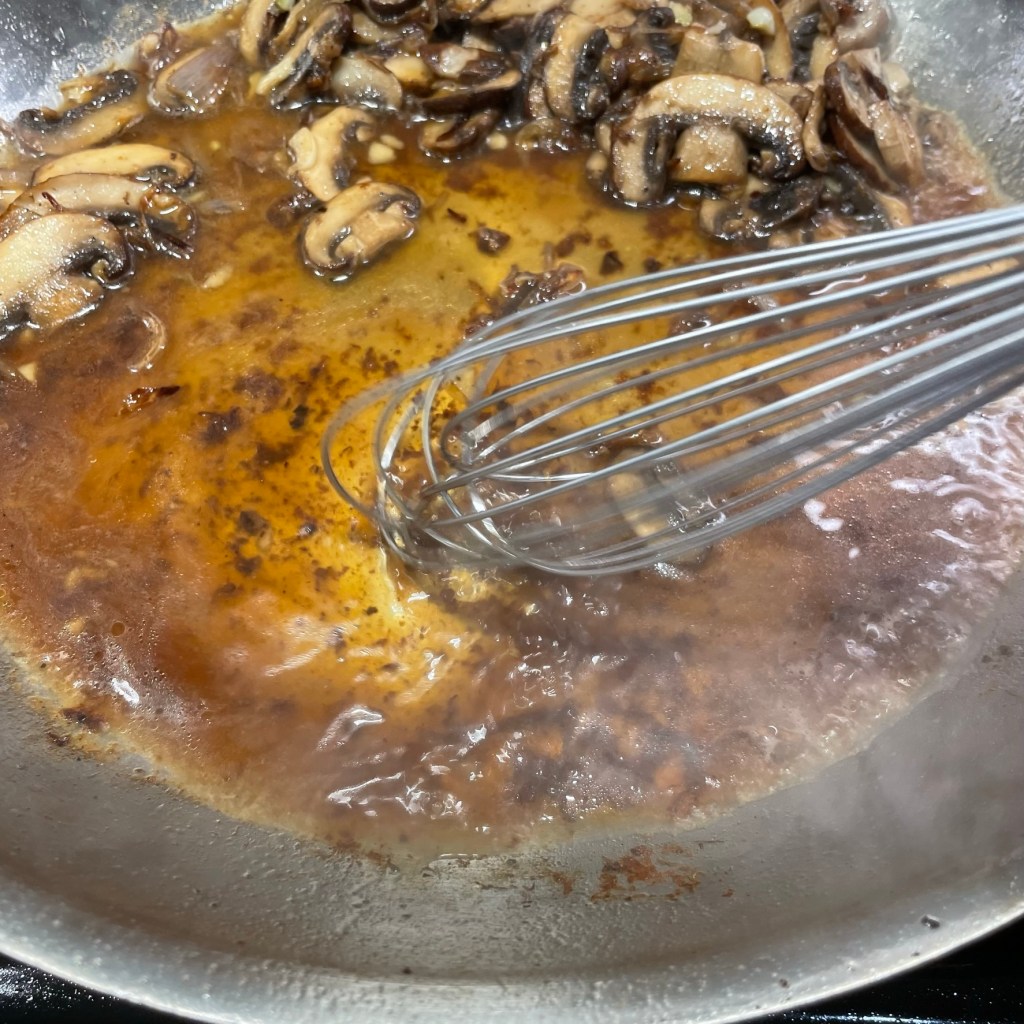
Pan fry the floured cutlets in a little olive oil, just until golden on both sides, then transfer them to a plate. Brown the mushrooms in a touch more oil, then add garlic and splash in the Marsala—watch out for the steam! Whisk the pan to release the stuck-on bits, then add stock and let it come back up to a gentle boil.


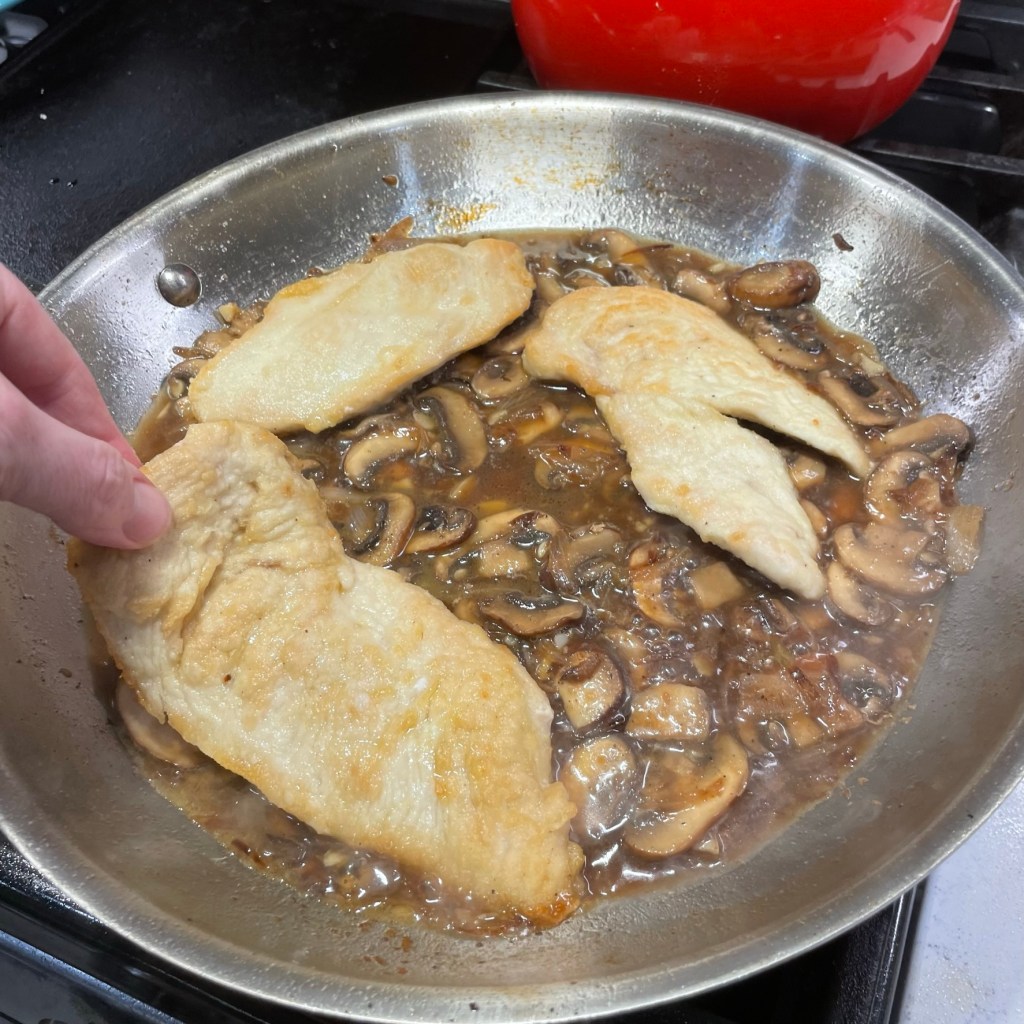
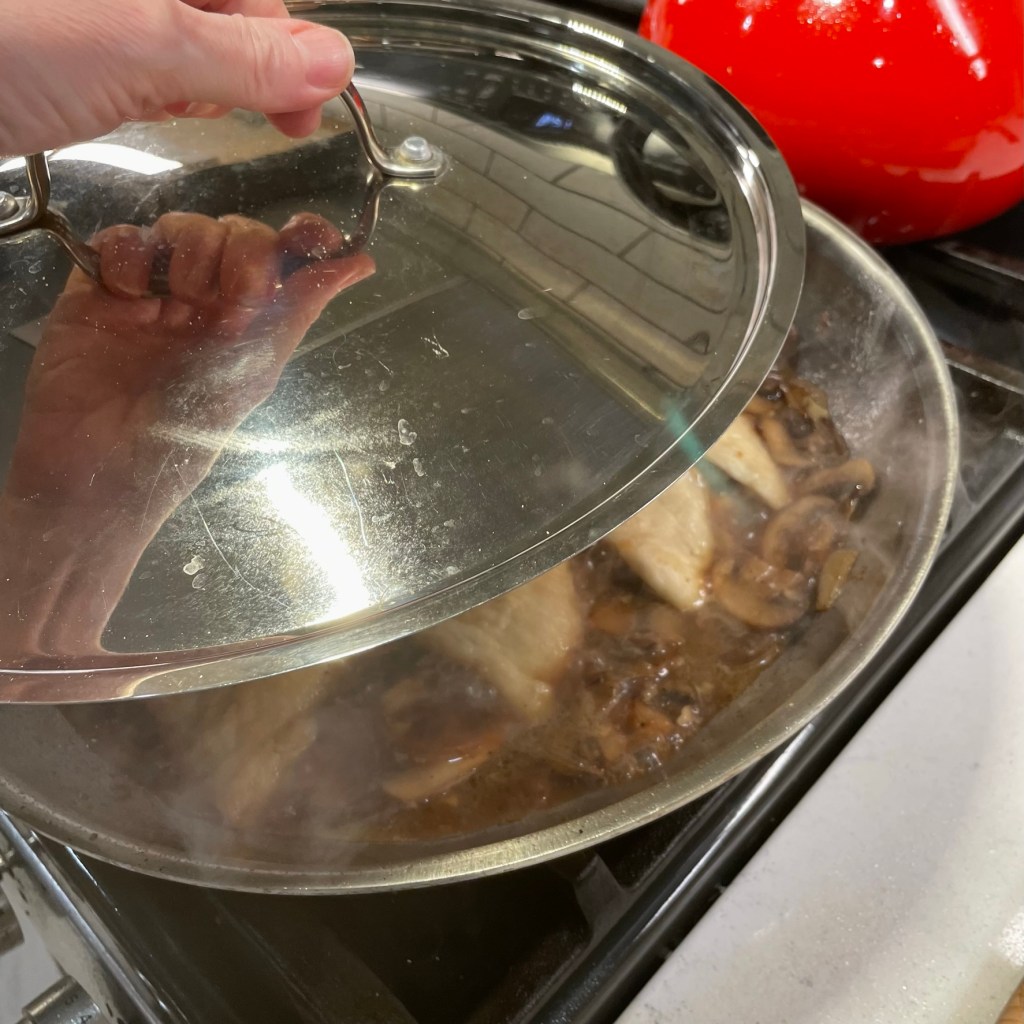
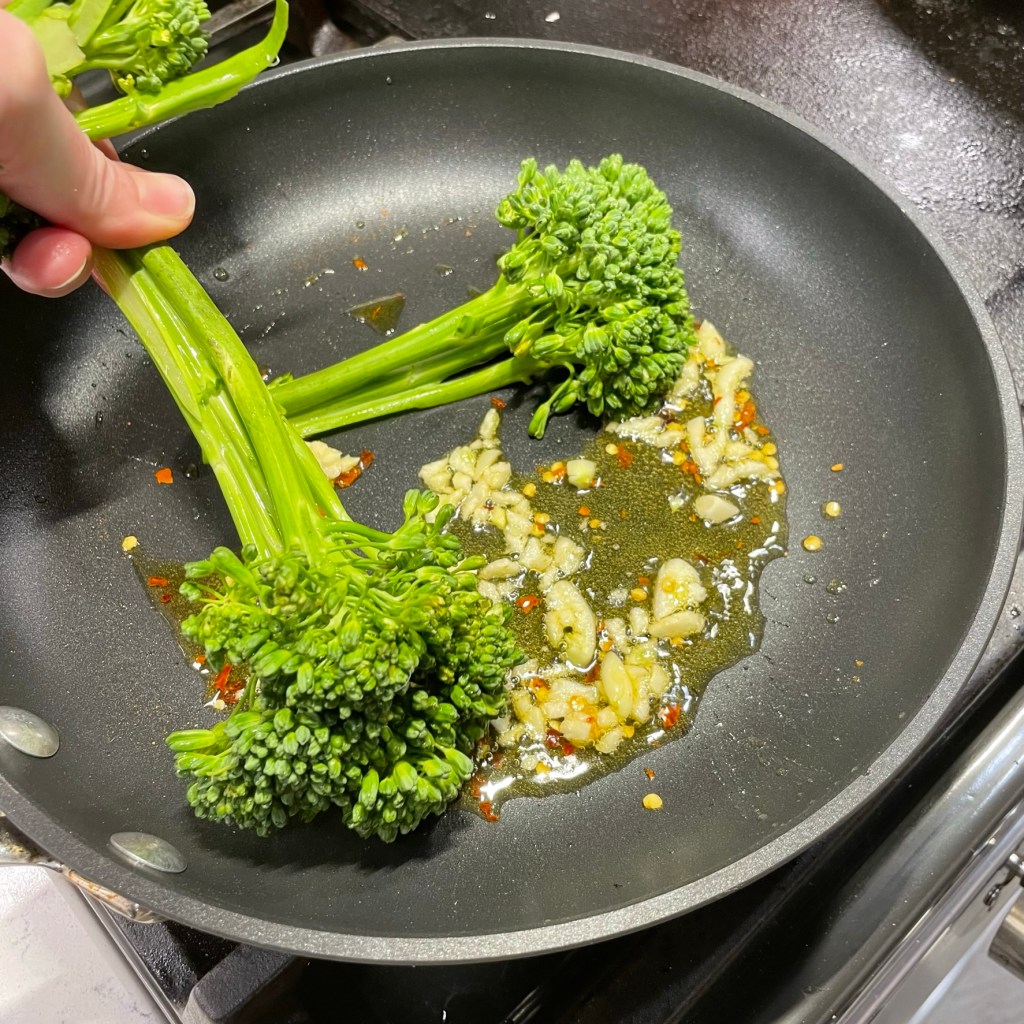
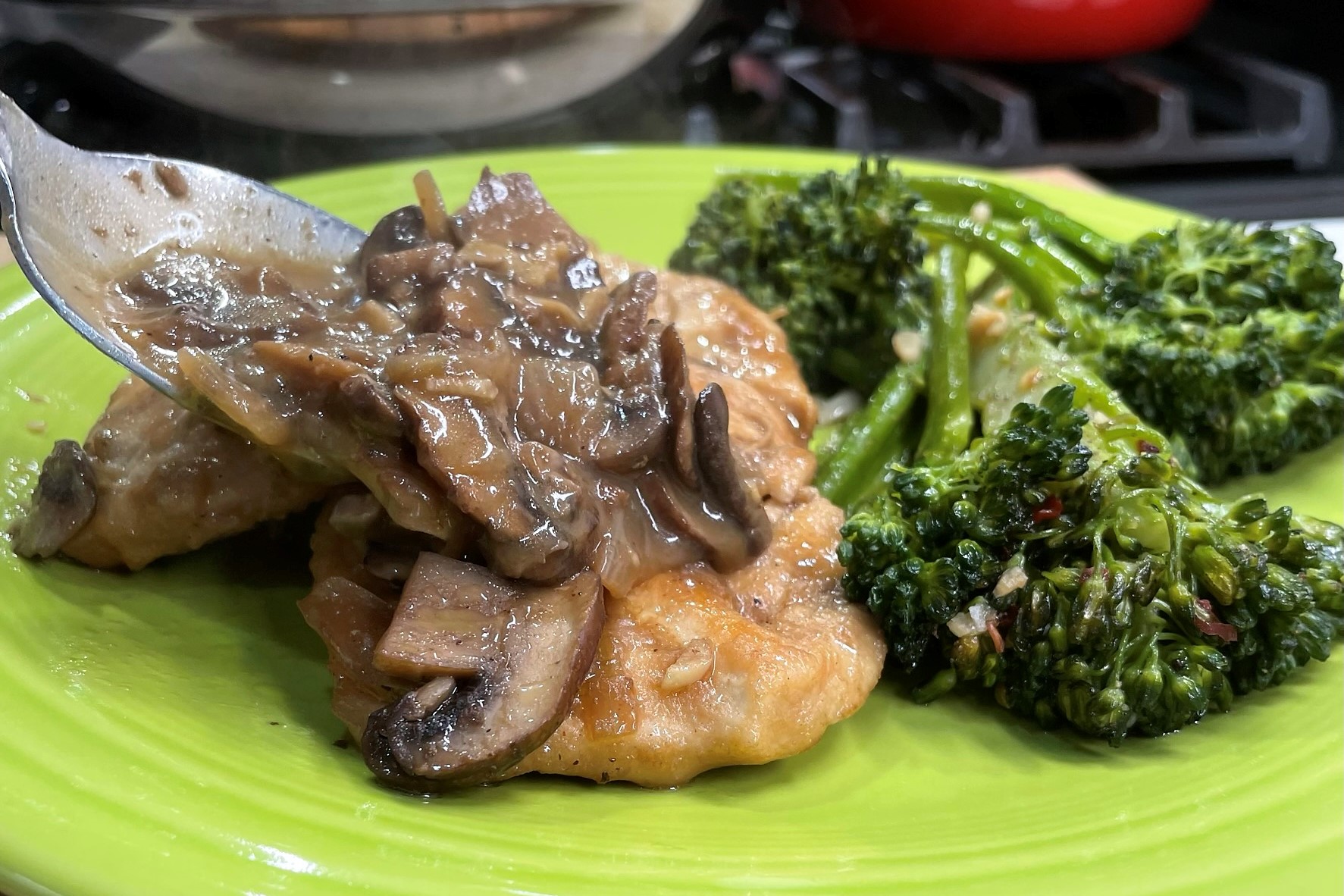
Return the chicken cutlets to the skillet, turning to coat them lightly in the Marsala sauce. Cover the pan and turn it down to low heat to simmer. I used this 25-minute simmering time to prep my side veggies—a quick, pan-fried and then steamed broccolini with garlic and red pepper flakes. This vegetable can be hard to find (or easy to miss) in the supermarket, but it’s worth a look as a great alternative for people who don’t enjoy the bitterness of broccoli. Count my hubby among them!


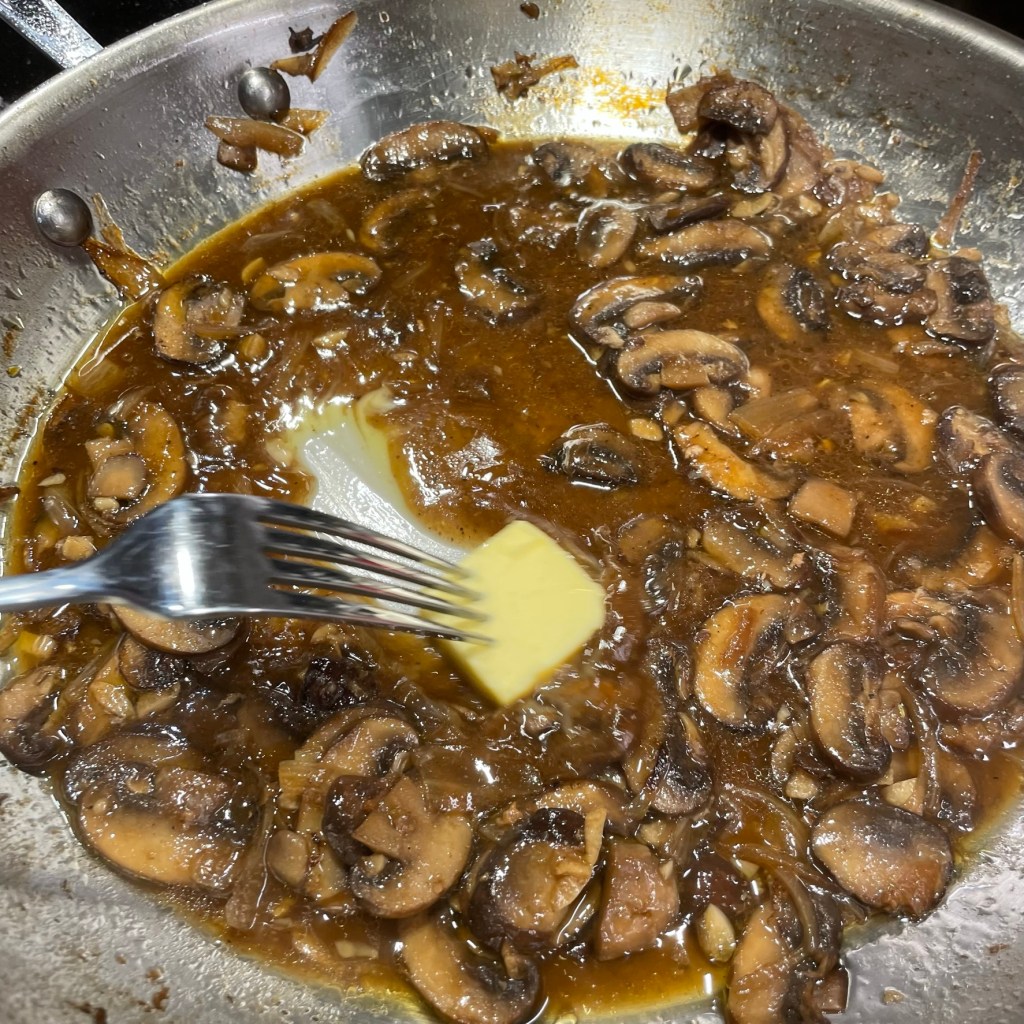
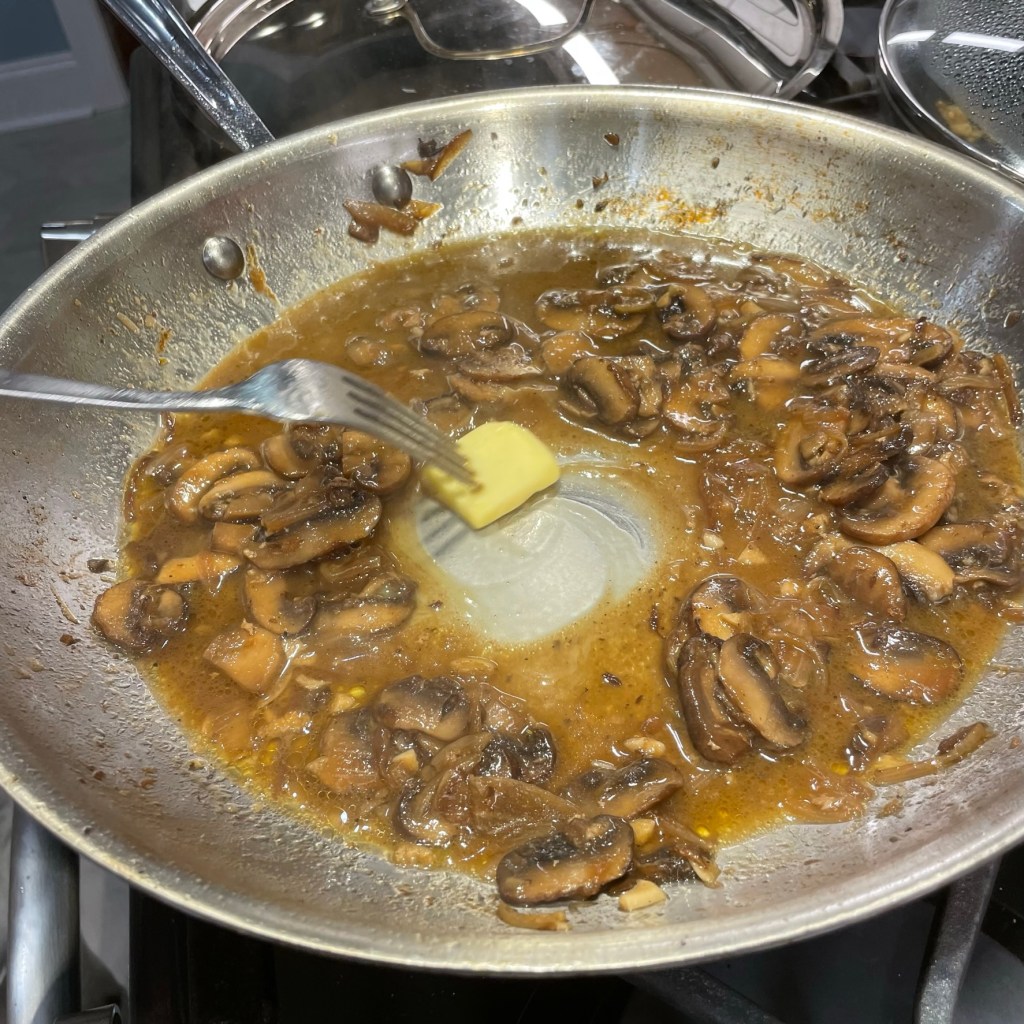
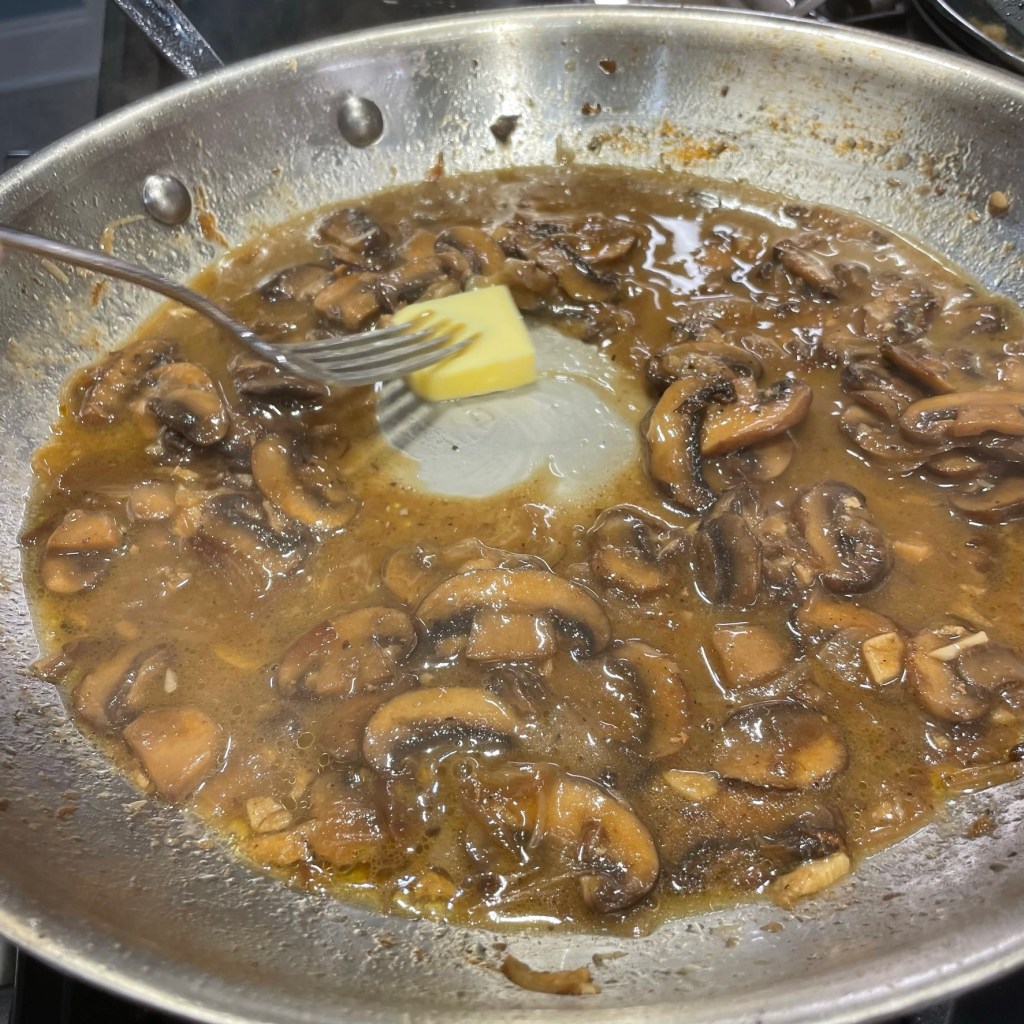
When you’re ready to serve, plate the chicken cutlets and veggies and then, off the heat, quickly whisk in cold butter—one teaspoon pat at a time—into the mushroom sauce. This method creates a silky, emulsified sauce. Spoon the mushroom sauce over the cutlets, sprinkle with chopped parsley, and this dinner is a certified hit!


My Chicken Marsala

  • Servings: 2
  • Difficulty: Average
  • Print

I have taken a few liberties with this Italian classic, which is both elegant and easy. If you are feeling extra fancy, swap the chicken for veal cutlets.


Ingredients

  • 2 large boneless chicken breasts, split into cutlets and pounded thin
  • 1/4 cup all-purpose flour
  • 1/4 cup semolina flour
  • Salt and pepper (to season the flour mixture)
  • 4 Tbsp. extra virgin olive oil (most for chicken, remaining for mushrooms)
  • 1 shallot, chopped
  • 10 oz. cremini mushrooms, cleaned and sliced
  • 2 cloves garlic, minced
  • Salt and pepper to taste
  • 1/2 cup dry Marsala (preferably not “cooking wine”)
  • 1/2 cup rich chicken stock
  • 1 Tbsp. cold salted butter, cut into three pats (keep cold until the end)
  • Chopped Italian parsley, to garnish

Directions

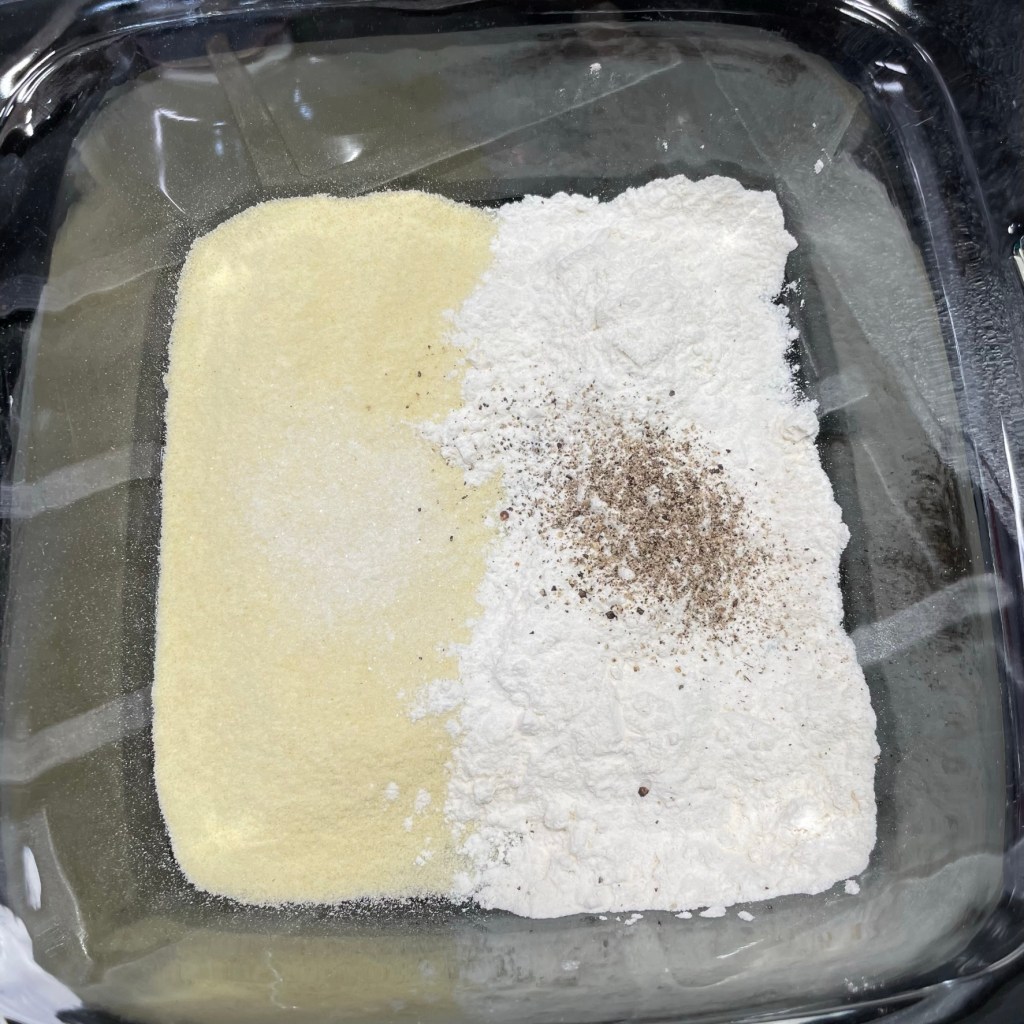
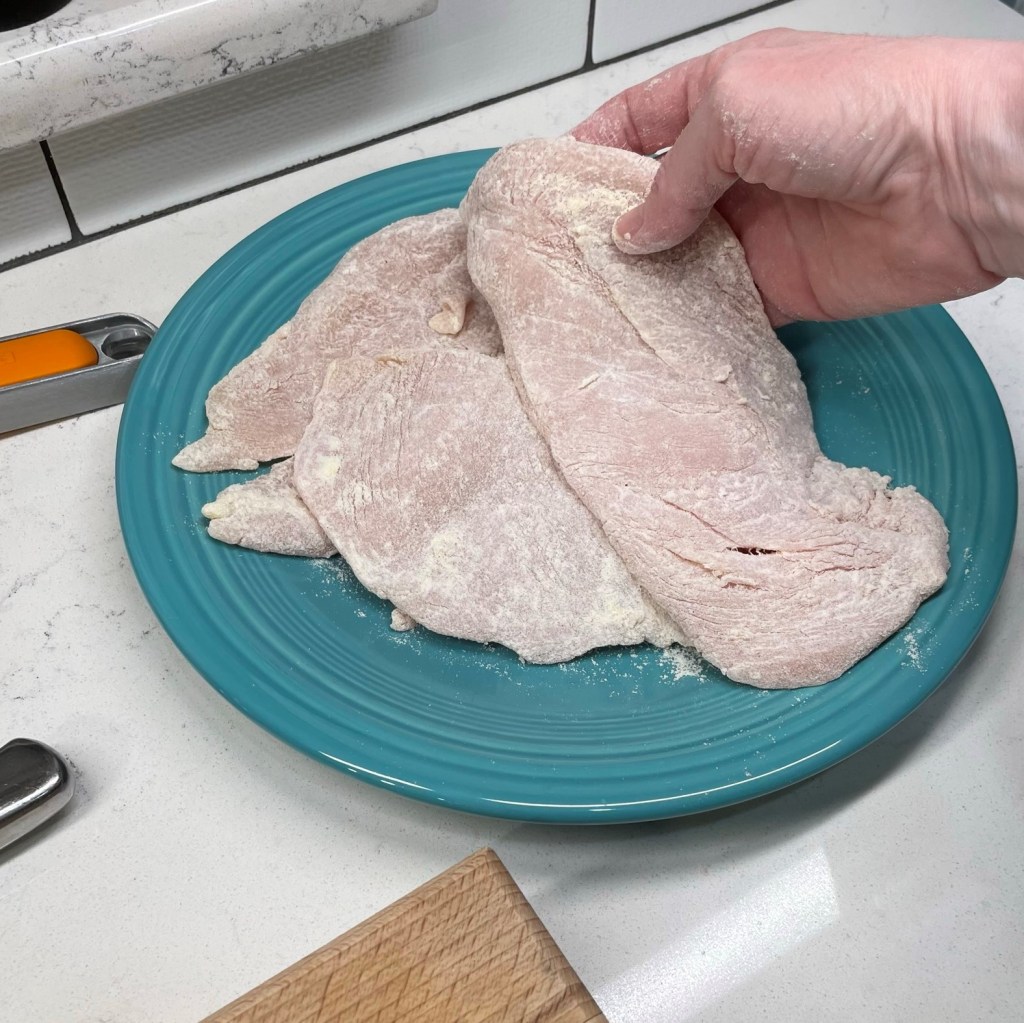
  1. Combine flours, salt and pepper in a shallow dish. Dredge cutlets in the dry mixture and set aside on a plate.
  2. Heat 3 tablespoons of the olive oil in a skillet (if you have one that is not non-stick, that’s best) over medium heat. When the oil is shimmering, arrange the cutlets in the pan and cook just until golden on each side, about three minutes each side. Transfer cutlets to a plate and cover with foil to keep warm.
  3. Add remaining oil to the skillet and saute the shallots until softened. Add the mushrooms, half at first then the rest. Avoid overloading the skillet as this will cause the mushrooms to steam in their own moisture. When the mushrooms are sufficiently browned and excess moisture has cooked off the pan, stir in the garlic.
  4. Add the Marsala wine all at once. This will probably create a big cloud of steam! Use a whisk or utensil to loosen any browned bits in the skillet. Stir in the chicken stock and bring the mixture back up to a slight boil.
  5. Return cutlets to the skillet, reduce heat and cover. Allow the chicken to simmer for 25-40 minutes, depending on what else you have going on. The longer it simmers, the more moisture will reduce, so check on it periodically and add a splash of stock if needed. Turn the cutlets once during simmering as well.
  6. Transfer the tender cutlets to serving plates. Swirl in cold butter, one teaspoon pat at a time. This will blend with the pan juices to create a thickened, luxurious sauce. Immediately spoon over cutlets. Sprinkle with fresh parsley, if desired, and serve at once.

This dish is terrific on its own with a vegetable or salad, or you can place the cutlets on top of polenta, risotto, mashed potatoes, rice or buttered pasta.


My Big Fat Olive Martini

When the world shut down for COVID nearly three years ago, I had extra time for cocktail experimentation because, well, there wasn’t much else to do. I made some really fun ones, but what seems ironic to me is that the more I experimented with new and unusual spirit ingredients (not to mention bitters and simple syrup infusions), the more I eventually “came home” to the familiar pleasure of a classic gin martini.

As we have inched closer to New Year’s Eve, I reached an impasse with myself about what kind of tipple I might share with you. Would it be another twist on a Manhattan, like the Pom-Pom-Hattan I posted two years ago, featuring pomegranate liqueur and real grenadine? Or maybe a fun riff on an Old Fashioned, like the smoked maple that is my hubby’s all-time favorite? No, this year, I dismissed all the fancy ideas I had for New Year’s Eve in favor of a cocktail that I’ve enjoyed multiple times over the past year. Rather than a wild new drink with hard-to-find ingredients, I bring you this simple but fabulous elevation of the timeless martini cocktail— I call it My Big Fat Olive Martini!

Peace out, 2022!

No, it is not named for the size of the olive on the pick (but that is a plus). What makes this drink special is that it leverages a technique called “fat washing,” which is essentially the temporary blending of a spirit ingredient with some kind of fat— be it bacon grease, browned butter or even duck fat. By shaking the spirit with the fat and then chilling it to solidify and strain off the fat, you end up with the essence of that fat ingredient in the drink, but without any actual fat in it. The effect of the fat washing is a luscious, well-rounded mouthfeel in the cocktail that is distinctly different, though the spirit’s own character is still front and center. It’s exquisite!

About a year ago, I became a subscriber to Imbibe magazine, which is intended for pro bartenders (but bored home mixologists can order it, too). In this magazine, as well as its digital counterpart, I’ve learned some new tricks of the trade in a way that puts my home mixology skills a step or two ahead of most cocktail bars in our city. Imbibe presented a version of this cocktail several months ago, and though I could not find the exact gin its creator used to make the drink, I knew I had to try it anyway. Fellow martini lovers, you are going to love this.

The dry vermouth you’ll use for the martini is first “washed” with a good quality, extra virgin olive oil, and the olive variety you choose will lend its specific character to the vermouth, even after it’s strained out after the chill-down. If you like fruity or grassy olive oil, you can expect those notes to carry over into your martini accordingly. Isn’t that fun? 


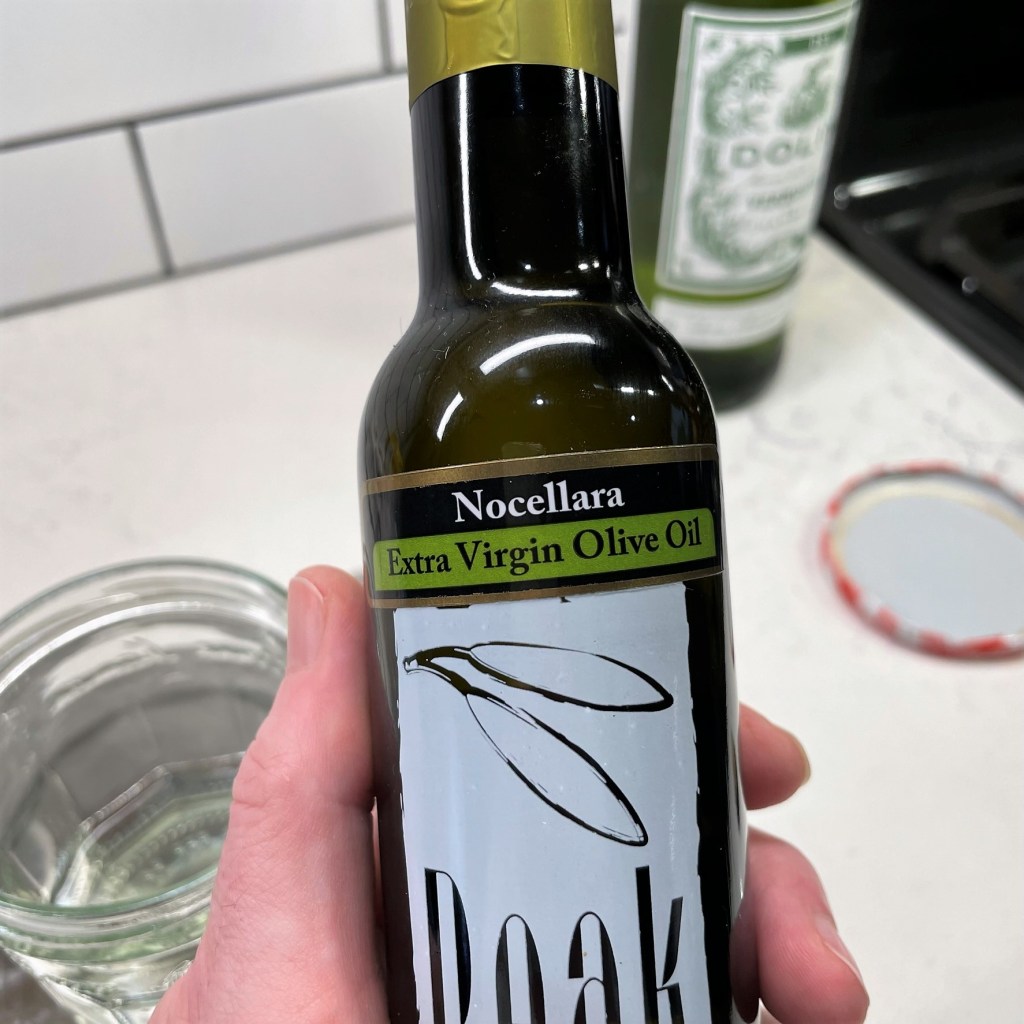
The oil I like best for this is Nocellara, an Italian olive variety known more widely as Castelvetrano. This oil has a mild and creamy, almost artichoke-y flavor, and it is outstanding for washing the vermouth, though other varieties I’ve tried were perfectly acceptable. The big thing that matters here is the quality and purity of the oil. It should be 100% extra virgin and cold-pressed, and you may have to leave the supermarket to find a good one. If you have a specialty oil and vinegar shop in your area, start there.

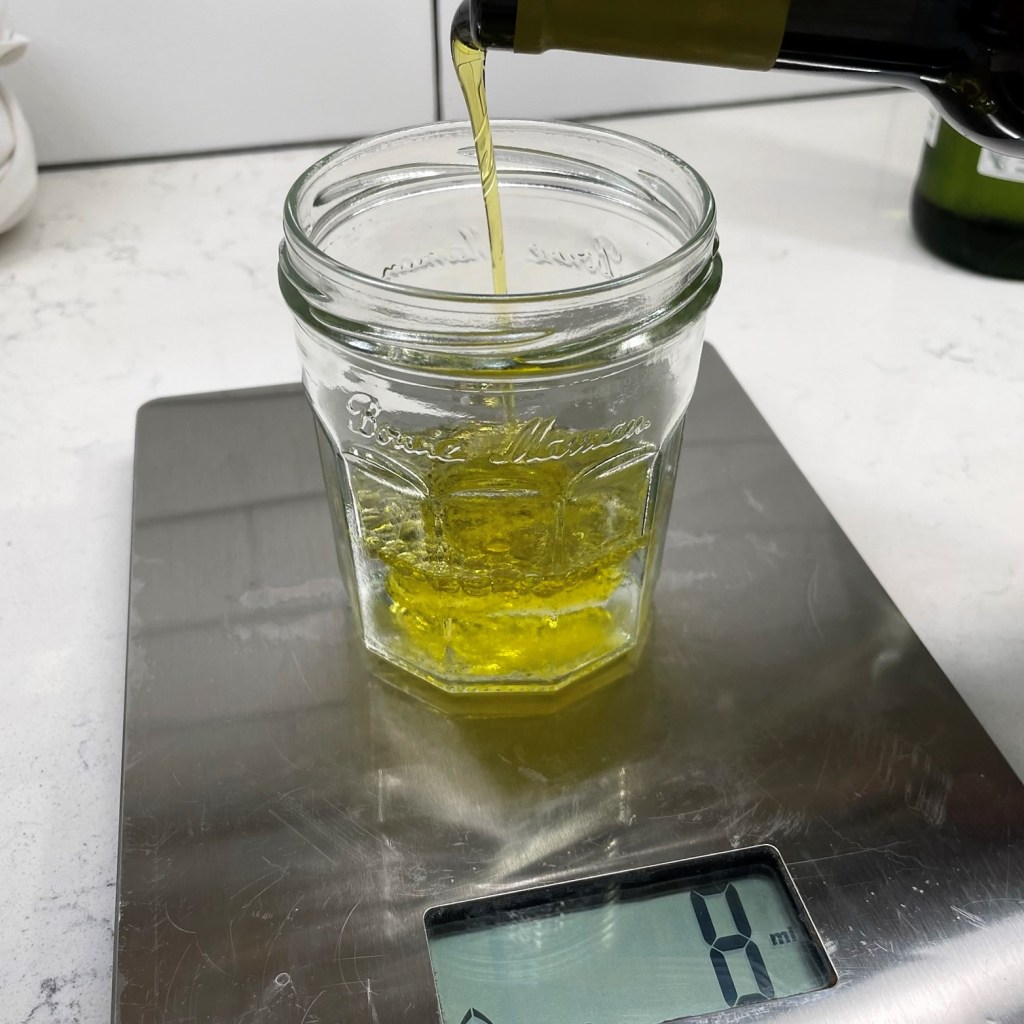
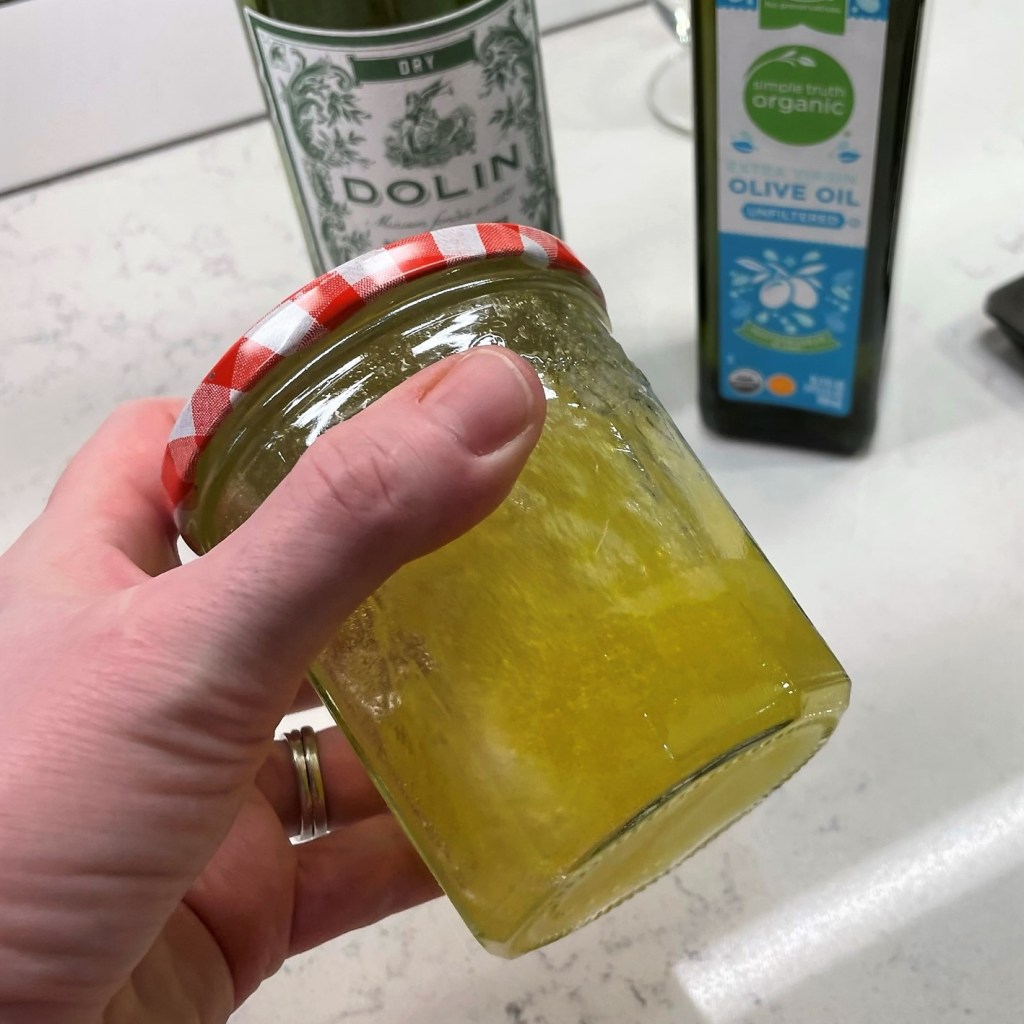
Combine the vermouth and oil (in a 5:1 ratio) in a wide-mouthed jar and shake it for about 30 seconds. Tuck it into the coldest spot of your fridge for about 24 hours (or up to about three days—after that, it loses something).


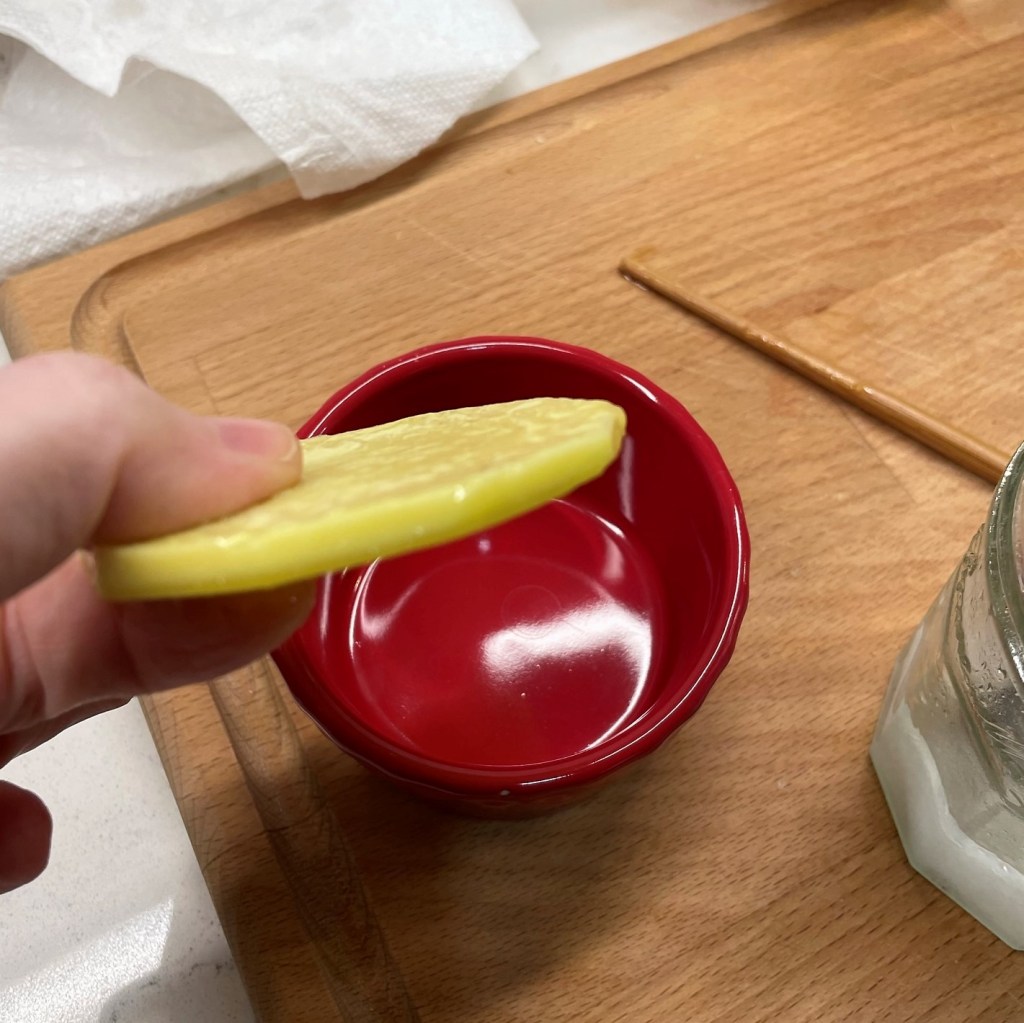
The pure olive oil solidifies in the fridge, so it’s usually easy to separate it from the vermouth after washing; I did this by poking the solid oil with a chopstick, then lifting it out and draining the vermouth out from under it into a new jar and then into a small bottle, ready to go for mixing cocktails. If the oil doesn’t solidify, it could be that it isn’t pure extra virgin, or it could be that the alcohol in the protecting the oil a bit. It’s not a lost cause though, just stick the jar in the freezer for a couple of hours and check again.


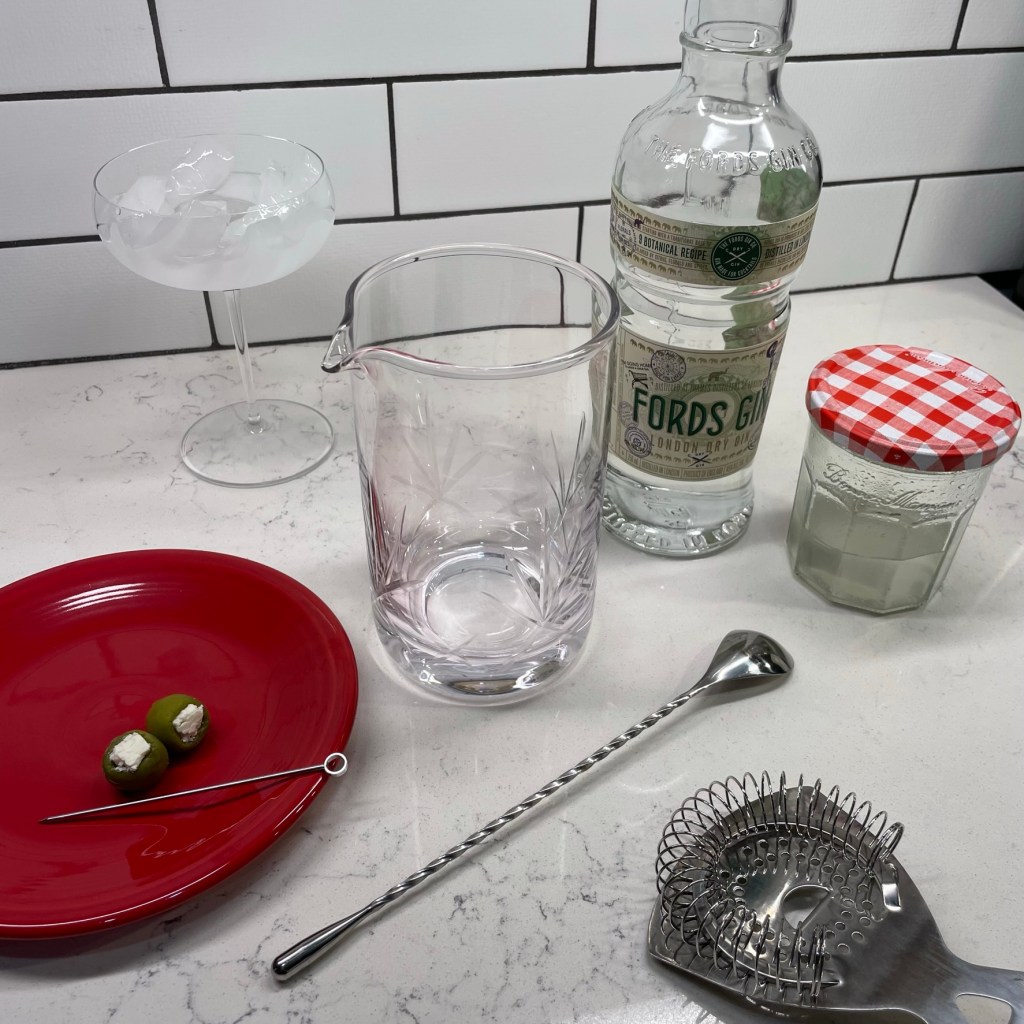
From that point, make your martini as usual. If you want a little extra olive flavor, go dirty with a little splash of olive brine, too. And of course, garnish it with a gorgeous olive— a big fat one, if you wish. These are castelvetranos, stuffed with a chunk of feta, which pairs perfectly.


Oh, and don’t throw out that solid slab of olive oil. Let it melt and use it in a snazzy vinaigrette dressing!

My Big Fat Olive Martini

  • Servings: 1 cocktail, easy to scale up
  • Difficulty: Easy
  • Print

A pro technique called 'fat-washing' transforms dry vermouth, putting a luscious twist on a classic cocktail!


Ingredients

  • 2 oz. London dry gin (or vodka, if you prefer it for martinis)
  • 1/2 oz. olive oil-washed dry vermouth (see below)
  • A splash of briny olive brine (optional, for a “dirty” martini)

Directions

  1. Combine gin, dry vermouth and olive brine (if using) in a shaker or mixing glass.
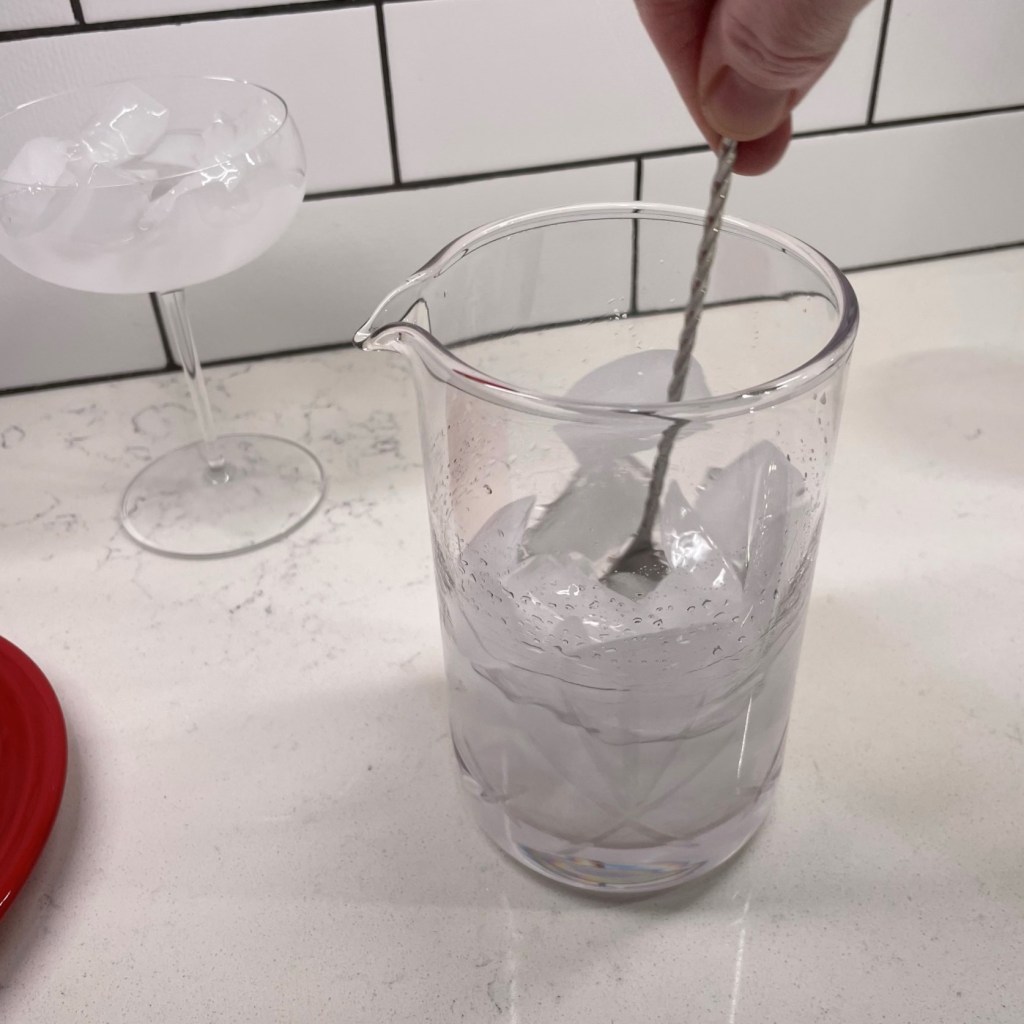
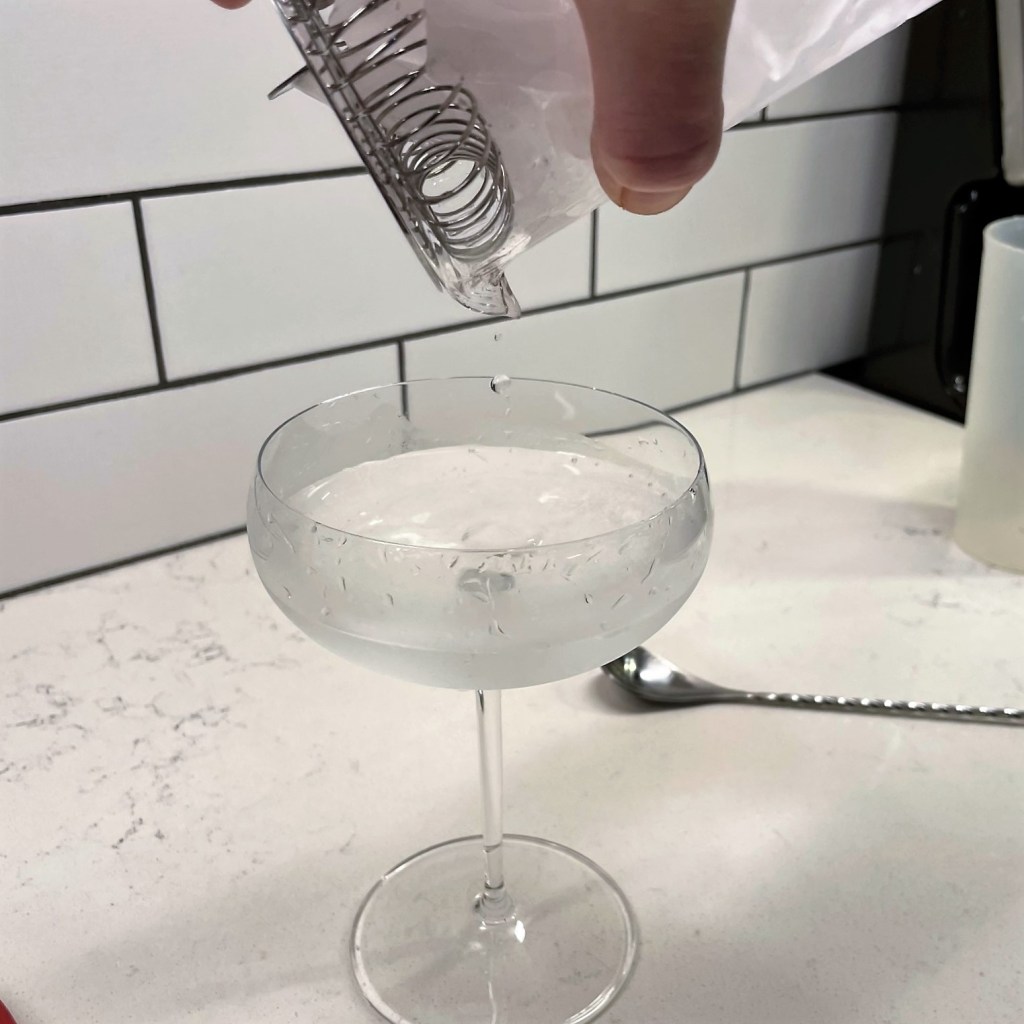
  2. Add a cup of ice and shake or stir about 30 seconds, until outside of container is frosty. Strain into a chilled martini or coupe glass. Garnish with a big fat olive, or twist of lemon peel (or both).

It is essential that you choose a 100% extra virgin olive oil for the fat-washing step. Inferior oils will not solidify during chilling and are difficult to strain from the vermouth. You’ll find a plethora of good options in a specialty oil and vinegar shop.

Ingredients

  • 75 ml (2.5 oz.) dry vermouth; I like Dolin brand for this
  • 15 ml (1/2 oz.) good quality, extra virgin olive oil

Directions

  1. Combine vermouth and olive oil in a wide-mouthed jar (it’s easier to poke through for straining later).
  2. Shake vigorously for about 30 seconds, and then place jar in a very cold spot in the fridge, undisturbed, for about 24 hours or up to three days.
  3. Remove jar from fridge. If the oil is not fully solid on top of the vermouth, place the jar in the freezer for a couple of hours to firm it up more.
  4. Use a chopstick or small spoon to loosen and lift the solid olive oil disk. Gently drain the vermouth through a fine mesh strainer to remove residual olive oil. Transfer the strained vermouth to a small bottle and keep chilled. This amount is good for five martinis. Scale up as needed.


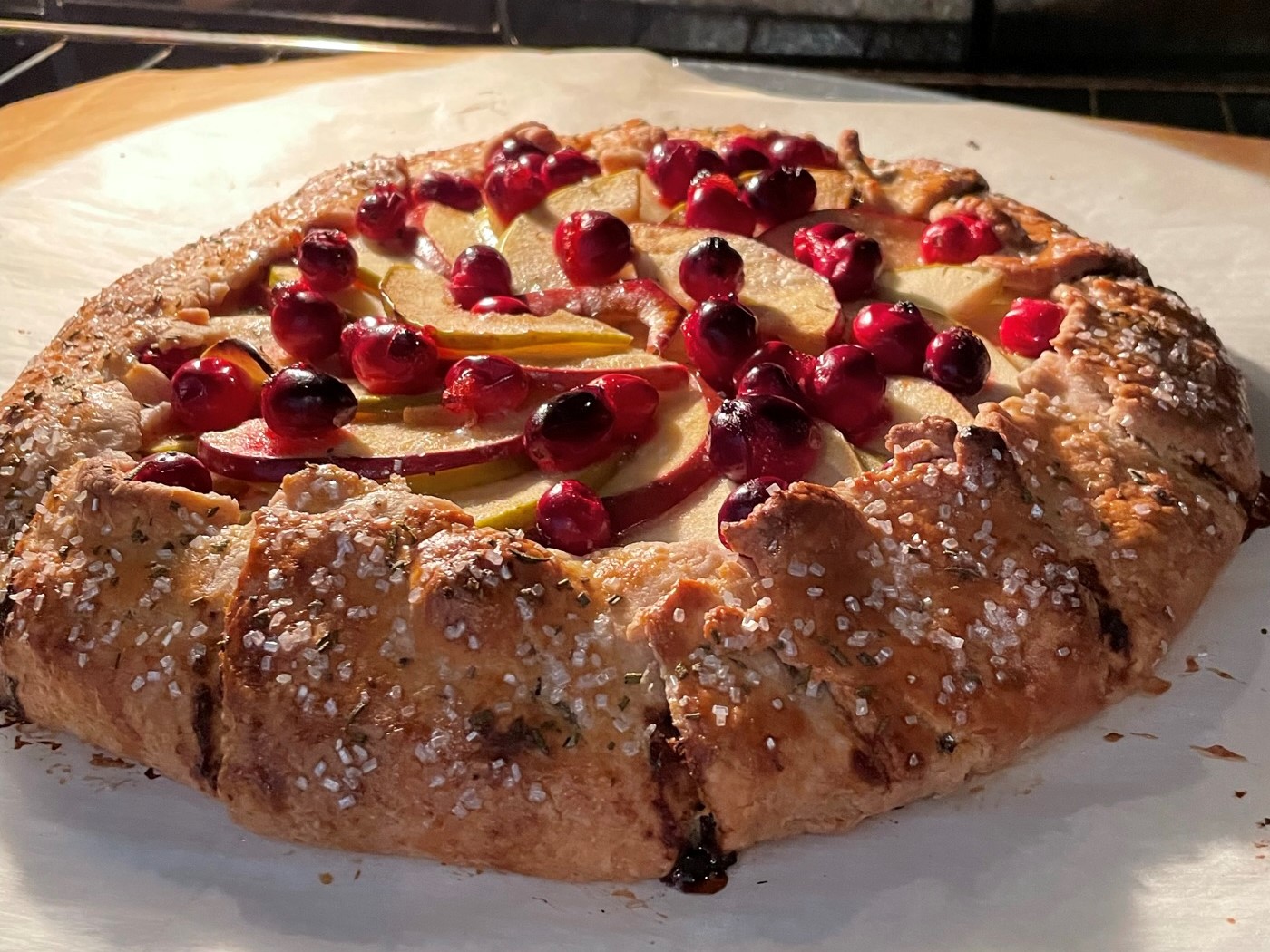
Fig Butter Cranberry Apple Galette

I am good at a few things in the kitchen, but pie crust is not one of them. I can make the pastry dough, no problem, and I usually use the food processor to speed things along. Getting the thing inside the pan in one piece, especially for a deep dish pie, is quite another story. Yes, I have seen all the tricks, from folding it into quadrants and then unfolding it into the pan, to rolling it up around the rolling pin and transferring it that way. The problem is, by the time I finish monkeying around with patching cracks and moving it (especially if it sticks to my roll-out surface and it always does), I have usually either let it get too warm so that it loses its flakiness or I have overworked the dough to the point that it becomes tough rather than tender.

Thank goodness for this easy-peasy alternative— the galette!


At first glance, a galette might seem like a fancy-schmancy dessert. Not quite a tart, which usually has egg in the pastry dough and requires a special shallow, fluted pan. Also not quite a pie because it only has one piece of pastry, there’s no blind baking involved and it doesn’t require a pie pan at all. Just a cookie sheet or pizza pan, and almost everyone has one of those. 

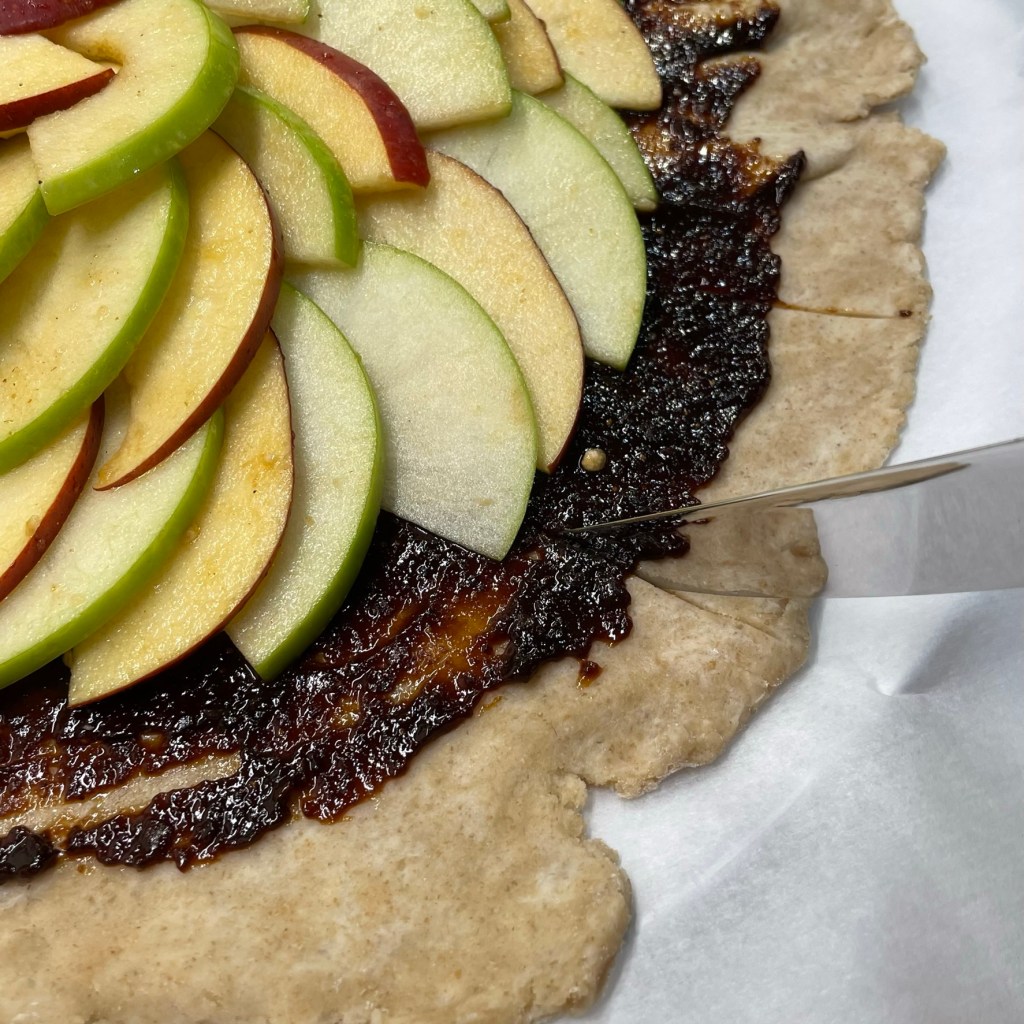
This rustic dessert has all the familiar comfort factor of a pie, but without the fuss. You roll the dough out directly onto parchment, then add your filling, fold up the edges and slide the whole thing right onto your baking sheet. I would not recommend trying a galette for a pie that requires any kind of loose, wet filling, but for uncooked apple slices and raw cranberries, the stars of this dessert, it was perfect.

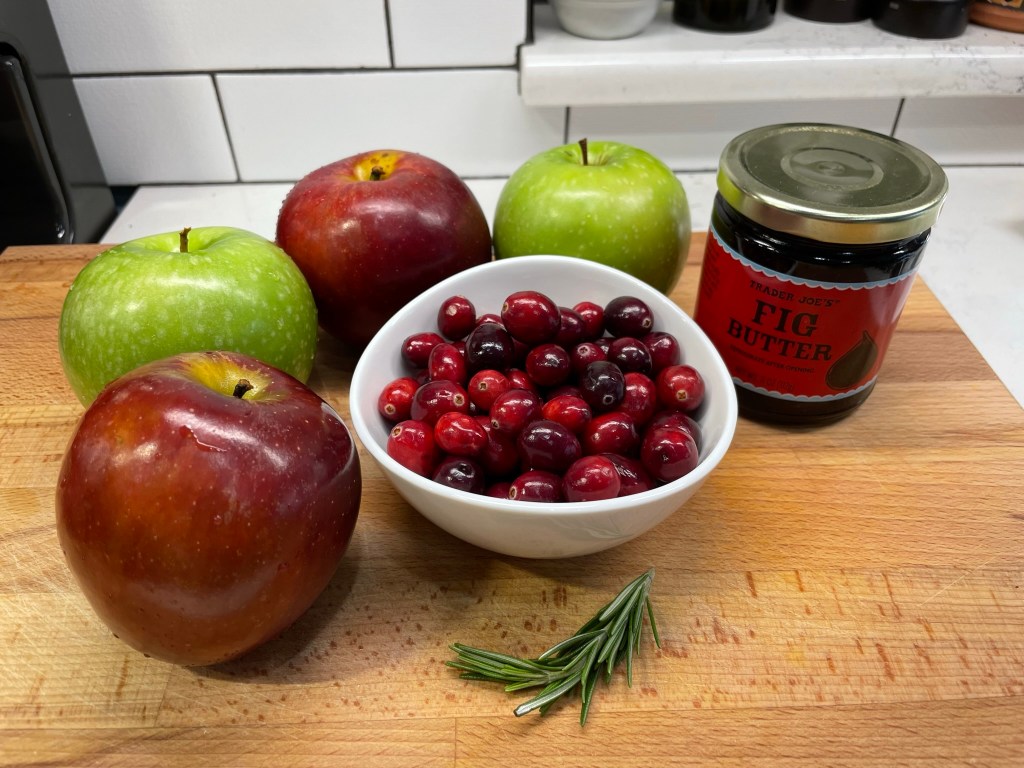
I ended up using only three of the apples and still had a few slices left over.

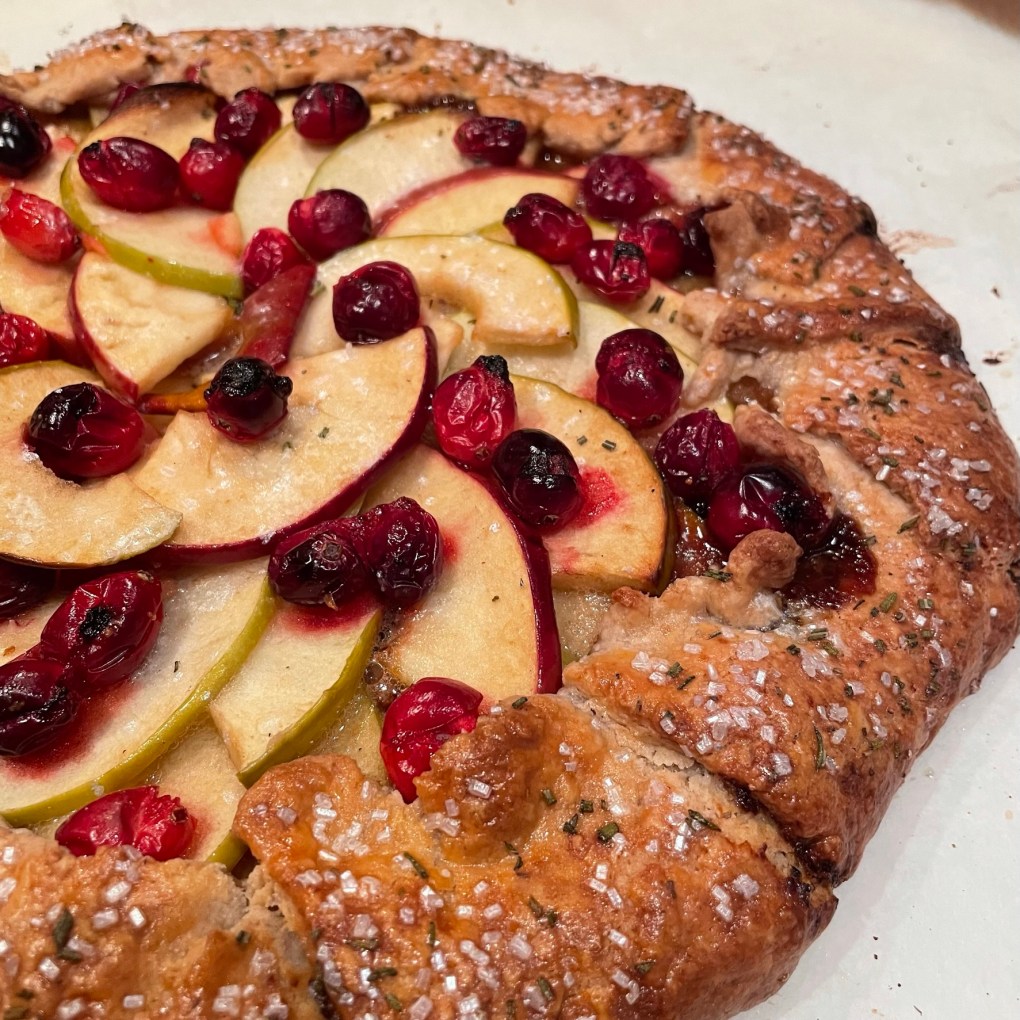
My recipe is adapted from one that King Arthur Baking Company released just before Thanksgiving. Their version was called Apple Butter Apple Galette, and it did not include cranberries or the tiny flecks of fresh rosemary that I added to adorn the outside of the pastry. I swapped out cinnamon for cardamom because I love the flavor with apples, and I didn’t have apple butter on hand (nor the time to make my own), so I subbed in pre-made fig butter from Trader Joe’s. King Arthur’s recipe already calls for mostly whole wheat flour in the pastry, which makes the dessert feel even more rustic and fall-like.


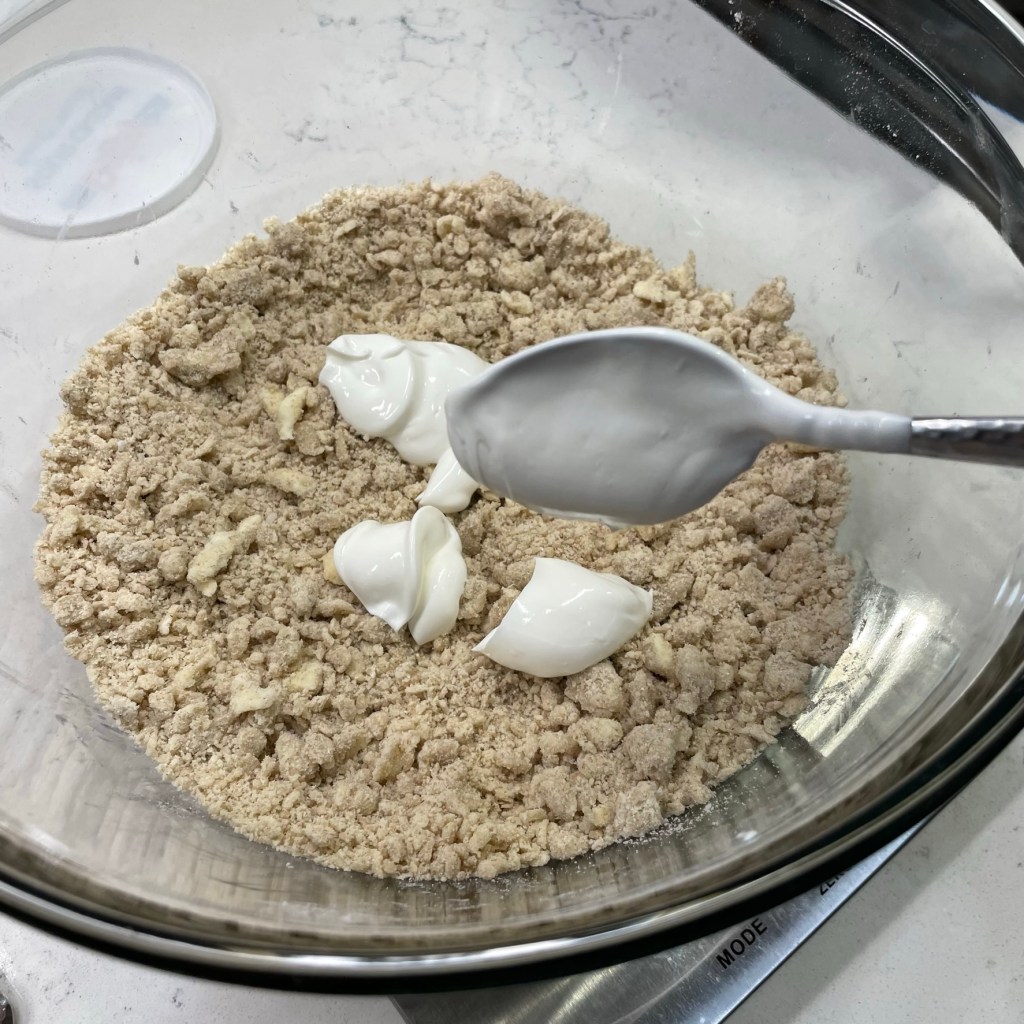
The pastry dough itself is somewhat unusual as there is no water in the mix; rather, the typical cold butter-and-flour mixture is moistened with sour cream, of all things. That inclusion lent a tangy note that was a nice contrast to the slight sweetness of the apple-cranberry filling. The dough needs a good long rest in the fridge, so it’s best to make it the night before and then shape it up when you have the filling ready.


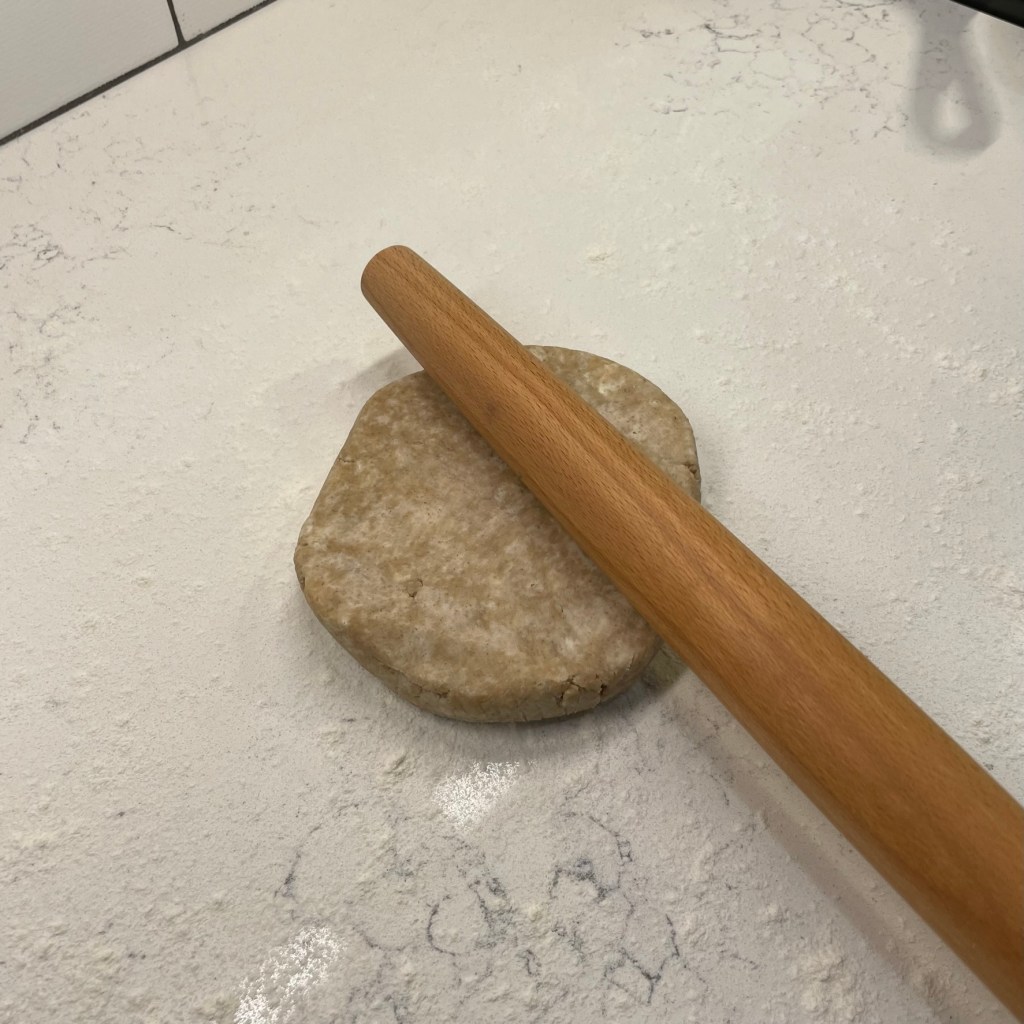
Shaping the dough goes about the same as any pie crust. It helps to use the end of a rolling pin to slightly beat the dough disk into a slightly flattened shape first, then roll it out onto parchment paper for final assembly of the galette.


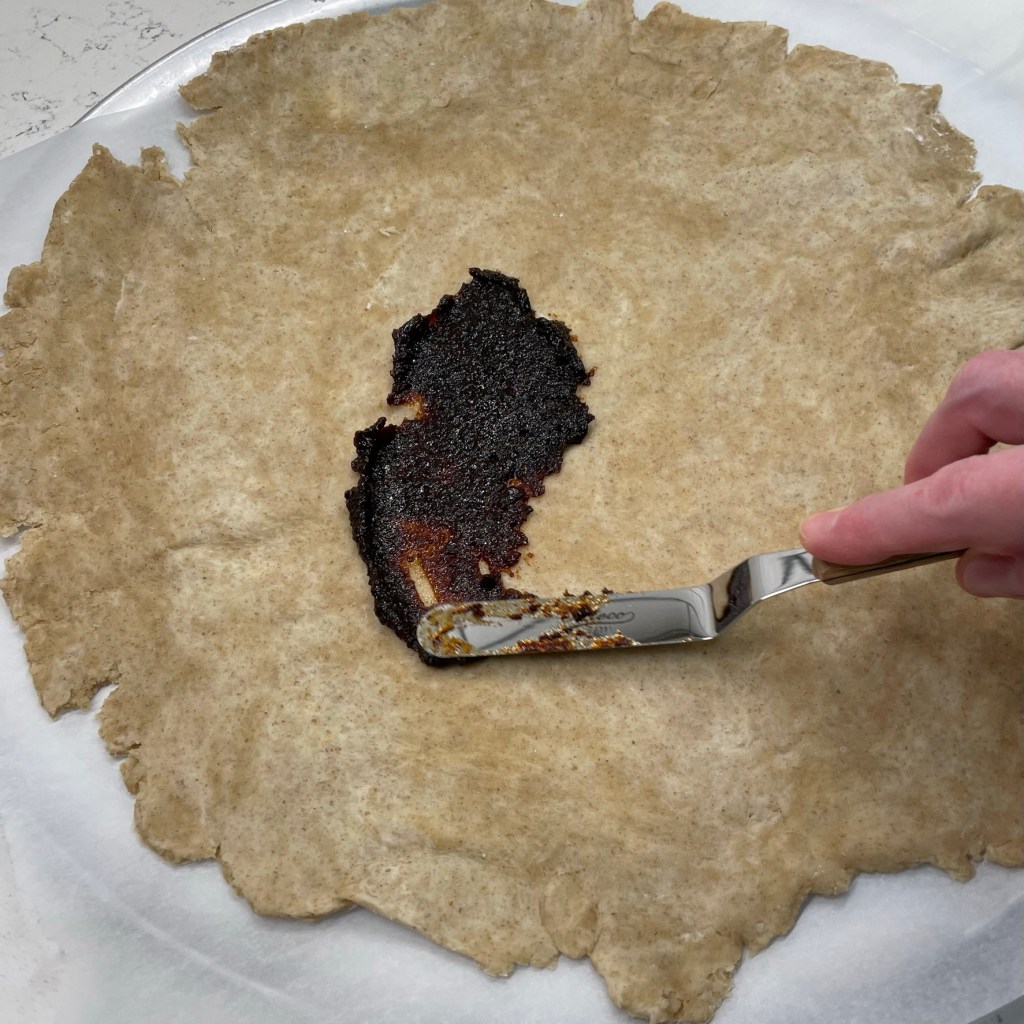
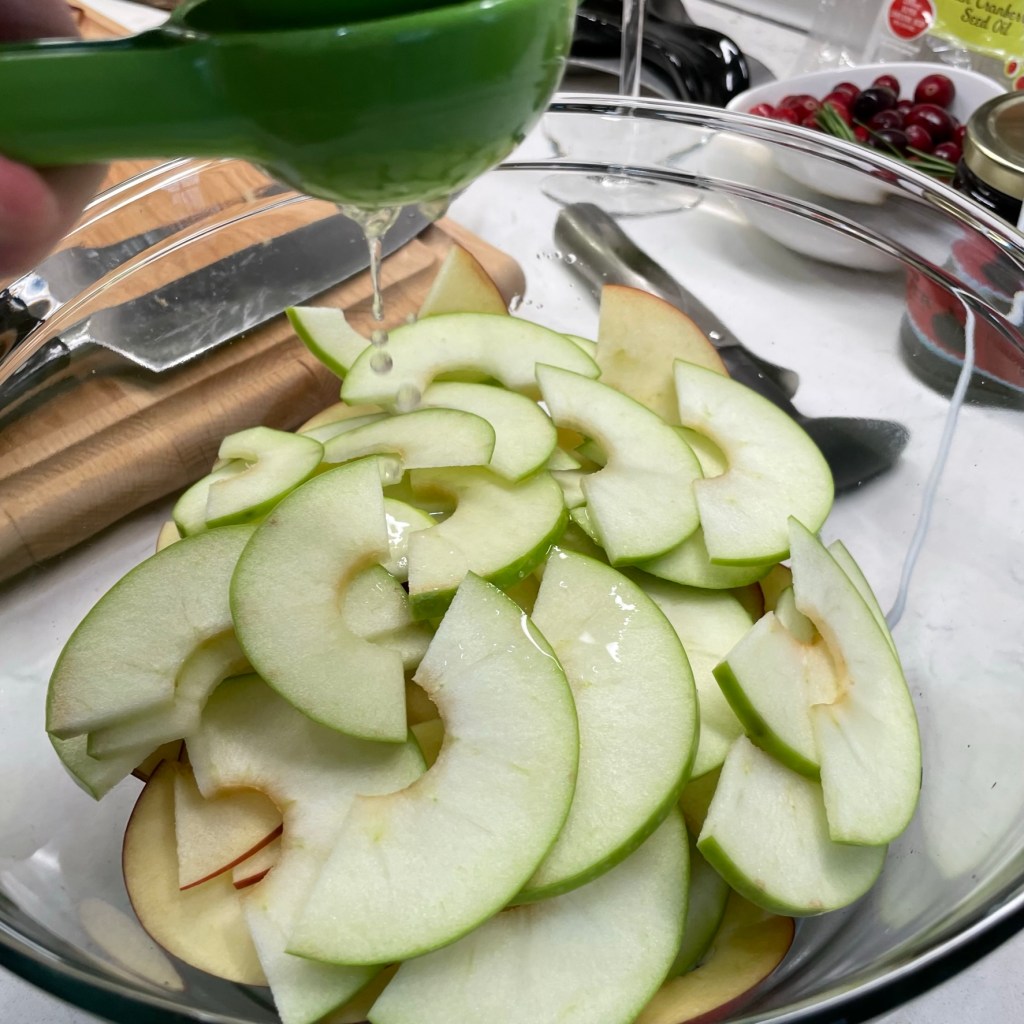
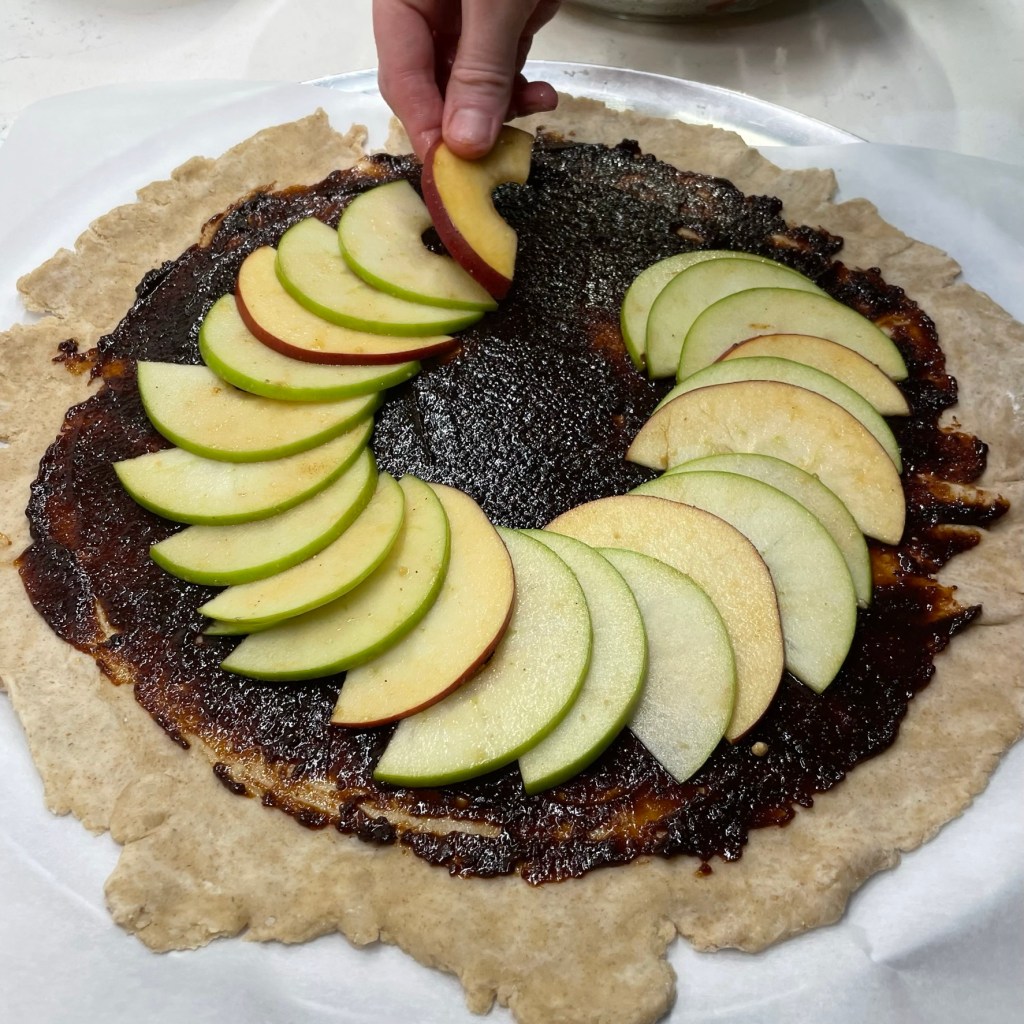
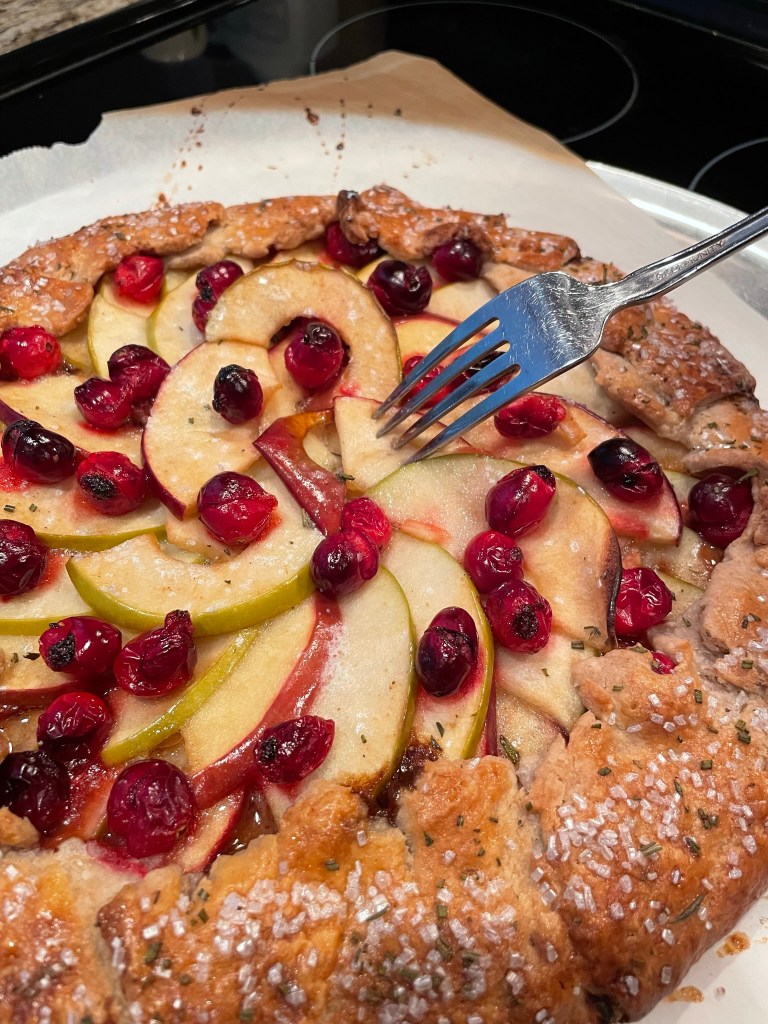
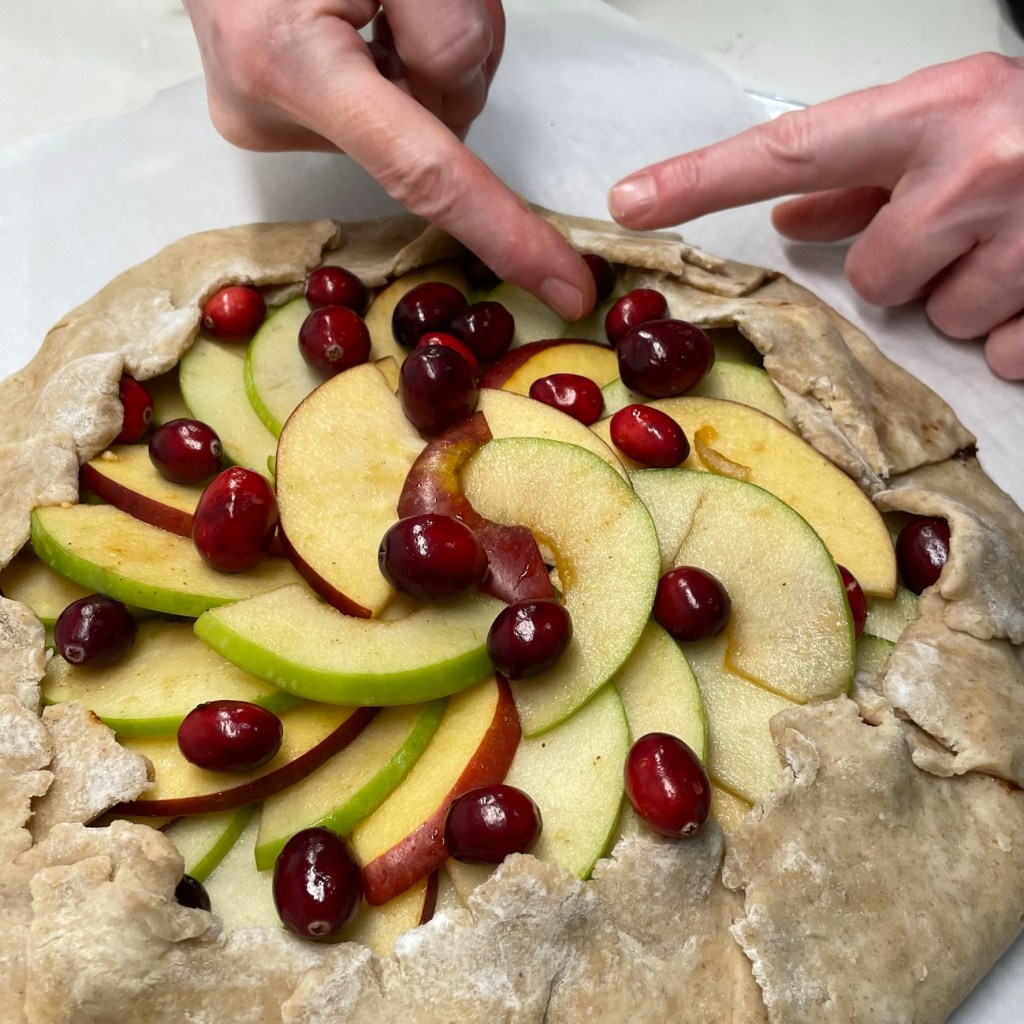
The fig butter is spread out onto the rolled pastry, serving as a base for the apple filling. The apples, which I didn’t even bother to peel, were halved top to bottom, then sliced into half-rings for even appearance and easy arranging. A little lemon juice preserved the color and a good sprinkling with maple sugar and a bit of cardamom added warmth and sweetness. I tucked in the cranberries here and there, including up under a few edges of the folded-up pastry dough, and dotted it with butter, just as you would with an apple pie. A little egg wash and the sugar-rosemary embellishment, and off it went into the oven!


This was a terrific dessert that would work for any meal during the rest of the holiday season. The fig butter, apples and cranberries were a great combination. The sparkling sugar and rosemary made it festive enough to serve for a special meal, but it would be equally nice for a casual weeknight dinner.


Fig Butter Cranberry Apple Galette

  • Servings: 8
  • Difficulty: Average
  • Print

Not quite a tart and not quite a pie, a galette is a quick and simple, rustic dessert, and this fig-apple-cranberry combo is just right for the holidays!


Ingredients

  • 1 cup (113g) King Arthur White Whole Wheat Flour
  • 1/2 cup (60g) King Arthur Unbleached All-Purpose Flour
  • 2 Tbsp. granulated sugar
  • 3/4 teaspoon salt
  • 12 tablespoons (170g) unsalted butter, cold; cut into 1/2″ cubes
  • 6 tablespoons (85g) sour cream

Ingredients

  • 3 medium apples, peeled (or not) and sliced about 1/8″ thick
  • juice of 1/2 lemon (about 1 tablespoon)
  • 2 Tbsp. light brown sugar or maple sugar (see ingredient note below)
  • 1/4 tsp. ground cardamom
  • pinch of salt
  • 1/2 cup prepared fig butter
  • 1/2 cup fresh (or frozen) cranberries
  • 1 tablespoon cold butter, cubed
  • 1 large egg, beaten with 1 tsp. cold water (egg wash)
  • coarse sparkling sugar
  • 1 tsp. finely chopped fresh rosemary

Ingredient note: Adjust sugar to taste, depending on the sweetness of your apples. I used Granny Smith and Arkansas Black, both of which are crisp and tart, so I amped up the sugar a bit. If you are using sweeter apples, feel free to back off the sugar accordingly.

Directions

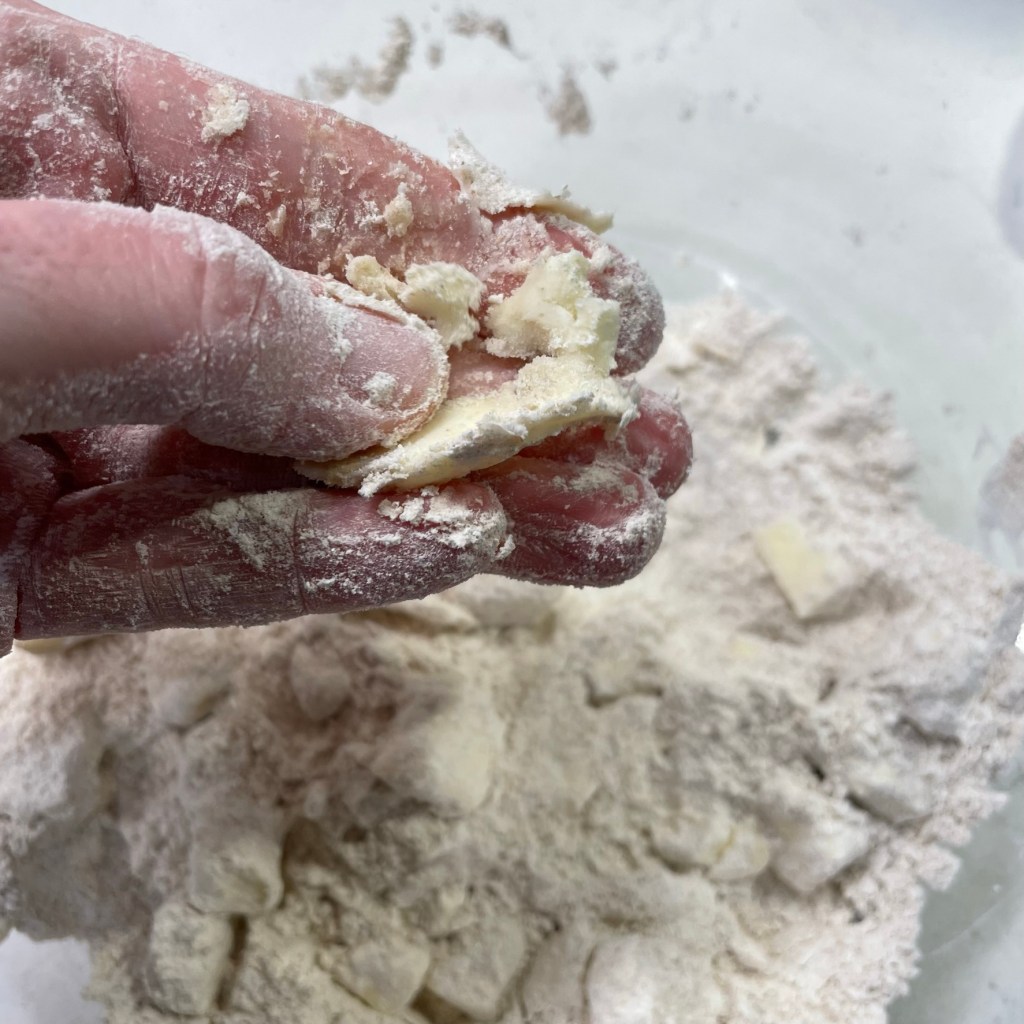
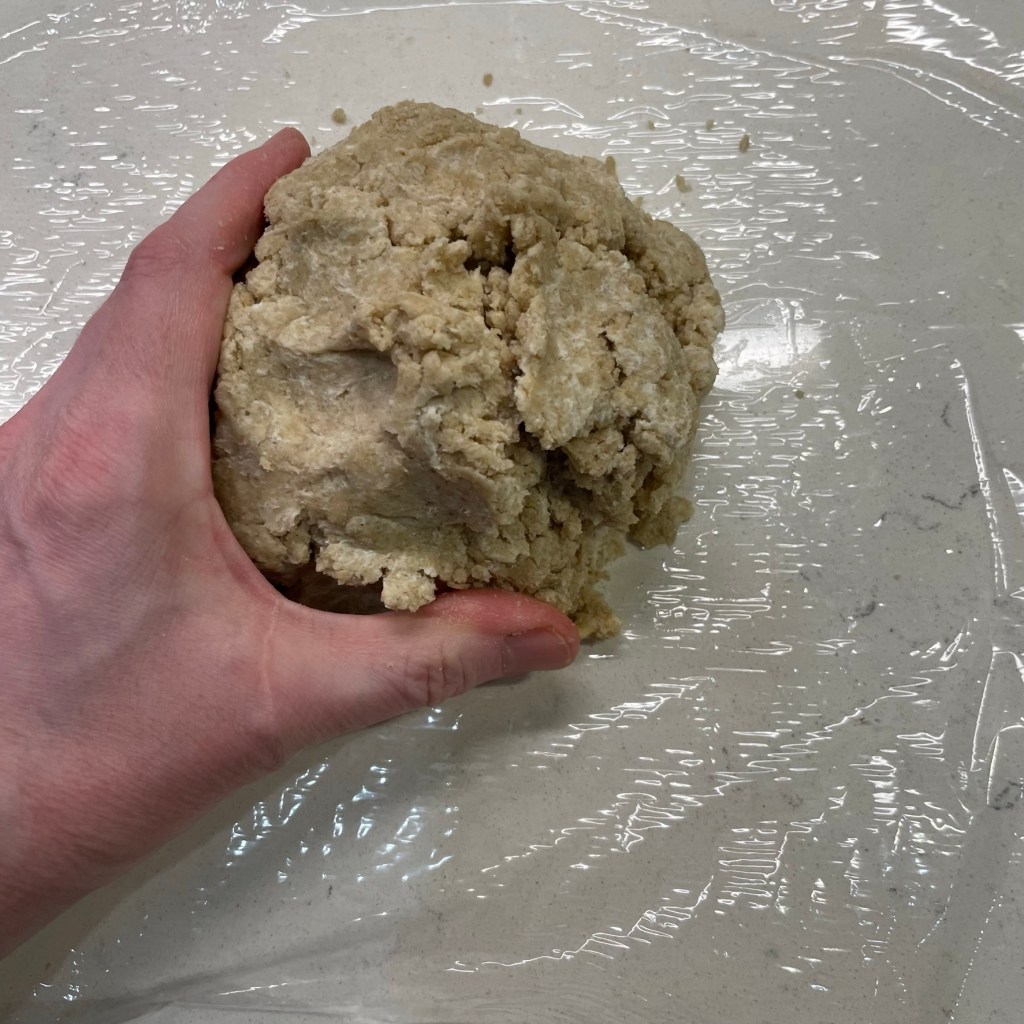
  1. For the pastry dough, combine flours, sugar and salt in a bowl. Pinch cold butter cubes into the flour mix until the whole bowl is filled with crumbs ranging from pea-size to almond-size. Add cold sour cream and blend with a fork just until evenly blended. Shape the pastry dough into a composed disk and wrap tightly in plastic wrap. Roll the edges along the counter to seal it for easier rolling later. Refrigerate overnight.
  2. Preheat oven to 425 F, with oven rack in center position. Prepare apples and squeeze lemon juice over them, tossing to help prevent browning. Sprinkle with brown sugar, salt and ground cardamom. Toss to distribute.
  3. Unwrap pastry dough and place it on a lightly floured countertop. Use the end of a rolling pin to gently “pound” the disk so that it flattens slightly. Transfer pastry to parchment paper and roll it out to about 1/8″ inch thickness, approximately 14″ across.
  4. Spread fig butter evenly over pastry dough, to about 1 inch from the edges of pastry dough. Arrange sugared apple slices in concentric circles over the fig butter, approximately 3 inches from the edges. Make radial cuts, about 3 inches apart, from the outer edge of the pastry dough toward the apple filling.
  5. Fold up cut edges of the galette, overlapping as needed to close up the pastry over the filling. Tuck fresh cranberries into layers of apple and under edges of the pastry. Place galette in freezer for 10 minutes to re-chill pastry dough.
  6. Arrange dots of cold butter over the sliced apples. Brush egg wash all over exposed pastry. Sprinkle with sparkling sugar and minced rosemary.
  7. Bake for 30 to 35 minutes, until pastry is deep golden brown all over and apples are tender when pierced with a fork.
  8. Cool to room temperature. Cut into wedges and serve with ice cream or whipped cream.


Buttermilk Roasted Chicken

Ahead of Thanksgiving, I like to make a few “Sunday Supper” meals—the kind of menu that takes a little extra time or effort—because it gives me something to focus on besides worrying about Thanksgiving, and it also gives me a chance to do a trial run on potential new side dishes before the big day. You know what they say about experimenting on Thanksgiving, right?


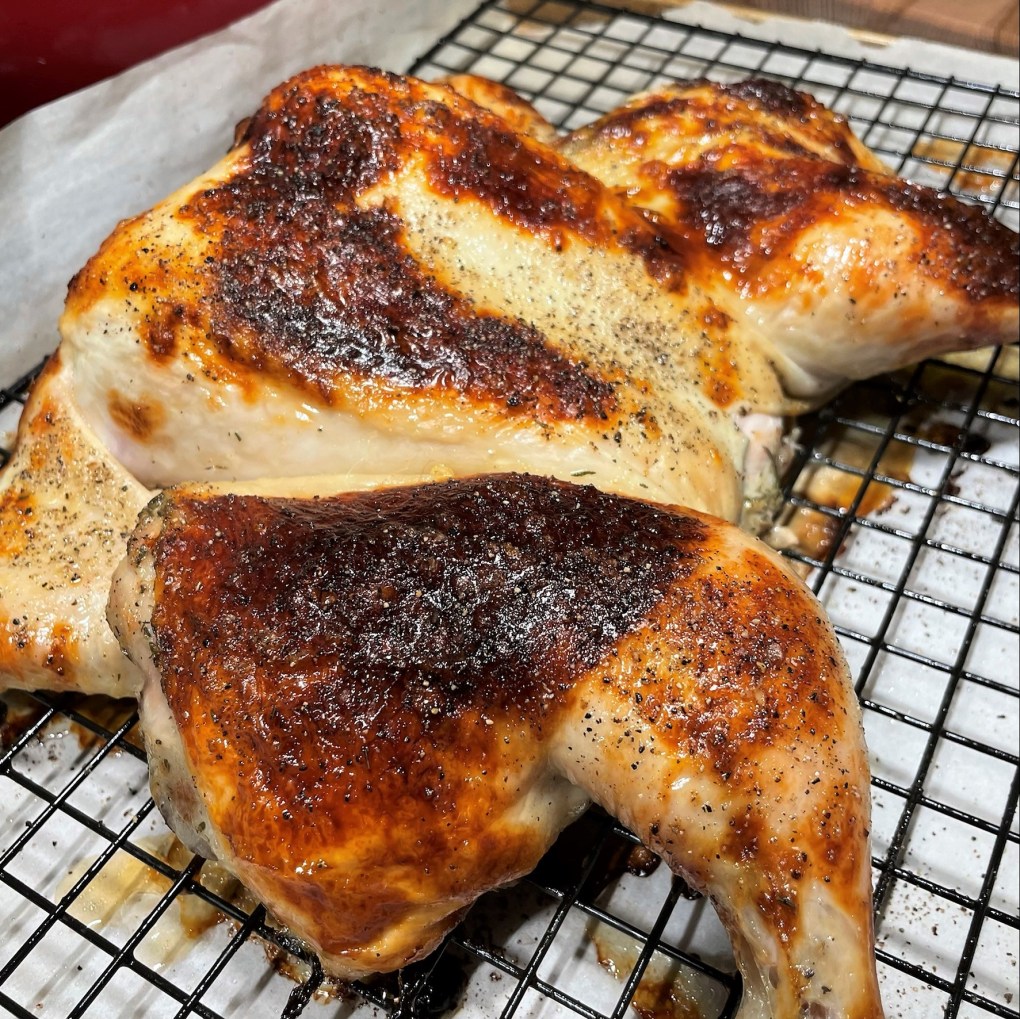
This spatchcocked and roasted chicken can hold its own next to even the most elegant of side dishes you might be auditioning, and the best thing about it is that its lovely presentation takes minimal effort. I wouldn’t have believed it several years ago when I first saw a magazine cover with an image of a roasted chicken laid-out flat on a platter, and I remember thinking, maybe one day I’ll be able to cook like that. Little did I know how easy it is, and after my first attempt at it for a Passover meal a few years ago, I’ve been hooked.

From a technical standpoint, the spatchcocking (or, butterflying, if you wish) of the bird serves an important purpose by putting the whole chicken on the same level for roasting. After 45 minutes in the oven, you won’t have the concern about the breast meat being overdone before the thighs are cooked through because the cavity of the bird is essentially eliminated. The breast of the bird is not sitting several inches higher than the rest of the body, and that means the heat is applied more evenly. Thus, the chicken cooks more evenly.

And the flavor comes easy for this chicken, too, because the buttermilk does all the work. Most often, when you hear the words chicken and buttermilk in the same sentence, it’s probably in context of a recipe that involves frying. At least, that’s how it usually works here in the South. But this oven-roasted recipe is lighter, easier to prep and cook, and so, so flavorful. Buttermilk, which is acidic to begin with, has special enzymes that help break down the proteins of meat. When that breakdown occurs, it opens the door for flavors to go into the meat.

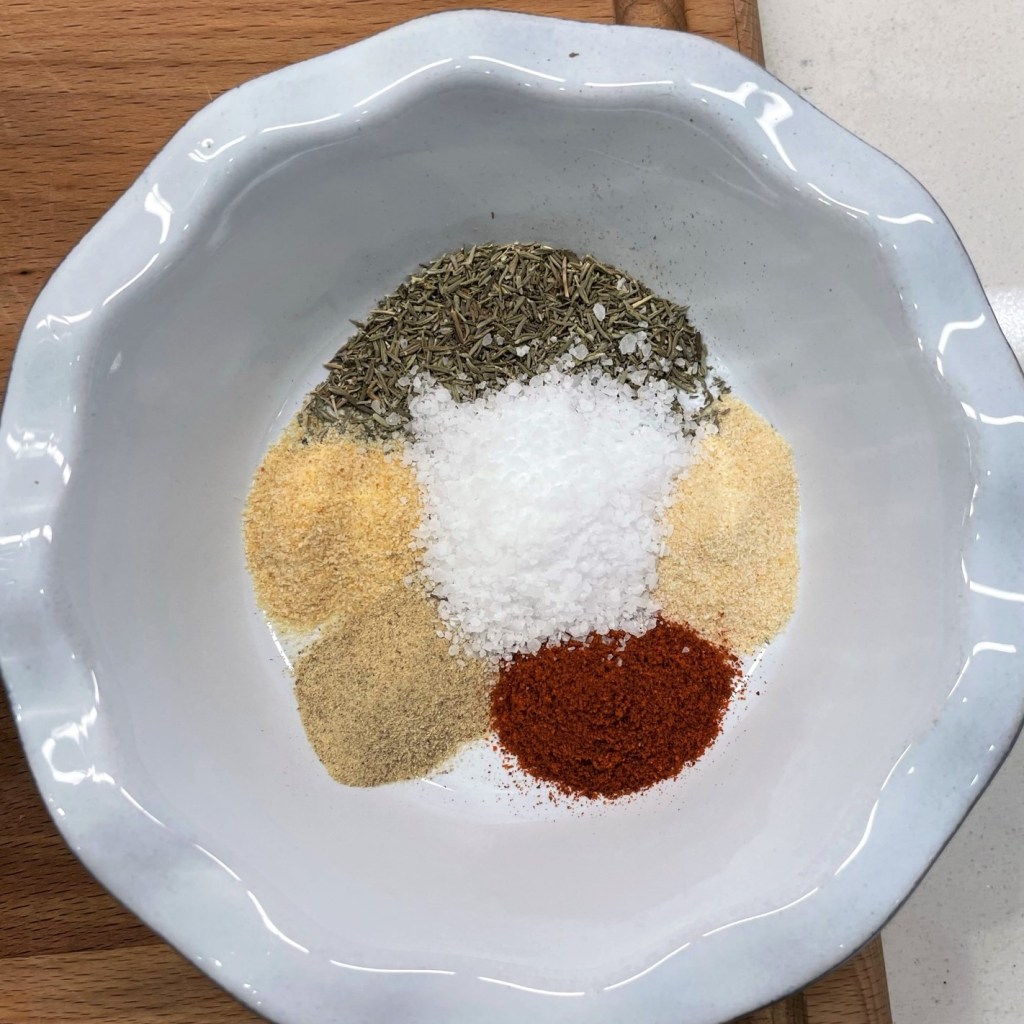
During six hours of marinating, the chicken soaks up the flavors of the herbs and seasonings I add to the buttermilk, including kosher salt, white pepper, garlic and onion powders, paprika and dried thyme.


When I shared my plans last week for making homemade stock for Thanksgiving gravy, I mentioned a tip for adding some chicken parts to the simmering broth, most notably the backbone, which I removed from a whole chicken with a technique called “spatchcocking.” This step is not necessary for roasting the bird, but I like it for the evenness of roasting that results. And as I explained in the stock post, I needed some more poultry parts for my stock. Because we don’t eat it, the backbone doesn’t add much value when it’s left on the chicken, but there’s a world of flavor in those bones when you simmer them down in a stock, so this is a smart way to “waste nothing.”

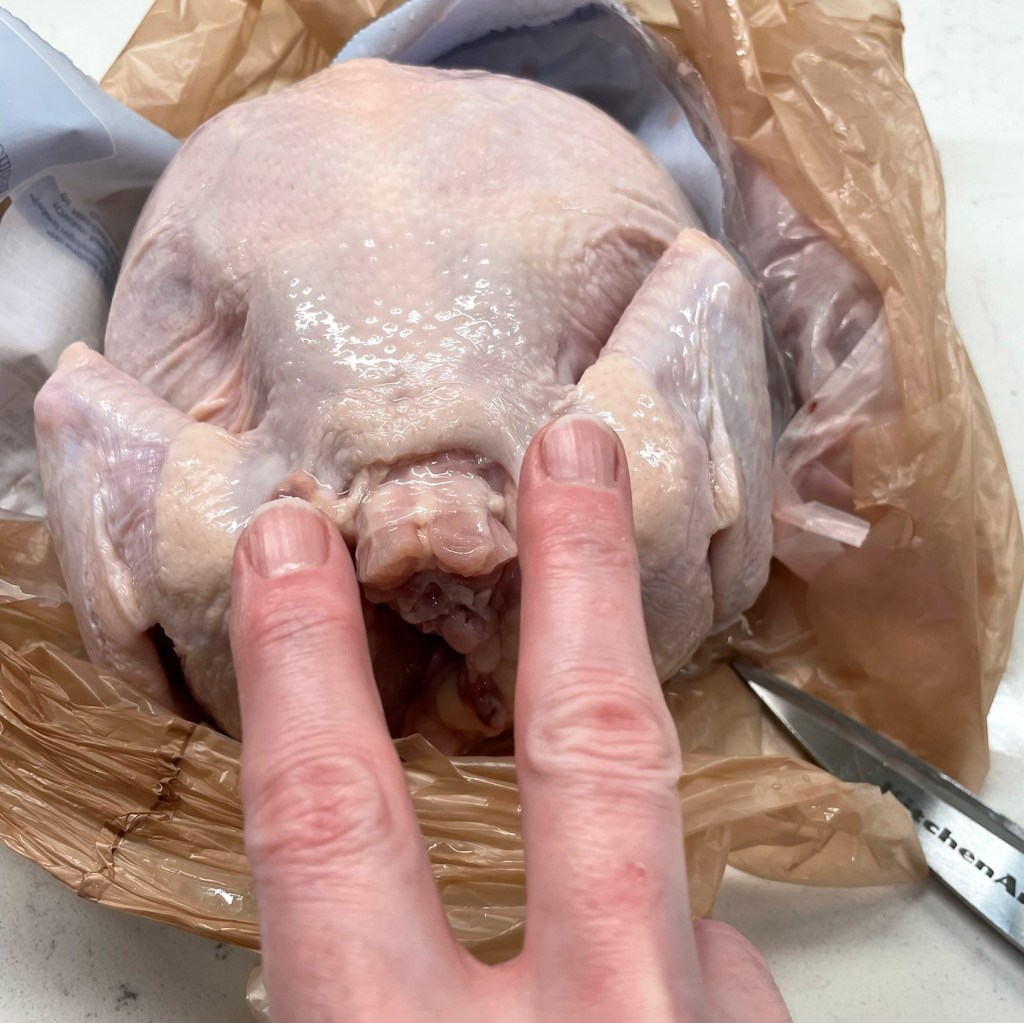
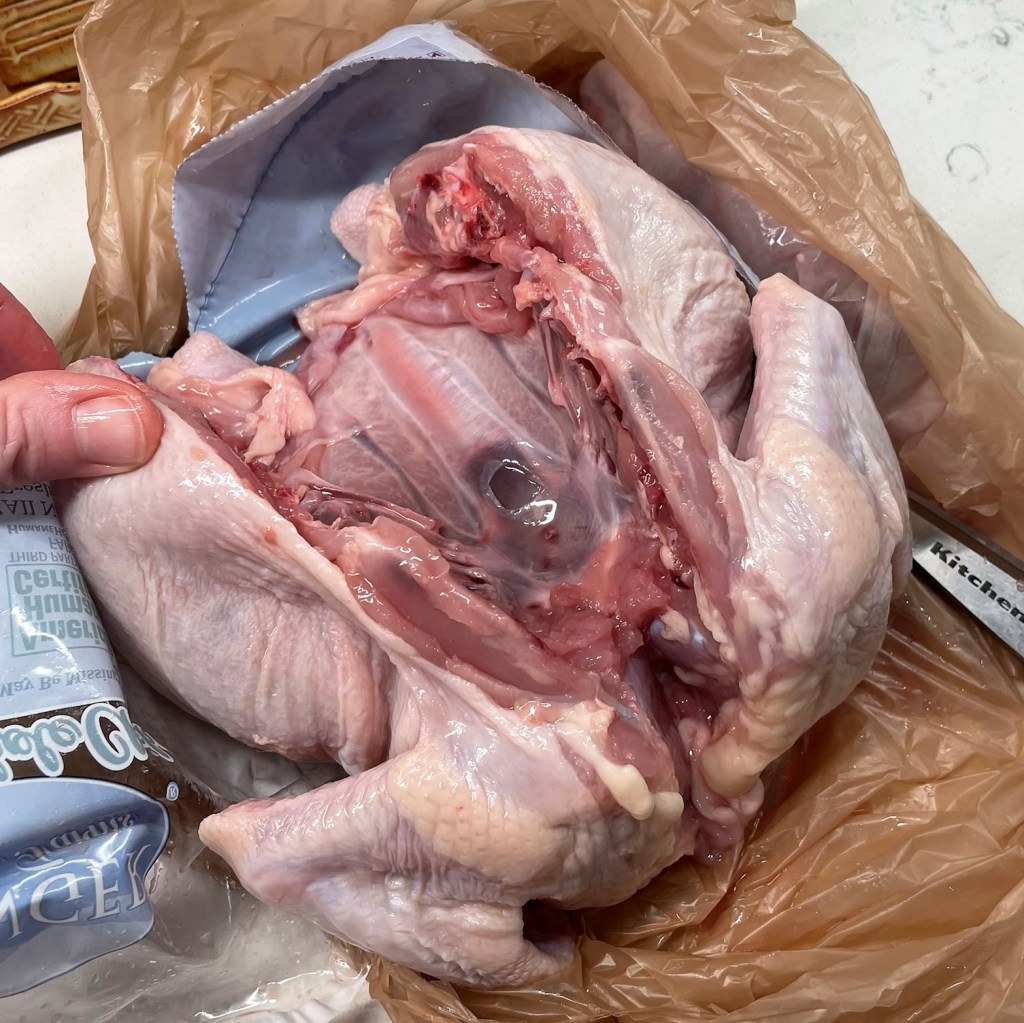
Removing the backbone is easy. You need a good set of kitchen scissors, and a little bit of gumption to crack through the ribs that are attached to the bone along both sides. Start on the neck end of the chicken, where the backbone is easy to recognize. Cut all the way down one side, then the other, and then lift the bone away from the body and cut it off at the tailbone.


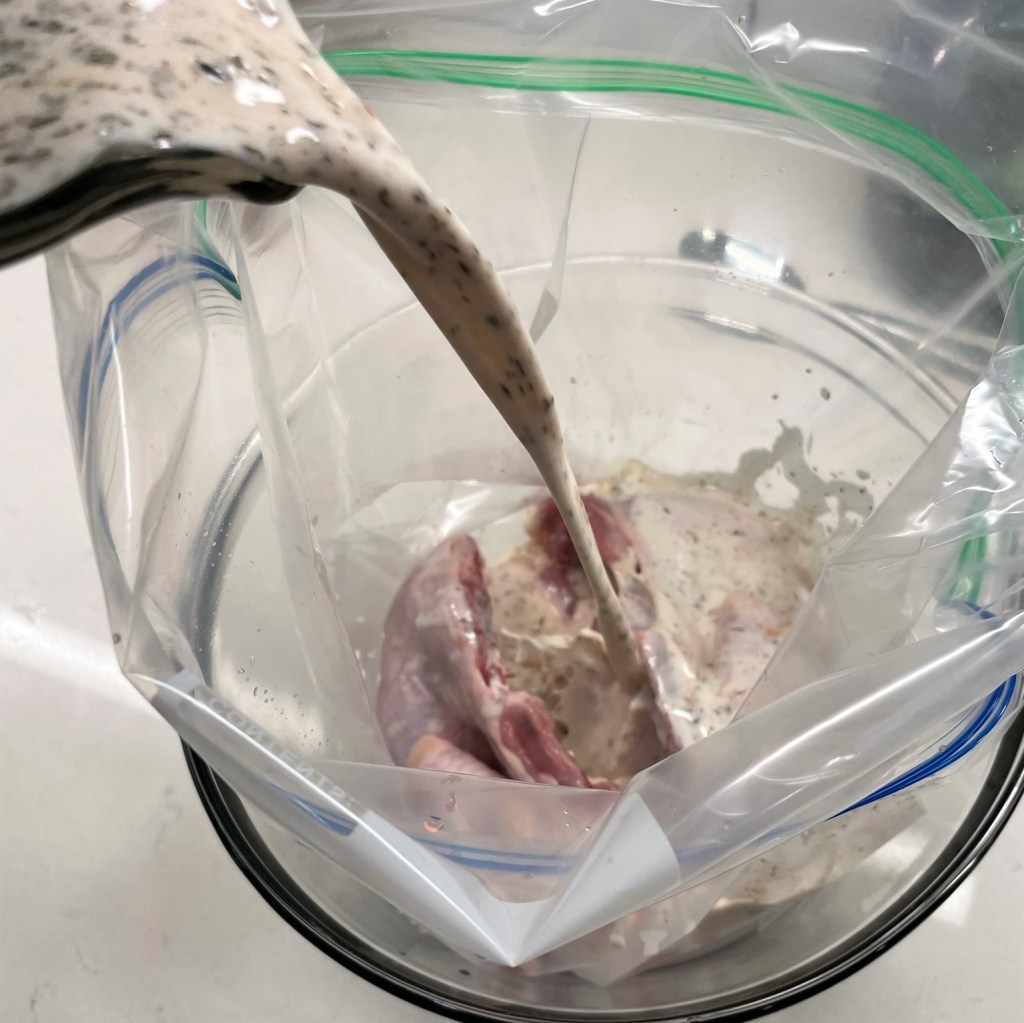
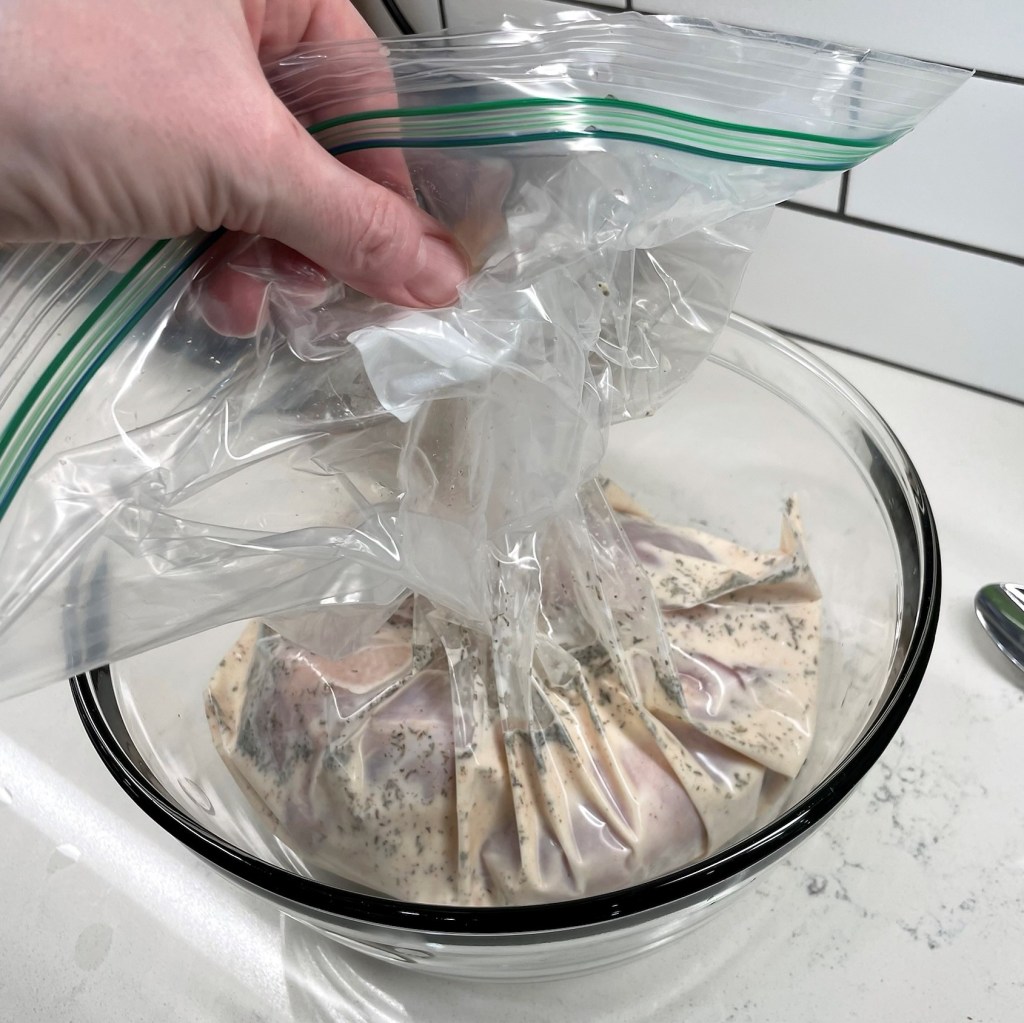
If you don’t need the backbone, you can discard it; otherwise, follow my lead and add it to the pot for your next batch of stock. All that collagen in the bone will really amp up the flavor and richness of any soup or gravy you make with it. You can even freeze it for later, if you aren’t ready to make stock just yet. Pat the bird dry with paper towels and place it in a heavy-duty plastic freezer bag with a zipper top. Pour in the seasoned buttermilk mixture and seal up the bag, squeezing out as much air as possible to force the brine up around every part of the chicken. Stash it in the refrigerator for about six hours, and let the buttermilk work its magic.


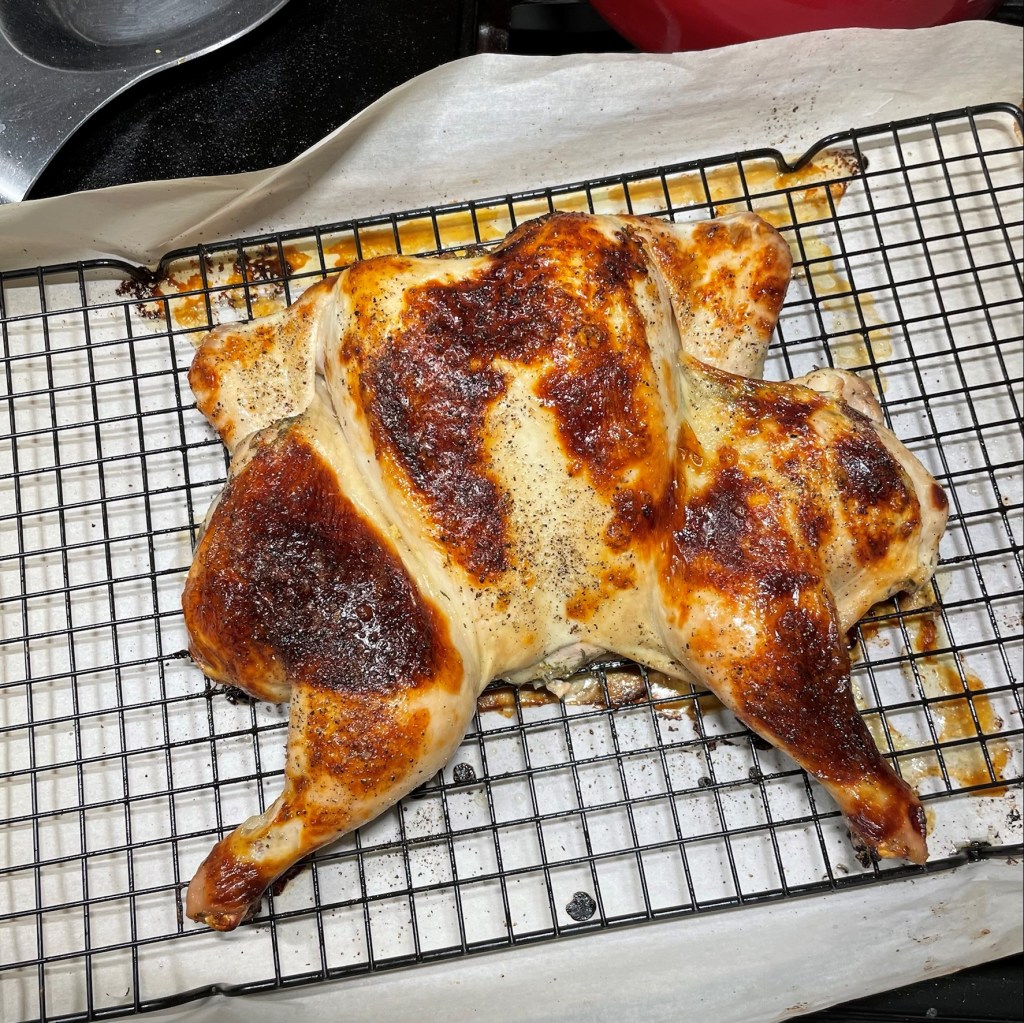
After marinating, dry the chicken with paper towels and rub a small amount of olive oil all over the skin of the bird to protect it from drying out. Let it rest while the oven preheats to 400° F, and roast it for about 45 minutes, until the skin is golden brown all over and the internal temperature is 160° F. It looks beautiful and the buttermilk keeps it nice and juicy on the inside.


I’ve put this buttermilk roasted chicken in the Sunday Supper category, not for any difficulty but for the marinating time that’s required for tenderizing and flavoring. Let me know in the comments what side dishes you’d like to see with this yummy chicken.


Buttermilk Roasted Chicken

  • Servings: 6
  • Difficulty: Easy
  • Print

You don't need any special skills to spatchcock a chicken, as long as you have a good pair of kitchen scissors. And this buttermilk brine brings a world of flavor into the chicken with almost no effort.


Ingredients

  • 3.5-pound chicken, preferably free-range
  • 2 cups real, cultured buttermilk
  • 1 heaping tsp. kosher salt
  • 1/2 tsp. garlic powder
  • 1/2 tsp. onion powder
  • 1/2 tsp. white pepper
  • 1/2 tsp. sweet Spanish paprika
  • 1 tsp. dried thyme leaves
  • 1 Tbsp. extra virgin olive oil

Directions

  1. Remove the giblet package and neck parts from the inside of the chicken. Use kitchen scissors to cut down both sides of the backbone and set it aside with the innards to be simmered into a stock.
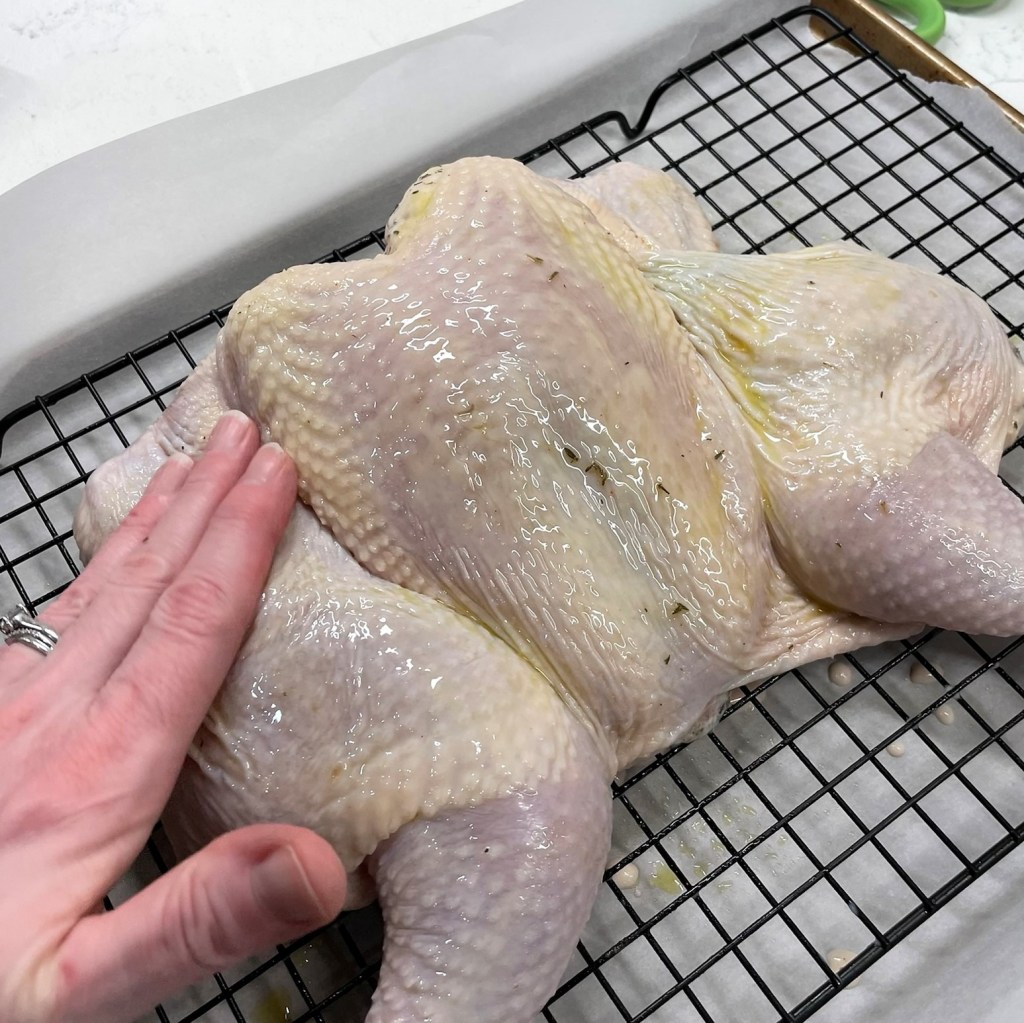
  2. Open up the chicken, essentially “unfolding” it, and lay it breast side-up on a sheet pan. Use the heel of your hand to press firmly onto the breast of the bird until it cracks. This will help the chicken lay flatter when it is time to roast it.
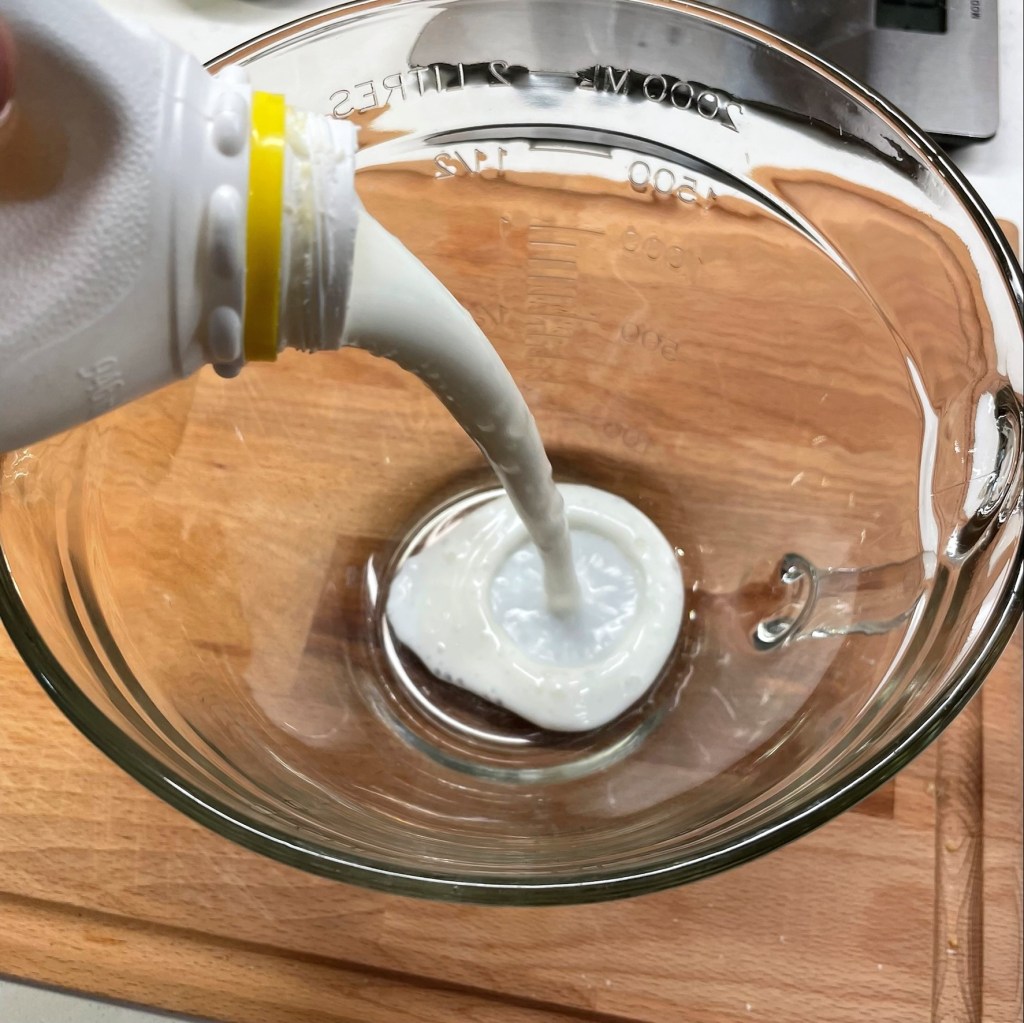
  3. Add buttermilk to a 2-quart bowl. Combine the salt and other dry seasonings in a small bowl, and then stir the spice blend into the buttermilk until the salt is dissolved.
  4. Place the chicken in a gallon-size freezer bag with a zip top. Pour the buttermilk into the bag and seal it, gently squeezing the air out of the bag as you go. This will ensure the brine covers every surface of the chicken. Wash and dry the bowl and place the bagged chicken into it (just in case the bag leaks) and refrigerate it for about six hours.
  5. Remove the chicken from the buttermilk brine, allowing the excess to drip off. Do not rinse the bird, but pat it dry with paper towels and lay it, breast side-up, on a baking rack placed over a rimmed sheet pan. Rub the olive oil all over the skin of the chicken and sprinkle it with kosher salt and black pepper. Let the chicken rest at room temperature for an hour before roasting.
  6. Preheat oven to 400° F, with rack in the center position. Roast the chicken without convection for 45 minutes, until the skin is golden brown all over and a thermometer inserted into the thickest part of the thigh reaches 160° F. Rest chicken for 15 minutes before carving and serving.


Pecan and Parmesan-Crusted Trout

Friday fish fry. That was the thing in my upstate New York hometown, and it didn’t have to be Lent. There were a few places that everyone flocked to on Friday nights for a heaping plate of beer-battered haddock fillets, deep fried and served up with cole slaw and French fries—or cottage cheese, if it was lunch. You couldn’t order it any other day of the week. Just Friday. The “fish fry” is one of the foods I really do miss from my younger years, and I have never seen it served that way anywhere else. There are plenty of places I could find battered-and-fried cod, but it just isn’t the same.

I need to get better at deep frying before I try to make a Friday fish fry myself. Until then, I’ll satisfy my fish craving with a few other favorites, baked rather than fried, that I’ve developed on my own over the years. During the Lenten season, there’s an uptick in searches for interesting seafood recipes because observant Christians abstain from eating meat on Fridays—at least for the 40 days leading up to Easter. Here’s one that is delicious and easy to prepare. I hope you enjoy it, regardless of your religious observance.

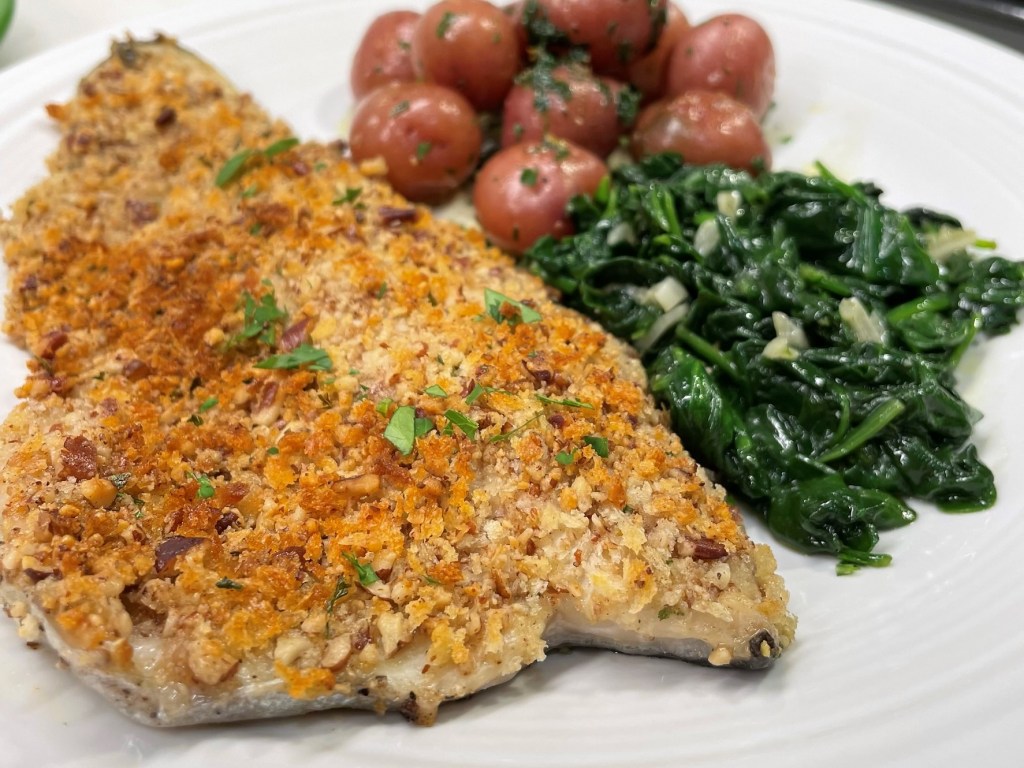
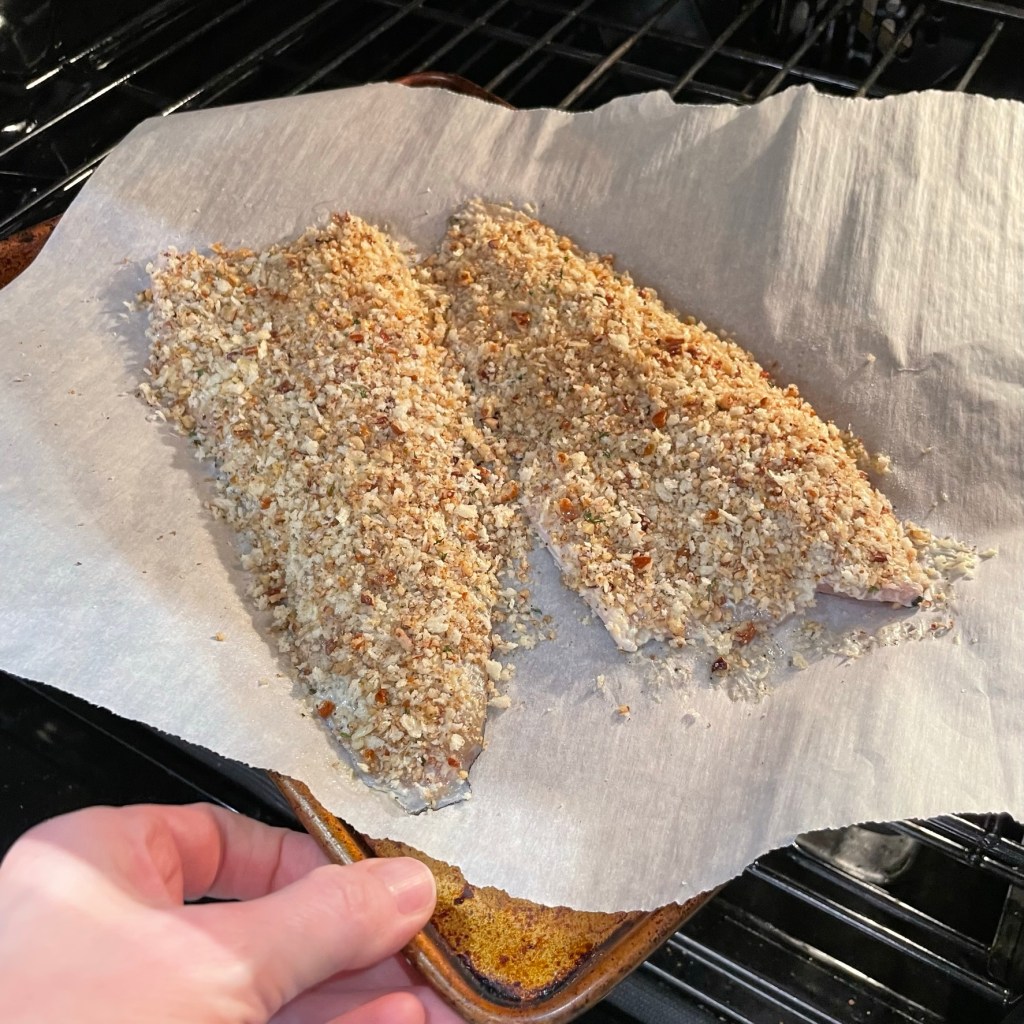
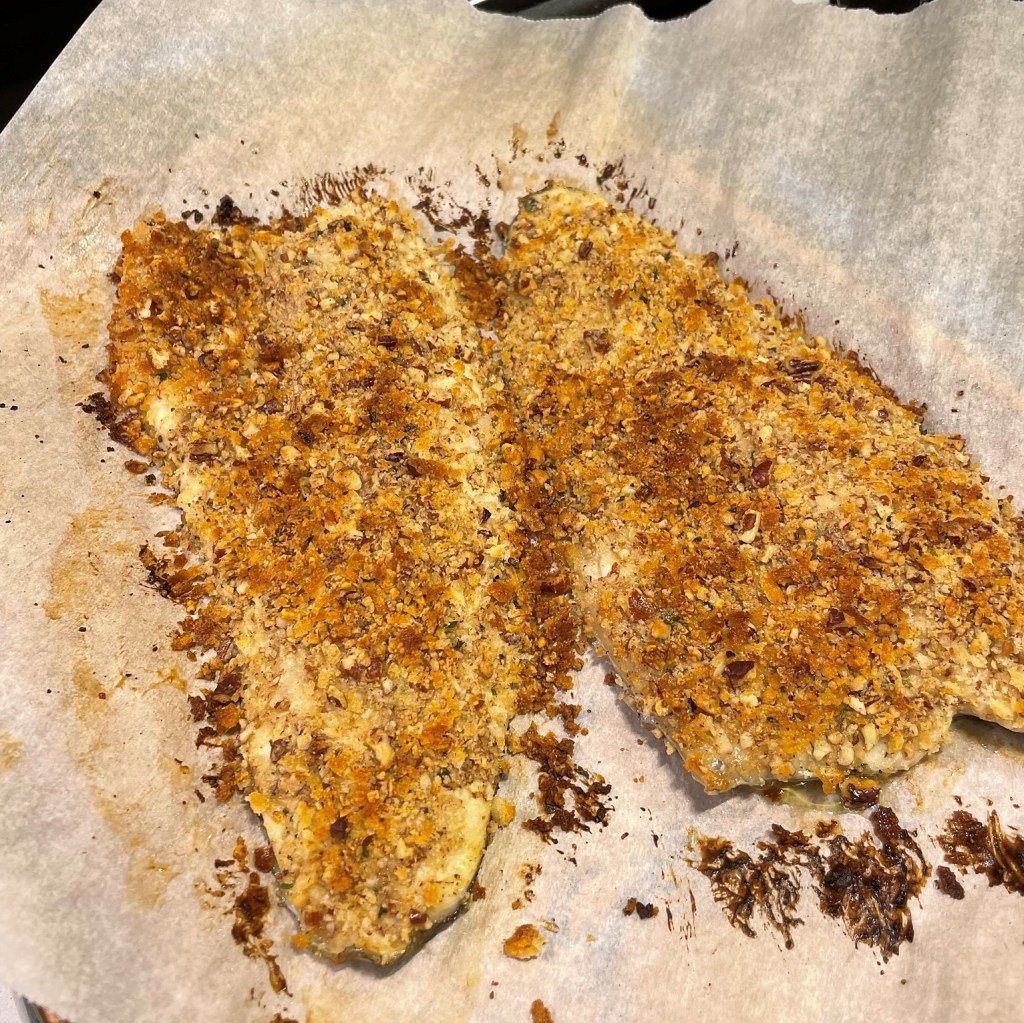
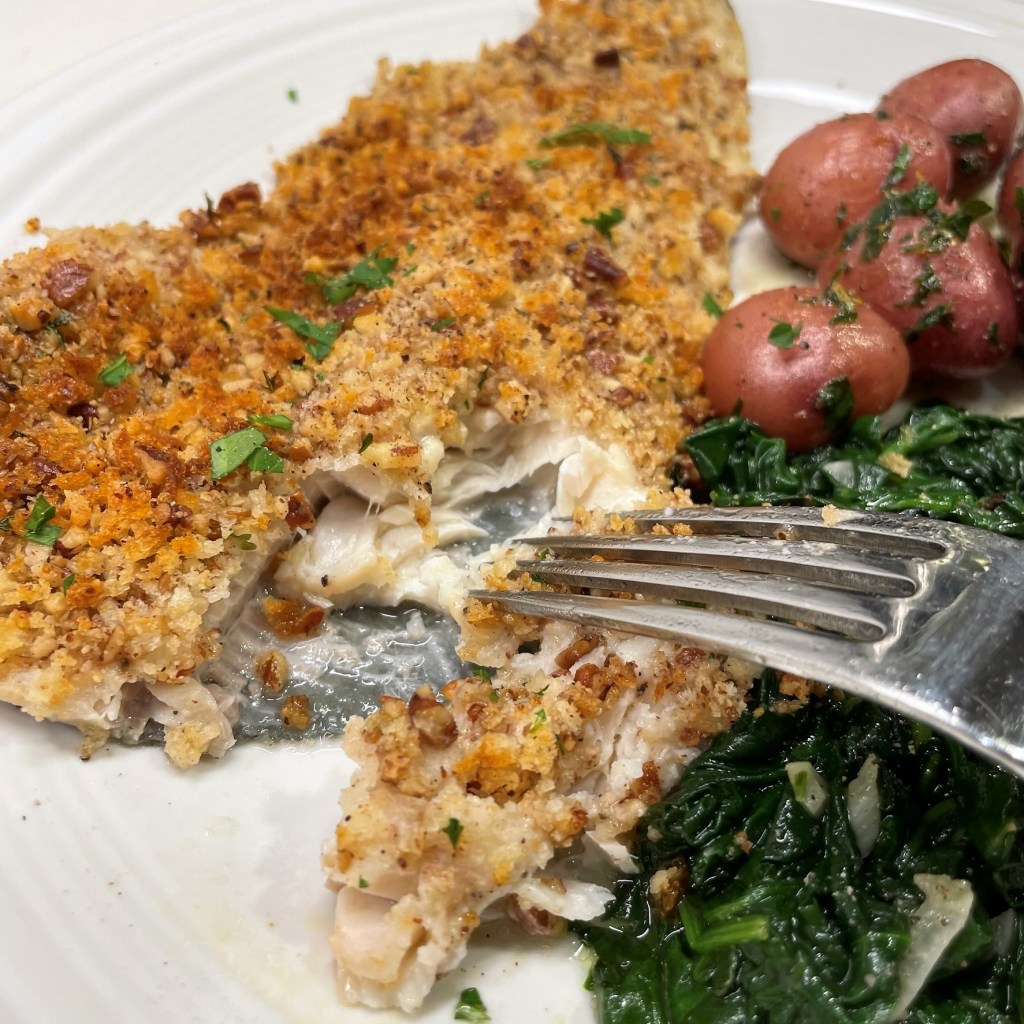
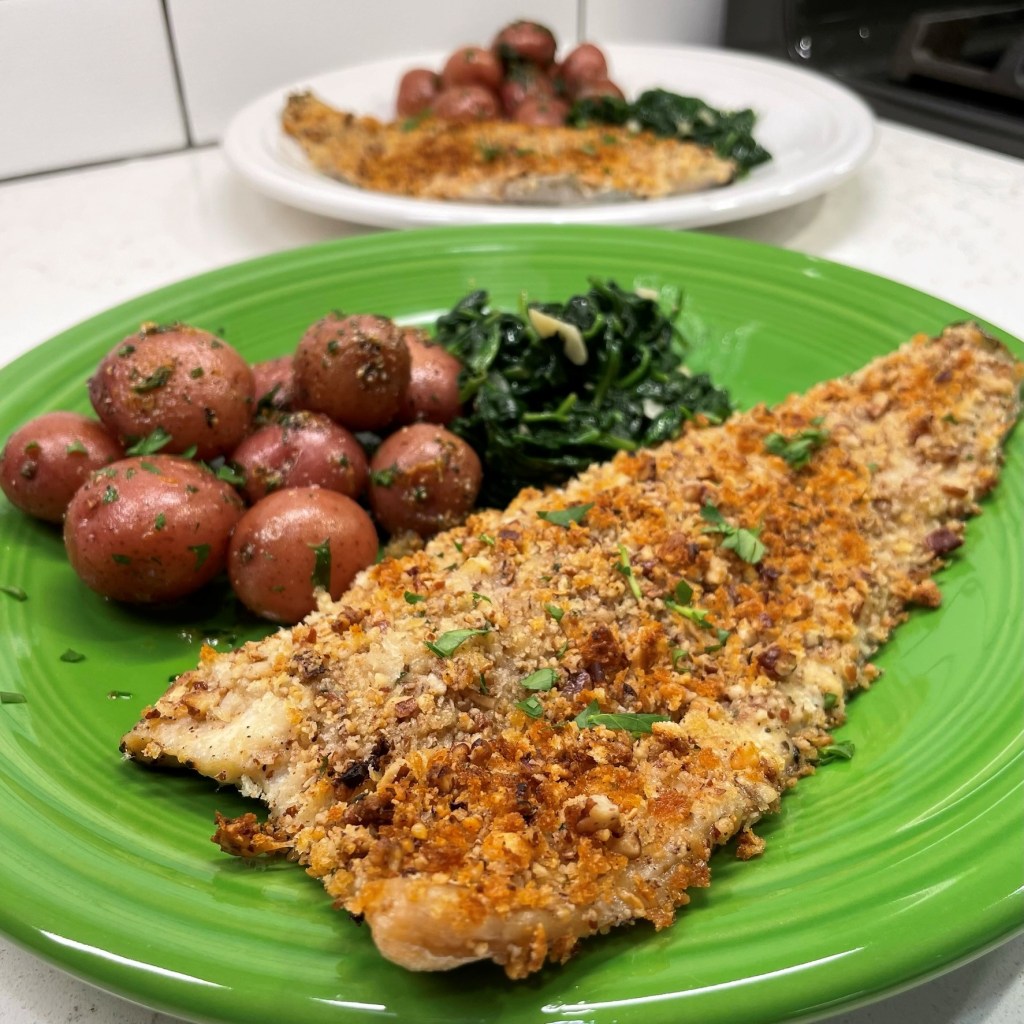
Pecan and parmesan-crusted trout. I served it with a quick sauteed spinach side and boiled baby red potatoes.

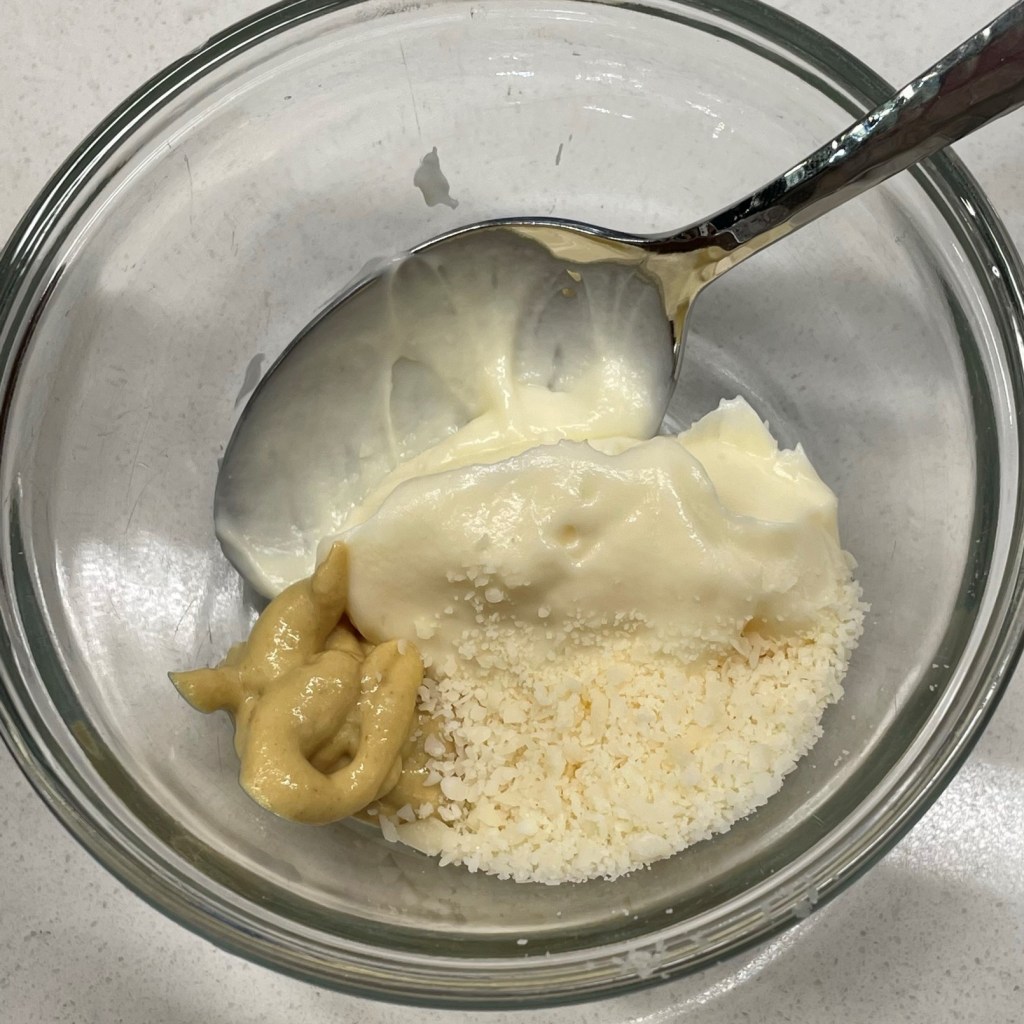
My recipe for pecan-crusted trout has evolved over the years, and the flavors and textures are all front and center in this one. The trout fillets are brushed with an easy blend of mayonnaise, Parmesan and Dijon mustard, and then I press them into a mixture of panko crumbs, more grated Parmesan and finely crushed, toasted pecans. 20 minutes later, dinner is served! This is easy enough for even a busy weeknight, and you can prepare your sides while it bakes.

The mayo mixture serves double duty in this recipe. It’s a “glue” to hold the seasoned pecan blend in place, and it also protects the fish from becoming dry during its brief time in the oven. The trout fillets remain soft and moist inside, despite the delicate crunch that meets your taste buds with every bite.


This recipe serves 2; easy to adjust for more servings

Ingredients

2 fresh trout fillets

1 Tbsp. mayonnaise

1 Tbsp. grated Parmesan

1 tsp. Dijon mustard

Kosher salt and freshly ground black pepper

1/3 cup pecan pieces, toasted* (see recipe notes)

1/4 cup panko crumbs

1/4 cup grated Parmesan

A few shakes ground cayenne pepper


*Notes

To toast the pecan pieces, preheat oven to 350° F. Spread the pecan pieces onto a parchment-lined baking sheet. Bake for 6 to 8 minutes, until nuts are fragrant, roasty and slightly shiny. Remove from oven and cool completely. Do this step ahead to save even more time in preparation of the fish.


Instructions

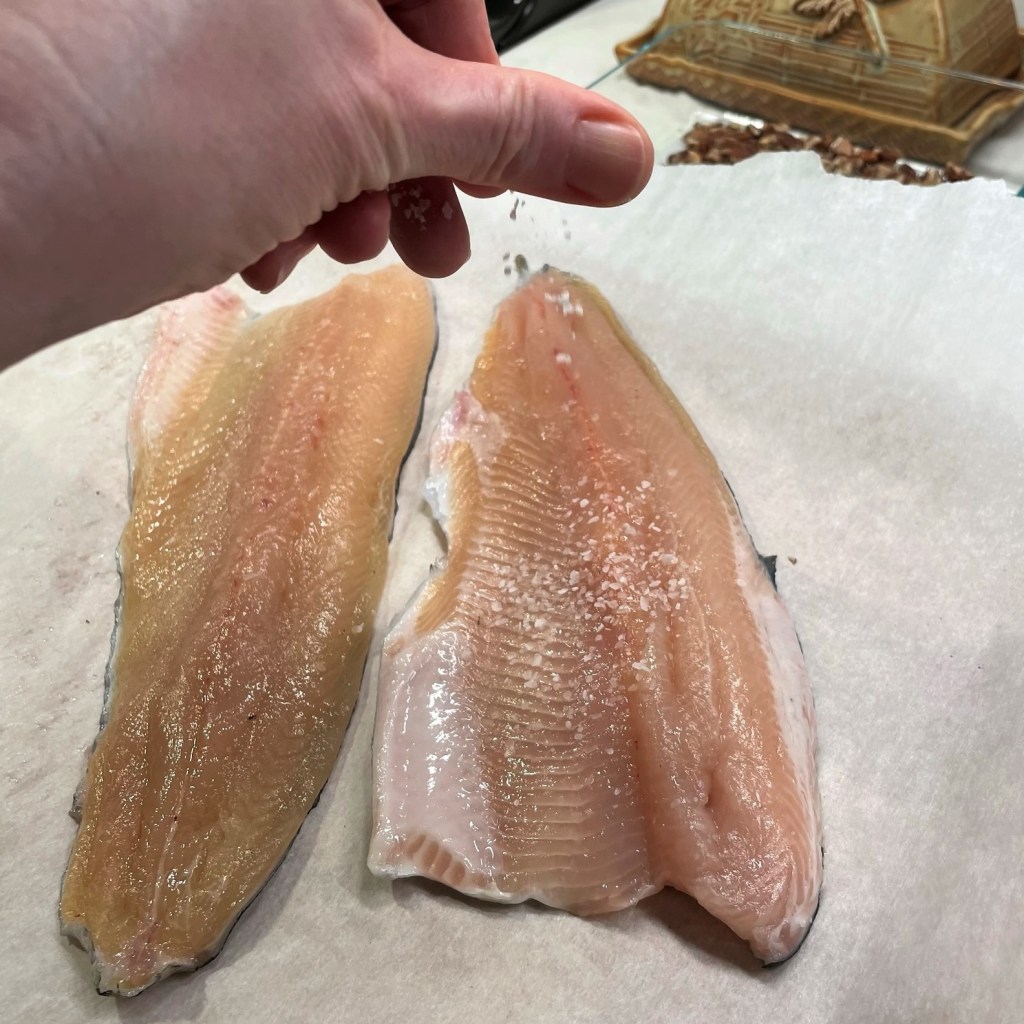
Preheat oven to 350° F. Stir together the mayonnaise, Parmesan and Dijon mustard. Sprinkle the trout fillets with kosher salt and freshly ground black pepper.

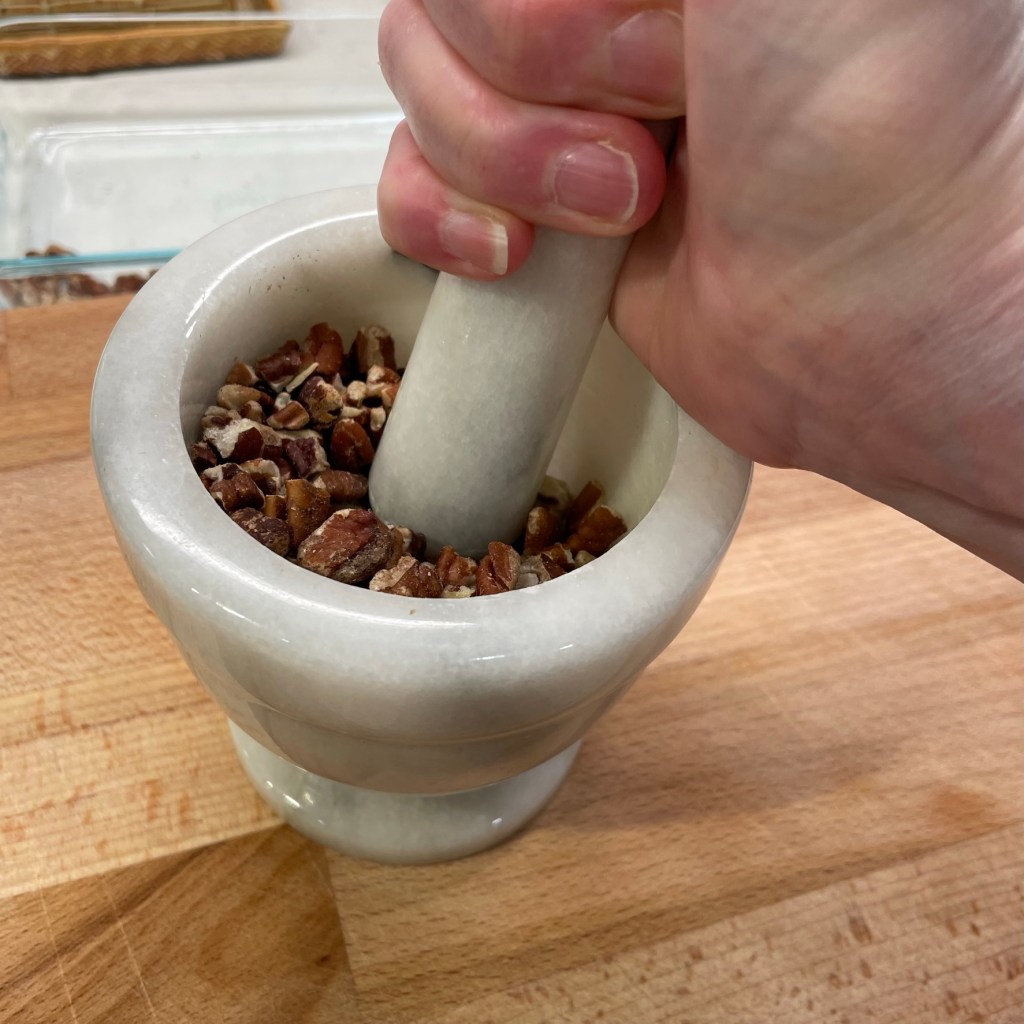
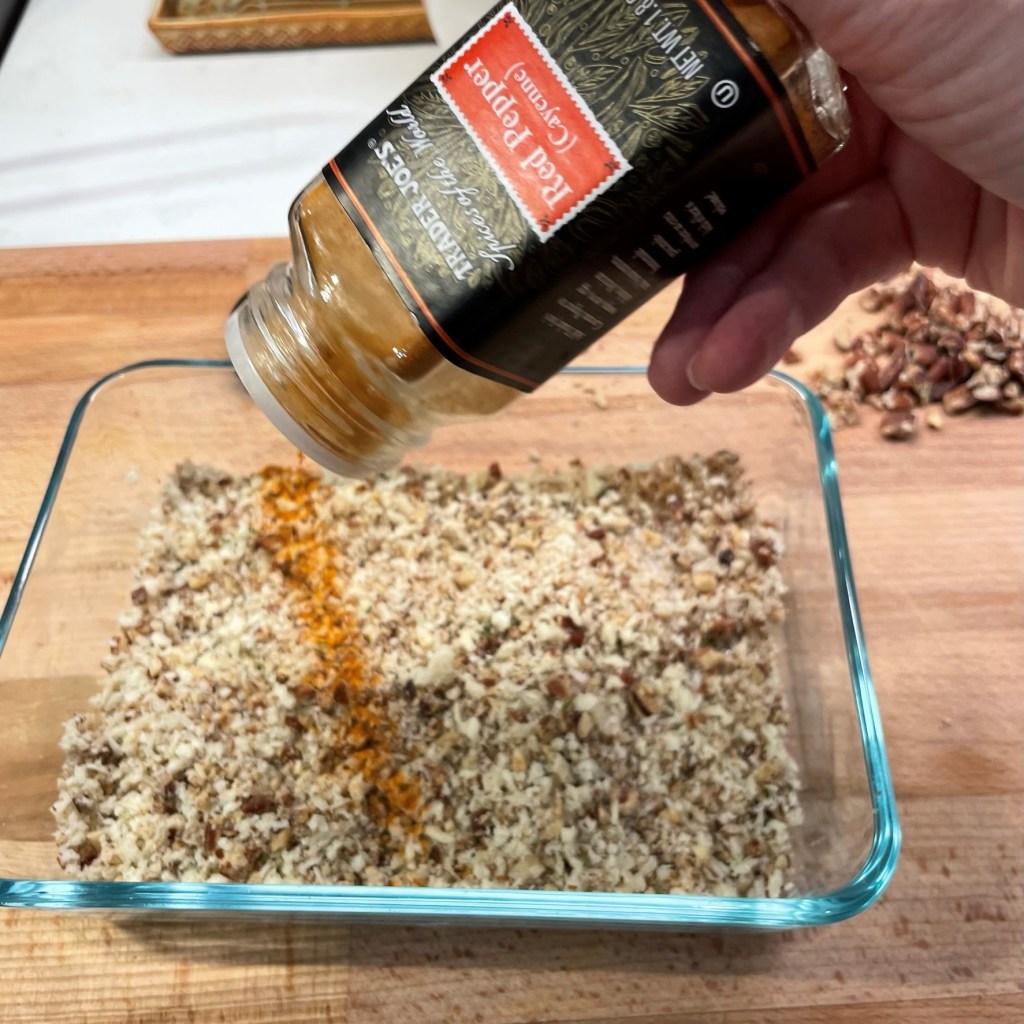
Using a food processor or mortar and pestle, pulse or crush the pecan pieces into fine crumbs. Transfer the pecans to a bowl with the panko crumbs and Parmesan. Season with a shake or two of ground cayenne.

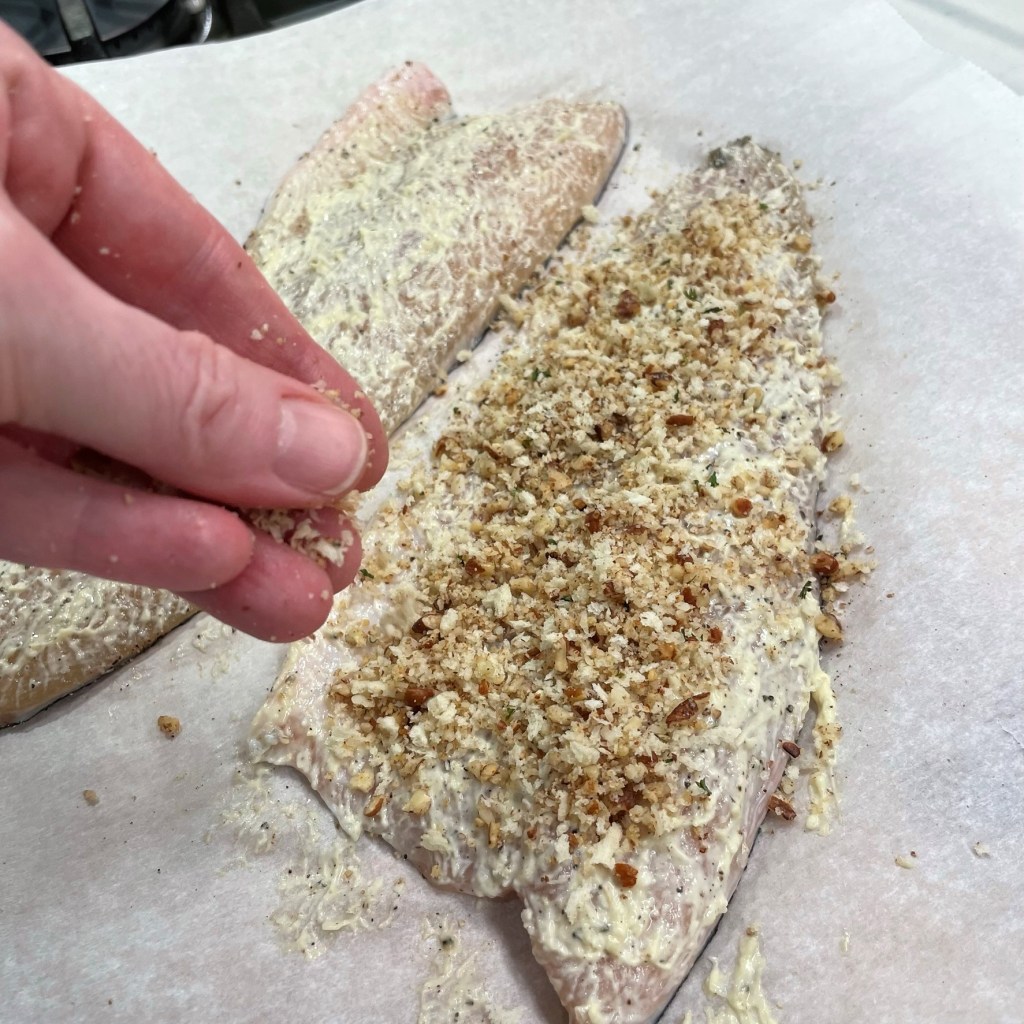
Line a baking sheet with parchment paper and spritz it lightly with cooking oil spray. Arrange the trout fillets on the sheet, skin side-down. Use a pastry brush to thoroughly coat the fleshy side of the trout fillets with the mayo-Parm mixture, then press the pecan crumb mixture onto the fish, generously covering every visible area.

Bake the fish for about 18 minutes, or until it flakes easily with a light twist of a fork. If the crumbs are pale, turn on the broiler for only one minute, to finish the fish with a deep golden color.


Bloody Mary Shrimp Cocktail

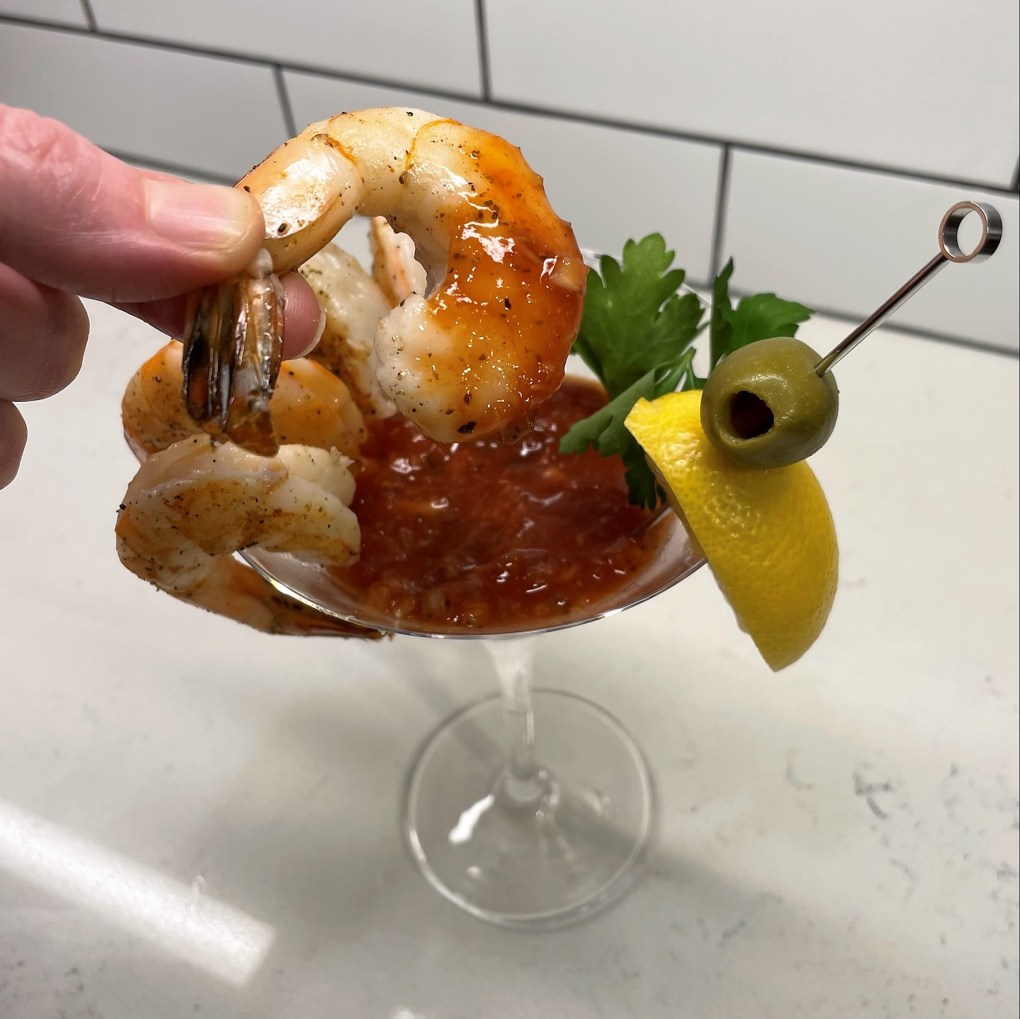
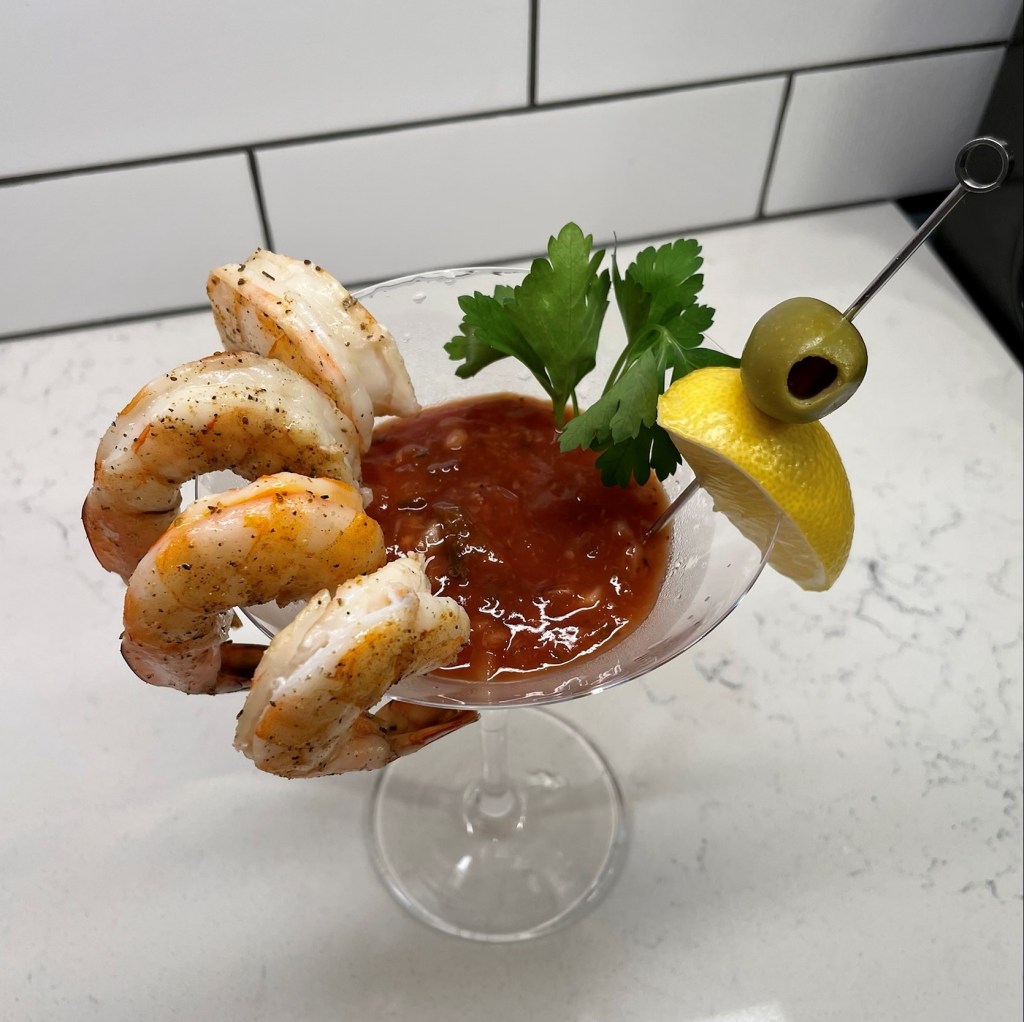
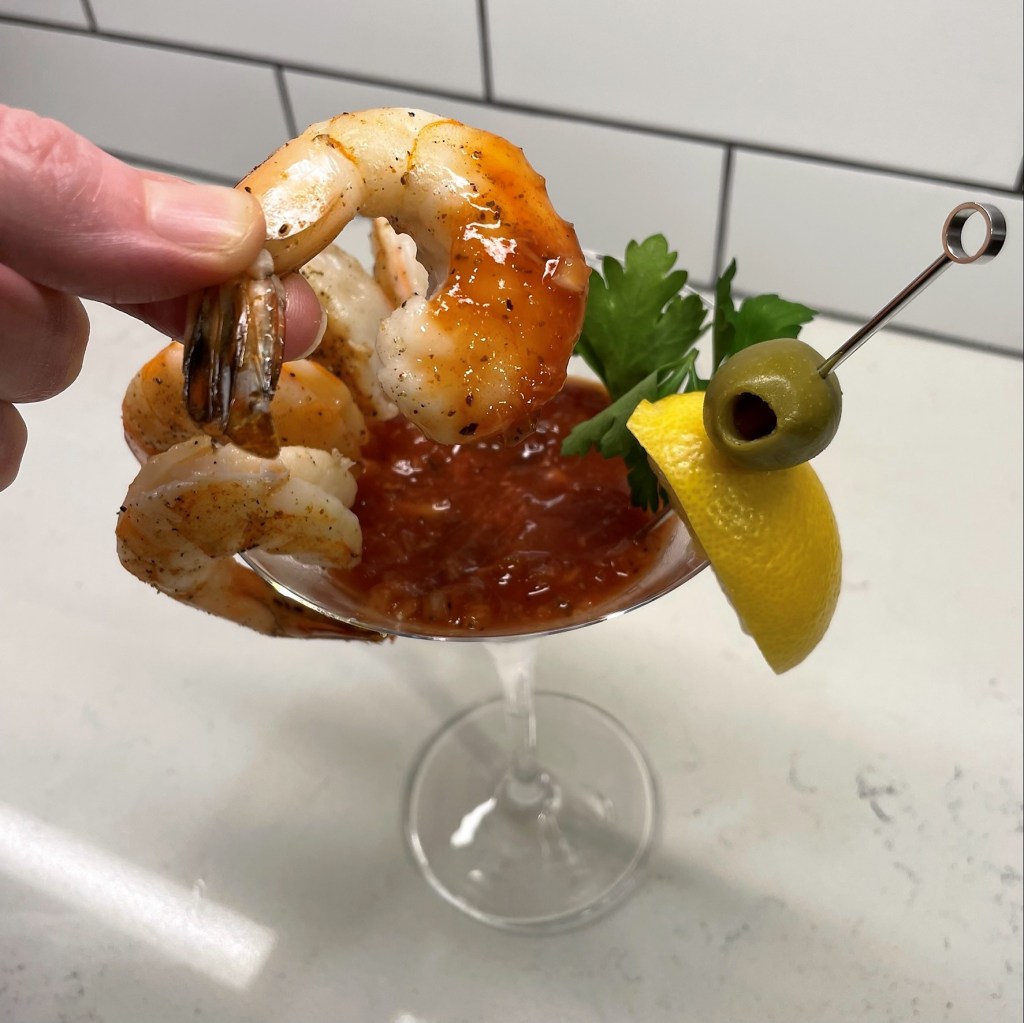
If you are a child of the ‘70s, as I am, you have seen your fair share of shrimp cocktails. It is a classic, but I am waking it up with a fun flavor twist in the cocktail sauce. You’ll find the flavors familiar—from a brunch standard, the bloody Mary—and it’s bringing a zesty jolt of flavor to the chilled freshness of sweet juicy shrimp, which never goes out of style.

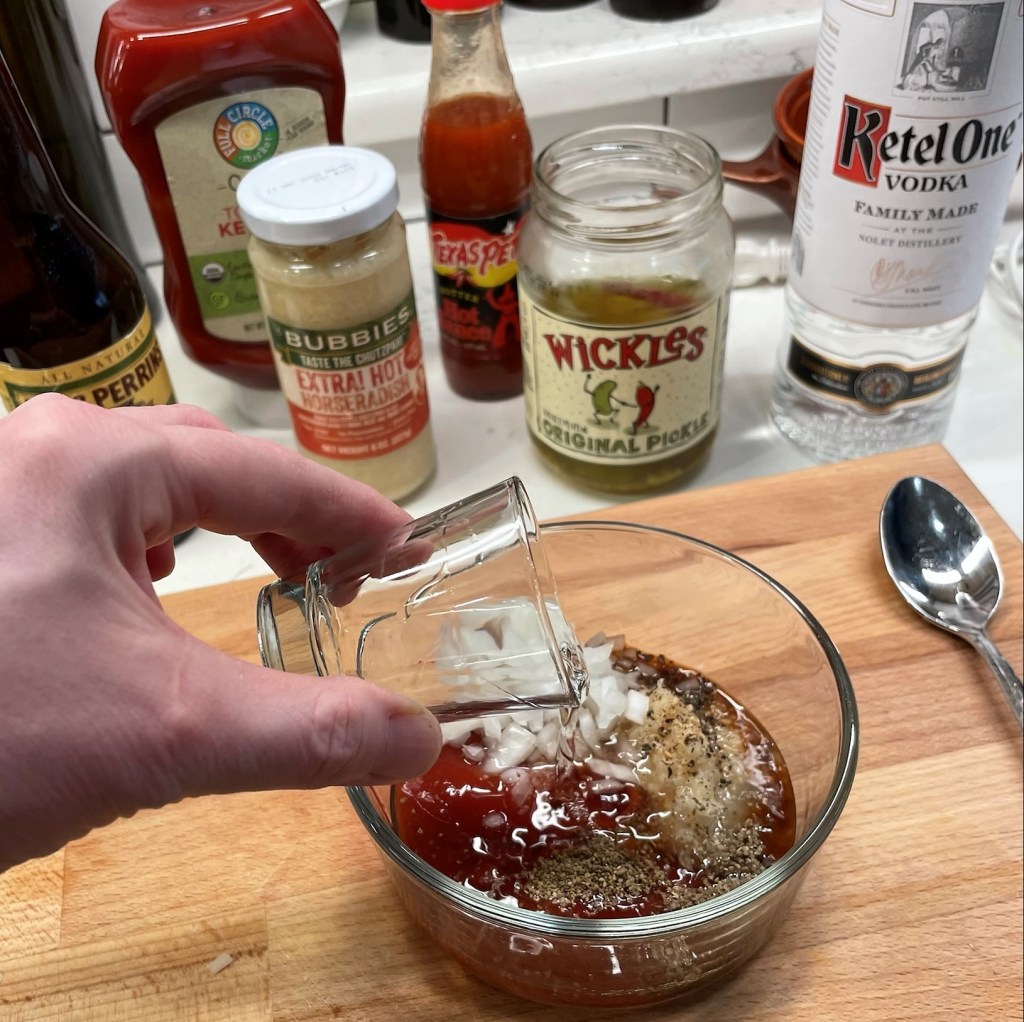
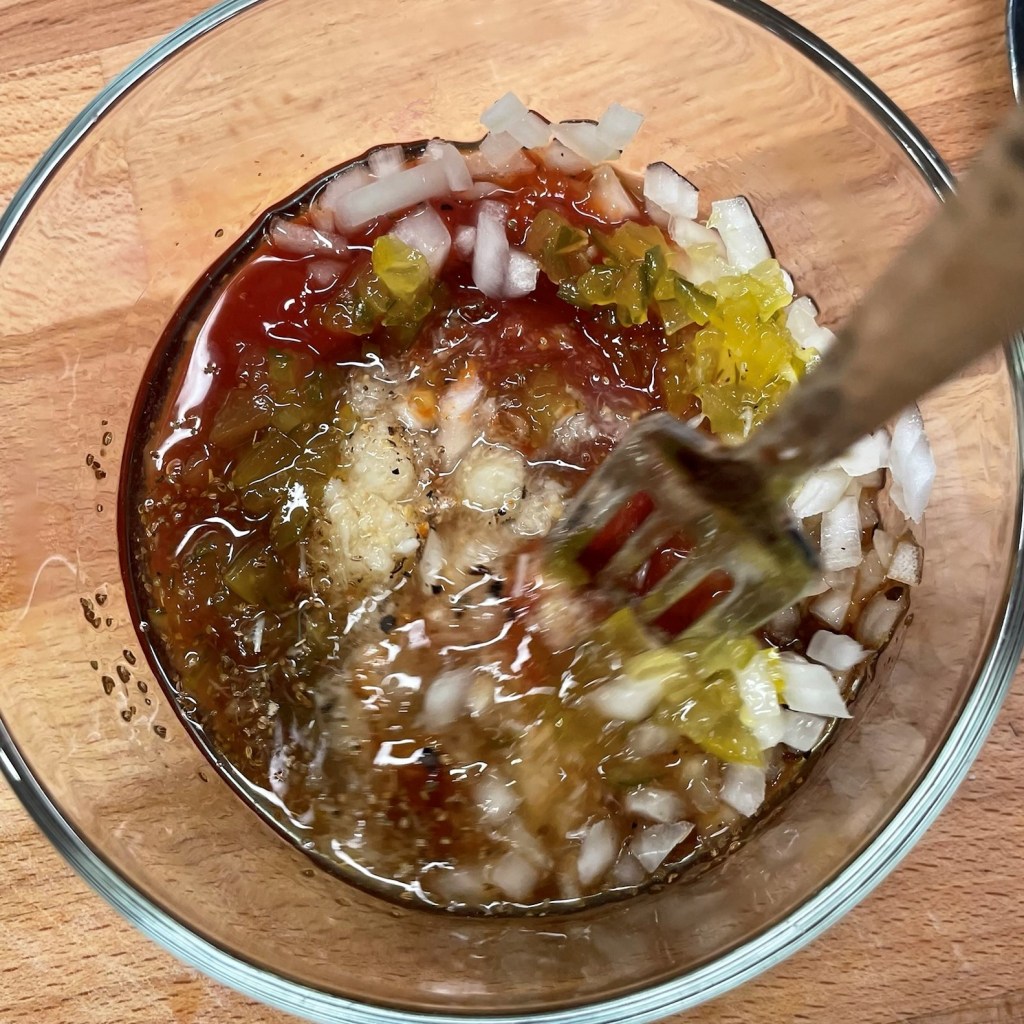
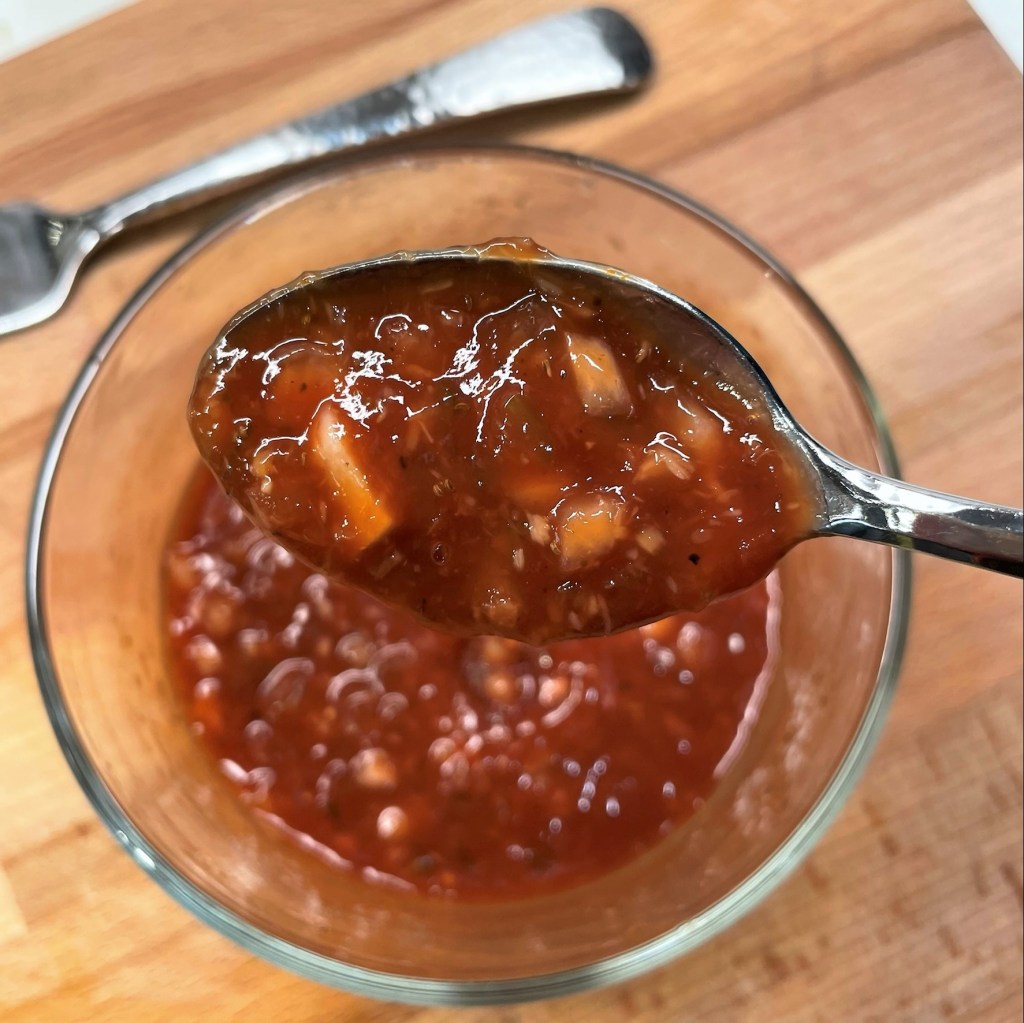
If you’re entertaining for New Year’s, this is an easy way to elevate a classic and please any palate. Begin with your favorite ketchup and dress it up with the ingredients you’d enjoy in a bloody Mary; think crunchy pickles, zippy horseradish, herbaceous celery seed, a shake or two of hot sauce or Worcestershire (or both) and, yes, a shot of vodka.

We like our flavors hot at our house, so I used a “hotter” variety of Texas Pete hot sauce, plus spicy Wickles brand pickles and “extra hot” horseradish. But if you prefer milder flavors, adjust accordingly. You could swap any flavors to suit your fancy. Pretty much anything that would work in a bloody Mary will work here. Same with your garnish.

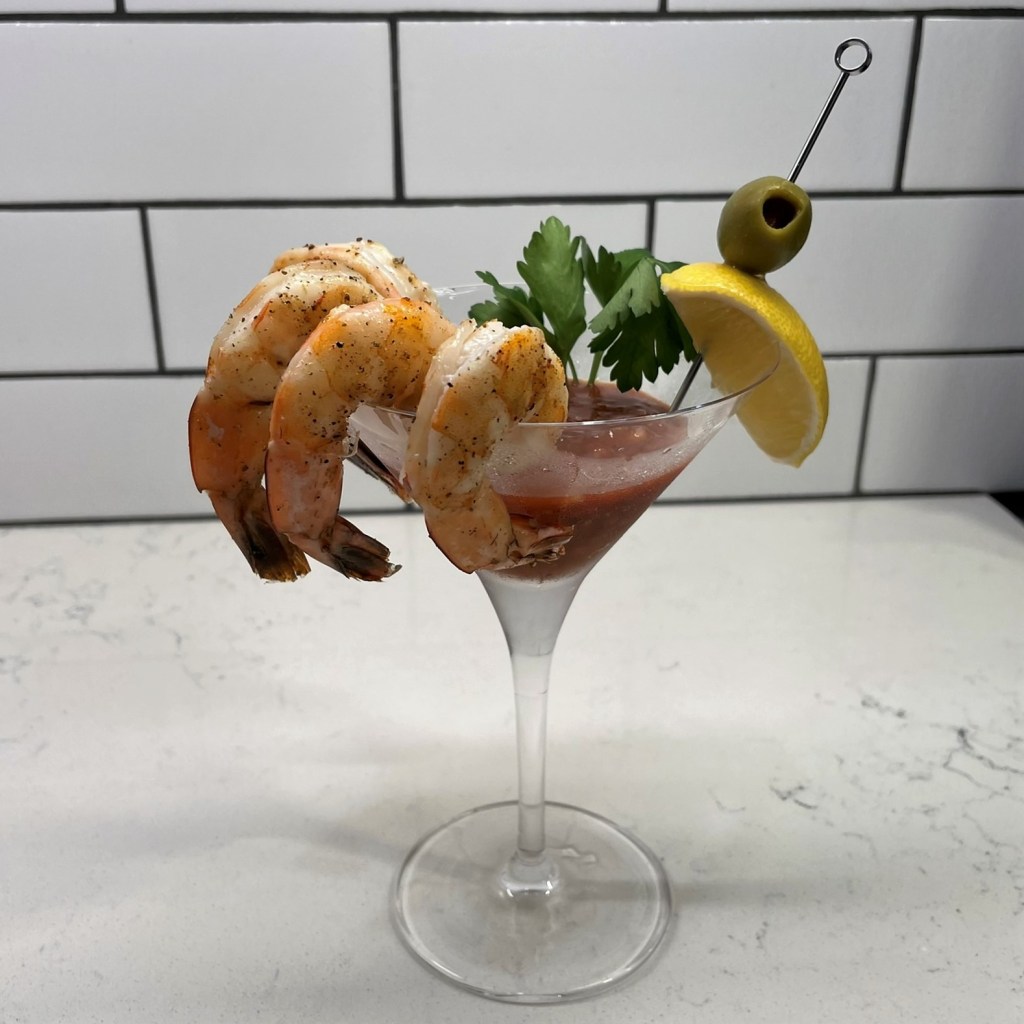
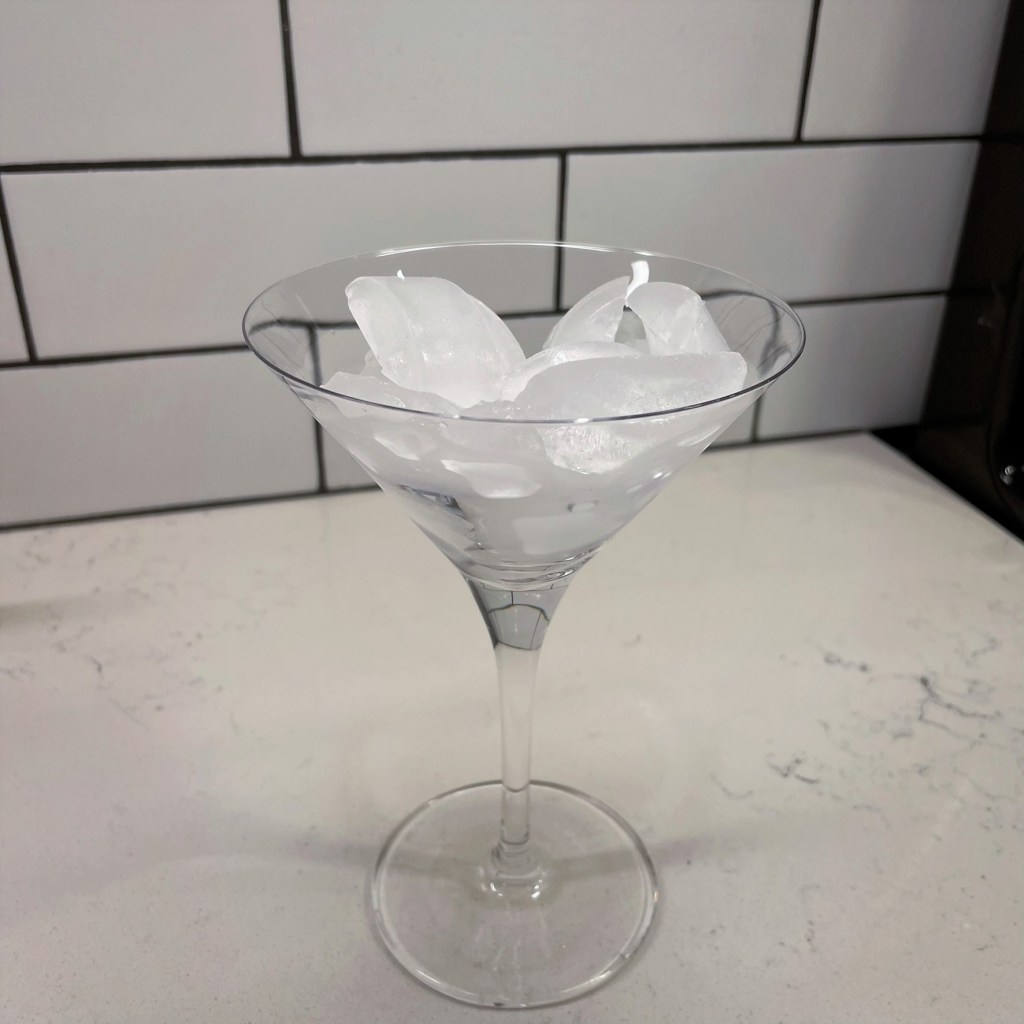
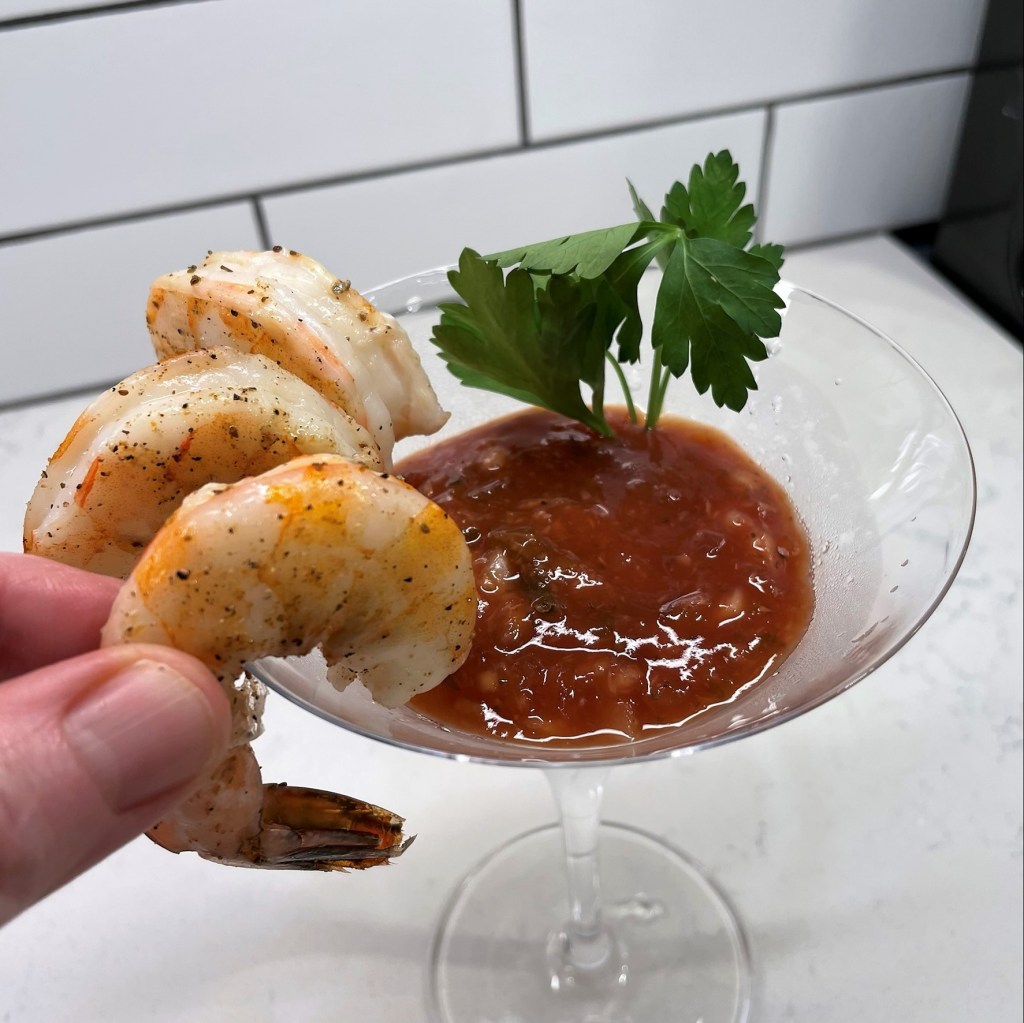
For the shrimp, do what’s best or easy for you, whether purchasing already cooked, steaming them or perhaps trying the roasting method I’ll demonstrate below. Whichever method you choose, be sure the shrimp have plenty of time to chill. Serve them in individual cocktail glasses for an impressive presentation and garnish as you would a bloody Mary!


Ingredients (serves 6)

18 jumbo shrimp* (see notes)

6 Tbsp. ketchup

2 Tbsp. finely minced onion or shallot

2 Tbsp. finely minced sweet, spicy or dill pickle

1 Tbsp. prepared horseradish

2 tsp. Worcestershire sauce

1 tsp. cayenne hot sauce, such as Texas Pete or Tabasco

1/2 tsp. celery seed

Splash or two of pickle juice

1 shot good quality vodka


*Notes

Take time to notice where your shrimp has been sourced, as some farming methods are bad for the environment and the seafood processing standards in some parts of the world are rife with human rights violations. Whenever possible, choose domestic (U.S. produced) shrimp that is either wild caught or sustainably farmed. Clean, peel and devein the shrimp, but keep the tails on for best presentation.

I used 16-20 count shrimp, which means there are 16-20 per pound. If you are serving the cocktail as an appetizer, three shrimp per person is a good starting point.

As a side note, it occurs to me that this zesty cocktail sauce would also be terrific with raw or steamed oysters.


Instructions

Cook the shrimp, using your preferred method. Chill it thoroughly in the refrigerator before serving.

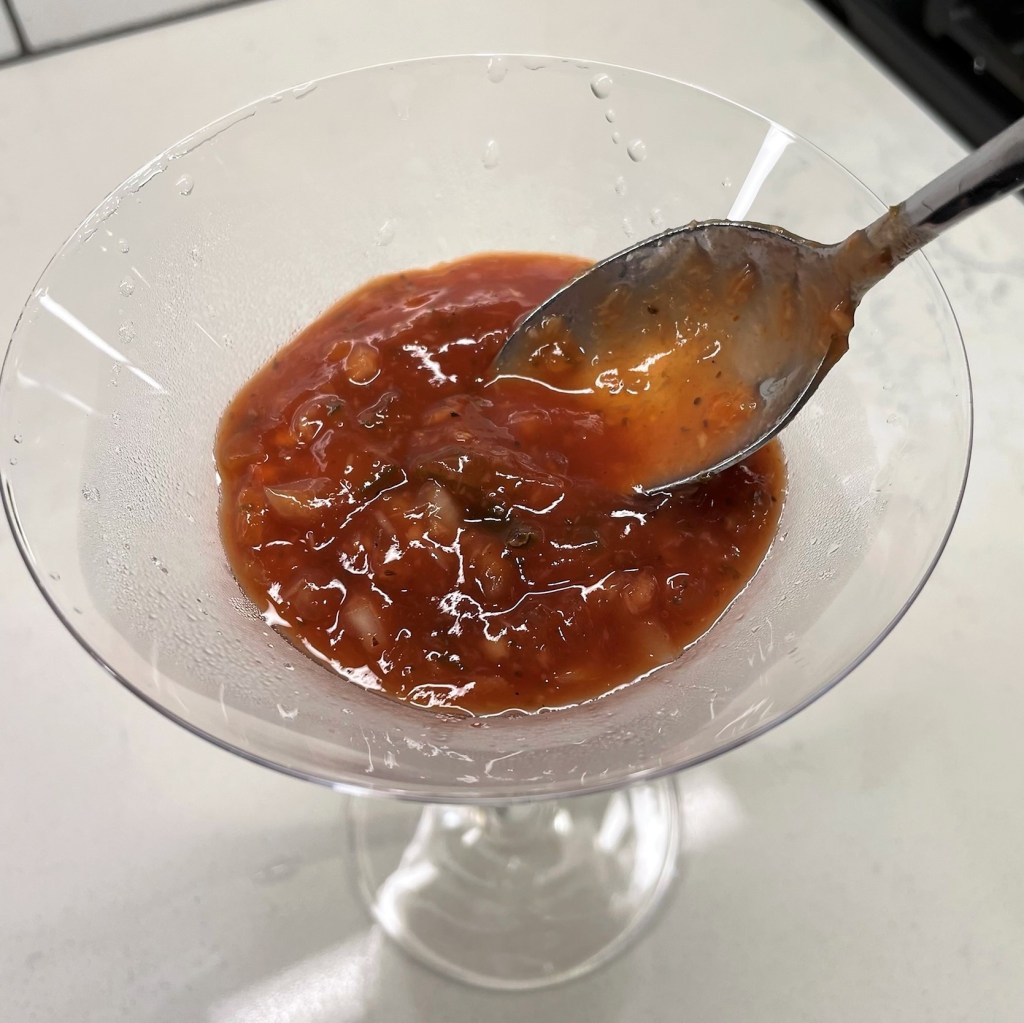
Stir all sauce ingredients together in a bowl and chill until ready to serve. For presentation, spoon about 2 tablespoons of sauce into a shallow cocktail glass and hang the chilled shrimp on the edge of the glass. Garnish with a wedge of fresh lemon and a cocktail olive, onion, pepperoncini, etc.

Happy New Year!

Easy Roasted Shrimp

The roasting method may seem fussy, but it is actually easier than boiling or steaming, because it doesn’t move so quickly. It’s so frustrating to accidentally overcook something as delicate and expensive as shrimp.

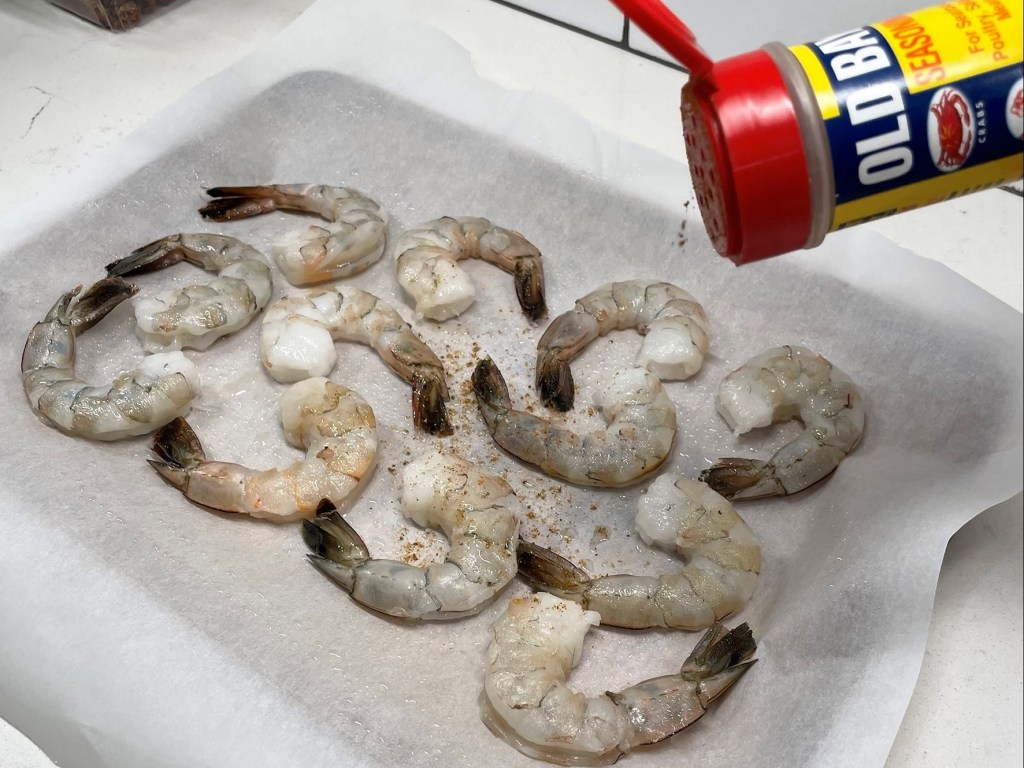
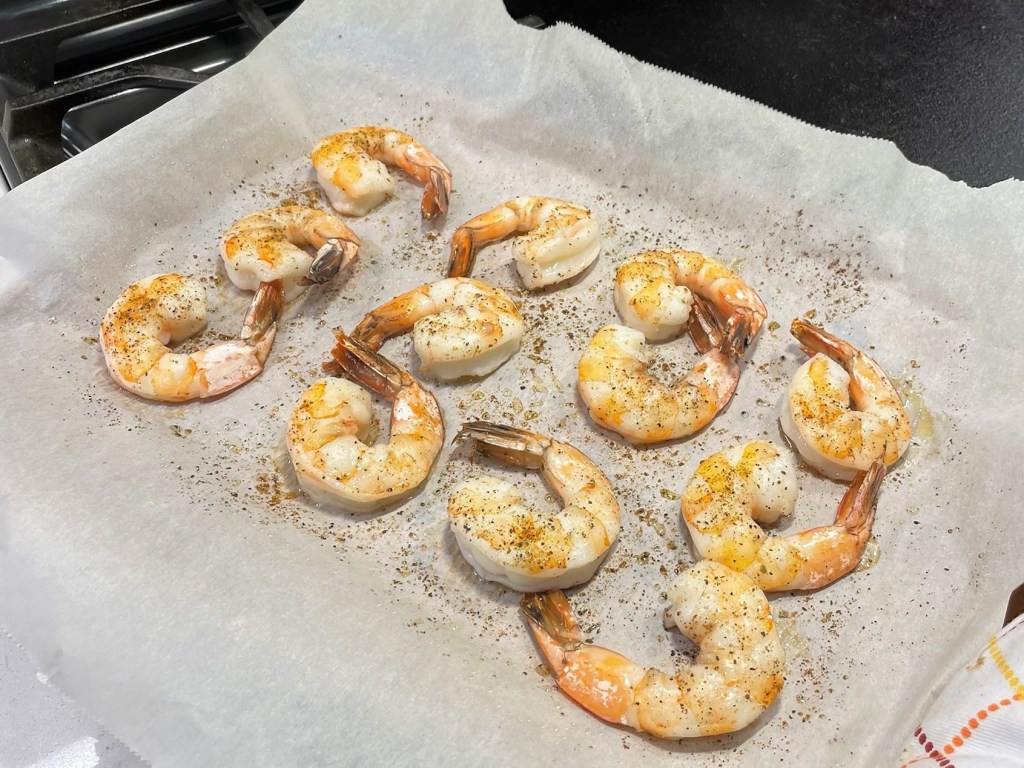
Preheat the oven to 400° F, with oven rack in center position. Peel and de-vein shrimp and arrange them on a parchment-lined baking sheet. Give them a quick spray of olive oil (or toss them lightly in olive oil) and sprinkle both sides lightly with Old Bay seasoning or (more simply) salt and pepper.

Roast for 7 minutes, until shrimp are just opaque. Immediately transfer shrimp to a bowl and chill them down quickly in the freezer for several minutes or plunge the bowl into a larger bowl filled with ice. The goal is to bring down the temperature quickly so that the shrimp don’t overcook to become tough.