Porchetta

I woke up this morning, fully aware of Autumn. I did not need the calendar to tell me that it has officially begun; the weather spells it out quite clearly— gentle rain from the mid-season tropical system moving up our coast a few hours away, cooler temperatures and a stillness that I haven’t witnessed since I’m not sure when. Even the cicadas, which North Carolina sees and hears every summer, have gone about their business.

This is my favorite time of year, and the gears in my mind are churning out visions of stews and soups and homemade breads and all-day roasts. I tolerate the blistering heat of these southern summers only for the joy of autumn, and it should come as no surprise that the foods are my favorite thing. This is the start of Sunday Supper season!

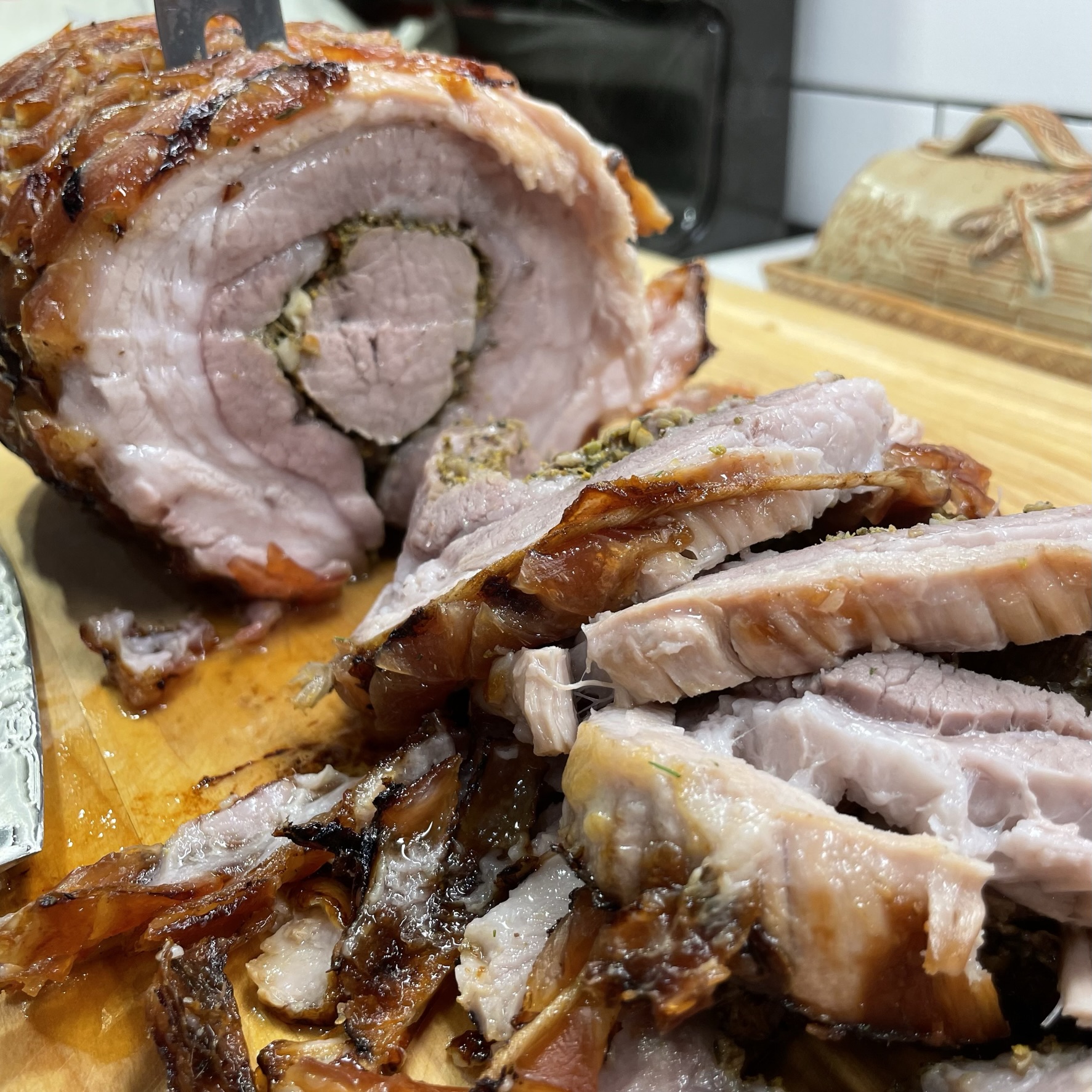
Porchetta— a recipe of central Italian origin— had been on my culinary bucket list since before I started this blog, and for the life of me, I don’t know why I imagined it to be complicated. As roasts go, it was probably one of the simplest I’ve ever made. Perhaps it is because I have looked it up so many times over the years that I already had a sense of how to make it. Or maybe it really is just easy. I’ll let you review my process and decide.
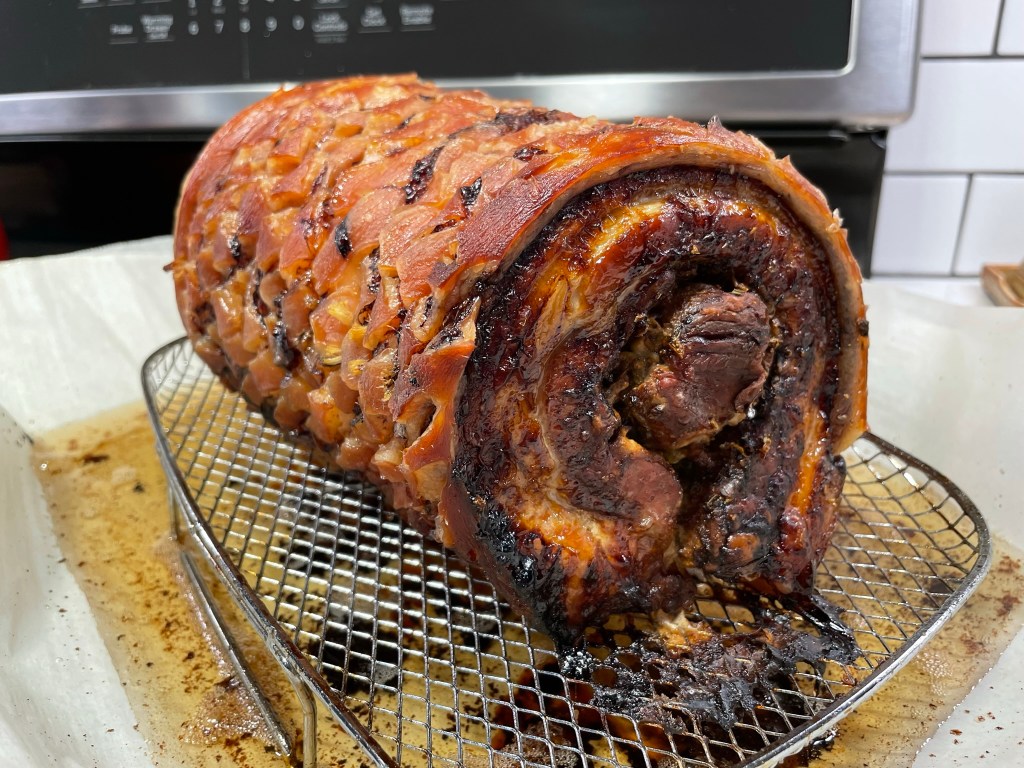

There are many, many recipes for porchetta on the internet. Opinions vary (of course) about what makes it truly authentic, and this argument seems to be regional. In some parts of Italy, it might be an entire suckling pig that is stuffed with herbs (or not) and roasted. In others, it would be only the pork belly, rolled upon itself with a filling of the pig’s entrails (yuck). Still others have you wrapping the belly around a pork loin or (as is the case with mine) tenderloin.

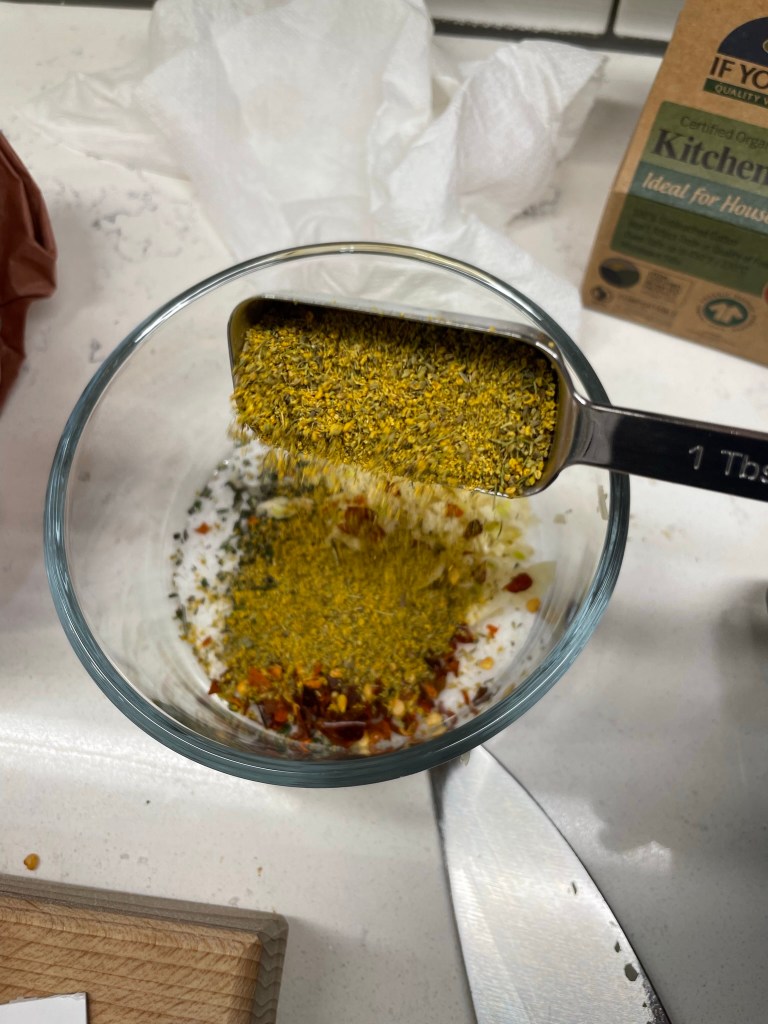
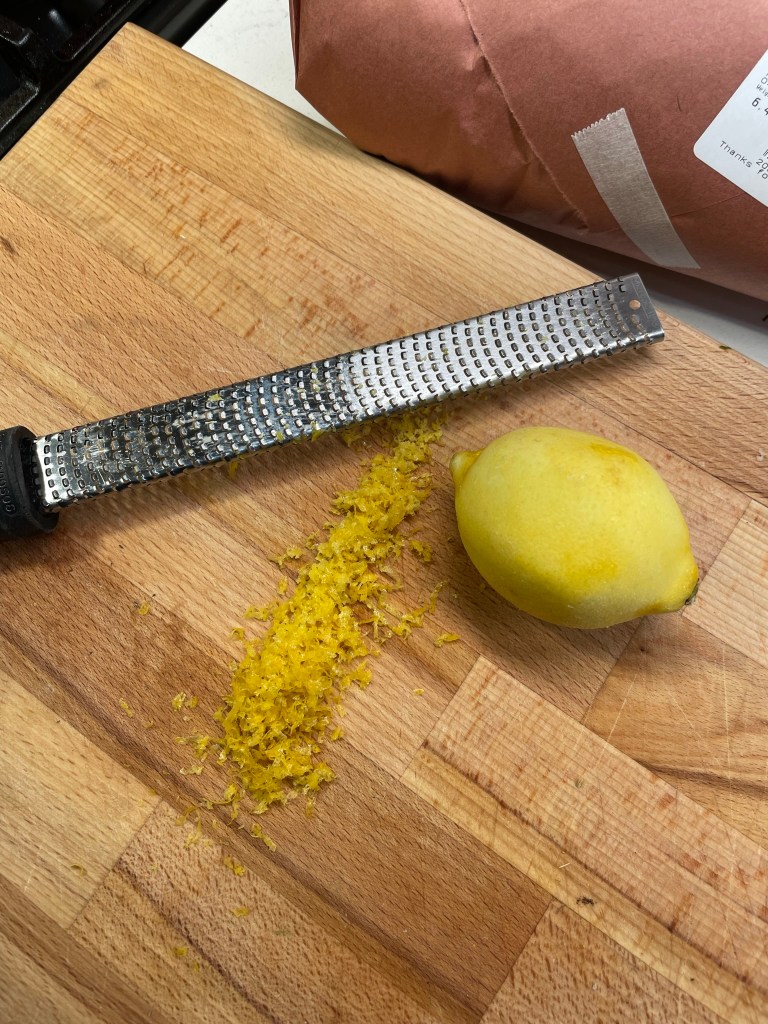
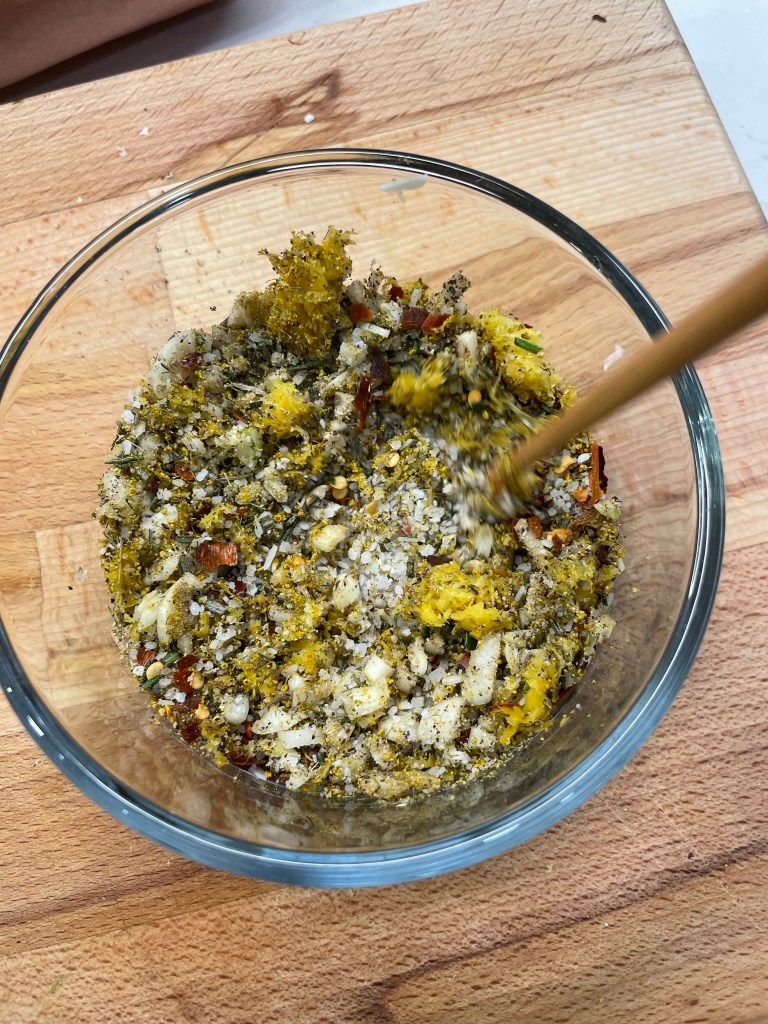
My kitchen is not located in any region of Italy, so I took a few liberties, based on what sounded like the most flavorful “authentic” option. My filling was very fragrant and herbal, with garlic, fennel and rosemary, plus a generous spoonful of lemon zest and a few shakes of dried Calabrian chile flakes. I want to make another batch of this just as aromatherapy when I’m having a bad day.
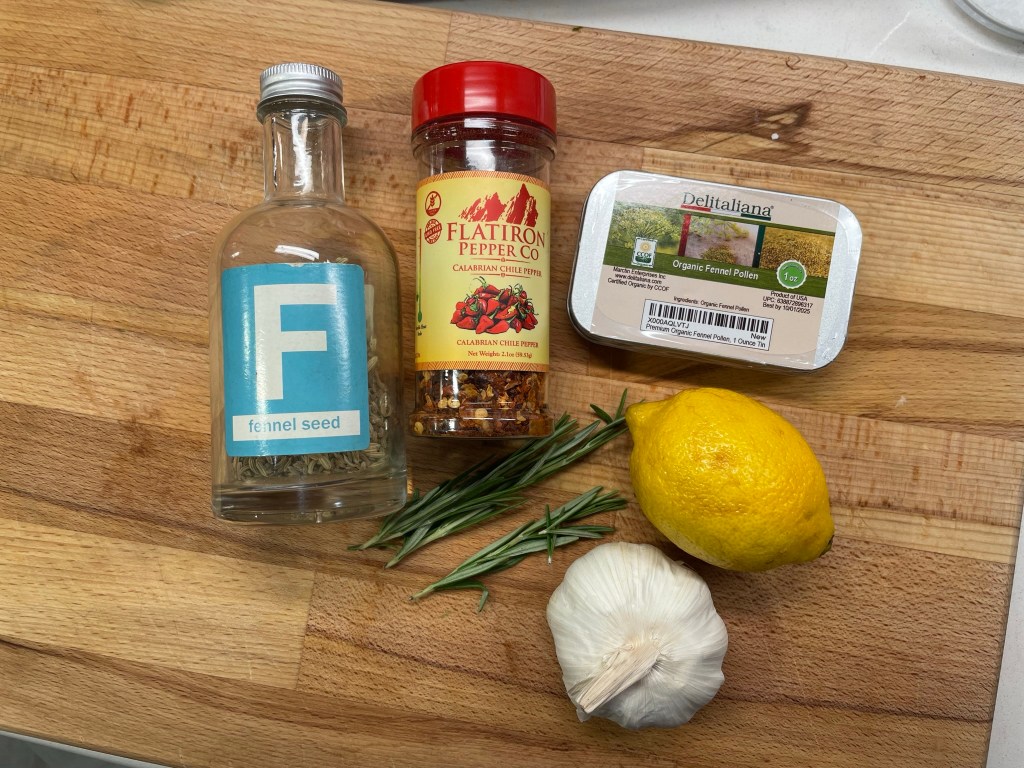

In my research, I learned that there is a difference between fennel seed and fennel pollen, the latter of which I had to purchase online because no stores around here carry it. Perhaps where you are, an Italian market could set you up with some. The fennel pollen is very delicate and fragrant and is distinctly brighter and lighter than fennel seed. The small tin, which is roughly half the size of an Altoid tin, set me back about $18, but I only used one-quarter of it. 

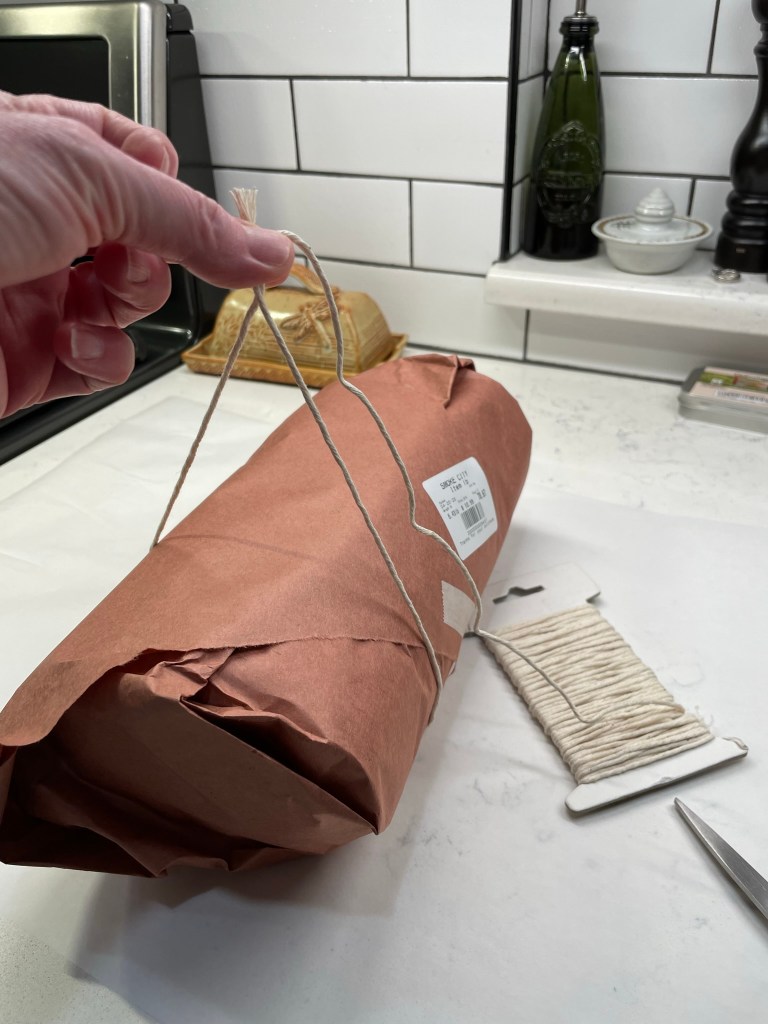
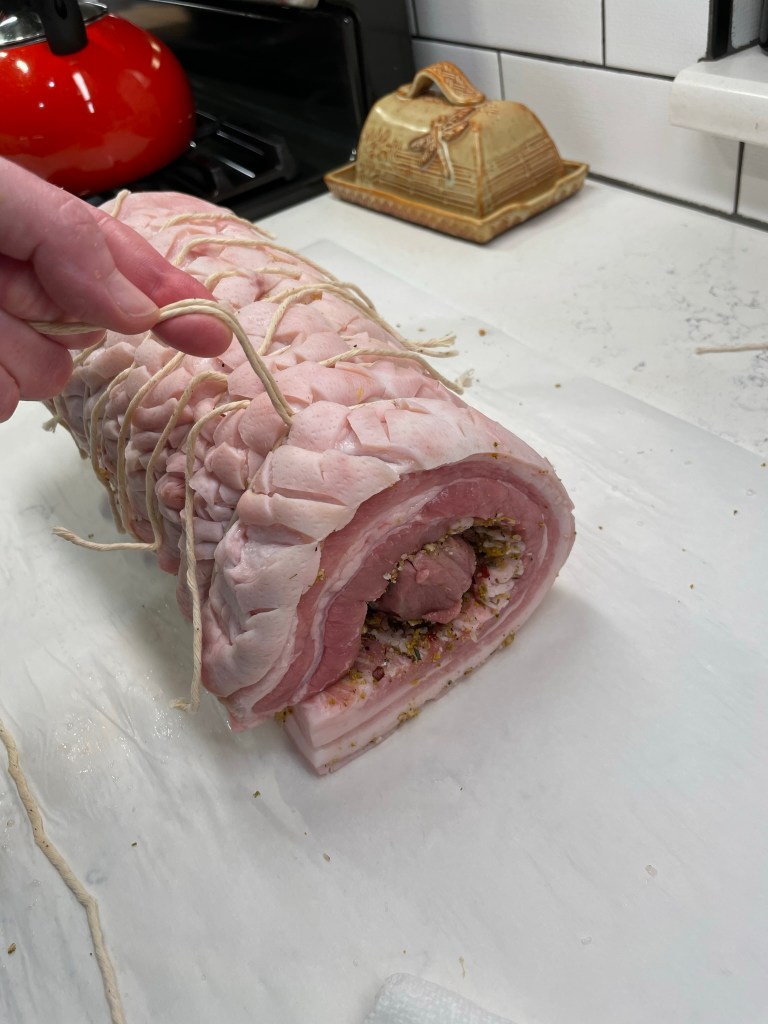
Putting the roast together was so easy. I began by measuring a piece of kitchen twine around the package of pork, and then I cut several pieces to that length and soaked them in cold water, for tying up my porchetta. My local butcher had cut the belly piece to match the length of the tenderloin, and even took time to show me the right steps for success, as the belly must be rolled in a certain direction for easy slicing and perfect tenderness.
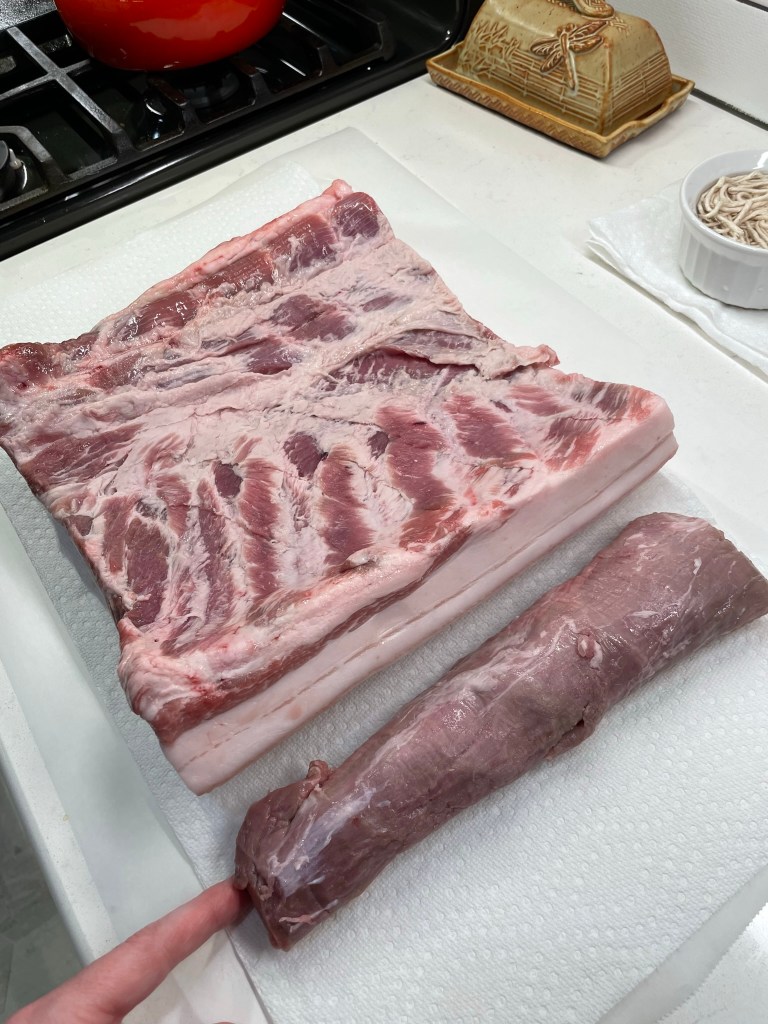
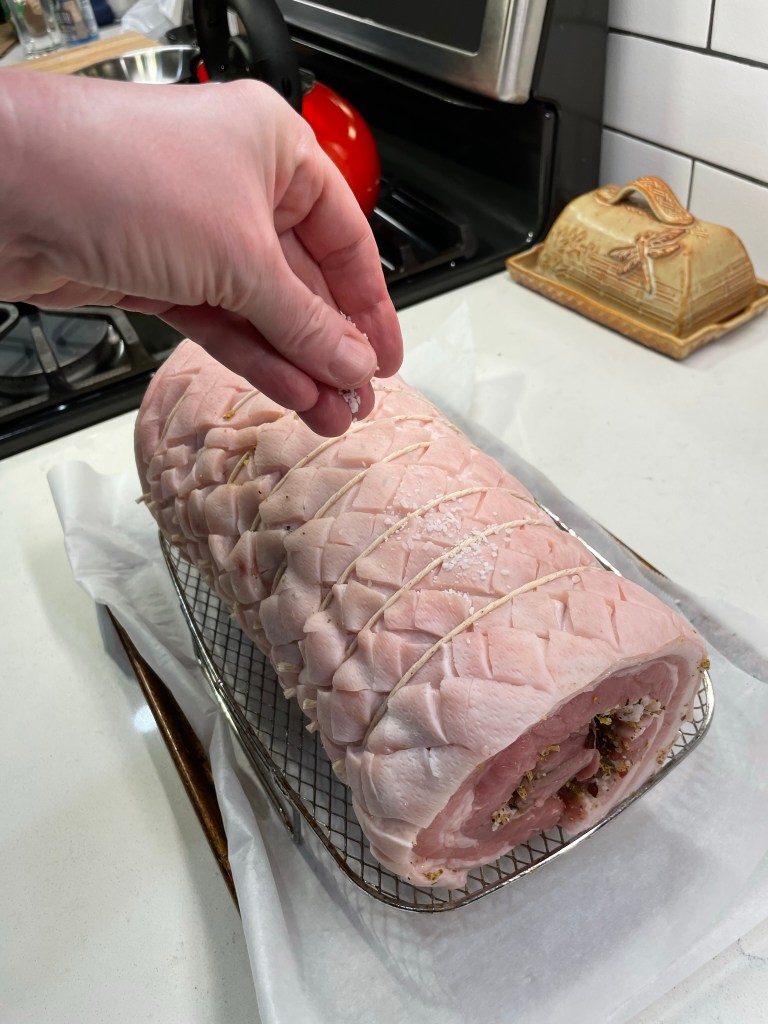
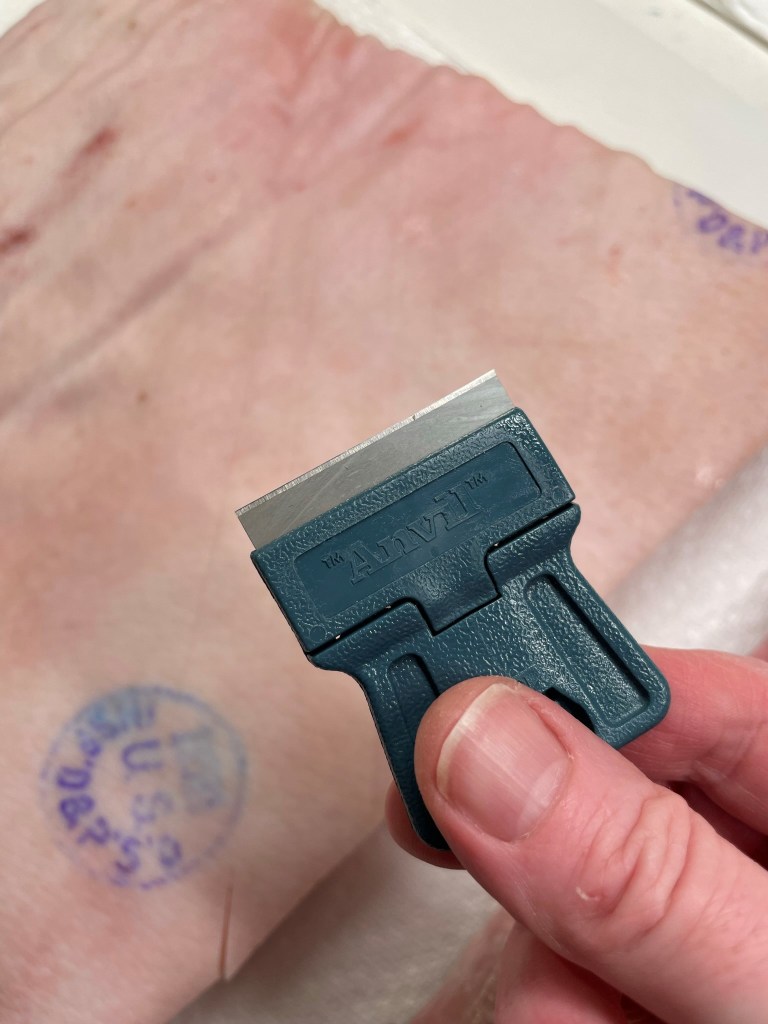
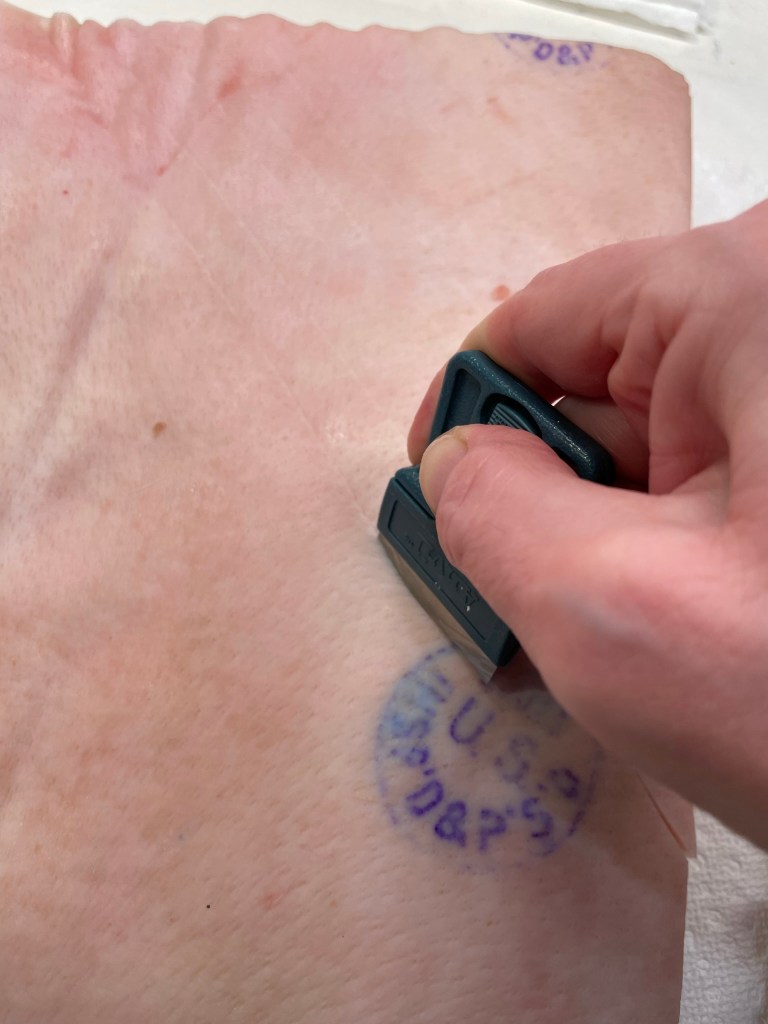
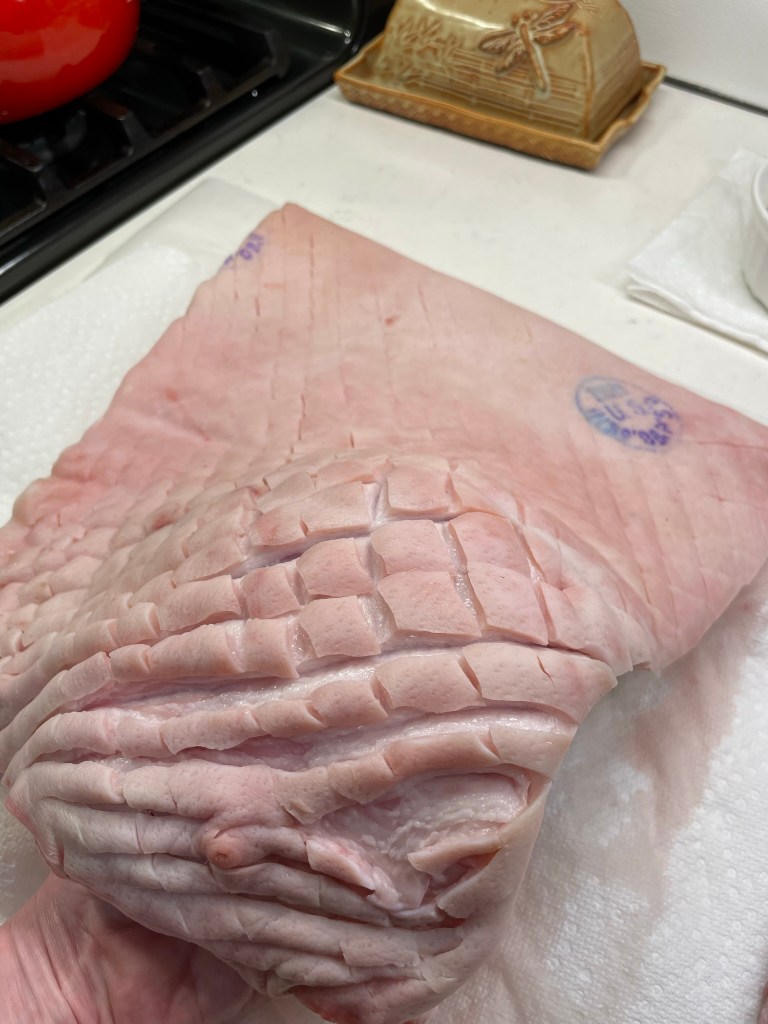
He had also echoed what I had seen in every recipe, which is that the roasted skin should be golden brown and “crackling” crisp. To achieve this, I scored the skin side of the belly in a crosshatch pattern, which would ease the rendering of the thick layer of fat. This process is simple to do, but you need to use something very sharp to cut through the heavy skin. I opted for a razor blade scraper— yep, the same kind of tool you’d use to scrape paint off a window pane. It may sound odd, but it was perfect because it was easy to control the cuts and nearly impossible to go too deep. Scoring the skin this way also made it more flexible for wrapping around the tenderloin.
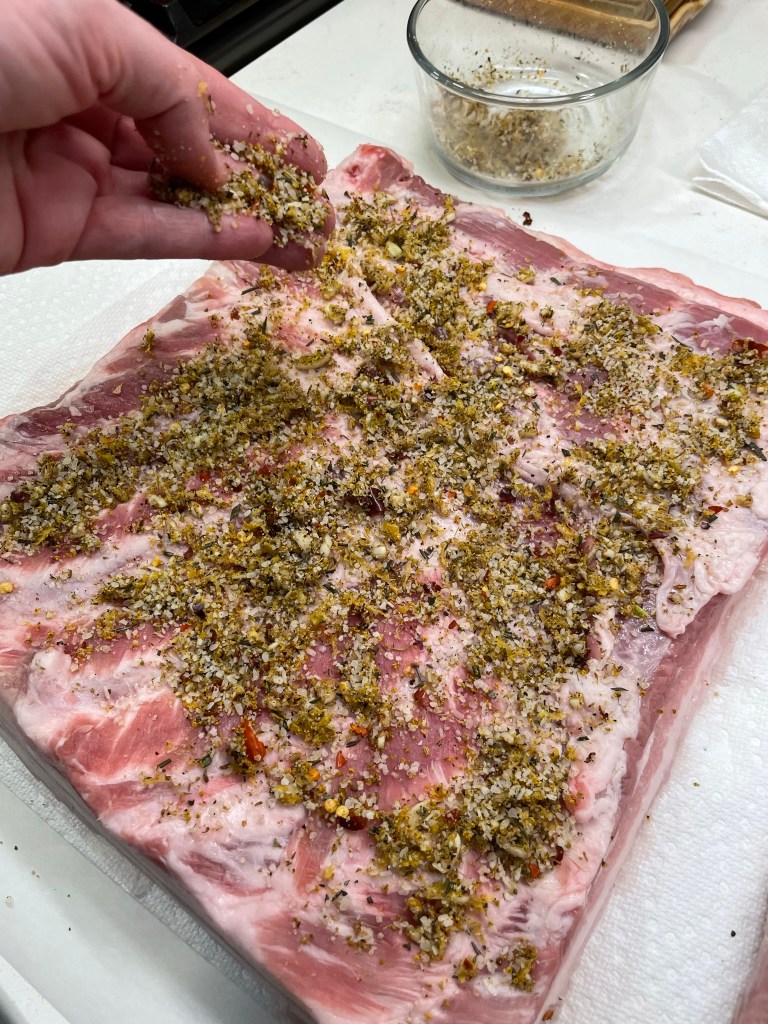
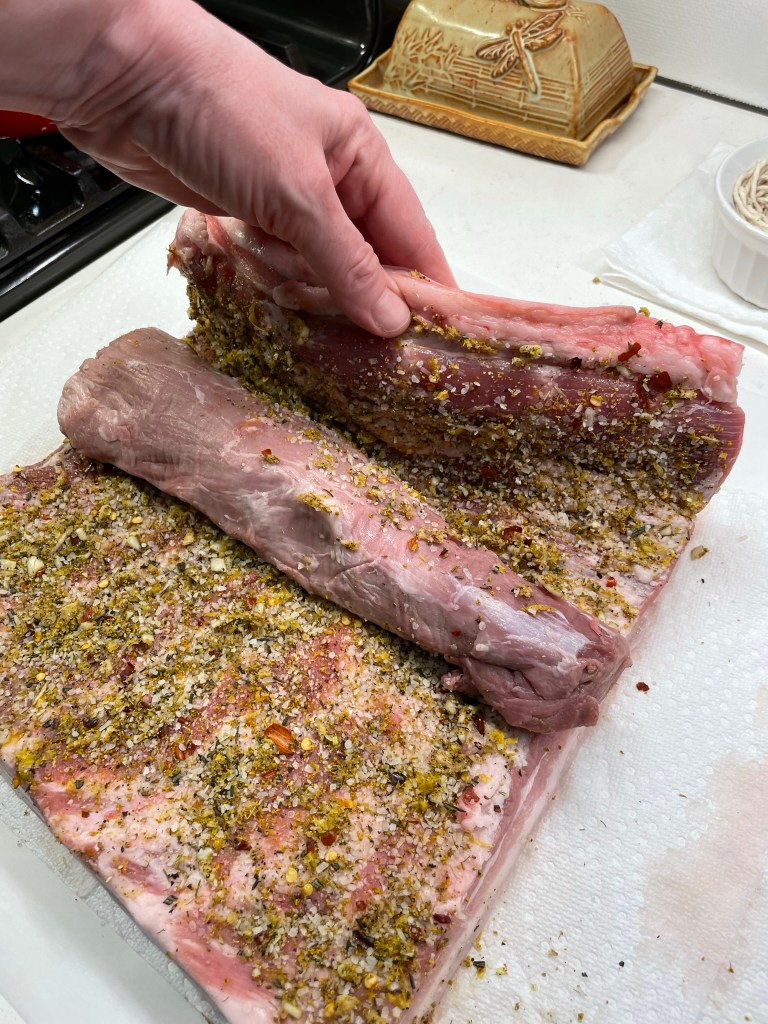
I spread that aromatic filling evenly over the inside of the pork belly, all the way to the edges, and rolled it up around the tenderloin and then laid it across my soaked twine pieces. I tied it up, sprinkled it all over with kosher salt and laid it on a rack to dry out overnight in the fridge. If it seems counterintuitive that drying out the meat before roasting leads to a juicier finish, believe me, I feel you. This was a huge mental hurdle for me when I first read about dry brining, but I have such incredible results that I will never look back.
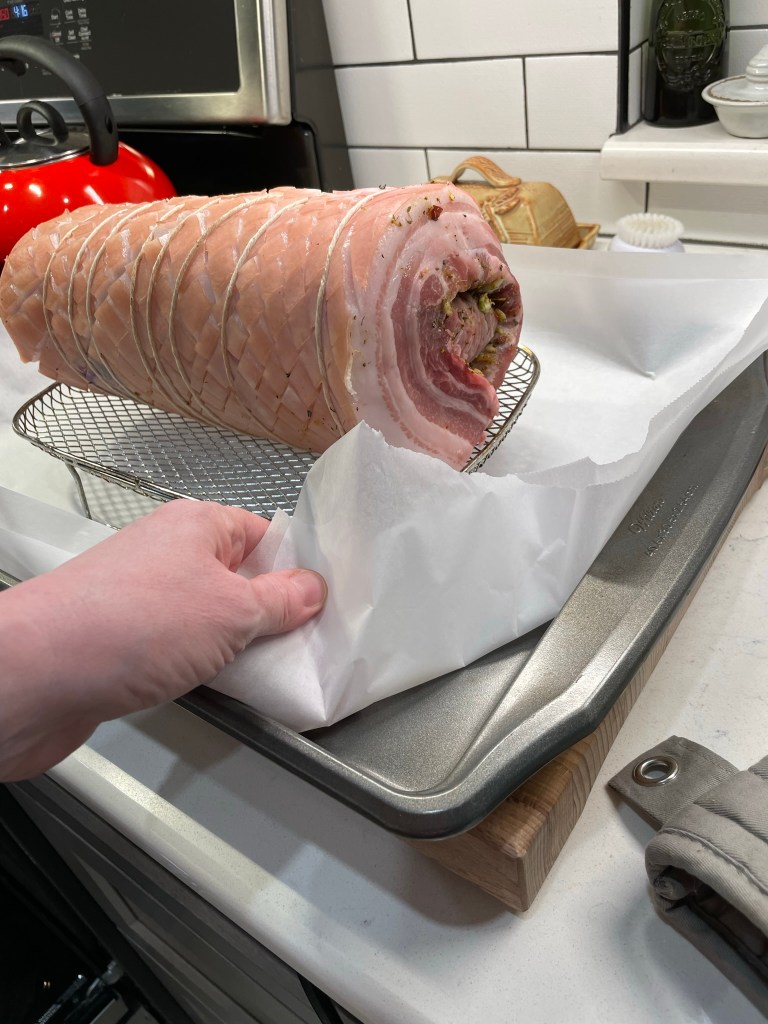
Eighteen hours later, when I was ready to roast my porchetta, I pulled it from the fridge and gave it some time to rest at room temperature while I preheated the oven to 350° F. There was nothing left but to roast it!
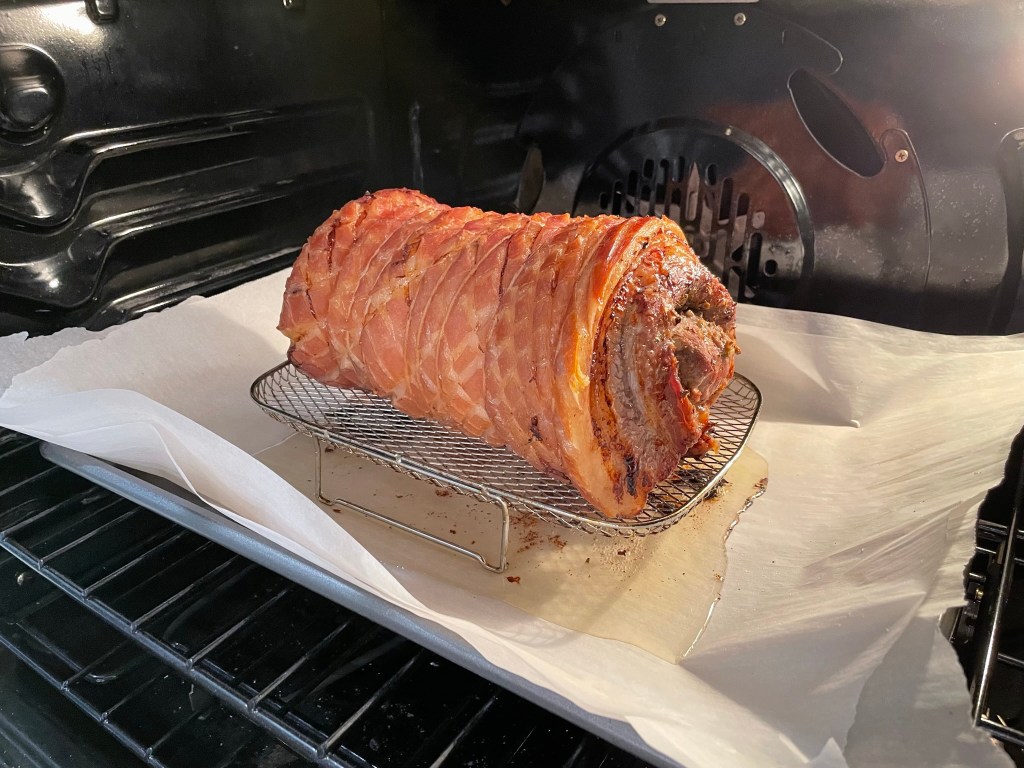
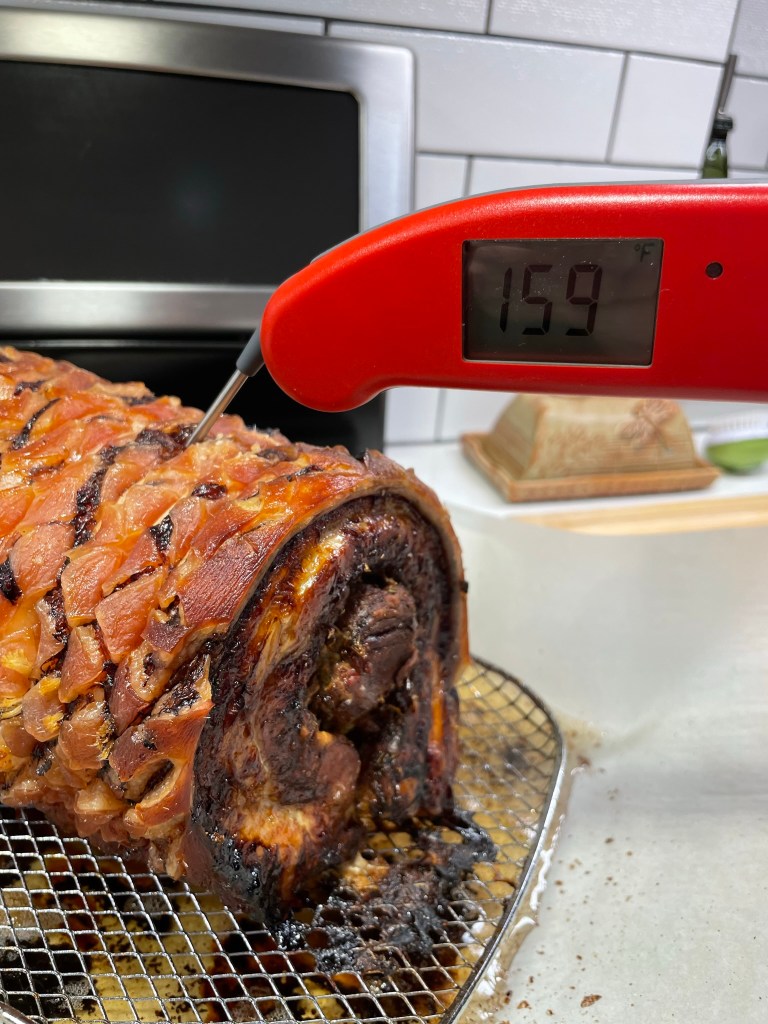
Sometimes the simplest dishes intimidate me, and I attribute this to unfamiliarity. I don’t have an ounce of Italian heritage, so nobody in my family has ever made porchetta. The only way to overcome insecurity in the kitchen is to muster up the courage to try that new thing. I’m thrilled to move porchetta into the done column on my bucket list!
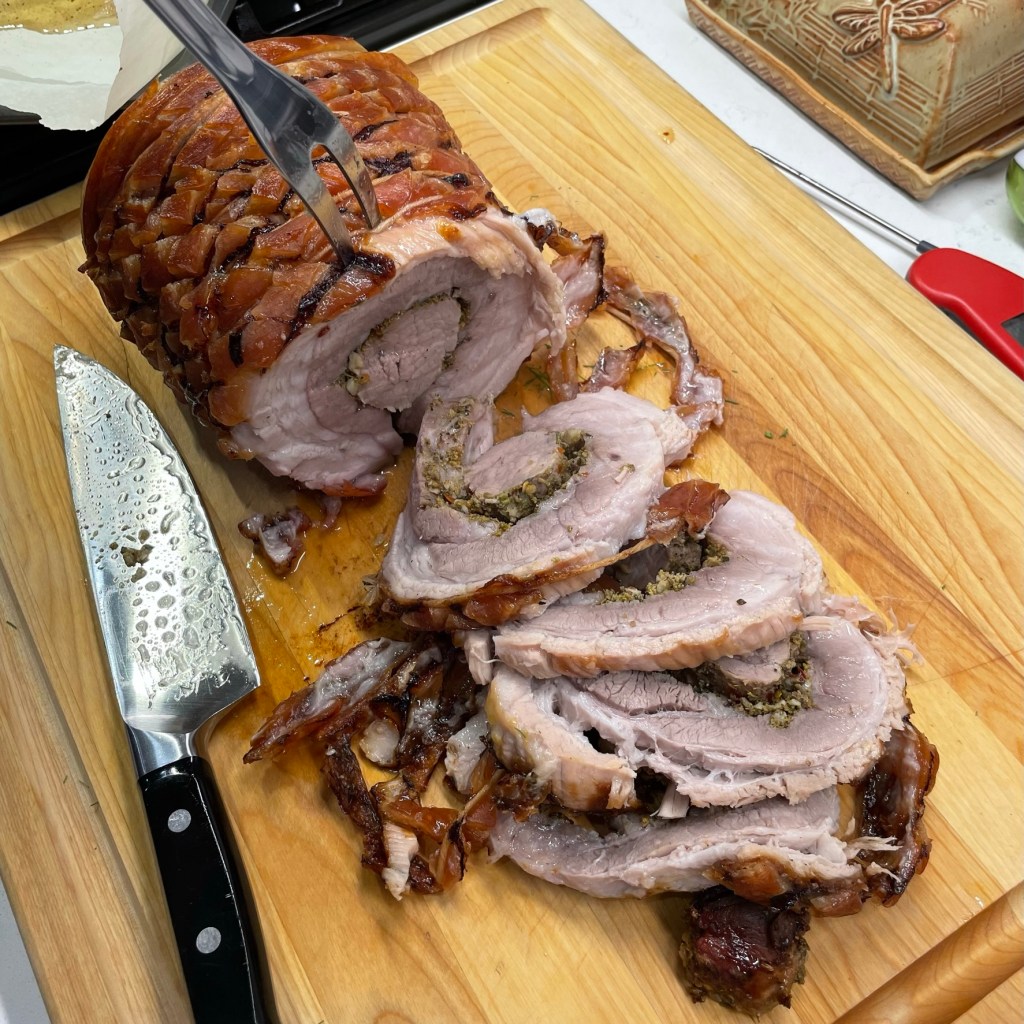

It may surprise you to know that porchetta is likely a one-and-done for me, but not for any bad reason. The roast was off-the-chart delicious, easy to make, and it produced fantastic leftovers.

My hesitation for a repeat begins with the cost. Sure, a grocery store pork belly and tenderloin would be cheaper than the $70 I spent at my local butcher. But we don’t buy a lot of grocery store meat because we object to most conventional production methods. Our local butcher sources its meats from area farmers who follow sustainability practices such as regenerative farming. This is better for the environment and the animals, and also a vast improvement in terms of flavor.

Porchetta is not the kind of thing you can make in small quantity for a party of two, though, which is how we usually cook and eat. I might consider making it again for a special occasion meal with guests, but many of our friends steer clear of fatty meat, and that is another point of contention for us. A single slice of porchetta includes the equivalent of three to four pieces of bacon, and that’s a lot of fat to consume in one meal, no matter how delicious (and boy, oh boy, it is). With more practice, I could probably figure out how to tie up and roast the porchetta for more even fat rendering, so that we didn’t end up with a lot of bulky fat that was not suitable to eat.
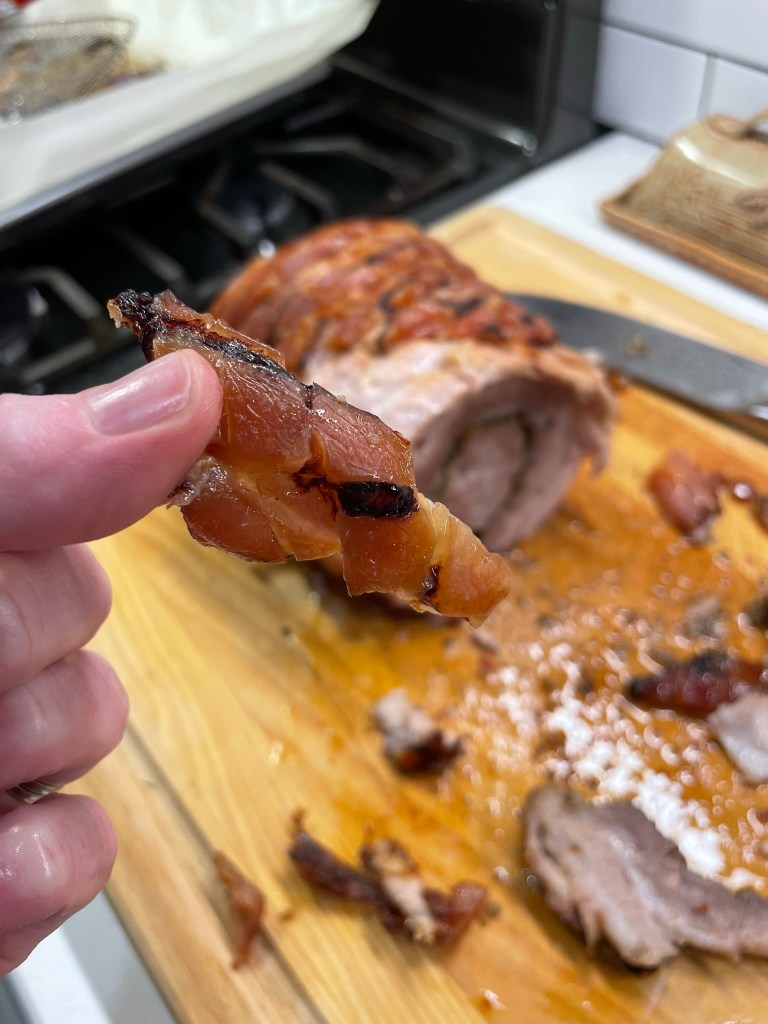
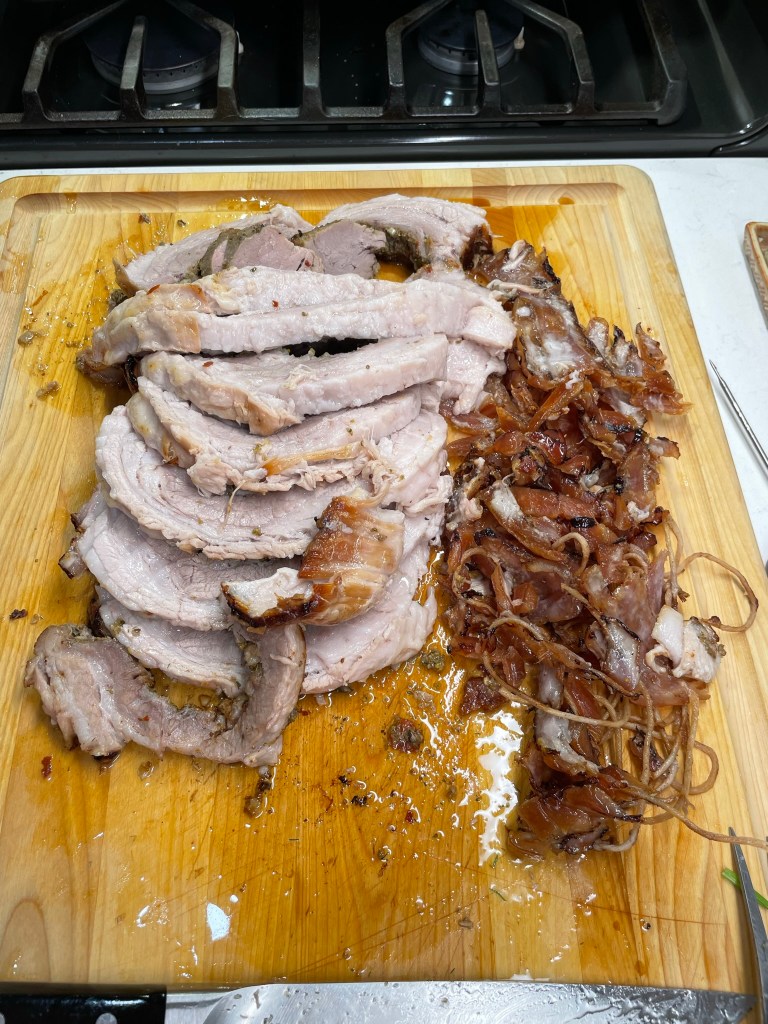
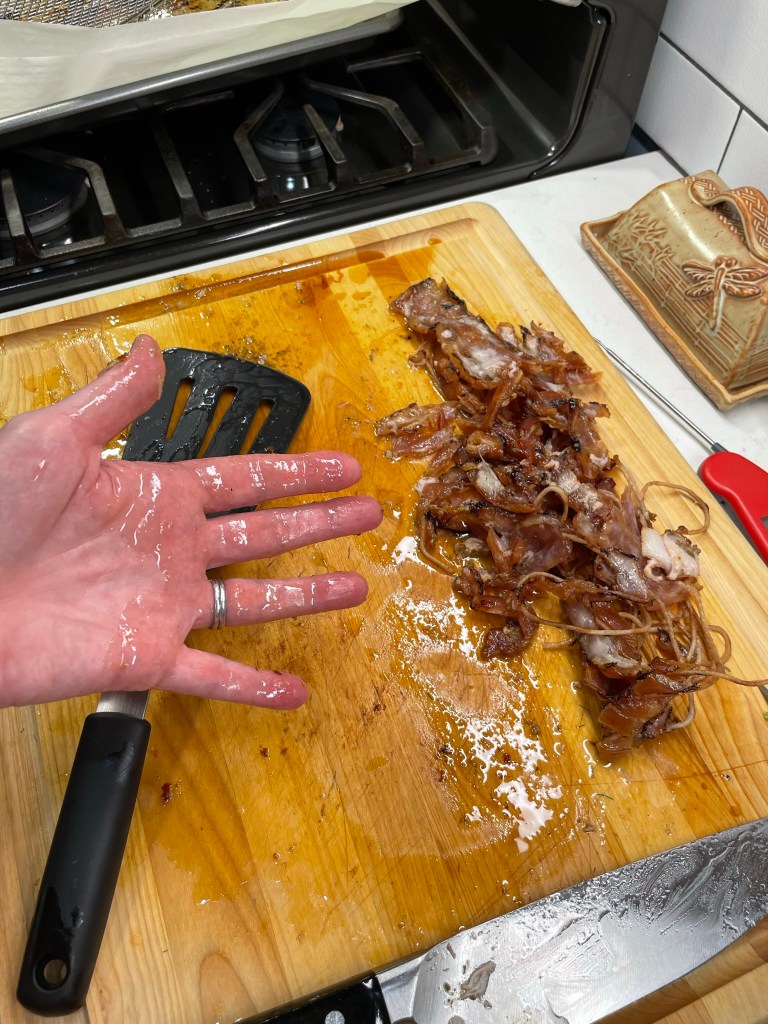
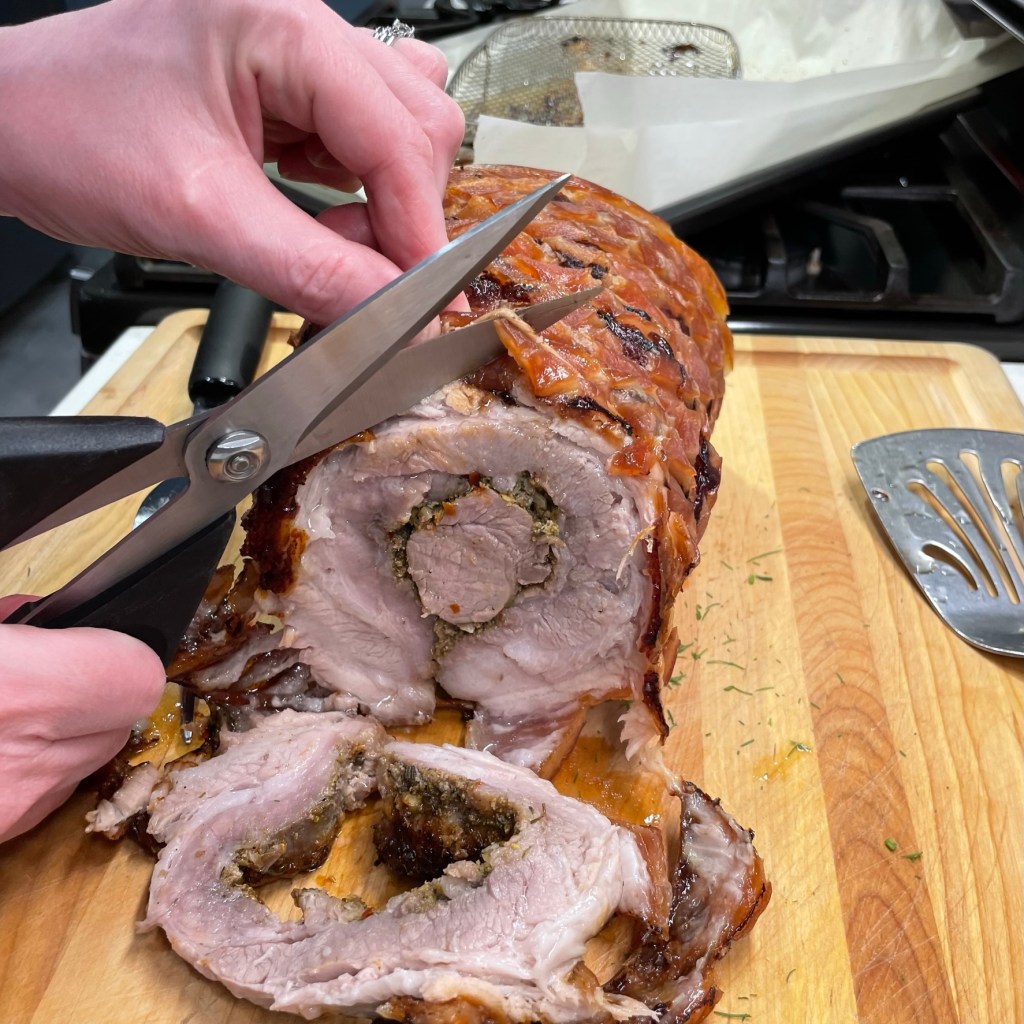
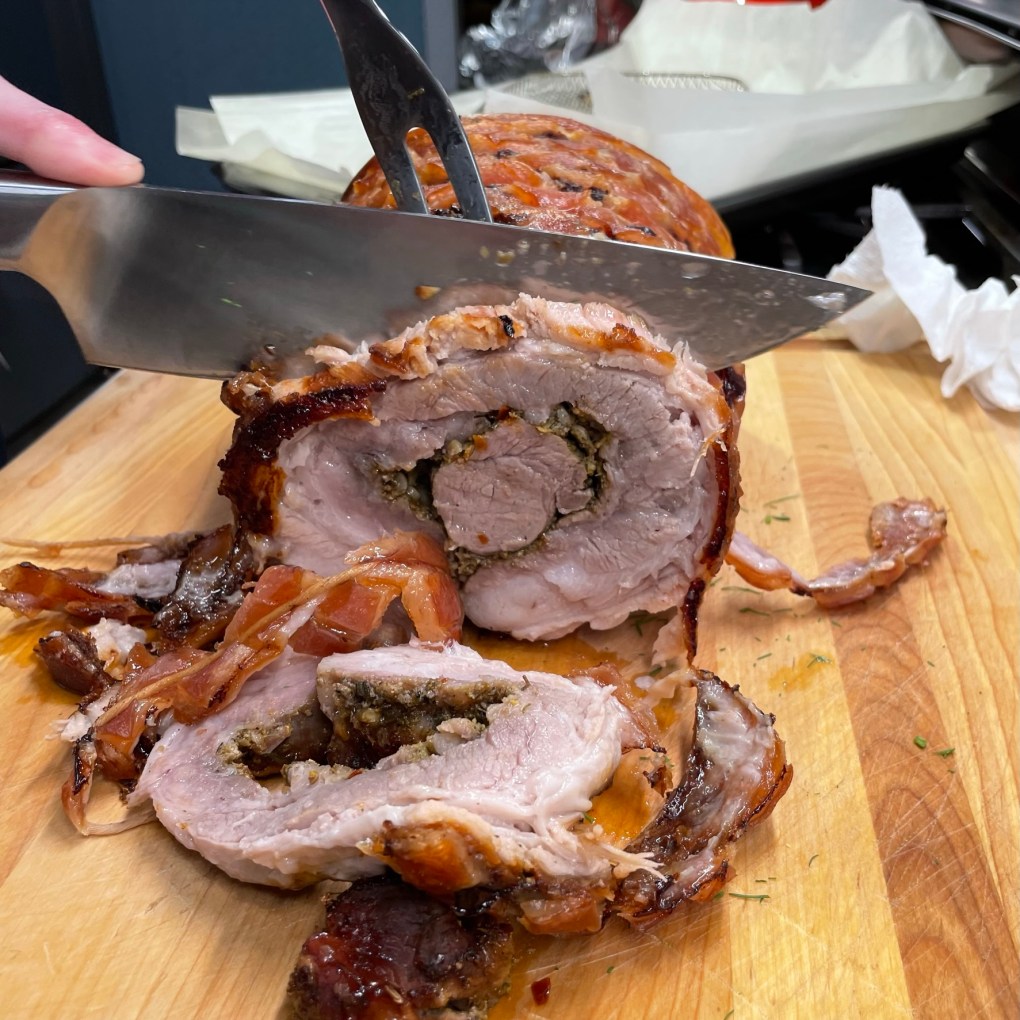
Finally, there’s the skin, which— for all the ruckus and raving about the crackling crispness— did not impress me much. Our porchetta did get very crackly, but that “perfect” skin simply is not edible. It was like biting into a Lego. And the hardness of the crackled skin also made slicing the porchetta quite challenging. If I ever do make this again, I’d probably score the skin in straight squares rather than on a diagonal, so that I can use the score lines as a guide for slicing. But it’s still kind of a waste because you can’t eat that beautiful skin.

Here’s what I’m thinking: the best things about this porchetta were its tenderness and the incredible aroma and flavor of the filling. So why couldn’t I apply the fennel pollen mixture to some other cut of marbled pork? Maybe a boneless, butterflied shoulder, which I could roll up with the herb filling and slow roast (or smoke— wouldn’t that be something)? I’m even imagining that incorporating the fennel pollen filling ingredients into a homemade sausage isn’t a terrible idea, so don’t be surprised if that shows up here in the near future.

If you have been jonesing to try porchetta yourself, it’s definitely worth the effort, and maybe you’ll find something useful for your own experience in my click-to-print recipe below. Please slip a note in the comments if you have tips that might make it worth a second run for me, and do let me know what autumn meal you’re most looking forward to!  

Porchetta
  • Servings: About 8
  • Difficulty: Surprisingly easy
  • Print

There's so much incredible flavor in this Italian-born pork roast, and the leftovers are even tastier!


Ingredients

  • fresh pork tenderloin
  • fresh pork belly, cut to length of tenderloin
  • kosher salt, weighing 1.5% of total meat weight
  • 2 Tbsp. fresh minced garlic (this was about 5 cloves)
  • 1 Tbsp. fresh lemon zest (organic is best)
  • 1 Tbsp. fennel pollen (tricky to find; check Italian market or online)
  • 1 tsp. red pepper flakes (I love the Calabrian chiles from Flatiron Pepper Co.)
  • 1 tsp. fresh rosemary, chopped (I would have used more of this if my hubby was a fan)
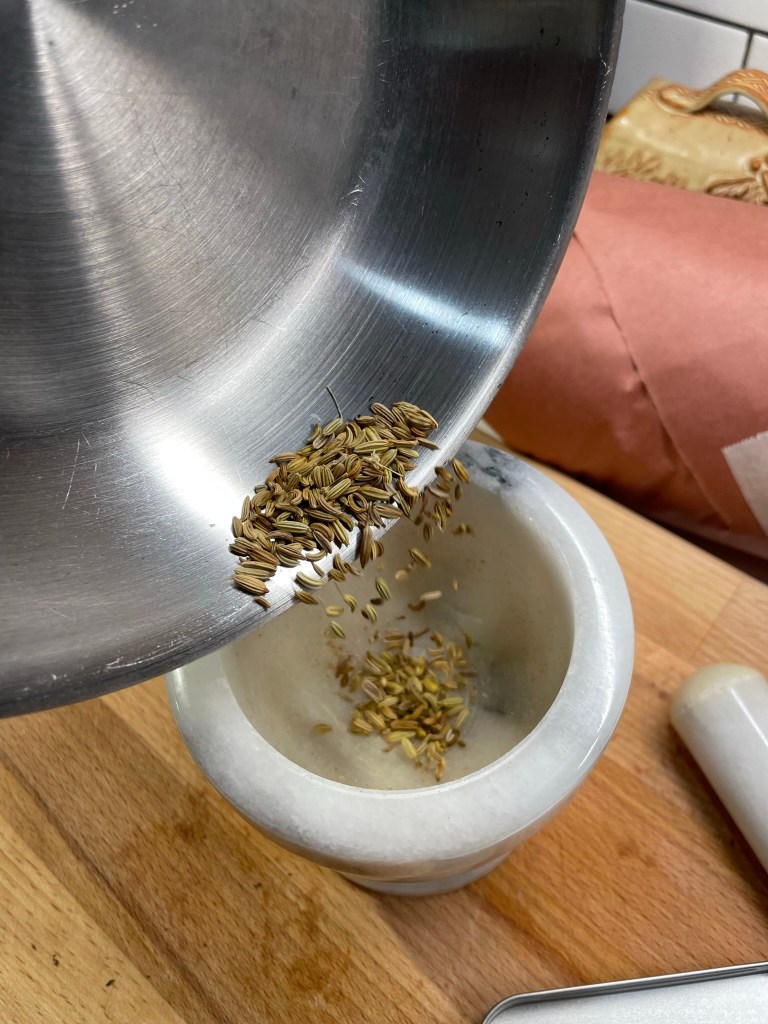
  • 1 tsp. fennel seed, toasted until fragrant and then crushed to nearly a powder
  • About 30 twists of freshly ground black peppercorn

Notes: You will need a few things for success with this recipe. First, kitchen twine for tying up the roast. Plan for at least 5 feet, and soak it in cold water while you prep the roast. Also, a roasting rack to keep the porchetta above the pan during overnight fridge rest and roasting. Finally, a good meat thermometer to help you track the internal temperature.

Directions

  1. Score skin side of the pork belly with very sharp knife or razor blade. This will help render the fat better during cooking, plus it will deliver a crackling skin. Scoring also makes the belly a bit more flexible for easier wrapping around the tenderloin.
  2. Cut several pieces of unbleached butcher’s twine, long enough to wrap and tie around rolled up belly. I used the packaged meat to help me determine how long I needed the pieces to be. Soak the twine lengths in cold water until ready to wrap.
  3. Mix the herb filling, including salt that equals 1.5% of the meat weight.
  4. Line a sheet pan with parchment or foil and place a small roasting rack on it to hold the porchetta roast.
  5. Spread the herbal filling over the meat side of the pork belly, all the way to the edges. Place the tenderloin on the belly, perpendicular to the lines on the cut sides of the belly. The sides of the belly resemble the lines of bacon.
  6. Roll up the roast, but not so tightly that you lose the filling. Check the open ends; the tenderloin should look as if surrounded by a ring of bacon.
  7. Place the rolled roast across several soaked pieces of twine and tie it up, securing each twine with a knot. Sprinkle the porchetta all over with about 1 teaspoon kosher salt and place the sheet pan (uncovered) in the refrigerator overnight, up to 24 hours.
  8. Remove roast from the fridge and bring to room temperature while preheating oven to 350° F. Oven rack should be slightly lower than center.
  9. Roast uncovered for about 4 hours, until skin is crackled all over and internal temperature is 160° F. Cover loosely with foil and rest for about 15 minutes before slicing.


Citrus & Fennel Salad with Olives

It isn’t surprising that I would find another way to highlight a food that is among the “seven species of Israel,” after the lessons I learned earlier this week in an online celebration of Tu Bishvat. The history and symbolism of Jewish food fascinates me, and it’s something that isn’t prevalent across all cultures. Though I’m not Jewish, my husband is, and I’m pleased that we each appreciate traditions from the other side. In our home, we observe Passover and Rosh Hashanah, Easter and Christmas. I’ve attended temple with him, and he’s been to church with me. Over the past year, we’ve joked many times about having been “to church” online more regularly than ever before in person. It’s my not-so-secret hope that houses of worship will continue what they’ve started with online availability, even after the COVID fog lifts and the doors re-open. There’s huge potential for new outreach by these virtual means.

Until that time, I’m taking the lessons however they come, and the online “new year of the trees” celebration, honoring the many blessings of trees and nature, paid particular homage to wheat, barley, grapes, figs, pomegranate, olives and dates—the aforementioned “seven species.” So I’m going with it.

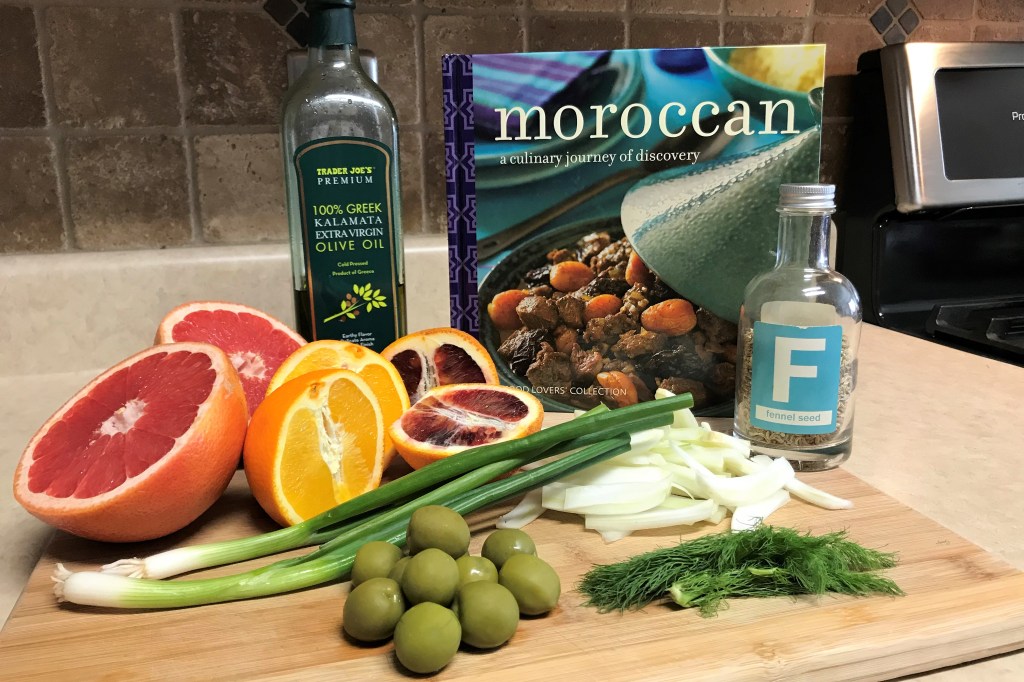
Citrus fruit is very common in northern African cuisine, and it pairs really well with the savory flavors in this recipe.

Several years ago, I picked up this cookbook on a bargain table at TJ Maxx, one of my favorite places to find interesting culinary treasures and gadgets. I have been enthralled with the beautiful images of foods authentic to Morocco, and I’ve noticed many crossover ingredients to the foods of Jewish culture—it makes sense, geographically. Today’s recipe comes from page 16 of that book: a grapefruit and fennel salad, described by the author as a “lovely hot weather salad,” though I’m finding it a bright and refreshing addition to the table right here in the middle of winter. I’ve modified a few things from that recipe, as I always do. I believe this is how we discover new favorites.

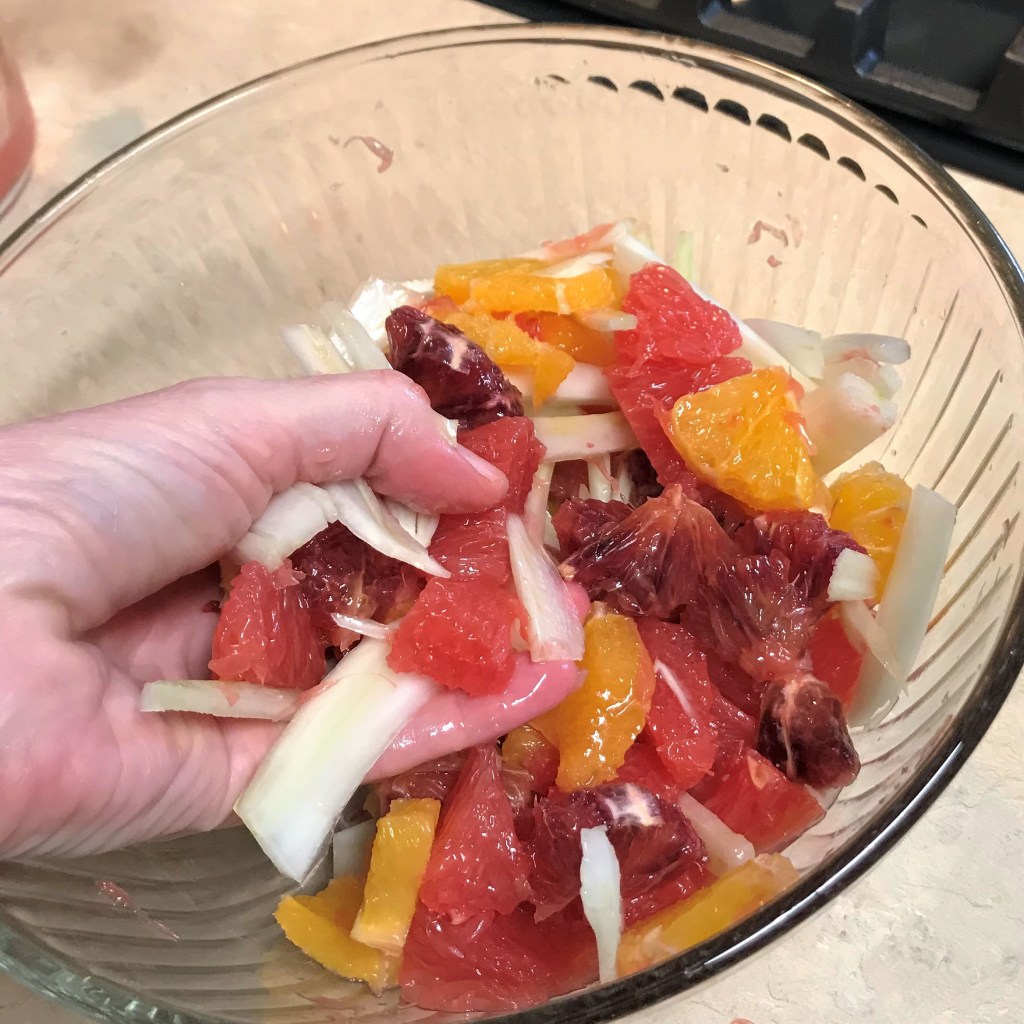
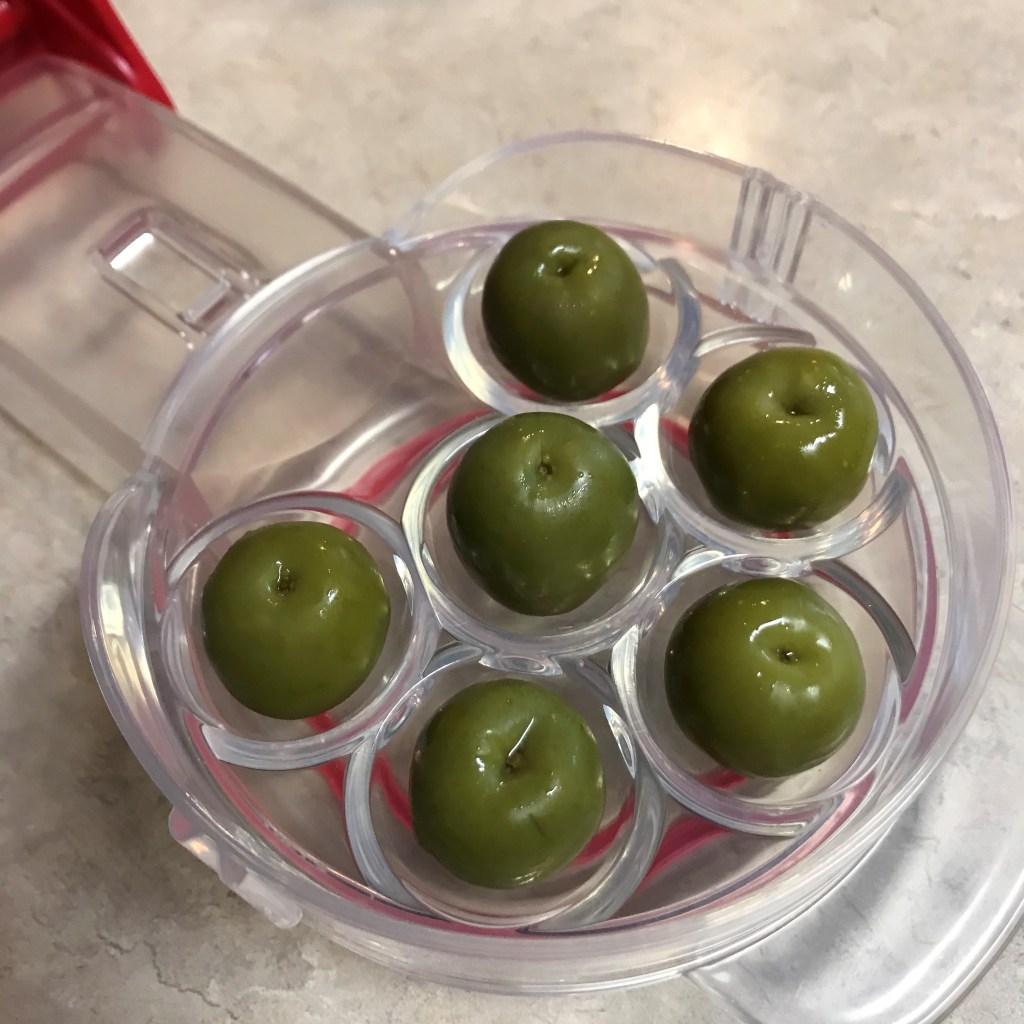
The salad brings plenty of color to the table, and I can taste the sunshine in the beautiful winter citrus! I’ve used ruby red grapefruit, which leans sweeter than pink or white, in combination with navel and blood oranges for additional sweetness and color variety, plus licorice-y fennel slices and castelvetrano olives. If your supermarket has a bulk olive bar, this olive variety is easy to spot because it is bright green like Kermit the Frog. The flavor is buttery and creamy, almost akin to artichoke heart, and I love the slightly briny contrast it provides against the juicy citrus and crunchy fennel.


Ingredients

1 ruby red grapefruit*

1 navel orange

1 blood orange

Kosher salt

1 Tbsp. extra virgin olive oil

1/2 bulb fresh fennel, trimmed and thinly sliced

2 or 3 scallions (green onions), thinly sliced

1 tsp. cumin, caraway or fennel seed

Small handful of castelvetrano olives,* pitted (see notes)


*Notes

Ruby red grapefruit is not as tart as pink or white grapefruit. If you cannot eat grapefruit, try using an extra orange plus a Meyer lemon in its place. You would still have a variety of citrus flavors and colors.

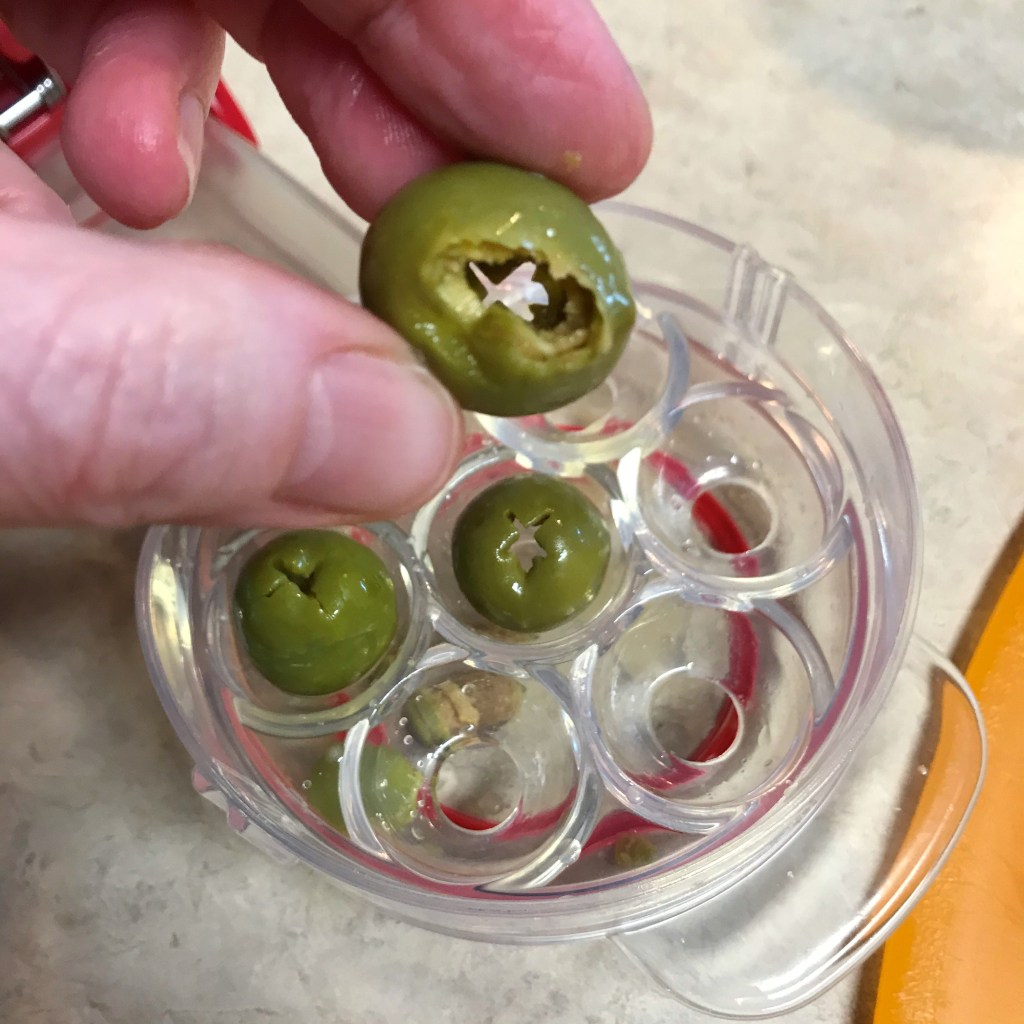
The castelvetrano olives really do stand out, colorwise, on the olive bar. If your market does not offer these, you may also look for the variety in jars. Substitute Kalamata olives from Greece as a good alternative. I would not recommend regular pimiento-stuffed olives or canned “ripe” olives for this recipe. Purchase pitted olives if you can, or carefully cut them in half to remove the pit before adding them to the salad.

Instructions

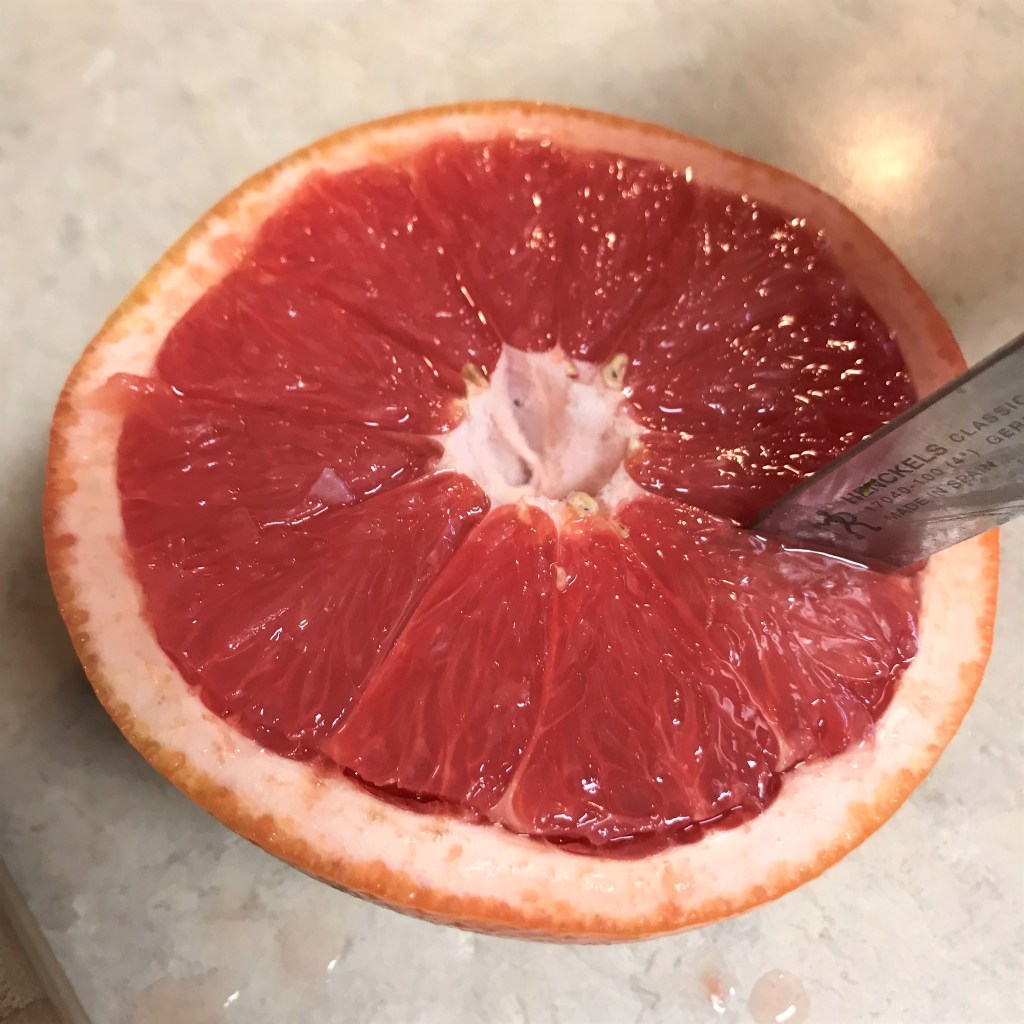
  1. To prepare the grapefruit, cut it in half crosswise, as you would enjoy it for breakfast. Next, use the tip of a sharp paring knife to cut the segments from the membranes. Do this for each half, then spoon them out into a bowl. Squeeze remaining grapefruit juice over a strainer into a bowl and reserve for another use.
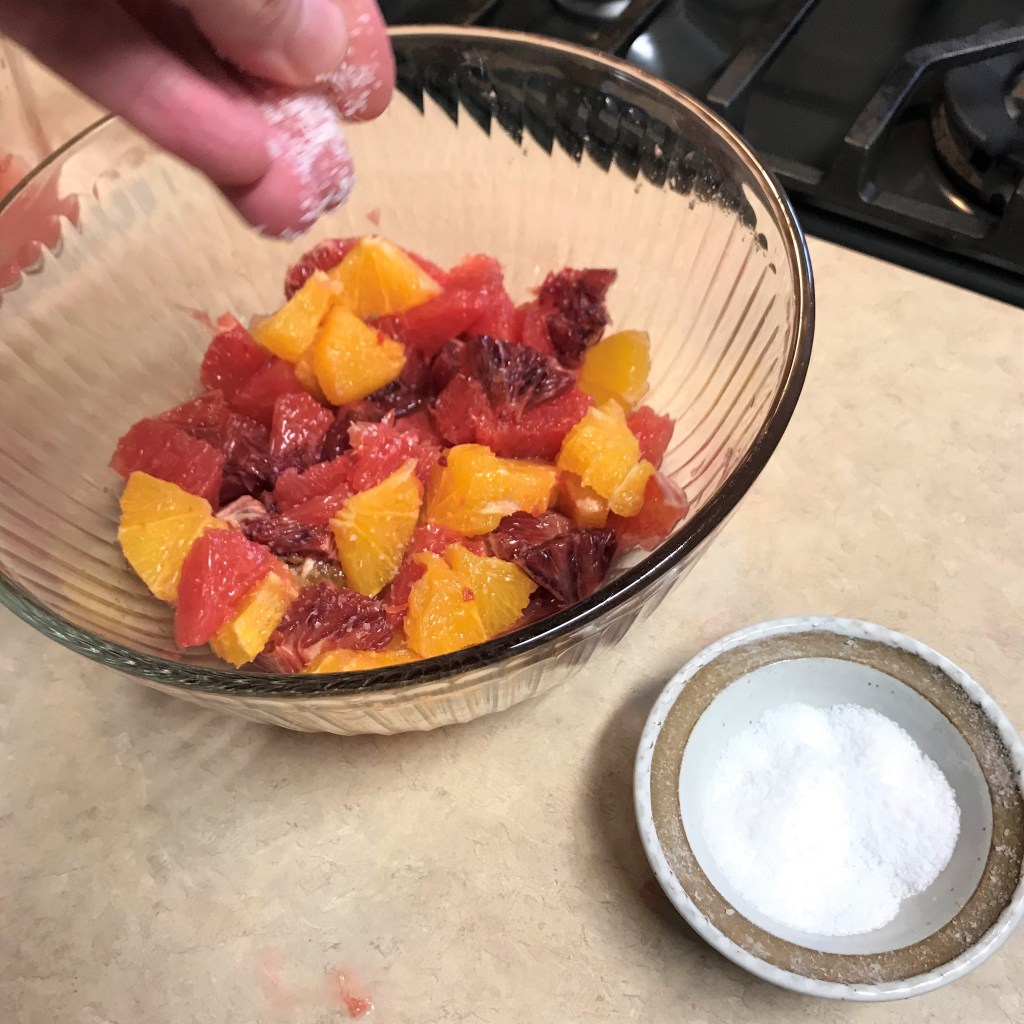
  2. To prepare the oranges, cut off the tops and bottoms so the fruit is stable on a cutting board. Use a sharp knife to carefully cut from top to bottom, removing the peel and bitter outer pith from the fruit. Cut the oranges in half, top to bottom, then lay them flat side-down on the cutting board. Slice the oranges into half-rounds, about 1/2” thick. Some may split, and that’s OK. Add the pieces to the grapefruit bowl, and give it a pinch or two of kosher salt.
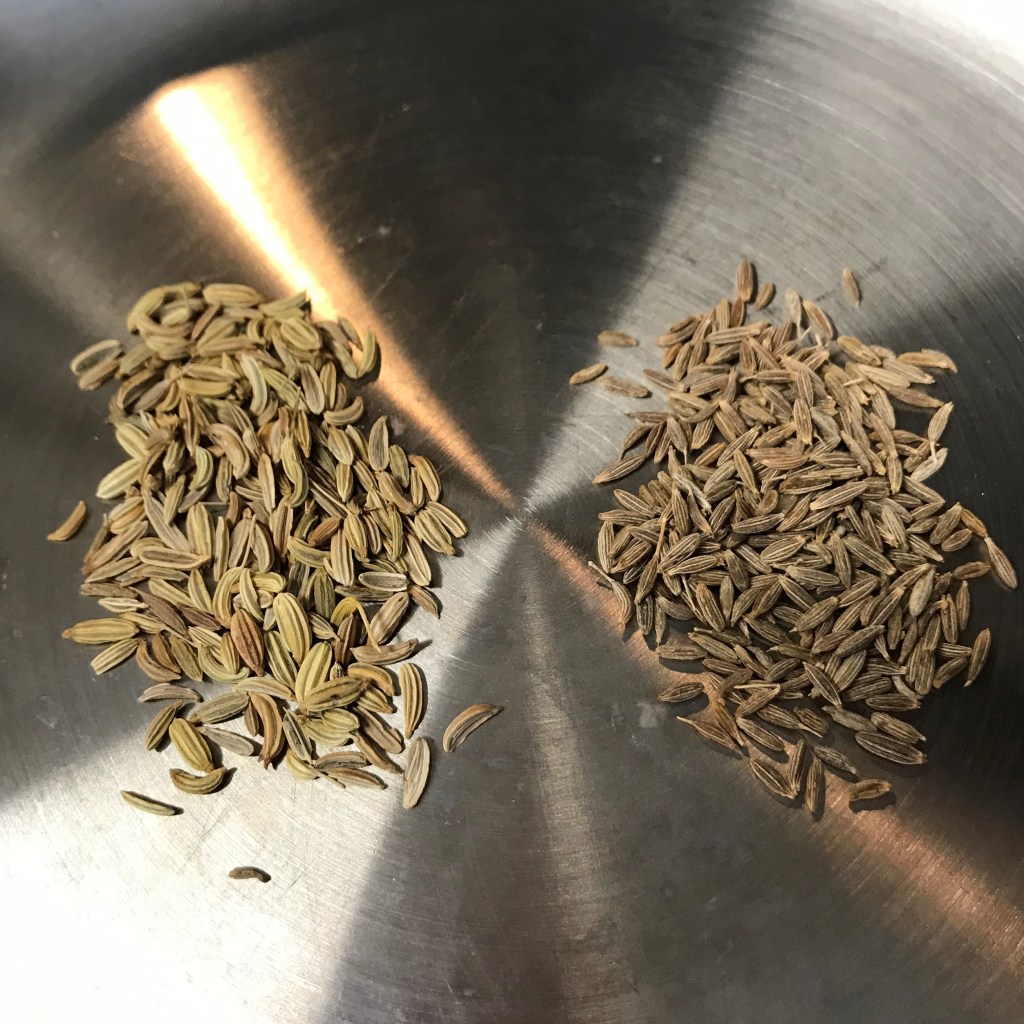
  3. In a small, dry skillet, toast the cumin (or caraway or fennel) seed over medium heat, swirling the pan continuously. After about one minute, the seeds to be toasty and aromatic. Remove from heat and allow them to cool.
  4. Scatter the sliced fennel and olives into the citrus bowl, drizzle with olive oil and toss gently to coat. Transfer to a serving bowl.
  5. Sprinkle the scallion slices over the salad, then sprinkle with the toasted seeds and serve immediately.
If you want to go crazy and add pomegranate arils, too…well, maybe that wouldn’t be so crazy. 🙂
Keep those recipes evolving, dear friends!

Want to print this recipe?


Salmon with Fennel & White Beans

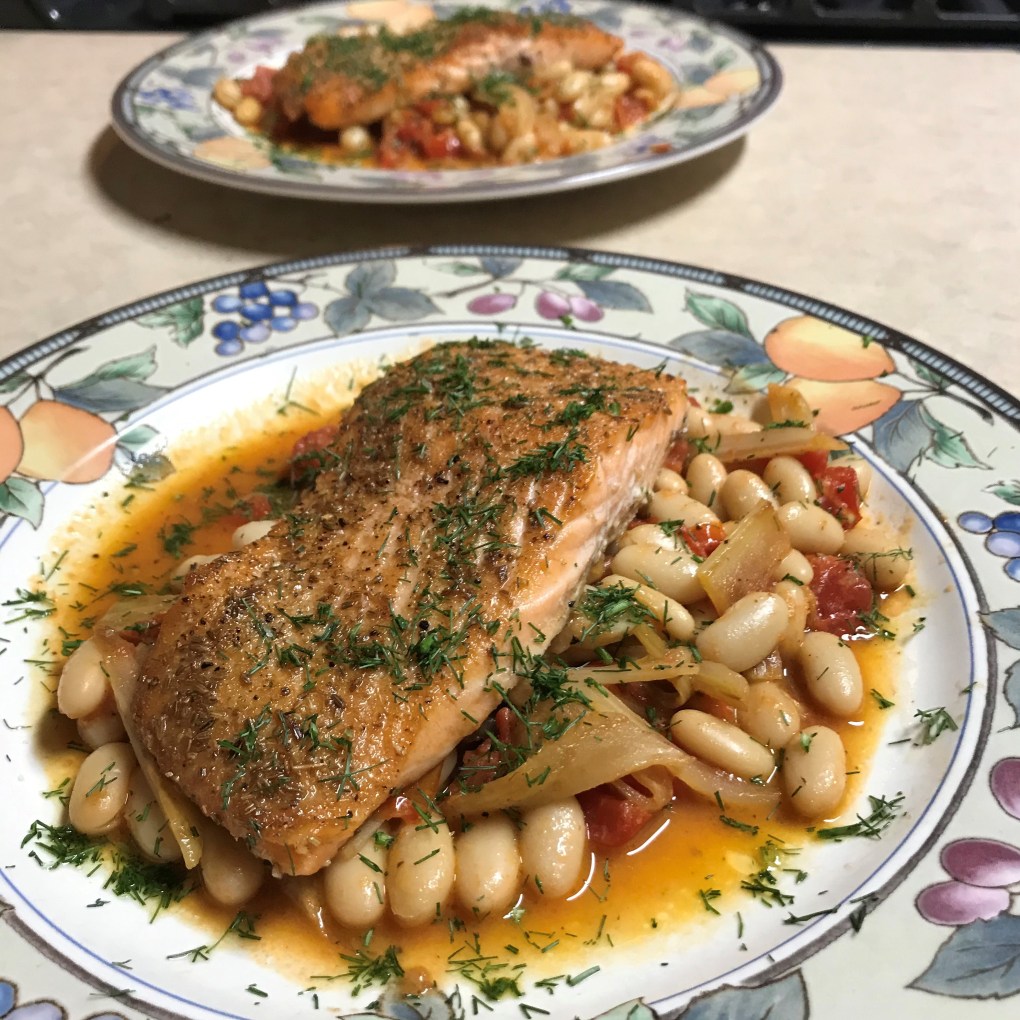
There has been a fresh and flavorful shift in our kitchen over the past couple of weeks, and it feels so right! My husband, Les, and I have been eating healthier after the holidays, not for keeping resolutions (we don’t bother with those), but out of simple desire to care for our bodies better after a season of splurging. Seafood has been the star of this menu reboot, and I’ve brought back into rotation one of my favorite all-time recipes, a seared fillet of fish rested on a mélange of tender sautéed fennel with creamy cannellini beans and sweet tomatoes.

In the spirit of full disclosure, I’ll confess right here that I actually did not use salmon this time, but steelhead trout. This is a sweet and creamy fish, similar in texture (and appearance) to a farm-raised salmon, and when I can get my hands on steelhead trout, I love to swap it into favorite salmon recipes, including the salmon in phyllo dish that I shared in December. But steelhead trout isn’t always easy to find, especially while adhering to the best practice standards set by the Marine Stewardship Council (sustainability means a lot to me). The dish is every bit as delicious when made with your favorite salmon, which is usually much easier to find.

This dish is satisfying, healthful and full of flavor!

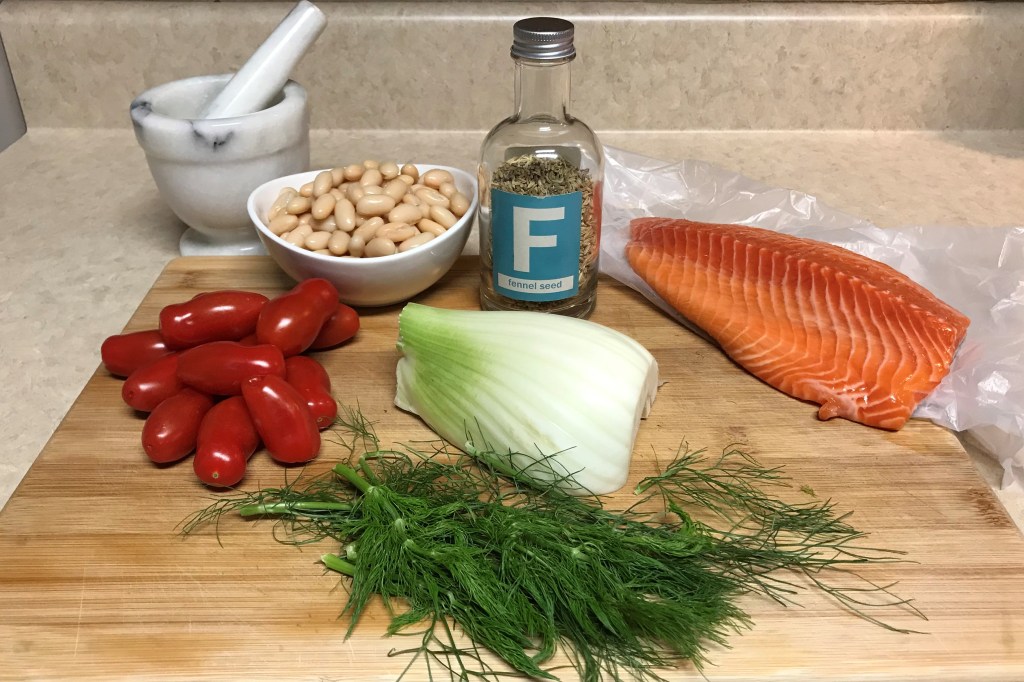
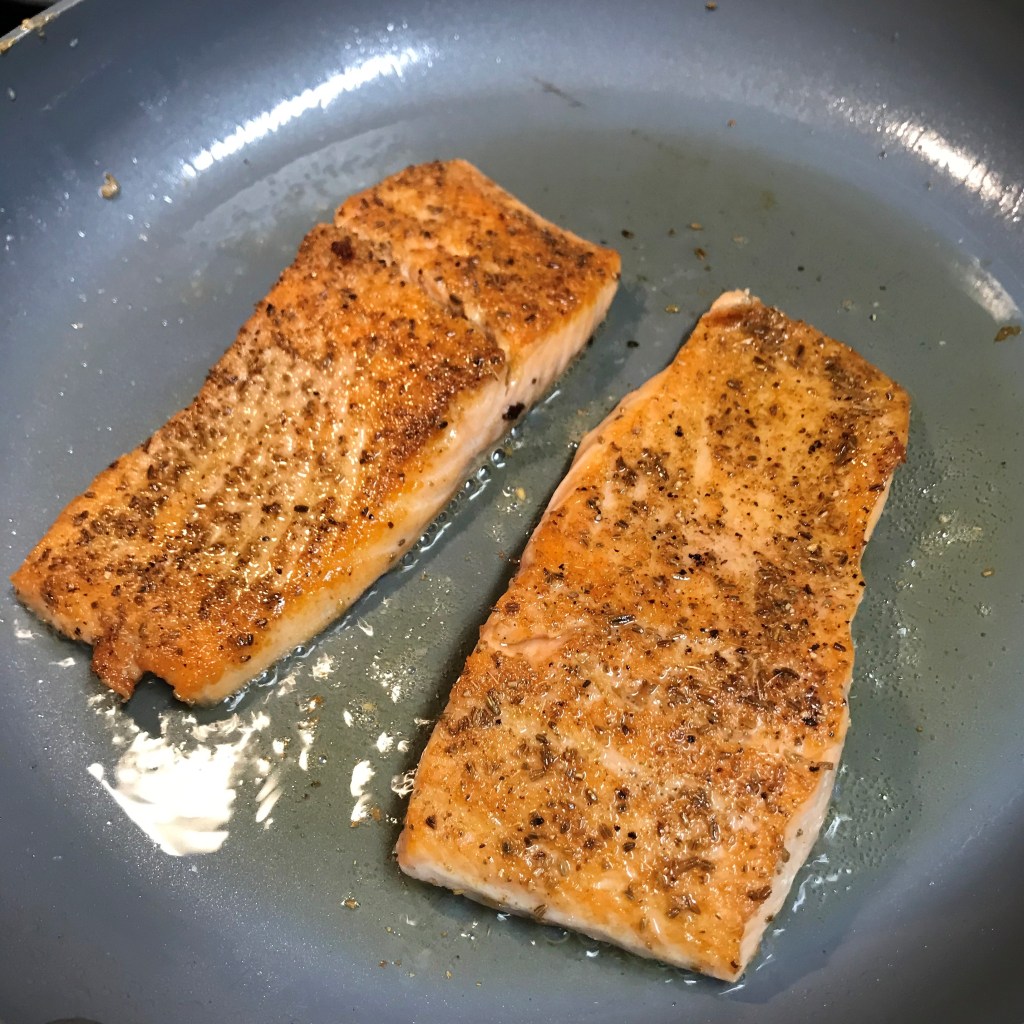
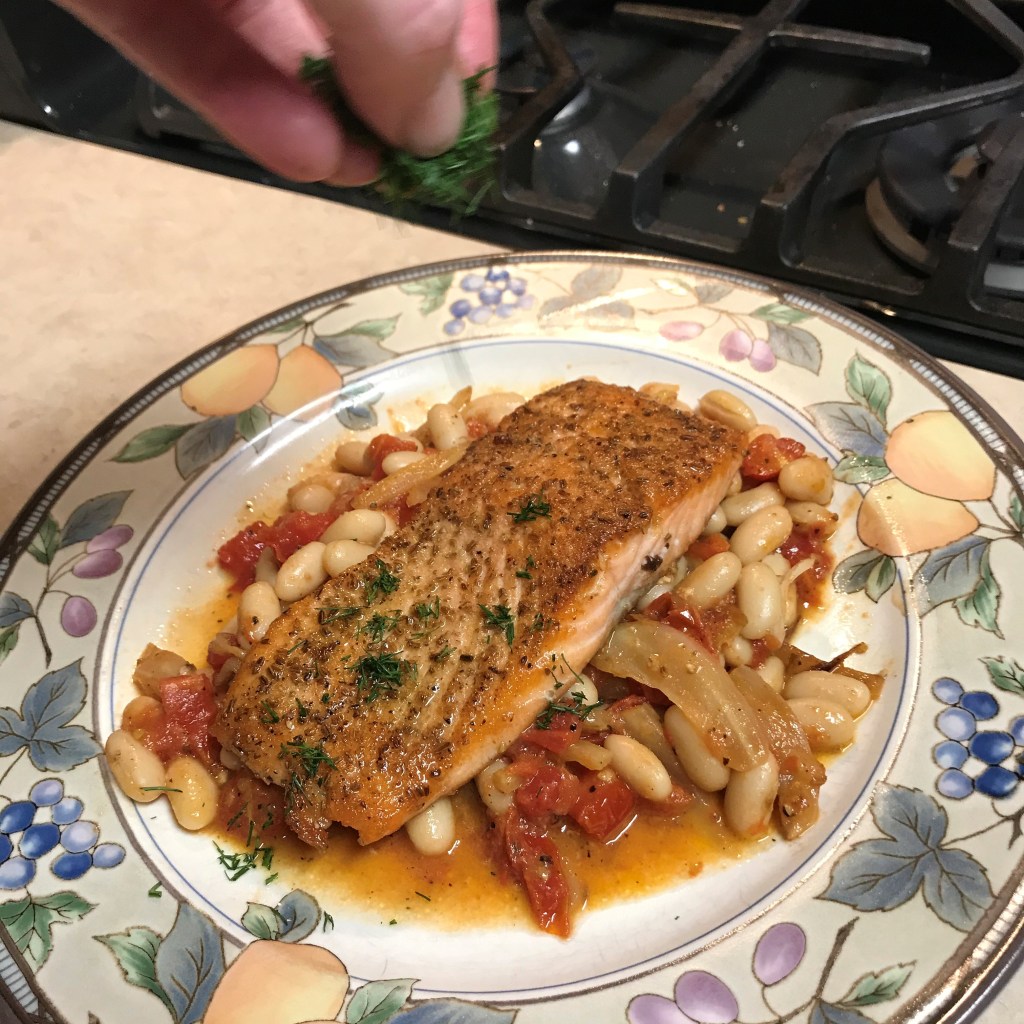
It looks and tastes more extravagant than it is, and although I’ve named it “fish with fennel,” it would be better described as fennel with fish, given that the fennel shows up in three different forms—the seeds are ground to a powder for crusting on the fillets, the vegetable is caramelized in the mélange beneath the fish, and the fronds are chopped and sprinkled on top.


Would it surprise you to know that you can have this meal on the table in about 35 minutes, start to finish? It’s true. And Les, who is practically a living nutritional calculator, announced after cleaning his plate that our meal probably checked in at fewer than 400 calories per serving, which is not too shabby for such a flavorful, satisfying meal.

Ingredients

So few ingredients, yet so much flavor!

2 portions salmon*, skin removed (see notes)

1 tsp. fennel seed, ground to a rough powder

2 Tbsp. extra virgin olive oil

Kosher salt and freshly ground black pepper

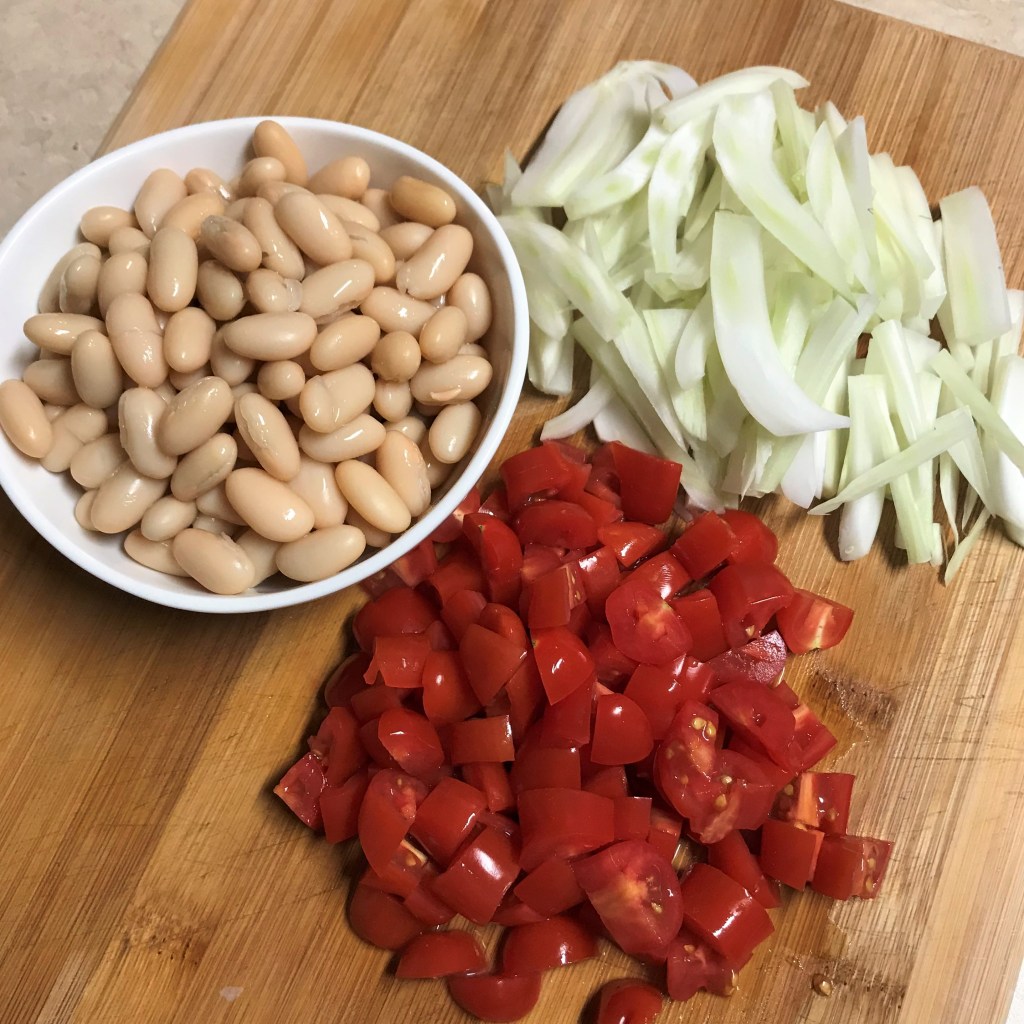
1/2 bulb fennel, sliced* (should measure about 1 cup)

1 cup chopped fresh tomatoes (or canned, drained well)

1/4 cup low-sodium vegetable broth + 2 Tbsp. dry white wine* (or all vegetable broth)

15 oz. can cannellini (white kidney) beans, drained and rinsed

1 Tbsp. Dijon mustard

2 Tbsp. fennel fronds, chopped or minced


*Notes

Any type of salmon (wild sockeye, king, coho, etc.) works well in this recipe, but you might also consider swapping in another fish, such as arctic char or steelhead trout, which I used. If you are not comfortable removing the skin yourself, ask the seafood clerk to do it for you. Learn this task, and you’ll be unstoppable!

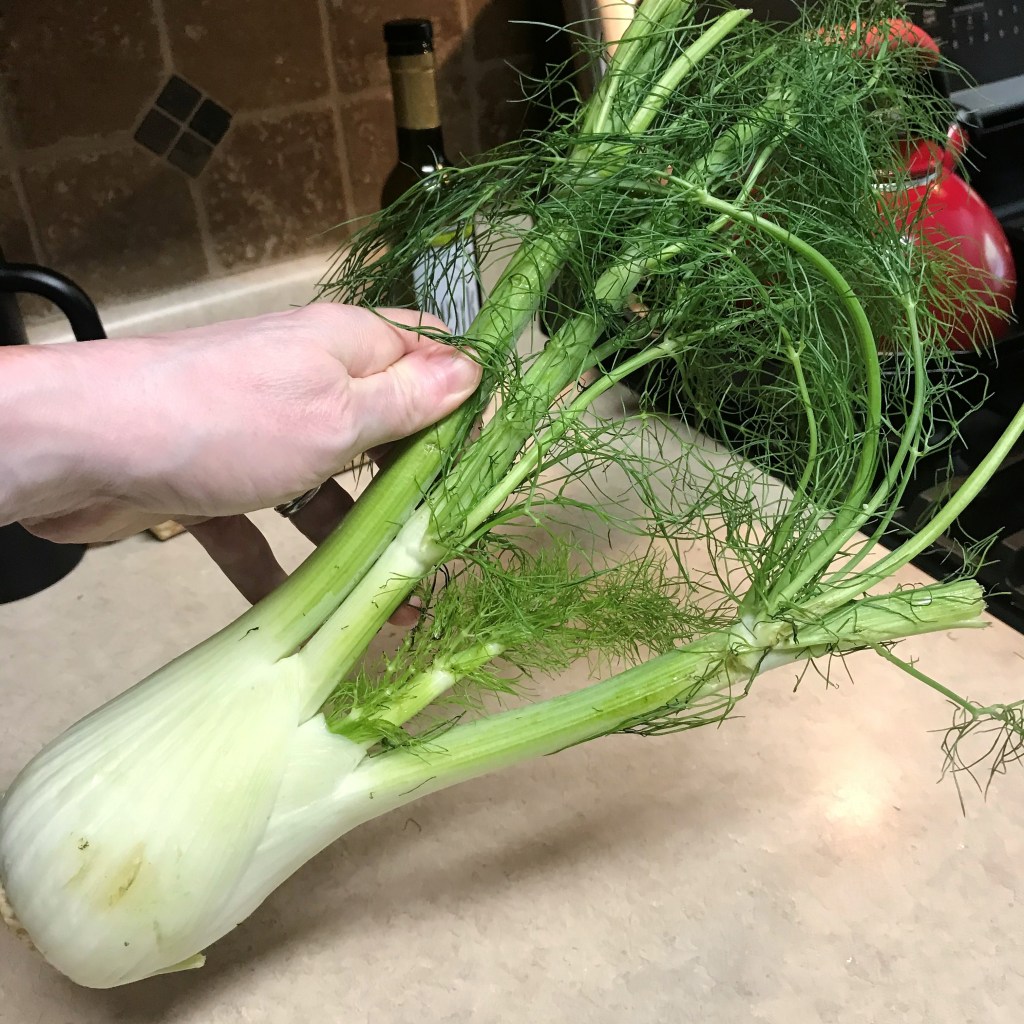
Fennel is a less common vegetable, one that you may have passed over in the supermarket for something more recognizable. It resembles something between celery and bok choy, but tastes nothing like either. It is crunchy with a slightly licorice flavor, and it pairs beautifully with all kinds of fish, especially when sautéed or stewed. The seed part of fennel might be more familiar to you. It’s the flavor that makes Italian sausage taste Italian.

If you use wine to deglaze the skillet, make it a dry one, such as pinot grigio. Alternatively, I frequently reach for dry vermouth, given that I always have a bottle open in the fridge. If you prefer to not use wine, just add another splash of vegetable broth, no problem.


Instructions


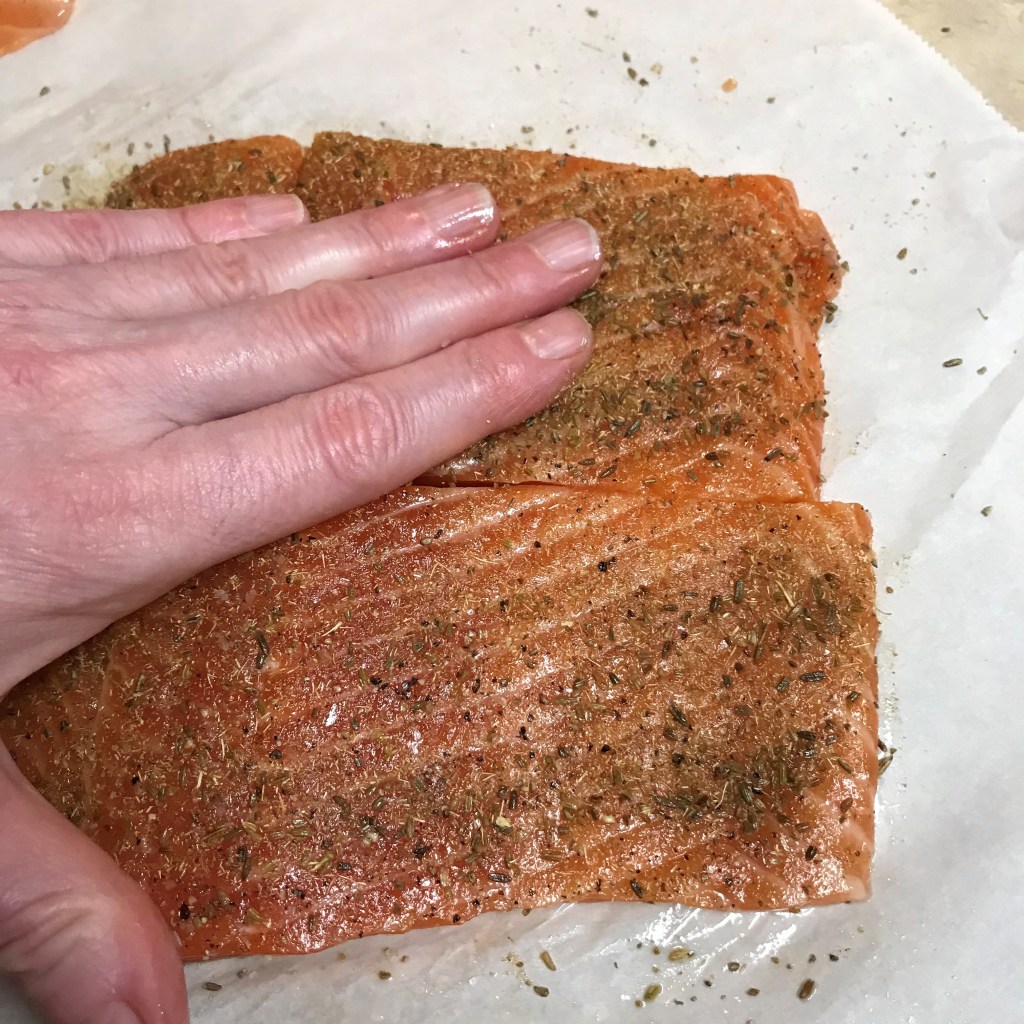
  1. Using a mortar and pestle or electric spice grinder, crush the fennel seeds to a rough powder. Don’t have either? Try putting the seeds into a bag and use a rolling pin to crush them. Season the fish fillets with kosher salt and pepper, then sprinkle the fennel powder onto both sides of the fillets and press to fully adhere it.
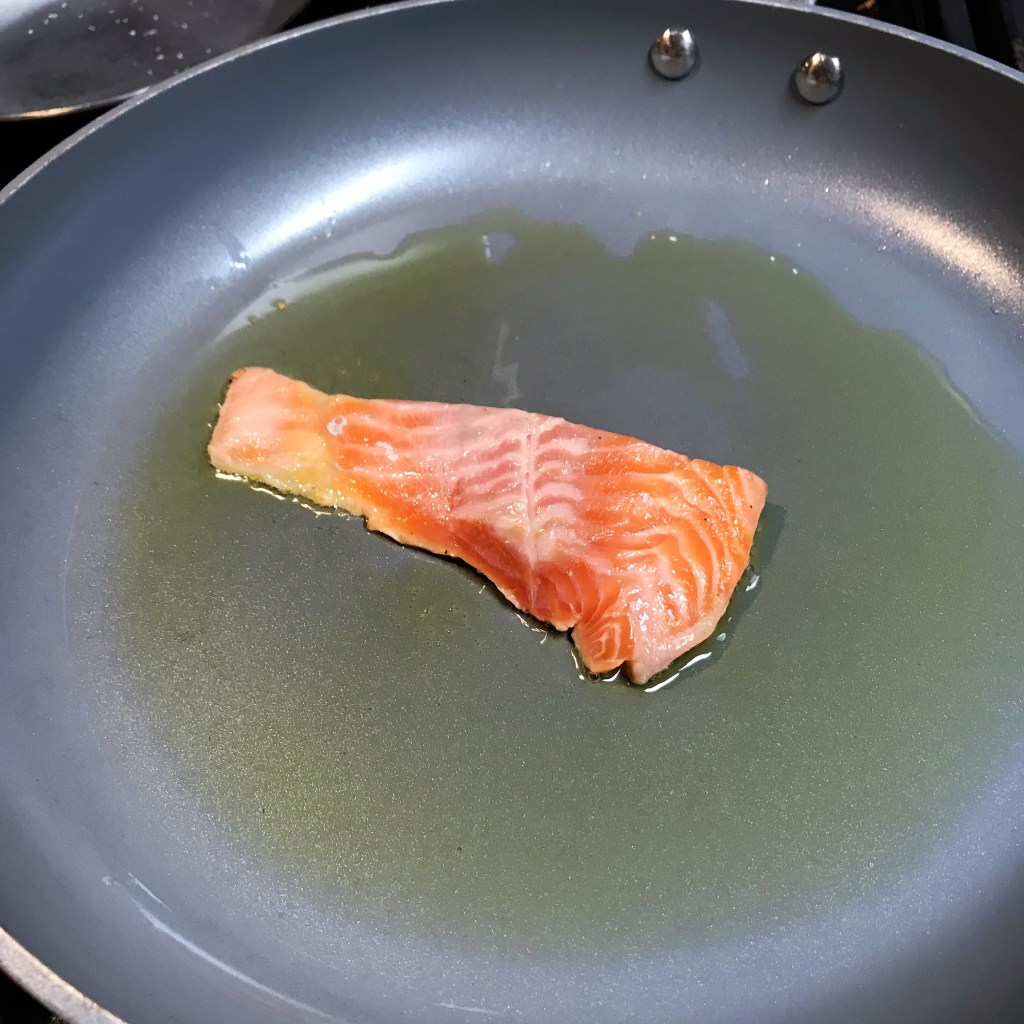
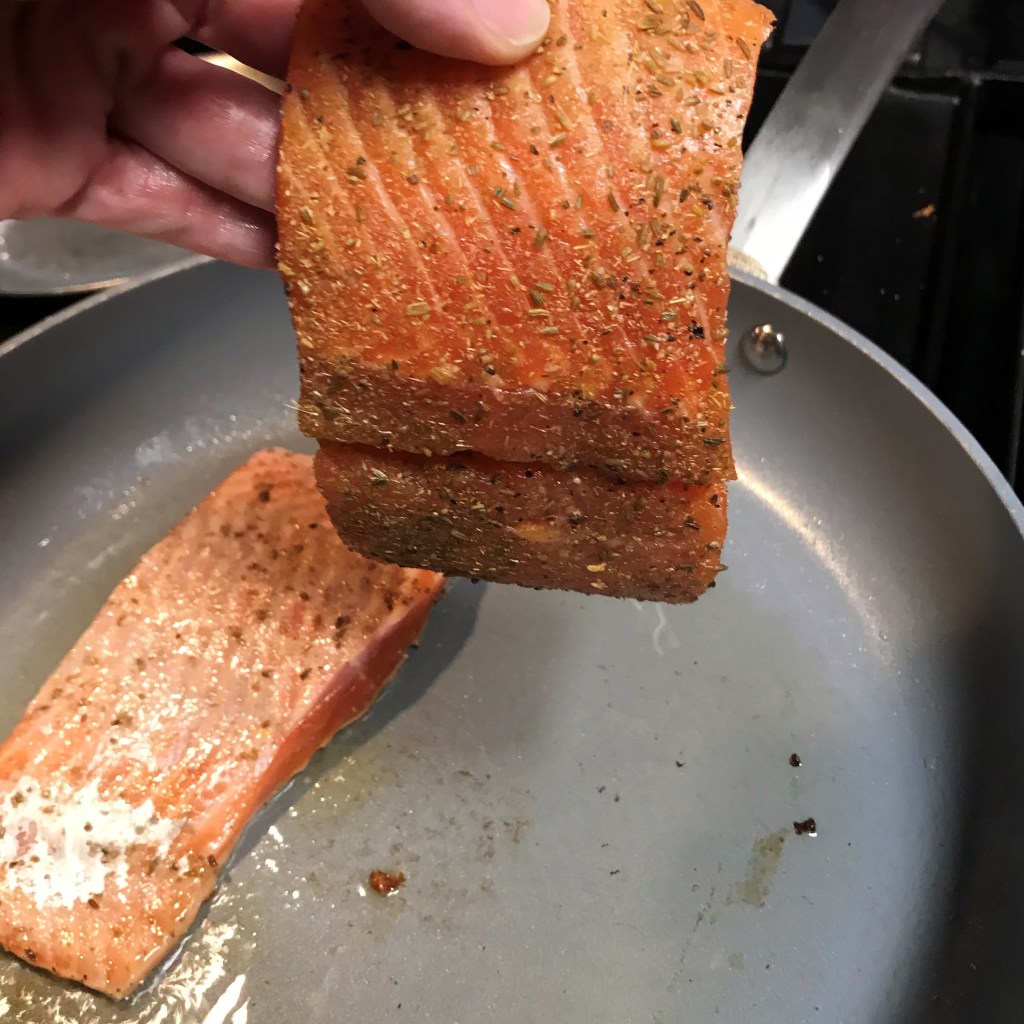
  2. Heat a large, non-stick skillet over medium heat. Add olive oil. When oil is hot and shimmery (but not smoking), lay fish fillets into pan. Cook about two minutes, then carefully turn fillets to cook the other side another two minutes. Transfer fish to a small plate and keep warm. I usually slip it into the microwave while I make the mélange.
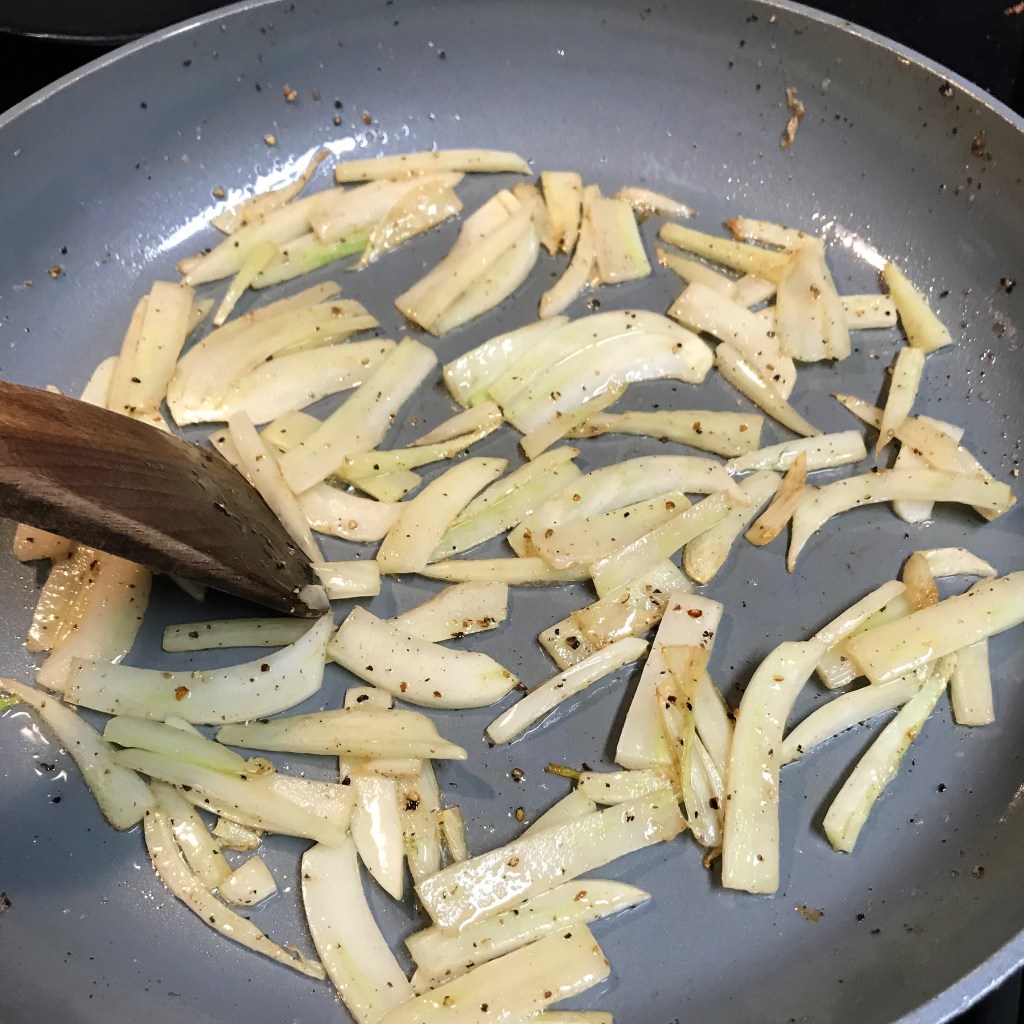
  3. Add fennel pieces to the skillet. Season with salt and pepper. Sauté, tossing occasionally, until fennel is caramelized and tender, about five minutes.
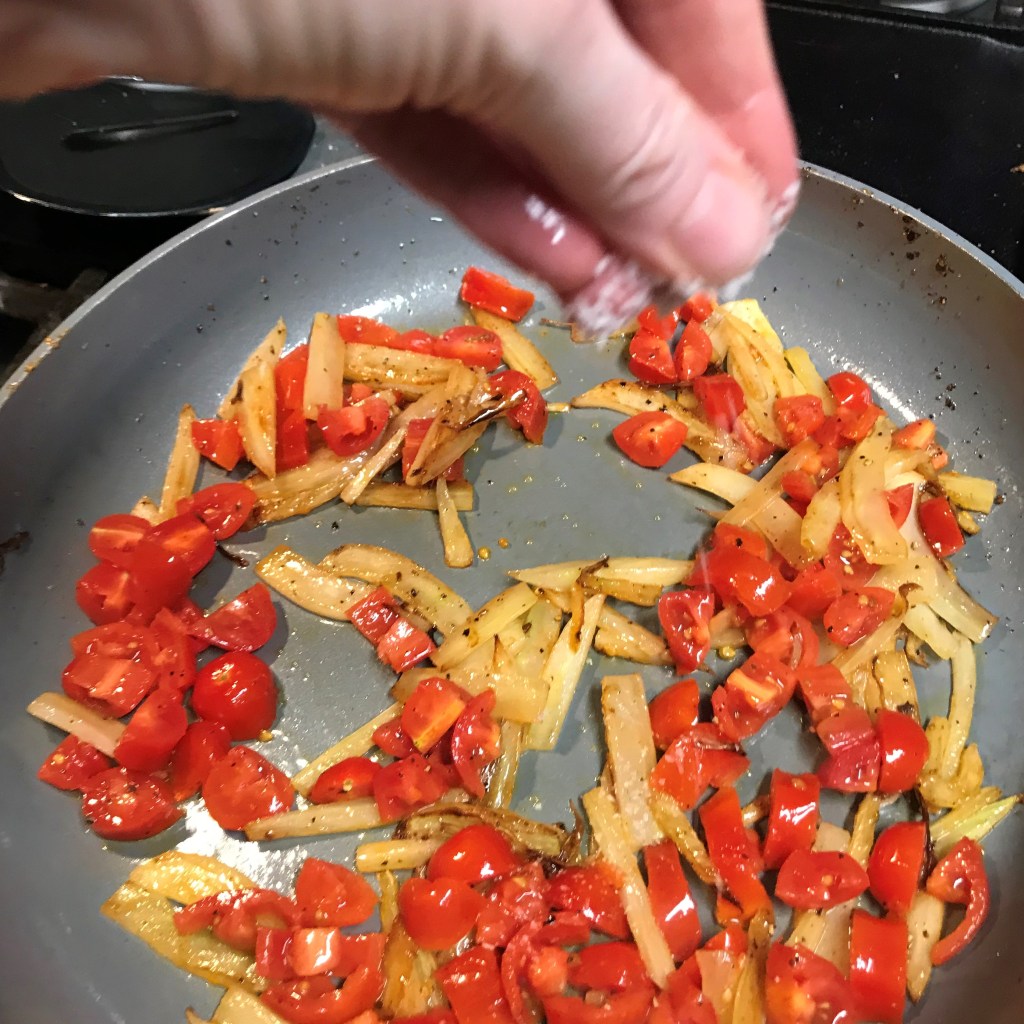
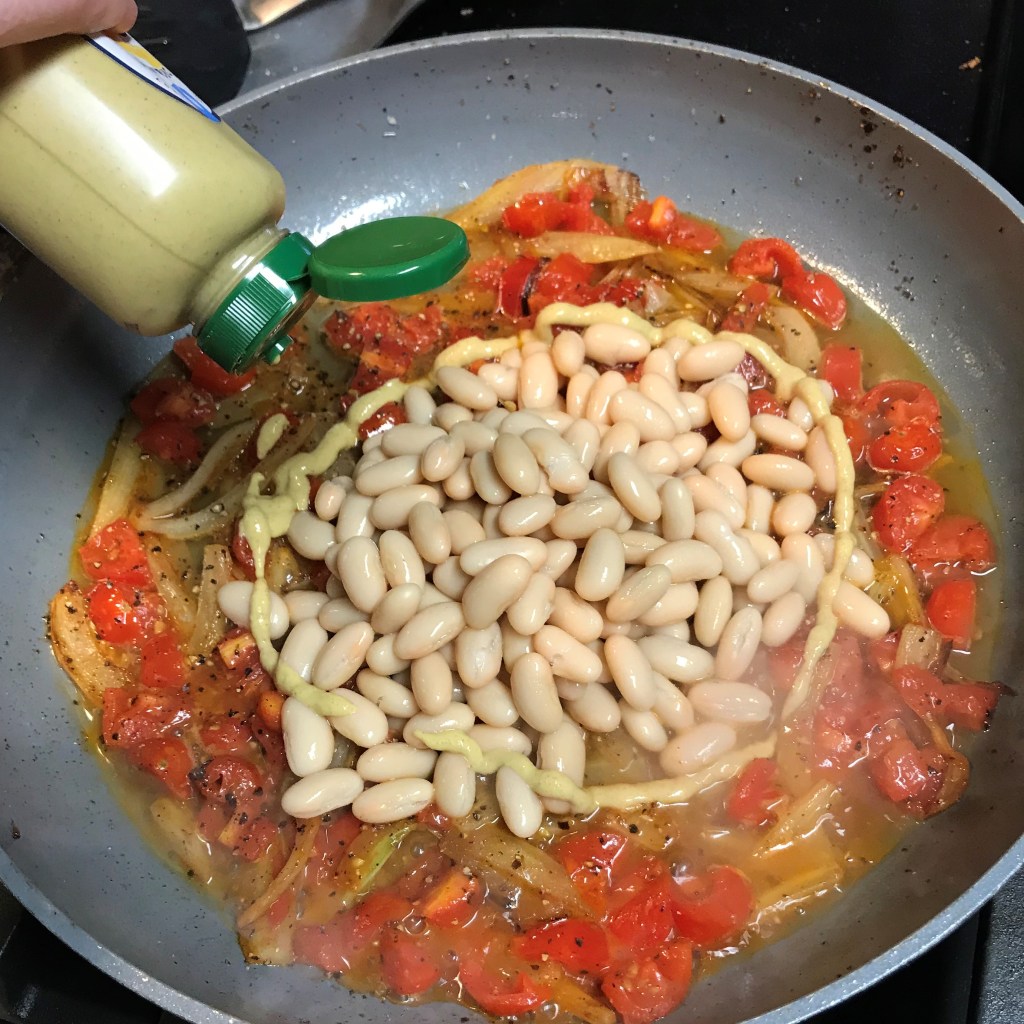
  4. Add tomatoes, then broth, plus wine. Stir until combined and liquid is simmering.
  5. Add beans and mustard. Toss to combine, reduce heat to low.
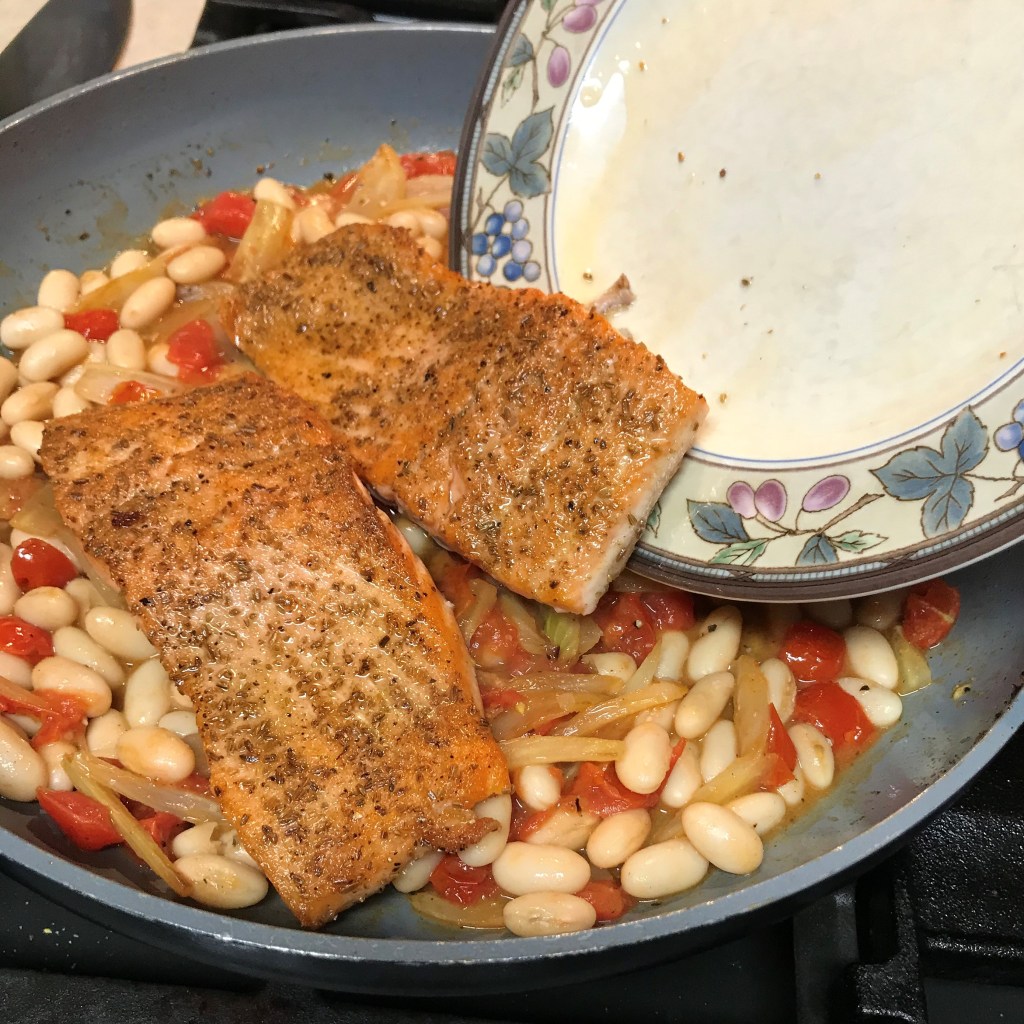
  6. Return fish to the pan, resting the fillets on top of the mixture. Cover and simmer on low for about 8 minutes, which is just about enough time to set the table and chop the fennel fronds.
  7. Plate the meal, with fish fillet resting on top of the fennel-bean mixture. Sprinkle the chopped fennel fronds on top and serve.

Want to make this recipe?


Harvest Turkey Salad

Thanksgiving leftovers are a little bit like family—you can wait ‘til they arrive, and you sure are glad to see them go. So far, we’ve enjoyed full leftover plates, grilled cheese sandwiches made with leftover turkey and other accoutrements, and of course the comforting leftover turkey gumbo that I shared yesterday.

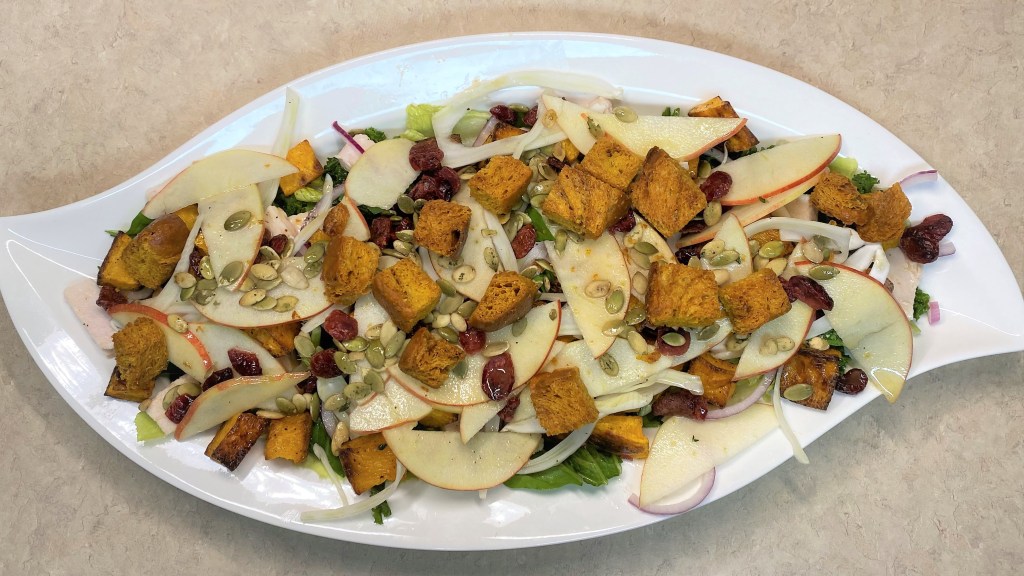
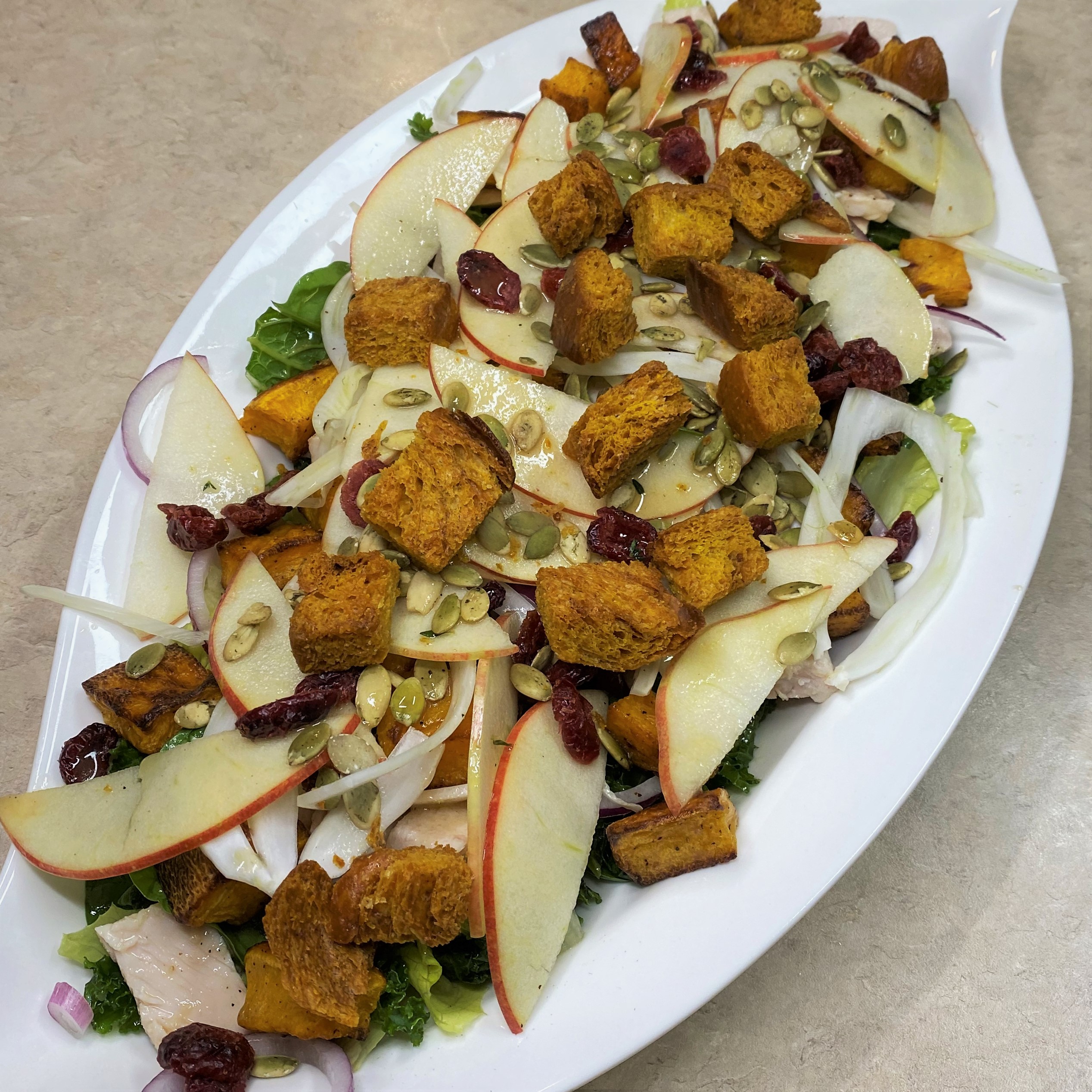
On the fresher side of things, how about a fall harvest-themed salad option that makes the most of leftovers in a bright new way? There are plenty of autumn ingredients in here, but lots of fresh and healthful things to soften the reality that you’re still eating leftover turkey.

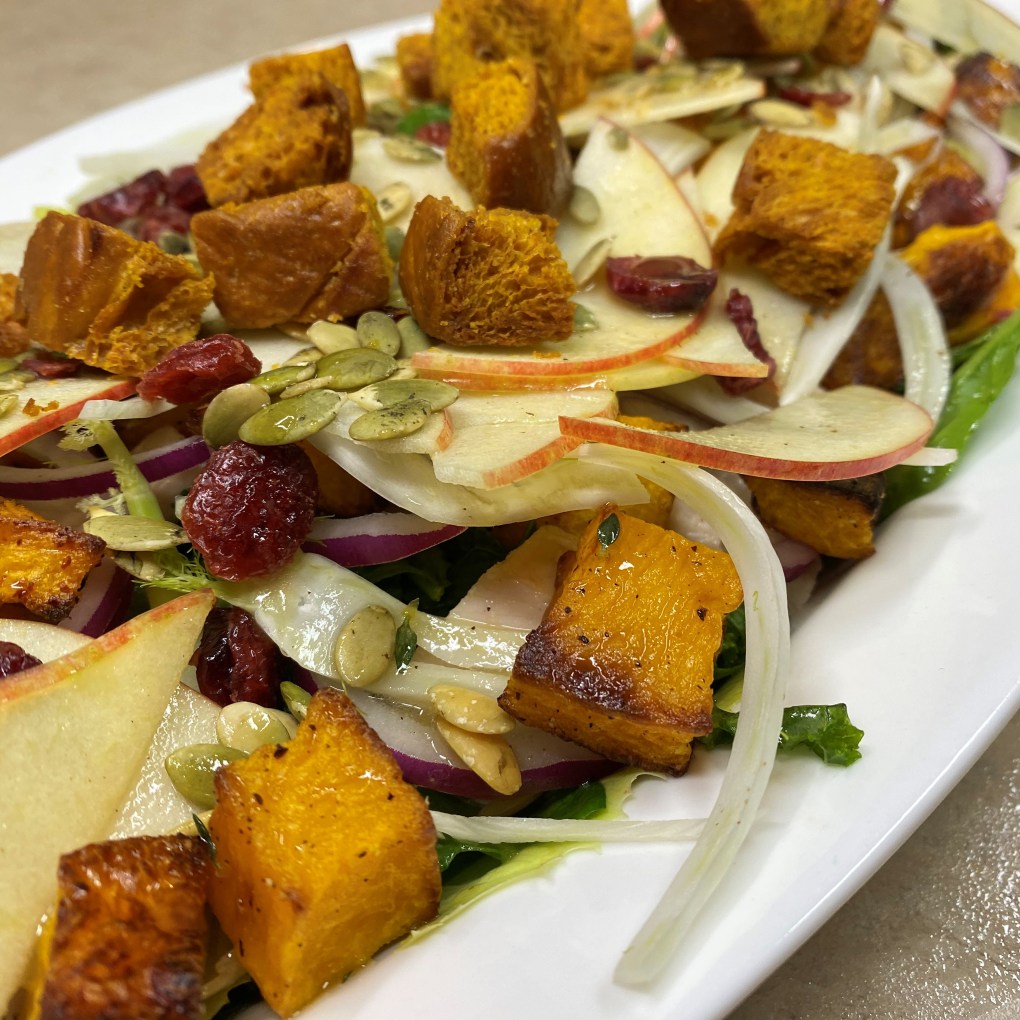
For me, a salad must hold a variety of interesting flavors and textures, so this one has shaved fennel for a little crunch, dried cranberries for a little chew, roasted bites of butternut squash for soft sweetness, thin slices of gala apple for a little snap and an easy citrus-maple vinaigrette for a whole lot of mouthwatering goodness in every bite. The prep is minimal and the salad is pretty.

In the interest of full disclosure, I’ll admit that I made this salad more than a month ago, with a roasted turkey breast that we purchased at Costco for sandwiches and salads. It was filling but light, and it gave my taste buds a bit of that autumn pizzazz I was craving so much. But I know this salad would be just as good today with leftover roasted or smoked turkey breast, or if you downsized Thanksgiving this year for safety reasons and didn’t do a turkey, you could easily swap in cubes of deli roasted chicken. Heck, leave out meat altogether and make it vegan. As always, I hope you find inspiration and flavor in my recipe. Enjoy!

It’s fresh and light, but satisfying with so many fall flavors.

Ingredients

2 cups butternut squash cubes

Extra virgin olive oil

Kosher salt and black pepper

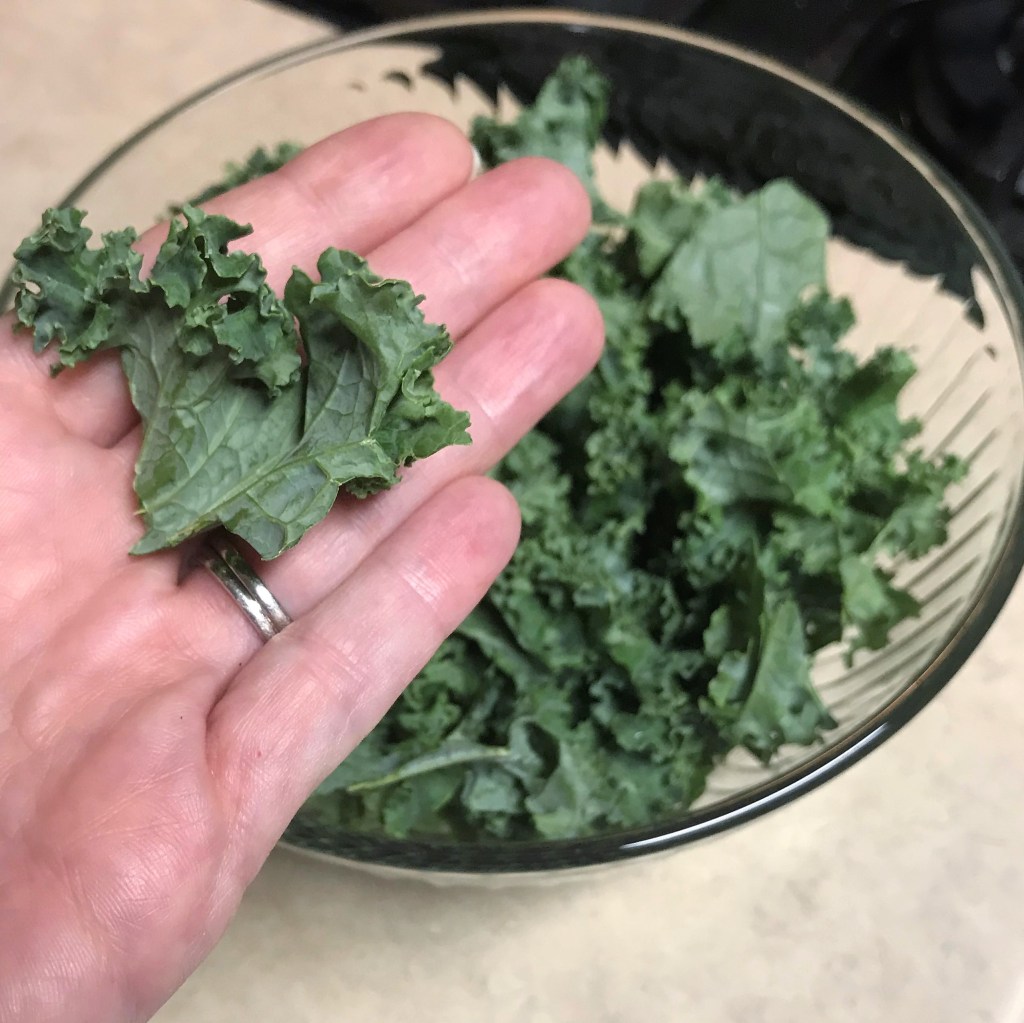
1 fat handful fresh washed kale leaves, rough chopped and thick stems removed

1 fat handful baby spinach leaves

4 romaine heart leaves, torn into bite-sized pieces

1 cup chopped leftover turkey (or deli chicken)

1/2 fresh gala apple, washed and sliced thin

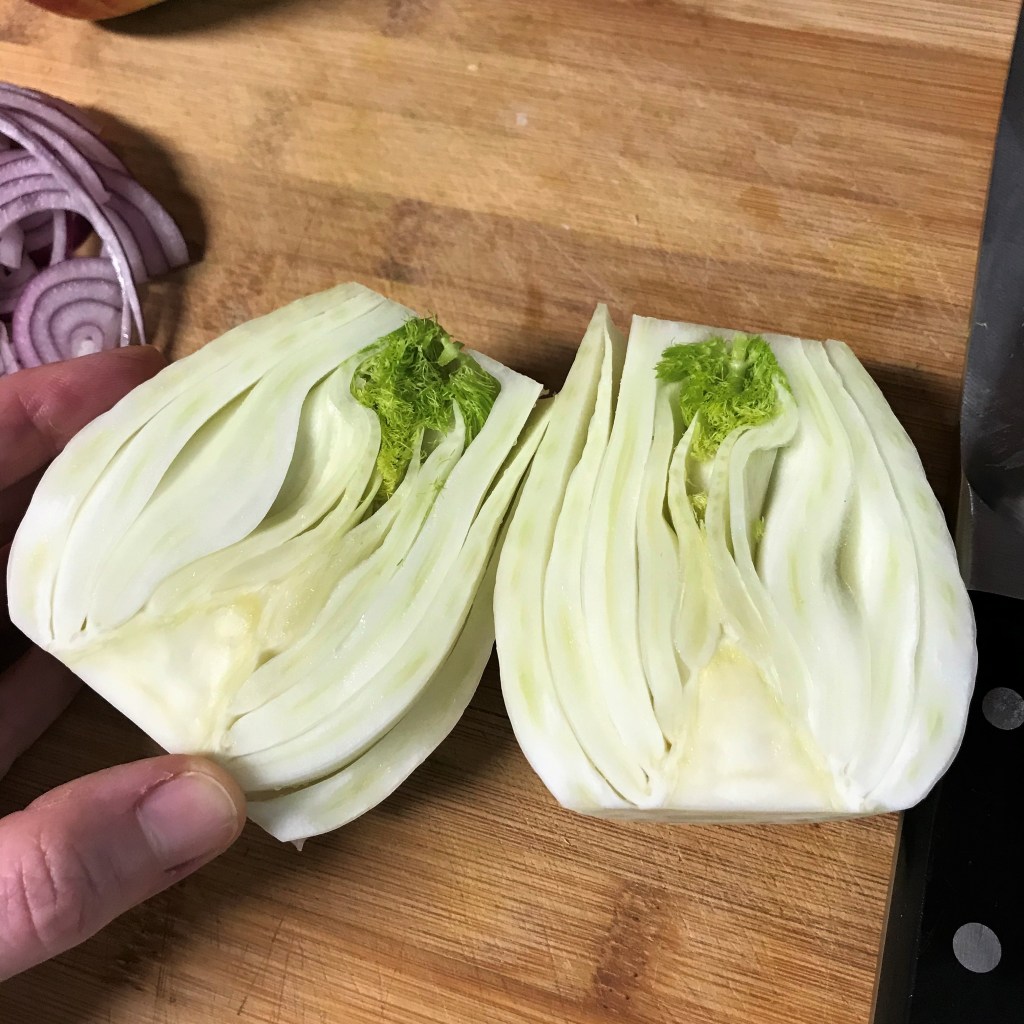
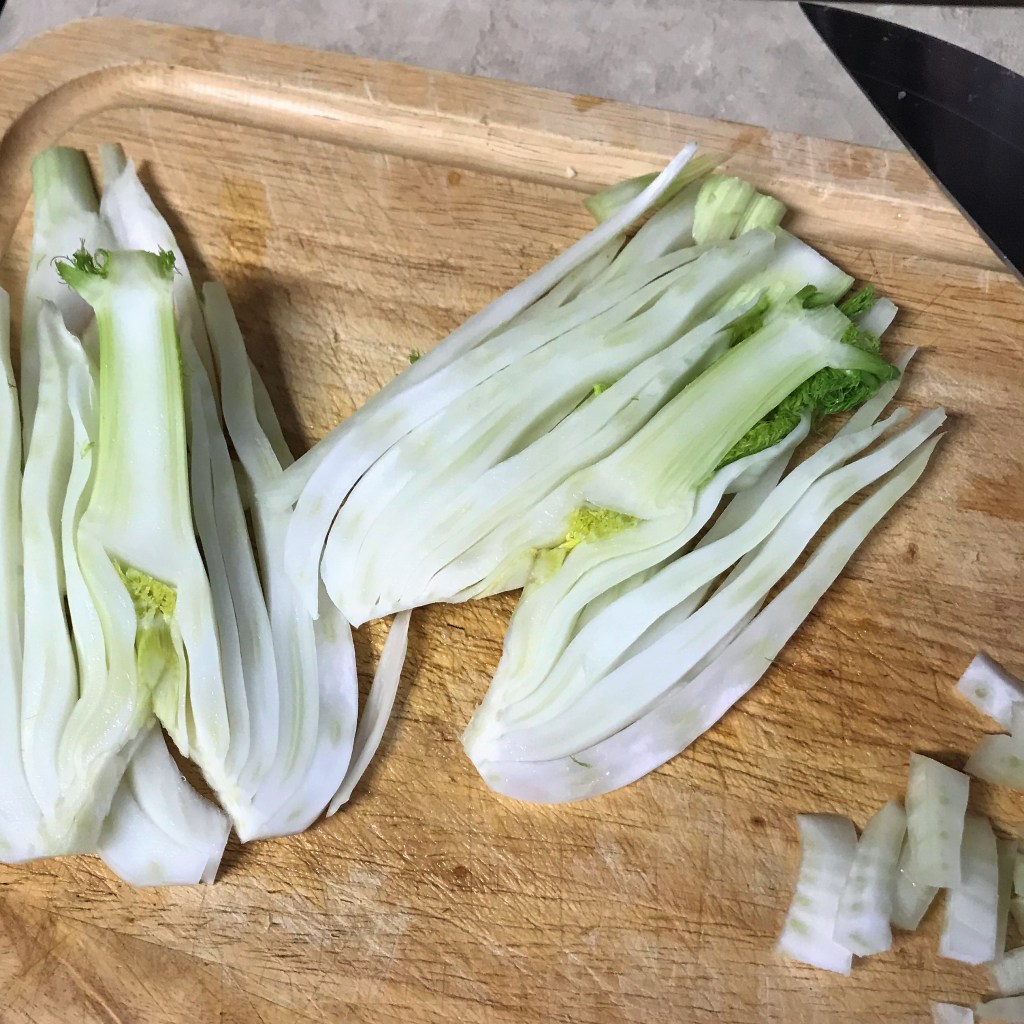
1/2 fennel bulb, trimmed and sliced thin

1/2 small red onion, sliced thin

1/4 cup dried cranberries

2 Tbsp. roasted, salted pumpkin seeds

Citrus-maple vinaigrette (recipe below)

Challah or brioche croutons (instructions below)


Citrus-maple vinaigrette w/sunflower oil and thyme

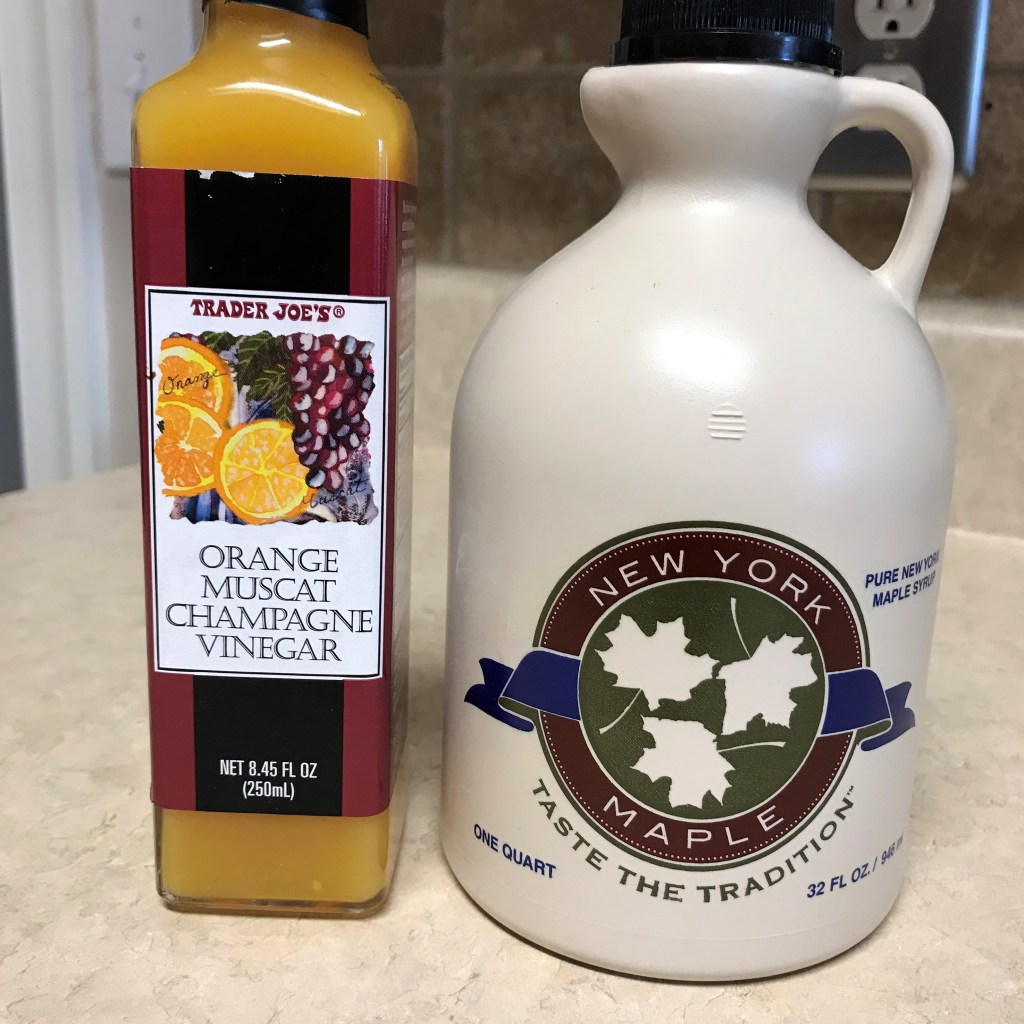
2 Tbsp. orange muscat champagne vinegar* (see notes)

1 Tbsp. maple syrup*

1 tsp. Dijon mustard

Salt and pepper

1 Tbsp. toasted sunflower oil

1 Tbsp. extra virgin olive oil                                                                                           

2 sprigs fresh thyme, leaves stripped

*Notes

The orange muscat champagne vinegar is a product from Trader Joe’s. If you cannot find it, I’d recommend substituting half apple cider vinegar and half freshly squeezed orange juice.

If you need to swap the maple syrup, I’d recommend half as much honey or a teaspoon of regular sugar.

Instructions

Most of this recipe needs no instruction; I don’t need to tell you how to slice an apple or sprinkle on dried cranberries. But here’s a bit of info you may find helpful for the prep of the other ingredients.

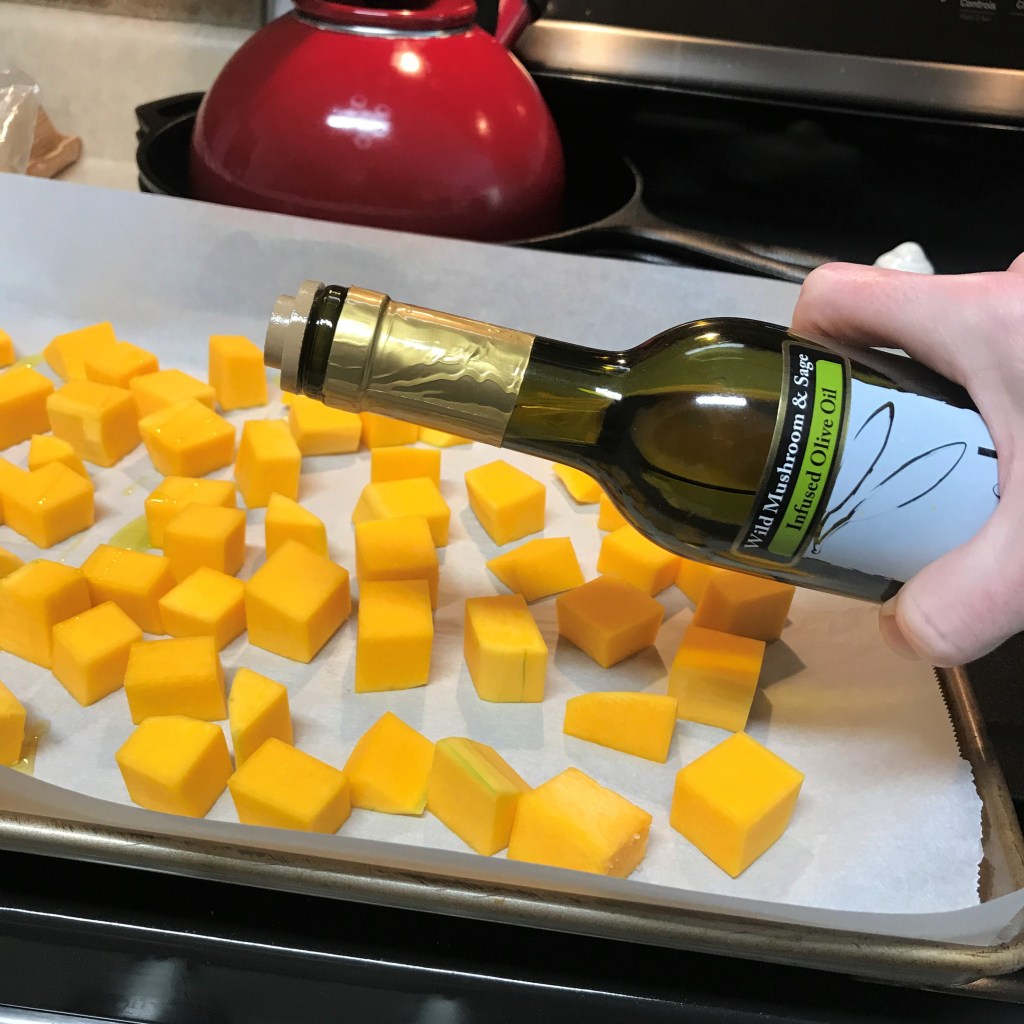
  1. Preheat the oven to 400° F. Line a rimmed cookie sheet with parchment paper or foil.
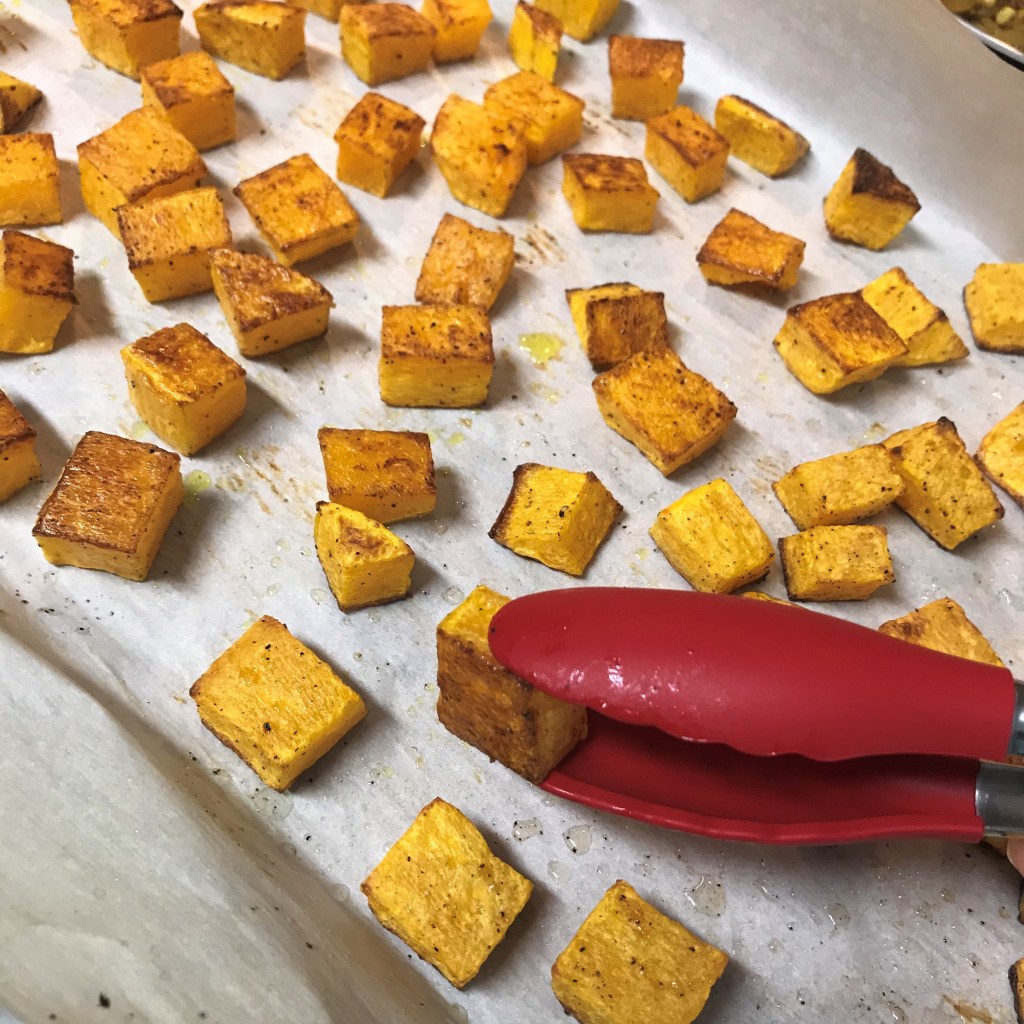
  2. Toss squash cubes with a tablespoon of olive oil, and arrange the cubes on the cookie sheet. Season with salt and pepper. Roast for 35 minutes, or until fork tender and lightly caramelized. Cool completely.
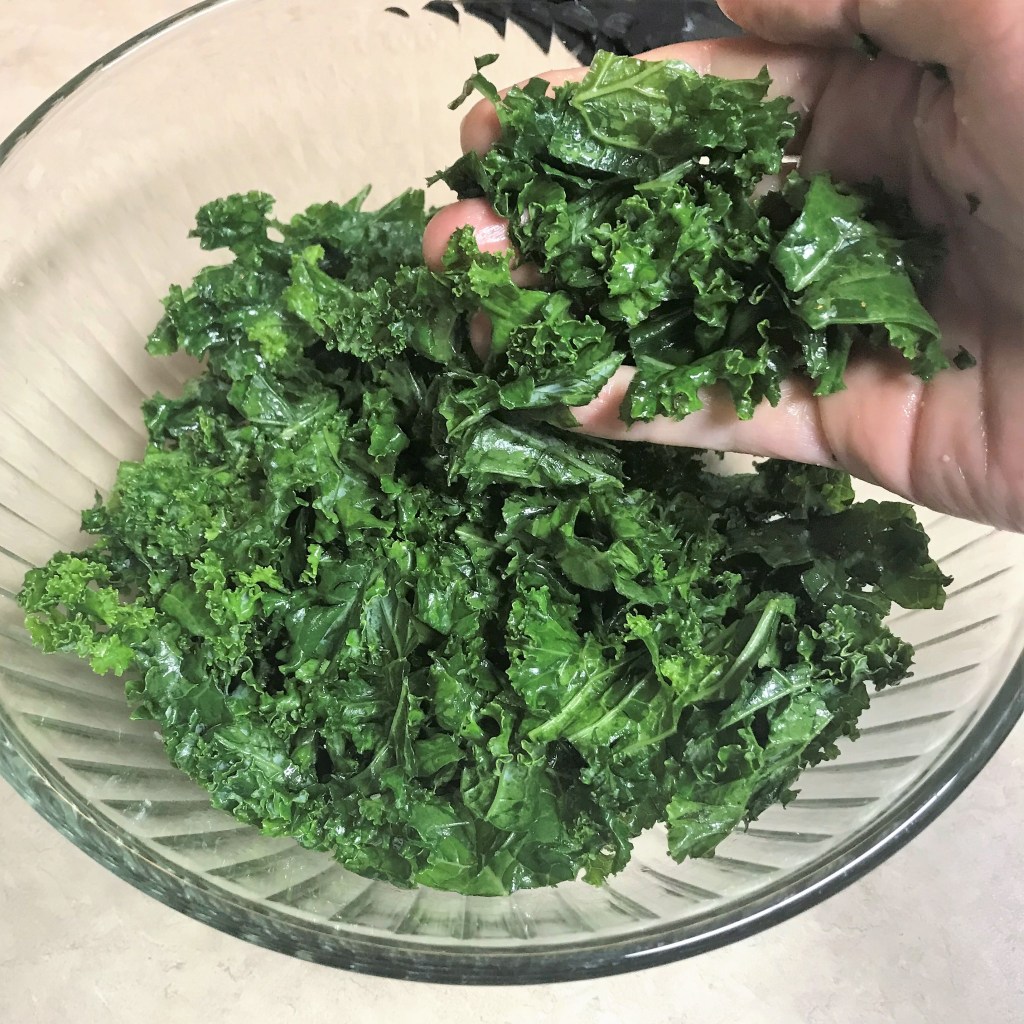
  3. In a large, deep bowl, drizzle a tablespoon olive oil over the chopped kale leaves. Using your hands, reach into the bowl and “scrunch” the kale throughout the bowl. As you massage the greens, they will soften up and wilt in volume. Give it a light sprinkling of kosher salt and pepper and then let it rest while you prep the other salad ingredients.
  4. Make the dressing: combine vinegar, maple syrup, Dijon mustard, salt and pepper in a small bowl or glass measuring cup. Gradually stream in sunflower oil and olive oil, whisking constantly to emulsify the dressing ingredients. Alternatively, you could combine all dressing ingredients in a lidded jar and shake the daylights out of it. Whatever works for you.
  5. Massage the kale once more, then add the spinach and torn romaine leaves and toss to combine.
  6. Drizzle about half of the citrus-thyme vinaigrette over the greens and toss again. Transfer the greens to a platter or individual serving plates.
  7. Add the cubed turkey to the salad. Scatter the pieces of onion, apple and fennel evenly over the greens. Sprinkle with dried cranberries and roasted pumpkin seeds and drizzle the remaining dressing over the entire platter.
  8. Serve with croutons, if desired.

Homemade Croutons

Cut up stale challah or brioche into large cubes or torn pieces. Drizzle with olive oil. Season with salt and pepper and arrange the bread pieces on a parchment-lined baking sheet. Bake at 300° F for about 30 minutes, tossing occasionally to ensure they dry uniformly. When they are crisp but still slightly soft, remove from the oven and cool completely. For this salad, I pulled leftover sourdough pumpkin challah from the freezer. The cubes roasted up nearly the same color as the butternut squash! 🙂

Want to print this recipe?