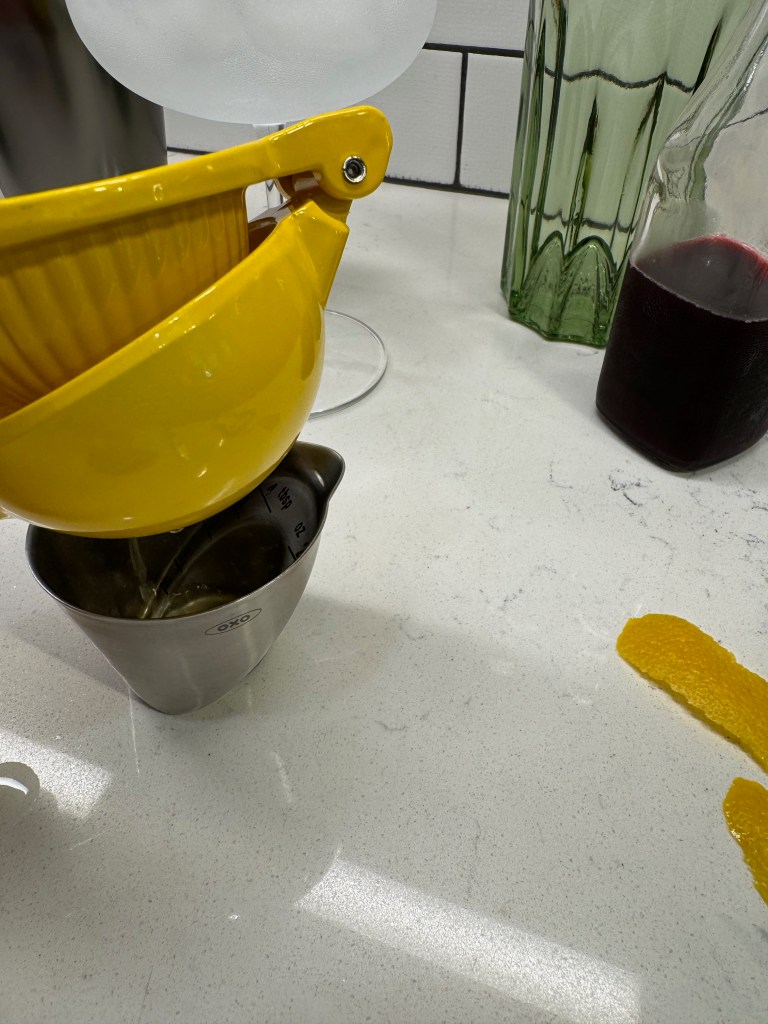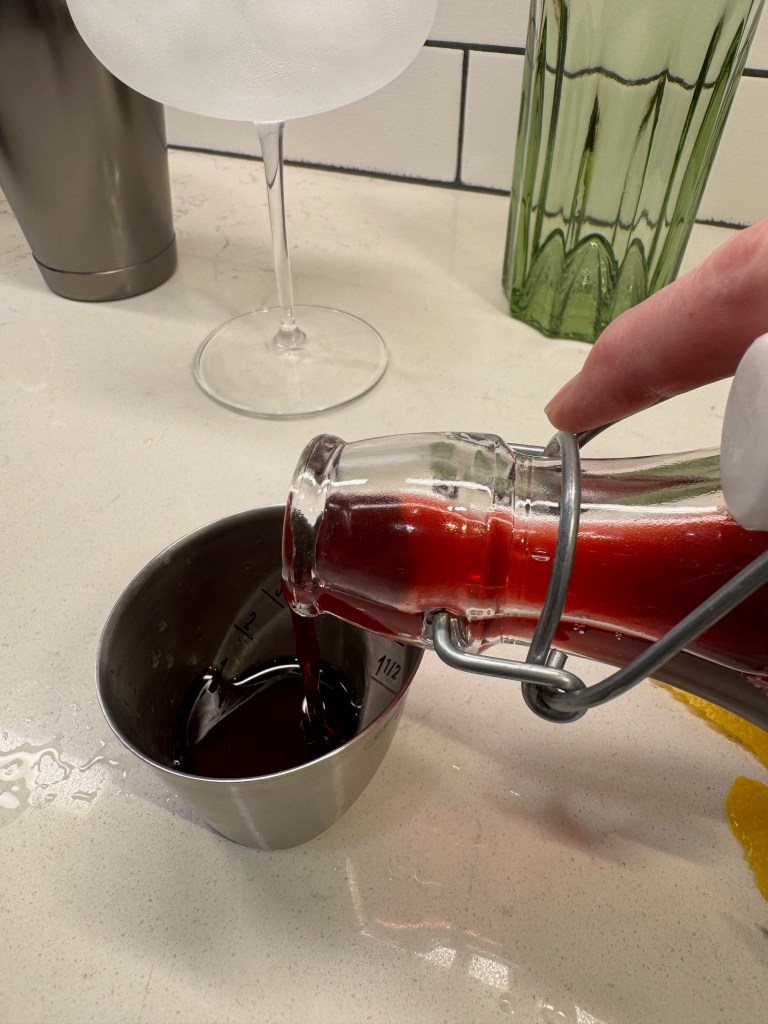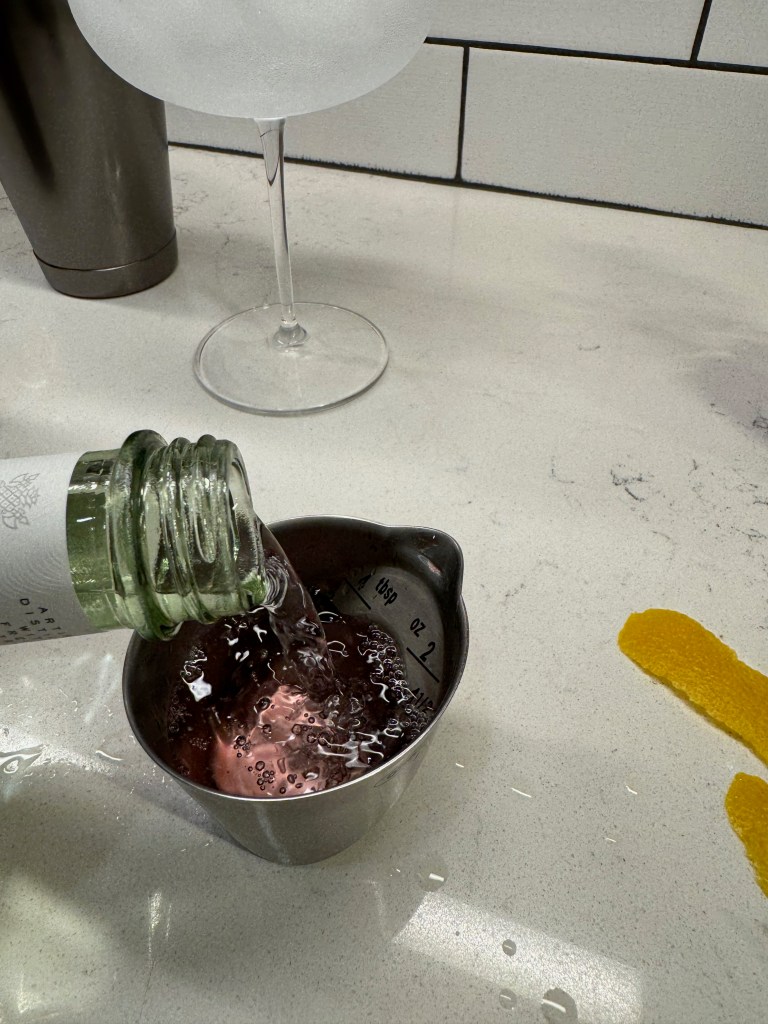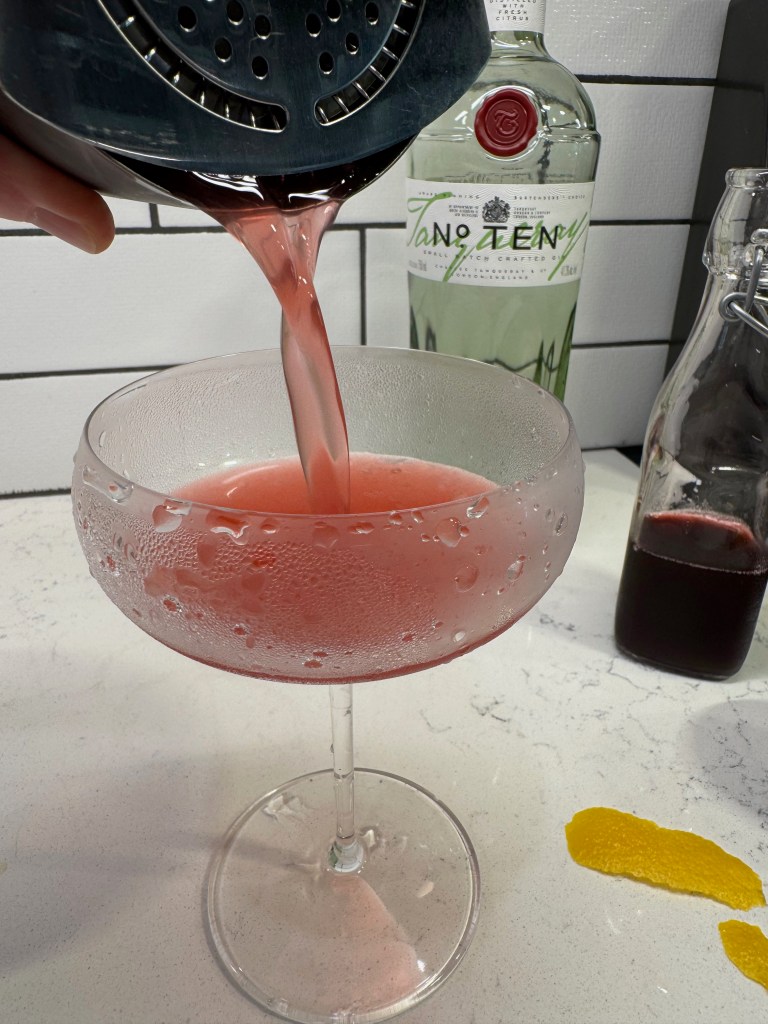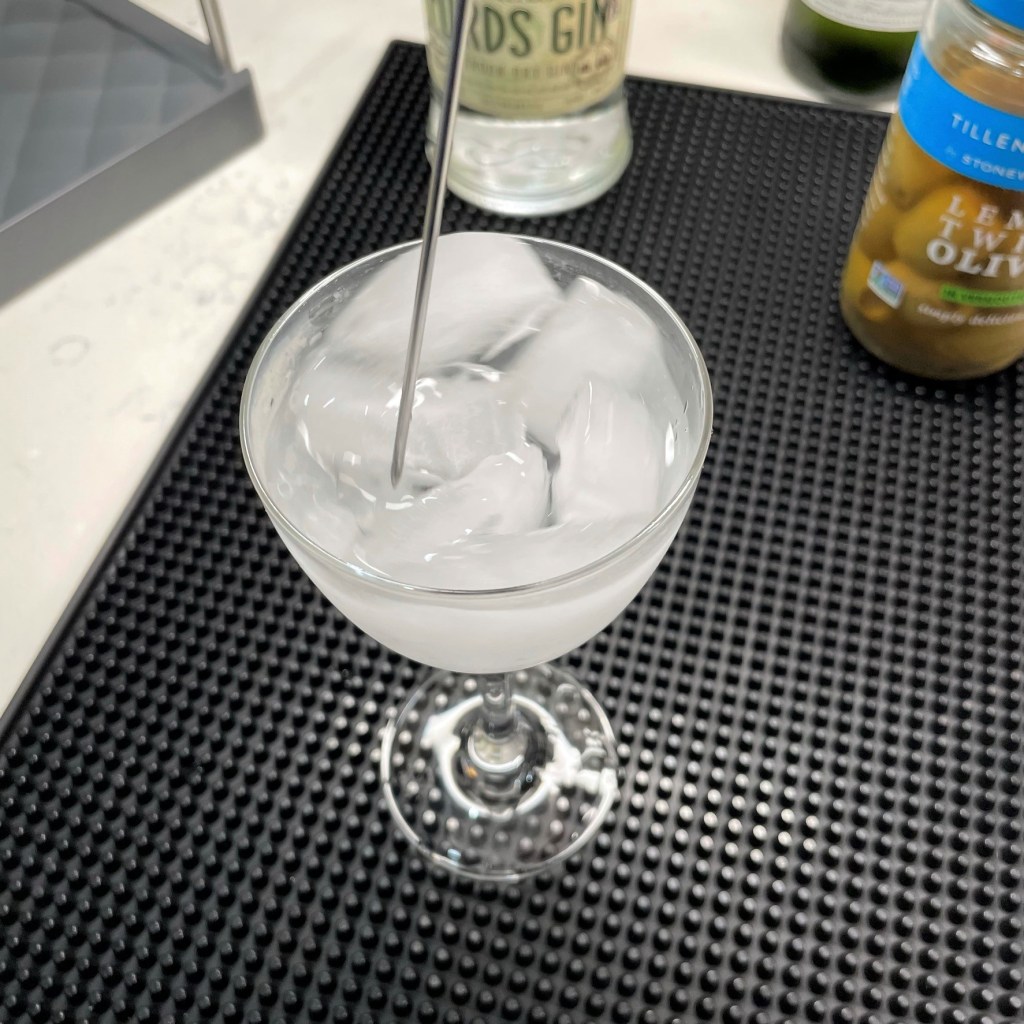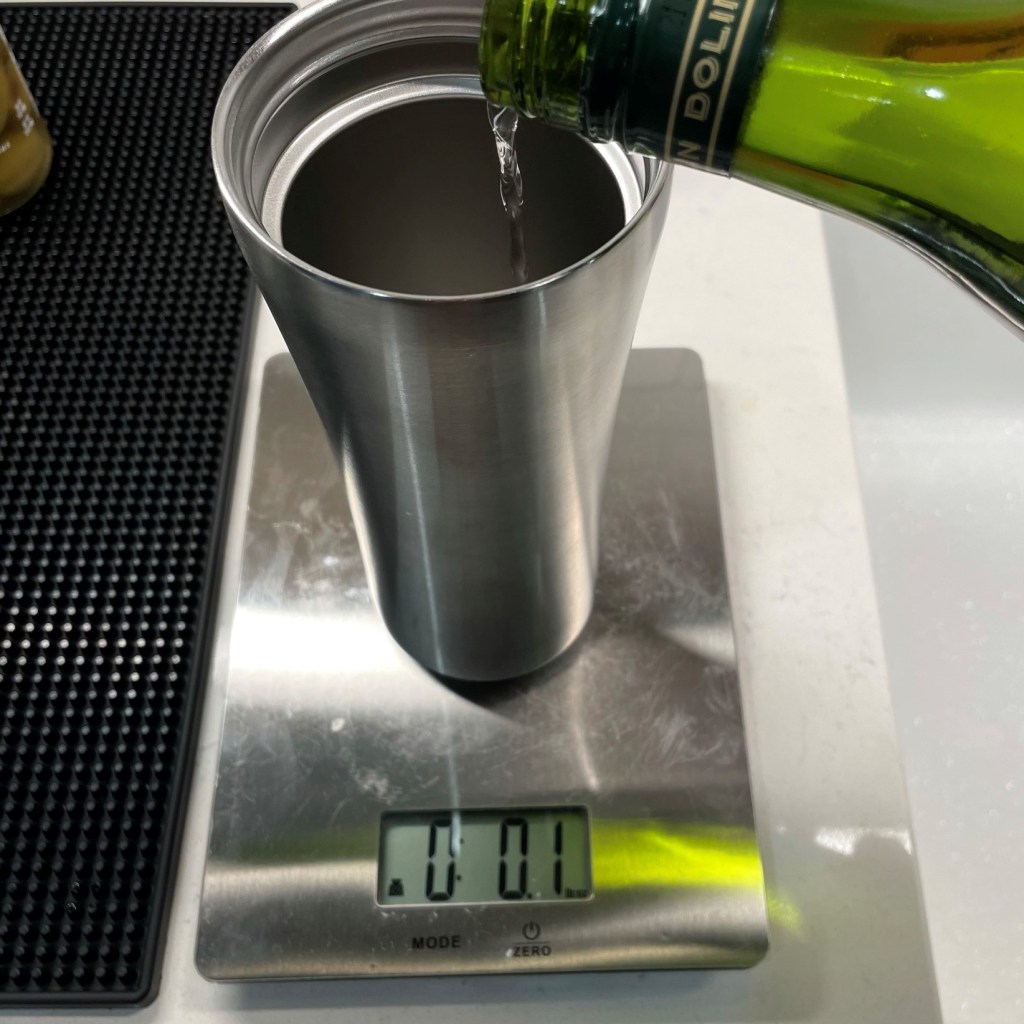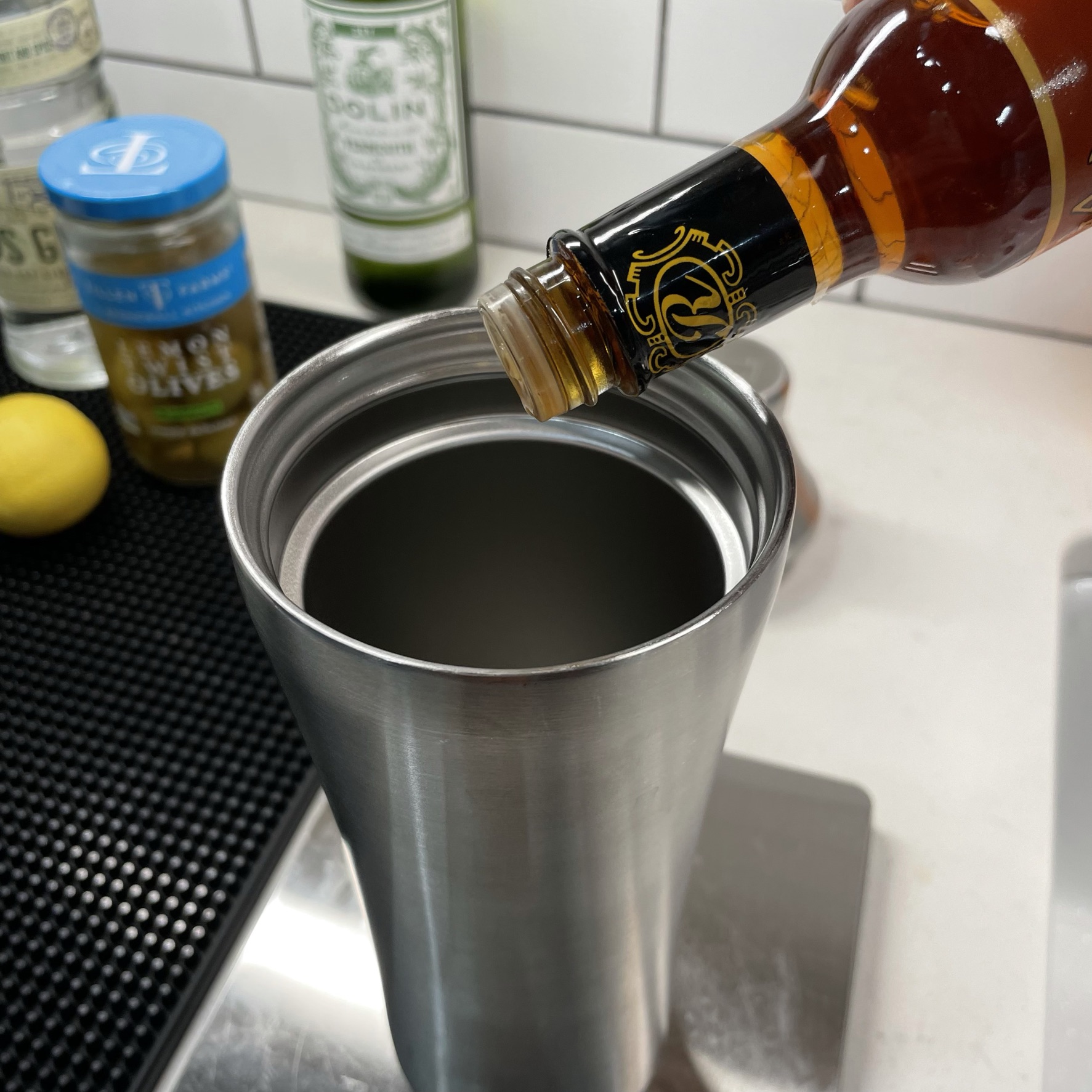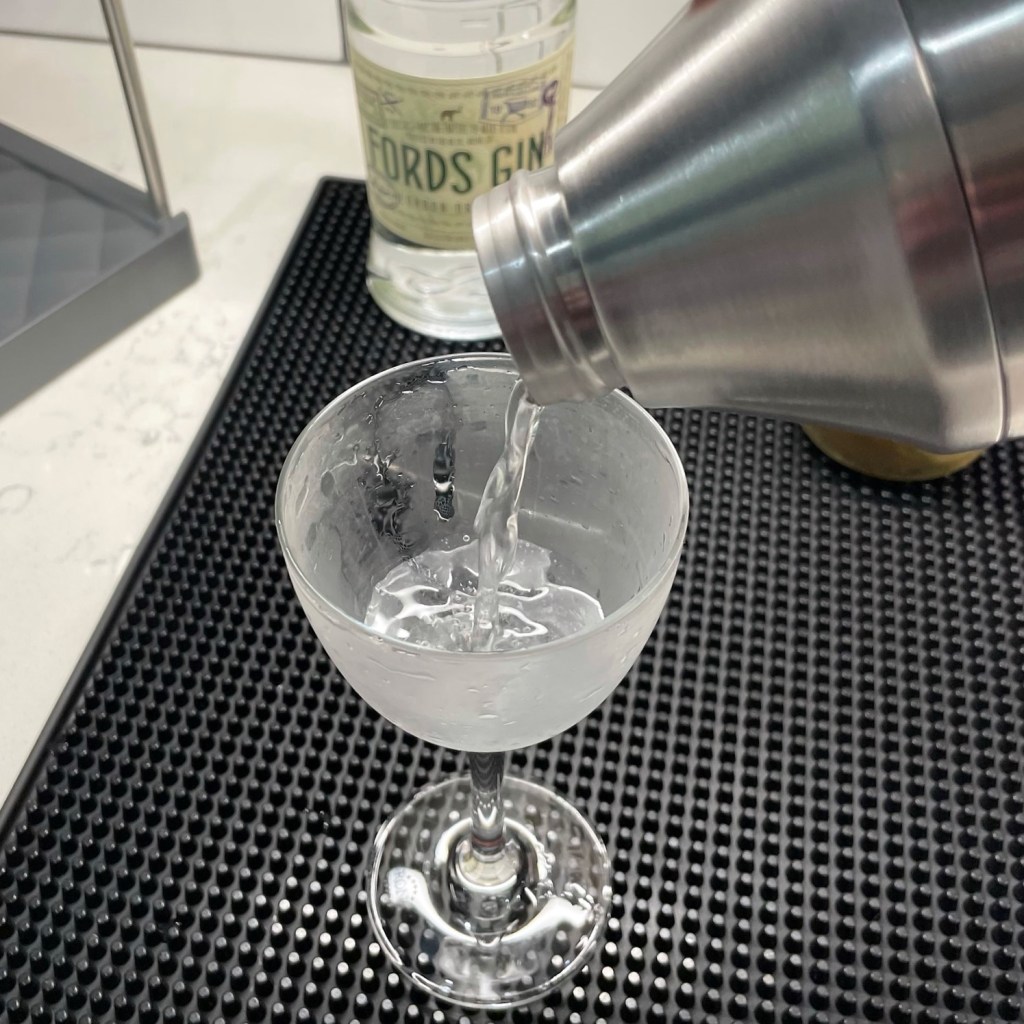
Figroni!

It’s no secret that fall is my favorite season. We are still a few weeks away from cozy sweaters, but the “official” arrival of the season has me feeling inspired. And to make things even more fun, this also Negroni Week, a fundraiser that benefits the Slow Food Movement, a cause that aims to make the world a better place with a focus on sustainability, equity and education around food and drink. Savvy bartenders get excited about Negroni Week because it gives them reason to flex their creativity with the classic Italian cocktail that is the event’s namesake.

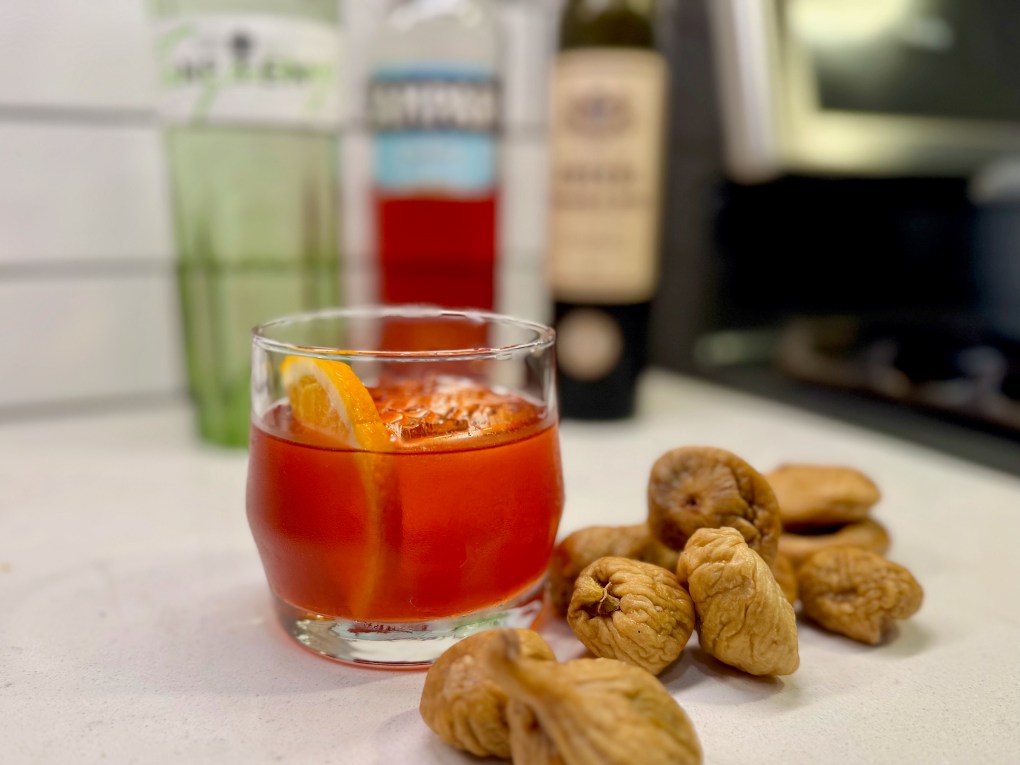
If I had my own bar— and believe me, I’ve pondered it— this is the twist I would serve for Negroni Week. Traditionally, a Negroni is an equal parts drink made with dry gin, sweet vermouth and Campari, the red bitter liqueur that makes Italy proud. Mine is all of that, plus an easy infusion of sweet, earthy fig.
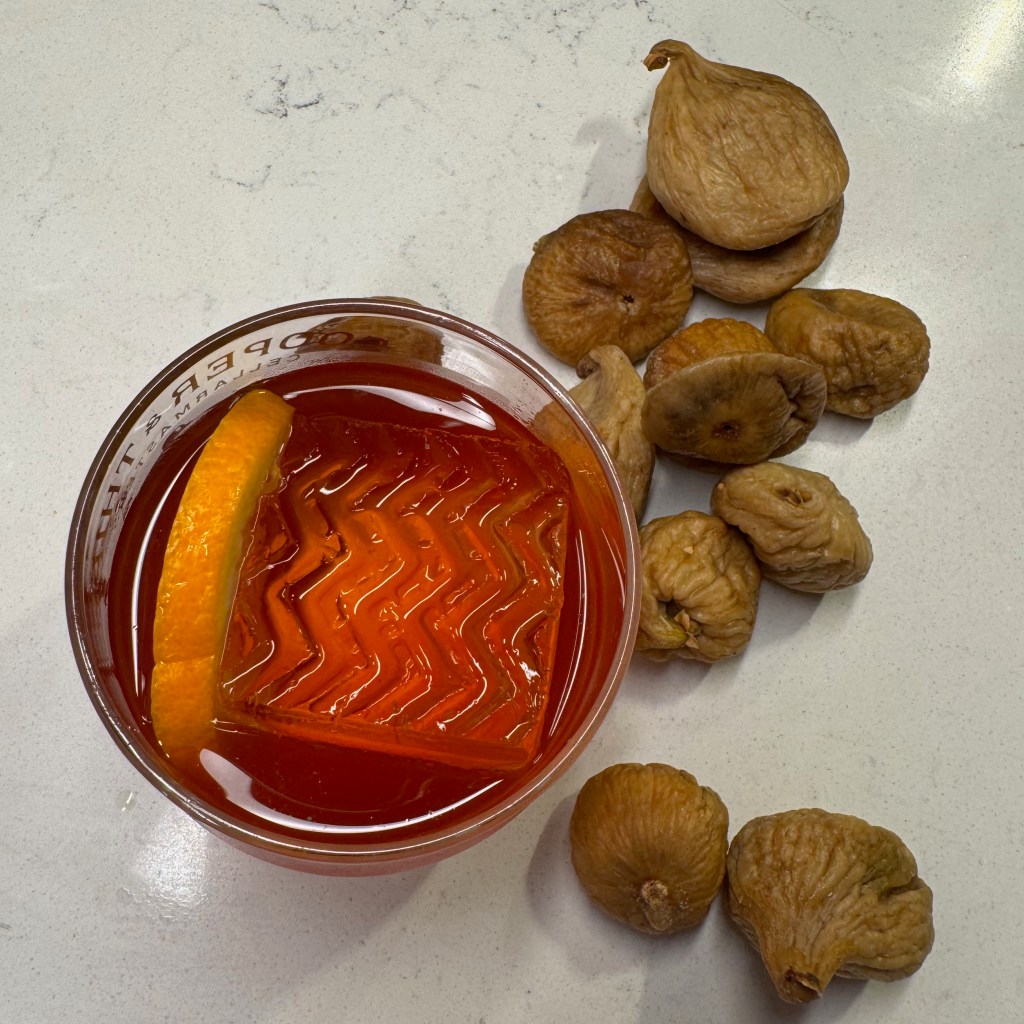
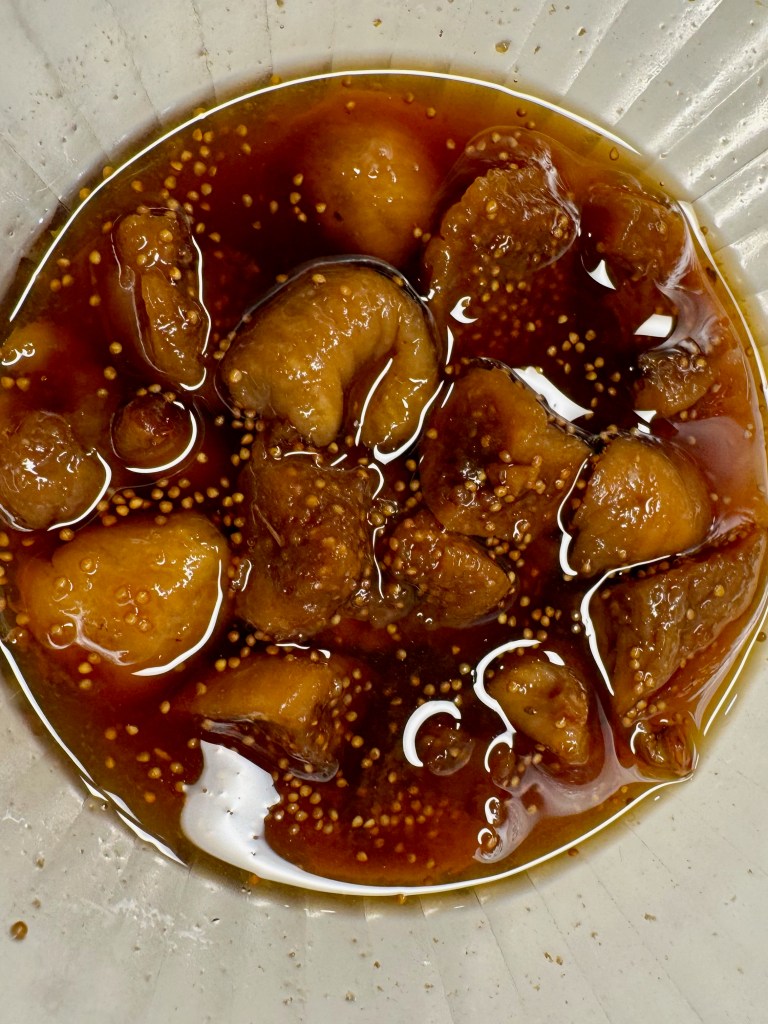
The lighter variety of fig helps keep the Negroni color true.

These flavors feel so right for fall, layered and complex, leaning more toward slow savoring than refreshment. This drink fits right in with cooler temperatures, gentle breezes and the first few leaves making their annual drift toward the ground. It makes me long for sweaters and cozy socks and conversation around our Solo stove. Negroni is delicious with cured meats, cheeses and olive trays, so this one gets high marks as a cocktail for casual entertaining.

To maximize the fig flavor, I chose to infuse with dried figs rather than fresh. The drying process leaves a concentrated sweetness and intensity behind, and soaking the figs in sweet vermouth pulls that flavor into the spirit without watering it down.
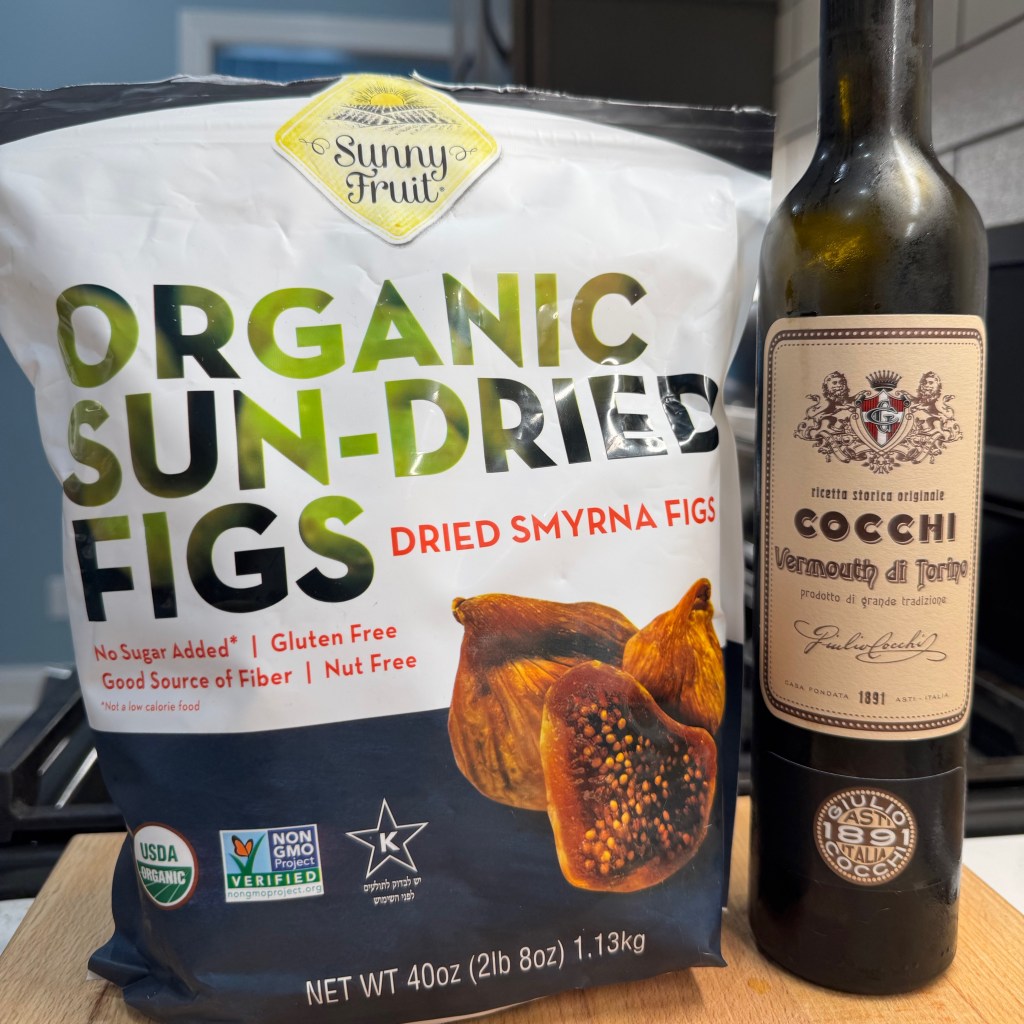
The giant Costco bag of figs always seems like a good idea at the time! 😂

Why infuse the vermouth?

My decision to infuse the vermouth rather than the gin or Campari was quite intentional. Gin is the highest proof spirit of Negroni and I didn’t want to mess with that. I also knew that some of the booze would soak into the figs that I would repurpose— most likely in a bread pudding— and I couldn’t wrap my mind around the thought of Campari-stained figs, so the vermouth won out by elimination. It also bears mentioning that I wanted to try the fig-infused vermouth in a Manhattan, too; alas, I used it all up in my Negronis, so I’ll have to make more. Had I realized how much the figs would soak up the vermouth, I’d have made a double batch! Let this be a lesson to you.
All things being equal

Negroni is one of the simplest cocktails to make because it is equal parts of only three ingredients, plus an orange slice. This means, no math! If you want a small drink, use 3/4 of an ounce of each— gin, Campari and sweet vermouth. For a longer sip, go for a full ounce of each. Living abroad where ounces aren’t a thing? Use whatever measure makes sense to you, and make it the same for all three ingredients. Simple is good.
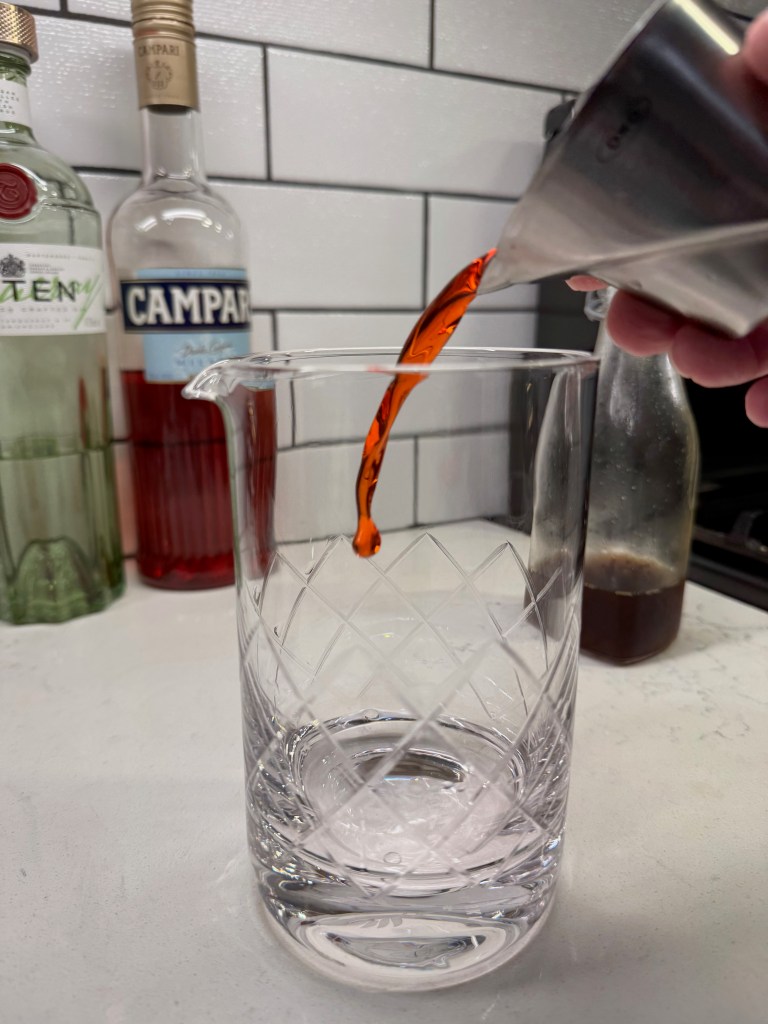
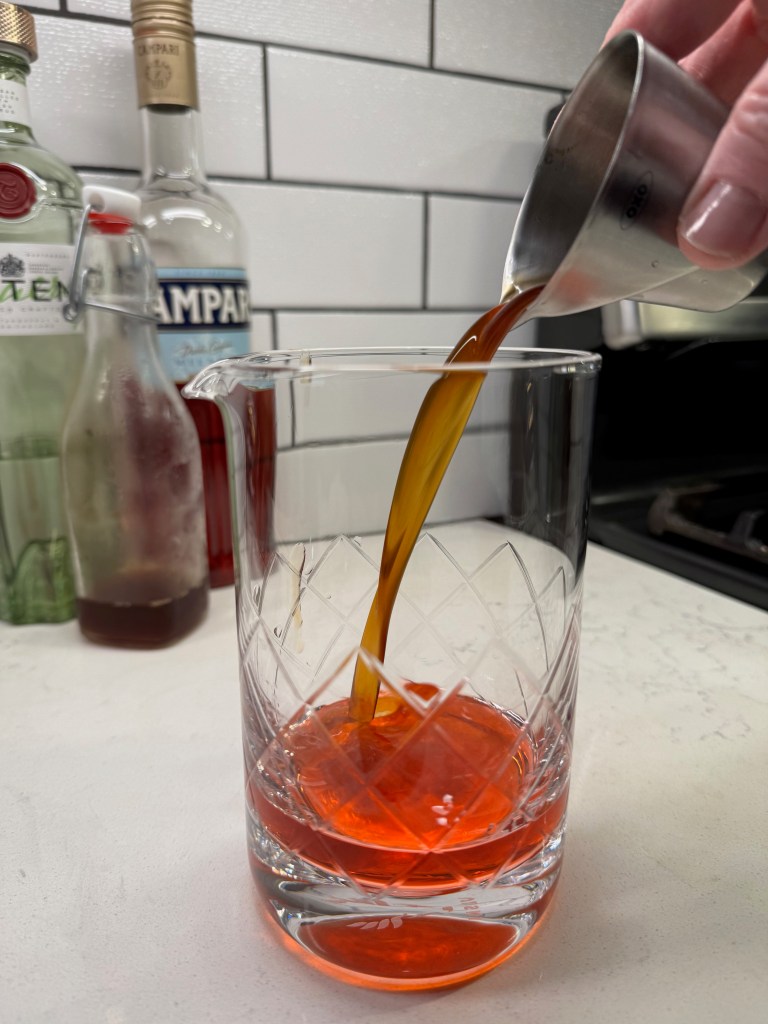
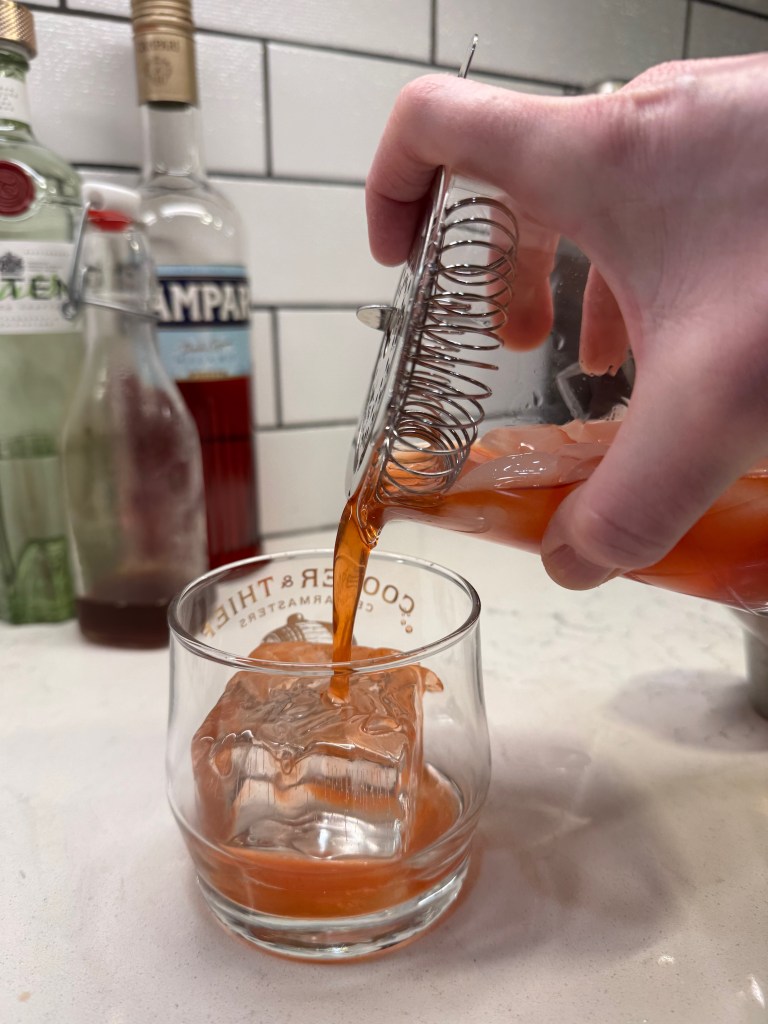
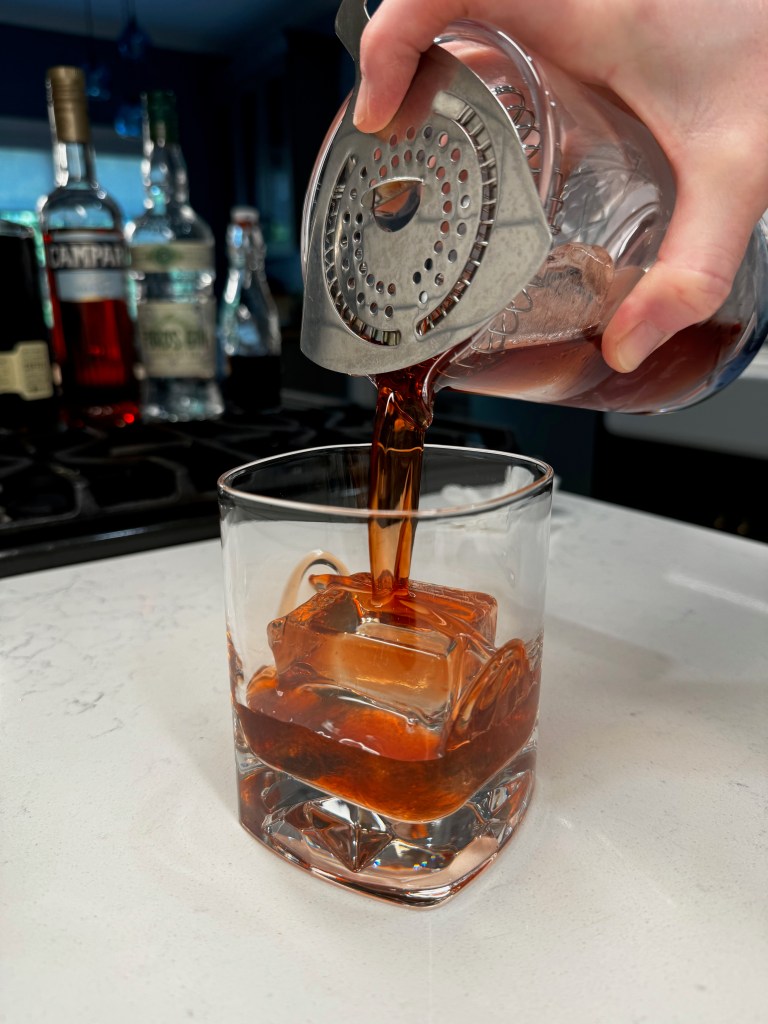
A classic Negroni is made directly in the glass, but I like a little dilution on mine to wake up the nuances of the booze. Plus, the dried figs have turned my vermouth into a thin syrup and I want to be sure it mixes well, so my ingredients went into a cocktail mixing glass with a large cupful of ice. You could use a shaker, I suppose, but don’t actually shake it; just pour it back and forth with ice a couple of times. Strain it over a giant ice cube and garnish with a juicy orange slice.

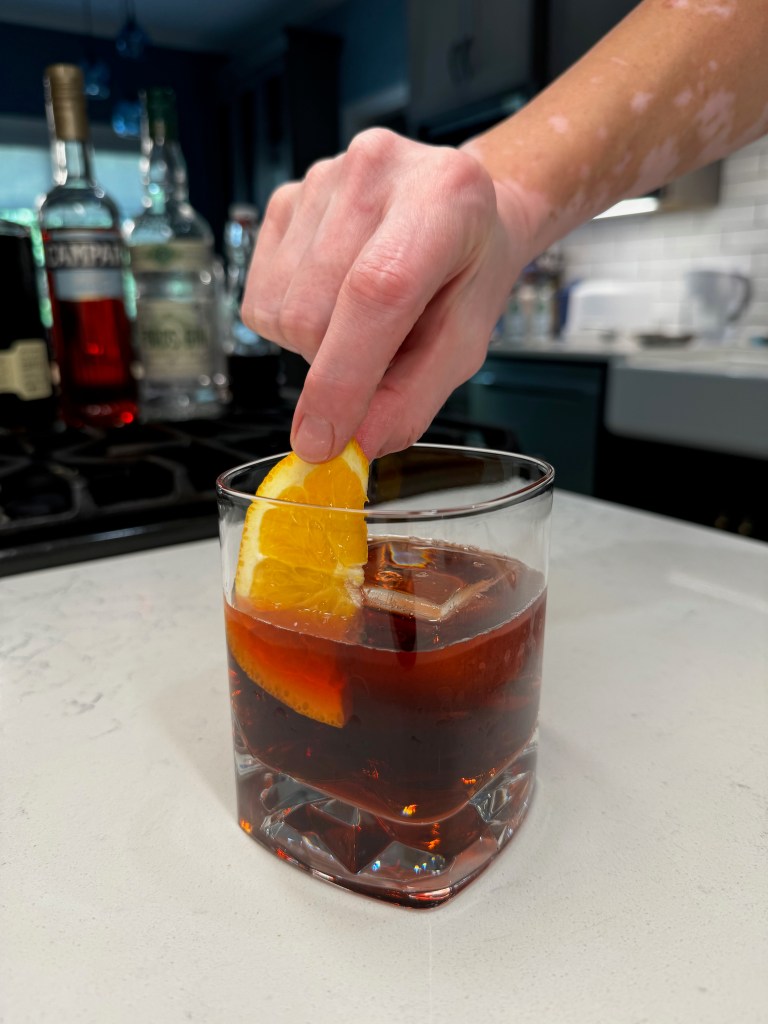
Always remember to garnish!

Would I make another round?

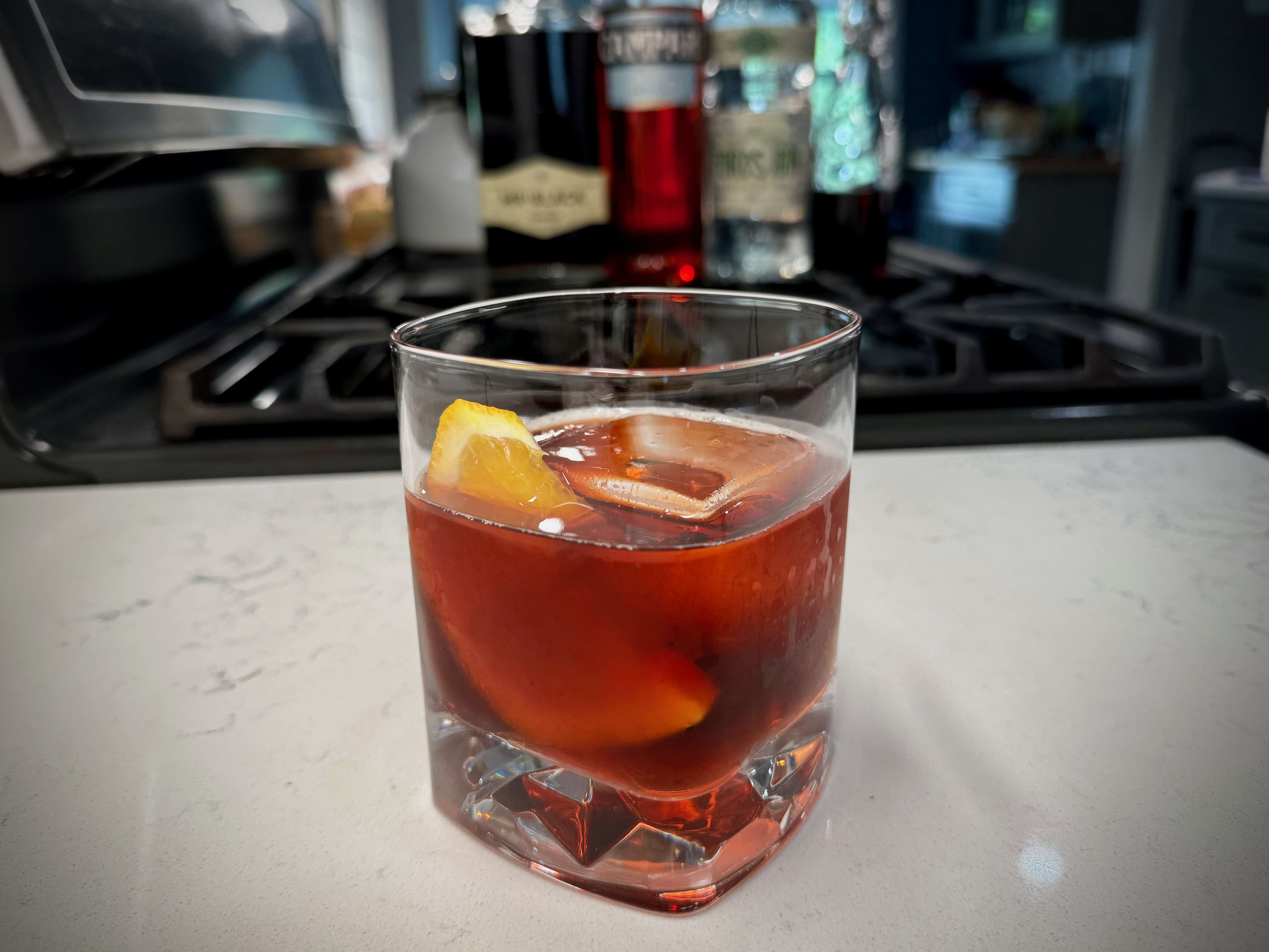
Absolutely! I found this cocktail to be a real charmer that has lingered in my mind long after the fig-infused vermouth ran dry. If you already like Negronis, you’ll love it. If you’re on the fence or you typically find Negronis to be harsh, I can confirm that the figs soften those bitter edges in a pleasant way. Fig also happens to pair very well with orange, so the classic orange garnish is right at home. You may notice that I also used Tanqueray 10 for this cocktail; it’s distilled with tons of citrus, and that’s working great here.

If you’re into Negronis, I hope you’ll seek out a bar or restaurant in your area that is supporting Negroni Week, going on through Saturday. If not, then encourage your favorite watering hole to participate next year, and at least take a moment to learn more about the Slow Food Movement, which benefits us all, cocktail or no cocktail.

Cheers!

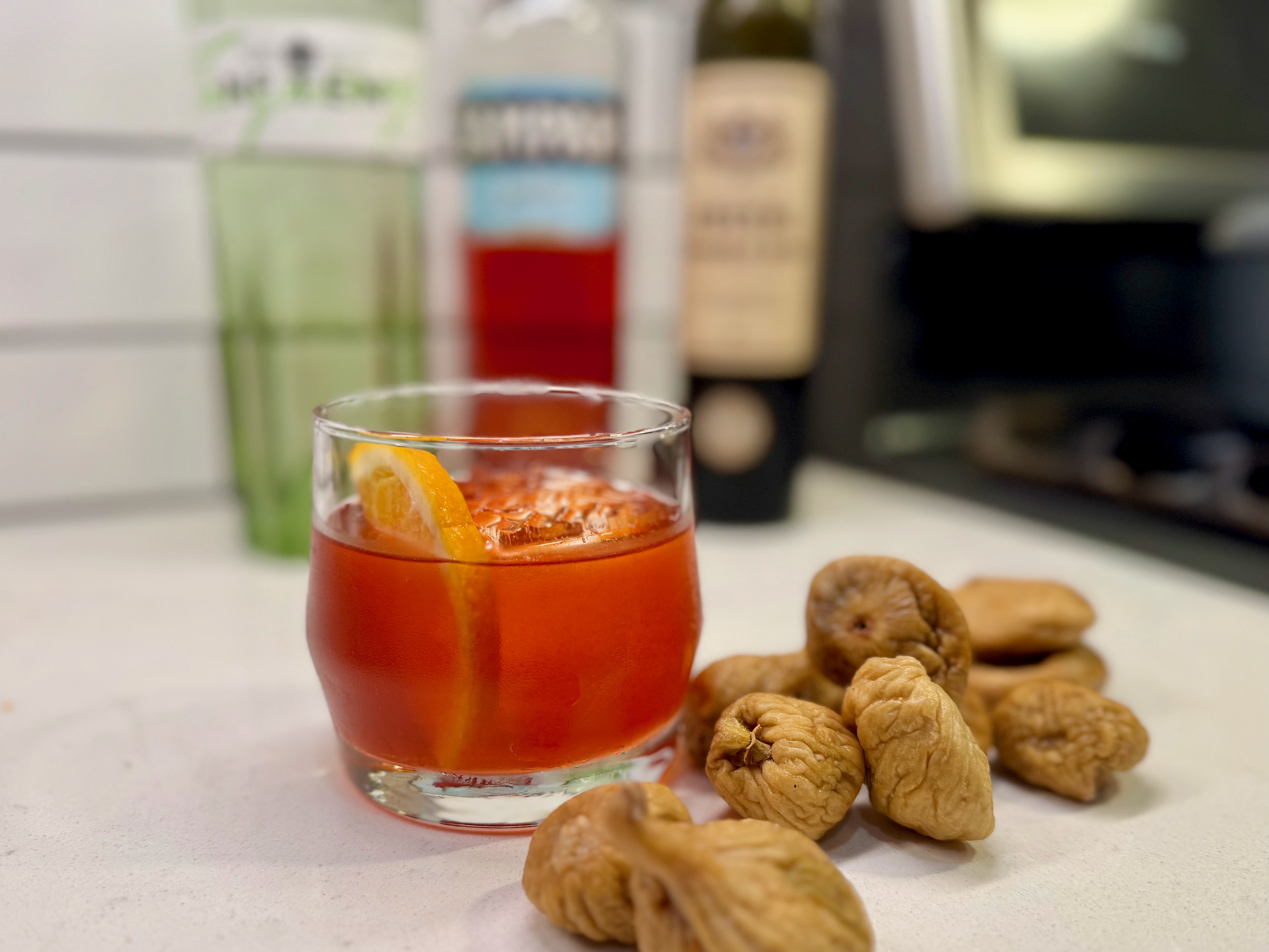
Figroni
  • Servings: 1 cocktail
  • Difficulty: Easy
  • Print

Sweet, earthy figs lend their flavor to one of the most classic apertivo cocktails, making this a fun twist for Negroni Week.


Ingredients

  • 1 oz. citrus-forward gin, such as Tanqueray Ten
  • 1 oz. Campari
  • 1 oz. fig-infused sweet vermouth (details below)
  • Stir all together and garnish with an orange slice

Fig-infused vermouth is simple to make. Plan ahead, as you’ll need at least 24 hours ahead to infuse the vermouth.

Directions

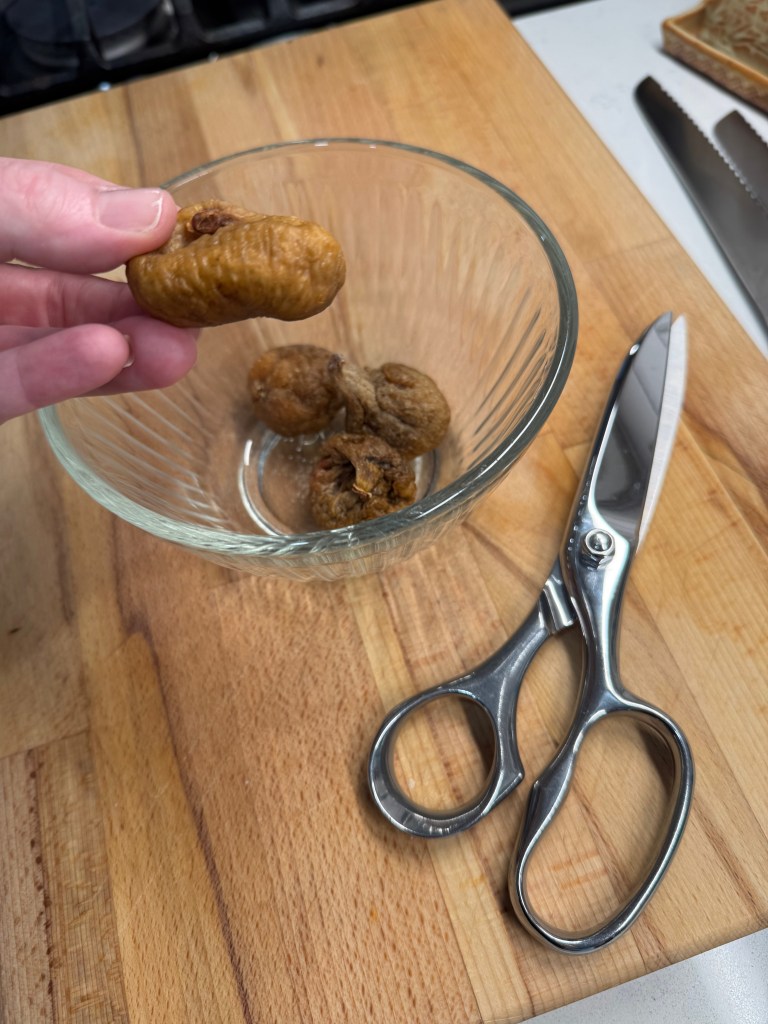
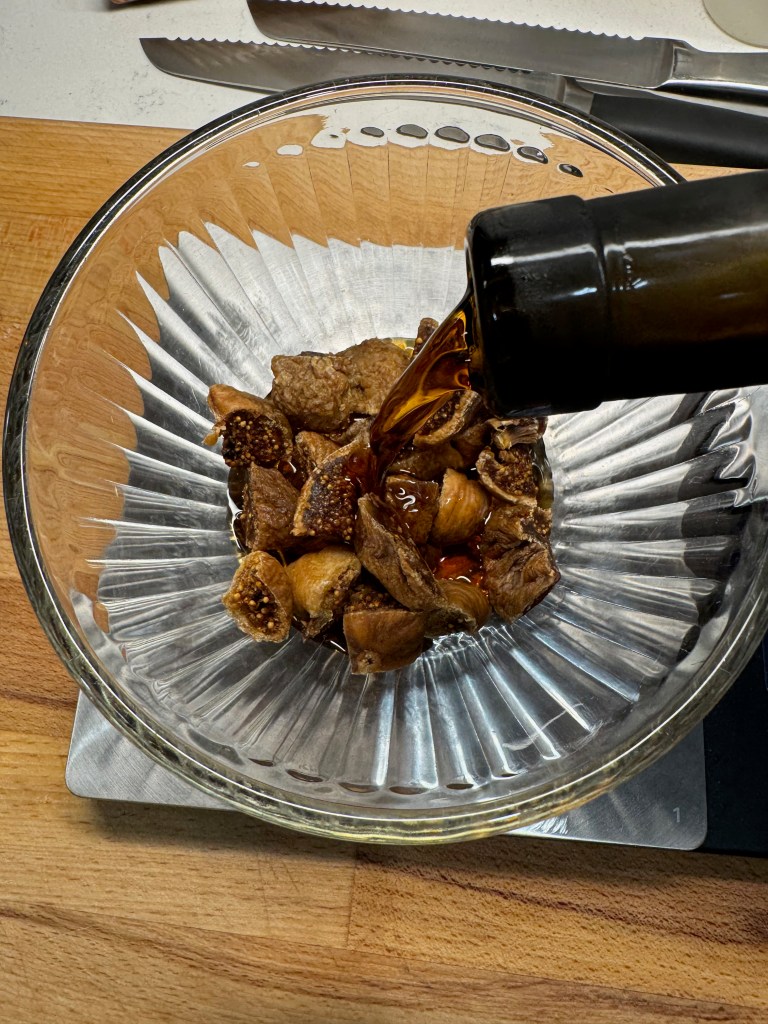
  1. Cut up about two cups worth of dried figs (mine were Smyrna figs, which are light in color) into a medium bowl, and pour enough sweet vermouth to fully cover them. This should be a little over one cup.
  2. Let them rest at room temperature a few hours or overnight before stirring and transferring to the refrigerator for 24 hours.
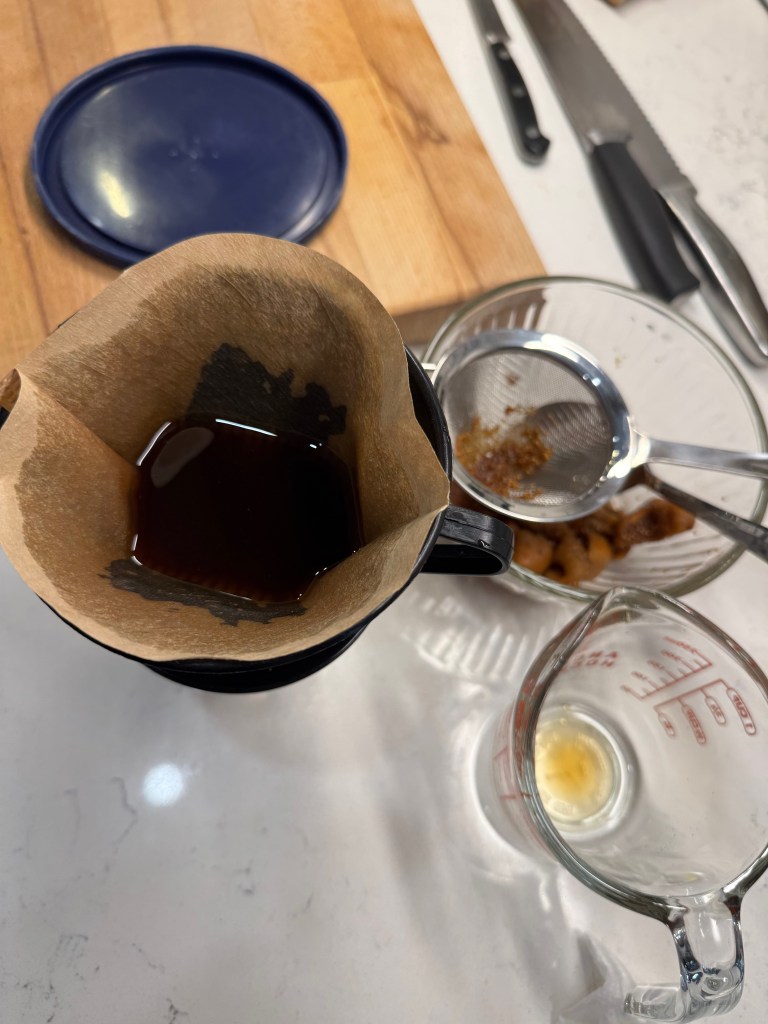
  3. Strain out the solids through a fine mesh strainer and transfer to a bottle. This will keep in the fridge for two weeks, and should make enough for at least four cocktails. Save the vermouth-soaked figs for another use, such as bread pudding or quick bread.

Hibiscus Bee’s Knees 🌺

The saying goes that there’s nothing new under the sun, and though I generally believe it to be true with food and drink, I do think that sometimes a twist on a classic is different enough to warrant calling it “new.” Case in point, this tart and sassy summer cocktail.

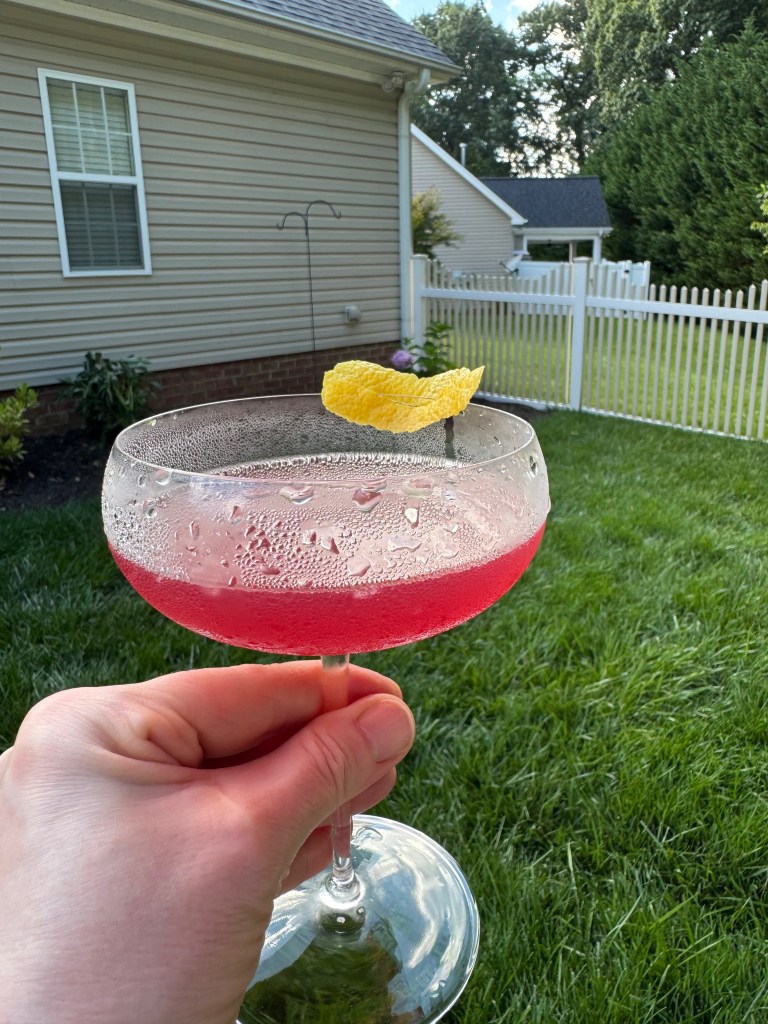
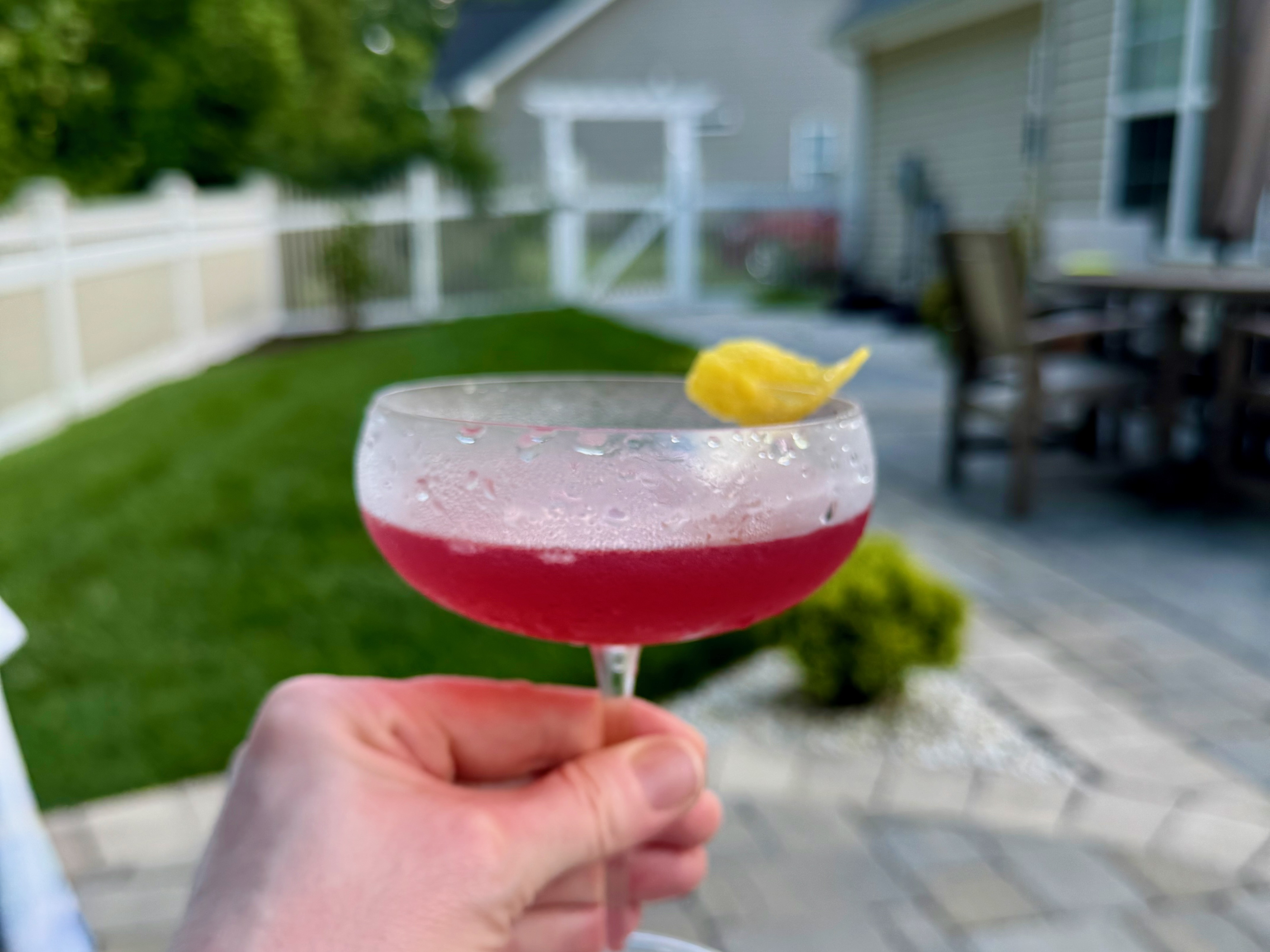
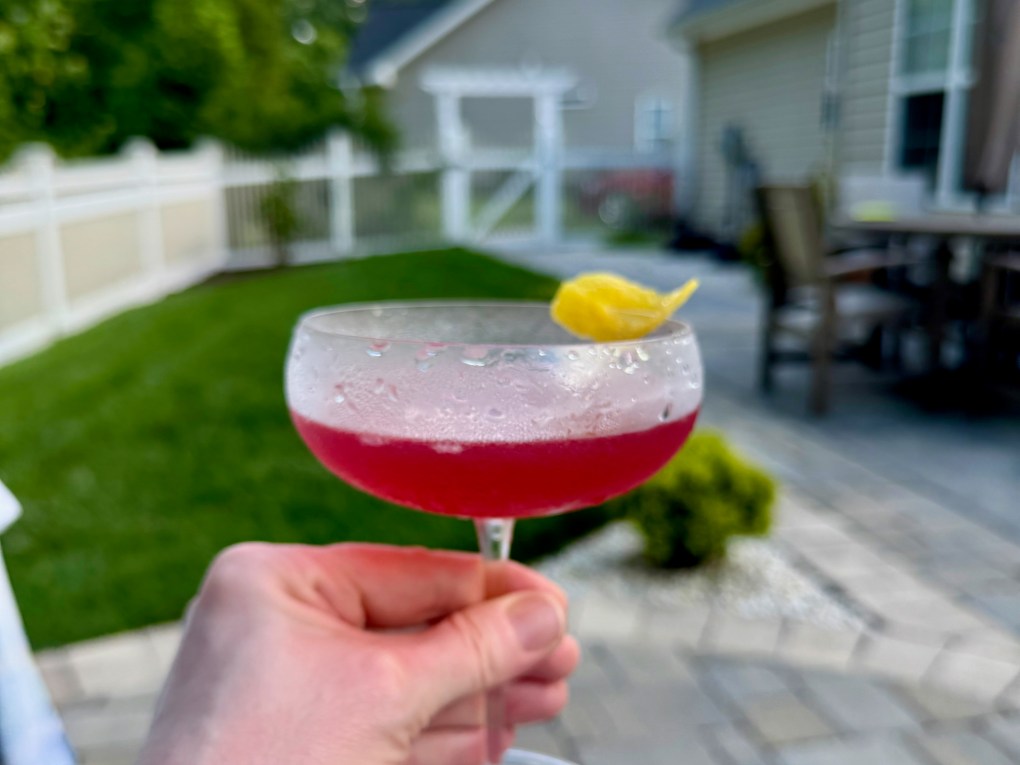
It’s refreshing, balanced and beautiful!

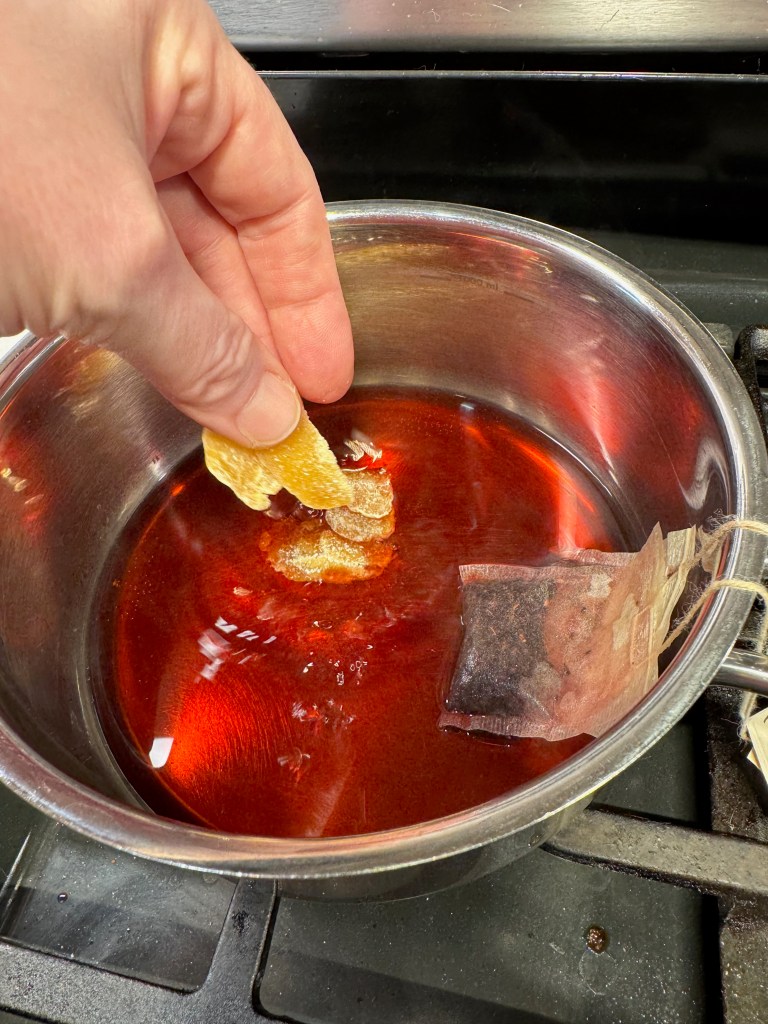
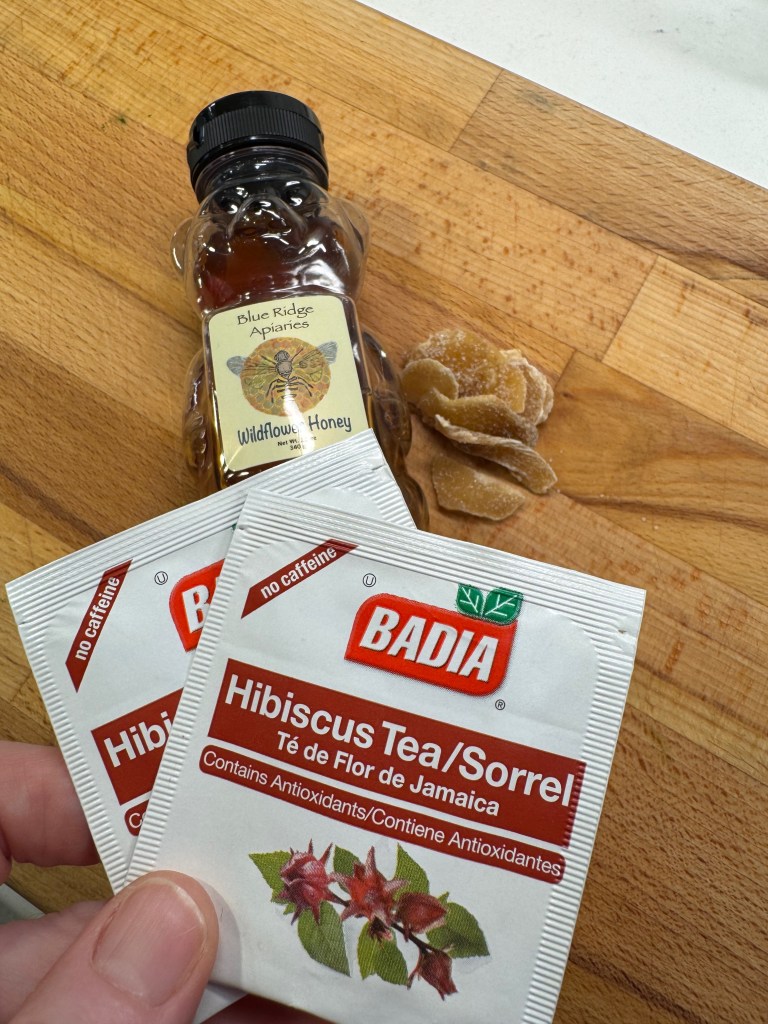
Mine is a two-ingredient update to a Prohibition-era cocktail, and it pushes a classic into the modern, with a vibrant reddish hue that is perfect for Juneteenth or the summer solstice. The key difference is hibiscus, in the form of pure hibiscus tea bags, which I simmered in boiling water long enough to draw out the tart, floral flavors. A few pieces of crystallized ginger added a subtle zing of spice, and I think it would be even better with fresh ginger if you like the flavor.

The resulting strong tea was sweetened with a generous squeeze of local honey, for a syrup that is thin enough to blend well with the cocktail ingredients in a shaker filled with ice. I do not recommend adding honey straight, as it would remain heavy and thick. But in an equal parts syrup, it’s perfect.


This hibiscus-ginger syrup will keep in the fridge for about two weeks, and I have no doubt that it would be great in other cocktails or even as a flavor enhancer for sparkling water or tonic on a hot summer day. But for this featured cocktail, we need gin— the traditional spirit for bee’s knees— and fresh lemon. Grab a cocktail shaker, a lemon squeezer and a peeler to strip a bit of peel for garnish, and chill down a cocktail glass with ice water.

Once the syrup is made, it’s quite a simple drink.

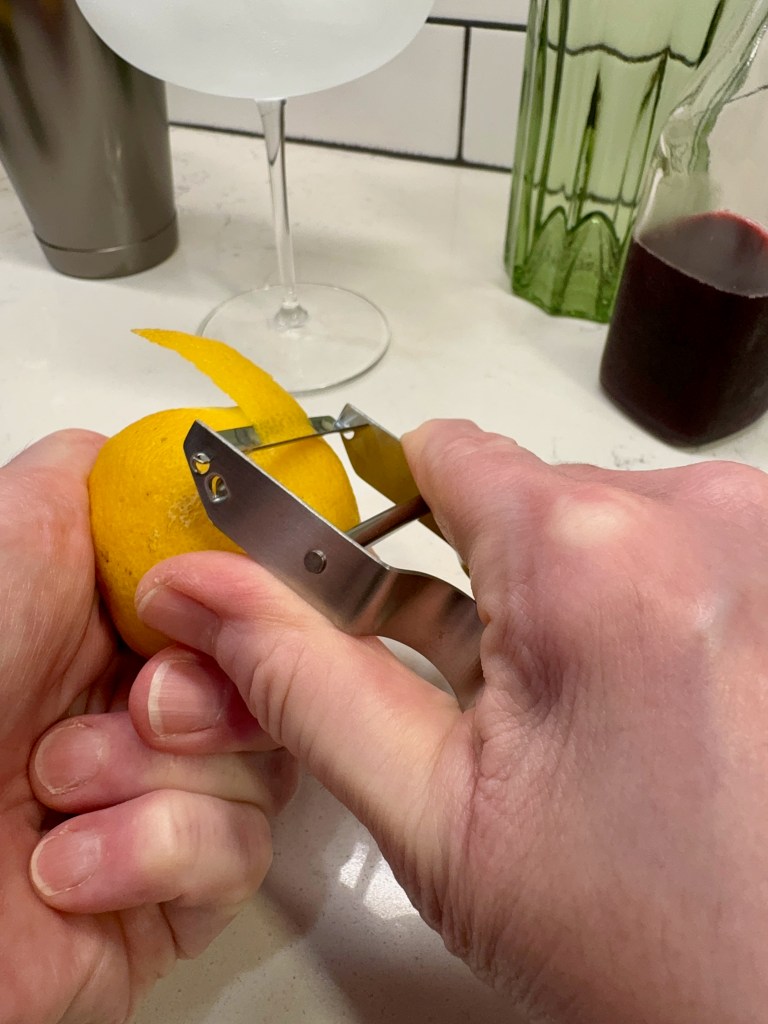
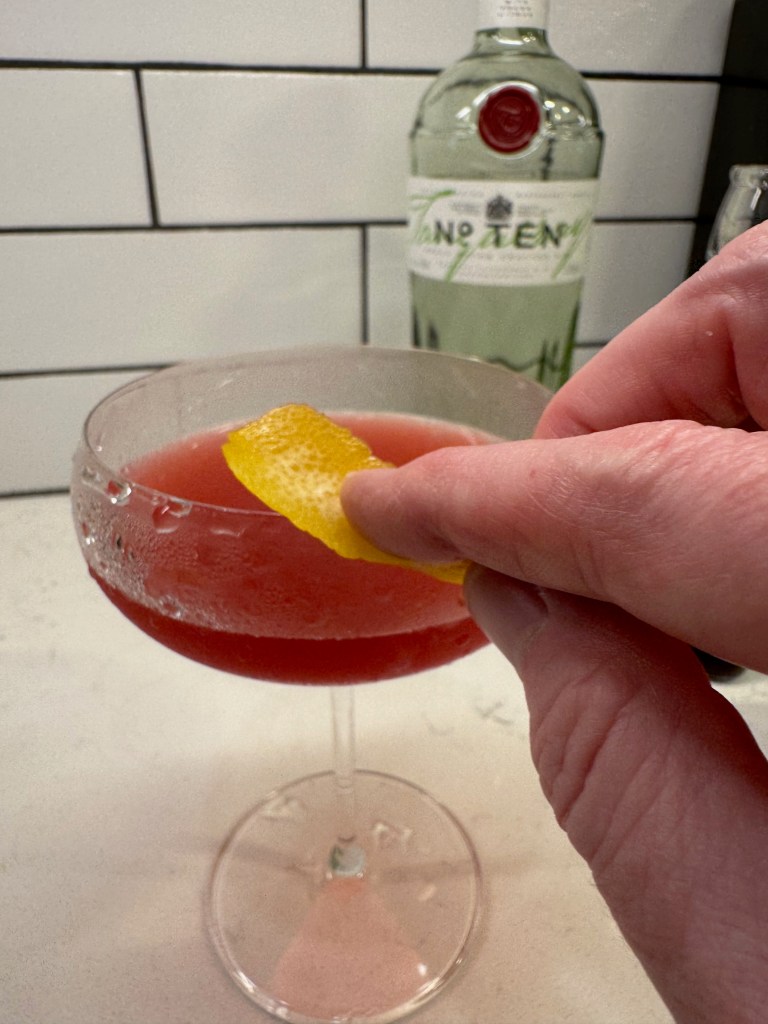
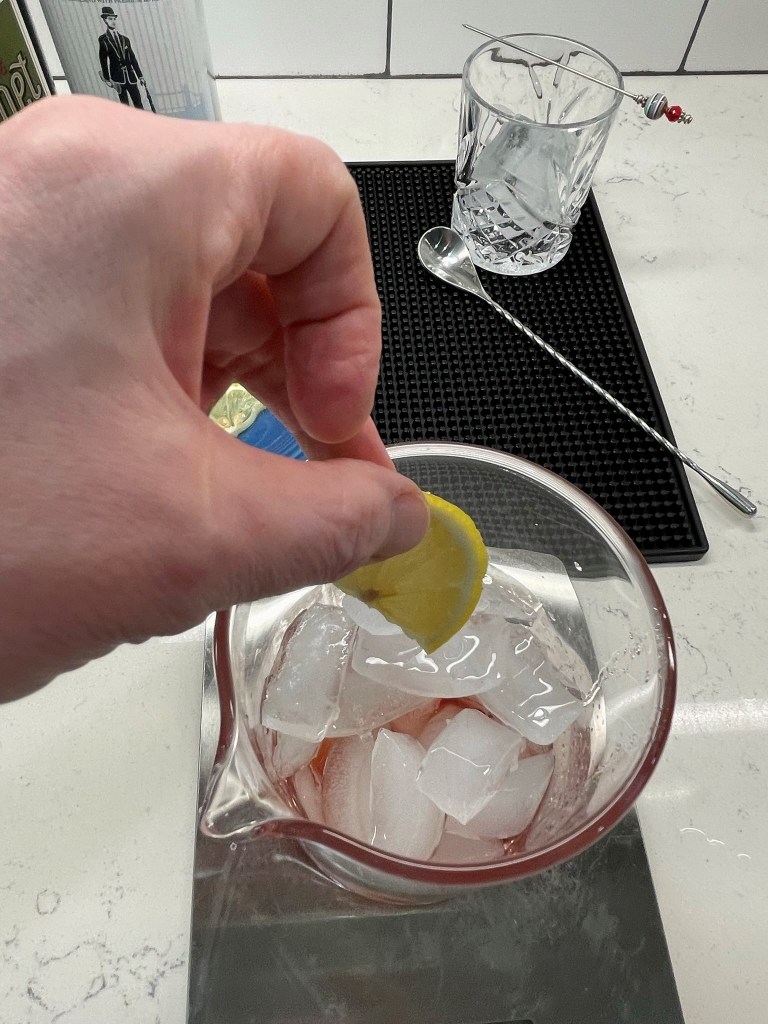
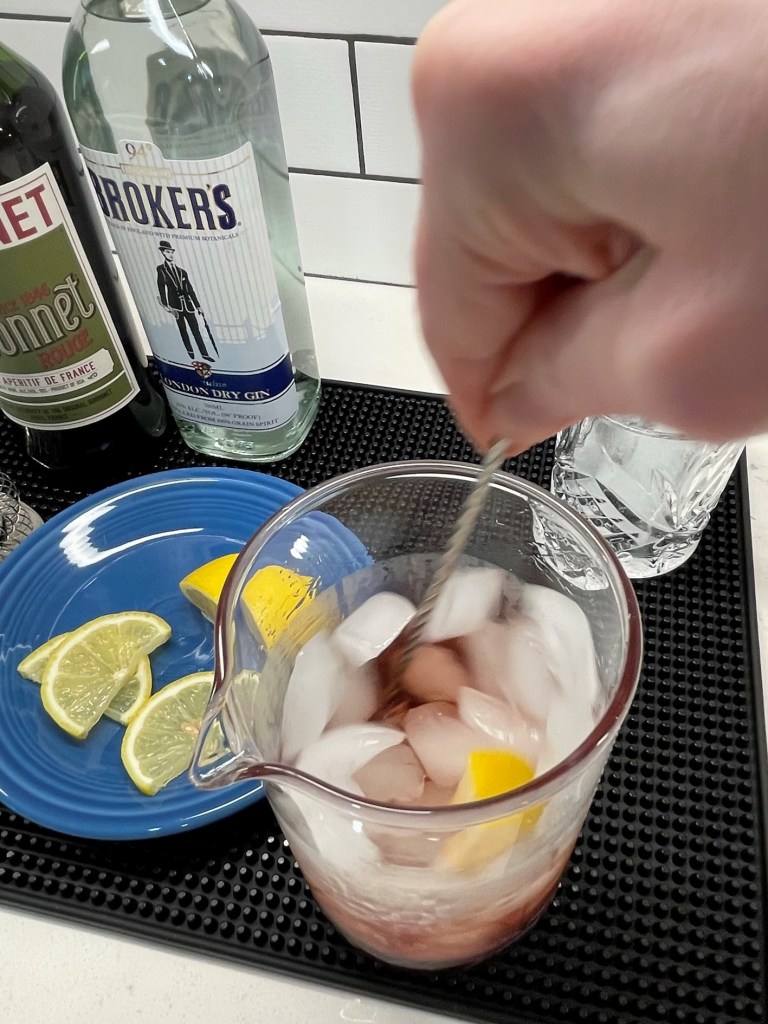
Get your lemon strip first, then cut the lemon in half for easy squeezing into the shaker. Add an equal amount of hibiscus-ginger honey syrup and then two ounces of your favorite gin. While you enjoy these refreshing images, let’s take a trip down nostalgia lane to learn more about the original “bee’s knees.”


How did the bees knees come about?

Back in the days of Prohibition, otherwise known as “the U.S. Government’s 13-year attempt at controlling its citizens,” grown adults had to get creative to find ways to cover up the questionable flavors of crappy liquor, the only kind they could get their hands on at the time. There were bootleggers, of course, who smuggled booze into the cities. And there were also people making their own at home, and the term “bathtub gin” arose from that era, a fair description of what was likely not very palatable. 

Honey and lemon juice, both strong flavors on their own, did a terrific job of hiding the paltry gin enough for them to choke it down and get their buzz on. People enjoyed the combination so much that the the drink became known by a phrase that everyone was using at the time to describe what was “the best.” The bee’s knees!

Early recipes for bee’s knees were in the “equal parts” category, meaning that they used the same amounts of gin, lemon and honey. Yikes. For modern times, the recipe is adjusted to a more standard ratio of 2 ounces gin and 3/4 ounce each of the other two ingredients. It’s nicely balanced, not too sweet and not too acidic.

I found a fun and informative article that delves deeper into the history of the bee’s knees, including its possible connection to “the Unsinkable Molly Brown,” as well as some interesting variations that I’d love to try sometime. Check it out here if you’re curious.

Back to our cocktail!

Today, of course, we have plenty of options for quality gin, and I imagine that your favorite would work just fine in this drink. I’ll also say that if you have always considered yourself to be a non-gin drinker, the bee’s knees might be the cocktail to change your mind. 

I’ve chosen Tanqueray No. 10 this time, for no other reason than the store was sold out of my usual Ford’s gin. Actor Stanley Tucci recently collaborated with Tanqueray No. 10 in an ad campaign, where he discussed the proper way to order a martini, and his description of the spirit won me over. Or maybe it was his voice. Either way, there’s a distinctive citrus note running through this gin, making it a nice anchor for the lemon and hibiscus.

Shake your cocktail ingredients with plenty of ice until the outside of the shaker is uncomfortable to hold. Strain it into the chilled glass and express the lemon peel over the drink, finishing with a wipe of the oily side of the peel all around the edge. 

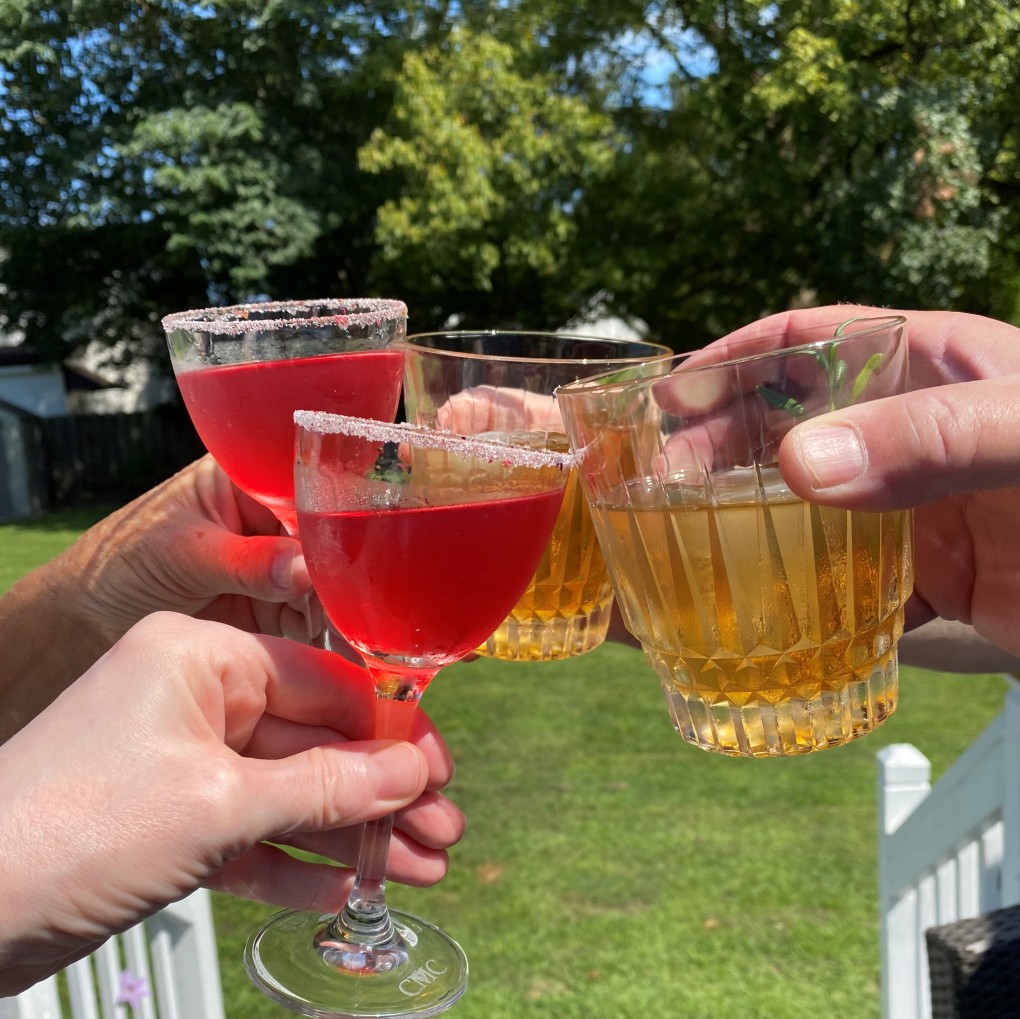
The pretty, bright reddish hue of this drink makes it suitable for a Juneteenth celebration, where the color red symbolizes strength and resilience. And I can’t think of a more appropriate drink for summer than one made with fresh citrus and bright florals. This one deserves to be on repeat for the whole season!

Hibiscus Bee's Knees

  • Servings: 1 cocktail
  • Difficulty: Easy
  • Print

This two-ingredient twist on a classic cocktail is bright, beautiful and delicious enough to deserve a spot in the rotation all summer long. Use pure hibiscus tea bags, or seek out dried hibiscus flowers to make the syrup.


Ingredients

  • 2 oz. citrus-forward gin
  • 3/4 oz. fresh lemon juice
  • 3/4 oz. hibiscus-ginger honey syrup (see below for recipe)
  • A strip of lemon peel, for garnish

Directions

  1. Add a generous amount of ice, plus water, to a cocktail glass to chill it down. Set aside while you prepare the cocktail.
  2. Combine gin, lemon juice and hibiscus-ginger honey syrup in a cocktail shaker.
  3. Add at least one cup of ice and shake vigorously for about 20 seconds. Strain into the chilled glass. Squeeze the outside curve of lemon peel over the drink, swiping the peel all around the edge of the glass. Drop peel in glass or cut a slit in it to balance it on the edge.

Note: Make the hibiscus-ginger honey syrup early enough to allow it to fully cool before using in cocktails. Strain the syrup into a sealable bottle or jar, and keep it in the fridge for up to two weeks. This recipe will make enough syrup for about six cocktails or cocktails.

Ingredients

  • 1/2 cup cold water
  • 2 pure hibiscus tea bags
  • About 6 pieces crystallized ginger (or half as much fresh sliced ginger)
  • 1/2 cup local honey

Directions

  1. Bring water to a gentle boil in a small saucepan. Turn off heat and add tea bags and ginger, swirling and steeping for about five minutes. Remove tea bags. Stir honey into the tea and continue to steep with the ginger until cooled to room temperature.
  2. Strain out solids and transfer syrup to a jar or bottle.


Cinnamon Espresso Negroni

If your social media feeds are flooded with Negroni cocktails lately, there’s good reason. It’s “Negroni Week,” an event launched in 2013 by Imbibe (print and online) magazine and Campari as a means to spotlight a worldwide sustainable food movement called Slow Food. This program has an ambitious but very noble goal of ensuring “good, clean and fair food” for all human beings everywhere. I’m all for feeding people good food, but let’s explore how a cocktail benefits this cause. The organizers pitched an idea to the hospitality industry— register your venue with the Negroni Week site, and share a percentage of Negroni sales to benefit the Slow Food movement. That might not seem like much but to date, they’ve raised more than $5 million, so it’s working!

You can learn more about Slow Food here: https://www.slowfood.com/, and find a participating Negroni Week venue near you here: https://www.negroniweek.com/find/. If you can’t find a local bar that’s taking part in the annual event, why not donate to a similar cause close to home and make the cocktail (or some version of it) yourself? I’ll show you how.

What exactly is a Negroni?

The Negroni cocktail— invented in 1919 in Italy— is traditionally considered to be an “equal parts” drink with dry gin, sweet vermouth and Campari, the bright red Italian bitter aperitivo. The components are stirred with ice and then the drink is garnished with a juicy slice of fresh orange. It is both refreshing and appetite-stirring, sophisticated yet bold and gutsy.

My first introduction to Negroni came only a few years ago (during Covid, probably), and it took me a while to consider making this drink at home. I didn’t want to drop big bucks on a bottle of Campari unless I was fully committed. The Negroni is what I call a “strong drink”— it’s literally all booze— and if you can’t handle bitter, you definitely don’t want one. But there is something that really works about combining these spirits, and now that I’ve acclimated to it, I cannot refuse a Negroni.

Of course, me being me, I have joined the throng of amateur and pro mixologists on a mission for new ways to twist up this classic. There are already several notable riffs out there, including many that swap the gin for various other base spirits, including bourbon, rum and tequila. I enjoyed a particularly good Negroni variation that subbed Spanish sherry for the vermouth and Cynar for the Campari when we visited Cúrate in Asheville, North Carolina. I can still taste it in my mind. It was so good.

The base personality of a Negroni is the botanicals and bitterness— if these are not your thing, stick with a vodka martini or an old fashioned. But if you do happen to enjoy an adventurous, spirit-forward cocktail that whets the appetite before dinner, I propose my take on this lovely libation for Negroni Week 2024. Cheers!

Cinnamon Espresso Negroni

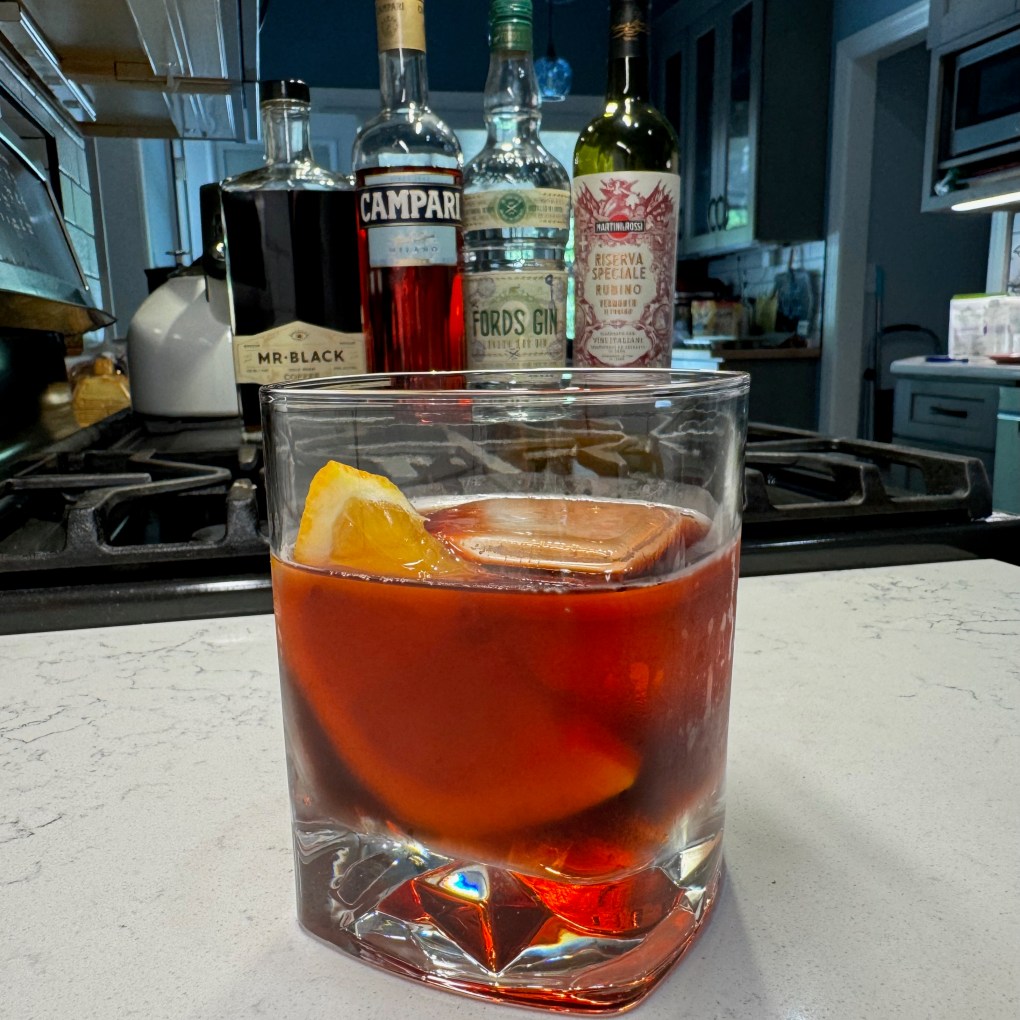
The color and aroma of this drink are really special!

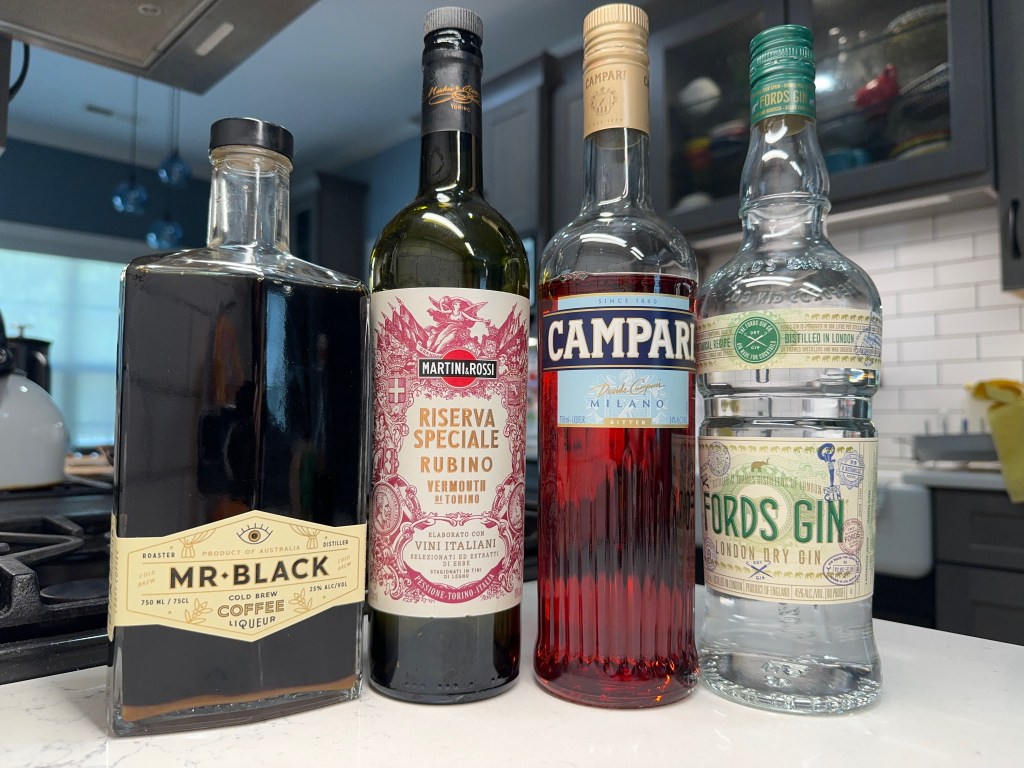
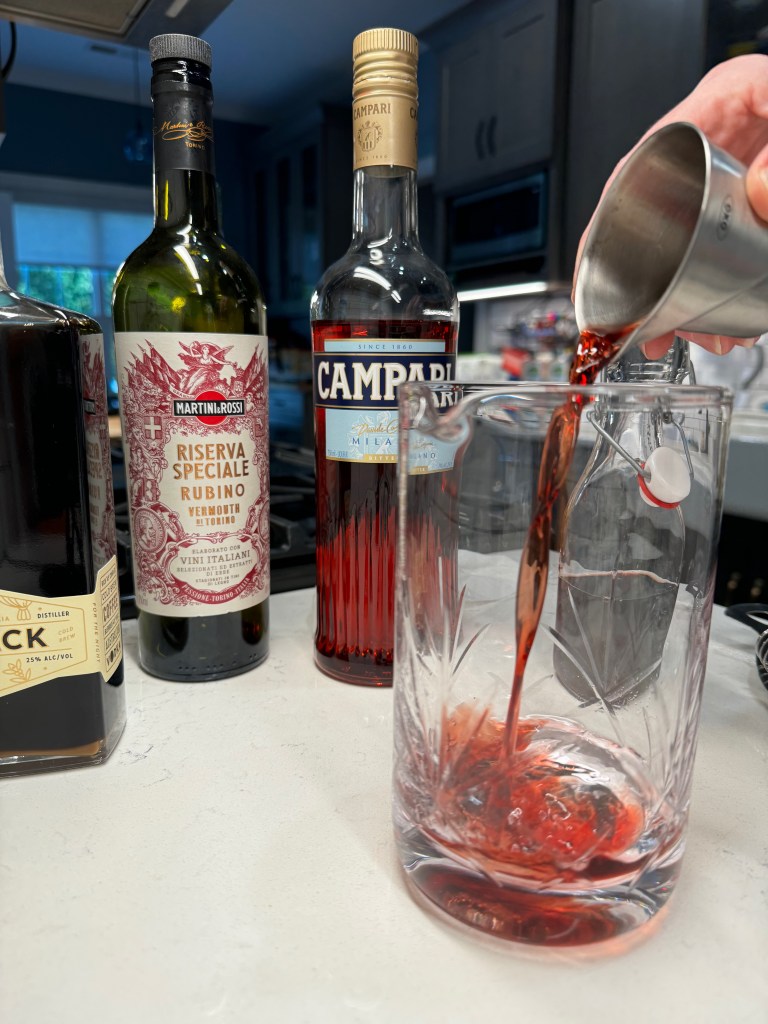
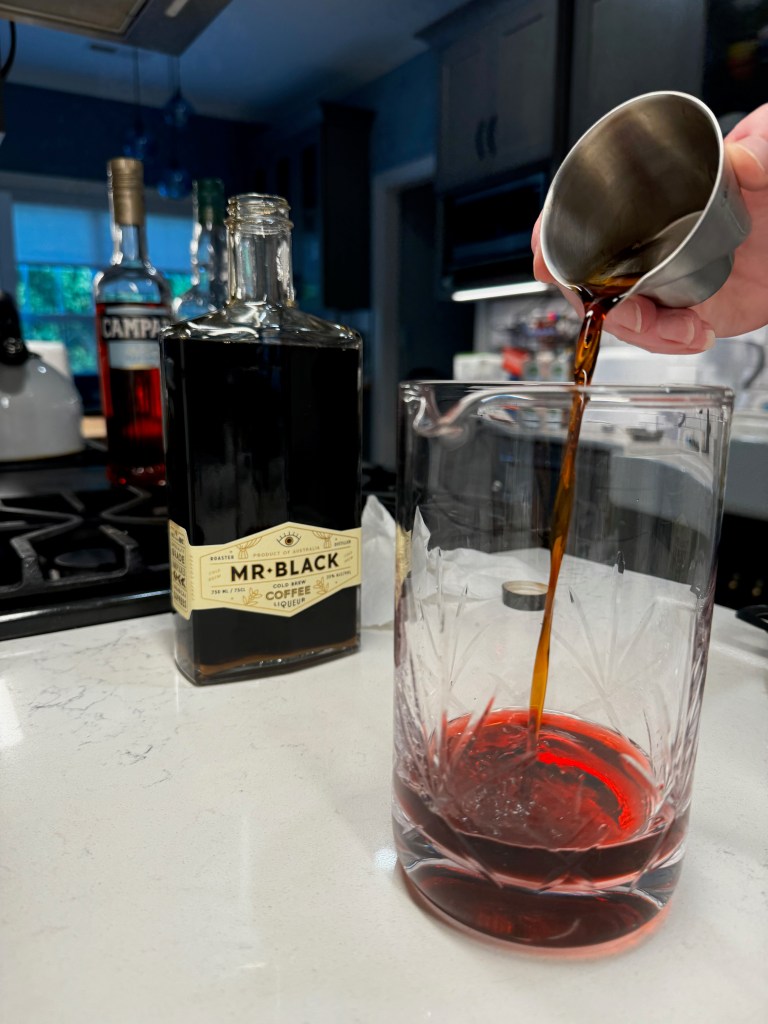
My version includes a couple of twists, including addition of cold brew coffee liqueur. I split the Campari element of the drink 50/50 with the coffee-flavored spirit I like best, Mr. Black. Yes, you could use Kahlua, Tia Maria or Grind Double Espresso liqueur, but I find all of these rum-based spirits to be too sweet for Negroni. Mr. Black is a vodka base, so the emphasis is on the coffee. I had to search for months to find it because our state-run liquor stores are pitifully limited in inventory, but it was worth the wait. I also happen to like Mr. Black in an espresso martini, which I am still working on and will share when I get there.

Ford’s is my house brand of gin. Any London dry is suitable for Negroni, so use your favorite.

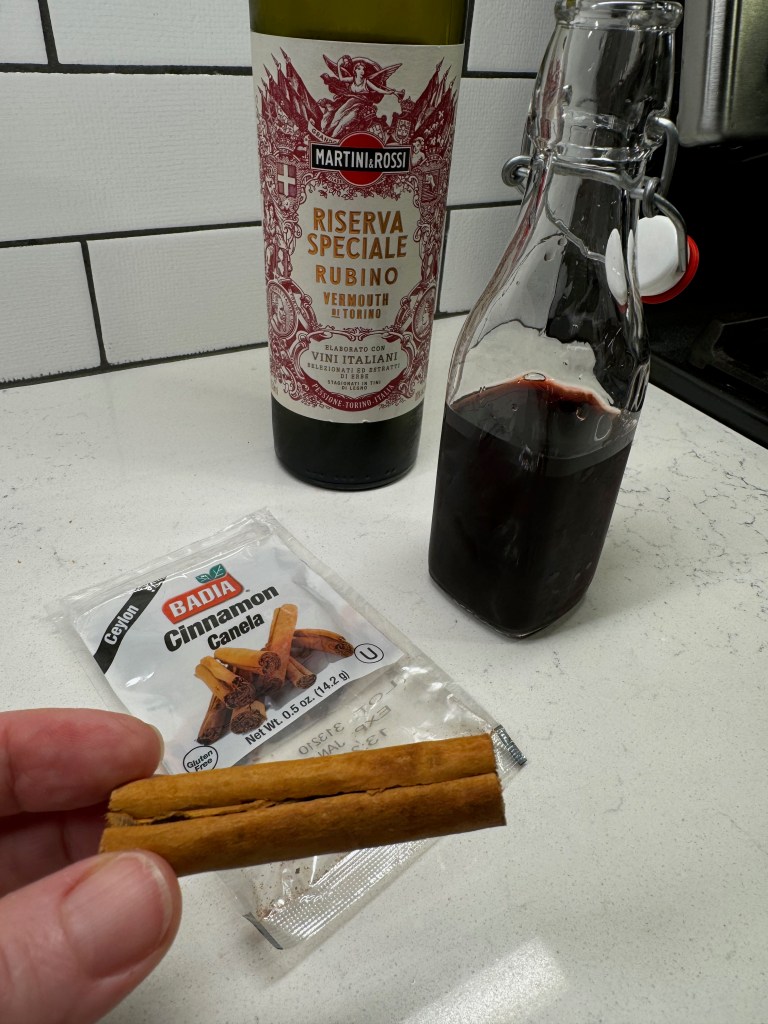
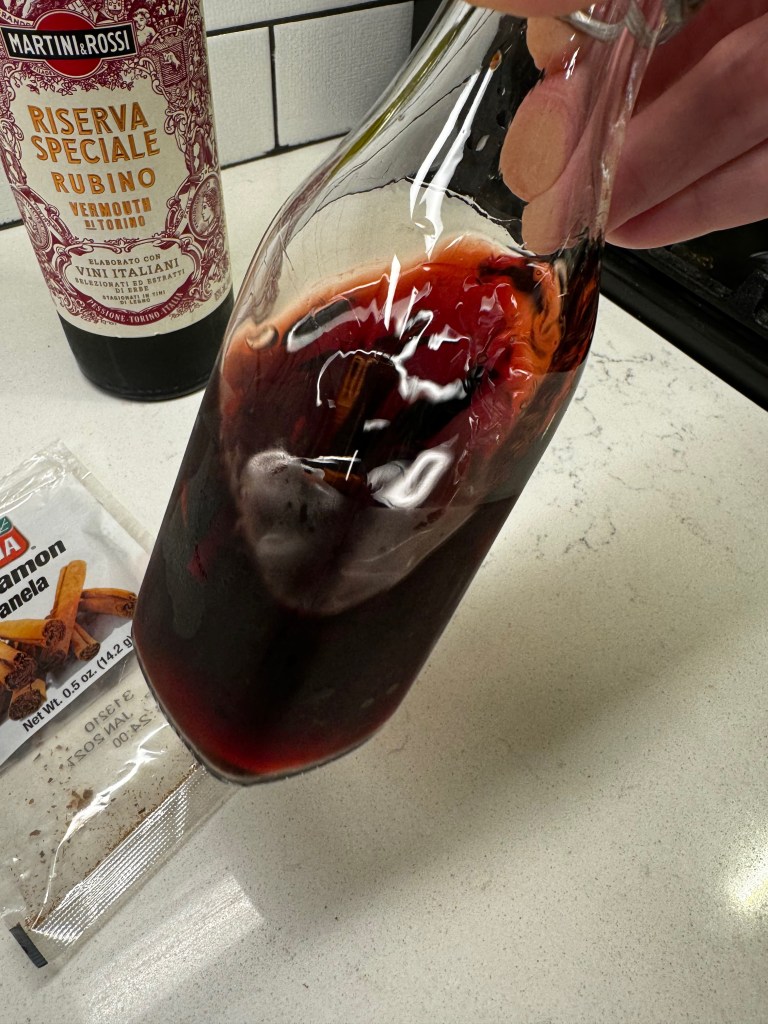
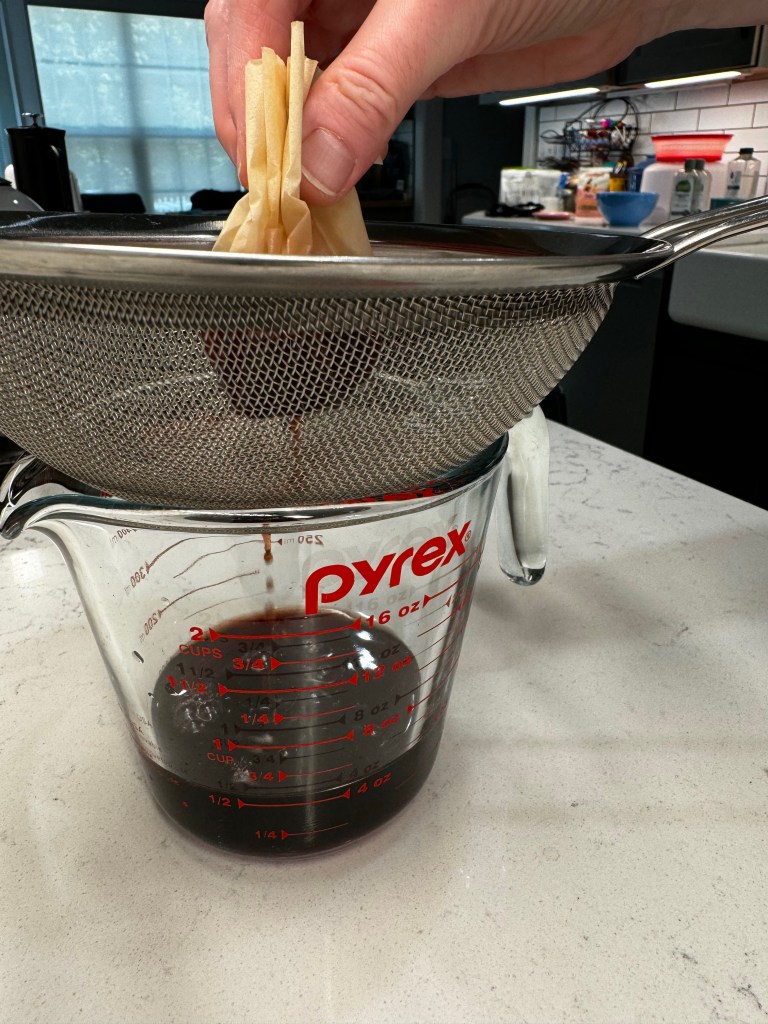
The cinnamon enters the mixing glass in the form of an infusion in the sweet vermouth, and this requires a bit of advance preparation. I added a ceylon cinnamon stick to the vermouth in a small bottle and gave it a day and a half before straining out the cinnamon and filtering the vermouth back into the bottle.


The cinnamon lends a delightful warmth to the vermouth that spices up my Espresso Negroni in the best possible way, and I cannot wait to try this in a Manhattan. My vermouth brand is Martini & Rossi Riserva Speciale Rubino. I’m willing to pay a bit more for the spicy richness and deep ruby red color of this premium vermouth. I panicked last year when our Total Wine stores stopped carrying this product, and then I remembered— it’s a fortified wine, legal in my state for online purchase. Sure enough, I hit the buy-it button on the M & R website and had two bottles shipped directly to my door within days. Thank you, internet! If you already have a favorite sweet vermouth, I’m sure it’ll be just fine.

Campari is what it is, and frankly, there is no true substitute. It is bright red, bitter and complex. Don’t be fooled by other spirits that cost less and claim to be the same— they’re not. If a Negroni riff calls for something else, then the substitute probably works with the other ingredients. But if you love the classics, or if you’re trying a Negroni for the first time, Campari is the right stuff. Also, because Campari is a presenting sponsor of Negroni Week, your purchase will help the sustainable food cause in a secondary way, even if you don’t find a bar participating in Negroni Week.

How to Make a Negroni


The traditional way to make a Negroni is to build it directly in the glass over ice, but that’s not how I like to do it at home because I prefer equal dilution of the ingredients. Here’s what I mean— let’s say you start by pouring the gin first; it’s generally room temperature and it’s going to start melting the ice immediately. If the vermouth goes in next, and the Campari at the end, both are going to be less diluted than the gin because the total contents of the glass are already cold.

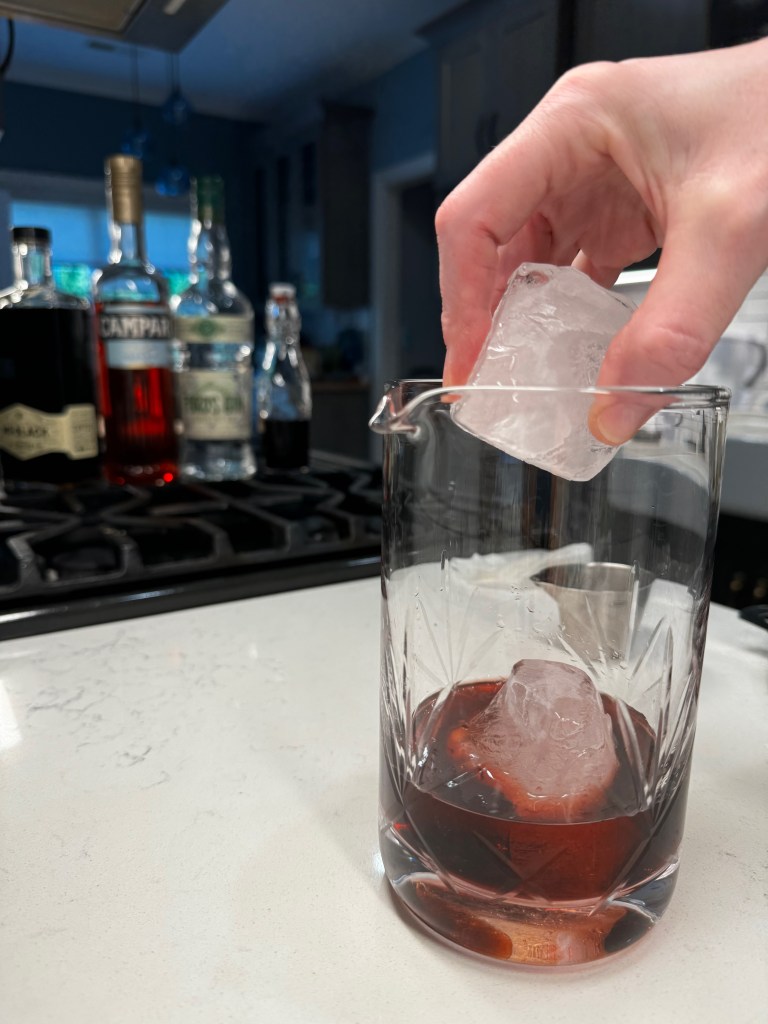
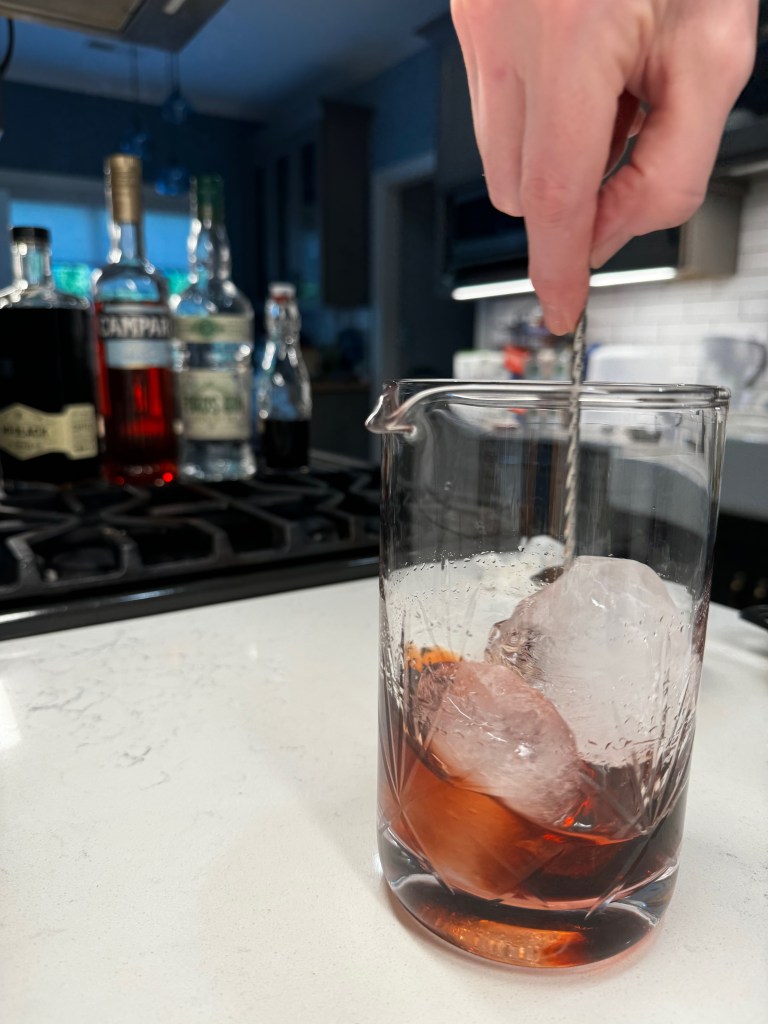
Mixing the ingredients in the glass and then adding the ice doesn’t work for me either, because my giant ice cube will melt at the bottom, creating a weird, top-heavy shape. So what’s the solution? My go-to method is to add the ingredients to a mixing glass first, then add a bunch of ice to chill the whole thing down quickly. Give it a gentle stir for about 30 seconds, or until the outside of the mixing glass is nice and frosty. Then strain it over a big cube of clear ice for a perfectly diluted, evenly chilled cocktail.


Cinnamon Espresso Negroni

  • Servings: 1 cocktail
  • Difficulty: Average
  • Print

For Negroni Week, I am sharing my own favorite variation including espresso liqueur and my favorite autumn spice. Infusing the sweet vermouth with cinnamon lends a warm, familiar flavor to the classic Italian cocktail.


Ingredients

  • 1 oz. London dry gin
  • 1 oz. cinnamon-infused sweet vermouth (recipe below)
  • 1/2 oz. Campari
  • 1/2 oz. Mr. Black cold brew coffee liqueur (see notes for substitution ideas)
  • 1 cup ice
  • Orange slice for garnish

Notes: If you cannot find Mr. Black liqueur, you may substitute another coffee liqueur, but note that most of them are sweeter and this will change the outcome of the drink. My suggestion would be to sub in an equal measure of cold brew concentrate, which you can find in the coffee aisle of the supermarket.

Directions

  1. Add gin, vermouth, Campari and coffee liqueur to a cocktail mixing glass. Add a generous amount of cracked ice and stir about 30 seconds for proper dilution and chilling.
  2. Strain over a large, clear ice cube into a double rocks glass. Garnish with the orange slice.

For the cinnamon-infused sweet vermouth: measure out six ounces of vermouth into a mixing bottle or clean jar. Add a 3-inch piece of whole cinnamon stick and infuse 24 to 36 hours in the refrigerator (where vermouth should live anyway). Strain out the cinnamon stick and any lingering shreds through a coffee filter-lined mesh strainer; return the vermouth to the bottle or jar and keep in the fridge for up to two weeks. This will be enough for six Negroni cocktails.


Dubonnet & Gin (a cocktail for the Queen)

If you have never given thought to a morning cocktail—well, perhaps you have never felt hungover, but I won’t go there—you might want to take it under advisement that Queen Elizabeth II enjoyed one every day. You read that correctly; each and every day, the Queen had an alcoholic drink before lunch. Oh, those wild and crazy royals!

I had read a few years ago that the prim and proper monarch was a bit of a party girl behind closed palace doors, knocking back several drinks in a day, to the point that she would even have been considered a “binge drinker” by U.K. health standards. Not that anyone would dare tell her that, mind you. Not anyone except her doctor, who advised her last year to lay off the booze in order to be strong enough to participate in all of her Platinum Jubilee activities. As the royal rumor mill spins it, she was pretty annoyed about this (I feel you, Your Majesty), but she complied with doctor’s orders.

Say what you will about her drinking habits, at least the Queen paced herself, and her taste in tipple was broad and varied. By various accounts, it is confirmed that she enjoyed a dry martini in the evening and a glass of champagne as a nightcap. At dinner, and sometimes at lunch, she sipped a glass of sweet German wine. And before lunch, this one. The Dubonnet and gin cocktail is little more than the name implies. Stir the two together with a slice of lemon and ice, and then strain it over new ice with a fresh slice of lemon. But what exactly is Dubonnet?

When my iPhone news app interrupted my workday yesterday with the announcement of Queen Elizabeth’s death, I decided for no good reason that I should do something to honor her on Comfort du Jour, and the quickest way to do so would be to whip up the Queen’s favorite cocktail—only, it proved to be a bit more complicated than that because I needed to find the proper ingredients, in particular, the Dubonnet.


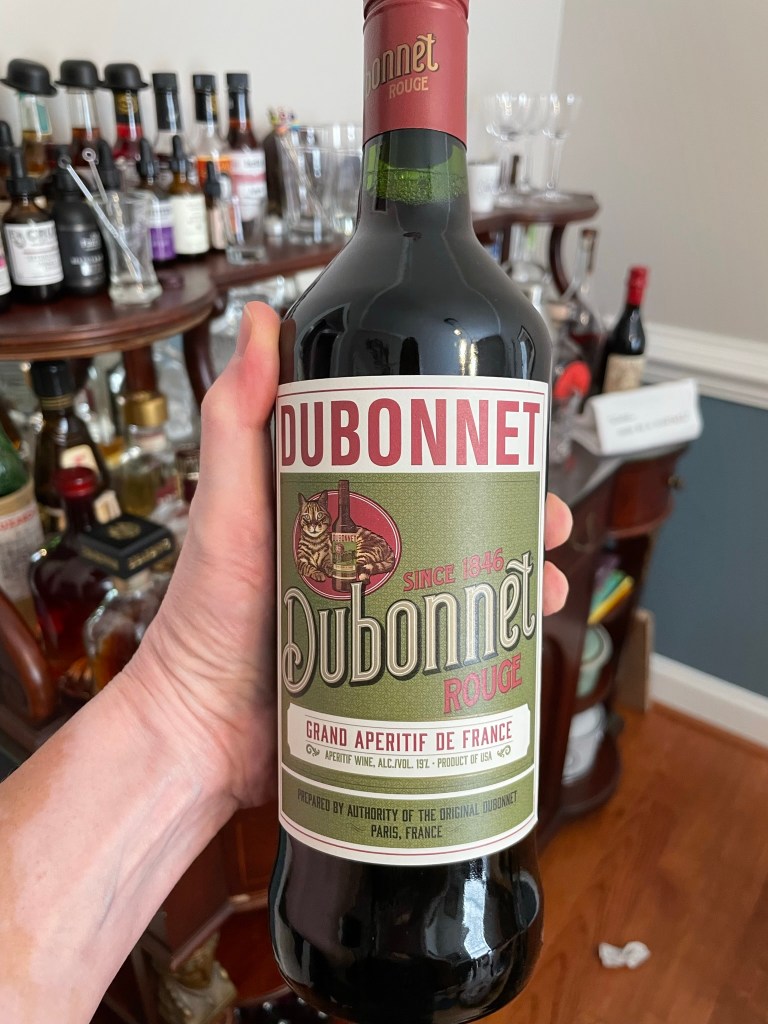
First of all, Dubonnet is not a liquor, but a fortified wine. That meant I would not find it in one of our state-run “ABC” stores. My best shot would be a well-stocked wine store. The Queen would have had access to the spirit made in France by Pernod, but I could only purchase the version made here in the States, by a distillery in Kentucky.

According to Dubonnet’s website, the cat was a beloved pet of founder Joseph Dubonnet’s wife. ❤

The online inventory checker on Total Wine’s website assured me the store had several bottles of Dubonnet in stock, so I planned to hustle across town to buy it before everyone else did. Sometimes, I imagine that other people have the same fervor as me when it comes to commemorating notable occasions with food and drink. Thankfully, given that you are still reading, there aren’t that many of us. I found the Dubonnet in aisle 7, right next to the sweet and dry vermouth that I purchase all the time. I honestly don’t know how I missed this lovely bottle before; it even has a beautiful tabby cat on the label. $15.49 later, I was back in the car and headed home.

Being the responsible blogger that I am, I tasted the Dubonnet on its own in order to describe it for anyone here who has not tried it. The inclusion of quinine led me to expect a bitterness in this high-ABV wine, but I found my first sip to be on the slightly sweet side, almost Lillet-like, and when the first vapor of it rose off the glass, it reminded me of Niagara grapes, though I can’t imagine Dubonnet, which was founded in France, would be using a native U.S. grape (if you aren’t sure what Niagara grapes taste like, just open a bottle of Welch’s white grape juice). No, this aperitif is a mashup of European (mostly) red grapes, spiffed up with herbs and spices for complexity. I’m certain it’s the Muscat that strikes a familiar aroma.

Only one thing left to do; I mapped a route to the nearest ABC store in search of Gordon’s London Dry, the Queen’s preferred gin. Our local liquor stores are pitifully under-stocked, so I didn’t expect I’d find what I was looking for and indeed, initially, I didn’t. The problem was, I was looking high, not low, so I didn’t notice at first the bottles of Gordon’s on the bottom shelf. It was in a plastic bottle, and about half the price of the gin brands I usually reach for. Please don’t take this as a slight to Her Majesty, but I was sure there must have been some mistake. I knew I had a bottle of Ford’s (also London Dry) at the house, the same one I love for my favorite martini, so couldn’t I just use that? But I have learned enough about mixology to know that the essences of gin can make or break a drink, so I went home to do more research last night about what makes Gordon’s gin the world’s best-selling London Dry gin and the perfect one to pair with Dubonnet.

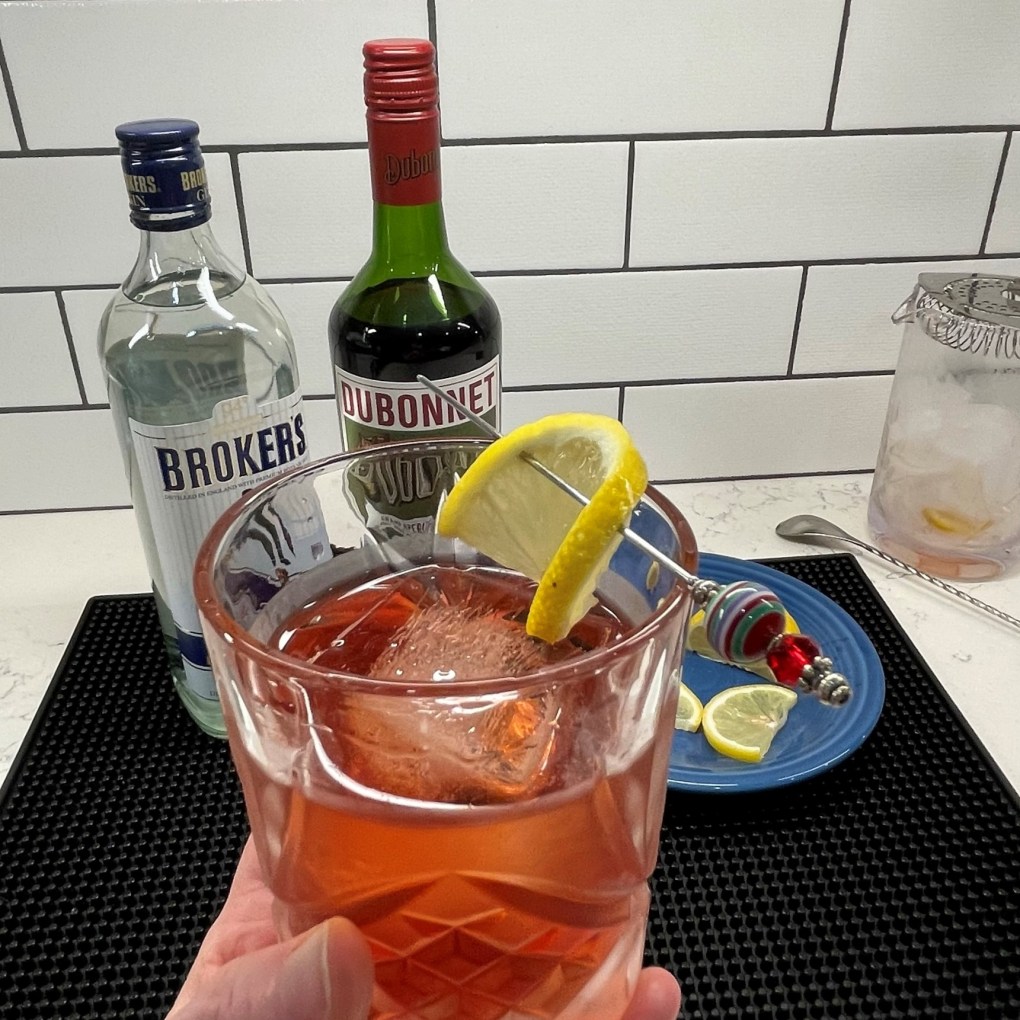
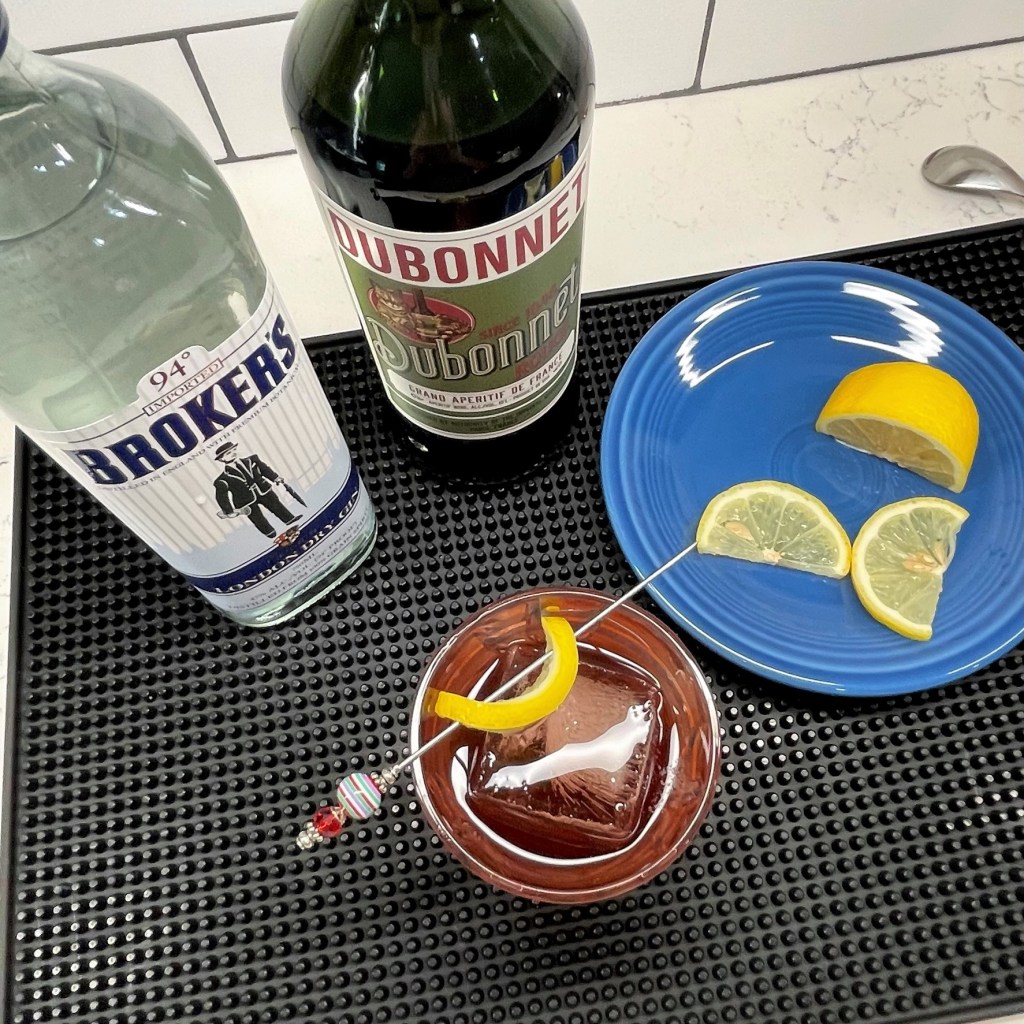
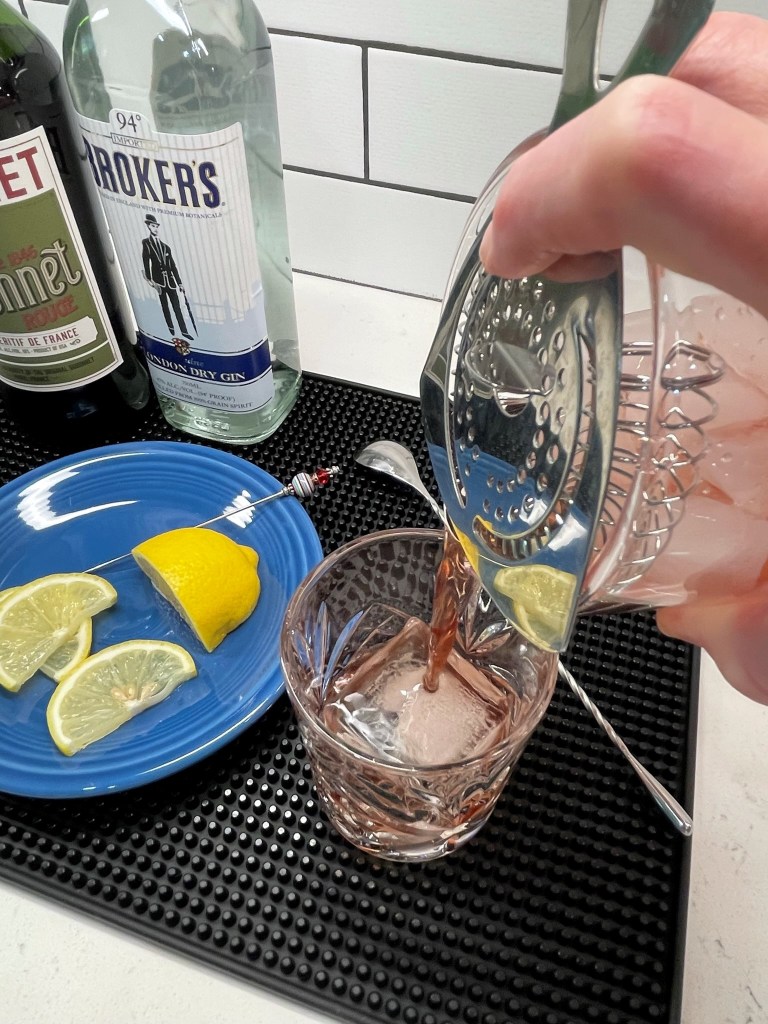
The upshot is that Gordon’s is extremely juniper-forward, meaning it is crisp and clean without nuances of too many of the other botanicals. My Ford’s, though I love it, is not comparable in that sense, but I found that another brand I like, called Broker’s, fit the bill of being very juniper-forward. My martini-loving friend, David, turned me onto Broker’s a few years ago and I trusted it. As a bonus, Broker’s gin comes with a cute little hat on the cap, and it doesn’t get much more London-y than that.


My discovery, unfortunately, came to me after the ABC store was closed, so I had to go back this morning—to a different store in the county just south of us, which is several miles out of the way and well worth the trip, and finally, I had what I needed to make the Queen’s cocktail.


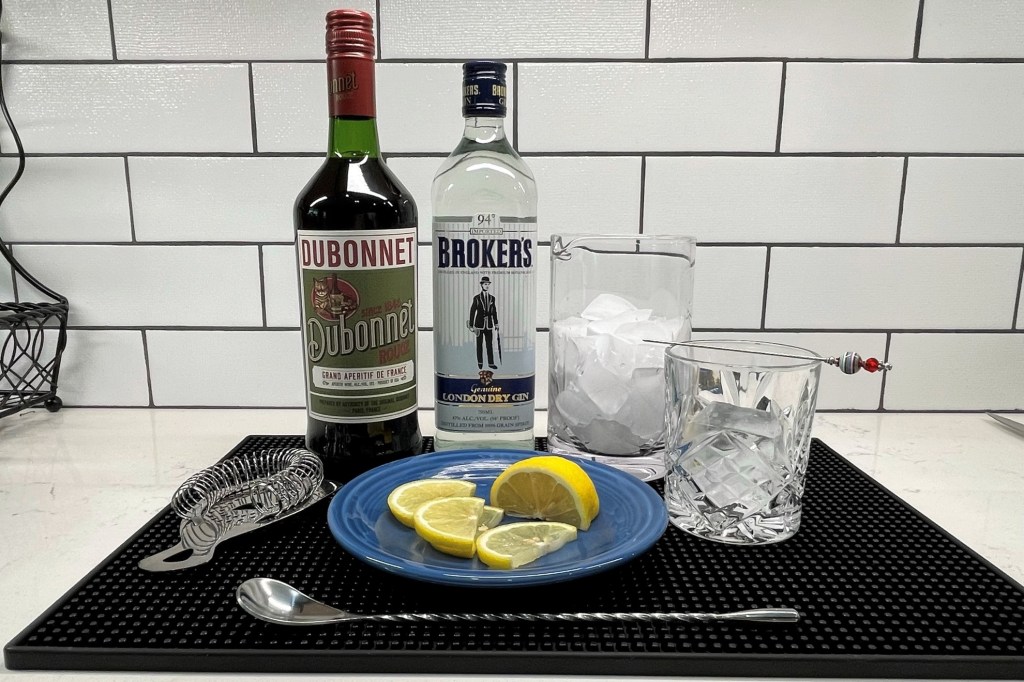
For the love of the crown, let’s make this drink!

It’s a simple drink, which is good, I guess, if you’re having one every day!

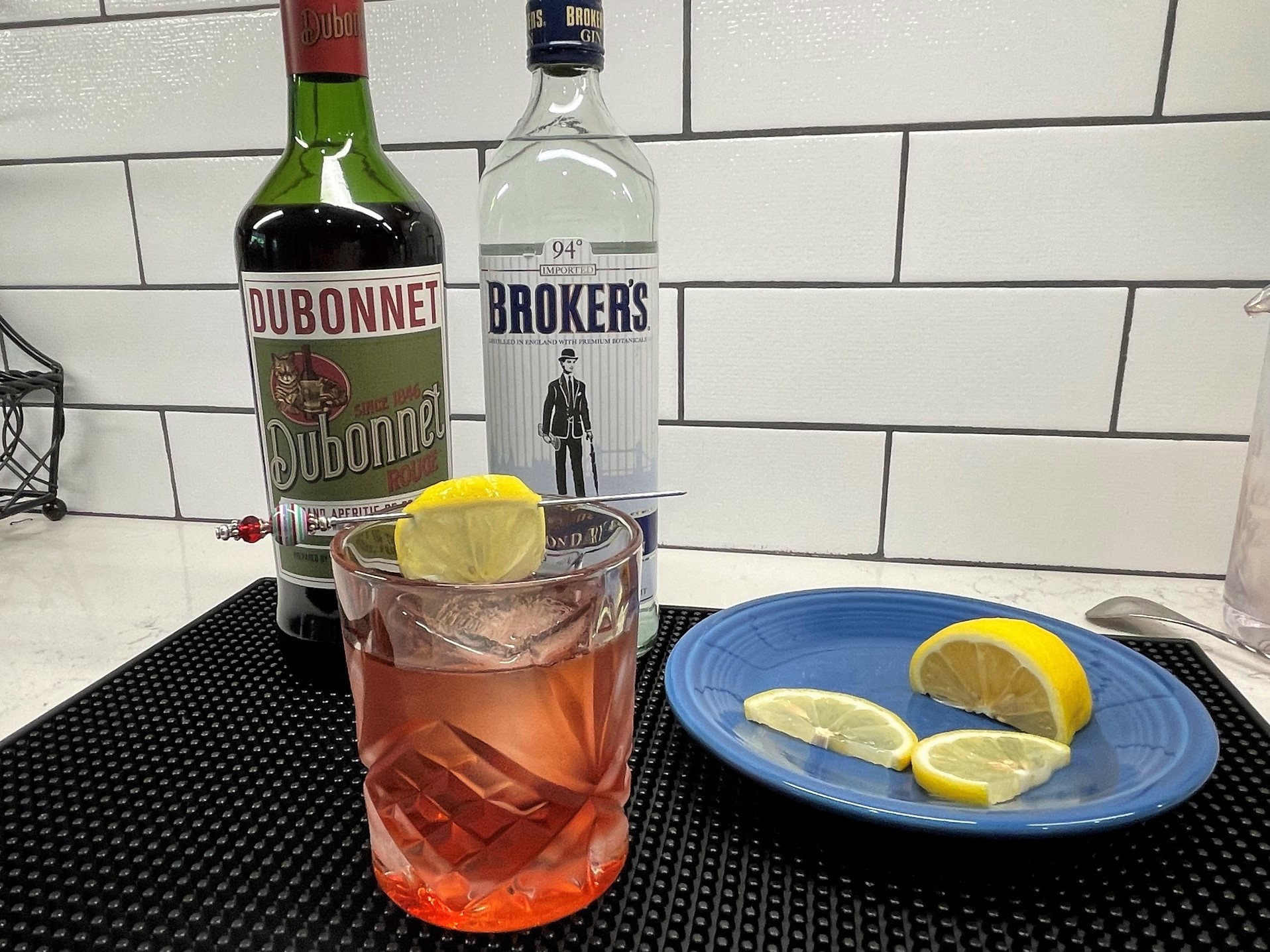
Personally, I think this cocktail would be lovely served up, in a chilled coupe glass with an expertly designed twist of expressed lemon peel, but that is not how the Queen took hers. No, she poured it straight over ice, which reminds me of my own grandmother and the way she preferred her afternoon martini. So I paid my respects and made it the same, and also with Her Majesty’s 2:1 ratio; that is, 2 parts Dubonnet to 1 part gin.

I can taste why this drink was a favorite for Queen Elizabeth II, and also for her mom, The Queen Mother. It’s light, just sweet enough to be enjoyable, yet with a touch of bitter to spur the appetite.

There’s no question, I will not be imbibing with this drink as regularly as Her Majesty (doctor’s orders and all that jazz), and most definitely not in the morning, but I shall practice my curtsy and I’ll take it as my duty to raise a glass a few times during the next 10 days, as the world mourns the passing of the longest-serving monarch in U.K. history.

Long live the Queen!

Dubonnet & Gin Cocktail

  • Servings: 1 cocktail
  • Difficulty: easy
  • Print

Ingredients

  • 1 1/2 oz. Dubonnet Rouge
  • 3/4 oz. London Dry gin (something juniper-forward)
  • 2 half moon slices fresh lemon
  • Cocktail ice

Directions

  1. Measure Dubonnet Rouge and gin into a cocktail mixing glass (or shaker) with ice. Drop in one lemon slice.
  2. Stir (or shake) vigorously until the outside of the mixing container is cold and frosty.
  3. Strain over fresh ice and garnish with the second lemon slice


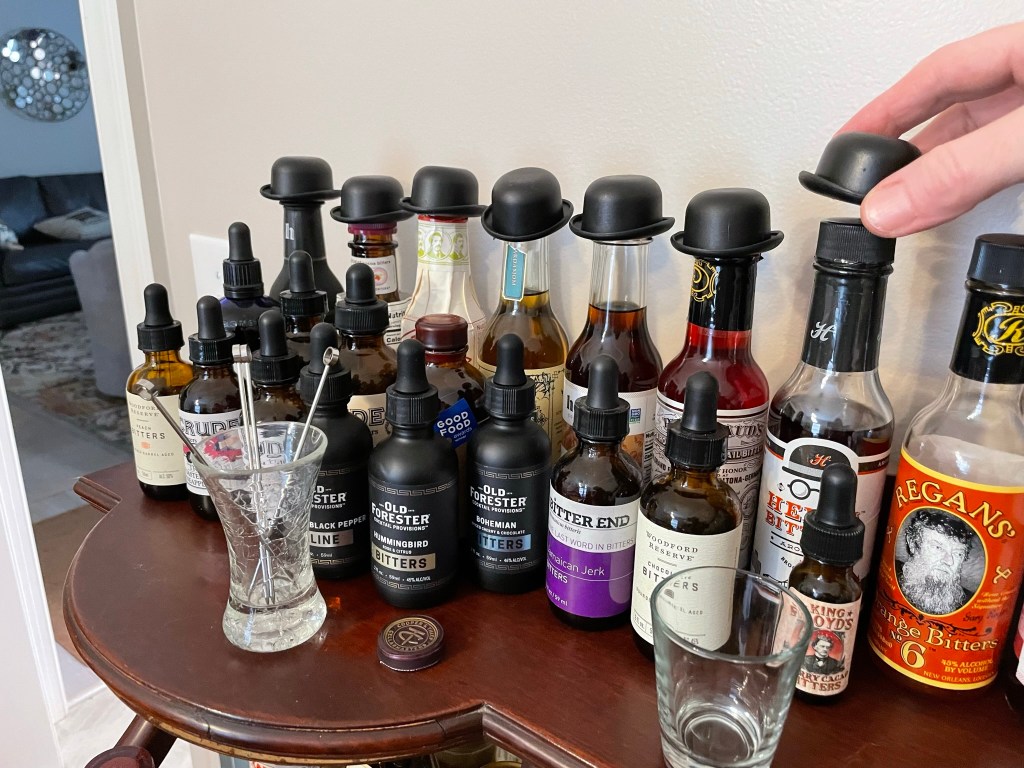
As a postscript, I have since learned (thanks to my pal, David) that Gordon’s London Dry is more than acceptable—it’s his go to, actually—so that would have been a good purchase. But buying the Broker’s does allow me to add to my hat collection. I started saving the hats during the pandemic and discovered they fit perfectly on my bitters bottles. The only thing I’m unsure about now is what will I do to use up the rest of this Dubonnet? 🙂


Summer Tomato Water Martini

The truth is, I have been fiddling with this martini since before my own garden-fresh tomatoes came to fruition. My first effort was accidental, right after my husband and I had returned from a vacation at the end of last summer. It was good, but kind of a one-off thing and I didn’t give it much thought. Months later, it popped up in my news feed—on Epicurious or Food 52 or, honestly, I don’t know where—and it sucked because it was February or March and I had to improvise because there were no garden fresh tomatoes available. So let me get this out of the way early: do not try this with grocery store tomatoes. Trust me on this.

Fast forward to mid-August, when fresh, homegrown tomatoes are available everywhere, from your own garden or the farmers’ market, and that makes a world of difference. The flavorful liquid that seeps out of those freshly sliced, vine-ripened tomatoes is absolutely begging to be part of a cocktail. If you love summer tomatoes and you are up for a fun martini experiment, this is for you!

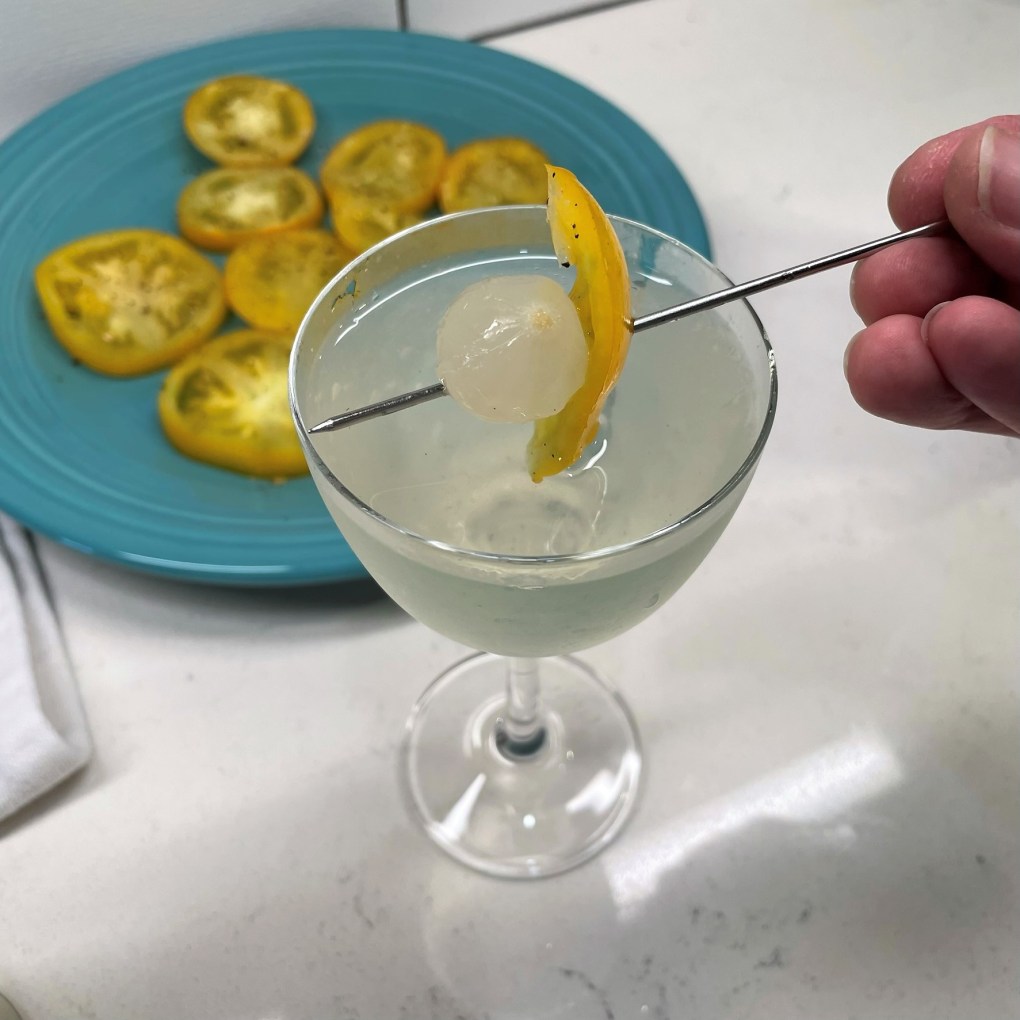
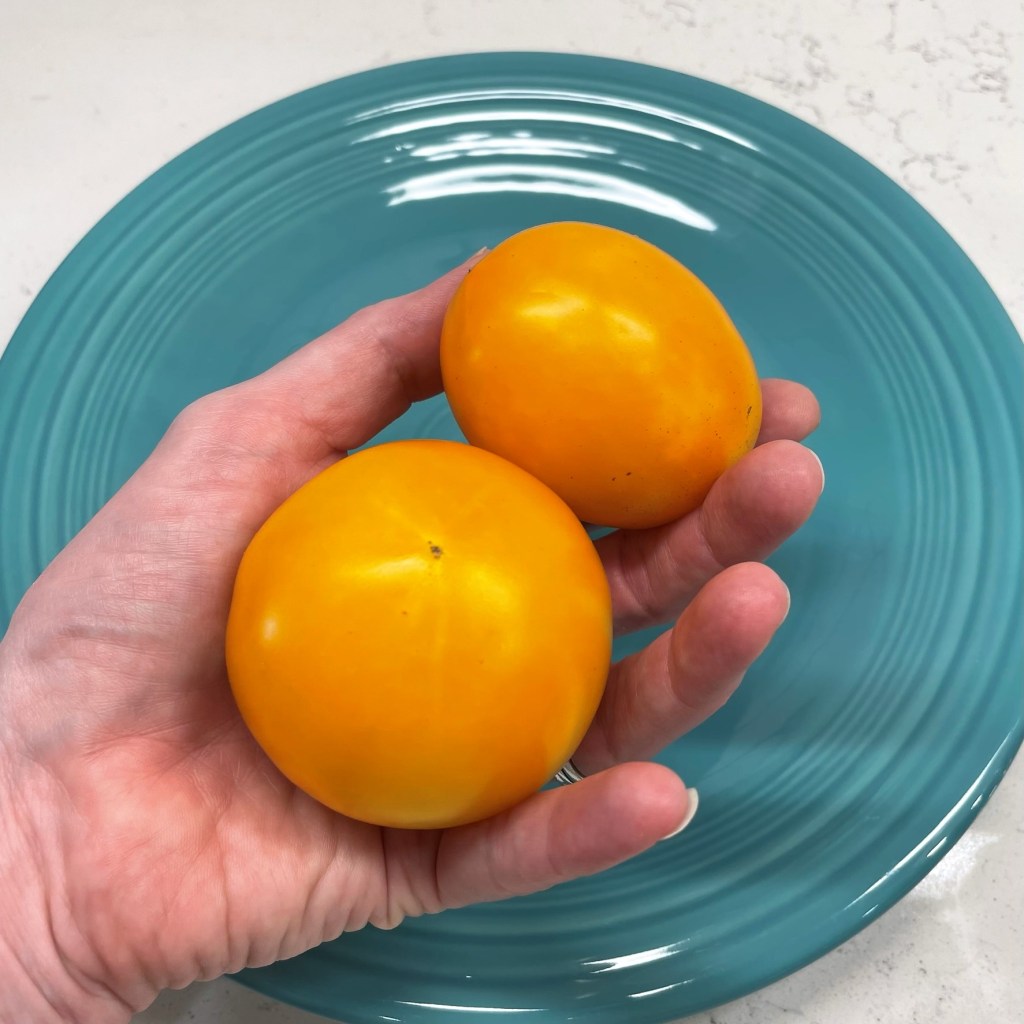
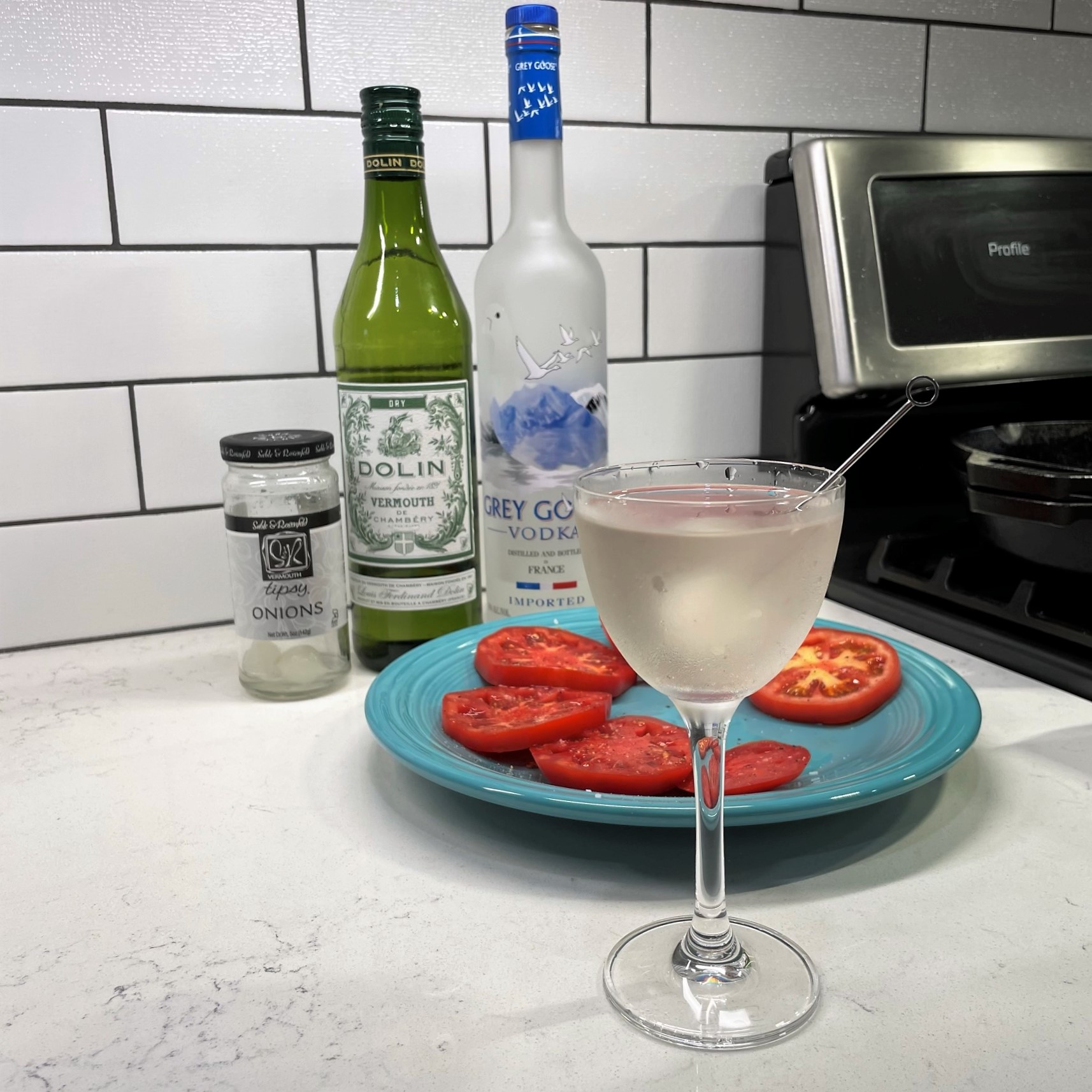
I’ve made this cocktail with red heirloom variety tomatoes, yellow tomatoes, vodka and gin.
Try them all to find your favorite!

When the local growers started selling a few heirloom tomatoes at their market stands, I tried this idea again, and it was so much better. The red heirlooms are so juicy and sweet, and the success of this martini twist gave me even more reason to be excited about my own harvest of heirloom and yellow tomatoes. And here we are. 🙂

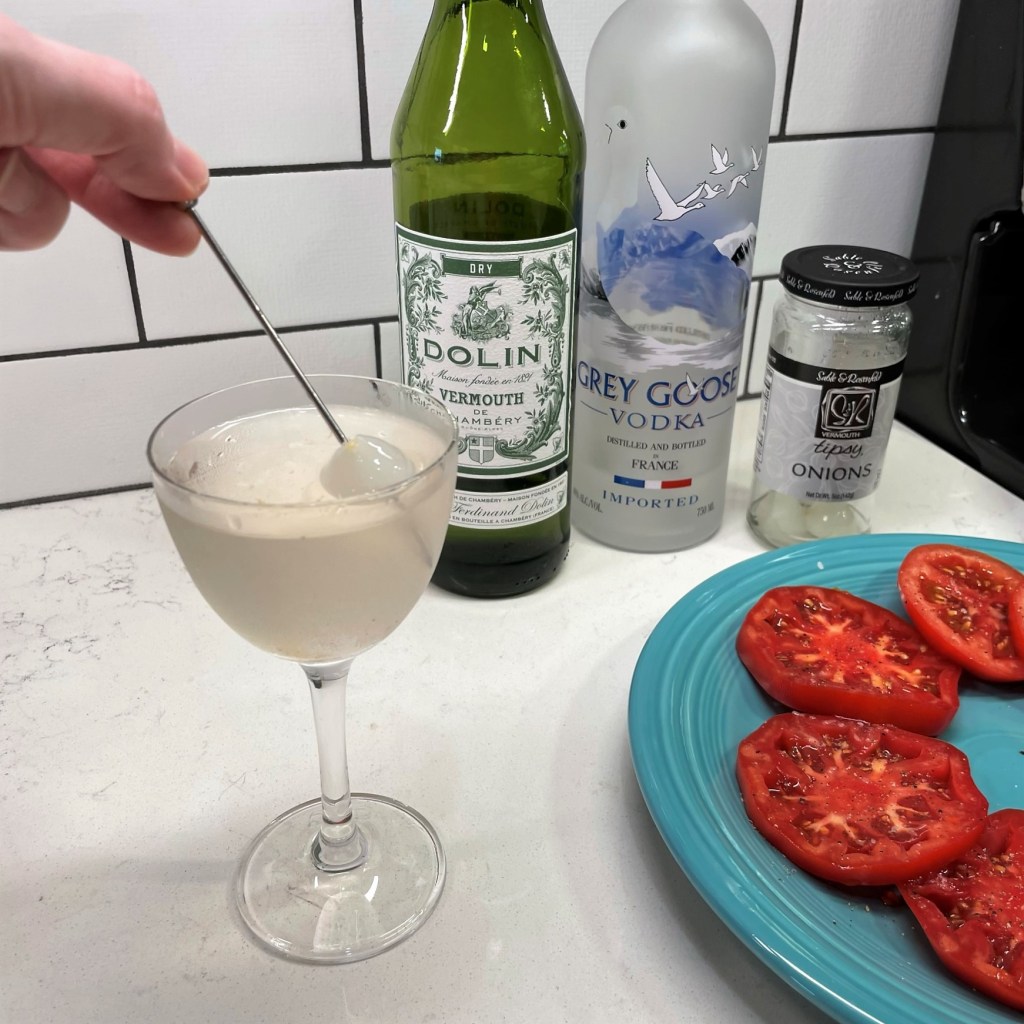
Regardless of the type of tomato you use, the unique sweetness and acidity will add an exceptional brightness to a martini. I have tried this with both gin and vodka, and a variety of spirit-to-vermouth ratios. It’s good many different ways, so my recommendation is to try it yourself to find the balance that is perfect for you. My personal favorite (at least this week) is made with top-shelf vodka, in a 4-to-1 ratio with dry vermouth, no bitters and at least 1 part seasoned “tomato water.” A full description with amounts is at the end of the post, in a click-to-print recipe card.

But for now, watch to learn:

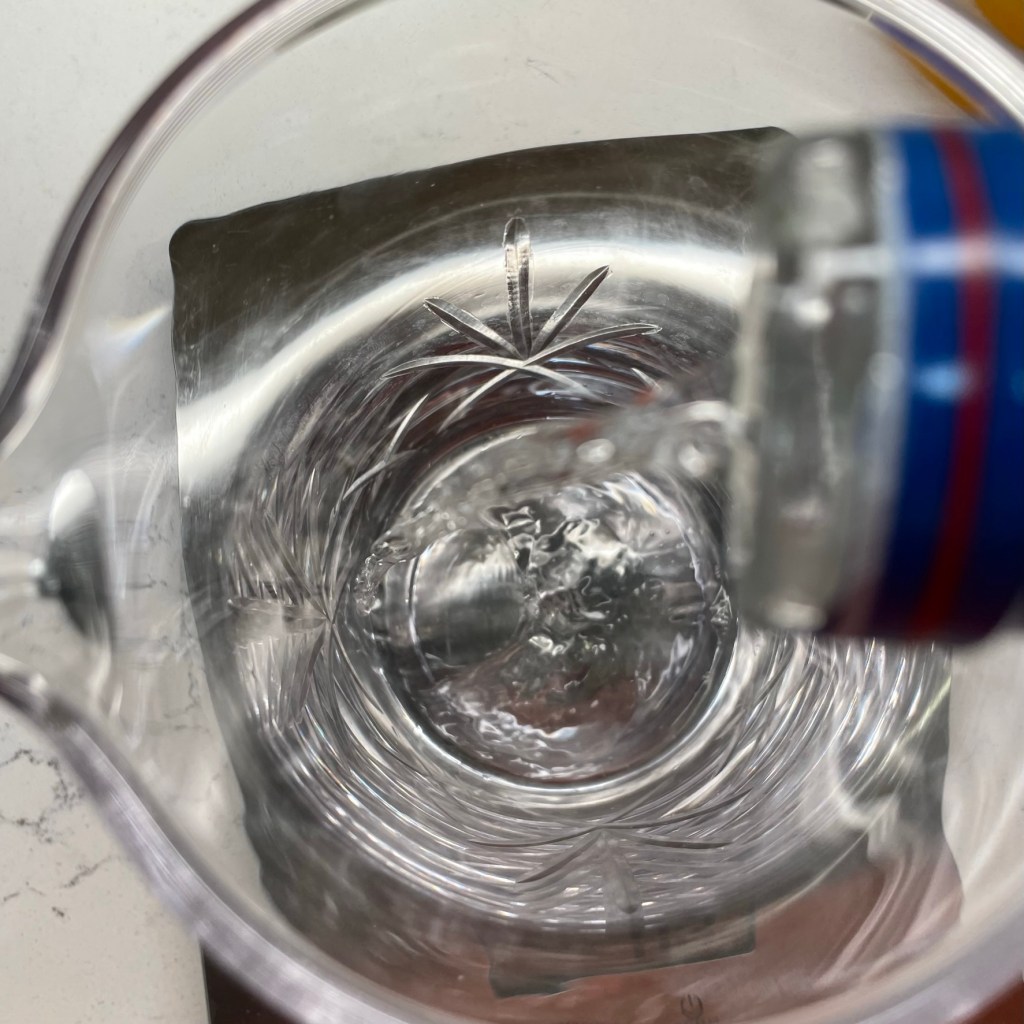
Wash and slice a ripe, room-temperature tomato (or several, depending on what you need them for) and arrange the slices on a plate. Sprinkle with a fair amount of sea salt and freshly cracked pepper (don’t skip this!) and walk away for about 15 minutes. What you’ll find when you return is a plate full of beautifully seasoned tomato water underneath the slices. Use the tomatoes for whatever you wish—a tomato sandwich, perhaps—but don’t toss that tomato water! Carefully pour it off into a shot glass or small bowl, grab your martini fixins and chill down your glass with ice and water.


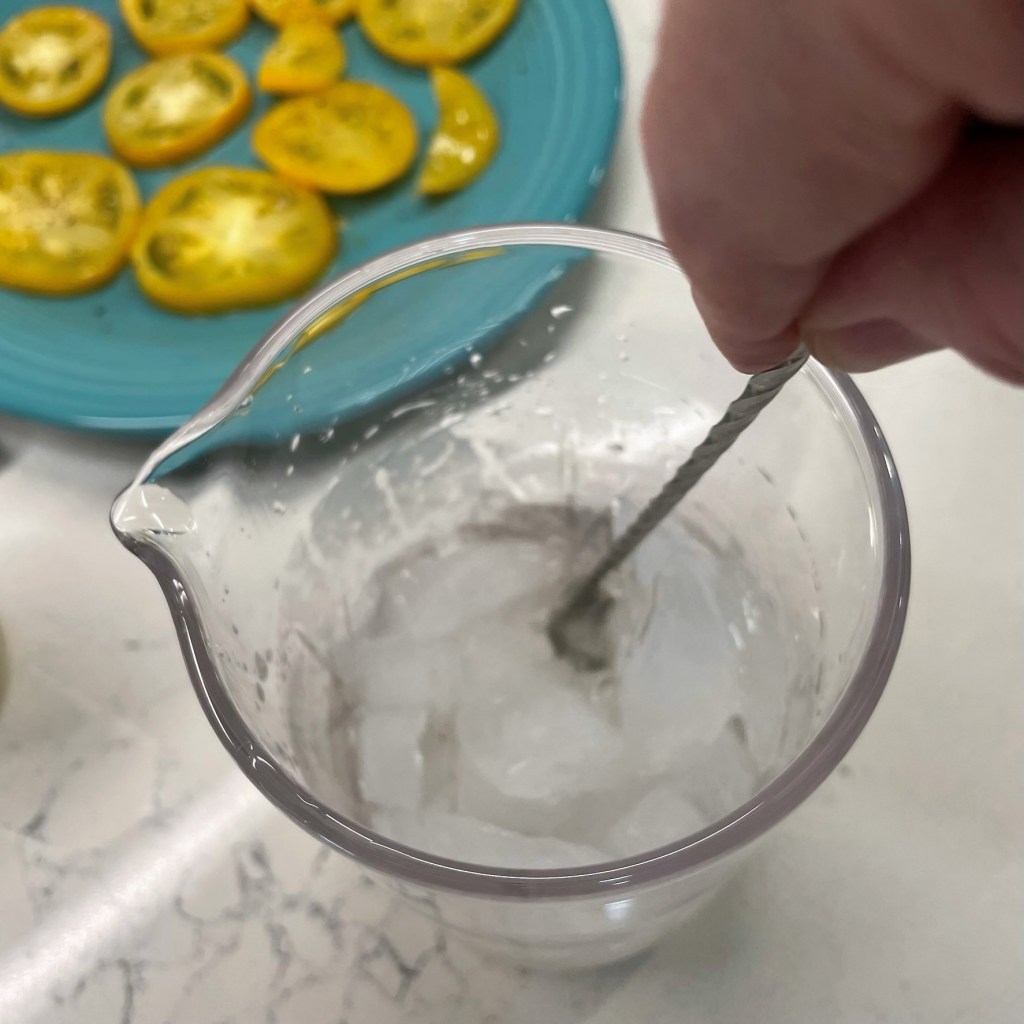
Measure your vodka (or gin) and vermouth into a cocktail shaker or mixing glass. Add the tomato water to taste. I have discovered that you need at least a tablespoon to really savor the flavor it adds to the drink. If you see excess moisture on top of your tomato slices, drain that off into the mixing container as well. Add a generous cup of ice cubes and shake or stir to chill the cocktail.


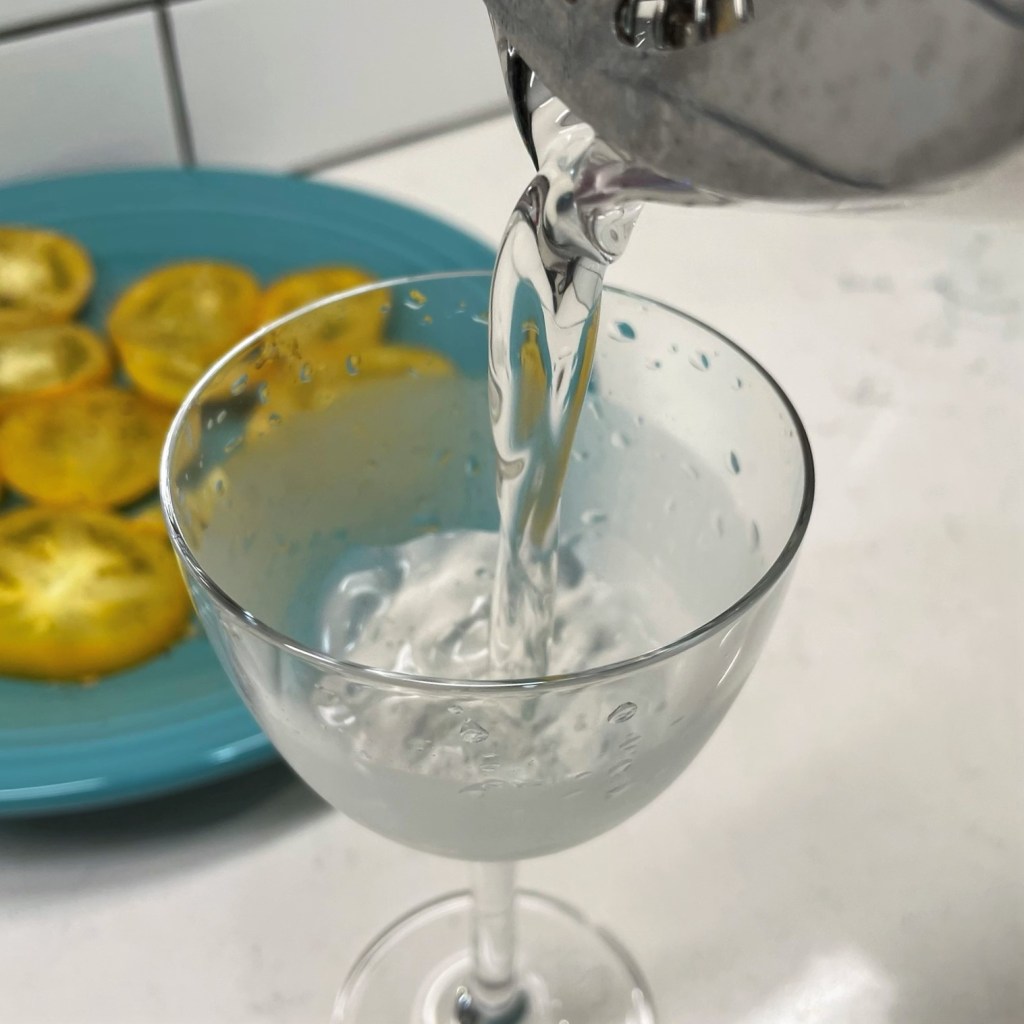
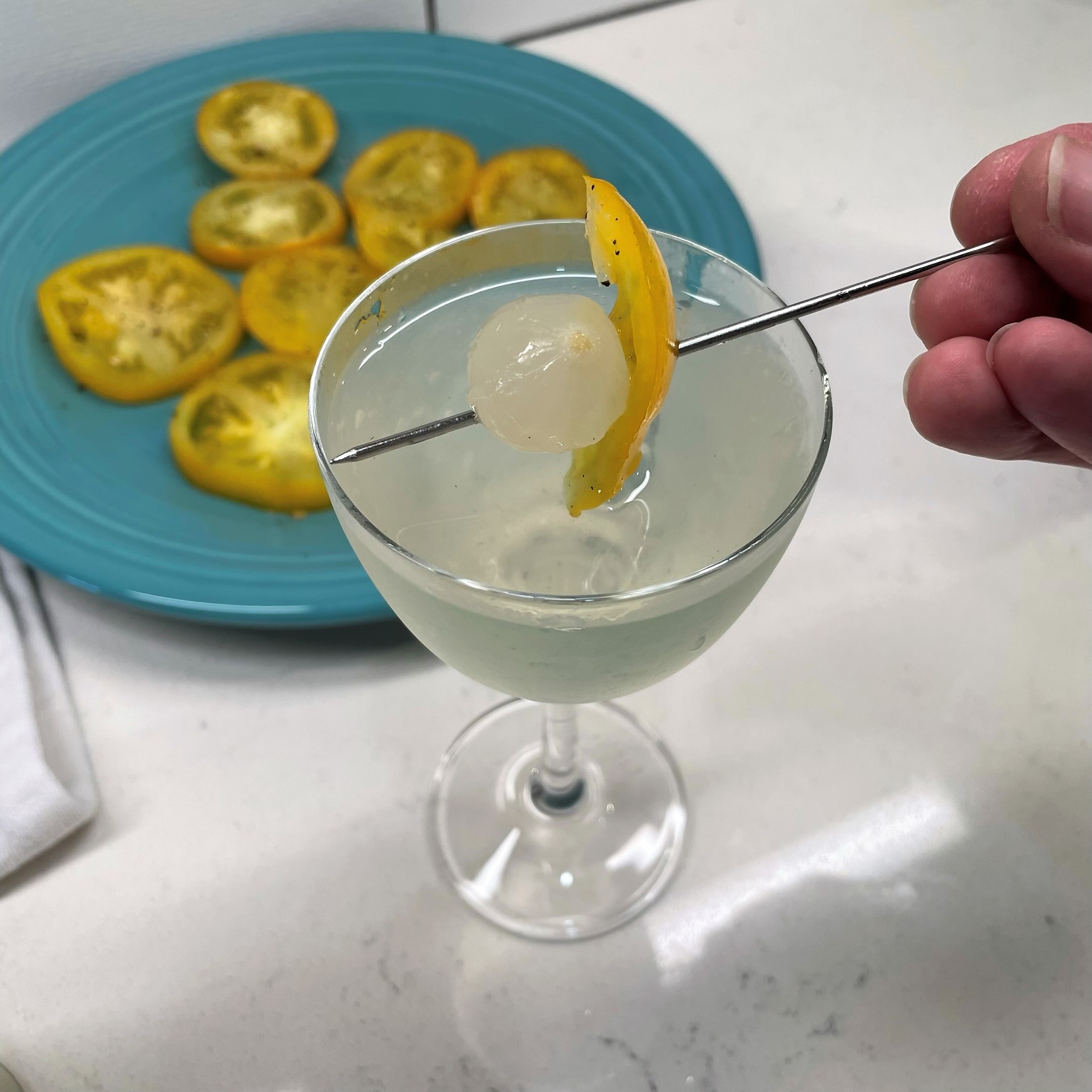
Empty the ice water from your chilled glass, and immediately strain the martini into the glass. Garnish with a pickled cocktail onion or olive, and a small piece of tomato if you wish.

Cheers to summer!

Summer Tomato Water Martini

  • Servings: 1 cocktail
  • Difficulty: average
  • Print

This super-simple twist adds a bright, fresh, summery flair to an otherwise classic martini cocktail, and I have found myself slicing up tomatoes just so I can make another one.

Ingredients

  • 1 ripe, garden fresh tomato (any variety, but heirloom is best)
  • Sea salt and freshly ground black pepper
  • 2 oz. good vodka (I have used Grey Goose and Ketel One with terrific results)
  • 1/2 oz. dry vermouth (my fave here is Dolin)
  • 1/2 to 3/4 oz. seasoned tomato water
  • 1 cup ice (for mixing)
  • Pickled cocktail onion, olive and/or piece of tomato (for garnish)

Directions

  1. Slice tomato and arrange the slices on a plate or shallow bowl. Season with salt and pepper and let rest about 15 minutes. Chill martini glass with ice and cold water.
  2. Add vodka and vermouth to a cocktail shaker or mixing glass. Transfer the tomato slices to another plate, or use them in a salad or sandwich. Drain the remaining tomato water into a small bowl or shot glass. Measure at least one tablespoon of it into the cocktail glass. Add ice and shake or stir until chilled.
  3. Empty ice water from the chilled glass. Strain the cocktail into the glass and garnish as desired.
  4. Repeat at least twice per week until all the tomatoes are gone.


My Favorite Martini

One might look with suspicion at the photos on my smartphone, especially if they didn’t know my backstory or my penchant for showing, rather than telling, what is happening in my life. As I was scrolling my photo roll the other day—looking for a random image of what, I don’t remember—I noticed that I frequently snapped images of mainly three things: bread dough, cats and martinis. Alrighty, then.

Cats have been part of my world for as long as I can remember, and apparently even longer, as I even have a photograph of myself as an infant, with a black and white cat right next to me—a guardian angel, no doubt. Many cats have graced me with their presence and their trust over my lifetime, and I am fascinated by their expressions, their agility and their overall adorableness. I try in vain to capture their essence.

Bread dough has played a major role in my recent life as well, especially after the “birth” of my sourdough starter in 2016. I am fascinated by the development of dough, and humbled that I can be part of the magic that happens in it. I make a lot of bread and I take a lot of pictures of that process.

So what about martinis, and where do they fit in as a most-photographed item? I realized, upon closer inspection, that most of my martini pictures were taken right around 4:30 p.m., the time of day I would regularly wish my Aunt Joy a happy “Happy Hour” across the miles that separate us. However did we manage before texting?

An afternoon martini helped me navigate some of the madness during our kitchen remodel.
Gotta love that blue tape on the door.

In previous years, my happy hour libation would have been a simple glass of wine, and occasionally enjoyed at a wine bar with a girlfriend. But COVID changed everything, and with so much time on my hands for experimenting, the cocktail has had a real renaissance moment at my house. I have dabbled in mixology, trying out different spirits and techniques—even investing in the correct glassware—and my new favorite is definitely the martini. It is simple, but refined. It goes down easy, but not too easy.

I suppose my grandmother had a little something to do with martinis being my chosen cocktail, though I do not remember her ever making them as I do today—gin, shaken with ice and vermouth, sprinkled with bitters and poured into a chilled coupe glass with a skewered, lemon peel-stuffed olive. For her happy hour, Gram simply poured her martini ingredients over ice in a short glass. She made hers with vodka, and always “dirty” with a little bit of briny olive juice, and I don’t remember whether she added vermouth. Maybe if she found it on sale.

The first time I remember sharing a martini with Gram was in Spring 1992 in central Florida, where she and my grandpa retreated each year to escape the brutal upstate New York winters. My week there marked the first time I felt like an adult in my relationship with Gram, but that had nothing to do with the cocktail.

My grandpa had just passed away after a lengthy stay in the hospital, and though my mother had been there to say goodbye, and one of her sisters had stayed a bit longer to spend precious final moments and offer support to Gram, neither was able to stay indefinitely, and Gram was alone when her husband died. Even their snowbird “cronies,” as she called them, had already migrated back to their homes up north. I was living in North Carolina at the time, and I felt compelled, as the geographically nearest relative, to make the 10-hour drive (which is practically nothing, when you’re in your 20s) to be with her. She appreciated my presence, but for most of my visit it seemed clear she did not need it.

We traipsed around town for a few days as if all was normal, visiting the farmers’ market, where we bought fresh tomatoes and cucumbers for all the salads we ate. She taught me how to use the flat edge of a paring knife to loosen the tomato skin for easier peeling, and I still do it that way today. We chatted about my blossoming relationship with my boyfriend at the time, and she beamed with pride as I told stories about my job on the radio. We shared afternoon martinis, including on the day the funeral director dropped by the house to deliver my grandfather’s ashes, and I was astonished that she did not collapse in grief. Then, on the day before I was scheduled to drive home, Gram pulled off the main drag into a gas station lot and I realized the reason for my visit.

“Oops, you’ve stopped on the full-service side, Gram,” I told her, recalling how careful she had always been—and urged me to be—to pinch pennies by clipping coupons, canning her own pickles, stretching out leftovers and stitching handmade clothes. There was no way, I figured, that she intended to pay extra for an attendant to fill her tank. And then she shocked me by explaining that Grandpa had always taken care of gassing up the car and she supposed she’d have to get used to paying more now that he was gone. That’s when I realized that there was an important reason for me to be there. Finally, after so many years of the being the student, I had a chance to teach something new to the best teacher I ever had.
“OK, pull to the other side and step out of the car with me. Today I am going to teach you how to pump gas, Gram.” She was a grateful student.

Would she have appreciated this lesson in martini making? Of course! She’d remark with a lilted voice at how fancy and elegant my version of a martini is, as if I were making a cocktail for the Queen of England (also a martini maven). She would even pretend to hold the stem of a coupe glass very gingerly, with her pinky finger extended.
And then she’d grab a juice glass and pour her own favorite martini, the vodka version, straight over ice.

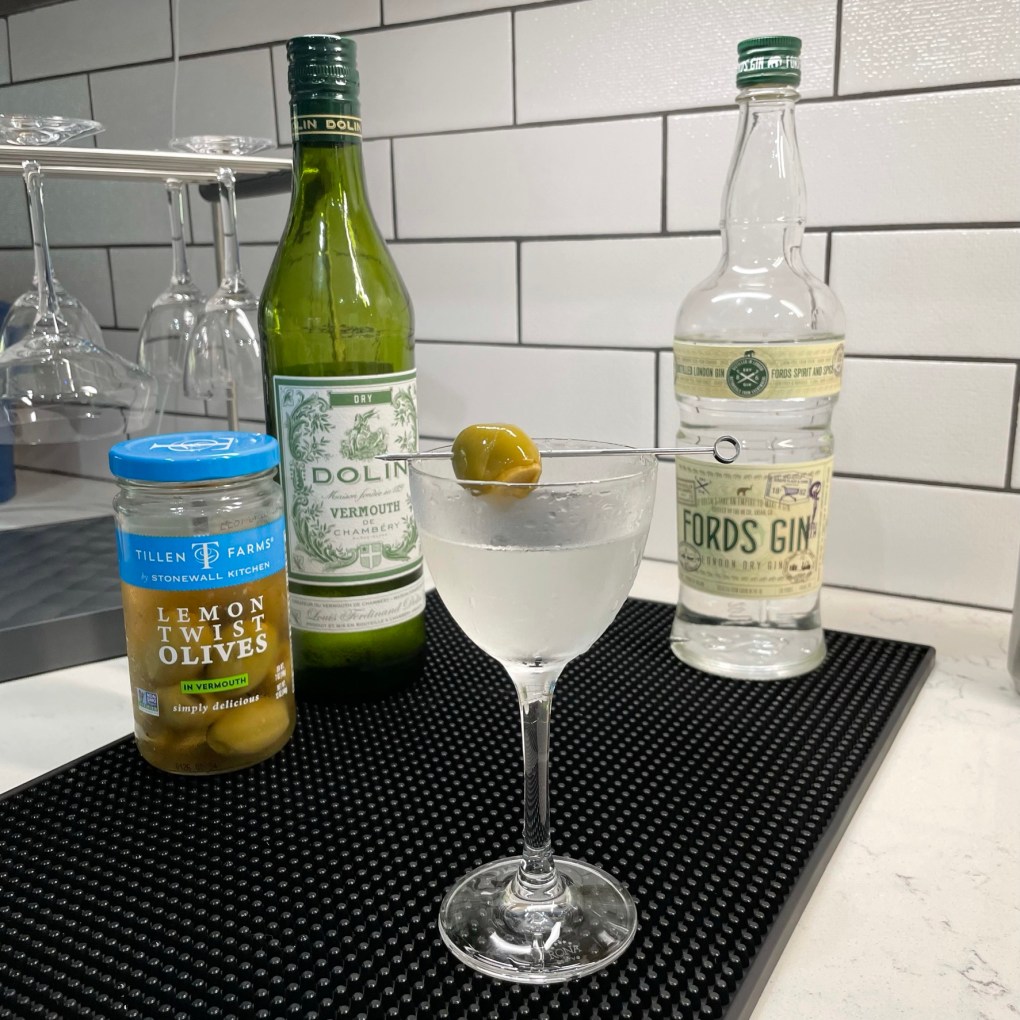
This is my favorite martini, with orange bitters and occasionally a strip of organic lemon peel.

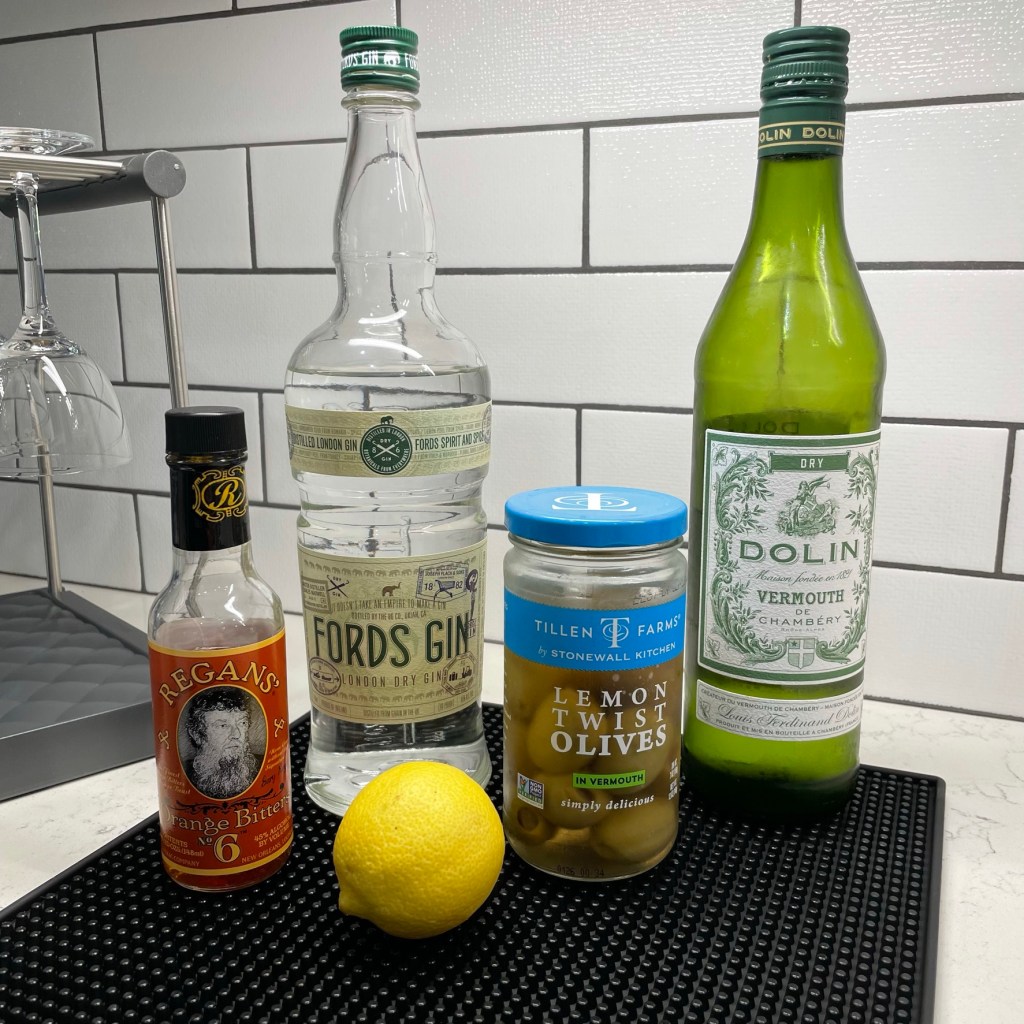
Ingredients

  • 2 oz. Fords gin
  • 0.5 oz. Dolin dry vermouth
  • 2 quick shakes Regan’s orange bitters
  • A lemon peel-stuffed olive to garnish
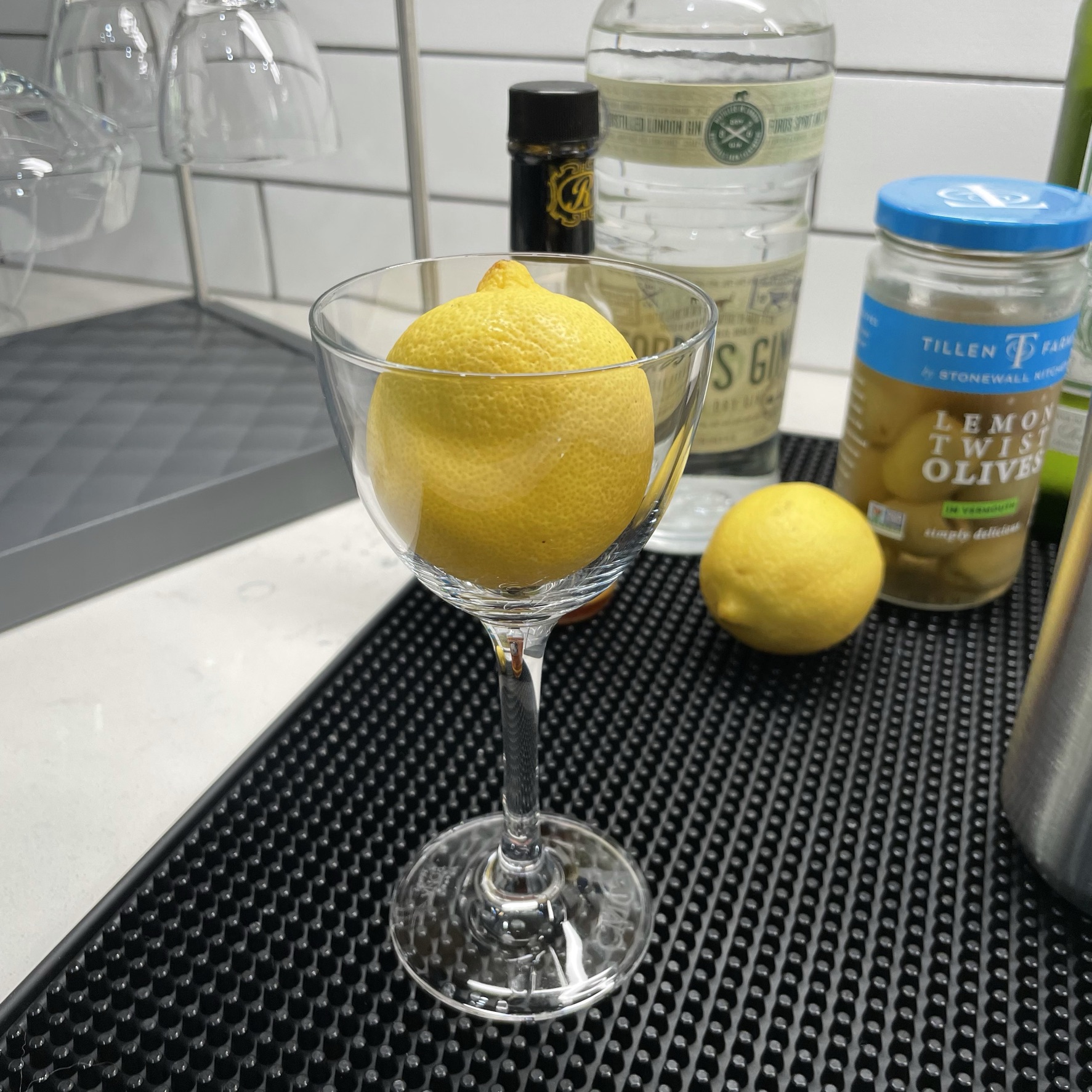
  • Optional strip of organic lemon peel, if you’re feeling extra fancy (or if they’re on sale)

Instructions

First things first, chill down your cocktail glass. Some people like to keep them in the freezer, but I prefer to chill only the bowl of the glass by filling it with ice cubes and a splash of water. Give it a spin with your cocktail pick. Why? It is a law of physics that the ice-in-motion will chill the glass faster than the ice just sitting there.

Next, measure the gin and vermouth into a cocktail shaker, and give it two quick shakes of orange bitters. This may seem unusual, but the bitters play very nicely with my preferred gin and makes the drink feel complete.

Now, cap the shaker and give it a good shaking. Some people prefer to stir a martini to prevent over-diluting it, but I generally prefer to shake it and I have found that using a generous scoop of ice chills it down very quickly, also preventing over-dilution. Don’t shake it violently, just enough to mix the ingredients completely. 20 seconds should do it.

Pour the shaken martini into the chilled glass. I like chilling it with ice because the stem of the glass doesn’t get frosty or slippery from the freezer.

Dump the ice that has been chilling your glass (be sure to let all the water fall out), and strain your beautiful martini right into it. Skewer the olive and drop it into the glass.

Repeat as desired.


Oz-mopolitan – a “wicked” fun cocktail for Halloween!

What if everything we have always assumed about the Wicked Witch of the West turned out to be smear campaign, orchestrated by someone else, whose own reputation was at stake? What if the Wicked Witch was misunderstood, mischaracterized and scapegoated? What if she was driven to be wicked or what if she was never wicked at all?

These are all questions I have pondered, after my husband, Les, and I enjoyed seeing the touring performance of Wicked: The Untold Story of the Witches of Oz. Neither of us had seen or heard much about the story, which began as a book in 1995, and was adapted for the Broadway stage in 2003, ultimately skyrocketing into the $1 billion+ range in ticket sales. There has been talk for more than a decade about a live-action film based on the story, which remains to be finalized, but I have my fingers crossed!
No recordings or photos were allowed during the performance, but the beautiful backdrop was perfect for selfies before the show!

The performance we attended in Greensboro, N.C. was delightful, funny, magical and thought-provoking. The set decoration and costumes were breathtaking, and the music was simply spectacular! I had often heard the tale of Wicked described as a “prequel” to The Wizard of Oz, but we found it to be more departed from that classic, beloved story—perhaps more of a re-telling or an alternate perspective with more context. The tale revolves around the unexpected early connection between Glinda and Elphaba (see?—the wicked witch actually had a name), their rivalry in magic school and in a love triangle, and the final straw that became the wedge to drive them apart. Well, sort of.

There is a flashy scene near the middle of Wicked, when Glinda and Elphaba first discover the glitz and glamour of the Emerald City, and Glinda remarks that it’s “all very Oz-mopolitan!” When Les and I left the theatre, I removed my mask and said, “You know I’m gonna have to make a Wicked cocktail, right?”

I will not present any spoilers, in case you have not seen the play, but I will say that my cocktail is a very slight riff on a classic drink called “The Last Word,” and there’s a reason (other than the color) that I chose this drink. The story of Wicked is itself a riff on a classic, and in that magical tale, it is Elphaba, the perhaps-not-so-wicked witch, who has the last word, and that is what left me with all the questions I pondered at the beginning of this post.

Now, about this green drink. 😉

It’s a shimmery, green, dramatic version of a classic Prohibition-era cocktail. Perfect for Halloween or any other time you are feeling a little “witchy.”

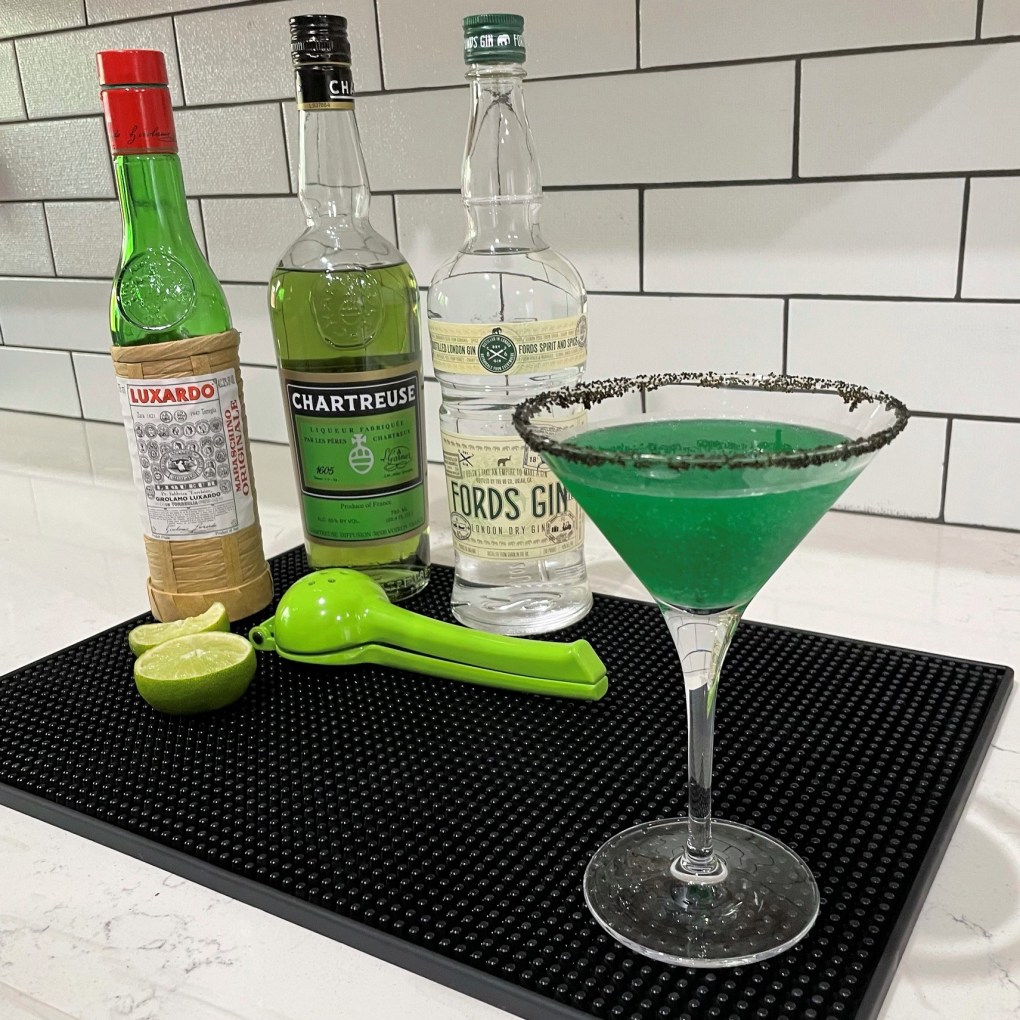
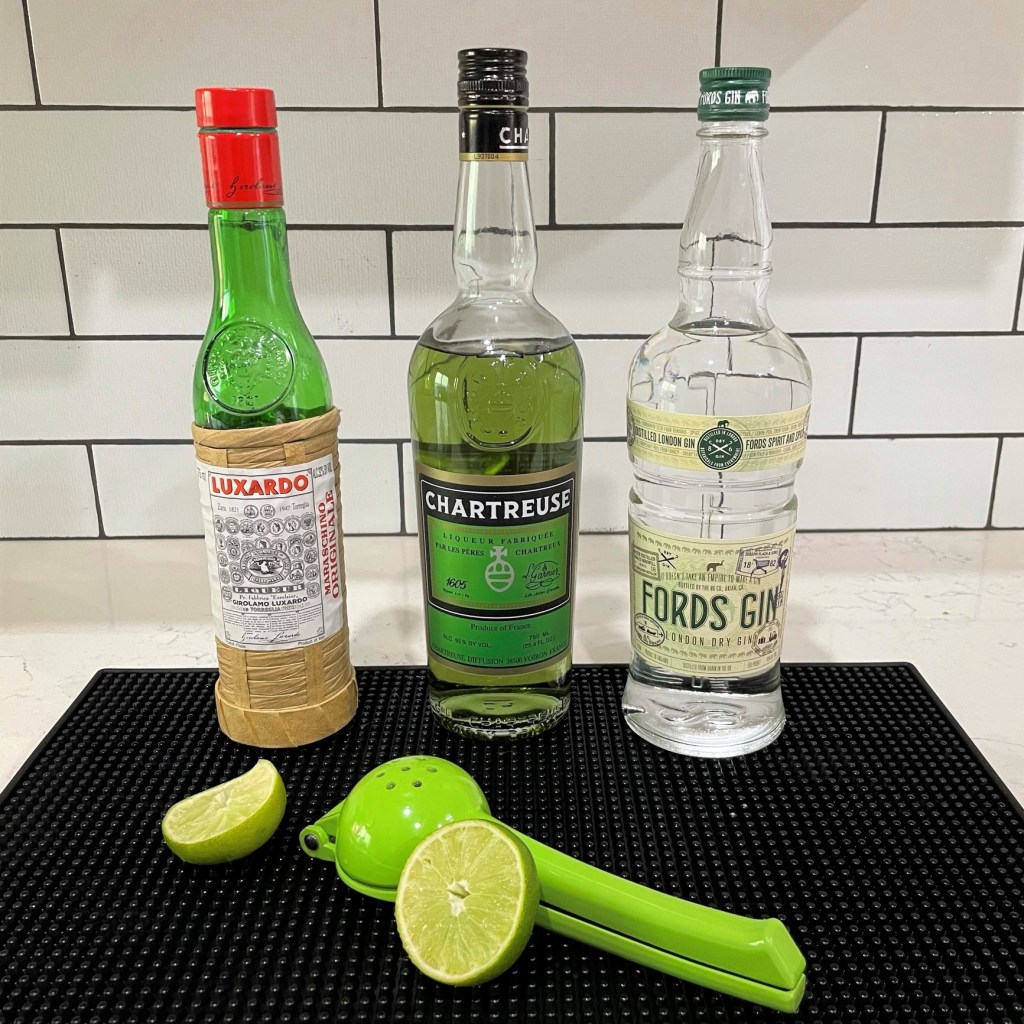
The original drink, The Last Word, was a Prohibition-era classic—made with equal parts gin, green Chartreuse, maraschino liqueur and freshly squeezed lime juice—and it is all at once herbal, sweet, citrus-y and complex. I have not altered the recipe of The Last Word; rather, I have pushed it into “wicked” territory by use of three simple but dramatic special effects.


And for those special effects, I have renamed my version “Oz-mopolitan.” Enjoy!


Equal parts of gin, Chartreuse, maraschino liqueur and lime juice make up the classic cocktail called “The Last Word.”
You are also getting a sneak preview of my new kitchen in these images!

Ingredients (makes one cocktail)

3/4 oz. dry gin

3/4 oz. green Chartreuse liqueur* (see notes)

3/4 oz. maraschino liqueur*

3/4 oz. freshly squeezed lime juice

Special effects

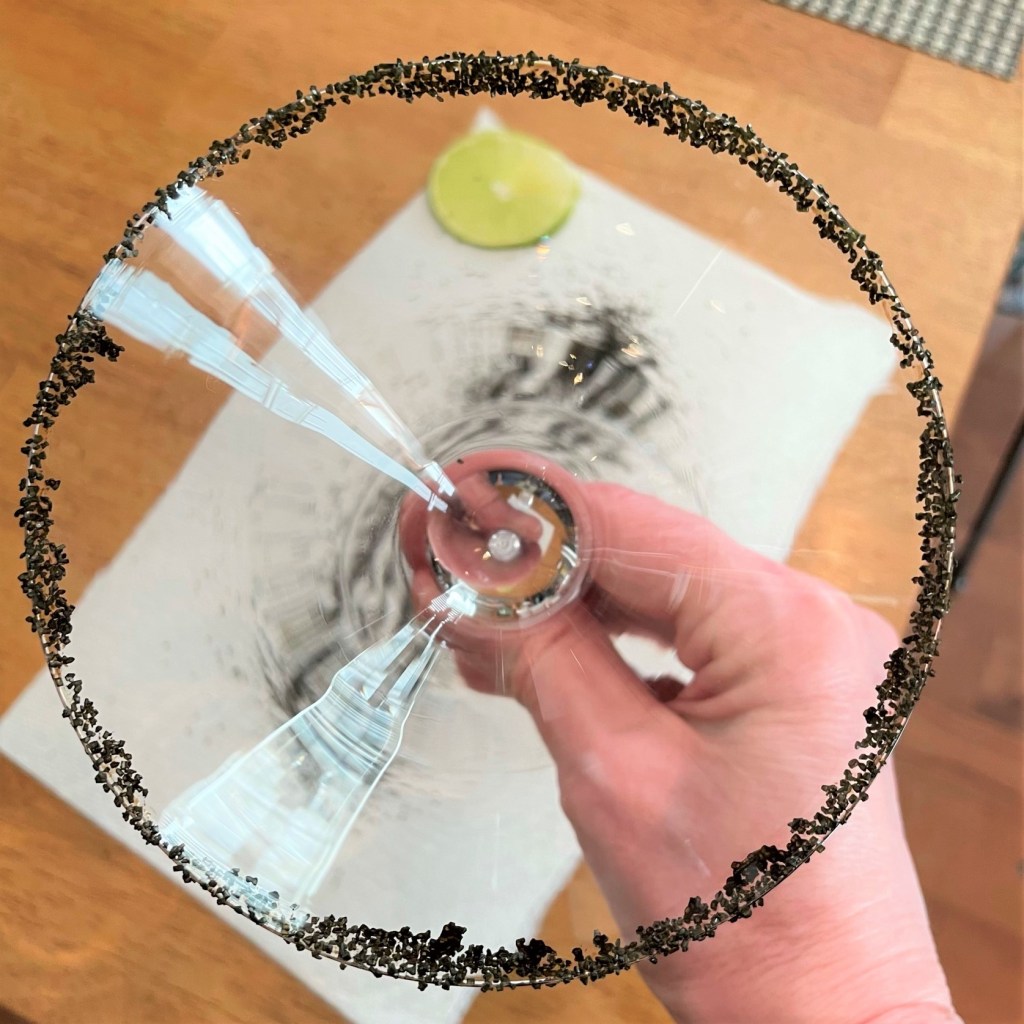
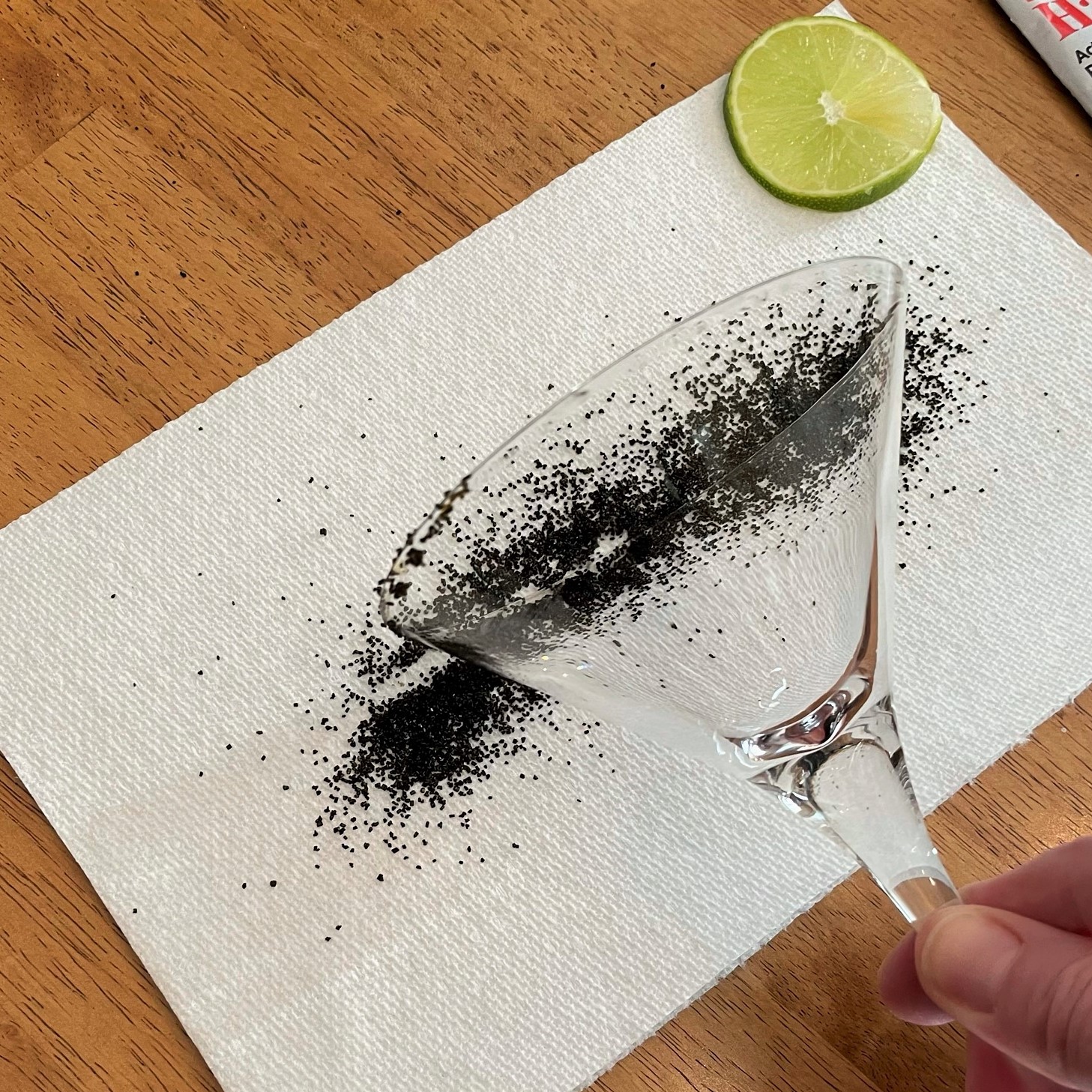
Black sugar sprinkles*

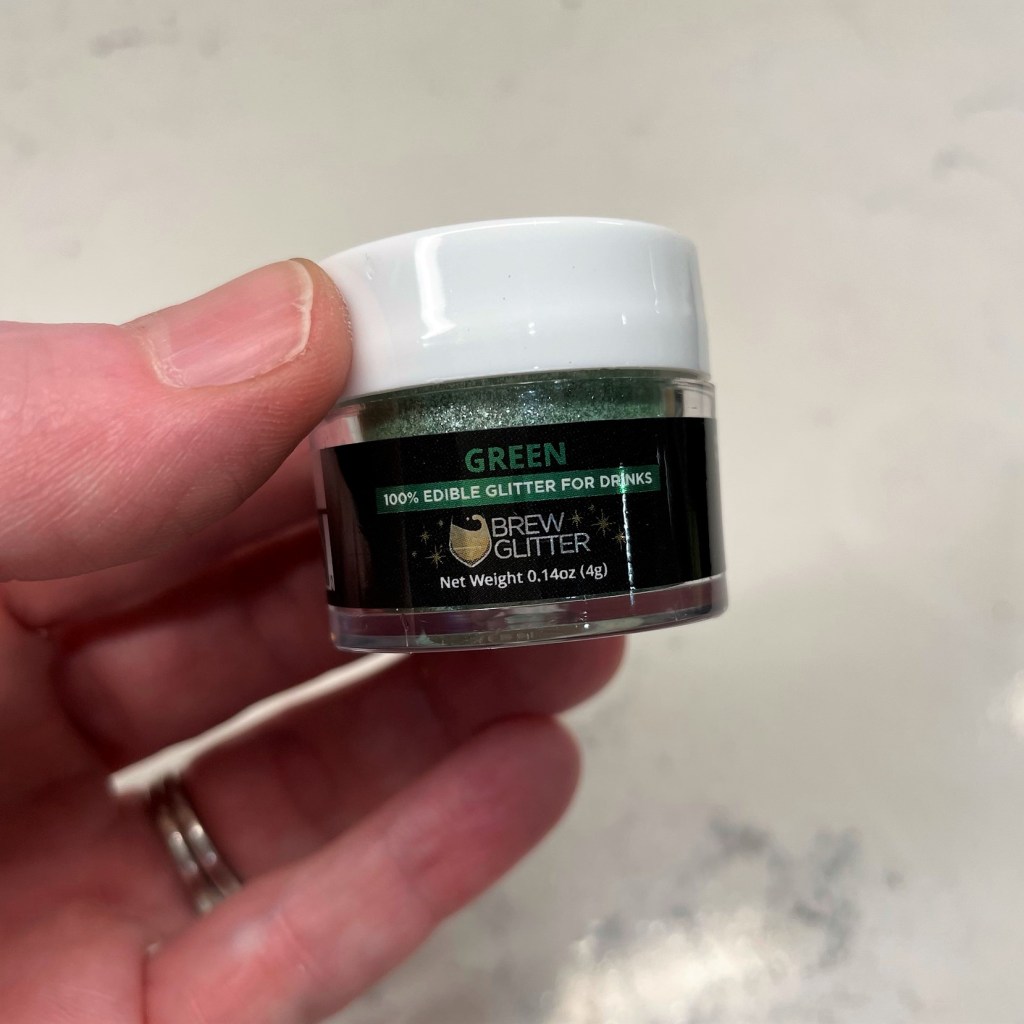
Pearl green edible glitter*

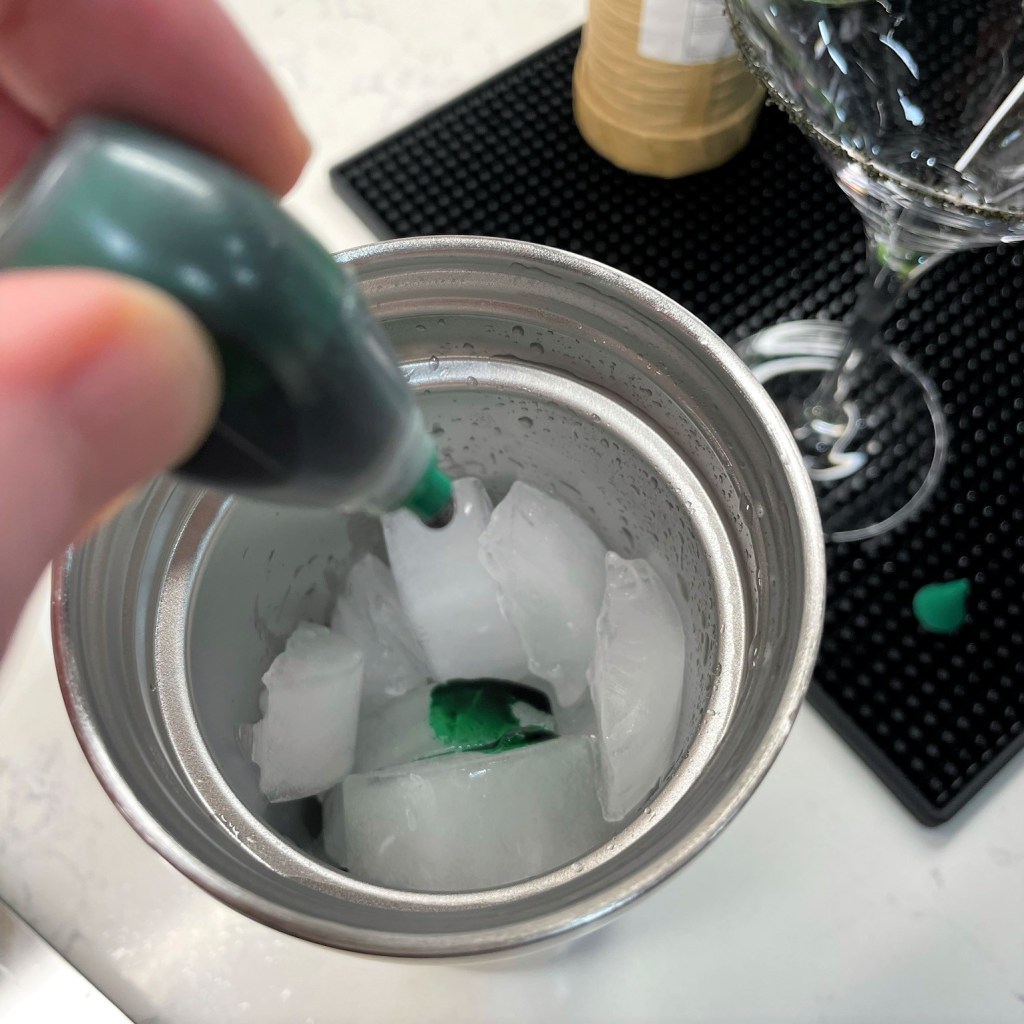
Green food coloring


*Notes

Chartreuse is a French liqueur, and there are two varieties of it—yellow and green. The green version (used in this drink) is strong, bold and herbaceous, almost medicinal on its own. For the most part, it is enjoyed as part of a cocktail rather than as a cordial.

Maraschino liqueur is also generally used as a mixer with an anchor spirit, such as vodka or gin. It is not as “cherry flavored” as you might expect, but it does lend a tart cherry accent to a cocktail. Luxardo makes a terrific version of this liqueur.

The black sugar and edible shimmer dust I used for this were very easy to find on Amazon, but you might also check the cake decorating section of a well-stocked craft store, such as Michael’s. Be sure the products you choose are clearly marked as “food grade” or “edible.”


Instructions


Prepare a martini or coupe glass by swiping a slice of lime all the way around the rim. Sprinkle black sugar onto a clean paper towel and roll the outside rim of the glass over the sugar, repeating the roll as needed for full coverage. It’s best to do this several minutes ahead, giving the sugar time to “set up” on the rim of the glass.

Combine the cocktail ingredients in a shaker, add ice and a drop or two of green food coloring. Shake vigorously for about 20 seconds.

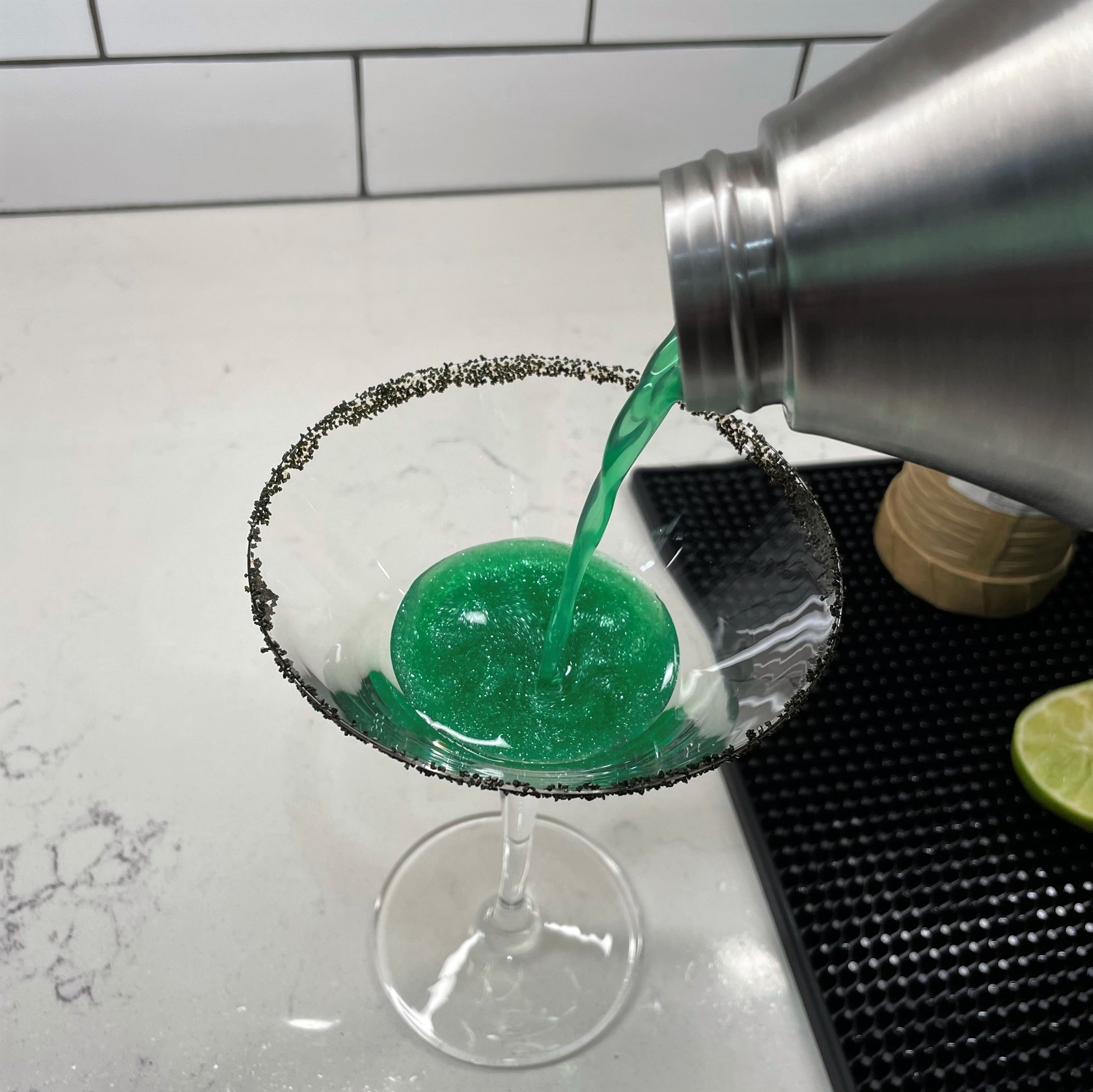
Sprinkle a small amount (I used just shy of 1/8 teaspoon) of edible shimmer dust into the bottom of the rimmed glass.

Strain the cocktail into the glass and watch the shimmer dust create a gorgeous, magical swirl!


Run for the Roses 2.0

For so many reasons, the arrival of September feels bittersweet this year. This weekend marks the U.S. observance of Labor Day, and although some are whooping “hooray” for a three-day weekend, my heart is heavy for others who are in deep despair for not having employment or for the serious health risks some people face daily as essential workers.

School is back in session, but in a way that is inconvenient at best and terrifying at worst. And while some parents are relieved for a return to normalcy in their schedules, others are stretched beyond reasonable limits—juggling remote learning alongside their own adult life responsibilities.

The pandemic has nudged all of us toward more creative avenues to community and friendship, and this blog has been a saving grace for me in that regard. Thank you for inspiring me and indulging me, as I share the adventures of my hopelessly cluttered kitchen. And though I know the impending change of season will ultimately force us back inside, stripping us of the already-limited social experience of meeting friends for patio dinners and happy hours, I find myself comforted by the promise of long-simmering soups and oven-roasted meats and casseroles. You will be hearing plenty from me in the months to come.

Oddly, summer is ending the same as it began for horse-racing fans. The Kentucky Derby, rescheduled from the first Saturday in May, will be held today—without live spectators. At least this time, there will be horses! The pomp will begin at 2:30 pm ET at Churchill Downs, and by post time at 6:50, you can bet I will have one of these two cocktails in my hand.

I knew back in May, when I posted about The Greatest Two Minutes in Sports, that I would revisit the occasion with a second round of drinks and snacks. Then, I highlighted foods that sang of spring—bright, fresh flavors of citrus and mint. And, of course, I took creative license with a couple of twists on the traditional Derby dish, the Kentucky Hot Brown. If you are new to my blog (welcome!) and missed those treats, you can find links to all of them on the Kentucky Derby Preview Party page.

For this 2.0 event, I have dialed it back to present a simpler offering—two Derby-inspired cocktails and my own twist on southern classic cheese straws that I’m calling Kentucky Bourbon Pecan & Cheese Biscuits. They are buttery and crisp, with two kinds of cheese and flecks of fresh rosemary, crowned with a bourbon-bathed toasted pecan. Despite the flavor complexities and my over-the-top description, these were easy to make from simple ingredients and just a few special touches.

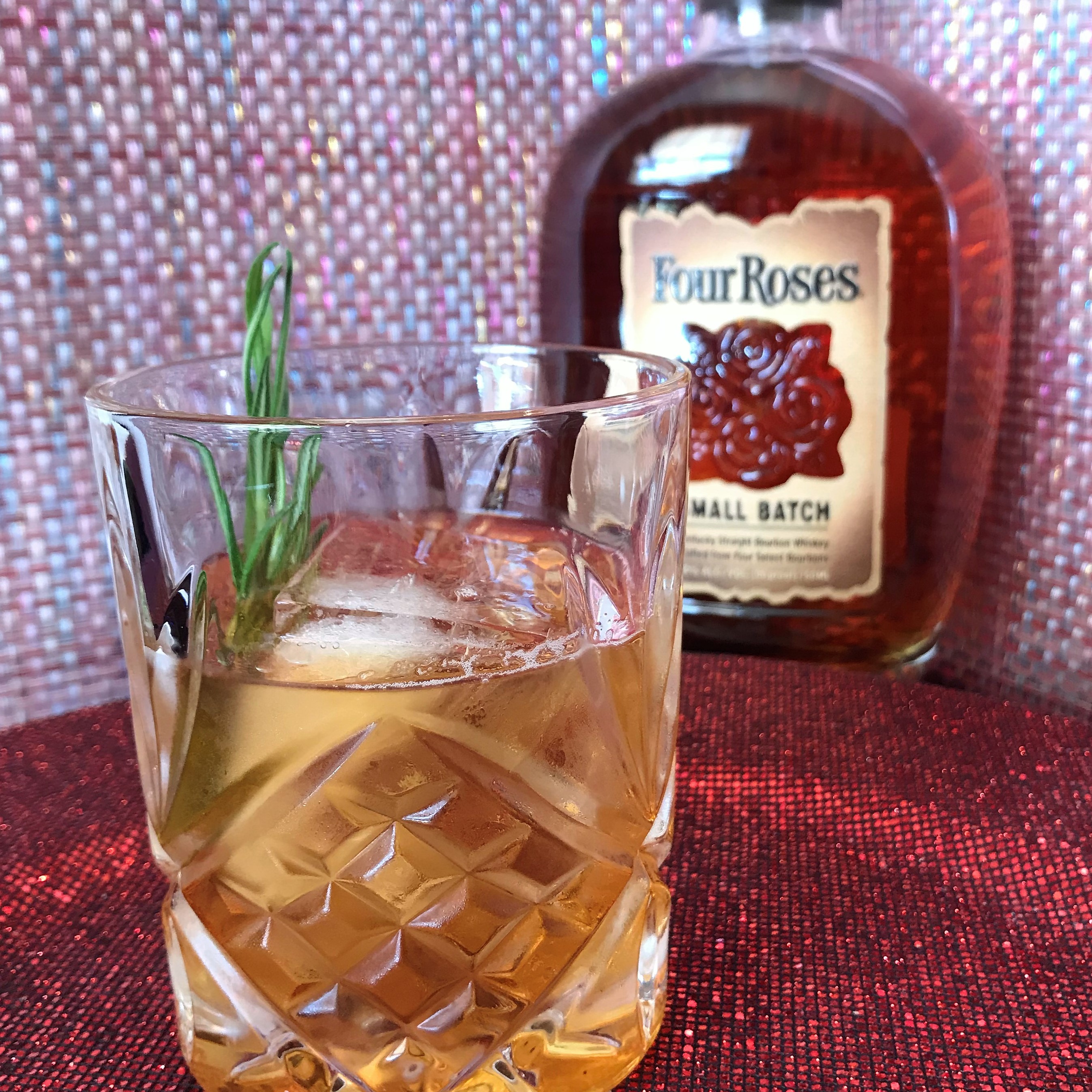
My Smoky Rosemary Old Fashioned is understated, served over a giant ice cube, and in place of the mint that accents a julep, this sophisticated cocktail is highlighted with rosemary and a slight peppery smokiness, delivered by a simple syrup. The combination of flavors smells and tastes like autumn.

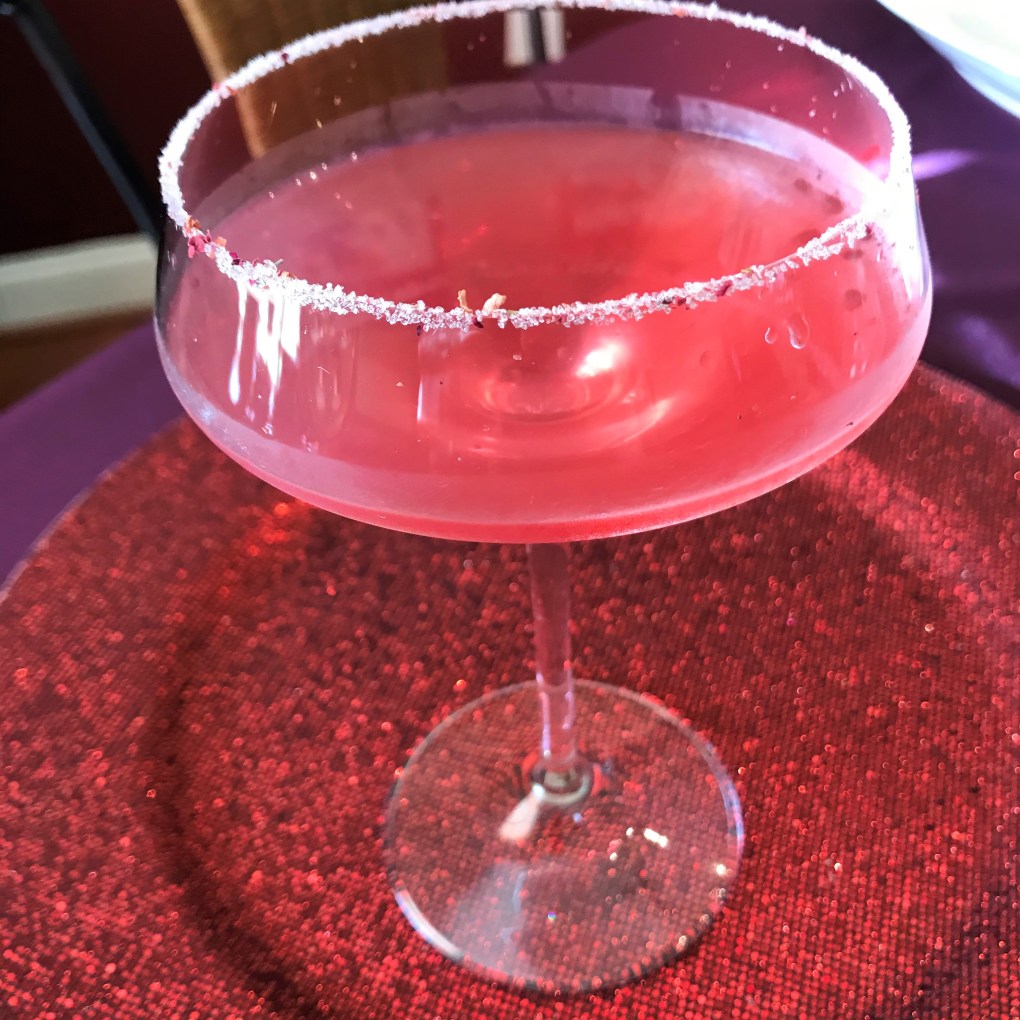
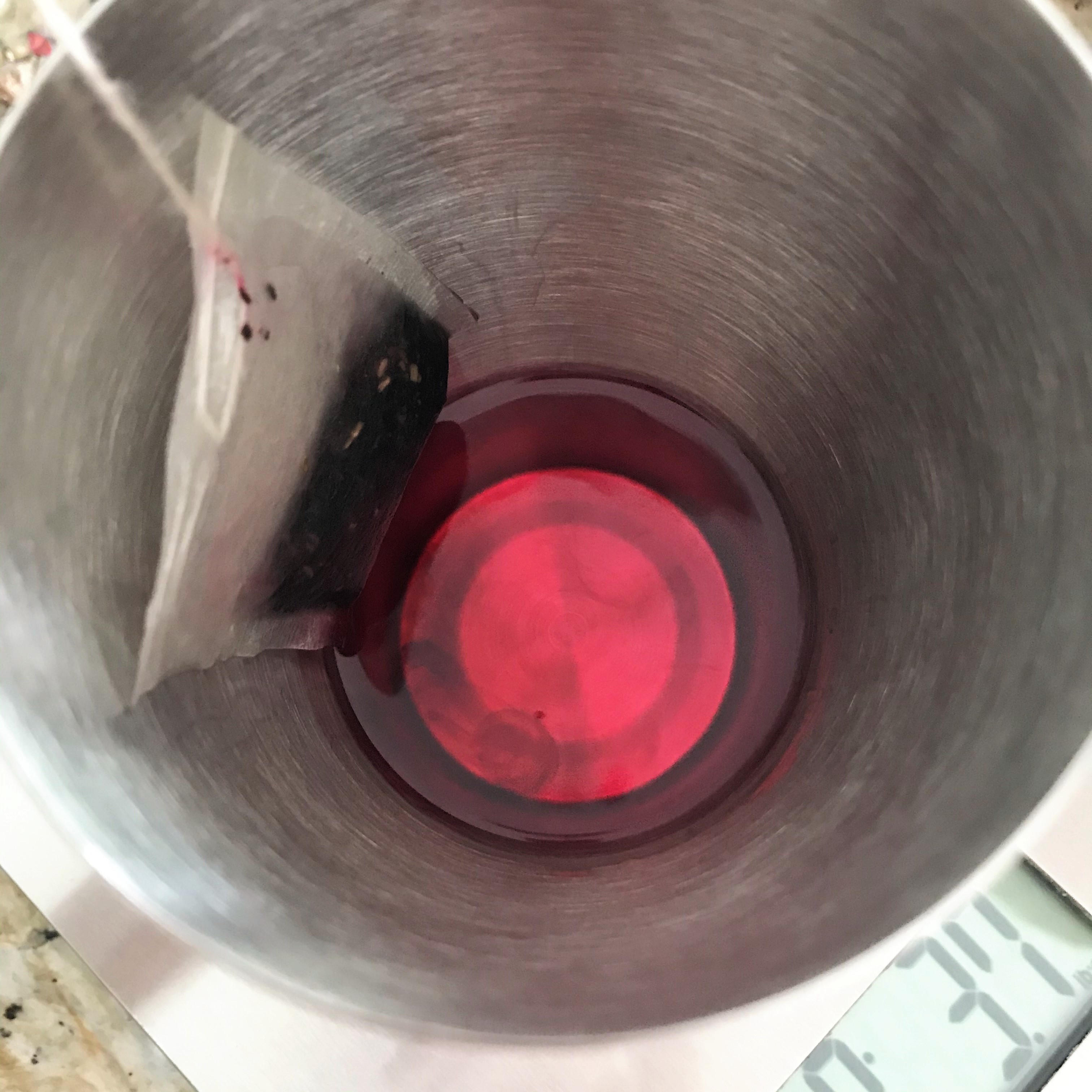
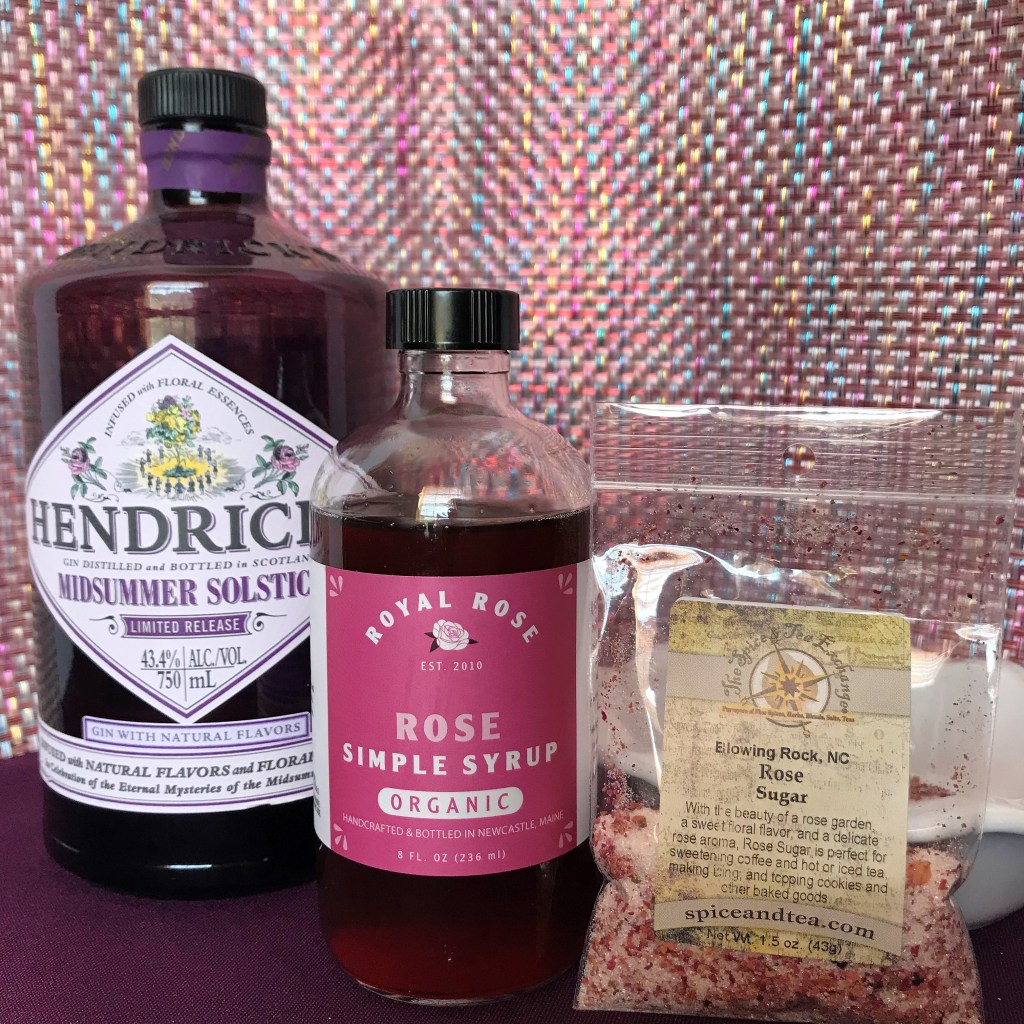
The gin drink, on the other hand, is a fancy-schmancy, decidedly “girly” libation—made with Hendrick’s Midsummer Solstice and glammed up with rose syrup and a rose sugar rim, the same way a Kentucky Derby lady would be decked out in a fancy hat and pink lipstick. The Midsummer Solstice carries forth the usual essence of cucumber and rose, as classic Hendrick’s is distilled with both. But other botanicals are clearly in full bloom in this small batch version, and the deep pink color is drawn from the leaves of rose’s cousin, the hibiscus. During my (ahem) research and development, also known as “knocking back a bunch of gin drinks,” I tried many things to elicit the true rose color I desired. A quick infusion with a hibiscus tea bag not only delivered on the color, but also contributes a bright, slightly tart note that is truly special. I’m excited to share this with you!

Now, before I give you the recipes and a play-by-play on making these drinks, I want to let you know that I am sometimes astounded by the information I find during my culinary research. I had already laid out my plan for these drinks when I sat down to name them, and it was only at the time of writing this post that I learned something so cool, I have to share it with you.

When we think of a julep, we automatically get a mental image of mint sprigs spilling out the top of a frosty silver mug—because julep implies “mint,” right? But today I learned the origin of the word “julep, and it is derived from a Persian word that means (wait for it)—“rosewater.” As my darling husband often reminds me, there are no coincidences. 🙂

Enjoy!


Subtle hints of smoke and rosemary blend with Four Roses small batch bourbon to send summer off in style.

Smoky Rosemary Old Fashioned

2 oz. Four Roses Small Batch bourbon

0.5 oz. rosemary-smoked pepper syrup (see below)

2 drops orange bitters

Orange peel for garnish (optional)

Combine bourbon, syrup and bitters in a cocktail mixing glass. Add ice and stir vigorously for 20 seconds, then strain over a large ice cube in a double rocks glass. Garnish with orange peel twist, if desired.

Rosemary-Smoked Pepper Syrup

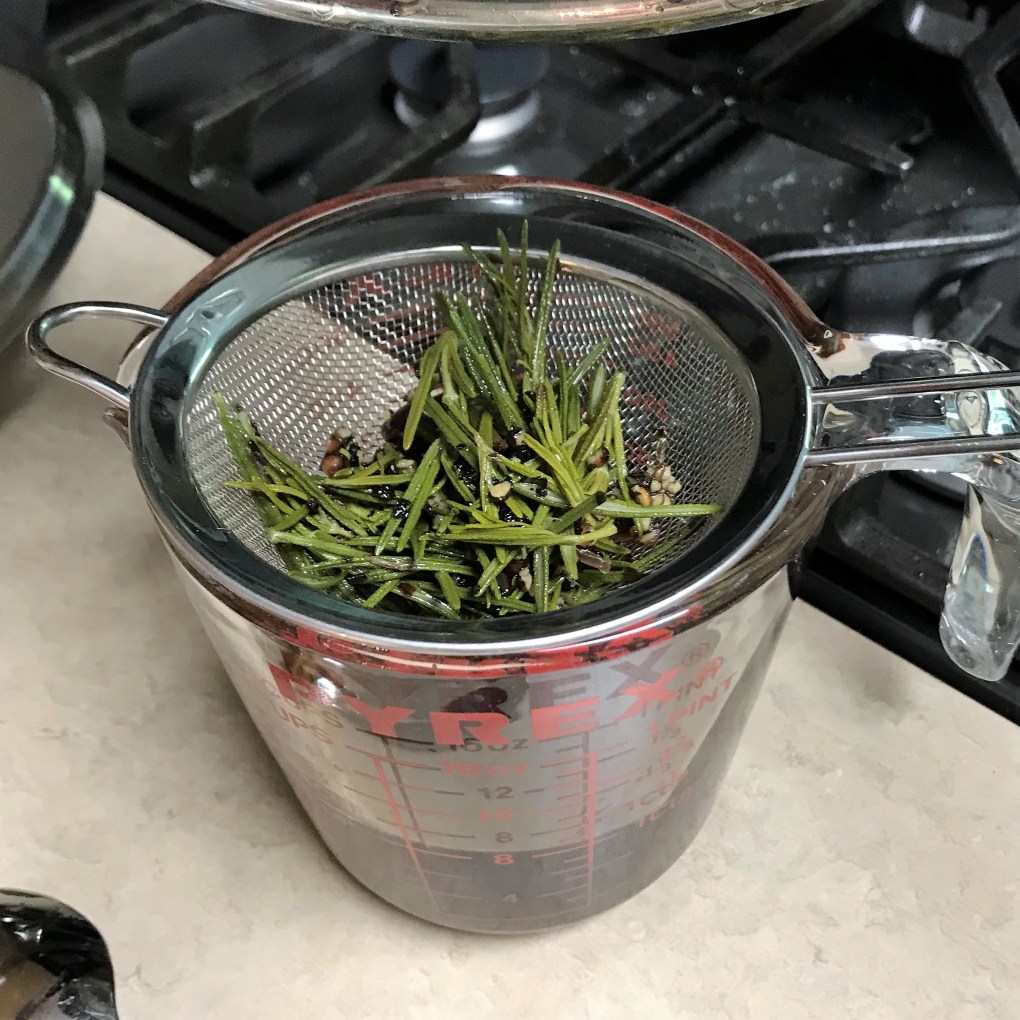
Combine 1/2 cup filtered water and 1/2 cup cane sugar in a saucepan, and place over medium heat just long enough to dissolve the sugar and come to a very slight boil. Turn off heat. Add a small handful of fresh rosemary leaves (rinsed clean) and 1 teaspoon of cracked oak-smoked peppercorns. These are made by McCormick spice company, and available in the spice section of well-stocked supermarkets. Allow the mixture to steep until completely cooled. Pour syrup through a fine mesh strainer into a jar and refrigerate for up to one month.

The rose sugar rim ignites your senses the moment you raise the glass for a sip!

Midsummer Run for the Roses

2 oz. Hendrick’s Midsummer Solstice gin (or classic Hendrick’s)

0.5 oz. rose simple syrup* (see notes)

1 fresh lime, cut into quarters

Rose petal sugar* (for rim garnish; see notes)

1 hibiscus tea bag*

20 minutes ahead, sprinkle rose sugar onto a small plate or paper towel. Rub a wedge of lime around the rim of a cocktail glass, and then gently roll the outer edge of the rim in the sugar until the glass is coated all the way around. Place the glass in the refrigerator to chill.

Combine gin and hibiscus tea bag in cocktail shaker and rest for two minutes—only long enough for the hibiscus to stain the gin with its lovely hue. To see the difference, move the slider on the images here:

Remove the tea bag. Add the rose syrup and the juice of the lime wedge. Remove tea bag, add ice and shake vigorously for 20 seconds, until outside of shaker is frosty. Strain into the rose sugar-rimmed glass.

*Notes

Flowers, flowers and more flowers!

I found the rose syrup, which has a delicate and sweet flavor, in the cocktail mixers section at Total Wine and have seen similar products online. The rose petal sugar is available from the Spice & Tea Exchange, either online or at one of their retail locations. The hibiscus tea is made from only dried hibiscus leaves, and it provides the deepest pink color I could have hoped for, plus a tangy tropical note that sent this lovely cocktail straight over the top.


Basil Gin Gimlet

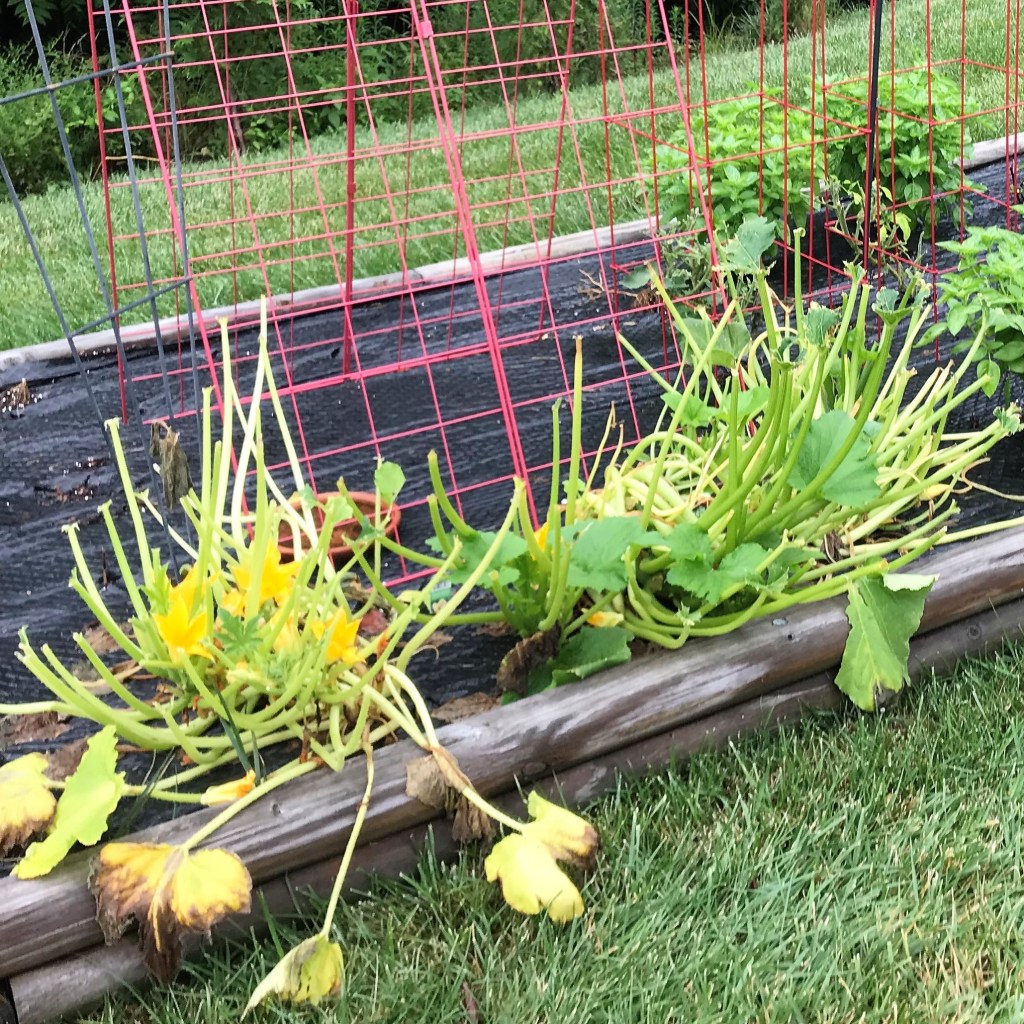
As summer winds down, I am finding myself eager to put behind me the near-disaster that was “Garden 2020.” I described in mid-May my reluctant optimism in planting anything, given the history I’ve had with the neighborhood deer (bless their hearts). Then, in early July, a glimmer of hope when I discovered all those lovely squash blooms. Little did I know (and I didn’t even bother to report to you) that it would be my final harvest of the season, as only days after the post about the ricotta stuffed squash blossoms, I was shocked back to reality with the total decimation of my raised bed plot. The deer ate everything—the blossoms, the growing fruit, the leaves, and even the tops of the hot pepper plants.

CAUTION: Graphic images ahead may be disturbing to some readers.

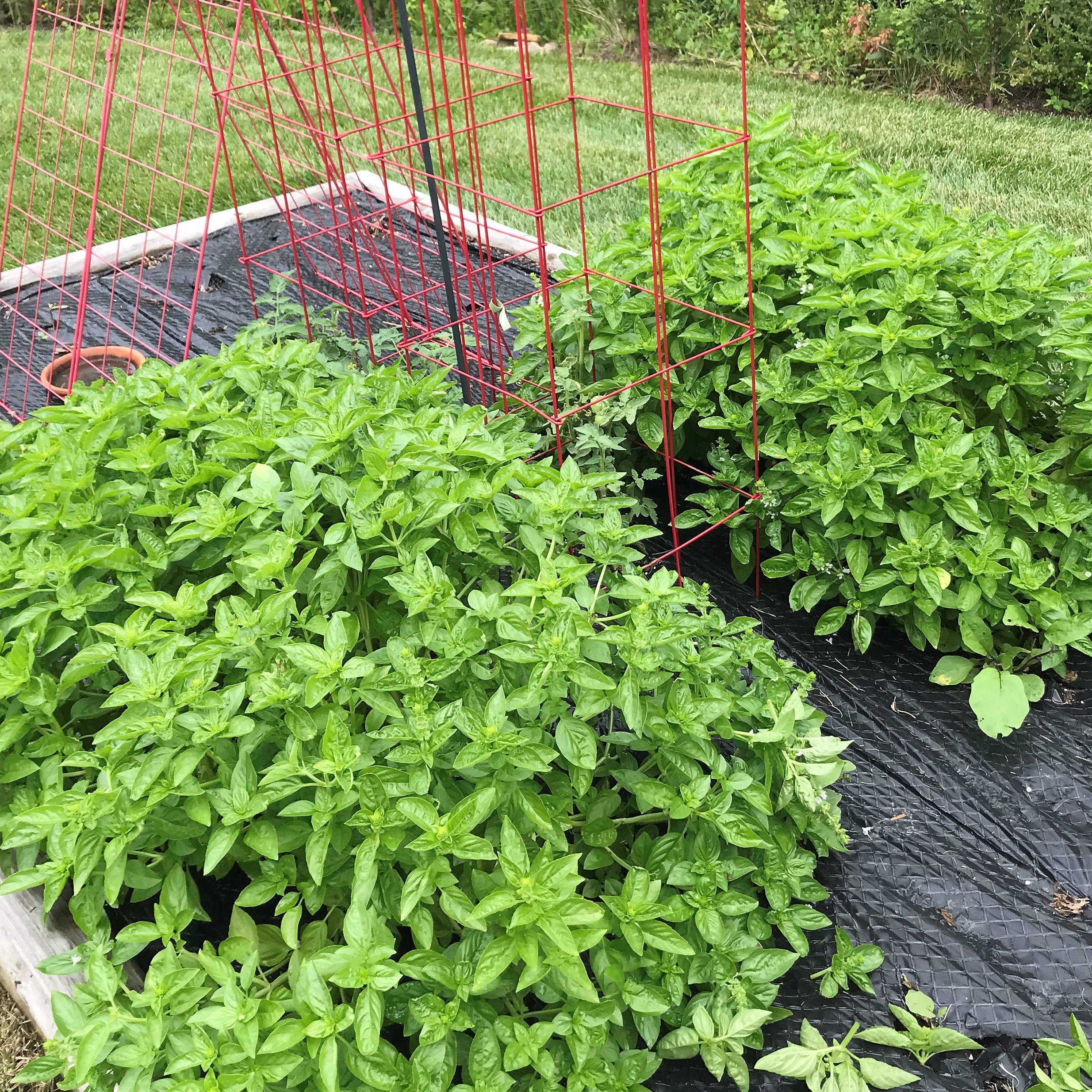
All of it, gone. Except, of course, the basil. Lord have mercy, do I have basil.

All that pruning was worth it for this amazing basil harvest.

The saying goes that if life gives you lemons, you should make lemonade. In keeping with such age-old wisdom, I shall make basil cocktails! I’m still on my kick of inventing infused simple syrups for martinis, Manhattans and other libations. Might as well make the best of this excessive herbal situation—and as luck would have it, these petite little drinks are flat-out yummy.

It’s cold and refreshing, and tastes like summer!

I had opportunity to share them this week with my friend, Tina, who lives at the top of our neighborhood and is just about the biggest arts and crafts fanatic I’ve met (it takes one to know one). She had casually mentioned recently that she had entered several projects in a local art competition, which perked up my ears, big time. Kind of the way our dog, Nilla, perks up when we mention “cookies.”

Did you say cookies??

“Oh? What kind of art?” I asked.

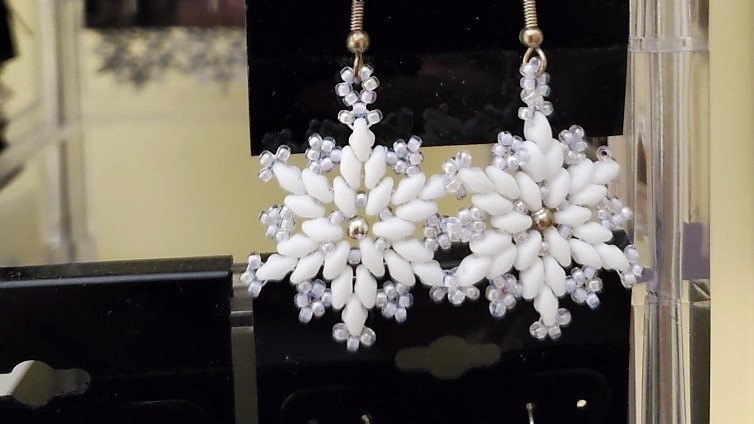
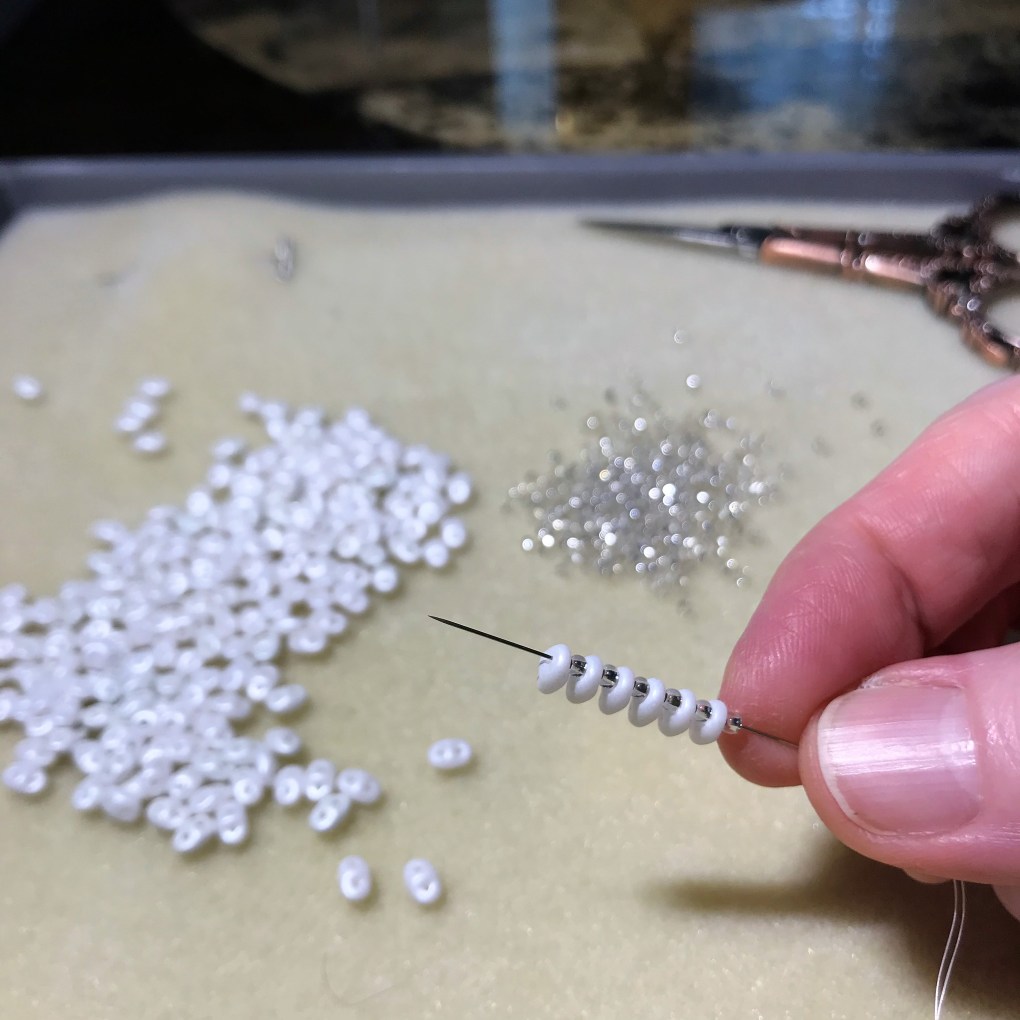
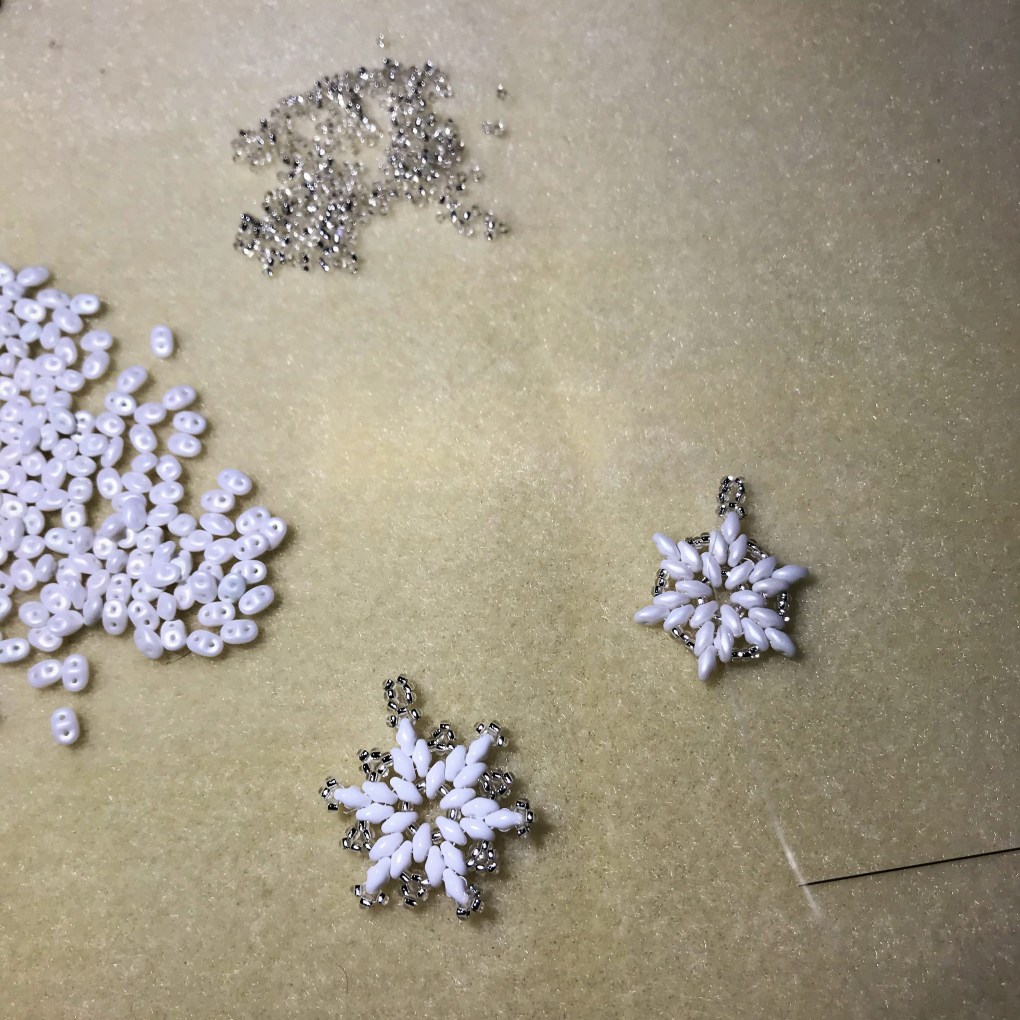
Turns out, Tina has quite a number of art techniques in her repertoire, including mixed media composition and acrylic pour painting (which absolutely mesmerizes me), and jewelry design. And then she quipped that she believes she is more creative while enjoying an adult beverage. What a coincidence—me too! Naturally, I made a motion for a neighborly get-together, during which we might accomplish both. Tina seconded the motion, and it turned out to be quite an afternoon. She provided the craft supplies (and expert guidance) to make these sweet snowflake earrings.

“We’re going to make these,” she said casually. Say WHAT?

And I provided the craft cocktail supplies to make these basil gin gimlets. If you also have a late harvest of basil coming out your ears, I hope you’ll give them a try.

Gin comes in several different types, and I’ve made this cocktail with a few brands, my favorite being Hendrick’s from Scotland, which is distilled with cucumber and rose—so botanically speaking, it’s a friendly playmate for the basil from my garden.


To make the cocktail, you’ll first need to create the simple syrup from equal parts filtered water and cane sugar, plus a good handful of cleaned fresh basil leaves. Do this at least a few hours in advance, to allow time for chilling the syrup.

Chill your cocktail glasses, either by filling with ice or placing in the freezer.

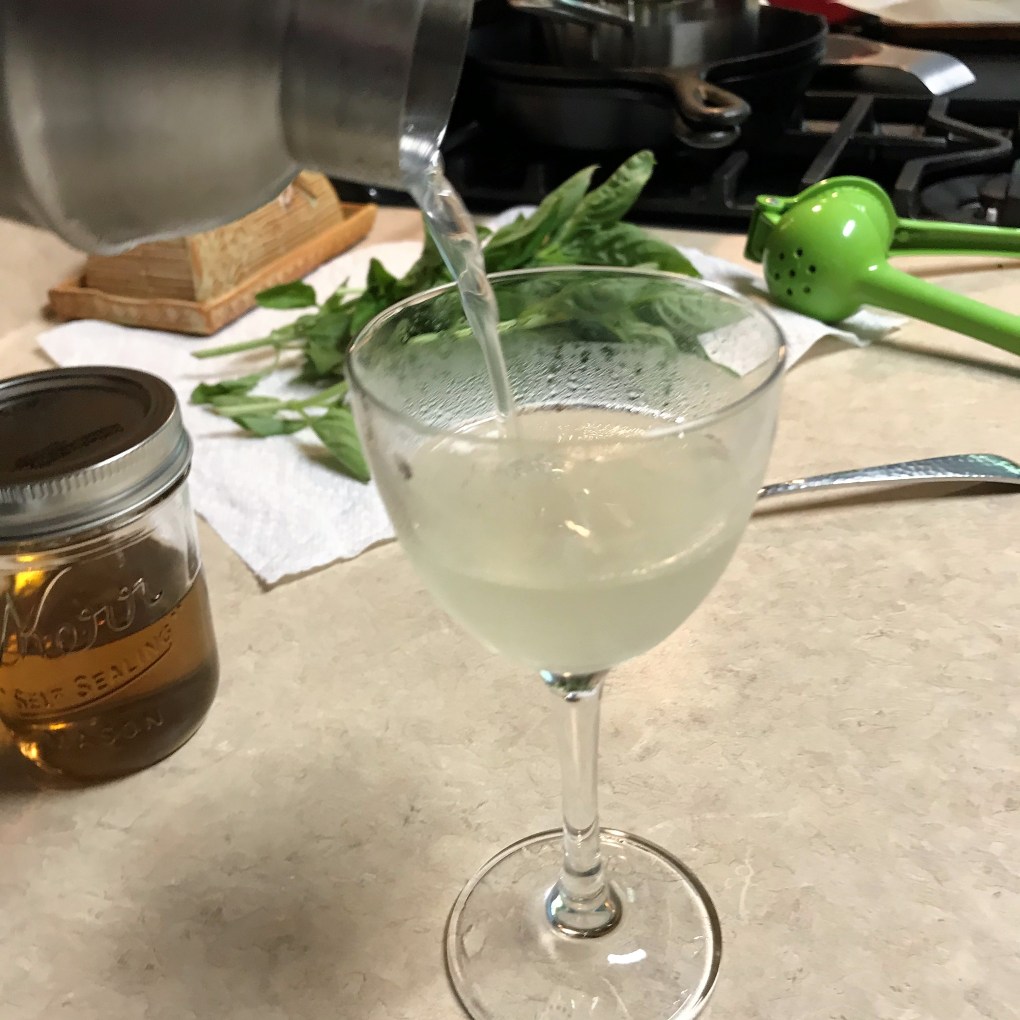
Measure the gin and basil syrup, add a squeeze of lime and shake it with ice. Some cocktail purists would argue that you should only stir a cocktail in a mixing glass, and that shaking serves to bruise the gin. I say phooey—shake the shake out of it, because I prefer my cocktails to be icy and refreshing. Choose as you wish, as long as you give it plenty of time to mingle with the ice to be cold and refreshing.

Strain the cocktail into your chilled glasses and savor the sweet flavor of late summer, with or without a jewelry party.


Ingredients & Instructions

Makes 2 cocktails

3 oz. Hendrick’s (or gin of your choice)

1 oz. basil simple syrup (details below)

Juice of 1/2 fresh lime


Combine ingredients in a cocktail shaker. Add ice and shake 20 seconds until the outside of the shaker is frosty. Strain into small, chilled cocktail glasses.


Basil Simple Syrup

In a small saucepan, combine equal parts filtered water and cane sugar (I used 1/2 cup each). Heat over medium only until sugar is dissolved and syrup begins to bubble at the edges. Add in a handful of fresh basil leaves (rinse, shake off excess water, and trim thick stems first). Stir and simmer 1 minute, then turn off heat and allow mixture to cool completely. Use a slotted spoon to remove the basil leaves, and transfer to a jar. Syrup will keep in the fridge for up to a month.

Dear followers, as of this morning, I have discovered that my remaining basil (all those bushy leaves) is completely covered in black spots. For the love of summer, I’m so over it. 🙂


Kentucky Derby Sips

Kentucky Love Child

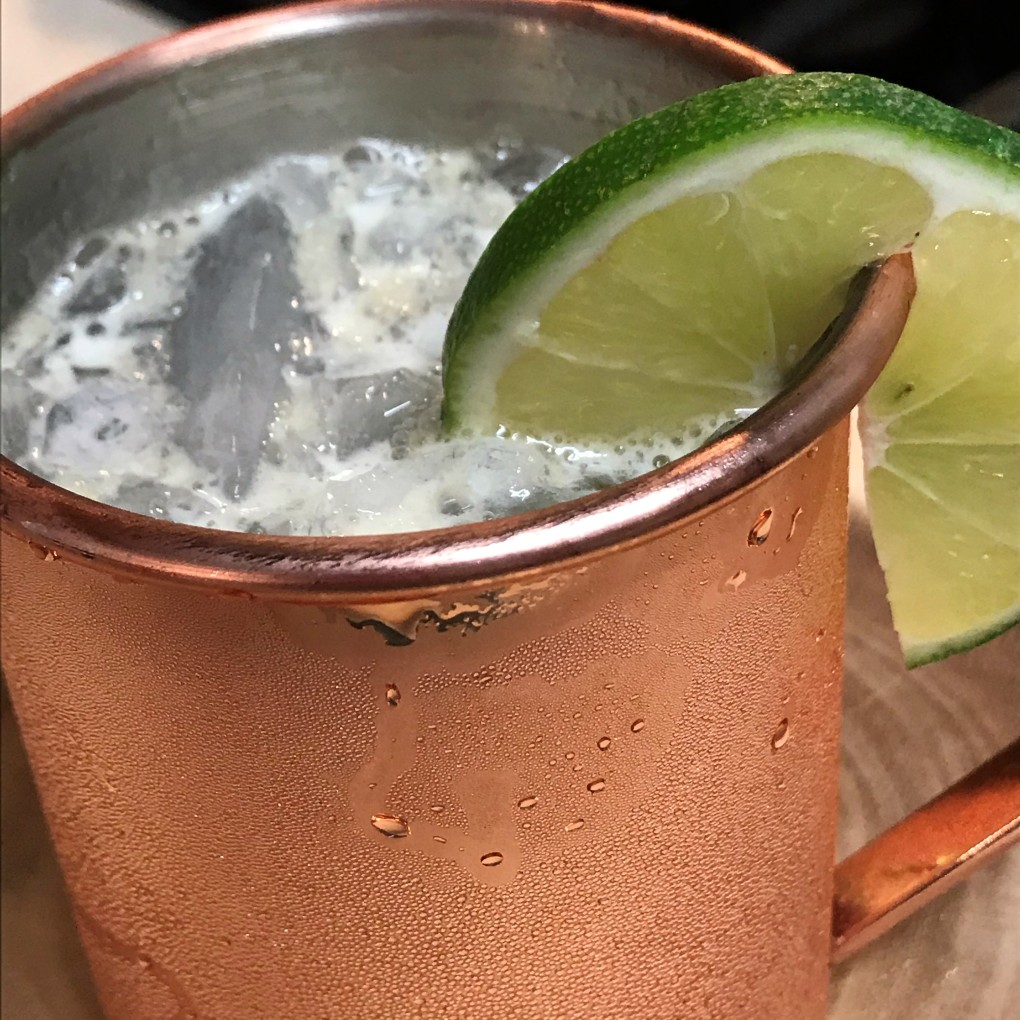
Like a cross between a Moscow mule and a mojito, but made with real Kentucky bourbon.

1.5 oz. Kentucky bourbon
0.5 oz mint simple syrup (recipe below)
Juice of half a lime
Reed’s extra spicy ginger beer

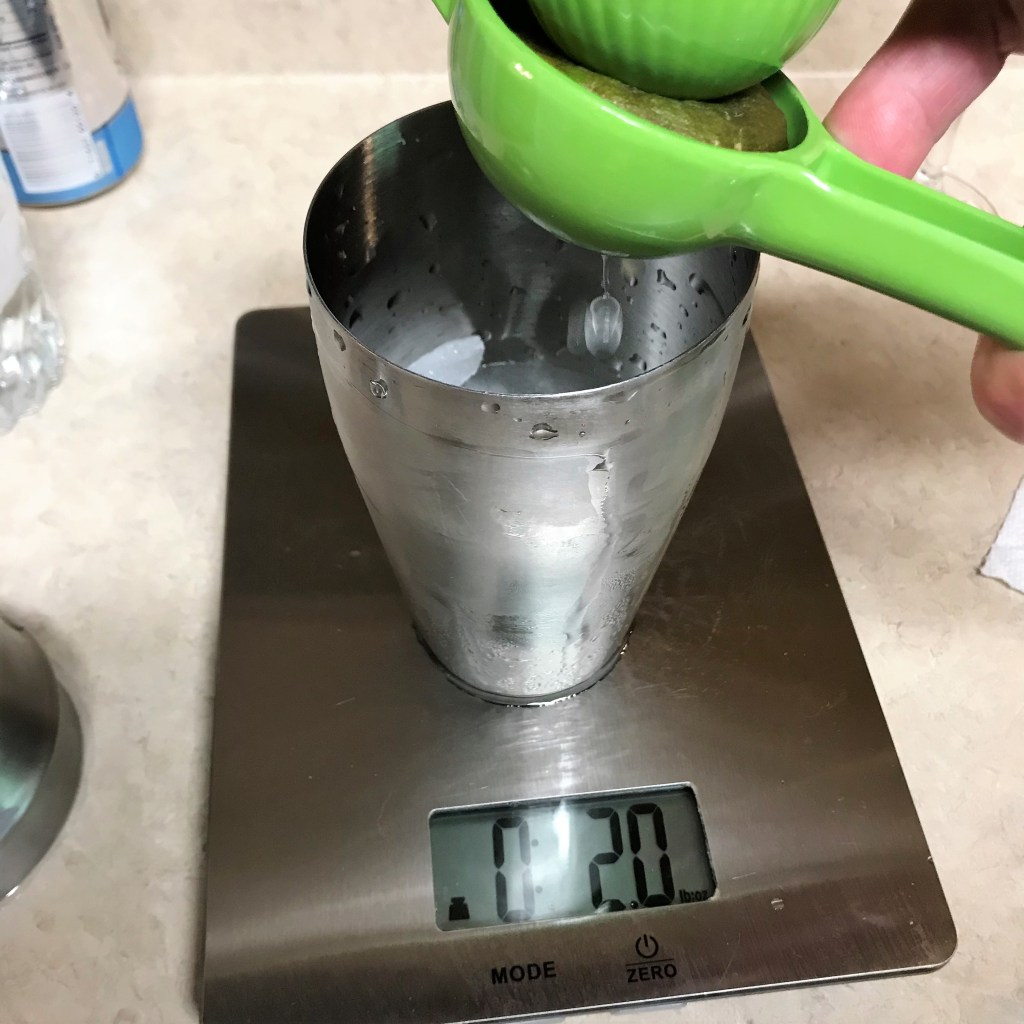
Combine bourbon, syrup and lime in a cocktail shaker. Add ice and shake like crazy for 20 seconds. Strain into a “mule” mug half filled with crushed ice. Top with ginger beer and garnish with fresh lime.

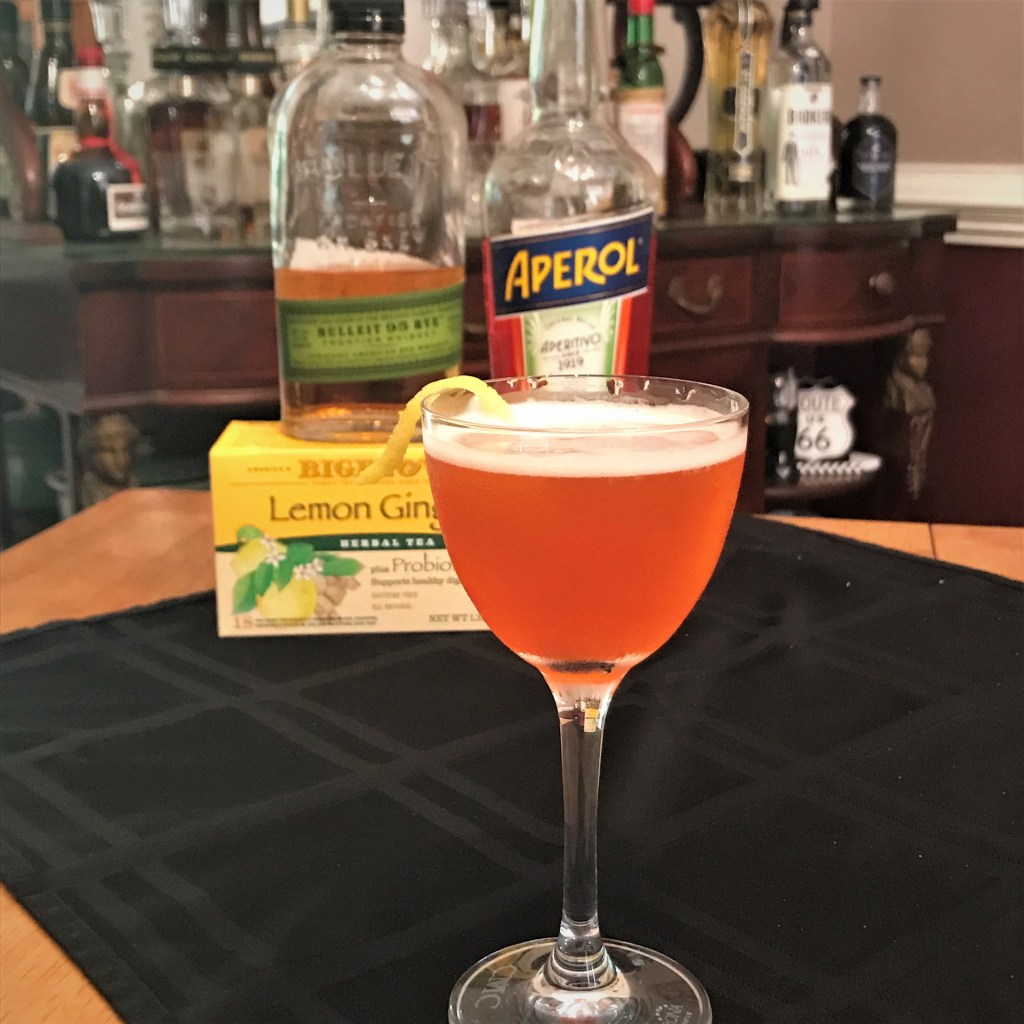
Sassy Comeback

A Southern spin on NYC’s “witty comeback”—and doesn’t it sound like a champion?

1.5 oz. Bulleit rye (bourbon works, too)
0.5 oz. Aperol (see notes)
0.75 oz. lemon ginger simple syrup (recipe below)
Seltzer or sparkling water (optional)

Combine rye, Aperol and syrup in a cocktail shaker. Add ice cubes and shake vigorously for 20 seconds. Strain into a chilled “Nick and Nora” glass (or small champagne glass). Enjoy as is, or top with seltzer. Garnish with a twist of thinly stripped lemon peel.

Sparkly Britches Lemonade

Because not everyone loves bourbon (yet).

1.5 oz. Hendrick’s gin
1 oz. cucumber simple syrup (recipe below)
Juice of half a lemon
Seltzer or sparkling water (optional)

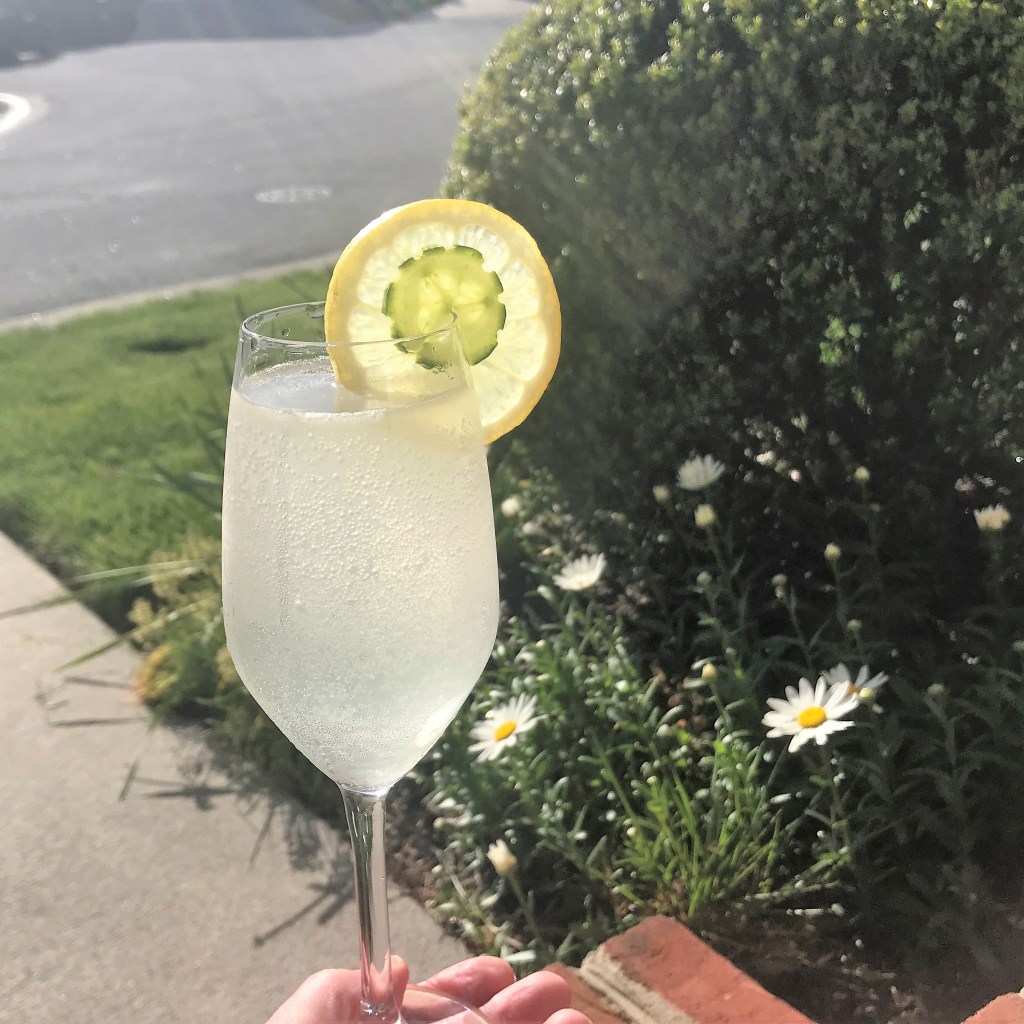
Combine gin, syrup and lemon juice in a cocktail shaker. Add ice cubes and shake vigorously for 20 seconds, then strain into a chilled champagne flute. Enjoy as is, or make it really sparkle with a splash of seltzer.


What is Aperol?

It’s an Italian-made liqueur, considered to be an aperitif (fancy speak for “pre-dinner drink”), and it has a citrusy, herbal, slightly bitter flavor and a shockingly bright orange color. If you’ve ever tasted Campari (another Italian liqueur), it’s kind of similar, but less bitter and less potent. On the nose, Aperol is kind of a cross between grapefruit, rhubarb and orange lifesavers. In a cocktail, it brings a world of complexity, and is especially refreshing in the warm weather months.


What is a Nick and Nora glass?


It’s a smallish cocktail glass, sort of a cross between a champagne flute and a coupe martini glass. I found these little 4 ounce beauties online, and created the Sassy Comeback specifically for the glass! As I mentioned the glasses to various friends, it seemed nobody knew what they were, so I did a little research to find out why the glass is so named. I like this explanation best:

“It’s named for the boozy, quick-talking couple in Dashiel Hamett’s 1934 novel The Thin Man. They’re the couple we all want to be, always dressed for a night out, always with a quip at the ready, and always—always—with a drink in hand. Their namesake glass appropriately honors their art deco–era swag.”

Bon Appetit

The novel eventually became a series of films, starring William Powell and Myrna Loy, which remained popular well into the 1940s. In this clip, you’ll see the same dainty glasses used for their martinis. At the end of the scene, “Nora” embodies the sassy comeback. She’s my kinda gal!


The Simple Syrups

Simple syrups are very easy to make. A regular simple syrup is equal parts sugar and water, simmered until sugar is dissolved, then cooled and chilled. Each of the syrups below has a flavor infusion, and they offer a unique “somethin’ special” to the above mentioned cocktails. Have fun!

Mint Syrup

Simmer 1 cup sugar and 1 cup filtered water, stirring frequently, until sugar is dissolved and mixture is warm enough to steam. Remove from heat and add a 1 oz. package of fresh organic mint leaves (wash them first and trim the heavy stems), and allow the mint to steep in the syrup until completely cool. Strain out the mint (discard it) and pour the syrup into a covered jar. It will keep in the fridge for a couple of weeks.

Cucumber Syrup

Simmer 1 cup sugar and 1 cup filtered water, stirring frequently, until sugar is dissolved and mixture is warm enough to steam. Peel 4 Persian cucumbers, and cut them into slices. Remove syrup from the heat, add the cucumber pieces and steep until the mixture is cooled. Discard the cucumber pieces and strain syrup through a mesh strainer to remove any bits or seeds. Pour syrup into a covered jar. It will keep in the fridge for a couple of weeks.

Lemon-Ginger Syrup

Bring 1 cup water to a light boil, then turn off heat. Steep 4 lemon ginger* herbal tea bags in the hot water for about 2 minutes, then remove and squeeze the tea bags (discard them). Add 1 cup sugar to the hot tea blend, and stir until dissolved (return to heat a few minutes, if necessary). Cool completely, then pour into a covered jar. It will keep in the fridge a couple of weeks.

*For this syrup, I used Bigelow brand Lemon Ginger herbal tea. The label lists these ingredients; lemongrass, lemon peel, cinnamon, lemon verbena, rose hips, ginger and licorice root. This is a fantastic way to get a lot of complex flavor into a syrup, and these flavors play very nicely with the rye and Aperol in my Sassy Comeback!

Want to print these recipes?