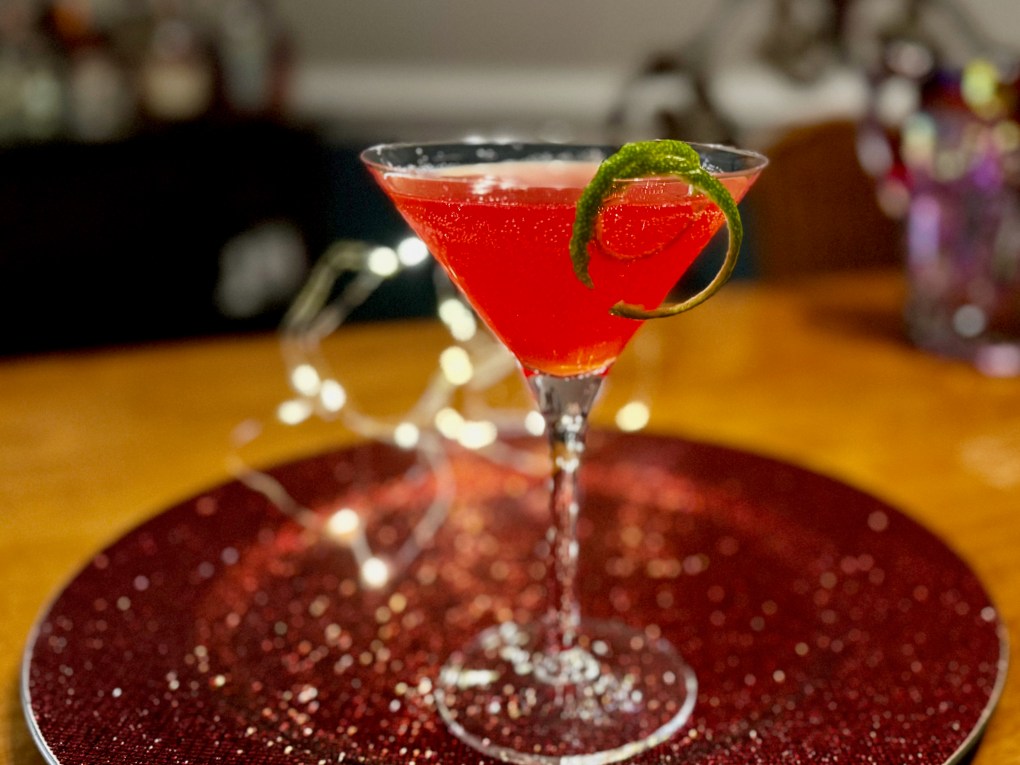
Sparkling Fresh Cranberry-Ginger Cosmo

I know I promised you a cocktail before Thanksgiving, and I should know by now that late November is not the time to make promises I might not be able to keep. 🤷🏻‍♀️ Better late than never, and it’s all good because what I’m about to share with you could be the holiday miracle your entertaining plans have been waiting for. This drink became an accidental star at our Thanksgiving happy hour, and the great news is that its seasonal flavors and fancy presentation make it perfect for all the holidays coming up. 

I found this inspiration quite unexpectedly while scrolling Instagram in the wee hours, as I am wont to do. A few days before Thanksgiving, Food Network had posted a slideshow of recipes offered by its celeb chefs. There were variations on casseroles and desserts and—oh, who am I kidding? I have no idea what else was in the photo carousel because the fresh cranberry cosmo stopped me dead in my tracks. The ingredient list was simple, the technique brilliant and the drink divine.
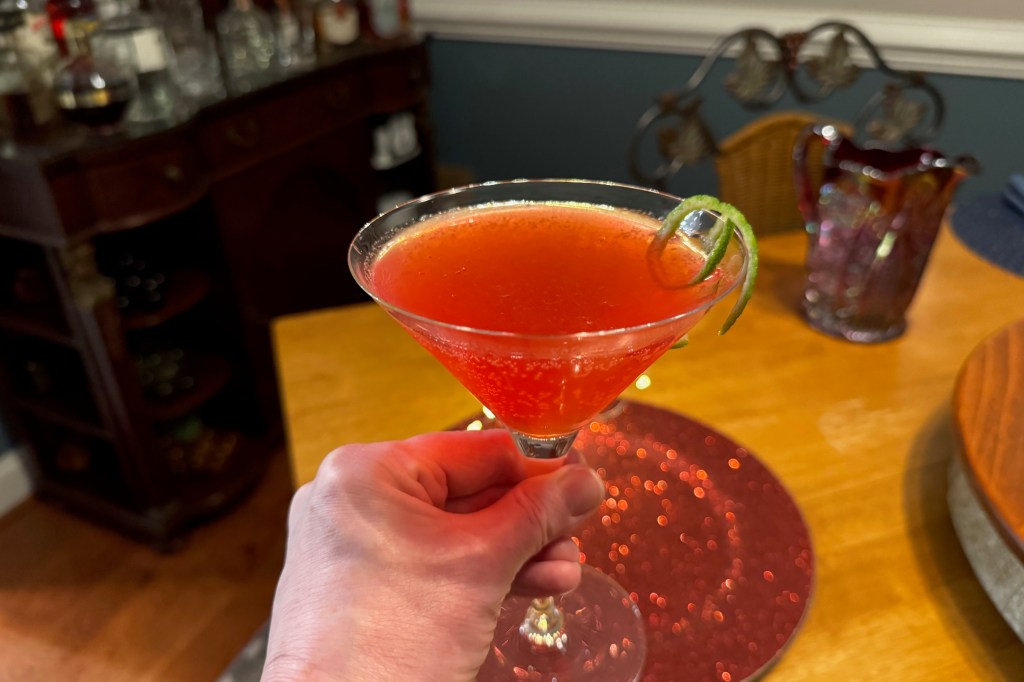
Cheers, Christmas!

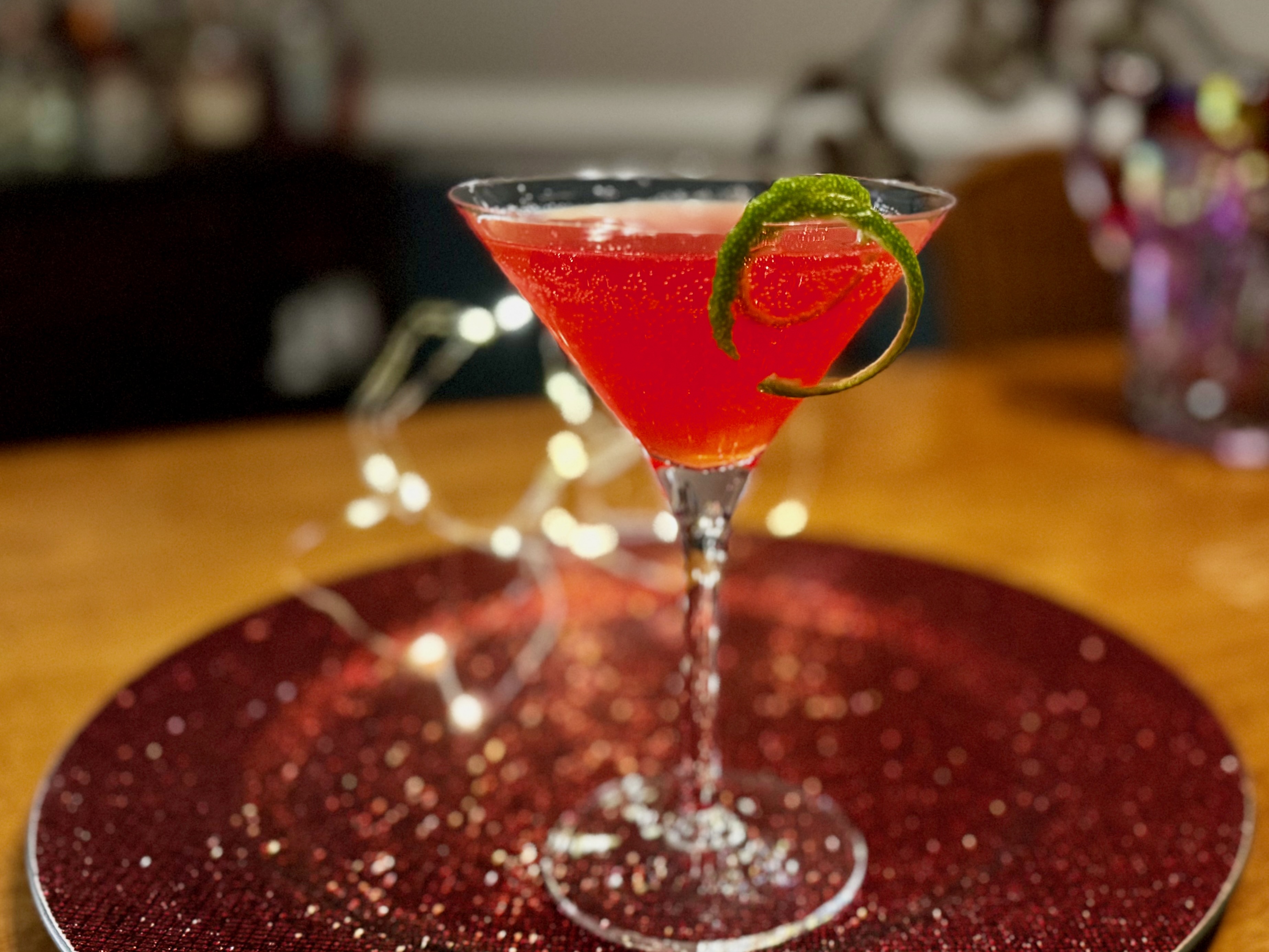
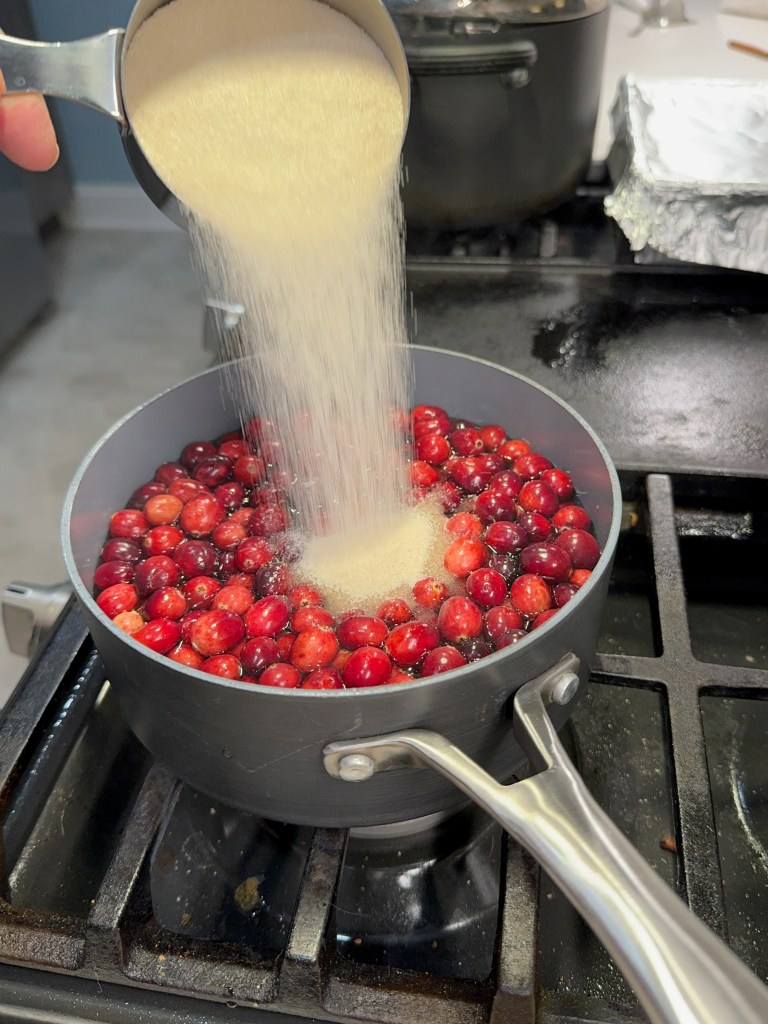
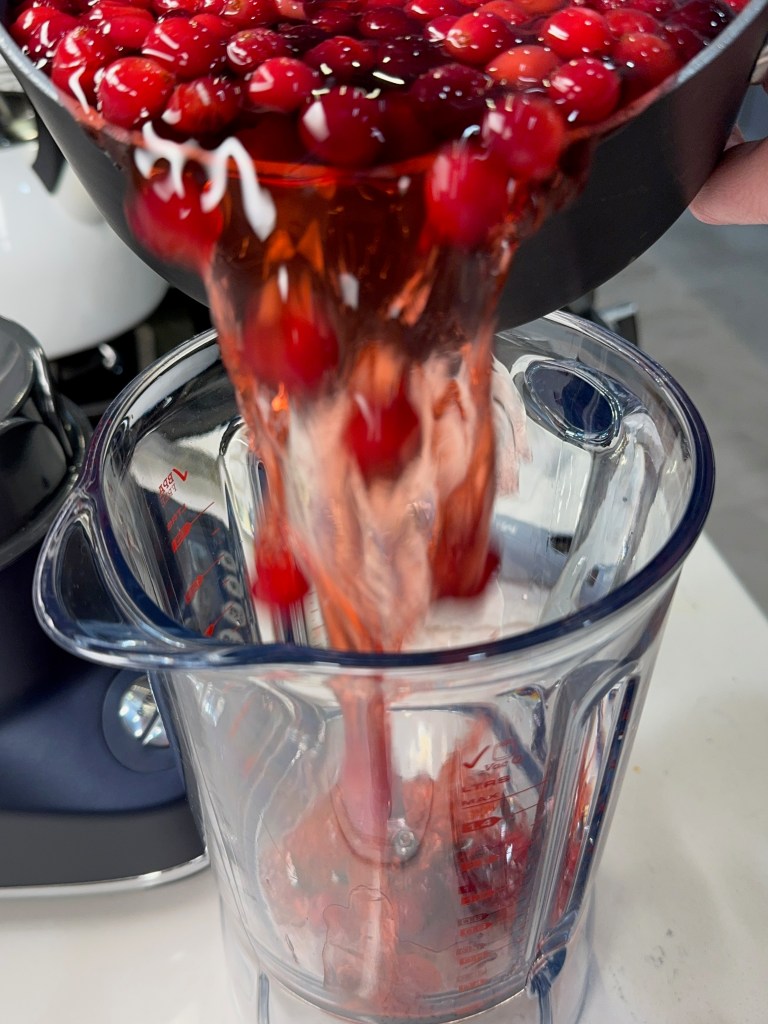
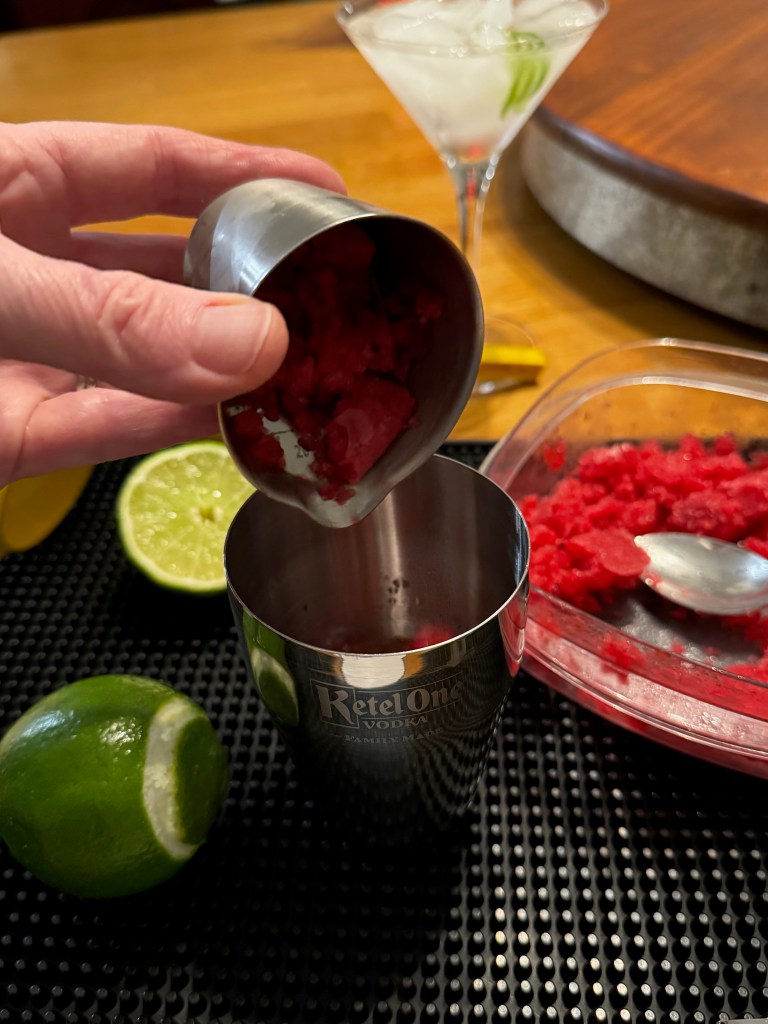
It was star chef Alton Brown who presented the formula for the cranberry granita that is the base of this stunning, neon-colored drink, and the granita itself could be served as a palate cleanser or even a light dessert after a rich holiday meal. His granita was made by simmering fresh cranberries, sugar and lime zest in a fair amount of water, and then blending, straining and freezing. Later, he used a fork to shred the icy mixture into a substance not unlike a snow-cone. That granita mixture is then shaken with vodka and fresh lime juice— no additional ice necessary— and strained into a martini glass for the brightest, freshest seasonal cocktail I’ve ever enjoyed. 

Of course, I couldn’t leave it at that (do ya know me?), and Alton himself is partly to blame for my tendency to twist a classic. During the early aughts, I hardly missed an episode of his “Good Eats” program on Food Network, and that was unquestionably when I became fascinated with the science of food and drink, inspiring me to push the culinary boundaries in my own kitchen. So, Alton, I’ll see your cranberry granita and I’ll raise you some crystallized ginger and orange zest. Because, Christmas. 🎁

You don’t want to know how many spoons I used tasting this stuff along the way, nor how many sample cosmos I made for myself, just to be sure I wasn’t imagining how good it was. The cranberry-ginger granita is equally tart and sweet, and my mind is still racing with possibilities for drinks beyond this festive cosmo. Imagine swapping the vodka for blanco tequila— instant Christmas margarita! Or substitute white rum for a cranberry-ginger daiquiri. Seriously, can anyone give me one reason not to mix it with gin and lemon and top it with champagne for a cranberry-ginger French 75? Could this be the little black dress of the holiday cocktail season?

For that matter, I should also be able to sub something non-alcoholic for a tasty mocktail to delight non-drinkers at my party, right? I did that for one of our Thanksgiving guests, and I guarantee you can’t tell which of these glasses held the zero-proof drink. She said it was delicious.
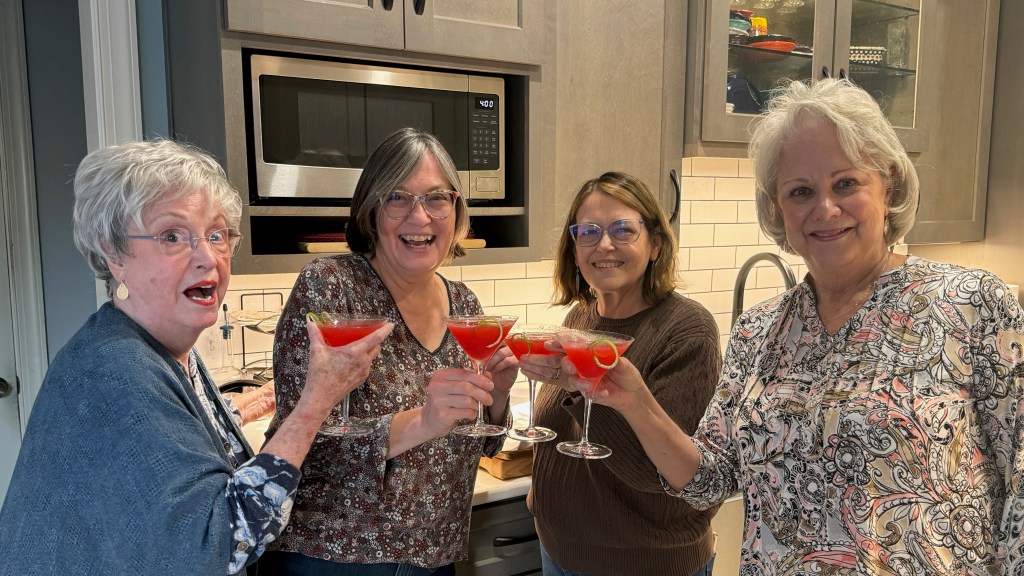
I’ll give you a hint: it wasn’t mine. 😂

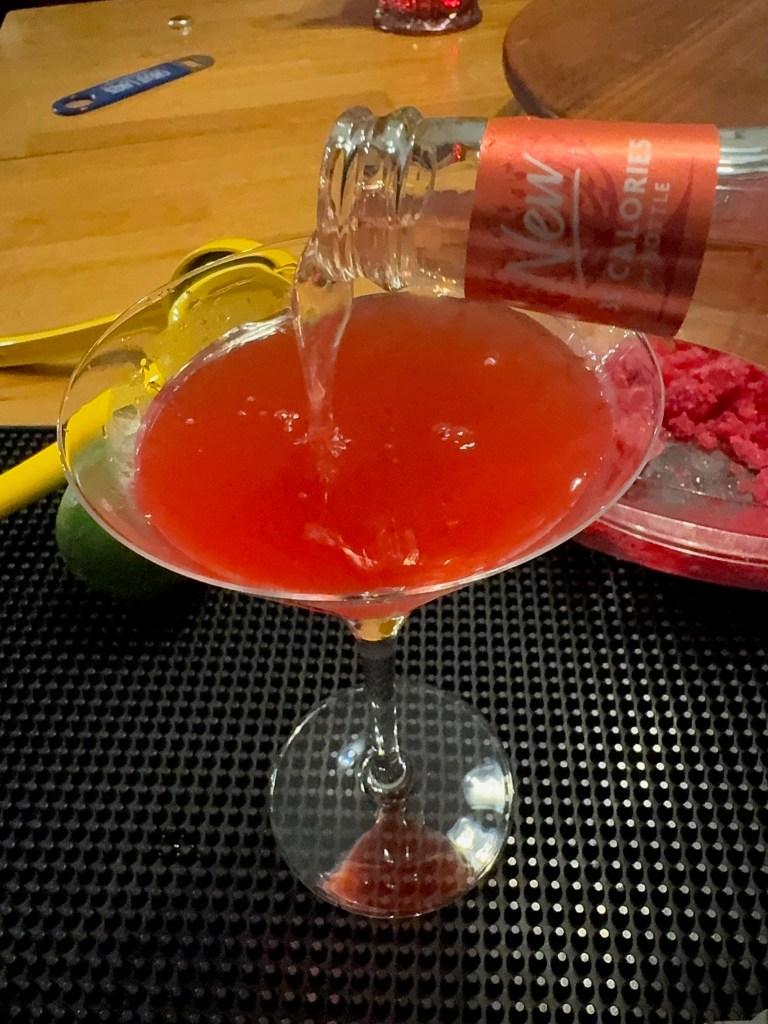
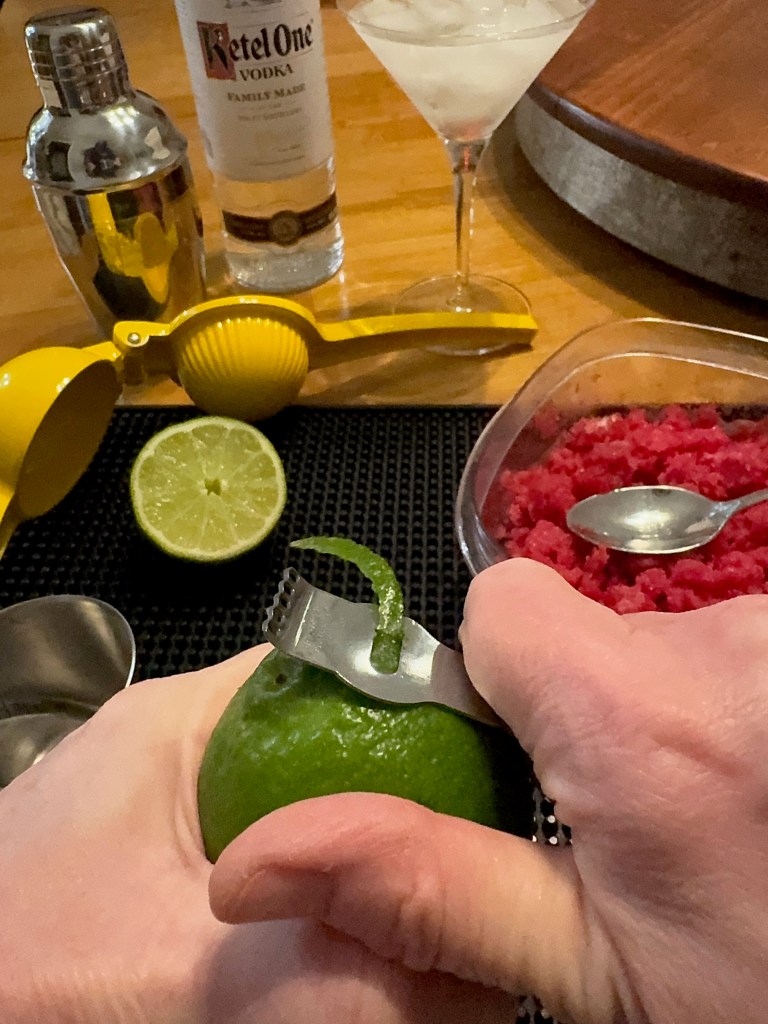
Making this sparkling fresh cranberry-ginger cosmo couldn’t be easier, and I’ll also share my tips for the mocktail in the click-to-print recipe card you’ll find at the bottom of the post. Start by making the granita a few days before you plan to entertain, and wash up several fresh limes so they are ready for happy hour. Plan on one lime for every two drinks; you’ll use the juice in the drinks and a strip of zest for garnish. And for a little extra holiday pizzazz, pick up a four-pack of blood orange ginger beer to top off your cocktails with a sparkly finish. Chill your cocktail glasses while you mix, and use a fine mesh strainer if you don’t want little bits of zest floating in your glass.
Sparkling Fresh Cranberry Cosmo

  • Servings: 1 cocktail
  • Difficulty: Easy
  • Print

This gorgeous holiday drink uses a make-ahead cranberry-ginger granita that is so delicious, you'll want to use it in other drinks, too!


Ingredients

  • 1 1/2 oz. Ketel One (or other premium) vodka
  • 2 1/2 oz. cranberry-ginger granita (recipe follows)
  • 1/2 oz. freshly squeezed lime juice
  • 1 oz. Fever Tree blood orange ginger beer (or regular ginger beer, if desired)
  • lime zest twist to garnish

Notes: Make the cranberry-ginger granita ahead of time, and transfer to airtight containers in your freezer for safekeeping. I recommend using a fine-mesh strainer when pouring the drink into the glass, unless you’re OK with having the zest bits floating in the drink.

For an easy mocktail, swap in Simply Lemonade for the vodka, use 1/4 oz. lime juice and increase the ginger beer a bit. When making both alcohol and non-alcohol drinks for party guests, consider using two separate shakers to avoid mixups and in-between cleanings.

Directions

  1. Chill cocktail glass with ice water, or place in freezer 20 minutes before mixing the drinks.
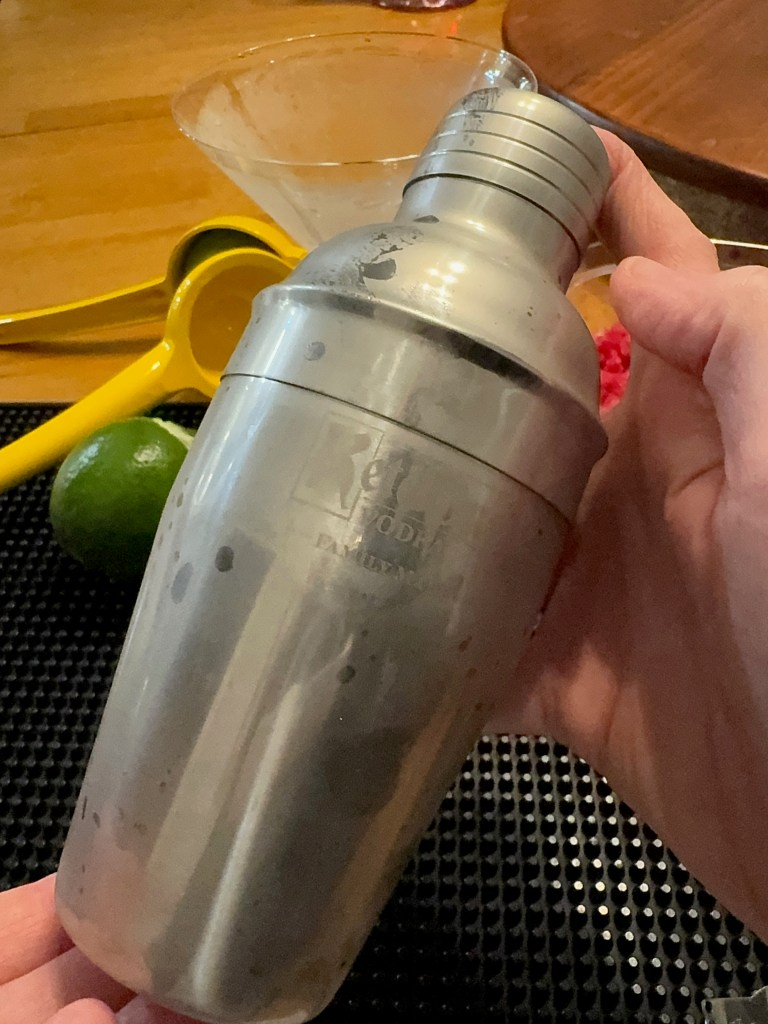
  2. Measure vodka, granita and lime juice into a shaker. Cover and shake the shake out of it until the thing is too frosty to hold comfortably. The granita will melt with the other ingredients, so no ice is required for this step.
  3. Strain into the glass, top off with ginger beer and garnish with the lime strip.

Notes: The cranberry-ginger granita will be enough for about 20 cocktails. Make it ahead and keep it in the freezer so it’s ready for all the holidays.

Ingredients

  • 3 cups water
  • 2 1/4 cups fresh whole cranberries
  • 1 cup plus 2 tablespoons organic cane sugar
  • 2 tablespoons minced crystallized ginger
  • Zest of one lime and half an orange (organic is best and washed thoroughly)

Directions


1. Combine water, cranberries, sugar and ginger in a medium saucepan over medium-high heat. Bring to a boil and then simmer for several minutes until the berries soften and split. Remove from heat and cool for a few minutes.
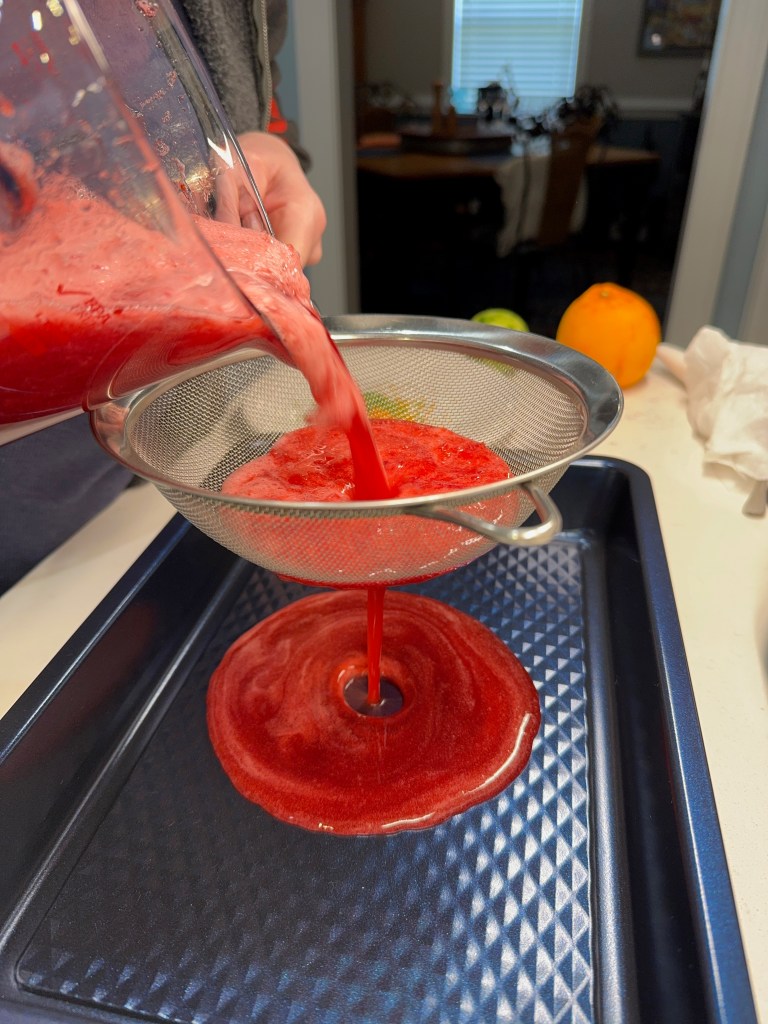
2. Transfer cranberry mixture to a blender (remove vent cover) or use an immersion blender to puree the mixture into a slurry. Pour through a mesh strainer into an oblong, shallow pan. I used a silicone scraper to gently move the puree back and forth on the strainer surface, as the pectin from the berries was quite heavy.
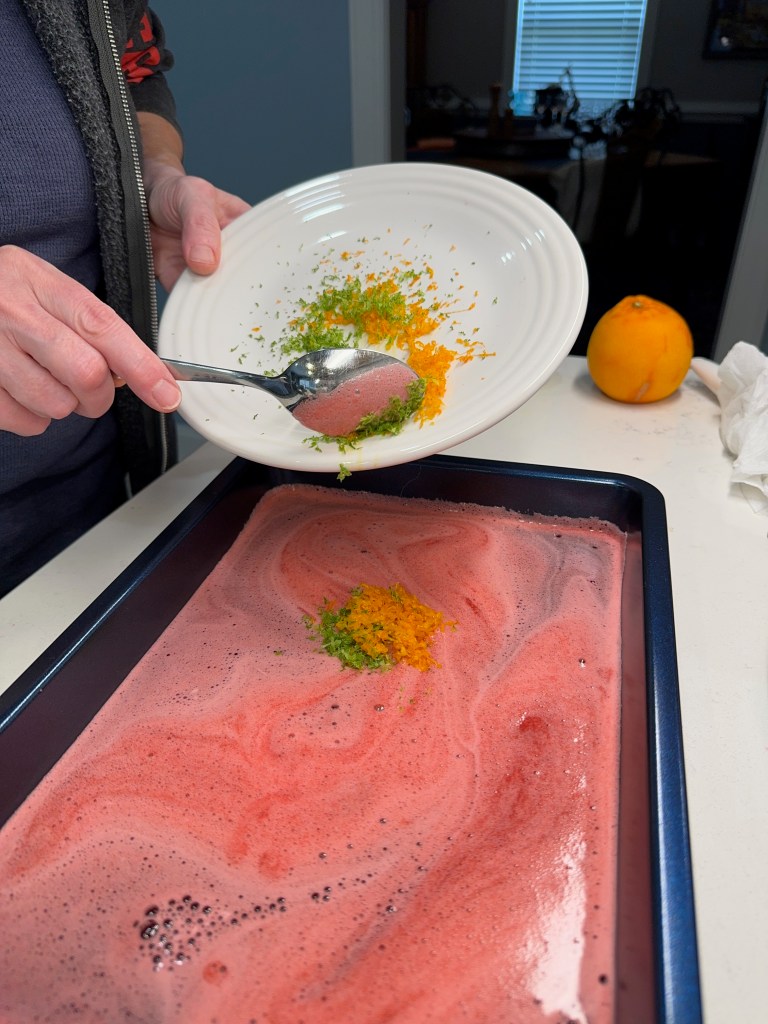
3. Stir in the citrus zest. Cover with plastic wrap and place the pan flat in the freezer for several hours until solid (overnight is fine).
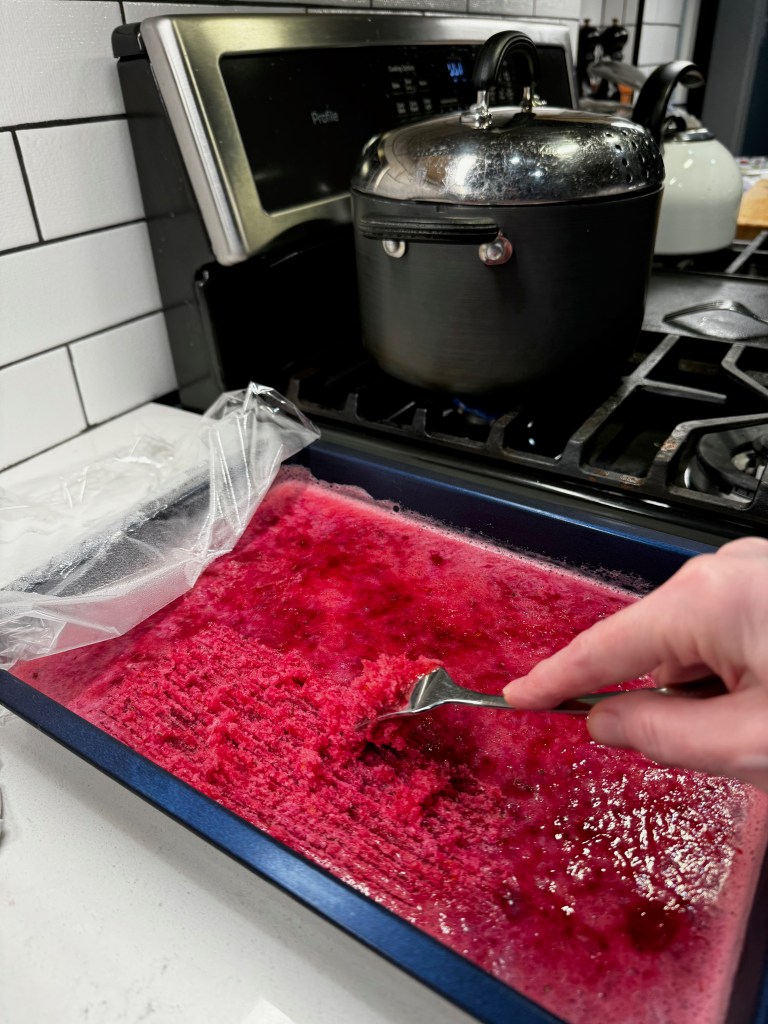
4. Use a fork to scrape the surface of the mixture until you have multiple layers of icy granita. Note that the mixture will likely clump as it refreezes. If you want it to be uniform consistency for cocktail hour, transfer it to a food processor and pulse a few times.

Directions


Bramble On

Autumn begins this Saturday. Finally. What a summer it has been, with record-shattering heat waves and treacherous weather conditions reported from every corner of the globe. I think we all need the break, and as much as I am usually ready for fall, this year I feel almost desperate for it.

Leaves are falling all around
time I was on my way
Thanks to you, I’m much obliged
such a pleasant stay
But now it’s time for me to go
the autumn moon lights my way
For now I smell the rain
and with it pain
and it’s headed my way

“Ramble On” ~ Robert Plant & Jimmy Page

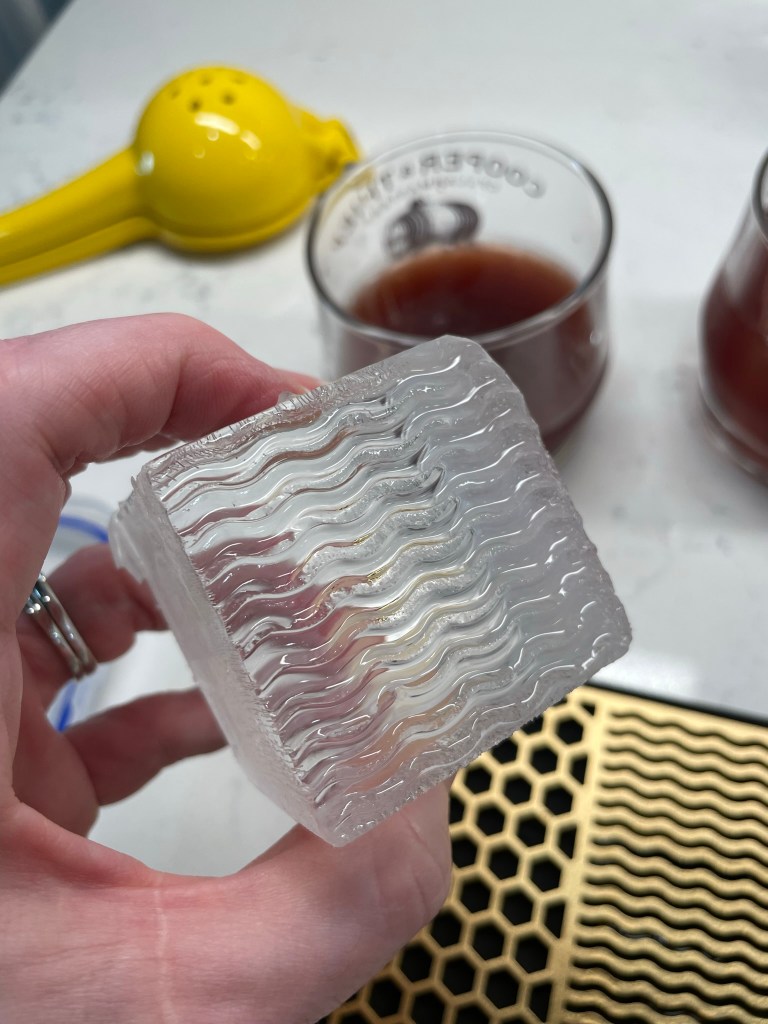
With the autumn moon just ahead, and fresh, late-summer blackberries singing their swan song, I figured it was finally time I shared my home bar version of this refreshing, not-too-sweet bourbon cocktail that I enjoyed earlier this summer during my visit to Vermont.


I had the pleasure of dining with my blog pal, Dorothy, and her husband at a quaint, farm-to-table restaurant called Starry Night Cafe on the last night of my visit there, and it wasn’t only the food that was amazing. The drink menu also was very impressive, and one cocktail in particular caught my attention— they called it Bramble On. It was fresh, local blackberries with bourbon, lime, ginger liqueur and a berry-mint garnish. It was fabulously  refreshing and I knew at first sip that I would want it again in the fall.

It doesn’t hurt at all that the drink’s name was a play on the title of an amazing Led Zeppelin tune, “Ramble On.” I’ve been a Led Zeppelin fan for as long as I can remember, and this song, which was released from the group’s second album when I was but 4 years old, is one of my all-time favorites. Not only does it reference a place and character from one of my favorite stories, The Lord of the Rings (listen for it about two-thirds through), but it features exquisitely emotional guitar solos by Jimmy Page and, of course, there’s Robert Plant’s distinctive voice. I just love everything about it it.


“Ramble On” tells a bittersweet tale through the eyes of a restless lover who has enjoyed the company of a woman for a season, but must keep moving to find the queen of all his dreams. It’s how I feel about summer— I enjoyed it for what it was— the thrills and trials and adventures— but I’m really, really ready for autumn. I need autumn and I need it now.
Cheers, summer. Now, go on, would ya?

This cocktail feels like a perfect transition from summer into fall. A traditional “bramble” would involve muddling blackberries with gin, but this version with bourbon tickles my fancy more. It’s sweeter, cozier and lingers on the palate longer than the gin version.


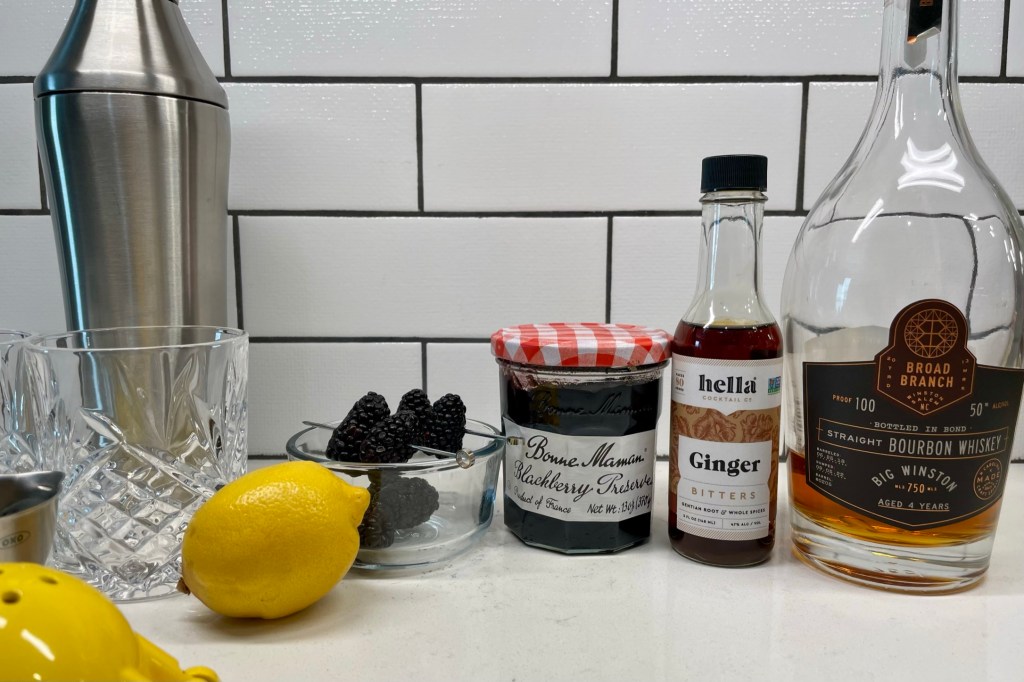
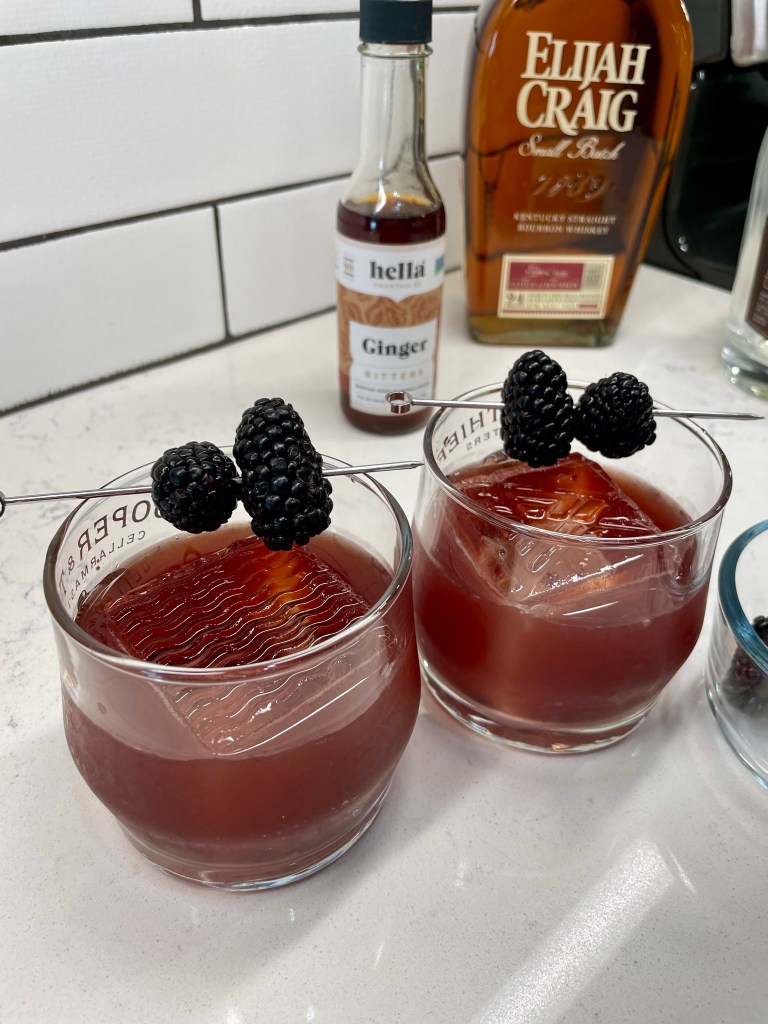
I’ve taken a few liberties with the ingredients in my version of this cocktail, compared to the one I enjoyed in Vermont. But the end result is similar, with blackberries front and center. Given that fresh local blackberries have already bid adieu in many growing zones, I’ve swapped in blackberry preserves, which also provide the sweetness that the ginger liqueur brought to the Starry Night drink. Ginger bitters provide the right spicy zing to complement the berry sweetness, and a quick squeeze of lemon balances out the drink and keeps it fresh.


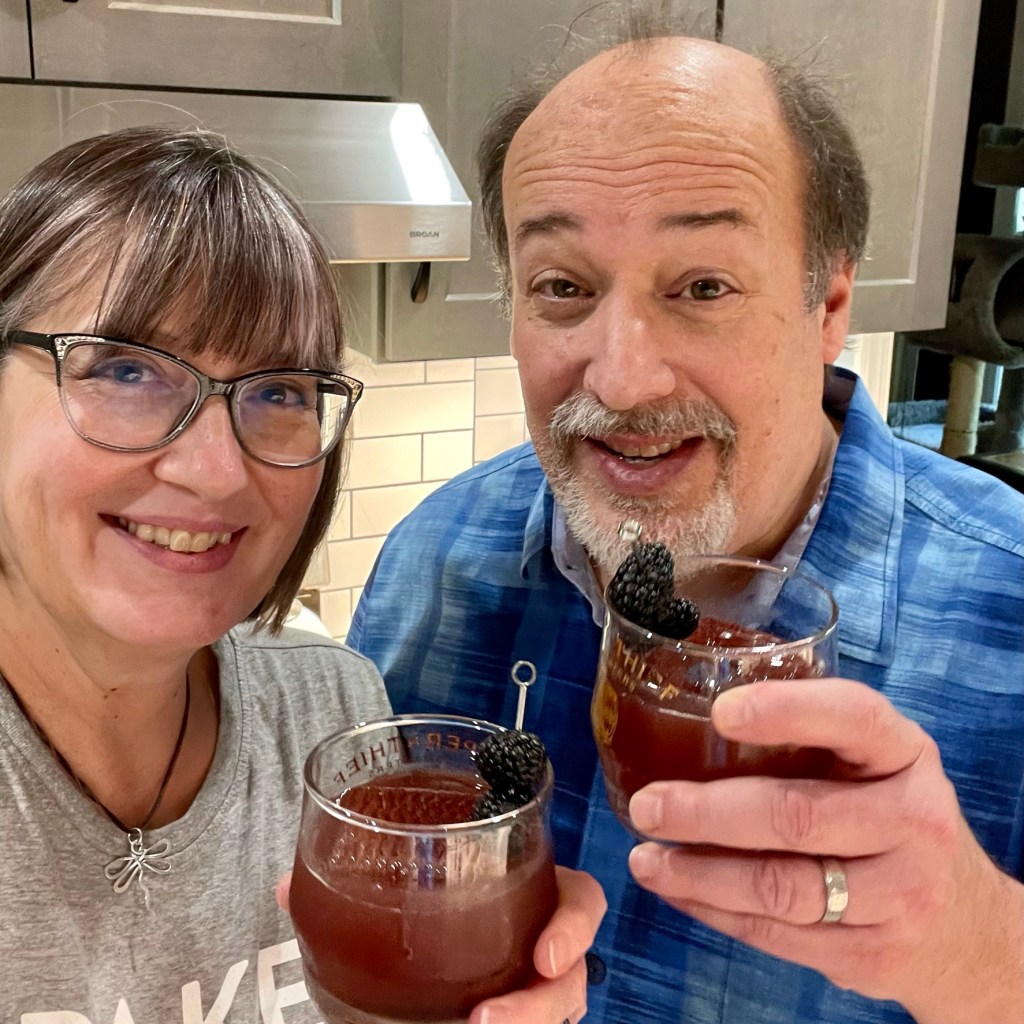
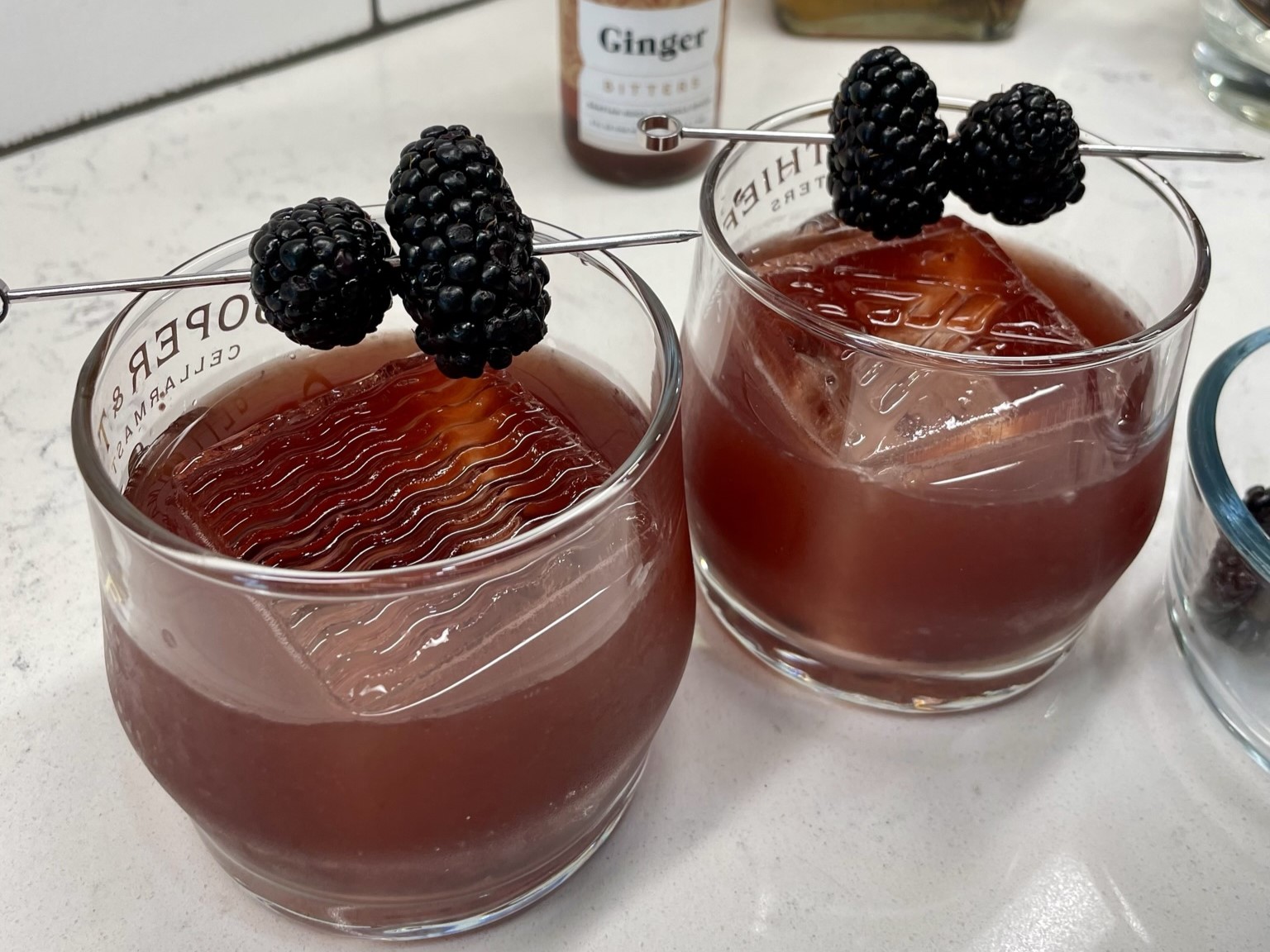
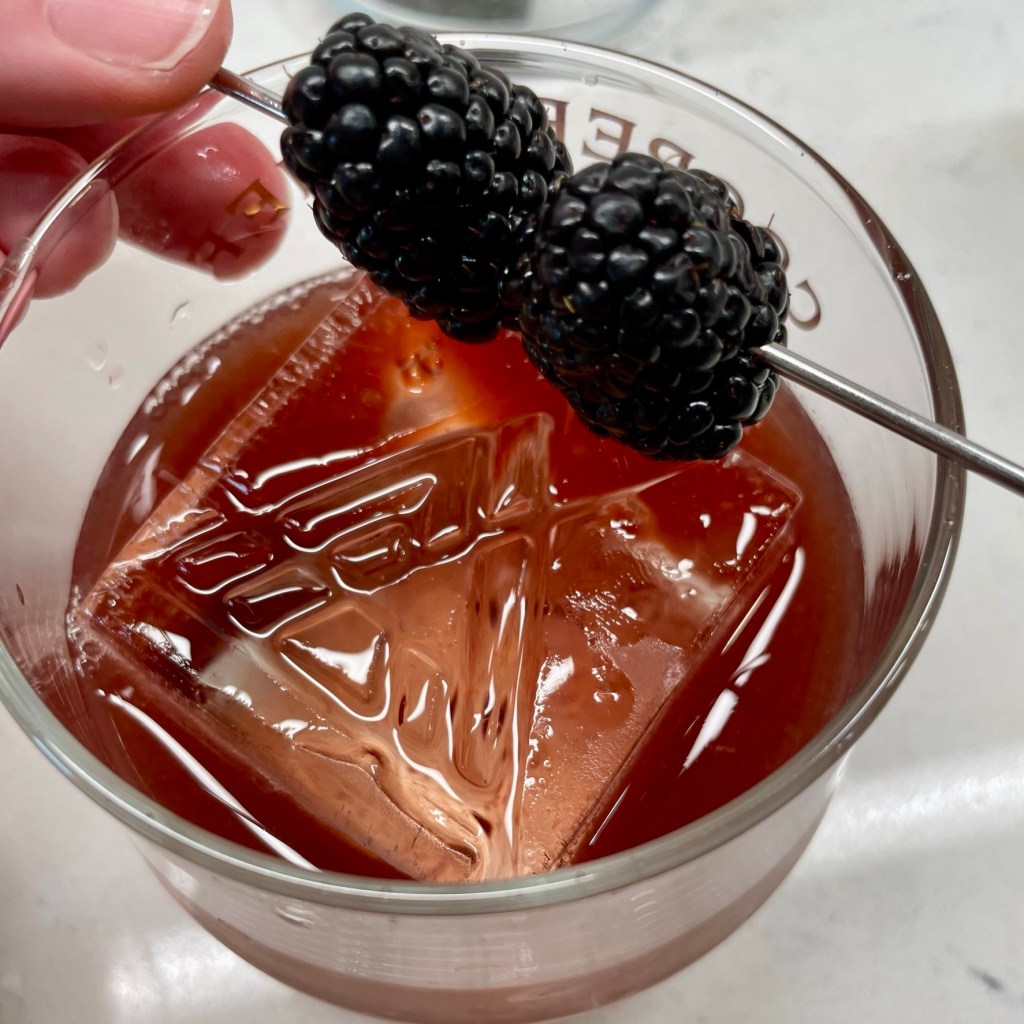
I skipped the mint garnish in favor of skewered fresh blackberries. But I have also served it with just an expressed lemon peel garnish when I ran out of berries. Either way, it’s delish!

This drink is a delightfully pleasant way to bridge the seasons.

Bramble On

  • Servings: 2 cocktails
  • Difficulty: Easy
  • Print

This cocktail feels like a perfect transition from summer into fall. A little bit sweet, with warm spices and a touch of lemon freshness. Enjoy!


Ingredients

  • 4 oz. favorite bourbon (we used a locally distilled, bottled-in-bond, but Elijah Craig small batch or Bulleit would be great)
  • 1 Tbsp. good quality blackberry preserves (we like Bonne Maman, but homemade would be perfect here)
  • juice of 1/2 small lemon
  • 4 quick shakes ginger bitters (we like Hella brand)
  • fresh blackberries or lemon peel to garnish

If you prefer to muddle fresh blackberries into the drink rather than using preserves, consider adding a tablespoon of simple syrup to amp up the sweetness a bit. If you don’t like the seeds in the preserves, double strain through a mesh strainer into the glass.

Directions

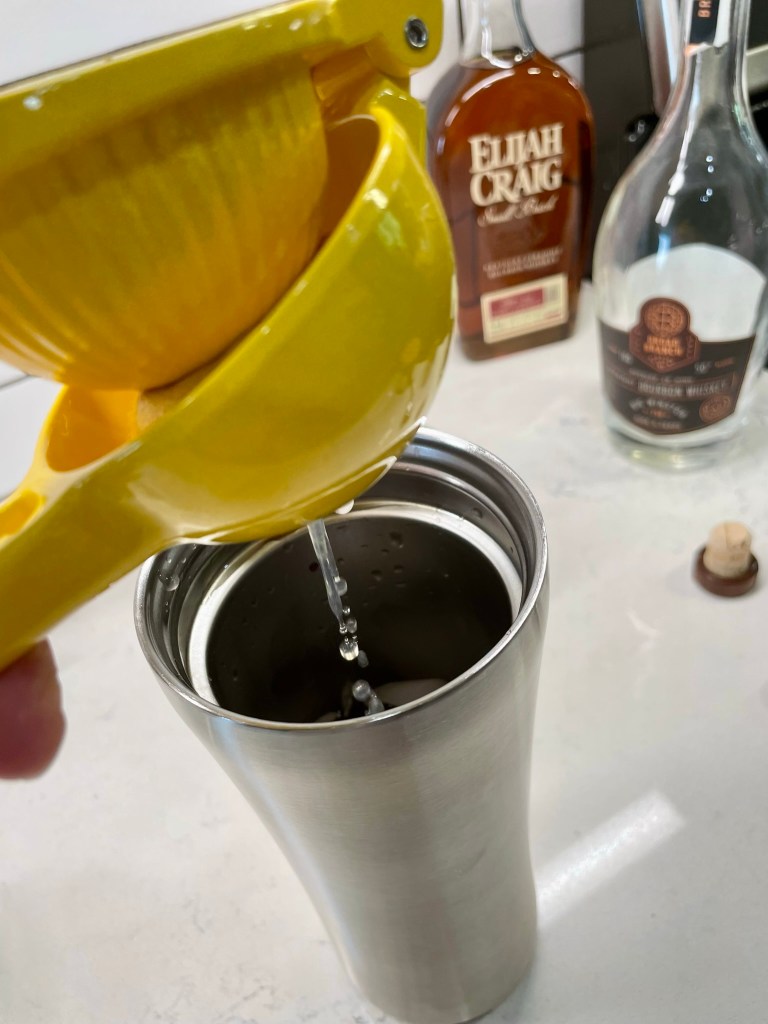
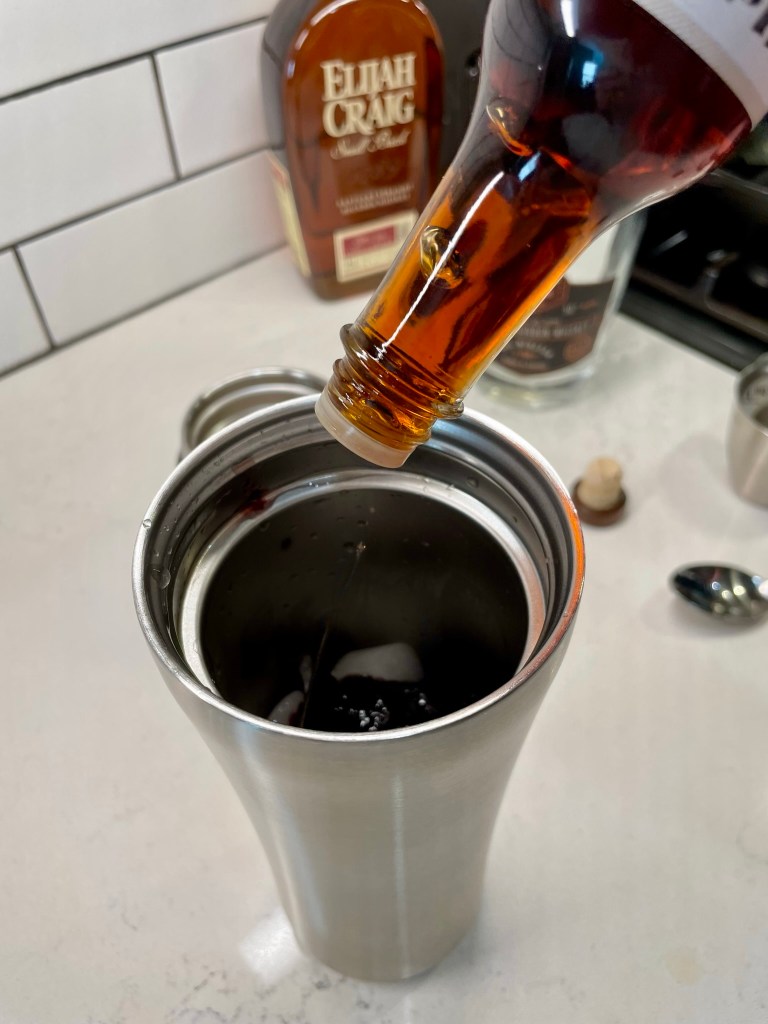
  1. Add bourbon, preserves, lemon juice and bitters to a cocktail shaker filled halfway with ice.
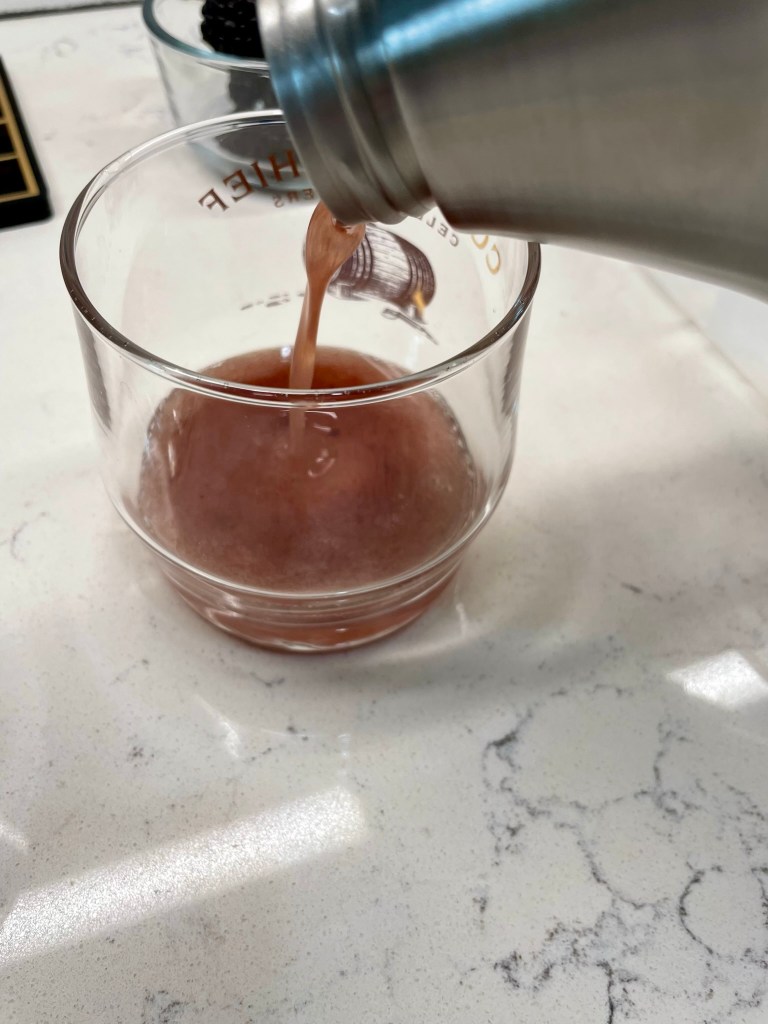
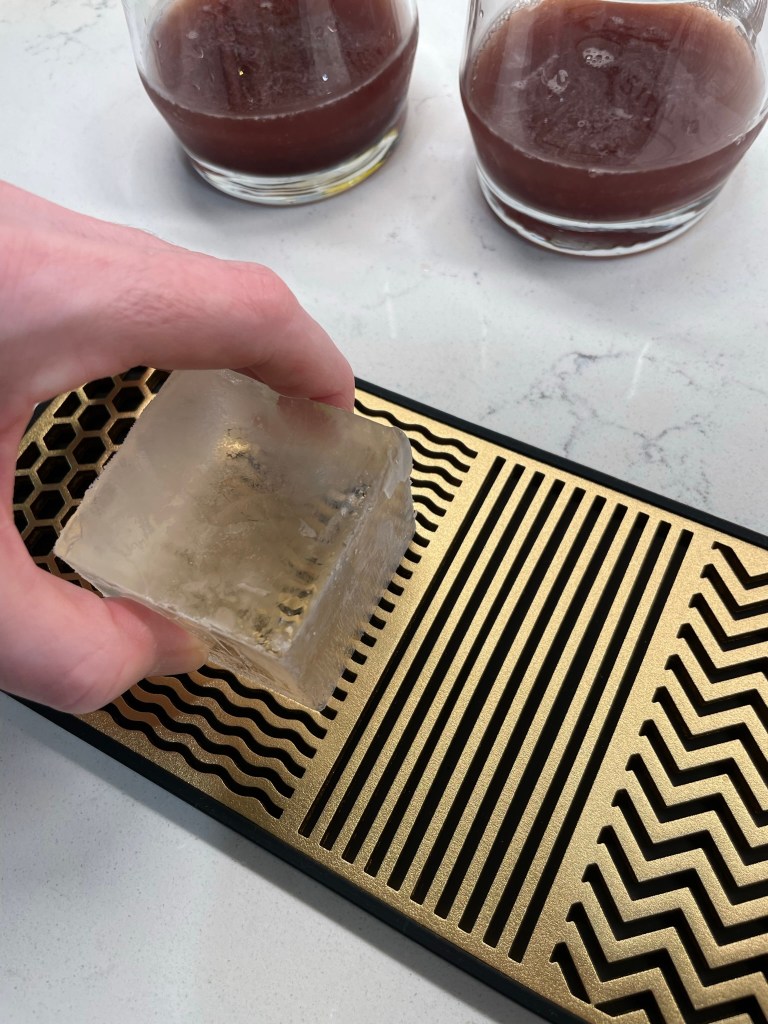
  2. Shake 20 seconds to combine and dilute, then strain into two double rocks glasses with new ice.
  3. Garnish with skewered fresh berries or lemon twist.


Watermelon-Hibiscus Sorbet

There’s a big celebration happening across America this weekend, and I don’t just mean Father’s Day. Sunday is Juneteenth, and Black American families will gather to recognize the anniversary of the day many of their ancestors actually became free. I wrote about this last year when I created a cocktail that I called “Long Time Coming,” and I believe the message bears repeating. As a person who values diversity and inclusion, I feel humbled by the fact that Juneteenth and its meaning was not on my radar until only a few short years ago. I won’t go into all the feelings I have about the blatant omission of this important occasion in my public-school education because I’ve already said it and, well, it isn’t about me. The point is, Juneteenth is significant, and well worth celebrating! Last year, it finally became recognized as a U.S. holiday.

What is Juneteenth?

The word itself is a portmanteau, that is, a mashup of two words—in this case, June and nineteenth. And the occasion of Juneteenth is a big deal, especially to families with African-American ancestors. It was on June 19, 1865 that Union solders rode into Galveston, Texas to enforce the Emancipation Proclamation, which President Abraham Lincoln had issued more than two years earlier. Though slavery had been abolished throughout the land, approximately a quarter-million people had remained enslaved in Texas. One year after the enforcement, the freed people organized a celebration called “Jubilee,” which evolved over the years into Juneteenth, as we know it today.

How do people celebrate Juneteenth?

Juneteenth is a joyous occasion, and many people celebrate with family reunions, picnics and church activities. Because this holiday happens in summer, most typical celebrations are held outdoors, and though there are many cookout-type foods you might find on the table, a few dishes are considered “traditional,” including pulled-pork barbecue, spicy sausages (known as “hot links”), collard greens, fried chicken and red velvet cake.

Why are red drinks served for Juneteenth?

The color red, in general, is significant for this holiday, which is why you’ll see watermelon on every table, and red drinks are considered traditional—most notably, strawberry soda. Around my part of the South, there’s a soft drink called Cheerwine that is bright red in color, and I expect it also is a typical offering at Juneteenth celebrations. The brilliant red color signifies two distinct themes—the blood shed by enslaved ancestors, as well as the courage and resiliency they exhibited in moving forward as freed people. Hibiscus tea, which has a tart-bitter flavor, is also a popular beverage for Juneteenth, and I have infused it into a simple syrup to give it prominence in this watermelon-hibiscus sorbet.

This sorbet is so refreshing!

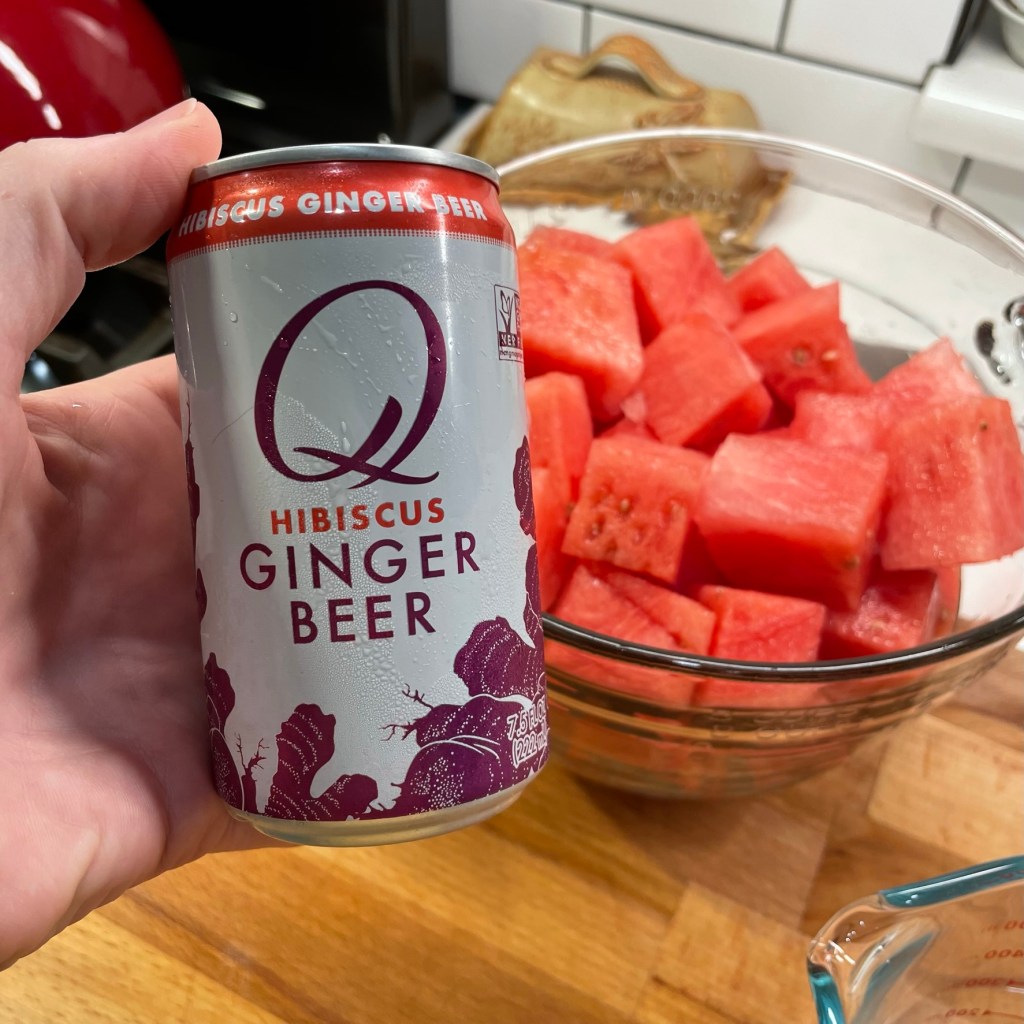
Ready to make this gorgeous, refreshing Juneteenth dessert? The ingredients list is short, thanks to the intensely complex flavor of the hibiscus ginger beer I discovered last year. This product will likely be found in the cocktail mixers section of your supermarket, rather than the soda aisle, as its founder created a full line of mixers to replace the sticky-sweet ingredients that had been standard for cocktail-making. What I like about the Q mixers is that they are not cloyingly sweet, and this hibiscus ginger beer has infusion of interesting spices, including chili pepper, coriander and cardamom. On its own, it is very intense (almost takes my breath away, frankly), but it is not designed to be consumed straight. It makes excellent cocktails, which I learned last year with my Juneteenth drink. And, it adds a lovely, zesty zing to this sorbet. If you can’t find the hibiscus ginger beer, substitute a regular ginger beer. My favorite is Reed’s brand, which is sweetened with honey and a touch of pineapple. Don’t let the “spicy” notes of ginger beer scare you away; by the time it’s blended with the watermelon, the kick is quite subtle. You could also substitute milder ginger ale, but I would recommend adjusting down the additional sugar if you do so.


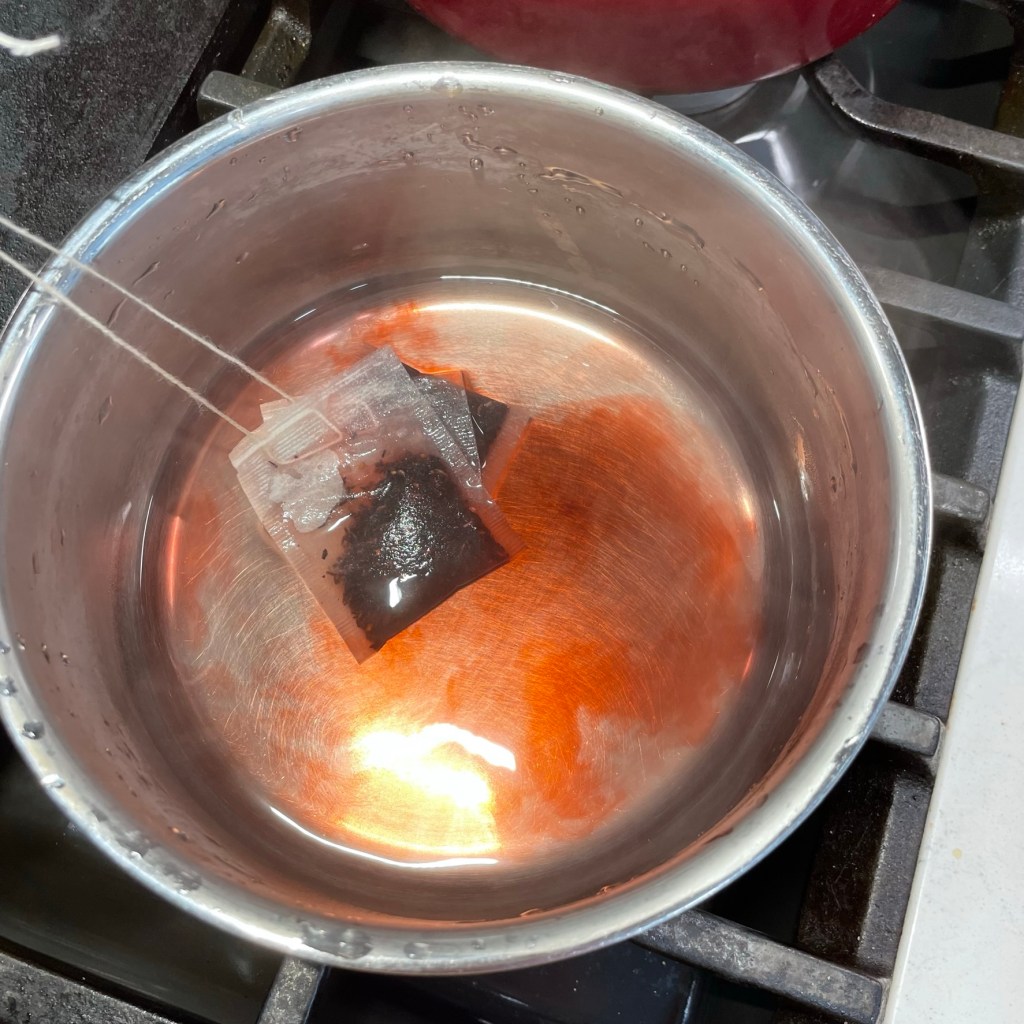
Because the hibiscus ginger beer is not super-sweet, I needed to add some sugar to the mix and I did so by creating a simple syrup, which I infused with hibiscus tea for more of the sharp, tart flavor it offers. It is pretty easy to find hibiscus tea bags—most of the larger supermarkets in my area carry some brand of it—but if you can’t find it, a perfectly good substitute for this sorbet would be the Red Zinger tea by Celestial Brand. The flavor is different, but it’s red, and made from the flowers of African rooibos, which fits right in with the occasion of Juneteenth. The ideal ratio of sugar to water in the simple syrup will vary, depending on the ripeness of your watermelon and the sweetness of your ginger beer.  


Finally, the star of the show is fresh summer watermelon. My husband reached way down into the display crate at the supermarket to grab the last personal size watermelon they had. When cut up into chunks, I had almost exactly 8 cups of this hydrating fruit. I couldn’t help nibbling on a few of the chunks and, of course, sharing with my favorite good dog.

There isn’t much our girl doesn’t love!

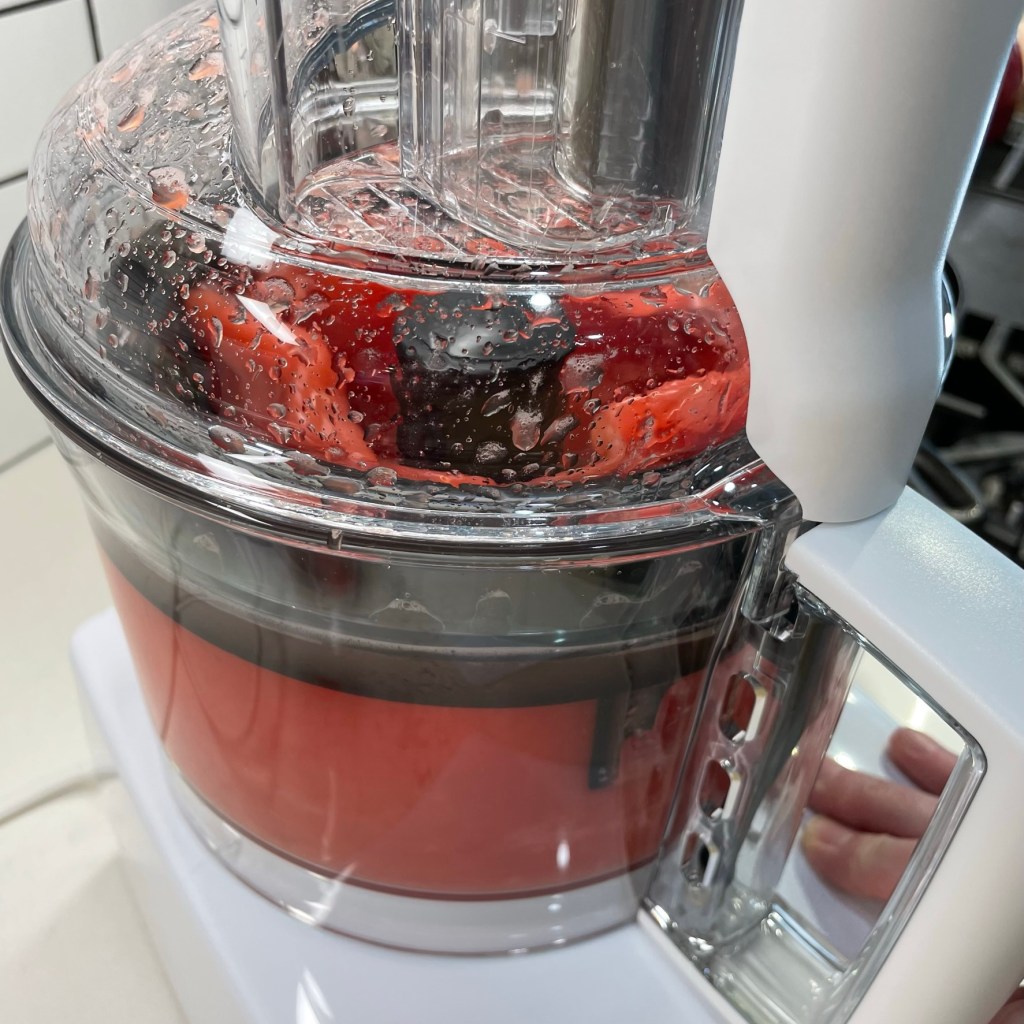
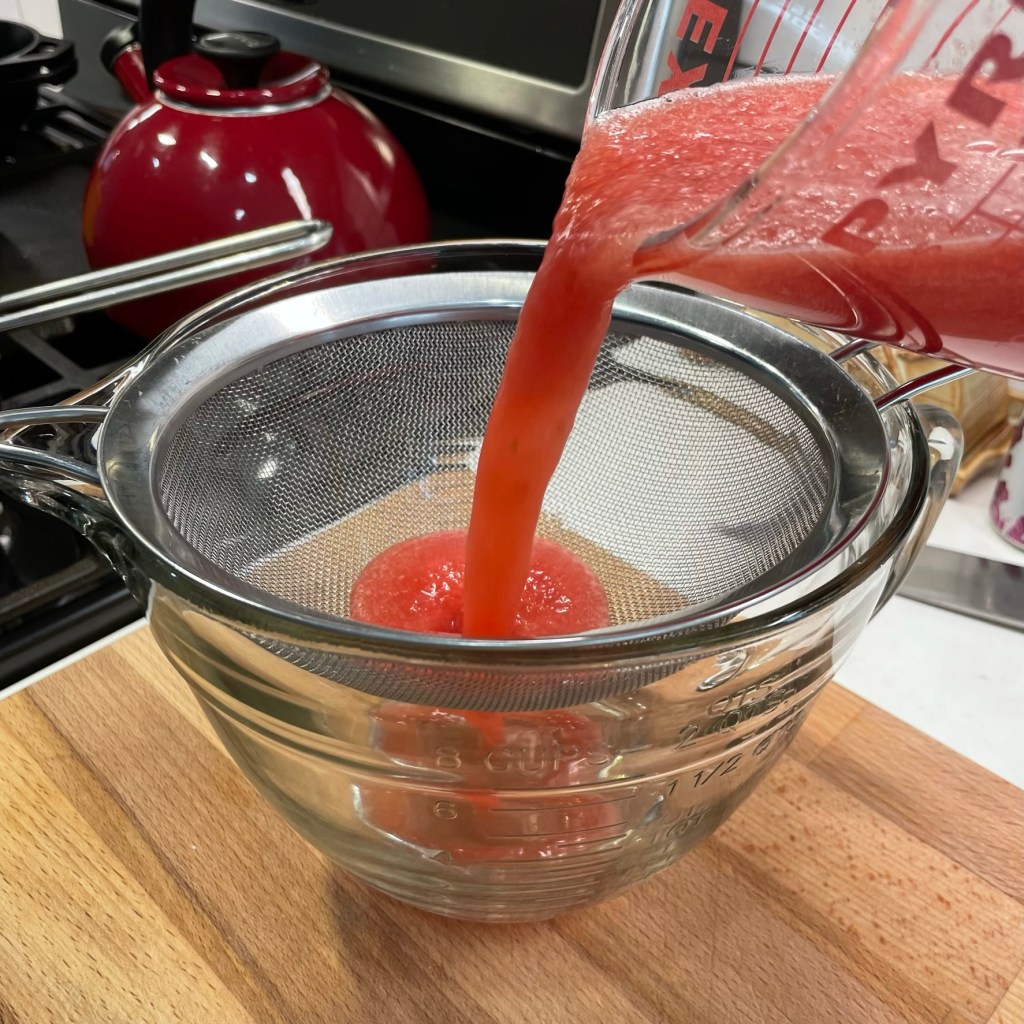
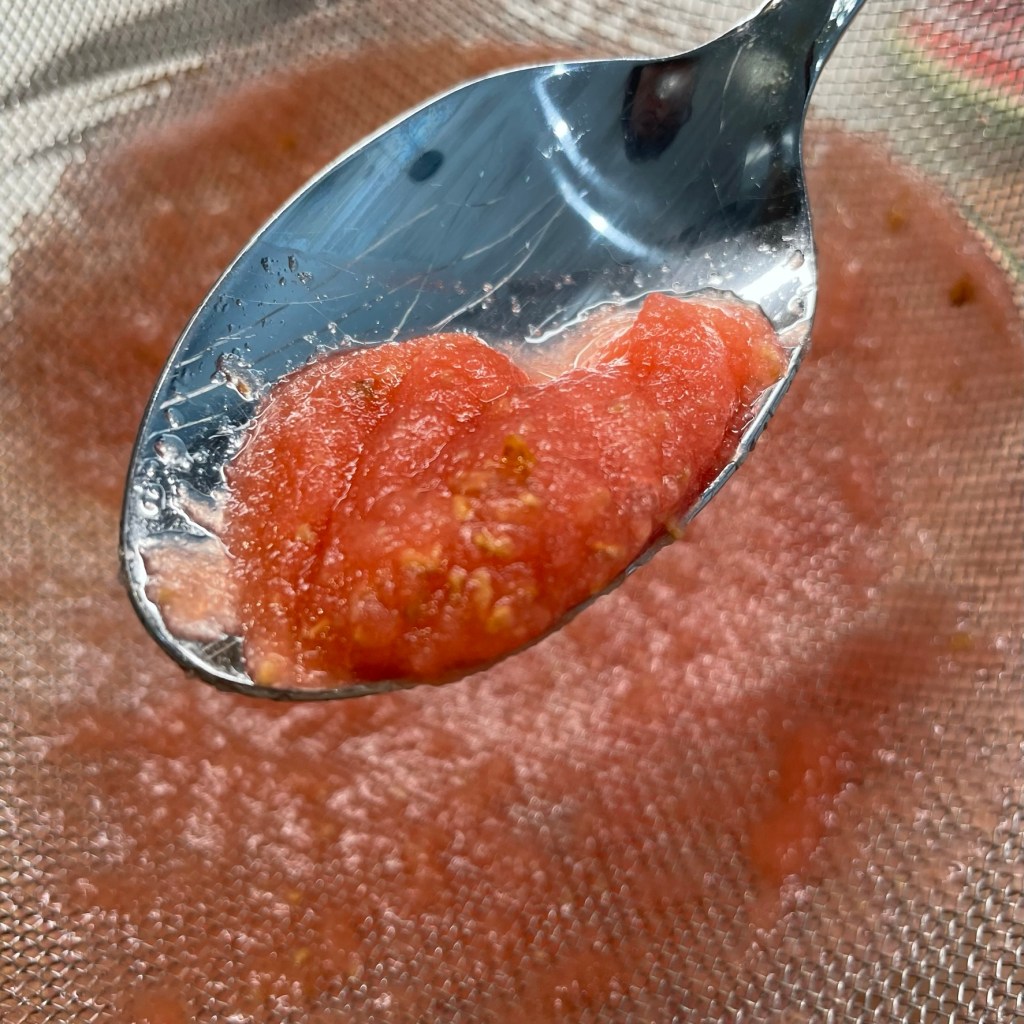
When I was ready to make the watermelon-hibiscus sorbet, I fitted my new food processor with a large blade and added all of the watermelon to the processor bowl. Pulse a few times, then run it continuously until no pieces remain and it is very liquid. Add a pinch of salt to bring out the best in all the other flavors that are about to happen. Strain it into a large pitcher bowl, through a strainer with a fairly open mesh. You want to retain most of the pulp, but limit how many bits of seed make it into your sorbet. Yes, even the so-called “seedless” watermelons do actually have seeds; they are just smaller and more tender than the black seeds of yesteryear melons.


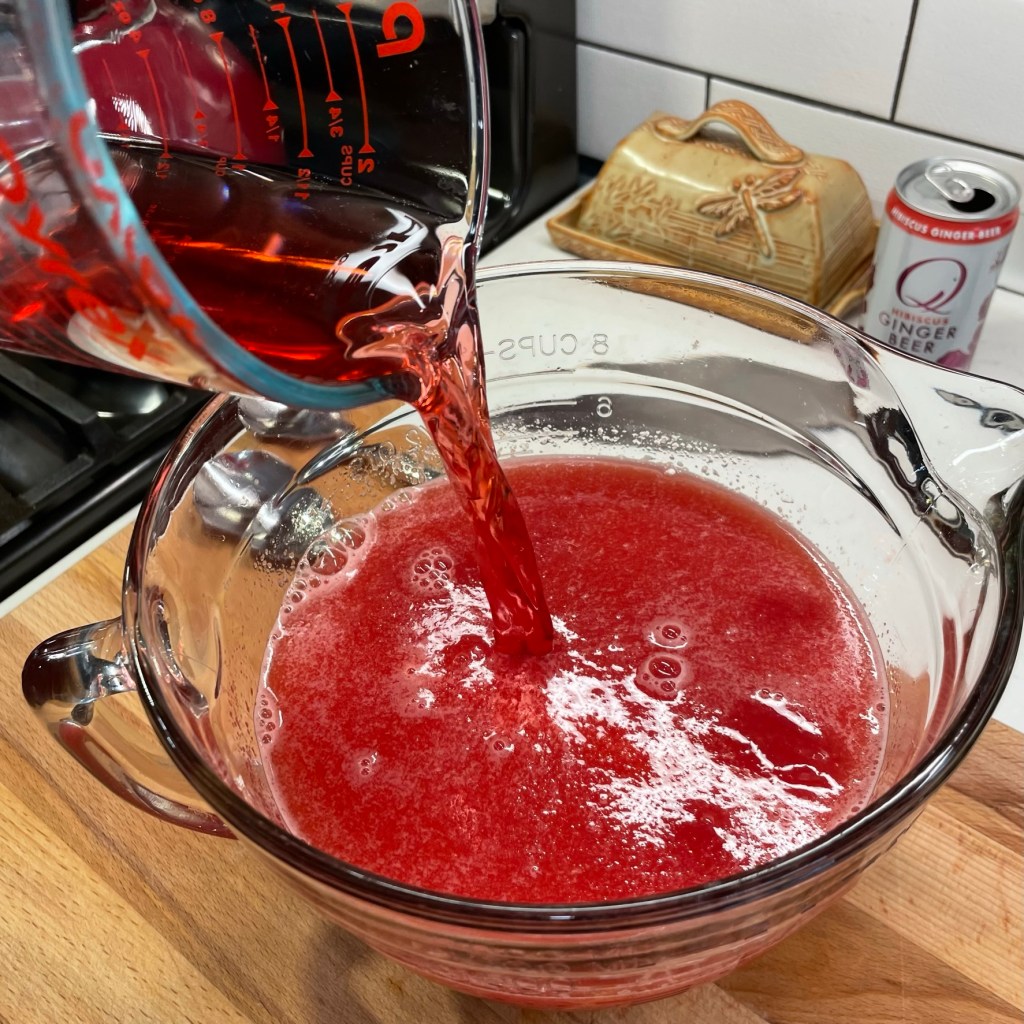
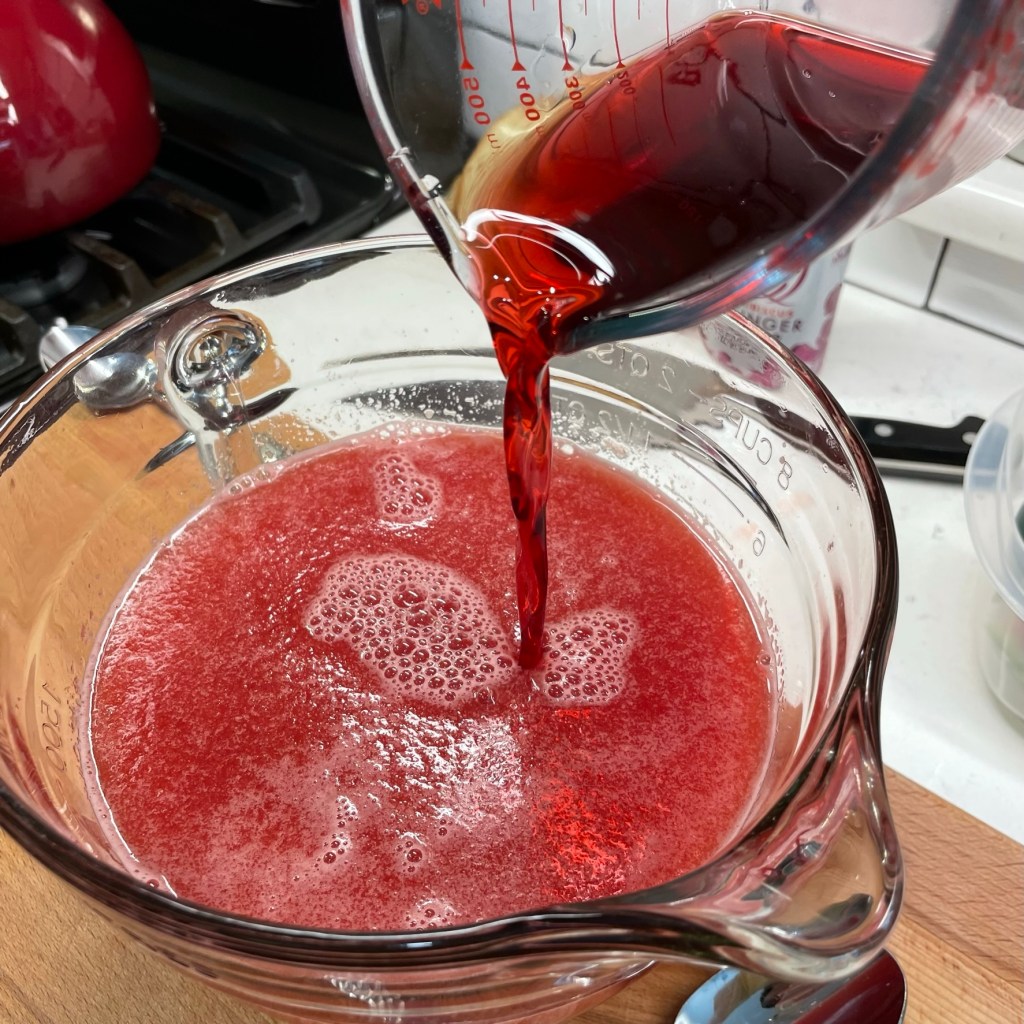
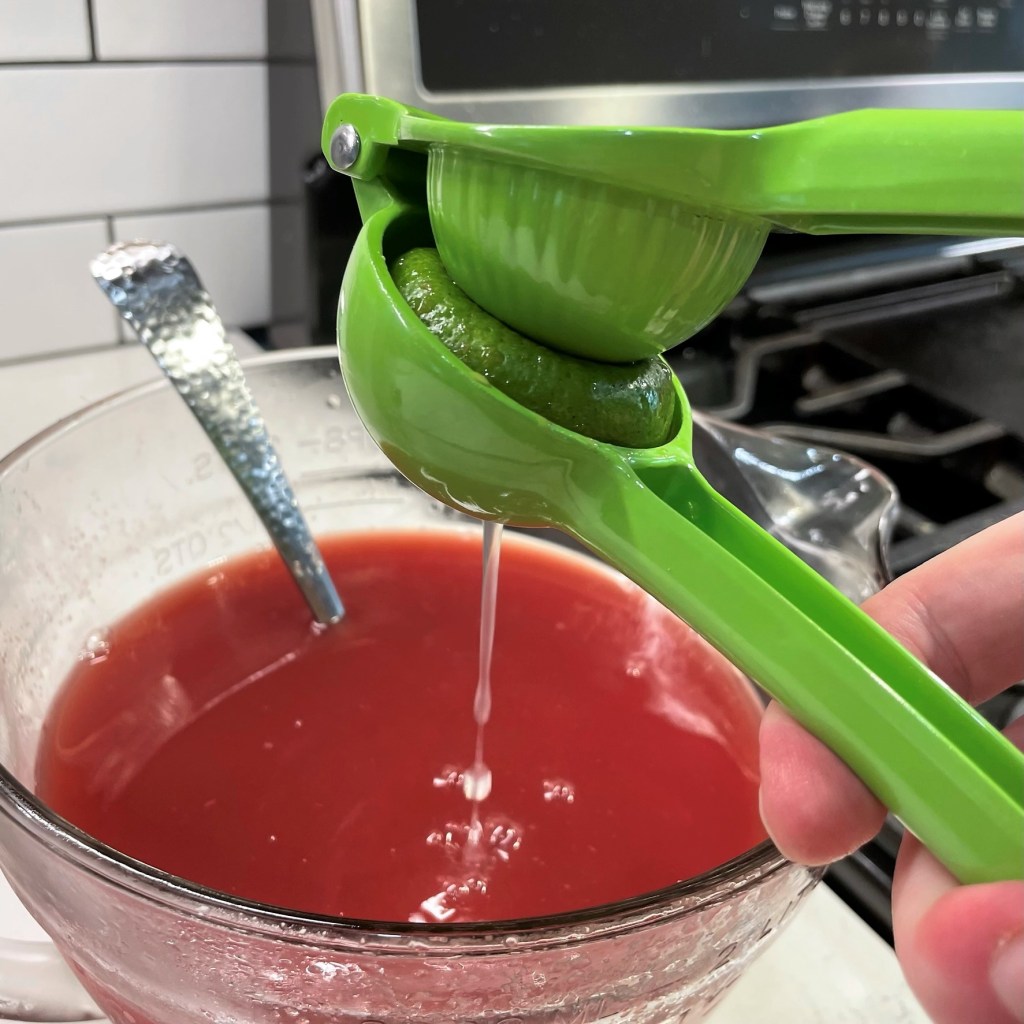
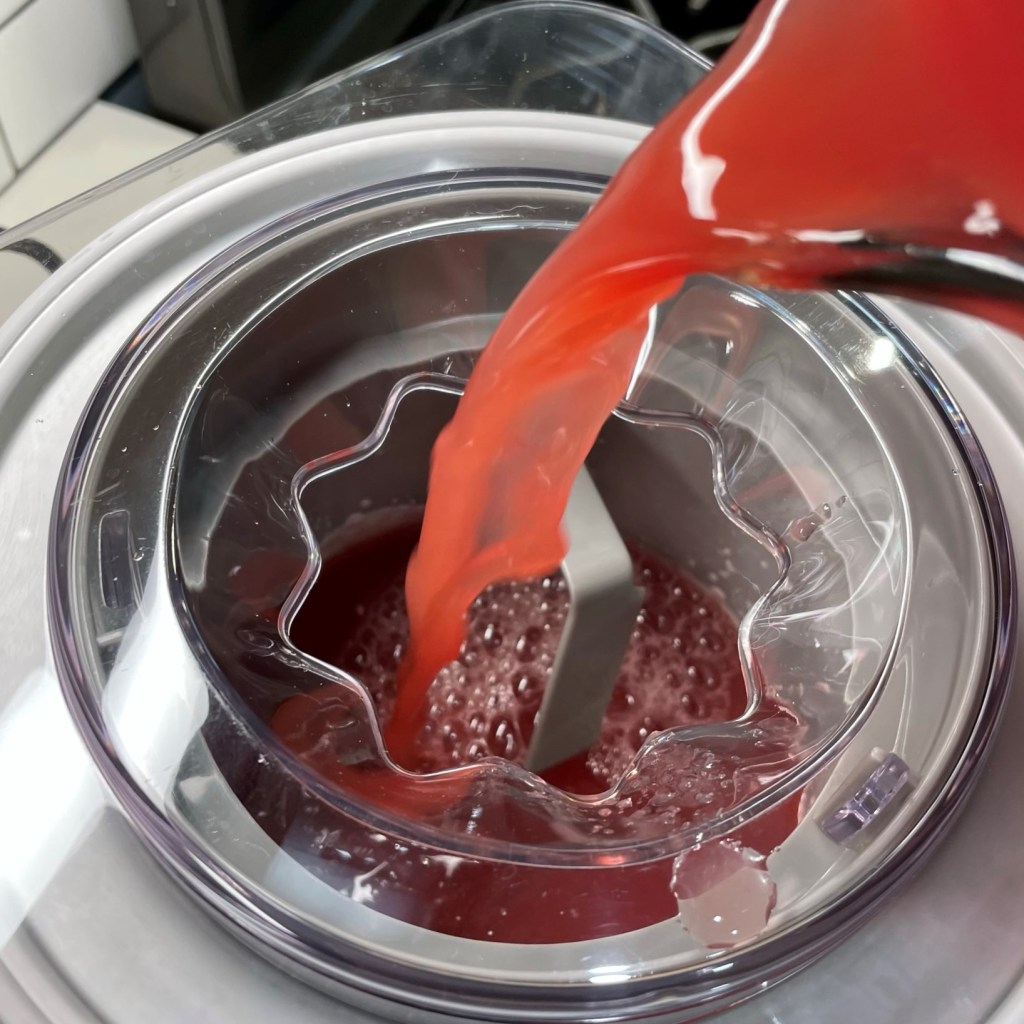
Add the hibiscus ginger beer and hibiscus-infused simple syrup. Squeeze both halves of a fresh lime and add that juice to the mixture. Freeze in an ice cream machine until it is nice and frosty.


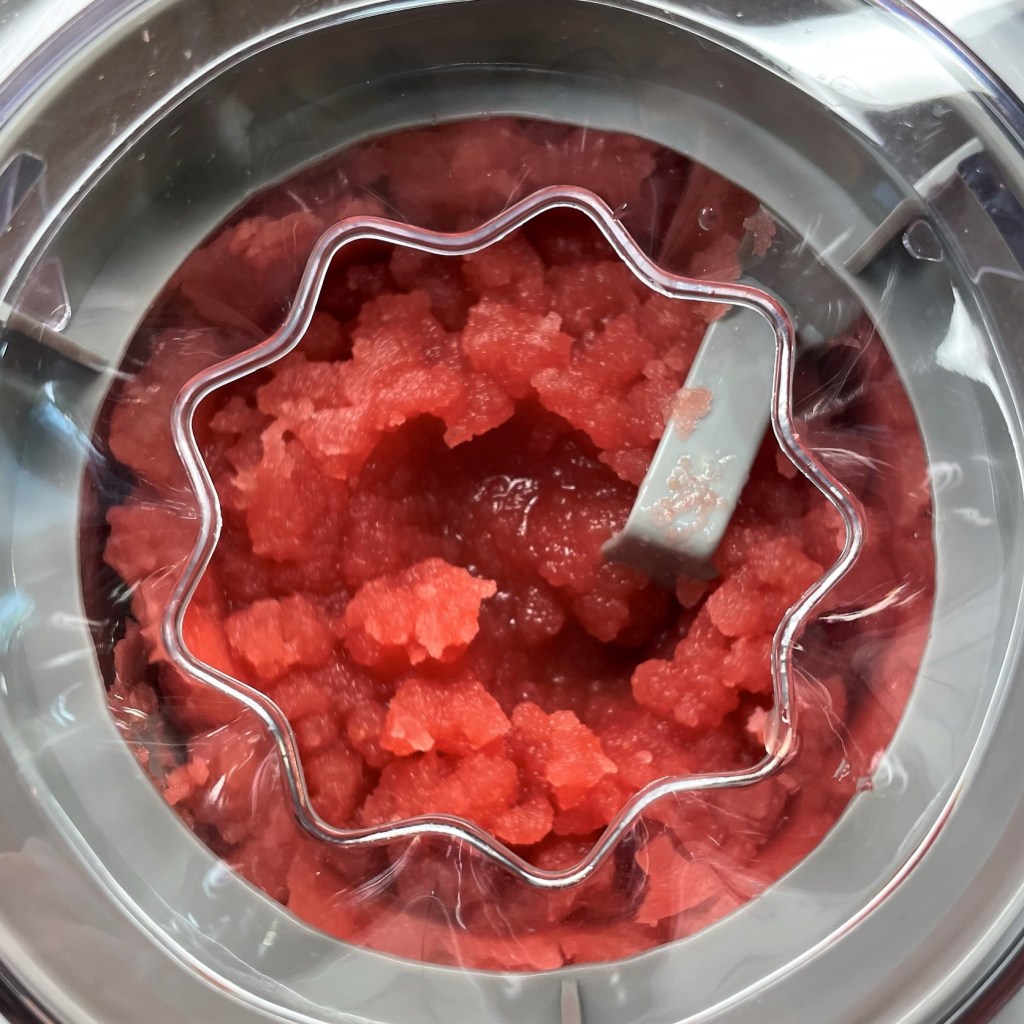
Unlike ice cream, there is no risk of “over-churning” a sorbet. The main thing is that you want to be able to easily transfer the soft, frozen mixture to a freezer container, so it may be easier to stop churning when it is still somewhat “wet,” rather than completely frozen. Give it four hours in the freezer to firm up completely, and scoop to serve.

If you want to add a bit of booze (I think a bit of Jamaican rum or blanco tequila would be nice in this), limit it to no more than 1/4 cup, or it won’t freeze well. And if you’re serving kiddos, obviously, skip the booze.


No ice cream machine?

You can still make homemade sorbet—just give yourself a little bit of extra time. Consider adding a small amount of light corn syrup to the puree base—3 tablespoons ought to do it—to help keep the sorbet stable and avoid too many icy crystals. Pour the base directly into a freezer-safe container with a lid and freeze it for a couple of hours. Remove it, slush up the mixture with a fork and freeze two more hours, then repeat until it is fully frozen. If the consistency is too chunky, don’t worry. You can let it freeze as solid as you want and whirr up the chunks in a food processor or high-power blender just before serving.

Watermelon-Hibiscus Sorbet

  • Servings: about 8
  • Difficulty: average
  • Print

Here’s a fresh and vibrant “red drink” dessert, made with watermelon, hibiscus and ginger beer—it’s perfect for Juneteenth or any summer celebration, and very easy to whip up, with or without an ice cream machine.

Ingredients

  • 8 cups fresh watermelon chunks
  • 1/2 cup water
  • 2 hibiscus tea bags
  • 1/4 to 1/2 cup fair trade sugar (adjust amount to suit sweetness of watermelon and ginger beer)
  • 1 can Q brand hibiscus ginger beer (or 1 cup of another ginger beer)
  • Juice of 1 lime
  • a pinch of salt

Directions

  1. Fit the bowl of a food processor with a large blade. Add watermelon chunks (in batches, if necessary) and pulse a few times, then puree until liquid. Stir in a pinch of salt. Strain the puree into a pitcher bowl through a large-mesh strainer to filter out lingering seed bits. Chill until ready to proceed.
  2. Heat water over medium heat until boiling. Turn off heat and add hibiscus tea bags. Steep five minutes and discard tea bags. Stir in sugar until dissolved. Cool completely.
  3. Add ginger beer and hibiscus-infused simple syrup to the watermelon puree. Give it a taste to check sweetness. If it needs additional sugar, make a small amount of rich simple syrup (2 parts sugar to 1 part water) and add to the puree. Alternatively, stir in a few tablespoons of light corn syrup. Squeeze lime juice into the puree. If the mixture is not completely cold, chill it down in the fridge for an hour or so.
  4. Freeze in an ice cream machine until slushy. Transfer to an insulated freezer container and freeze several hours until firm.

If you don’t have an ice cream machine, pour the puree directly into a freezer safe container with a lid and freeze for a couple of hours. Remove it, slush up the mixture with a fork and freeze two more hours, then repeat as many times as needed until it’s fully frozen. If the resulting consistency is too chunky, you can whirr them up in a food processor or high-power blender just before serving.

Want to make a boozy sorbet? Add no more than 1/4 cup of light or Jamaican rum, vodka or blanco tequila before freezing.


Roasted Pork Loin with Gingered Rhubarb Chutney

I had all but given up hope on finding more rhubarb this spring, after my earlier, monthlong, city-wide search that resulted in my first few stalks of this tart, springtime treasure. But my sweet-toothed husband, Les, made a bold announcement after his first taste of the Rhubarb-Berry Crunch dessert—“OK, I like rhubarb,” so the hunt was on for more. I lucked out, at the same store I had found it before, and I bought the last of what they had. As with any rare find, I have been trying to ration my rhubarb stash to enjoy it in as many forms as possible, and I have a few more ideas brewing in the back of my mind that I’ll spring on you soon.

The ginger addition to the rhubarb filling in the crunch dessert was so delicious; I wanted to pair the flavors again in a sweet-meets-savory chutney for pork roast. A smart lesson I learned in my part-time catering years was the easy trick of “echoing” flavors across various dishes in a meal, and I put that idea fully to work here, giving the chutney a shout out with complementary flavors in both the brine and dry rub. I incorporated cardamom, star anise, more ginger and one colorful ingredient I purchased recently from the gourmet kitchen section of TJ Maxx:

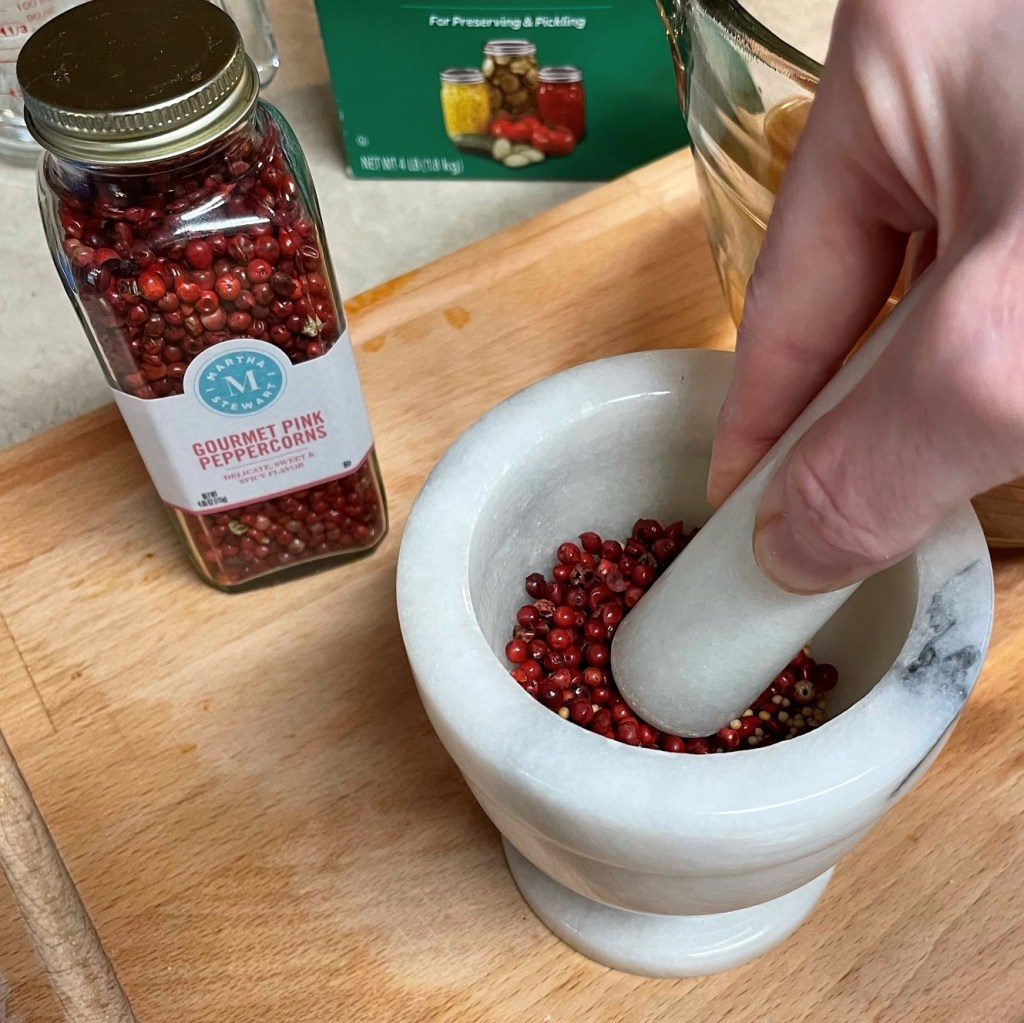
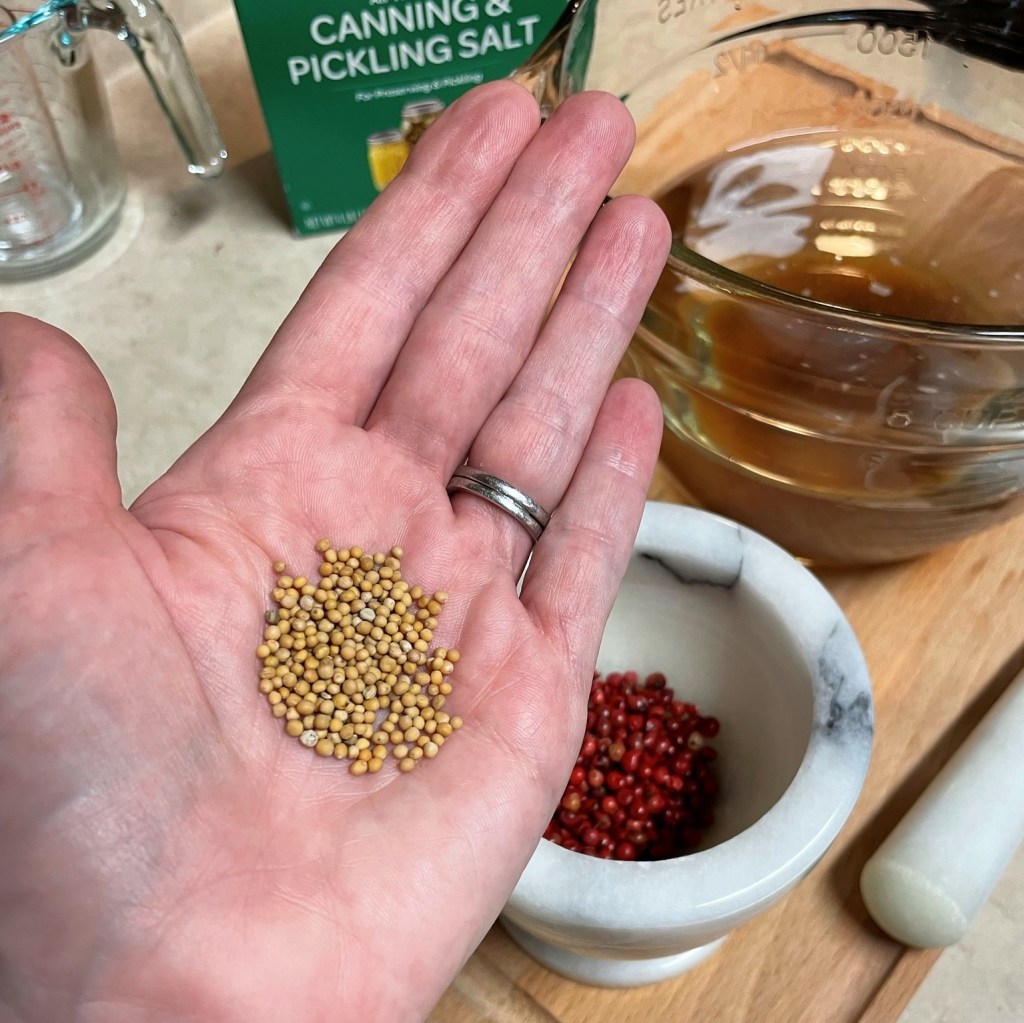
These pretty little dried berries are not related to black peppercorns, and they are very easy to crush.

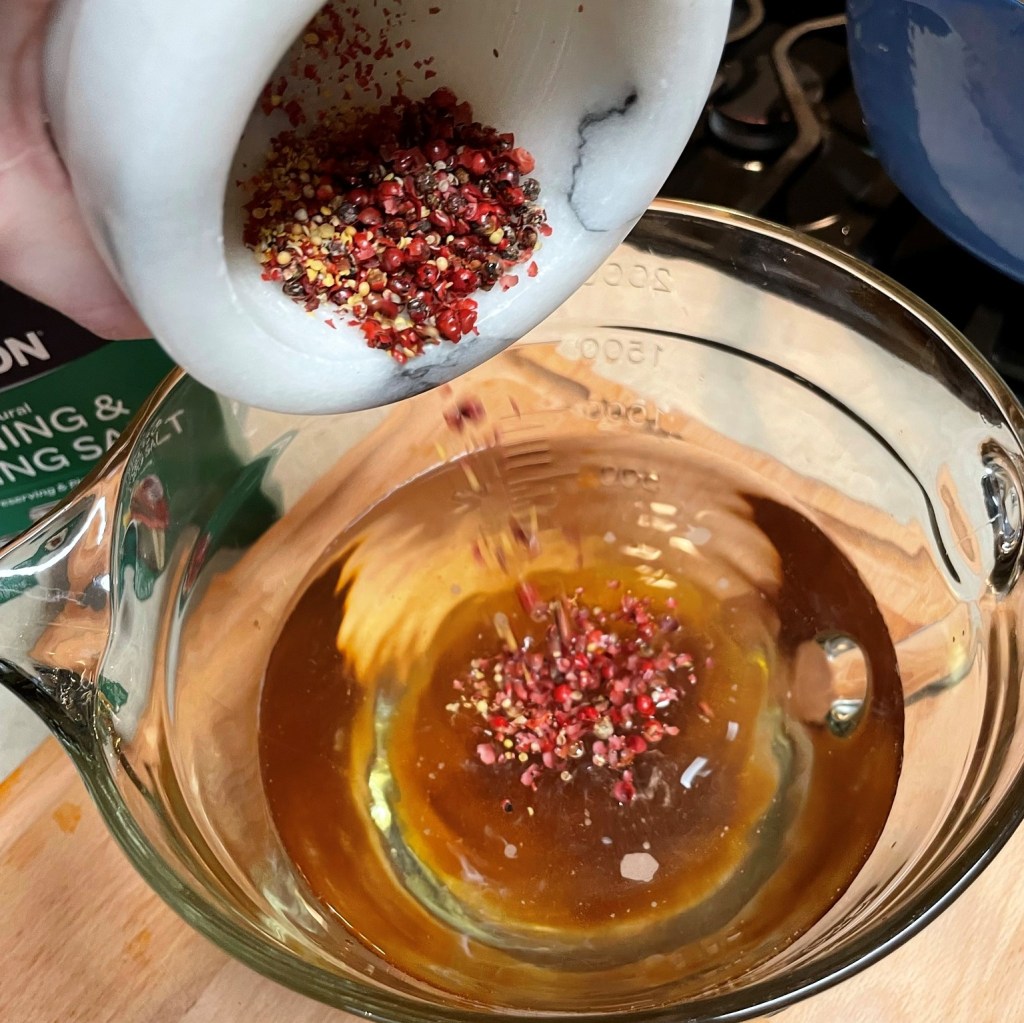
I’ve seen them, of course, but didn’t know much about pink peppercorns, other than their occasional appearance in one of the “mélange” blends that goes into my Peugeot peppermill. As it turns out, pink peppercorns are not related to black pepper at all! They are named merely for their resemblance to peppercorns and also for their slight peppery flavor, but they are brighter and fruitier than ordinary pepper, and they turned out to be a nice complement to the tart rhubarb. They are also much softer than regular peppercorns, as I learned when I easily crushed them with my mortar and pestle. Another fact about pink peppercorns—one that is more on the serious side—they are closely related to cashews, so they pose a significant safety risk to anyone with allergies to tree nuts (yikes).

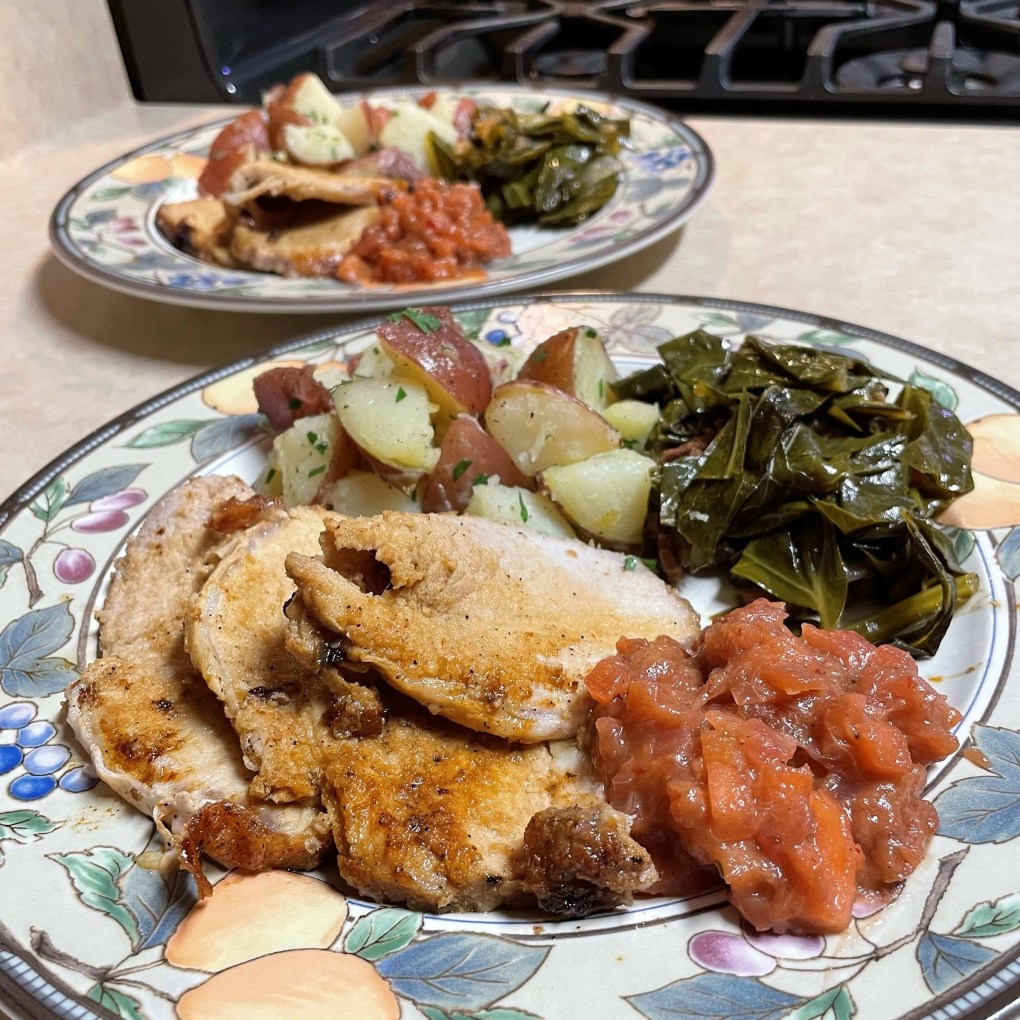
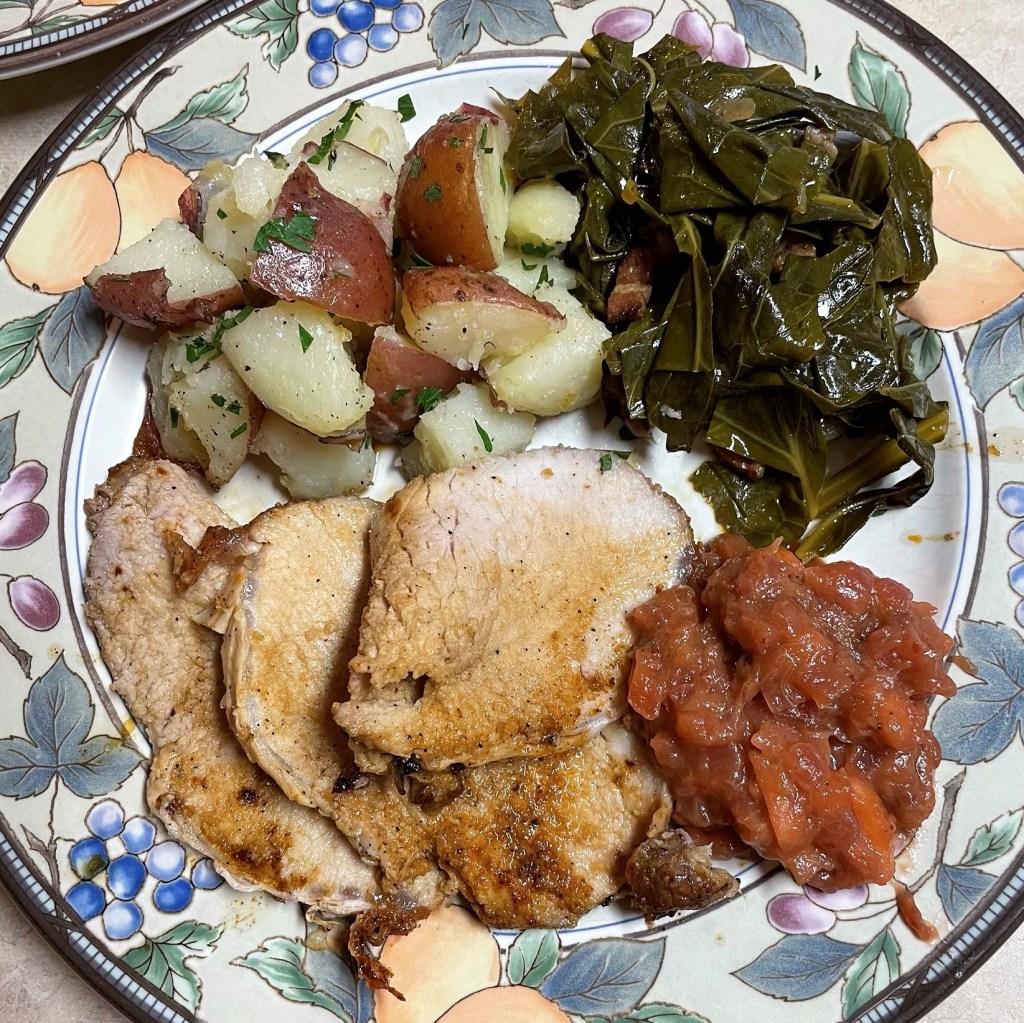
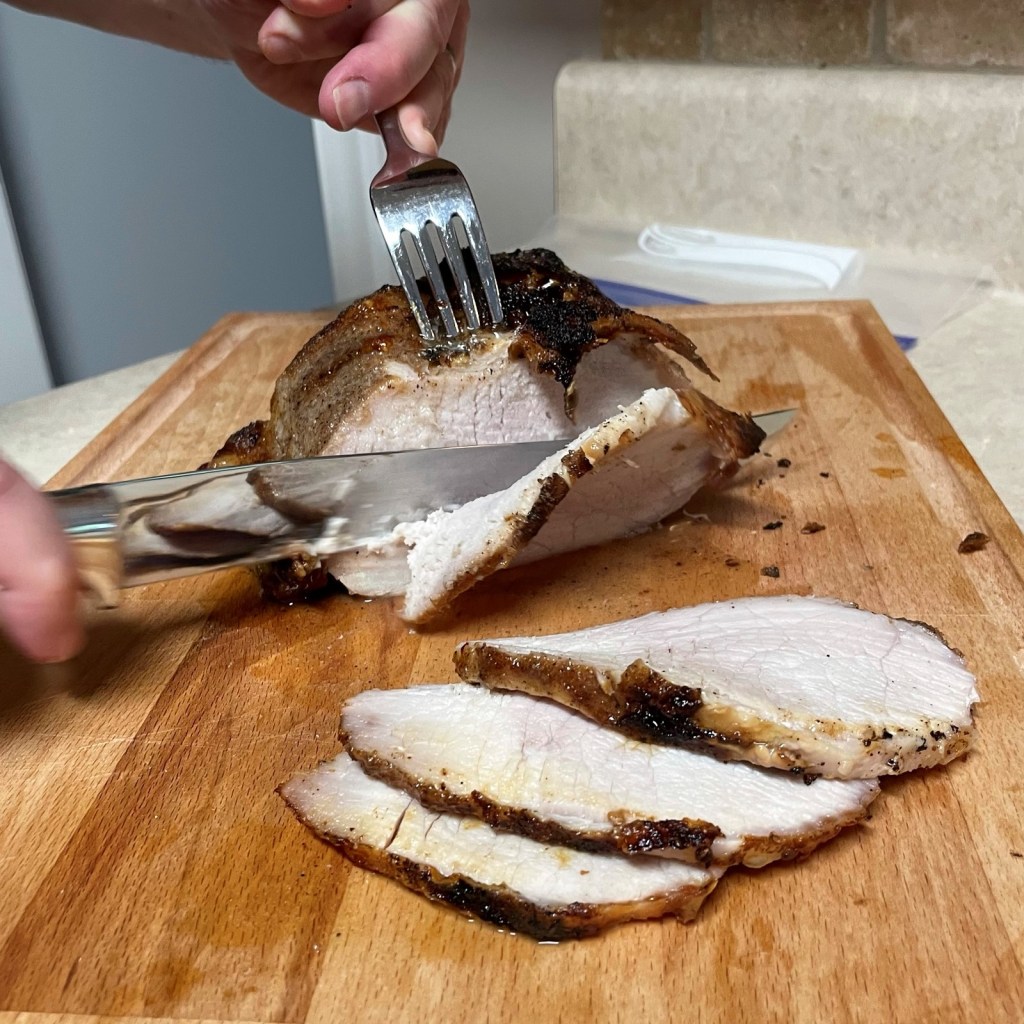
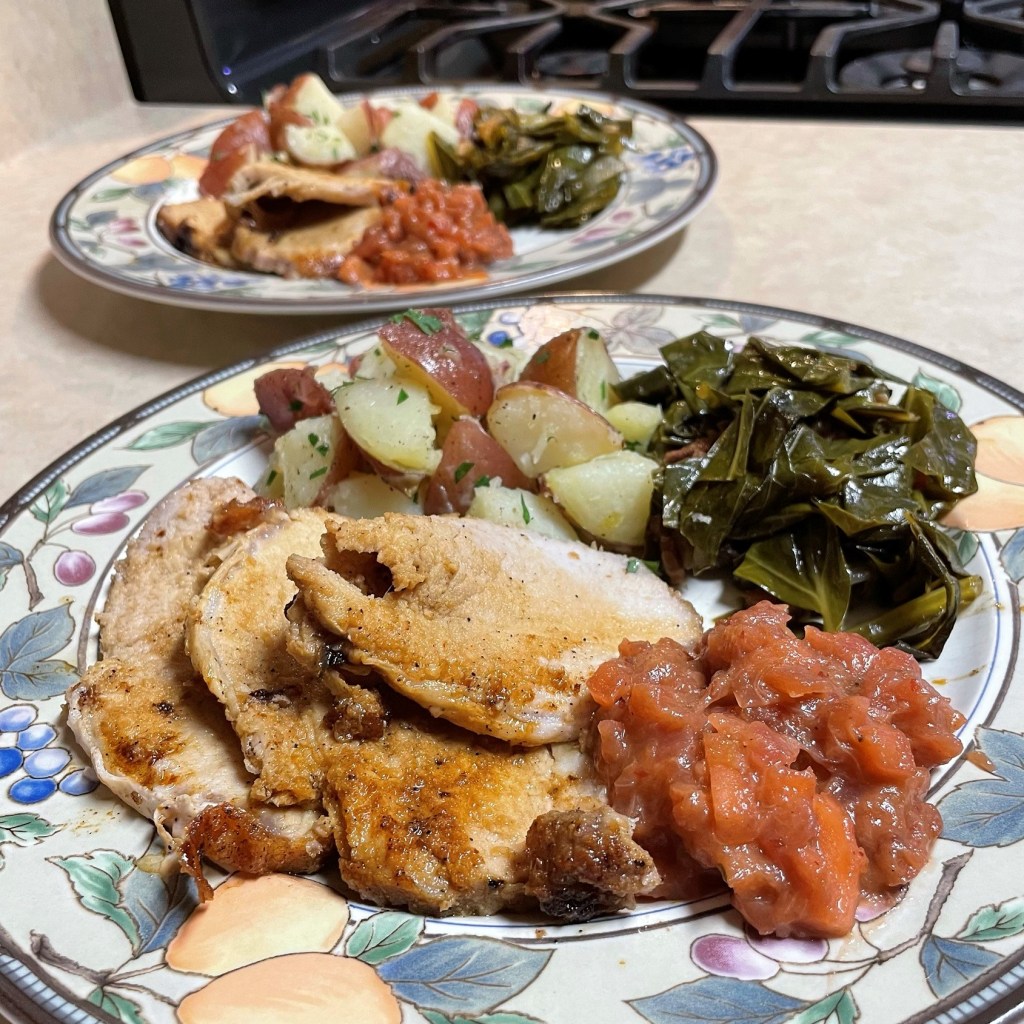
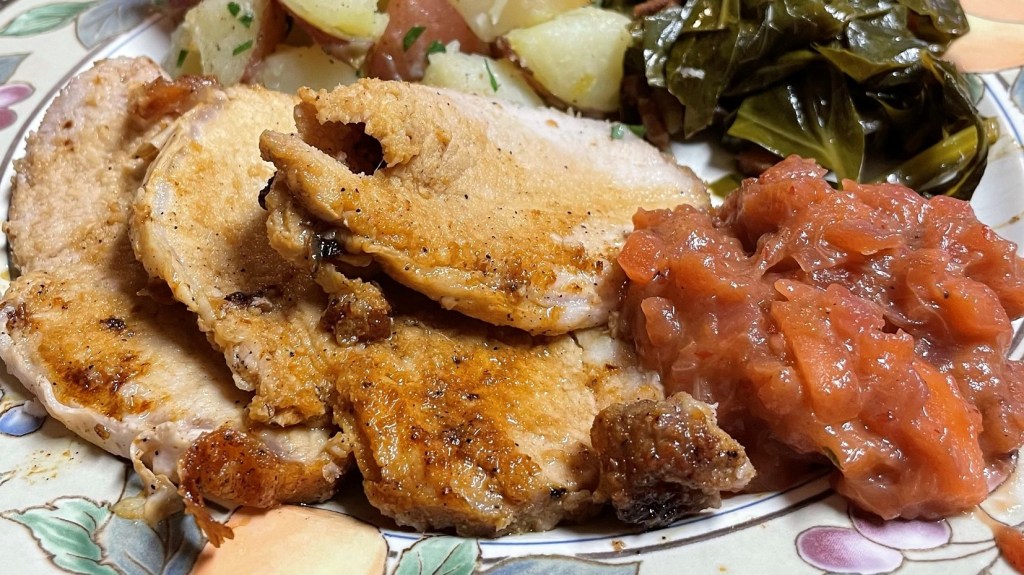
The pork loin was a great find at a local farmer’s market. The seller was mindful to point out the advantages of local, pastured pork, which is more humane and sustainable than most conventional processes, and I have no problem paying the higher cost for those benefits. It is also more flavorful than typical, bland grocery store cuts. The loin is a very lean cut, prone to become dry, so I brined it for a few hours before roasting. The end result was perfectly tender, juicy and flavorful, and the gingered chutney was just the right touch, though a bit intense for Les, so I would ease up on the ginger next time. We served this delicious roast with simple boiled red potatoes and our favorite homemade collard greens, another prize from the farmer’s market.

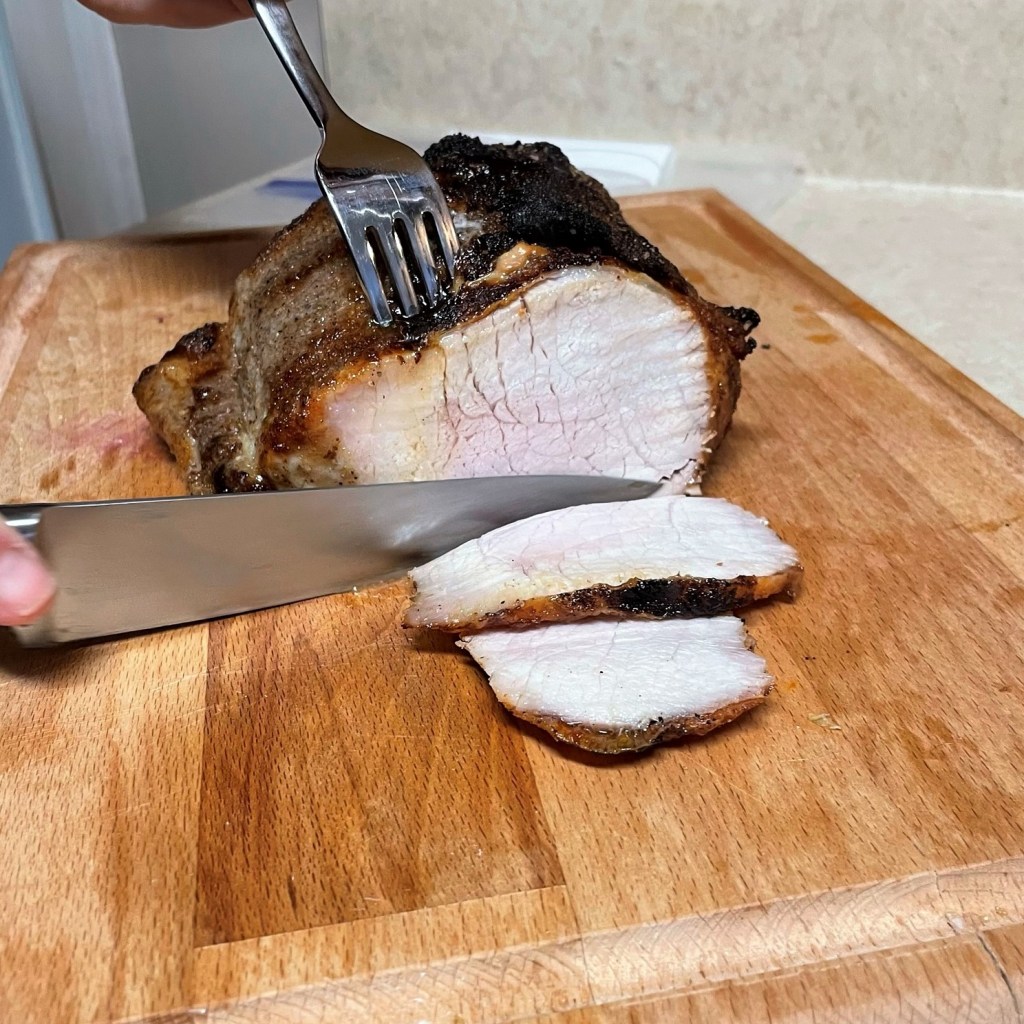
I dipped each slice in the roast pan juices before serving with the gingered rhubarb chutney. A perfect Sunday Supper!

The extra layers of attention that I gave to this meal earns it a spot in my Sunday Supper category, which I suspect has been feeling a little neglected recently. We have done a lot of very casual cooking at our house in recent months, but after so many weeks of playing “hard to get,” this rhubarb deserved a special seat at the table. Enjoy!


Ingredients & Instructions

Brine for pork loin

2 1/4 lb. pasture-raised pork loin

4 cups cold water

1/4 cup canning and pickling salt (or kosher salt)

1/4 cup brown sugar

1 Tbsp. crushed pink peppercorns

2 cardamom pods, crushed

1 piece star anise

Be sure your brine container is non-reactive; a large, deep glass bowl works great. It isn’t necessary to heat the water, as pickling or kosher salt will dissolve pretty easily. If you do choose to heat the water for quicker dissolving, be sure the brine has time to cool completely before you add the roast to it.

Stir brine ingredients until salt and sugar are dissolved; submerge pork loin, cover and refrigerate 4 to 5 hours; remove from brine, pat dry all over with paper towels. Rest a few minutes, pat dry again, then follow rub instructions.


Rub for pork loin

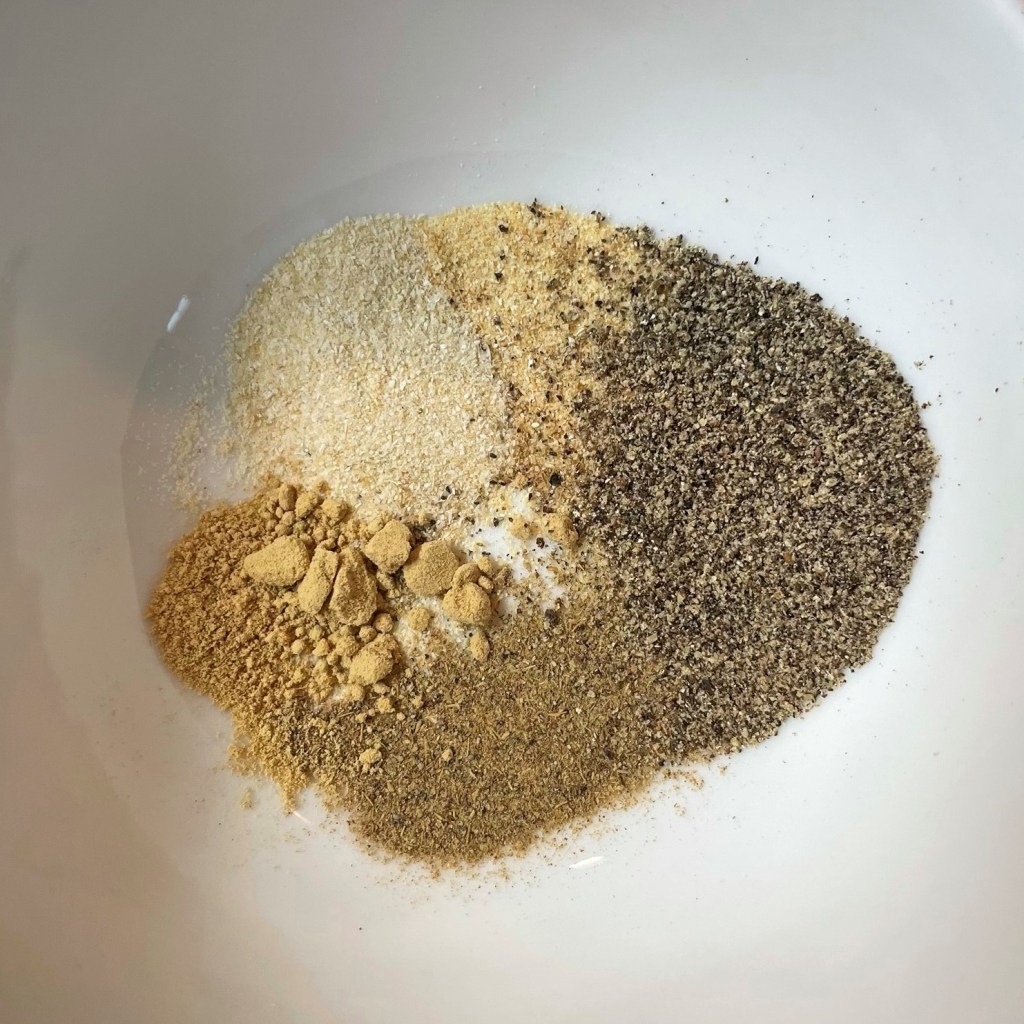
1/2 tsp. garlic powder

1/2 tsp. onion powder

1/4 tsp. ground cardamom

1/4 tsp. ground ginger

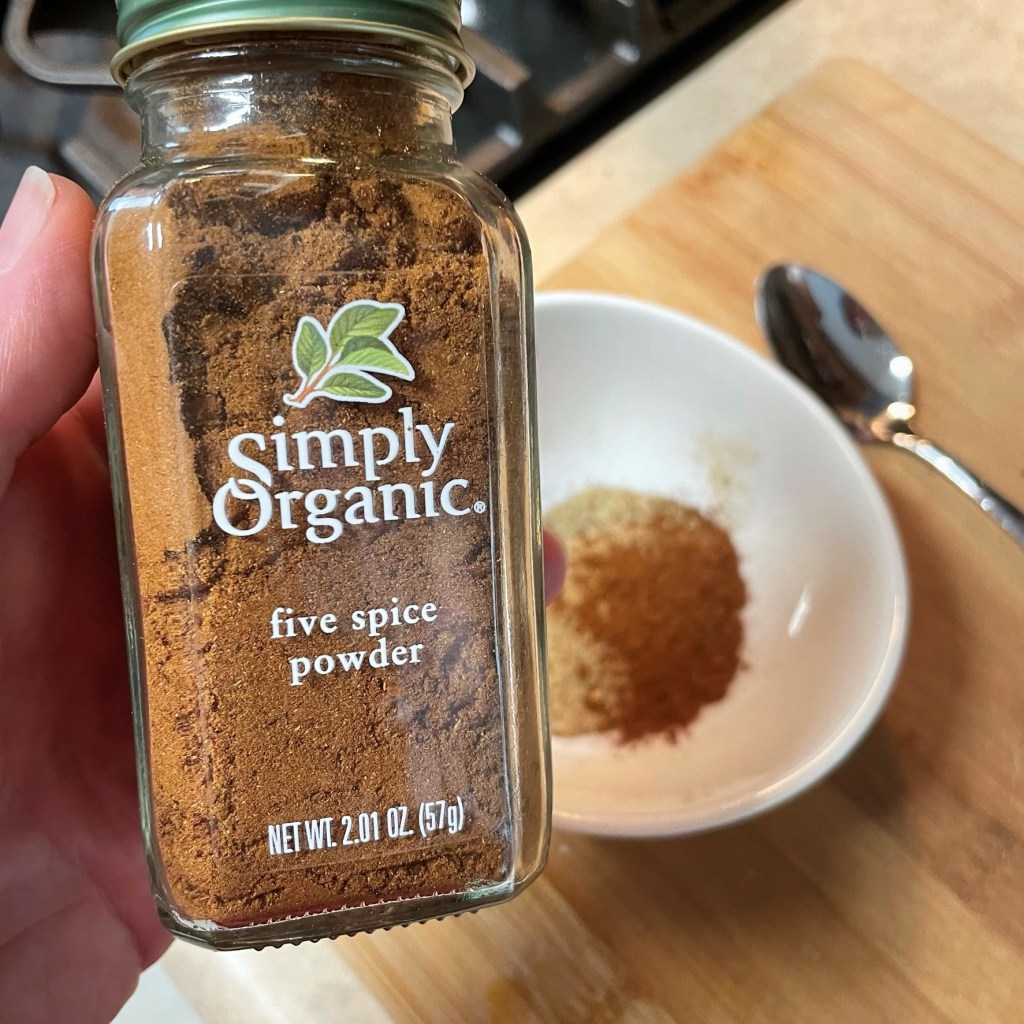
1/2 tsp. five spice powder

1/2 tsp. ground black pepper

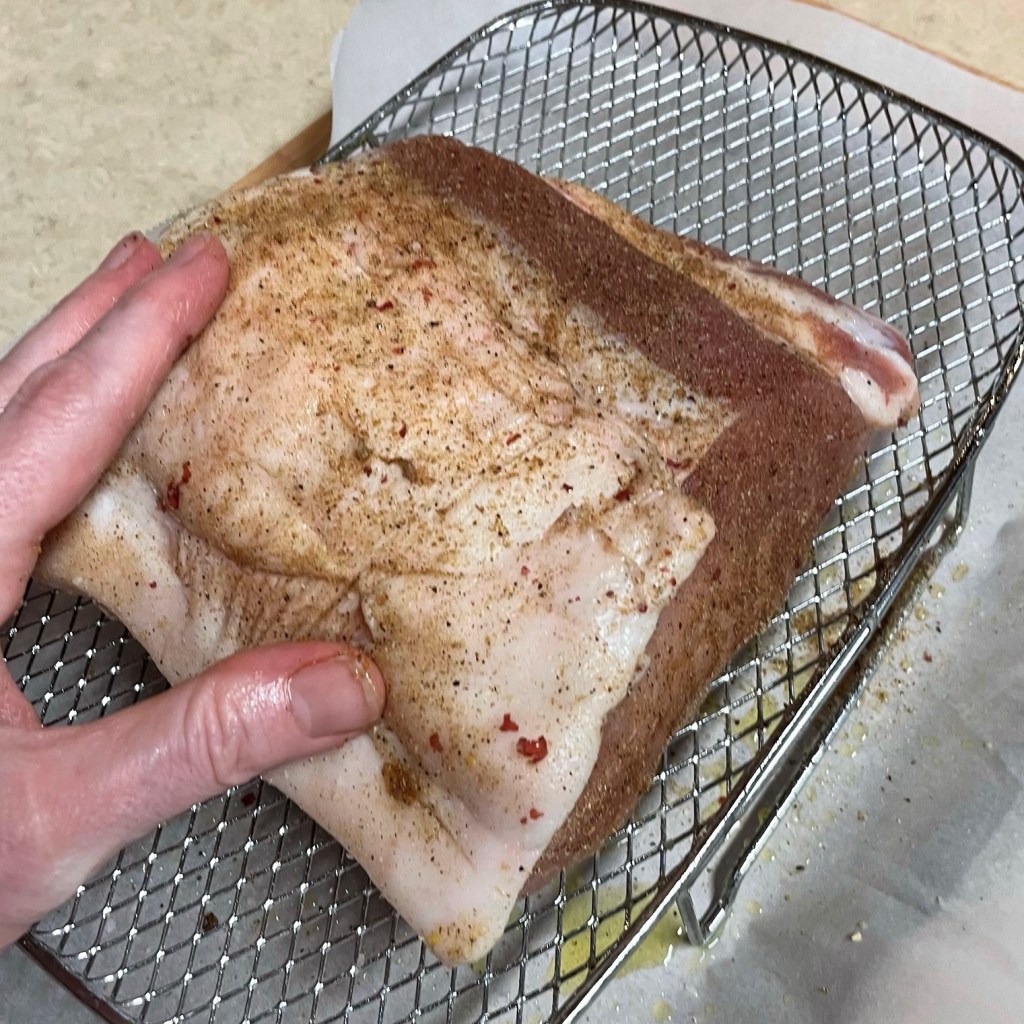
Spray olive oil onto dried pork loin, and sprinkle rub all over, especially the lean surfaces. Let roast remain uncovered at room temperature for about an hour before roasting.

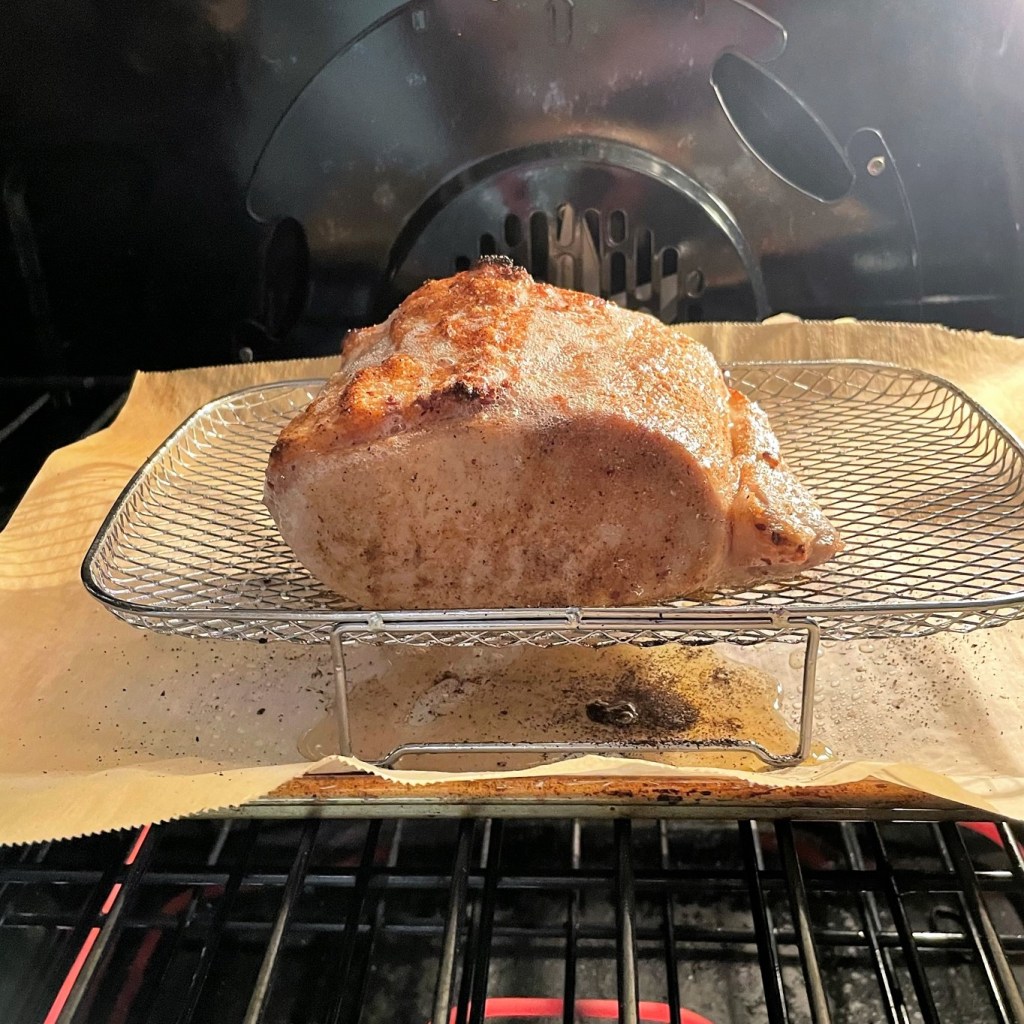
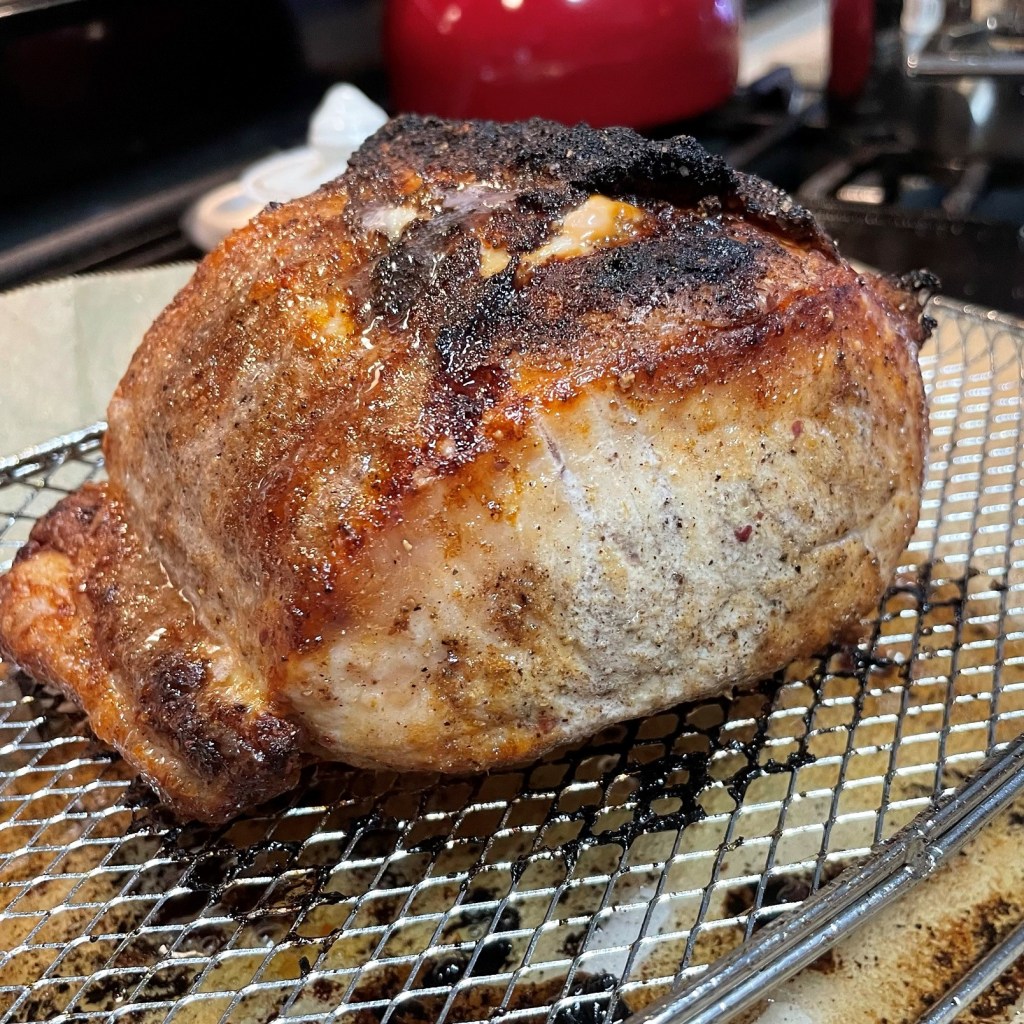
Preheat oven to 450° F. Place loin roast (fat side up) on rack above parchment-lined baking sheet, or inside a shallow glass baking dish. Roast at 450° for 15 minutes, then reduce heat to 400° and roast or convect roast for 30 to 45 additional minutes, or more as needed to reach 145° F internal temp. Rest at least 10 minutes, then slice thinly. Dip slices into any clean pan drippings for extra flavor at serving.


Rhubarb Apple Chutney

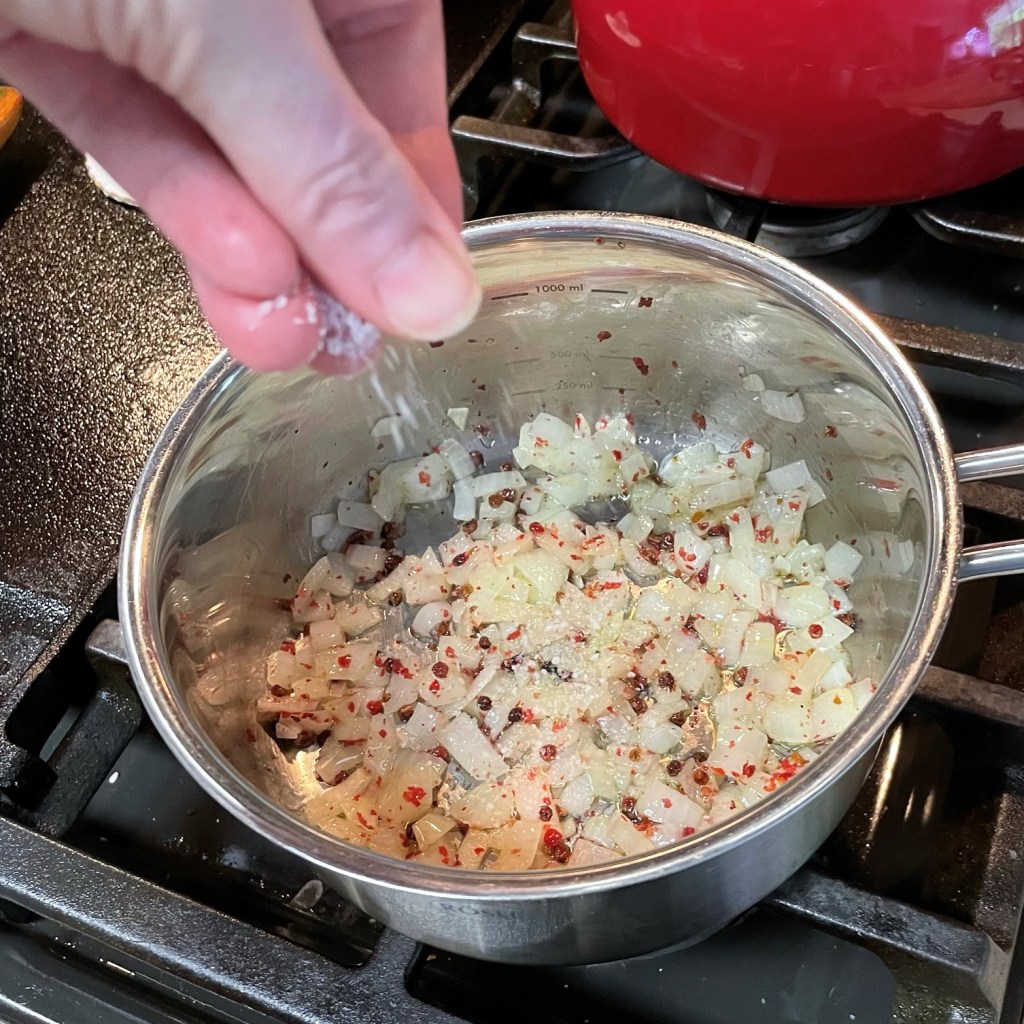
1 Tbsp. extra virgin olive oil

1/2 cup diced sweet onion

½ tsp. pink peppercorn, crushed

1 cardamom pod, crushed

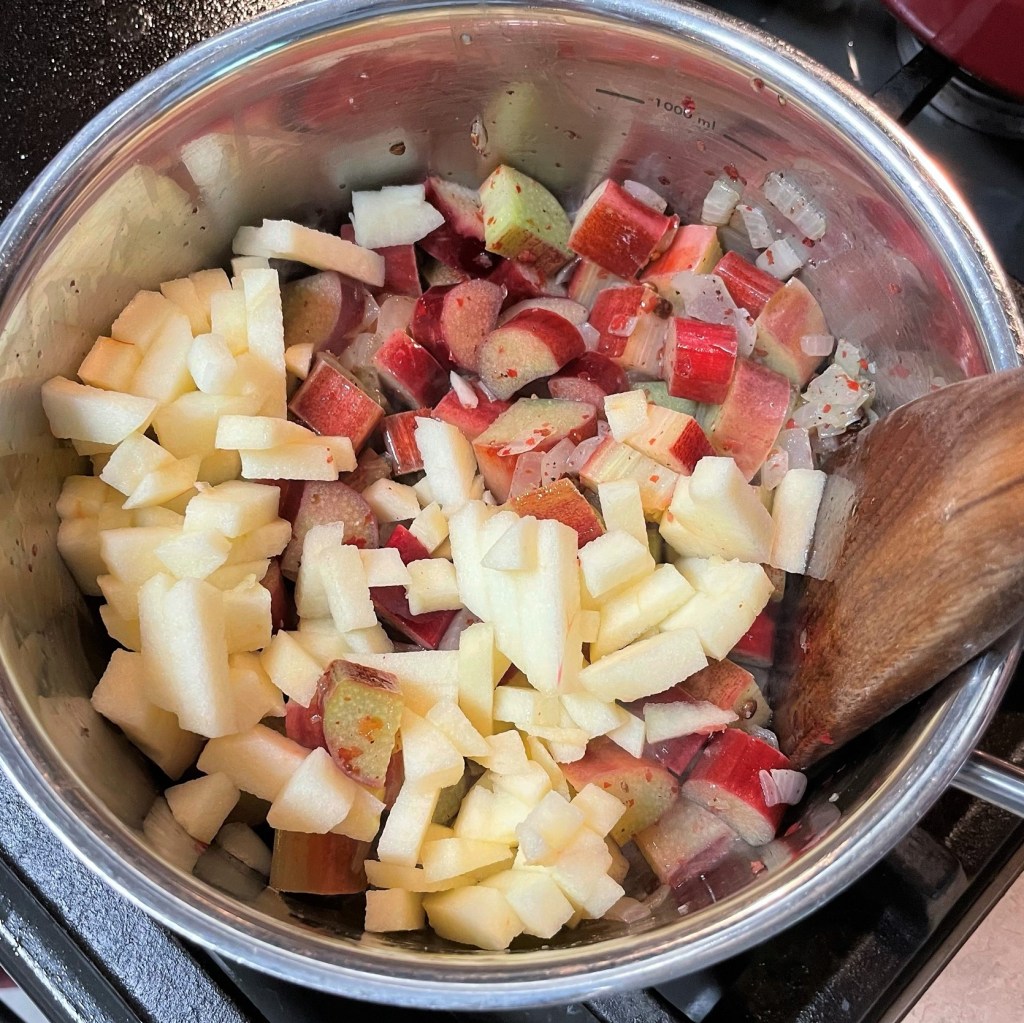
1 heaping cup diced rhubarb

1/2 cup chopped apple

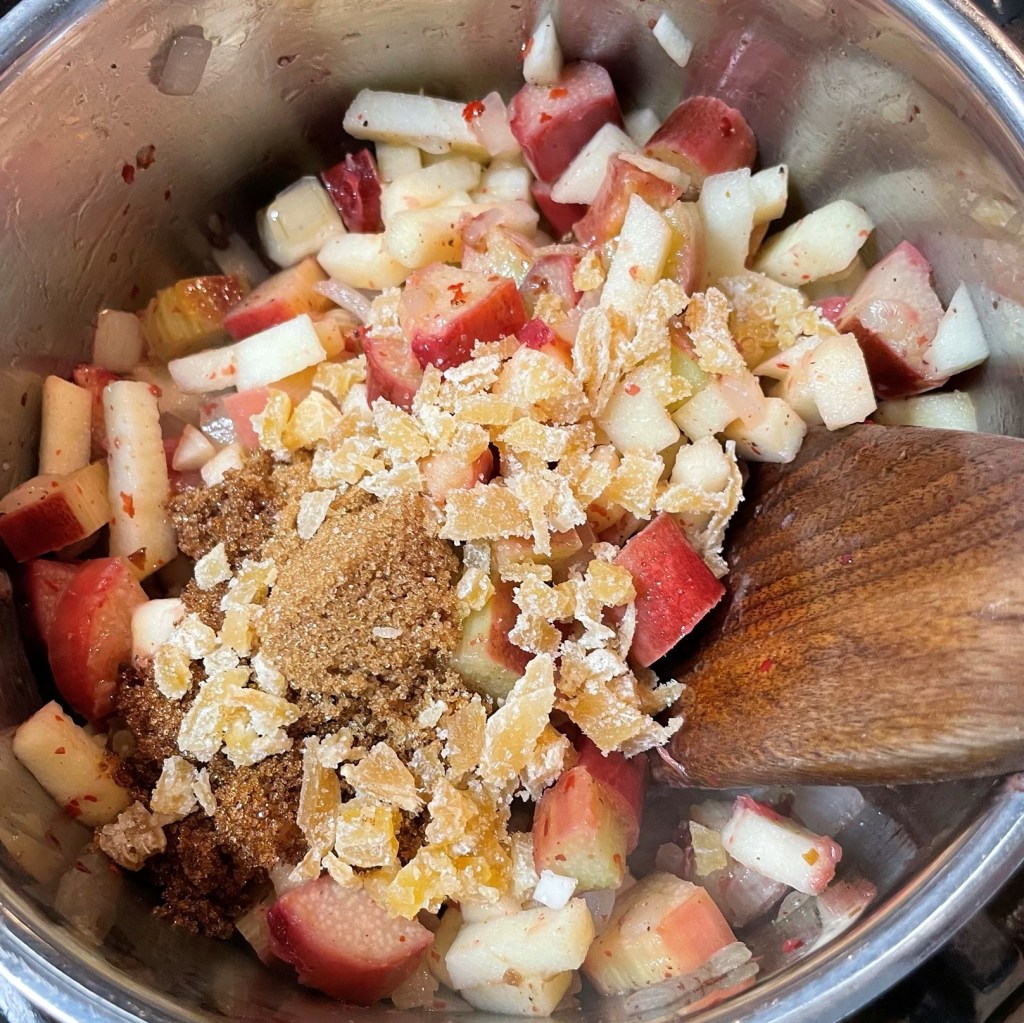
1/4 cup packed brown sugar

2 Tbsp. minced crystallized ginger

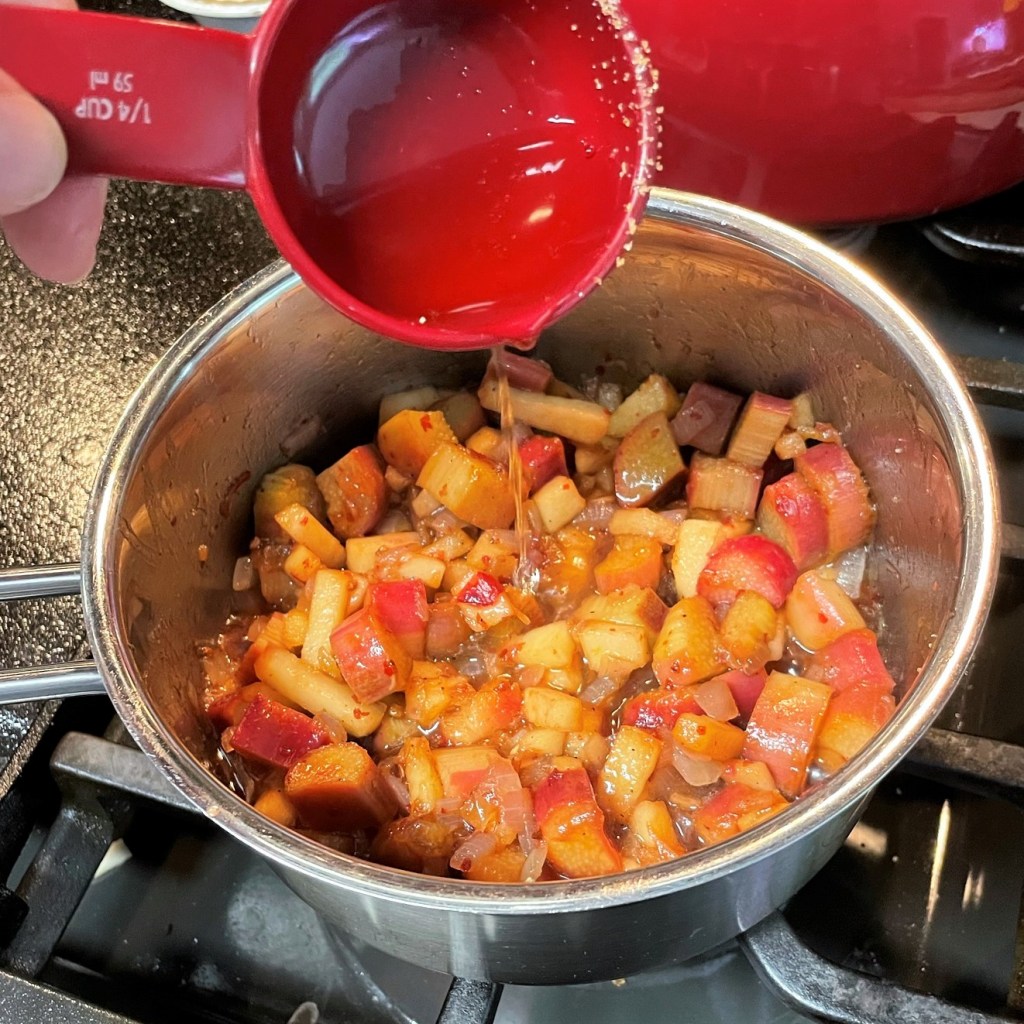
2 Tbsp. apple cider vinegar

Kosher salt and black pepper

Leaves from about two sprigs of fresh thyme

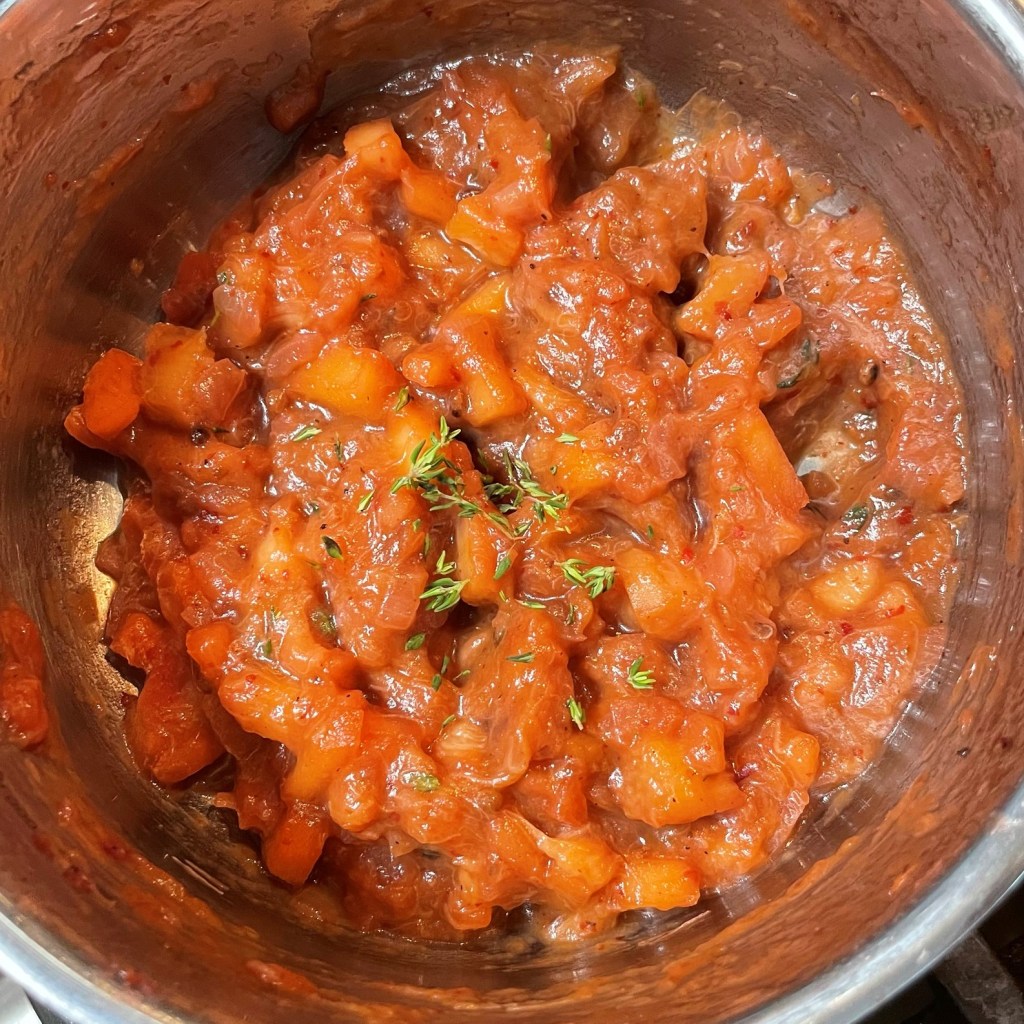
Heat olive oil in a small saucepan and sauté onions until softened. Season with salt and pepper, pink pepper and crushed cardamom pods. Add rhubarb and apple and toss to combine. Add brown sugar and crystallized ginger. Cook over medium-low heat until sugar is dissolved and fruit begins to break down. Add vinegar and continue to cook over low heat until fruit is completely softened and mixture is thickened. Stir in thyme leaves. If not using immediately, chill then reheat.


Banana Bread with Dark Chocolate and Ginger

When Meghan Markle sits down with Oprah this weekend for a “tell-all” interview about what it was like joining—and then separating from—the royal life, I doubt she will be spilling the tea in a way that the British tabloids (and several American news outlets) would have us believe. Frankly, I doubt the interview will be scandalous at all, given that she and Prince Harry (whom I’ve adored since the day he was born) have plenty of reasons to remain close with the rest of the royal family, not the least of which are their adorable son and the new baby that’s on the way. Honestly, can a girl please just have her fairy tale for a minute?

Mark my word, when this interview with Oprah is over, the only things Meghan and Harry will have disclosed is that they love and respect the Queen, and that they have no hard feelings for anyone in the family, and that they have aspirations in life that cannot be fulfilled while living in a royal fishbowl. Oh, and that the British tabloid media is awful—but we already knew that because we all remember the gut-wrenching evening that Princess Diana died while being chased through Paris by the paparazzi. God bless Harry for wanting to protect his wife and family from all that crap.

Here’s another thing Meghan probably won’t spill the tea about: her recipe for banana bread. I clicked on a headline in my news feed recently, intrigued about the idea that Meghan had a “secret surprise” in a banana bread she had shared while on Royal Tour in Australia a couple of years ago. In addition to her previous career as an actress, Meghan had a lifestyle blog before she became engaged to Harry (just one of many things she had to give up), so I knew that she was a maven in the kitchen, and who doesn’t love a fun twist on banana bread? My hopes were dashed, however, when I read that the two “secret” ingredients she uses are chocolate chips and crystallized ginger. Well, I thought, what’s so secret about that?

Look at these two lovebirds! Dark chocolate is packed with antioxidants and ginger is good for digestion. Good for me AND tastes delicious…yes, please!

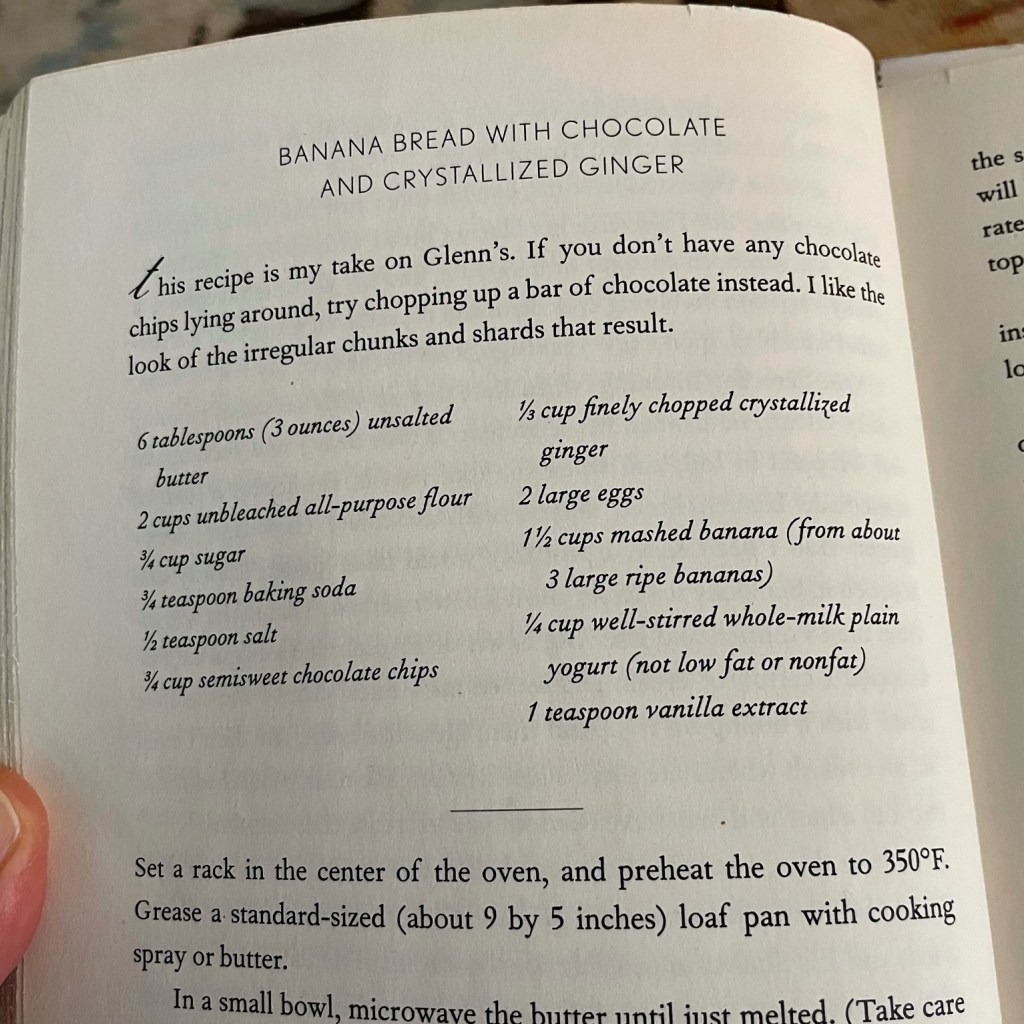
First of all, this is not Meghan’s recipe—it’s been around a long time, and I’ve actually been making it this way myself since around 2010, when I had picked up a copy of Molly Wizenberg’s bestseller, A Homemade Life. Molly is also a former blogger and past contributor to Bon Appetit magazine (among other things), and she described this recipe in her book as one that she had adapted from the recipe of a friend of a friend. And that’s how recipes go—we hear about or taste something we like, we ask for the recipe, perhaps we tweak it and send it forward to someone else, and then they share it however they choose. Not much is original in the world of food anymore, but that doesn’t mean it isn’t delicious. And this bread is definitely delicious.

My recipe is a take on Molly’s, which is a take on somebody else’s. 🙂

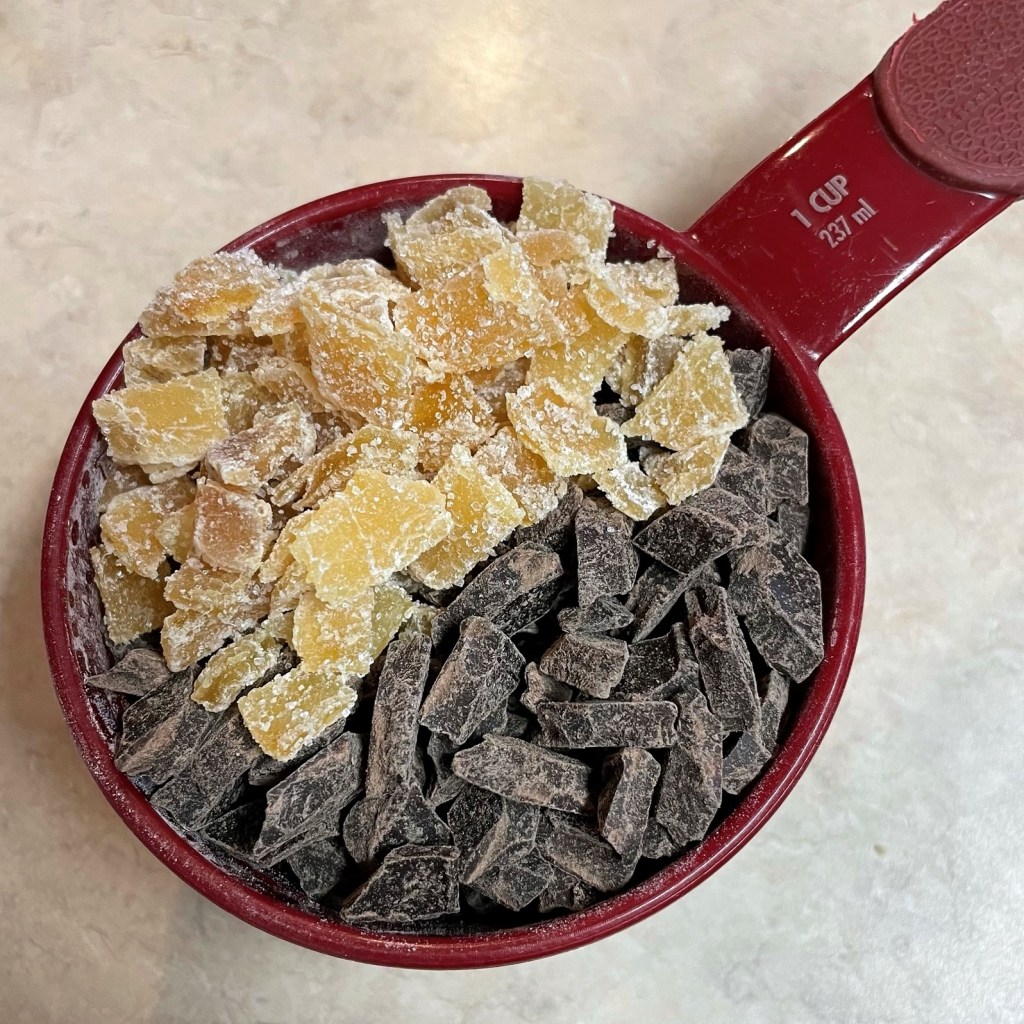
I’ve been craving the combination of dark chocolate and ginger ever since my new foodie friend Dorothy posted a dark chocolate and ginger tart on her own blog at Valentine’s Day. I haven’t made the tart yet, but I cannot find enough words to describe how much I love these two flavors together. The rich but slightly bitter flavor of dark chocolate holds its own against the spicy bite of crystallized ginger, and the two swirl around each other in an exquisite tango across the taste buds. The friendly and familiar background of an otherwise classic banana bread is a great venue for these two flavors to strut their stuff.

My recipe, of course, is slightly altered from Molly’s, which is slightly altered from somebody else’s, and I have no idea how it may be different from Meghan Markle’s because—as with every other single thing in her life since she met Harry—she has not personally shared her recipe. Somebody else spilled her tea. We only know that Meghan’s banana bread includes some form of chocolate and ginger, and that is enough to convince me that she has excellent taste. But we already knew as much, didn’t we?

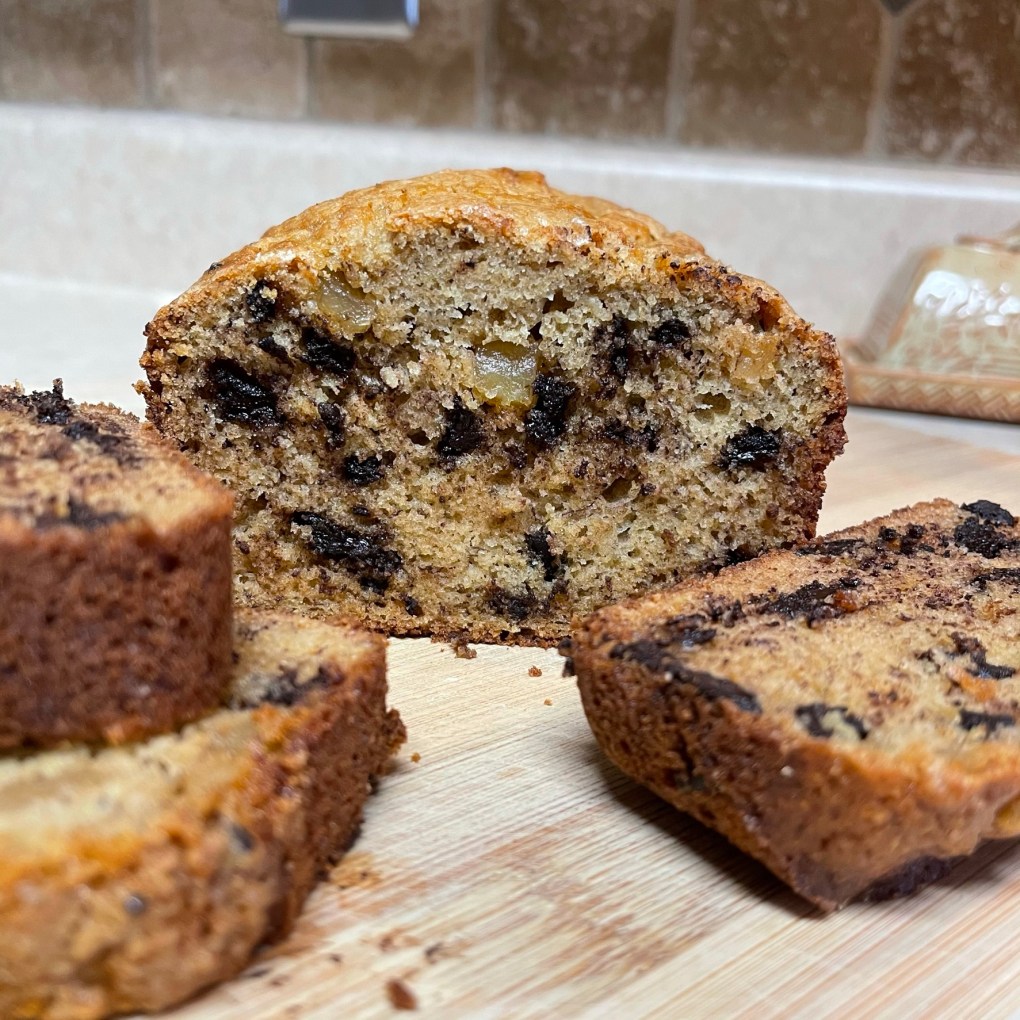
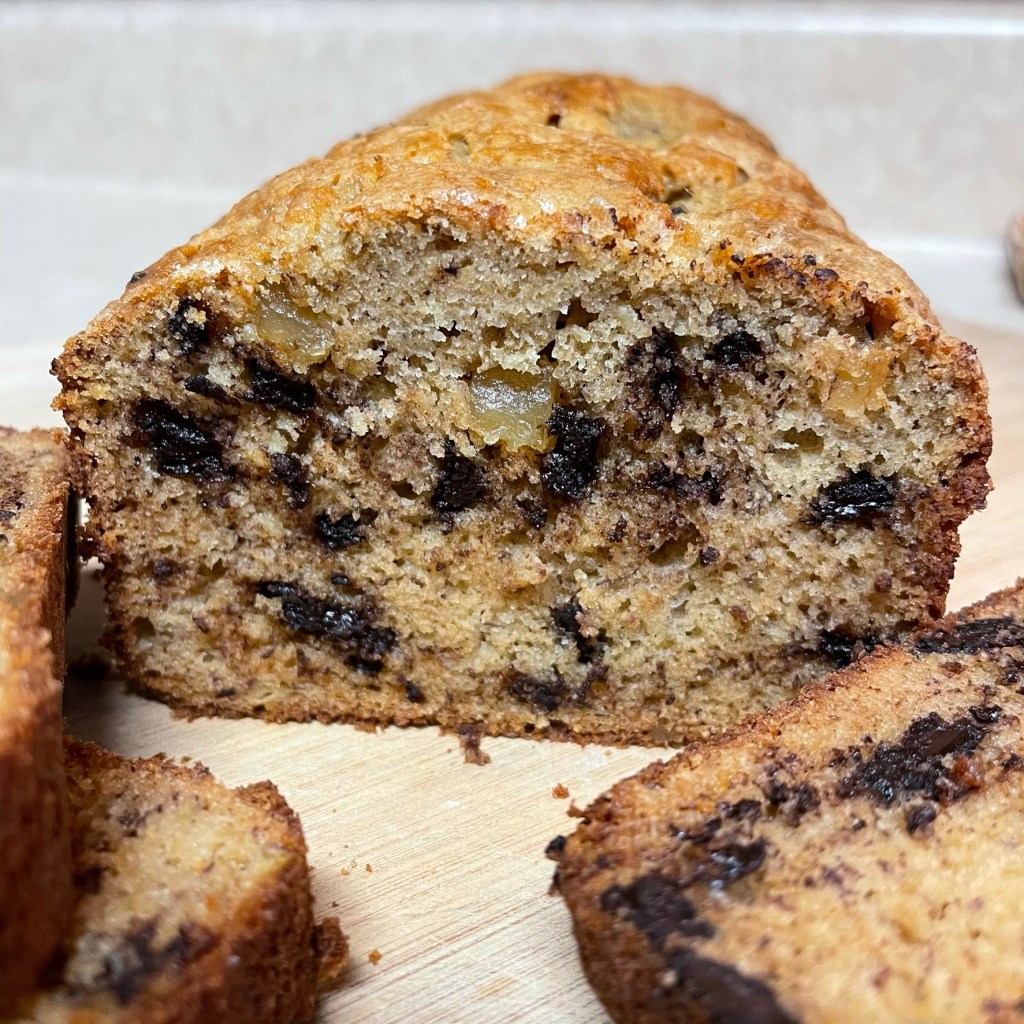
You can see the generous bits of ginger peeking out of the banana bread. And all that dark chocolate! Mmm.

Ingredients

1 cup all-purpose flour* (see notes for measuring tips)

1 cup whole wheat pastry flour*

2/3 cup organic cane sugar (reserve 1 Tbsp. to sprinkle on top)

3/4 tsp. baking soda

1/2 tsp. salt

1/2 tsp. ground cinnamon

6 Tbsp. unsalted butter, melted and cooled (plus extra butter for greasing pan)

2 large eggs (room temperature)

1 1/2 cups mashed ripe banana* (about 3 large bananas)

1/3 cup Greek yogurt

1 tsp. vanilla extract

3/4 cup semi-sweet chocolate chips or chunks

1/3 cup finely chopped crystallized ginger


*Notes

For proper measuring, follow the “fluff, sprinkle, level” method. Scooping directly into the flour bag or container can result in a dense batter.

Whole wheat pastry flour is softer than regular whole wheat or even white whole wheat. It’s perfect for pie crust, cookies and quick breads, such as this one. If you don’t have it, or if you prefer all white flour, combine for a total of 2 cups all-purpose flour.

When I say “ripe” bananas, I don’t mean a few spots on a golden banana. They get sweeter as they age, and if you prefer, you can peel and mash them in a bowl and leave them to brown and sweeten a couple weeks in the fridge. But please, use ripe bananas.

The older the bananas, the sweeter the flavor. This is how my grandmother taught me (as long as there’s no mold)!

Instructions

  1. Preheat oven to 350° F, and position rack in center of oven. Grease a 9 x 5” (or equivalent volume) loaf pan generously with butter.
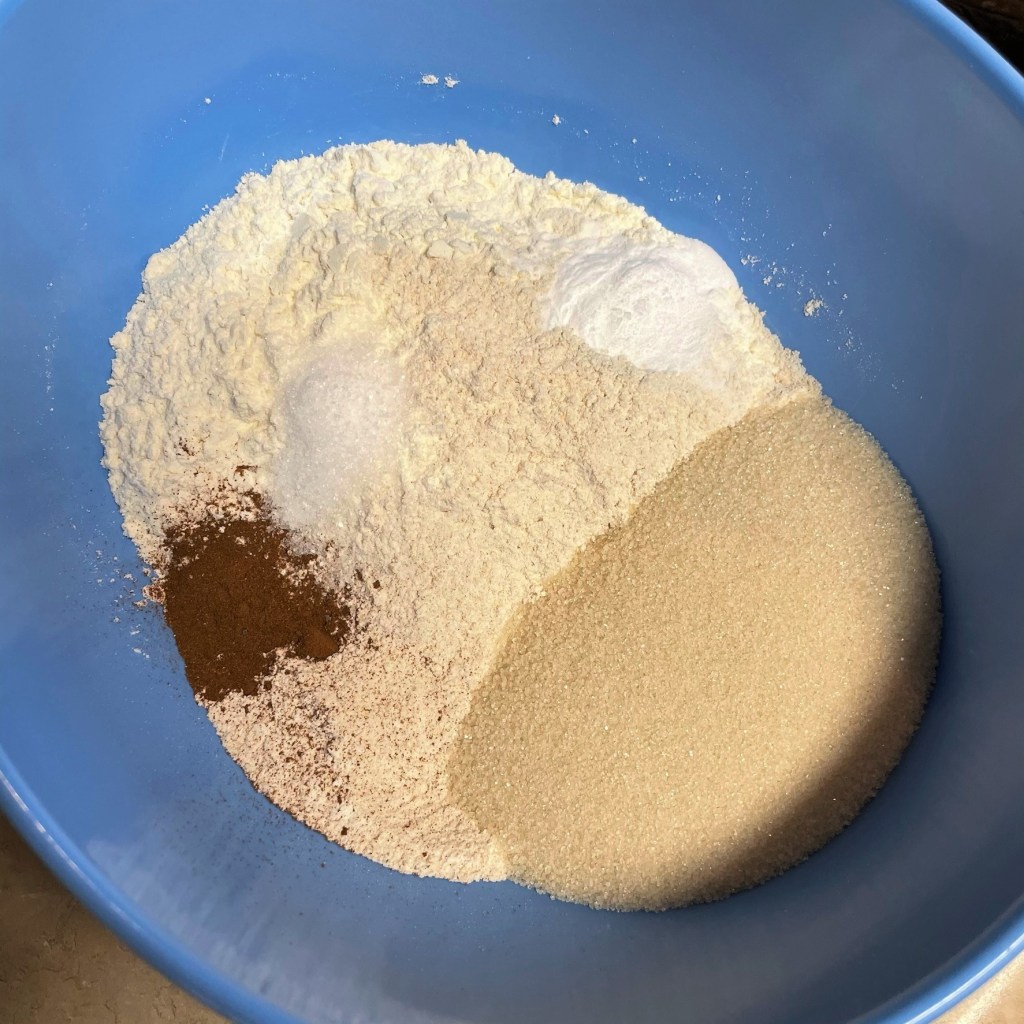
  2. Combine dry ingredients and whisk together in a large bowl.
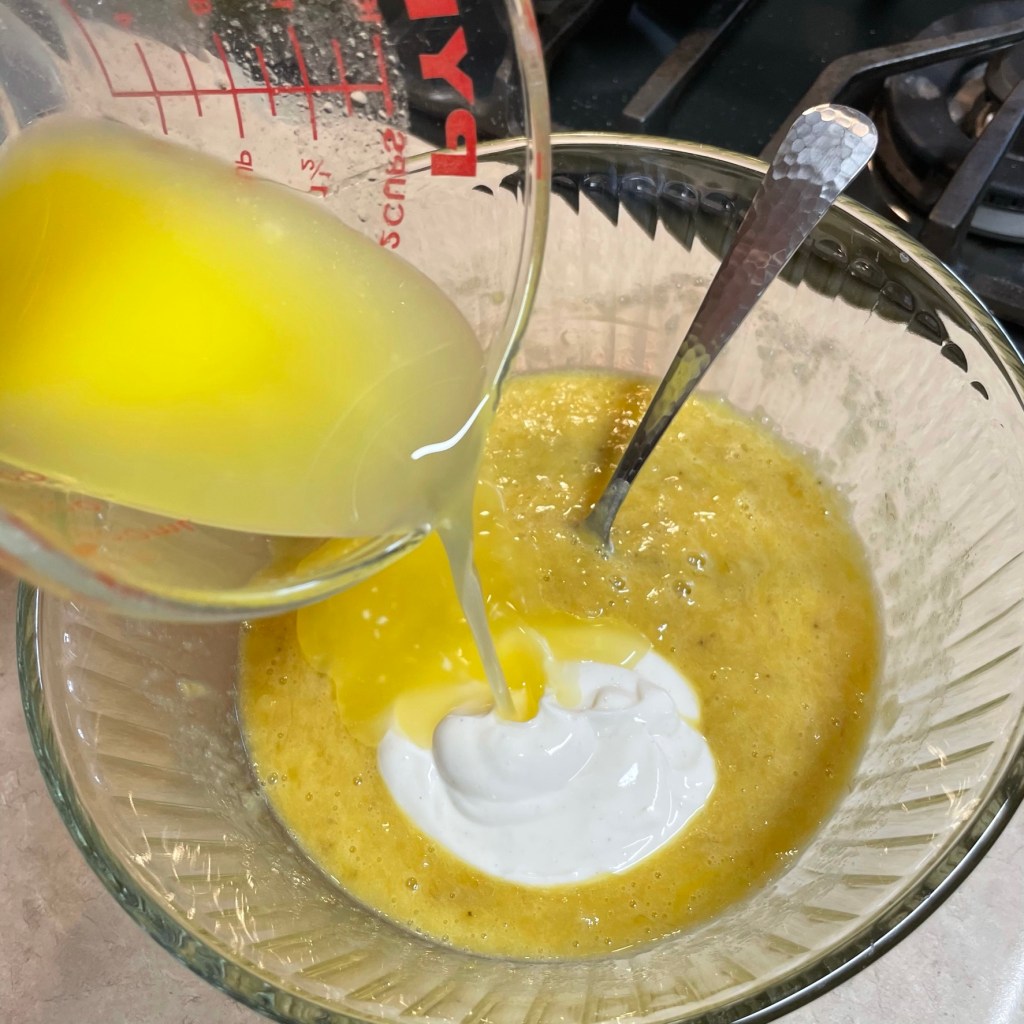
  3. In a second bowl, lightly beat the eggs with a fork. Add mashed bananas, yogurt, melted butter and vanilla; stir with fork or whisk to fully combine.
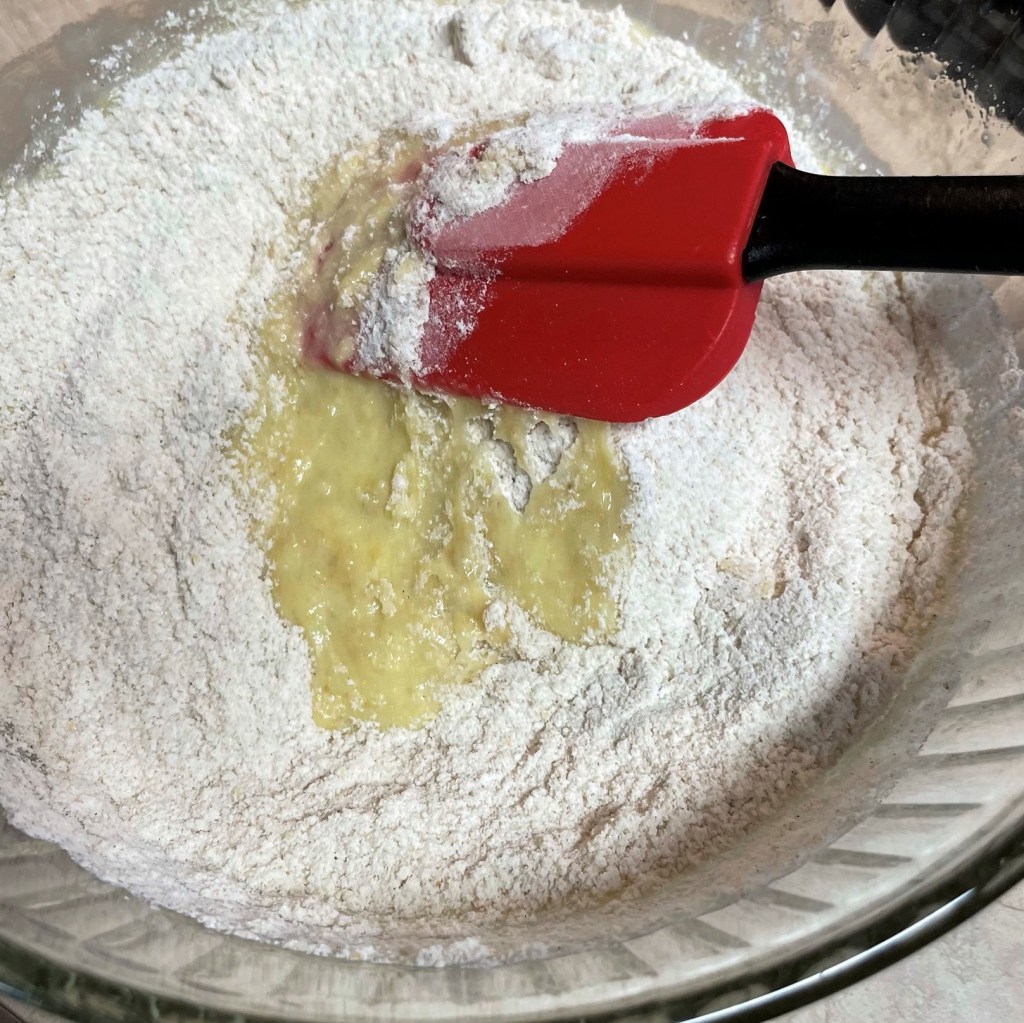
  4. Add wet ingredients to dry ingredients and gently fold with a rubber spatula to combine. Easy does it here, just be sure that all flour is incorporated.
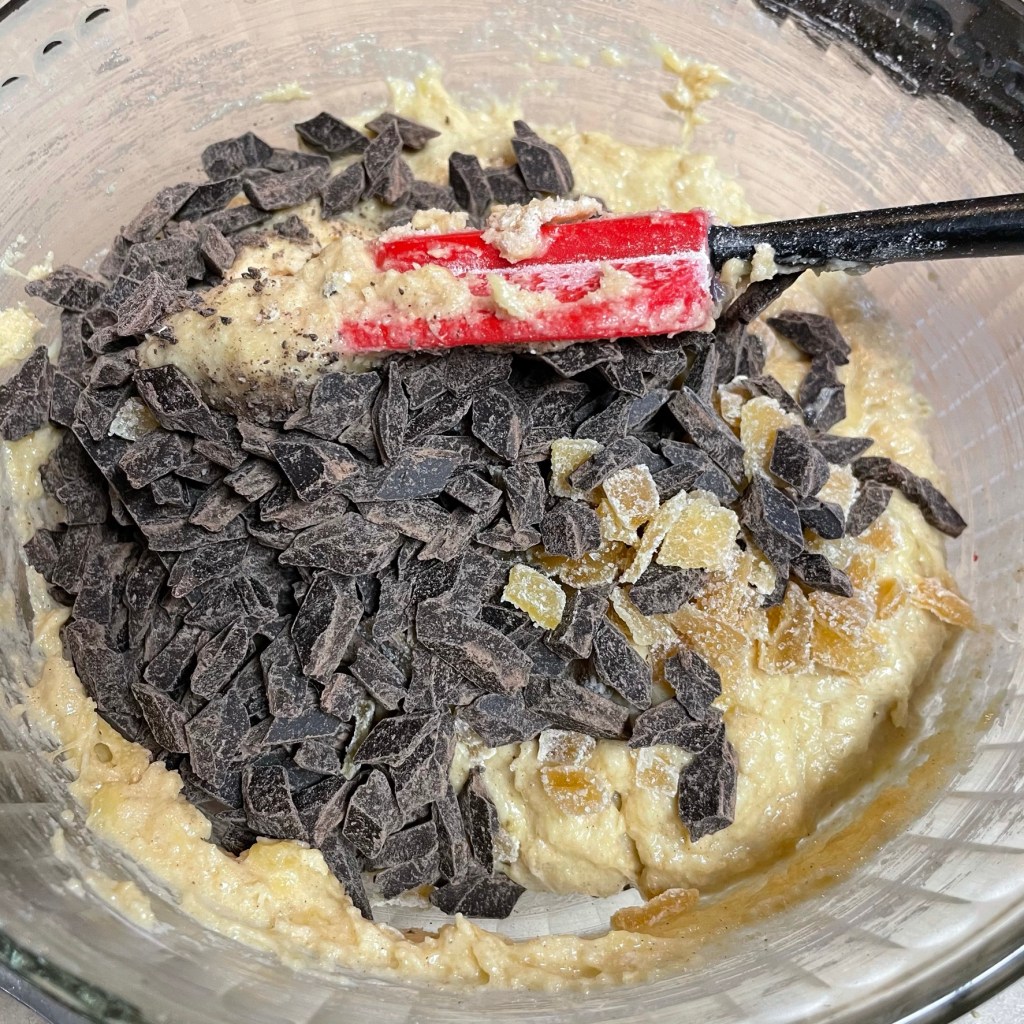
  5. Fold in chocolate chunks and ginger bits, being careful not to overmix.
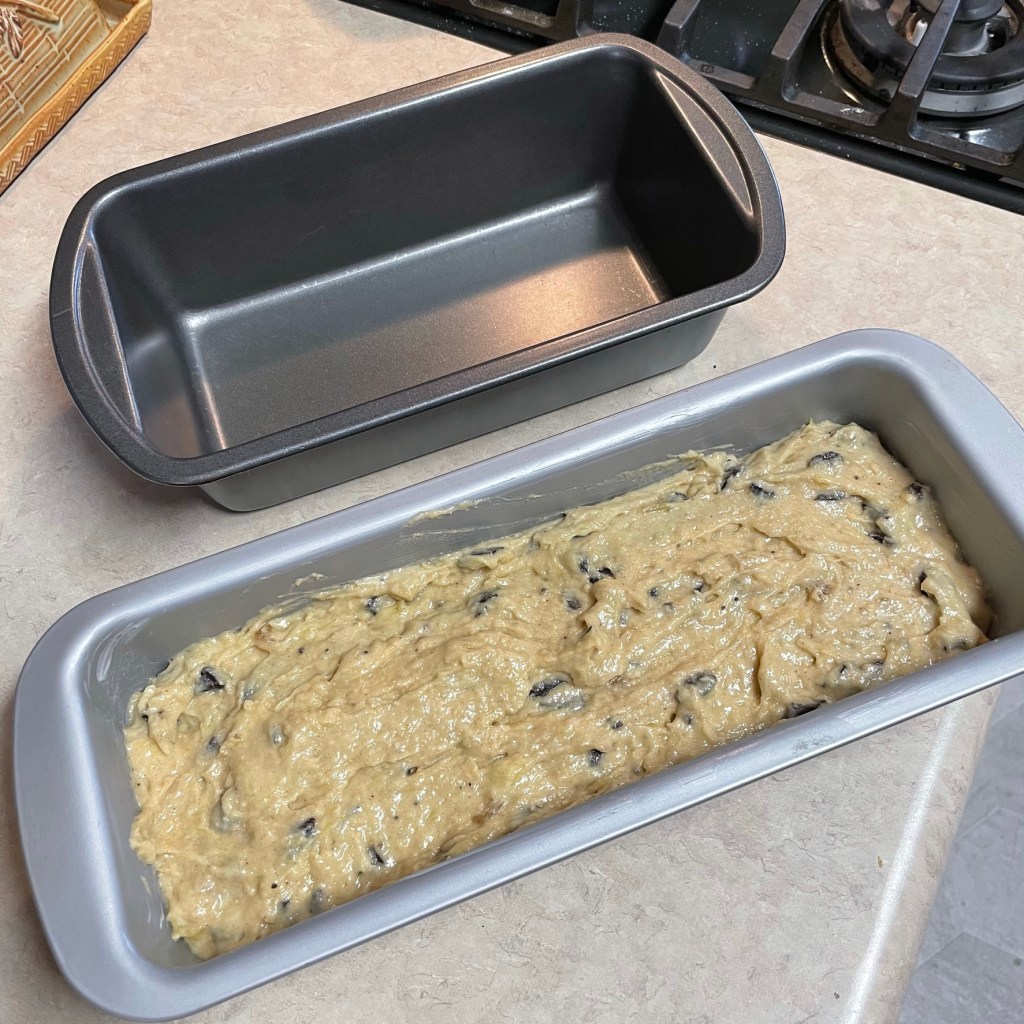
  6. Transfer the batter into the prepared pan and sprinkle the top with reserved sugar.
  7. Bake about 55 minutes (give or take a few) until the loaf is nicely browned and a toothpick comes out clean. The toothpick test may be tricky because of all the chocolate, so you may need to poke in more than one spot.
  8. Cool the loaf in the pan about 5 minutes, then turn out onto cooling rack and cool completely.
The sugar I sprinkled on top of the batter created a delicate, crispy crust on the banana bread.

Want to make this yummy bread?