Dilly-Dilly, Double-Heat Potato Salad

There is a common thread that runs through the culinary fabric of the U.S. South. And that thread, in a word, is sweet. Whether it’s beverages, desserts, BBQ sauces or even potato salad, the foods you find on a southern menu will surely satisfy your sweet tooth. That’s a bit of a challenge for people like me, who prefer more savory flavors. In a salad, I want freshness, with tangy, herbal and briny flavors.

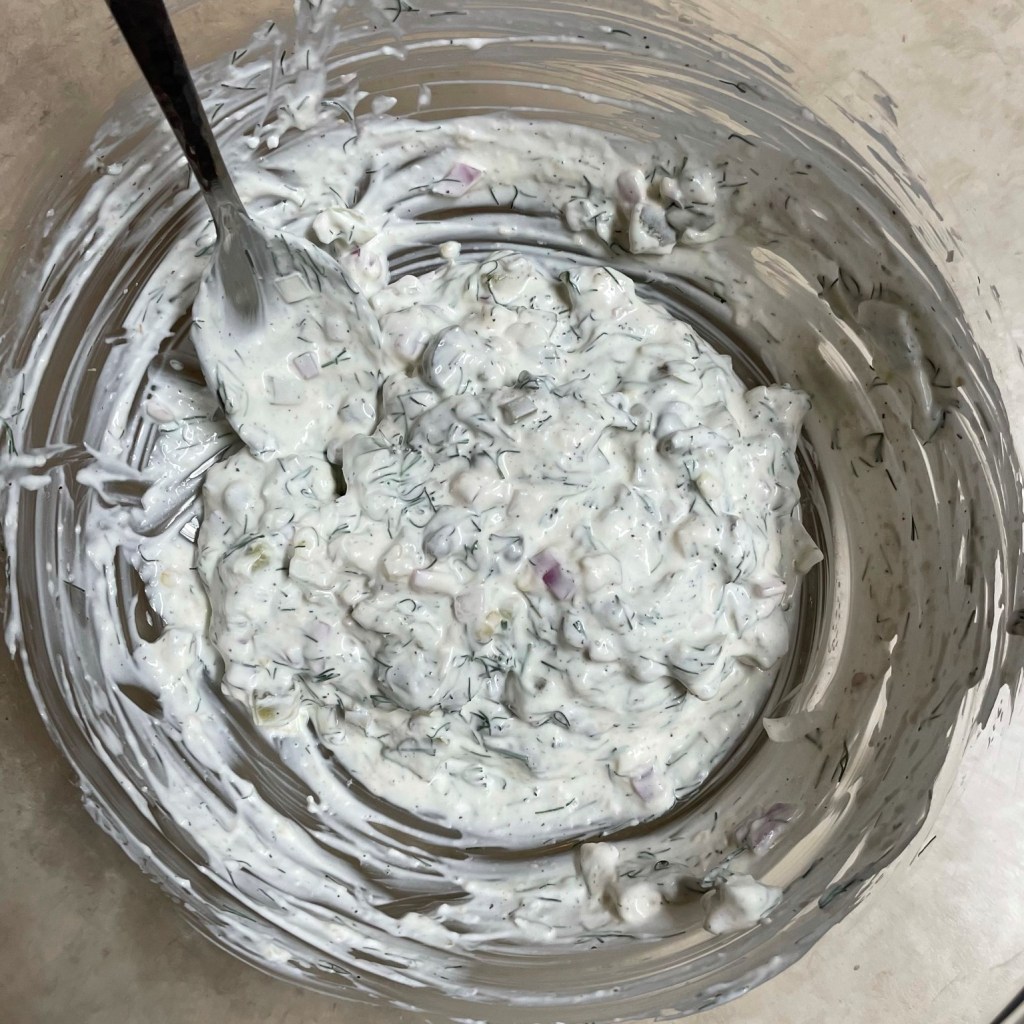
When I spotted an online recipe for potato salad with dill and horseradish recently, I got excited about the brightness of flavors and especially the absence of sugar. I found inspiration in that recipe, so I made it (with my own tweaks, of course), and my husband and I enjoyed it so much I’ve made another batch and it will make its way into our recipe rotation. Me being me, though, and always pushing the envelope on flavors, I’ve adjusted it yet again. This time, I doubled down on the dill, adding chopped dill pickles to the original idea of fresh chopped dill. I heaped jalapeno heat on top of the horseradish and crowned the finished salad with chopped hard-boiled egg. Oh, happy Spring! 🙂
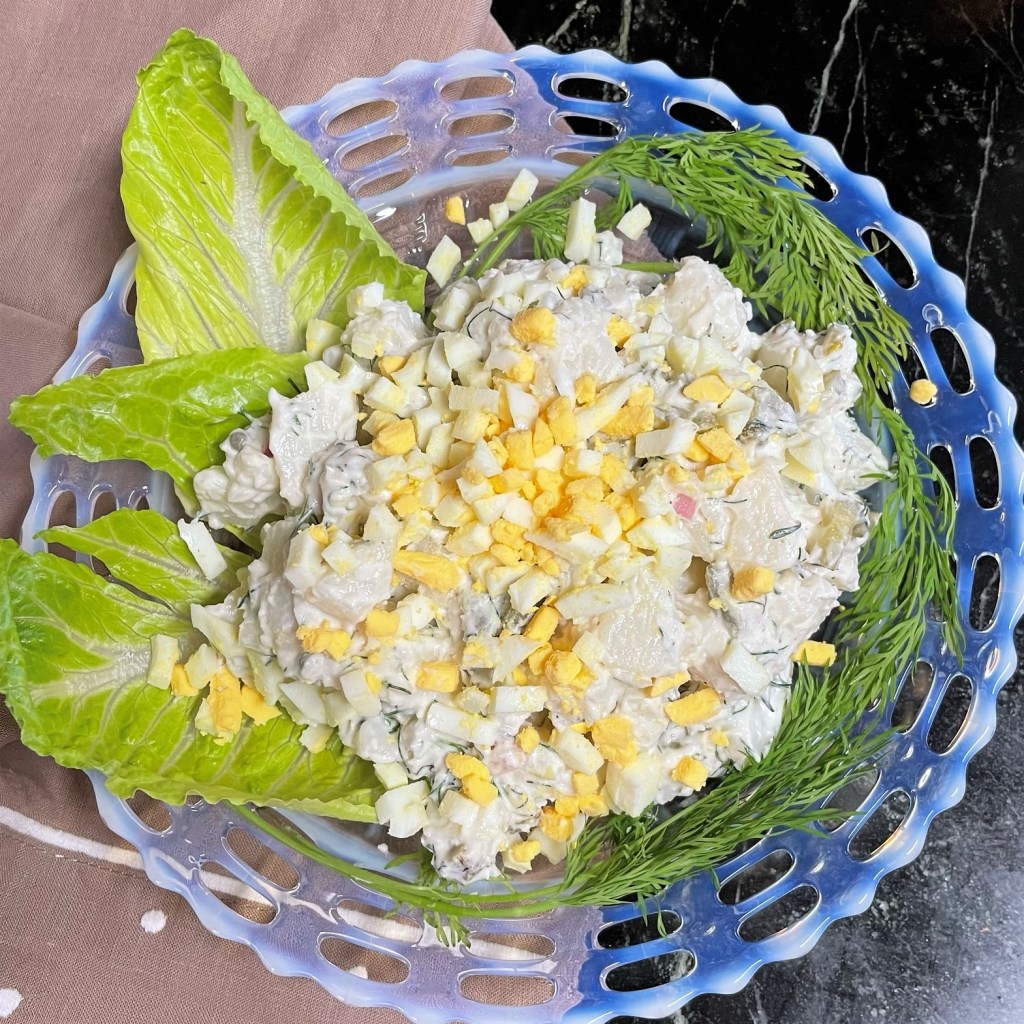
This salad is fresh, bright, herbal and zesty!

Best of all, for me, is that there is no sugar in sight. The salad is very dill-forward, and that freshness makes me eager for all the other light foods on the way for Spring. The heat, though doubled, is subtle in the background. The yogurt (or sour cream, if you prefer) contributes a creaminess that isn’t all mayonnaise. And the capers and chopped egg provide a little something extra, as a salad you might expect to find in a good delicatessen.

The result is this dilly-dilly, double heat potato salad, delicious as a cool, savory side to sandwiches, hot foods off the grill or anything you might be serving as a casual meal for Passover or Easter.


Adapted from The Spruce Eats: Dill and Horseradish Potato Salad

Ingredients

About 3 pounds waxy potatoes, peeled* (see notes)

1/2 cup mayonnaise

1/2 cup Greek yogurt or sour cream

1/3 cup chopped dill pickles*

1/4 cup minced red onion or shallots

2 Tbsp. fresh dill, chopped*

2 Tbsp. pickled jalapenos, chopped*

2 Tbsp. prepared horseradish

1 Tbsp. capers

Salt and pepper to taste

2 hard-boiled eggs, chopped (for garnish)


*Notes

The best potatoes for this recipe are those that do not fall apart too easily. Red, yellow or white potatoes are all good options. Russets, not so much. Their starchy fluffiness makes them more prone to mashing.

If you do prefer a slightly sweet flavor, substitute bread and butter pickles for the dills. The dill flavor will still be present, but the sweetness will help to soften the savory edges of this salad.

This is the right time of year to find fresh dill in the supermarket, but if you do not have access to it, substitute dried dill leaves, but only about a teaspoon. Remember that dried herbs are much more potent than fresh.

Can’t stand the jalapeno heat? I promise it is subtle, but if you don’t want or like jalapenos, leave them out. This is my recipe, but you are always in charge of the decisions in your own kitchen, so make it the way you like. Want it hotter? Well, now you sound like my husband. Go ahead, add more. 😊


Instructions

This is one of the simplest recipes, but I’ll share the steps in pictures anyway. Keep scrolling for written instructions and a downloadable PDF for your recipe files.
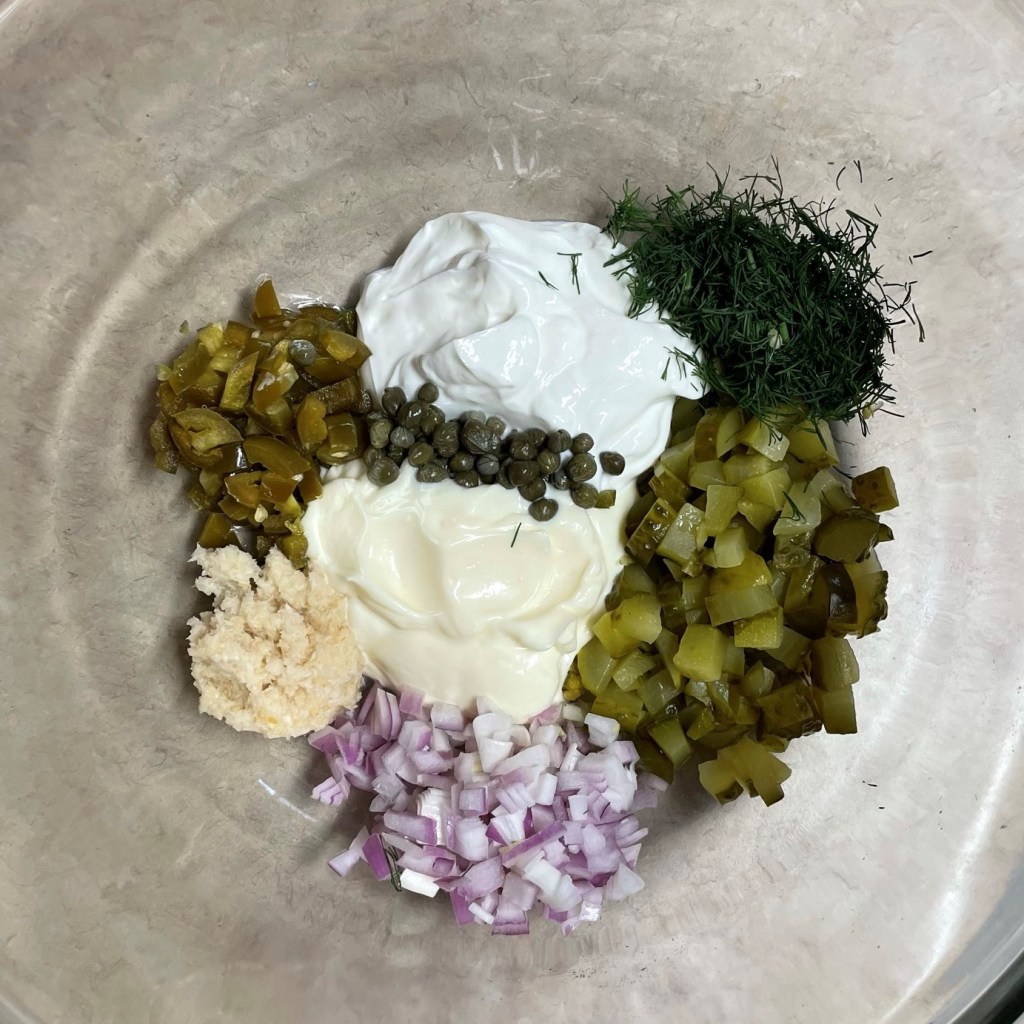
  1. Cut up the potatoes into large, “three-bite” size. Boil gently until potatoes are easily pierced with a fork. Drain them and cool completely before cutting them into smaller pieces. If you wish, cook them a day ahead and refrigerate overnight. Cut the cooked potatoes into cubes about the size of croutons.
  2. Combine all remaining ingredients, except eggs, in a large bowl, seasoning the dressing with salt and pepper to taste.
  3. Fold the cut-up potatoes into the dressing. Chill in the refrigerator for several hours.
  4. Serve with chopped hard-boiled eggs scattered on top of the salad.

Want to make it?


Green Goddess Dressing

Don’t be surprised to see a lot of late winter recipes showing up here with highlights of fresh summer herbs. No, I haven’t lost track of the seasons (not possible with all the bad weather news everywhere). It’s more a situation of appreciating the Christmas gift that keeps on giving.

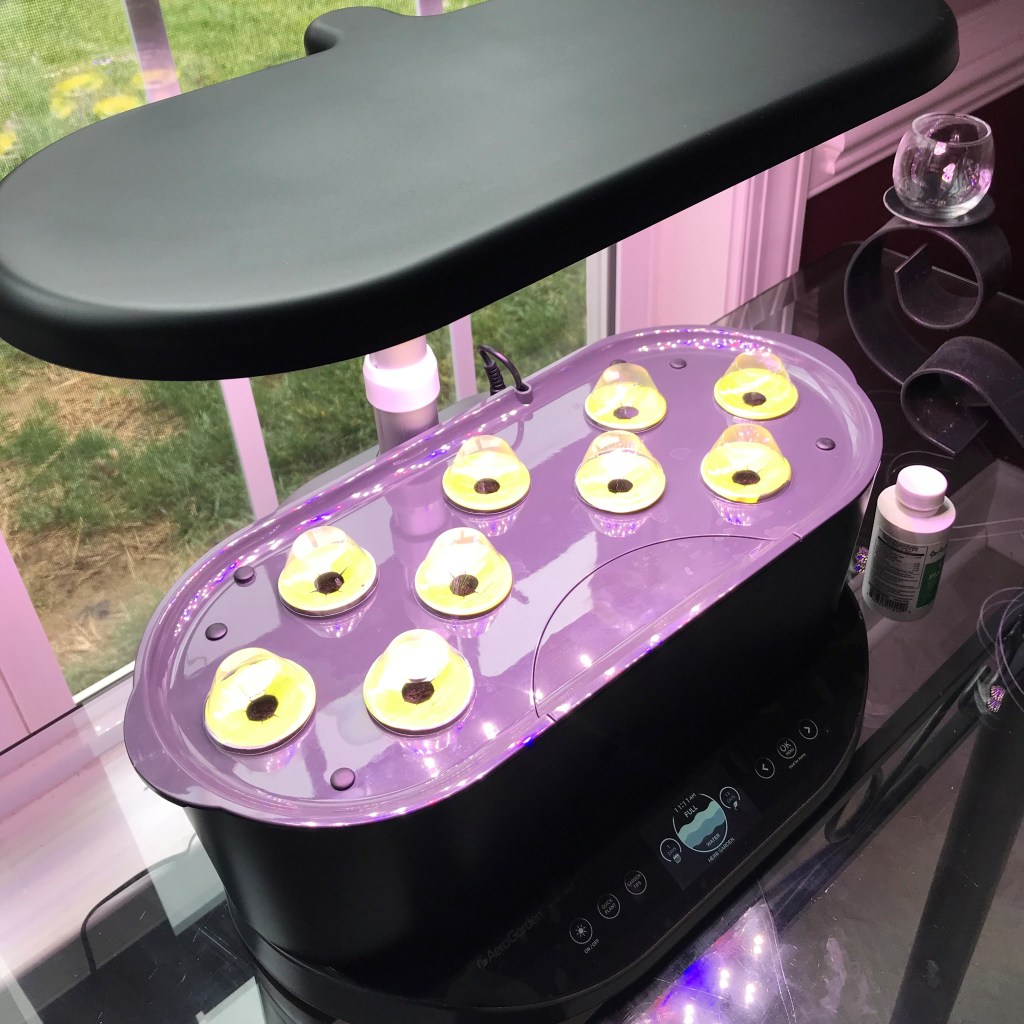
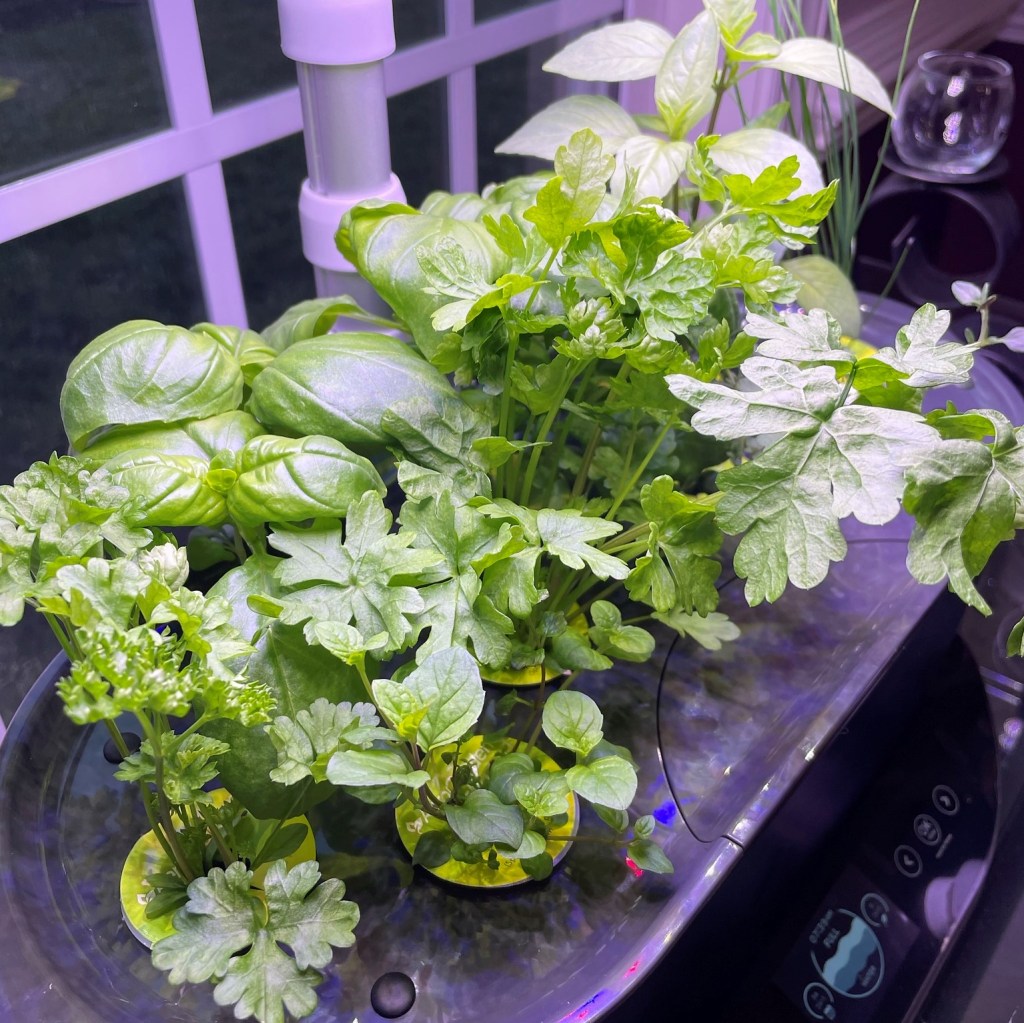
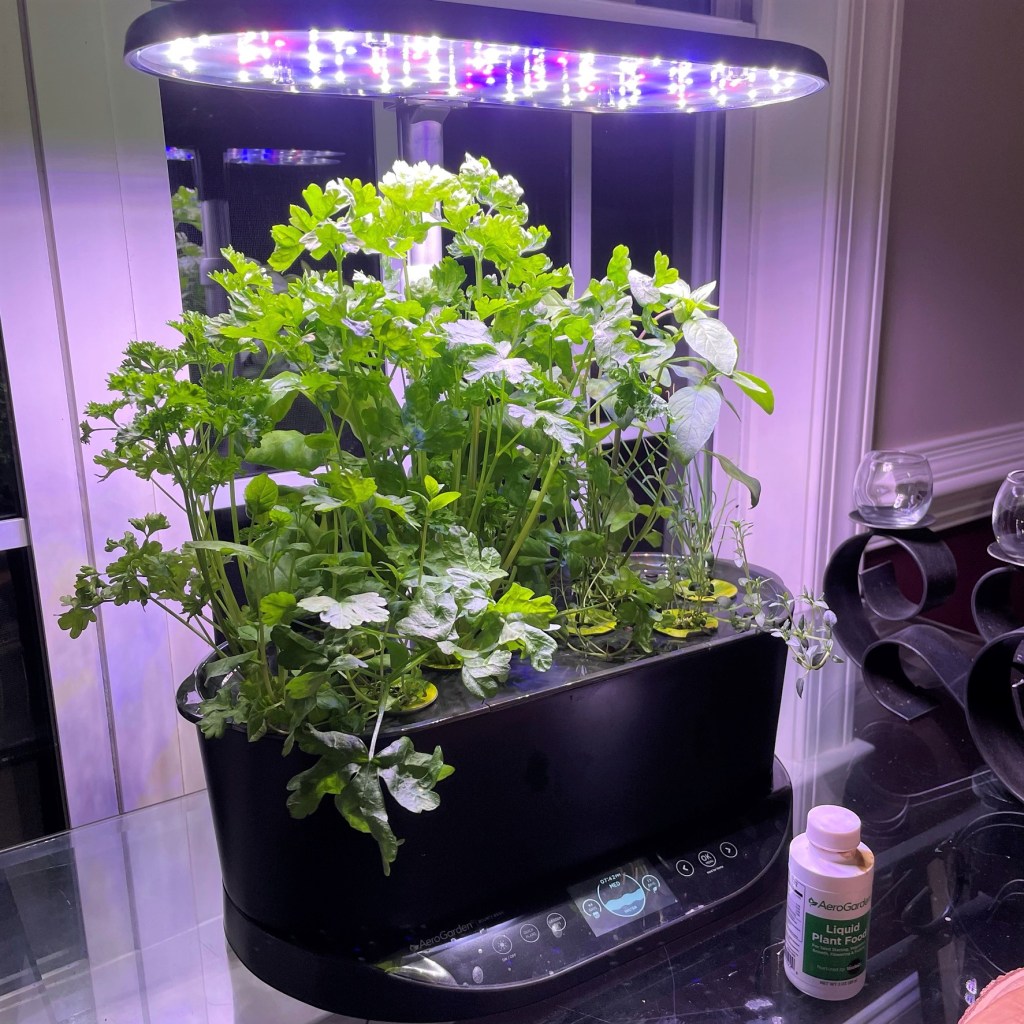
My husband, Les, undoubtedly tired of my chronic lament over the deer having eaten my summer garden, gifted me this year with an AeroGarden. It’s a hydroponic, countertop device with individual seed pods for growing whatever your heart desires (or, at least, whatever is legal in your state). Knowing my love of using fresh herbs in the kitchen, Les opted for the herbal variety pack, which included two basil varieties, chives, mint, thyme and two kinds of parsley.

At first, the thing just sort of sat on the table by the kitchen window, blazing its bright blue light across the kitchen for 15 hours a day. The thing comes on by itself at 5:00 a.m., waking the pets, who then wander in to wake us, because they know it must be almost time to eat. It took me a couple weeks to adjust to this new growing schedule, about the same time that tiny sprouts emerged, first from the Genovese basil. It has been fun to watch our little herb babies grow. 🙂


What began as a fun “let’s see what happens” Christmas gift has turned into a “holy moly, what are we gonna do with all this parsley” adventure. By Valentine’s weekend, I realized I needed to do something with the parsley before it consumed the kitchen, as my outdoor basil did last summer in the backyard garden. Les had asked for simple embellishments to our romantic dinner of lobster tails, including roasted asparagus and a Caesar salad (his fave).

“How do you feel about green goddess dressing,” I asked. And so it was.

Green goddess is a throwback food, originally created in the early 1920s at a San Francisco restaurant, and at that time the dressing included mayonnaise, chives, scallions, parsley, garlic, anchovies and tarragon vinegar. By the late ‘40s, The New York Times published a recipe for it, and it hit the grocery shelves in bottled form about 1973. Thank you, Wikipedia, for all that helpful information.

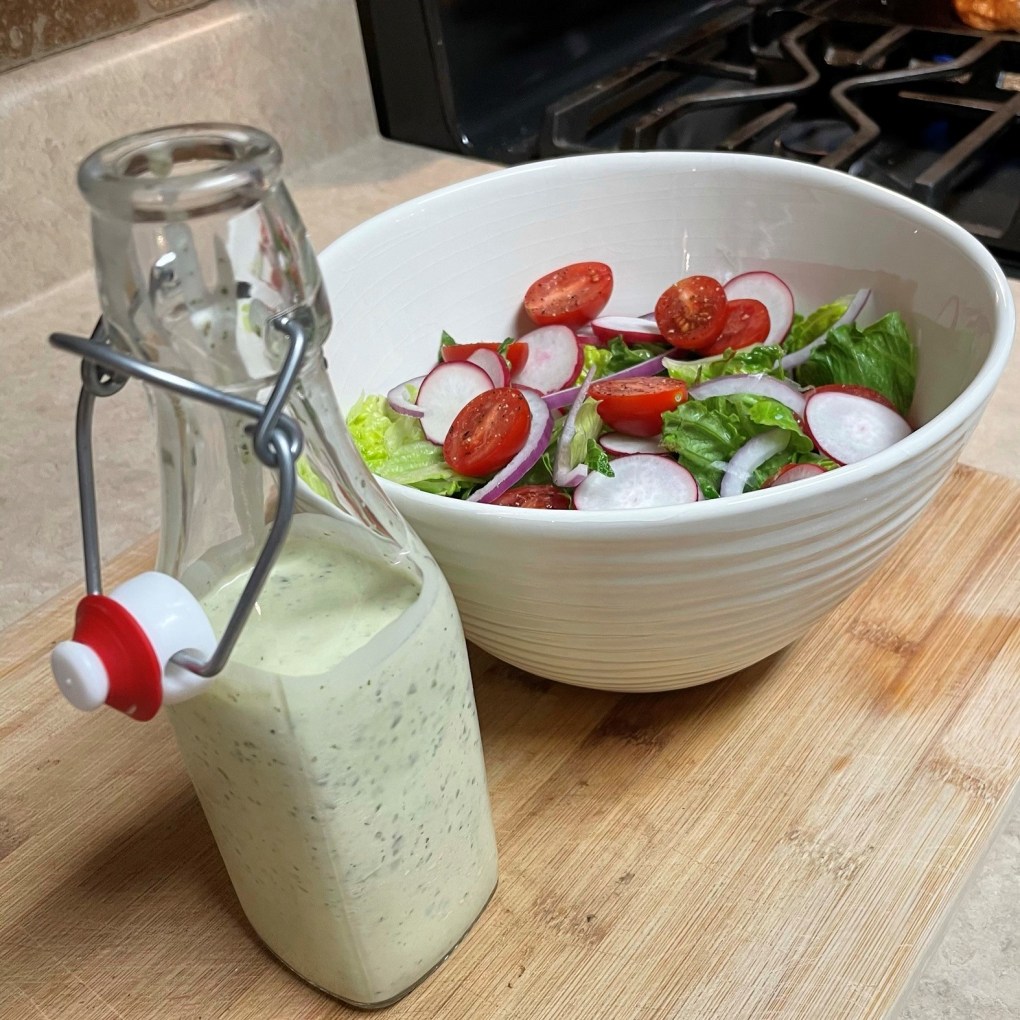
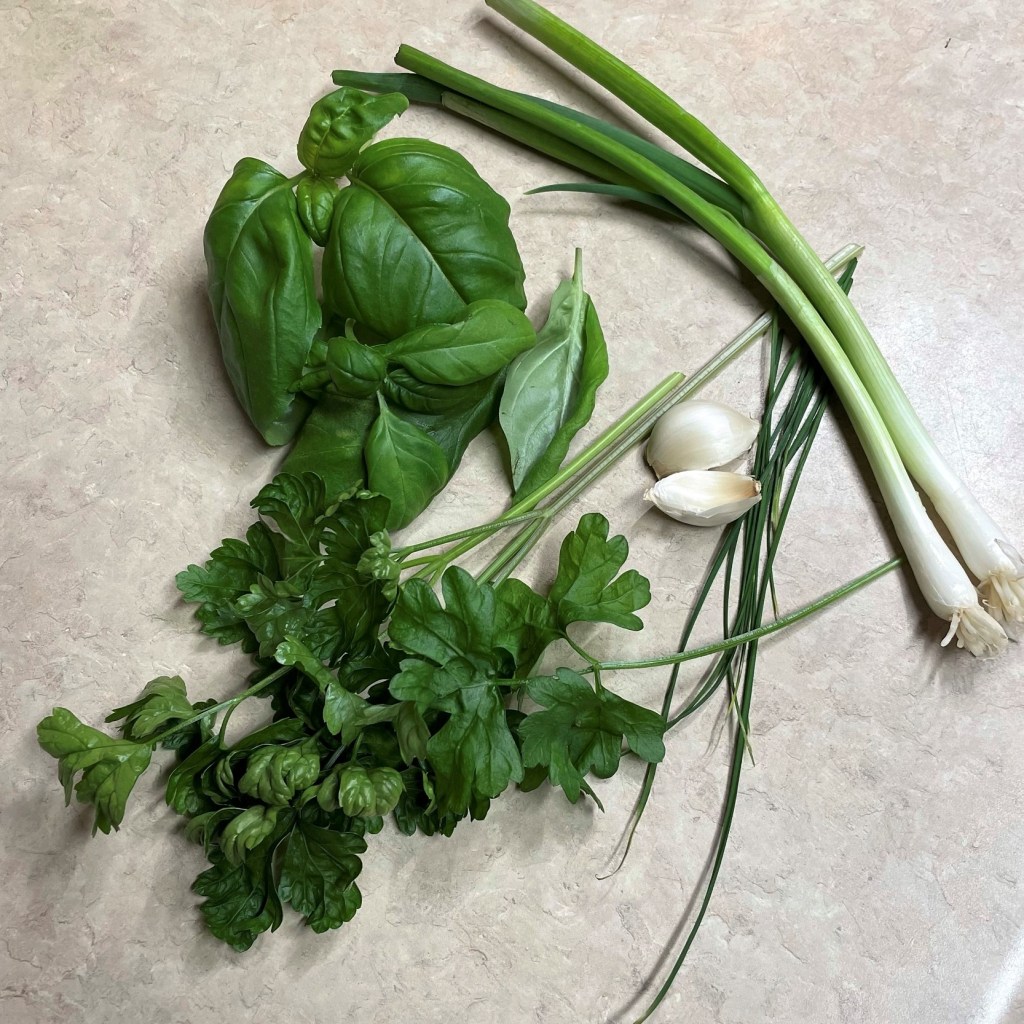
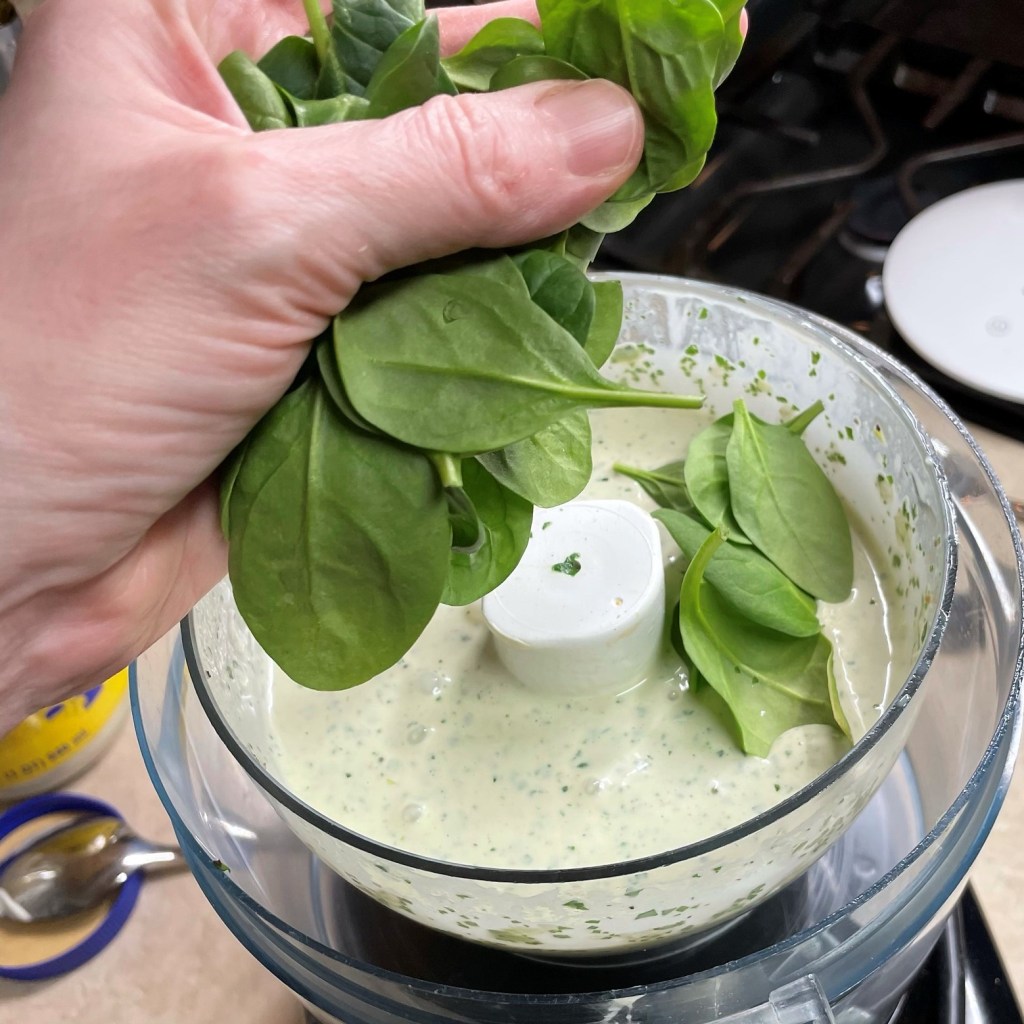
Like any other recipe, green goddess can be switched up to match your flavor (and consistency) preferences. If you want to use it as a dip, ease up on the buttermilk and add more mayo. Hate basil? Leave it out and use extra parsley. If you are gaga for garlic, double it—or roast it for milder flavor. I went rogue a little bit and added a small handful of baby spinach leaves to this version (hey, they’re green), and I love a recipe that is so flexible. The dressing seems to me a mash-up of ranch and Caesar, but with a bounty of freshness to punch up the flavor and, thankfully, a perfect vehicle for freshly picked herbs.

I’ve made my own salad dressing for years, and this was my first green goddess but definitely not my last. Obviously!


Ingredients

1/4 cup thick cultured buttermilk

Small handful of fresh basil leaves

Small handful of curly or flat parsley leaves

Several stems of fresh chives

2 scallions (white and green parts), trimmed

2 cloves fresh garlic

4 to 6 fillets of anchovy, to taste* (see notes)

2 tsp. prepared Dijon mustard

Juice of 1/2 fresh lemon

Kosher salt and freshly ground pepper

1/2 cup mayonnaise

1/4 cup whole milk Greek yogurt

Small handful fresh baby spinach leaves (optional)

1 to 2 Tbsp. extra virgin olive oil


*Notes

Remember that anchovies are fairly salty on their own, and you may or may not want additional salt in the mix. If you prefer to omit the anchovies, consider substituting a few shakes of Worcestershire sauce to add a similar punch.


Instructions


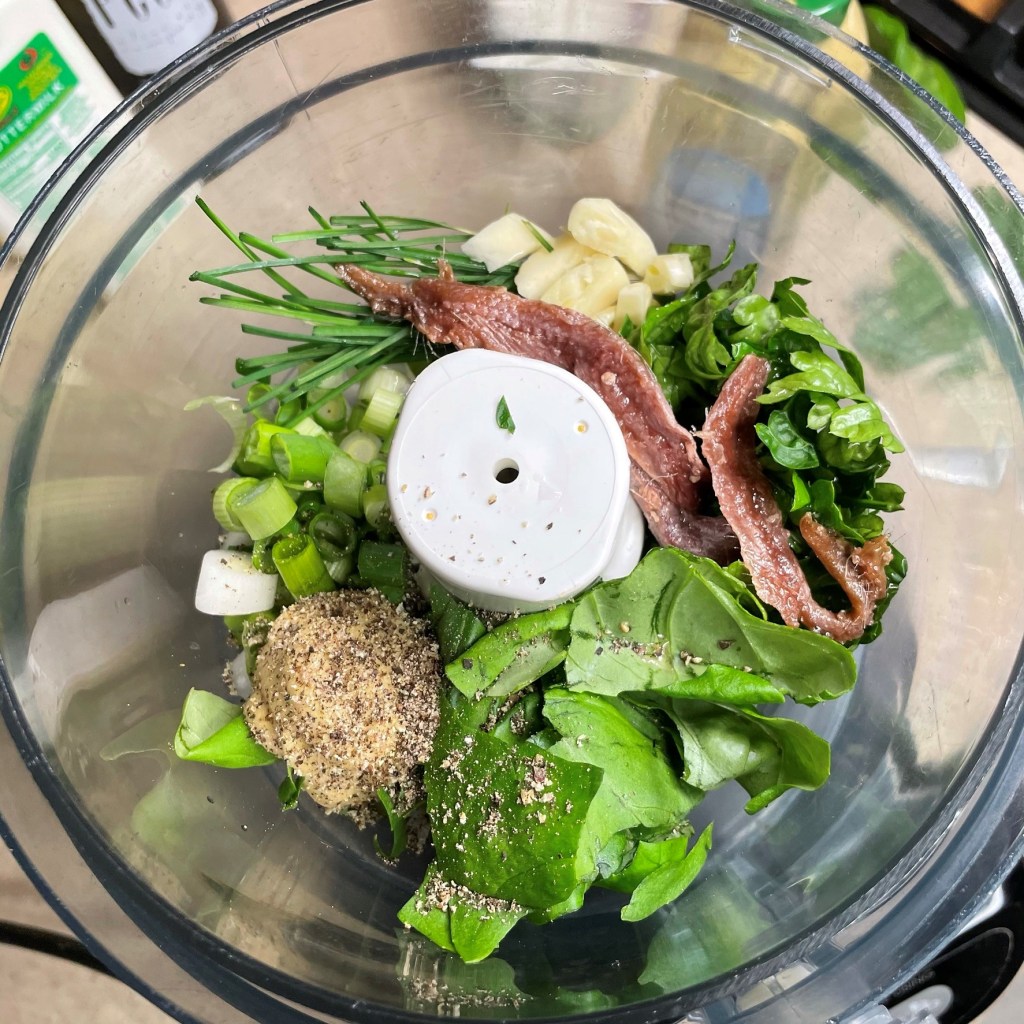
  1. In the small insert bowl of a food processor, combine herbs, scallions, Dijon, salt and pepper, anchovies and lemon juice. Pulse several times to chop herbs into somewhat uniform mixture.
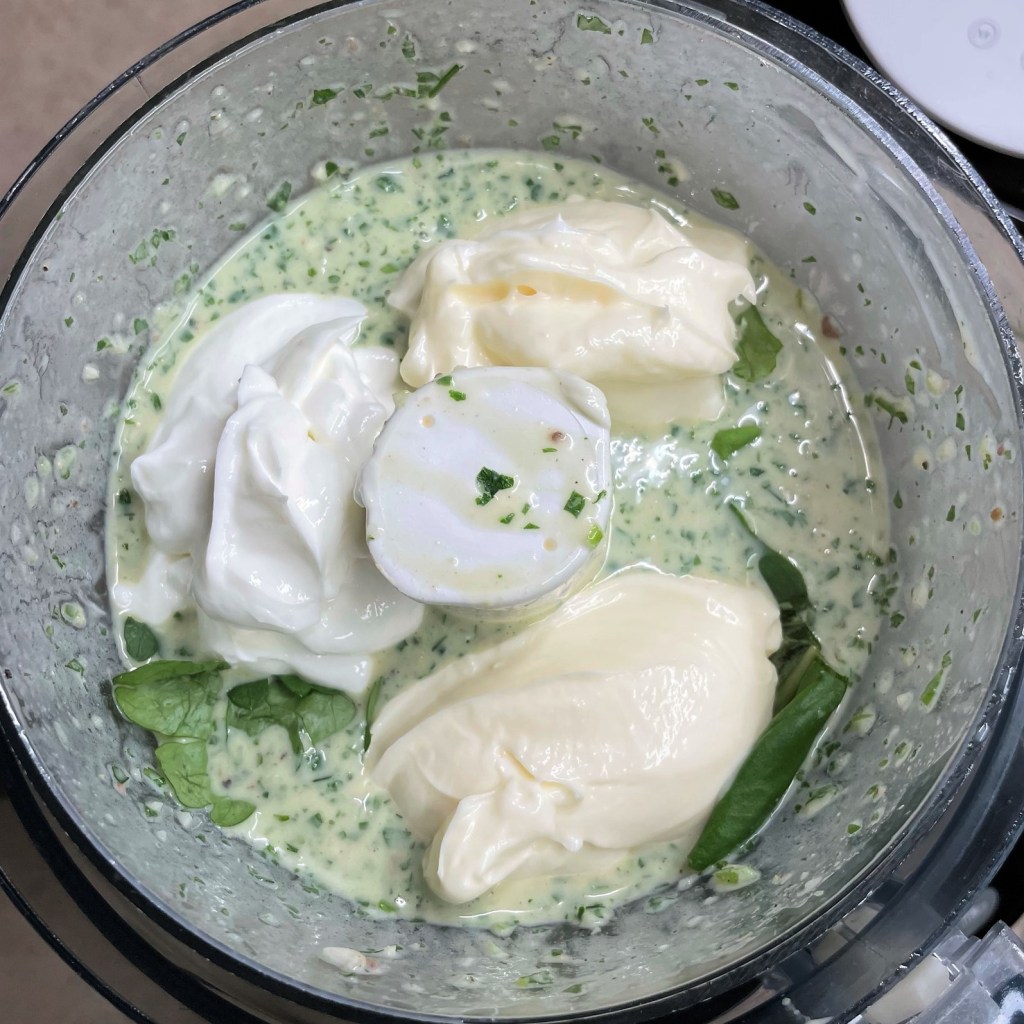
  2. Add mayonnaise and Greek yogurt and pulse about 8 times. Give it a taste and adjust seasonings or ingredients as desired, pulsing to incorporate additions.
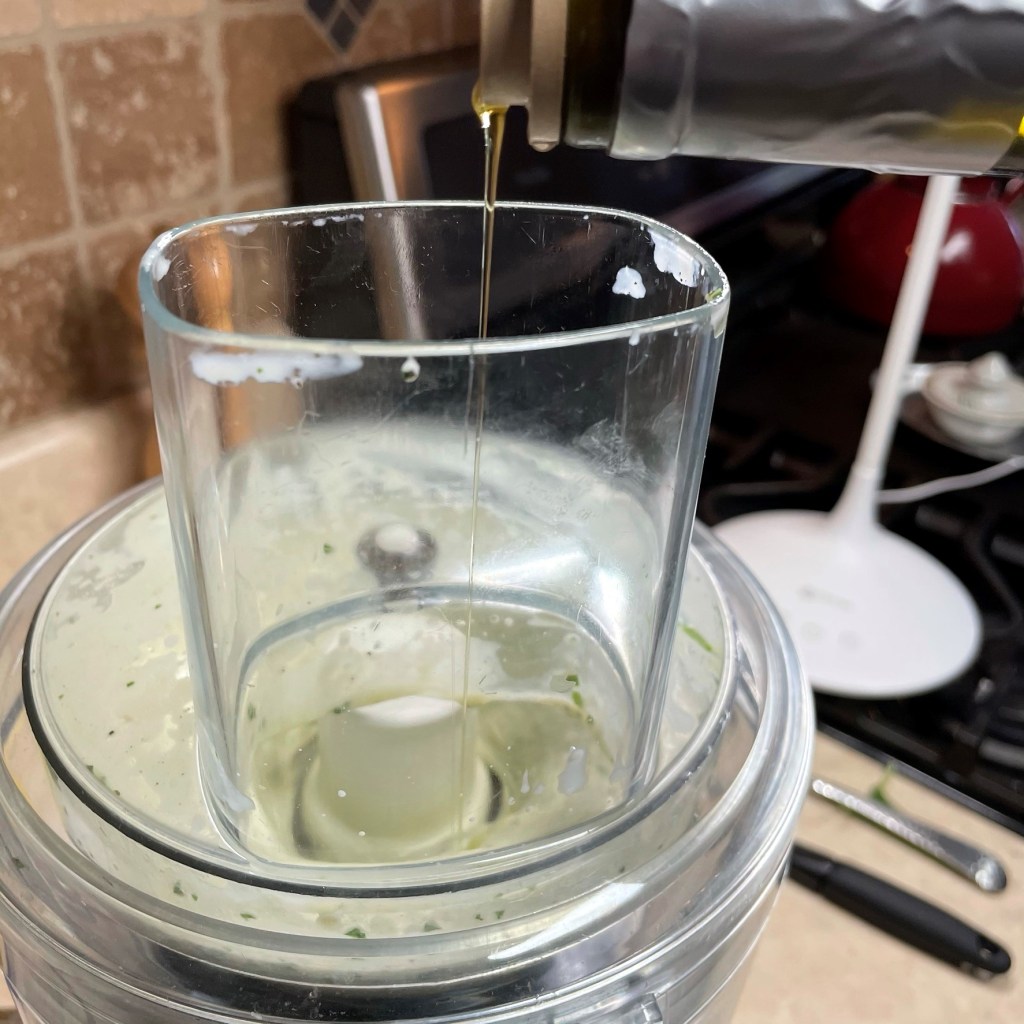
  3. Turn processor on steady and slowly drizzle olive oil into the dressing. Transfer dressing to a bowl and chill several hours or overnight.
Great as a dressing for crisp salad, or dipping sauce for fresh cut veggies!

Want to make this dressing?


Sourdough Potato Bread with Onion & Dill

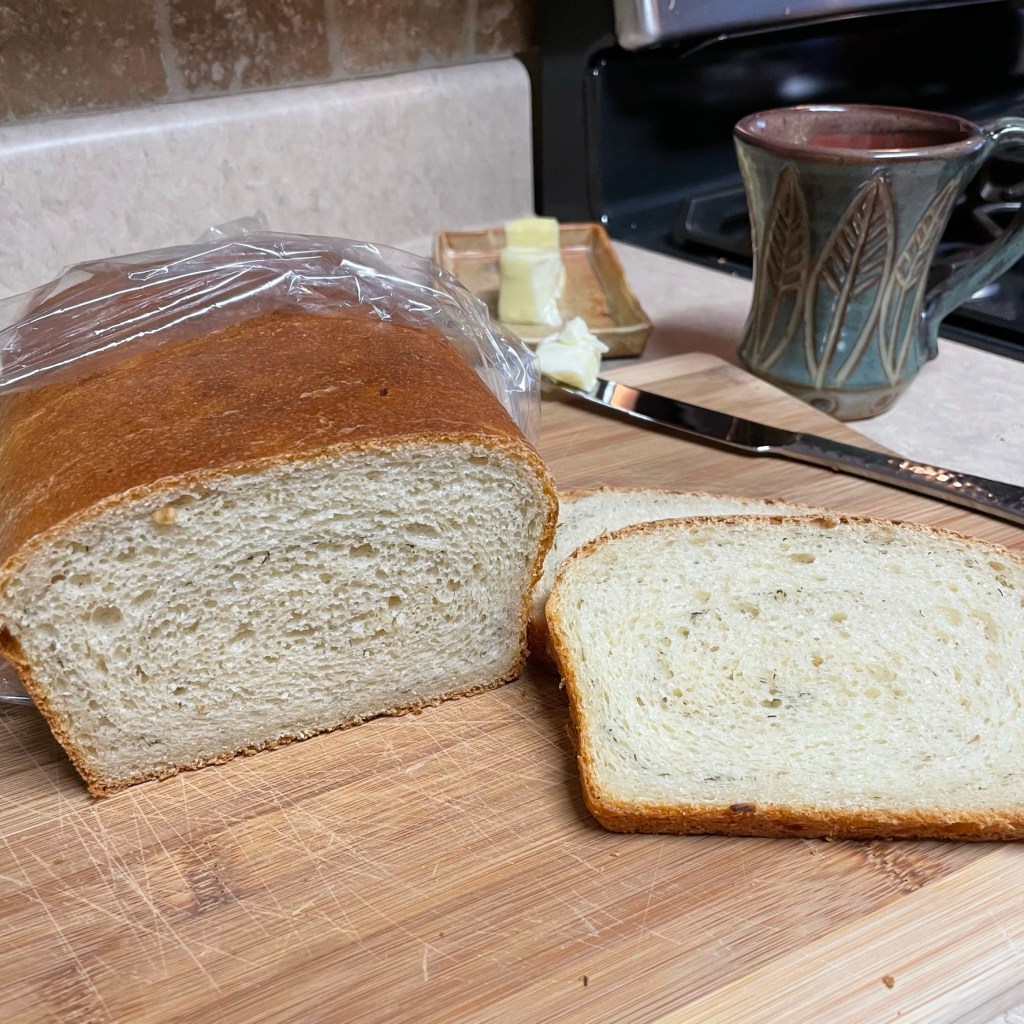
The joy of baking homemade bread, for me, is second only to the bliss of eating it. Or is it the other way around? When I established my sourdough culture in early 2016, I wasn’t sure how successful the adventure would be or if I would tire of eating “only” sourdough. As I’ve declared here several times, though, sourdough is not exclusively a flavor of bread, but a method of giving rise to the dough, and I rarely use commercial yeast in any form of bread anymore—whether it’s pizza dough, English muffins, waffles, soft pita breads, challah or focaccia. For me, there’s no turning back, and I cannot imagine tiring of it. Sourdough rules!
The potato bread I’m sharing today is my adaptation of a sandwich bread recipe I’ve grown to love by King Arthur Baking Company. KA’s version of this bread uses dry active yeast, but I’ve converted it by conjuring my math skills; I’ve swapped out equal amounts of liquid and flour (by grams, of course) for the appropriate percentage of my ripe-and-ready starter (sourdough nerds understand me). The result is terrific on its own, but I’ve recently taken the recipe a bit further with the addition of minced onions and a dill swirl and—well, wow.

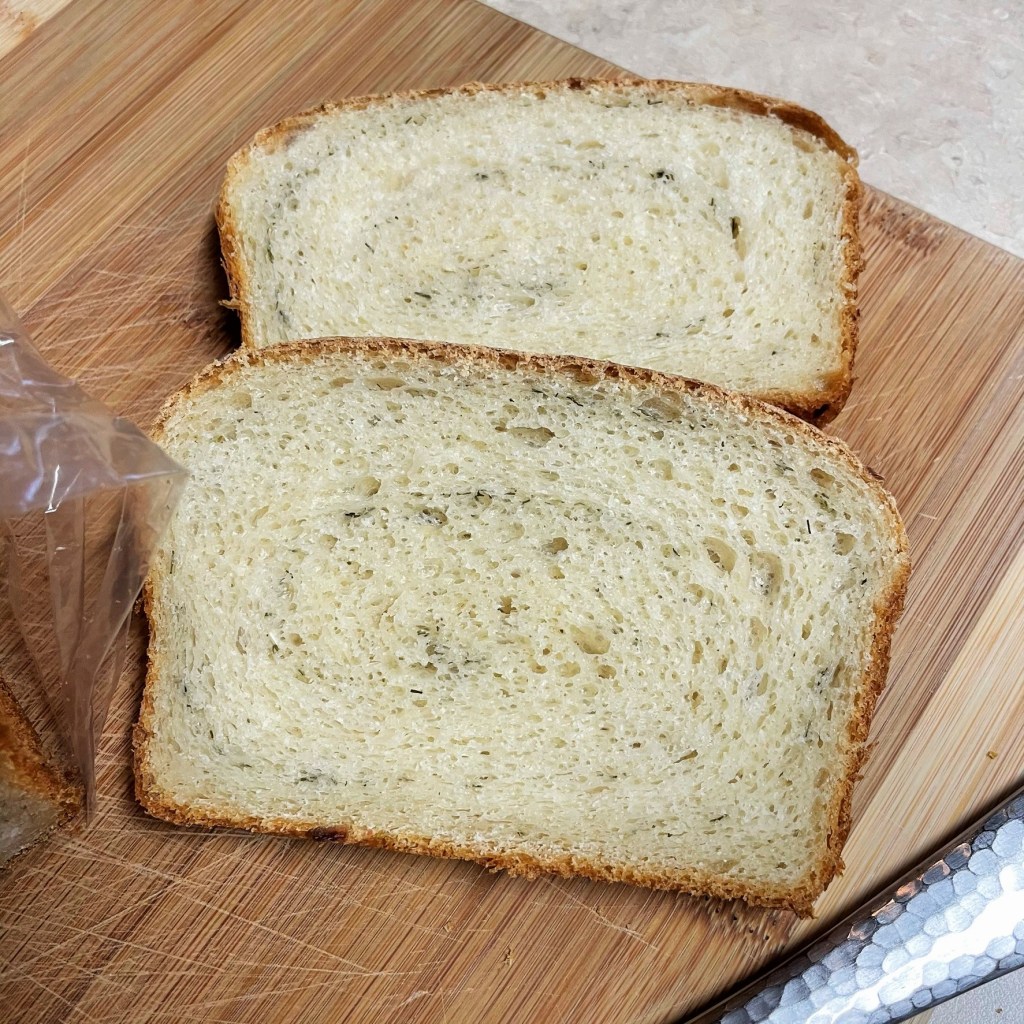
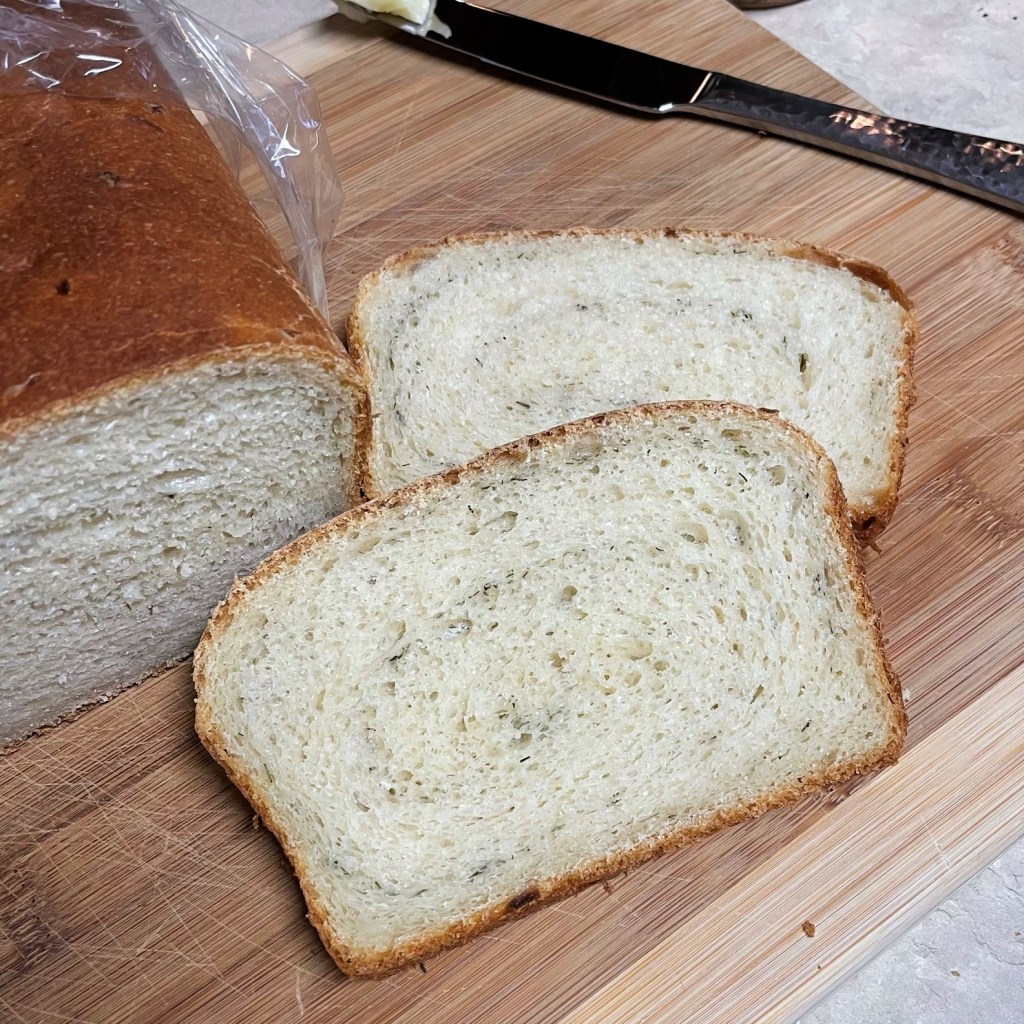
The dill swirl lends a nice touch to your favorite sandwiches. My hubby especially loves it with his tuna salad and a fresh leaf of lettuce.

The recipe itself is unusual, in that the mixed dough does not have an initial rise at room temperature; it moves directly to the refrigerator for cold overnight fermentation. It’s very sticky dough that is not easily kneaded, so I recommend use of a stand mixer if you have one. After chilling overnight, the cold dough is easier to handle and shape into a loaf to proof at warm room temperature until it’s ready to bake. Words don’t adequately describe the aroma that wafts from the oven.

The cooked Yukon gold potato and softened butter lend a soft texture and lovely gold color, and the onion and dill I’ve added make it a great choice for all kinds of sandwiches. My hubby declared a few mornings ago that this sourdough potato bread may be his favorite bread ever for breakfast toast. Of course, he has said that about my soft sourdough rye, too (I’ll share that one soon).

My ingredients are measured by weight, because that’s how I bake. I highly recommend a digital scale for consistent results in any kind of baking, but especially for bread. If you’re not ready to get on the sourdough train, you can still enjoy this bread. Follow the original instructions offered by King Arthur, but halve the ingredients, as KA’s recipe makes two loaves. The onion and dill flavors are my own Comfort du Jour twist.


Adapted from King Arthur Baking Company
Makes one loaf

Ingredients

1 large Yukon gold potato, peeled and cut into large chunks (boil and mash the potato, then measure out 100g for use in this recipe)

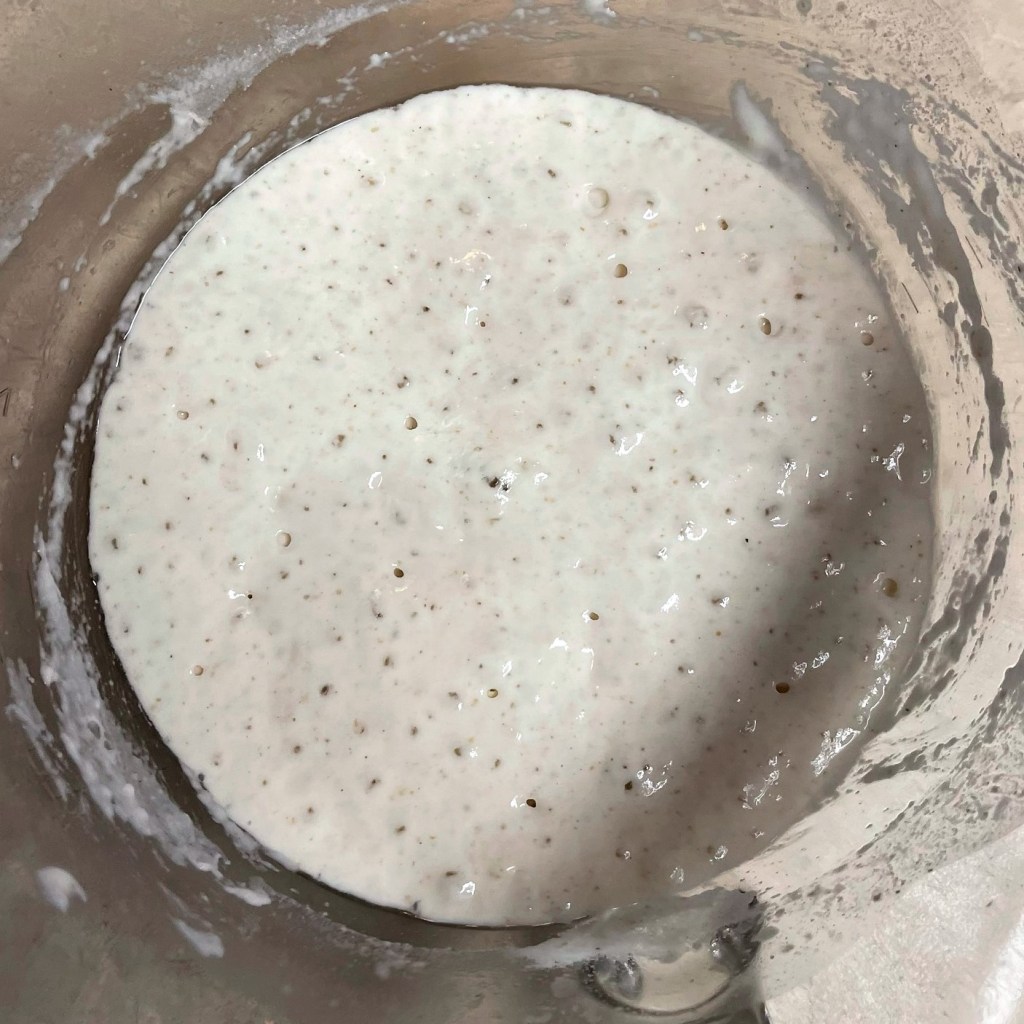
100g ripe sourdough starter (fed 8 to10 hours earlier; my starter is 100% hydration)

100g lukewarm water* (include the potato cooking water in this total)

40g (about 3 tablespoons) sugar

260g unbleached all-purpose flour*

80g white whole wheat flour*

1 large egg (room temperature)

1 1/4 tsp. fine sea salt

6 Tbsp. unsalted butter, cut into pieces and softened to room temperature.

2 Tbsp. dried minced onion, rehydrated 15 minutes in 2 Tbsp. warm water (optional)

2 tsp. dried dill leaves (or 2 Tbsp. fresh dill if you have it)


*Notes

Reserve the water used in cooking the potato, and add more water to total the amount needed for the recipe. The potato starch in the cooking water will add to the fine texture of the bread.

The original KA recipe calls for only all-purpose flour, but I always swap in at least some amount of whole grain flour. Make it as you like, but don’t swap more than 25% of the total flour without also adjusting the ratio of liquid. My swap is within that suggested limit, and it works great.


Instructions – Day One


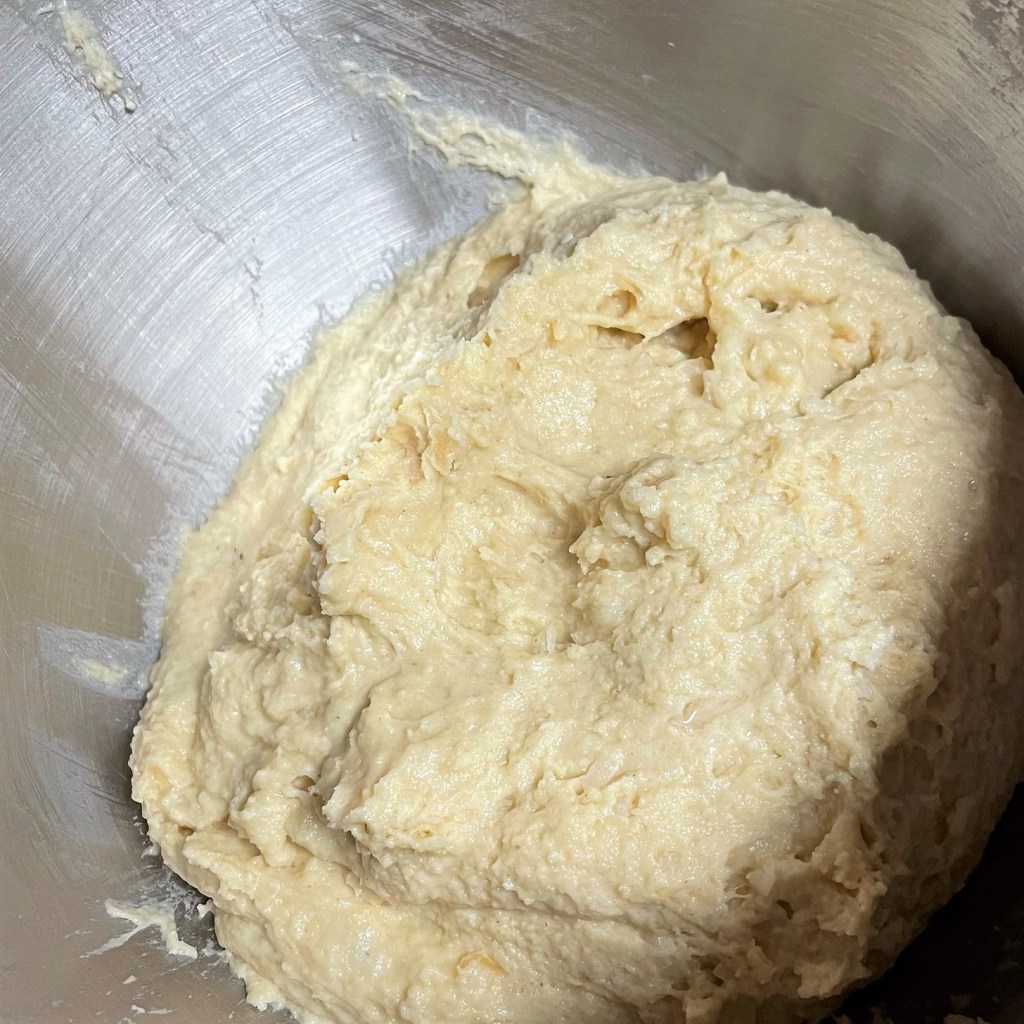
  1. Combine all ingredients, except butter and dill, in the bowl of a stand mixer. Mix on low speed until ingredients come together and form a shaggy ball on the beater blade, and all flour is incorporated. Scrape dough from beater blade. Cover and allow dough to rest 20 minutes.
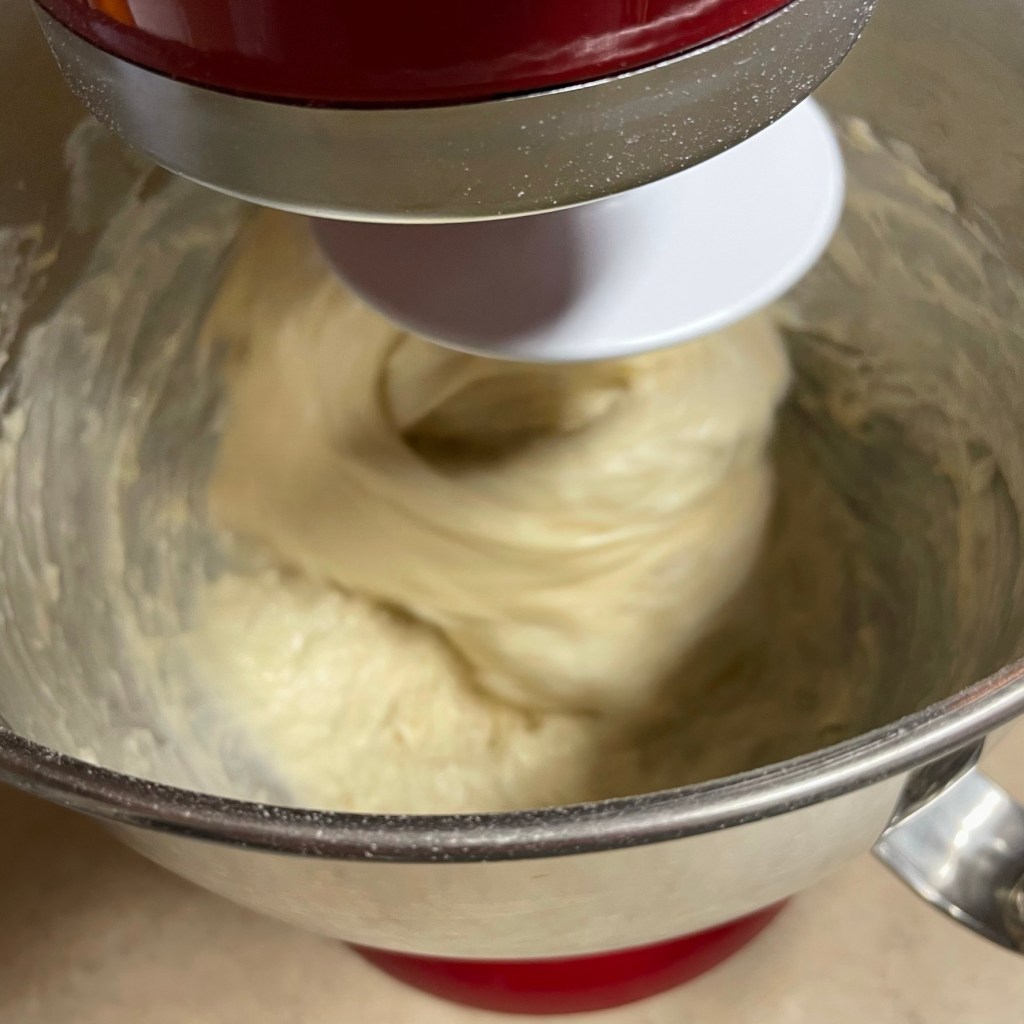
  2. Switch to the dough hook and knead the dough on low speed for about 2 minutes.
  3. Add the pieces of softened butter, one or two at a time, and mix on speed 2 until each addition of butter is worked into the dough. Continue to knead at this speed for about six more minutes. The dough will be very soft and sticky.
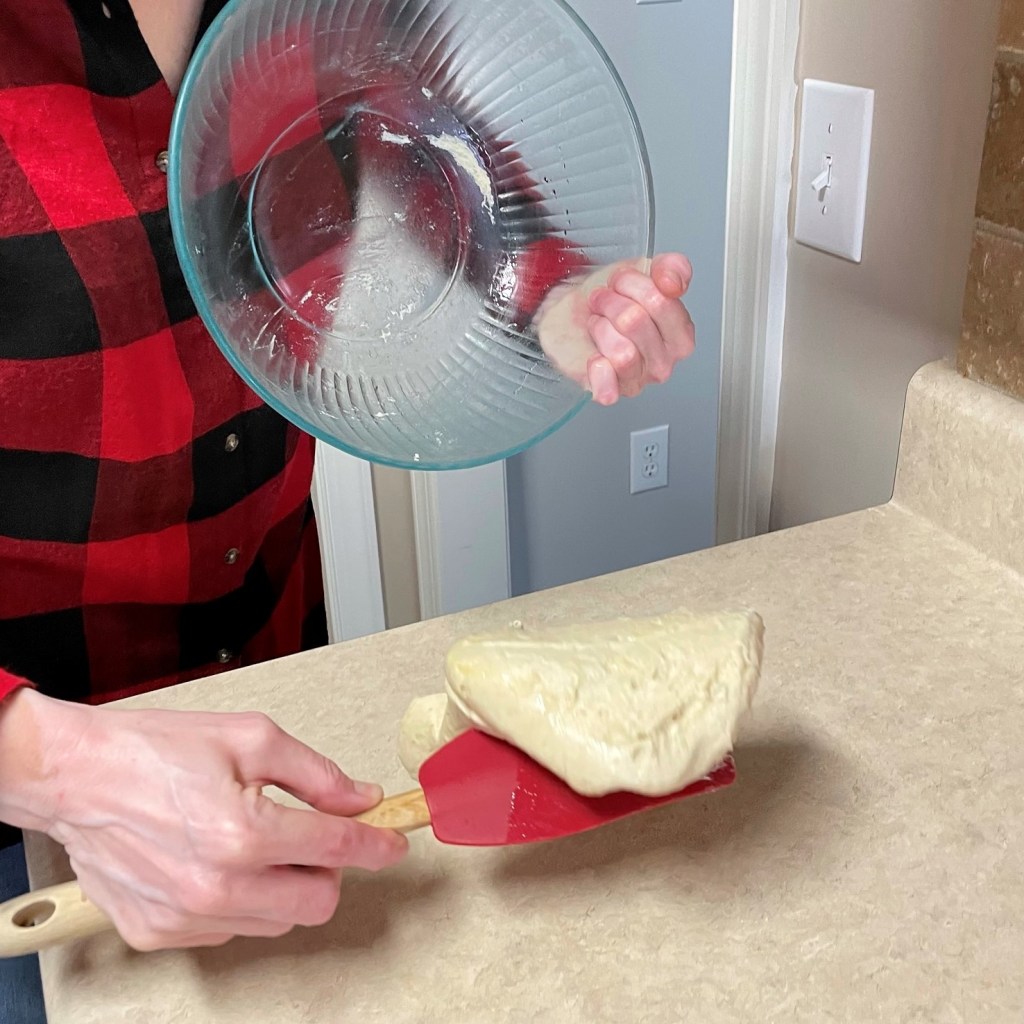
  4. Transfer the dough to a lightly oiled bowl. Cover it with plastic wrap or elastic cover and transfer immediately to the refrigerator at least overnight or up to 24 hours.

On Baking Day


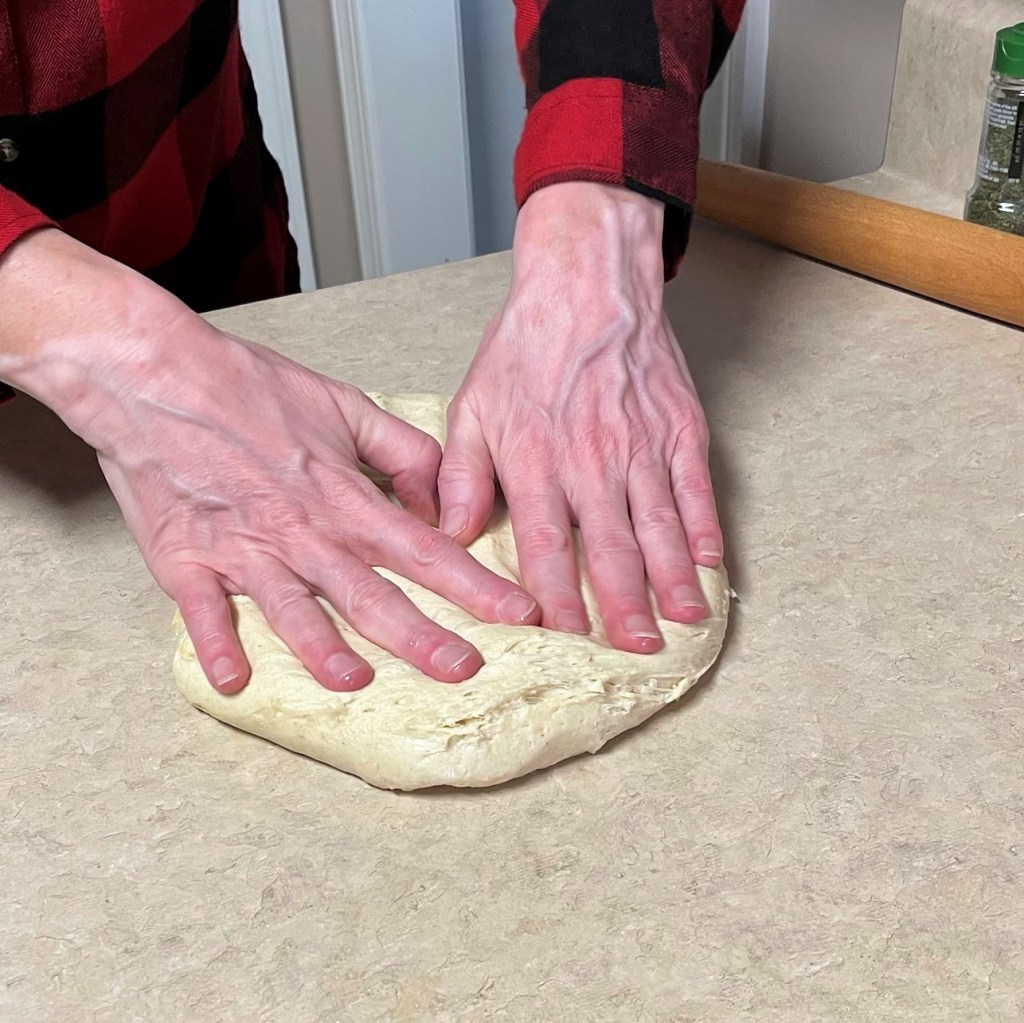
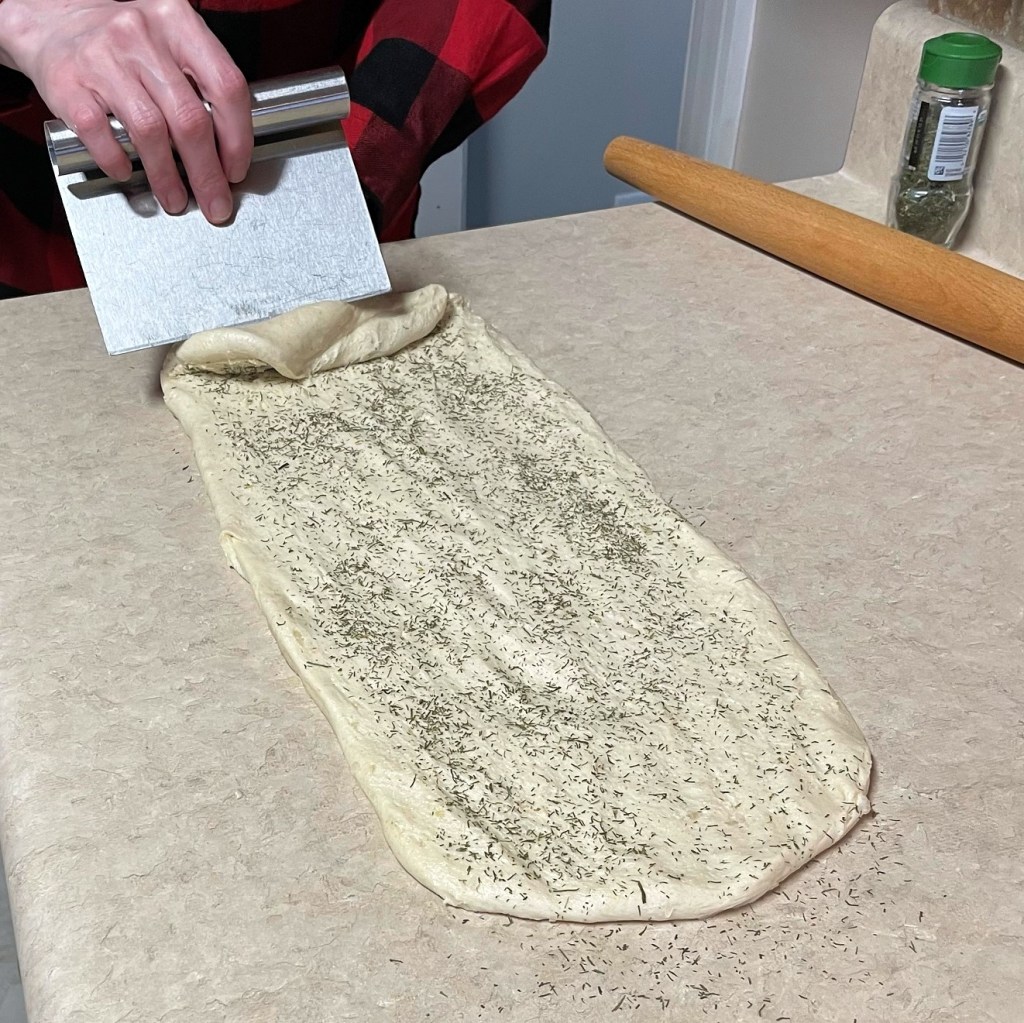
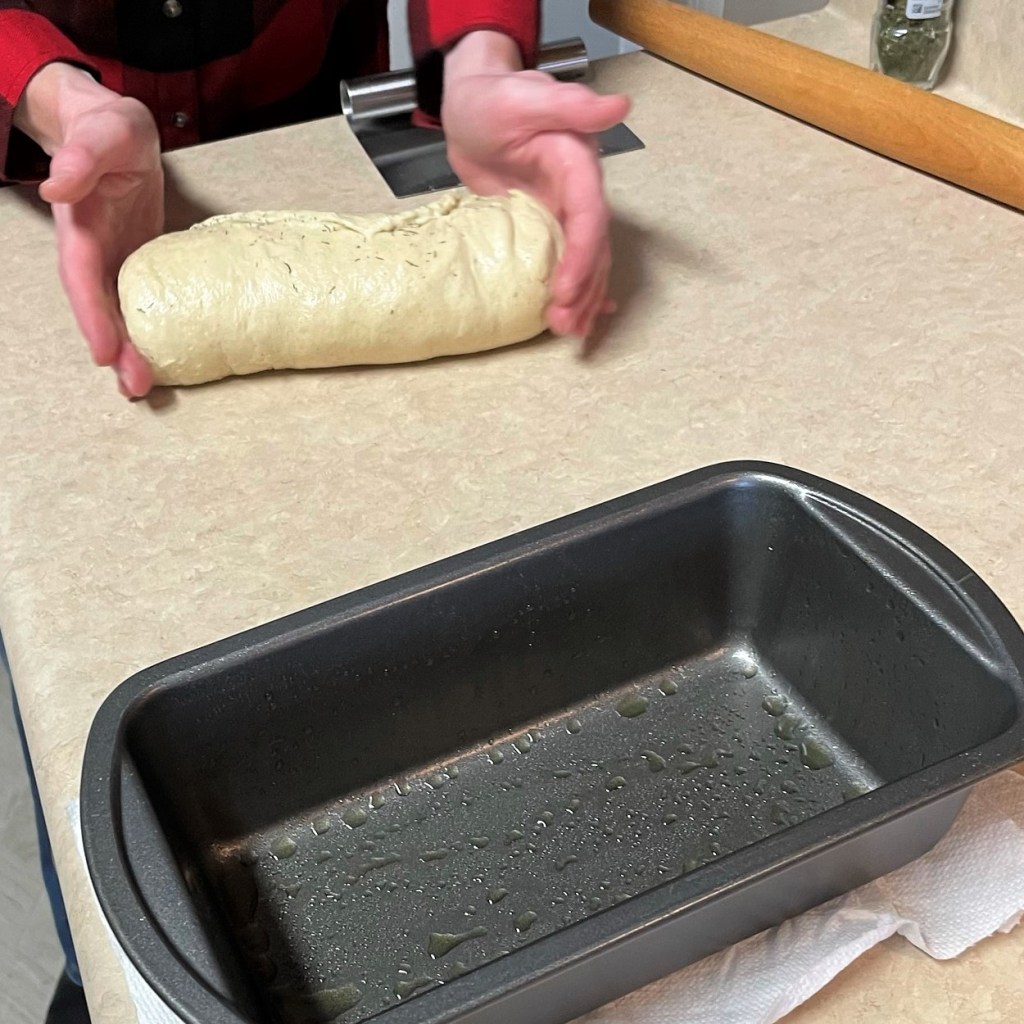
  1. Lightly spray a clean countertop (and a 9 x 4” bread pan) with olive oil spray. Remove the refrigerated dough to the counter and use your fingers to spread it out into a rectangle shape, about 6 x 18”. Sprinkle the dough with the dill leaves.
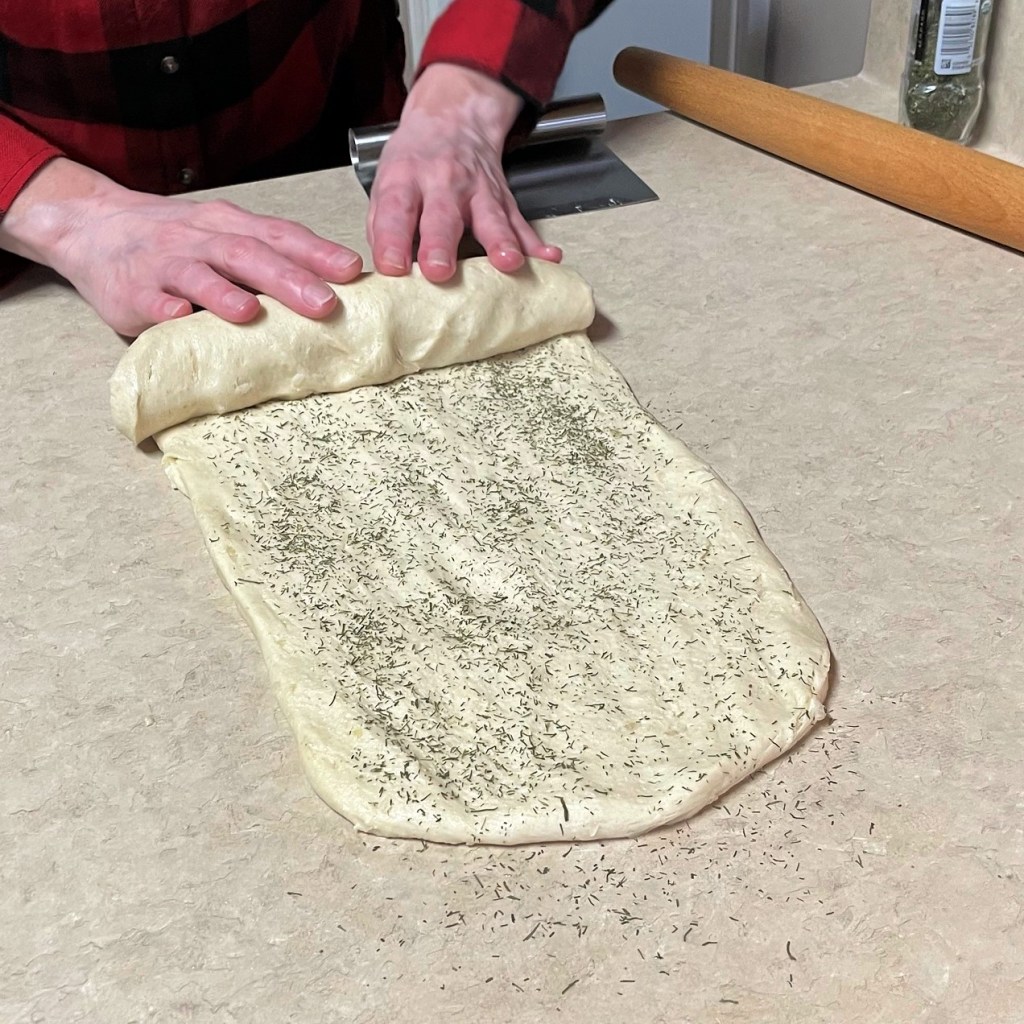
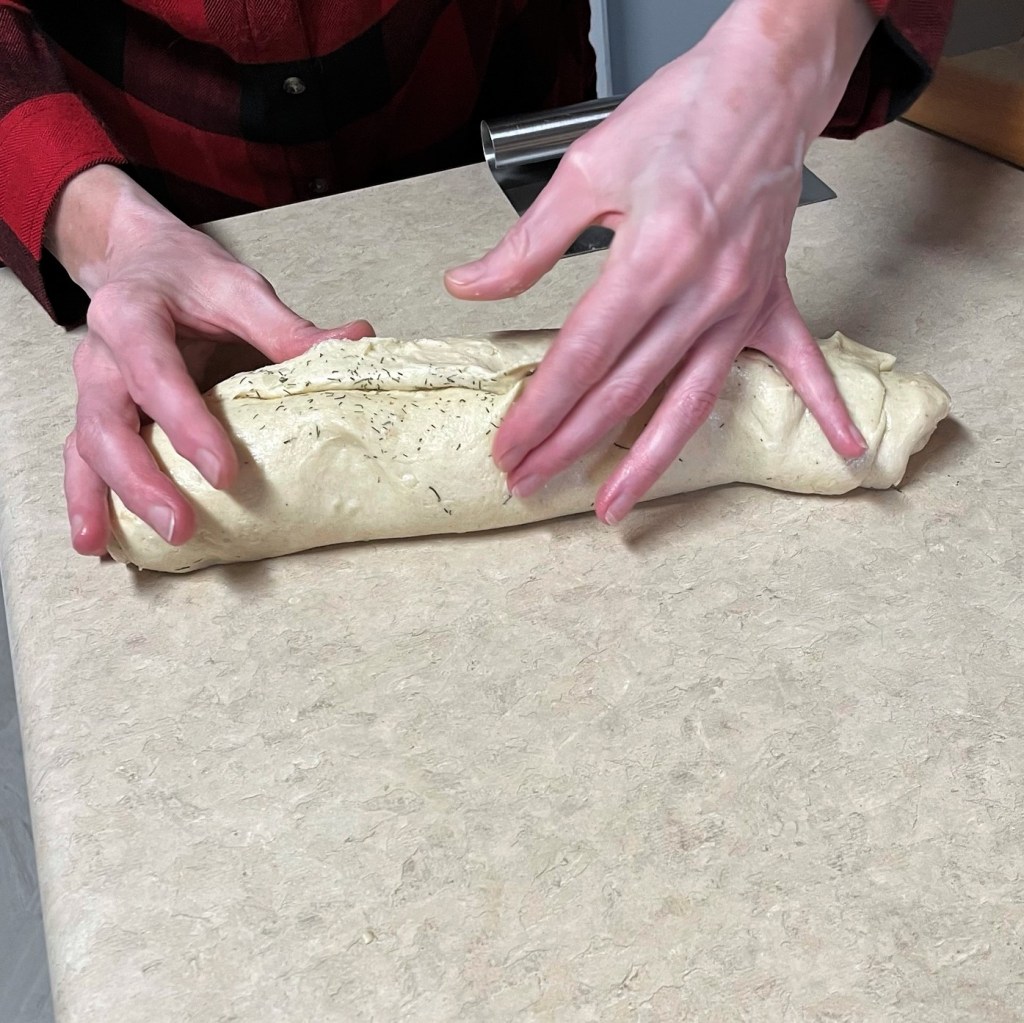
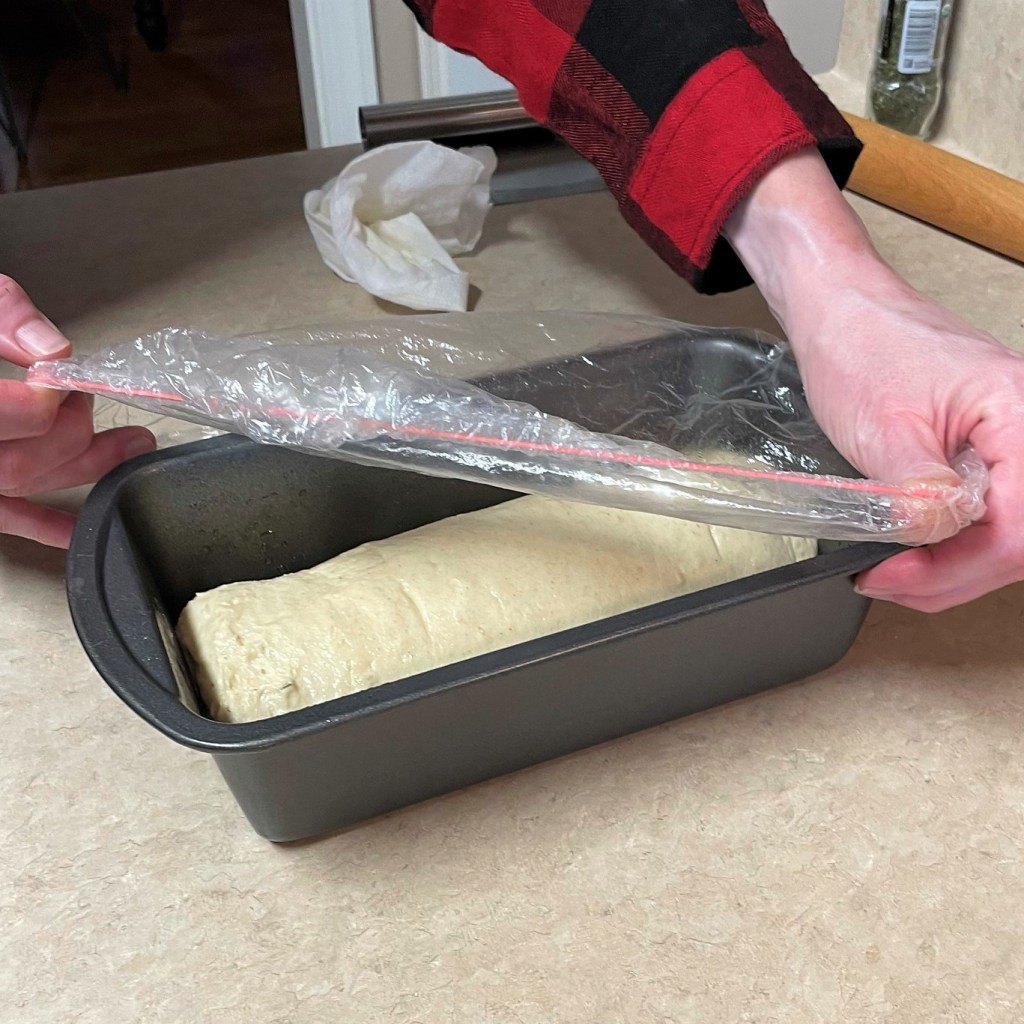
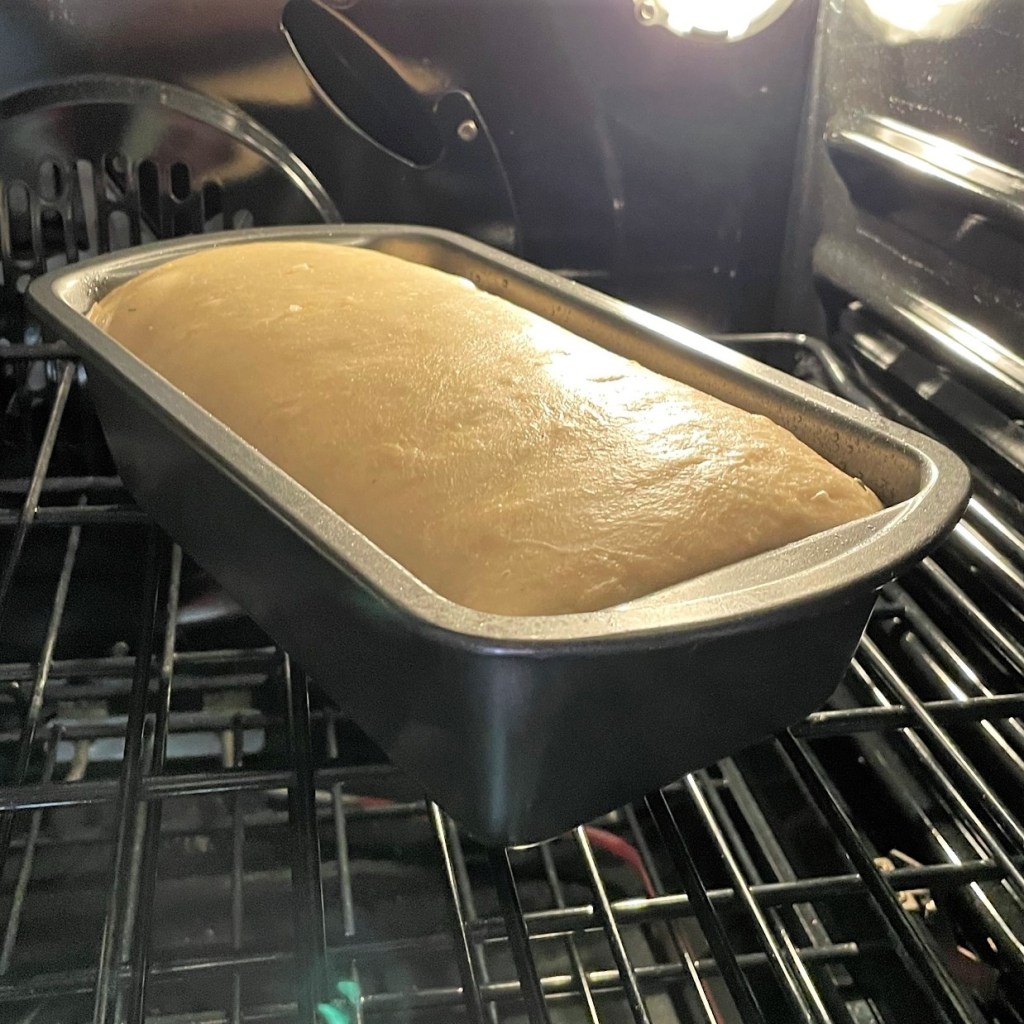
  2. Beginning at one of the short ends, roll the dough up tightly, tucking in the ends as you go to keep the dough in a smooth cylinder shape. Use a bench scraper if needed to release the sticky dough from the counter. When you get to the end, pinch the seam closed. Tuck the ends as needed to fit the dough into the greased bread pan. Cover with plastic wrap or elastic “shower cap” cover and proof at warm room temperature until the dough rises above the top of the pan.  This may take anywhere from 4 to 6 hours, depending on the strength of your starter and the temperature of the room.
  3. Near the end of rising time, preheat oven to 350° F, with baking rack in center position.
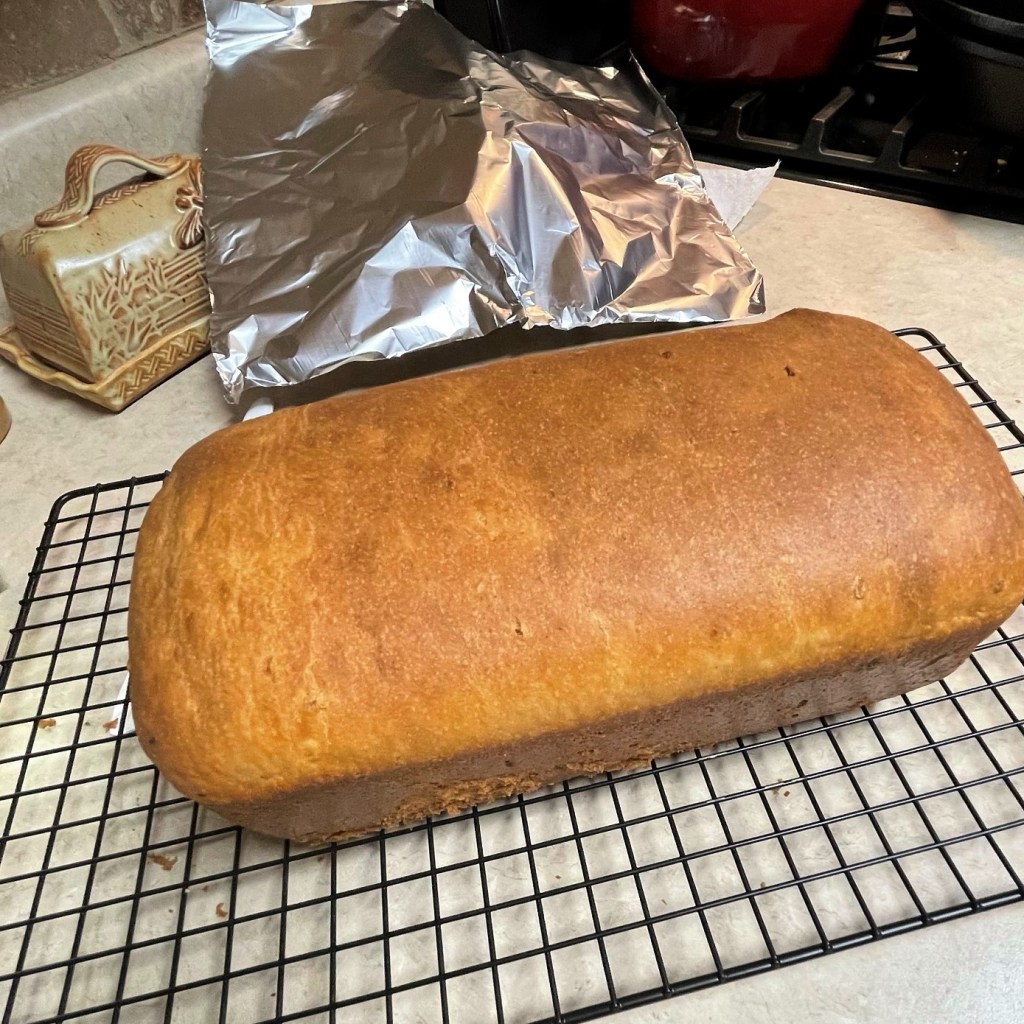
  4. Remove plastic wrap from pan and gently transfer the loaf to the oven. At this point, the dough may appear “jiggly;” you don’t want to cause it to collapse, so try not to jostle it too much. Bake at 350 for a total of 45 to 50 minutes, turning halfway through baking time to ensure even browning. At the halfway point, cover the loaf loosely with a foil tent to prevent over-browning. Bread is fully baked when it reaches 190° internal temperature. Cool in the pan for about 5 minutes, then carefully turn it out onto a cooling rack. You may need to run a clean knife or plastic scraper along the edges of the bread for easier release. Cool at least two hours before cutting, and completely (this may mean overnight) before wrapping it up in a plastic bag.  
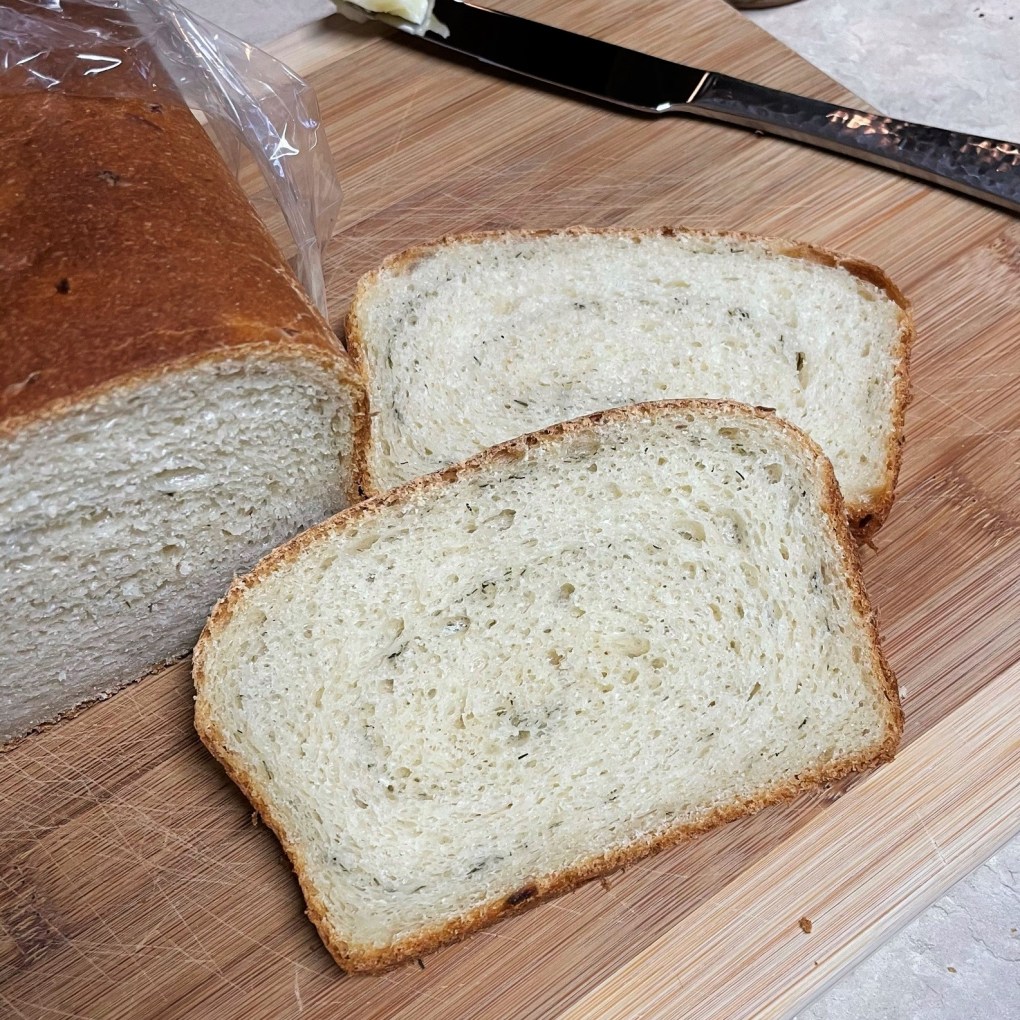
The dill makes a pretty swirl in this loaf, but you could easily substitute another favorite dried herb.

Want to make this bread?


First Fruits

Last week, when I came home from a weekly grocery run, I stepped warily toward the garden at the end of the driveway. I’m accustomed to feeling like a lousy farmer thanks to the herd of deer in our woods. With a sigh on my lips, I lifted back the giant leaves drooping from our squash and zucchini plants, anticipating root rot or squash bug infestation or something equally disgusting and disheartening.

Gasp—there’s life in there! Pinch me, I must be dreaming.

Truly, nobody is more surprised than I am to find that our pitiful little raised bed is displaying its first fruits. Remember the carnage I found recently, in discovering that our eggplant and pepper plants had their tops chomped off? But as Jeff Goldblum’s character said in the original Jurassic Park film, “life finds a way,” and it seems to be true in our side yard. Hallelujah!

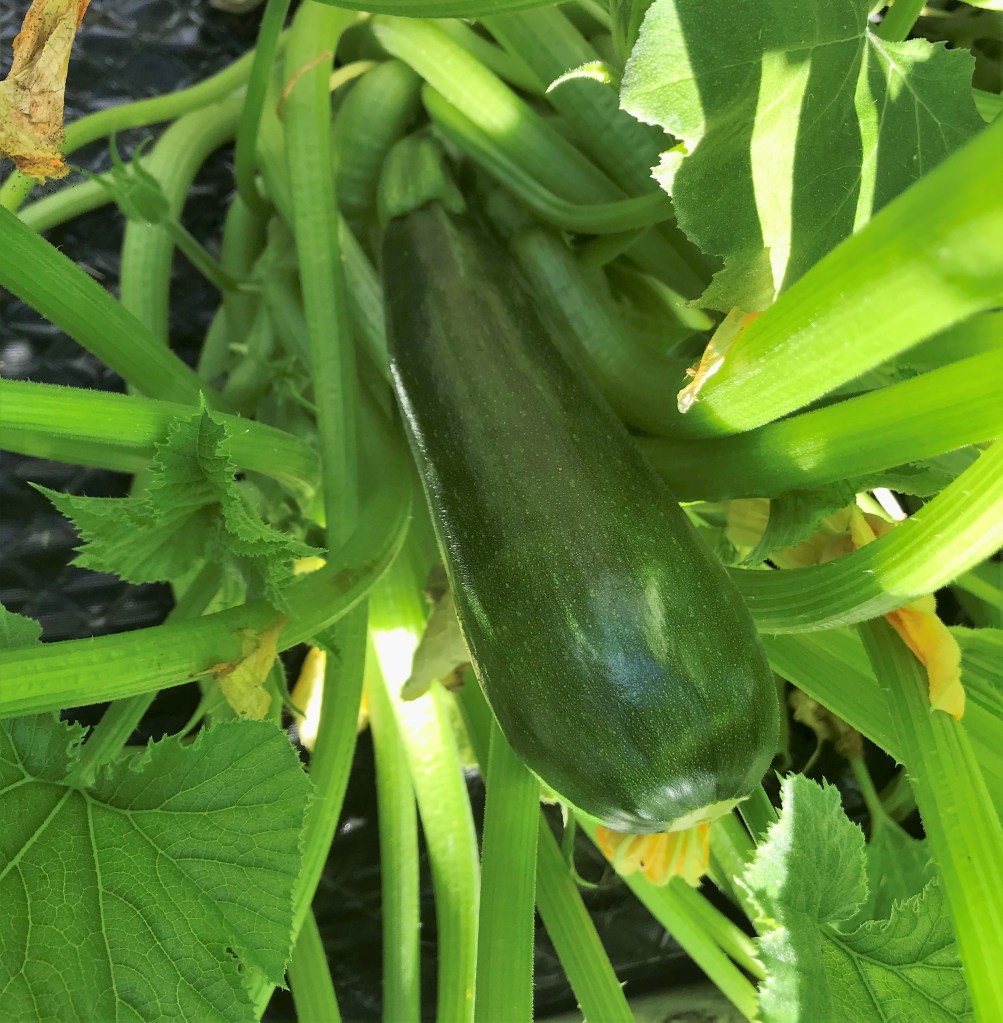
In addition to the first beautiful zucchini, which I almost left to grow another day (nope—I’ve learned my lesson there), we have lots of basil and a whole bunch of yellow squash blossoms. In past years, I mistakenly assumed that loads of blossoms would mean as many actual fruit. But unlike the reality of our “gender lesson” in bell peppers a few weeks ago, squash blossoms do present either male or female, and most of these will not be producing squash babies.

Most of these blossoms are male, meaning they will not yield a squash plant.

The male flowers are still important, naturally, for their role in pollination of the female blossoms. The hardworking bees, which have taken up residence in the nearby wildflower garden (you know what they say—location, location, location), will be blossom-hopping for the next few weeks to do just that. I hope we continue to see fruit on these plants, and now that I know they’re producing, I’ll be watching the undersides of the leaves to protect against squash bugs. I love zucchini and squash in absolutely every form, and I have a new spiralizer tool I’m eager to try, so I’m crossing my fingers.

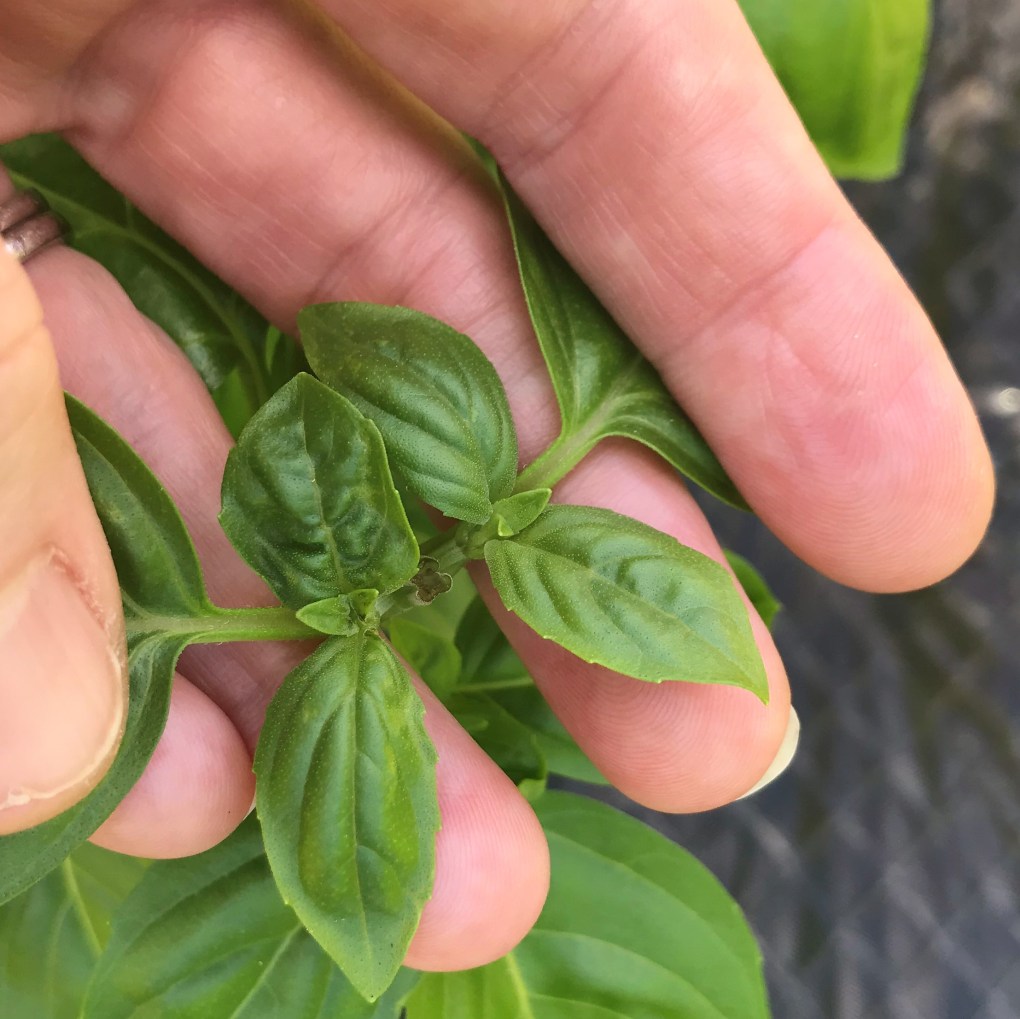
And the basil—holy wow, the basil is growing like crazy but is in need of my immediate attention or I may lose the whole lot of it. If you haven’t grown your own, or maybe you have but with varying degrees of success, I’ll be happy to share what I’ve learned about properly tending to these fragrant summer herbs. When they start to show these little clusters on the ends of the stems, they’re getting ready to go to seed (or “bolt”), and that would be a disappointing end to my pesto goals because once it goes to seed, the basil leaves lose their full flavor and take on a bitterness that is most unpleasant.

This is a sign that my basil plant is getting ready to “bolt.” It’s time to prune!

A few years ago, a Pinterest post led me through a  simple basil pruning technique which made a world of difference in my herb gardening. The basil needs to be “pinched back.” Removal of those little clusters before they begin to flower will send a message to the basil that there’s more growing to do, and if you keep at it, the plant will continue to become bushier until you almost literally have basil coming out your ears. In my case, it might also help protect the other surviving plants in my garden because deer allegedly cannot stand the smell of basil. Here’s hoping!

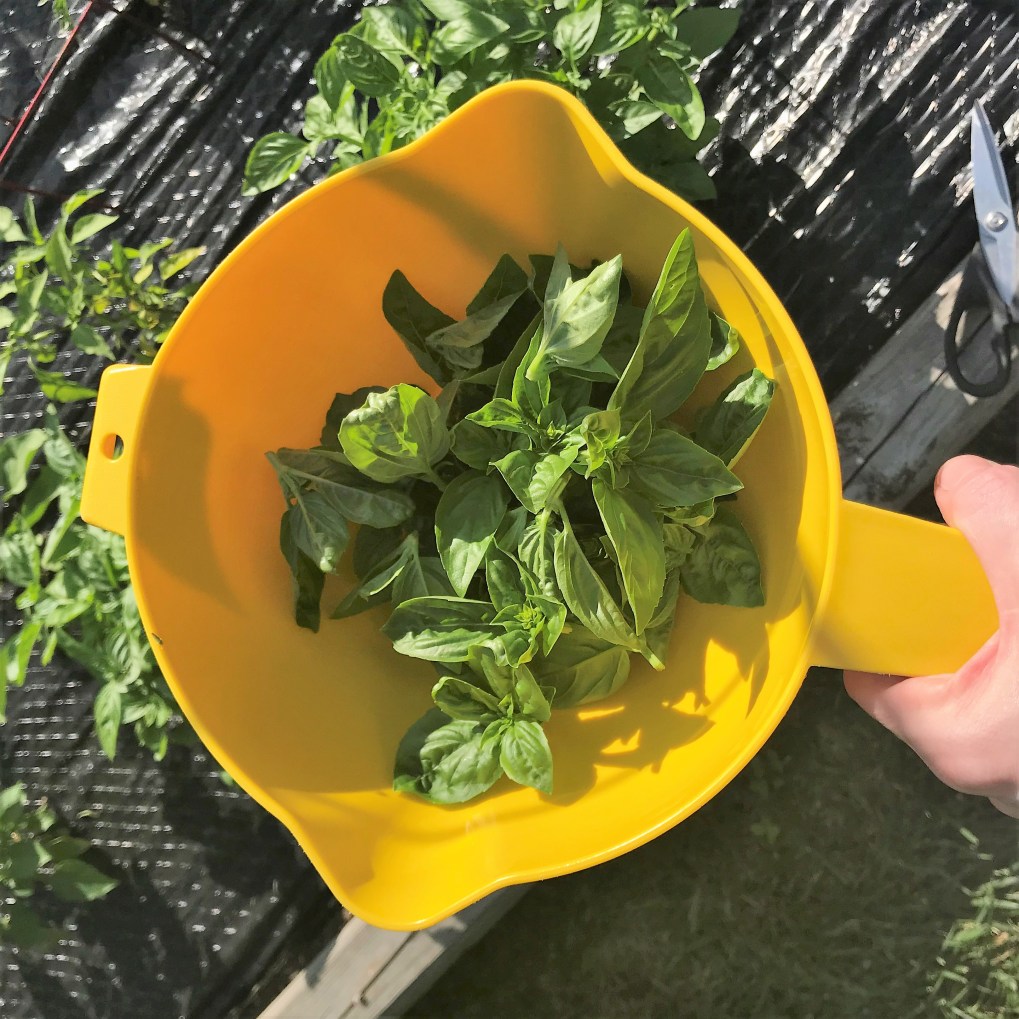
It’s easy to do—get up close to the cluster and look for a point along the stem below it where twin leaves are positioned across from each other. Just above those twin leaves, pinch off the stem. That’s all there is to it. I usually take a kitchen scissors out to the garden with me and snip them rather than pinching. It goes faster, makes a cleaner cut and doesn’t leave my hands smelling like strong basil. The stems you snip will stop growing, leaving room for new stems to form from the twin leaves. Where there used to be one stem, there will soon be two.

As you go, the basil will require more frequent pruning because stems will multiply. But if there’s a big jar of fresh pesto at the end of it, I’m in! The plant may grow upward somewhat, but mostly you will see a bushy formation, and each time I prune, I’ll have plenty to use along the way to pesto heaven.

I’m going to find a simple way to use these in the kitchen.

It’s been an exciting day in the garden, and I’m going to whip up something delicious with my first fruit haul. I’ll show you in a day or two what I came up with.

Oh, happy day!