Red Beans & Rice

The exuberance and joy of Mardi Gras season calls to me, especially since I learned in recent years that it is more than drunken revelry and people throwing beads at women flashing their boobs. Yes, that does happen when tourists descend on Bourbon Street, and of course that’s what we see in the media— which loves a circus, as evidenced by the news of late— but the true season of Mardi Gras is much more interesting (thank goodness). It’s filled with family-friendly cultural celebrations highlighted with parades, colorful costumes and decorations, and, naturally, amazing foods!

Rather than pretend I know all about Mardi Gras, I’ll point you to my blog buddy, Maylee, who shares the inside scoop on her blog, Beyond Gumbo. Over the weekend, Maylee posted a gorgeous “Best-Ever King Cake,” one of the most signature treats of the Mardi Gras season, with its festive green, yellow and purple sugar accents. Have fun exploring Maylee’s blog, with first-person detail on the parades and so many foods that are truly authentic to Cajun country— far “beyond gumbo,” as her blog suggests.

My own love affair with Louisiana foods also extends beyond gumbo (though I do love it!), and today I’m sharing my first-ever attempt at making red beans and rice, a layered-with-flavor Cajun staple that is as tasty and satisfying as it is humble and simple to make. The first time I tried this classic dish, it was from a package mix (I know, and I’m sorry) and it didn’t impress me much. I was only about 24 at the time, and my curiosity about it emerged after my conversation with the one-and-only Bette Midler. This deserves an explanation, but first, the dish!
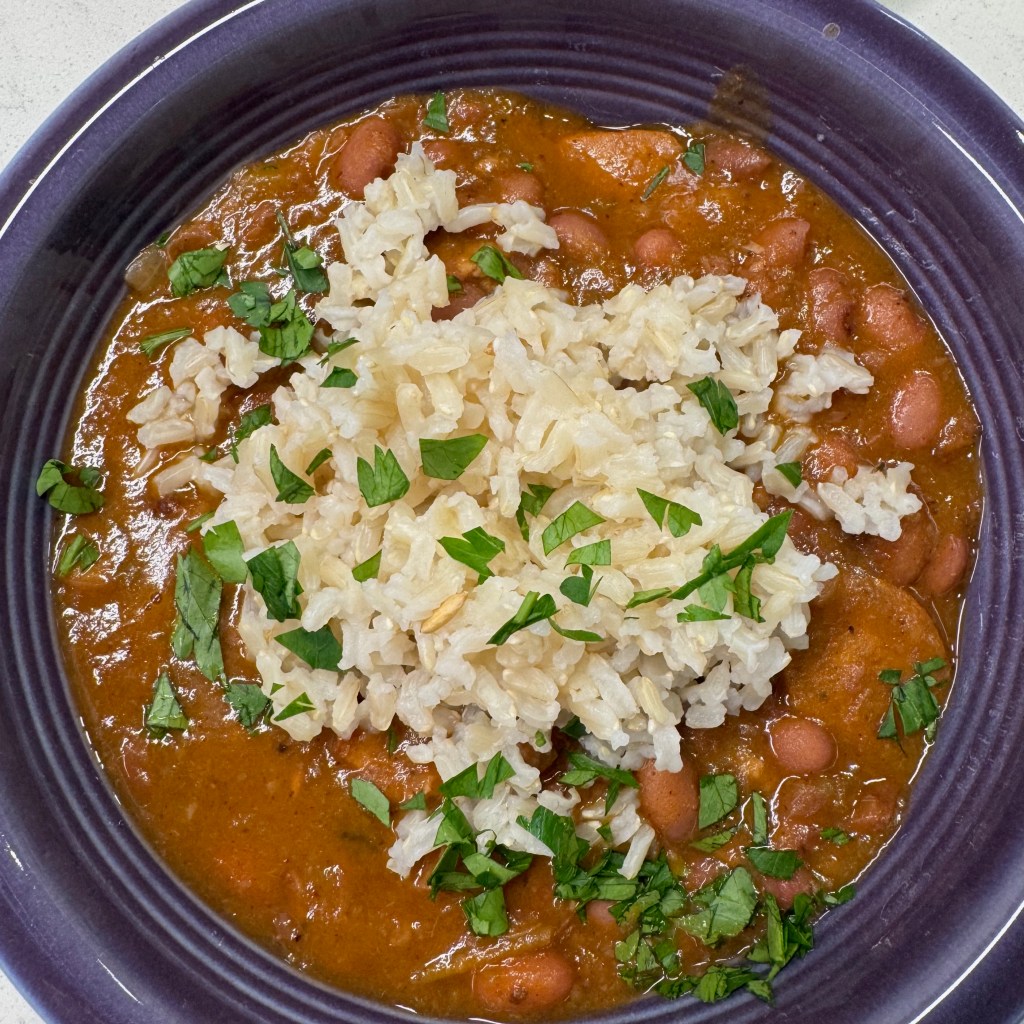
Worth the trouble to make from scratch!

This meal comes together with pretty simple ingredients— red beans, of course, and I used small red beans, though dark red kidney beans seem popular; andouille sausage (I used a chicken variety to reduce the fat); the holy trinity of onions, celery and bell pepper; plenty of spice in the form of garlic, cayenne, smoked paprika, bay leaves and fresh thyme leaves; chicken stock and a touch of tomato paste (which might make it more Creole than Cajun, but it worked). 

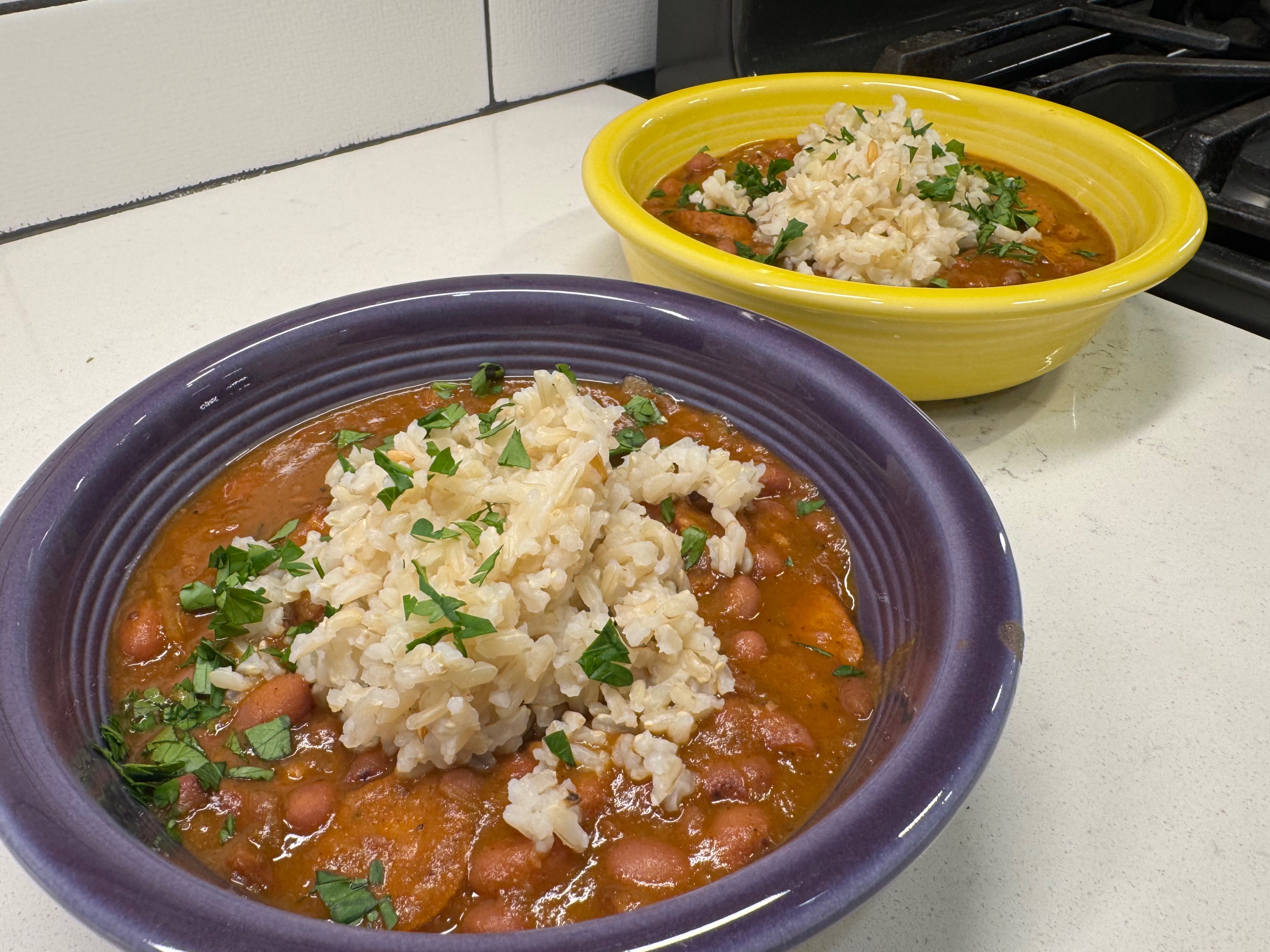
The whole thing is stewed and simmered until the flavors meld, and then it’s served with cooked rice (mine was brown for nutrition and health reasons). Red beans and rice is hearty, incredibly aromatic, comforting and just spicy enough that I’ve been wondering why I waited so long to make it from scratch. This much I know— it won’t be the last time. 

If you get really close, you may be able to smell how delicious this is!

An unusual inspiration

Now, if you’re wondering what in the world Bette Midler had to do with anything, let’s rewind to my first full-time radio job, where I frequently had the pleasure of meeting and interviewing artists that I’d otherwise never cross paths with. The Divine Miss M was among them, and I could not have been more awestruck!

Most of my celeb interviews were not in-person, but by telephone, and right around the time that Midler’s hit, “From a Distance,” was charting on Top 40 and Adult Contemporary radio, riding the wave of popularity that followed “Wind Beneath My Wings,” her record label arranged interviews with influential radio personalities across the country. Don’t ask me how I got looped into that, because I was definitely a novice at that stage of my career, barely holding influence over myself on the best of days. I considered myself incredibly fortunate.

What I remember most about the 10-minute interview, which was unusually chaotic because there were multiple radio folks on the call, is not Midler’s answer to my own question when it was my turn to speak. I was nervous, and probably asked her something stupid, like “what was your inspiration for the song?” Had I done even the slightest bit of homework, I’d have known that it was a cover, not her own song, and that Nanci Griffith had recorded it first three years prior though that one didn’t make a dent on the American Billboard chart.

Nope, I was far too green to realize that celebrities— the best of whom usually prefer to be treated as regular people, rather than idols— are most excited to answer questions that relate to ordinary things. Thankfully, a more seasoned radio pro asked her the most meaningful question of the call— “Miss M, what is your favorite food?”

And, of course, it was red beans and rice. I’ll never forget it.


How to make red beans and rice

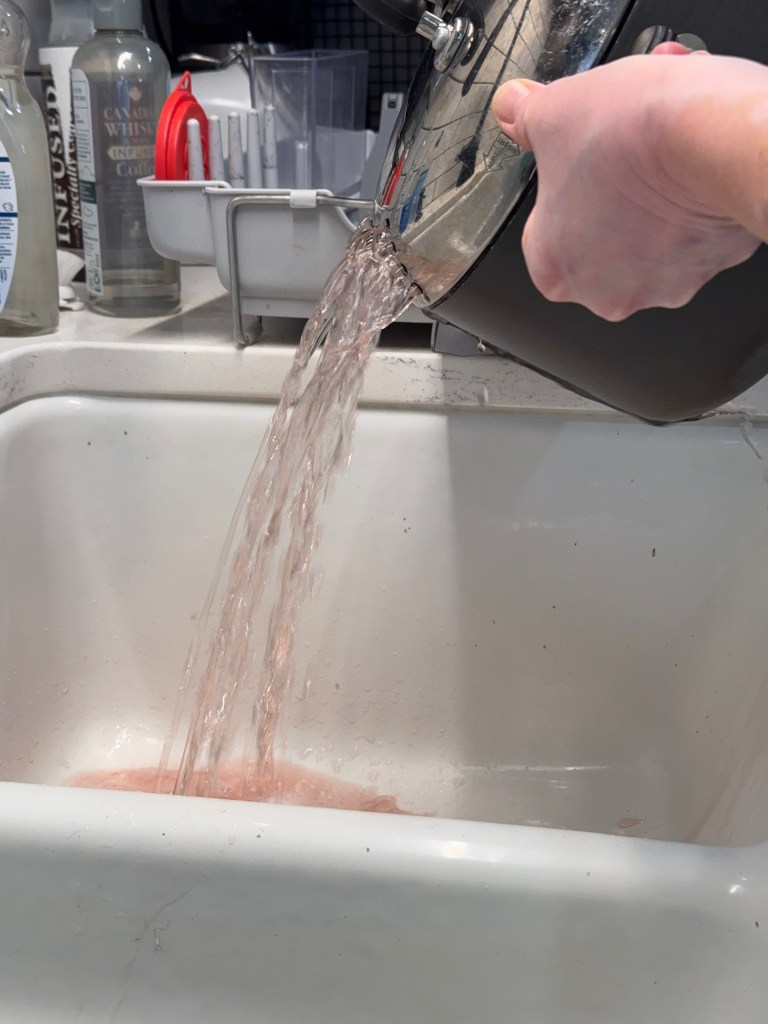
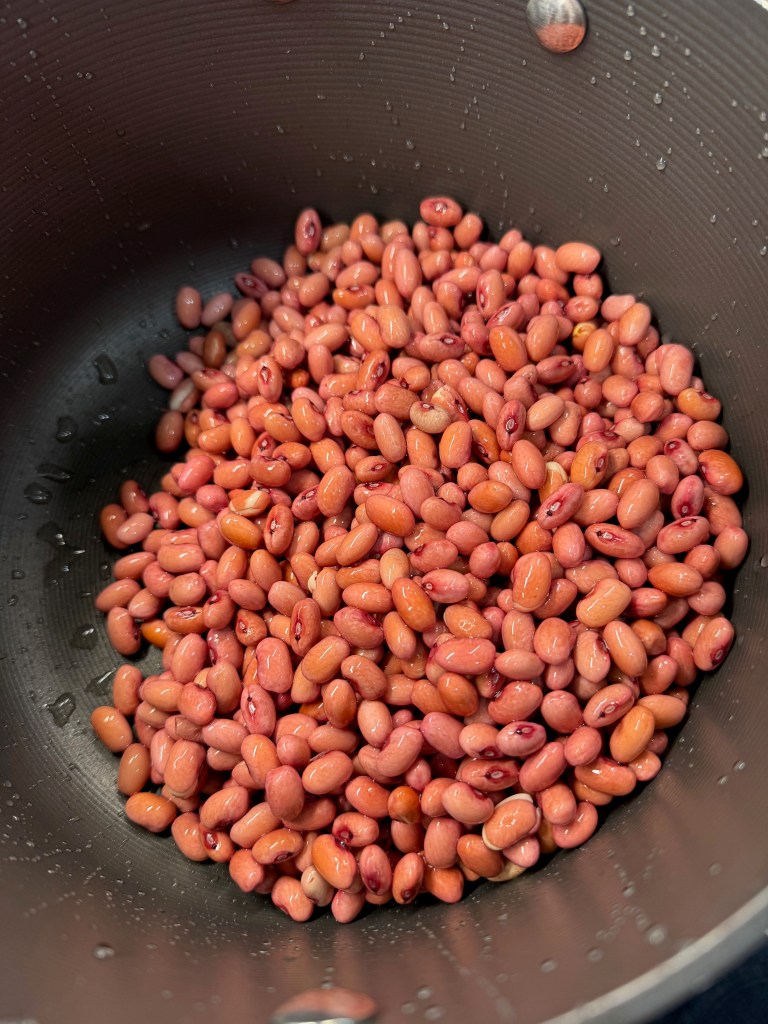
Never one to actually follow a recipe, I set out to learn the techniques that are important for red beans and rice, and there is no shortage of recipes online. My version is a mash-up of various suggestions I considered. As expected, it began with an overnight soak of the red beans. I had seen online that canned beans could be used, but when I have time to take the long route, I’m doing it. Good things happen in a long simmer, and it was no more effort to use dried beans. Be sure to drain and rinse them a couple of times before proceeding.

Getting the flavor party started

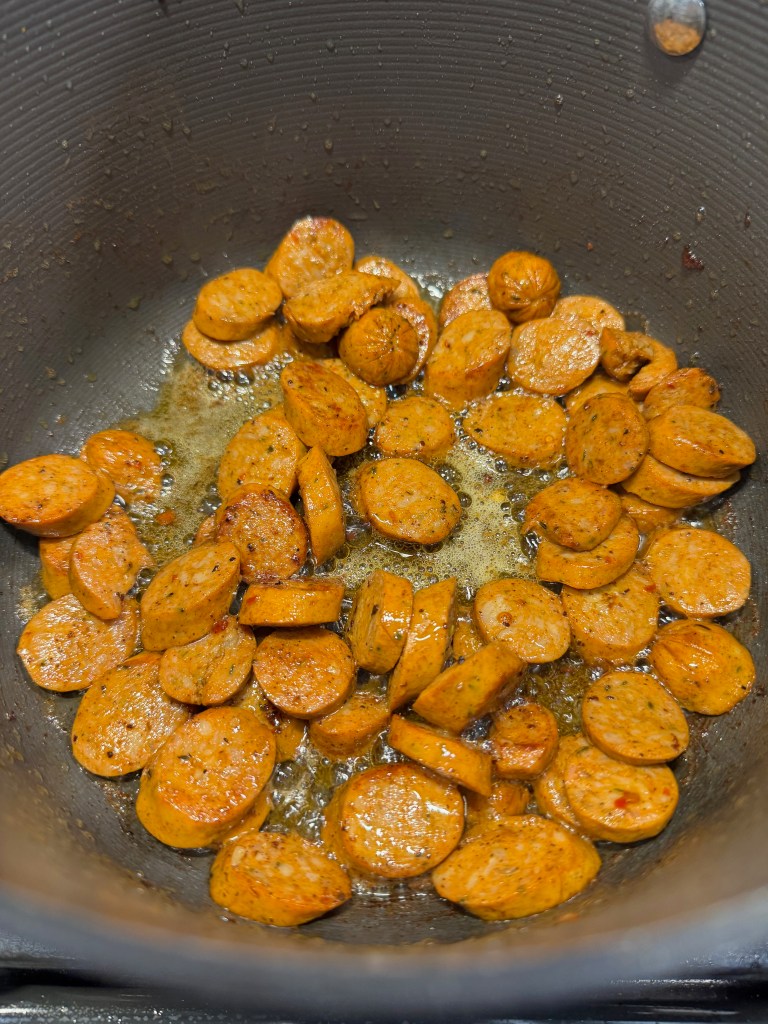
The flavor layering begins when you brown the andouille sausage in hot oil. I browned mine in bacon grease, rendered from a garlic- and onion-seasoned bacon I scored at Publix. This bacon was nothing short of fantastic, and though I don’t think it’s quite the thing for breakfast, it would be terrific on sandwiches and it was great in my red beans and rice. 


It’s getting aromatic in here!

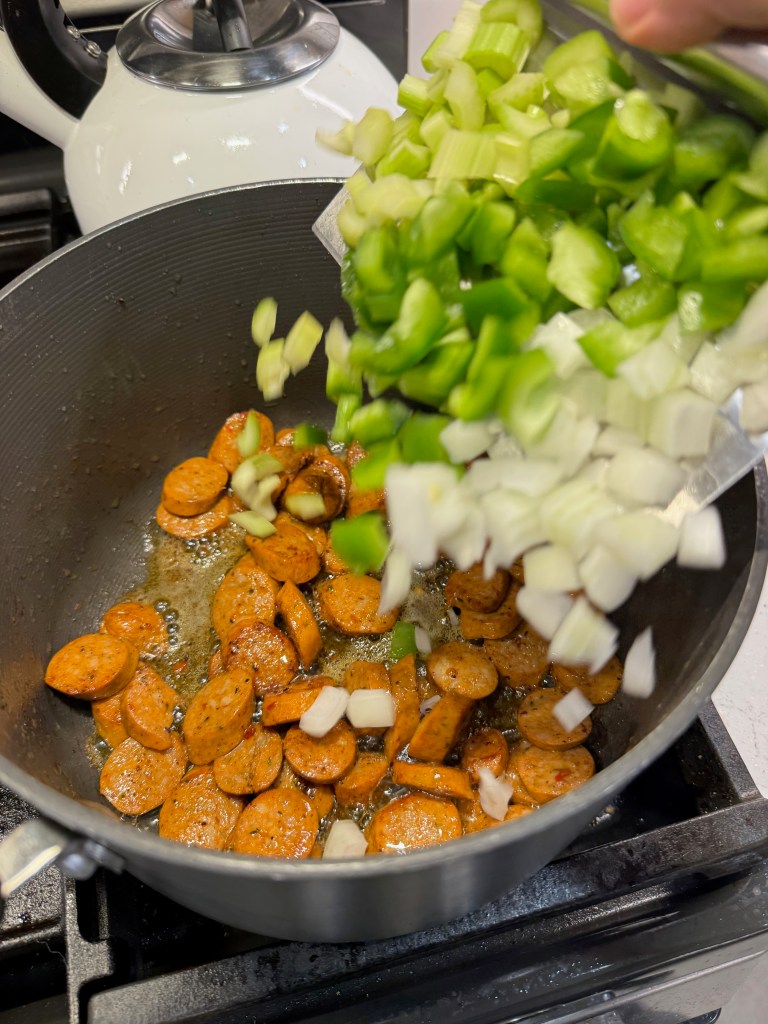
Next came the trinity, which I had diced up small enough that each bite of my finished dish could have a little of each aromatic ingredient. Unfortunately, about that time, I realized that my chicken variety of andouille didn’t have any kind of casing, and I knew that it wouldn’t hold up under simmer for two hours while the beans cooked. So I hit the pause button long enough to fish out every last piece of andouille with a slotted spoon. I do not recommend this approach, but this was my own fault. 

Simmer down, now.

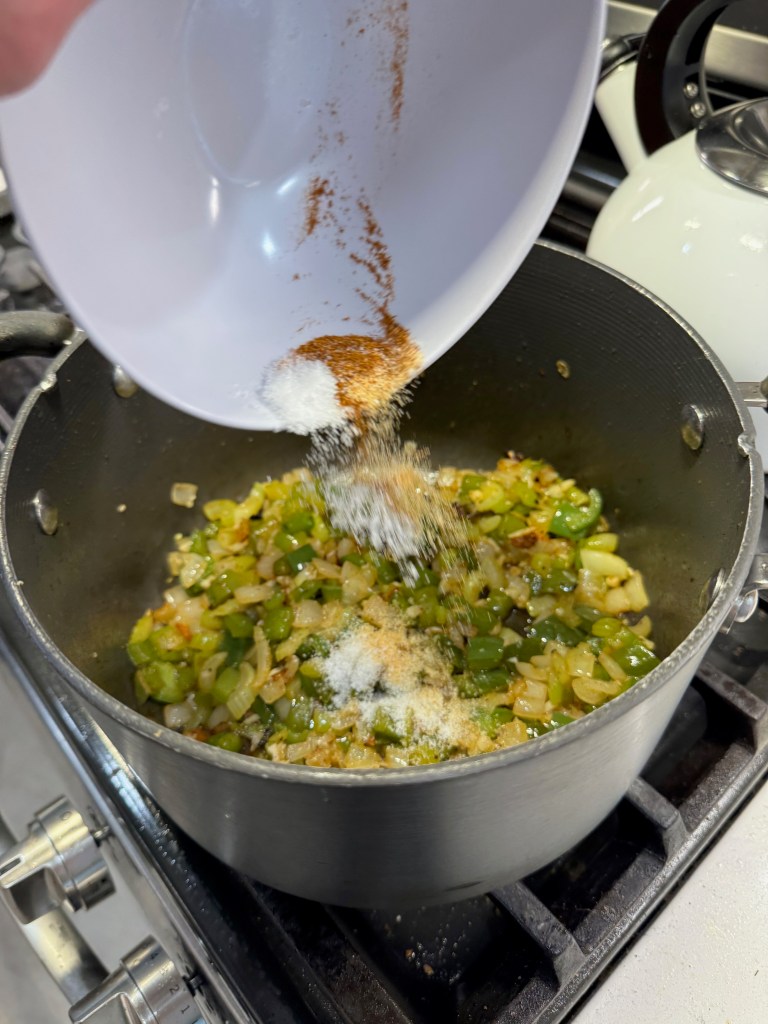
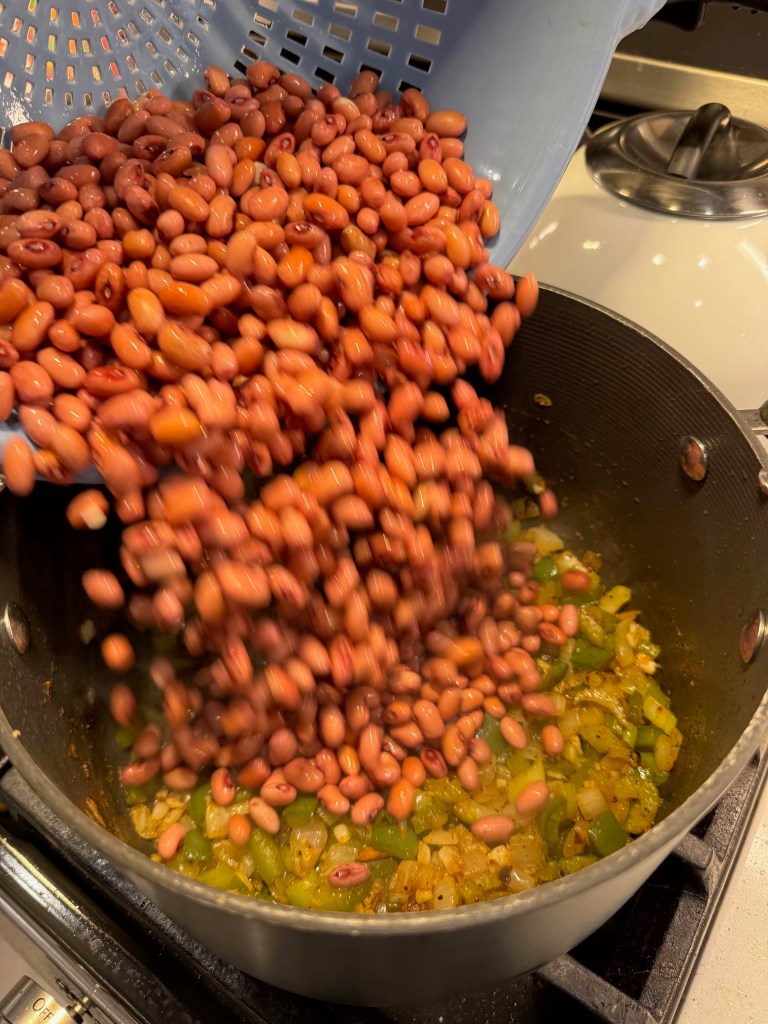
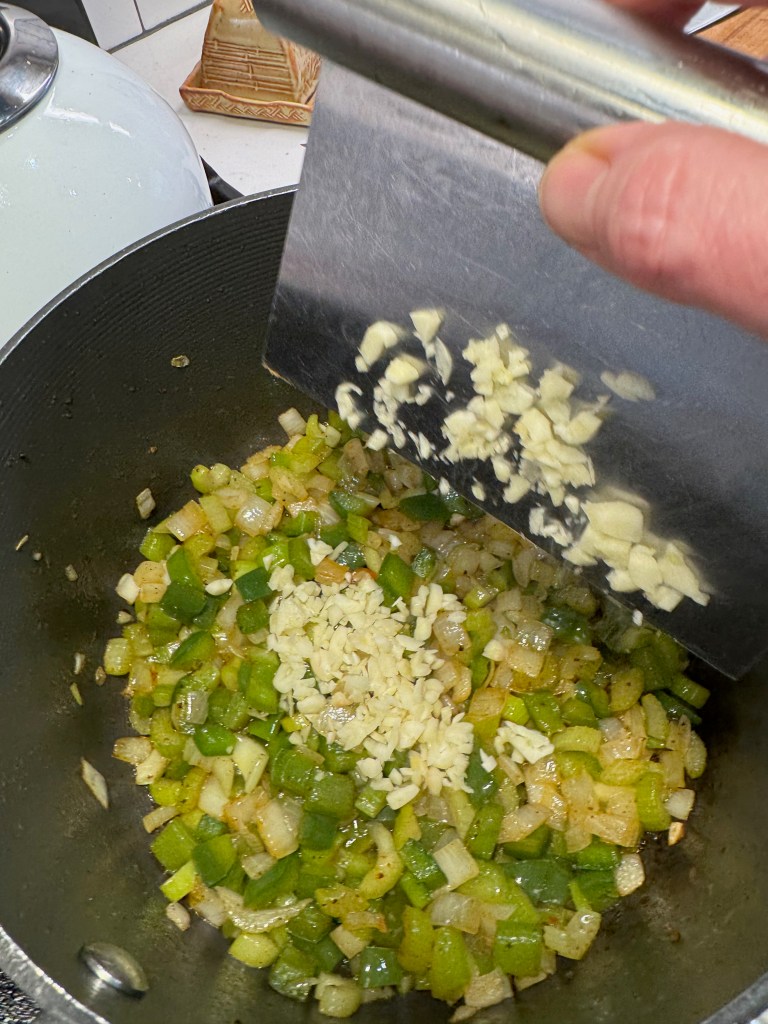
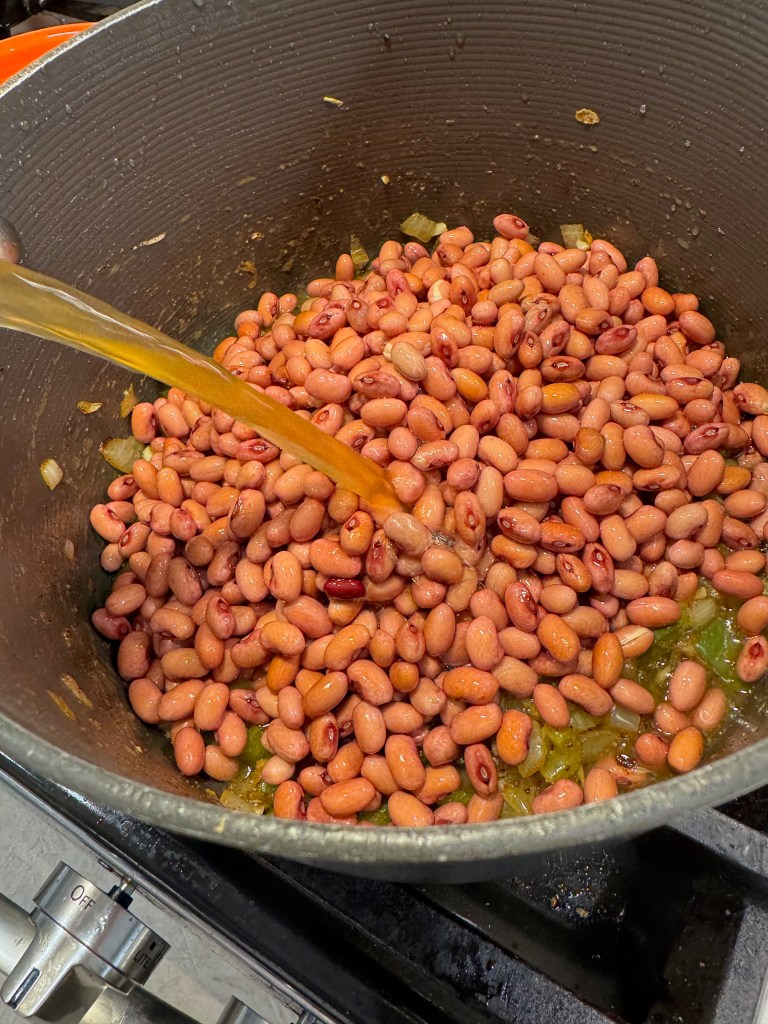
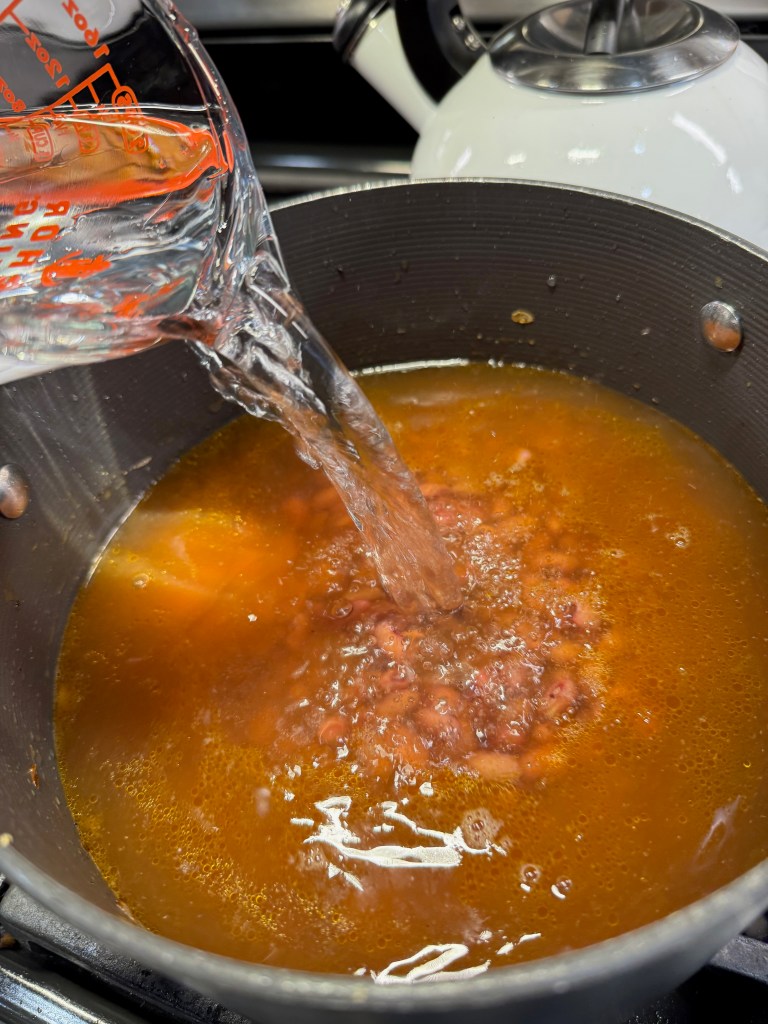
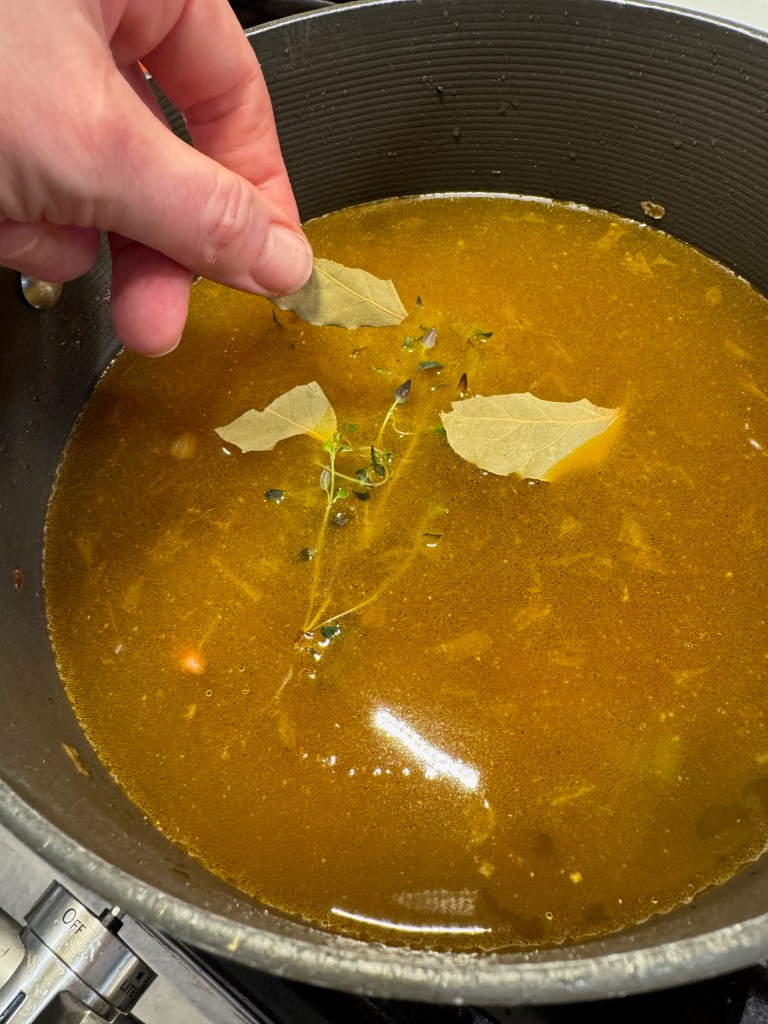
Time for the fresh garlic and dried seasonings. I wasn’t sure how much salt I’d need, given that the bacon and sausage had their own, and my chicken stock was not low sodium. So I played it conservative with salt, but still used black pepper and cayenne powder. I added the drained beans and six cups of liquid— four of chicken stock and two of water, plus a sprig of fresh thyme and couple of broken dried bay leaves— I rarely simmer anything without them. I panicked a bit at this point because the pot seemed so liquid-y, but there was no turning back at this point. I kept the lid off while the pot simmered, and I figured that would help reduce the liquid quite a bit.
The final stretch…

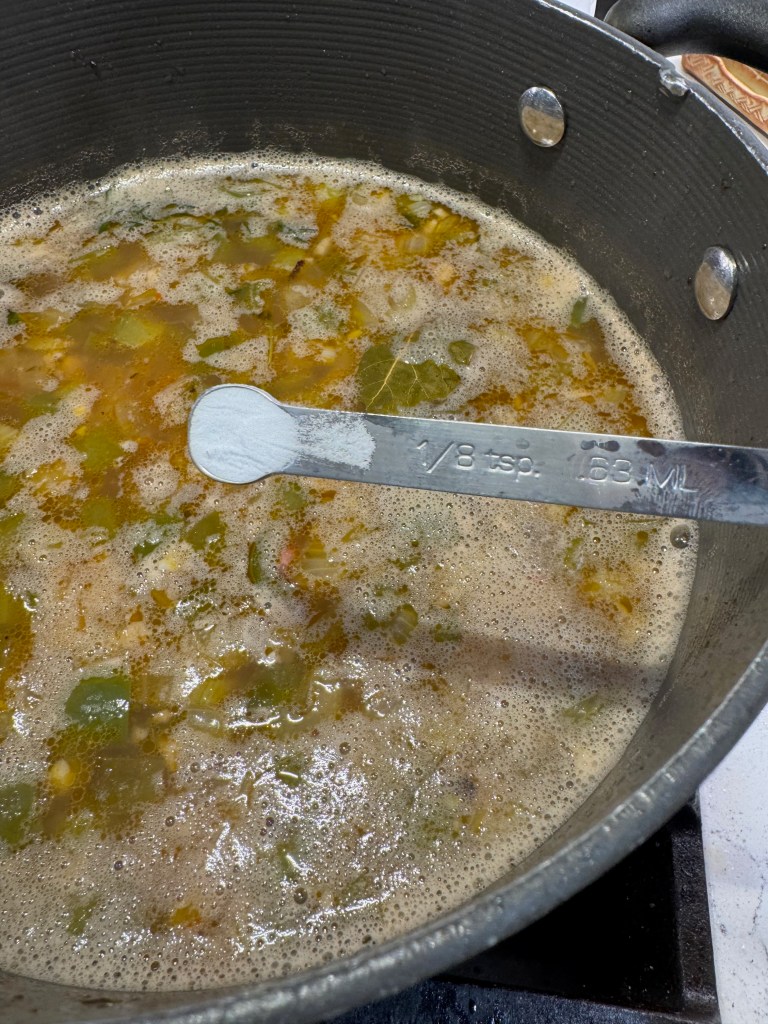
At this point, I also followed my new rule of thumb for cooking dried beans, which is to go ahead and add a skimpy spoon of baking soda to the pot. This alkalinizes the cooking liquid, in turn helping the beans to soften as they simmer. It does not change the flavor of the mixture with such a small amount. I wish I’d had my camera ready after the soda was stirred in, because there was a momentary fizzing that was quite dramatic, and then it settled down.
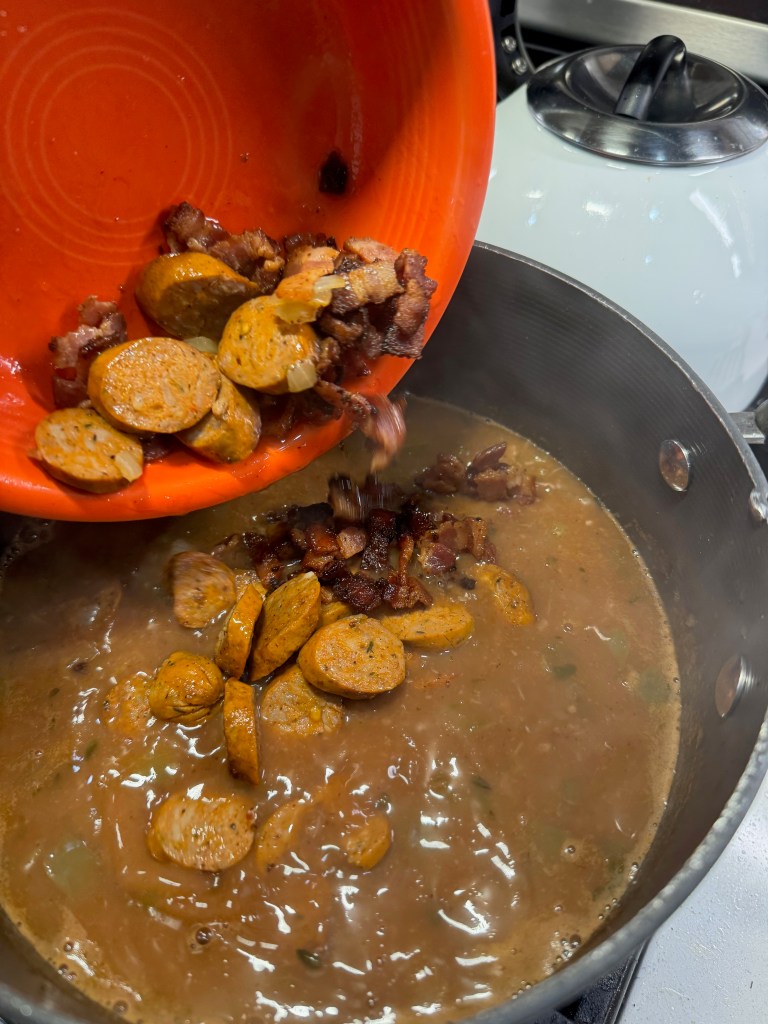
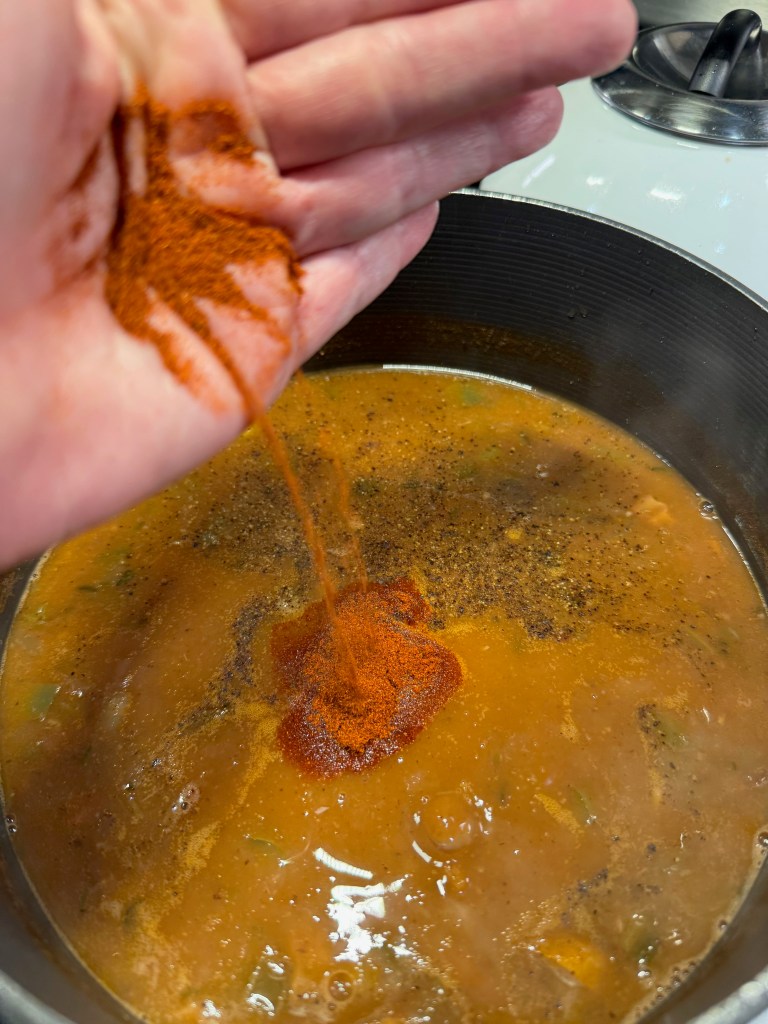
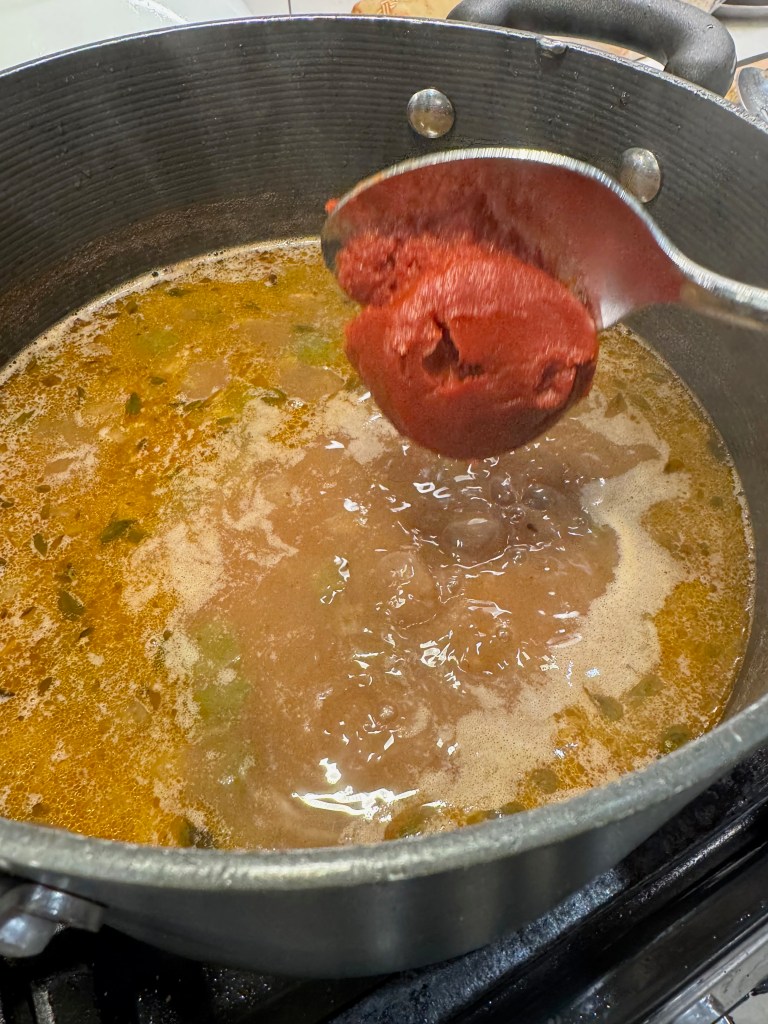
I gave the pot a stir only about twice over the next two hours, and after confirming that the beans were tender, I stirred in two tablespoons of tomato paste. You cannot jump the gun with tomato or anything else acidic when cooking dried beans, or they may never soften. I emptied the cooked andouille and bacon back into the pot, along with a bit fat pinch of smoked paprika, which I probably should have added at the beginning (still learning here). Another 45 minutes of simmering, and my red beans and rice was ready to serve! 

Red Beans & Rice
  • Servings: About 8
  • Difficulty: Average
  • Print

This dish definitely should not be reserved for Mardi Gras! It's immensely flavorful, comforting and richly satisfying.


Ingredients

  • 1 lb. dried red beans (I used small red beans, but kidney beans are ok, too)
  • 6 slices good uncured bacon, cut into 1-inch pieces
  • 12 oz. package andouille sausage, sliced into 1/2-inch thick slices (I used a low-fat chicken version, which had no casings; pork variety is more traditional)
  • 1 cup each yellow onion, celery and green bell pepper, chopped into 1/2-inch dice
  • 6 cloves garlic, smashed and minced
  • 1/2 tsp. salt
  • 1 tsp. freshly ground black pepper
  • 1/2 tsp. ground cayenne
  • 1 tsp. smoked Spanish paprika
  • 4 cups chicken broth or stock
  • 2 cups water
  • 1 sprig fresh thyme
  • 2 dried bay leaves
  • 1/8 tsp. baking soda
  • 2 Tbsp. tomato paste (do not add until beans are cooked soft!)
  • A few shakes Louisiana hot sauce, if desired for heat
  • cooked rice for serving
  • chopped fresh parsley for serving

Notes: This recipe uses dried beans, which require a longer cooking time. If substituting canned beans, use 4 standard cans (drained) and reduce simmering time to one hour.

Directions

  1. Sort and rinse beans to rule out any duds. Add beans to a large pot and cover with several inches of water. Soak at least 12 hours, and then drain and rinse twice before proceeding with the recipe.
  2. Heat a heavy-bottomed pot over medium heat. Cook bacon pieces until crisp, then transfer bits by slotted spoon to a separate bowl. Add the andouille sausage pieces to the pot, browning in the bacon fat until crisp on edges. Transfer sausage to the same bowl with bacon and set aside.
  3. Add onions, celery and bell pepper to the pot. Stir and sauté until softened and slightly translucent. Add garlic and stir for one minute. Season with salt, pepper, cayenne and paprika.
  4. Add drained beans to the pot; cover with chicken broth and water. Bring pot to a boil, then reduce heat to a simmer. Add thyme and bay leaves. Stir in baking soda to neutralize any acid in the pot (this is not necessary if using canned beans)
  5. Simmer, uncovered, for 1 1/2 to 2 hours or until beans are tender. Use a potato masher to smash some of the beans for richer, thicker texture. Alternatively, you can smash the beans against the sides of the pot with the back of a large spoon. Stir in tomato paste and a few shakes of hot sauce if you want more heat. Adjust salt and pepper to taste.
  6. Return cooked bacon and sausage to the pot and stir to combine. Continue to simmer for about 45 minutes to thicken beans.
  7. Remove bay leaves and thyme stems. Serve red beans with cooked rice.


Muffuletta Pizza

As we near the end of this year’s Mardi Gras celebration, which wraps up on Feb.13, I’m presenting a pizza twist on the muffuletta, a sandwich that has its origin in New Orleans. You may recall from some of my previous Mardi Gras posts that my travels have not led me to The Big Easy (yet), though it is certainly on my bucket list of foodie places to visit. Still, I love a theme party, and I have a vivid memory of muffuletta, thanks to a part-time job I had more than two decades ago.

Allow me to back up a bit to explain about muffuletta for those who may not be familiar, and why it ties to New Orleans, which we usually associate with Creole-inspired and French cuisine. One glimpse of the muffuletta ingredients list— cured salami, mortadella, ham, provolone and a chopped giardiniera-olive spread— would make one think of Italian food, and rightly so. The muffuletta is said to have been created by a Sicilian immigrant who settled in New Orleans about the turn of the previous century. It is usually presented with loads of layers on a large, round, focaccia-like bread topped with sesame seeds.


My first experience of muffuletta came during my two-year stint in a catering kitchen in Greensboro, N.C., where a friend had recruited me to be a kitchen helper during busy periods. The kitchen was jamming during wedding season, the winter holidays and the twice-a-year High Point Furniture Market, and I was happy to jump in to help fulfill orders. 

At some point in those two years, one of our regular customers must have hosted a Mardi Gras-themed event, because I was charged with making approximately four quarts of the chopped olive and vegetable mix that was to be used for muffuletta sandwiches. Not knowing anything at all about that sandwich, I followed the instructions on the recipe card I’d been given. Green olives, black olives, capers, pickled vegetables, olive oil, vinegar and dried Italian herbs— what in the world was this concoction? And then Rodney, our smart-ass head chef, labeled the giant plastic jar “Muff Stuff.” You can imagine the chaos that ensued over the nickname in our kitchen of mostly immature amateurs.

“Muff stuff” was the briny, pickled relish for muffuletta, and you can easily make this condiment in just a few minutes with a food processor, though my task was to chop up the ingredients by hand. It was delicious on its own, though not very pretty to look at, and it wasn’t until Rodney whipped up a miniature version of muffuletta for the kitchen crew to sample that I understood the importance of what I had made. 

It was like an Italian sub on steroids. A salty flavor explosion that is both rich and fatty, and only makes you feel guilty until you go in for another bite. It’s so good! I’ve wanted to put these flavors on a pizza for a long time, and here you go. Mardi Gras is all about indulgence and excess, and this meat-and-cheese lover’s pizza is doing its part, in the spirit of New Orleans!

You could just call it an Italian meat lover’s dream pizza.

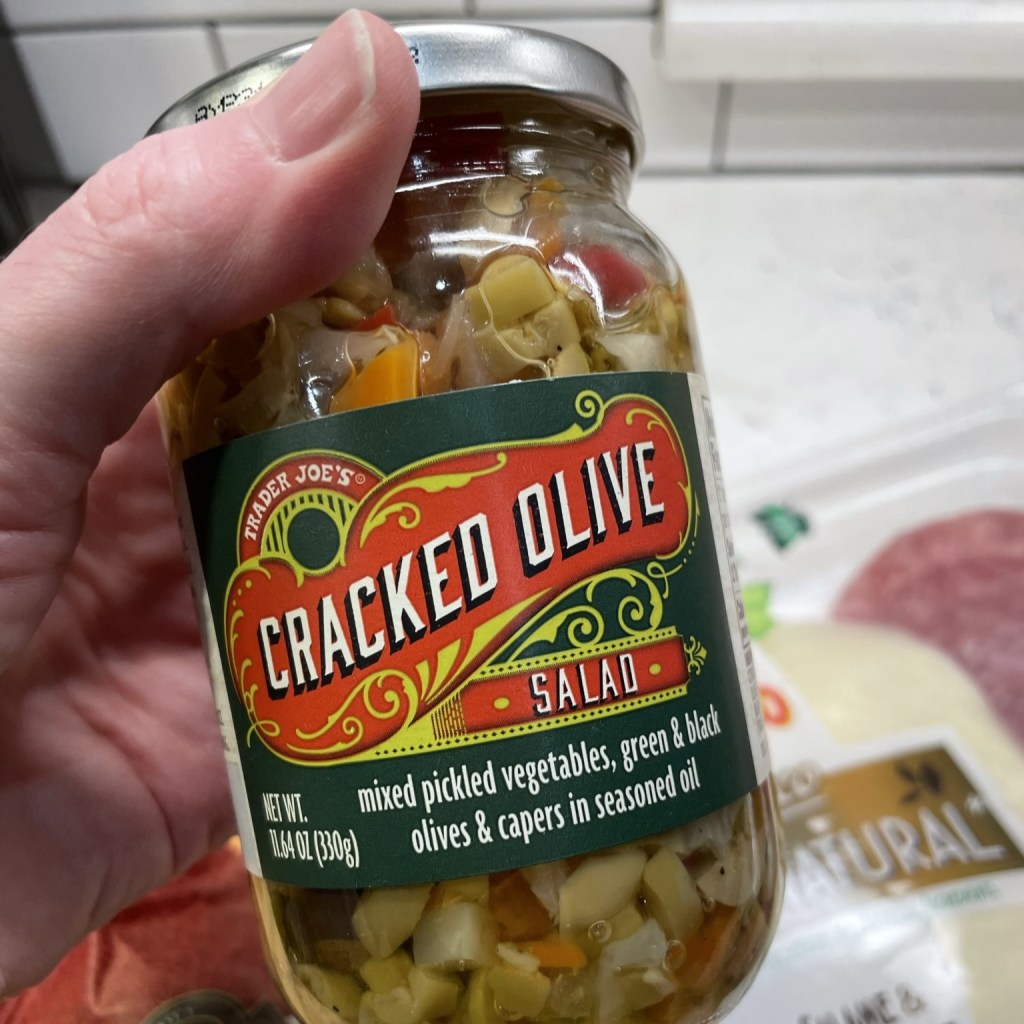
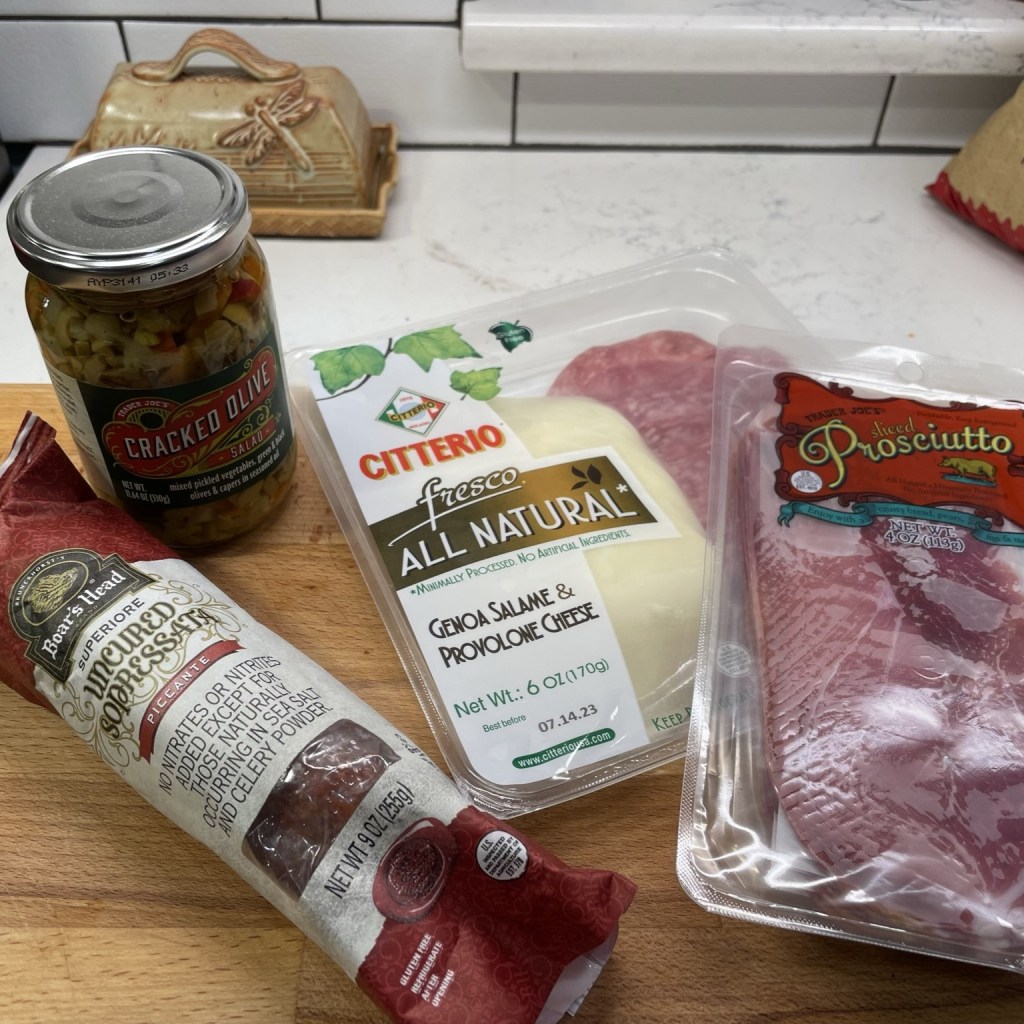
For my muffuletta pizza, I did not delve into making the muff stuff from scratch. Rather, I took advantage of the Trader Joe’s product that pushed me over the finish line to tackle this culinary bucket list item. They call it “cracked olive salad,” and yes, I checked to be sure that TJ’s still sells it, given the store’s tendency to cancel items without notice. Having said that, if you cannot find the cracked olive salad or don’t have a TJ’s nearby, there are similar products in other supermarkets—check the pickle section. If you still can’t find it, check out this recipe on Serious Eats, where my culinary idol Kenji López-Alt will be happy to walk you through making the olive salad, or indeed, the entire muffuletta.

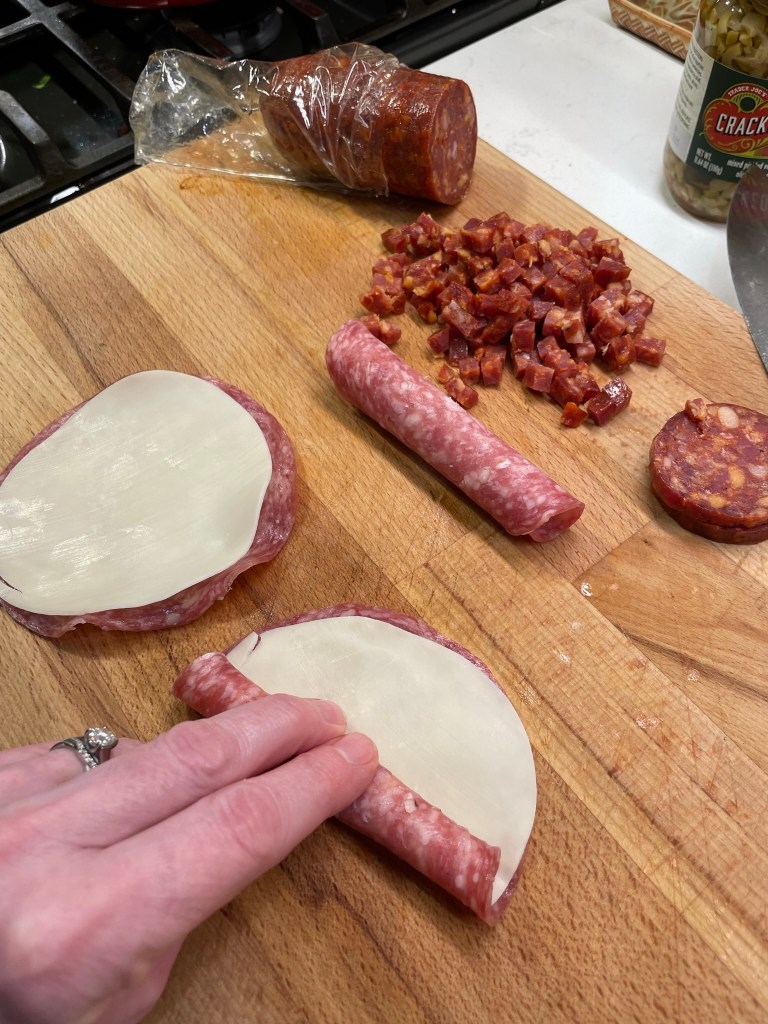
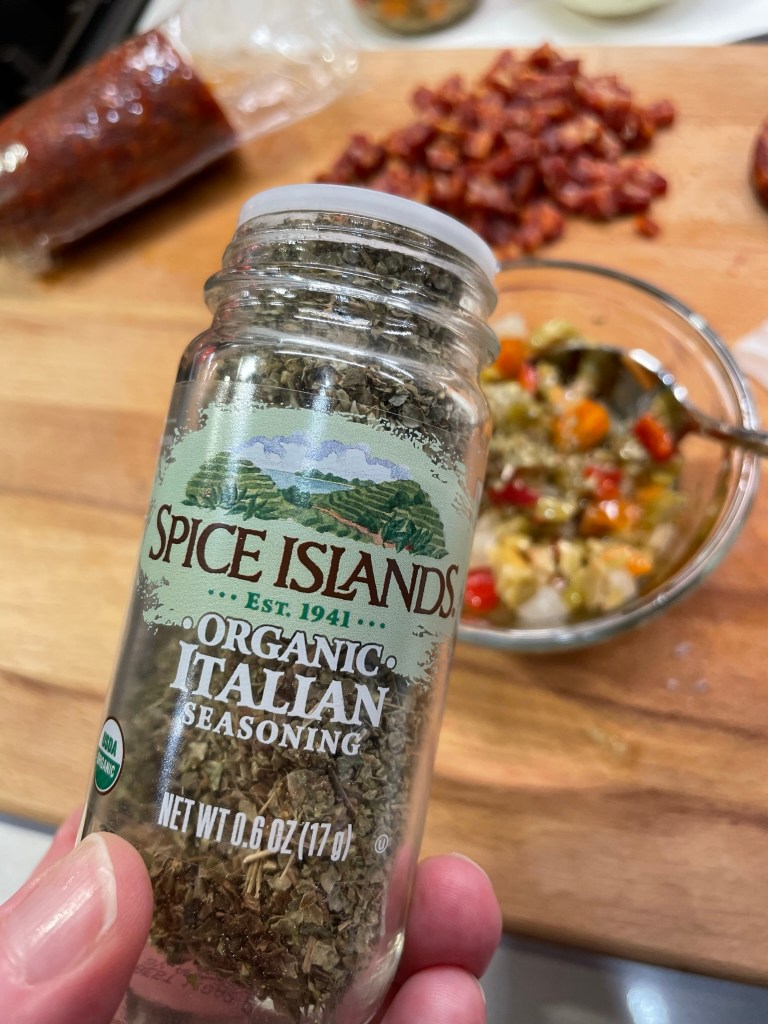
I wanted my muffuletta pizza to have as many authentic flavors as possible, so I considered the three categories of meat recommended by Kenji in the aforementioned article. Mortadella, a fatty, emulsified deli meat, is hard to come by in my city, and bologna was out of the question for me, so I went with three of our favorites from the other two categories— Genoa salami, spicy soppressata and thinly sliced prosciutto. Provolone was in the package alongside the salami, and I rolled them up together for an impression of layers, like on the sandwich. I wrapped the rolls snugly in plastic wrap and stuck them in the freezer for an hour or so to help them keep their spiraled shape after slicing. The soppressata was cut into cubes, and the prosciutto into thin strips, so that my pizza would have plenty of interesting texture. I also bumped up the flavor of the olive salad with a few shakes of dried Italian seasoning.


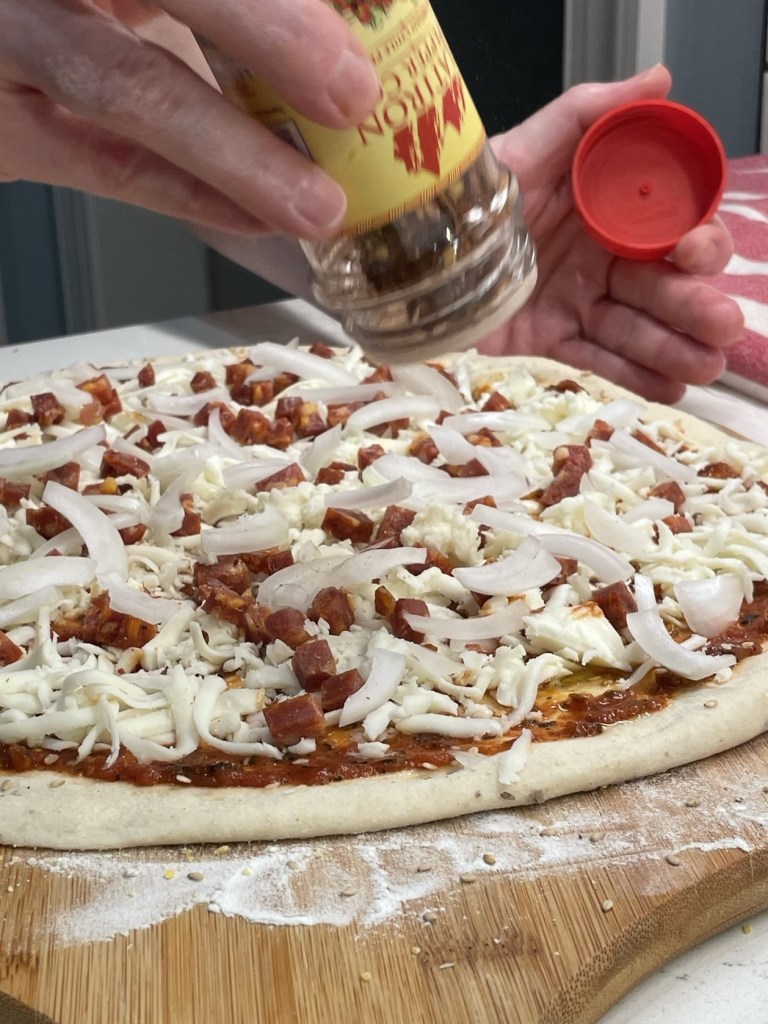
All my pizzas are made with sourdough crust and baked on a screaming hot pizza steel for a brick oven-like finish, but you could replicate the idea of this pizza on any crust you like, perhaps even fresh dough you pick up at the deli. I sprinkled sesame seeds all over the dough, which was more symbolic than anything because we couldn’t detect them on the finished pizza. Sauce went down next, followed by copious amounts of freshly shredded mozzarella, the cubed soppressata, fresh sliced onions and Calabrian chile flakes. Then, the rest of my muffuletta-inspired flavors!


A sprinkle of Parm-Romano blend was a finishing touch, and then into the oven for six minutes— oh, how I love our Dough Joe pizza steel!— and this was possibly one of the most delicious pizzas I’ve ever made. I had some jitters about having “too much meat” on this pizza (my husband would say there’s no such thing), but the flavors worked really well together and the pickled vegetables in the cracked olive salad kept the richness in check.

One of these days, I’m going to get down to New Orleans. Maybe next year. But for now, I’m satisfied to let the good times roll with as many Mardi Gras-inspired foods as I can dream up. What should I make next?

Muffuletta Pizza

  • Servings: 8 slices
  • Difficulty: Average
  • Print

It's an Italian meat lover's dream come true, and with special ties to New Orleans, a fun pizza for Mardi Gras!


Ingredients

  • 3 large slices Genoa salami
  • 3 thin slices smoked provolone
  • 1/3 cup Trader Joe’s “cracked olive salad,” or something similar
  • A few shakes of dried Italian herb blend
  • 1 pizza dough ball, at room temperature
  • Extra virgin olive oil, for drizzling
  • 1 Tbsp. sesame seeds (optional, for effect)
  • 1/4 to 1/3 cup favorite pizza sauce (mine was Dei Fratelli fire-roasted)
  • 1 cup freshly shredded, low-moisture mozzarella
  • 1/3 cup cubed spicy soppressata
  • 1/2 sweet or yellow onion, sliced into crescents
  • A few shakes crushed red pepper, if desired for extra spice
  • 2 slices prosciutto, cut into ribbons
  • About 1/4 cup grated Parm-Romano blend cheese

Note: All my thin-crust pizzas are made with sourdough and baked quickly on a pizza steel, preheated on the center rack of a 550° F oven for one hour. This is an extreme temperature, and the results are very similar to what you would achieve in a brick oven. If you don’t have a steel, a pizza stone works great; follow manufacturer’s recommendations for temperature and adjust baking time accordingly.

Directions

  1. While the oven preheats, layer each slice of salami with a slice of provolone. Roll up into cigar shapes and wrap tightly together in plastic wrap. Tuck this into the freezer for an hour before slicing, so that the twirls keep their shape on top of the pizza. Add a few shakes of Italian seasoning to the olive salad and set aside.
  2. Shape dough into a 14-inch round and place on a flour and cornmeal-dusted pizza peel for easy transfer into and out of the oven. Drizzle the dough with olive oil and season with salt and pepper. Sprinkle all over with sesame seeds, if desired.
  3. Spread sauce over dough to within one inch of the edges; you should be able to see the dough through it. Layer mozzarella generously over the sauce, then scatter the soppressata cubes and onion slices. Shake on crushed red pepper.
  4. Distribute the olive salad evenly over the pizza toppings, then top with the prosciutto and swirls of salami-provolone. Scatter Parm-Romano lightly over the entire pie and slide it into the oven.
  5. Turn pizza 180° after about four minutes to ensure crust is evenly blistered. Remove from oven and transfer to a pizza tray. Serve immediately.


Sazerac

I’ll admit it, I love a good, thoughtful cocktail. Back in the day— and I’m referring to the days I was barely old enough to drink, and then wasn’t, because legal age changed in New York State  during my young adult years— I would belly up to the bar and order something that my current self would recognize as disgusting. Something like an Alabama Slammer, which is a sickeningly sweet bar drink with one primary goal— getting you rip-roaring drunk in as short a time as possible. Bleh.

Today, my grown-up self wants a sipping drink, one that tells a story, and this story is set in New Orleans. The rest of the story’s details are, well, a little sketchy.

Meet the Sazerac. Official drink of New Orleans, and perfectly apropos for Mardi Gras!

Laissez les bons temps rouler!

Walk into any respectable cocktail bar in New Orleans, and you might learn that the Sazerac was originally crafted there in 1838 by an apothecary (old-fashioned term for pharmacist) named Antoine Peychaud. The tale might include reference to a concoction he stirred up for medicinal purposes (also my favorite excuse), using his favorite French cognac (Sazerac de Forge et fils) and his own tincture made from gentian bark and other botanicals. A bartender across town, however, might claim that the drink was created 20 years later in a New Orleans coffee house, and it included pre-rinsing the glass with absinthe, a French liqueur that was banned half a century later for being “hallucinogenic.” Yet another barkeep might tell you with great conviction that this drink is much older than both of those versions, with written recipes as far back as 1806.

The truth may lie somewhere in the middle— whatever that means— and if you want to get technical about it, the Sazerac only became the “official” cocktail of New Orleans on June 23, 2008. Thank God the internet was around by then, so we at least have record of that much! 

However the drink originated, the French-rooted Sazerac has been Americanized in several ways, and none of them bad. The cognac was eventually replaced with American rye whiskey, which brings a terrific spice to the cocktail. There is even a rye named Sazerac today, presumably so that it would be considered “official” for this cocktail. Peychaud’s bitters lend a vibrant red color and herbal flavors, and Herbsaint, an herbal liqueur that plays understudy to absinthe but actually is not as easy to find as modern-day absinthe, gives the drink an air of intoxicating mystery (as if it needs any more of that).

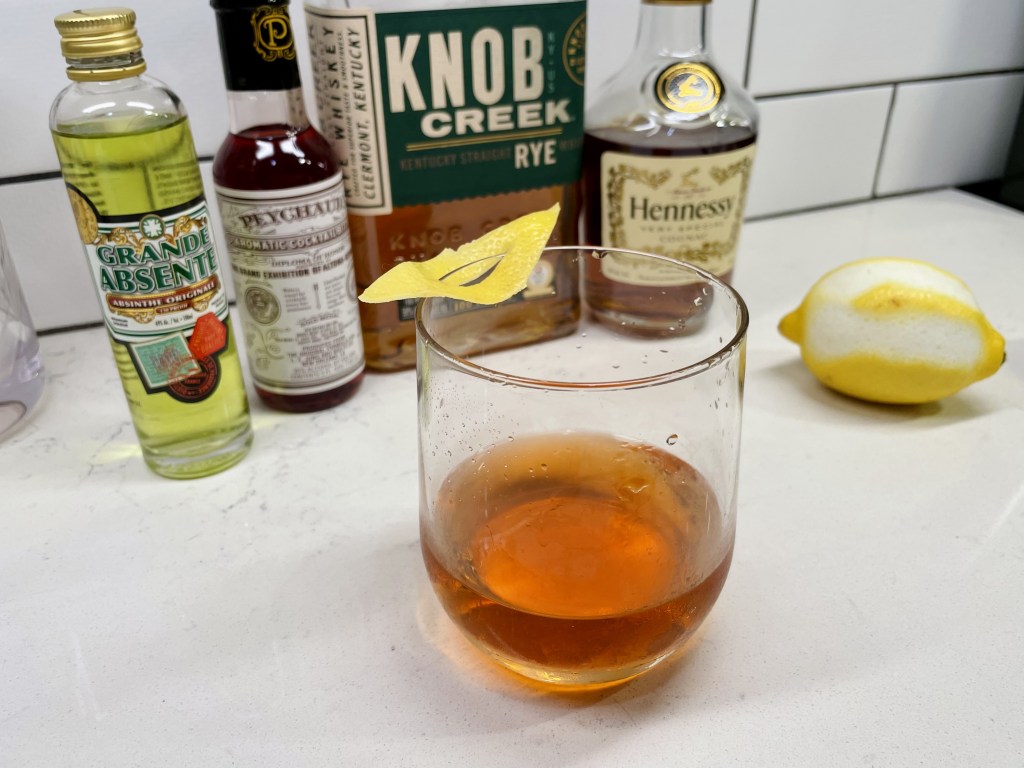
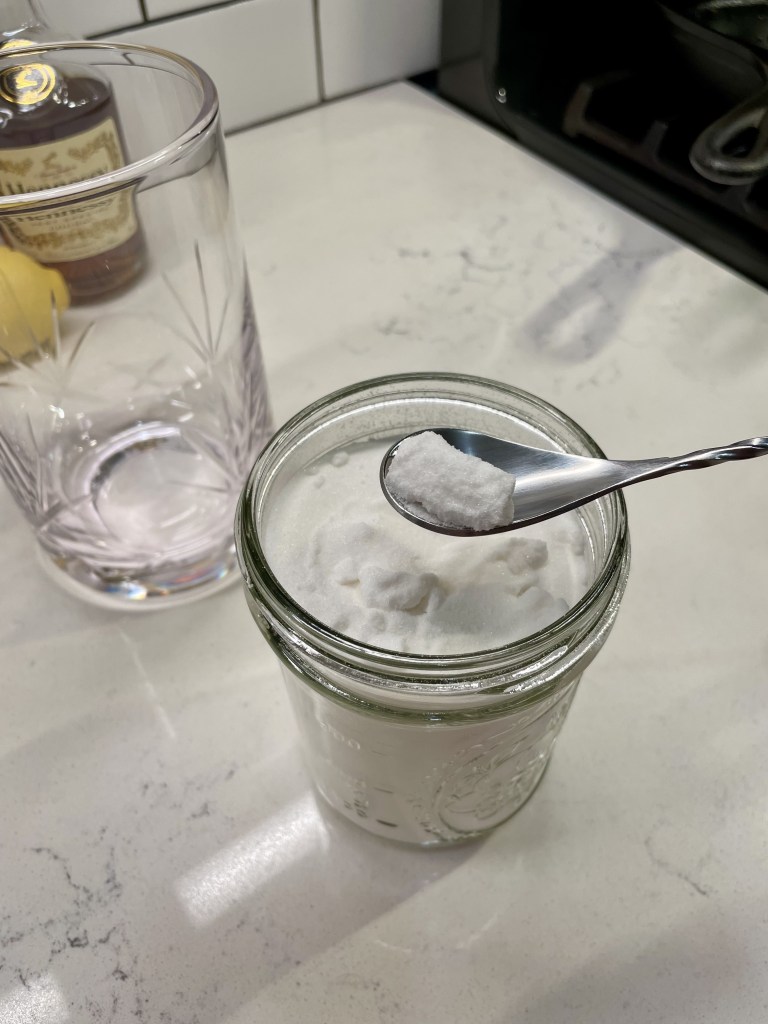
All these details make my head spin a little bit, and that brings me back to the Sazerac I’m sharing today for Mardi Gras. Having only been to New Orleans in my dreams (at least, so far), my experience of the Sazerac is limited to having enjoyed it in other places, and most recently in a swanky steakhouse bar in Virginia. I like that the Sazerac is strong, bold and definitely meant for sipping more than drinking. My only personal preference is for it to be a bit colder, given that it is typically not served on ice. For my version, I have chosen to marry the old Sazerac story with the new, by keeping a touch of French cognac in the background of spicy American rye whiskey. Peychaud’s bitters are easy to find wherever quality cocktail ingredients are sold, and I reverted back to absinthe for rinsing my glass. There’s a sugar cube involved, too, or you can sub in a bar spoon full of caster sugar or even simple syrup if you have it.
Whew. That’s a lot of information! Who’s ready for a cocktail??


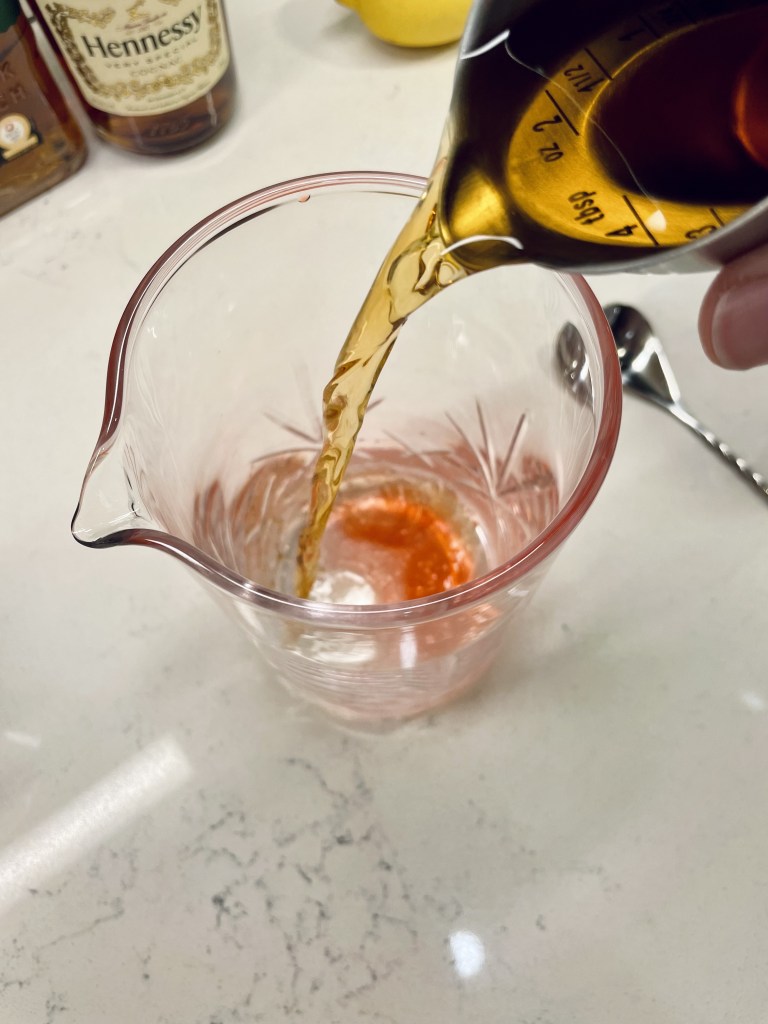
The first step is chilling down the double rocks glass that you’ll serve the drink in. A Sazerac traditionally is not served on rocks, so getting the glass cold is a must. Fill it with ice while you gather up the rest of your ingredients— rye, cognac (if you wish), Peychaud’s, a bit of sugar and absinthe. Muddle the sugar with bitters in a cocktail mixing glass. Add the rye (and cognac, if using) and stir to blend with the sugar-Peychaud’s mixture.

I like my drinks nice and cold, so I tossed some ice into the mixing glass for a few spins, though this is not traditional. I considered (for about one second) using an absinthe that my husband’s son, Alex, brought home from his travels in Europe, but this stuff is 184 proof and I feared that it might melt my liver. Whew, I had no idea something this strong even existed!


Those yesteryear claims of absinthe having hallucinogenic properties probably had more to do with the crazy high alcohol content. Rather than risk it, I went with a lesser proof absinthe that I picked up at our state-run liquor store. Same flavor— very potent, medicinal and licorice-like, almost like Formula 44 cough syrup, if you remember that stuff. Now, before you get grossed out at that reference and vow to never try a Sazerac, please consider that it’s a miniscule amount of absinthe that ends up in the cocktail because it is only used to rinse the glass before the mixed drink is poured into it. Nobody would drink Worcestershire sauce either, but a touch of it in a recipe makes a world of difference. I’m just saying.
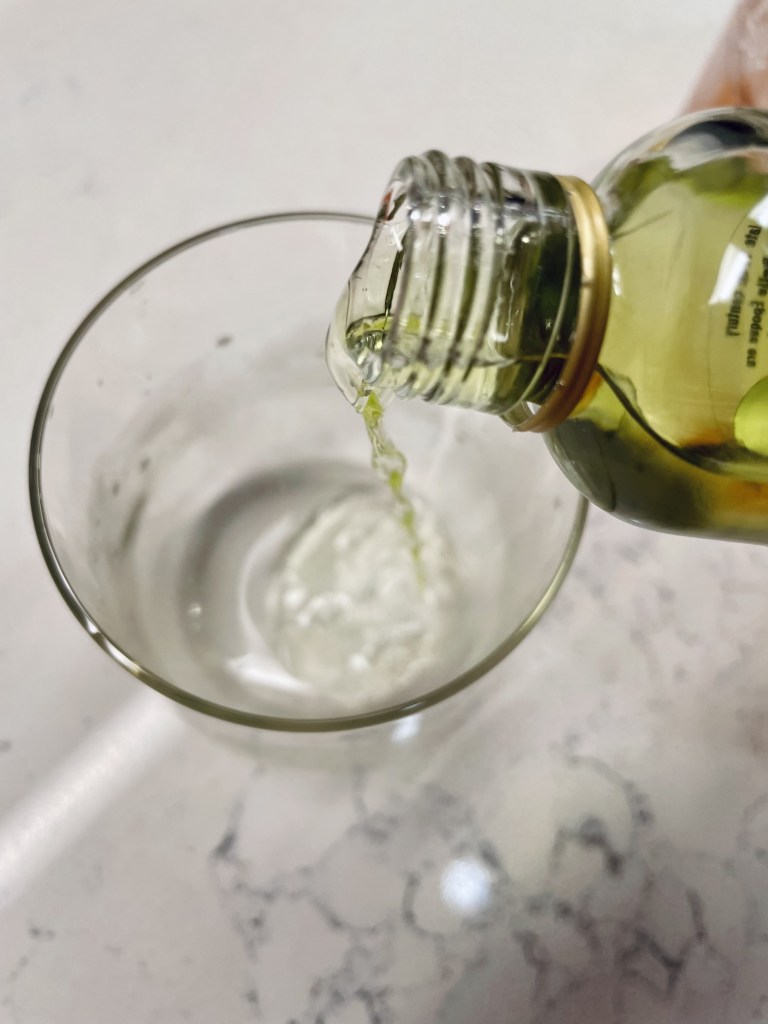
Here’s how to do the rinse: empty the ice from the rocks glass and swirl about a tablespoon of absinthe into it— tip the glass every which way to ensure that it touches up the sides, and then empty it out. Strain the drink into the glass and garnish.


The lemon strip that usually accompanies the Sazerac is meant to entice rather than flavor, so don’t squeeze or drop it into the cocktail glass. I used a peeler to strip two thin pieces of lemon peel— one is strictly for expressing over the glass (and nobody would mind if you swiped it around the rim), and the other is trimmed and slit so it can be perched like a flame on the edge of the glass.


Sazerac

  • Servings: 1 serious cocktail
  • Difficulty: Big Easy
  • Print

Though its exact origin is still the subject of heated debate, this strong drink is undisputedly the official cocktail of New Orleans. Enjoy one for Mardi Gras!


Ingredients

  • 2 oz. rye whiskey (or bourbon, if you prefer a softer drink)
  • 1/2 oz. French cognac
  • 1 sugar cube (or 1 tsp. superfine sugar or 2 tsp. simple syrup)
  • 3 generous dashes Peychaud’s bitters
  • 1/4 oz. absinthe (for glass rinse)
  • 1 wide strip lemon peel for garnish

Directions

  1. Chill double rocks glass with ice, or place in freezer.
  2. Drop sugar cube into mixing glass. Add bitters and use a muddler to crush and dissolve the sugar.
  3. Add rye whiskey and cognac to mixing glass and stir to combine.
  4. Empty ice from cocktail glass. Pour absinthe into glass and swirl it around to rinse the inside. Pour out excess absinthe.
  5. Pour cocktail into chilled, rinsed glass. Express lemon peel over the top of the drink, but do not drop it into the glass. Rest it on top edge of the glass, or create a “flame” by trimming the ragged sides of the peel and cutting a long slit into the middle of it. Position the lemon flame onto the edge of the glass.


Bacon & Bourbon Waffles

The countdown to Easter will begin next week, and for many people who follow religious tradition, that means giving things up for Lent. I don’t participate in the observance of Lent myself, but I always know that it’s coming because all the fast-food chains start advertising their fish sandwich options again. When Ash Wednesday arrives, those who do observe will “fast” until Easter from any number of things— whether food, habit or activity— to mirror the fasting and spiritual introspection that the Bible says Jesus modeled during the 40 days he wandered in the wilderness before his trial and crucifixion.

But before that period of fasting and self-restraint, we eat and we party! 

According to this article on Food52, the old-time religious faithful observing Lent would spend the day ahead (which they called Shrove Tuesday) ridding their homes of luxury ingredients such as eggs, sugar, butter and milk, so they wouldn’t give in to temptation during those 40 days of self-deprivation. It just so happens that pancakes are an easy way to use up all of those tempting ingredients, and the tradition of eating pancakes the night before Lent was born. 

This tradition of indulging the day before Ash Wednesday is also evident with the festivities of Mardi Gras, which translates literally from French to “Fat Tuesday.” Is there a better way to observe a day called Fat Tuesday than chowing down on thick, fluffy pancakes, drenched in butter and sweet syrup? Possibly. If you want to shake things up this year, either for Shrove Tuesday or Mardi Gras, ditch the plain old pancakes and whip up a batch of bacon and bourbon waffles instead.

These are darn near sinful!

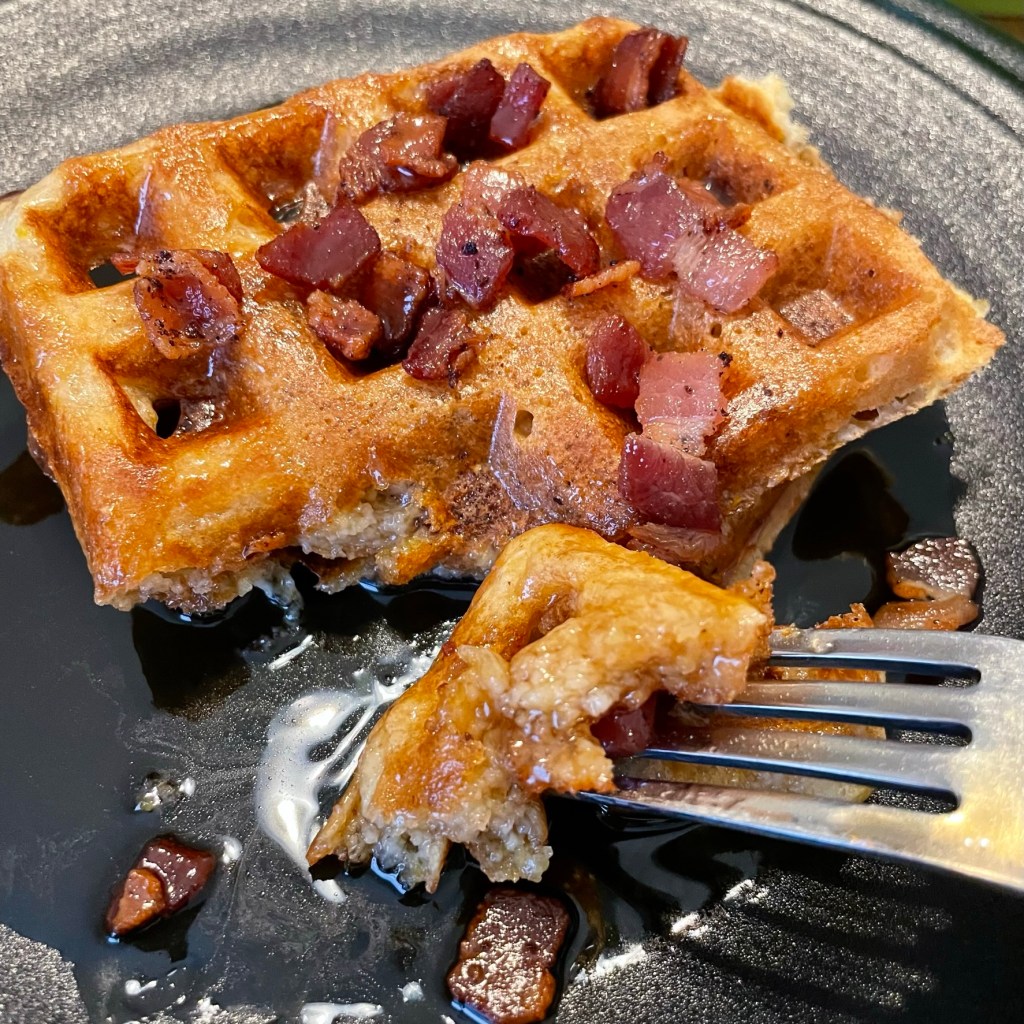
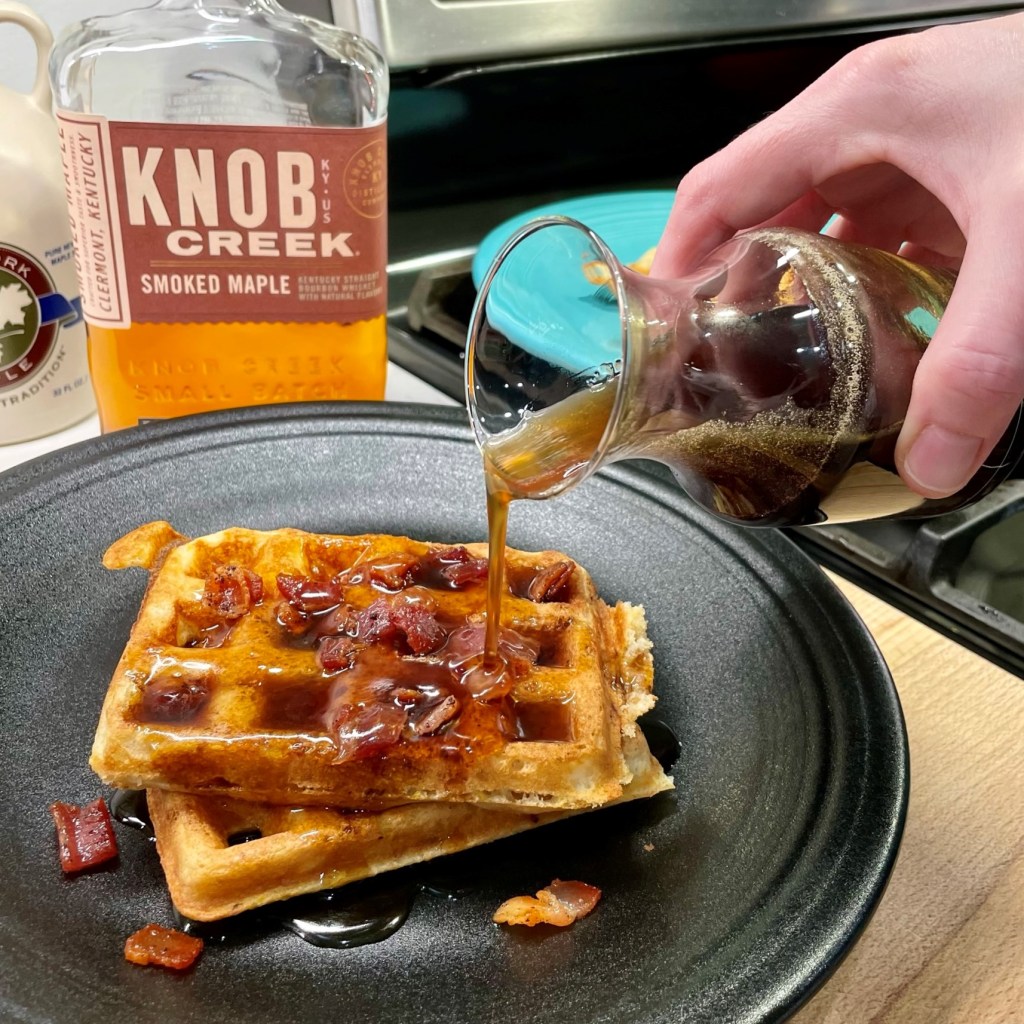
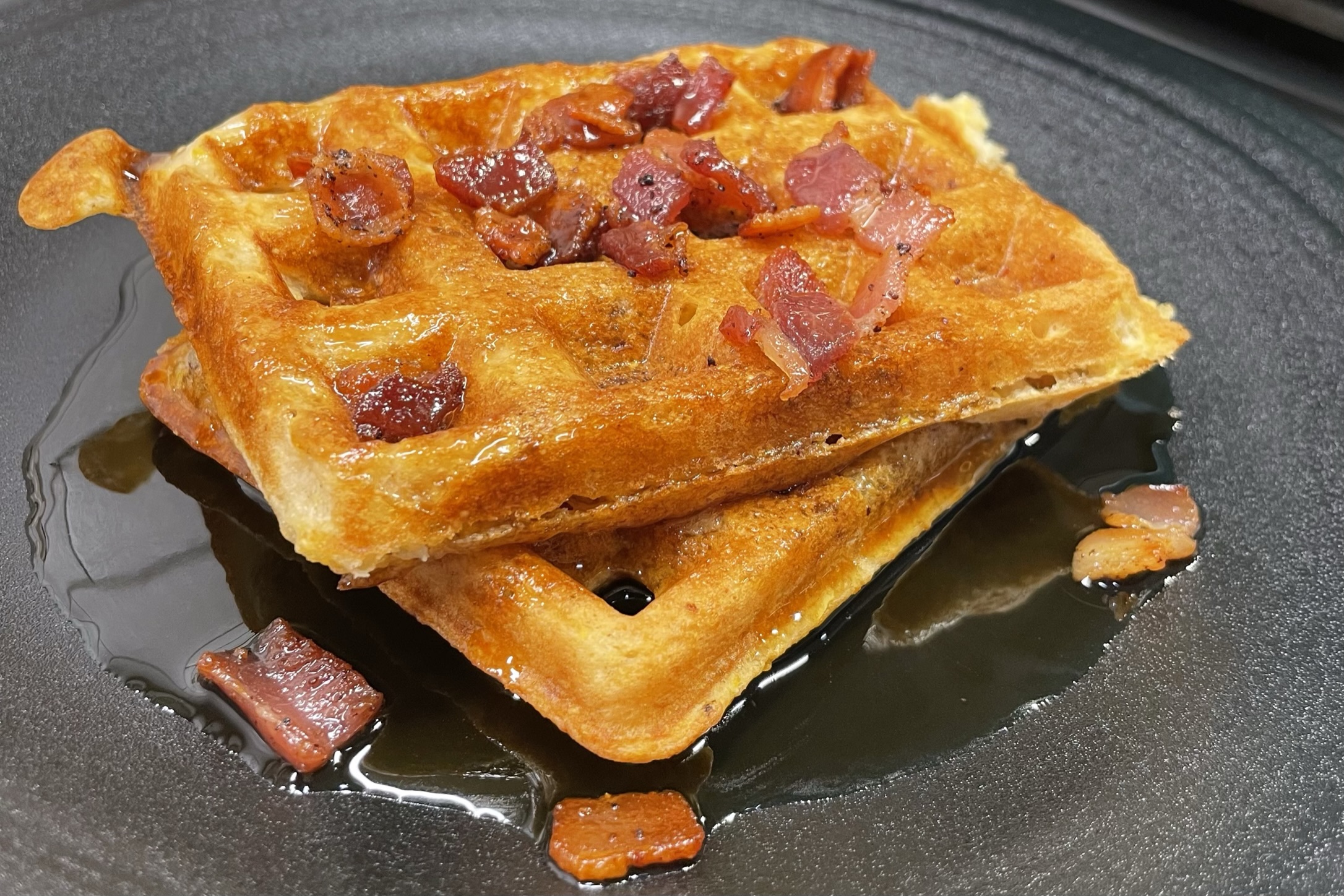
My waffles have crispy bacon and smoky, maple-infused bourbon— on the inside and the outside. This meal feels perfectly appropriate for Mardi Gras, in the spirit of indulgence and with a whisper of New Orleans— bourbon whiskey, after all, was likely named after the same French ruling family that gave Bourbon Street its name. I put a tablespoon of my smoked maple bourbon right into the batter of my waffles, and kissed the syrup with a splash of it as well. If you can’t get your hands on this bourbon, any quality bourbon will work fine. But for the syrup, you owe it to yourself to use real maple. For waffles this indulgent, supermarket syrup just won’t do.

The smoked maple bourbon is exquisite, and does fine things for cocktails, too!

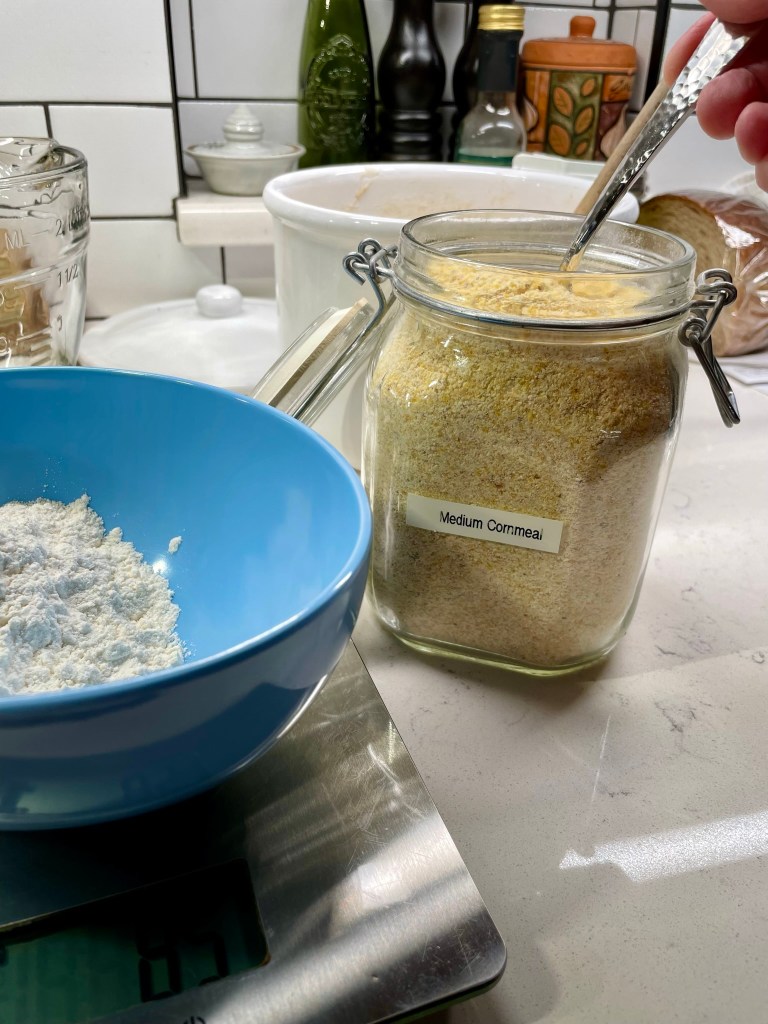
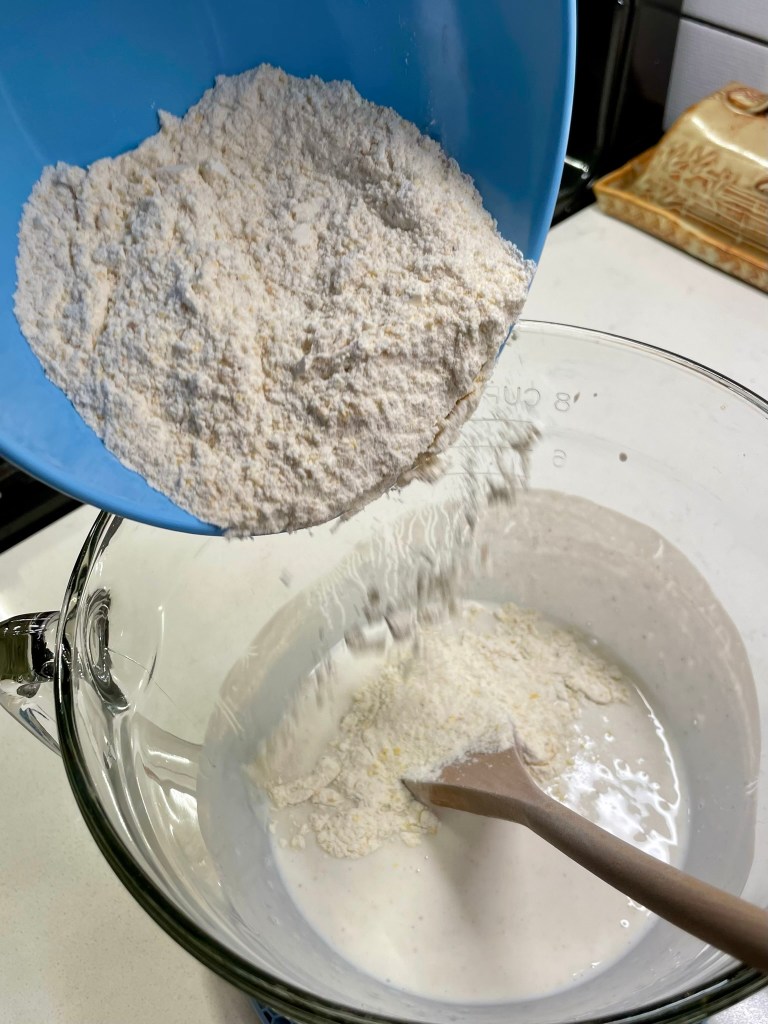
The waffles make use of my sourdough discard, and the batter includes a bit of cornmeal, for texture but also as a friendly nod to the corn in the mash bill of the bourbon. Start building the batter overnight if you’ll be enjoying the waffles for breakfast (hey, if you’re down with a splash of bourbon at breakfast, you are definitely my kinda people), or in the morning if you want them for Fat Tuesday dinner. Stir together the flour, cornmeal, buttermilk and sourdough starter, then cover it and leave it on the counter til you’re ready to waffle.


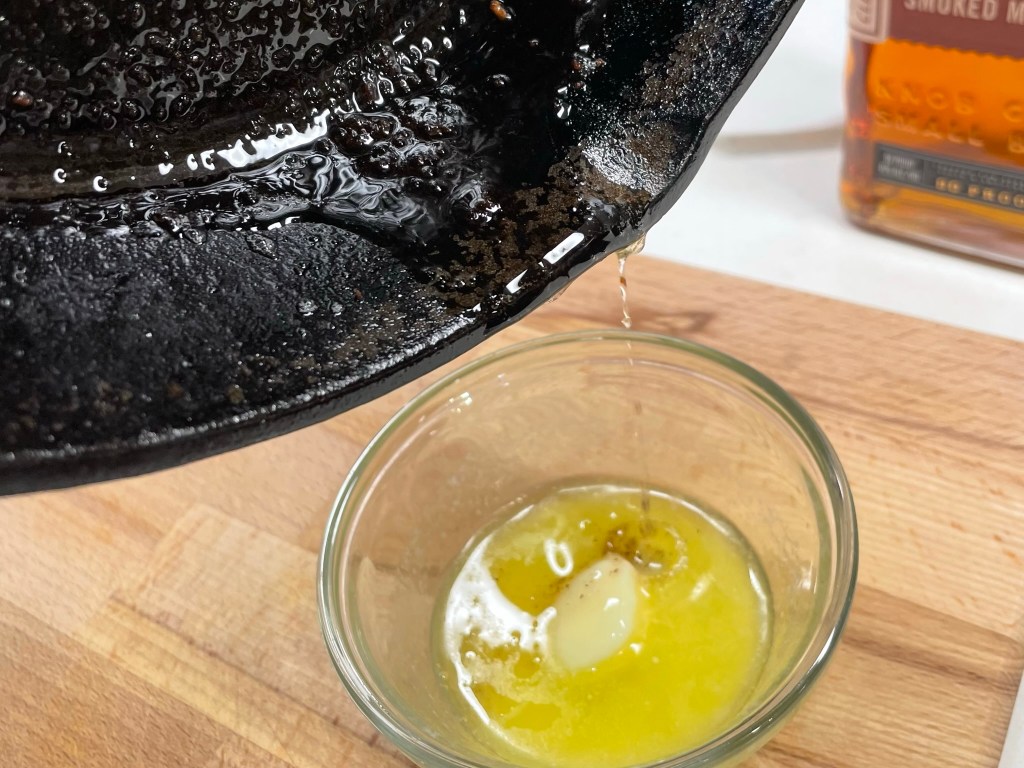
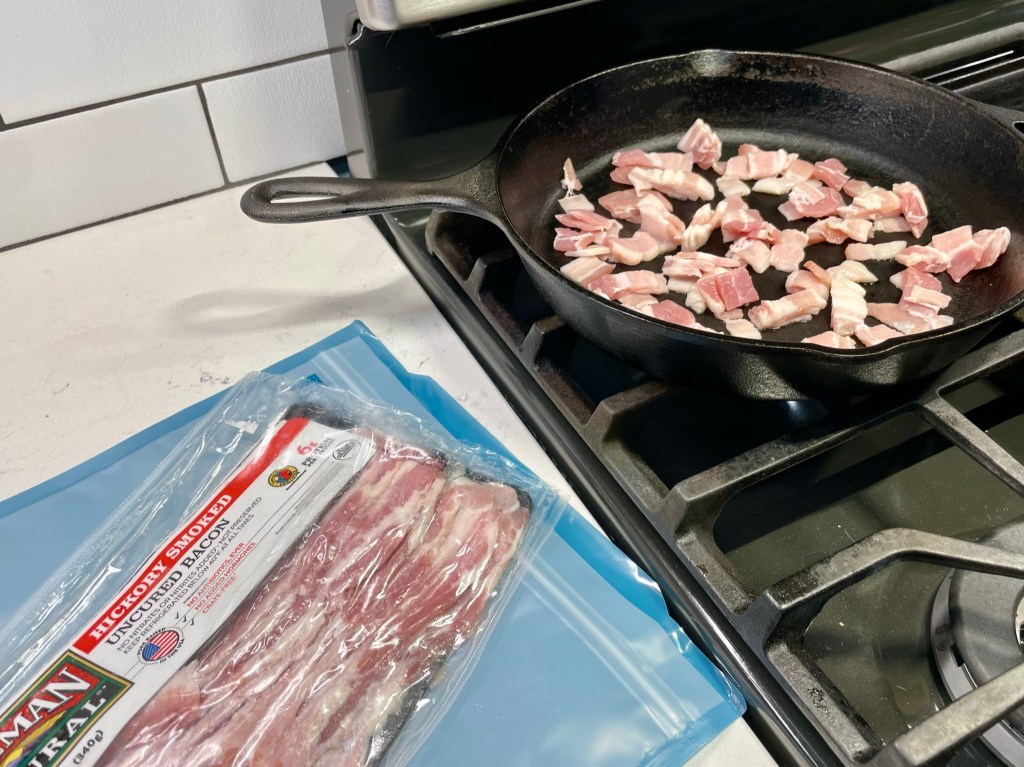
When it’s time to eat, cook up some bacon pieces until they’re crispy, and add the drippings to the melted butter that will be mixed into the batter. We use uncured bacon at our house, and I love the natural flavor. The smoky bacon emphasizes the smoked maple flavors in the bourbon as well, and it’s a nice offset to all the sweetness that hits you in the syrup.


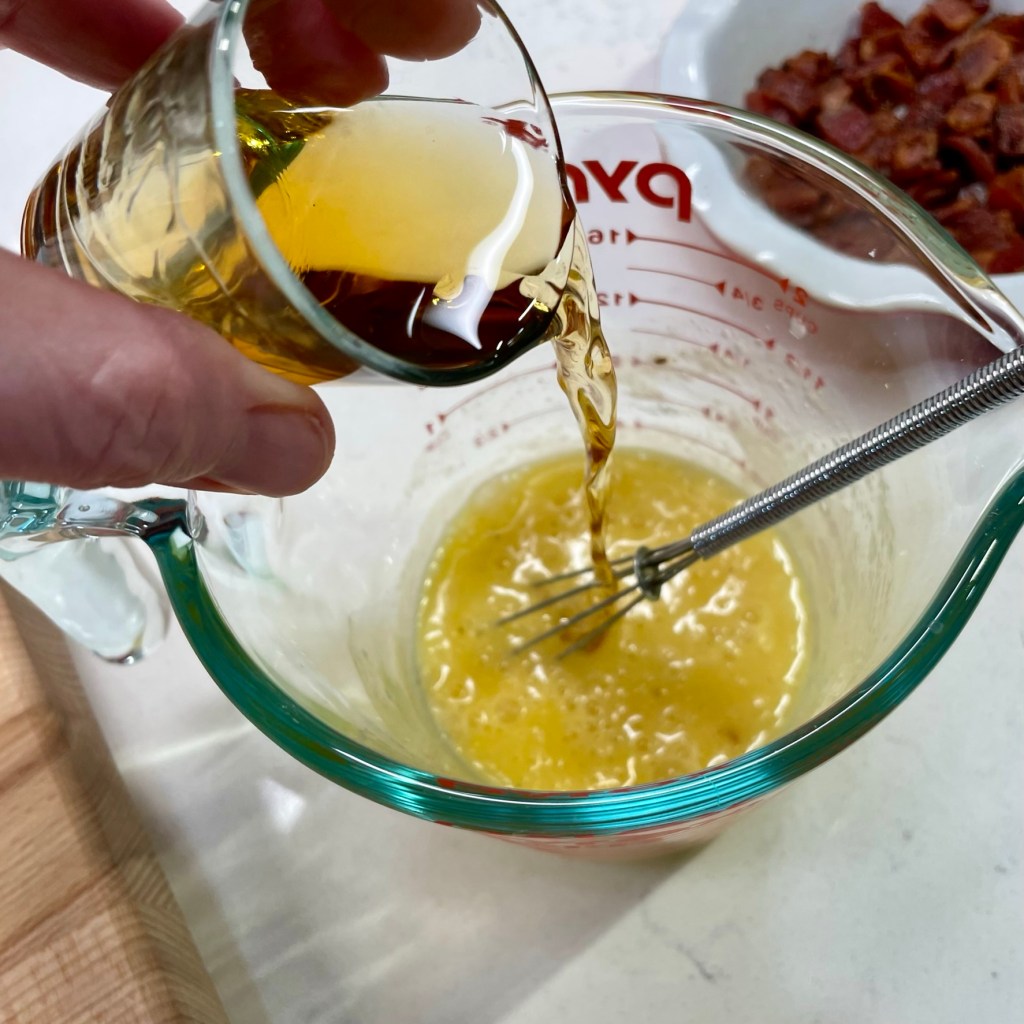
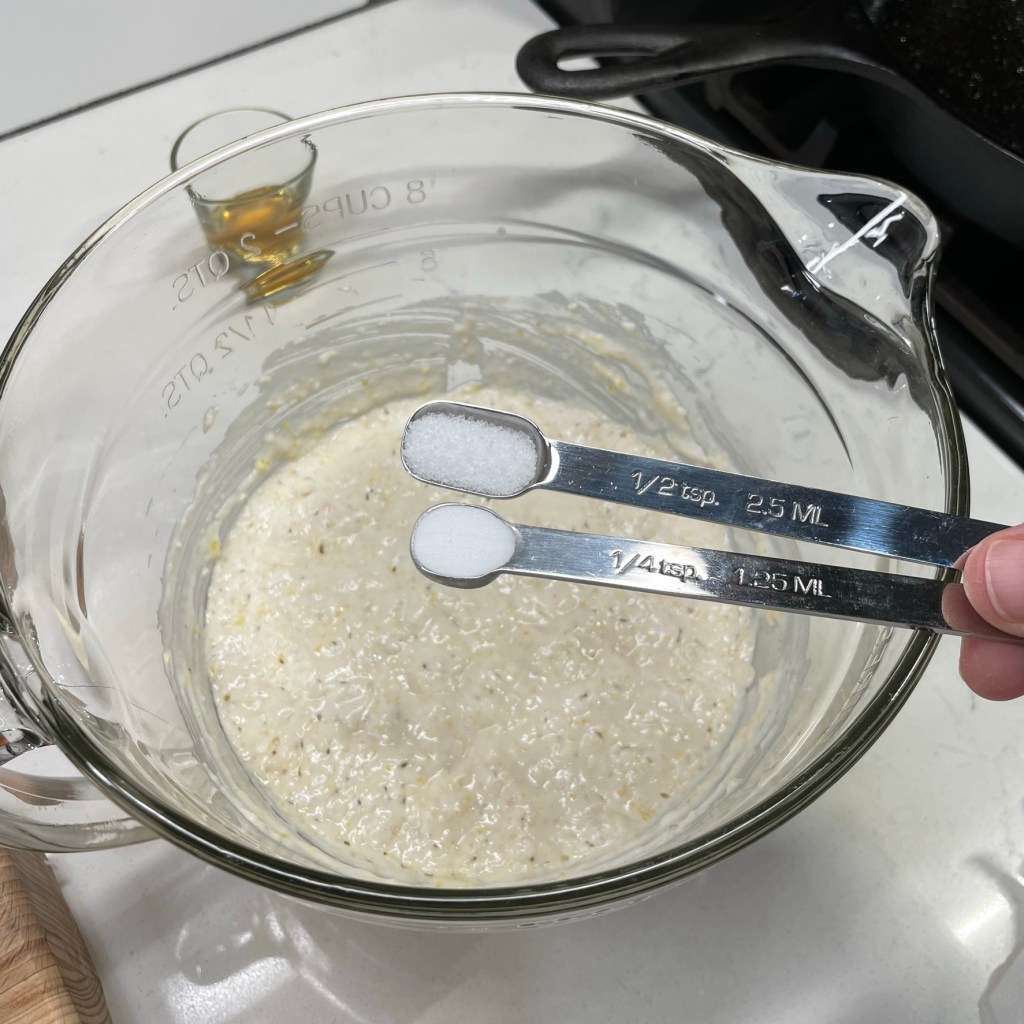
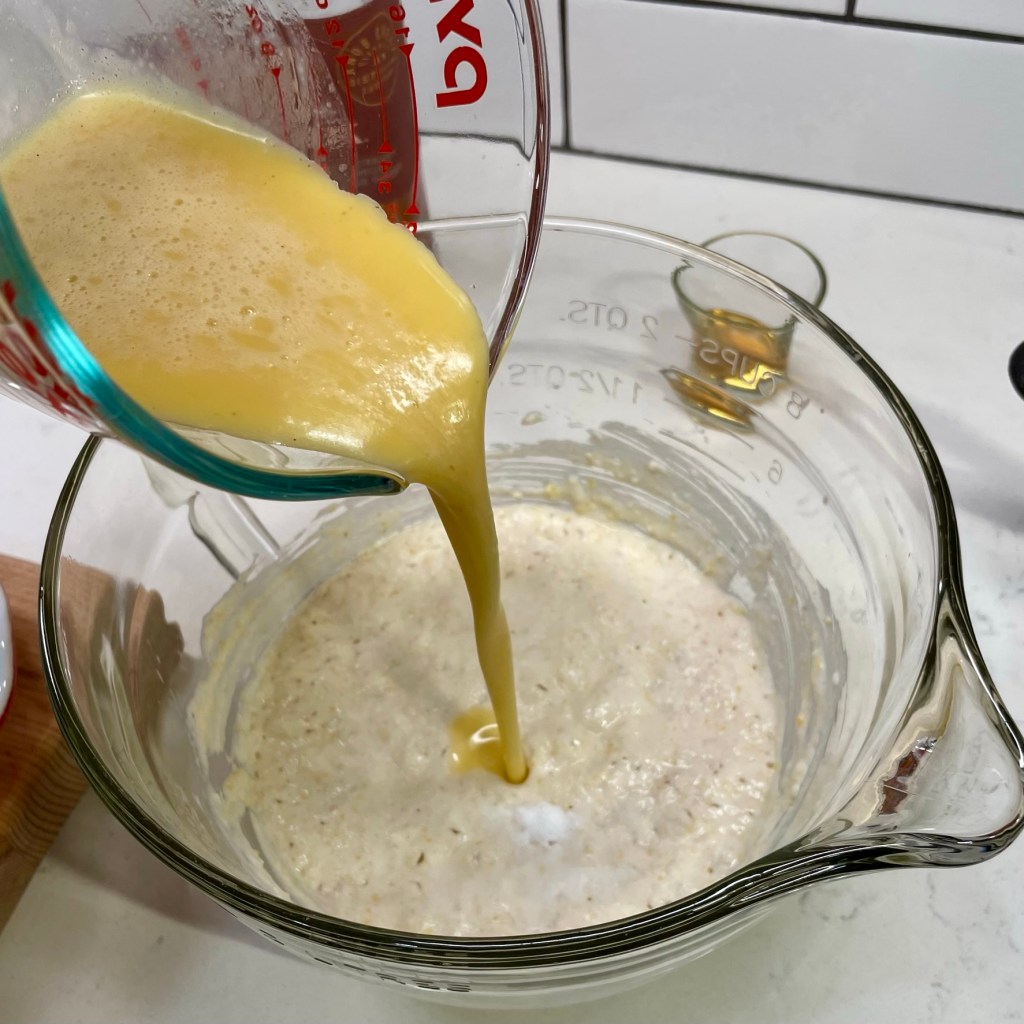
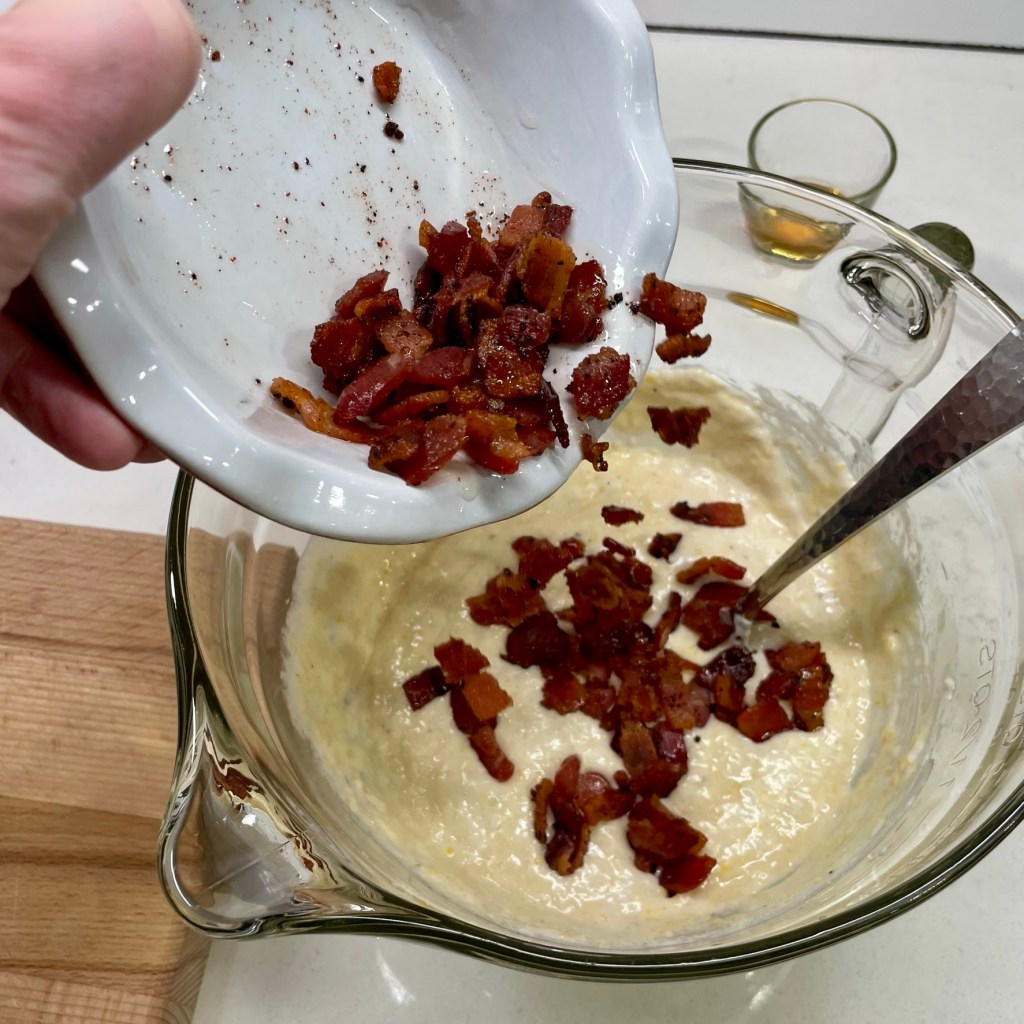
Get the waffle iron going, and then mix the rest of the ingredients into the batter. Whisk the butter into the beaten egg, then half of the bourbon. Sprinkle the salt and baking soda over the bubbly overnight batter, then stir in the egg mixture and fold in about half of the crispy bacon bits. Within a couple of minutes, the batter will expand as the soda interacts with the acidic buttermilk. This chemical reaction is what gives the waffles their loft and fluff.


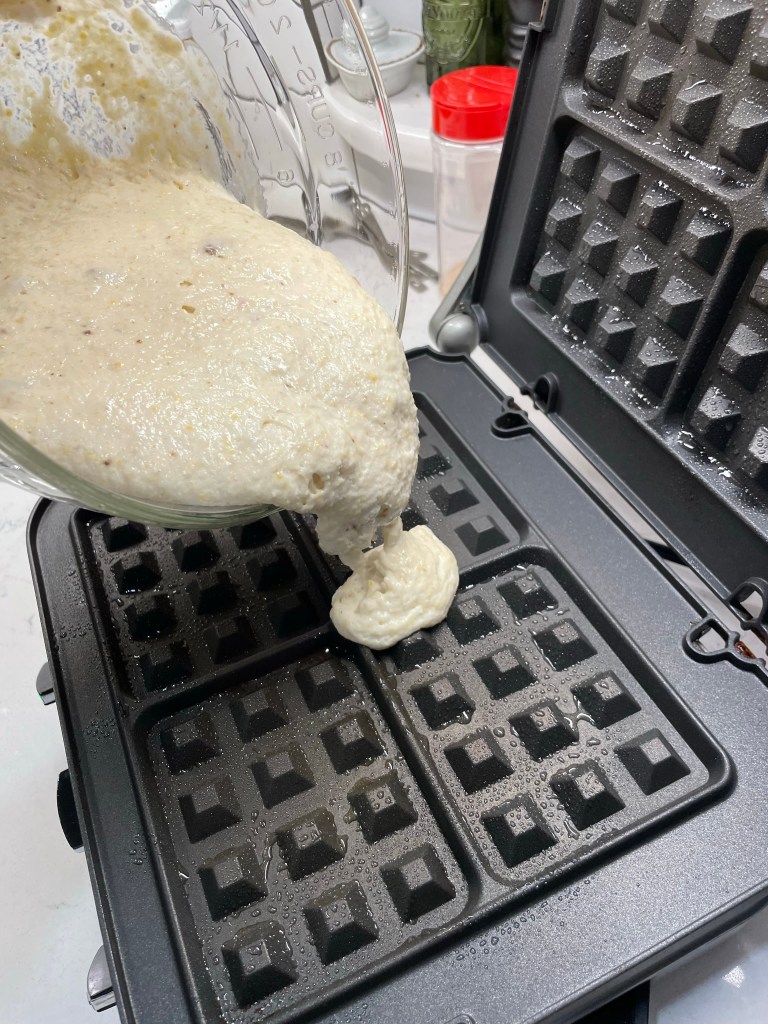
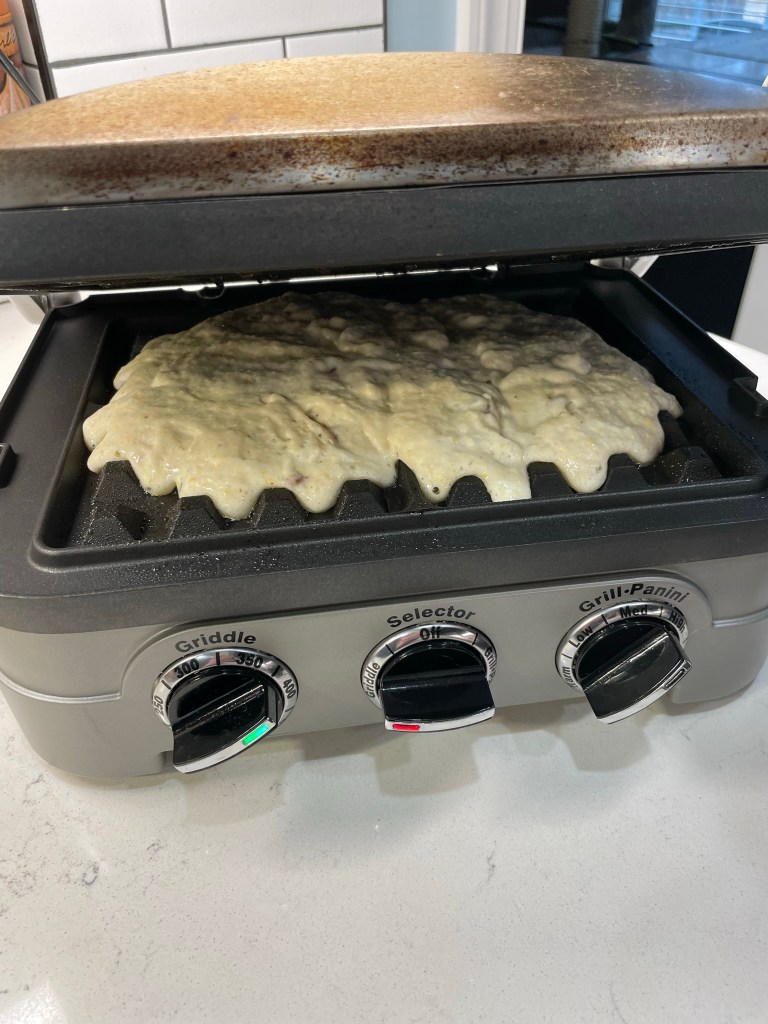
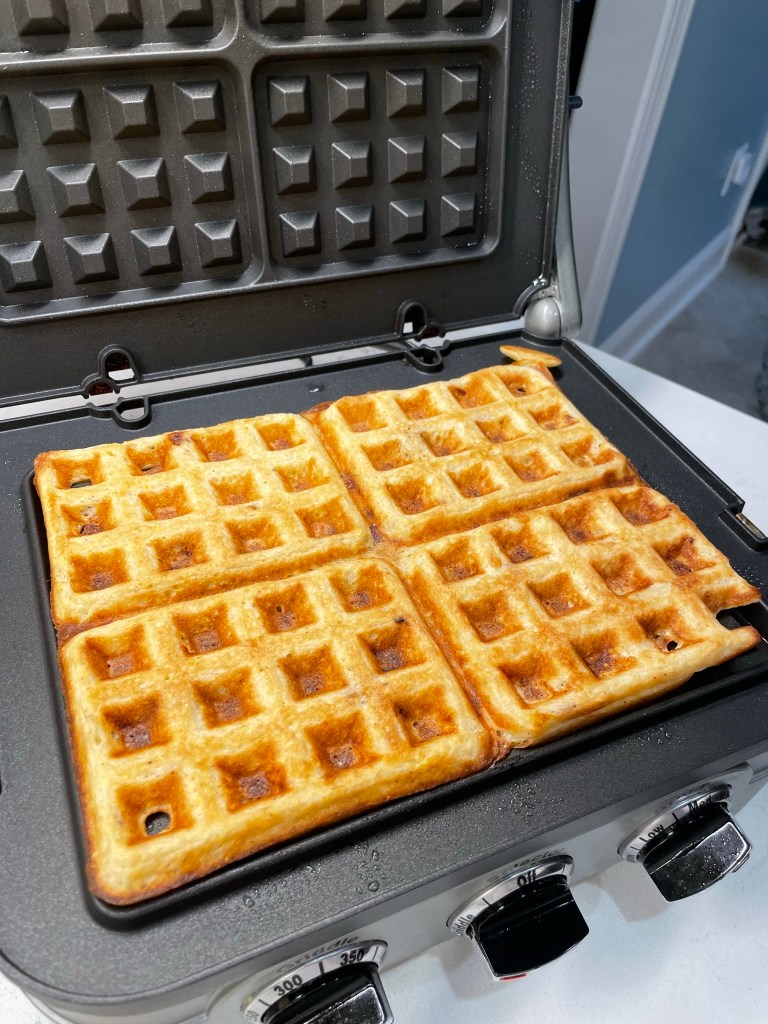
When the waffle iron is hot, add the batter and close the lid. Depending on your model and baking temperature, it may take 5 to 8 minutes for your waffles to be ready. Resist the urge to open the iron before the indicator light comes on, and feel free to give them an extra minute if you prefer your waffles more golden.


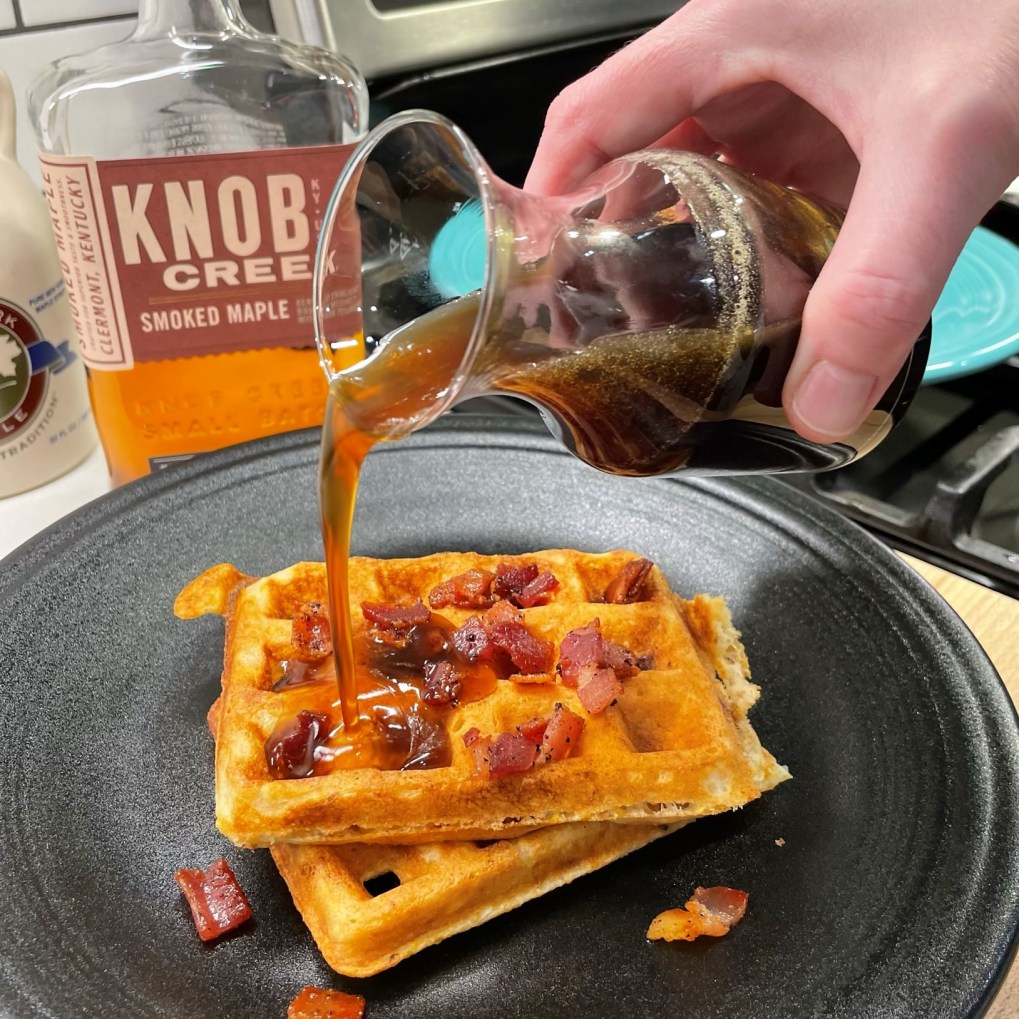
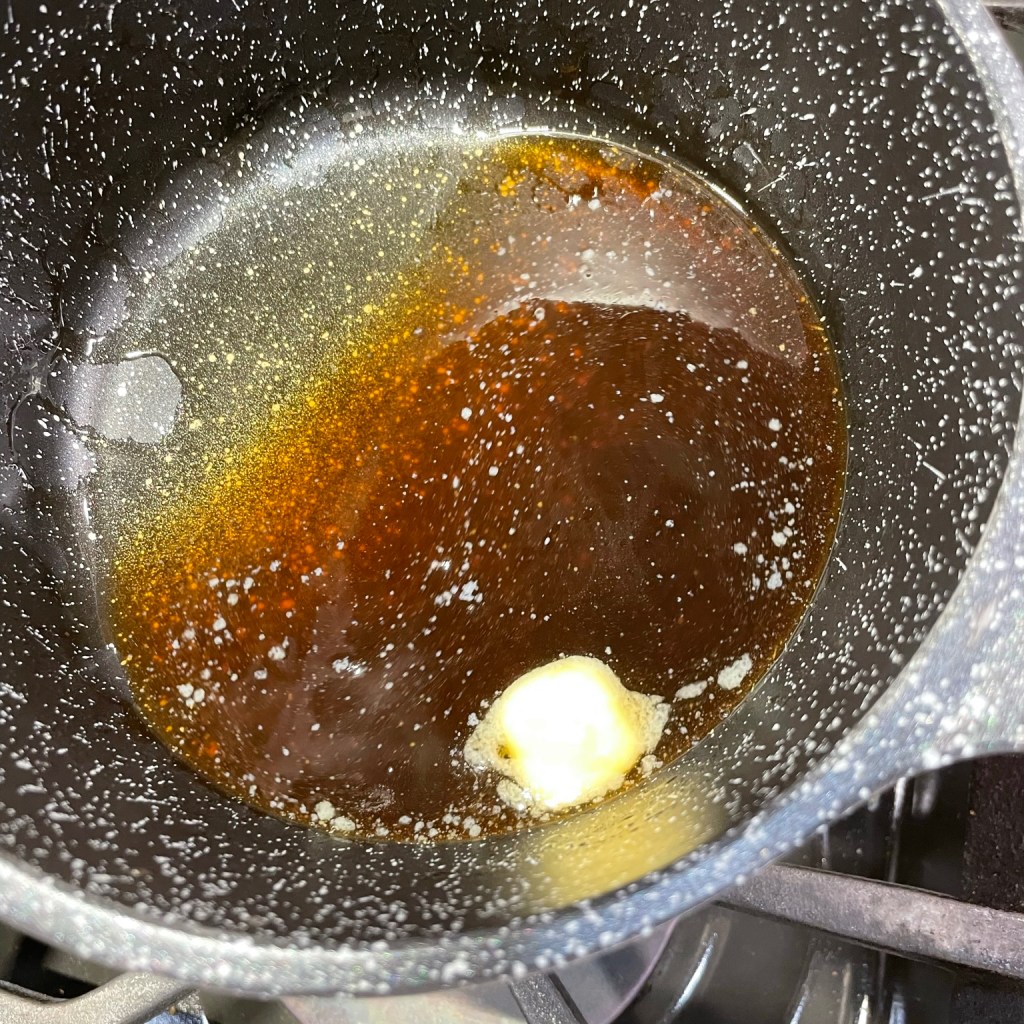
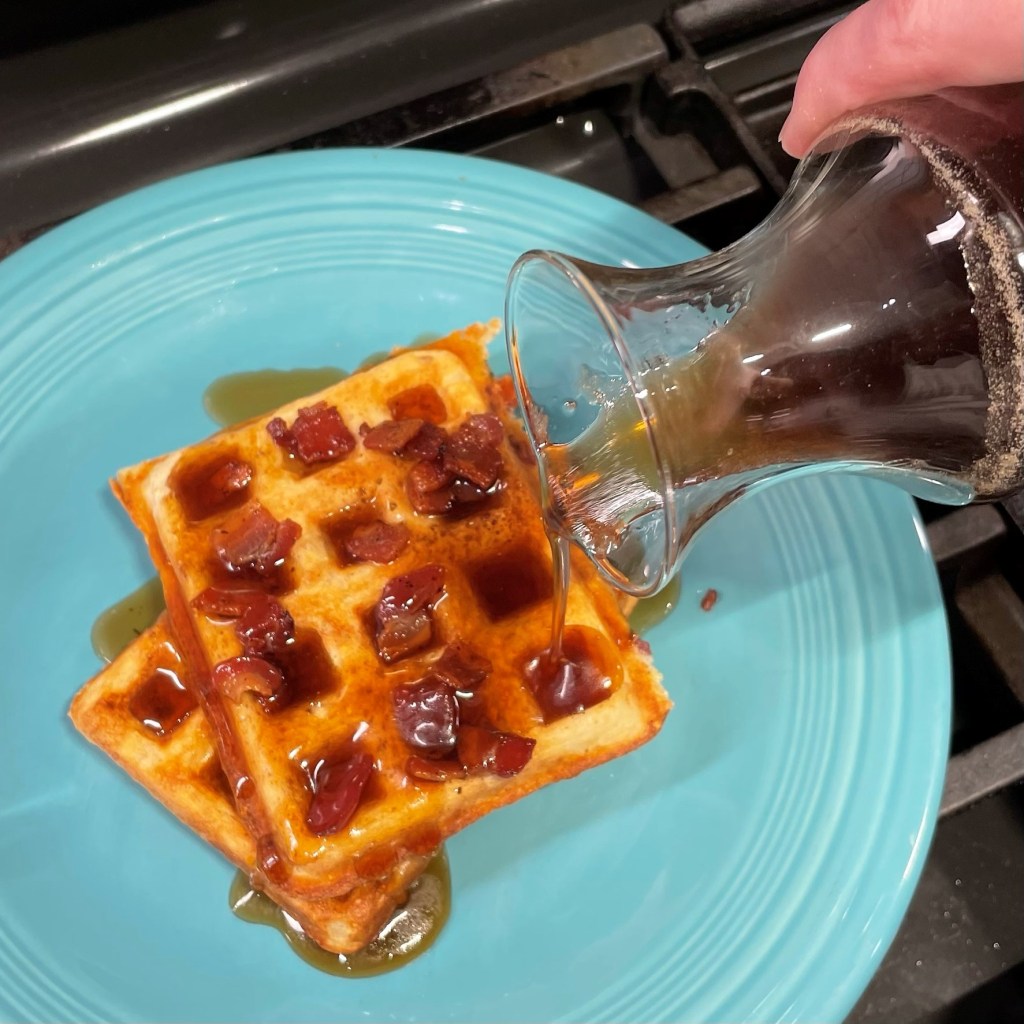
If you’re making a large batch of waffles, you can keep the first ones warm by placing them on a rack over a baking sheet, inside a 250 F oven. While mine were baking, I warmed up real maple syrup with the remaining tablespoon of bourbon and a pat of butter. Plate the waffles with a quick scatter of the remaining crispy bacon and the syrup.


Bacon & Bourbon Waffles

  • Servings: About 4
  • Difficulty: Average
  • Print

Ditch the boring pancakes and shake up Shrove Tuesday with these sourdough waffles, accented with bacon and bourbon from the inside out!


Ingredients

  • 2/3 cup + 1 Tbsp. all-purpose flour (85g)
  • 1/4 cup medium grind cornmeal (40g)
  • 1 cup cultured buttermilk (227g)
  • 1/3 cup sourdough starter (75g; discard is fine)
  • 2 tsp. maple (or granulated) sugar
  • 1/2 tsp. salt
  • 1/4 tsp. baking soda
  • 1 large egg, beaten
  • 3 Tbsp. salted butter, melted and cooled (or swap in some of the bacon drippings for extra bacon flavor)
  • 5 slices uncured smoked bacon, cut into pieces and cooked until crispy (use half in the batter and reserve the rest for topping the waffles)
  • 2/3 cup real maple syrup
  • 2 Tbsp. Knob Creek smoked maple bourbon, divided (use half in the batter and half in the syrup for serving)

I made these waffles using a standard, non-stick waffle maker and they were delicious. I expect that a Belgian waffle maker would produce a lighter, crispier waffle. Follow your manufacturer’s instructions regarding oiling the plates, temperature and baking time.

Directions

  1. The night before, combine flour, cornmeal, sourdough starter and sugar in a large bowl. Stir it well to ensure no pockets of dry ingredients. Cover and leave at room temperature overnight (about 8 hours).
  2. When you’re ready to make the waffles, prep the bacon and set up the waffle iron to preheat. Set oven to 250 F and place a rack inside a baking sheet for keeping waffles warm. Take the egg out of the fridge to bring to room temperature.
  3. Whisk the melted butter into the egg. Stir in 1 tablespoon of the bourbon.
  4. Sprinkle the salt and baking soda over the overnight starter, which should be nice and bubbly. Pour the egg mixture into the batter and stir vigorously but briefly to get the chemical reaction started. Fold in half of the crispy bacon pieces. Let the batter rest until the waffle maker is fully preheated.
  5. Pour batter into waffle iron and close the lid. Avoid the temptation to lift the lid until your waffle iron indicator says it’s time. Keep waffles warm in oven while you prepare the next batch.
  6. Combine maple syrup and remaining bourbon in a small saucepan and heat until warm. If desired, melt a teaspoon or two of salted butter into the syrup.
  7. Scatter remaining crispy bacon over finished waffles and drizzle maple bourbon syrup over for serving.


Po’ Boy Shrimp Tacos

Being creative in the kitchen is often little more than playing a game of mix and match. You take a dish you already know, apply another style of cuisine or a few ingredient swaps, and you’re on your way. That’s what happened in my kitchen when I decided to twist together Mardi Gras and Taco Tuesday.

Having never been to New Orleans myself, I already knew something about its foods (well, I mean, who doesn’t?) from friends and internet research. The po’ boy, a classic of New Orleans, is a simple sandwich of inexpensive ingredients—usually local, in-season seafood—fried up and served on French bread with lettuce, tomato and pickles. These humble yet tasty handhelds were slipped out the back door to out-of-work streetcar drivers who were on strike at the end of the Roaring ‘20s (now that we’re here, I suppose I should specify, 1920s). As the locals tell it, a kitchen worker would see one of the hungry drivers coming up for a handout, and shout, “here comes another po’ boy!”

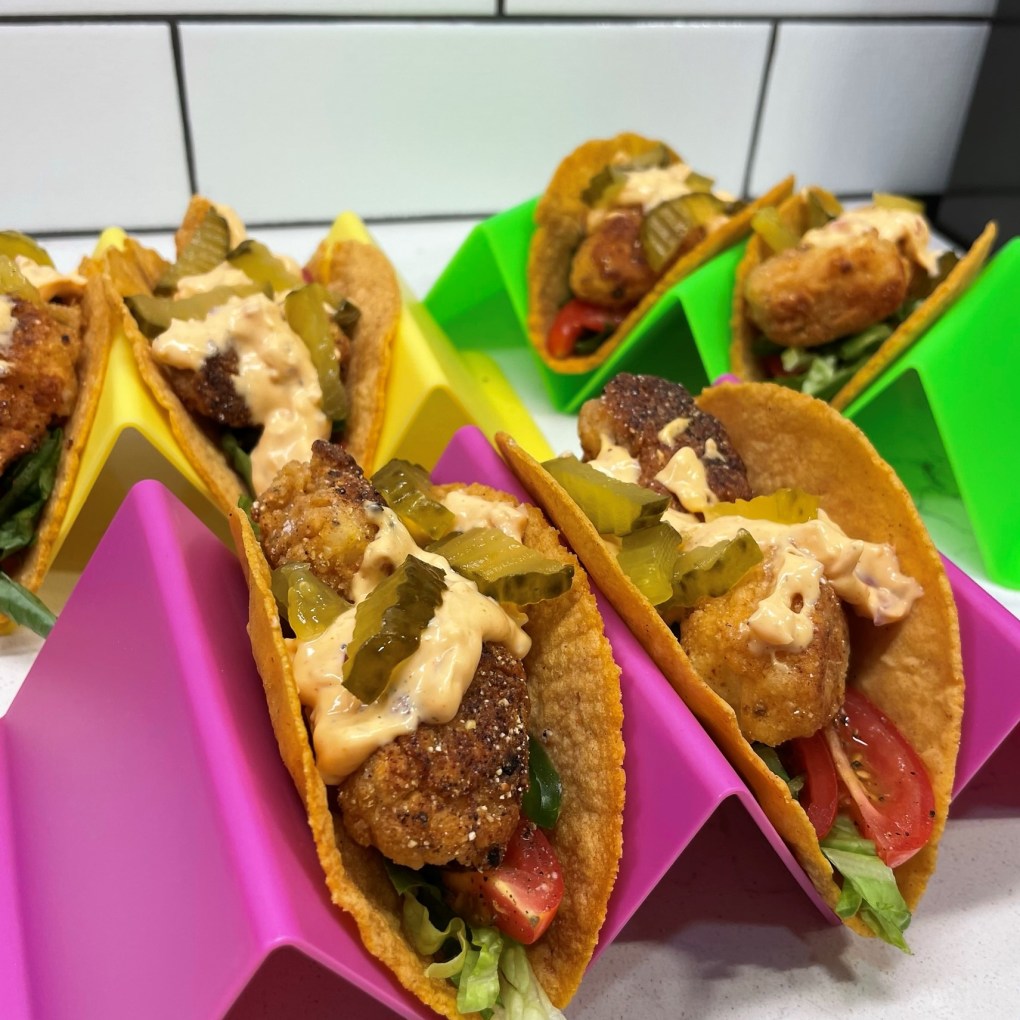
My taco-esque spin on the po’ boy is not necessarily original, given that you have probably seen plenty of shrimp tacos. But the New Orleans flavors are purposely prominent here, from the savory dry spices I added to my handmade corn tortillas, to the Cajun spices in the shrimp breading, to the bold and zesty remoulade that topped it all off. There is no cheese or salsa on these tacos; rather, I swapped in the fresh toppings that you would expect on a po’ boy sandwich—thinly shredded lettuce and tomato. But I did want to keep it in taco territory, so I also layered in some thinly sliced jalapeno, which didn’t bother my heat-loving husband one bit. If it bothers you, leave ‘em off.

If I could hit the rewind button on one thing, I would be the preparation of the shrimp. The shrimp or fish on a true po’ boy would be deep fried in a cornmeal crust, so I went along with tradition on that, but my juicy shrimp did get a bit lost in the density of a buttermilk bath and all that breading, and the whole frying process made a mess of the kitchen and had me frustrated in the end. It was delicious but I doubt all that was necessary. My Plan B was to simply season the shrimp straight in the Cajun spices and give them a quick sauté, same as I do for my go-to Cajun shrimp & garlicky cheese grits. The flavors would have been the same and the overall dish would have been lighter, both in heft and calorie count, so I’ll try it that way next time. 

But then again, it’s Fat Tuesday, so anything goes!


Ingredients

6 corn tortillas* (see ingredient notes)

1/2 lb. Gulf shrimp*, peeled and de-veined

2 tsp. spicy Cajun or Creole seasoning*

Canola or peanut oil for frying (amount depends on whether you use breading)


Breading (optional)

1/2 cup all-purpose flour, divided

1/2 cup cultured buttermilk

1/4 cup fine or medium cornmeal (seasoned with the Cajun spices)


Toppings

About 1/2 cup finely shredded lettuce (I used romaine)

1/2 cup chopped fresh tomato

A few thin slices fresh jalapeno (optional)

5 or 6 slices chopped sweet and spicy pickles (we love “Wickles” brand)


Remoulade

4 Tbsp. mayonnaise

1 Tbsp. Frank’s RedHot Sauce* (original variety)

1 Tbsp. minced fresh garlic

2 Tbsp. finely minced red onion

1/4 tsp. paprika (sweet or smoked)

1 Tbsp. sour cream

Salt and pepper


*Ingredient Notes

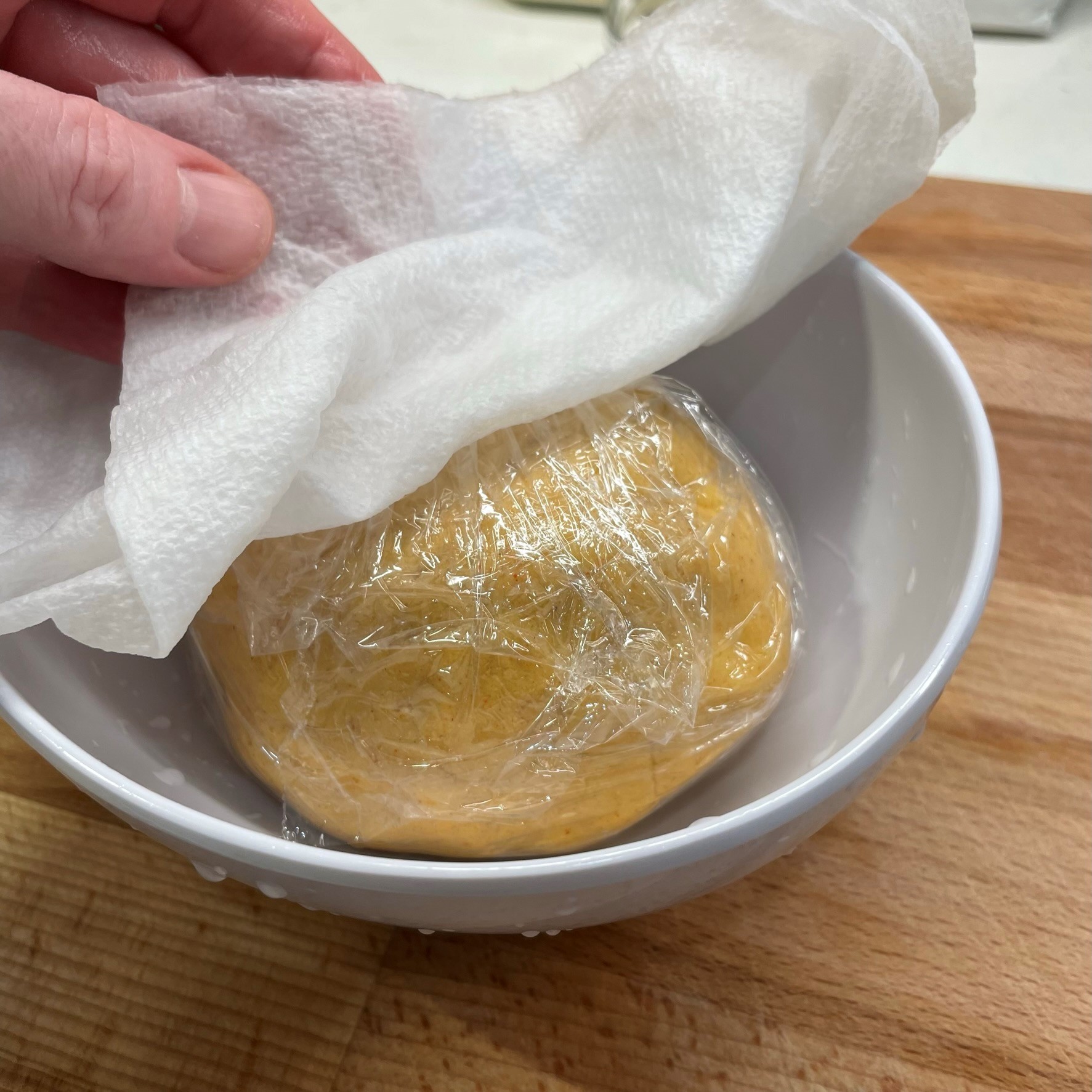
You could certainly use store-bought corn tortillas for your po’ boy tacos, and perhaps give them a quick flip through a dry cast-iron skillet to warm and slightly char them just before serving. We love handmade corn tortillas, and I added about 1/2 teaspoon each of smoked paprika and onion powder to my masa dough, to lend a little more flair. See my previous post on handmade corn tortillas for more detail about the technique.

I used large shrimp, 16 to 20 count per pound, but I cut them in half for easier divvying among our tacos. My recommendation for Gulf coast shrimp is not merely for authenticity (it is, after all, intended to be a tribute to New Orleans), but also for the integrity of the product. Be wary of seafood from other countries, especially the stuff that comes out of Southeast Asia, as the industry there is prone to problems ranging from over-fishing and contamination to heinous human rights violations. Is the domestic shrimp more expensive? I suppose it depends on who you ask.

If you don’t have a local fishmonger you trust, look for evidence of standards on the supermarket packaging, and don’t hesitate to ask questions at the fish counter.

To clarify, Cajun and Creole seasonings are not the same, but both are prominent in Louisiana cooking, and I believe they are interchangeable in this recipe, mostly based on your tolerance for heat. Cajun cuisine leans more toward spicy pepper heat and Creole is more about the dried herbs. I used a chile and garlic Cajun powdered seasoning, added to the cornmeal breading. If you skip the breading, simply toss the shrimp directly in the seasoning before sautéing—and don’t skimp!

Frank’s RedHot is the sauce I used, but if you can get your hands on a bottle of Crystal brand hot sauce (the preferred brand in Louisiana), by all means go with that.


Instructions

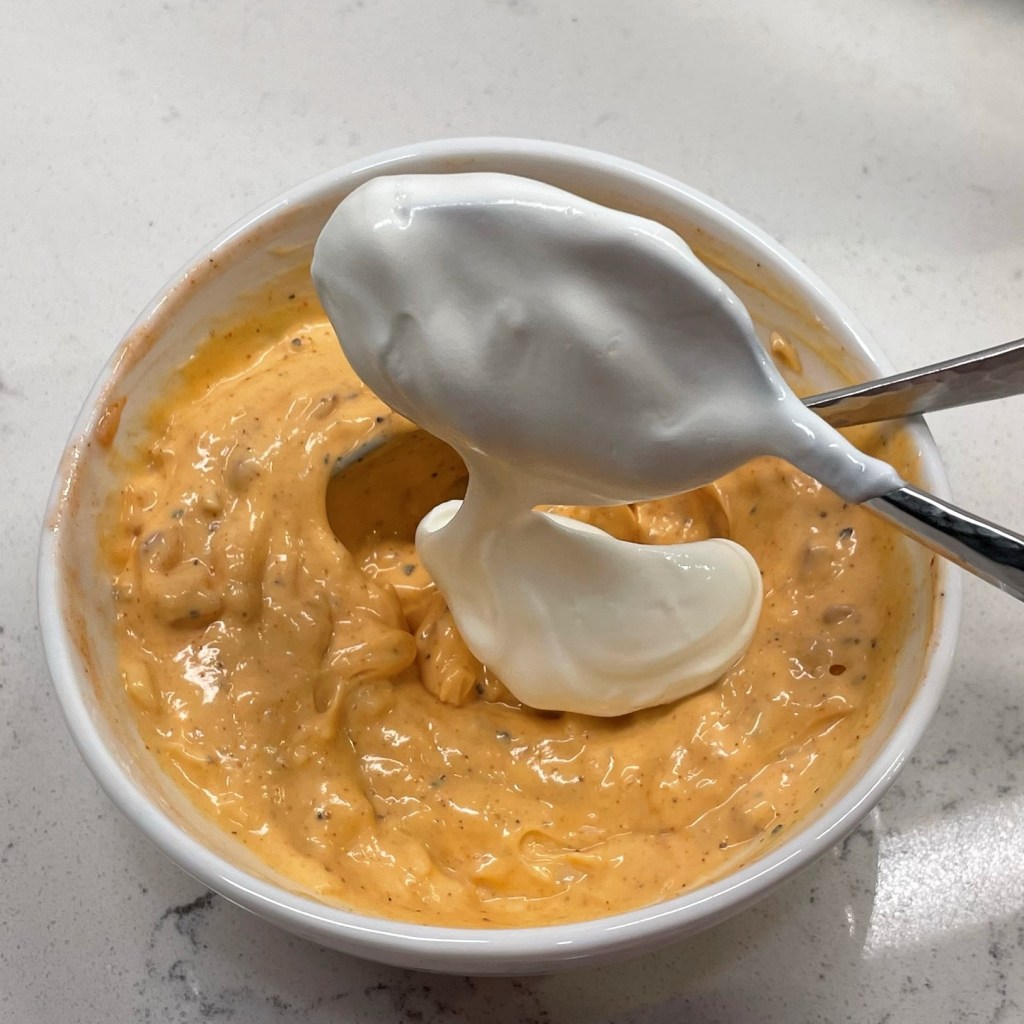
Make the remoulade ahead, so the flavors have time to meld in the fridge. Stir together all ingredients and adjust heat, salt and pepper to taste. Cover and refrigerate until serving time.

If you are making your own tortillas, make those next, keeping them warm on a towel-lined plate as you prepare the shrimp.

For a sautéed version, pat the shrimp dry on paper towels. Spritz them with spray oil and then toss in the Cajun seasoning until well coated. Heat a small amount of oil in a skillet and saute, turning once, until shrimp are no longer pink. Total cooking time should be two to four minutes, depending on the size of the shrimp.

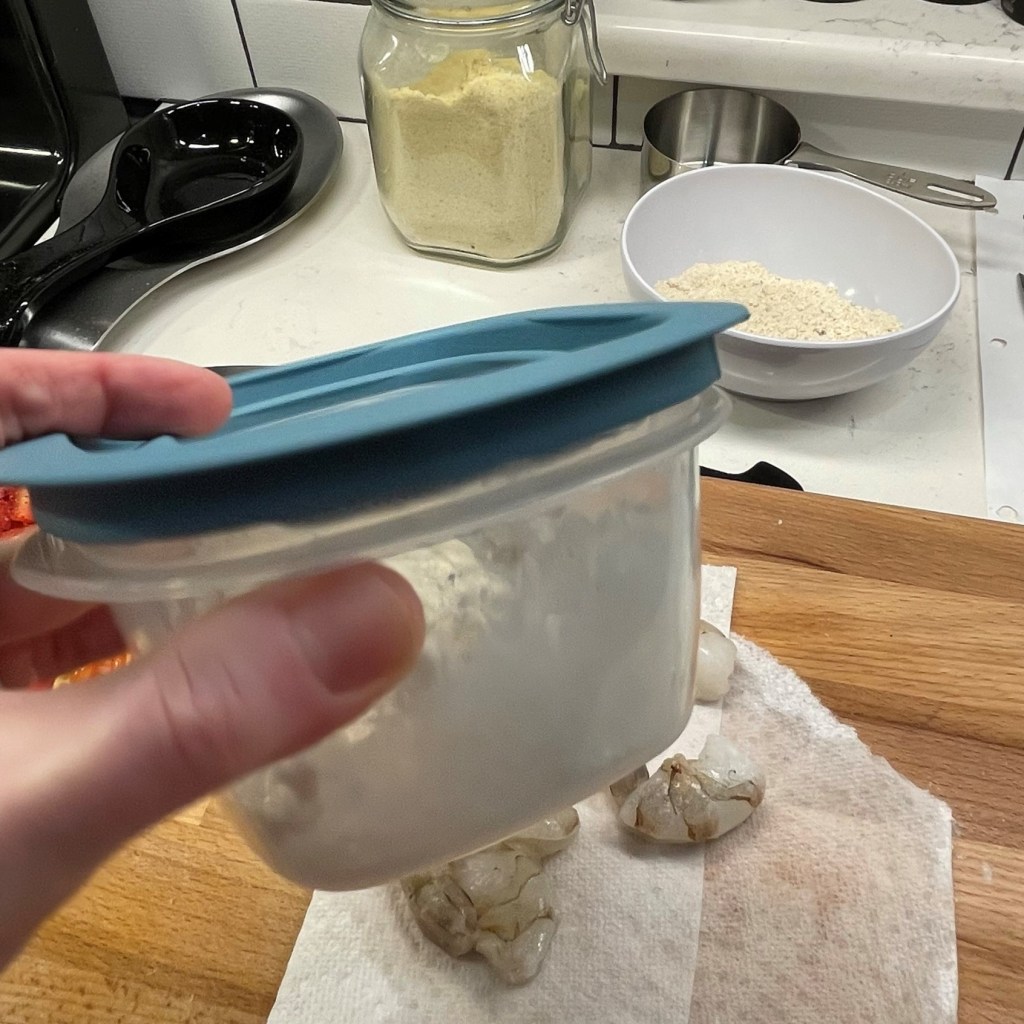
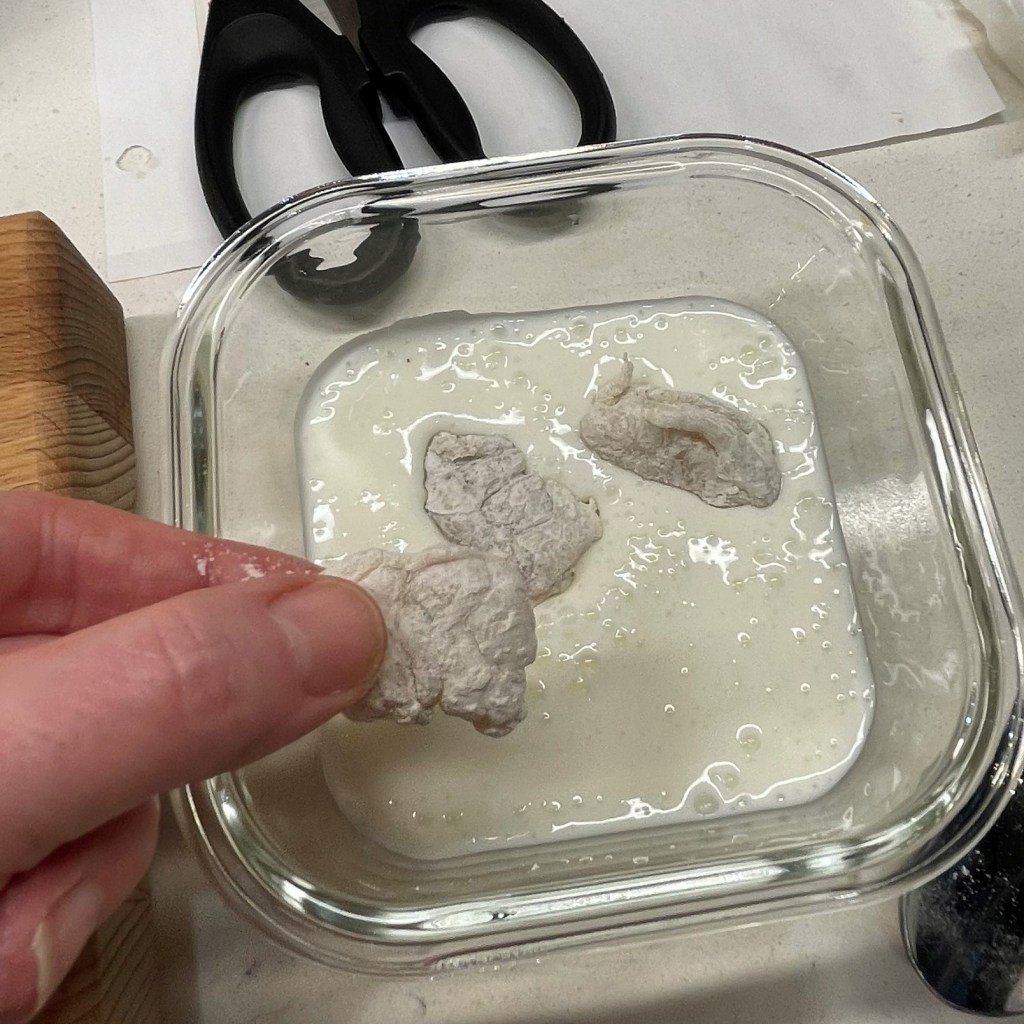
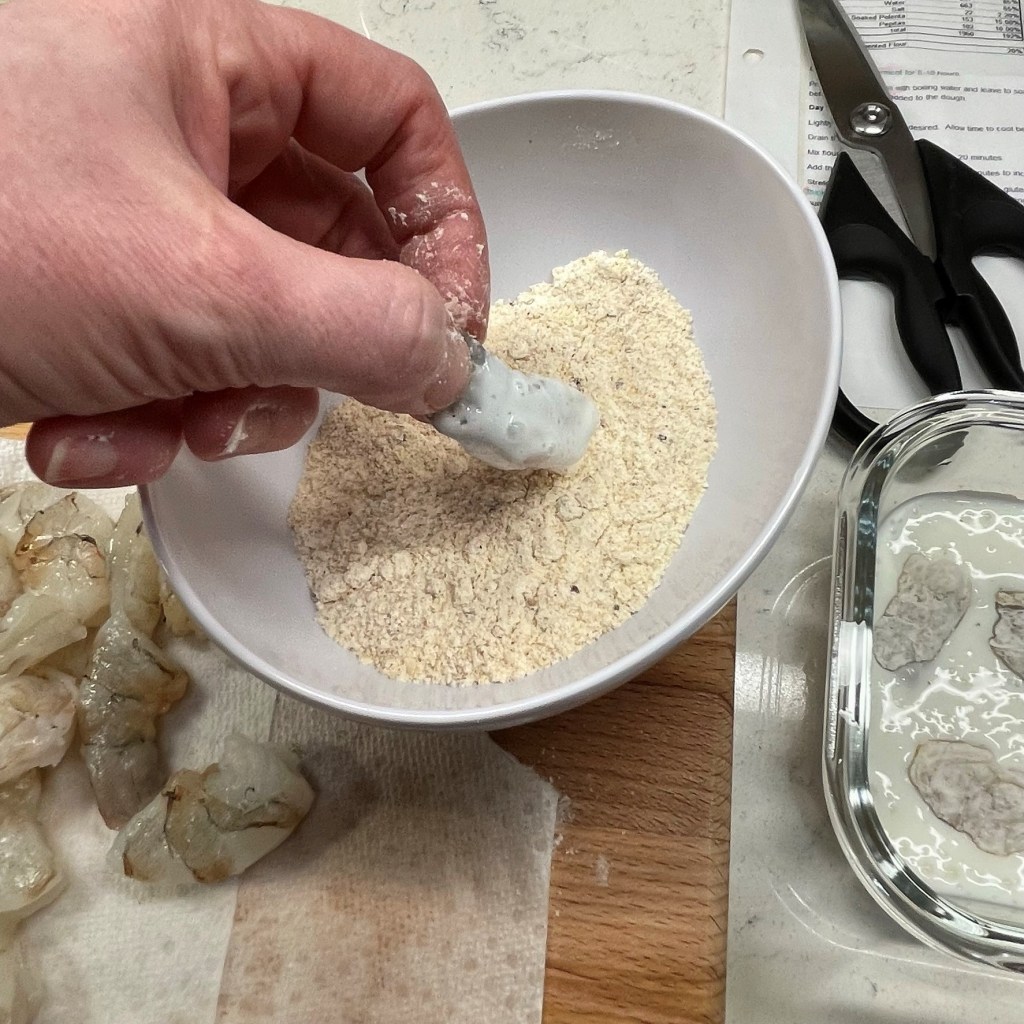
For fried shrimp, heat canola or peanut oil over medium heat in a cast iron skillet, about 1/2” deep. Pat the shrimp dry on paper towels. Set up a breading station, with half the flour in one dish, buttermilk in the second, and remaining flour mixed with cornmeal, Cajun seasoning and cayenne (if using) in a third.

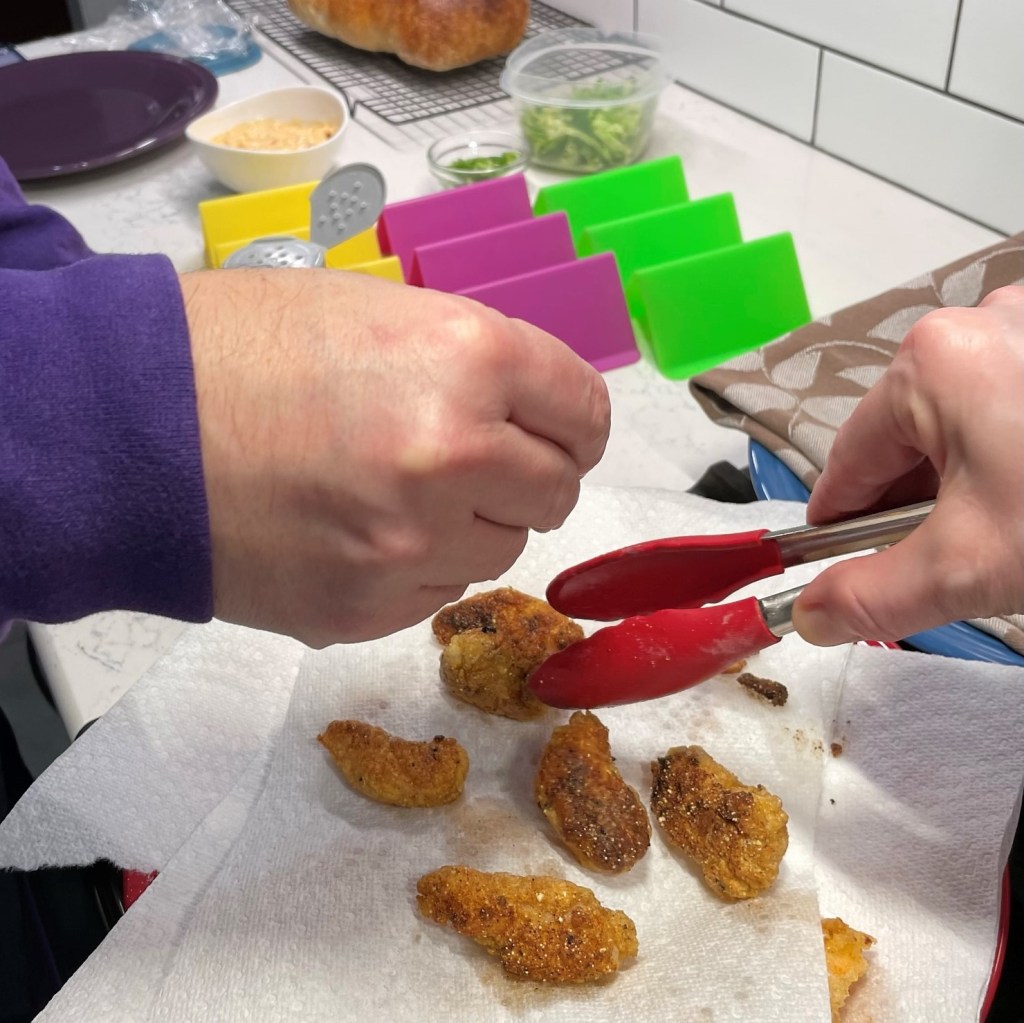
When the oil is ready (toss a bread cube in to see if it bubbles immediately), toss the shrimp lightly in the plain flour, then dip into the buttermilk and finally the cornmeal mixture. Add the shrimp pieces to the skillet one at a time, keeping room between them. Don’t try to do the shrimp all at once because you will cause the oil temperature to drop too quickly. Turn the shrimp pieces when they are golden on the bottom, and salt immediately upon transfer to a paper towel-lined plate. If you need to add oil, do it between batches and allow time for it to return to proper temperature.

Assemble the po’ boy tacos, beginning with shredded lettuce, tomato and jalapeno (if using). Divide the shrimp among the tacos, dress with remoulade and garnish with chopped spicy pickles.


Bananas Foster Ice Cream

Every year, I say that I want to make something elaborate for Mardi Gras—a king cake or jambalaya or étouffée (which my computer just tried to auto-correct as “toupee”)—but I usually miss my chance because I’m tied up making things for Super Bowl or Valentine’s Day. As much as I try, I simply can’t do everything at once.

But because Easter has a floating date (blame it on the moon), so does Ash Wednesday and so does Mardi Gras—and as luck would have it, I have had a little free time after Super Bowl to get my act together in time for this year’s Mardi Gras, which will be March 1. Frankly, I wonder whether I am qualified to make something as traditional as a king cake, given that I have never actually been to New Orleans. I do make a good gumbo, and there was that jambalaya deep-dish pizza last year that was pretty awesome, but I am not prone to do too many repeats, and my craving for a dessert was getting the better of me.

And that’s how this Bananas Foster ice cream came to be.

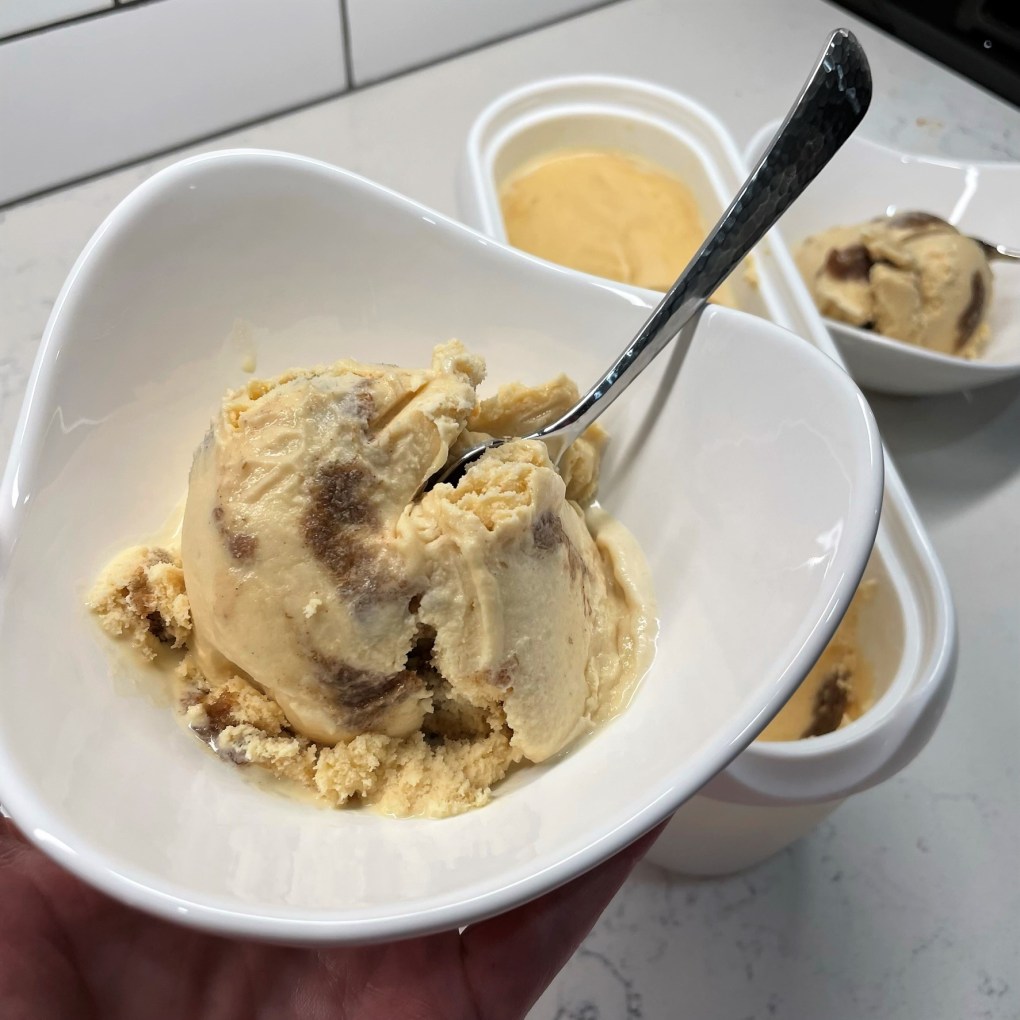
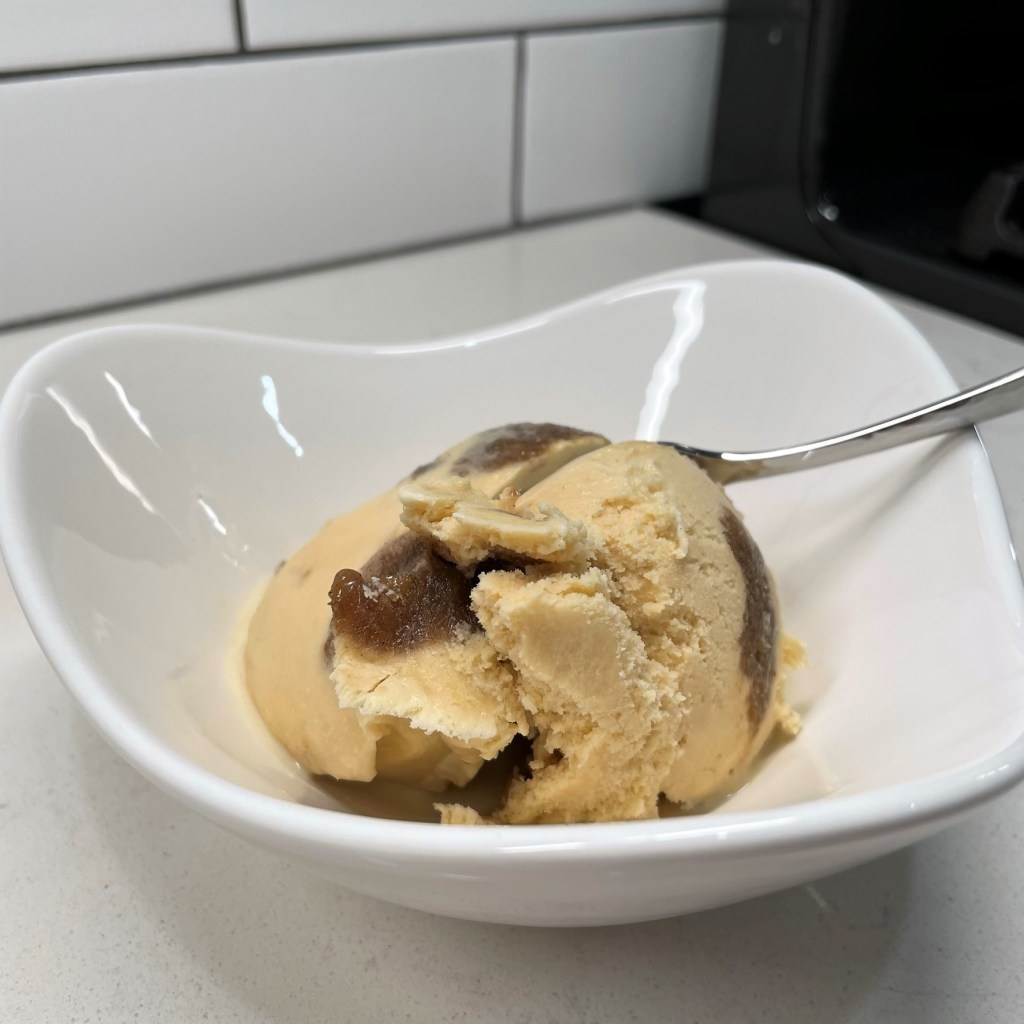
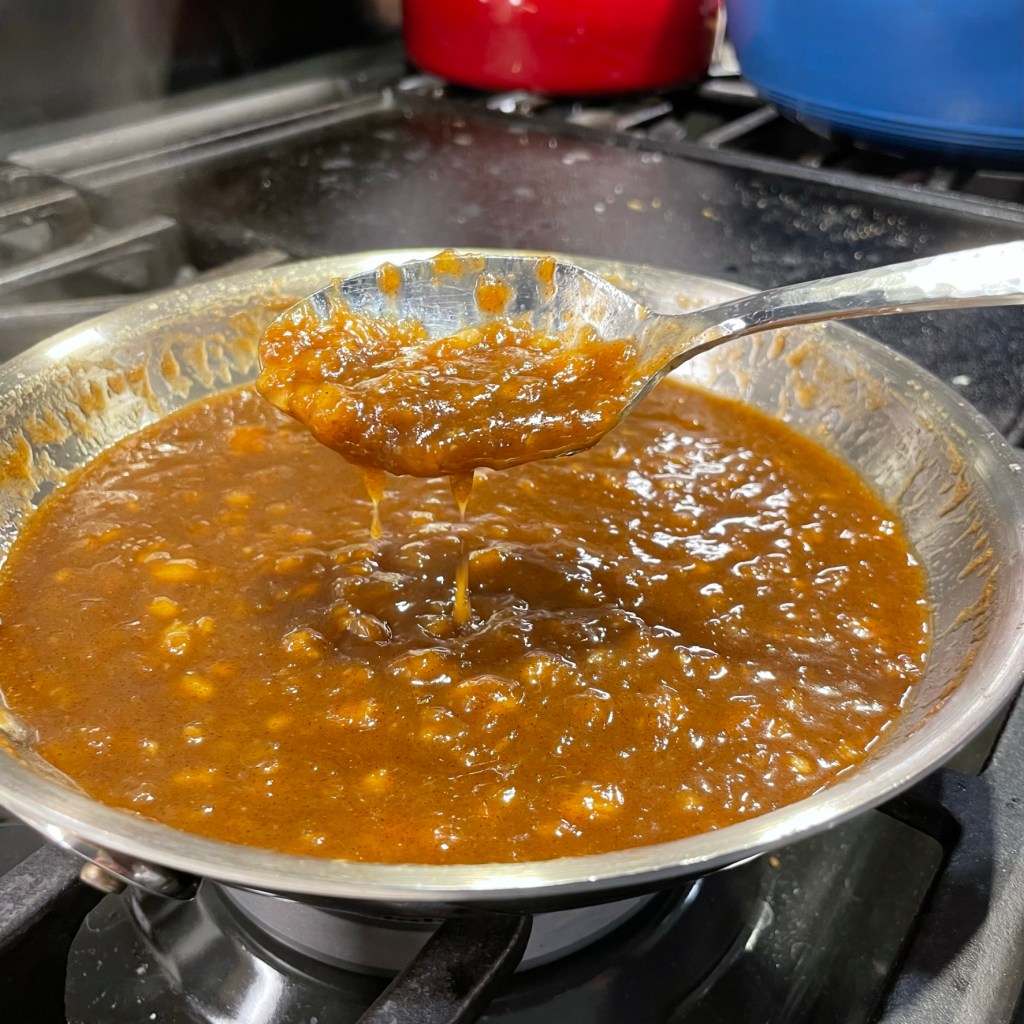
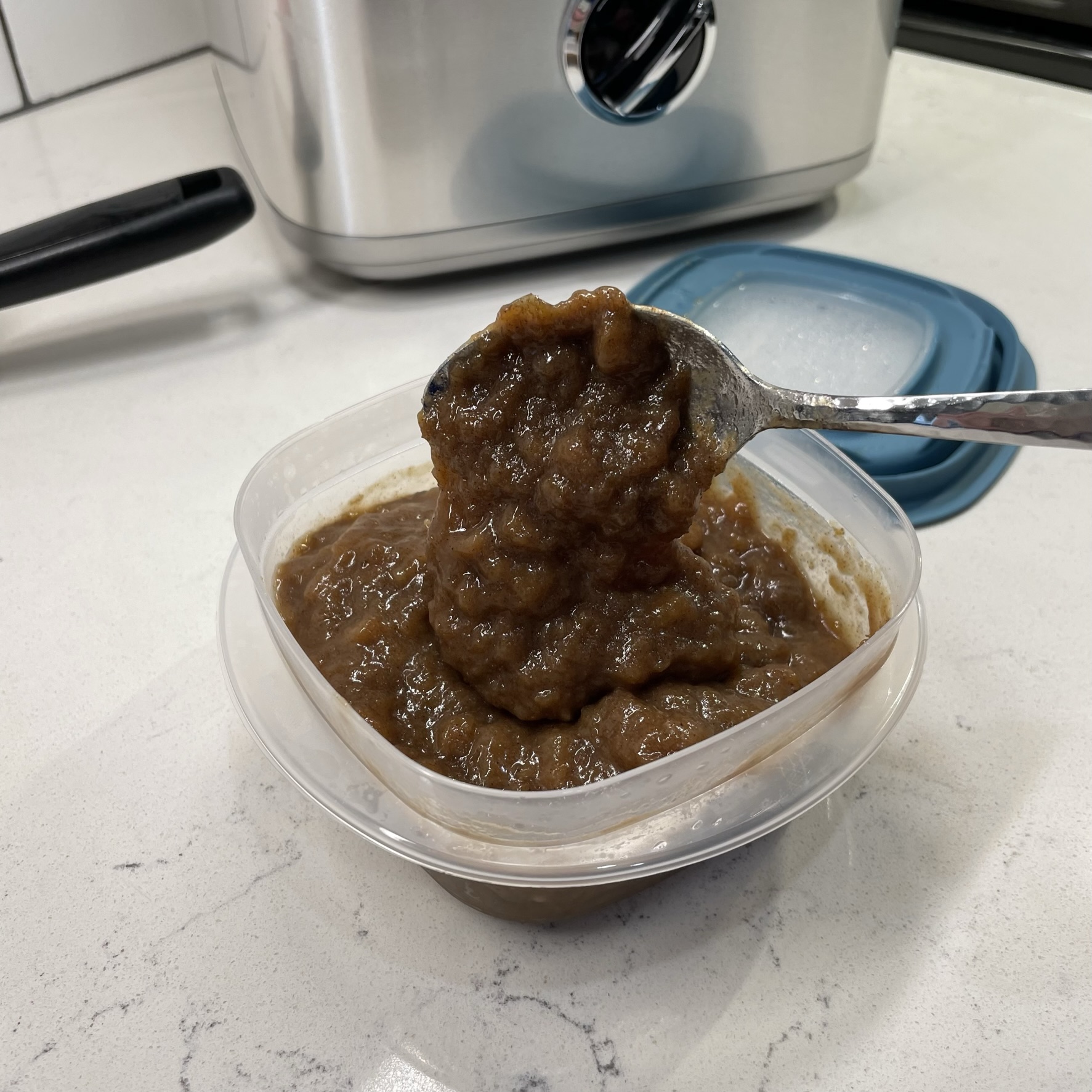
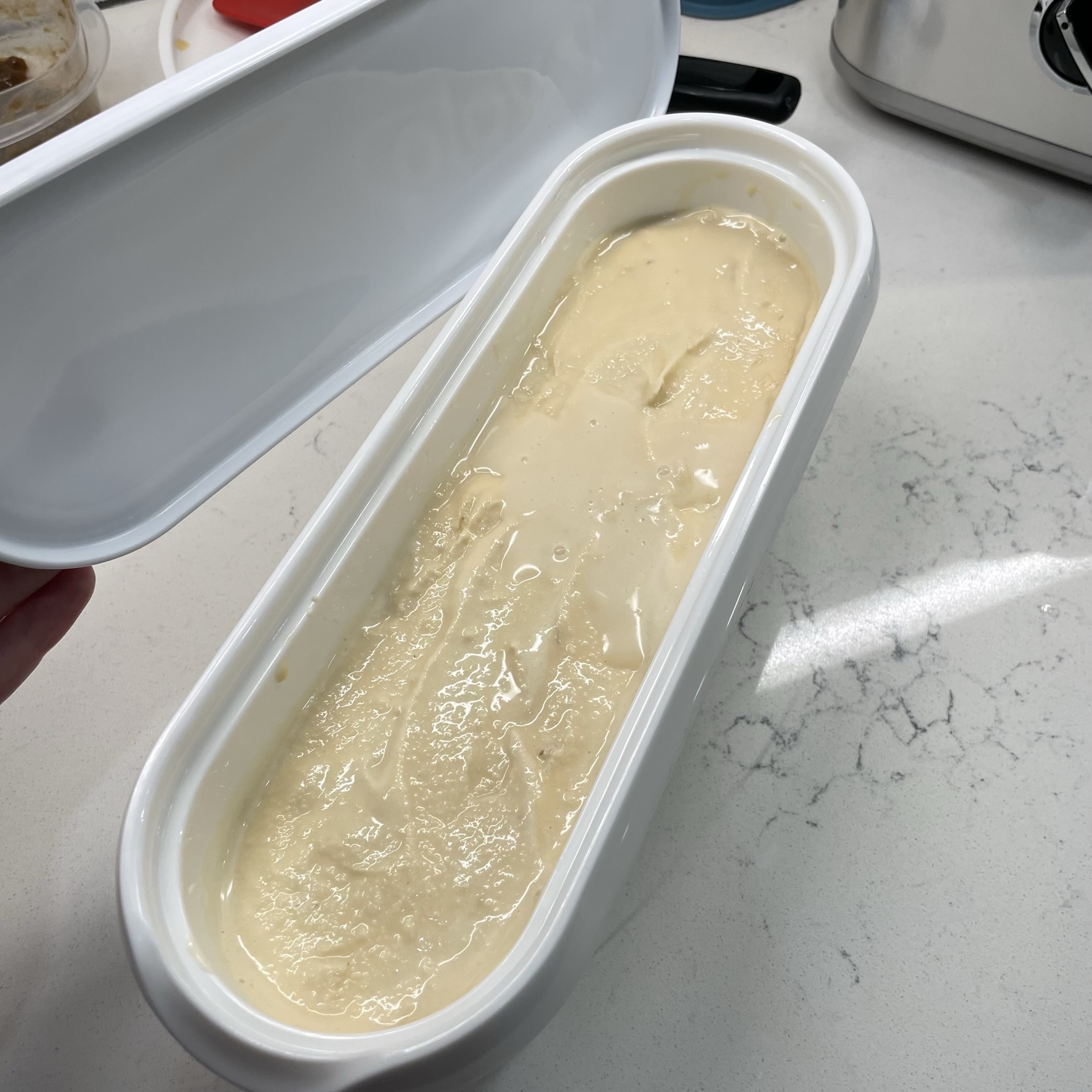
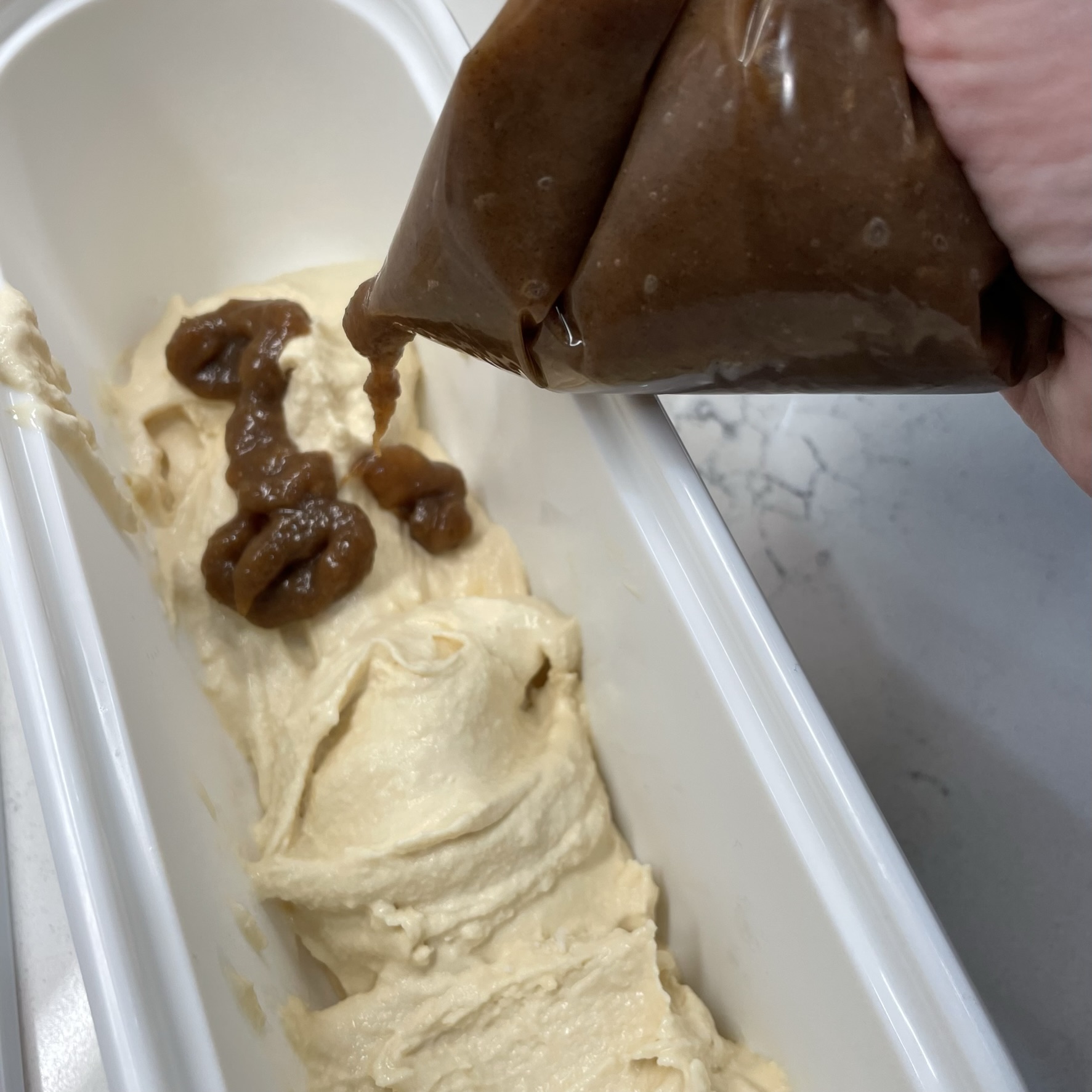
The Bananas Foster swirl is very prominent and so flavorful.

Bananas Foster is a decadently sweet dessert, native to New Orleans. The traditional recipe involves flaming rum-soaked syrup including brown sugar, cinnamon and butter—all spooned over caramelized bananas and served with a scoop of creamy vanilla ice cream. In a previous season of my life, I experienced the pure joy of having Bananas Foster prepared tableside, and those flavors never quite cleared my imagination. It was all at once tropical, sweet, warm, cold, sensual, creamy, boozy and flat-out amazing. What could possibly go wrong, I thought, in skipping the flambé and just adapting that whole mix into an ice cream?

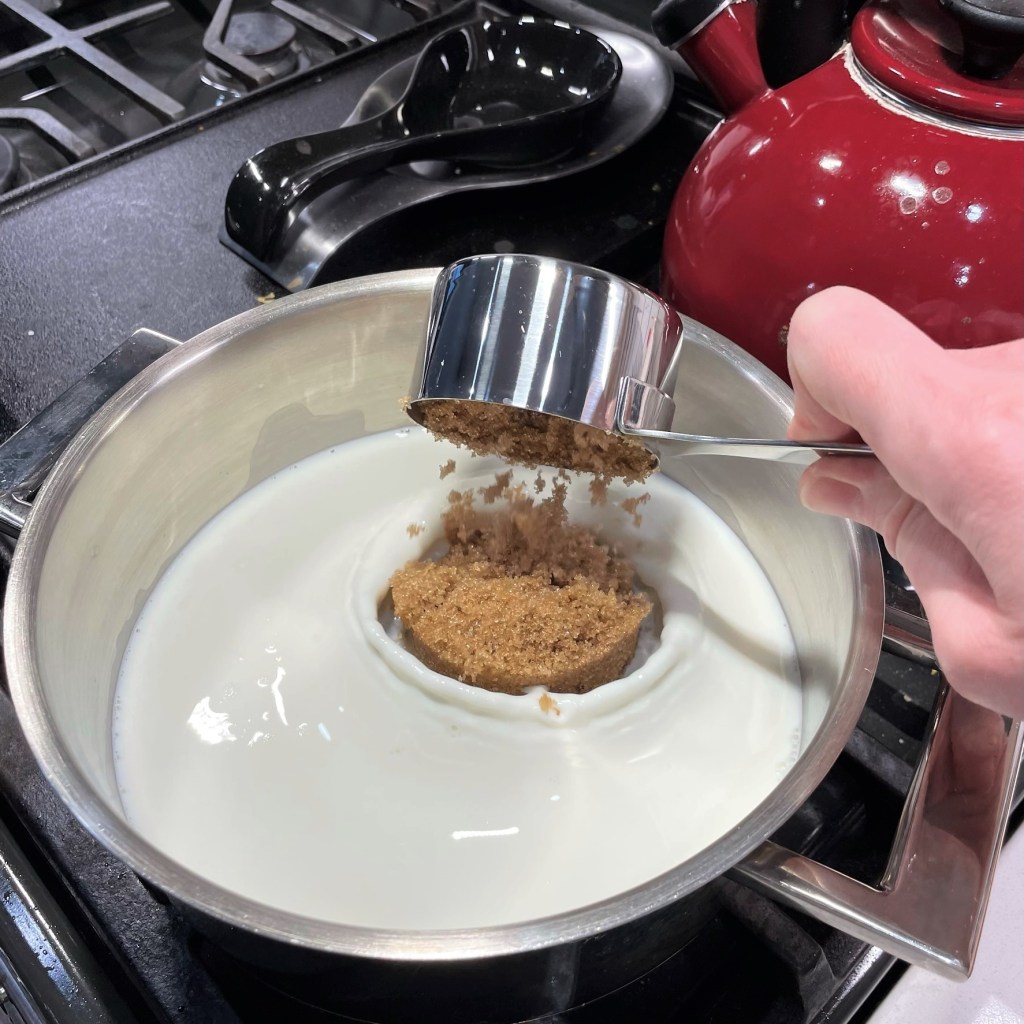
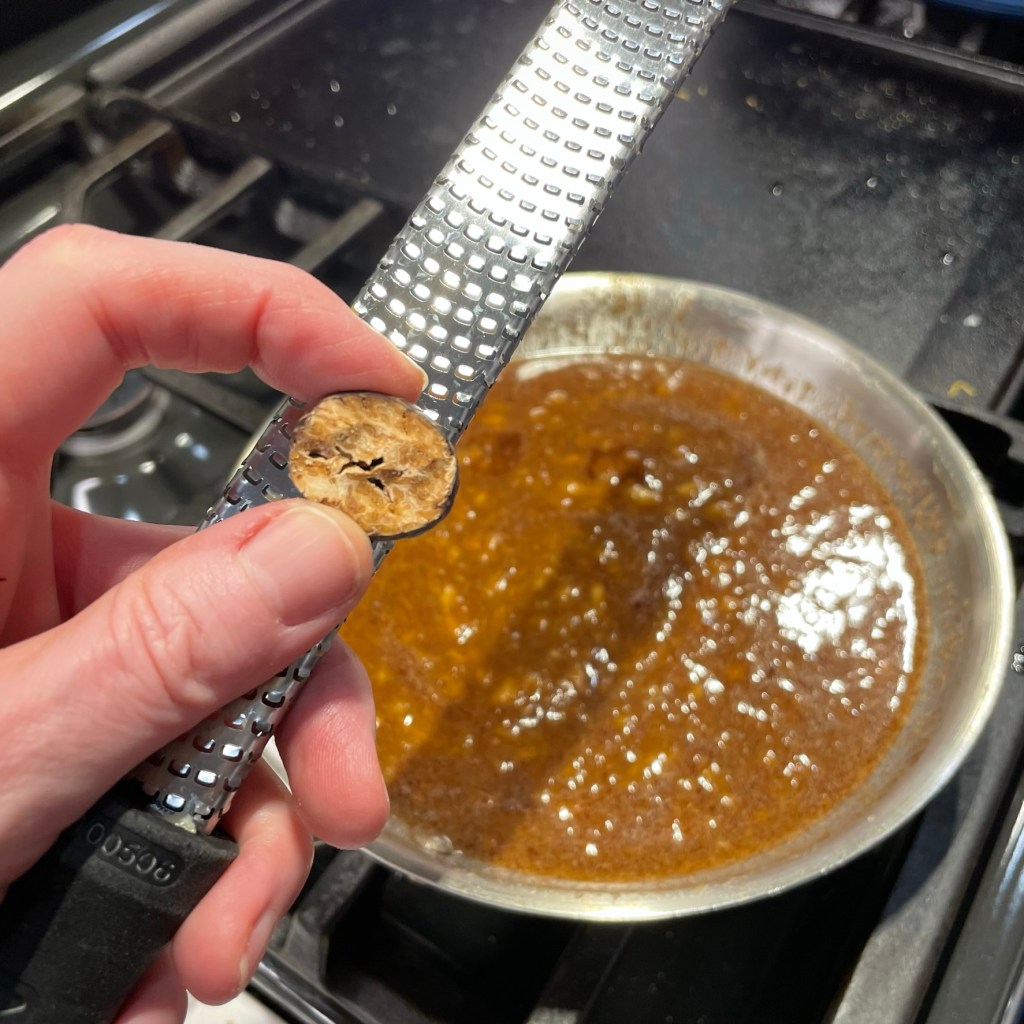
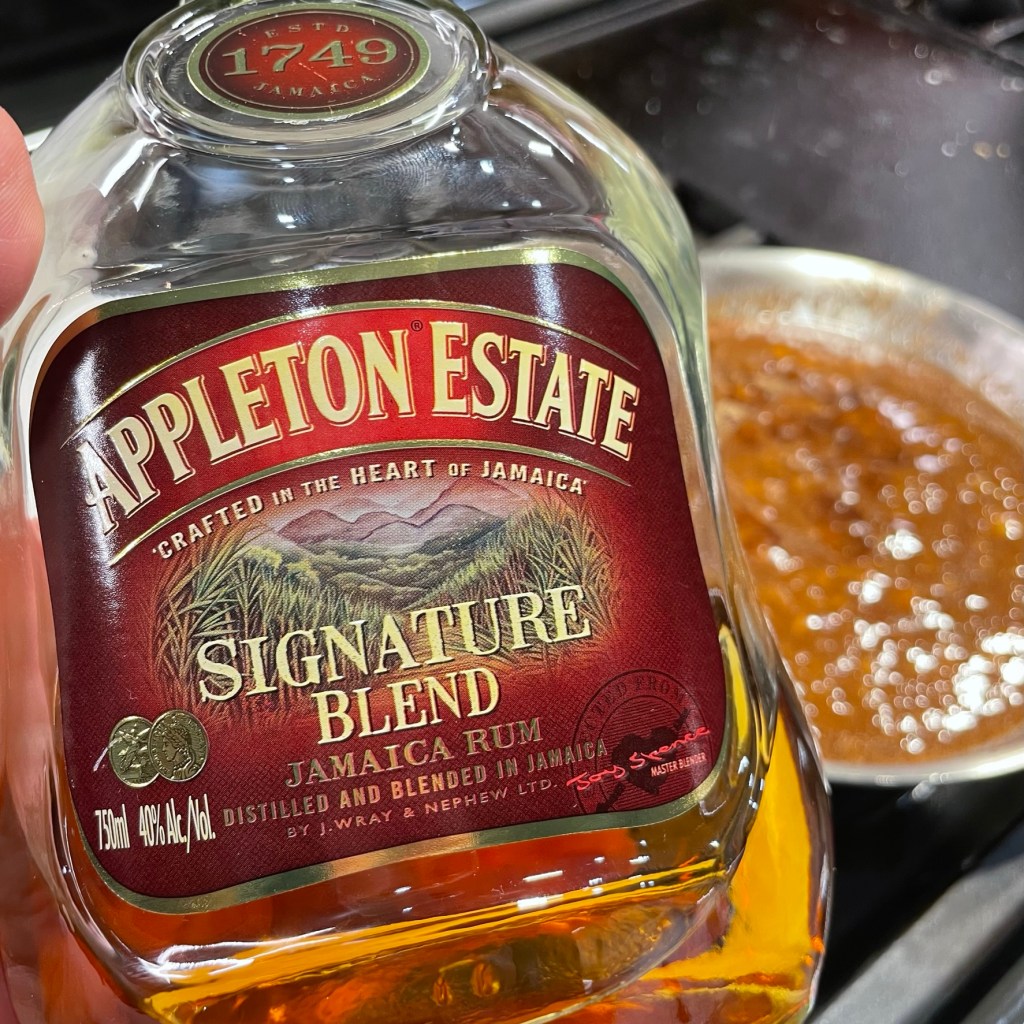
For the richness factor, I started with my go-to custard base for the ice cream, but I used brown sugar rather than white to lay a foundation of warm, molasses-y flavor. I caramelized a couple of ripe, mashed bananas into a mixture of brown sugar, butter, cinnamon and freshly grated nutmeg, then I poured in a shot of aged dark rum from Jamaica (the same rum I used recently in those “air fryer” jerk wings). Both components got an overnight chill, and then I froze the ice cream and layered in the bananas foster filling the next day.

One of these days, I’ll get to New Orleans to celebrate Mardi Gras properly. Until then, I’ll just put on some beads and some zydeco music and enjoy another scoop of this frozen delight.

Don’t mind me, I’m just having my own private Mardi Gras over here.

Ingredients

1 1/2 cups whole milk

2/3 cup light brown sugar (packed)

3 egg yolks (room temperature is best)

1 1/2 cups heavy cream

Pinch of kosher salt

1 tsp. real vanilla extract

1 Tbsp. vodka or dark rum, optional (added at the end of freezing)

Bananas Foster Swirl

3 Tbsp. salted butter

1/3 cup light or dark brown sugar

3/4 tsp. ground cinnamon

A few shavings whole nutmeg

2 very ripe bananas

1.5 oz. dark rum or spiced rum


Instructions for Custard

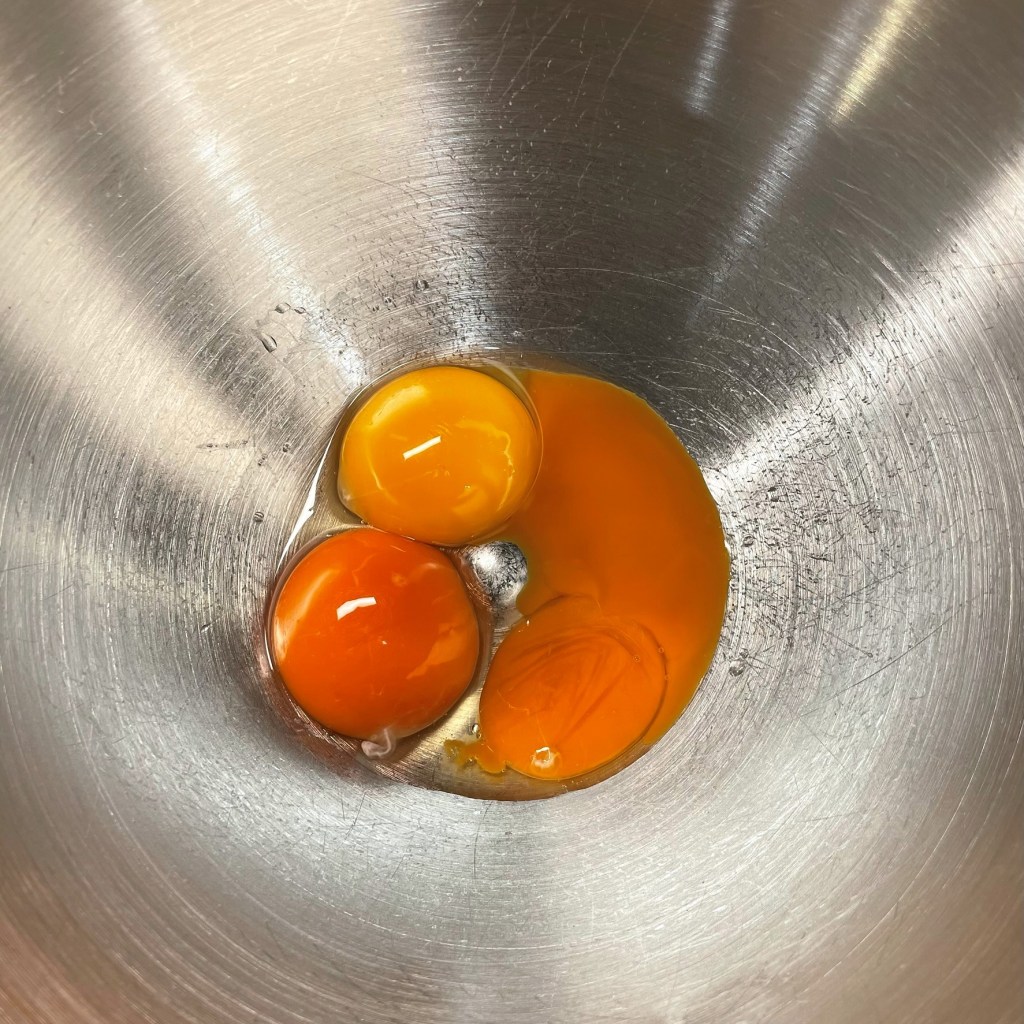
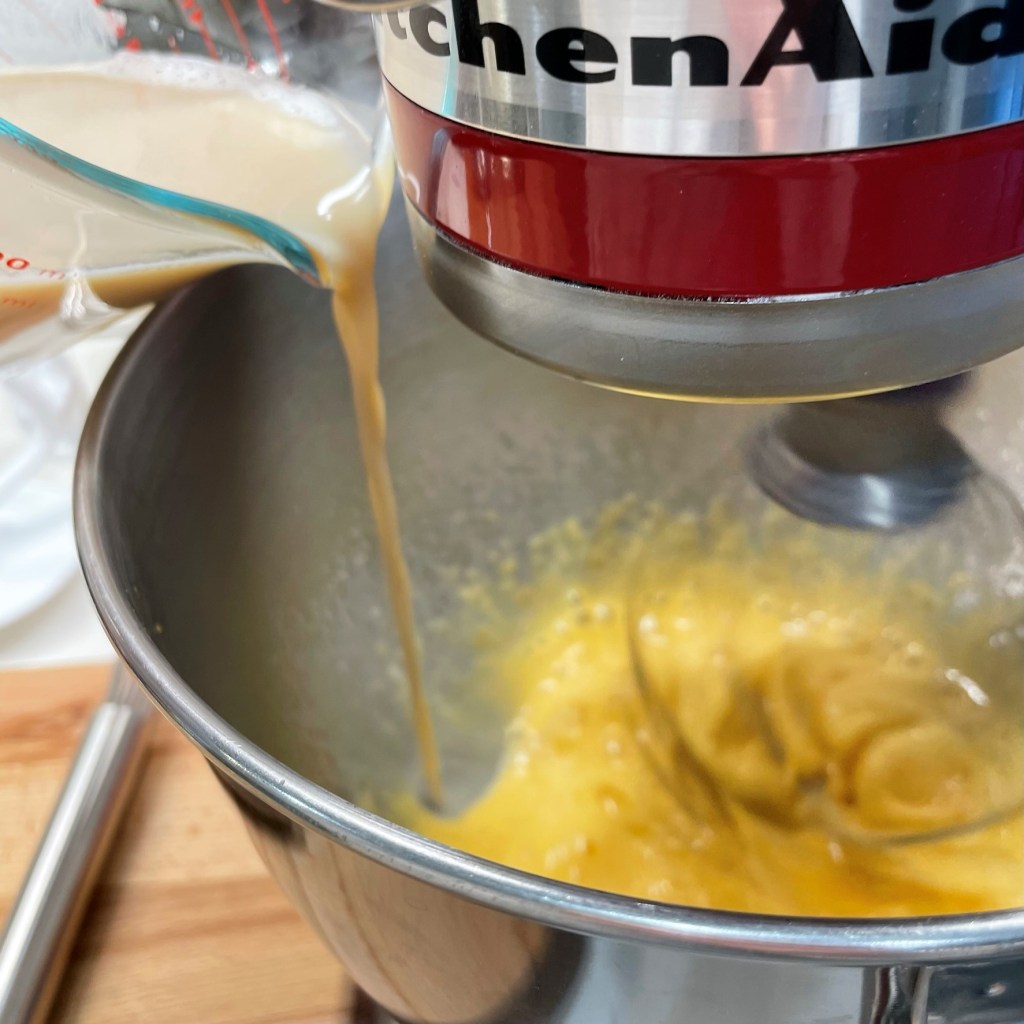
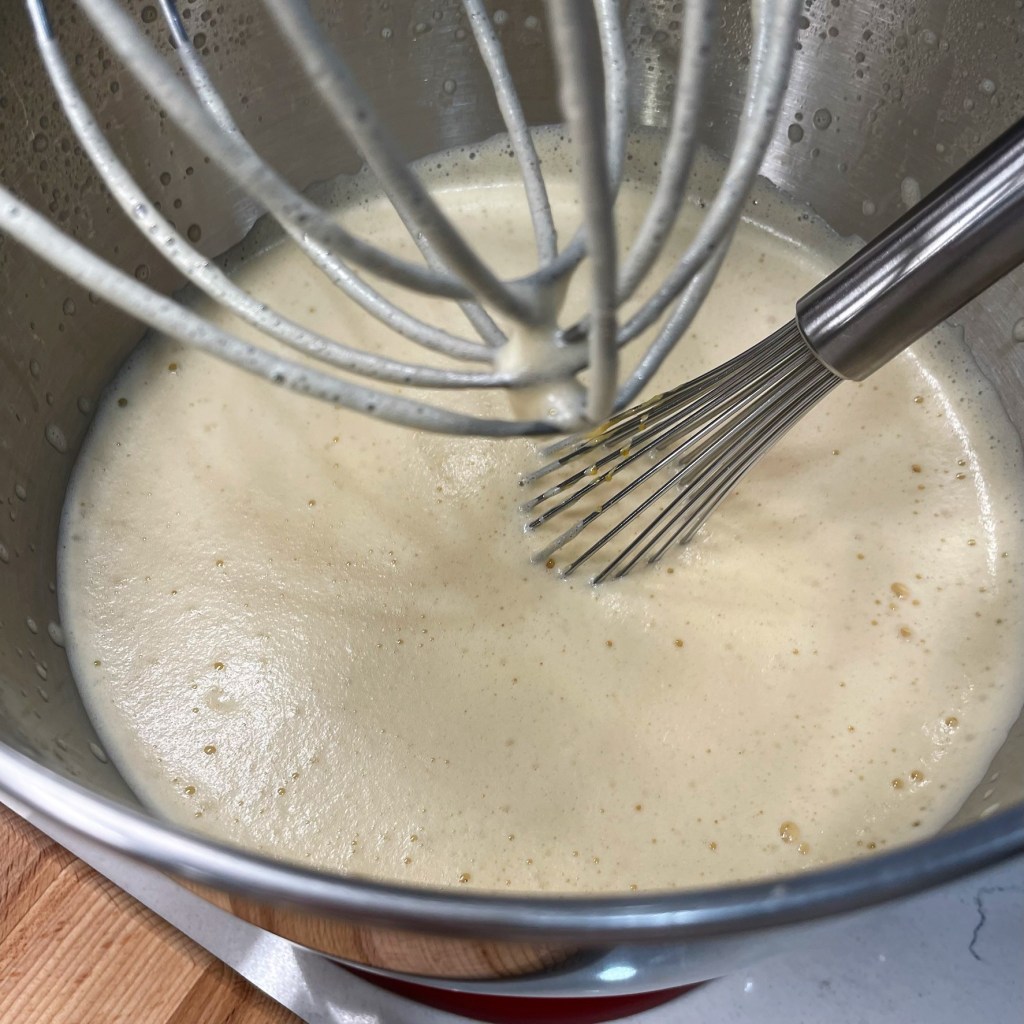
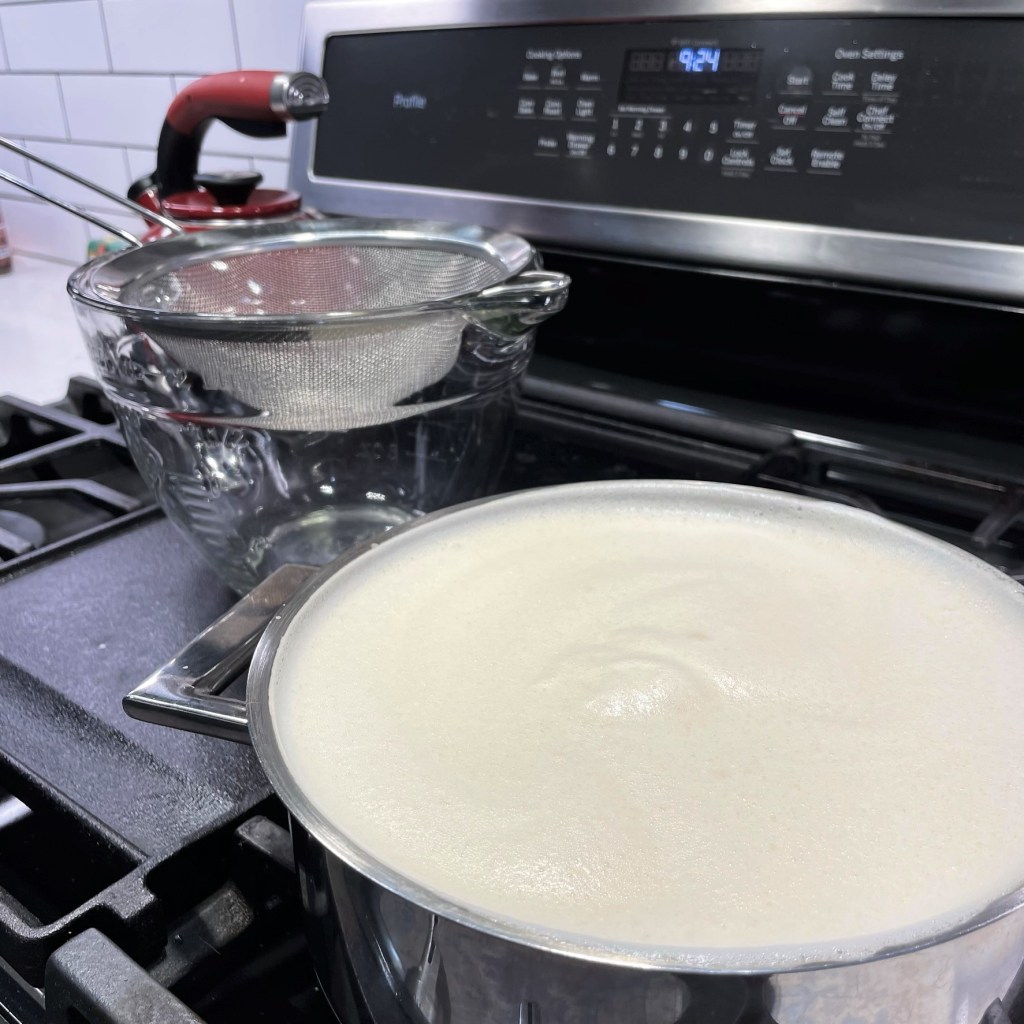
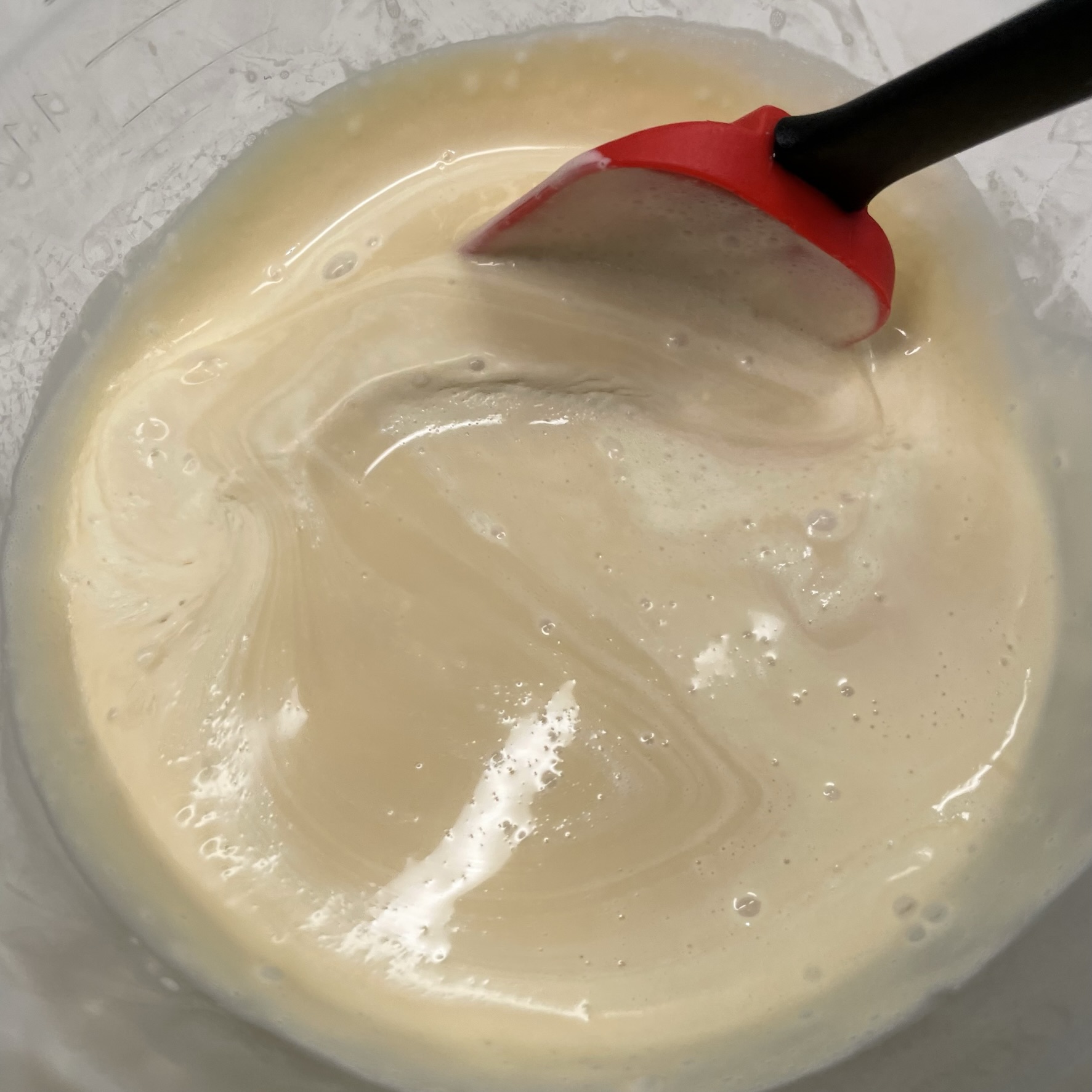
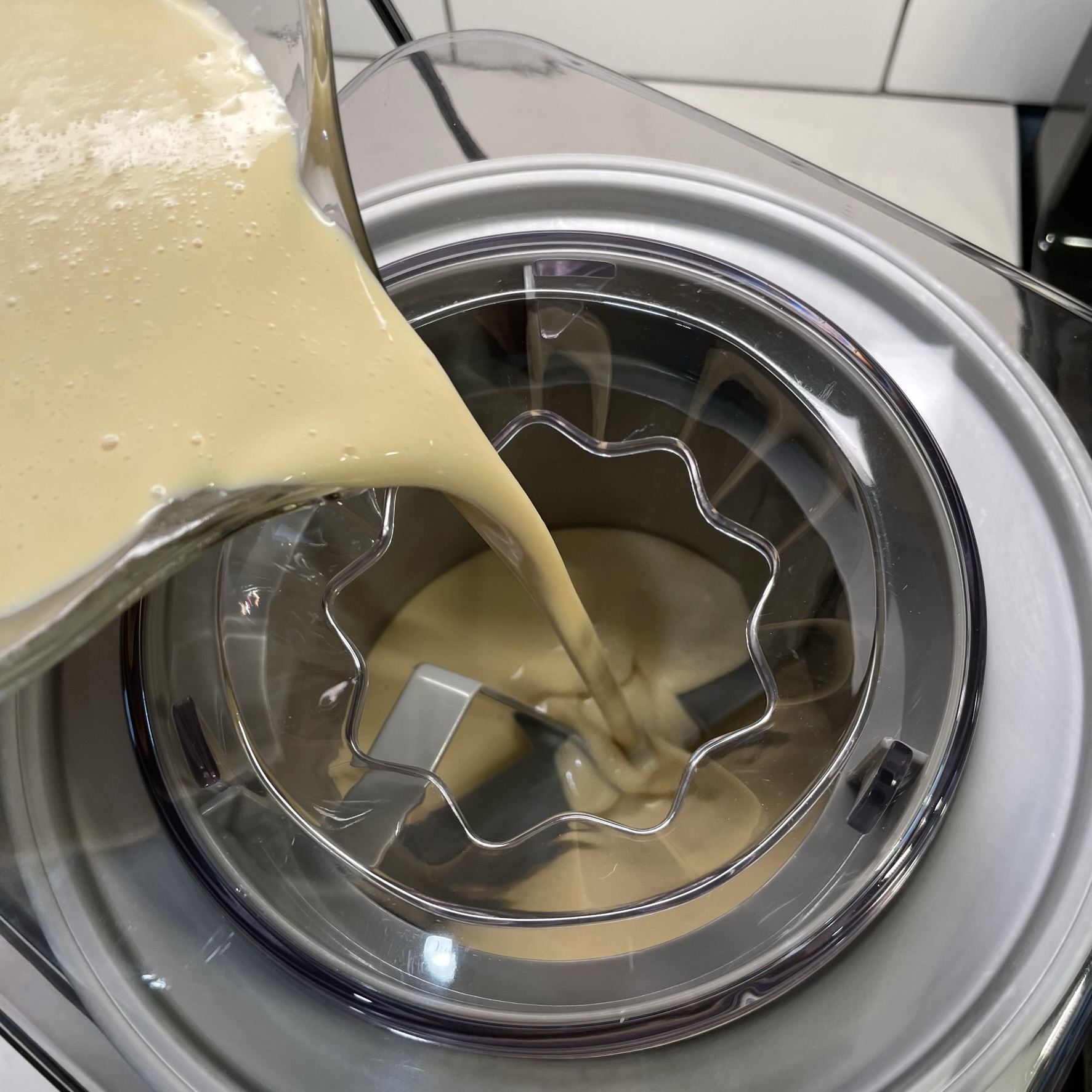
Full disclosure: I have made my custard-based ice cream many times, and never had this much trouble with foam. Most of the time, the custard cooks up silky and rich. But I got carried away and whipped my egg yolks too much! The ice cream turned out great, but don’t try to replicate this mistake. 🙂

Place a medium, heavy-bottomed pot over medium heat. Combine milk and brown sugar and cook, stirring frequently, until sugar is fully dissolved and milk is steaming.

Using an electric mixer, lightly whip the egg yolks until they are lighter and somewhat airy. This usually works best with a bit of fine sugar in the bowl, but I skipped that step this time because I was using grainy brown sugar in the recipe.

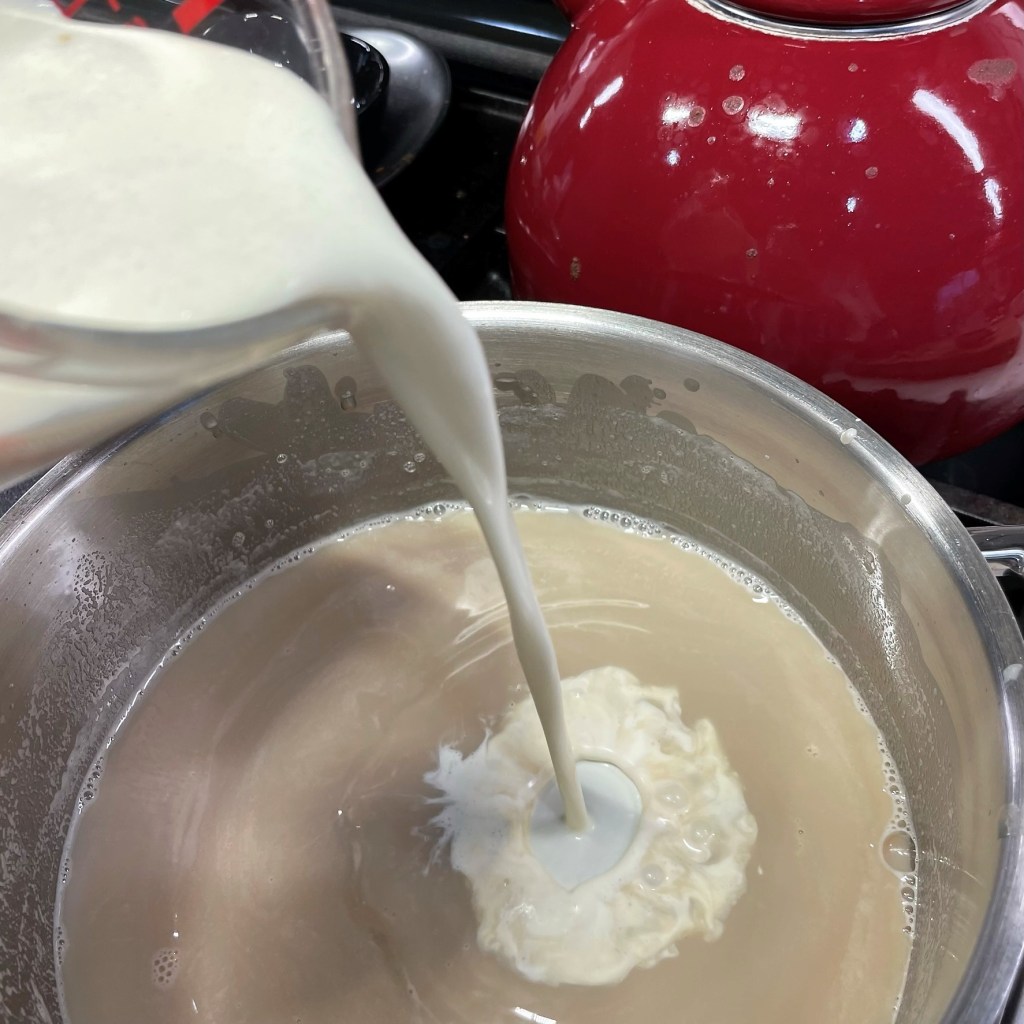
When the milk mixture begins to barely bubble around the edges, transfer about half of it into a measuring cup. Add the heavy cream to the pot and bring it back up to the steaming temperature.

While that’s going, slowly and gradually add the measured hot milk mixture to the egg yolks (with the mixer running constantly). This step is called “tempering,” and it raises the temperature of the eggs slowly to cook them without scrambling them.

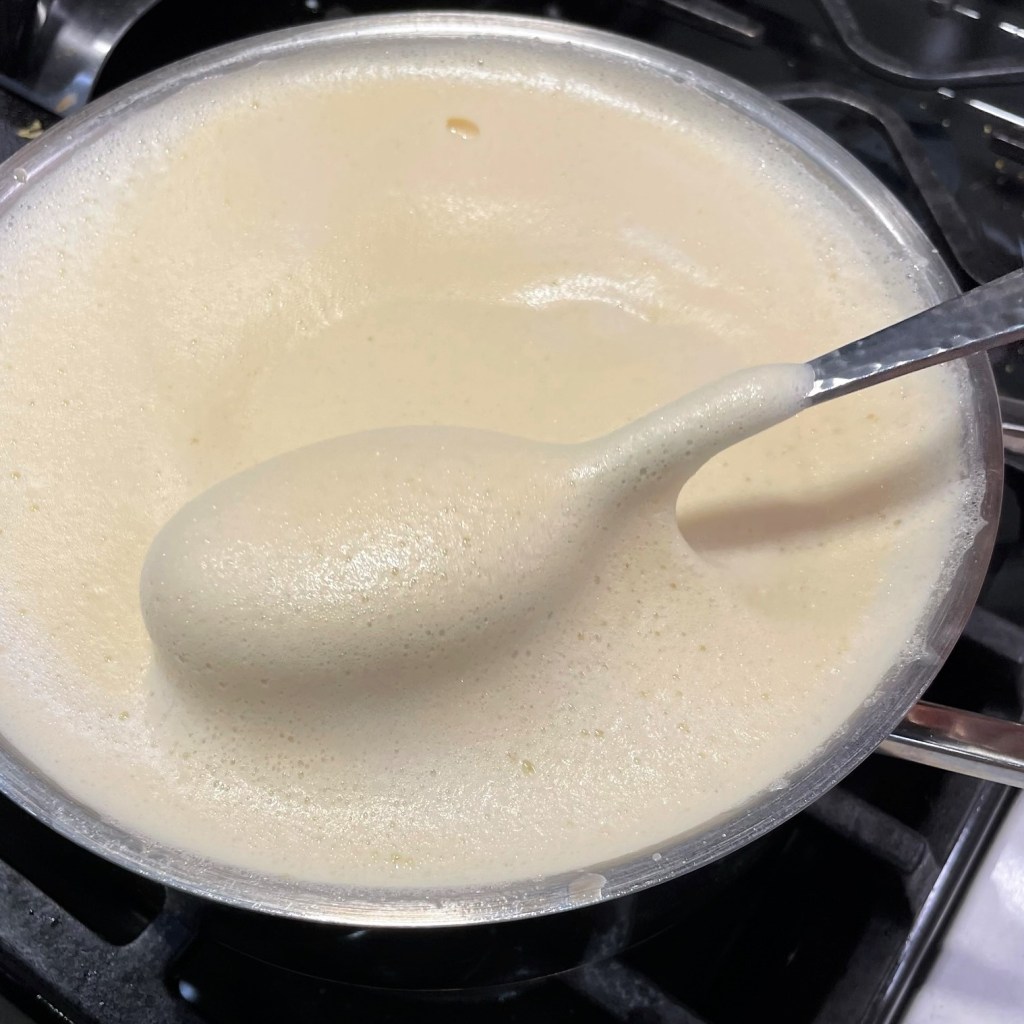
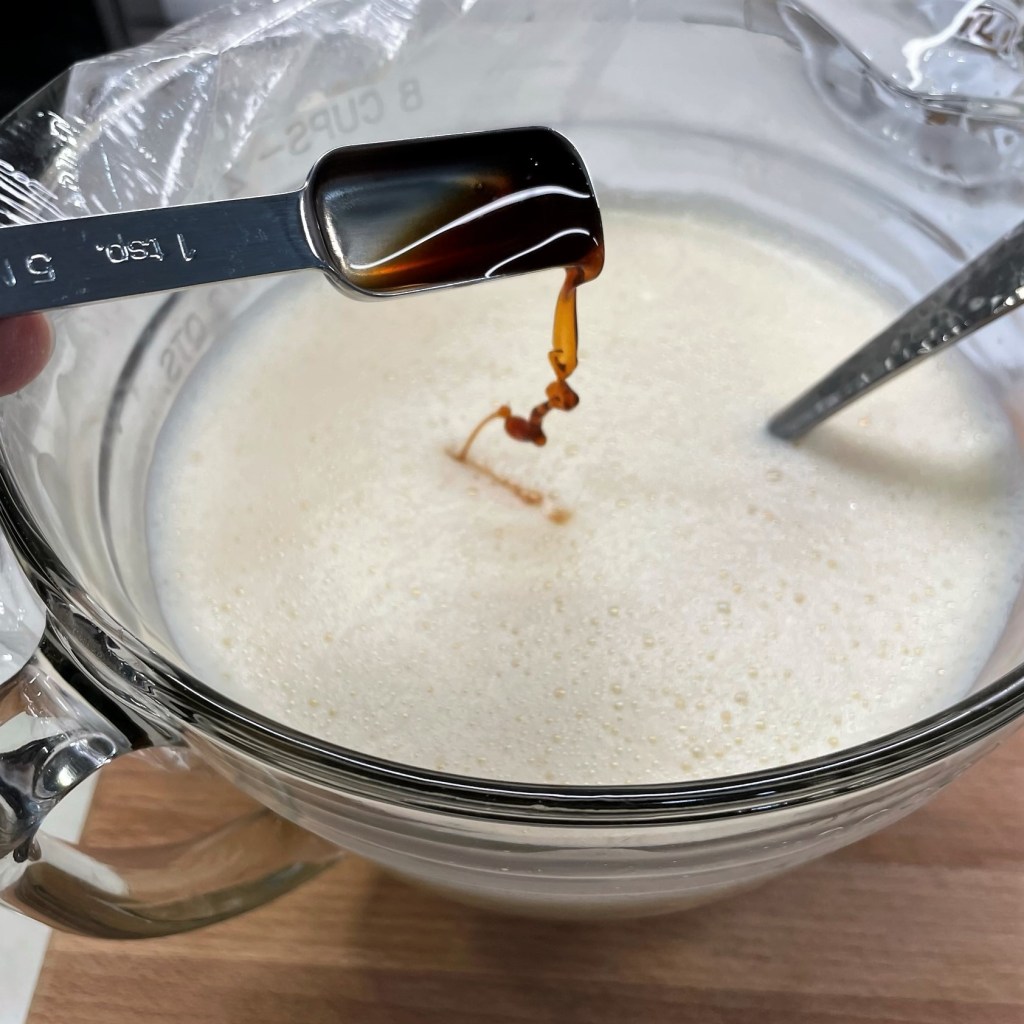
Pour the tempered egg mixture back into the saucepot and cook the whole mixture over medium heat, stirring constantly, until it is steaming again and the custard has thickened enough to coat the back of a spoon. Remove from heat and strain the custard mixture through a mesh sieve to a clean bowl. Stir in the vanilla and let it cool for a few minutes. Taste it, because oh my goodness. I must make more brown sugar ice cream!

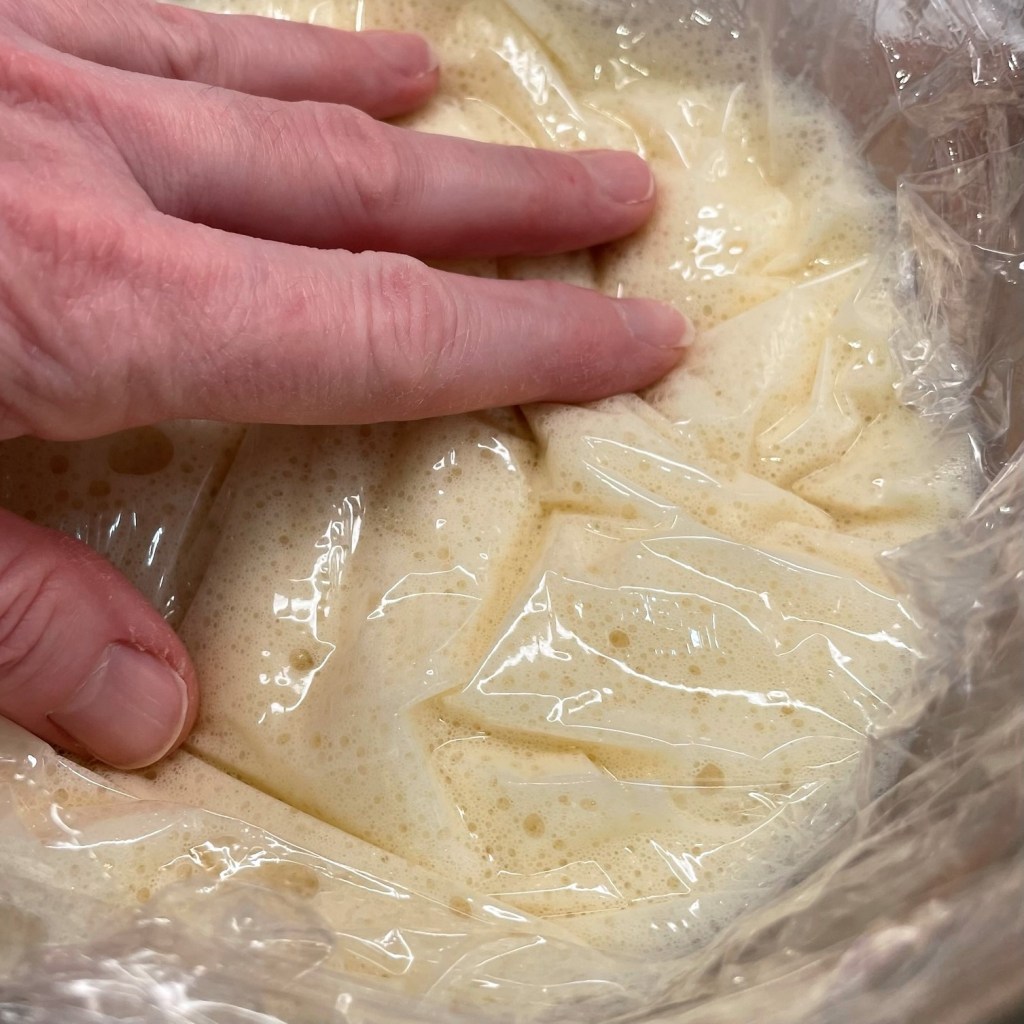
Carefully lay a piece of plastic wrap directly onto the surface of the custard. This serves two purposes—it prevents a skin from forming on the surface, and it prevents condensation from building and dripping into the mixture. Moisture droplets have a way of making unwanted crystals in the finished ice cream. Seal up the bowl, or cover it with an additional layer of plastic. Refrigerate overnight.


Bananas Foster Swirl

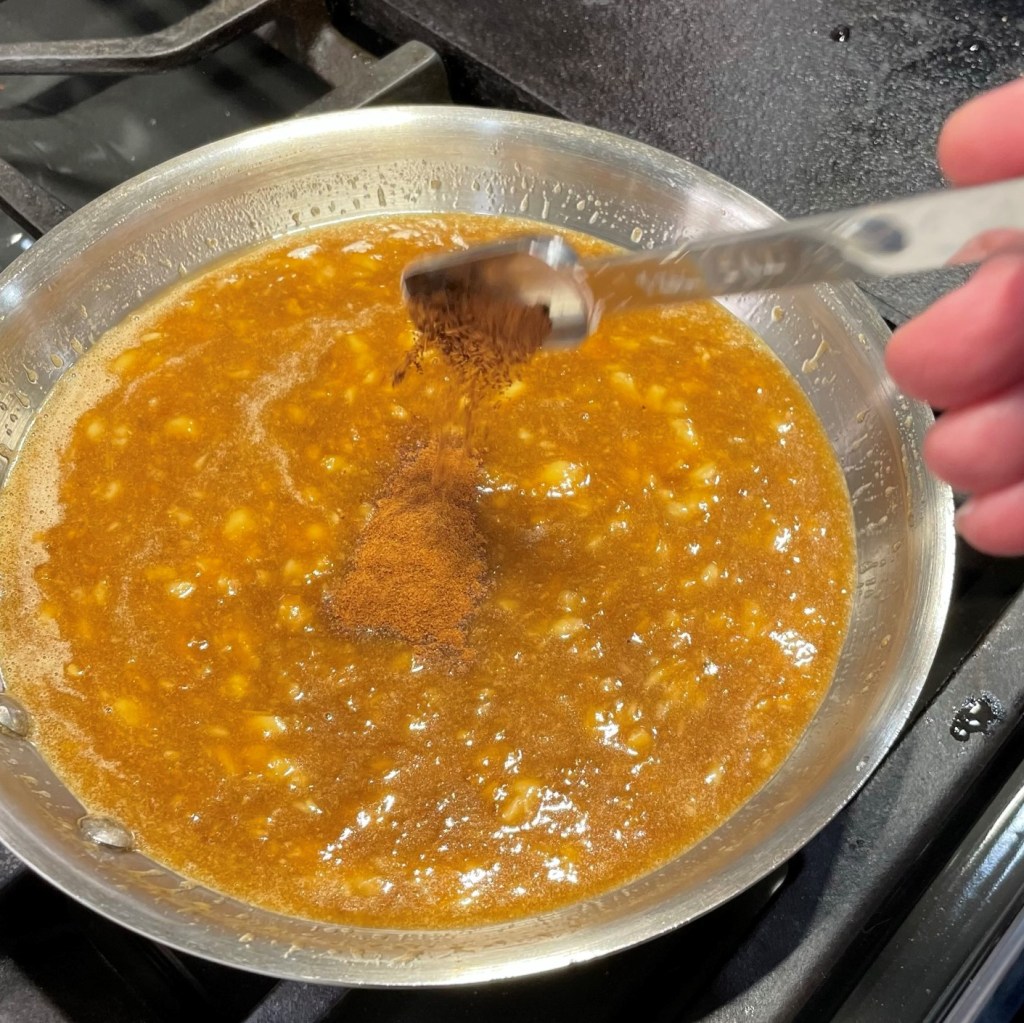
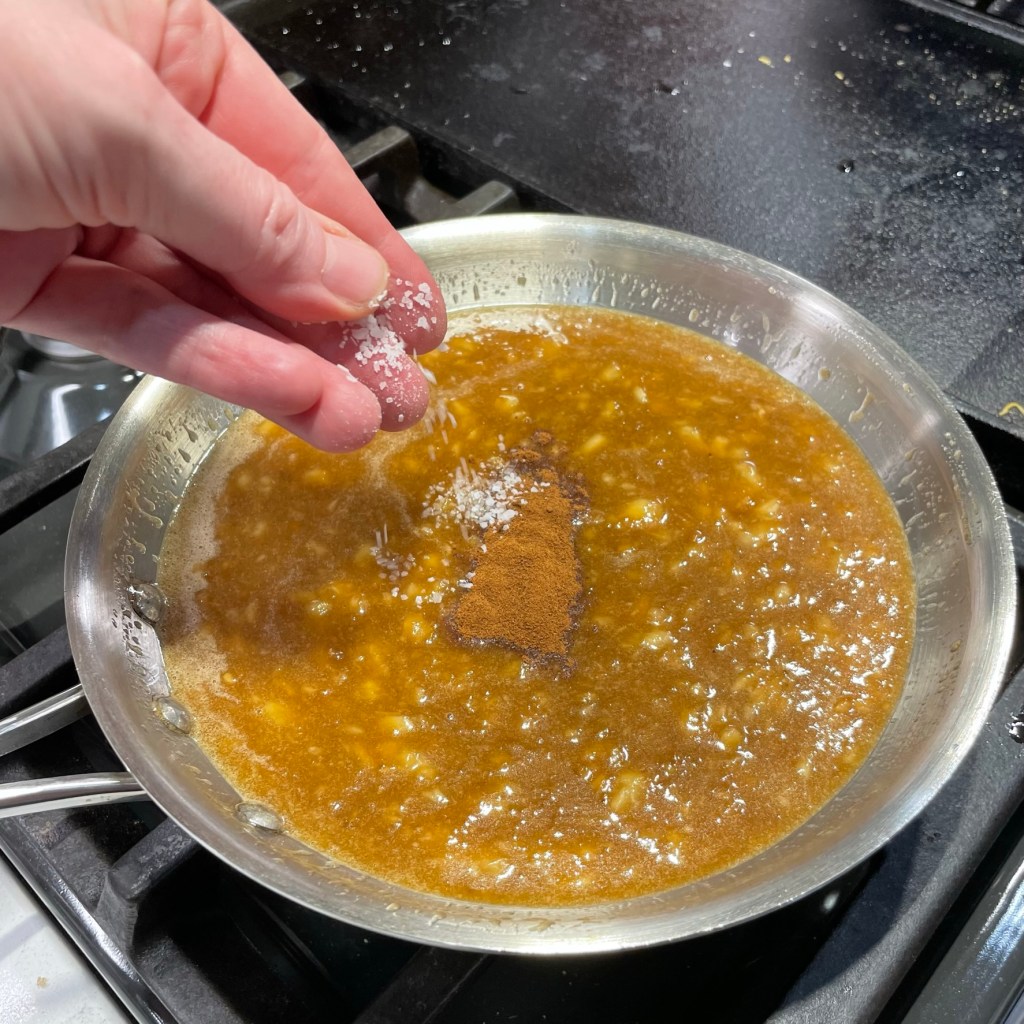
Melt the butter in a medium skillet. Stir in the brown sugar until it seems dissolved and a bit syrupy. Stir in the cinnamon and nutmeg.

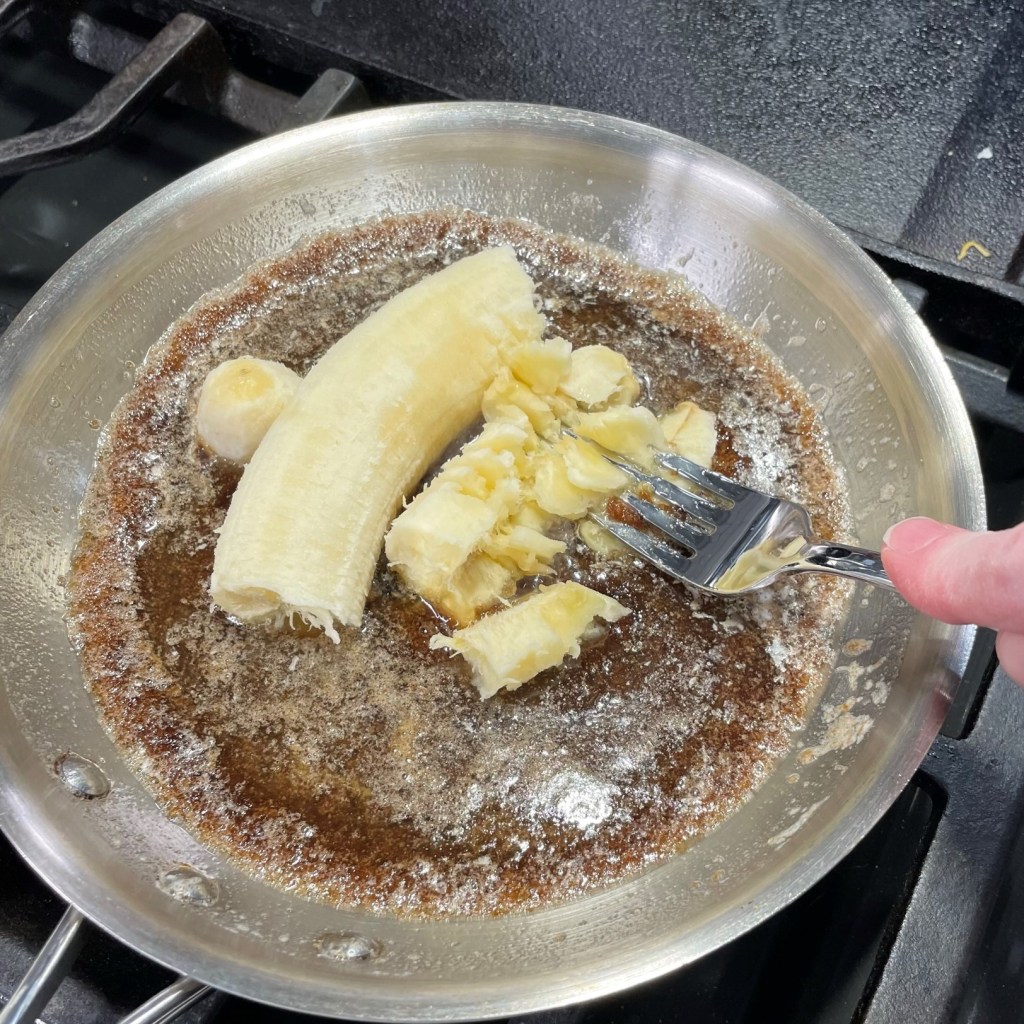
Add the bananas to the skillet, one at a time, and mash them into the syrup with a fork. It’s OK to keep a few visible chunks of banana—in fact, I recommend it. When the mixture is bubbling all over, stir in the dark rum until evenly blended. Cook a few minutes longer, until it begins to bubble again, and then remove from heat and let it cool.

Transfer the mixture to a bowl and refrigerate it overnight.


Finishing the Ice Cream

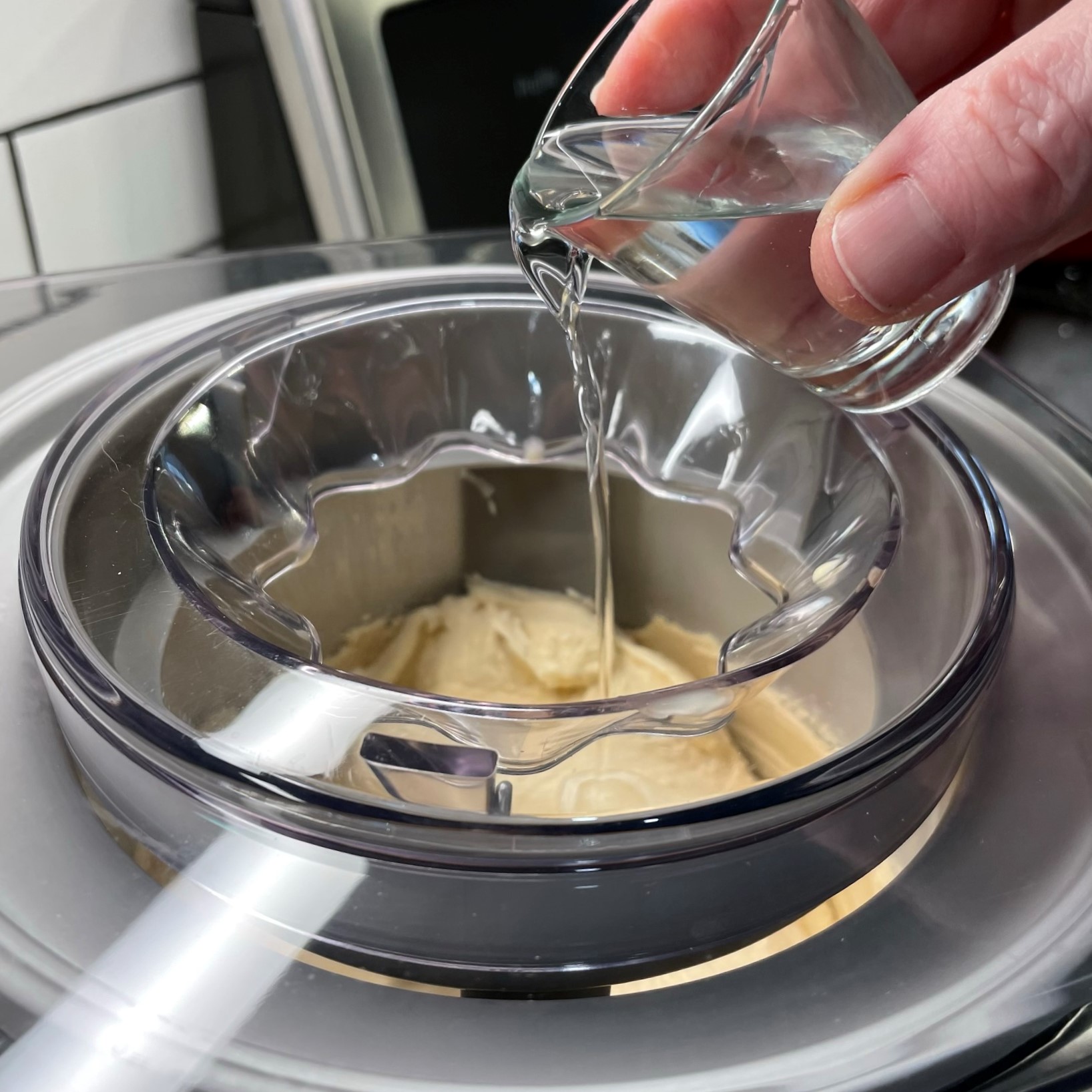
Stir the custard to reincorporate any ingredients that may have settled to the bottom of the bowl. Freeze according to manufacturer’s instructions. When the ice cream has reached the consistency of soft-serve, add the vodka or rum (if using) and churn another minute until it’s fully blended.

Layer 1/3 of the ice cream in an insulated container, then spoon or pipe about 1/3 of the banana swirl mixture over it. Continue with another 1/3 of the ice cream, then another 1/3 of the remaining swirl mixture*. Finish with the remaining ice cream. Freeze several hours to overnight.


*Note

When this recipe was finished, I had about 1/4 cup extra Bananas Foster Swirl mixture left over. You can discard this, or mix it into some muffin or pancake batter, or stir it into Sunday morning oatmeal!