Broccoli, Artichoke and Red Pepper Pizza

What’s your favorite veggie pizza?

While you ponder, I’ll explain how I answered the same question, posed by my high school bestie, Christine. She reached out a couple of weeks ago for ideas, as her daughter had a vegetarian friend coming to visit for a few days and she wanted to help her feel welcome. When you aren’t in the habit of making meatless meals (or if, like Christine, you have allergies to all the common plant-based proteins), the concept of meatless menu planning can feel daunting. I know that feeling well— it’s exactly how I feel about making desserts! 

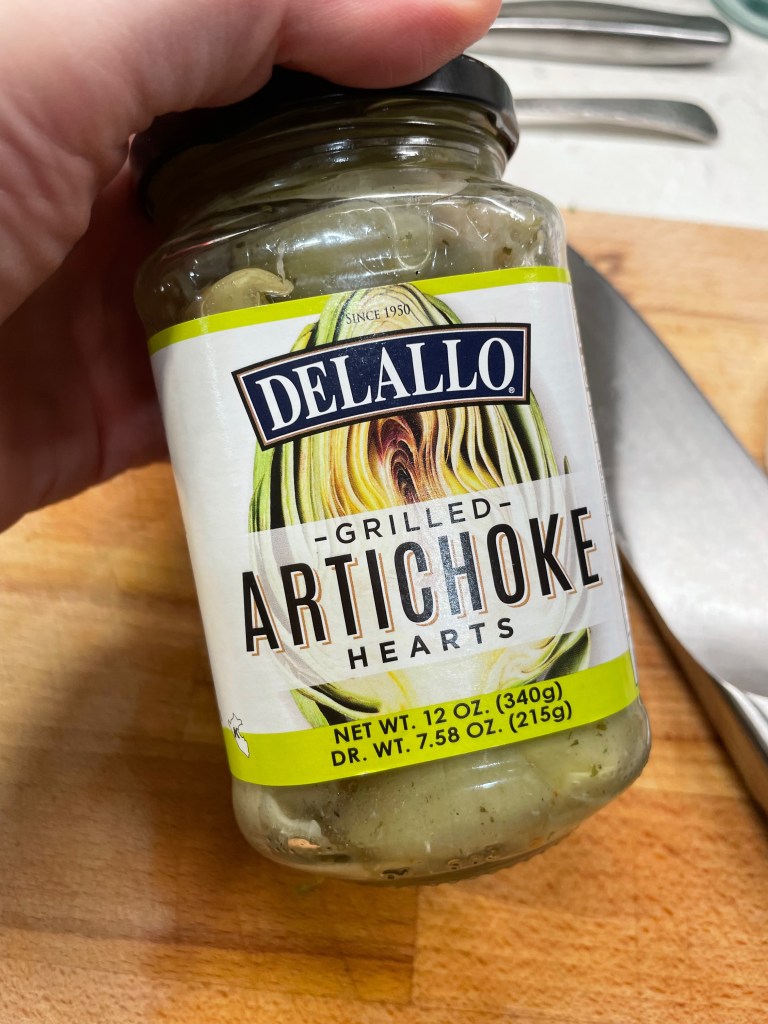
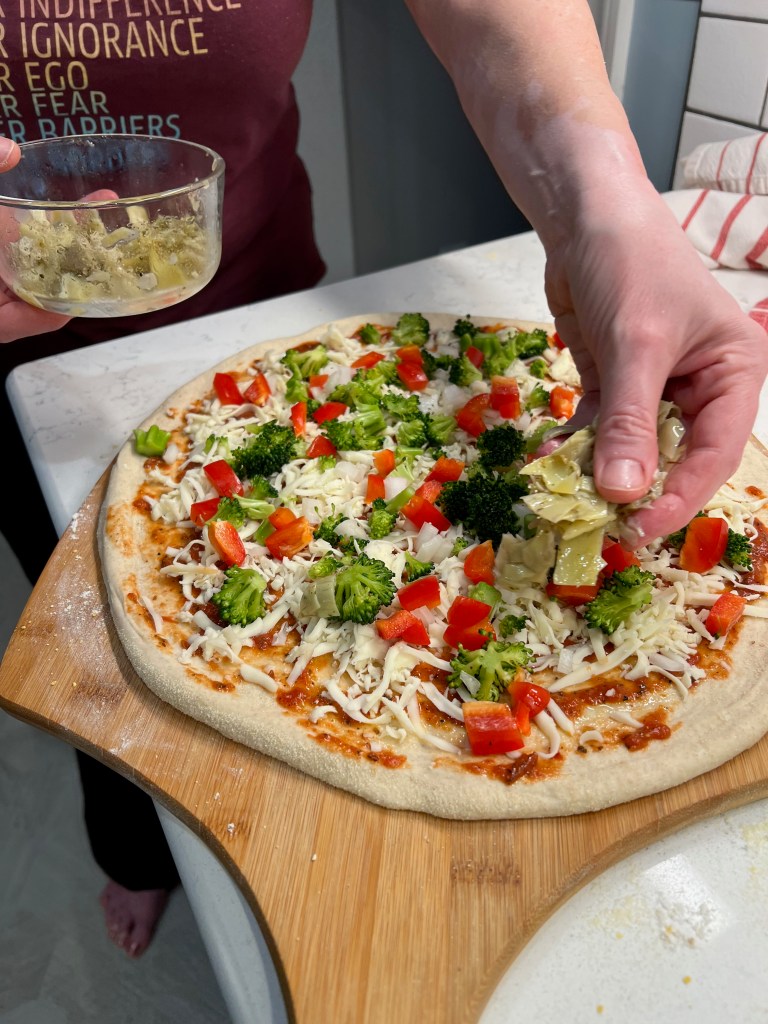
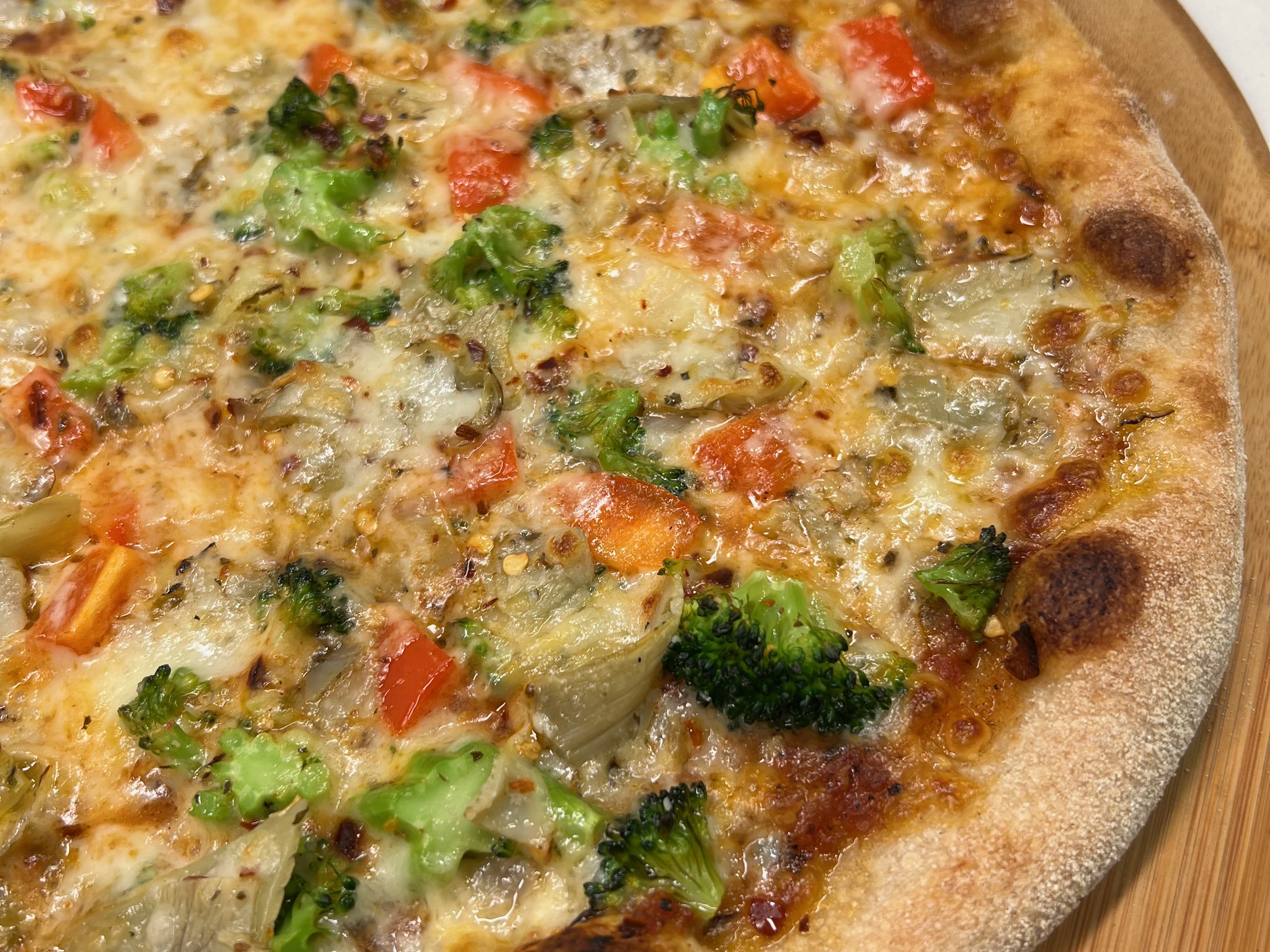
This pizza— with generous scatterings of chopped fresh broccoli, red bell pepper and marinated artichoke hearts— is my current favorite all-veggie pizza. What makes it work for me is the balance of flavors and textures that these ingredients bring to the slice. The red bell pepper bits are vegetal but sweet. The artichoke hearts, especially if you use the ones marinated with olive oil and herbs, are soft and slightly tangy. And the broccoli has a firm enough texture to make the pizza substantial and filling. 

With a healthy dose of fiber, protein (both the artichoke and broccoli contribute a good amount) and vitamins (the red bells have more Vitamin C than oranges), plus all that flavor, this pizza is a winner, any way you, ahem, slice it. 😉
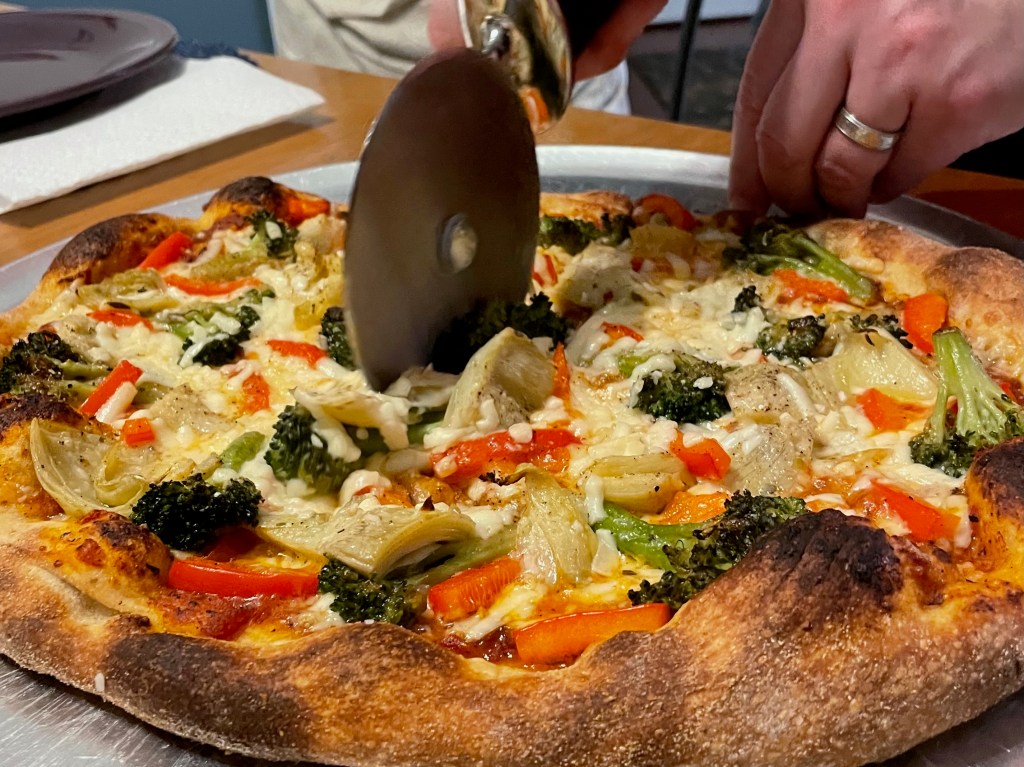
I love the sound when my husband rolls the pizza cutter through the crispy, oven blistered crust! YUM!

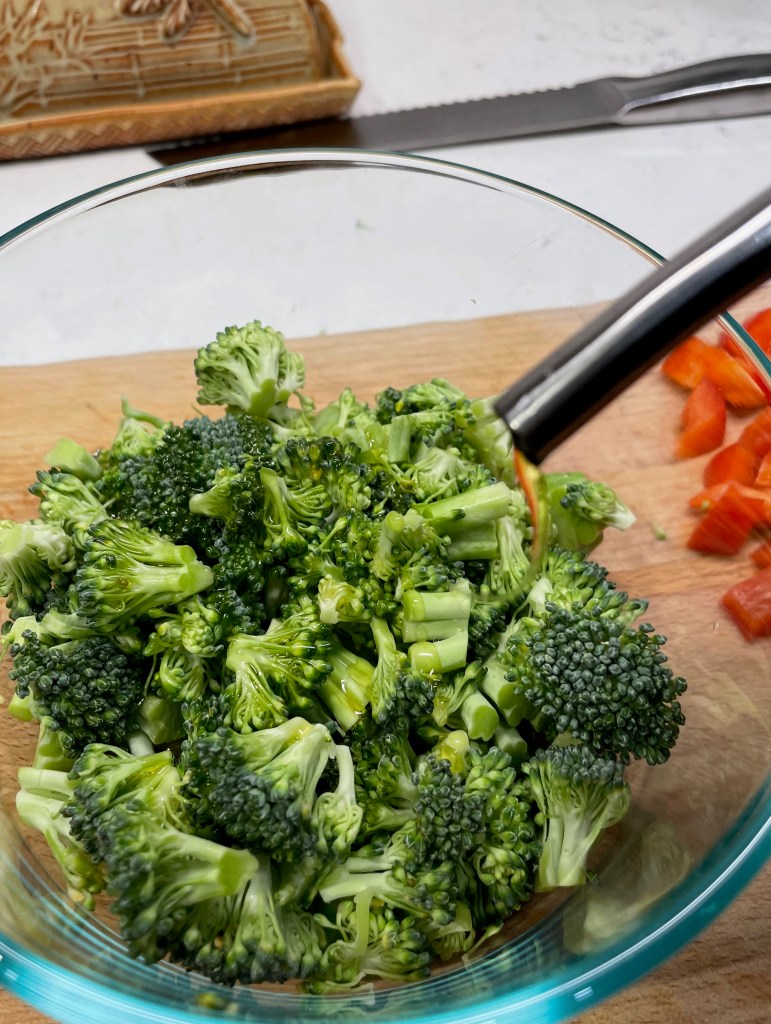
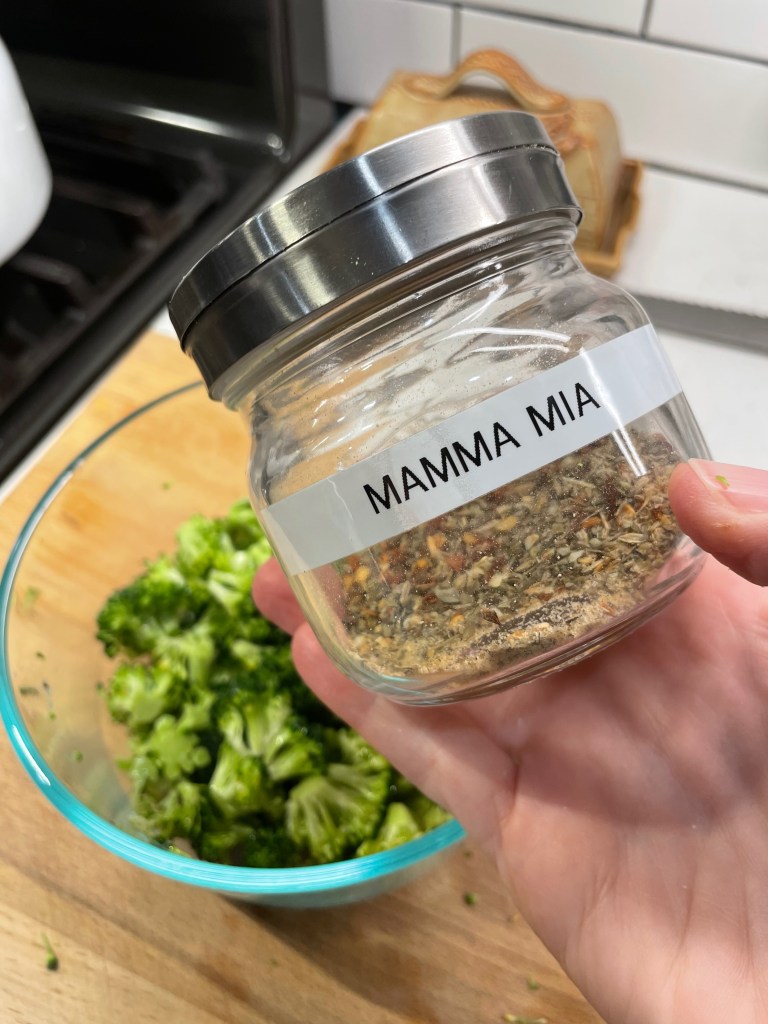
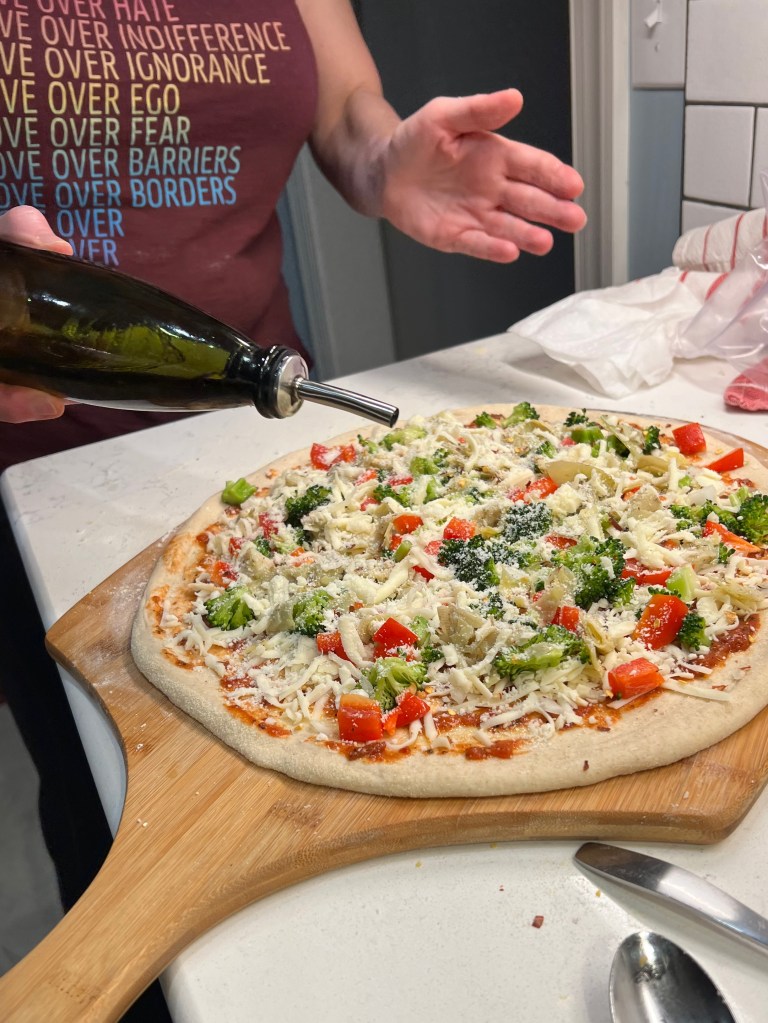
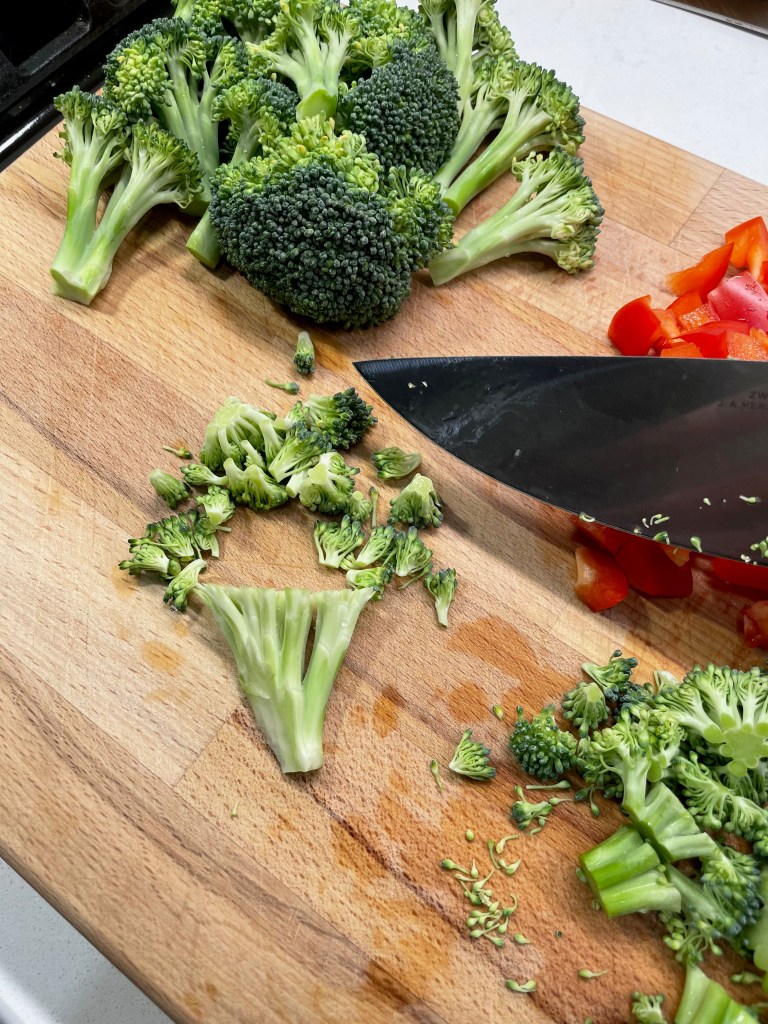
The first time I made this pizza, I used Asiago cheese (delish) and I prepped the ingredients in larger chunks, which made for tantalizing photos (as you can see above), but every bite tasted different because the pieces were farther apart. I also had to add an extra step of par-cooking and chilling the broccoli before topping the cheesy base of the pizza. On this go-around, I kept it simple, with smaller chopped pieces of raw broccoli and smaller chopped artichokes, and the end result was not only easier but a better outcome for the variety of flavor we enjoyed in each bite. A quick drizzle of olive oil and some Italian seasoning revved up the flavor of the broccoli.

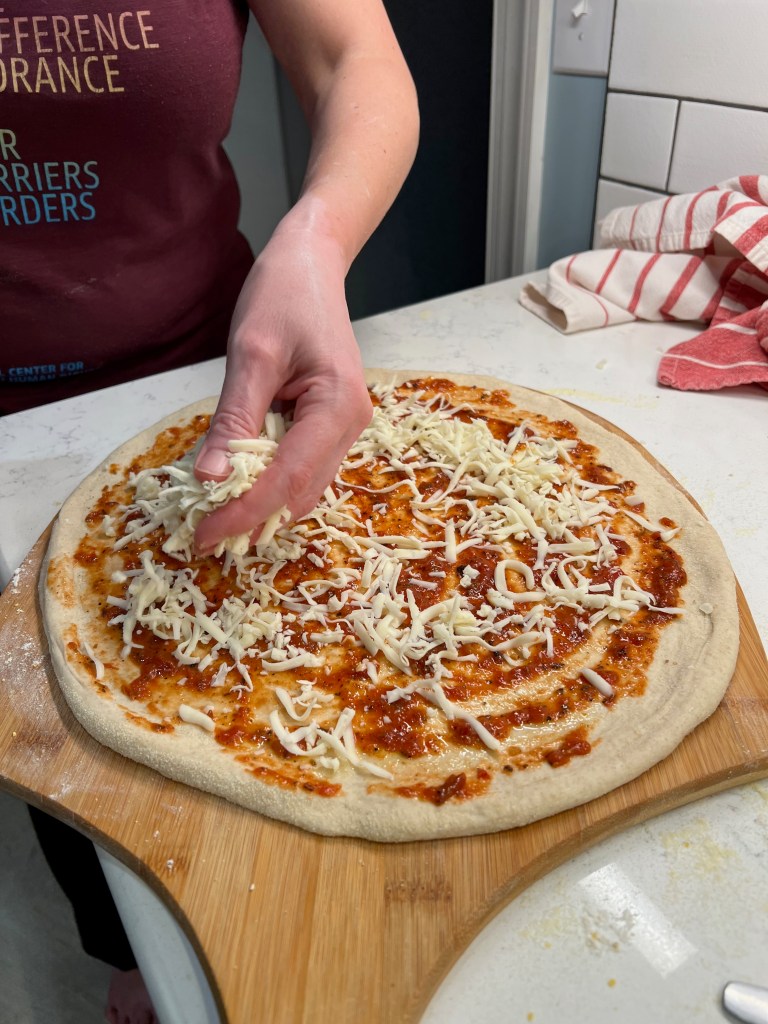
As for the rest of the pizza, you know how that goes at my house. My crust is almost always sourdough, cold-fermented for two days in the fridge drawer, hand shaped and topped with a thin layer of tomato sauce plus hand-grated whole milk mozzarella. A little Parm-Romano blend cheese sprinkled on at the end, plus a quick drizzle of extra virgin olive oil, which is a little trick I picked up during my “backstage” visit to Modern Apizza in New Haven a few summers ago. Here’s a link to my adventure at Modern, in case you missed it! 

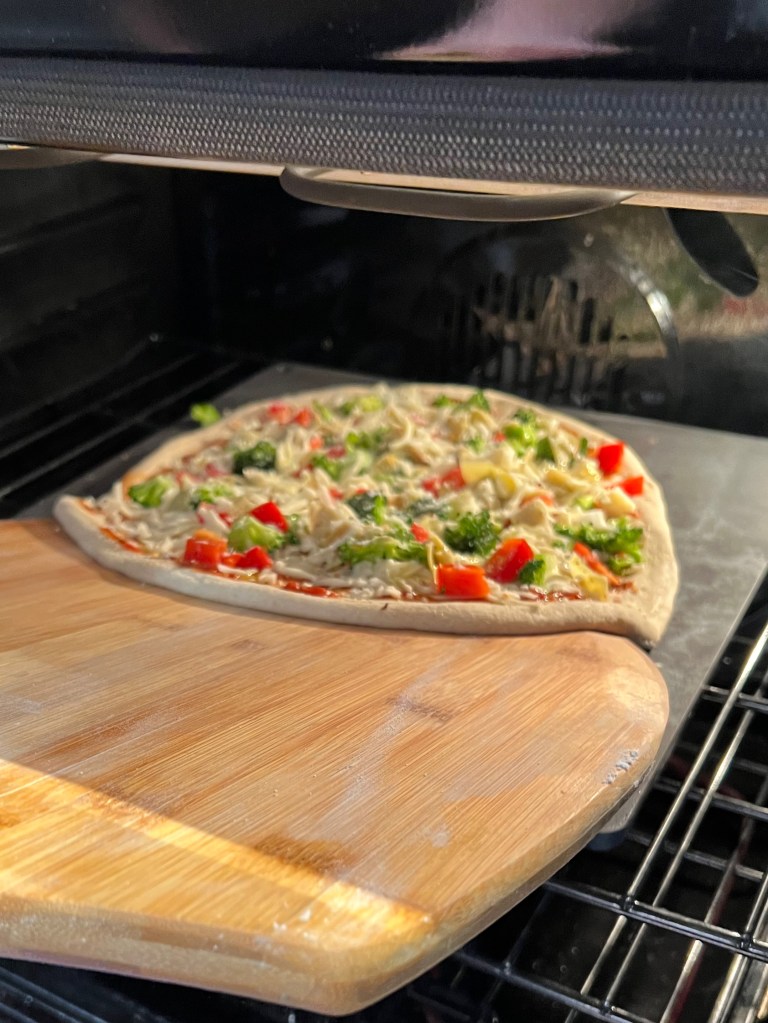
We use a steel for all of our indoor pizzas, preheated for about one hour at 550° F, which is the hottest our home oven goes. The intense heat permeates the steel slab for an exceptional crust, and our pizzas are finished to blistery perfection in about six minutes. It’s the closest we can get to brick oven-style pizza at home.

While that bakes, a quick (but important) mention about using cheese on a pizza for vegetarians, especially those who have chosen a meatless lifestyle out of concern for animals. Your guests may be OK with egg and dairy products, but be aware that many hard cheeses, including traditional Parmesan and Pecorino, are not technically vegetarian because animal rennet (an enzyme from the digestive system of young sheep or cows) is used in their production. This enzyme cannot be harvested from living animals, and that means it’s off the table for those following strict vegetarian practices. Thankfully, there are a few producers who have managed to adapt to using a plant-based enzyme to make such cheeses in a way that is approved for vegetarians. It’s a good rule of thumb to scan the label— if it does not explicitly state that it is suitable for vegetarians, you can bet that it isn’t. I only learned this myself a few years ago, so it bears sharing with my foodie friends. 

The smaller bits of veggie definitely work better, making every slice consistently delicious!

So there you have it, my current favorite veggie pizza! After the click-to-print recipe below, I’ll share links to a few others we’ve enjoyed at our house, including the one that Christine found irresistible for her pizza party with her daughter and visiting friend.

Now, your turn— what’s your favorite veggie pizza? I’m always on lookout for a new recipe, so please share! 

Broccoli Artichoke and Red Pepper Pizza
  • Servings: 8 slices
  • Difficulty: Average
  • Print

There's so much flavor and texture going on in this pizza, who needs meat?


Ingredients

  • One fresh pizza dough ball, about 11 oz., at room temperature
  • 1/4 to 1/3 cup favorite pizza sauce (we like Dei Fratelli’s “fire roasted”)
  • 2/3 cup hand-grated whole milk mozzarella
  • 2 cloves garlic, minced
  • 1 cup chopped raw broccoli, tossed with a teaspoon of olive oil and Italian seasoning
  • 1/2 cup diced red bell pepper
  • 1/2 cup chopped marinated artichoke hearts
  • 2 Tablespoons chopped fresh onion (sweet or yellow work well here)
  • 2 Tablespoons grated Parm-Romano blend cheese
 (check labels to ensure suitability for vegetarians)
  • Extra virgin olive oil to drizzle

We bake all of our pizzas at very high temperature on a steel slab, which gives us a near-brick oven quality pizza. If you will be using a pizza stone or pan, you may need to adjust temperature and baking time accordingly. I would highly recommend, for anyone who loves making pizza at home, investment in a pizza steel. I promise, you won’t regret it!

Directions

  1. Preheat oven with steel on center rack for one hour at 550° F. Dust pizza peel with flour and medium grind cornmeal for easy transfer in and out of oven.
  2. Shape dough by hand into 14-inch round, taking care not to deflate too many air bubbles. Salt and pepper the dough, and then spread sauce evenly over dough. You should be able to easily see the dough through the sauce.
  3. Scatter mozzarella all over the sauce, then top with fresh garlic, broccoli, peppers, artichoke hearts and onions. Sprinkle Parm-Romano over the toppings and give the whole pie a quick drizzle of olive oil.
  4. Transfer quickly to preheated steel and bake for six minutes, turning pizza after four minutes if needed for even browning of the crust.


Other veggie pizzas you might enjoy, left to right:
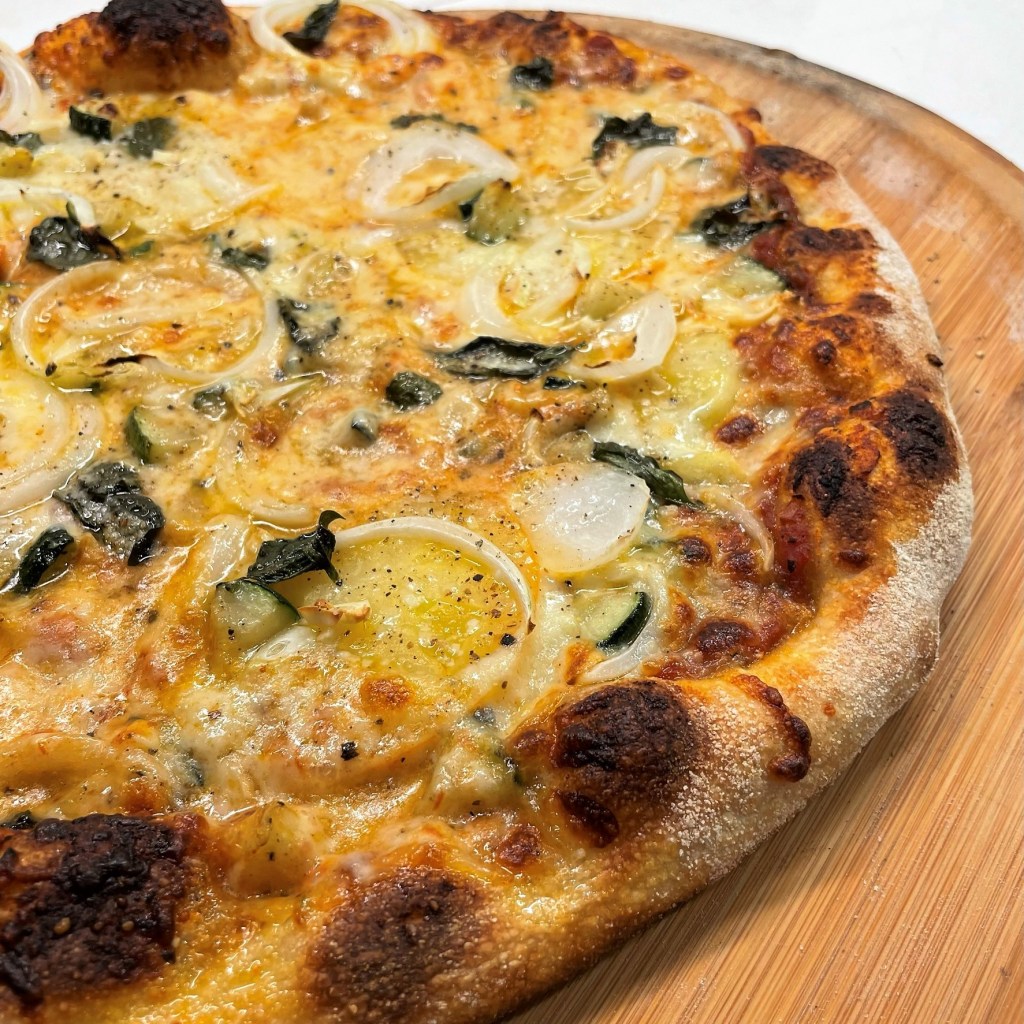
Zucchini and yellow tomato pizza, which I’m really looking forward to making again this summer, when both of these vegetables reach their peak flavor! 

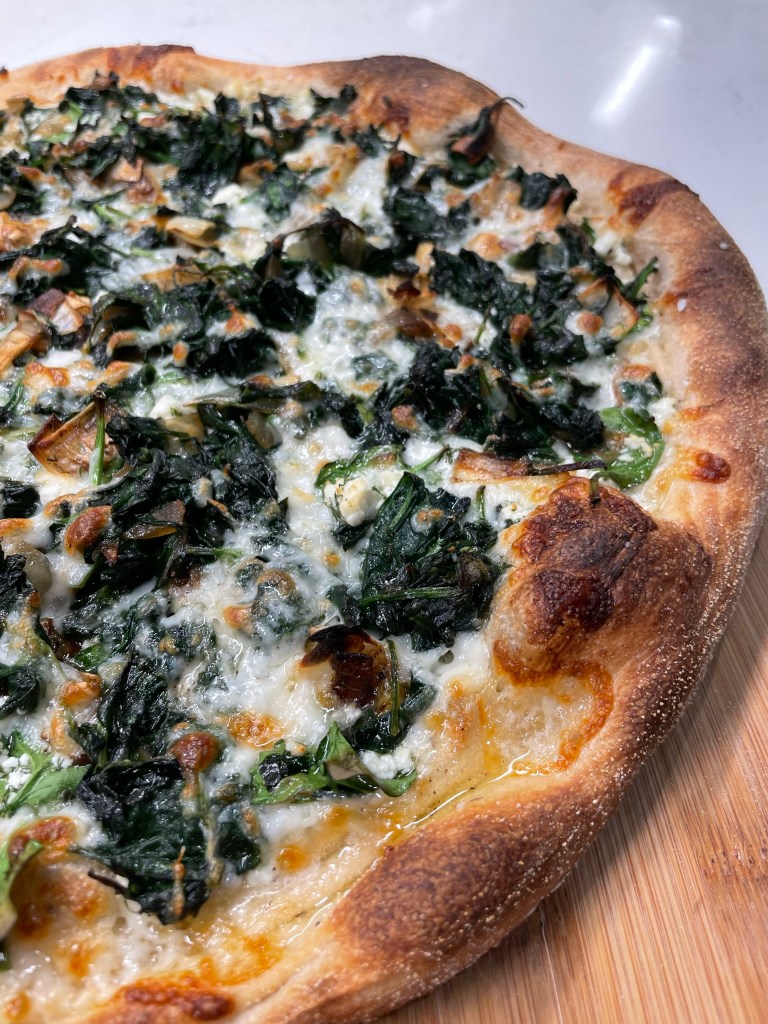
Spanakopizza, loaded with fresh and sautéed spinach, leeks and feta, with a scatter of fresh dill for authentic Greek flavor. This is the one Christine made, and she declared it a big hit!

New Haven-style fresh tomato pizza, another one we enjoyed when we visited Connecticut, and a classic flavor for summer— almost like a margherita pizza but with fresh slices of tomato. So good!

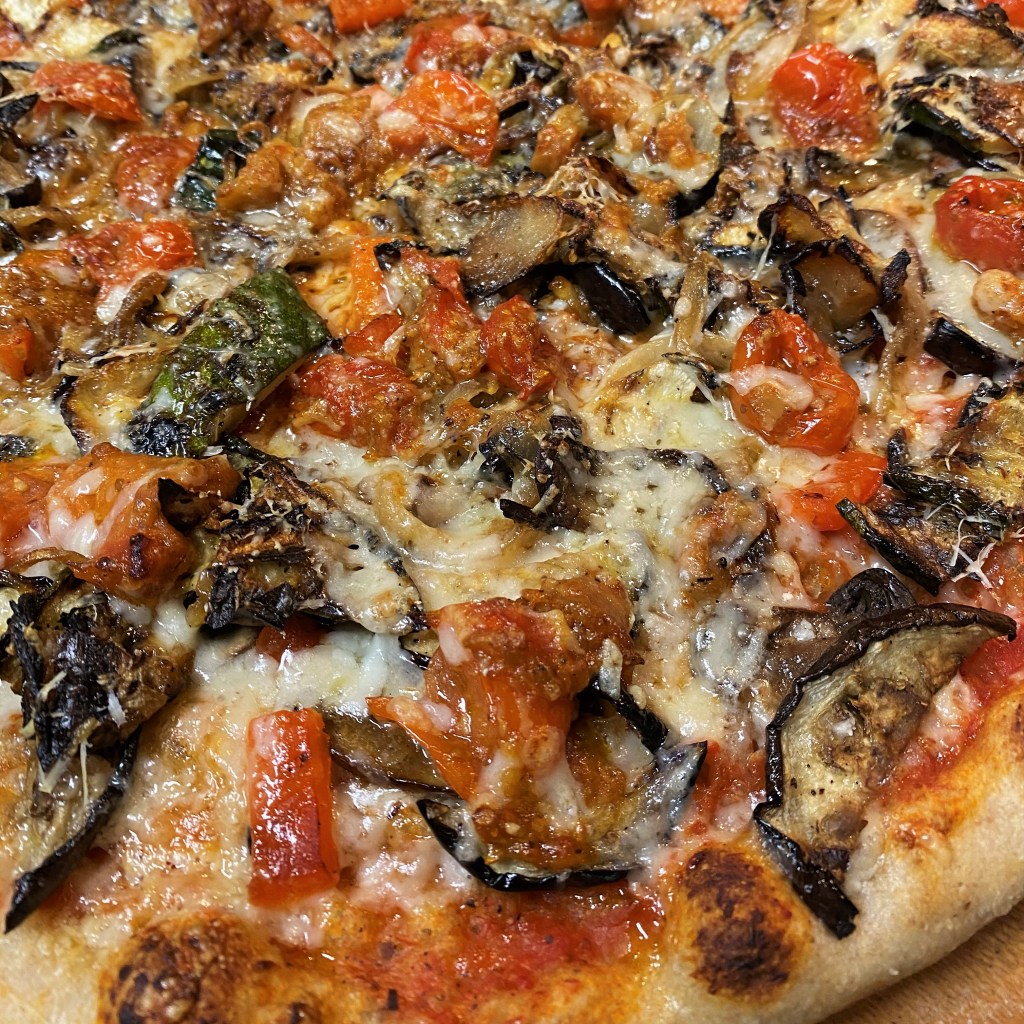
Ratatouille pizza, especially if you take time to grill the eggplant, zucchini, peppers and onions before piling them onto your favorite tomato sauce. 

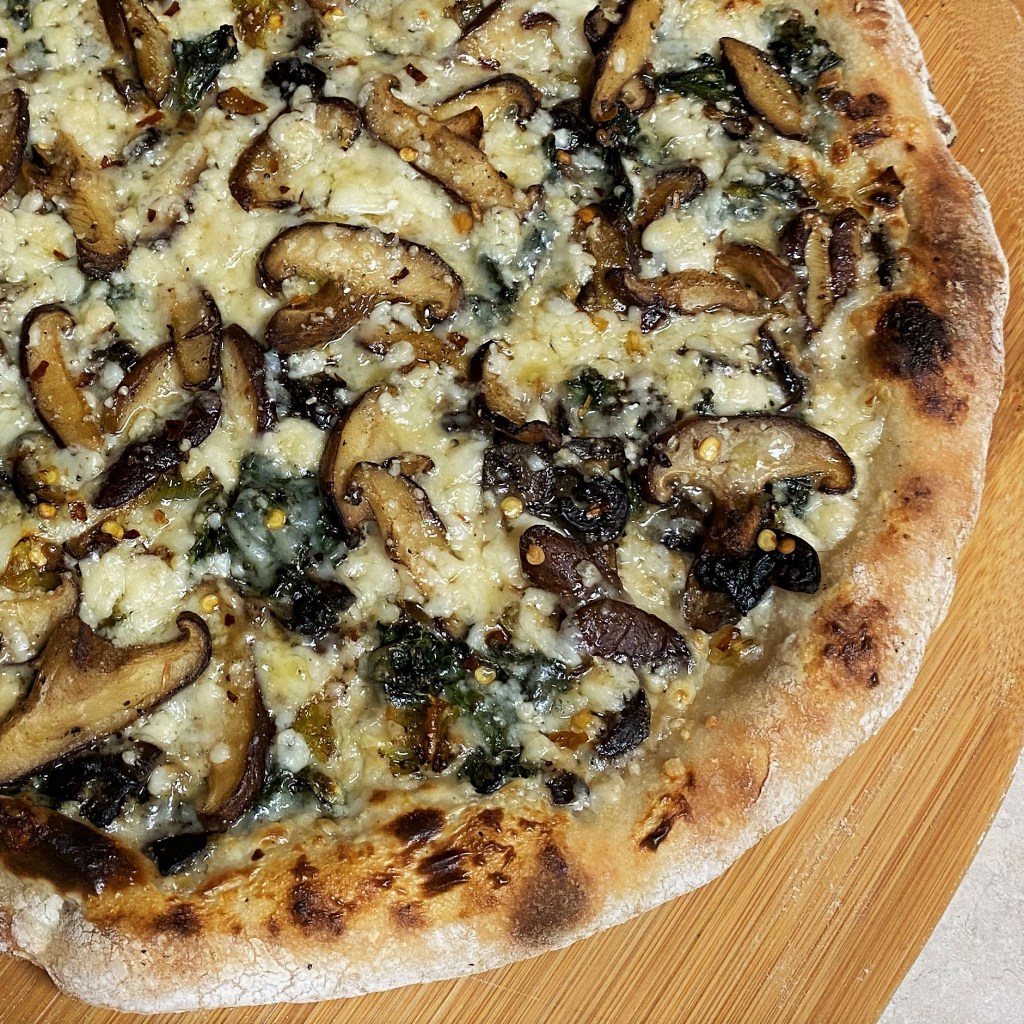
Creamy garlic mushroom pizza, with a roasted garlic béchamel base and two kinds of mushrooms (plus spinach) turns pizza night into a special occasion. My husband has been begging for this one to come back up in rotation, so I’ll be making it again very soon.

Eggplant parm pizza, but omit the crumbled Italian sausage, which I only used for that recipe because we had a very small amount left over from another meal. Trust me, this pizza would totally rock without the sausage. For this to be truly vegetarian, be mindful of the Parmesan label, to be sure that it uses plant enzymes rather than animal rennet.

Autumn Minestrone

This post is kind of a recipe within a recipe, and my inspiration for the soup was born from my effort to make pasta using sourdough discard. I know— who would imagine such a thing, right? When Les and I traveled to Nashville, Tenn. recently, we met some friends for dinner and got to talking about gluten issues that each of them suffer. Our friend, Dick, said he had found real sourdough bread more digestible and that a few gluten-free breads were helpful to satisfy his carb cravings, but that pasta had been another story; it always left him feeling bloated and uncomfortable, and he didn’t enjoy the texture of the gluten-free options on the market. He knew about my food blog, and he said, “if you could make a real pasta that I could eat and enjoy…”

And over here was me— just hating the thought of someone missing out on a favorite food. There has to be a way, and I’m on a mission to find a way to ease the uncomfortable symptoms that gluten brings to people with mild or moderate sensitivities. If I can figure this out, and then advance to making an egg-free version that is suitable to dry, I will send some to Dick for feedback. My version is not gluten-free, obviously (I use wheat flour), but the fermentation process changes the gluten structure and exhausts the anti-nutrients that mess with non-celiac individuals, and that just might be enough for Dick. We’ll see.


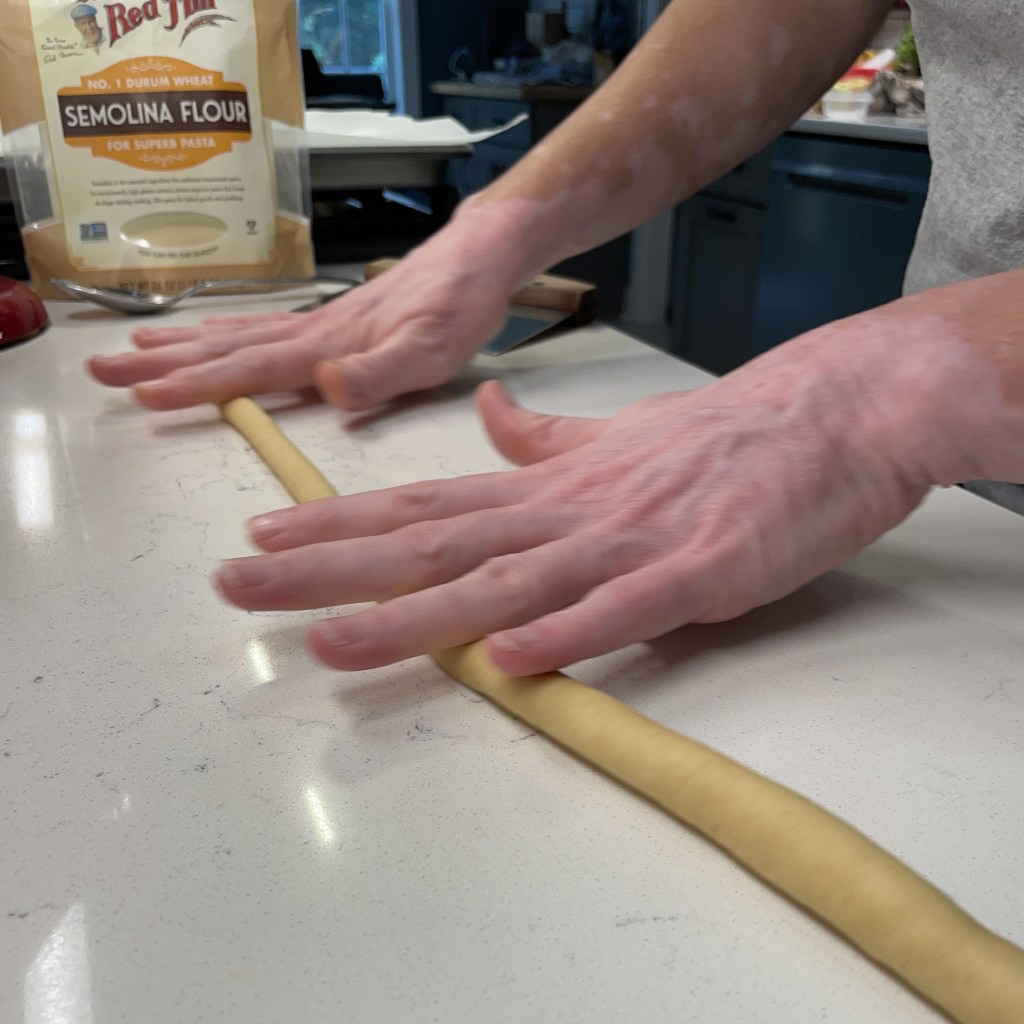
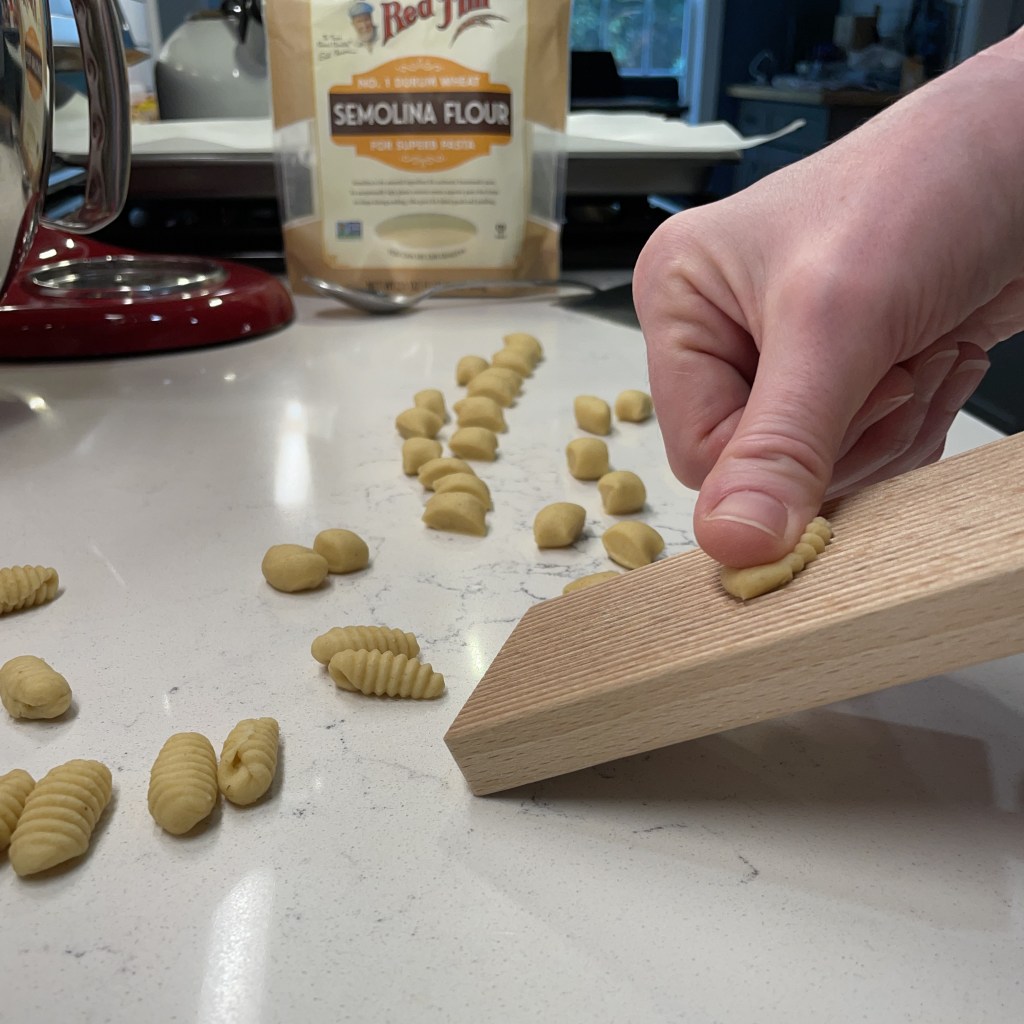
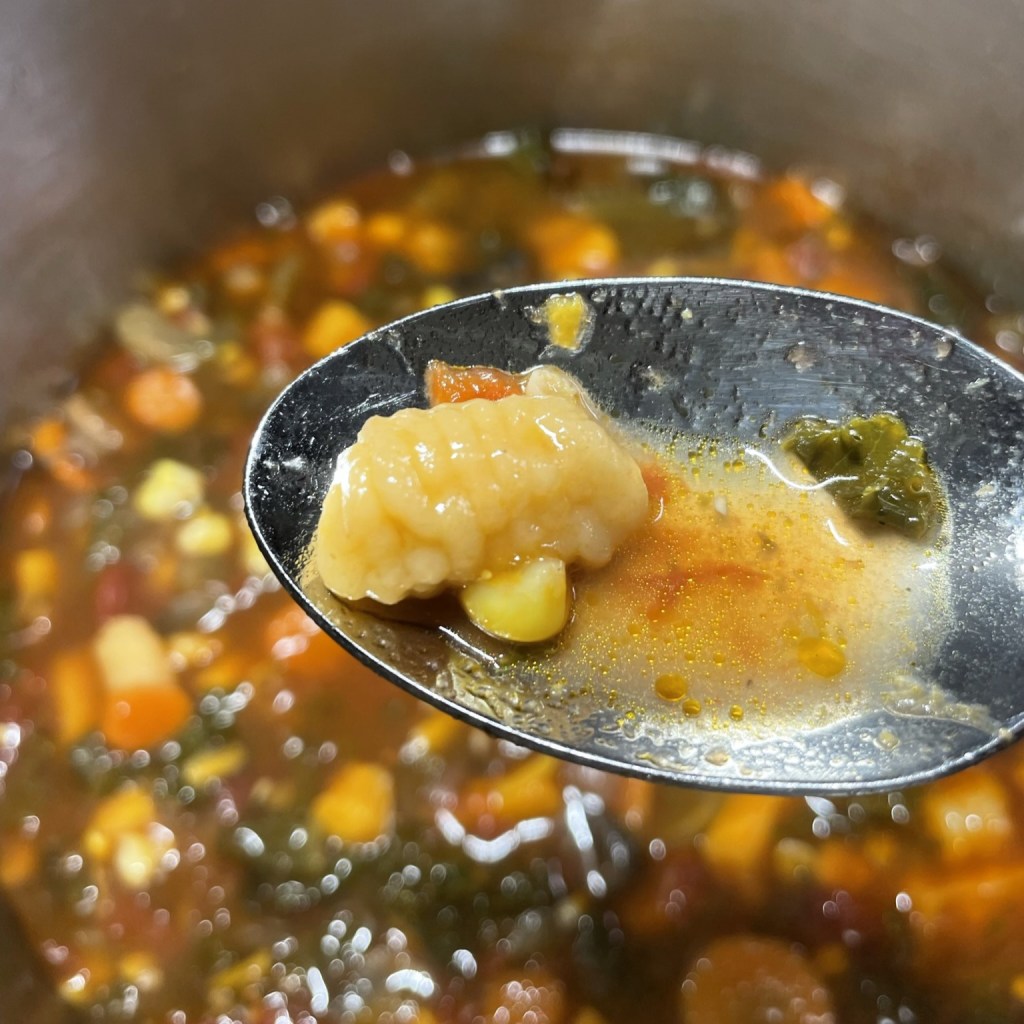
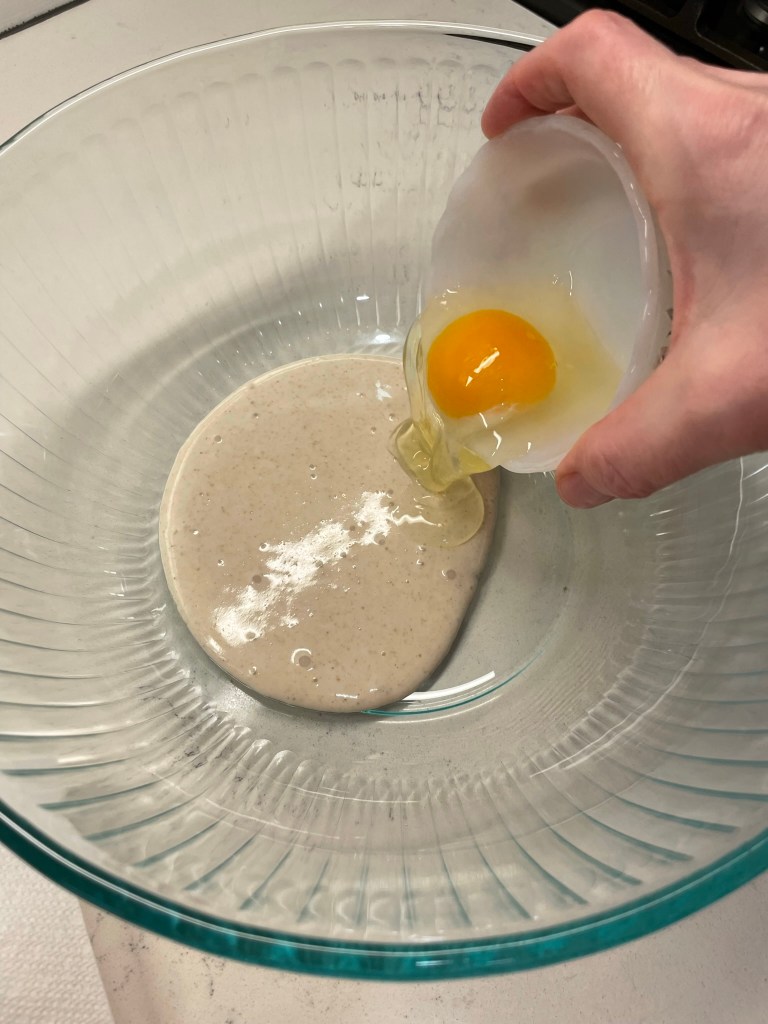
I’ll let you know how things progress with the sourdough pasta quest, but my immediate challenge was finding a good way to use my test batch. I used a combination of all-purpose, white whole wheat and semolina flours, plus sourdough discard and eggs, to make my pasta dough. It had been chilling in the fridge for a day, and I rolled it into ropes and shaped it into little gnocchi-meets-shell-shaped things. The first thing that came to mind for these little bites was soup, and here we are!

Mmmm, so good!

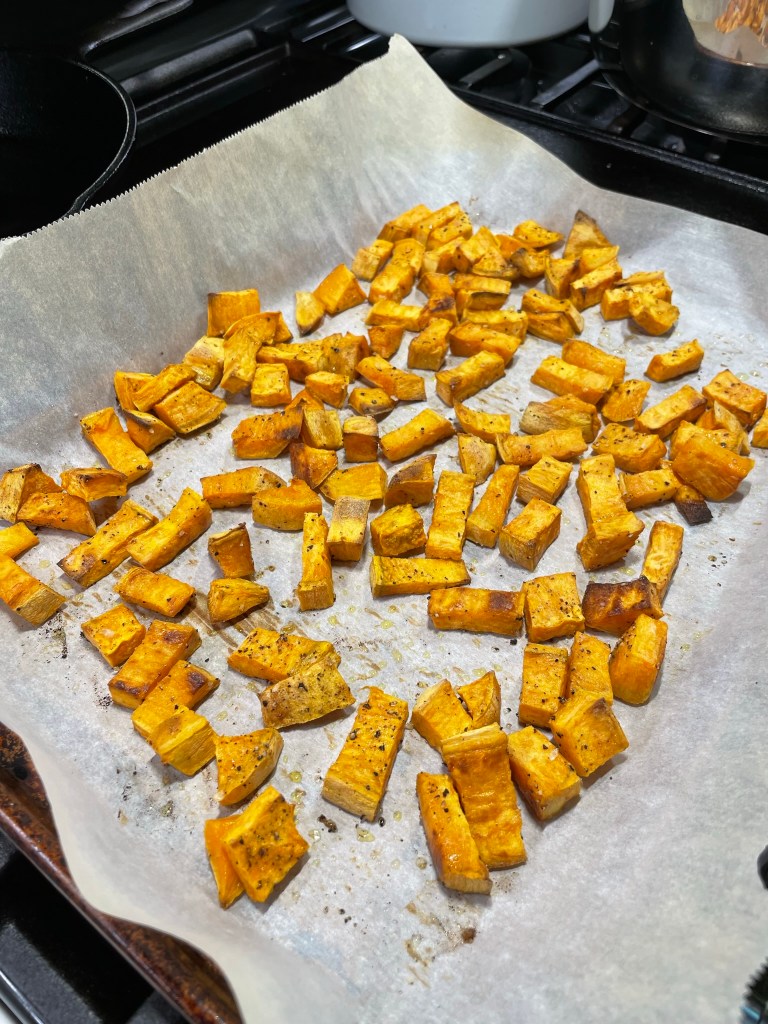
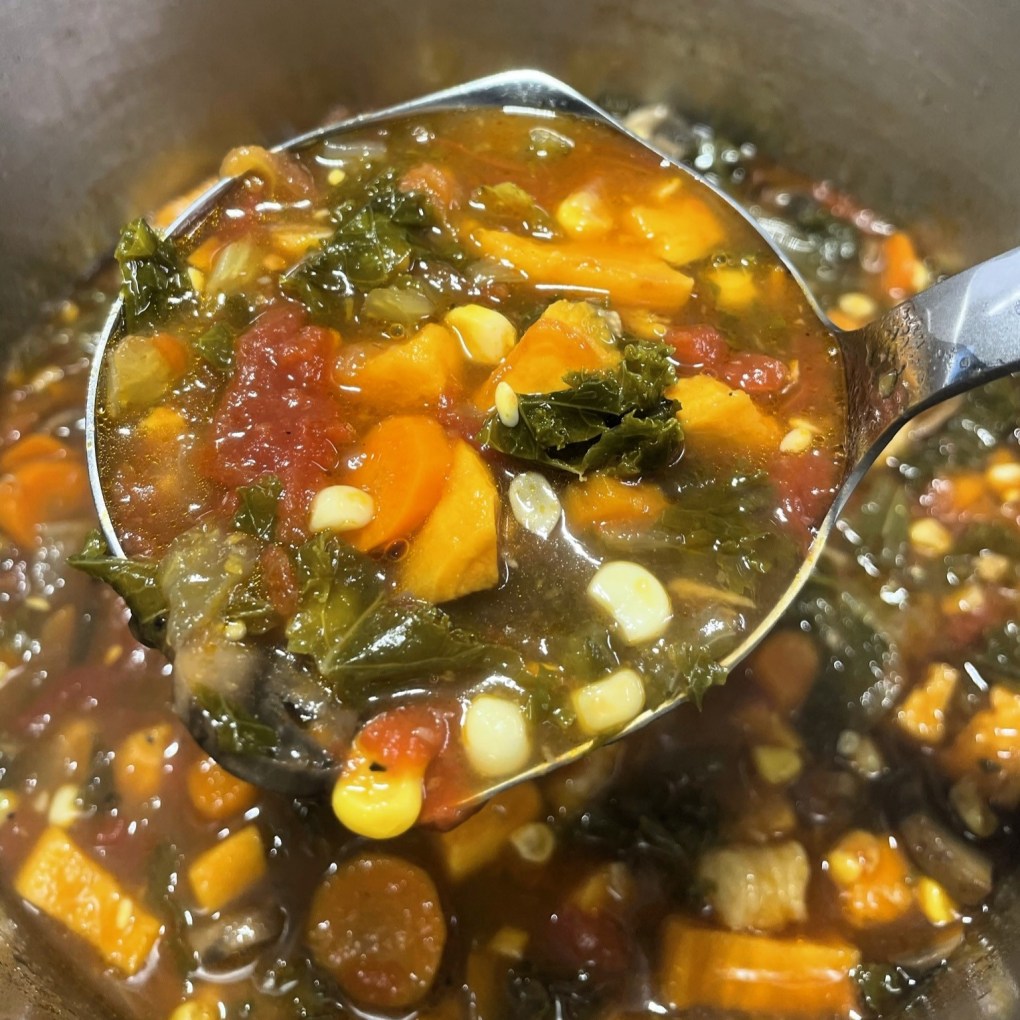
This soup brings together the best of two things for me— a whole bunch of terrific early fall ingredients and an all-day simmered vegetable soup. Sweet potatoes are abundant already this season, so I cut up a large one and roasted it with a touch of olive oil, salt and pepper. I could have put the cubes right into the soup, but I knew this would be a long simmer and I didn’t want them to turn to mush. Besides, roasting sweet potatoes caramelizes them and intensifies their autumn flavor. This turned out to be worth the extra step, for sure.


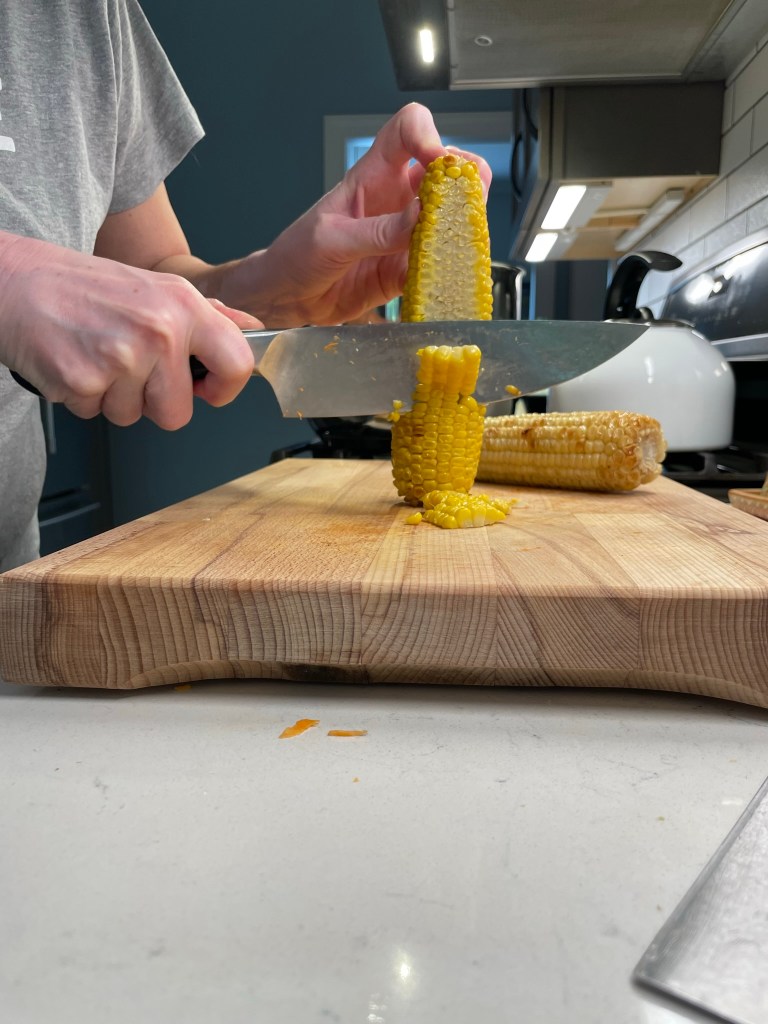
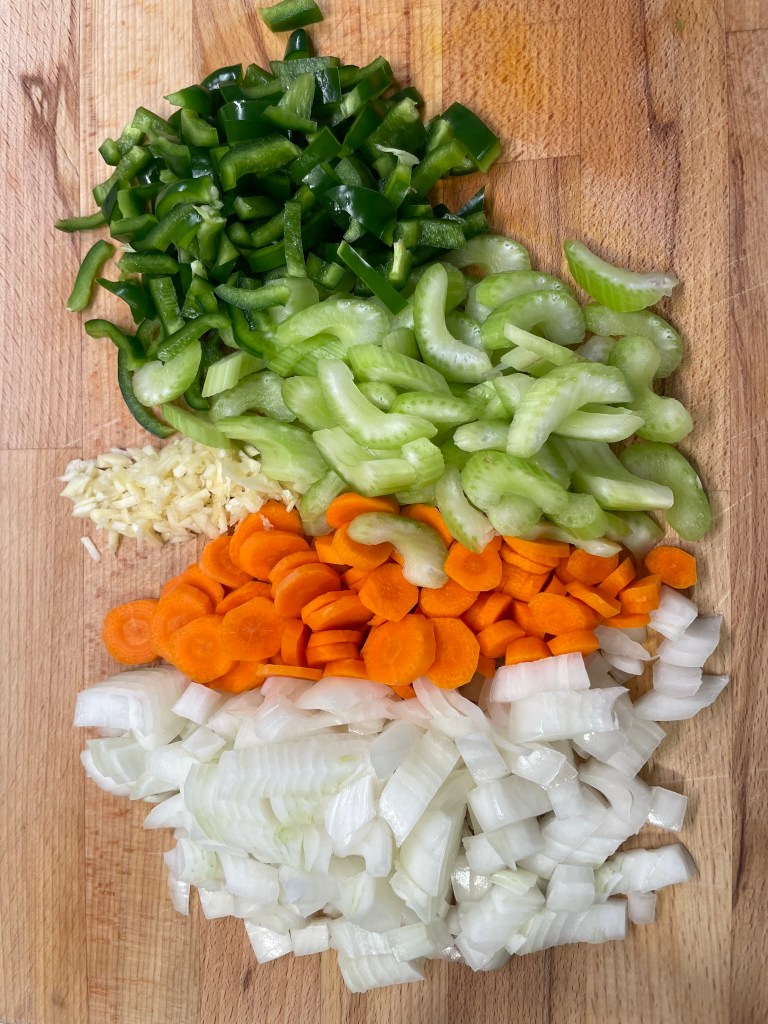
The corn season runs long around here, so I had Les grill up a couple extra ears when we had it for dinner recently. I stripped the kernels and set them aside while I prepared to build the soup base with carrots, celery and onion (otherwise known as mirepoix), plus poblano pepper and garlic. Whole canned tomatoes went in next, then mushrooms and veggie broth. 


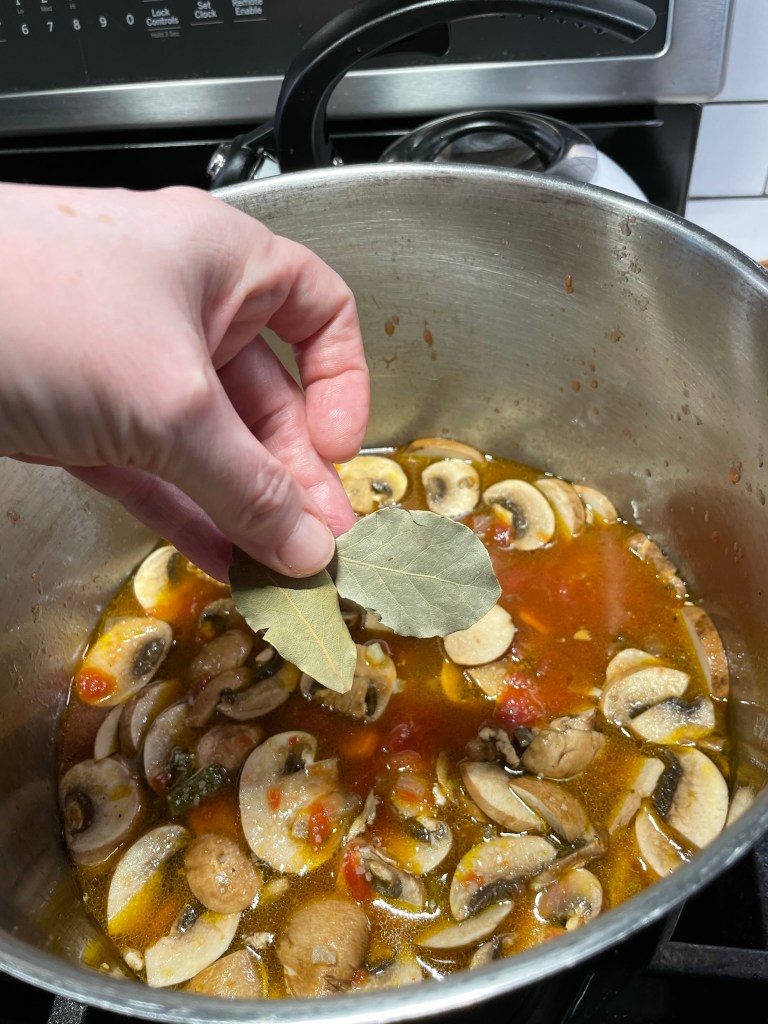
The only seasoning I added to this soup— other than the usual kosher salt and black pepper— was a couple of bay leaves. Anytime I make a simmered soup, stew or roast, bay leaf is like a magic ingredient that is not only flavorful but highly aromatic.

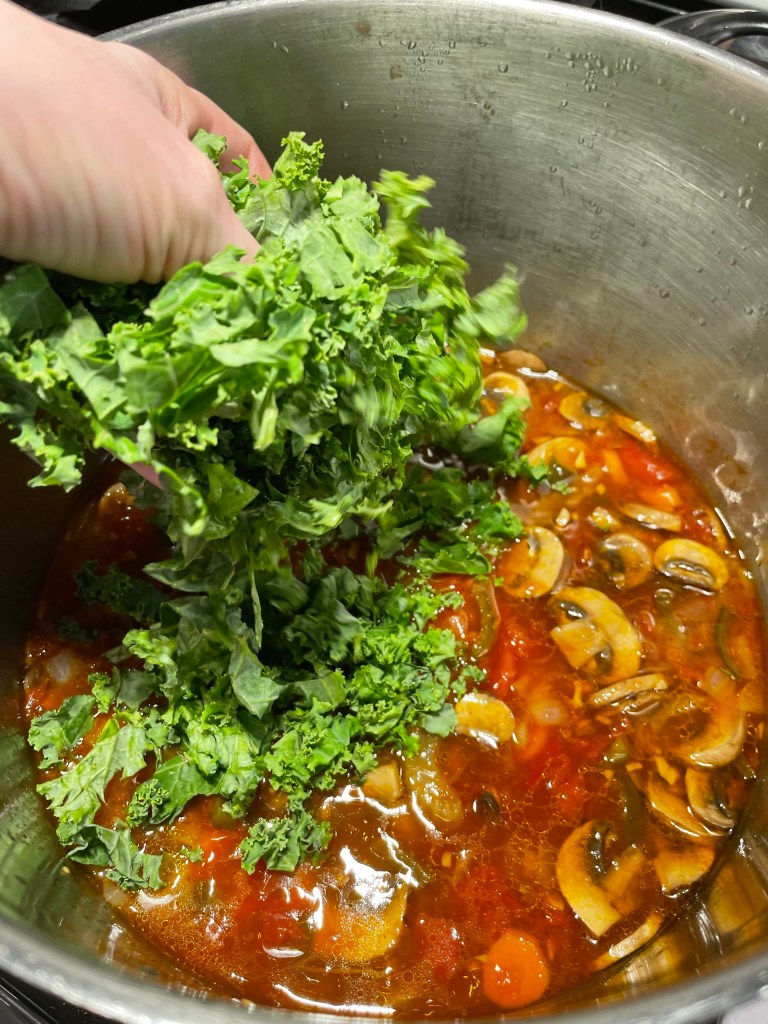
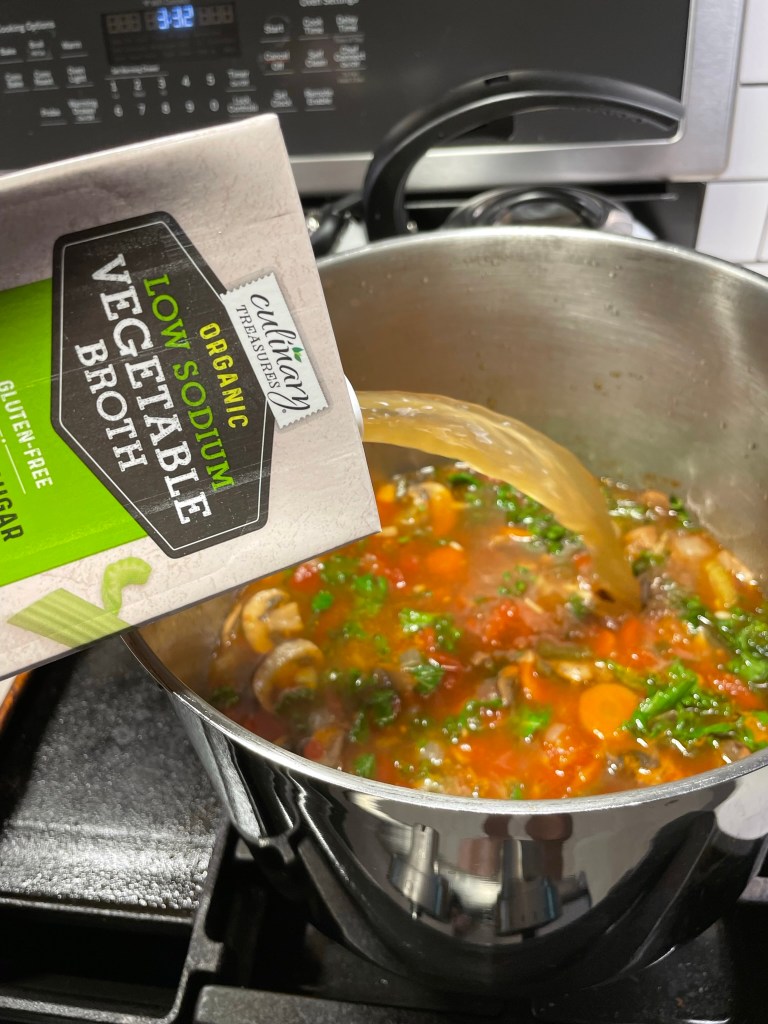
After a nice, long simmer—about an hour— I removed the bay leaves, added two “fat handfuls” of chopped kale, more broth and my homemade sourdough pasta (which went in straight from the freezer), and brought it up to a gentle simmer to cook the pasta through.


Finally, my soup was ready for the roasted add-ins I had prepared earlier, and dinner was served!

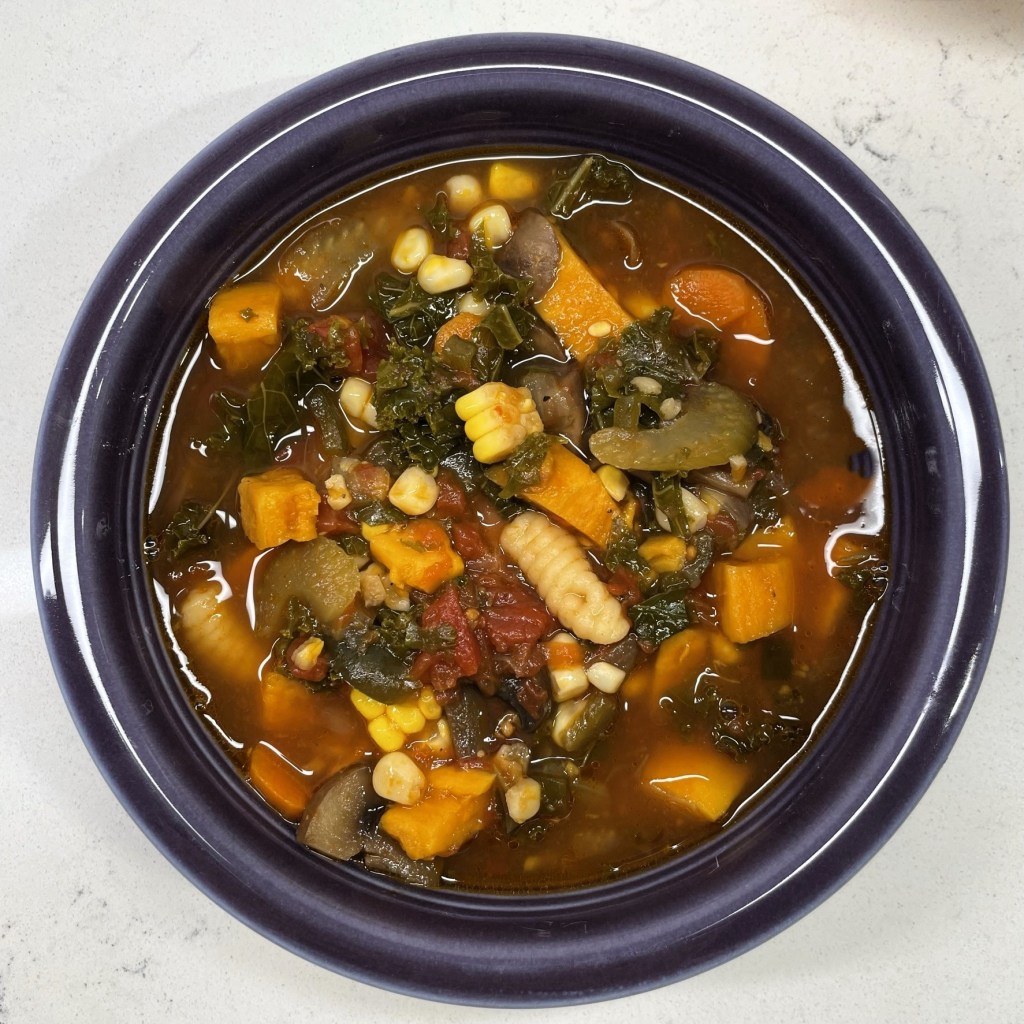
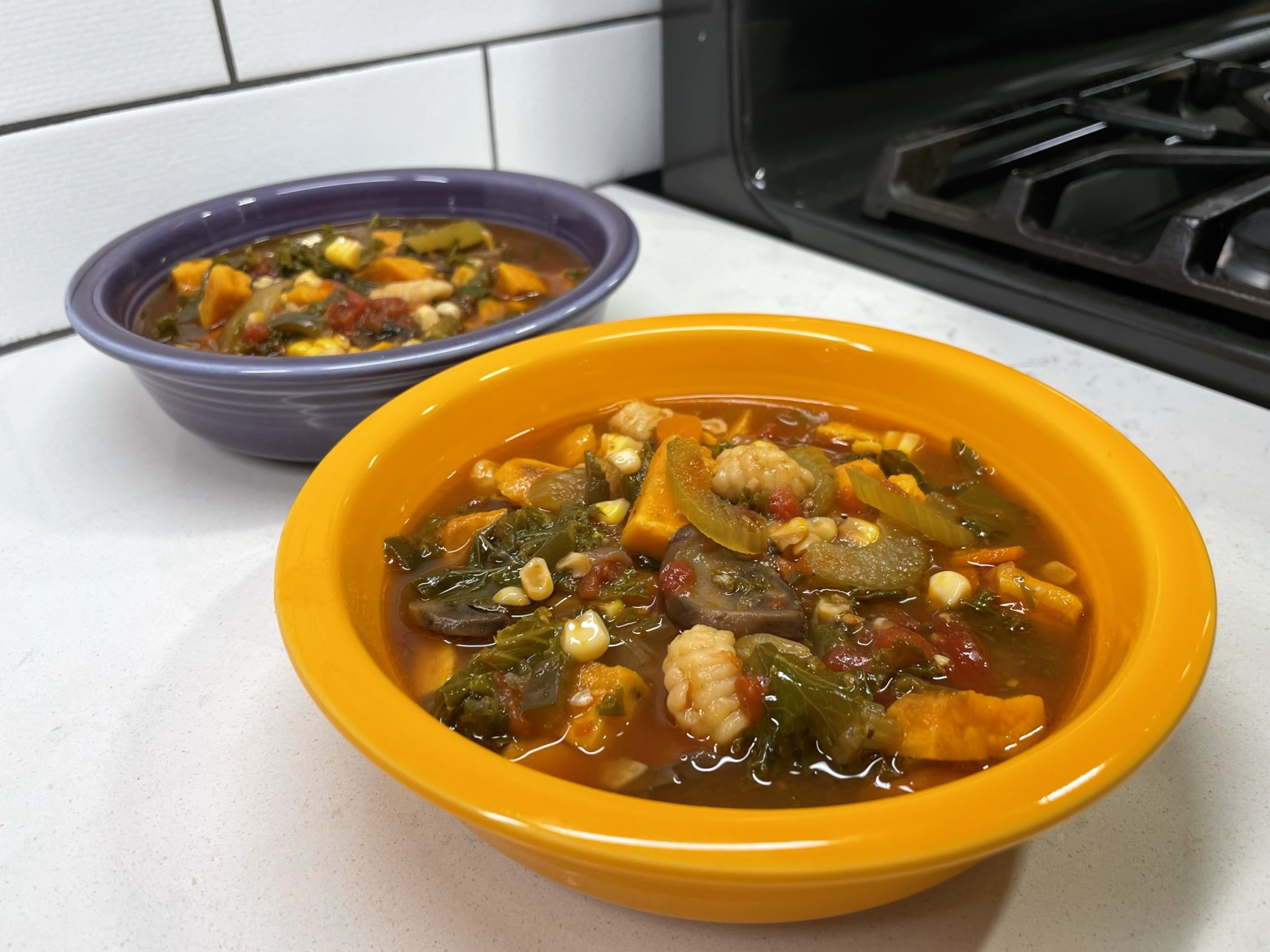
My friends, this autumn minestrone was far and away more delicious than any other vegetable soup I’ve ever made! All those flavors melded together wonderfully, and between the roasted, grilled and simmered vegetables, there was plenty of interesting texture, too.


The pasta cooked up like pudgy, tender dumplings and the tangy earthiness of the sourdough was a really nice complement to some of the sweeter flavors in the soup. If I had not been experimenting with the homemade sourdough pasta, any box pasta with hefty texture would have been a good choice (think rotini, trumpets or those cute little wagon wheels). Using box pasta would also have kept my soup vegan; the eggs in the pasta dough disqualified it from that category.

Oh, this soup hit the spot on a dreary, rainy early autumn day. But you can bet I won’t wait for another one to make this soup again!

Autumn Minestrone

  • Servings: 8 to 10
  • Difficulty: Average
  • Print

This soup brings together the best of two things for me— a whole bunch of terrific early fall ingredients and an all-day simmered vegetable soup.


Ingredients

  • 1 large sweet potato, peeled and cubed (about
  • 1/4 cup extra virgin olive oil, divided (you’ll use a tablespoon to roast the sweet potato and the rest to sauté vegetables in the pot)
  • Kosher salt and freshly ground black pepper
  • 1 sweet onion, chopped
  • 2 medium carrots, peeled and thinly sliced
  • 2 ribs celery, strings removed and sliced
  • 2 cloves garlic, finely minced
  • 1 poblano pepper, chopped
  • 28 oz. can whole peeled tomatoes, drained (reserve liquid for another recipe)
  • 6 cups low-sodium vegetable broth, divided (see directions for breakdown)
  • 2 bay leaves
  • 8 oz. carton cremini mushrooms, cleaned and sliced
  • 2 fat handfuls kale, washed and rough chopped
  • 1/2 pound pasta shapes (homemade or otherwise)
  • 2 ears roasted corn, kernels cut from cob

Notes: I roasted the sweet potatoes first so that their flavor could be concentrated, and to keep them from turning mushy in the soup. Butternut squash would be a great substitute. I used a fresh homemade pasta that was shaped like baby gnocchi. My pasta contained eggs and I added to the soup straight from the freezer. Dry pasta such as elbows or rotini would be a great substitute.

Directions

  1. Preheat oven to 350° F, with rack in center position. Line a sheet pan with parchment and arrange sweet potato cubes in a single layer. Drizzle with olive oil and season with salt and pepper. Roast about 45 minutes, until sweet potatoes are reduced in size and golden on all the edges. Set aside.
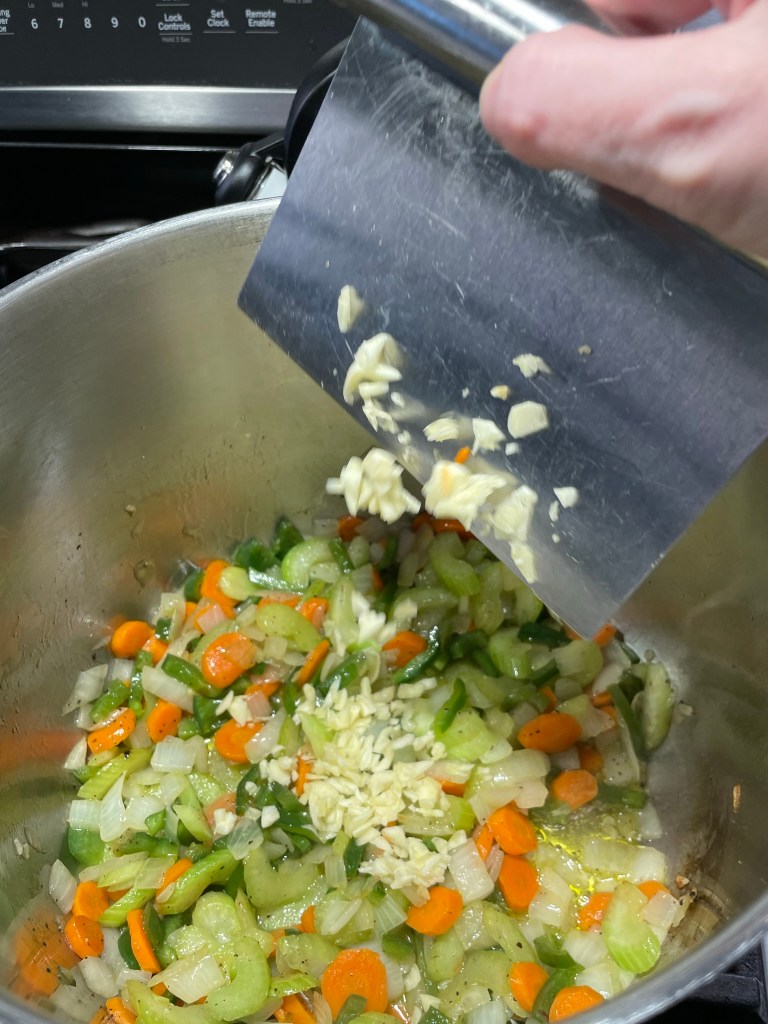
  2. While the sweet potatoes are roasting, place a deep, heavy-bottomed pot over medium heat. Swirl in remaining olive oil and sauté the onions, carrots, celery and poblano peppers. Season with salt and pepper and cook until translucent. Add the garlic and continue to cook until vegetables are very soft.
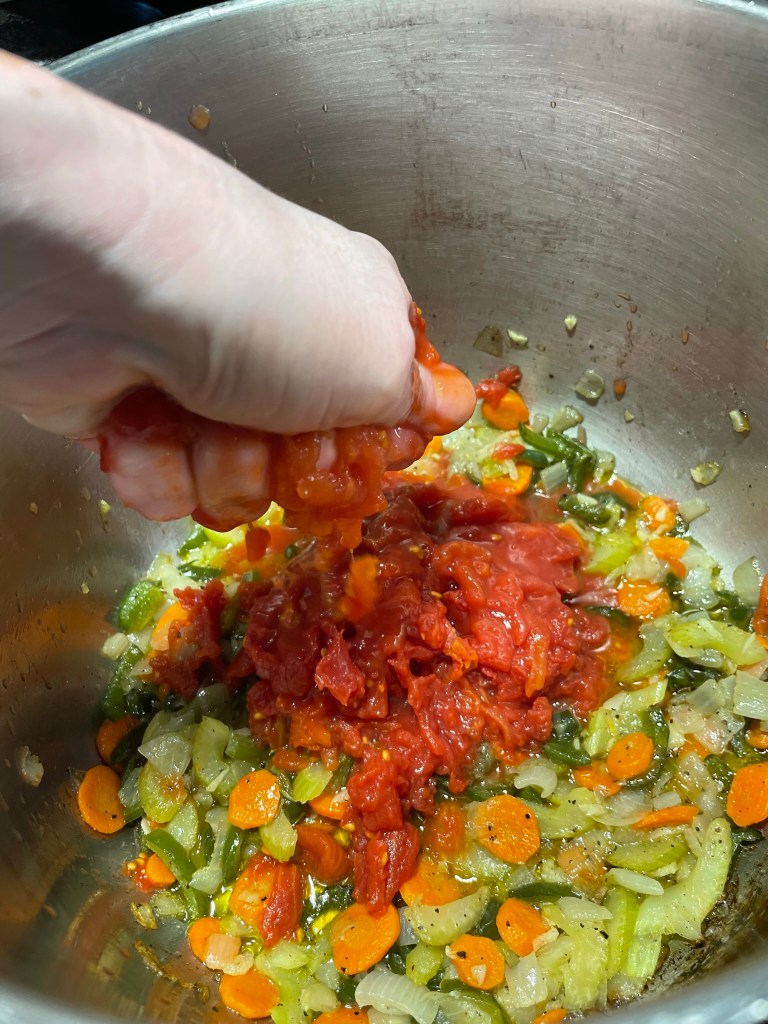
  3. Use your hands to squeeze the whole tomatoes into the pot. Add 4 cups of the vegetable broth and bring to a slight boil. Adjust salt to taste. Reduce heat to simmer.
  4. Add sliced mushrooms and bay leaves and simmer for about an hour. Stir in chopped kale leaves until wilted. Add remaining vegetable broth and bring to a gentle boil.
  5. Add pasta straight from the box or freezer and cook it in the minestrone until tender.
  6. Finally, stir in corn kernels and roasted sweet potatoes. Make a final adjustment to salt and pepper, and then cook on low until heated through.


Green Shakshuka

Breakfast for dinner is one of my favorite meal categories, and now that I have discovered the joy of shakshuka— the Mediterranean dish that combines vegetables and sauce with gently cooked eggs— there seems a world of possibilities beyond the standard rearrangements of eggs, bacon and pancakes. 

Shakshuka, which is very popular in Jewish culture, is typically made with a tomato sauce base and any variety of vegetables. The ingredients are stewed together in one pot, and eggs are simmered on top until set. It’s quick, hearty, simple and inexpensive (depending on egg prices, of course). My husband and I have enjoyed many versions of this dish since I first learned to make it in 2017, including last summer when I made a Ratatouille Shakshuka that was so, so good.

This time, however, my shakshuka is missing the bright red color of tomatoes because I have swapped them out in favor of hearty green ingredients.


Tis the season to be green!

In Spring, it’s only natural that cooks everywhere would begin to lean into the freshness of green vegetables. This past week, I opened my email to find a Green Gumbo, posted by my blog buddy Maylee at Beyond Gumbo. I had never heard of “green gumbo,” made with ham and every leafy green under the sun, but if this is what they’re doing with food in Louisiana, then I’ve got to get down there as soon as possible!

We are still some time away from harvesting the tender vegetables of spring, but consider all the cool-weather vegetables that can carry us until then— broccoli, kale, collards, spinach, leeks and bok choy would all be very easy to incorporate into shakshuka, which is a cook’s choice kind of dish anyway. The main consideration is knowing how long your chosen vegetables need to be cooked so you can plan your time accordingly. The rest is subjective, so find what you like and get cooking!

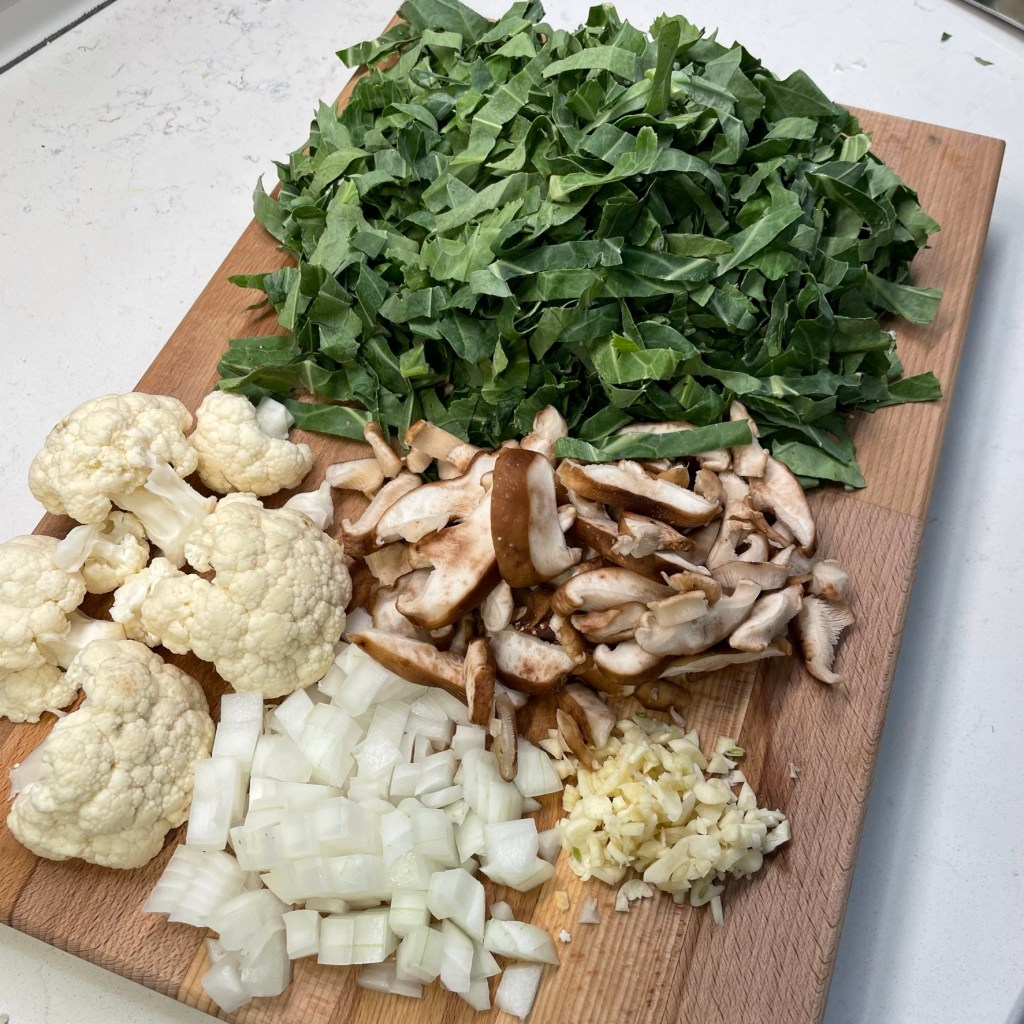
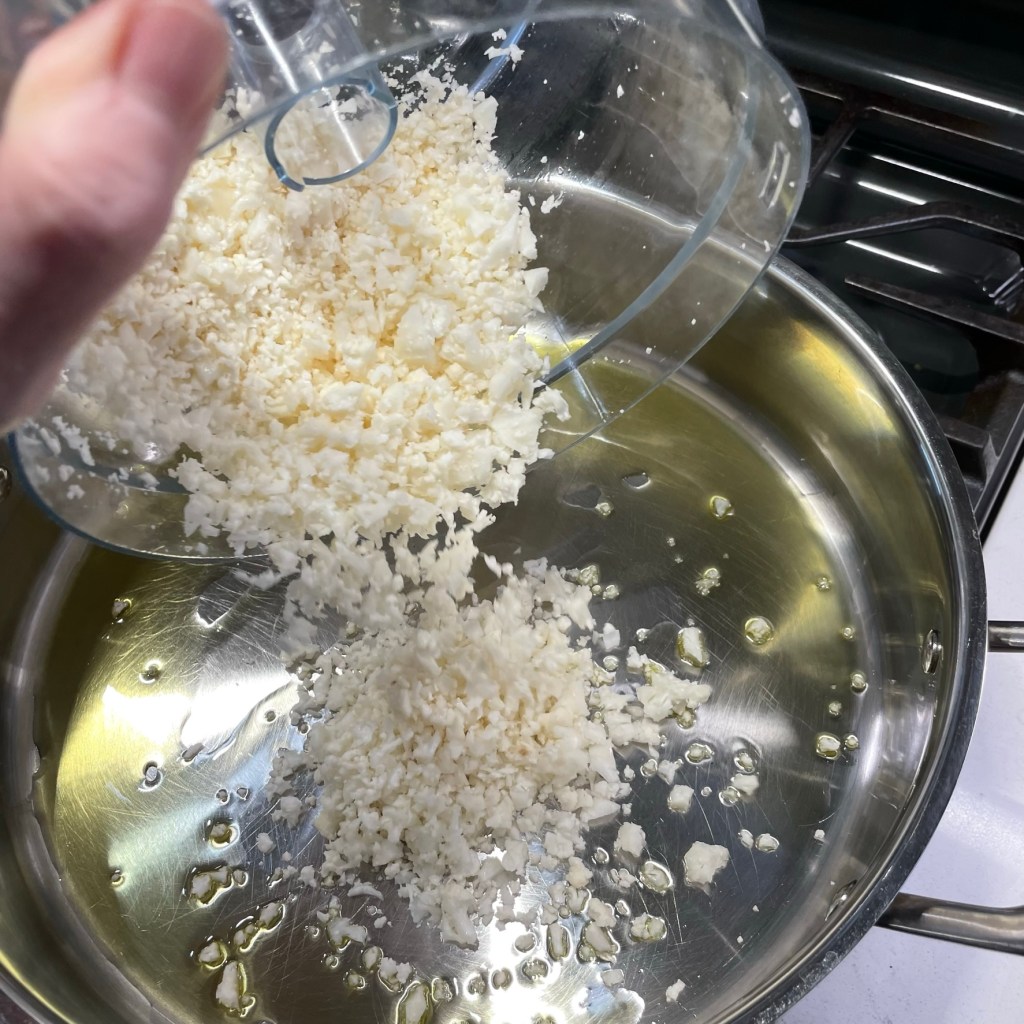
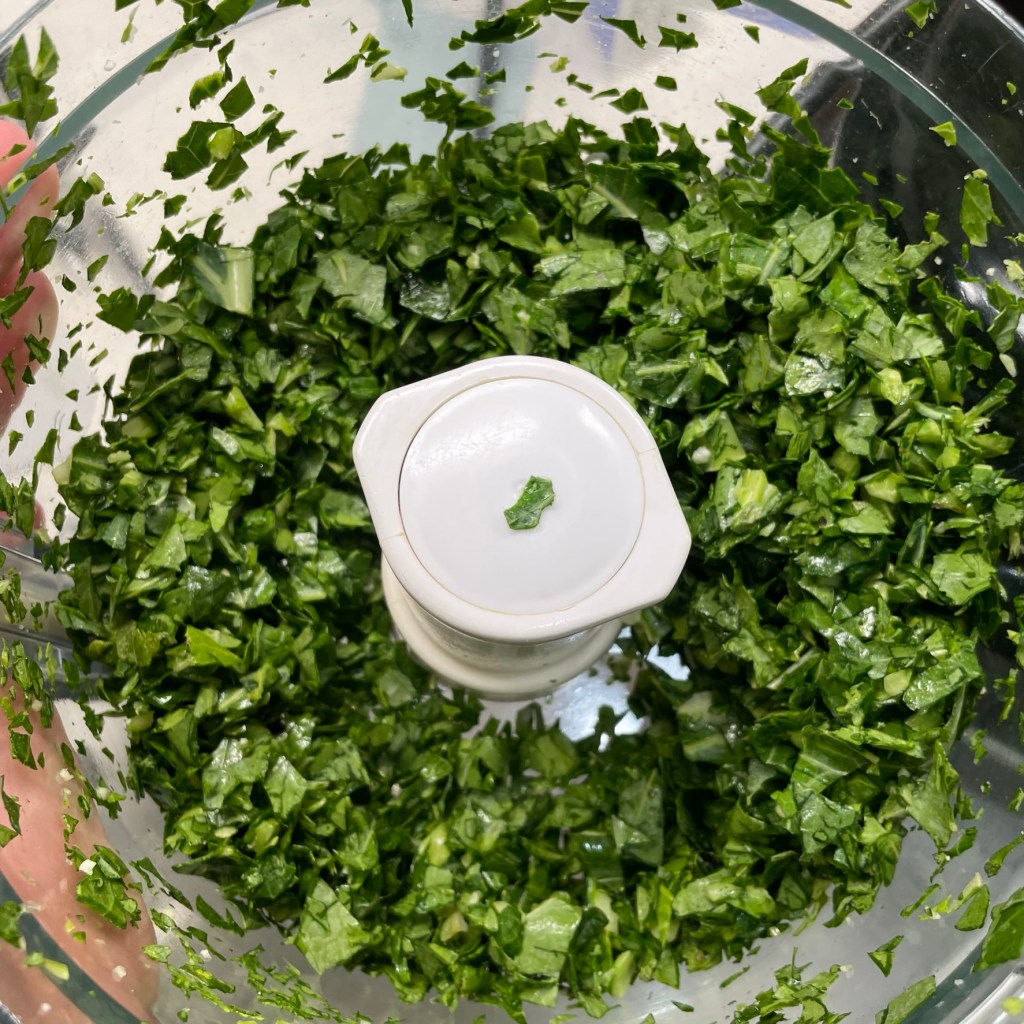
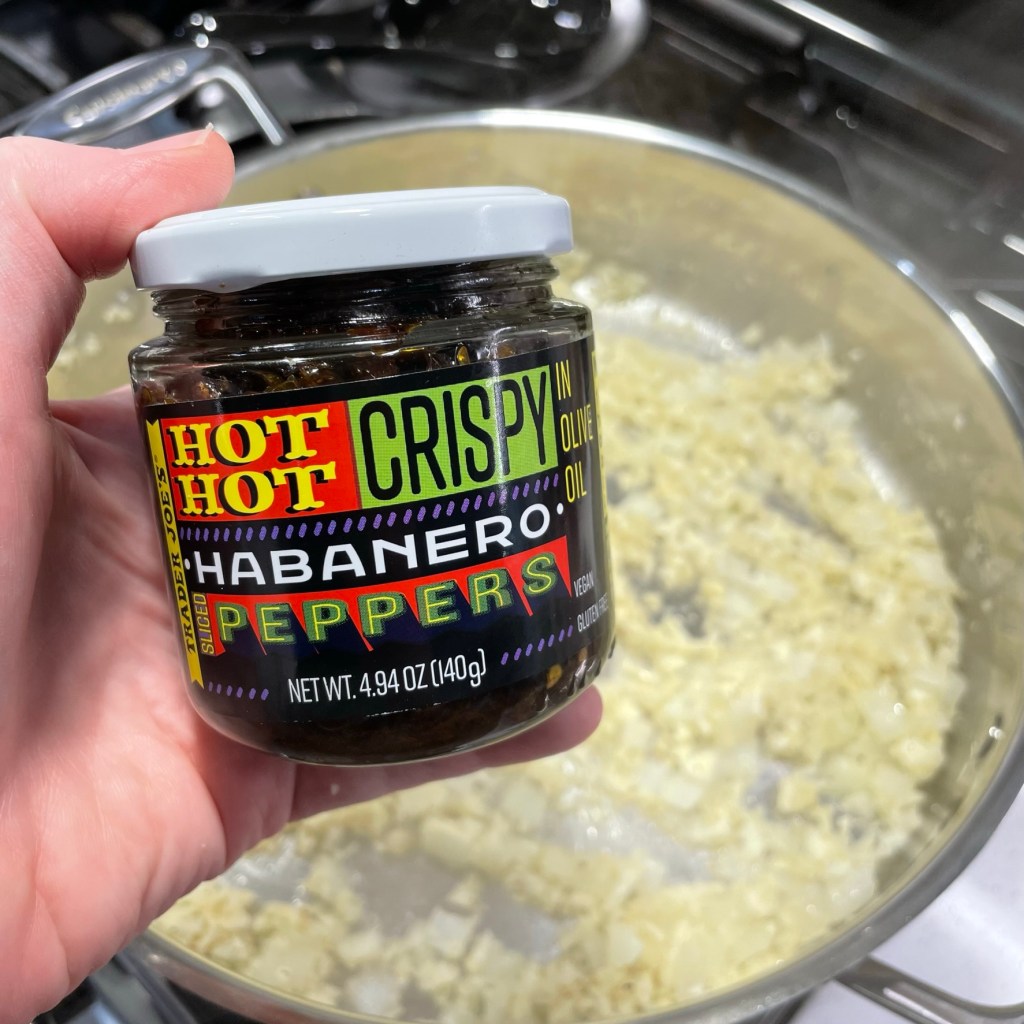
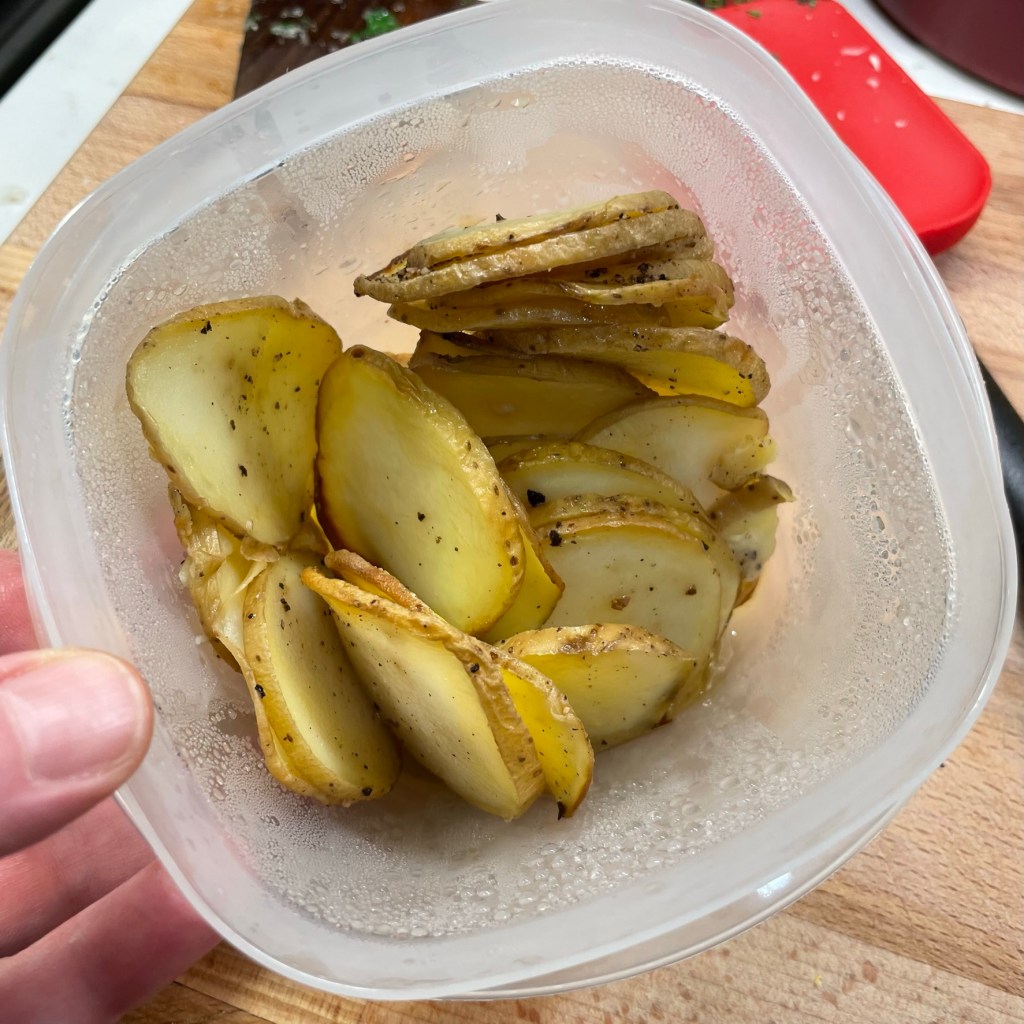
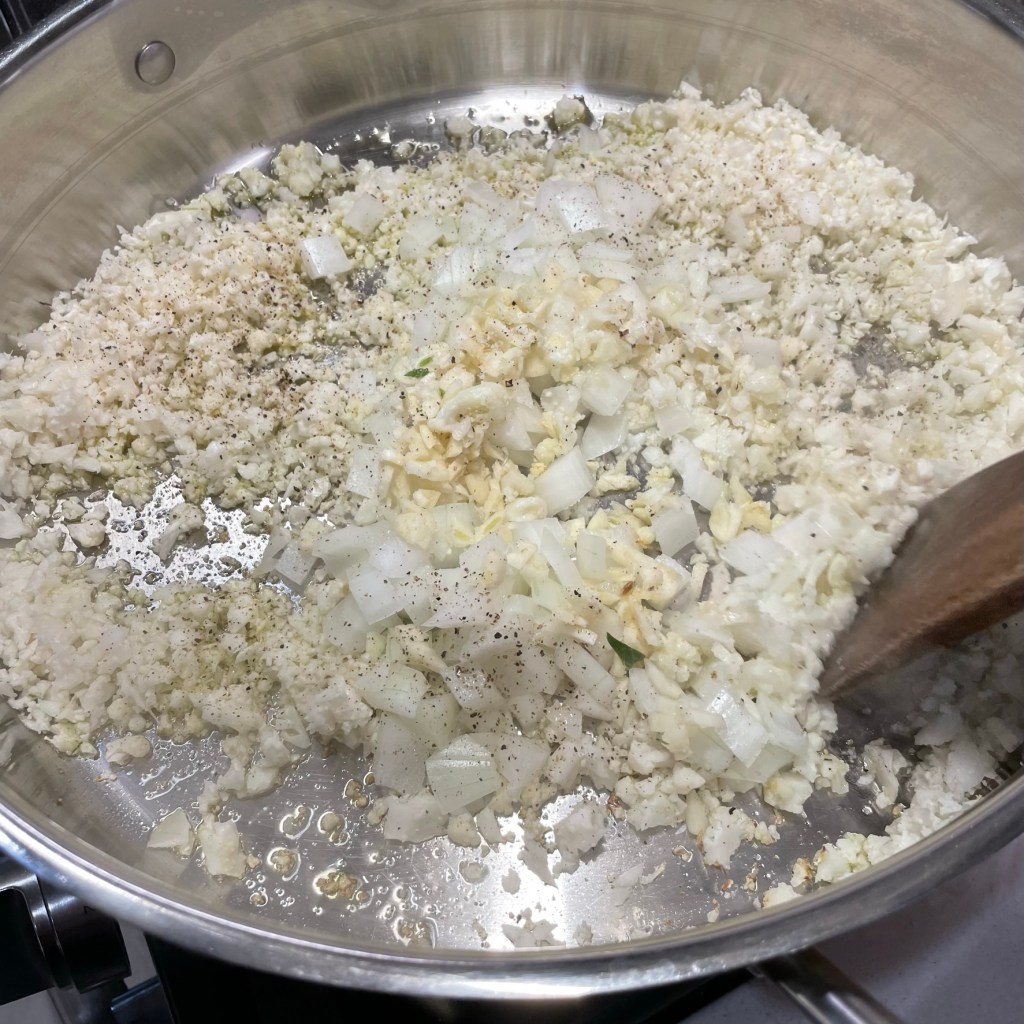
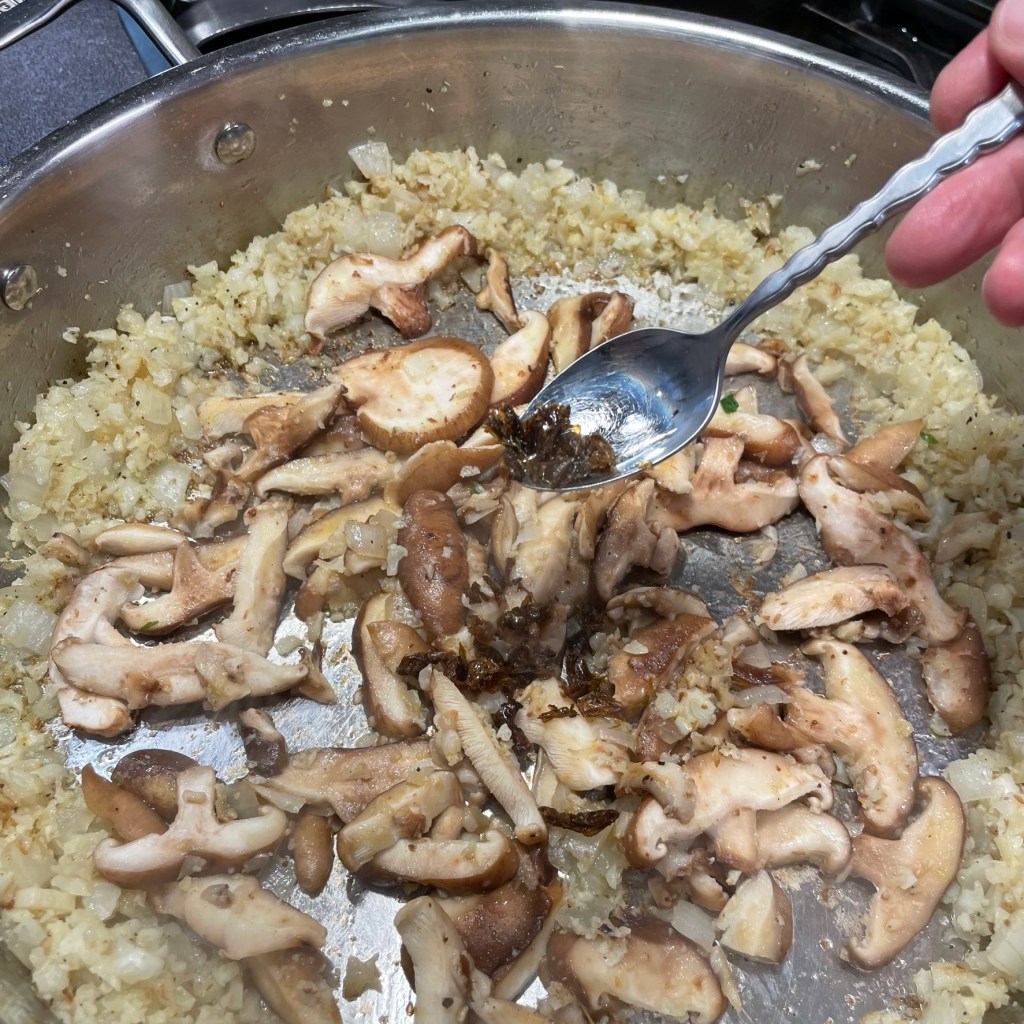
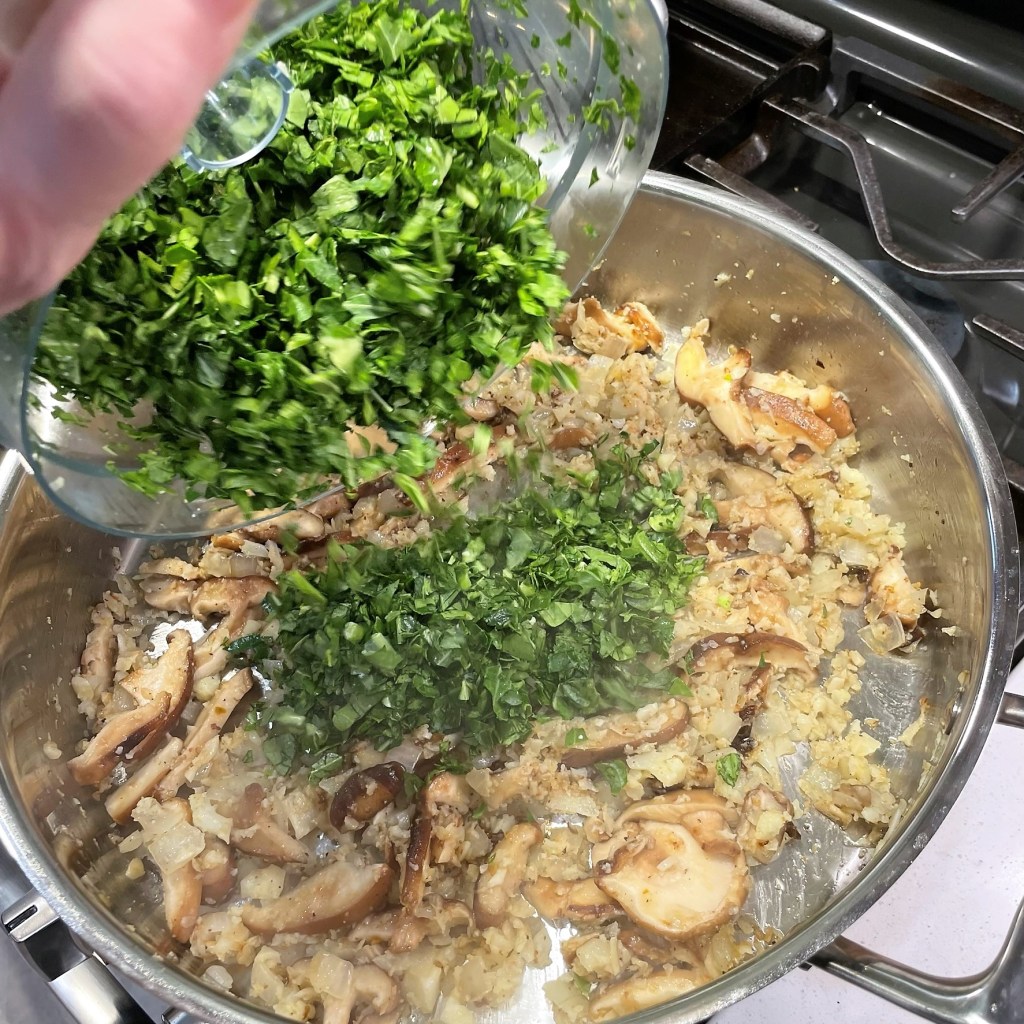
I like a dish to be texturally interesting, so I went with cauliflower, which I pulsed down into “rice” in the food processor, collard greens, also processed into smaller bits for quicker cooking, and shiitake mushrooms for a little bit of chewy, almost-meaty goodness. Onions and garlic, of course, and some sliced cooked potatoes, just because I had a few left over from another meal. They were a good addition. For kicks, I also tucked in a spoonful of the crazy-hot habanero chili crisp that I picked up at Trader Joe’s. They are no longer selling it, but if you bought a jar, you know that it keeps for a long, long time, and it adds a serious punch of spicy flavor to a dish. I’m still looking for ways to use it and it worked here, but you could sub in any other kind of seasoning you like.


An easy approach to shakshuka

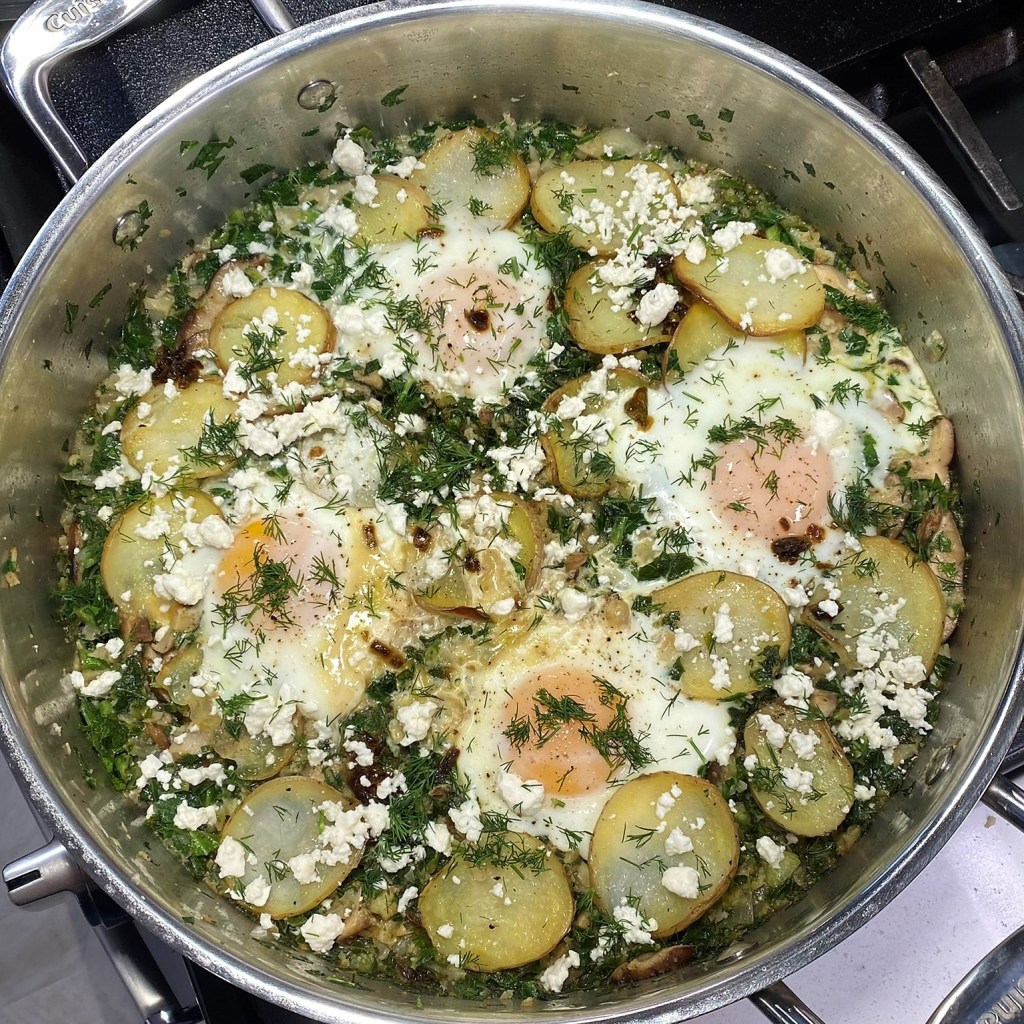
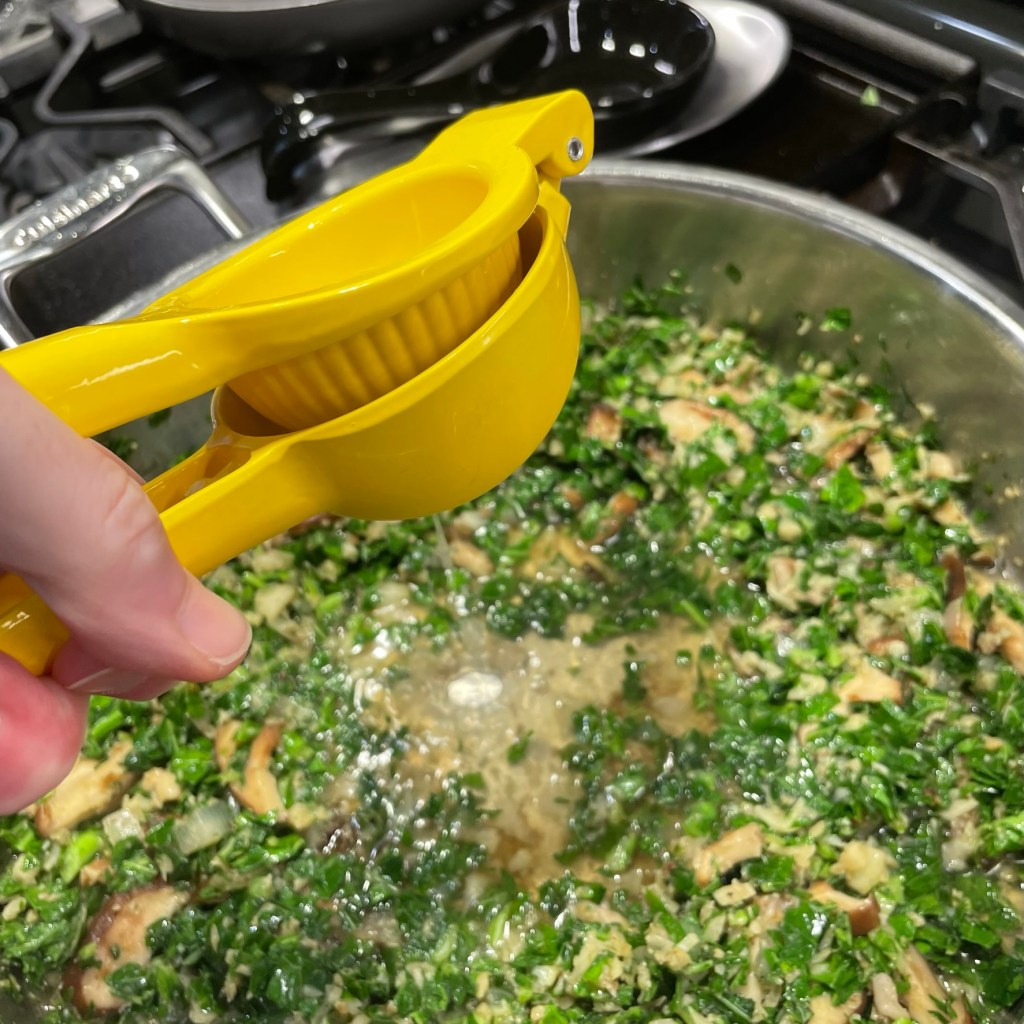
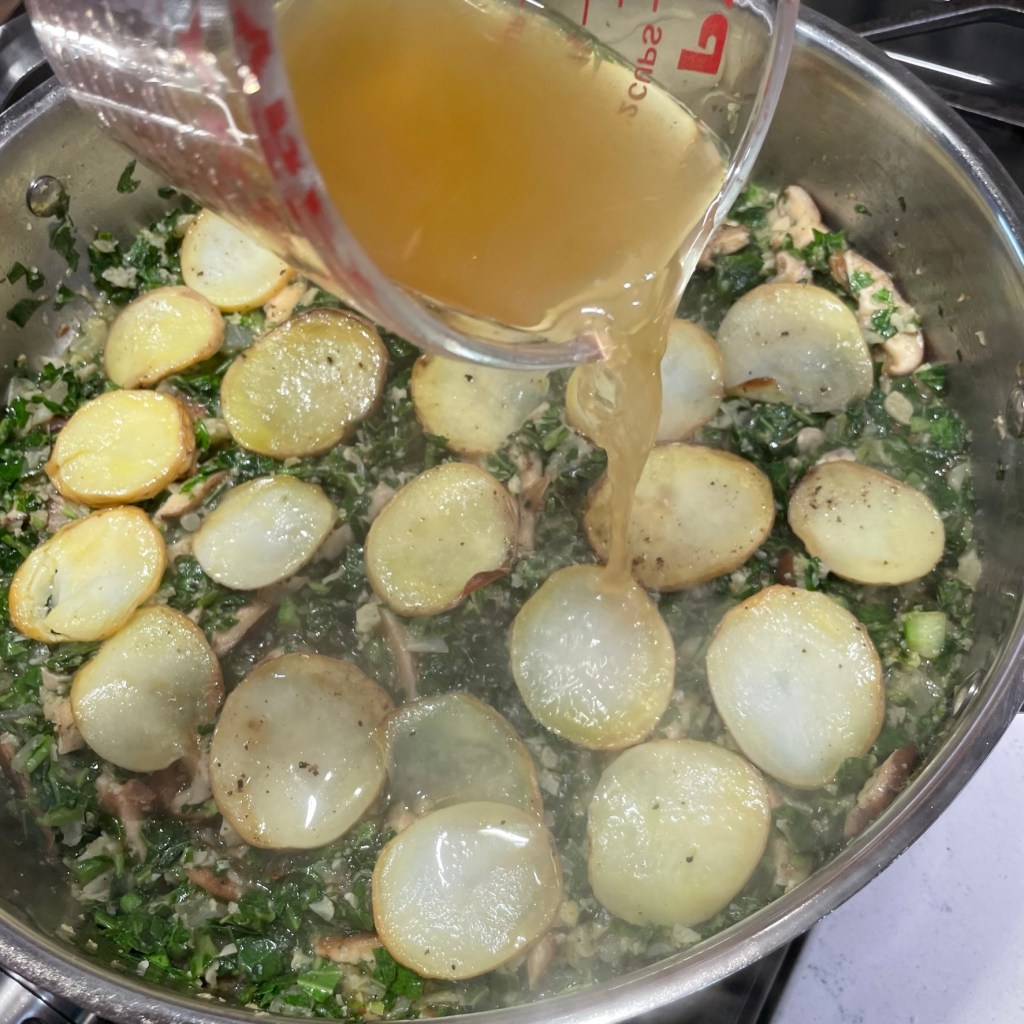
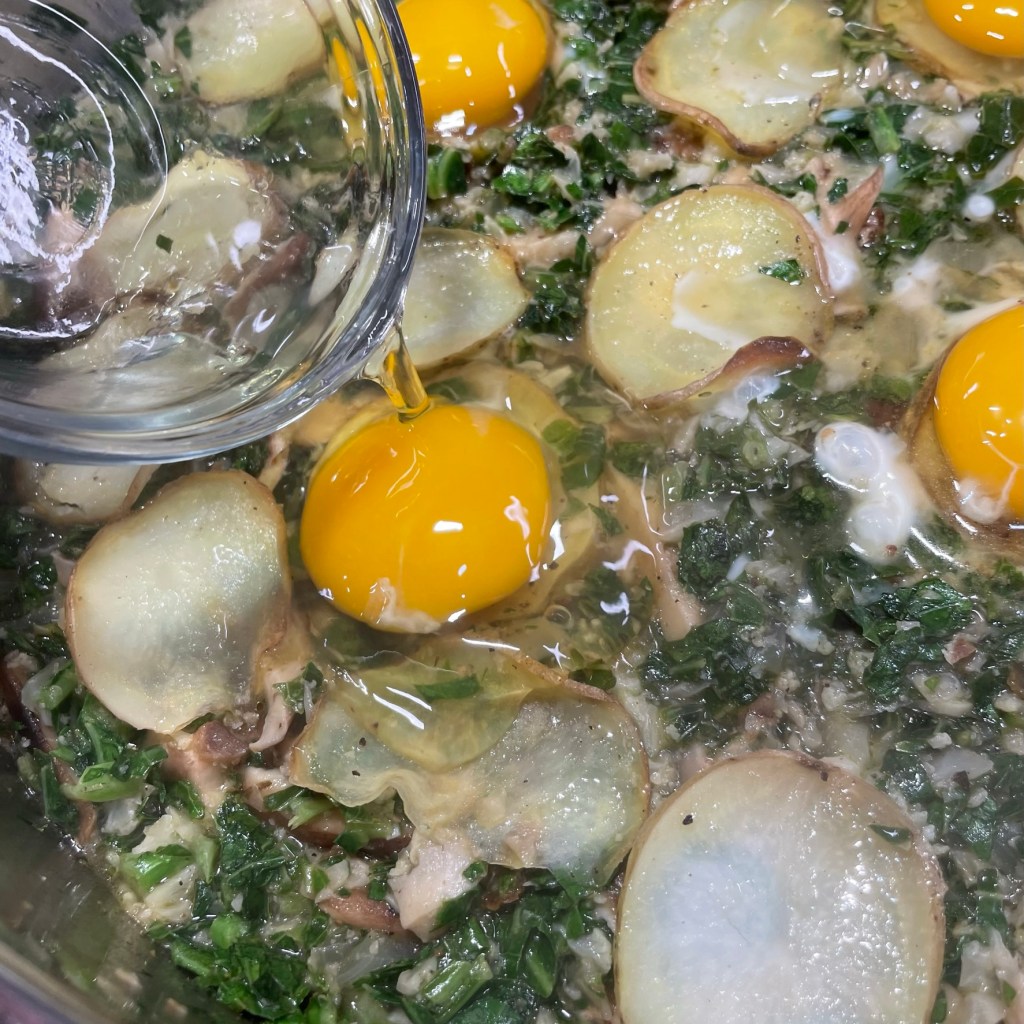
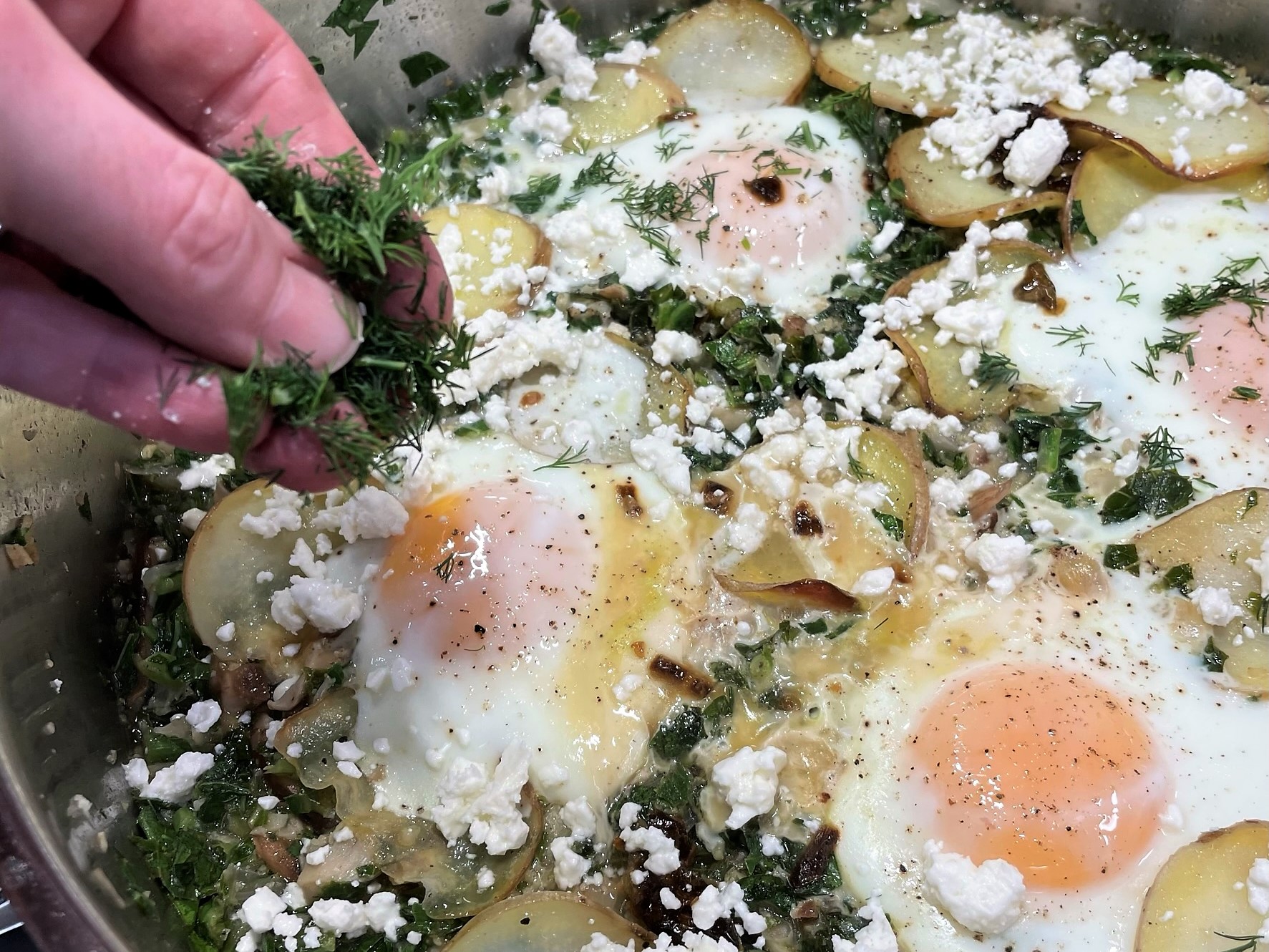
The easiest way to approach shakshuka is to build it in layers, starting with a quick saute of the firmer ingredients and aromatics. Next, I added my mushrooms and chopped collards and steamed the mixture down in a half cup of vegetable broth, plus a squeeze of lemon to balance the slight bitterness of the greens. I spread the potato slices out over the top with a little more broth, and then slipped the eggs into the mixture. This stage of the recipe can be done in the oven, but I have found it simpler and quicker to put a lid on it and keep it stovetop. The eggs cook within a matter of a few minutes, and the meal can be served straight from the pot.


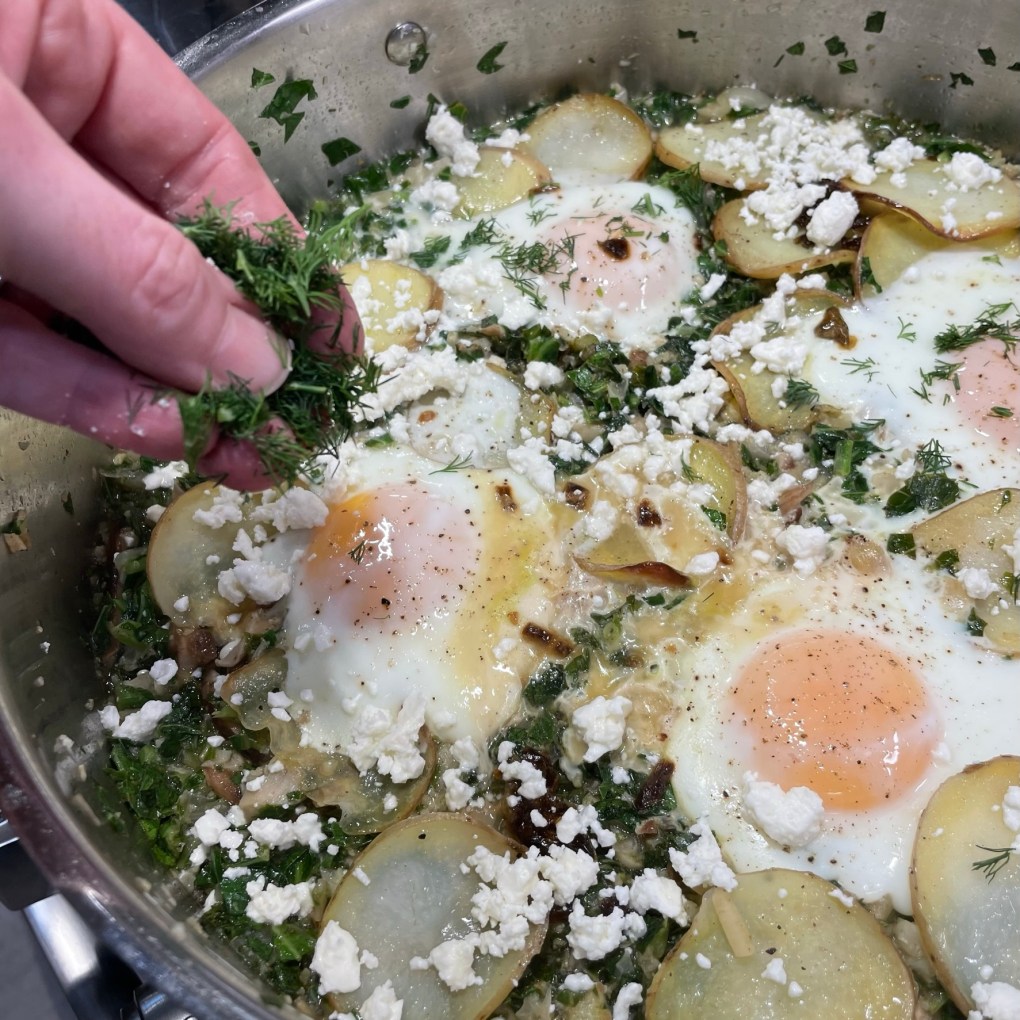
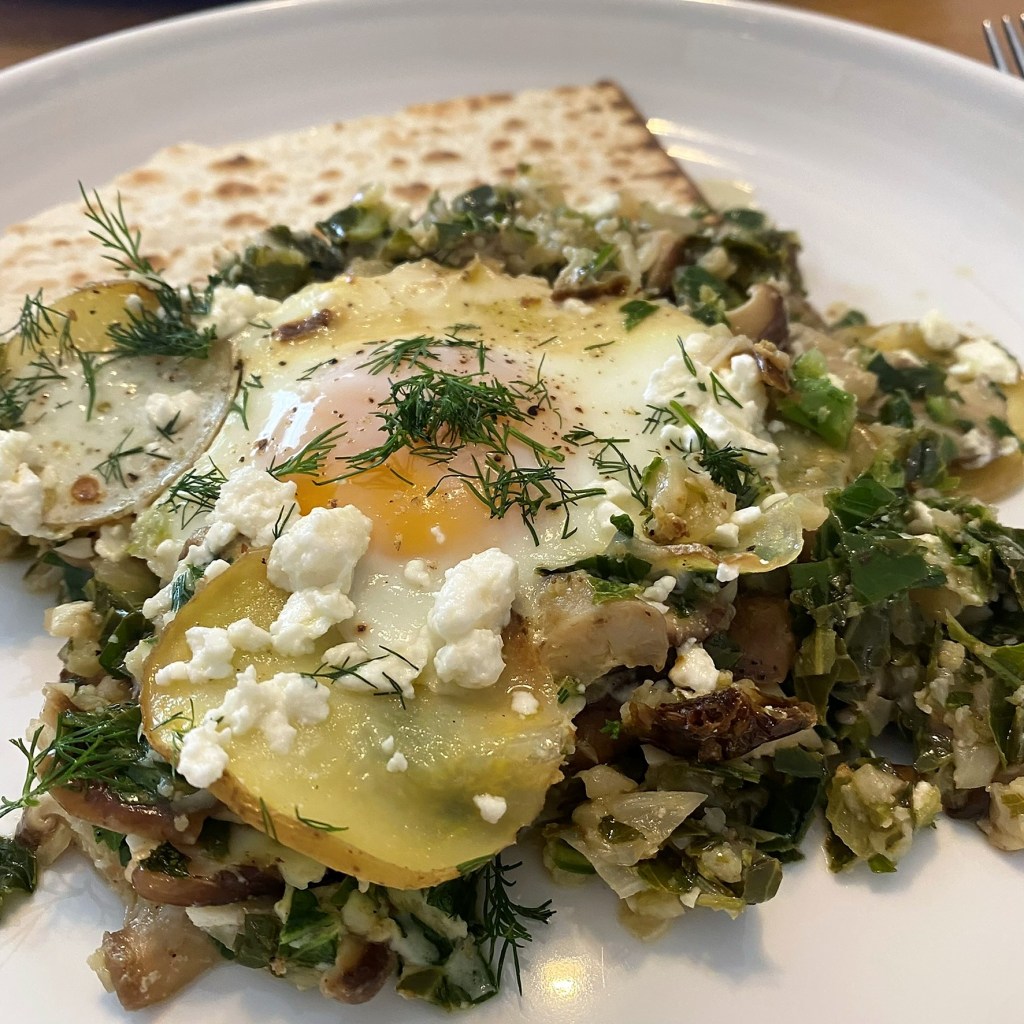
Feta crumbles and fresh chopped dill were a nice final flavor touch to this twist on a classic. We enjoyed our green shakshuka with one of our final pieces of store-bought matzo left over from Passover. We are always so glad to see it go. 😉


What creative twists would you like to see in shakshuka, or which have you already tried? I love reading your comments and I’m always up for a challenge, so please let me know what you think below the printable recipe.


Green Shakshuka

  • Servings: 4
  • Difficulty: Average
  • Print

Ingredients

  • About 2 cups of fresh cauliflower florets
  • 2 Tbsp. extra virgin olive oil
  • 1/2 medium sweet or yellow onion, chopped
  • 2 cloves garlic, minced
  • Salt and pepper
  • 1 cup sliced shiitake mushrooms
  • 1 tsp. spicy chili crisp (mine was Trader Joe’s habanero)
  • 1 small bunch fresh collard greens, cleaned and rough-chopped
  • 3/4 to 1 cup low-sodium vegetable broth, divided
  • Juice of 1/2 small lemon
  • 1 cup cooked sliced potatoes
  • 4 large eggs, room temperature
  • Crumbled feta and fresh dill, optional for serving

This dish can be made with any number of vegetable substitutions. Consider the cooking time for each vegetable you plan to use and add them to the pot accordingly. Chopping the vegetables into very small bits will significantly shorten the cooking time, and is a good way to get this dish on the table in a hurry.

Directions

  1. In the bowl of a food processor, pulse the cauliflower into small bits. Heat oil over medium heat in a wide, heavy-bottomed pot or skillet. Add cauliflower, onions and garlic and season with salt and pepper. When onions and cauliflower are softened, add the mushrooms and chili crisp and saute to cook off some of the moisture.
  2. Pulse the collard greens in the food processor to the size of cereal flakes; this will help them cook quickly and will prevent the shakshuka mixture being too chunky. Add greens to the pot and toss to combine. Pour in about 1/2 cup of the broth plus the lemon juice and reduce heat to simmer, until the greens begin to tenderize (about 5 minutes).
  3. Arrange potato slices all over the top of the mixture and pour over additional broth as needed to just cover them. Cover the pot with a lid and steam until potatoes are hot.
  4. Use the back of a large spoon to create four indents in the shakshuka mixture. Carefully slip an egg into each of the indents. Season with salt and pepper and cover the pot with a lid. Steam for about 10 minutes, or until the eggs are set to your liking. Sprinkle with crumbled feta and fresh chopped dill and serve immediately.


Garden Veggie Spiral Quiche

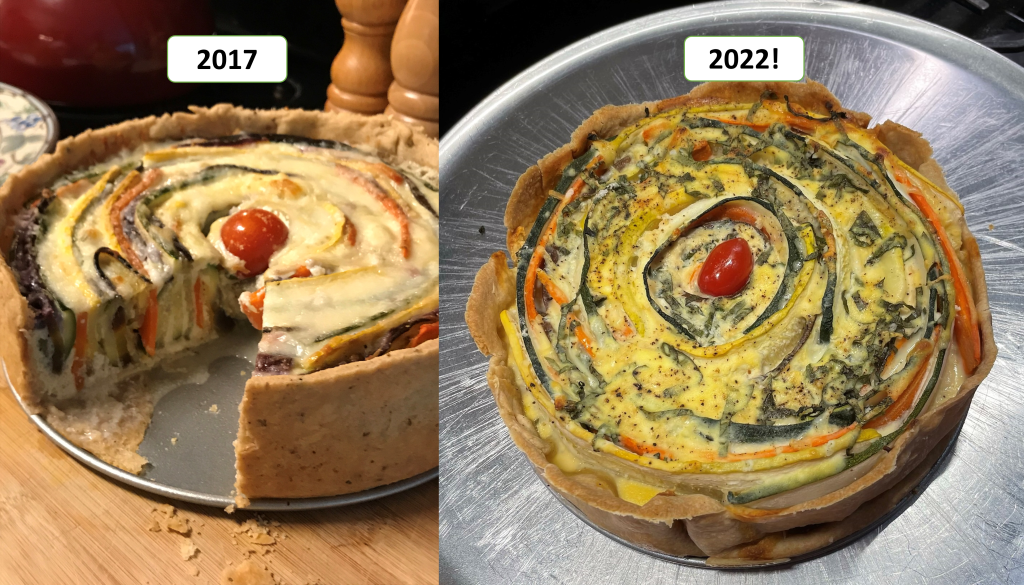
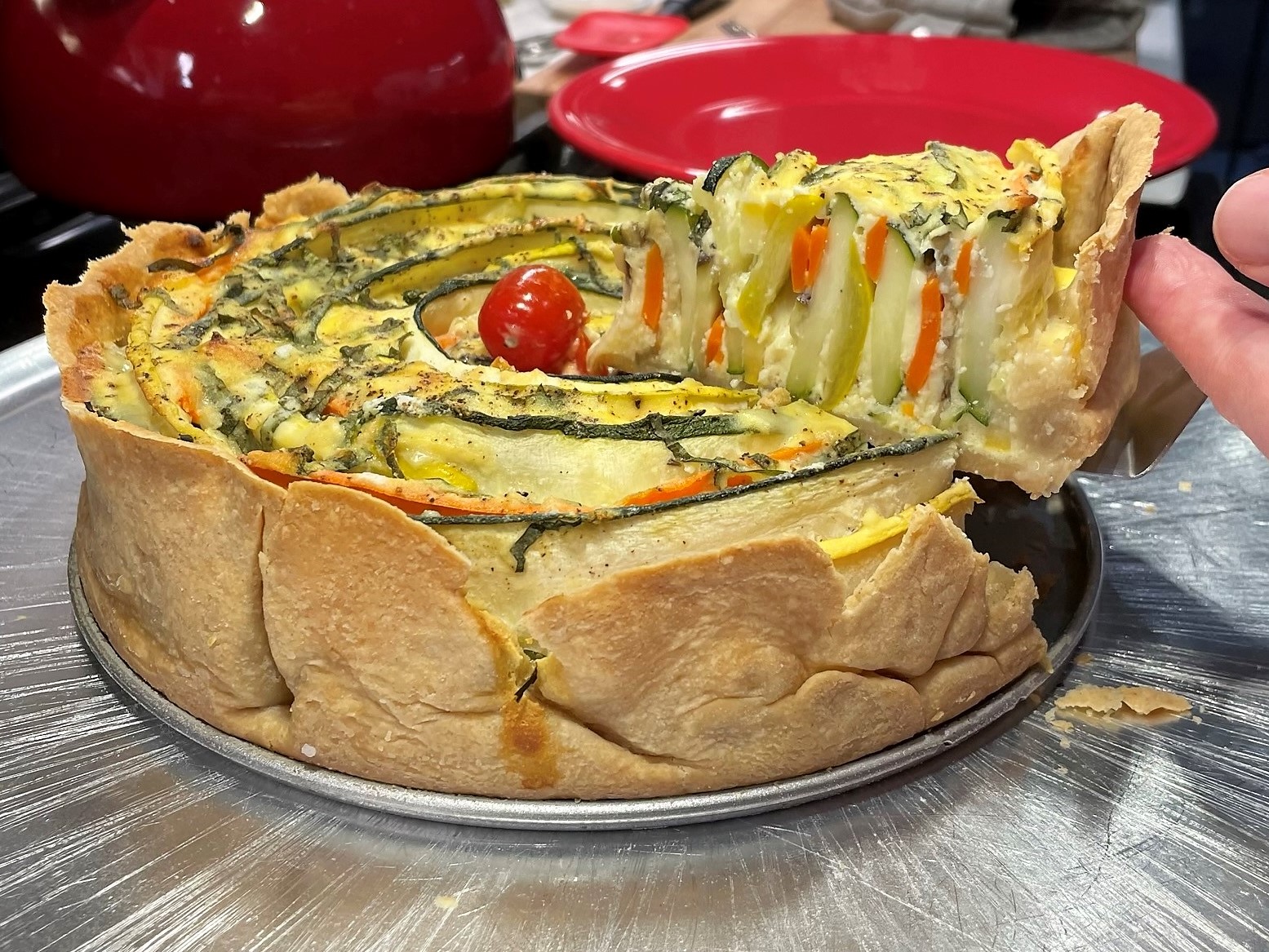
About once a week, my husband, Les, flashes me his phone to announce what has appeared on his Facebook page—“Five years ago, today!” It’s usually a throwback photo of our dog, Nilla, and I always love the ones that were taken years before I even met them. She was an adorable little fluff pup, and he has taken a ton of pictures of her through the years! The other day, though, he presented me with a picture that was instantly familiar— a pretty, fresh-from-the-oven spiral quiche made of fresh zucchini, yellow squash and eggplant from our own garden. The timing was remarkable, given that I had made plans to make the same recipe with veggies from this year’s garden, just days apart from the one I made in 2017. For your comparison, here they are, side by side:

Is it a quiche or a tart? Let’s just call it delicious.

My inspiration for this brunch-worthy dish came directly from Pinterest, but the recipe did not. It was one of those pins that appeared with an exciting image, but no title or description, and a link that led to absolutely nothing. But I took the clickbait in stride because at that point, I had all the inspiration I needed; my mind was already racing with my own ideas for creating such a pretty pie. I’d use thin slices of eggplant and squash from my own garden, layering them around and around inside a blind-baked pastry in my springform pan. I’d slip a few store-bought carrot slices in wherever I could make them fit, and then I’d pour an omelet mixture over the whole thing and bake it until the eggs were set. I was not blogging at that time, so it didn’t occur to me to write down what I had done—I just followed my instinct and used what was fresh from the garden at the time. I had one measly cherry tomato that year (the deer got the rest), and I showcased it by placing it right in the center.

As it happens, the same things are fresh from the garden at the same time this year!

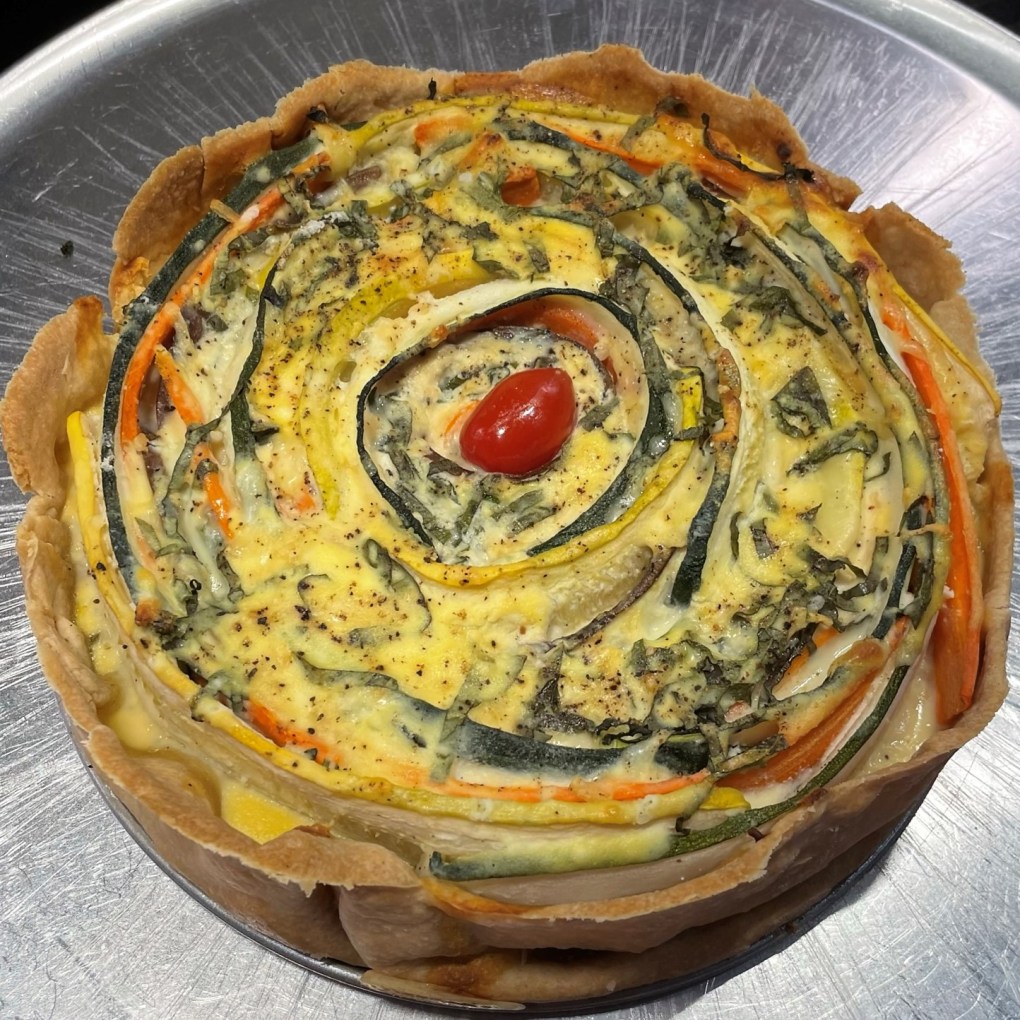
This is a veggie-packed quiche! I ended up swapping the parsley for fresh basil, and I skipped the fresh onion and garlic.


This was a delicious, meatless dinner, and I dressed up our quiche servings with a generous spoonful of marinara sauce and some sprinkles of our favorite parm-romano blend cheese. It was hearty and satisfying, and just look at all those layers of vegetables.


I began with a homemade pastry dough, but there’s no reason you couldn’t use a pre-made crust; be sure it’s the kind you can roll out, rather than a crust already in a tin. Because of the spiral, this will work best in a baking pan with straight sides. I used a springform pan, but a regular 9-inch cake pan with straight sides will work fine as well.


At this point, I made a mistake and you have probably already spotted it. Trimming off the excess dough, even with the top of the springform pan, seemed like the logical thing to do. But I didn’t take into account that the crust would shrink during blind baking, and the pan did not have any slope to keep it in position. The better choice would be to keep a bit of dough hanging just over the edge of the pan. Or, as I suspect was my method in 2017, use a double layer of foil to hold the pastry in place during baking. So, my advice here is, “do as I say, not as I do.” 😊

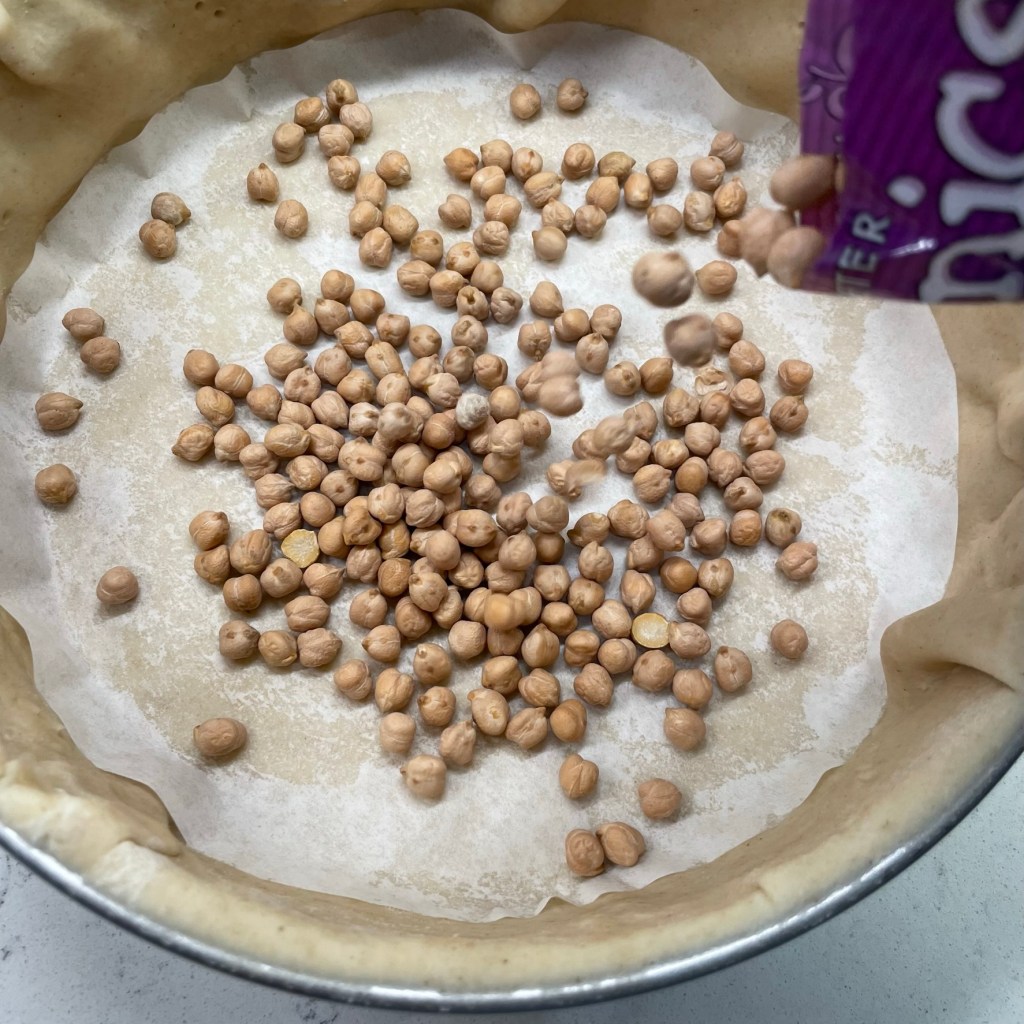
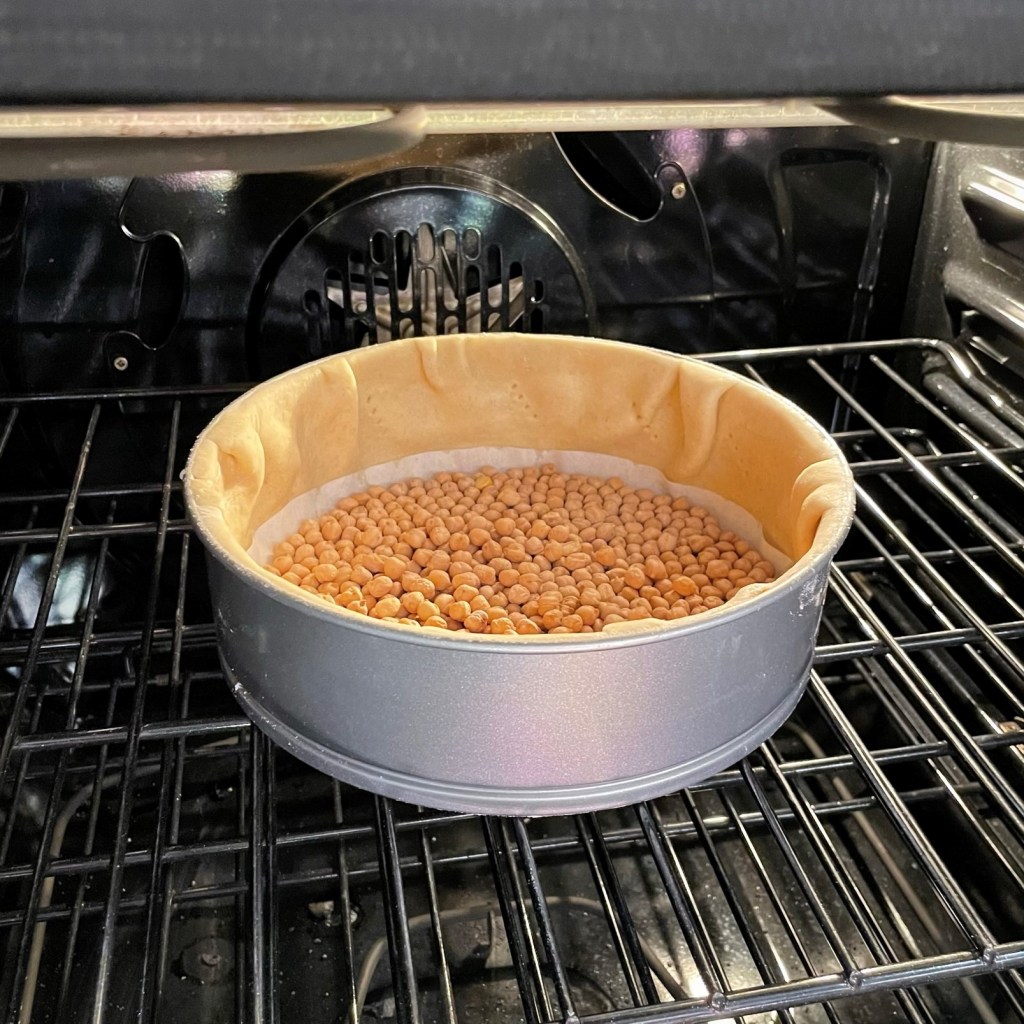
Follow whatever blind-baking method feels right to you, and check on it during baking. I docked a few holes in the pastry (the bottom and the sides), laid a parchment round into the pan and filled a shallow layer of dried beans to keep it from bubbling. One of these days, I will buy some pie weights! As you can see, my trimming method backfired, and the dough slid down the sides a bit. Live and learn—let’s call it “rustic,” shall we?


Allow the crust to cool completely while you prep the veggies. Trim and slice the zucchini, squash, eggplant and carrots into 1/4” thin planks. This was a task for the mandolin, which is serious business, so I didn’t attempt to take pictures of that process. Use a knife if you must and aim to keep the planks as uniformly thin as possible. The carrots were cut into thinner, 1/8″ slices. Sprinkle all the veggies with salt and pepper and arrange your ingredients for easy assembly. Combine beaten eggs with ricotta and whisk evenly. Shred the cheese and chop the basil into strips.


When the pastry is cooled, layer the zucchini and eggplant slices around the pan, overlapping them slightly to eliminate gaps. Don’t worry about keeping the slices even—it’s natural for some of them to sit higher in the pan—and expect that you may have a few veggie planks left over. Wiggle in the carrot slices wherever they fit, and then sprinkle the shredded cheese and sliced basil over the tart.


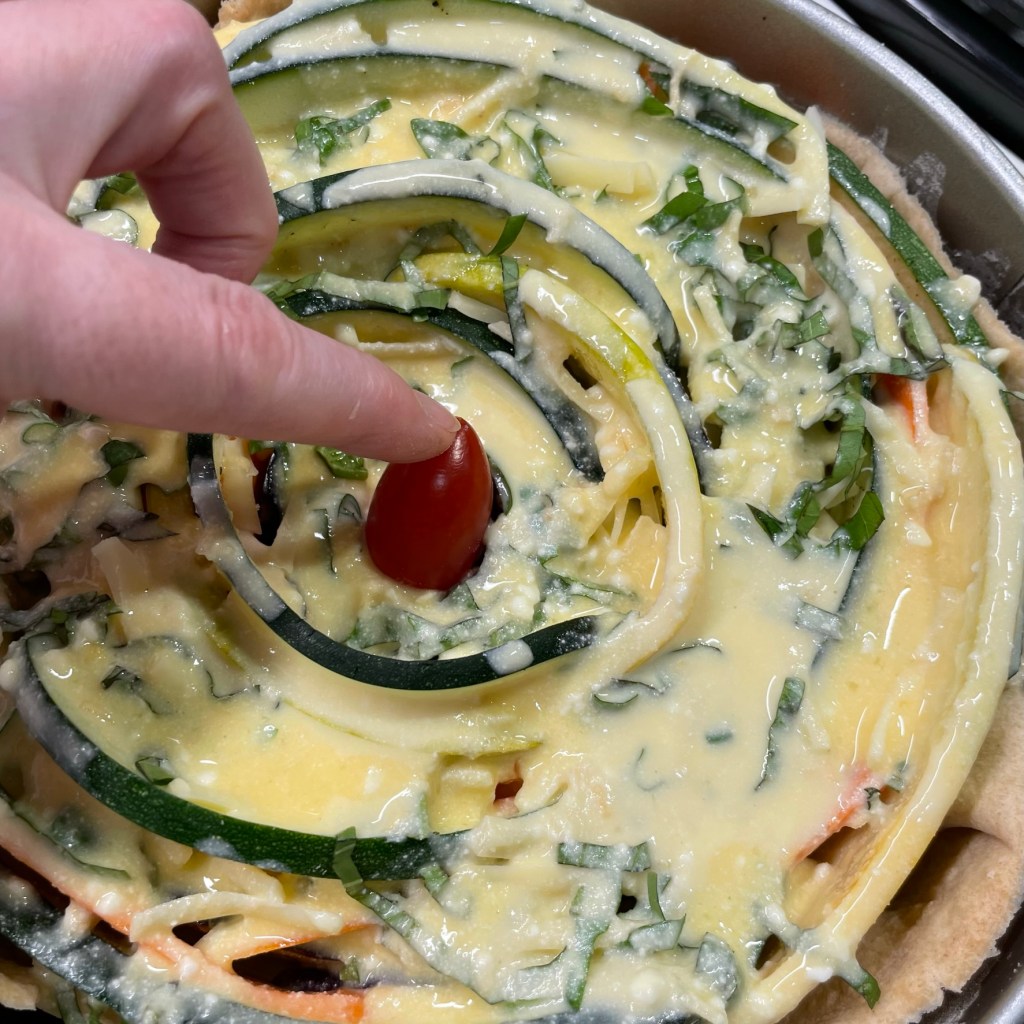
Pour the egg-ricotta mixture slowly over the veggie swirl, taking care to let it seep evenly as much as possible. This was a bit tricky with mine, given that my pastry had collapsed in several places, but it worked out OK. In a nod to my 2017 tart, I also placed a cherry tomato in the center before I slid it into the oven. About an hour later, the eggs were set and the veggies were tender, but there was a fair amount of excess moisture pooled on top in spots.

I used a paper towel to blot away the excess moisture, and tucked it back into the oven for another minute or two.

The moisture was not disastrous, and it didn’t make the crust soggy, but next time, I’ll salt the vegetables longer to draw out moisture, the same as I do with eggplant for moussaka or eggplant parm, and my instructions reflect this suggestion, too. More lessons learned. 😊


Garden Veggie Spiral Quiche

  • Servings: 8 wedges
  • Difficulty: intermediate
  • Print

It’s fun to make, and uses up some of the fresh veggies coming out of the garden! This was delicious for Meatless Monday, or make it the star of the show at a summer brunch.

Ingredients

  • 1 rollout pie pastry (store-bought or homemade; my recipe is below)
  • 1 large or 2 medium zucchini, sliced lengthwise into 1/4″ planks
  • 2 medium Japanese variety eggplant, sliced lengthwise into 1/4″ planks
  • 1 medium yellow or zephyr squash, sliced lengthwise into 1/4″ planks
  • 3 medium carrots, peeled and sliced lengthwise into 1/8″ planks
  • Kosher salt and black pepper
  • 4 large eggs
  • 1/2 cup ricotta
  • 1 tsp. dried minced onions
  • 1/2 cup shredded gruyere or cheddar cheese
  • Small handful of fresh basil leaves (or substitute Italian parsley)
  • Marinara sauce and grated parmesan, for serving

Directions

  1. Preheat oven to 350° F. Prepare and blind-bake the pastry in a 9″ springform or other straight-sided cake pan. Allow it to cool to room temperature.
  2. Spread out the veggie planks and season them generously with salt and pepper. Allow them to rest for about an hour, to draw out some of the moisture. Blot dry with paper towels. Select a smaller, “bendy” slice or two for the center of your quiche.
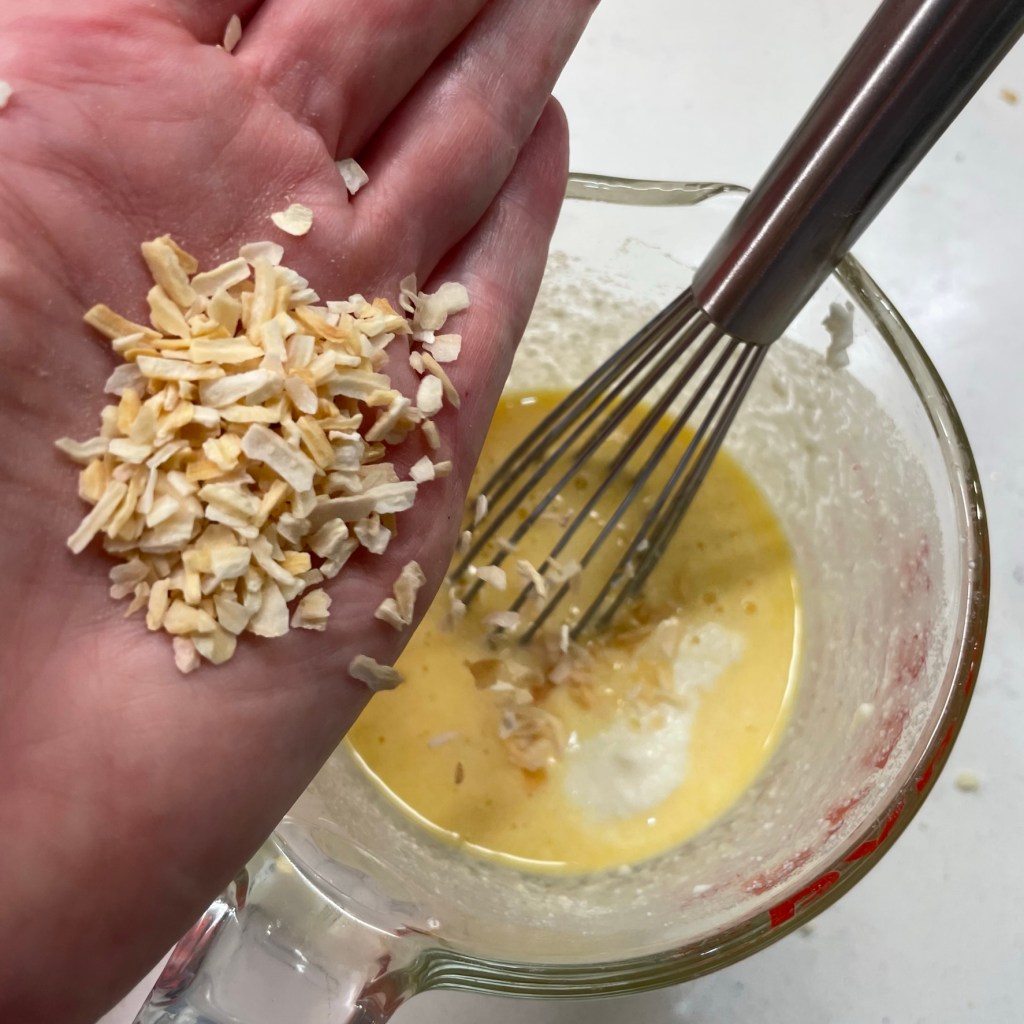
  3. Whisk together the eggs and ricotta until evenly blended. Stir in dried minced onions.
  4. Arrange zucchini, eggplant and yellow squash planks in the cooled pastry crust, overlapping slightly and alternating veggies for visual interest. Wrap the reserved slices tightly around your index finger and place it in the center (it will unwind to fill up the space). Tuck carrot slices in wherever you can make them fit.
  5. Scatter shredded gruyere all over the veggie spiral. Slice or tear the basil leaves and scatter those over the quiche as well.
  6. Carefully pour the egg mixture over the tart, taking care to let it seep down between the veggie planks. The mixture may or may not come all the way to the top.
  7. Bake the quiche at 350° F for about an hour, until eggs are fully set and vegetables are softened. Let it cool at least ten minutes before slicing and serving.

Use your favorite pie pastry recipe, or take a shortcut with a store-bought, roll-out crust. Below is the recipe I used for mine.

Ingredients

  • 1 cup all-purpose flour
  • 1 cup whole wheat pastry flour (or white whole wheat)
  • 1/2 stick unsalted butter, cold, cut into small cubes
  • 1/8 tsp. kosher salt
  • 1/3 cup very cold water

Directions

  1. Combine the two flours and salt in the bowl of a food processor. Pulse one or two times to evenly mix.
  2. Scatter the butter cubes all over the flour. Pulse about five times until the butter bits are smaller and coated in flour.
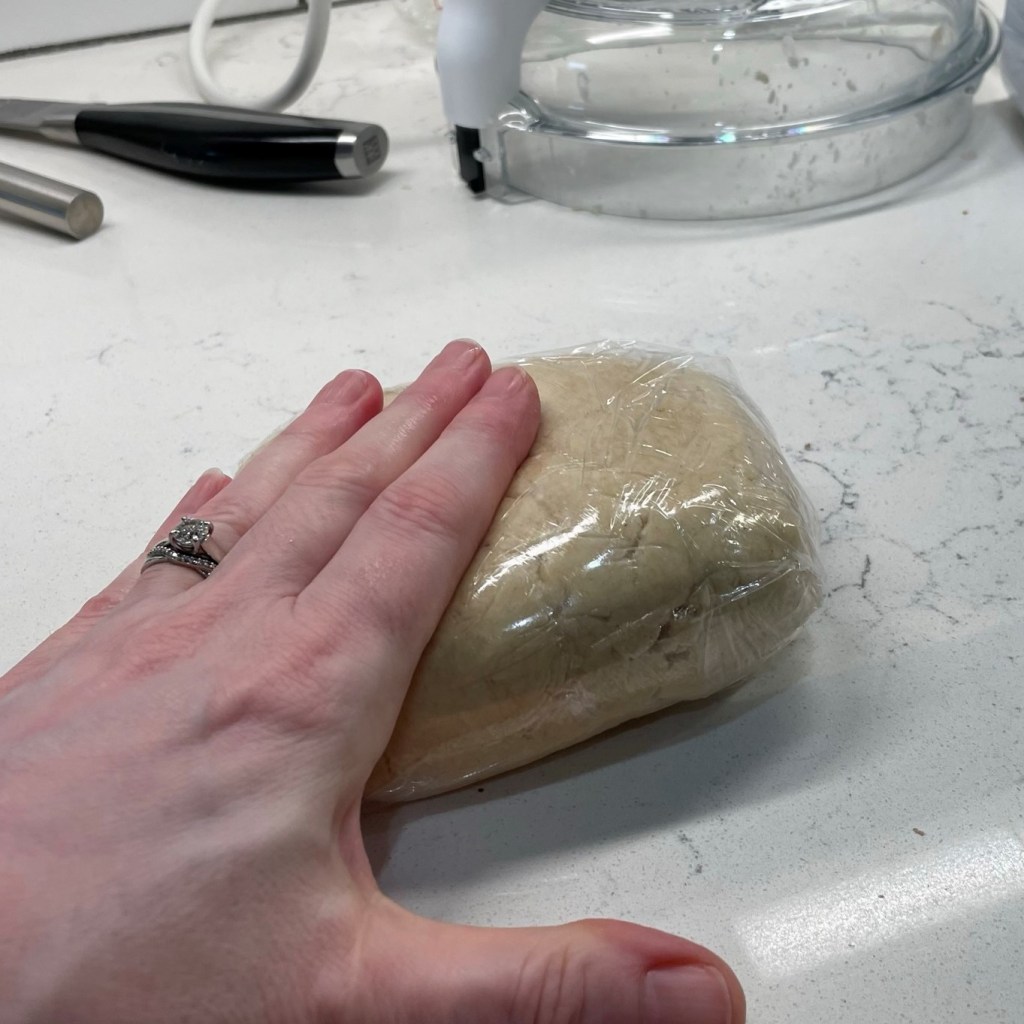
  3. Slowly pour the cold water into the chute of the processor. Run continuously as you add the water, and mix just until the dough forms a ball. Turn the dough out onto a piece of plastic film; wrap it up tightly and refrigerate at least one hour or up to overnight.
  4. To blind-bake the pastry, preheat oven to 350° F. Roll the dough out on a lightly floured countertop and drape it into the springform pan; trim off excess, but allow the dough to catch the edge a bit. Use a fork to prick a few holes into the dough; this helps reduce puffing while baking. Lay a piece of parchment over the bottom of the crust and fill with ceramic beads (or dried beans work well). Alternative, gently lay a doubled sheet of foil directly over the raw crust and up the sides. Bake for about 20 minutes, just until pastry is set but not golden. Allow it to cool before filling.


Creamy Spinach & Mushroom Tortellini

It seems like a never-ending battle, trying to evict leftovers from our fridge and stay on top of the new groceries coming in. Four months into pandemic lockdown, I still haven’t mastered the challenges of “shopping for the week.” But my culinary muse has been on some kind of caffeine kick lately, and I’m at it again today with a Meatless Monday-worthy pasta dish, made almost entirely with leftovers. Not to worry, though—I’m sure it would be fantastic with fresh-bought ingredients, too.

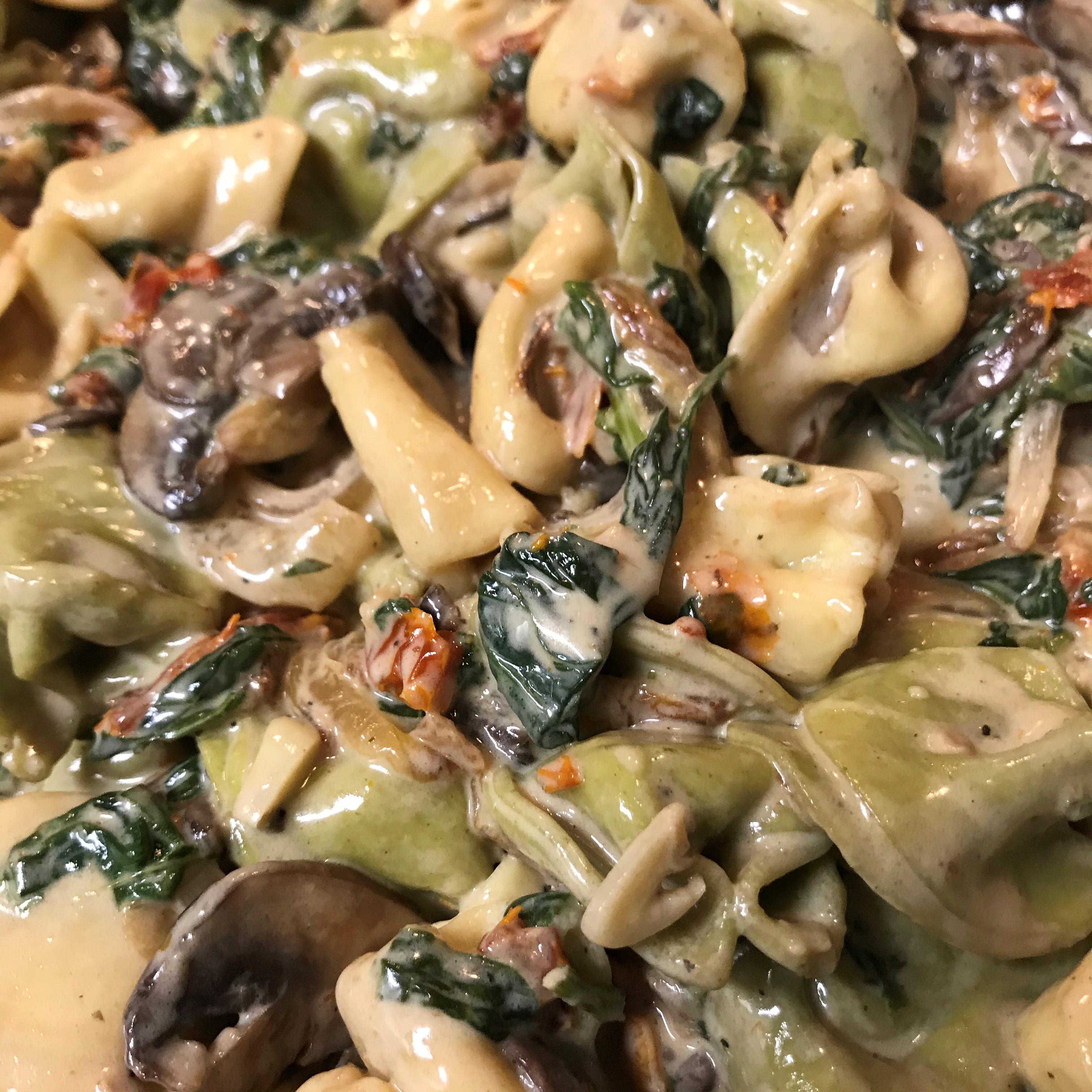
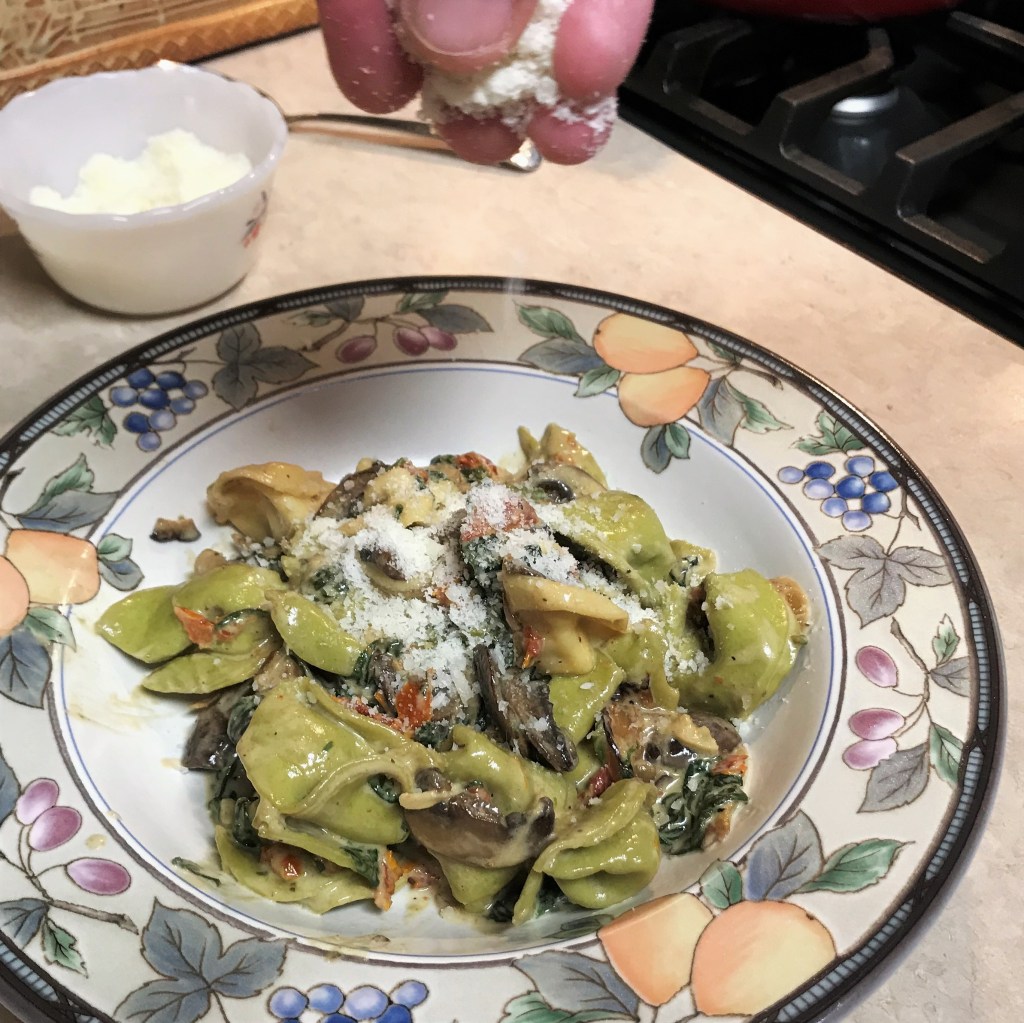
This one uses up leftover fresh tortellini from a soup recipe last week, and a few fresh produce items starting clamoring when I opened the fridge, so in they went! Cremini mushrooms, with all their warm, earthy flavor, plus baby spinach, sweet onions and fresh garlic. I happened to have a half bag of sweetly sun-kissed dried tomatoes in the pantry cabinet, and we’re off and cooking. I’m gonna get to the bottom of this cluttered fridge yet!

We are empty nesters, and many of my recipes are designed to serve two people. But doubling a recipe such as this one is easy, as long as you’re mindful about the size of your pan.

It’s creamy, rich and packed with earthy flavor!

Ingredients

Extra virgin olive oil

1 medium sweet onion (tennis ball size), cut in half and sliced into crescent shapes

8 oz. cremini mushrooms, cleaned and sliced

3 handfuls fresh baby spinach, rough chopped

1/4 cup soft sun-dried tomatoes*

2 cloves garlic, chopped

Kosher salt and black pepper

1/2 cup heavy cream* (see notes for a lighter option)

1/4 cup dry white wine* (something like Pinot Grigio is perfect)

2 cups fresh cheese tortellini (this was half a large package)

Trader Joe’s umami seasoning, optional

3 Tbsp. parm-romano blend* (plus extra for serving)


*Notes

My sun-dried tomatoes are the soft variety, packed in a zip-top bag. If yours are dry and hard, it’s probably a good idea to rehydrate them for a few minutes in hot water before proceeding. If they’re packed in olive oil, you’re good to go.

Want to lighten this up? Here’s a trick that works great in recipes where the fat of heavy cream isn’t as important as the texture. Swap it out in favor of canned evaporated milk. It is more concentrated than fresh milk, but with a fraction of the fat. Give it a try!

If you prefer, you could substitute a vegetable broth for the wine, plus a squeeze of lemon juice or splash of red wine vinegar. This will make up for the acidity the wine adds to the dish.

We go through a LOT of parm-romano blend at our house, and I mention this ingredient in many of my recipes. Rather than purchasing the pre-grated stuff at the market, we buy parmesan and romano in blocks and grate it in our food processor. It’s terrific to be able to reach into the fridge and have a container of it ready to go, plus it’s fresher and more flavorful with no added stabilizers or anti-caking agents. Did I mention we save money with this method?


I’m a visual learner, and if you are as well, have a look at the slideshow before you advance to the recipe. Fair warning: it might make you hungry!


Instructions

  1. Place a large pot of water on to boil over medium-high heat, for cooking the tortellini.
  2. Heat 2 Tbsp. olive oil in a large non-stick skillet over medium heat.
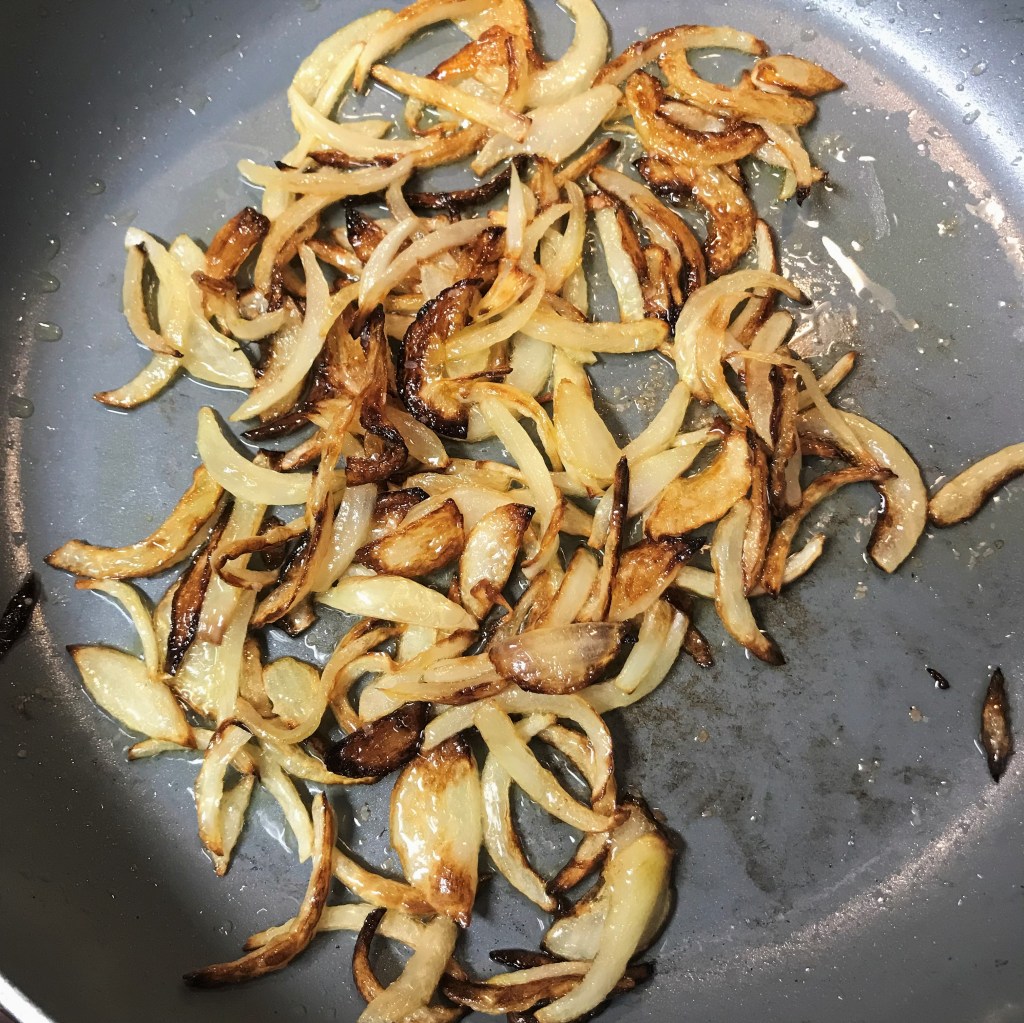
  3. Add onion slices to the skillet and cook, tossing occasionally, until softened and browned on the edges.
  4. Remove onions to a bowl, add another splash of olive oil to the pan and toss in the mushrooms, cooking and tossing until they are soft and moisture has evaporated. Season with salt and pepper.
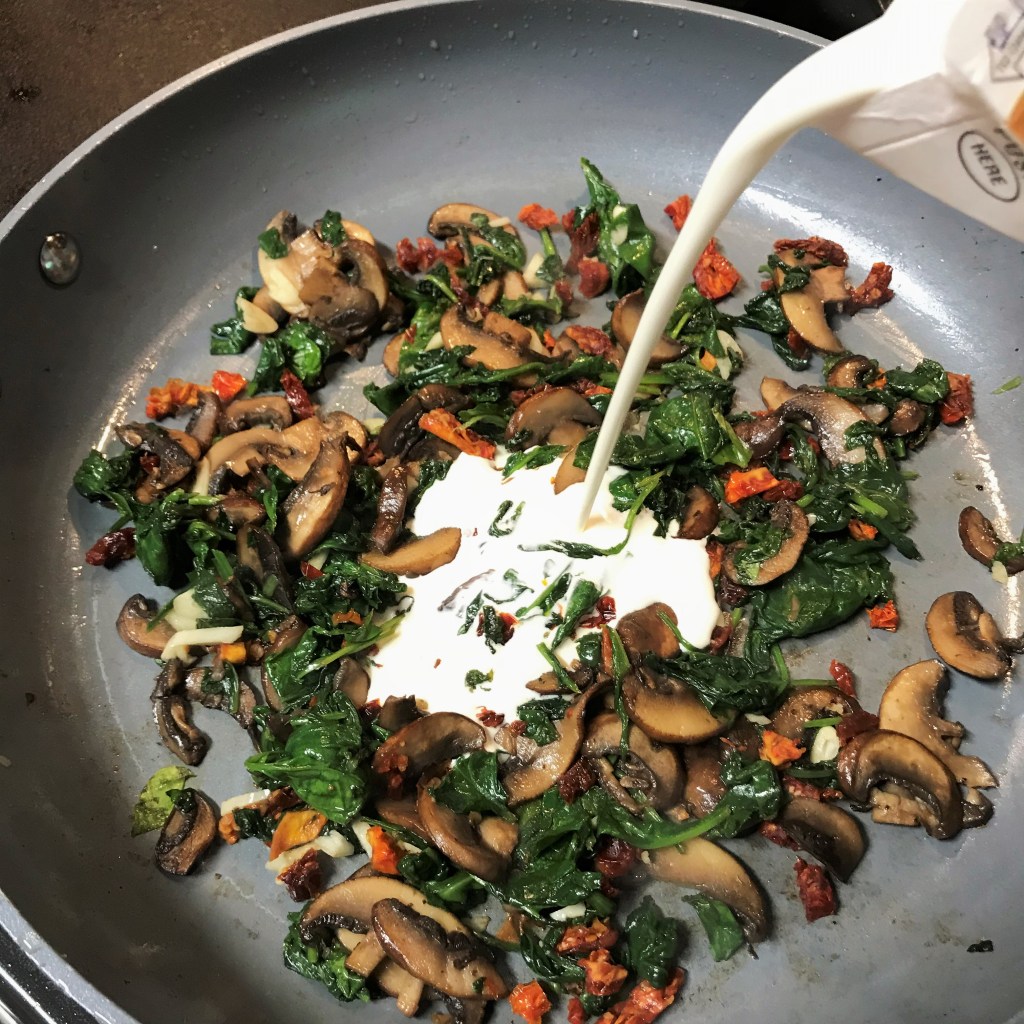
  5. Move the mushrooms to the outside edges of the pan and add the spinach leaves to the middle. Toss them around until wilted then add the sun-dried tomato pieces.
  6. Stir in the heavy cream, then add the white wine and parmesan-romano blend and reduce heat. Return the caramelized onions to the pan. Cover and allow mixture to simmer on low heat a few minutes while the pasta cooks.
  7. When water comes to a boil, season with 2 teaspoons kosher salt (don’t worry—most of the salt ends up down the drain). Add tortellini and stir immediately to prevent sticking. Reduce heat to medium and allow pasta to cook at a low boil for about 5 minutes. It’s OK to undercook them slightly because they’ll cook further in the sauce.
  8. Drain tortellini (or use a large straining spoon, as I did) and add to the sauce mixture. At this point, I tasted and decided it need just a little something. Remember the Trader Joe’s “umami” seasoning we introduced in the Lentil Moussaka? It’s perfectly at home in this dish, underscoring the flavor of the mushrooms already in the dish, and throwing on just a touch of extra savory depth.
  9. Give it a good toss to thoroughly coat the tortellini, then go set the table. It’s a good time to pour another glass of wine, while you’re at it.
  10. Divide the creamy pasta between two pasta bowls, sprinkle with additional parm-romano blend and serve.

It doesn’t look like leftovers and it sure doesn’t taste like it, but I’ve regained some ground on the shelves of my refrigerator. Plus, we ended up with one lingering portion of this dish, perfect for my husband to reheat for a work lunch. And that’s a win-win!

Want to print this recipe?


Mac and Cheese

It’s one of the world’s most beloved comfort foods. From the blue box variety with the envelope of “cheese” powder to the saltine crumb-topped church potluck kind, macaroni and cheese isn’t particularly sophisticated—it’s just a dish full of noodles, cheese and milk. I have a few ideas why it endures as a favorite:

Everyone likes it
Okay, maybe not everyone. Folks with celiac disease or dairy allergies don’t. Nor would a vegan. But bring it to a dinner party and you’re pretty much guaranteed to have a home run.

It satisfies all our primal cravings
If science is correct—that humans are hard-wired to crave fats, carbs and salt—well, this food ticks all the boxes.

It’s versatile and adaptable
Like an essential “little black dress,” you can modify a good mac and cheese recipe up or down to suit the occasion. A stove-top version is great for a quick weeknight dinner and an embellished baked casserole version rocks for a family reunion. Many upscale restaurants have taken it even further by addition of fancy-pants ingredients such as lobster and truffles.

It’s easy to make with ingredients you probably already have
This has never been more important, as we are all looking for ways to make satisfying meals without one more run to the grocery store.

It reheats well
In the oven, on the stove top or even in the microwave. That is, if you actually have leftovers.

There are a million “best ever” mac and cheese recipes out there, but taste is subjective so I’m not going to make that claim here. This really is about the cheese sauce, and your technique can make or break your dish. I’ll admit that I hardly ever make this dish the same way twice. I change up the type of pasta depending on what’s in the pantry, and I use whatever leftover bits and pieces of cheese we have in the deli drawer at the time. But the main formula is the same and each step has a purpose. In case you’re wondering:

What is the best cheese for macaroni and cheese?

I like to start with American cheese, which is processed with salts and enzymes for super melting ability. If you are averse to the idea of American cheese (first of all, why? And read this), or if you just don’t have any, you may substitute a lesser amount of real cream cheese, which also has some stabilizers for a creamier sauce, but it’s bland so you’ll need to season it more. The rest of the cheese is your choice, but go with something that melts well: medium to sharp cheddar, Monterey jack, Havarti, Gouda, fontina, gruyere or even a bit of brie (without the rind) are delicious. Avoid super-stretchy cheeses such as mozzarella or Swiss and hard or crumbly cheeses such as feta, parmesan and manchego. Also, freshly shredded cheese is best. Pre-packaged shreds are coated with modified starch substance that keeps the cheese from clumping in the bag. Guess what else it does? It prevents even melting.

What kind of pasta is best for macaroni and cheese?

Consider mainly shape and texture, but if you’re looking to step up your game, also peek at the ingredients. Pasta made with “durum” or “semolina” flour (same thing, two names) provides a richer, deeper flavor than “enriched wheat” flour. If you like whole grain, that’s fine, too. Look for shapes with curves, nooks and crannies to grab onto your creamy cheese sauce. Elbows are classic, but rotini, fusilli, orecchiette, ditalini, and shells are all going to work well. Look for pasta labeled as “bronze cut,” which has a rougher texture, ensuring even greater hold on the cheese sauce.

What is the best way to cook pasta?

No matter how much pasta you’re cooking, use a large pot, at least 6 quarts. There’s a very scientific reason for this, but suffice to say it gives the pasta room to move so it doesn’t stick and clump together. Add kosher salt once the water is boiling. Adding it too early could damage the surface of the pot. Don’t be stingy with the salt; use about a tablespoon, and don’t worry—most of that salt will end up going down the drain. Regardless of what you’ve “always been told,” do not add oil to the water. It doesn’t prevent a boil-over and it does not prevent the pasta from sticking. On the contrary, it hinders your sauce from clinging to the cooked pasta. For the same reason, don’t rinse your cooked pasta.

Ready to get cooking?

Still as creamy as can be, and ready to serve.

Follow along, but by all means flex my basic recipe to suit your taste and your inventory. The best part of cooking is making it your own.


Ingredients & Tools

3 Tbsp. butter (salted or unsalted)

½ cup finely chopped onion (I like sweet, but use Spanish, shallots, white, red or whatever)

3 Tbsp. all-purpose flour

2 cups whole milk (see sidebar notes)

About 8 oz. real American cheese (the kind sold by the pound in the deli, not the pre-wrapped slices)

2 packed cups good melting cheese, freshly shredded (see sidebar notes)

Kosher salt and freshly ground black pepper to taste

¼ tsp. white pepper

¼ tsp. dry mustard powder

12 oz. box good quality pasta (see sidebar notes)

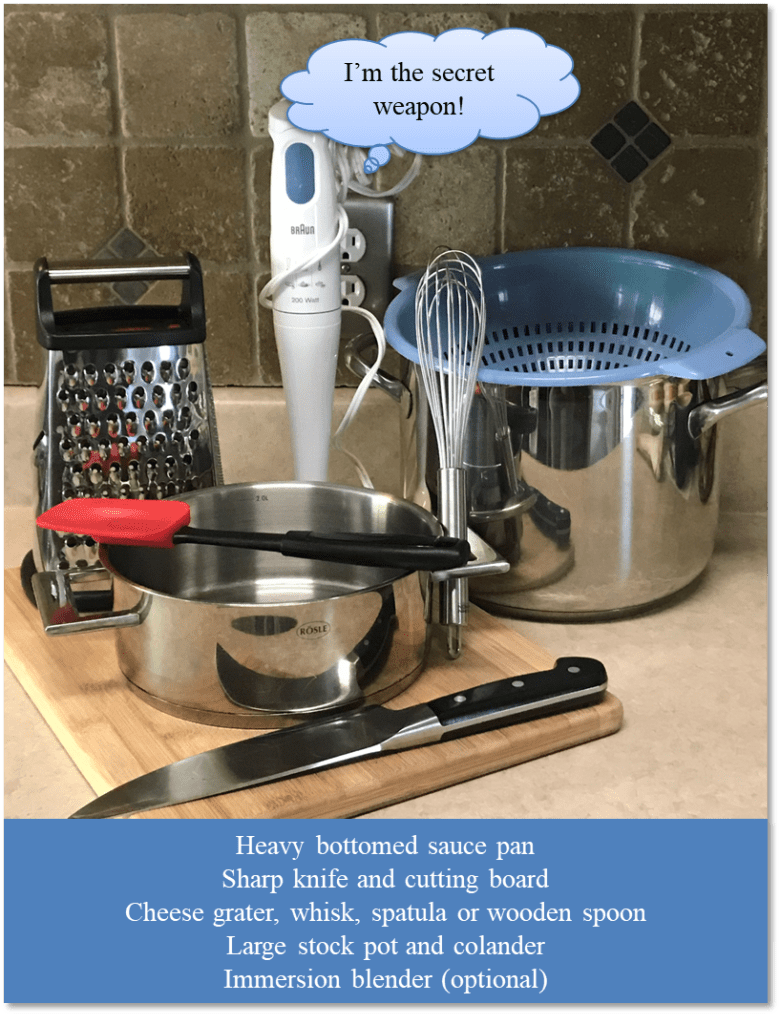
One more tool you’ll need…

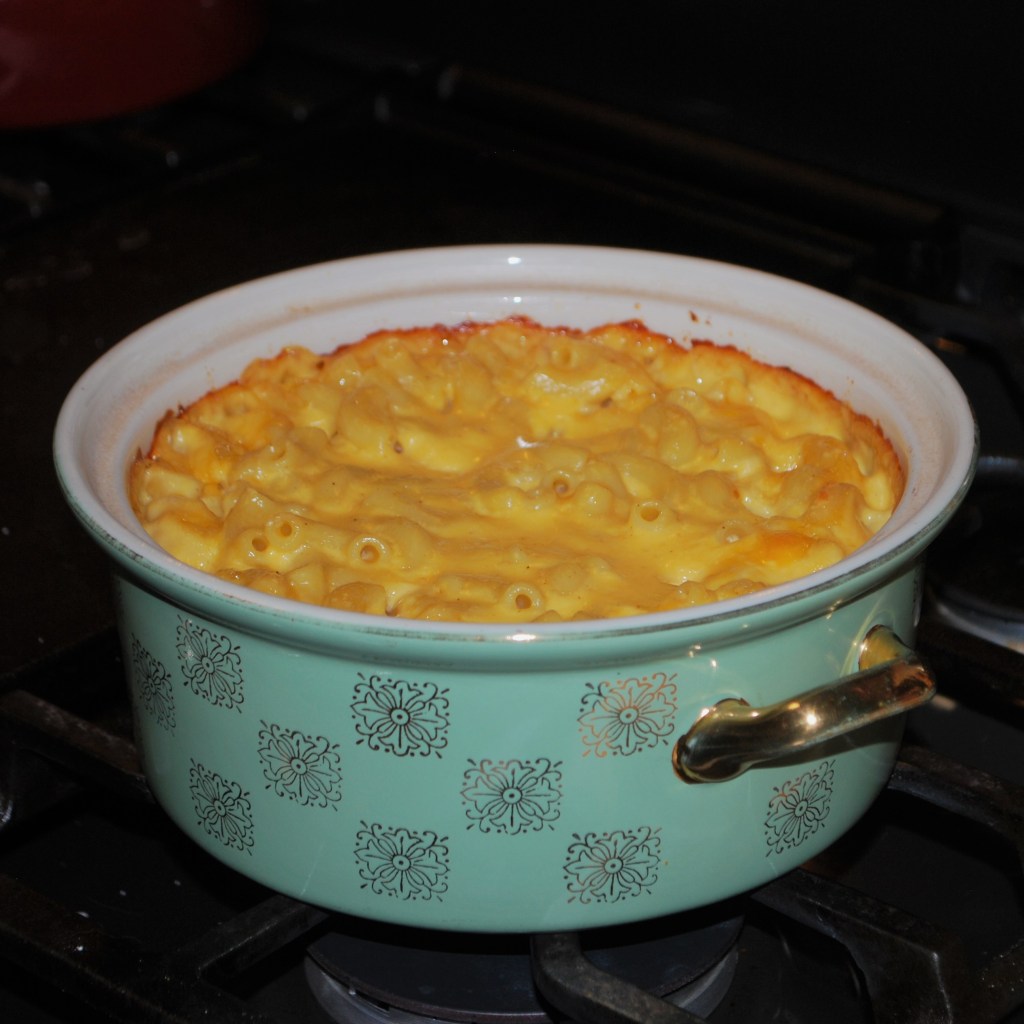
A 2-quart covered casserole dish, if you should decide to go one step further (better) and finish your mac and cheese in the oven. In memory of my maternal grandmother, who taught me all the basics of cooking, I’m using this beautiful vintage casserole. Gram gave this to me many years ago, when I moved into my first apartment. I simply LOVE this dish!


Instructions – the Béchamel (fancy French word for “cream sauce”)

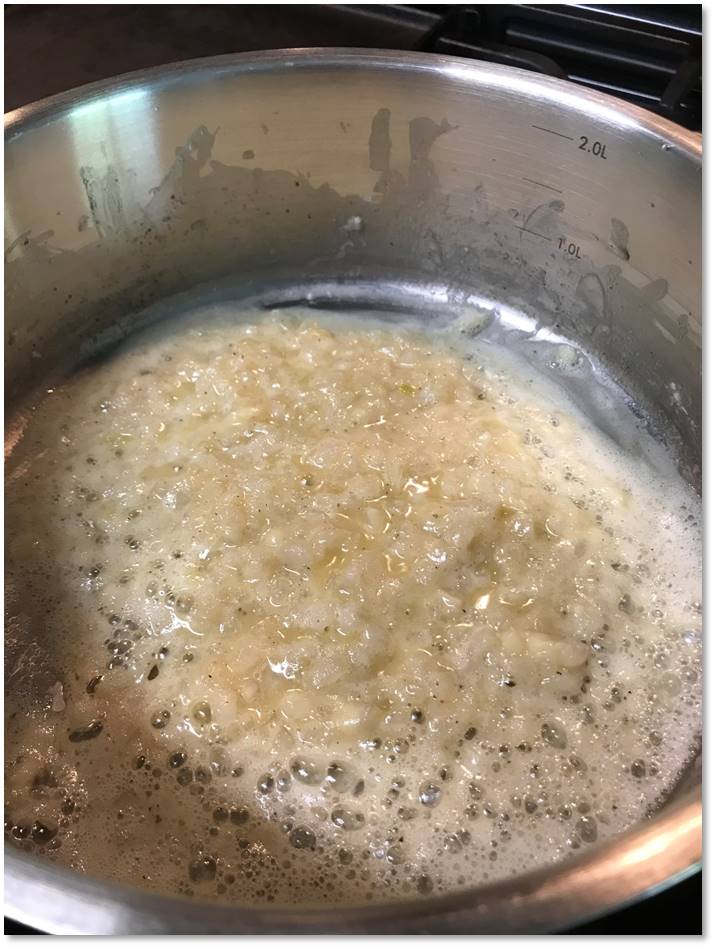
Over medium low heat, melt butter in your heavy-bottomed saucepan and add onions, simmering very slowly until they are soft and translucent. Do not rush this step. You don’t want the onions to brown, only to soften. This step should take about 6 to 8 minutes. Get the rest of your ingredients lined up, because it will go quickly from here.

When onions are soft, season with salt and pepper then sprinkle flour over them and stir to coat well. Increase the heat to medium and cook until bubbly and just turning golden.

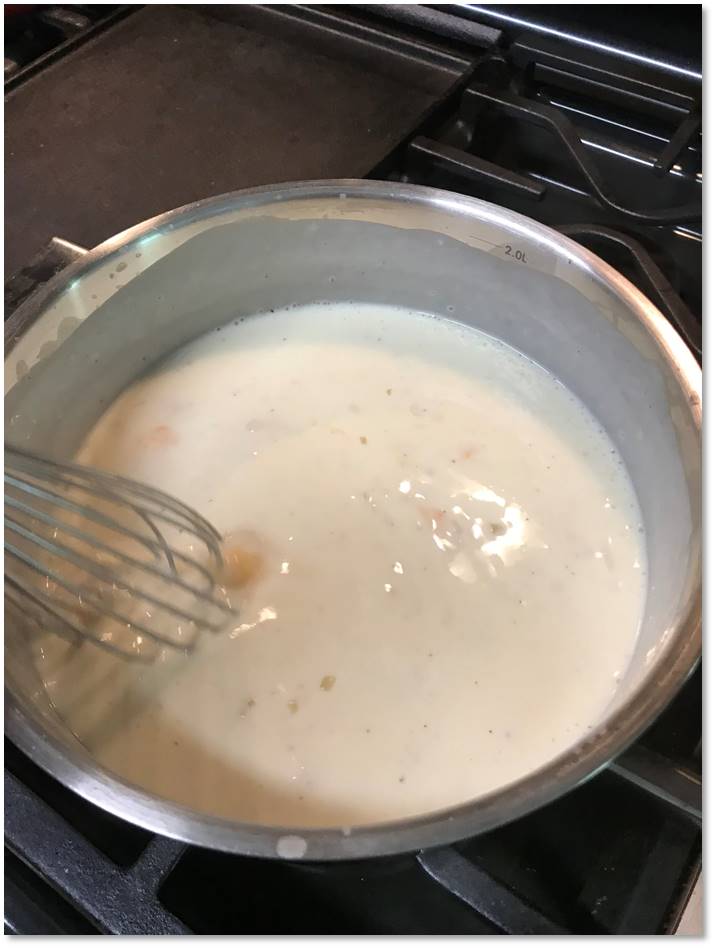
Add milk slowly but all at once, whisking constantly to create a smooth mixture. Add dry mustard and white pepper and continue to cook over medium heat until mixture is just simmering and slightly thickened. Add cubes of American cheese and whisk until melted and uniform consistency.

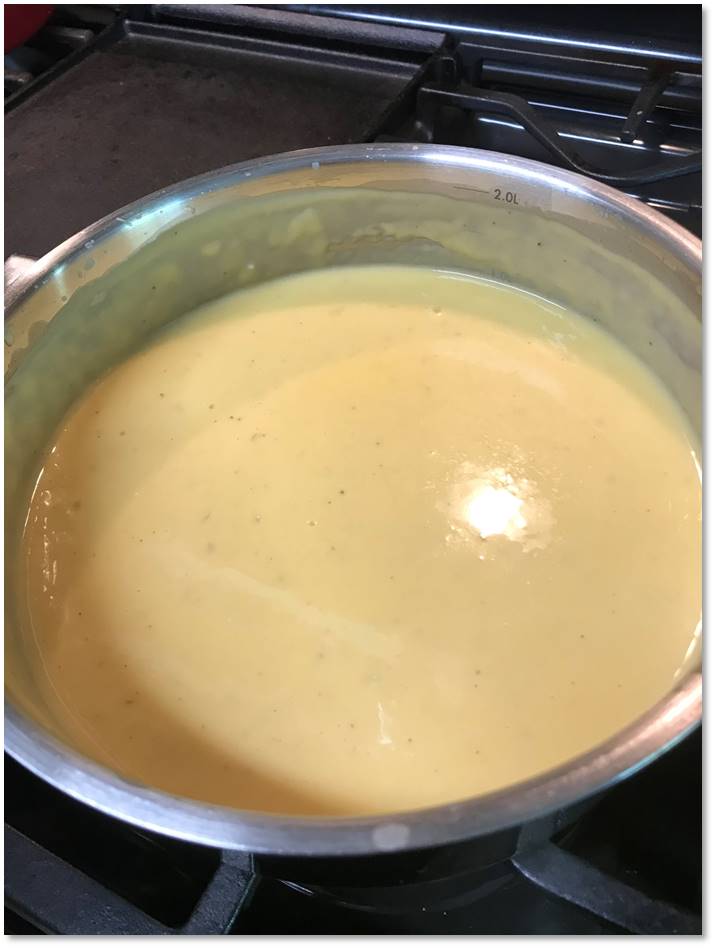
Add shredded cheese, one cup at a time, and whisk after each addition until smooth. Adjust salt and pepper to taste, remove from heat. At this point, you have a lovely creamy cheese sauce.

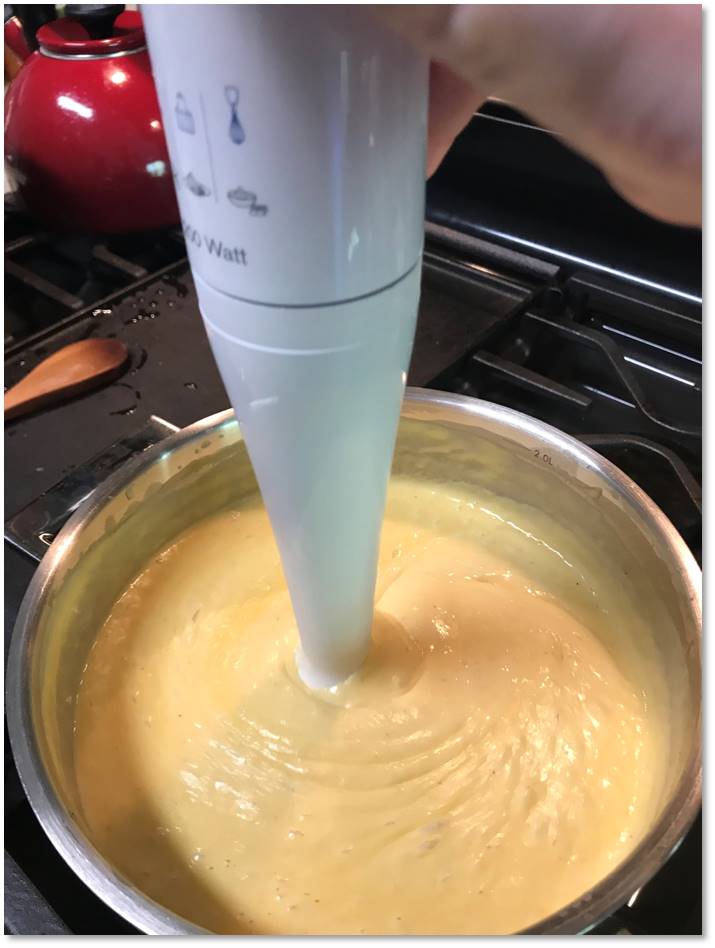
Want to take it up a notch to pure decadence? Use an immersion blender to whip the sauce into a completely smooth and silky consistency. Either way is fine, but if you have the stick blender, I highly recommend it.


Instructions – the Pasta

Fill your stockpot with cold tap water and place over medium-high heat until water comes to a boil. Add a generous spoonful (about a tablespoon) of kosher salt and stir to dissolve. You have one shot at seasoning your macaroni; don’t miss it. Do not add oil to the cooking water.

Add the pasta to the pot all at once and stir immediately to prevent sticking. Cook according to package instructions for “al dente” or “firm” texture. You don’t want the pasta to be too soft or it will become mushy later when you bake it with the cheese sauce. Drain pasta in a colander, shaking to rid all excess water, but do not rinse it.

Instructions – Assembling for Baking

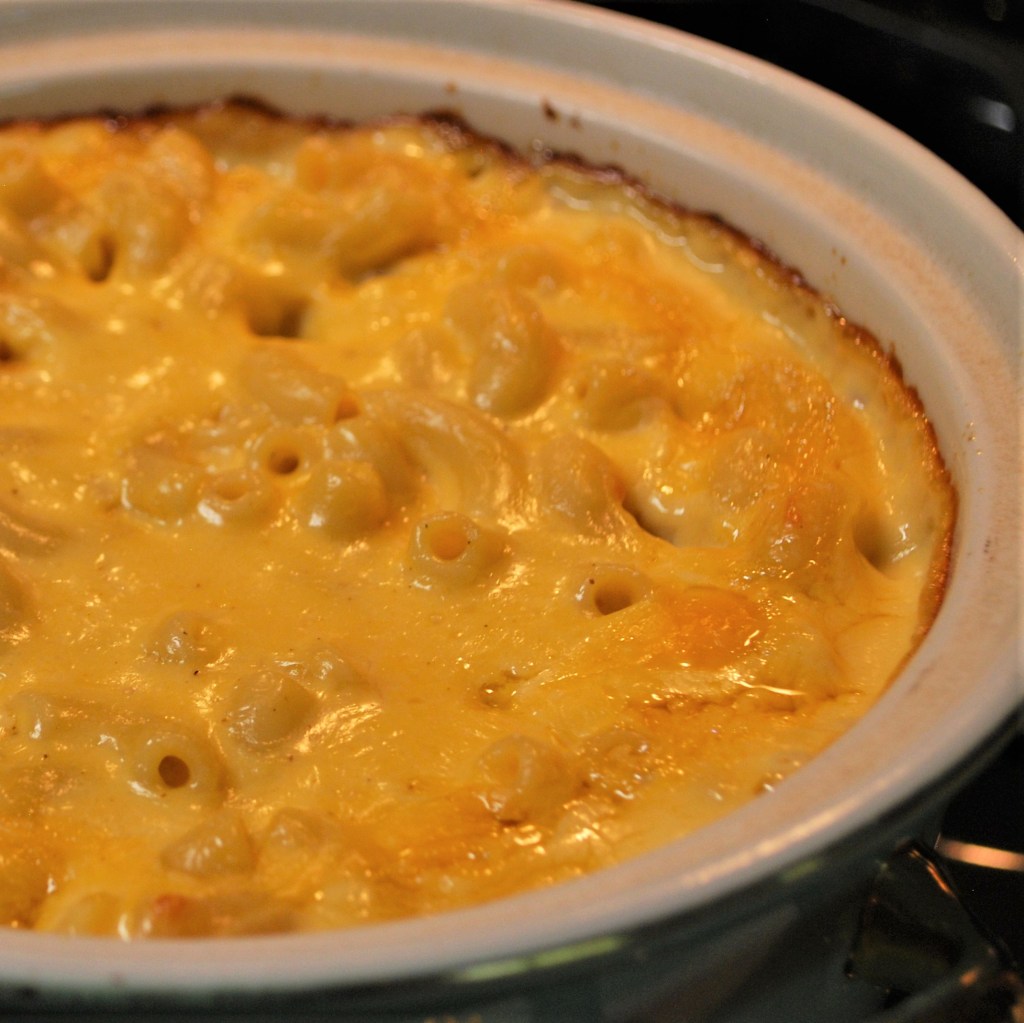
Combine sauce and pasta together in the cooking pot, folding gently to incorporate everything into a nice even mixture. This may seem overly cheesy, but please use all the cheese sauce. Remember that during the baking time, a lot of the sauce will be wiggling its way to the inside of your pasta shapes. More is better! Spoon into a buttered casserole dish and let cool slightly while you preheat the oven to 350° F. Cover and bake about 40 minutes then remove cover and bake 20 minutes more. Enjoy!

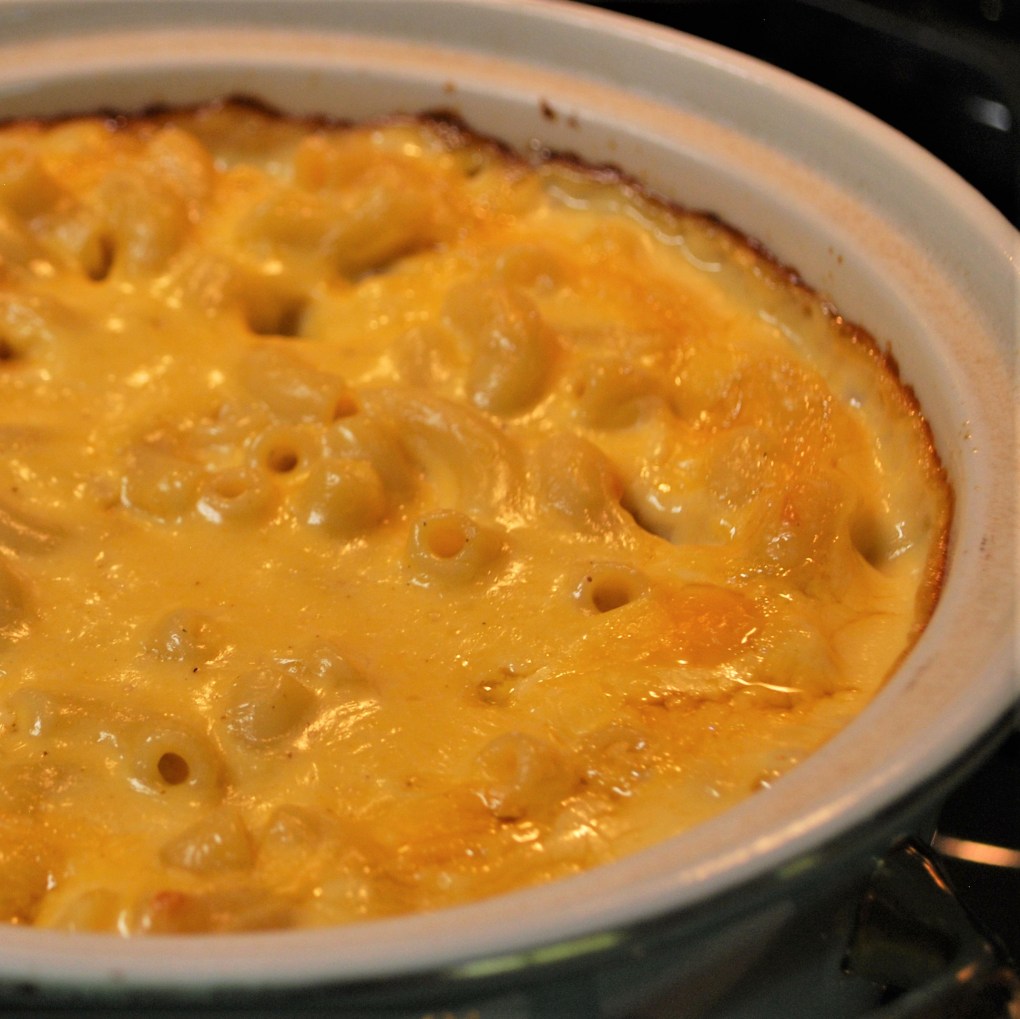
I love the baked-on cheesy crust that forms on oven mac and cheese.
You can hear and feel how gooey and creamy the sauce is, from the first spoonful!

Want to print this recipe?