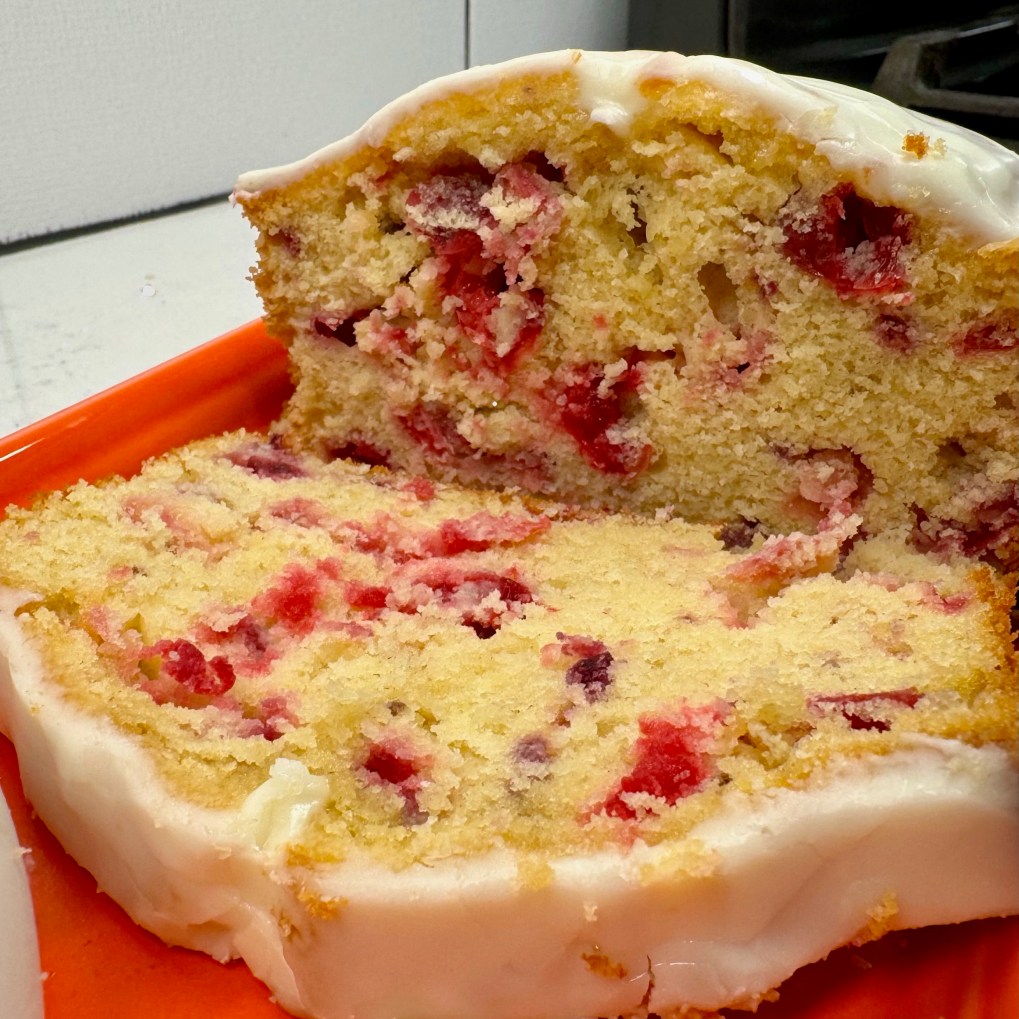
Cranberry Quick Bread

It’s a question that has always piled on stress, and one that is virtually inescapable this time of year, asked by friends and strangers alike.

“Are you ready for Christmas?” 

And this year, I actually am! Not for having crossed off a multitude of items on a gift list or for having my proverbial ducks in a row for holiday entertaining or gathering or what-have-you. Nope, this year I’m “ready” because my husband and I made a conscious decision to forgo most of the hubbub that is typically associated with the holiday season. You could say that we are quiet-quitting Christmas. Except for the tree!


Our tree is all we’ve done so far this year, and it’s simple. We are not the family who has a perfectly color-matched tree, nor do we want to be. Our tree has a hodgepodge of trimmings, many of which symbolize memories we’ve made since we’ve been together, and others that were gifted to me by my maternal grandmother as long ago as 1972!



We will exchange small gifts, and I’ll go overboard for the pets, but there isn’t a darn thing we need. Instead of the hustle and bustle involved in “finding the perfect gifts,” we are taking time to enjoy being together, and doing fun things that improve our moods, such as watching holiday-themed films, sipping hot cocoa by our patio fire and— you knew this was coming— cooking and baking!
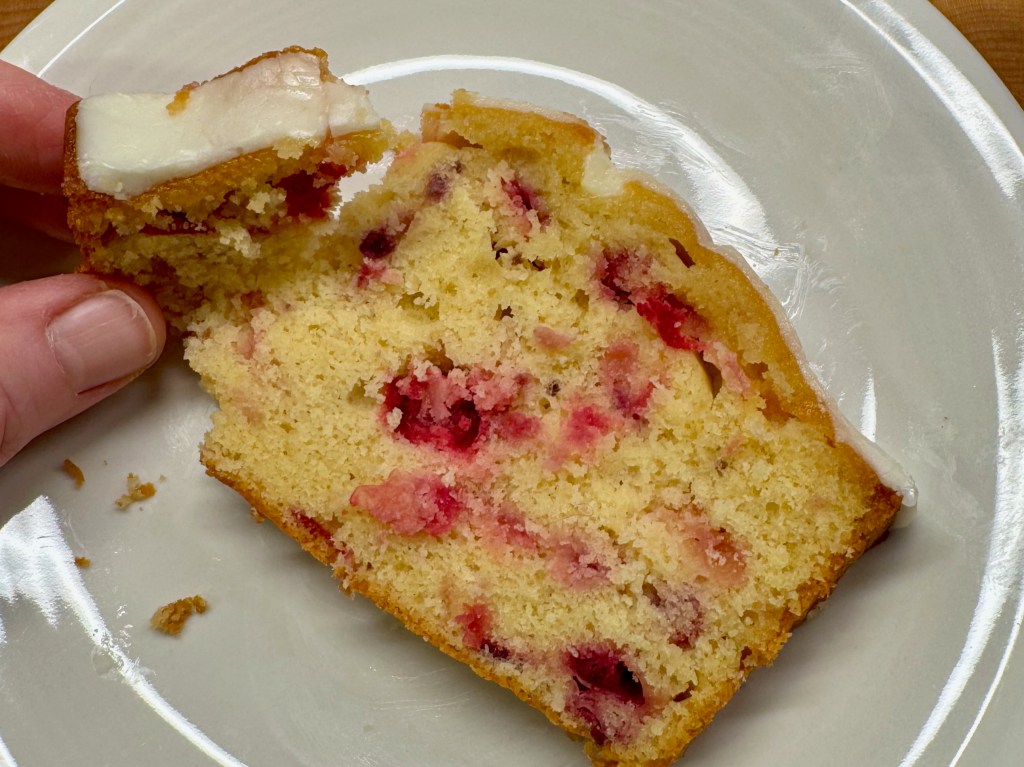
Nice enough for company, but easy enough for an average Tuesday!

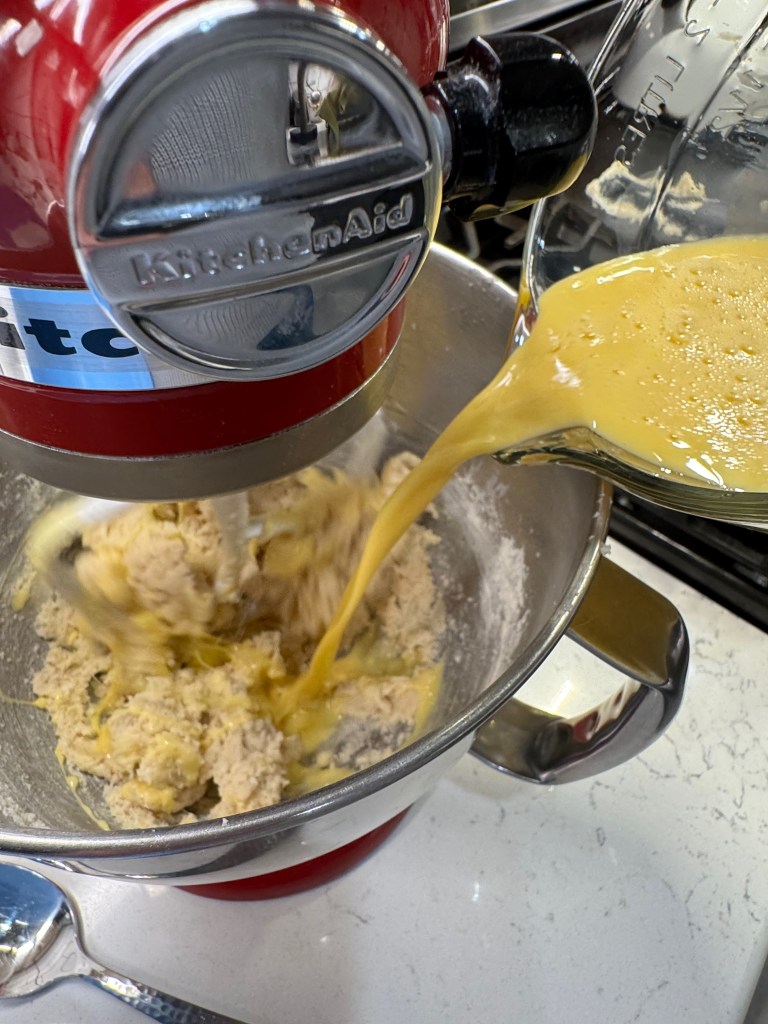
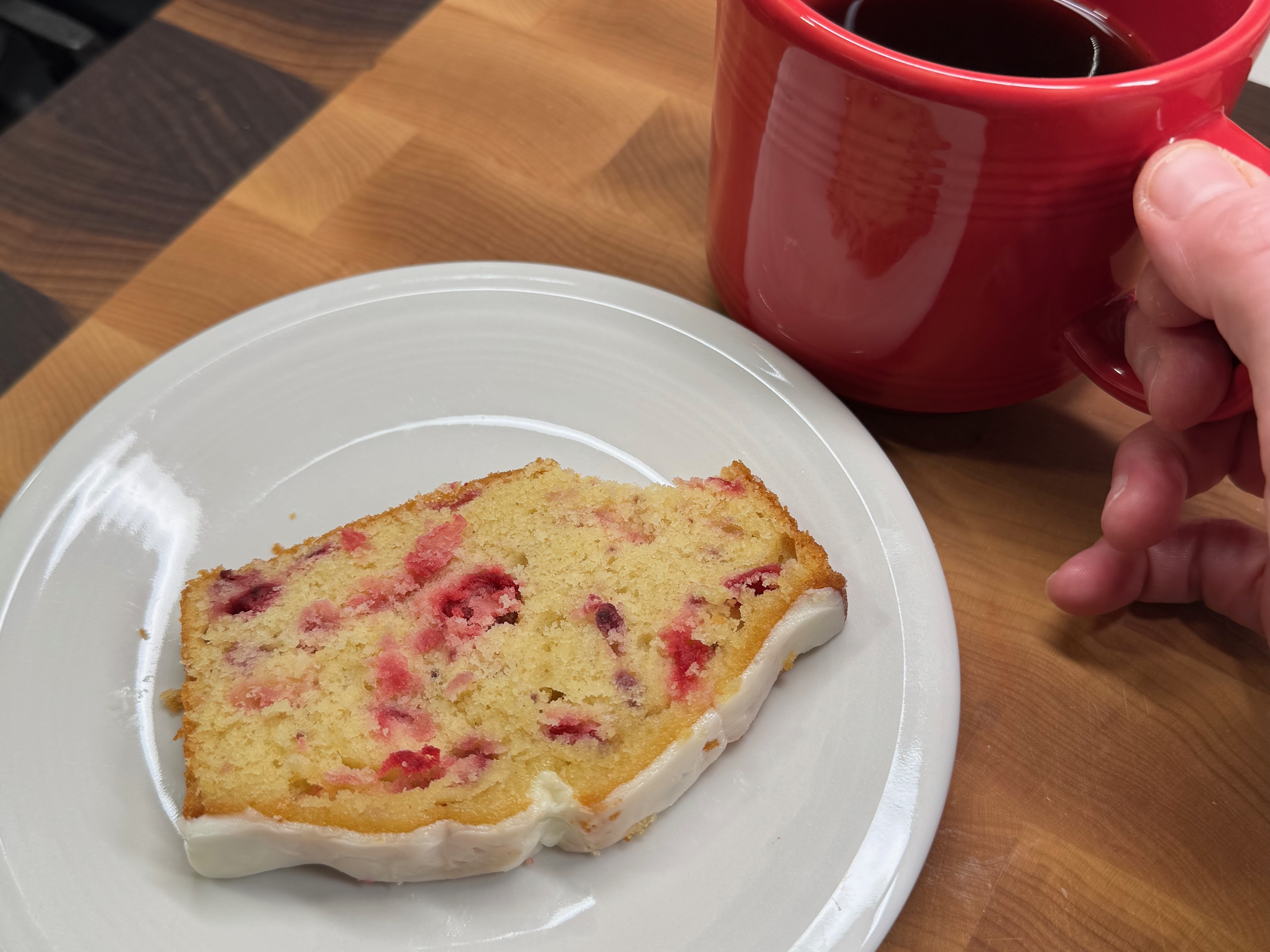
I’ll never ever say that the food of the holidays is too much trouble, and this seasonal combination of cranberry and orange is one of my all-time favorites. My first instinct was to make a challah, featuring dried cranberries and candied orange (as I shared back in 2022), but to keep things sweet and simple, I decided on a quick bread instead. It’s been forever since I made one, and the King Arthur Baking site, my go-to resource for all things baking, had a recipe that satisfied most of my intentions. I embellished their recipe, adding a touch of orange oil (because I didn’t have a fresh orange for zest) and subbing in a portion of white whole wheat (because it’s what I always do).
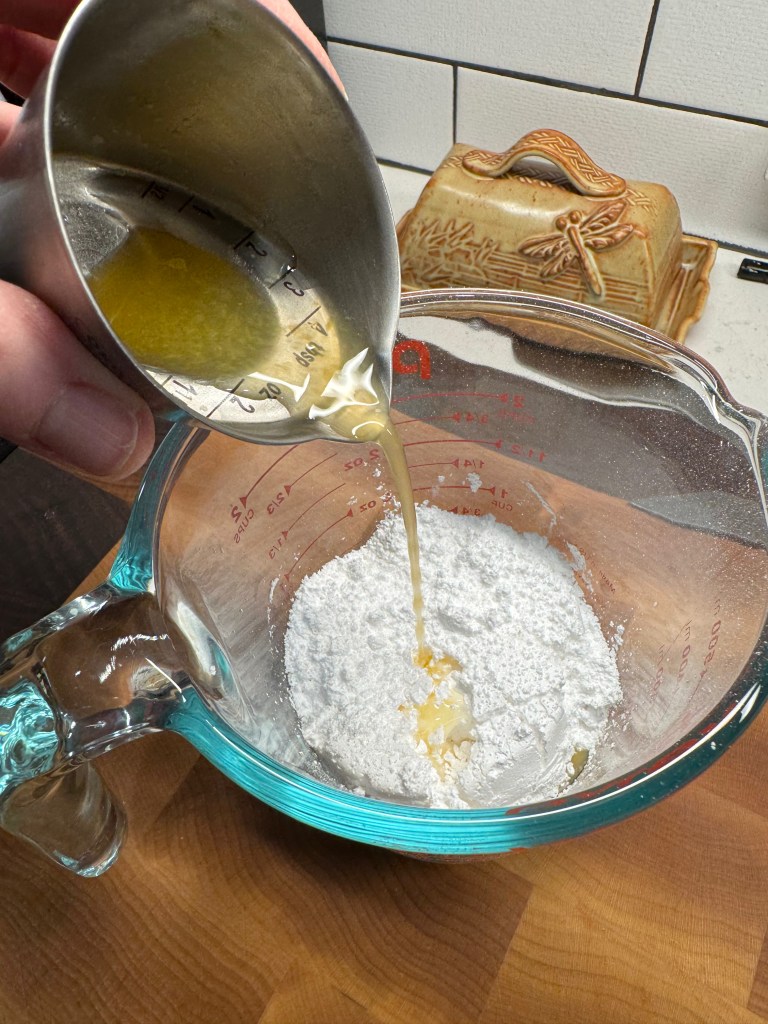
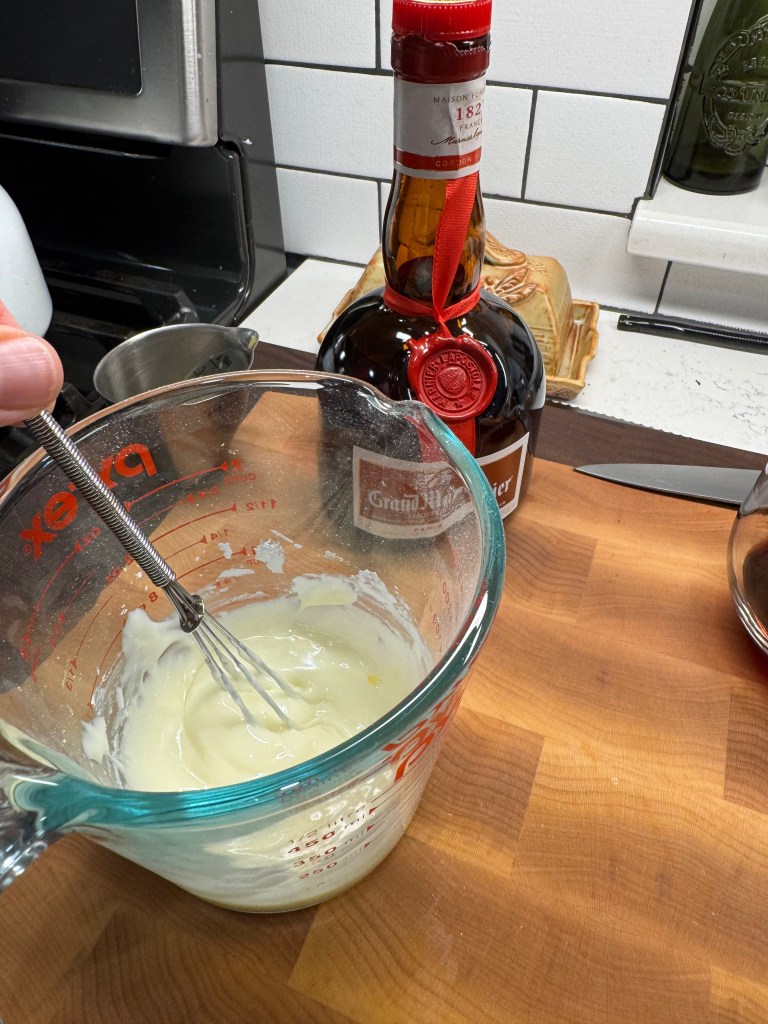
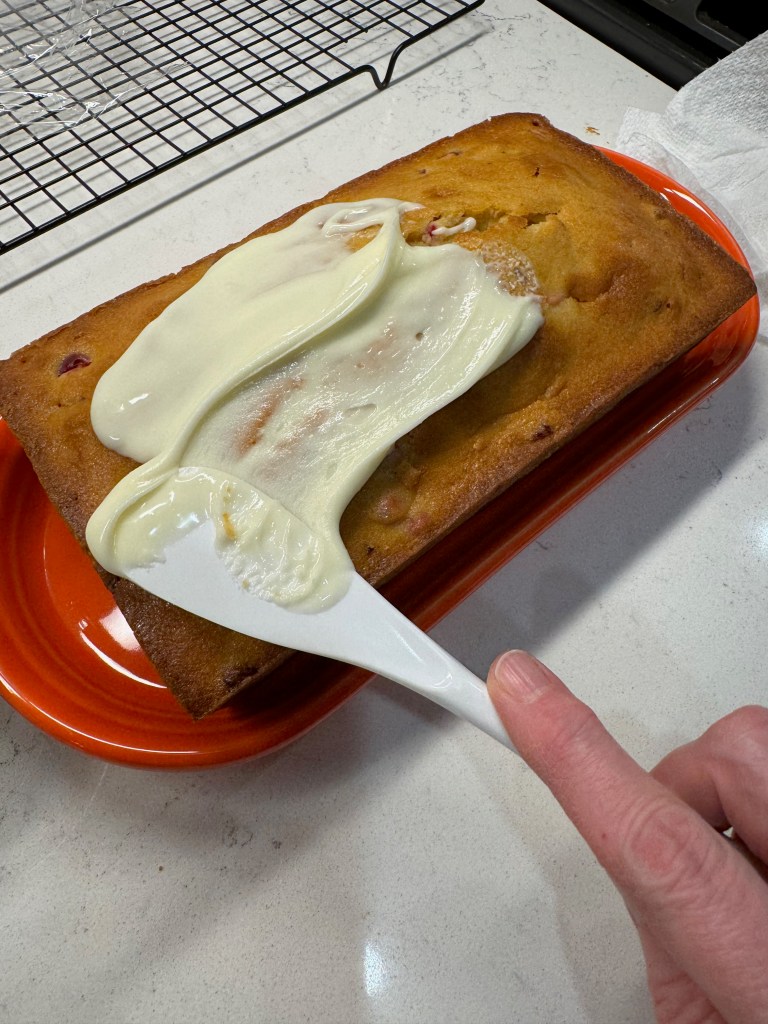
The glaze was simple, too— just powdered sugar, fresh orange juice (by that time, I had made a grocery run) and just enough Grand Marnier to make it feel extra special.
Now, if I can get through the rest of the holidays with this much ease, I’ll be golden! How about you?

Cranberry Quick Bread
  • Servings: 10 slices
  • Difficulty: Easy!
  • Print

This is my adaptation of a King Arthur Baking recipe. The fresh cranberries and bright citrus flavor are perfect for the holiday season, and the bread is elegant enough for company but easy enough for a weeknight.


Ingredients

  • 8 tablespoons (one stick) salted butter, at room temperature
  • 3/4 cup (149g) granulated sugar
  • 1/2 teaspoon table salt
  • 1 cup (120g) King Arthur Unbleached All-Purpose Flour
  • 3/4 cup (90g) King Arthur Golden Wheat Flour (formerly called White Whole Wheat)
  • 1 teaspoon baking powder (see notes to test its activity)
  • 3 large eggs, at room temperature
  • 1/2 cup (113g) milk
  • 1 teaspoon King Arthur Pure Vanilla Extract
  • 1/2 teaspoon orange oil or extract (see notes)
  • 1 cup (most of a bag) fresh cranberries, roughly chopped
  • 3/4 cup (85g) confectioners’ sugar
  • 1 tablespoon (14g) fresh orange juice
  • 2 teaspoons Grand Marnier orange liqueur (optional, or use extra juice)

Notes: Has it been a while since you used your baking powder? You can test it for freshness by measuring 1/2 teaspoon into a bowl, and then add a few tablespoons of boiling water. If it bubbles up and makes a fuss, it’s good. If not, it is past its prime and should be replaced. Better to know before you bake!

I’m the weirdo who has orange oil but not fresh oranges. If you have a fresh orange, wash it well and use a microplane or the small holes of a box grater to shave all of the bright orange zest. If you really love citrus, use both!

Directions

  1. Preheat oven to 350° F, with oven rack in center position. Lightly grease a standard loaf pan and set aside.
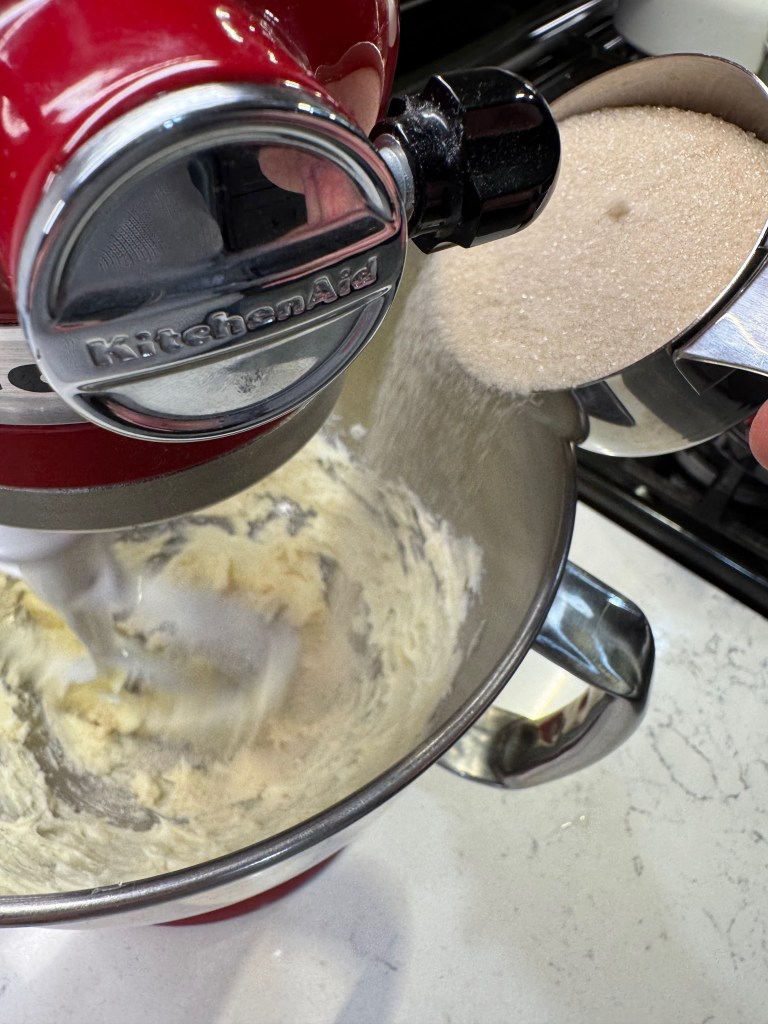
  2. Use an electric hand mixer or stand mixer fitted with the beater blade to cream the butter and sugar together. This mixture should be soft and somewhat fluffy.
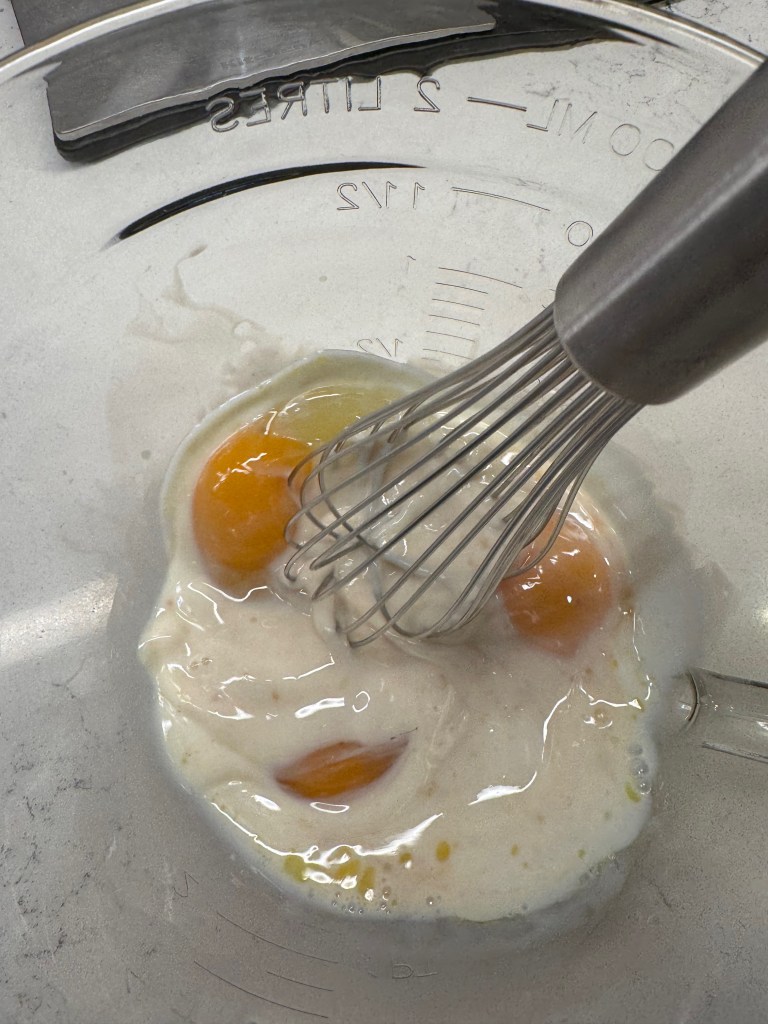
  3. Whisk together flours, baking powder and salt in a medium bowl and set aside. Whisk together milk, eggs, vanilla and orange oil (or zest).
  4. With mixer running on low speed, blend in the flour and liquid ingredients, alternating and scraping down the bowl as you go.
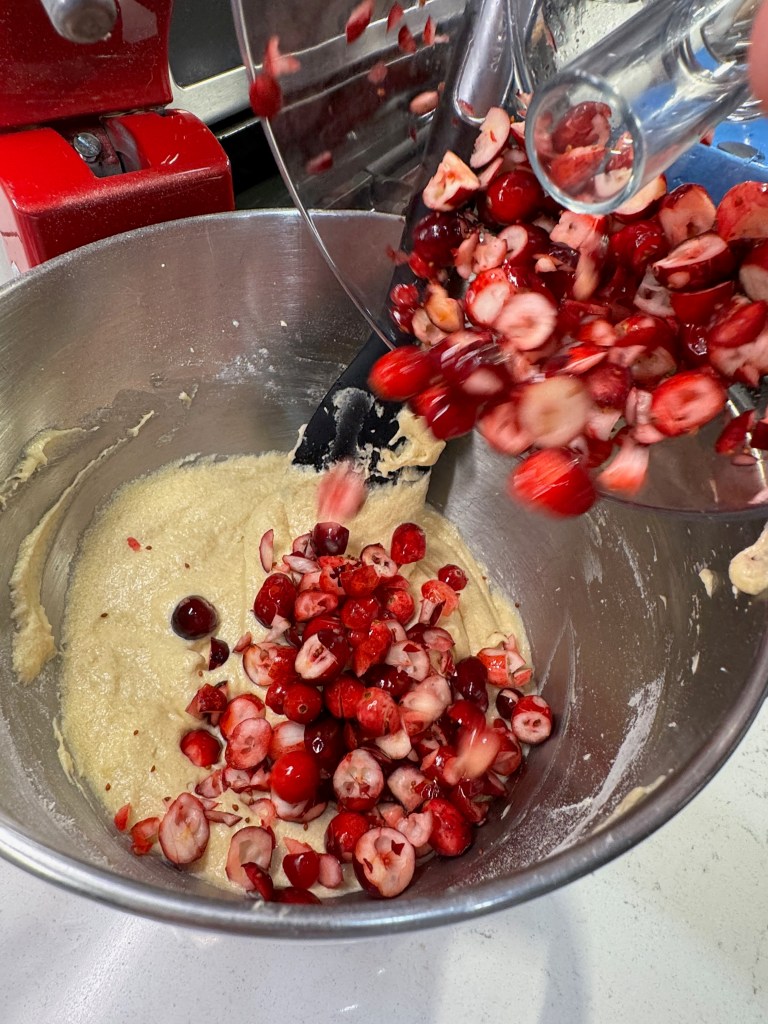
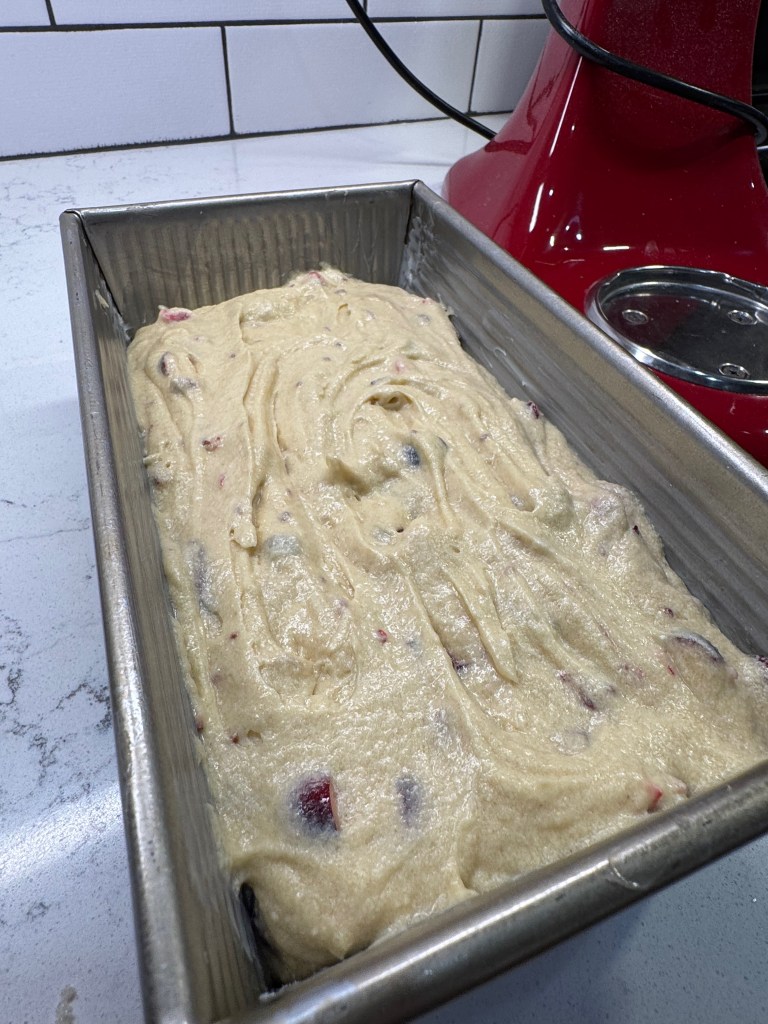
  5. When the batter is evenly blended, gently fold in the chopped cranberries. Pour the batter into the prepared loaf pan, using a spatula to smooth the top.
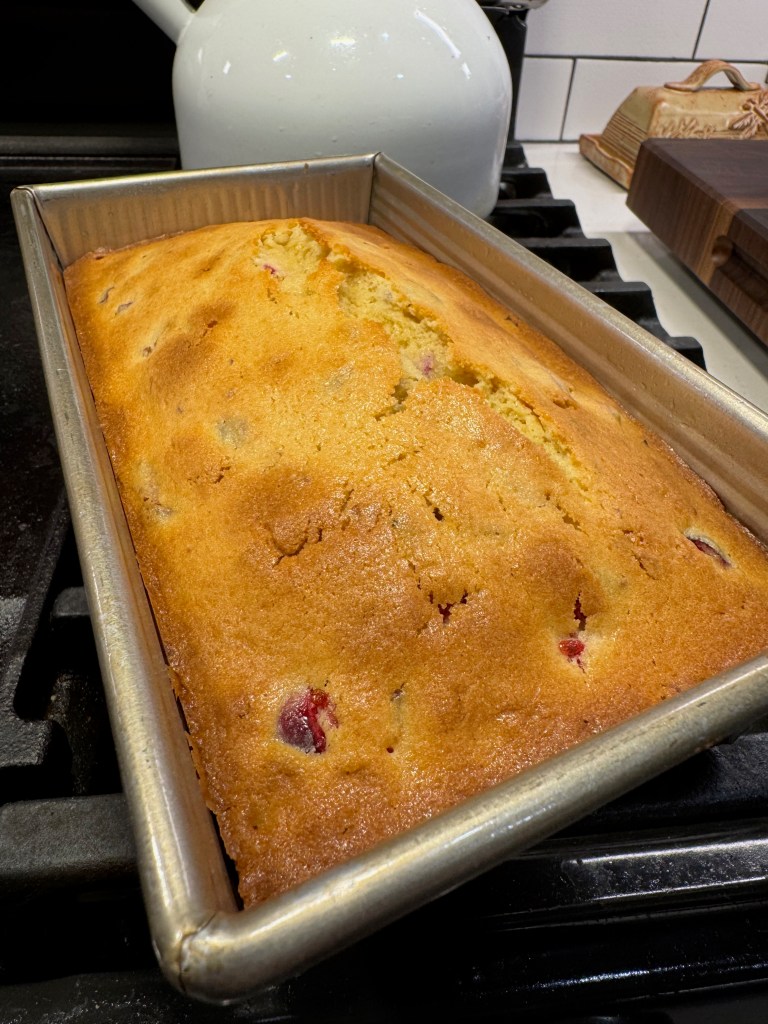
  6. Bake 50 to 60 minutes, or until cake passes the toothpick test. Cool in the pan for a few minutes, then carefully transfer the cake to a rack to cool completely.
  7. Mix glaze ingredients together until smooth; drizzle and spread over top of quick bread.

Frozen Old Fashioned

When life gets busy— and boy, has it been lately— we do a lot of repeats at our house because I don’t have as much time (or energy) to be creative. But I’m discovering that an easy way to keep things interesting is to change up just one little thing here or there, so that it seems like we’re having something new, but with minimal extra effort involved. When this clever twist on a classic cocktail jumped out at me from my Instagram feed, I was all for it! What could be better in the blazing heat of summer than a frosty cold adult beverage? 

Hello, Summer! 😎

Love at first sip!

This drink is like a grown-up, boozy version of the 7-Eleven Slurpees I loved as a teenager. There was one year of high school that my stepbrother, one year my junior, lived with me, my mother and her boyfriend (his dad). Our favorite thing to do in those days was get the hell out of the house, and it was incredibly convenient that we had a 7-Eleven just down the street. Cary and I would skip down there together to play video games— I slayed at Ms. PacMan and Asteroids back in the day, thank you very much— and we almost always came home with snacks and Slurpees. My favorite was cherry (though I know it was fake). 

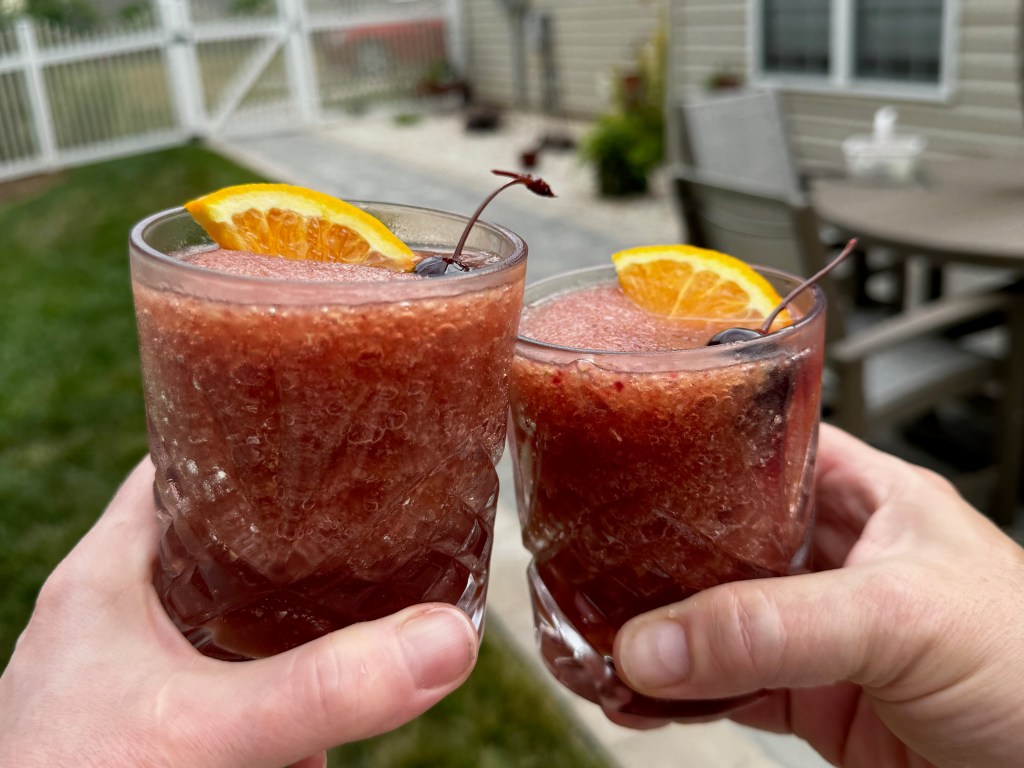
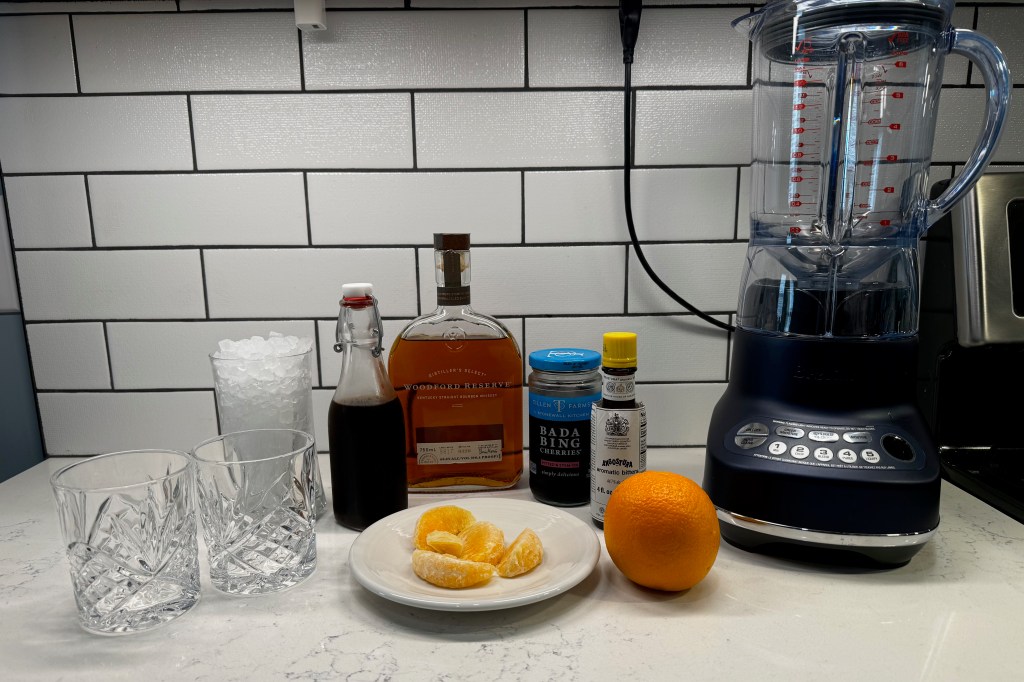
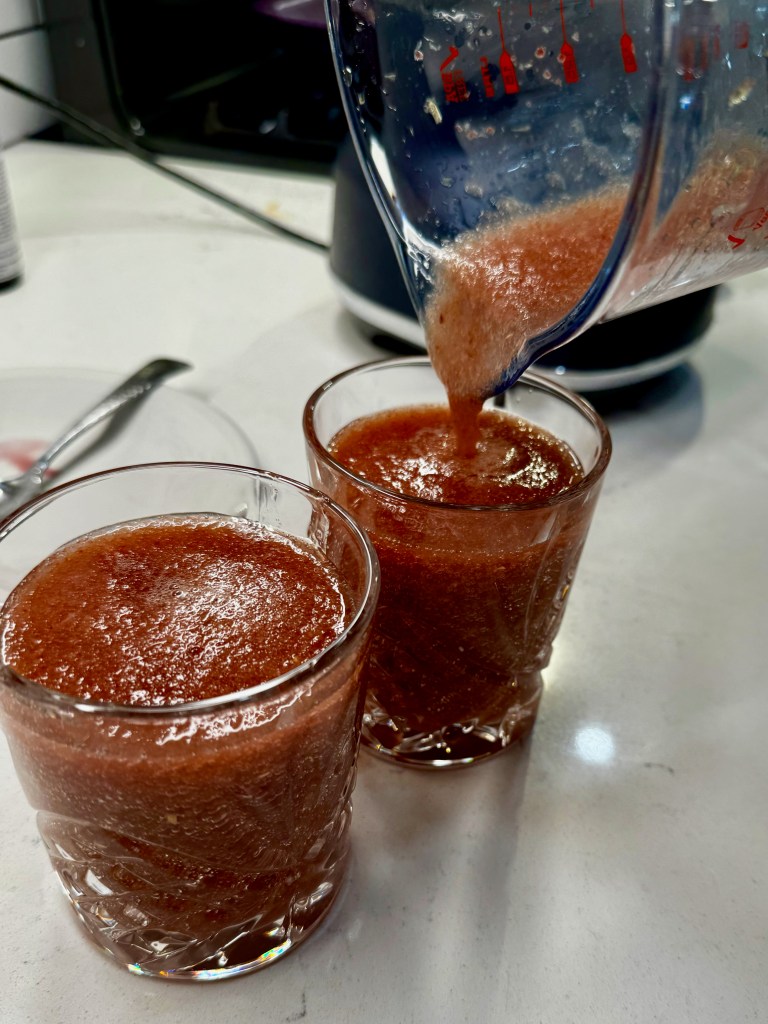
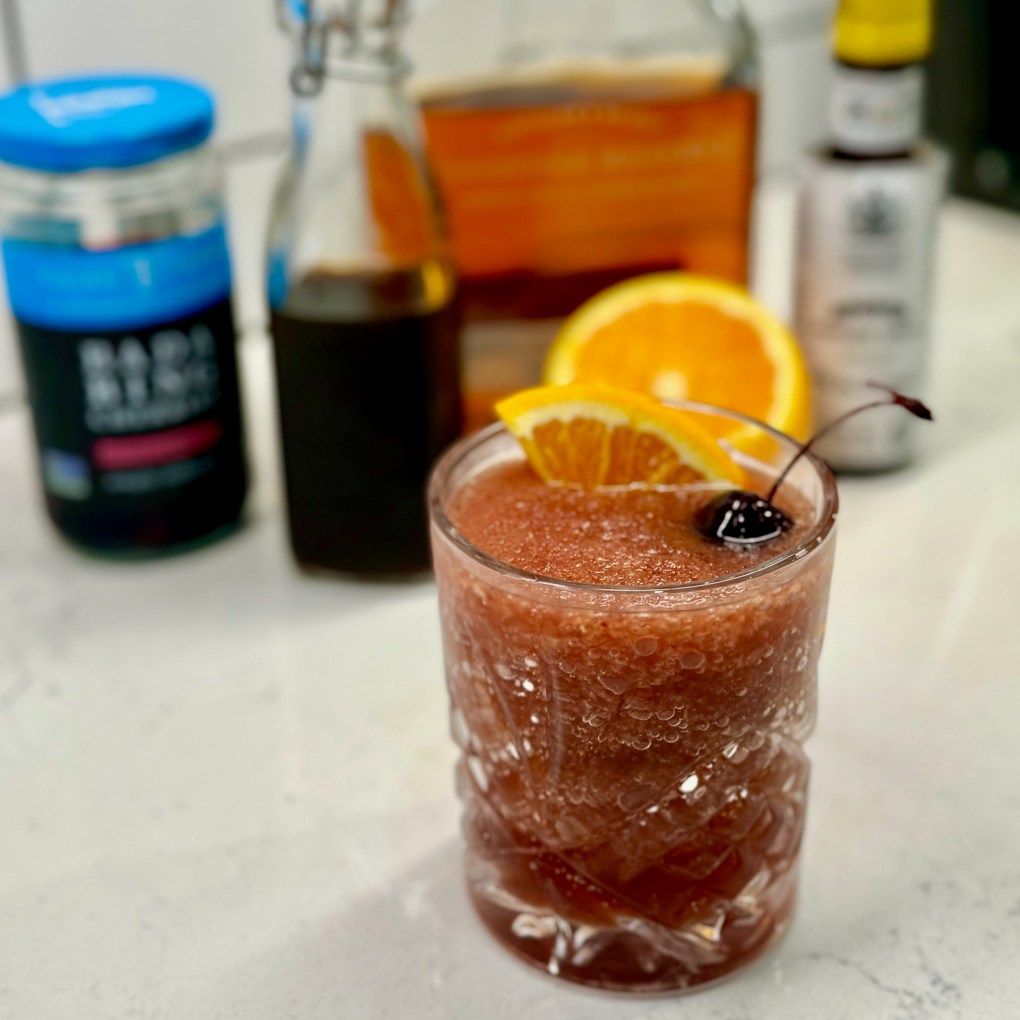
Fast forward 40+ years. The sweet cherry flavor is still a favorite, and a real-fruit version of it shines through prominently in this cocktail. Big cheers to The G & M Kitchen for this idea that had me asking, “Why in the world didn’t I think of this one?” It’s all the flavors of a bourbon old-fashioned, zhuzhed up with frozen orange wedges, cherries, brown sugar syrup and cocktail bitters.

Same flavors you’d expect in an old fashioned, but extra fruit!

All that, plus a cup of ice whizzed together in the blender until the mixture is frothy, frosty and way beyond refreshing. With the added fruit and all that ice mixed in, there’s also a hydrating element to this cocktail which isn’t a bad thing when the heat gets intense. Plus, it’s easy to whip up several drinks at once for summer entertaining. Yep, this little number will be in hot rotation at our house!


This whole situation has me thinking about throwing other favorite cocktails in the blender. After all, frozen margaritas, daiquiris and piña coladas have been a thing for decades. Now, I’ve got my eye on Manhattans, Negronis and Moscow Mules, to name a few, and summer is just getting started.

What favorite cocktail would you like to see frozen? Let me know in the comments, and until next time, “cheers!”


Frozen Old Fashioned

  • Servings: 2 cocktails
  • Difficulty: Easy
  • Print

The slushy texture of this classic cocktail makes it the ultimate refresher for the summer ahead!


Ingredients

  • 4 oz. favorite bourbon
  • Frozen segments from 1/2 seedless orange (membranes are OK, but no peels)
  • 5 or 6 frozen cherries or cocktail cherries, plus juice if you wish (NO PITS!)
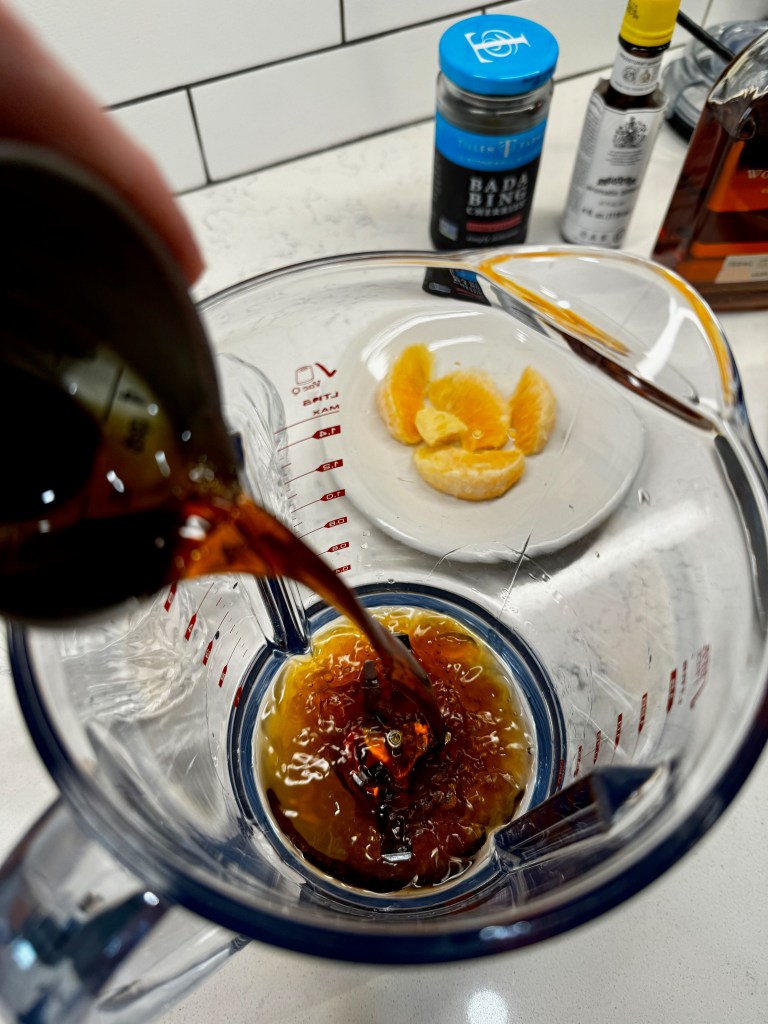
  • 1 oz. brown sugar simple syrup (see note below)
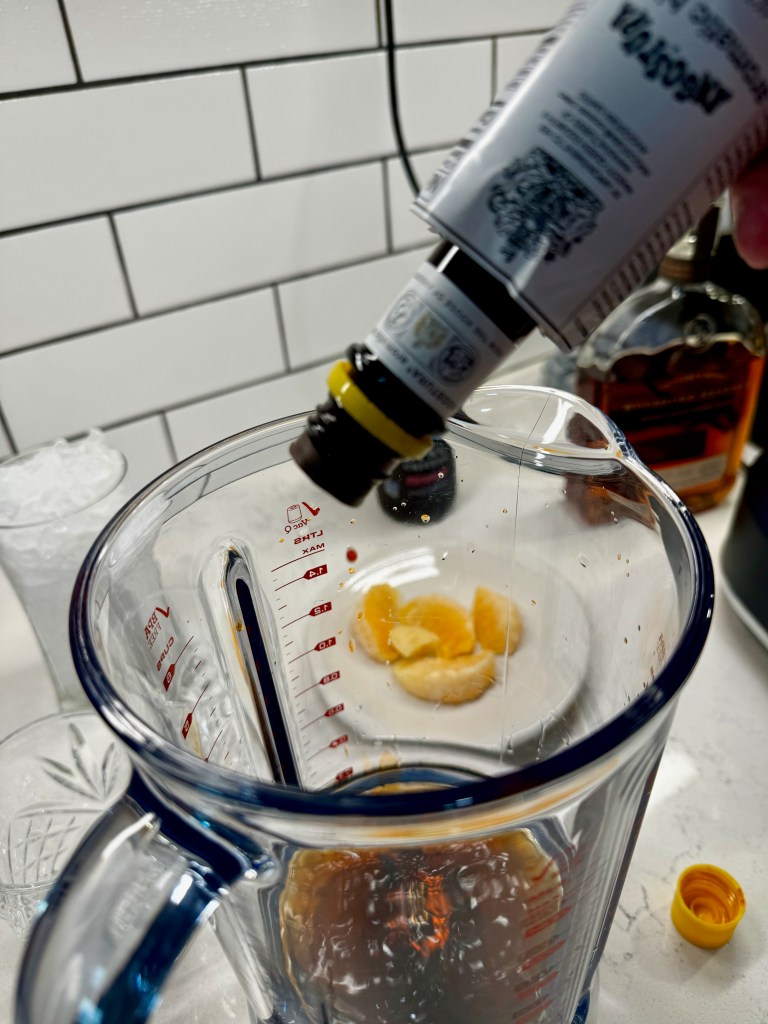
  • 4 quick shakes cocktail bitters (Angostura, orange or ginger work nicely)
  • 2 cups ice (preferably crushed or pellet)
  • Orange slices and/or cocktail cherries to garnish

Note: For the brown sugar syrup, combine equal parts (by weight) brown sugar and water in a saucepan over medium heat. Stir until sugar is dissolved, then cool and transfer to a jar or bottle. Keep refrigerated for up to two weeks. Wanna save time? Swap in maple syrup for the brown sugar syrup. You won’t regret it!

Directions

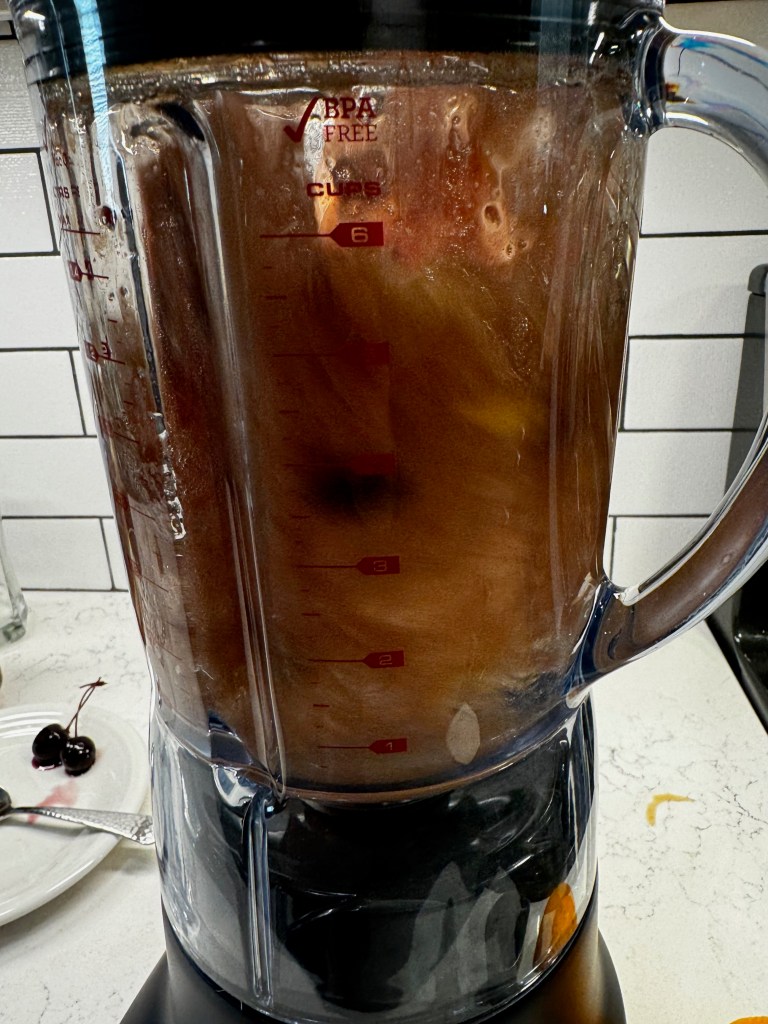
  1. Combine bourbon, oranges, cherries, syrup and bitters in the container of a blender. Add ice and pulse a few times to break down the frozen fruit and ice. If your blender has a crushed ice setting, that would be perfect here.
  2. Blend continuously once the ice is broken down, until the drink is nice and slushy to your liking.
  3. Pour into chilled rocks glasses and garnish each drink with an orange slice and a fancy cherry.
  4. Repeat as desired to beat the summer heat!


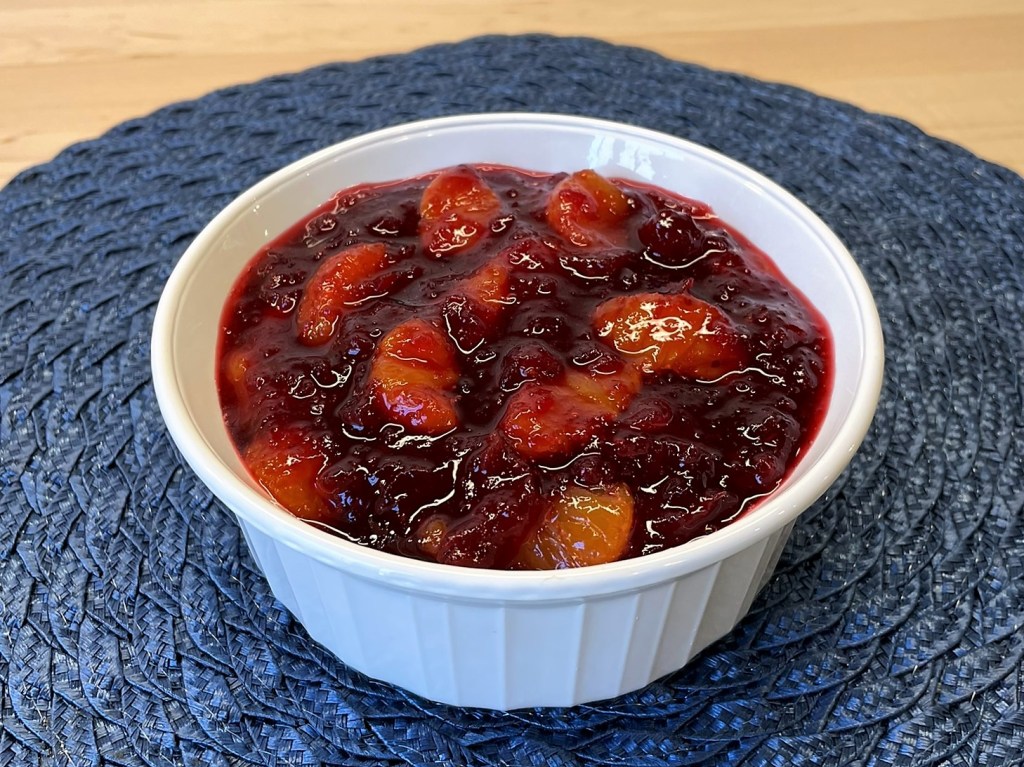
Les’s Cranberry Sauce with Mandarin Oranges

In the 35 years I’ve been cooking Thanksgiving dinners, one of my favorite things to make is cranberry sauce. Although I have the same fondness for the jelled cranberry of Ocean Spray fame that we all grew up with (you know, the kind you used the can opener on one end and punched two holes in the other end and secretly thrilled to the sucking sound as it plopped out onto a plate), I instinctively knew early on that there had to be a better way.

Initially I began to make fresh cranberry sauce by boiling the berries in water and adding sugar. I wanted more flavor, and in 2002, I hit the jackpot with a website recipe that adapted a version originally published in Cooking Light magazine. That means my batch for Thanksgiving 2021 will be the 20th year I’ve made this delicious concoction.

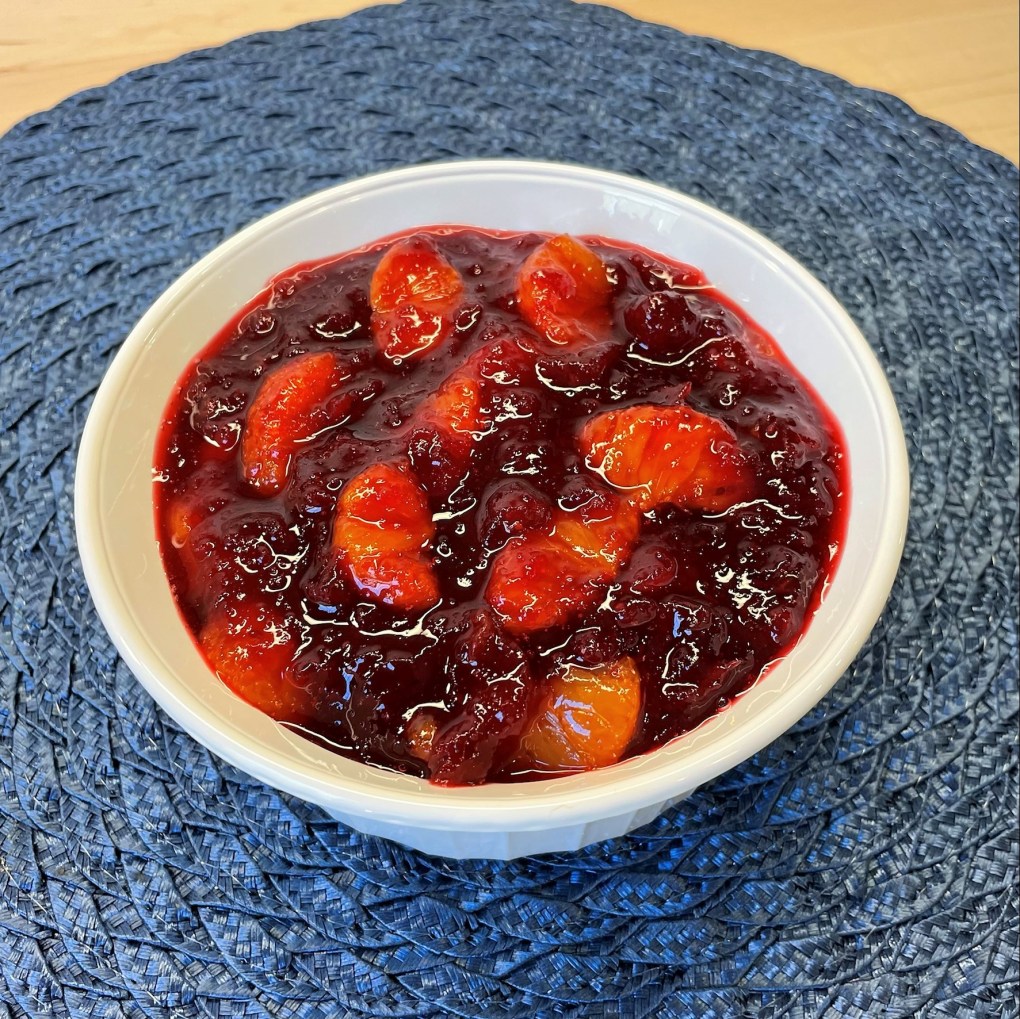
It’s about sugar and apple cider (instead of water) offsetting the tart of the cranberries, and mandarin oranges adding back a different type of tart. If you make it, I guarantee you’ll be hooked. Terrie even loves it on vanilla ice cream.


Ingredients

12-ounce bag of fresh cranberries

1 cup of white sugar* (see notes)

½ cup of brown sugar

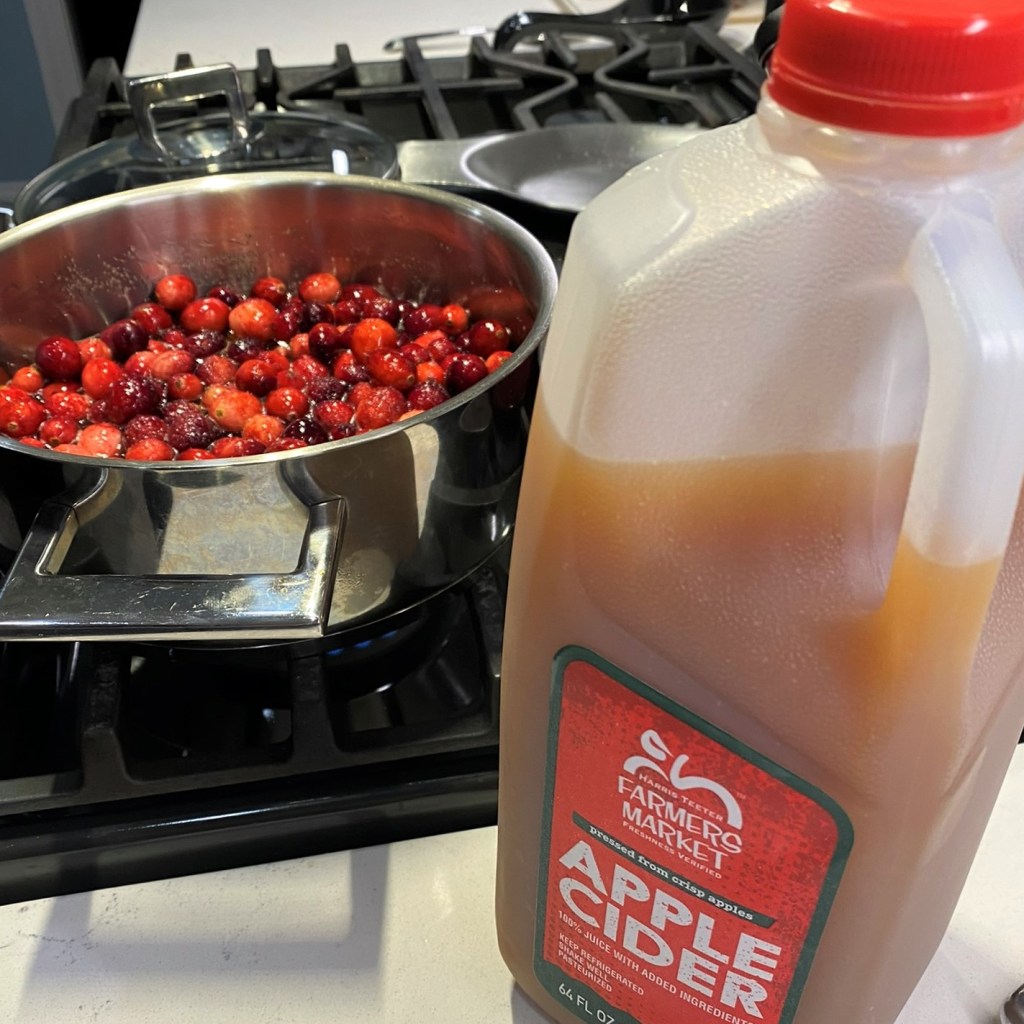
1 cup of apple cider*

½ jar of mandarin oranges*


*Notes

The original recipe called for 1½ cups of white sugar and ½ of brown sugar. I cut down the white sugar because it is plenty sweet. Either light or dark brown sugar works well.

Although I do typically use apple cider, the recipe certainly would work with water. Better yet if you can find it, as I’ve only been able to do a couple of times over the years, apple-cherry cider is the bomb!

I used half of a 23.5 ounce jar of Dole mandarin oranges; I like jars better because I feel that canned oranges have a “tell” of can flavor (coincidentally, not unlike Ocean Spray jellied cranberry sauce).


Instructions

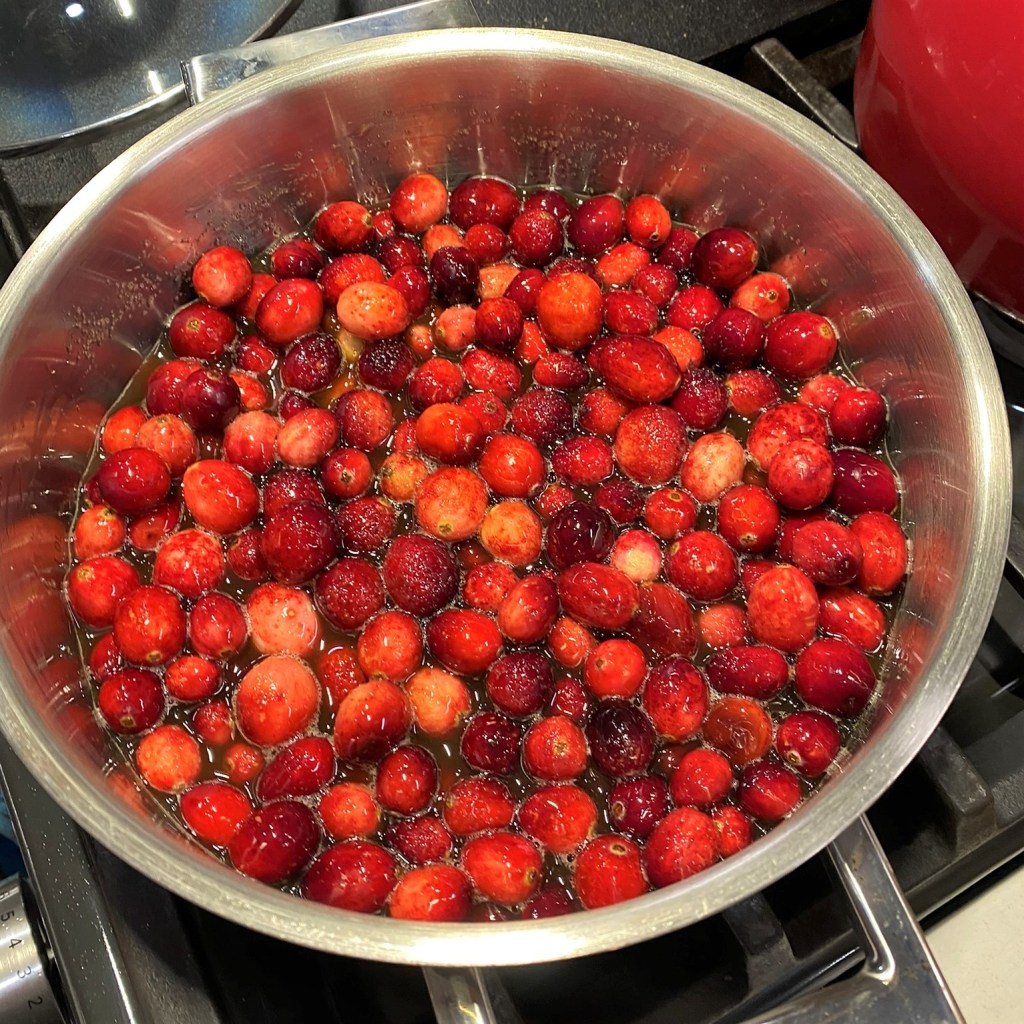
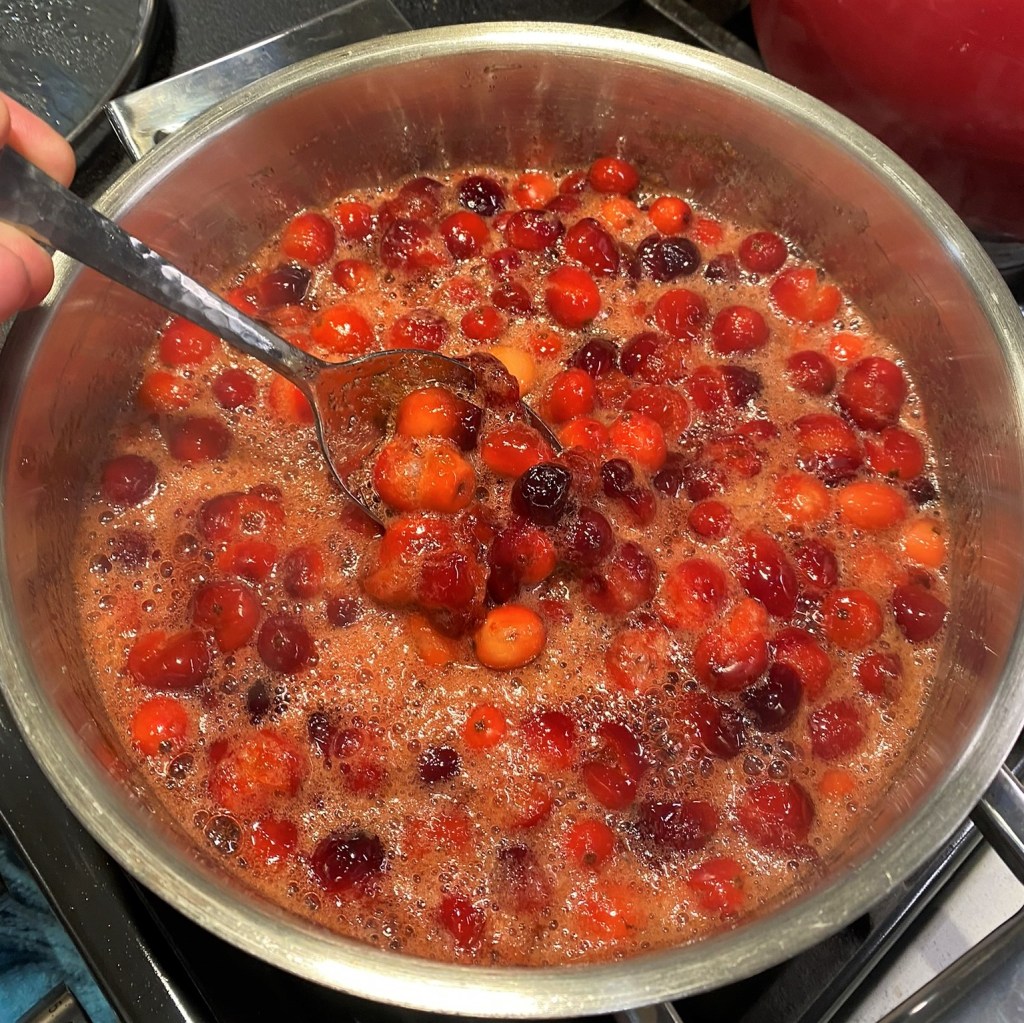
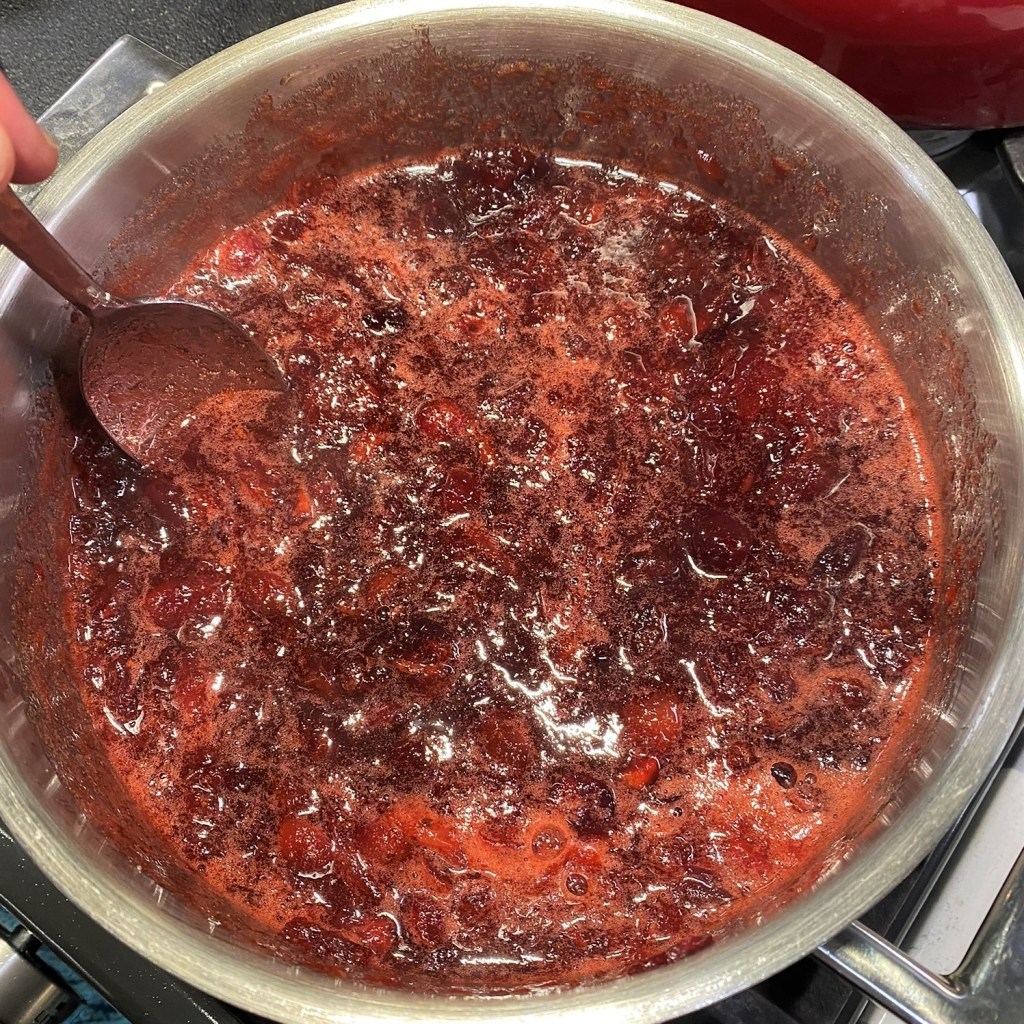
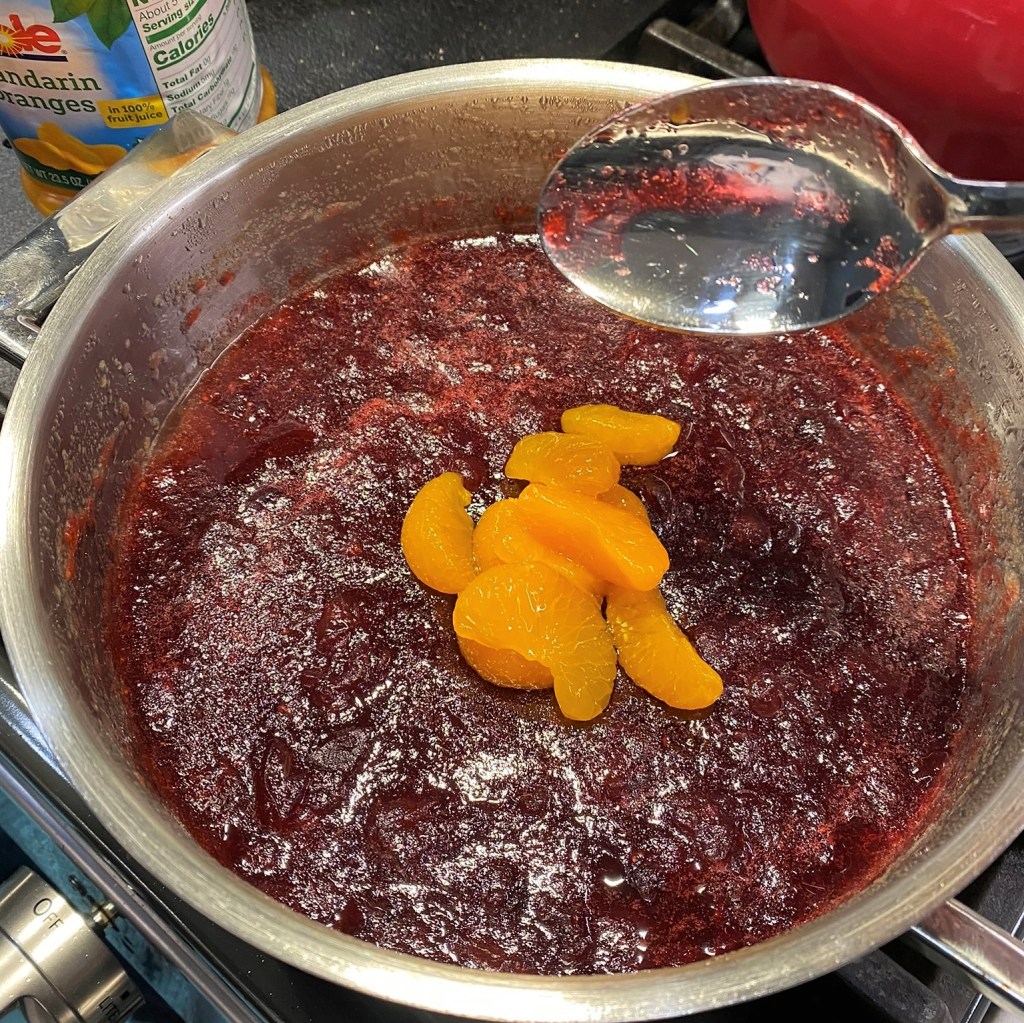
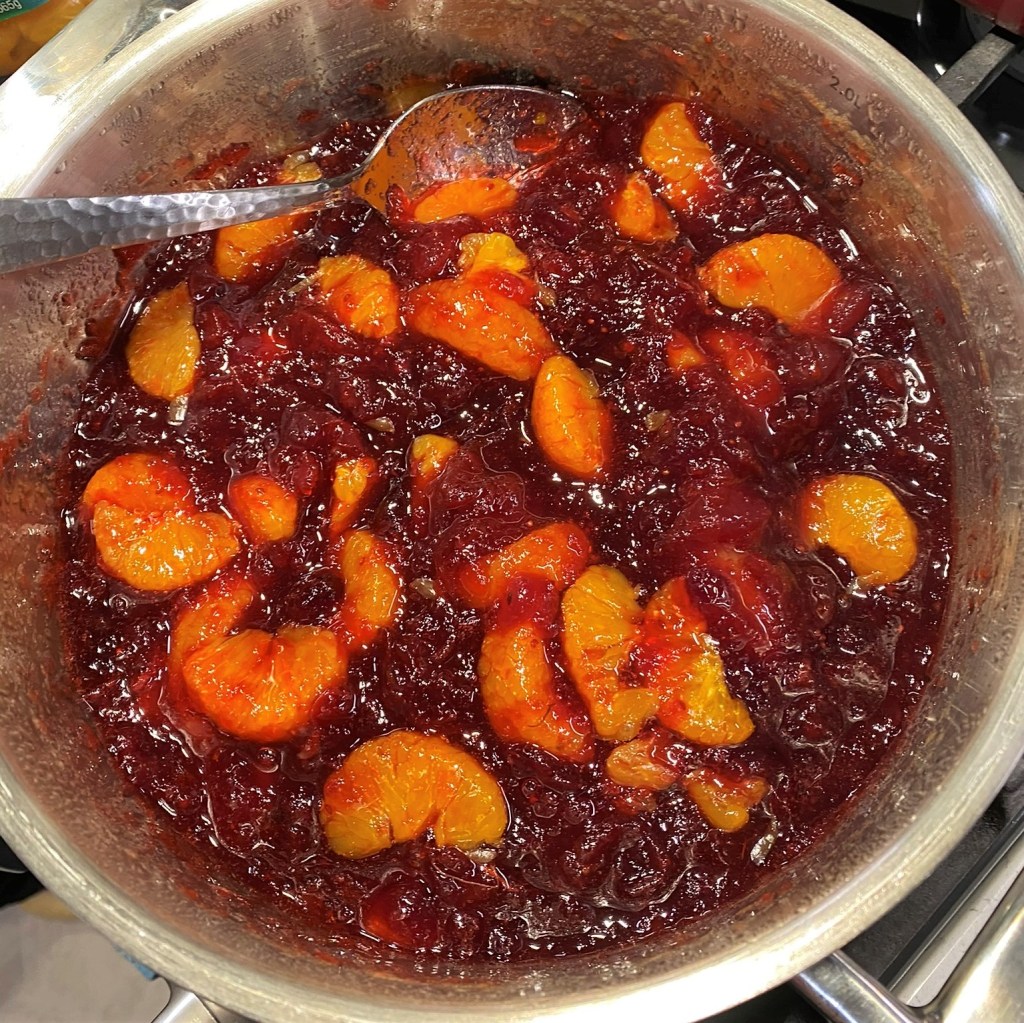
Combine all ingredients, except Mandarin oranges, in a medium saucepan on medium heat and bring to a simmering boil over the course of 15 to 20 minutes. Turn down heat as cranberries begin to pop and work a spoon around the outside of the pot, crushing them into a sauce. When all berries have popped, remove from heat and refrigerate for an hour. Then, add the mandarin oranges to the slightly gelled sauce and refrigerate again until ready to serve.


Citrus & Fennel Salad with Olives

It isn’t surprising that I would find another way to highlight a food that is among the “seven species of Israel,” after the lessons I learned earlier this week in an online celebration of Tu Bishvat. The history and symbolism of Jewish food fascinates me, and it’s something that isn’t prevalent across all cultures. Though I’m not Jewish, my husband is, and I’m pleased that we each appreciate traditions from the other side. In our home, we observe Passover and Rosh Hashanah, Easter and Christmas. I’ve attended temple with him, and he’s been to church with me. Over the past year, we’ve joked many times about having been “to church” online more regularly than ever before in person. It’s my not-so-secret hope that houses of worship will continue what they’ve started with online availability, even after the COVID fog lifts and the doors re-open. There’s huge potential for new outreach by these virtual means.

Until that time, I’m taking the lessons however they come, and the online “new year of the trees” celebration, honoring the many blessings of trees and nature, paid particular homage to wheat, barley, grapes, figs, pomegranate, olives and dates—the aforementioned “seven species.” So I’m going with it.

Citrus fruit is very common in northern African cuisine, and it pairs really well with the savory flavors in this recipe.

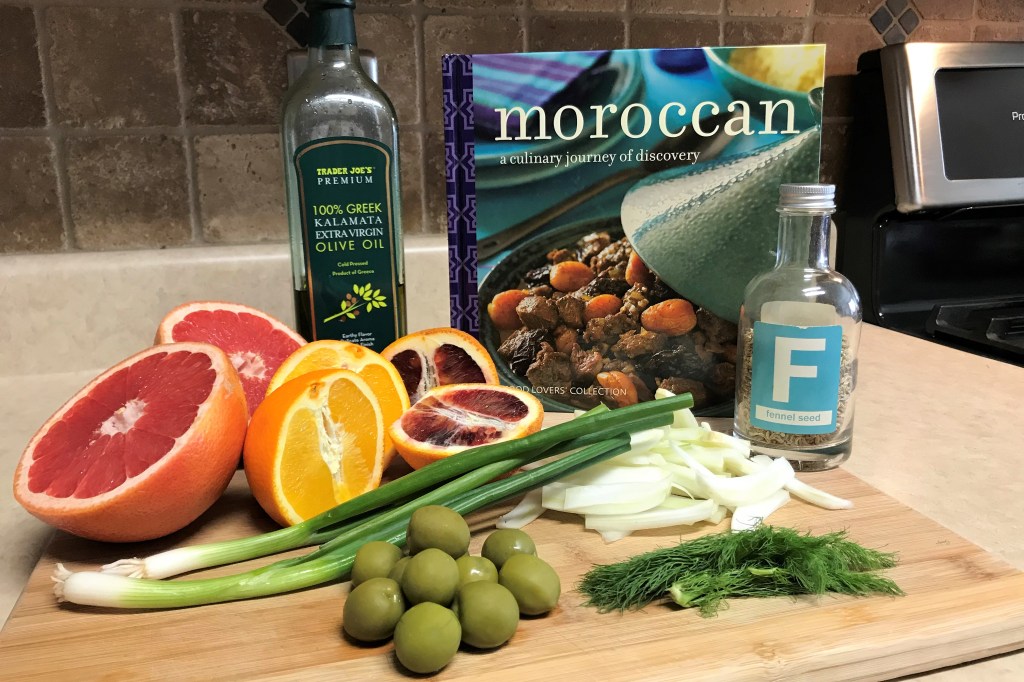
Several years ago, I picked up this cookbook on a bargain table at TJ Maxx, one of my favorite places to find interesting culinary treasures and gadgets. I have been enthralled with the beautiful images of foods authentic to Morocco, and I’ve noticed many crossover ingredients to the foods of Jewish culture—it makes sense, geographically. Today’s recipe comes from page 16 of that book: a grapefruit and fennel salad, described by the author as a “lovely hot weather salad,” though I’m finding it a bright and refreshing addition to the table right here in the middle of winter. I’ve modified a few things from that recipe, as I always do. I believe this is how we discover new favorites.

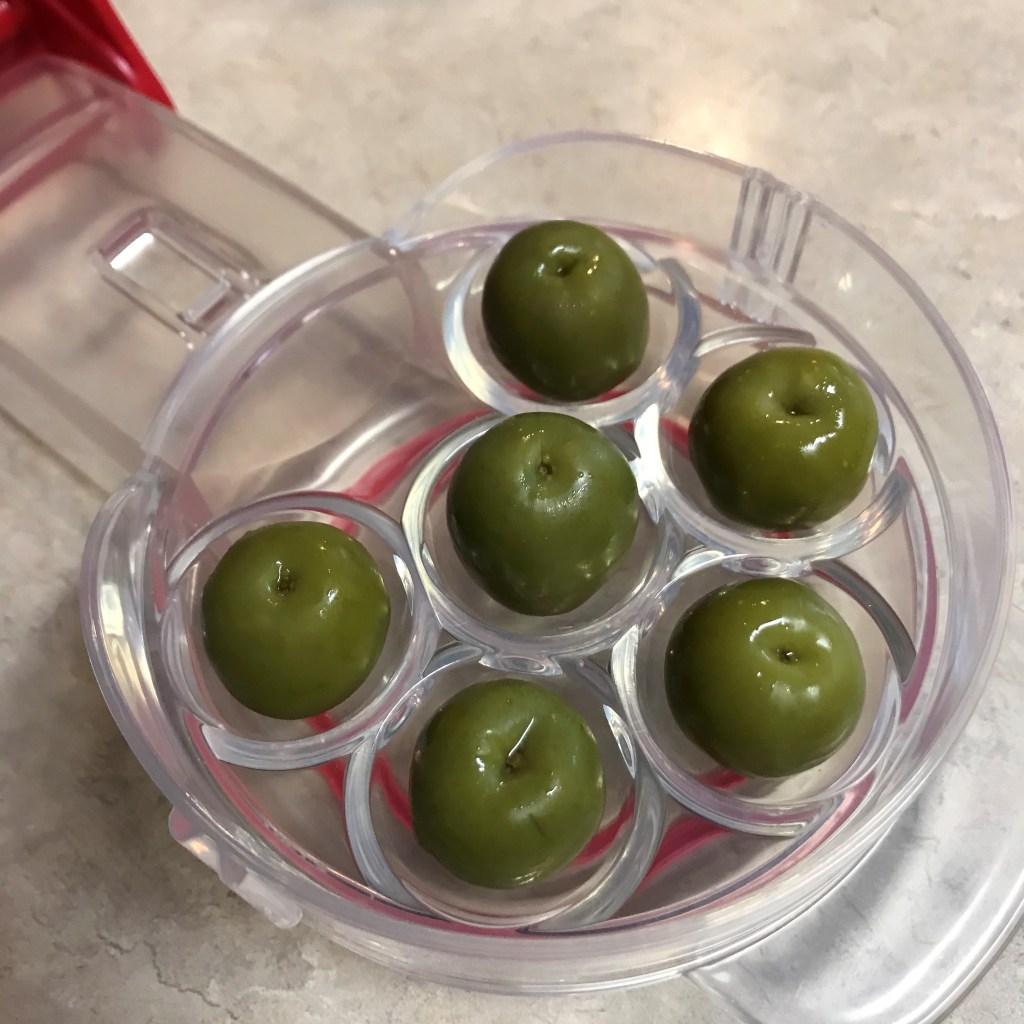
The salad brings plenty of color to the table, and I can taste the sunshine in the beautiful winter citrus! I’ve used ruby red grapefruit, which leans sweeter than pink or white, in combination with navel and blood oranges for additional sweetness and color variety, plus licorice-y fennel slices and castelvetrano olives. If your supermarket has a bulk olive bar, this olive variety is easy to spot because it is bright green like Kermit the Frog. The flavor is buttery and creamy, almost akin to artichoke heart, and I love the slightly briny contrast it provides against the juicy citrus and crunchy fennel.


Ingredients

1 ruby red grapefruit*

1 navel orange

1 blood orange

Kosher salt

1 Tbsp. extra virgin olive oil

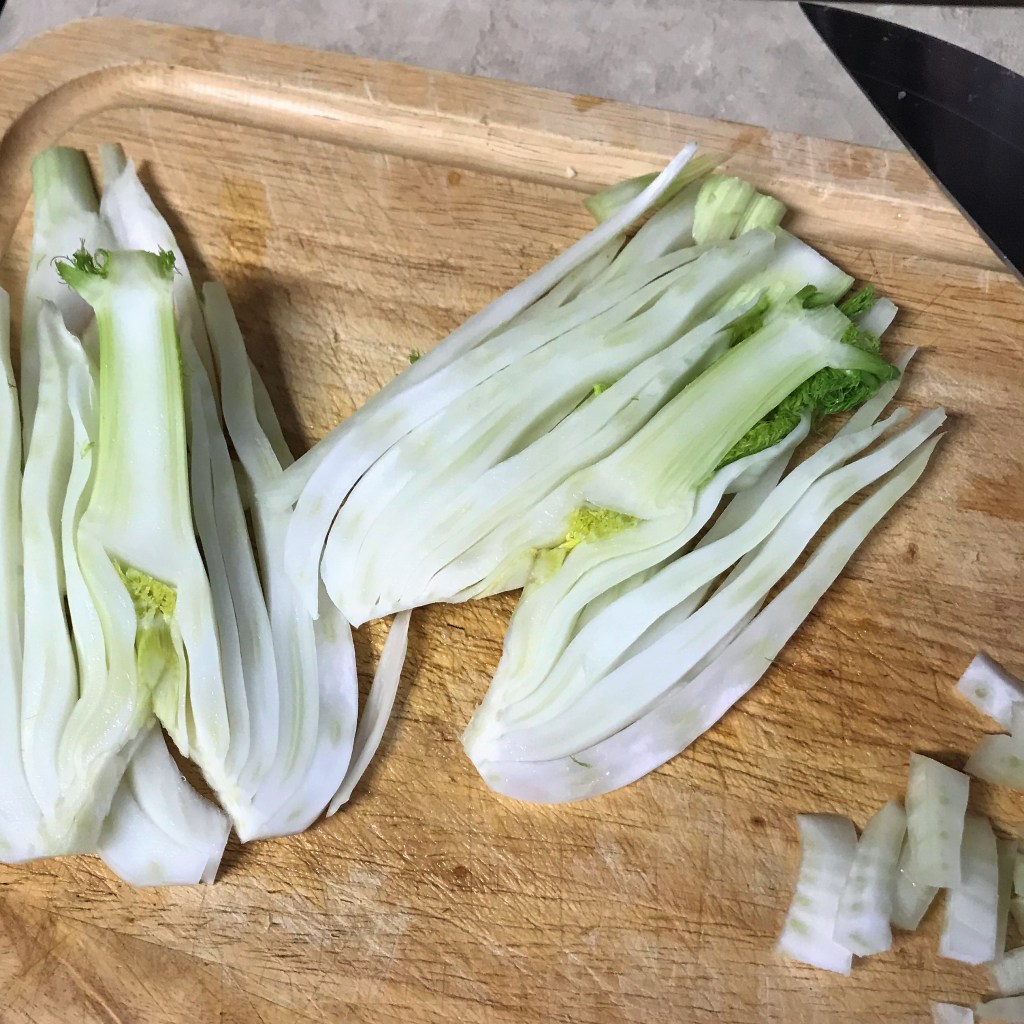
1/2 bulb fresh fennel, trimmed and thinly sliced

2 or 3 scallions (green onions), thinly sliced

1 tsp. cumin, caraway or fennel seed

Small handful of castelvetrano olives,* pitted (see notes)


*Notes

Ruby red grapefruit is not as tart as pink or white grapefruit. If you cannot eat grapefruit, try using an extra orange plus a Meyer lemon in its place. You would still have a variety of citrus flavors and colors.

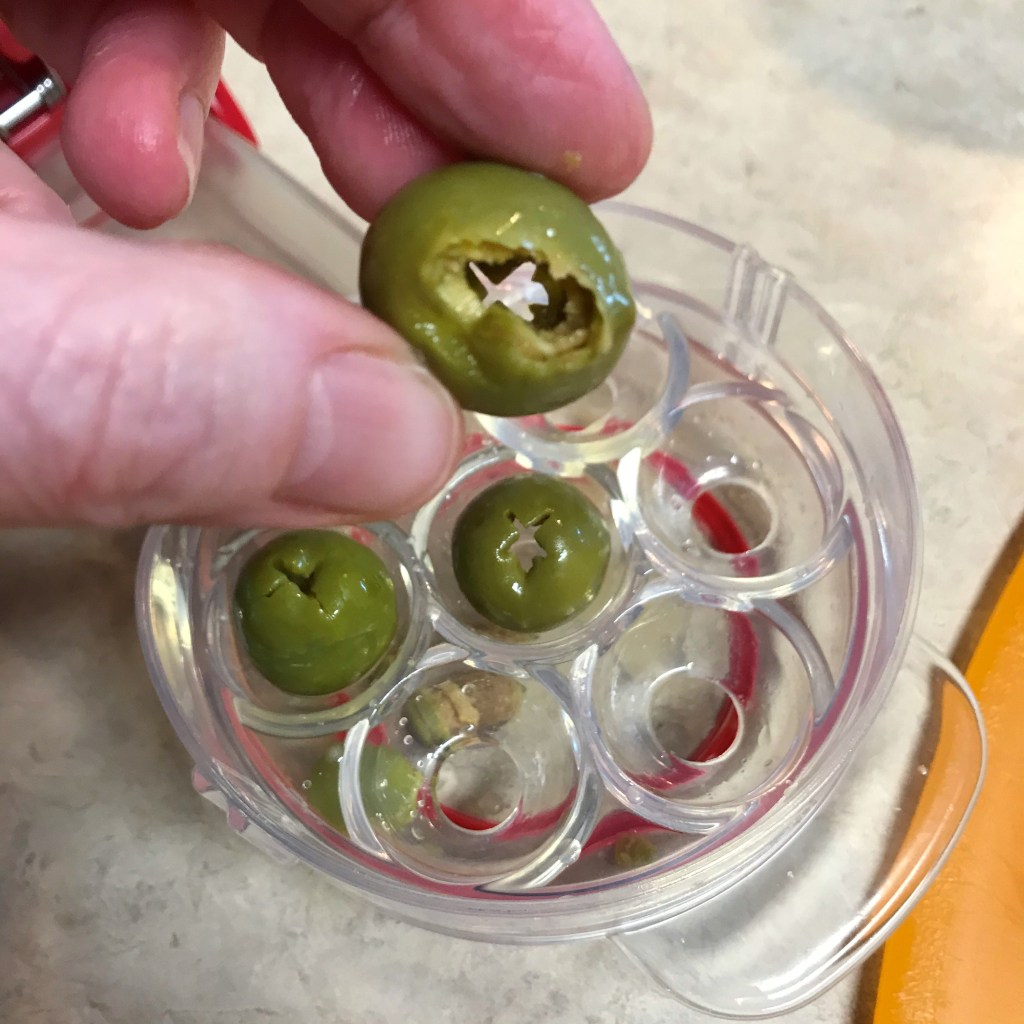
The castelvetrano olives really do stand out, colorwise, on the olive bar. If your market does not offer these, you may also look for the variety in jars. Substitute Kalamata olives from Greece as a good alternative. I would not recommend regular pimiento-stuffed olives or canned “ripe” olives for this recipe. Purchase pitted olives if you can, or carefully cut them in half to remove the pit before adding them to the salad.
Instructions

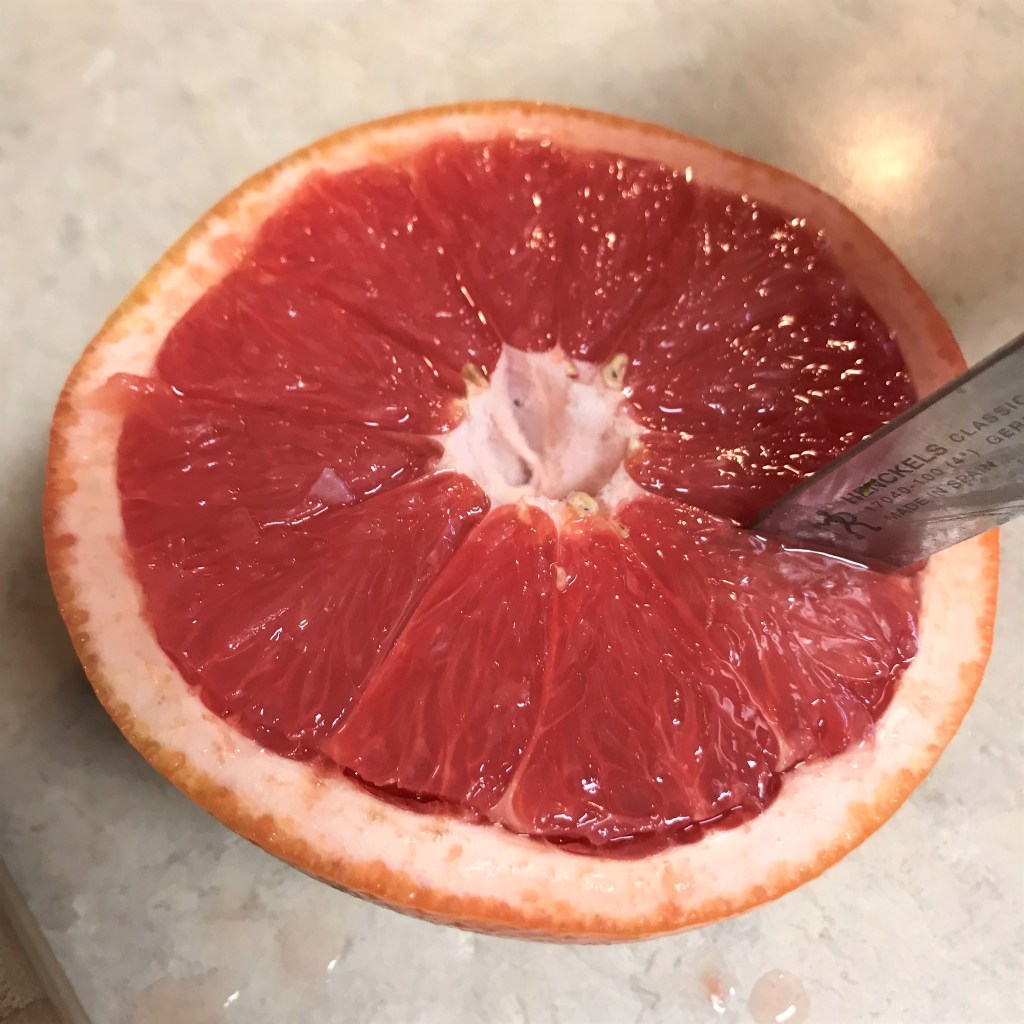
  1. To prepare the grapefruit, cut it in half crosswise, as you would enjoy it for breakfast. Next, use the tip of a sharp paring knife to cut the segments from the membranes. Do this for each half, then spoon them out into a bowl. Squeeze remaining grapefruit juice over a strainer into a bowl and reserve for another use.
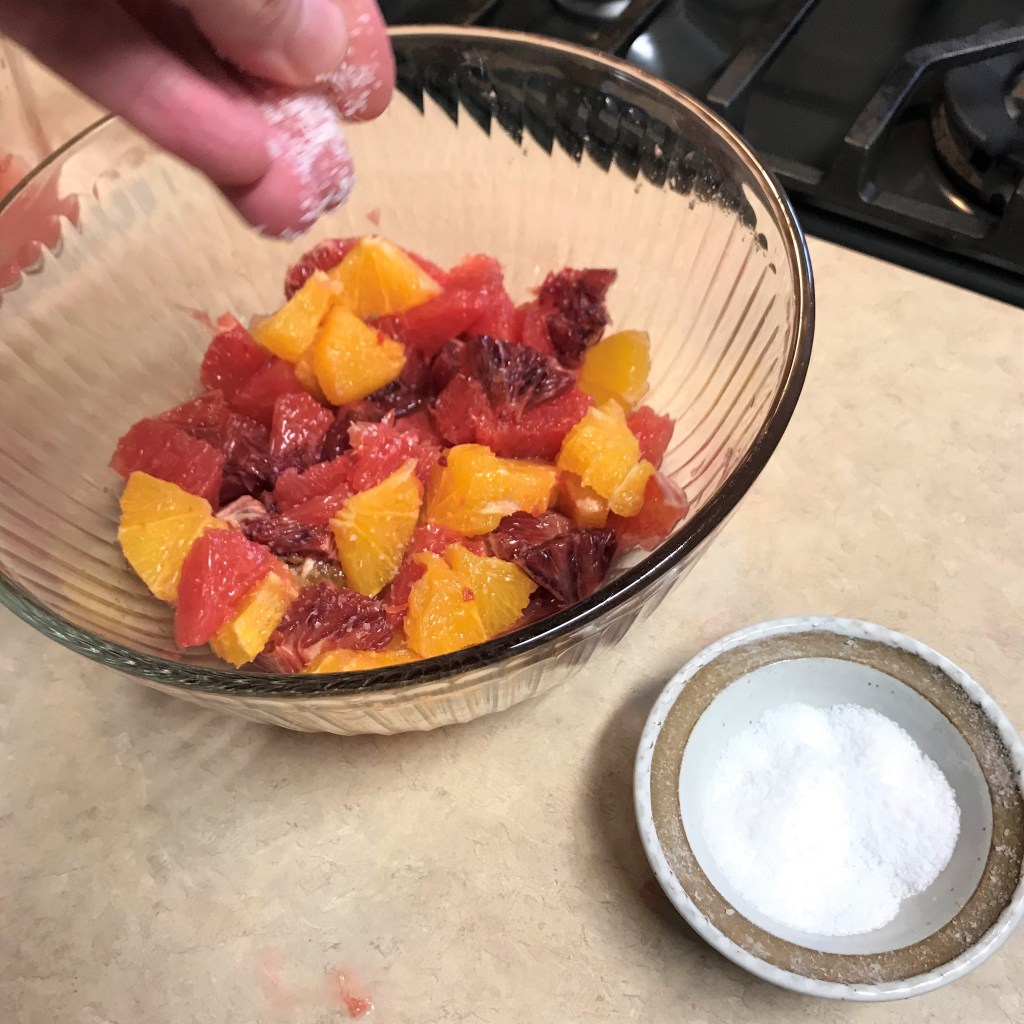
  2. To prepare the oranges, cut off the tops and bottoms so the fruit is stable on a cutting board. Use a sharp knife to carefully cut from top to bottom, removing the peel and bitter outer pith from the fruit. Cut the oranges in half, top to bottom, then lay them flat side-down on the cutting board. Slice the oranges into half-rounds, about 1/2” thick. Some may split, and that’s OK. Add the pieces to the grapefruit bowl, and give it a pinch or two of kosher salt.
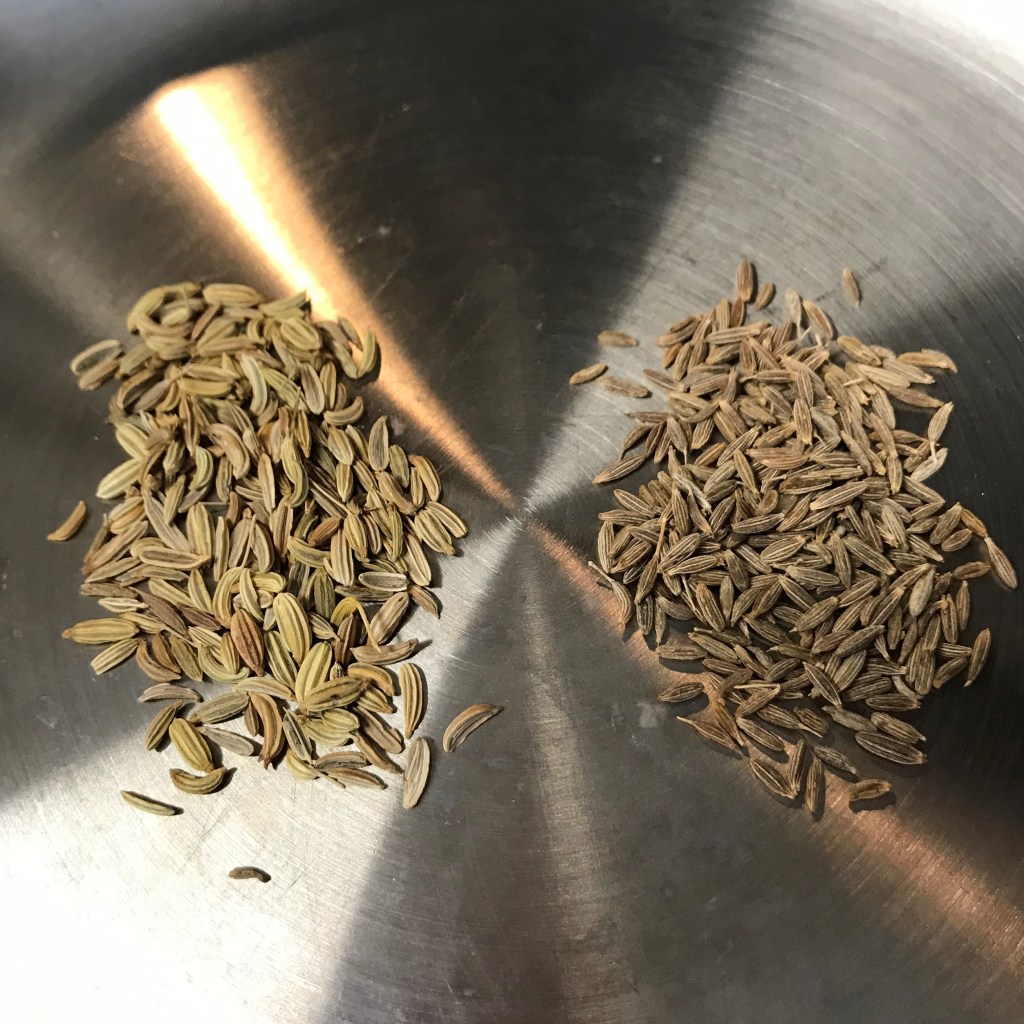
  3. In a small, dry skillet, toast the cumin (or caraway or fennel) seed over medium heat, swirling the pan continuously. After about one minute, the seeds to be toasty and aromatic. Remove from heat and allow them to cool.
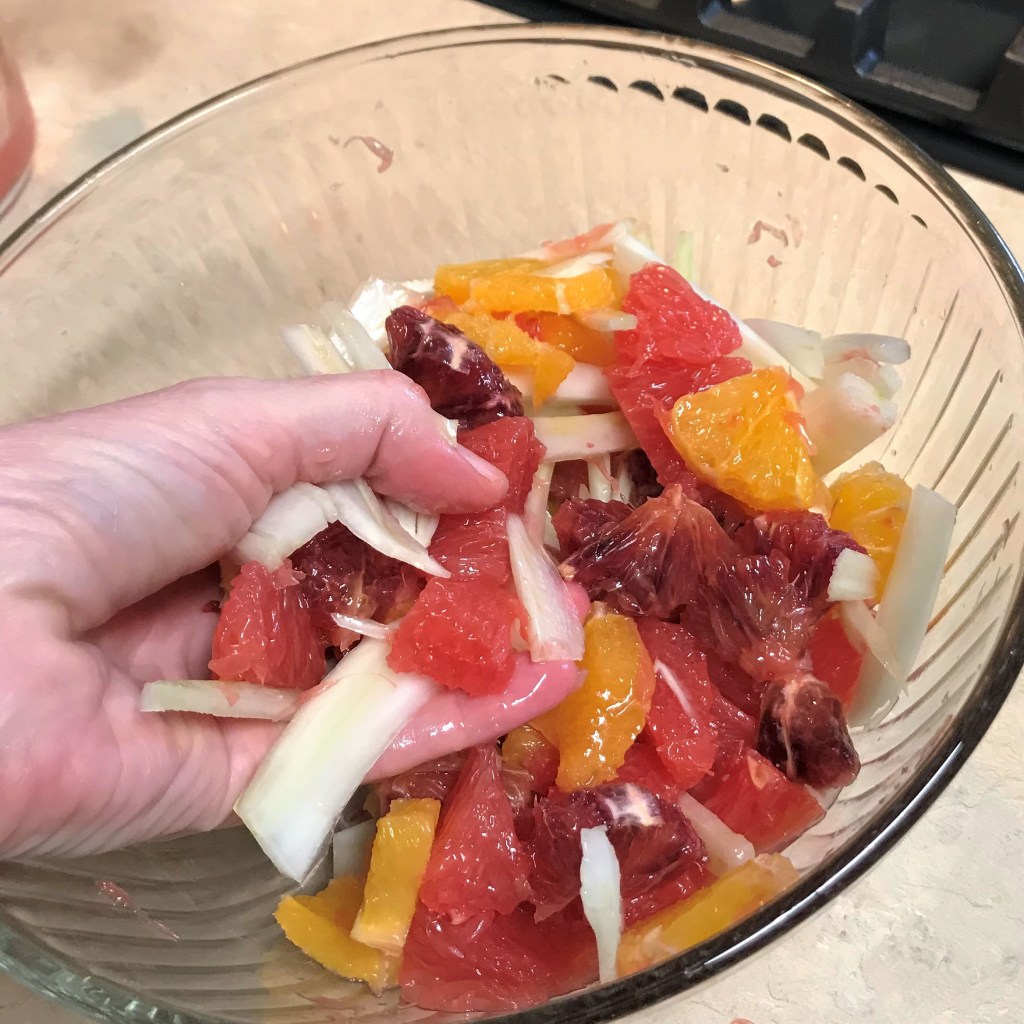
  4. Scatter the sliced fennel and olives into the citrus bowl, drizzle with olive oil and toss gently to coat. Transfer to a serving bowl.
  5. Sprinkle the scallion slices over the salad, then sprinkle with the toasted seeds and serve immediately.
If you want to go crazy and add pomegranate arils, too…well, maybe that wouldn’t be so crazy. 🙂
Keep those recipes evolving, dear friends!

Want to print this recipe?


Duck a l’Orange

So we were watching Food Network’s “Beat Bobby Flay” recently, and when the visiting chef issued the challenge for his signature dish, duck a l’orange, my husband, Les, looked at me and laid down a challenge of his own.

“You should make that for Christmas dinner.”

There was no typical playful talk, such as “you probably wouldn’t try to make that, would you?” Nope, this time, it was a matter-of-fact statement that activated every fear and insecurity about my kitchen skills, though it’s tough to explain why. I’ve cooked duck before and it turned out great. As recently as Valentine’s Day 2020, just as the COVID crisis began percolating across the world, I served seared duck breast with a cherry-Pinot Noir sauce that turned out so delicious. What was the big deal about duck breast this time? I cannot explain it.

Les knew that I had a package of duck breast in the freezer, and I do love a challenge, so I took the bait. I researched the origins of duck a l’orange and examined interpretations by numerous chefs I respect, and though I felt relatively confident headed into preparation on Christmas Day, I still had trouble with it for one simple reason—poor planning. I’ll spare you the dramatic, embarrassing highlights (there was some panicked yelling involved; pretend you’re hearing a censor’s beep right now) in favor of one important piece of advice: get your ducks in a row (pun intended) before you start cooking the duck breast. Rendering the fat off the duck is essential for crispy skin with tender, perfectly medium-rare meat. And it moves fast.

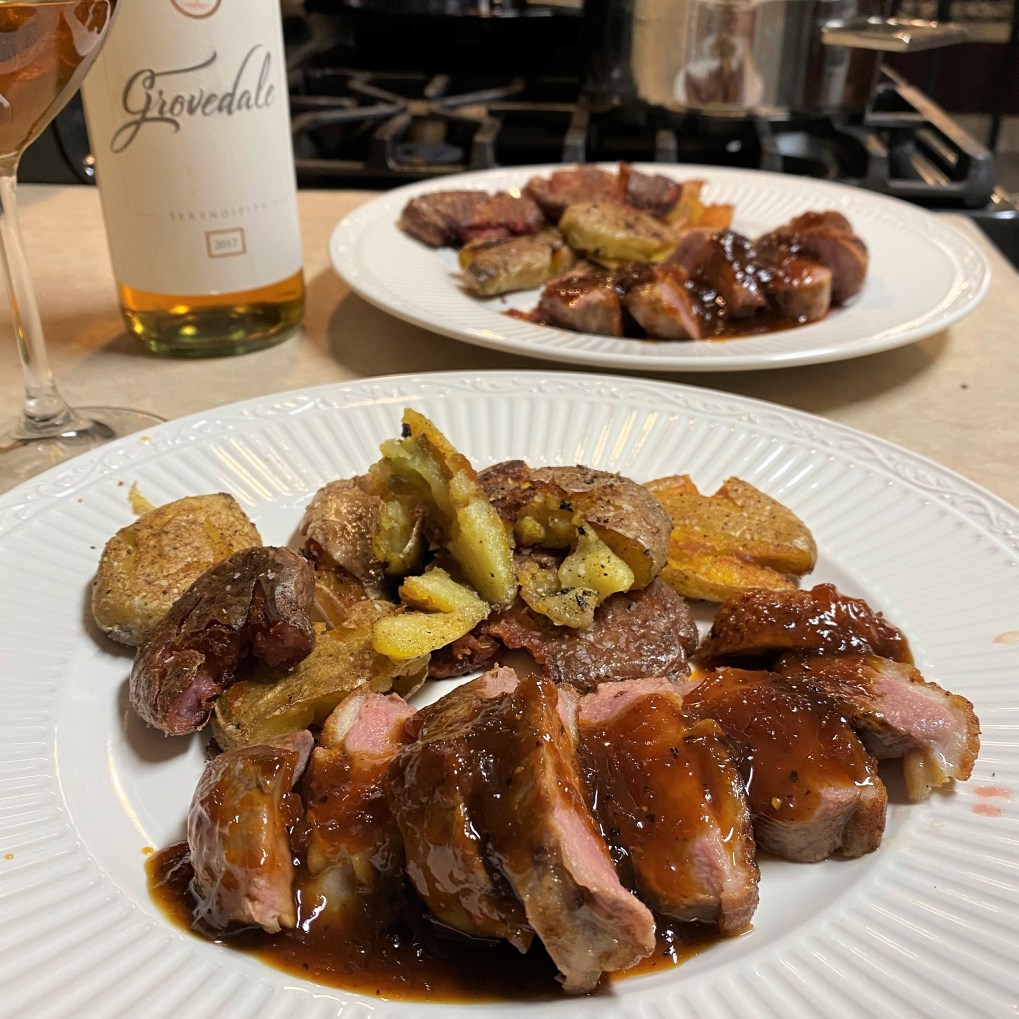
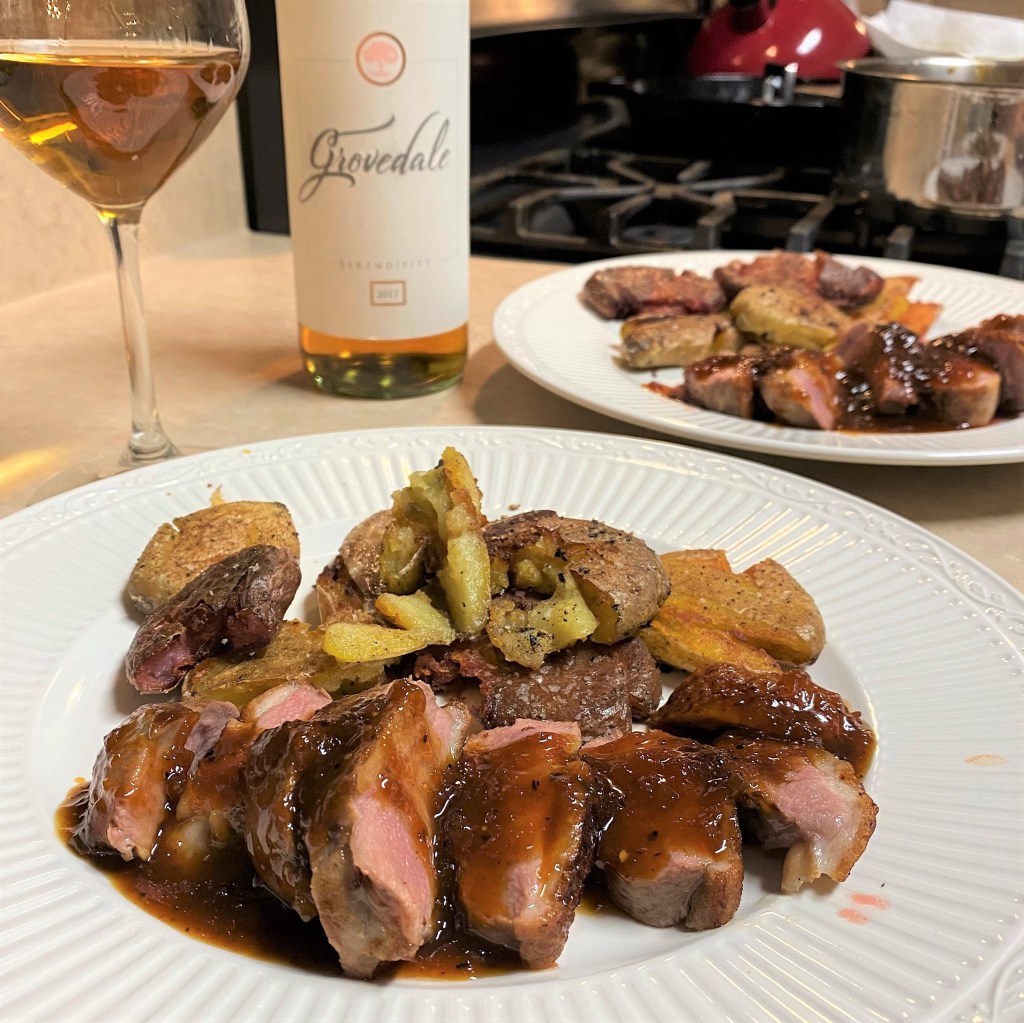
This recipe is not complicated, and the ingredients are simple. But once you begin cooking the duck, it demands your full attention. Have the side dishes, the sauce, the wine, music, table settings—all of it—ready in advance and this dish will work out fine. It was fancy in a classic kind of way, delicious and totally worth the trouble!

The Serendipity wine was a perfect complement to this dish. Read more about it at the end of the post.

Recipe adapted from this one by Martha Stewart

Ingredients

2 pieces boneless duck breast, patted dry

Kosher salt and freshly ground black pepper

1/4 cup cane sugar

2 Tbsp. orange muscat champagne vinegar* (see notes)

2 oranges, juiced, plus the zest of one of the oranges*

1 medium shallot, minced*

3/4 cup low-sodium chicken broth

1 Tbsp. salted butter, cold from the fridge


*Notes

The orange muscat champagne vinegar is a Trader Joe’s product, but you may substitute any other variety of citrus-infused vinegar or a regular cider or white vinegar. The main thing is acidity, so substitute what you have on hand, but don’t use anything overly sweet.

Because the zest is used in the recipe, I highly recommend using organically-grown oranges. I used the juice of one regular navel orange, plus the juice and zest of one organic blood orange. Martha’s recipe calls for orange segments also, but I omitted them.

Shallot is recommended for this recipe, but if you do not have them, substitute finely minced sweet or red onion. Do not confuse shallots with scallions, which are green onions. The shape and flavor of the two are distinctly different.


Instructions

The recipe that inspired me listed only four steps in total, but what’s “easy” for Martha Stewart deserves a second look by the rest of us! I’ve broken it down into more specific tasks, to help you be fully prepared for the fast pace of the recipe. First, prep the duck and make the sauce.

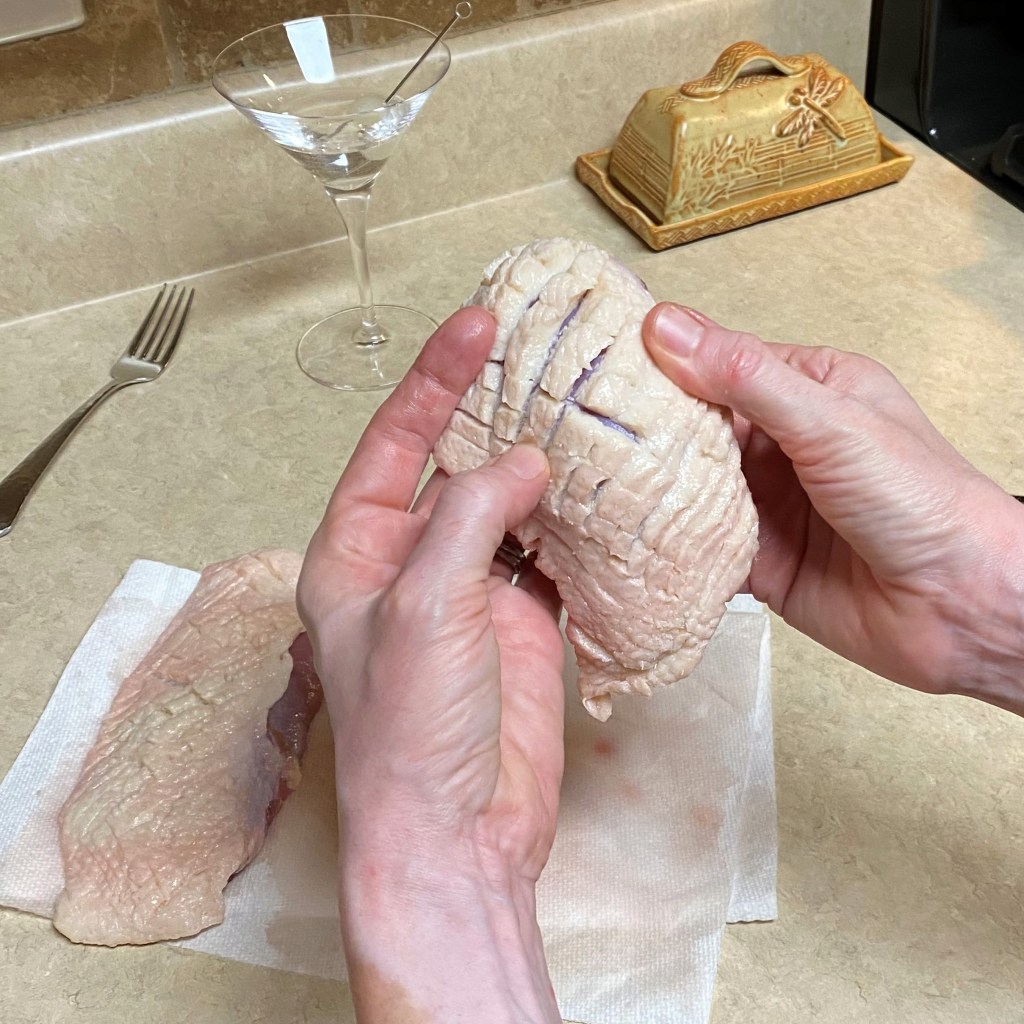
  1. Using a very sharp knife, score the fatty side of the duck breast, making diagonal cuts about 1/2” apart over the entire surface of fat. Be careful not to cut into the flesh, as this will lead to overcooking the meat. Season both sides of the breast pieces with salt and pepper and set them aside while you make the sauce.
  2. In a glass measuring cup, combine vinegar, shallot, orange juice, orange zest and chicken broth.
  3. In a medium, heavy-bottomed sauce pot, cook sugar over medium heat until it becomes a dark amber color. Use a silicone spatula or scraper to move sugar to the middle of the pan as it begins to melt. Do not stir the melting sugar.
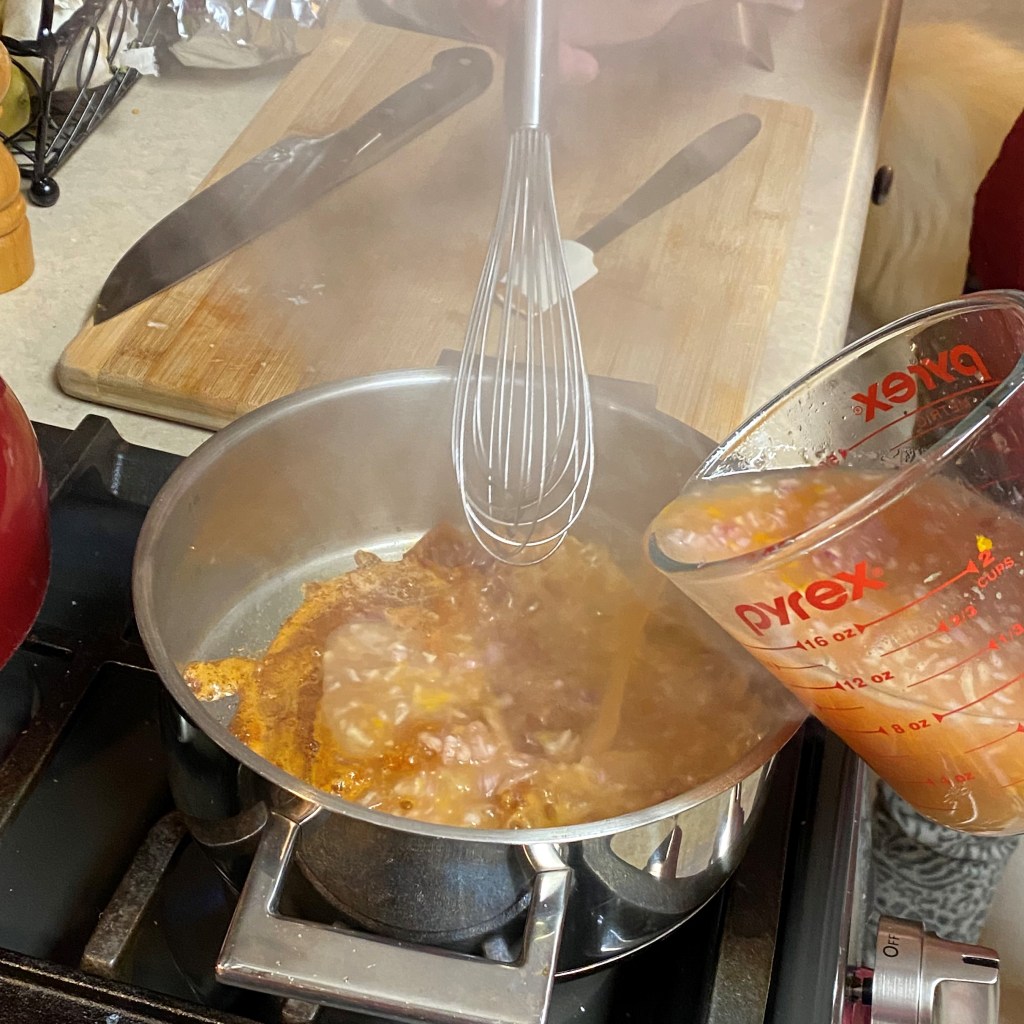
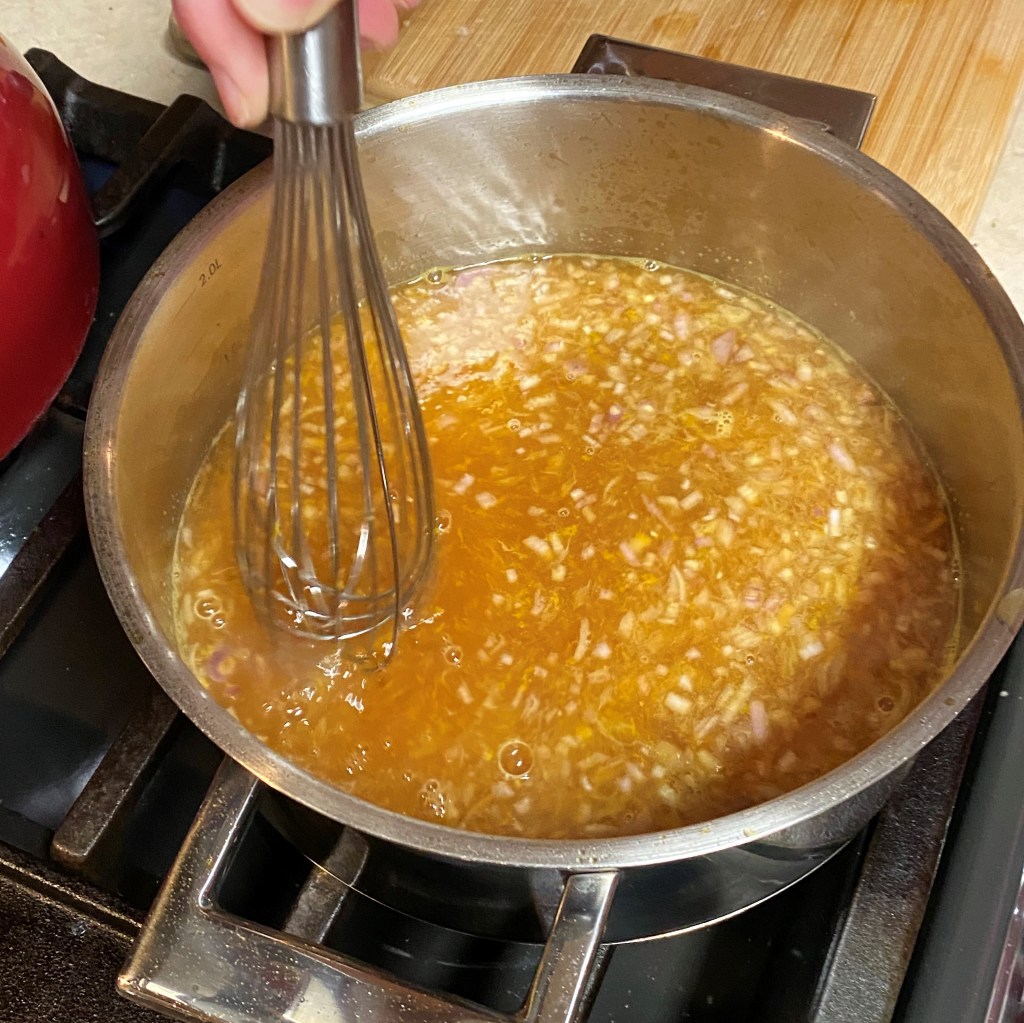
  4. When sugar is fully melted and deep amber in color, carefully pour in juice-broth mixture. This will sputter and pop quite a bit. Whisk mixture until it’s evenly blended, and reduce heat to low, simmering about 20 minutes until sauce is reduced to 2/3 cup volume. Give it a quick twist of black pepper, then set the pan aside for quick re-warming later.

Cooking the duck breast

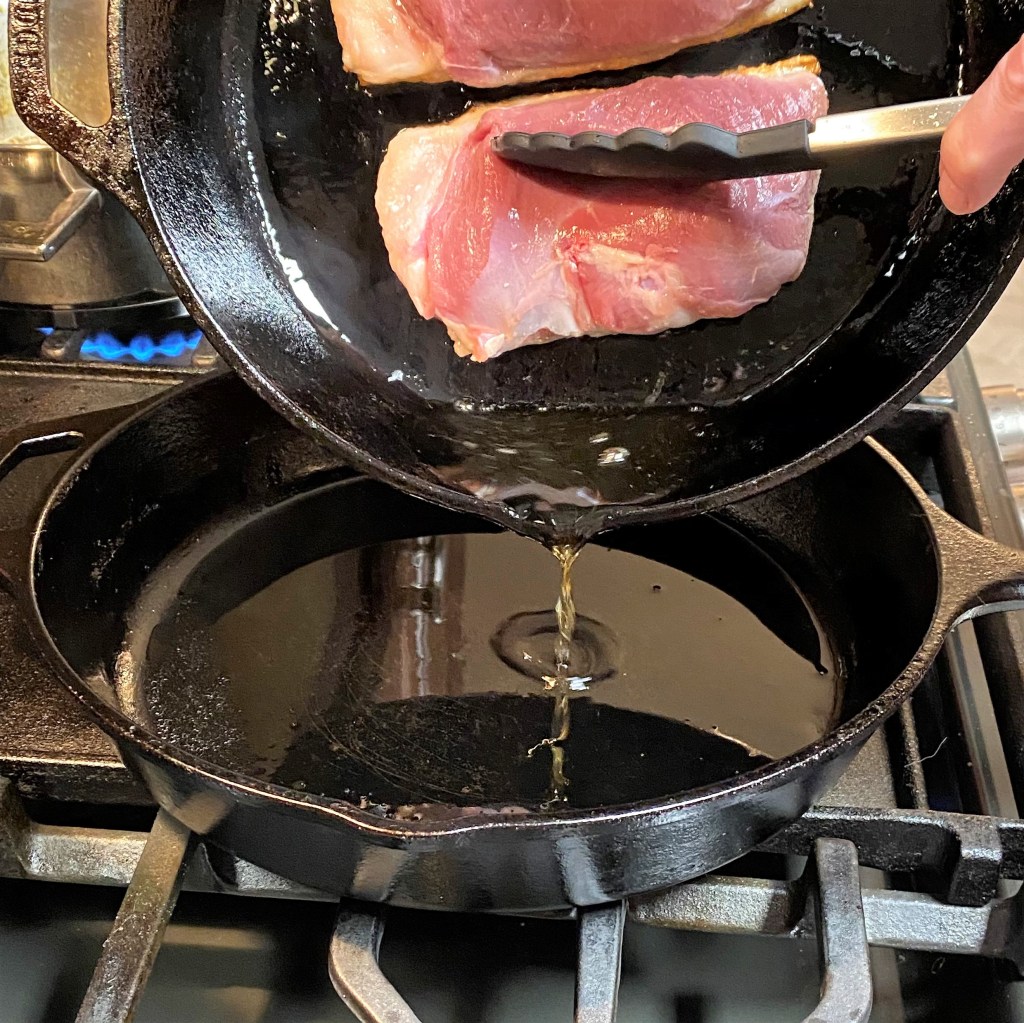
  1. Heat a cast-iron skillet over medium-high heat. When skillet is warm (not hot), add duck breast, fat side-down and leave it alone for at least five minutes. This allows time for some of the fat to render from the duck breast. Use tongs to hold the duck breasts in place, while tilting the skillet to drain the duck fat off into another skillet or bowl and continue searing until the duck skin is crispy and golden brown, about 10 minutes total. (I used the drained-off duck fat to fry the smashed fingerling potatoes we served with dinner, but I recommend that you have a kitchen assistant to do that. Les handled the potato frying task, in addition to his expert photography of the cooking process.)
  2. When the fat is mostly rendered and duck skin is super crispy, turn the breast pieces over to cook the meat side for about 5 minutes. Internal temperature of the duck breast should be about 130° F for medium rare. Allow breast pieces to rest 8 to 10 minutes on a cutting board.
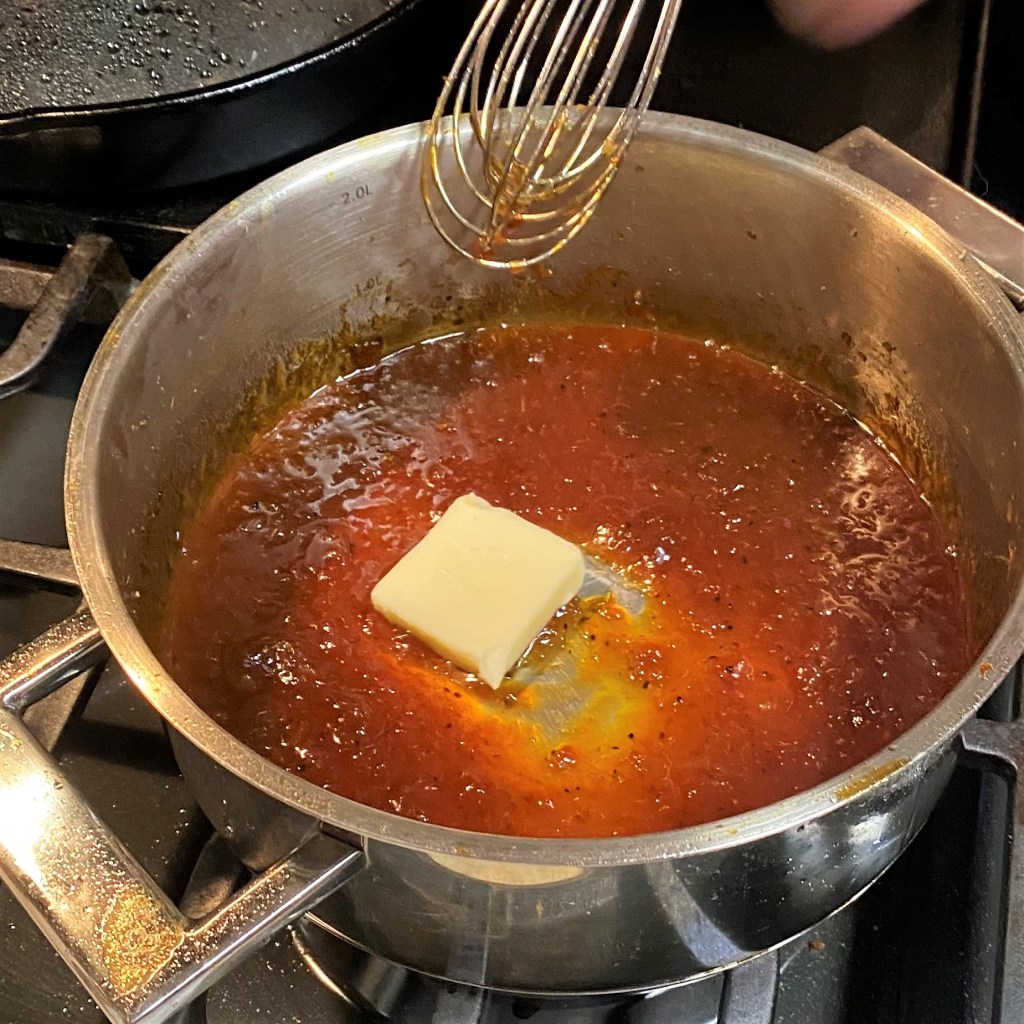
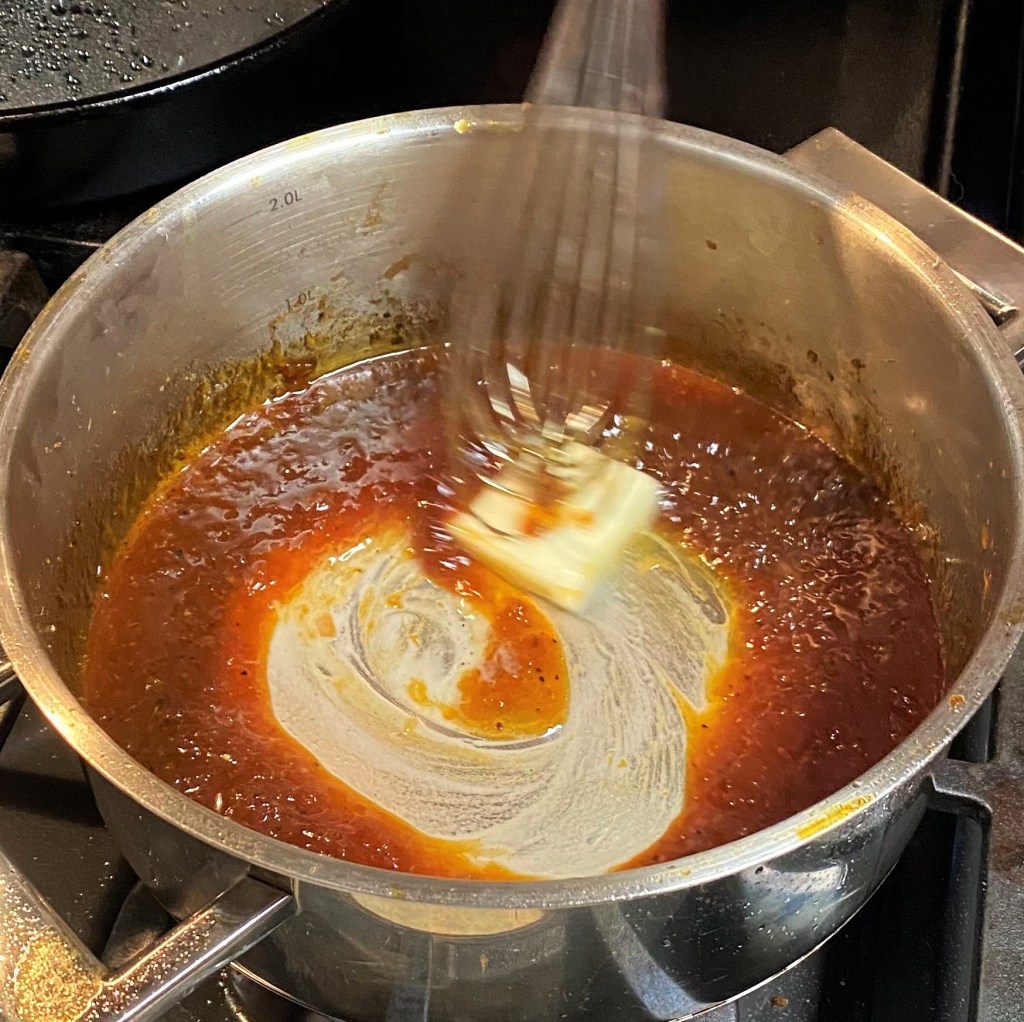
  3. While the duck breasts rest, place saucepan over medium heat to warm the orange sauce again. When mixture begins to steam and simmer at the edges, remove from heat and immediately add cold butter, swirling it with a fork to blend it into the sauce.
  4. Slice duck breasts into 1/2″ pieces. Fan slices of duck onto serving plates, spoon sauce over the slices and serve.

We served the duck a l’orange with pan-fried fingerling potatoes. Boil the potatoes until fork-tender, then cool slightly and gently smash, or flatten, them with the bottom of a skillet or pan. Set them aside until you’re ready to crisp them for serving. Heat extra duck fat or butter over medium-high heat. Fry smashed potatoes in fat until golden brown and crispy. Sprinkle with salt and pepper and serve.

Your eyes do not deceive—the wine we served with the duck a l’orange also has an orange hue. I’ve been curious about these orange-colored wines for at least a year, but did not find one until I visited the website for Grovedale Winery in northeastern Pennsylvania. The wine, called Serendipity, is made from Frontenac Gris grapes. Contrary to its appearance, it does not taste like oranges, though the winery suggests there are notes of candied orange peel on the finish. I found it similar in style and flavor to a dry Riesling, and I cannot describe how perfectly it paired with the duck a l’orange. Grovedale also uses this interesting grape for a late harvest dessert wine, which I purchased and cannot wait to experience. We will be ordering more of this, for sure!


Want to make this recipe?


One more thing…

You may be wondering if I’m a paid endorser for the products I spotlight on Comfort du Jour, and the answer is “no.” I do not receive money or products for my recommendations, and what that means for you is that you can trust me to give an honest opinion. If something changes, I will update my disclosures. Either way, I will only stand behind services and products I believe in. Fair enough? 😀


Cranberry Sauce with Jalapeno and Orange

After much hemming and hawing, the verdict is in at our house—we are going big for Thanksgiving. No, I do not mean big in the gathering sense, because that is out of the question during a pandemic. It will only be the two of us, so our “big” means bold, less-than-traditional flavors. This departure from the usual has been my fantasy for several years, but other people get pretty attached to classic, traditional flavors and it almost feels cruel to spring big changes on friends and loved ones who have been building anticipation for the flavors they’ve come to expect at Thanksgiving.

As much as my husband, Les, and I also enjoy our own traditions (including taking turns with the preparation of the turkey—a pact we made when we got engaged), we are changing things up significantly this year, partly because we can do so without disappointing anyone, but also because it feels adventurous and fun in a year that has been pretty hum-drum. It’s Les’s year for the turkey, but rather than his usual brined, stuffed and basted 20-plus pounder, he has decided to do a dry spice rub and prepare our smaller turkey in his new charcoal smoker. And with these bold flavors on the bird, we are planning to keep pace with our sides and accoutrements, including the cranberry sauce.

Most years, we make everyone at the table happy with two different styles of homemade cranberry sauce. Les makes one that is sweetened with both brown and white sugars, simmered in apple cider, and accented with sections of mandarin orange. It’s slightly tangy, but mostly sweet, and more on the “saucy” side. I usually ask him to make extra so we have plenty left over to use as topping on vanilla ice cream. Yum. My version of cranberry sauce leans to the chunky, tart side, usually with spices such as cinnamon, clove and cardamom, and simmered in dry red wine. It is a decidedly “grownup” cranberry sauce, and stands in contrast to so much of the richness happening on the traditional table.

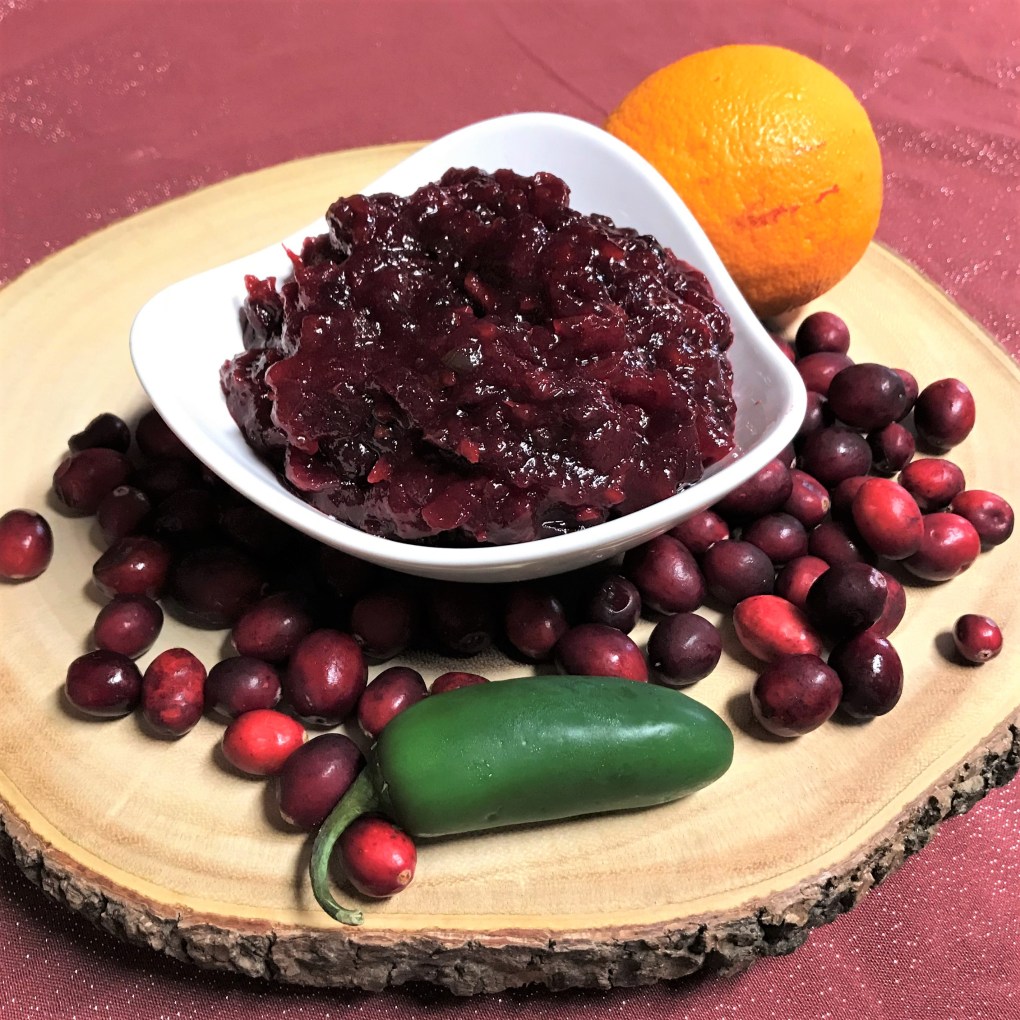
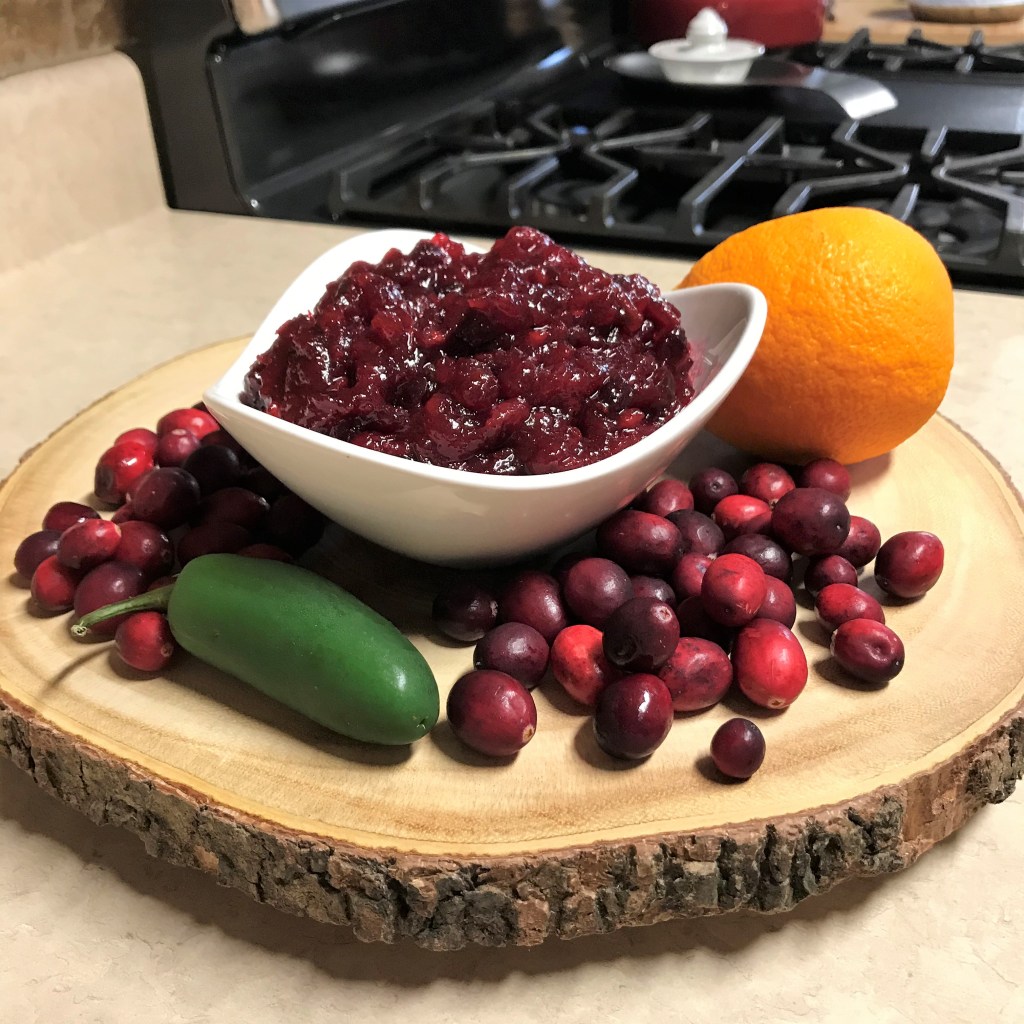
This year, however, we will have only this one cranberry sauce—bearing the bright and bold flavors of orange and jalapeno. Now, you may cringe at the suggestion of jalapeno, worried that it will be too intense, but let me assure you it’s a fantastic twist, a pleasant undertone that stands up to the bright citrus and tart cranberry, but does not overwhelm.

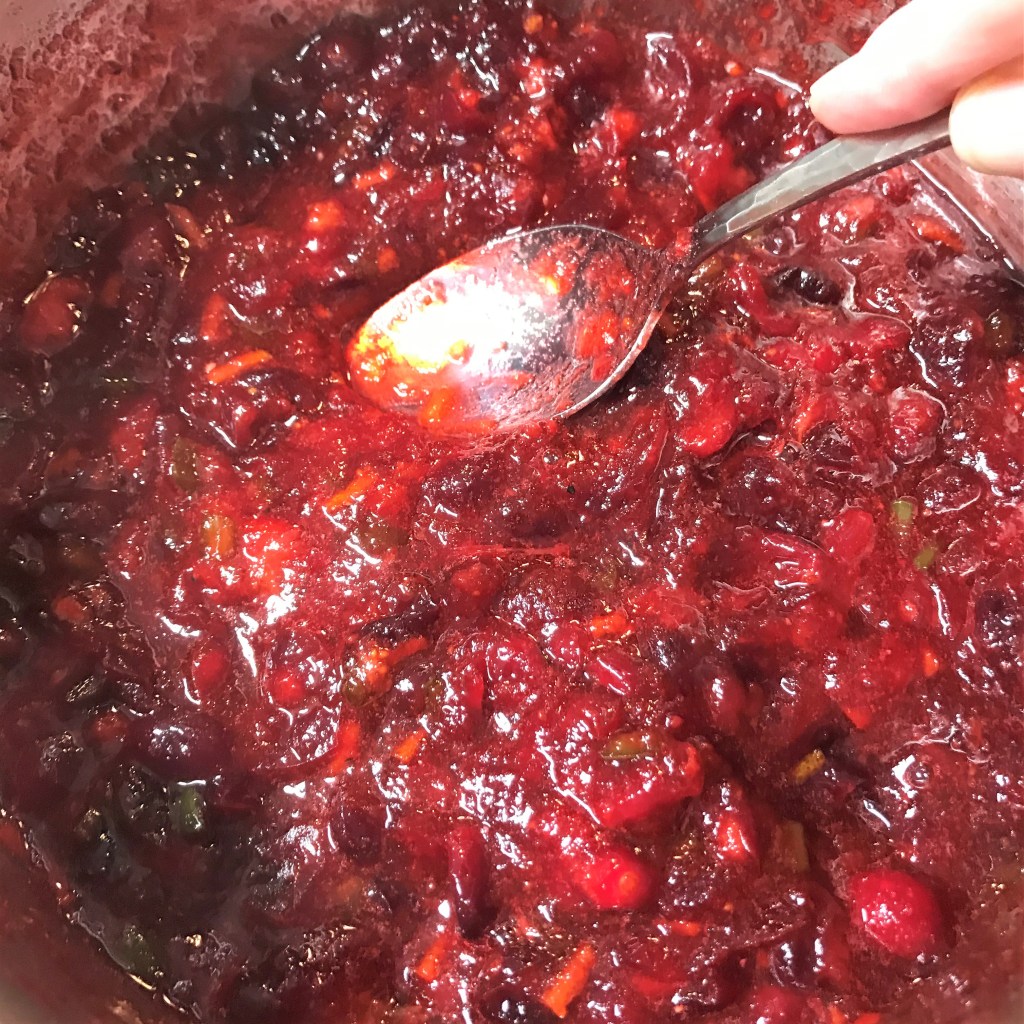
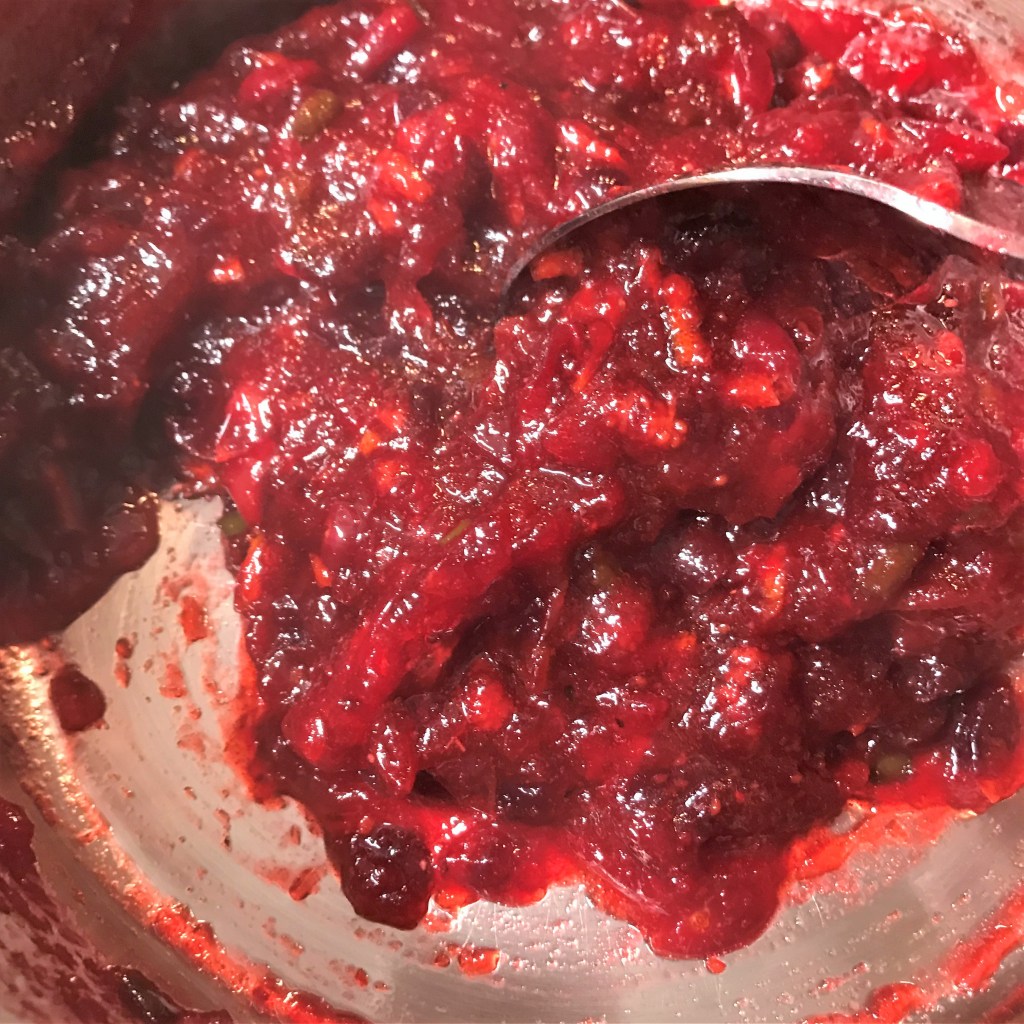
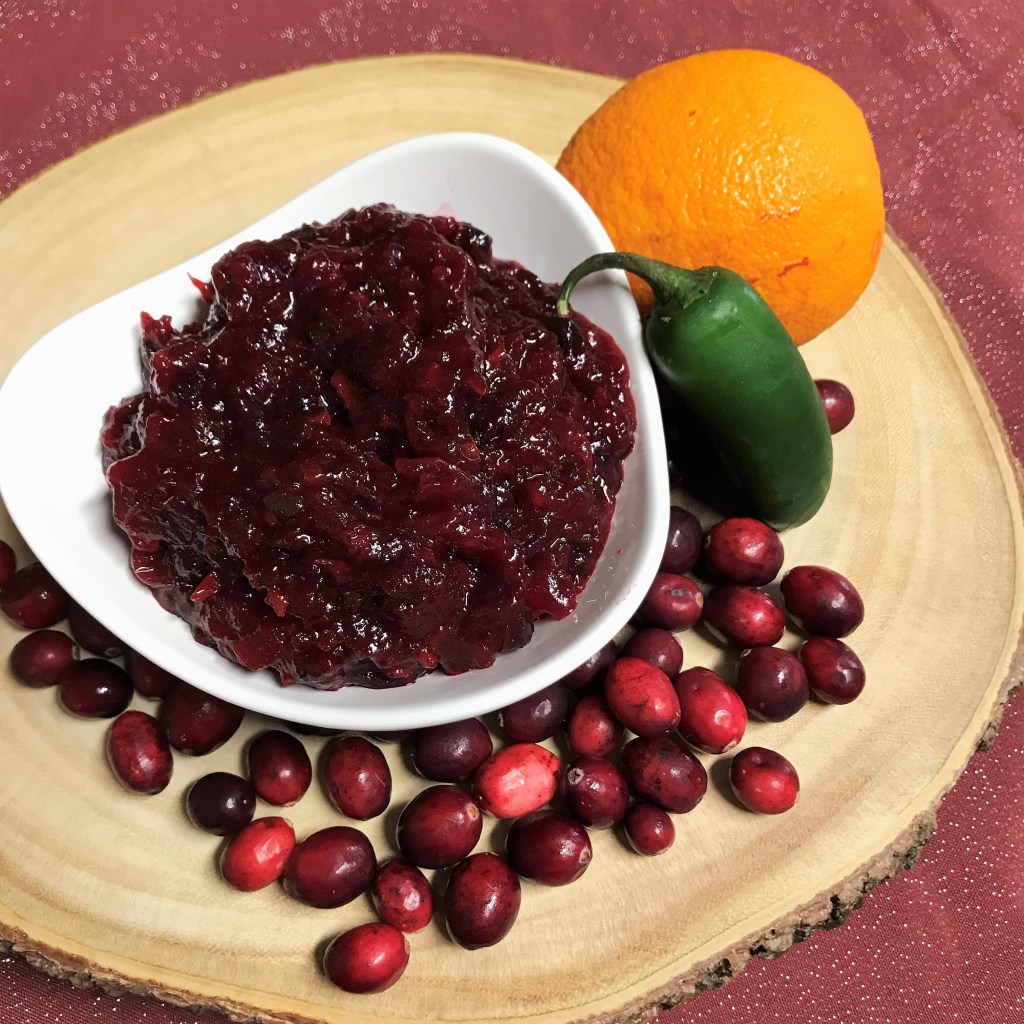
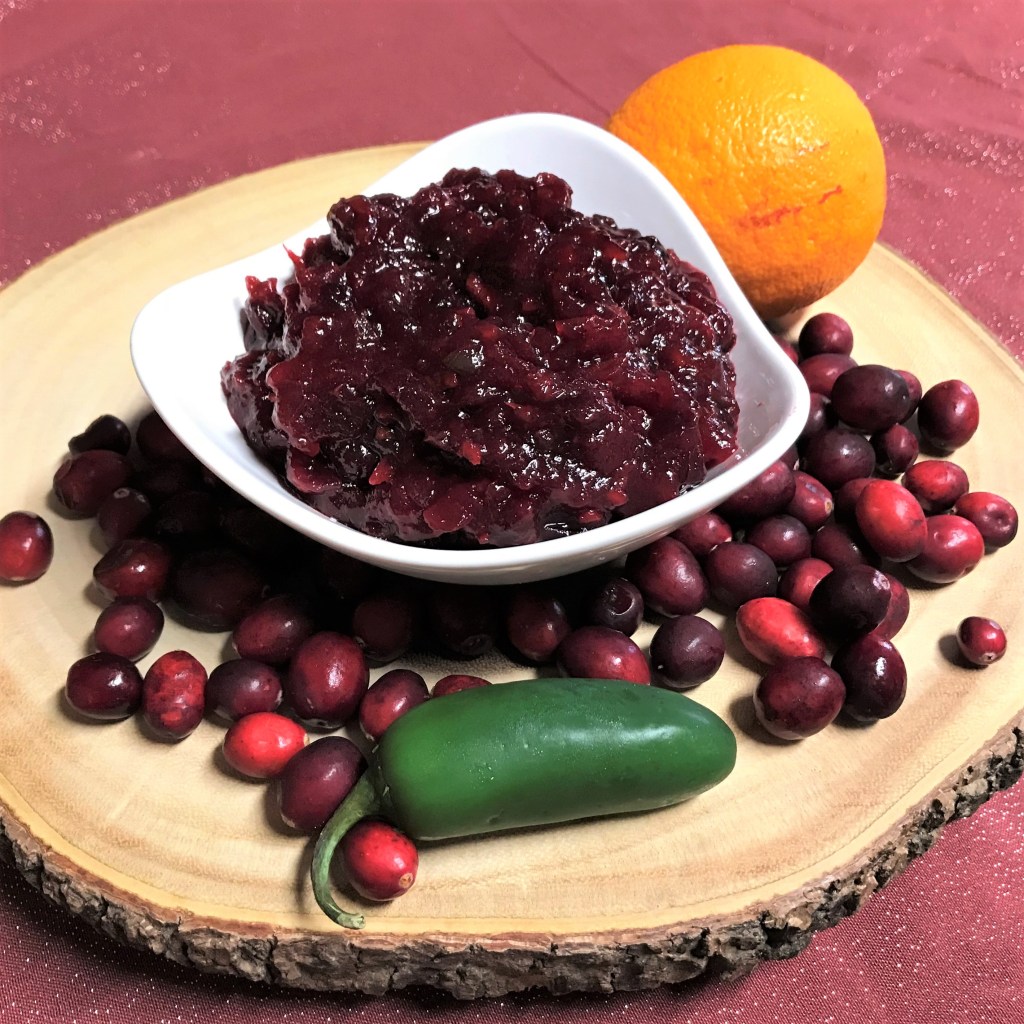
All three flavors are evident in this lively, festive sauce.

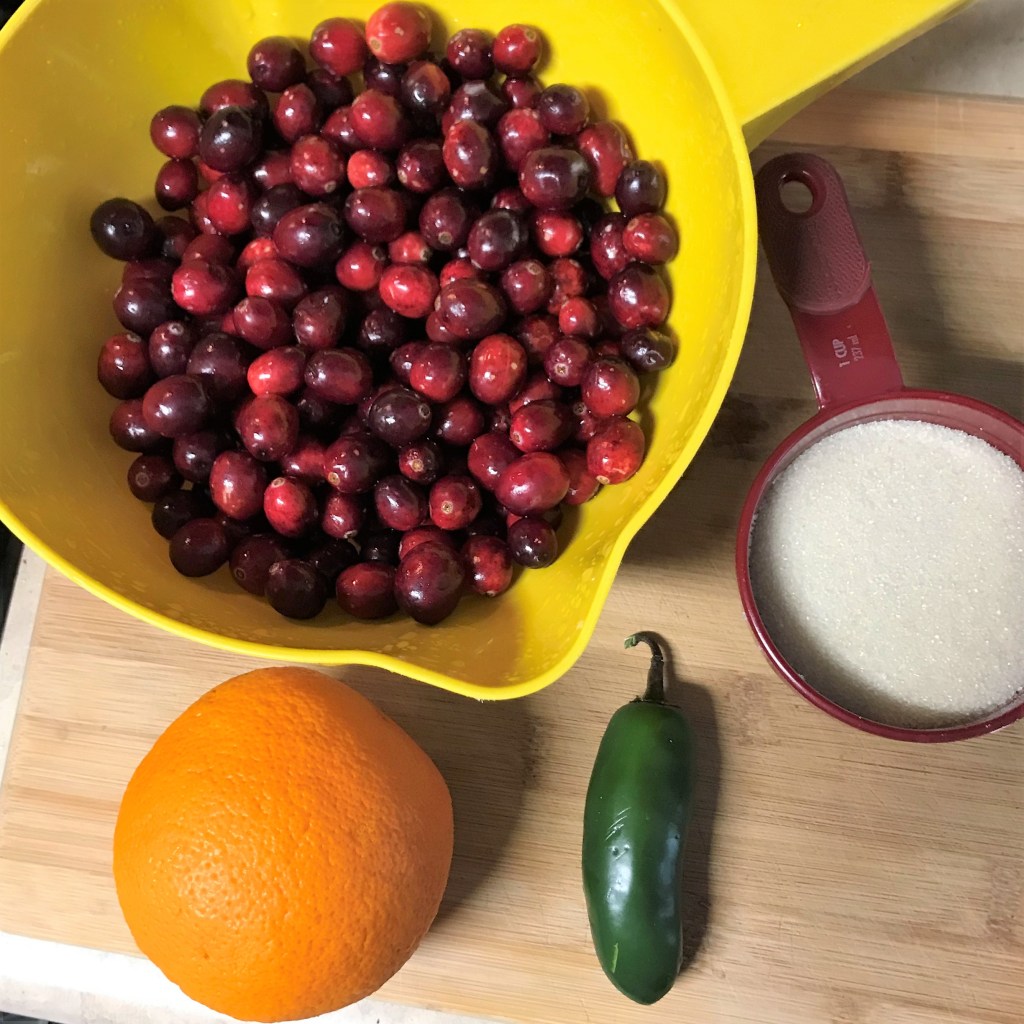
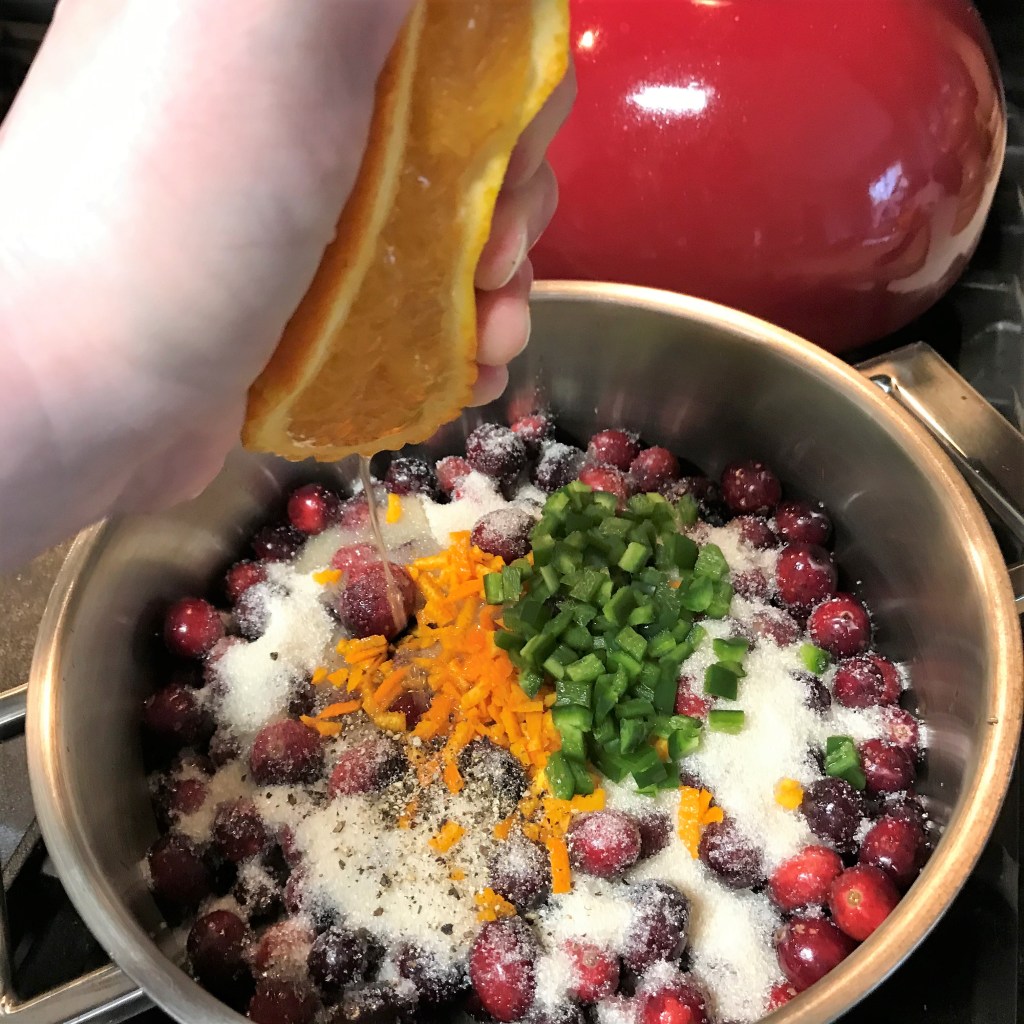
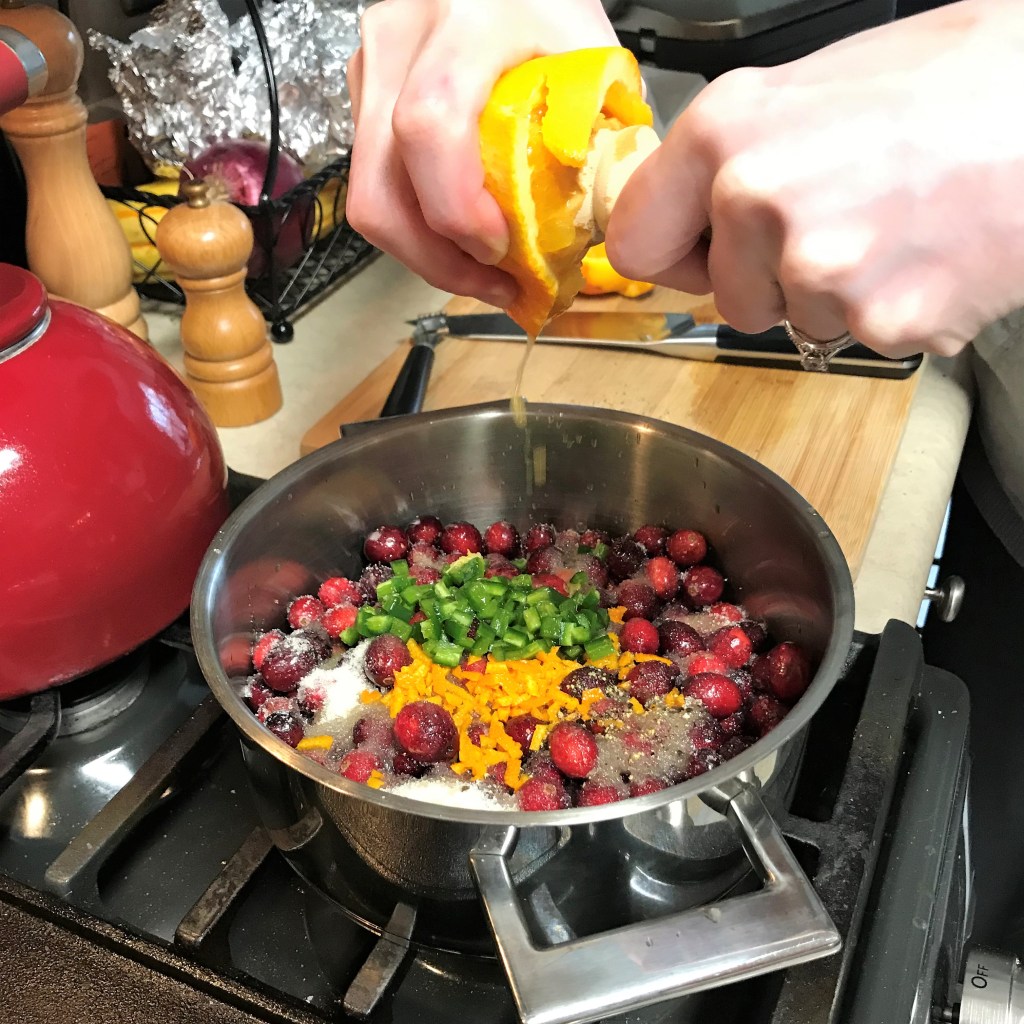
If you’ve never made your own cranberry sauce before, please let me show you how simple it is. All you need for this recipe is a large saucepan, a bag of cranberries, a large orange, a large fresh jalapeno and a cup of sugar. You can move this to the “done” column in less than half an hour, and it’ll keep in the fridge for a couple of weeks (that is, if you are disciplined to not eat it straight from the fridge with a spoon). Let’s do this!

Made from scratch doesn’t seem so difficult, right?

Ingredients

12 oz. bag fresh cranberries, rinsed and sorted for “losers”* (see notes)

1 cup real cane sugar (or slightly less if you prefer more tang)

1 large fresh organic orange*, washed

1 large fresh jalapeno pepper, seeds removed and minced*

A stingy pinch of kosher salt

A few twists of freshly ground coarse black pepper                                                                                                                                       


*Notes

Rinse the cranberries in a wide colander that allows you to inspect the quality of the berries. Discard any that are dried up, soft or otherwise questionable. Even with a brand-new bag of cranberries, I usually find about a dozen losers that don’t make the cut.

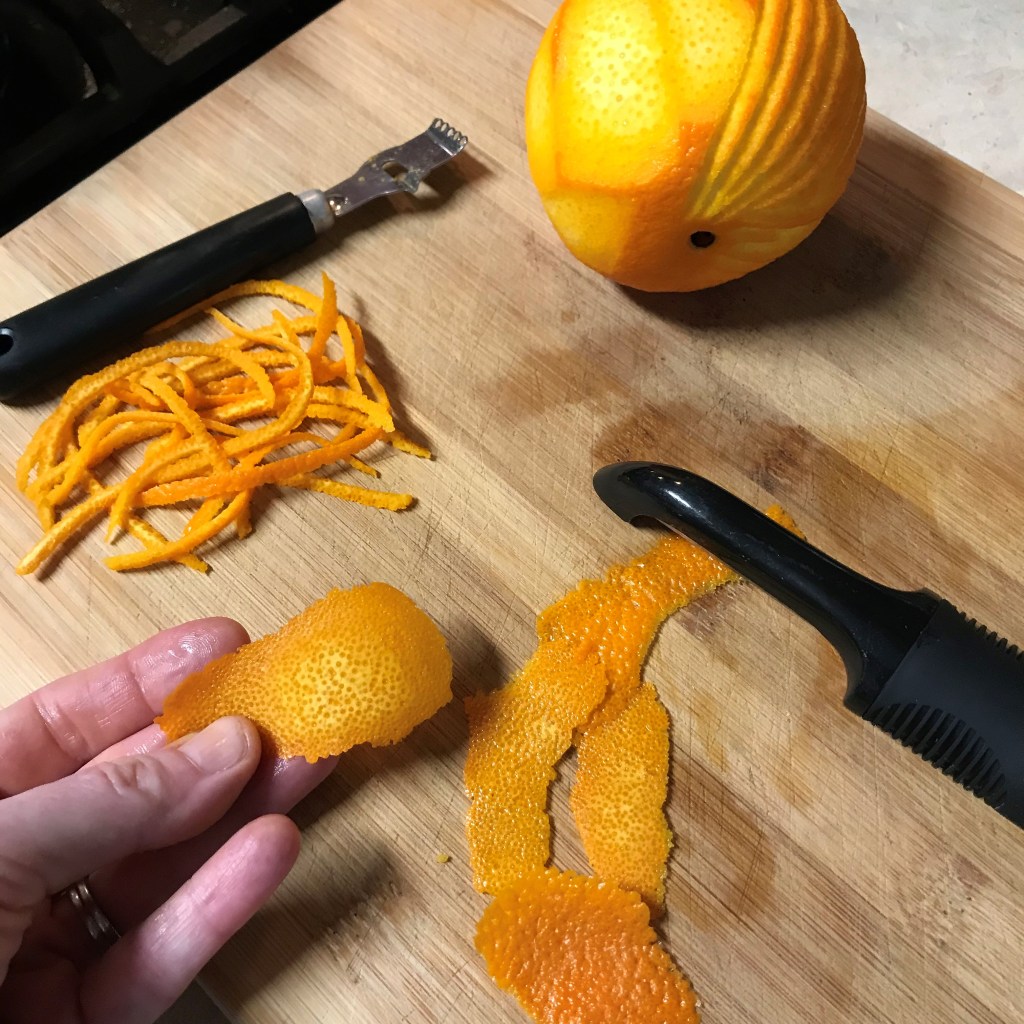
Organic orange is best here because we will be eating the peel, and pesticides are neither tasty nor safe to ingest. Whether you use organic or conventional, be sure you wash the orange well before stripping the peel.

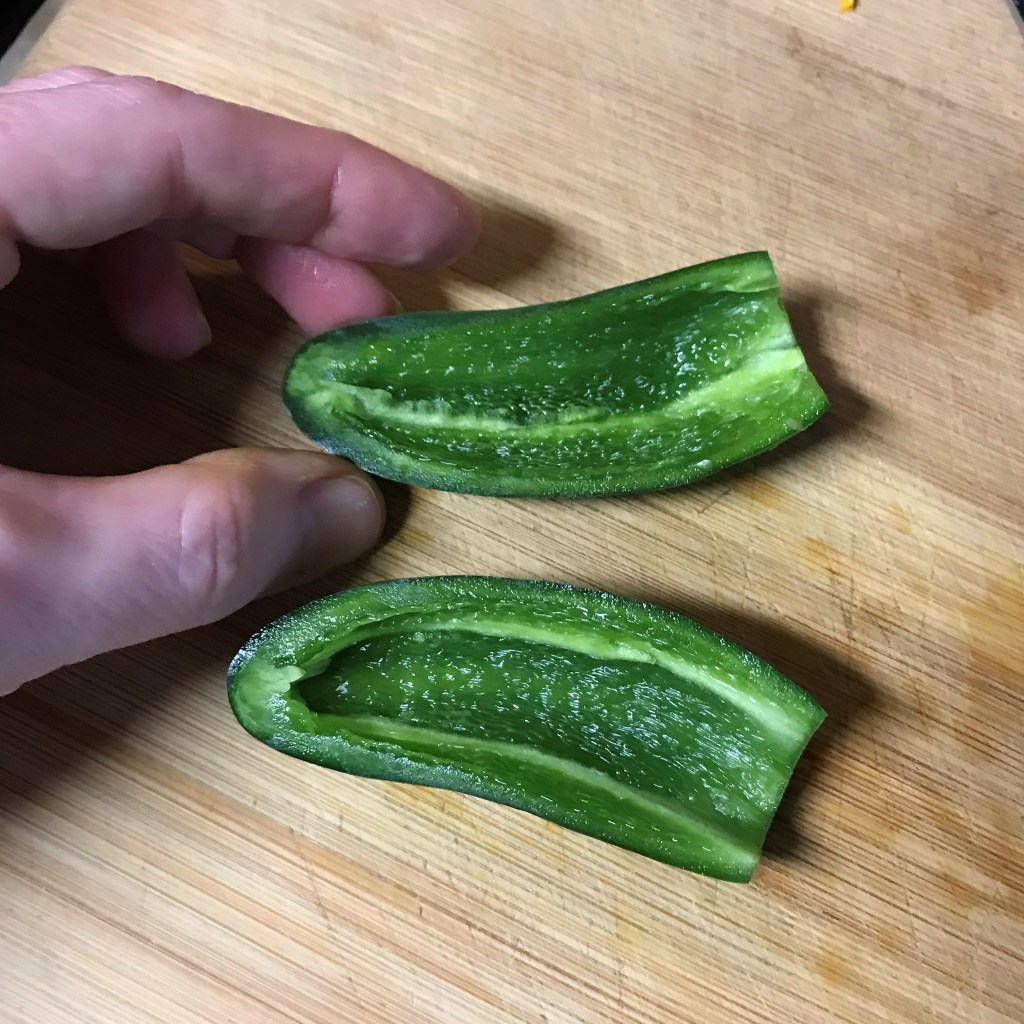
If you are nervous about handling the raw jalapeno, feel free to slip on some rubber kitchen gloves for this part of the recipe, then carefully peel them off and into the trash once done. I can’t work well with gloves, so here’s my advice: the sooner you clear the irritating jalapeno oils from your skin, the less likely you are to accidentally touch your eyes, nose or lips and get a painful reminder of the intensity of the capsaicin oils. But if you wash with water right away, you risk spreading the oils around rather than breaking them down. Here’s a simple way to stop the burn before it begins—Dawn dish liquid. Yep, the same blue stuff they use in the TV ads to save the baby birds from oil spills. Any good dish liquid would probably do it, but Dawn is what I use. Gently rub the dish soap, full-strength, straight onto your dry hands, covering every part that may have touched the raw pepper, and give it a few seconds to begin dissolving the pepper oils. Be sure to rub the dish liquid under your nails and between your fingers. Then, wash and rinse your hands and the knife you used to cut the pepper.

It may seem odd to add any amount of salt and pepper, but remember that salt is an enhancer that punches up whatever flavors are in your dish. As for the pepper, it’s an easy way to add an extra little “bite” to underscore the surprising flavor of jalapeno. You will not taste black pepper. Trust me, it works.

Berries, sugar, orange, jalapeno and just a few twists of fresh black pepper. This is such an easy thing to make.

Instructions

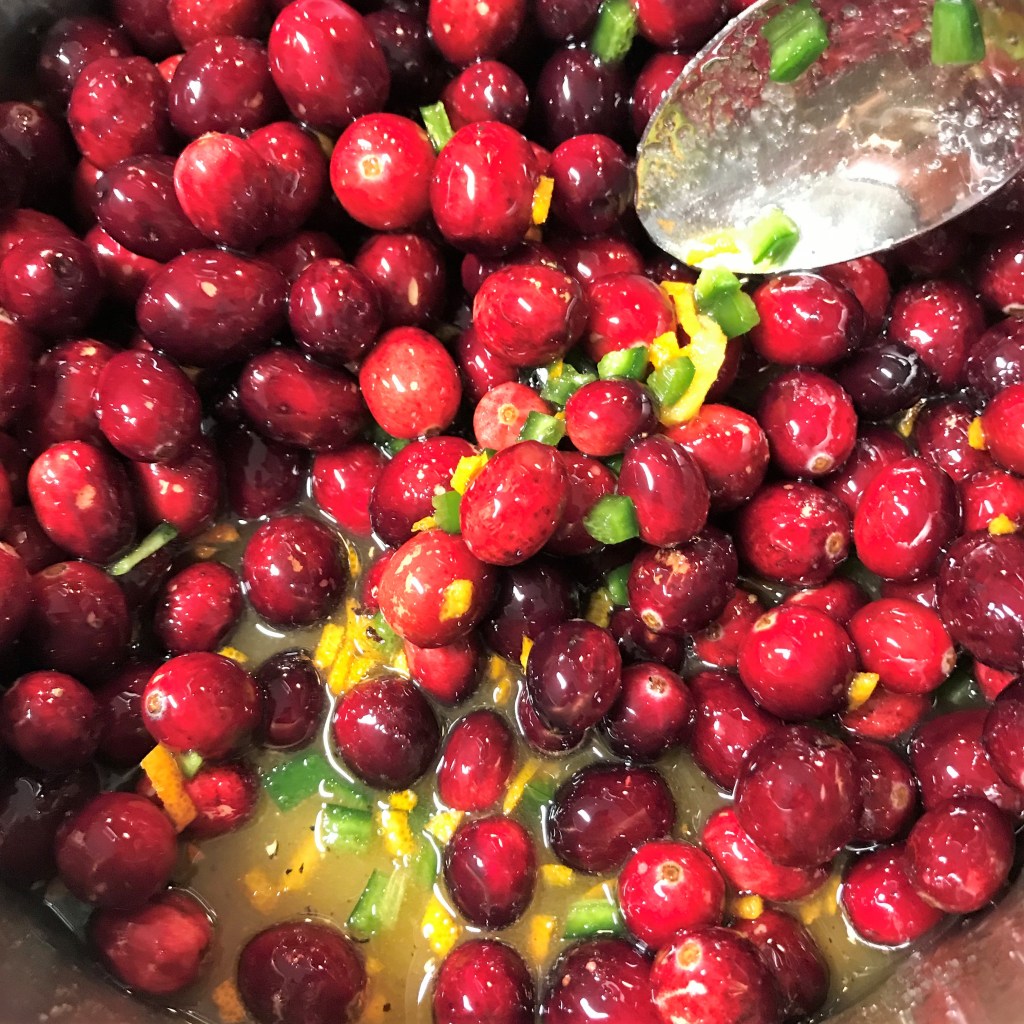
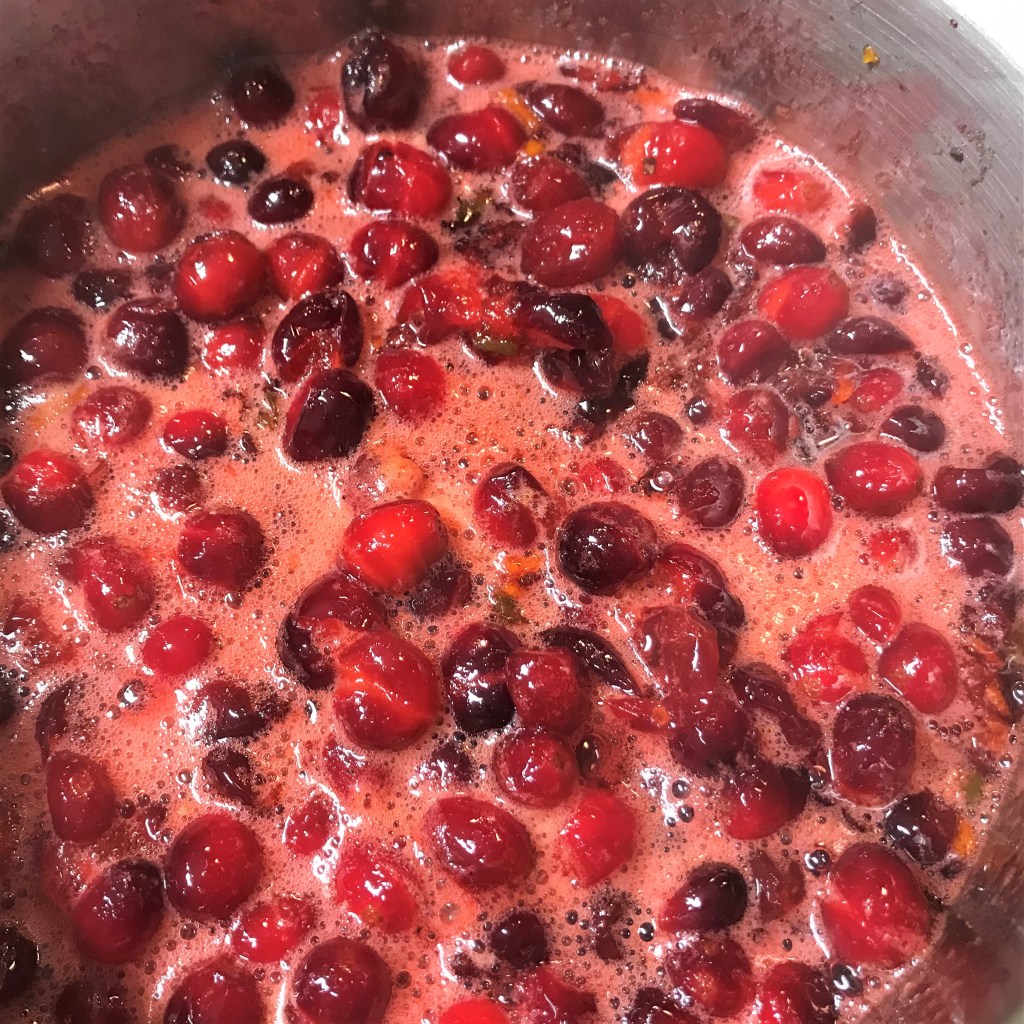
The essence of orange is front and center, giving this cranberry sauce a bright and festive freshness, and the jalapeno is evident but not at all “hot.” It’s going to be a nice complement to the smoky flavors Les will be infusing into our turkey, but I’ll probably sneak into the fridge with my spoon for a few more taste tests (just to be sure) between now and Thanksgiving. And don’t be surprised if I find a way to use the leftovers in a post-holiday appetizer or something. As you all know, I cannot leave well enough alone. 😊


Want to make this recipe?

Follow the steps and images above, or click below to download a printable version for your recipe files.