Oil-poached Tomato & Zucchini Dinner

(A “zero-waste” recipe)

It’s only been three weeks since our state went into lockdown over the COVID-19 risks, but it sure seems like I’ve been rationing fresh food items a lot longer than that. We’ve managed to only do our grocery runs about once every 10 to 14 days since the middle of March, when the walls first started to close in. And the consequences of our few-and-far-between trips became evident a few nights ago when I reached for the “brand-new” package of grape tomatoes I’d purchased, and found this:
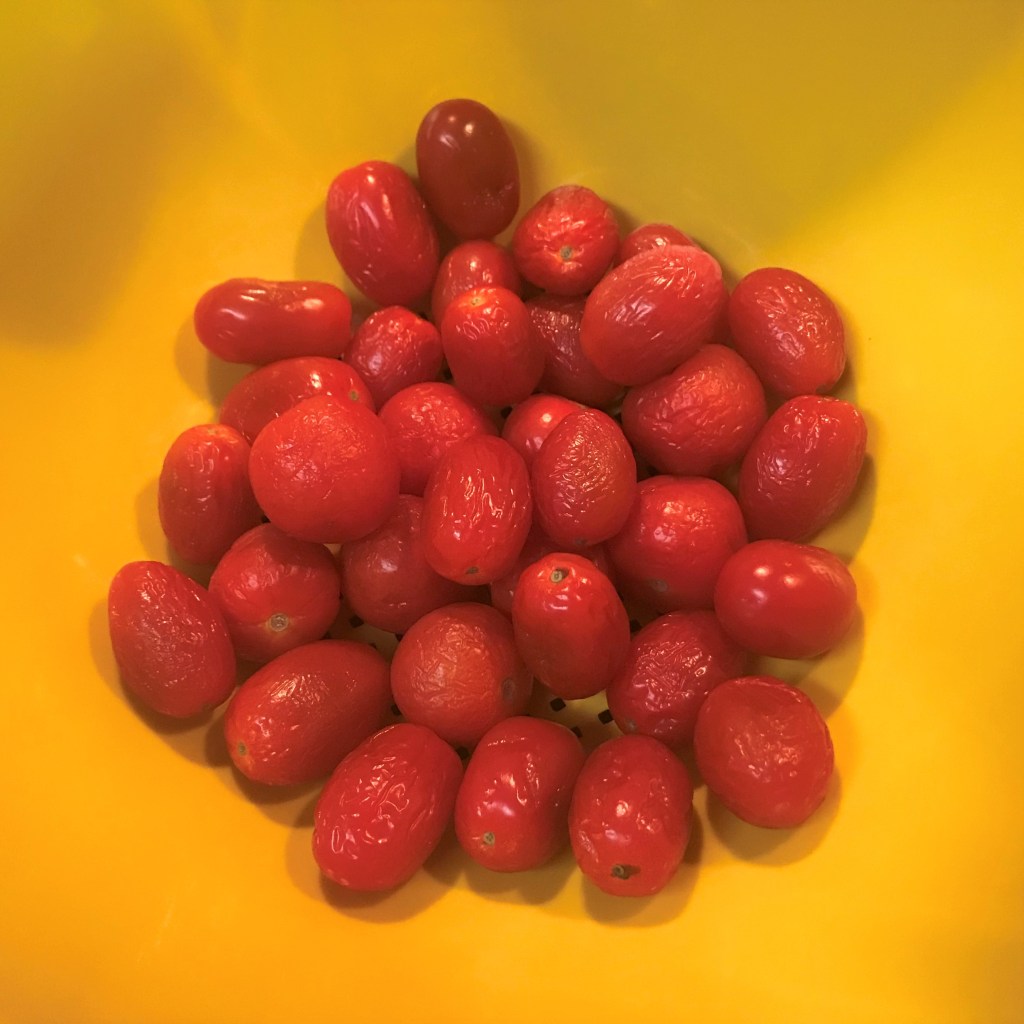
Definitely not delicious.

If that isn’t disappointing enough, imagine my horror when I peeked into the crisper drawer to find another so-called fresh item to be way past its prime.

This is just pitiful.

I know. Kind of like those pics all over Instagram of celebrities without their makeup. Our produce drawer has been so jam-packed these past weeks, it has become a real challenge to keep up with the fresh ingredients we’re buying in greater quantity than usual. This discovery of wrinkly tomatoes and shriveled zucchini wrecked my plan for making ratatouille, one of my very favorite vegetable-centered dishes. I’m not even going to show you a picture of the eggplant. It’s rough, people.

So, a change of plans, but this need not be a disaster. I’ve been here before with the tomatoes and knew I could save them. With a little patience and the magic of slow poaching in some good quality olive oil, you can do it, too. We’re going to turn these sad little misfit vegetables into something delicious. This recipe serves two.

Let’s Get Cooking!

Ingredients:

One pint really wrinkled baby tomatoes (of course, fresh is good, also!)
1/2 cup chopped onion (I like sweet ones, but use whatever you have)
3 cloves fresh garlic, chopped
1/4 cup good quality extra virgin olive oil
1 tsp. Italian blend herb seasoning
About 1 1/2 cups leftover cooked chicken (shredded scraps from a rotisserie market chicken is perfect)
1 medium shriveled-up zucchini (or fresh, if you must)
Kosher or sea salt and freshly ground black pepper
Parm-Romano cheese for serving

Instructions:

First things first—we need to identify any tomatoes that truly shouldn’t be used. If they are wrinkled and a bit withered, they’re OK. Soft, oozing or moldy? Sorry fellas, you’ve been chopped.
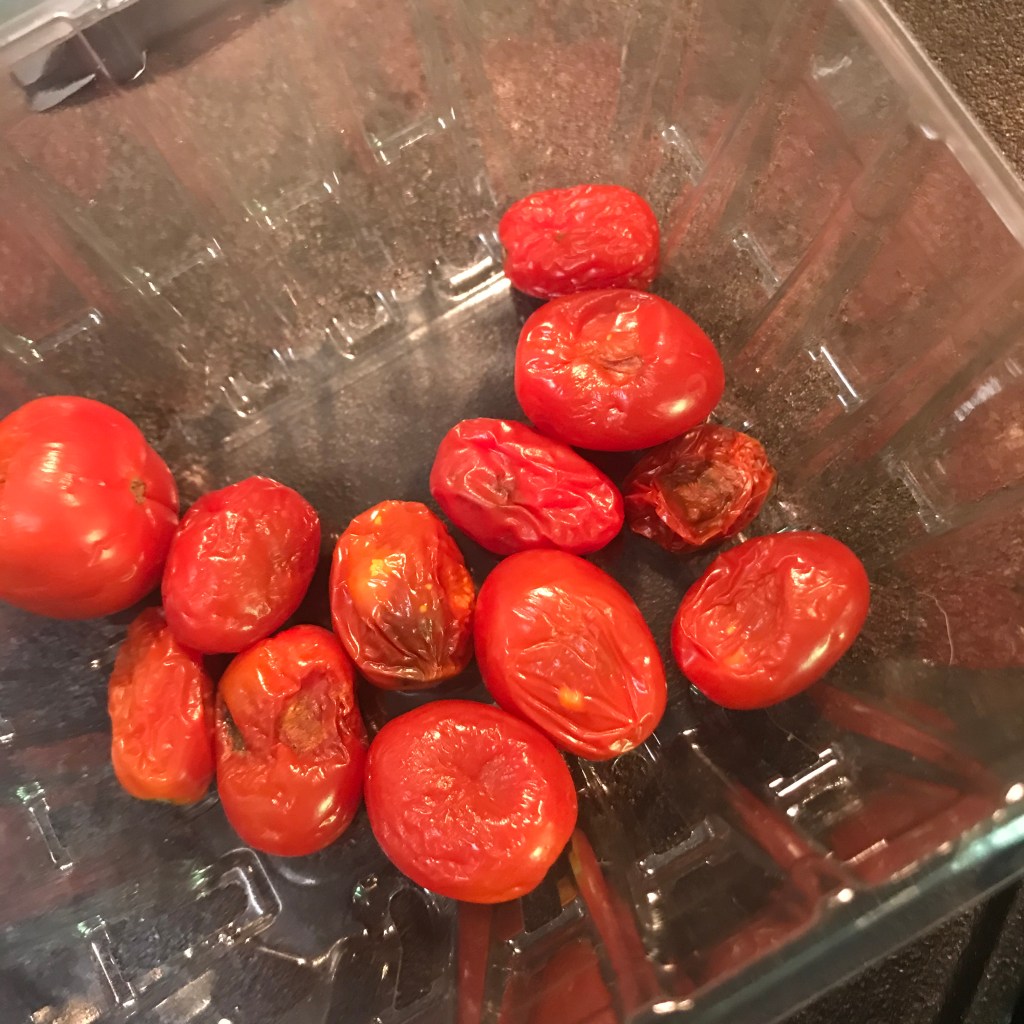
Ick. At least I was able to salvage most of the tomatoes.

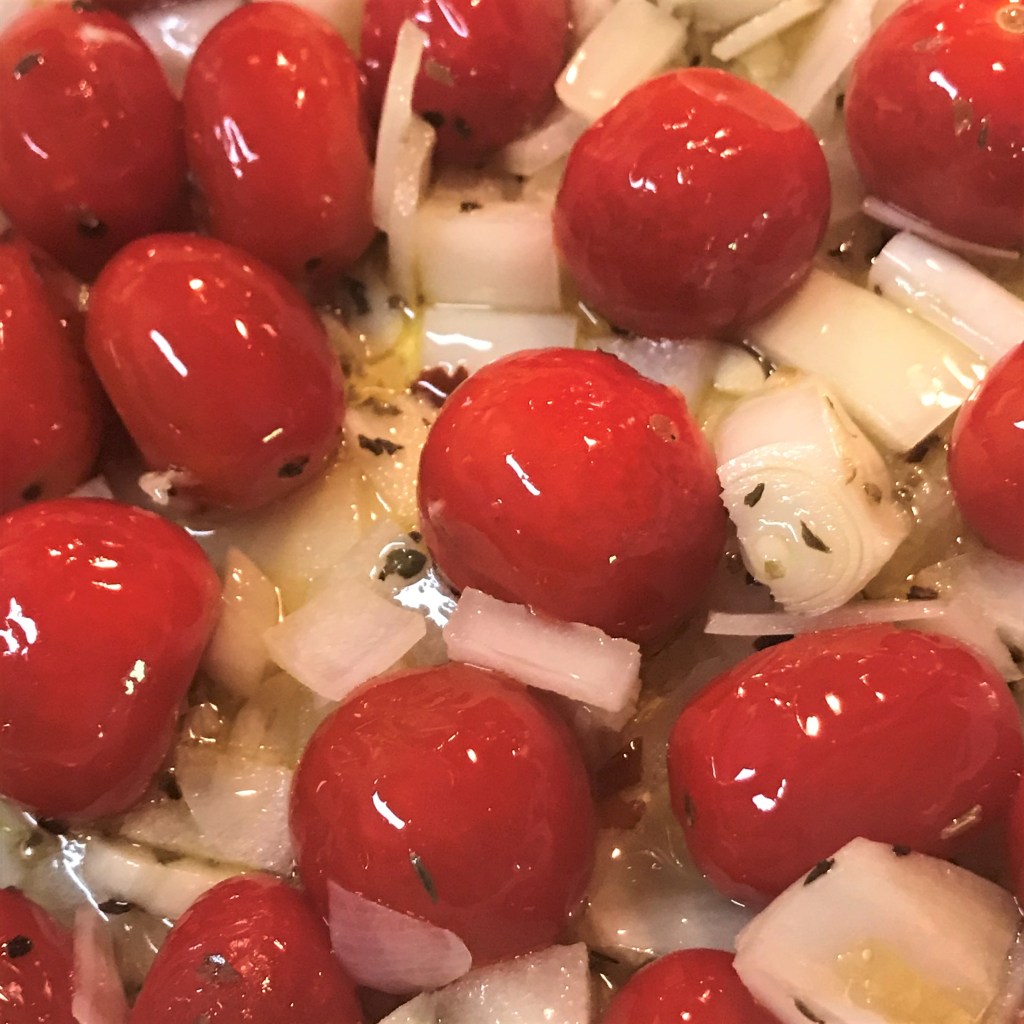
Rinse the tomatoes that remain and set them aside on a paper towel to absorb the excess water. Place a large, non-stick skillet over very low heat and add the full amount of olive oil. It’s going to seem like a lot, but it’s all good.

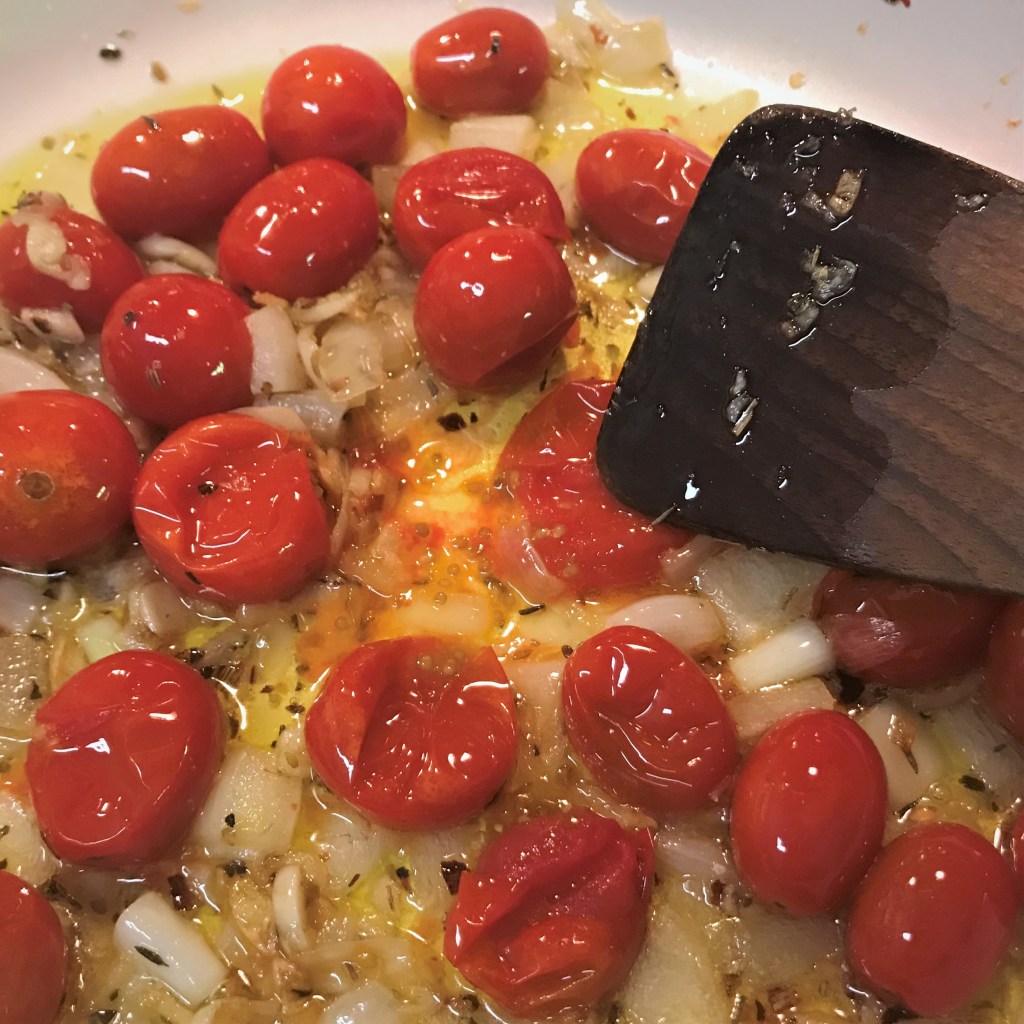
Add the onions, garlic and baby tomatoes to the olive oil and tilt the pan around to “roll” and coat the tomatoes in the oil. Add the Italian herbs, and season with sea salt and freshly cracked black pepper. Keep the heat to a bare minimum. This super-slow pace might feel a little awkward if you are accustomed to sautéing in oil. We’re doing something else—rehydrating the tomatoes should not be rushed, and I can’t emphasize enough that your heat should be at the lowest setting your burner allows. You don’t want to see or hear any sizzling at all; if you do, it’s too hot. The pictures in this slideshow are time-stamped, and the captions will help explain how this should progress:

Pretty awesome, right? And you wouldn’t believe the depth of aroma and flavor the olive oil is able to extract from those sad little tomatoes. Actually, it’s more than that; studies have shown that cooking tomatoes in oil releases more of their lycopene, an antioxidant linked to heart health and protection against certain types of cancer. And to think, we almost threw them away!

If you only had the tomatoes, you could stop right here, toss this sauce with some freshly cooked pasta and call it dinner (just add a sprinkle of parmesan and a glass of wine). But today is also the deadline for that pitiful zucchini, so I’m going to take this a step further and turn the squash into “noodles.”

One day soon, I’ll share my honest opinion about the different spiralizers I’ve tried. They definitely are not created equal, and although you’d think the expensive ones would be the best, I usually prefer this little gadget—called a “Vegetti”—that I picked up for about $6 at TJMaxx (a couple years ago—you know, when things were open).

It has two sides: one for thick spirals and one for thin. I’m using the thick side today, and as you can see, after twisting the zucchini through it, there’s very little waste. Just the butt ends and these cute little swirly buttons. Lucky for me, even these will not be wasted because our dog, Nilla, is certifiably crazy about vegetables. Sweet girl has such patience.

We’re now in the homestretch, where we will see the final transformation of too-far-gone vegetables turned into a delicious and healthful, zero-waste meal. I’m scattering my leftover chicken pieces over the top of my luscious poached tomato sauce, then the zucchini noodles, salt and pepper, and covering it with a lid to heat it through.

Turn up the heat about two notches to medium, set the table and pour the wine. By then, this one-skillet meal will be ready to be tossed and plated. Enjoy!

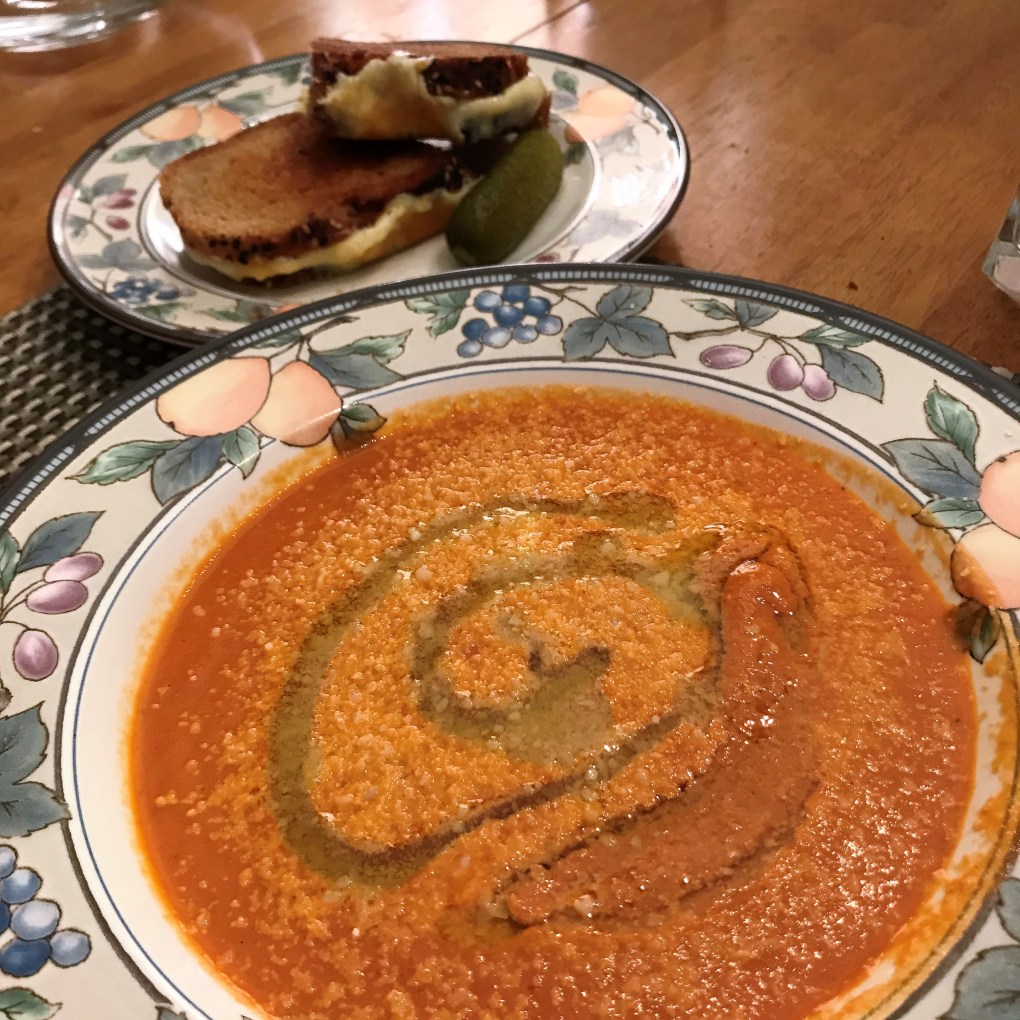
Creamy Tomato Bisque

There’s a reason “tomato bisque” is on so many restaurants’ menus. It’s a classic comfort food, and so simple to make from regular pantry ingredients you’ll wonder why you ever settled for the stuff in a can. My version includes a bit of red bell pepper and carrot for a touch of extra flavor and sweetness. This is perfect on a chilly day or rainy night, and we love to pair it with a tuna on homemade rye or classic grilled cheese sandwich.


Ingredients

Extra virgin olive oil, salt and pepper

1 medium onion, chopped (I like sweet onions, but yellow works well here, too)

1/2 medium red bell pepper, seeded and chopped

1 medium carrot, peeled and diced

3 cloves garlic, peeled and chopped

1 tsp. Italian herb seasoning (or some combination of oregano, basil, thyme, rosemary)

A pinch of crushed red pepper

28 oz. can peeled plum tomatoes (San Marzano, if possible)

1/2 cup vegetable broth or 3/4 cup V-8 juice

1/4 cup whole milk, half-n-half or heavy cream (omit or substitute canned coconut milk if vegan)

Freshly grated parm-romano cheese blend (omit for vegan) and chopped parsley or basil for serving

Tools

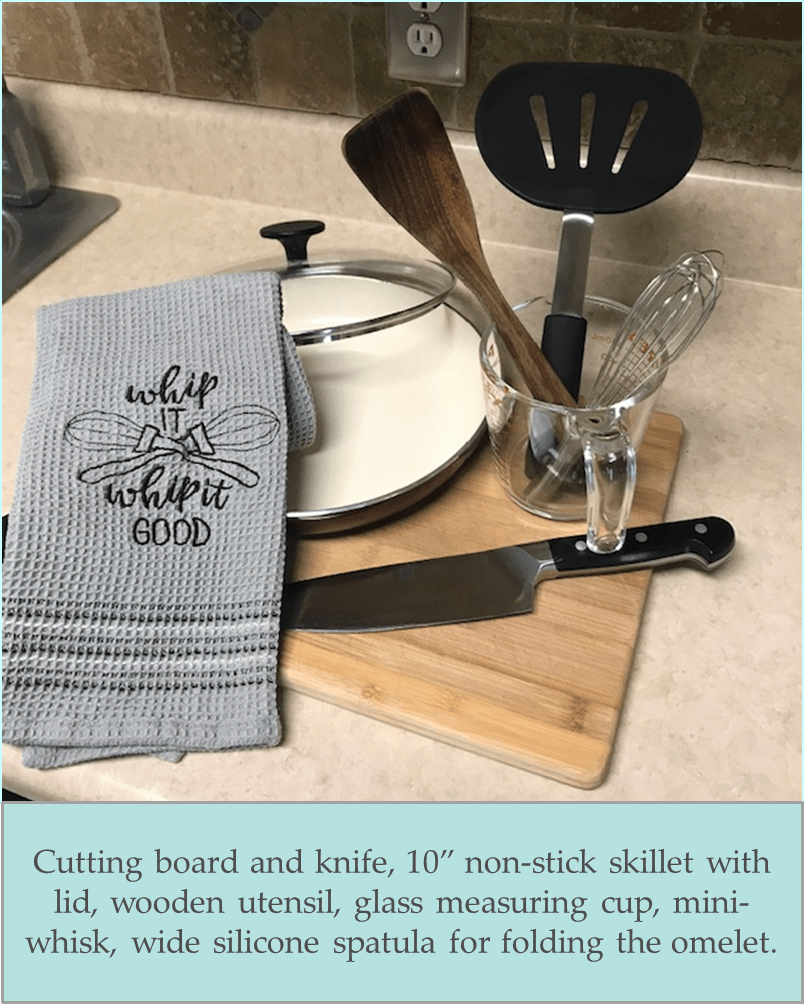
cutting board and knife, heavy-bottomed tall pot, flat wooden utensil or spoon, immersion blender*


Let’s Get Cooking!


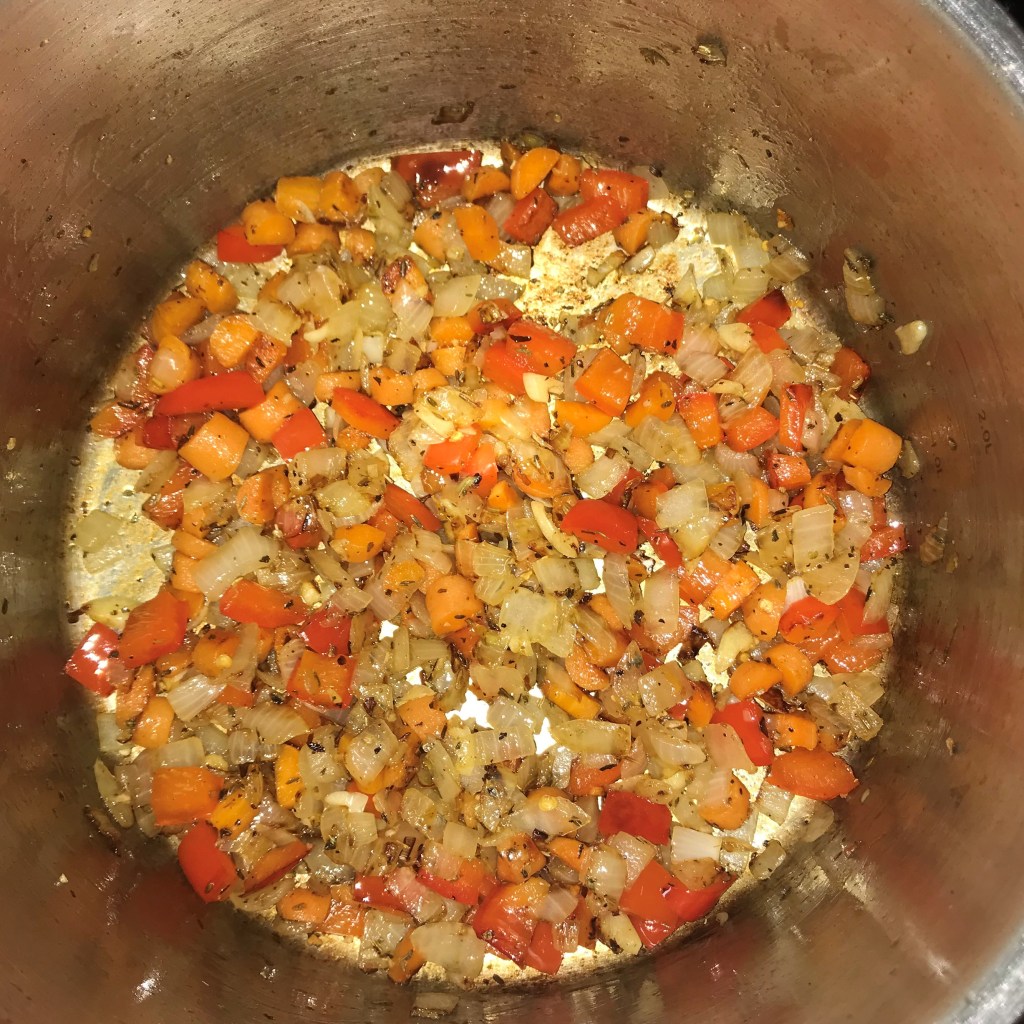
Place a deep, heavy-bottomed pot over medium heat. Add a generous swirl of olive oil (about 2 to 3 tablespoons). When oil begins to shimmer, add onion, pepper and carrot all at once. Salt and pepper to taste, then stir and cook until all begin to soften. Add chopped garlic and seasoning blend, stir and cook another minute or two until onions seem slightly translucent.

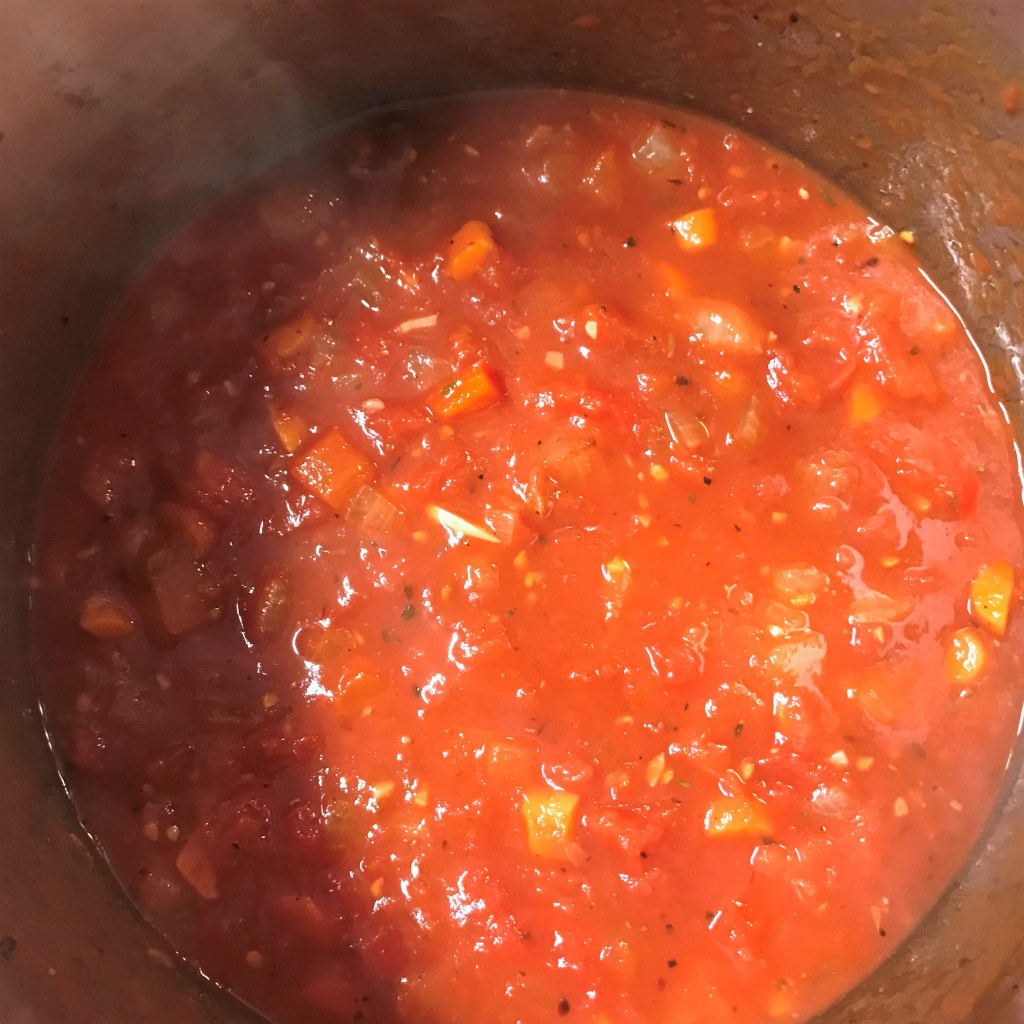
Add the plum tomatoes, using your hand to squeeze each tomato into the pot. This helps release the juices and gives them a head start on breaking up in the pot. Squeeze slowly and gently so you don’t wear it! Add all the tomatoes plus all remaining liquid from the can, but discard any basil leaves that may be in the can. Add broth or juice, stir to mix evenly and bring just to a boil, then reduce heat and simmer uncovered on medium-low about 30 minutes. Stir occasionally to prevent burning. Adjust seasoning to taste.

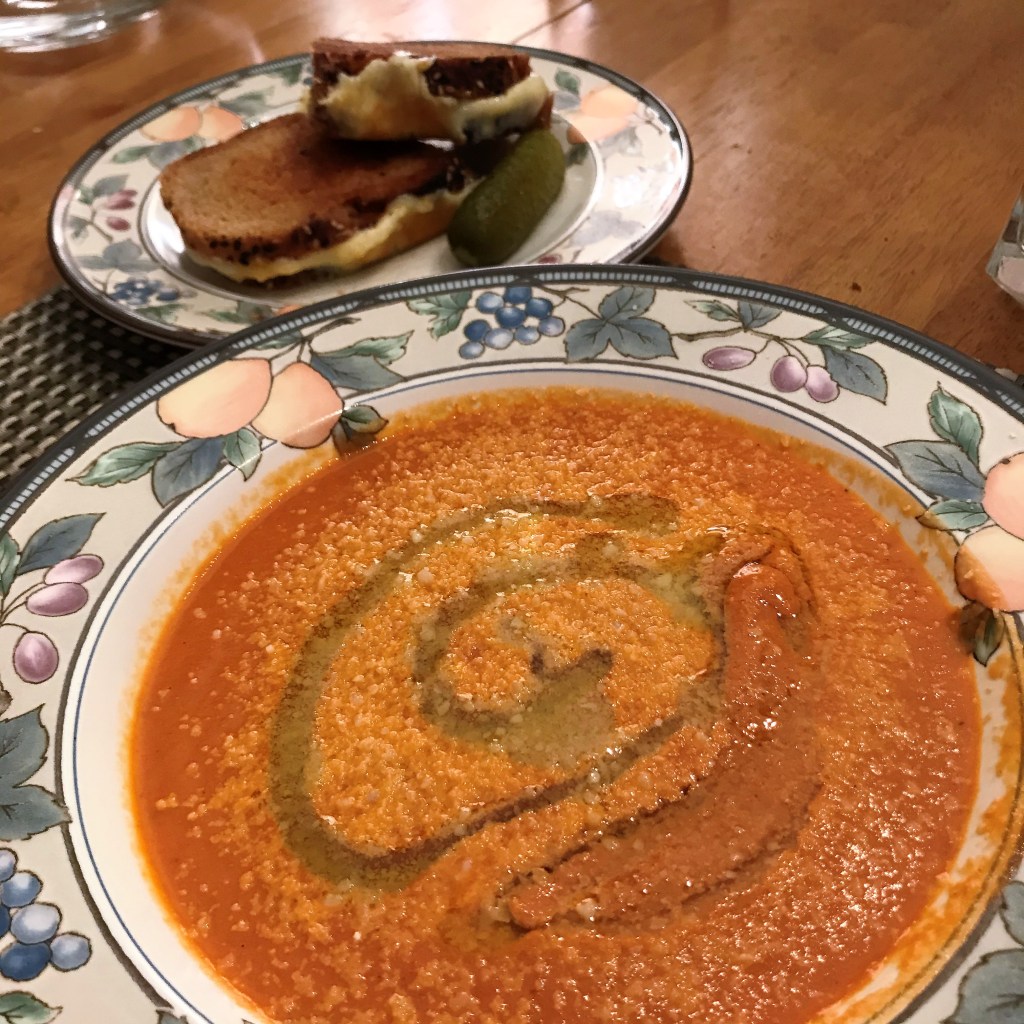
When mixture appears less chunky and somewhat reduced, turn off heat and use an immersion blender to puree until mixture is as smooth as you like. Simmer on low another few minutes to allow air bubbles to disperse and soup to reduce to your preferred thickness. If it’s too thick, stir in a bit more vegetable broth. Remove from heat and swirl in milk or substitute. Ladle into bowls and swirl a drizzle of olive oil over the top of the soup and sprinkle with parm-romano cheese and fresh chopped herbs as you like.

Dinner is served. We love it with a sourdough grilled cheese, but any kind of sandwich is a good side.

Want to print this recipe?


No-Fuss Mushroom and Spinach Omelet

I like this style of omelet because it’s quick and simple, and it doesn’t require removing the extras from the pan and then stuffing them back in. Your “fillings” will be cooked into the outside of the omelet, with melty gooey cheese layered inside. This recipe is super flexible, too! You can add or substitute leftover vegetables of any kind if you don’t have spinach and mushrooms on hand—peppers, kale, broccoli, asparagus or whatever is taking up space in the fridge. If they’re already cooked, just chop into smallish pieces and toss them in the pan long enough to warm them and proceed with the recipe from there. As with most my recipes, I rely on formula and technique more than the ingredients. So, let’s talk about that:

How do you make an omelet fluffy?

Whisking cold water (not milk!) into the eggs just before cooking them gives a nice airy lift to the omelet. The scientific upshot is that the tiny water droplets evaporate quickly in the heat of the pan, creating airy pockets inside the egg mixture. If you want even more fluff, separate the eggs before you begin (this works best when they’re cold) and whip the whites into a soft foam (this works best at room temperature). Fold this into the rest of your egg mixture just before pouring into the hot pan.

Which cheese melts best for an omelet?

Good melting cheeses include Monterey jack, cheddar, Colby, Muenster, Havarti, Gouda and gruyere. Hard or crumbly cheeses such as feta, chevre and parmesan will add tons of flavor; just don’t expect gooey goodness from them, as they pretty much hold their shape when warmed. Whenever possible, grate your cheese from a block. The packaged pre-shredded cheeses are coated to prevent sticking in the bag, and this also prevents them from melting well.

Do you need a special pan for an omelet?

Years ago, my mom had one of those hinged, fold-over pans “designed for omelets,” but this is absolutely not necessary. It didn’t produce a fabulous omelet and mostly just made a mess. My go-to pan for omelets is a good non-stick skillet with curved sides. The shape and coating makes it easier to slide your spatula underneath the set egg mixture for folding and serving. If your skillet is not coated, swirl in a little extra oil just before adding the eggs, to guard against sticking.

This recipe is a delicious way to work in an extra serving of vegetables and works especially well as “breakfast for dinner.” Three eggs make just the right size for my husband and me to share, but we are not big eaters at breakfast. Feel free to throw in a fourth egg with no other adjustment needed.

Ingredients

Extra virgin olive oil, salt and pepper

1 thick slice of onion, finely chopped (we like sweet onions, but red or yellow ones are fine)

3 to 4 mushrooms, cleaned and sliced (cremini is my go-to, but white button or shiitake would also work)

Big handful of fresh baby spinach, roughly chopped and tough stems removed

3 large eggs, room temperature

About 1/2 tsp. prepared Dijon mustard (or hot sauce for a spicier twist)

Splash of cold water

1/3 cup freshly shredded cheese (or less if using more pungent cheese, such as Parmesan or feta)

Tools

Get Cooking!

Place a 10 inch non-stick skillet over medium heat and add a generous swirl of olive oil.

When you notice the oil beginning to shimmer and flowing easily around the pan, add your chopped onions. Give them a stir and cook until they are just soft but not quite browning, about 2 minutes. Add the sliced mushrooms and toss them around with your wooden utensil to be sure they get lightly sautéed on both sides. Add the chopped baby spinach leaves and stir until wilted and noticeably reduced, but still bright green. Salt and pepper to taste.

While the veggies are doing their thing, crack your eggs into a large measuring cup, add Dijon mustard (or hot sauce) and whisk briskly until lightly foamy. Add a splash of cold water – about 1 Tablespoon – and whisk again until light and foamy. You want lots of bubbles in this mixture, so whip it…whip it good!

Spread out the sautéed veggie mixture evenly in your pan. Slowly pour the eggs around the outer edge of the mixture, encircling your veggie ingredients, then pour gently to “fill in” and cover the entire mixture. Again, salt and pepper. Reduce the heat to medium-low and cook about 2 or 3 minutes, or until the egg mixture looks set about one half inch around the edges but still wet and somewhat loose in the center.

Sprinkle shredded cheese over the entire mixture, turn off the burner and place a cover over the pan, allowing trapped heat and steam to finish cooking the eggs and melting the cheese into them. This will take about 3 minutes. Using a wide silicone spatula, fold in half. Or for a slimmer omelet, fold one third toward the center, then fold the other side over the top of that, as if folding a letter. Carefully cut the omelet in half crosswise to share the other half with your other half, and enjoy!

Want to print this recipe?