Homemade Matzo

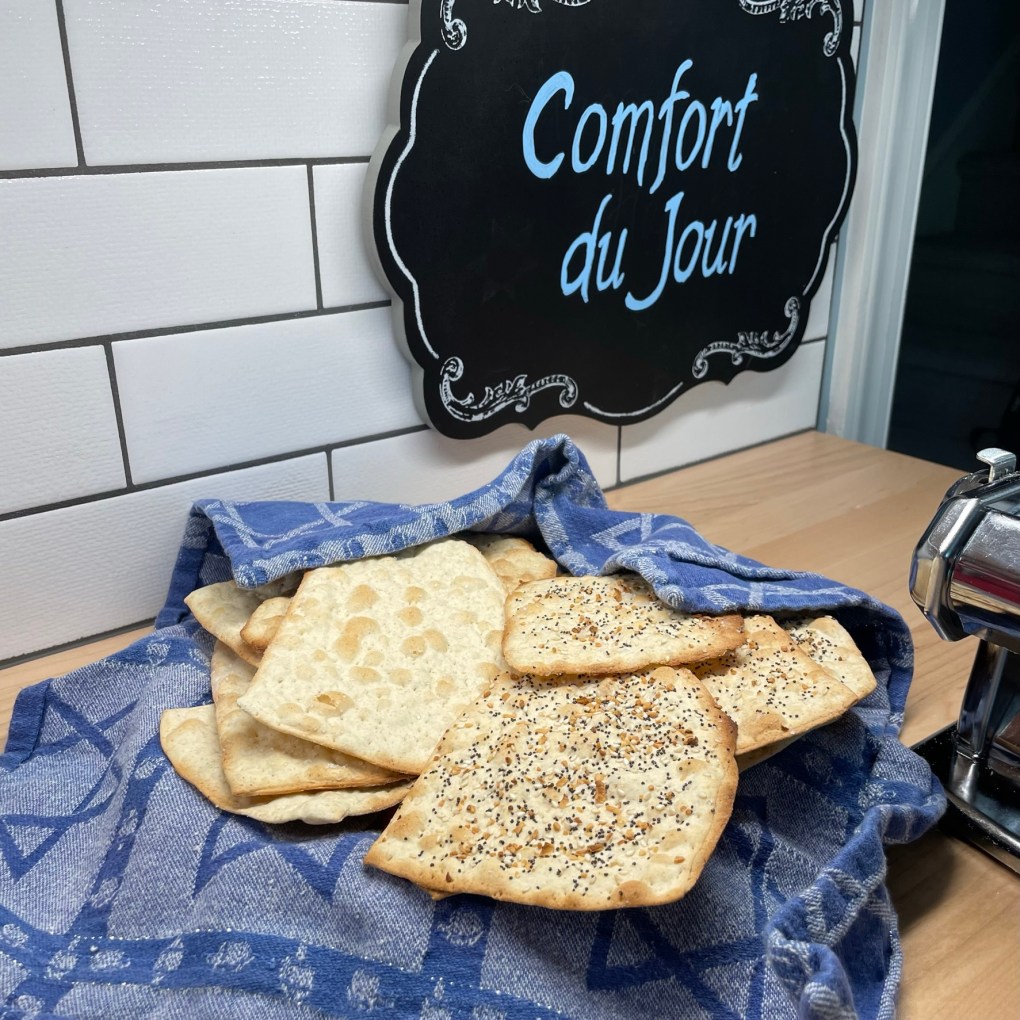
First things first, this matzo is not kosher for Passover, and honestly not even kosher at all. I know this because, for starters, I am not Jewish and I don’t keep a kosher kitchen. After that, there are probably at least a dozen other reasons that my matzo is not kosher, but none of that is important right now because I have big news.

Passover starts on Wednesday, and I have finally done my DIY matzo challenge, moving it to the done column of my culinary bucket list. To me, this is worth celebrating!
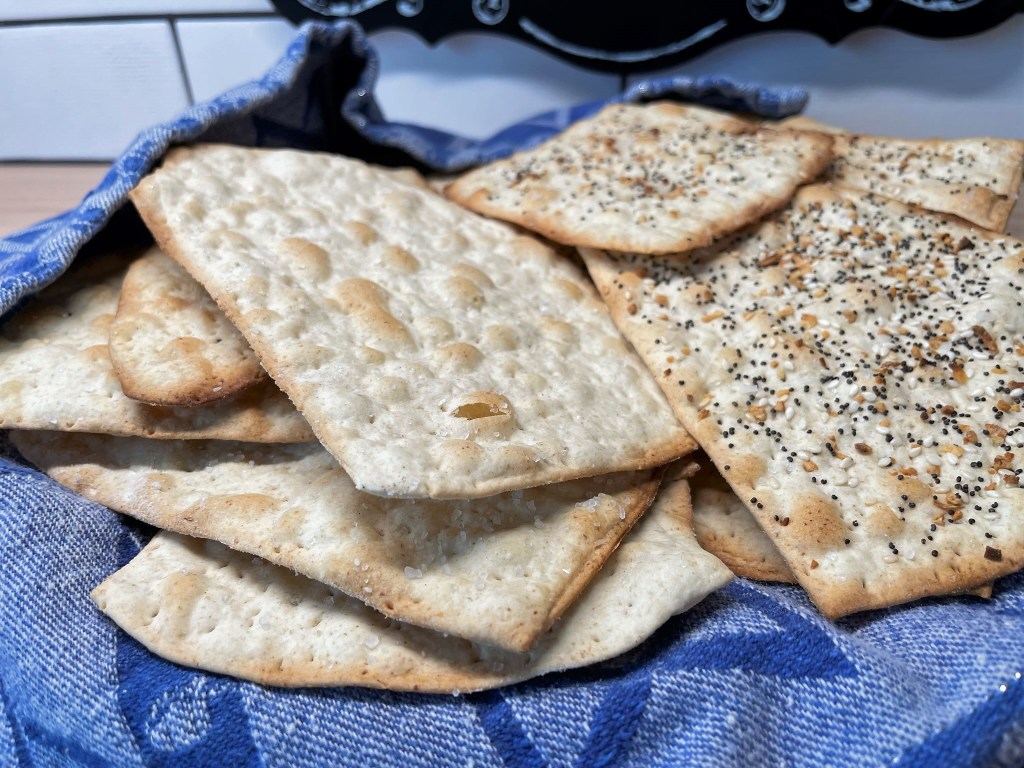
Matzo!

When I first met my now-husband, Les, I had a lot of questions about his Jewish heritage and especially the foods. Though Les has never kept the dietary kosher rules, he does avoid leavened bread during the eight days of Passover. That first year we were together, he shared some of his matzo with me and, well, what can I say— blah. The standard boxed matzo— unleavened bread— is like the worst, most bland, boring cracker you can imagine. But, you know, tradition!


The Jewish tradition around matzo is a remembrance of the enslaved Hebrew people, who had a moment’s notice to pack for the Promised Land when Moses was called to lead them out of Egypt. They didn’t have time to make their usual bread, so they mixed the flour and water, rolled it out and baked it on the spot without fermentation or leavening. By kosher rules, it all has to happen in under 18 minutes, start to finish. No wonder it tastes so bland— and does such a negative number on the digestive system (it ain’t pretty).

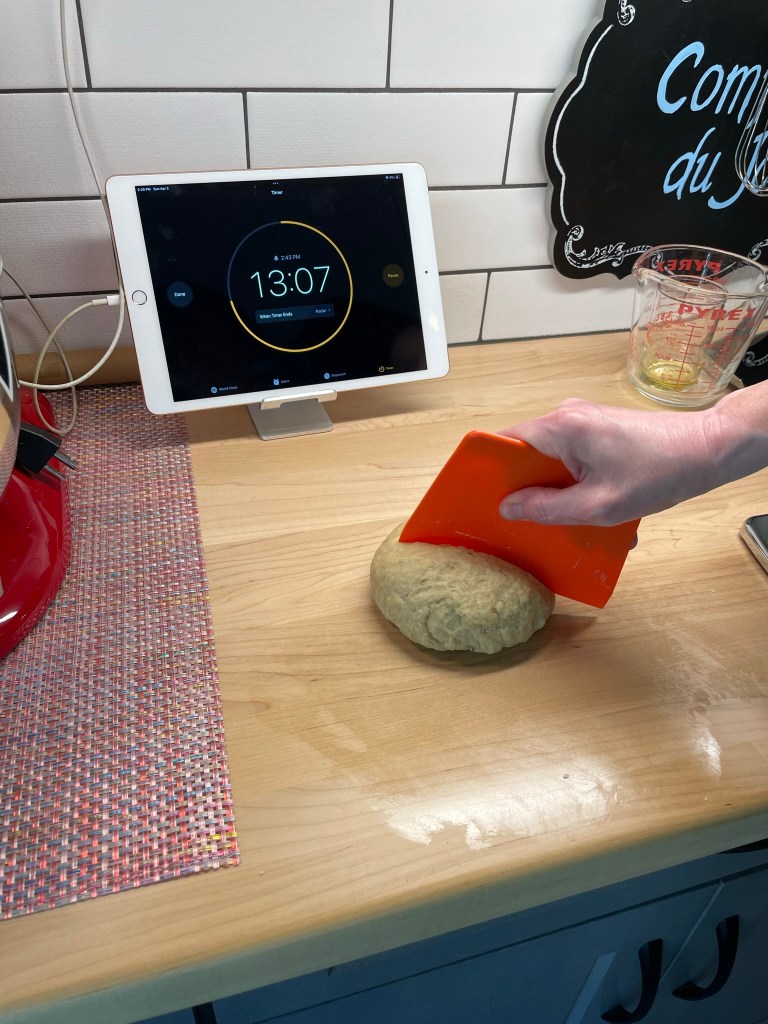
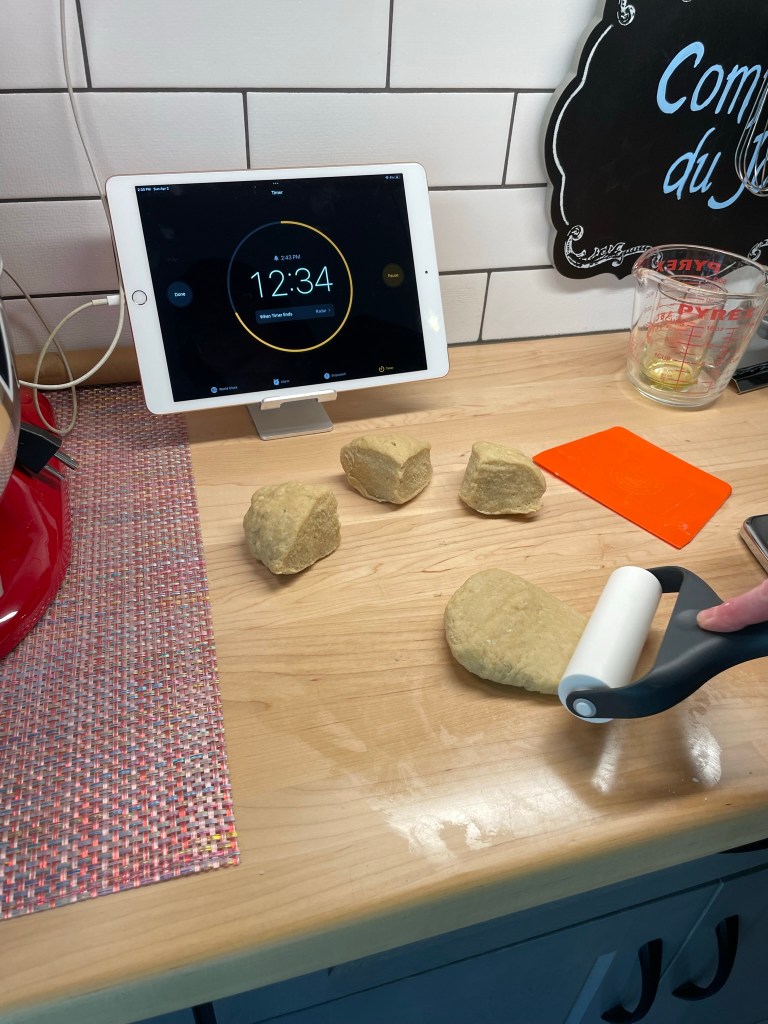
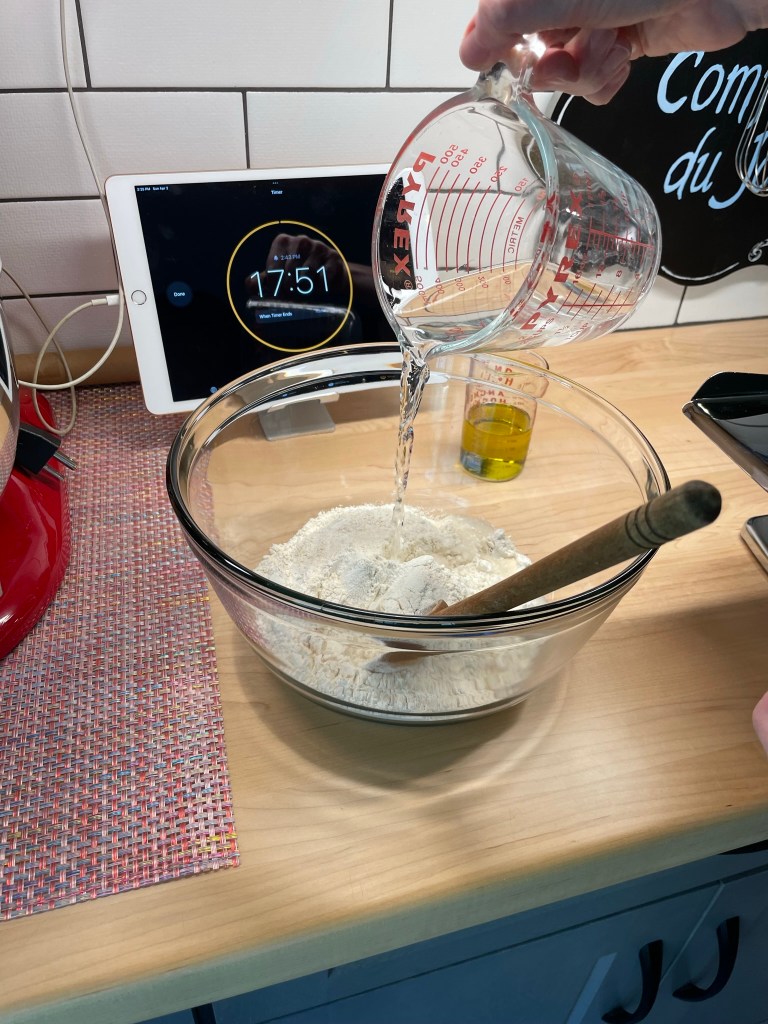
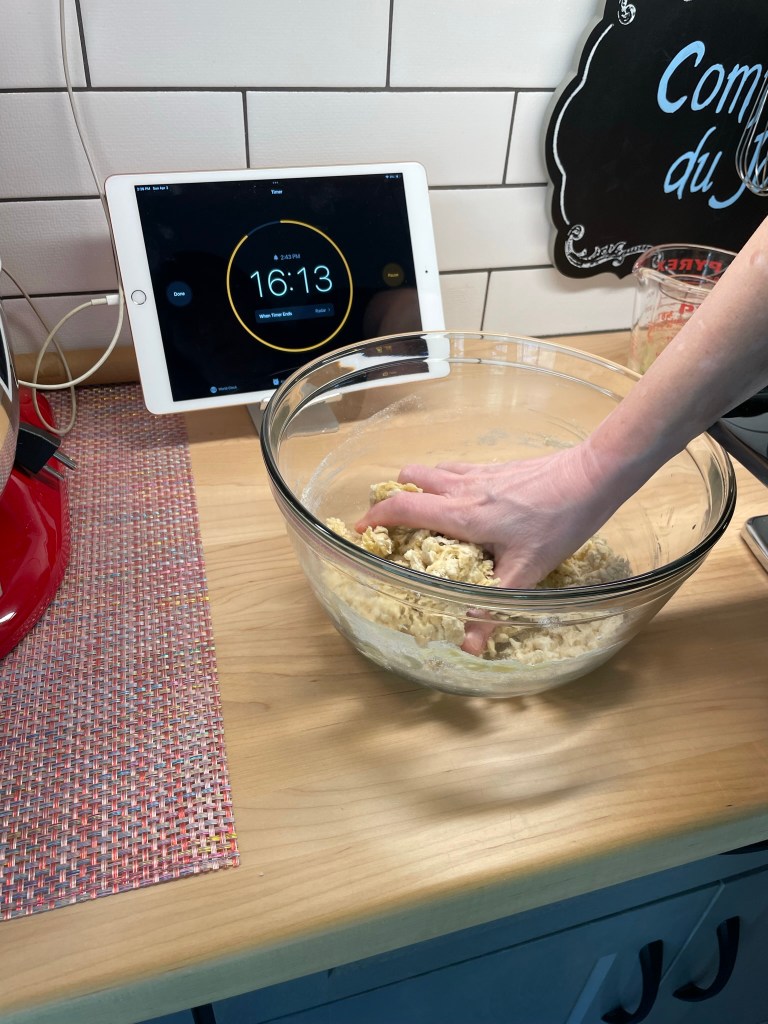
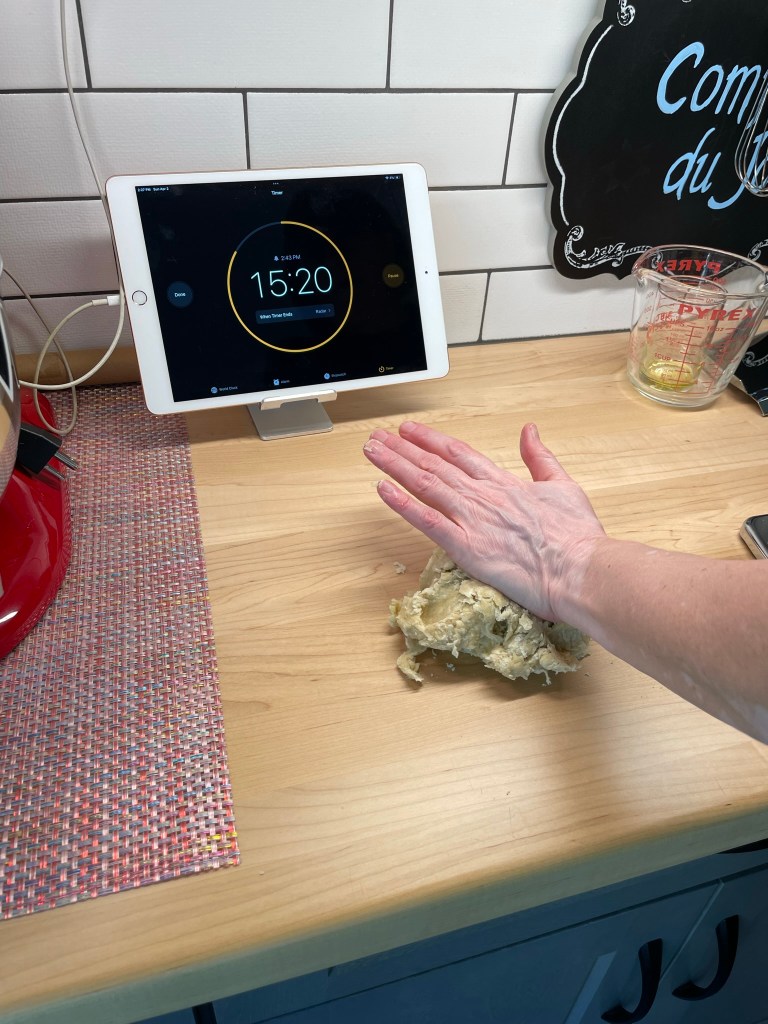
But Les chokes down this dry stuff every Passover, subbing it in for his usual morning half bagel, using it as a canvas for his tuna salad, and sometimes just laying a schmear of butter on it as a snack. Anything to use up the box! I’ve been threatening for at least five years to make matzo from scratch, and between the internet and my Jewish recipe books, I had done a lot of research. I was confident about getting it done, so I set up my matzo-making station with all my ingredients, tools and even my iPad to keep me on track for the 18-minute limit. How hard could it be? Turns out, I still had a lot to learn, and no “Bubbie” (Jewish grandmother) to walk me through it.
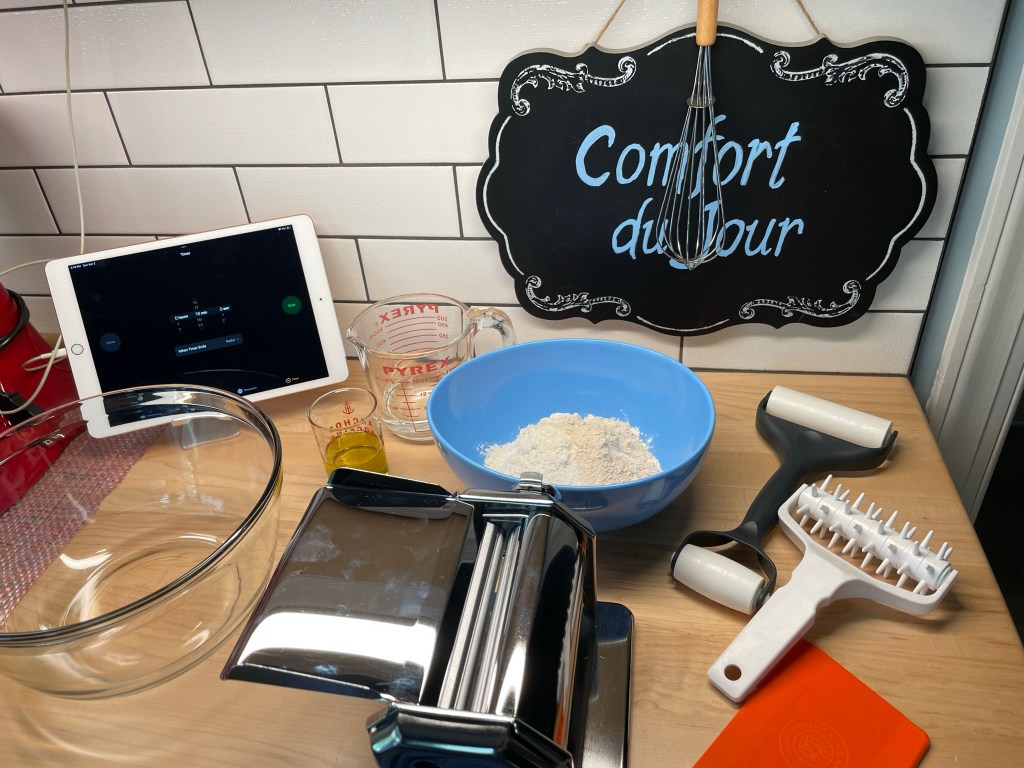
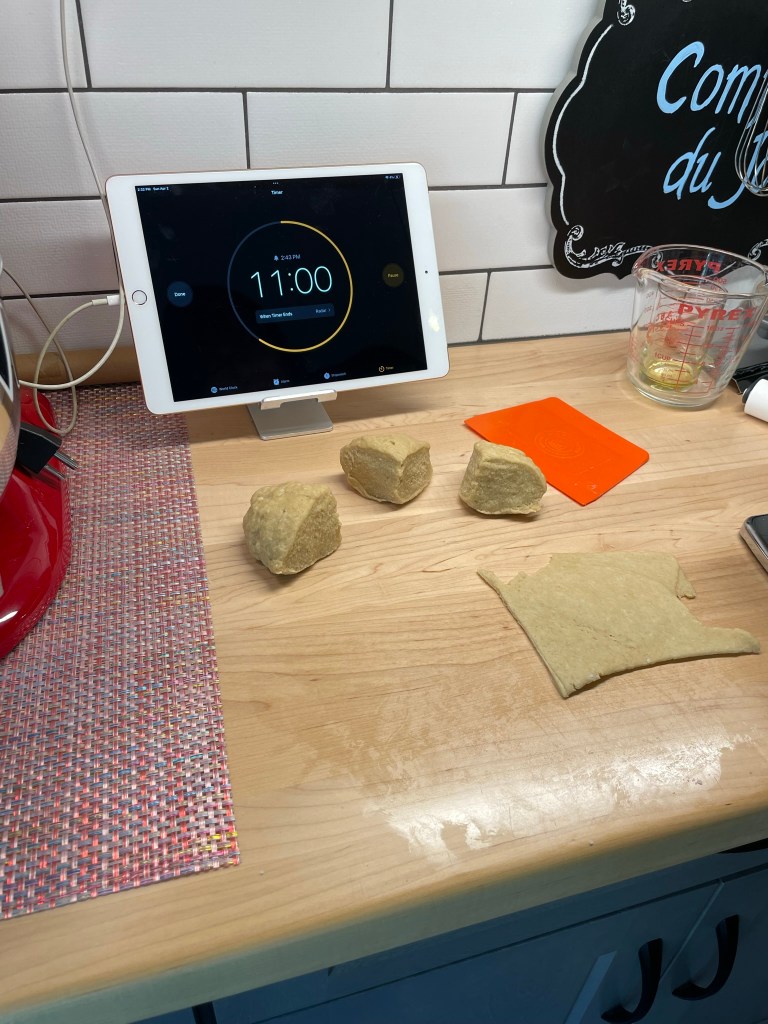
I had things set up and ready, hoping to beat the 18-minute buzzer!

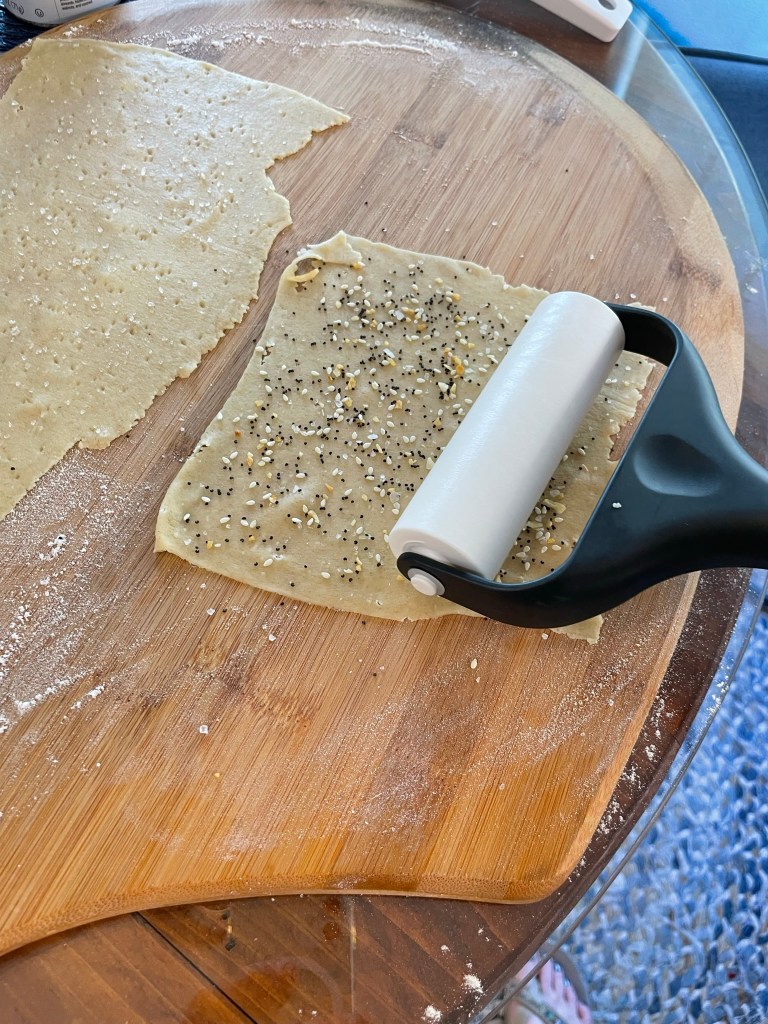
Making matzo is a full 180 from my usual sourdough bread baking, which relies on long, slow fermentations and higher hydration doughs. My breads bake up light and airy, not flat and dry. Matzo is nothing but flour and water in its most traditional state (in other words, boring). But we have already established that my version would not be kosher, and I wanted to bend the rules a little further, adding a sprinkle of sea salt and maybe even some everything bagel seasoning to jazz it up a bit.

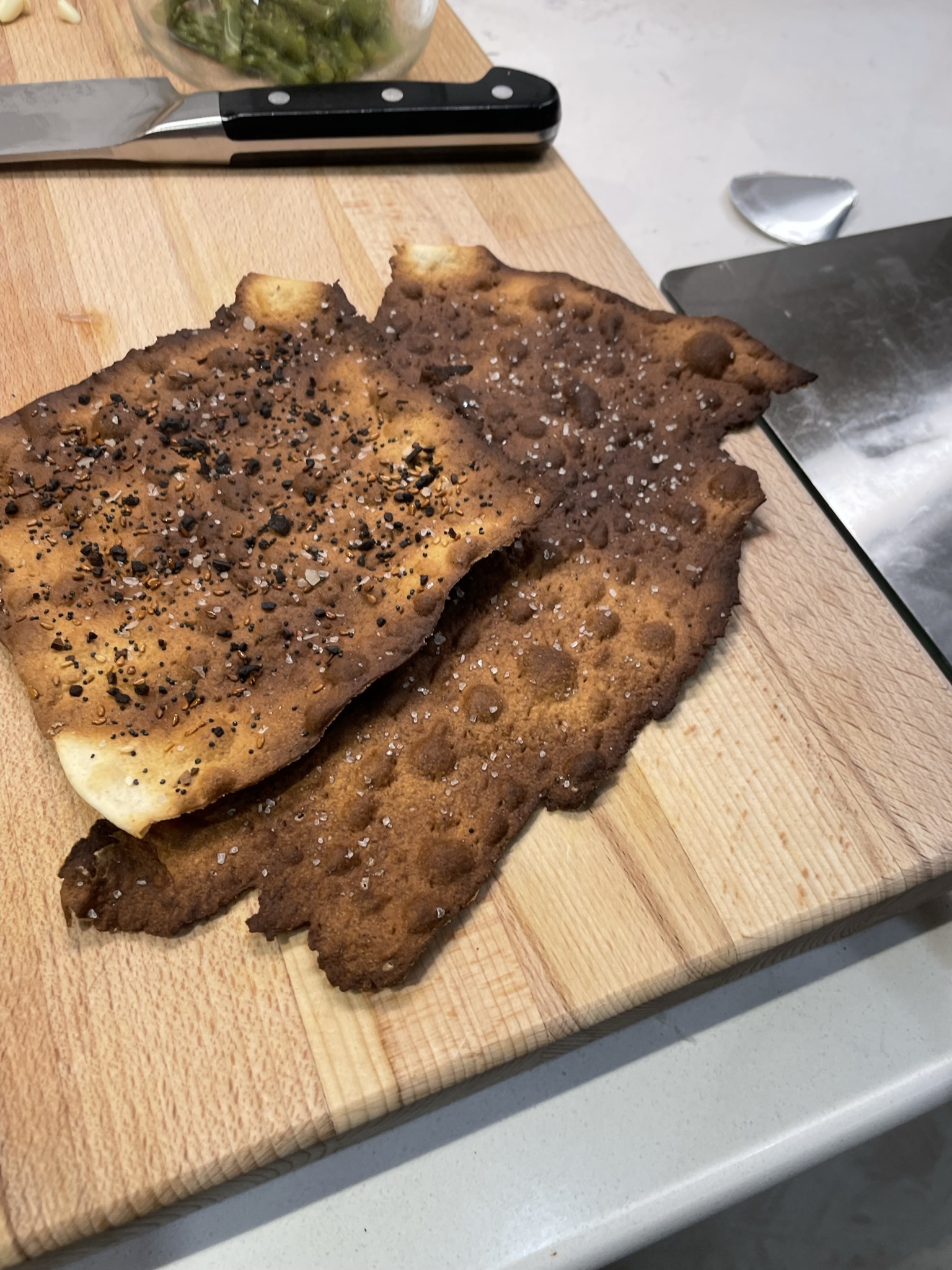
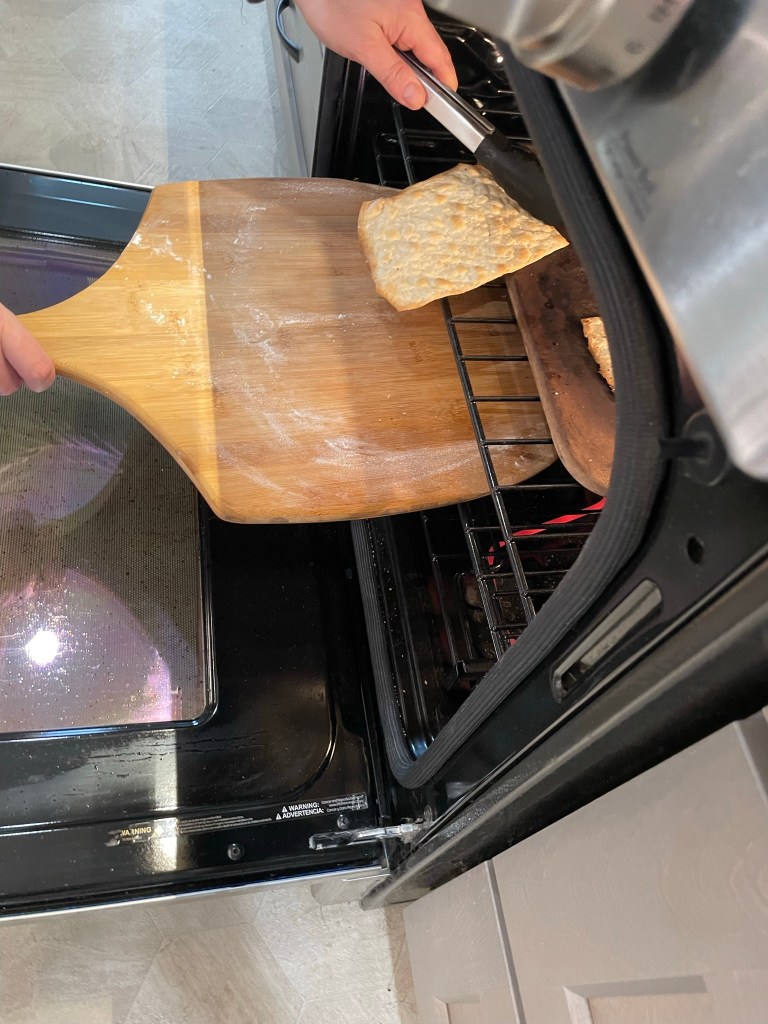
I found a recipe on NYT Cooking that included salt for flavor, olive oil to make the dough more workable and a swap-in of some whole wheat flour, so I was on board for the ingredients, but I ditched the rest of the recipe. It called for rolling out the matzo dough with a rolling pin (a challenge with such a hard dough) and would have produced four dense, tortilla-like flatbreads— nothing like the thin sheets of matzo we usually pick up from the store. I set up my trusty pasta machine to roll the dough out thin, like the matzo we are used to, and kept a close eye on the oven because they baked quickly on my preheated baking stone— so quickly, in fact, that my first batch was burnt to a crisp. I was not deterred!
Oy vey, that didn’t go well!

Moving forward, I rolled the dough a little bit thicker and called out to Les to find out which Yiddish word for “crazy” was appropriate for my situation (it’s meshuggeneh). I put him in charge of the oven, and the subsequent batches turned out great. We ended up with enough matzo to fill a large Rubbermaid container, and, of course, we still have a box of the grocery store matzo, just in case. 🙂
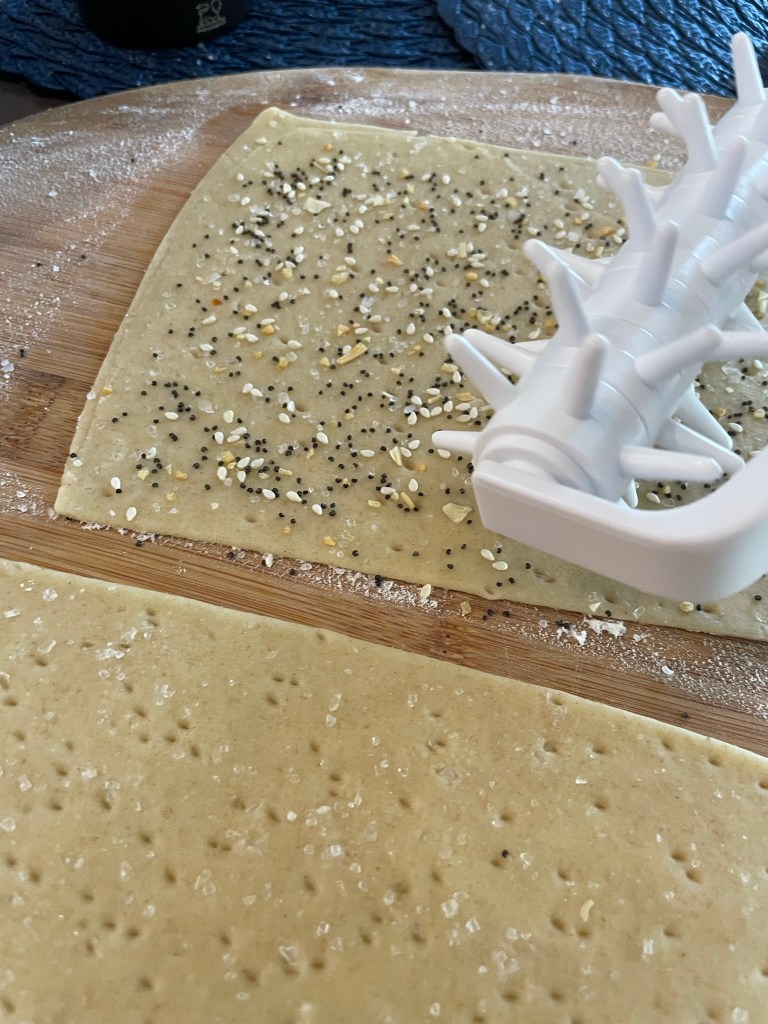
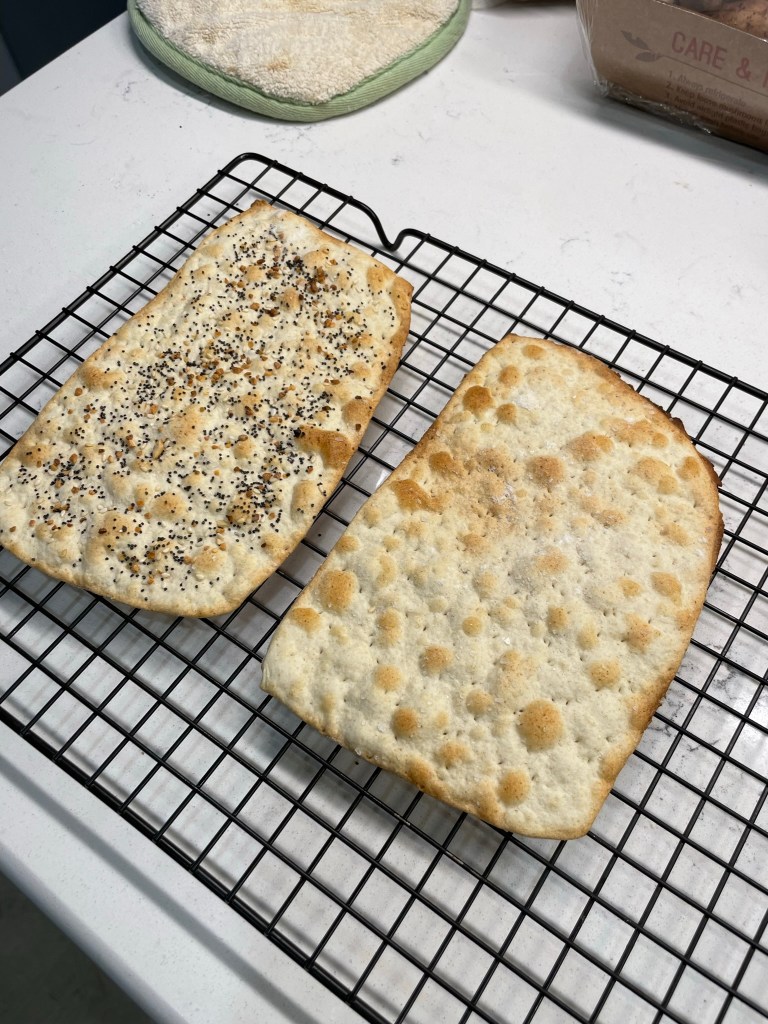
My matzo challenge is complete, and I will probably change things up a bit next time— less salt on top for sure, and I might play around with different types of flour.

Eighteen minutes is a tough time goal, though, and probably best accomplished in a kosher kitchen full of Jewish bubbies who actually know what they’re doing. I gave up on beating the buzzer when I was pulling the burnt ones from the oven.


Homemade Matzo
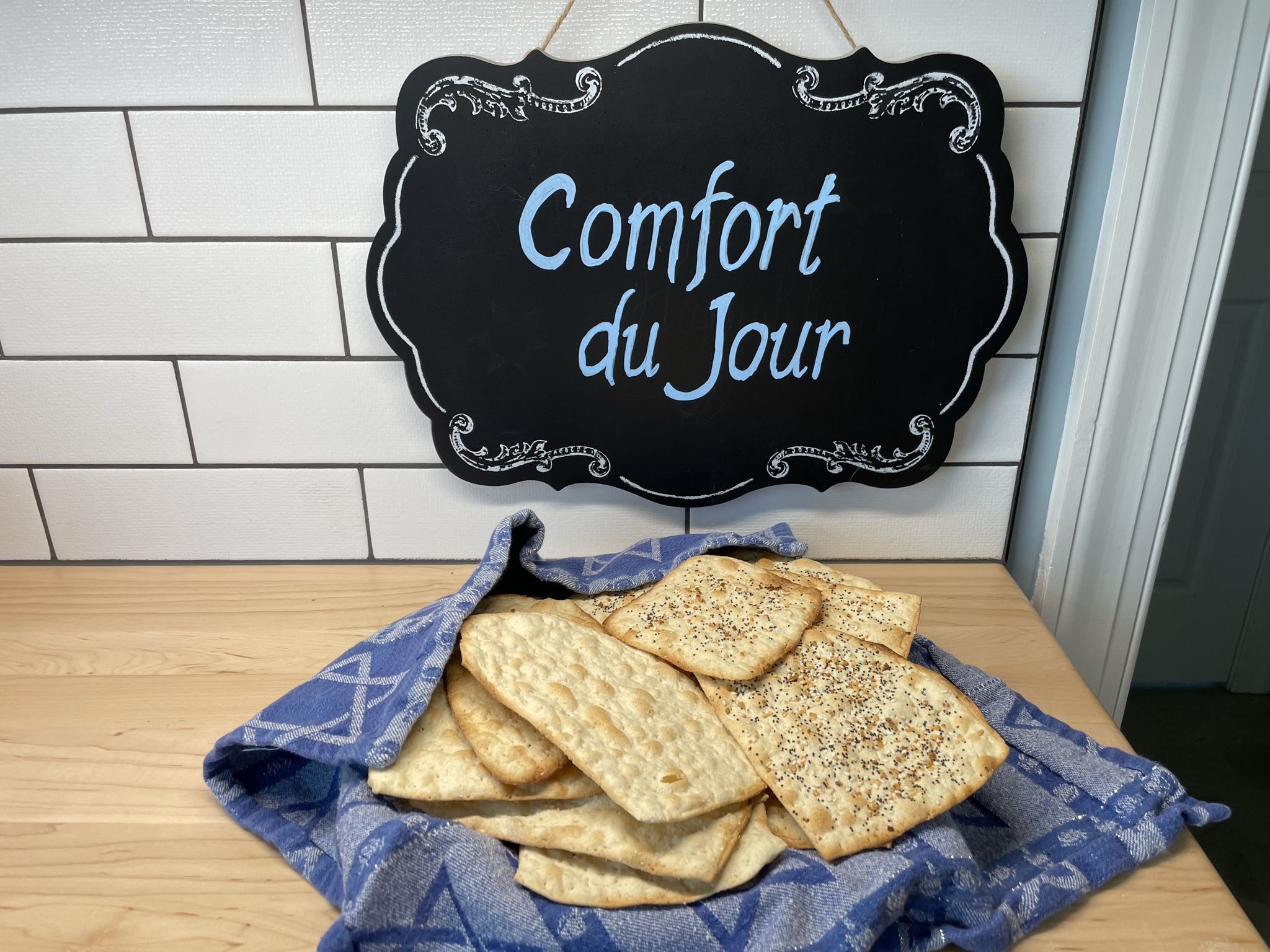
  • Servings: About 15 pieces
  • Difficulty: Intermediate
  • Print

With Passover right around the corner, I'm finally able to move homemade matzo into the 'done' column of my culinary bucket list!


Ingredients

  • 1 3/4 cups (about 235 g) unbleached, all-purpose flour
  • 1/2 cup (about 50 g) white whole wheat flour
  • 3/4 tsp. kosher salt
  • 1/2 cup (113g) lukewarm water
  • 1/4 cup (60 ml) extra virgin olive oil
  • Flaky sea salt and everything bagel seasoning, optional

This dough is very stiff and requires a heavy hand for rolling. If you have one, set up a pasta rolling machine, as it makes the process much quicker. I rolled my dough to the thinness of the second-to-thinnest setting, and baking time was 4 minutes. For thicker dough, adjust baking time accordingly.

Directions

  1. Preheat oven and baking stone at 500F for at least 30 minutes from the time it reaches temperature. Prepare a pizza peel or back of a baking sheet by dusting lightly wtih flour. This will be an aid for easy transfer of the matzo dough into and out of the oven.
  2. Combine flours and salt in a large bowl. Add warm water and olive oil all at once and stir with a wooden spoon until the mixture resembles a shaggy dough.
  3. Turn dough out on to a counter and knead by hand for a few minutes until all dry ingredients are incorporated. Use a knife or bench scraper to divide dough into four equal quarters. Use plastic wrap to cover three of the dough sections.
  4. Use your hand or a rolling pin to flatten the first dough section into a disc. Cut the disc into two pieces and flatten each into an even thinner disc. Run the dough through a pasta roller, reducing the thickness after each pass until you get to the second-to-last notch on the machine. You will need to cut the dough in half at some point, as smaller pieces are easier to work with.
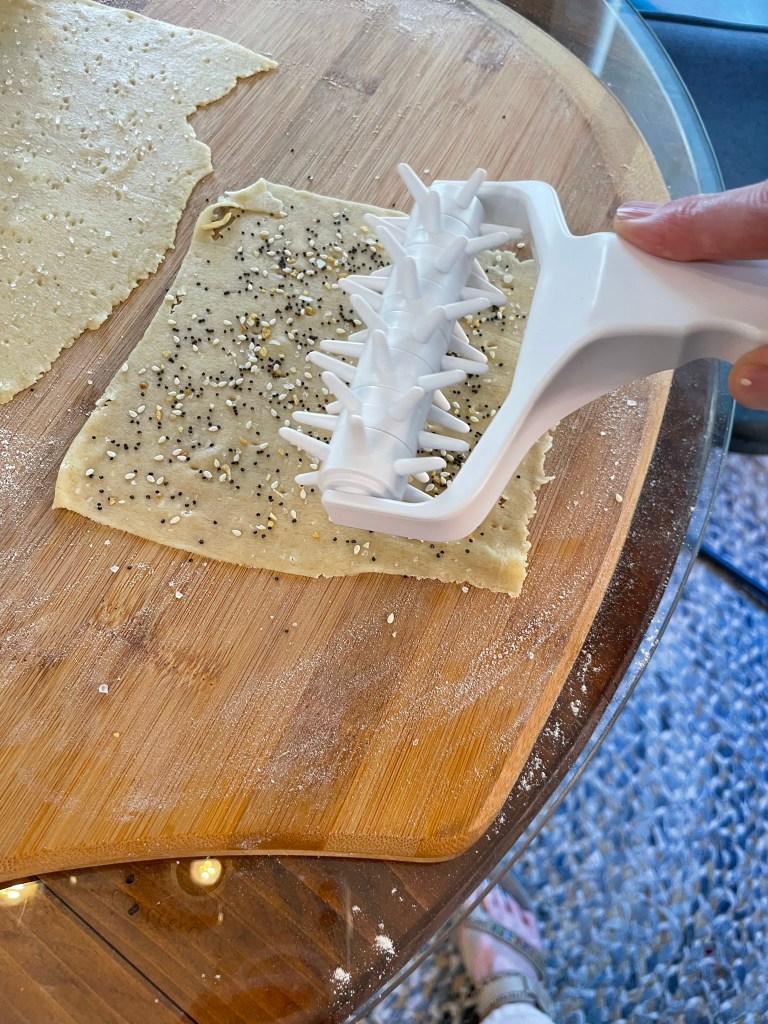
  5. Arrange two pieces of matzo dough on the pizza peel or reversed cookie sheet. Sprinkle each with sea salt or everything bagel seasoning and lightly roll with a rolling pin to adhere the seasonings. Prick each piece of dough all over with a fork.
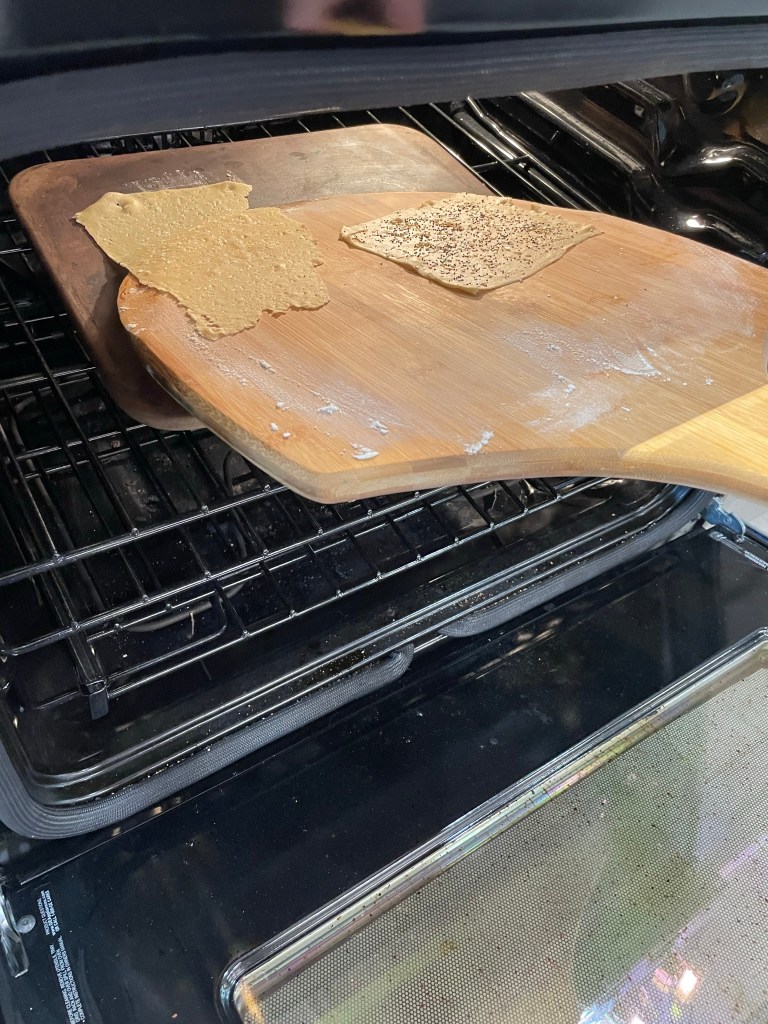
  6. Slide matzo onto the preheated baking stone and bake for 3 to 4 minutes (watch the clock closely). Matzo is ready when it has air bubbles and is lightly golden brown all over. Use tongs to pull the baked matzo from the oven. Cool on a baking rack. Repeat with remaining dough.
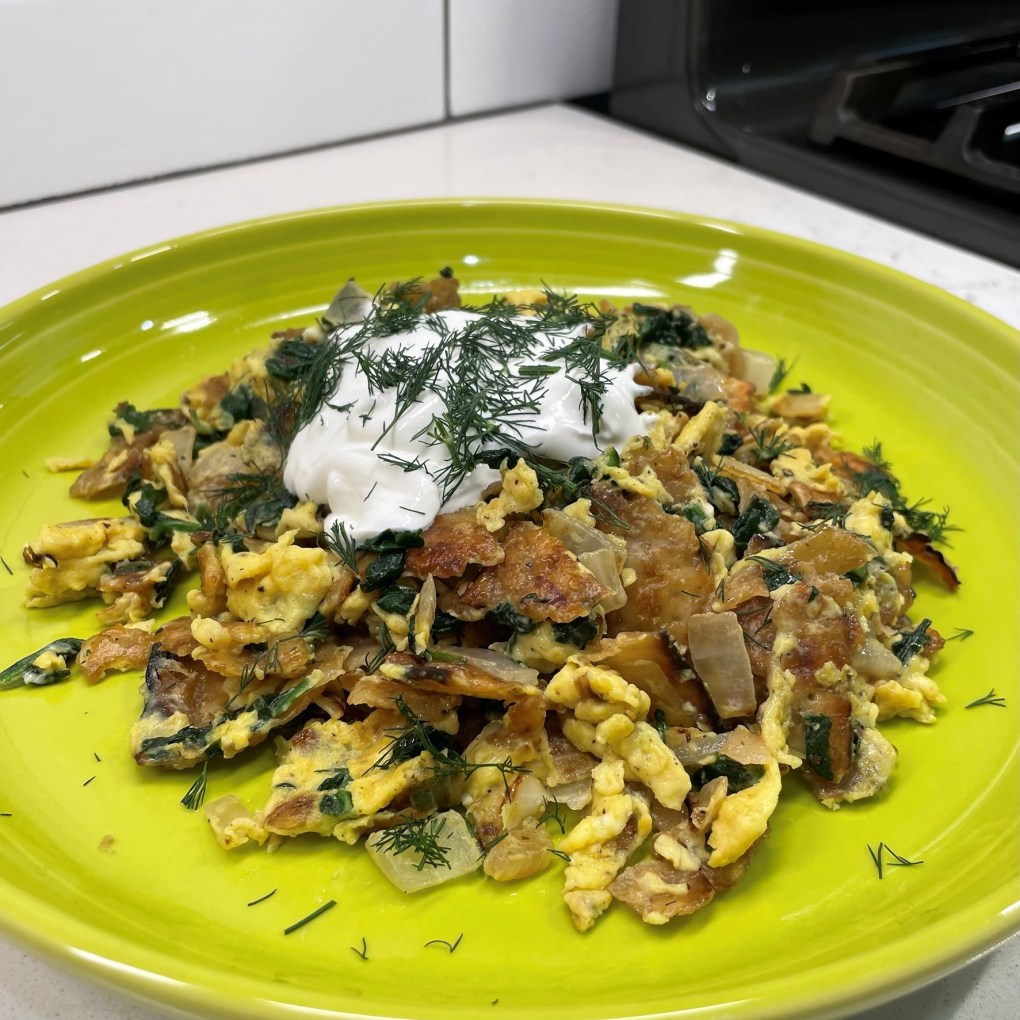
When matzo is completely cooled, stack the sheets in a sealable container or zip-top bag and store on the counter for up to a week (if it lasts that long).


Matzo Brei Florentine

Make something off limits, and that’ll be exactly what you crave, right? We only started Passover on Friday evening, and I can’t stop thinking about wanting a big, fat sandwich. To be clear, my husband does not expect me to adhere strictly to this Jewish custom of his—heck, he’s the first to admit that he is not religious himself about this requirement when he is out and about—but he does not eat bread at home during the Passover week. His choice is not about strict religious mandates, but tradition that helps him feel connection with his ancestors, and especially his late father. I am not Jewish myself, but I respect the tradition and so I am making an effort to accommodate this food called matzo.

Iconic, yes. But matzo needs a whole lot of help to become flavorful or interesting.

If you have never had the anti-joy of eating matzo, allow me to describe it for you— try to remember the driest, most bland, and perhaps even stalest, saltine cracker you’ve ever eaten. It may have been a cellophane-wrapped packet that a diner waitress fished out of her apron pocket for your bowl of chili in 1974. Maybe you got stuck in traffic on the interstate during a blizzard and had to resort to eating whatever random things you found in the glove compartment. Or perhaps you found some old takeout crackers in the back of your desk drawer when you finally made it back to the office after two years of COVID shutdown. Whatever memory you conjured, hang onto that for a moment and try to remember the taste. Yep, matzo is like that. But not as good. And without salt.

You could search the entire world and not find a less interesting cracker. Or is it considered bread? The Jewish people developed matzo as a reference to the unleavened bread their ancestors were forced to eat when they fled Egypt in a hurry. There was no time for the bread to rise, so they baked the dough as it was and took it on the run. Whatever category you put matzo in (bread or crackers), this stuff is undeniably boring, but a common sight in my home now—at least during Passover. My goal, as the primary meal maker, is to find ways to make matzo more palatable because eating it from the box can only be described as “choking it down.” And I won’t even mention what it does to the digestive system (it ain’t pretty).

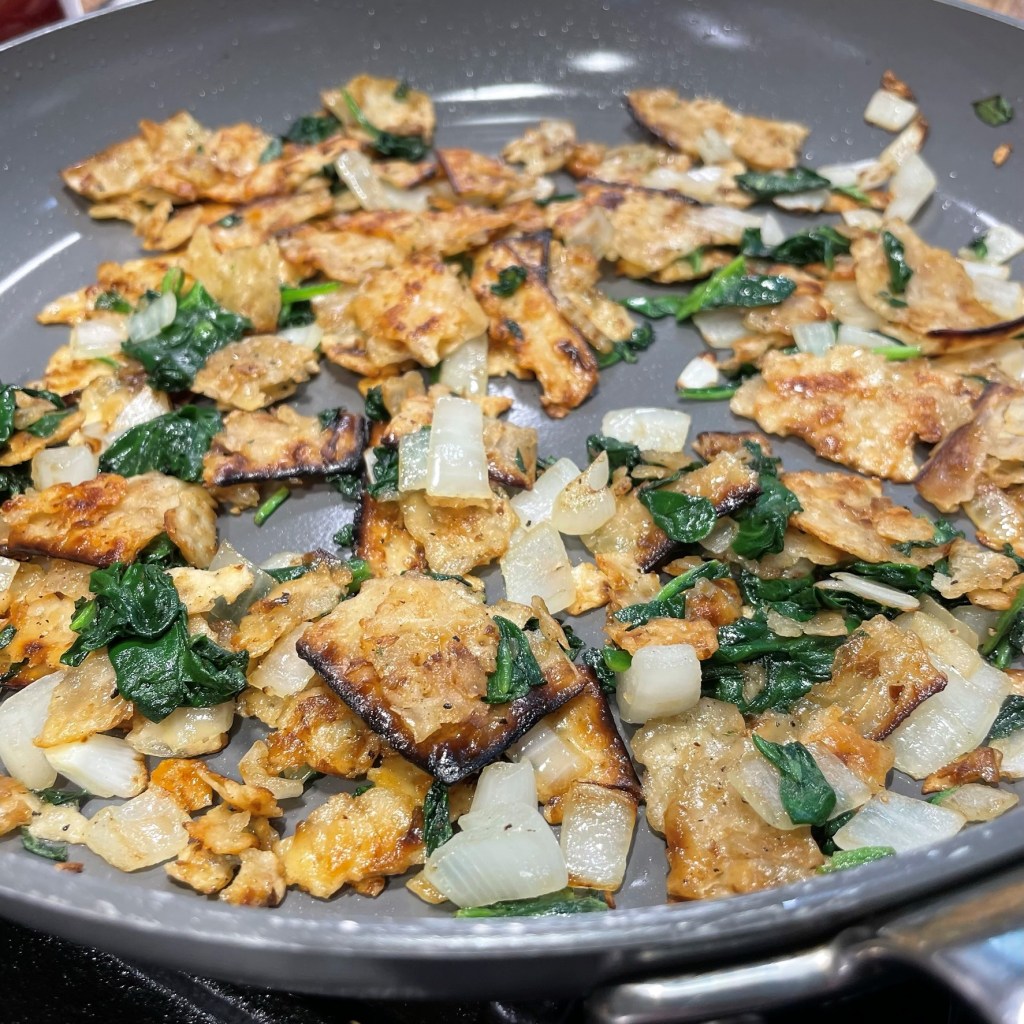
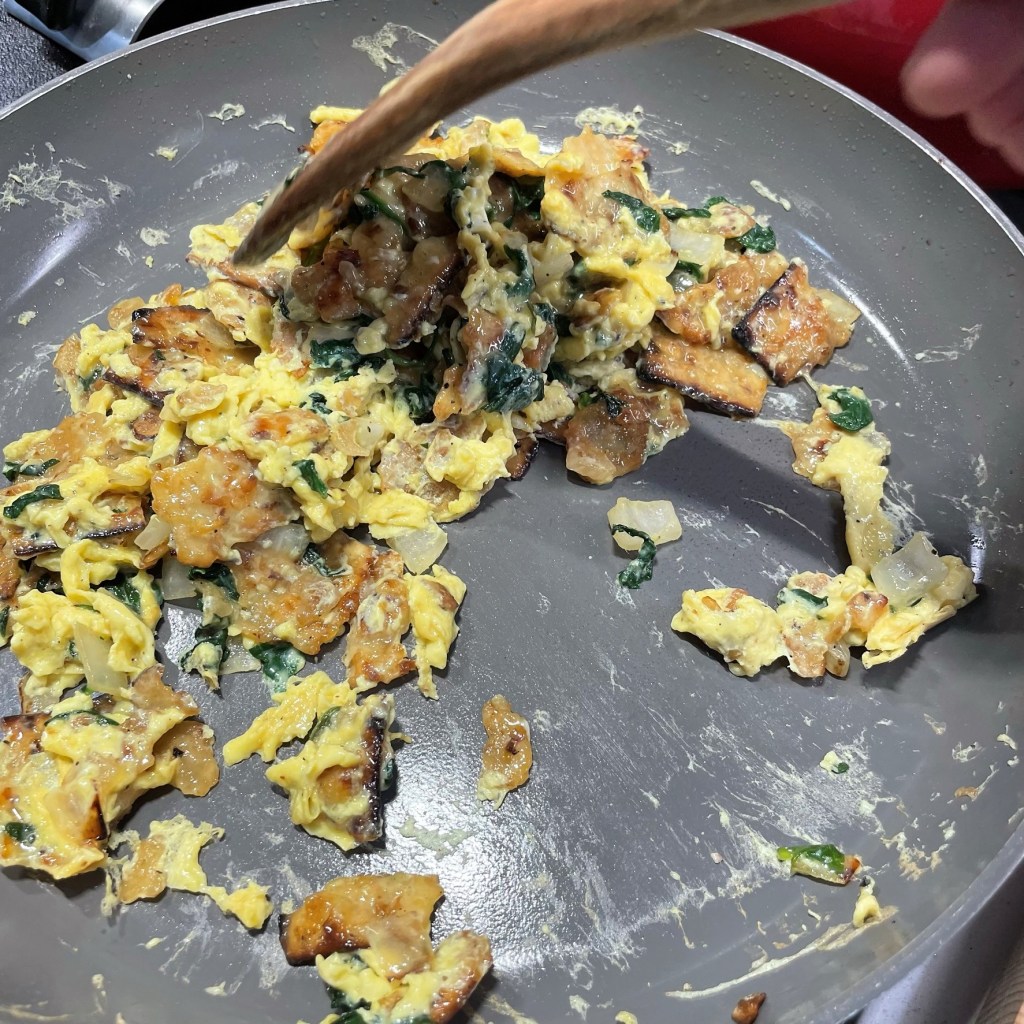
Thank goodness for the New York Times Cooking e-letter, which is always brimming with menu ideas, including a classic, basic version of this dish, called matzo brei. According to Melissa Clark, the author of the recipe, brei rhymes with “fry,” which is exactly what you do with the matzo before scrambling it into eggs. As written, the recipe sounded dull, but as I started working at the stove, I asked Les if there was any reason that I couldn’t jazz up this humble dish just a bit—maybe with addition of onions and some spinach? Sure, was his response, and this was the result.

My first attempt at matzo brei got my gears turning about other possible flavor twists. What do you think would be good?

I liked this dish! Spinach is nothing new with eggs at our house, as I incorporate it often into omelets. Onions were a no-brainer, and some matzo is even onion-flavored, though that variety is not usually considered kosher for Passover. And the matzo pieces, fried in butter and mingled throughout the scrambled egg mixture, reminded me a little bit of a baked pasta, especially for the crispy, buttered edges. I don’t know what prompted me to top the dish with sour cream, but it was a good call, and the fresh dill I had picked up at the market was a perfect finish for this savory, ready-in-15-minutes breakfast. As Les and I scarfed down our matzo brei with spinach (Florentine, if you will), we began brainstorming other flavor combinations— maybe peppers and mushrooms, or feta and asparagus. Wait, how many days of Passover do we have left?

The recipe was not without challenges, despite its simplicity. I messed up the beginning of the recipe by commencing to fry the matzo in butter straight from the box, and it wasn’t until my common sense began to question the technique that I noticed in the recipe’s steps that I was supposed to rinse and soak the matzo first. Why it was not listed as such in the ingredients, I’ll never know, but I’ll add the oversight to my list of what I call the problem with recipes. The ingredients of the NYT Cooking recipe did not include water, so it didn’t occur to me until it was (almost) too late.

All’s well that ends well, and I’ll describe in my recipe notes how I recovered from my mistake (it was easy). Regardless of whether I ever make matzo brei again, I discovered for sure that I always want to have sour cream and fresh dill on my scrambled eggs now. And with five days of Passover left to go, we are least down two more sheets of matzo.


Ingredients (serves 2)

2 sheets plain matzo, rinsed under warm water and set aside to soften* (see notes)

3 Tbsp. salted butter

1/4 cup chopped sweet onion

Good handful fresh baby spinach, rough-chopped

Kosher salt and ground black pepper (to taste)

3 eggs*, room temperature, beaten with a splash of water or milk

A hefty dollop of sour cream (for serving)

1 Tbsp. chopped fresh dill (for garnish)


*Notes

My mistake led me to an alternate method of softening the matzo. Since I had missed the step of rinsing and resting the matzo ahead of time, I simply poured about 1/4 cup warm water from my tea kettle right into the skillet with the butter and matzo pieces. The dry matzo soaked up the water and fried in the butter with no issues. This may truly be a better method than the original because I didn’t have to wash an extra “soaking” dish or clean up a soggy matzo mess from the counter. Do what works for you!

The original recipe that inspired me suggested using four eggs, but I followed my instinct and used three, as I always do for an omelet-for-two. If you have an extra hearty appetite, go with four eggs.


Instructions

I’ll walk you through it in pictures, and keep scrolling to find it ready to print or save for your recipe files!