Chicken Cacciatore

Genealogically speaking, I don’t believe I have a single Italian bone in my body. Nope—my people came from other parts of Europe and beyond. But I am so in love with Italian food, especially the southern regional dishes, such as layered baked pasta dishes and big red sauces (or “Sunday gravy,” as it would be called). My grandmother taught me some authentic Scandinavian dishes, but I had to do my own research to learn the real deal on Italian flavors, so I could ditch the bland and overly sweet jarred sauces. I’ve learned how to make my own pasta (that’ll be another post), and hopefully I’ll prove today that I can rock a red sauce that is molto buono!

Chicken cacciatore is my “comfort du jour,” moist and oh-so-tender chicken, stewed slowly and thoughtfully with tomatoes and Italian herbs and spices. This is some serious, old-school Italian comfort food right here! I can’t say that I’ve added a twist to this recipe (maybe the bomba?), but if you’ve never made cacciatore before, I hope you’ll find my recipe approachable. You’ve got this—and here’s a quick rundown of what I learned before I made my own.

What’s the big deal about San Marzano tomatoes?

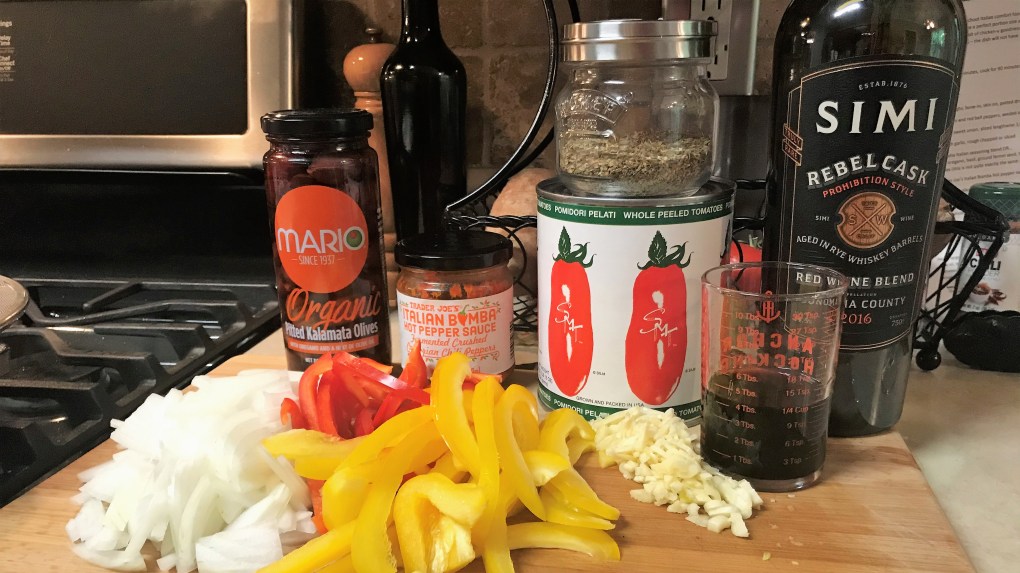
For Italian sauce recipes, there is really no substitute for San Marzano tomatoes. They are super meaty with a perfect acidic-to-sweet balance, and exceptional for the richest Italian sauces. In appearance, they are essentially plum tomatoes and they are the genetic ancestors of the common supermarket Roma, but to be legally called San Marzano, they must be cultivated in the southern region of Italy of the same name, where the climate and rich, volcanic soil work their magic. Are real San Marzano tomatoes worth the extra buck per can? You bet!

What is bomba sauce?
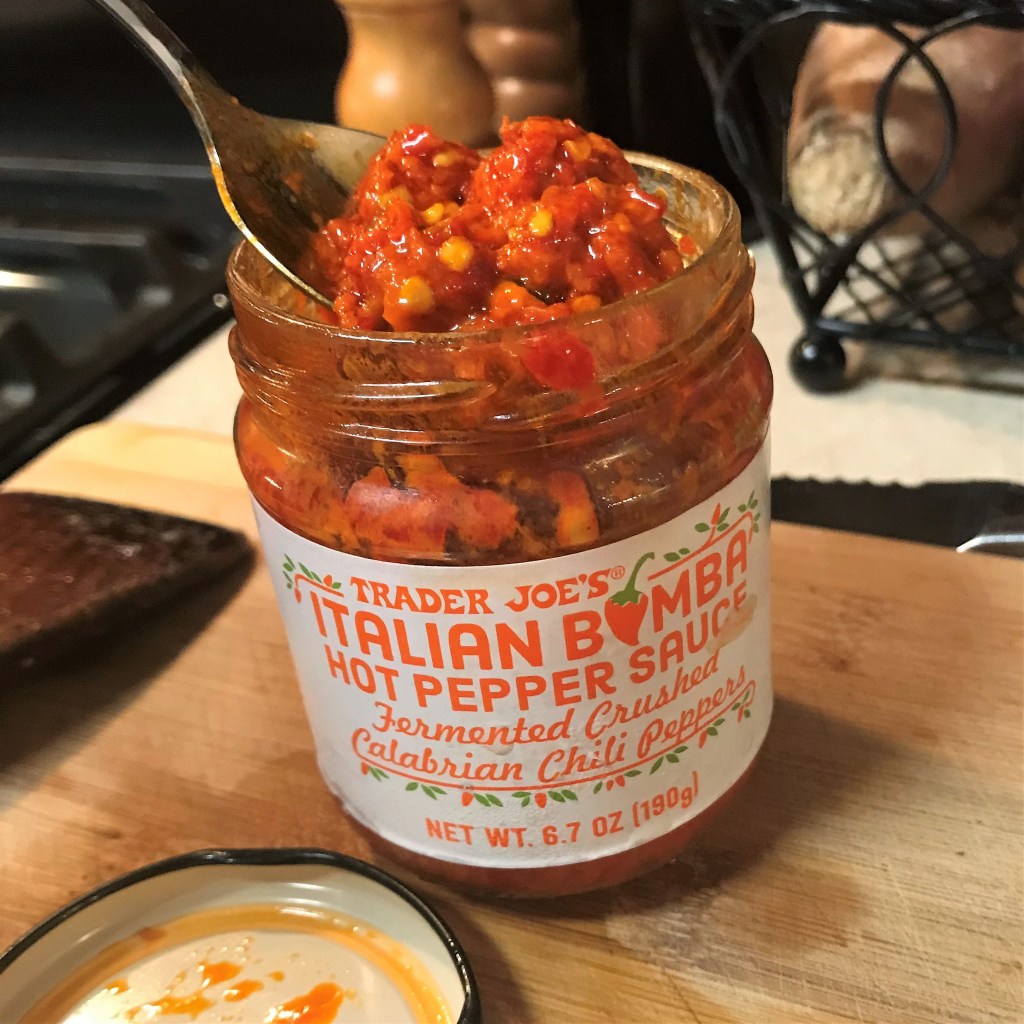
This bomba is the bomba!

Delicious, that’s what! Bomba sauce is typically a paste-like seasoning, centered around dried chile peppers from the southern regions of Italy, mixed with olive oil, spices and vinegar. It’s a pungent condiment that is meant to be used sparingly. Trader Joe’s has its version of the sauce that I absolutely love—it’s unique because the Calabrian chiles are fermented, which lends extraordinary depth and flavor. I’ve added a very small amount to my cacciatore, but it wouldn’t be the same without the bomba.

Can I substitute skinless chicken breast for the chicken thighs in this recipe?

Of course, you can always substitute white meat, skinless or boneless, but the dish will not have as much depth and richness, and you’d need to use extra oil to prevent the meat from sticking in the pan. I choose large, bone-in chicken thighs for this recipe because they’re a perfect portion size and the dark meat is so flavorful. Keeping the skin on allows you to draw every bit of chicken-y goodness into the meal. Also, I only select organic, free-range chicken because birds that have freedom to roam in the fresh air and sunshine are healthier, and you know what they say—we are what we eat.

What flavors are in Italian seasoning?

Italian cooks have always relied on the abundant flavors of fresh herbs. If you pick up any bottle of “Italian seasoning” at the supermarket, you can predictably find it contains the big three—oregano, basil and thyme, but there are many other flavors that play well with Italy’s flavorful sauces and roasted meats. In the north, you’d expect to see rosemary and sage. In the south, spicier flavors like red pepper are prominent. Two of my favorites are marjoram (cousin of mint and very similar to oregano) and fennel seed, which has a floral, slightly licorice flavor. It’s what makes Italian sausage taste special. I make my own “Mama Mia” seasoning blend without salt, and I use the big three, plus garlic, fennel seed and crushed red pepper. It’s good for a little punch of flavor in any Italian red sauce, sprinkled on pizza or mixed with olive oil as a bread dipping condiment. If you want to make mine, the recipe is at the end. Otherwise, substitute as noted in the ingredients.


Serves 4 – Prep in 20 minutes, cook for 90 minutes

Ingredients

Extra virgin olive oil

4 large chicken thighs (bone-in, skin on)

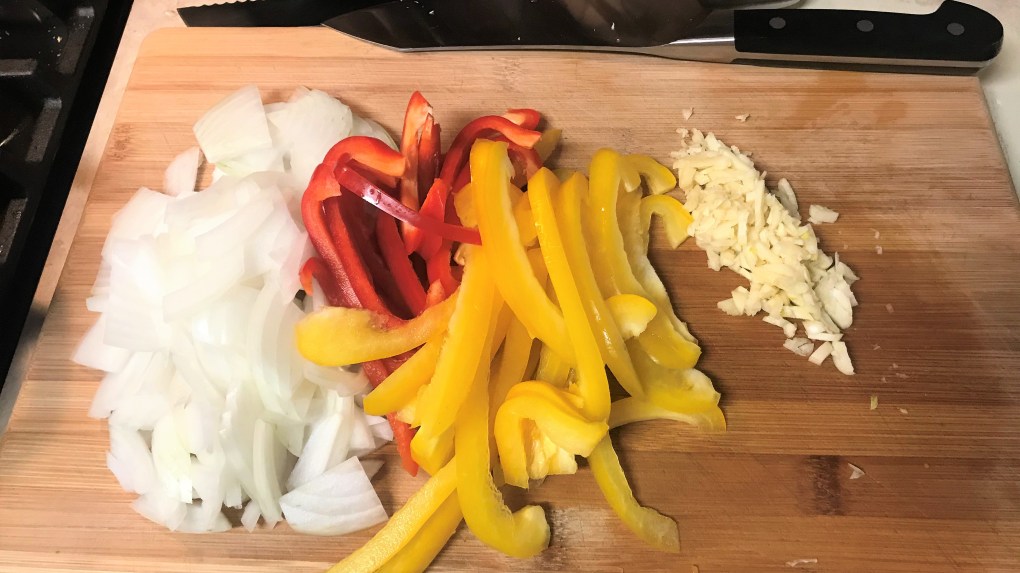
2 large bell peppers, seeded and sliced lengthwise, about 1/4” thin

1 medium-size sweet onion, sliced lengthwise 1/4” thin

4 or 5 cloves fresh garlic, rough chopped or sliced

2 tsp. Mama Mia Italian seasoning blend—or
1/4 tsp. each:  oregano, basil, ground fennel seed, thyme leaves, garlic powder, onion powder, crushed red pepper flakes (this is not exactly the same as my Mama Mia blend, but close)

1 or 2 tsp. Trader Joe’s Italian Bomba hot pepper sauce

Handful Kalamata olives (pitted), rough-chopped into pieces

1/4 cup dry red wine (It doesn’t have to be Italian; I used a CA red blend that was already open)

1 28 oz. can whole plum tomatoes in puree (San Marzano, if possible)

1/2 package linguine (preferably “bronze-cut” for best texture)

Freshly grated parmesan or parm-romano blend, for serving

Small handful Italian flat leaf parsley, cleaned and chopped

A loaf of fresh Italian bread for sopping up every single drop of the sauce


Instructions
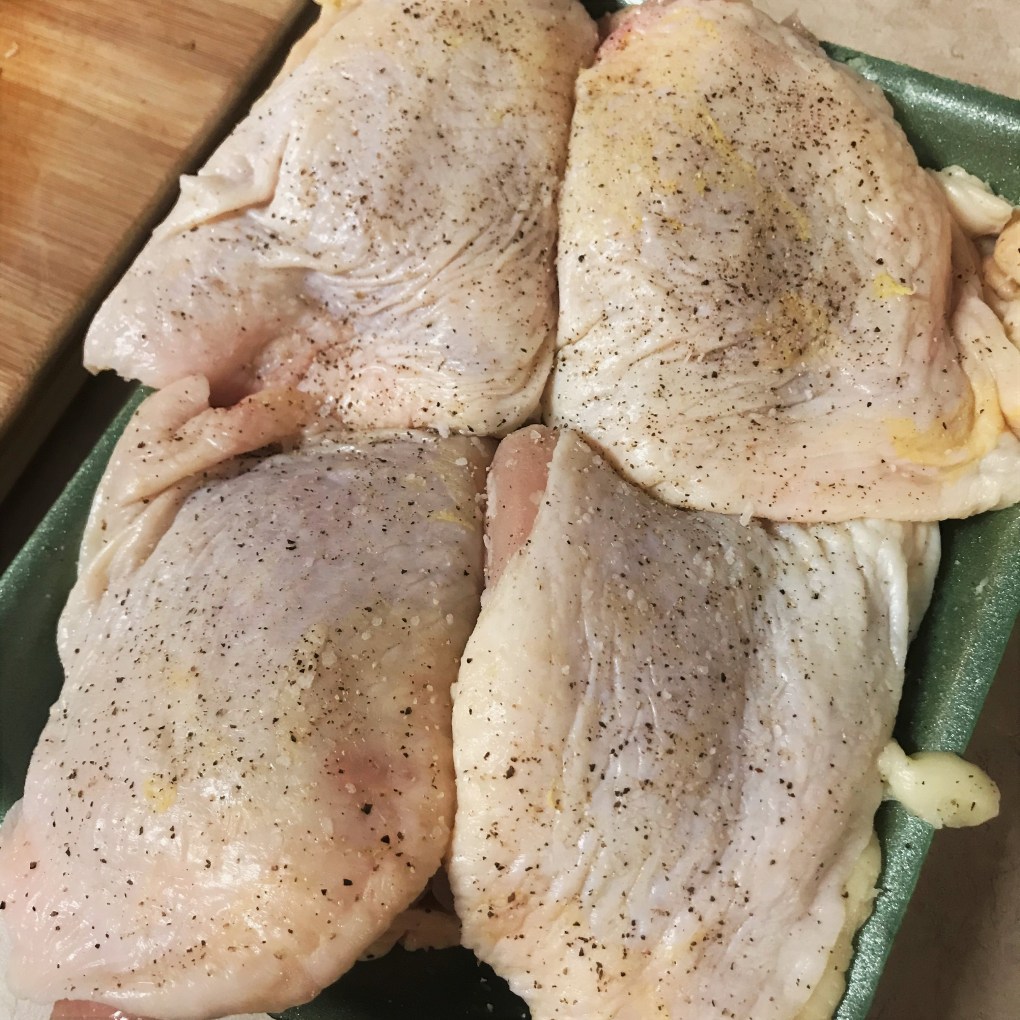
  1. Pat the chicken pieces dry with a paper towel and season both sides generously with kosher salt and black pepper.
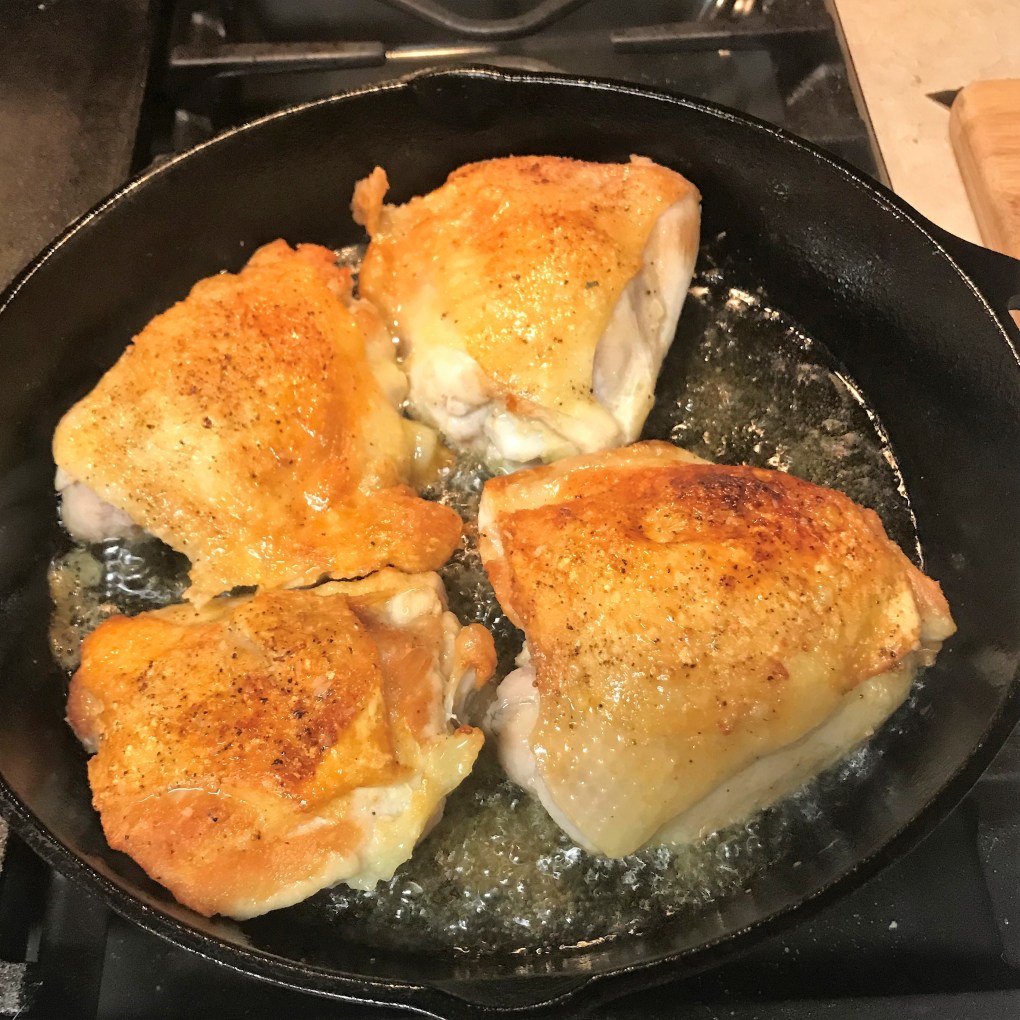
  2. Heat a large (12”) cast-iron skillet (or electric skillet) to medium-hot, and swirl in about 2 tablespoons of olive oil. When oil is just shimmering, place chicken thighs in pan, skin side down, leaving plenty of room between them. Cover the pan (I use a spatter screen) and leave them undisturbed about 7 minutes to allow a deep golden crust to form on the skin. Loosen and turn the thighs and cook until just lightly browned on the other side, about 2 minutes. The chicken will finish cooking later in the sauce. Remove the pieces to a plate and keep warm while you prep the sauce.
  3. If the remaining oil is sputtering or popping in the pan, allow a few seconds for the moisture droplets to cook off. Reduce heat to medium. All at once, add your onions and bell peppers to the pan, and stir them around until they begin to soften. Add the Mama Mia seasoning, plus salt and pepper, over the entire mixture. Add the garlic and cook another 2 to 3 minutes, or until the onions are slightly translucent. Stir in the Kalamata olives, the Bomba sauce and the red wine.
  4. Add the peeled tomatoes, using your hand to squeeze each one into the pan. This releases more of the juices quickly and gives the tomatoes a head start on breaking up. Pour all remaining juice from the tomatoes into the pan, but discard any large basil leaves that may have been included in the can (they’ve already done their job). Add a splash of water (or wine!) to the tomato can to swish out every last bit of flavor in there. Scrape up any browned bits that may be stuck to the pan and stir the mixture until it has a uniform appearance. Cover and allow the mixture to come up to a slight boil.
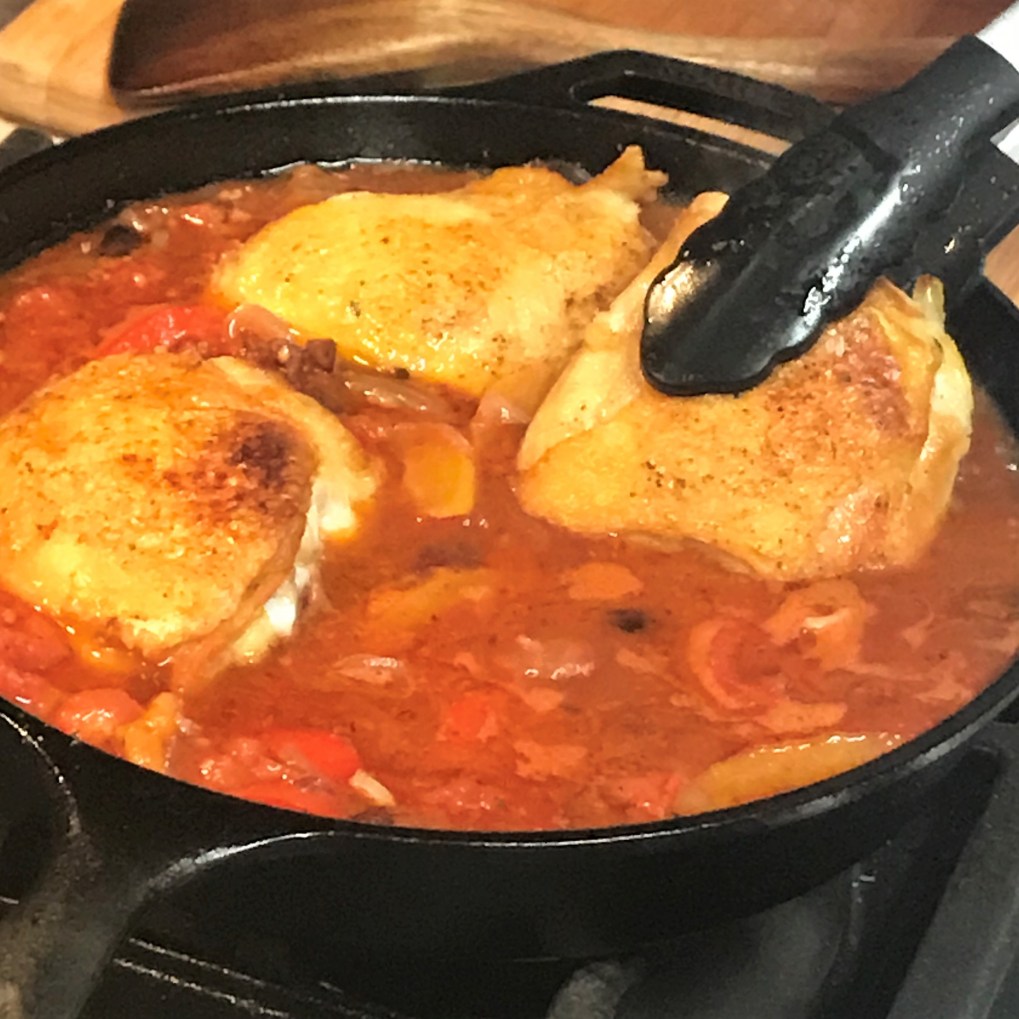
  5. Add the chicken thighs back to the pan, skin side up, and spoon the tomato mixture lightly over the tops. They don’t need to be buried in it, but you want to moisten them with the flavorful sauce. Cover the pan and reduce heat to medium-low, turning the chicken only twice over the next 90 minutes.
  6. When the sauce is a deep red color and the chicken shreds with a light twist of your fork, reduce heat to warm and prepare your pasta water. Remember to use plenty of water and plenty of salt.
  7. When the salted water reaches a steady boil, add your pasta and stir at once to prevent sticking. Cook to just barely al dente, or a couple of minutes under what seems perfect. You’re going to finish it in the sauce. Before draining the pasta, ladle out 2 to 3 tablespoons of the water into the sauce. This adds the pasta starch to the sauce, which helps “marry” them to coat the pasta better.
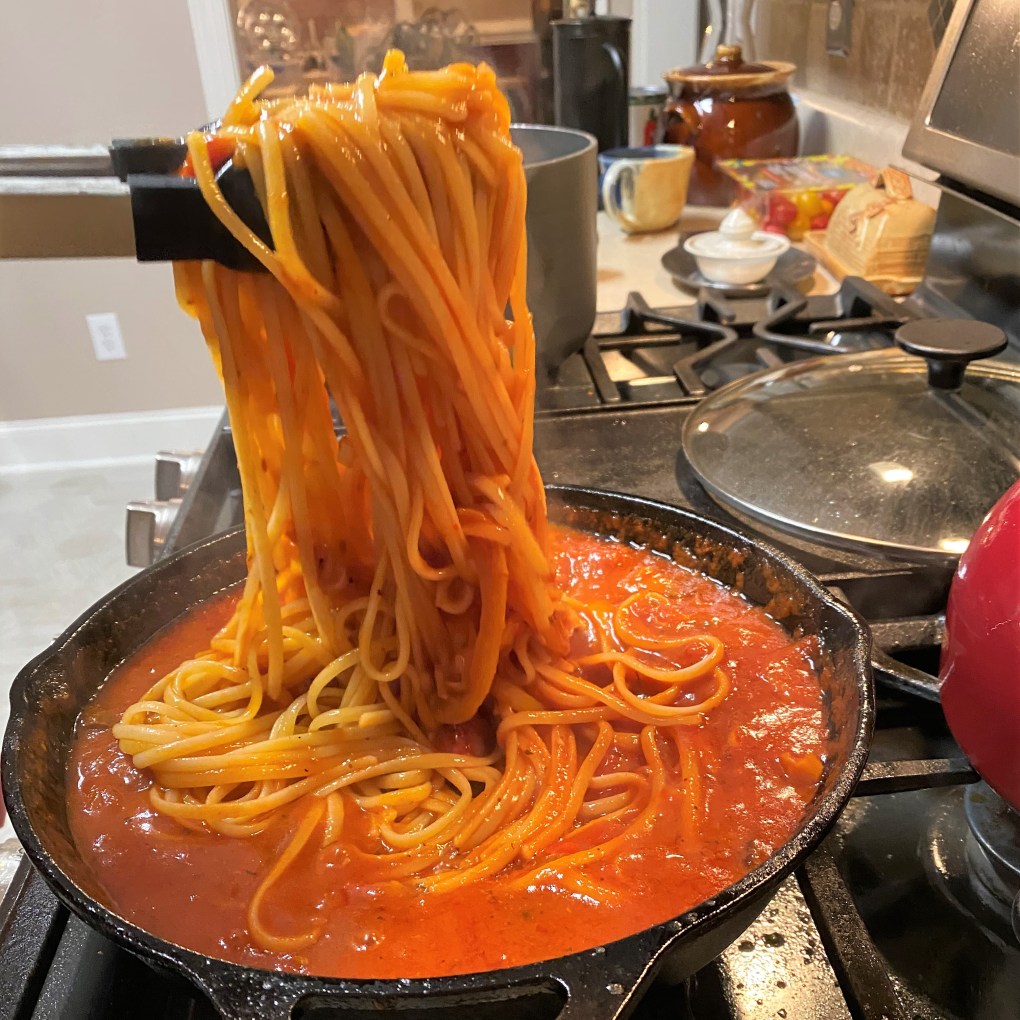
  8. Move the chicken pieces to the outer edges of the pan (or remove to a plate if the pan is crowded), making a well of sauce in the center. Drain the pasta and immediately add it to the center of the pot, stirring quickly to evenly coat it in the sauce. I use silicone tongs to do this because I can grab hold of the pasta while moving it. Cover the pan and turn off the heat while you pour another glass of wine and call everyone to the table.
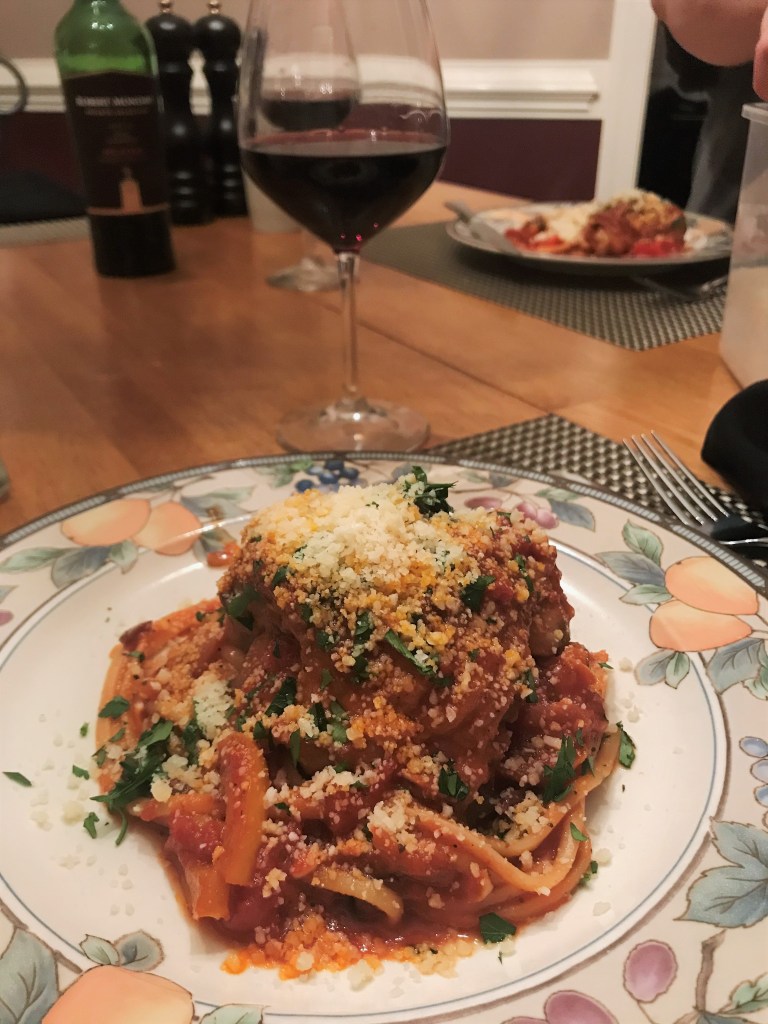
Mangia!

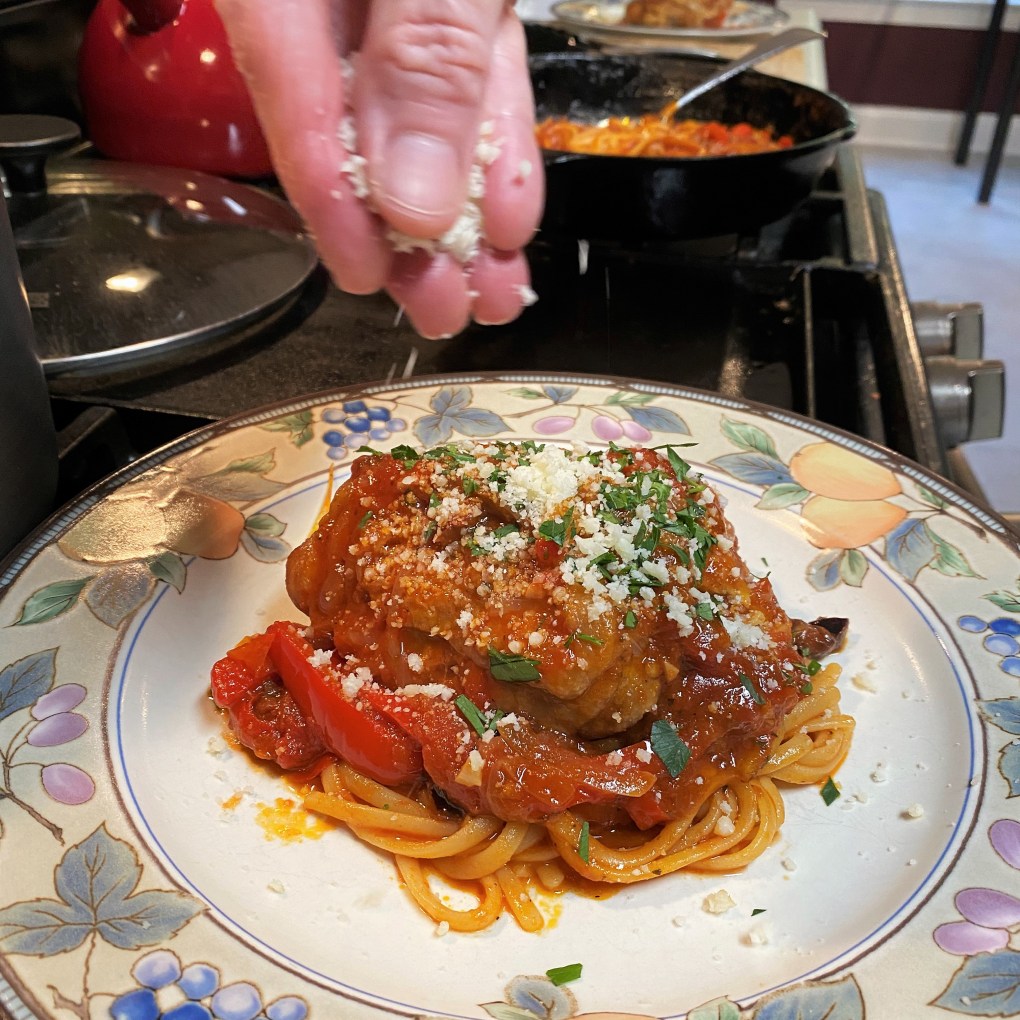
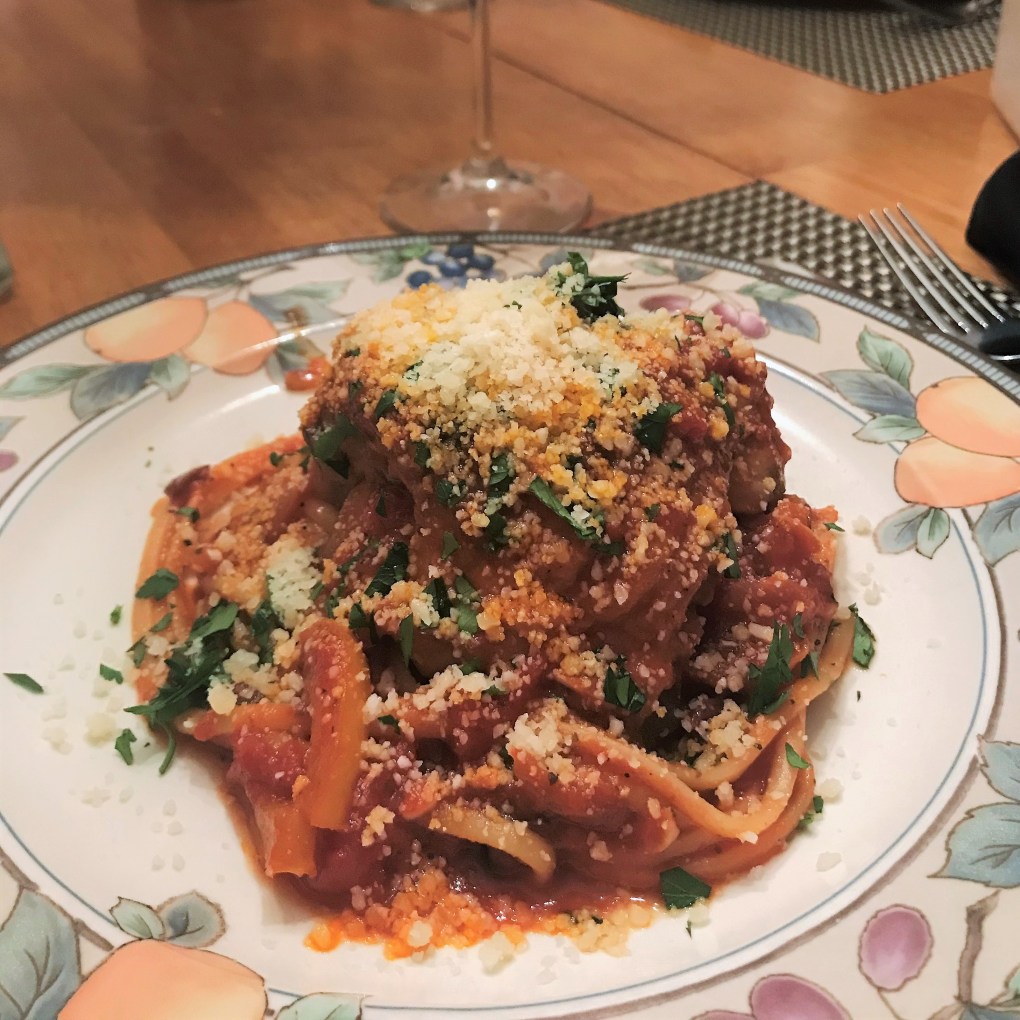
Portion the pasta onto the serving plates, top with a spoonful of sauce, then a chicken thigh, and divvy out the rest of the flavorful sauce. Sprinkle some grated cheese and a bit of fresh chopped parsley on top and enjoy!


Want to print this recipe?


Mama Mia seasoning
(makes about 1/3 cup seasoning blend)

I created my own blend of Italian spices, to customize the flavors we like best at our house. Most of my blends do not contain salt, and this allows more flexibility with different application and better control of the sodium in my dishes. Most of the time, I double the recipe so I always have a jar of the blend at the ready. The beauty of a blend like this one is that you can increase or decrease or even eliminate ingredients based on your taste preference. And every time, it’ll be perfect!

This blend is great for your own Italian red sauce, or add a teaspoon to a puddle of extra virgin olive oil and top with freshly grated parmesan for a flavorful bread dipping oil.

1 Tbsp. whole fennel seed
1 Tbsp. dried minced garlic
1 Tbsp. granulated garlic
1 Tbsp. dried basil leaves
2 tsp. dried thyme leaves
2 tsp. crushed red pepper flakes
1 1/2 tsp. dried Mediterranean oregano
1 1/2 tsp. dried marjoram
1 1/2 tsp. onion powder

To make it:

Heat a dry skillet (no oil!) over medium high heat and add fennel seeds, swirling the pan constantly for about one minute, until the seeds become fragrant. Remove immediately to a bowl to cool completely, then crush seeds with a mortar and pestle or pulse a few quick times in a spice grinder.

Add all other seasoning to the bowl and stir to combine. Transfer to a jar or empty spice bottle.
Want to print this spice recipe?


Pierogi with Potato, Leek and Spinach Filling

One of the most satisfying cooking achievements is striking an item off my culinary “bucket list.” I started my running list a couple of years ago as a way to challenge myself in the kitchen, and my late-night Pinterest surfing (which, unfortunately, coincides with midlife insomnia) is making it longer. Occasionally, I might see a Pinterest recipe I want to try as it is, but more often, I see something that inspires me in a different direction. Either way, you don’t have to be good at math to recognize that my habit (plus my imagination) can only grow the bucket list, so moving an item over to the “made it” column feels like a major accomplishment. Today’s dish has been on the bucket list for at least a year. It’s time!

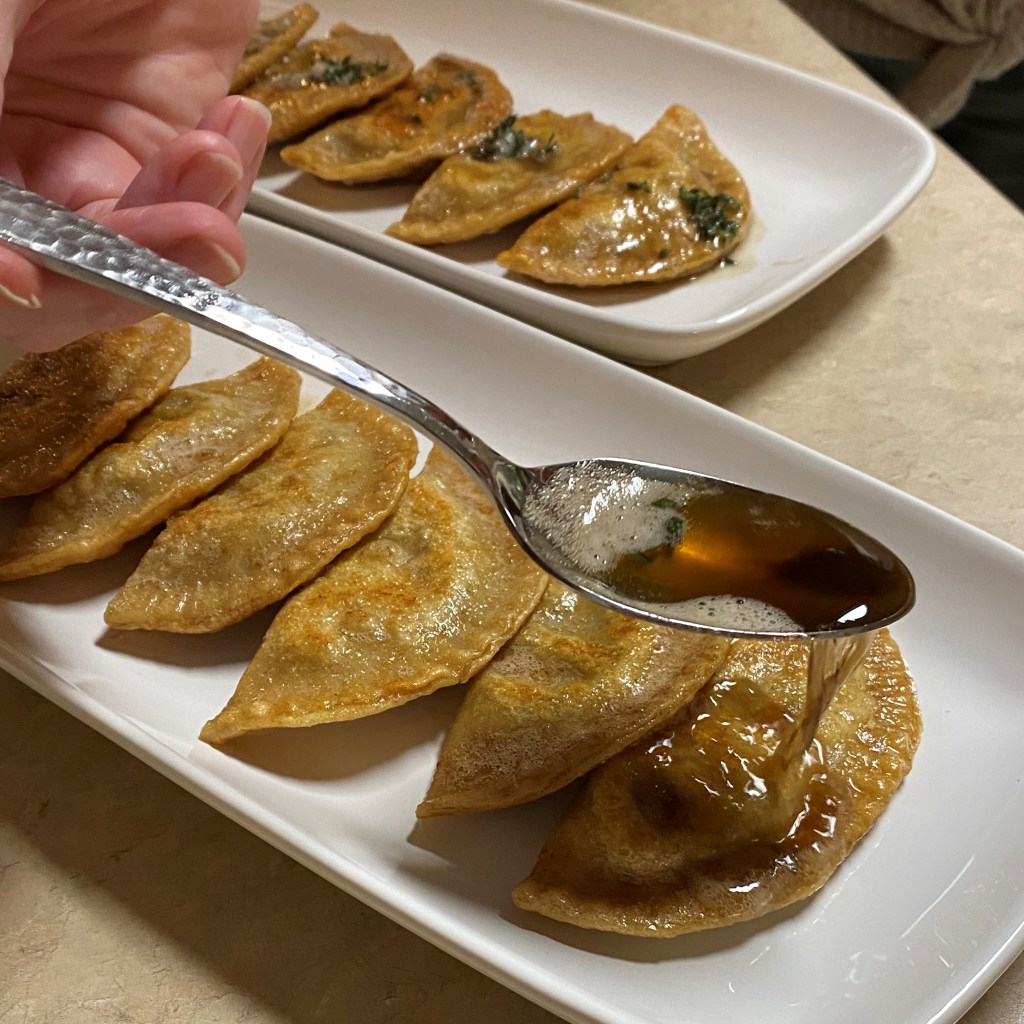
These pierogi—yes, that is the plural—will be coming up again in rapid rotation, because they were delicious and filling, but also easier to make than I expected. In the big picture of comfort foods, these Polish dumplings are about as far as you can go—tender dough stuffed with potatoes, onions, vegetables or whatever else you like, then boiled and fried in a skillet. With butter! What’s not to love? The arrival of fall seems like the perfect time to tackle them, too. The challenge for me in trying a classic dish for the first time is choosing which recipe to use, and that’s what I’m really sharing today.

An internet search for “best pierogi” will yield at least two pages worth of results that declare to be the original, the best, the most authentic, etc. One person’s “perfect” pierogi dough will fully contradict the next, and here’s the deal on that—everyone had a grandma, and everyone’s grandma made dishes that were “original” for their family, and so that was the best for them. But my grandma was Scandinavian, so how do I know from a cultural standpoint what is truly authentic—at least when it comes to pierogi?

Simple—I research it.

I dig deeper to learn where a dish comes from, who were the people who created it, what was their life and what foods were common to their everyday diet. All of these background notes help me arrive at my own approach to the dish. The central and eastern Europeans who created this dish were likely Jewish peasants, and so they would have used simple, inexpensive ingredients. Over time, the dish caught on with other classes, and sweet, fruit-filled versions evolved, but I’ve decided to keep them savory for my first run-through.

Next, I consult trusted recipe resources, whether that is cookbooks I already own or internet sites such as AllRecipes.com that provide multiple recipes for a particular food. I do not select a single recipe and give it a go. Rather, I look for commonality among the recipes, and then I trust my own cooking instinct as I dive in to create it.

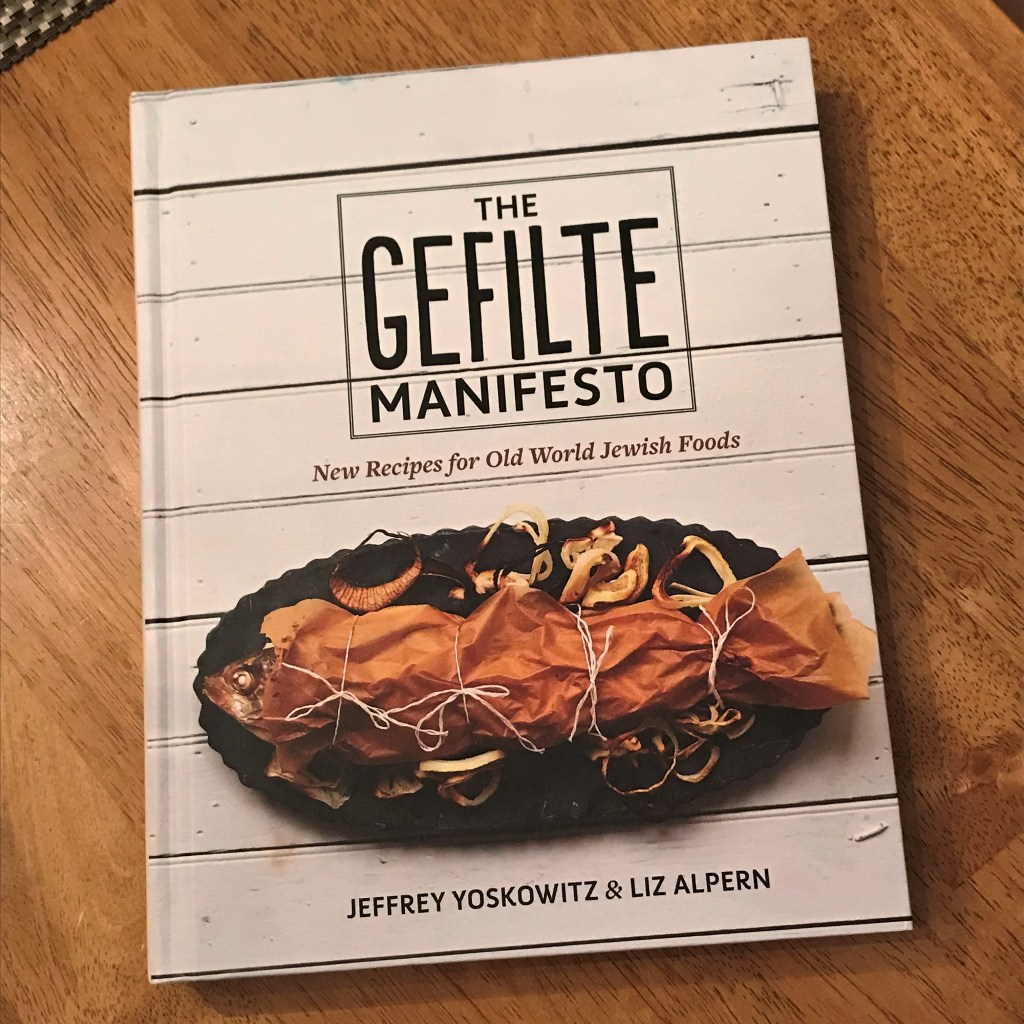
I’ve trusted this book, The Gefilte Manifesto, for the dough portion of the pierogi recipe, primarily because their ingredients and technique are very similar to Italian pasta dough, which is in my wheelhouse so I have a bit of confidence going into this. I’ll save the cream cheese-based dough for another time. For the filling, I followed early tradition and made a potato-cheese-onion mixture. And I’ve added sauteed fresh spinach because my half-Polish, all-Jewish husband (whose family, unfortunately, never made him pierogi) can’t get enough of it, so I always have spinach on hand.

Here we go!


Dough Ingredients

(adapted from The Gefilte Manifesto)

1 3/4 cups all-purpose flour

1/2 cup spelt flour

1 1/2 tsp kosher salt

2 eggs

3 Tbsp. warm water

The original recipe made a very large batch of pierogi, and in hindsight, I wish I had gone that way because they turned out so delicious. But I halved the ingredients, as I often do when I make something for the first time. The original used only AP flour (which I never follow on anything), so I’ve adjusted for some whole spelt flour so that we can have some amount of whole grain. The original recipe said 3 eggs, but chickens don’t lay eggs in halves, so I used 2 and cut back on the suggested amount of water. I suppose I could’ve whisked three eggs together and divvied out half by weight, but that seemed overkill, and the eggs add richness and protein. I followed my instinct and made the dough the same way I make pasta dough but with less kneading, and set it aside to rest while I made the filling.

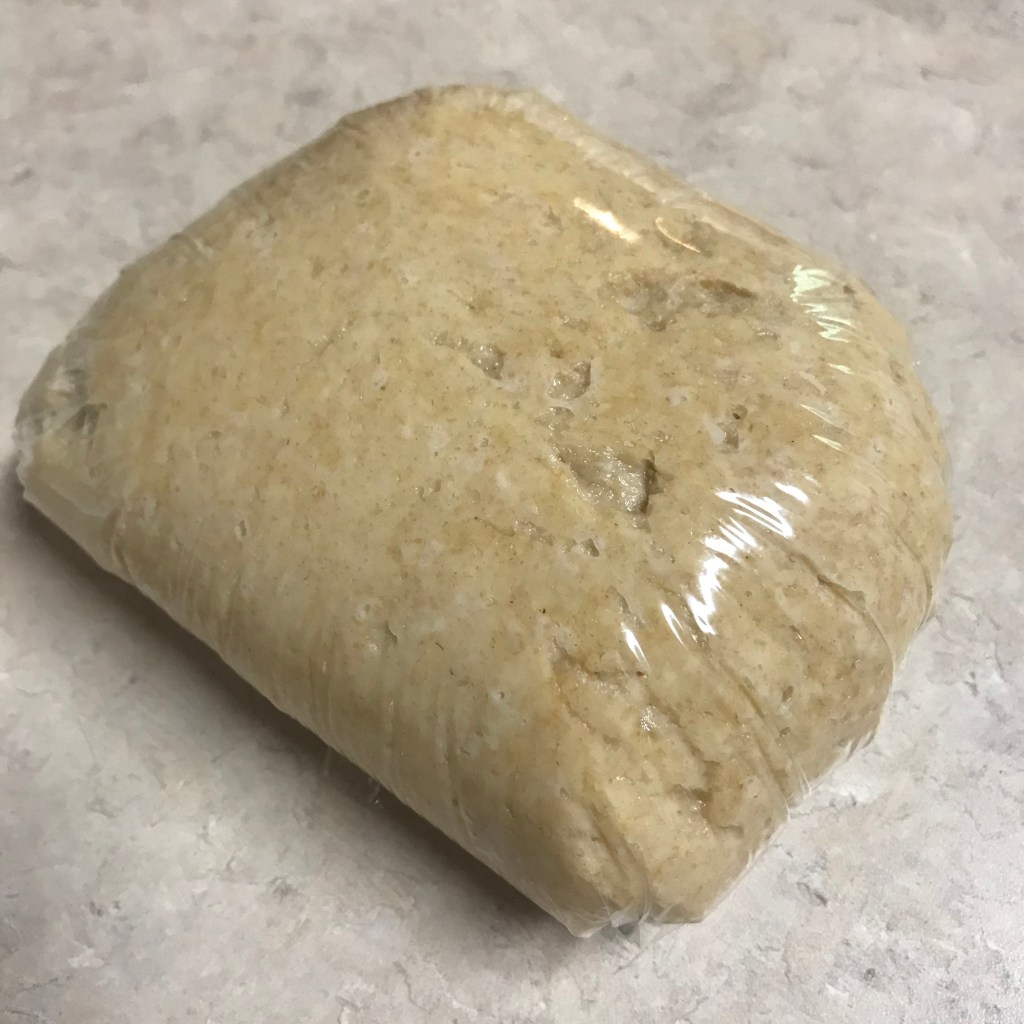
Unlike pasta dough, this pierogi dough was only kneaded enough to be fully mixed.

Filling Ingredients

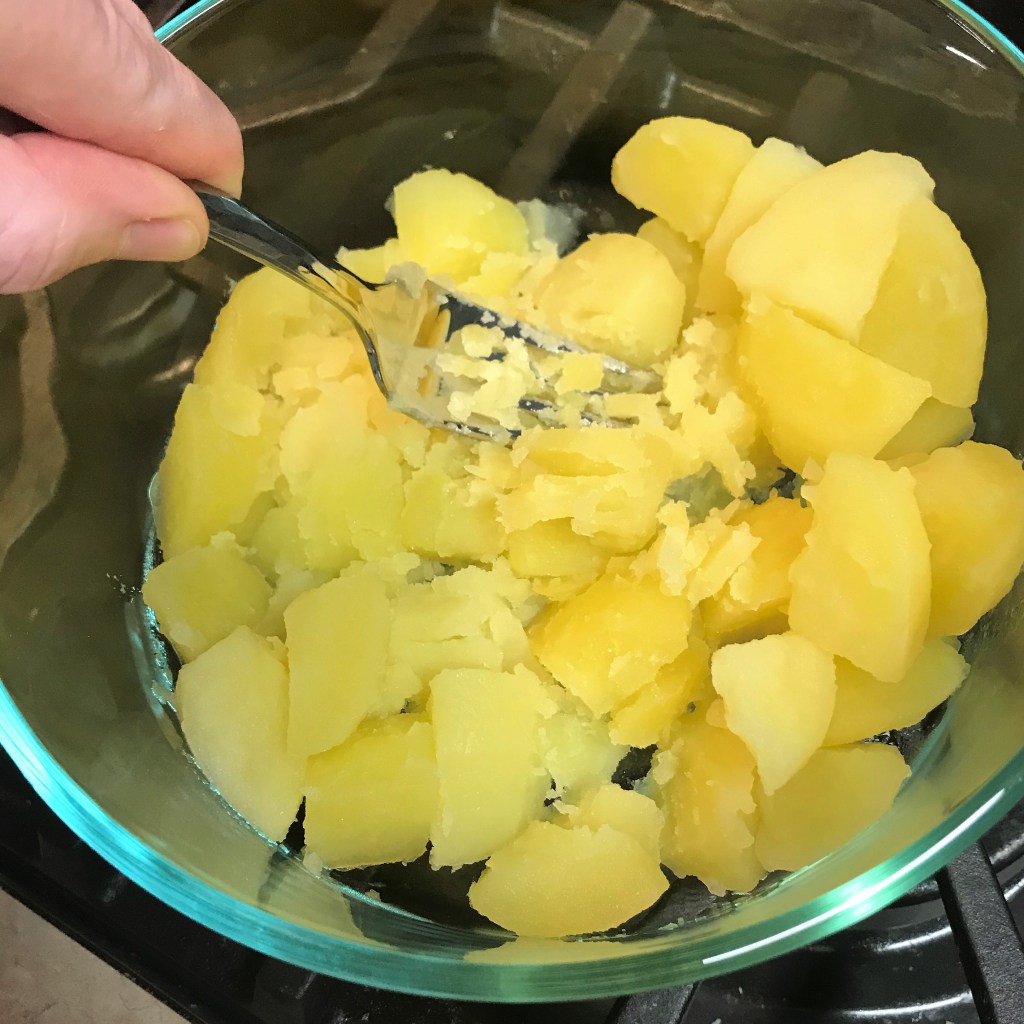
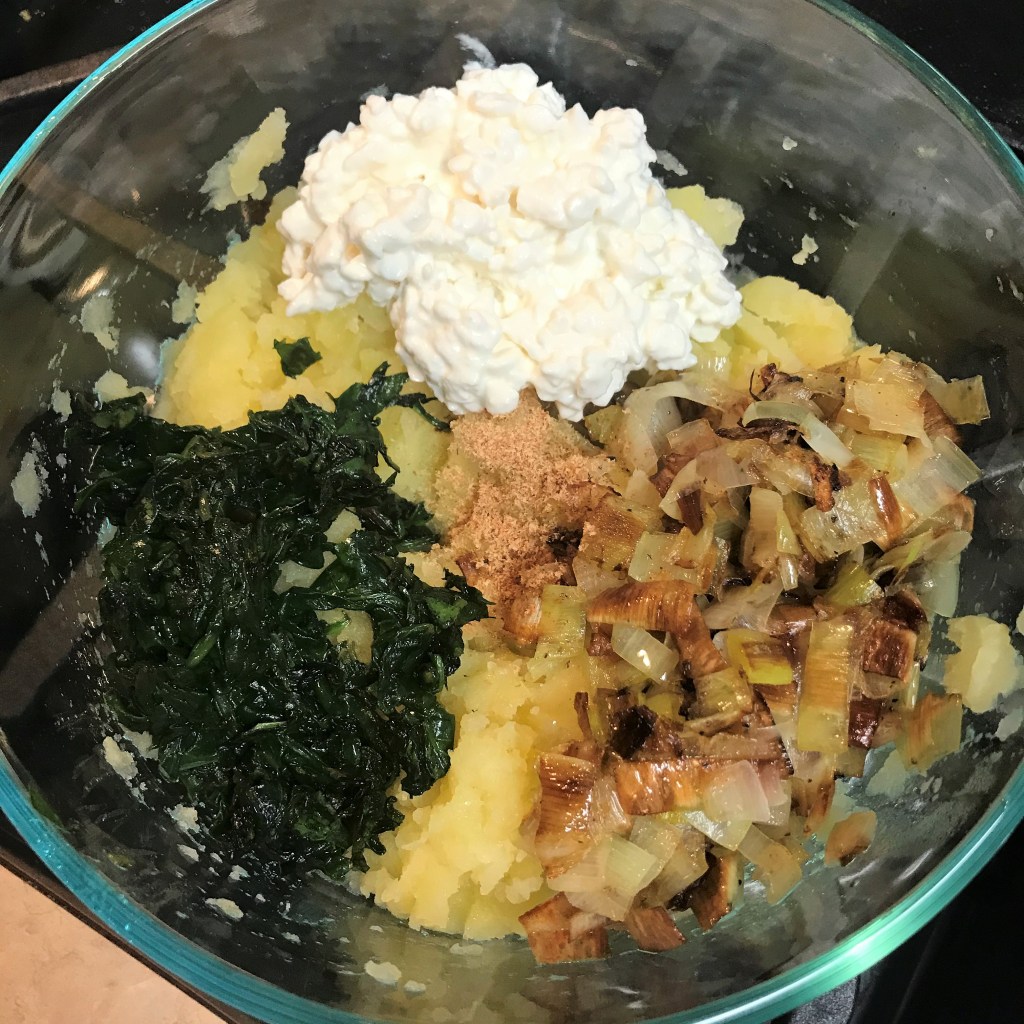
4 medium Yukon gold potatoes, peeled and boiled until fork-tender

1 Tbsp. extra virgin olive oil

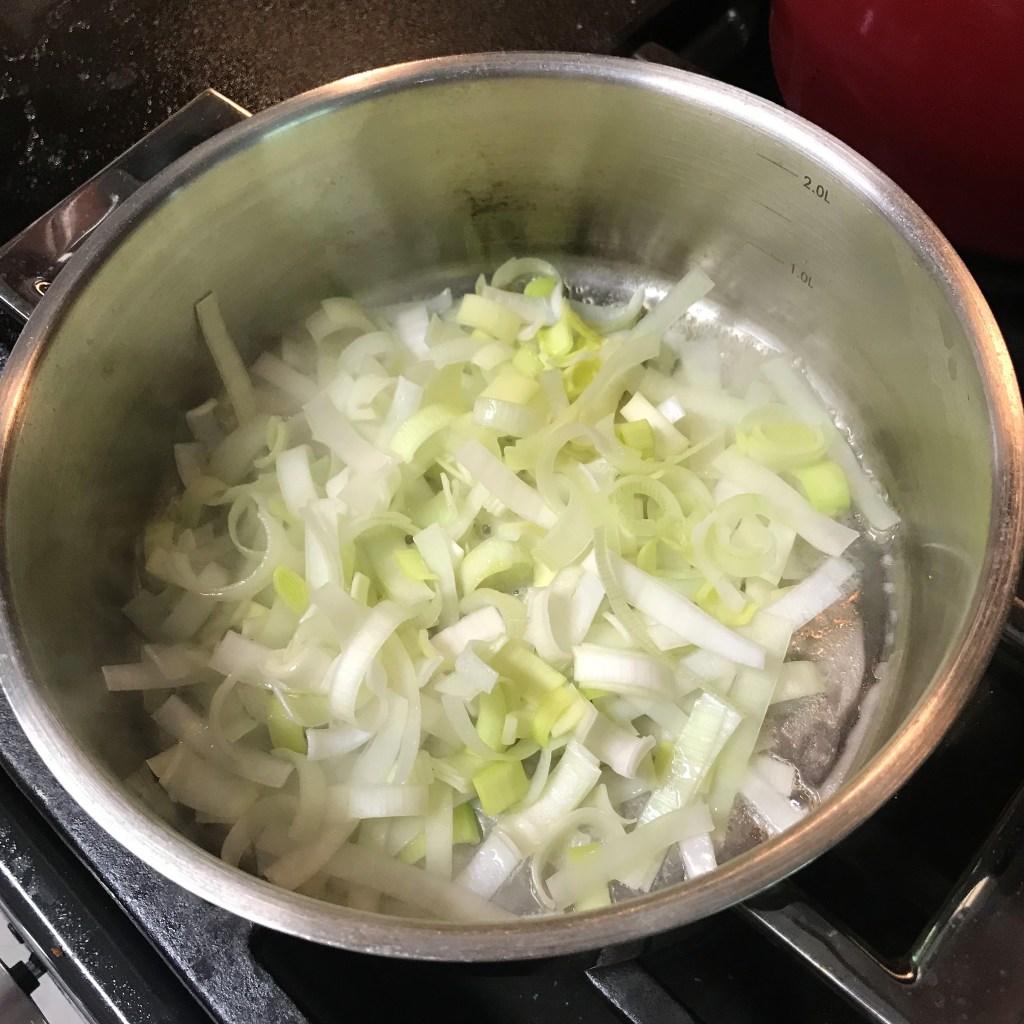
1 leek, white and light green parts, split lengthwise and sliced thin

2 handfuls fresh baby spinach

1/3 cup small curd cottage cheese

1/2 tsp. freshly grated nutmeg

2 oz. finely shredded white cheddar cheese

Kosher salt and freshly ground black pepper to taste.

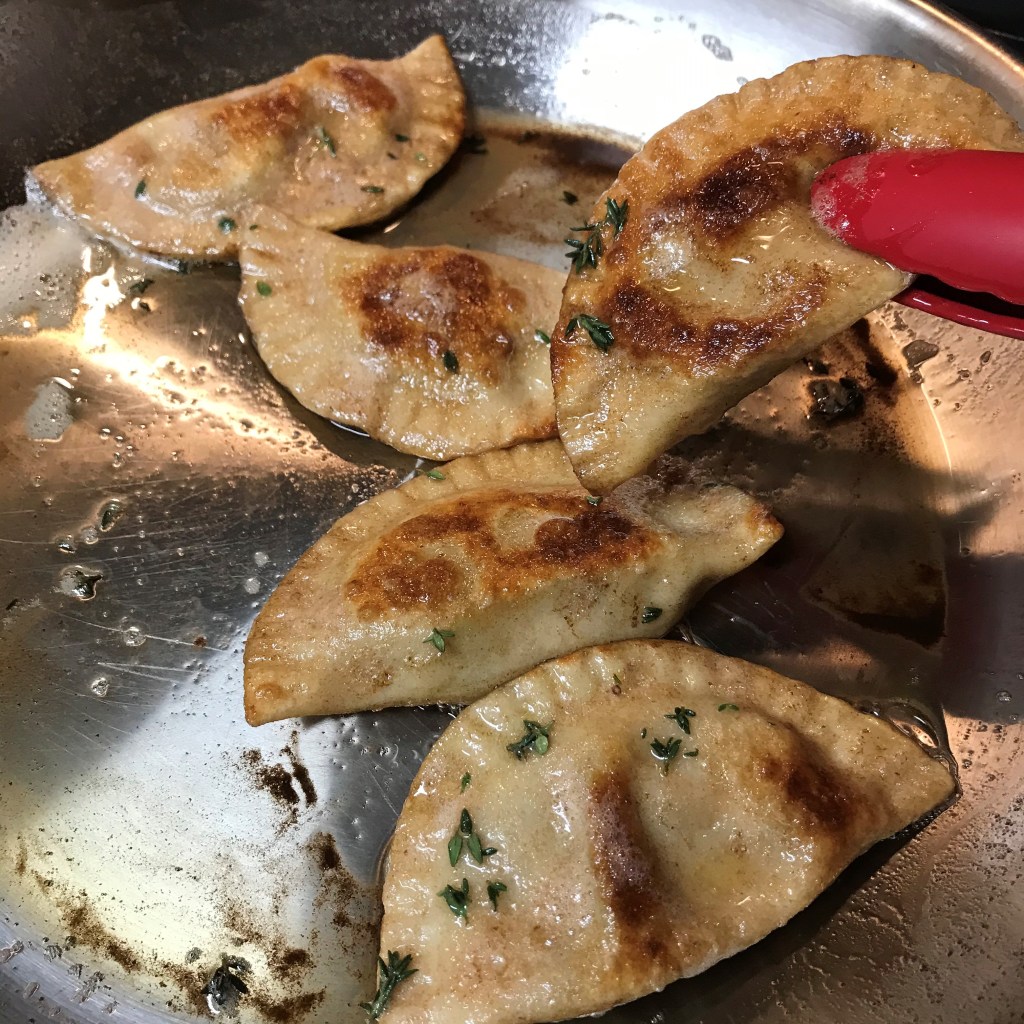
For frying (optional): 2 Tbsp. unsalted butter, 2 sprigs fresh thyme leaves.

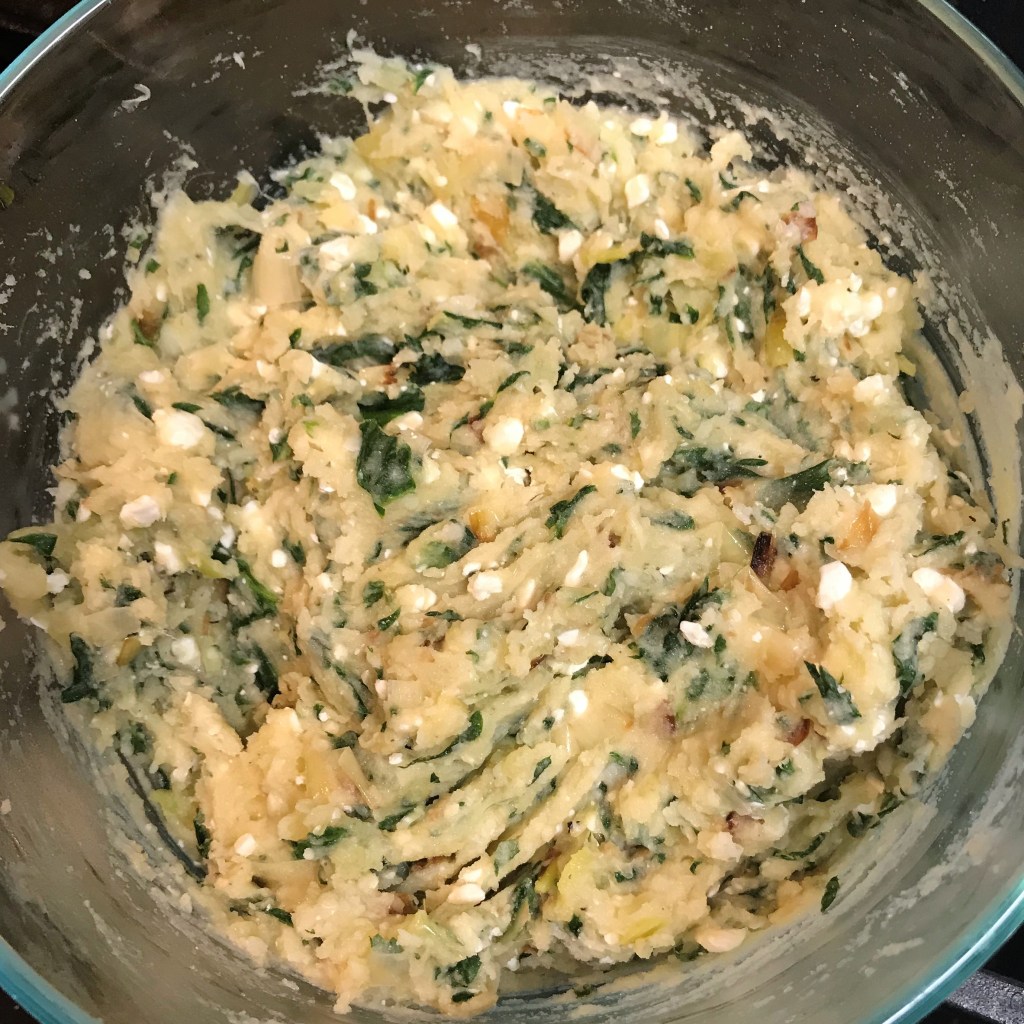
Some of the suggested filling recipes I considered mentioned addition of an egg, but I didn’t feel this was important, given that the Yukon gold potatoes already had a creamy quality. I decided the cheddar and cottage cheeses provided enough binder. I put the mixture in the fridge to chill while I rolled and cut the dough into circles.


Putting it all together

Rolling out the dough proved more time consuming than I expected, given that I hadn’t kneaded it much. It was surprisingly strong, which means gluten strands had formed during the rest time. Again, I followed my instinct from experience with pasta, and covered the dough a few minutes to relax those strands, then continued rolling, until the dough was about 1/8” thickness. I did this in two batches.

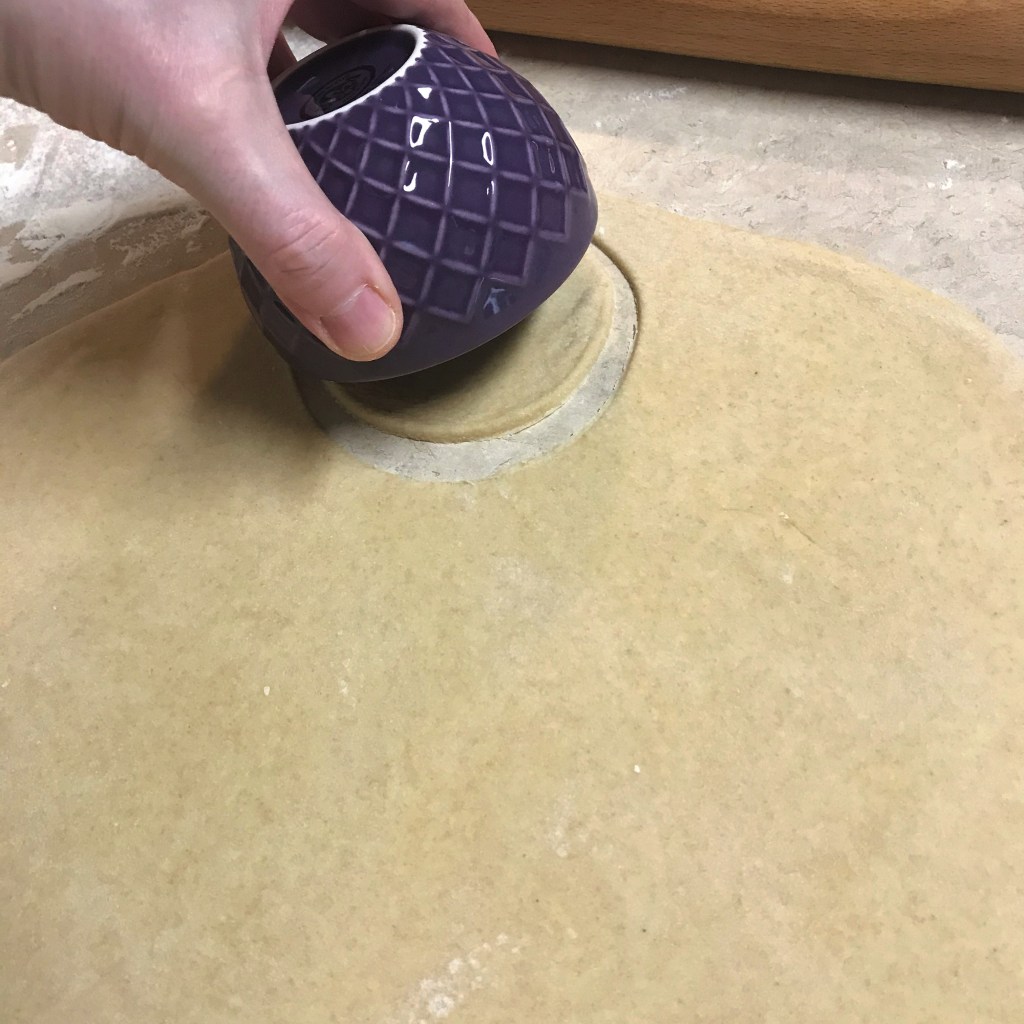
All the recipes I found suggested cutting about 3 1/2” circles, and the only thing I had that size was a little ice cream bowl. Note to self: buy a biscuit cutter already!

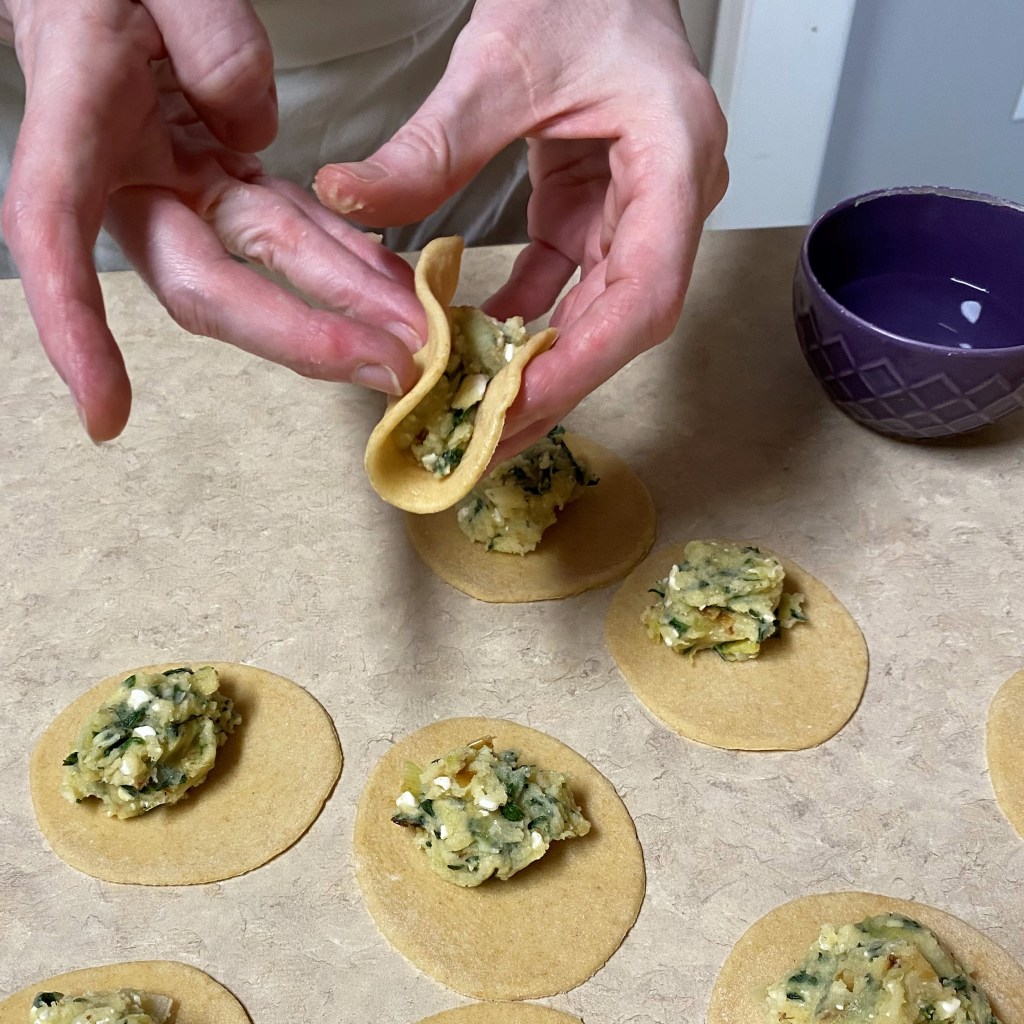
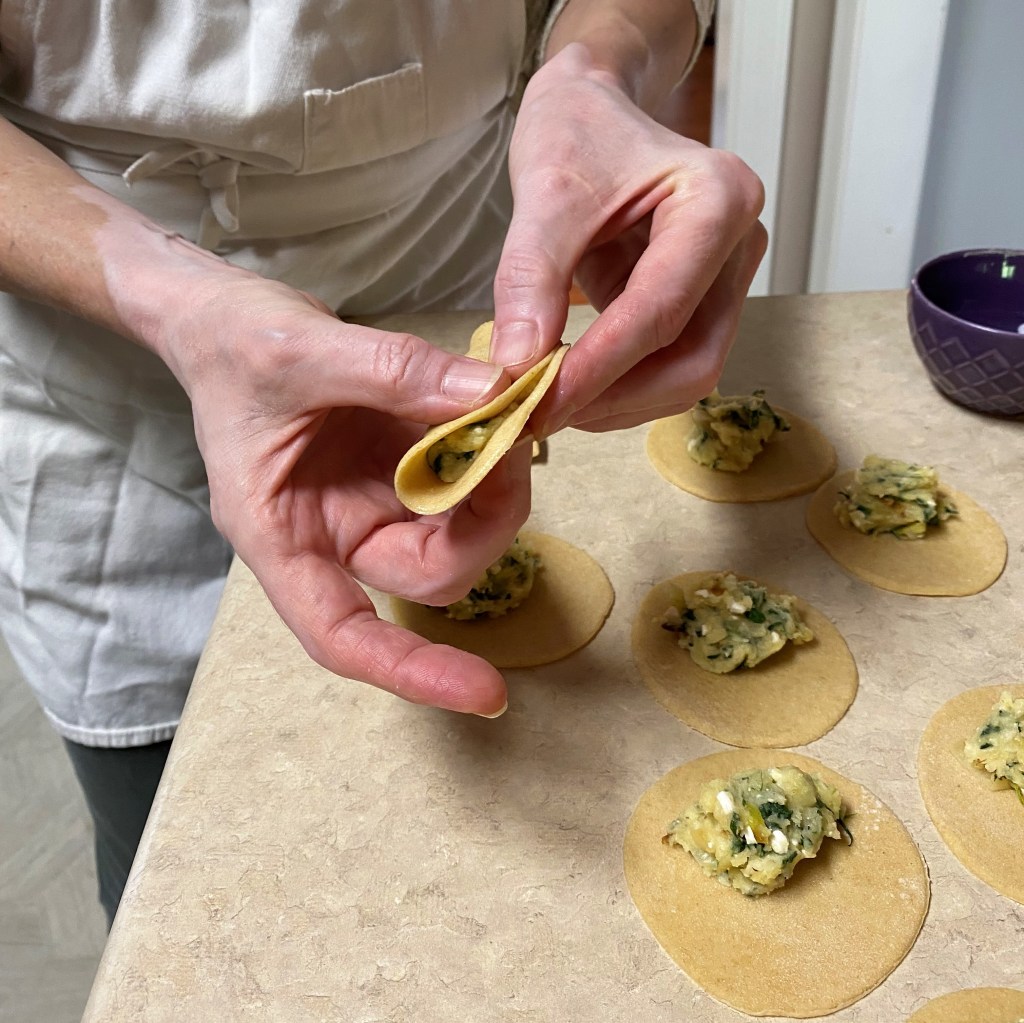
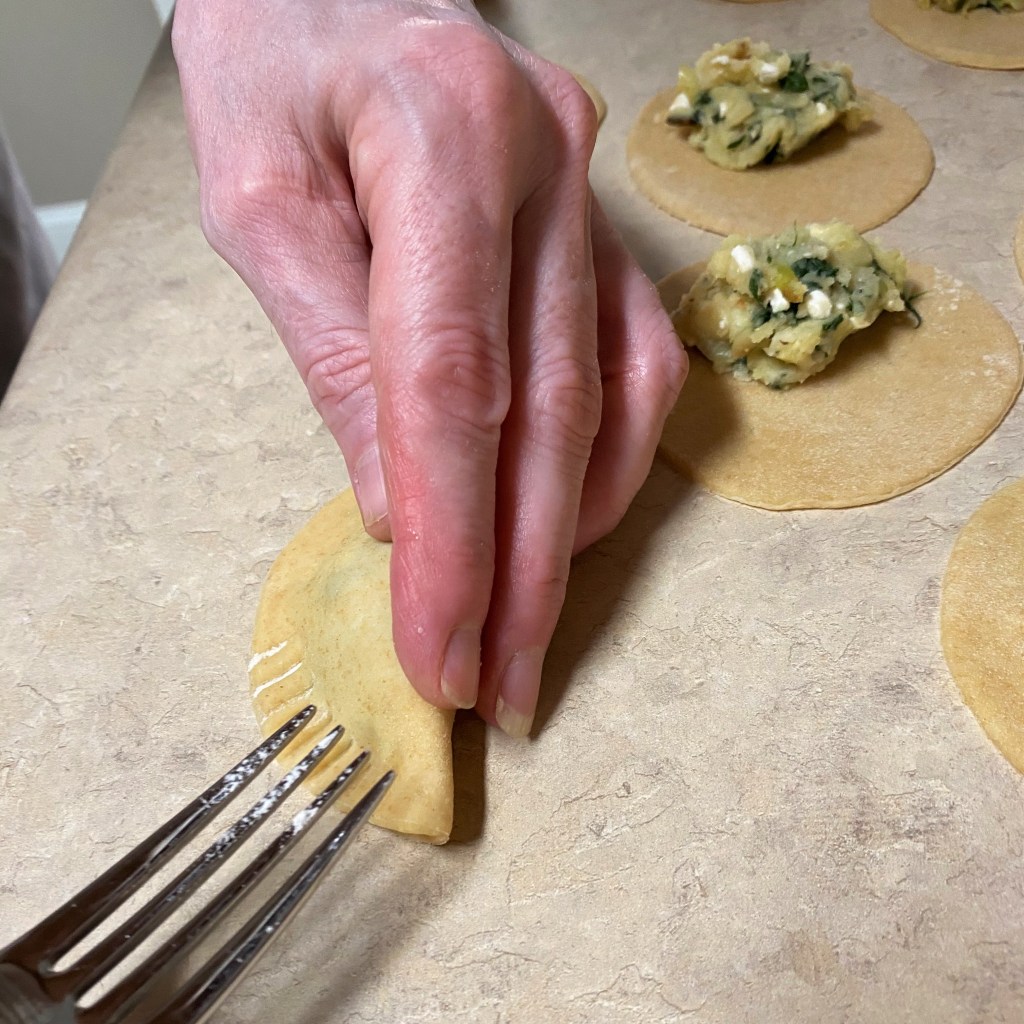
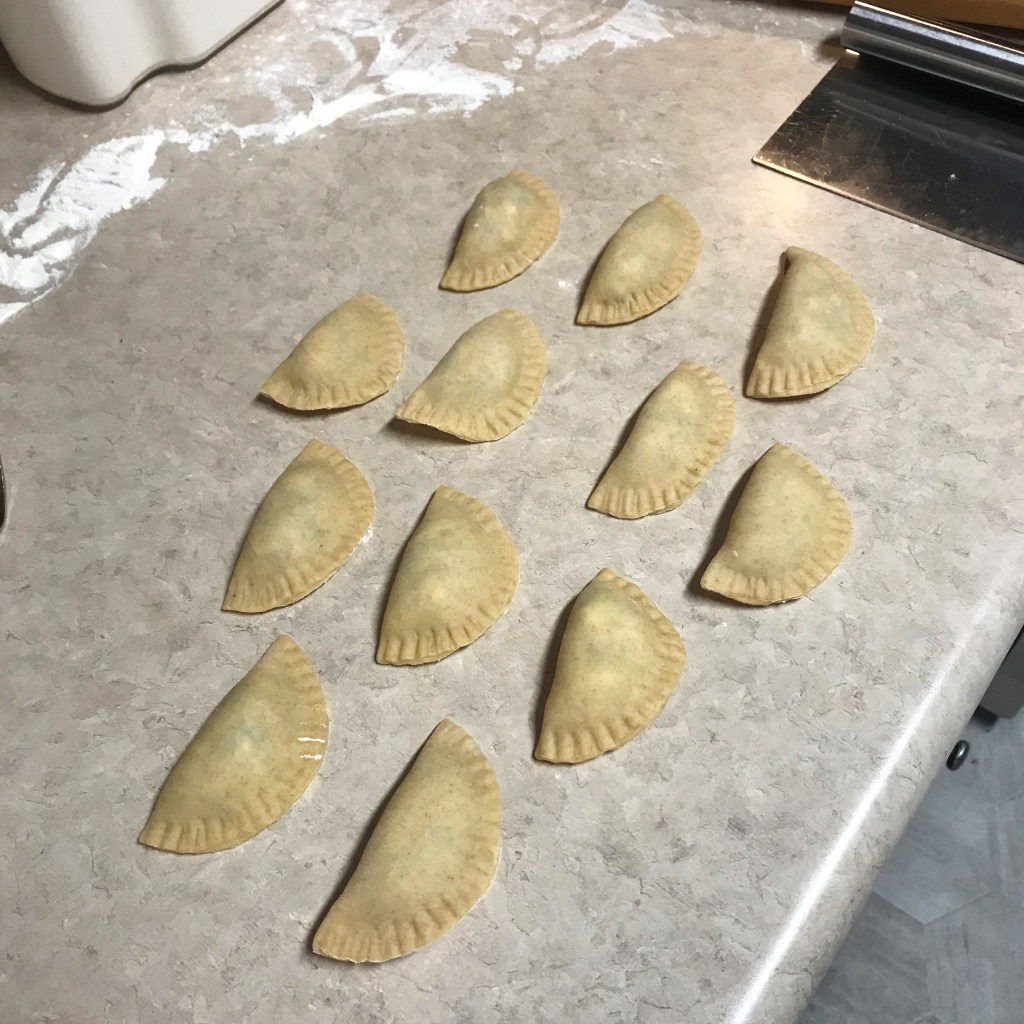
On to the fun part—shaping the pierogi! I spooned about 1 1/2 teaspoons of filling mixture onto the center of each dough round, then I dipped a finger into a small dish of water and wet the outer edge of the rounds to help seal the dough. This is important, because a good seal prevents the filling seeping out during boiling. Anything oily along the edge of the dough will cause the edges to separate, so I was also careful to keep the filling right in the center of the rounds as I closed them. I cupped the dough round in one palm, and used my other hand to seal the edges tight, stretching the dough as needed to fully envelop the filling. Once the rounds were sealed up into half moon shapes, I crimped the edges with a floured fork and let them rest while the water came to boil.


Boiling and Pan-frying

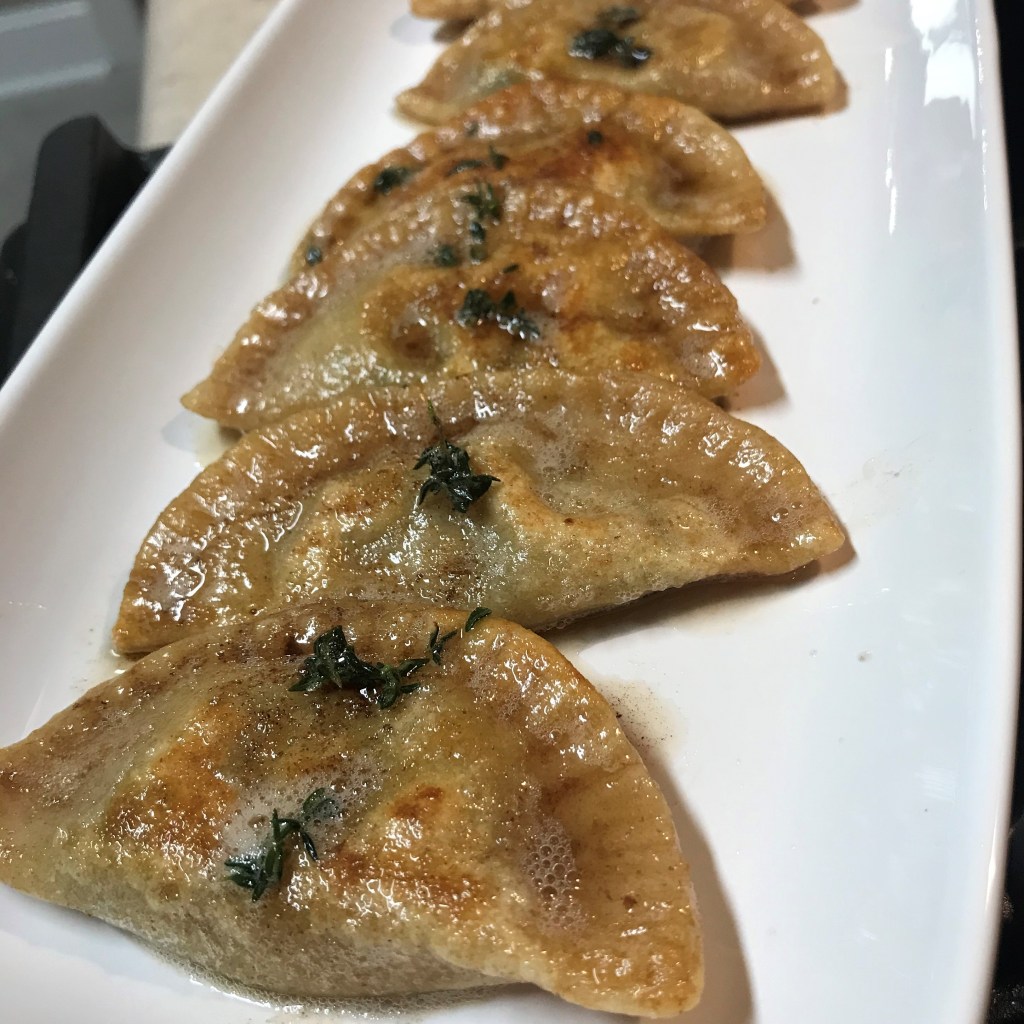
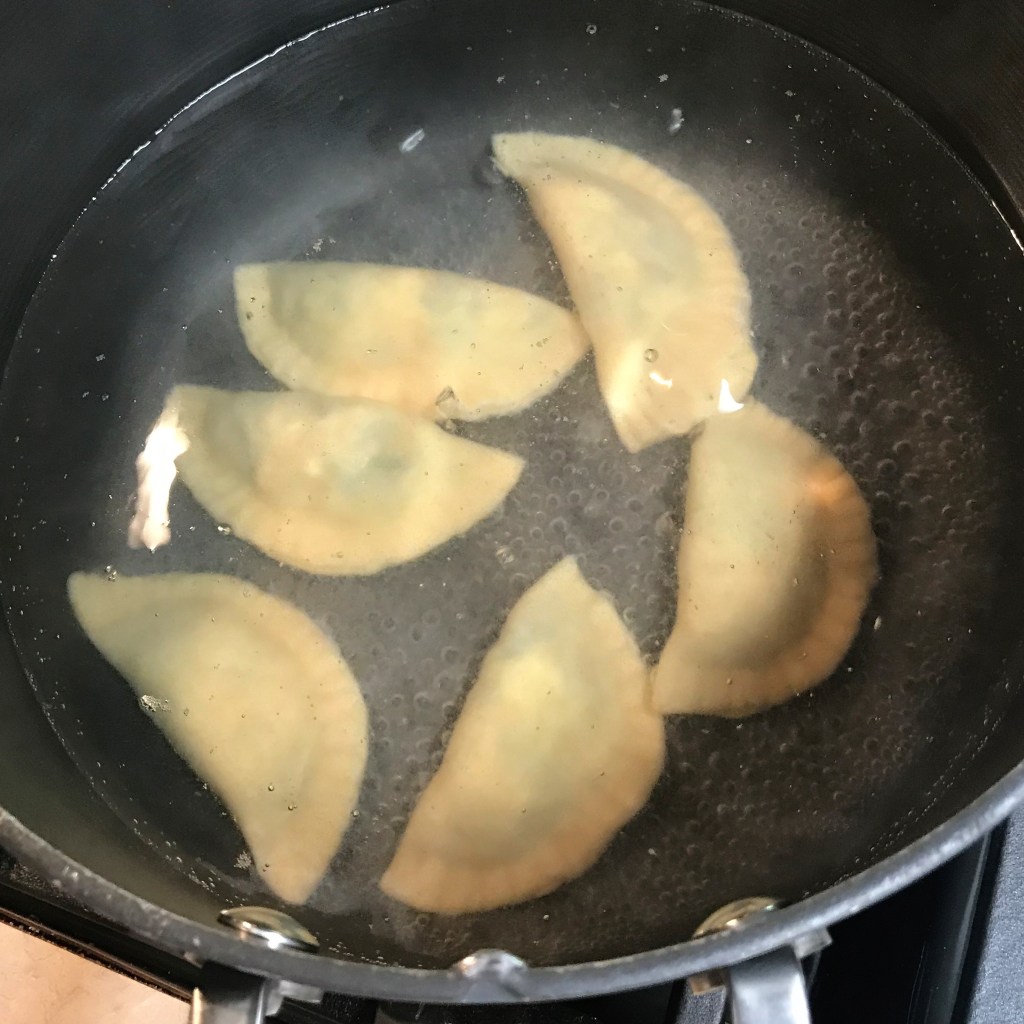
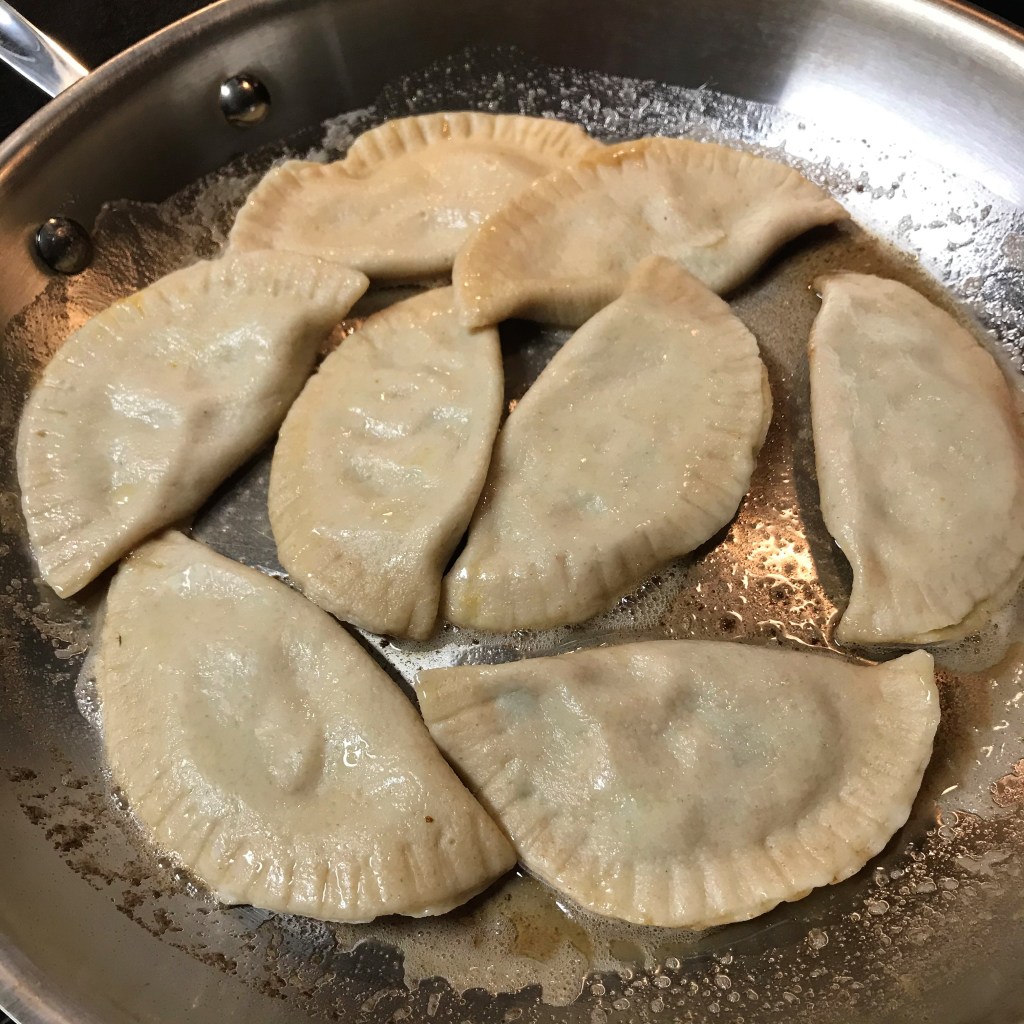
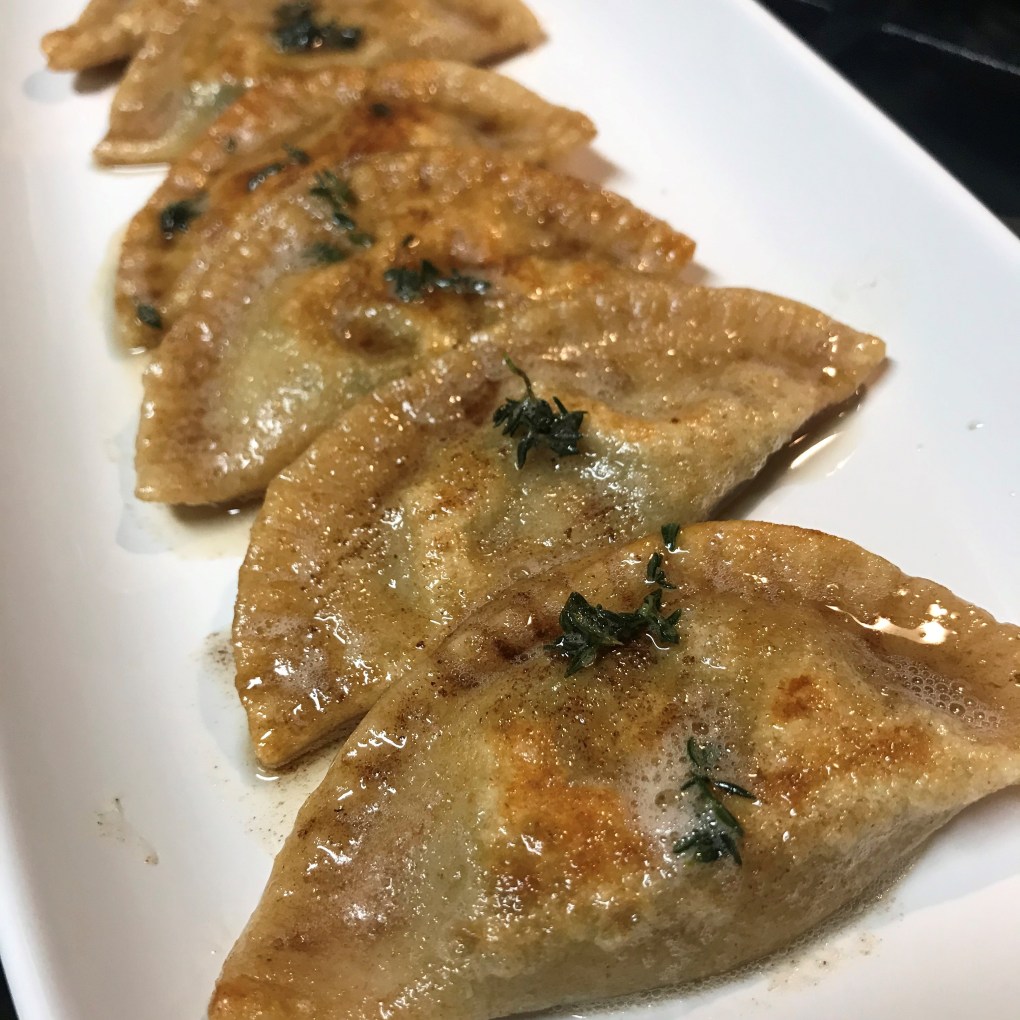
As with pasta water, I used a generous amount of salt. Don’t skimp on this out of fear of sodium—remember that most of the salt will stay in the water, and the pierogi (like pasta) will take up just enough to season it well. Various recipes I’d seen suggested that the dumplings would initially sink but eventually float, and I followed the recommendation to cook them about 4 minutes from the float stage. They cooked at a gentle boil, just above a simmer. I scooped them out onto parchment paper, and though they could have been served exactly like that, I pressed on with the pan frying to give them some extra texture—and, of course, the browned butter. 😊

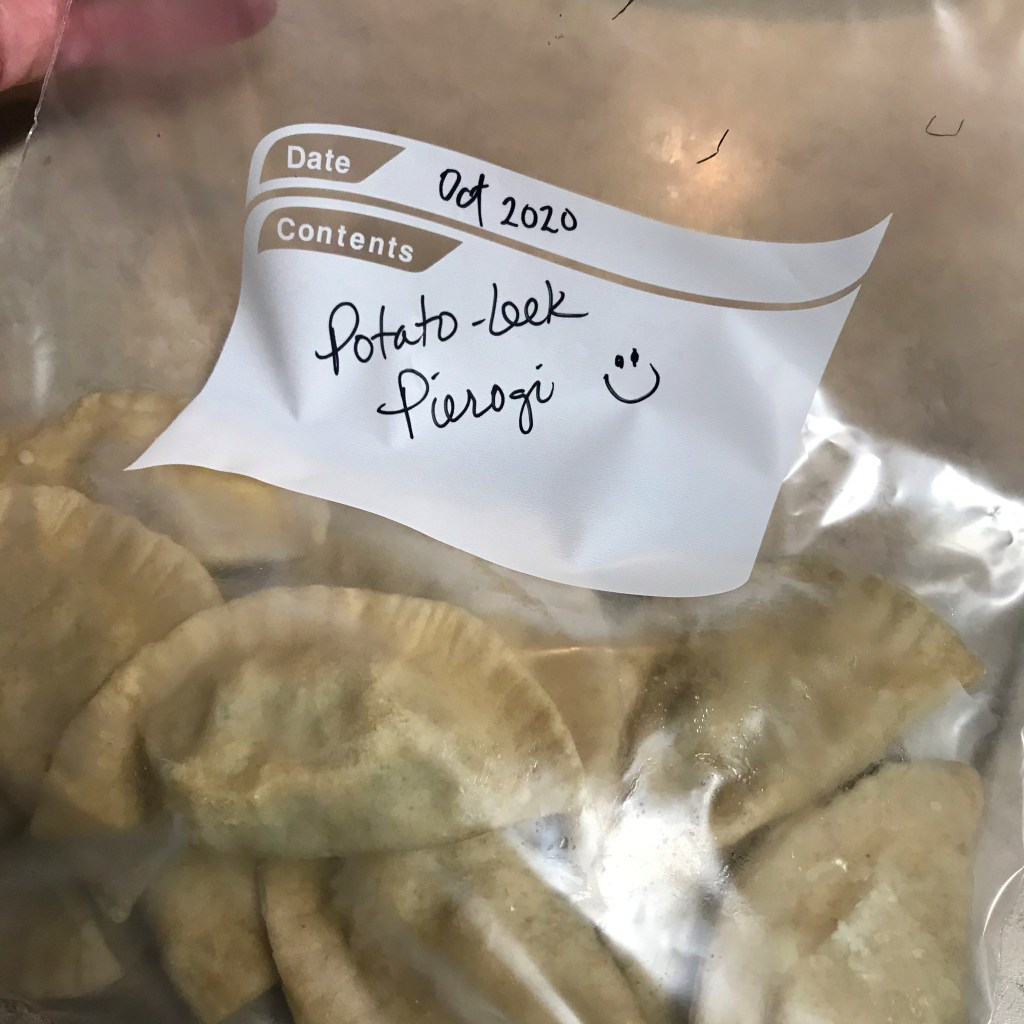
This half-batch of pierogi fed us for dinner twice, and I ended up with enough leftover to freeze for later. I laid the (un-boiled) individual dumplings out on a parchment-lined sheet, covered loosely with another sheet of parchment and frozen overnight, then I transferred them to a zip top bag for cooking later.

Ready for a quick weeknight meal later this fall! Boil them straight from the freezer.

Want to print this recipe?

These turned out so comforting and delicious, I wish I had made them sooner, but I’m glad to get them off my bucket list! 🙂 Here is a sampling of my remaining “someday” recipes, and I hope that sharing this glimpse with you will give me the accountability I need to get cooking:

Porchetta (an Italian specialty made with pork belly wrapped around pork tenderloin)
Why I haven’t made it: It looks fussy and complicated, and that scares me a little.

Black-and-white cookies (one of Les’s favorite NYC classic treats)
Why I haven’t made them: He loves them so much, I’m worried I’ll mess them up (crazy, I know).

Barbacoa (slow cooked spicy beef, which I love, thanks to Chipotle chain)
Why I haven’t made it: I’m committed to only using grass-fed beef in my recipes, and our city doesn’t have the best options for grass-fed, so I need to venture out to a market in a nearby city.

Hold me to it, dear friends! Those dishes deserve a shot in my kitchen. What foods are on your bucket list, either to cook or just to try?


Mahi Hemingway

Friends frequently ask my husband and me how it’s possible we aren’t gaining 10 pounds a week, given all the “rich foods” they see on my blog or his Facebook page. It’s a fair question after you’ve seen the Waffled Mac & Cheese or some of the unconventional creations on my Pizza Party page. But we don’t always eat heavy foods, and sometimes our meals just look more decadent than they really are thanks to presentation. That’s important to remember: If a food looks beautiful, it may be more appetizing, but that doesn’t mean it’s decadent. This Mahi Hemingway—a recipe I’ve adapted from a local restaurant—is a good example.
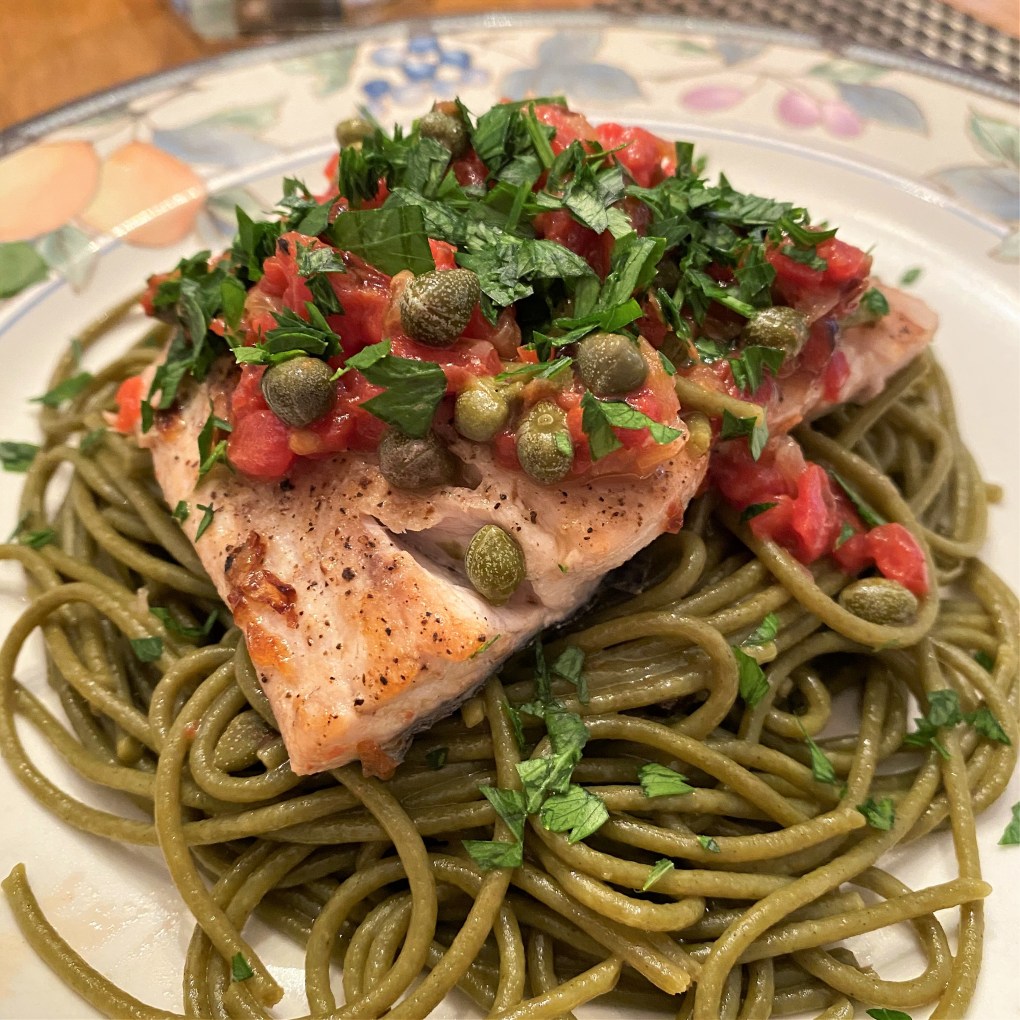
This dish is deceptively easy to make, and its flavor and presentation both rival the restaurant I “borrowed” it from. The restaurant version has a light and elegant white wine, lemon, tomato and caper sauce, served over delicate angel hair pasta and topped with a pan-seared fillet of fresh grouper. I first tasted it more than 15 years ago, and it’s still on the menu for $30. I’m not going to say it isn’t worth it, but I do know you can make it at home (with exactly the same flavors) for a fraction of that price, and it’s easy.

If you have never tasted capers (first of all, where’ve you been?), expect a briny, pickled flavor—kind of like a tangy green olive, but about the size of a green pea. I don’t use much in any recipe because capers pack a lot of flavor. You’ll see capers in Mediterranean cuisine, especially paired with seafood. I also love to chop and add them to condiments for seafood, such as tartar sauce.
The lemon is straightforward citrus, and it’s crucial (as I declare in most of my recipes) that you choose fresh. Bottled lemon juice is full of weird preservatives and has no place in my kitchen, as long as lemon trees are still alive somewhere on the planet.

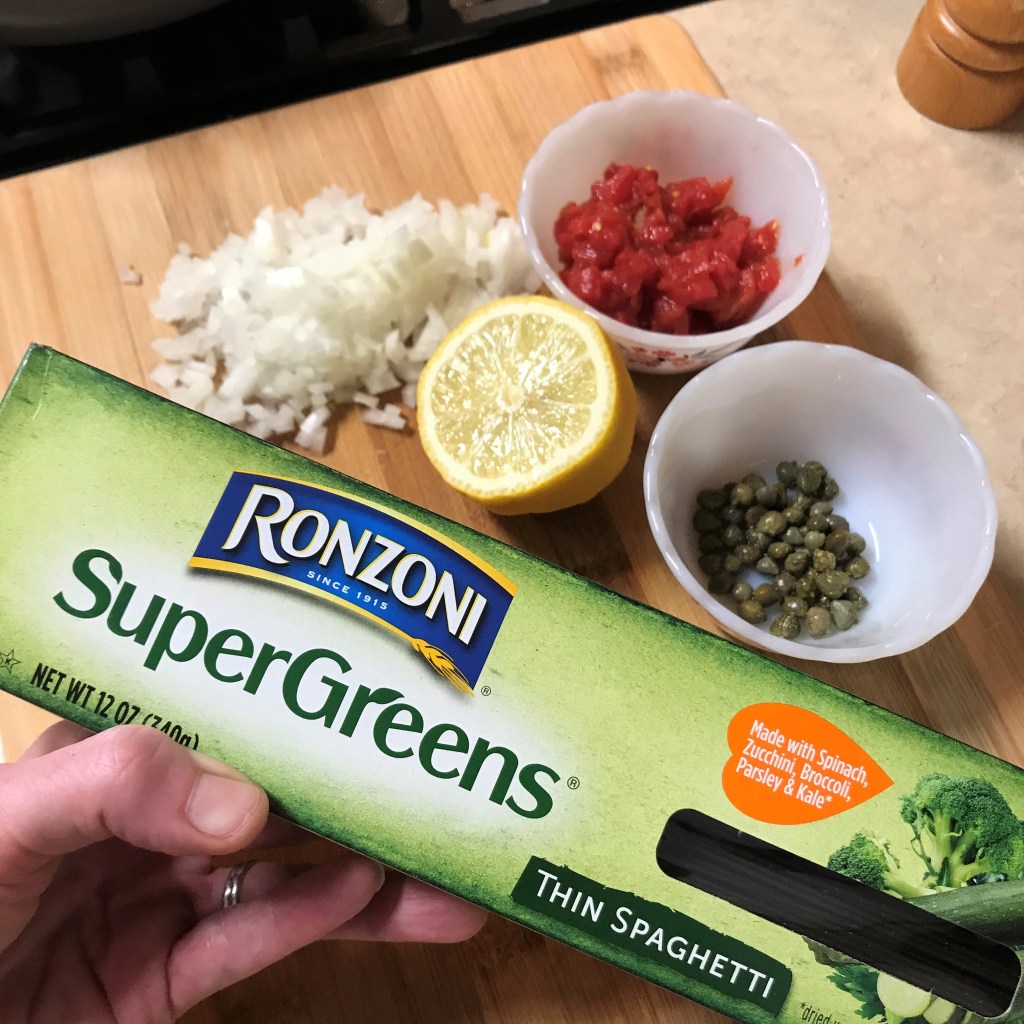
The remaining ingredients are petite diced tomatoes (fresh is great, but canned works fine), a splash of white wine, about half a medium onion, your favorite long pasta and a couple of pats of butter. I’ll assume you already have extra virgin olive oil, salt and pepper.

Lots of great flavor, and all perfectly good for you.

The Prep

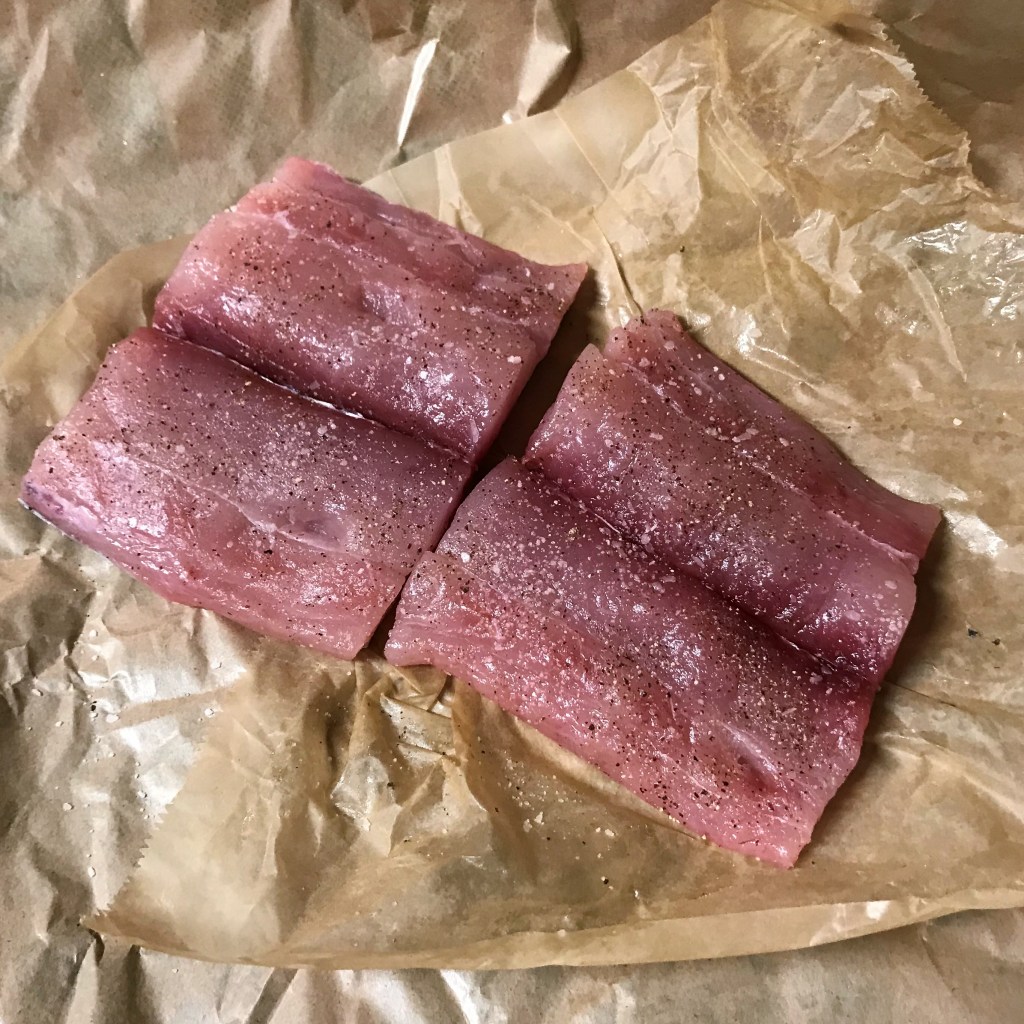
I love a recipe that comes together quickly, especially on a busy weeknight, and this one takes only about five minutes to prep. First, cut thin slices of onion, and then dice them small. Cut the lemon in half. Measure out a heaping teaspoon of capers (no need to rinse them). Cut up a roma tomato into small diced bits or use a slotted spoon to scoop about 1/3 cup from a can of petite diced (it’s OK if you also get some of the juice). Put on a pot to boil for your pasta, and salt and pepper the fish.

This is a very simple recipe, including these items plus a splash of white wine. You’ve got this!

About the fish

The restaurant version I mentioned is made with grouper, which isn’t always easy to find. I substituted mahi the first time I made it myself and liked it so much I never looked back. Mahi is a firm fish—stronger in flavor than grouper or tilapia, but not as “fishy” as a sea bass or mackerel. Choose any firm-fleshed fish you like. I keep the skin on during cooking because much of the healthy omega-3 fats are very close to the skin. I’ve found that with most fish, the skin is super easy to remove once that side has been cooked, but this is strictly a matter of preference. If you don’t like the skin, ask the fishmonger (I love that word) to remove it for you.

Mahi is an oily fish, with loads of good omega-3 fats. It’s concentrated in that red line down the middle.

Choosing your pasta

For pretty presentation, choose a “long” pasta—something delicate like spaghetti or angel hair works nicely. Whole grain is an excellent choice, and today, I’m using a new thin spaghetti Les picked up for us. It’s durum wheat (ideal for pasta), and made with spinach, zucchini, broccoli, parsley and kale. We are adding a whole serving of vegetable to our dish, but without extra effort. I’m good with that!

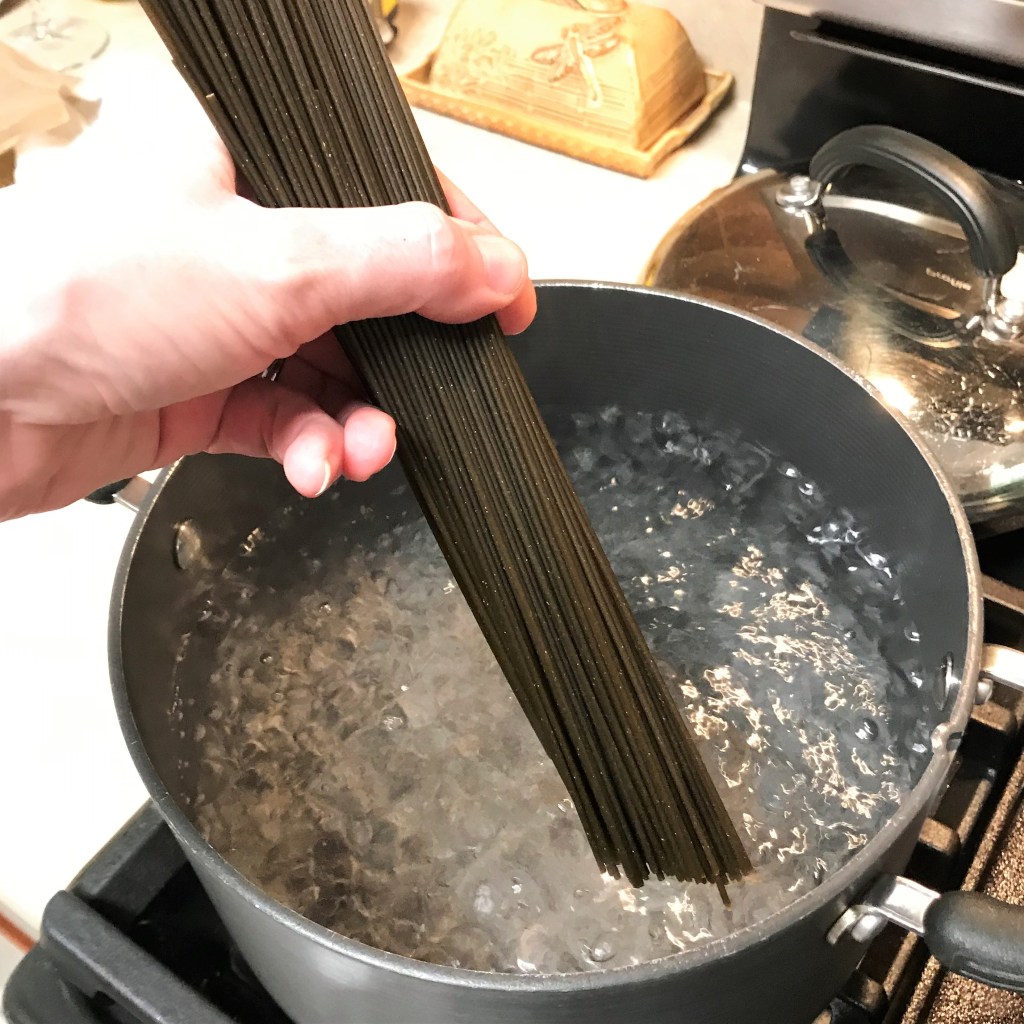
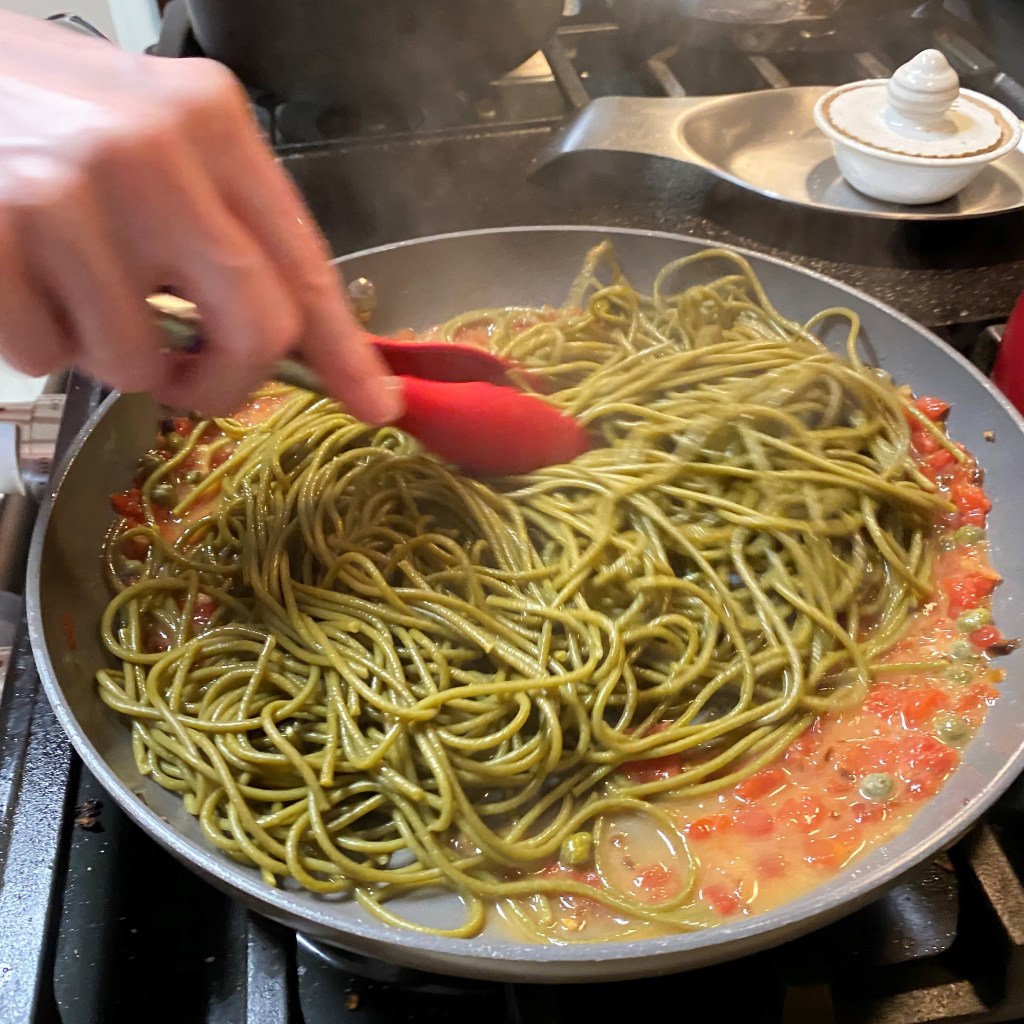
This “super greens” pasta is such a dark green, it almost resembles seaweed!

So far, this recipe is ticking all the boxes—healthful, quick, easy. I’m loving it.

Putting it all together

The fish and sauce will cook quickly, so get going with the pasta first. Remember to use plenty of water and salt it generously.

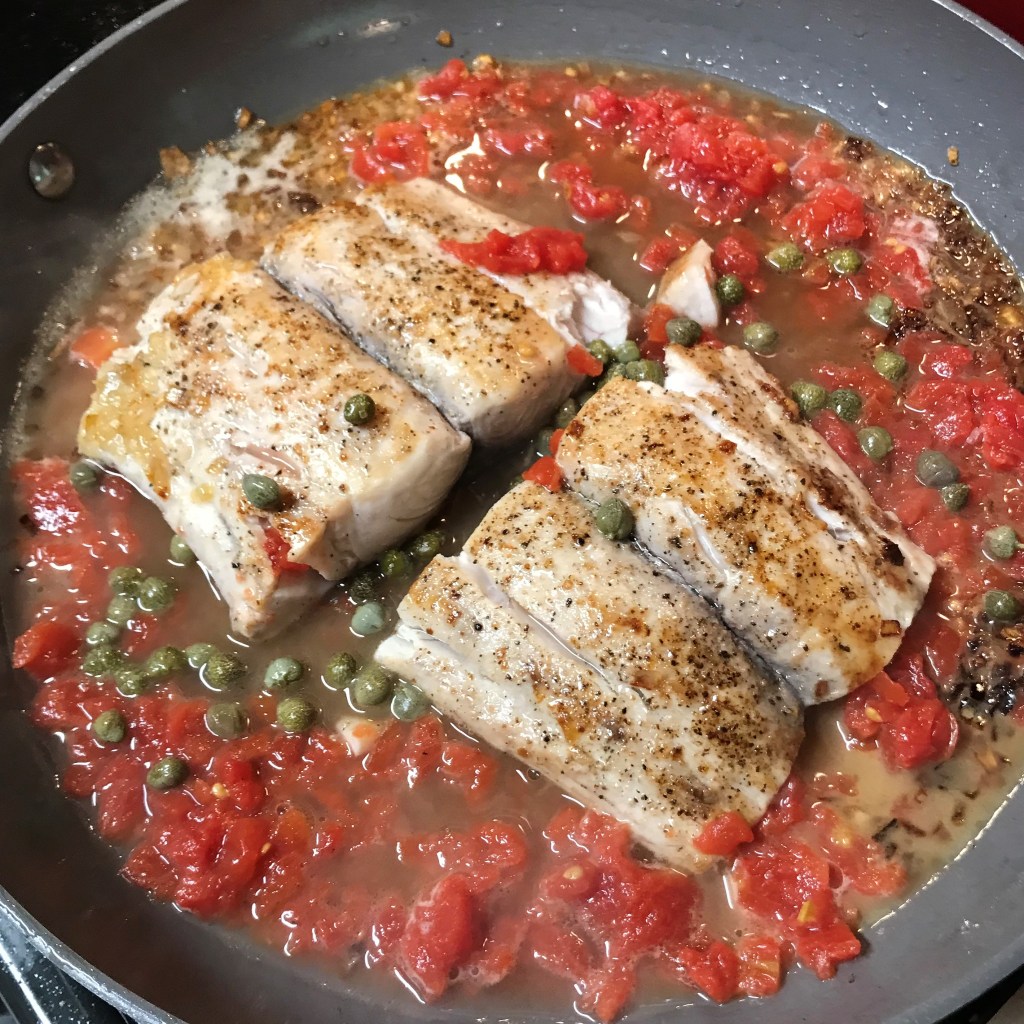
I use the same skillet for the fish and the sauce. Begin over medium heat, sautéing the onion with a little olive oil until it begins to soften. Move the onion to the edges of the pan, and add the mahi fillets, flesh side down. For the best sear, resist the urge to move it around much. After about seven minutes, it will release freely so you can turn the fish and cook the skin side.

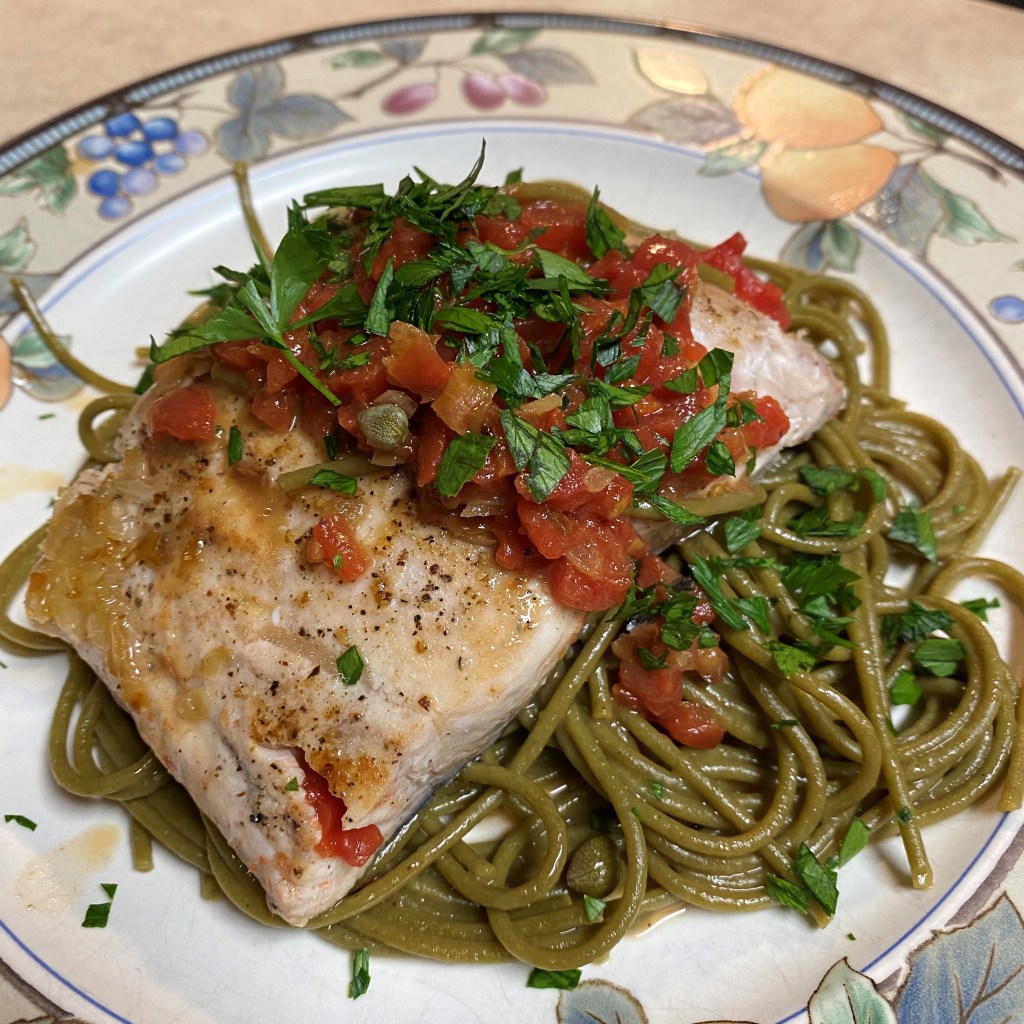
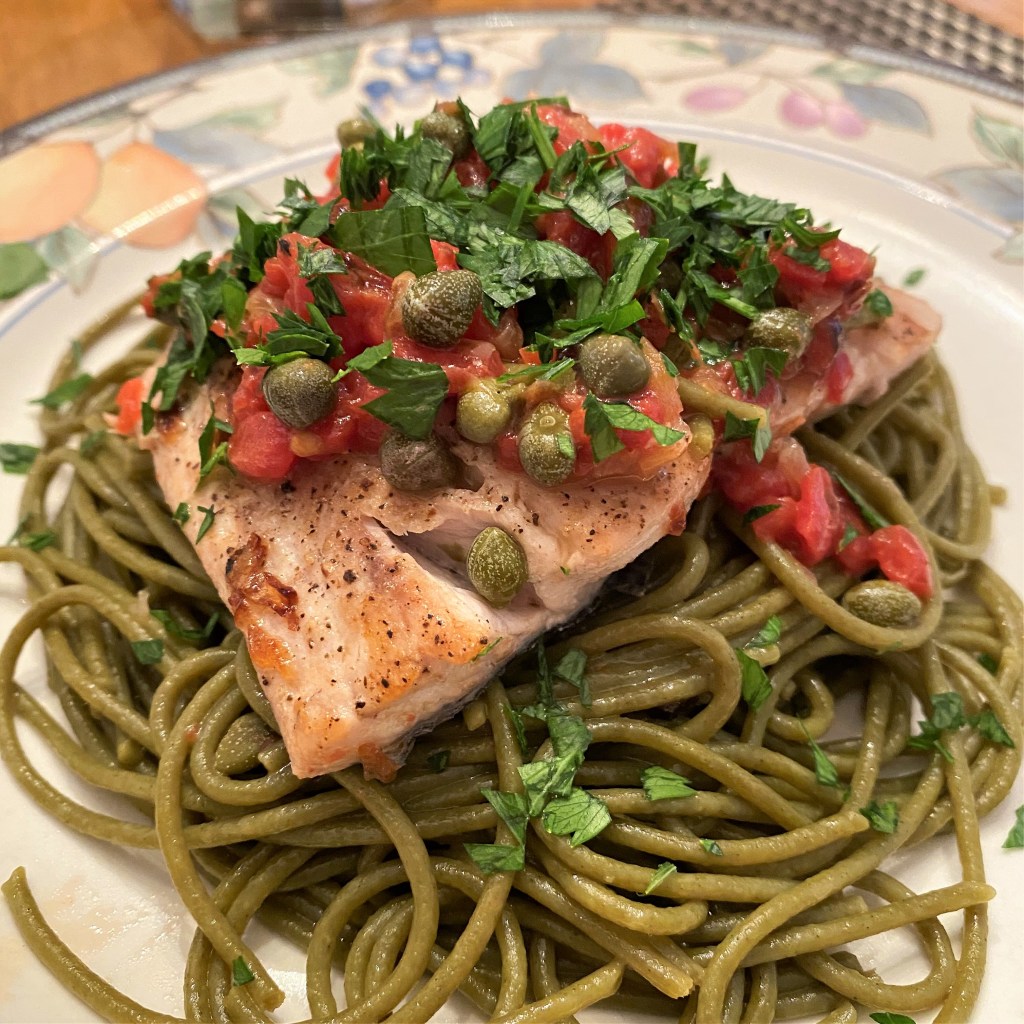
Add the tomatoes, capers, lemon juice and white wine to the skillet, give it a gentle shake to mix the ingredients, then cover and allow it to simmer on low heat until the pasta is cooked al dente. Remove from heat. Transfer the fish fillets to a plate and cover to keep them warm. Add a pat of cold butter to the sauce and use a fork to swirl and melt it. This technique creates a silky richness without a lot of extra fat. Immediately drain the pasta and use tongs to give it a quick swish through the sauce to coat it before plating. Spoon some of the sauce over the pasta, then top with the mahi fillet and the remaining sauce. Sprinkle a little fresh, chopped parsley on top and enjoy!

The slides will give you a visual walk-through of how easy this is to make. If you want to save the recipe for later, there’s a button at the end of the post to download and print for your recipe book.


Ingredients

Makes two servings (easy to double; choose a large enough pan)

2 6 oz. fillets fresh mahi or other firm fish

2 servings thin spaghetti or angel hair pasta

1/2 medium sweet or yellow onion, thinly sliced and diced

1/3 cup petite diced tomatoes, strained from can or chopped fresh

1 heaping teaspoon capers

Juice of 1/2 large lemon

1/4 cup dry white wine

1 Tbsp. cold butter

Fresh chopped parsley, for serving

Every bit as good as the high-dollar restaurant.

Want to print this recipe?


Elote Macaroni Salad

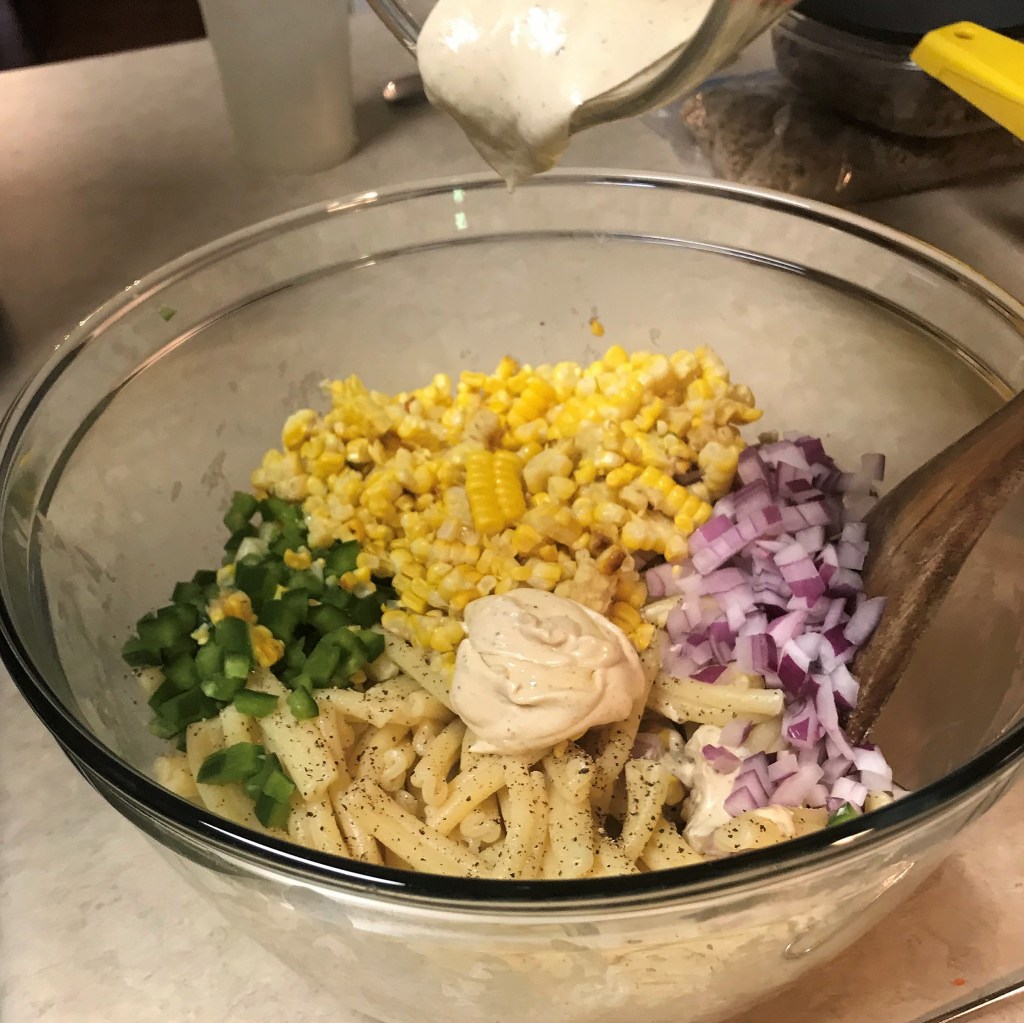
You don’t have to visit Mexico to experience the delicious combination of flavors in elote, the beloved Mexican street food staple that is roasted fresh corn on the cob, seasoned with spices, lime and grated cheese. Here’s a pasta side salad that captures the essence of this simple street food. It’s sweet, spicy, savory, smoky and perfectly delicious next to the saucy ribs Les pulled off the grill.

Easy to put together, and mixing up south-of-the-border flavor with a timeless classic American comfort food, the macaroni salad.

I’m loving this!


Ingredients

12 oz. pkg. casarecce pasta* (see notes)

2 ears freshly grilled corn*

1/2 cup red onion, chopped

1 average-size jalapeno, seeded and diced

3 scallions, trimmed and grilled

Handful fresh cilantro, rough chopped for serving

Crumbled feta or parmesan cheese for serving

Additional slices fresh jalapeno (optional, for garnish)

1 small ripe avocado, cut into cubes


Dressing Ingredients

1/4 cup canola mayo

1/2 cup light sour cream

Juice of 1/2 lime

1 Tbsp. extra virgin olive oil (or avocado oil)

3/4 tsp. ground chipotle

1/2 tsp. cumin

1/2 tsp. sweet smoked paprika

Freshly cracked black pepper


*Notes

Casarecce pasta is a long, shaped noodle that looks like a rolled-up rectangle. I like it here because it has a firm, toothy texture that anchors all the other ingredients, which are cut into smaller pieces. Any substantial-sized pasta with texture will work in its place though, including penne, rotini or farfalle (bow ties).

Grilling fresh corn is one of the simplest pleasures. We strip the husk and silk, then smear with softened butter, salt and pepper. Wrap them up in foil and grill on direct 300-350 F heat for about 35 minutes. If you prefer, you could also pick up some frozen roasted corn and thaw before using. You will need about 1 1/2 cups.


Instructions

  1. Cook pasta according to package directions. Cut kernels from corn and prep all other vegetables while pasta is cooking.
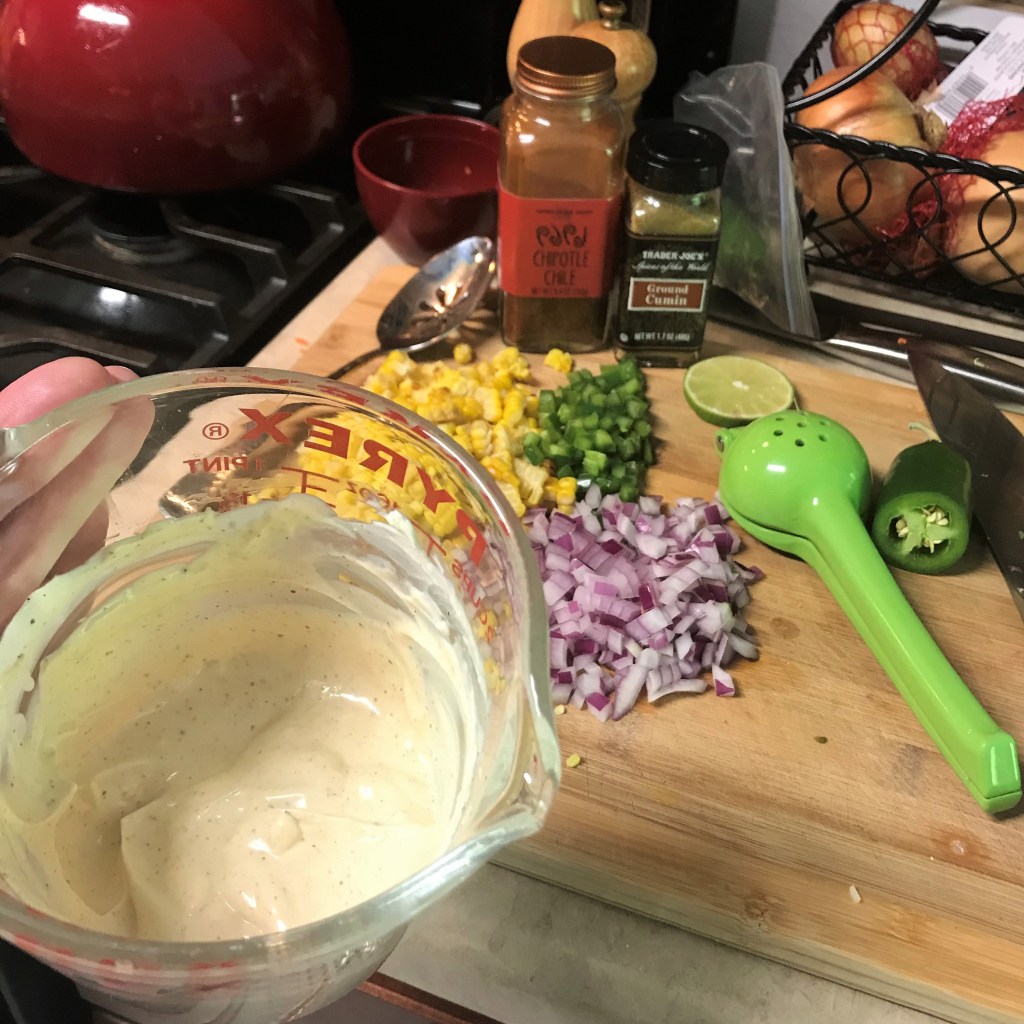
  2. Combine dressing ingredients in a small bowl or glass measuring cup, whisk or stir until smooth. If dressing seems very thick, add another tablespoon of olive oil and another squeeze of lime.
  3. Drain pasta and toss to evaporate excess moisture. Add a small amount of the dressing and toss to coat. This helps to prevent the pasta sticking together. Let the pasta cool a few minutes, then add corn, jalapeno and red onion to the pasta bowl. Pour in remaining dressing and toss to combine. Chill until cold, at least one hour.
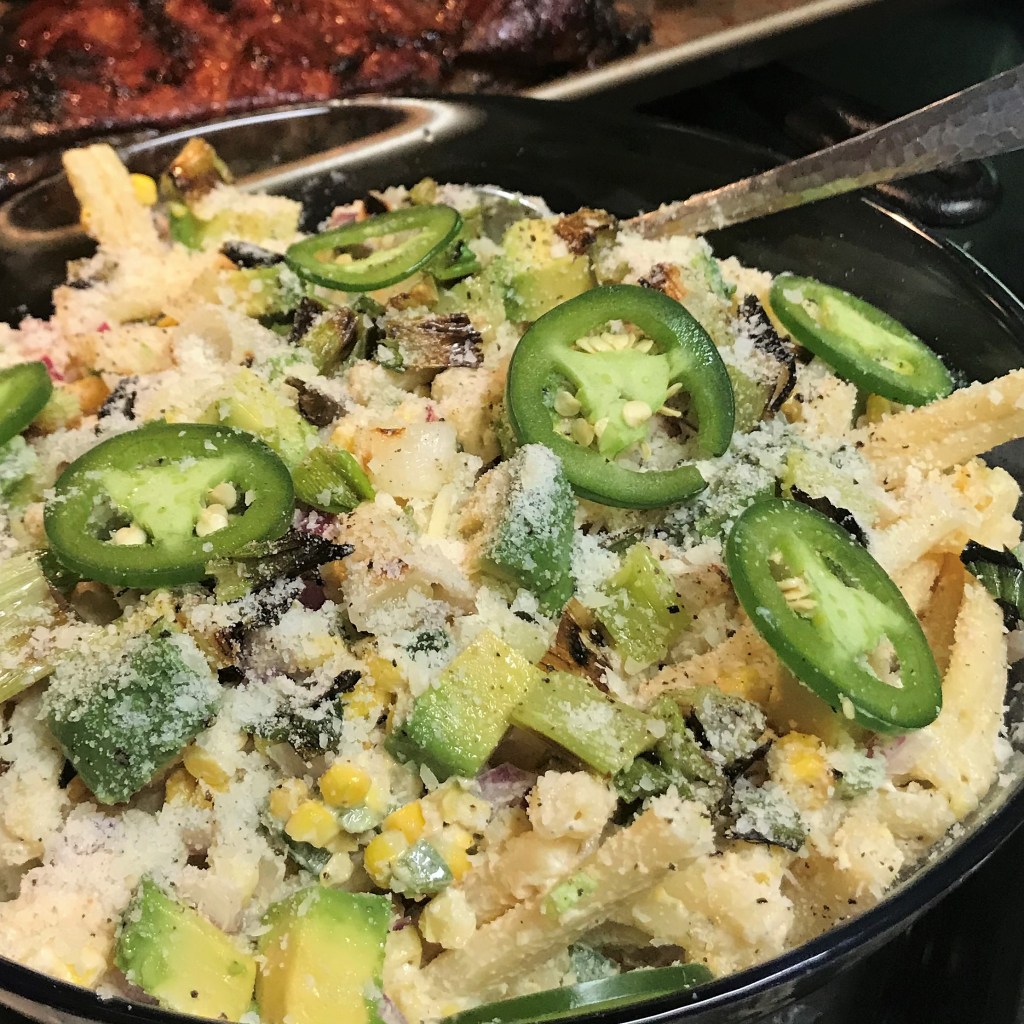
  4. To serve, top salad with chopped grilled scallions, parmesan or finely crumbled feta, avocado, jalapeno slices and cilantro.
Mexican street corn meets macaroni salad, and it rocks!

Want to print this recipe?


Creamy Spinach & Mushroom Tortellini

It seems like a never-ending battle, trying to evict leftovers from our fridge and stay on top of the new groceries coming in. Four months into pandemic lockdown, I still haven’t mastered the challenges of “shopping for the week.” But my culinary muse has been on some kind of caffeine kick lately, and I’m at it again today with a Meatless Monday-worthy pasta dish, made almost entirely with leftovers. Not to worry, though—I’m sure it would be fantastic with fresh-bought ingredients, too.

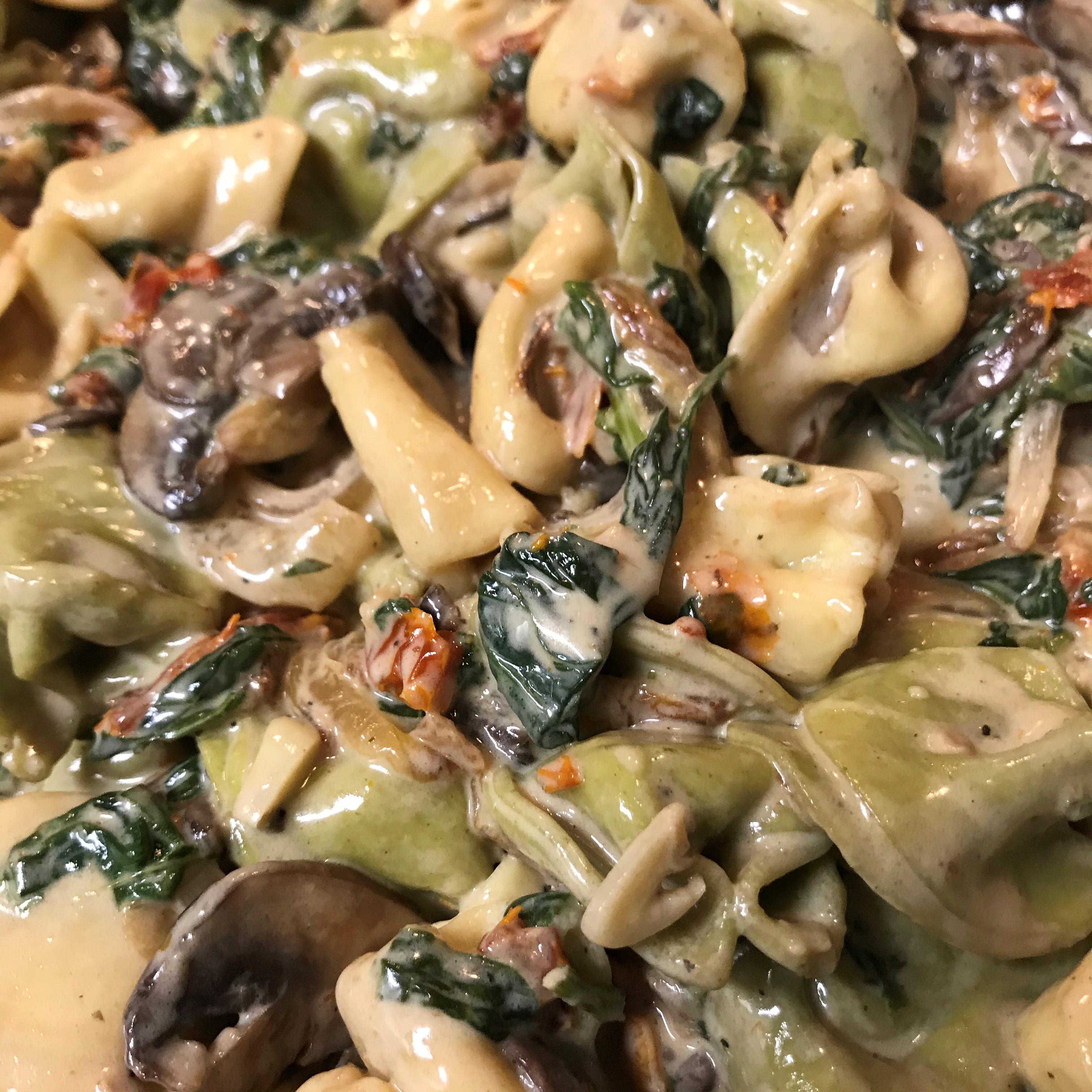
This one uses up leftover fresh tortellini from a soup recipe last week, and a few fresh produce items starting clamoring when I opened the fridge, so in they went! Cremini mushrooms, with all their warm, earthy flavor, plus baby spinach, sweet onions and fresh garlic. I happened to have a half bag of sweetly sun-kissed dried tomatoes in the pantry cabinet, and we’re off and cooking. I’m gonna get to the bottom of this cluttered fridge yet!

We are empty nesters, and many of my recipes are designed to serve two people. But doubling a recipe such as this one is easy, as long as you’re mindful about the size of your pan.

It’s creamy, rich and packed with earthy flavor!

Ingredients

Extra virgin olive oil

1 medium sweet onion (tennis ball size), cut in half and sliced into crescent shapes

8 oz. cremini mushrooms, cleaned and sliced

3 handfuls fresh baby spinach, rough chopped

1/4 cup soft sun-dried tomatoes*

2 cloves garlic, chopped

Kosher salt and black pepper

1/2 cup heavy cream* (see notes for a lighter option)

1/4 cup dry white wine* (something like Pinot Grigio is perfect)

2 cups fresh cheese tortellini (this was half a large package)

Trader Joe’s umami seasoning, optional

3 Tbsp. parm-romano blend* (plus extra for serving)


*Notes

My sun-dried tomatoes are the soft variety, packed in a zip-top bag. If yours are dry and hard, it’s probably a good idea to rehydrate them for a few minutes in hot water before proceeding. If they’re packed in olive oil, you’re good to go.

Want to lighten this up? Here’s a trick that works great in recipes where the fat of heavy cream isn’t as important as the texture. Swap it out in favor of canned evaporated milk. It is more concentrated than fresh milk, but with a fraction of the fat. Give it a try!

If you prefer, you could substitute a vegetable broth for the wine, plus a squeeze of lemon juice or splash of red wine vinegar. This will make up for the acidity the wine adds to the dish.

We go through a LOT of parm-romano blend at our house, and I mention this ingredient in many of my recipes. Rather than purchasing the pre-grated stuff at the market, we buy parmesan and romano in blocks and grate it in our food processor. It’s terrific to be able to reach into the fridge and have a container of it ready to go, plus it’s fresher and more flavorful with no added stabilizers or anti-caking agents. Did I mention we save money with this method?


I’m a visual learner, and if you are as well, have a look at the slideshow before you advance to the recipe. Fair warning: it might make you hungry!


Instructions

  1. Place a large pot of water on to boil over medium-high heat, for cooking the tortellini.
  2. Heat 2 Tbsp. olive oil in a large non-stick skillet over medium heat.
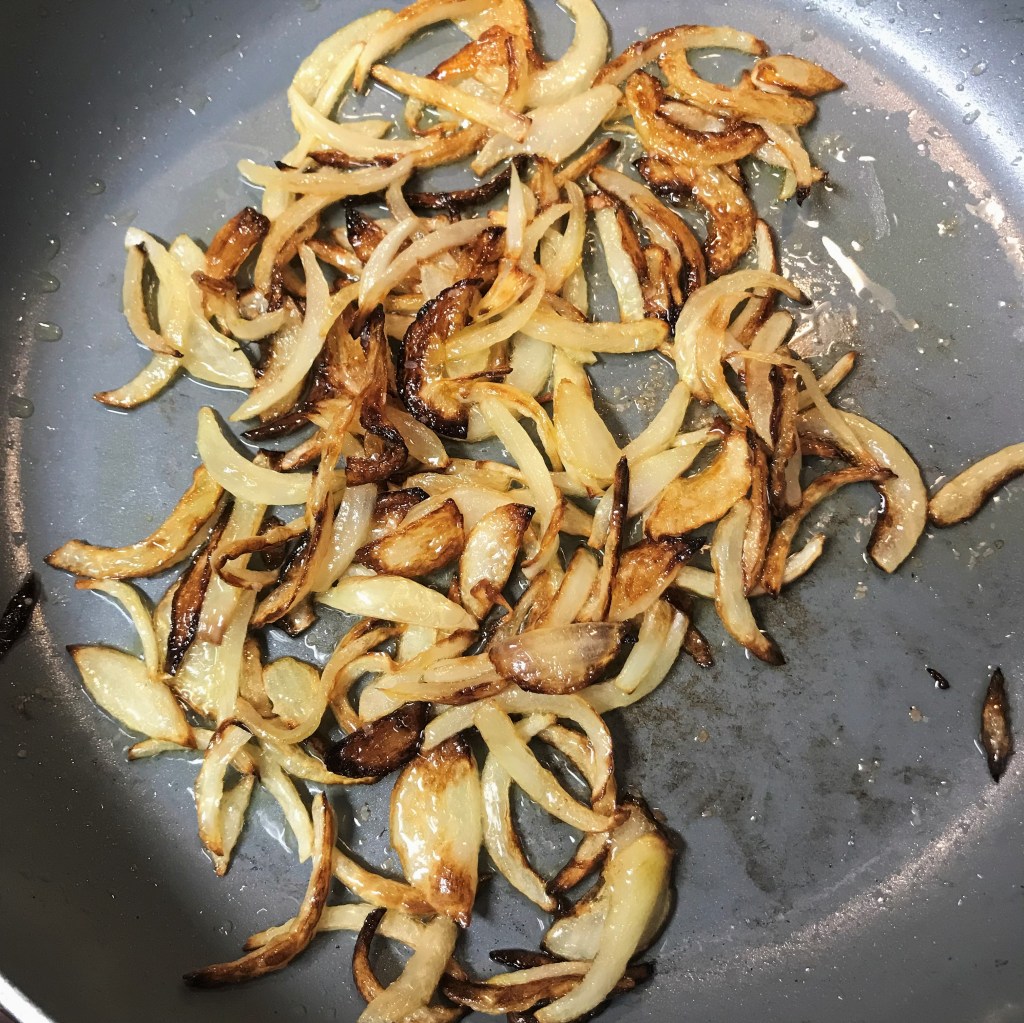
  3. Add onion slices to the skillet and cook, tossing occasionally, until softened and browned on the edges.
  4. Remove onions to a bowl, add another splash of olive oil to the pan and toss in the mushrooms, cooking and tossing until they are soft and moisture has evaporated. Season with salt and pepper.
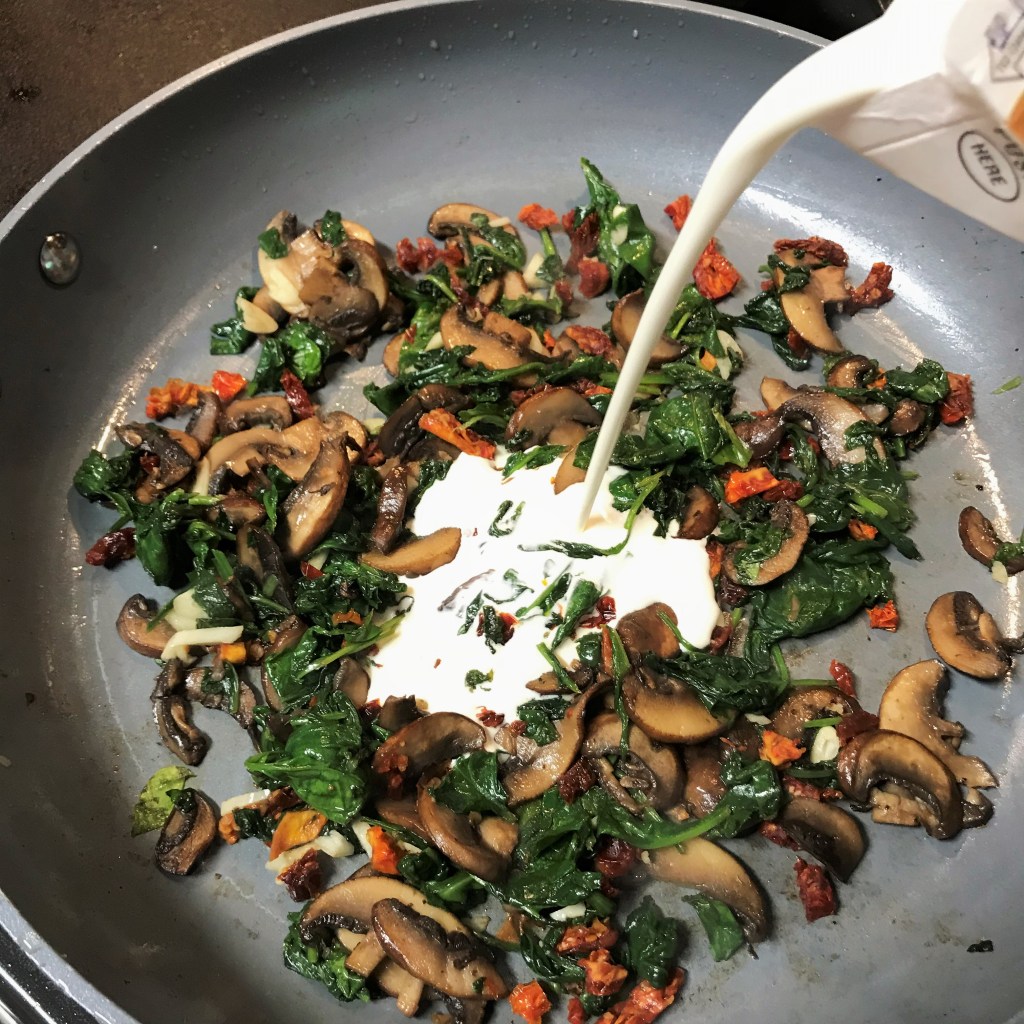
  5. Move the mushrooms to the outside edges of the pan and add the spinach leaves to the middle. Toss them around until wilted then add the sun-dried tomato pieces.
  6. Stir in the heavy cream, then add the white wine and parmesan-romano blend and reduce heat. Return the caramelized onions to the pan. Cover and allow mixture to simmer on low heat a few minutes while the pasta cooks.
  7. When water comes to a boil, season with 2 teaspoons kosher salt (don’t worry—most of the salt ends up down the drain). Add tortellini and stir immediately to prevent sticking. Reduce heat to medium and allow pasta to cook at a low boil for about 5 minutes. It’s OK to undercook them slightly because they’ll cook further in the sauce.
  8. Drain tortellini (or use a large straining spoon, as I did) and add to the sauce mixture. At this point, I tasted and decided it need just a little something. Remember the Trader Joe’s “umami” seasoning we introduced in the Lentil Moussaka? It’s perfectly at home in this dish, underscoring the flavor of the mushrooms already in the dish, and throwing on just a touch of extra savory depth.
  9. Give it a good toss to thoroughly coat the tortellini, then go set the table. It’s a good time to pour another glass of wine, while you’re at it.
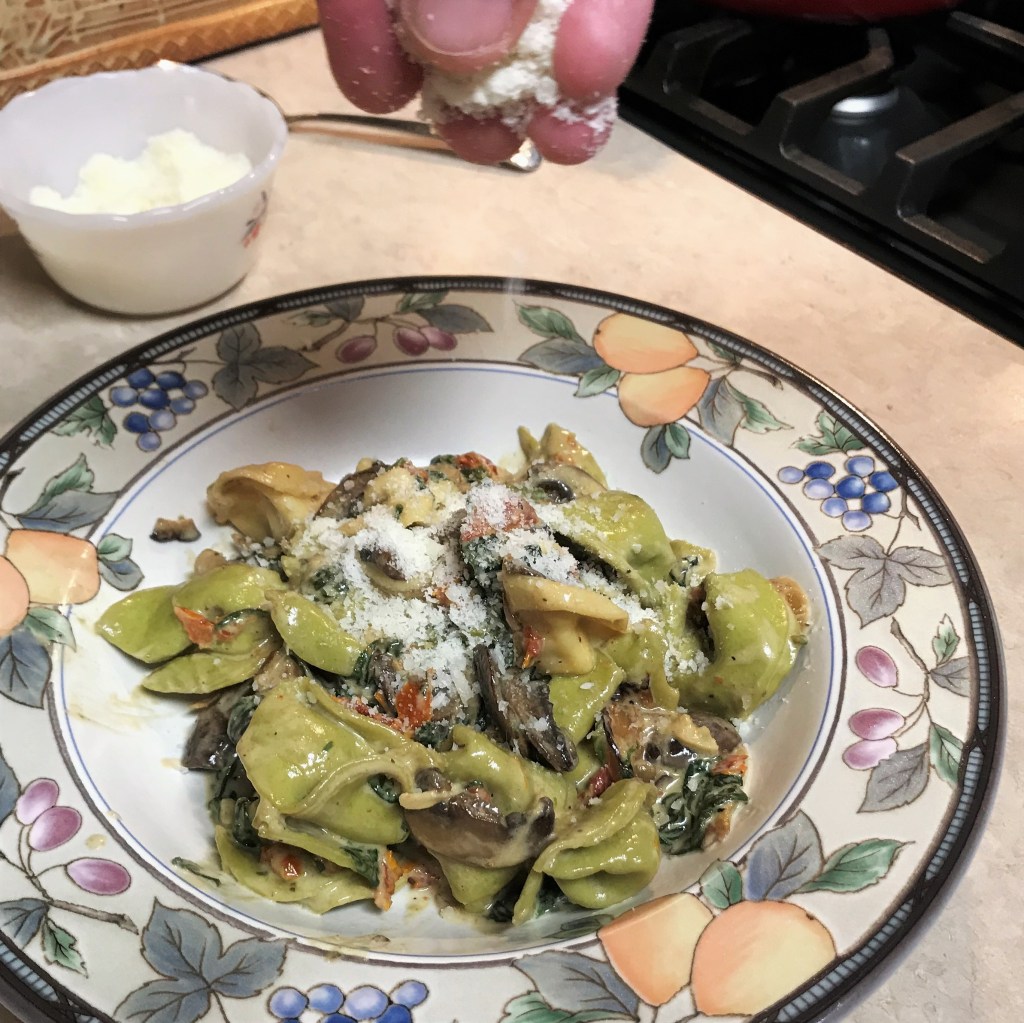
  10. Divide the creamy pasta between two pasta bowls, sprinkle with additional parm-romano blend and serve.

It doesn’t look like leftovers and it sure doesn’t taste like it, but I’ve regained some ground on the shelves of my refrigerator. Plus, we ended up with one lingering portion of this dish, perfect for my husband to reheat for a work lunch. And that’s a win-win!

Want to print this recipe?