Pumking Ice Cream

Didn’t I promise this would happen, when my beloved Pumking ale was released this year? I have been obsessed with the idea of turning this seasonal spiced ale into an ice cream, and here I’ve gone and done it!

Many of the recipes I make are merely altered versions of something I’ve made before. In this case, I followed the lessons I learned when I made the Black Mountain Chocolate Stout Ice Cream I shared back in the summer. As with that recipe, I’ve reduced the beer to intensify its flavors, giving immeasurable boost of pumpkin-y-ness to my standard custard-based ice cream. Throw in a fair amount of pureed pumpkin, and what do you suppose I got?
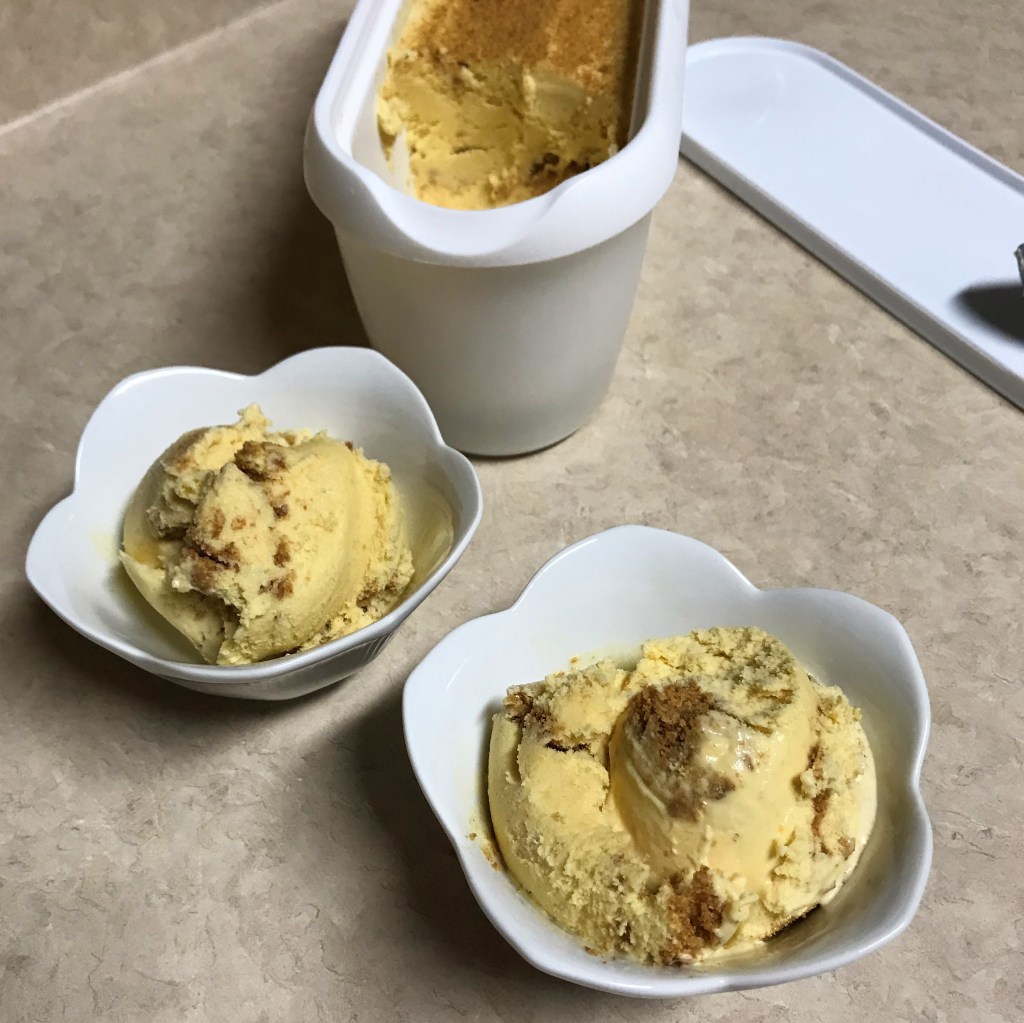
I can’t wait to dig my spoon right into this!

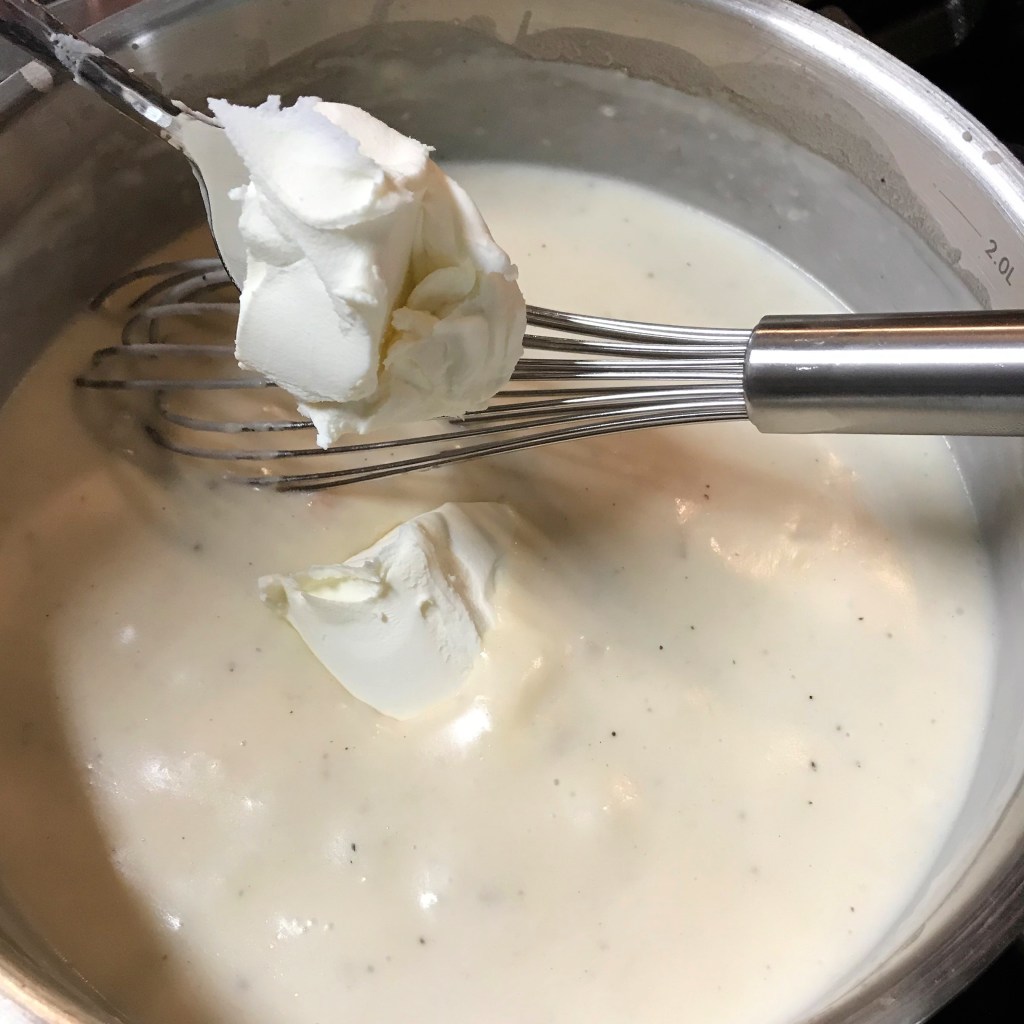
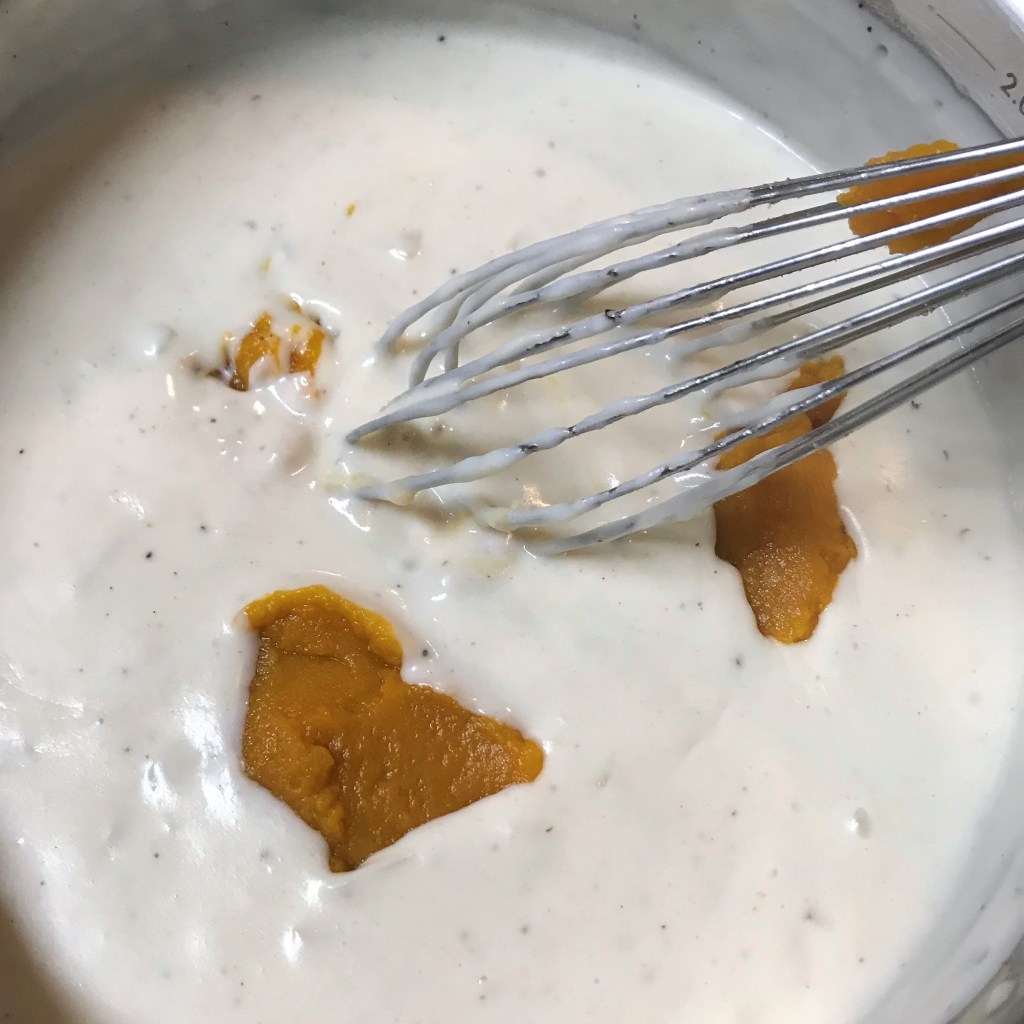
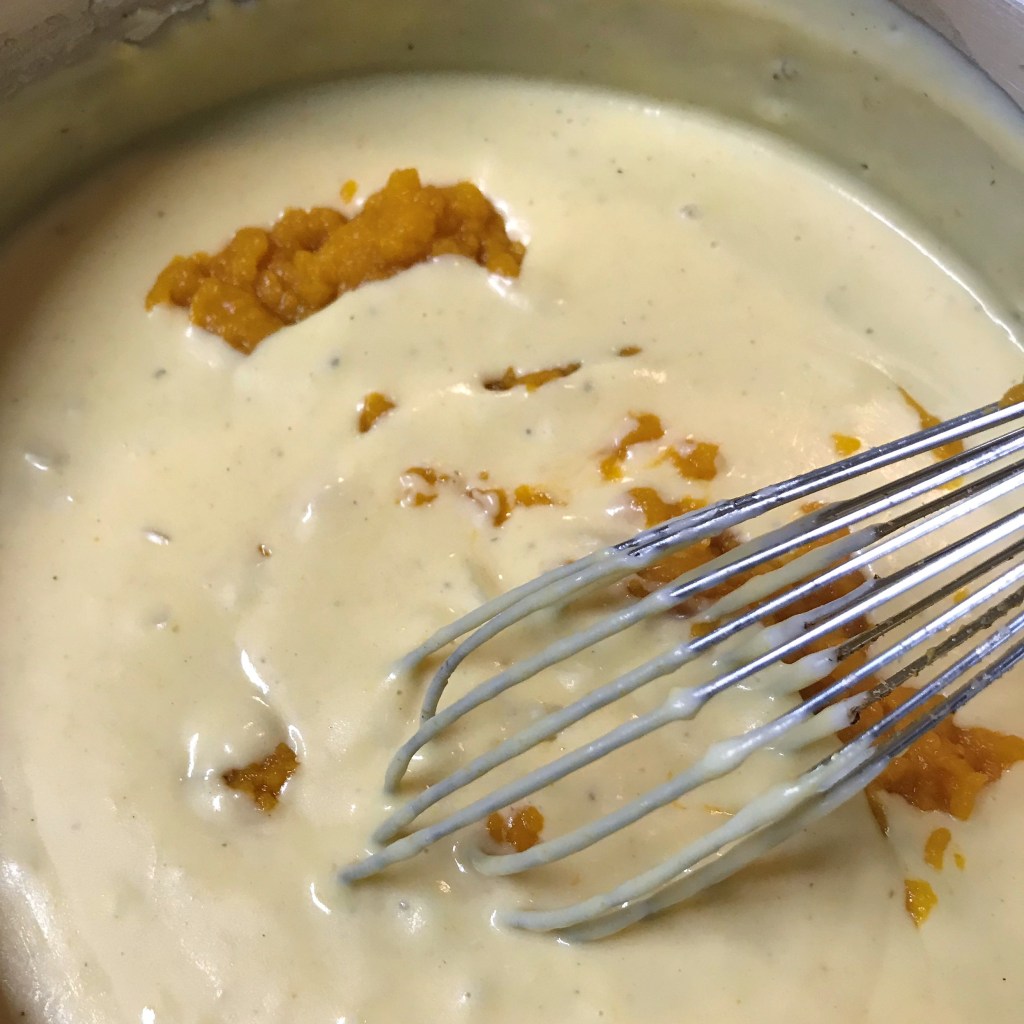
The pumpkin flavor is amped up three times—first with pure pumpkin puree, and then with the infusion of the pumpkin butter, which is essentially cooked pumpkin with sugar, spices and lemon juice. Finally, the Pumking ale accents the ice cream with a spiced and slightly hoppy flavor that is exactly the right balance to the sweet richness.
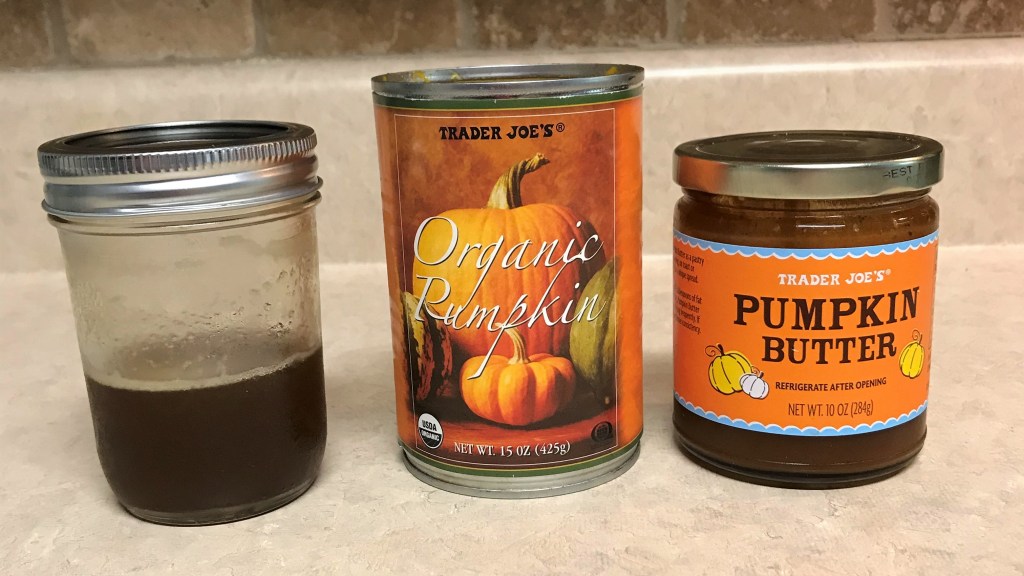
Triple threat! The reduced Pumking, pumpkin puree and pumpkin butter will each bring their own flavor to the party.

The other ingredients are straight off my go-to list for homemade custard-based ice cream. Equal parts whole milk and heavy cream, three egg yolks, just shy of one cup of sugar. I heated the milk and cream, plus half the amount of sugar, to the just-barely-boiling point.

While that was working, I whisked the egg yolks together with the remaining sugar until it was lighter in color and fluffed up in volume. Sometimes I do this in my stand mixer, but this time it worked fine in a glass pitcher bowl and a little elbow grease.
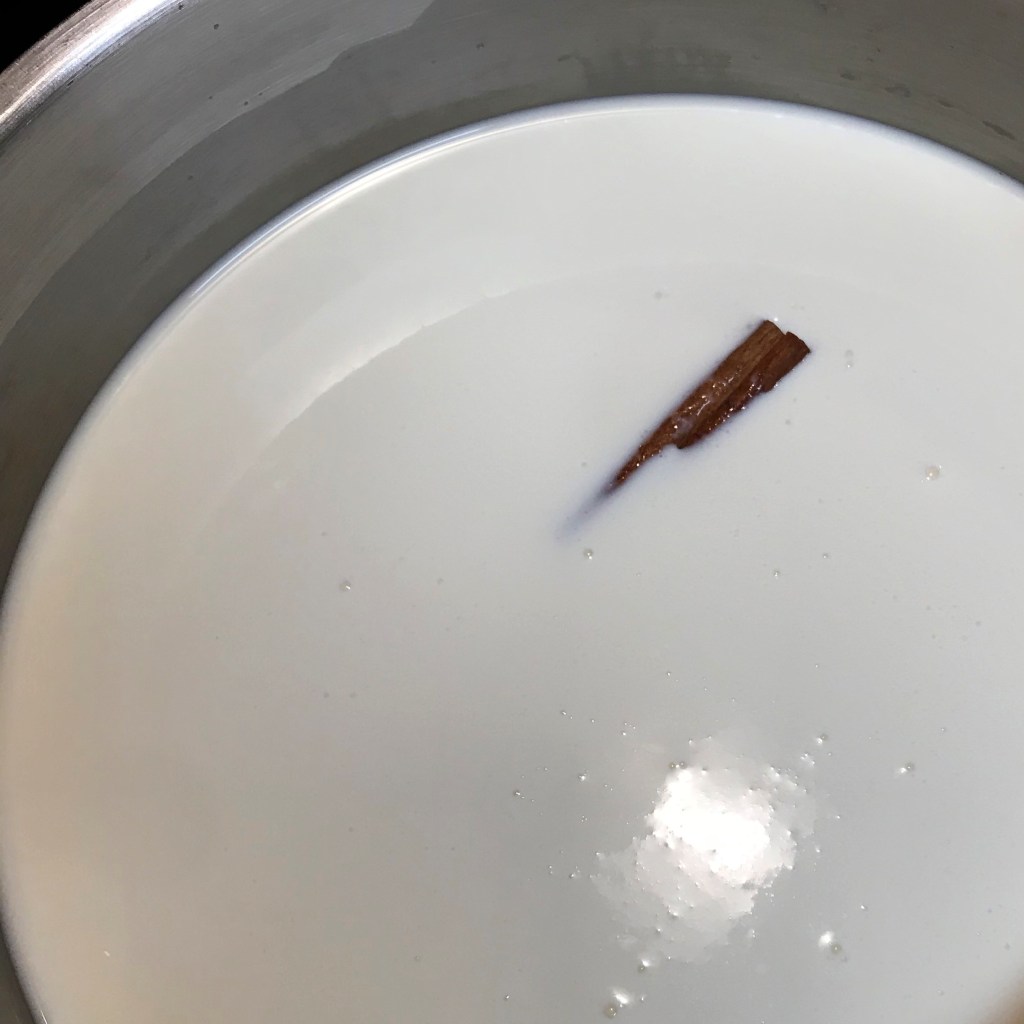

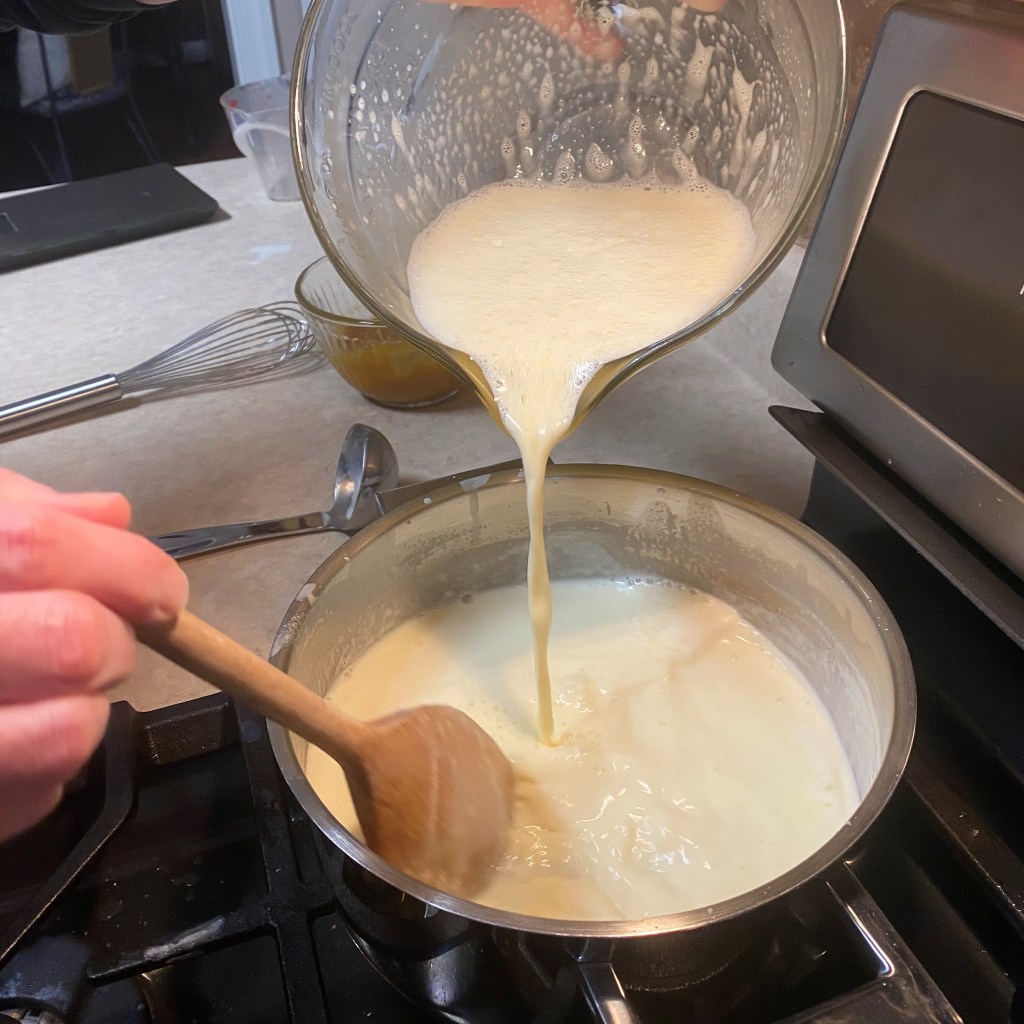
I gradually streamed half of the hot cream mixture into the egg yolks, whisking the whole time to prevent scrambling the eggs. Then, I returned the tempered egg mixture to the pan with the remaining cream mixture, and cooked (stirring constantly) until the custard was slightly thickened and coated the back of my wooden spoon.

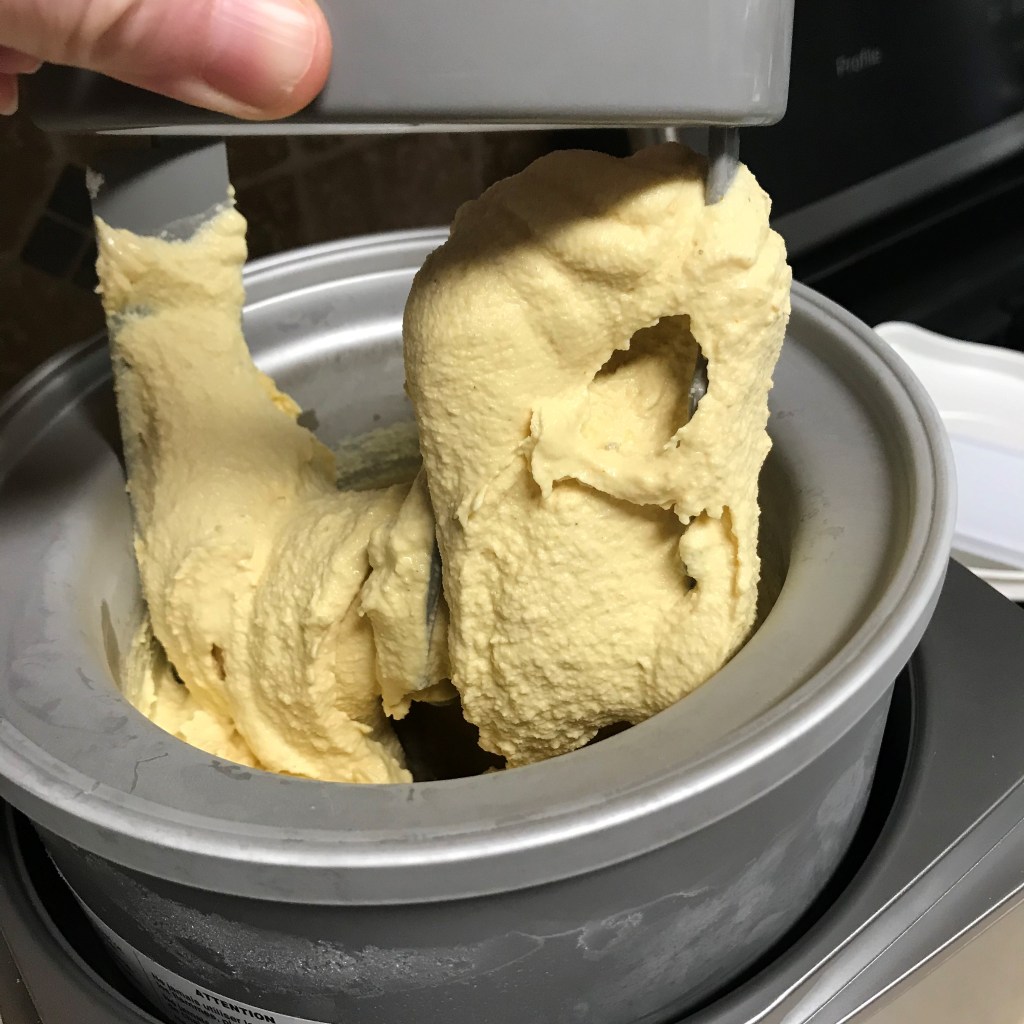
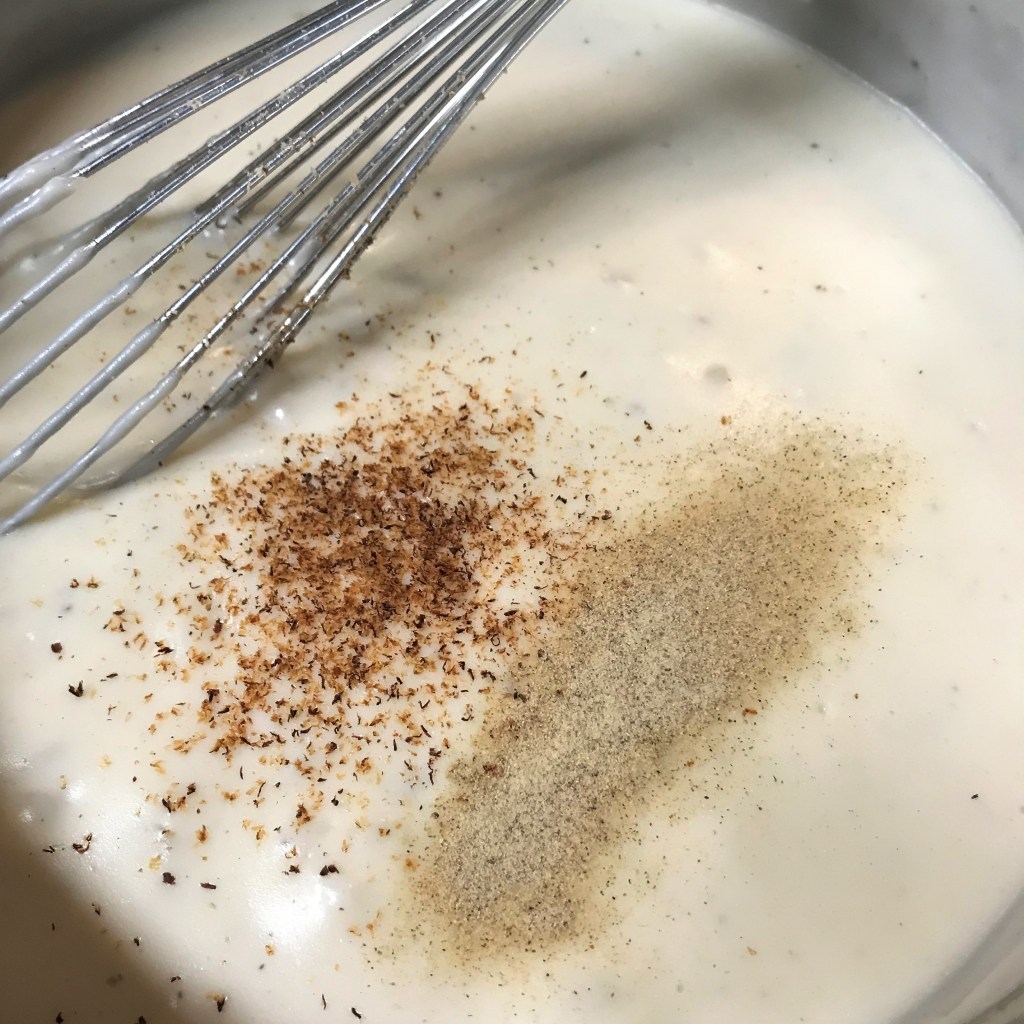
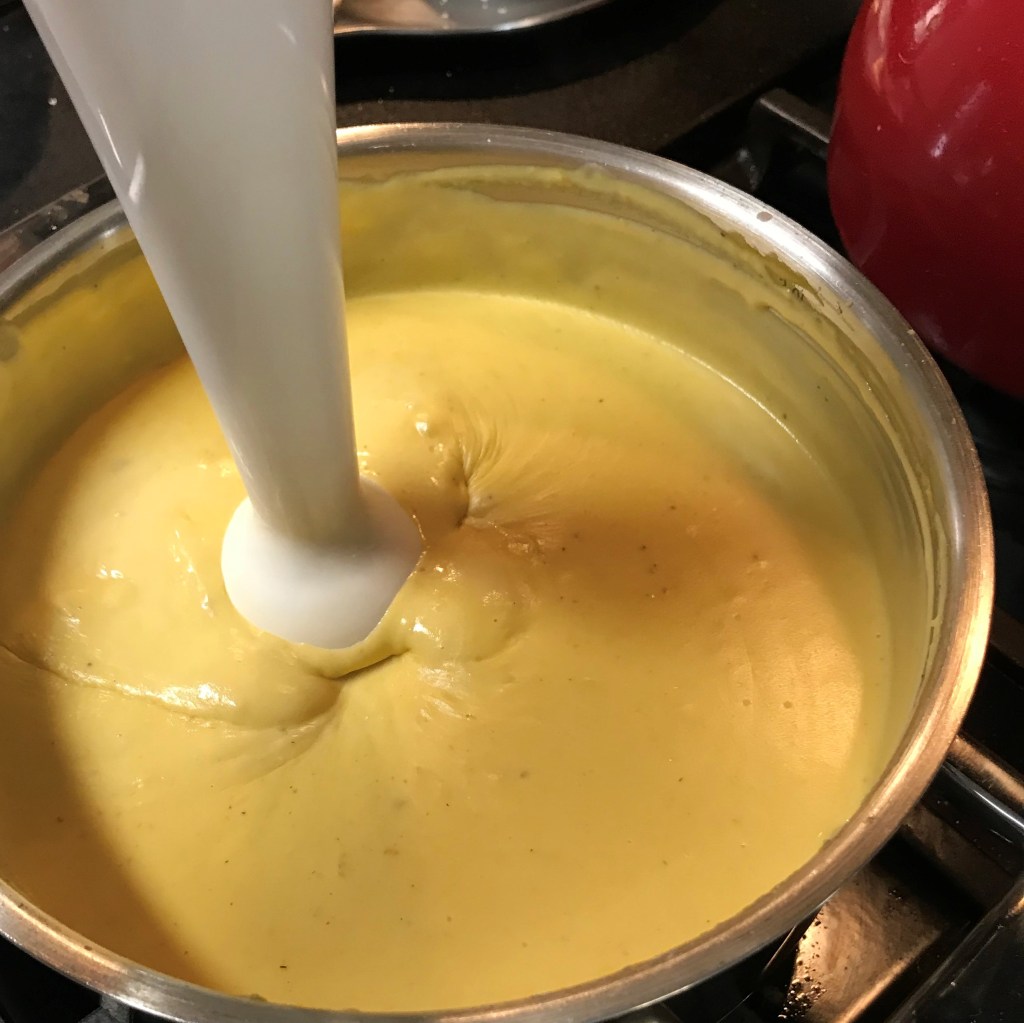
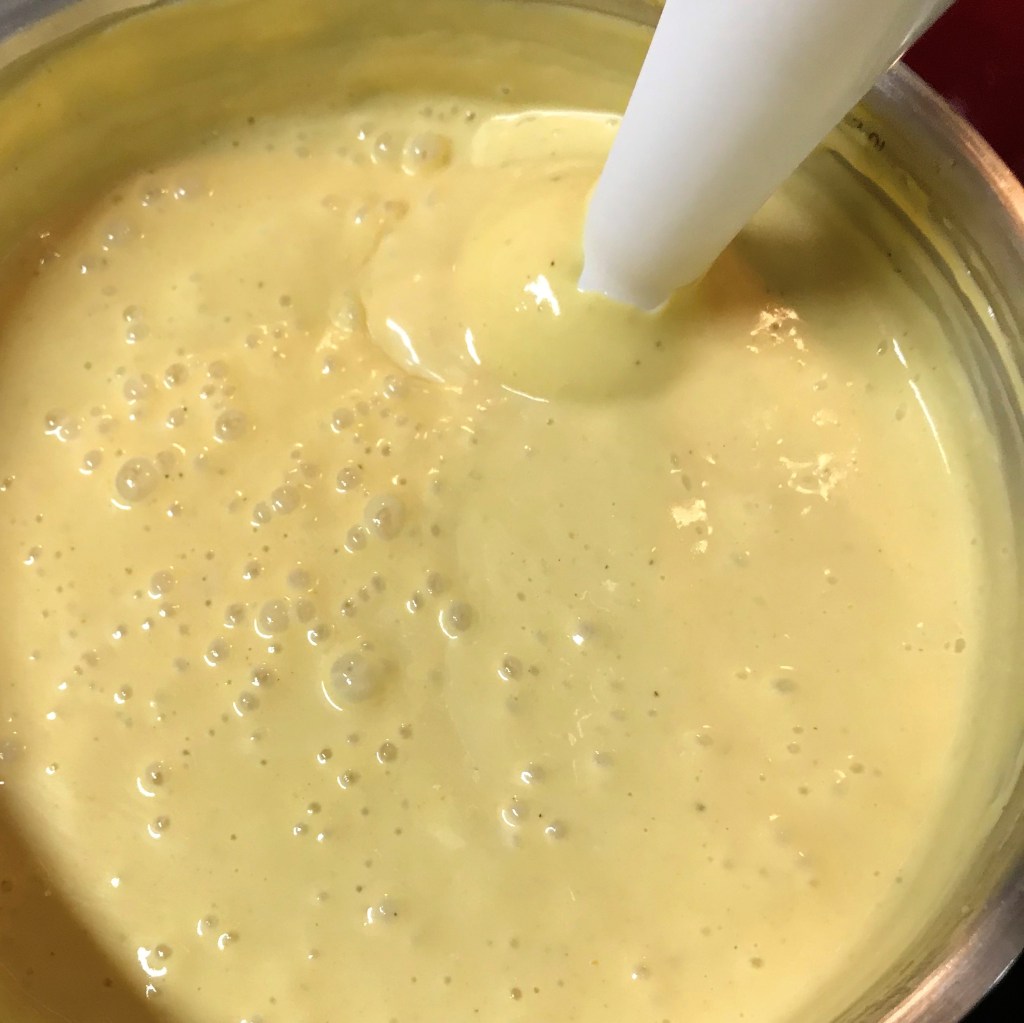
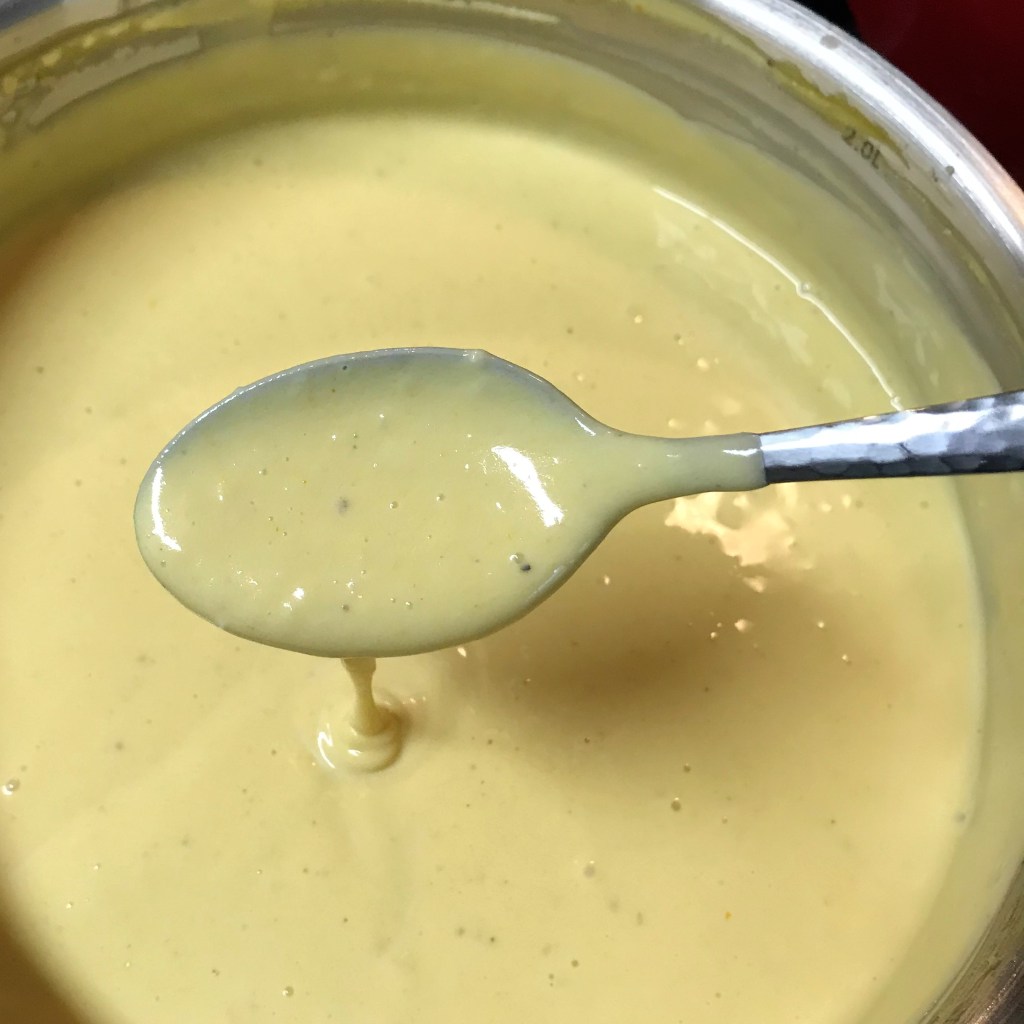
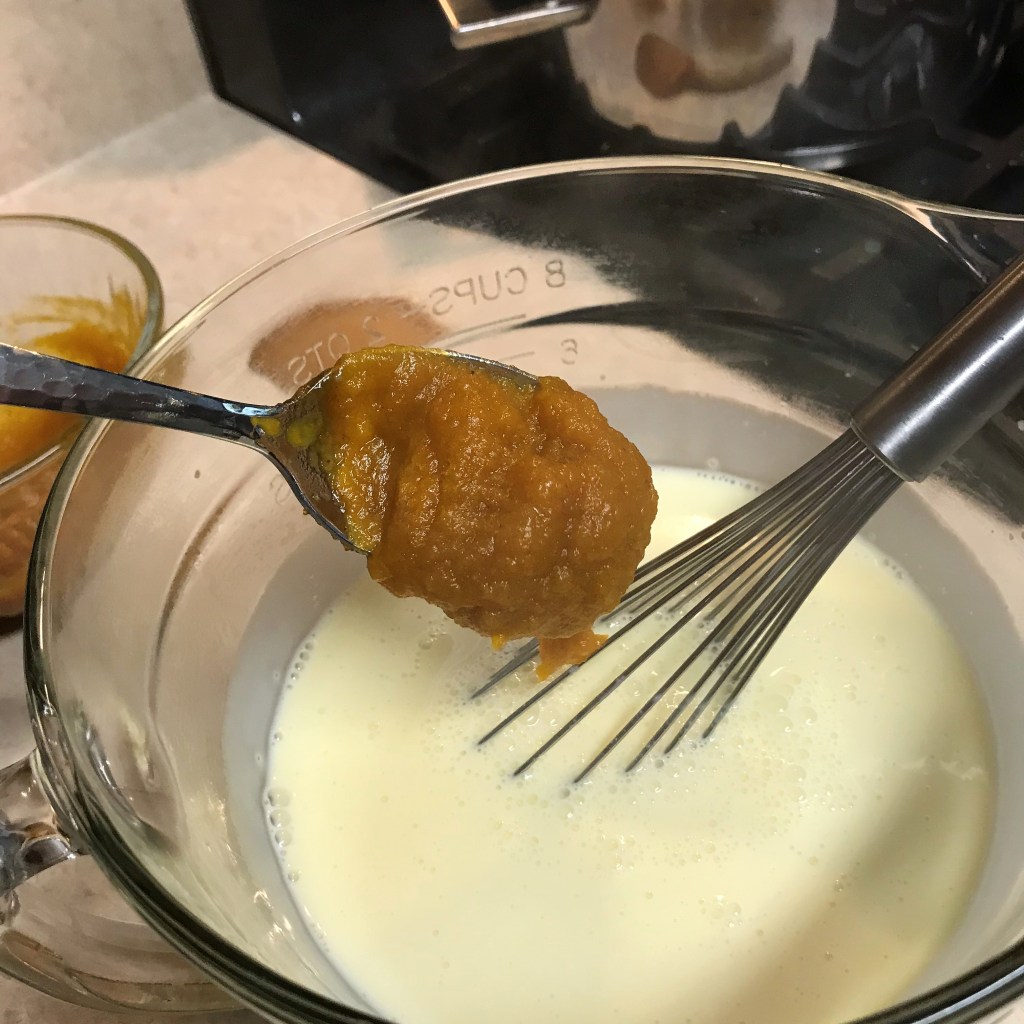
The cooked custard mixture went back into the pitcher bowl, and I blended in the pumpkin puree, pumpkin butter and reduced Pumking ale. As always, I laid plastic wrap directly on top of the custard (this prevents a skin forming on top, and also prevents condensation that could screw up the texture of the finished ice cream. Into the fridge for at least 8 hours (I usually leave it overnight), then into the ice cream maker according to manufacturer’s instructions. Here’s how the rest of the recipe went:
This ice cream surprised me with its super-creamy, unbelievably pumpkin-y flavor and texture. You don’t taste beer in the ice cream—just a complex layered flavor that seems more complicated than it was.

As Thanksgiving desserts go, this is a winner, not only because it’s delicious and satisfies the desire for a rich, creamy pumpkin dessert, but also because you can make it several days ahead to free up time in your schedule for more pressing dishes.

Serve it in an ice cream cone or bowl, or on top of a square of gingerbread or a brownie or a big fat oatmeal cookie or…OK, straight from the container. Why the heck not?
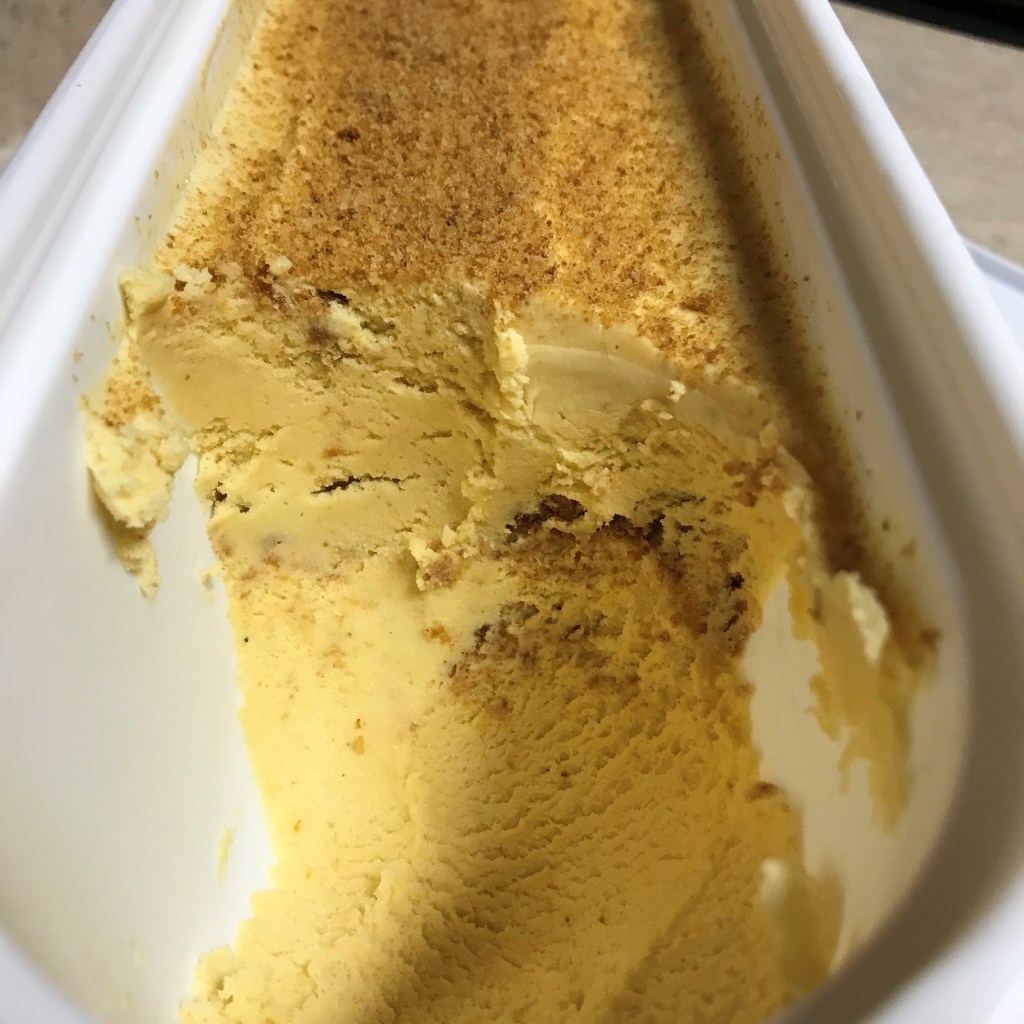
Just like this. 🙂

Ingredients

8 oz. Pumking spiced ale (or another pumpkin seasonal ale)

1 1/2 cups whole milk

1 1/2 cups heavy cream

3 egg yolks

3/4 cup organic cane sugar, divided

1/2 cup pure pumpkin puree (not pie filling)

1/4 cup Trader Joe’s pumpkin butter* (see notes)

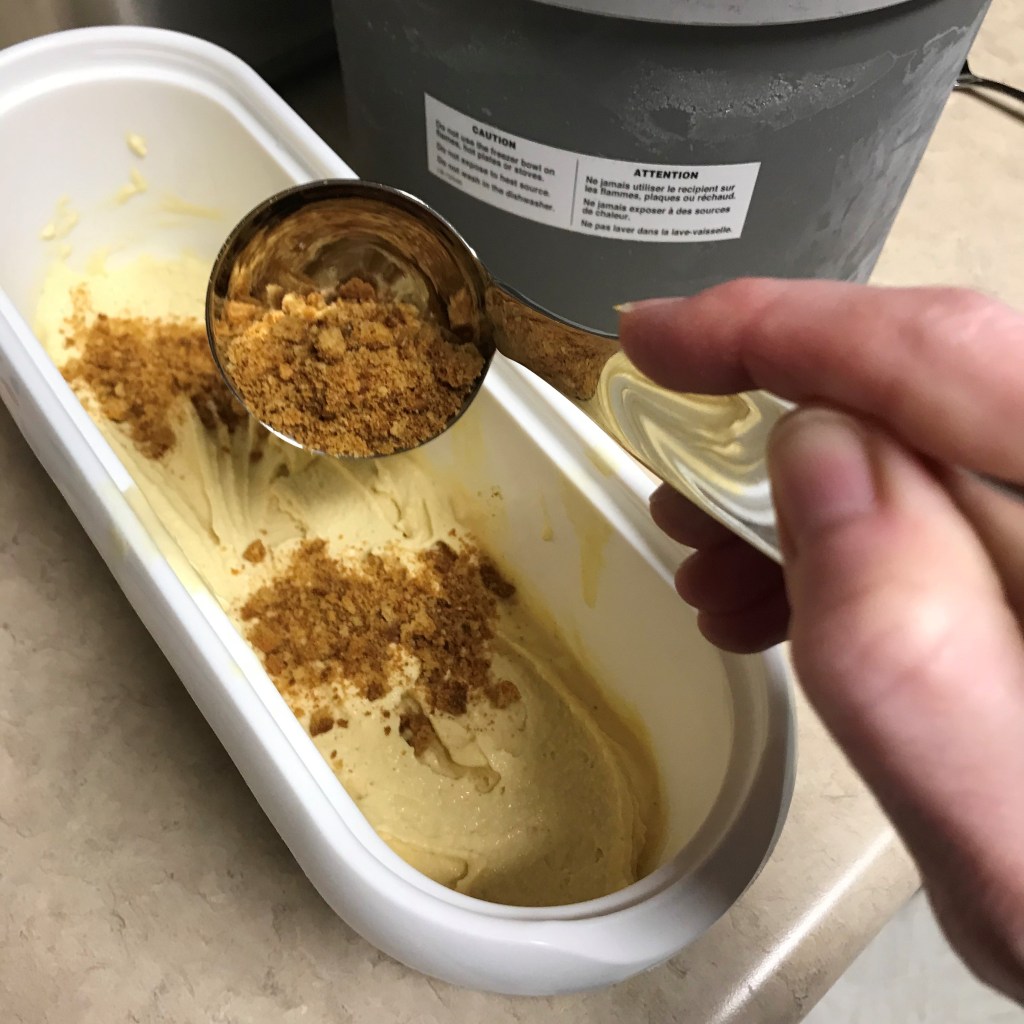
1/4 cup crushed ginger snap cookies (optional)

1 oz. vodka (optional, for texture; this is added during final minute of freezing)

*Notes

If you cannot get your hands on the Trader Joe’s pumpkin butter, I would recommend increasing the puree to 1 cup, and cook it with a couple tablespoons of brown sugar, a squeeze of lemon juice and a teaspoon of pumpkin pie spices. Cook until it’s caramelized and thickened, then refrigerate overnight before adding it to the ice cream. It won’t be exactly the same, but darn close.

This tastes exactly like a frozen scoop of creamy, spicy pumpkin pie.

Want to make this recipe?

Follow the steps and pictures above, or click to download a copy for your recipe files. Please let me know how you like it!
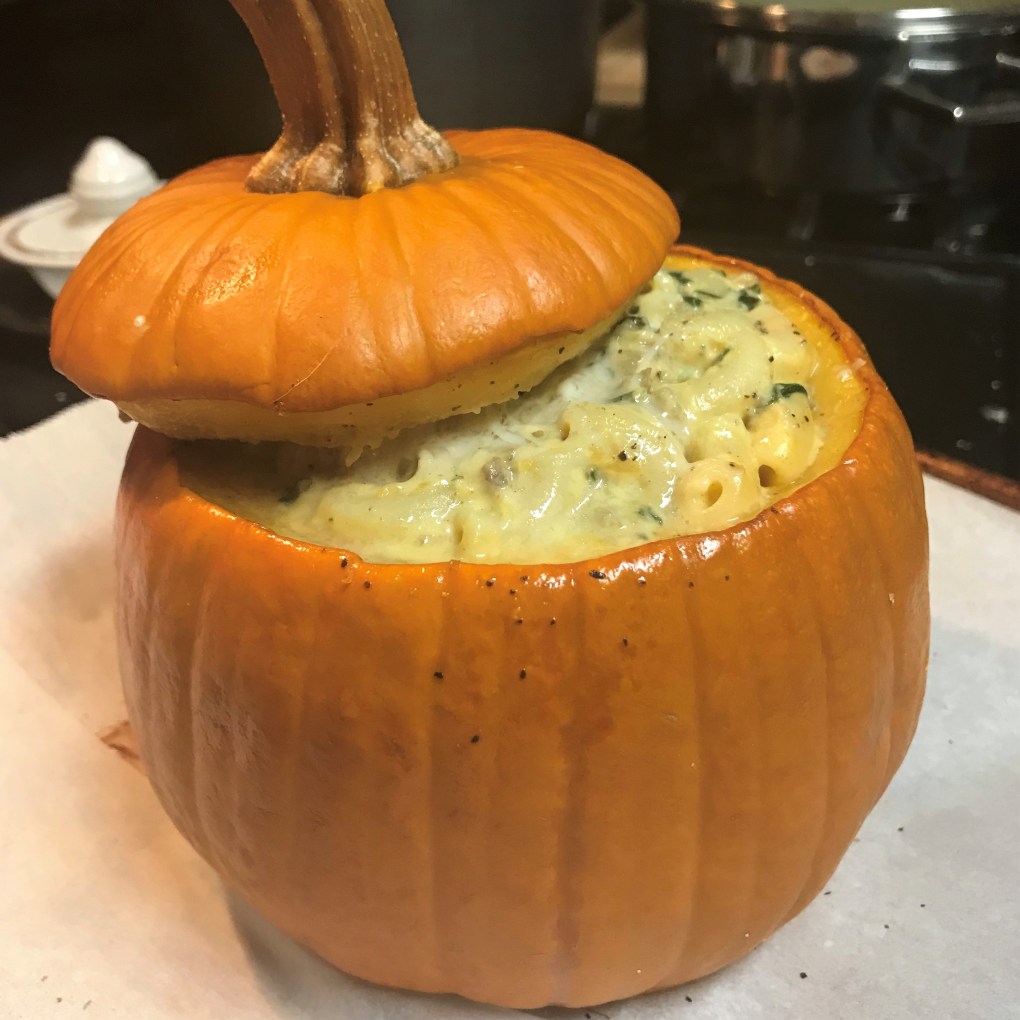
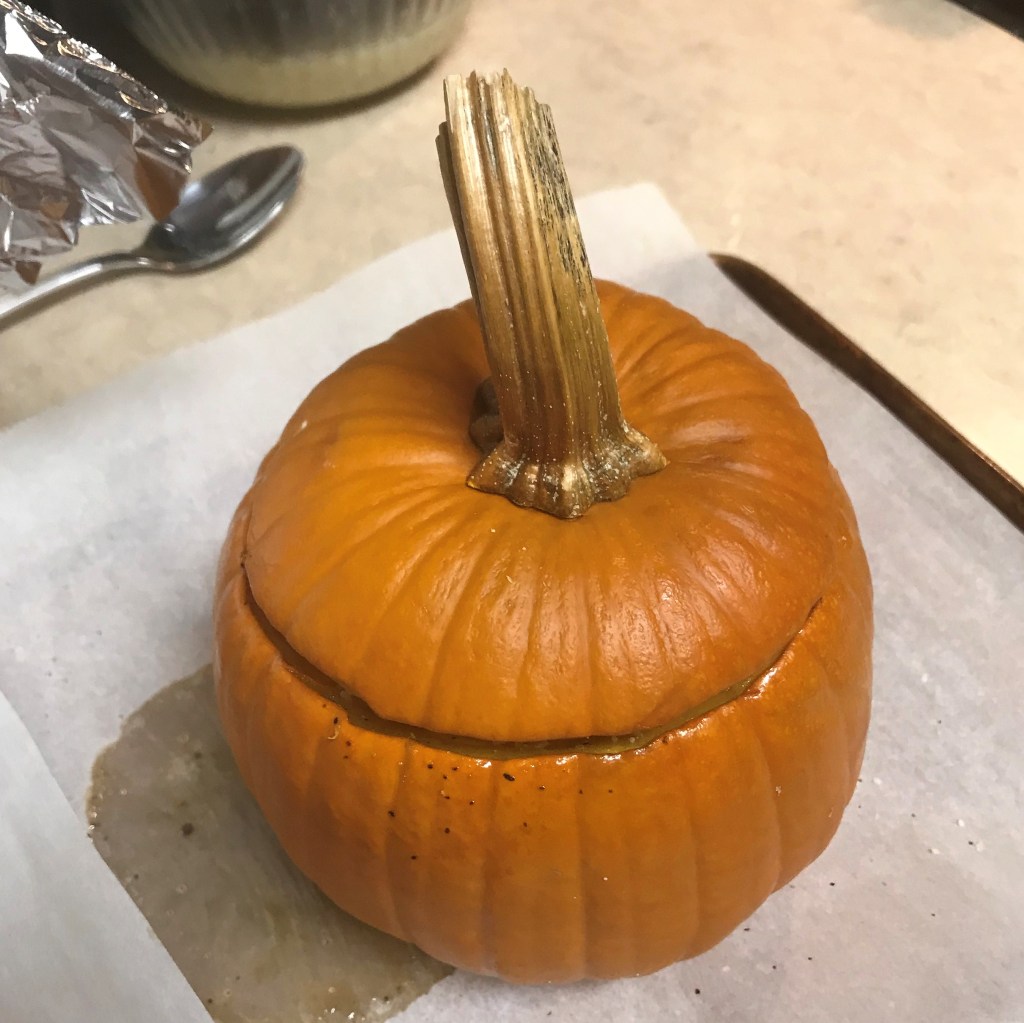
Savory Sausage Mac & Cheese (baked in a pumpkin!)

Oh yes, I did. Working on Comfort du Jour has inspired me to new levels of creativity, and I’m having a great time throwing playful twists onto foods everyone already loves. I have been thinking about the humble pumpkin, and how it has been unfairly pigeonholed into the category of “sweet” foods. Does anyone even remember what pumpkin tastes like without the “spice?” This edible gourd has so much going on, nutritionally and flavor-wise, and I wanted to remind my friends that pumpkin can be enjoyed without all that sugar. My goal with this post is kind of like the old Sears campaign, except that here I’m elevating “the savory side of pumpkin.”

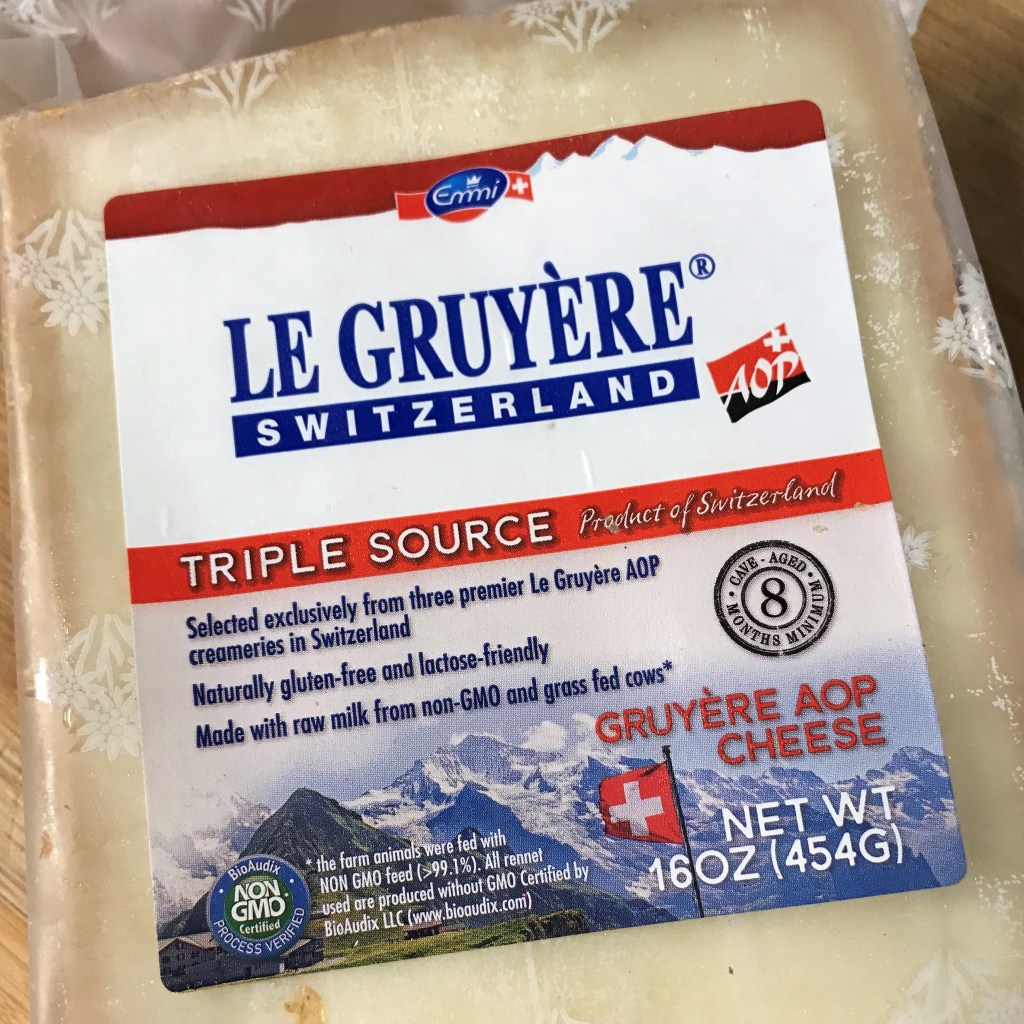
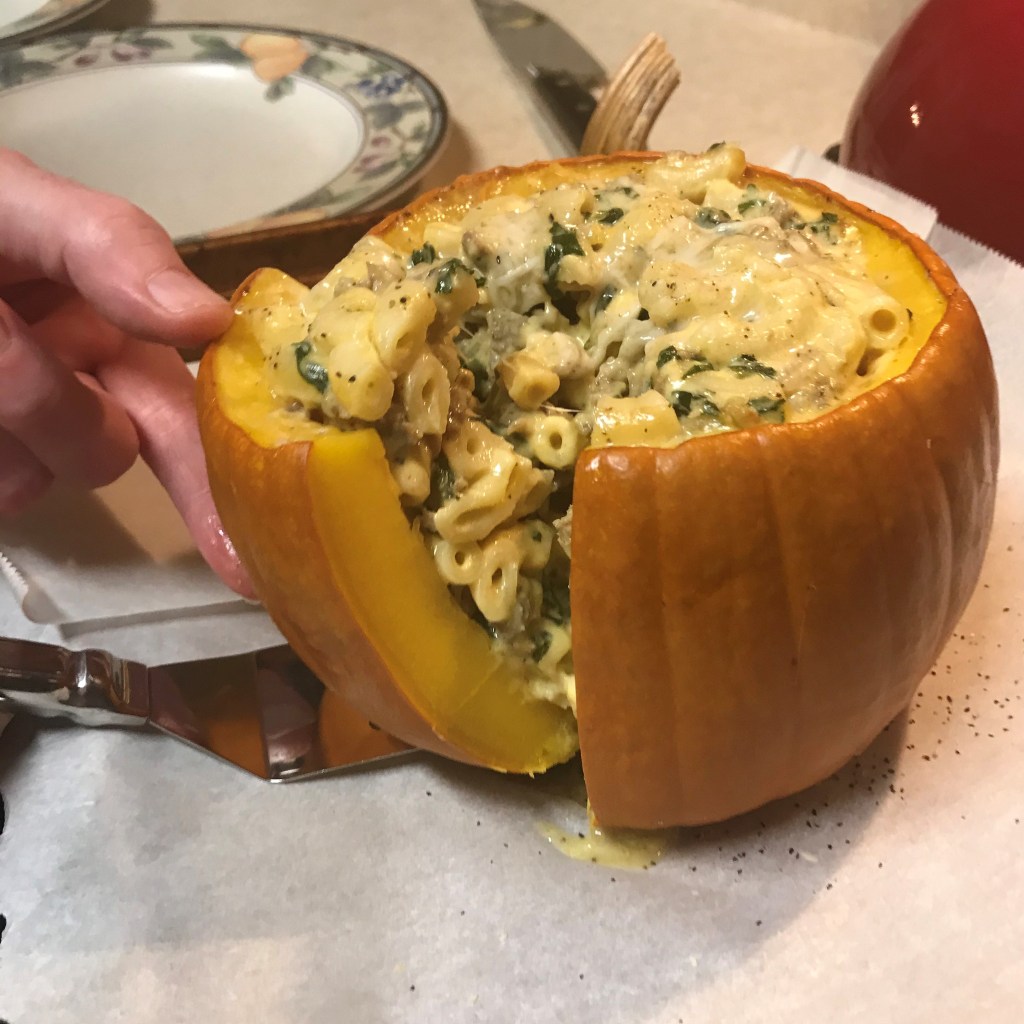
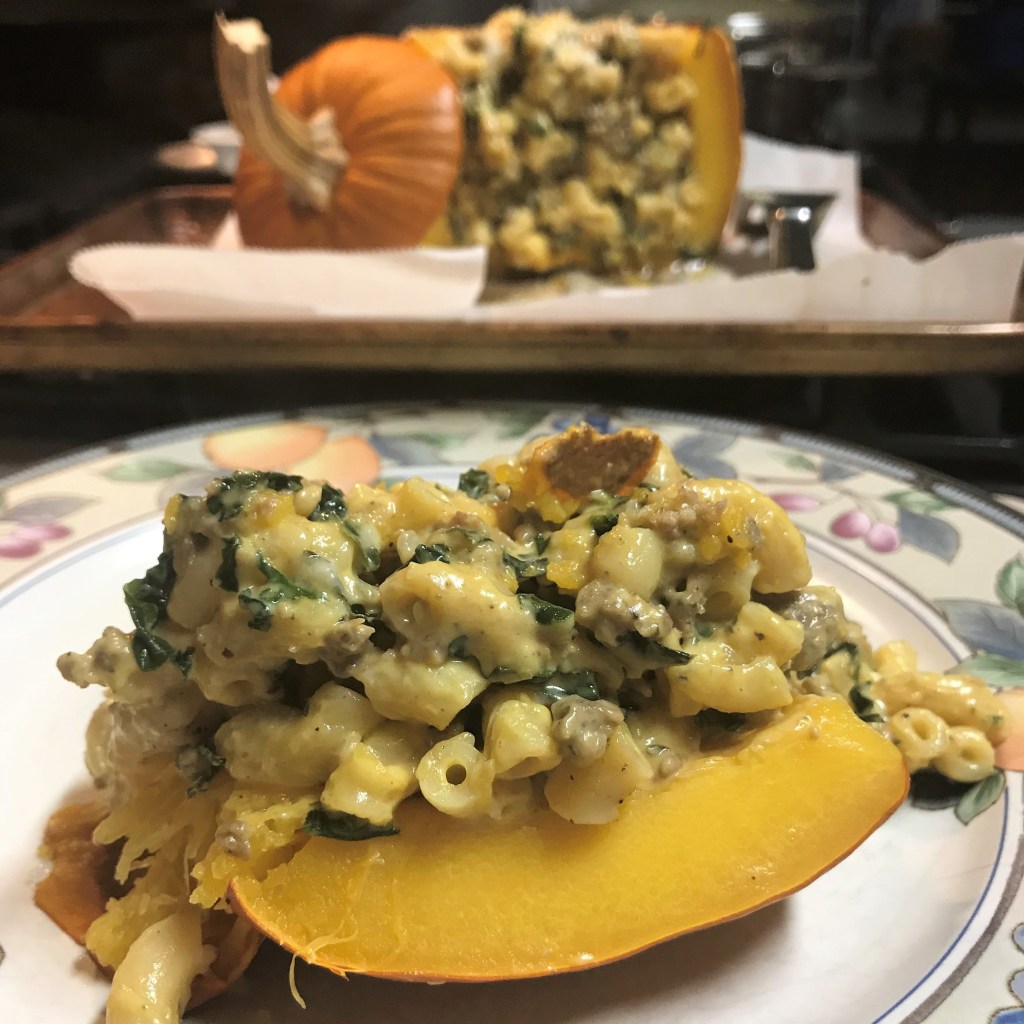
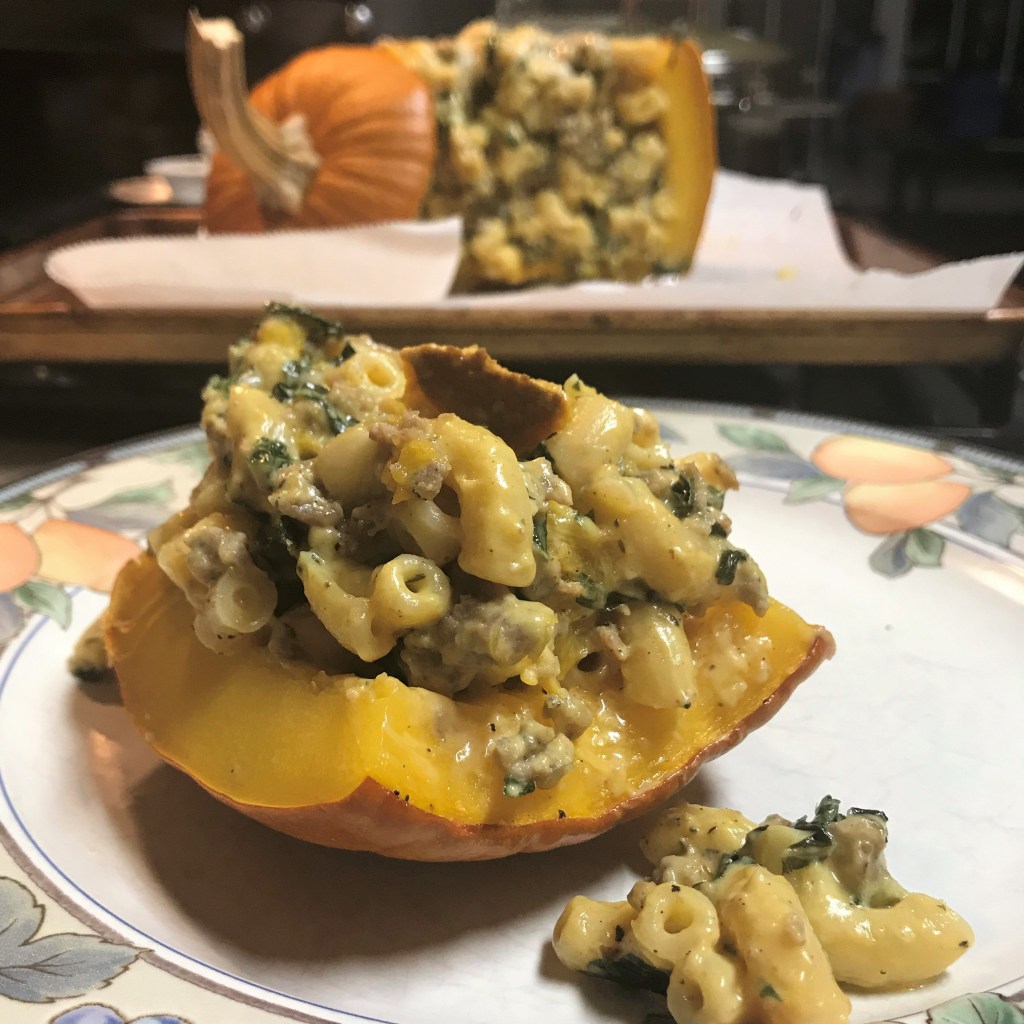
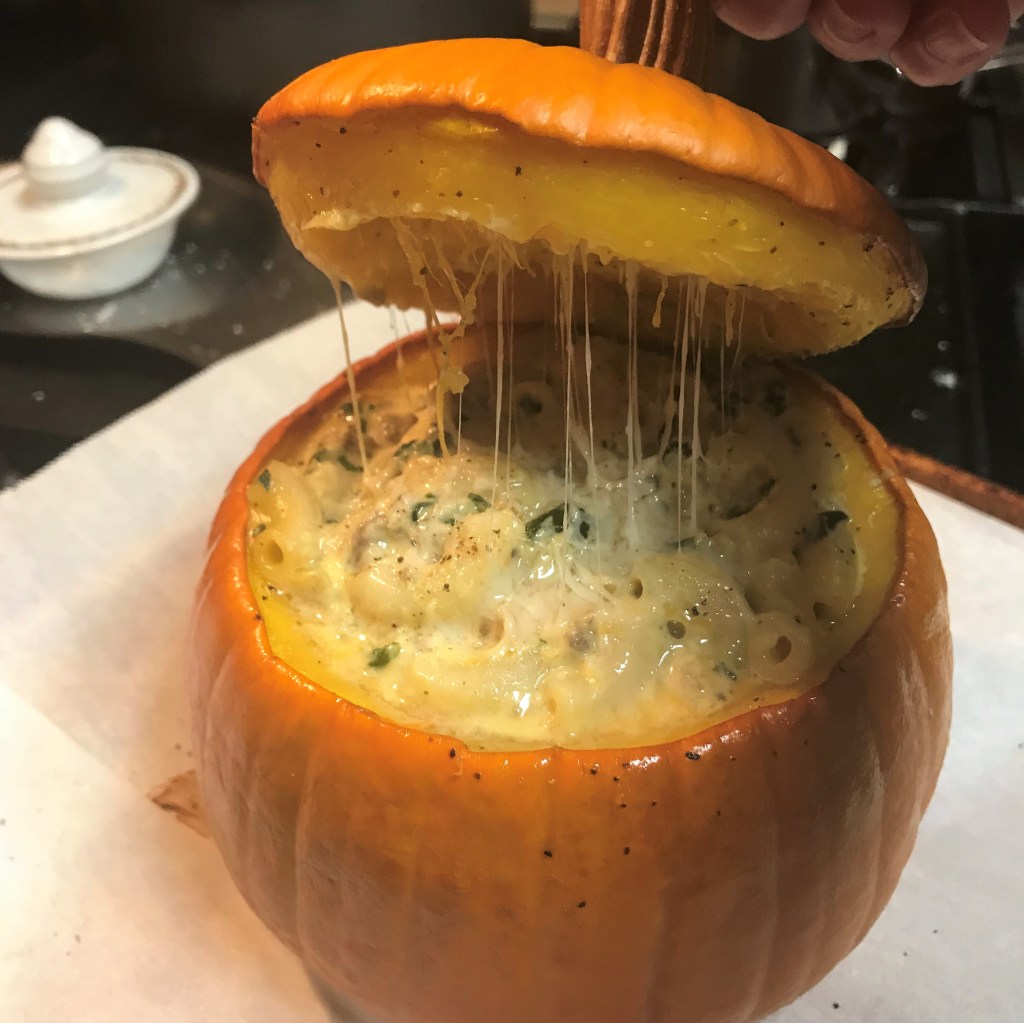
For some time, I’ve imagined making a showstopper like this—I’ve taken the quintessential comfort food, macaroni and cheese, and merged it with the best flavors of Thanksgiving—sausage, dark greens, onions and sage, and then stuffed the whole thing into a sweet little pumpkin. The result is as delicious as it is delightful to look at, from the creamy and comforting texture of a gruyere cheese sauce that’s been spiked with pumpkin and savory roasted garlic, to the warm and rustic flavors of pork sausage, sautéed leafy kale and twice baked seasonal pumpkin.

This turned out even better than I imagined!

To be fair, you could make this recipe with half as much mac and cheese filling as the instructions describe. I only used a third of it in my small-ish pumpkin and poured the rest into a separate casserole dish for later. On my first try, I was leery of using a larger pumpkin, though I will surely try it again. If you don’t feel up to the task of messing with the pumpkin at all, I promise the mac and cheese is worth its weight all by itself. Yum.

This was SO much fun!


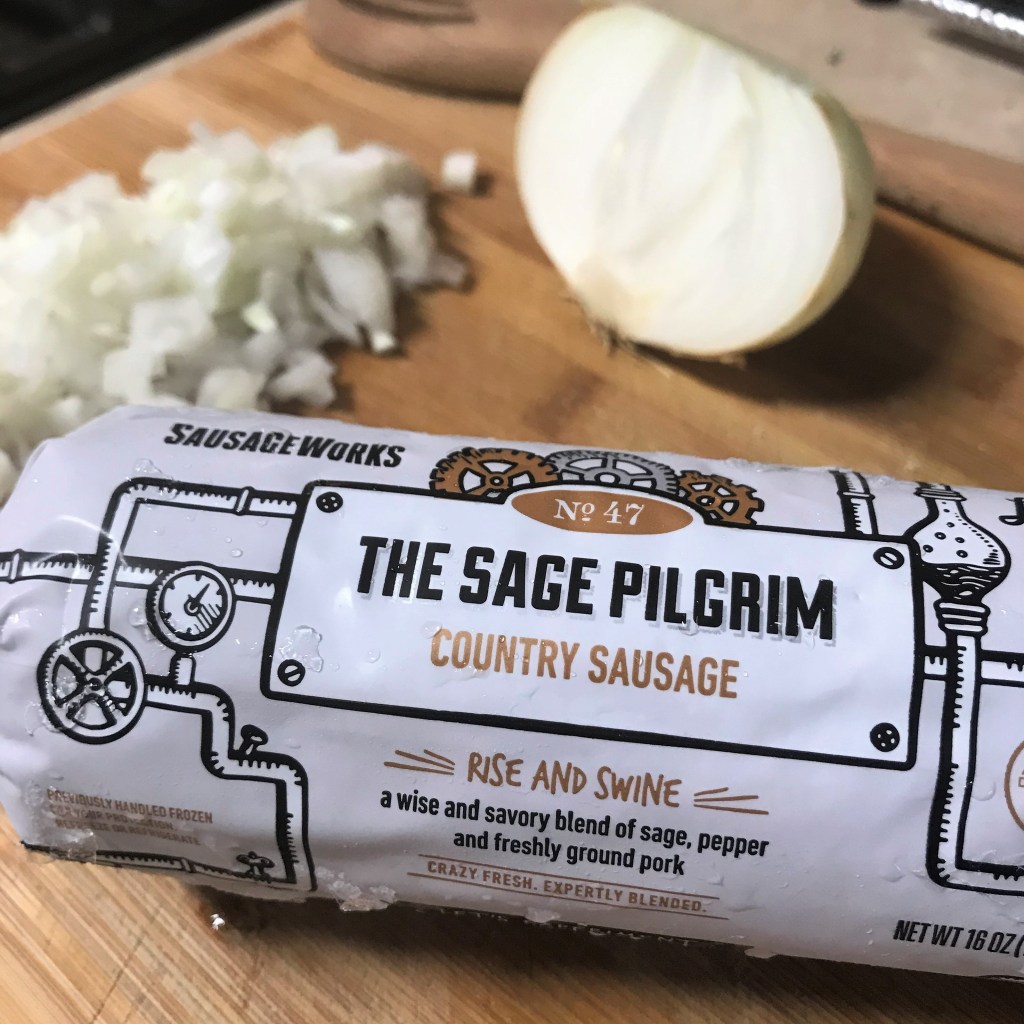
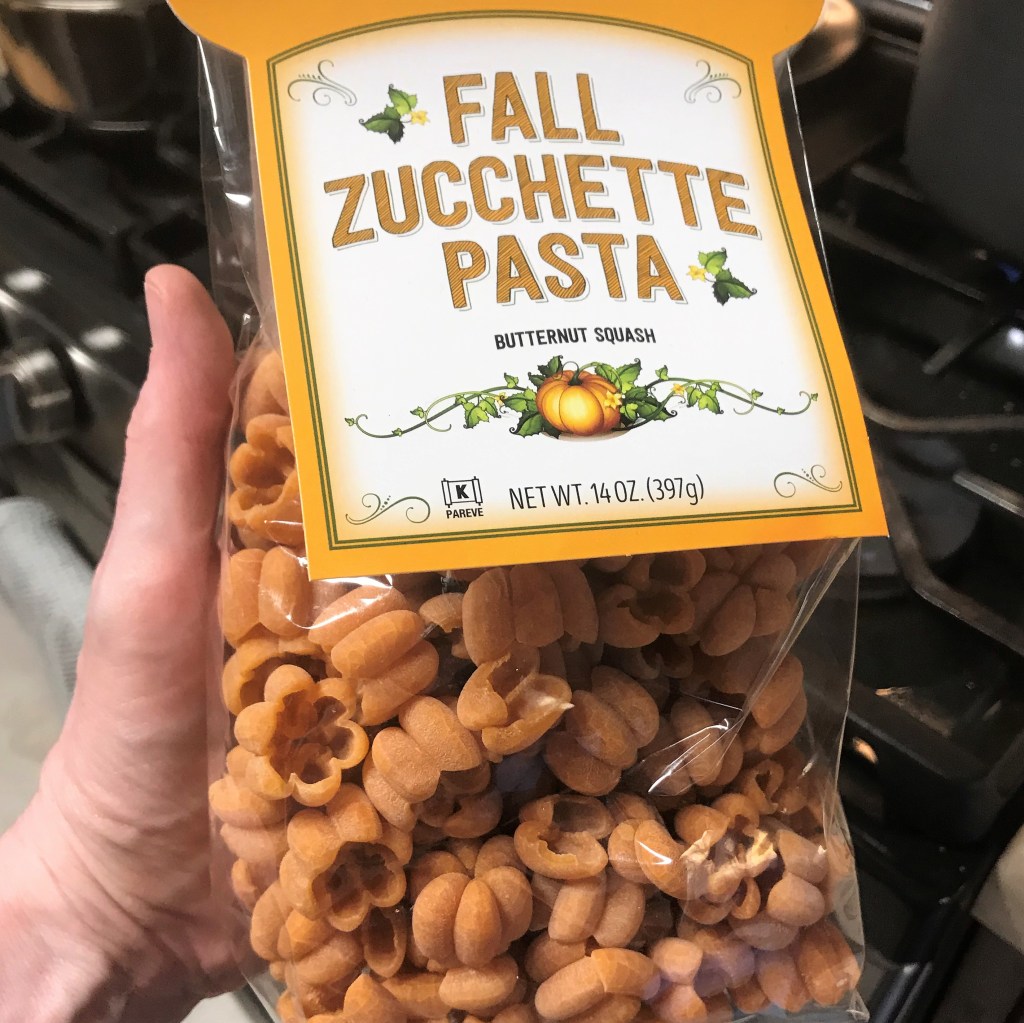
These were the star ingredients of the dish, but it was the combination of all the ingredients that made it so special!


Ingredients

1 small pie pumpkin (mine was about 3 pounds)

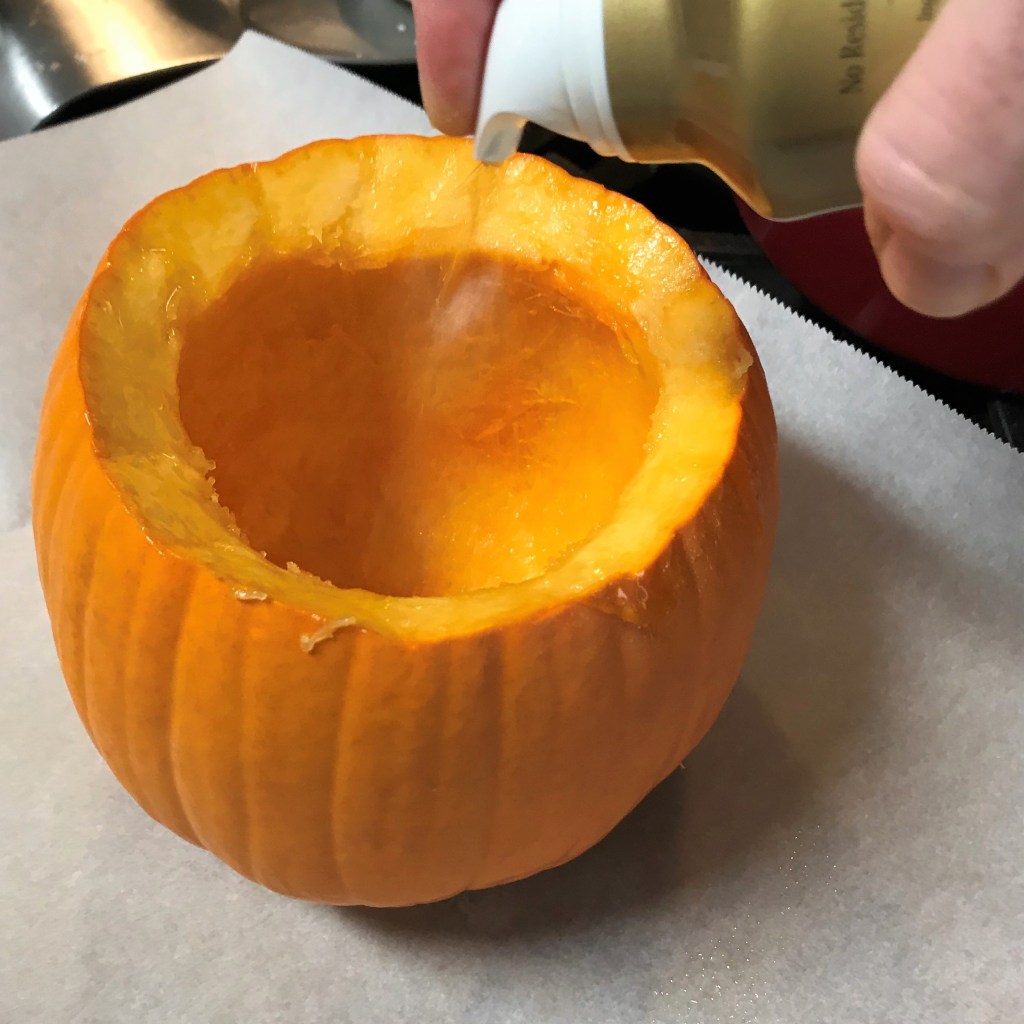
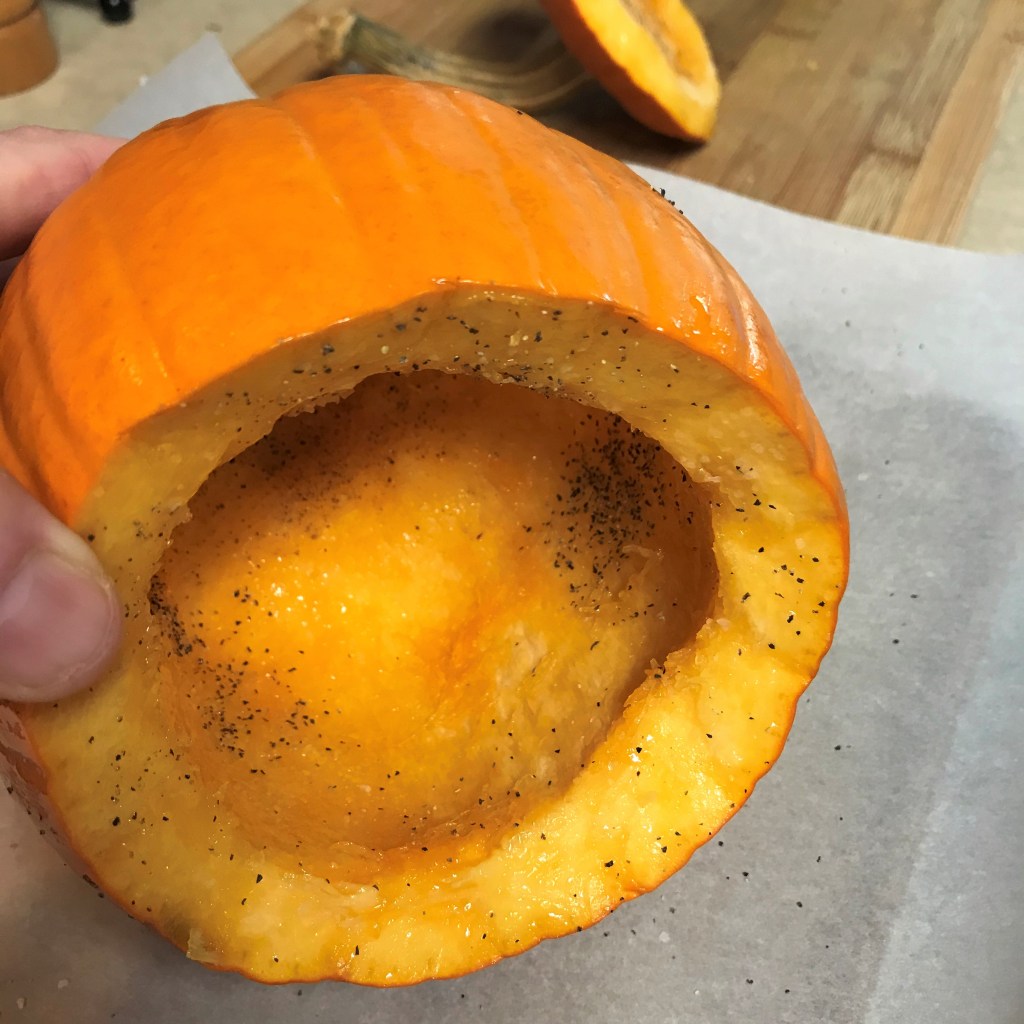
Extra virgin olive oil, salt and pepper

1 medium onion, chopped and divided between cheese sauce and sausage filling

3 Tbsp. salted butter

3 Tbsp. all-purpose flour

2 cups whole milk

3 oz. (6 Tbsp.) mascarpone (or full fat cream cheese)

1/2 cup canned pumpkin puree (not pie filling)

1 cup freshly shredded gruyere cheese

1/2 cup freshly shredded sharp white cheddar cheese

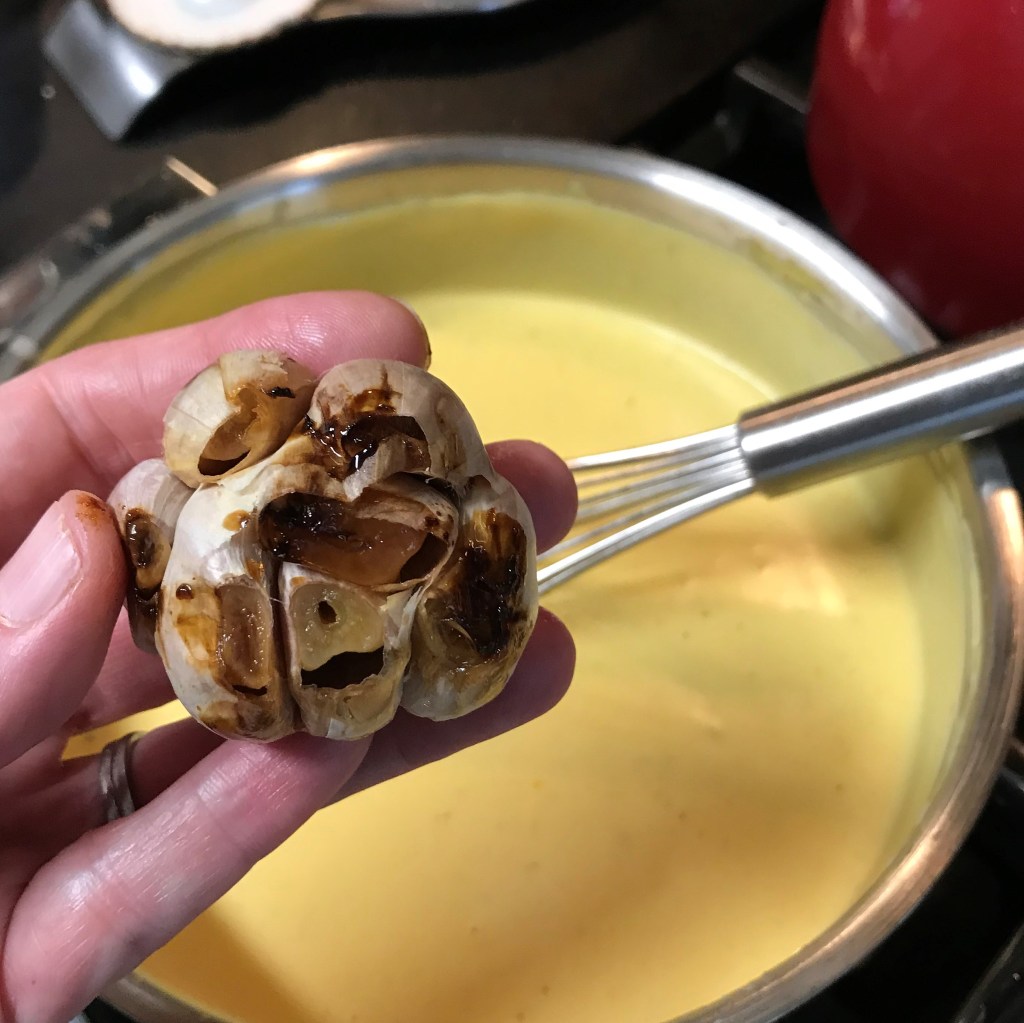
1 whole bulb roasted garlic

12 oz. box elbow macaroni, cooked to al dente stage

8 oz. seasoned bulk pork sausage (mine had sage and black pepper)

2 heaping cups fresh kale leaves, washed and chopped

2 Tbsp. parm-romano blend to top the filling mixture


Instructions

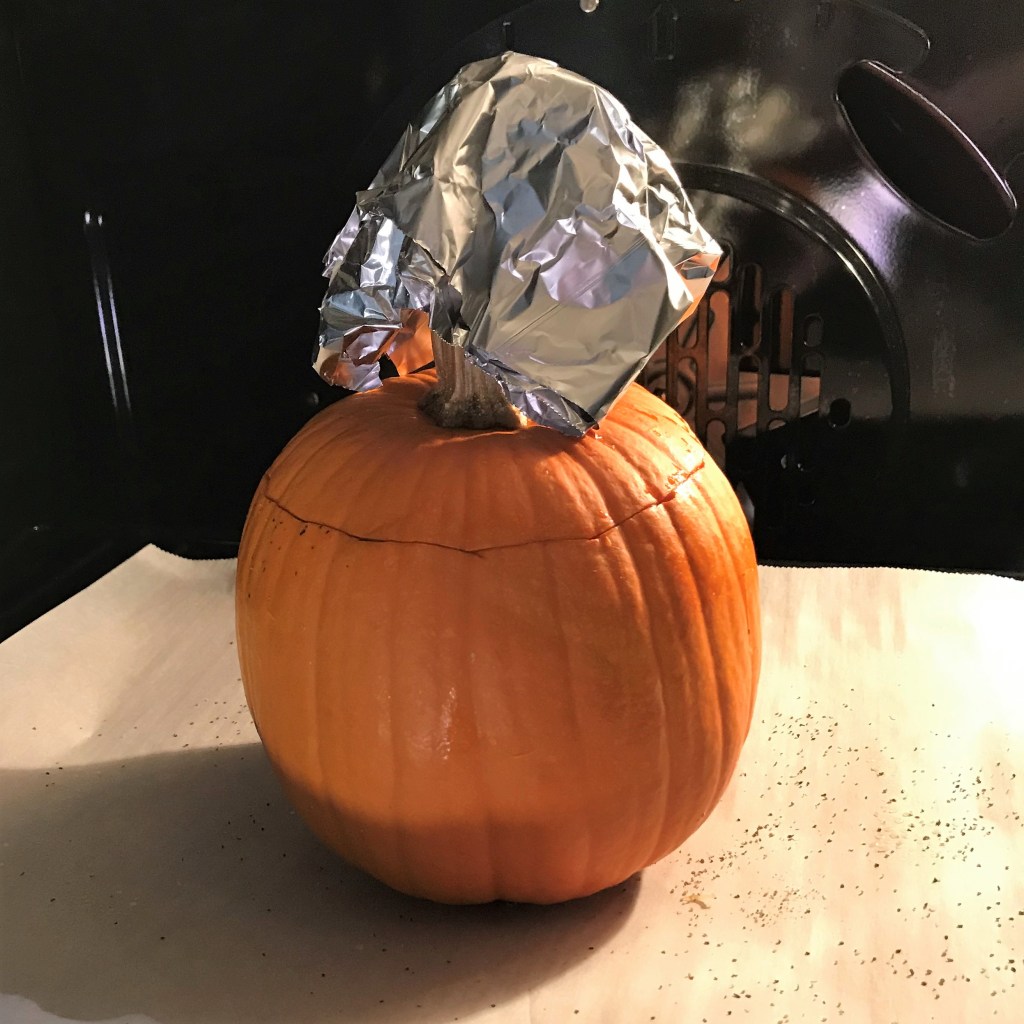
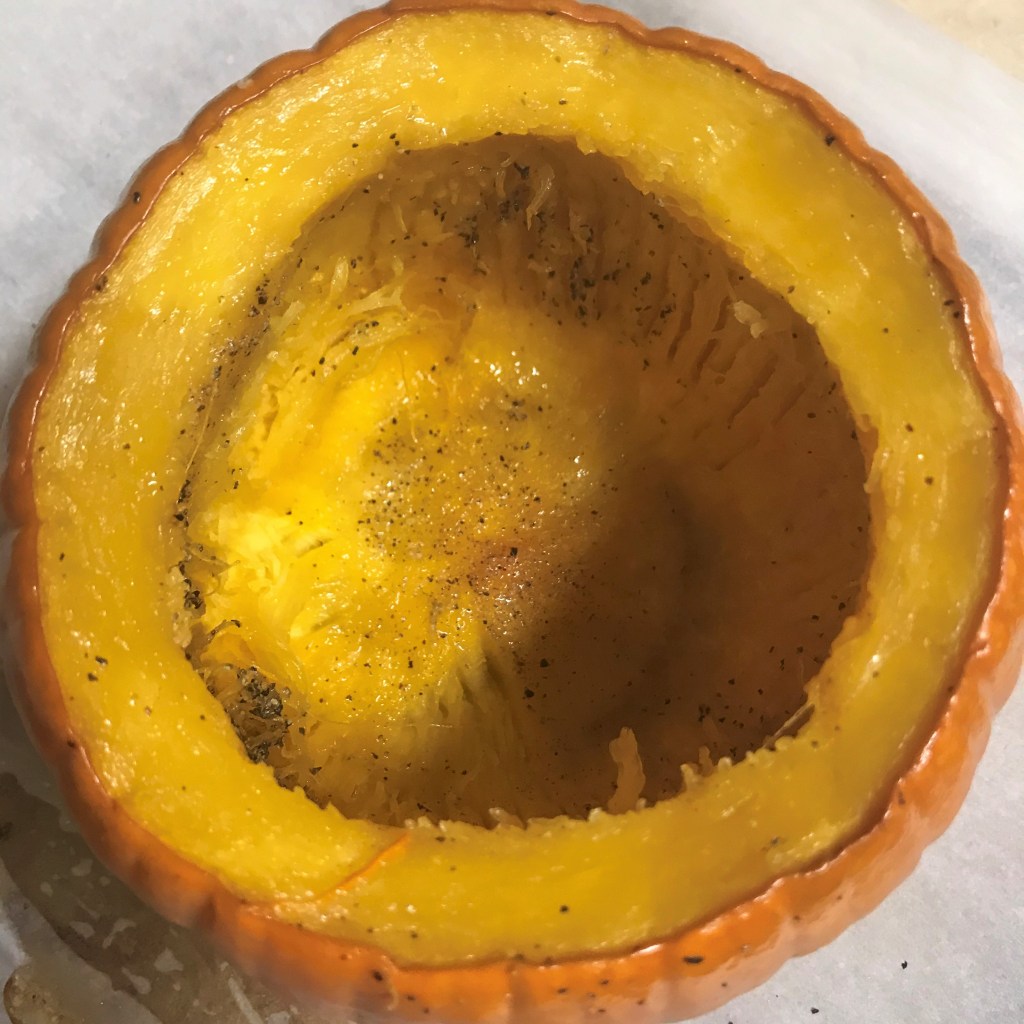
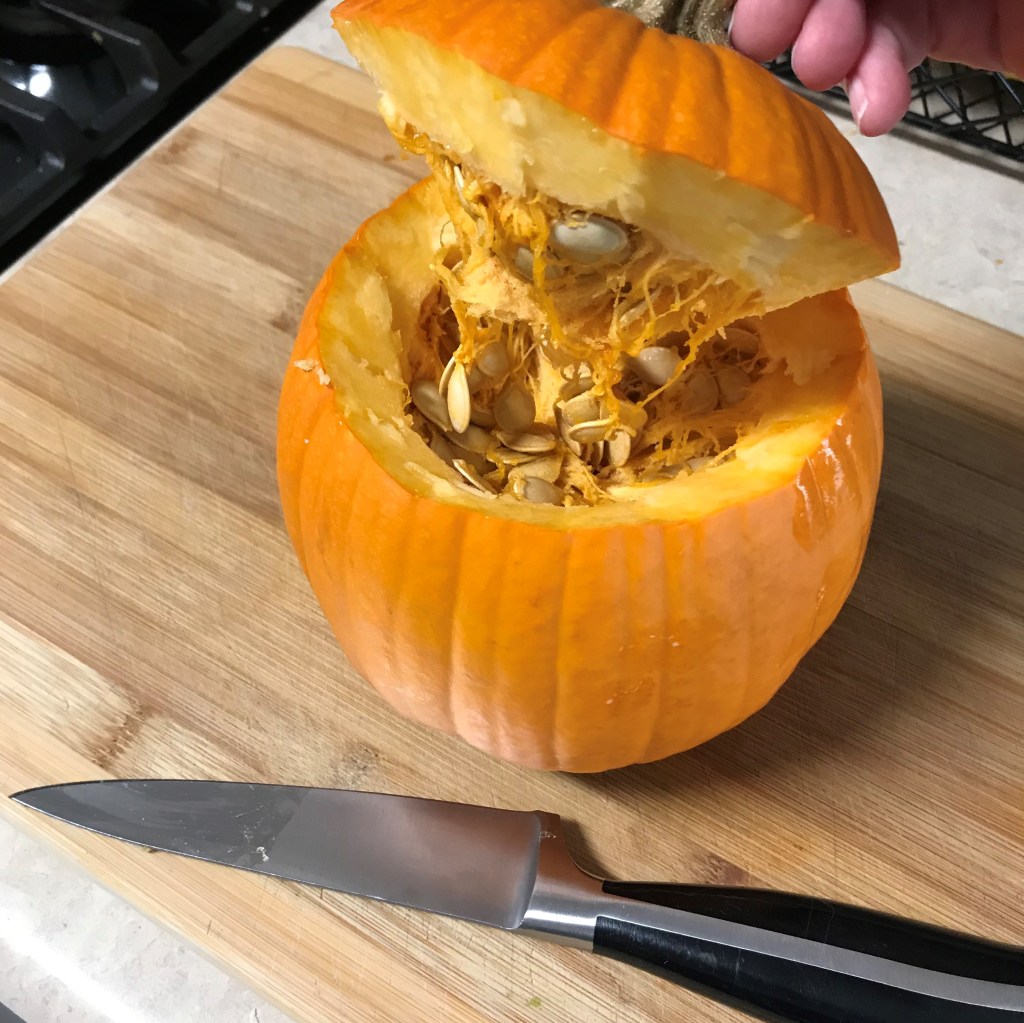
First, I prepped the pumpkin for roasting, which was pretty simple. I followed the same steps as when making roast acorn squash.


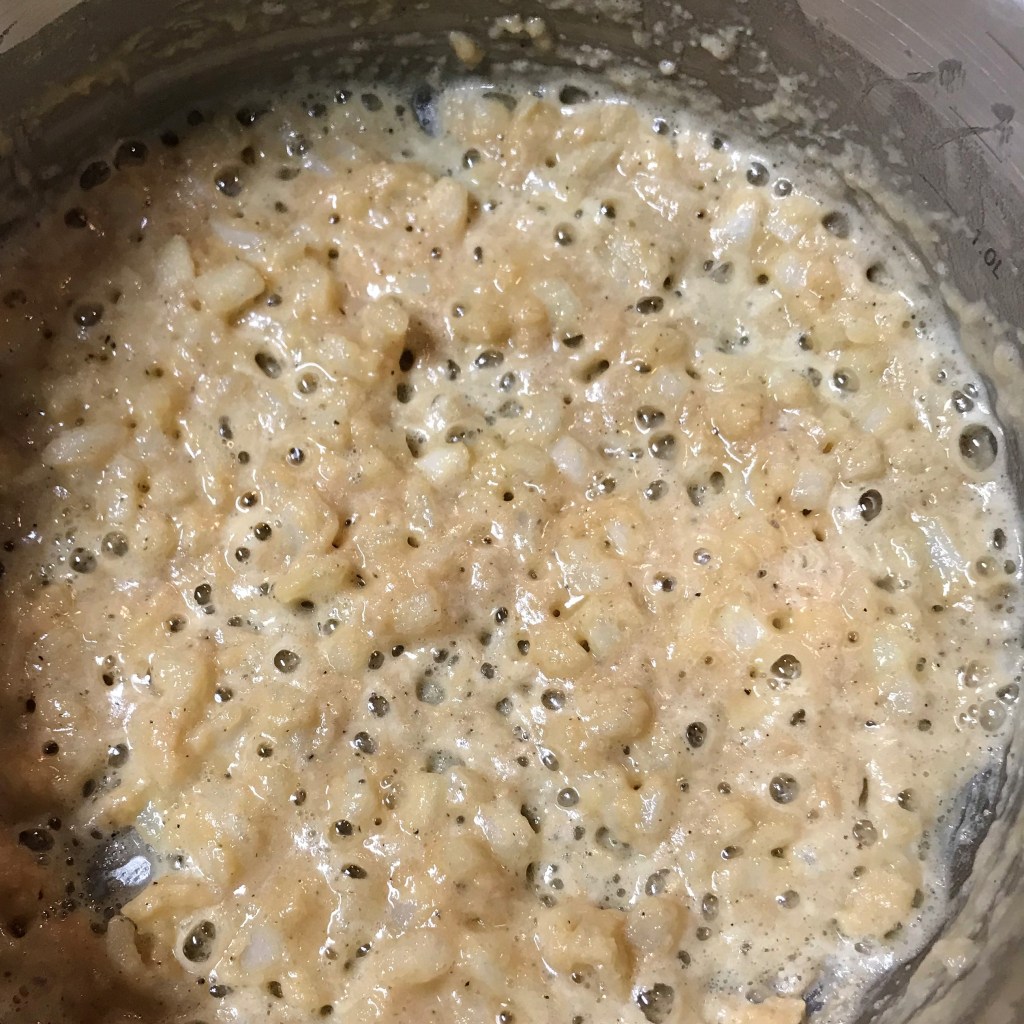
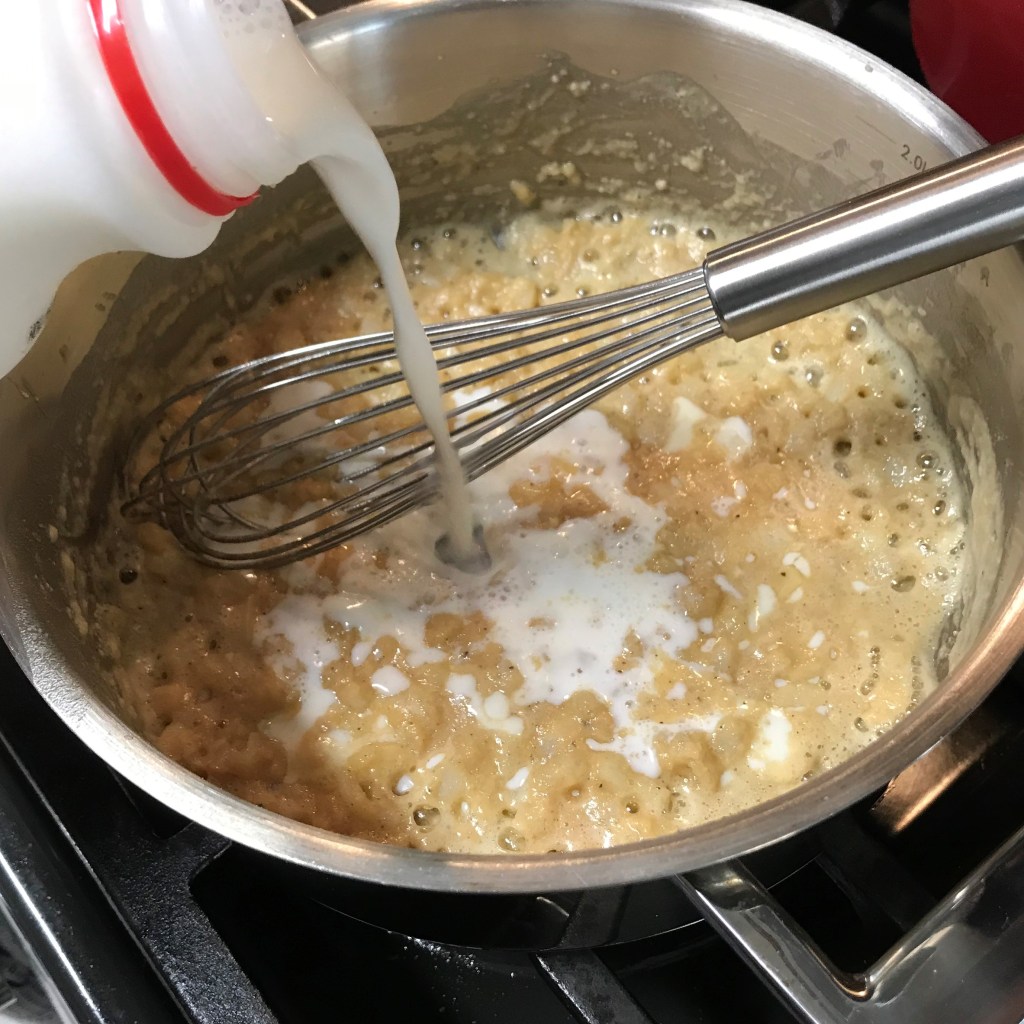
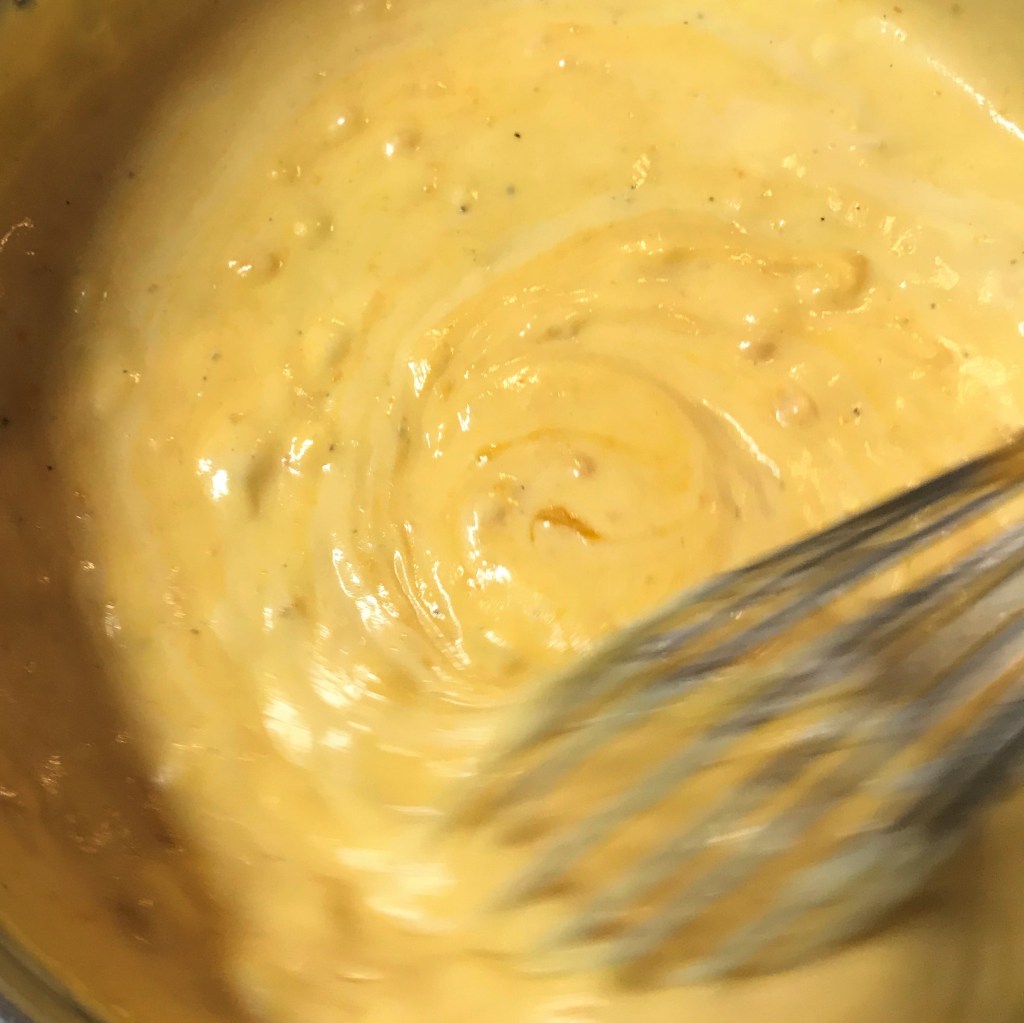
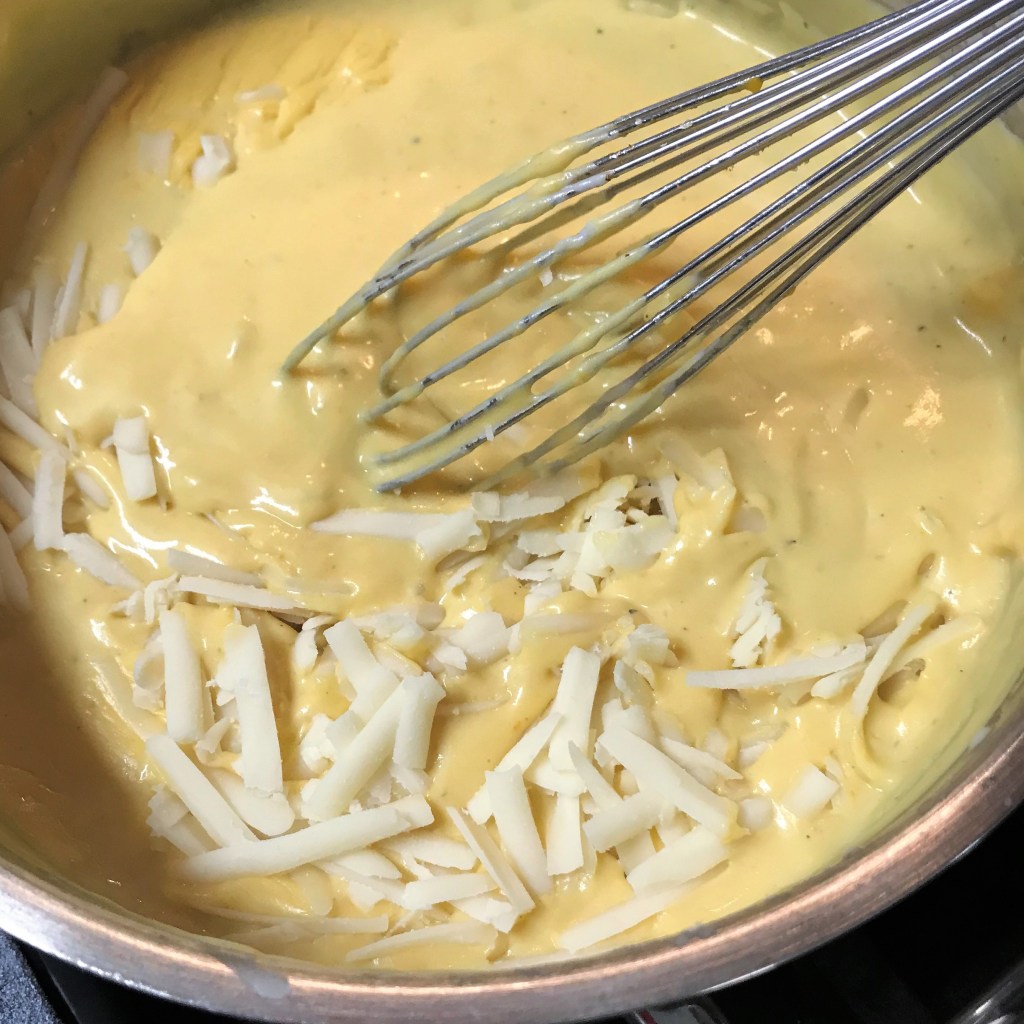
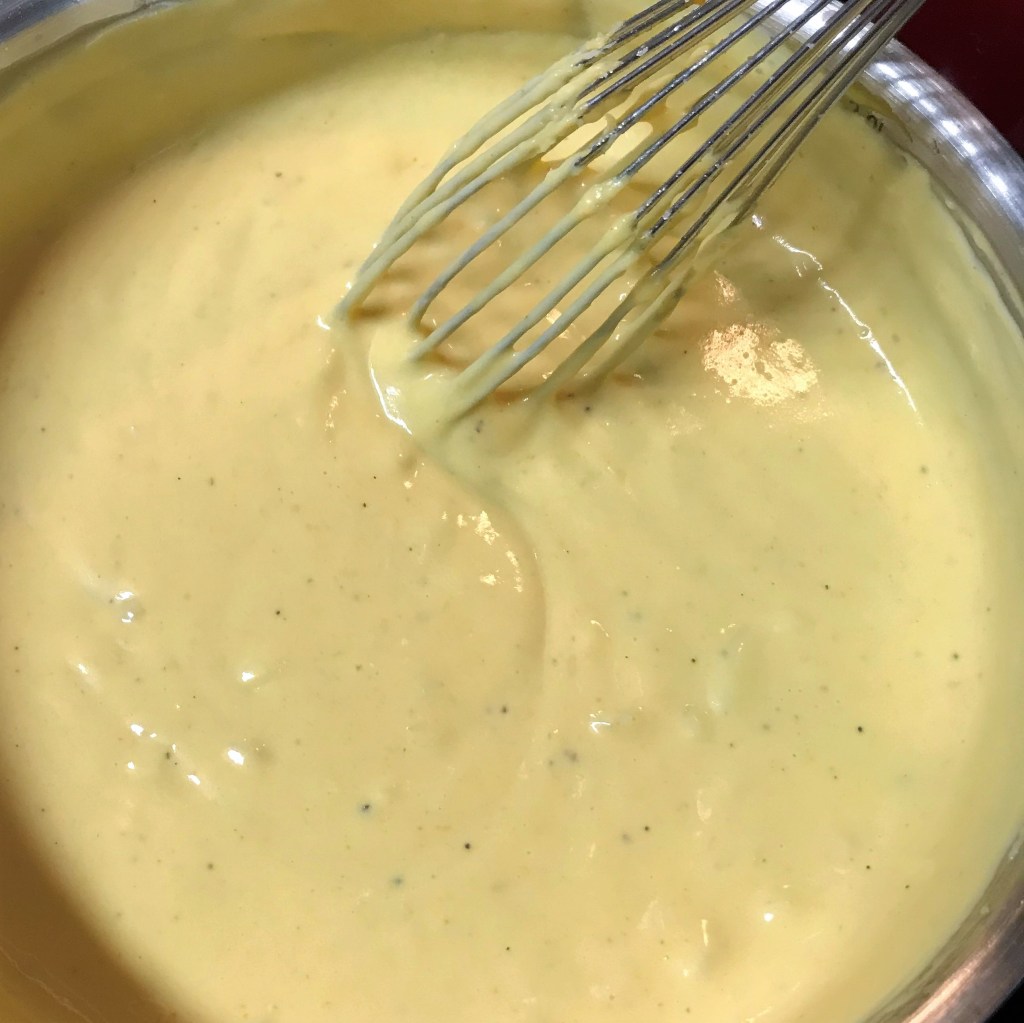
The next step was the béchamel, my go-to base for any mac and cheese recipe. You may remember this part from my first recipe post, or from one of my leftover creations, such as my version of mac and greens or the ultra-decadent mac and cheese waffles. Once you master a béchamel sauce, the possibilities are endless. 🙂


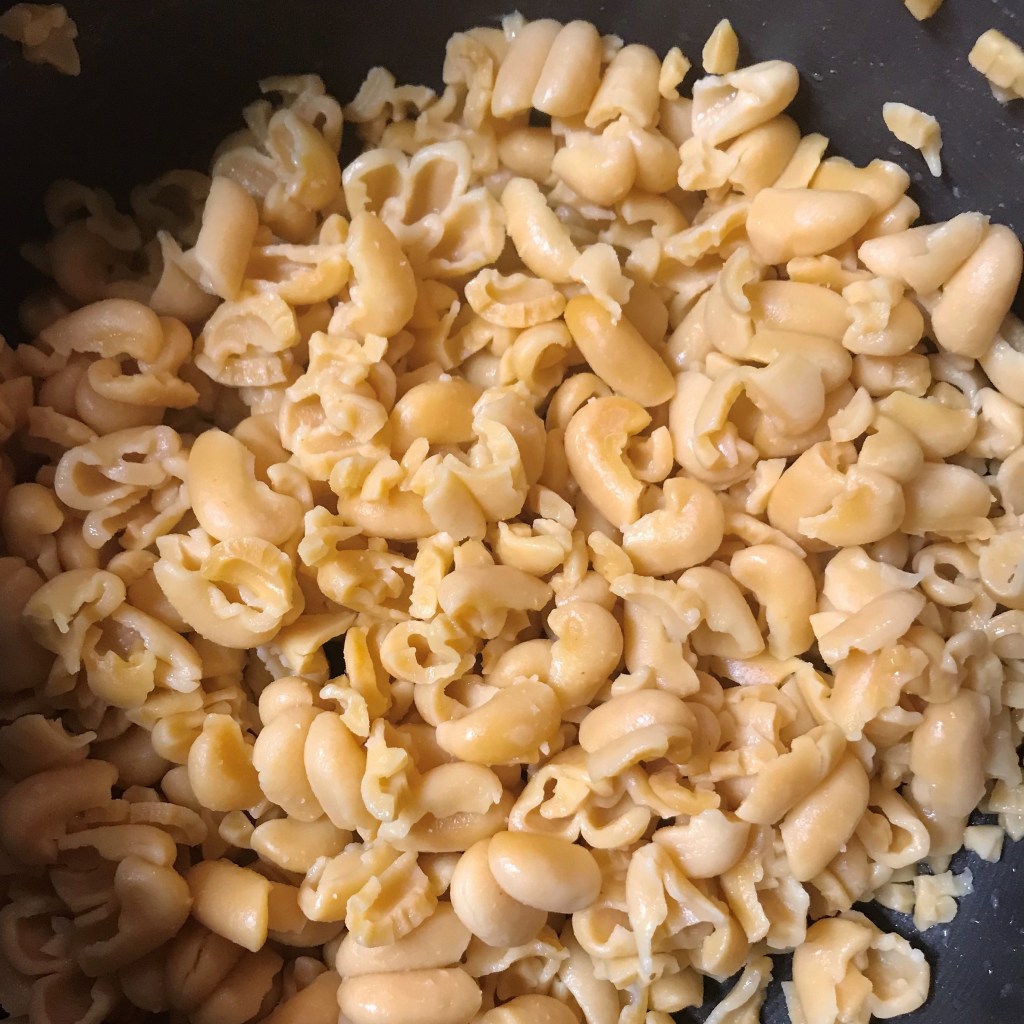
My cheese sauce made me very happy. I took a spoonful into the den for my husband, Les, to taste, and he immediately loved it as well. But here’s where things took a slightly disappointing turn. Remember the cute little pumpkin pastas? Well, they were pretty much a mess. In addition to their thick, heavy texture (and the fact that all the pieces fell apart), the primary flavor was starch. I was not having it. You guys know I get pretty excited about the specialty items at Trader Joe’s, but this one was decidedly not a winner. Thankfully, we have another supermarket very near the house, and I hightailed it over there for some dependable elbow macaroni. I’m not willing to “settle” when I’m trying to make a special dish, you know what I mean? 🙂


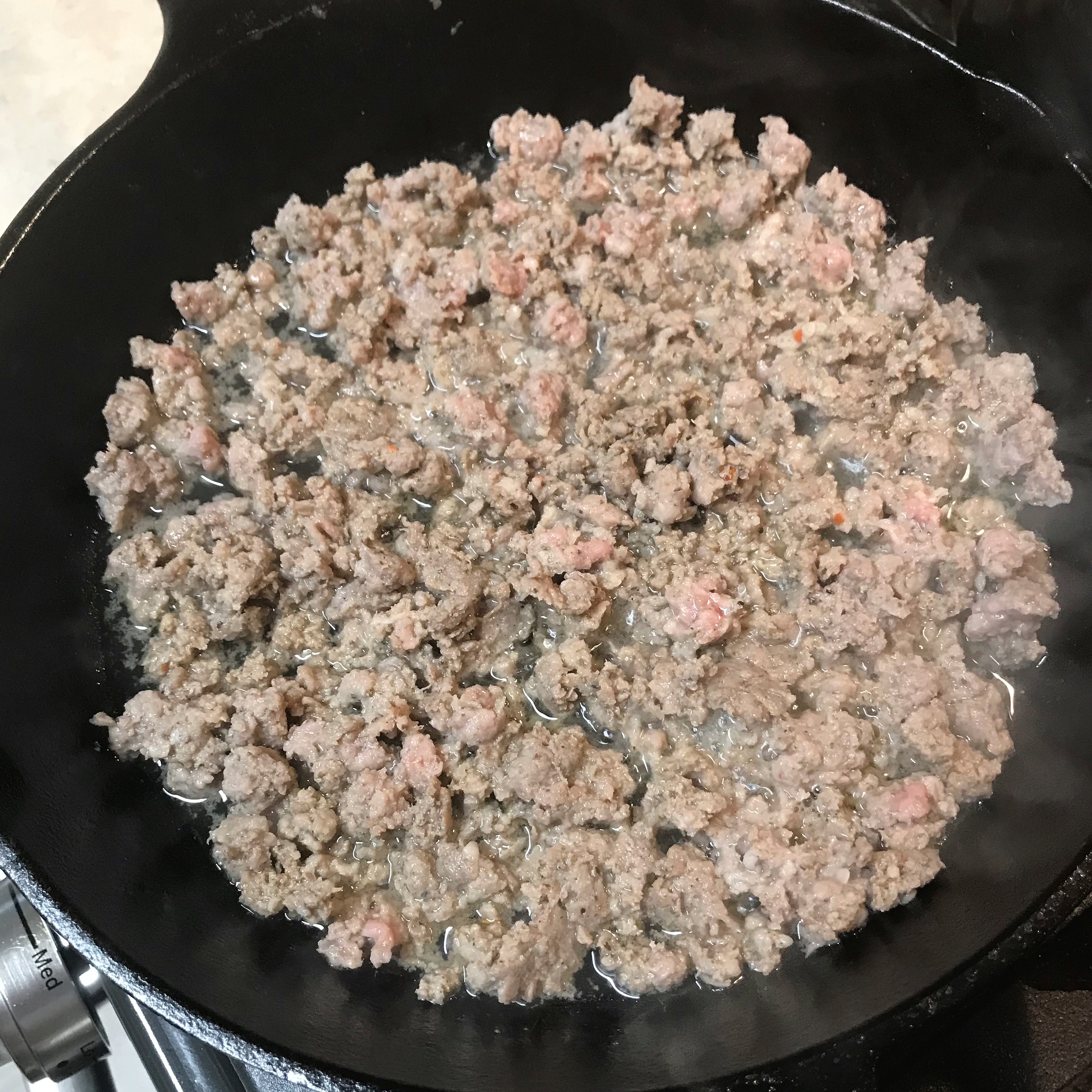
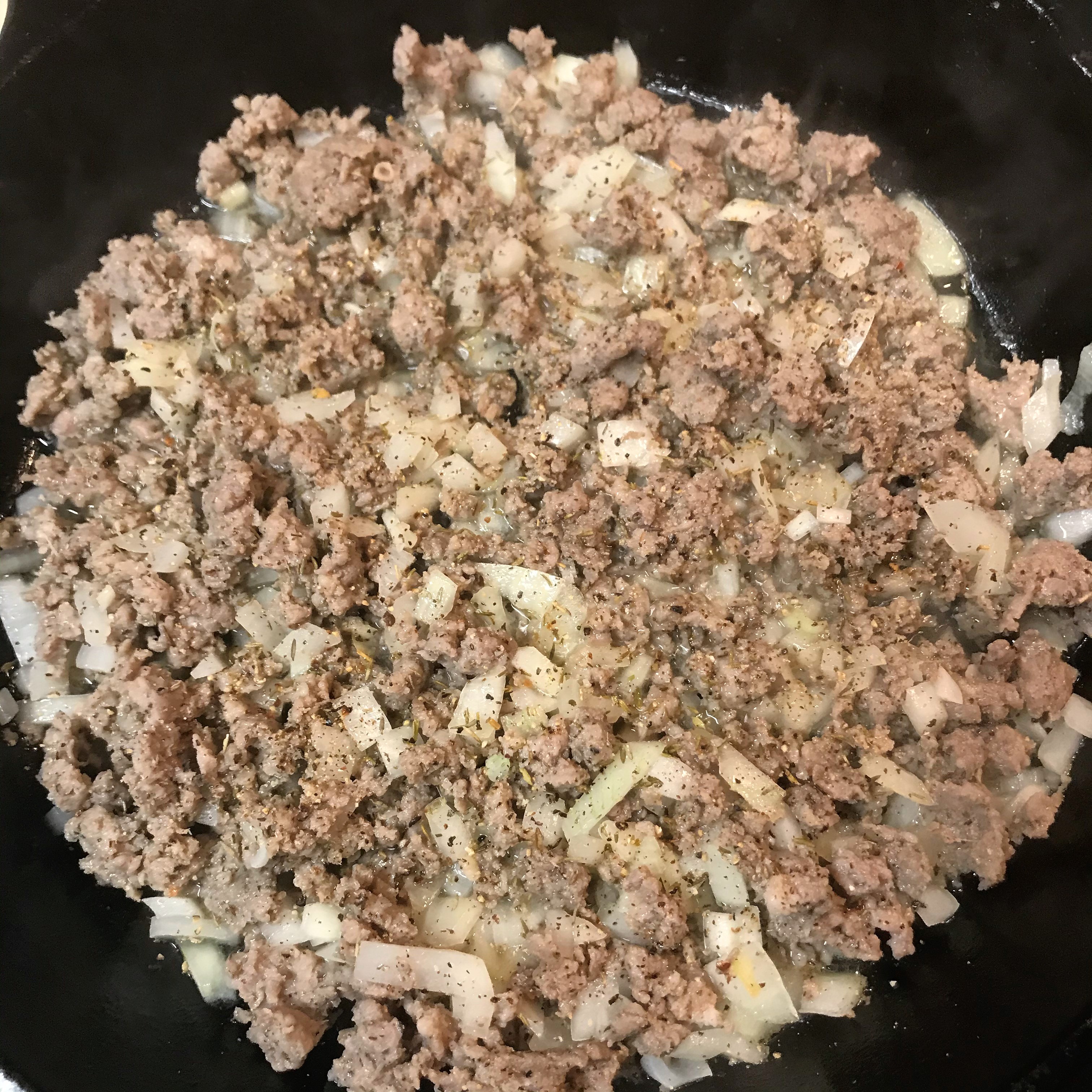
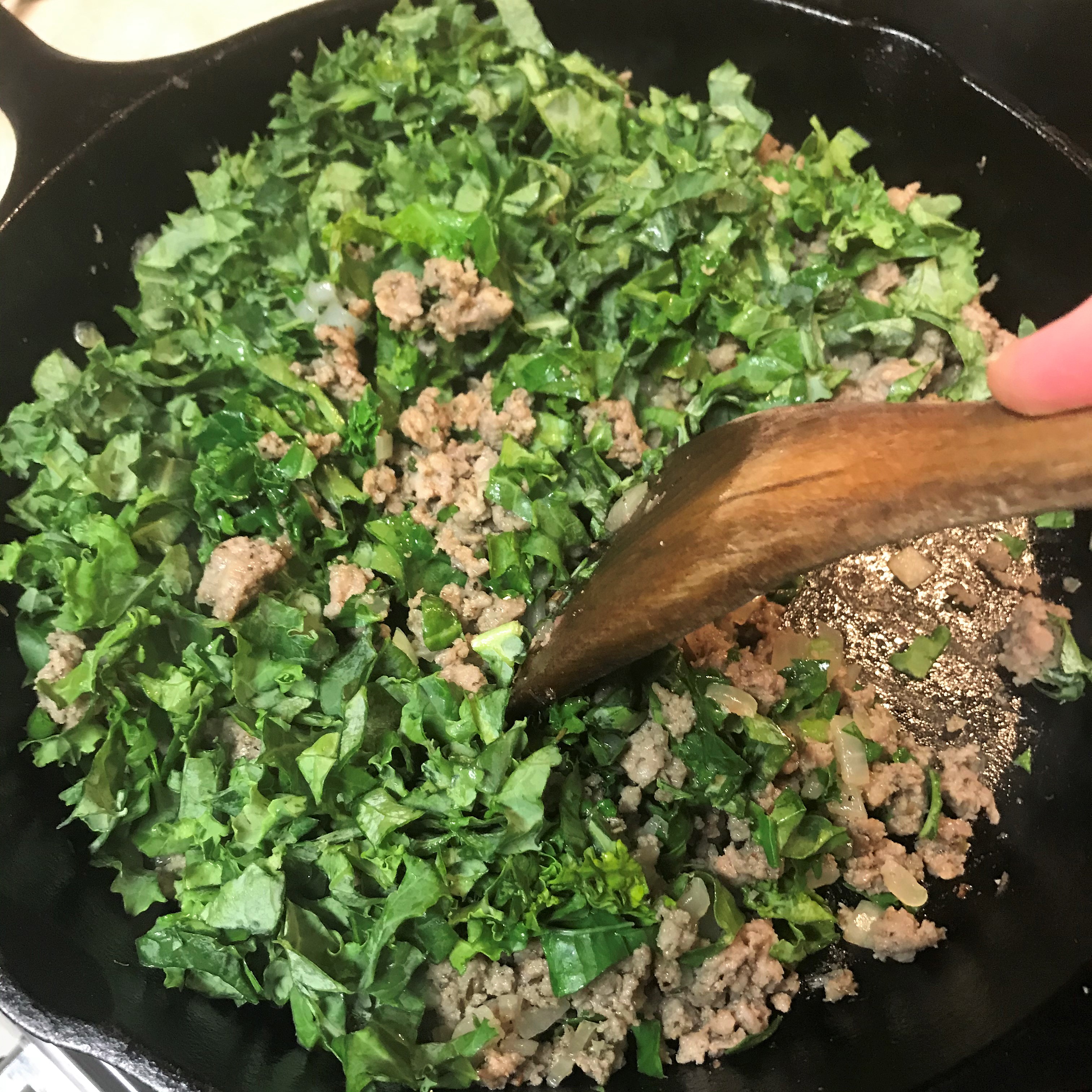
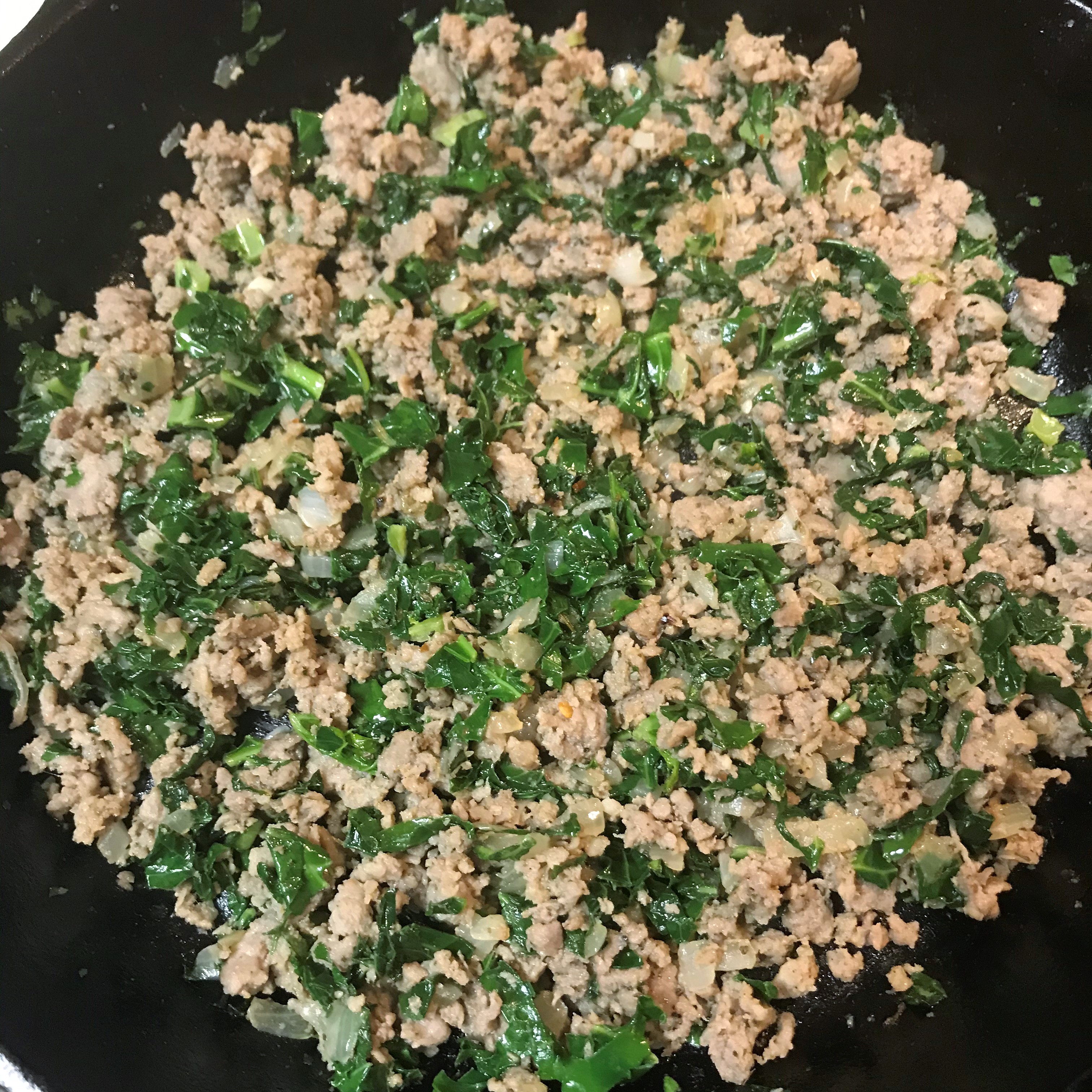
Moving along to the sausage, and this part was easy! I browned the sausage in a skillet, using a little vegetable broth to assist with breaking up the larger pieces. I added the chopped onion and then the kale, and cooked until the onions were tender and the kale was wilted, but still bright green. It smelled amazing in my kitchen!


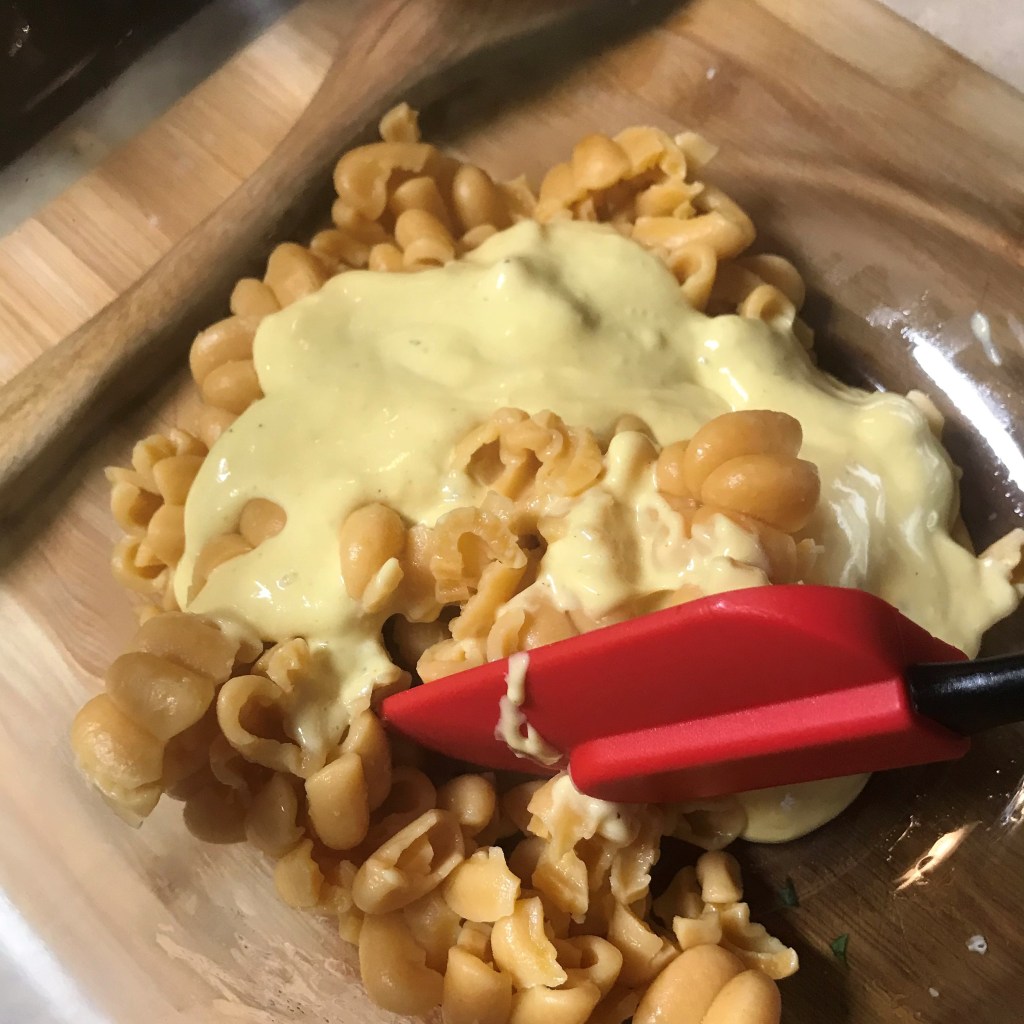
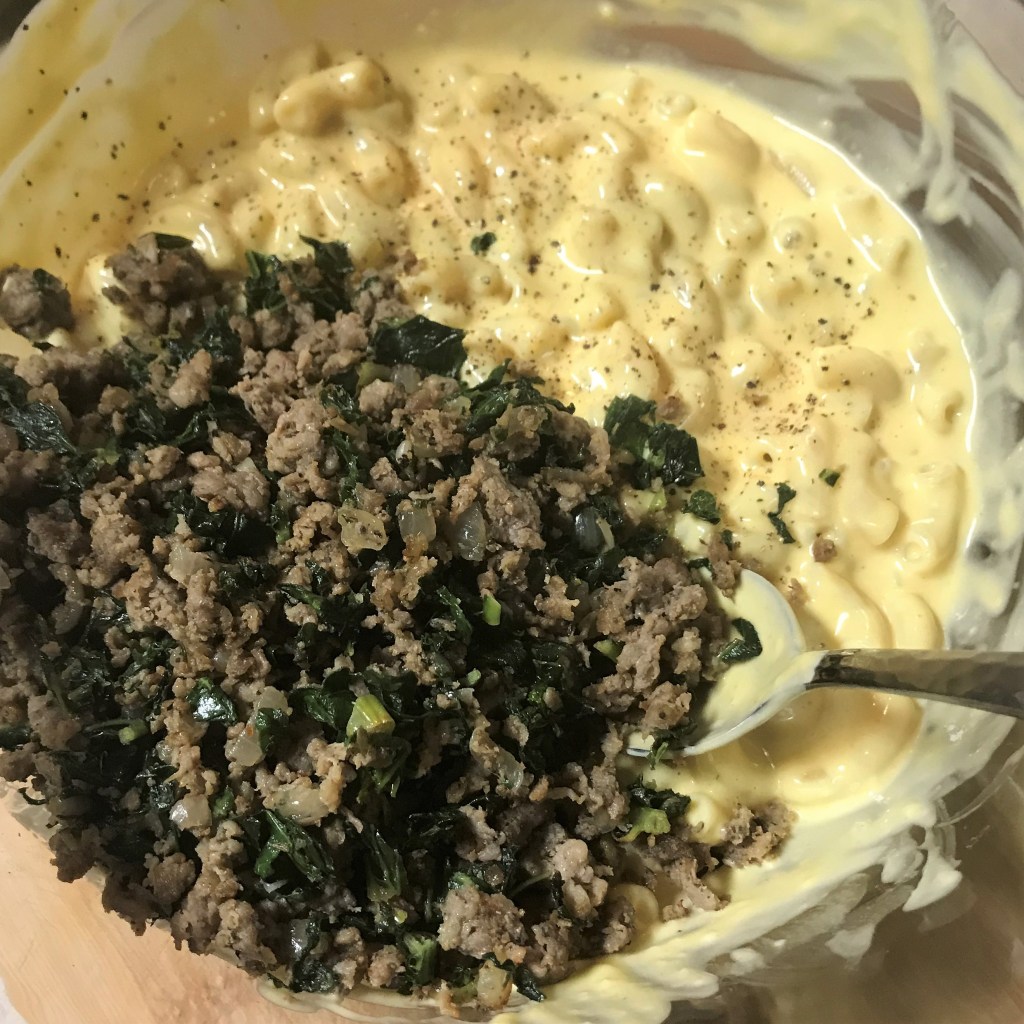
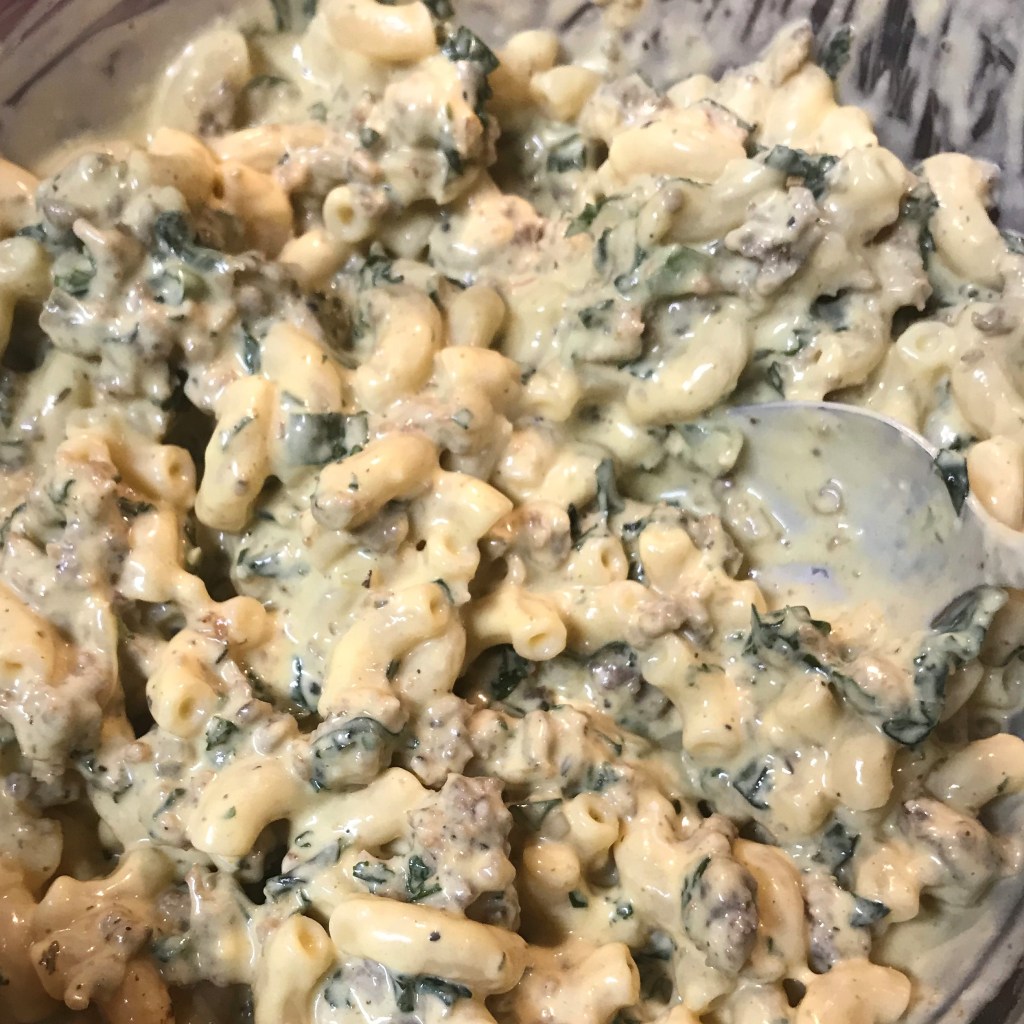
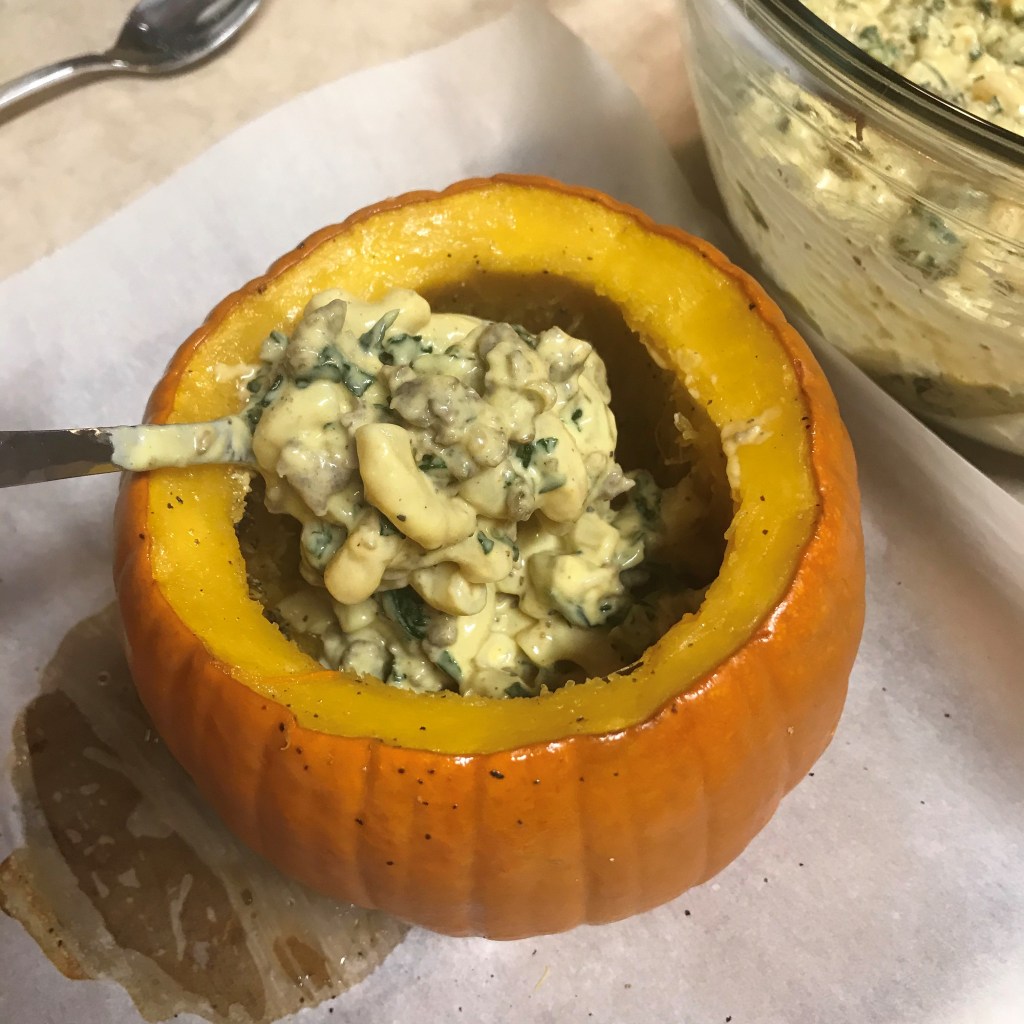
From here, the assembly was a cinch. I cooked up my elbow macaroni to al dente stage, which is just shy of done, and still a little resistance to the bite. Thankfully, this pasta came out perfect! Fold in all of the creamy cheese sauce (even if it seems like too much), and then fold in the sausage mixture. I spooned as much of the mac and cheese as would fit inside the roasted pumpkin, and the rest went into a casserole dish for another meal. How much do you wanna bet I end up putting the leftovers in the waffle iron?

The stuffed pumpkin went back into the 350° F oven. It roasted for about 45 minutes, then I turned off the oven and left it alone while we finished a Zoom call with friends. Honest to goodness, this turned out better than I dreamed it would. The flavor was exceptional, and it was so pretty and just plain fun!
This was creamy, satisfying, and absolutely brimming with savory fall flavors!

Want to make this fun fall recipe?

Follow the steps and instructions above, or download and print a copy for your recipe files.


Snakes in the Pumking Patch (a beer cocktail for Halloween)

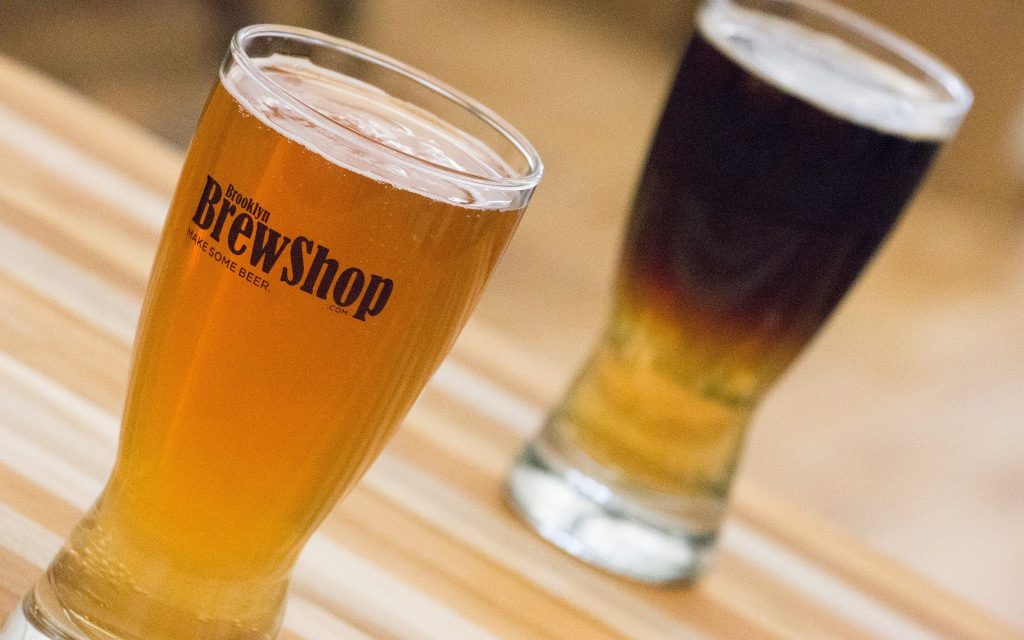
Here’s another grown-up beverage offering for Halloween week, and my series of “spooky” cocktails. I realize that not everyone enjoys the taste of bourbon or other liquors, and I’m just beginning to explore the wide array of cocktails that are made with wine and beer. One that comes up frequently in my Pinterest feed is a “snakebite,” which is a layered cocktail made of hard cider and lager or stout beer.

The color of a “snakebite” drink depends on whether you layer a lager beer or a stout over the hard cider. (image from brooklynbrewshop.com)

It looks cool, like a classic black and tan (or a tan and tan, depending on the type of beer), but the fermented apple base gives it a distinctly tart seasonal flavor, and that’s what I wanted to emphasize for my Halloween drink series. I thought, “what if I take that seasonal aspect to the nth degree by mixing it with my favorite seasonal beer?”

If you missed my earlier post about this brew (Hello, Pumking!) you can revisit that for proper introduction to what is, in my opinion, the BEST pumpkin ale ever, and I’m not just saying that because we were born in the same part of upstate New York. My opinion is shared by enough other people that Pumking’s maker, Southern Tier Brewing, has expanded the brand to include a nitro version, a cold brew version and even a small batch whiskey. The newer offerings aren’t readily available in my part of North Carolina, but I’ll keep loving original Pumking until the shelves go bare. Then I’ll wait patiently until next autumn, the same way Linus stood guard in the pumpkin patch, waiting for the arrival of the Great Pumpkin.

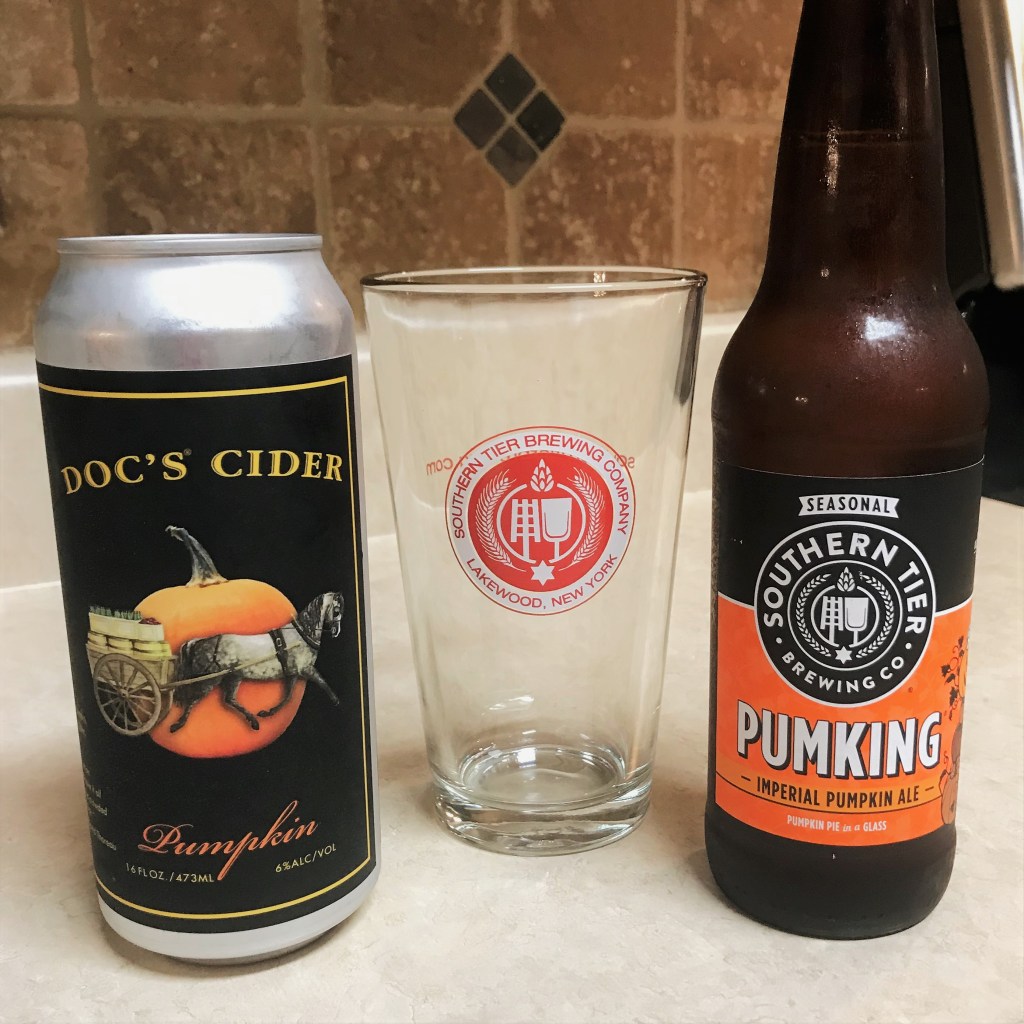
For my Halloween version of a snakebite, I’ve layered the Pumking over a hard cider, but I wasn’t satisfied with any old hard cider. Nope, I tripped down the craft aisle until I found one that is also enhanced with pumpkin and spice. I found it, of course, in the pumpkin spice capital of everywhere, Trader Joe’s.

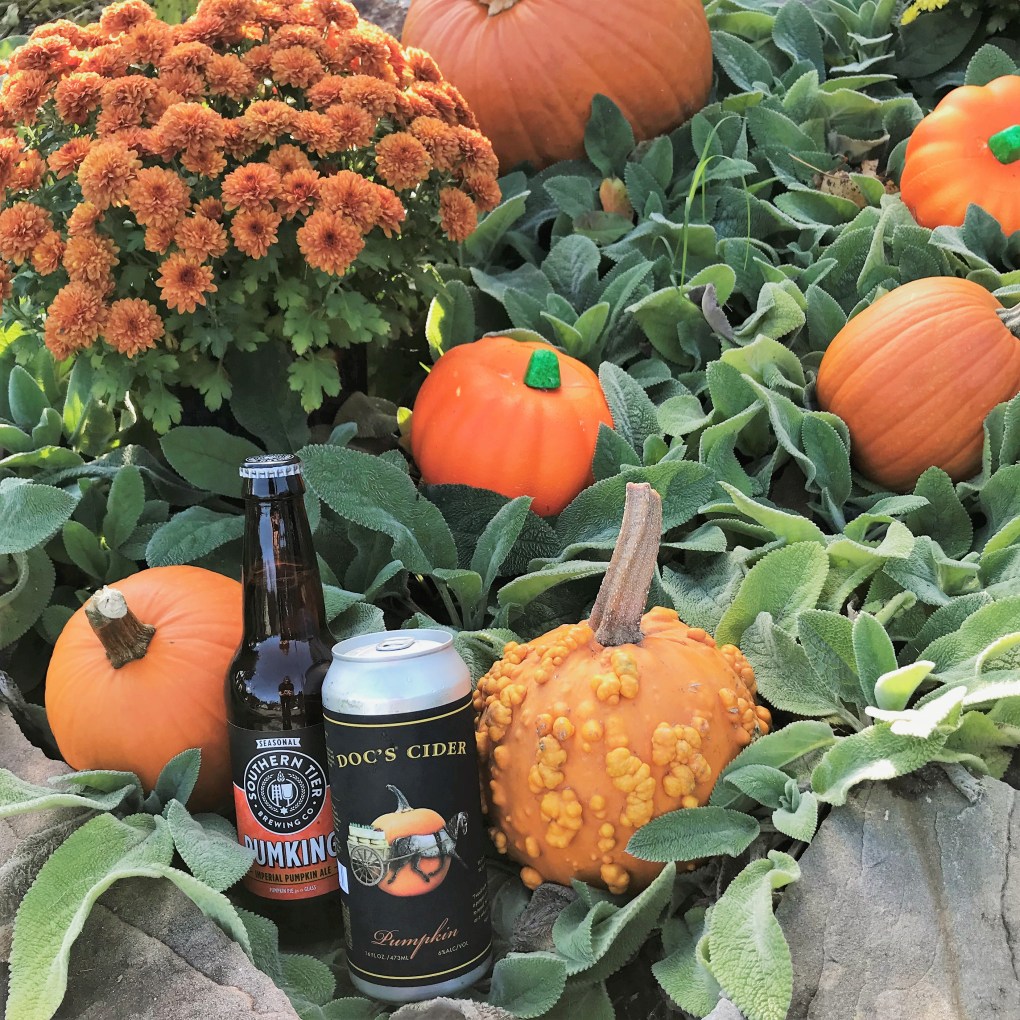
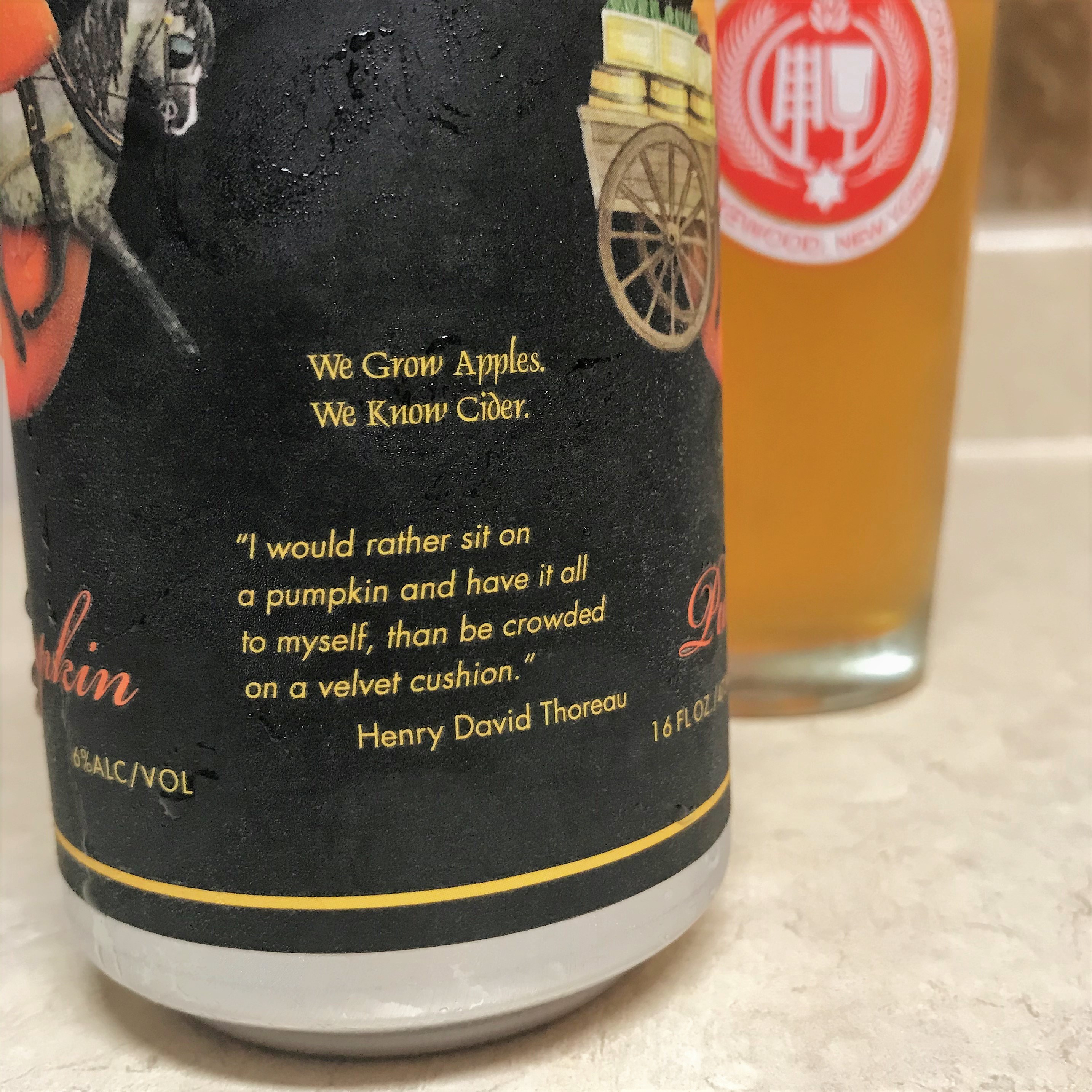
Doc’s Cider hails from another part of upstate New York, and this pumpkin spiced version is delightfully bright and crisp.
My beloved Pumking, of course, is from Southern Tier Brewing Co.

Ingredients

6 oz. pumpkin spice hard cider

6 oz. Pumking (or other pumpkin ale, if you must)

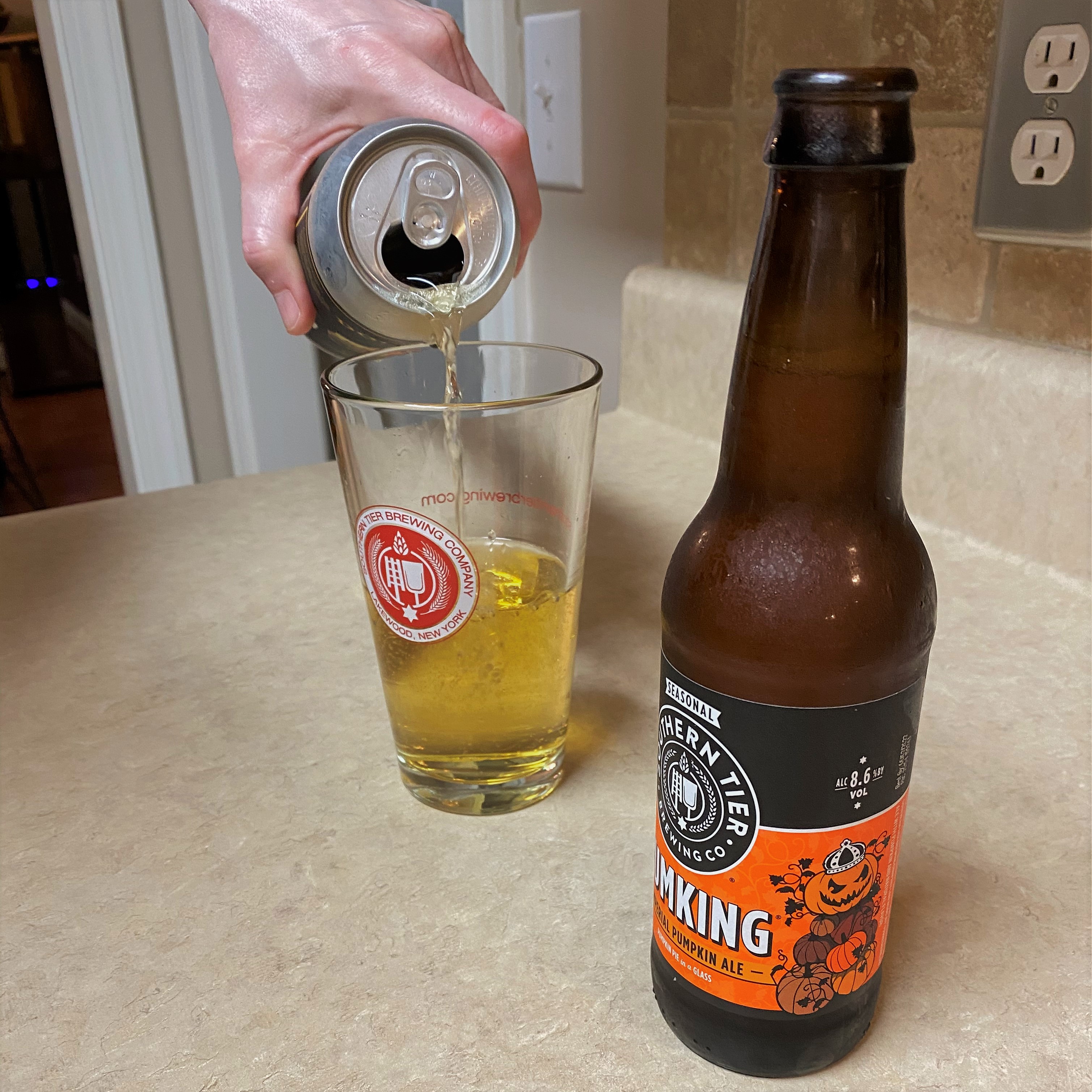
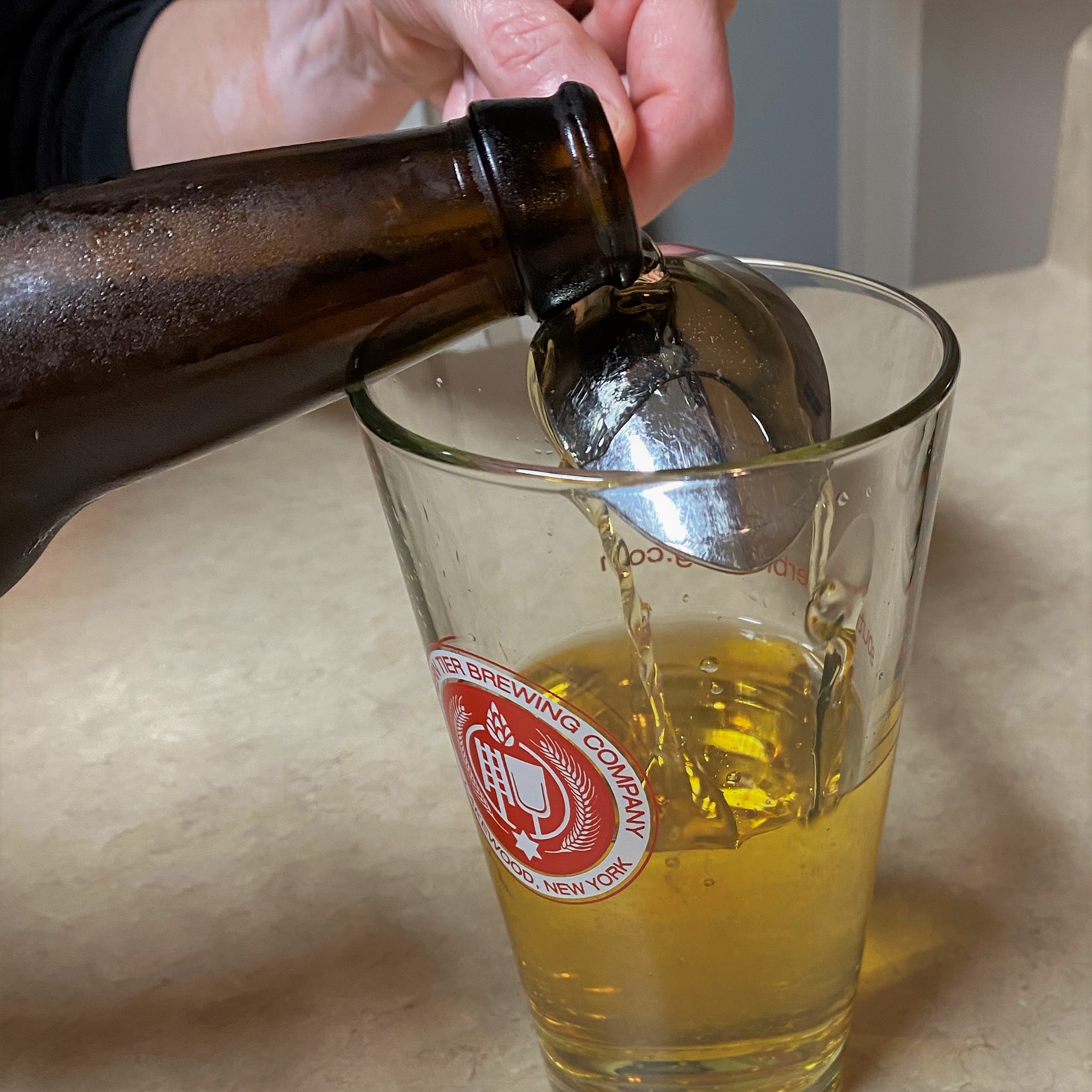
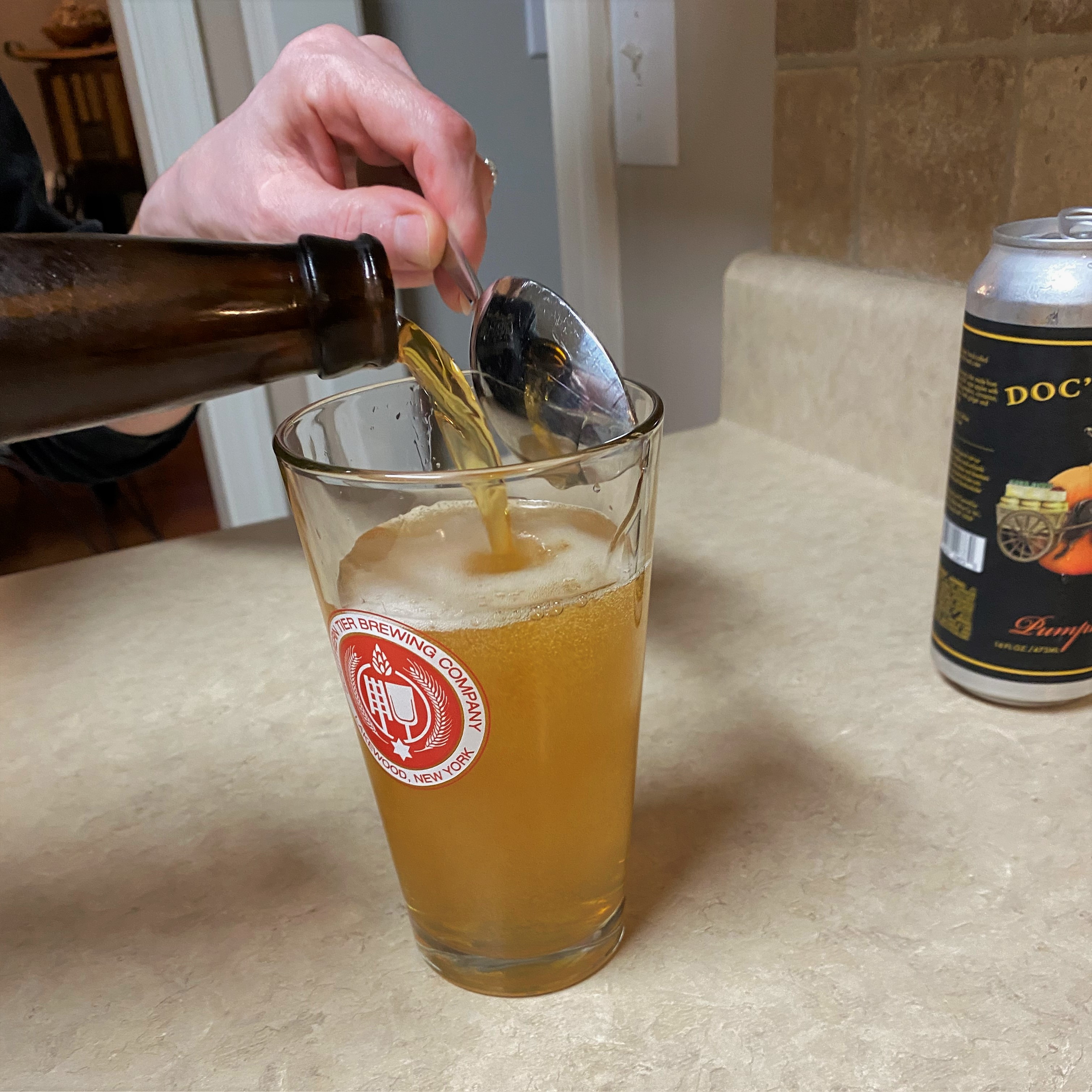
Layering a beer drink is easy to do, but it only works if the two ingredients have different specific gravity weight. In the classic drink, it works because Guinness ale is dry and light so it hovers neatly over the sweeter cider. Layering is not really necessary for my version of this drink, given that the cider and Pumking are virtually the same color anyway. Give it a try if you’d like (I’ll show you how in the slideshow), or just pour them in together. Either way, the resulting blend of tart, crisp cider and creamy, spicy ale is something quite special and it goes down very easy, but watch your step—as the name implies, these guys will definitely sneak up on you!

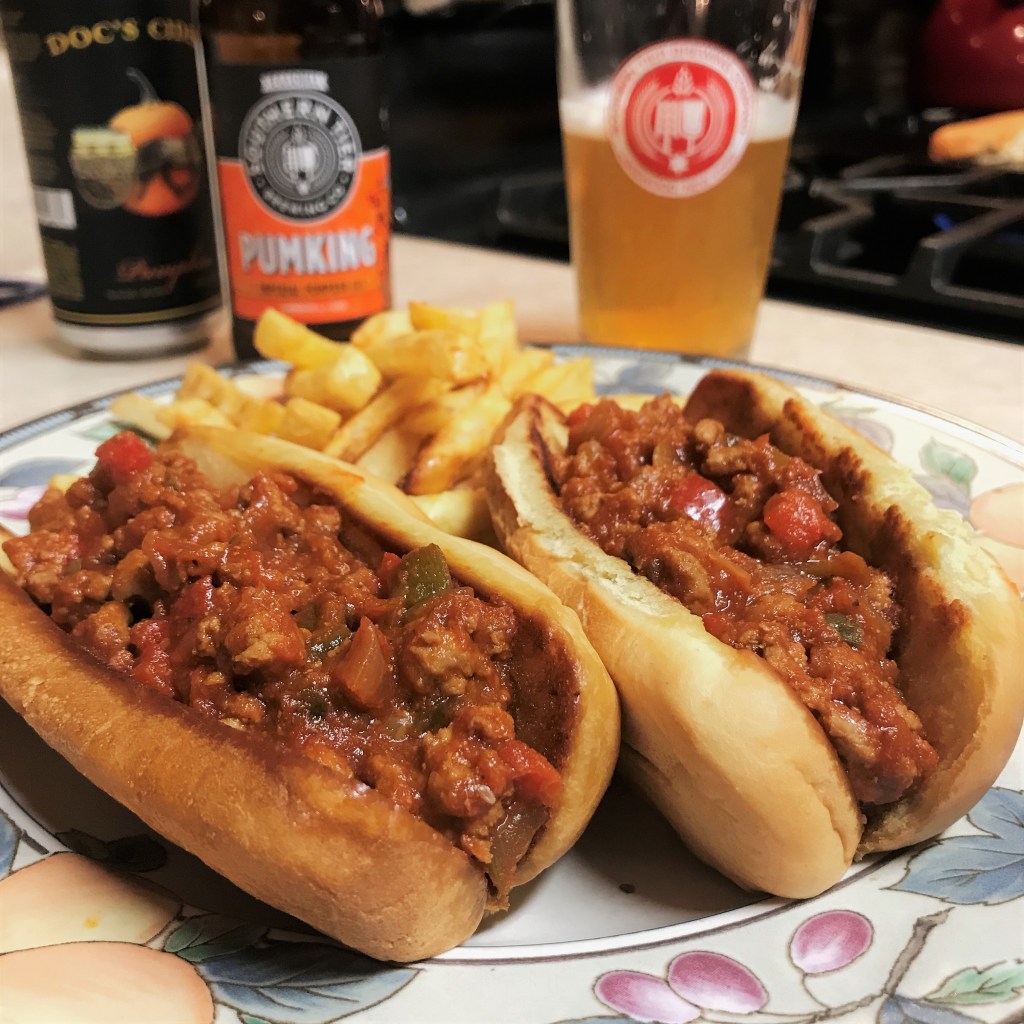
This Halloween-themed beer cocktail is super easy to make in about 30 seconds, and it was a great way to wash down our Sloppy Dogs! Recipe for these yummy treats coming Friday!


You may be wondering if I’m a paid endorser for the products I spotlight on Comfort du Jour, and the answer is “no.” I do not receive money or products for my recommendations, and what that means for you is that you can count on me to give an honest opinion. If something changes, I will update my disclosures. Either way, you can still count on me to be honest in my recommendations, as I will only stand behind products I believe in. Fair enough? 😀


Autumn Weekend Brunch

If I took all the sweet, warm, comforting flavors of the fall season and combined them into a single weekend breakfast, what would it look like?

Pumpkin, maple, cinnamon, apples, pecans…it was a chorus of autumn voices singing across this plate!

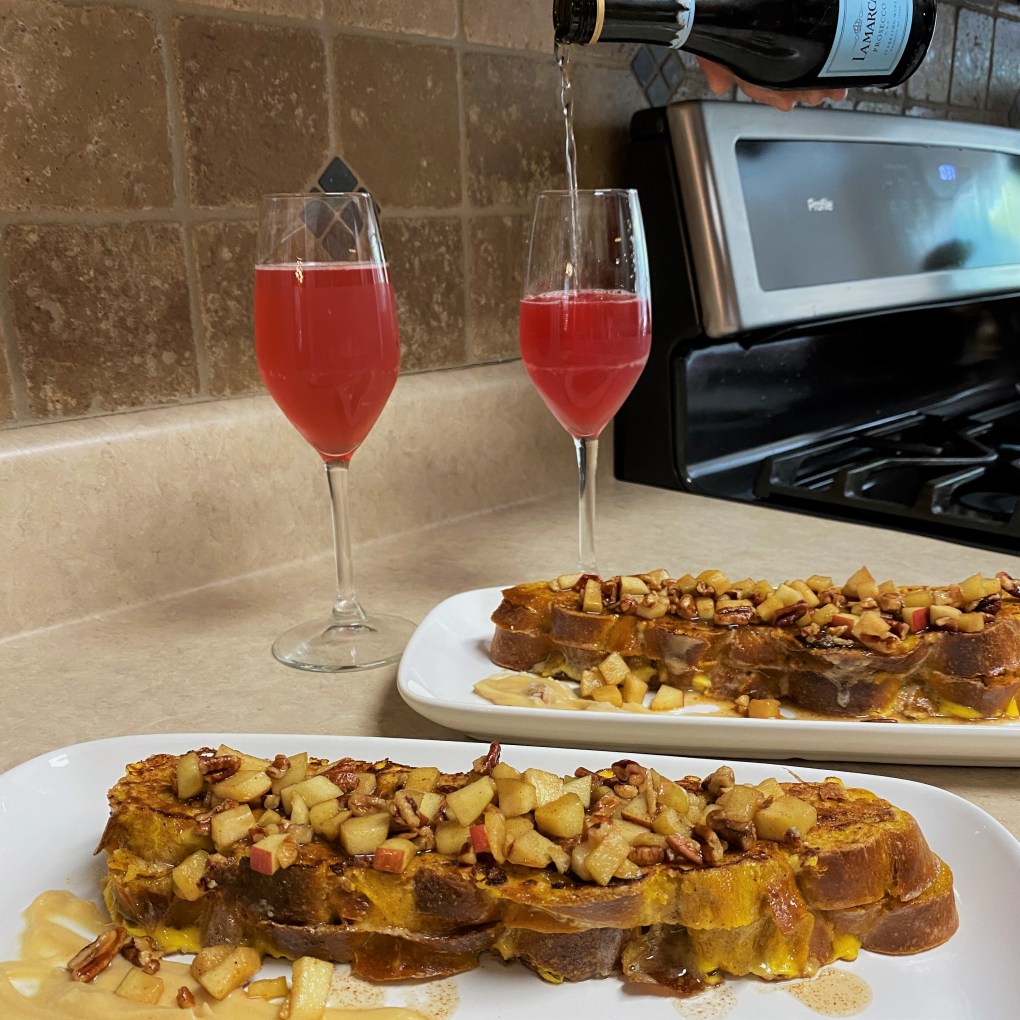
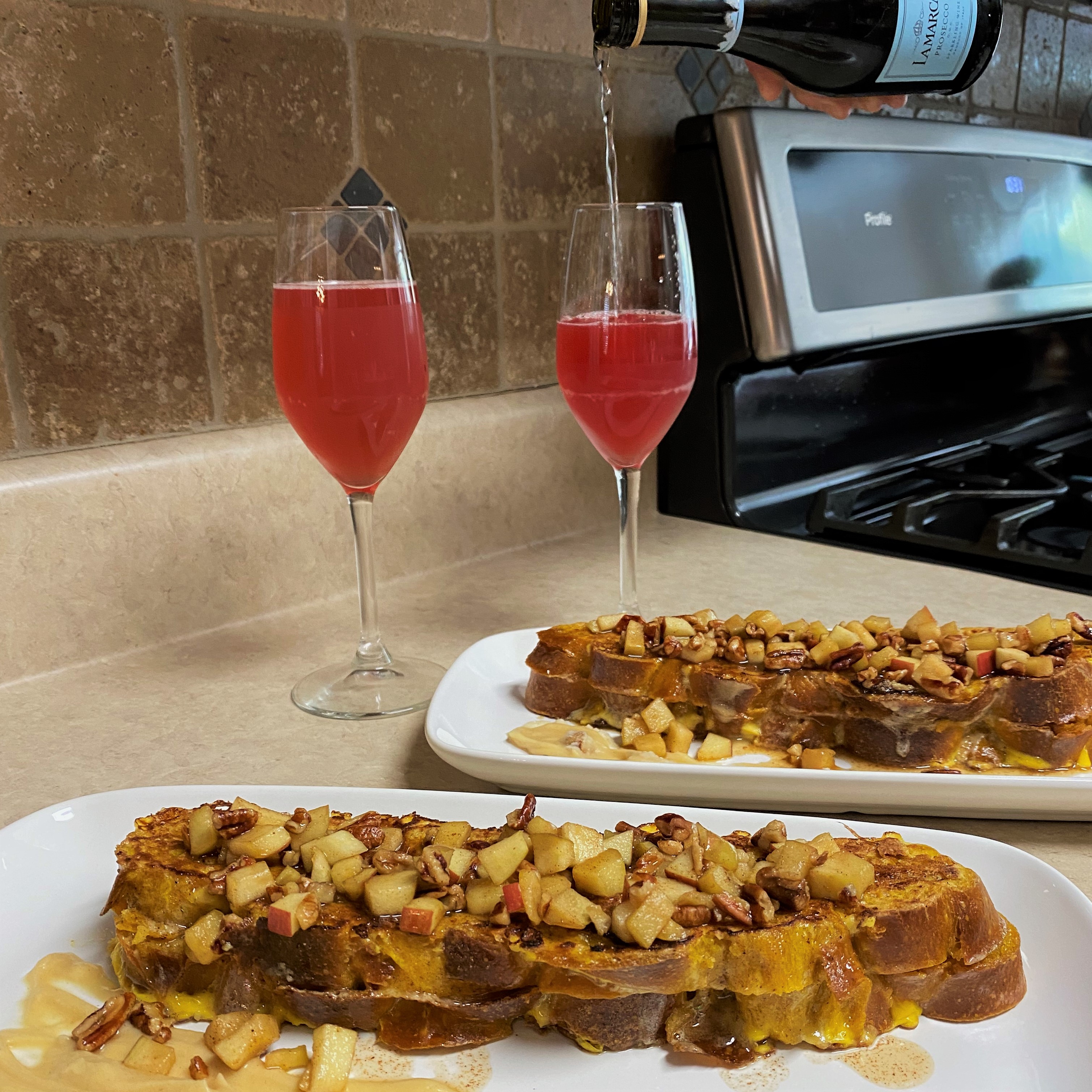
Yes, I believe it would look a lot like this pumpkin challah French toast, stuffed with a cinnamon-y sweet and creamy maple-mascarpone filling and topped with a warm apple and pecan relish. I couldn’t resist throwing this over the top, given the surprise outcome of the sourdough pumpkin challah I made last week. The maple spice swirl inside the braided round loaf inspired me to repeat those flavors in a “go big or go home” recipe. The result is this French toast—with a luxurious, custard-like center, spiked with maple and spice and everything nice, and topped with a fresh apple and toasted pecan relish for a contrasting texture and bite.

Is it decadent? You bet. Sweet? You cannot imagine. And the only way to bring harmony to such a sweet and creamy brunch item is to serve it with a fall-inspired cranberry-cider mimosa. The prosecco bubbles, plus the tart and tangy flavor of the cranberry are welcome relief to so much richness.

Welcome back, Autumn! We’re so glad you’re here. 🙂

I’ll describe how I made this, but of course, I already had the sourdough pumpkin challah, which is not easy to find. If you enjoy baking bread, you might consider making your own. Or, to replicate the big autumn flavors in this dish, I’ll offer suggestions that allow you to use a regular challah or brioche, either of which should be much easier to get your hands on from the bakery department of your supermarket. My posts are meant to inspire, and however that happens at your house, enjoy!


Ingredients

4 large slices challah or brioche, slightly stale* (see notes)

3 oz. mascarpone*

2 Tbsp. maple cream*

1/4 tsp. cinnamon

3 eggs

2/3 cup whole milk* (see notes for pumpkin adjustment)

1/2 tsp. vanilla extract

pinch of kosher salt


*Notes

Challah and brioche are similar “eggy” breads—each has a light and delicate crumb, and both are perfectly suited for French toast, including this recipe. The primary difference is that brioche is made with butter and challah (being a popular Jewish bread) is frequently made with oil. Leave the slices unwrapped overnight, as the stale texture will force them to better absorb the egg mixture.

Mascarpone is an Italian-style cream cheese, but a bit richer and denser. I buy it in small tubs at Trader Joe’s. Regular cream cheese would also work fine in this recipe.

Maple cream—oh, sweet wonderful maple cream! This delightful confection is pure maple, but in a different form from syrup. It’s made by heating the syrup then whipping until it’s a spreadable texture, similar to peanut butter. It is positively decadent. If you cannot find it, substitute about 1 tablespoon maple syrup.

If using regular bakery challah or brioche, reduce milk to 1/2 cup and add 1/4 cup pure pumpkin puree to the egg mixture before soaking.


Instructions (a.k.a. “feast your eyes”)

  1. Using a handheld mixer, whip together the mascarpone, maple cream and cinnamon until smooth and spreadable.
  2. Spread maple-mascarpone mixture onto two slices of the challah or brioche, then top with remaining pieces to make two “sandwiches.”
  3. Whisk together eggs, milk, pumpkin (if using), vanilla and salt. Pour some of the mixture into a flat glass baking dish and place the filled sandwiches in the egg mixture. Drizzle the remaining mixture over the sandwiches and turn several times for about 20 minutes until most of the mixture has been absorbed.
  4. Heat a skillet or griddle over medium-low heat. When it’s evenly heated, place sandwiches on the griddle and cook until the underside is golden brown. Turn sandwiches over, taking care not to allow the top piece to slip off. Cook until the second side is golden brown.
  5. Serve warm with maple syrup, or go crazy and make the warm apple-pecan relish (below).

For warm apple relish topping:

To this point, pumpkin has enjoyed all the attention in my autumn-inspired brunch. But apples have equal star power this time of year, and this is their cue to step in and share the spotlight. This chunky topping provided textural contrast and flavor to the soft and creamy french toast.

1 medium firm apple, chopped into bite-sized pieces

1 tsp. fresh lemon juice (to prevent browning)

2 Tbsp. chopped toasted pecans

1 Tbsp. maple sugar (or syrup)

1/4 tsp. pumpkin pie spice or cinnamon

Squeeze lemon juice over apple pieces in a small microwave-safe bowl and stir to toss. Microwave for 30 seconds, just long enough to warm and slightly soften the apple bits. Stir in pecans, maple sugar (or syrup) and spice.


For the cran-cider mimosa

This brunch cocktail was exactly what we needed to slice through all the sweet, rich flavors of the French toast. If you prefer, you could easily adapt this to non-alcoholic by substituting selzter or ginger ale for the prosecco. My suggested amounts are for one cocktail.

2 oz. chilled apple cider (I used spiced cider from Trader Joe’s)

2 oz. chilled cranberry juice cocktail

2 oz. chilled prosecco or other bubbly (champagne, seltzer, ginger ale)


Layer ingredients in a champagne flute just before serving the French toast.


Want to print this recipe?


Sourdough Pumpkin Challah (a bread maker’s journey)

When I set out in 2011 to learn the terrifying skill of bread making, my primary goal was to have the welcoming aroma waft out of my oven and throughout the house. Who doesn’t love the smell of freshly baked bread? My first few attempts were pretty confused, with some downright inedible, but also with a couple of winners that were probably accidental. I finally got good at making the simplest bread of all time, the English muffin loaf, a minimal ingredient recipe which requires no kneading and is really hard to screw up. And then, me being me, I decided to go ahead and up my game without first mastering the basics of real kneaded bread. It’s just what I do, setting the bar very high for myself. Perhaps the result of being raised by a perfectionist father and impossible-to-please mother? That is a motive I’ll leave to my therapist for analysis.

“I’ll make artisan loaves,” I declared, having absolutely no idea what I was getting into. When I had my first successful artisan boule (a bread nerd’s term for a round crusty bread made without a loaf pan), I charged forward with another idea—that I would henceforth make only sourdough bread. As I have mentioned in a previous post, “sourdough” is commonly (though incorrectly) assumed to be a flavor of bread, but it is more accurately understood as a leavening method. The process begins with creation of a culture that you feed regularly, only flour and water and nothing else, and the culture replaces commercial yeast. For me, this began in early 2016.

My sourdough culture does the same work as the recognizable yellow yeast packets, but in twice the time (you have to be patient, which means it’s been a learning experience for me) and resulting in five times the flavor of bread that is produced with commercial yeast. Sourdough is a fussy thing to learn (with lots of math involved), but once the light bulb goes off and you understand how to relate to it, there’s no going back. This is exactly the thing I’ve wanted my whole life—a relationship that is so solid, there’s no going back. Thank you, God.

Somewhere along the way of making sourdough bread, however, I lost a bit of my gumption and started playing it safe—making only a few “safe” sourdough breads, or the ones that worked out just right every time. The potato onion sourdough loaf that is easy to shape because you do it while the dough is cold, and it stays so soft and is perfect for my husband’s beloved tuna salad sandwiches. The sourdough rye loaf that seems to work backward from all the other loaves, in that the sponge (nerd speak for “wet starter”) contains the full amount of water for the recipe, but somehow the bread comes out perfect every time. The “basic” sourdough loaf from my Peter Reinhart book that is supposed to emerge from the oven with a crackling crust, but mine only did so on my very first try, giving me a confidence that I hadn’t yet earned. And the sourdough challah, which many experienced bread makers have doubted is even possible, given that challah dough is sweetened with a good deal of honey, which tends to put the whole process into even slower motion than sourdough already does. But I’ve made sourdough challah successfully for two years, though only for celebration of the big Jewish holidays that allow leavened bread: Rosh Hashanah and Hanukkah.

Still, I wanted to push it further and make a pumpkin challah, for which there are plenty of recipes on the internet. Except none were made by way of sourdough, and so that became the new high bar for me. For two years, I kept this challenge off in the distance, lest I be disappointed in the outcome. If you’ve ever baked with pumpkin, it was probably muffins or quick bread or something that is intended to be soft and kind of crumbly in texture. I’ve tried making chocolate chip cookies with pumpkin, and they were tasty, but cake-y and more like muffin tops than cookies (let’s not discuss what they did to my own muffin top). I made a successful sourdough pumpkin artisan boule a couple years ago, and it was delicious, but dense. I really, really wanted a sourdough pumpkin challah.

Fast forward to this week, and this gorgeous, swirly slice of sourdough perfection.

All that pumpkin! And swirls of maple sugar and warm autumn spices.

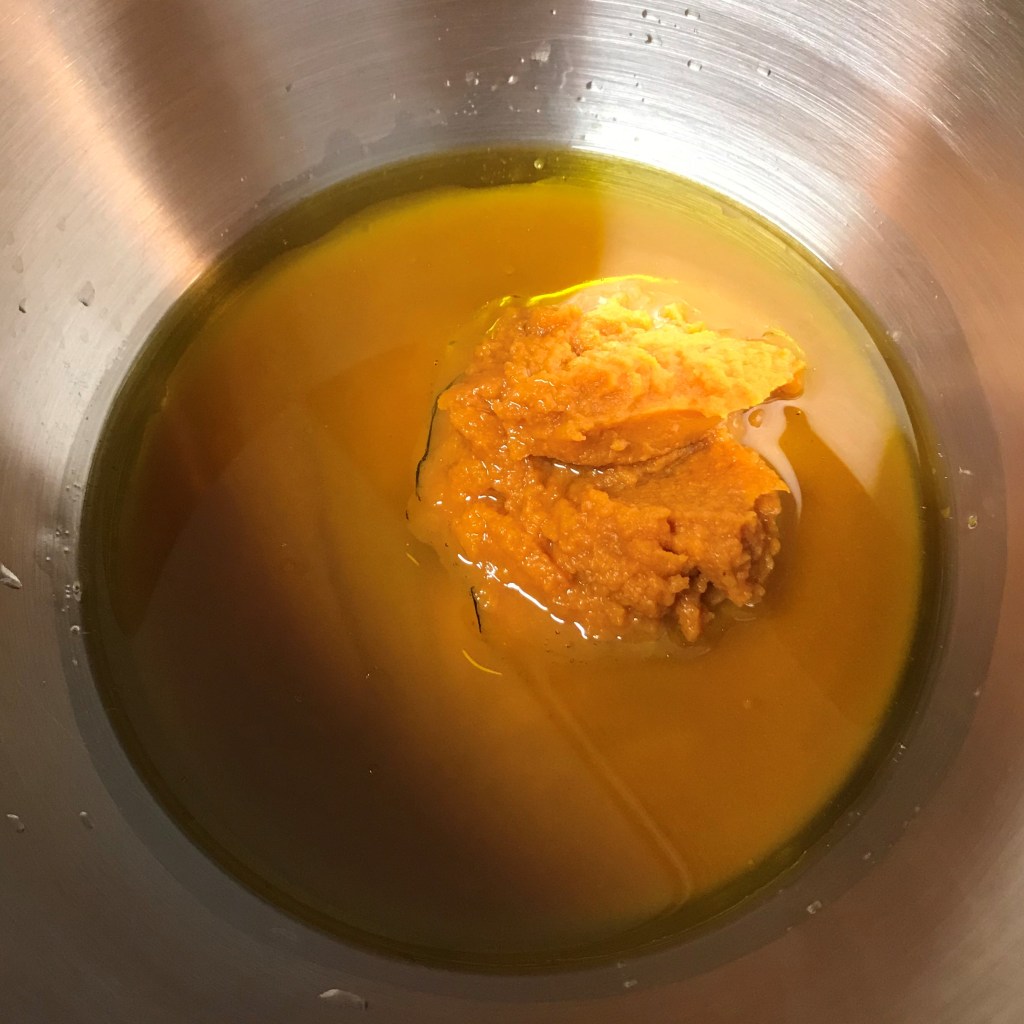
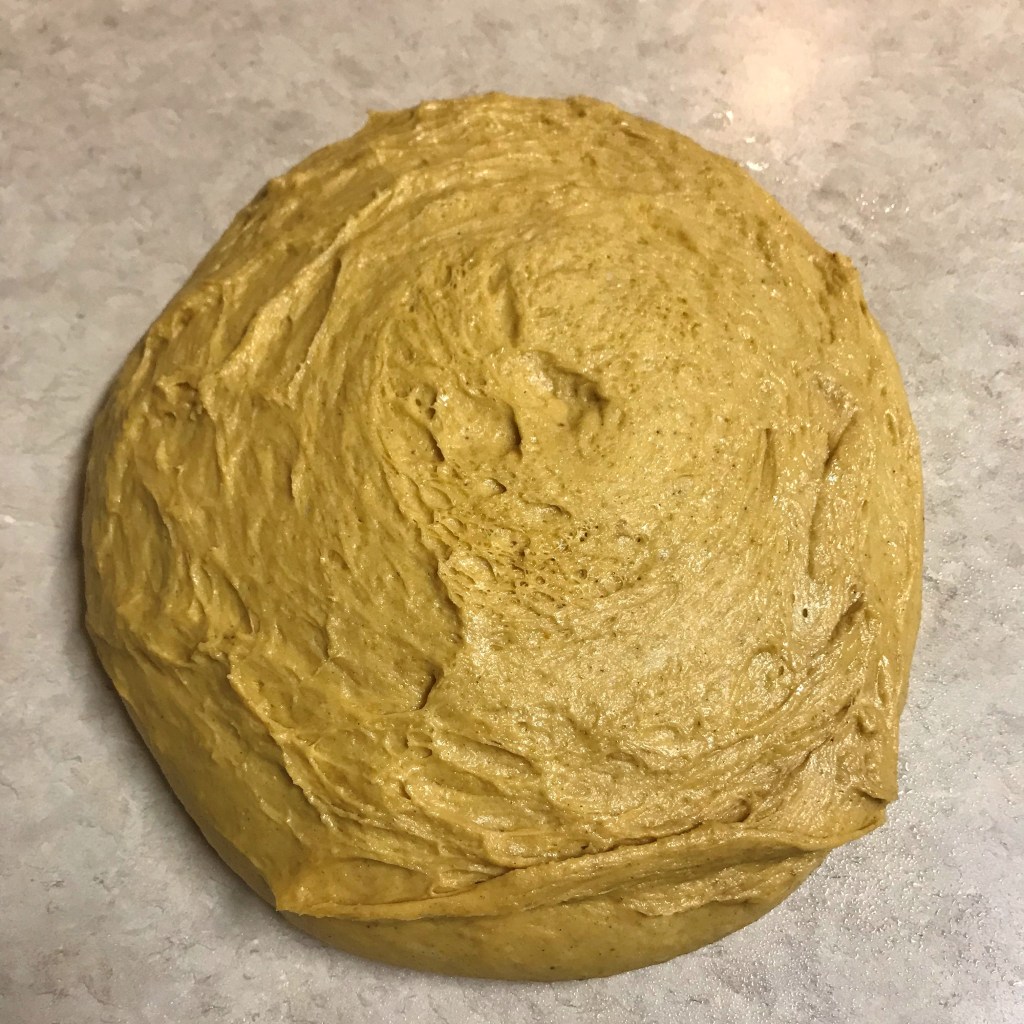
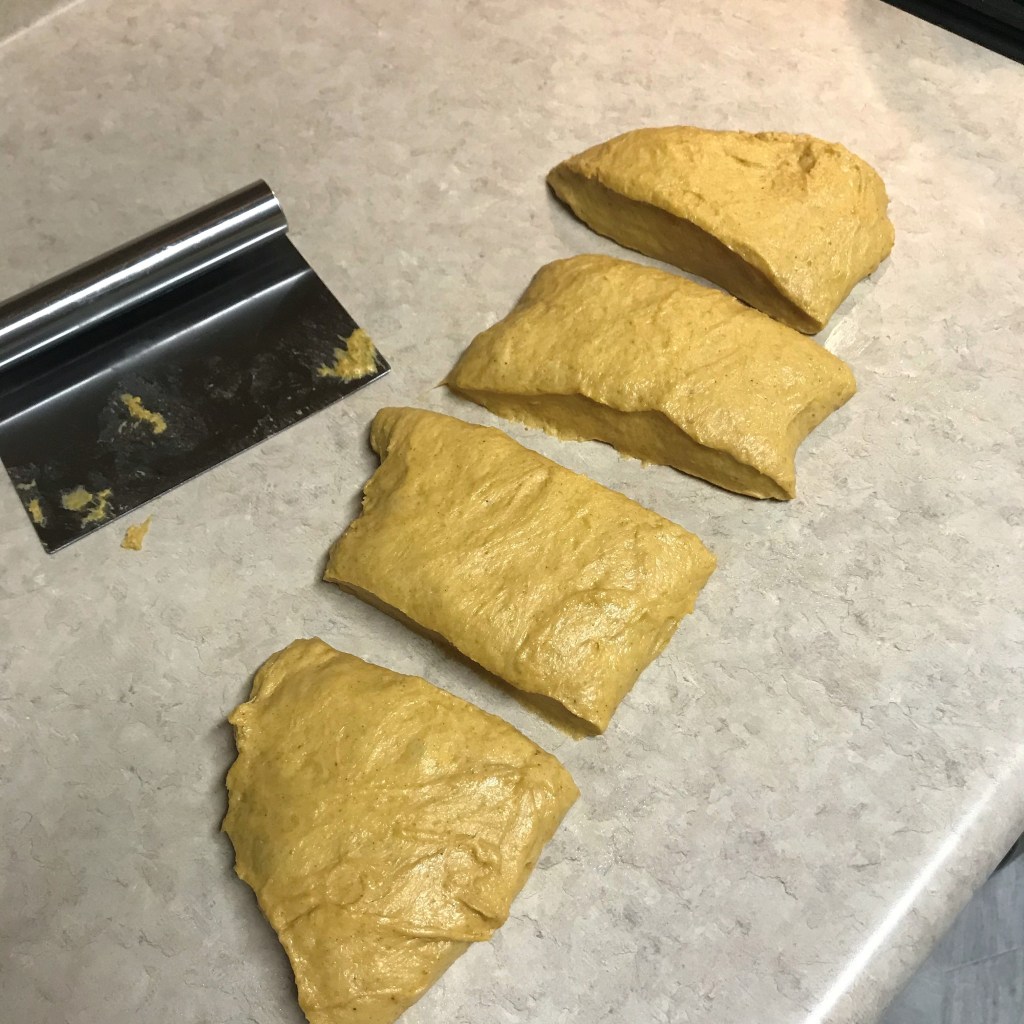
Introducing pumpkin to the mix is complicated for several reasons. First, I had to speculate how much moisture vs. bulk to account for in the pumpkin puree, because I had to create my own recipe and formula. Secondly, the fibrous nature of pumpkin puree contradicts the stretchy gluten structure of bread; the puree is wet, but it isn’t liquid. Challah is made with several eggs and oil—in its classic form, it should be light and soft inside, with a delicately chewy crust. With so much adjustment, coupled with long ferment times, I was sure that I’d fail in this venture. I hate to fail. But if failure is inevitable, I will go down in flames. Dramatic? Welcome to my mind.

The trouble is, I didn’t fail. No, I definitely did not.

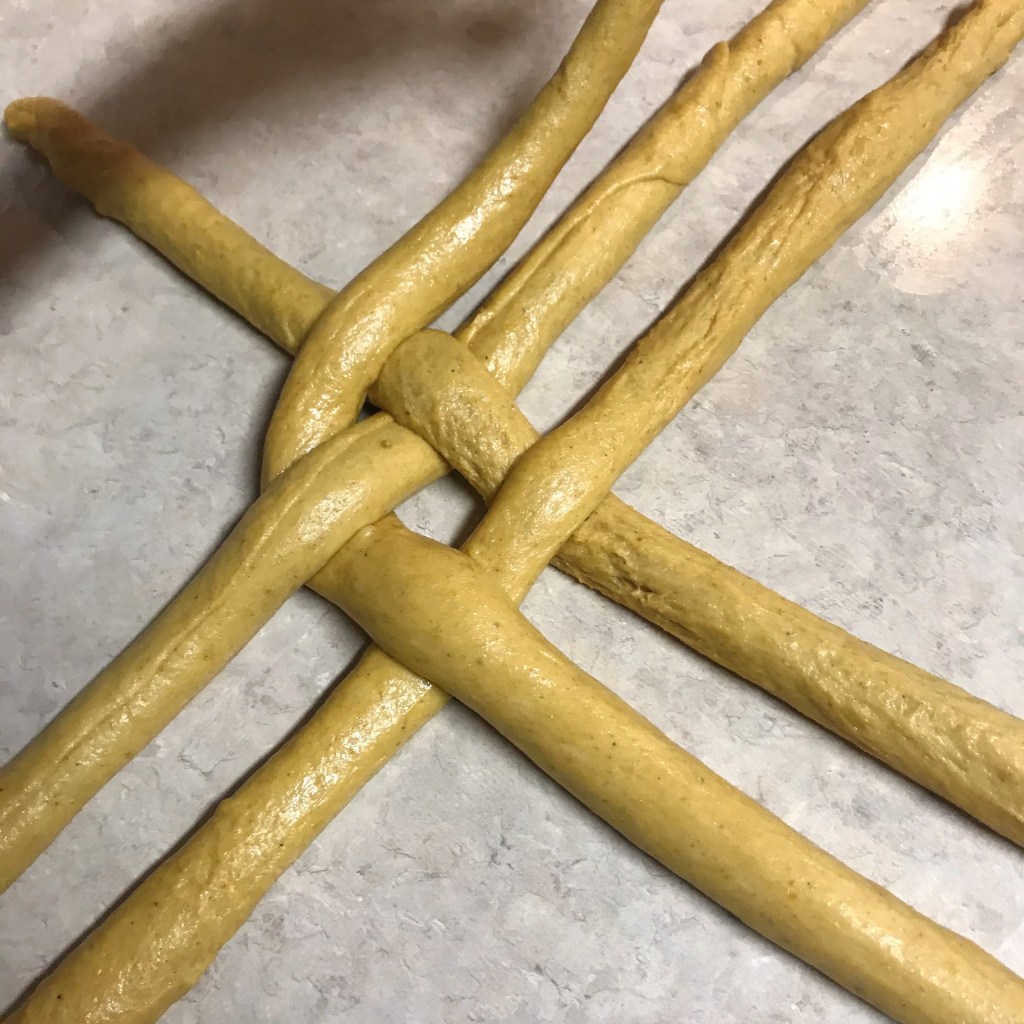
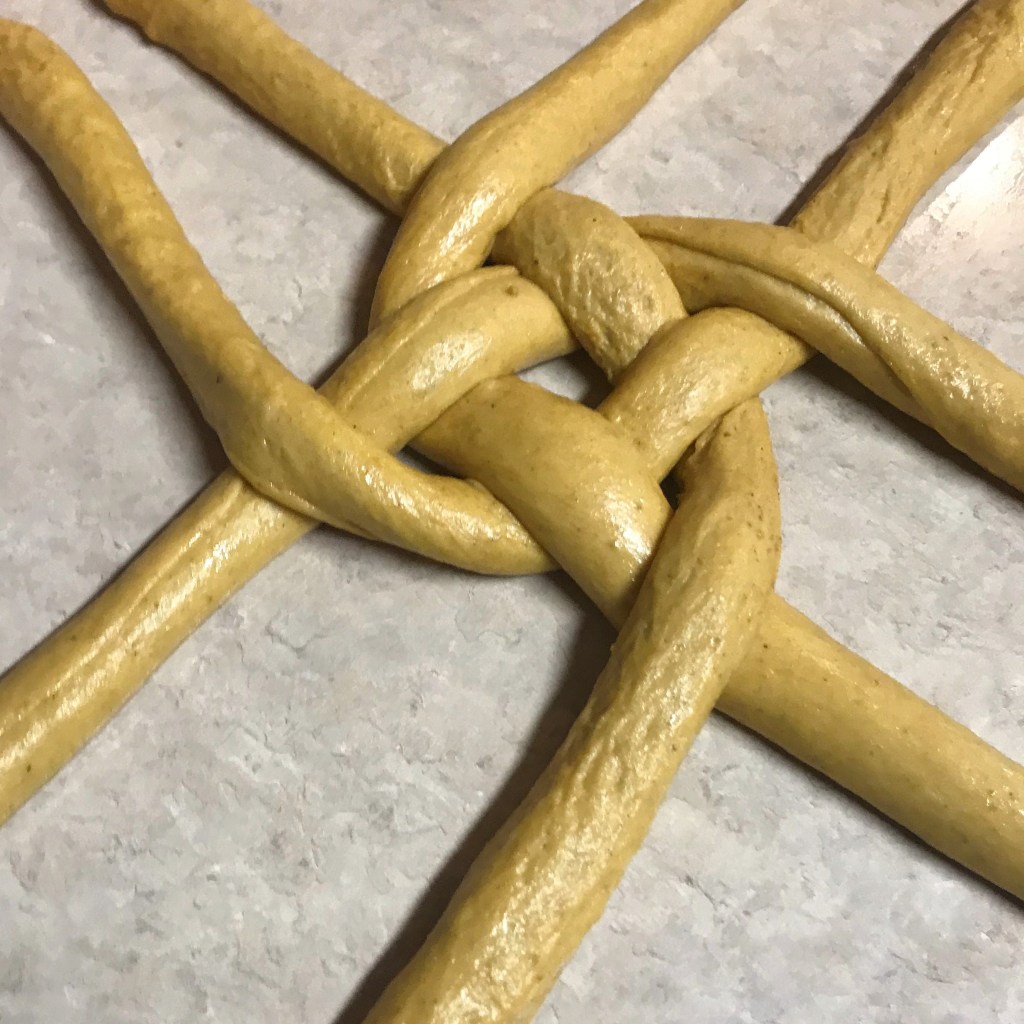
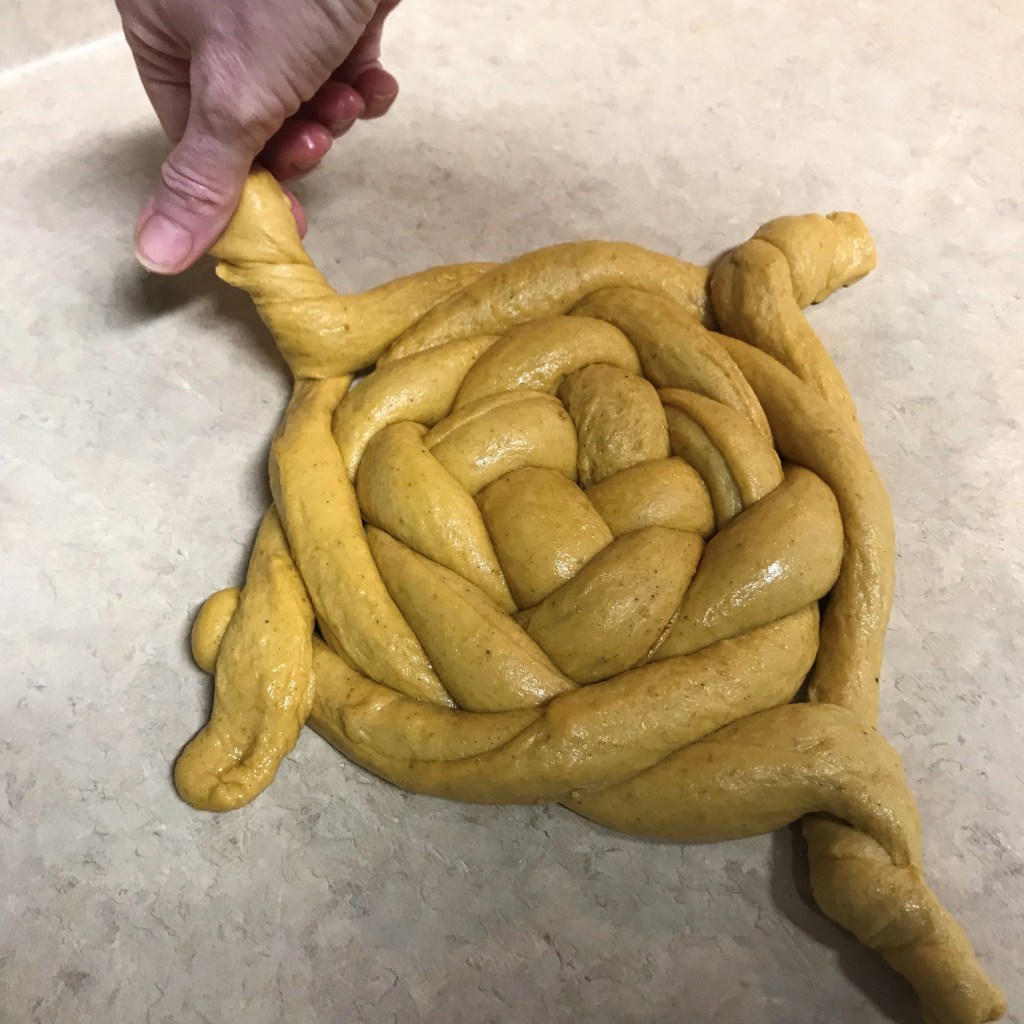
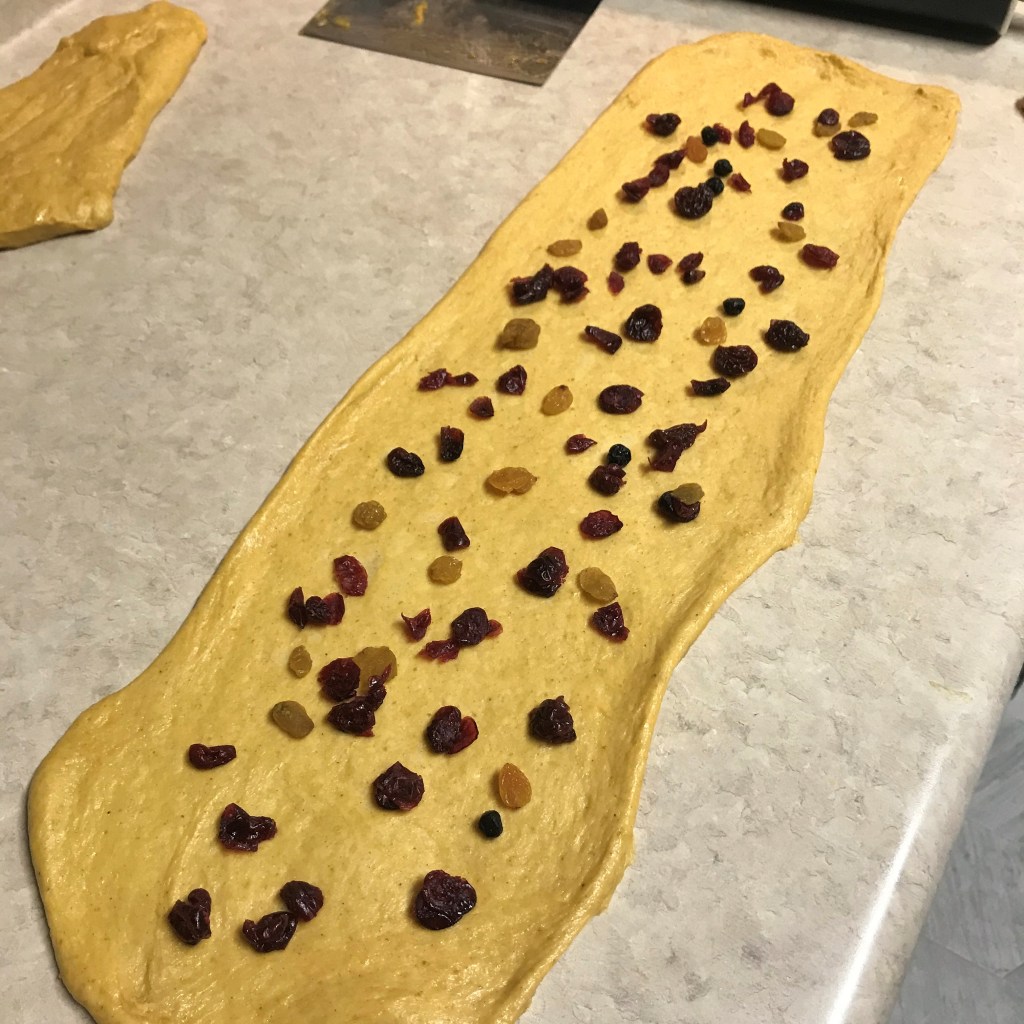
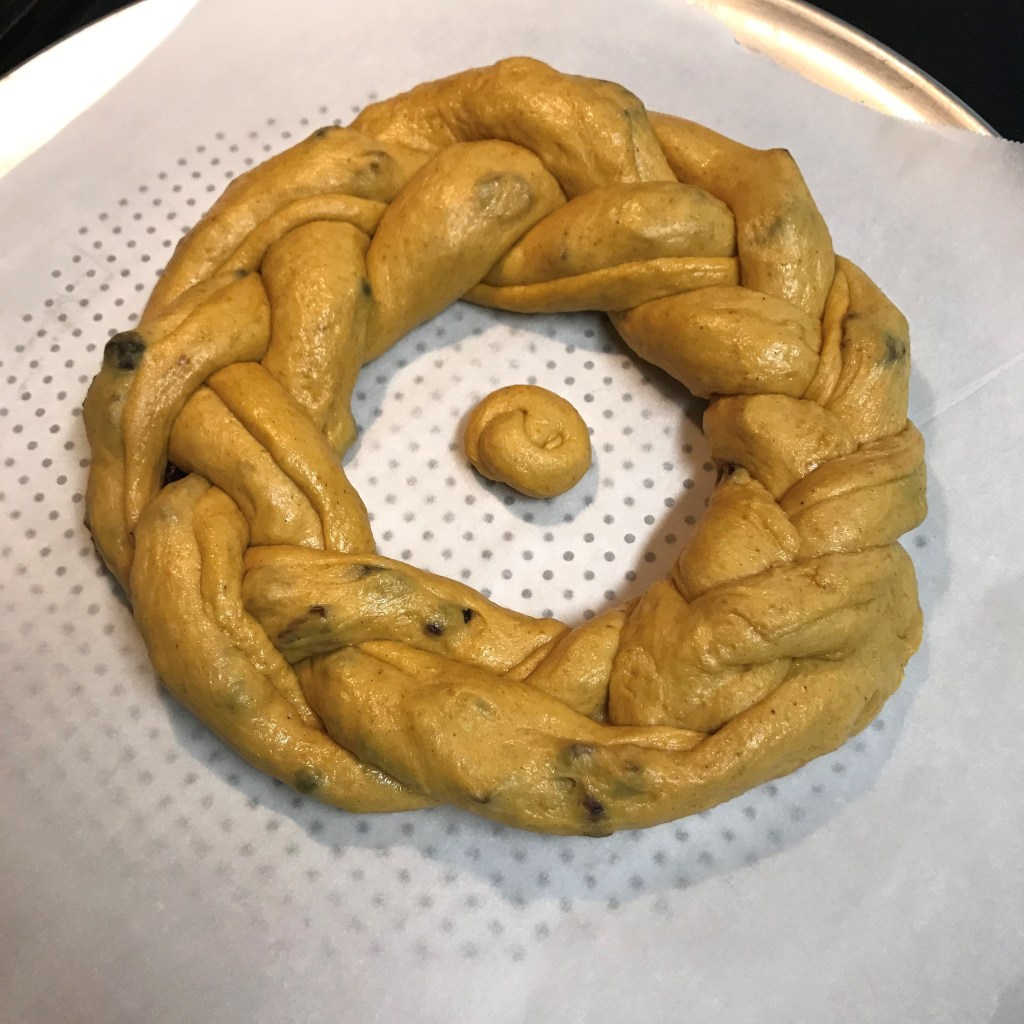
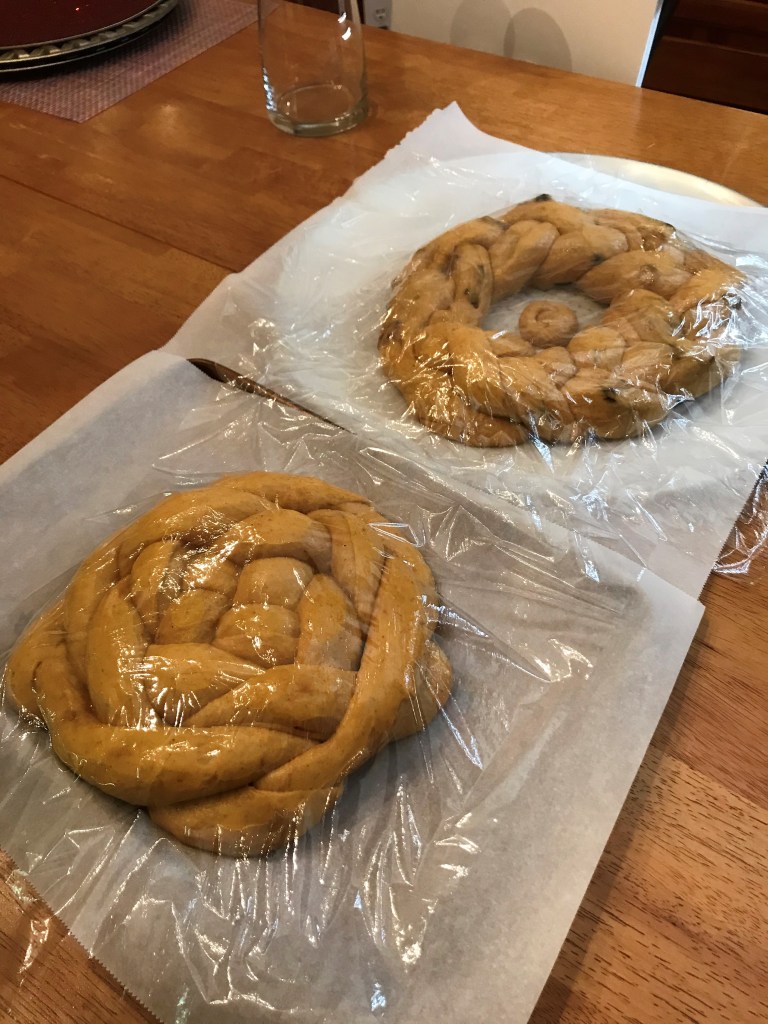
The round braided loaf has a maple-spice swirl, and the braided wreath is filled with a blend of dried fruits: cranberries, golden raisins, blueberries and cherries.

This first attempt at making a naturally leavened pumpkin challah had me on pins and needles from start to finish, but these two loaves far exceeded my expectations. And, just in time for Rosh Hashahah! My loaves are round in shape to symbolize the new year, and coming around full circle. I cannot wait to make French toast this weekend. Imagine the bread pudding possibilities! I feel like a proud mama, showing off pictures of a new grandbaby.

“Do I smell pumpkin?”

I’m so excited, I want to run to the market and buy every can of pumpkin puree on the shelves. The next round of sourdough pumpkin challah for everyone is on me! Wait, maybe I’ll grow the pumpkins and cook them myself—that may become the next high bar? No, perhaps I shall make it again a few more times to be sure my formula is correct. And though I know that most of my followers here will not ever roll up their sleeves and make this bread (except my fellow sourdough nerds, for whom I’ve presented my formula and notes in PDF at the end), for now, I am delighted to show you the pictures of my journey. Thank you for looking. 😀

Happy fall, everyone, and “shanah tovah!”

For bread nerd eyes only 🙂