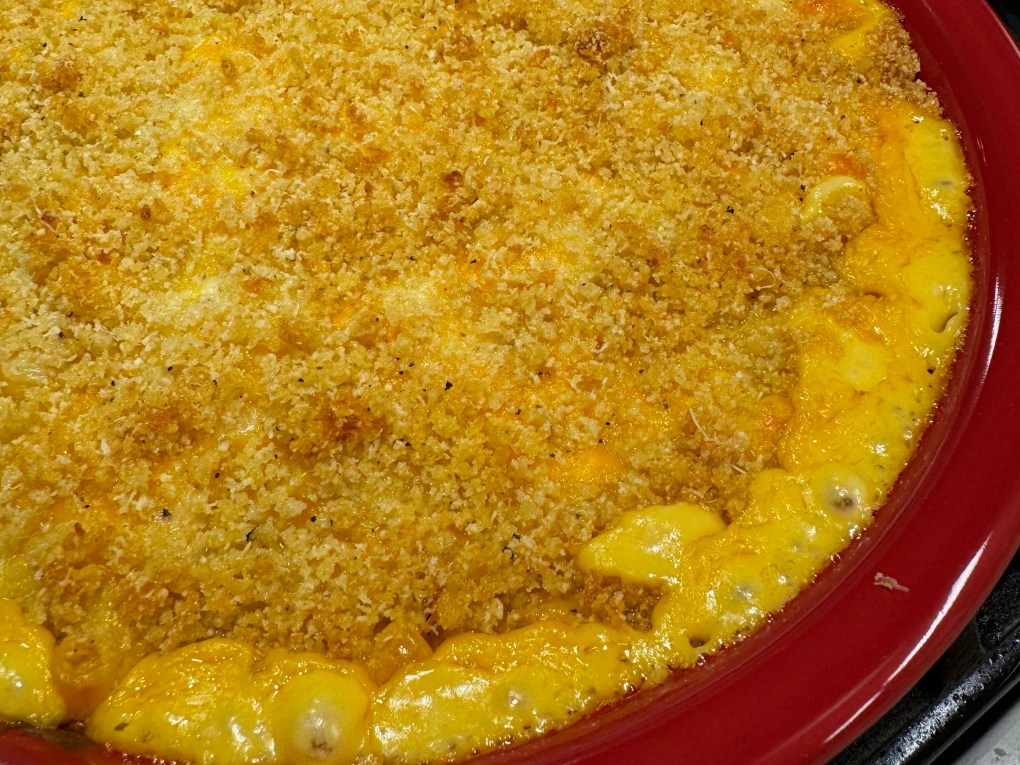
Butternut Squash Mac & Cheese

Sometimes a recipe idea has an unexpected side benefit, and that was the case with this macaroni and cheese recipe I made for our Thanksgiving meal last year. Though I intended it a way to “sneak” a few more vegetables onto our plates— namely butternut squash and cauliflower— my husband surprised me with his assessment that this was “the best mac and cheese” I’d ever made! My memory tells me he may have said this about a few others as well, but still, it’s high praise!

Mac and cheese is a standout comfort food, and I love bending it into various flavor directions, which you already know if you’ve been following me for any length of time. It is the “comfort” in Comfort du Jour and was the first recipe I posted when I began this blog more than five years ago. Mac and cheese is in a category that I call “blank canvas foods,” open for suggestion and adaptation with endless possibilities or, should I say, “pastabilities?” 😉

I don’t usually include mac and cheese on the Thanksgiving table because it’s a dish that I make year-round and we have so many other seasonal dishes that demand space. Our guests would revolt if we didn’t have Les’s incredible garlic mashed potatoes or his cranberry sauce with Mandarin oranges. And Brussels sprouts of some variety are a must. But this mac and cheese feels unique with the butternut squash that brought a distinctively “autumn” flair. I can easily make a case for adding this to the list of Thanksgiving standards. Come along, and I’ll show you how easy it was to make!

Stand-ins for the squash

There are two substitutes that come to mind if butternut squash isn’t your thing or if it’s out of reach for any reason. Pumpkin and sweet potato each have similar texture and color, and either would work great here— just be sure they are cooked soft enough to puree smoothly. Canned pumpkin is a good option, and I made a savory pumpkin mac and cheese a few years ago that proves this point. 

Prepping the vegetables

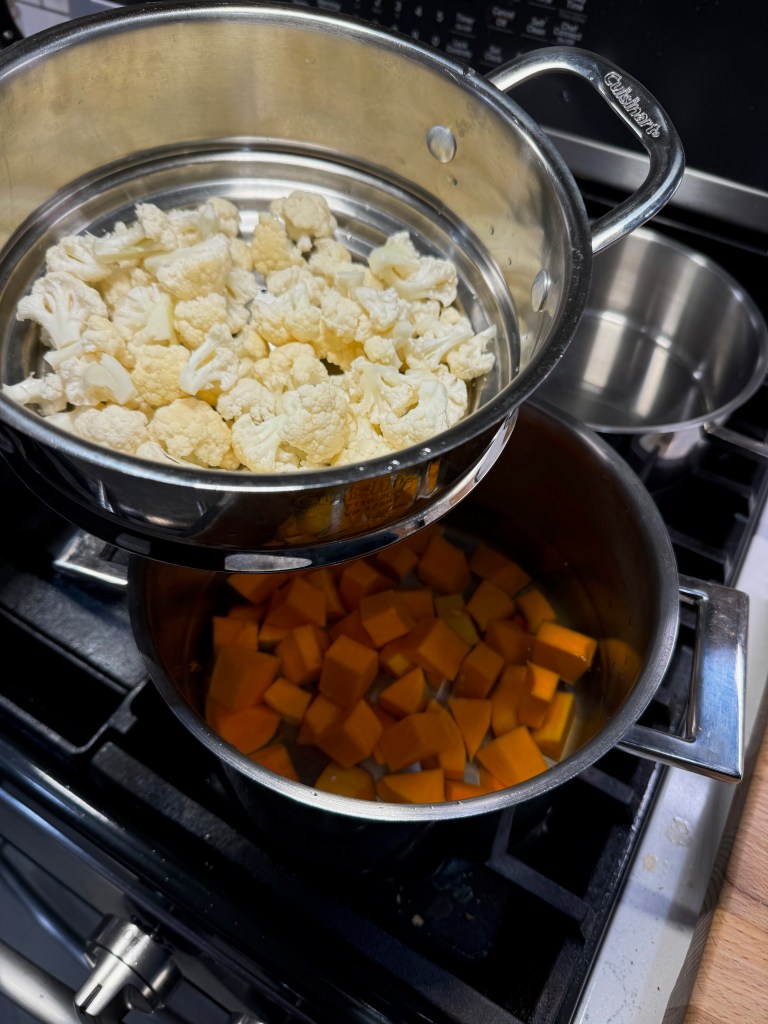
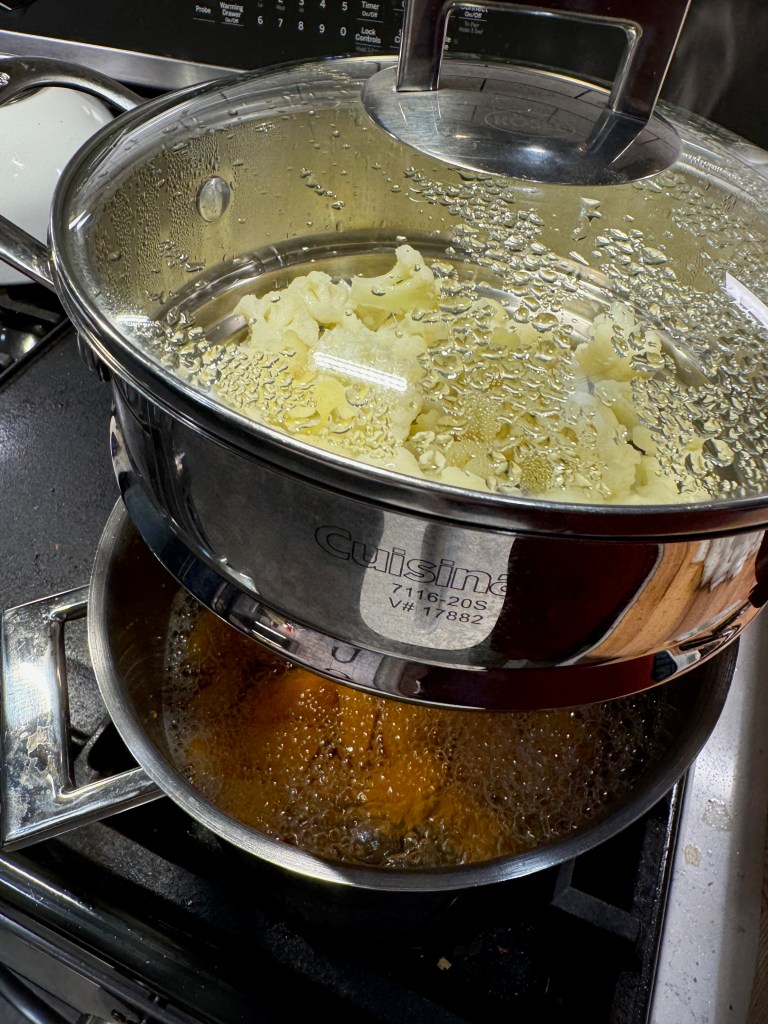
Both the squash and cauliflower will be pureed, so I needed to cook them to full tenderness ahead of making the dish. My steamer insert doesn’t get much action, but it earned its keep this time, as I boiled the squash cubes and simultaneously steamed the cauli in the insert. Three cheers for only needing one burner! This took about 25 minutes. I pressed the squash through a mesh strainer and then blotted away excess moisture with paper towels. The cauli only needed to cool.
The cheese sauce

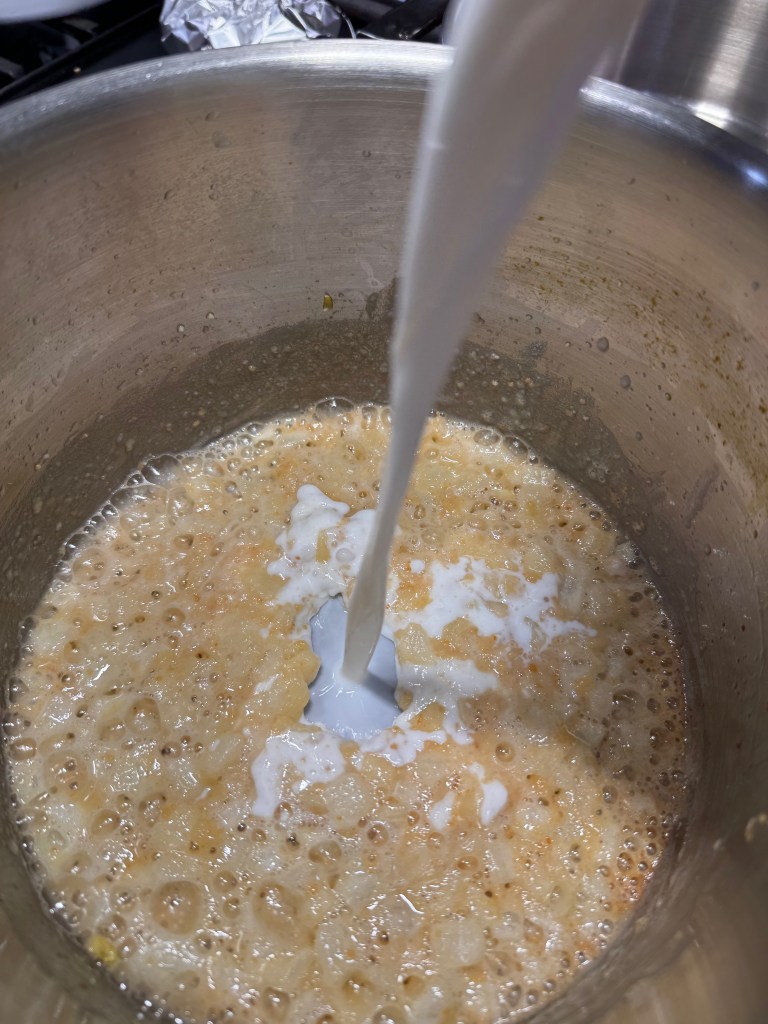
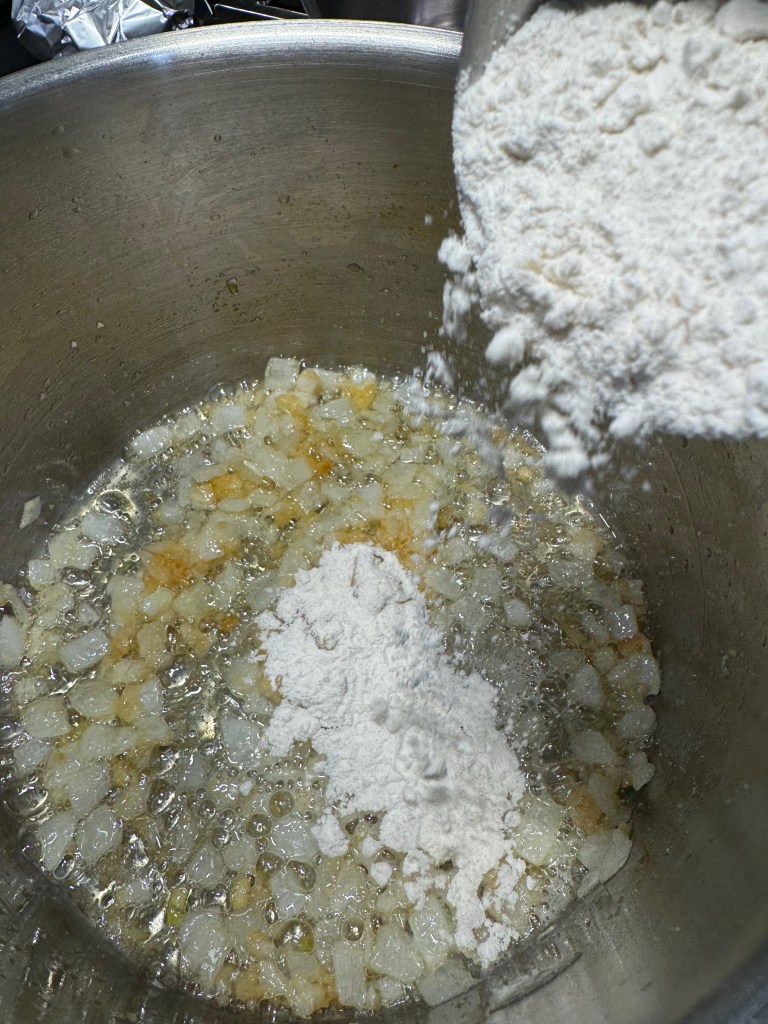
All my mac and cheese recipes begin the same way— with a roux. This simple mixture of butter (or oil) and flour creates a thickening base for whatever liquid you plan to use (in this case, milk). It’s one of the first important lessons I learned in my grandmother’s kitchen when I was barely even tall enough to reach the stove. While my butter melted and browned slightly, I tossed in some finely diced onion for flavor before adding the flour and, eventually, the milk. 

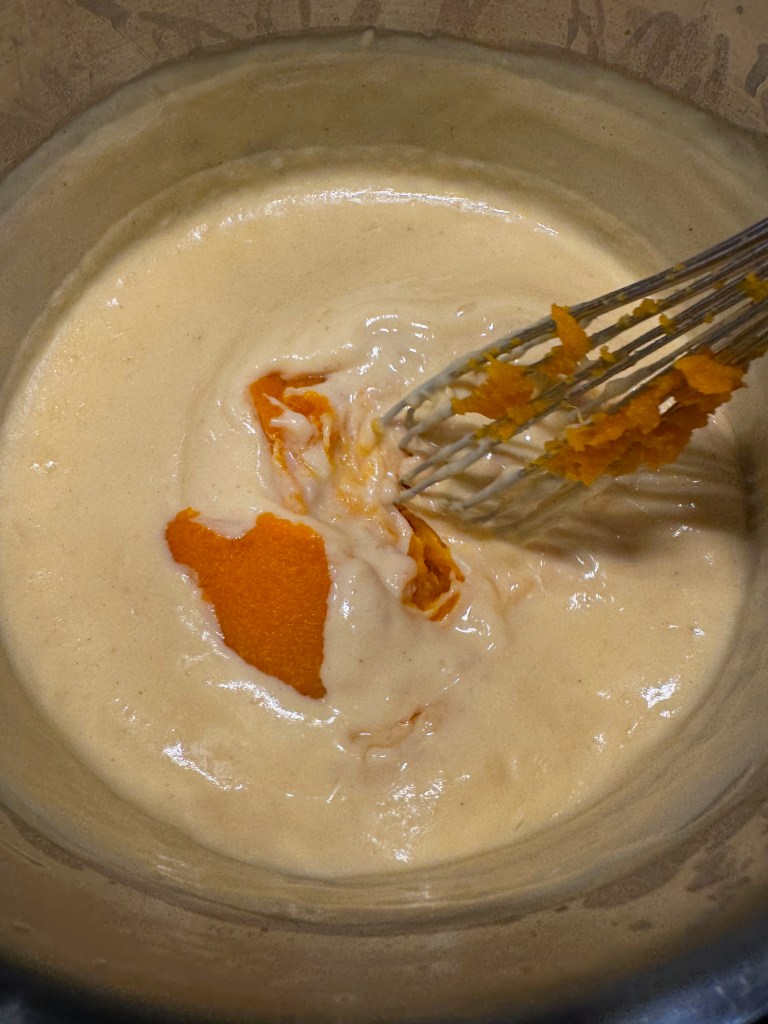
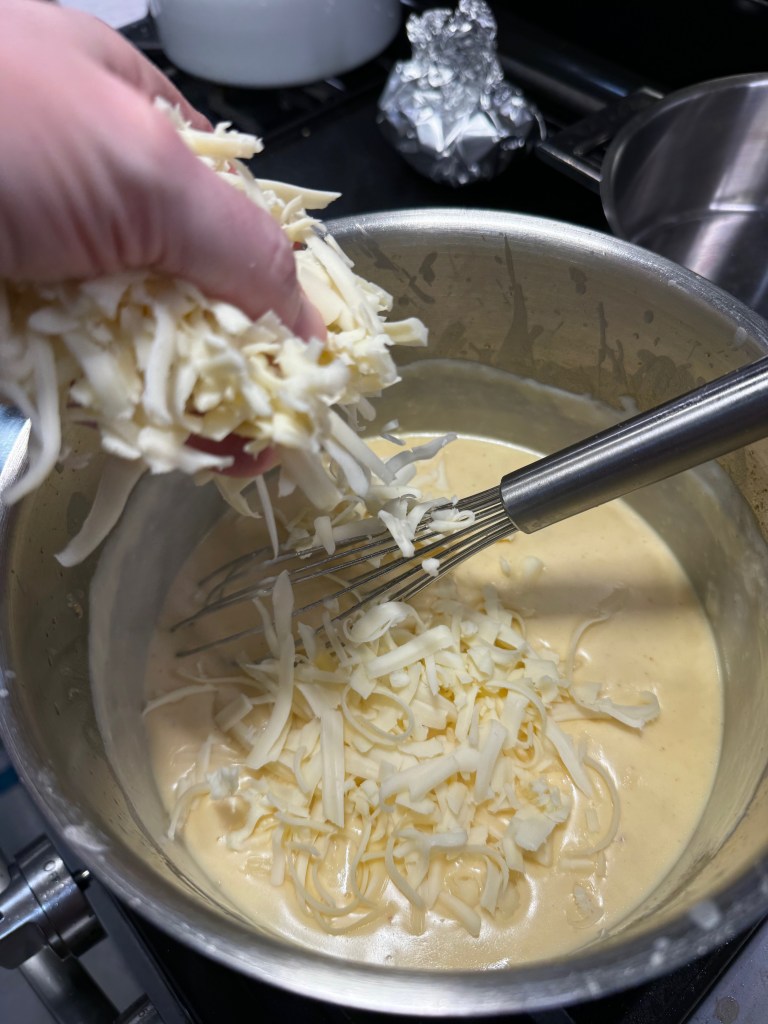
The cheese came next, beginning with a few ounces of American processed cheese. I know, I know, some say that this isn’t “real” cheese. But as Kenji López-Alt, one of my culinary idols, has said, it’s like saying that meatloaf isn’t meat. American cheese is just cheese that has been chemically adjusted with certain salts and stabilizers that prevent fat separation when you melt it. Using a little bit in my cheese sauce sets the stage for the other cheeses to remain more stable. In other words, it keeps my cheese sauce more creamy than gloppy! The other cheeses I used were gruyere, which I love for its nutty flavor, and sharp white cheddar. 

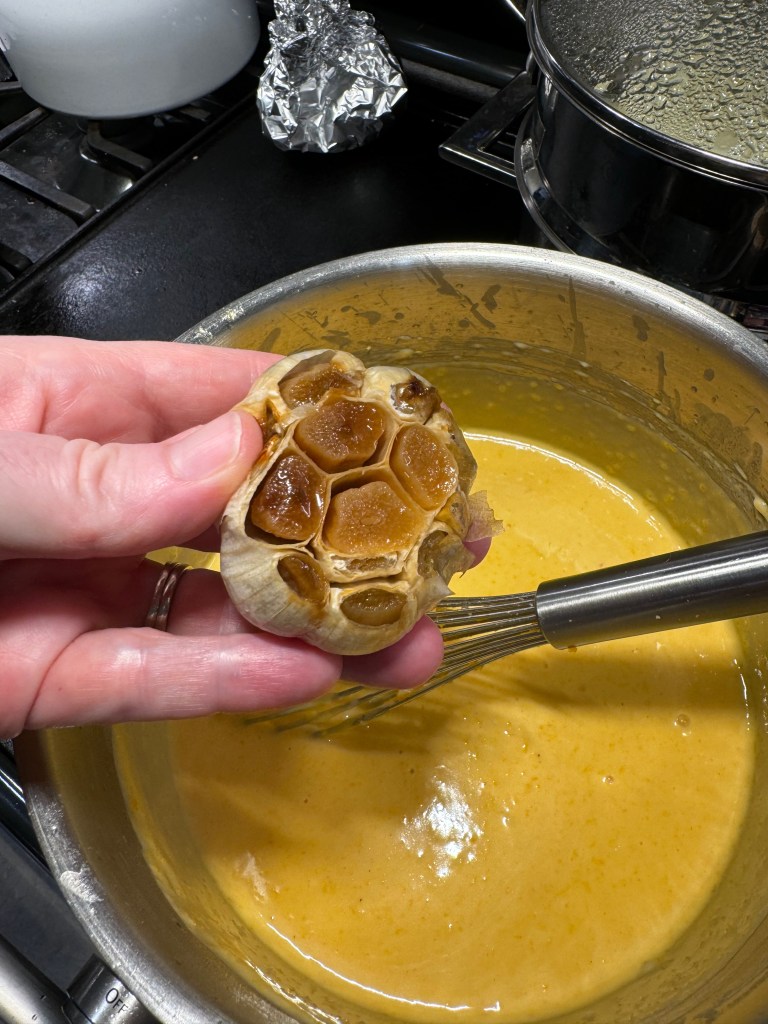
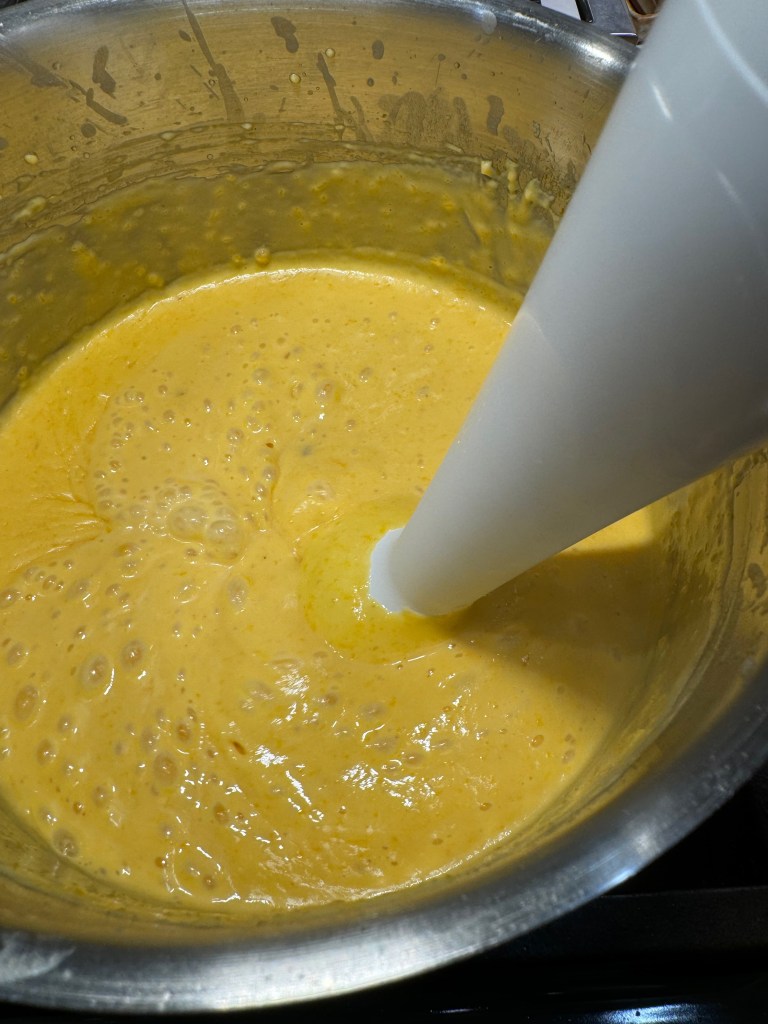
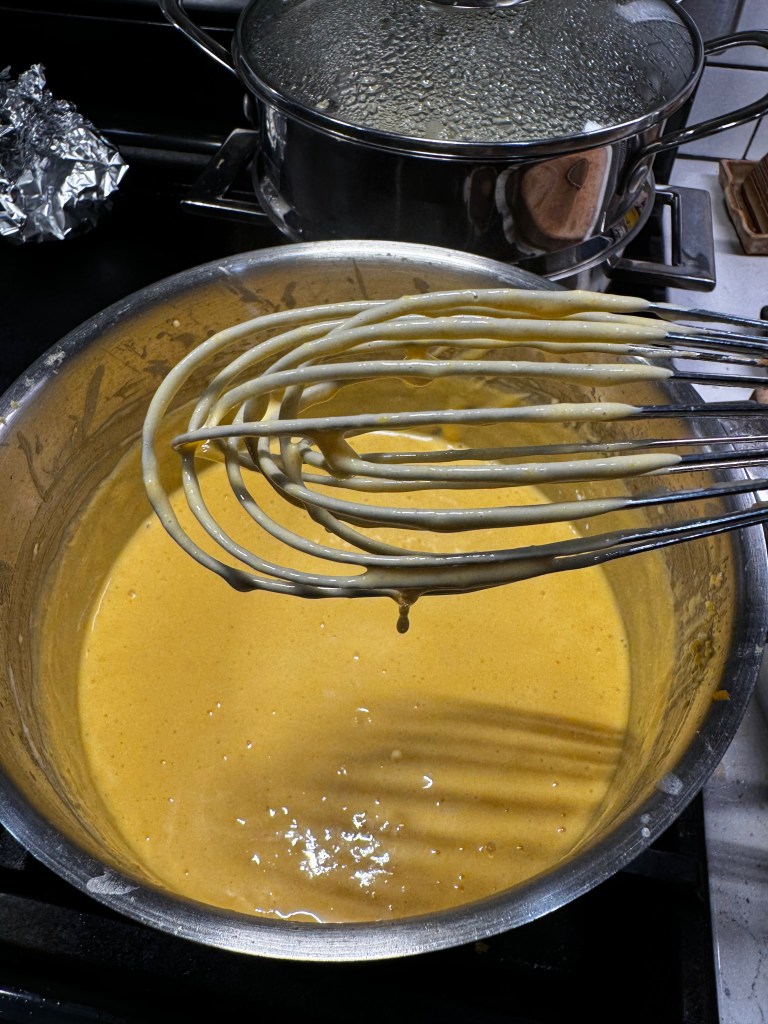
Do you see my secret weapon there? Roasted garlic adds incredible depth of flavor to a cheese sauce, and I squeezed out the entire thing into this one, plus the squash puree and (though I missed getting a picture of it) the tender steamed cauliflower. After whisking it all together, you can see that my sauce looks a little broken, but my immersion blender takes care of that! 
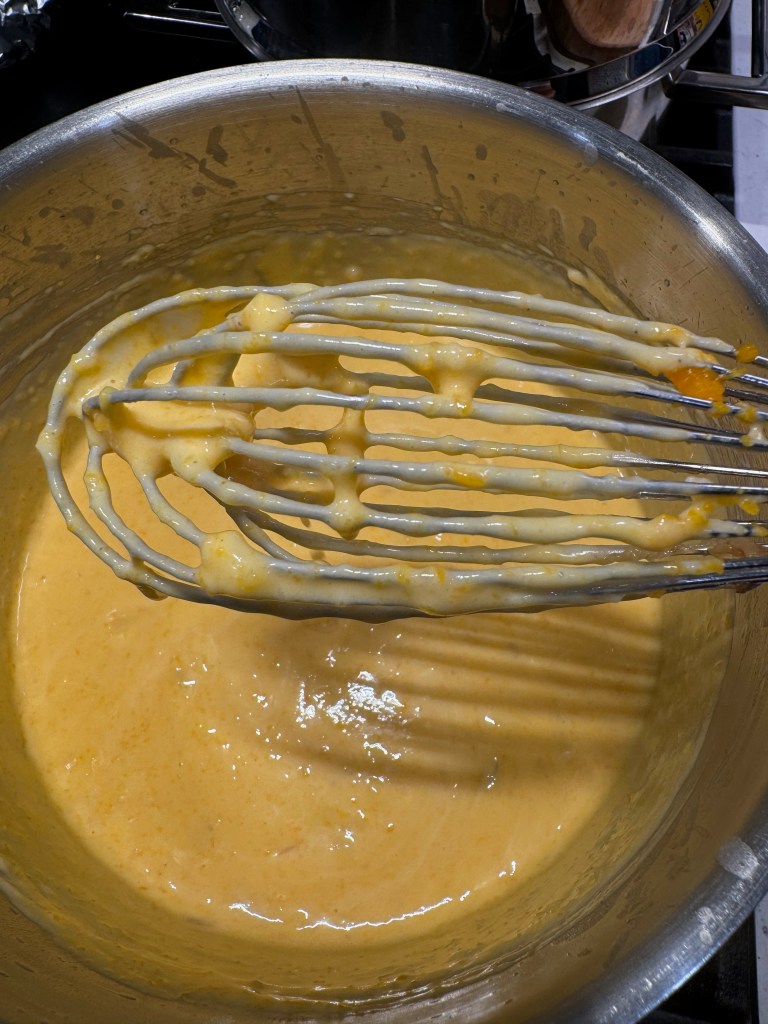

I started using this trick a few years ago and I’ve been very pleased with the smooth consistency of my cheese sauces. I highly recommend, though it isn’t a dealbreaker if you don’t have one. Try pureeing the squash, garlic and cauliflower in a bullet or regular blender with a bit of warm milk or cream before whisking it into the sauce. Be sure the components are cool first!

Putting it all together

Despite my efforts, sometimes I mess up and forget to take pictures at certain stages of making a dish, and that’s exactly what happened here. For a full rundown on how I finished this mac and cheese, check out the click-to-print recipe card at the end of the post. Here’s the Cliffs Notes version:

  1. Cook the large elbow until al denté and stir in the cheese sauce while the pasta is hot.
  2. Make some buttery toasted panko crumbs.
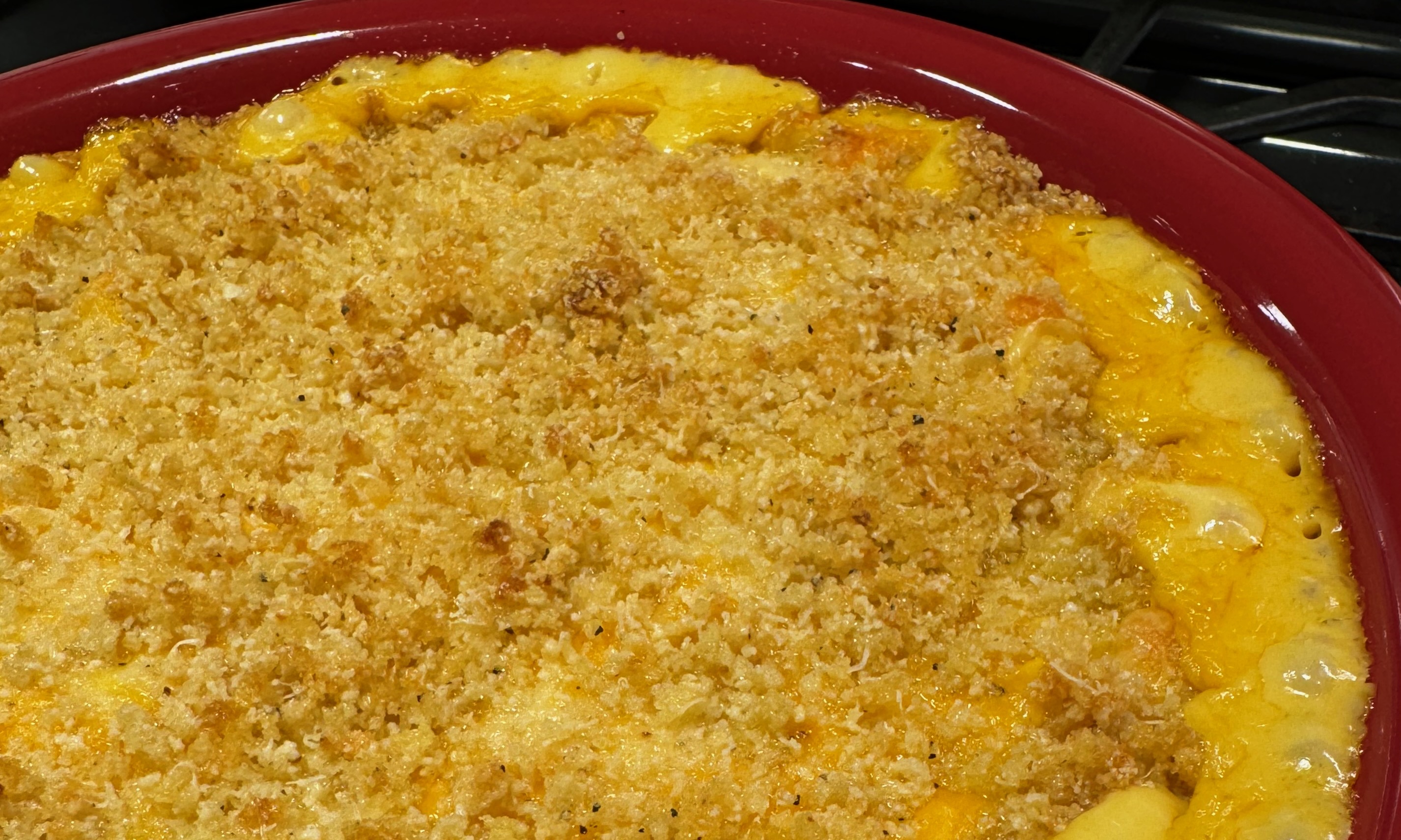
  3. Sprinkle the crumbs on top and bake until the cheese is ooey-gooey and bubbly and the crumbs are crispy crunchy toasty. Because in my kitchen, it’s all about texture!

What’s happening in your kitchen this Thanksgiving? Let’s find out in the comments whether you’re sticking with the standards or adding something new to the repertoire! And what would cause a revolt in your family if you omitted it from the table?

Butternut Squash Mac & Cheese
  • Servings: About 8
  • Difficulty: Average
  • Print

This was meant to be a way to sneak extra vegetables into my dish, but the squash and cauliflower actually gave this a terrific flavor. Use an immersion blender if you have one, to make the sauce extra smooth and creamy.


Ingredients

  • 4 Tbsp. salted butter
  • 1 cup diced sweet onion
  • 1/2 tsp. kosher salt
  • 3 Tbsp. all-purpose flour
  • 2 1/2 cups whole milk
  • Several grates fresh nutmeg
  • About 1/4 tsp. white pepper
  • About 4 oz. American cheese, shredded or cubed
  • 8 oz. gruyere cheese, shredded (reserve some for the top)
  • 6 oz. sharp cheddar cheese, shredded
  • 1 cup butternut squash puree, pressed dry with paper towels
  • 1 whole bulb roasted garlic
  • Most of a box large elbow macaroni, cooked to slightly firmer than al dente
  • 1 1/2 cups cauliflower mini florets, steamed until tender and smashed with a fork
  • 1/2 cup unseasoned panko crumbs
  • 1/4 cup grated Parm-Romano blend cheese (freshly grated)
  • 2 Tbsp. butter

Note: If you don’t have an immersion blender, you can take a different route to achieve a smoother sauce. After the butternut squash and cauliflower have cooled to near-room temperature, add them to a blender with the roasted garlic and about 1/4 cup cream or milk. Blend until puréed and smooth, and then whisk this into the cheese sauce. Do not use a blender while these ingredients are hot, unless you remove the top vent cover. If you have a bullet-style blender, the mixture must be no more than lukewarm.

Want to work ahead? The vegetables can be prepped and cooked the day before, and you can make the mac and cheese ahead of time and refrigerate. Bake it cold, but give it a few extra minutes to heat through and become bubbly.

Directions

  1. Melt butter over medium heat in a small stockpot. Add diced onion and salt and cook until the onions are tender and translucent, but not brown. Sprinkle in flour and cook, stirring constantly, until the roux is bubbly and golden in color. Pour in half of the milk and whisk until smooth and thickened; repeat with the rest of the milk.
  2. Add the American processed cheese to the sauce, whisking until fully melted. This cheese will aid in achieving a sauce that is smooth and creamy rather than grainy. Add the gruyere and cheddar in handfuls, mixing and melting after each.
  3. Whisk in the butternut squash puree, roasted garlic and tender cauliflower. The mixture will be slightly textured.
  4. Use an immersion blender to puree the sauce directly in the pot. When it’s smooth and creamy to your liking, pour it over the cooked elbow macaroni and fold several times to coat the pasta. Be intentional about this step, so that the sauce has a chance to seep inside the hollow macaroni shapes.
  5. In a separate small skillet, melt the two tablespoons of butter and toss the panko crumbs until they are toasted and golden. Season with salt and pepper, plus garlic or onion powder if you wish. Remove from heat and stir in the Parmesan.
  6. Transfer the mac and cheese to a large baking dish. Top with the buttered crumbs and preheat the oven to 350° F, with the oven rack in center position. Bake the mac and cheese for about 30 minutes, or until bubbles appear all the way around th edge of the dish. Let rest for 10 minutes before serving.


Roasted Garlic Ranch Dip

There was a time (in the not-so-distant past) that we didn’t rely on overly processed food from the supermarket for every little thing. Before the grocery aisles were jam-packed with 173 kinds of salad dressing, there was oil and vinegar, and people spiced those up by whisking in a handful of other common items to create dressings far tastier than the pre-made stuff. Vinaigrette is one of the simplest dressings to make from scratch, and creamy dressings are equally simple with a few basic ingredients.

You might be amazed at how much flavor you will be able to create at home with nothing more than simple fridge items, a few spices and a whisk (or, as I’ll show you today, a food processor). On the economic side, it costs pennies on the dollar to make your own dips and dressings, and it only takes a few minutes to pull them together.

The other benefit of making your own dressing—besides the savings and the flavor factor—is that you will know exactly what is in it. Commercial dressings contain so many stabilizing and preservative ingredients that aren’t necessary. And if it seems a healthier bet to buy the packets of ranch dressing mix and “make it yourself” with fresh buttermilk, all I can suggest is to take a closer look:

As soon as I see maltodextrin and monosodium glutamate (MSG), I’m gone!

I suppose these ingredients might be perfectly harmless (remember when they said that about partially hydrogenated vegetable oil?), but it’s a fair assumption that the fresh herbs and minimal spices you add to a real homemade dressing will present a lesser concern. And your dressing will taste better, which might even lead you to enjoying more salads and vegetables.

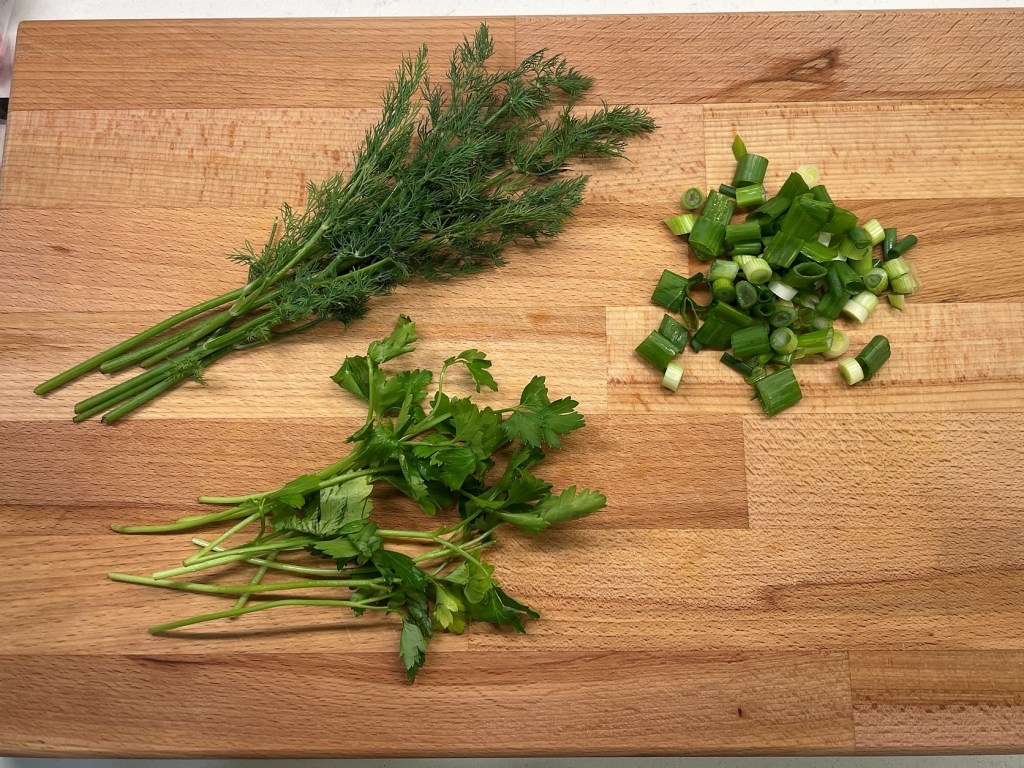
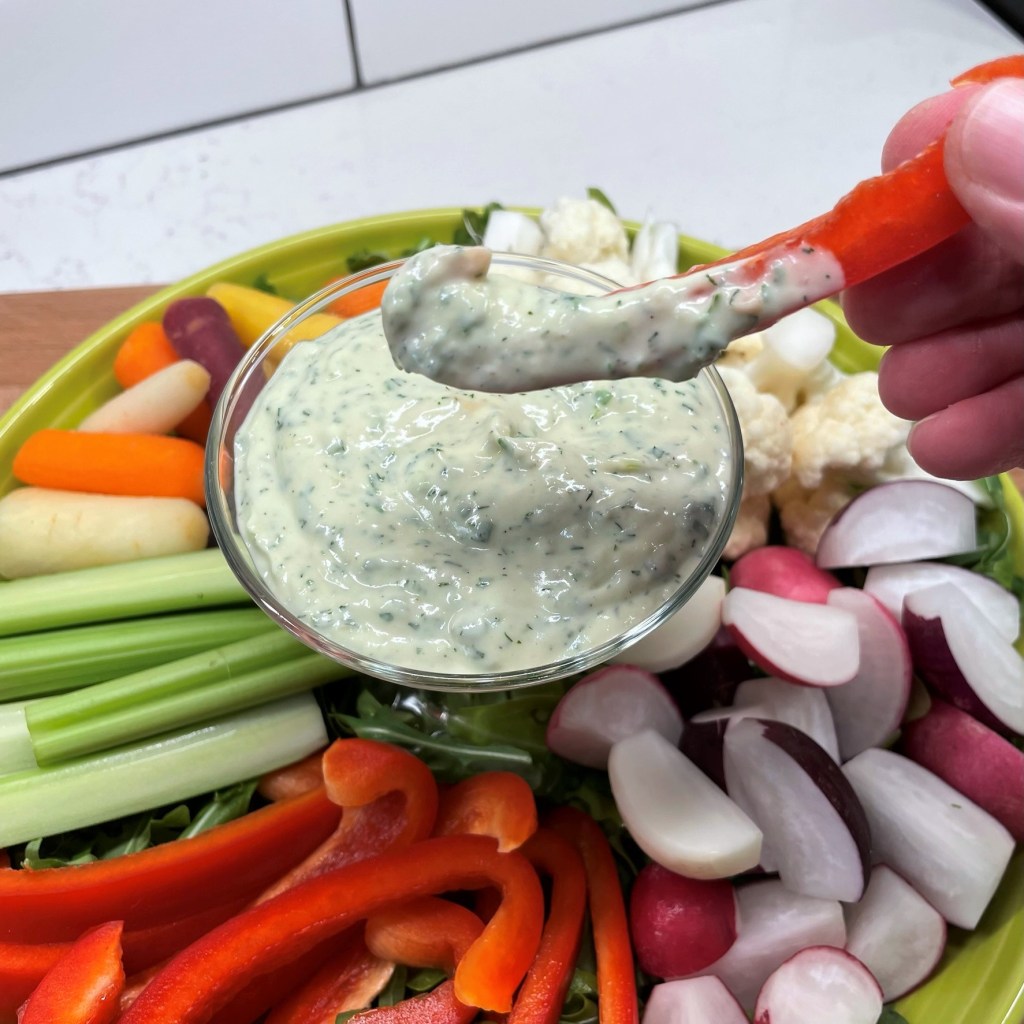
For this creamy ranch dressing dip, I have used a whole bulb of roasted garlic to add a mellow flavor to plain Greek yogurt, buttermilk, olive oil-based mayo and a bunch of fresh herbs. A little salt and pepper, a squeeze of lemon, and that’s all there was to it. If you prefer a bit more zing, use fresh garlic, but only a fraction of what is called for here. If you don’t have the same fresh herbs, substitute what you have or what you like. If you want to add half of a ripe avocado in place of some of the mayonnaise, go for it.

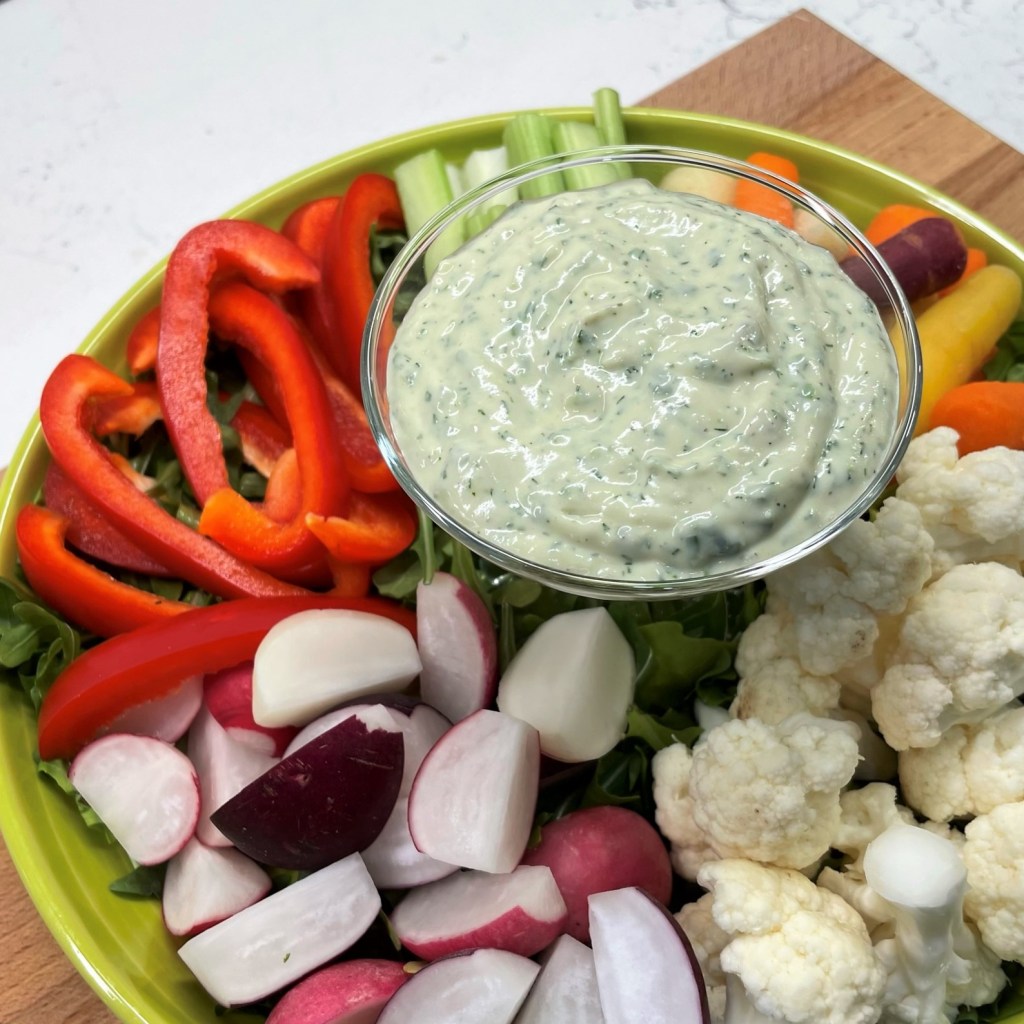
Nice to have something a little healthy for a game day snack!

My homemade roasted garlic ranch dip was intended for dipping fresh veggies as a game day snack, but if you prefer a more pourable dressing for salads, simply ease up on the mayo and use more buttermilk.

This recipe makes about 1 1/4 cups.


Ingredients

2 scallions, white and green parts

1 small handful fresh parsley

1 small handful fresh dill

1 tsp. Dijon mustard

2 Tbsp. freshly squeezed lemon juice (about 1/2 an average-sized fruit)

1 Tbsp. olive oil

Kosher salt and black pepper

1/2 cup mayonnaise* (see notes)

1 bulb roasted garlic*

1/4 cup thick, cultured buttermilk*

1/4 cup stirred Greek yogurt (whole fat or 2% recommended)

1/4 tsp. onion powder

1/4 tsp. carboxymethylcellulose (just kidding—I’ve never heard of this, but it’s in the store-bought ranch mix!)


*Notes

Choose a mayonnaise that you trust, bearing in mind that labels can be misleading. The front of the jar may suggest that your mayo is made with olive oil, but on further inspection, soybean oil could be listed as the first (most prominent) ingredient, with the healthier oil listed much later. Learning what your food is made of can be an eye-opener, and when you do find a product that meets your health standards, you will be able to build on it to make a lot of other foods serve you better.

Thick buttermilk works especially well for dip-style dressings. Look for a brand that doesn’t have a lot of “gum” ingredients, which are unnecessary stabilizers. Bacterial cultures should be present in good buttermilk as well. And for this dip, I do not recommend making a buttermilk substitute using regular milk and lemon juice or vinegar. That works for some baking recipes, but not in this instance, as you will miss the smooth textural element that buttermilk lends to your dip or dressing.

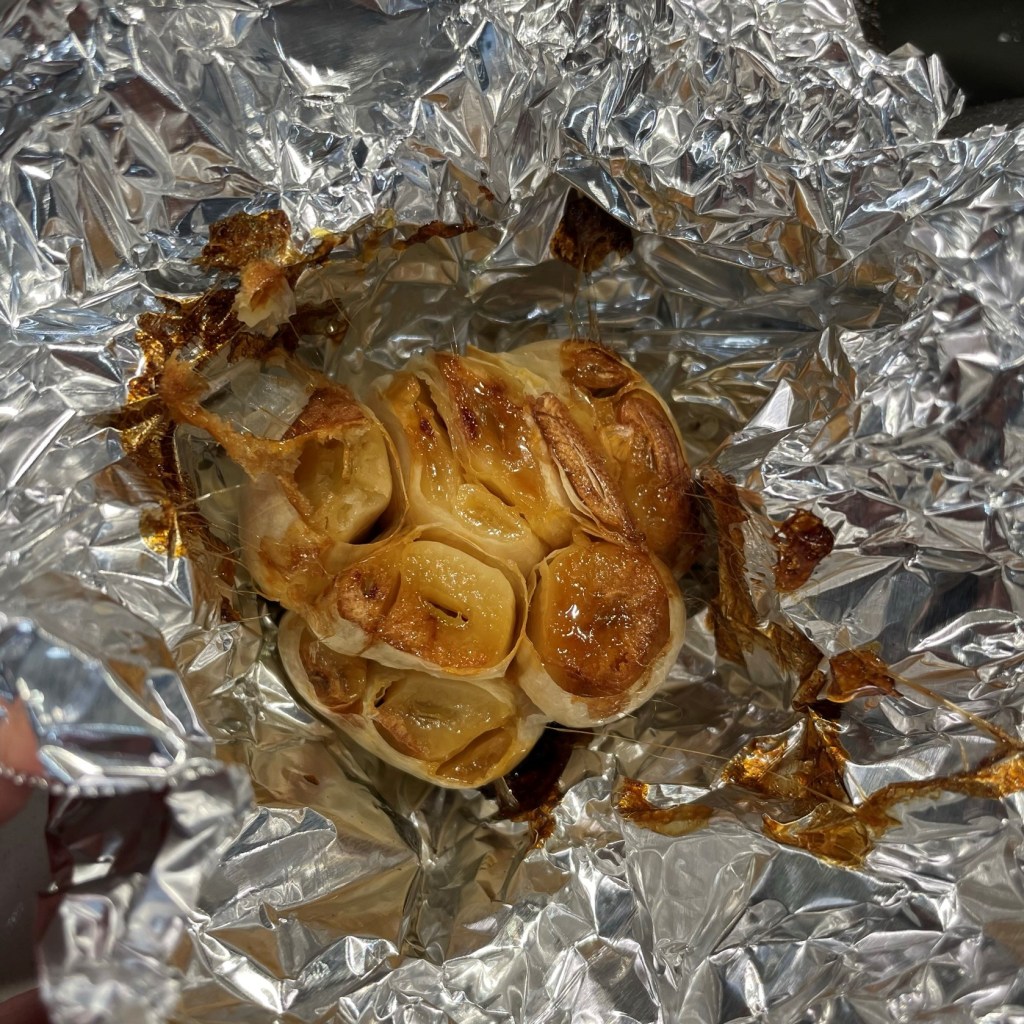
I love roasting garlic for use in many things, and it is easy to do. If you have never made your own, you may find some helpful tips in my previous post for making your own roasted garlic. When roasted, the garlic takes on a mellow, somewhat nutty flavor that lends a lot of depth to foods. If you prefer fresh, or simply don’t have the time or patience to roast it, I would recommend only using one or two segments of the garlic rather than a whole bulb (unless you’re battling vampires, obviously).


Instructions

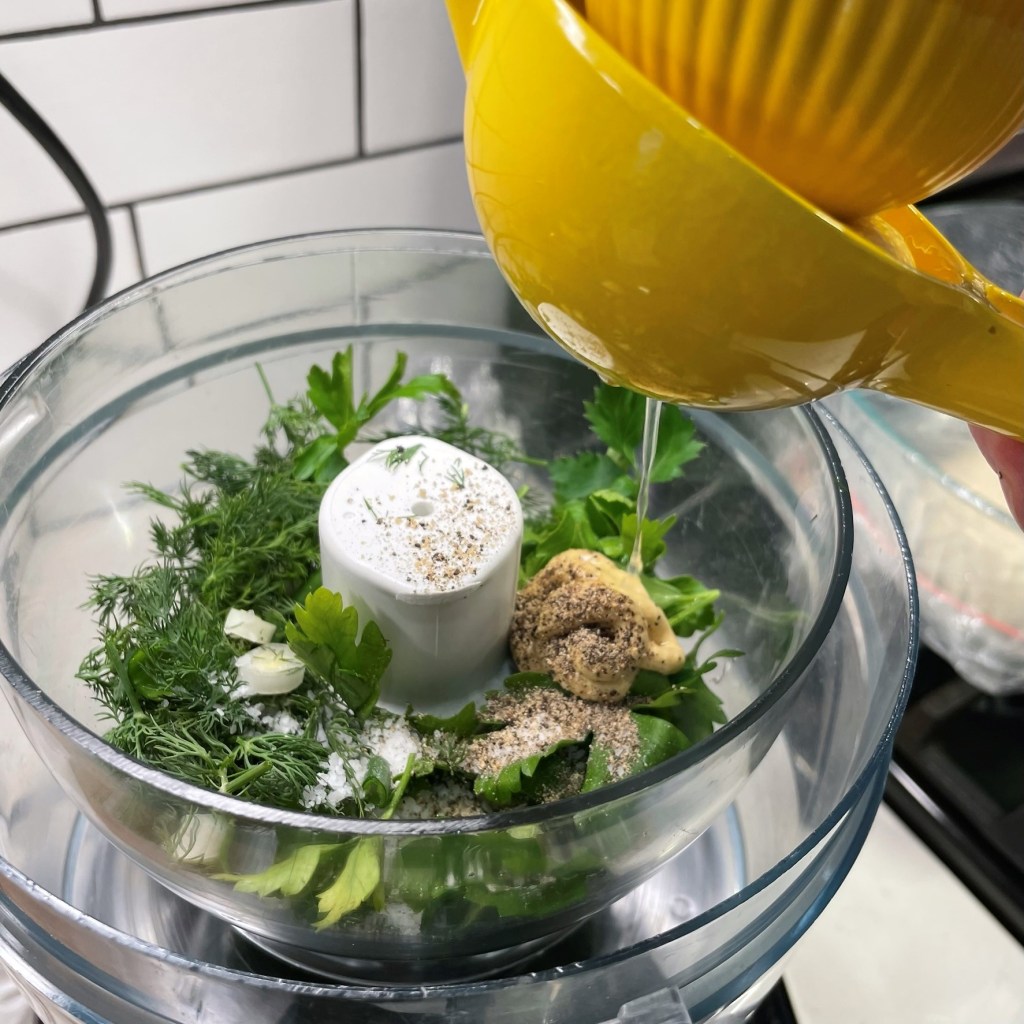
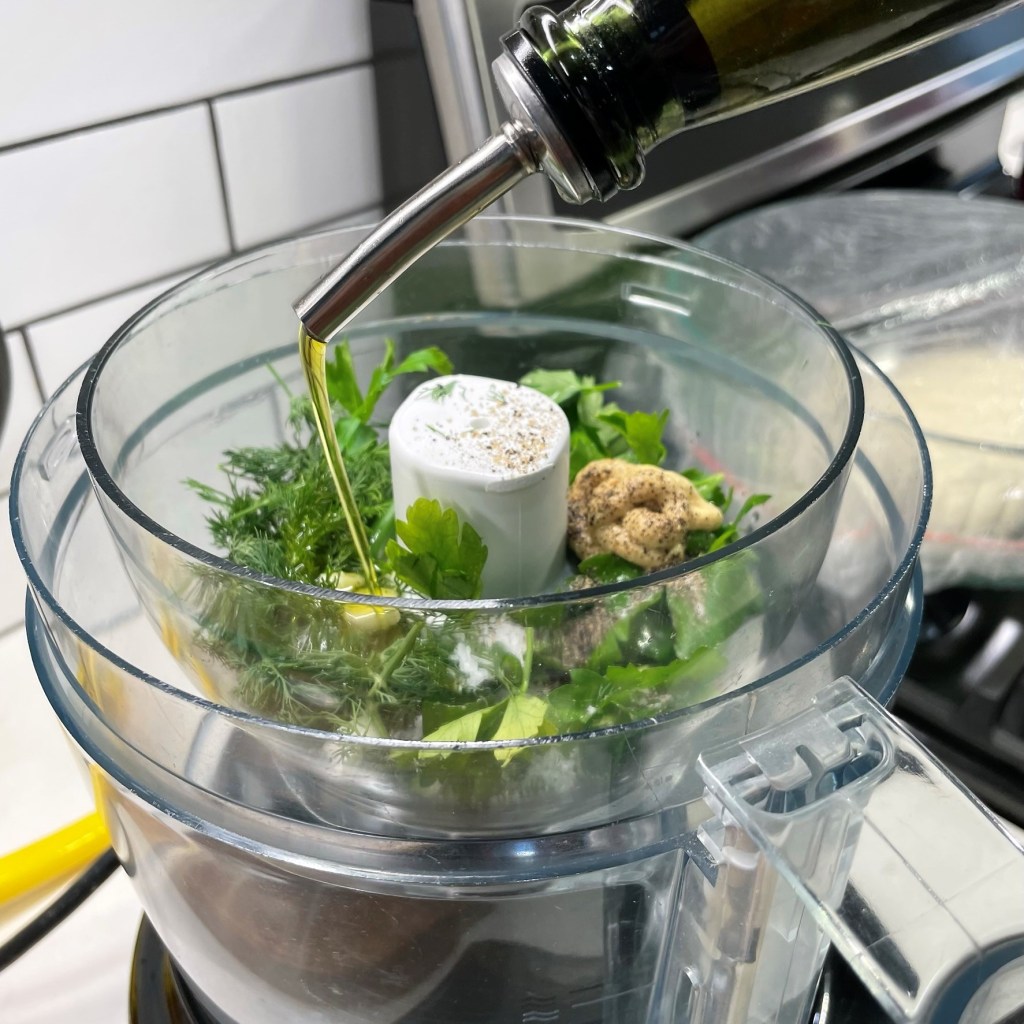
  1. Begin by chopping up your fresh herbs, together with the Dijon, salt, pepper, lemon juice and olive oil. I made a small batch this time, and my processor only rough-chopped these ingredients, even in the small insert bowl. As long as the volume reduces to make room for the other ingredients, it’s fine.
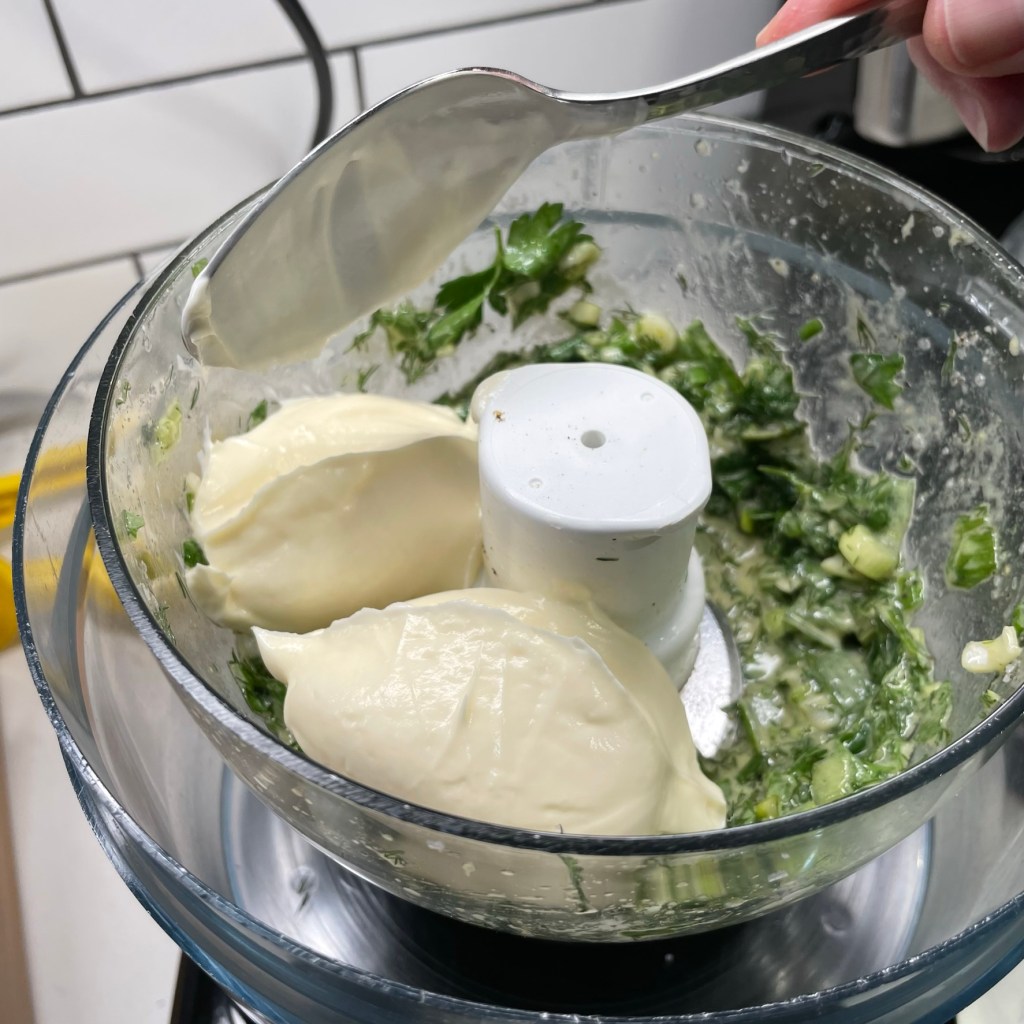
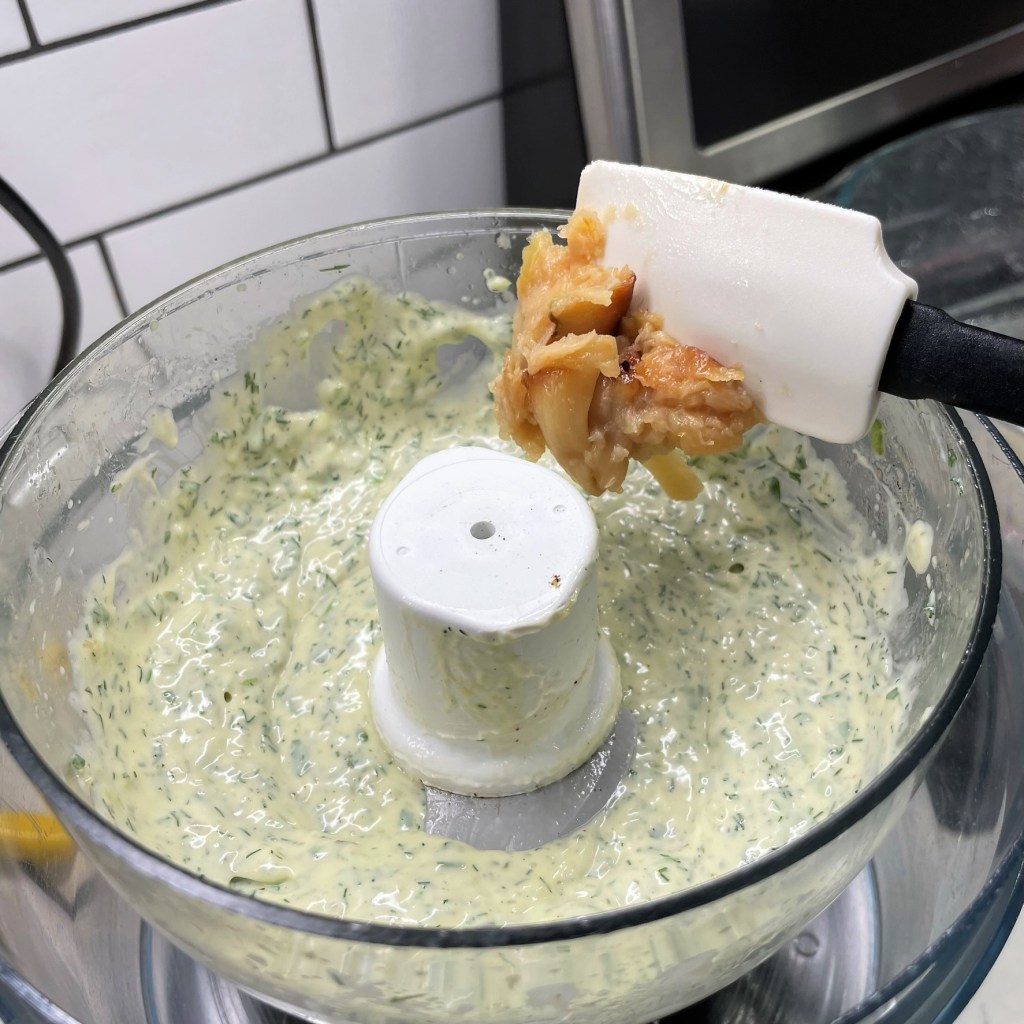
  2. Add the mayo and pulse to combine. Add the roasted garlic and process until you no longer see visible bits of the garlic.
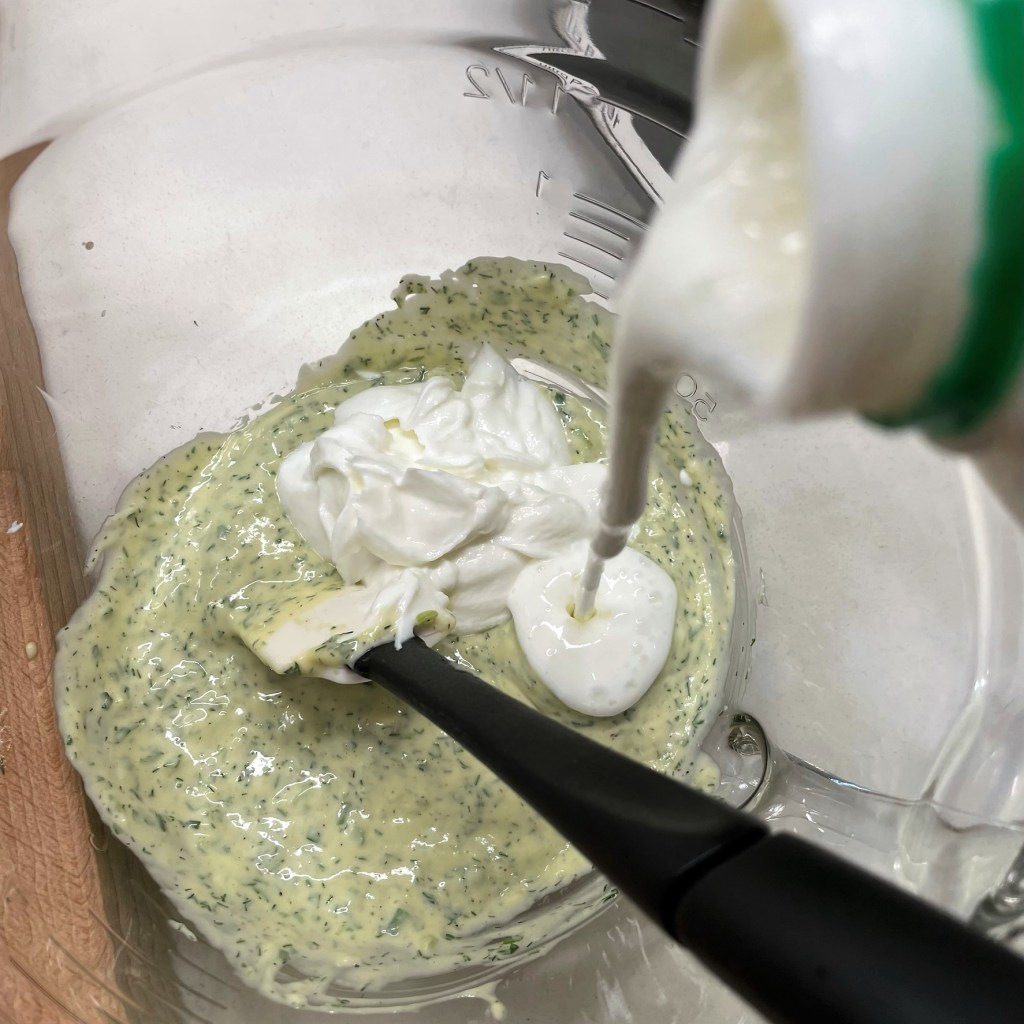
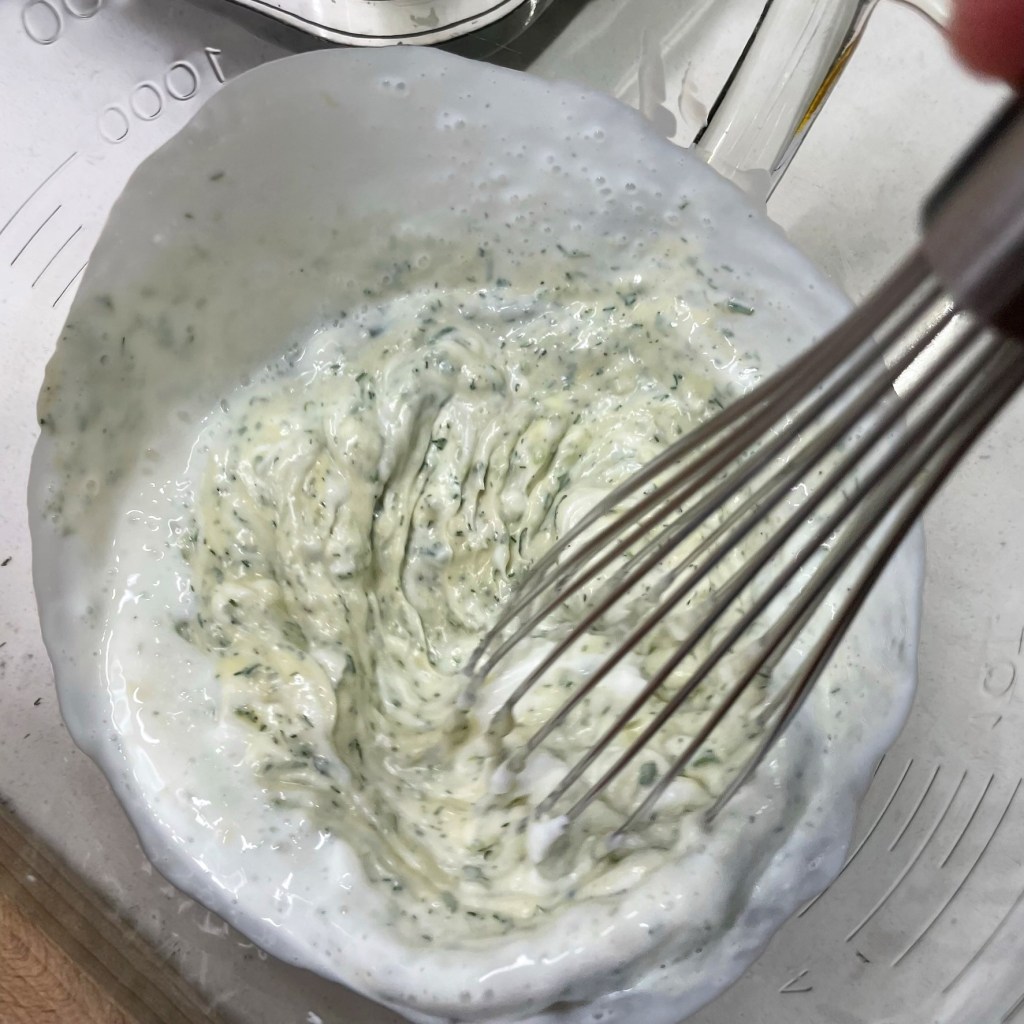
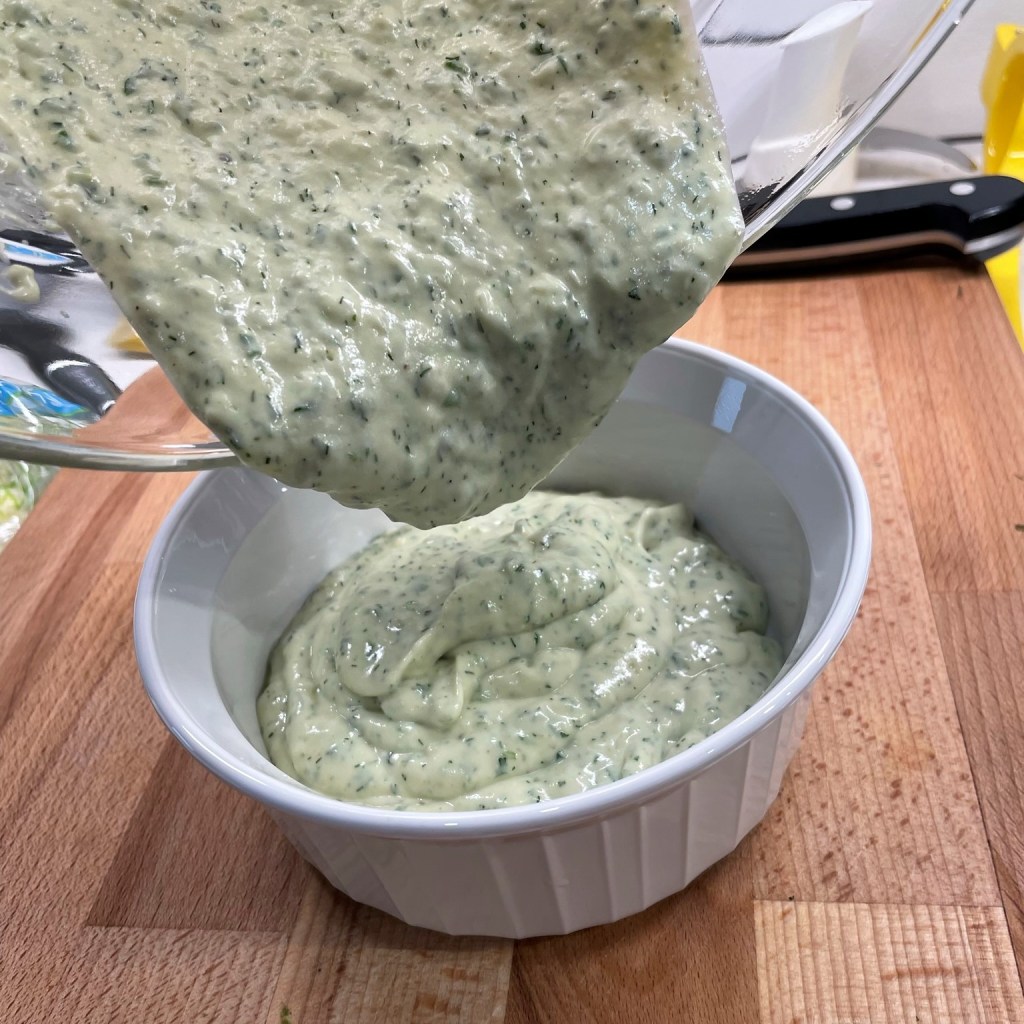
  3. Transfer the mixture to a bowl. Add yogurt, buttermilk and onion powder, and whisk until smooth. Adjust seasoning to taste (remember that additional salt will need time to dissolve, so you may want to let it rest a few minutes before final taste adjustments).
  4. Chill the dip at least one hour before serving. Enjoy within a few days for best freshness and give it a good stir when you take it out of the fridge.


Roasted Red Pepper Sauce

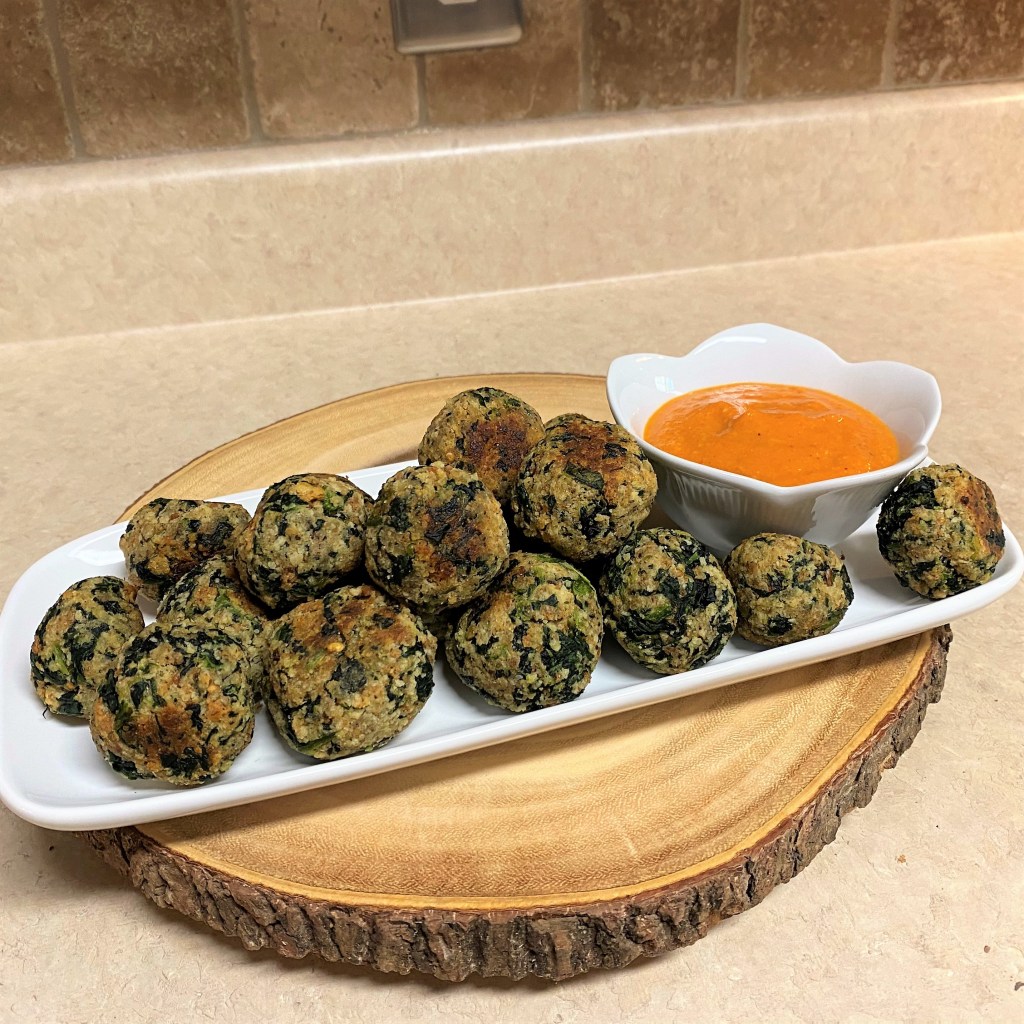
Every now and again, I accidentally cross paths with a recipe that has so many uses I have no choice but to add it to my repertoire. This is one of those sauces, and I can thank my husband, Les, who discovered this one last fall, tucked inside an email he received from New York Times Cooking. The sauce was intended for some kind of “couscous cake,” which sounds interesting for another day, but Les trusted his instinct to believe it a perfect dipping sauce for his spinach ball appetizer recipe, and indeed it was.

First time making the red pepper sauce to accompany these, and it was fantastic!

As Les and I have repurposed this flavorful sauce for various uses, I have laughed to myself recalling an inside joke from the “Pinch” kitchen, which was how the staff usually referred to A Pinch of Thyme, the catering company where I spent my spare time for about two years. In the Pinch kitchen, it did not matter what kind of sauce you were preparing—it might have been one of the fancy French “mother sauces,” such as a hollandaise or béchamel or velouté, or maybe even a turkey gravy or a cheese fondue—if it was sauce of any type, Chef Rodney had a code word for it: “weez.” I imagined that the moniker might have been adapted from the name of the overly processed spread known as “Cheez Whiz,” but Rodney never confirmed that. It was amusing though, and we all secretly looked forward to the recipes that required creation of a weez, just because it was a funny word to say.

There was such irony in those scenes; while my friend Tammy, the Pinch events manager, was on the phone selling clients on the elegance of a dish such as filet mignon with béarnaise, Rodney was in the kitchen offering instruction for making a “tarragon weez.” He definitely kept things interesting.

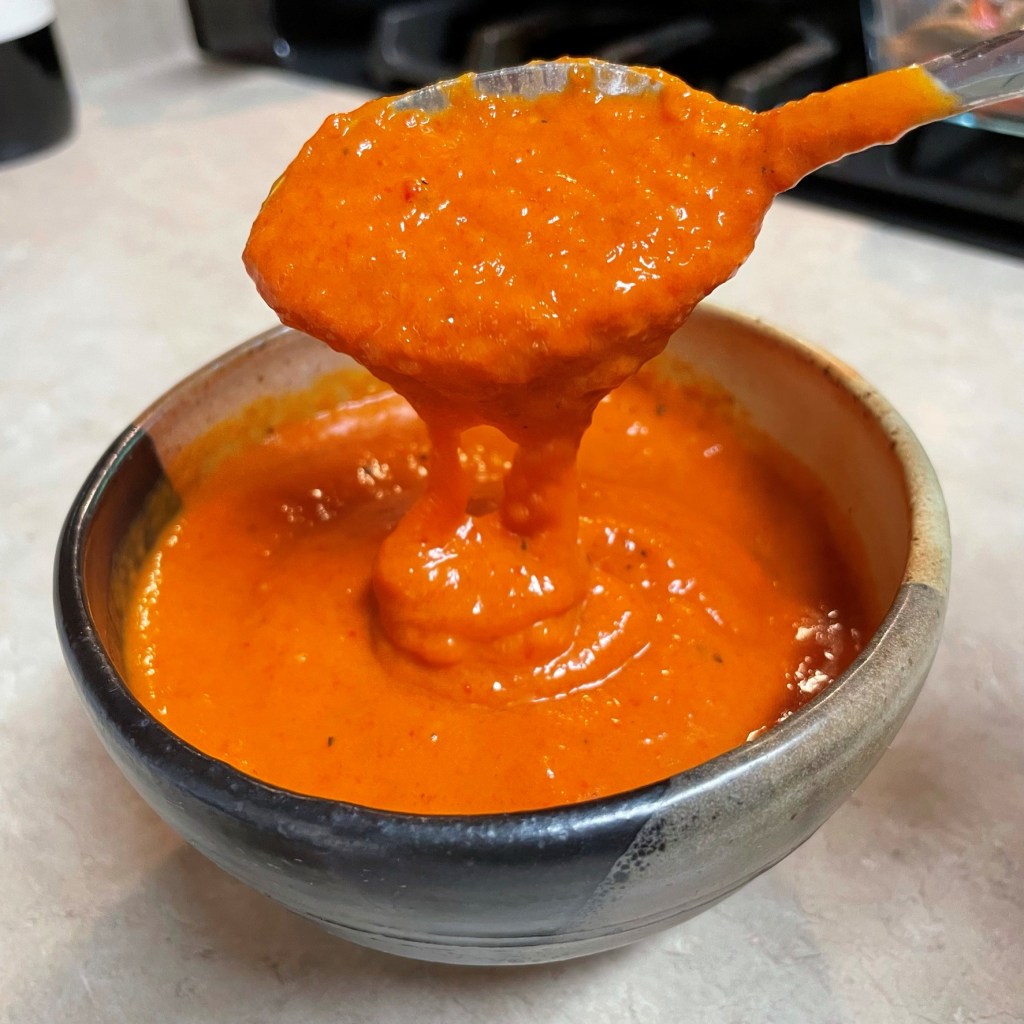
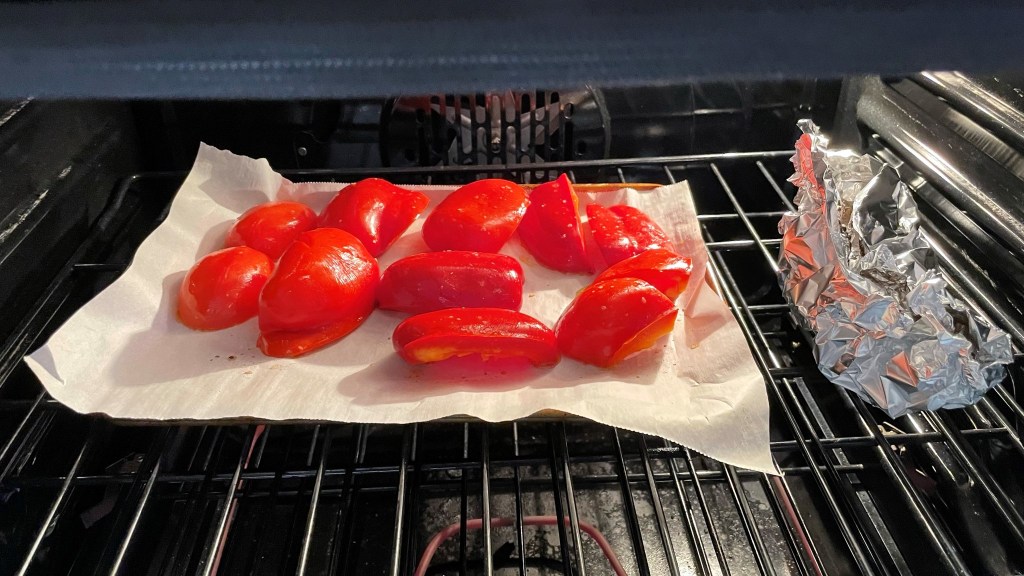
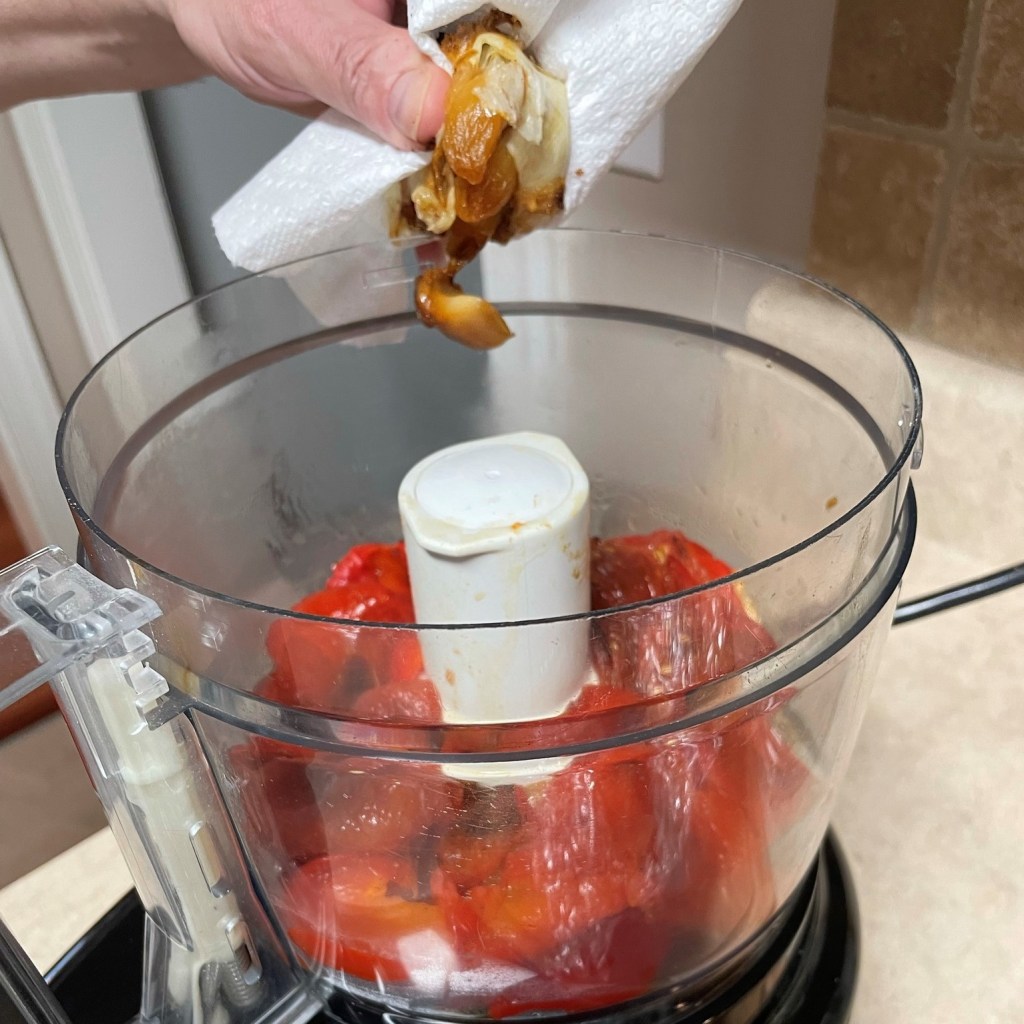
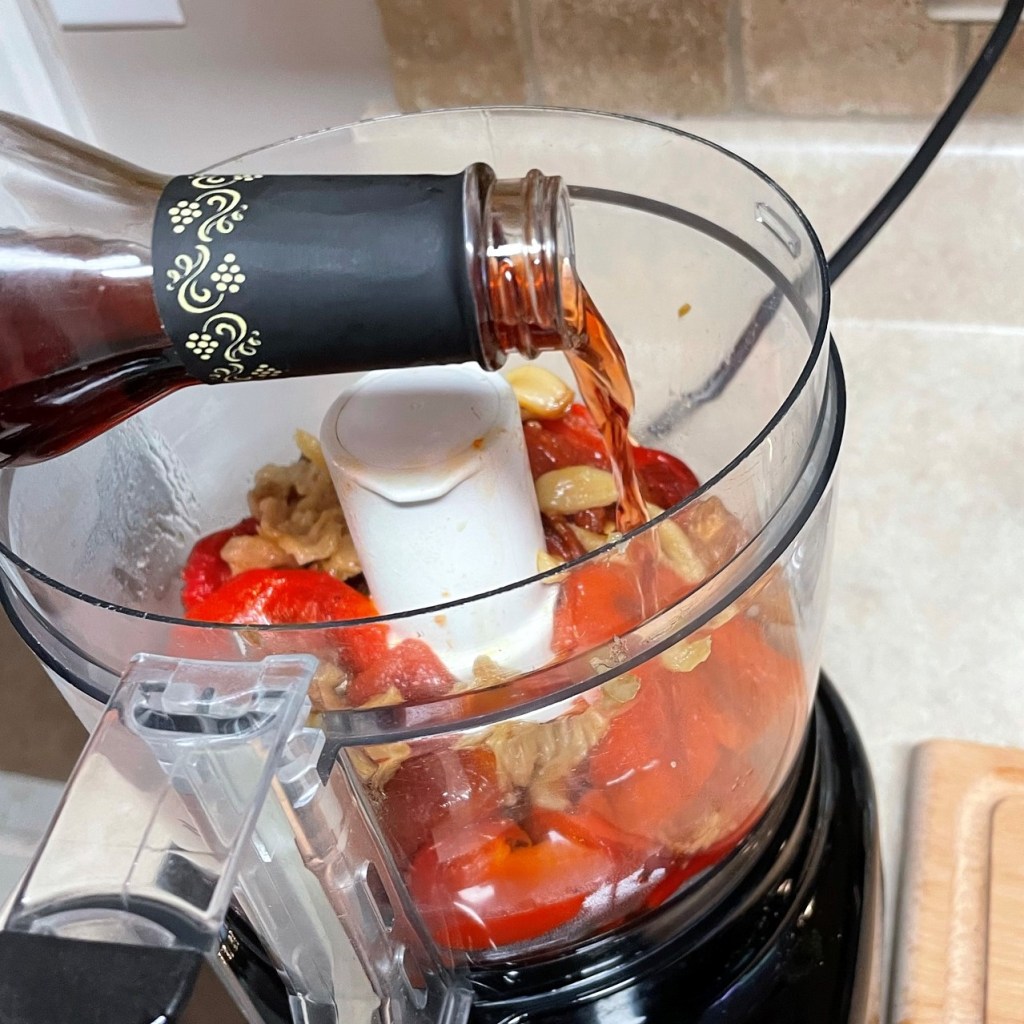
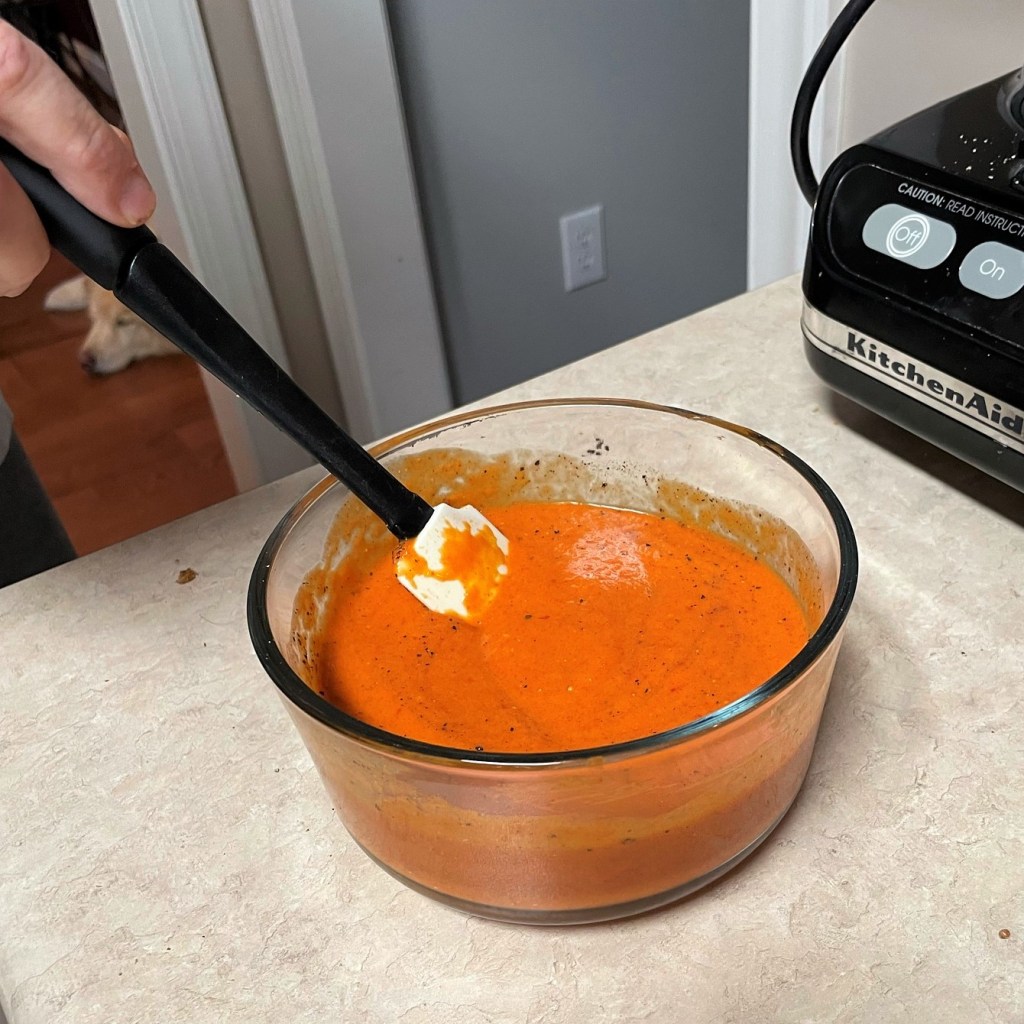
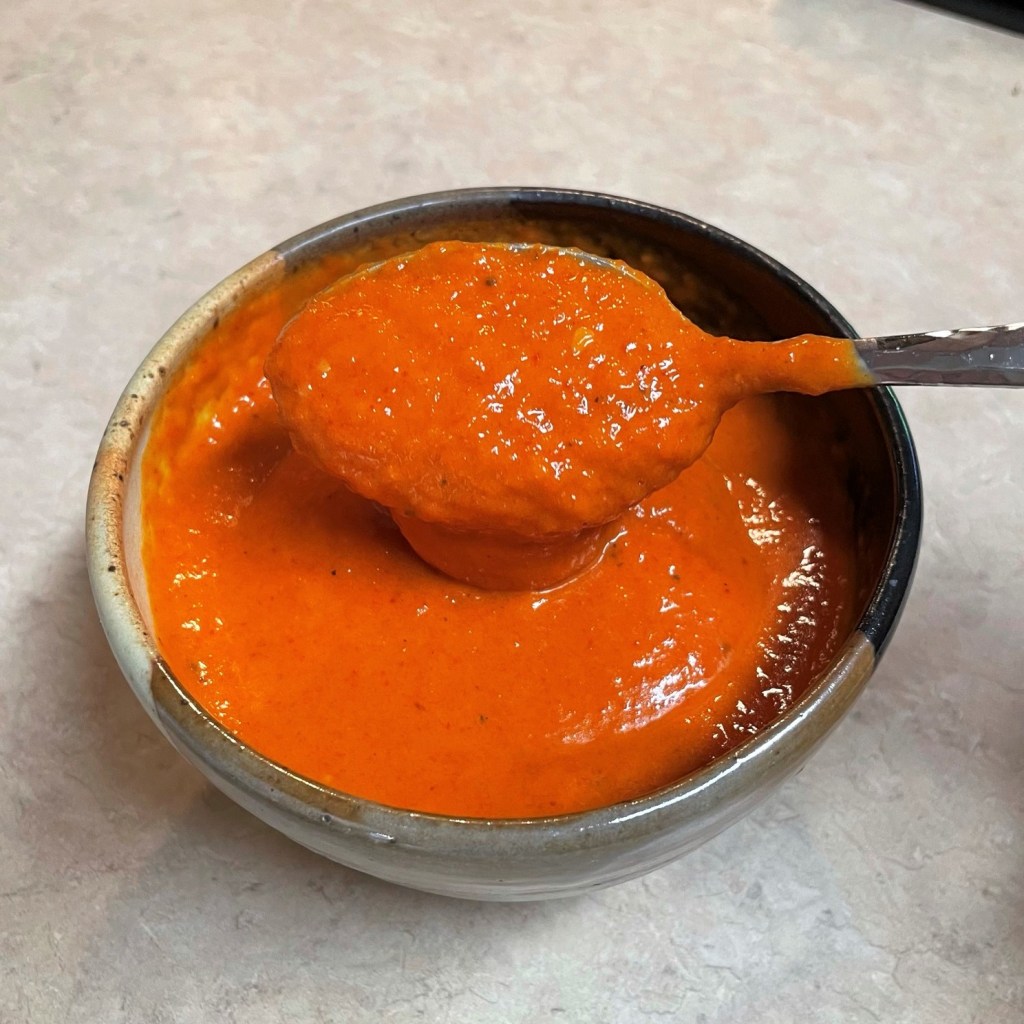
This roasted red pepper weez is simple to make, which is surprising, given its depth of flavor and incredible versatility. The sauce begins in the oven, with the roasting of red bell peppers, a tomato and two whole bulbs of garlic, and it’s finished in the blender, where those ingredients come together with a splash of red wine vinegar, olive oil and the smallest kiss of maple syrup. The result is perfectly balanced and utterly addictive.

Easy, weezy, and delicious! 😊

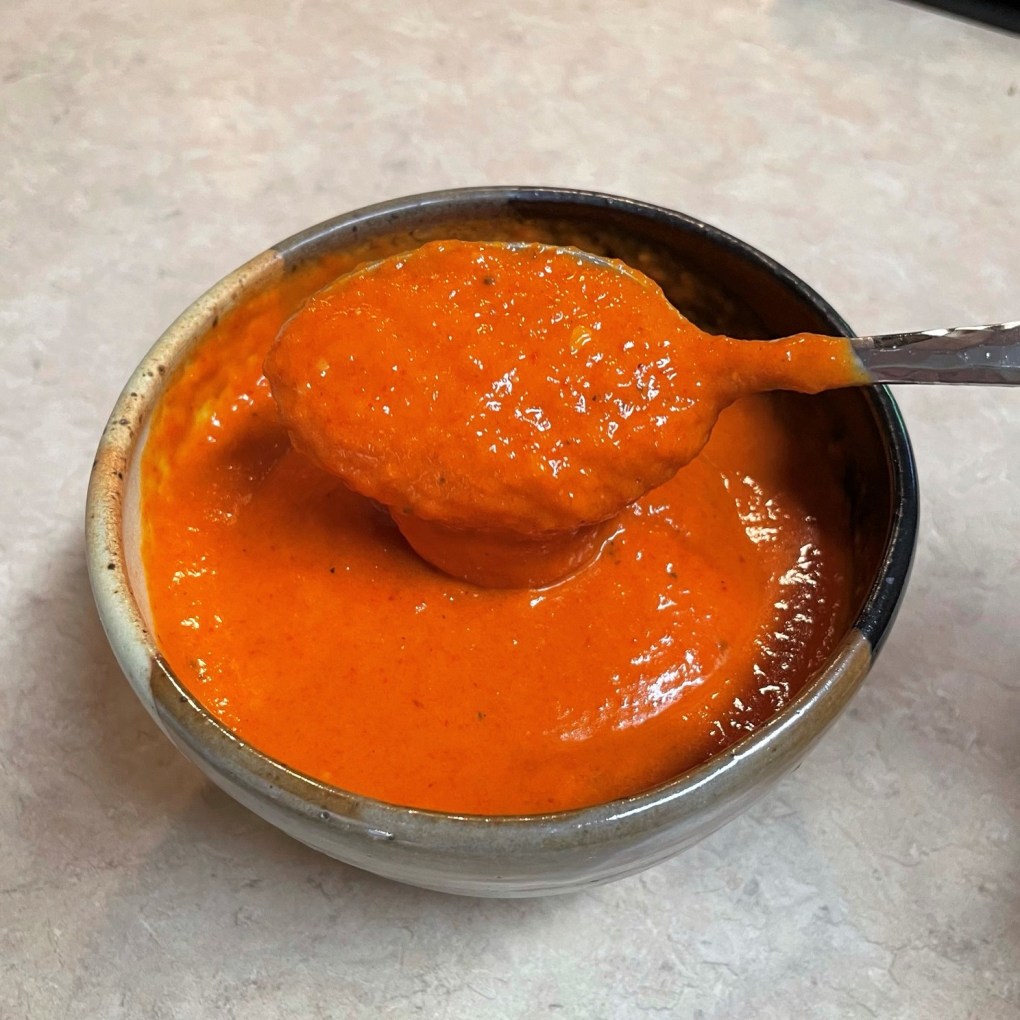
Did I eat some of this yummy sauce straight from the spoon? Maybe. 😉

Adapted from Giant Couscous Cake with Roasted Red Pepper Sauce
Recipe makes about 2 cups

Ingredients

2 medium red bell peppers

1 Roma tomato, halved and seeded

1/4 cup good quality extra virgin olive oil, divided

Kosher salt and freshly ground black pepper

2 bulbs roasted garlic (link to this post for easy DIY instructions)

1 Tbsp. red wine vinegar

1 tsp. real maple syrup (or substitute honey)


 Instructions

  1. Preheat oven to 425°F, and line a baking sheet with parchment paper.
  2. Cut the bell peppers into segments, along the natural lines of the fruit. Discard the seeds and membranes. Lay the tomato halves and pepper segments, skin side up, on the parchment-lined baking sheet. Brush all pieces with 1 tablespoon of the olive oil. Roast about 40 minutes, until the skins on the peppers are nicely charred.
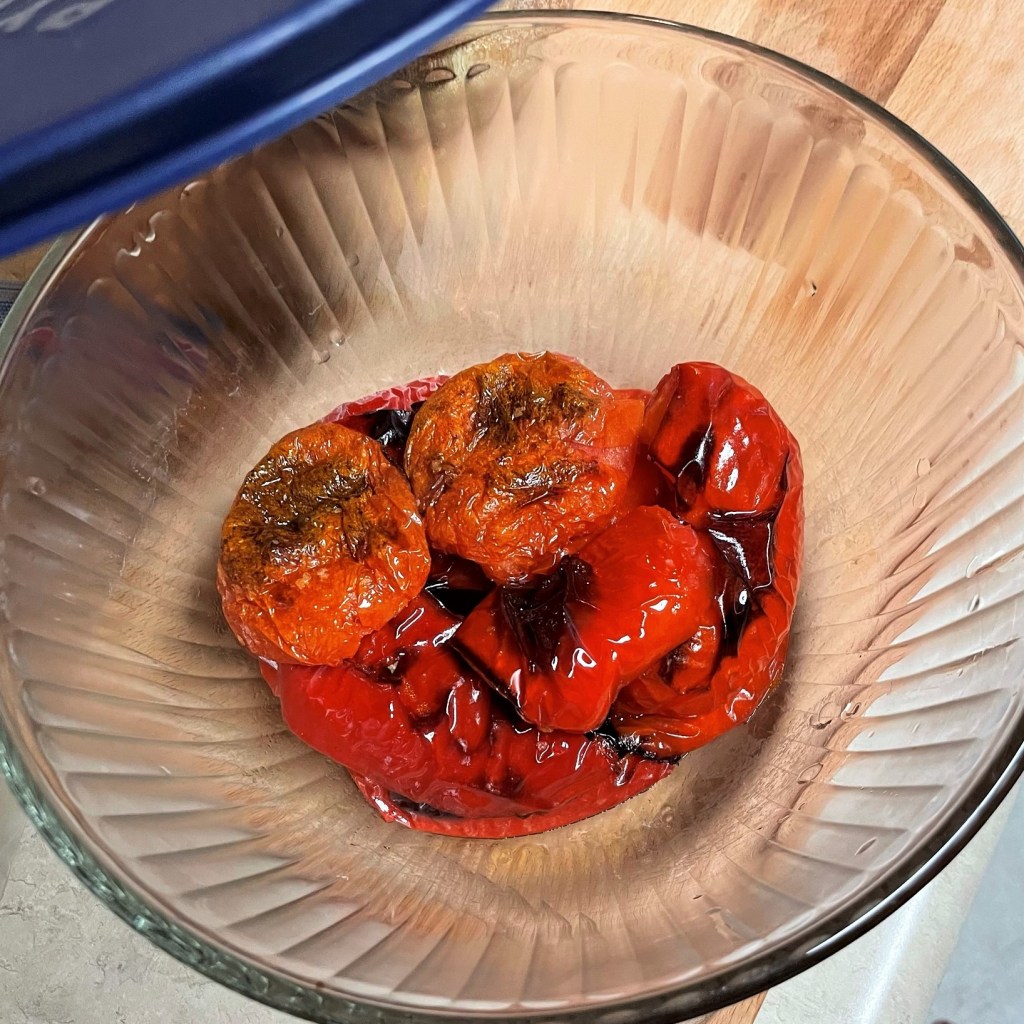
  3. Transfer the tomatoes and pepper segments to a bowl. Cover the bowl and set it aside for several minutes, giving the skins time to soften for easy release.
  4. Once cooled, carefully peel the skins off the peppers and tomato halves. Transfer them to a food processor or standard blender. I do not recommend a “smoothie” blender for this step, because you will need to drizzle oil in later. An immersion blender would also work. Pulse a few times to chop the peppers and tomatoes into smaller pieces. Carefully squeeze in both bulbs of roasted garlic.
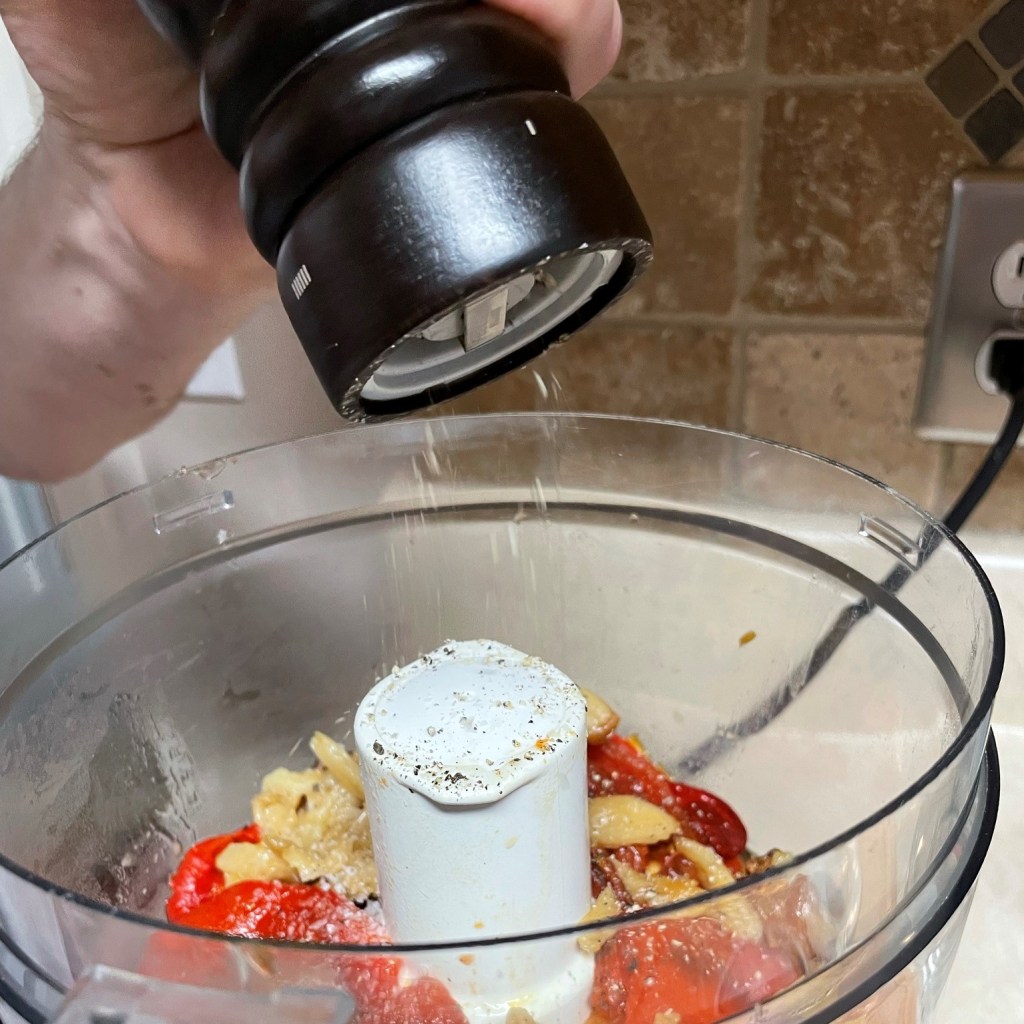
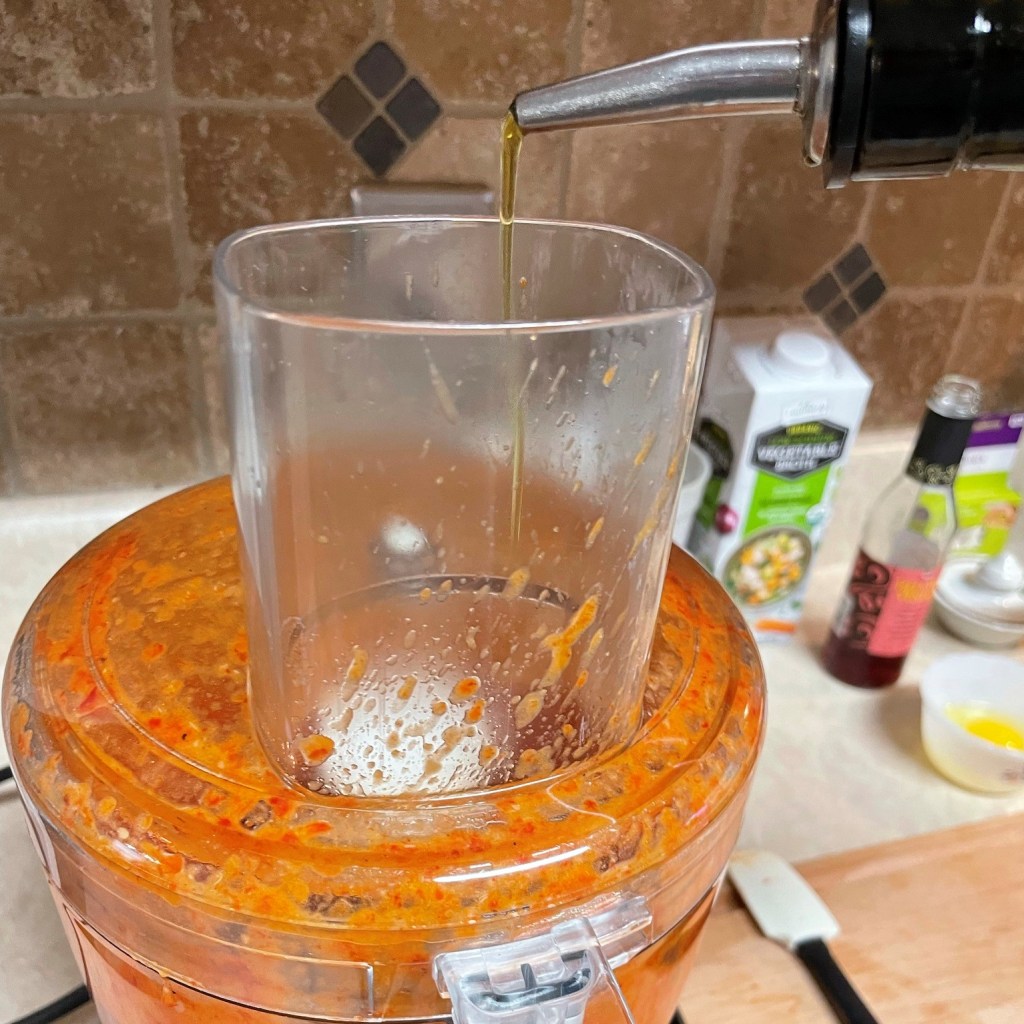
  5. Add the red wine vinegar, salt, pepper and maple syrup. Pulse a few times, then run processor or blender continuously while drizzling in the remaining 3 tablespoons of olive oil. Adjust salt and pepper to taste. Transfer sauce to a jar or bowl.


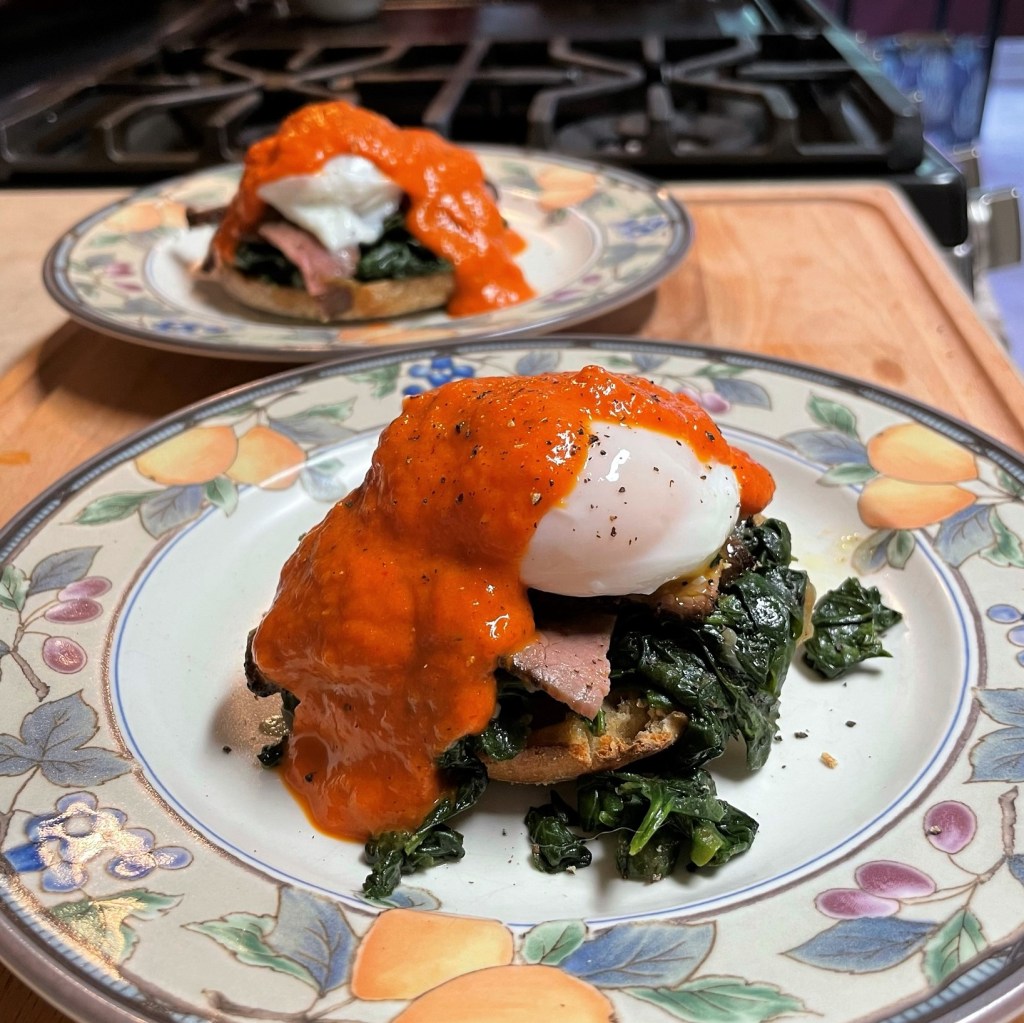
This roasted red pepper sauce has so many easy uses, from appetizers to pasta to pizza and more. It will keep in a jar in the fridge for a couple of weeks, though we have not been able to make it last that long at our house. Next time, we will make a double batch!