Smoked Pulled Pork

There’s no getting around it, this has been a brutal summer. Crazy hot days, nights as muggy as they were buggy, and no relief from all the drama of the world around us. I need a three day weekend just to catch my breath. Under normal circumstances, my husband and I would be firing up the grill for Labor Day, raising a glass to say, “peace out, Summer,” and looking ahead to my favorite season— fall!

We will cover the raising the glass part, but the first activity on that list isn’t possible this year because our grill has decided to opt out of participation. If it isn’t the burned out igniter switch or a clog in one of the tiny burner holes, it’s something else. The latest issue is apparently a faulty regulator. Yep, the fancy-ass Napoleon gas grill that we researched half to death and practically took out a second mortgage to pay for has been slowly but surely stealing my soul.

Rather than shove the thing down the embankment into the woods behind our house (I’ve been tempted, trust me), I can be thankful for our charcoal smoker. A three-day weekend feels like a great time for Les to throw a variety of meats onto the racks over some hickory (or cherry or apple) wood.
We’re headed for the smoke zone!

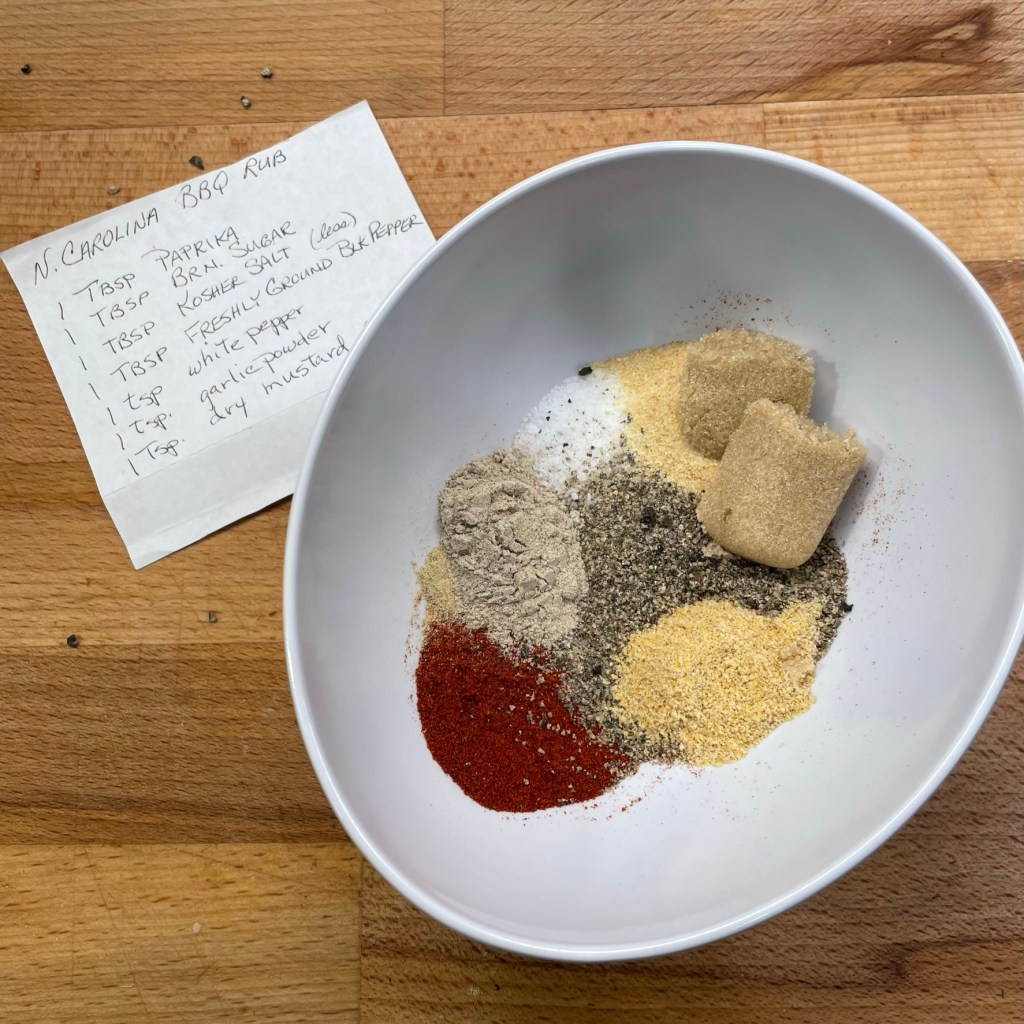
This pulled pork recipe is a favorite for a few reasons. First, the end of August is the anniversary of my arrival in North Carolina— it was 37 years ago this week that I rolled into town in my 1982 Pontiac, and one of the first foods I was introduced to was (you guessed it) pulled pork “barbecue.” Krispy Kreme was another, as they were born in Winston-Salem, and a staple here before the rest of the world knew about them. Another reason I love this pulled pork is the spice blend, and the recipe we use was given to me by my Aunt Joy. It’s a terrific balance of sweet, smoky, spicy and salty, and it gets bonus points for bringing great flavor to pork in a slow cooker, too!
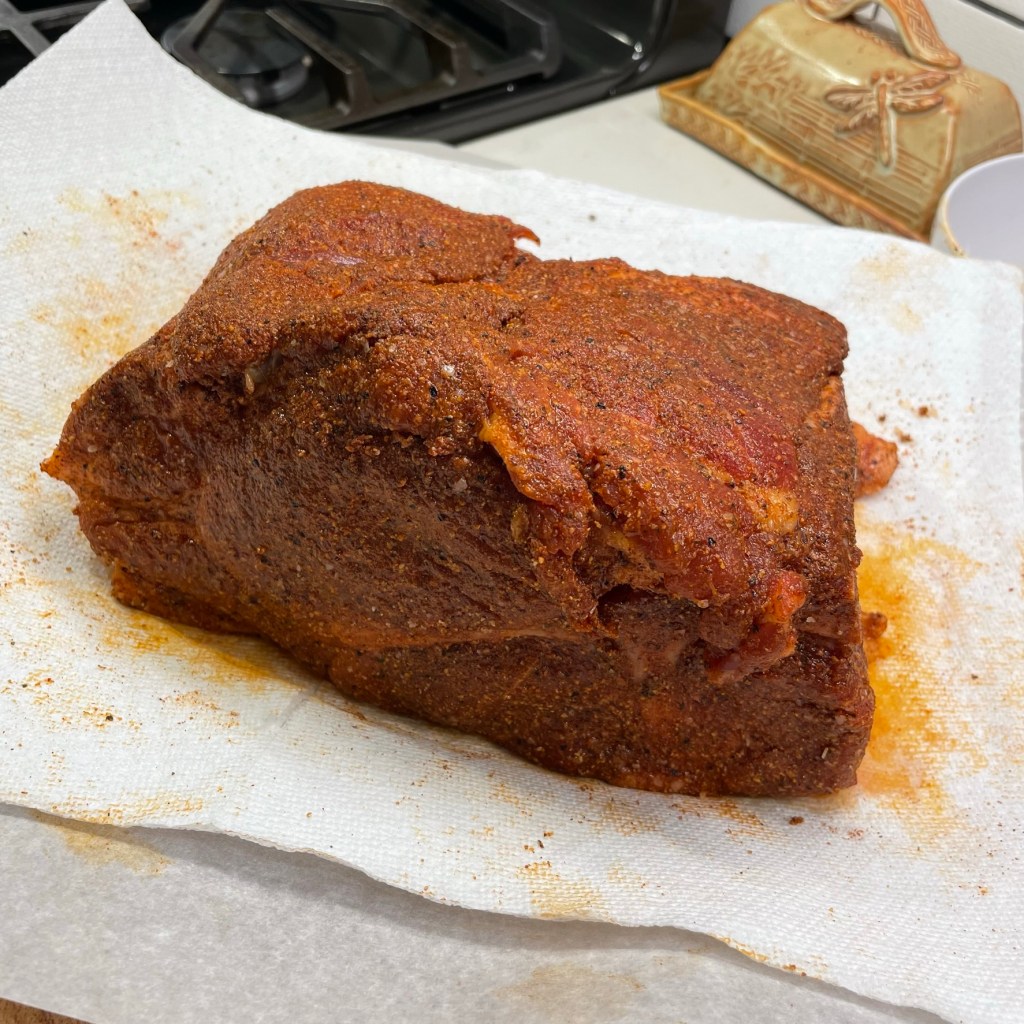
Finally, I love this pulled pork because of my husband, Les, who happens to be celebrating a milestone birthday today. 🥰

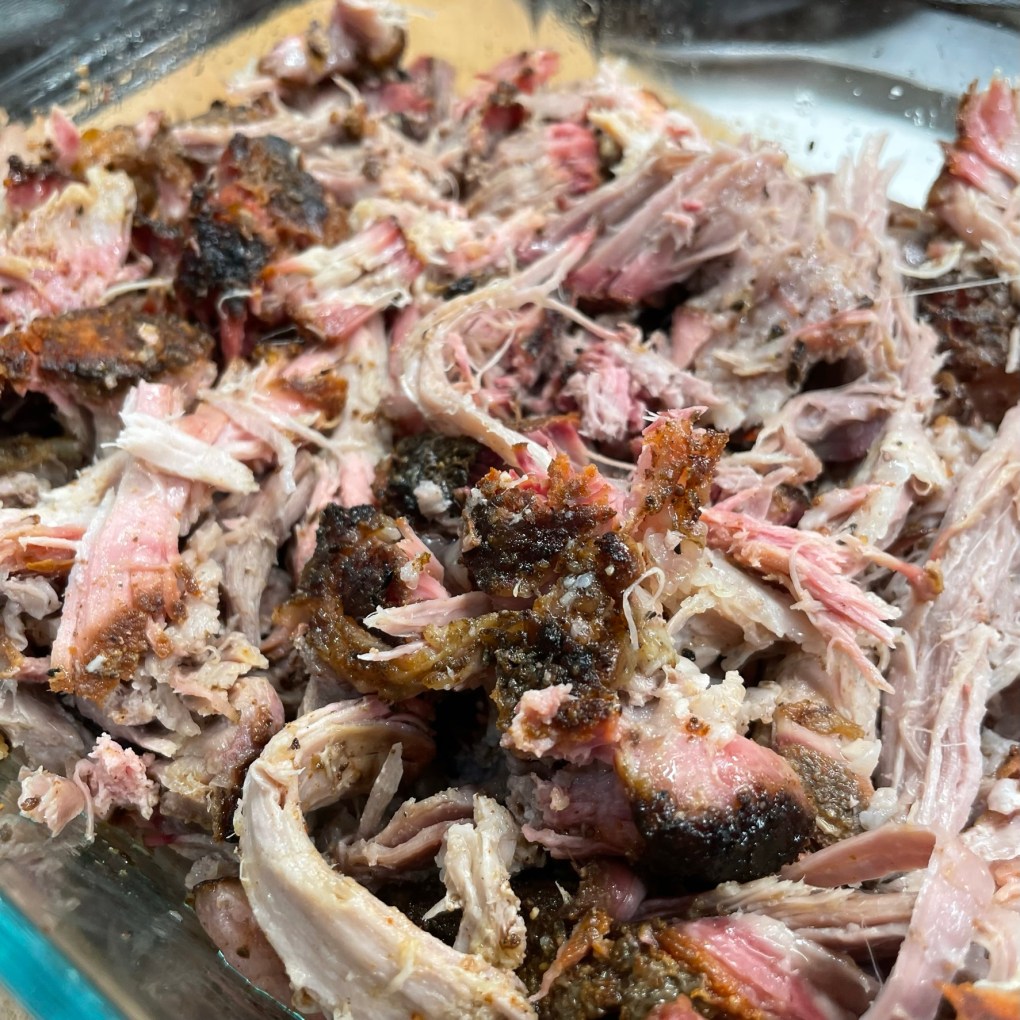
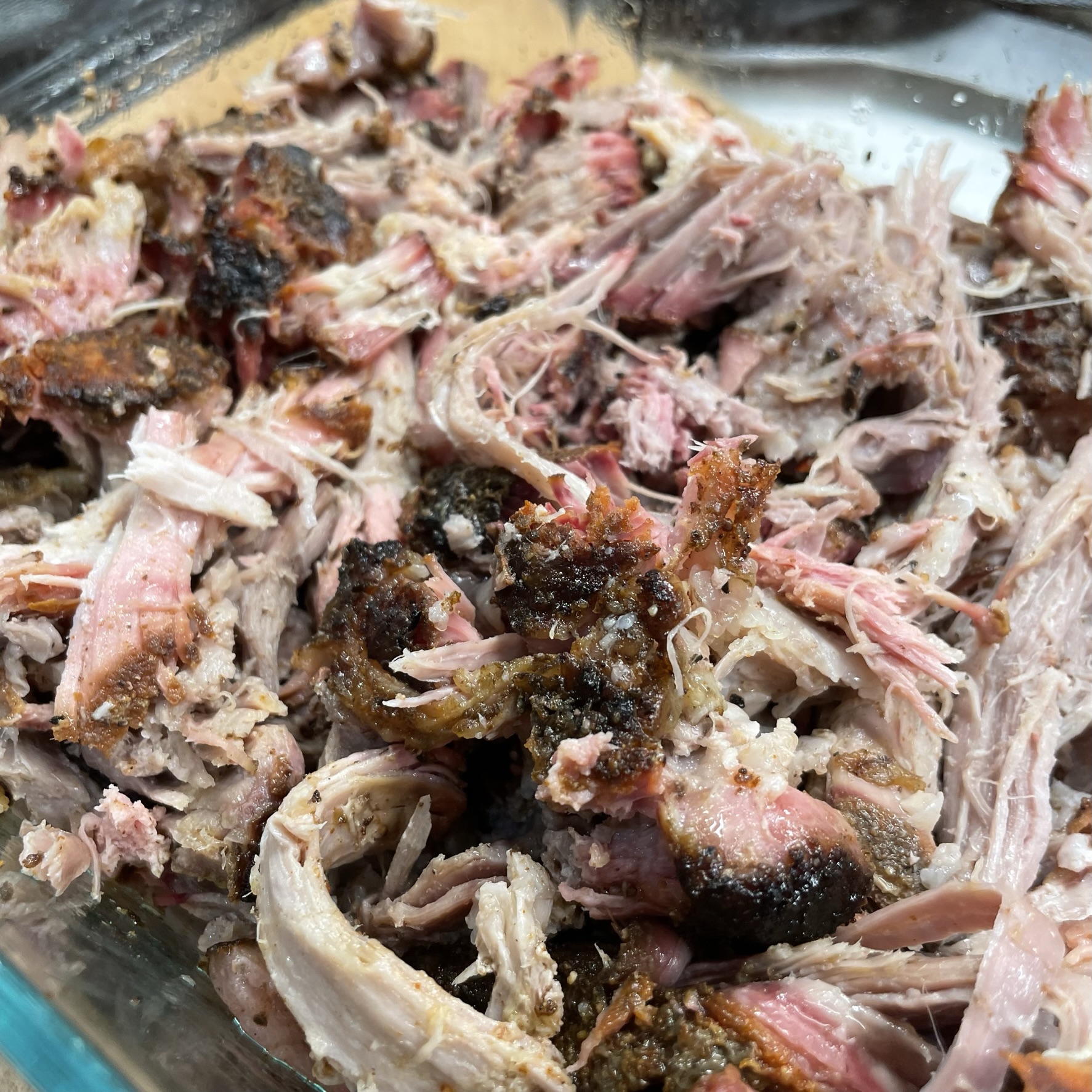
OK, I’ll admit that this post is really more about him. Les handles the smoker with great finesse, and his pulled pork barbecue is just about the best I’ve ever eaten—evenly seasoned, succulent and tender, and with a perfect smoke ring.
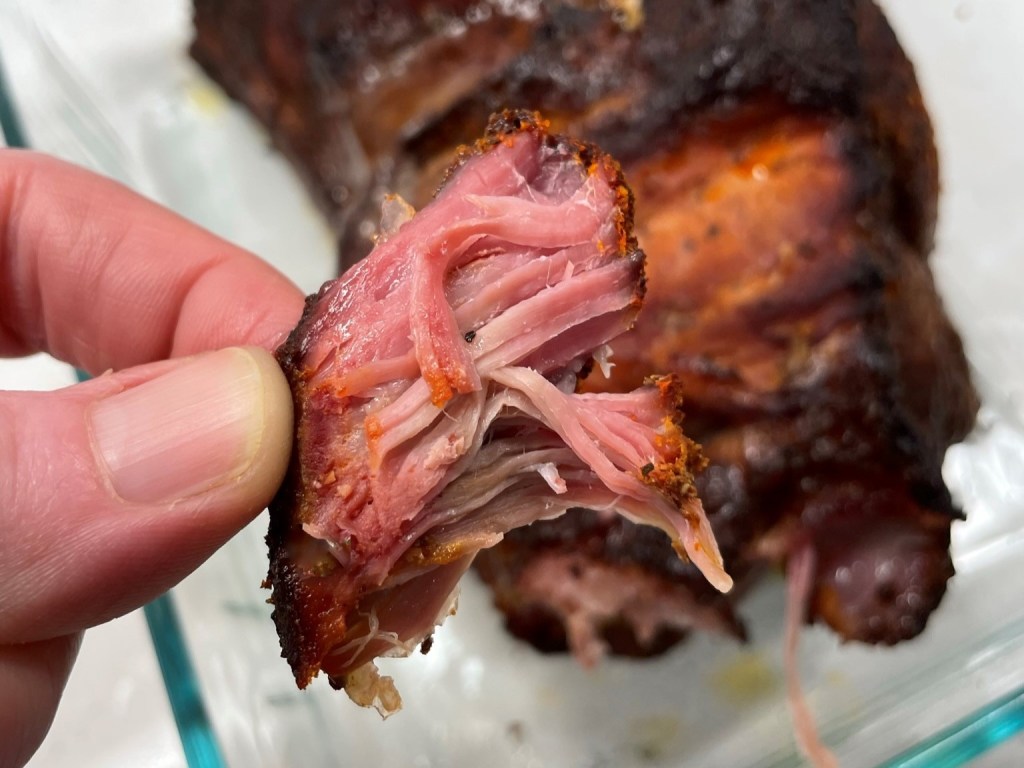
Perfect little piece of bark!

Les begins with a hardwood charcoal fire in the base of the smoker, and he adds wood chips when the coals are nice and hot. There’s usually some kind of special liquid added to the water in the drip pan— could be beer, hard cider, root beer or cola— to lend an extra hint of flavor to whatever he’s smoking.
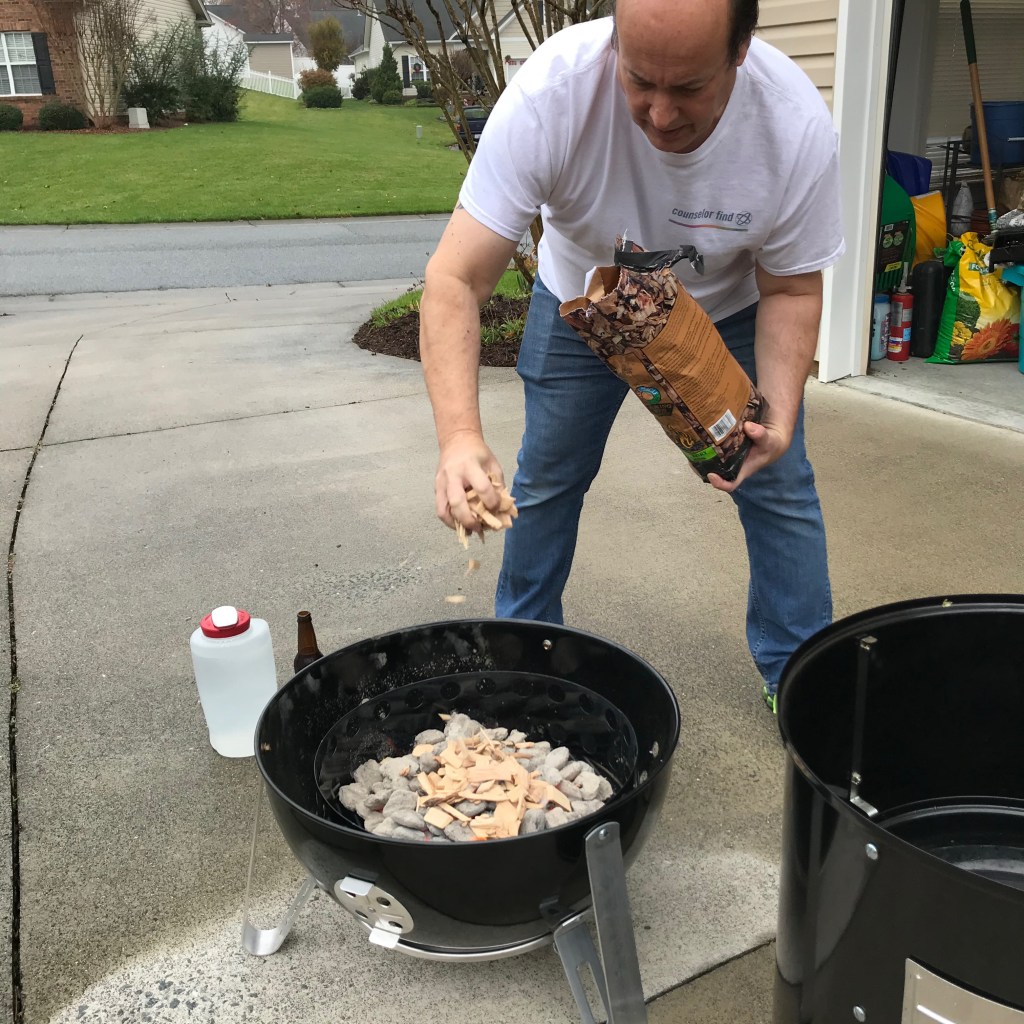
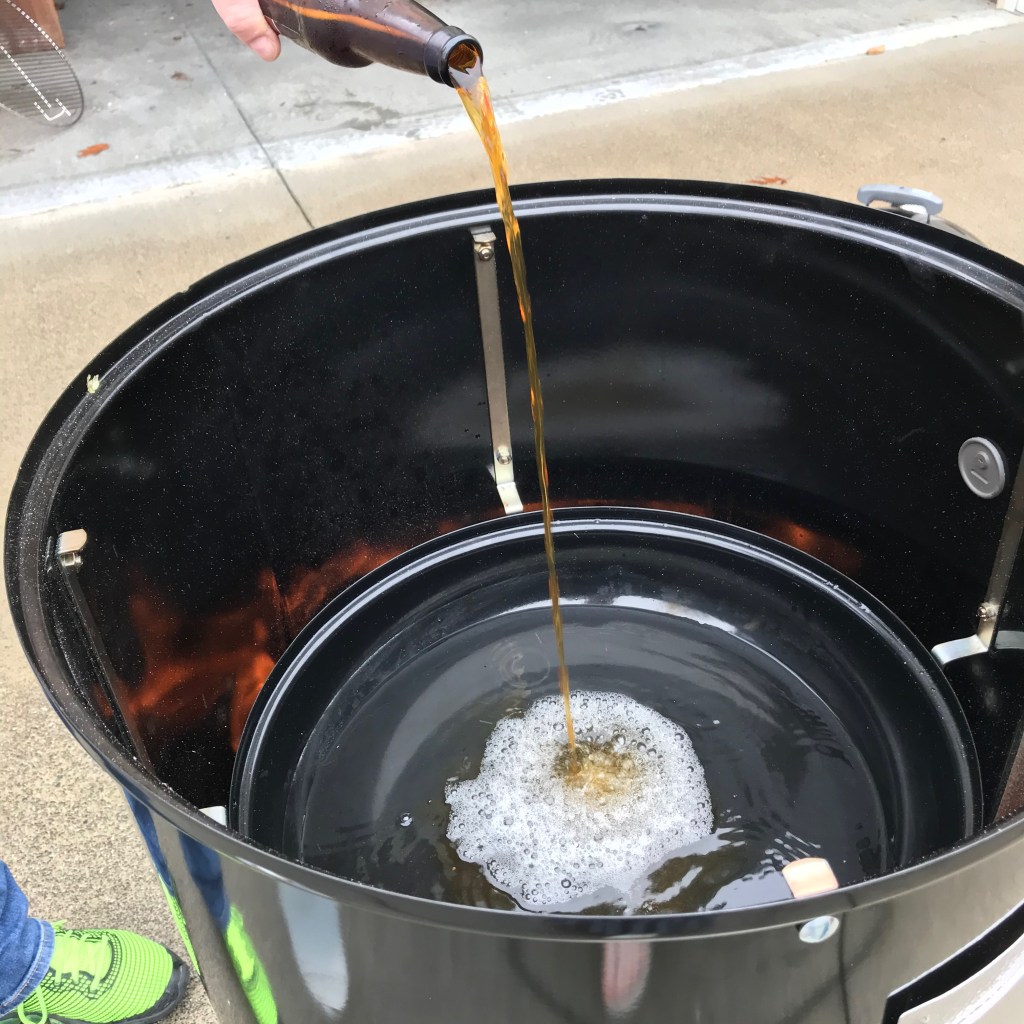
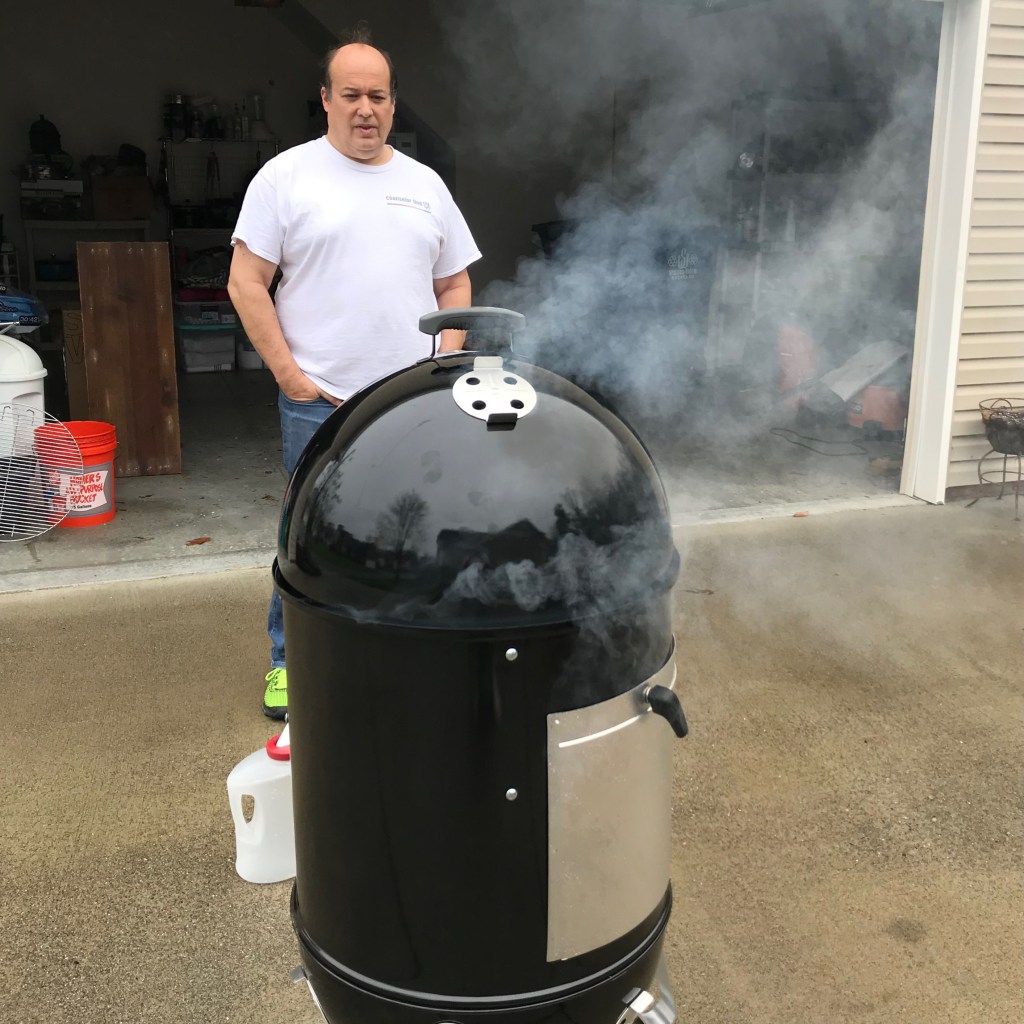
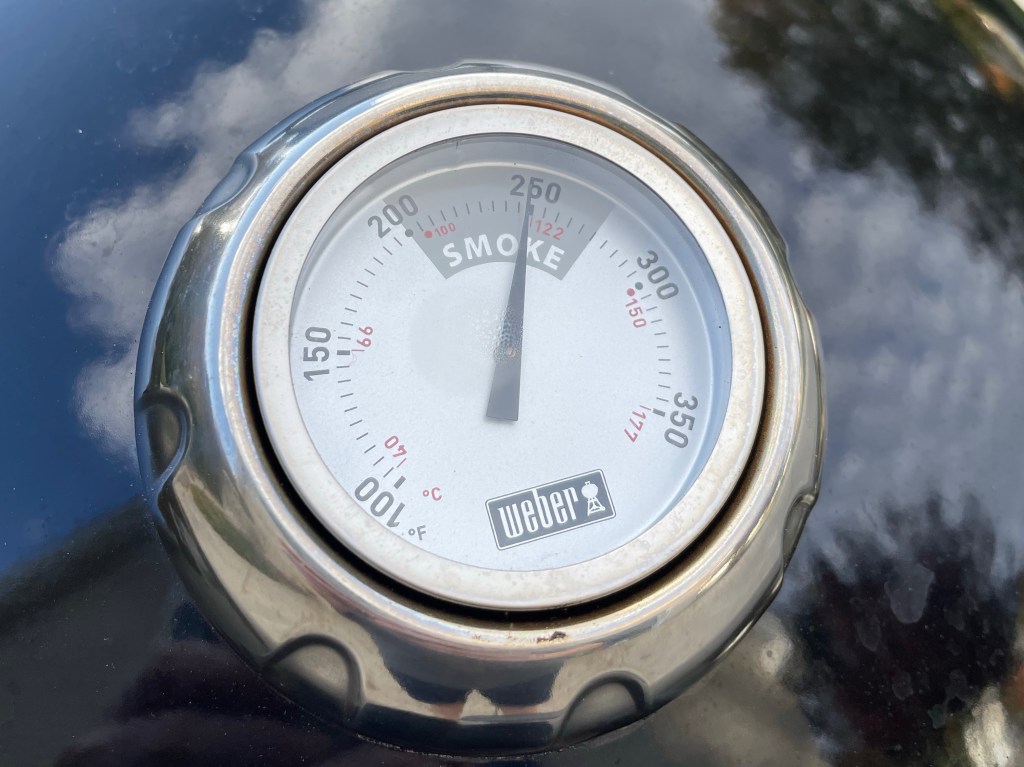
He masterfully opens and closes the vents to maintain the “smoke zone” of 225 to 250° F for as long as it takes to finish the meat. As with oven roasting, the smoke time varies depending on the size of the shoulder, and if you remain in that smoke zone, you’ll need about two hours per pound. If you run out of smoke before your target time, you can do what Les does; simply wrap the pork shoulder tightly in foil, and finish it in the oven at about 300° F until it pulls apart easily with a dinner fork.

When it comes to sauce, there’s a clear line in the North Carolina sand and it runs straight down the state where east meets west. The easterners prefer a sharp, vinegar-based sauce, and the other group likes “Lexington-style” sauce, which is a sweet and spicy, tomato-based bbq sauce. At our house, we frequently forgo the sauce altogether because the spice rub lends so much flavor to the pork on its own.


Smoked Pulled Pork
  • Servings: About 12
  • Difficulty: Average
  • Print

The big secret to good North Carolina barbecue isn't in the sauce, but the smoke! But if you don't have a smoker, this rub recipe is darn delicious over a pork shoulder in the slow cooker, too.


Ingredients

  • 3 to 4 pound bone-in pork shoulder (see notes)
  • 1 Tbsp. paprika (see notes)
  • 1 Tbsp. light brown sugar (packed)
  • 1 Tbsp. kosher salt
  • 1 Tbsp. black pepper (see notes)
  • 1 tsp. ground white pepper
  • 1 tsp. granulated garlic
  • 1 1/2 tsp. dry ground mustard

Notes: Choose the best quality pork you can find. We have a terrific butcher in town whose suppliers offer pasture-raised local pork. The best end result will come from the best meat, so splurge a little if you can.

I’ve found a great bourbon smoked paprika from Bourbon Barrel Foods. It’s worth chasing, and you may find it online or in a gourmet shop. For additional smoke flavor, I use McCormick smoked black pepper. Look for it in a larger, well-stocked supermarket.

Directions

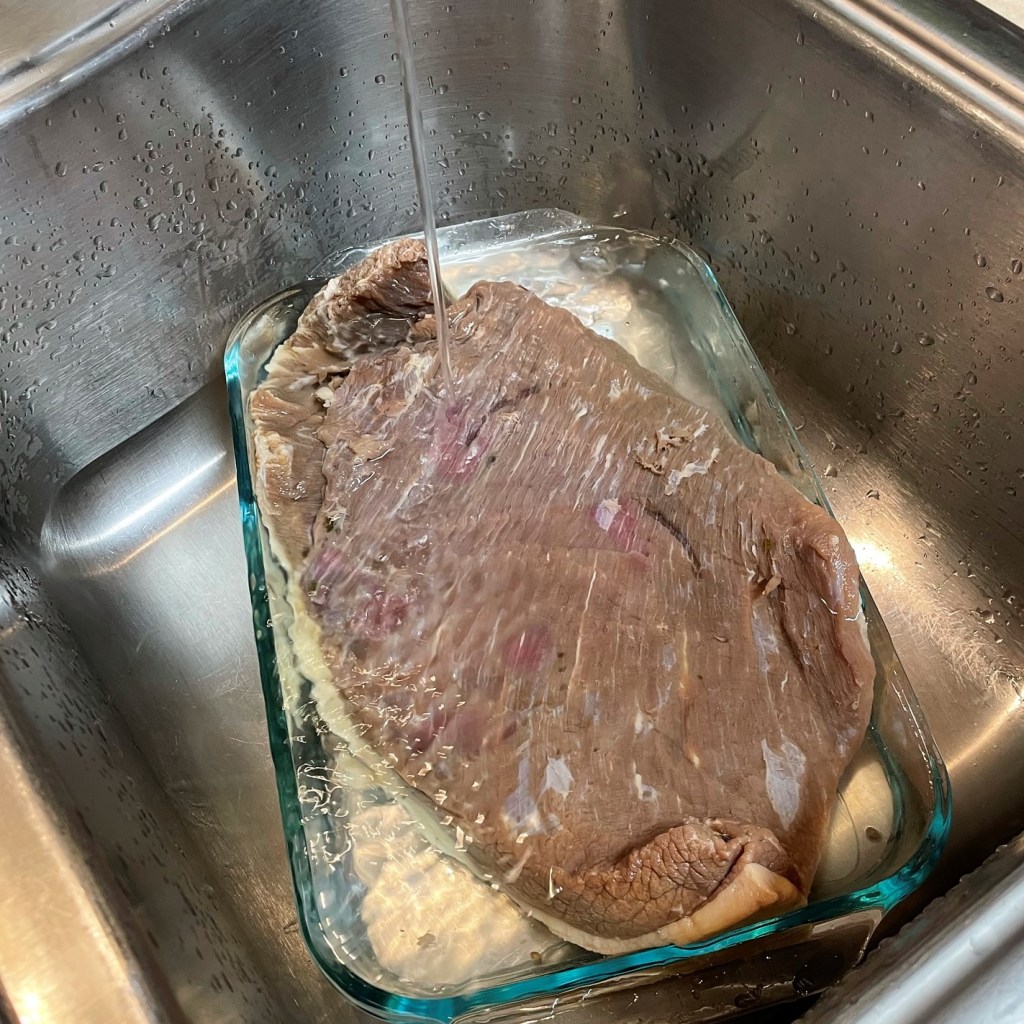
  1. Rinse the pork shoulder and wipe dry with a paper towel to remove any bone shards from the butcher.
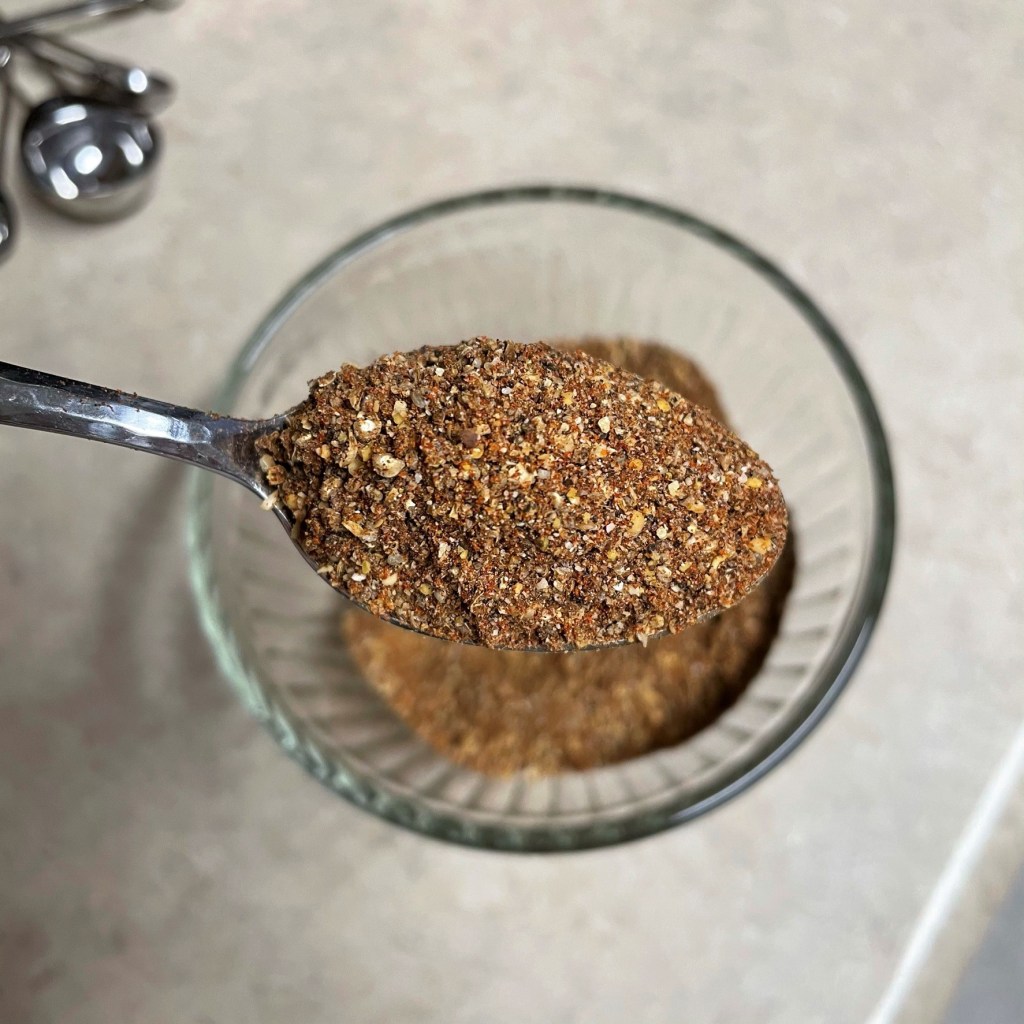
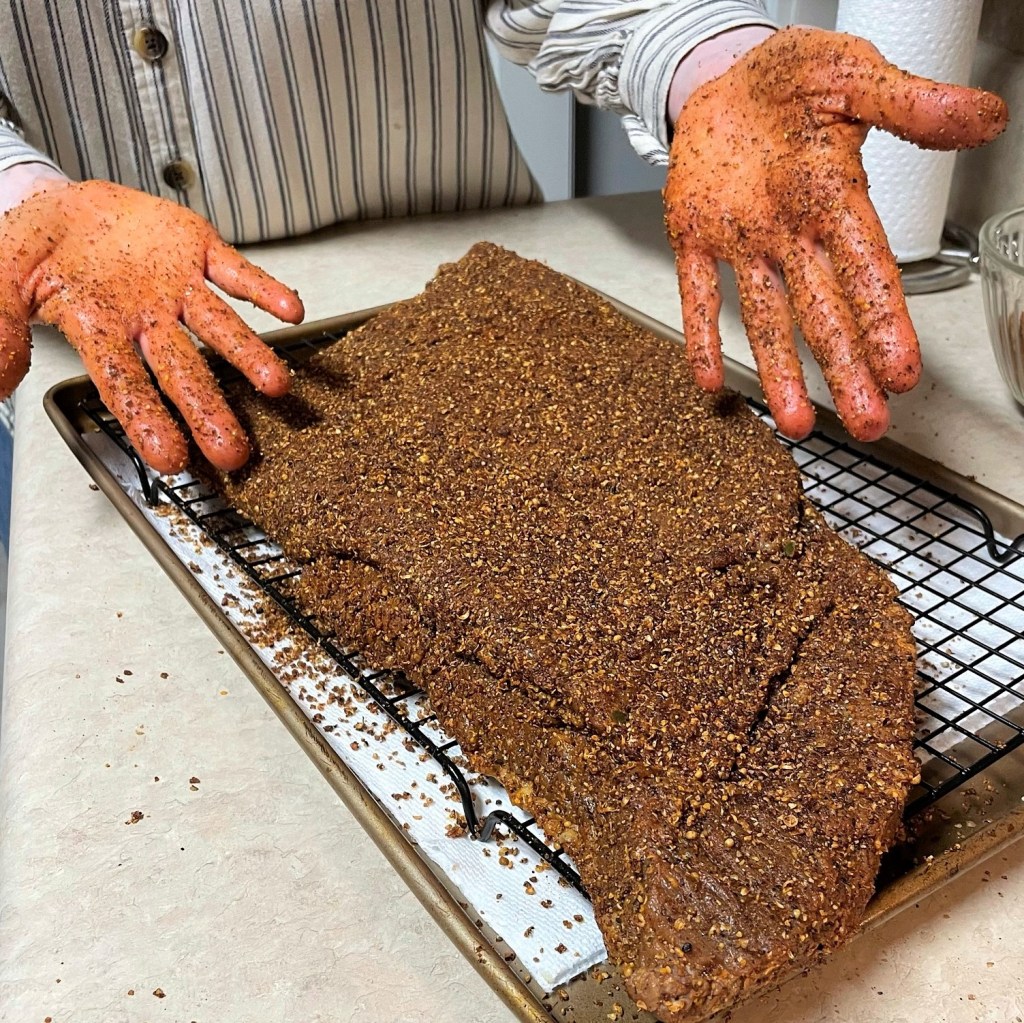
  2. Combine all dry rub ingredients together in a small bowl. Sprinkle the rub mixture liberally over all sides of the pork shoulder roast, and then rub it in so that adheres evenly. Cover and refrigerate the roast overnight or up to 24 hours ahead of smoking.
  3. Take the rubbed shoulder out of the fridge about 90 minutes before you begin to smoke. Create your smoke setup with hickory, apple or cherry wood chips (Les usually soaks them in water or beer for about an hour ahead of time).
  4. Place the shoulder on the lower rack of the smoker and maintain a temperature in the 225 to 250° F range for roughly two hours per pound of shoulder. If you’ll be smoking smaller items at the same time, place them on a top rack for easy removal without disturbing the shoulder.
  5. If you run out of smoke before the shoulder is finished, carefully transfer it to a glass or aluminum baking dish. Wrap it tightly in aluminum foil and place in a 300° F oven until it reaches desired tenderness. The meat should easily pull with a twist of a dinner fork.

Smoked Salmon (and a bonus recipe!)

Back when I got my first bullet smoker in the late 1990s in Connecticut, the first food I ever tried was salmon.

Why? Heritage, of course. 

I’m Jewish and grew up in New York with lox (a cold-smoked, cured salmon) and bagels most Sunday mornings, a little weekly splurge in the Gura household. On rare occasions of extended family gatherings, someone may have picked up smoked salmon salad, which we all salivated over, probably based on the fact that our parents had splurged even more for this delicacy (more expensive than lox). We spread it over cream cheese on a bagel or bialy in place of lox, or sometimes with lox on top for a double-salmon shot.

Now that I’ve had years of experience smoking salmon myself, I can definitely say that the “delicacy” salmon spread of my youth was meh, a mayonnaise-laden, salmon-light blend that, compared to the dish I’m about to share, may well have been created in a blender. Mine is fresh and flavorful, with bits of fresh vegetables and only enough mayo to serve a purpose. It’s always a hit when we serve it at summer parties or holiday gatherings, and it’s easy to make.


It’s all about the salmon

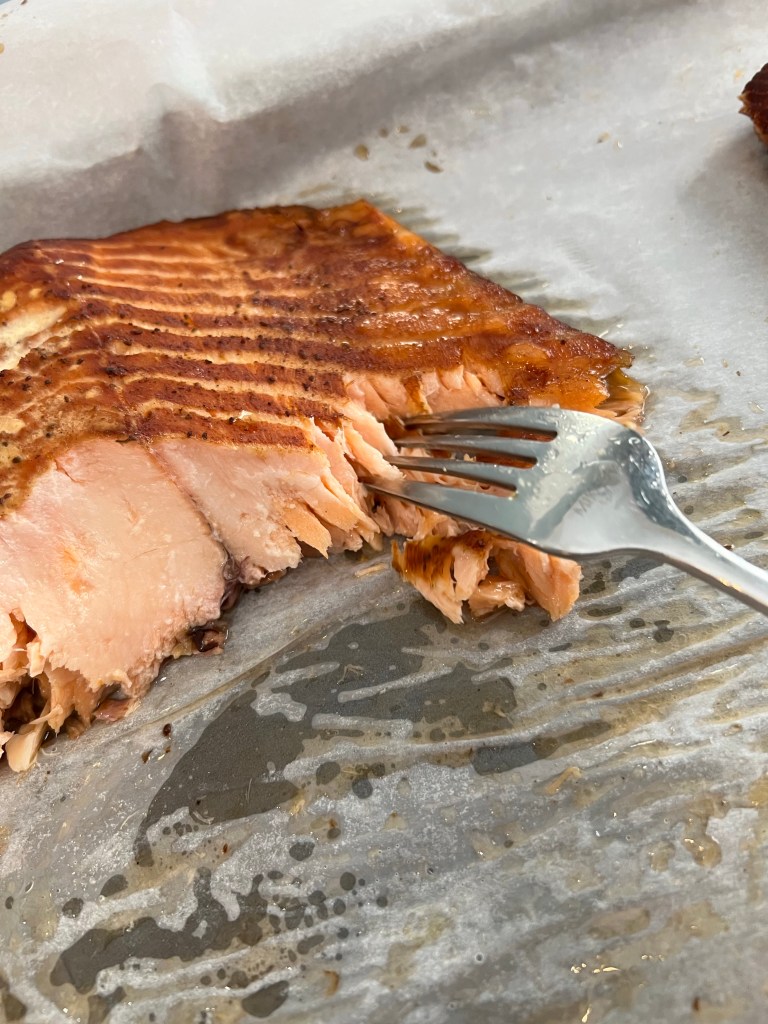
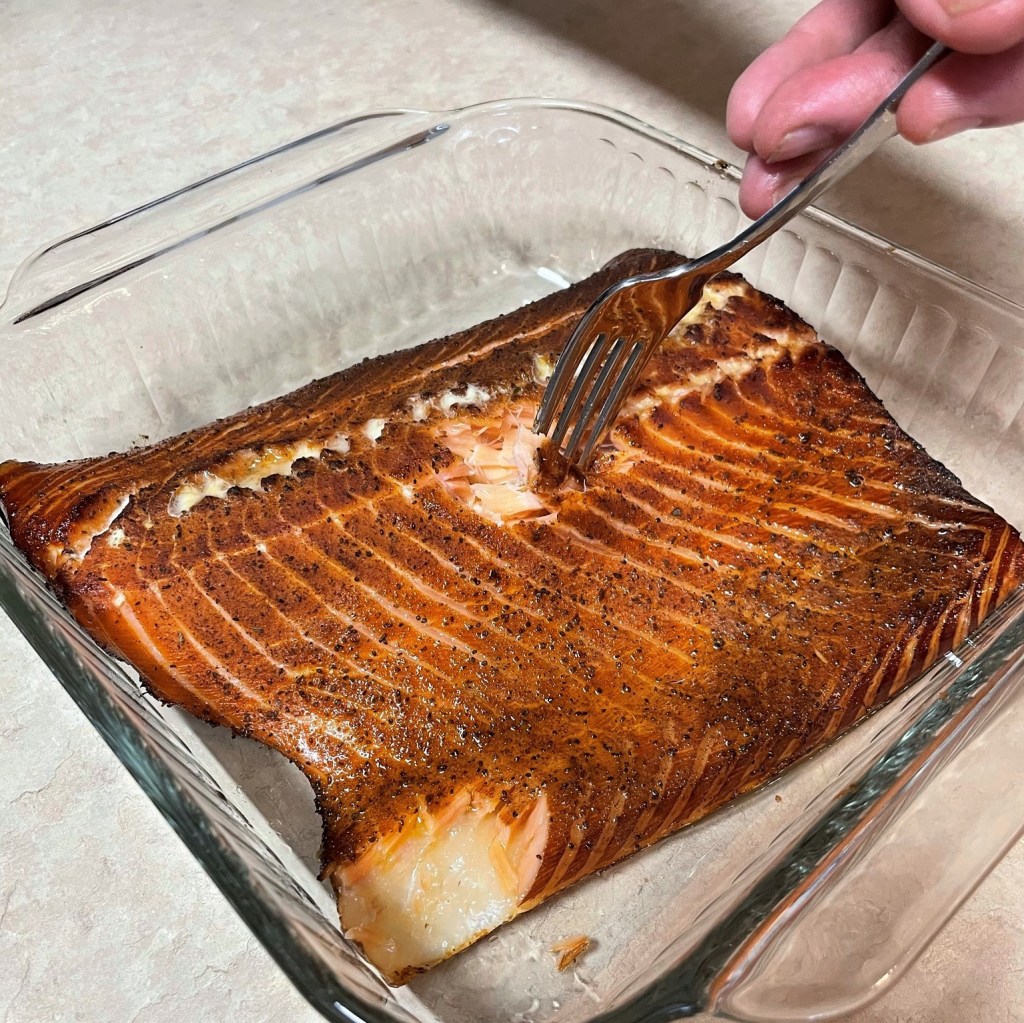
But let’s start with the basics. Smoking salmon is remarkably easy and the process brings out salmon’s textured, salty flavor in a smooth, delicious bite, more nuanced than grilled or baked salmon.

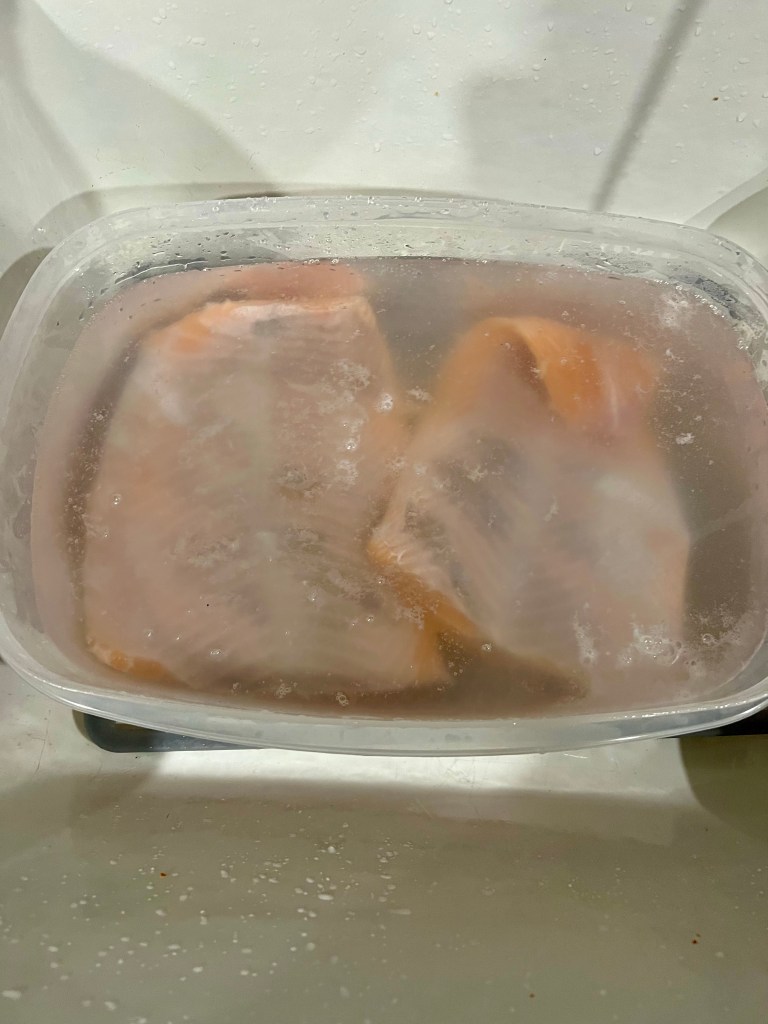
So how does one smoke a salmon? It starts with a nice fillet of salmon; although we typically buy wild caught fish, farm-raised salmon works fine when smoking. We purchase ours from a local seafood shop that emphasizes sustainability, and it is well worth the extra cost. The salmon should be brined overnight in saltwater; I use about 1/3 cup of kosher salt in two quarts water, warm enough to dissolve the salt. I add a little ice to cool the water before placing it in a large glass or plastic container so that the fish is completely covered. Give it an overnight if possible, or at least eight hours refrigerated in the brine.


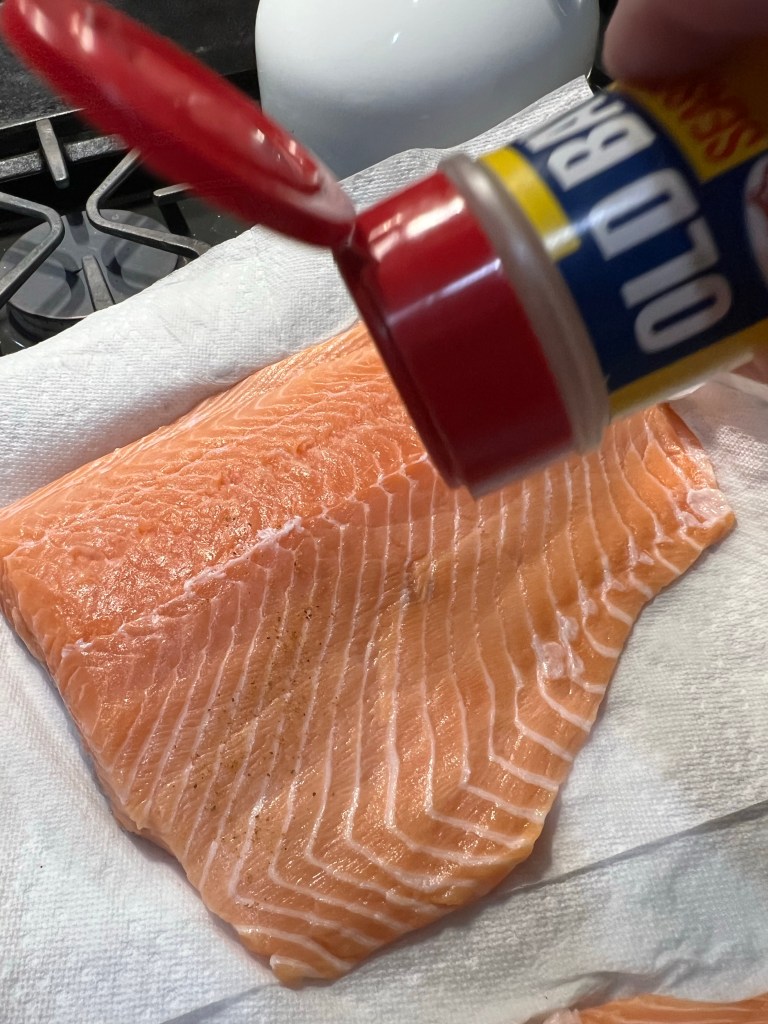
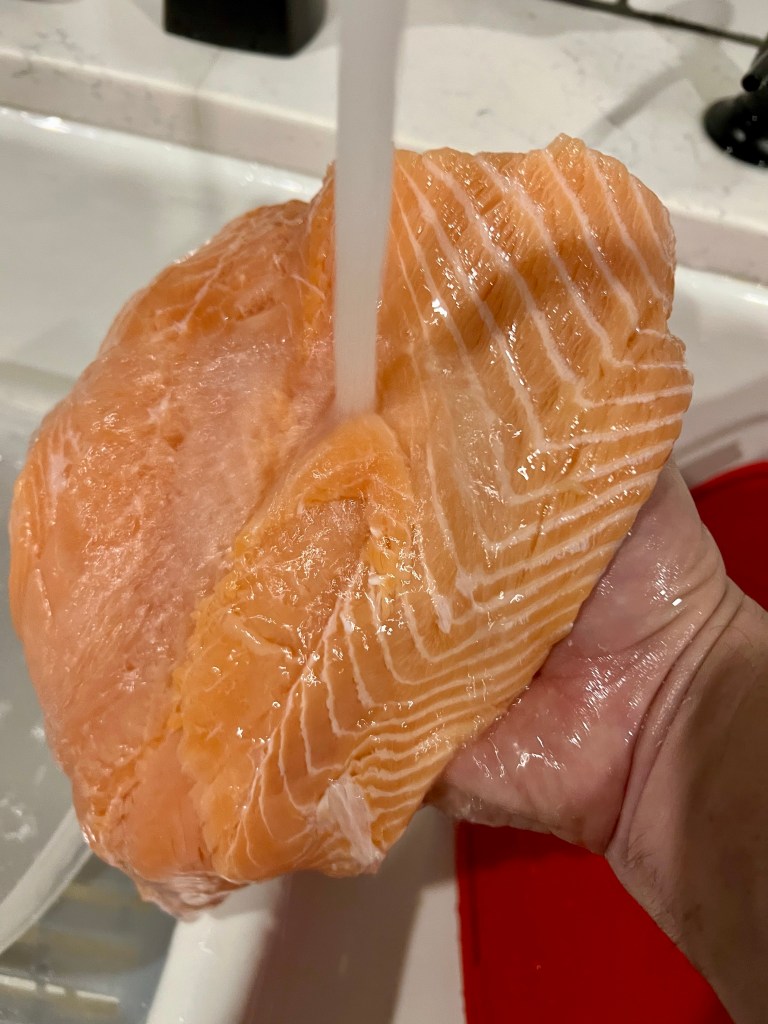
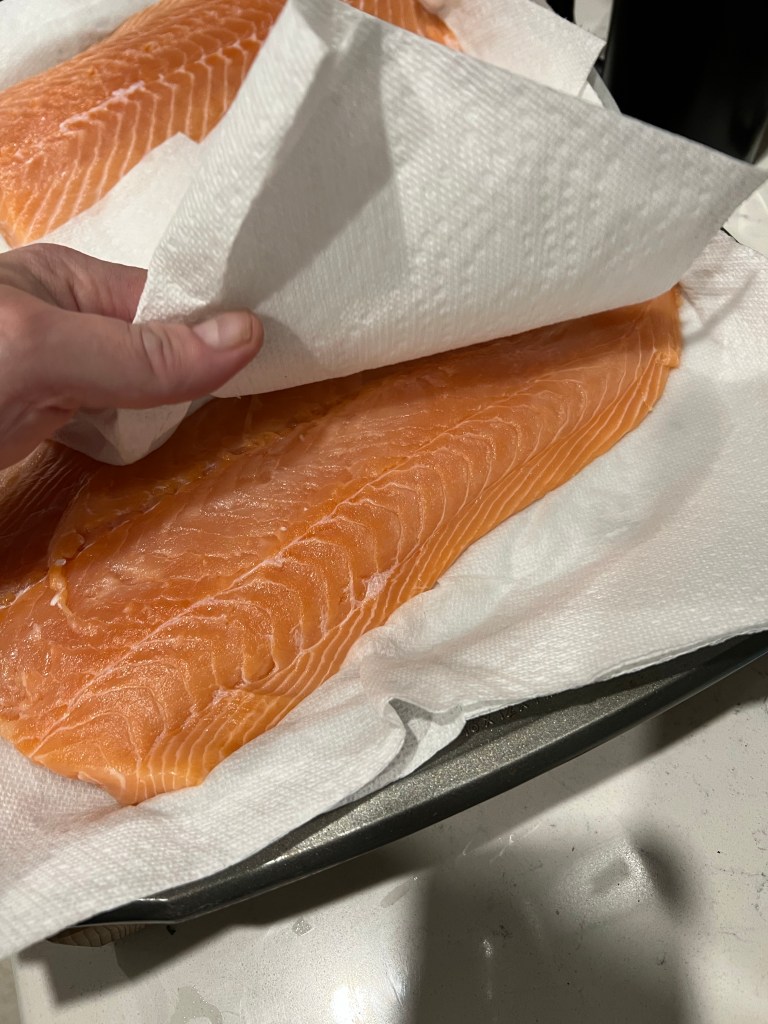
The next morning, remove the fish and rinse it thoroughly under cold water, gently massaging it for as long as five minutes to remove the bulk of the salt. Pat the fish dry with paper towels, then season to your taste. Because the brining inevitably leaves a good salt within, even after rinsing, I don’t use a heavy season. I give it just a light sprinkle of Old Bay.


Fire up the smoker

Smokers can be gas, electric or charcoal; I’ve always had charcoal smokers. I thoroughly spray the cooking grates with oil. The night before, I soak wood chips in water; this time it was apple wood, but other varieties work well, too. The wetness, I believe, helps to create more “flavored” steam in the cylinder. Though there is quite a bit of internet debate about the need to soak the chips.

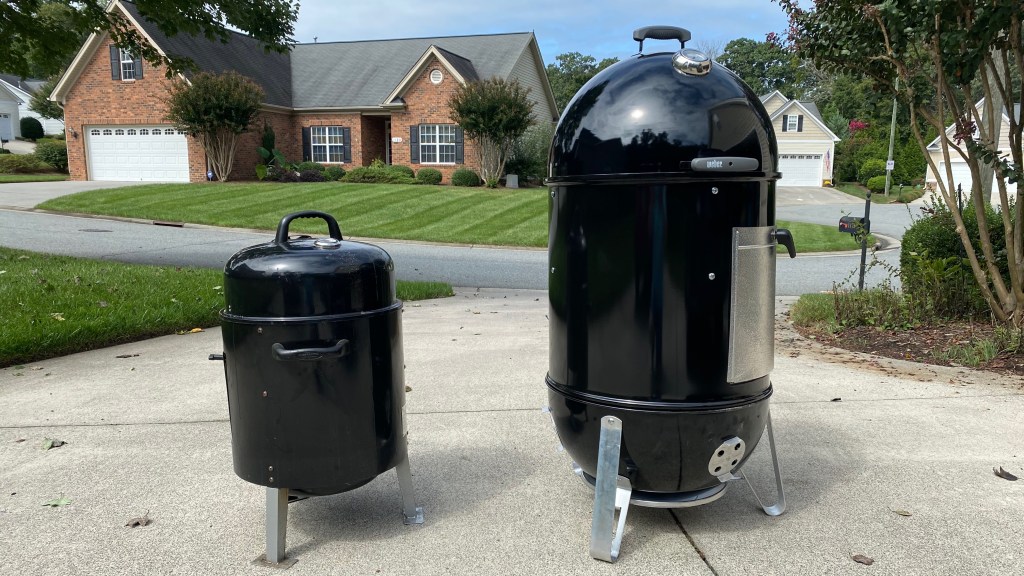
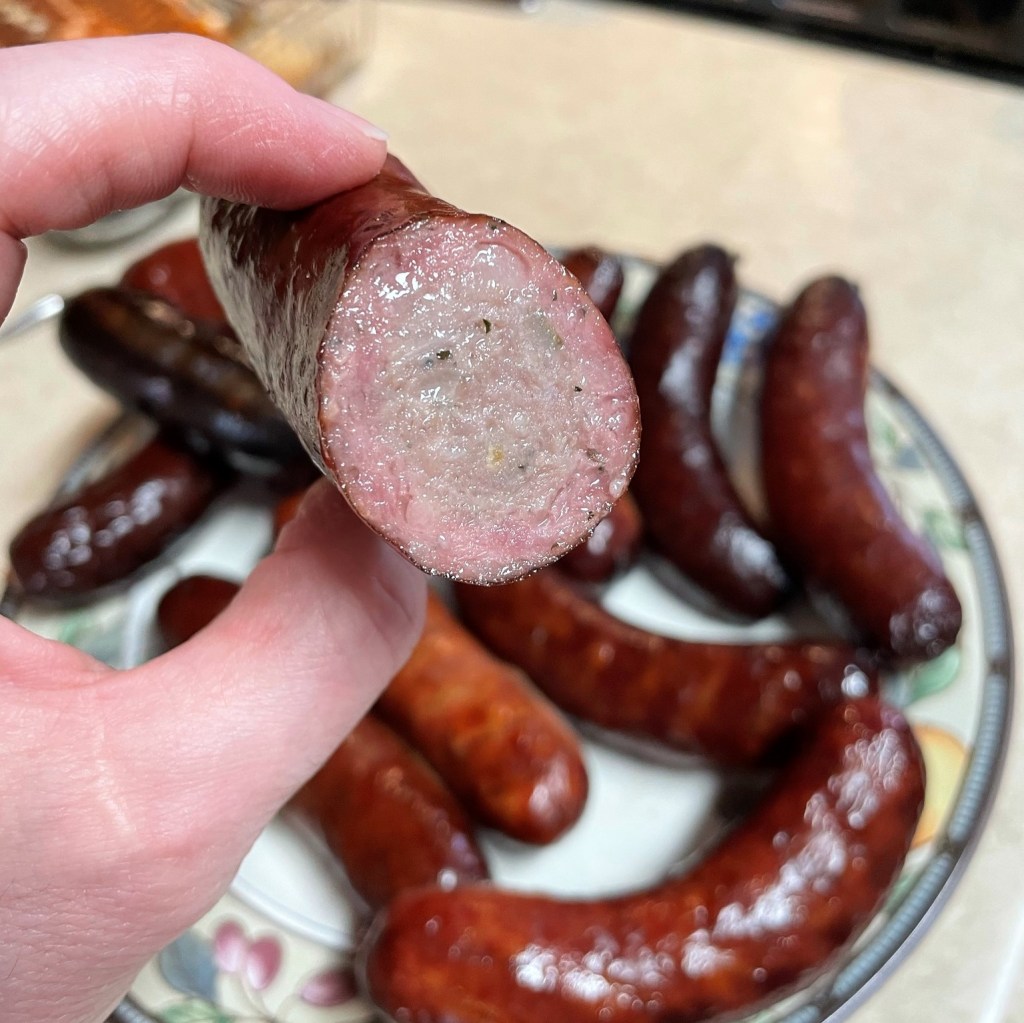
I fill my Weber smoker with enough lump charcoal to last for hours, not so much for the salmon, which can take as little as 90 minutes to 2½ hours depending on the thickness of the fillet, but for the additional food I put on the lower of the two cooking grates. Typically, I will smoke a pork shoulder, though I’ve done turkey, brisket, or pastrami in previous smokes. Next to the salmon on the top grate, we usually smoke sausages to serve as appetizers. Yes, this is one big smoker Terrie bought me for my birthday three years ago.

My new smoker is almost three times the size of my old one!

When the charcoal lumps have turned ash gray, I work quickly by adding the soaked wood chips on top, and then pouring a gallon of water into the pan below that, in effect, steams the foods as they smoke. For interesting flavor, I also add a half gallon of some other liquid— beer is my go-to, but this time, it was fresh-pressed apple cider. I put the pork shoulder on the lower grate, add the top grate and the salmon and sausages, and cover it. The smoker has a temperature gauge and several vents to control air flow and temperature. My smoker has a “smoke range” of 200° to 275° F, and the ideal is smack in the middle. I’ve learned to work the vents regularly through the cooking, and can typically now keep the smoker “in the range” for six hours, enough to cook most things through.

The sweet spot.

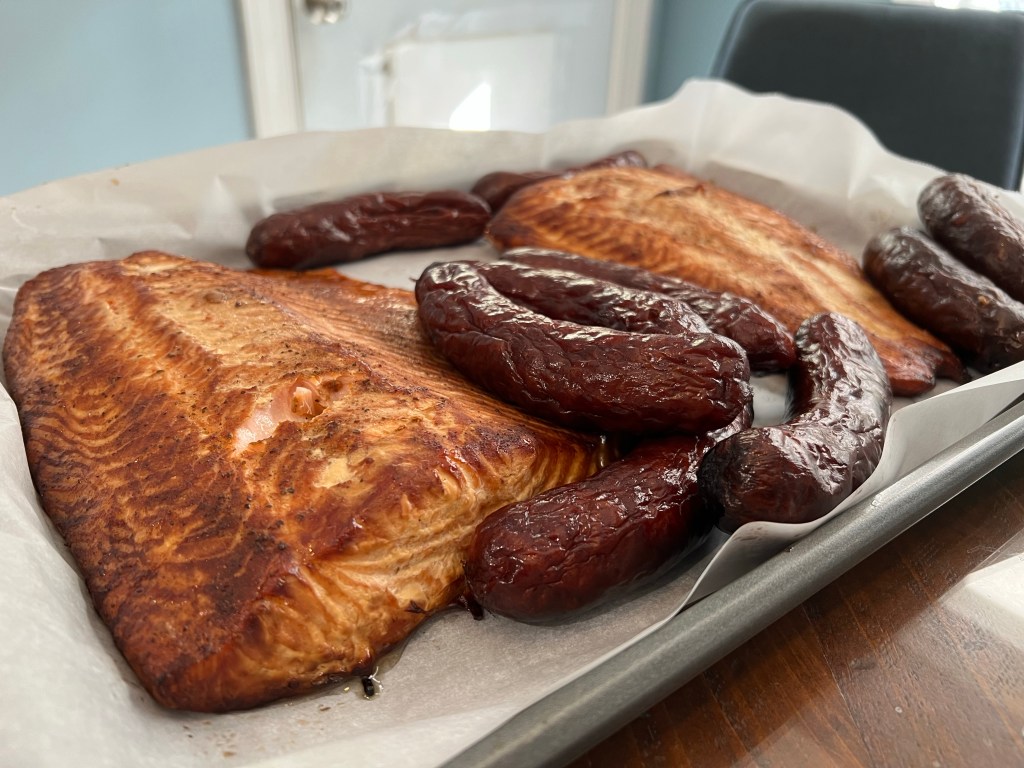
Occasionally, if I lose temperature before a pork shoulder or brisket are finished, we finish it in the oven at 300° F, wrapped tightly in heavy duty foil and roasted to desired tenderness. Salmon (and sausages) fortunately don’t take anywhere near that long. You know the fish and sausages are done just by sight. After an hour and 45 minutes with this cook, they were both ready.

Who’s hungry?

So many options for smoked salmon

When it’s freshly cooked, Terrie and I could eat a whole salmon between us, it’s so delicious. But we refrain to a few nibbles because we usually have other good things in store for it. The smoked salmon is great on top of a mixed greens salad, and sometimes Terrie will incorporate it into a pasta dish with sautéed spinach and sun-dried tomatoes. But my personal favorite use for smoked salmon is right here in this bowl.

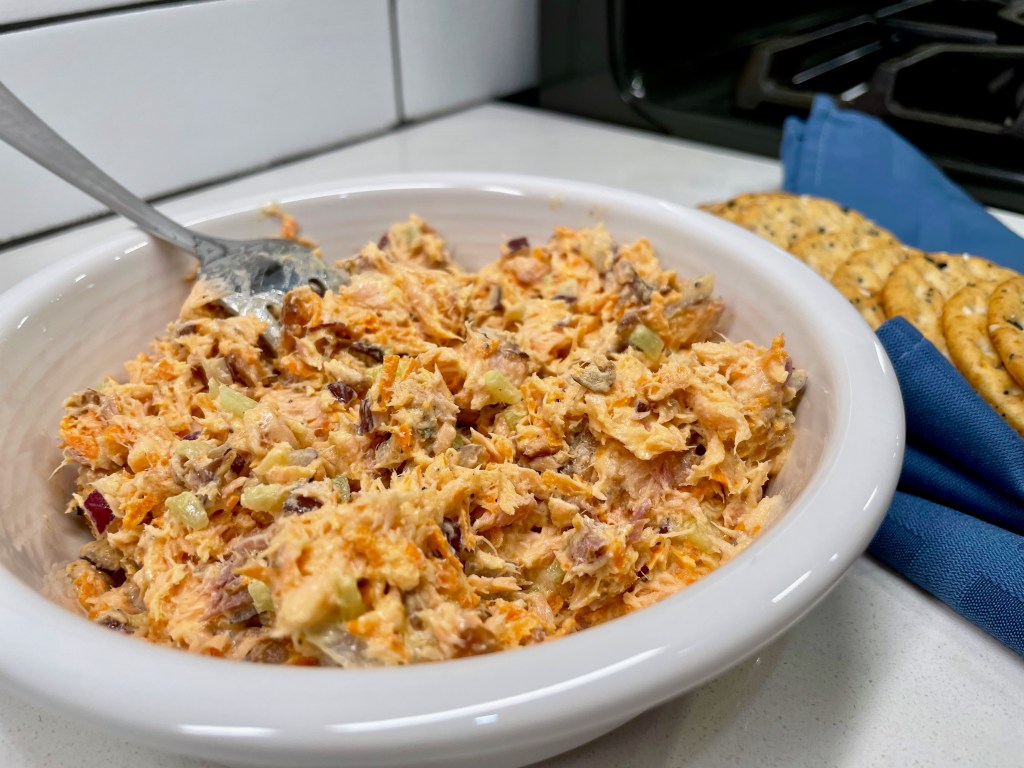
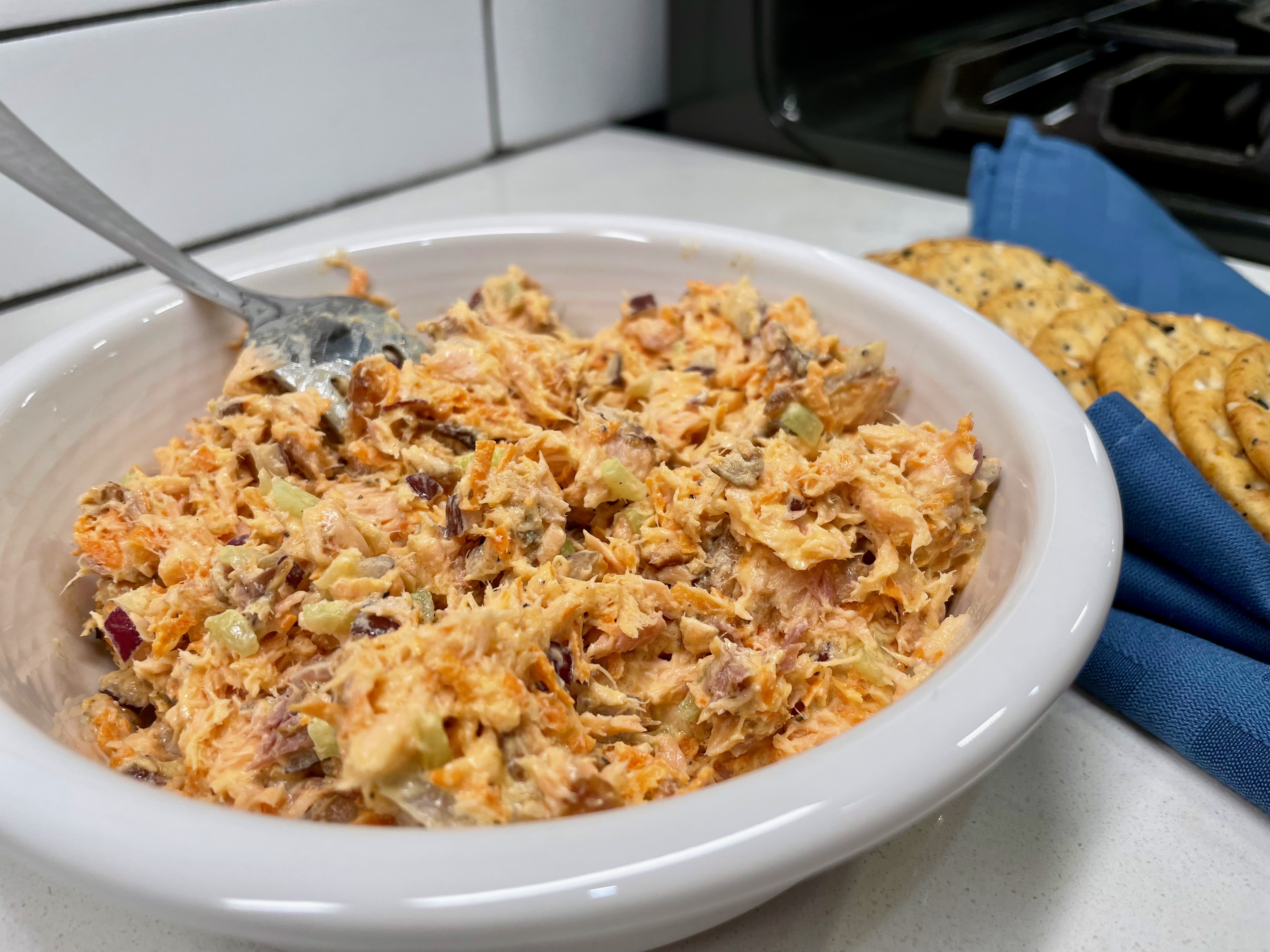
This salmon spread is so addictive.

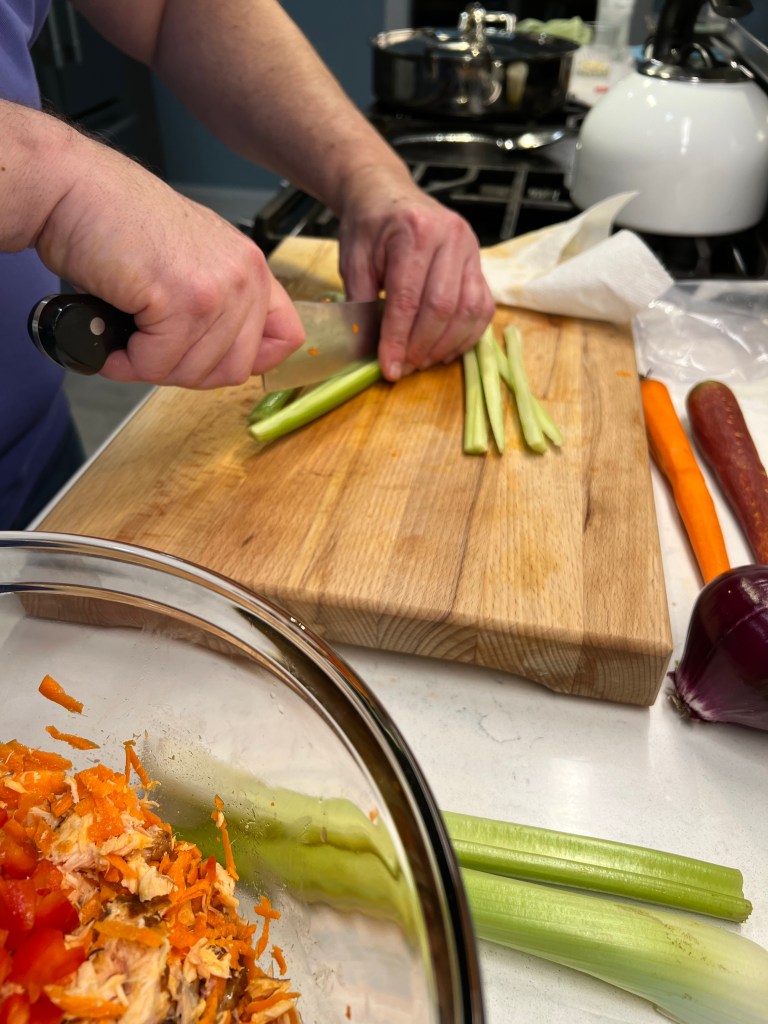
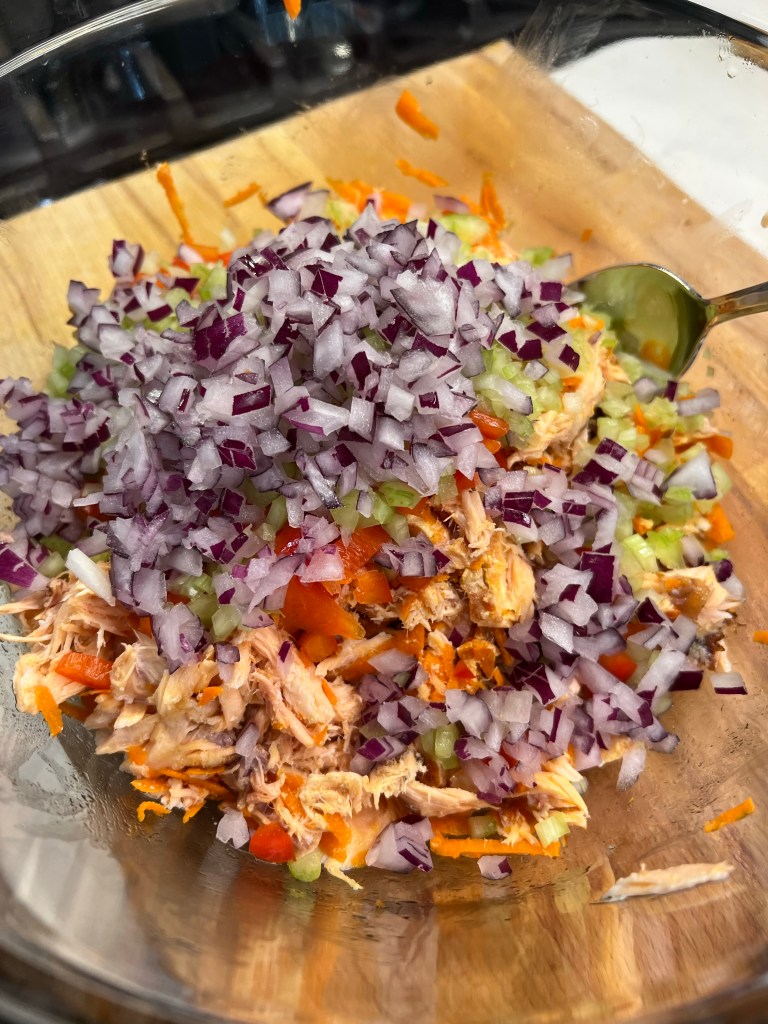
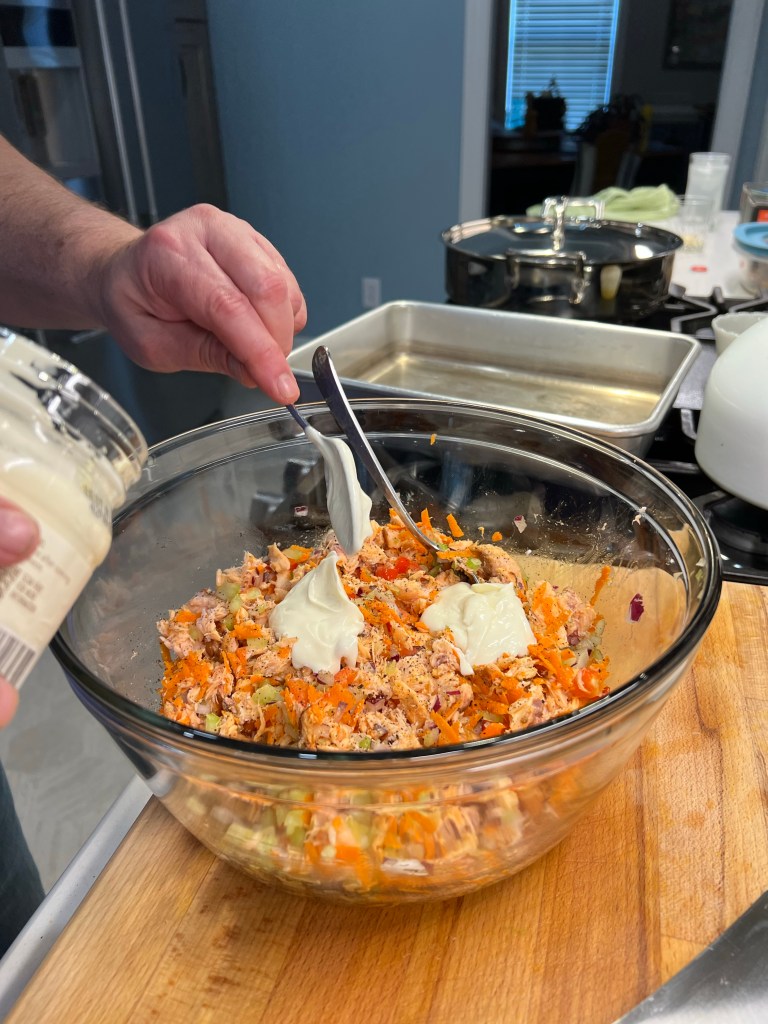
It starts with a nice chunk of the freshly smoked salmon, about a pound. Then, I dice up some red pepper, red onion and celery, and grate some carrot. Pepper to taste (salt usually isn’t necessary) and fold in just enough mayonnaise to moisten it. Mix it all together and refrigerate until ready to serve. We love it as a spread on crackers or pita chips, and it is fantastic (of course) on a bagel.


This salmon salad puts the store-bought variety of my youth to shame because it is chunky and not too laden with mayonnaise. Mainly, though, the difference is being able to smoke a fresh salmon rather than consuming a processed version. Of course, growing up in a New York City apartment building, I have to remind myself, it wasn’t like you could “fire up the smoker.” So if you have the space, the inclination and the smoker, have at it, friends.


Smoked Salmon Spread

  • Servings: About 12
  • Difficulty: Easy
  • Print

This salmon spread is a real crowd pleaser! It is very easy to make, and especially delicious when made from your own smoked salmon.


Ingredients


About 1 pound freshly smoked salmon (see note below)
1/2 red bell pepper, diced
1/2 medium red onion, diced
1 good sized carrot, peeled and grated
2 stalks celery heart, strings removed and diced
About 1/3 cup mayonnaise, just enough to moisten the mixture
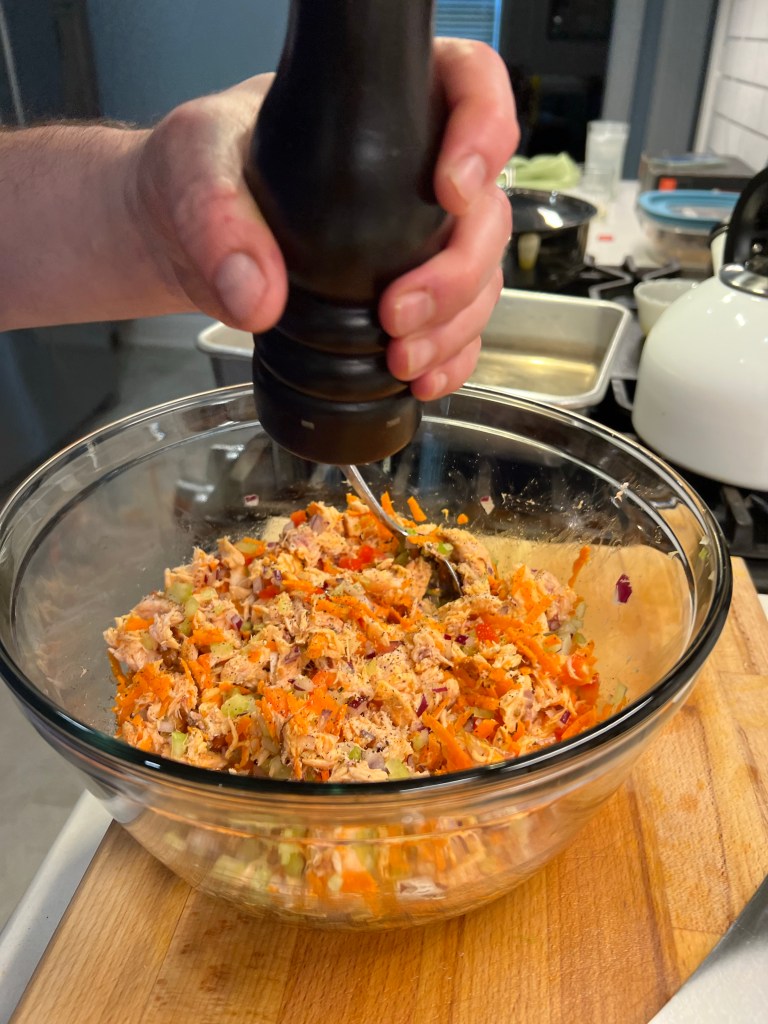
A few twists of freshly ground black pepper

Note: This spread is made with “hot” smoked salmon that is cooked, not the lox-style cured salmon. If you do not smoke your own, consider purchasing this from a good delicatessen or check the packaging to be sure the salmon is fully cooked.

Directions

  1. Flake the salmon into a medium size mixing bowl. Add vegetables and toss gently.
  2. Fold in mayonnaise, a little at a time, until the mixture is moistened enough to hold together. Season to taste.


Not Quite Katz’s (but darn good pastrami)

April, I have decided, is a lovely time to visit New York. When my husband, Les, and I traveled there for our honeymoon trip a few years ago, I realized that being in the city with someone who grew up in the city is the best experience of all. When you are traveling with a “native son,” you don’t feel as much like a tourist, but you quickly get used to the idea of walking—a lot. Les and I walked, on average, about 6 miles each day, and I was free to enjoy the scenery along the way. In New York, in April, there were tulips everywhere.

The city was abuzz with the sounds, sights and smell of spring, and I was positively in love—with N.Y., of course, but especially with my husband of only a few days. His confidence in navigating the city of his youth gave me even more reason to appreciate being with him. I didn’t have to worry about a thing! Les knew instinctively which subway trains to take for various planned excursions, what time to leave and (most importantly) where to go for the best food, including John’s on Bleecker Street for pizza, which became the gold standard in my own effort to achieve the perfect N.Y. pizza dough.

One of our day trips included a visit to the Freedom Tower, now the tallest building in N.Y., at the site where the North Tower of the World Trade Center once stood. We had visited the landmark and the memorial earlier in the week, and merely seeing the names of the people who died on that dark day of history was truly devastating. I cannot (and don’t want to) imagine what it must have been like to witness those events.

There are not enough words.

We had intended to ascend the Freedom Tower on that first visit, but were offered a reschedule on our tickets because of heavy fog that apparently made visibility from the top almost nil. We had better luck on the second visit, and the view from the One World Observatory was jaw-dropping.

I wondered how many people down there might have been looking up to where we were standing.
And how about that dreadful smog?

All that walking left us feeling pretty hungry, and our steps (and appetite) led us to the Lower East Side, to the most iconic eatery in all of Manhattan.


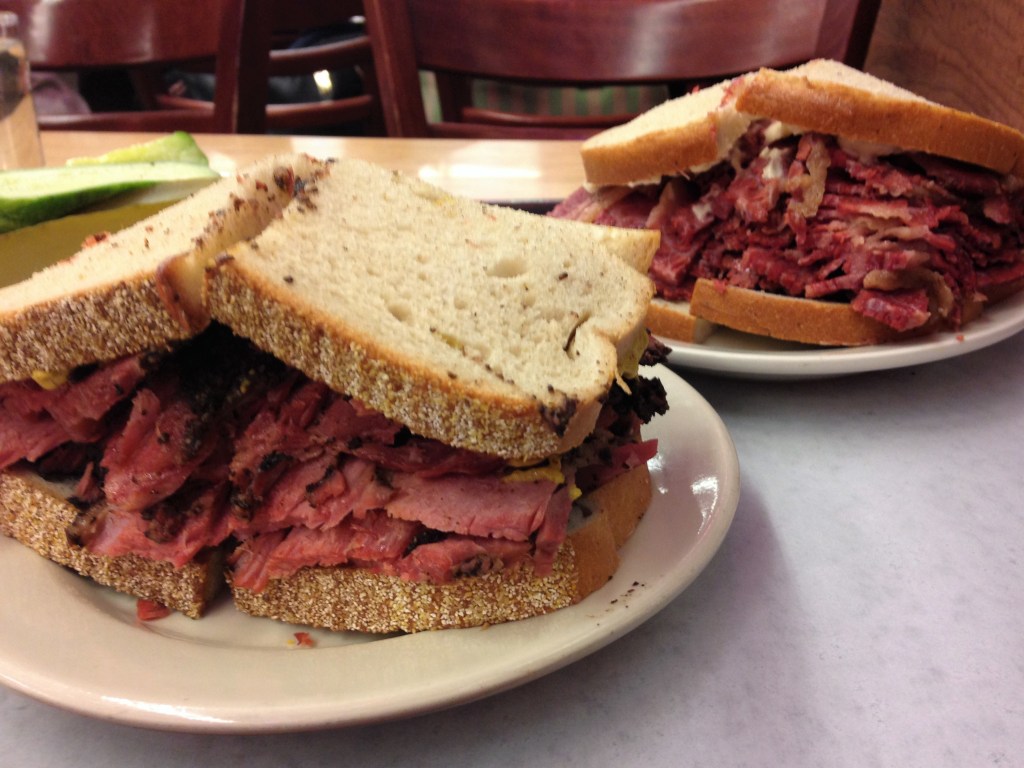
From the outside, Katz’s Delicatessen is pretty unassuming—just an old-school corner building with a neon-letter sign—but inside, the joint was jumping! We squeezed into line with all the other hungry tourists and locals, pulled our tickets and shouted our orders to the sandwich makers behind the counter, who were generously offering samples of the deliciousness to come. It was the most exciting lunch I’ve ever eaten, in a place you’ve probably seen, even if you have never visited New York. Katz’s Deli was the setting for the famous “I’ll have what she’s having” scene in the film, When Harry Met Sally. And if you do visit the city—you know, when the world reopens—I highly recommend a visit to Katz’s, and I highly recommend that you have what I had—the $23 pastrami on rye. Worth. Every. Penny.

My pastrami in the foreground; Les’s corned beef in the back. It was a collective mountain of food!
When business is booming, Katz’s reportedly sells 15,000 pounds of pastrami a week—and as you can see, most of that ends up on one sandwich. I did my best to stretch my jaw onto that thing, and my city-savvy hubby had to show me how it’s done, face-first and with both hands.


We had a ton of leftovers, of course, so we wrapped up the remains of our sammies and took them back to our room. It was on this trip that I learned cold leftover pastrami on rye is fantastic for breakfast.

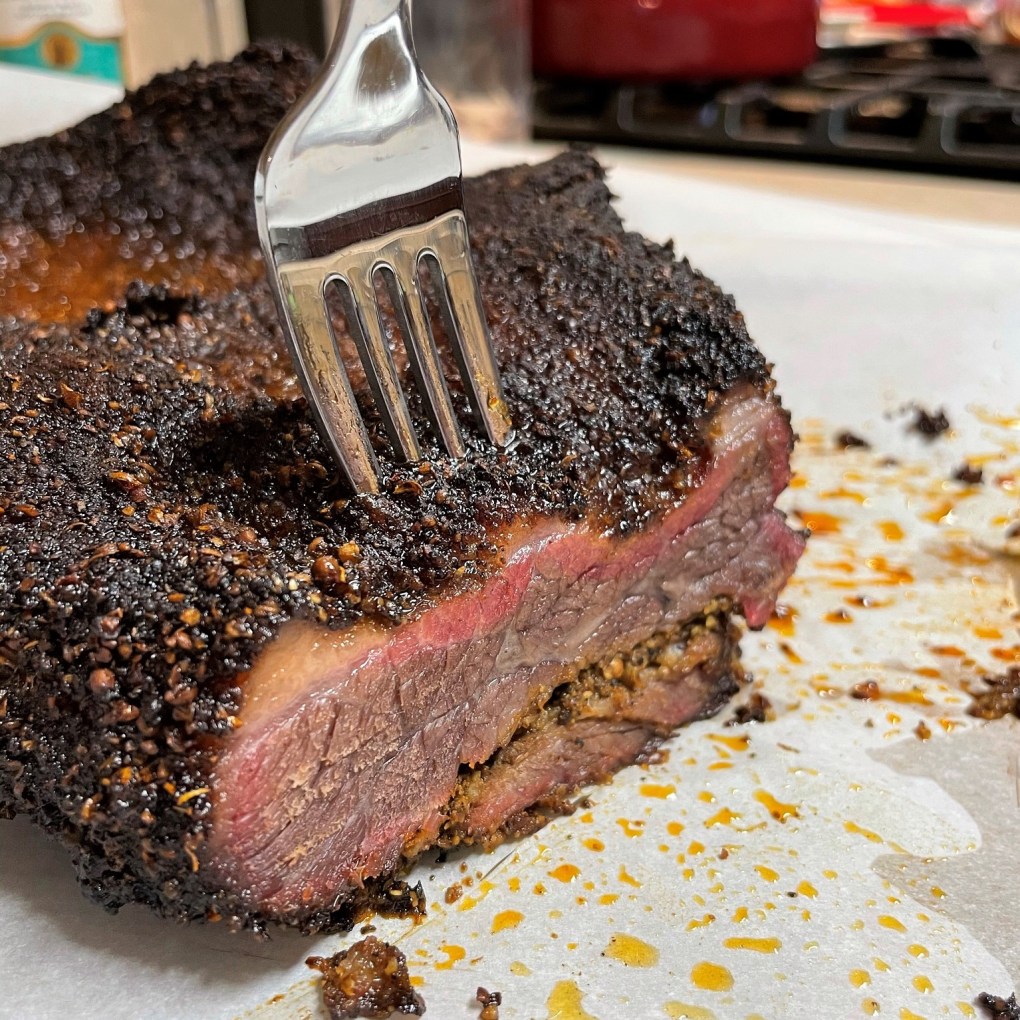
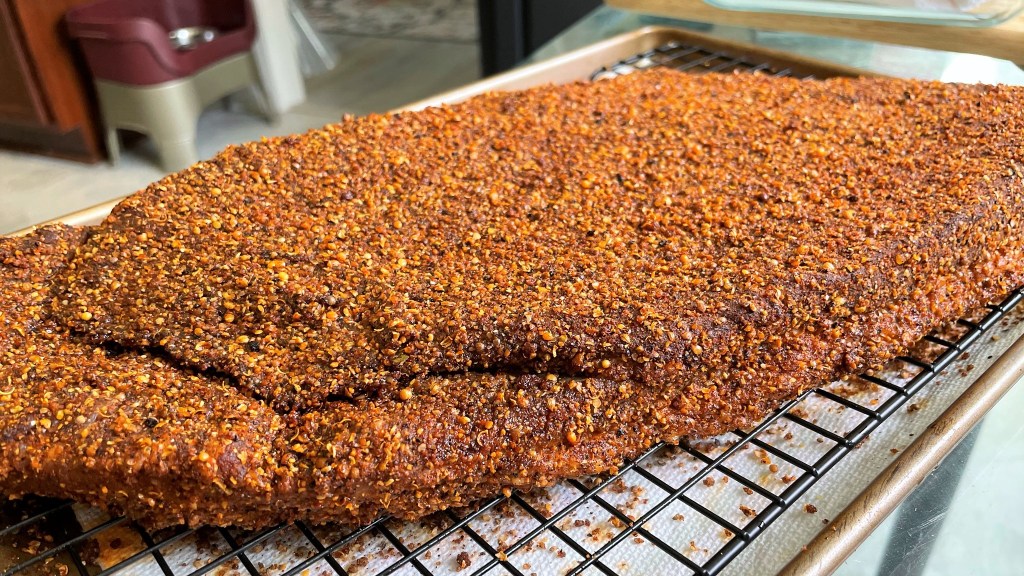
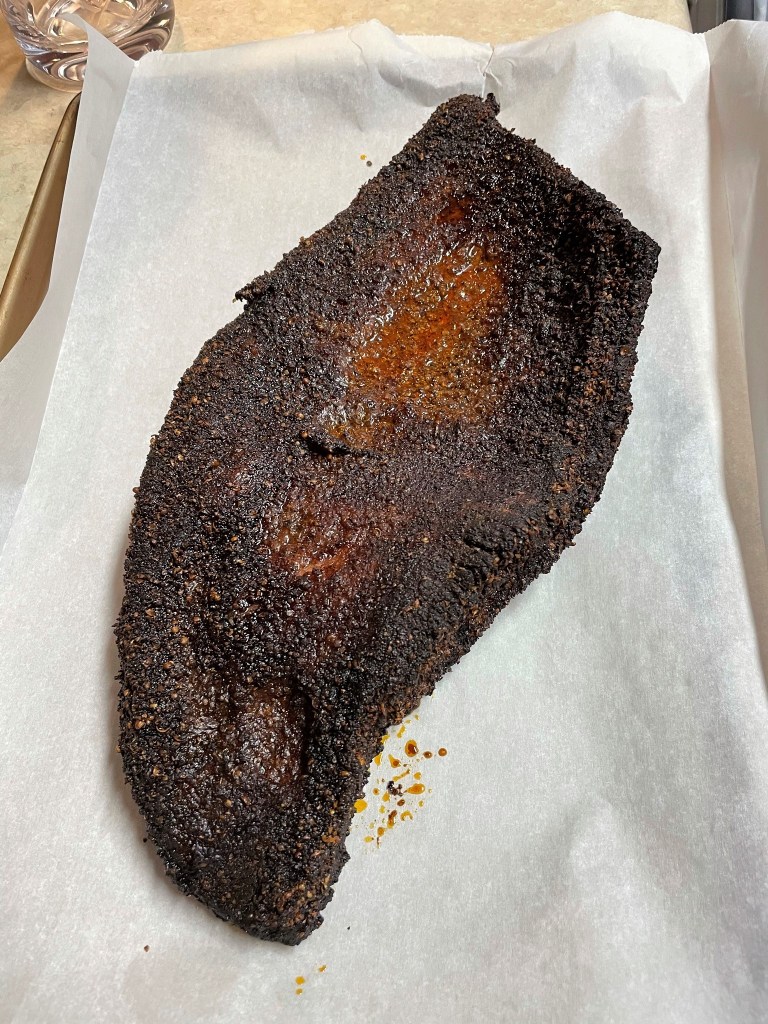
I’ve had a hankering to try making pastrami at home ever since that trip, and although we cannot match what they do at Katz’s (at least, not without giving up our full-time jobs), Les and I were pretty darn excited with the results of our first pastrami effort. When we began our corned beef adventure this year, we had purchased two large, grass-fed briskets, knowing that both would be brined at least a week, and that one would travel on to the smoker with a spicy dry rub to become pastrami. My inspiration came from Katz’s, but my recipe is drawn mostly from The Gefilte Manifesto (Jeffrey Yoskowitz and Liz Alpern), the same book that inspired my pierogi with potato, leek and spinach last fall. Jeffrey’s pastrami recipe instructed a 7-day brine, followed by extensive rinsing, a generous rub-down with copious amounts of spices and, finally, several hours in the smoker.

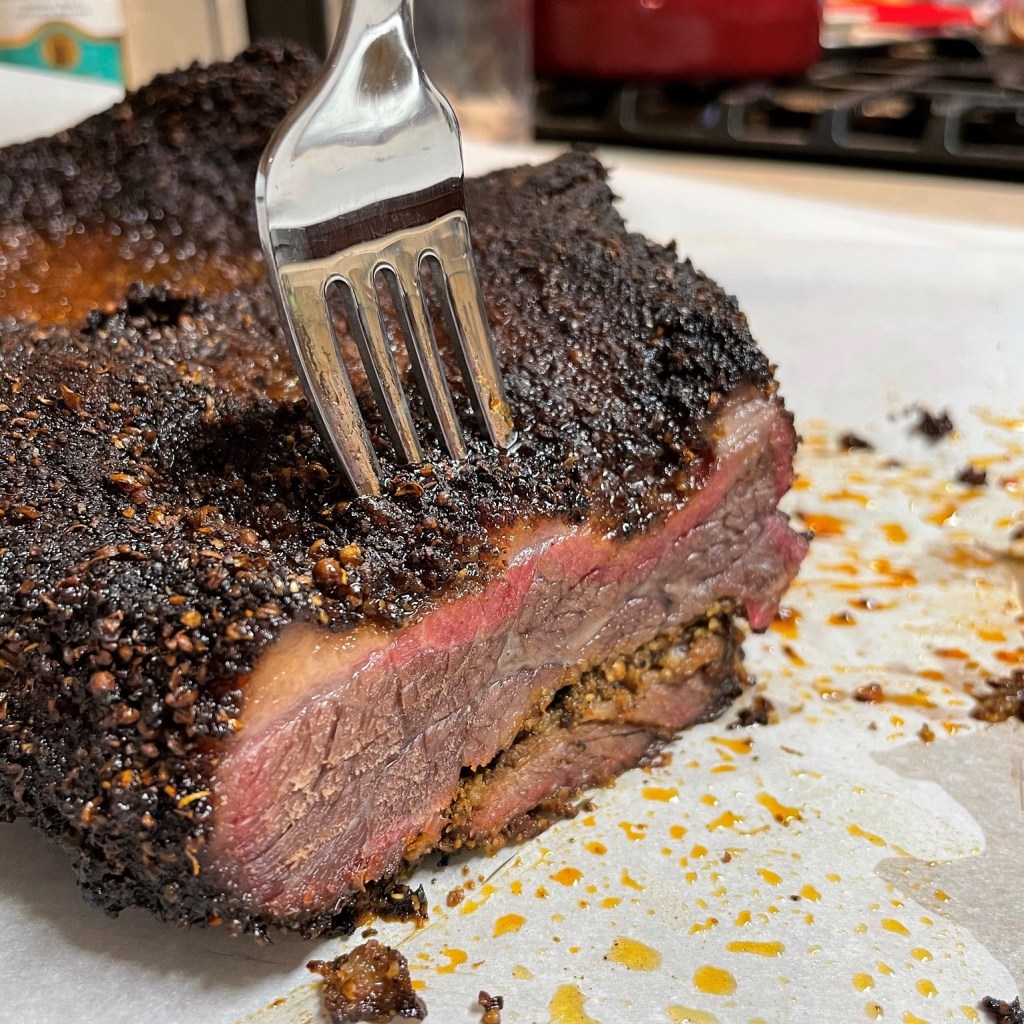
Our driveway, where the smoker was set up, smelled like the stuff deli dreams are made of, and our first pastrami was fabulous! I will not torture you with three pages of ingredients and details, because you probably just want to see the pictures, anyway. So, here you go!


In reviewing all my notes and looking back at the instructions offered in The Gefilte Manifesto, we realize that we made a couple of missteps, primarily with the finishing of the pastrami. We should have waited to cut into it, pending an overnight in the fridge and a two-hour steaming. But the aroma caused us to lose our minds a bit, and so we just charged in and cut the thing. Fantastic flavors, and we will steam the slices as we go. We’ve got nothing on Katz’s Delicatessen, but our pastrami was pretty darn delicious. We will absolutely do this again, and by that time, we hope to invite all of our meat-loving friends to join us for a pastrami feast, fresh and hot off the smoker. Who’s bringing the potato salad? 😀