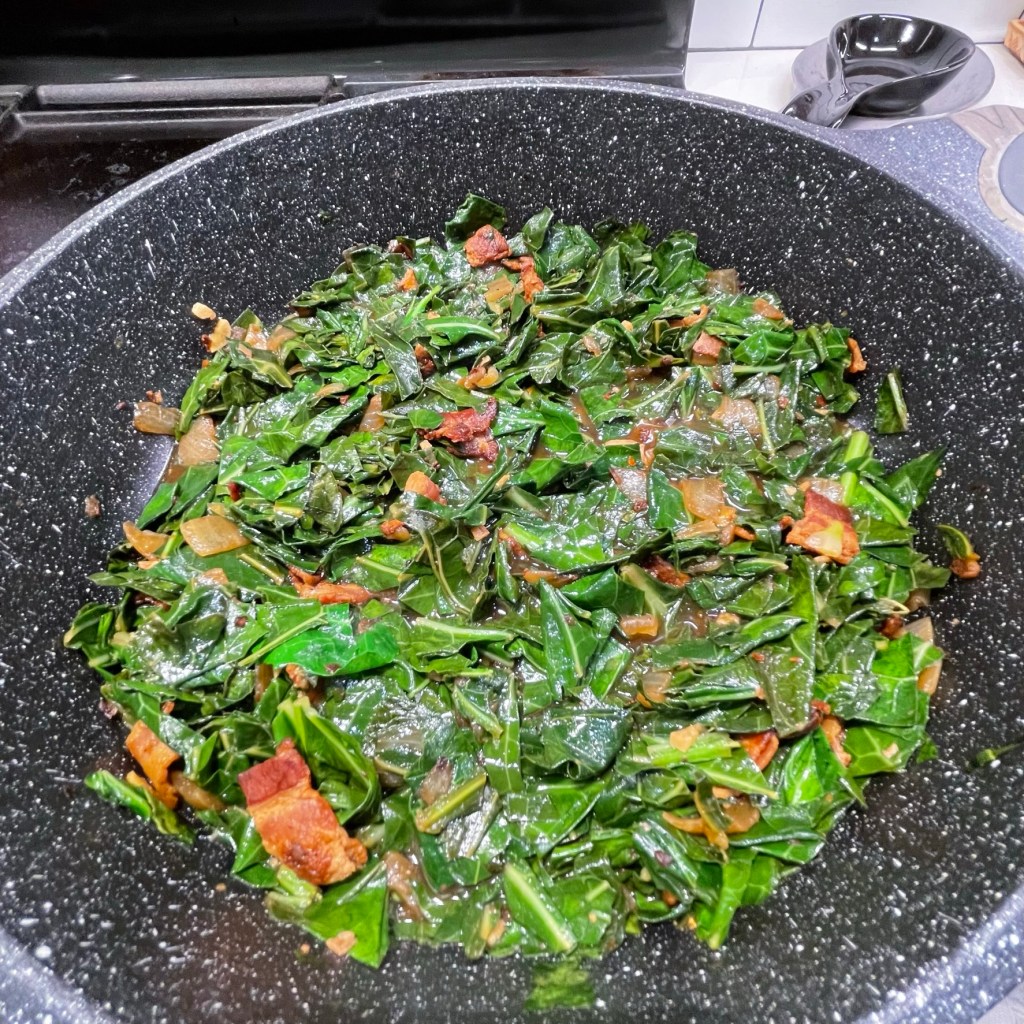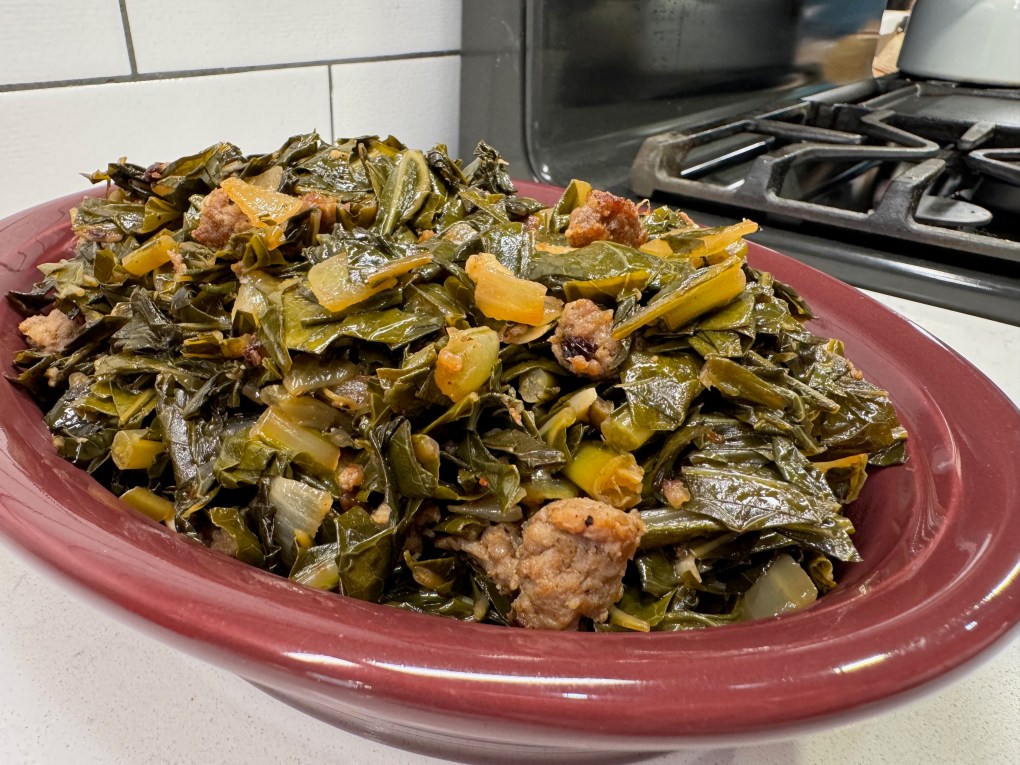
Collards with Sausage and Beer Malt Vinegar

When families gather for Thanksgiving in a few weeks, there will be an array of traditions on display— from formal and elegant catered affairs, to casual and easygoing drop-ins, and even a few backyard shenanigans (probably involving a deep fryer). Too many families are still brainstorming how to make ends meet, with the government continuing to play tug-of-war with the benefits that help them stay afloat, and this distresses me greatly. How can we ever be a great nation if we don’t care for our neighbors? Sigh.

One of my own “traditions” for Thanksgiving is that we break tradition by rotating dishes and switching things up. I know, everyone has their “favorites” for Thanksgiving, and we do keep the standards on the playlist to avert an uprising— the bird, some kind of dressing, cranberry sauce and mashed potatoes with gravy. Beyond that? Anything goes!

This year, I have a seasonal cake in mind for dessert (still thinking it through), and I intend to include collard greens in the lineup. Their earthy composure will be most welcome, and in these parts of the American South, they are on a short list of comfort foods. I also love that collard greens are inexpensive (always a bonus), and they can be made a few days in advance and warmed up in time for the big dinner. Anything that makes the meal more “homey,” and allows for more time chatting and less time fussing, is good with me!
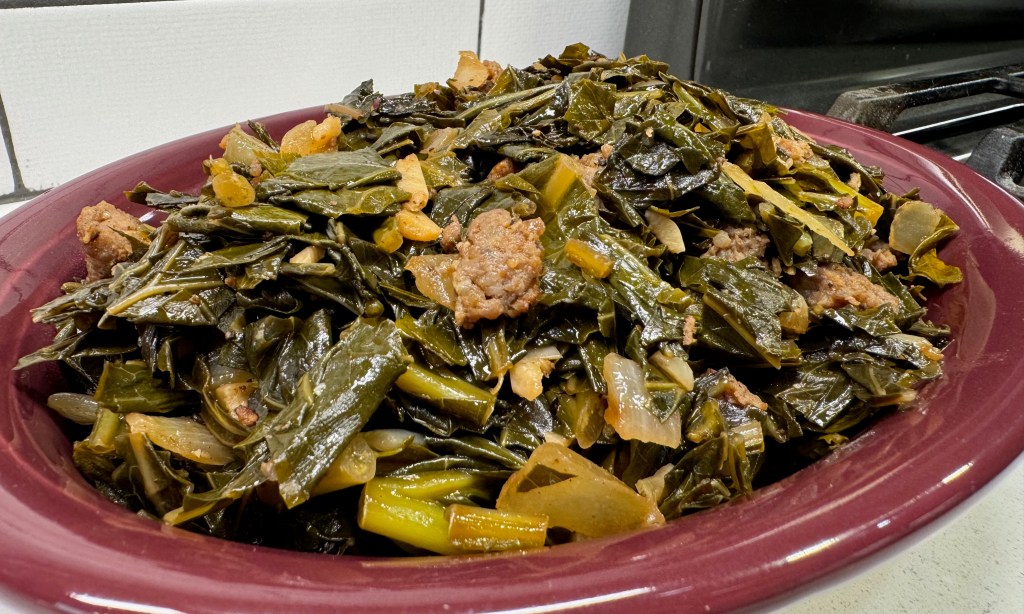
A dish this comforting deserves a spot on the Thanksgiving table.

Making collard greens 101

I’m amused recalling that I once shied away from making collard greens at home. I liked them, but had no idea how to transform the thick, leathery leaves into something tender and edible. There are two schools of thought on this, and the first was daunting enough that I kept my distance for years. It involves a dense, salty hunk of what our locals call “fatback,” and boiling (or even pressure cooking) the collards for hours on end, until they no longer resemble a vegetable. Some people love it; I do not.

But the other method, shared with me by a kind lady in the grocery store, is not only quicker and easier— it also tastes better and leaves plenty of room for creative interpretation. This method involves briefly frying the trimmed collard greens in a small amount of oil or fat and then simmering for half an hour or so in whatever braising liquid makes you happy. To date, I’ve used broth, beer, whiskey, tequila and hard cider. And I’ve tossed a variety of flavor modifiers into my collard recipes, too, including bacon, tomatoes, mushrooms, onions, garlic, and even sweet potatoes (which was great). I guess what I’m saying is that collard greens are finding their way onto my list of “blank canvas” foods, and that isn’t at all a bad thing.

My sausage and beer malt version

My collards are usually intended as a casual side for roasted chicken, grilled pork chops or meatloaf. But this time, I knew I’d be using some of the leftovers in the collard dip recipe I shared a few weeks ago in memory of our friend who passed away unexpectedly earlier this year. He was a big-time foodie, always sharing cool food stories and interesting products that he found in his many travel adventures. About a year ago, I was surprised to receive a package that Jerry had ordered for me— it was a sampler of specialty vinegars from American Vinegar Works, which he described as “doing it the old-school way, handcrafted and aged.” And I suppose you can guess which one caught my eye first.
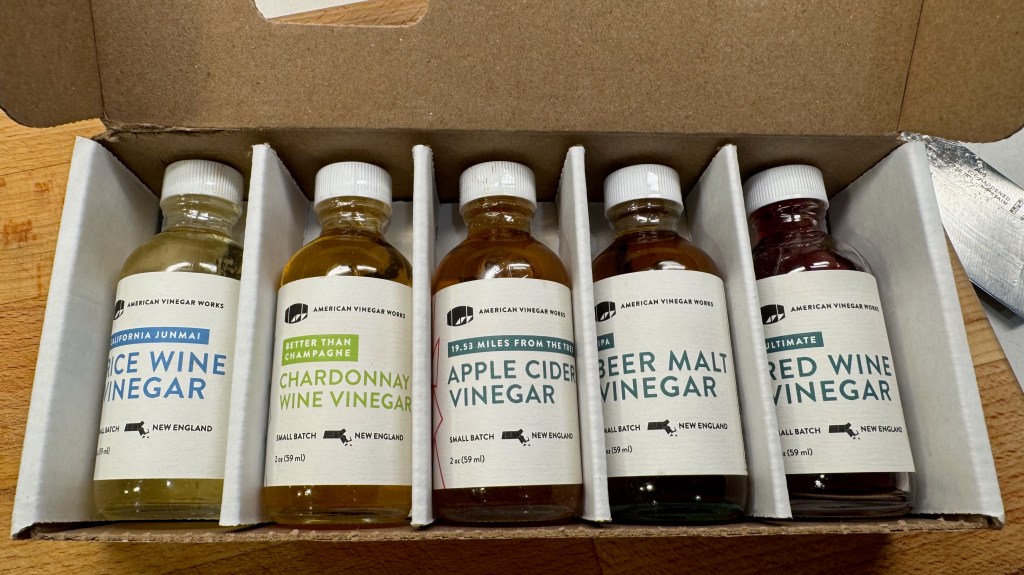
What a fun surprise this was!

I’d never heard of beer malt vinegar before, but I knew it would be complex and delicious. And using it for the collards that would become part of the collard dip was a great way to honor the memory of my friend who gifted me the sample collection of vinegars.

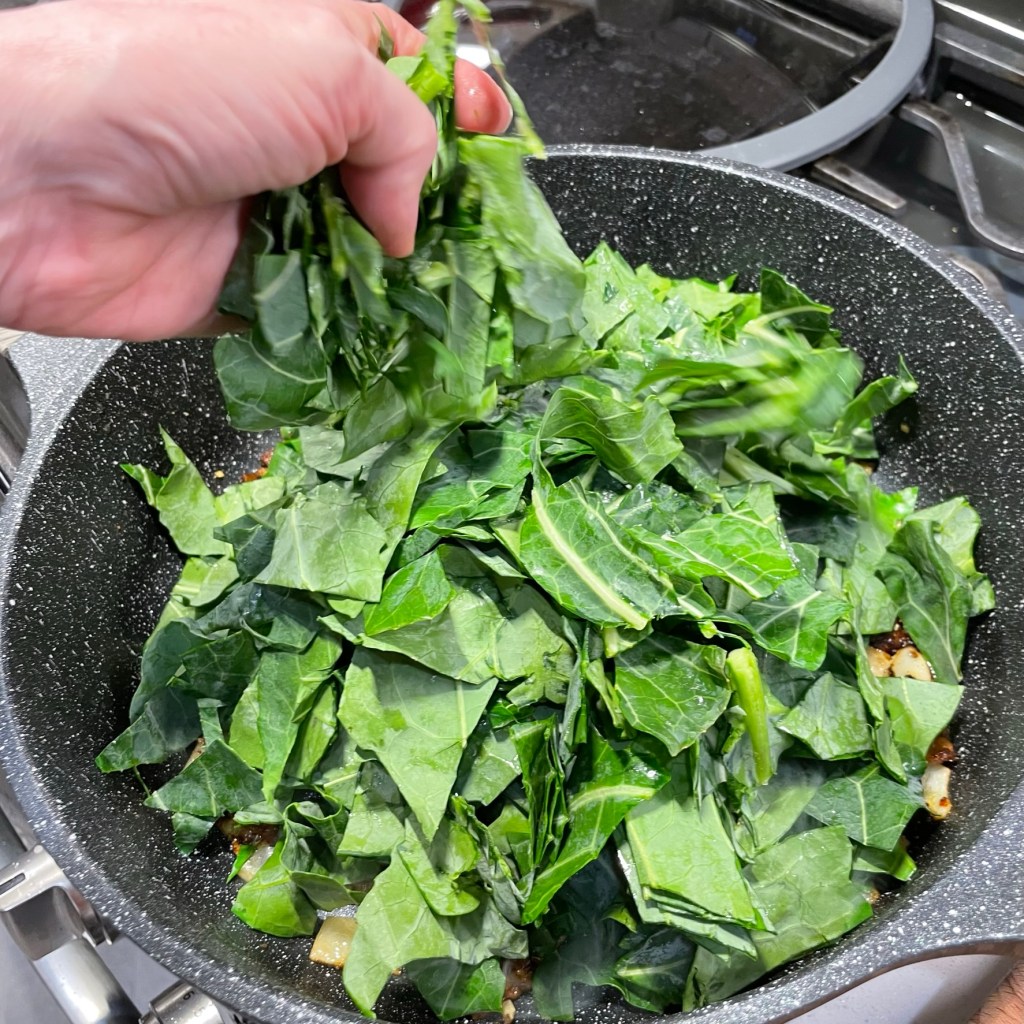
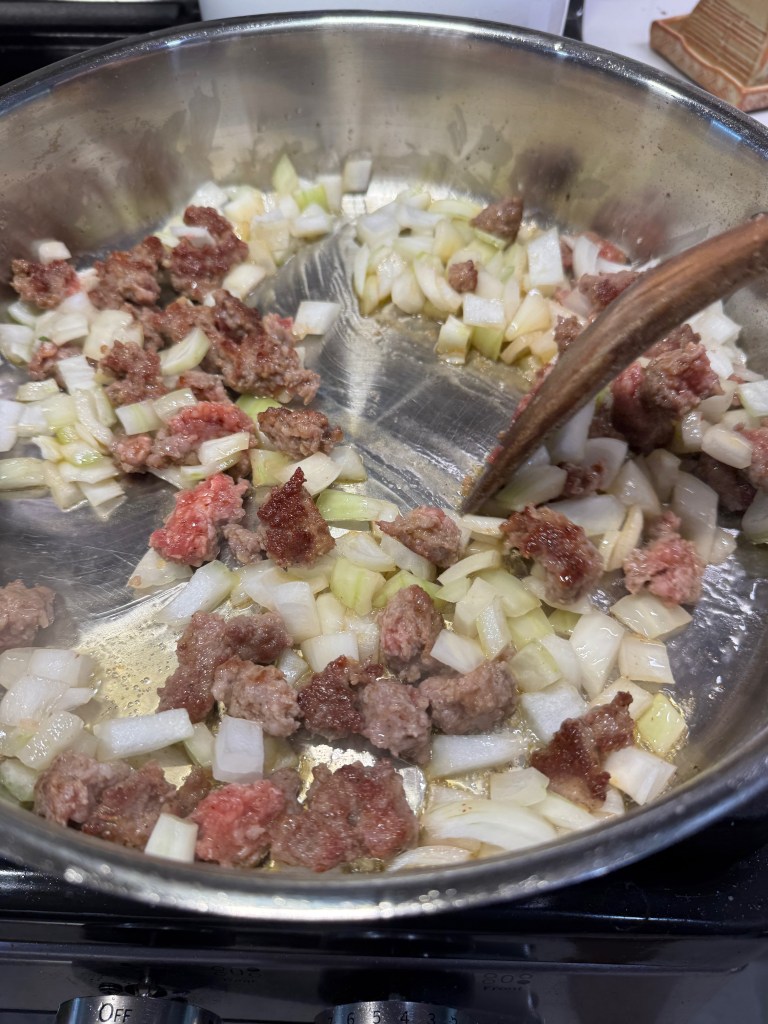
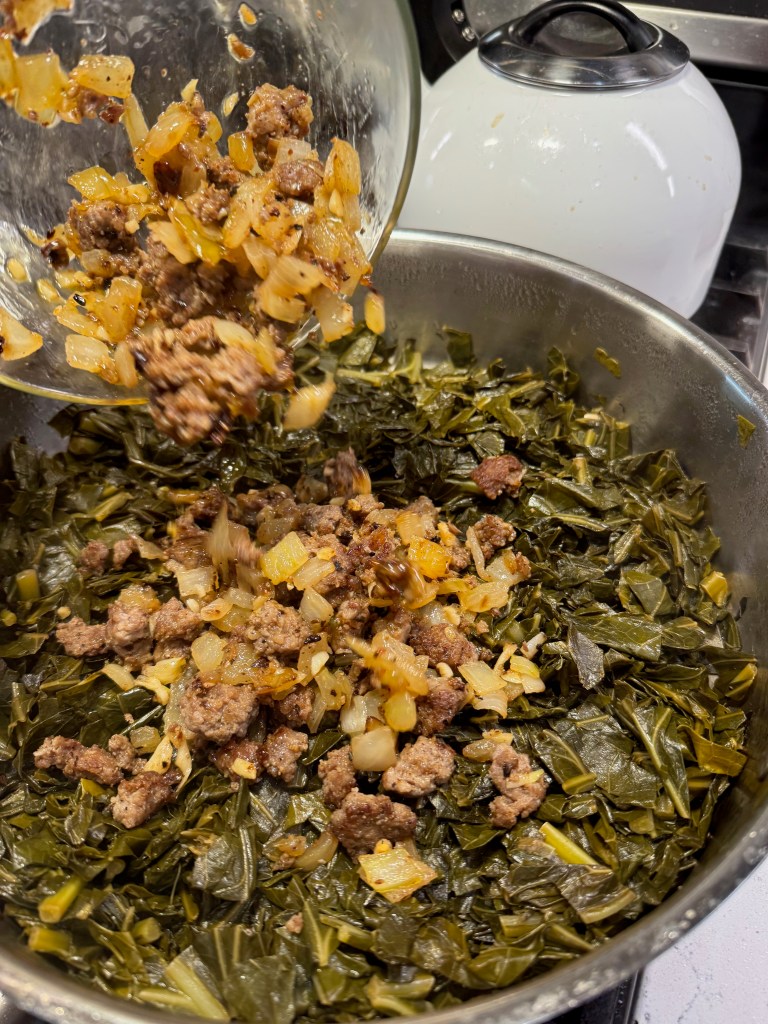
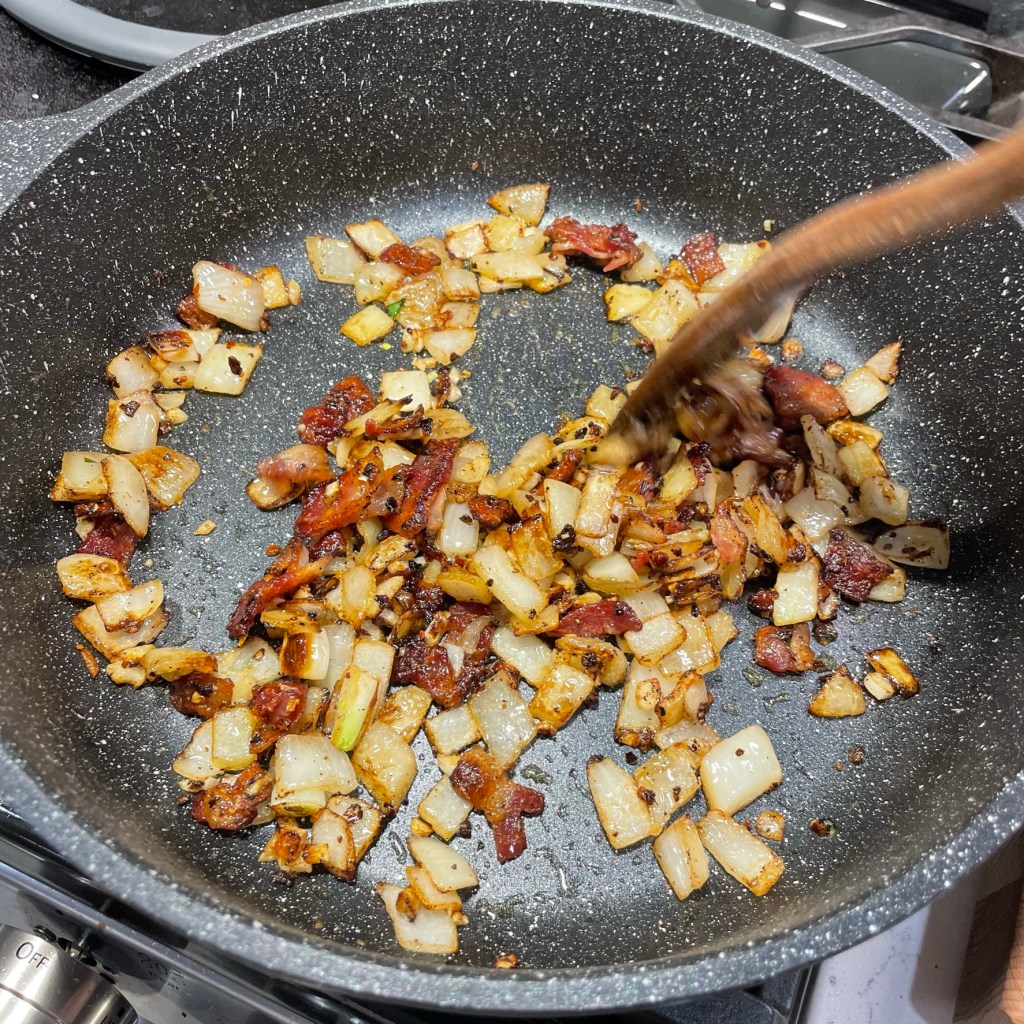
For this iteration of collard greens, I started with a local spicy pork breakfast sausage, browned up in bulk with chopped onions and a few garlic cloves, plus a smoky pepper seasoning. When I was happy with the browning, I transferred the meat mixture into a separate bowl while I sautéed the collards, one handful at a time, just as the nice grocery lady told me.
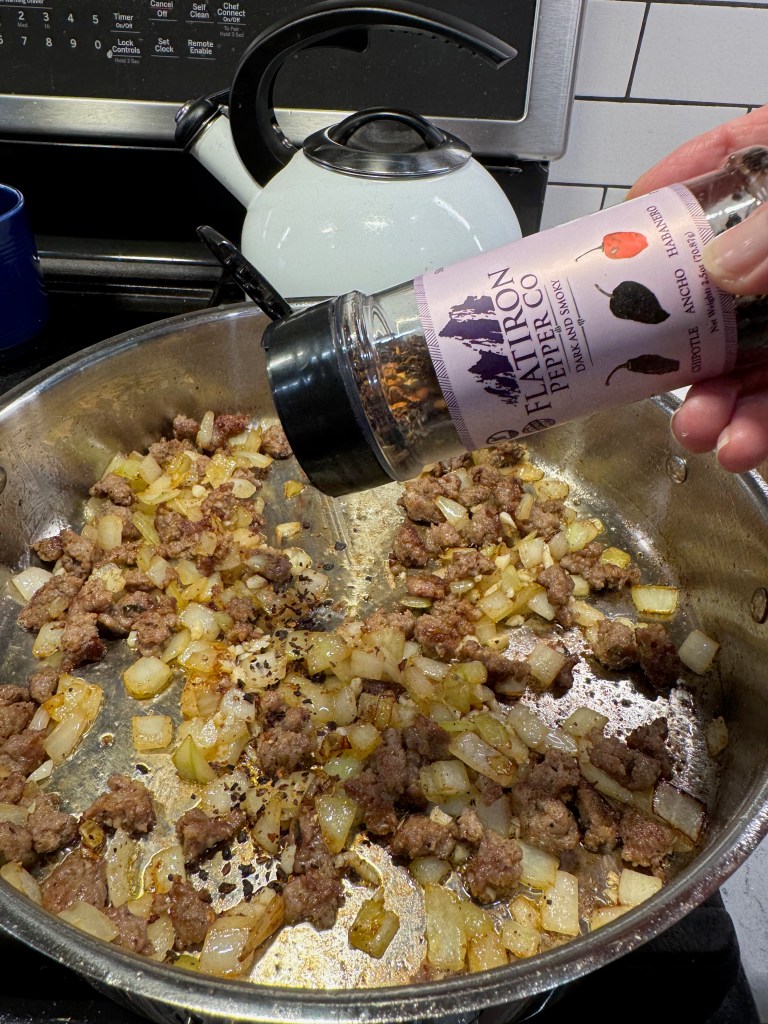
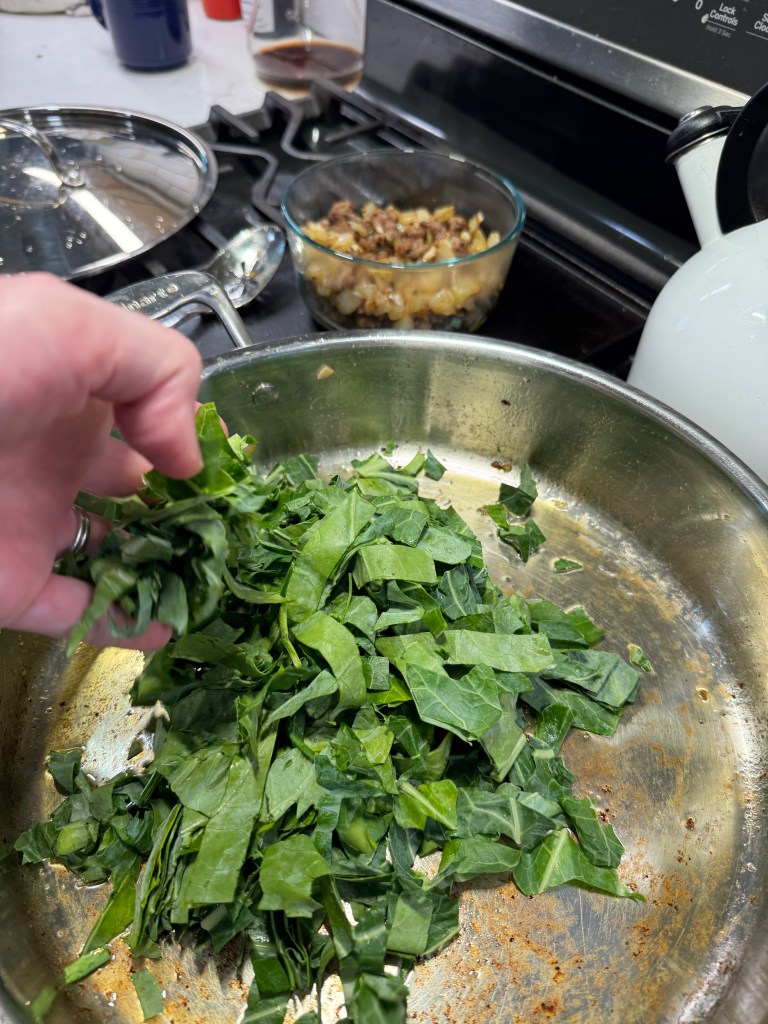
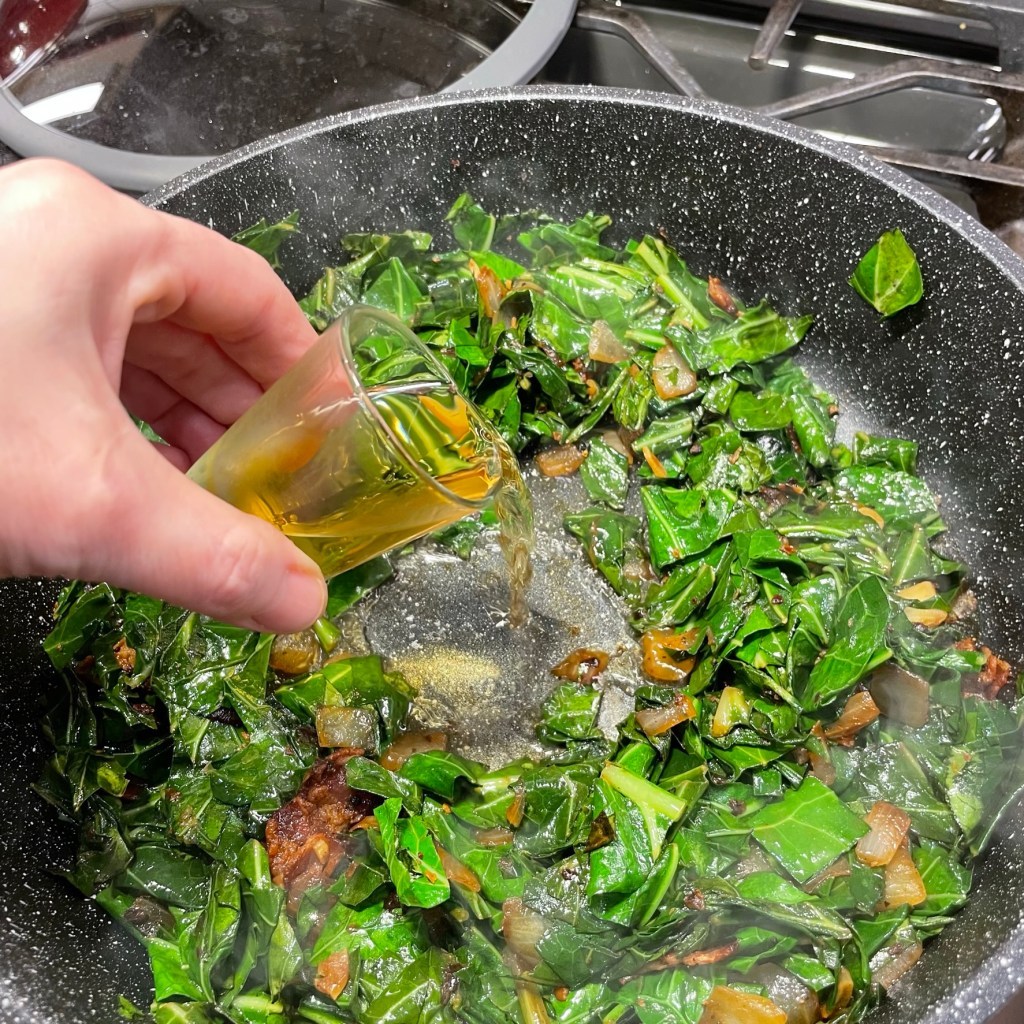
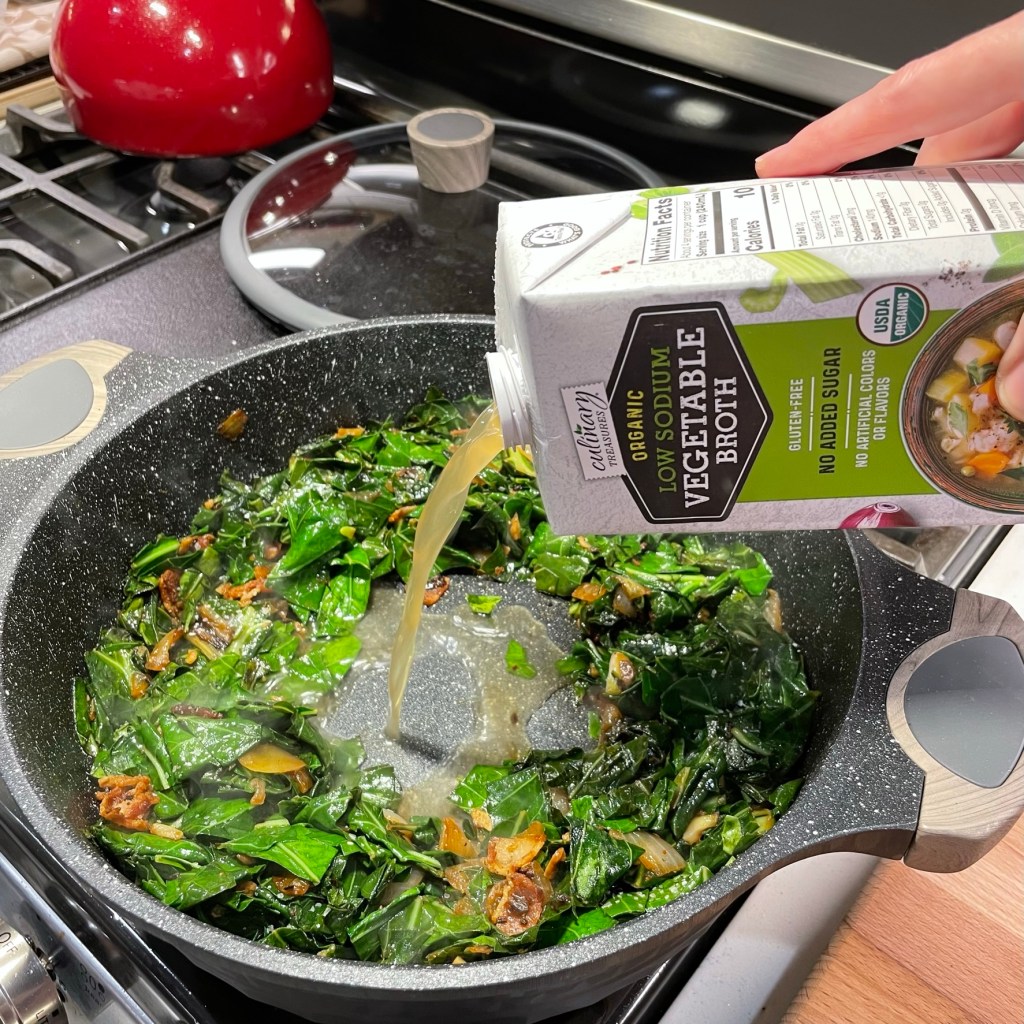
I chose the beer malt vinegar to deglaze the pot before simmering the collards to tenderness, and it was an excellent call. These greens are very fibrous, and a shot of acidity is helpful for breaking them down more quickly (plus it’s delicious). A generous splash of veggie broth finished the job with a 40 minute simmer, and then I stirred the sausage and onion mixture back in at the end, just long enough to heat the dish through.
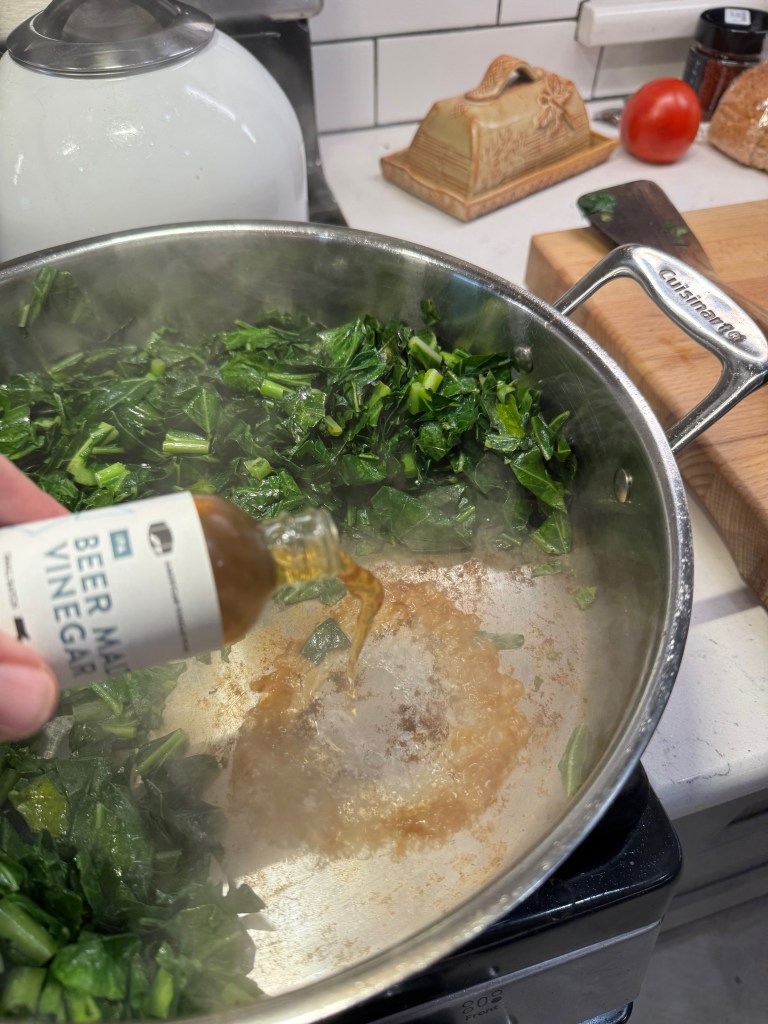
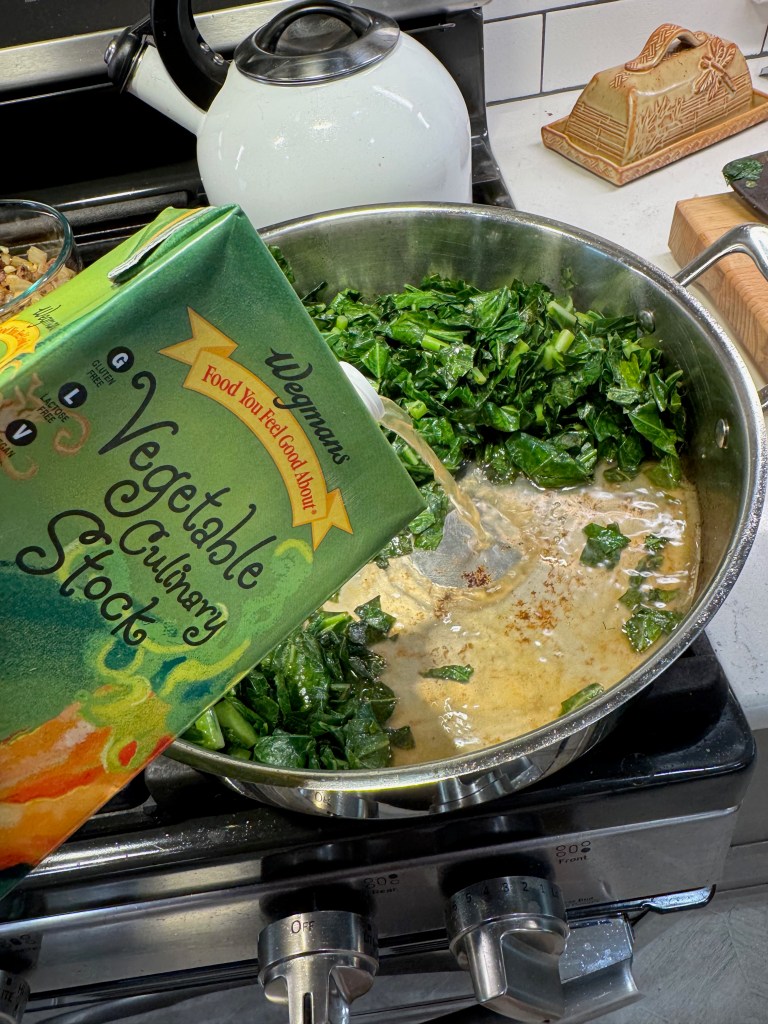
If your Thanksgiving table needs another vegetable side, and you want something easy and hearty that won’t break the bank, give collard greens a try. Below today’s click-to-print recipe card, you’ll see a few other recipe options for this powerhouse green vegetable. And if your family has a similar tradition of “breaking tradition,” let’s hear about it in the comments!

Collards with Sausage and Beer Malt Vinegar
  • Servings: About 8
  • Difficulty: Average
  • Print

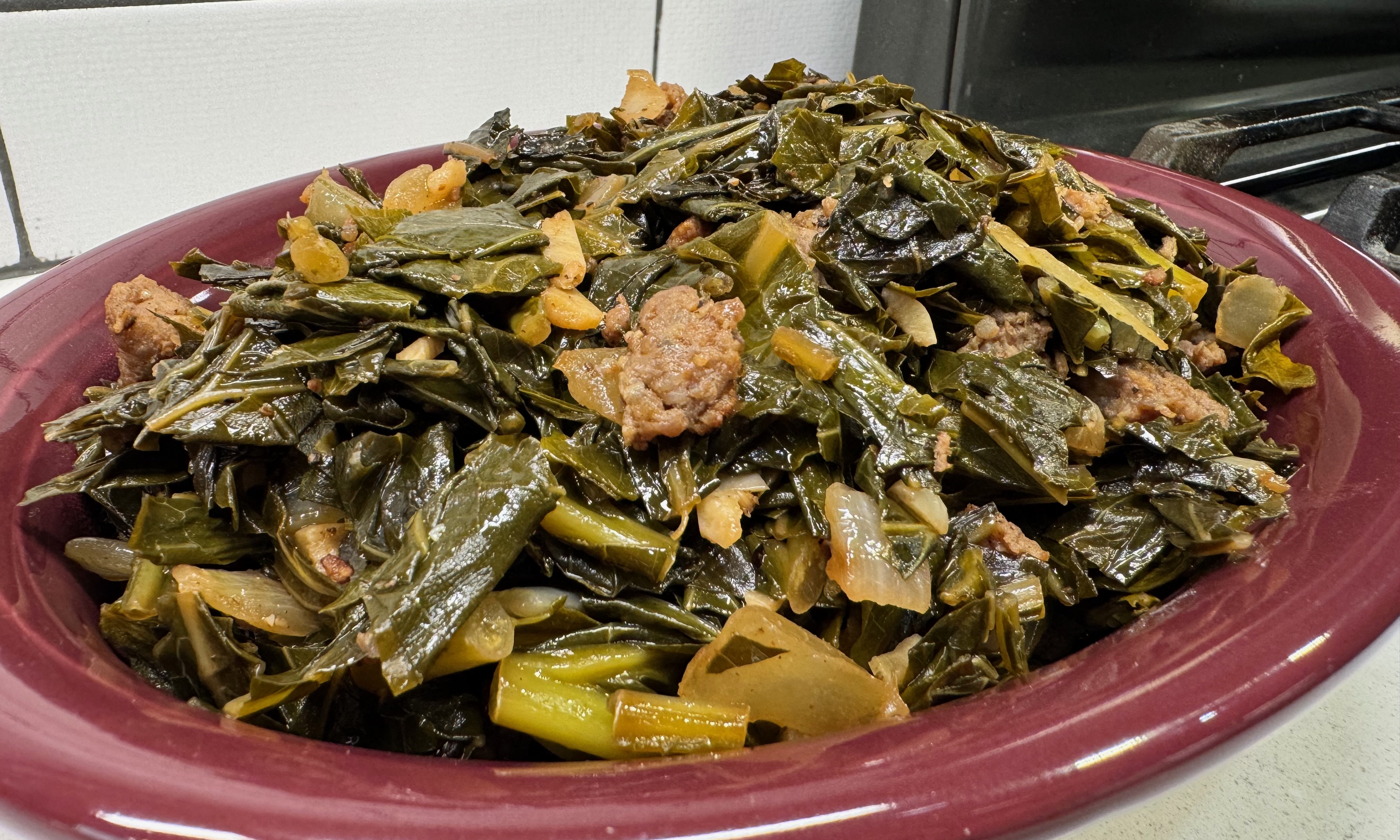
Beer malt vinegar gave my collard greens a savory twist, making them a great option for Thanksgiving.


Ingredients

  • 1/2 pound bulk breakfast-style sausage (spicy is great here)
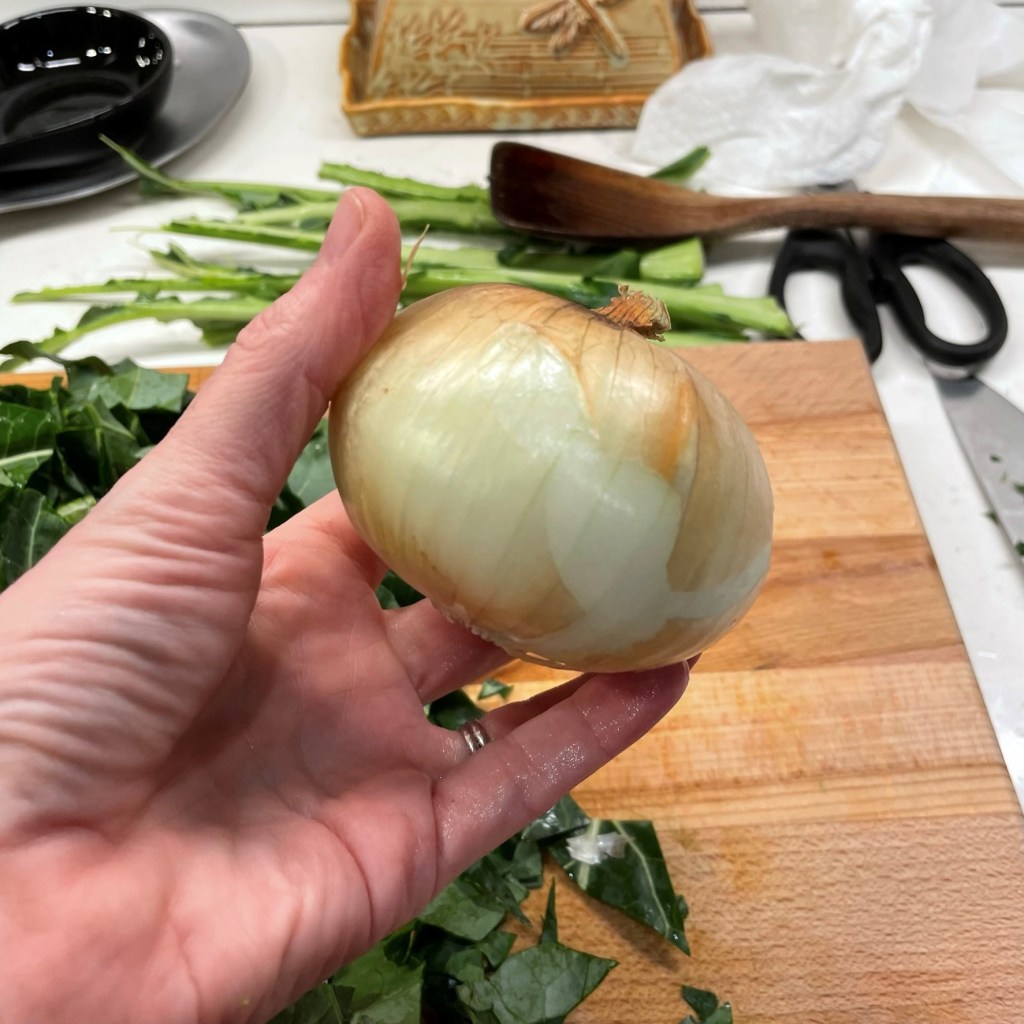
  • 1/2 large onion, chopped
  • Salt and pepper
  • 2 cloves garlic, minced
  • A few shakes of dried pepper flakes (mine were smoky chipotle)
  • 1 large bunch fresh collard greens, cleaned and trimmed (see notes)
  • 1/4 cup beer malt vinegar (see notes)
  • 1 cup low-sodium vegetable broth

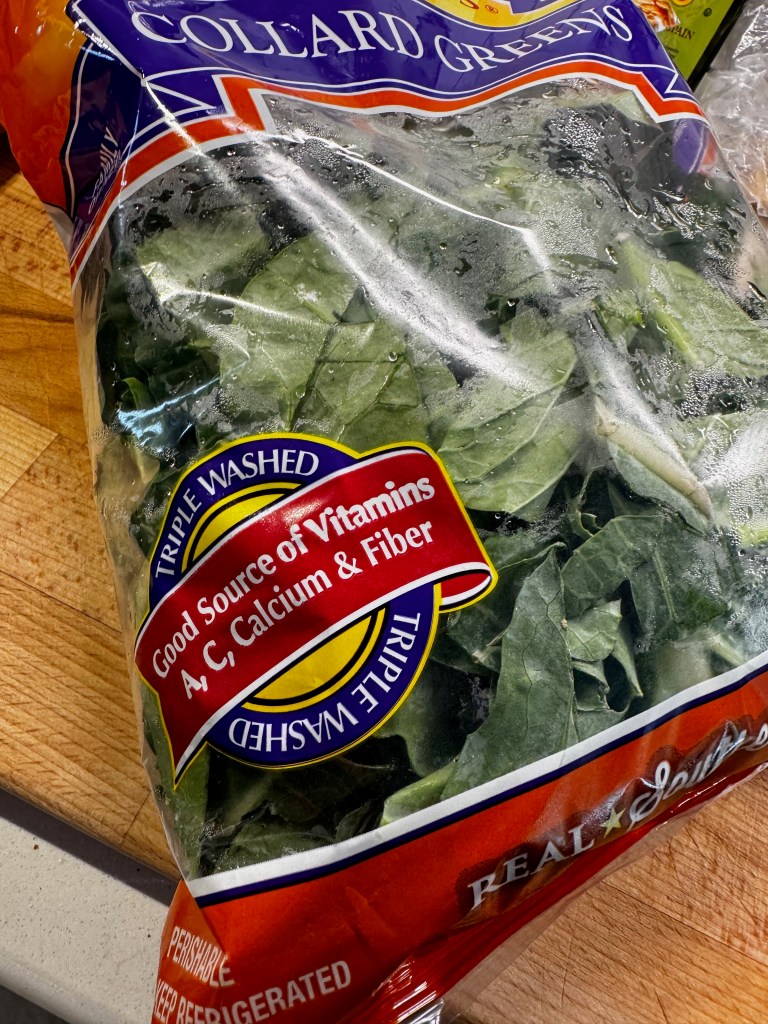
Notes: Collard greens may be available in a “pillow” type package, and those are convenient but not the same quality as fresh collards you purchase in a bunch. They will require more time cleaning and trimming, but it’s time well spent.

The beer malt vinegar I used was from American Vinegar Works, and they seem to have two different beer varieties. My vinegar was made with IPA malt, but they also have one made with porter malt that must be amazing! If you can’t get your hands on this specialty product, try using a splash each of beer and regular malt vinegar.

Directions

  1. Place a wide, shallow skillet or pot over medium heat. Add a swirl of olive oil and crumble up the sausage into the pan. Let it be for a couple of minutes before you toss it with a utensil, to allow browning to happen. Once the sausage begins to brown, add the onions and continue to cook until the meat is fully browned and the onions are tender. Add garlic and the smoky pepper seasoning. Transfer the sausage mixture to a separate bowl and set aside until after the next step.
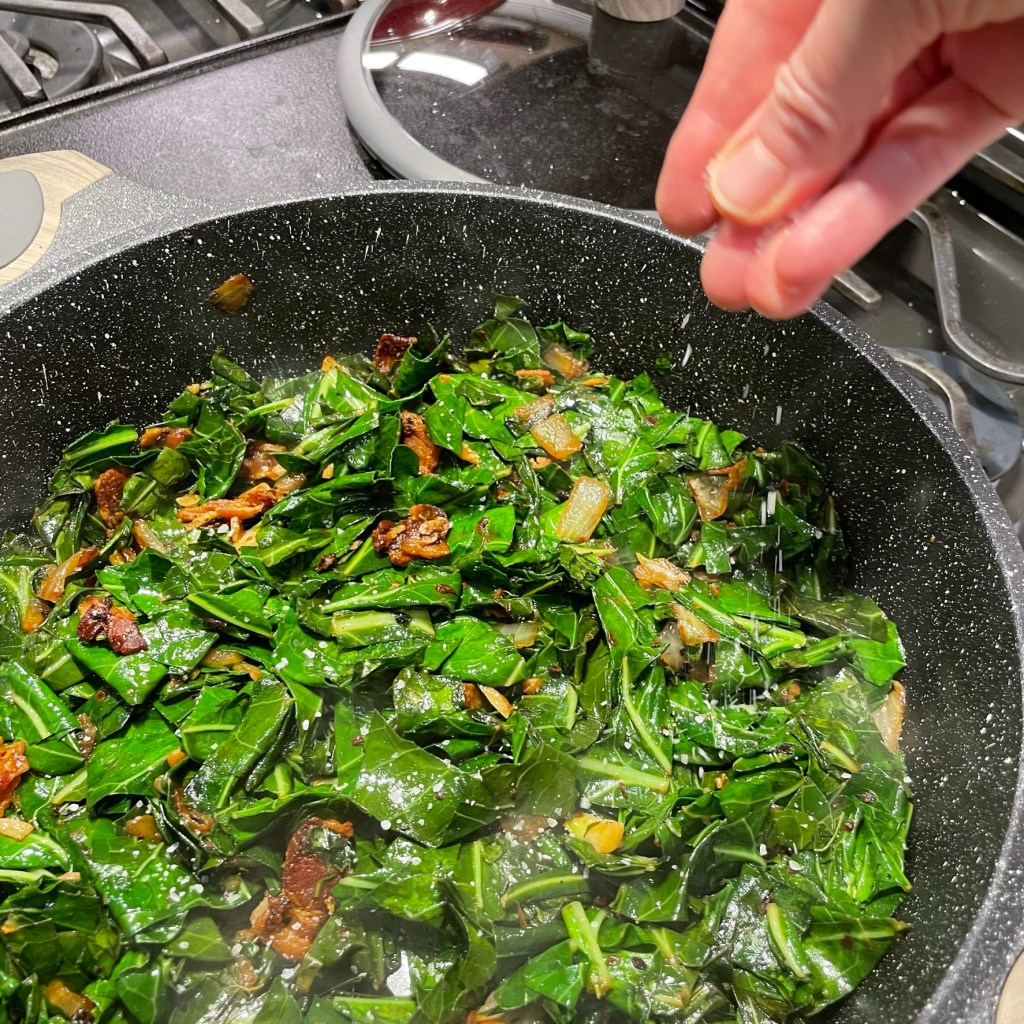
  2. Add the collard greens, a handful at a time, tossing until each is wilted before adding the next handful. Once all the greens are wilted and bright green in the pot, pour in the beer malt vinegar. Use your utensil to scrape any browned bits from the pan. Add vegetable broth and stir to blend. Reduce heat to low, cover the pot and simmer for 30 to 40 minutes, depending on how tender you like your greens.
  3. When greens are done to your liking, return the sausage and onion mixture back to the pot with the collards, just long enough to heat it through.
Fried Green Tomatoes (with Mexican Street Corn)

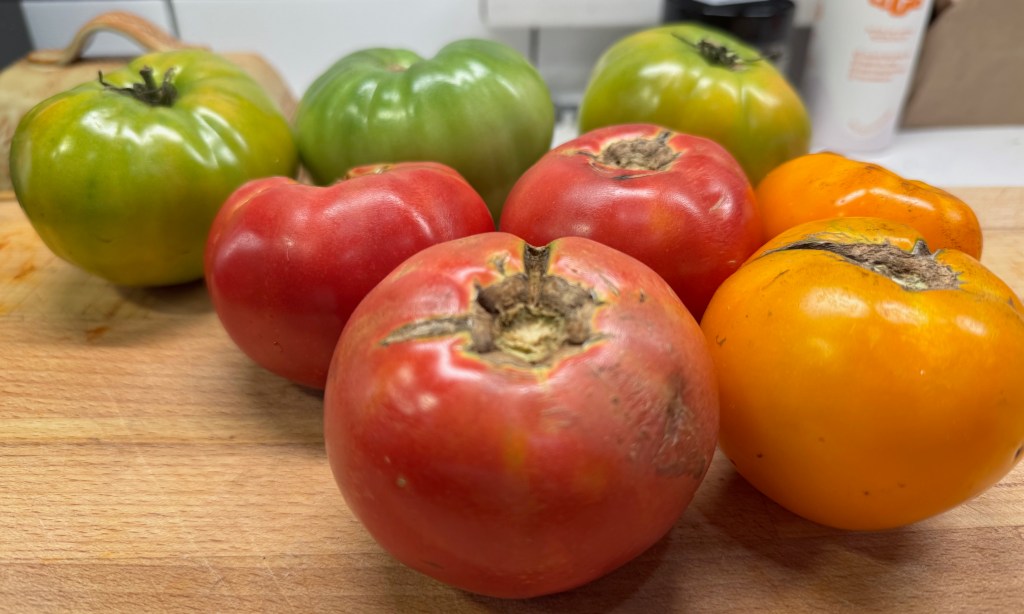
Some decisions come back to bite you. I know this because I have really missed having fresh-off-the-vine tomatoes and zucchini this year, and I’ve felt twinges of regret over having ripped out my deer-ravaged garden a couple of summers ago. I just didn’t have it in me anymore, but at least we have the farmers’ market. I recently invited a neighbor to join me at our fabulous Saturday market, and I brought home a few fresh tomatoes as well as some green ones. 


Most people assume that fried green tomatoes are a delicacy of the American South, but this is only because of the now-classic 1991 film based on the Fannie Flagg book, Fried Green Tomatoes at the Whistle Stop Cafe, which was set in 1920s Alabama. But food historians credit midwestern newspapers and Jewish cookbooks with the first published recipes for this dish.

Wherever the heck they came from, I’m grateful. And today, I’ve put a fun flavor twist on this classic, in the form of— you know it— Mexican street corn.

Didn’t I tell you there’d be more elote to come?

How do you make fried green tomatoes?

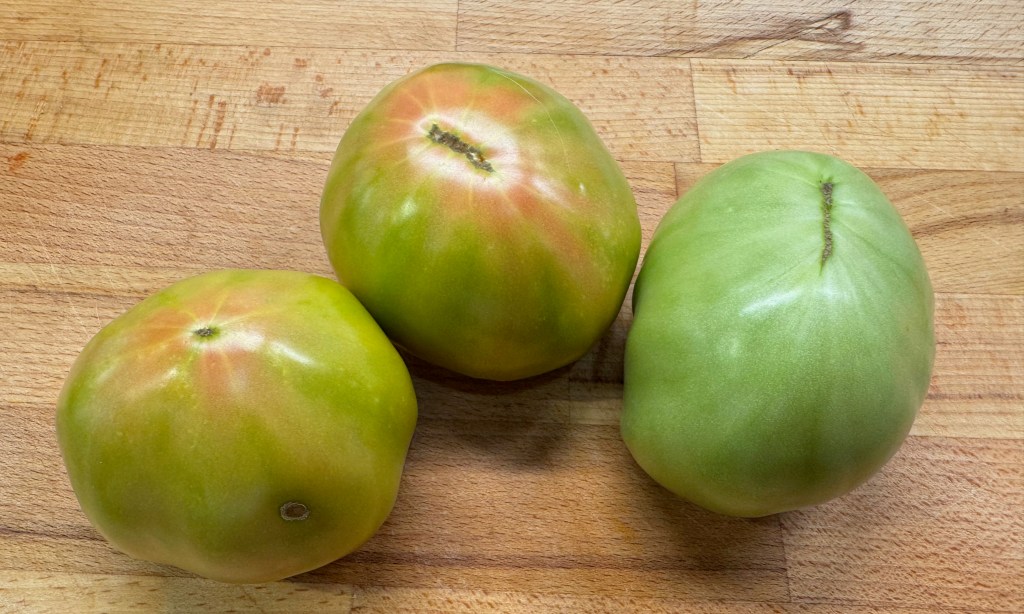
Confession time: I had never made these before, and so I was relying mostly on a recipe from Southern Living magazine as well as my own memories of having eaten fried green tomatoes at some of our local hot spots. The trick, apparently, is to use tomatoes that are truly green, freshly picked off the vine or farm stand while still firm and solid. This is necessary because frying won’t work on softer, juicier tomatoes. I bought my tomatoes on a Saturday, and by the time I got my proverbial ducks in a row on Tuesday, two of my maters were already headed toward varying shades of pink, but they worked out fine.

Still green enough, thankfully!

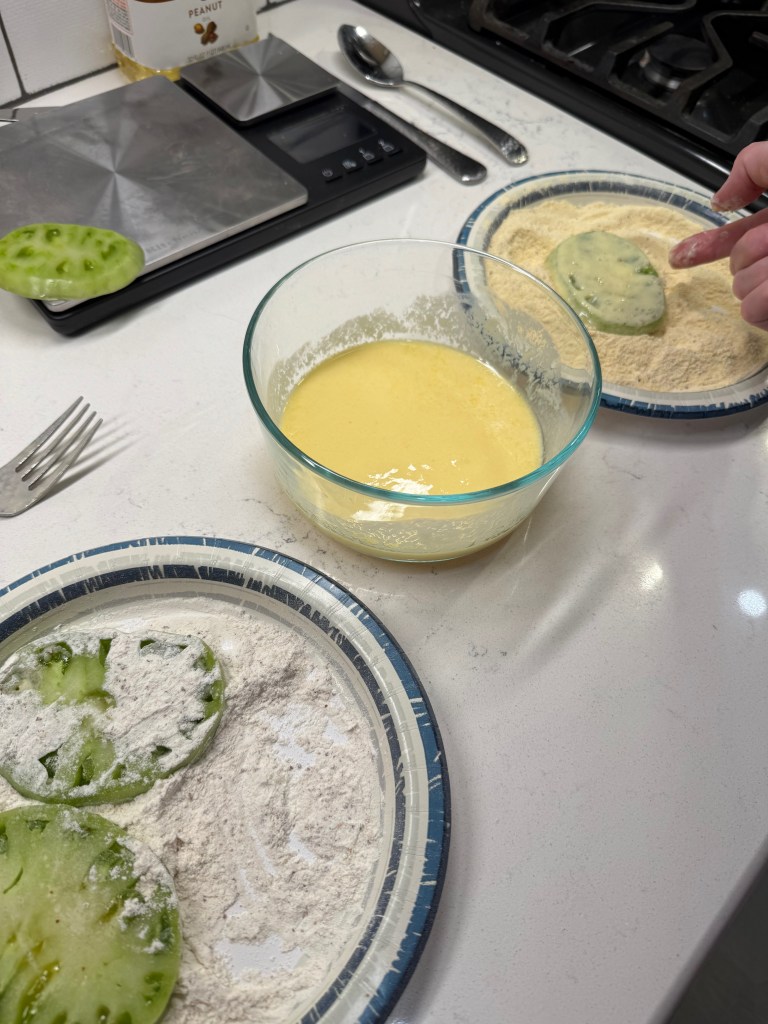
You’ll need a dredging station— that is seasoned flour, buttermilk with beaten egg and a seasoned cornmeal-flour mixture— and a hot skillet with a half-inch or so of neutral frying oil. I used peanut oil, but grapeseed, soybean, canola or safflower would be good options. Olive oil has a low smoke point and is not good for frying at this temperature. Save that for sautéing and salads.

The fun part: frying the green tomatoes!

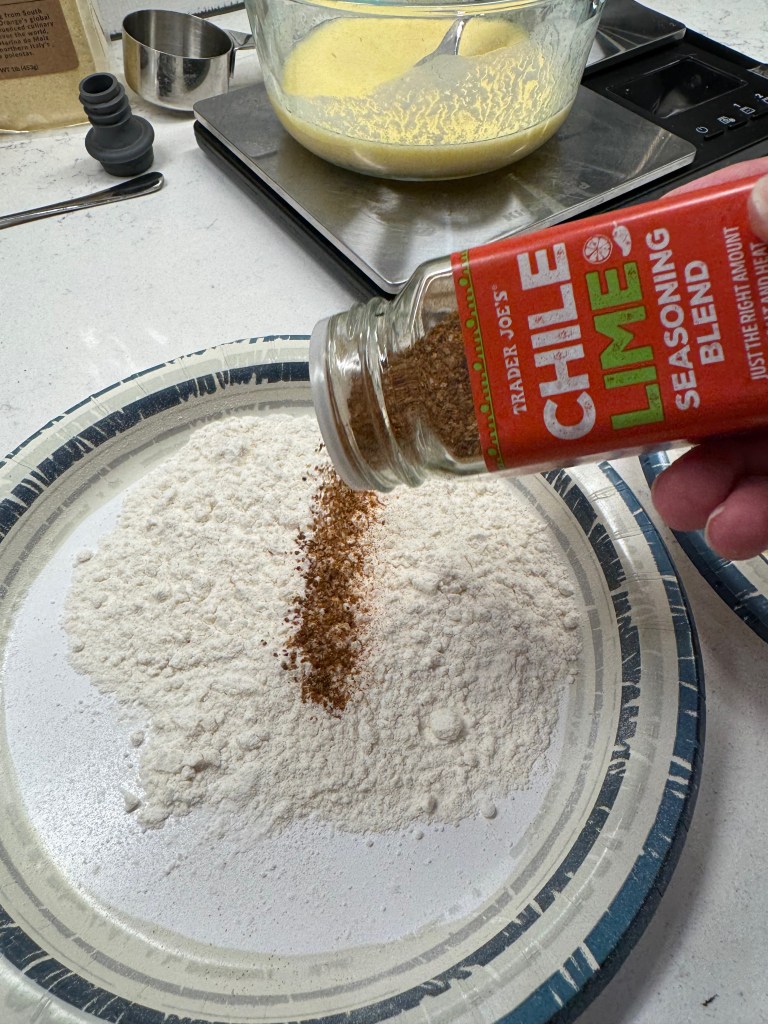
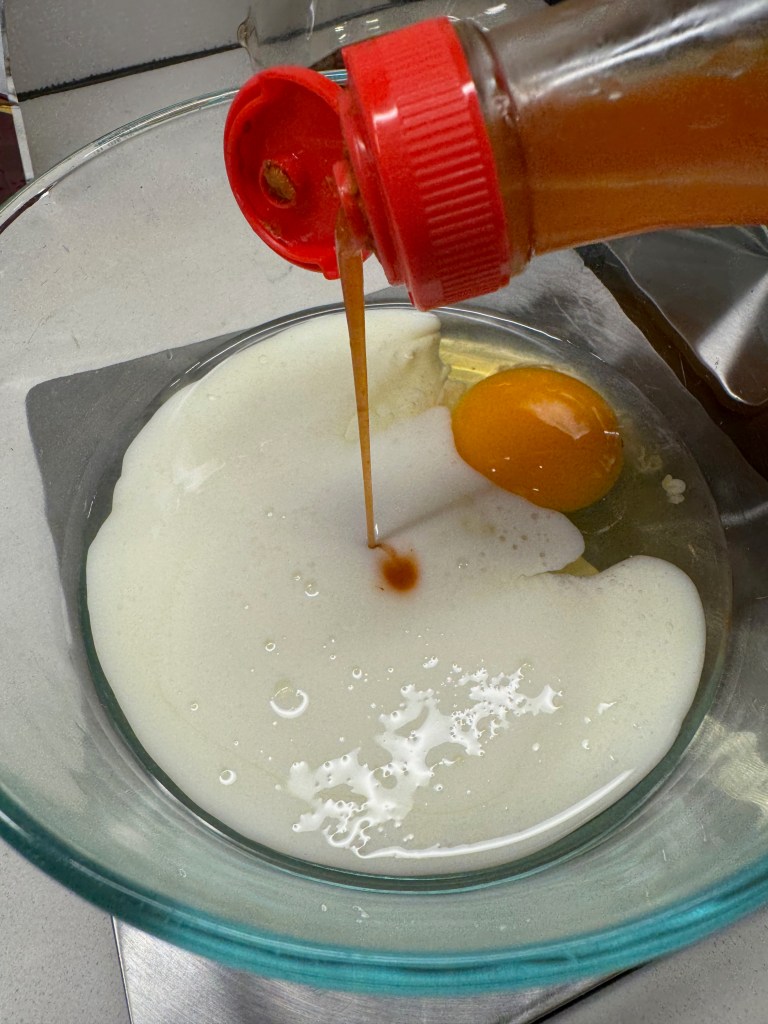
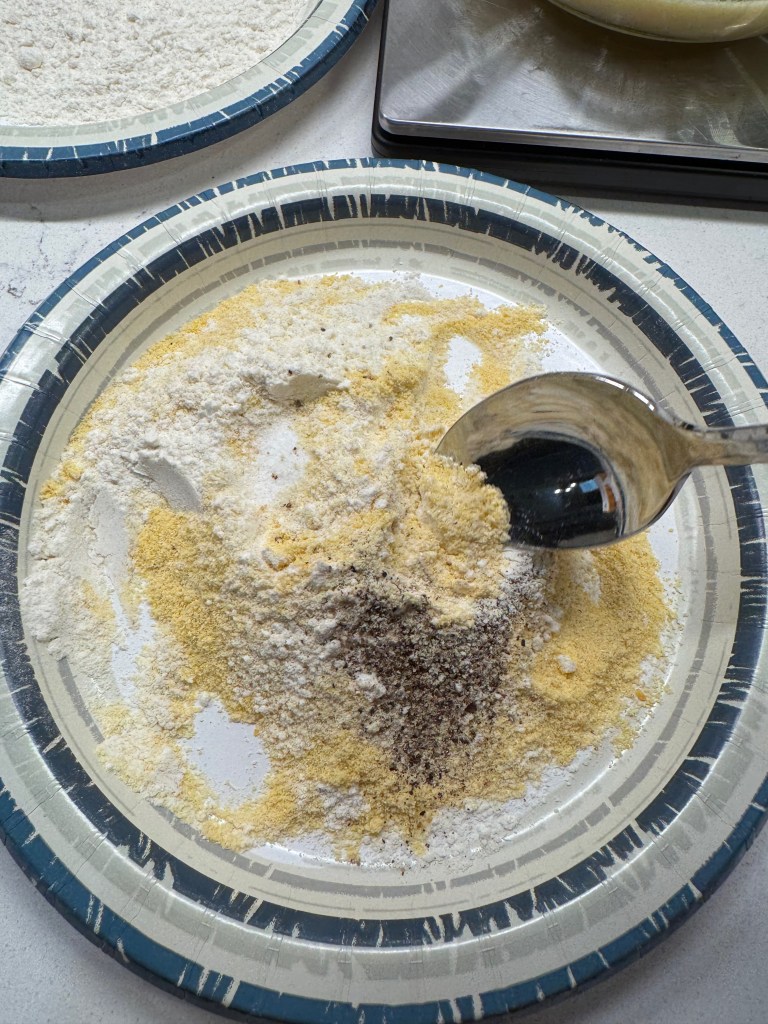
Because I wanted to marry these fried green tomatoes with Mexican street corn, I took the liberty of seasoning every layer of my dredging station. This meant a couple of dashes of local hot sauce into the buttermilk mixture and a few shakes of Trader Joe’s “Chile Lime” seasoning into both the flour and cornmeal mixtures.


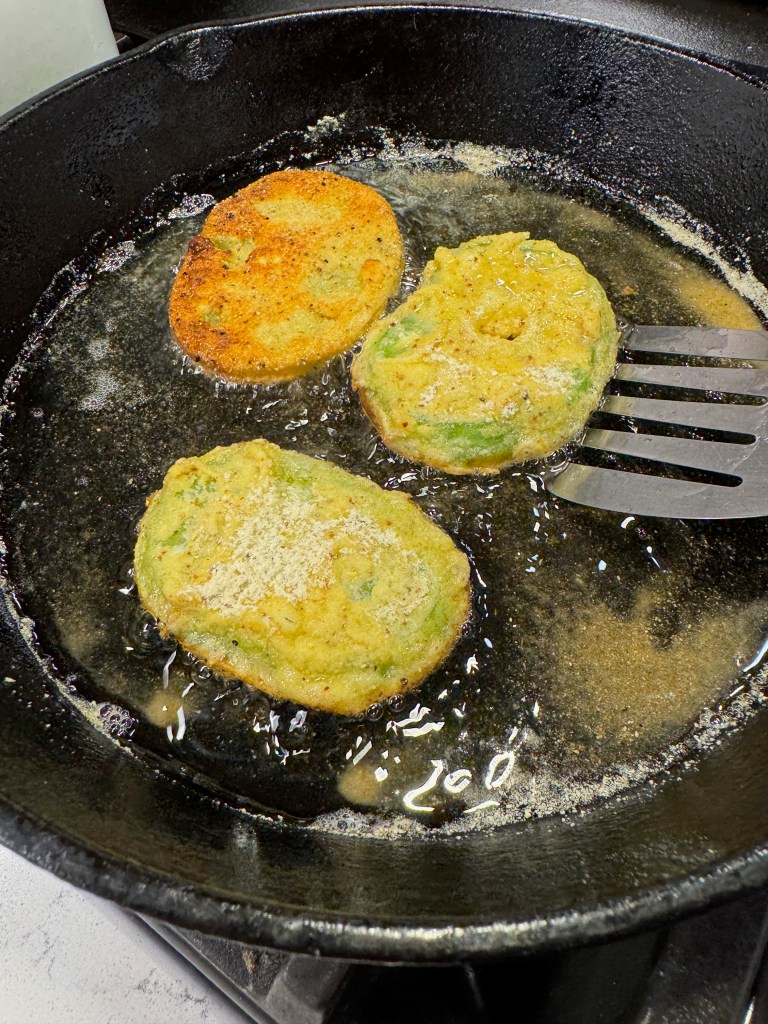
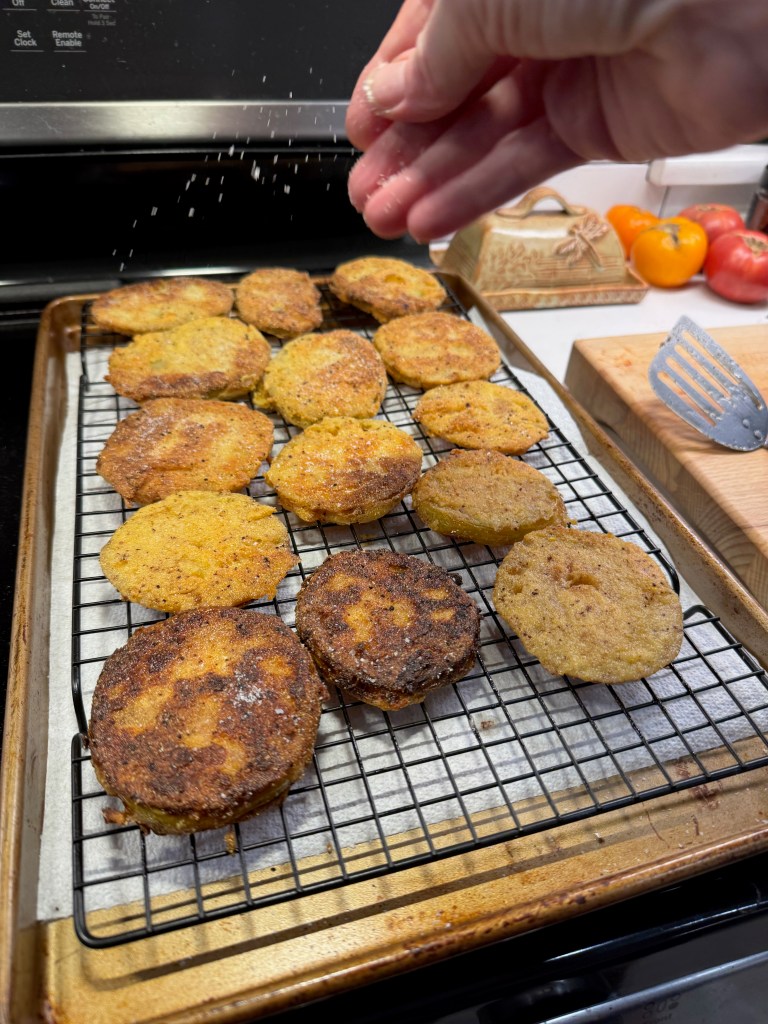
The tomatoes are sliced to approximately 1/3-inch thick, and then dredged and laid carefully into the hot oil until browned and crispy. This only takes a few minutes on each side. As with anything fried, give it a quick salt when they emerge from the pan, and keep them warm while you finish the remaining slices. 


About these Mexican street corn flavors

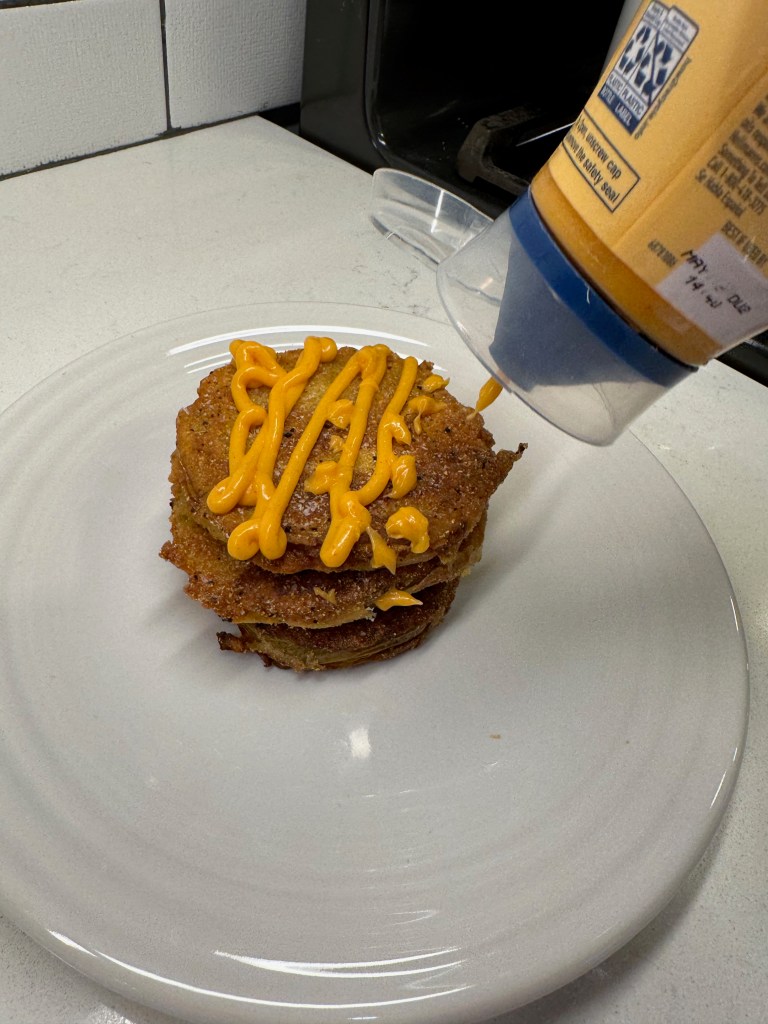
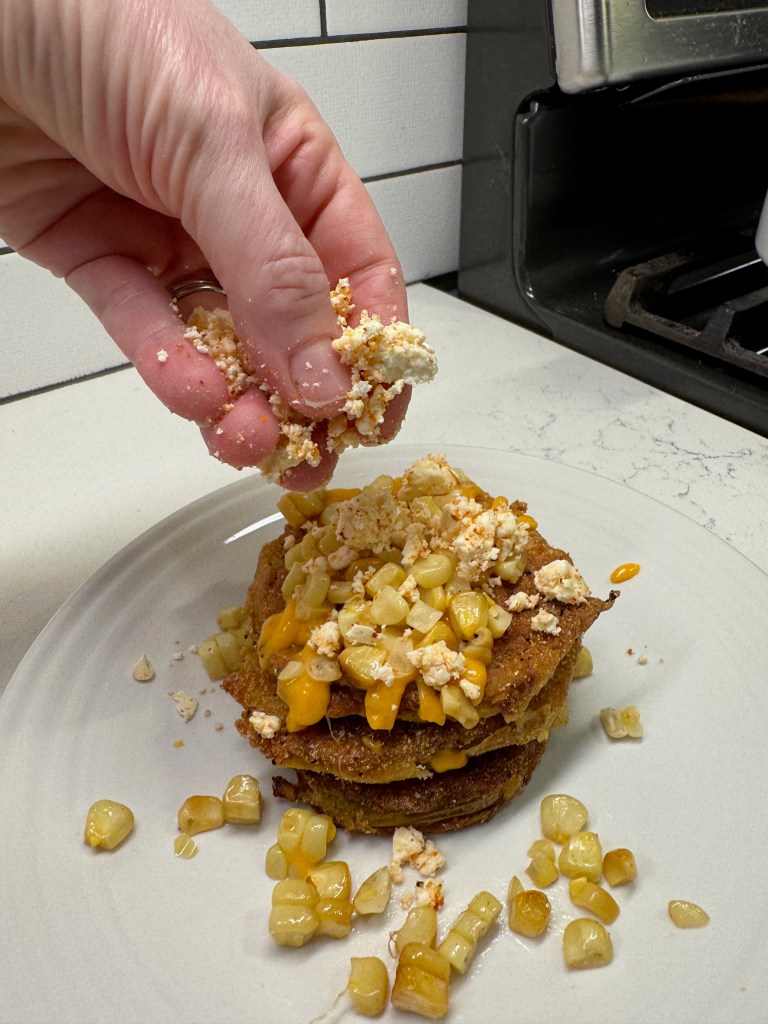
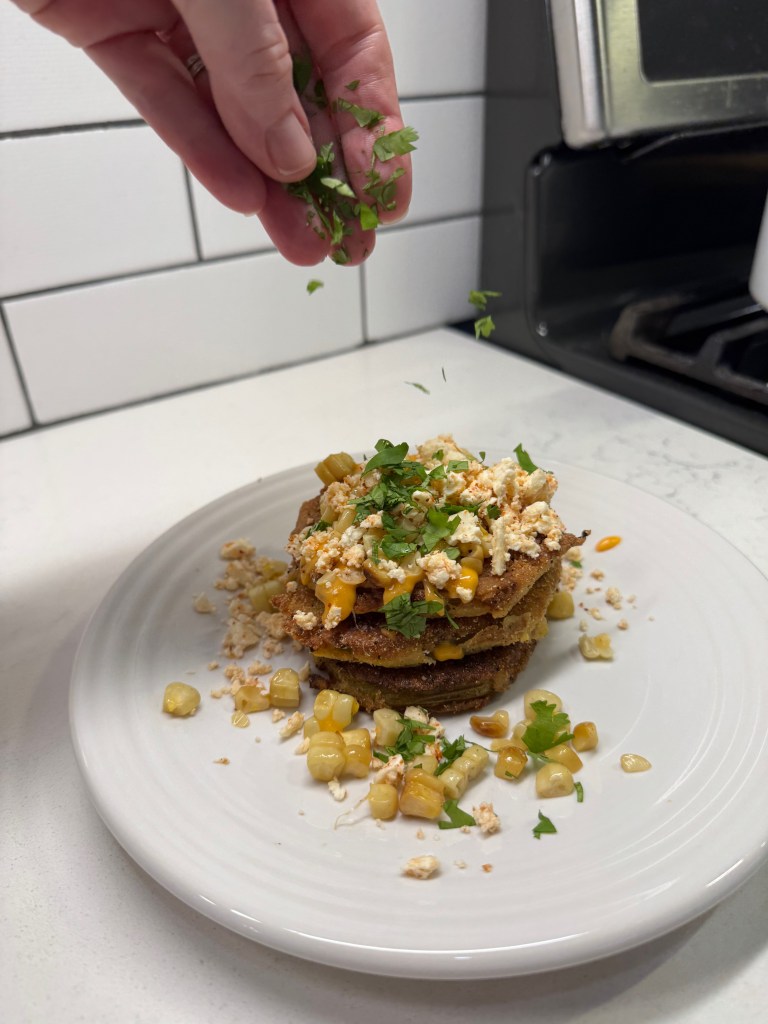
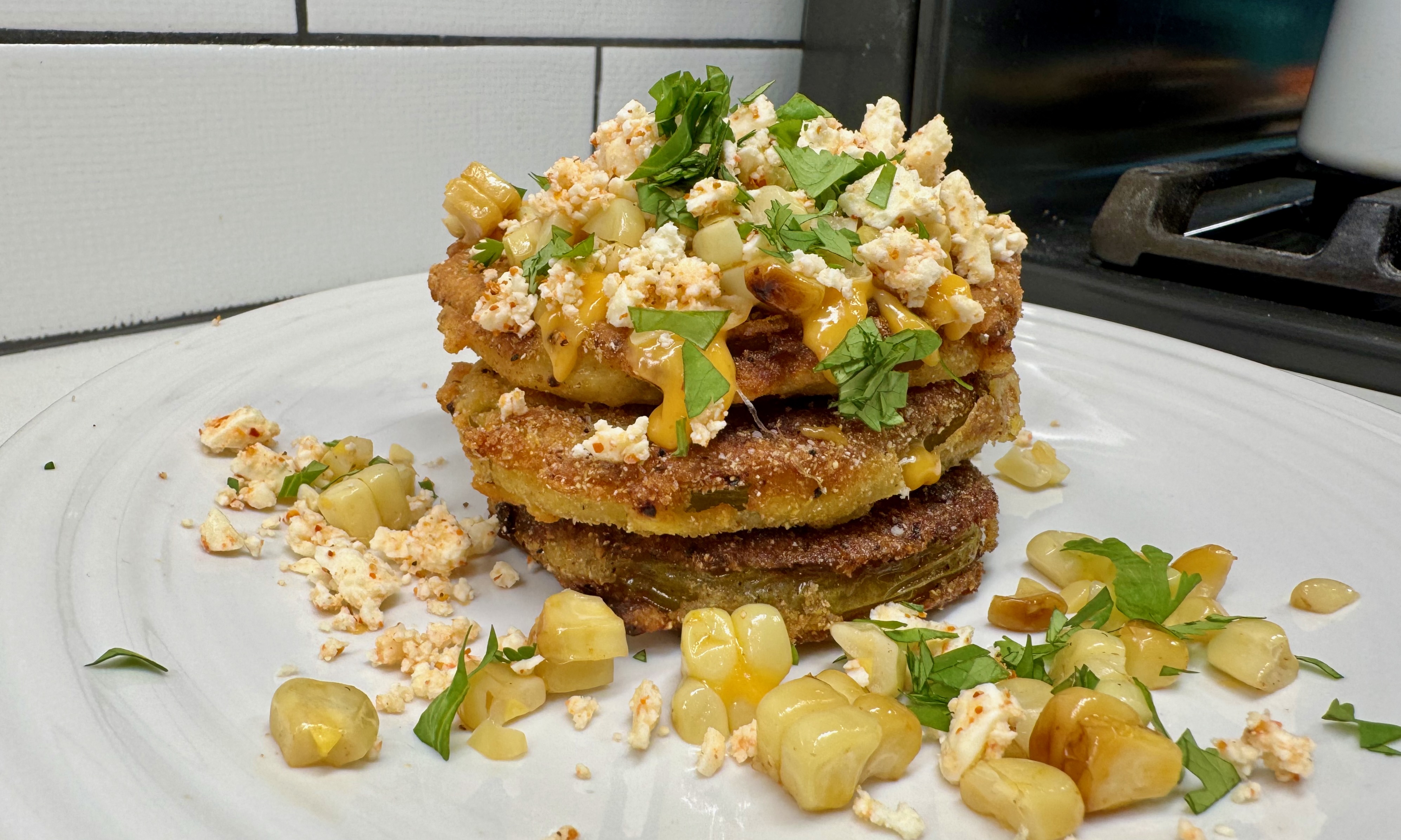
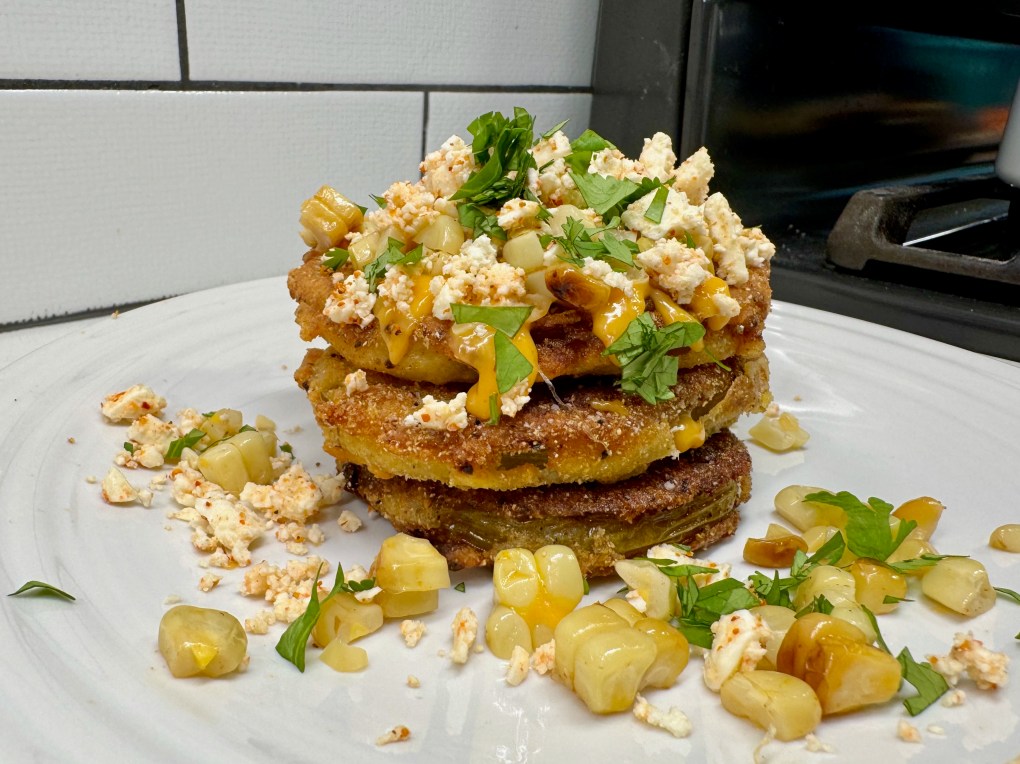
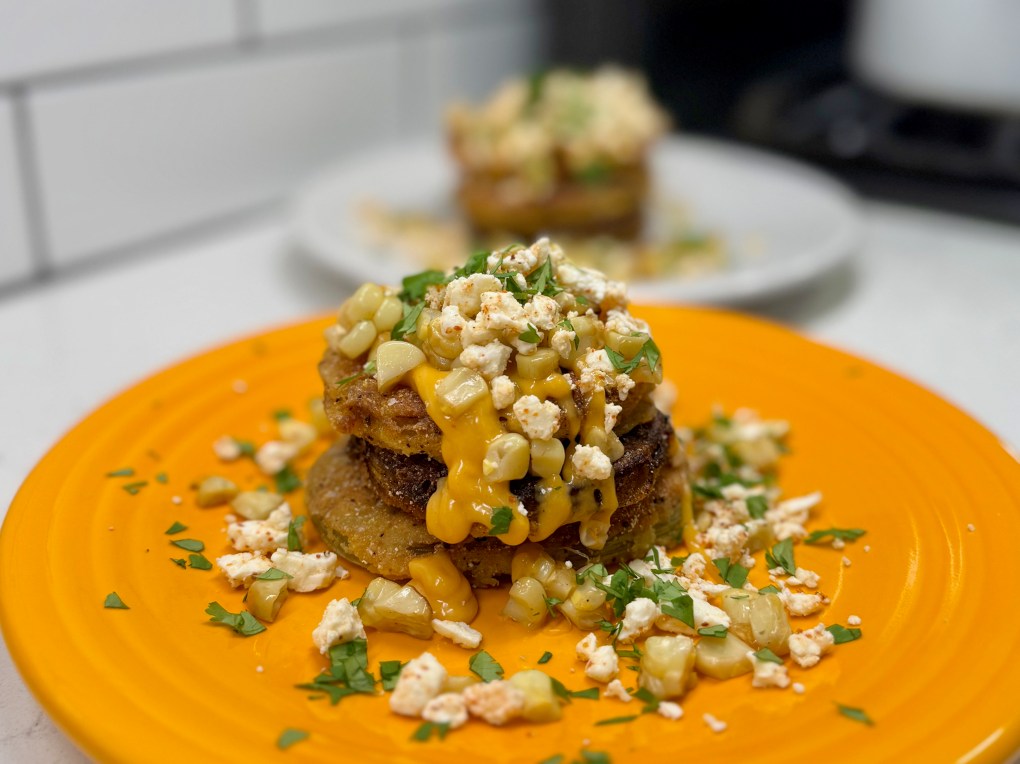
I’ve been all about elote lately, and this dish was simple to adapt, beginning with those flavor embellishments to the dredging ingredients. To seal the deal, I squeezed a few drizzles of spicy mayonnaise over the hot fried green tomatoes, and then scattered them with leftover grilled corn, some crumbled Tajin-flavored feta (my new favorite ingredient) and fresh chopped cilantro.


The marriage with street corn felt like it was meant to be, and the grilled corn played so well with the cornmeal crust on the tender green tomatoes, which were delightfully tangy underneath that spicy mayo and salty feta. My intention was for this to be a side dish, but they were so filling, we found them to be perfect on their own and called it a meal. 

Fried Green Tomatoes (with Mexican Street Corn)

  • Servings: About 4
  • Difficulty: Average
  • Print

These tasty treats are bringing a south-of-the-border flavor to what has become a staple appetizer in the American South. A great way to use any green tomatoes that linger on the vines this fall.


Ingredients

  • 3 good size very green fresh tomatoes
  • 1 cup all-purpose flour, divided (see directions)
  • 1 cup fine cornmeal
  • 1 tsp. salt
  • 1/2 tsp. black pepper
  • Several shakes chili powder or Trader Joe’s “Chile Lime” seasoning
  • 1/2 cup real buttermilk (thick is best)
  • 1 large egg
  • Bottled hot sauce to taste
  • Neutral cooking oil for frying
  • 1/4 cup spicy mayonnaise
  • Kernels of one grilled corn on the cob
  • 1/2 cup Tajin-flavored feta (or make your own, or use traditional cotija)
  • Fresh cilantro leaves, chopped (for garnish)

Notes: It’s crucial that you select very firm green tomatoes. Juicy tomatoes will not yield a good result. Arrange your ingredients before you begin, as the cooking moves quickly.

Directions

  1. Slice tomatoes cross-wise into roughly 1/3-inch slices and pat dry with paper towels. Heat enough oil in a cast iron or electric skillet between 1/4-inch and 1/2-inch deep. The oil should be 375° F; use a thermometer if you have one, or consider cooking a test tomato and adjust the temperature as needed.
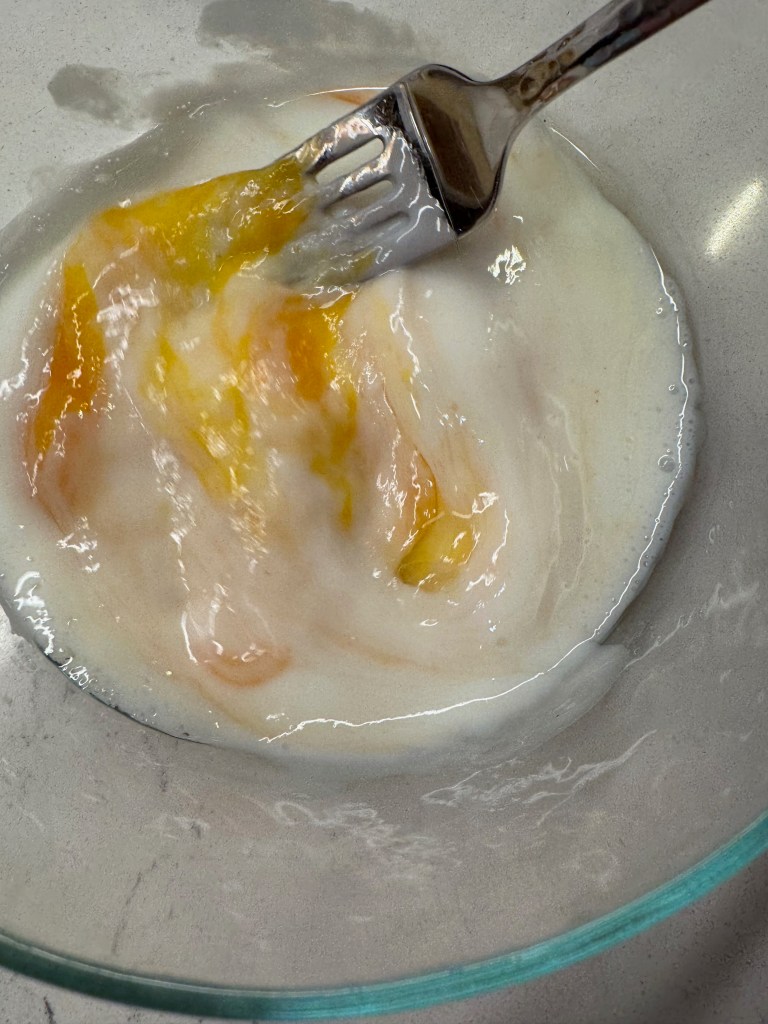
  2. Combine buttermilk and egg in a shallow bowl, and beat in a few shakes of bottled hot sauce. Place 1/2 cup of the flour on a deep paper plate. Combine the rest with the cornmeal on a second plate, and season both plates with a few shakes of chile lime seasoning, plus the salt and pepper.
  3. Moving quickly, dredge the tomato slices in the flour, then dip into the buttermilk mixture and finally into the seasoned cornmeal mixture. Shake off excess breading and carefully lay the slices into the hot oil. Cook for about three minutes, until you can see the edges turning deep golden color. Use a spatula together with a fork to turn the slices over (this will help you avoid splashing the hot oil). Cook the second side two to three minutes, then carefully transfer to the wire rack placed over a baking sheet. Season tomatoes with salt promptly, and repeat with remaining tomatoes.
  4. To dress them up Mexican street corn-style, stack three tomatoes onto a plate and drizzle spicy mayonnaise over the top, then follow that with the grilled corn, feta and cilantro.


Savory Pimento Cheese Puffs

Every year for our annual Kentucky Derby gathering, my husband and I include pimento cheese in some form or fashion. It’s a classic Southern thing. But you know that I get bored making the same things over and over, and finding new ways to incorporate the classics is what makes me (and my guests) happy.

In past years, Les has contributed with crowd-pleasing homemade pimento cheese, and our table has also been graced by our spicy pimento cheese deviled eggs, which are so addictive, and an unexpected twist. This year, pimento cheese made its mark in these soft and savory cookies that pay homage to yet another Southern finger food, the “cheese straw.” 

A Southern party feels incomplete without pimento cheese.

If you’ve ever attended a wedding reception, bridal shower, funeral or other family gathering in the American South, you’ve probably seen some squiggly little cheese cracker-looking things served alongside the sweet tea and ham biscuits. They resemble pieces of straw, having been squeezed out onto a baking sheet through the star plate of a cookie press. Cheese straws are crispy and wispy, made with three simple ingredients— butter, finely shredded cheddar and flour, though some folks add cayenne to shake things up. These were my inspiration for the pimento cheese puffs I’m sharing today.

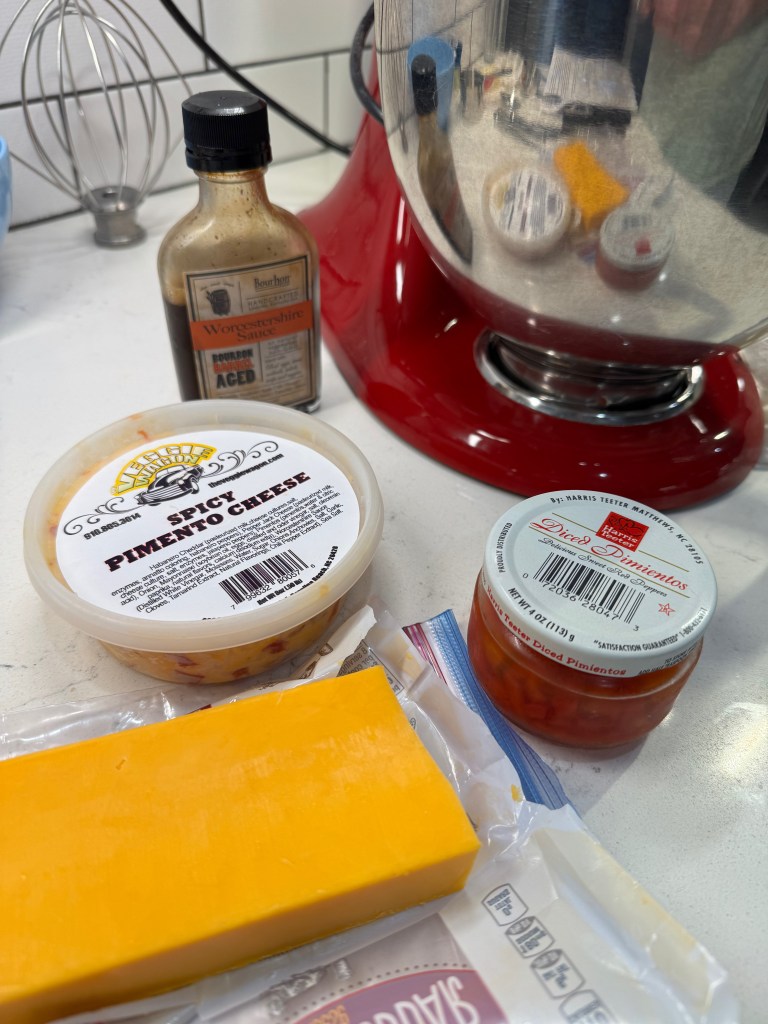
The idea for subbing in pimento cheese struck me when Les and I were packing up to leave after a weekend at our favorite North Carolina beach a couple of weeks ago. We had hardly touched the tub of spicy pimento cheese that we’d bought for seaside snacking, and my mind was on the Derby Day party that was coming up the next weekend. I thought, why couldn’t I do an ingredient swap? Mayo has enough fat to sub for butter, but also a bit of vinegar and of course, egg yolks, and I imagined that the resulting “cookies” might be a bit softer than a typical cheese straw. I was correct.

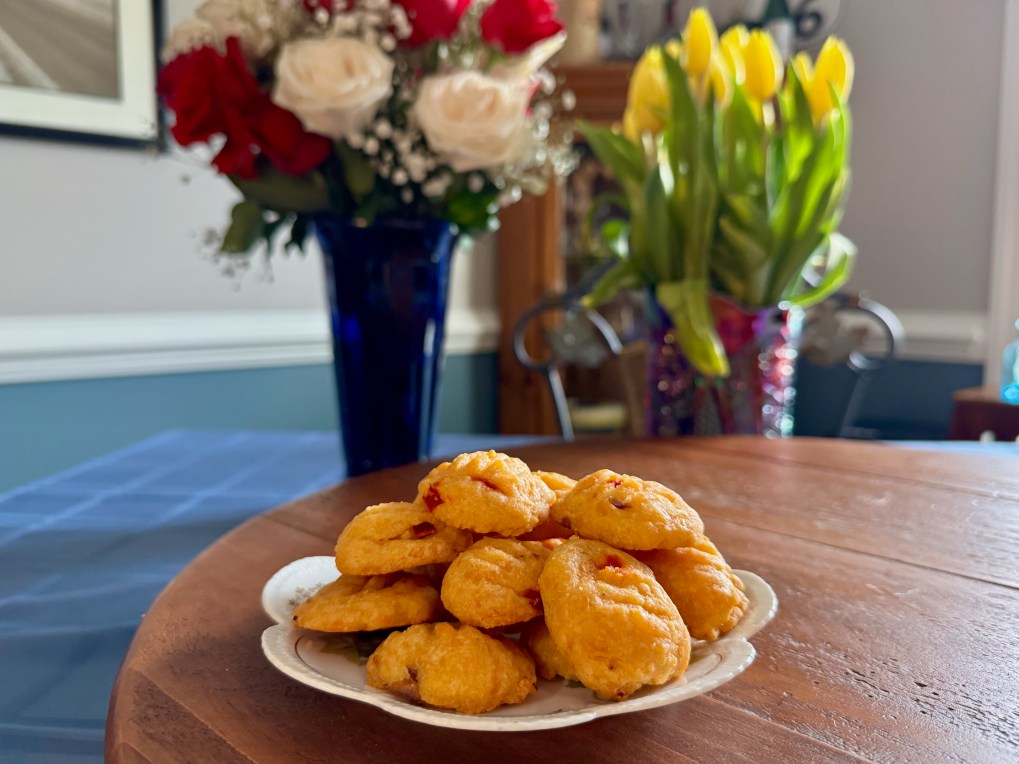
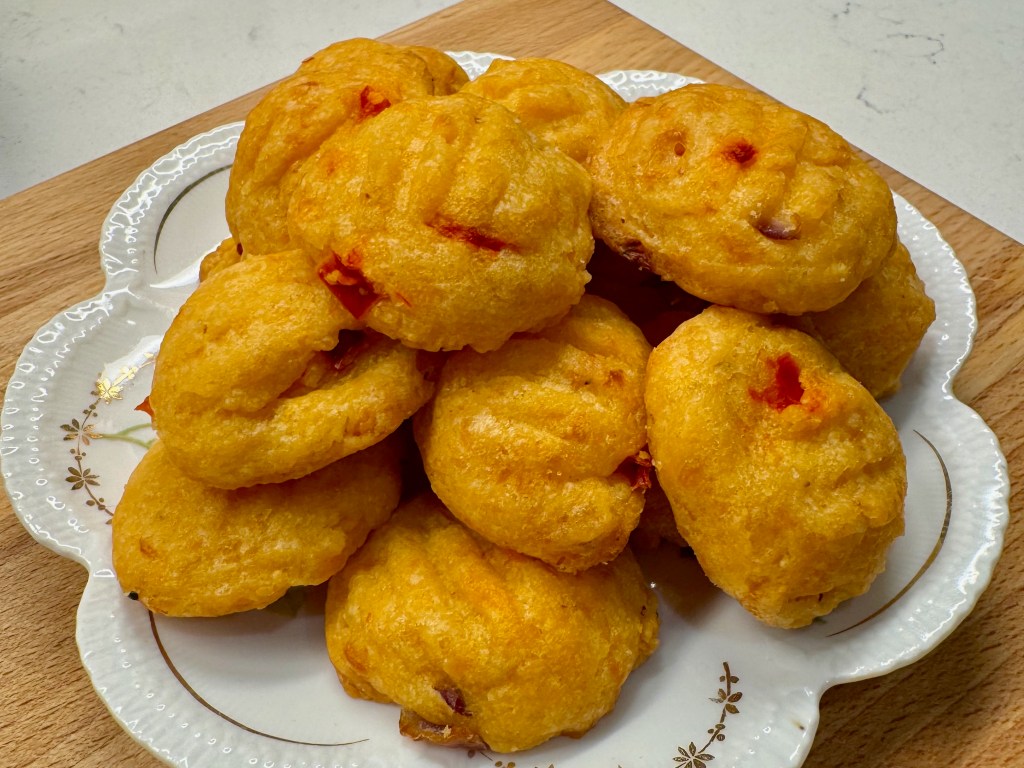
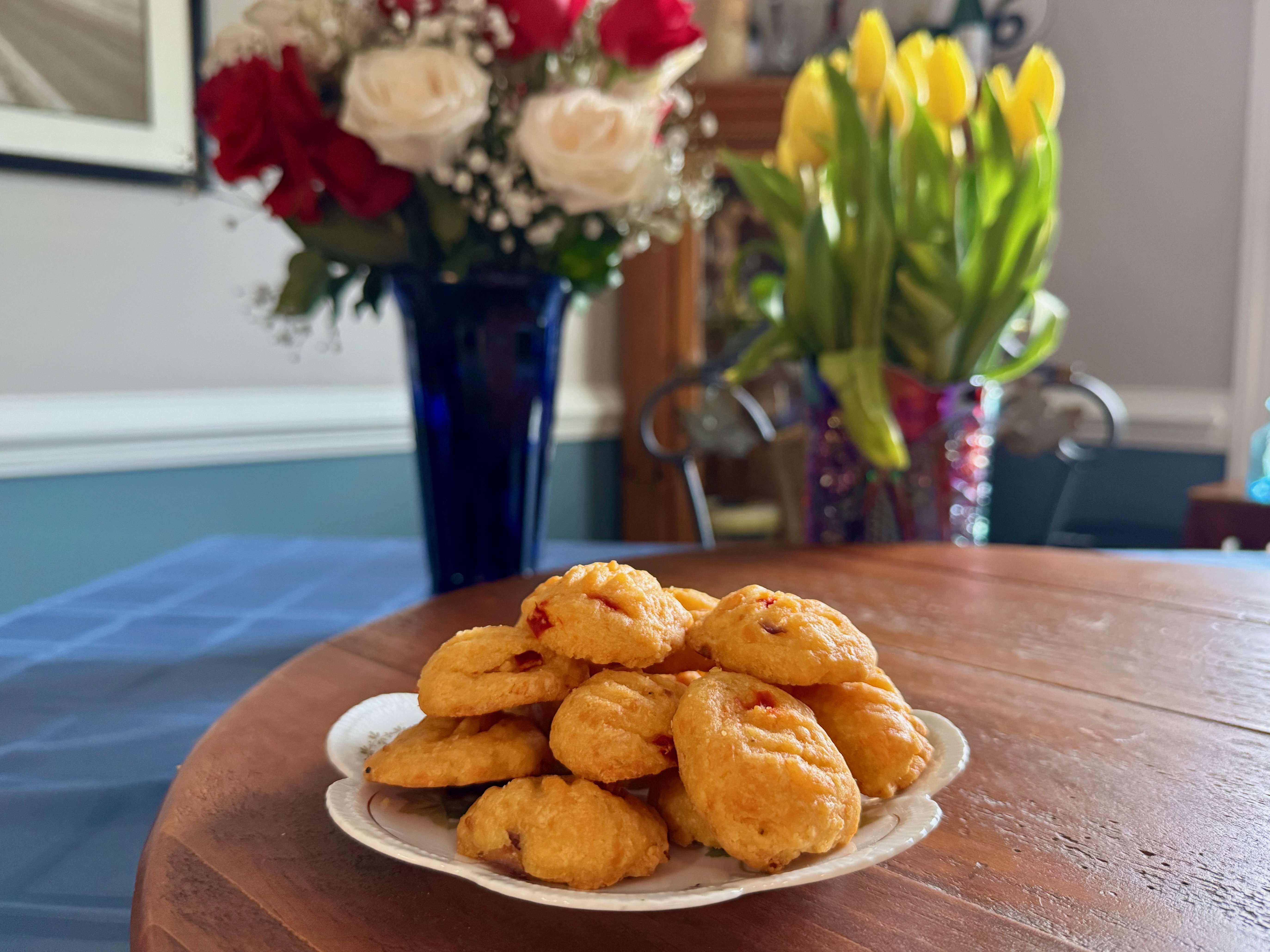
I loved how soft and spongy these cookies turned out!

These were delicate and puffy, but also deeply flavorful from the ingredients in the pimento cheese, including a few finely diced onions. I highly recommend this twist for any “share-a-snack” event that you may have coming up this summer!

How to make pimento cheese puffs

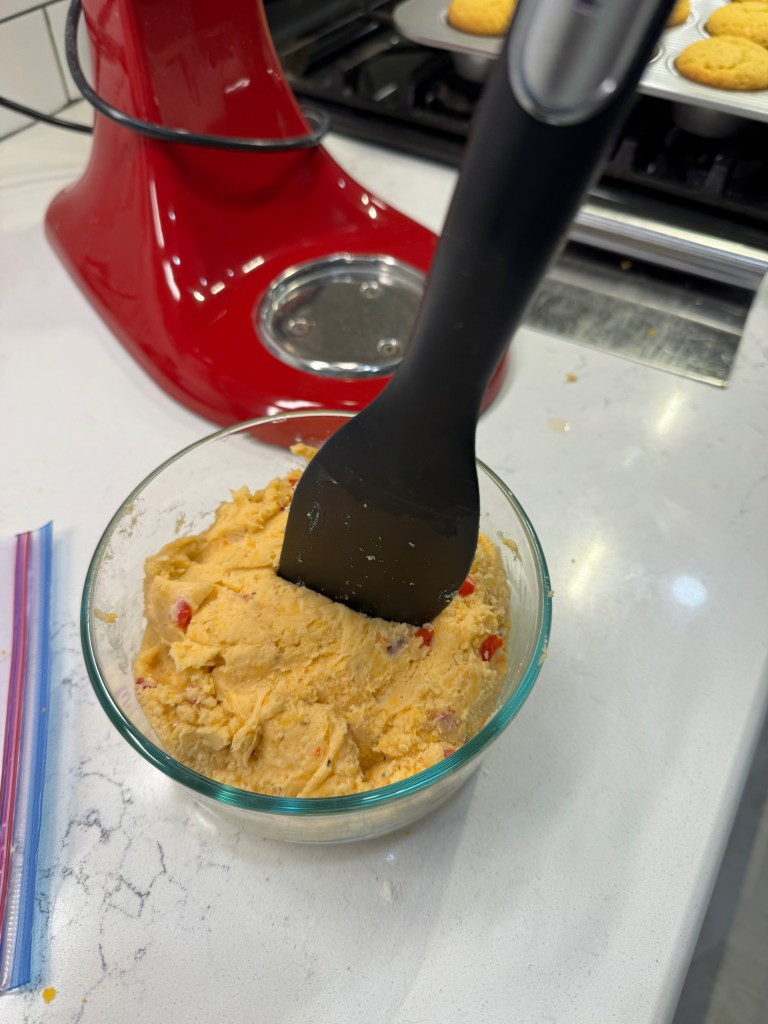
I’m going to be intentionally vague about the exact amounts of each ingredient I used because the consistency of the pimento cheese can vary widely from one brand to another. I’ll focus instead on the ideal outcome of the “dough,” which should be dense, heavy on cheese, with just enough of the mayonnaise and/or butter to bind the mixture together. For the size of our Derby Day crowd, I mixed in additional sharp cheddar, and I figured that I may as well also mix in some extra pimentos for good measure.


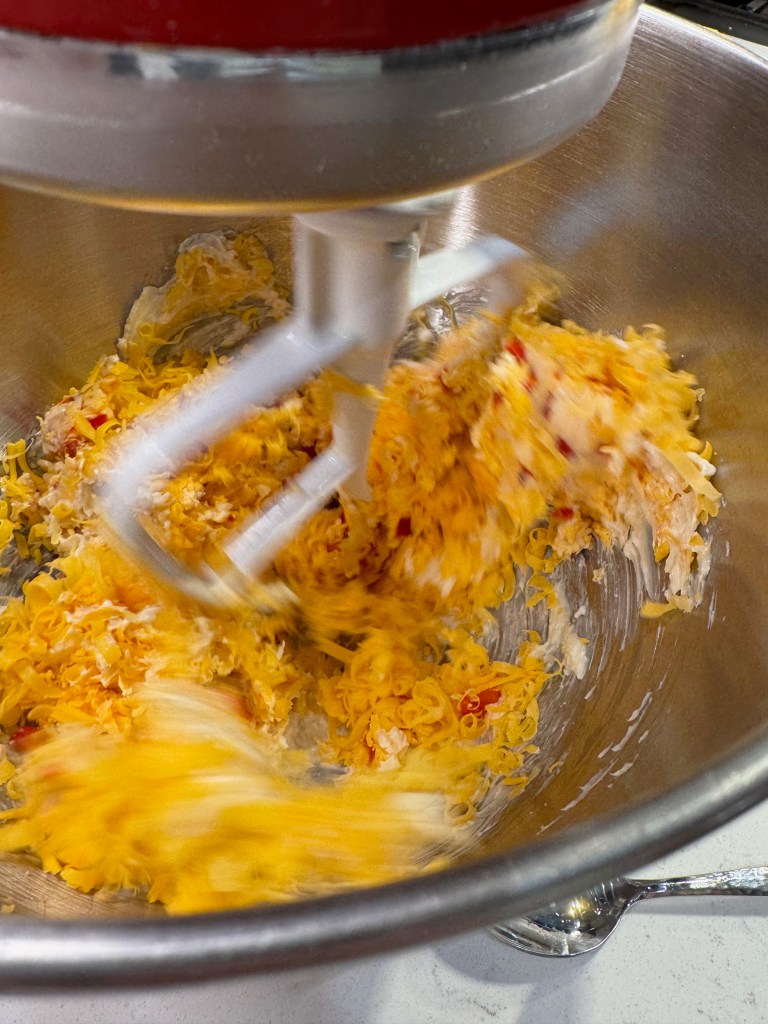
The spicy pimento cheese we bought at the beach was low on mayonnaise (just the way we like it), and for this reason I added a dollop of mayo to my mixing bowl, along with a couple tablespoons of softened salted butter plus a splash of Worcestershire sauce. The pimento cheese, additional cheddar and pimentos went into the mixing bowl and I blended it until it was evenly combined. Next came the flour, and I followed the rule of thumb from my Kentucky bourbon pecan cheese biscuits here, blending in about one cup of all-purpose flour for the combined volume of the other ingredients. Again, give or take as needed, depending on the overall consistency of your mixture. The dough should be firm enough so that you can stand a spoon or spatula straight up in the bowl. Chill the mixture in the fridge for a few hours or overnight before baking.


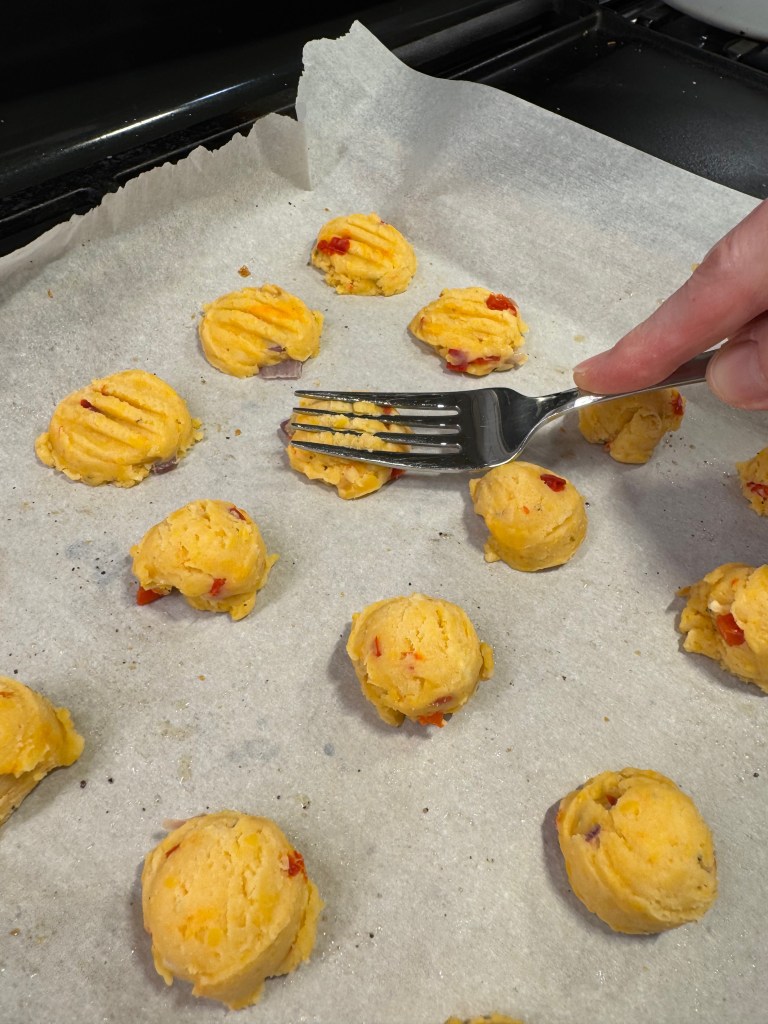
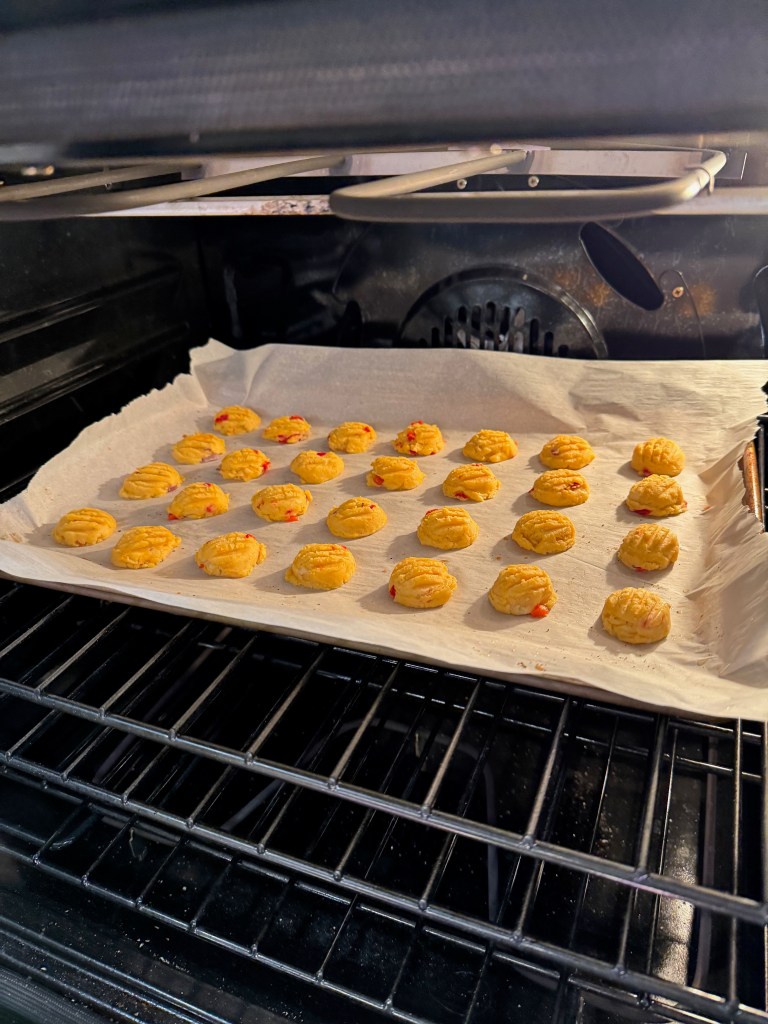
My teaspoon-size cookie scoop made quick work of this task, resulting in puffs that measured about an inch and a half across— perfect for our appetizer spread. I have ordered several sizes of these quality scoops from King Arthur Baking Company, and I find that I reach for them for many things other than cookies. 

For texture, I lightly pressed each cookie with a fork before baking, though it didn’t have much impact as the cookies puffed a lot as they baked. The cookies are best served the same day, but any leftovers may be stored at room temperature in a covered container.

Savory Pimento Cheese Puffs

  • Servings: About 12
  • Difficulty: Easy
  • Print

Any self-respecting Southern hostess will find a way to include pimento cheese on the party table. These soft and flavorful bites were my creation for our latest Kentucky Derby bash, and they turned out terrific.


Ingredients

  • A dollop of mayonnaise
  • 2 Tbsp. softened salted butter
  • 2 tsp. Worcestershire sauce
  • About one cup prepared pimento cheese* (see notes)
  • Up to one cup finely shredded cheddar cheese (sharp or extra sharp for best flavor)
  • 2 Tbsp. jarred pimentos, drained and patted dry
  • 1 cup all-purpose flour

Note: My recipe was made with a low-mayonnaise pimento cheese. Some prepared spreads are very loose and almost runny, and I do not recommend that consistency.

Directions

  1. In the bowl of a stand mixer, stir together the mayonnaise, butter and Worcestershire sauce.
  2. Add pimento cheese, additional cheddar and pimentos, and mix with beater blade until evenly combined.
  3. Add the flour, half at a time, blending with the beater blade just until incorporated. Chill dough in the refrigerator for at least a few hours (up to overnight) before baking.
  4. Heat oven to 350° F, with rack in center position. Line a baking sheet with parchment paper or a silicone mat.
  5. Portion cheese cookie dough onto the parchment in rounded teaspoons. Press lightly with a fork. Bake for 18 to 20 minutes, until cookies are puffy and slightly browned on the edges. Transfer right away to a cooling rack.


Cider-braised Collards with Sweet Potatoes

The race is on toward the biggest food holiday of the year, and I couldn’t be more ready! It’s an even-numbered year and at our house, that means my husband, Les, will take the reins on the Thanksgiving turkey. This agreement to alternate years for the bird was literally written into our wedding vows because we both enjoy it so much, and on “his” years, I have more time to turn attention to the sides. All this month, I’ll be sharing a few new ways to enjoy some classic Thanksgiving side dishes. 

This first one is dedicated to my readers in the South, where collard greens reign supreme— on Thanksgiving or any other family meal. When I first learned to cook collards about five years ago, I didn’t imagine that there could be so many variations, but it seems that every time I try a new addition or different braising liquid, I find another favorite. This is the first time I’ve considered putting a seasonal spin on collards, and I’m so glad I did.

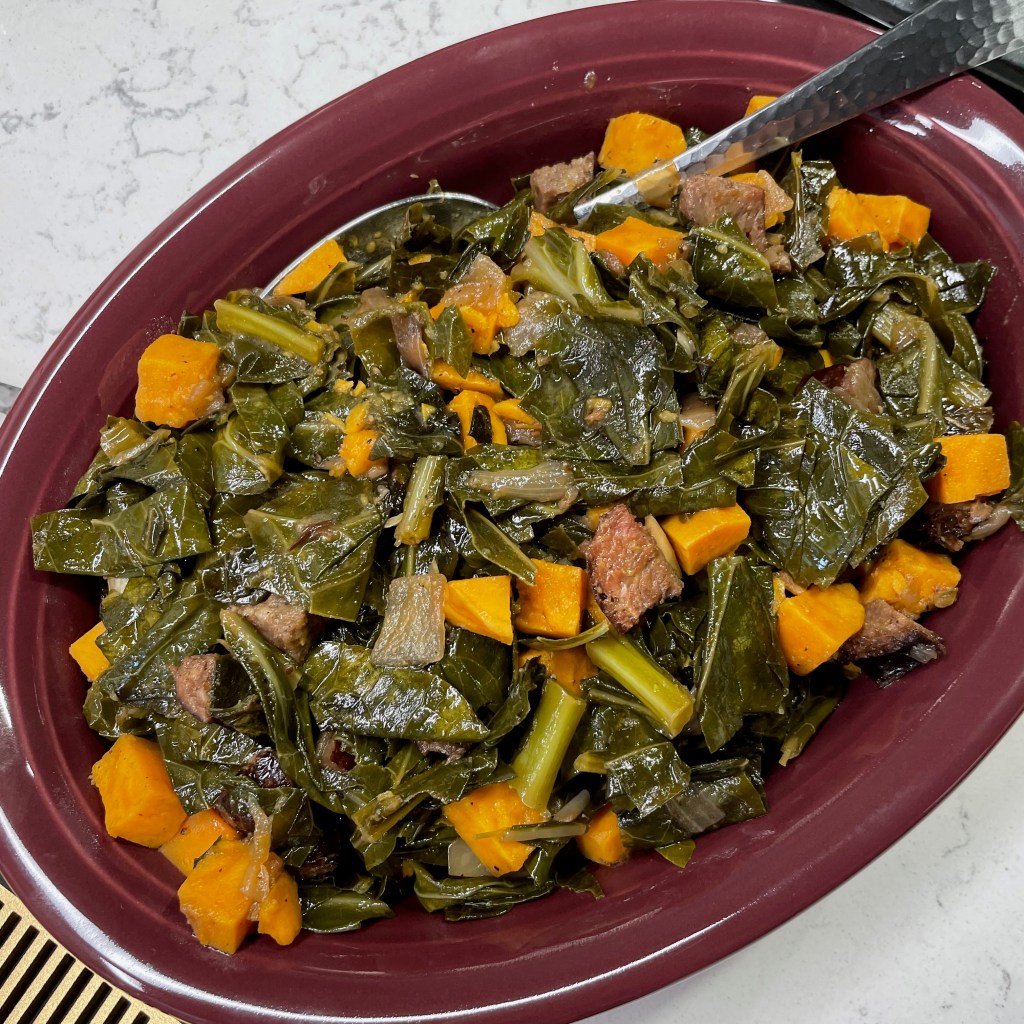
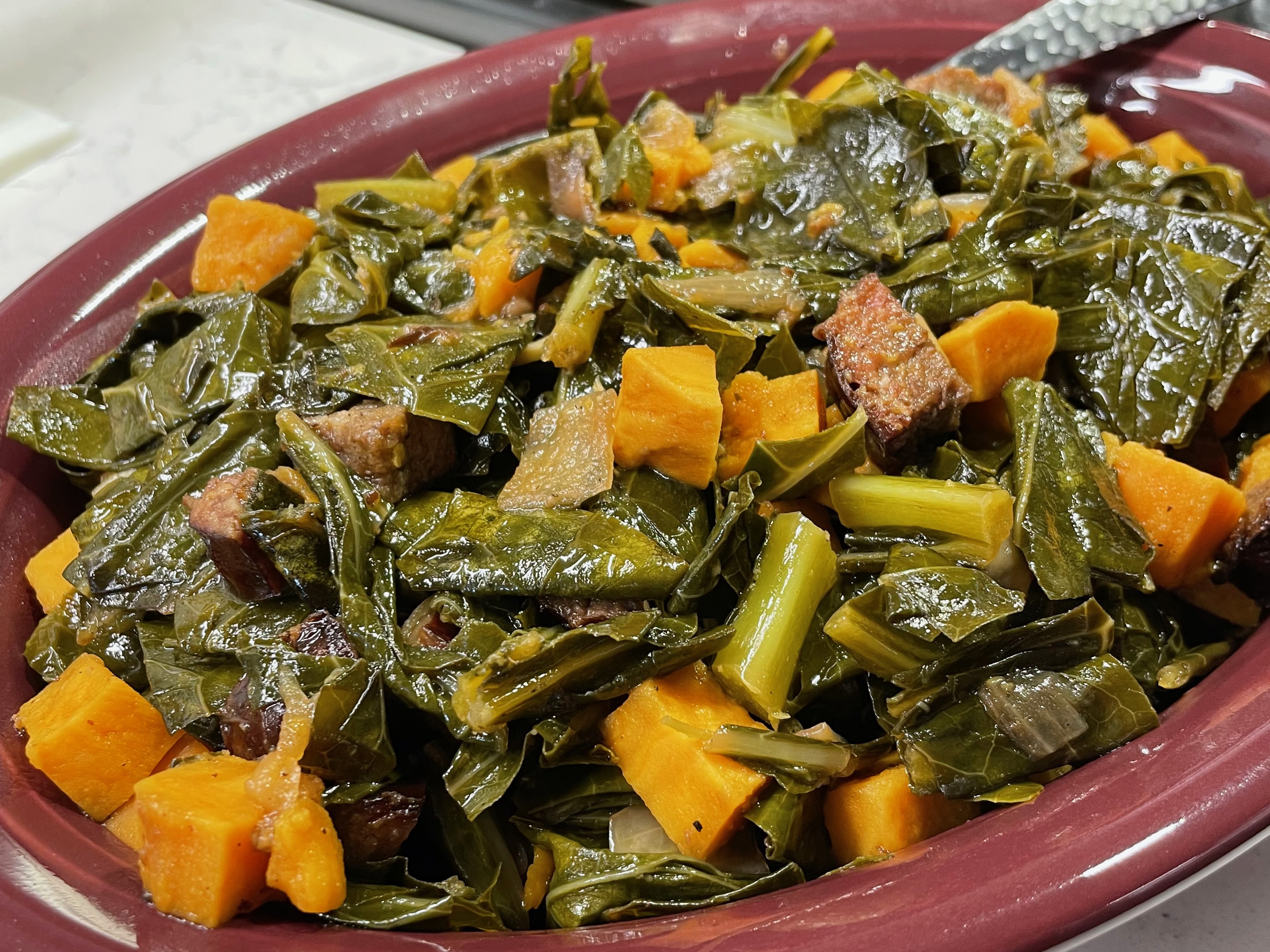
These are as flavorful as they look!

These collard greens have a touch of sweetness going on in the cubed sweet potatoes, and the smoky sausage makes each bite super satisfying. Did I mention that they’re braised this time in hard apple cider? So good!

Get to know collard greens

These sturdy leafy greens are similar to Lacinato kale (which is sometimes called dinosaur kale) in that they are huge, earthy and leathery. To cook collard greens, you must either boil and boil and boil them, or do as I do and fry them up in some kind of oil before braising a shorter time in liquid. The amount of liquid can vary, depending on how tender you’d like the collards to be. If you like them bright green and hefty— first of all, you clearly ain’t from the South— then you’ll use minimal liquid and cook them a shorter time. If you want them to be fall-apart tender, almost like sautéed spinach, then get that pot a’boilin’ from breakfast onward.

Either way, you have to prep the greens. Let’s get to it!

How to prep collard greens for cooking

In my earlier collard cooking days, I purchased the queen pillow-sized bags of chopped and pre-washed collards, believing that it would be a shortcut. But I spent so much time picking through the chopped pieces to remove all the tough stems that are as big around as a #2 pencil, I quickly realized that this “shortcut” wasn’t worth the trouble.


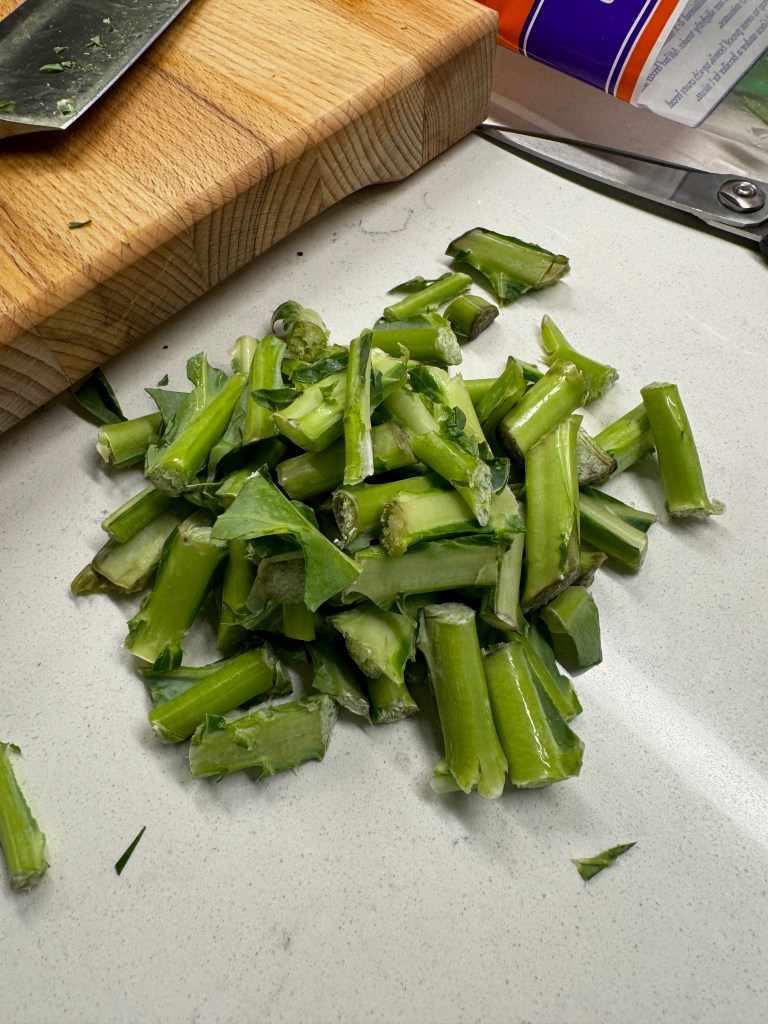
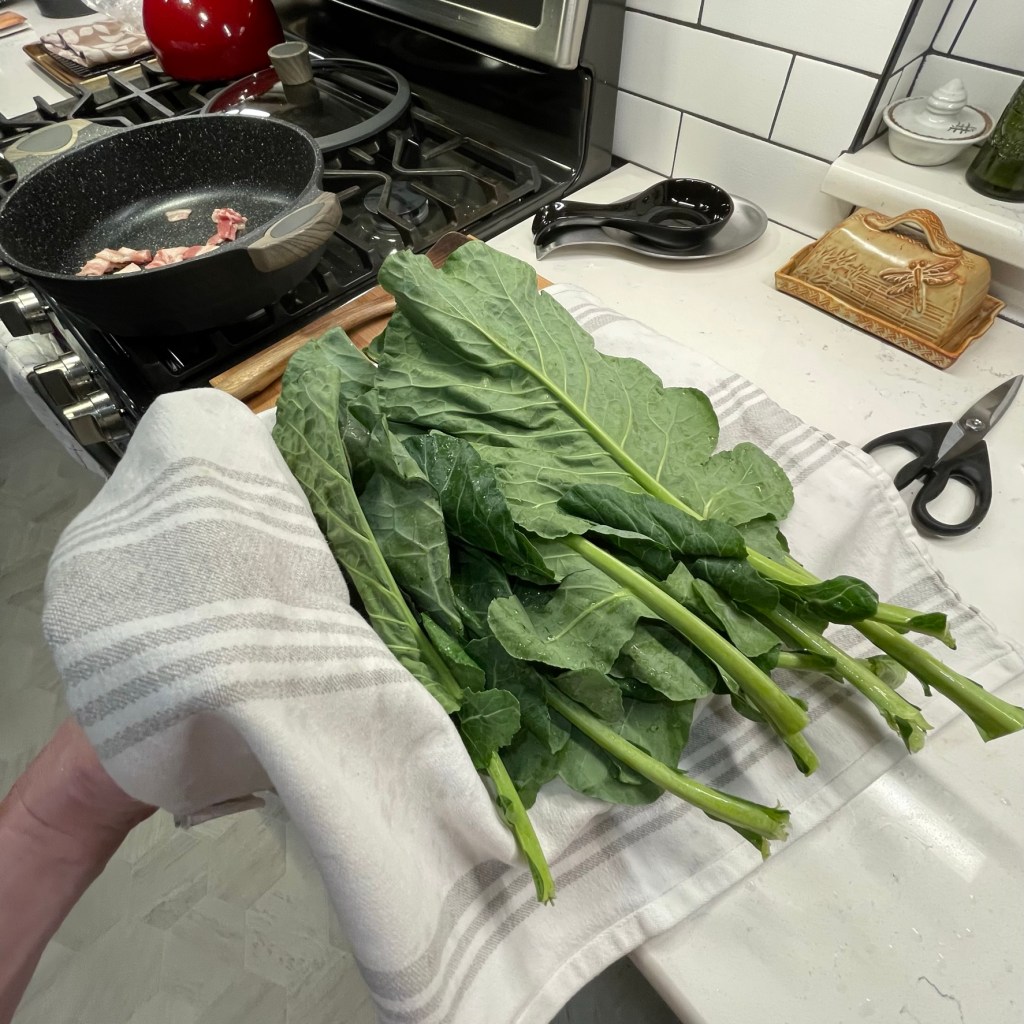
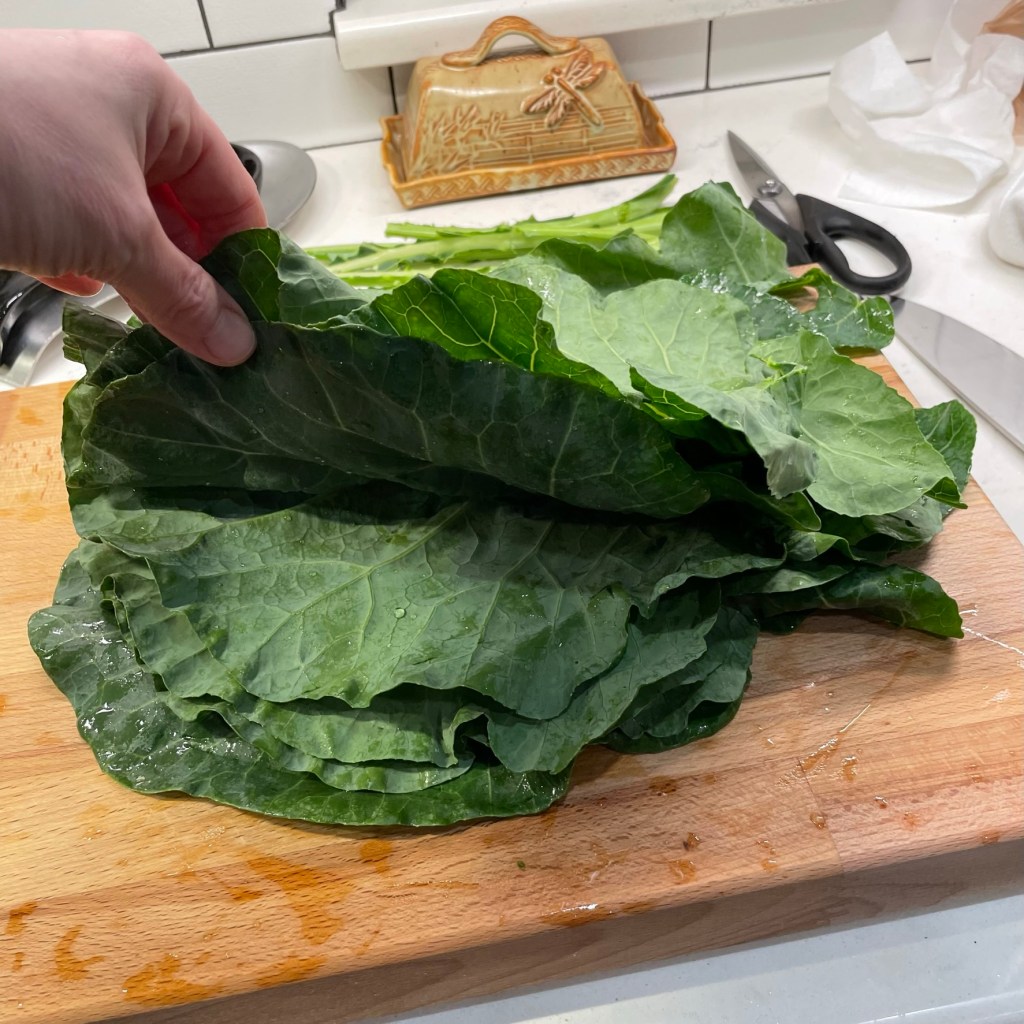
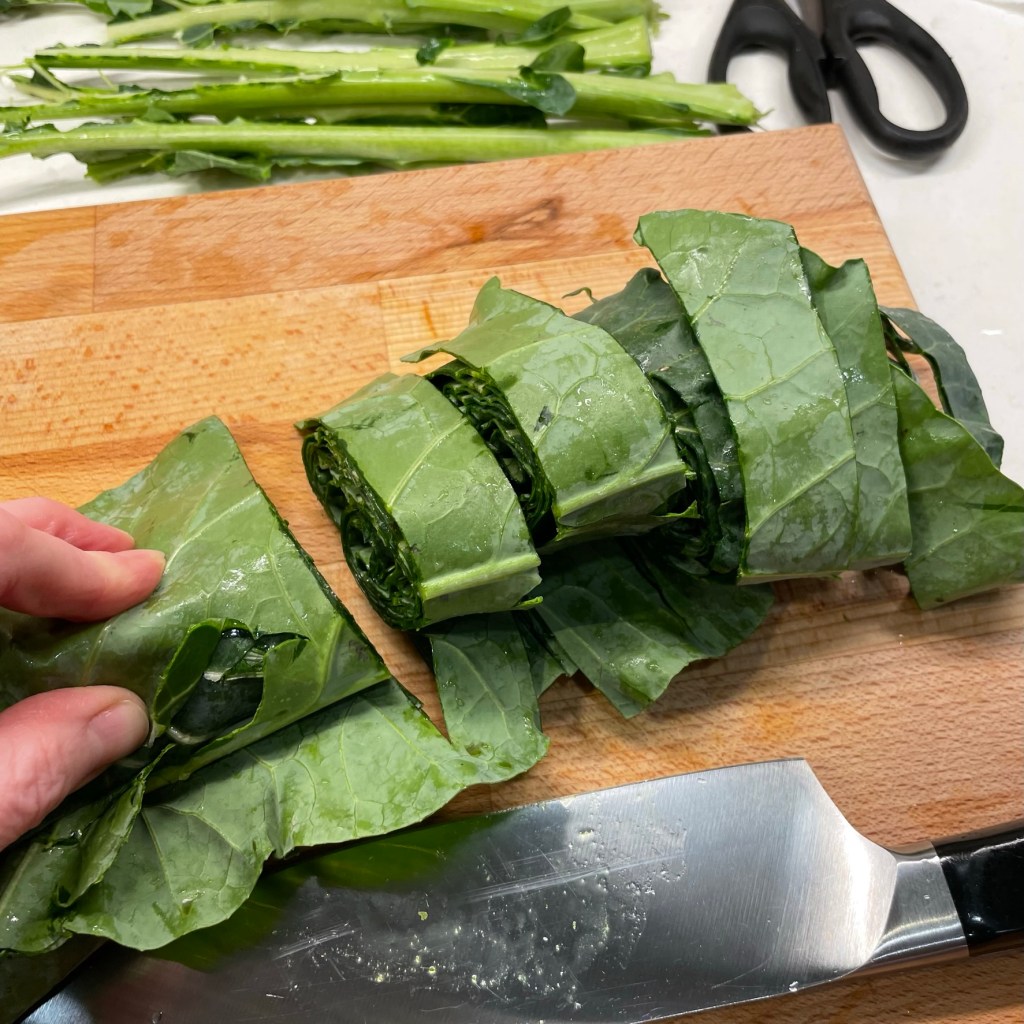
The easier way is to do them fresh, and it involves two quick tricks. After rinsing the collard greens really well, hold a stem firmly with one hand, keeping the other hand at the base of the stem and give the stem a good pull, zipping the leaf right off. Next, wrap the collard leaves in a clean kitchen towel to blot away excess moisture. 

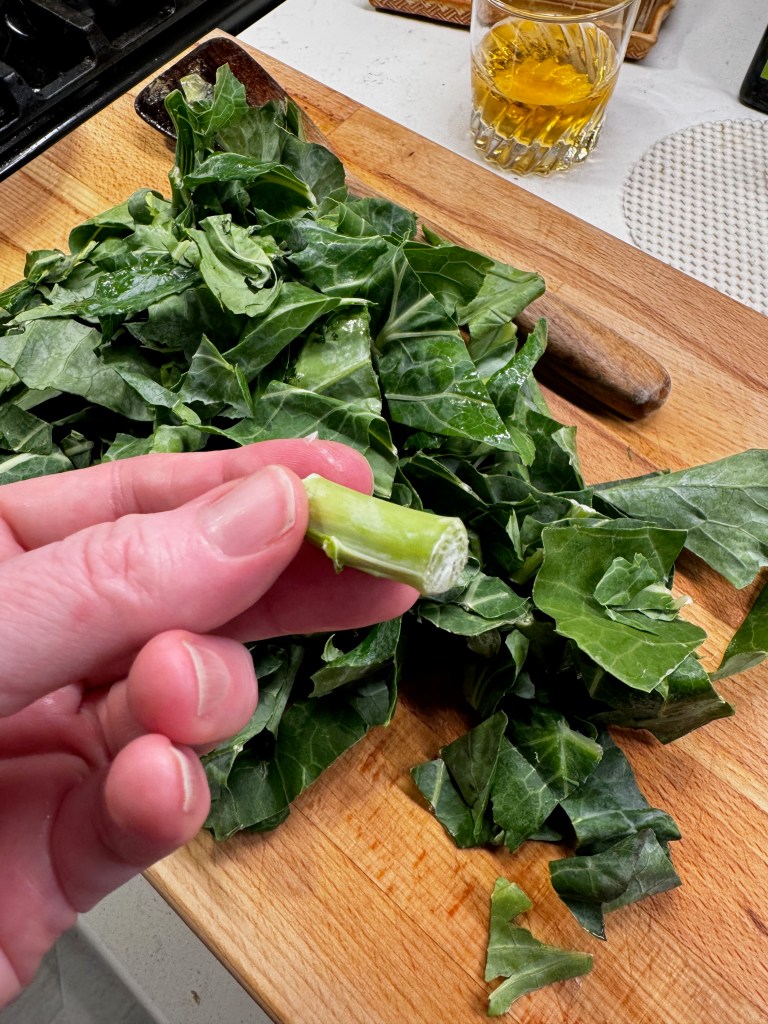
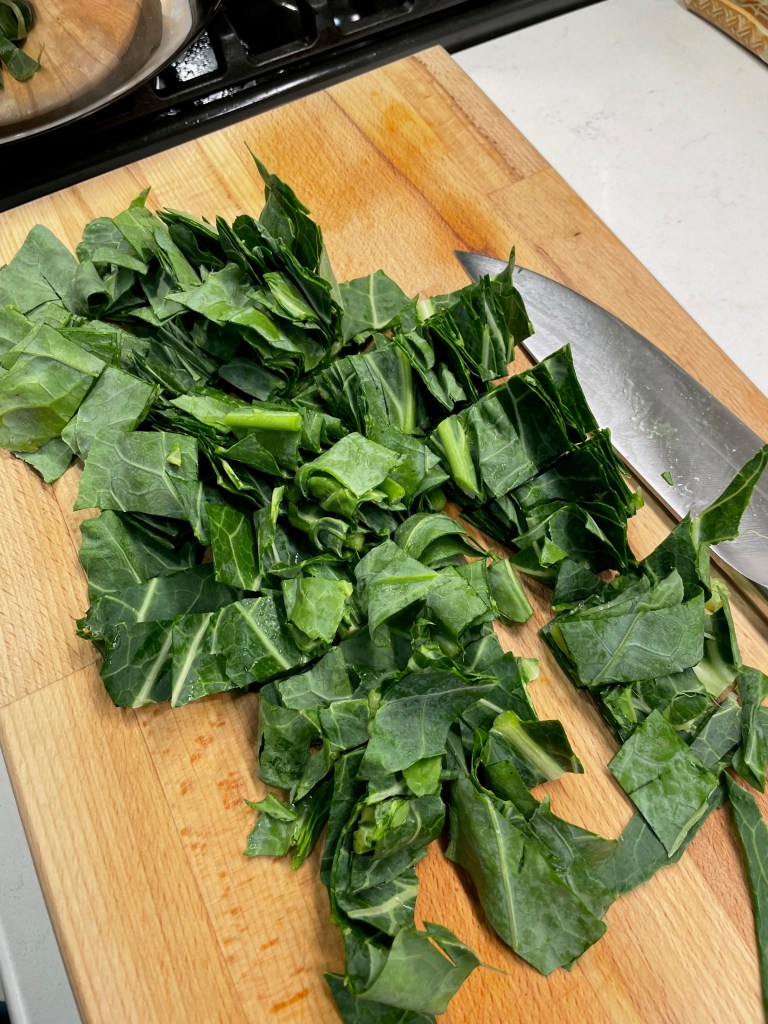
Now, here comes the second trick, and it’s a fun knife technique called chiffonade that you might use when garnishing with fresh basil. Stack the collard leaves together as neatly as possible, and then tightly roll the stack up lengthwise so it looks like a big cigar. Make cross cuts with a sharp knife, and then cut through those pinwheel slices. Voilà, a quick and easy pile of chopped collards (and no bulky stems).


Let’s get cooking!

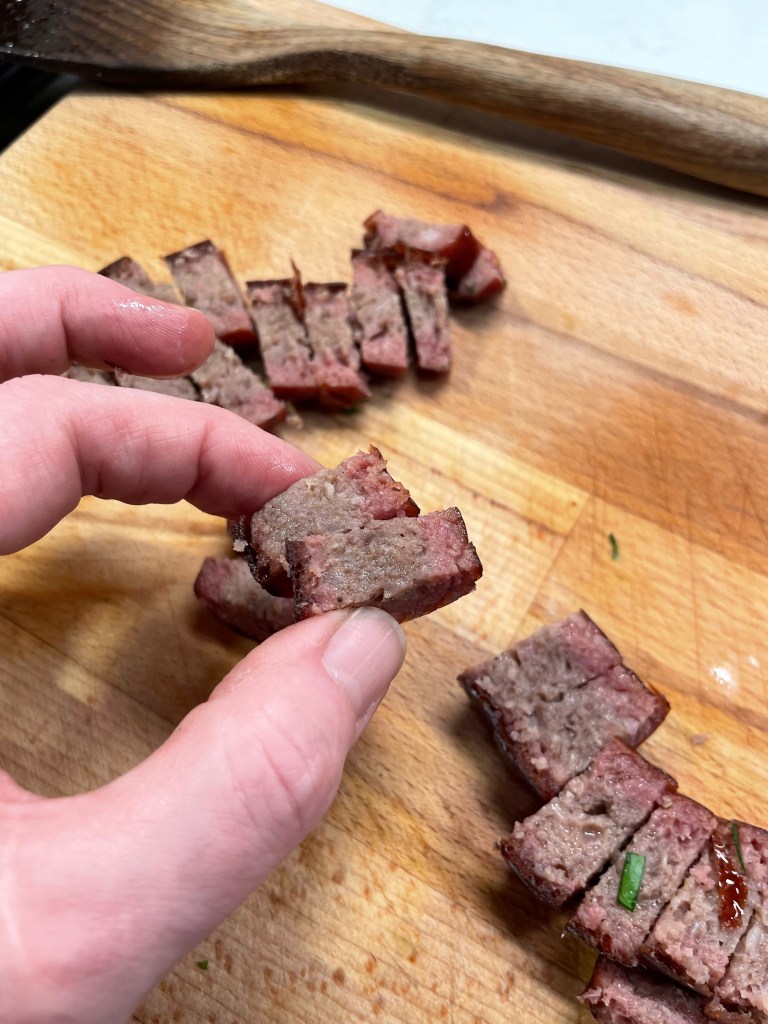
Most of my collard recipes involve bacon, but Les had brought in a successful haul from the smoker on the day that I made these, and I had a hunch that smoked sausage would be a terrific substitute. When I reached for a sweet onion in my countertop basket, I noticed a lone sweet potato in there and couldn’t help throwing some cubes of that in there, too.


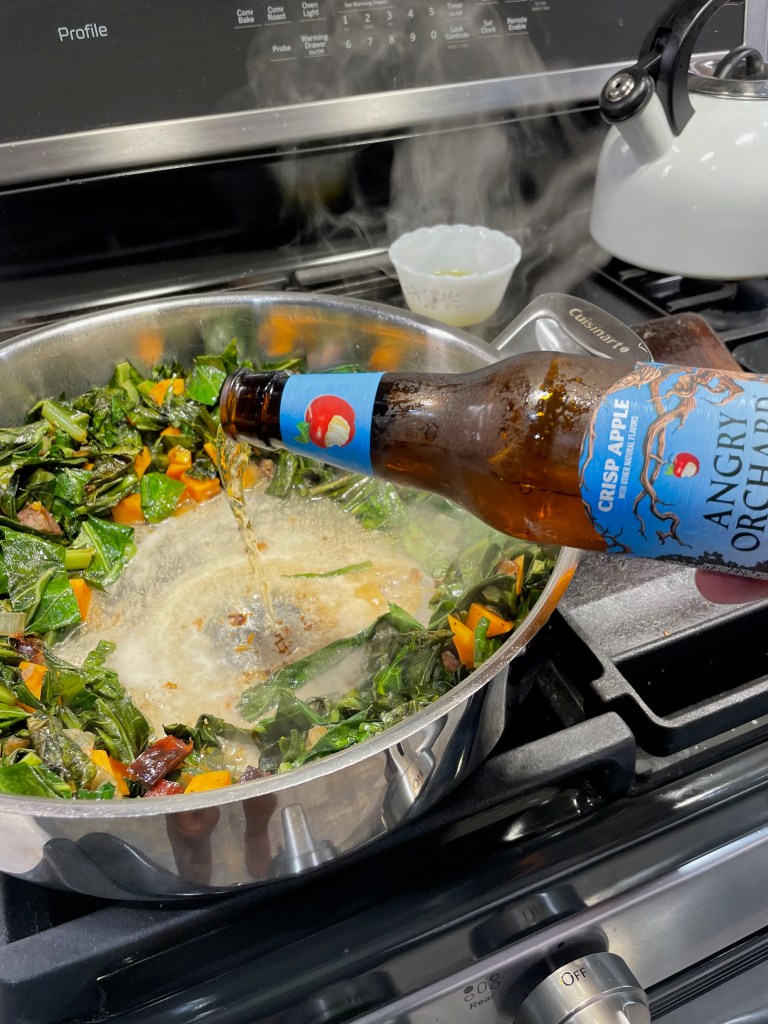
The only remaining decision was a braising liquid, and that’s when I spotted a bottle of Angry Orchard hard cider in the back of the fridge. I’m not suggesting that regular apple cider wouldn’t have worked (though I expect it would have leaned very sweet), but I know from past adventures that a splash of booze helps tenderize the greens better than other liquids, so I went for it. I also appreciated that the hard cider had a tartness to balance the smoky sausage and sweet potatoes. My lucky day!


This autumn spin on collard greens would make a great addition to the Thanksgiving table, especially in the South, or serve them up with meatloaf, fried chicken or mac and cheese for any Sunday supper!

Cider-braised Collards with Sweet Potatoes and Smoked Sausage

  • Servings: About 8
  • Difficulty: Average
  • Print

There's so much autumn flavor going on in these collards, they'd be perfect as a side to your Thanksgiving meal!


Ingredients

  • 1 large bunch fresh collards, cleaned and chopped
  • 1 small Vidalia or other sweet onion, chopped
  • 2 Tbsp. extra virgin olive oil
  • Salt and pepper to taste
  • 1 link smoked sausage, halved lengthwise and then sliced
  • 1 medium sweet potato, peeled and cubed
  • 1/2 bottle Angry Orchard (or other brand) hard apple cider

Notes: The smoked sausage I used was a local butcher product, and it was seasoned with autumn spices. Any smoked sausage would work here, including kielbasa, Andouille or even hot links. Consider the sodium content of the sausage so that you may adjust additional salt accordingly.

Directions

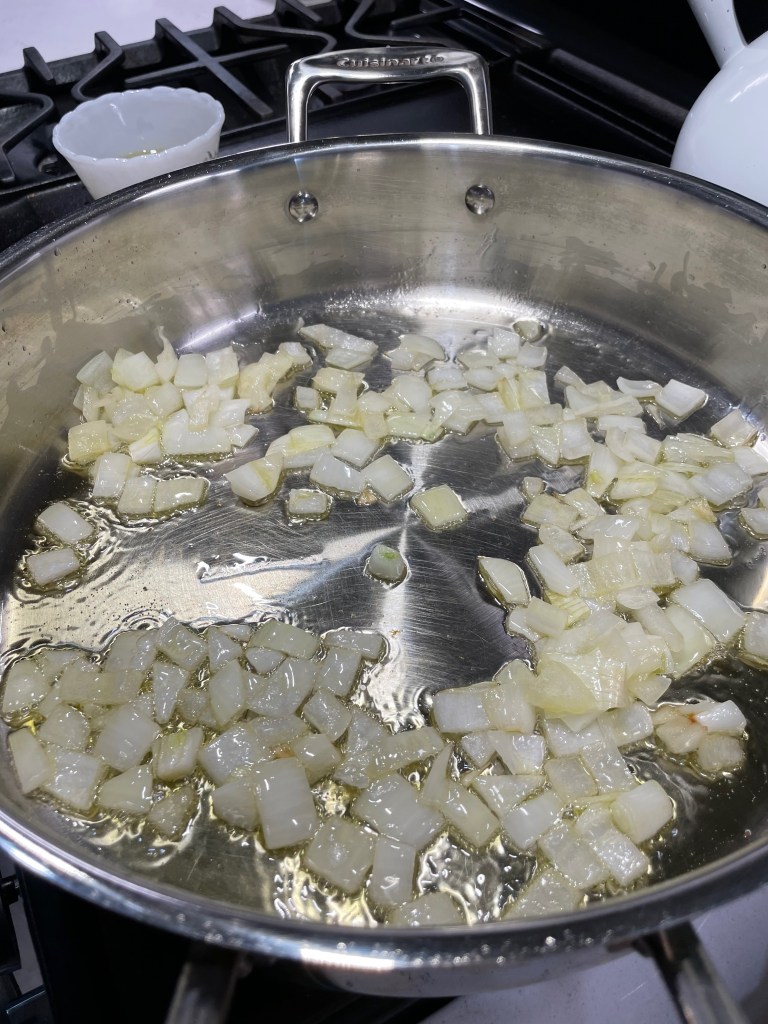
  1. Heat a heavy-bottomed wide pot over medium heat. Swirl in olive oil and sauté onions briefly until just barely tender. Add collards, a handful at a time, until all are in the pot. Season with salt and pepper, and toss until all collard leaves are wilted.
  2. Add sweet potato cubes and smoked sausage and toss until the contents of the pot are heated through.
  3. Pour in hard cider, give it a stir, and then cover the pot and reduce heat to a simmer. Cook the collards for 20 to 45 minutes, until collards are tender to your liking. If you like collards extremely tender, consider delaying addition of the sweet potatoes until about a half hour before the finish.


Shrimp & Grits with Too Much Going On!

No matter where you go in the coastal region stretching across the Carolinas, you’ll find shrimp and grits. It’ll be different in each place, naturally, but delicious however it’s served. Some folks make it Cajun spicy, others use a gravy base, and a few take liberty with the grits, adding cheese or turning them into little fried cakes with the shrimp piled on top. Everyone has their favorite, and all of them are favorites for me. But I learned an important lesson when I tried to recreate a restaurant dish, and it can be summed up in a phrase that my husband hates: less is more.

When Les swept me away to Hotlanta for the Rolling Stones concert back in June (it was awesome), he went the extra mile (300 of them, actually) to extend our adventure for three days in Charleston, South Carolina. The city is a lovely place to visit, with a rich history, incredible food and beautiful architecture, and it’s also the unofficial shrimp and grits capital of the world.

Cheers, Charleston! 🍸

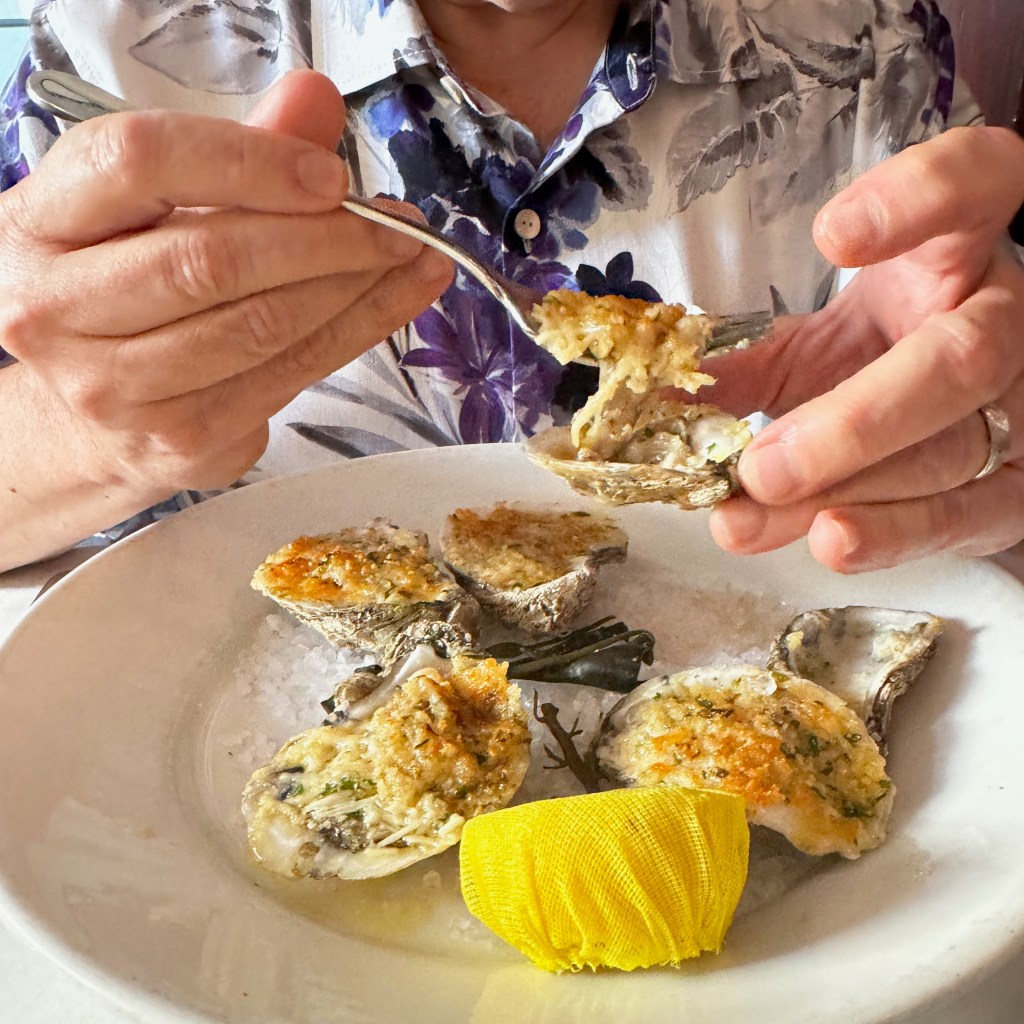
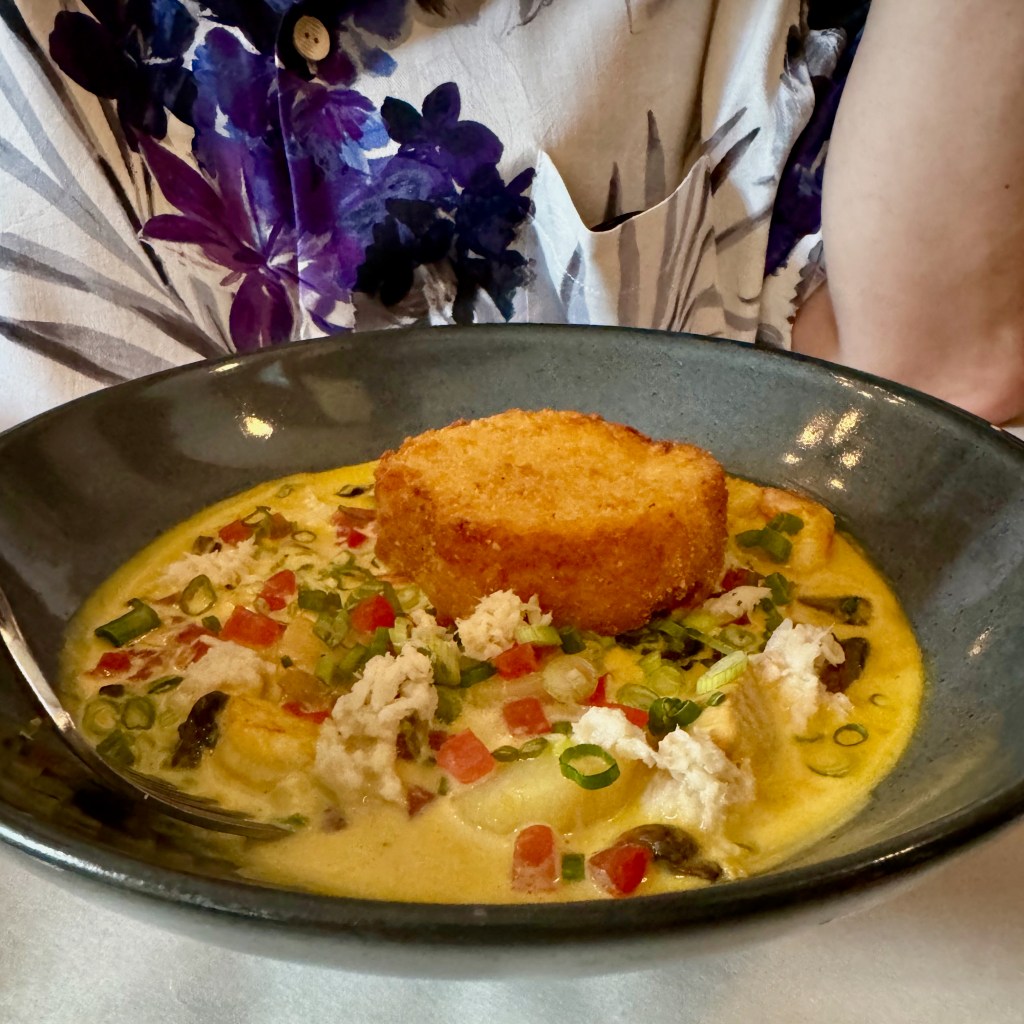
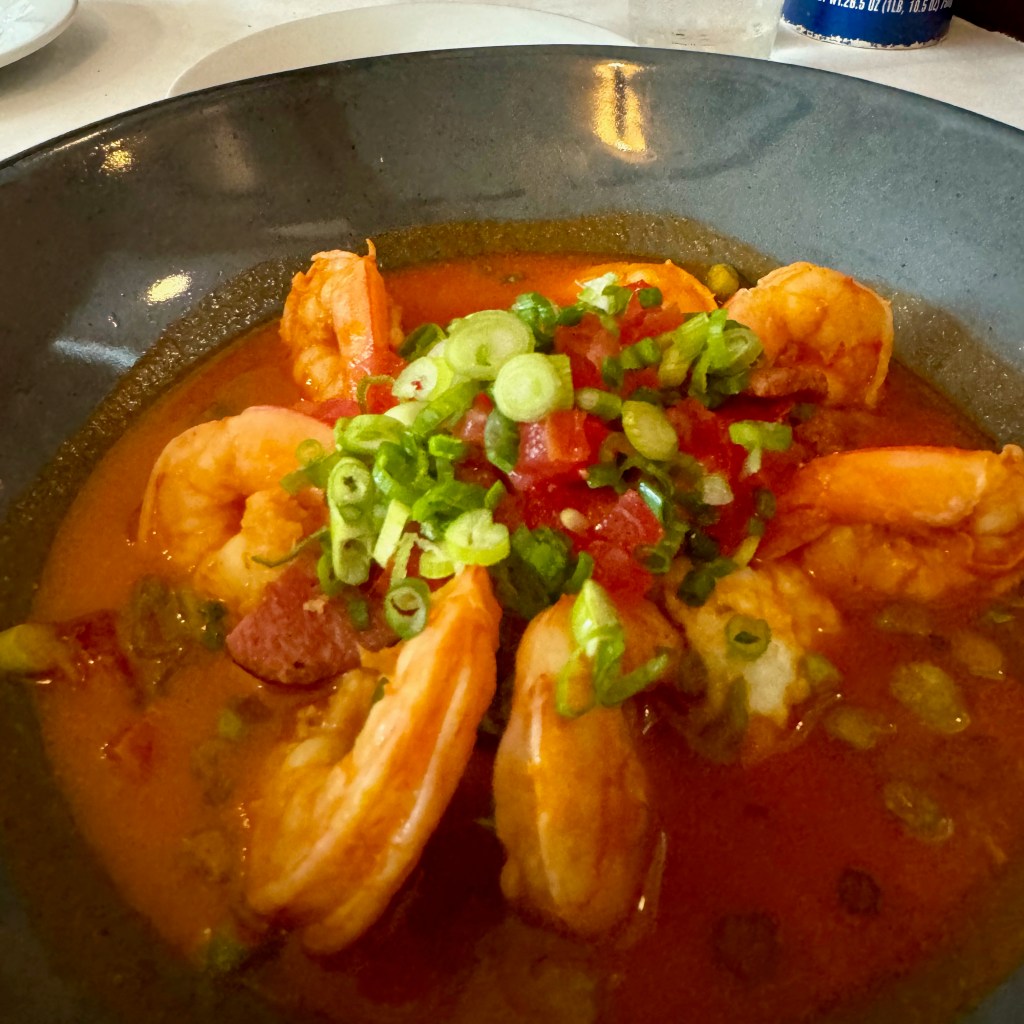
On our first night in Charleston, we had reservations at Hank’s, well-known by locals and visitors for its delectable seafood. We got there early to enjoy a cocktail at the bar, and then feasted on appetizers—oysters casino and she crab soup (another Charleston classic)—at the table. Finally, dinner arrived! Notice the crispy grit cake on Les’s scallop and crab dish? And I couldn’t resist the shrimp and grits with smoked andouille and tomato jus, which I promptly declared to be my favorite shrimp and grits to date. My goodness, it was delicious!


The shrimp were plump and juicy, and I love that Hank’s serves them with the tail on. The grits were cooked to creamy perfection with only a slight firmness to the bite. But the real star of the show was the incredible tomato jus— it was light and delicate, almost too refined for this low country classic, but so, so good.

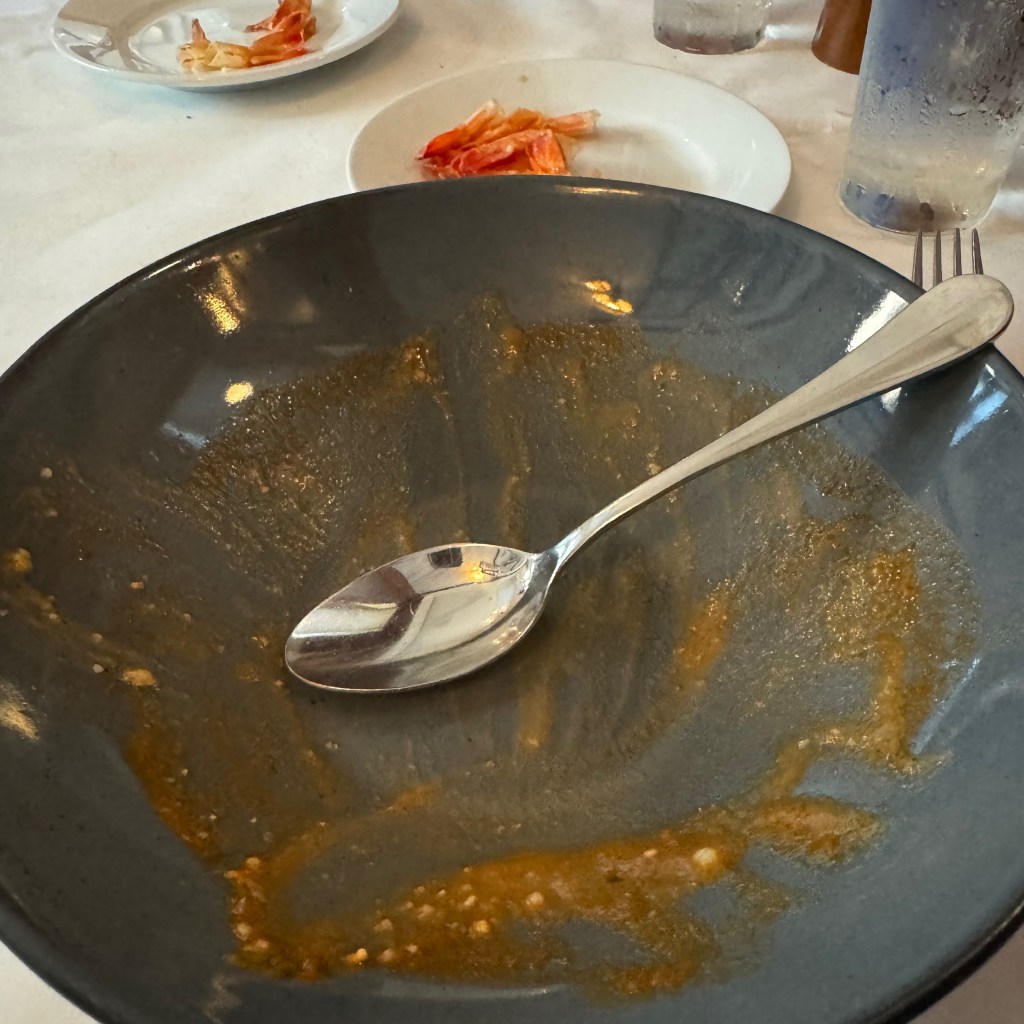
Pardon me while I lick my bowl!

I left Charleston knowing that I had to try to recreate this delectable dish, or something similar, at home. This was my first attempt, and it wasn’t perfect but it won’t be my last.

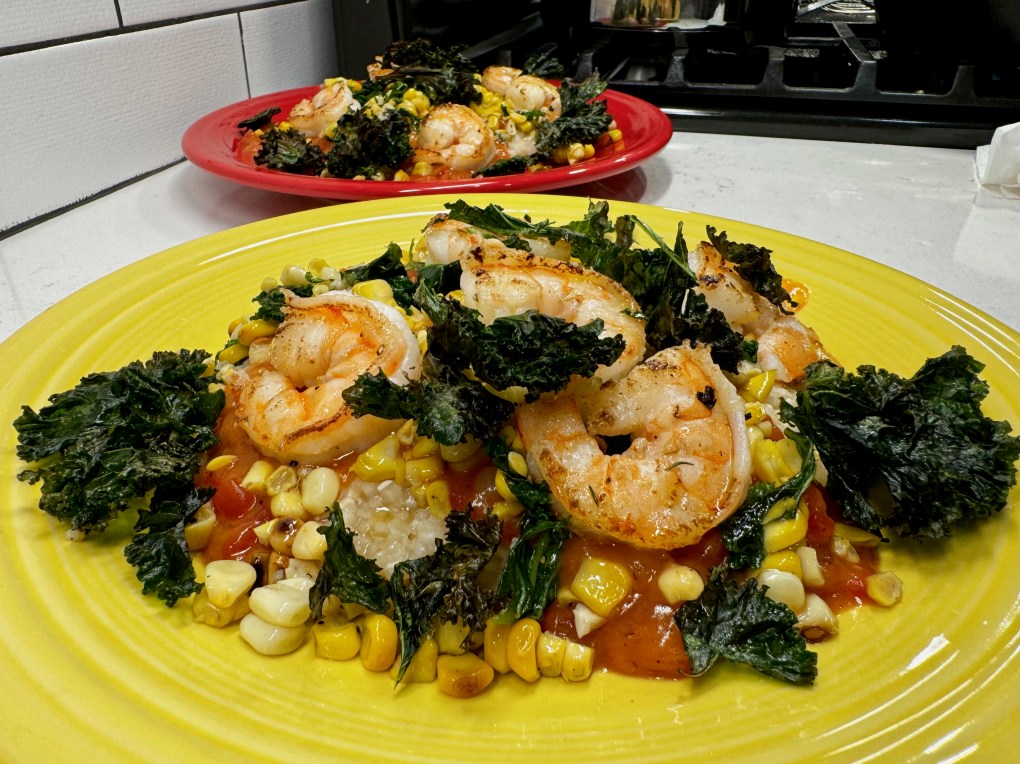
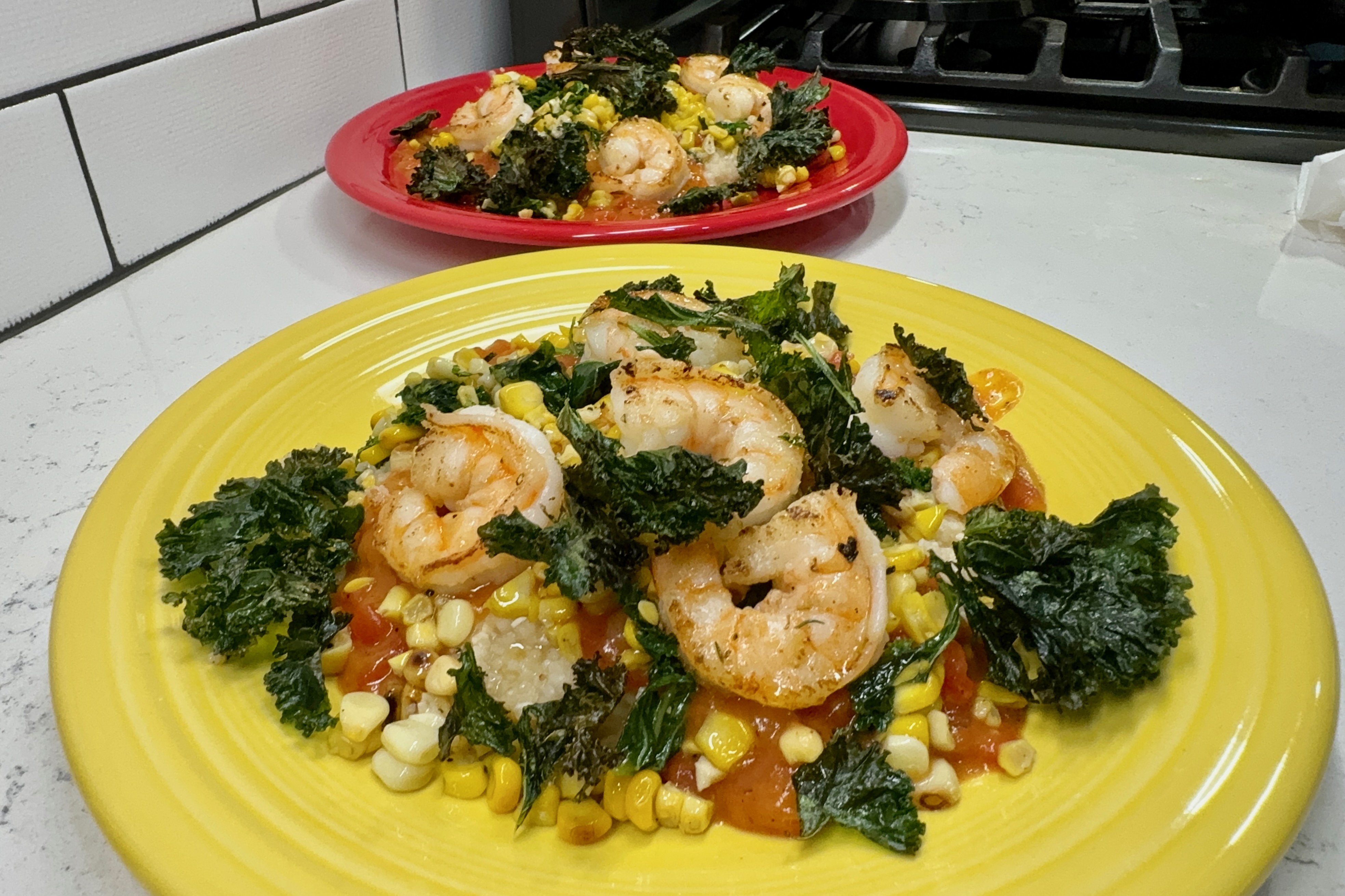
My late summer shrimp & grits with kale, corn and tomato gravy

Plenty of flavor here, but maybe too much.

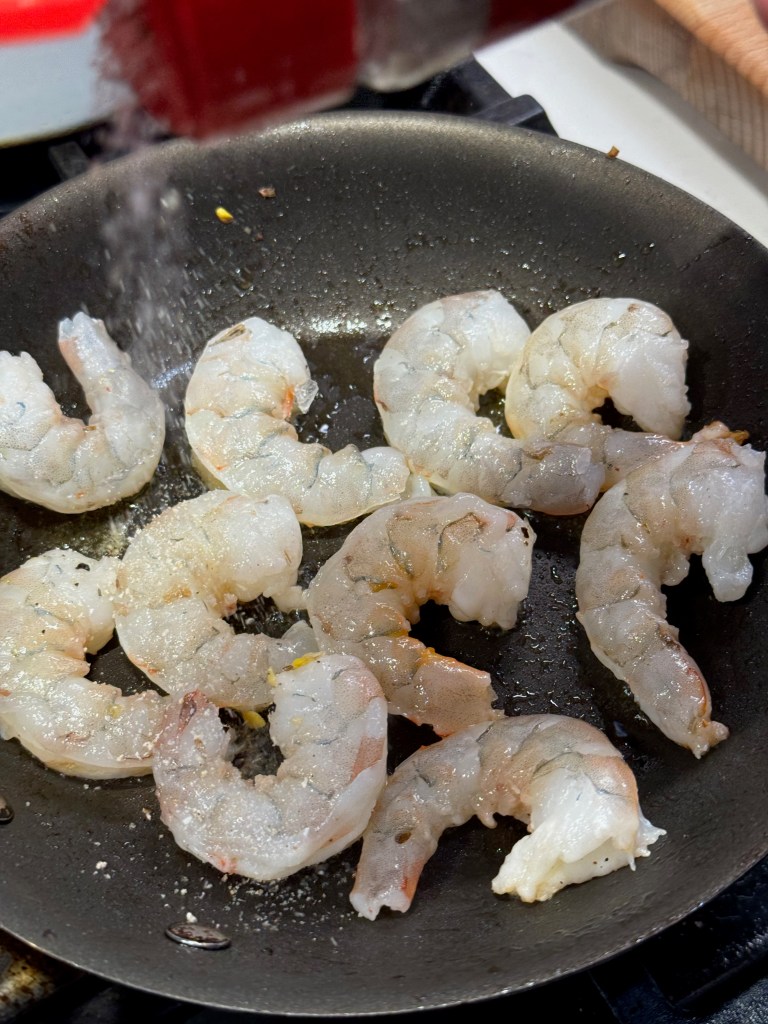
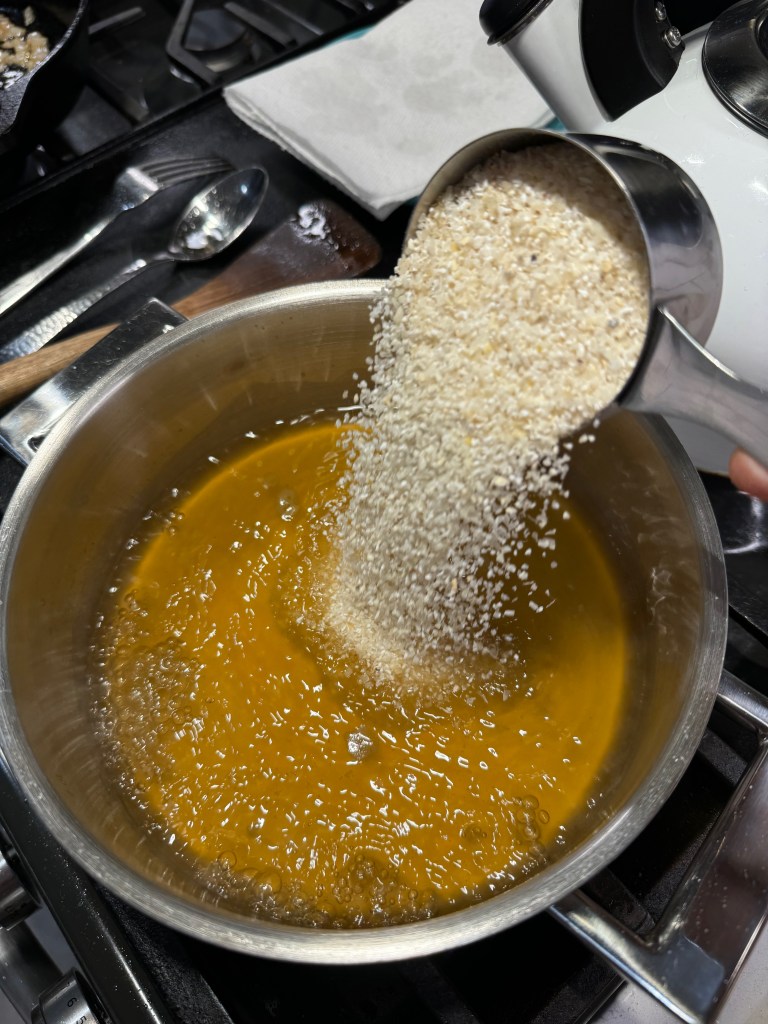
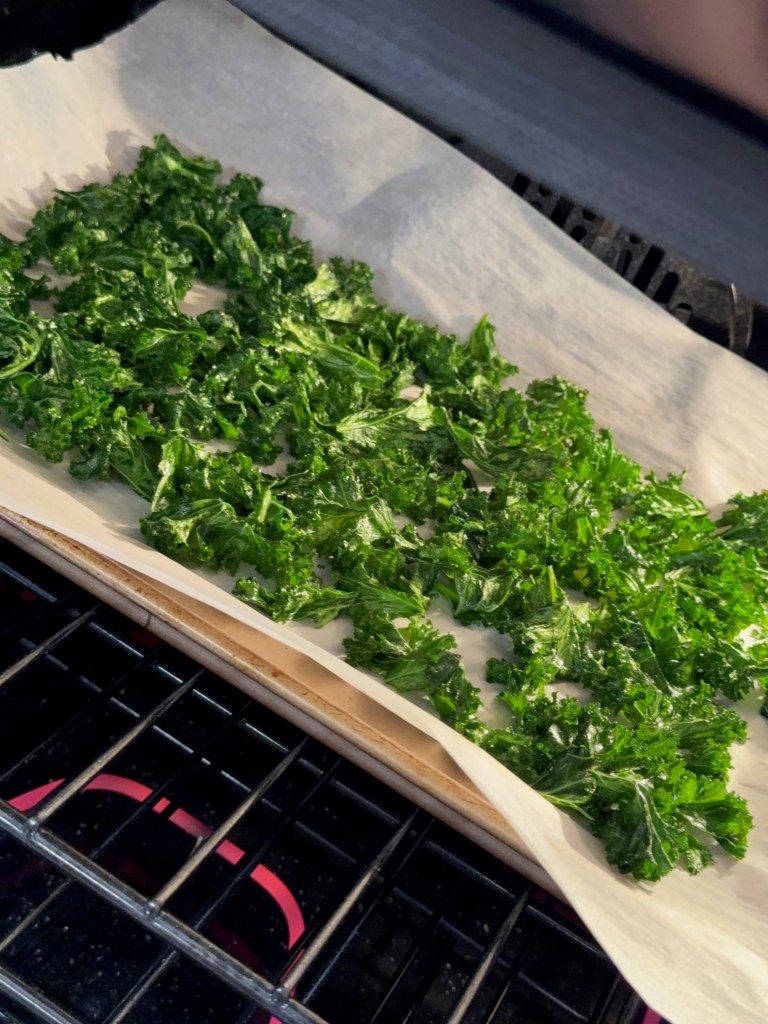
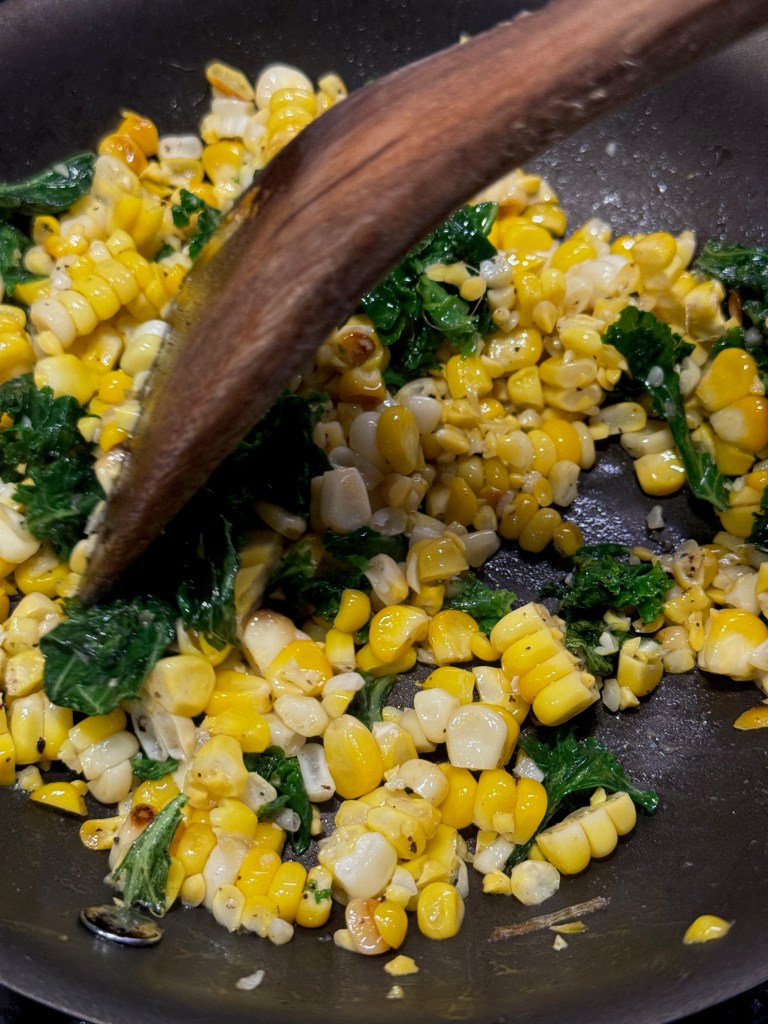
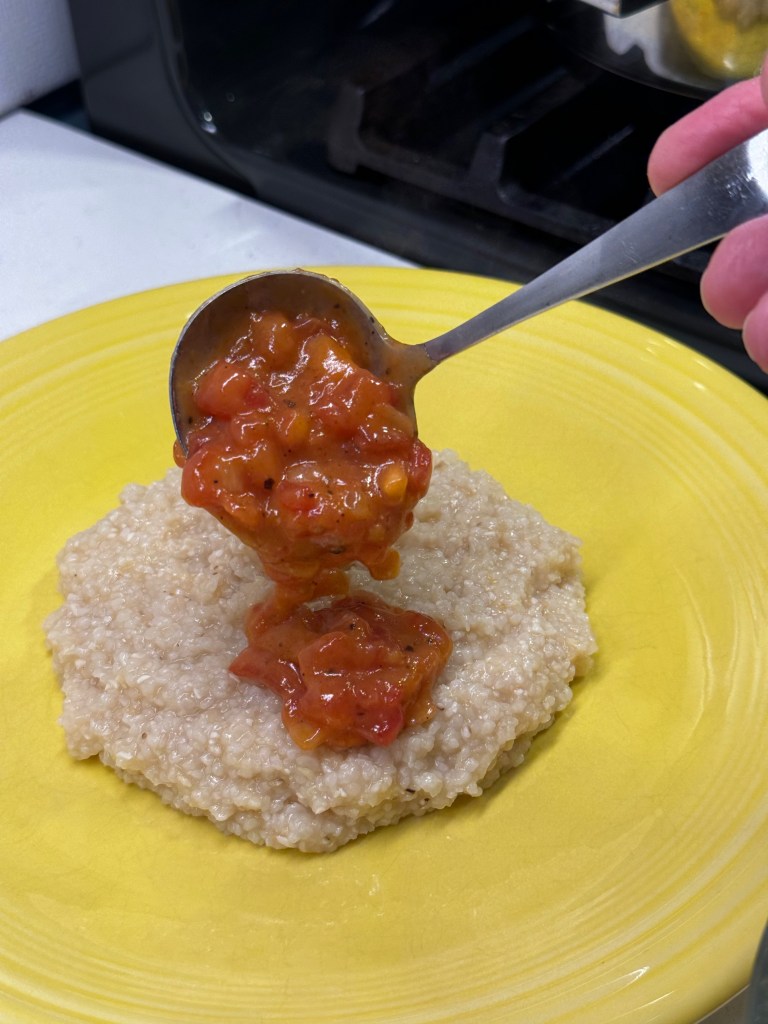
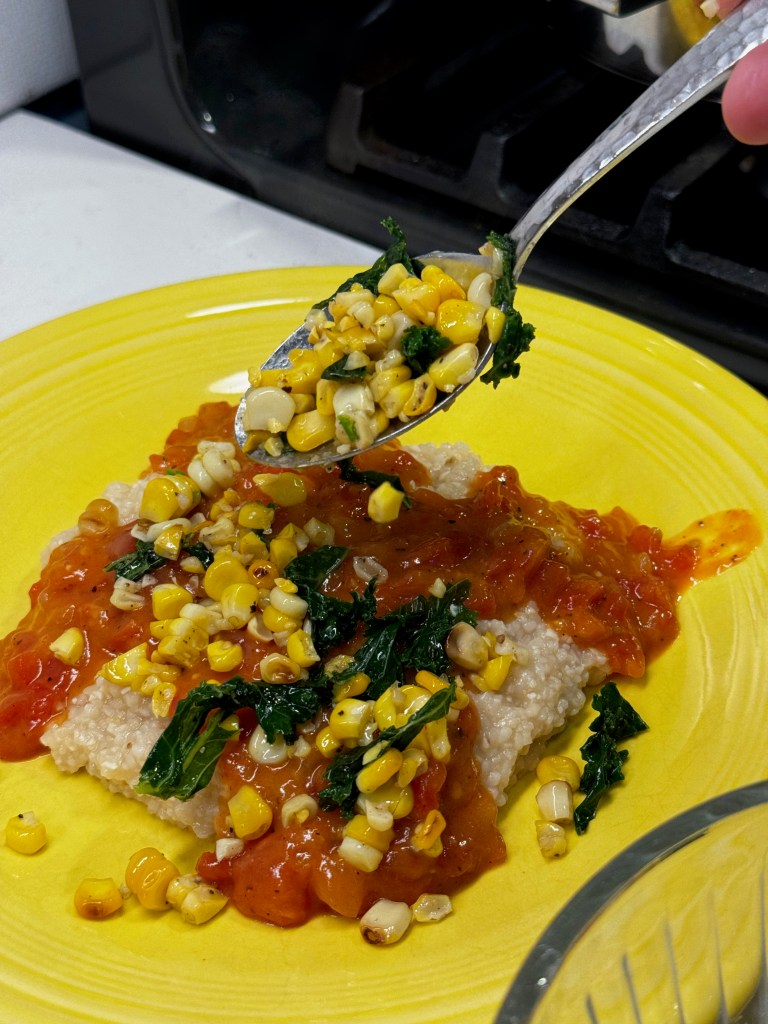
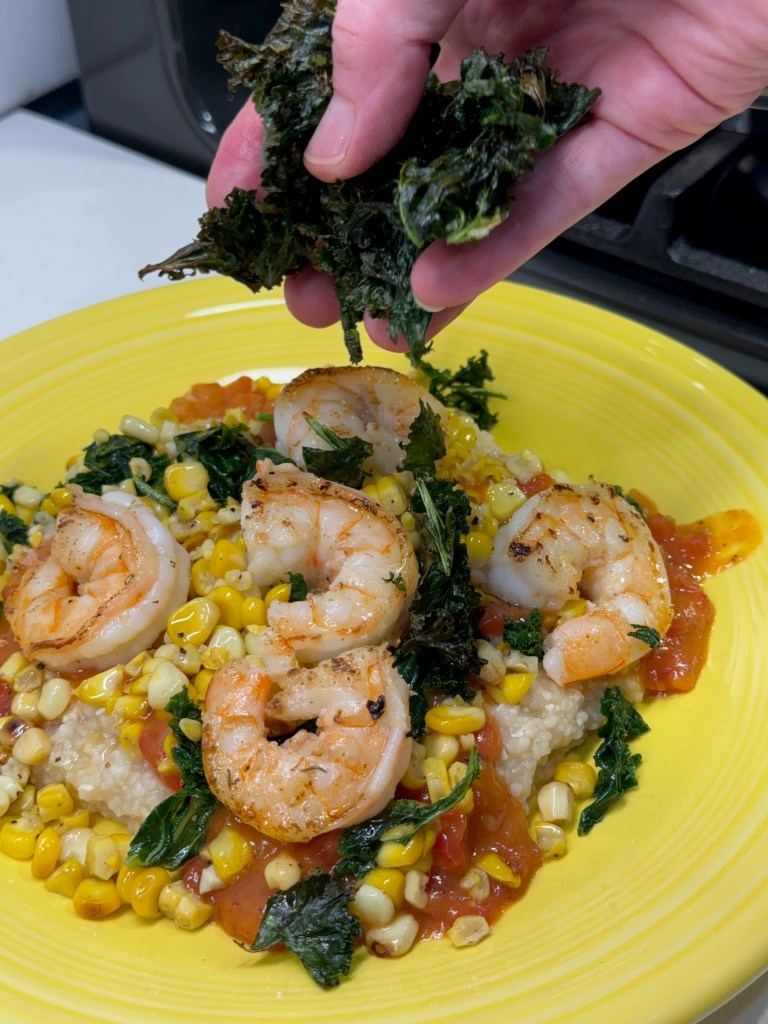
There would be four elements to prepare for my dish (Coco Chanel would say one accessory too many, and I’ll get to that later). First, the fresh North Carolina shrimp, which I sautéed at the last minute with only salt and pepper; the grits, a stone-ground white corn that I cooked low and slow in chicken broth until creamy; the kale, which I roasted for a crispy contrast on top of the other textures; and the tomato gravy, with fresh ripe tomatoes gifted to us by a generous neighbor. The ear of corn, left over from a previous meal, was a bonus ingredient that gave a friendly howdy to its cousin, the grits.


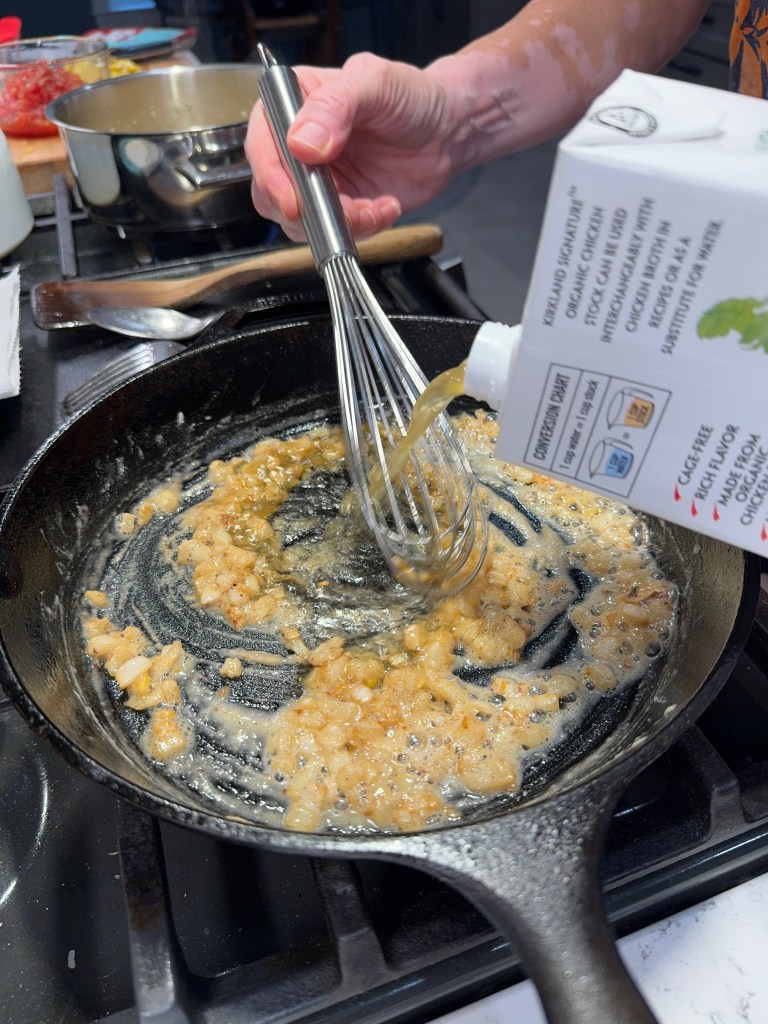
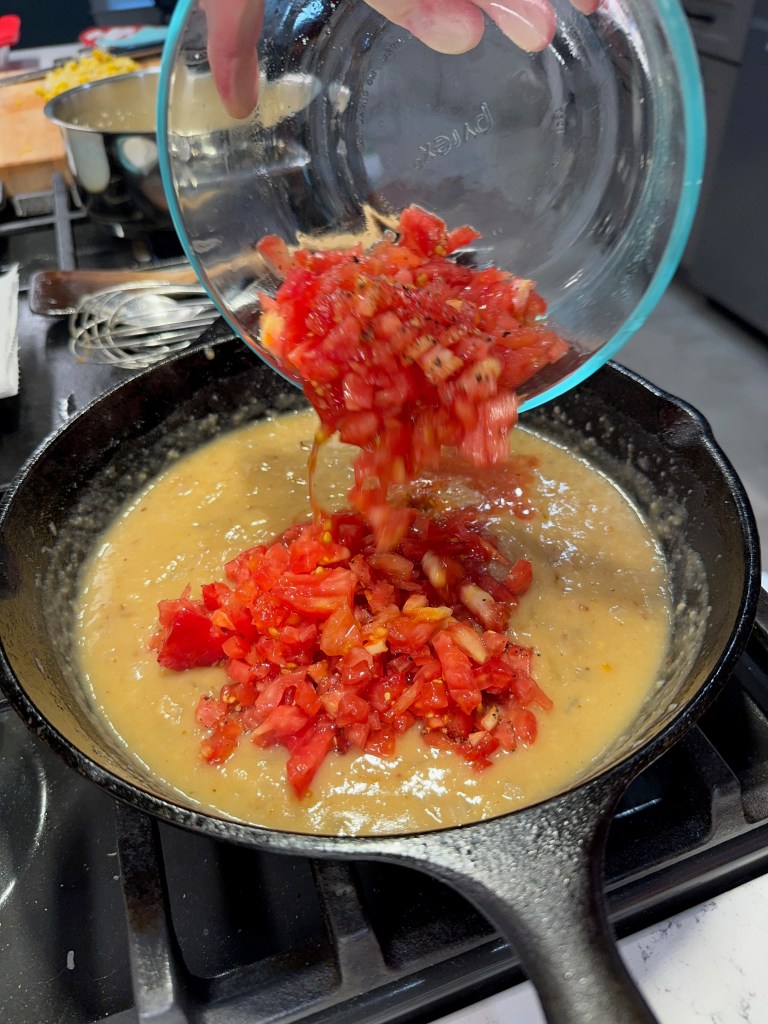
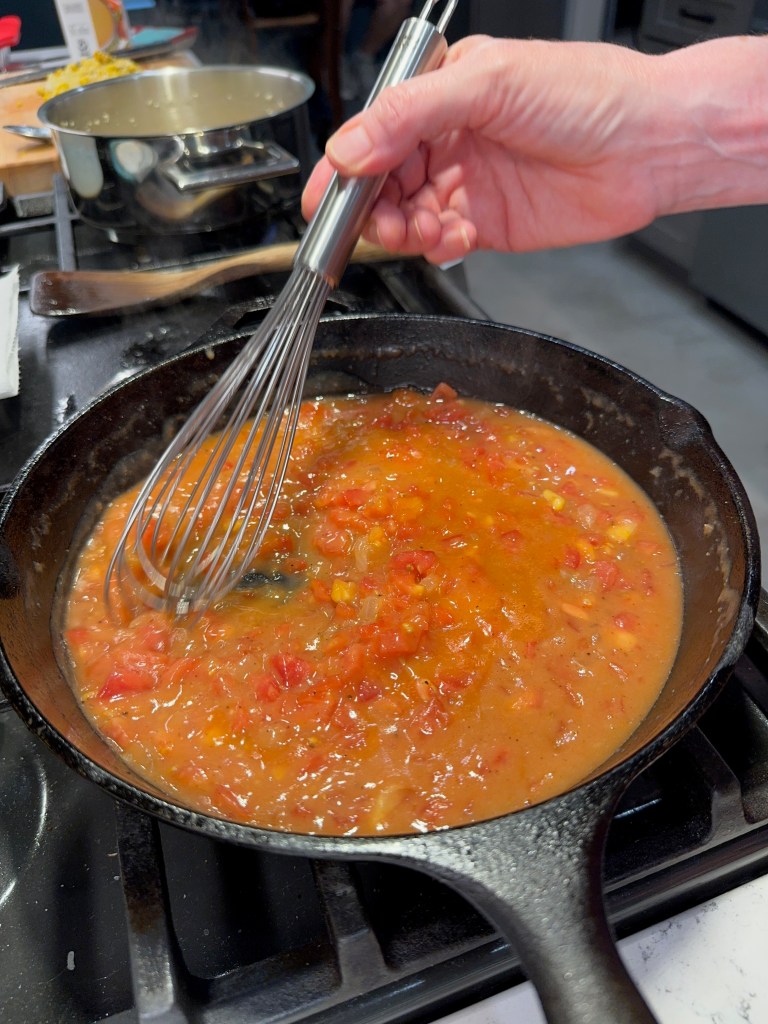
The tomato gravy was the big learning experience for me, and there isn’t much about this that I would repeat. I used bacon fat to sauté the onions, then cooked in some flour to thicken it when I added chicken broth. The result was a heavy gravy that overwhelmed the bright acidity of the ripe summer tomatoes. Edible, but not remarkable.


Here’s what I’ll do next time— and what I’d encourage you to try if you choose to make your own version of this dish— use a bit of olive oil to sauté the onions, skip the flour thickener, and use a splash of white wine to loosen up all those tomatoes. After reducing the liquid, I’ll take it off the heat and quickly whisk in a few pats of cold butter— sort of a beurre blanc treatment, if you will— to add body to the sauce without crushing the spirit of the tomatoes. A thinner consistency would also allow the “gravy” to weep over and around the grits so that you get a bit of it all the way to the last bite.


Finally, I’d kick the kale to the curb. Honestly, it was a distraction from the best parts of this dish, like a chunky statement necklace with an elegantly tailored suit. This is an important reminder for me in the kitchen, because most of the time, it’s the simple dishes that make everyone happiest. Find one thing about a classic, and elevate that one thing into something extraordinary— we live and learn, don’t we? 😉

And yes, the Stones were as amazing as ever. Great show!

Shrimp & Grits with Kale, Corn and Tomato Gravy

  • Servings: 2
  • Difficulty: Average
  • Print

This dish has a little too much going on, but it made use of some great late summer ingredients I had on hand. In the notes, I've added suggestions that would probably make this dish even better.


Ingredients

  • 1/2 medium onion, chopped
  • 2 Tbsp. bacon fat
  • 1 Tbsp. all-purpose flour
  • 1/2 cup low-sodium chicken broth
  • 2 medium ripe tomatoes, peeled and chopped
  • 1 small bunch fresh kale, roasted (see notes)
  • kernels from one ear grilled corn
  • 2/3 cup stone-ground white grits
  • 2 cups chicken broth, water or some combination of both
  • 2/3 lb. fresh shrimp, peeled and deveined
  • Salt and pepper
  • 1 Tbsp. olive oil, divided (use half to warm corn, half to cook shrimp)

The kale was an unnecessary distraction in this dish and I wouldn’t use it again. If you wish to try it, wash and tear up the leaves and massage them in a large bowl with a drizzle of olive oil and a pinch of salt. Roast on a baking sheet for about 20 minutes until fragrant and crispy.

For a lighter flavor that keeps the attention on the tomatoes, swap in olive oil for the bacon fat, omit the flour thickener and use 1/4 cup white wine in place of chicken broth used for the tomato gravy. When the tomatoes are cooked and liquid has reduced, remove from heat and swirl in two cold pats of butter, about 1 Tbsp. each.

Directions

  1. Place a non-stick skillet over medium heat and sauté onions in bacon fat until softened. Stir in flour and cook until bubbly. Add chicken broth, whisking until mixture is even and bubbly. Add chopped tomatoes and cook, stirring frequently, until tomatoes are broken down and mixture is bubbly all over. Season to taste with salt and pepper. Add another splash of liquid if needed to thin the gravy.
  2. Cook the grits in a heavy-bottomed pot. Bring broth or salted water to boil, then reduce heat and stir in grits thoroughly to prevent clumping. The key to good, creamy grits is to keep the temperature low and stir frequently. Keep a tea kettle of hot water nearby, and add as needed to maintain a creamy consistency.
  3. Heat a swirl of the olive oil in a small skillet, and cook a few leaves of kale (if using) with the corn kernels, just until heated through. Transfer to a separate bowl and use the same skillet to sauté the shrimp in remaining olive oil.
  4. Plate the grits, ladle the tomato gravy over each portion, and then top with the corn/kale mixture and the sautéed shrimp. Scatter roasted kale over the top and serve immediately.


Easy Pickled Shrimp

Every region has its favorite foods. You know, the things that you can expect to find multiple variations of at a potluck, family picnic or church social. In the South, that would be a relatively short list of ham biscuits, pimiento cheese, collard greens, deviled eggs, pulled pork bbq, banana pudding and sweet tea. 

If I could add one item to that list, it would be this pickled shrimp. It’s a quick and easy way to serve up everyone’s favorite shellfish, without frying it or burying it in sauce. If you can boil water and slice an onion, you can make this, and you’ll find it incredibly versatile.


I found this recipe on Pinterest when I was looking for— wait, what was I looking for? Who cares, because I stopped scrolling when my eyes caught the name on this recipe clipping: Pat Conroy.


The name Pat Conroy may not ring a bell for you, but I’ll bet you know some of his work. The late American novelist wrote numerous books, fiction and non-fiction, including The Prince of Tides, which he adapted into a screenplay for a Barbra Streisand-produced film that earned seven Oscar nominations.

Pat Conroy had a thing for the South, especially South Carolina, where he is buried. I first learned about him when I visited Hilton Head many years ago and dined at a restaurant that carried his name. Conroy’s—now permanently closed— was an elegant-meets-coastal-casual place inside the Marriott hotel, and its she crab soup made such an impression that I dined there three times over the course of a week, even though I was not a guest at the hotel. The rich and creamy seafood bisque was said to be one of Pat Conroy’s favorites, and I decided then and there that he was my kinda guy.

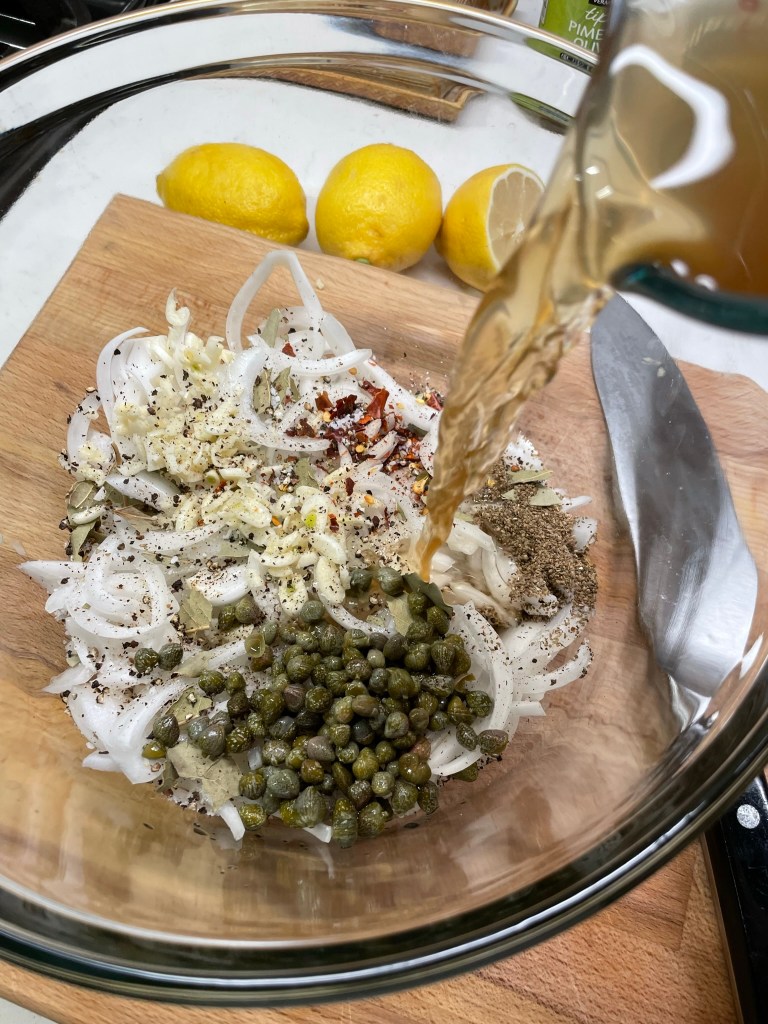
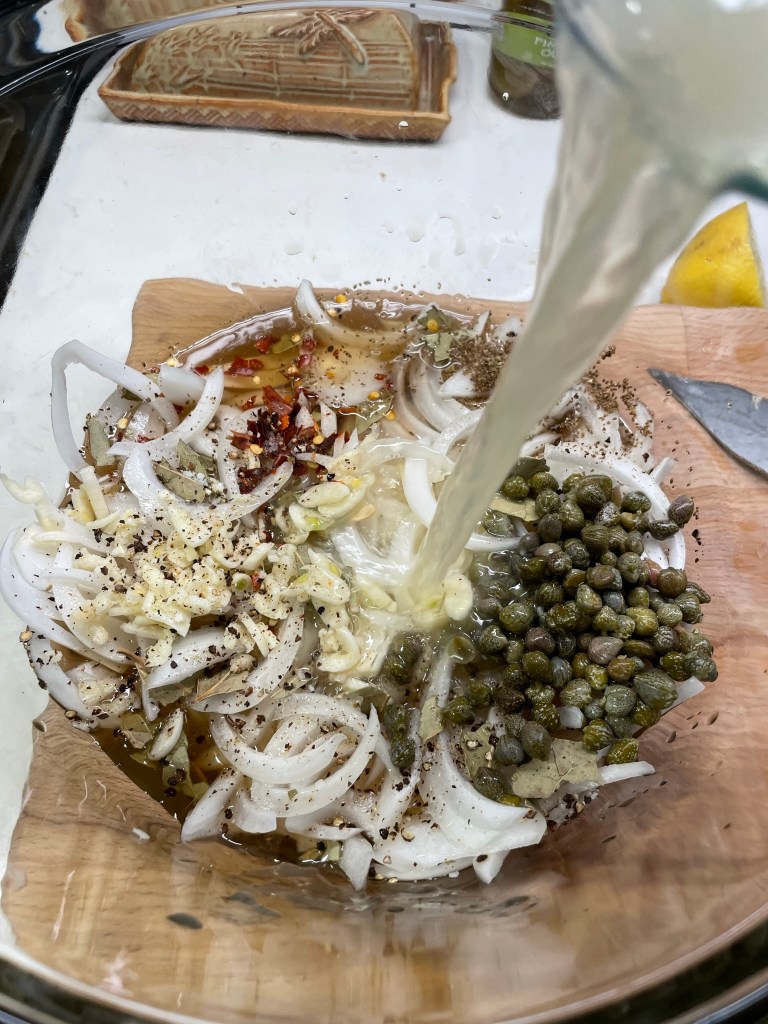
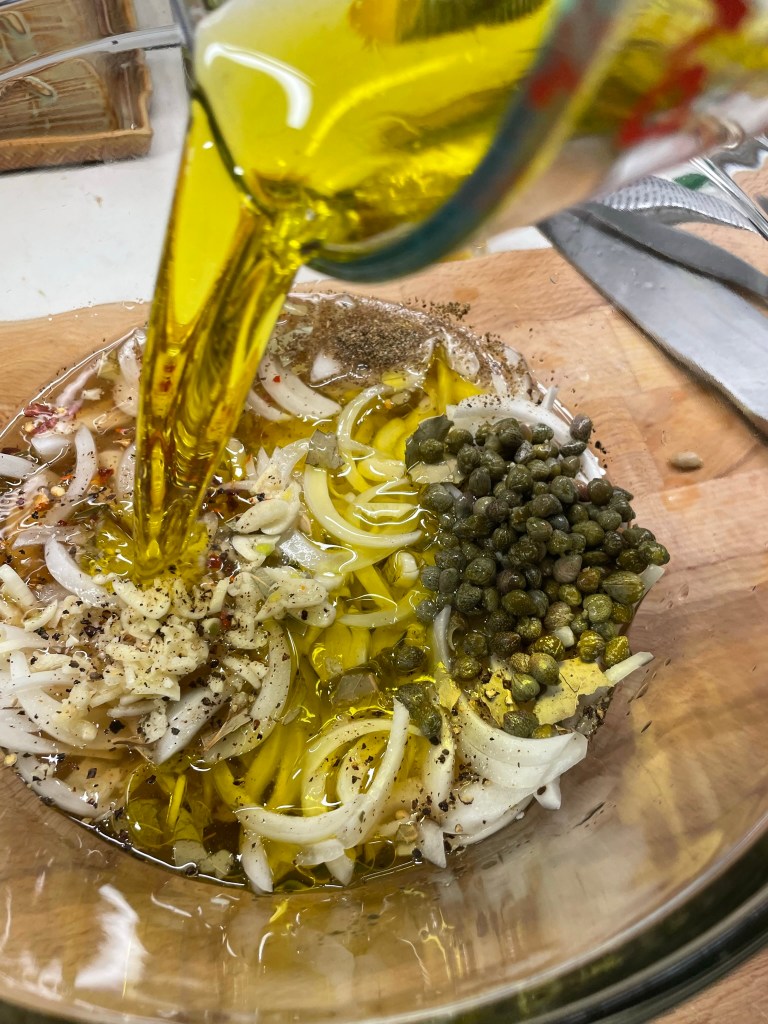
So when I saw this recipe for pickled shrimp, straight from Conroy himself, I knew it would be a winner. The ingredients are straightforward— onions, garlic, capers, crushed red pepper, spices, vinegar, lemon juice and olive oil— and as I blended these things together, it occurred to me that you could substitute any number of things for variations of this delicious mix. Why not use pimientos instead of capers, or jalapenos instead of crushed red pepper? Couldn’t you put a Greek spin on it with some oregano and chopped kalamata olives? Oh, the possibilities!


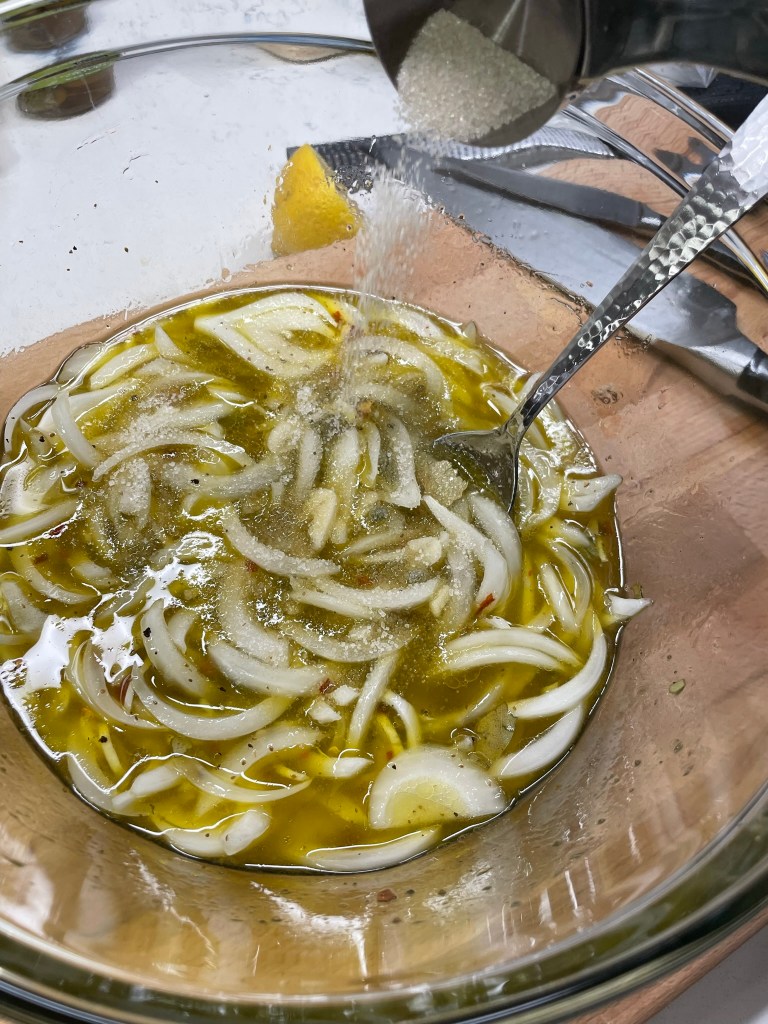
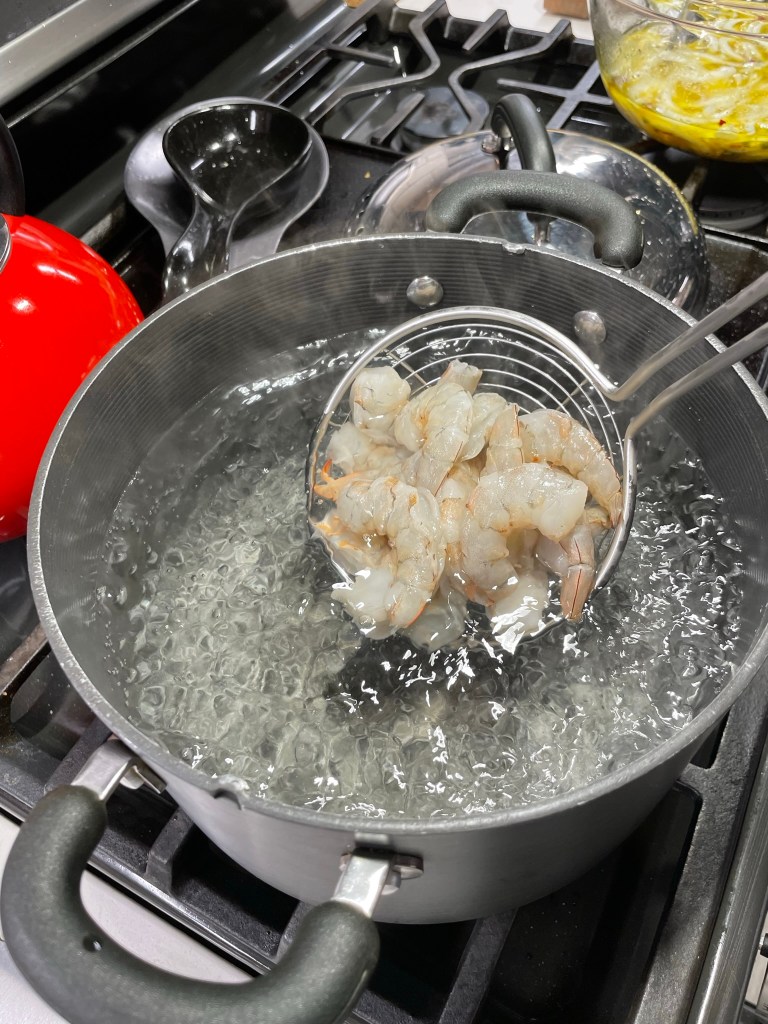
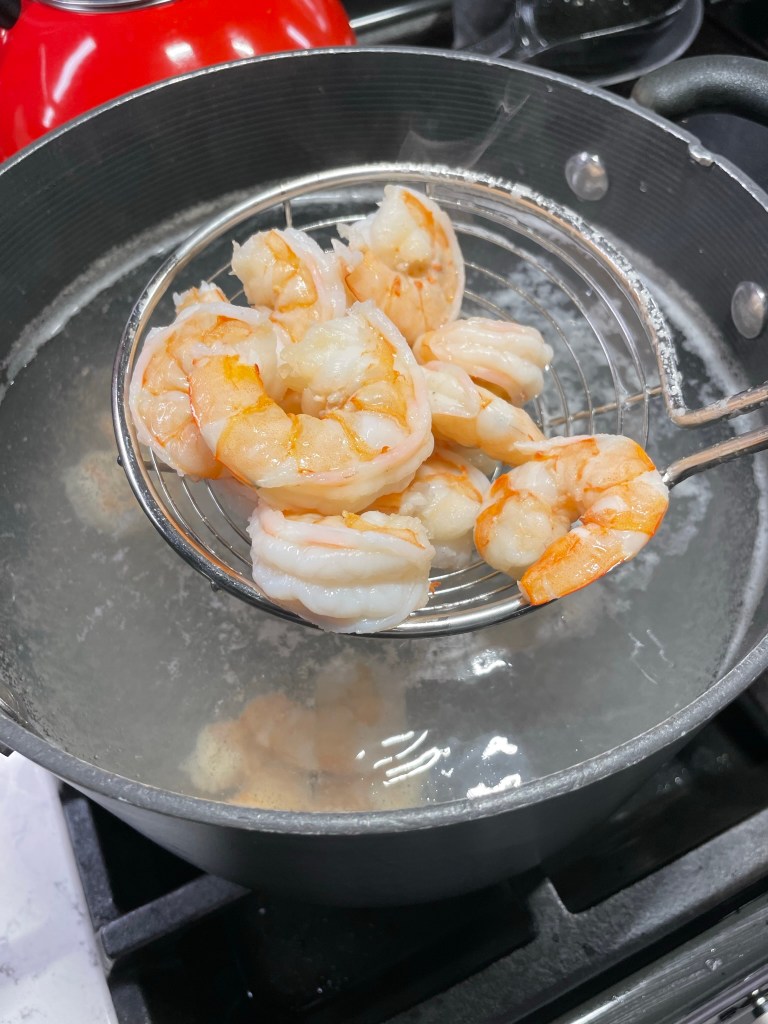
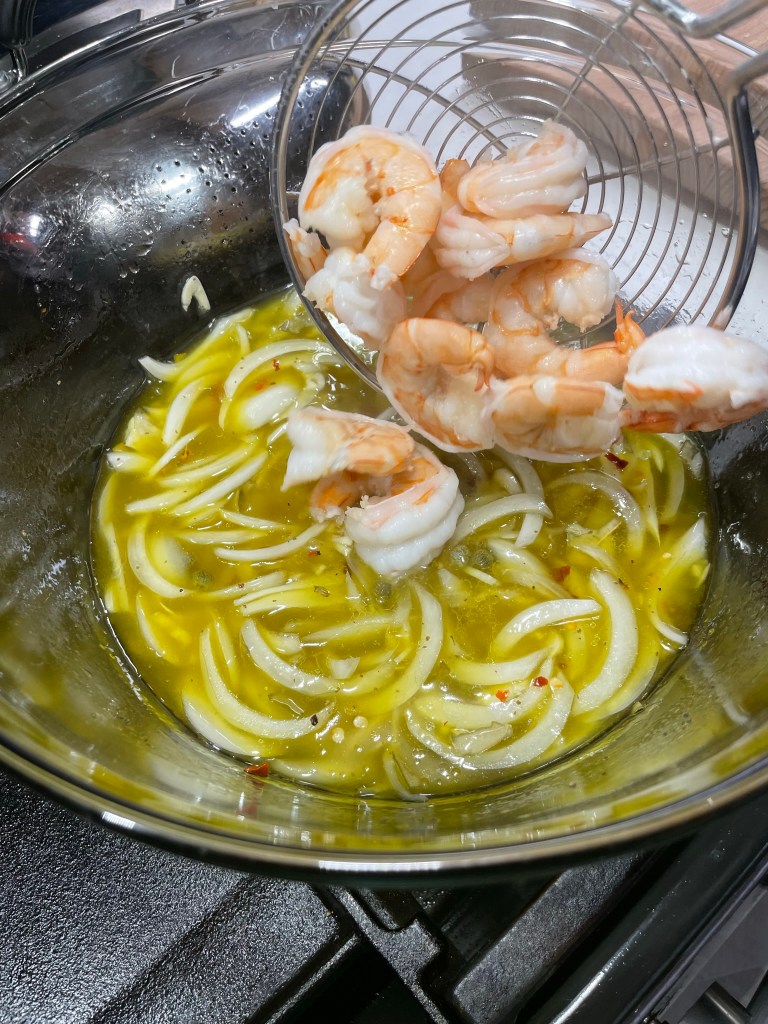
I added a spoonful of sugar, just because it’s the South and well, it’s what we do here. That little touch of sweet is a nice balance to the acidity of vinegar and lemon. Then, I dipped the shrimp ever-so-briefly into simmering water before spilling them into the pickling liquid. The prep and cook time are minimal in this dish, and the rest of the magic happens in the fridge when the mixture melds and mingles overnight. I doubled the weight of shrimp in my recipe and found that the marinade was sufficient. If you do the same, plan to give the mixture a stir every few hours.


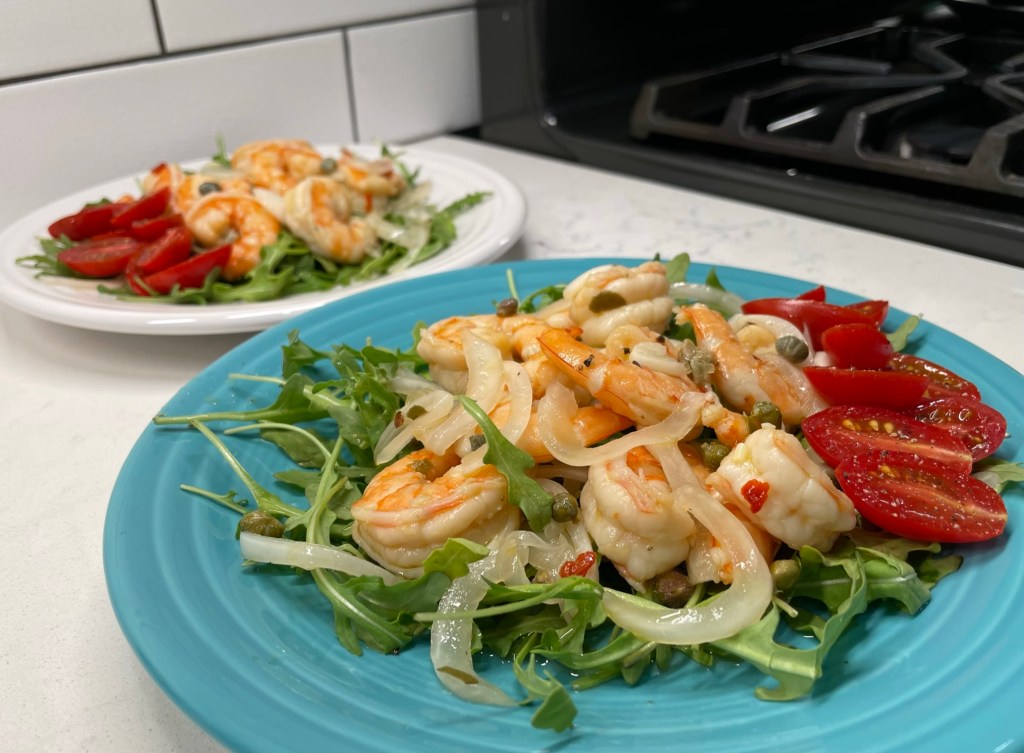
This pickled shrimp is tangy, briny, fresh, herbal, spicy and altogether perfect for spring or summer. For sure, it’s a Southern thing that I have only made twice myself, but that is going to change, especially now that my mind is set on swapping in other flavors. We served this shrimp on the hors d’oeuvres table for Kentucky Derby, in a large bowl tucked inside an even larger bowl filled with crushed ice— so easy! Our guests raved about it, and what little bit was left over turned a simple pile of arugula into a weeknight dinner salad that was as delicious as it was effortless.

Now, if you’ll excuse me, I’m off to begin my search for the perfect she crab soup recipe. I’m sure Conroy has one out there somewhere!


Easy Pickled Shrimp

  • Servings: About 10
  • Difficulty: So Easy!
  • Print

This easy recipe is a good one to have in your pocket for a brunch, potluck or any summer gathering. For best results, use fresh, never frozen shrimp.


Ingredients

  • 1 medium sweet onion (preferably Vidalia), cut into thin, lengthwise slices
  • 3 garlic cloves, finely chopped
  • 3 ounces non-pareil capers, drained and lightly chopped
  • 4 dried bay leaves, crushed into small pieces
  • 1 cup apple cider vinegar
  • 1/4 cup freshly squeezed lemon juice (zest, too)
  • 1 tsp. kosher salt
  • Several twists of freshly cracked pepper
  • 1 tsp. celery seed
  • 1 tsp. crushed red pepper flakes
  • 1 Tbsp. sugar
  • 1/2 cup good quality, extra virgin olive oil
  • 2 pounds fresh large shrimp, peeled and de-veined

Directions

  1. Combine all ingredients except shrimp in a large bowl fitted with a lid.
  2. Bring a large pot of water to boil. Add 1 tablespoon kosher salt to the pot and stir to dissolve. Reduce heat to medium to keep water at a consistent simmer.
  3. Using a spider strainer or other mesh-style scoop, add shrimp, about 1/2 pound at a time, and cook only until shrimp is bright pink and slightly curled (60 to 90 seconds). Transfer immediately to the bowl of pickling liquid and toss gently to coat the shrimp in the liquid. Repeat until all shrimp are cooked.
  4. Let the shrimp cool for about 20 minutes, then cover bowl and transfer to the fridge to chill for 6 to 8 hours. Give it a gentle stir every few hours and just before serving.
  5. Serve in a large bowl, with pickling liquid, inside a larger bowl filled with crushed ice to keep it cold.


Sweet Tea-brined Pork Chops & Peach-Mint Chutney

There were a few big things I had to get used to when I moved to North Carolina from my childhood home in upstate New York. The weather, of course, was wildly different—we have at least eight months of warmth and sunshine each year, compared to seven months of snow and slush and gray that were my normal. People in the South tend to be friendlier (there are exceptions, naturally) and there is a sense of hospitality that I had not experienced before I moved here. It didn’t take long for me to fall in love with the place.

Folks ‘round here invite you to drop by anytime, “sit a spell” and enjoy some tea. The first time someone welcomed me this way, I thought it odd that they would serve tea on a hot August afternoon. But that’s because, where I grew up, tea was a beverage served hot, with the paper tab of a teabag draped over the edge of a dainty cup, and a lemon wedge or tiny cup of milk served on the side.

Not so in the South, where “tea” is sweetened with sugar (white or brown, depending on the whims of the hostess), freshly brewed and poured over ice in a tall glass, best enjoyed on the front porch while listening to the hum of cicadas (which we have every summer in North Carolina). Lemon is optional, gossip is welcomed. Sweet tea is, as Dolly Parton’s character declared in Steel Magnolias, “the house wine of the South.”

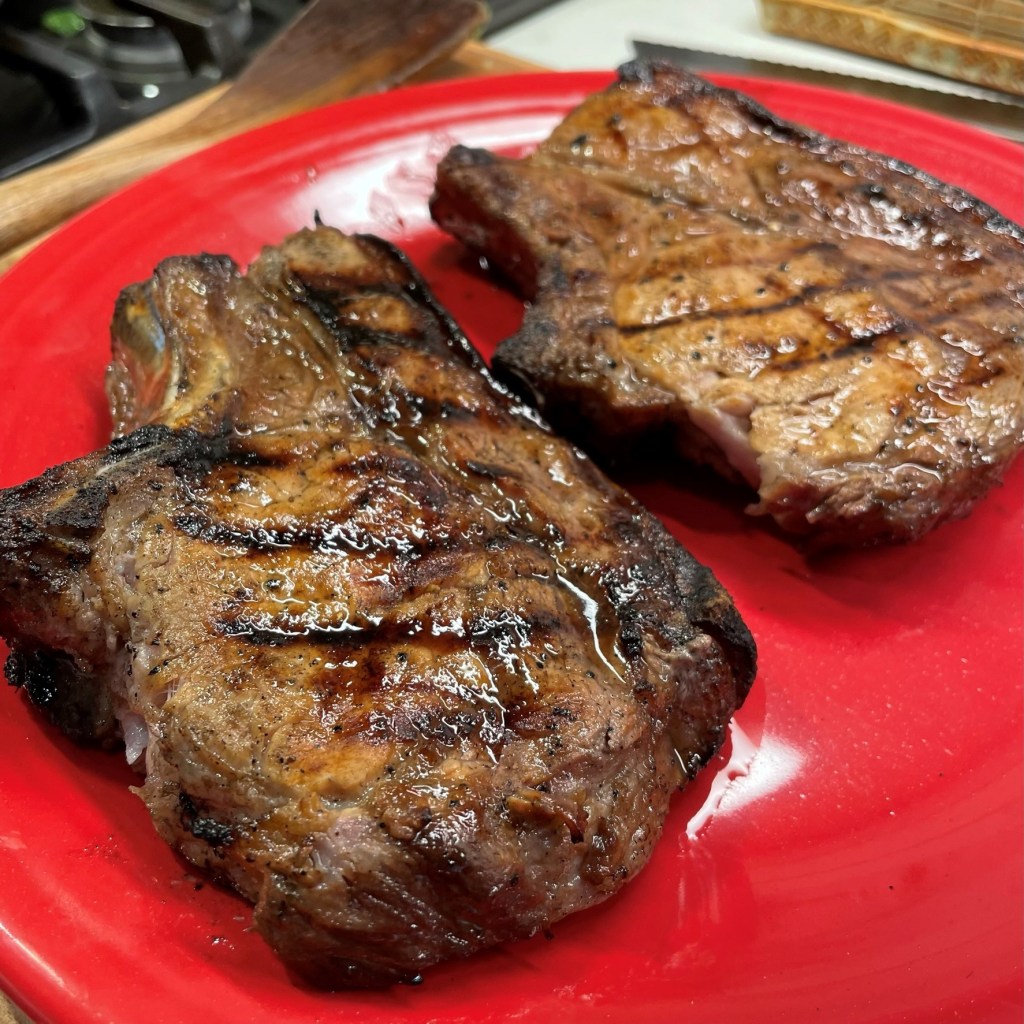
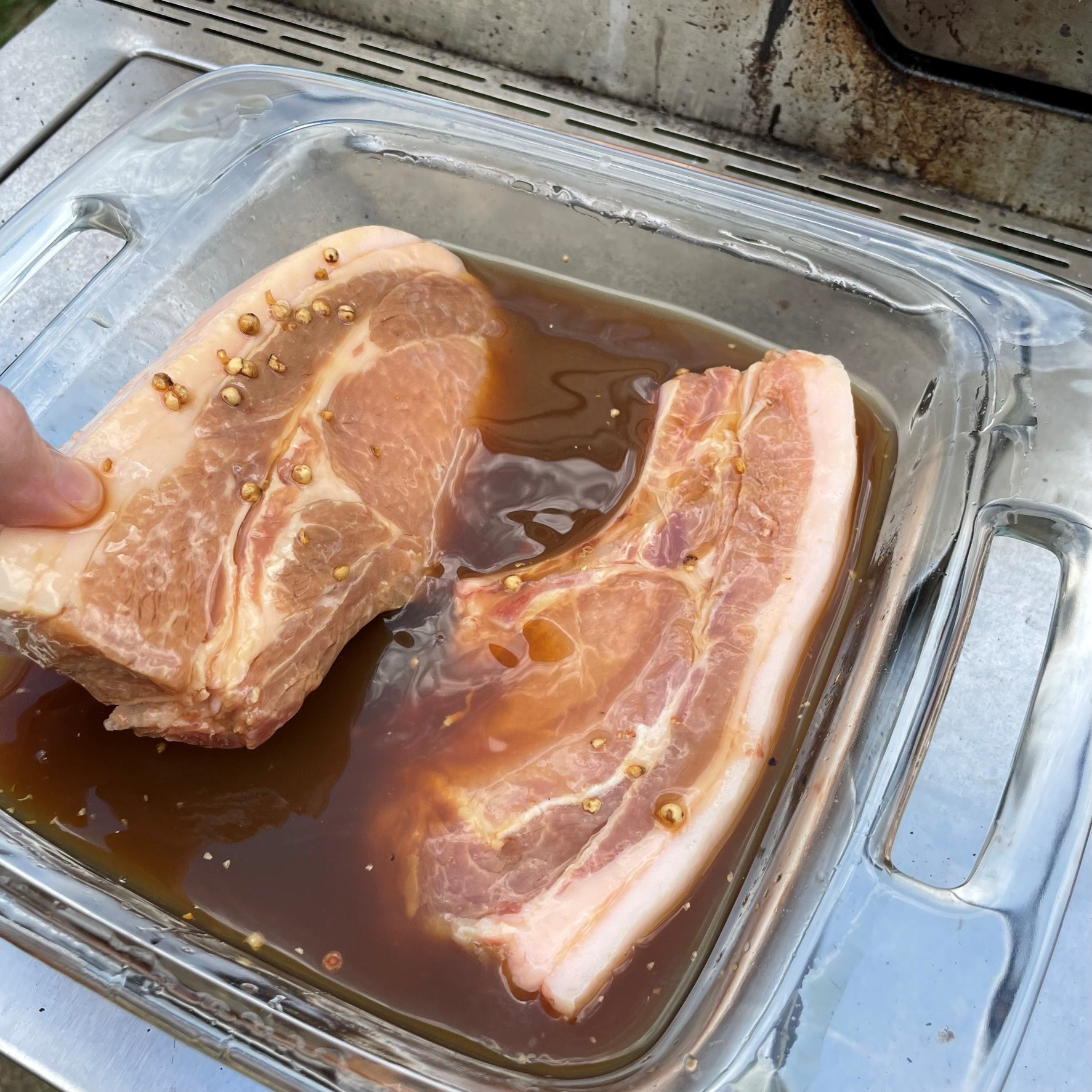
Though my Yankee-born taste buds do not appreciate the level of sweetness in southern sweet tea, I respect its place in the culture and I enjoy giving it a starring role in my kitchen. The polyphenols in tea are said to provide a wide range of health benefits, and beyond that, I knew that black pekoe tea would be acidic enough to help tenderize the beautiful pork chops I picked up at our local butcher shop. The flavor of these chops after brining and grilling was, how shall I say? Freaking awesome, that’s what. They were tender and juicy, flavorful with a subtle sweetness.

Lord, yes, this sweet tea brine was delicious!

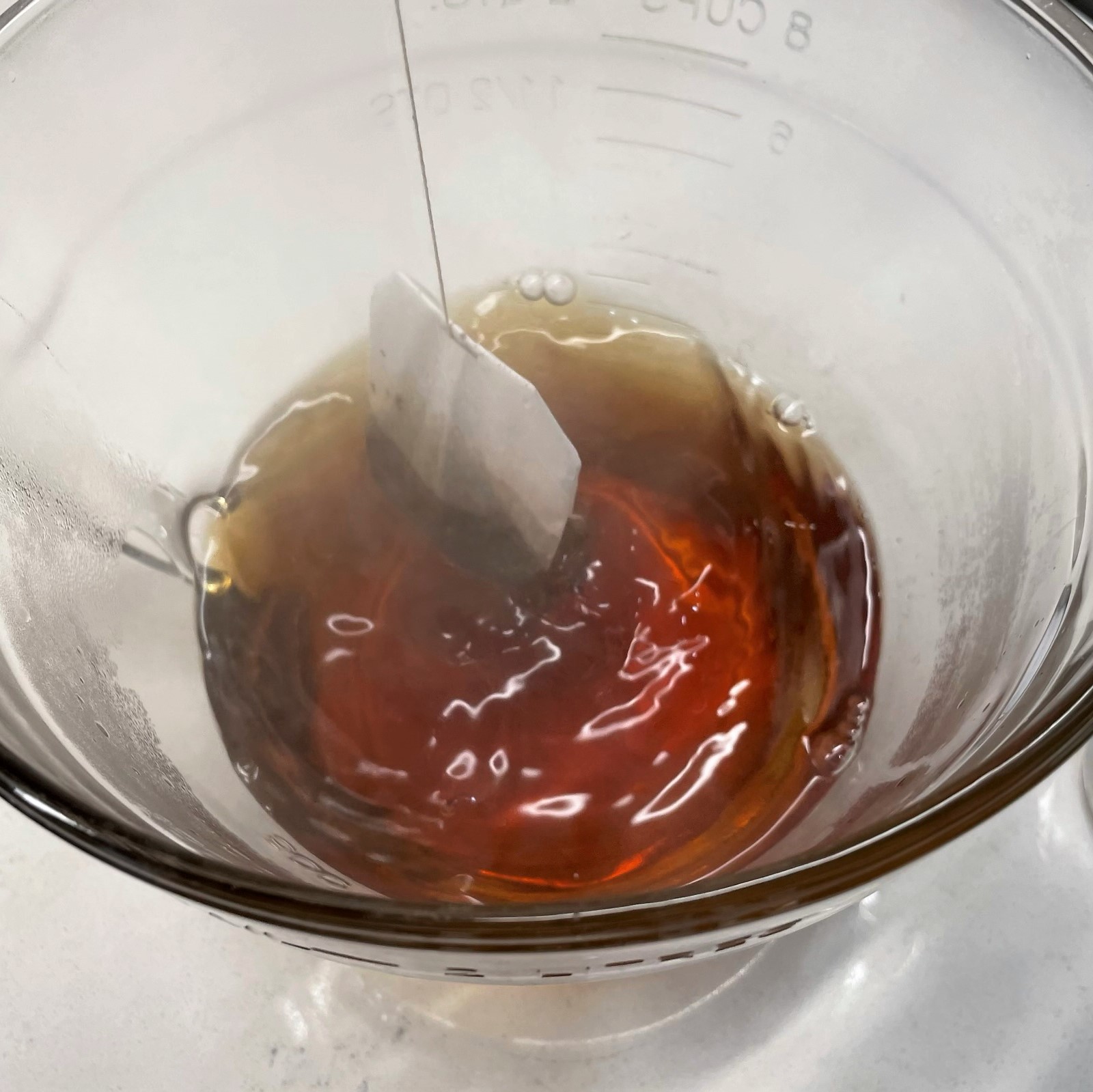
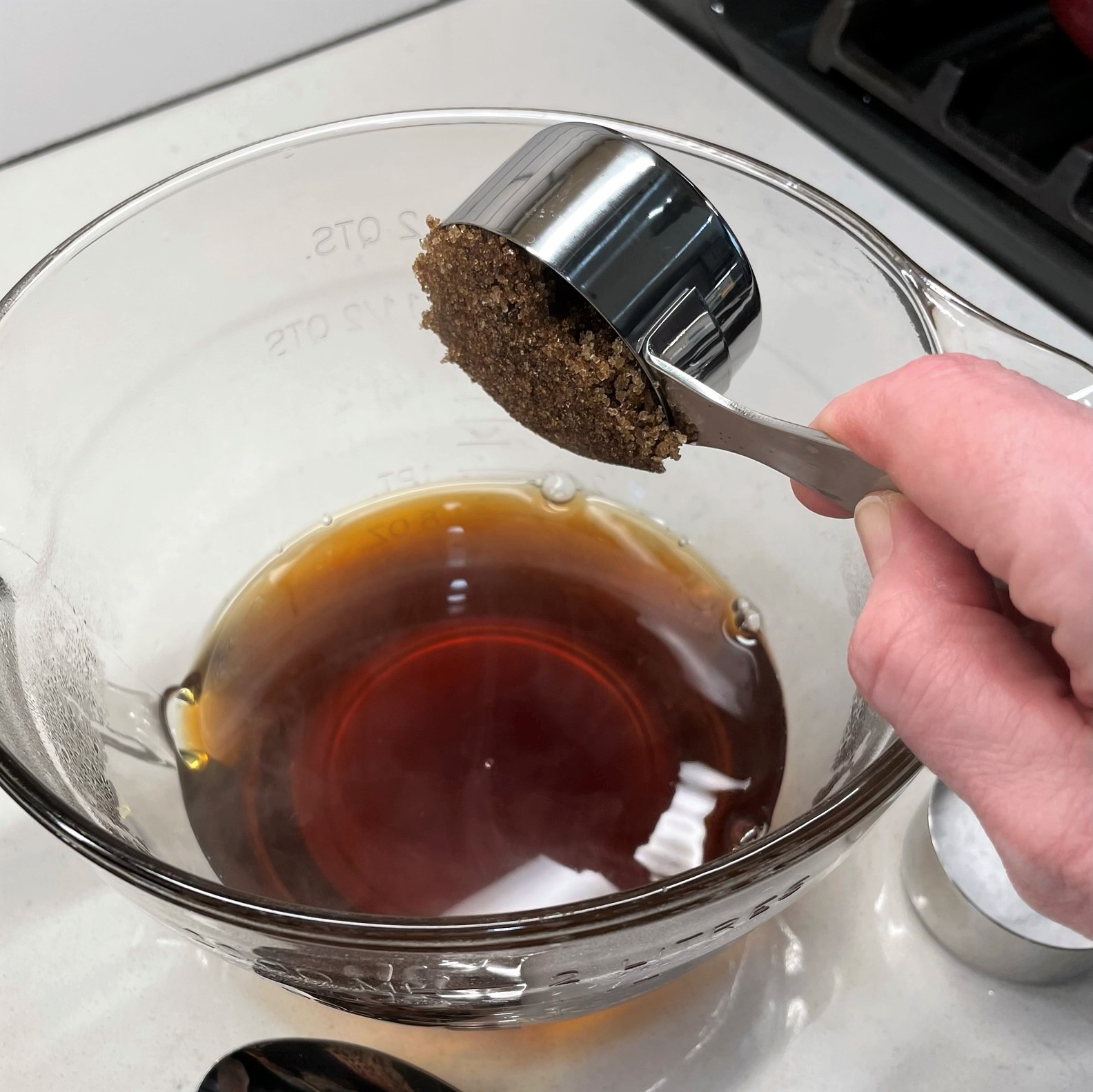
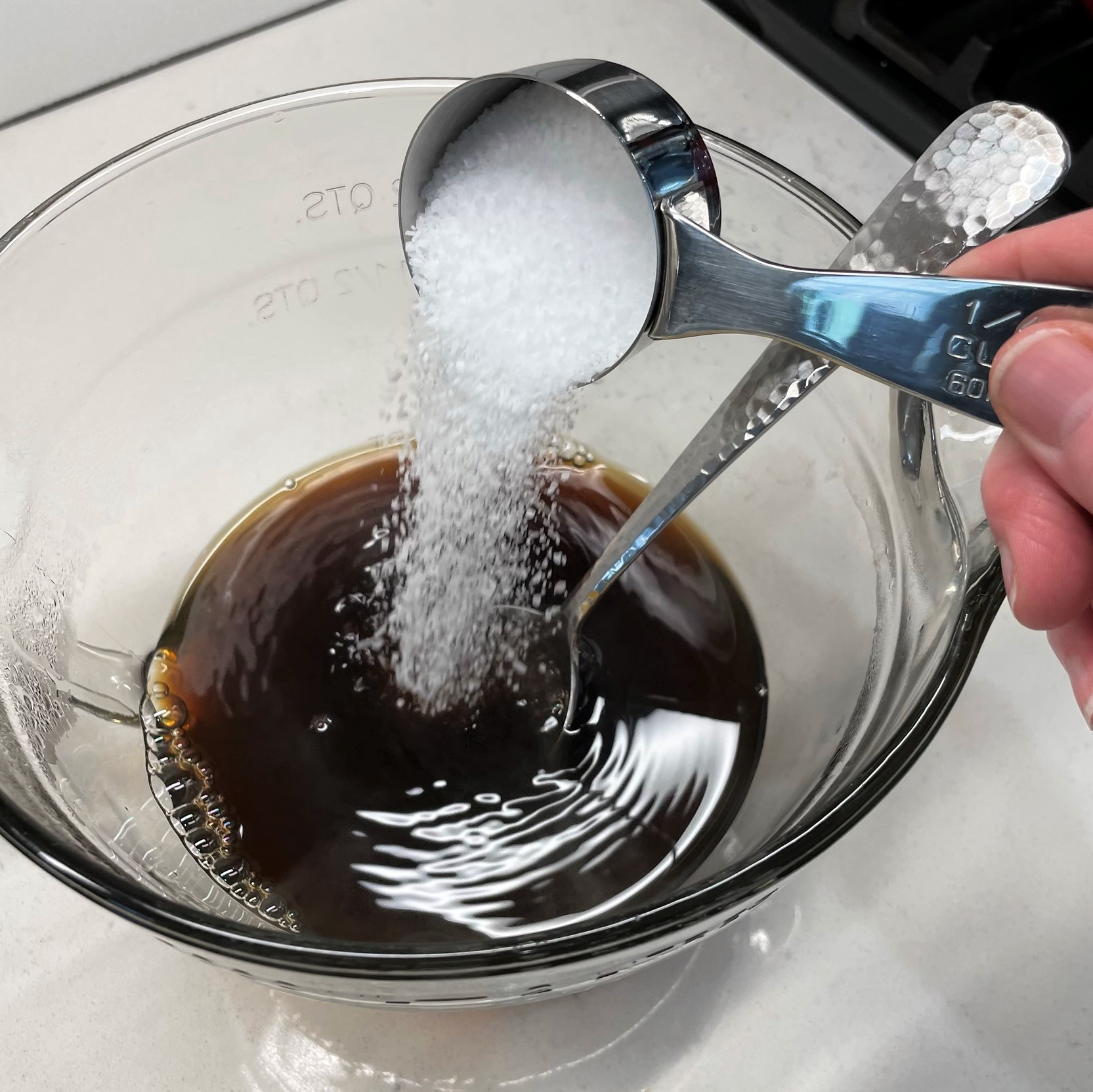
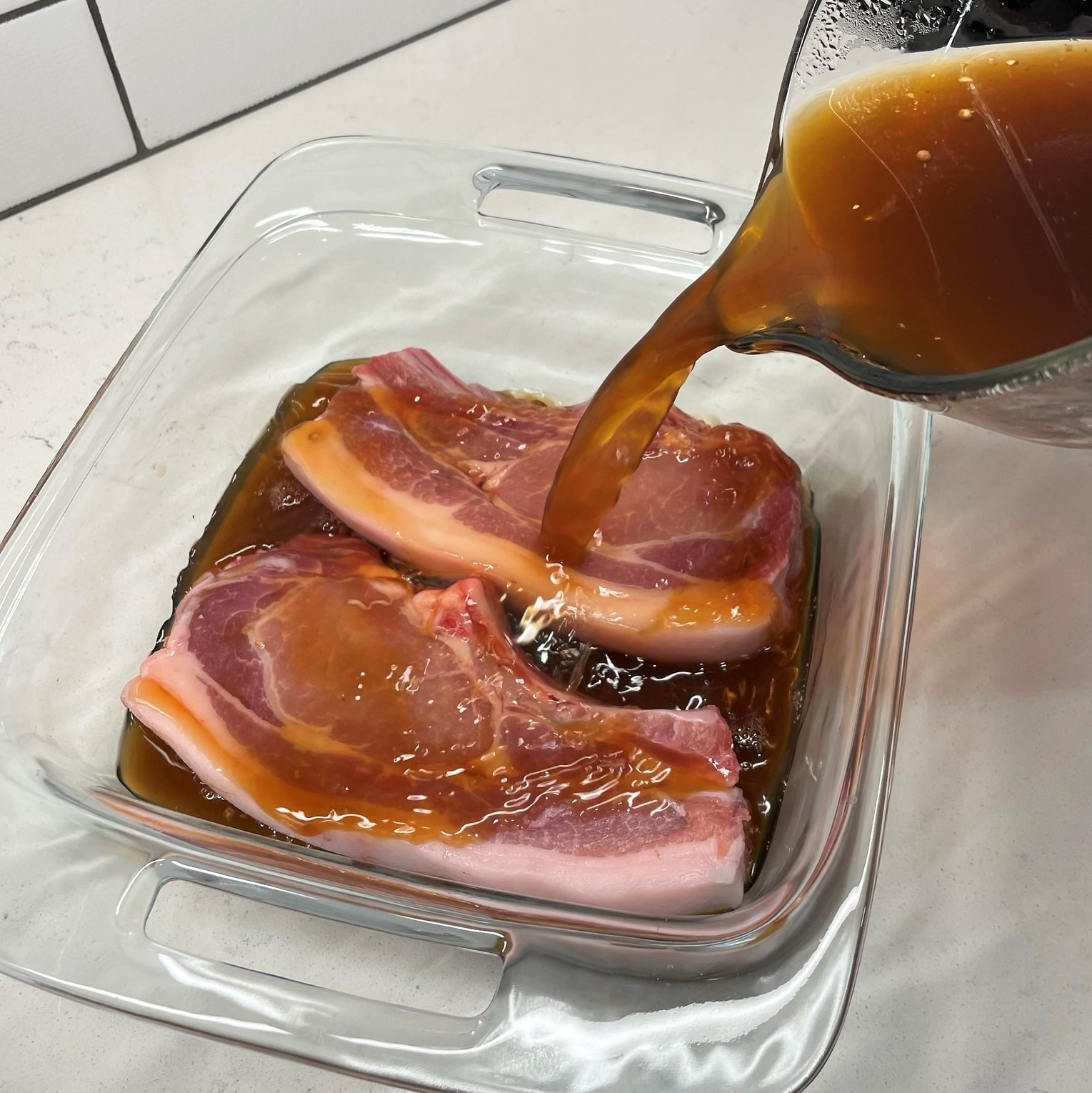
Any recipe involving a brine requires some advance prep, so if you decide to make these, start in the morning. One of the critical rules of brining is to never pour a warm brine over raw meat. I brewed the tea late that morning, following a typical “southern” ratio of tea-to-water and sugar, then I flavored it up with kosher salt (necessary for any brine), white peppercorns and a very generous squeeze of fresh lemon juice. After a three-hour cooldown, I poured the brine over my chops and refrigerated them for several hours before grilling.


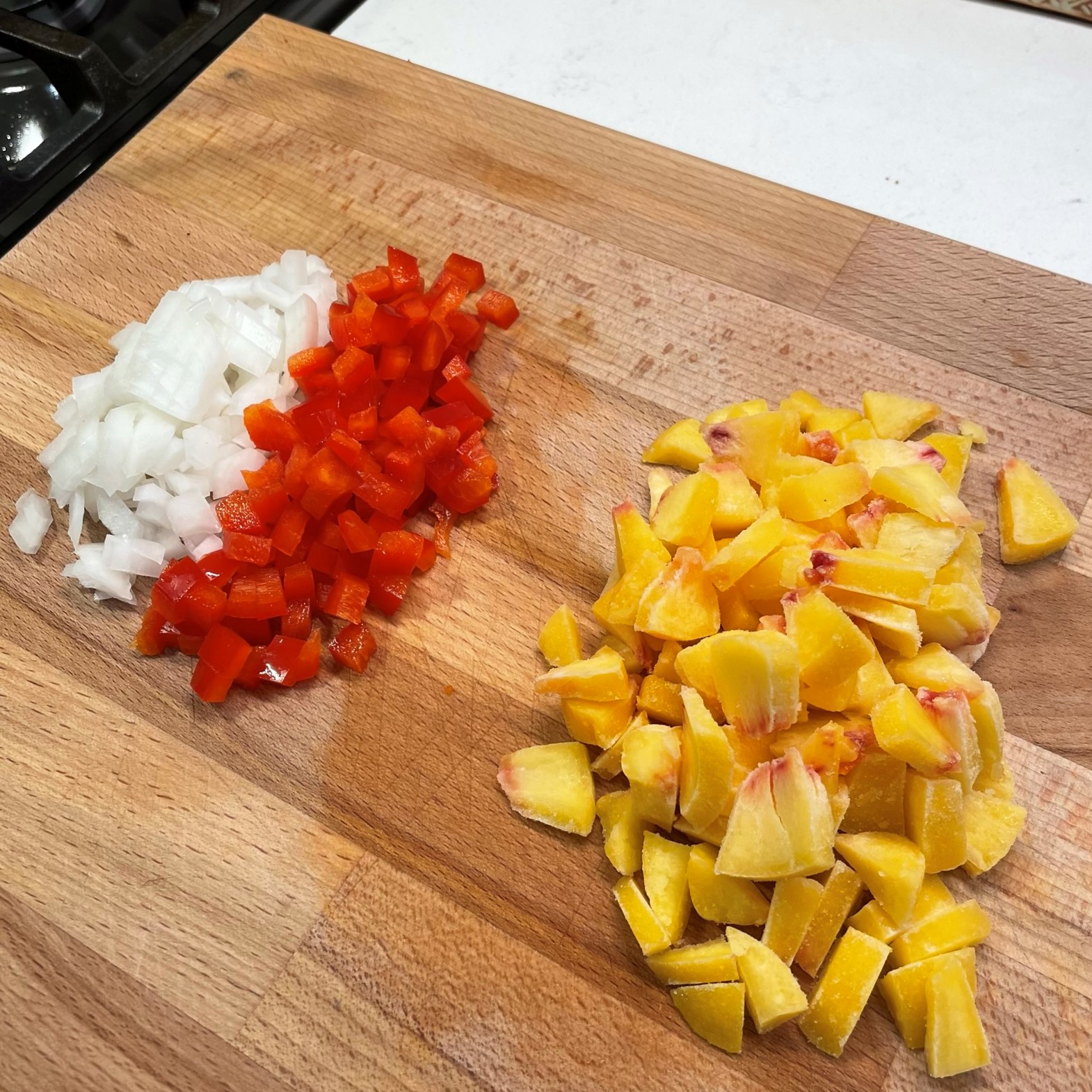
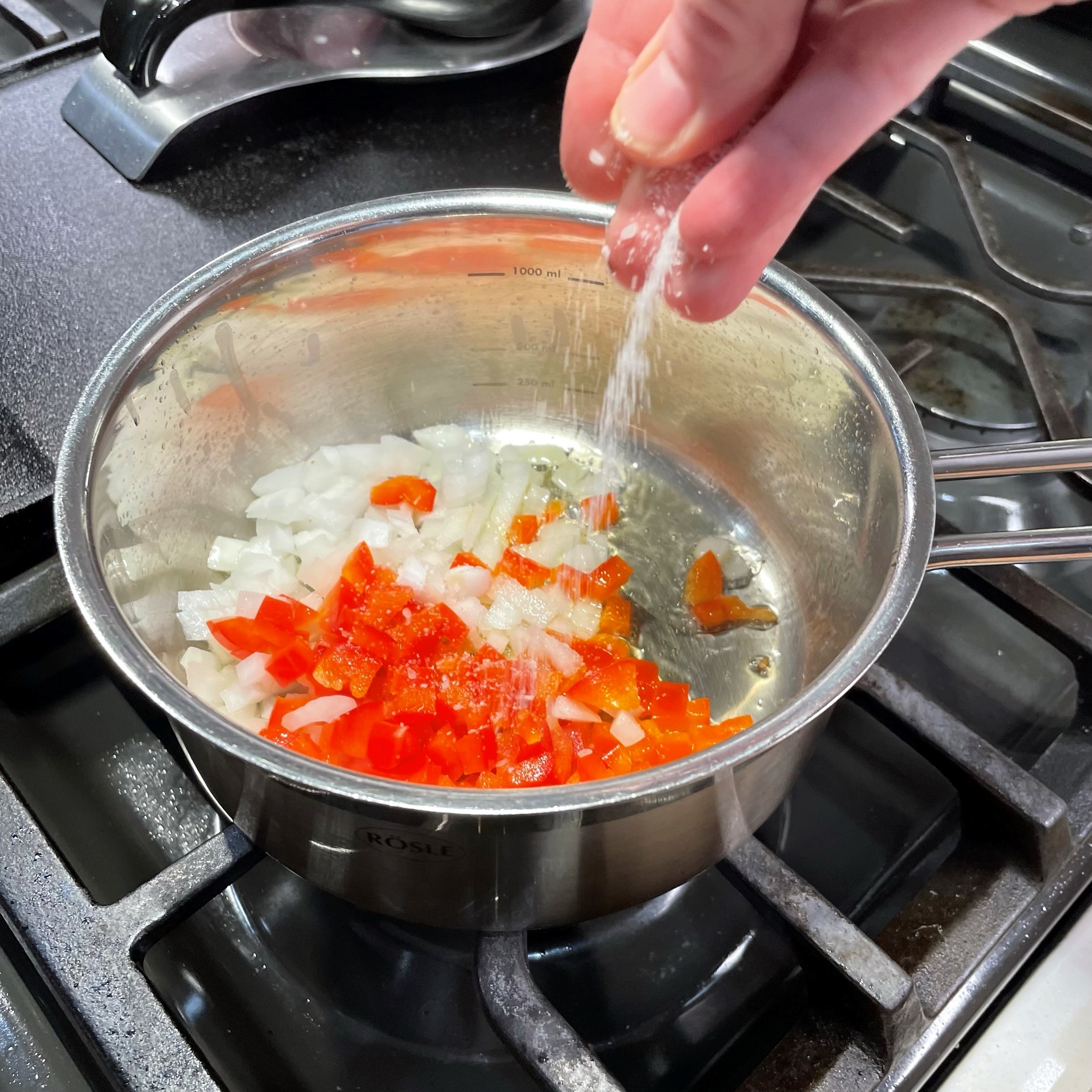
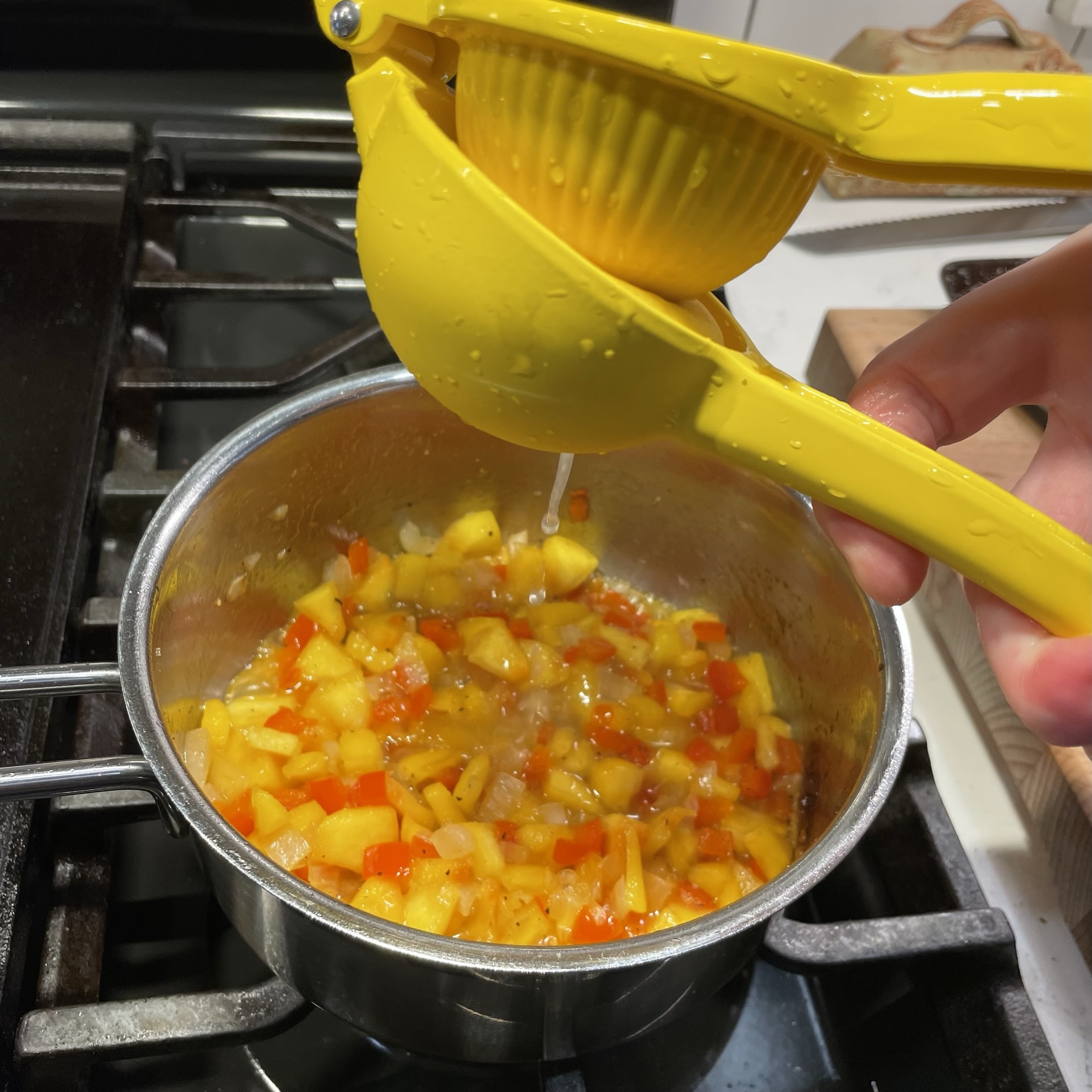
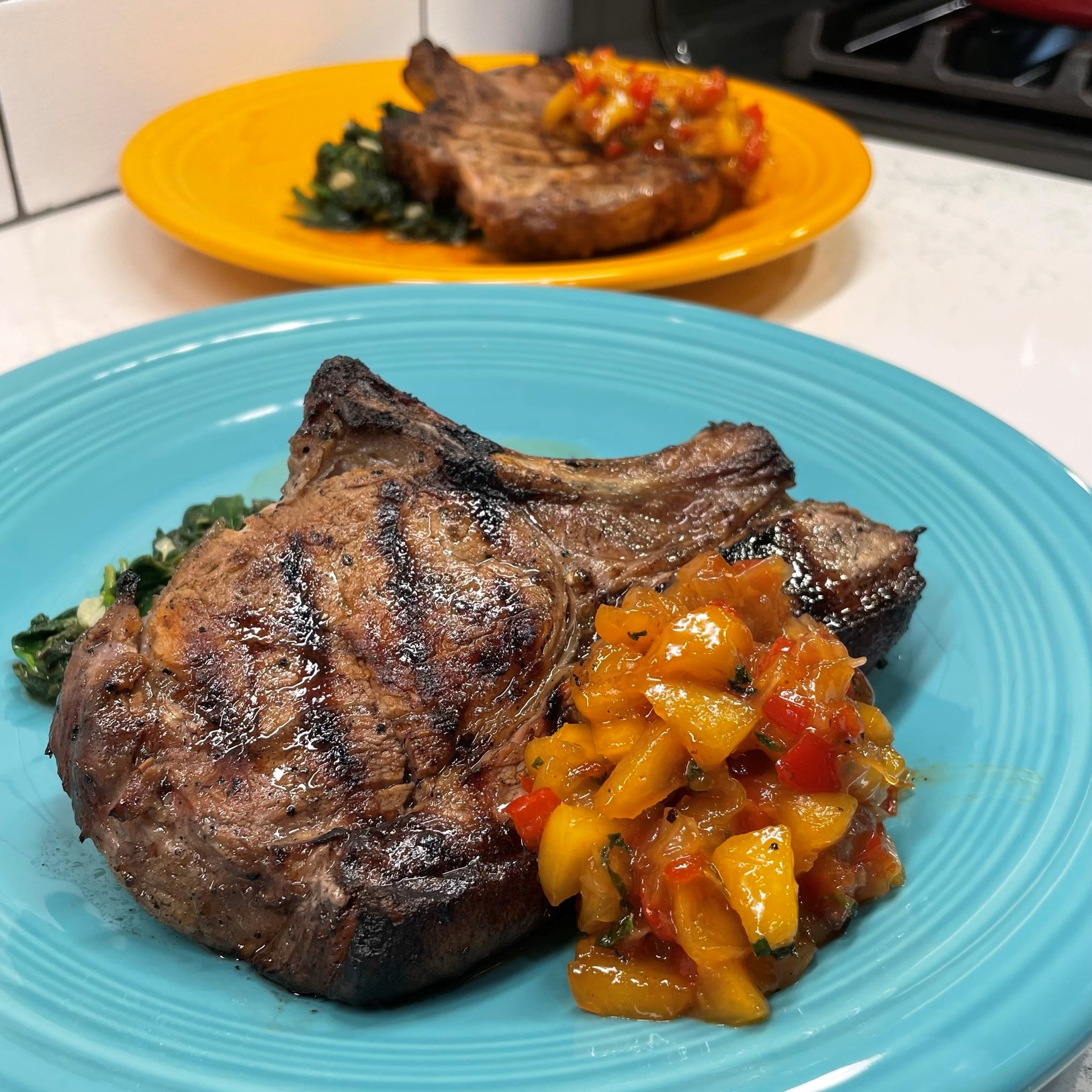
Chops this flavorful needed a strong accompaniment, and I paired them with a sweet-meets-savory chutney, giving two more southern specialties—peaches and Vidalia onions—supporting roles on our plates. As with any chutney, I sauteed the onions first with a handful of sweet red bell pepper, then I added peaches (frozen was my best option this time of year), a bit of brown sugar and fresh lemon juice, a tiny bit of zippy horseradish and a few leaves of fresh mint at the end to brighten it all up.


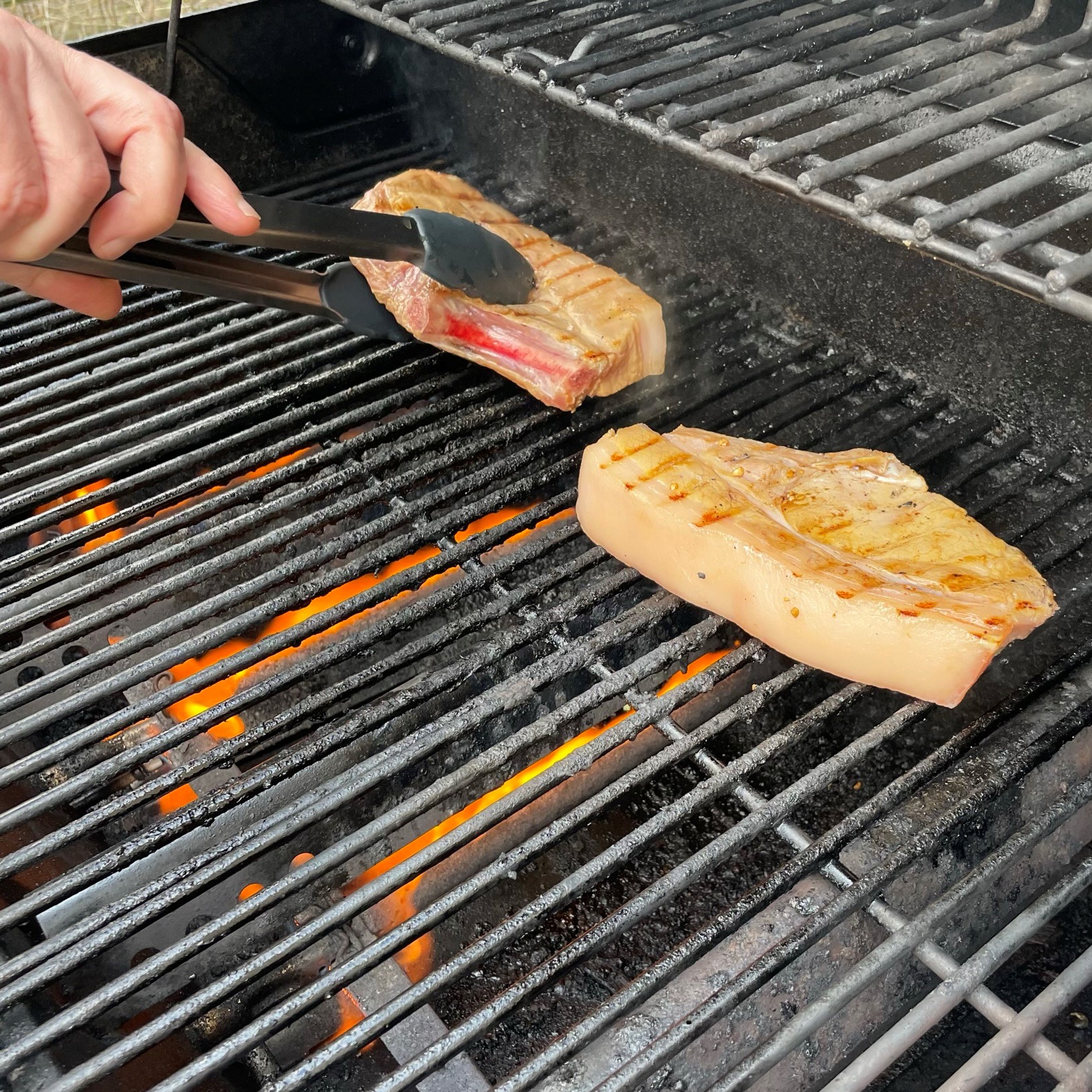
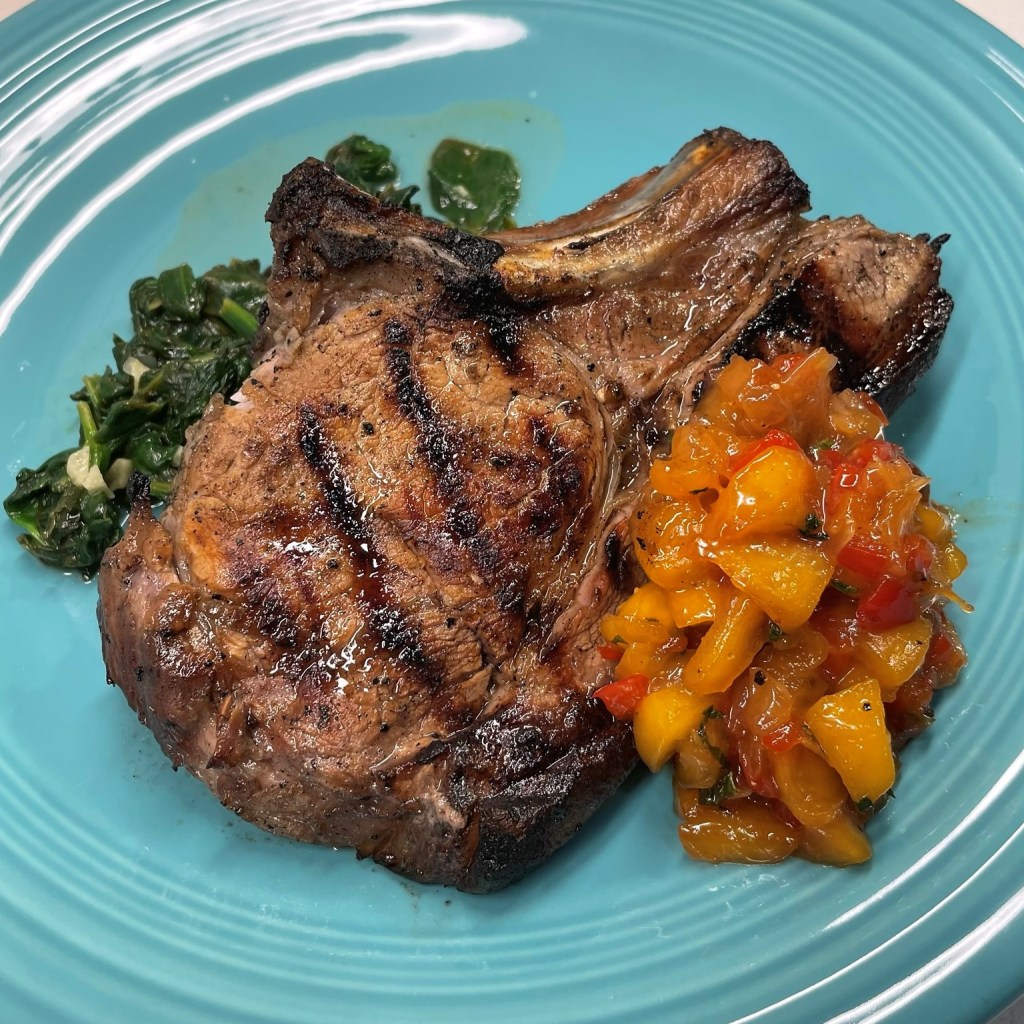
My husband is the grill master at our house, and he did his usual outdoor magic with these sweet tea-brined pork chops. After searing both sides on high heat, he let them hang out at a lower temperature for about 8 minutes on each side, until the meat was beautifully browned, and the chops were done to medium (150° internally). A quick rest on the counter while I plated up some sauteed spinach and the peach-mint chutney, and this was one tasty dinner.  


Sweet Tea-brined Pork Chops

  • Servings: 2
  • Difficulty: average
  • Print

Well, bless my heart! I’ve fancied up a pitcher of southern sweet tea and made it a brine for the most tender, flavorful pork chops our grill has ever seen! This recipe requires some down time, for cooling the sweet tea brine, as well as brining the pork chops before grilling, so plan accordingly.

Ingredients

  • 2 cups filtered water
  • 1 family size black pekoe tea bag, or 3 regular tea bags
  • 1/3 cup packed brown sugar
  • 3 Tbsp. kosher salt
  • 1 Tbsp. cracked white peppercorns
  • Juice of 1/2 large lemon
  • 2 thick, bone-in pork loin chops, weighing almost a pound total

Directions

  1. Boil water and pour it over the tea bag to brew the tea. Add brown sugar and kosher salt, stirring until both have fully dissolved. Add white peppercorns and lemon juice. Allow the brine to cool at room temperature for several minutes, then transfer the brine to the refrigerator for about three hours to chill.
  2. Pat the pork chops with paper towels to remove any residue from the butcher wrap. Place chops in a dish large enough to hold the full amount of brine. Pour chilled brine over the chops and refrigerate for 3 hours before grilling. If needed, weigh the chops down with a plate to keep them fully immersed in the brine.
  3. Remove chops from the refrigerator 30 minutes before grilling. Preheat grill to 500 F for searing the chops.
  4. Place chops on grill over high heat, just long enough to sear each side. This should only take about one minute, but trust your instincts on your own grill. Once seared, reduce the heat to medium (about 350 F) and cook on each side for about 8 minutes, depending on the thickness of your chops. Optimal internal temperature is 145-150 F, and the chops will continue to cook a bit after you remove them from the heat.
  5. Rest the chops on a plate for about 3 minutes, then plate and serve with peach-mint chutney.

Peach-Mint Chutney

  • Servings: 2
  • Difficulty: average
  • Print

This quick and easy condiment is a perfect complement to my “Sweet Tea-brined Pork Chops,” and it would also be delicious with fish or chicken. You can make this chutney ahead and refrigerate until ready to serve. It can either be warmed or served cold or room temperature.

Ingredients

  • 1 Tbsp. canola oil
  • 1/4 cup diced red bell pepper
  • 1/4 cup diced Vidalia onion
  • 1 cup fresh or frozen peaches, cut into cubes
  • 2 Tbsp. brown sugar
  • 1/2 tsp. prepared horseradish
  • Juice of 1/2 large lemon
  • Kosher salt and ground white pepper
  • 1 tsp. fresh mint leaves, cut into chiffonade or chopped

Directions

  1. Heat canola oil in a small saucepan over medium heat. When it shimmers, add onions and peppers and a pinch of salt. Saute until slightly softened, about five minutes.
  2. Add peaches, brown sugar and horseradish, tossing to combine. Season with a slight pinch of salt and white pepper. When the mixture is hot throughout, squeeze in lemon juice and simmer until it reduces and thickens slightly.
  3. Remove from heat and fold in chopped mint leaves.


Y’all come back, and see what I did with the rest of those peaches! 😉


Kickass Whiskey-Braised Collards

After a mere 30 years living in the South, I finally learned how to make collard greens, one of the staple foods of the region. It happened quite serendipitously, as I described in my original recipe for “Just Collards.” Since that fateful day, and the quick walk-through given to me by a kind stranger, I have made collards many times, using the same basic recipe. My husband and I enjoy them with everything from fried chicken that I pick up at the deli counter, pulled pork that he makes on the smoker, and even occasionally just on the side with some homemade mac and cheese.

Collard greens, in case you don’t already know, are one of nature’s “superfoods,” and they can be eaten raw, but most often you’ll find them braised in liquid. Collards are so packed with nutrients (including vitamin C, calcium, immune-supportive B vitamins and magnesium), that even the resulting cooking juices are considered to be sustaining. They are a very hardy crop, easy to grow in nearly every climate, and they are widely revered here in the South.

Until now, I have followed the same basic recipe—cook up some chopped bacon with onions, add chopped collards to the grease, splash in vinegar and broth and let them simmer until tender. Easy enough, and always delicious. I can’t quite explain what happened last week that inspired me to put a hot and spicy, bold and boozy twist on them—maybe a burst of Black History Month energy—but, mercy, was it ever good!

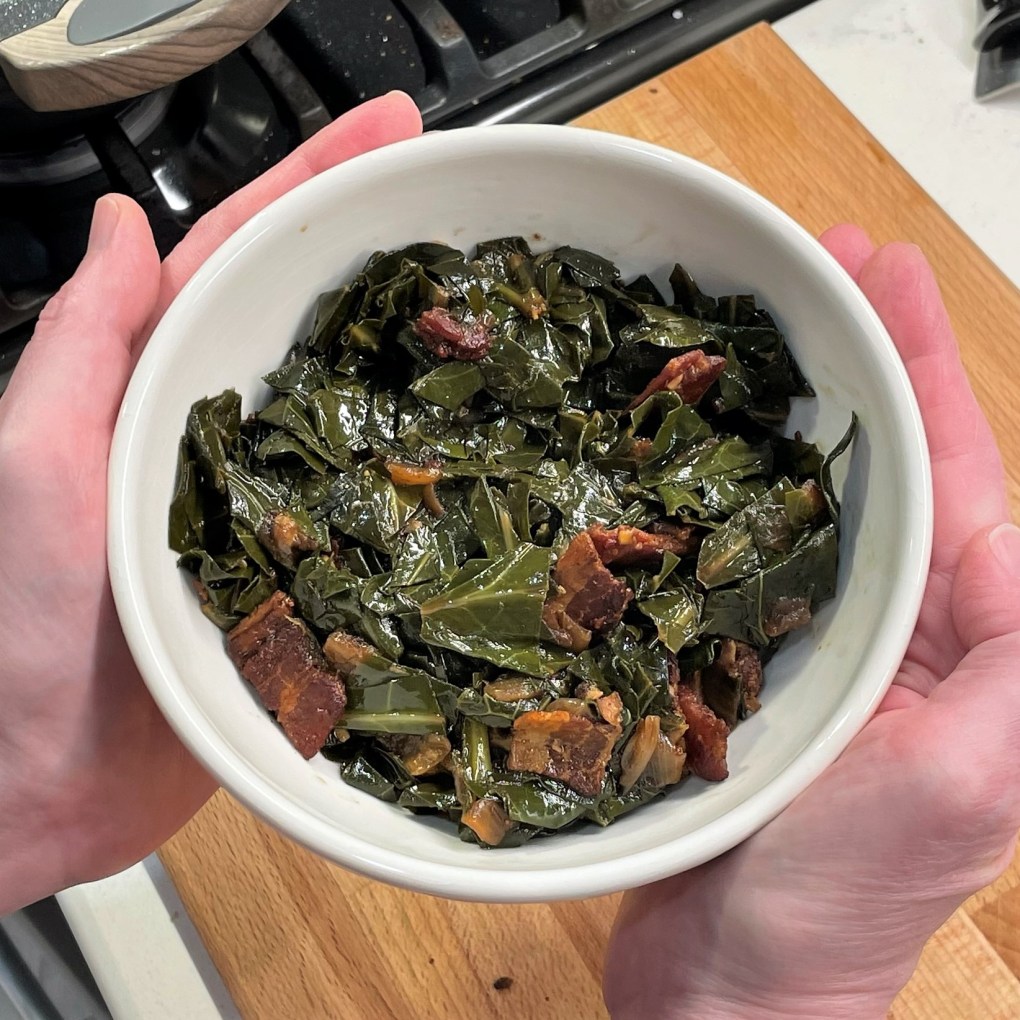
The salty bacon, smoky pepper heat and the bite of whiskey have transformed my usual collards into something extra flavorful!

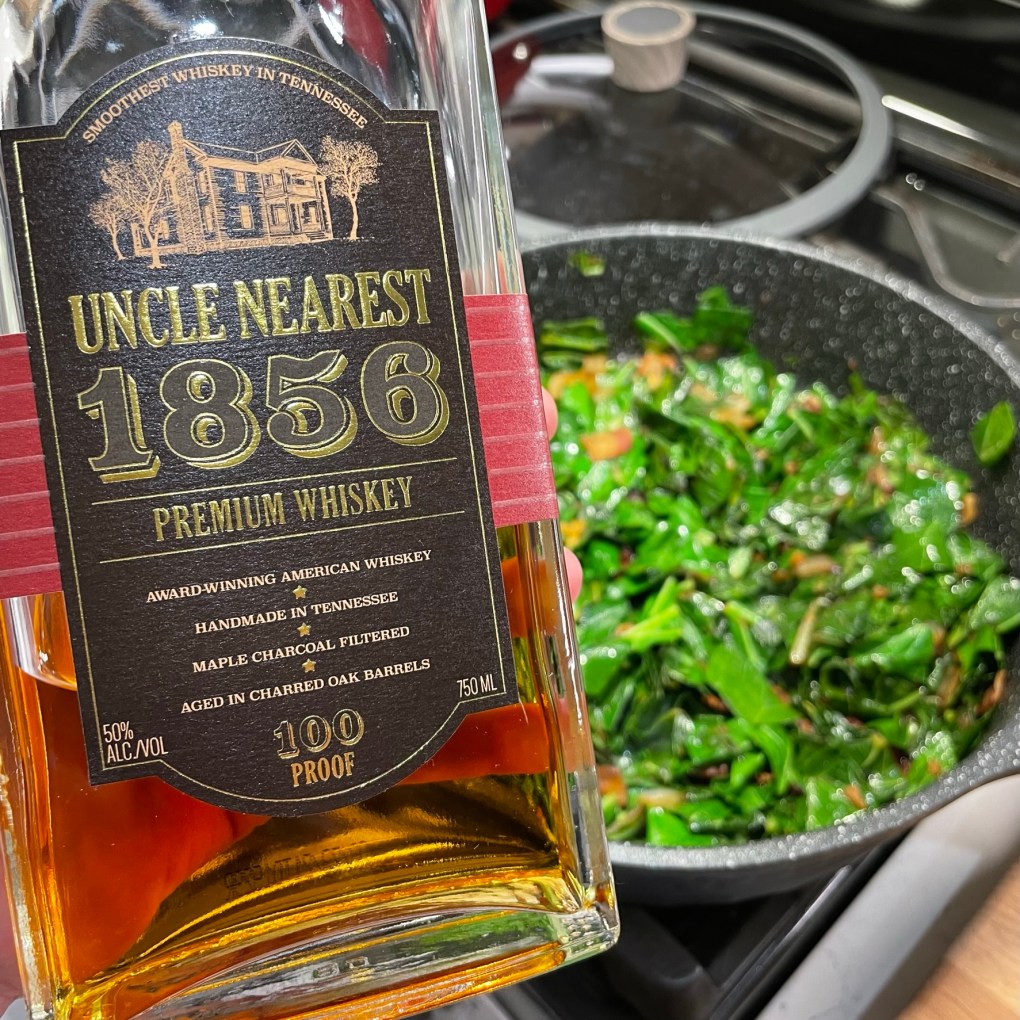
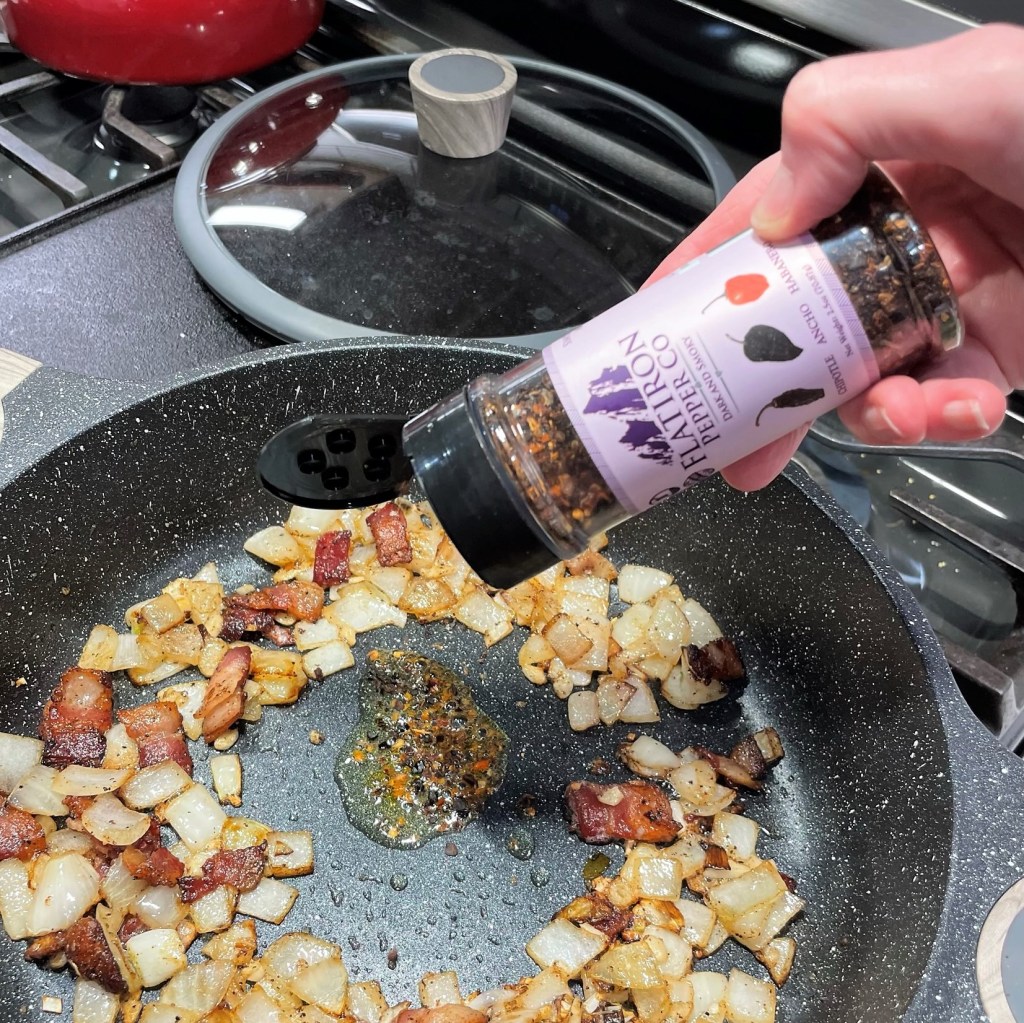
I amped up these collards with fresh garlic and a few extra shakes of a specialty pepper mix we love, which includes smoky chipotle, fruity ancho and fiery habanero. The combination of hot pepper flavors sent these collards over the top into kick-ass territory. The real kicker, though, was the shot of whiskey I splashed into them. And not just any whiskey, but the only brand I happened to have on hand when my imagination started running—Uncle Nearest 1856. If you have not yet heard of this whiskey, I hope you’ll take a few minutes to read about it. Uncle Nearest is a Black-owned brand, built on the legacy of Nathan “Nearest” Green, an enslaved man who taught Jack Daniel how to make whiskey. If you’re thinking, “how can that be?” well, this is why we have Black History Month, so we can fill in the gaps of what we thought we knew.

Braising in the whiskey turned out to be a great decision.

Uncle Nearest 1856 was the basis for the Long Time Coming red cocktail I created in honor of Juneteenth last year, and at 100 proof, it’s pretty sturdy. The charred oak barrel notes of the spirit imparted additional smokiness to these collards, which cooked up in about half the time as my regular, go-to recipe. That might have been the whiskey, or it could just be that I served them up earlier than usual, because they smelled so darn good.


Ingredients

3 slices uncured bacon, cut into 1/2″ pieces

1/2 large yellow or sweet onion, chopped

3 cloves fresh garlic, chopped or minced

Kosher salt and freshly ground black pepper

Several shakes Dark and Smoky red pepper blend (or any crushed red pepper you like)

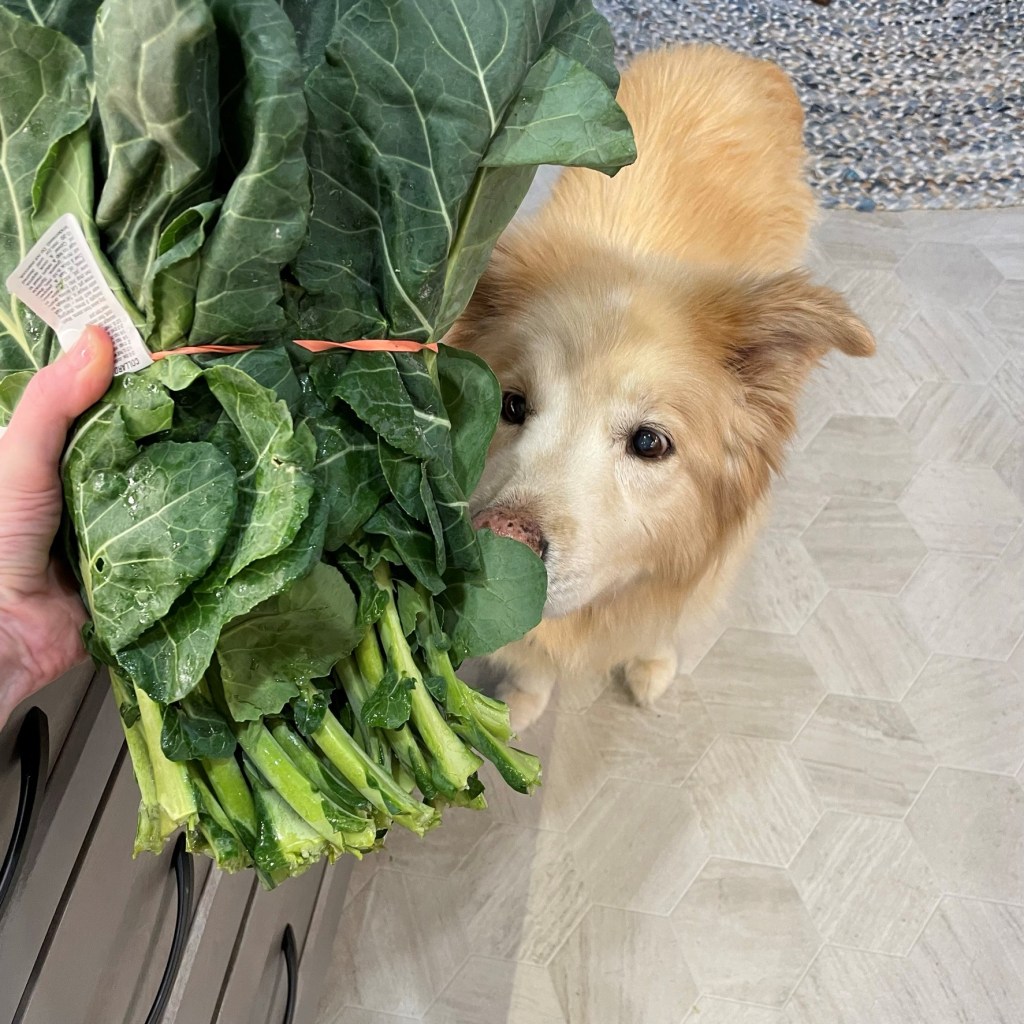
1 large bunch fresh collard leaves, washed and trimmed of heavy stems

1 shot glass whiskey (about 3 tablespoons)

1 cup low-sodium vegetable broth


Instructions


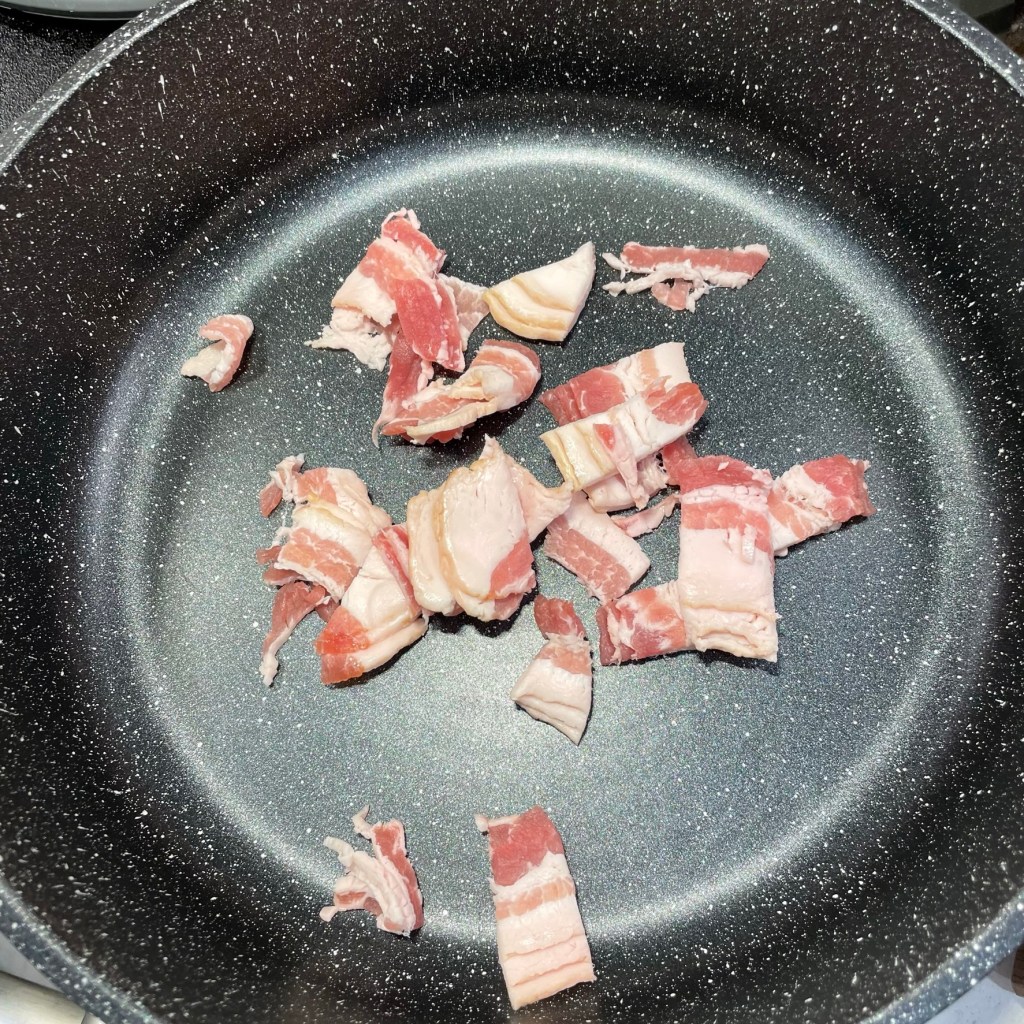
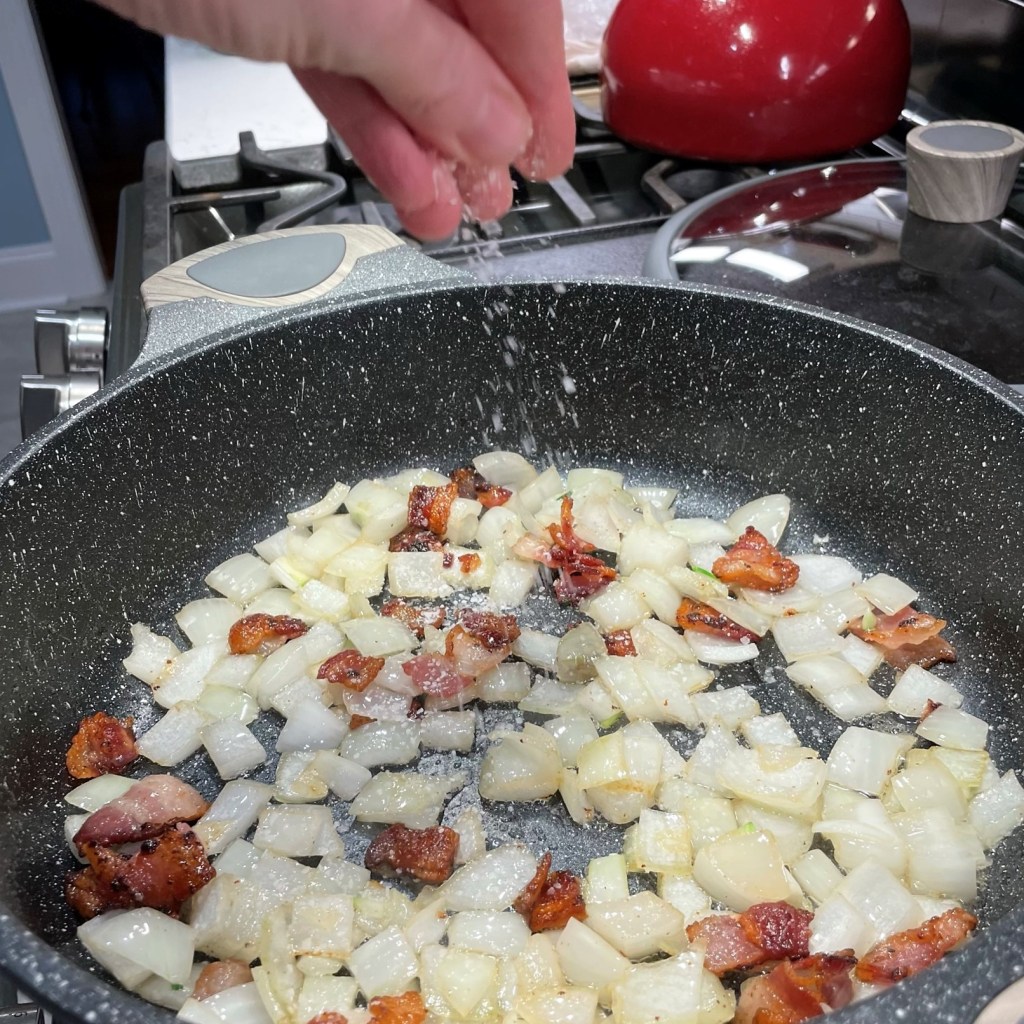
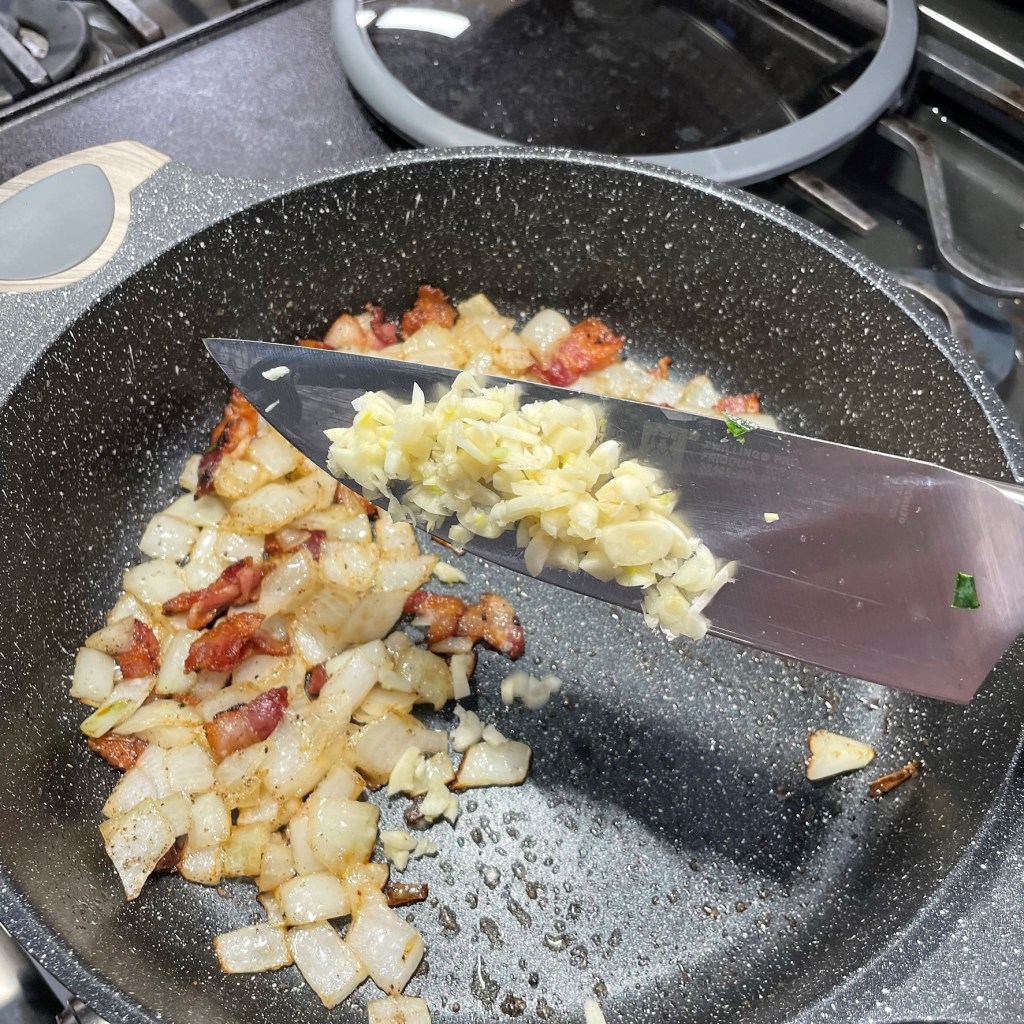
In a large skillet or pot, cook the bacon and onion over medium heat until the bacon has crispy edges and the onion is softened. Add the garlic, season with a bit of salt and pepper, and cook another minute or two.

Clear a space in the center of the pan and add about a teaspoon of olive oil. Shake the red pepper flakes into the oil to activate the flavors, and then toss the bacon-onion mixture to spread it around. Add the collards, a handful at a time until wilted, and toss to cook. When the collards have softened and collapsed into the pan, add the whiskey and vegetable broth and bring to a boil. Reduce heat and simmer, covered, until collards are tender. This will take anywhere from 25-50 minutes, depending on your simmer level and preference. Adjust salt and pepper to taste before serving.


Mac and Pimiento Cheese

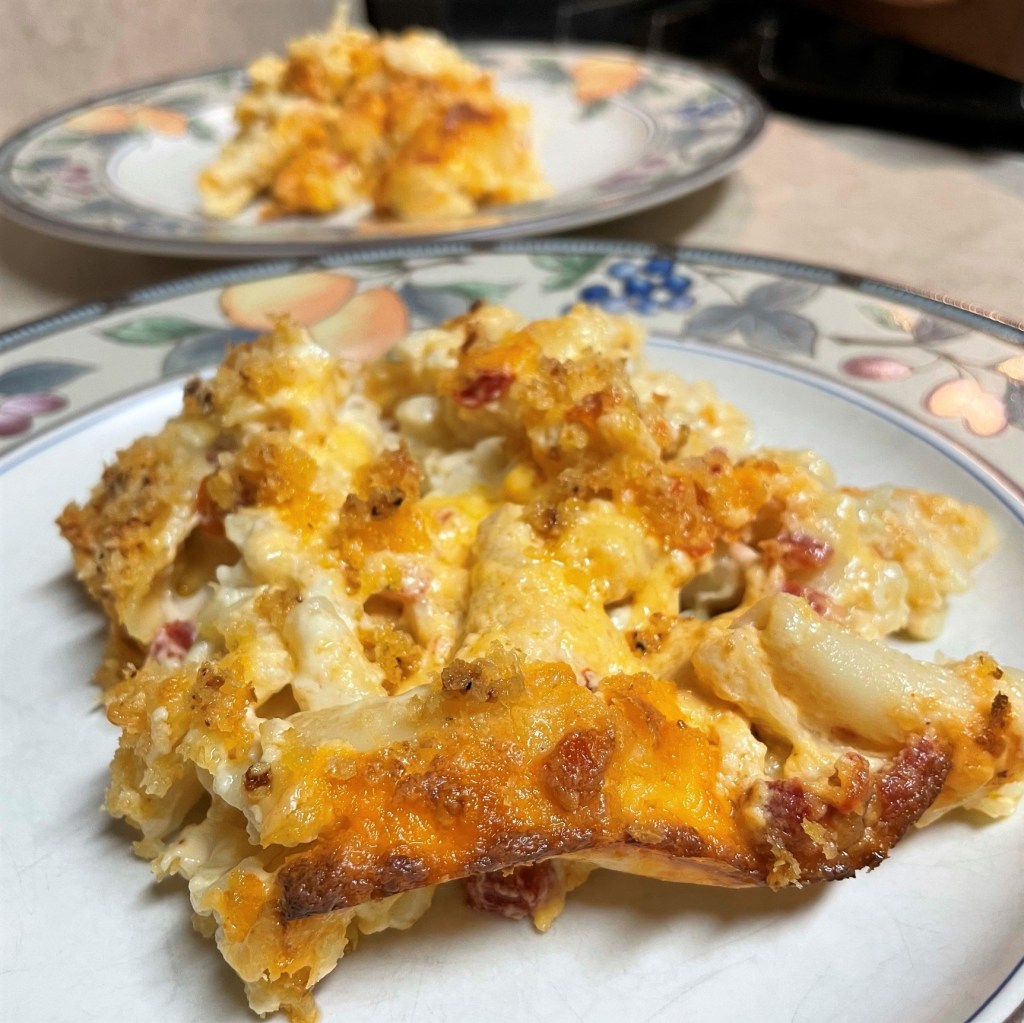
Show up at any family reunion or church potluck in the South, and you can bet your sweet tea you’ll find at least three kinds of mac and cheese on the table, plus a couple of pimiento cheese appetizers (probably layered thinly in little white bread finger sandwiches). I love doing mashups of classic foods, and so it seemed obvious to me that pimiento cheese should be paired with mac and cheese. It’s a beautiful, diet-be-danged casserole collision, if I do say so myself.

If you have made any of my other mac and cheese recipes, you know that American cheese is usually the standard in my cheese sauce base. The special salts and enzymes in American cheese are what gives it that ultra-creamy, ooey-gooey meltability, and isn’t that the best thing about mac and cheese?


But pimiento cheese has its own character (namely, it’s mayonnaise-y) and I didn’t want it to feel overshadowed in this mashup. Last summer, I shared the recipe that my husband, Les, uses for pimiento cheese, and it is awesome but not a classic “Southern” style (mainly because it was not drenched in enough greasy mayonnaise). My own pimiento cheese recipe is also shy-of-classic, because I blend together mayonnaise and cream cheese for the base, and it’s probably no surprise that I usually add unexpected ingredients such as jalapeno or chopped pickles. I just can’t leave well enough alone.

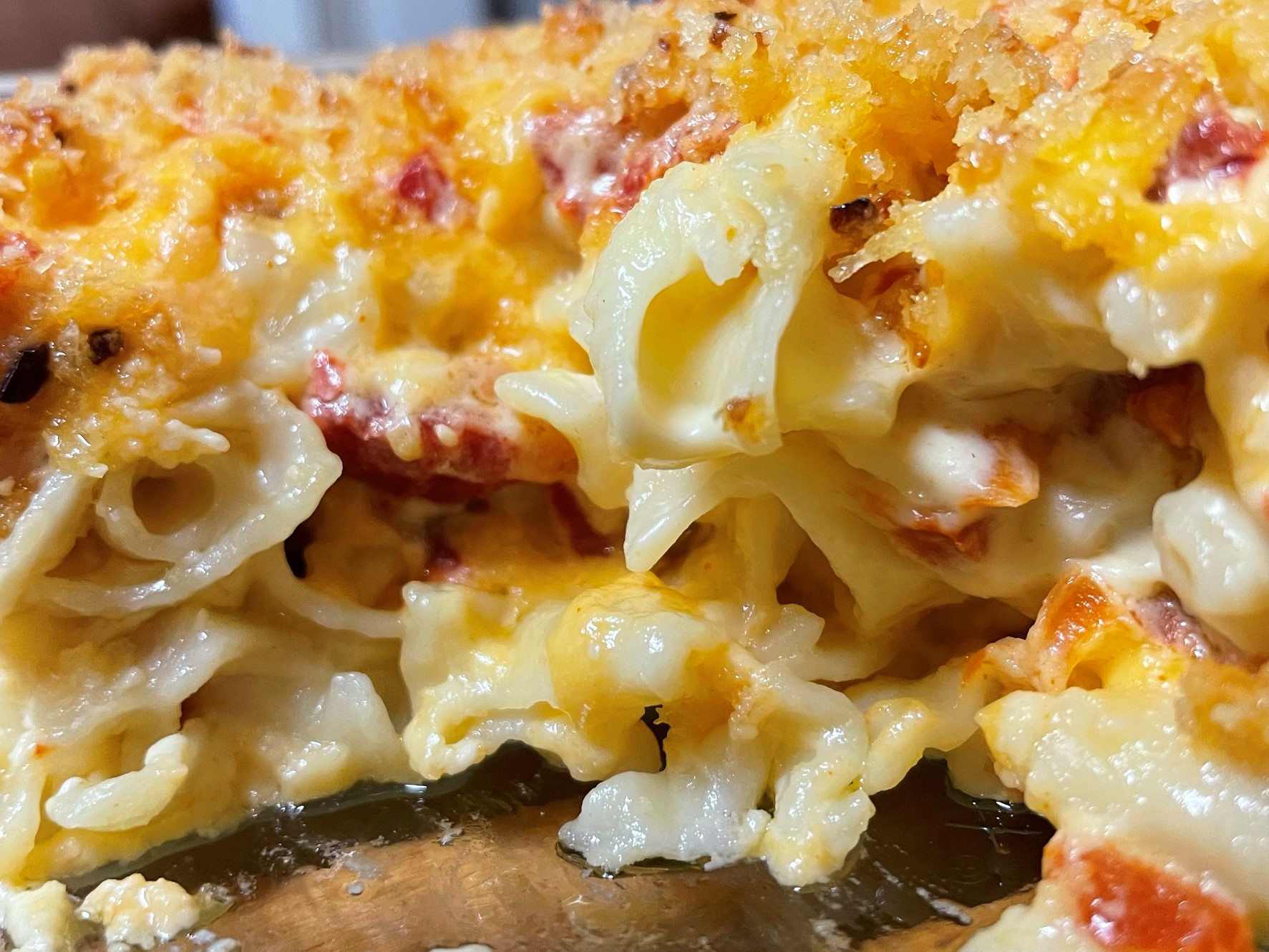
For this “mac and pimiento cheese,” which just happens to be my 200th post here on Comfort du Jour, I leaned on cream cheese rather than American in the base for my cheese sauce. I really wanted the smooth, velvety texture of the mild cream cheese to anchor all the cheddar that’s happening throughout the rest of the dish. For the pimiento cheese accents, I used a whole jar of roasted red peppers, drained and chopped into small pieces. Some of them went into the cheese sauce, but the rest found their way into a quick mayo-based pimiento cheese that was layered in with the cooked noodles and cheese sauce before baking. All those dollops gave this mac and cheese that distinctive mayonnaise-y tang that is so signature to a good, classic Southern pimiento cheese.

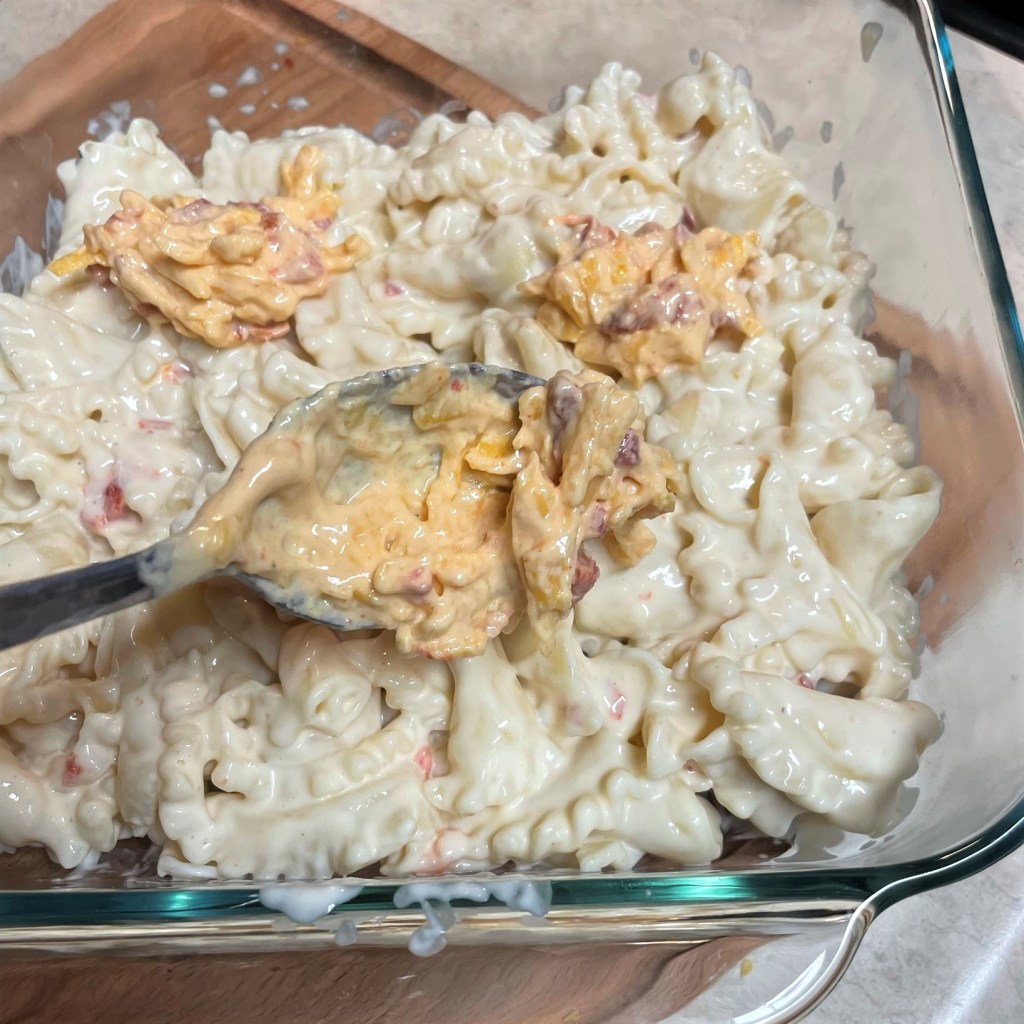
Oh mercy me, look at that pimiento cheese dripping through that mac and cheese!

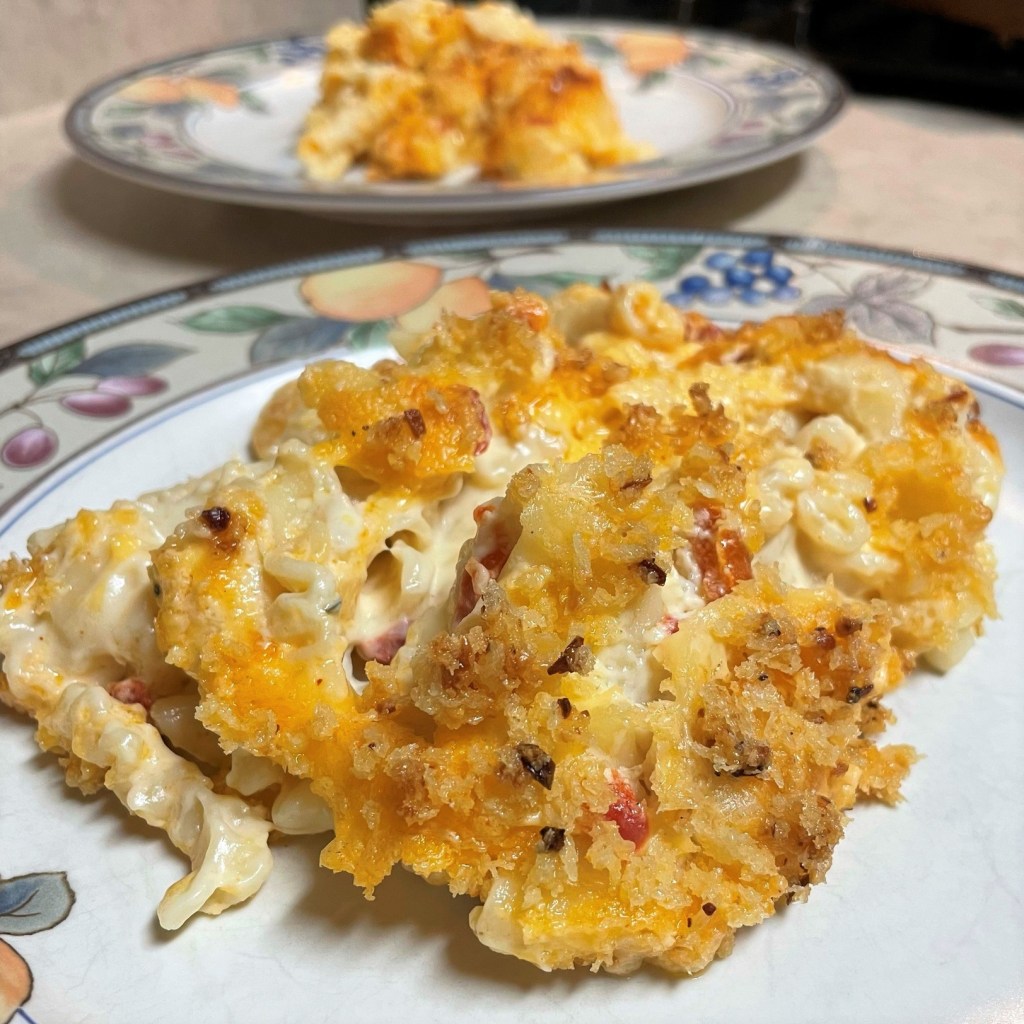
Disclaimer warning on this one—there’s a lot of richness in this recipe, and the chance is fair to middlin’ this mac and pimiento cheese will crush your calorie count, so you would do well to consider it dinner all on its own or with a fresh side salad. Here we go, y’all!


Ingredients

Cheese sauce

1/2 medium onion, diced small

4 Tbsp. salted butter

4 Tbsp. all-purpose flour

2 cups whole milk

6 oz. cream cheese, softened to room temp* (this was most of a standard brick)

8 oz. brick sharp cheddar, shredded* (see notes)

About half of a 7 oz. jar of pimientos or roasted red peppers, drained and chopped


Pimiento cheese dollops

2 oz. cream cheese, softened to room temp (the rest of the brick)

1/4 cup mayonnaise

A few shakes sweet paprika

The other half of the 7 oz. jar of pimientos or roasted red peppers, drained and chopped

4 oz. sharp cheddar, shredded (this was roughly a cup)


For assembling the casserole

Most of a 1 lb. package of macaroni or other pasta*

1/4 cup panko bread crumbs

1 Tbsp. salted butter, melted

1/4 cup parm-romano blend (ours was seasoned with “chili onion crunch” from Trader Joe’s)


*Notes

I recommend regular, full-fat cream cheese for this recipe. I have found that the light version does not maintain the creamy texture in a heated sauce. For the complete recipe, I used an entire 8 oz. brick of cream cheese, but it was divided nearly evenly between the cheese sauce and the pimiento cheese mixture.

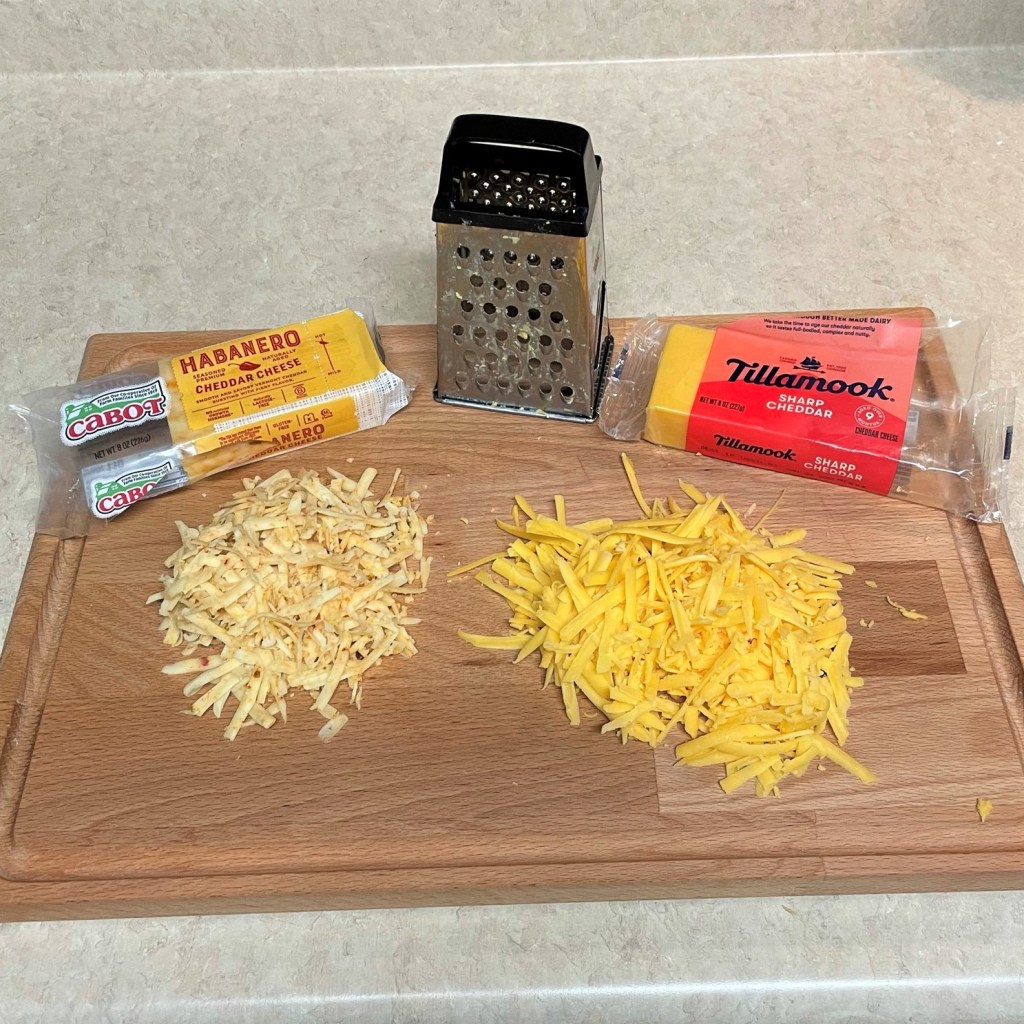
Two kinds of cheddar went into my mac and pimiento cheese, because we like spicy stuff at our house. I used an entire 8 oz. brick of sharp cheddar and half a brick of habanero cheddar. Mix and match to your liking, but reserve about a cup of shredded cheese for the pimiento cheese mixture.

Pimientos are a variety of pepper, and though it is easy to find jars of pimientos at the market, I used a large jar of roasted red peppers because that is what I had in the cabinet. You might even choose to roast fresh peppers yourself—that’s what I usually do when I make my own version of pimiento cheese. If you choose jarred peppers or pimientos, be sure to drain them well and use a paper towel to wick away excess moisture.

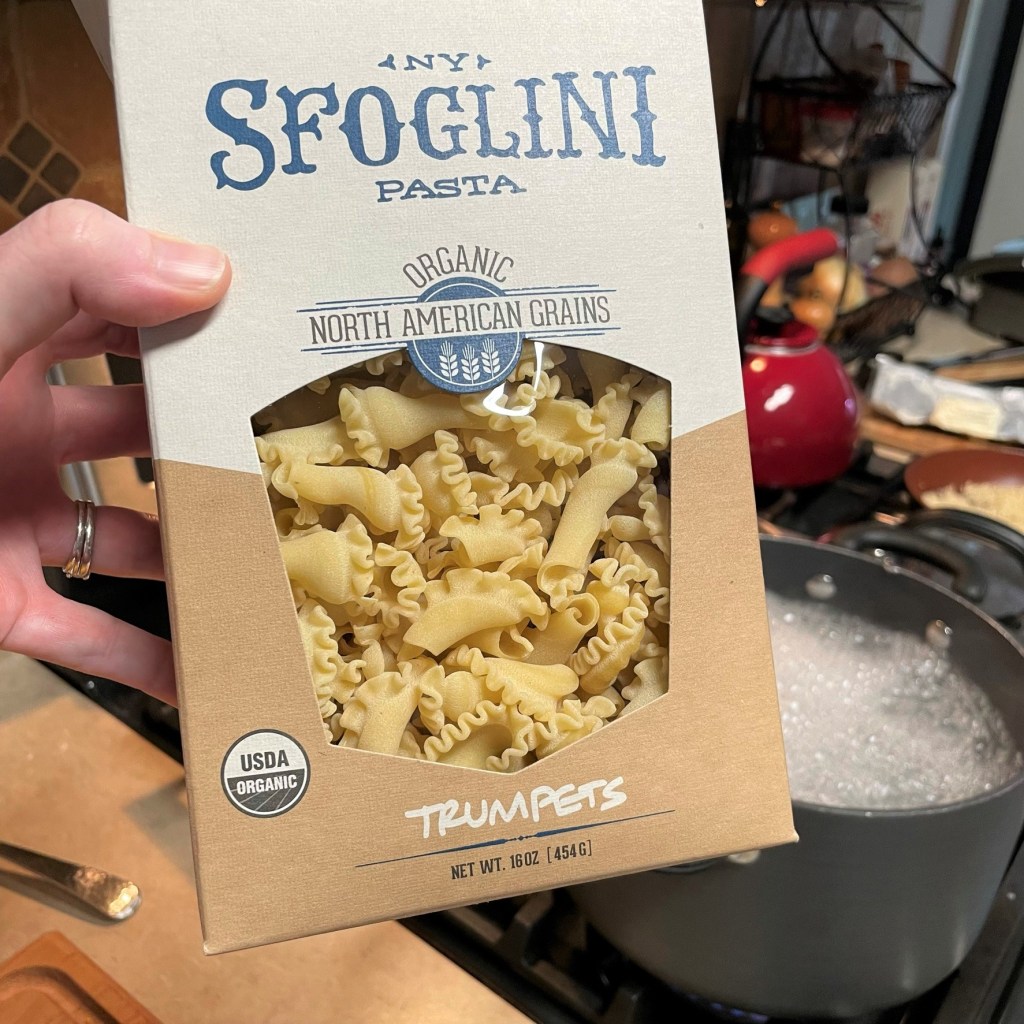
I held back about 1/4 of the box of pasta for this recipe, because I wanted it to be extra “saucy.” Classic elbow macaroni works great in a mac and cheese, and I always encourage choosing pasta that is labeled “bronze die cut,” because the surface of the pasta is rougher and holds a sauce extremely well. Cook your pasta just barely to the “al dente” stage, or a bit underdone than you would prefer. When you bake the mac and cheese, it will soften further from the heat and the cheese sauce.


Instructions

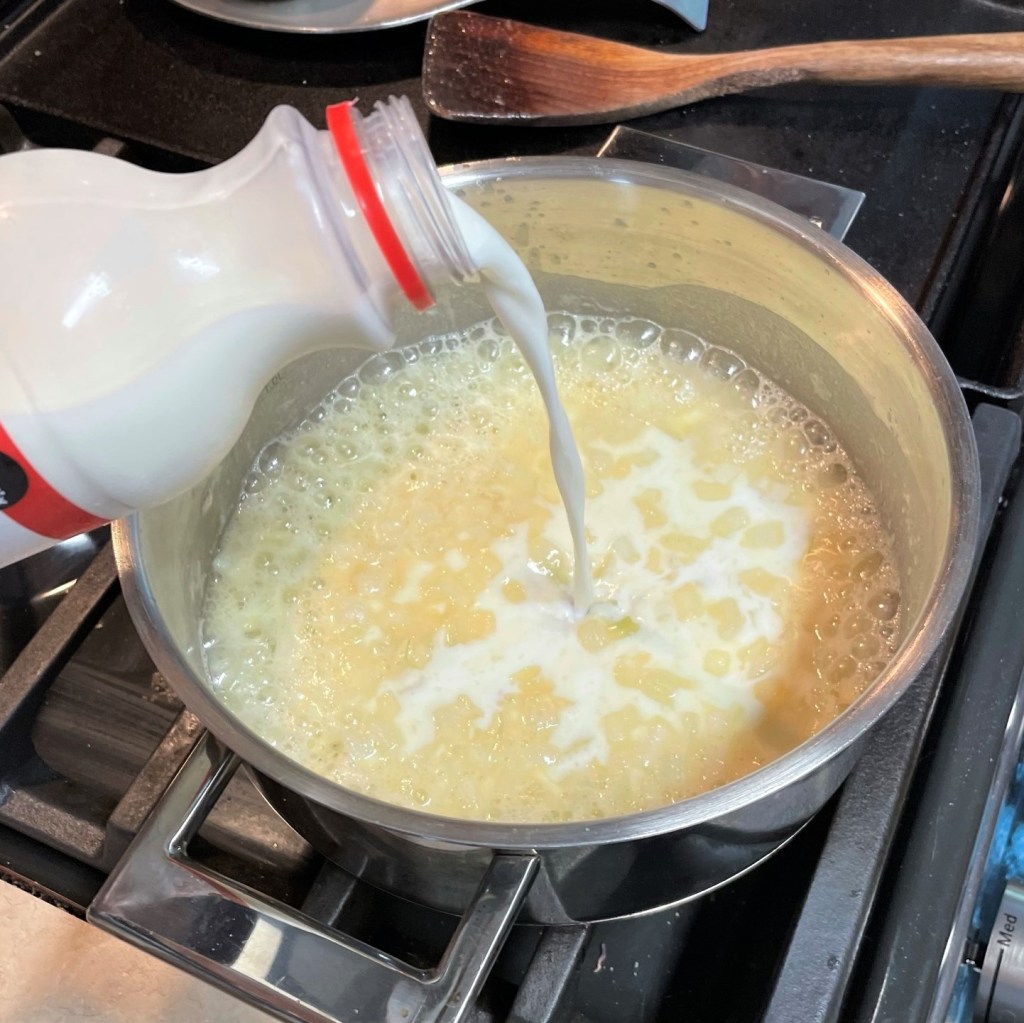
  1. Make the béchamel: melt butter in a heavy-bottomed saucepan. Saute the onions until soft. Sprinkle in the flour and stir to combine. Cook until flour is absorbed and bubbly. Add milk and whisk until smooth.
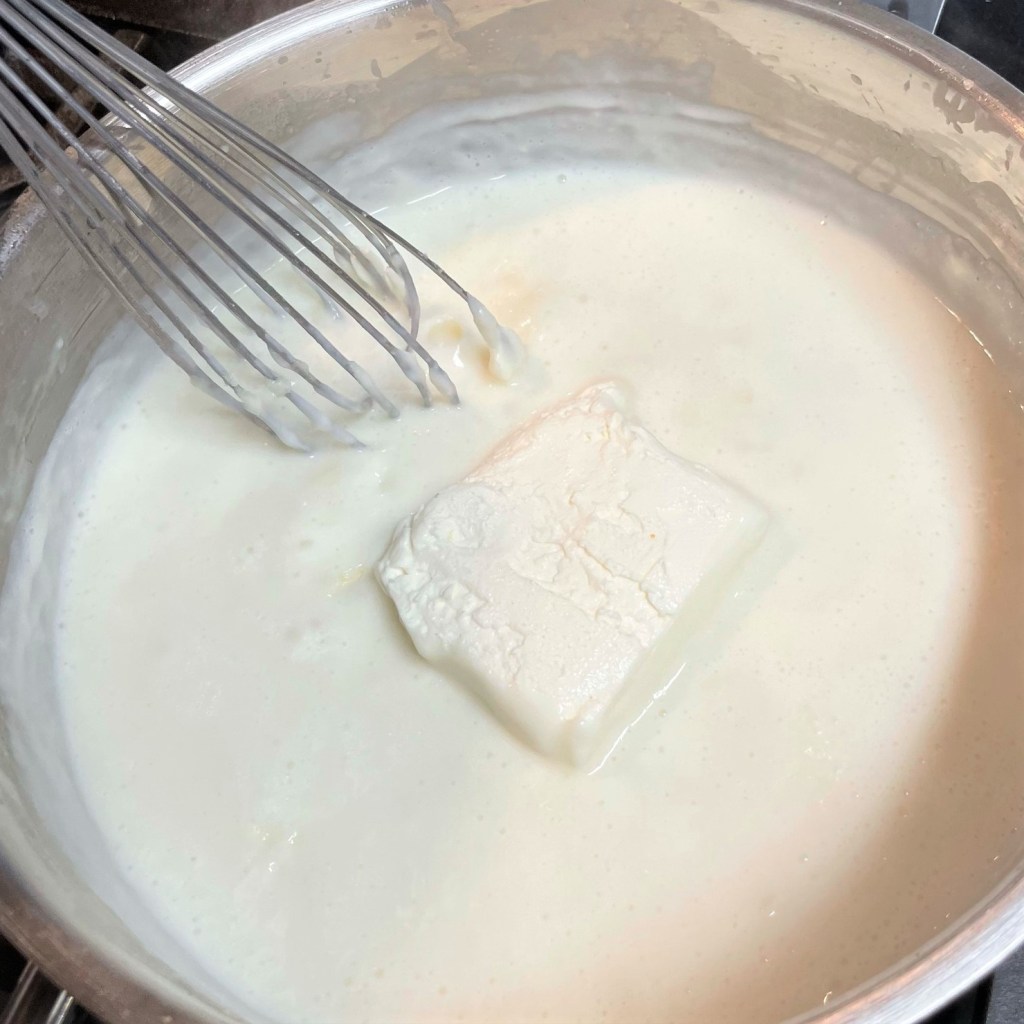
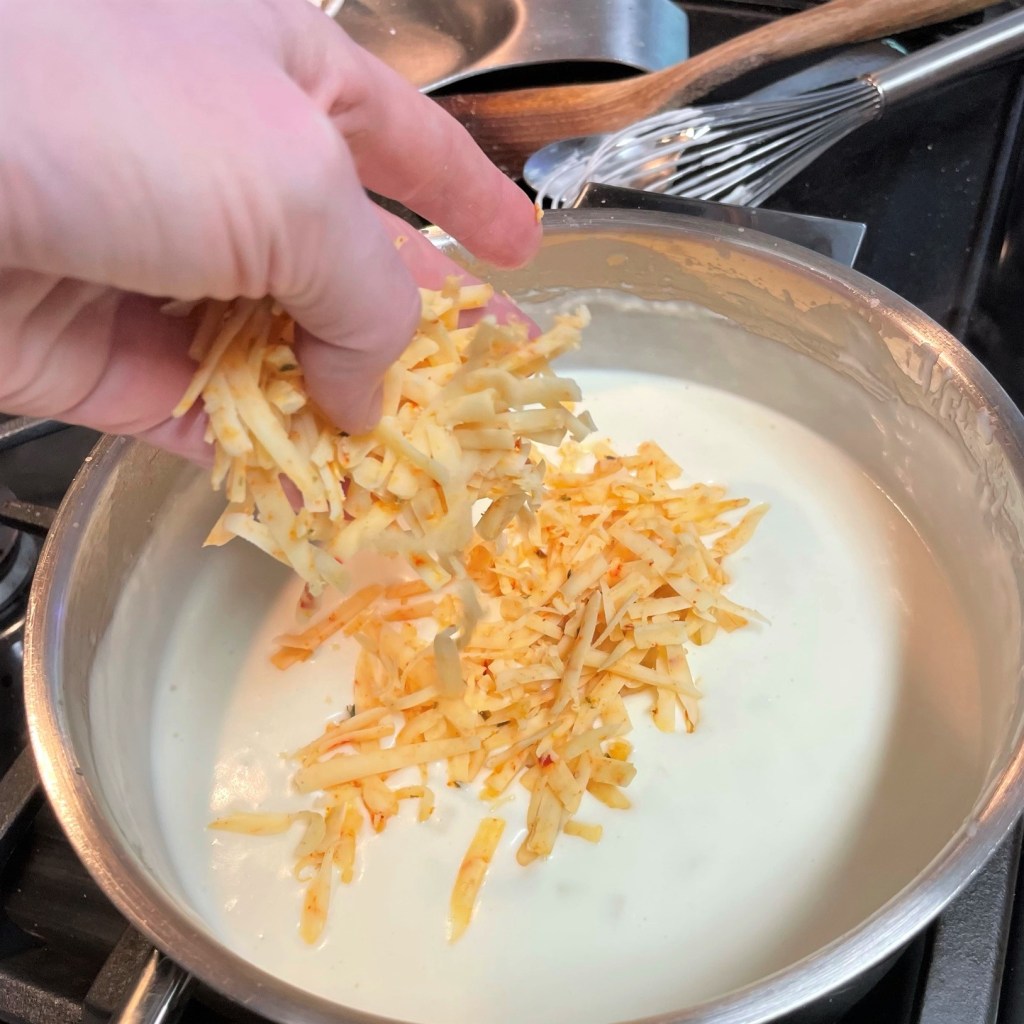
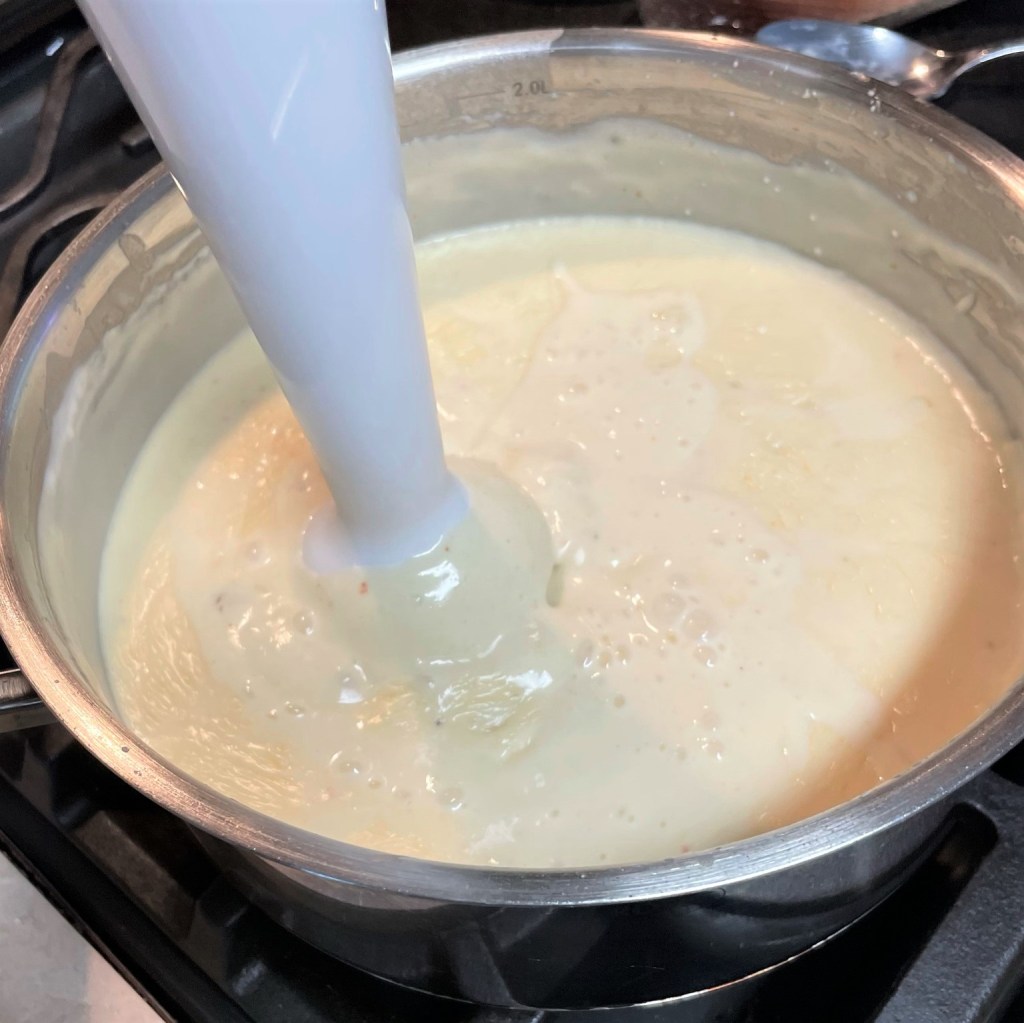
  2. Add the first amount of cream cheese to the béchamel and whisk until smooth and creamy. Add the shredded cheddar, a handful at a time, and whisk until smooth. Use immersion blender (optional) to amplify the creamy texture of the cheese sauce.
  3. Pat dry the first amount of pimientos or roasted red peppers, and stir them into the cheese sauce.
  4. Preheat the oven to 350° F, with oven rack in center position.
  5. Cook the elbow macaroni or pasta according to package instructions until just al dente. Slightly undercooked is better than overcooked, as the pasta will absorb moisture form the cheese sauce during baking. Drain the pasta and cool slightly.
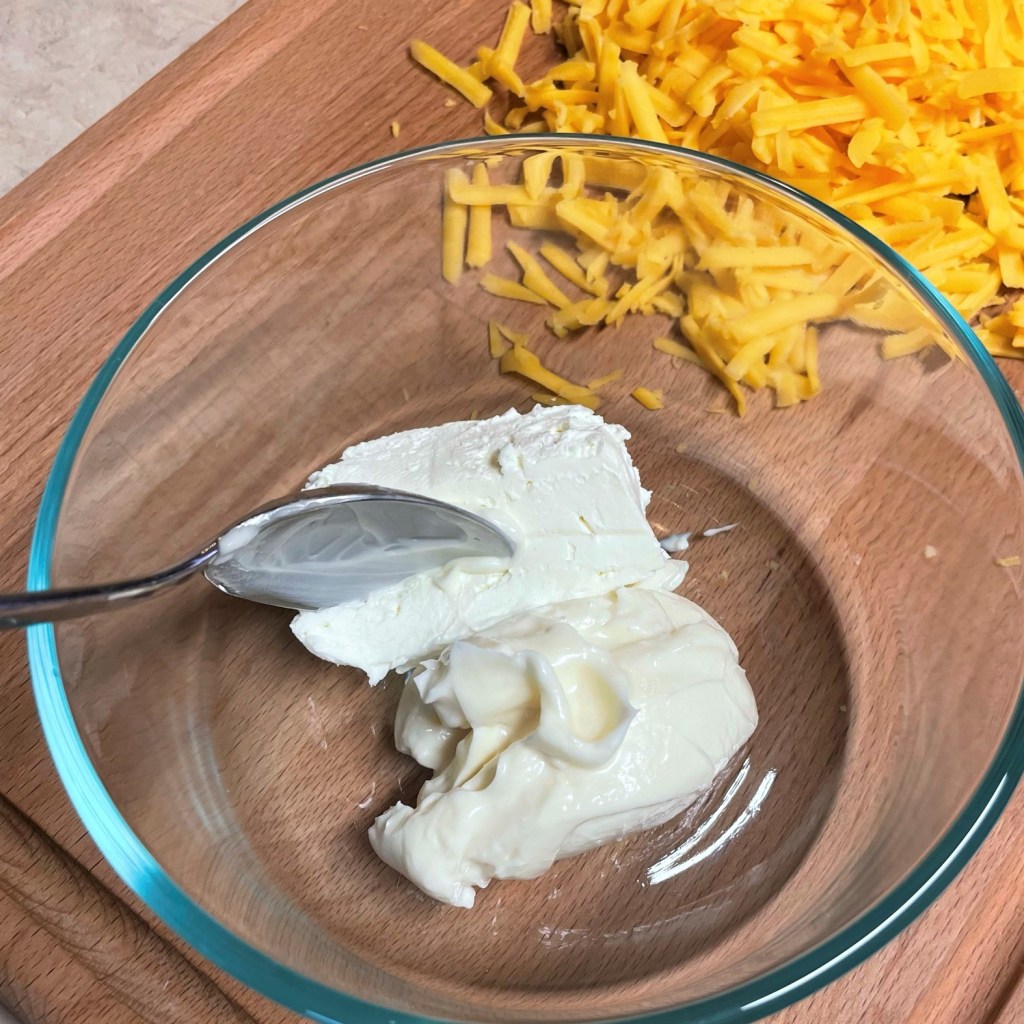
  6. Combine the remaining cream cheese and mayo, whisking as needed to create a smooth-textured spread. Add the remaining pimientos (pat them dry first), paprika and remaining shredded cheddar.
  7. Fold the cooked pasta into the cheese sauce and layer about half of it into a glass 8 x 8 inch casserole. Spoon dollops of pimiento cheese mixture randomly over the mac and cheese, then layer on the rest of the pasta mixture. Spoon remaining pimiento cheese over the surface of the mac and cheese, but do not spread it.
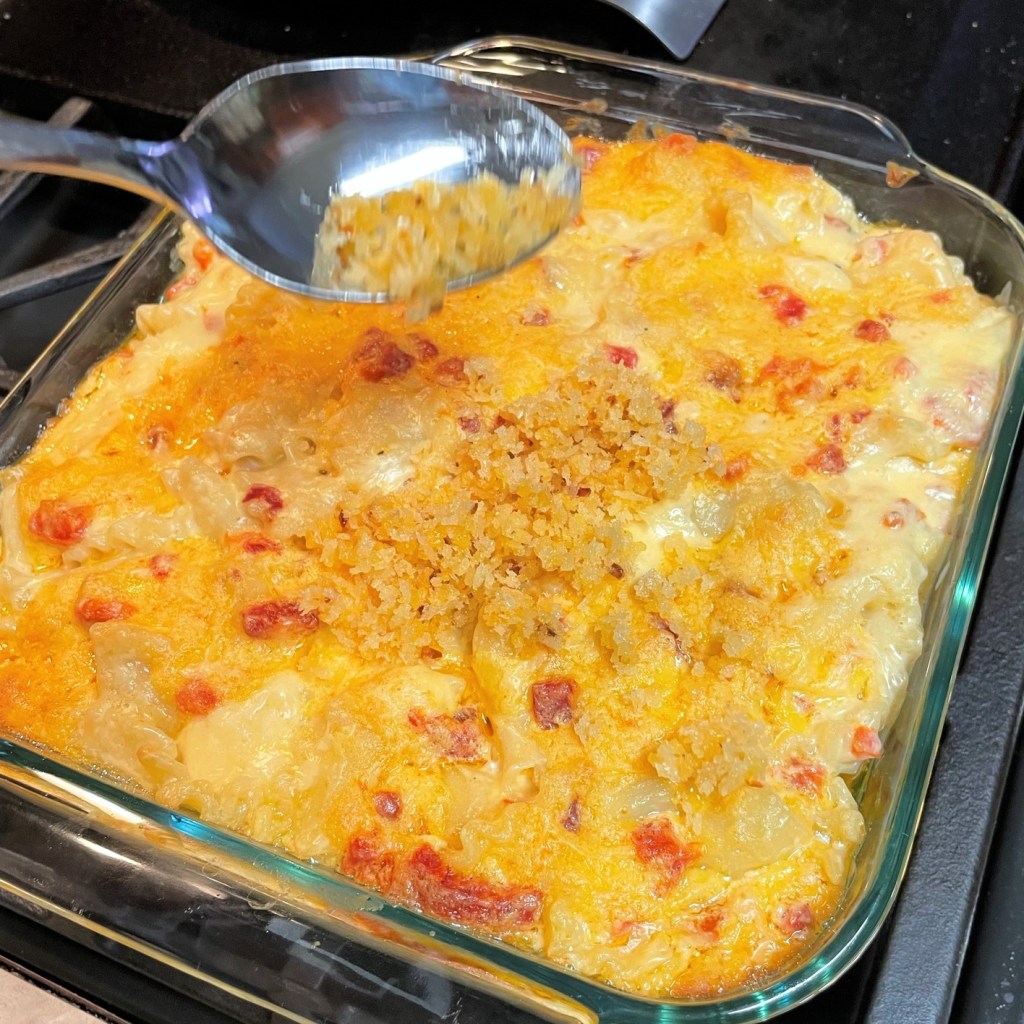
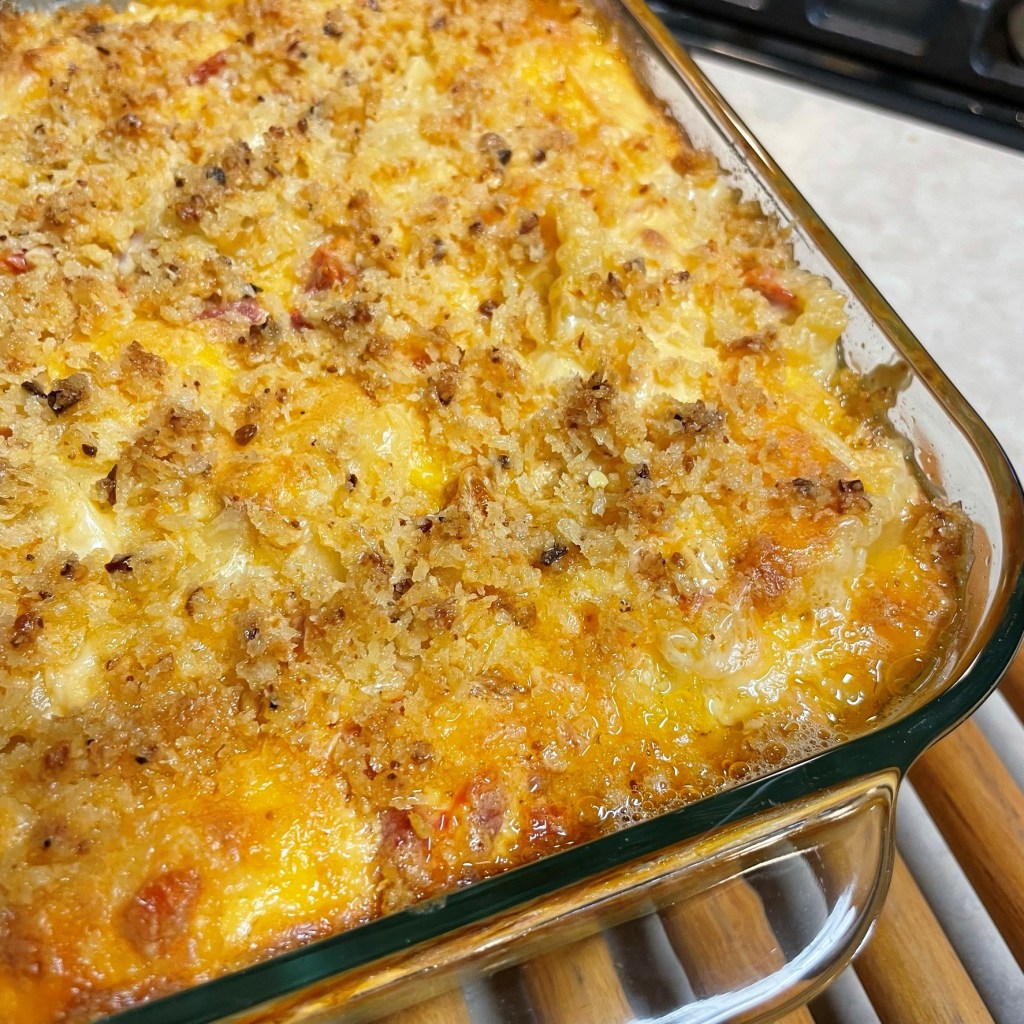
  8. Bake the mac and cheese, uncovered, for about 30 minutes. Remove from oven and sprinkle the cheesy panko crumbs all over the top of the mac and cheese. Slide it back into the oven for 15 more minutes. Cool 5 to 10 minutes before serving.
Life is good, y’all!


Cajun Shrimp & Garlicky Cheese Grits

Take a road trip across the Southeast, and you’ll find a wide array of flavors and presentation in dishes that all claim to be “shrimp and grits.”

And they all are.

There is no right-or-wrong when it comes to this classic southern dish. Whether served with a lush and savory gravy, or piled high with onions, peppers and tomatoes, or spiked with spicy andouille or tasso ham, cheese or no cheese, you are guaranteed a flavorful experience. Over the 34 years that I’ve lived in N.C., I’ve developed my own recipe into what I believe captures the best of all the varieties I’ve tasted around these parts, though I can’t claim to make it the same every time. My “comfort du jour” usually depends on what ingredients are in the fridge, and many times, my decision to make shrimp and grits is a last-minute one.

I almost always have good quality, wild American shrimp in the freezer. I’m guaranteed to have some kind of pork product—ham, bacon, sausage or chorizo—and just about any kind of onion or pepper works, so whatever I have on hand can slide into place. I may or may not incorporate cheese, depending on the other ingredients. One thing that remains constant is my method of cooking the grits. You cannot rush them, and for goodness sake, don’t cheat yourself by using instant. It should take a minimum of 20 minutes on the stove, unless you have, you know, “magic grits.” I think we all remember how that played out in My Cousin Vinny.

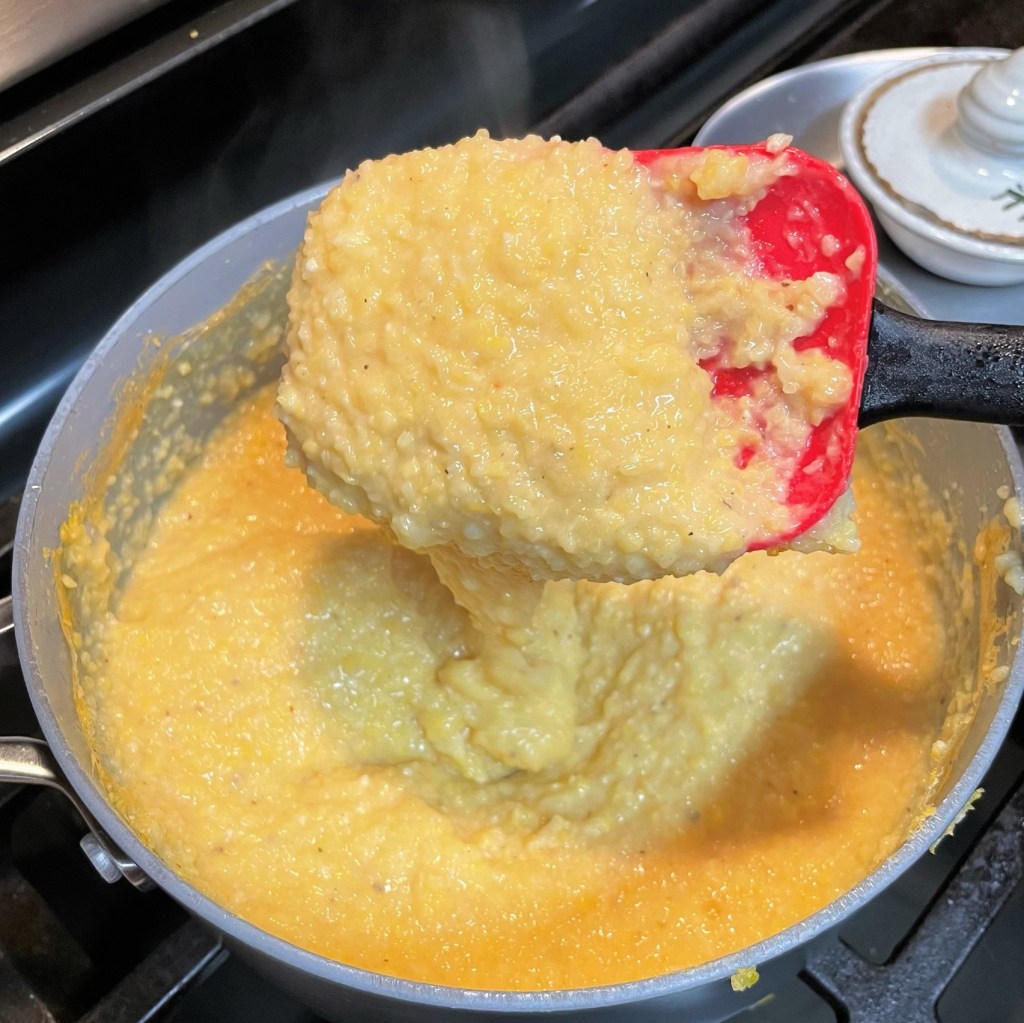
If you have ever eaten grits and thought they were, well, gritty—the simple explanation is that they were not cooked long enough or with enough liquid. Grits (or polenta, which is nearly the same thing) are made of broken-down, dried corn. They are tooth-cracking hard straight from the package, and I have found that it takes a good bit longer than the package instructions suggest to get them right. They are kind of like oatmeal in that regard—you can have creamy, soft oatmeal that drips off the spoon, or sticky, gloppy oatmeal that sticks to everything it touches. The difference is all in the cooking process.

The other complaint some people have about grits is a common one—“they’re so bland.” And if you use only water to cook them, they certainly are. Grits do not have much flavor on their own, but you can coax the flavor out of those dry little kernels with the right technique and the right stuff. In other words, ignore the package instructions and use your own cooking instincts. There is no magic to it. 😉

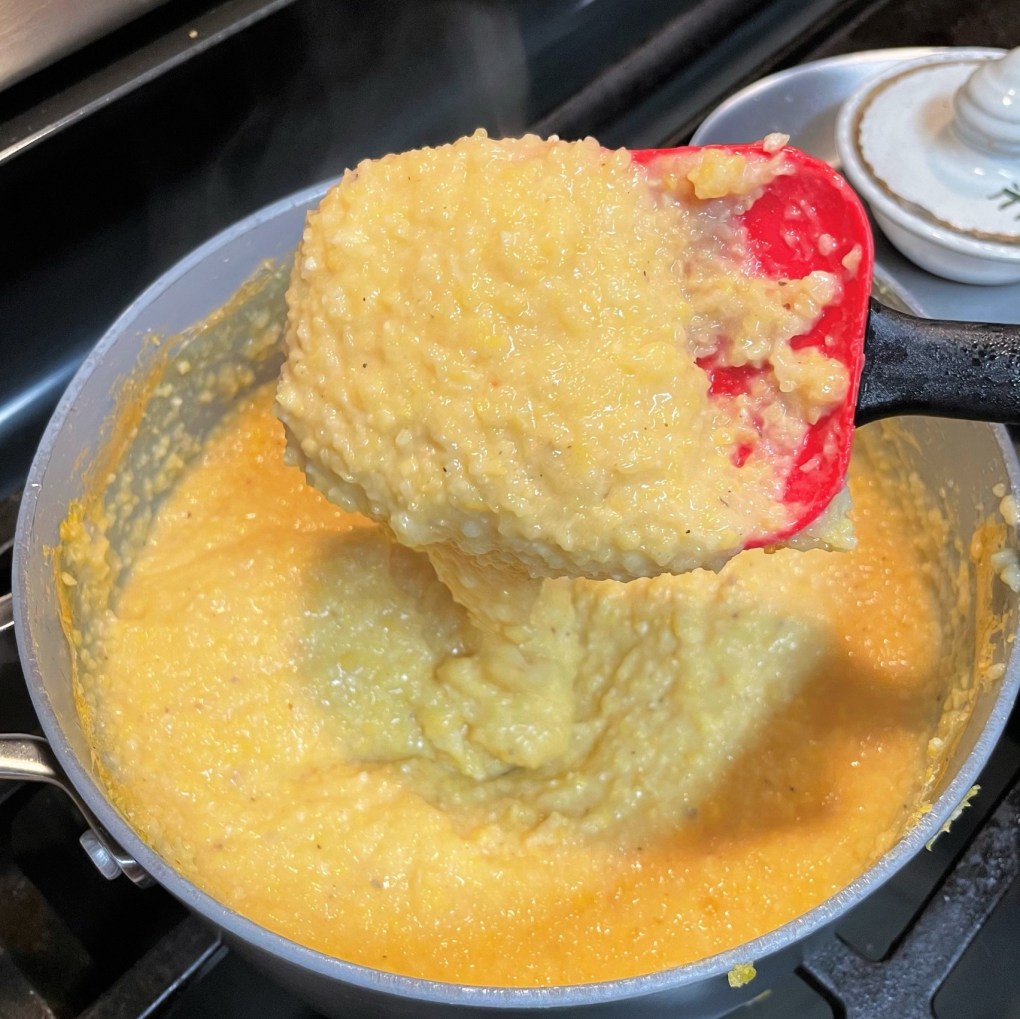
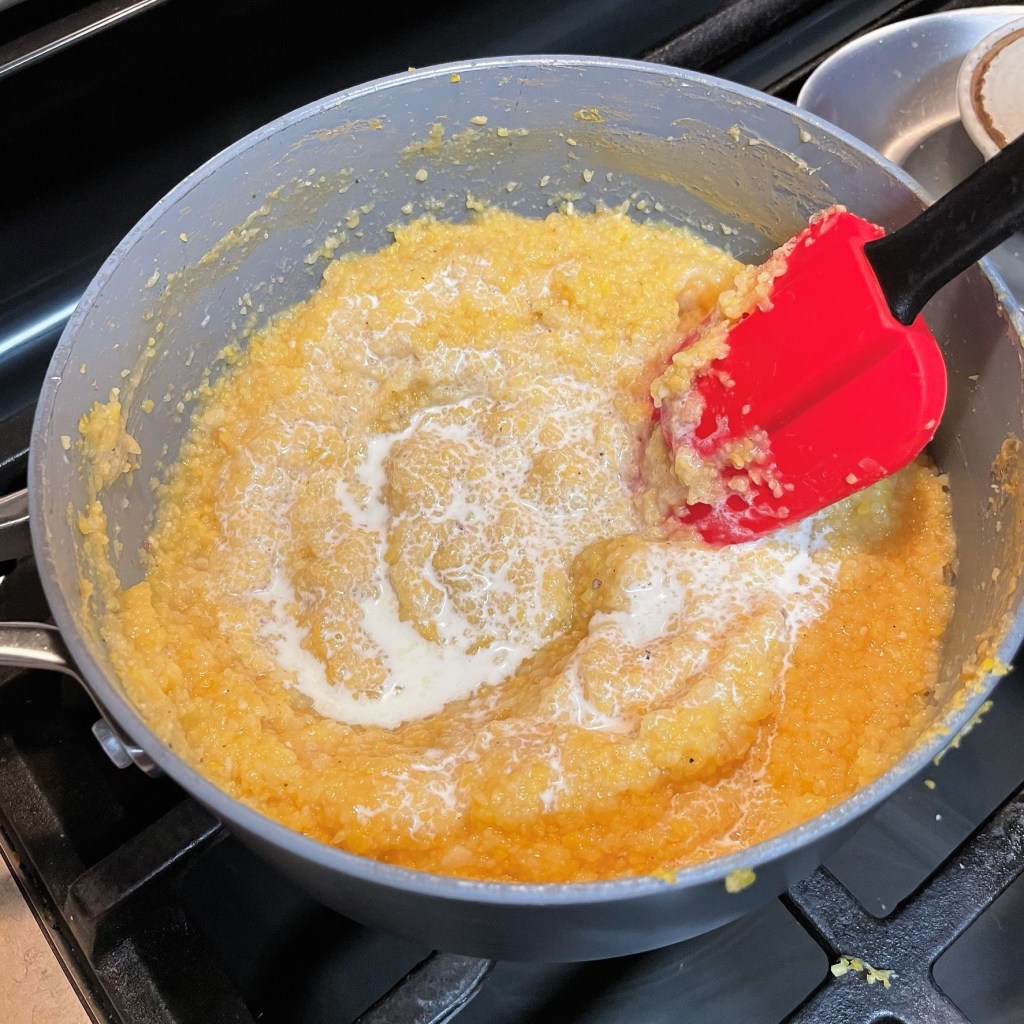
Here’s my secret for perfect, creamy grits every time: treat them like risotto. Cook them low and slow, with plenty of broth additions and plenty of stirring, and finish them with a little cream or half and half. You’ll be rewarded with a silky, luxurious base for whatever you choose to pile on top of them.

These grits are perfectly creamy, with no clumps and no gritty texture.

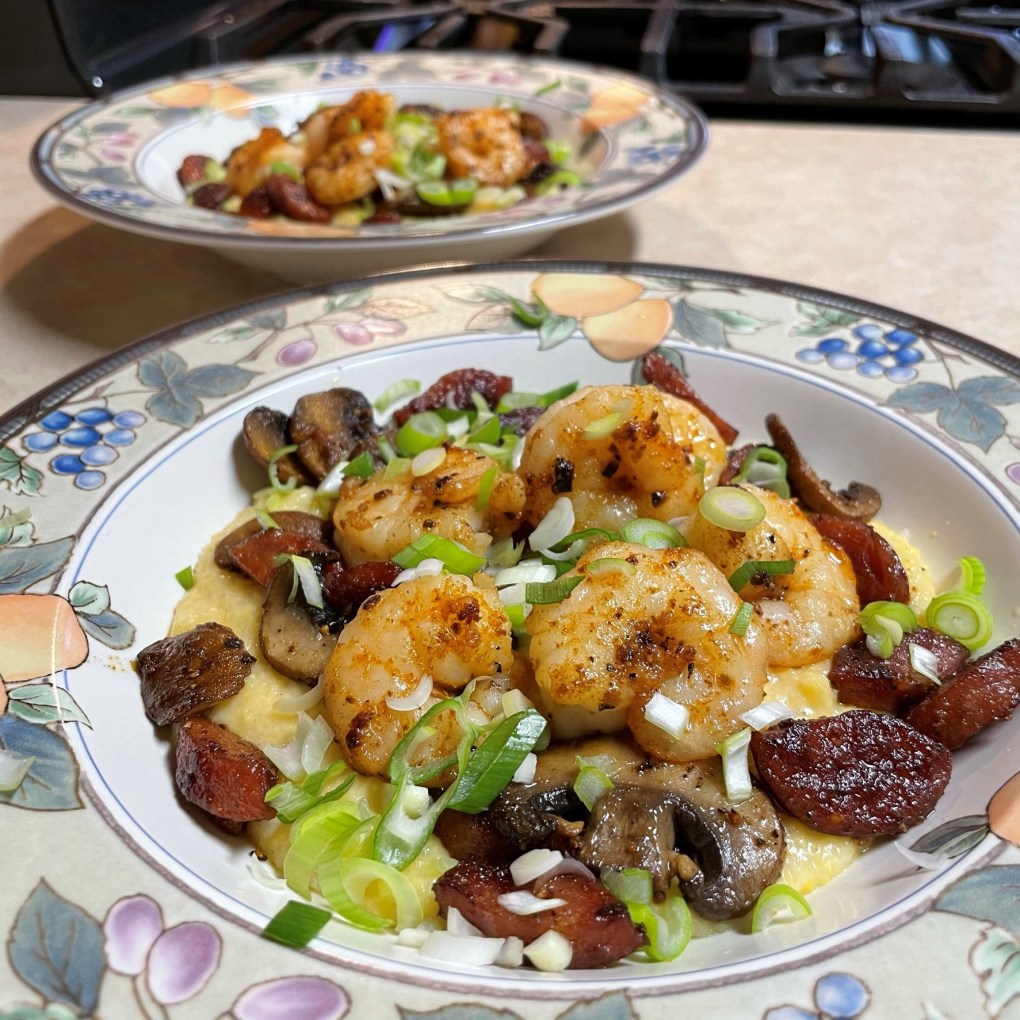
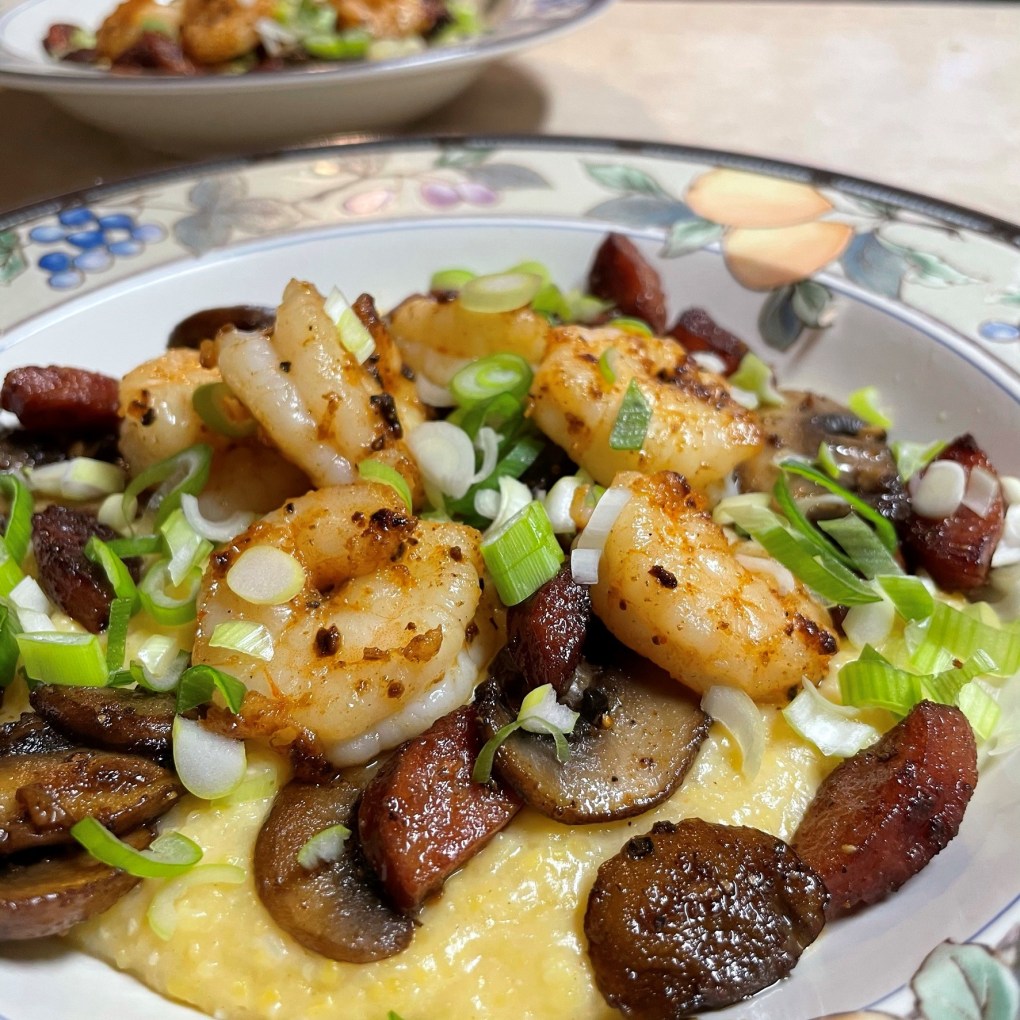
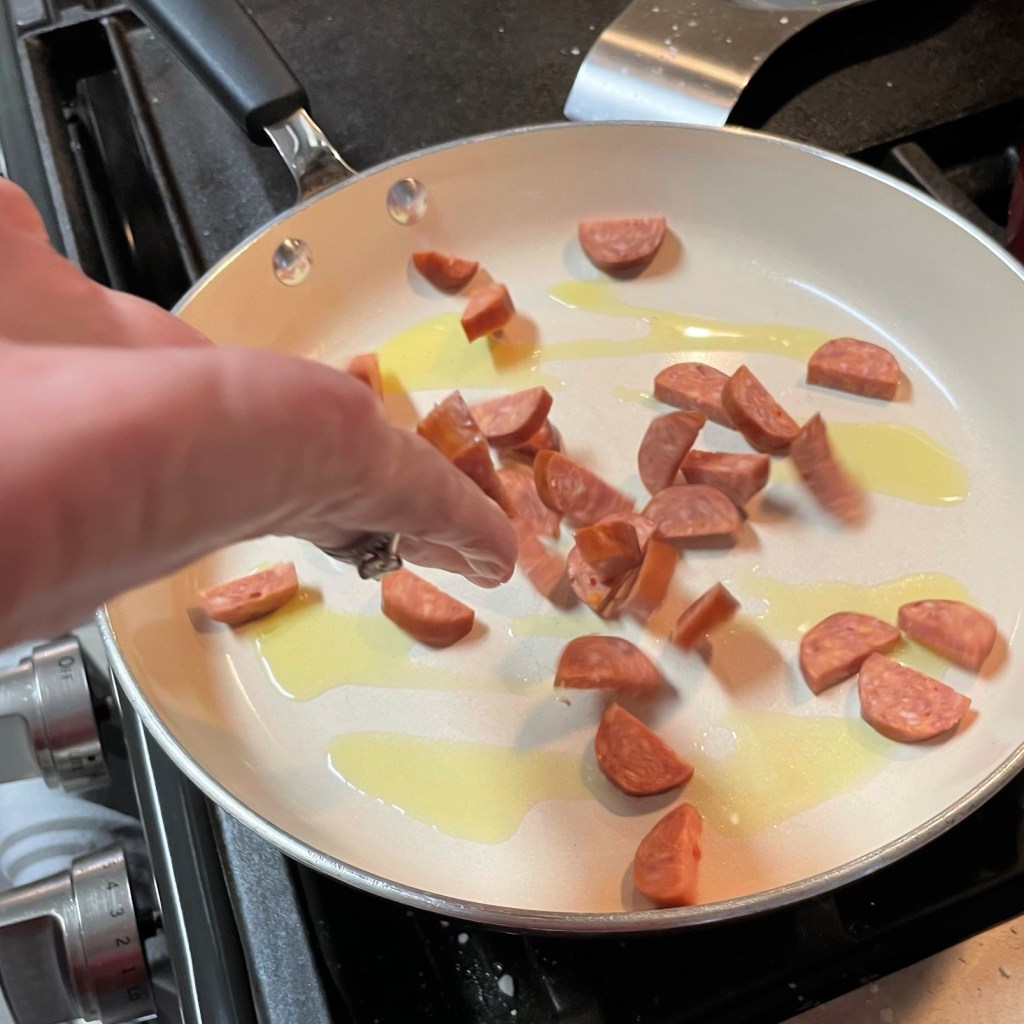
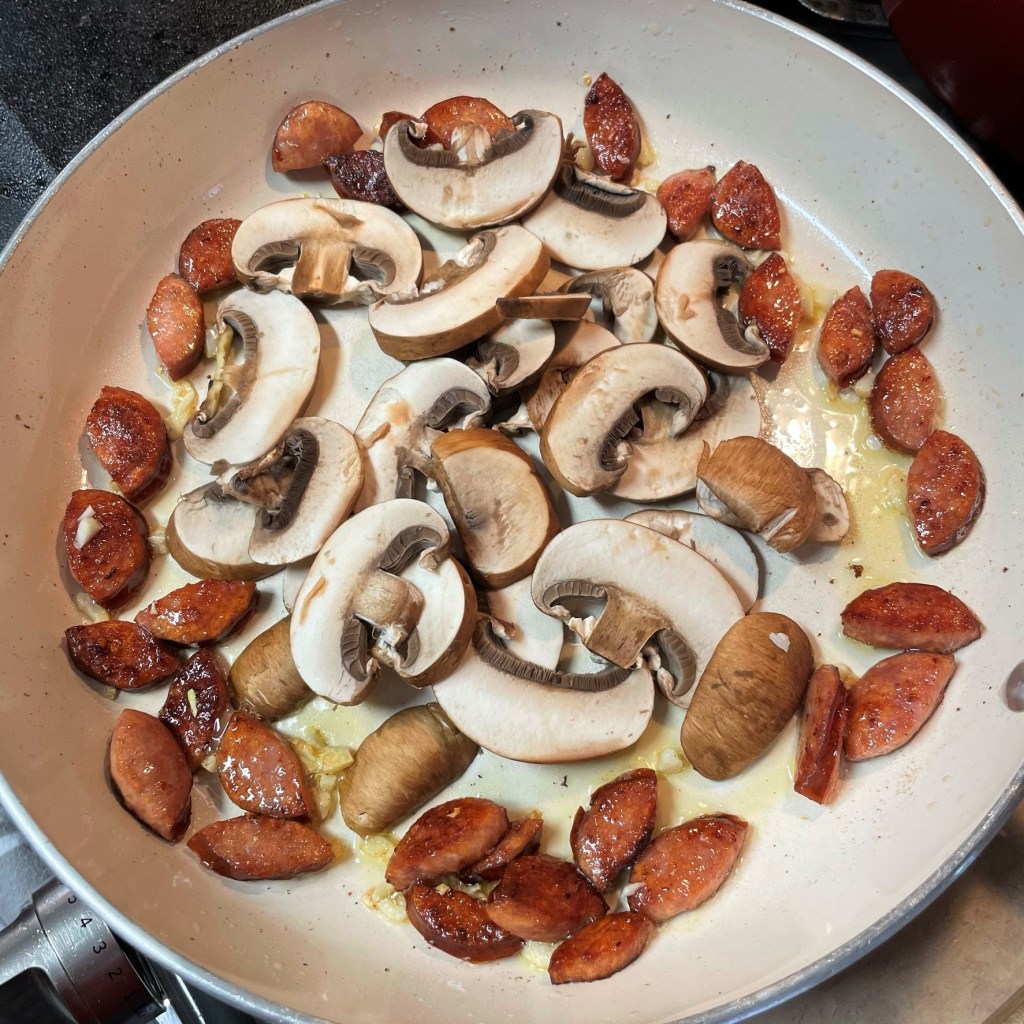
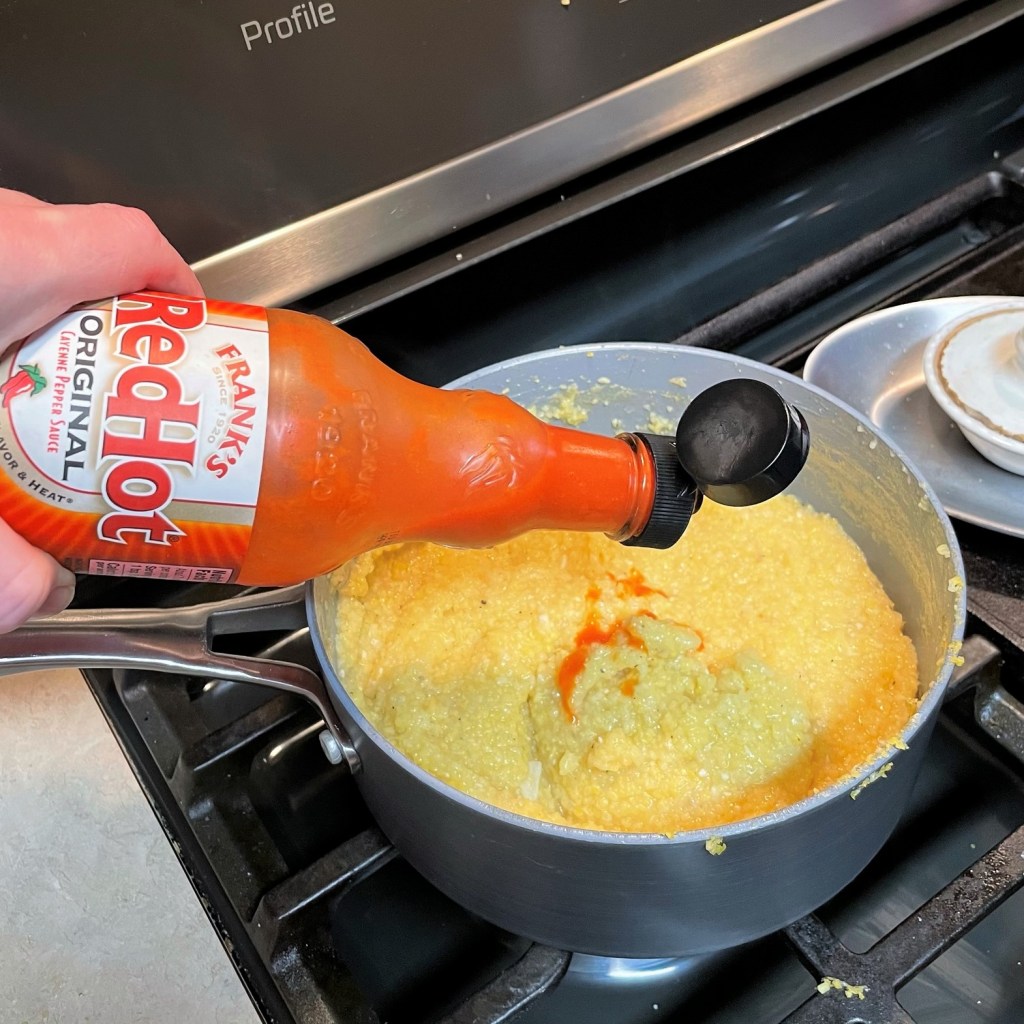
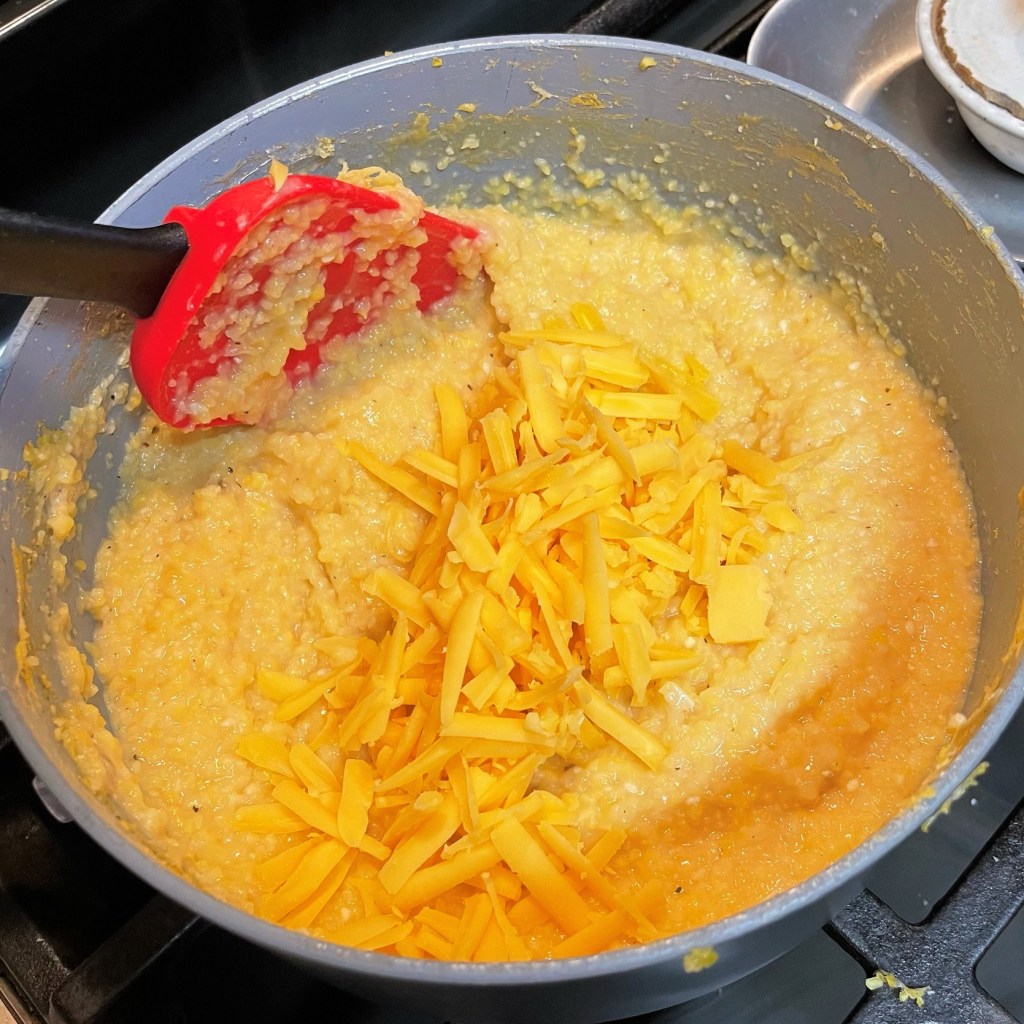
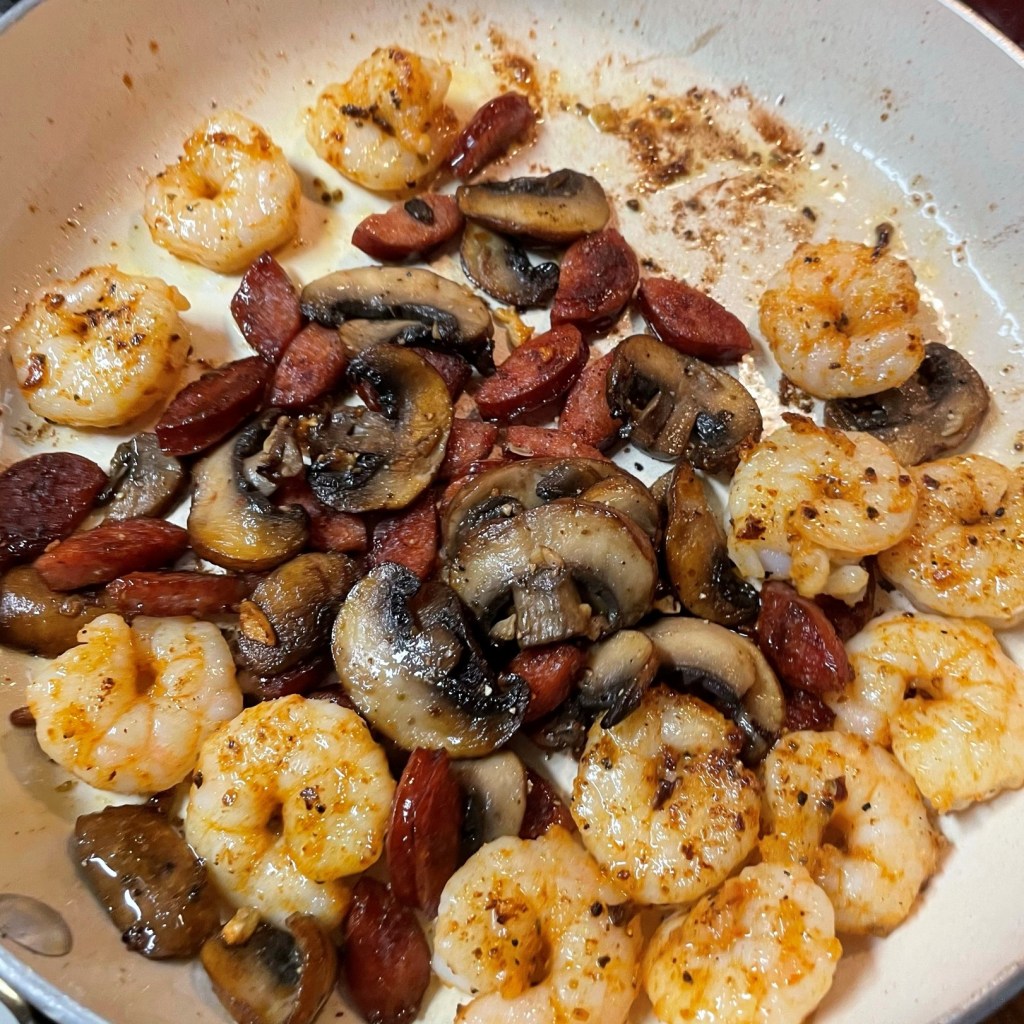
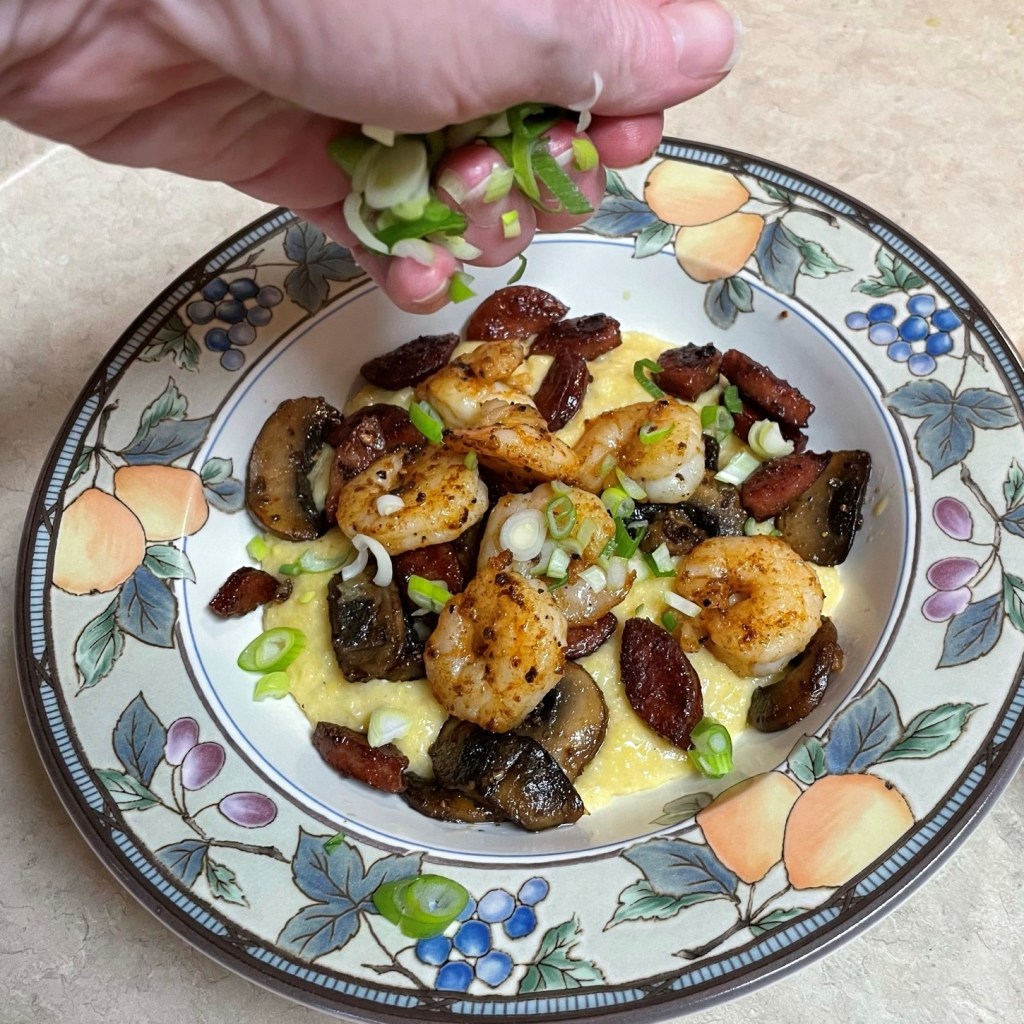
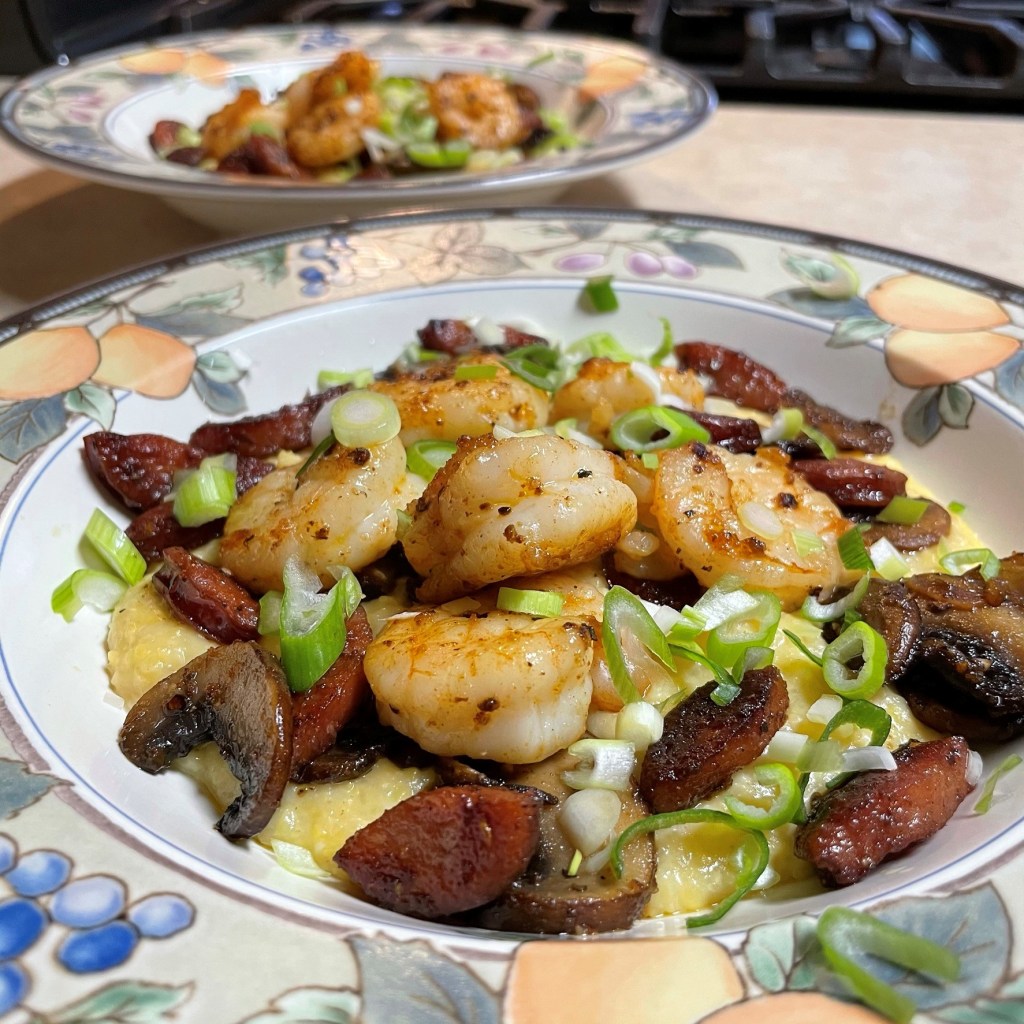
For this batch of shrimp and grits, I used smoked andouille sausage, cut up and lightly fried until the edges were crispy, sautéed cremini mushrooms, a sprinkle of Cajun seasoning on the shrimp, and scallions on top to finish the dish. The grits, as always, were creamy and delicious, with a few cloves of chopped garlic in the broth and just enough cheddar cheese at the end, to give them some extra body, and a few shakes of RedHot sauce for tangy-spicy flavor.

This recipe serves 2, with a scoop of grits left over to go under your weekend eggs.

There’s so much texture here, beginning with the juicy shrimp and crispy sausage, and down to the creamy, cheesy grits. This is one of our faves!

Ingredients

1 cup yellow grits, a.k.a. polenta* (see notes)

2 cups low-sodium vegetable broth

About 2 cups hot water, as needed for cooking the grits*

2 cloves garlic, finely chopped

Salt and pepper

Frank’s RedHot Original sauce, to taste*

2 Tbsp. light cream or half and half*

1/3 cup shredded sharp cheddar cheese

Extra virgin olive oil for sautéing

2 links smoked andouille sausage, cut into bite-size pieces

Handful of cremini mushrooms, cleaned and sliced

About 2/3 pound of wild-caught shrimp, peeled and de-veined

A few shakes of your favorite Cajun seasoning*

2 scallions (green onions), trimmed and sliced

*Notes

For the best results, and creamy grits, do not use anything packaged as “instant.” My preferred brand is Bob’s Red Mill polenta, which you can find in well-stocked supermarkets, including Super Walmart.

It’s helpful to heat the water in a teakettle or the microwave ahead of time and keep it on standby. When you add liquid to polenta or risotto that is already cooking, you want the liquid to be warm.

As always, you will need to adjust the salt amount to work with your other ingredients. I lean toward low-sodium versions of broth and seasonings so that I have more control of the overall salt in my recipes. Check your labels and taste as you go.

I love the flavor of RedHot sauce, but Texas Pete or Tabasco would also be good for a spike of flavor in the grits.

For readers abroad, “half and half” is a term used to describe a popular dairy product in the U.S. It is essentially equal parts light cream and whole milk, with about 12% milkfat.

We use a dry Cajun seasoning that my husband picked up in New Orleans, but there are plenty of options available in your supermarket. You could also make up your own, with some combination of garlic powder, onion powder, cayenne, black pepper and thyme.

Instructions

I’m a visual learner. If you are, too, then follow along with my slideshow or keep scrolling for written instructions and a pdf you can download for your recipe files.

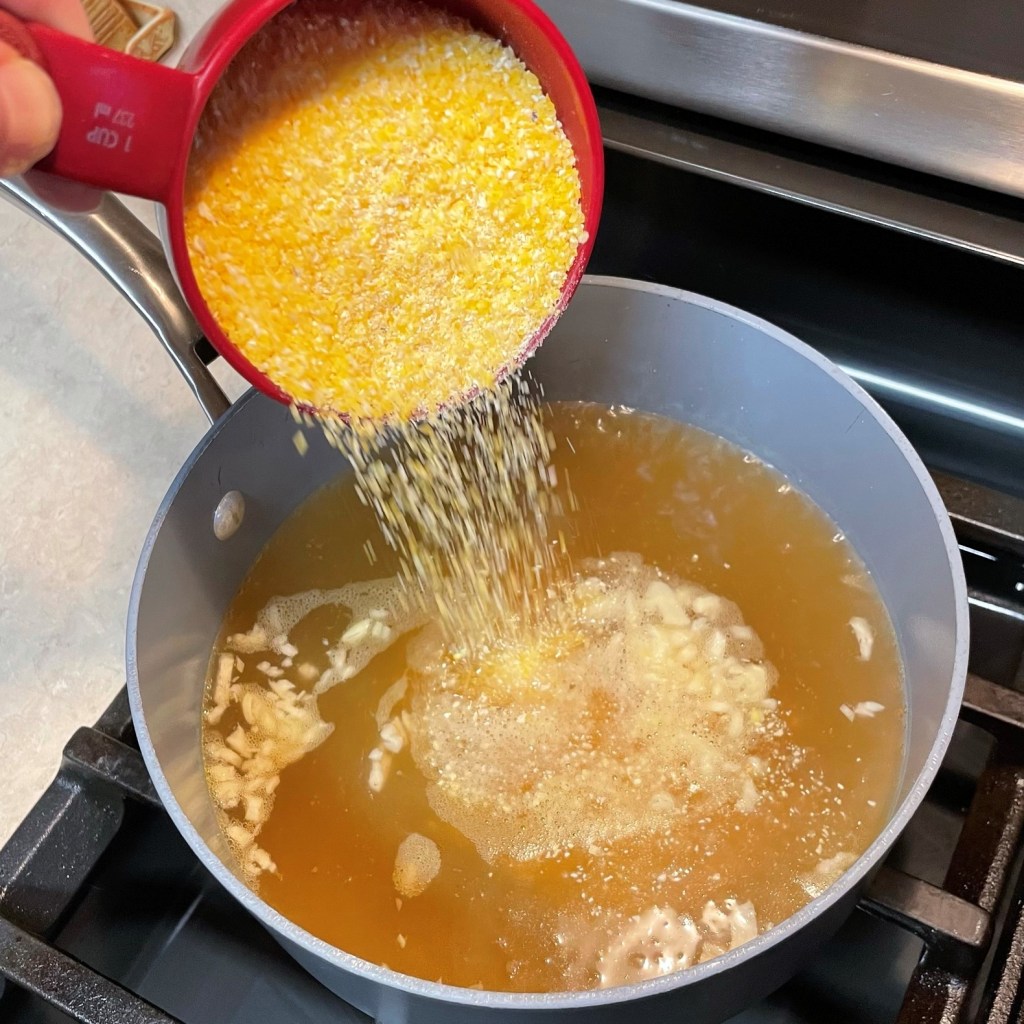
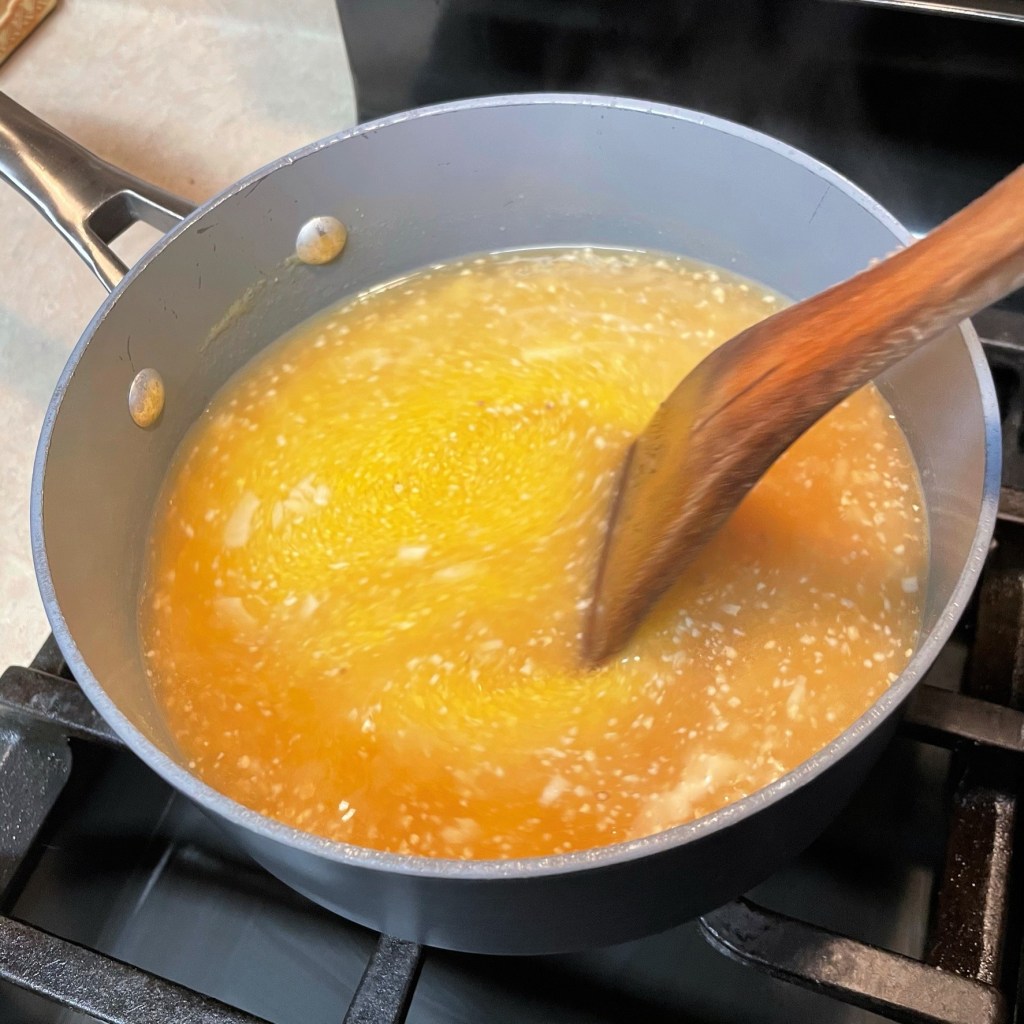
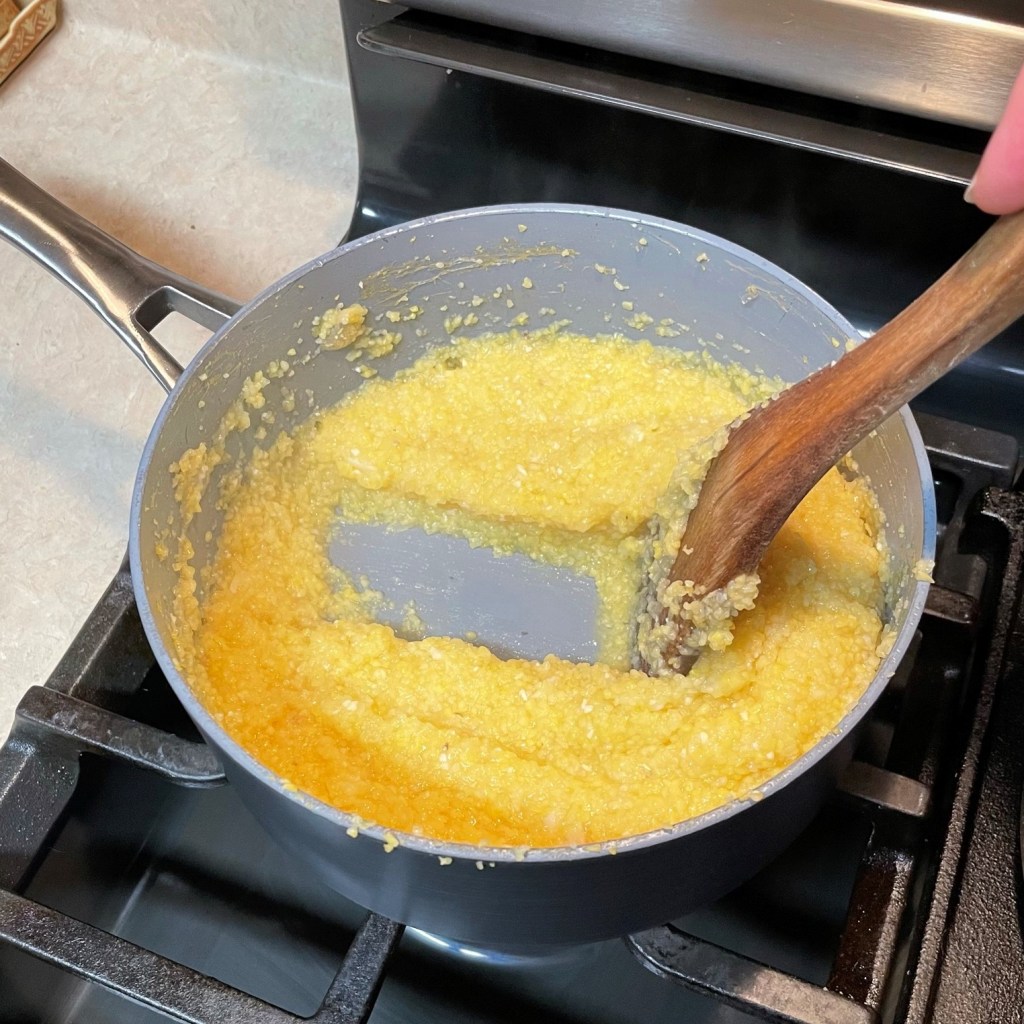
  1. Place a heavy saucepan over medium heat. Add vegetable broth, garlic, salt and pepper, and heat to nearly boiling. Add polenta, stirring constantly until it is fully mixed with the broth and no visible clumps appear. Reduce heat to medium low and cook, stirring frequently, until most of the liquid is absorbed.
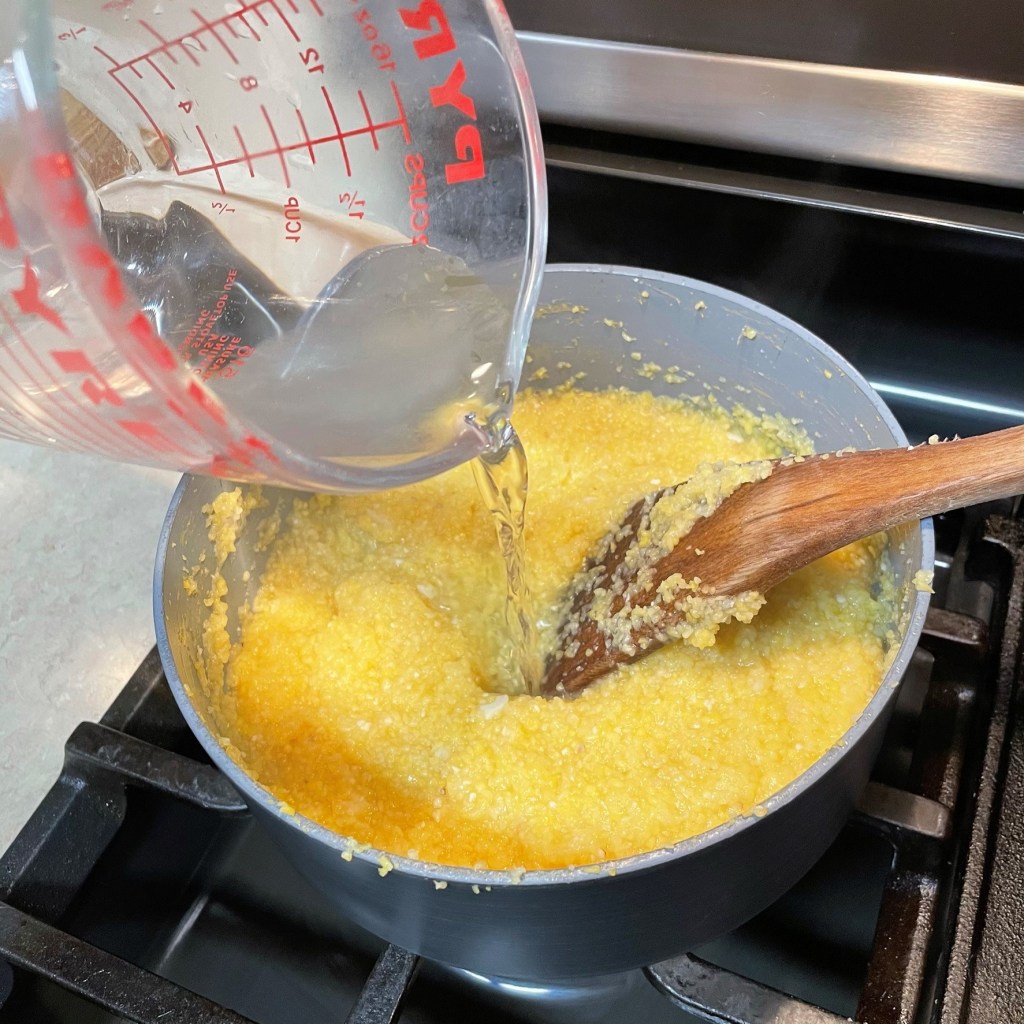
  2. Add hot water, 1/2 cup at a time, and continue with frequent stirring until each addition is absorbed and grits take on a smooth, creamy appearance. This may be up to 2 cups of additional liquid, and may take as long as 40 minutes.
  3. When grits achieve desired consistency, add a few shakes of RedHot sauce and stir in the light cream. Stir in shredded cheddar until melted and smooth. Remove grits from heat and cover to keep warm until you are ready to assemble the dish with the shrimp and other ingredients.
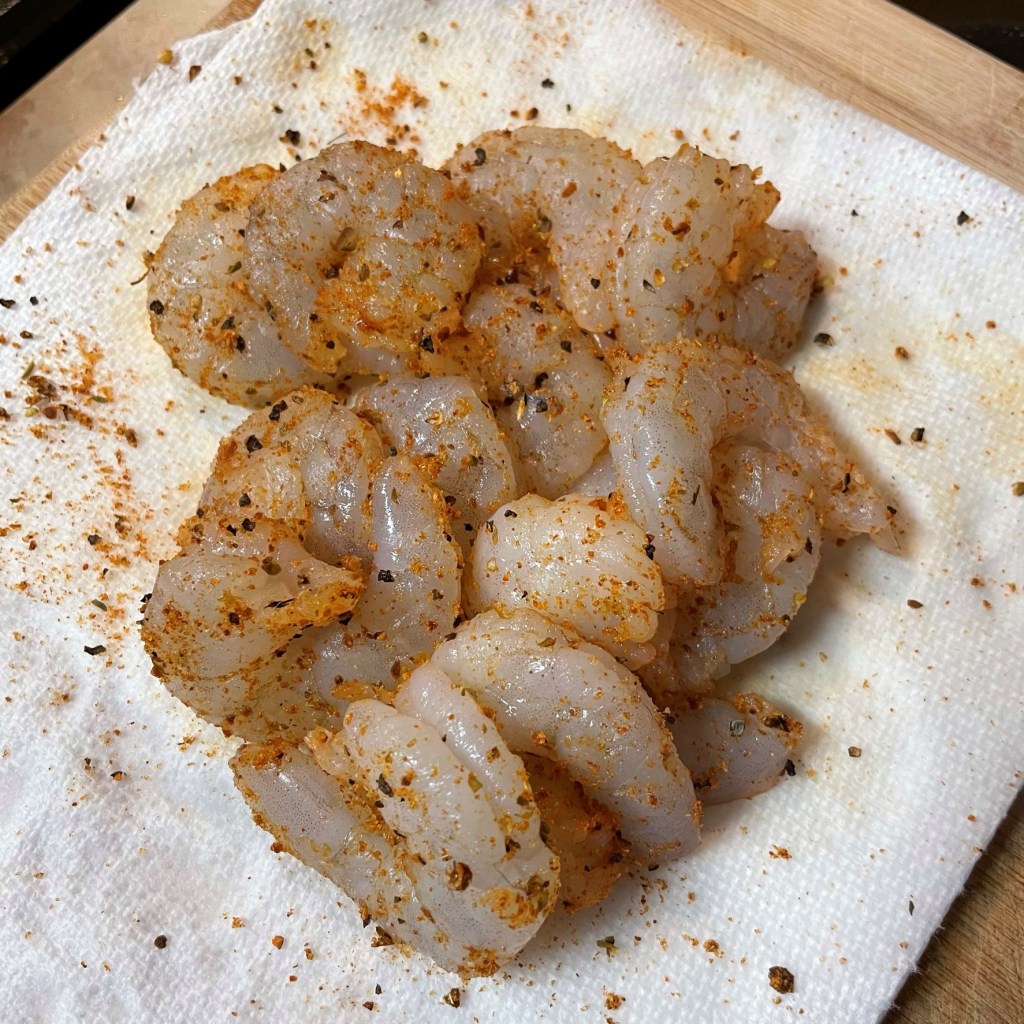
  4. Season the prepared shrimp with a few shakes of Cajun dry seasoning, and toss to let the flavor meld with the shrimp.
  5. Place a large skillet over medium heat. Add a tablespoon of olive oil and brown the andouille sausage bits until they have slightly crispy edges. Add the sliced mushrooms to the pan, tossing to brown them on both sides. Transfer sausage and mushrooms to a bowl.
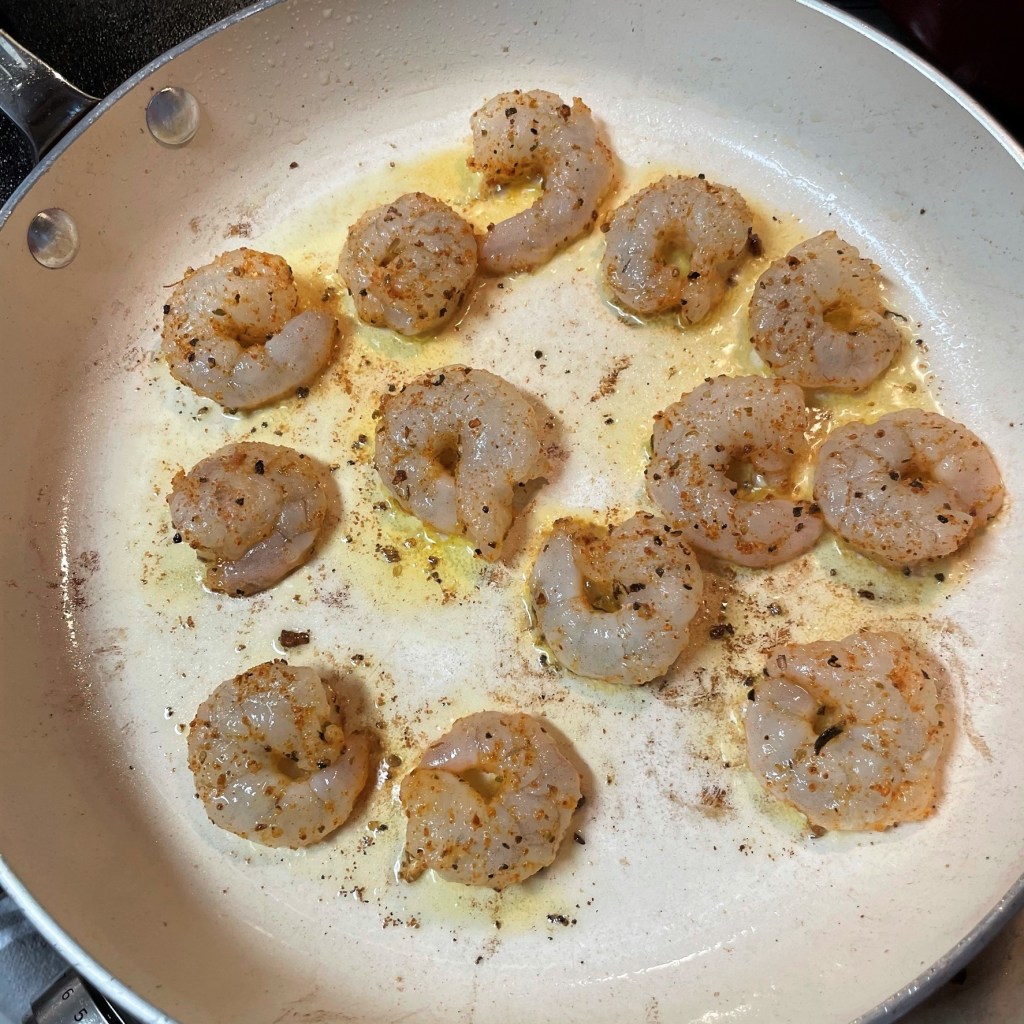
  6. In the same skillet, again over medium heat, swirl in another tablespoon of olive oil. When oil is shimmering, place shrimp into the pan, one at a time. Allow them to cook, undisturbed, about one minute, then begin turning them, following the same order, to cook the other side.
  7. Add the cooked sausage and mushrooms back to the skillet and give the whole thing a few quick tosses to heat everything through.
  8. Spoon a generous amount of grits onto your serving bowls or plates, top with sausage, shrimp and mushrooms. Sprinkle dish with scallions and serve.
Time for dinner!