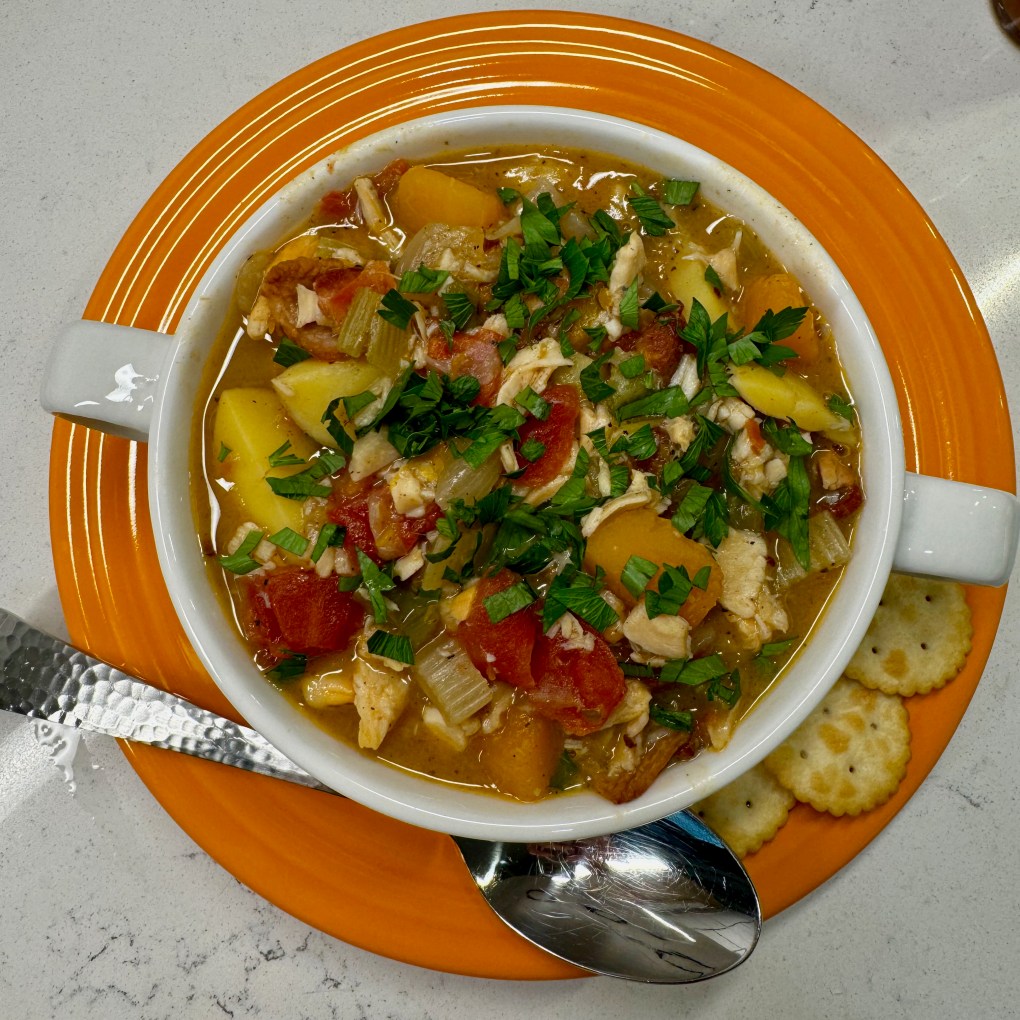
Hatteras-style Clam Chowder

There are days that I go looking for a good inspiration recipe, and then there are days when they pop up out of nowhere while I’m looking for something else. This recipe, I suppose, was somewhere in between. 

I’ve been wanting to make a clam chowder with the fresh chopped clams that always tempt me from the case at my local seafood shop, but I didn’t want either of the classic chowder options that you always hear about. New England style, of course, is the creamy, white version that uses potatoes, clams, onions and loads of heavy cream. It’s luxurious and comforting, but high on the saturated fat scale. And then there’s Manhattan style, with its light tomato broth, onions, big chunks of potato and chewy clams. It’s a lovely light bite, but some people (my New York-born-and-raised husband included) don’t find brothy soups as satisfying. 

A perfect in-between

As I pondered how to find a happy medium between the lighter, tomato brothy chowder I craved and the creamy but bland version my husband favored, I got to thinking maybe it would fun to create something altogether new— a chowder with more texture and maybe some autumn ingredients. That’s when my search for “autumn clam chowder” turned up a terrific inspiration recipe on the Southern Living website— they called it Hatteras Chowder.

How in the world this dish escaped my eye after the 37+ years I’ve lived in North Carolina is beyond me, and I am taking it as my sign that I need to finally visit the Outer Banks, where Hatteras Island graces the Atlantic coastline with the tallest brick lighthouse in the United States. 

Hatteras Lightstation
Photo by Shalom Shore on Pexels.com

It was lucky that I stumbled on this inspiration, because I had been wrestling with what to make to honor my state on North Carolina Day. I’ll share my own version of this recipe in a moment, but first, I want to brag on my state a little bit. After all, I have called it home for nearly four decades! 

I love living in North Carolina. I drove into town in my little white Pontiac (that had no A/C), with my cat, my clothes, a big stereo system and $800 in my pocket. This place gave me hope for achieving my dream, and I found more than I had imagined, personally and career-wise. We have the coast just a few hours east and the mountains two hours west. We get to enjoy all four seasons, though we haven’t seen much snow in recent winters in my neck of the woods.

The city of Winston-Salem, where Les and I met and live, boasts a vibrant arts and innovation culture— a big step up from the days when Winston-Salem was only about tobacco. We have terrific indoor and outdoor venues nearby for live music, great food and drink, and our city is proud of the diversity of its citizens. Yes, we have our share of unfortunate political embarrassments (you’ve probably read about one of them even this week, but we will take care of that in November), and our coastline frequently bears the brunt of tropical storms and hurricanes, but the good in North Carolina truly outweighs the bad or we wouldn’t still be here!



Our state is also well known for many foods, including pulled pork bbq, collard greens and pimento cheese, but this Hatteras chowder that I’ve just learned about is made with fresh-from-the-Atlantic clams, red potatoes, bacon, onion, celery, carrot, white wine, herbs and clam juice. As written, the recipe sounds delicious. But you know me, I have to make it my own.

Twisting up a classic

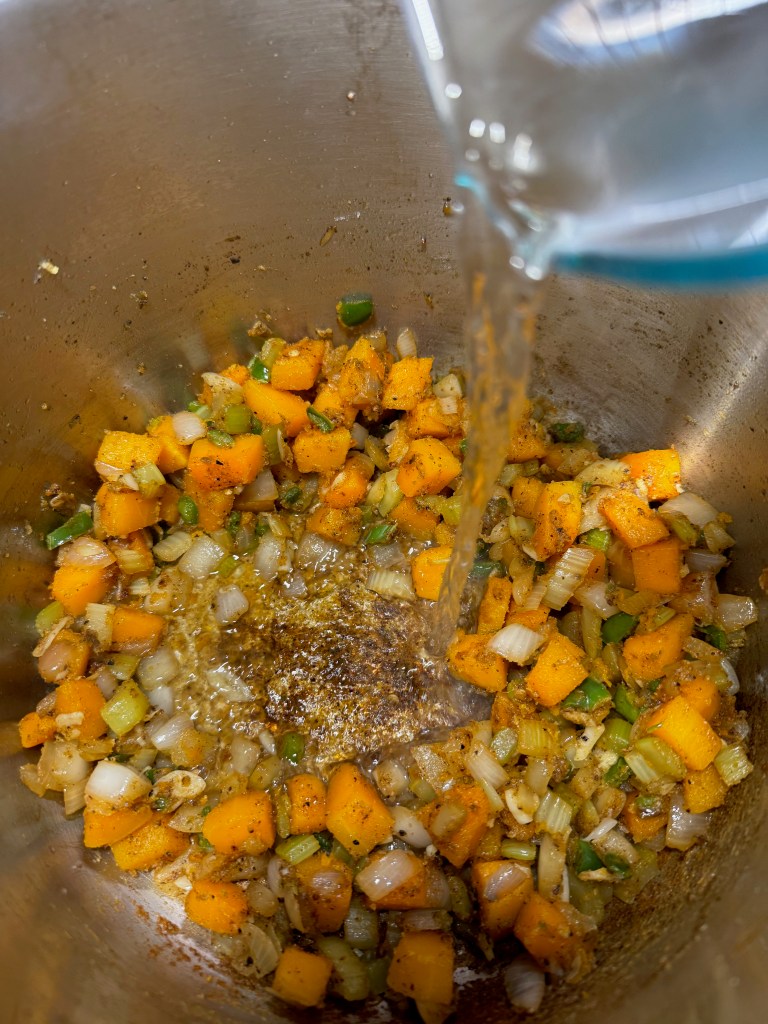
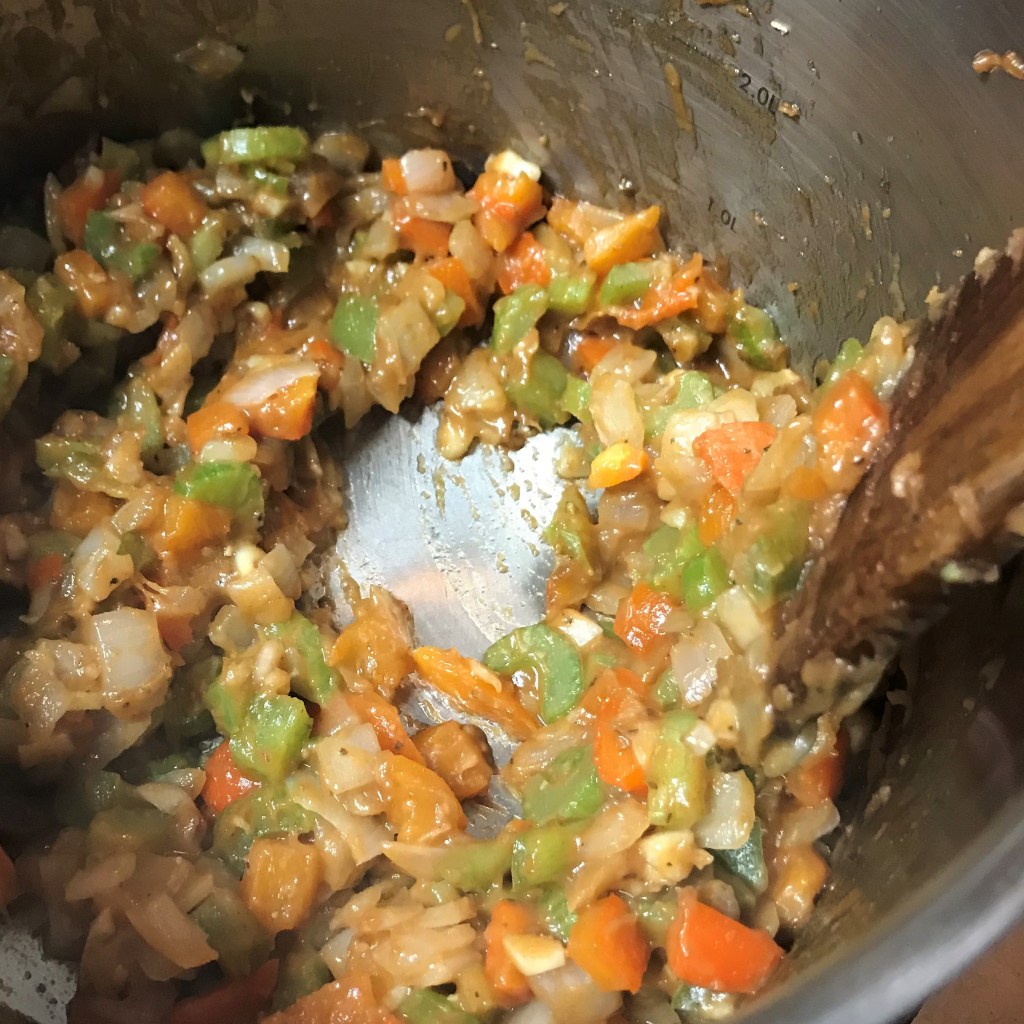
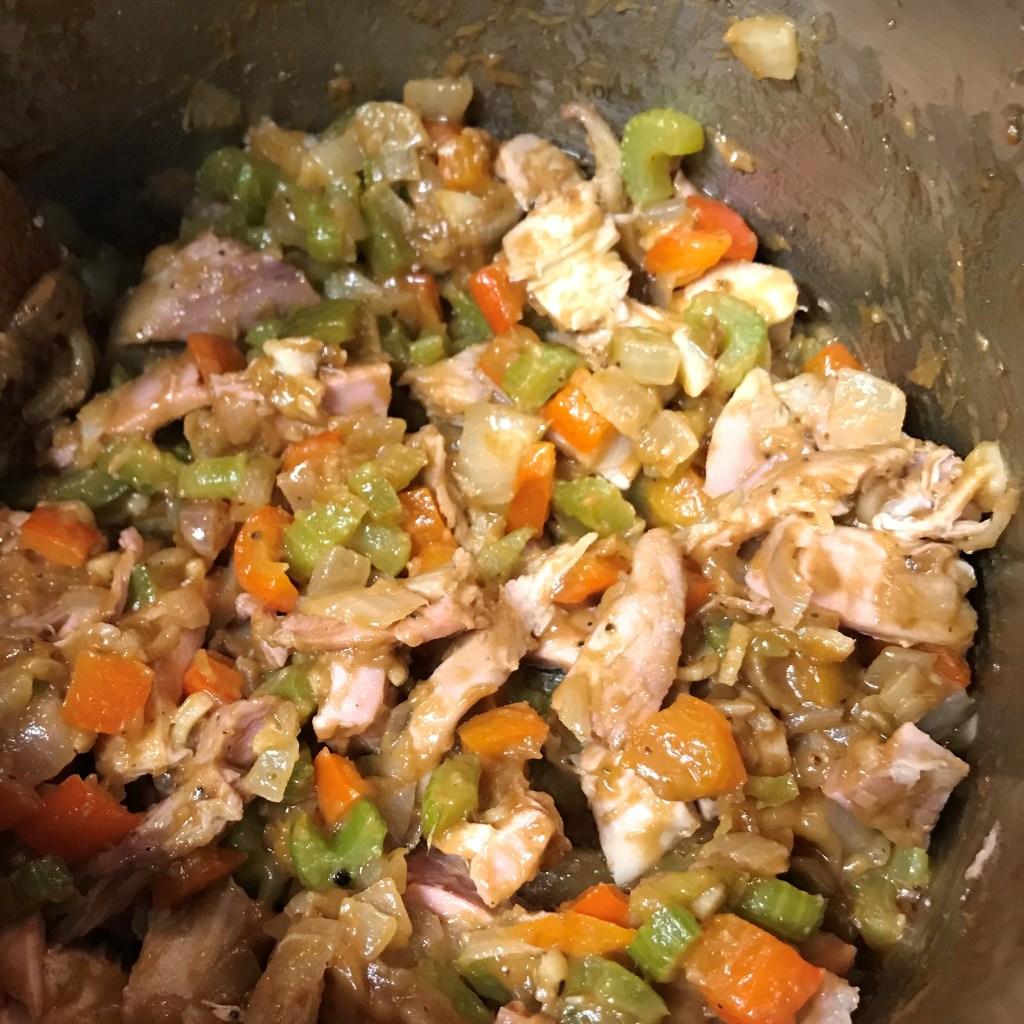
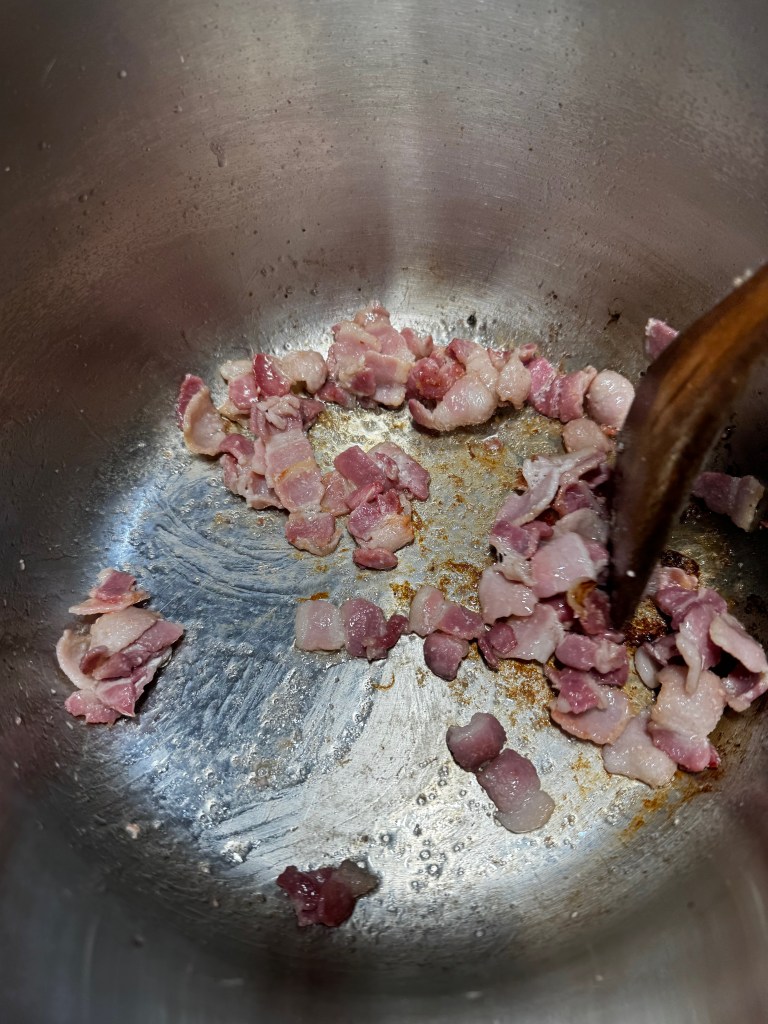
I didn’t have carrots on hand, but butternut squash stood in nicely. A jalapeño in the produce drawer promised to add a subtle layer of heat, which Les would never argue against. I sautéed those in the fat rendered from the bacon. To add a little extra body to the chowder, I cooked in a bit of flour just before deglazing the pot with white vermouth (because I never have wine on hand anymore).

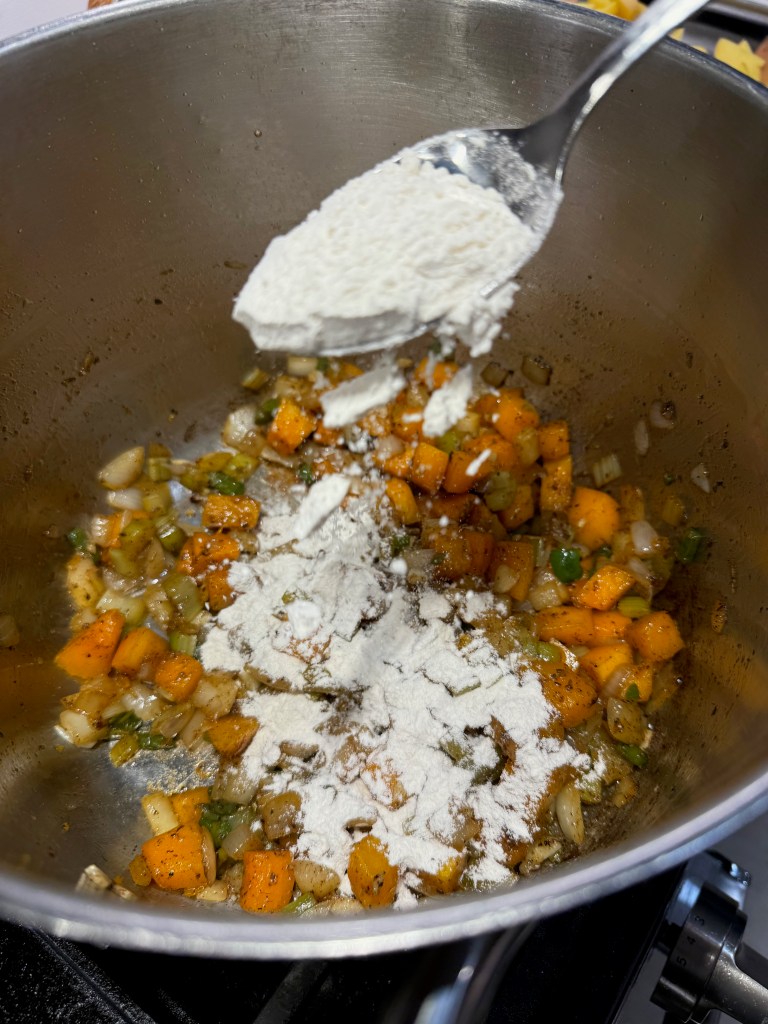
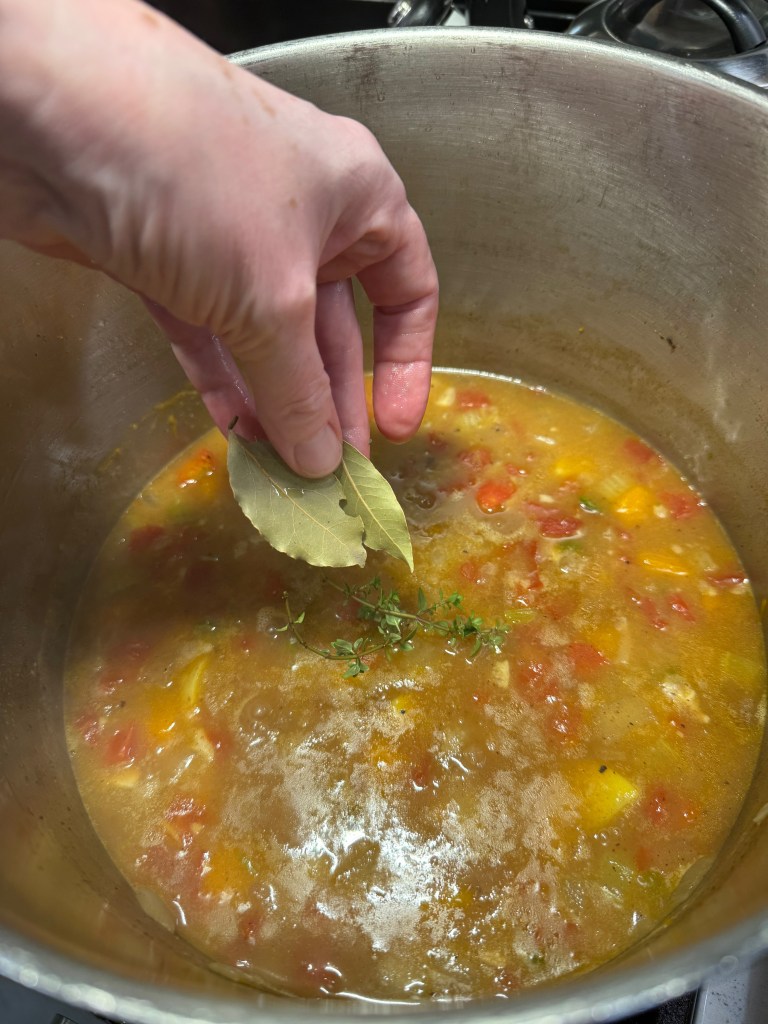
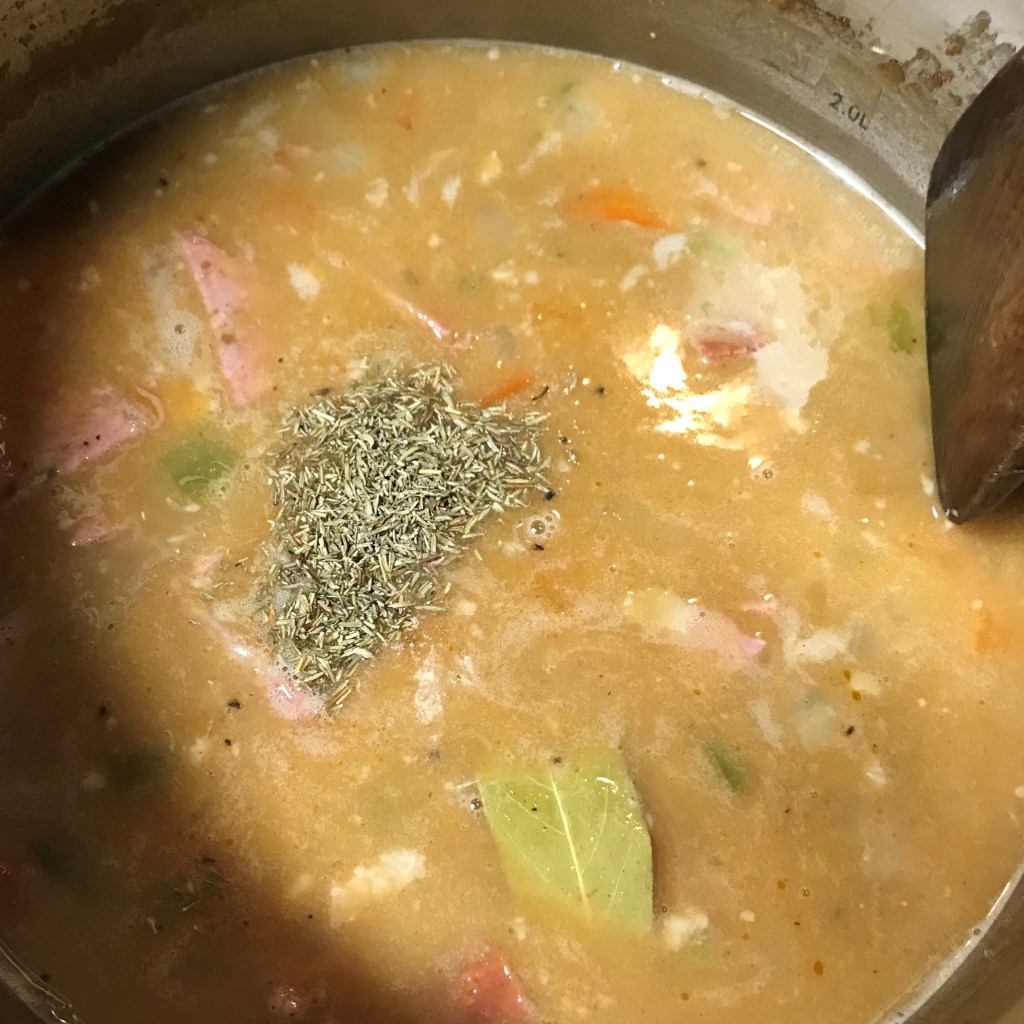
Believe it or not, I did have two bottles of clam juice in the pantry, because I’ve been jonesing to make chowder for over a year. The recipe called for three, but I didn’t mind keeping this on the thicker side. To bring a tiny bit of “Manhattan” into it, I tossed in a can of Rotel tomatoes which also brought another layer of heat, and that touch of acidity was perfect for balancing the flavors. Finally, my sliced Yukon gold potatoes (I didn’t have red), fresh thyme sprigs and dried bay leaves, and then it was time to simmer this hearty, chock-full-of-flavor autumn soup.
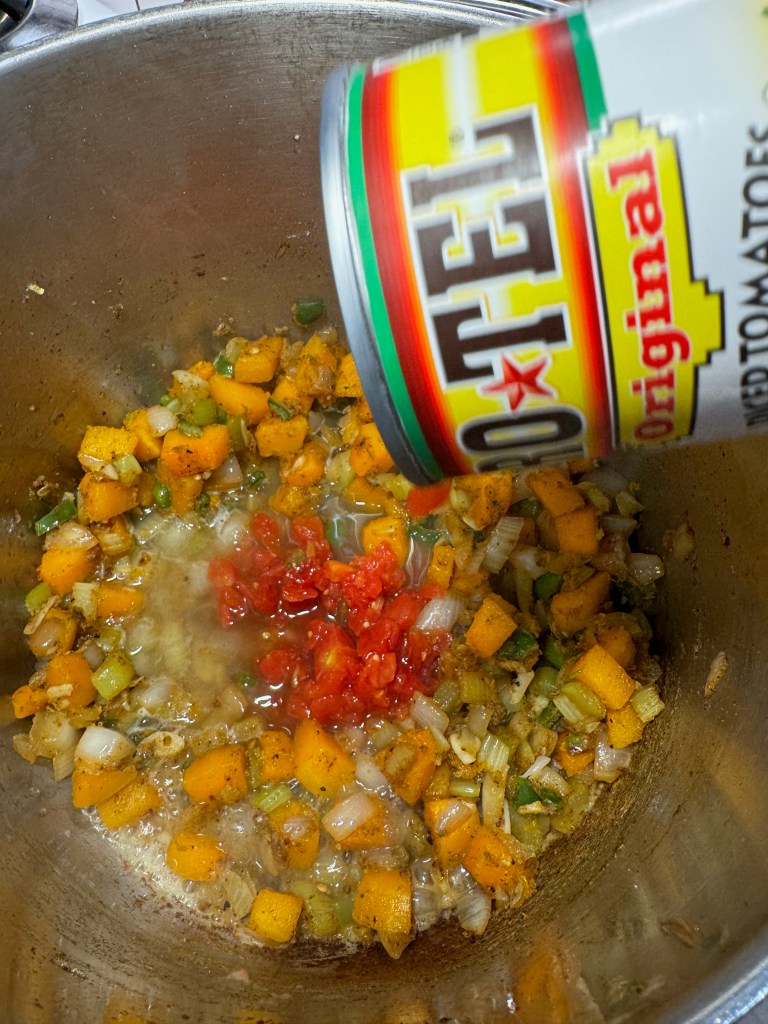
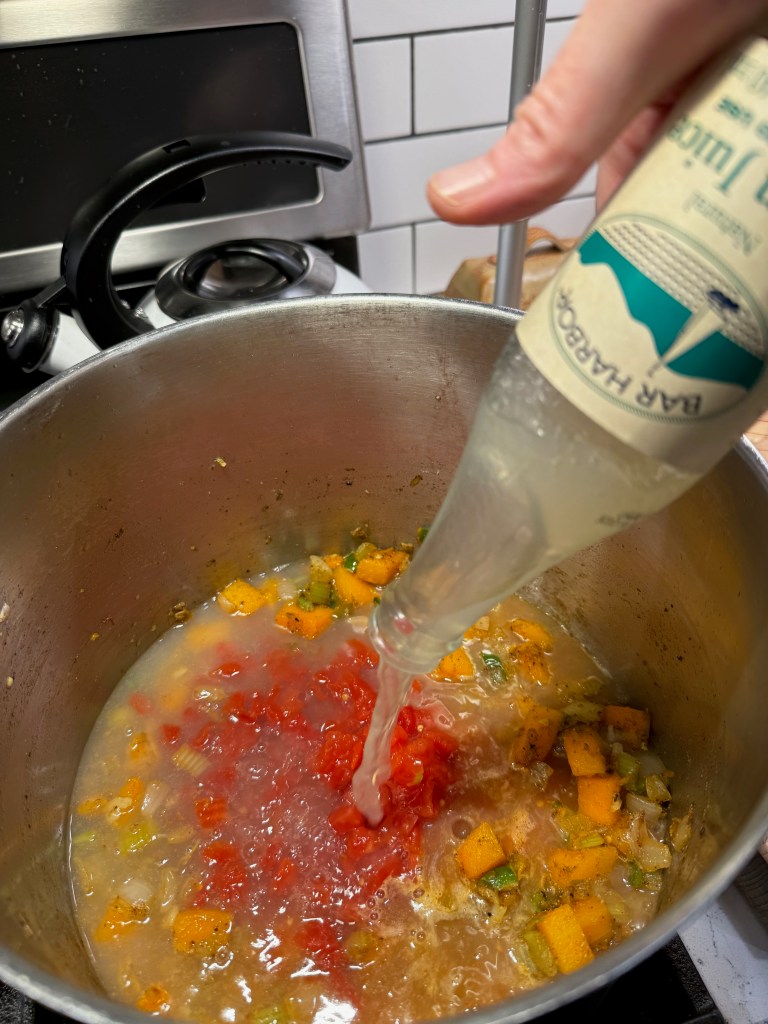
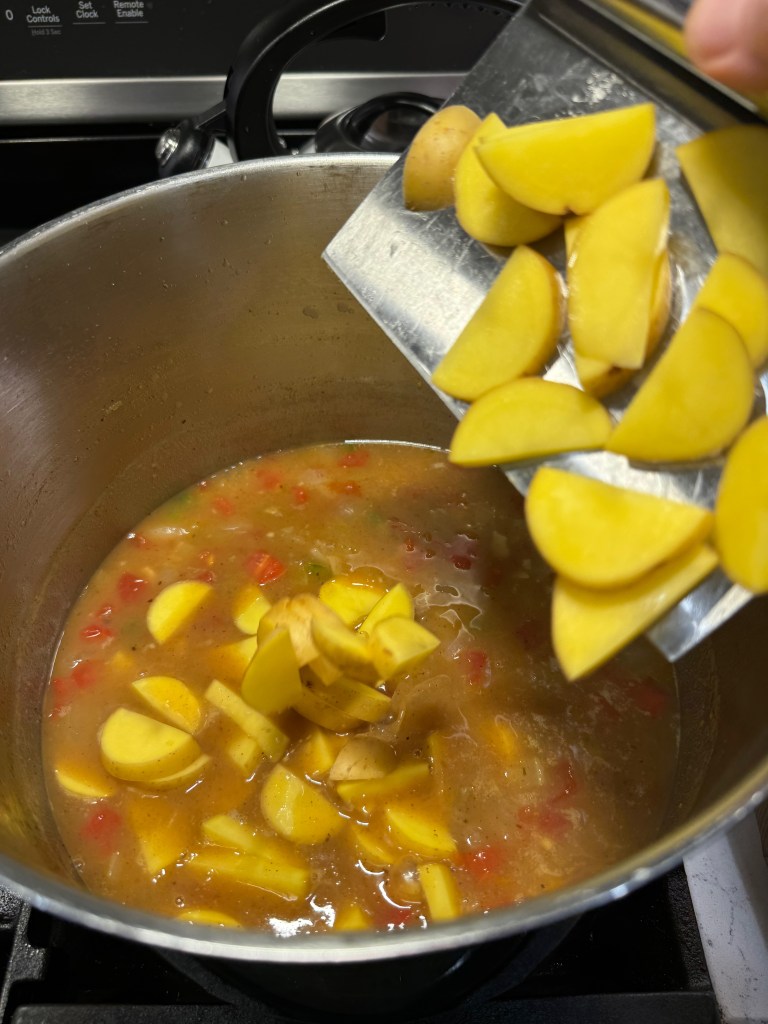
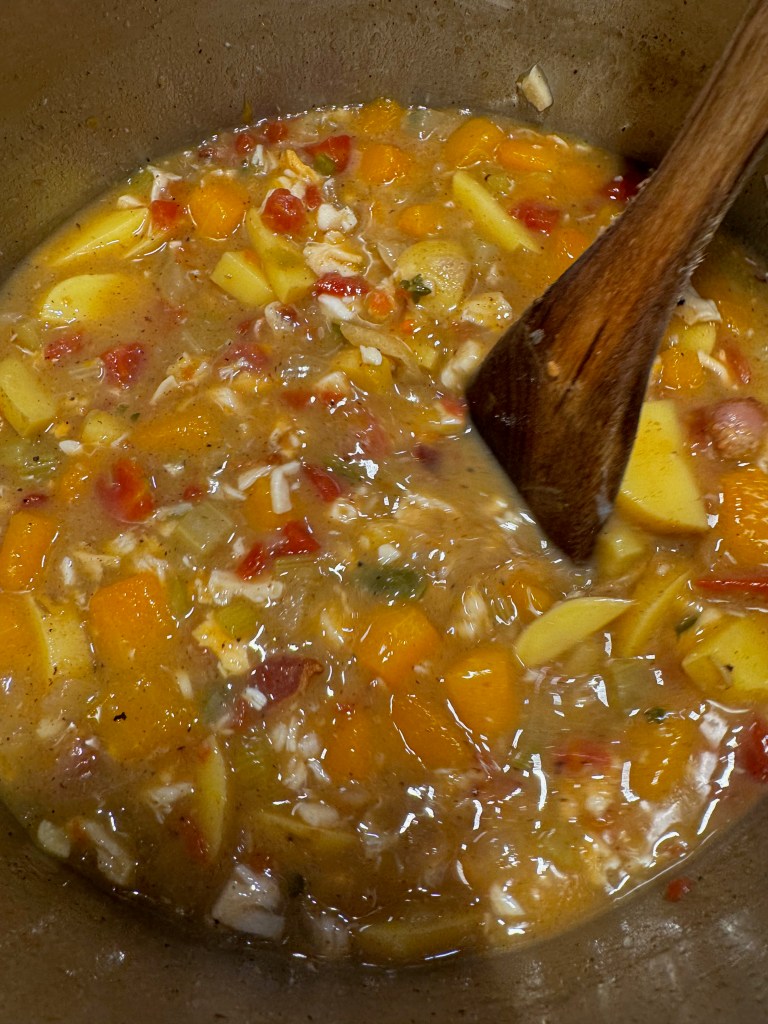
Here comes the big shortcut I took with this recipe. The Southern Living article said that only fresh whole clams were appropriate for this chowder—not chopped— and it included steps for purging the grit and then cooking the clams separately. I’m sure that canned chopped clams would come up short here, but the fresh chopped clams from my favorite local seafood chop were sweet, slightly chewy and so fresh; I’d put them up against the fussy whole-clam process any day of the week. These sweet little gems and their liquid get stirred in just at the end, along with the crisped-up bacon that started this whole thing.
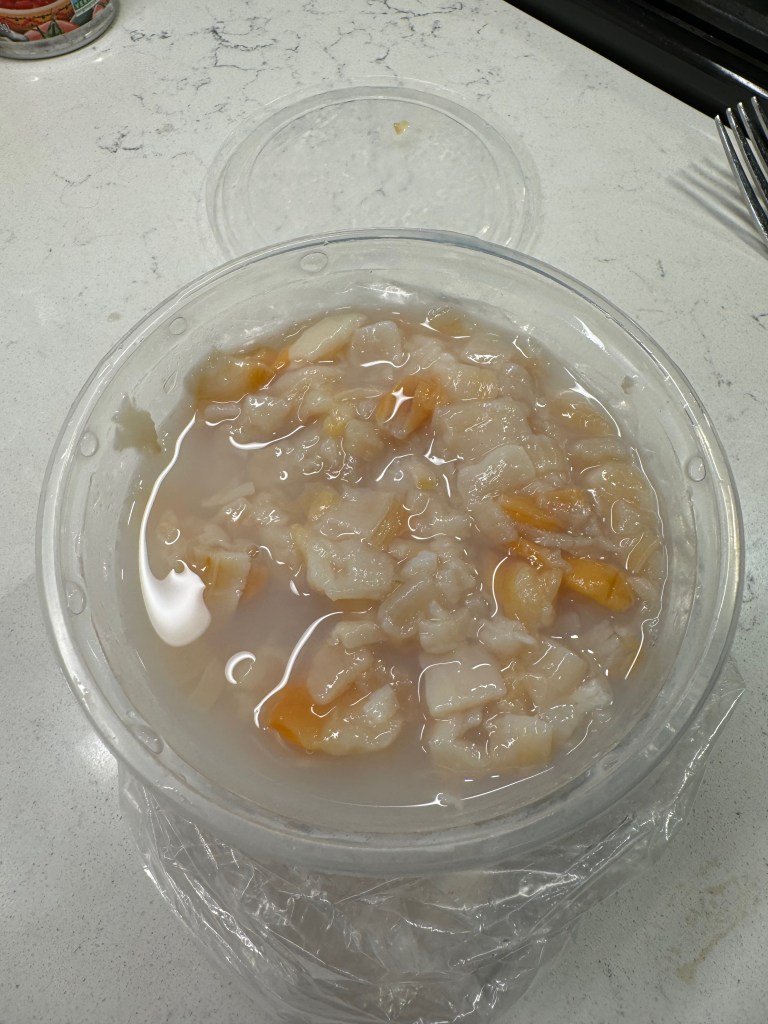
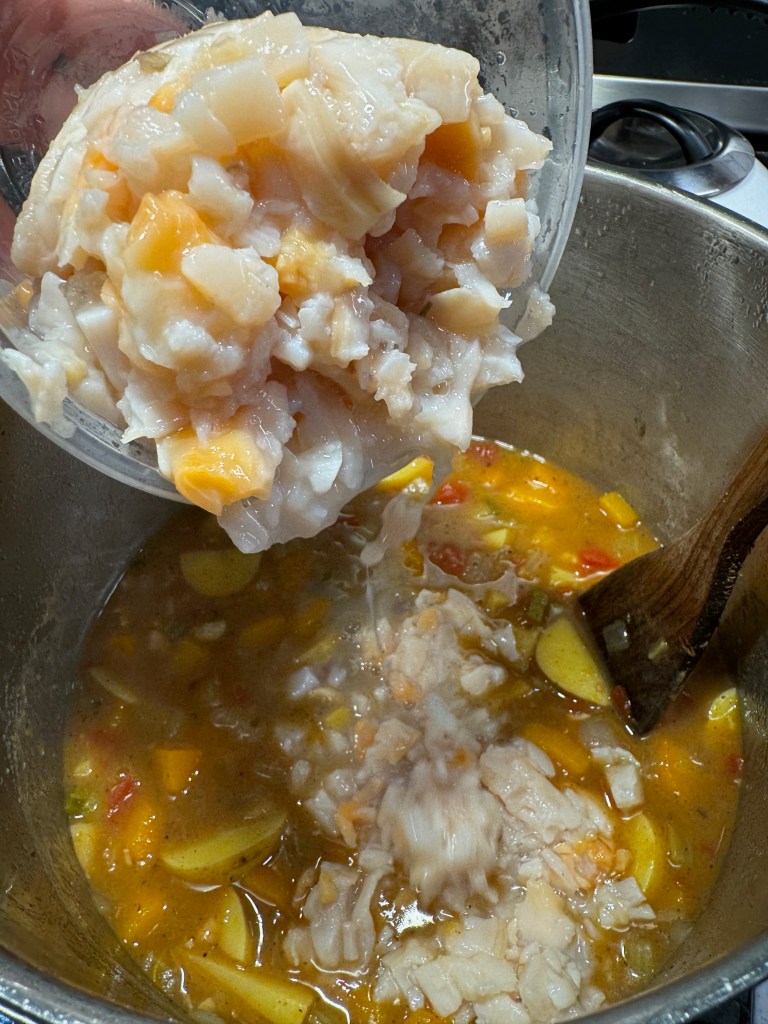
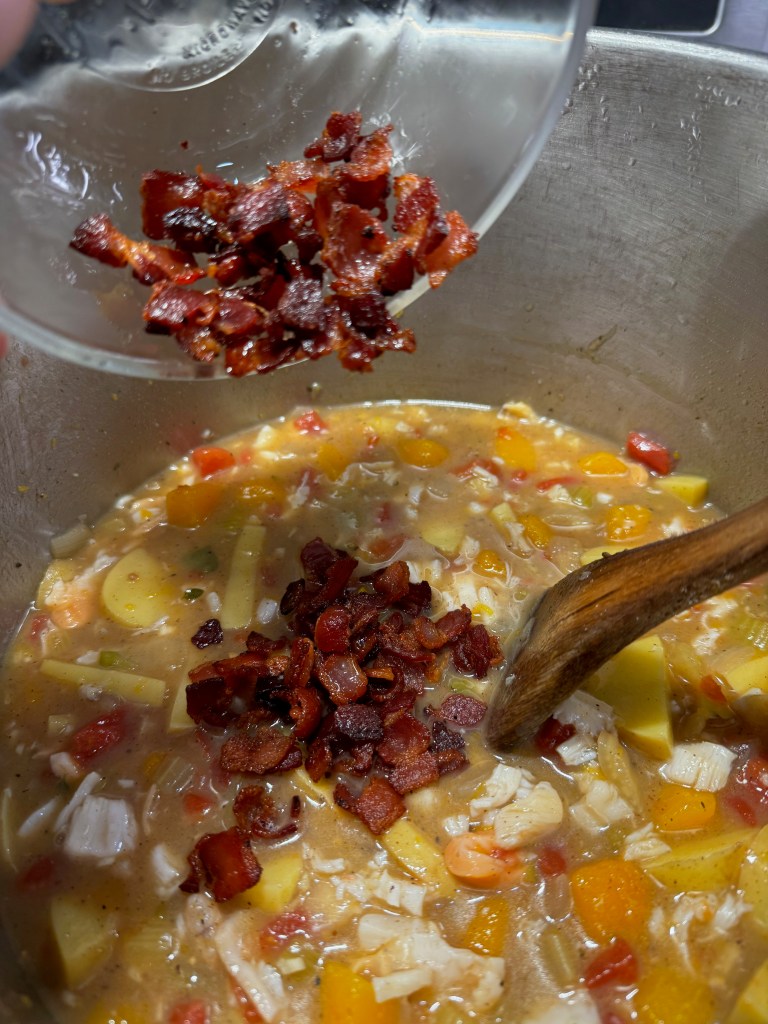
This chowder was satisfying in every way— it had the hearty, chunky texture that Les wanted without the heavy cream that I didn’t want. The jalapeño and Rotel put a slight south-of-the-border spin on it, and I’ll add that this chowder reheated as leftovers very well. The only thing I’d do differently next time is make a double batch. 
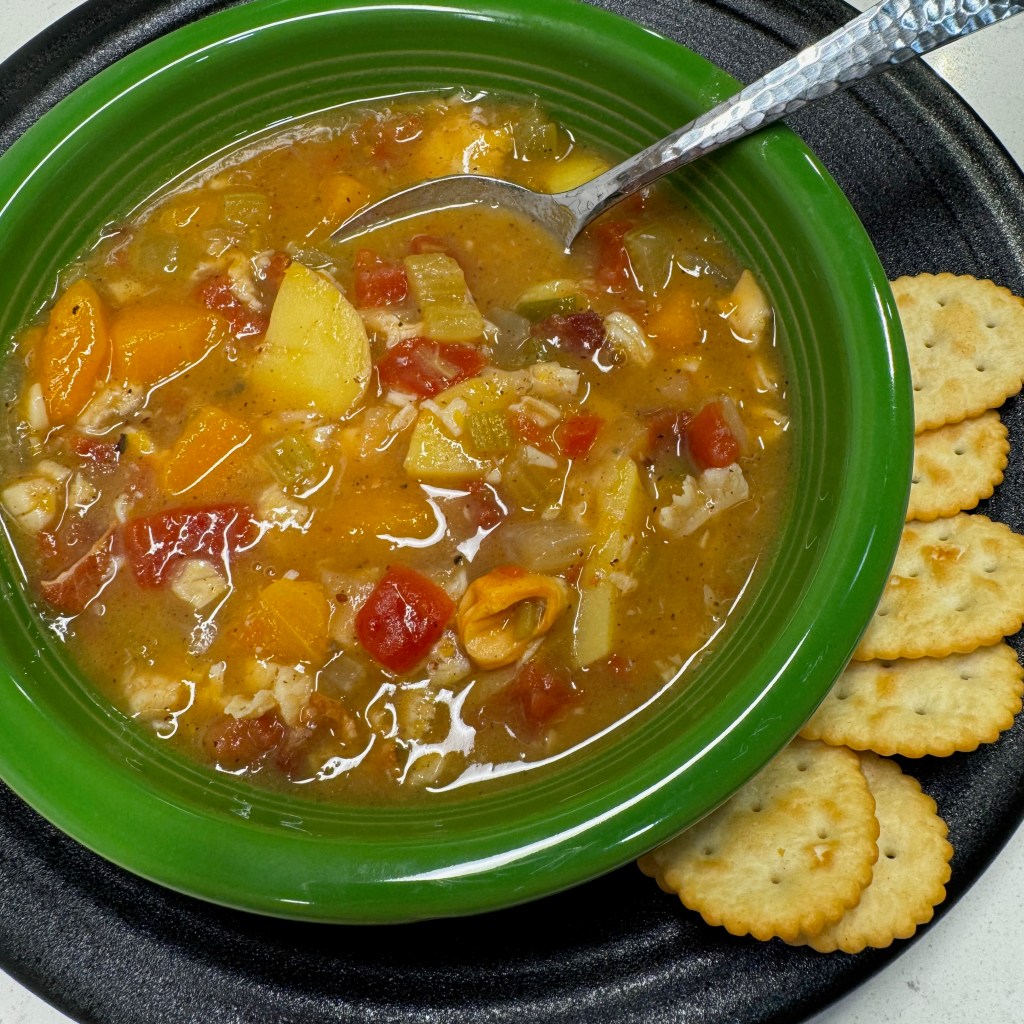

So this is a new “North Carolina” recipe that I will most definitely add to my repertoire, and it was a perfect way to celebrate all things Tar Heel on North Carolina Day. Click to print recipe is below; I hope you enjoy it.

For a fun little sendoff today, I’ve also prepared a Spotify playlist of artists that call North Carolina home. Some of these names will be instantly familiar; others will be new. I hope you find something fun among them. 

Cheers, y’all!


Hatteras-style Clam Chowder
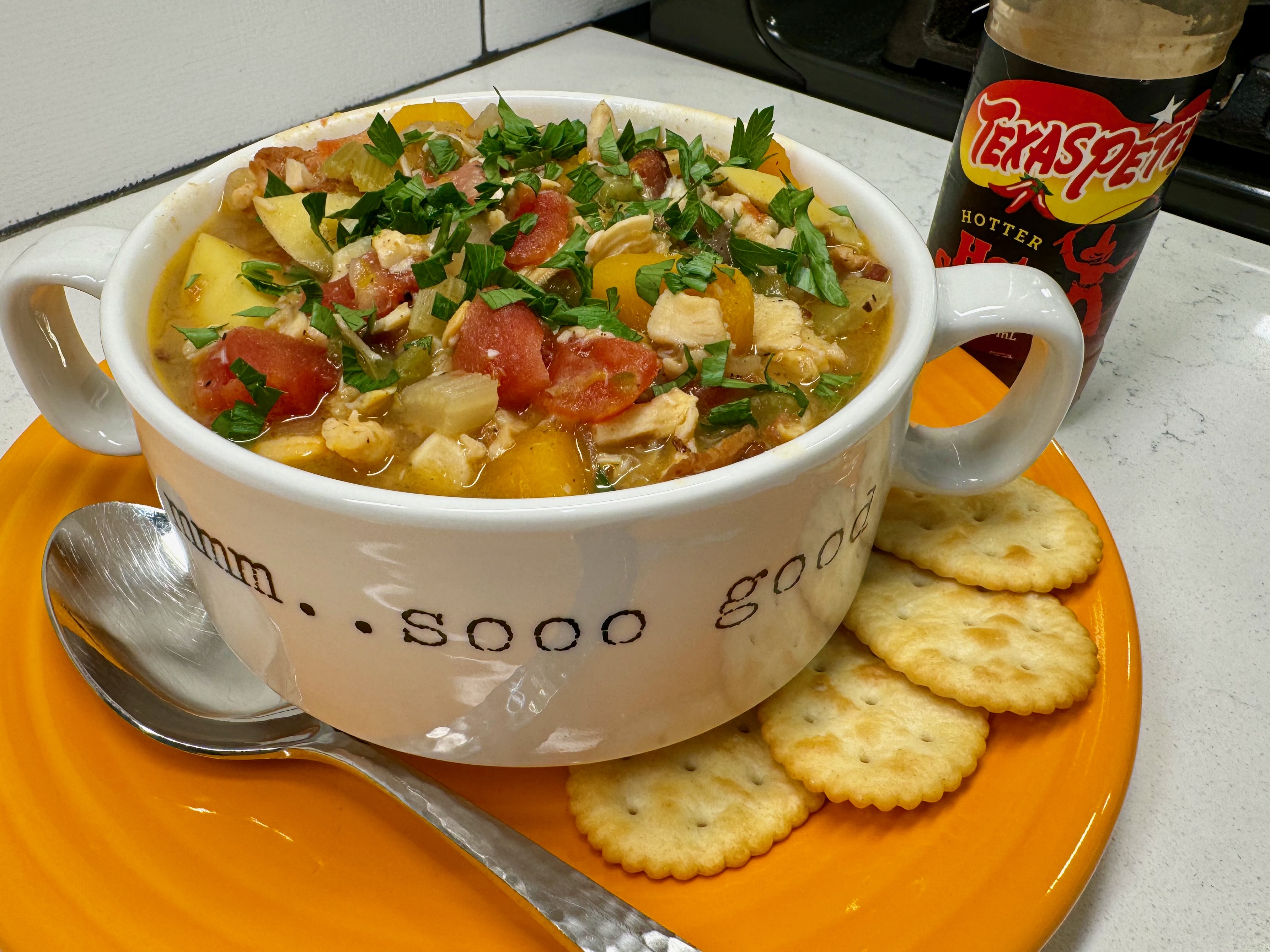
  • Servings: About 6
  • Difficulty: Average
  • Print

Somehow, I've missed this delicious coastal North Carolina dish, despite having lived in the state more than 30 years. My version swaps in winter squash for carrots and adds jalapeño and spicy tomatoes for a little extra pizzazz.


Ingredients

  • 4 slices thick bacon, chopped
  • 1 medium onion, chopped
  • 3 ribs celery, strings removed and sliced
  • 1 cup butternut squash cubes
  • Kosher salt and black pepper
  • 1/4 cup all-purpose flour
  • 1/2 cup dry white wine (I used dry vermouth)
  • 1/2 cup water
  • 1/2 can original Rotel
  • 2 bottles clam juice
  • 2 cups Yukon gold potatoes, scrubbed and diced
  • 2 dried bay leaves and 3 sprigs fresh thyme
  • 1 lb. fresh chopped clam meat (with liquor)

I found this chowder recipe very versatile to accept substitutions, based on what you like or have on hand. I’m sure that you could swap in shrimp or whitefish for the clams, and seafood or veggie broth in place of the clam juice. My inspiration recipe used carrots rather than butternut squash and it did not include flour for thickening. The tomatoes and jalapeño were my additions, and a fun twist!

Directions

  1. In a heavy-bottomed pot, cook bacon over medium heat until crispy and then remove to a separate bowl.
  2. Add onion, celery, butternut squash and jalapeños (season with salt and pepper)and sauté until softened. Add flour and stir until foamy. Add wine (or vermouth) and water, Rotel and clam juice. Add potatoes, bay leaves and thyme and reduce heat to low. Simmer for about 30 minutes.
  3. Gently stir clams (including liquid) into the pot. Add bacon and heat through. Serve right away with hot sauce and saltine or butter crackers.
Easy Slow Cooker Beef Stew

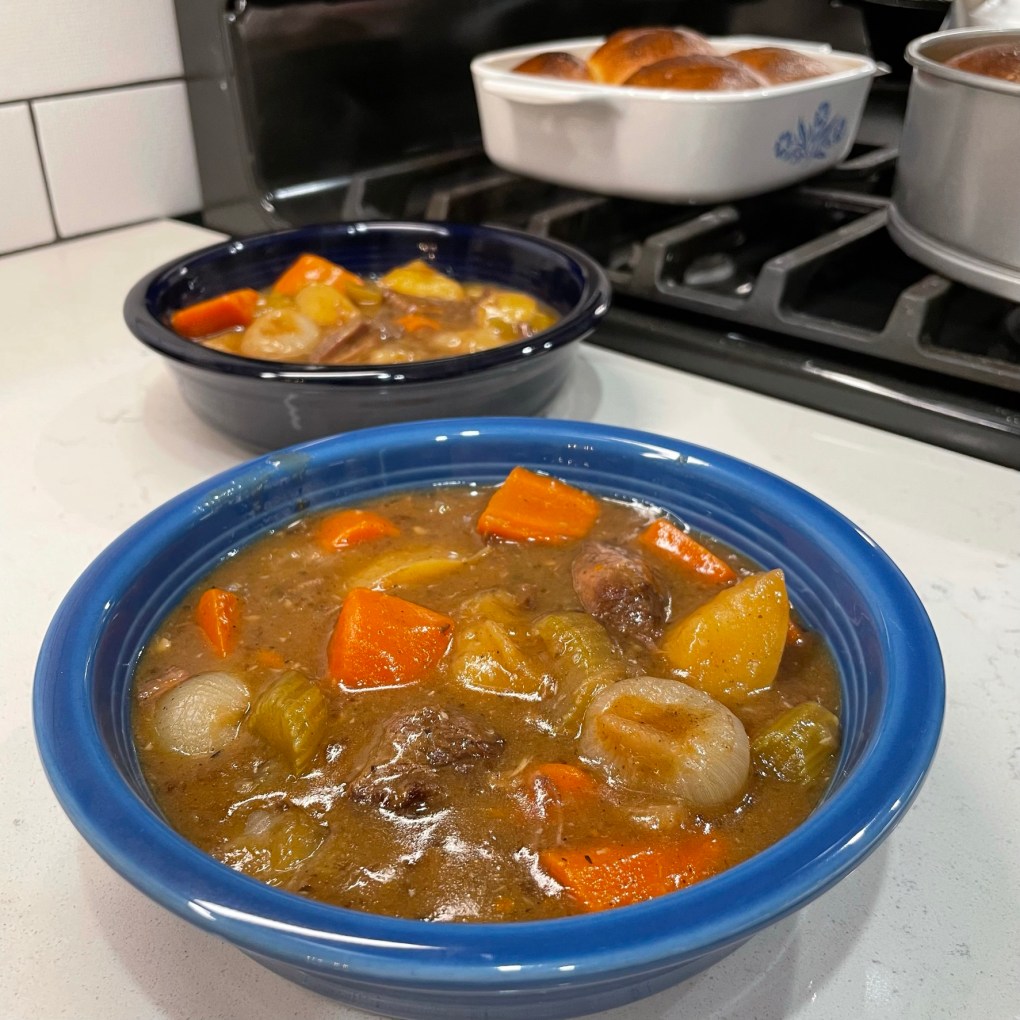
There is nothing earth-shattering or revelatory about beef stew in the fall, is there? The ingredients in my version are as one would expect—big chunks of vegetables, potatoes, beefy morsels and a thick, rich braising gravy—yet this is exactly the kind of comforting, satisfying, rib-sticking classic fall food I’ve been dreaming about since the temperatures first began to drop. So, even though I expect you may have your own recipe for beef stew, I’m going to share mine visually, just to make you hungry and ready to celebrate the season in comfort (you’re welcome).


Under less busy life circumstances, I might have made this one-pot stew right on the stovetop in our enamel-coated Dutch oven. But when I’m upside down with my day job, busy with home updates and wrangling our pets, I really appreciate the versatility of our slow cooker. Ours has extra options, including a setting for browning meat, so I was able to get this done without shifting ingredients from one pot to another. If your slow cooker has more simple settings, just brown the meat first in a skillet on the stove and transfer it to your slow cooker when it’s ready to braise.

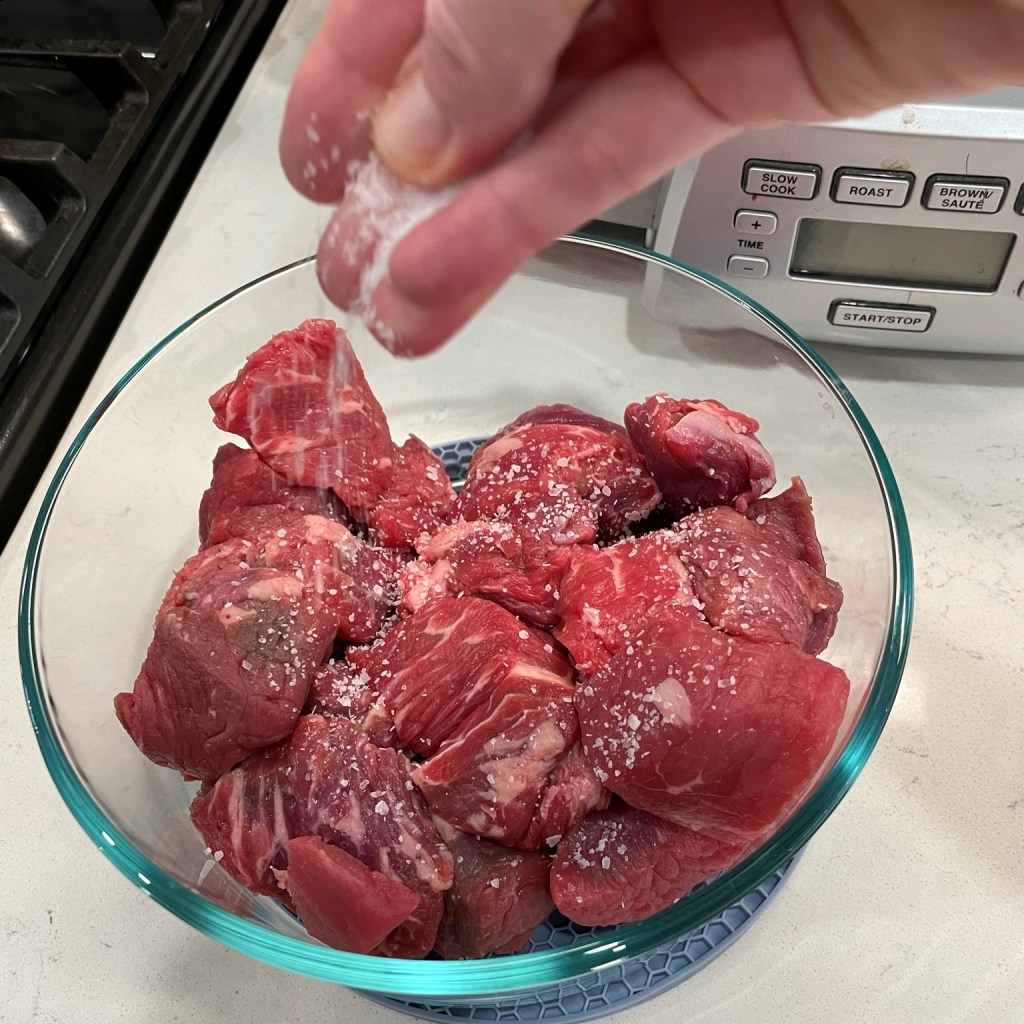
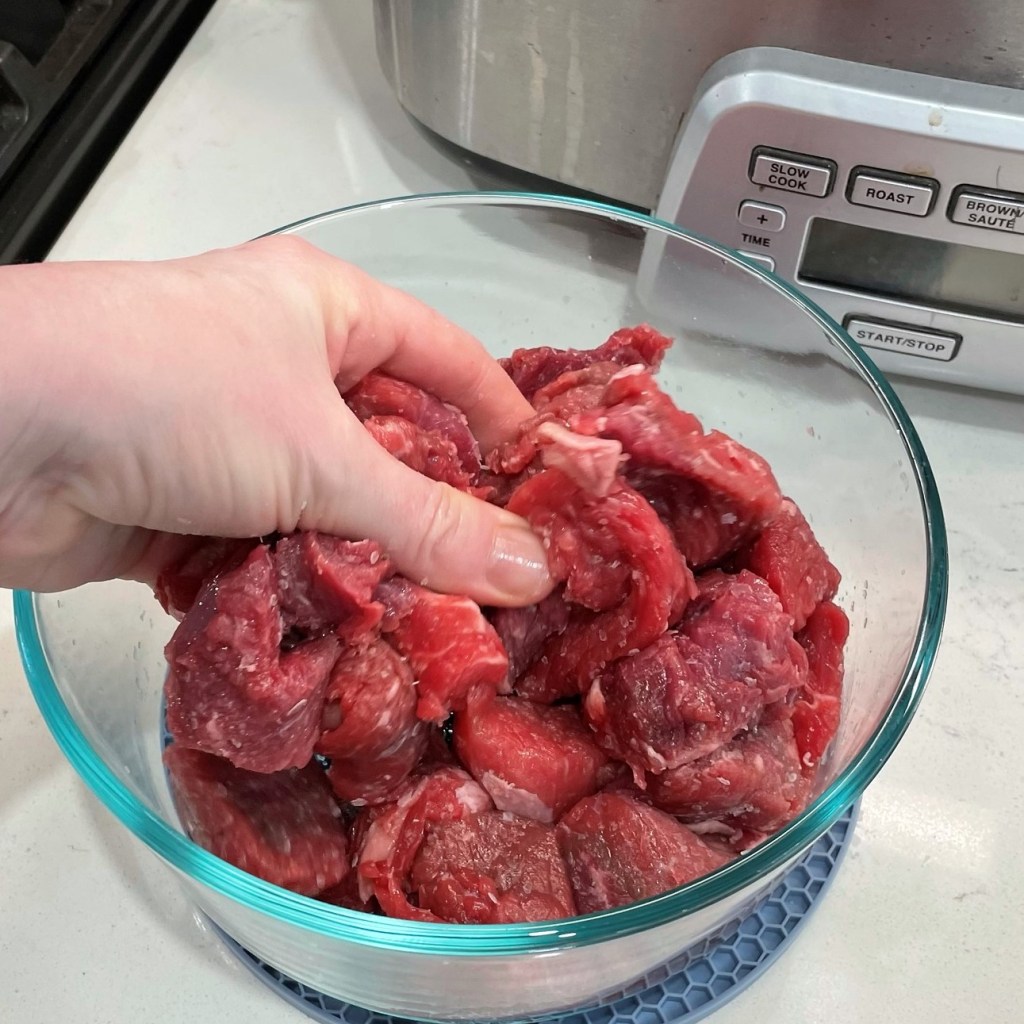
I selected grass-fed, locally raised beef for my stew. It’s easier on my digestive system than conventional beef, and we feel strongly about supporting local suppliers. Choose the best beef you can find, and a cut that is mostly lean, but with some marbling for flavor. I tossed the beef chunks with a few generous pinches of kosher salt and let them rest 15 minutes while I prepped my other ingredients and got my slow cooker up to speed.


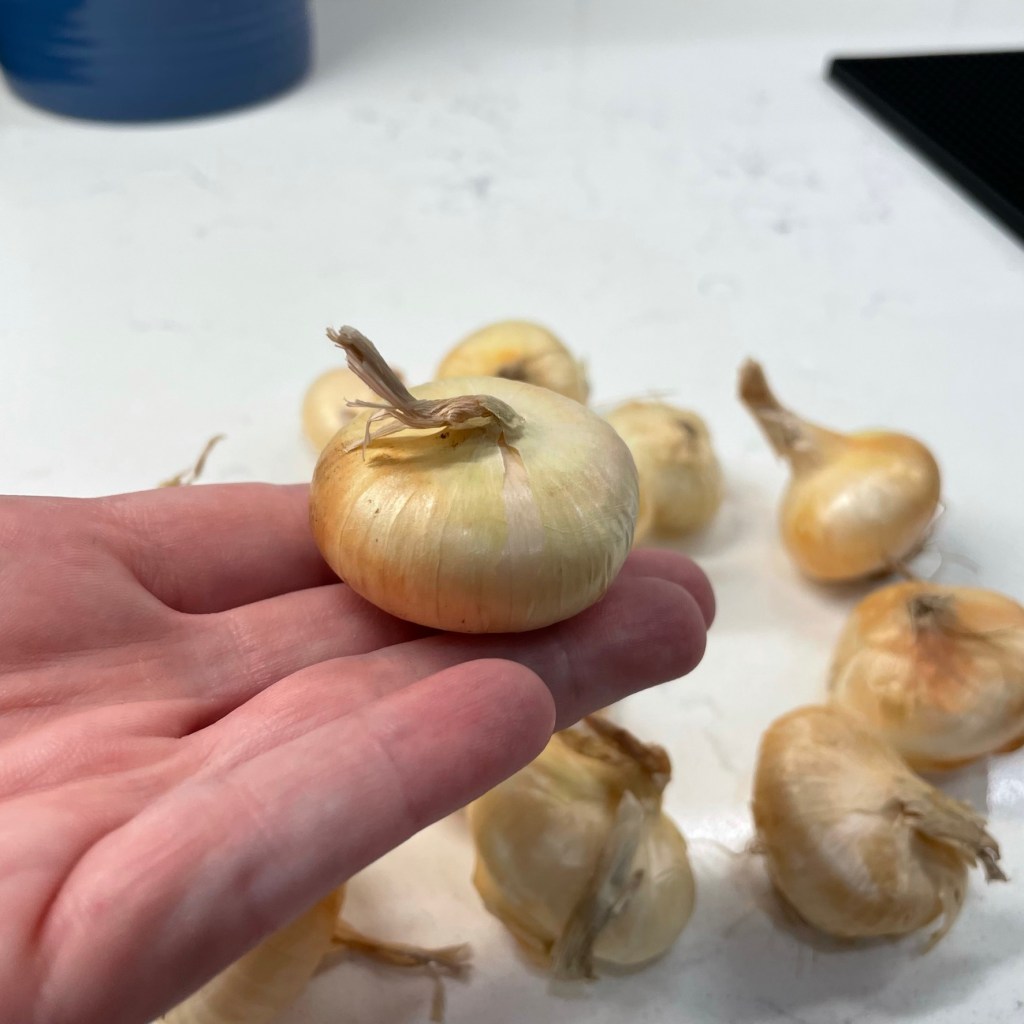
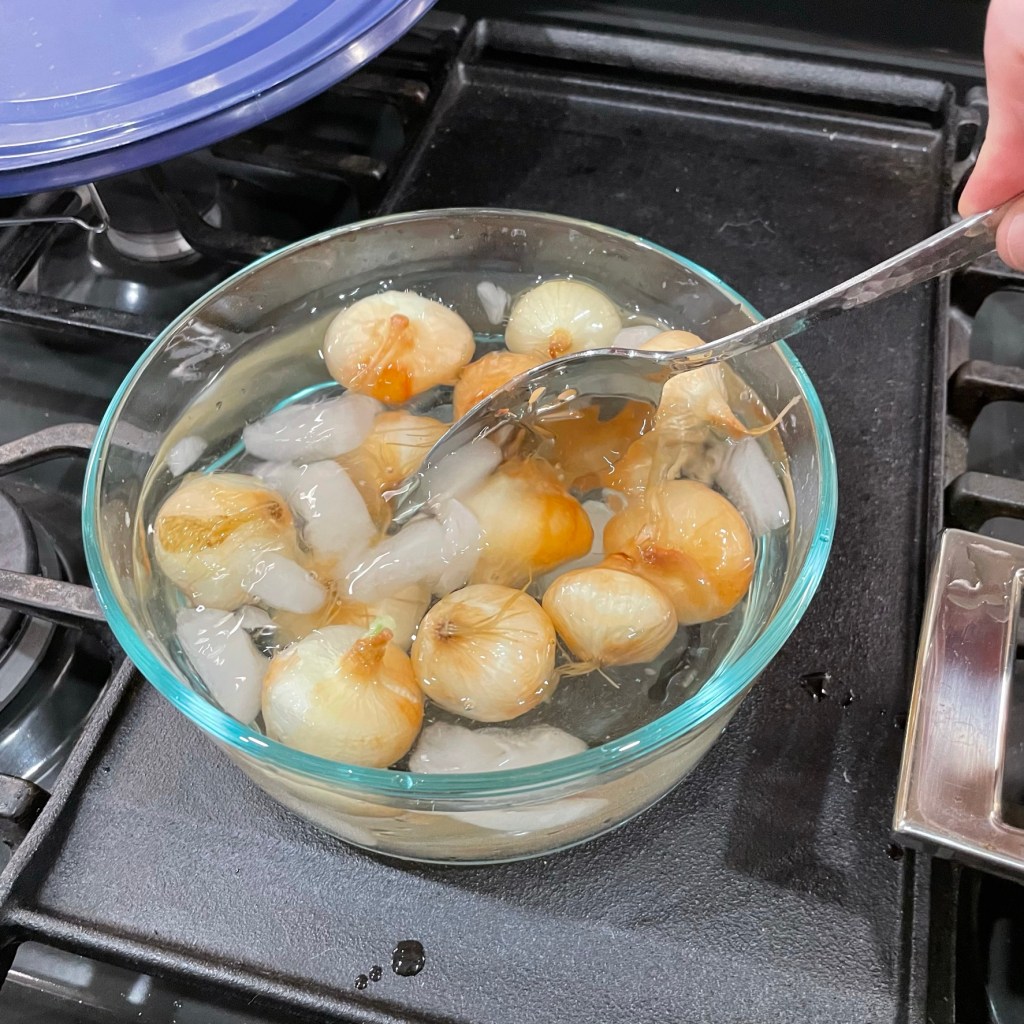
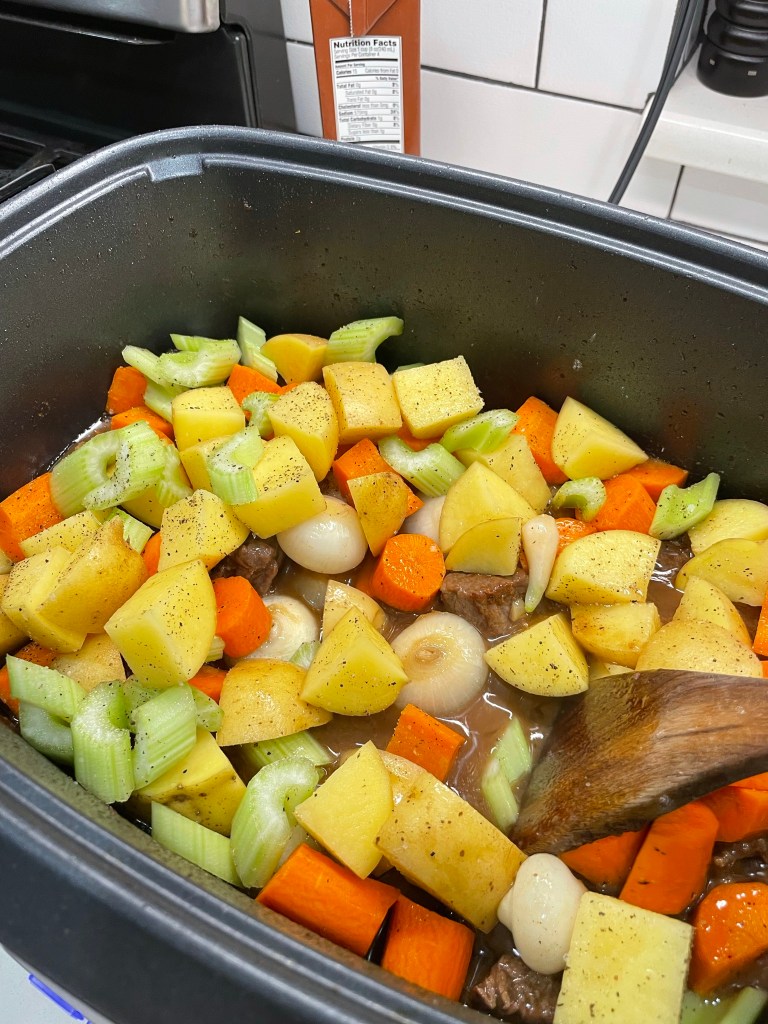
For no special reason, I decided that I would use fancy onions for my beef stew. I chose cippolini onions, which are small and squatty—kind of like miniature vidalias—and they need to be peeled before cooking. This was easy to do, with a quick bath in simmering water, then a shock in an ice bath. For the sake of uniformity, I cut my other vegetables to match the size of the cippolinis. If you wish, use a large sweet or yellow onion, cut into large chunks. 


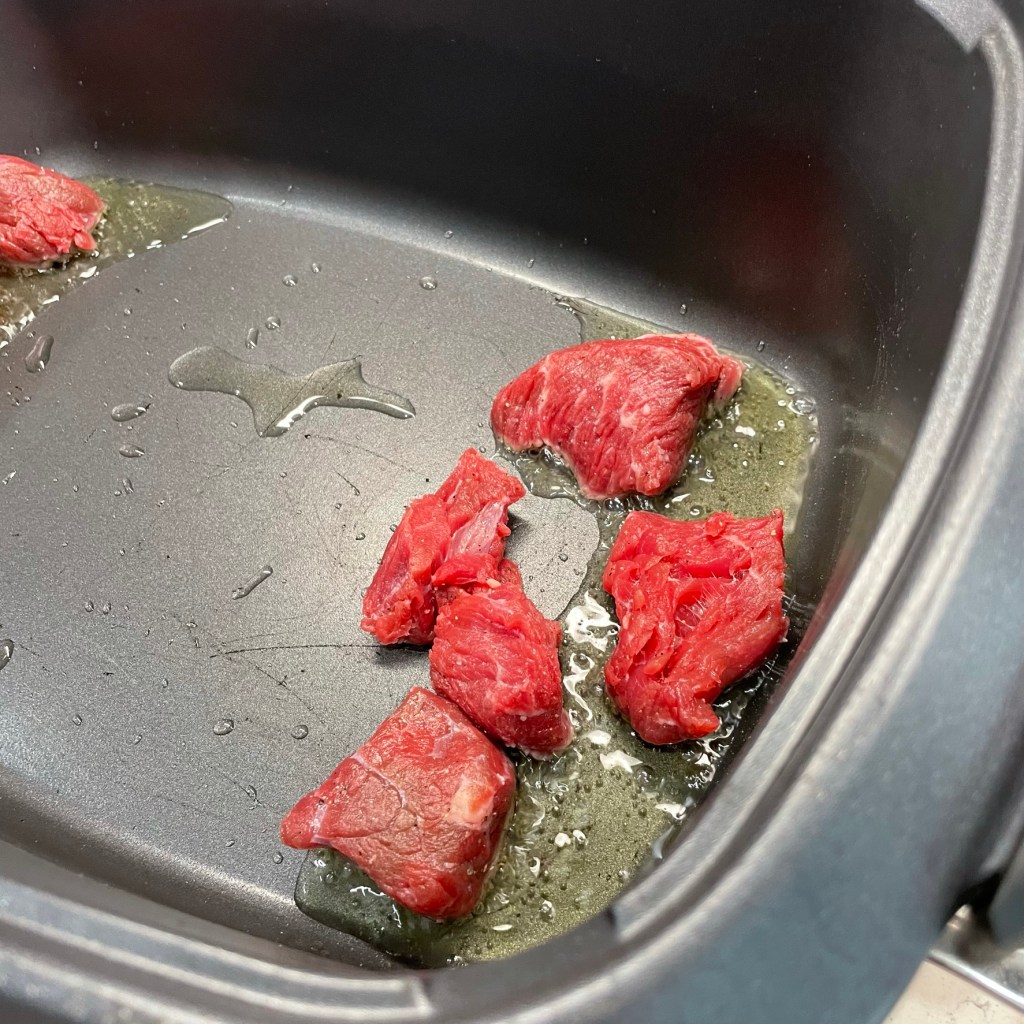
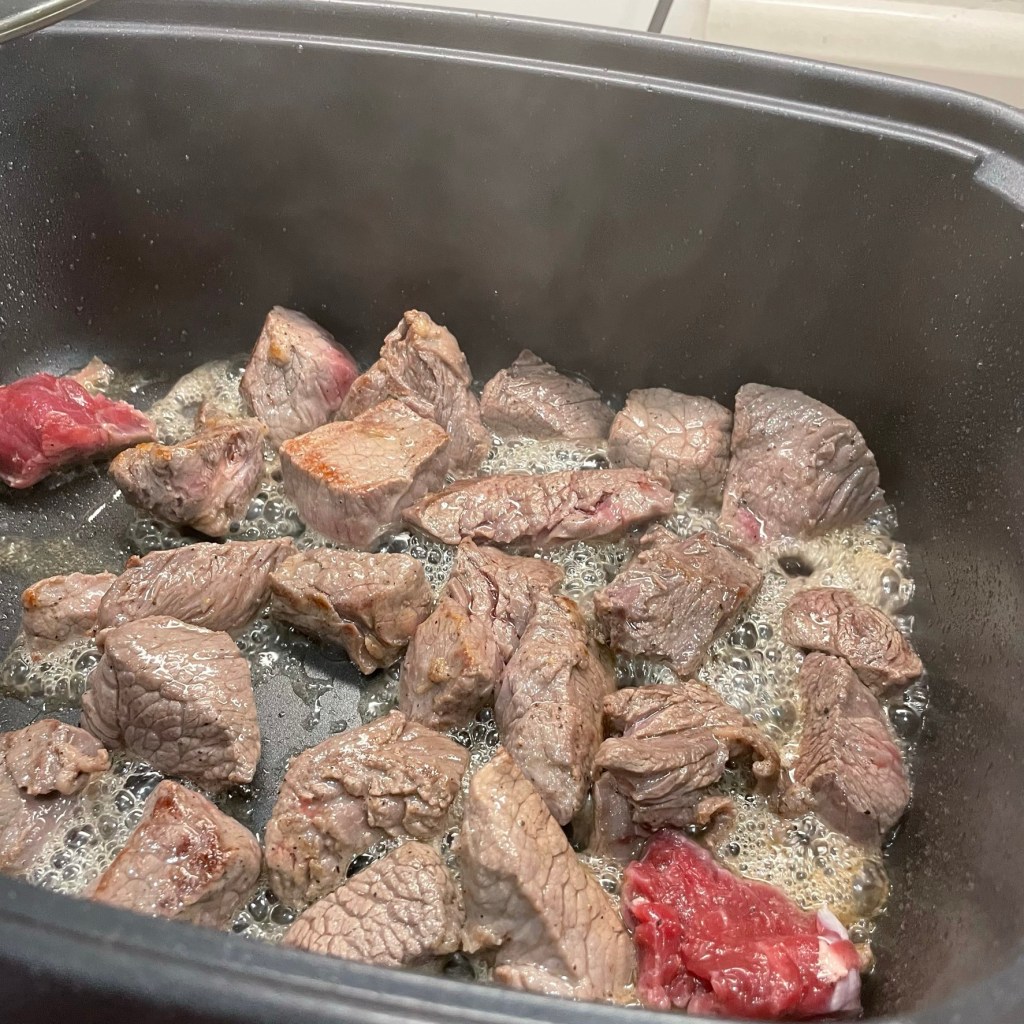
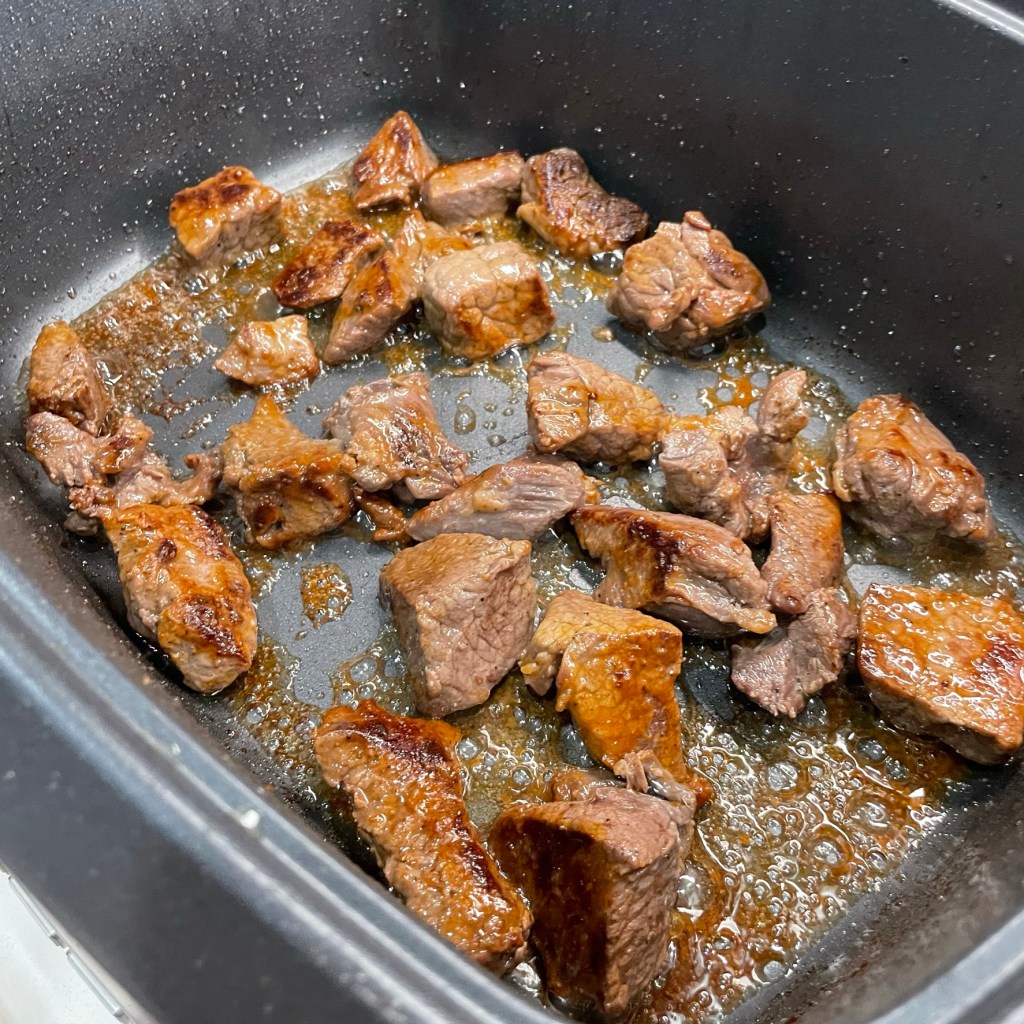
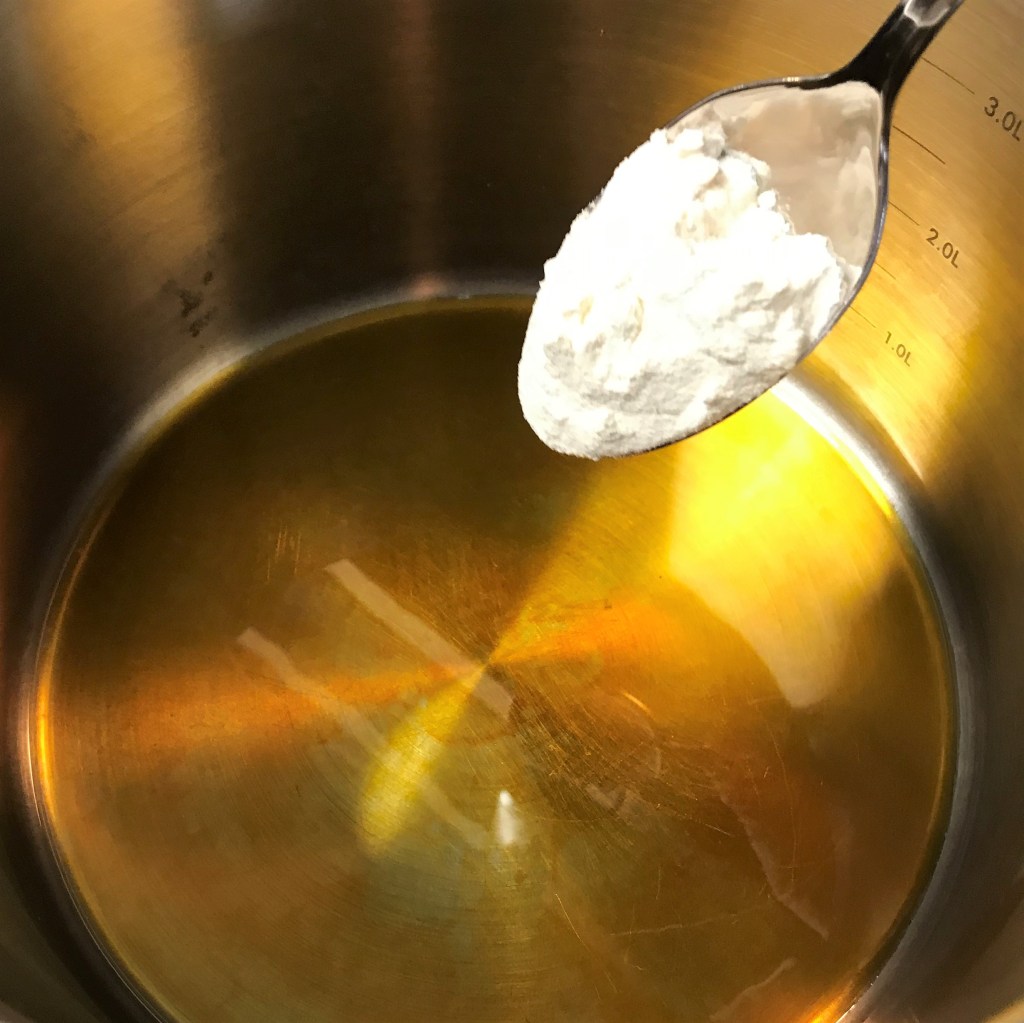
Browning the meat encourages more flavor because of something called the Maillard reaction, and if you want to geek out on food science, you could read this article to understand what that’s all about, or you could simply trust the process and brown the meat (your taste buds will thank you). When the oil in my slow cooker was ready, I added the salted meat a few pieces at a time to avoid a sudden temperature drop and turned them frequently to ensure even browning.


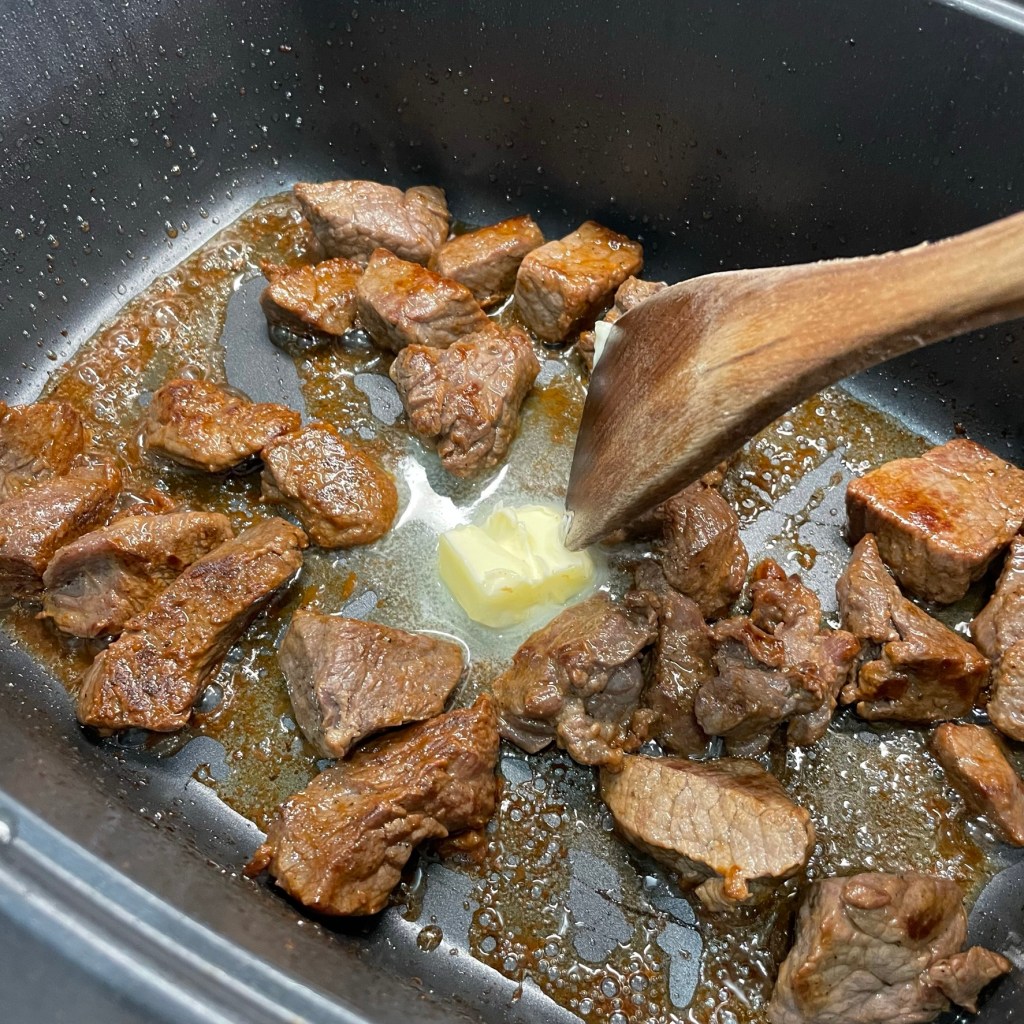
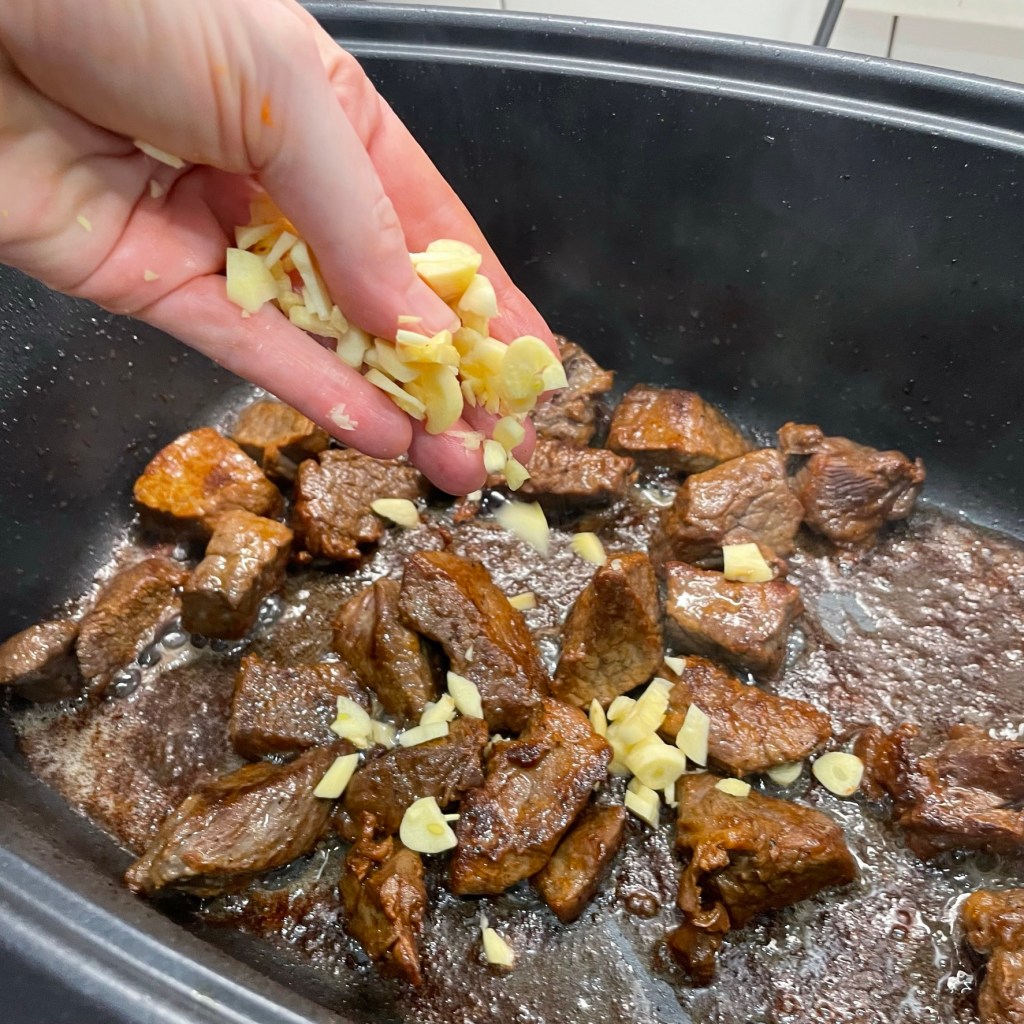
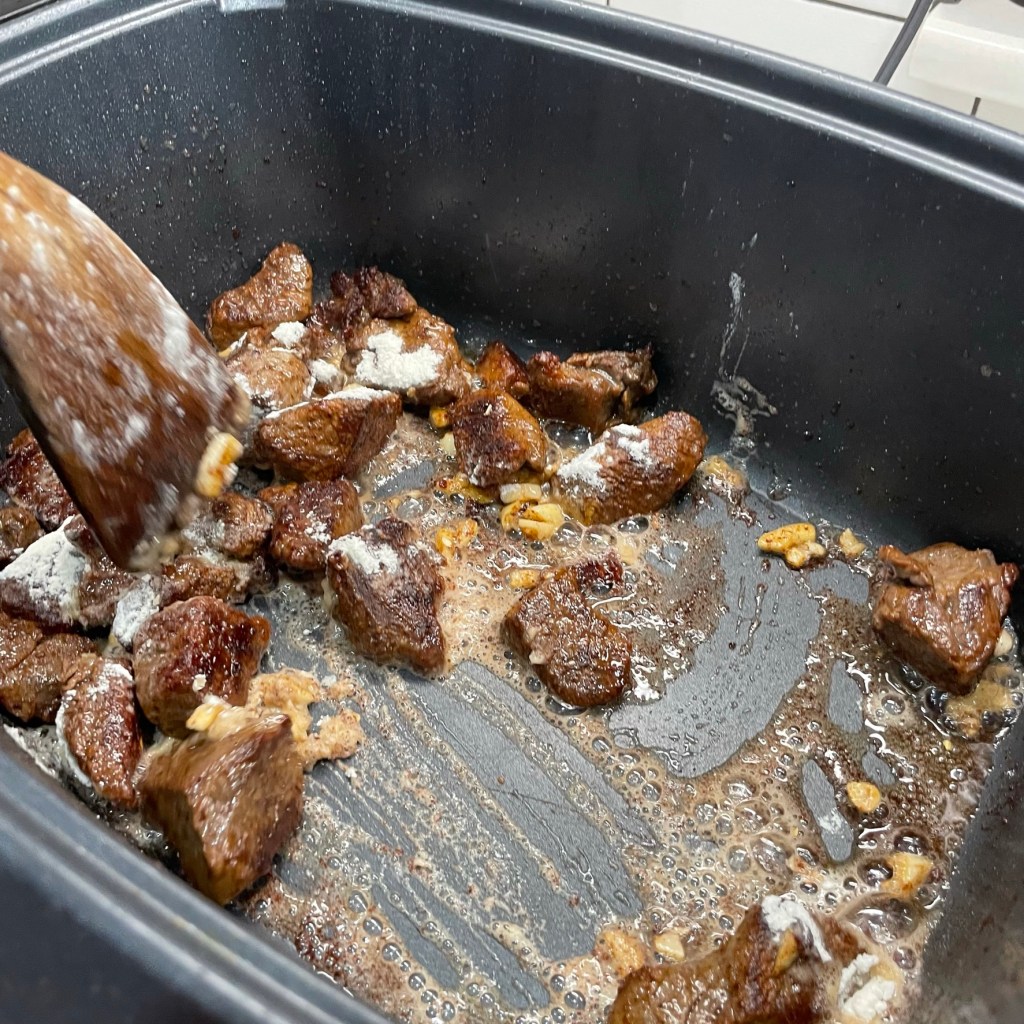
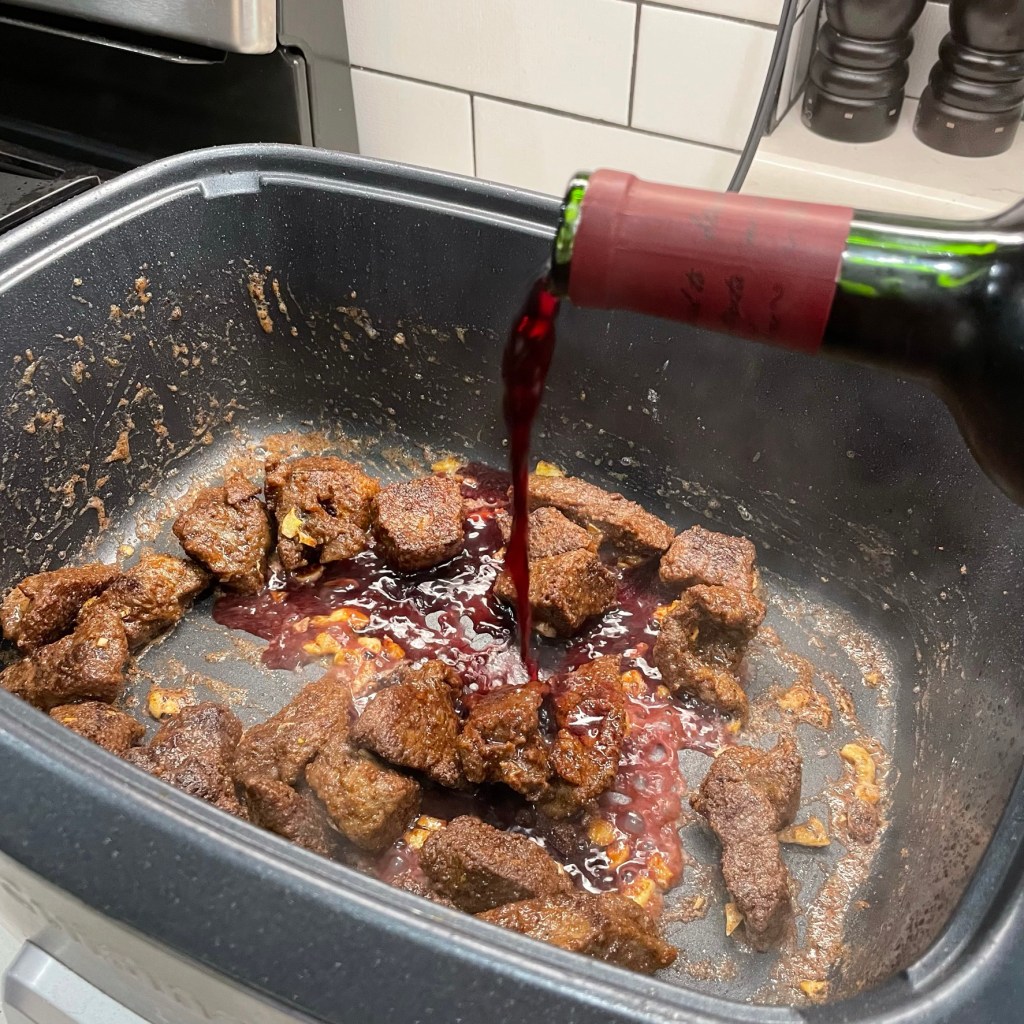
As soon as the meat was browned, I added a pat of butter and a few cloves of chopped garlic. A dusting of flour coated the meat and set the stage for gentle thickening, and then I splashed in about 1/4 cup of dry red wine. This adds depth of flavor to braising liquid, but if you don’t care for wine in food, you could substitute a splash of red wine vinegar or apple cider vinegar for a similar effect.


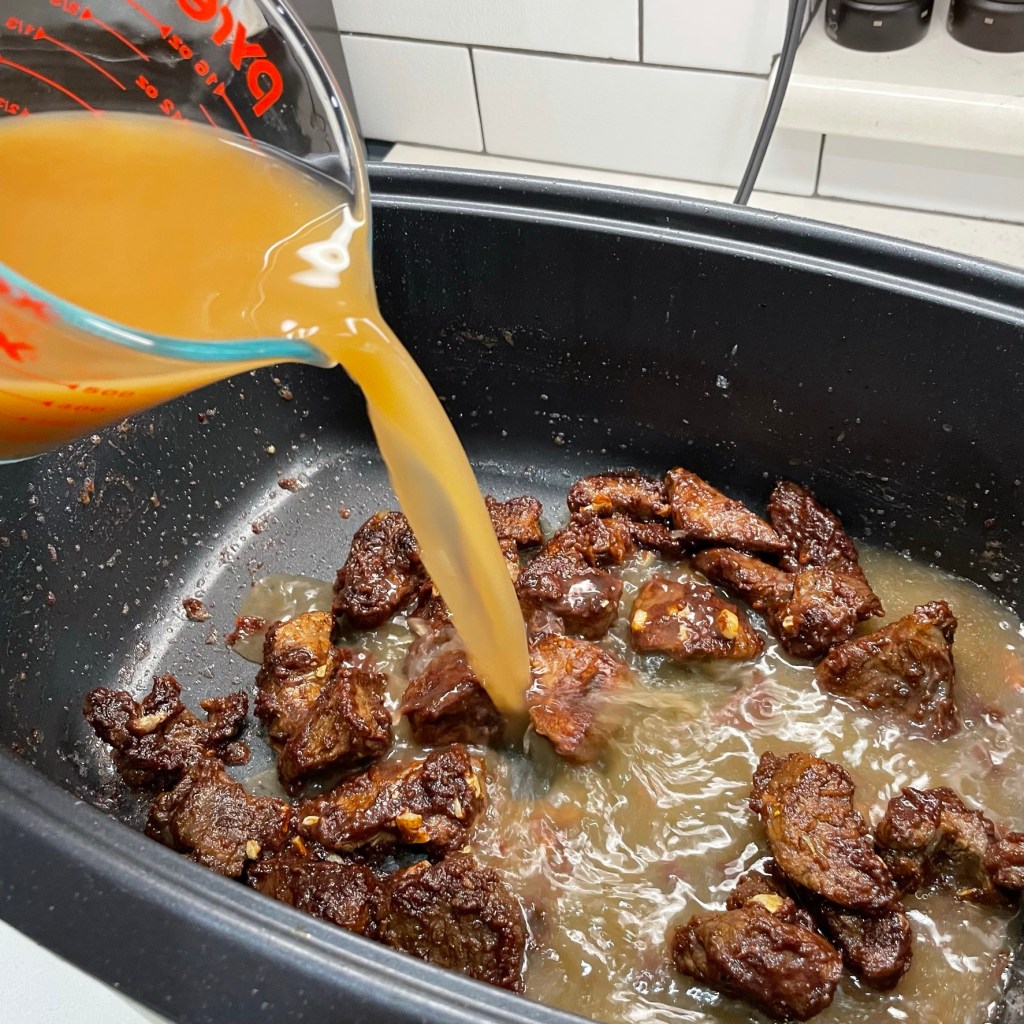
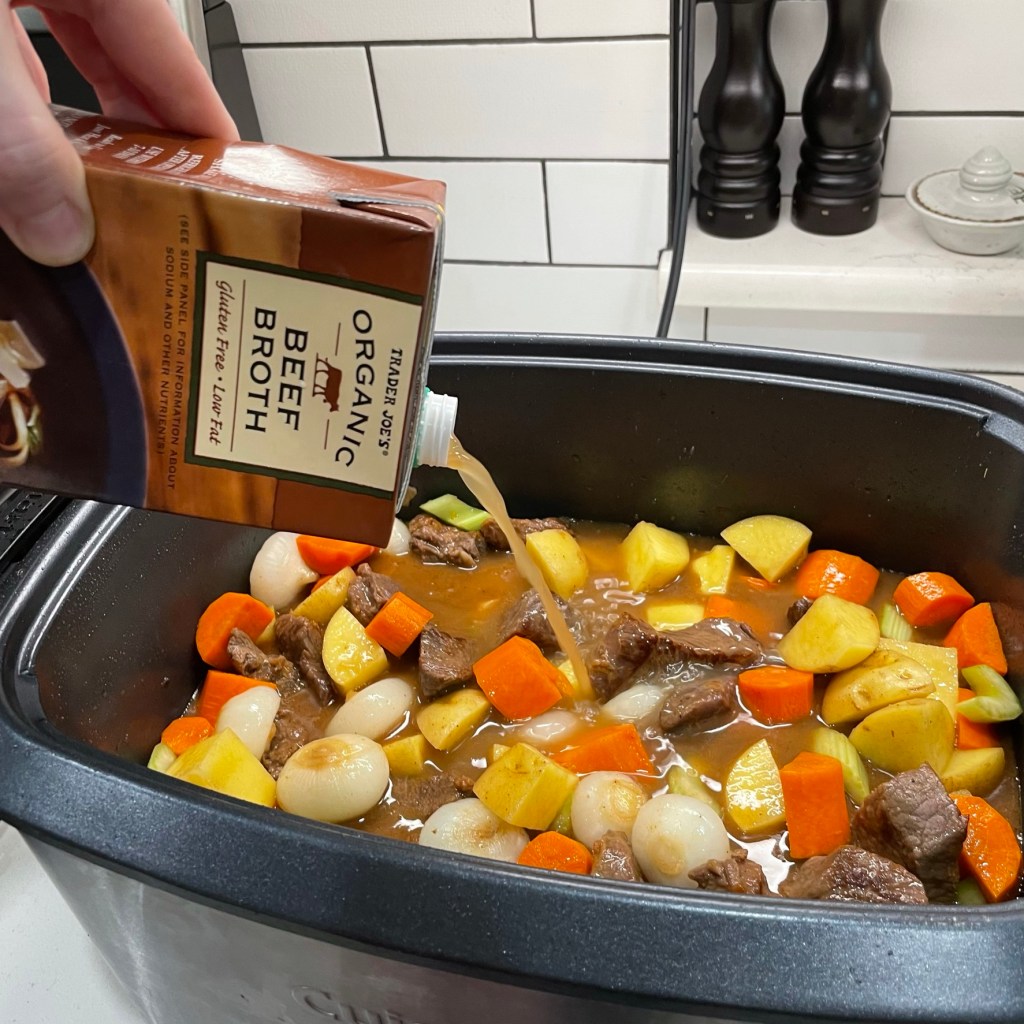
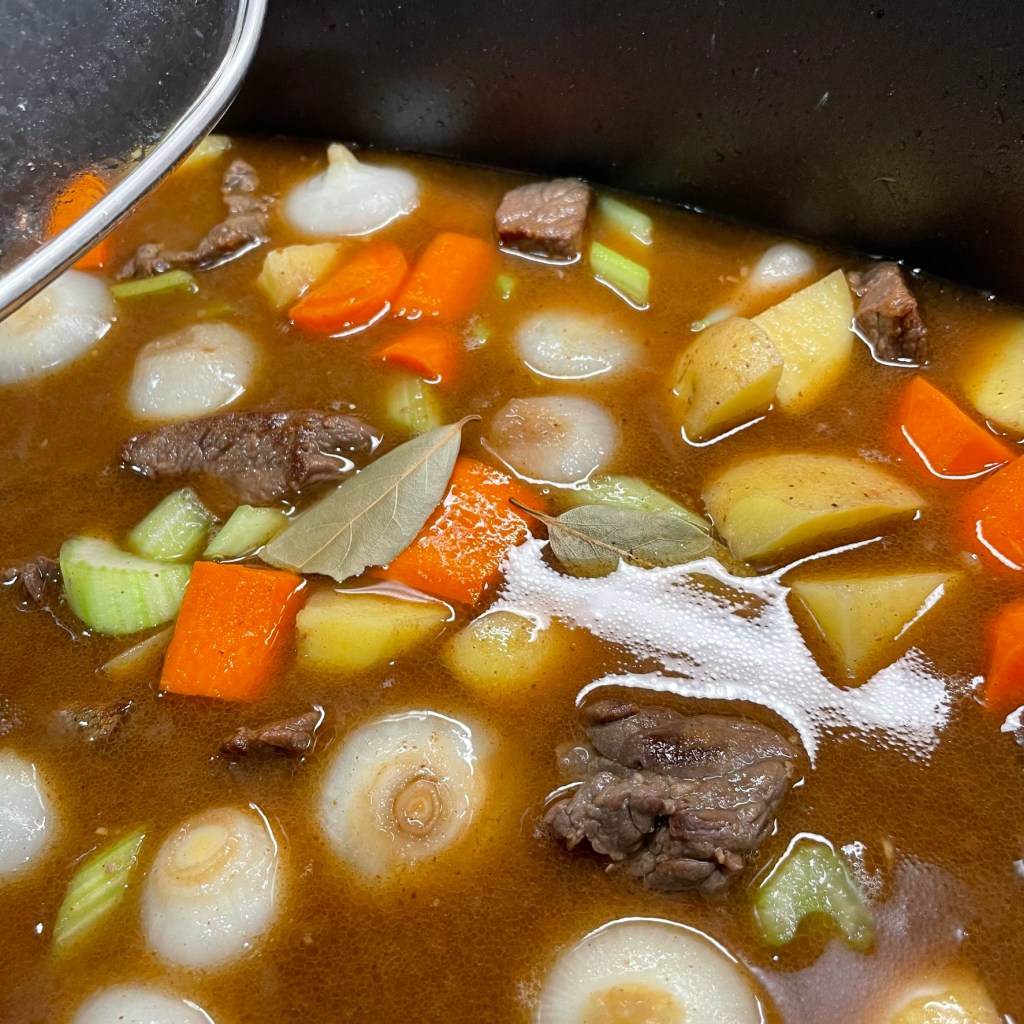
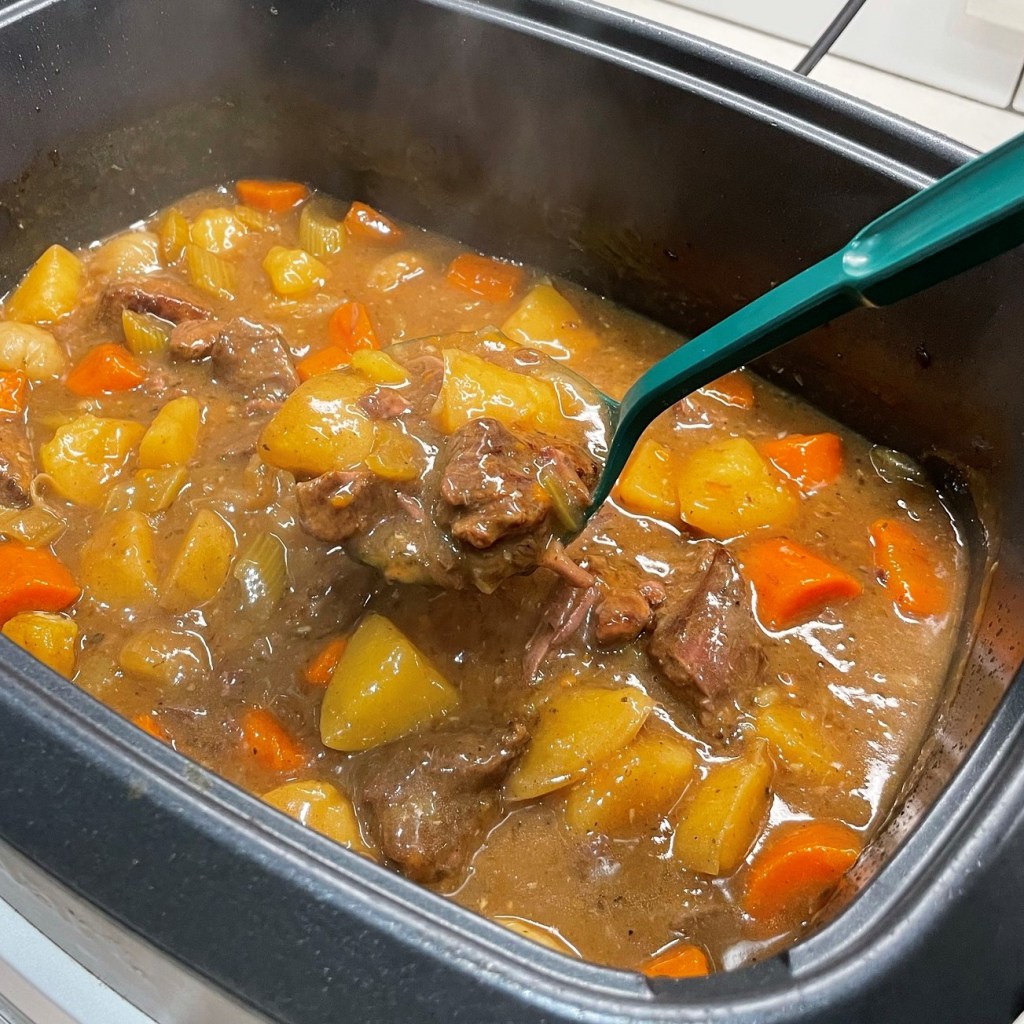
This is the time to transfer the browned meat to the slow cooker if your appliance only has heat settings, and it helps to have the cooker set on high heat setting when you do so. Add two cups of broth to the meat and stir it around until it begins to thicken slightly. Add the cut-up vegetables and cippolini onions, then add enough additional broth to just cover the cooker ingredients. Drop the temperature to low setting, add a couple of bay leaves into the stew, cover it and let it simmer for about six hours.

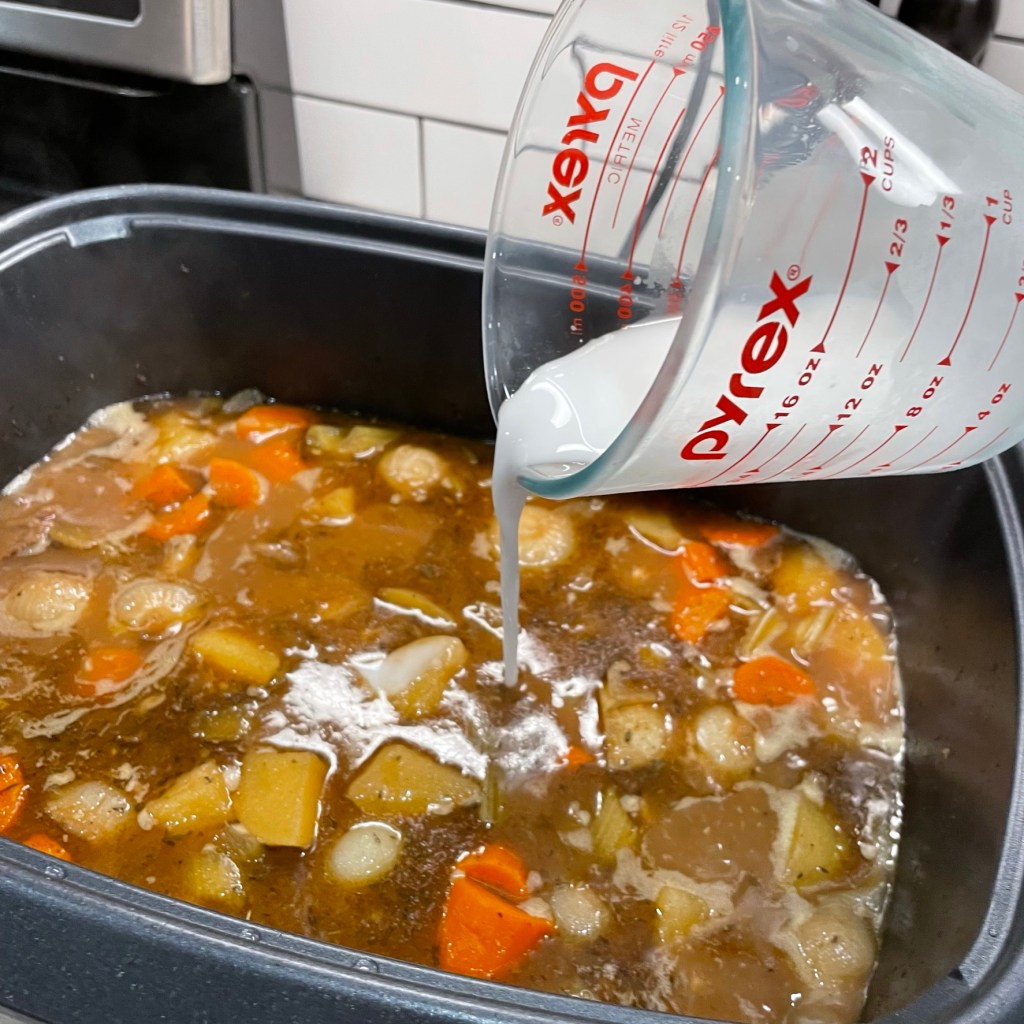
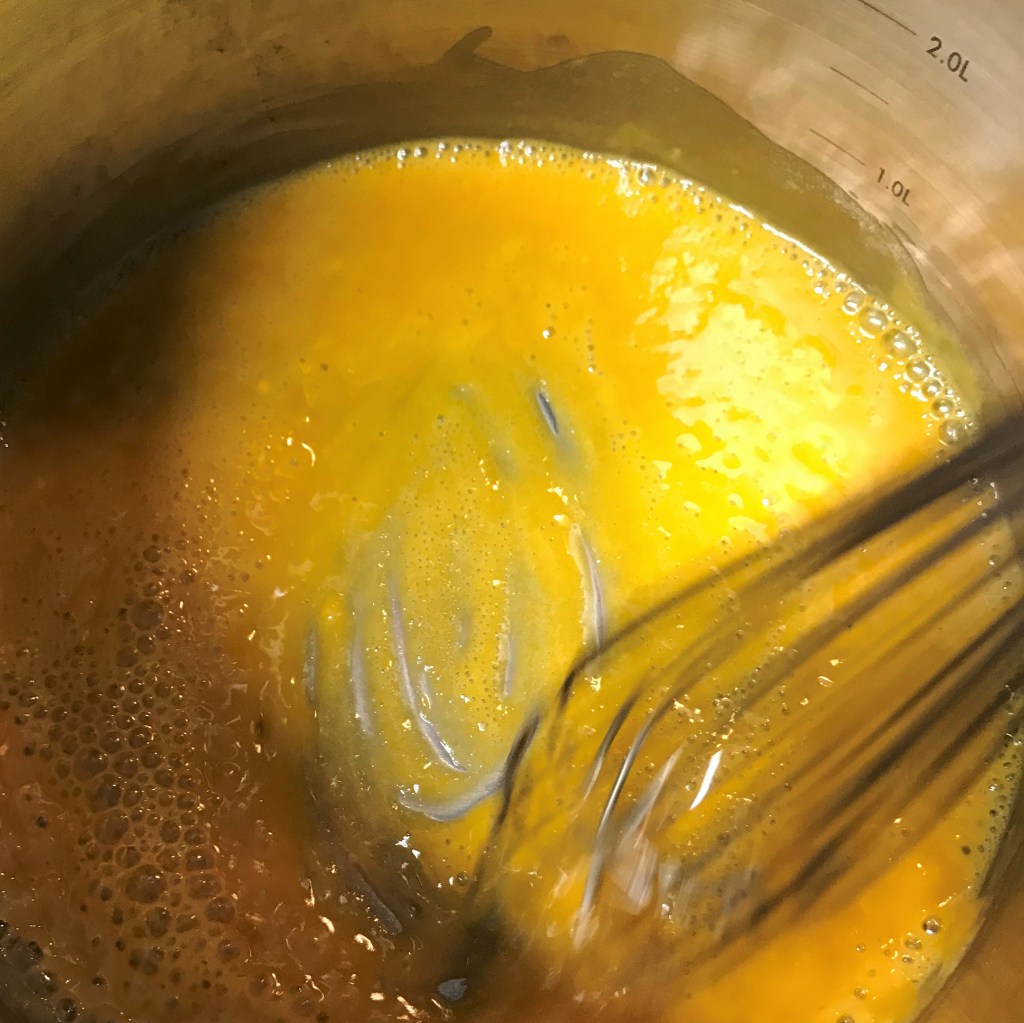
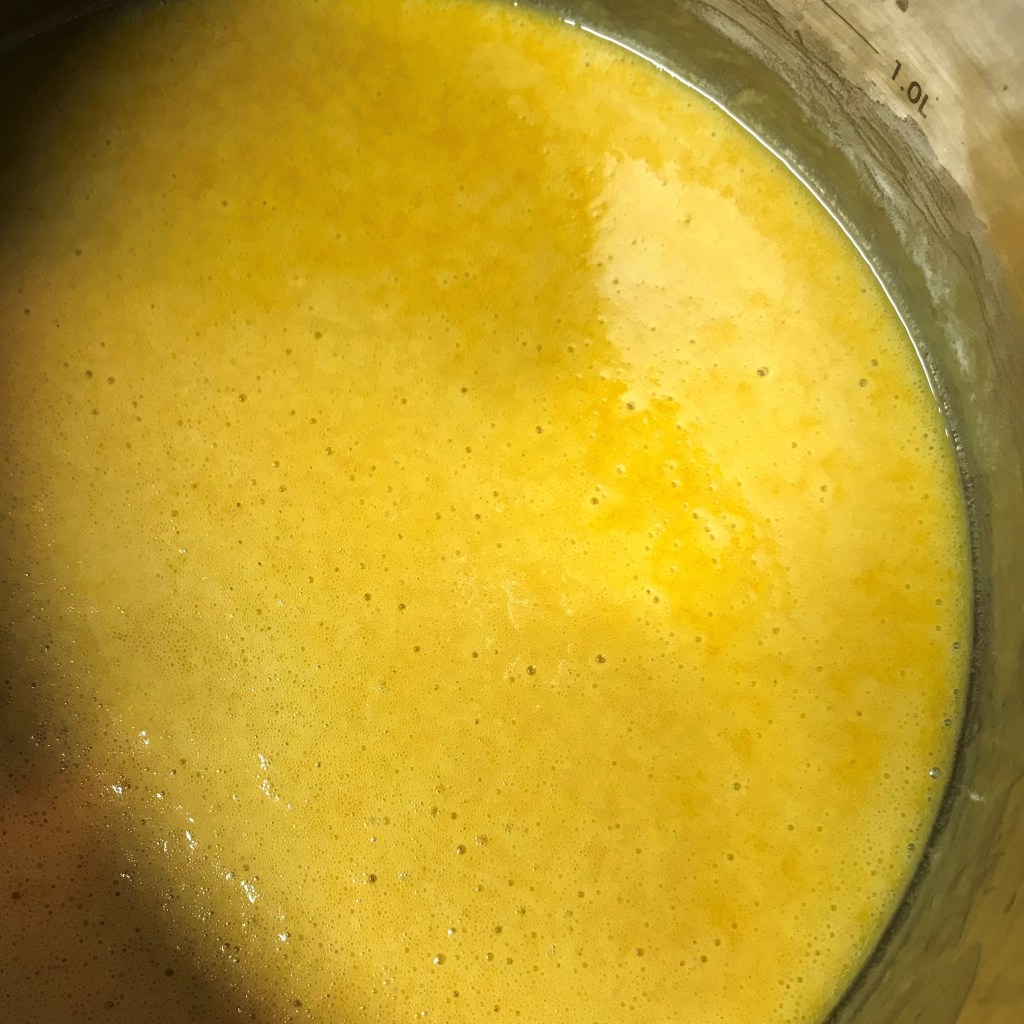
By that time, the beef will be very tender and the vegetables will be soft to the bite. If you like your stew a little thicker, a corn starch slurry will do the trick without giving an off taste. Turn the cooker heat back up to high and remove the bay leaves. Whisk together corn starch with equal amount of very cold water until smooth, and drizzle a stream of the slurry into the stew. When the braising liquid reaches a gentle boil, it will thicken to perfection.

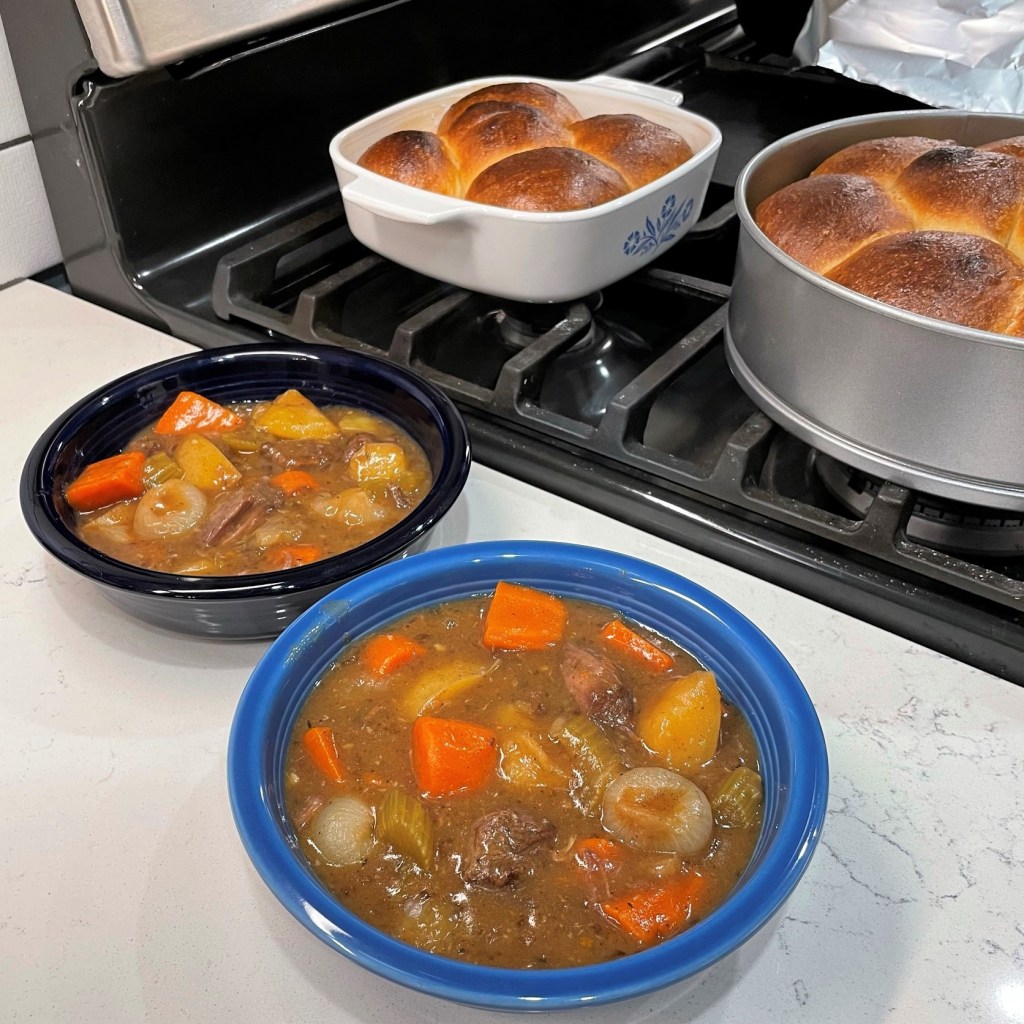
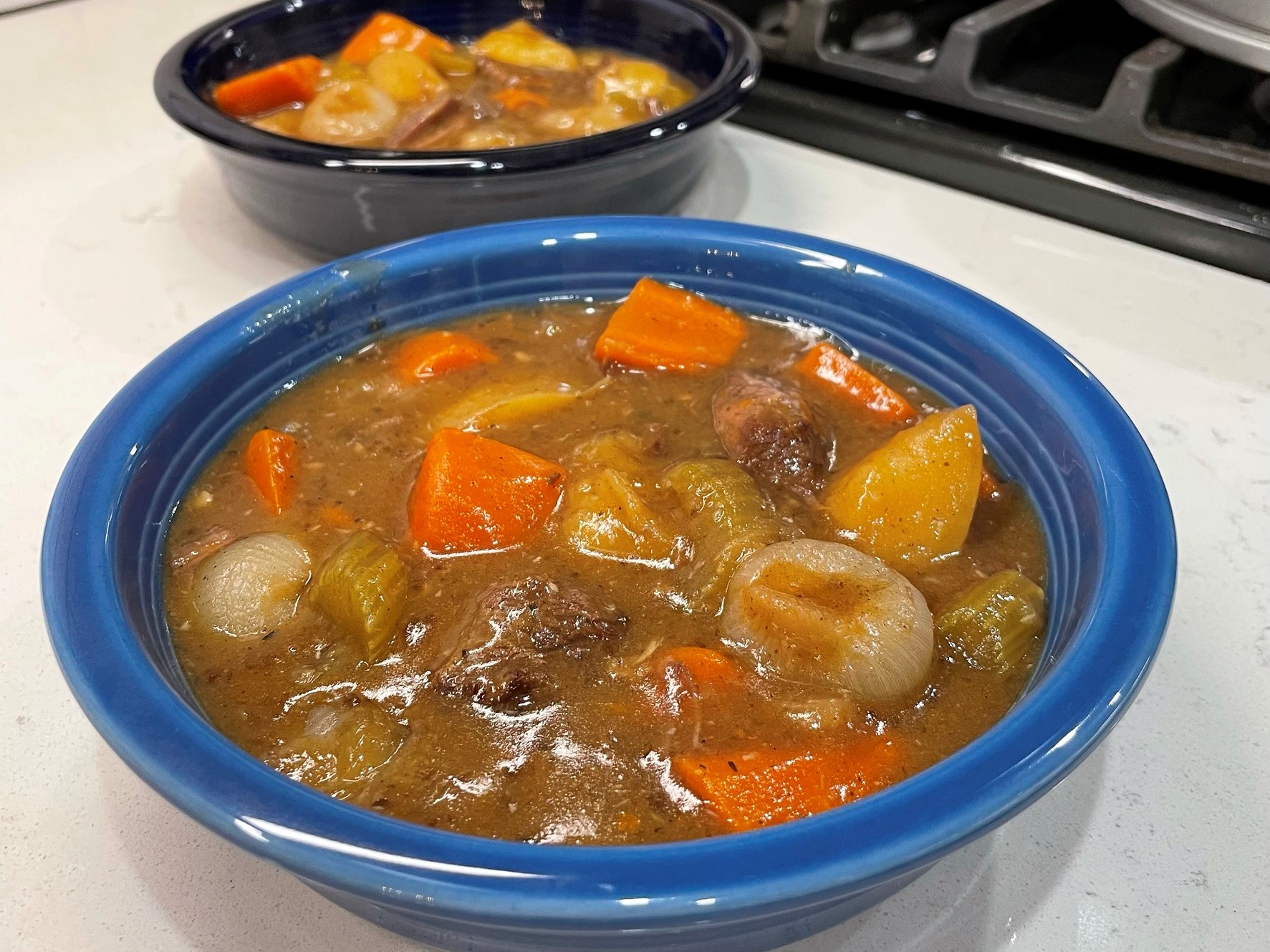
We served our beef stew with some homemade, warm-from-the-oven dinner rolls. Now, aren’t you glad it’s autumn? What comfort food have you been craving?


Easy Slow Cooker Beef Stew

  • Servings: About 8
  • Difficulty: average
  • Print

There's an easy way to enjoy an all-day stew without giving it all-day attention. Grab your slow cooker and let's get cooking!


Ingredients

  • 1 1/2 pounds grass fed stewing beef, or chuck roast cut into pieces
  • 3 Tbsp. extra virgin olive oil
  • 4 to 5 cloves garlic, smashed and chopped
  • 1 Tbsp. salted butter
  • 1/4 cup all-purpose flour
  • 1/3 cup dry red wine
  • 4 cups low-sodium beef broth, divided
  • 7 oz. cippolini onions, blanched for easy peeling
  • 2 cups fresh carrot chunks
  • 2 cups Yukon gold potato chunks (skin-on is OK)
  • 1 cup chopped celery, ribs removed
  • Kosher salt and freshly ground black pepper
  • 2 dried bay leaves
  • 2 Tbsp. corn starch blended with 2 Tbsp. ice water (optional, for additional thickening)

Directions

  1. Blot stewing meat (or chunks) dry with paper towels. Sprinkle with one heaping teaspoon kosher salt and black pepper to taste. Rest meat at room temperature for about 30 minutes.
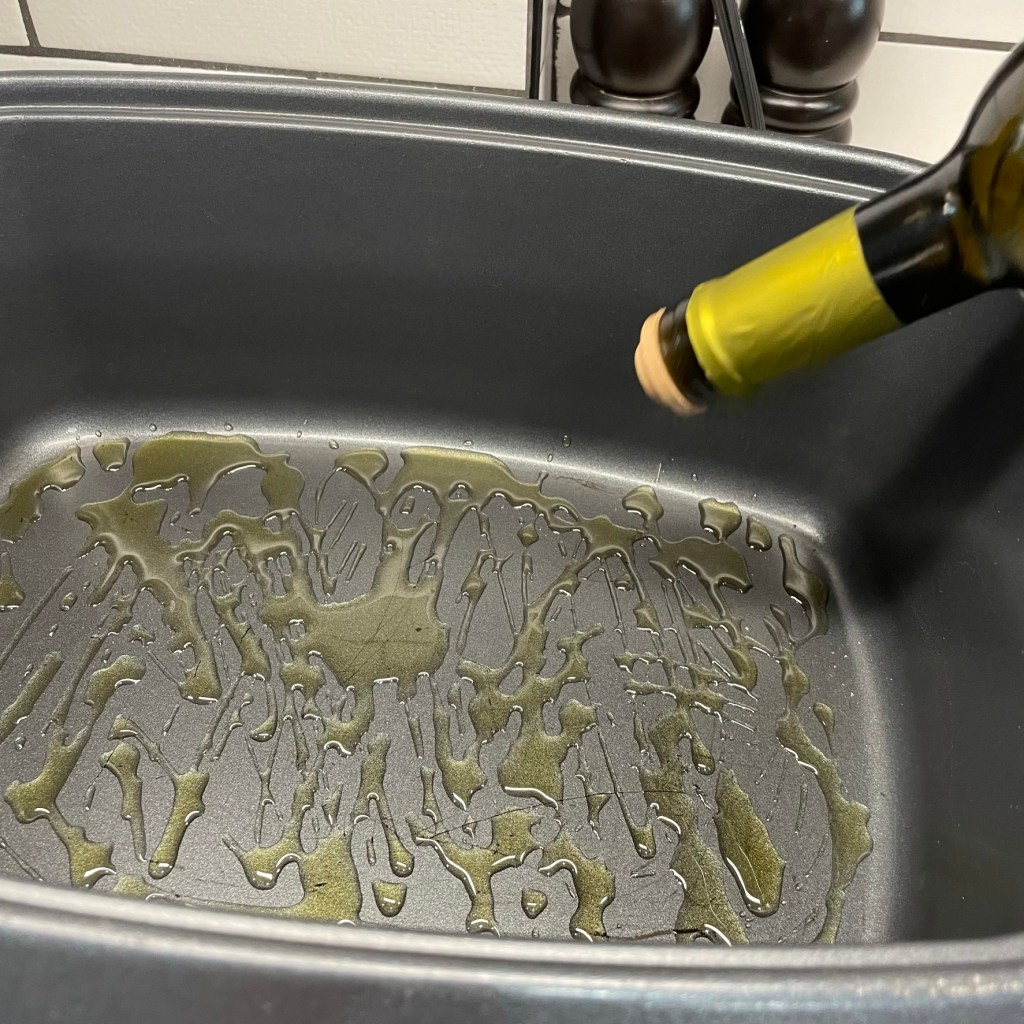
  2. Heat olive oil in a cast iron skillet, Dutch oven or slow cooker (if yours has a browning function). Brown meat on all sides over medium heat. Add garlic and cook about 2 minutes, taking care to avoid burning it. Sprinkle flour over meat and garlic, and toss until it appears absorbed onto the browned meat.
  3. Pour wine over meat and quickly toss, scraping up any browned bits from the surface of the pot. The wine should thicken quickly, creating a sticky coating all over the meat. Transfer the meat (if using a separate pot) to the slow cooker on high setting.
  4. Add 2 cups of the beef broth and stir meat around until the broth begins to thicken slightly. Add onions, carrots, potatoes and celery and toss to combine. Add remaining broth and stir. Place bay leaves and thyme sprigs on top of the stew mixture. Reduce slow cooker to low setting and cook for about 6 hours, until beef pieces and vegetables are tender.
  5. If desired, stir in corn starch slurry during the last 30 minutes of cooking time (use high heat). Serve with crusty rolls to sop up all the delicious gravy!


Brunswick Stew

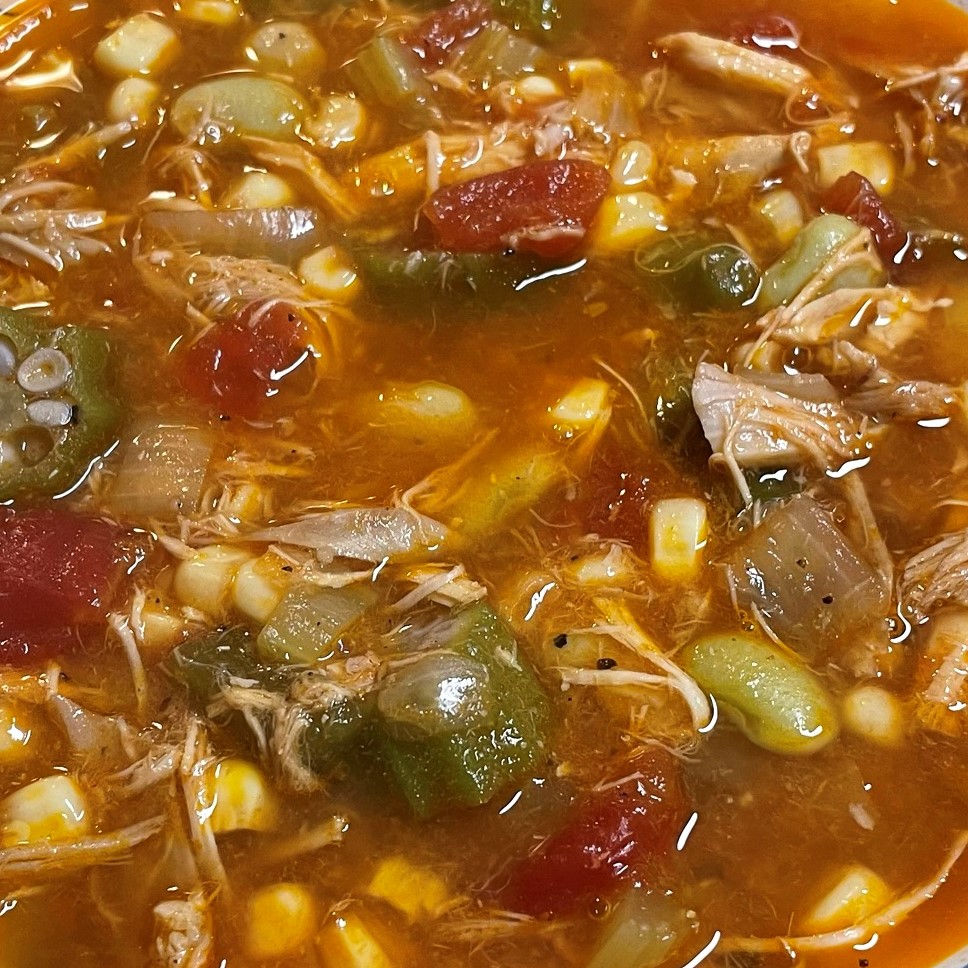
After 30-plus years in the Southeast, I’ve come to appreciate many of the traditions, especially the ones related to food. There’s a particularly tasty tradition that occurs here in the fall, when churches, civic groups and Boy Scout troops set up giant, outdoor cast-iron kettles for their Brunswick stew fundraisers. They sign up volunteers, who take turns stirring the simplest of ingredients into a delicious aromatic stew, and folks arrive in droves to enjoy it by the bowl, and to take home quarts for freezing. It’s tradition and it’s delicious.

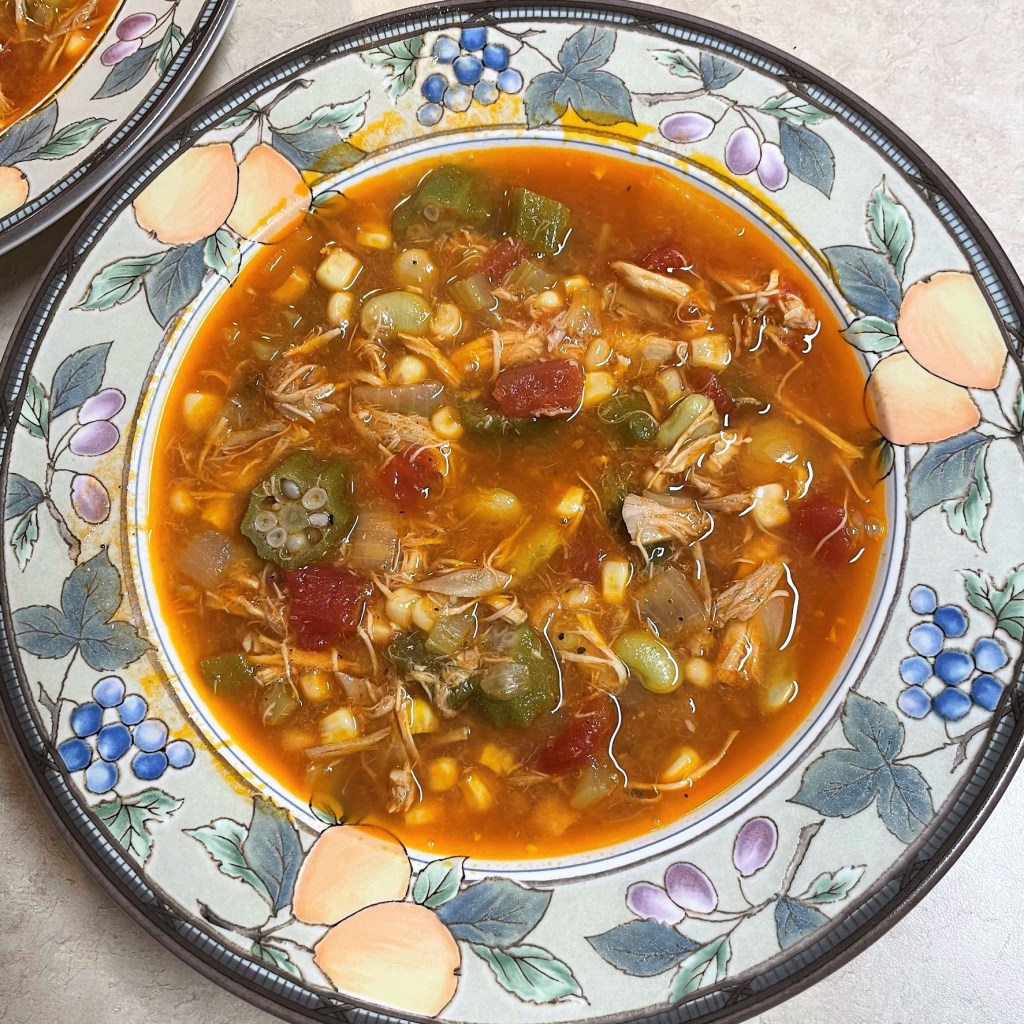
If you look into some of the old-time church cookbooks, you’d likely find Brunswick stew recipes that begin with fresh-caught rabbits or even squirrels, but (thankfully) my introduction to this homey, comforting soup was a chicken version, and that’s what I’m sharing today.

Brunswick stew is one of those comfort foods that tastes rich and hearty, but checks in on the low end of the fat-and-calories scale. Feel free to swap in other vegetables that suit your fancy—it’s what folks do in different parts of the South and depending on where you are, you might find potatoes, green beans or carrots in the bowl.

You can roast your own chicken if you’d like (overnight in the slow cooker makes amazing broth at the same time), but to keep it quick and simple, I’m using a rotisserie chicken this time, plus packaged broth, a few simple fresh and frozen vegetables, and a can of tomatoes. Whip up some corn muffins while it simmers, and dinner is served.

Can you taste the comfort?

Ingredients

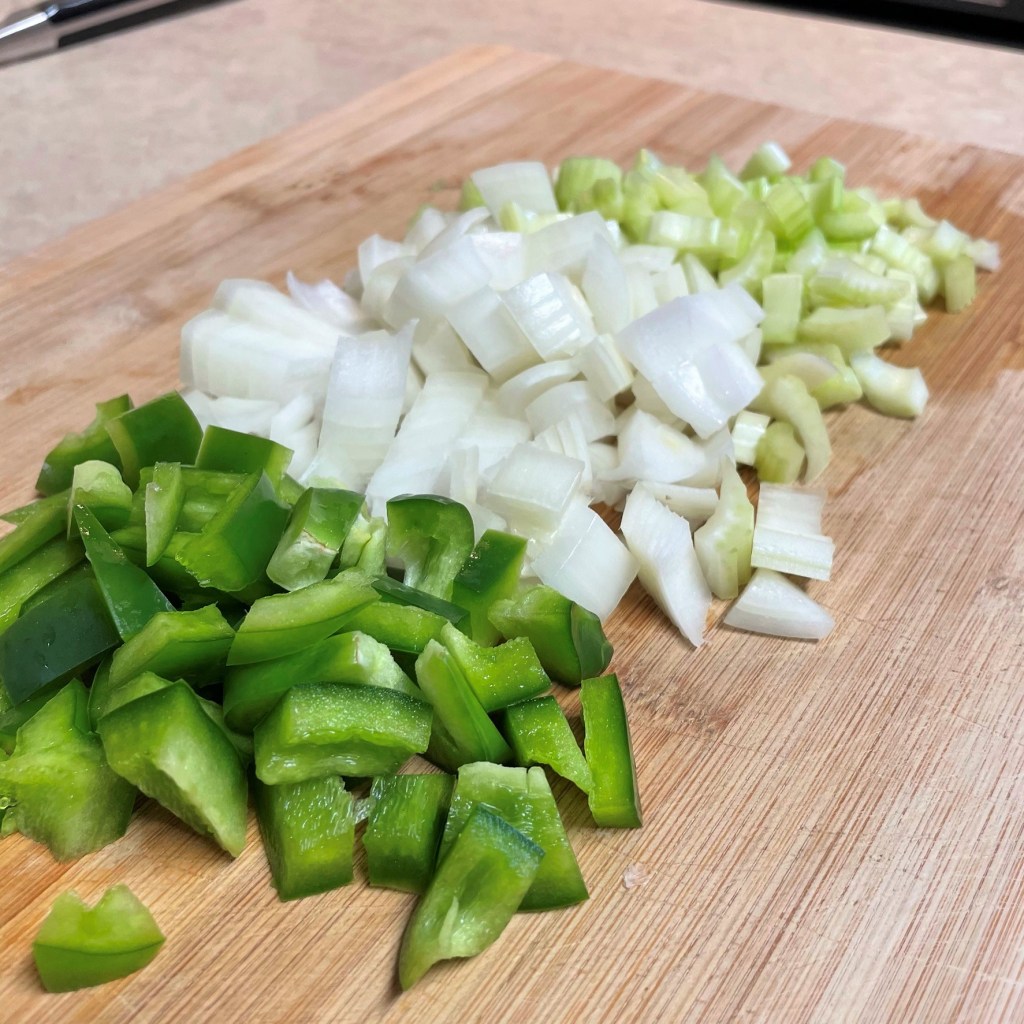
First, the essentials. This is a Southern classic comfort food, so the “holy trinity” of peppers, onions and celery is the foundation of the recipe. Any color bell pepper is fine for Brunswick stew, but I personally find the red and orange bells to be a bit on the sweet side, so I’m using a green bell.

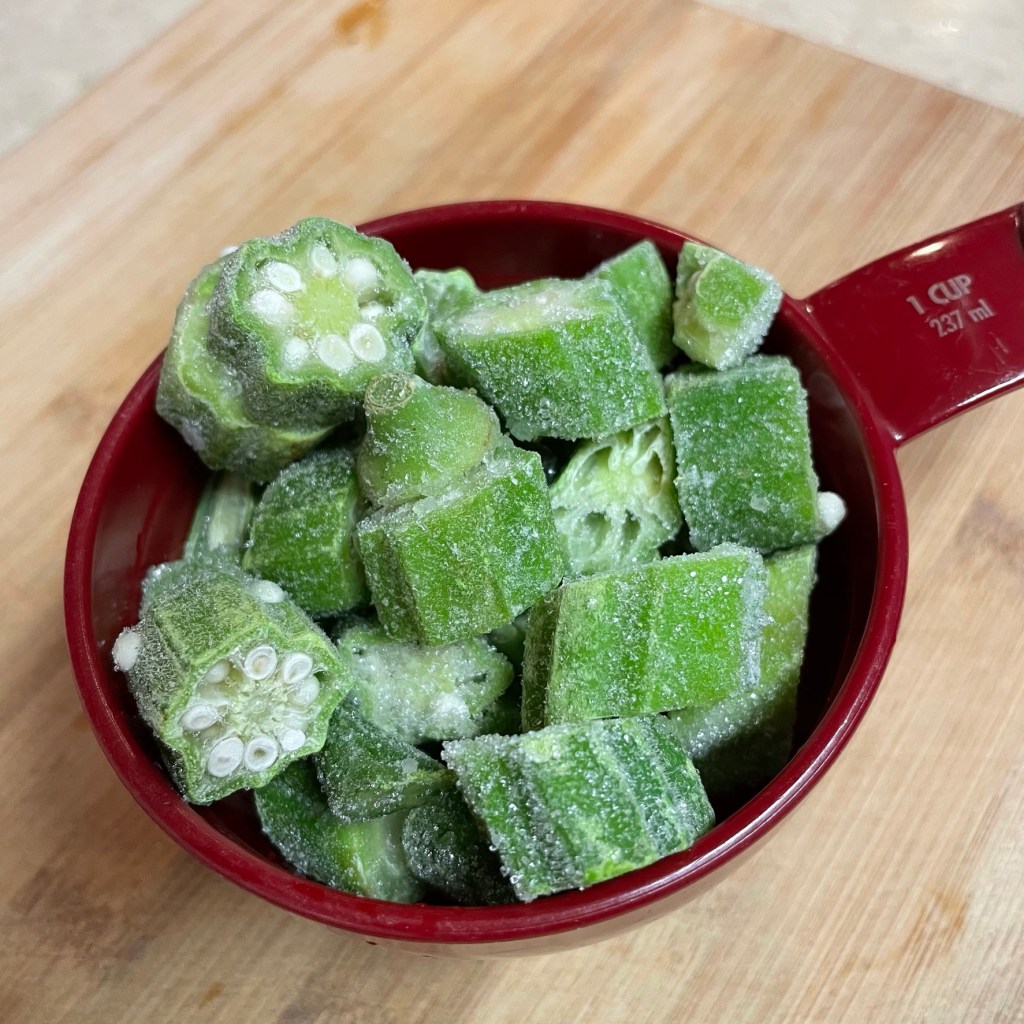
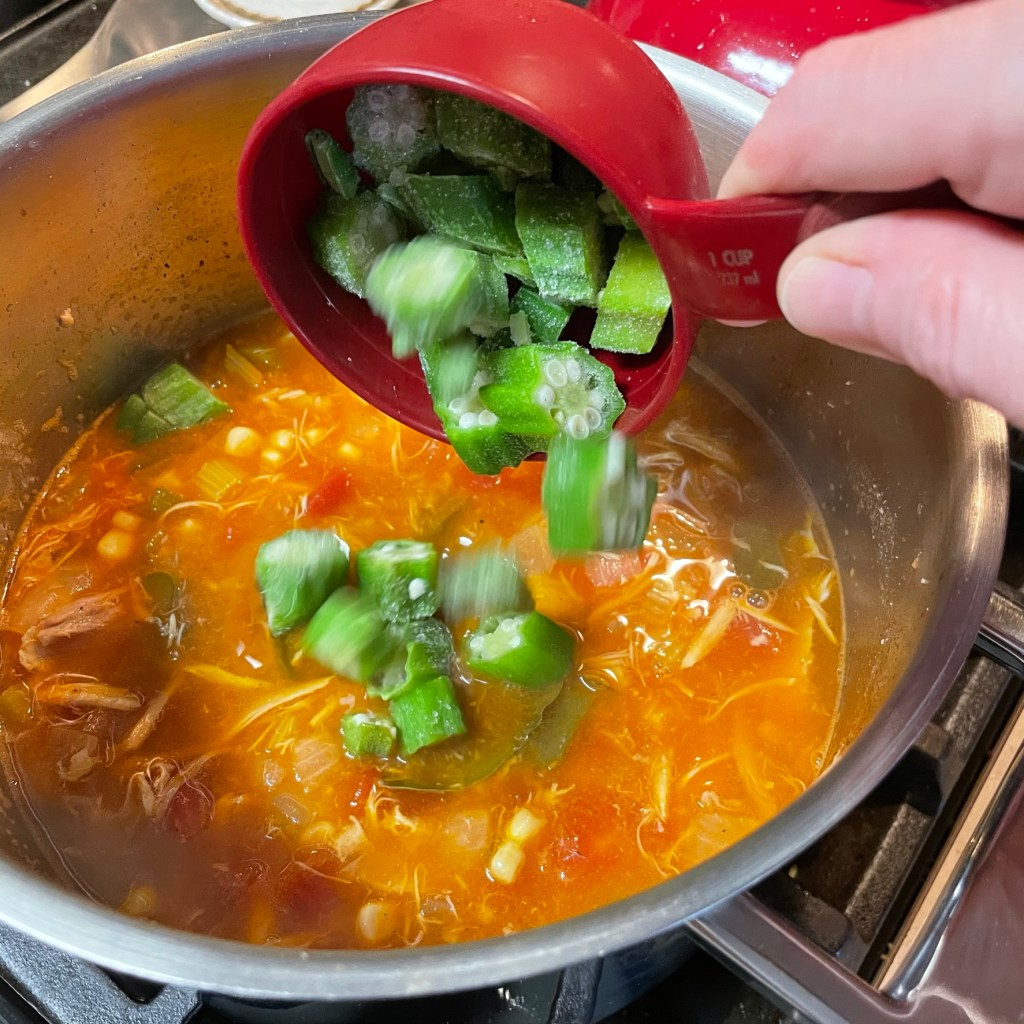
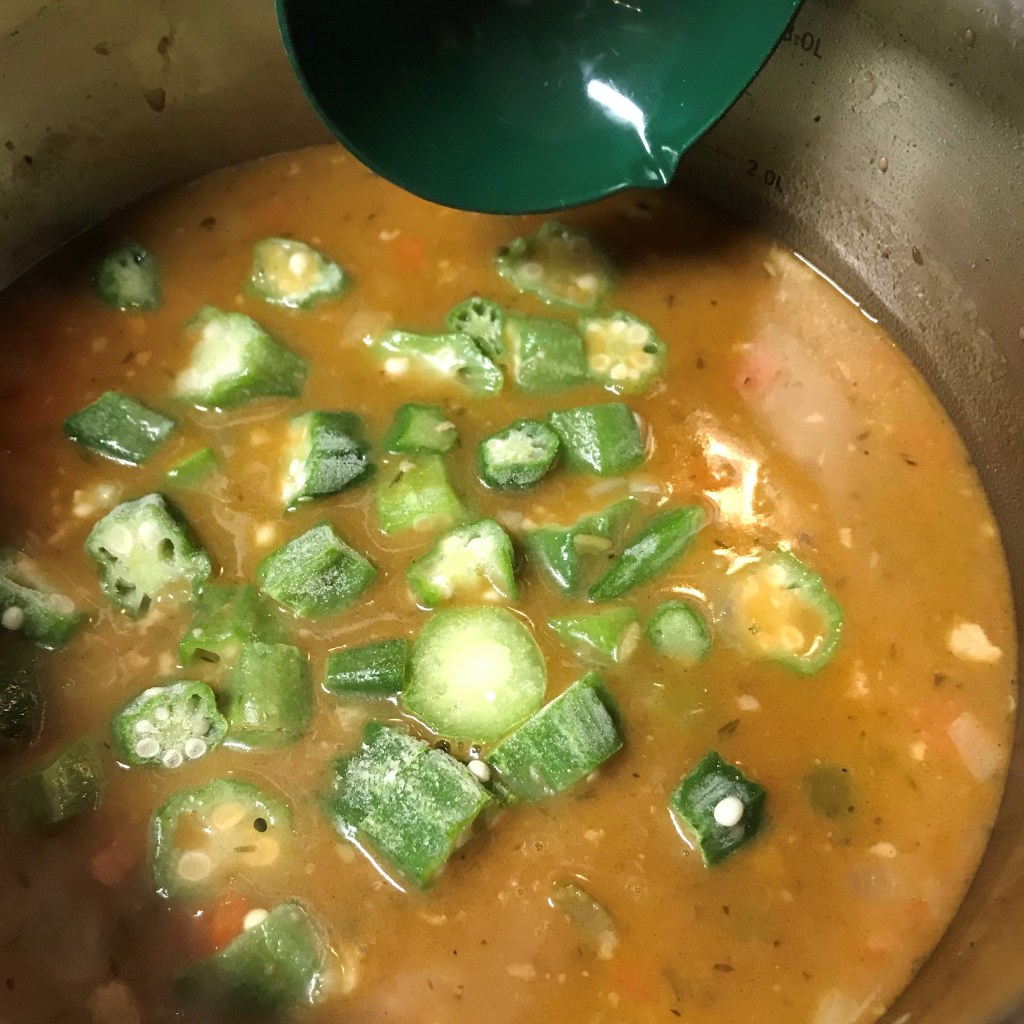
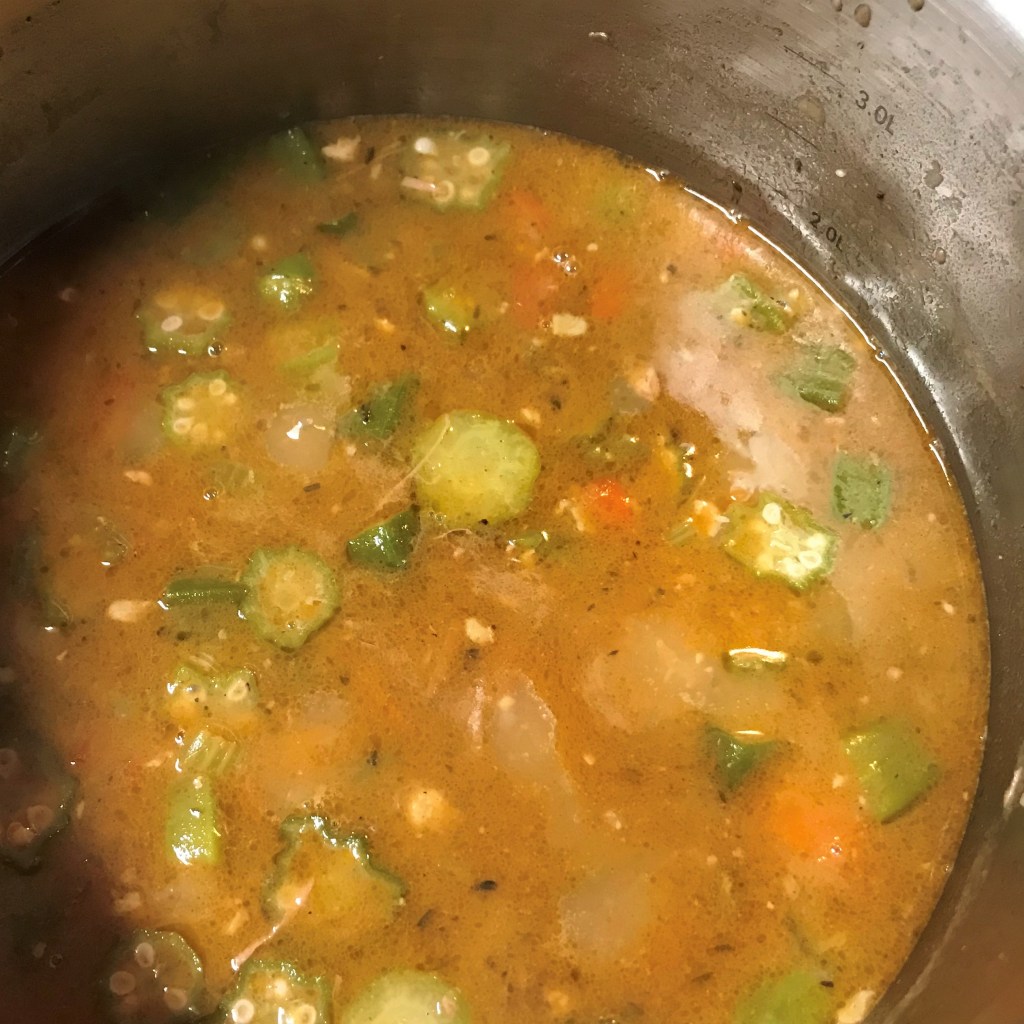
Okra came to the Americas from Africa in the 1600s, and it remains a staple of Southern cooking. You’ll find it in many Cajun and Creole recipes in Louisiana, and it’s not unusual to see it breaded and fried, or even pickled, which I love in a Southern-style potato salad or on deviled eggs. The pectin in okra gives it some thickening power when it’s cooked in liquid, but some people are turned off by the slightly slimy texture. Two things can minimize this: don’t overcook it (for this recipe, it’s added at the end), and cook it in combination with tomatoes, which is what’s happening in this Brunswick stew.

If you make this stew in the late summer or fall, of course you would want to use fresh corn, lima beans and okra.


1 deli roasted chicken, dark and white meat shredded* (see notes)

2 Tbsp. extra virgin olive oil

1 yellow onion, chopped

4 stalks celery, trimmed and chopped

1 green bell pepper, seeded and chopped

3 large cloves garlic, chopped

15 oz. can diced tomatoes

2 quarts chicken or vegetable broth

1 bay leaf

2 cups frozen corn

2 cups frozen lima beans

2 cups frozen sliced okra

1/4 cup BBQ sauce

2 to 3 Tbsp. tomato paste

A few shakes hot sauce (optional, Frank’s RedHot or Texas Pete recommended)

Salt and pepper, of course


*Notes

If you prefer to roast your own chicken, more power to you! If you have time to work ahead, you might also want to make your own stock. Or you could make your own stock from the frame of the rotisserie chicken. After de-boning and shredding the meat, toss the bones and skin into a pot with cut-up onions, celery, carrots and just enough water to cover it all. Simmer a few hours then strain out the solids, and you’d have a great alternative to the packaged broth (or, at least, some of it).


Instructions

If the pictures here seem to defy the ingredient amounts listed, there’s good reason for it—on this particular day, I only had half a rotisserie chicken, so I halved the entire recipe. The ratios are the same, and this stew is so satisfying and delicious, I’m already regretting that I didn’t run to the store for another chicken!


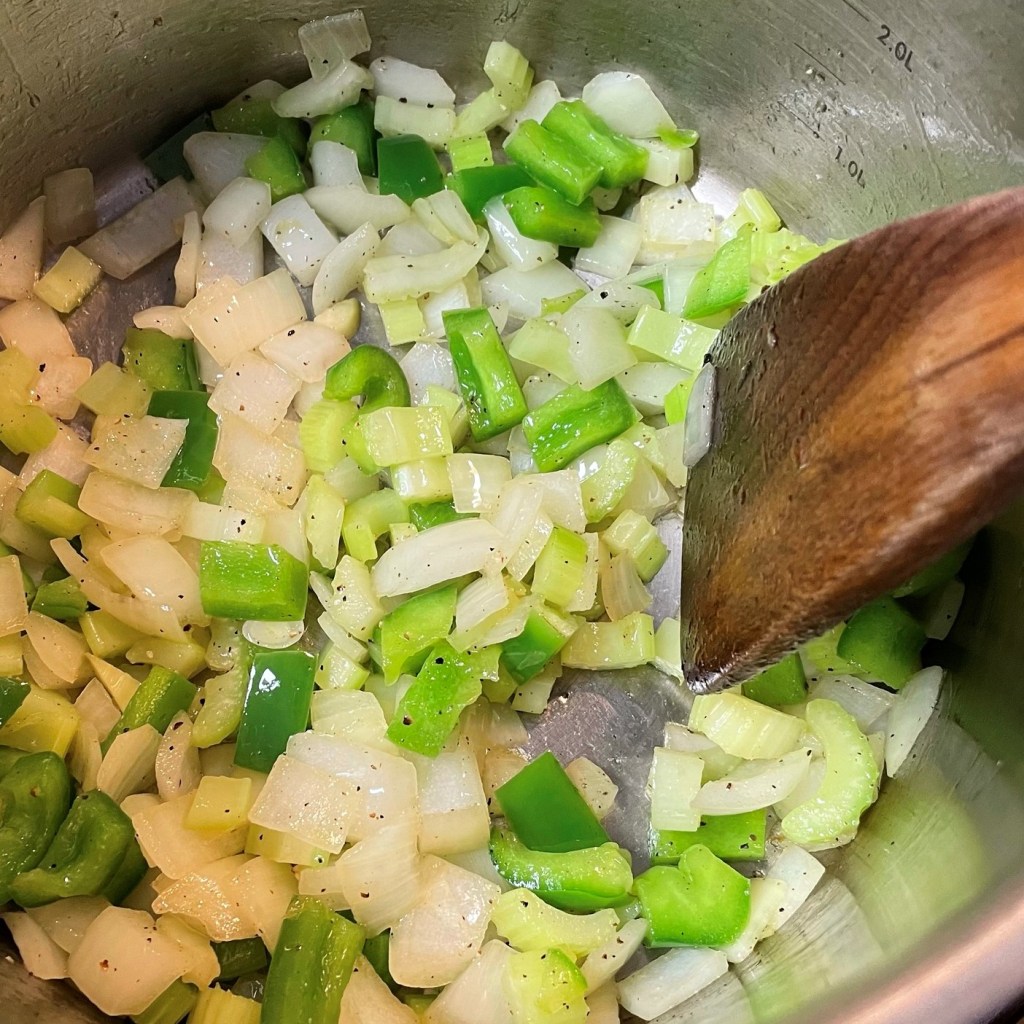
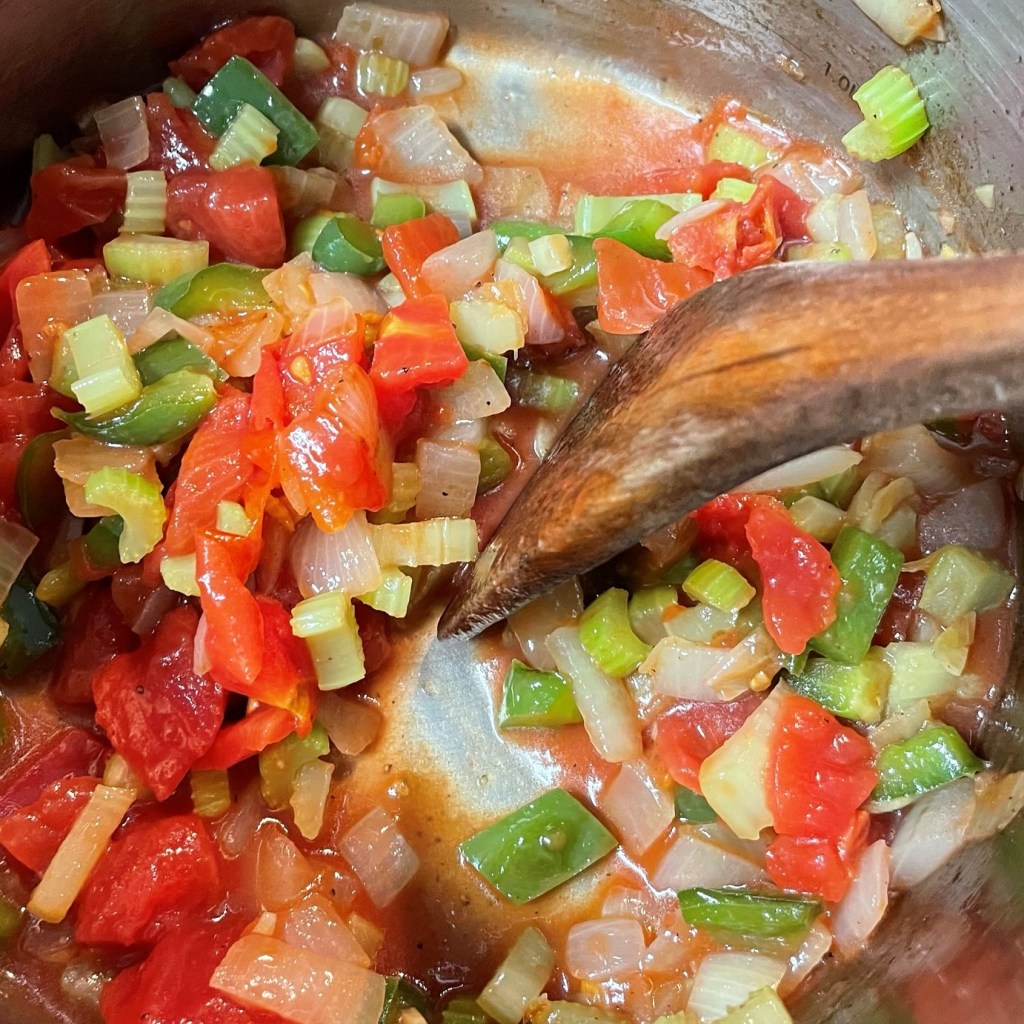
  1. Place a large, heavy-bottomed pot over medium heat. Swirl in olive oil. Sauté onion, celery, bell pepper and garlic until vegetables are soft and onions are translucent. Season with salt and pepper.
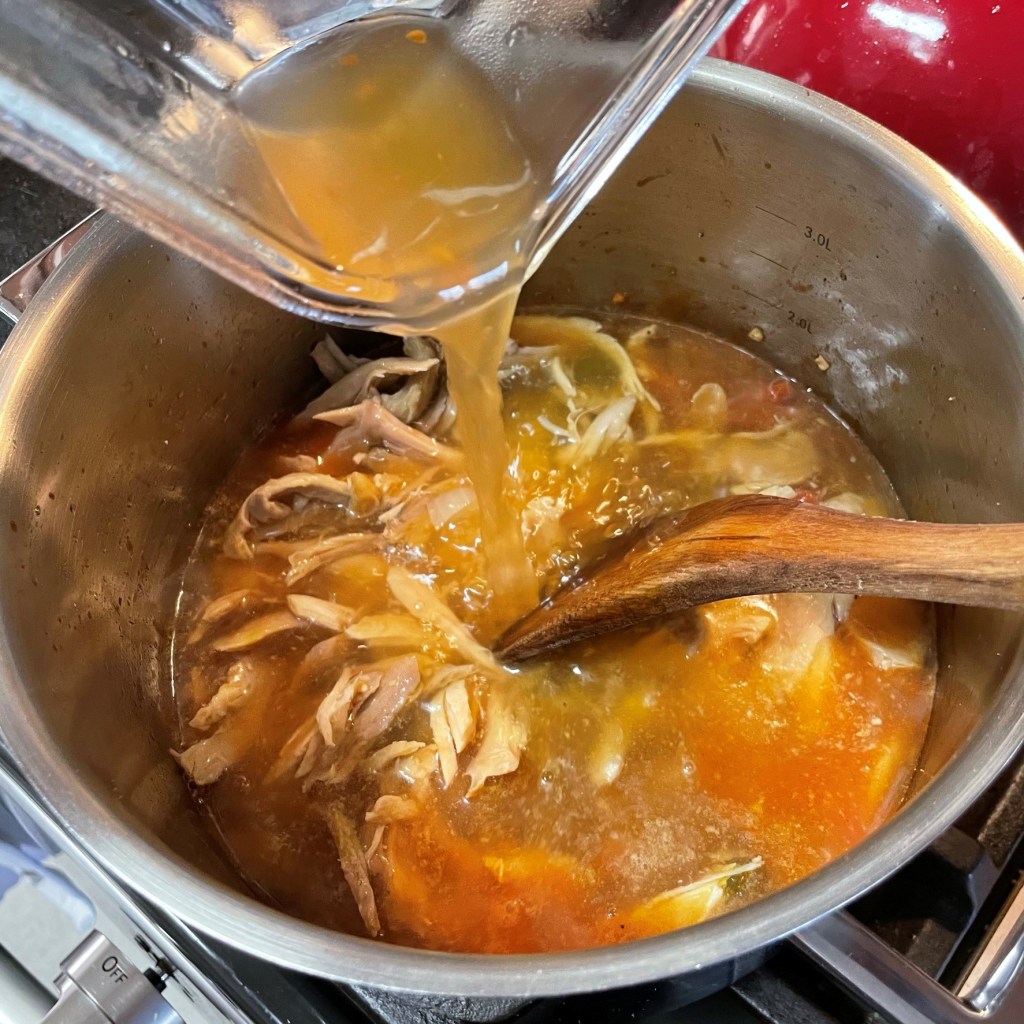
  2. Stir in tomatoes, tomato paste, shredded chicken and broth. Add bay leaf, reduce heat and simmer up to an hour.
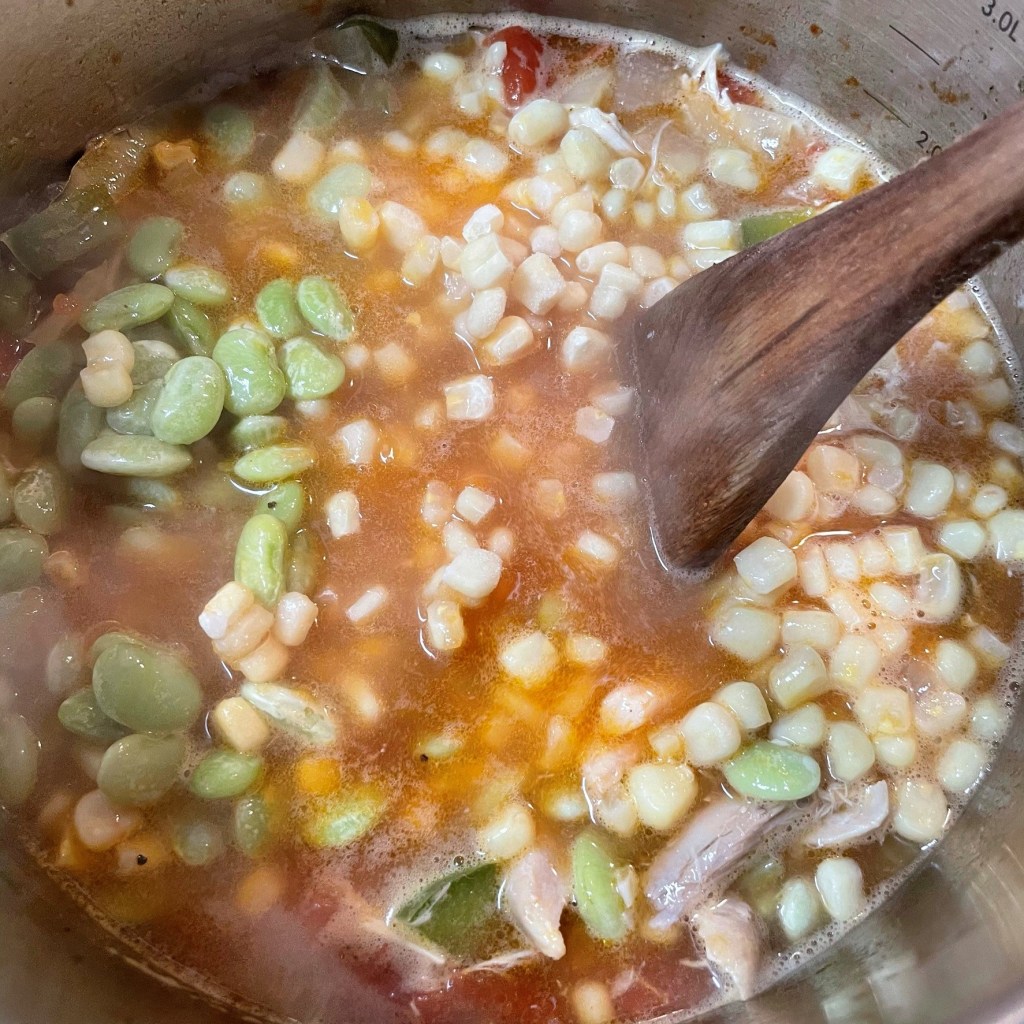
  3. Add frozen corn and lima beans, but reserve frozen okra until about 20 minutes before serving, to prevent the okra from breaking down too much. Give it a taste and add salt and pepper to your preference.
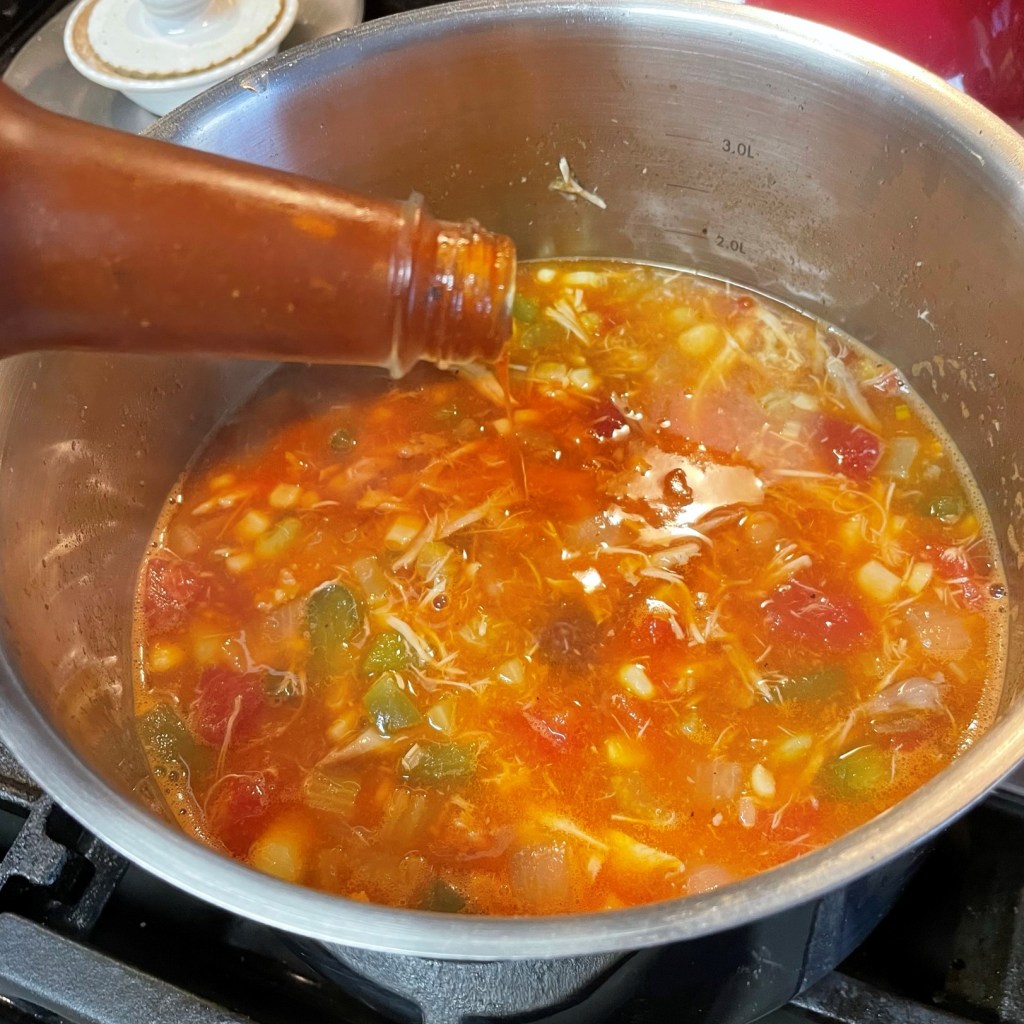
  4. Stir in BBQ sauce (and hot sauce, if using), and add the okra to the pot. When the bright green color of the okra begins to fade a bit, it’s ready to serve!

Want to make this Southern classic?


Leftover Turkey Gumbo

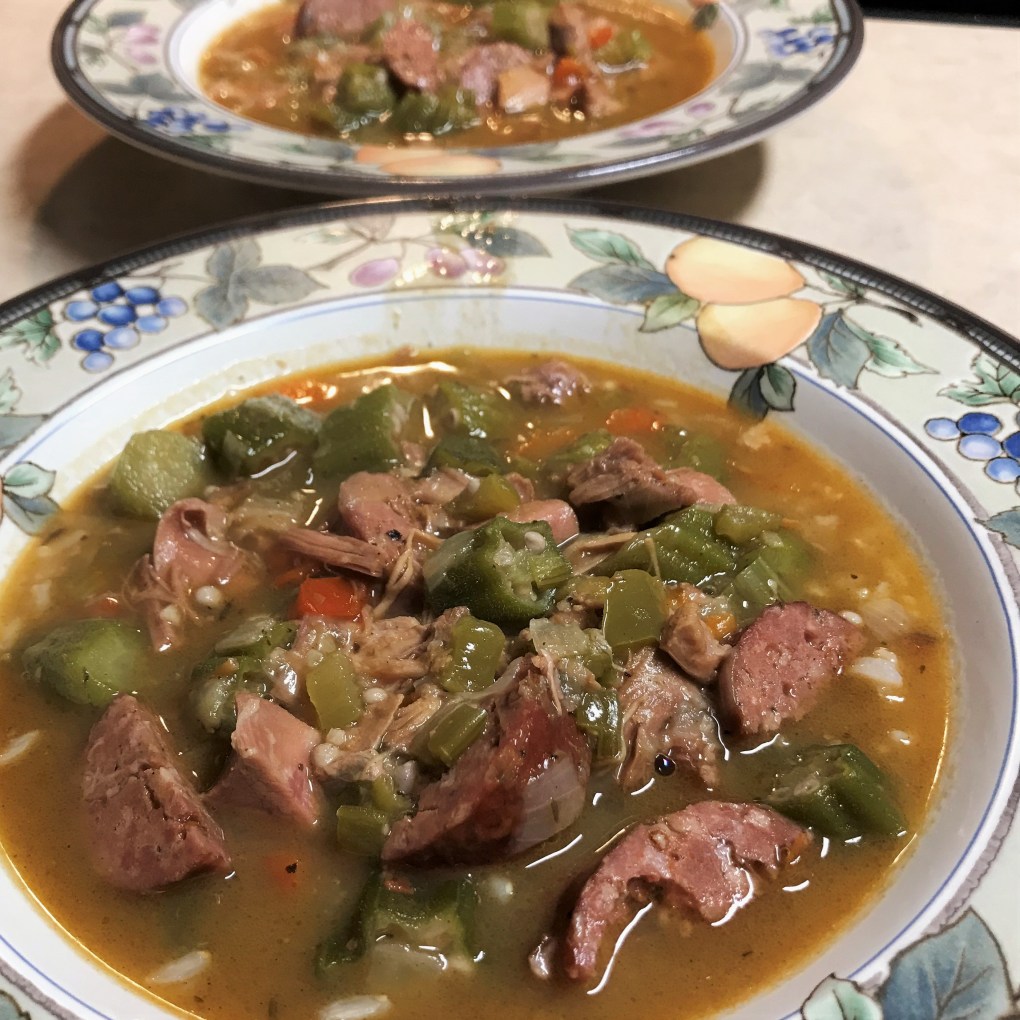
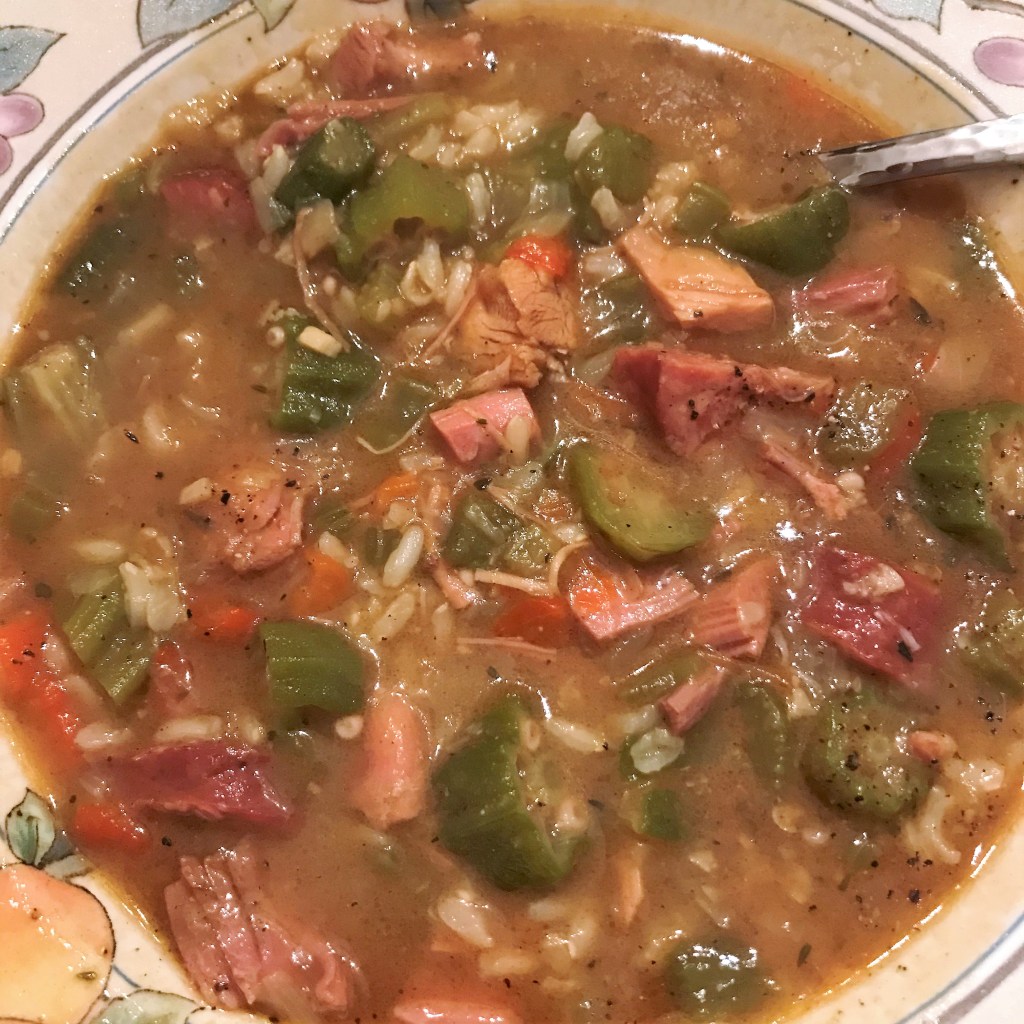
One of the first things we make at our house with Thanksgiving leftovers is “something spicy.” After all the richness and decadence of the classic holiday meal, my taste buds start clamoring for Mexican food or Asian or spicy Italian—really, anything but gravy and potatoes, if you don’t mind. This year’s turkey went on the smoker with a spice and maple sugar rub, so I wasn’t sure how the flavors would work in some of our other usual “planned-over” recipes, but they were perfect for a spicy gumbo. We had heat, smoke, chunky vegetables and an all-day simmer, and that’s covering all the bases for my post-holiday cravings.

Is my gumbo authentic? Who knows, and I’m not even sure who is qualified to judge it. There are as many “authentic” gumbo recipes as there are grandmothers in Louisiana, and you’d likely find they run the gamut from thin soup to chunky stew. Some will be as brown as molasses and others will have tomatoes. Some will be spicy as all get-out, and others will be filled with sweet juicy crab. Okra is standard in most gumbo recipes, but some cooks favor filé, a powdered form of sassafras root that serves as a thickening agent. My gumbo has a roux base and okra, and it’s dang spicy because I make the roux with a blend of canola oil and cayenne-infused olive oil, the latter of which is really hot.

What I’m getting at is simple: my rules are mine, and this gumbo makes everyone at my house happy. It’s delicious as soon as it’s ready and even better after a day or two in the fridge. It uses simple ingredients and it’ll help you clear out some of the space-hogging leftovers (including that huge turkey carcass). And the most “exotic” thing in it is a half bag of frozen okra. You can handle that, right?

If you’re staring down the remains of a Thanksgiving turkey and feeling inspired for a new leftover tradition, give it a go. 🙂

It’s a hearty, satisfying bowl of post-Thanksgiving goodness.

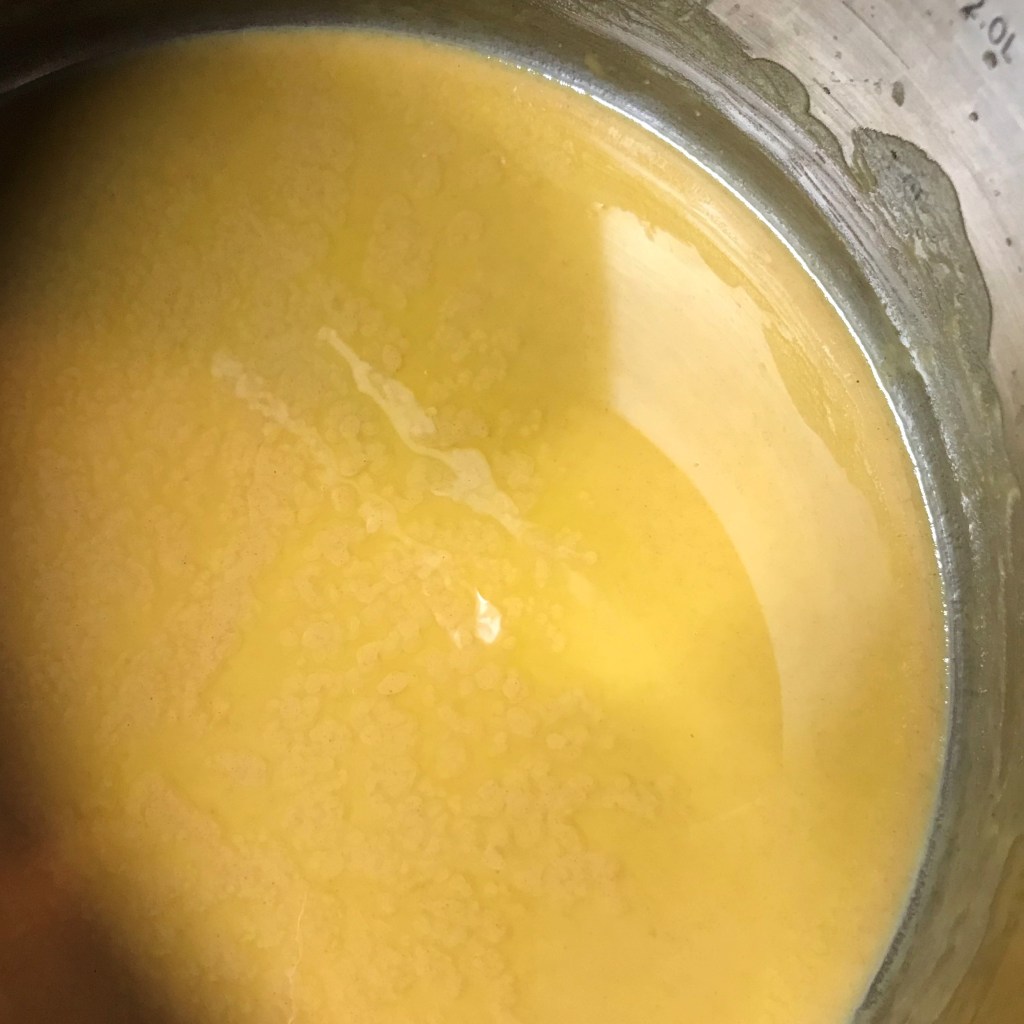
Rule #1 – Do not rush the roux

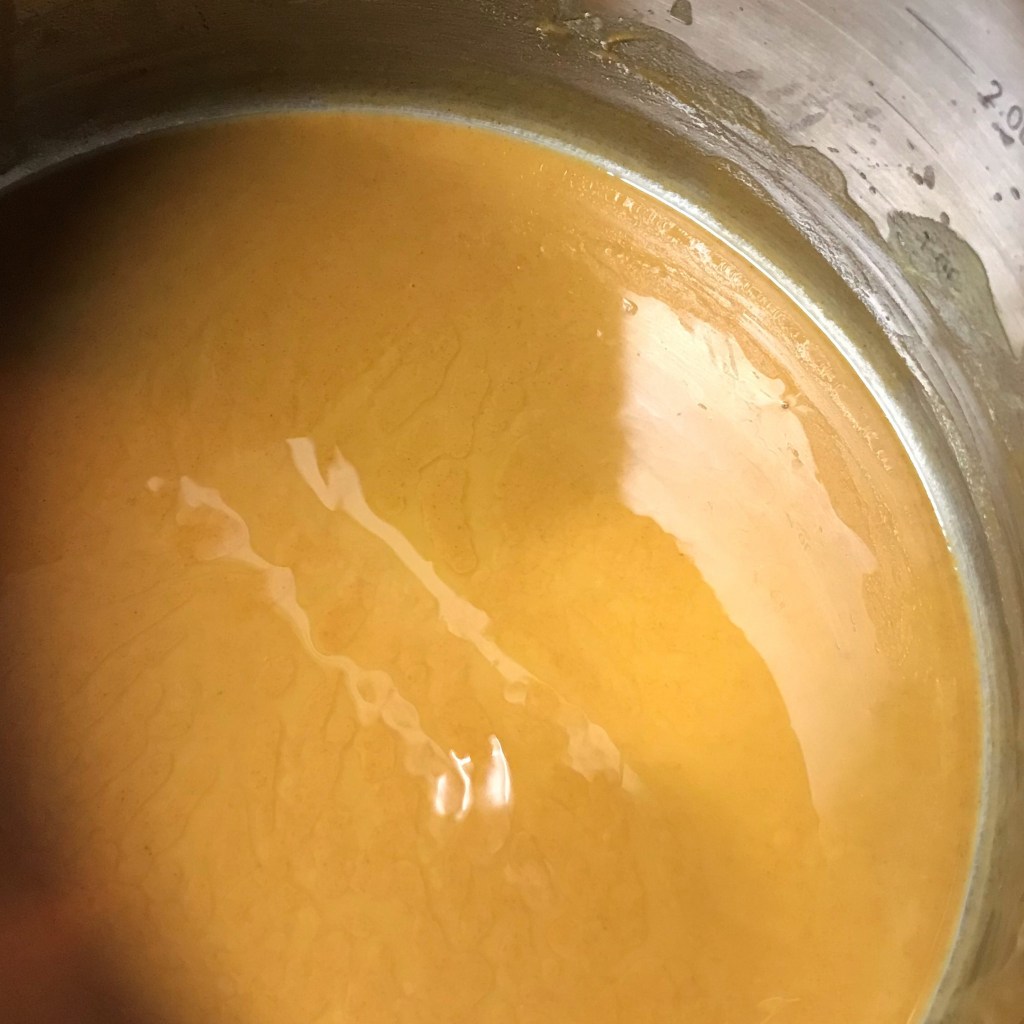
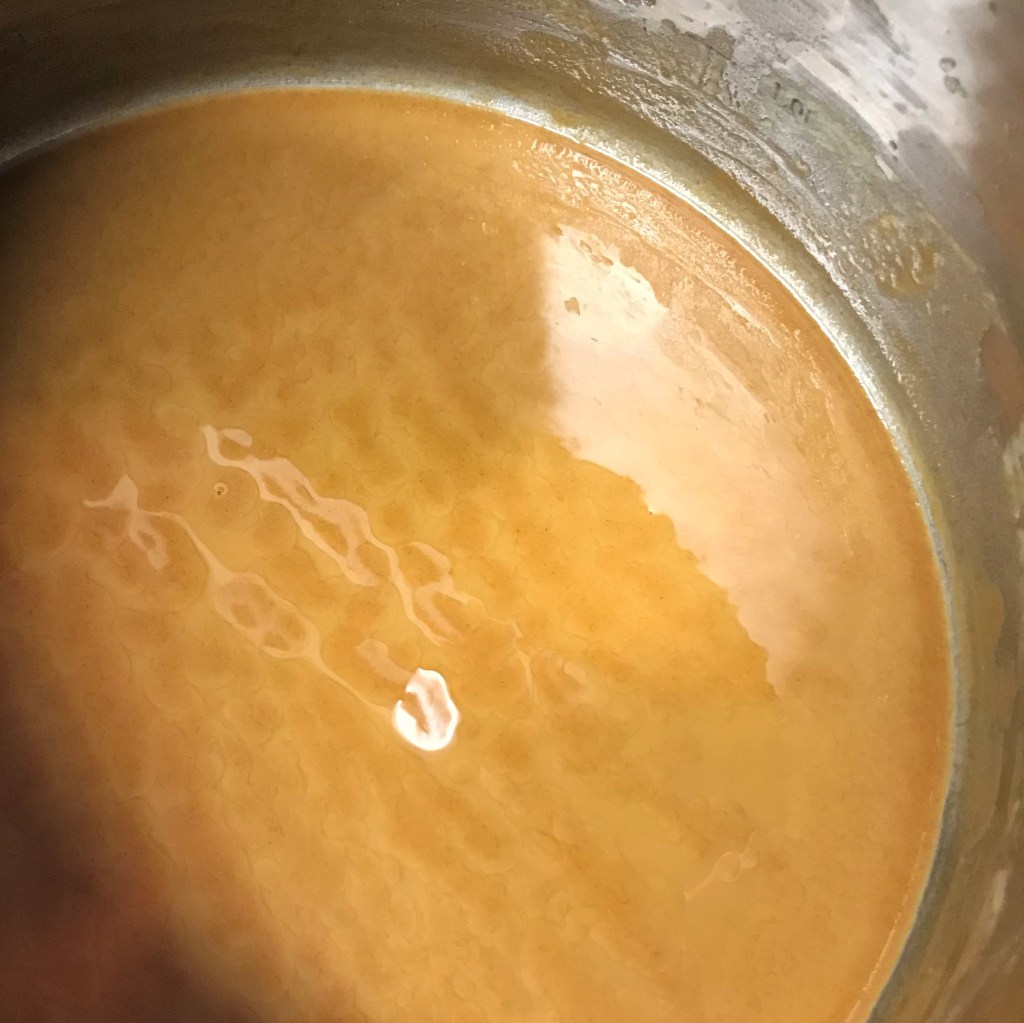
I’m sorry, dear ones, but I cannot imagine this part is possible in an insta-pot. The roux (equal parts oil and flour) is the backbone of my gumbo, providing flavor and also an assist on thickening. Without roux, this would just be turkey and okra soup. The roux cooks low and slow on the stovetop for about an hour, and I use that time to prep all my other ingredients. If this seems high-maintenance to you, there are instructions online for roasting a roux in the oven (though I’ve never tried it), but this is a breeze on the stovetop. Get it started, then let it be except for an occasional stir. If you get impatient and rush the roux, you will end up with something that tastes either uncooked or burned.

Rule #2 – It must include the trinity

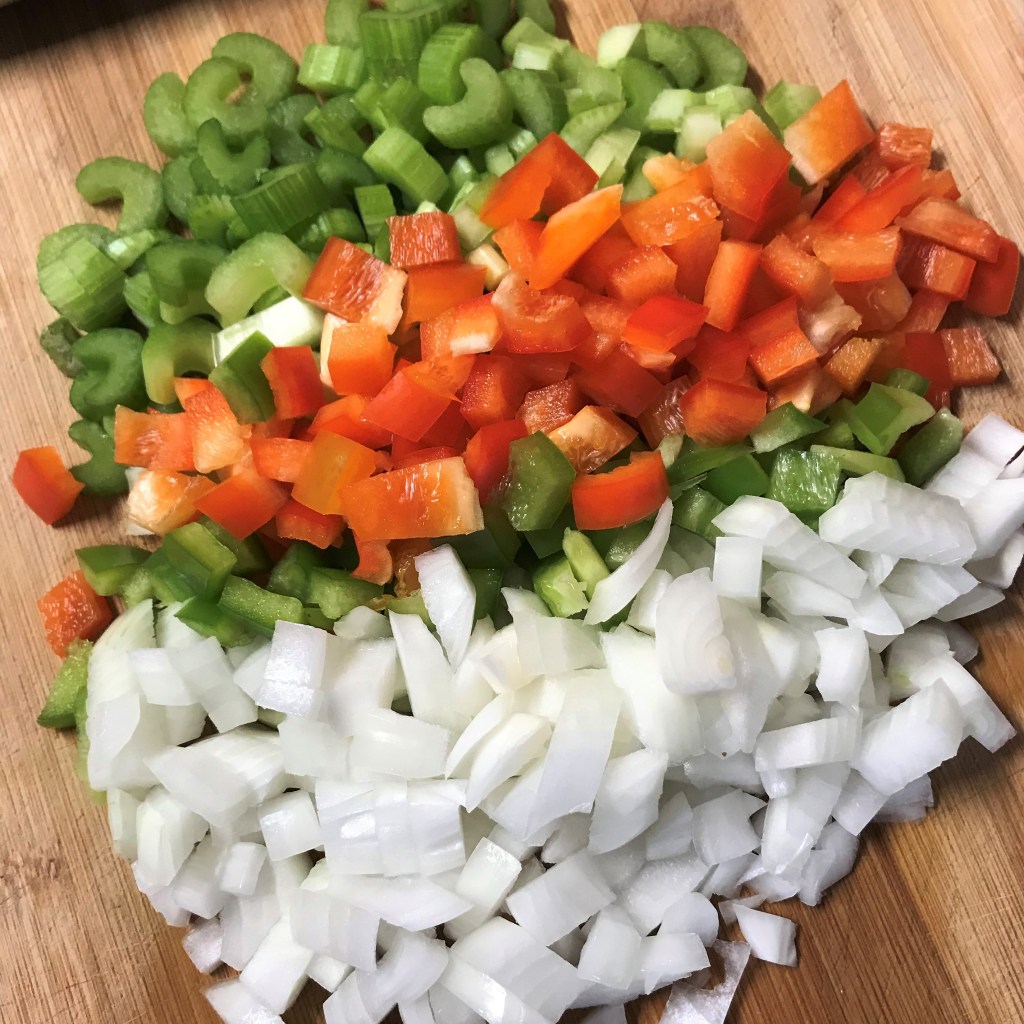
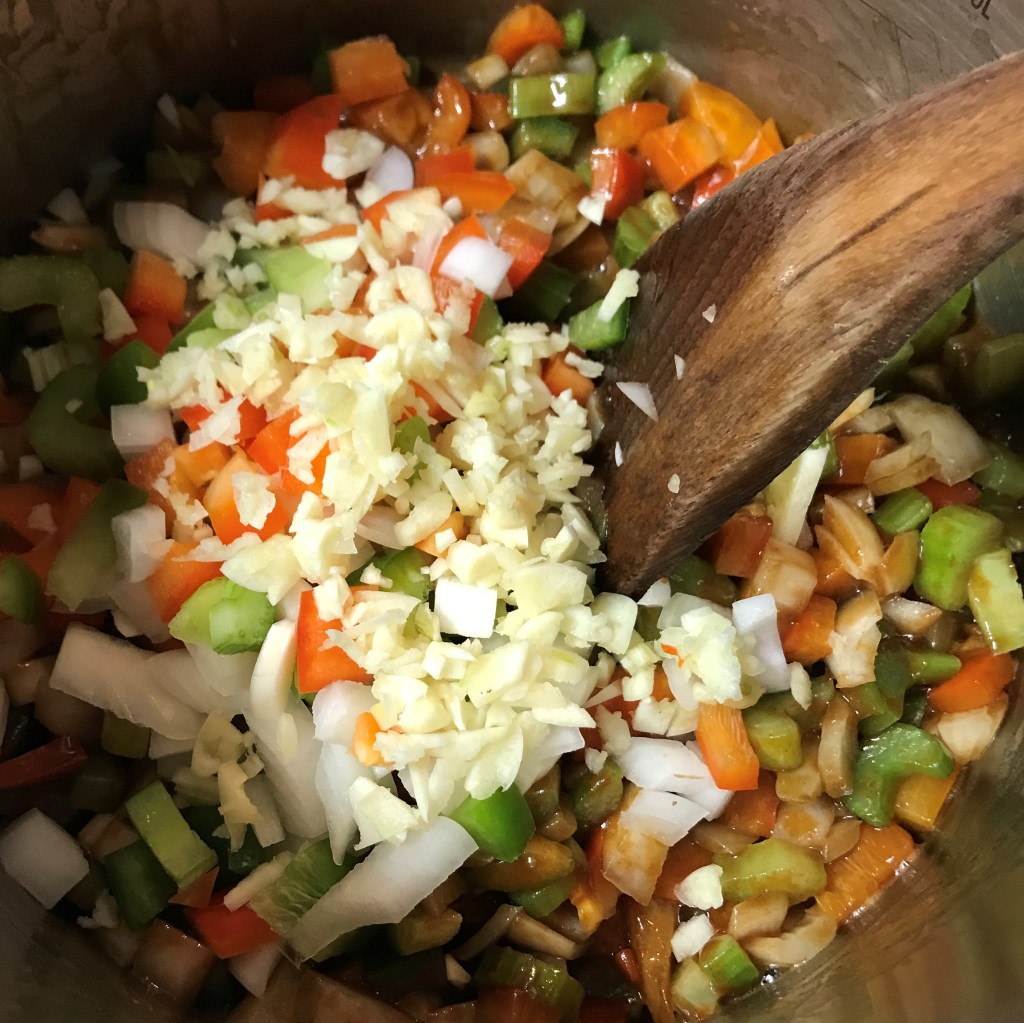
You have probably learned, from TV chefs Justin Wilson or Emeril Lagasse, that onion, celery and bell pepper make up the “holy trinity” of flavors used in Cajun recipes. The combination is essential, whether your menu includes gumbo, étouffée or jambalaya. Thank God there’s a use for the rest of the celery that didn’t go into the dressing. I use sweet onions, but yellow or Spanish onions are fine. I’ve long considered the color of bell pepper to be discretionary, and for this batch of gumbo, I went with a combination of red and green bells because it’s what we had on hand.

Celery + onion + bell pepper = trinity.

Rule #3 – Use a rich stock, preferably homemade

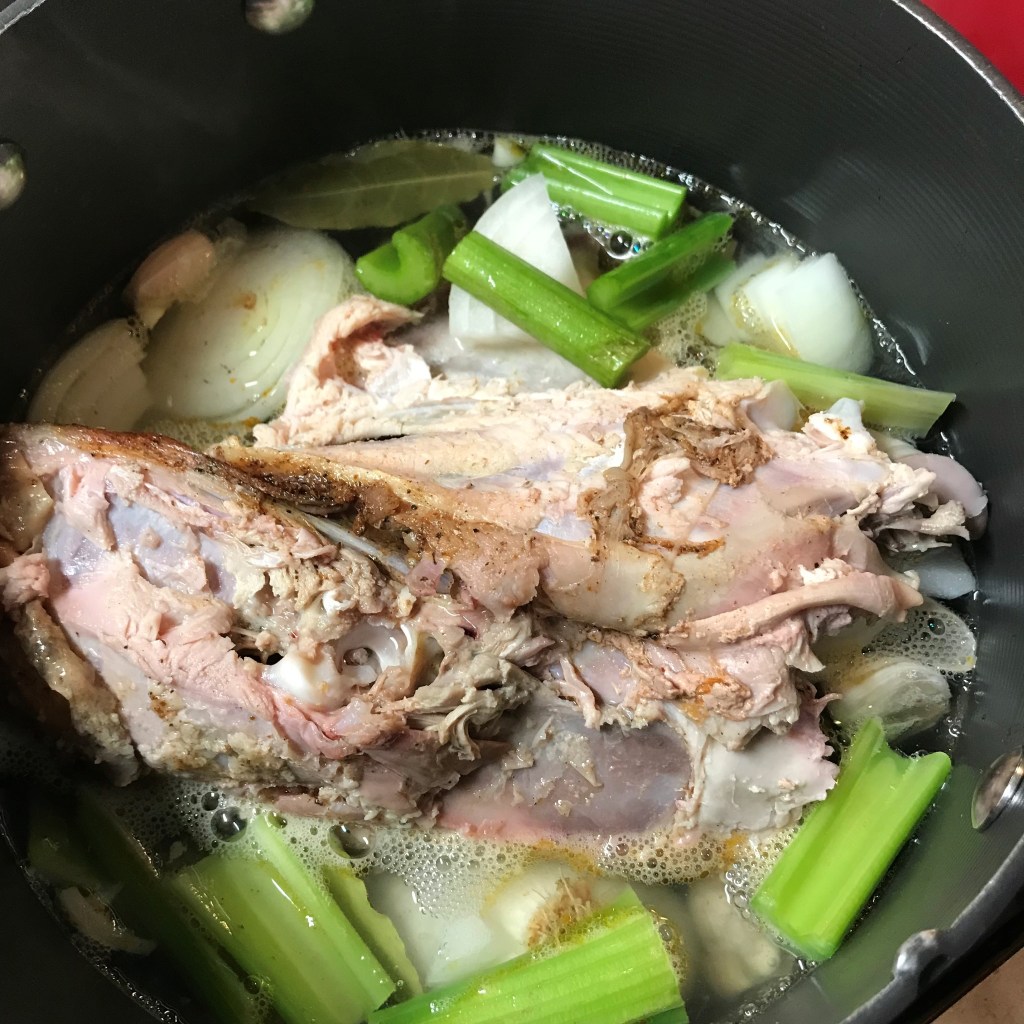
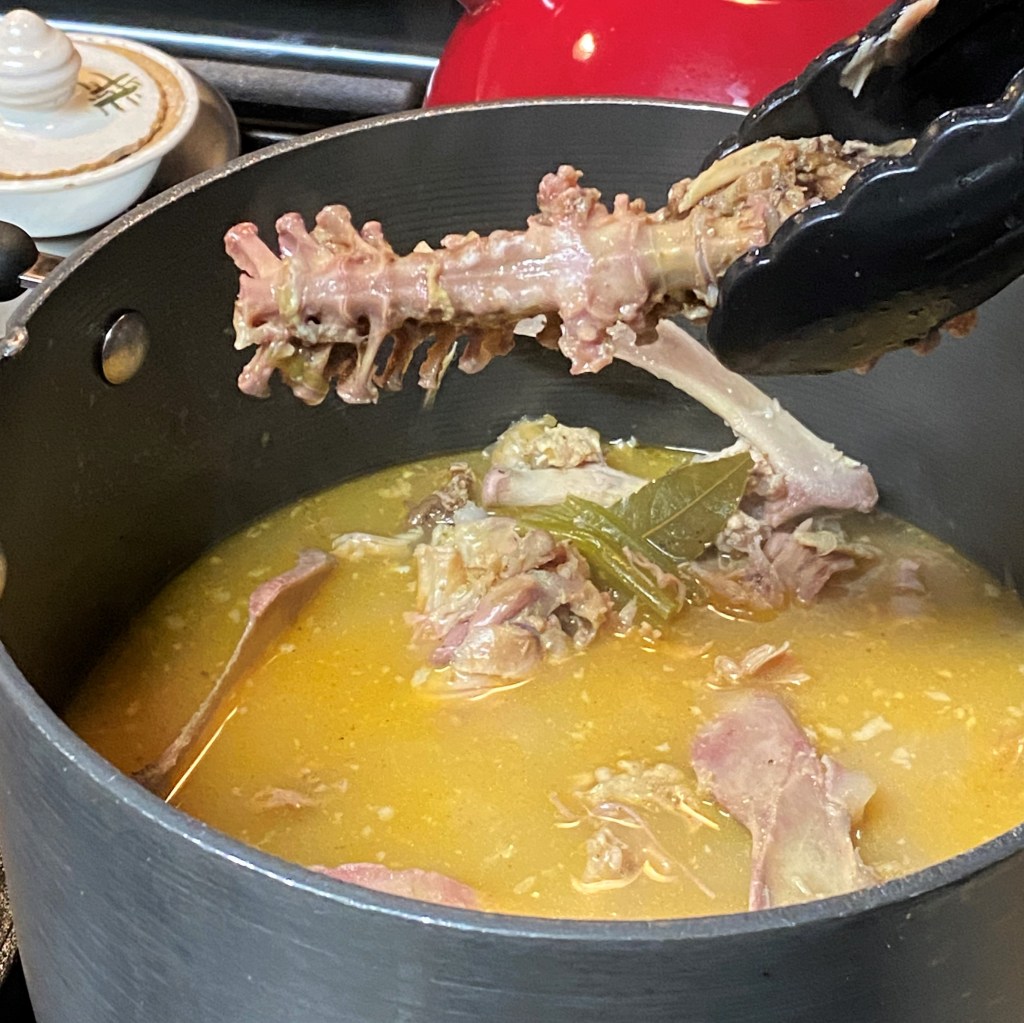
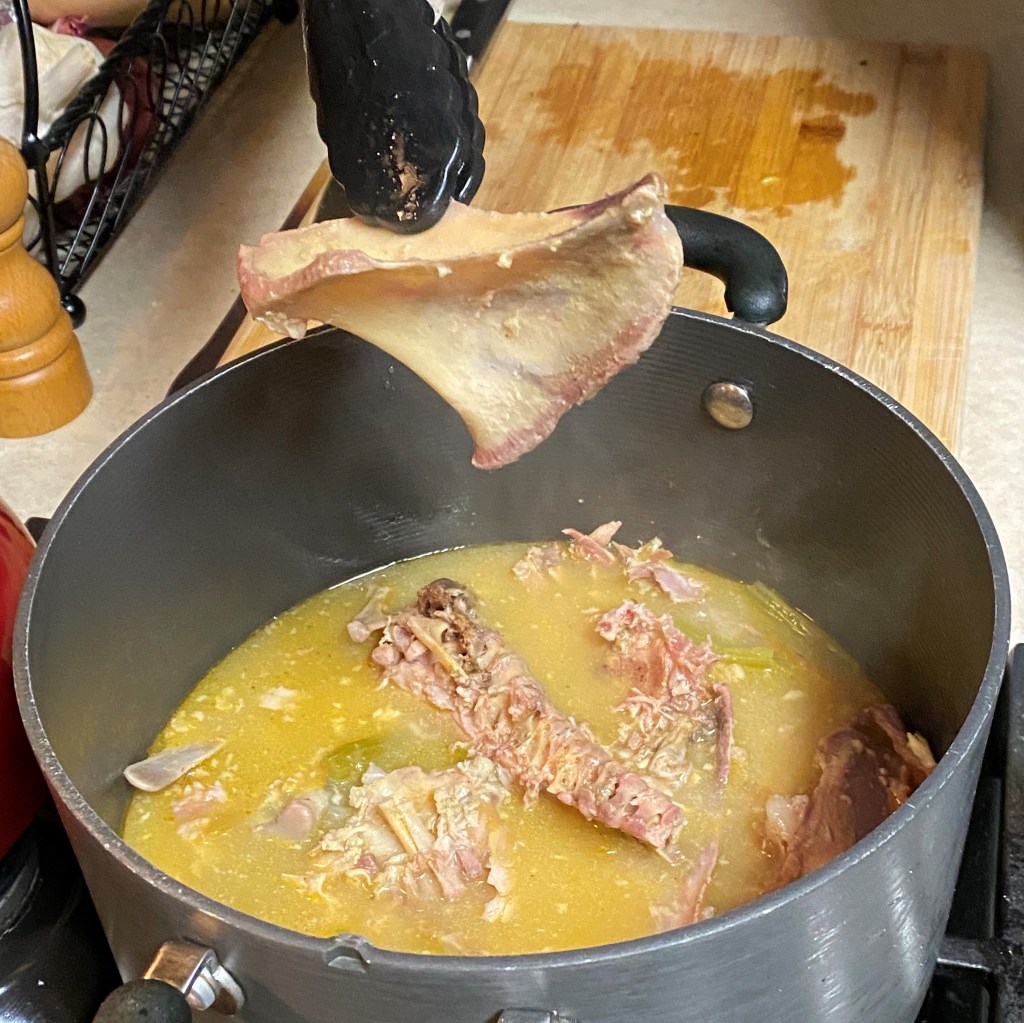
Gumbo recipes require a fair amount of broth or stock, and making homemade stock is the easiest way in the world to eke out every last bit of flavor from your Thanksgiving turkey. After you’ve picked all the useful meat off the frame, drop it into a heavy stockpot with any scraps of turkey skin, a cut-up onion, handful of garlic cloves, a few celery stalks, some peppercorns and a bay leaf or two. Add enough water to nearly cover it and cook it—and I mean really cook it—until you can pull the bones out clean. This will take hours, and nobody would blame you if you decided to do this in your slow cooker overnight. There’s a world of flavor hiding inside those bones, and a slow-simmering stock is far and away more nutritious than anything you could pour out of a can or carton. Plus, this fulfills one of my grandma’s golden rules: waste nothing. If you aren’t making gumbo, I hope you’ll make a stock from your turkey frame anyway, even if you just put it in containers to freeze for later.

Rule #4 – Use two kinds of meat

The options are wide open for gumbo—chicken, turkey, shrimp, crab, sausage, crawdads or whatever. But for the most interesting texture and flavor, I always use a combination of at least two meats. Turkey is obviously the main meat this time, and I’ve used the dark meat for its texture and flavor, plus a spicy leftover smoked sausage link. I got my hubby a humongous new smoker for his birthday this year, and he couldn’t see the sense in having empty rack space, so in addition to the spice-rubbed turkey, he smoked a large salmon fillet and about six flavored sausages. If you choose any of the seafood options for your gumbo, I recommend adding them at the very end to avoid overcooking them.

OK, and listen, if you want more mumbo jumbo on the gumbo, you can check out this link for more information than you could have ever hoped for.

Otherwise, grab an apron and let’s start cooking! My recipe makes approximately six hearty servings.


Ingredients

4 Tbsp. vegetable oil* (see notes)

4 Tbsp. all-purpose flour

1 cup each chopped onion, celery and bell pepper

4 cloves garlic, crushed and chopped

Salt and pepper, of course

1/2 tsp. crushed red pepper, cayenne or smoked paprika* (see notes)

2 cups leftover turkey, chopped into bite-sized pieces (dark meat preferred)

1 leftover smoked sausage, cut into bite-sized pieces

1 quart homemade turkey or chicken stock (instructions below)*

2 cups vegetable broth or chicken broth

1 bay leaf

1/2 tsp. dried thyme leaves

1 1/2 cups frozen sliced okra

Cooked brown rice for serving

*Notes

You can use vegetable, peanut or canola oil for the roux. Alternatively, if you like it spicy, use some amount of cayenne-infused olive oil, available at one of the specialty oil and vinegar shops that have popped up everywhere. I go half and half, canola and cayenne olive oil, and this combination delivers enough heat that I will typically forego the optional red pepper flakes. Note that the cayenne oil has a deep orange color, so you’ll want to consider that in determining when the roux is ready. For clear oil, a caramel color roux is dark enough. When using cayenne-infused oil, let it develop until it reaches a deep amber shade.

Your heat preference will dictate how much (or which kind) of optional hot pepper you should add to your gumbo. Remember that you can always shake some Frank’s RedHot sauce onto the gumbo at serving time. This is a terrific option when different members of the household have a different threshold for heat.

If you don’t have a leftover turkey carcass, or the time or patience to make homemade stock, substitute equal amount of chicken bone broth. You’ll find cartons of this in the soup aisle of a well-stocked supermarket.

This is some serious comfort food for a chilly December night!

Instructions

The visual walk-through will probably do it for you, but if you’d like written instructions, keep scrolling. I’ve listed them below, along with a downloadable version for your recipe files. First, build the roux, and remember to take your time.


Homemade turkey stock (make a day ahead)

1 turkey frame, picked clean of useful meat

1 medium onion, rough-chopped (use the ends, too)

4 ribs celery, cleaned and cut up into chunks (leafy ends are OK, too)

4 cloves fresh garlic, crushed

1 tsp. black peppercorns

2 bay leaves

Enough water to mostly cover the turkey frame

Combine all ingredients in a heavy-bottomed stock pot over medium heat. Bring to a boil, then cover, reduce heat to low and simmer several hours, until the bones are stripped clean and the stock is a rich, golden color. Remove and discard solids and strain stock into a large glass bowl or pitcher. Cool completely, then cover and refrigerate overnight. When the stock is fully chilled, it will be easy to scrape off excess grease, which will be congealed at the top. You’ll want to keep a small amount of the grease, though, for added flavor in your gumbo.

Instructions for gumbo

  1. Place a large, heavy-bottomed stock pot over medium heat. Add oil. Add flour and whisk until bubbly, then reduce heat to the lowest setting. Allow roux to develop for about an hour, whisking or stirring occasionally. When the color resembles caramel (or dark amber, if using a cayenne oil), proceed to the next step.
  2. Increase heat to medium and add the trinity. Stir to combine, season with salt, pepper and optional hot pepper, then add the garlic, cooking and stirring for about 10 minutes, until vegetables are softened and mixture feels “loosened up” a bit.
  3. Add cut-up turkey and sausage and stir to coat them in the roux. Add the turkey stock, a little at a time, stirring in between. Add vegetable broth, dried thyme leaves and bay leaf. Reduce heat to low and simmer for about two hours.
  4. Add frozen okra and stir to blend it into the stew. Increase heat to medium-low and simmer for 20 – 30 minutes, until okra is no longer bright green, and tender to your liking.

Serve gumbo over hot cooked brown rice. Spike it with Frank’s RedHot sauce if you’d like.

Want to print this recipe?