Caprese-inspired Pasta Salad

I’ve been ruminating lately about my grandmother’s ways in the kitchen. How she fed everyone on scraps— not because she had to but because she could— and realizing that I don’t employ her tactics as often as I have opportunity. Pinching pennies doesn’t have to be a necessity; it can be a strategy for ensuring that we always have enough. And in times of financial uncertainty (which lately seems to be always), that strategy can keep us fed, not only physically, but also emotionally. 

My grandmother knew this, and it’s why she used up all the bread heels and stale sweet rolls to make her amazing bread pudding, which we all loved. It’s why 10-year-old me could sit at her dinner table, puzzled at her claim that we were having leftovers, not recognizing the food before me as something we’d already eaten that week. She was terrific at transforming, and I have that spirit in my bones, too— I just don’t always realize when I’m doing it.

We are about to enter an era where many ingredients we take for granted will be less available or more expensive than we’ve come to expect, thanks to climate change, tariffs, supply chain chaos and farm worker shortages. I thought it timely to share one of my favorite ways to stretch expensive ingredients: a pasta salad. My offering is a Caprese-inspired summer side dish that uses half a bag of pasta bowties, a small container of cherry tomatoes, fresh summer basil and mozzarella. None of these items is particularly expensive— especially if you happen to have a little garden at home— but I hope to provide a template that might help you stretch out other ingredients that lean toward the pricey side.
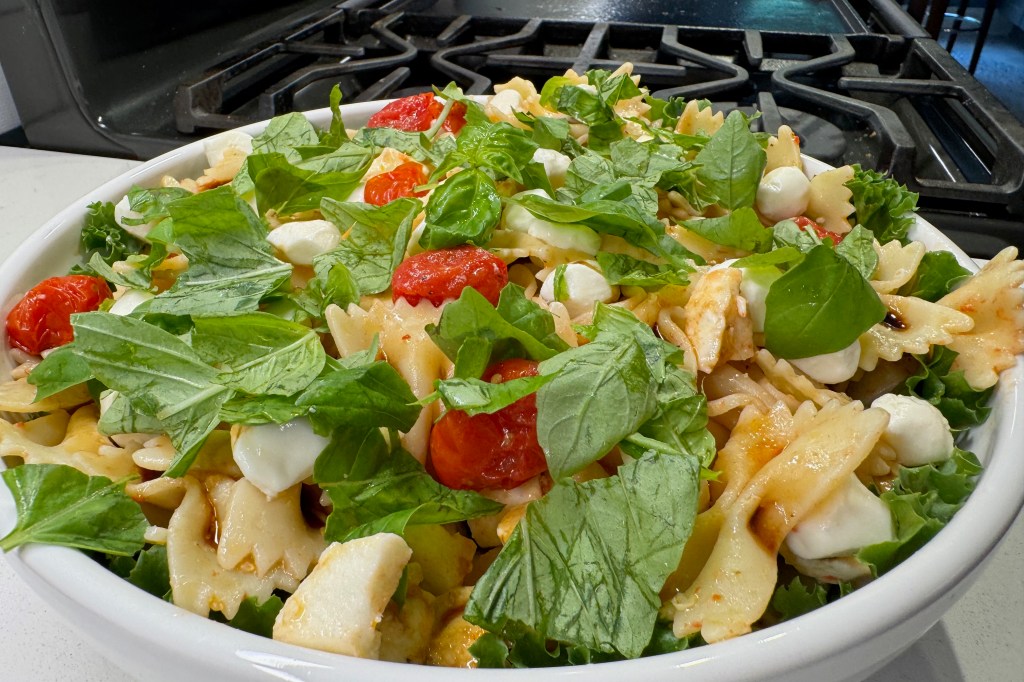
Summer in a bowl! 😎

Classic caprese— sort of

The flavors (and 🇮🇹 colors) of Caprese are all present here, but I’ve taken a few liberties to amplify the key ingredients. For starters, I poached the tomatoes in a bit of extra virgin olive oil to concentrate their sweetness and to reduce some of the moisture, and then I scooped the cooked tomatoes into a bowl to cool, reserving the flavorful oil for later. This is a simple trick for getting the most flavor out of the tomato and, as a bonus, it’s easier to eat them without the juice bursting out everywhere.
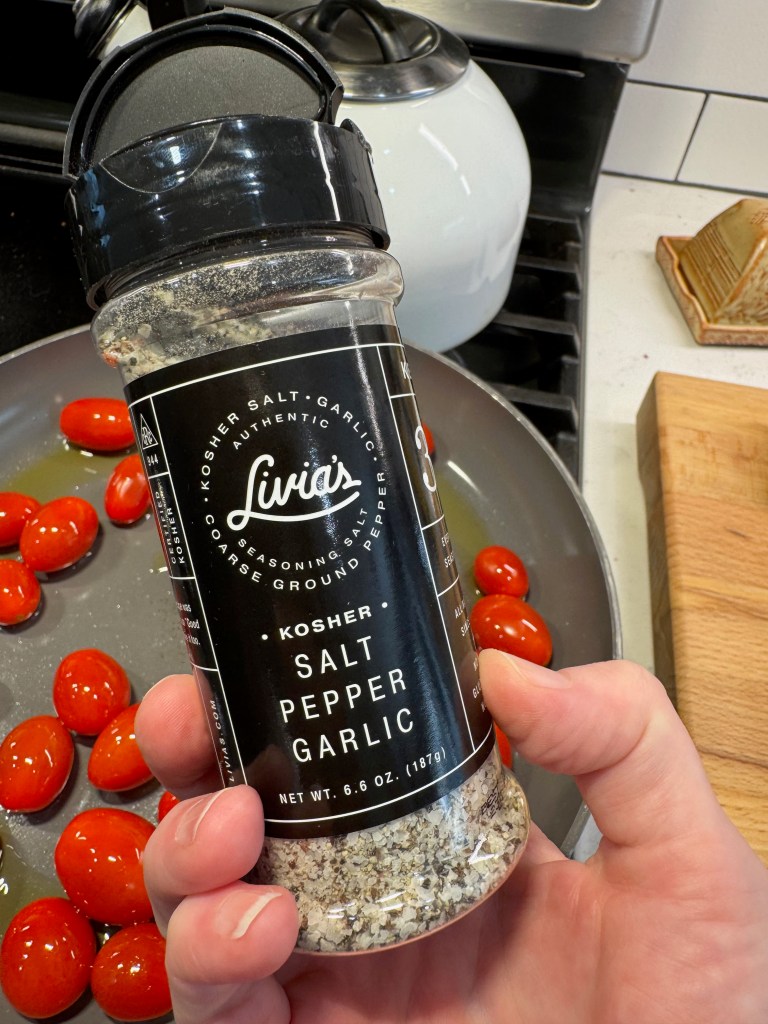
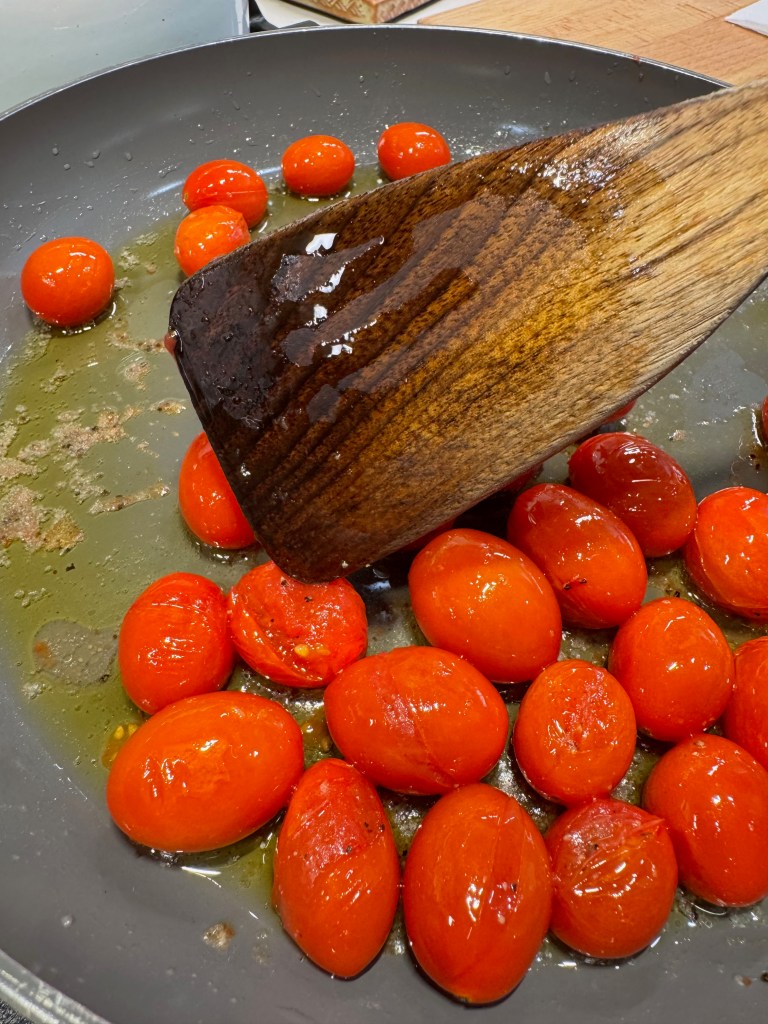
Next, I had a ball of sliced soft mozzarella, as well as a small package of the more expensive mozzarella pearls. I blotted all of it with paper towels and cut the slices into bite-sized pieces. I saved the prettier pearls for the top of the salad. Same flavor, a few pennies cheaper.

My mozzarella was pre-sliced, so this was quick work.

Dark balsamic vinegar, typical for Caprese,  leaves splotchy stains on mozzarella, and that’s not a good look when you’re tossing the salad rather than drizzling it. I opted instead for a white balsamic-based dressing, jazzed up with fresh lemon, olive oil and a spoonful of Italian dressing mix. I had a plan to include a touch of dark balsamic, but not yet.
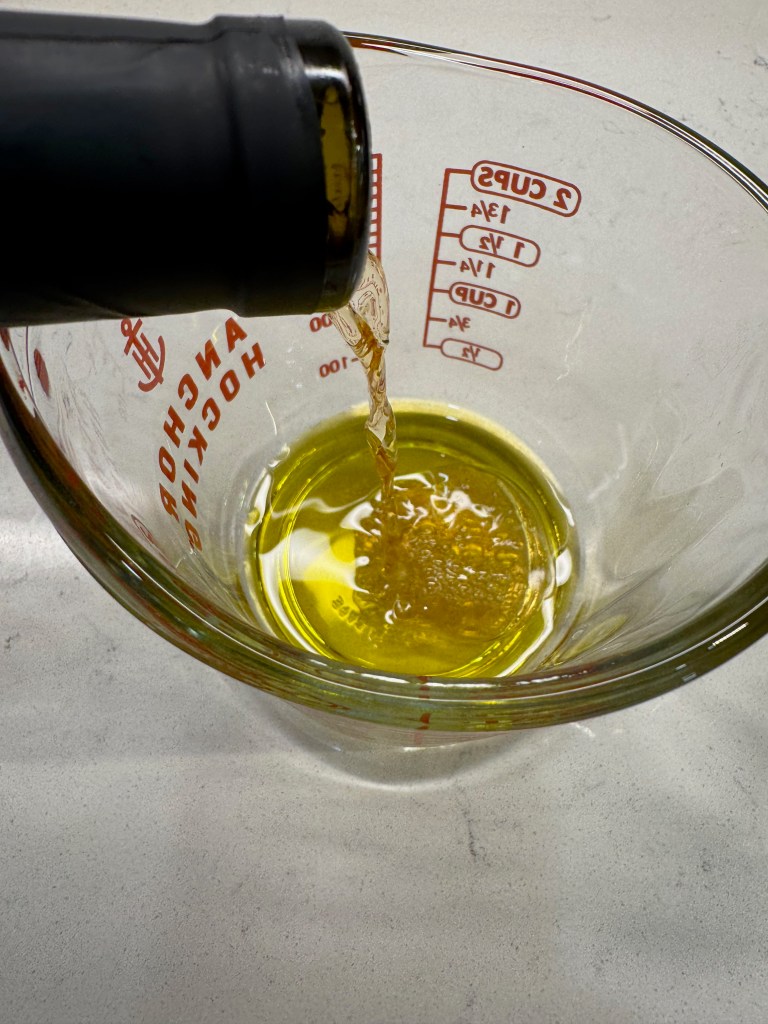
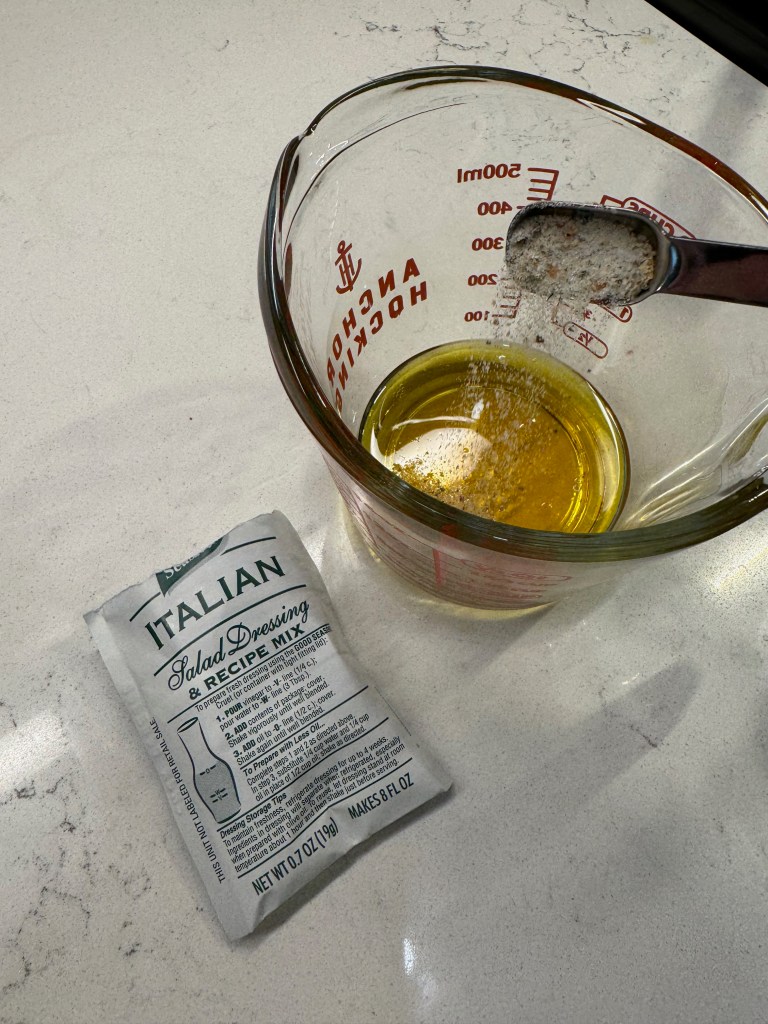
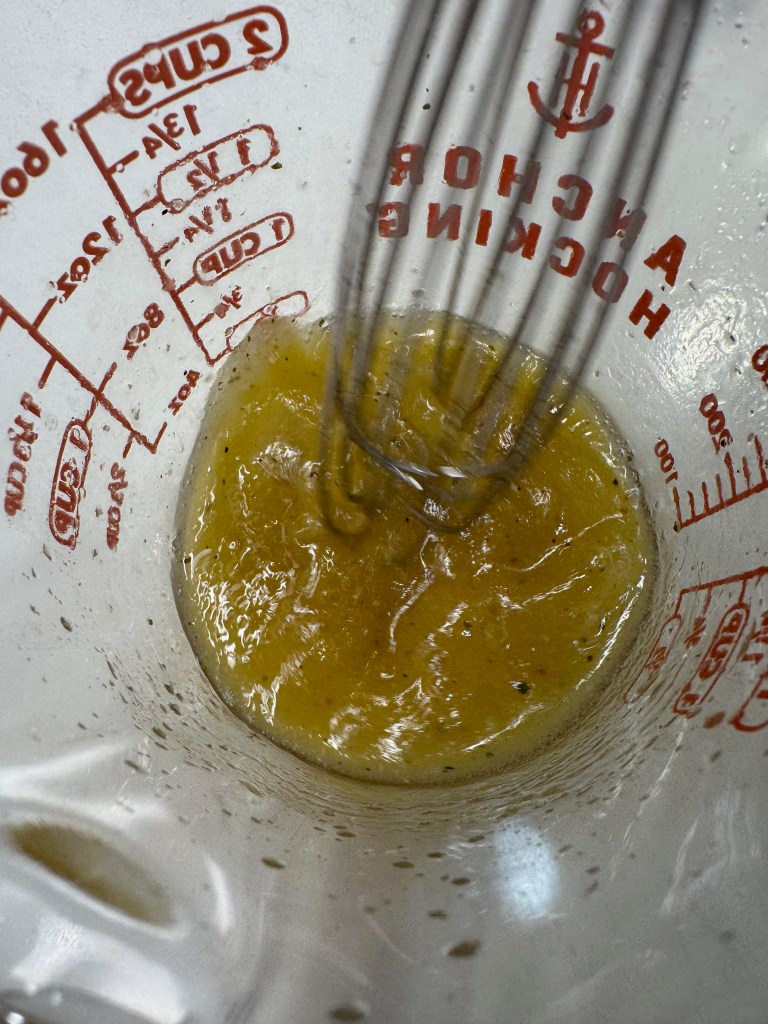
Rule #1 – Season every layer!

As always, I recommend plenty of salt in the pasta water. You only get one shot to add flavor, so be generous and remember that most of that sodium goes down the drain— you’re not eating it all. When the pasta was al dente, I scooped out a little bit of the starchy water and whisked it into my dressing to help it cling to the pasta.

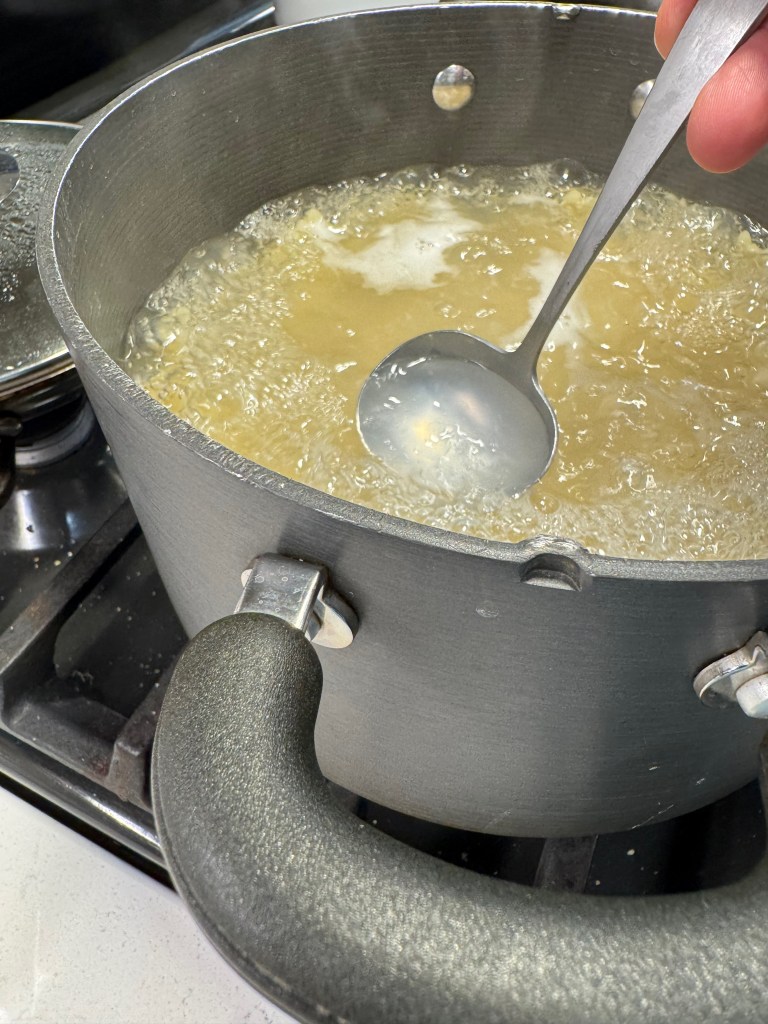
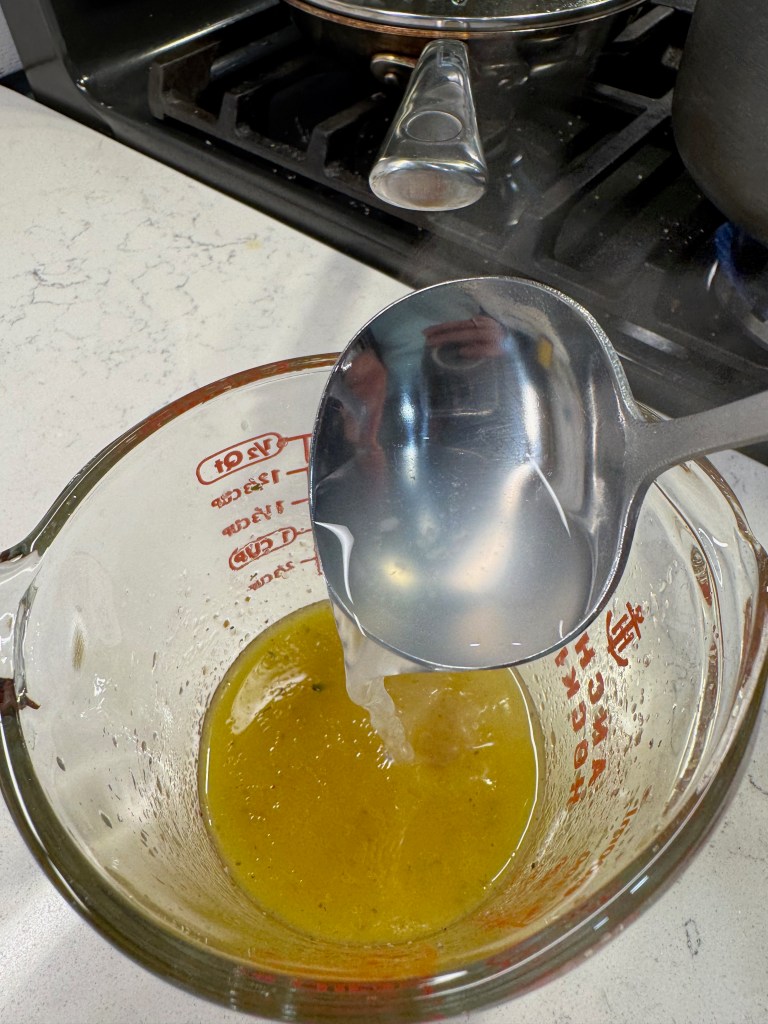
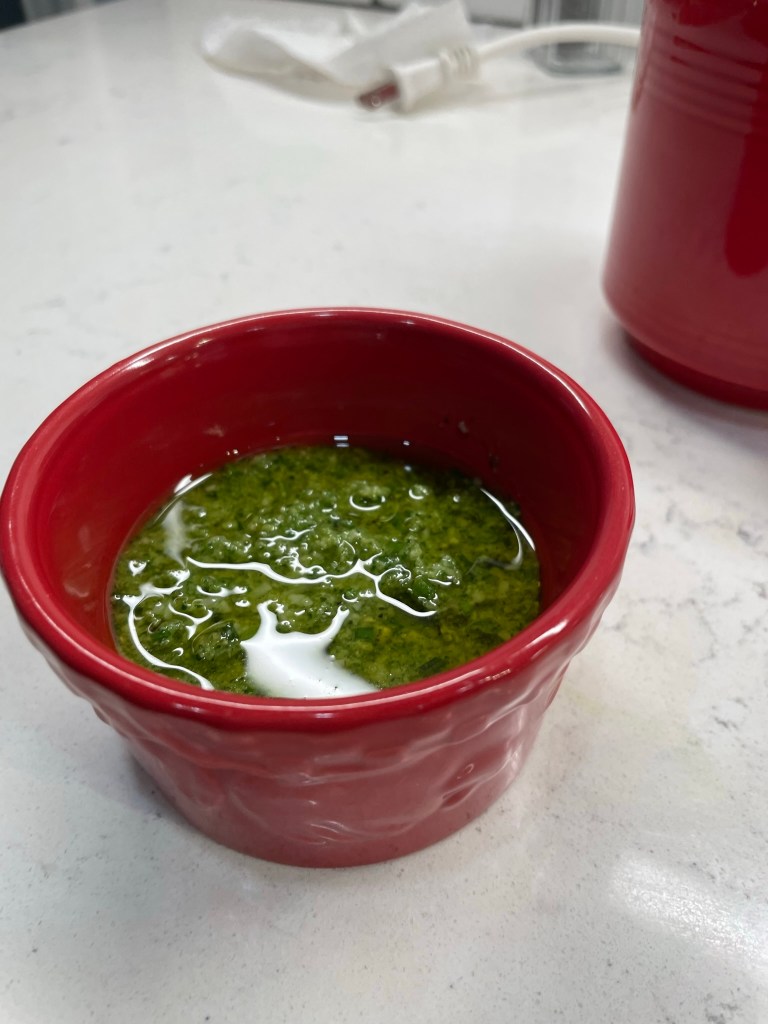
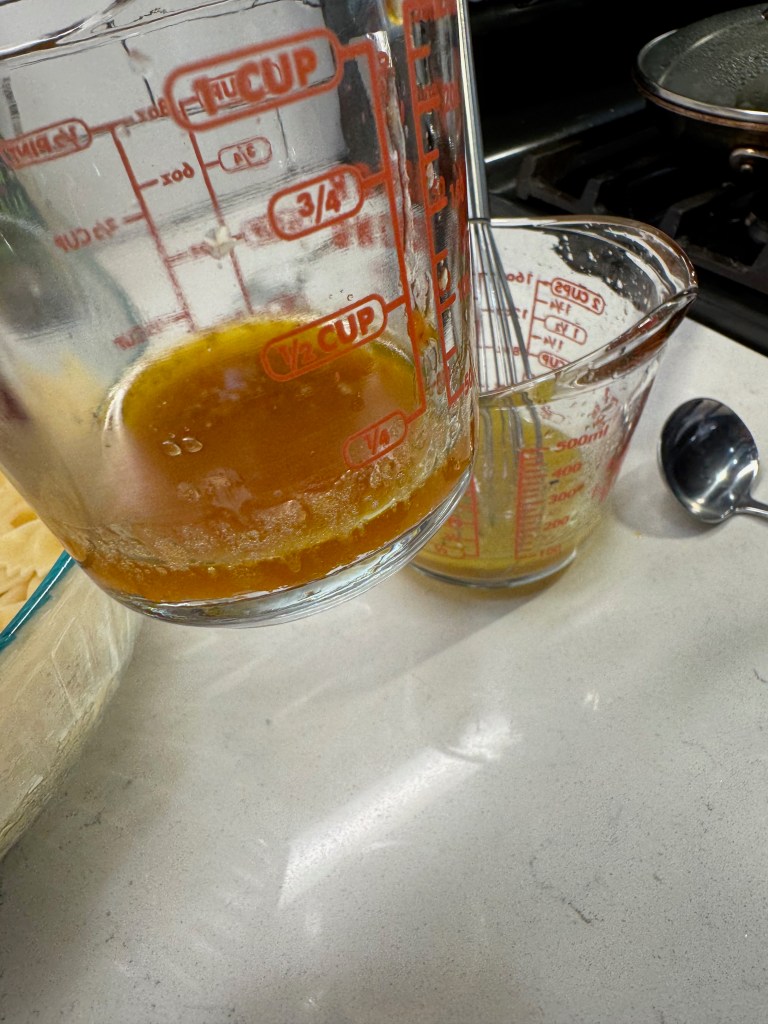
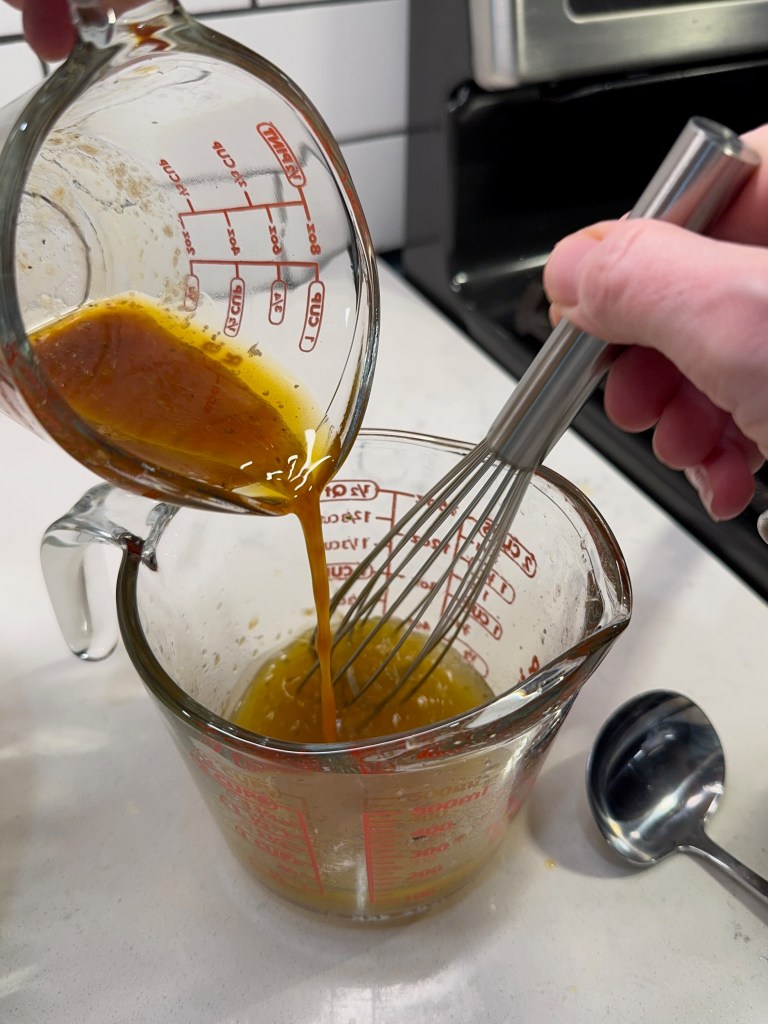
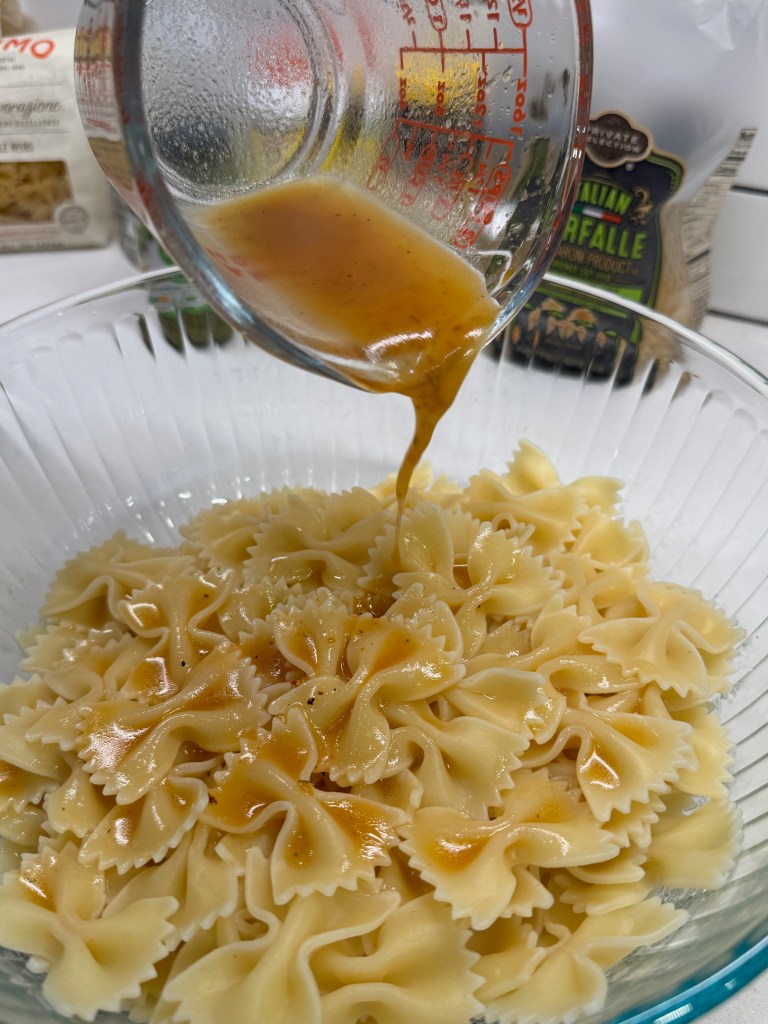
Finally, remember the tomato-scented oil that was left over after poaching the cherry tomatoes? I whisked that cooled oil into the dressing, too, extending the sweet tomato flavor throughout my salad in the process. I poured the dressing over the pasta while it was hot, ensuring that it would soak into every bow tie. Toss this for a couple of minutes to distribute the dressing evenly.

Bring on the Caprese

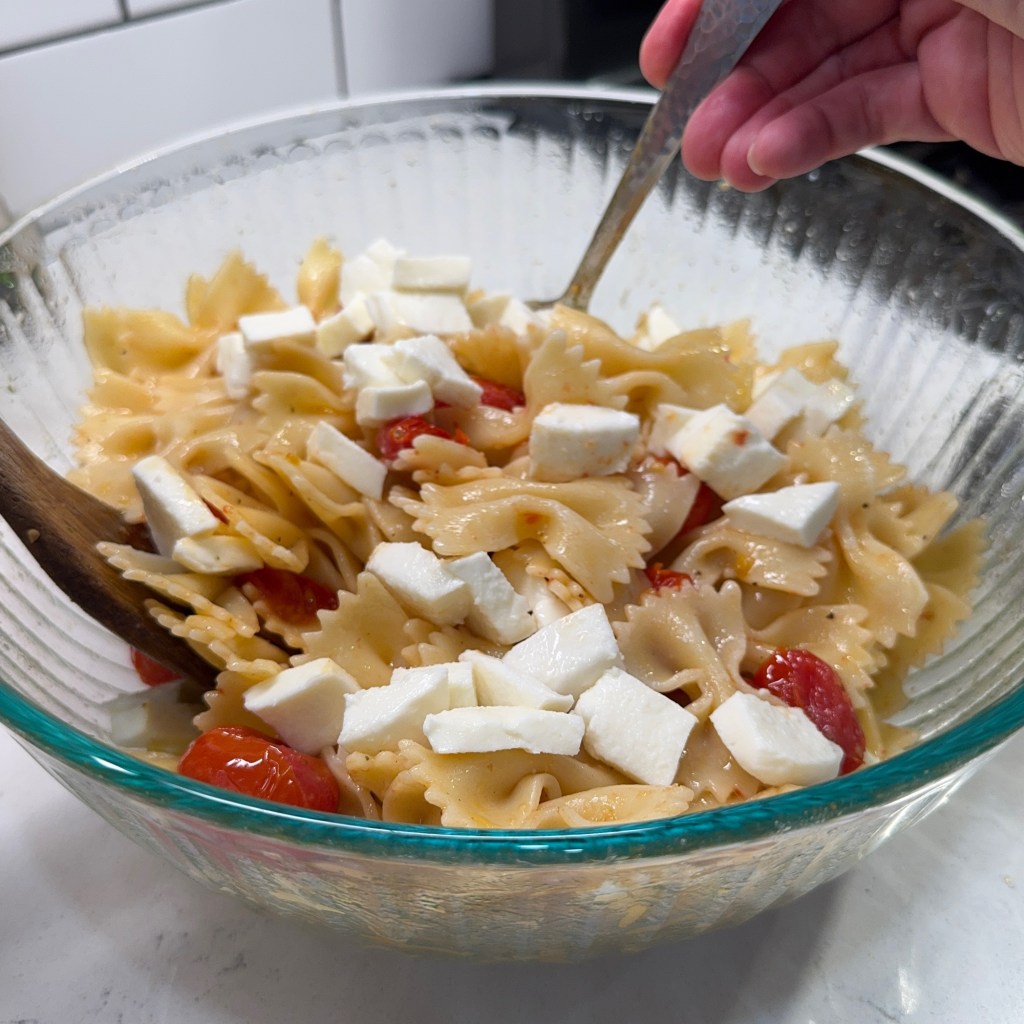
A few minutes later, when the pasta was cooled to room temperature, I gently tossed in the poached tomatoes and the pieces of sliced mozzarella, and sent it to the fridge until we were ready to pack up for dinner with some friends.

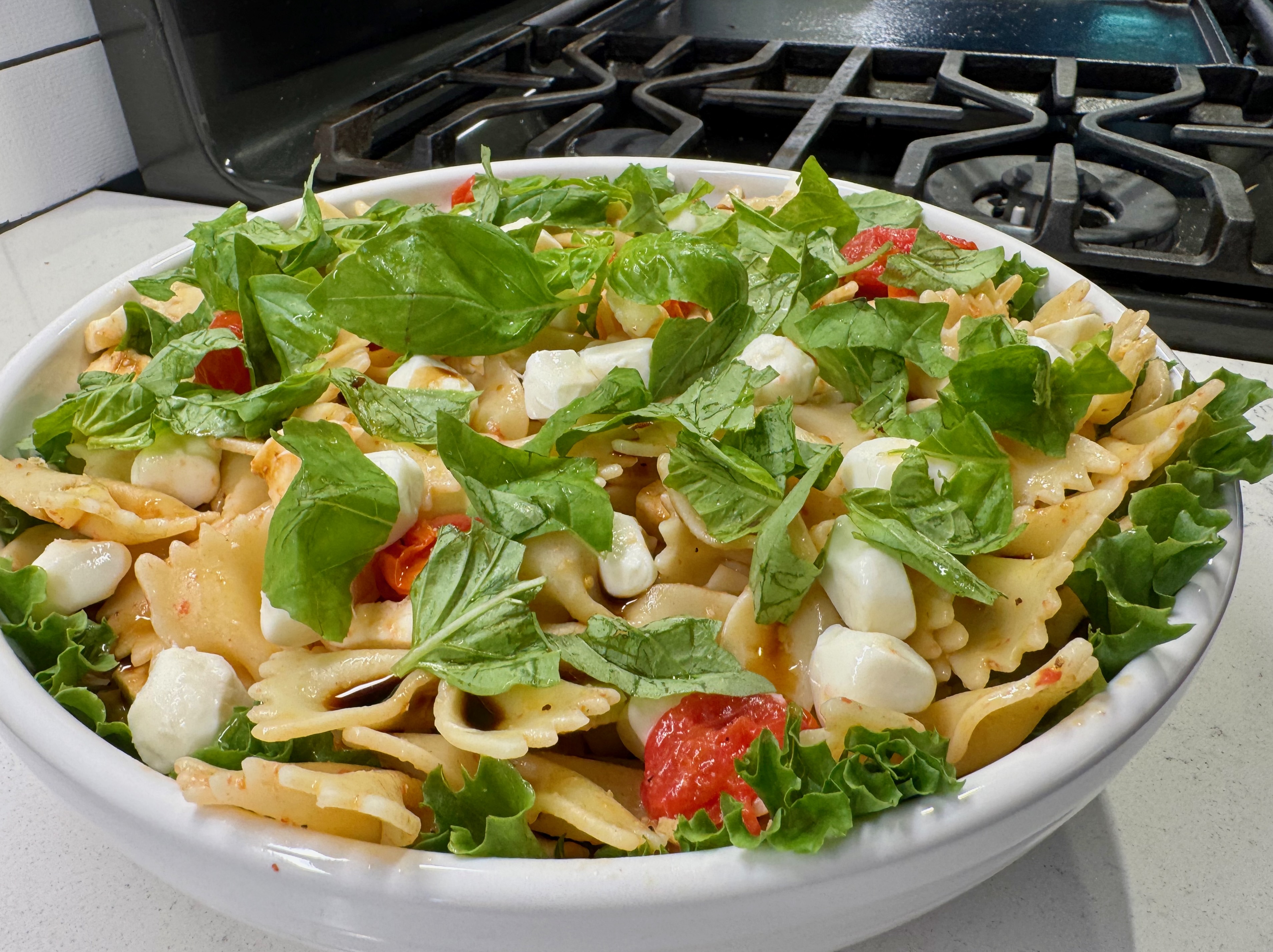
For serving a pasta salad, I love to line the bowl or platter with leafy lettuce greens. It looks pretty, and it also gives excess dressing a place to run so that the salad doesn’t get too drippy. If you are entertaining a larger crowd, a deep platter with extra spoons is nice because it allows more people to self-serve at once. For a small crowd, or if you have limited space on the table, a bowl works great.

Final touches on this Caprese-inspired salad
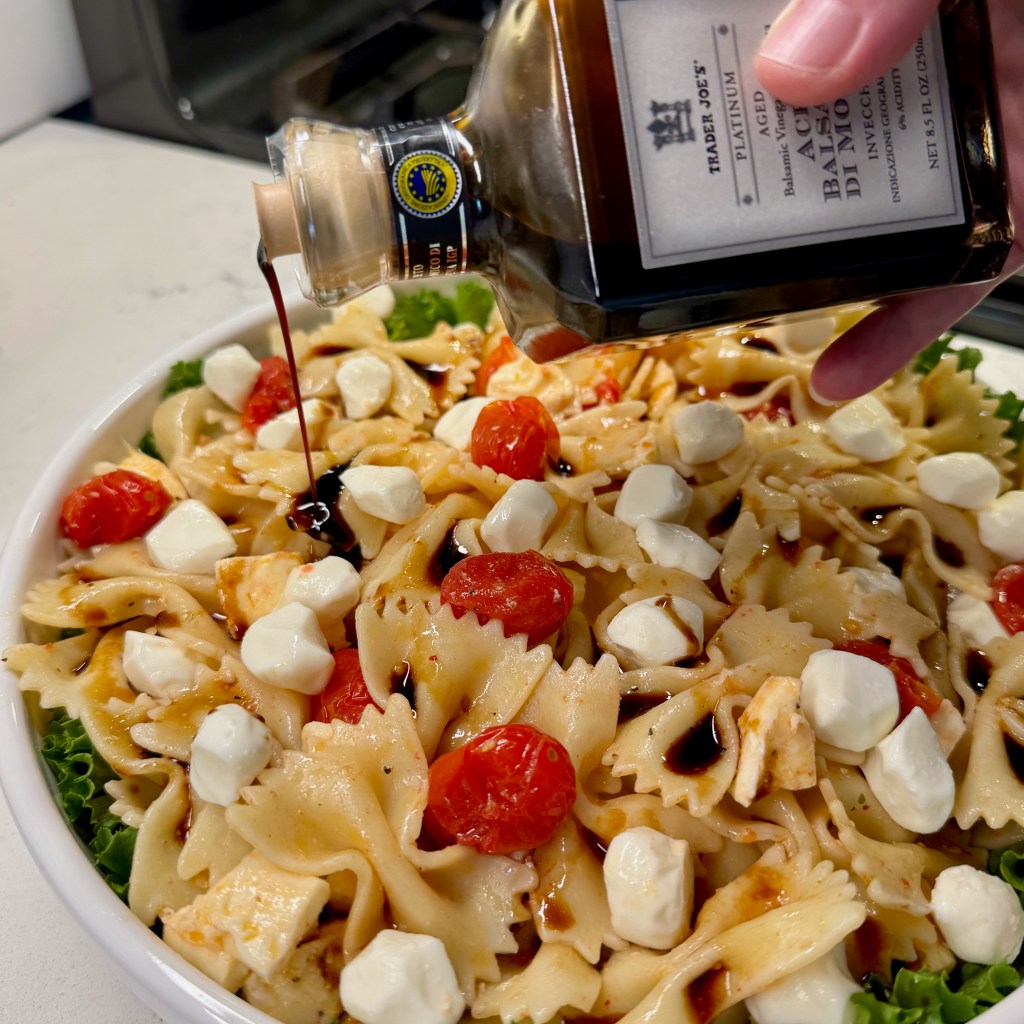
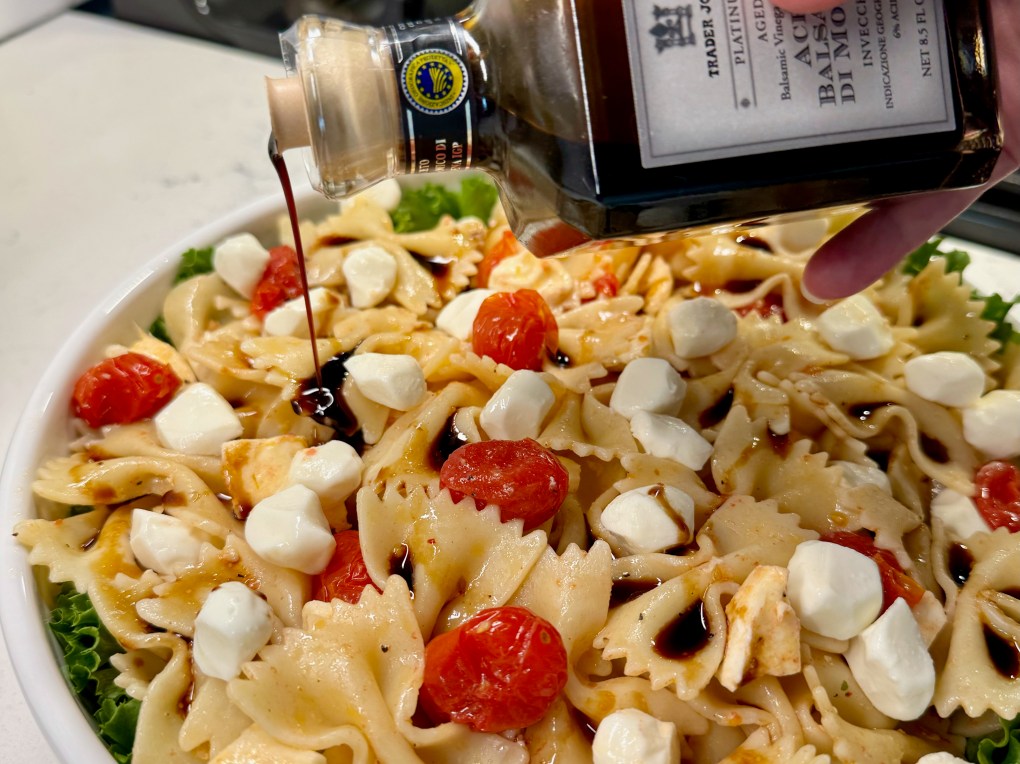
A good quality bottle of balsamic is a secret weapon in the kitchen!

I scattered the mozzarella pearls on top, and then it was finally time for a touch of classic dark balsamic. Just a few drizzles over the pasta bowties, and I used a reduction that was thick and syrupy, so it stayed in perfect little puddles. Fresh basil is classic on a Caprese, and it’s easy to find this time of year, especially in my patio container garden. If basil isn’t your thing, I think fresh Italian parsley would be a good substitute here.

Caprese-inspired Pasta Salad
  • Servings: 6 to 8
  • Difficulty: Average
  • Print

It's summer salad season, and this Caprese-inspired dish is a great way to highlight the classic flavors when serving a crowd.


Ingredients

  • 8 oz. semolina bowtie pasta (see recipe notes)
  • 1 dry pint cherry or grape tomatoes, washed and patted dry
  • 2 Tbsp. extra virgin olive oil
  • Salt and pepper to taste
  • 2 to 3 Tbsp. white balsamic vinegar
  • 1 tsp. fresh lemon juice
  • 1 tsp. dry Italian salad dressing mix (see recipe notes)
  • 2 Tbsp. extra virgin olive oil
  • 2 Tbsp. hot pasta cooking water
  • 1 lb. fresh soft mozzarella (cut into cubes or pearls)
  • 2 Tbsp. dark balsamic glaze
  • 1 handful fresh torn basil leaves

Recipe Notes: Whenever possible, seek out pasta that is made with durum (semolina) flour, and labeled as bronze-cut. This method of cutting leaves a slightly rough texture, better for sauce or dressing to cling.

I used Good Seasons brand dressing mix, but you could easily substitute a pinch of garlic powder and some dry Italian herbs.

Directions

  1. Prepare a pot to boil the pasta, and season it generously with kosher salt. Begin cooking pasta when tomatoes are nearly finished cooking.
  2. Heat a medium-size skillet or sauté pan over low heat, and swirl in extra virgin olive oil. Add tomatoes, season with salt and pepper and roll to coat them in the oil. Cook the tomatoes very slowly until the tomatoes are softened and easily smashed with a utensil (about 25 minutes). Press each of them when they reach this softened stage to release the juice inside. Cool slightly, and then spoon out the oil into a measuring glass. Reserve this for the dressing.
  3. In a second measuring glass, combine white balsamic, lemon juice, Italian dressing mix and olive oil. Whisk to combine and set aside.
  4. When pasta reaches al denté stage, spoon out about two tablespoons of the hot pasta water. Whisk it into the dressing mixture, along with the reserved tomato cooking oil.
  5. Drain pasta thoroughly and transfer to a large bowl. Pour dressing over the pasta while it is still hot, and toss gently a few times to coat evenly. Toss again after a minute or two, and then allow the pasta to cool to room temperature.
  6. Gently toss cooled tomatoes and half of the mozzarella into the pasta. Refrigerate until serving time.
  7. Transfer chilled pasta salad to a serving bowl. Top with remaining mozzarella, drizzle dark balsamic over salad, and scatter fresh basil leaves just before serving.
Dilly-dilly Three Bean Salad

When the heat goes up, my appetite goes down. Like, waaaay down. And that means I’ve barely been hungry at all this week, as the afternoon highs got stuck around 97° F for five days in a row with 70% humidity as the norm. It has been too hot to weed my flower beds, too hot to walk the dog, and definitely too hot to cook. It’s brutal, and I know that much of the U.S. has been dealing with the same as climate change has altered what summer looks like— probably forever.

But at some point, we’ve gotta eat, right? I’ve put some new ideas into practice to ensure that we have something of substance, without me having to stand at a hot stove. Taking a cue from my blog buddy, Michelle, who endured the vicious summer heat of California’s Coachella Valley for too many years, I have found it helpful to do my cooking in the morning hours and then serve up the food as cool meals in the evenings. This has proven to be beneficial for more than one reason, as I often find myself less motivated at the end of the workday; my brain has run dry of decision-making ability. Getting meals done early has saved my sanity!

I love every single thing about this!

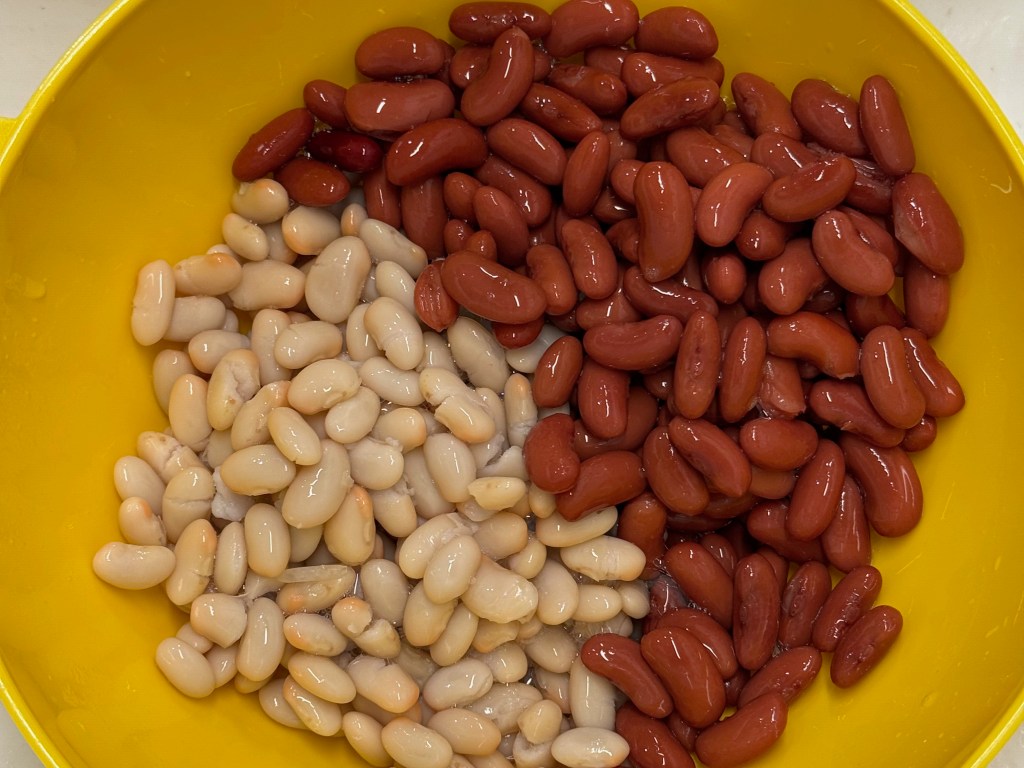
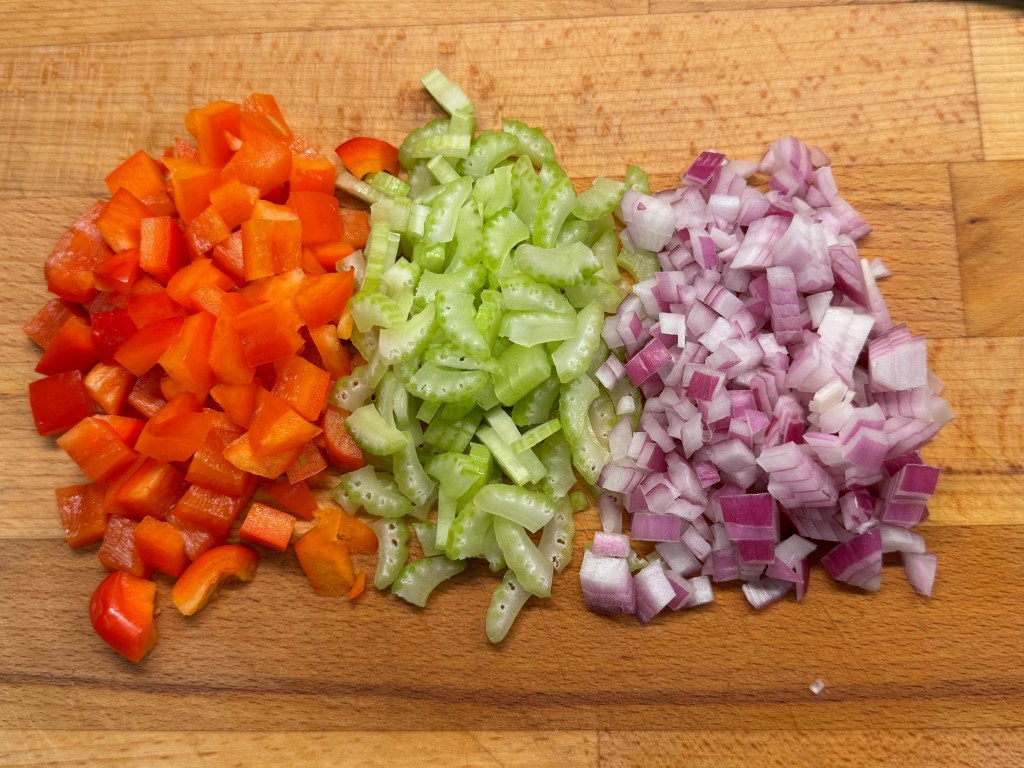
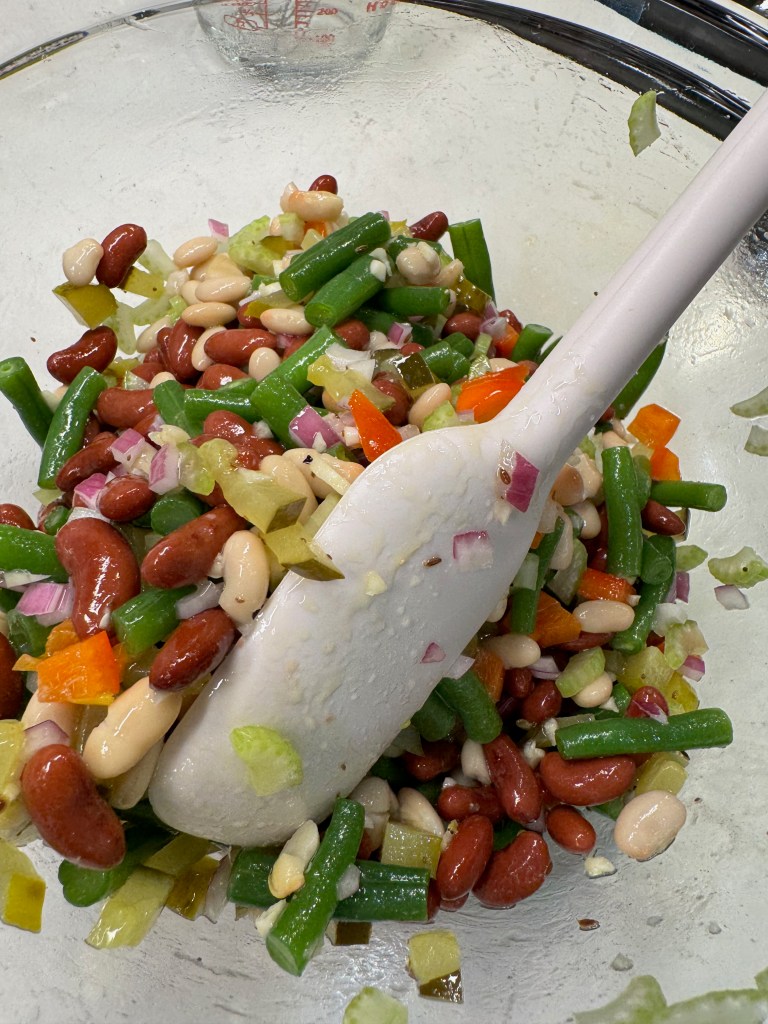
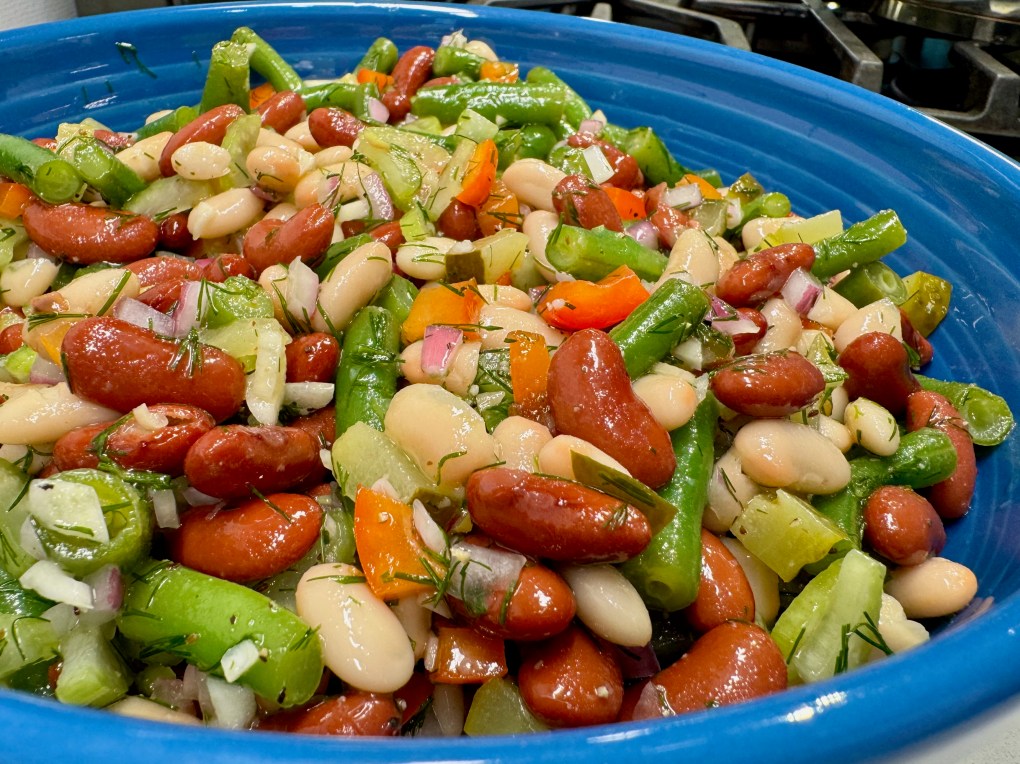
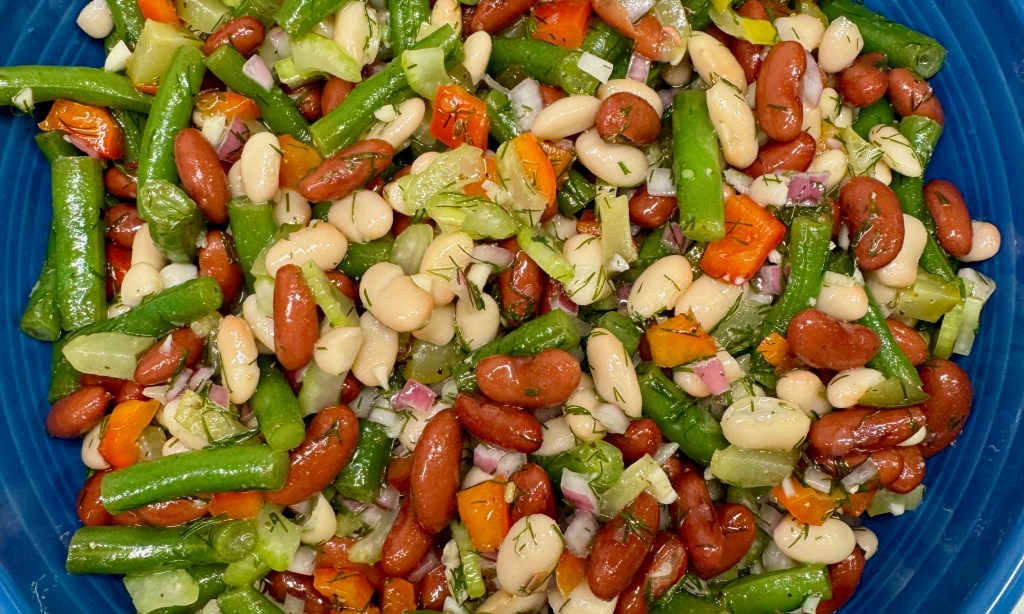
This variation on three-bean salad has even more texture than my usual, with crunchy bits of celery, bell pepper and red onion, the zesty bite of minced garlic, creamy kidney and cannellini beans, and a big punch of dilly-dilly flavor, courtesy of chopped spicy pickles and fresh summer dill. The fresh green beans have a nice “snap,” and the canned beans provide terrific fiber for a healthy gut, along with enough protein to carry me through this god-awful heat spell. Let’s get into it!


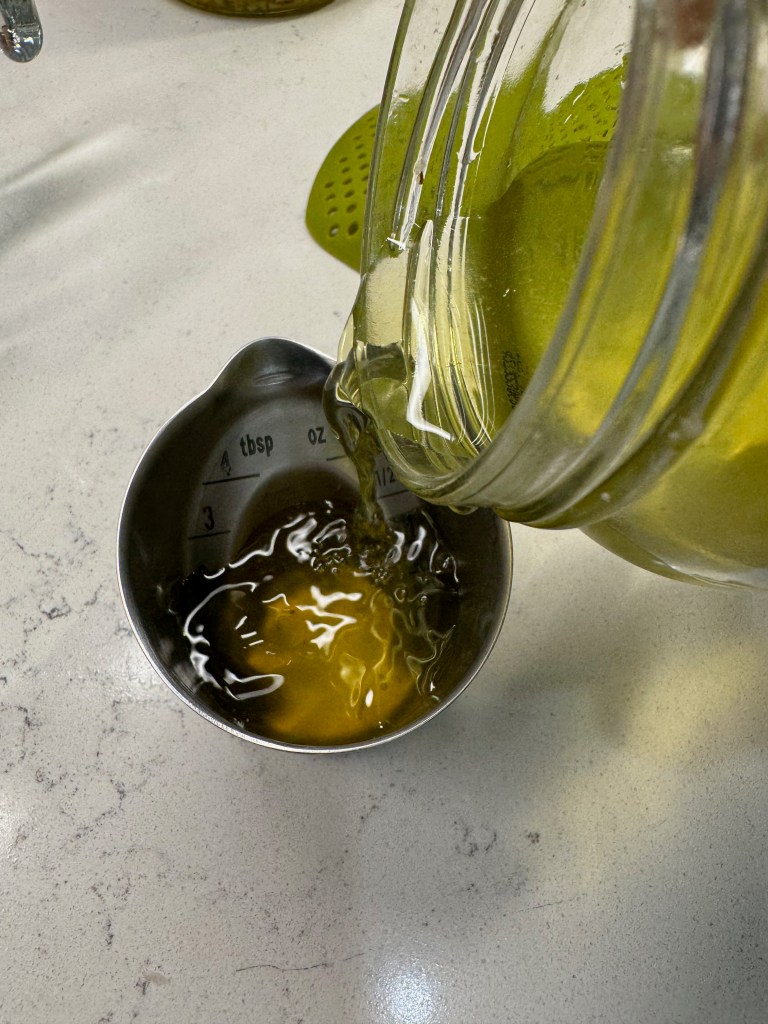
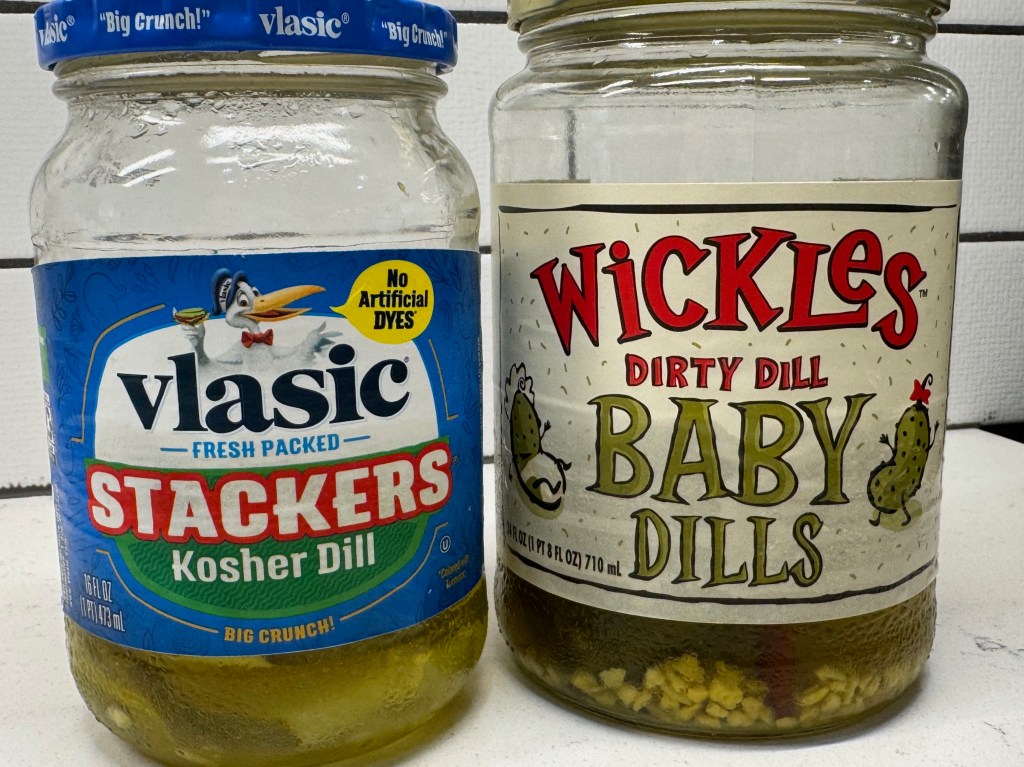
Par for the course, my inspiration for this recipe came from a desire to get rid of random jars in my refrigerator. We have had a bevy of leftover pickles taking up space after my husband’s son, Alex, visited a few months ago from Hungary. Alex loves dill pickles (especially spicy ones), and I always pick up a few options for easy snacking when he’s with us. Alex is very polite and doesn’t like to consume the whole contents of the jars, so he leaves them for us, which means that they get shoved to the back of the fridge until I get tired of moving them around. For this salad, I chopped up the remains of two kinds of pickles and I also used the kosher dill liquid in the dressing. 

This dressing would be terrific on a greens-based salad, too.

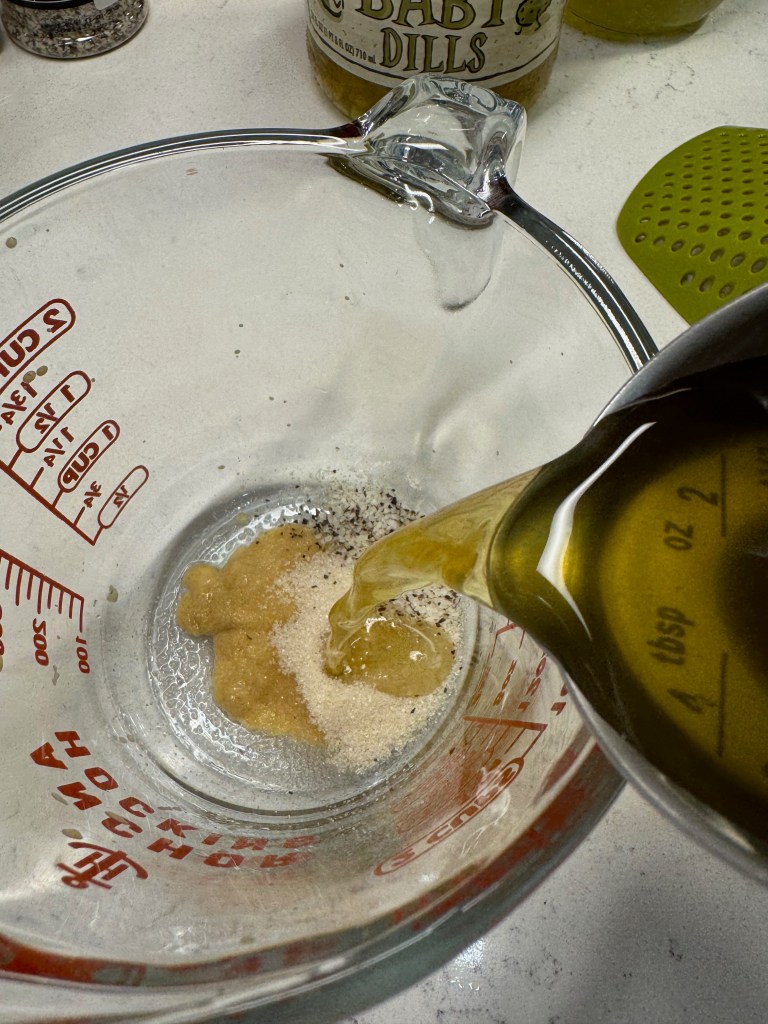
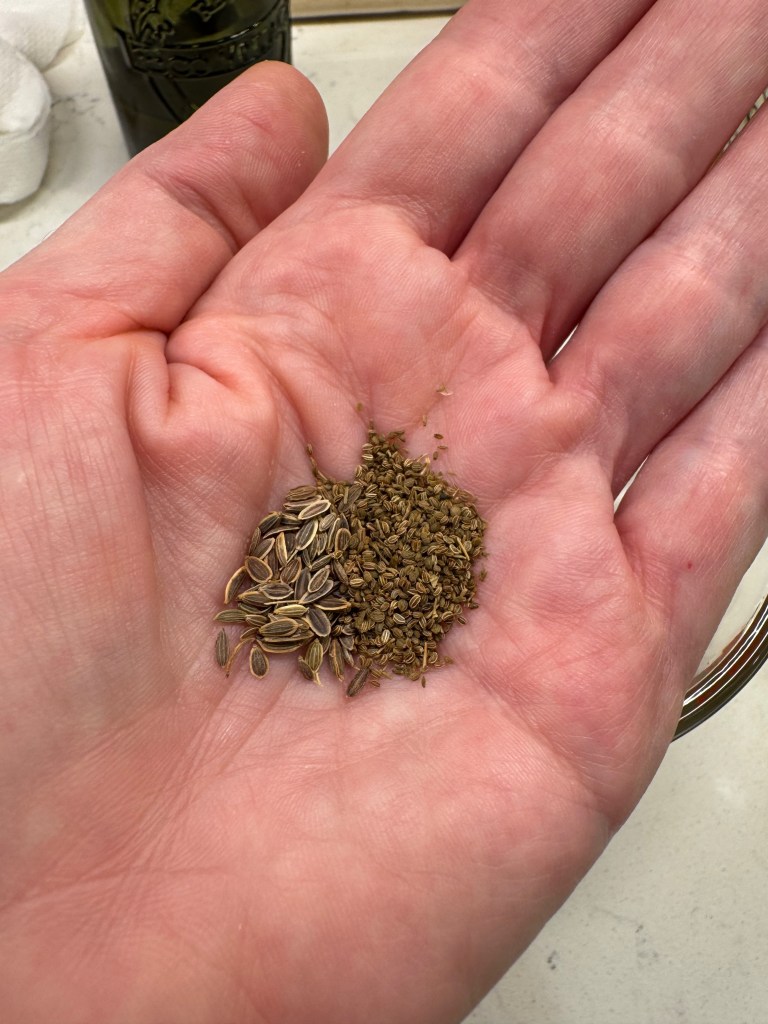
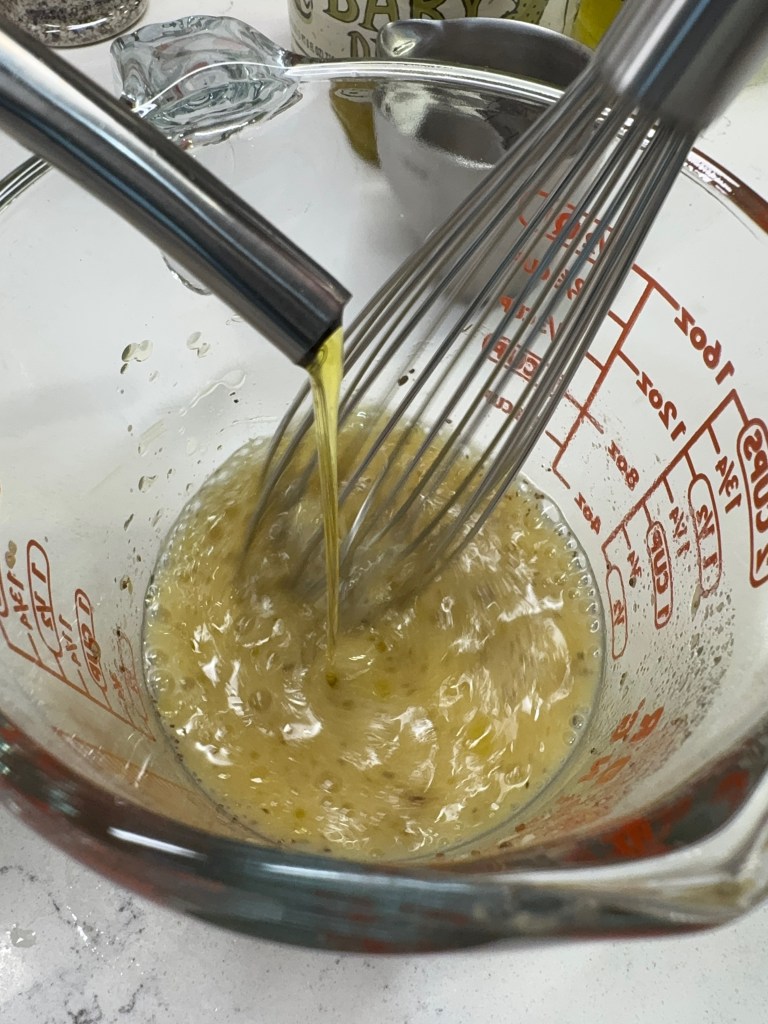
The balance of the dressing recipe is Dijon mustard, a spoonful of sugar, dill and celery seeds, and a healthy drizzle of extra virgin olive oil. Salt and pepper to taste, plus a splash of water, and that’s done. 


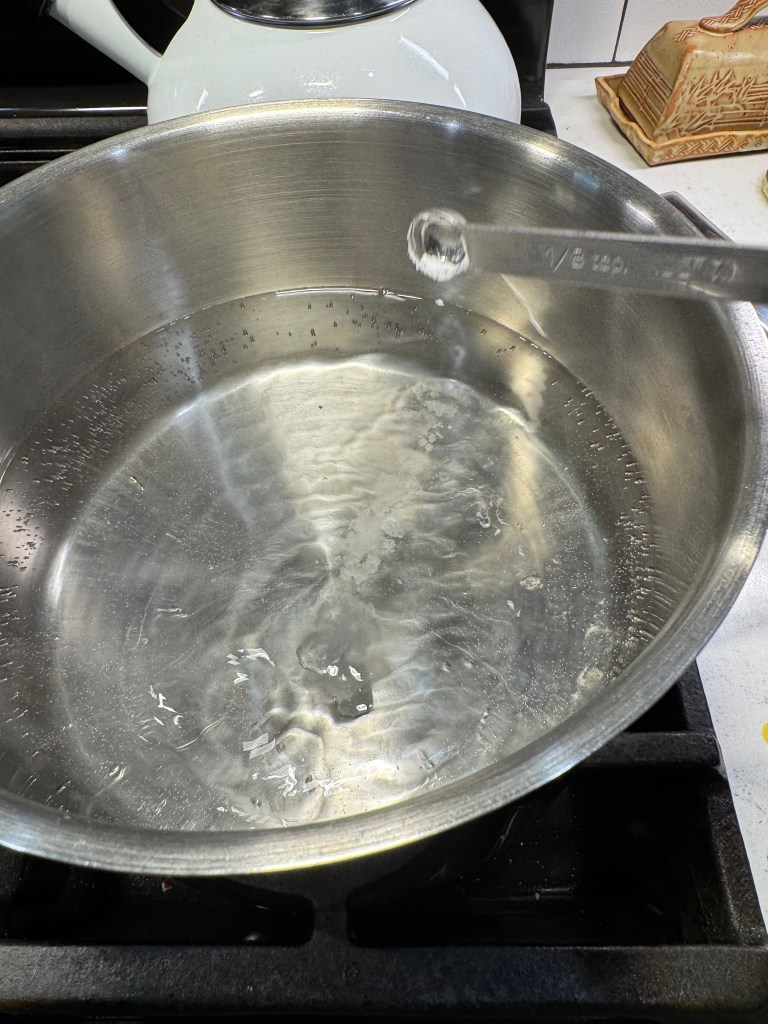
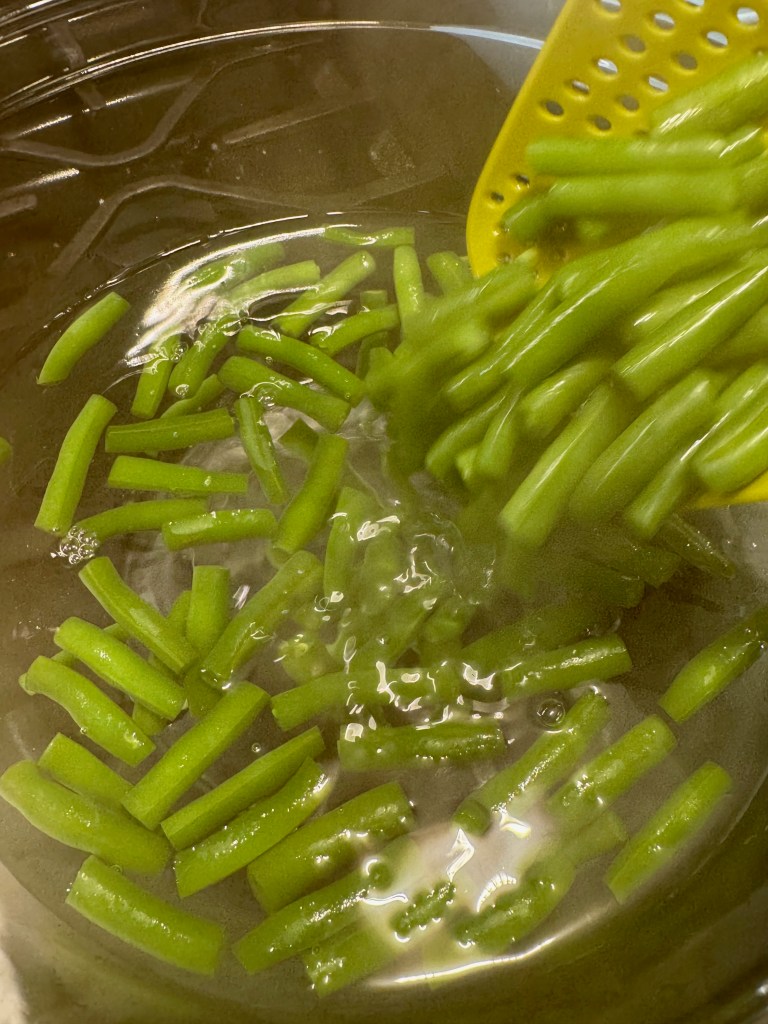
The green beans were the only ingredient in this salad that required cooking— thankfully, we only needed to have the stove on for about 10 minutes— so I got that going with a pinch of baking soda in a pot of barely-boiling water. The alkaline nature of the soda helps preserve the color of the green beans, and a shock of ice water at the end of cooking also helps with color retention.


This process, called “blanching,” takes me back to my grandmother’s kitchen, where I learned so many basic lessons of cooking— including blanching vegetables for freezing and canning— when I was barely tall enough to reach the stove. Gram would have loved this three-bean salad, especially the use of the leftover pickle liquid. Like so many people who lived through the Great Depression, she used every scrap, drop, peeling, stem and leaf that could be used. These are still important lessons today, and I aim to make her proud every time I step into my own kitchen.


Assembling the salad is easy. Give the dressing another good whisking before you pour it over the main ingredients, and fold it gently to avoid breaking up the canned beans. Add more fresh dill than you think is necessary, as the fine fronds will disperse a great deal when you fold it in. This freshness adds something special to the salad, but if you cannot find it in your supermarket or farm stand, a teaspoon of dried dill leaves will work in a pinch; add them to the dressing ingredients instead.

So there you have it— a three-bean salad, inspired by Alex’s leftover pickles, bringing loads of flavor to the table with ingredients that will satisfy, even when it feels too damn hot to eat. Make this early in the day and let the salad chill in the fridge several hours before enjoying. It keeps well for about a week, and you’ll want to remove it from the fridge for about 20 minutes when you’re ready to serve so that the olive oil softens from its chilled state.

Dilly-dilly Three Bean Salad

  • Servings: 8
  • Difficulty: Average
  • Print

Spicy dill pickles and fresh dill lend a tangy twist to classic three bean salad. Use the pickle juice in the dressing, and make it early in the day so that the flavors have time to mingle in the fridge.


Ingredients

  • 3/4 pound fresh green beans, trimmed and cut into uniform small pieces
  • 1 tsp. kosher salt
  • 1/4 tsp. baking soda (optional, for color retention)
  • 1 can light red kidney beans, drained and rinsed
  • 1 can cannellini beans, drained and rinsed
  • 1/2 cup chopped red bell pepper
  • 1/2 cup chopped celery
  • 1/2 cup diced red onion
  • 1/2 cup chopped dill pickles
  • 2 cloves garlic, finely minced
  • 3 Tbsp. dill pickle juice
  • 1 Tbsp. apple cider vinegar
  • 1 Tbsp. cold water
  • About 2 tsp. Dijon mustard
  • 1 tsp. cane sugar
  • 1/2 tsp. celery seed (or combo with dill seed, if you have it)
  • Salt and pepper to taste
  • 1/4 cup extra virgin olive oil
  • 1/4 cup fresh dill, chopped

Note: I used a combination of pickles in my salad. Be as creative as you dare, subbing in spicy pickles or even other pickled vegetables as the mood strikes! Take note of the sodium in your pickled ingredients so that you can adjust salt to taste without overdoing it.

Directions

  1. Prepare an ice bath in a large bowl. Bring a pot of water to low boil over medium-high heat. Stir in salt and baking soda, then add green beans. Simmer for 6 to 7 minutes, until beans are slightly tender but still bright green. Transfer beans to the ice bath and rest at least 5 minutes, then drain in a colander.
  2. Make the dressing while the beans are blanching. Combine pickle juice, vinegar, cold water, Dijon, sugar and celery seed in a measuring glass. Whisk vigorously while drizzling olive oil into the glass, creating an emulsion. Season to taste with salt and pepper.
  3. Blot the green beans with a towel to remove excess moisture. Combine in a large bowl with the drained canned beans, vegetables and chopped pickles.
  4. Pour dressing over the salad ingredients, and fold gently with a spatula or wooden spoon to avoid breaking the tender canned beans. Add salt and pepper as needed. Fold in dill and refrigerate until ready to serve. This keeps well for up to a week.


Mexican Street Corn Potato Salad

Summer officially hit last night at 10:42pm ET, and you know what that means. Millions of backyard barbecues, picnics, family reunions and summer parties are straight ahead! Some of my fondest memories are closely tied to the foods served at such occasions, and I’m a firm believer in the notion that one can never have too many recipes for summer side salads.

For the past couple of summers, I’ve steered away from mayonnaise-based salads, mainly because they don’t hold up well in the summer heat, at least for outdoor parties. So my husband’s special request last weekend should not have been any surprise when I mentioned whipping up a potato salad to serve with our grilled coffee-rubbed tri-tip.

“Can you make more of a mayonnaise-y dressing this time? Not one of those vinegar things you’ve been doing.”

Well, okey-dokey! We have a running joke at our house about how long it takes for foods to come back around in “rotation,” so I’m happy to oblige a sincere requst.

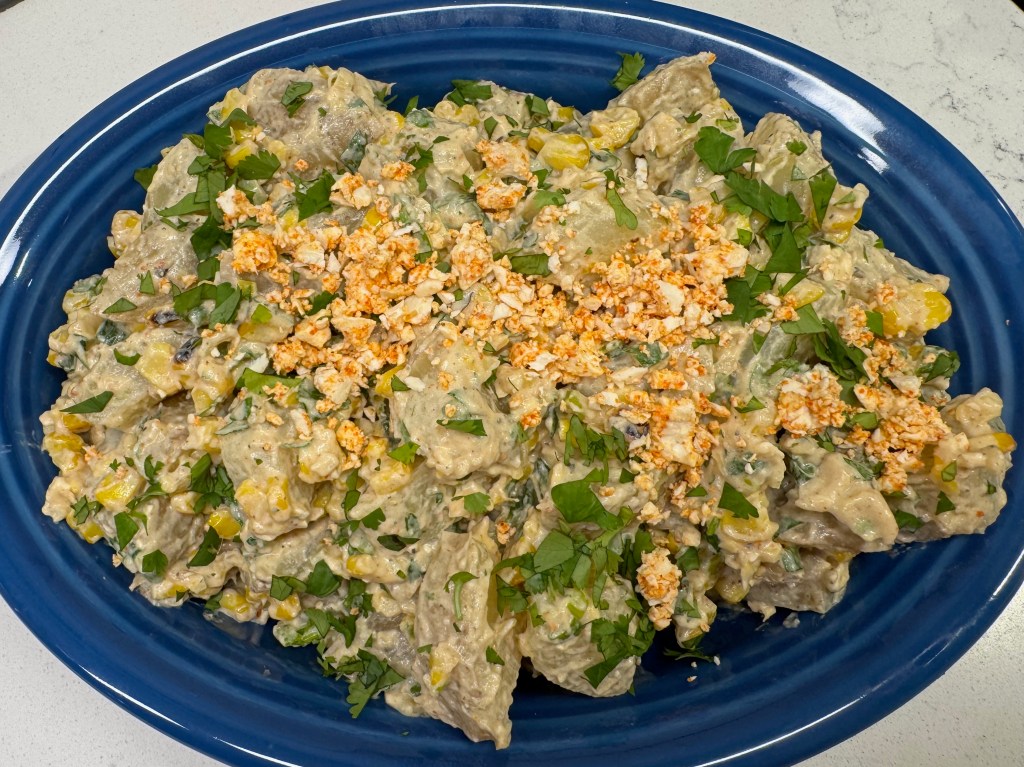
I think I satisfied his craving with this creamy, mayo-dressed potato salad that conveys all the flavors of Mexican street corn, also known as eloté. The textures were great, and the dressing and seasonings were unmistakably eloté— creamy, sweet bite on the corn, tangy from the mayo and lime, a sharp saltiness from the crumbled cheese, and just spicy enough to be interesting. It was fantastic with the tri-tip he grilled for us, and we enjoyed this salad again with lunches during the week as well as with spicy grilled chicken tenders a couple nights ago. I’m sad that it’s gone!

This recipe makes enough for eight servings (unless you do excessive taste-testing like I did).

Ingredients for my Mexican street corn potato salad

Any finished dish is only as good as what goes into it, and given that this is a bit of a twist, I’ll break down the role that each ingredient played in this salad. Note that some ingredients may be tricky to find, so I’ve offered reasonable substitutions for those. Here we go!

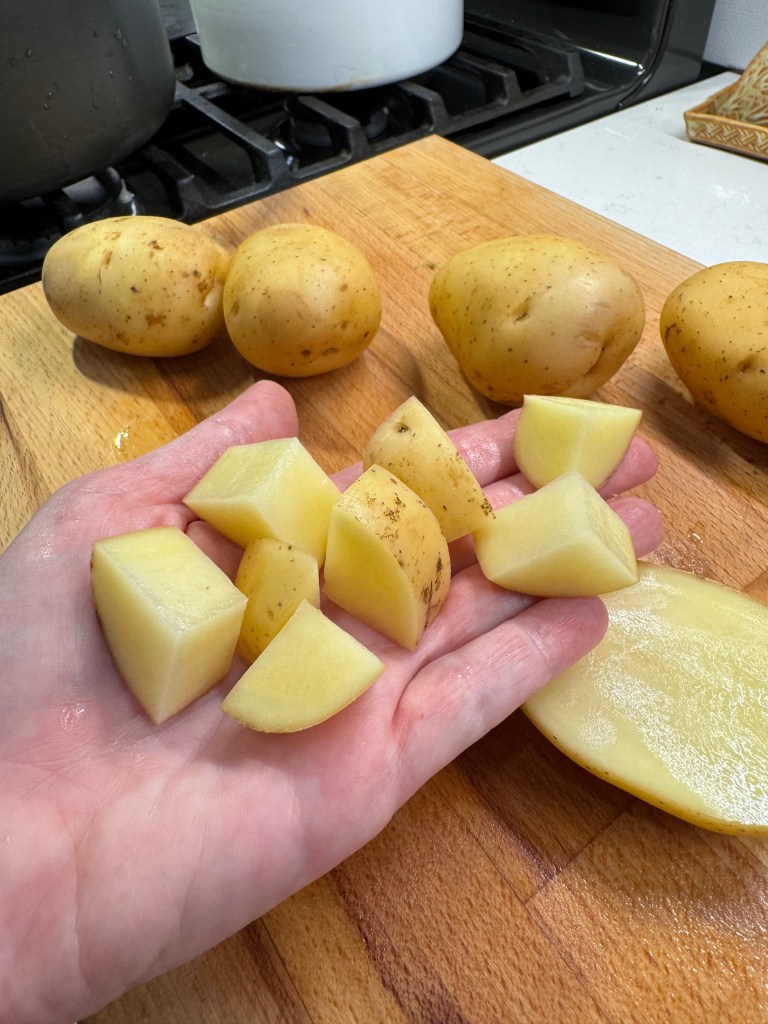
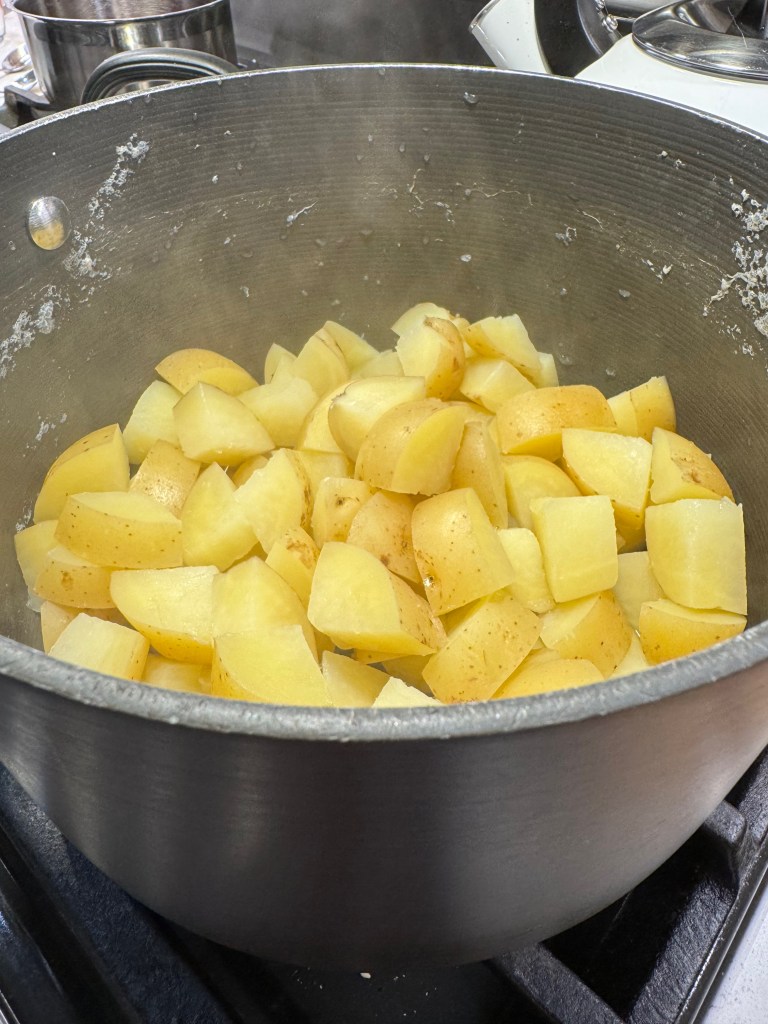
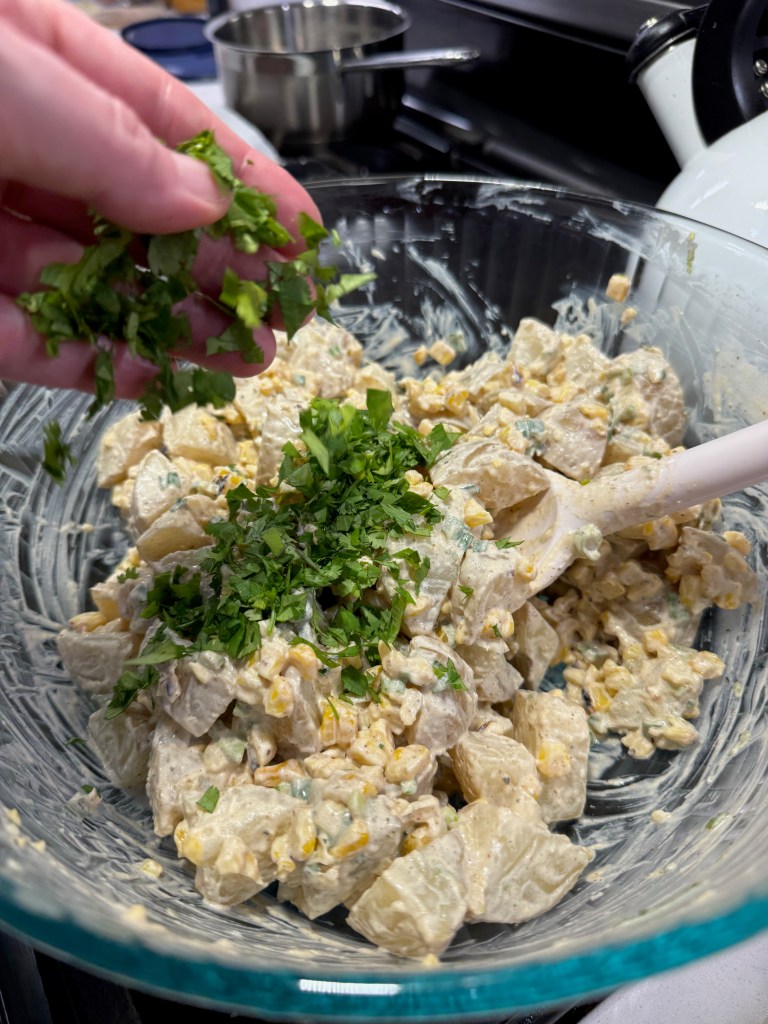
Yukon gold potatoes – these are a perfect balance of creamy and starchy, and because the skin is so tender, I don’t bother peeling them. Choose potatoes on the smallish side if possible, so that every chunk has a bit of skin on it. You’ll cook them gently in salted water until fork tender, then drain and let the steam roll off before chilling.


Mayonnaise and sour cream – My dressing is made with equal parts of these two, and if you can get your hands on Mexican crema, use that in place of sour cream. 

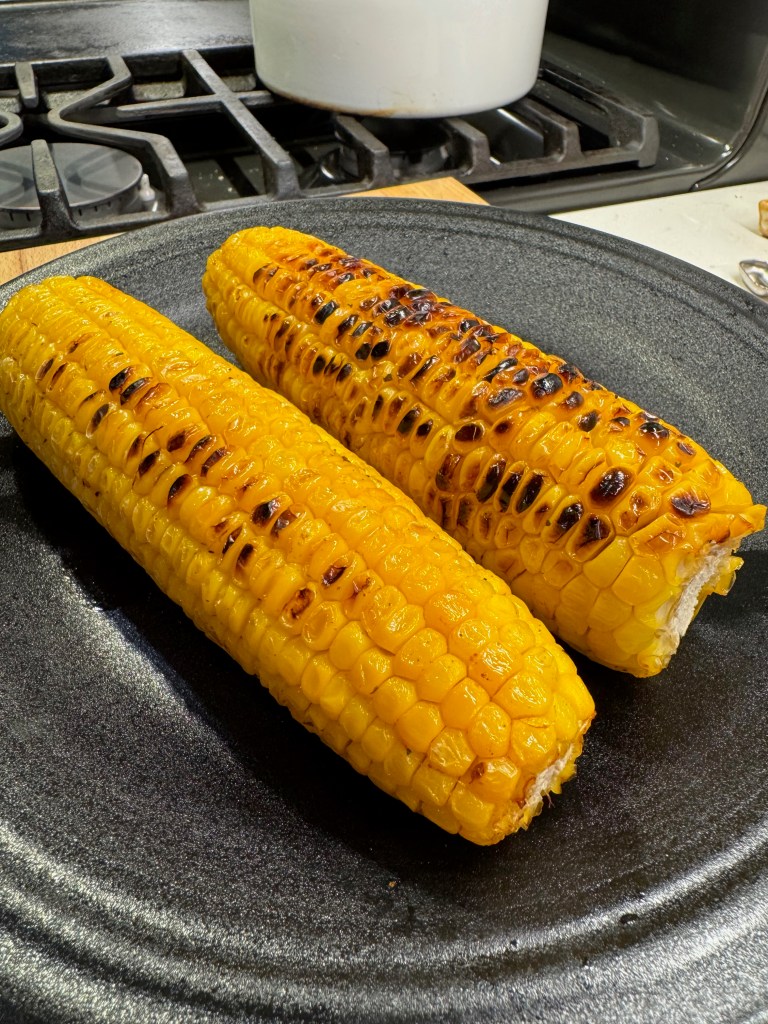
Roasted corn – we love grilling corn in the summer time, and we sometimes make extra ears so that we have them for dressing up another dish. If you don’t have a grill (or the time to mess with grilling corn), pick up a bag of frozen fire-roasted corn, which will work just as well. We like the one that’s available from Trader Joe’s.


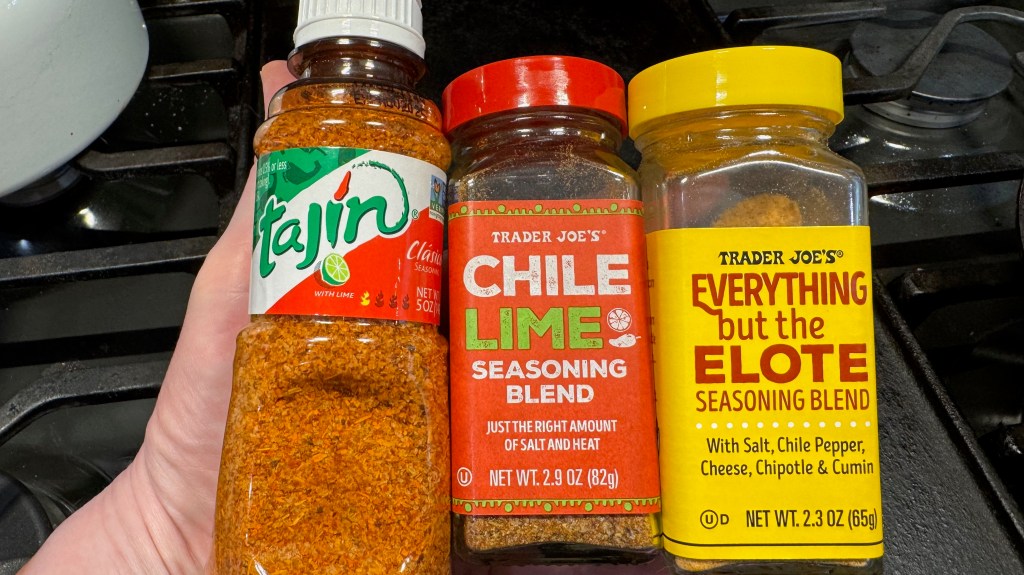
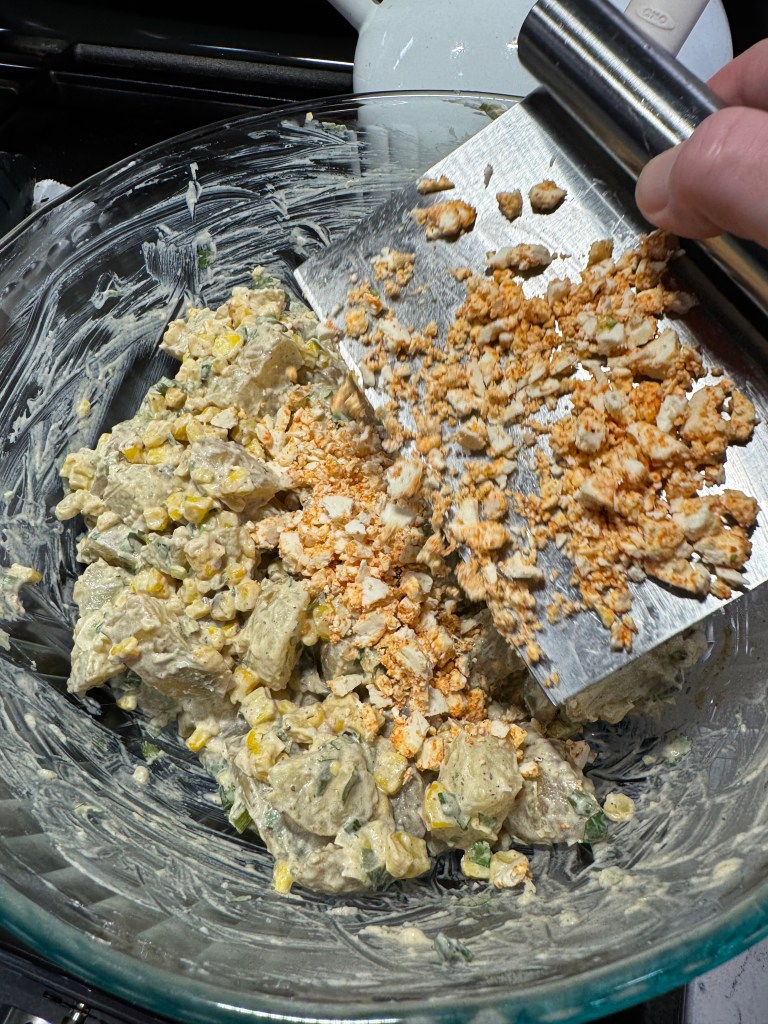
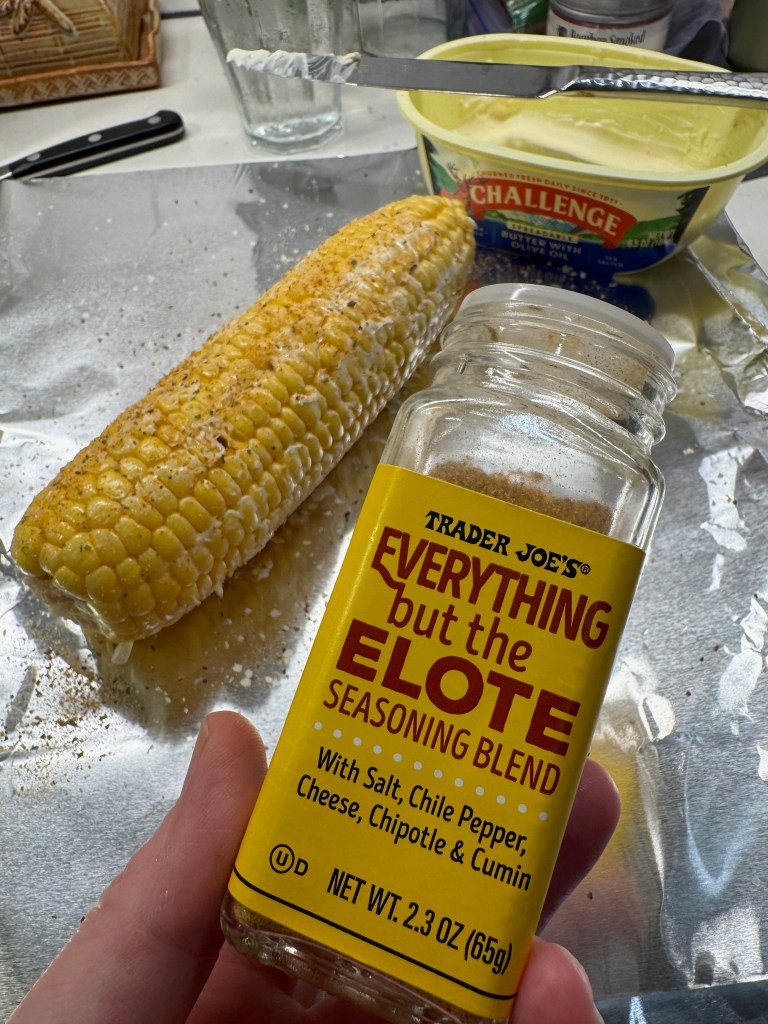
Eloté spices – traditionally, Mexican street corn is seasoned with any number of ground chile powders, including chipotle, cumin, cayenne, ancho or pasilla. I used ground ancho and cumin in my dressing, but if you don’t have the individual chile powders, don’t sweat it! Just pick up a bottle of Tajin seasoning, either in the spice aisle or the International aisle. Trader Joe’s chili-lime seasoning is very similar, and I also love their “Everything But the Eloté,” to season my corn before grilling. It also happens to be excellent on popcorn!

Three terrific options for flavoring this salad, from hottest to mild.
Check out the saltiness ahead of time so you know what to expect.

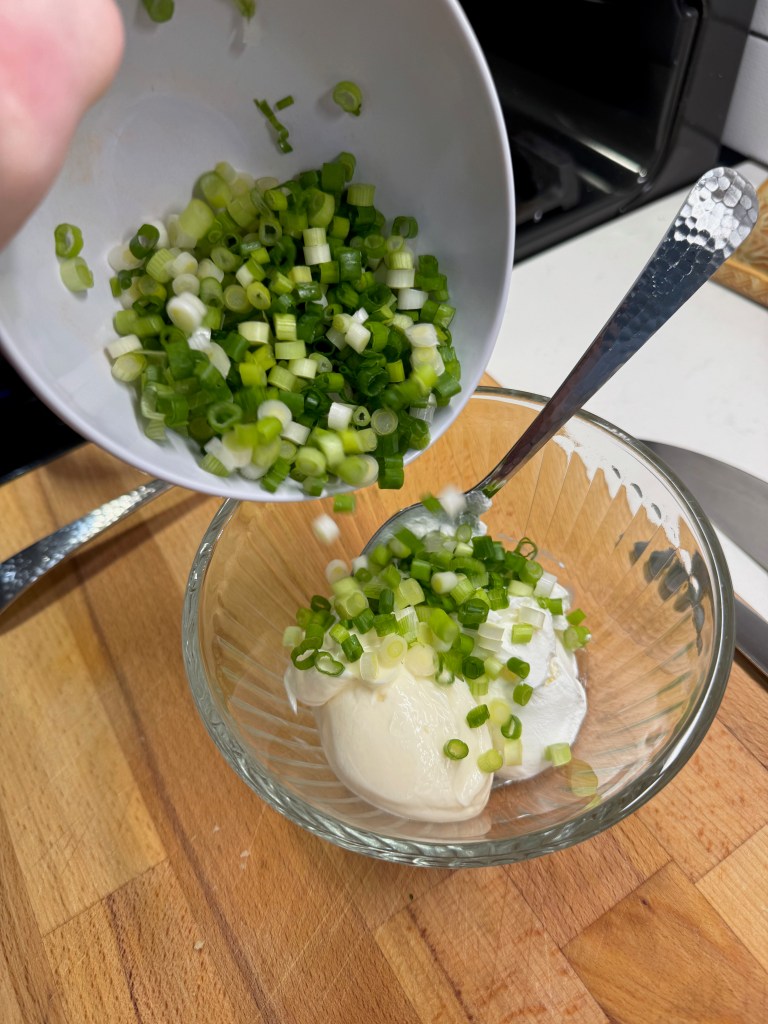
Scallions – this is not traditional for Mexican street corn, but I can’t make potato salad without some variety of onions, and this one works well with the other ingredients. Use the white and green parts, and slice them thin.

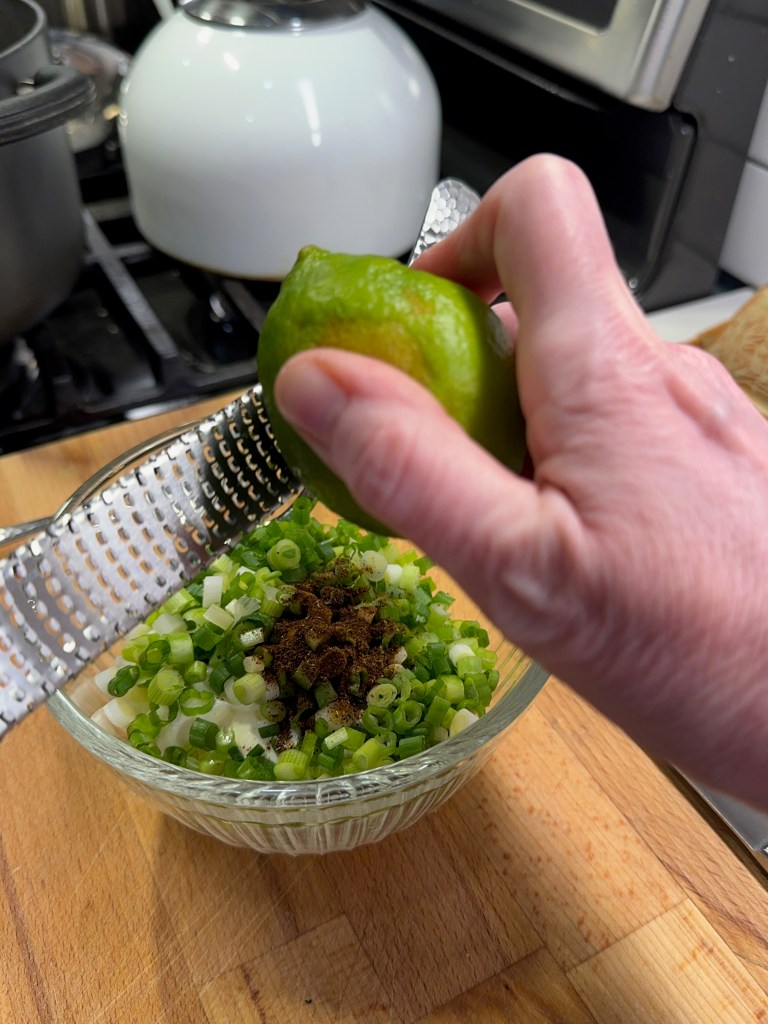
Lime – the lime zest and juice are what really make the flavors of this salad pop. Purchase organic citrus because you’ll be using the peel, and choose heavy fruit with a smooth skin for the most juice and brightest flavor.

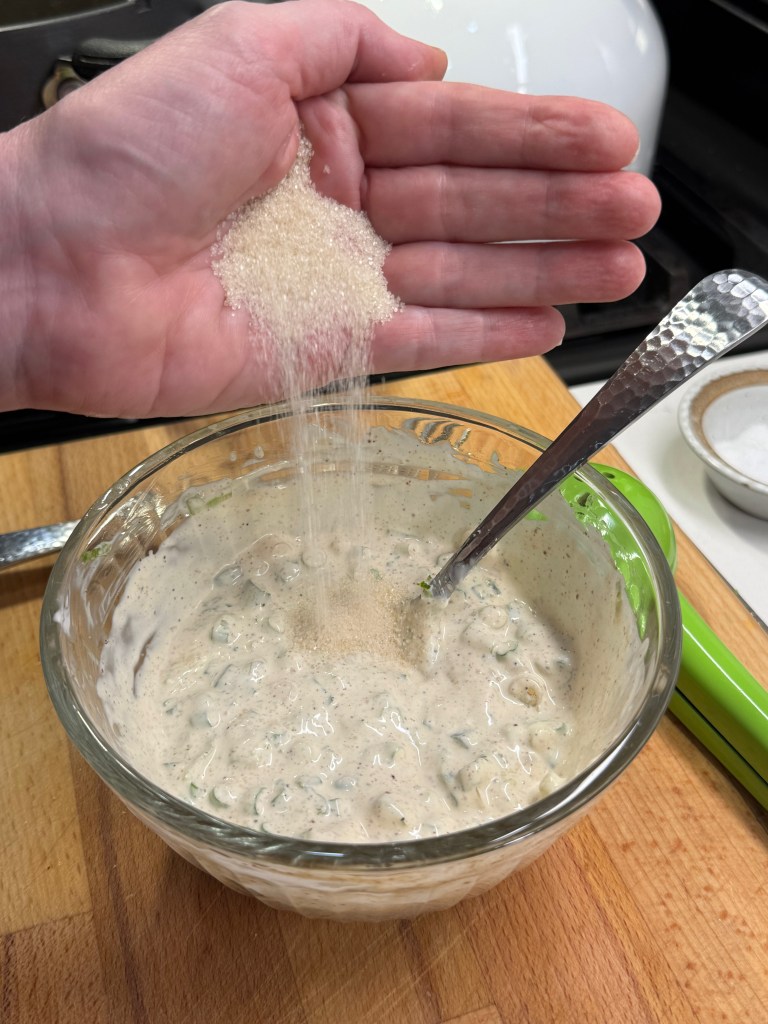
Sugar – every Mexican street corn I’ve ever tasted had a slightly sweet flavor, and a small spoonful of sugar in the dressing made this perfect. Don’t skip it. 

Fresh cilantro – authentic for Mexican street corn, but if you are among the 20% who find that it tastes like dish soap, then just skip it. There isn’t another herb similar enough, and the dish won’t suffer without it.

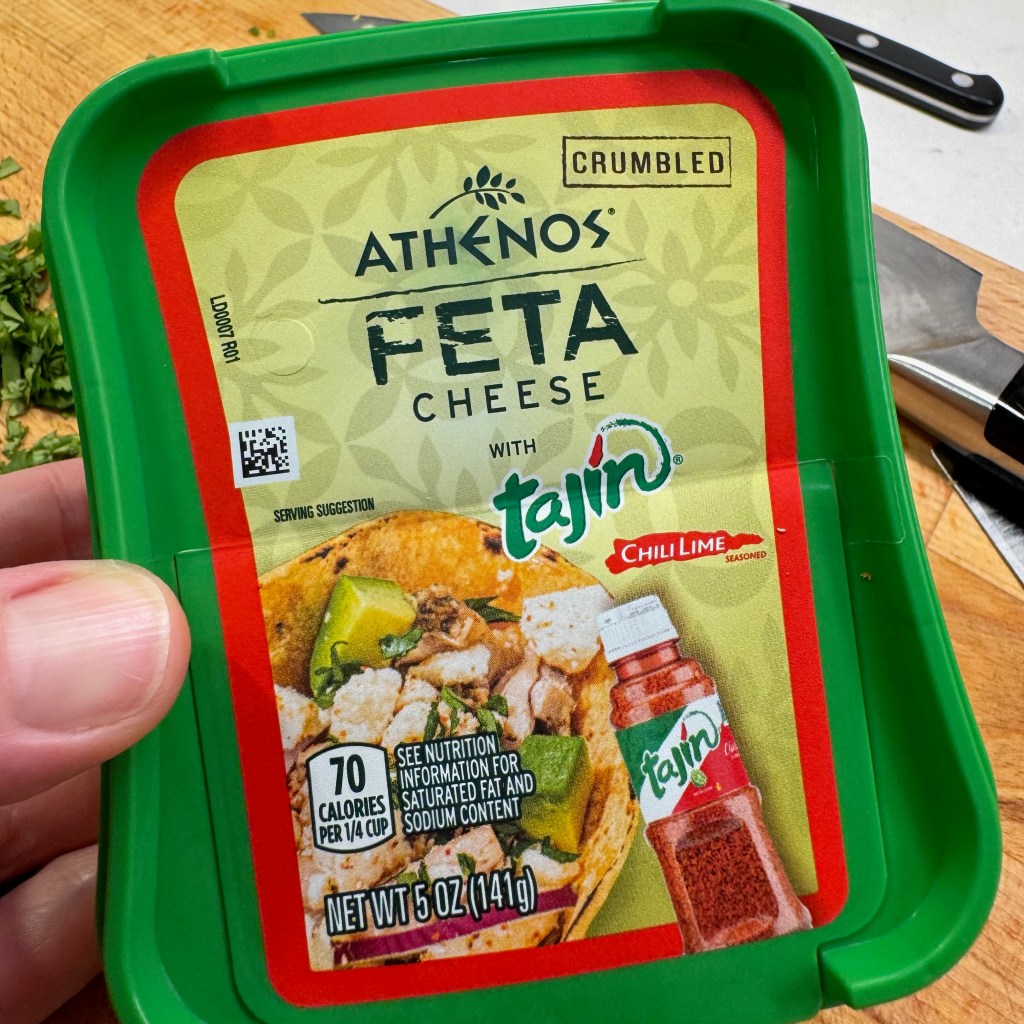
Crumbled cheese – ah, I saved the best for last! Mexican street corn is traditionally slathered with mayonnaise dressing and sprinkled liberally with cotija, a Mexican hard cheese that is reminiscent of parmesan, but less pungent. Cotija can be a little tricky to find outside of a specialty cheese section, but not to worry— feta, the dry crumbly kind, is a lovely substitute. And that leads me to a funny story…

A side note, on “sending the husband to the grocery store”

I love my husband dearly, and his sensibilities in the kitchen are usually right on target, but sometimes, I still make specific and detailed notes on the list when I send him to the store by himself, and I might even text him a picture of an exact item I need. For this recipe, I was very clear that if cotija cheese was not available, he should get “dry crumbled feta,” and in the margin, I wrote, “PLAIN, NO FLAVORS!” So you can imagine the stink-eye he received when he returned with a “flavored feta that sounded interesting.” My dramatic Leo side went bonkers as I yelled, “Geezus, can you not read???” But then I saw what he found, and of course, it was literally perfect for this recipe! Gotta trust my man sometimes, ya know?

You NAILED it, Babe! 😘

Making this Mexican street corn potato salad

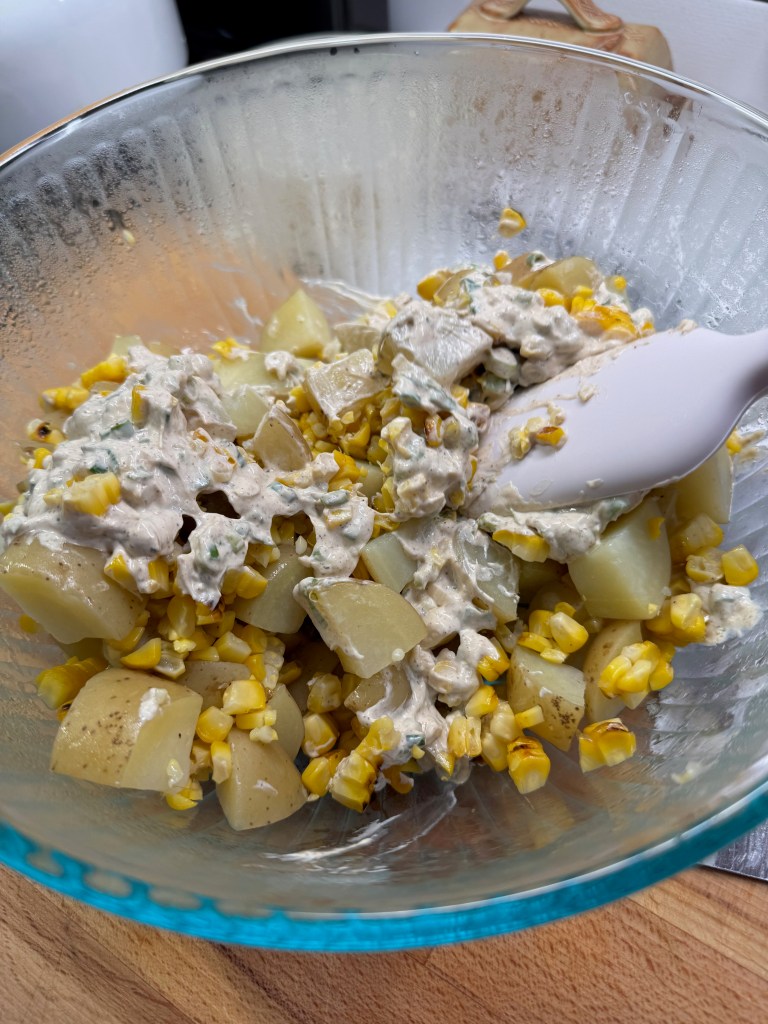
From this point, it’s a pretty standard potato salad in terms of mixing, so I’ll let my photos do the talking while you imagine this deliciousness coming to life in your own kitchen. Find full instructions below in an easy, click-to-print recipe card that you can save for your files. Welcome back, summer! 😎


Mexican Street Corn Potato Salad

  • Servings: About 8
  • Difficulty: Average
  • Print

This is two of my all-time favorite carbs, together in one really flavorful salad! Plenty of seasoning options, so you can make it as spicy (or not) as you like it!


Ingredients

  • 2 lbs. Yukon gold potatoes, skin-on and cut into 1-inch chunks
  • 1/4 cup mayonnaise
  • 1/4 cup Mexican crema (or sour cream)
  • 3/4 cup finely sliced scallions
  • 3/4 tsp. ancho chile powder
  • 1/4 tsp. ground cumin
  • Salt and pepper
  • Zest and juice of one lime
  • 1 tsp. cane sugar
  • 2 ears fresh yellow sweet corn, roasted or grilled until charred but tender
  • 1/3 cup cotija cheese, divided (you’ll mix some into the salad and sprinkle the rest on top)
  • fresh cilantro

Substitution notes: If you don’t have the means to roast or grill the fresh corn, don’t hesitate to pick up a bag of frozen fire-roasted corn. We love the one from Trader Joe’s, and it would work terrific here. If you cannot find cotija cheese, dry crumbled feta is a reasonable substitute; consider chopping it finer if the crumbles are larger than peas. Ancho chile powder is a spice unto itself, without salt or other ingredients. If you can’t find it, or if you want flavor without heat, swap in smoked paprika.

Directions

  1. Place the potatoes in a pot with cold water, and heat over medium-low until they are fork tender. Drain gently and return to the hot pot with the lid off, so that excess moisture can escape through the steam. Sprinkle 1/2 tsp. salt over the hot potatoes and cool them to room temperature, then transfer to a large mixing bowl and refrigerate for an hour or longer.
  2. In a medium bowl, combine mayo, crema, scallions, spices, lime and sugar. Adjust to taste with salt and pepper. Put the dressing in the fridge to chill until you’re ready to assemble the salad.
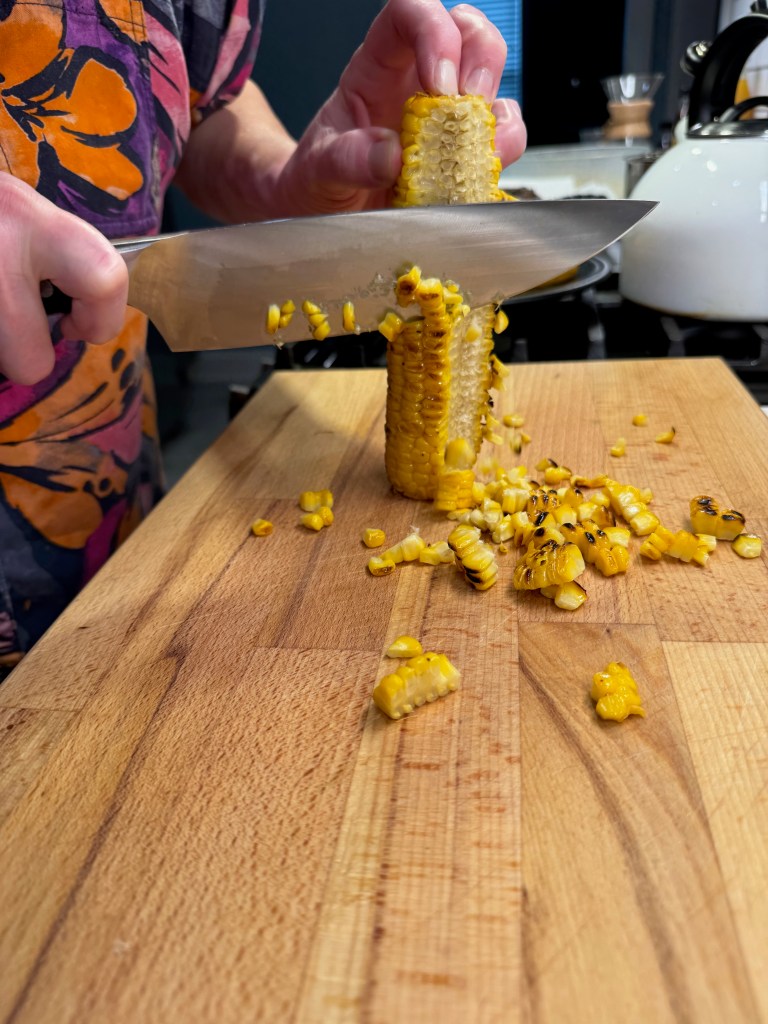
  3. Stand the corn on end and use a sharp knife to cut the roasted kernels off. Add them to the potatoes and fold in gently with the dressing until the salad is consistently coated. Fold in about half of the cotija cheese and a bit of the chopped cilantro, reserving the rest for garnish.
  4. Transfer the potato salad to a serving dish, and sprinkle the top with remaining cheese and cilantro.


Zucchini Citrus Pasta

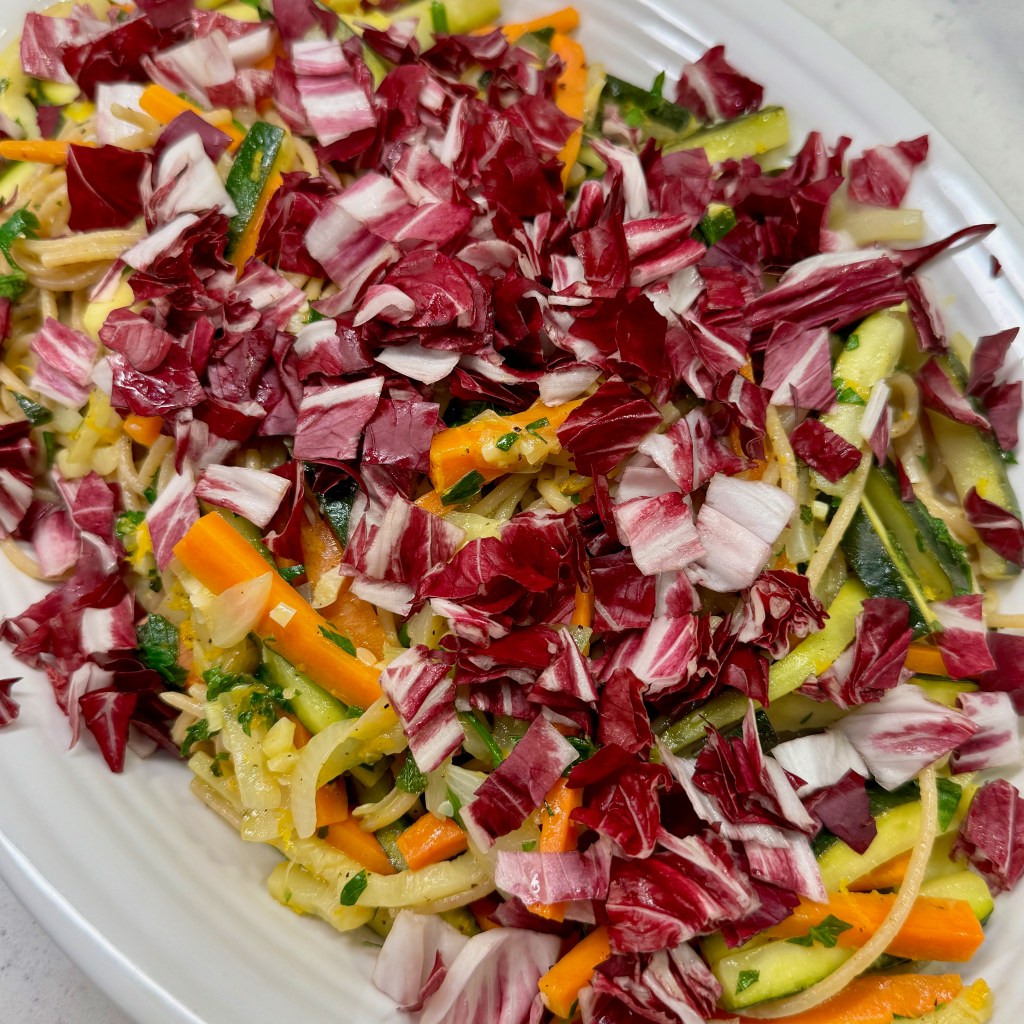
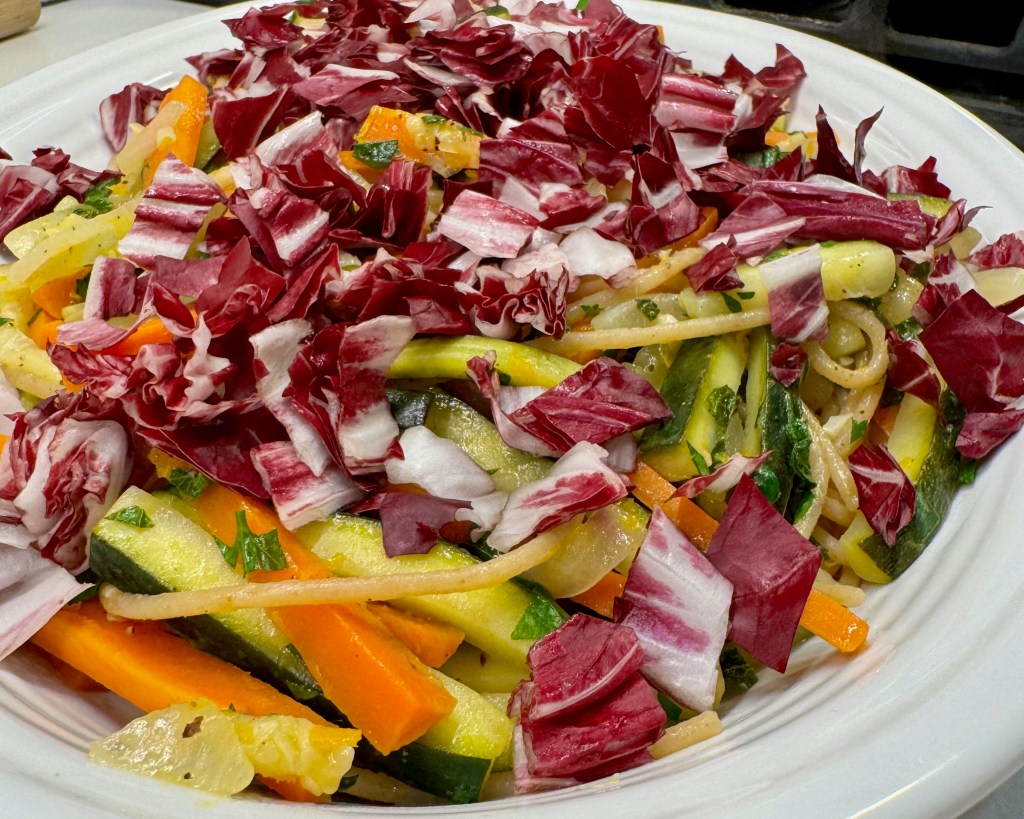
The best thing about summer, besides the sunshine, is all the light and easy food coming our way. From backyard cookouts to easy breezy friend gatherings, there’s always room for one more light and tasty side dish. This colorful platter has refreshing citrusy flavors on top of tender, sautéed zucchini and carrots, chewy-to-the-tooth pasta and a sprinkle of vibrant herbs and crunchy, slightly bitter radicchio. In other words, perfect for summer!

For a lighter appetite, this could be dinner on its own.

I know, of course, that we are still almost two weeks from the summer solstice when the season becomes “official,” whatever that means. But I also know that we’ve had a good number of days tipping toward 90° F, so it feels like summer is already here! Zucchini is one of my favorite summer foods, and though it may be a while before our local farmers start picking zucchini, we’ve seen plenty of it in the supermarket grown in Florida and Georgia, just a couple states away.

My introduction to this zucchini-forward recipe came about 18 years ago, when I was a faithful fan of Rachael Ray’s “30-Minute Meals” on Food Network. You do remember when the channel actually had shows that demonstrated regular people recipes, rather than just over-the-top competition shows, right? Those were the days! 😏

Rachael ruled Food Network in the 2000s (along with Emeril), and I found her casual, not-so-cheflike approach absolutely charming. Her skill was honed not in a culinary institute, but in her Nonna’s kitchen (I can relate) and in an upstate New York grocery store where she did cooking demos. Her food always looked delicious, it was made with common ingredients, and her instruction made even the most gorgeous meals seem approachable. For sure, she’s one of my culinary mentors, and I still love this recipe. Let’s make it!

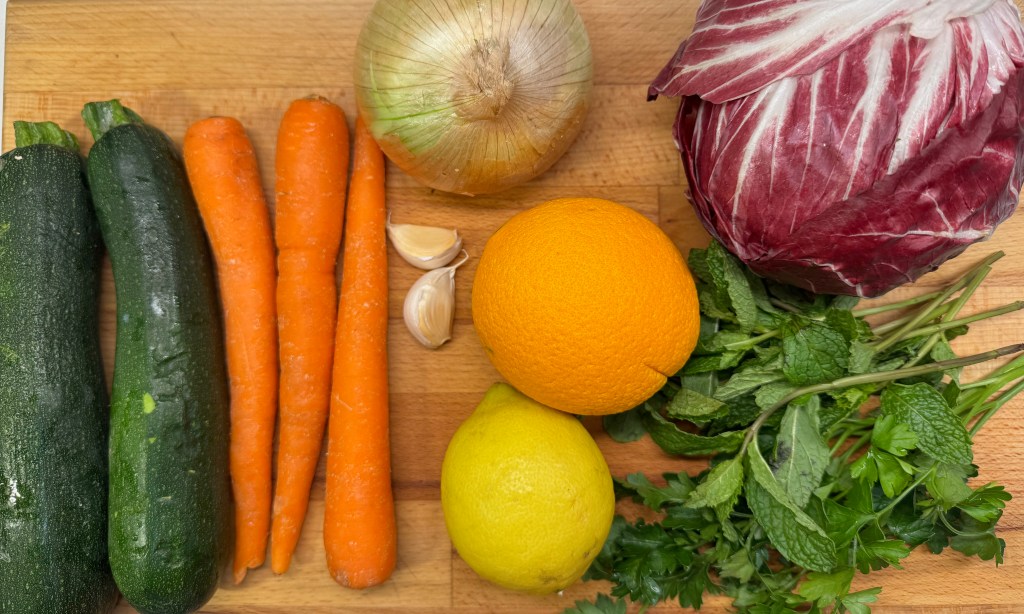
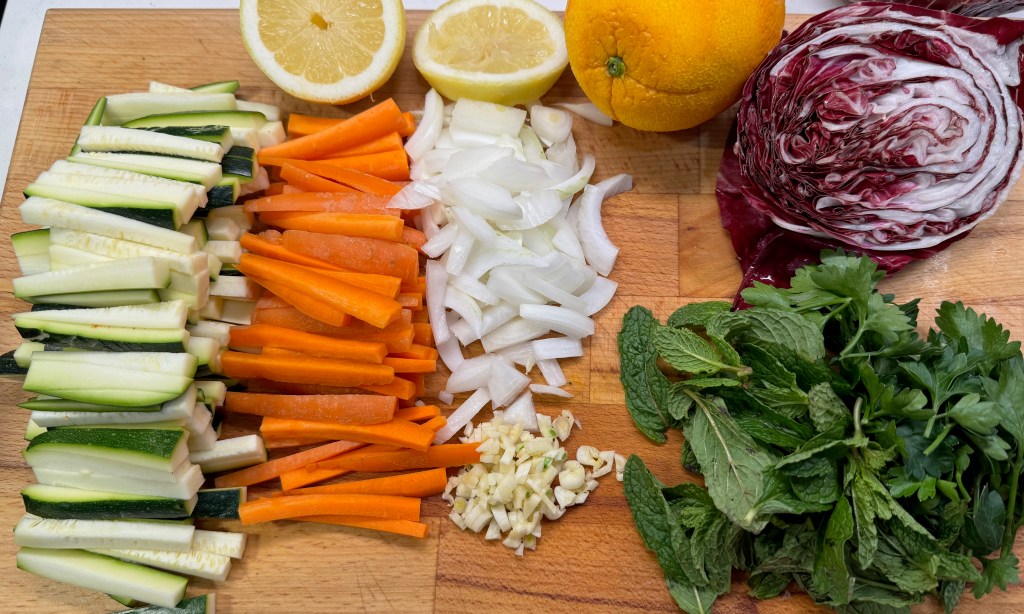
Mise en place

I won’t say that Rachael taught me about mise en place— a French culinary term that means loosely, “get your ducks in a row.” No, I learned that in the 1990s when I worked in a catering kitchen. But Rachael frequently emphasized the importance of organizing ingredients and tools before starting a dish and it’s good advice here, as the recipe goes pretty quickly once it starts.


Multi-tasking for the win

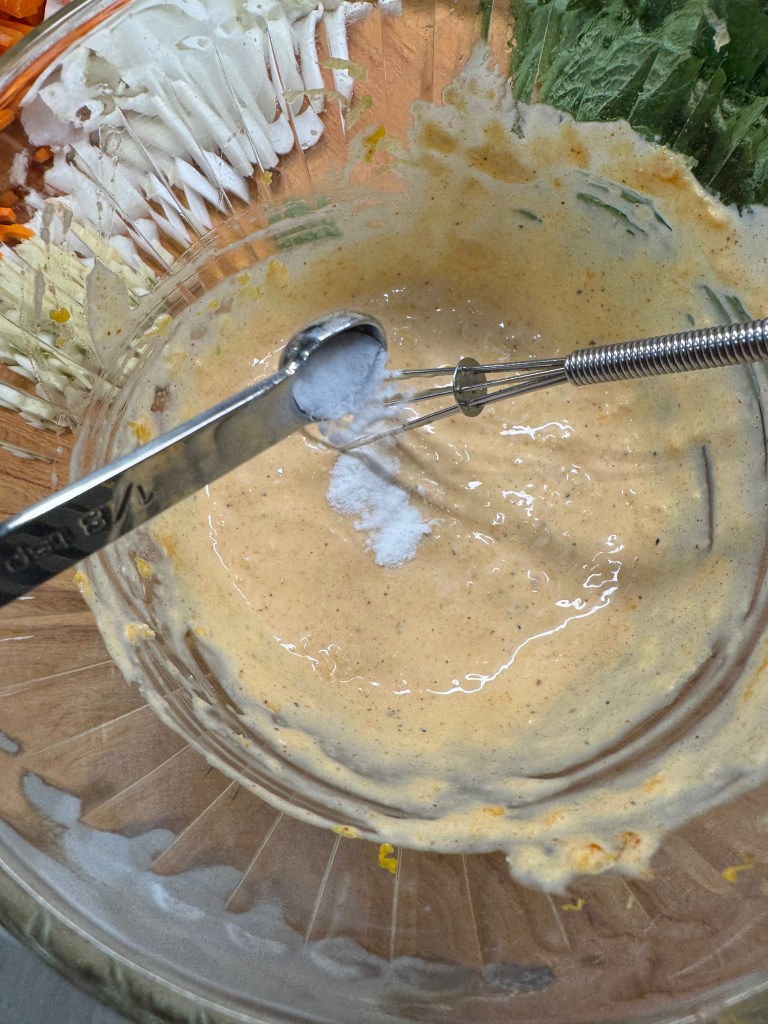
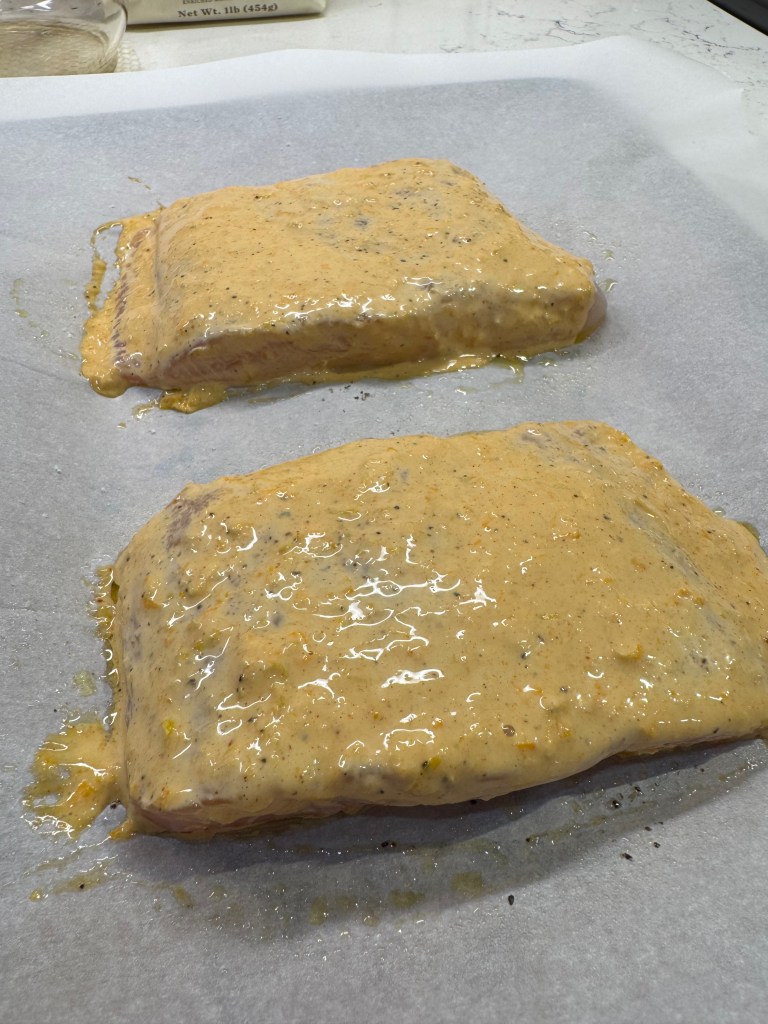
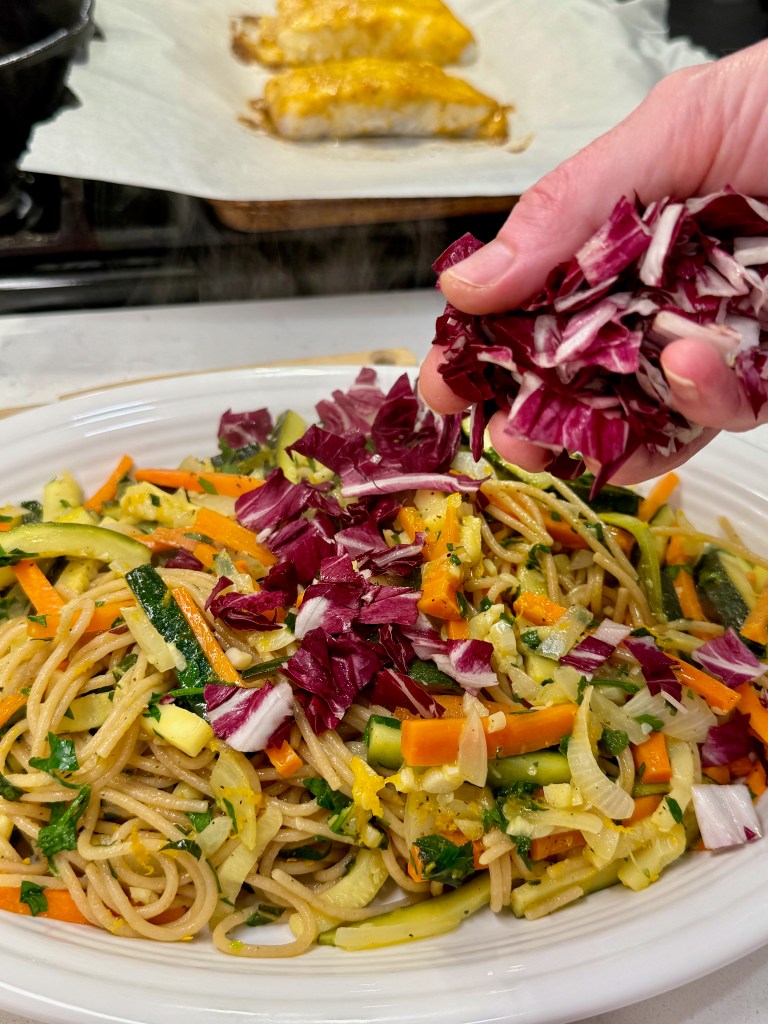
When I made this pretty dish for my husband, Les, I served it with baked halibut, which I seasoned up with the miraculous mayo marinade that I learned a couple of years ago. I mixed up the mayo with some lemon and orange zest, grated garlic and smoked paprika, and then added the pinch of baking soda that gives the marinade a turbo charge. This trick guarantees moist fish every time, so check it out when you have a chance!

This was a true “30-minute meal,” as I prepped all the veggies while I waited for the fish to marinate, and then cooked the dish while the fish was in the oven. Everything was ready at exactly the right time.


On one burner, get a pot boiling for spaghetti, which will be tossed into the dish at the end. Salt that water generously and keep half an eye on it while you work on the veggie part of the dish.

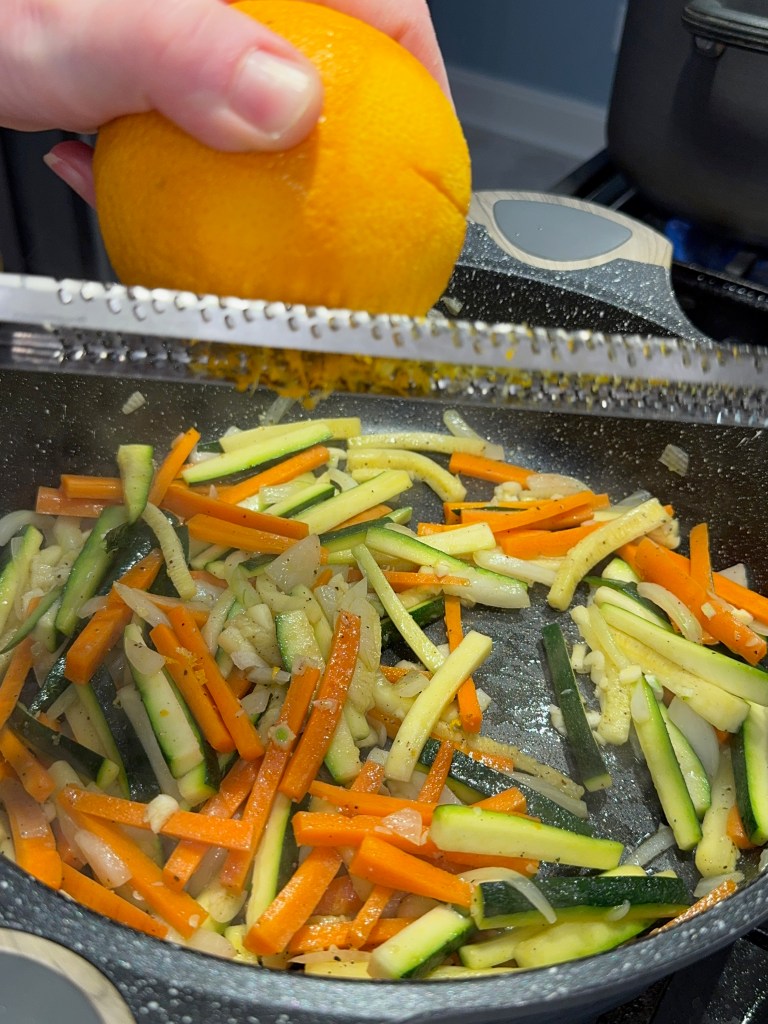
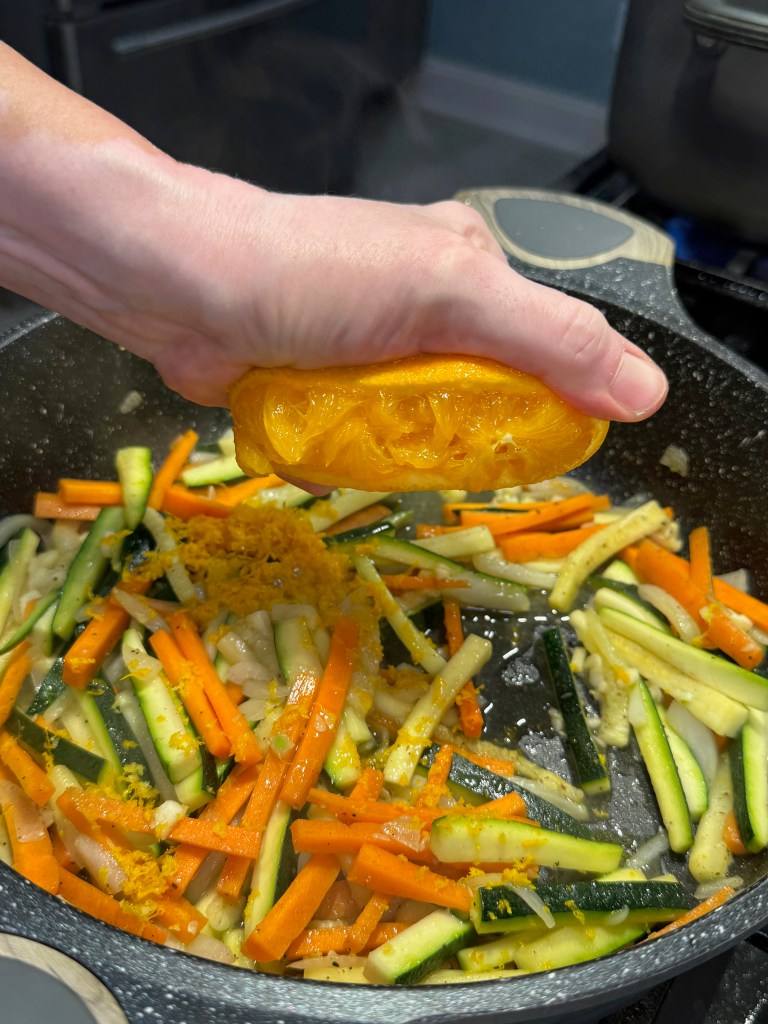
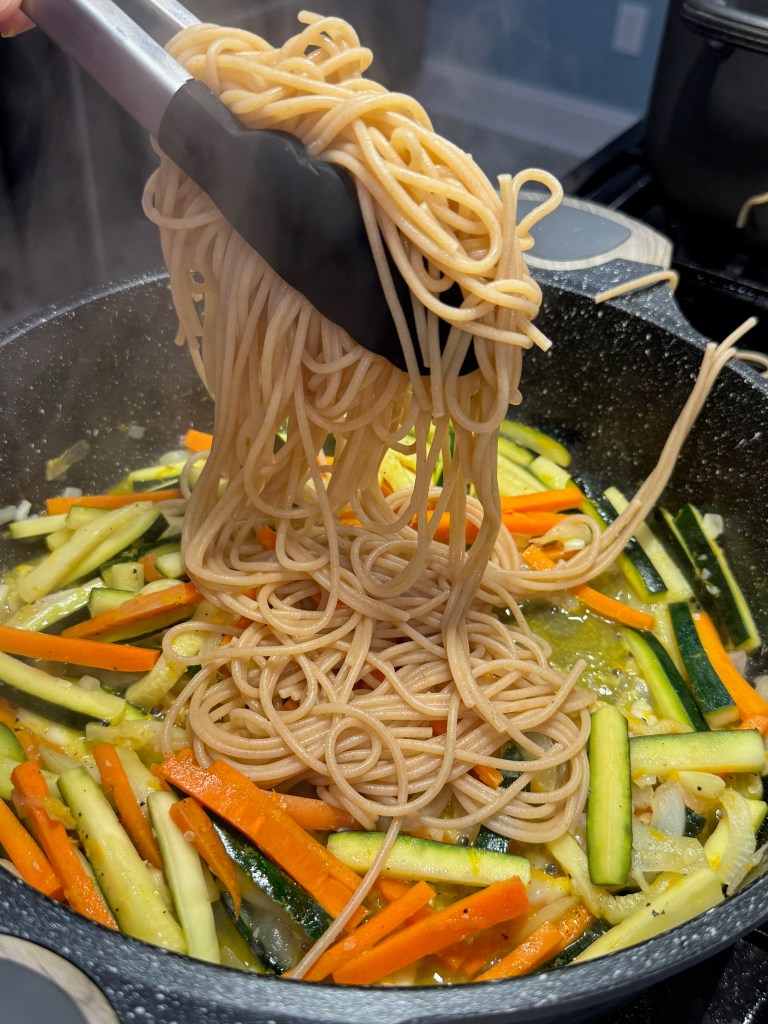
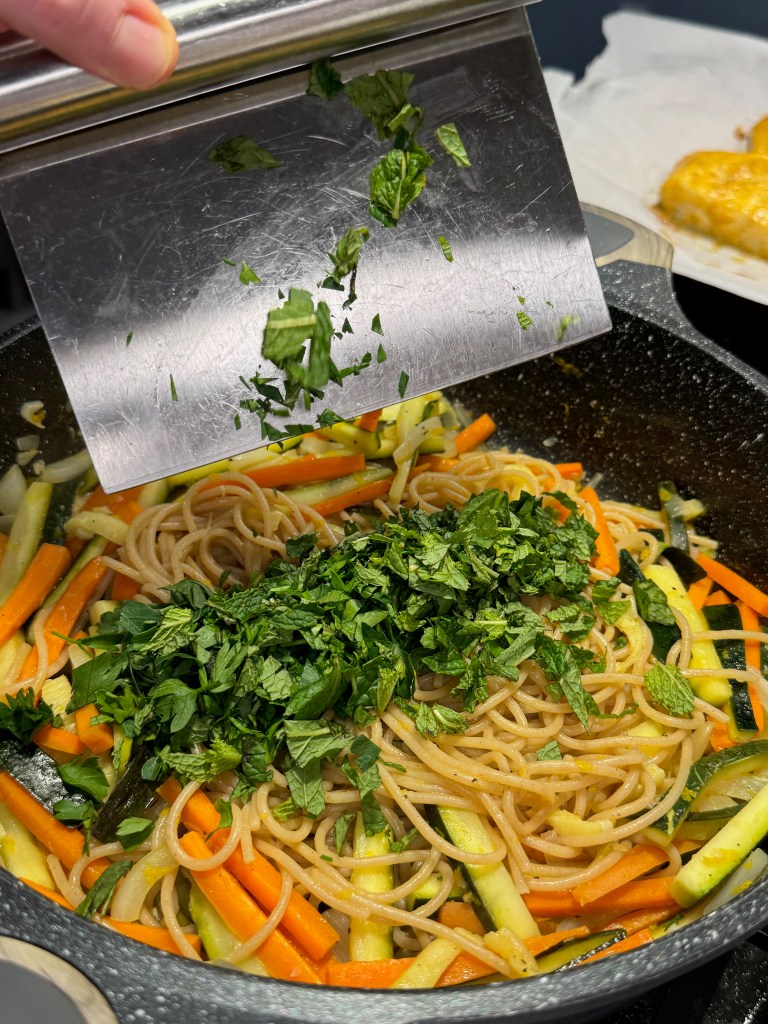
A big swirl of EVOO (as Rachael would say) goes into a large sauté pan for cooking the zucchini, carrots and onions— seasoned, of course— and then you’ll add garlic plus the juice and zest of a lemon and an orange. When the veggies are somewhat tender and the citrus juice has reduced a bit, use tongs to move the cooked spaghetti straight from the hot water to the pan, and toss the whole thing with the fresh parsley and mint. Transfer to a serving platter and scatter the chopped radicchio on top. Yes, it is as easy as it sounds and as delicious as it looks.


I went with my usual whole grain spaghetti for extra nutrition and a slightly chewier bite. As I was tossing the spaghetti with the veggies, it occurred to me that I’d never tried using another pasta shape, but I definitely will next time. Whole grain fusilli or bow ties would both work great, and might even make the dish easier to serve than with spaghetti.

Color, meet flavor. 😋

You’ll find this dish terrific served warm with a lean protein or, if your appetite is light, by itself. And it’s also tasty left over, cold from the fridge or at room temperature. That makes it ideal for taking along to a summer potluck as well as serving up on a busy weeknight. I could not find Rachael’s original recipe on the internet, but I have managed to remember the ingredients and the process over the years, and that’s a testament to the friend-next-door presentation of her cooking shows.

Do you have a favorite TV chef or cook— past or present— who inspires you to this day? Let’s talk about it in the comments!

Zucchini Citrus Pasta

  • Servings: About 6
  • Difficulty: Average
  • Print

This colorful side dish covers all the bases, with bright, fresh flavors and plenty of texture. Cutting the zucchini and carrots into matchstick-sized pieces allows them to cook quickly without turning mushy. Perfect for a busy summer weeknight or a backyard potluck.


Ingredients

  • 2 medium or 3 small zucchini, julienned
  • 2 or 3 medium carrots, julienned
  • 1/2 sweet onion, sliced into crescents
  • 2 cloves garlic, chopped
  • Extra virgin olive oil
  • Kosher salt and freshly ground black pepper
  • Zest and juice of 1 lemon
  • Zest and juice of 1 orange
  • About 1/3 package hot cooked spaghetti or favorite small pasta shape
  • Handful of fresh Italian (flat leaf) parsley, rough chopped
  • Handful of fresh mint, rough chopped
  • 1/2 small head radicchio, rough chopped

Note: This dish is extremely versatile, as it can be served hot, room temperature or chilled. I used whole wheat spaghetti, but any small pasta shape, such as fusilli or farfalle would be great. If you don’t care for mint, fresh dill would also be delicious.

Directions

  1. Place a large, deep sauté pan over medium heat and swirl EVOO around twice (about 2 tablespoons). Add zucchini, carrots and onions to the pan, and season with salt and pepper. Toss and cook a few minutes until the onions are translucent and the carrots begin to soften.
  2. Add garlic, citrus zest and juices, and reduce heat to a simmer so that the liquid doesn’t evaporate too quickly.
  3. Add hot pasta straight to the pan, along with any cooking water that’s clinging to it, as the starchy water will help the citrus sauce cling. Toss to combine.
  4. Add chopped fresh parsley and mint. Toss lightly and then transfer the mixture to a serving platter. Scatter radicchio on top and serve immediately.


Grilled Salad with Parmesan-Peppercorn Dressing

As much as possible this summer, I’m avoiding unnecessary use of the stove or oven. Our energy costs are high enough just knocking down the heat that’s outside. No sense producing more heat indoors. What this means for mealtime is a combination of solutions: cooking extra things in one oven session, eating more cold foods, bringing food in from other places and (you guessed it) grilling our food outside, where you don’t notice the heat because it’s already so damn hot. 

We love the flavors of grilled foods any time of year; summer just happens to be the more practical time of year to do grilling, and we are fortunate that by dinnertime, most of our backyard is in the shade. It’s not unusual, especially on weekends, for my husband and me to relax with a cocktail out there (maybe a frozen old fashioned?) while he tends to dinner on our big Napoleon gas grill. And when I say that he grills dinner, sometimes I mean the whole dinner, including a main meat, a side veg and the salad. Wait— he grills the salad??

Don’t knock it ’til you’ve tried it!

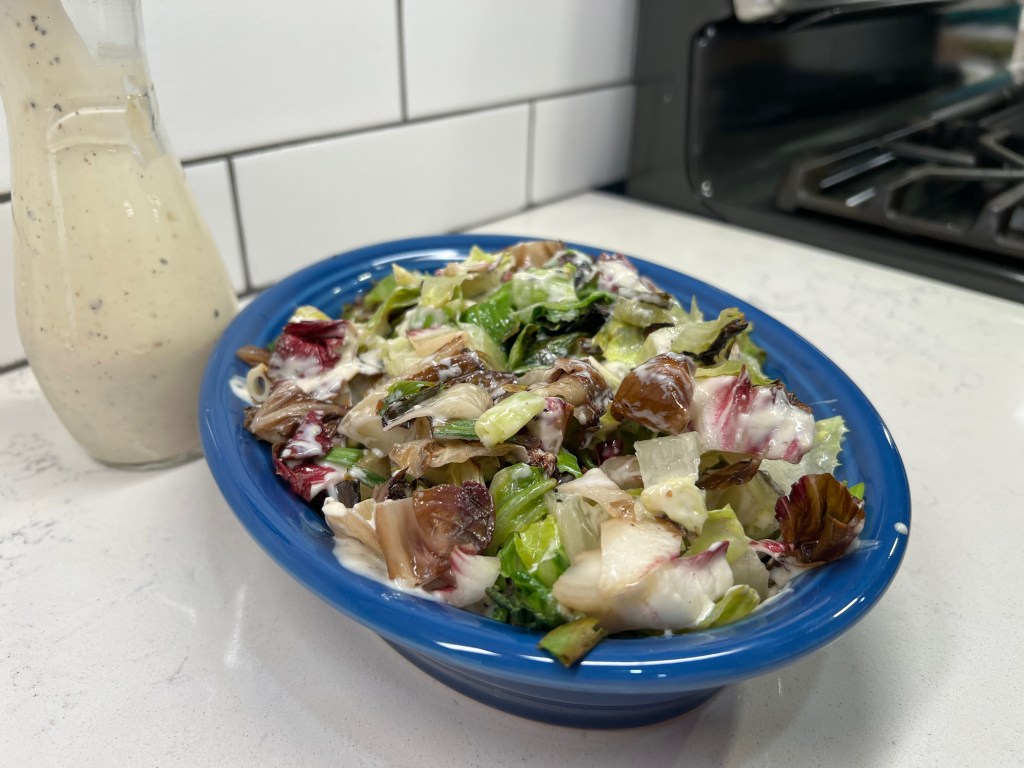
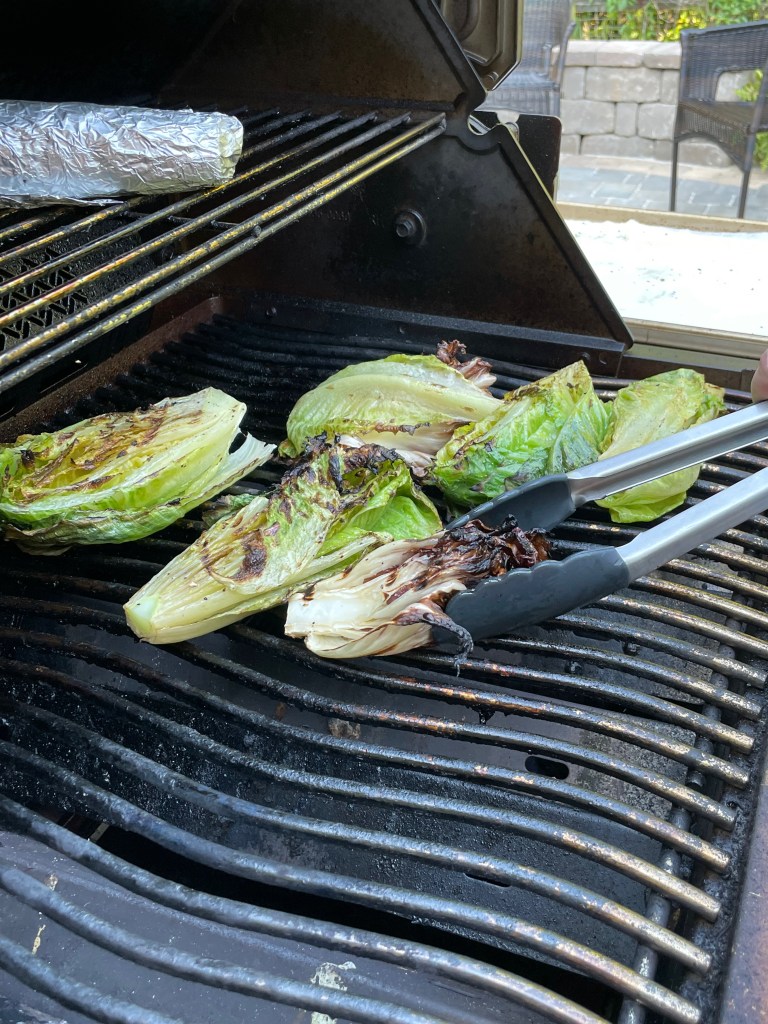
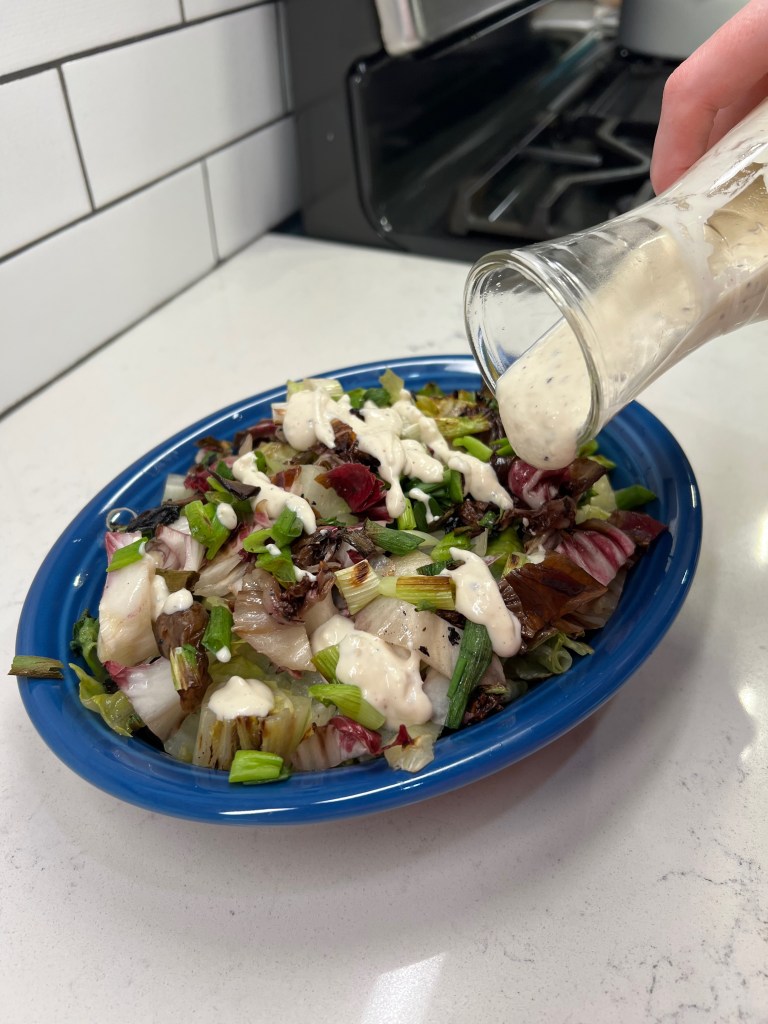
It may seem unconventional to make a salad on the grill, but hear me out. What the grill does for meat and vegetables— you know, searing, adding smoky notes and caramelizing surface sugars— well, it does the same for leafy greens. Some of the leaves will wilt and even char a little bit, and some of the sturdier, inside leaves will hang onto a little crunch. This makes for a very pleasant bite that you should try, if you haven’t already.

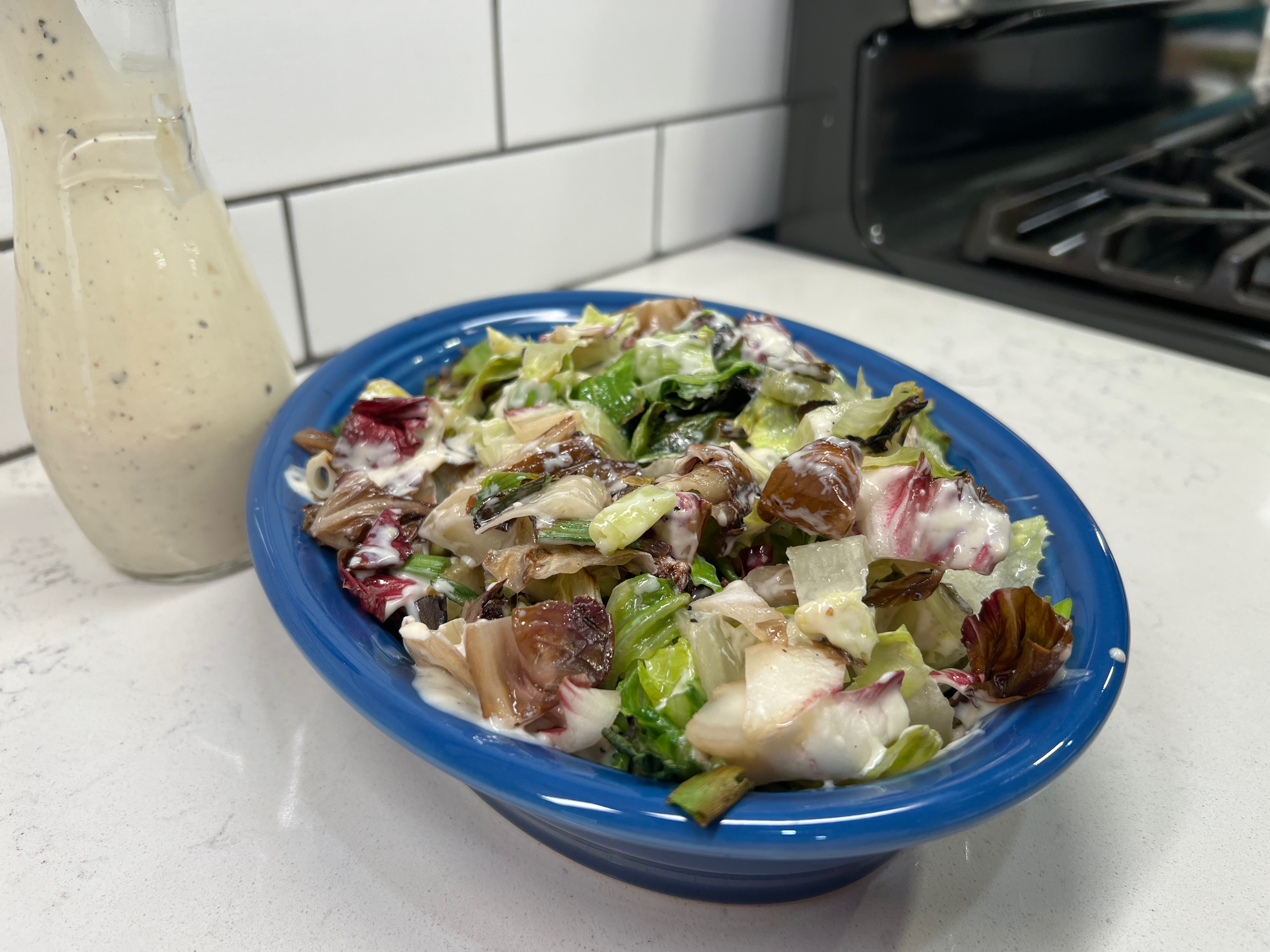
This salad of romaine hearts, scallions and bitter radicchio is elevated by a quick turn on the grill, and I’ve made a smoky, garlicky Parmesan-peppercorn dressing to go with it.

Grilling is a sophisticated approach to salads.

Let’s do this!

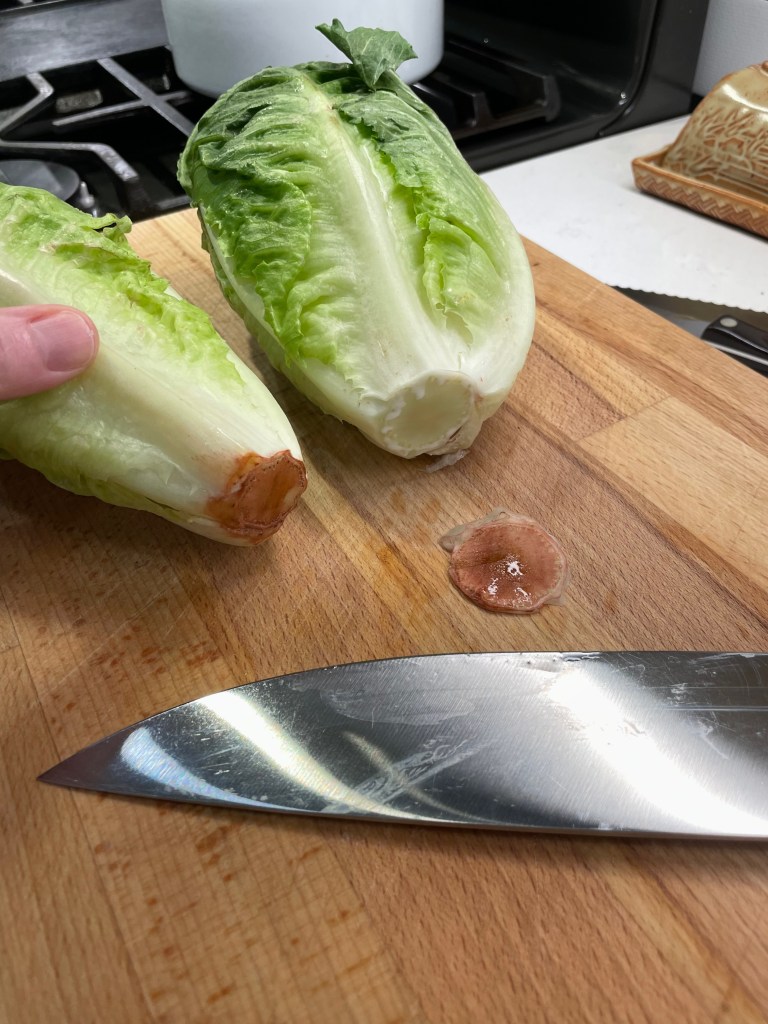
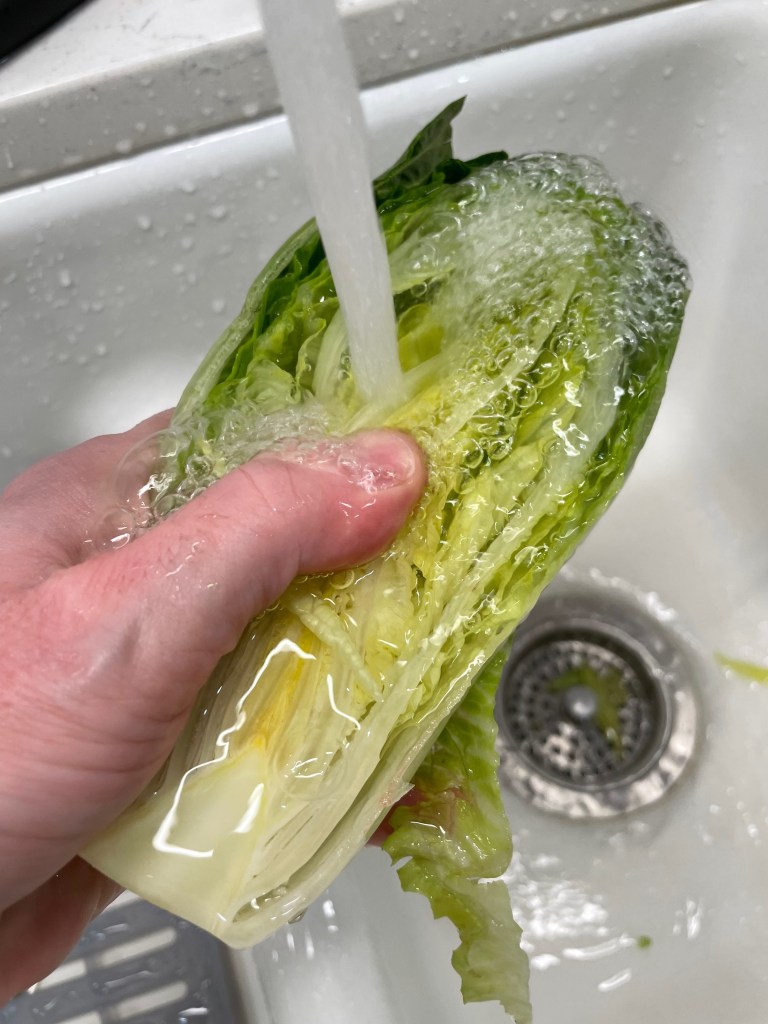
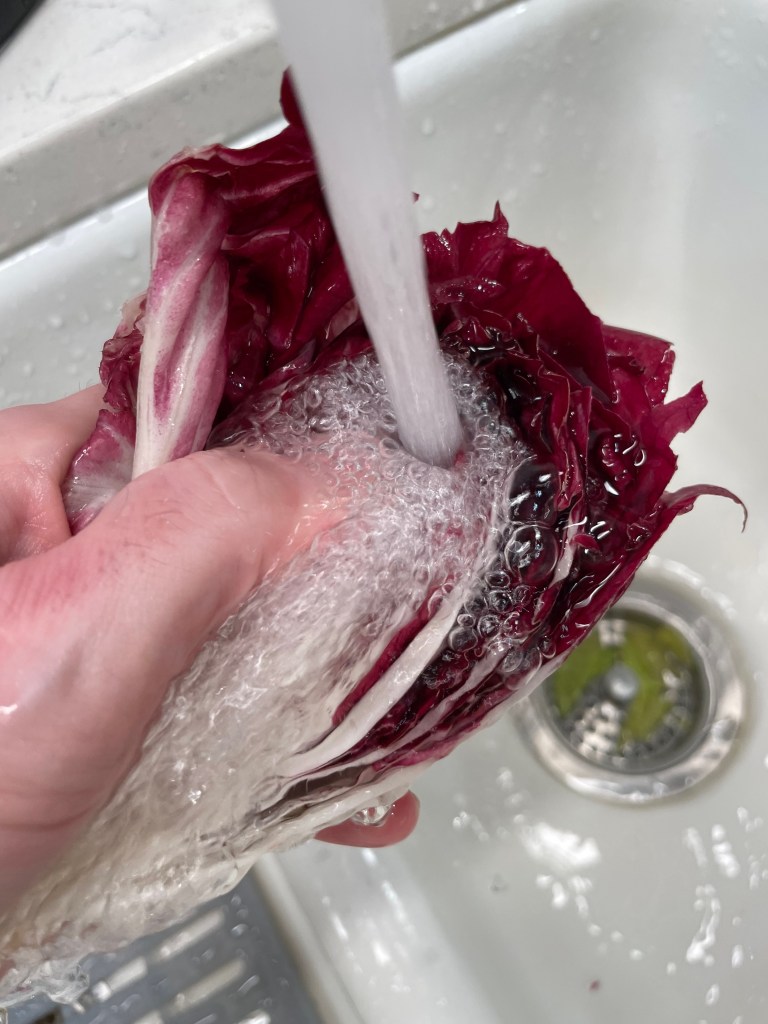
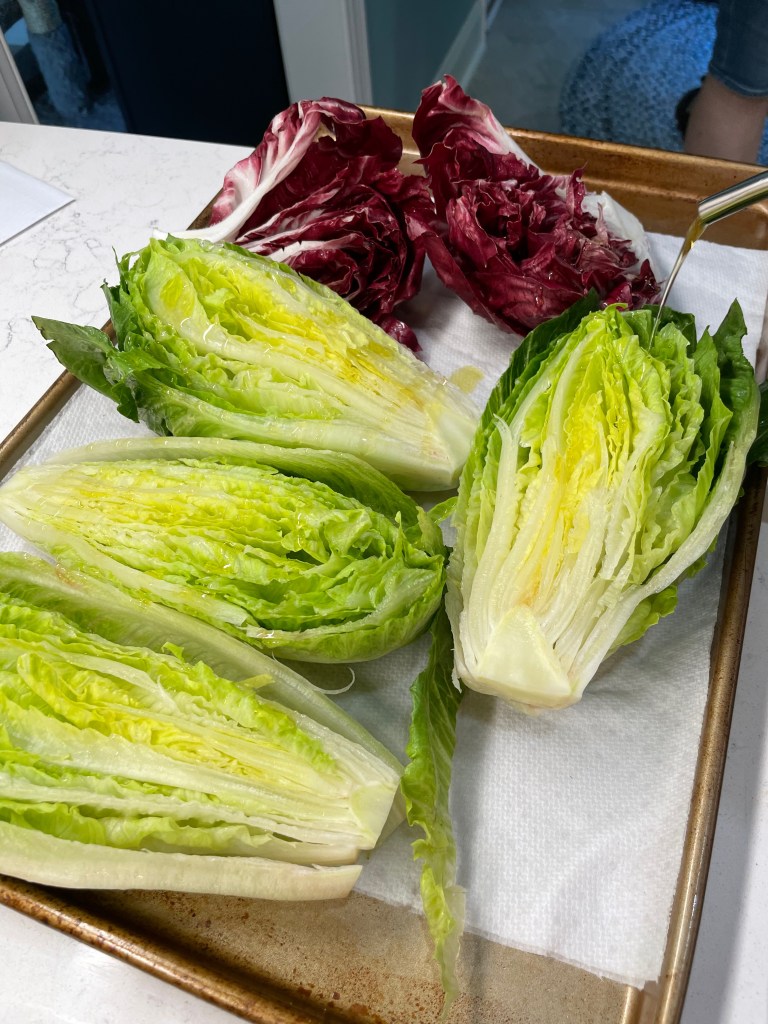
Begin by prepping the greens earlier in the day. You must have whole lettuce heads, as the delicate leaves would wilt and burn far too quickly if placed on the grill individually. I’ve chosen hearts of Romaine and radicchio, a small bitter green that isn’t green at all, but purplish crimson in color. Trim any rusted bottoms, then cut them in half lengthwise and give them a good rinse under cold running water. Gently shake out the excess water and place them upside down on a towel-lined baking sheet. Cover with another paper towel and send it to the fridge to crisp up for a few hours as the lettuces continue to drain. 


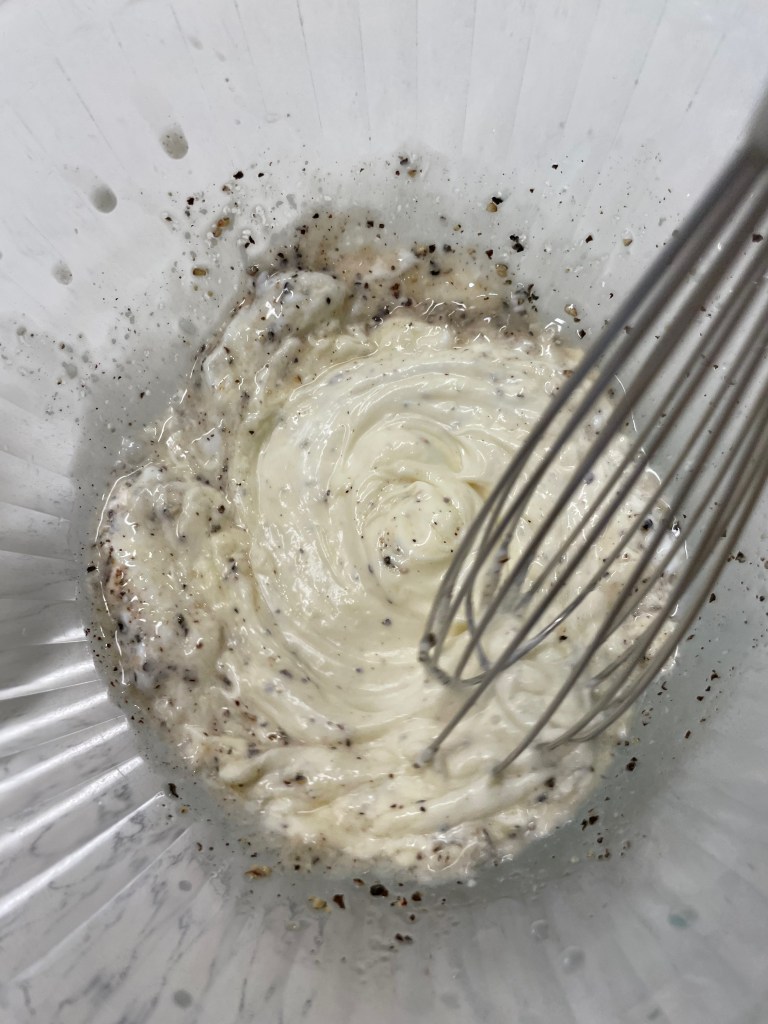
The smoky Parmesan-peppercorn dressing is easy to make, and it’s best to do this ahead as well, so that the flavors have time to mingle. The dressing includes everything you see here— plus a little milk to thin out the consistency.

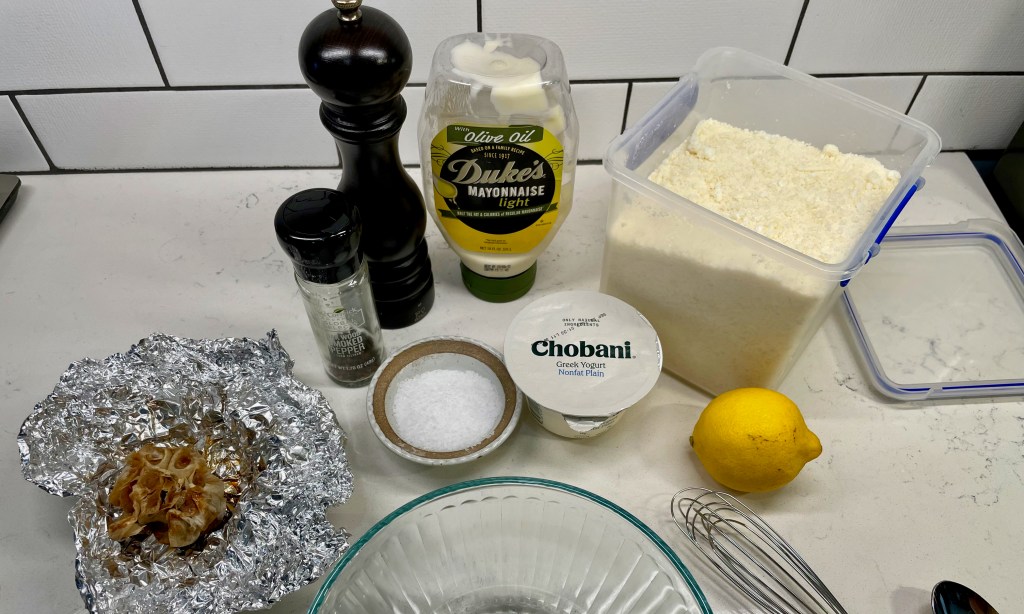
Greek yogurt, mayo, grated Parmesan (or our beloved Parm-Romano blend, which is in the tall square container), roasted garlic, fresh lemon juice, salt and coarsely ground black pepper.

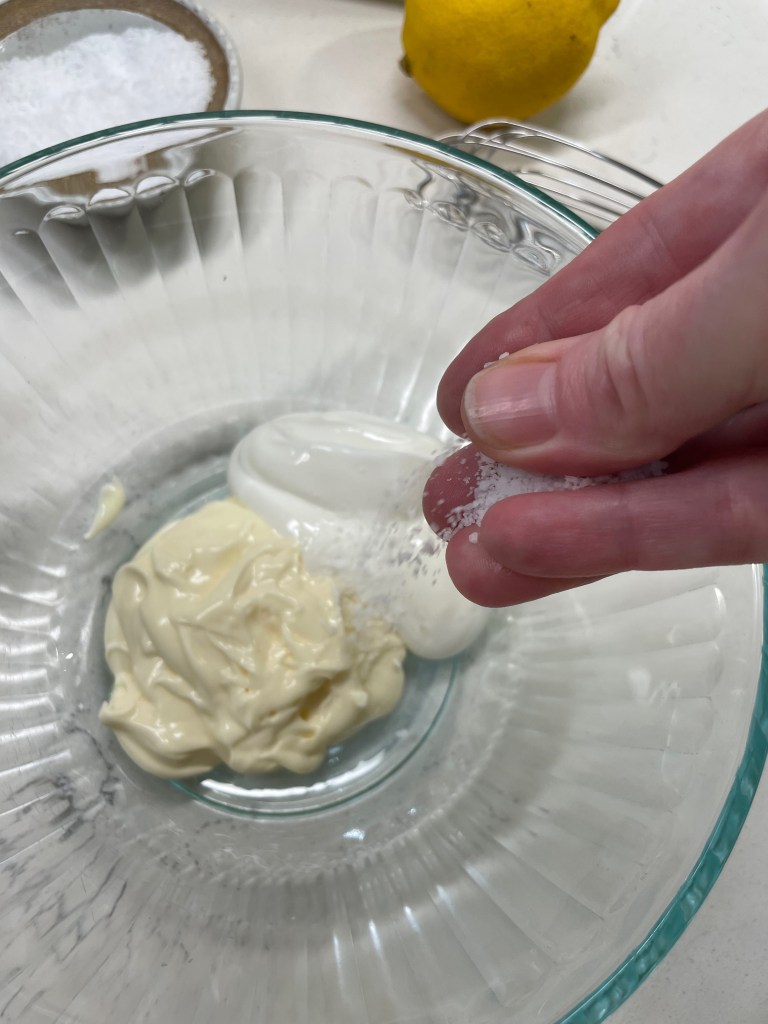
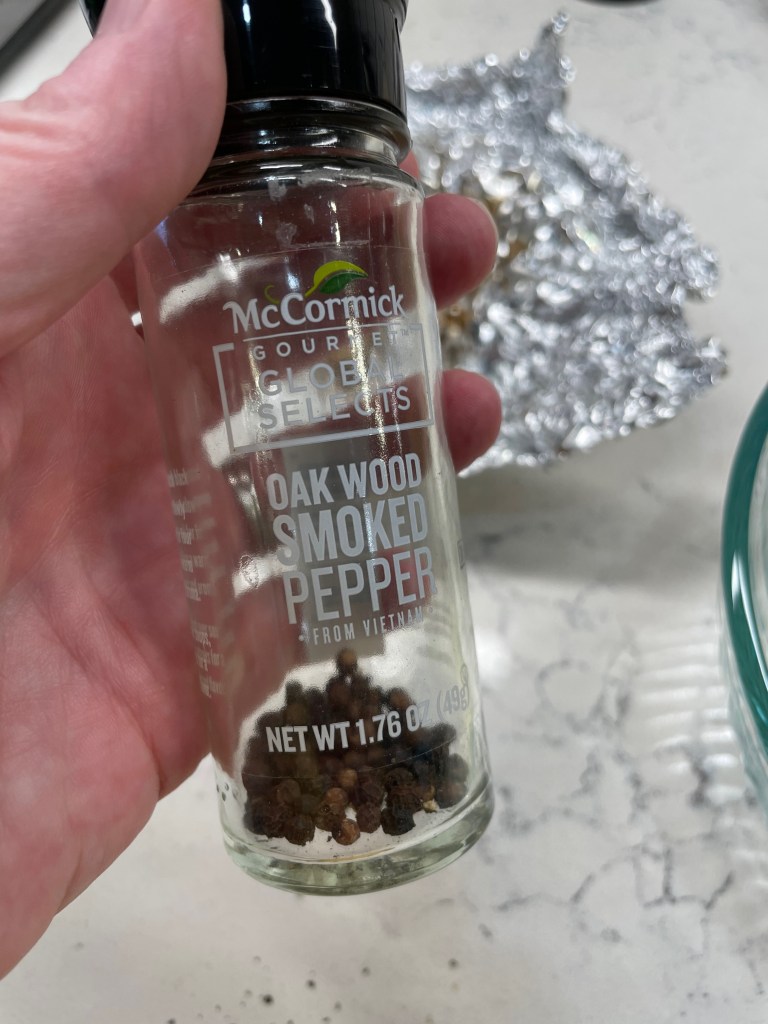
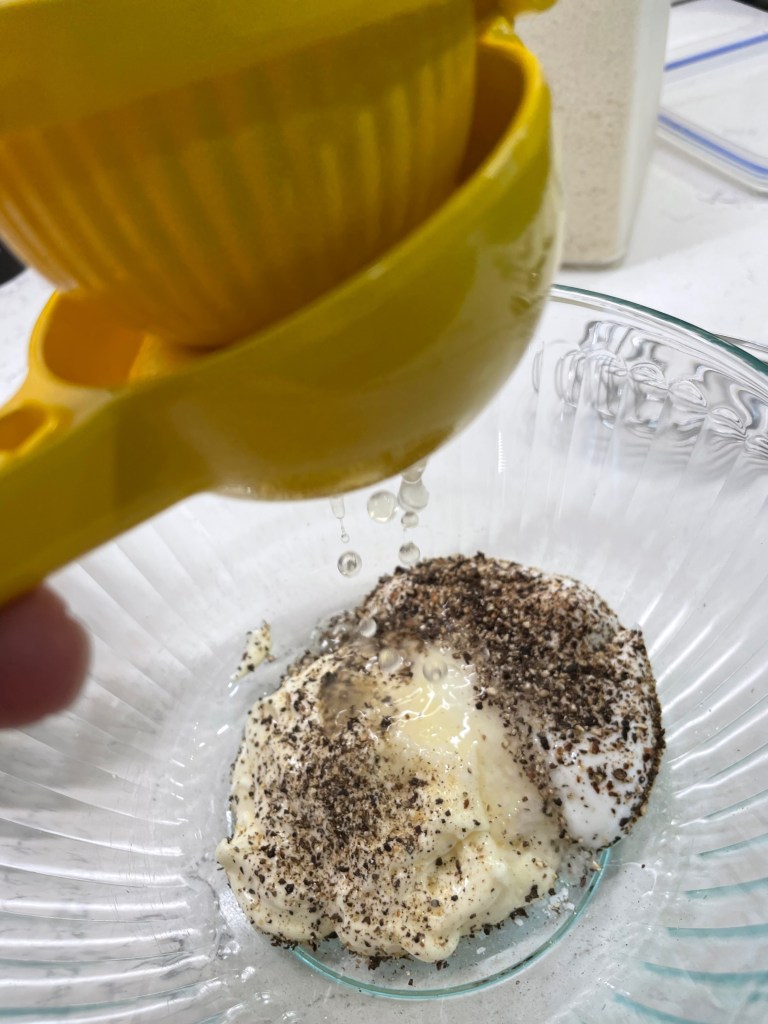
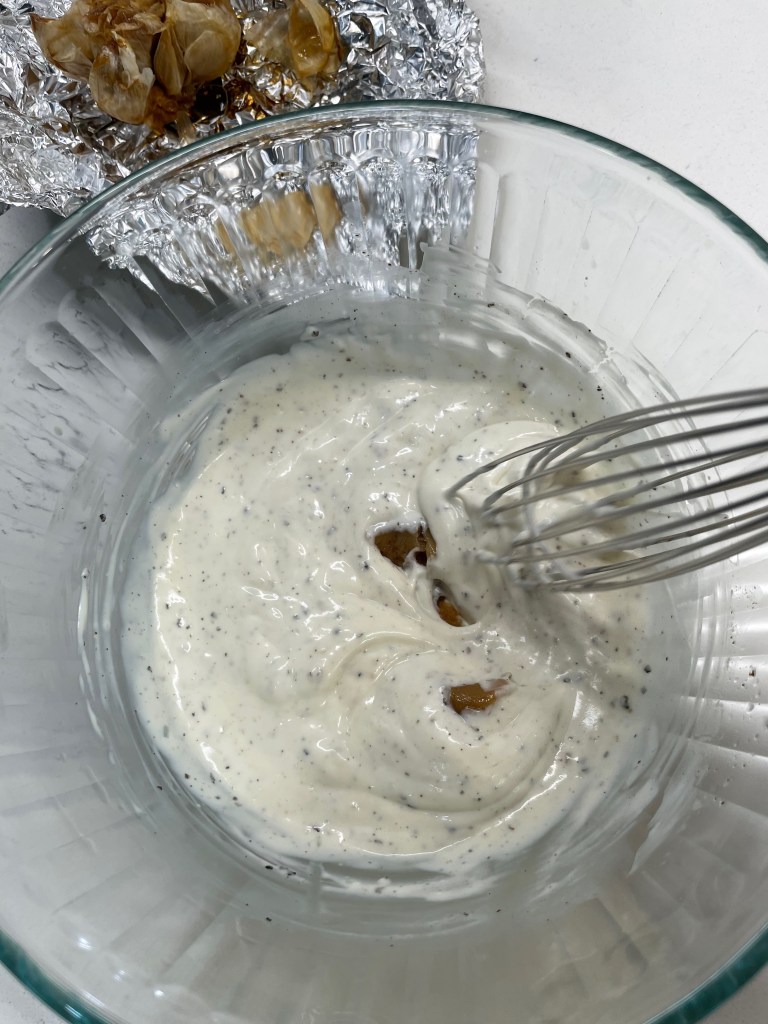
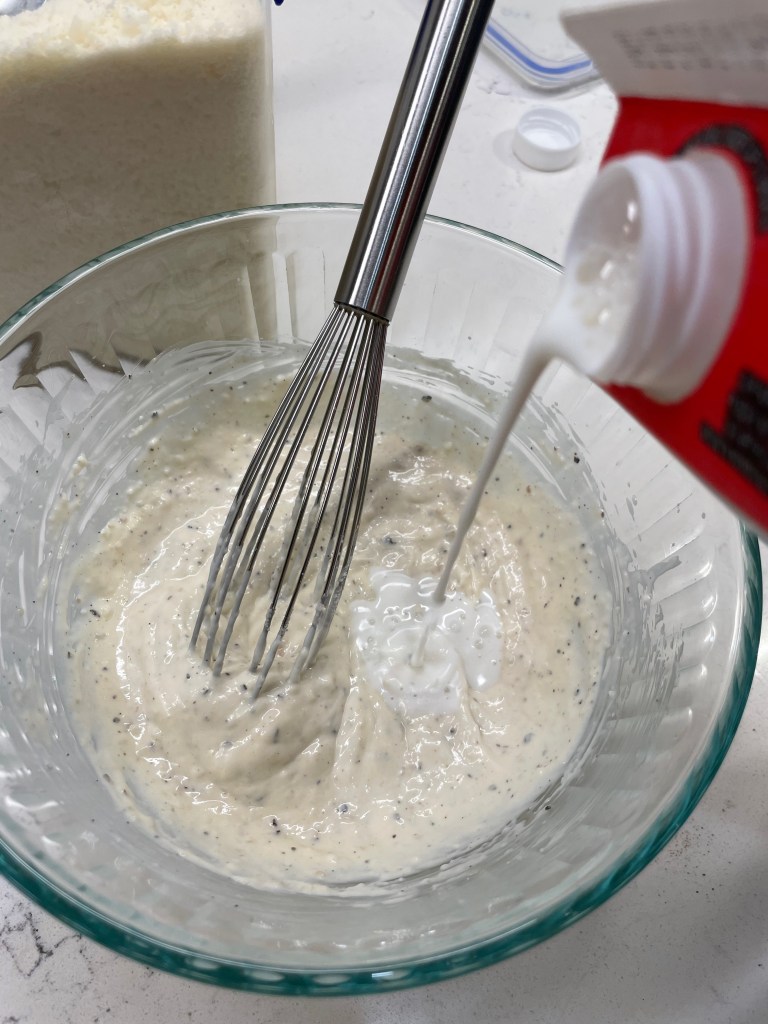
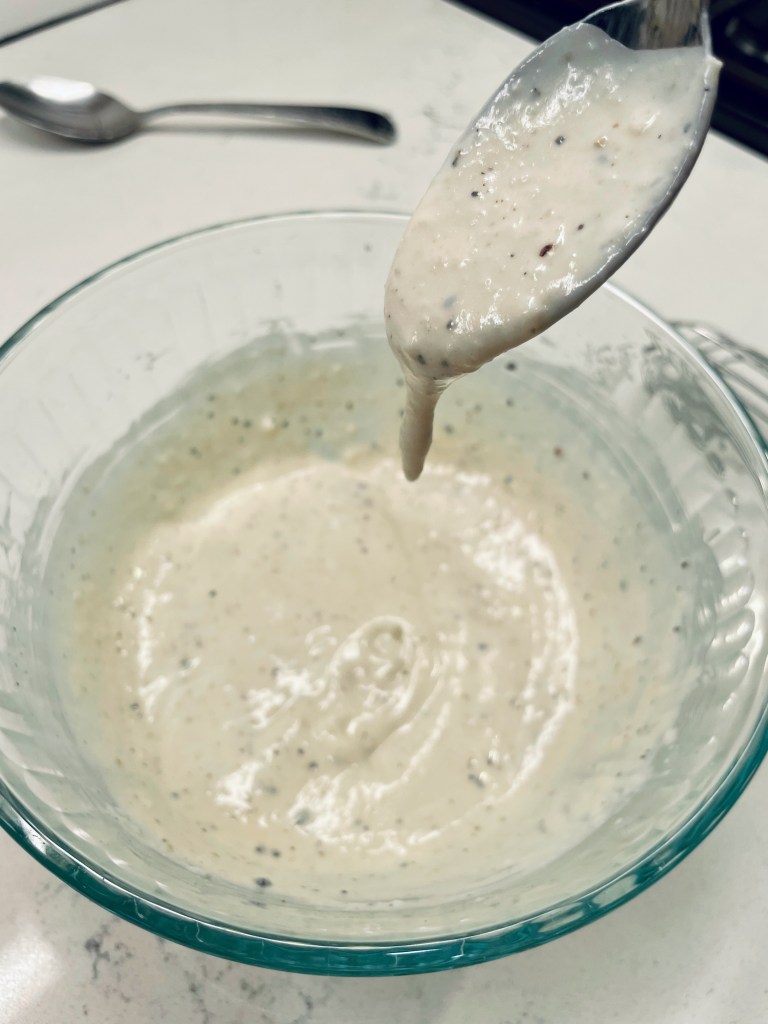
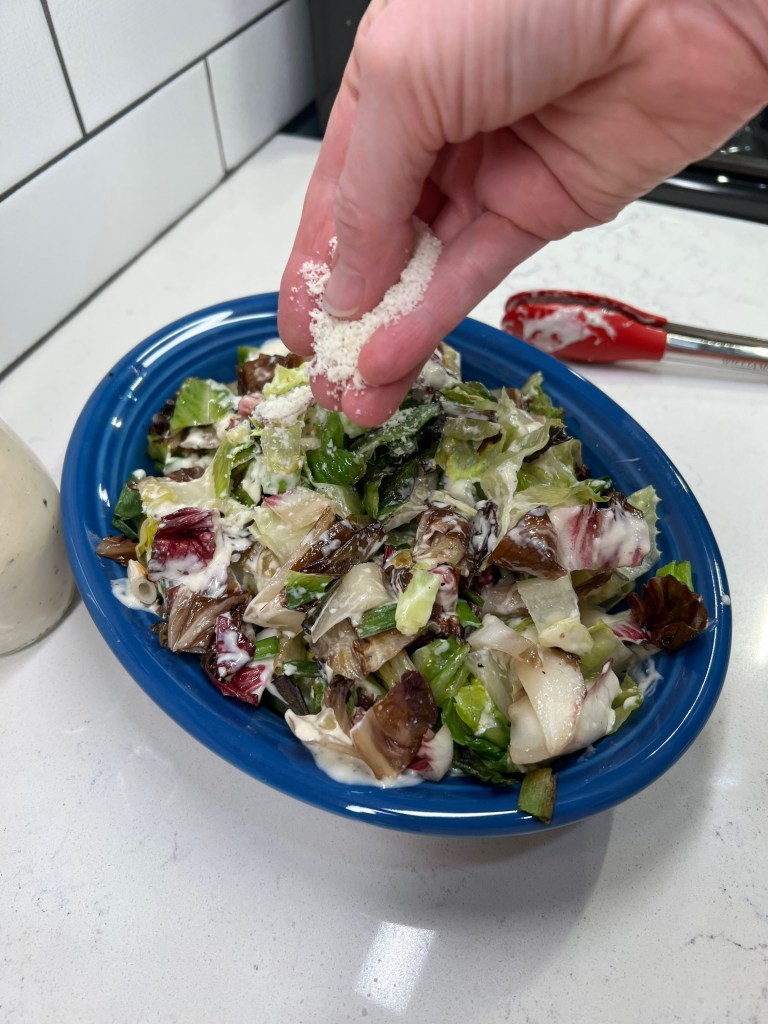
Equal parts mayo and Greek yogurt provide the base for this dressing, and a if you can get your hands on this oak wood smoked pepper, you won’t regret it for the smoky notes it contributes. Squeeze in the juice of half the lemon, then whisk in the roasted garlic and a couple spoonfuls of grated Parmesan. The dressing will be quite thick, so whisk in a bit of milk (or buttermilk) at a time, until the consistency is to your liking. The click-to-print recipe card below makes more dressing than you’ll need for this salad, so plan to enjoy it again later with another meal.


Grilling the salad

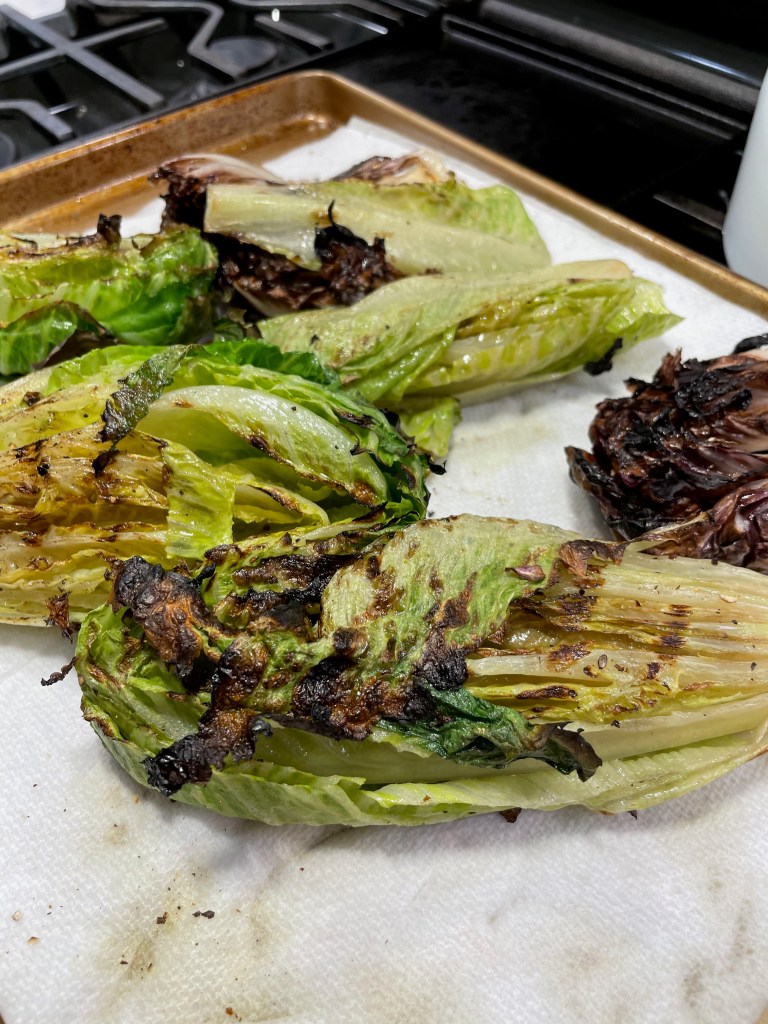
When the rest of your meal is almost ready, flip over the chilled lettuce halves and give them a drizzle of extra virgin olive oil, plus a quick hit of salt and pepper. Place them, face down, on the hot grill alongside your scallions, and watch closely for signs of wilting and charring. Give them a turn after a few minutes, and take them off the heat when both sides have softened and show signs of grill marks and charred edges.


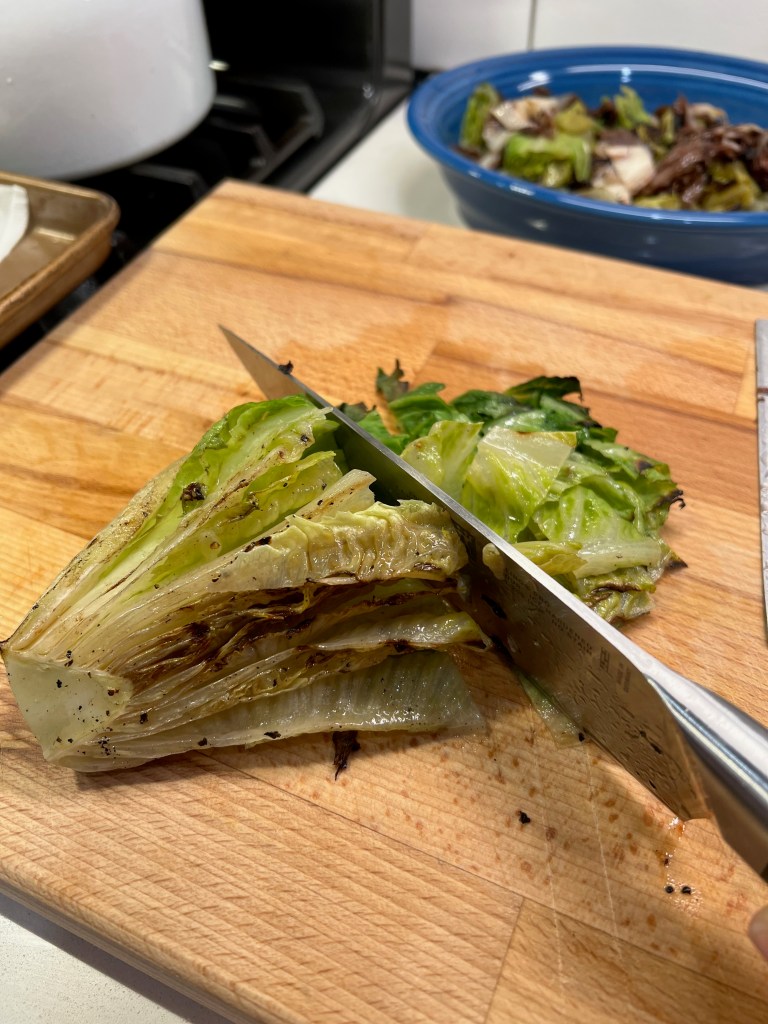
Transfer the grilled lettuces to a clean cutting board and chop them up for serving. Toss with a bit of the smoky Parmesan-peppercorn dressing and an extra sprinkle of Parmesan if desired.


Grilled Salad with Parmesan-Peppercorn Dressing

  • Servings: 4
  • Difficulty: Easy
  • Print

If you've never had grilled salad, this is an easy one to try, with a delicious homemade dressing that you'll want to enjoy year round.


Ingredients

  • 2 hearts of Romaine lettuce, trimmed, split and rinsed
  • 1 medium head radicchio, trimmed, split and rinsed
  • 2 or 3 scallions, cleaned and trimmed
  • 3 Tbsp. light mayonnaise
  • 3 Tbsp. nonfat Greek yogurt (sour cream works, too)
  • About 1/4 tsp. kosher salt
  • Several twists freshly ground black pepper (or combination with smoked black pepper, which is so good!)
  • Juice of 1/2 lemon
  • 1 whole bulb roasted garlic
  • 2 Tbsp. freshly grated Parmesan or Parm-Romano blend cheese
  • 1 to 2 Tbsp. milk or buttermilk, as desired, to thin the dressing consistency


It is best to make the dressing several hours before grilling, so that the flavors have plenty of time to mingle. Prep the lettuce ahead as well, to ensure the excess water can drain out.

Directions

  1. Place rinsed lettuce halves on paper towel-lined baking sheet, cut sides down. Cover with a damp paper towel and refrigerate a few hours, allowing excess water to drain.
  2. Make dressing by combining mayo, yogurt, salt and pepper in a small bowl. Squeeze in lemon juice and whisk to combine.
  3. Squeeze roasted garlic cloves from the bulb and whisk them into the dressing mixture, along with grated Parmesan.
  4. Add small amounts of milk at a time, whisking after each, until desired consistency is achieved.
  5. Refrigerate dressing until time to serve. Extra dressing will keep in the fridge for about one week.
  6. Heat grill to medium-high heat. Turn prepped lettuces upright and drizzle with olive oil. Season with salt and pepper. Place on the grill, cut side down, along with the scallions. Turn after a few minutes, when lettuce has slight charring. Remove from heat when both sides show grill marks.
  7. Transfer lettuces and scallions to a cutting board and rough chop. Toss lightly with dressing and sprinkle with additional Parmesan, if desired.


Romesco Potato Salad

Well, here we are, staring down the unofficial end of summer. Labor Day weekend is upon us in the U.S., and though it signifies the waning days of summer, we are hardly ready to trade in our shorts and flip flops for boots and cozy sweaters. It’s still plenty hot, and we still have weeks— if not months— of good grilling weather remaining.

If you’ll be grilling out this weekend, and perhaps looking for a different take on potato salad, I have a fun one for you. This salad was the result of wracking my brain for another mayo-free potato side, not unlike the potato salad with chive and parsley pesto that I shared at the start of summer. That was a NY Times Cooking Recipe, and this one happens to be inspired by another recipe from the same site.  

It had already occurred to me that romesco sauce would be a delicious flavor to apply to potato salad, when lo and behold, a recipe appeared in my inbox for a “romesco egg salad.” There was confirmation for my inspiration, and I was off and running.


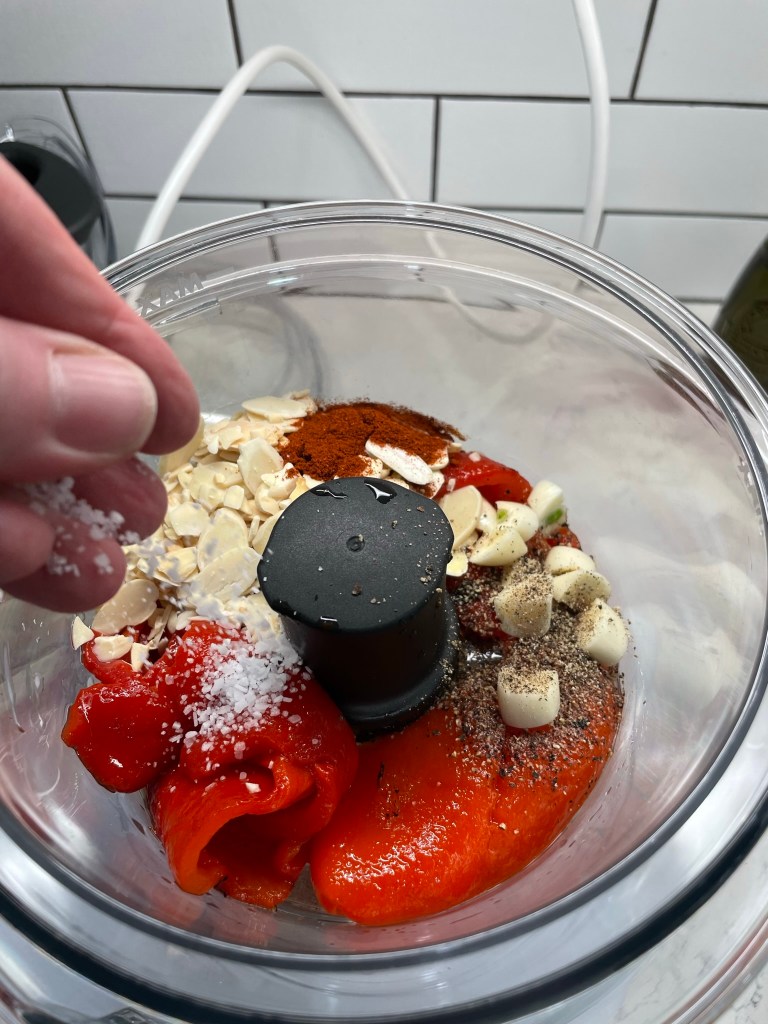
Romesco, in case you are not familiar, is a Spanish-inspired sauce made of pureed roasted red pepper, almonds and paprika. Typically, it would include roasted tomatoes, but I omitted those to keep my sauce thicker. It is sometimes also blended with stale bread to give the sauce more body, but I didn’t want carbs on carbs, so I skipped that, too, which also kept it gluten free. My romesco is spiked with garlic, vinegar, sherry and capers for extra bright flavor, and a peppery extra virgin olive oil holds the whole thing together. The sauce was delicious and substantial for dressing a potato salad.


What I like about this salad, besides it being free of greasy mayonnaise that separates at the first hint of heat, is that it packs a ton of flavor that you might not expect on a potato salad. The roasted red pepper lends more than enough moisture to keep the tender boiled potatoes from feeling sticky or dry, and the smoked paprika, capers and hard boiled egg give it an unmistakable flair of Spanish cuisine.


It comes together easily, especially if you use jarred roasted red peppers, as I did for this one. Simply process together the romesco ingredients, seasoning as you go, and then fold it into tender cooked baby potatoes. A few hours to chill it down is all you need, then top it with chopped eggs, onions, capers and parsley, and this is potluck-ready! 

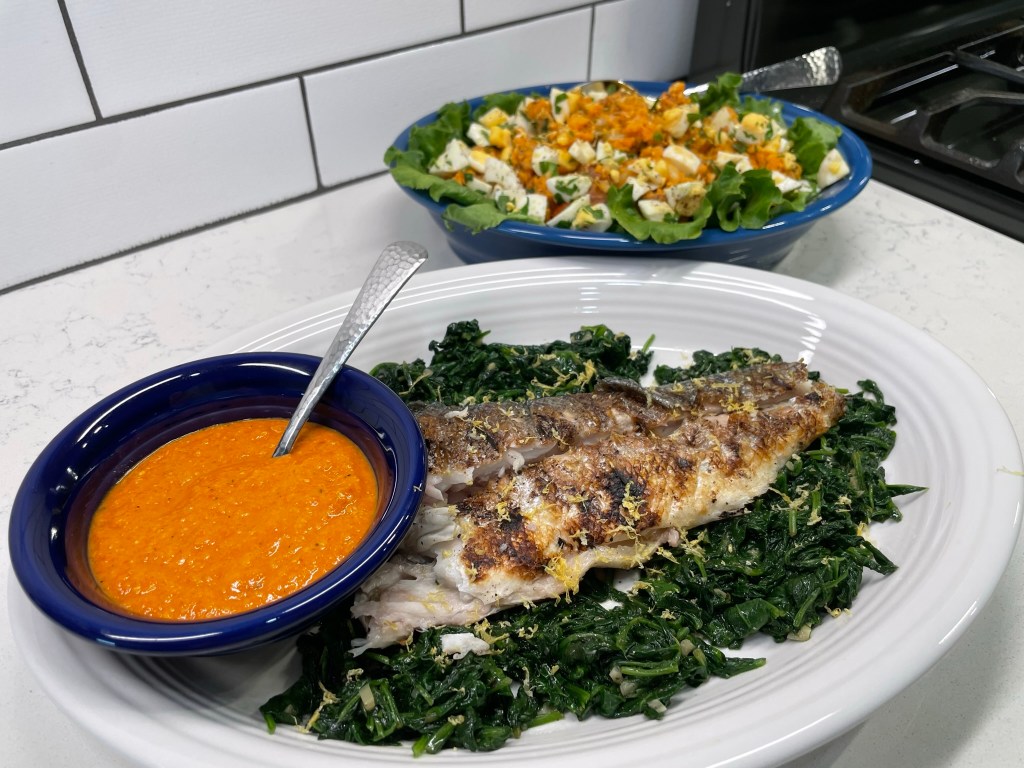
We enjoyed this romesco potato salad at our house on Fourth of July weekend, but it would be a perfect way to celebrate the end of summer while also welcoming in some of the bolder flavors of fall. It would be excellent alongside a grilled skirt steak or zesty marinated chicken breasts, or keep it light and healthy— as we did, by serving it alongside a grilled whole branzino. 


This recipe made enough romesco to dress the salad plus a little extra to serve on the side with the grilled fish. If you don’t want the extra, simply prepare an extra half-pound of potatoes. But trust me on this, you’re going to want the extra. 😁


Romesco Potato Salad

  • Servings: About 6
  • Difficulty: Average
  • Print

The Spanish-inspired flavors of roasted red pepper, paprika, sherry and almond lend a zesty flair to this mayo-free potato salad!


Ingredients

  • 1 pound itty bitty red potatoes
  • 3 eggs, hard boiled, cooled and peeled
  • 1/2 cup roasted red peppers
  • 1/3 cup almonds
  • 1 Tbsp red wine vinegar
  • 1 Tbsp sherry (see recipe notes)
  • 3/4 tsp smoked paprika
  • 2 cloves garlic
  • 1/3 cup evoo; add 2 Tbsp at first, drizzle remaining in while processor runs
  • Kosher salt and freshly ground black pepper, to taste
  • Additional roasted red bell pepper, chopped
  • 1/4 cup parsley leaves and stems, chopped
  • 1 Tbsp capers, rough chopped
  • 1/4 cup diced Spanish onion

Recipe Notes: Sherry vinegar is traditional for romesco, but I substituted a 50/50 mix of red wine vinegar and good quality drinking sherry. Odd, isn’t it, that I had sherry but not the vinegar? You will likely only need about 2/3 of the romesco to dress the potato salad. Save the rest for another purpose (it’s great on sandwiches or with grilled fish), or do an extra 1/2 pound of potatoes.

Directions

  1. Add baby potatoes and water to a medium pot. Bring to a gentle boil, then reduce slightly to simmer until potatoes are tender. Drain immediately and let them relax in the colander to dissipate the steam. Lightly smash the potatoes, not to the point of mashing them, but enough to break them open just a bit.
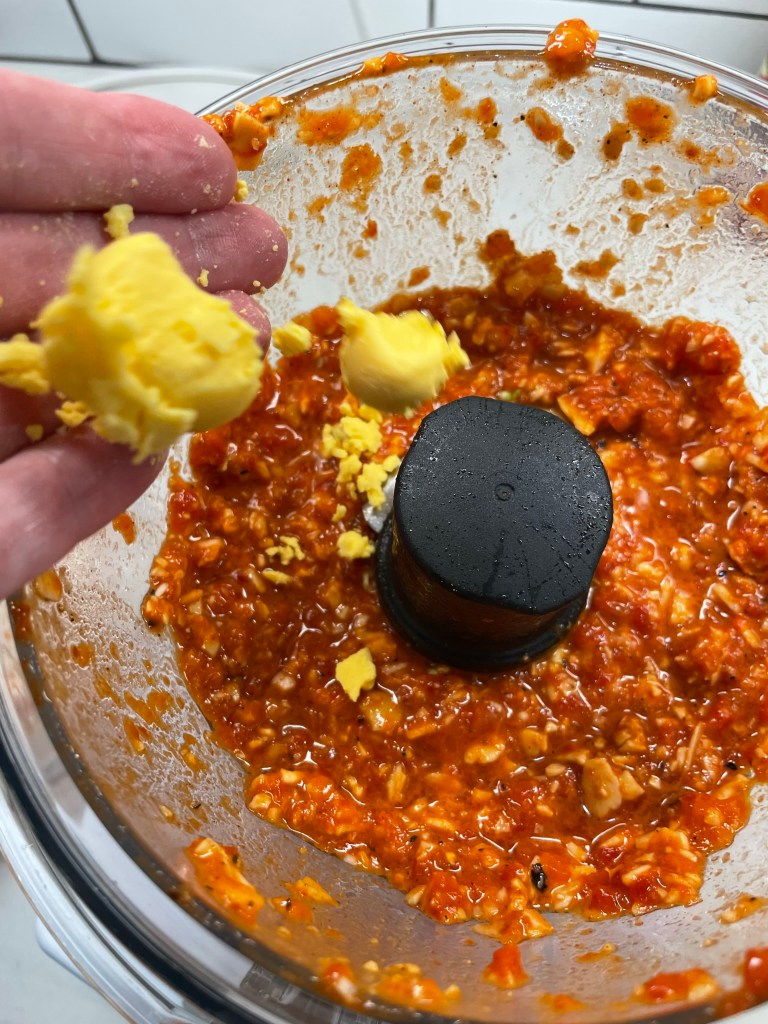
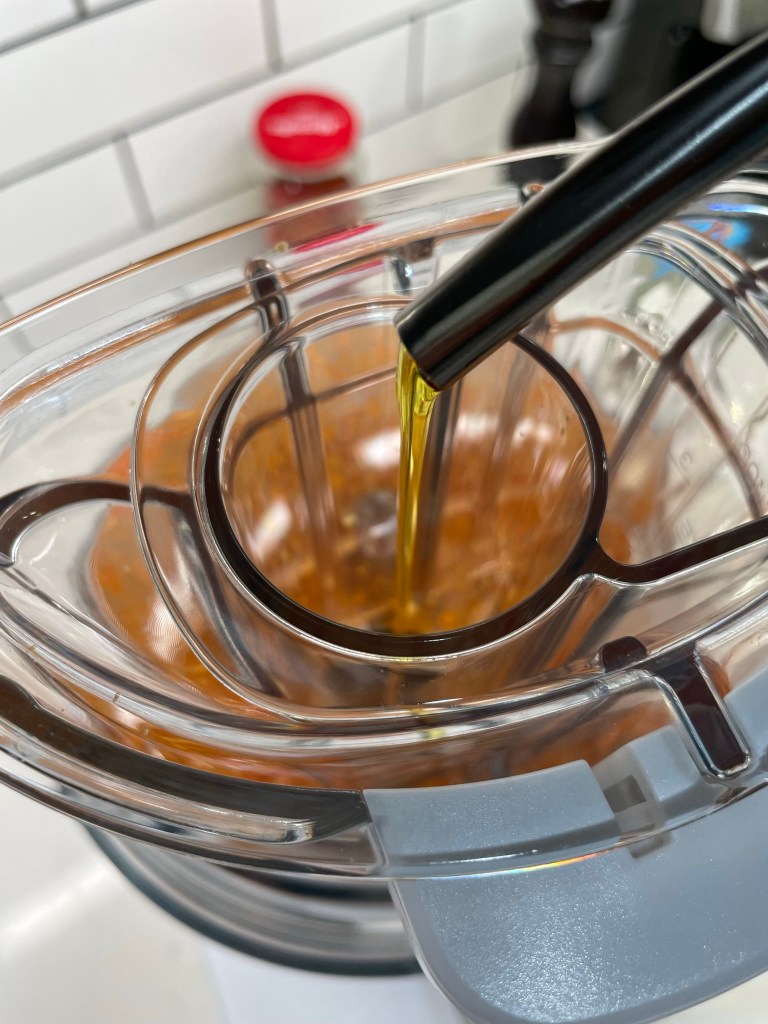
  2. In the bowl of a food processor, combine roasted red pepper, garlic, almonds, vinegar, sherry and paprika. Season with salt and pepper. Pulse a few quick times to roughly blend the sauce. Add one yolk of hard boiled egg if desired. Add two tablespoons of the olive oil and pulse again, then run the machine continuously while you slowly drizzle in the remaining oil.
  3. When potatoes are warm but no longer hot, gently fold in the romesco sauce. You’ll probably want to use a little more sauce than you initially think it needs, as the warm potatoes will absorb some of the moisture in the sauce.
  4. At serving time, top with additional red pepper, onion, chopped hard-boiled egg, capers and parsley. Add one last drizzle of olive oil, if desired.


Smashed Cucumber Salad

Over the past few months, I’ve seen numerous recipes for something called smashed cucumber salad and wondered, what’s so special about that? Sure, I love cucumbers and the way they freshen up a salad with an extra level of cool and crunch. But why not just, you know, slice them? Of course, that was before I tried one, and I may never be the same.

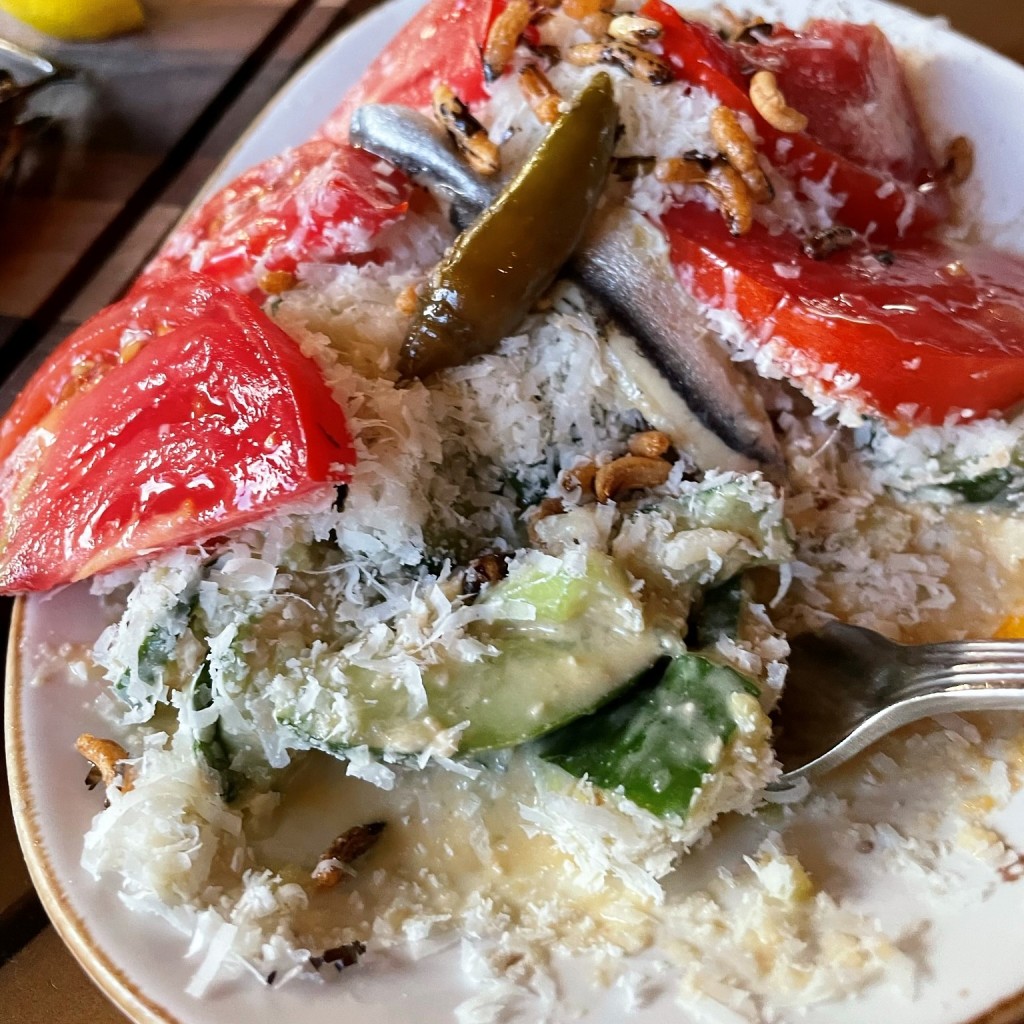
I enjoyed my first-ever smashed cucumber salad last month, when I joined my blog buddy, Dorothy, and her husband at one of their favorite restaurants, Starry Night Cafe in Ferrisburgh, Vermont. That salad had a rustic Italian flair with Calabrian chili flakes, anchovy, parmesan and ripe heirloom tomatoes. It was a masterful arrangement of fresh, seasonal food just doing its thing.


Every flavor complemented the next, but what struck me most about “smashed” cucumber salad was the texture— the open, craggy edges held onto the dressing, and the big chunks made it sooo crunchy and satisfying. And that was only the opener of our incredible meal.

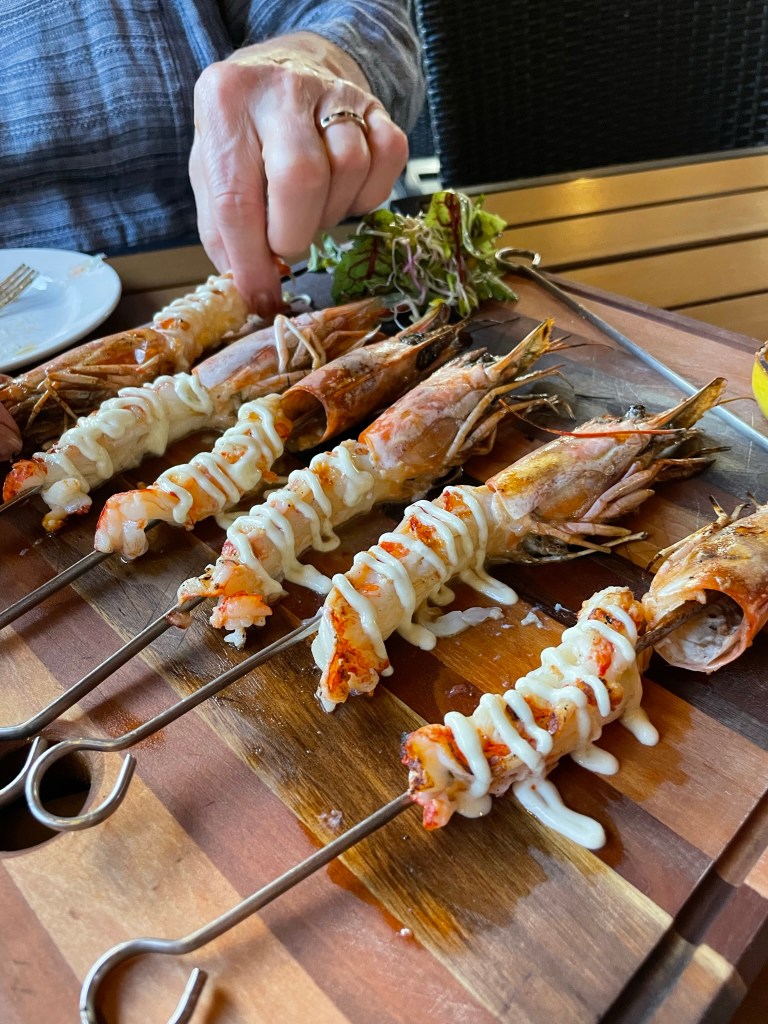
Starry Night Cafe demonstrated its commitment to partnering with local farmers and producers in every single thing brought to our table. From the specialty cocktail (don’t you worry, I’ll share it soon) to the coal-roasted oysters and grilled shrimp spiedini all the way to the stunning main course of wild halibut, I found myself wishing we lived closer!


Food really does taste better when it’s fresh and seasonal, grown without pesticides or chemical fertilizers and picked at peak ripeness. My entire visit through Vermont reignited my excitement for local food, and our Starry Night experience was the icing on the cake— er, salad. I started imagining what other flavors would play nice with the versatile cucumber, and I think I came up with a winner in this pretty plate.


My smashed cucumber salad is not a remake of the Italian-ish salad we shared at Starry Night Cafe, but an Asian-inspired interpretation, built on some fun ingredients I found when Les and I visited our own farmers’ market here in Winston-Salem. I wanted a dressing that was savory, sweet and tangy. Creamy but without cream. And with a touch of heat to accent all of the above. So I poked around on the internet for a bit and found a lemon-miso dressing on a blog called A Nourishing Plate


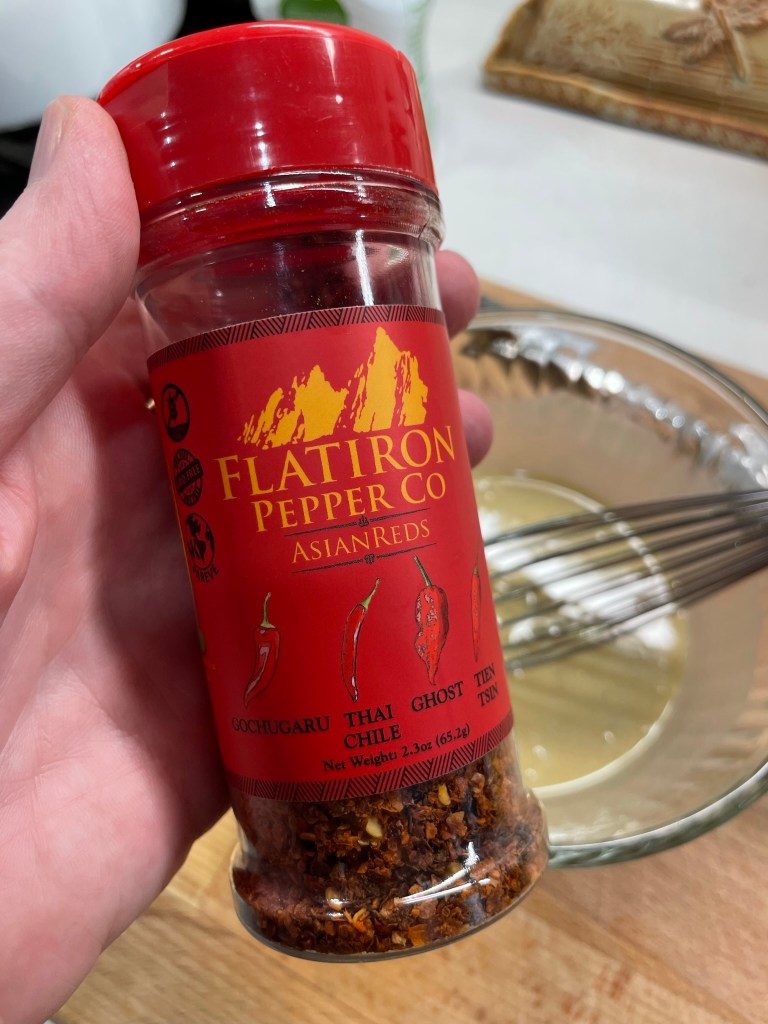
The author’s recipe satisfied most of my wish list, and I followed it mostly as written, subbing tahini in place of cashew butter because I always have a jar of tahini in the fridge. I used slightly less sugar and oil, and for a pop of heat, I added a few shakes of Asian Reds hot chile flakes from Flatiron Pepper Company. This is different from generic “red pepper flake,” as the chiles are specific to various parts of Asia. The dressing is so good, and easily adjusted for sweet and heat. I love the contrast it provided this cooling cucumber salad, and I can imagine it would also be good as a roast vegetable topper. The dressing thickens up a bit in the fridge, so I’d recommend making it ahead.

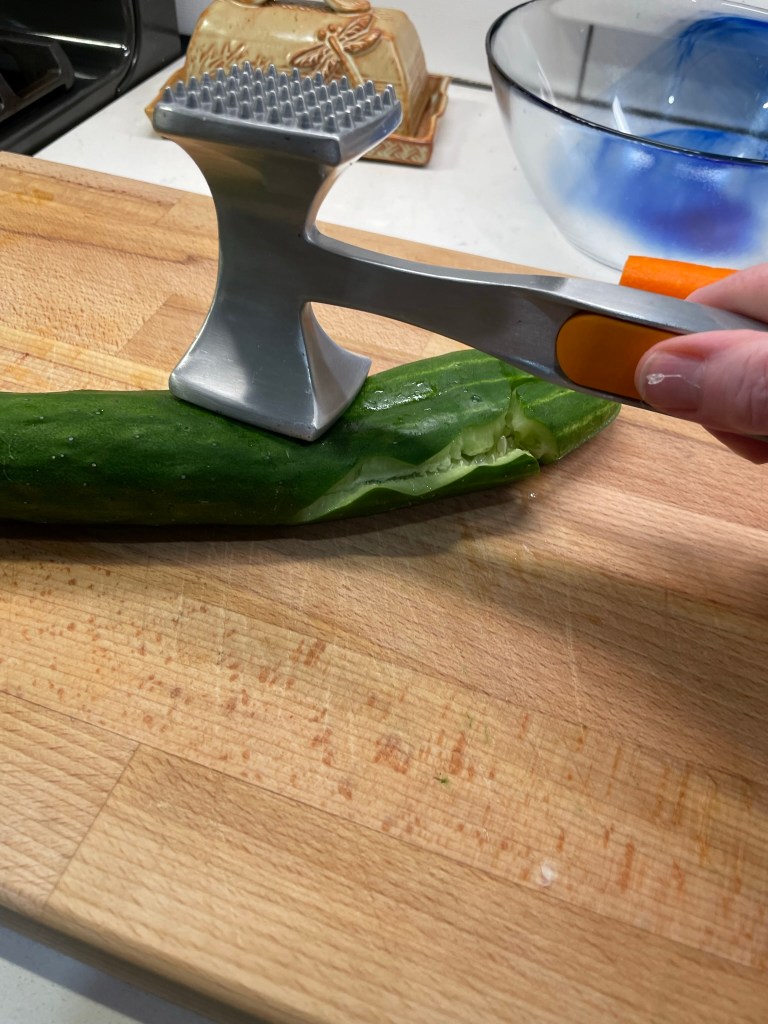
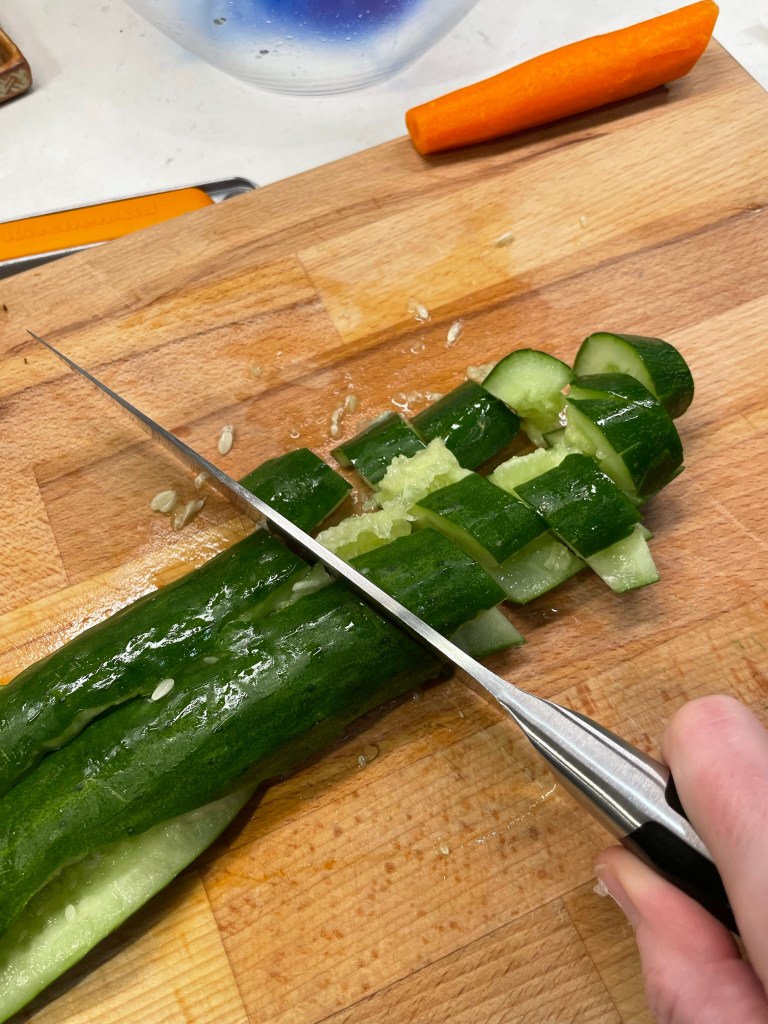
English cucumber is ideal for this type of salad, for its smaller seeds and thinner skin. My grocery stores all sell this type of cucumber, but usually they have a waxy coating to keep them fresh during transport from God-knows-where (yet another reason to choose local). You can use anything you have on hand for smashing it— the flat side of a chef’s knife, bottom of a skillet, whatever— but don’t use a heavy hand unless you want cucumber juice all over yourself and the kitchen. Just enough to crack it open is good, and then use a knife to cut the smashed cucumber into generous chunks. Season it, and toss with the other ingredients. Could it be more simple?


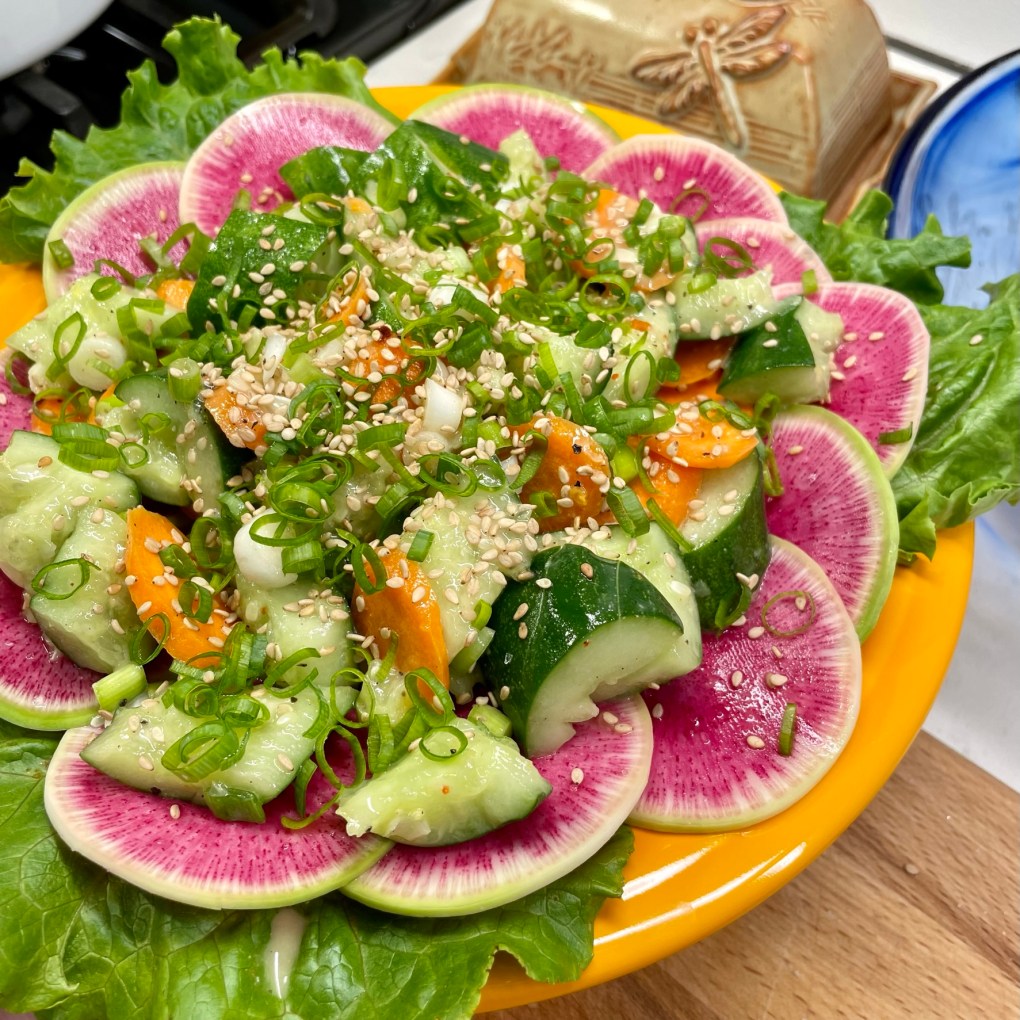
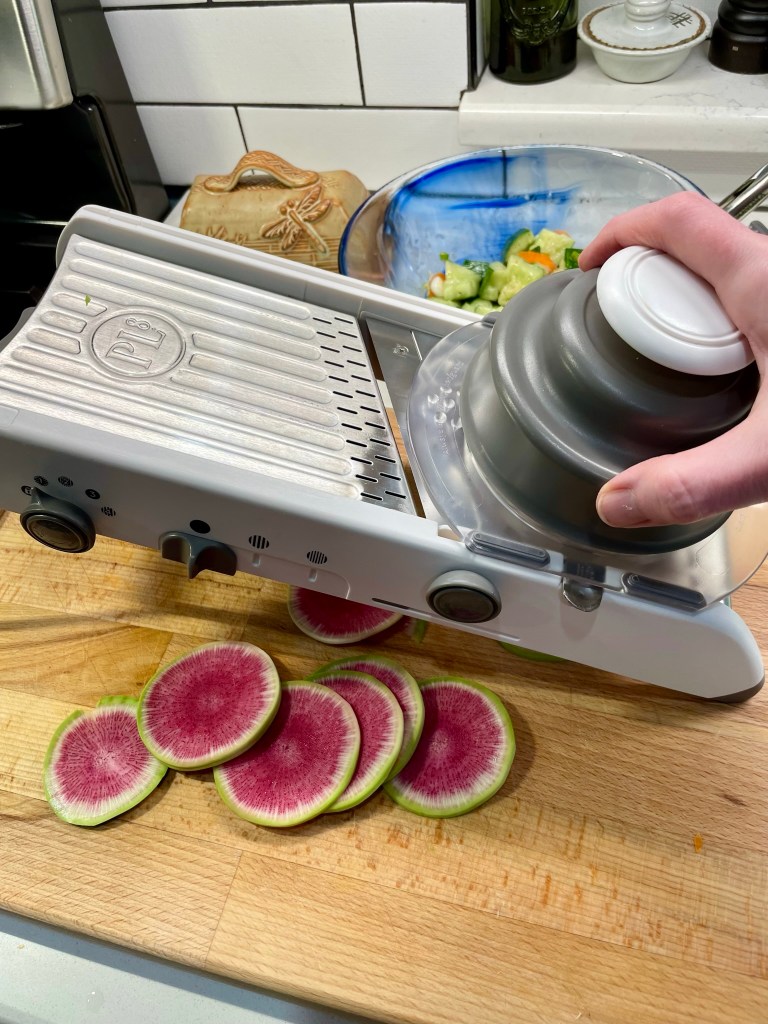
The most brilliant element of this dish— and I mean brilliant in the sense of “wow, look at that shocking pink color!”— is the watermelon radish. That neon pink color seems to be everywhere right now, thanks to the Barbie movie, and though I’ve seen these radishes in food magazines and cooking shows, I have never run across one in the supermarket.


Turns out the farmers’ market is also the place to score Barbie-colored vegetables, and I couldn’t resist slicing one up to complement my smashed cucumber salad. It made a lovely border, don’t you think? And it carries the same pungent, spicy flavor as a typical radish— just larger and way prettier. I’m still deciding what to do with the other watermelon radish (stay tuned).

I love trying new foods! What ingredients are you curious to try, and will you scout them out this weekend at the farmers’ market in your neck of the woods? I hope so!


Smashed Cucumber Salad

  • Servings: 4
  • Difficulty: Average
  • Print

An Asian-inspired dressing puts a flavorful jacket on this super-refreshing and oh-so-fresh cucumber salad. Don't skip the smashing part, as it contributes to the amazing texture of this new summer favorite.


Ingredients

  • 1 large organic English cucumber, cleaned and dried
  • 1 large carrot, peeled and sliced thin
  • 3 scallions, washed and sliced thin (green parts reserved for garnish)
  • 1 medium watermelon radish, peeled and sliced thin
  • Spicy lemon-miso dressing (see below)
  • Lettuce leaves for plating, optional
  • A few shakes toasted sesame seeds (for garnish)

Directions

  1. Prepare the spicy lemon-miso dressing and refrigerate until you’re ready to make and serve the salad. If using the red pepper flake, remember that the flavor will become more intense after the flakes rehydrate.
  2. Lightly smash the cucumber, just enough to split it open. Cut into chunks and add them to a large bowl with the carrots and the white parts of the scallions. Sprinkle with kosher salt and gently toss to distribute the seasoning.
  3. Spoon about half of the dressing over the salad and toss to coat.
  4. Arrange lettuce leaves and watermelon radish on a serving platter. Spoon the smashed cucumber salad onto the plate and garnish with reserved scallion tops and sesame seeds.

Notes: Make the lemon-miso dressing ahead; the flavors mingle nicely in the refrigerator, and the red pepper flakes will rehydrate for maximum punch. You will only need about half of the dressing recipe for this smashed cucumber salad. Save the rest for another salad or to drizzle on grilled vegetables.

Ingredients

  • 2 Tablespoons white miso paste
  • 1 Tablespoon rice vinegar
  • 1 Tablespoon tahini paste
  • 2 teaspoons organic cane sugar
  • Juice and zest of one large lemon
  • Kosher salt and black pepper
  • A few shakes of red pepper flake, optional but wow!
  • 3 Tablespoons extra virgin olive oil

Directions

  1. In a small bowl, combine miso, vinegar, tahini, sugar and lemon juice plus zest. Season to taste with salt and pepper. Add a few shakes of red pepper flake if you want a bit of heat. I like Flatiron Pepper Company’s Asian Reds here.
  2. Slowly drizzle oil into the dressing, whisking constantly to create an emulsion. Adjust seasoning to taste and refrigerate. Dressing will thicken slightly in the fridge.


Peach Panzanella

The heat is getting to me, I think. Since I returned from my solo trip through New England, I have barely wanted to cook. It’s just too hot to think about standing at the stove in the late part of the day. Usually in summer, we at least enjoy firing up the grill for a backyard barbecue, but with it being 97° F in the shade at dinner time, the idea of the grill feels even more oppressive than turning on the stove. I only want cool foods, and it better not take long to prepare. Thank goodness for ripe summer tomatoes and sweet southern peaches! 

There’s a saying out there in foodie land that “if it grows together, it goes together,” and I’m not claiming that peaches and tomatoes are good companions in the garden— how could they be, with peaches growing on trees and all— but I do know that they’re both coming ripe right about now, and I may be onto something with this fresh, light (and did I mention easy?) summer salad.

This is one more thing to love about summer!

Panzanella, in case you have never had the pleasure, is a rustic dish of Tuscan origin, usually made with ripe, juicy tomatoes, cucumber and other fresh ingredients, along with chunks of day-old bread that soak up the juices. The bread gives the salad body and bulk, and the rest of the ingredients are cool and refreshing when the summer weather is everything but. 

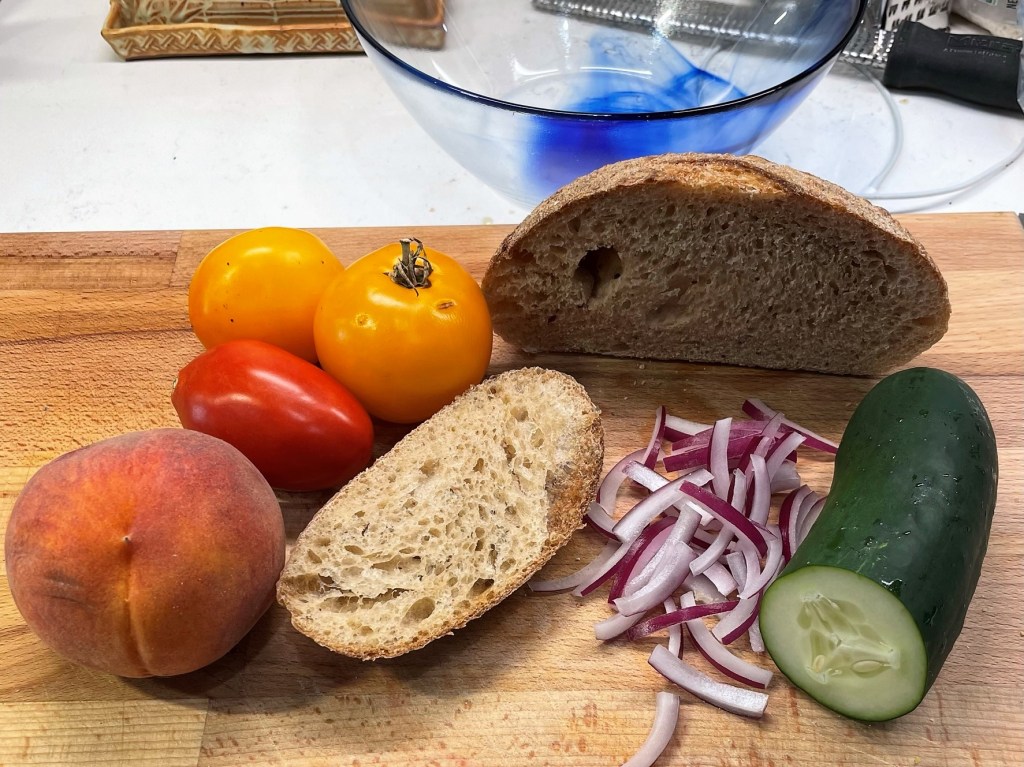
I was about to make a classic panzanella, but then I spotted that peach!

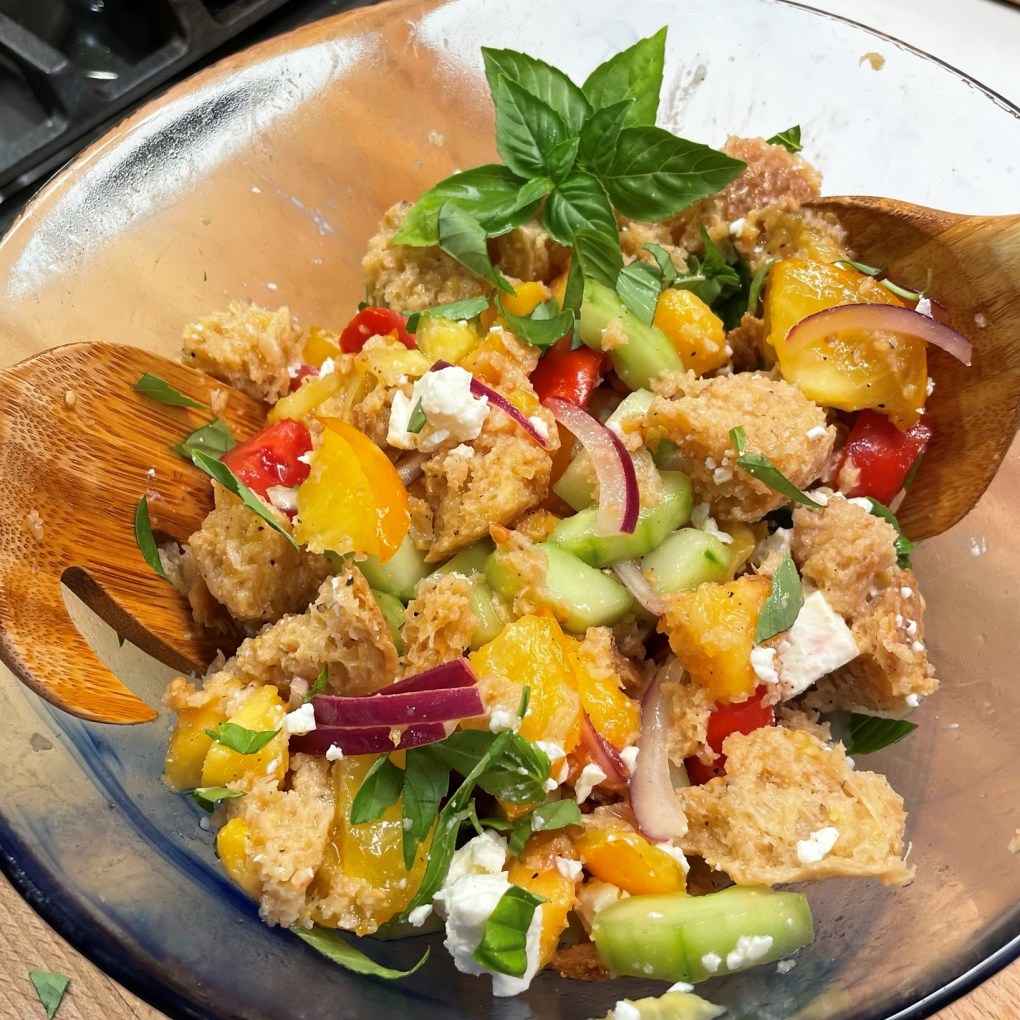
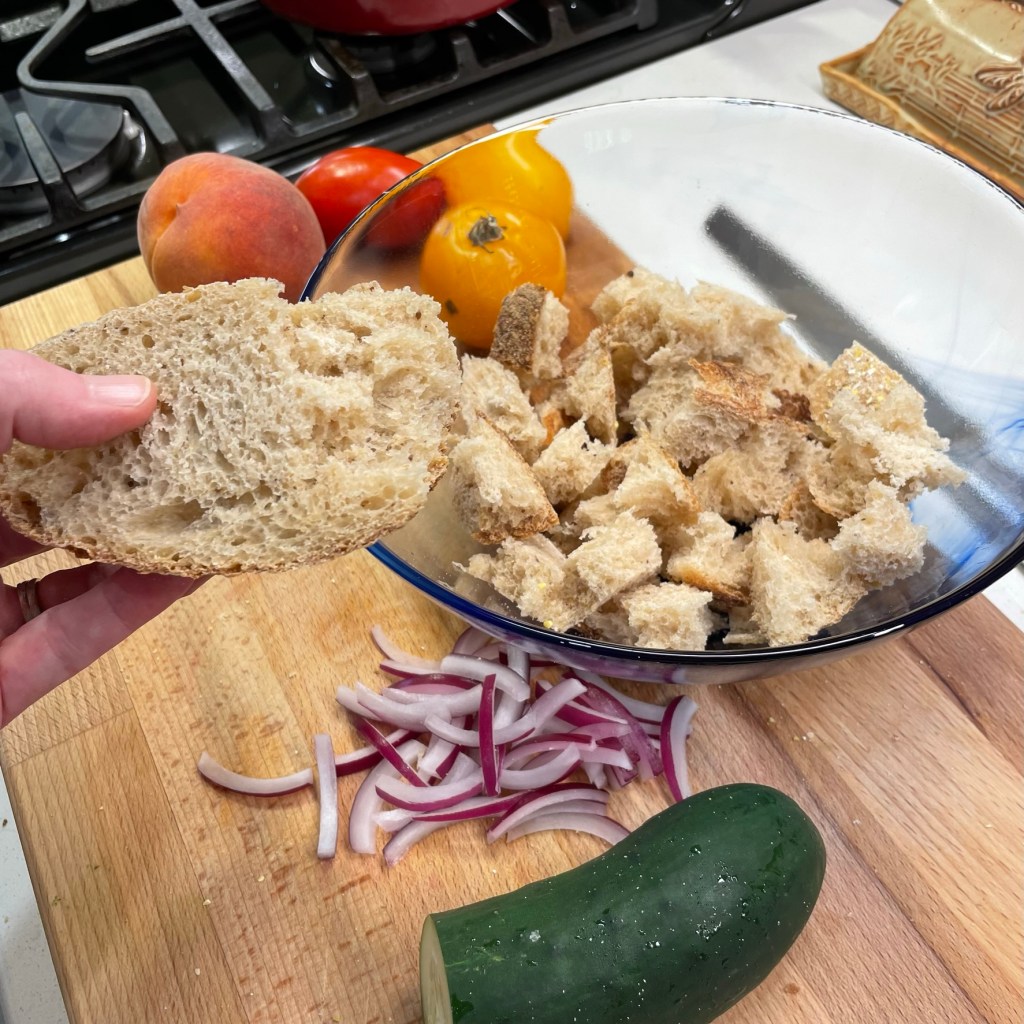
It seems I always have a stale end of bread hanging around the kitchen, and for panzanella, you want the bread to be a “lean” one— that is, not enriched with fats, dairy or sugars. If the bread is soft and pliable, it will quickly turn to mush and you’ll be disappointed in your panzanella. Something like a French baguette or crusty homemade sourdough loaf is perfect because it will generally holds its shape. Whole grain works well, and even seeds on top will work! Tear or cut the bread into small, bite-size chunks, and remove the crust if it seems extra thick or chewy.


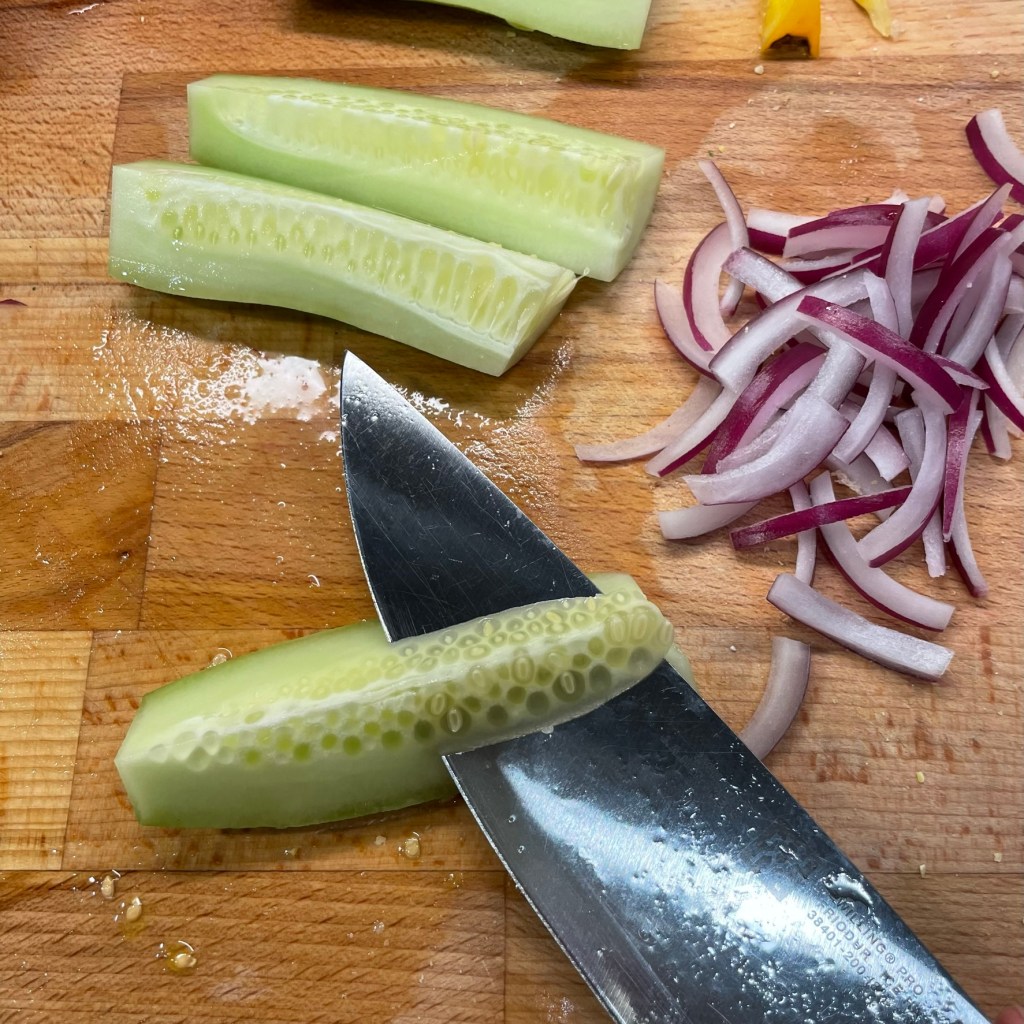
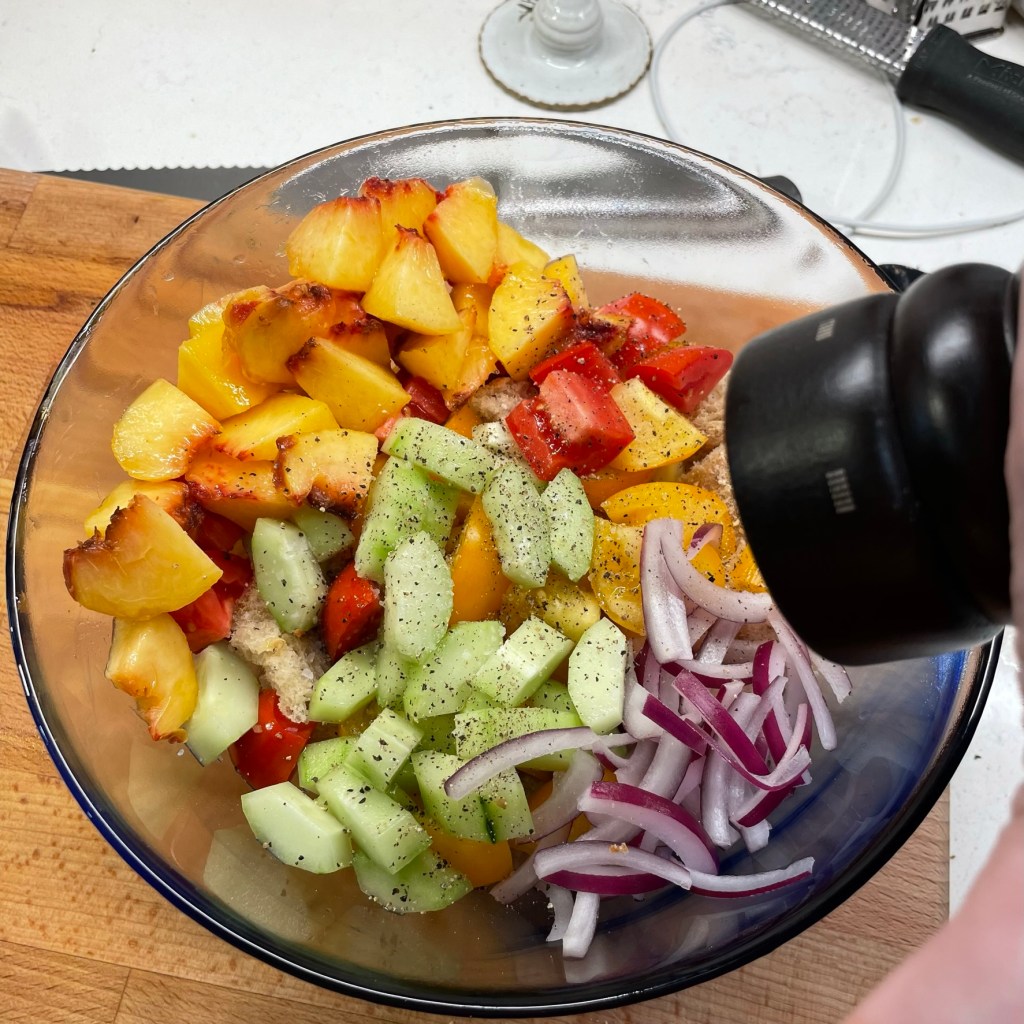
Next, prep all the fresh ingredients, cutting each into smallish bites. My personal rule of thumb for salads to break down the ingredients into small enough pieces that I will be able to get a little bit of everything in a single bite, but not so small that it’s hard to spear them with a fork. I only had a slicing cucumber, so I did remove the tough peel and most of the seeds, but with a Persian or English cuke, there’d be no harm in just washing and cutting it up. A quick seasoning with salt and pepper on all of that, and then I’m on to the dressing. 


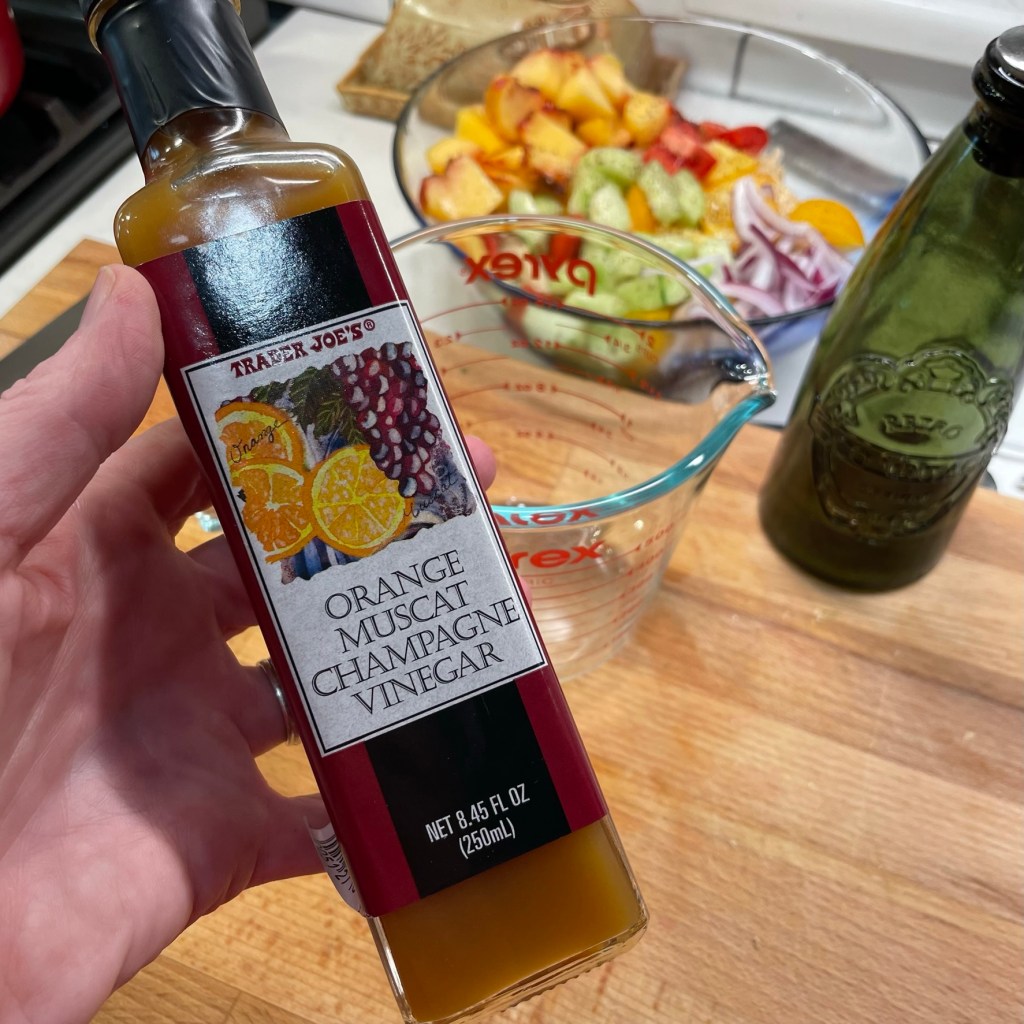
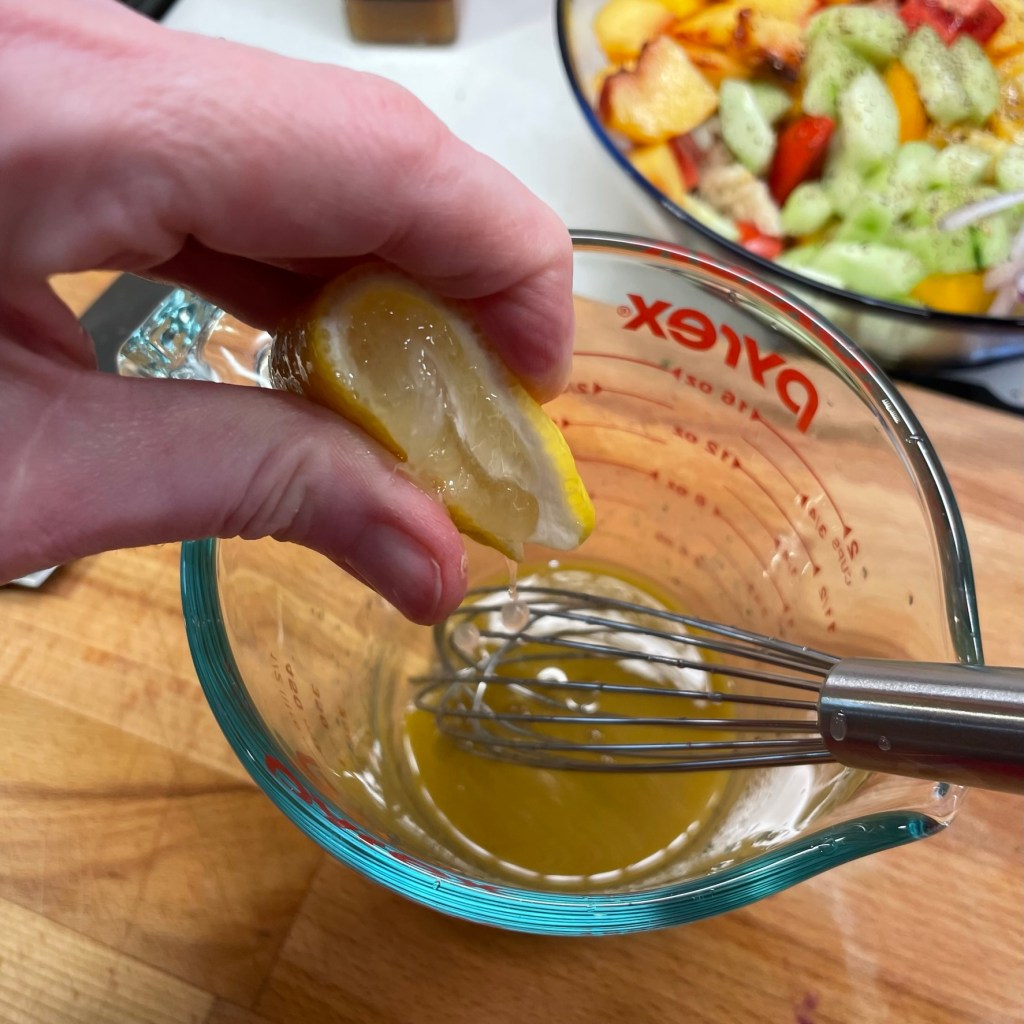
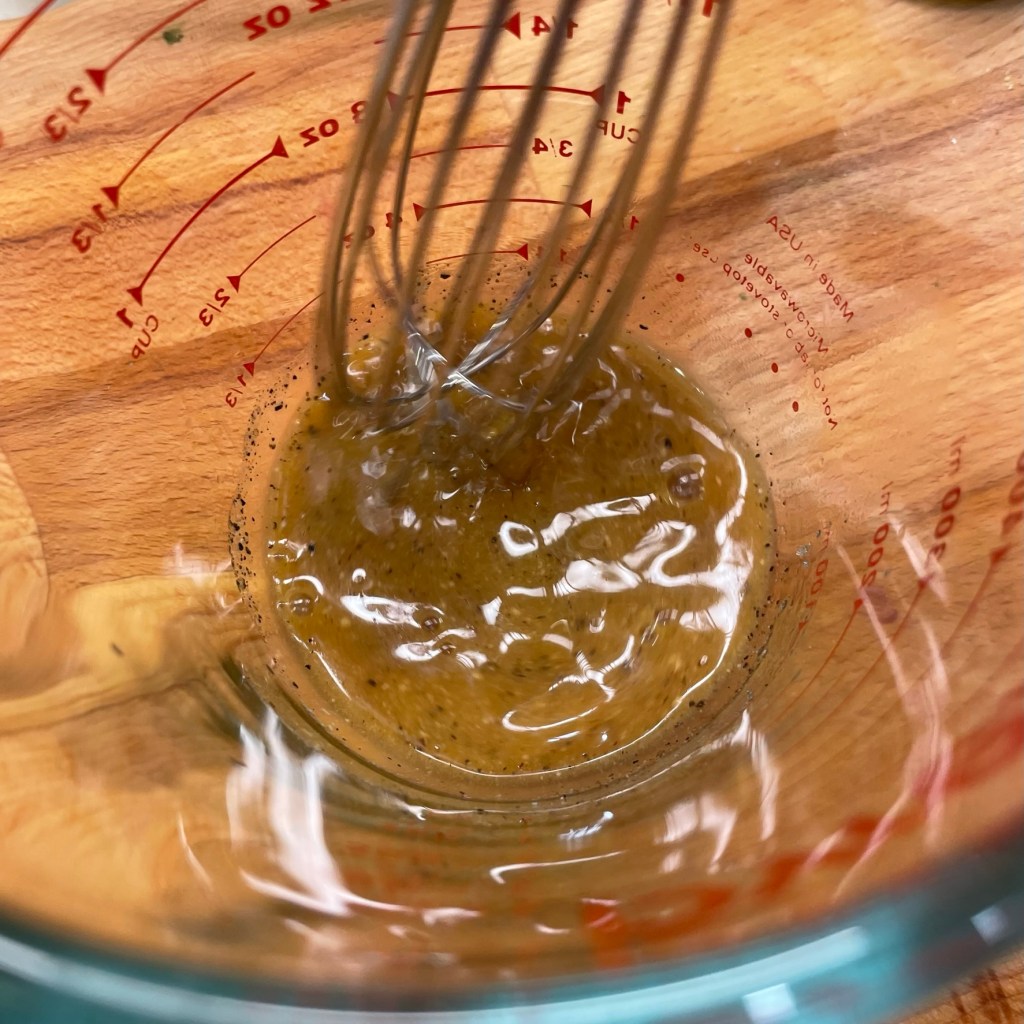
A classic panzanella would be strictly savory, so a vinaigrette with Italian herbs and garlic would be appropriate. But I wanted a lighter, fruitier touch for this one because of the sweet summer peach, so I started with a citrus-y vinegar from Trader Joe’s and jazzed it up with Dijon, a squeeze of fresh lemon and a generous drizzle of fruity, extra virgin olive oil. Any light, fruity vinegar would work well here, or even a white wine or champagne vinegar. If yours is tart and sharp, give the dressing a little balance with a bit of honey or a few pinches of cane sugar. And don’t forget salt and pepper.

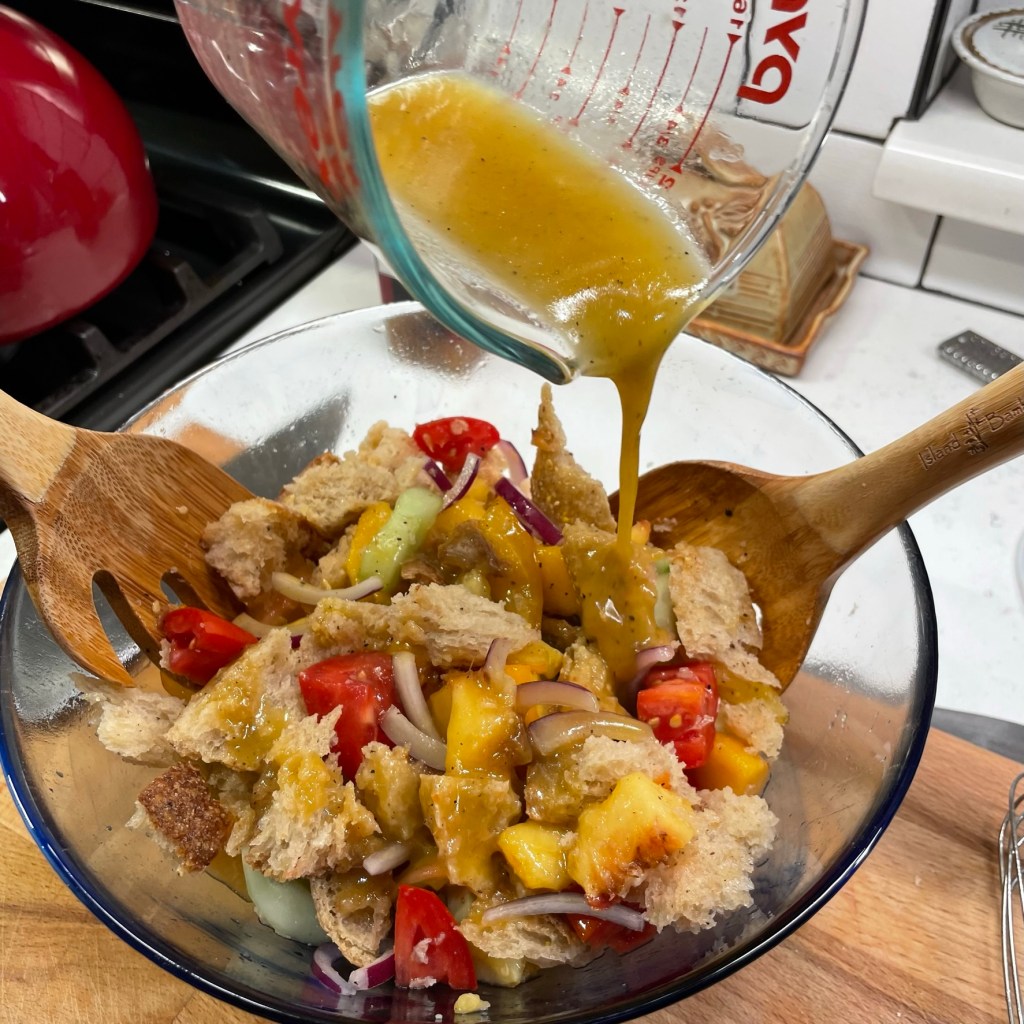
Here comes the best part! Drizzle that dressing all over the salad, and don’t worry if it seems like a lot— the stale bread will slurp it up so it won’t go to waste. Toss gently a few times to fully incorporate the dressing, and allow the panzanella to rest while you set the table. Just for fun, I sprinkled on some feta chunks and fresh, summery basil. Italian parsley would have been just as delicious, or even fresh mint to add another cooling layer.


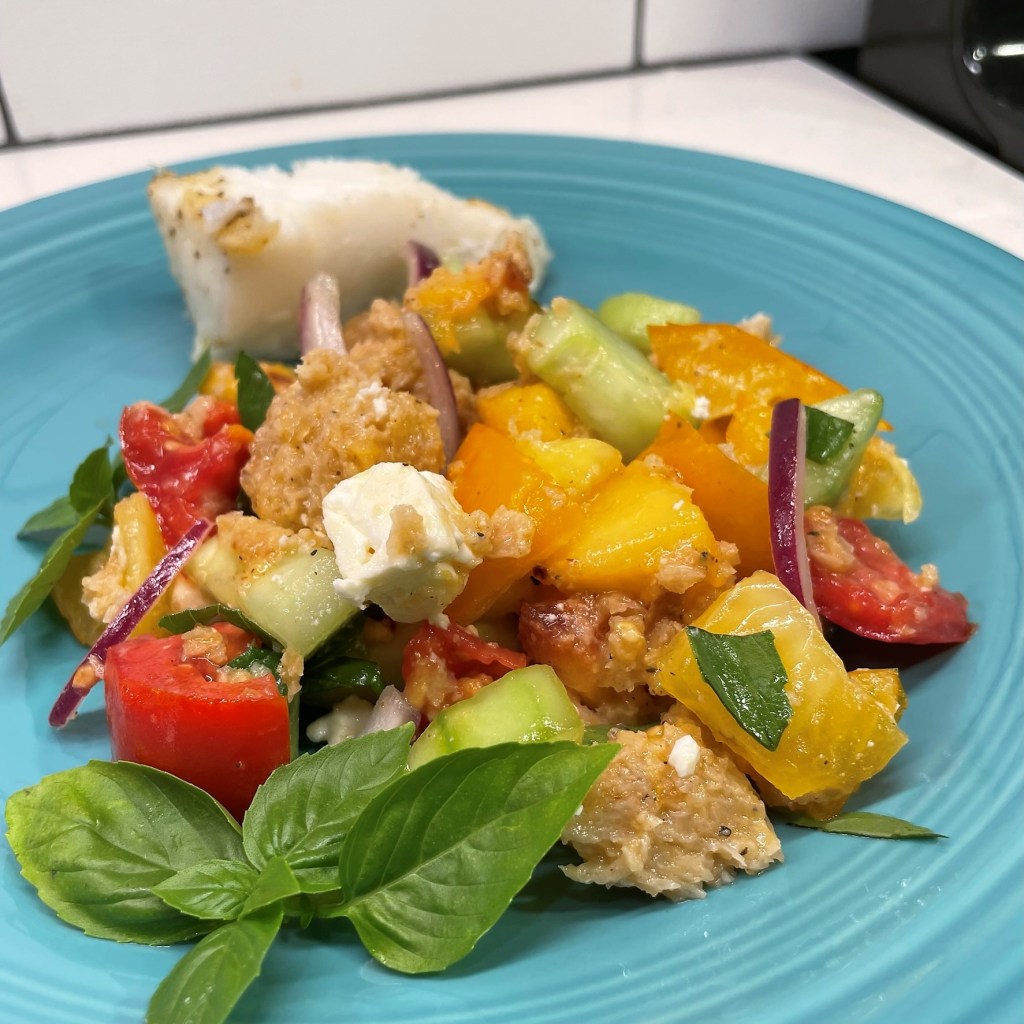
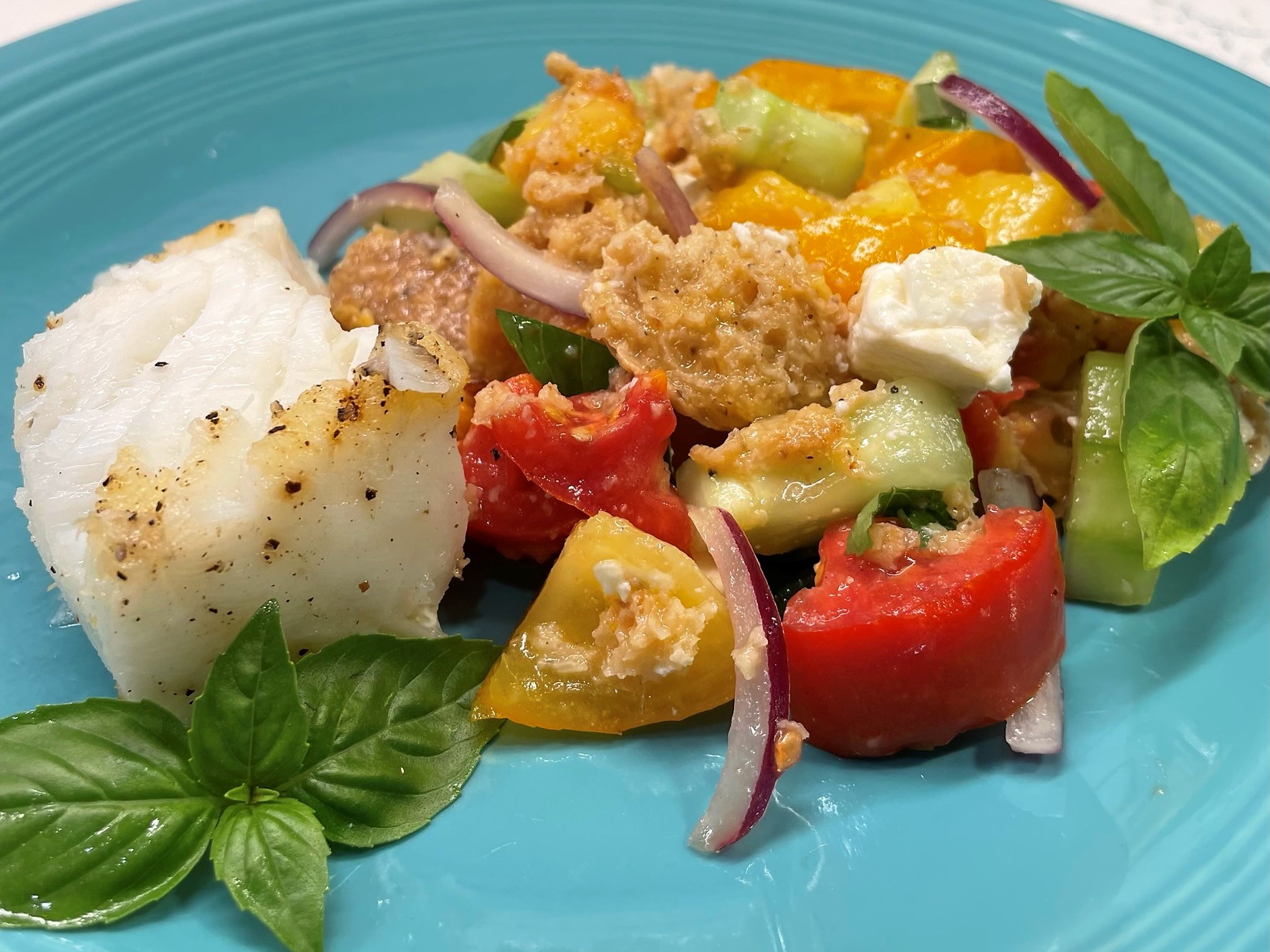
I served my peach panzanella with petite fillets of halibut. They were super easy to make, seasoned with only salt and pepper and baked in the oven for a mere 15 minutes. Easy, quick and done!


Peach Panzanella

  • Servings: About 3
  • Difficulty: Easy
  • Print

A ripe and juicy summer peach puts a delicious and unexpected twist on a classic panzanella. It's a cool and tasty way to beat the summer heat!


Ingredients

  • 3 cups torn sourdough bread (dry or stale)
  • 1/2 slicing cucumber, peeled and seeded
  • 2 small yellow tomatoes, halved and cut into wedges
  • 1 Roma tomato, quartered lengthwise and cut into wedges
  • 1 large ripe peach, peeled and pitted then cut into chunks
  • 1/4 cup thinly sliced red onion
  • 2 oz. real feta, crumbled or cut into cubes
  • Small handful of fresh basil, torn or rough-chopped for garnish
  • Vinaigrette dressing (see below)

The dressing for the panzanella can be made ahead if desired. Choose a vinegar that is light and summery, such as white wine vinegar or something infused with citrus.

Ingredients

  • 3 Tbsp. Muscat orange-champagne vinegar (or something fruity and tart)
  • 1 tsp. Dijon
  • Salt and pepper
  • 1/4 cup extra virgin olive oil
  • 1 tsp. honey or sugar if vinegar is very tart

Directions

  1. Add all salad ingredients except feta and basil to a large bowl, in order, so that bread pieces are on the bottom. Season with salt and pepper and set aside while you make the vinaigrette.
  2. Whisk together dressing ingredients. Adjust salt and pepper to taste.
  3. Pour dressing all over salad. Toss gently to incorporate, and allow the bread a few minutes to soak up the dressing and juices.
  4. Sprinkle with feta and fresh basil. Serve at once.


Heat & Sweet Baked Beans

As far as I’m concerned, baked beans should be right up there with baseball, hot dogs, apple pie and Chevrolet— a true American classic. And as demonstrated by my relatives at every Fourth of July gathering during my childhood, there are many, many ways to prepare them. You can make them sweet, bacon-y, onion-y, molasses-y or pretty much whatever you want. I happen to want them all, and I’m on a mission to keep pushing the flavor boundaries until I run out of ideas.


For this version, I went rogue with both sweet and spicy additions to a can of prepared baked beans that my husband’s son, Alex, had left behind following his visit here from Hungary back in March. There are only so many things one can pack in a checked bag before you reach the weight limit imposed by the airline, and Alex had to choose between the bottle of Wild Turkey 101 or this can of beans. You guessed it, he took the bourbon back to Europe! Seriously, anyone could have called that one.

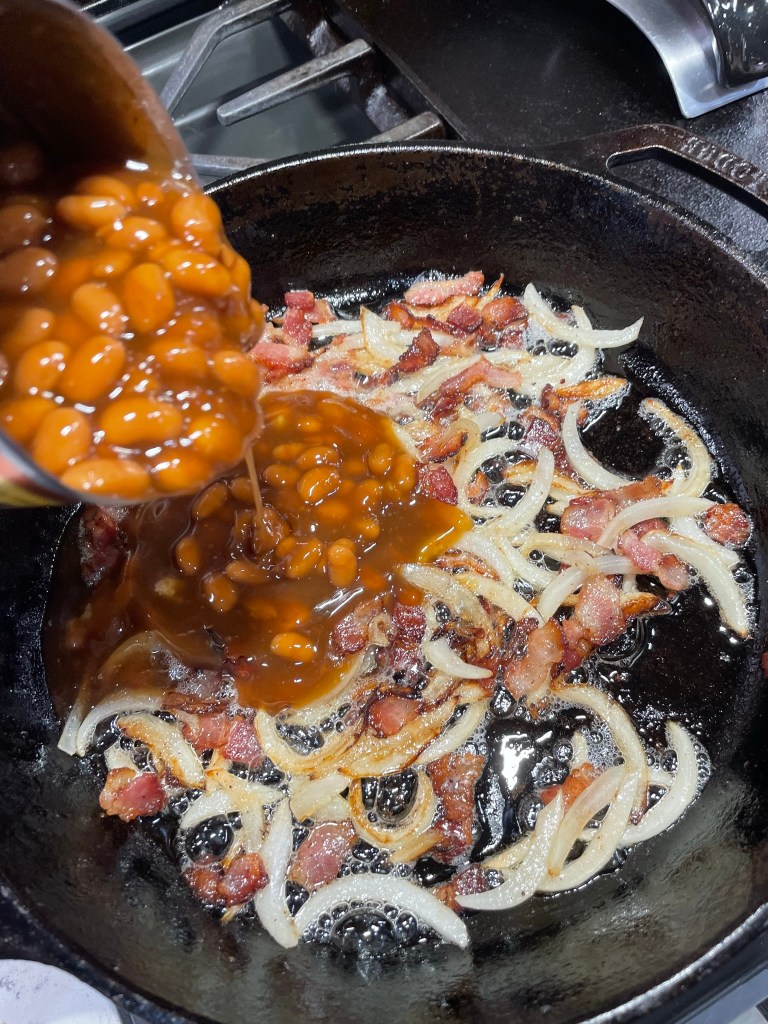
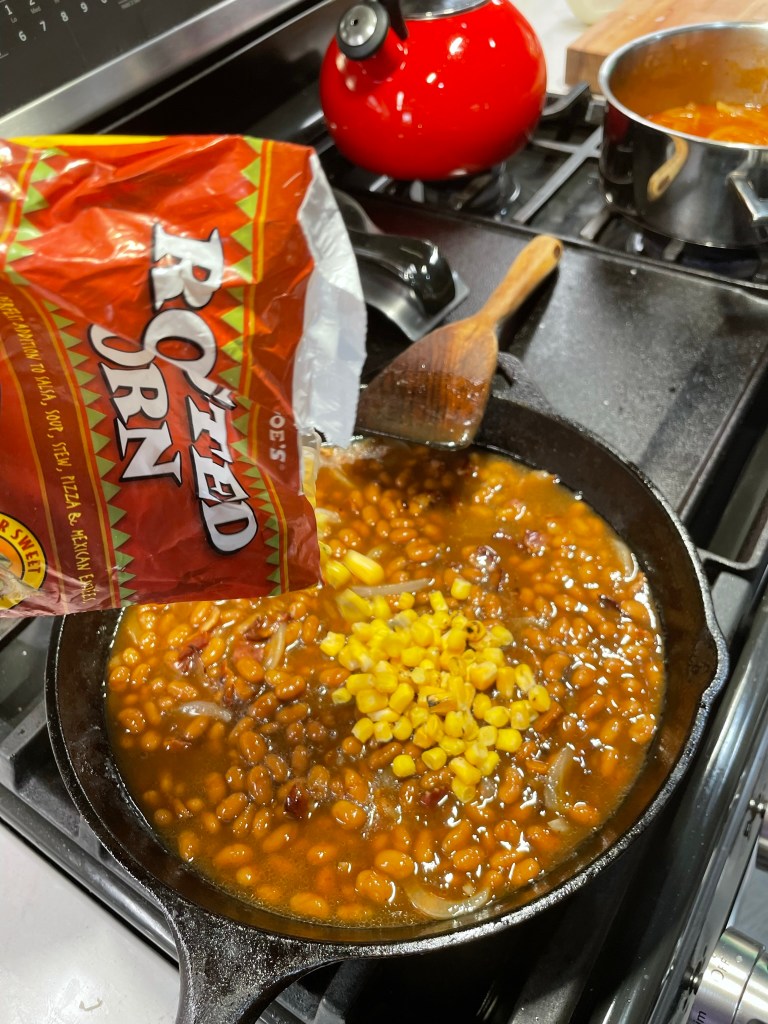
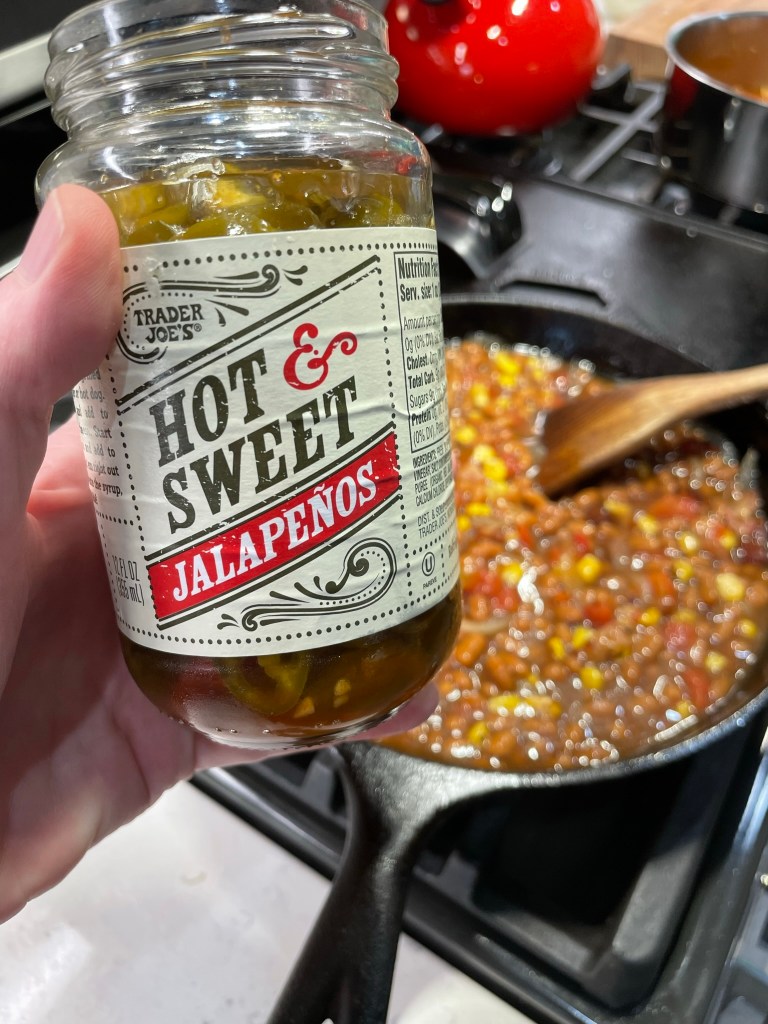
Alex’s choice left me with the enviable task of elevating the canned beans, which had a label touting “extra brown sugar.” I wanted something a little different, but not too crazy, so I started with onions and bacon— the two ingredients that always push baked beans into the savory zone. The canned beans had enough sweetness already, so I set my sights on texture and contrast. I tossed in some roasted corn (I used frozen from Trader Joe’s, but fresh would have been awesome) and about half a can of hot Rotel tomatoes, left over from a batch of Les’s amazing pimento cheese from a recent gathering of friends. For a huge kick of heat, I added a fat handful of sweet pickled jalapeño slices— also from Trader Joe’s— and I didn’t bother to drain or chop them. The only other seasoning I added was salt and pepper. Sooo easy!


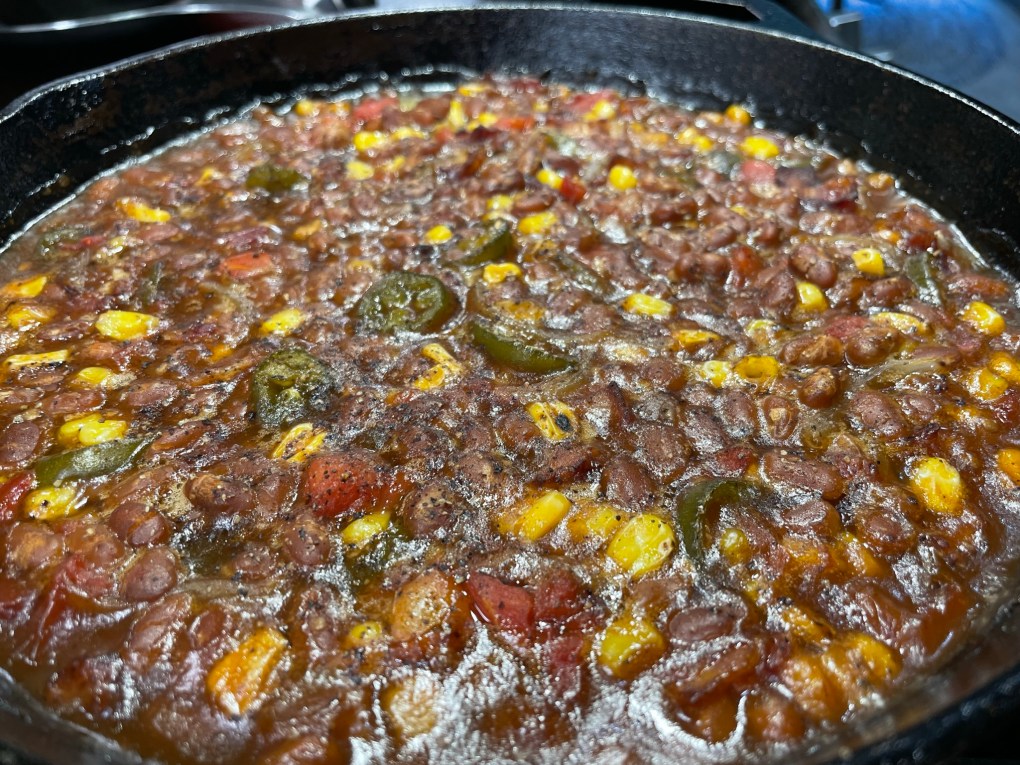
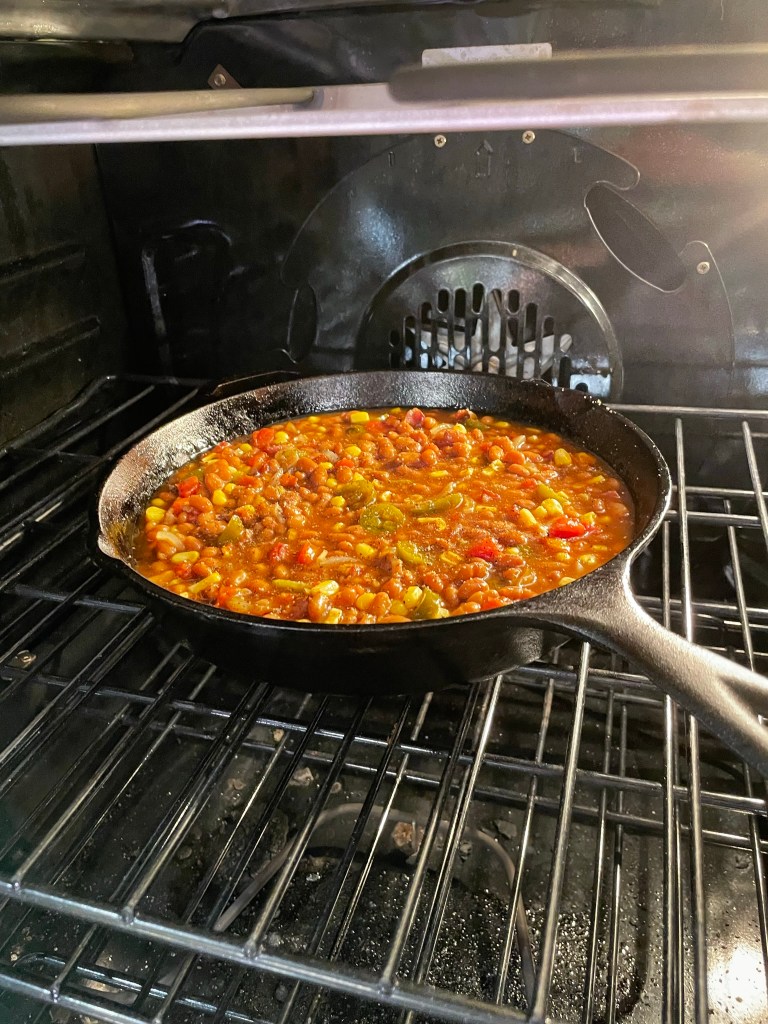
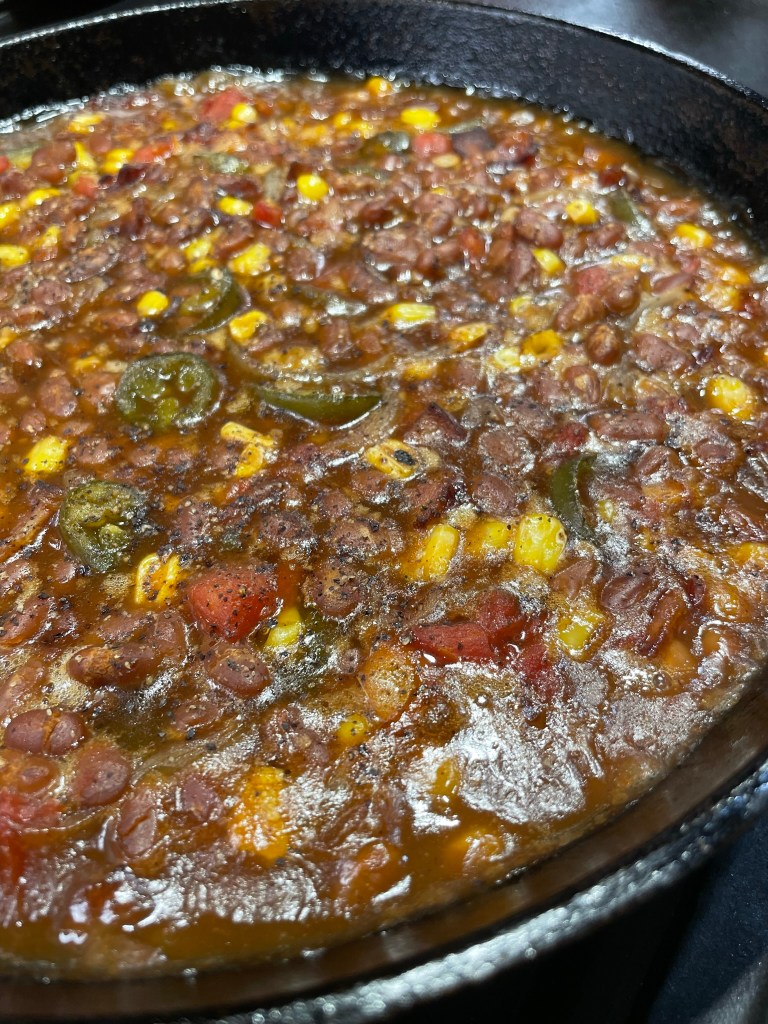
I mixed them up in the same cast-iron skillet I used to cook the bacon and onions, and then slid the skillet into a 350 F oven for about half an hour. The beans emerged hot and bubbly, but could have benefitted from a bit more oven time, so I would recommend 45 to 50 minutes if you like the sticky, candy-like sauce around the edges as much as I do.


Wow, this was one addictive batch of baked beans! There was more than enough kick, thanks to the Rotel and the jalapeños, and interesting texture from the corn and pickled jalapeños. Every bite was sweet at the start, and then the slow burn kicked in, making you desperate for another sweet bite, and so on. The leftovers were also delicious cold from the fridge. For sure, Alex would approve of what I did to his left-behind can of beans. 

Good thing I wrote it down for his next visit. 🙂


Heat & Sweet Baked Beans

  • Servings: 6 to 8
  • Difficulty: Average
  • Print

These baked beans are hot, sticky and sweet, with plenty of savory flavor and interesting texture. My latest homage to the Fourth of July gatherings of my childhood.


Ingredients

  • 1 large can Bush’s baked beans with extra brown sugar
  • 1/2 medium sweet onion, cut into slivers from top to bottom
  • 3 slices uncured bacon, cut into 1-inch pieces
  • 1/2 cup fire roasted corn (frozen is fine, or fresh if you have it)
  • 1/2 can Rotel tomatoes (habanero variety)
  • 1/4 cup hot and sweet pickled jalapeños
  • Salt and pepper to taste

Directions

  1. Preheat oven to 350 F, with rack in center position.
  2. Place a 10-inch cast-iron skillet over medium heat. Add bacon pieces and cook until some of the fat renders and bacon begins to curl. Add onions and cook until bacon is slightly crispy. Season with a little bit of salt and as much black pepper as you’d like.
  3. Add the entire can of baked beans. Swirl the can with a couple of tablespoons of water to rinse out every drop of sauce into the skillet.
  4. Add corn, tomatoes and jalapeños and stir until evenly blended.
  5. Transfer skillet to preheated oven and bake 45 to 50 minutes, until beans are bubbling around all the edges of the skillet. Allow the beans to cool about 10 minutes before serving.


Potato Salad with Chive & Parsley Pesto

The official start of summer is still a couple of weeks off, but it seems safe to assume that, for most of us, Memorial Day has already ushered in the season. My husband, Les, and I were invited to join some of his old work friends for a backyard cookout that weekend, and our contribution was to be a side dish or dessert. We couldn’t choose, of course, so we made both! Les brought his nearly world famous chocolate chip cookies—one of these days I’ll convince him to share them here— and I picked this salad, which had arrived in my inbox from NYTimes Cooking just a few days before the cookout.

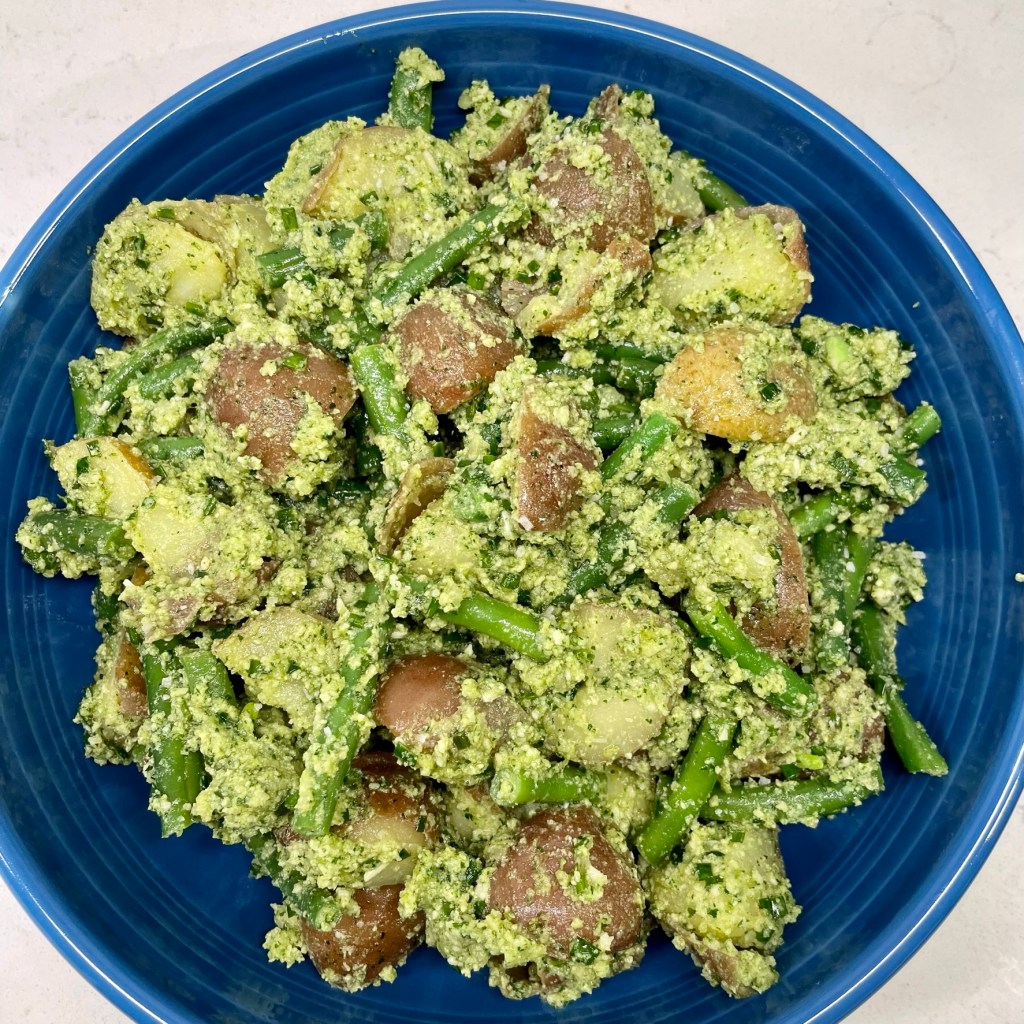
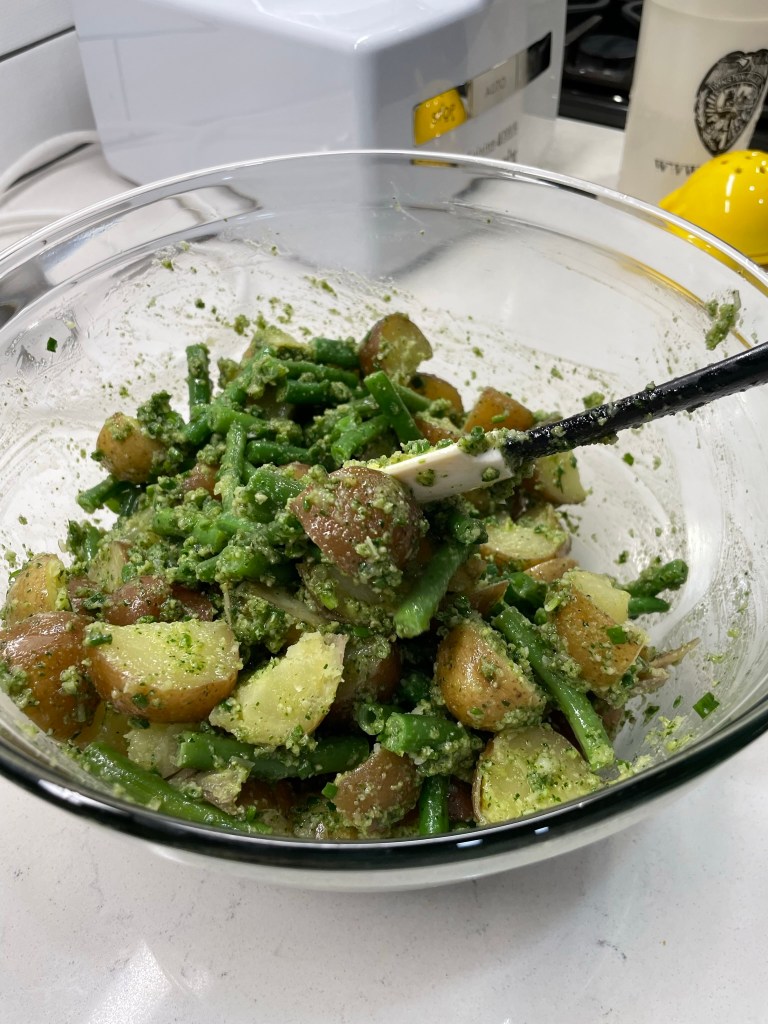
This was a flavorful twist on a typical summer potato salad!

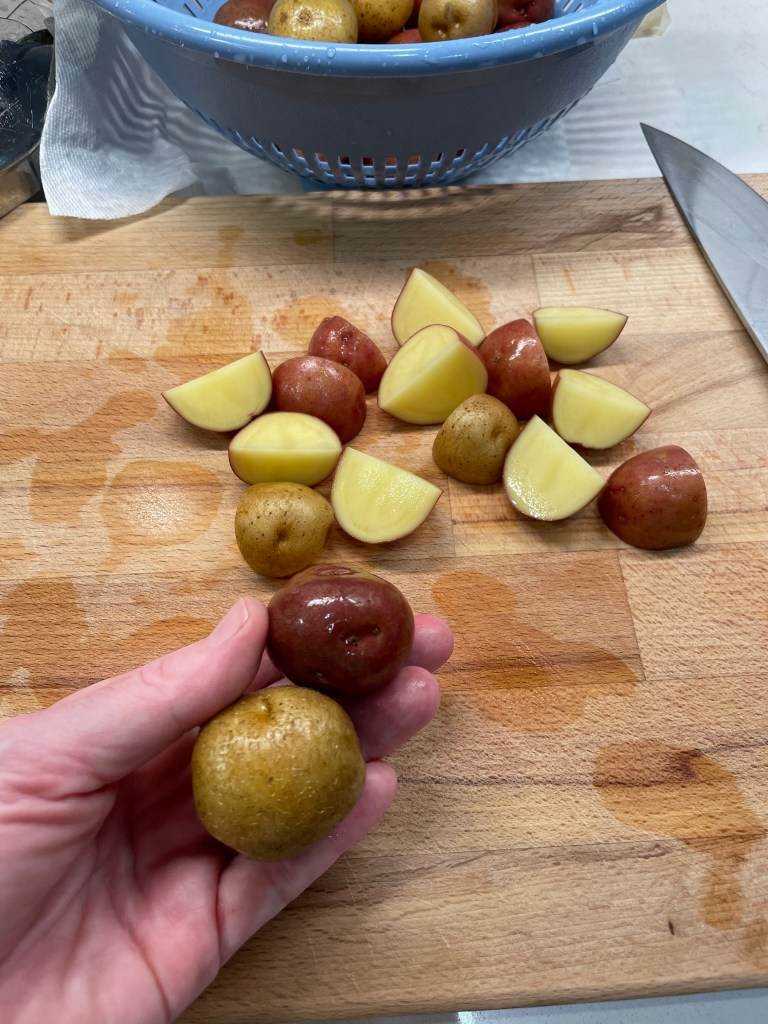
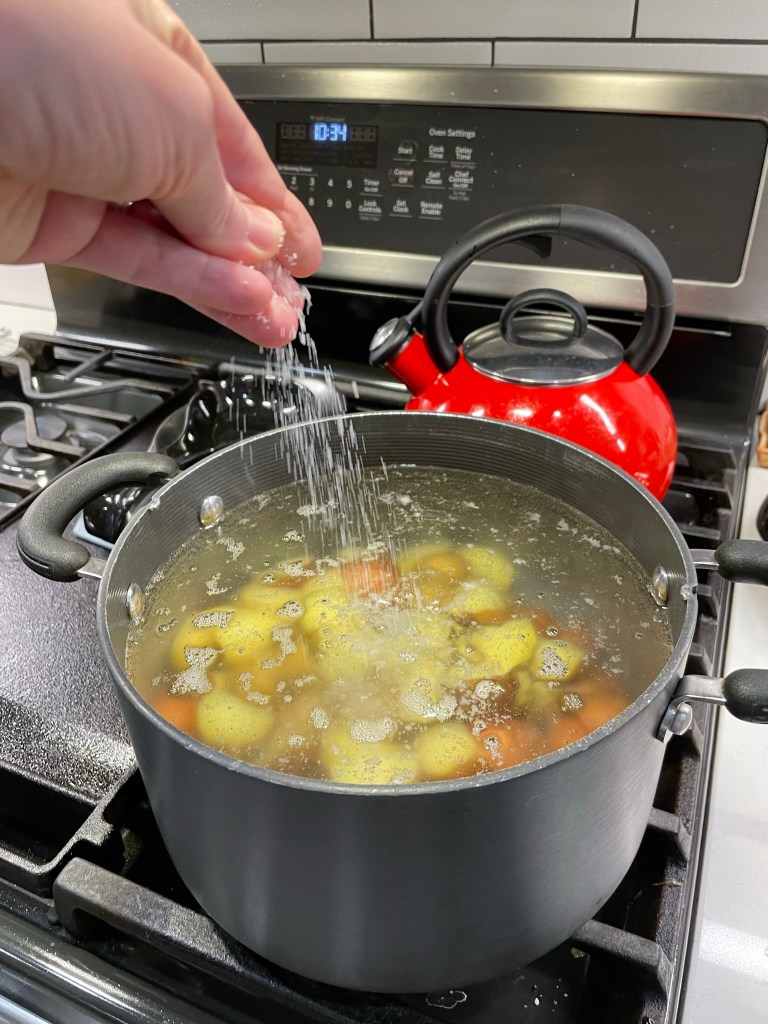
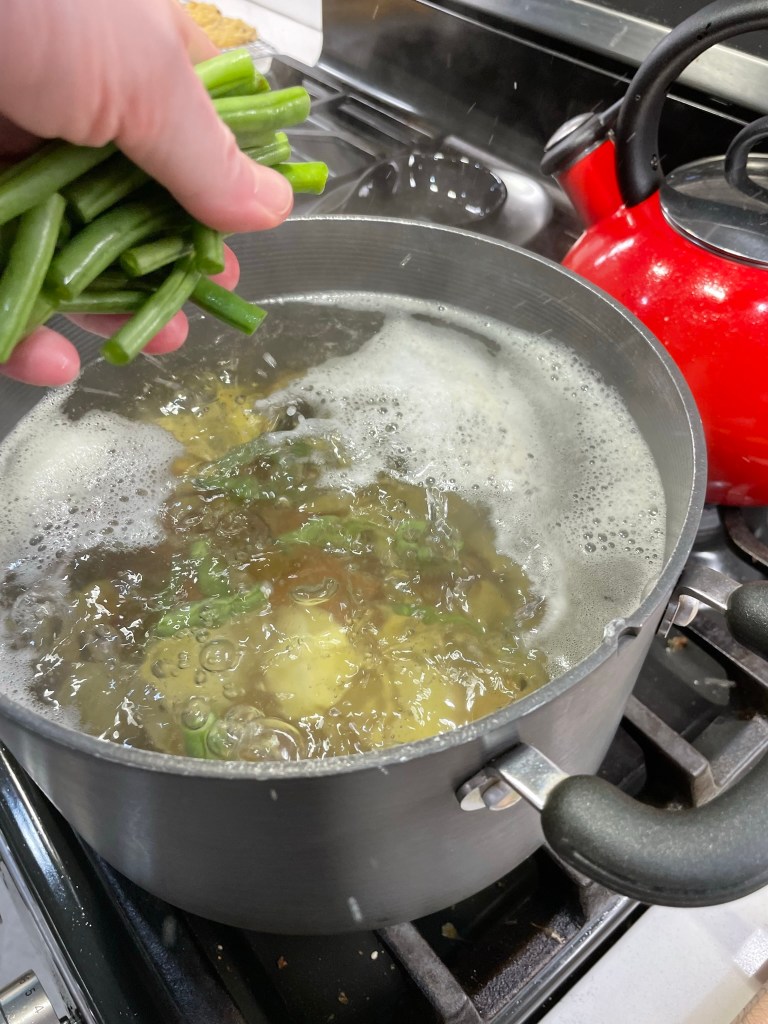
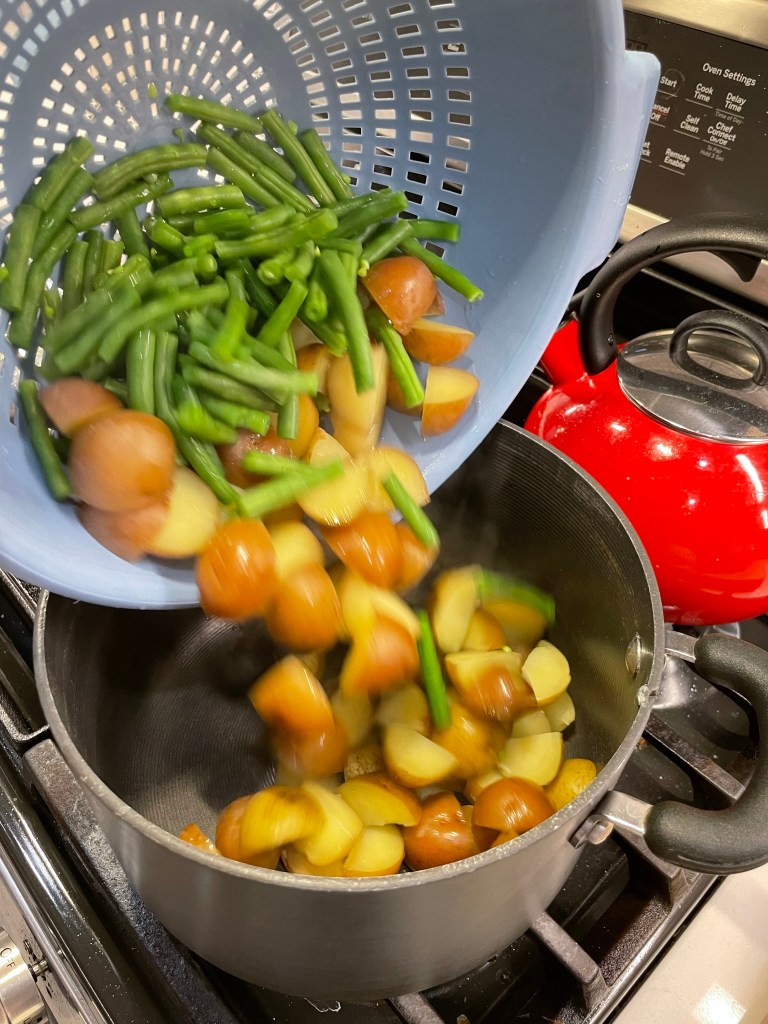
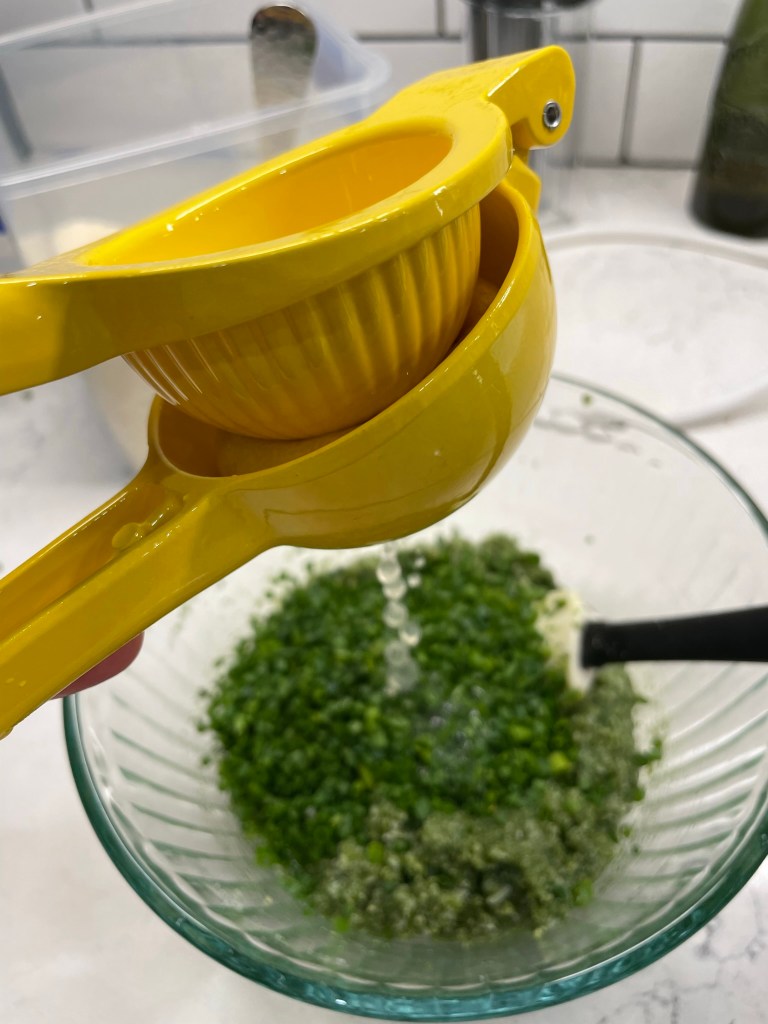
I picked this one for a few reasons. First, I knew that there would probably already be plenty of macaroni salads and mayonnaise-based potato salads, so this would be a change of pace. The dressing here is essentially a pesto, but made with parsley and chives rather than basil. It’s a bright, vibrant salad that looks great on the plate and it “ages” well at a potluck without that greasy, broken mayo coating. There was also the matter of the large bag of baby potatoes Les had picked up at Costco the week before, and we had almost exactly the 2 pounds I needed for this salad! Green beans added a little bit of crunch that was just right, though I can imagine cut spears of asparagus would have been tasty, too. I cut the potatoes into quarters to get more surface area  to hold the pesto, and boiled them until fork tender, tossing in the green beans for the final two minutes. So easy, and all in one pot!


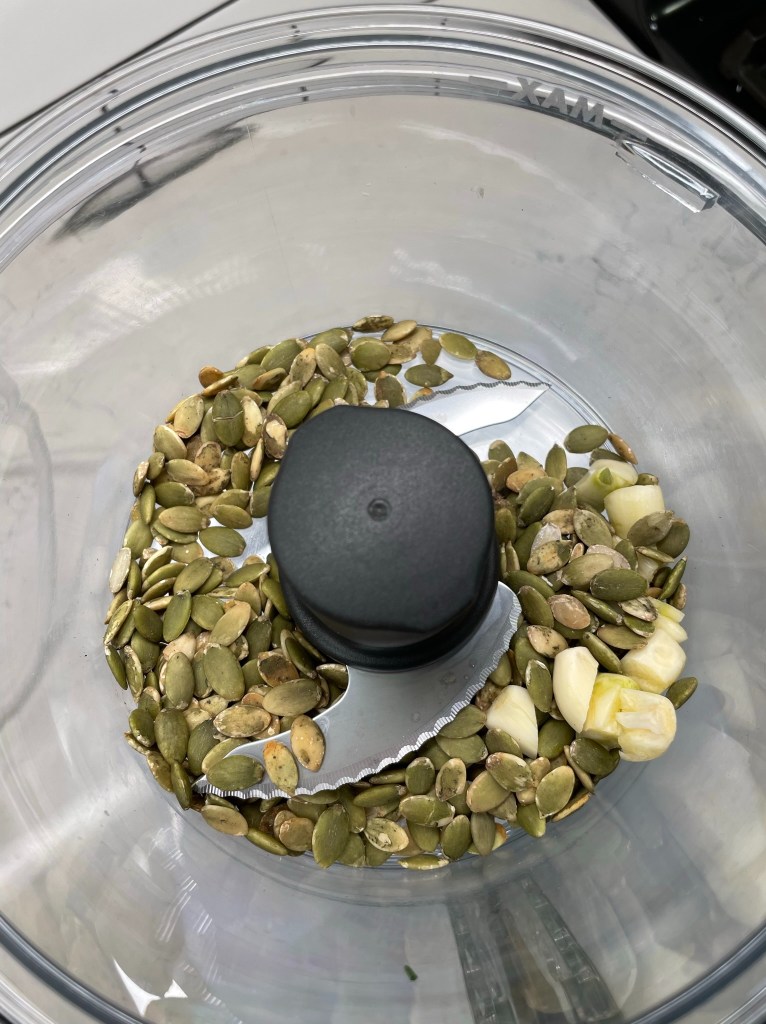
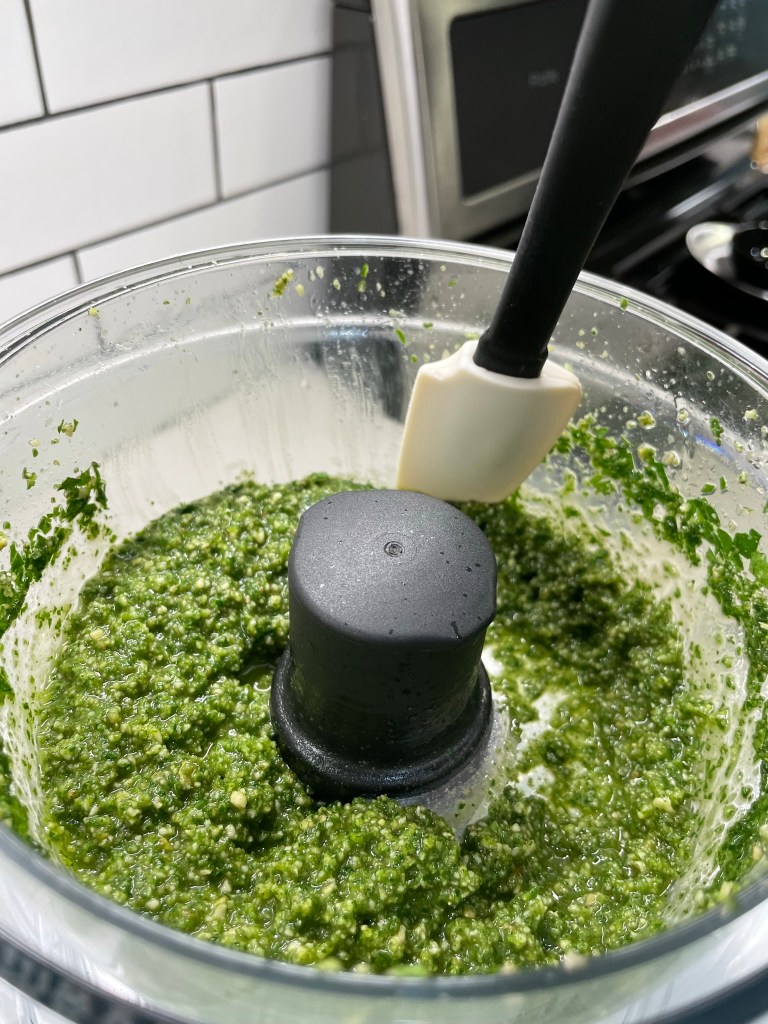
The recipe sounded great as written, but I tweaked it just a bit to satisfy our love for extra garlic. I didn’t have pine nuts but found that toasted pepitas worked great in the pesto and added even more pretty green color. Our parm-romano blend provided a deep savory flavor, and I used a nice peppery olive oil for even more zing.

There was quite a lot of pesto dressing, and I’m glad that I added it gradually, as the potatoes and green beans didn’t need the whole amount. But who minds having a little leftover pesto on hand? It will be delicious on some grilled fish or maybe tossed with shrimp and hot cooked pasta. Oh wait, on grilled vegetables! Mmm.


Just one more thing I’d add about this salad— serve it right away, and make it on a day that you have plenty of people around to eat it. We had a bit left over and found that it fell kind of flat after a couple of days in the fridge.

Potato Salad with Chive & Parsley Pesto

  • Servings: About 8
  • Difficulty: Average
  • Print

I only made a few minor tweaks to this NYT Cooking recipe, and it has already won a coveted spot in my summer side rotation!


Ingredients

  • 2 pounds baby potatoes, scrubbed and halved or quartered
  • 1 Tbsp. kosher salt (for cooking water)
  • 1/2 pound green beans, trimmed and cut into short pieces
  • 1/4 cup roasted pepitas (hulled pumpkin seeds)
  • 3 cloves garlic, rough chopped
  • 1 cup packed Italian parsley leaves
  • 1/2 to 3/4 cup extra virgin olive oil (a bright, peppery one is perfect here)
  • 1/2 cup freshly grated Parmesan or Parm-Romano blend
  • 1 small bunch chives, snipped
  • Juice of 1/2 large lemon
  • Salt and pepper to taste

Directions

  1. Add potatoes to a large pot and cover with cold water. Bring to a boil over high heat, then add salt and reduce heat to a constant simmer. Cook potatoes about 15 minutes, until they are easily pierced with a fork or knife tip. Add green beans only for the last minute or two, so they remain bright green and tender-crisp.
  2. Drain potatoes and return them to the hot pot to allow excess moisture to evaporate.
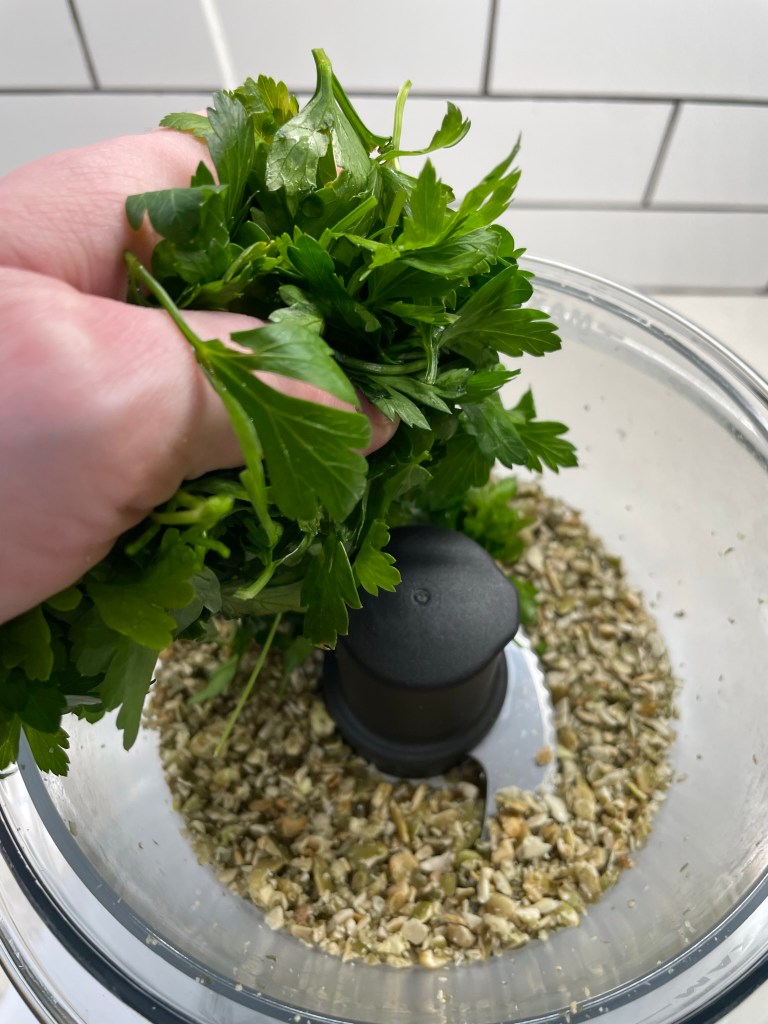
  3. Make the pesto while the potatoes and beans cook. In the small bowl of a food processor, pulse together the pepitas and garlic. Add parsley and pulse several times. Use a small spatula to scrape down the sides of the bowl. Run the processor continuously while you drizzle in the olive oil, and puree until it is an even paste. Transfer the mixture to a large bowl and stir in the Parm-Romano, lemon juice, chives and salt/pepper to taste.
  4. In a large bowl, combine the warm potatoes with about half of the pesto. Fold gently to coat and add more pesto to your liking. Season to taste with salt and pepper. Reserve any leftover pesto and enjoy tossed with pasta or roasted vegetables. It will keep better with a thin layer of extra virgin olive oil floated on top.