Clams Casino Pizza

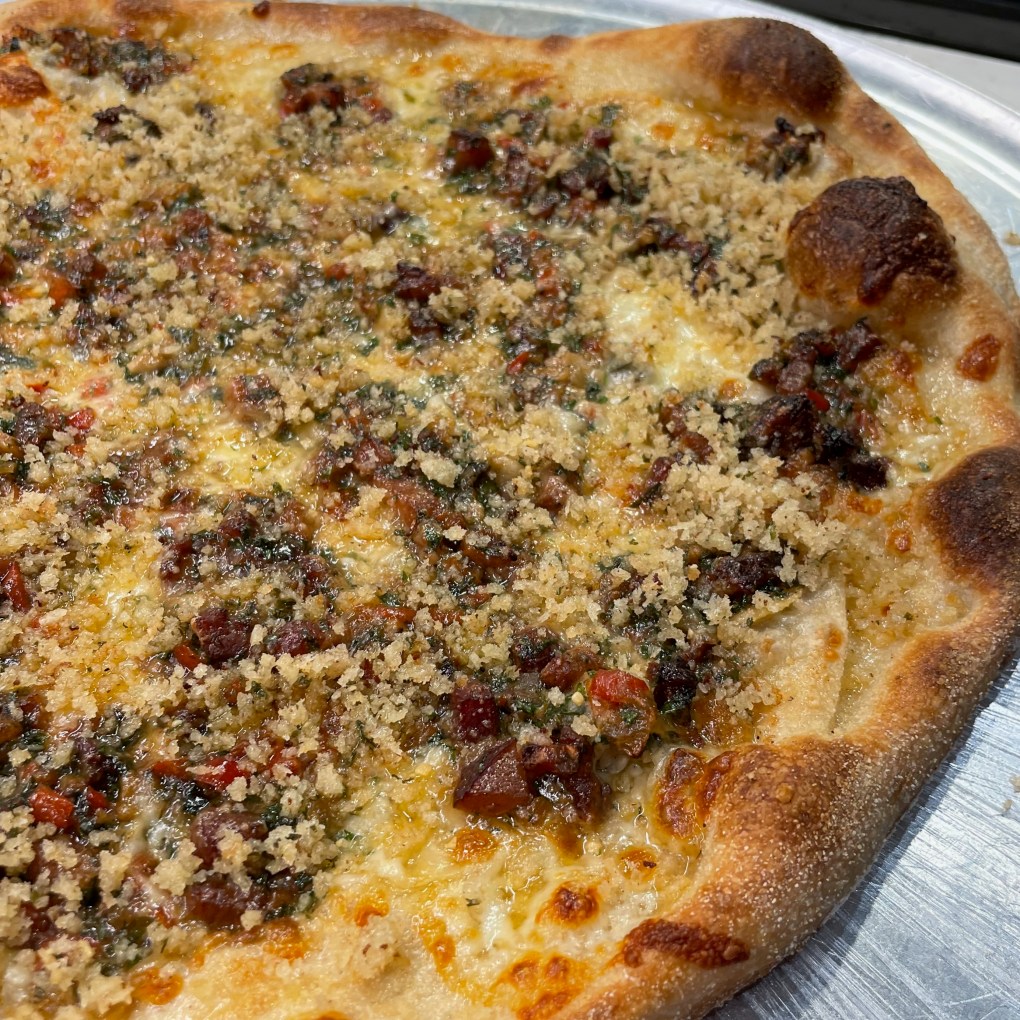
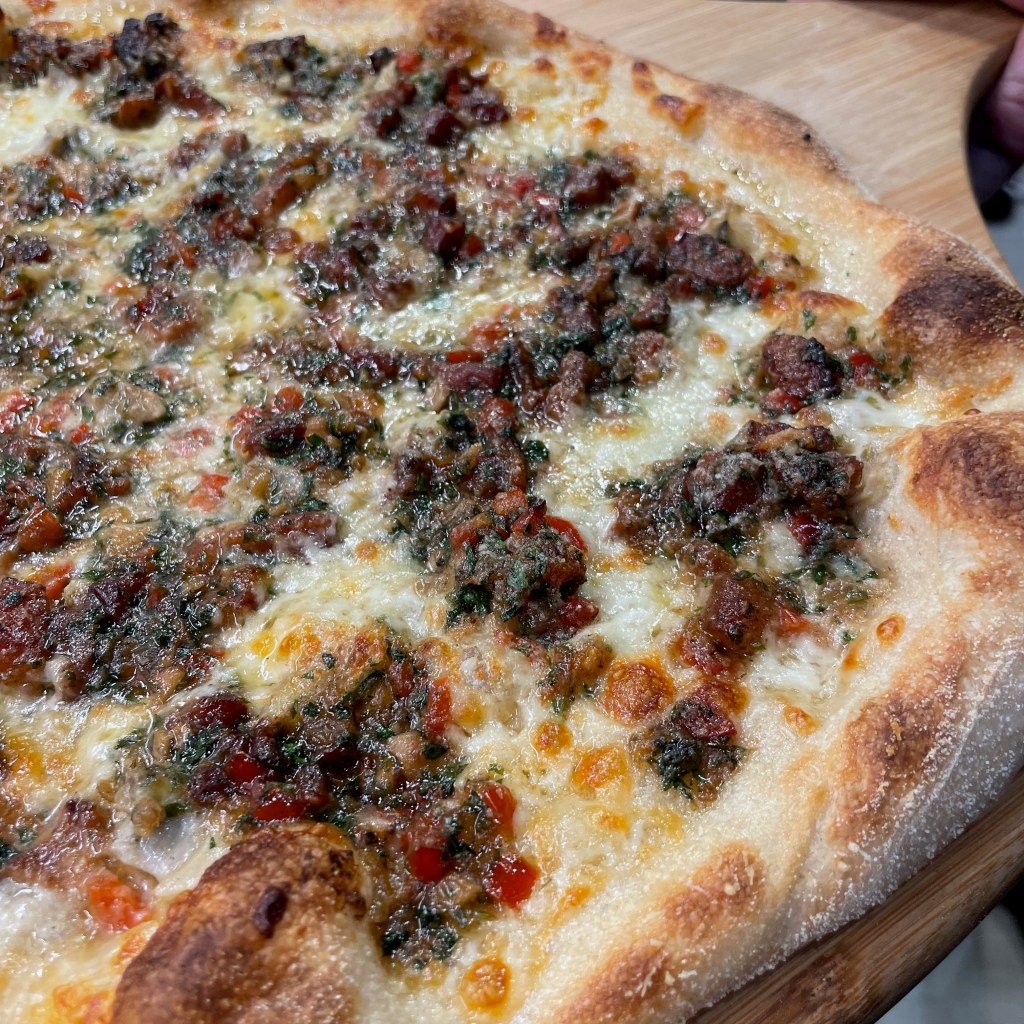
Call me sentimental, but I’ve been digging some of the retro standards lately. Nostalgia hits heavy during the holidays, and my recent tradition of reimagining some old-school favorites on top of a pizza for New Year’s continues with this combination of clams, bacon, pepper, shallots and garlic— it’s a clams casino pizza!

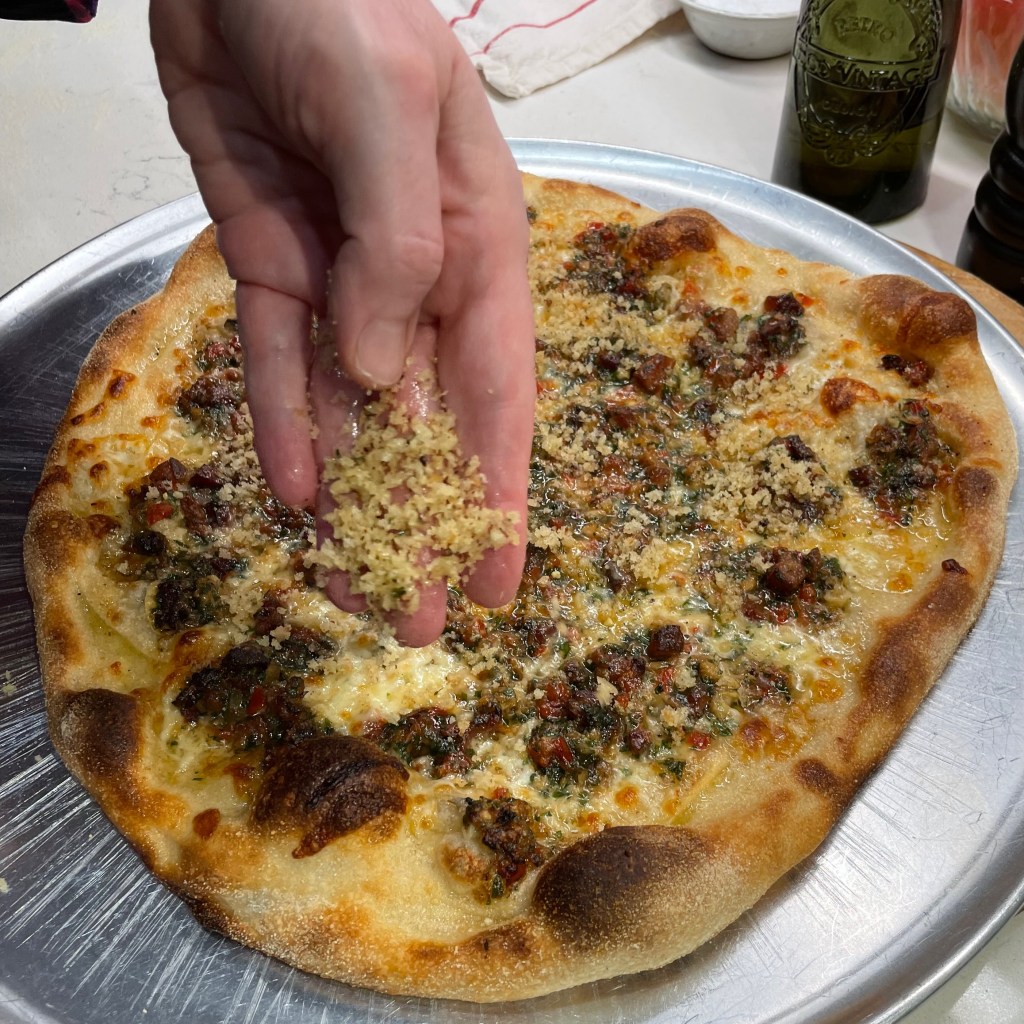
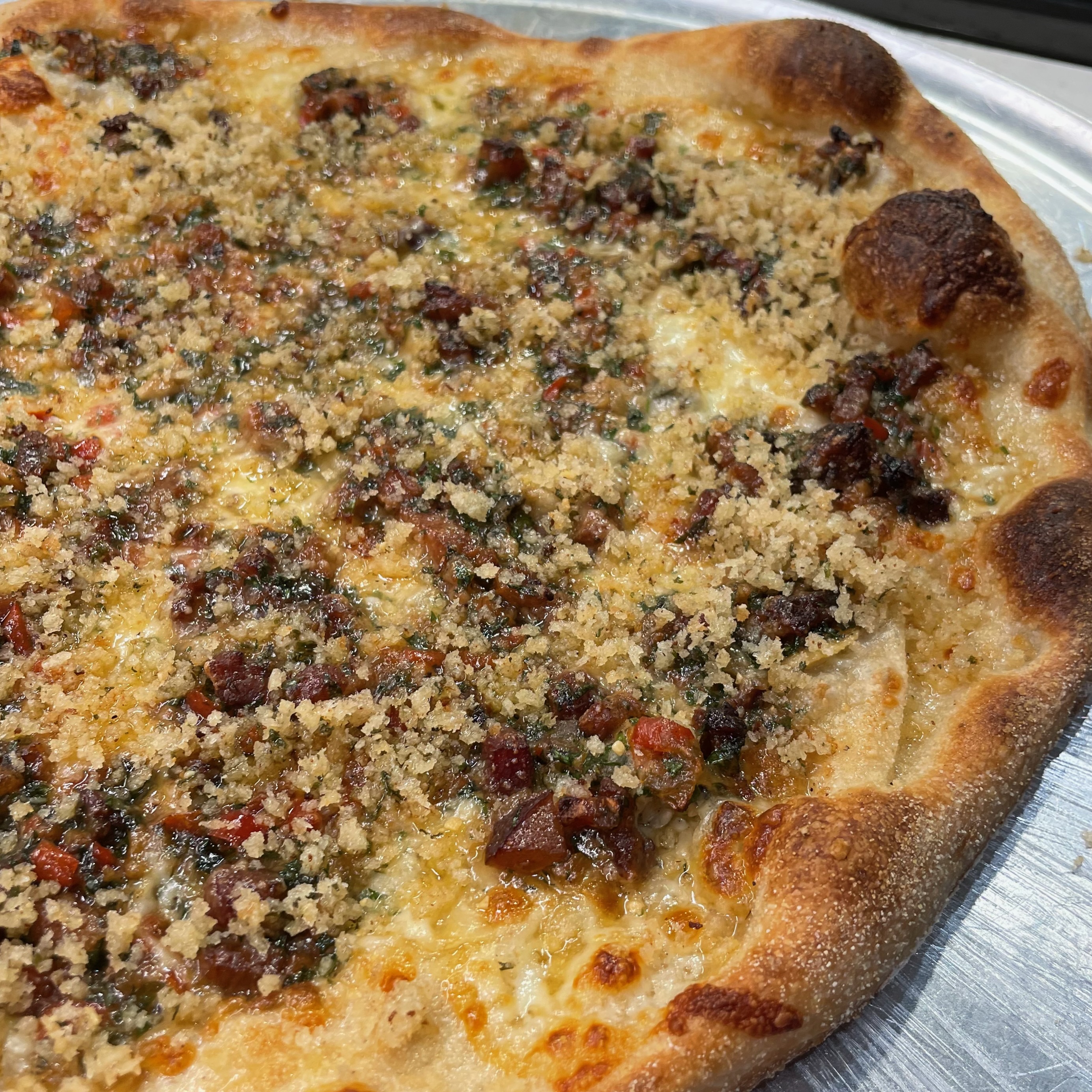
It even has crisp, bacon-y panko crumbs on top!

The literal translation of “casino” from Italian is “big mess,” and I find that more fitting of the dazzling Las Vegas strip than the flavors of the dish that that was first created in 1917 at  Narragansett Pier Casino in Rhode Island— or was it 1900 in New York’s Central Park Casino? As usual with recipe history, the details are murky, but with such a delectable combination of flavors, I can understand why people would fight to lay claim to it.

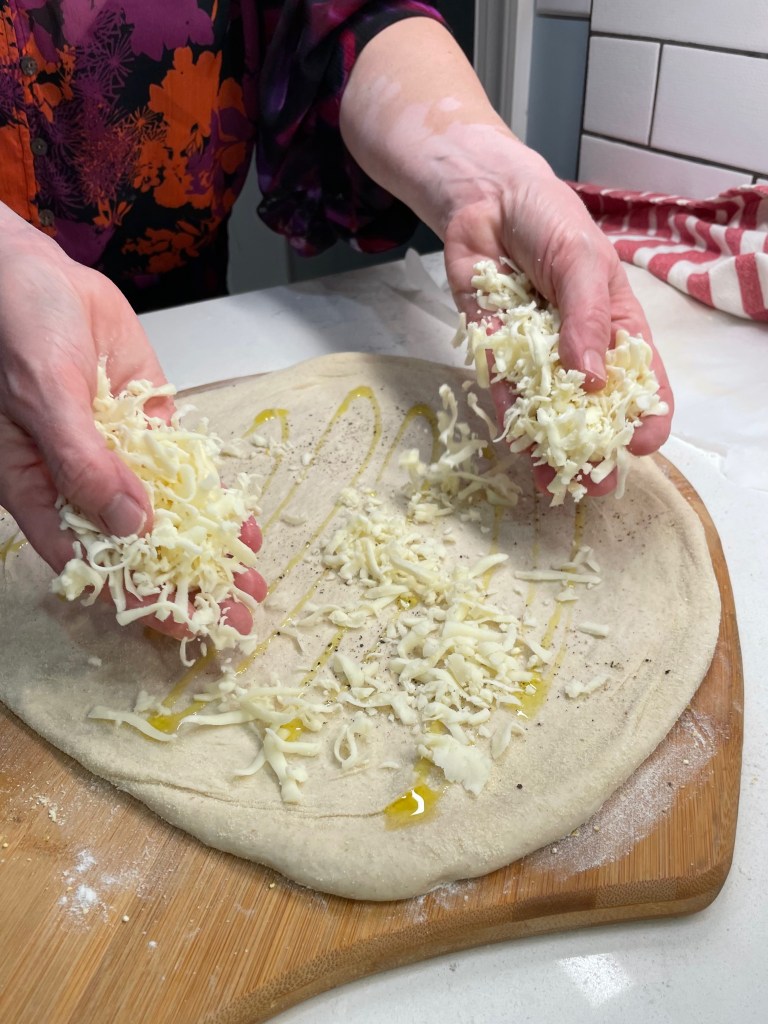
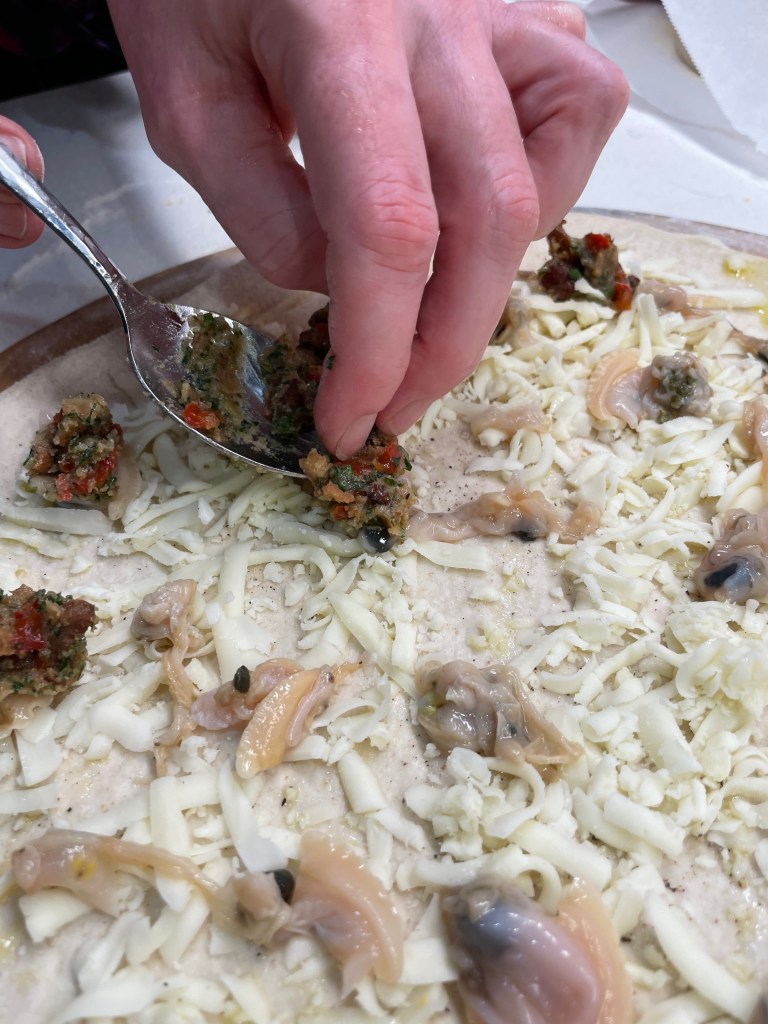
Transforming these flavors onto a pizza was actually pretty simple. As with my other fancy New Year’s Eve pies, there is no red sauce; only cheese as the base layer, followed by freshly shucked littleneck clams and then the casino flavors that go on by the spoonful. How did I pack all that flavor into one delicious pizza topping? Let’s get into it!

I’m always ready to make pizza!

Clam Prep 101

First, you want smallish clams for this recipe; littlenecks are ideal. To prep fresh clams for cooking, you want to clean them, inside and out. Cleaning the outside is straightforward, but how do you check the insides for grit and sand? This is called “purging.”

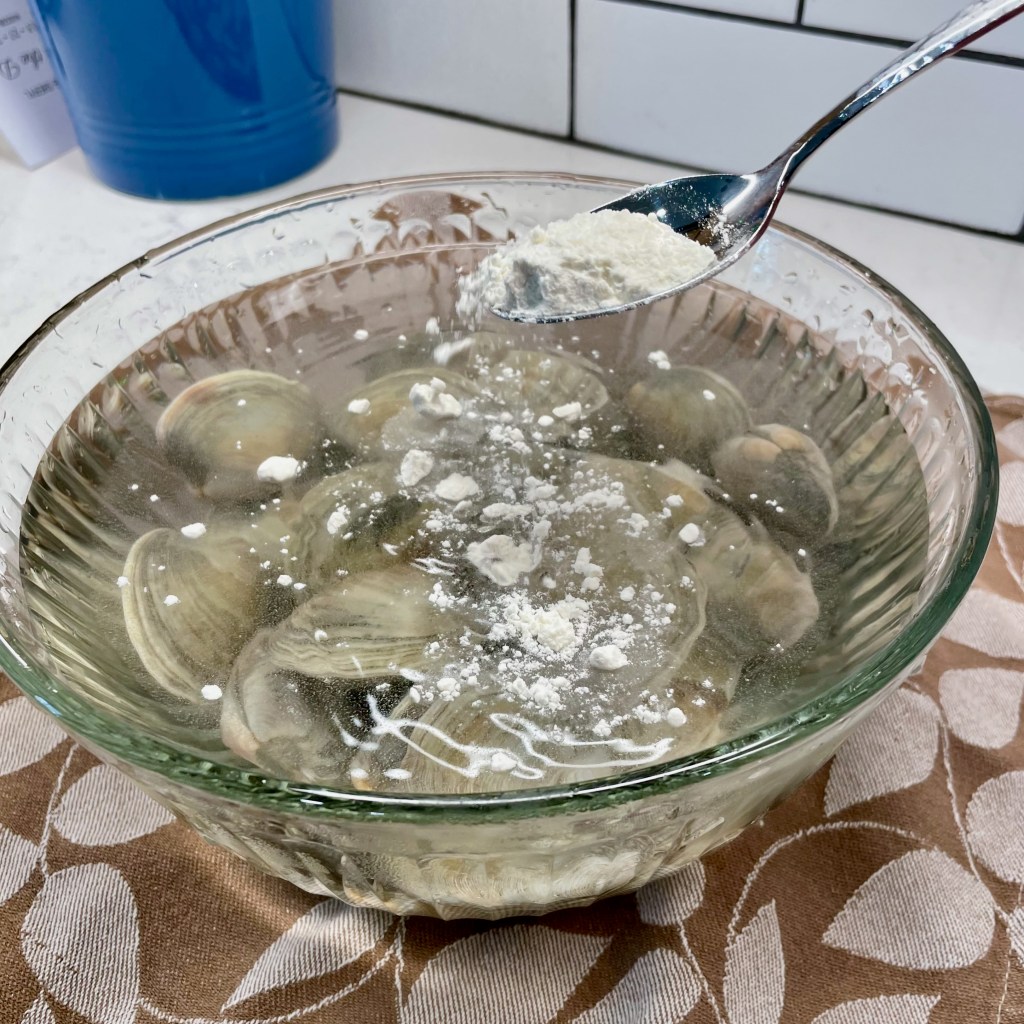
Place the clams in a bowl with cold water and a teaspoon of salt. Sprinkle a hefty spoonful of flour over the clams, to give them a reason to open and flush out the water they take in. After 30 minutes or so, lift the clams out into a colander and check the bowl for sand and grit. Repeat this process until water appears clear, and then empty the water and give each clam a quick scrub with a stiff-bristled brush, such as a potato brush. Do this purging process right before you plan to cook the clams, and keep them cold throughout.

This process can take more than an hour, so build in some time for this important step.

Clams casino butter

Moment of truth here, this stuff is where the magic happens. I was inspired to make my clams casino pizza when I was scrolling through my search results for “classic seafood appetizers,” and this article by Daniel Gritzer at Serious Eats caught my eye. I have loads of respect for Daniel’s approach to food, and I share his passion for finding better outcomes with less work. The moment I saw that he was making a compound butter for Clams Casino (the appetizer, not a pizza), I knew exactly what to do. 


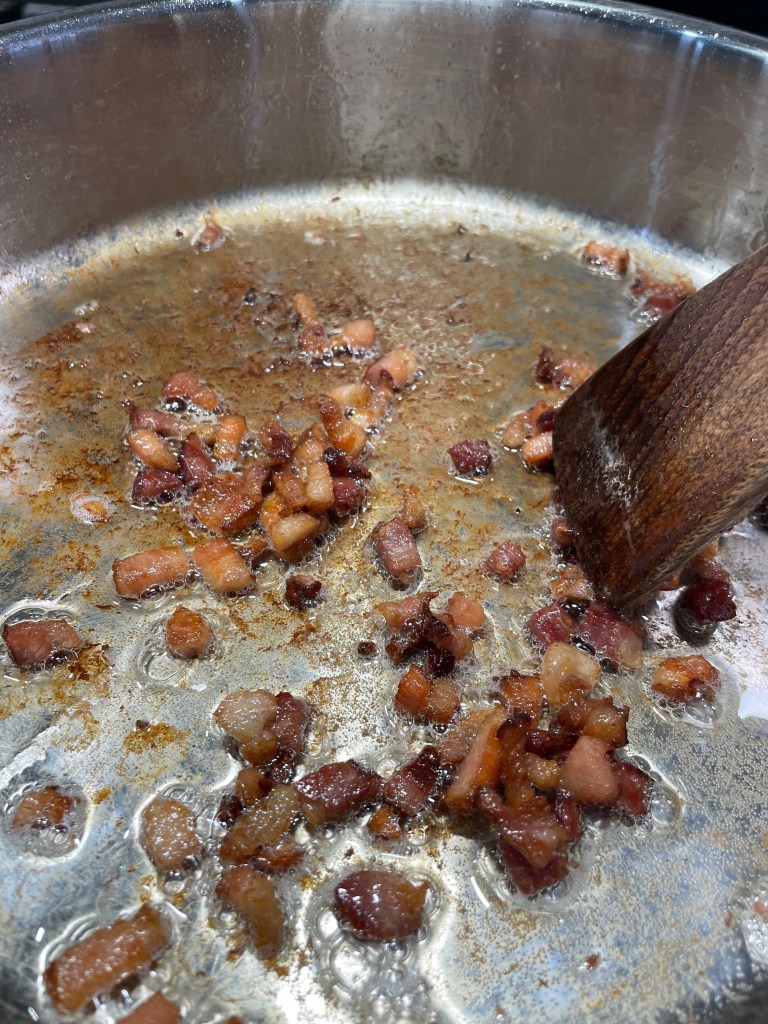
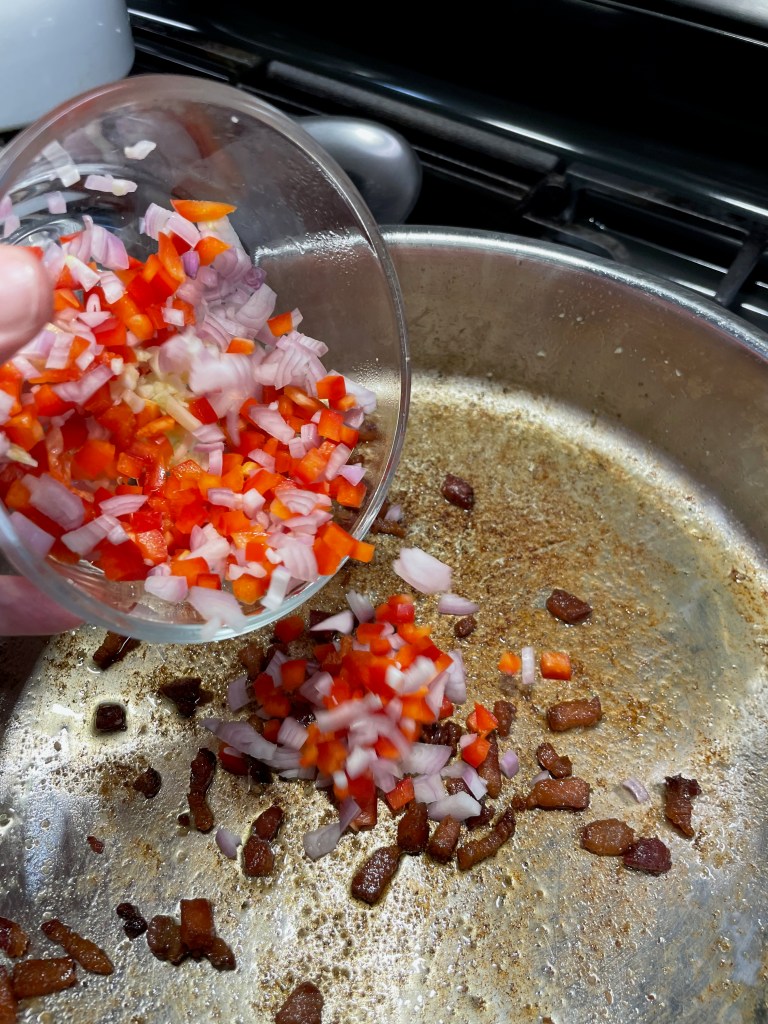
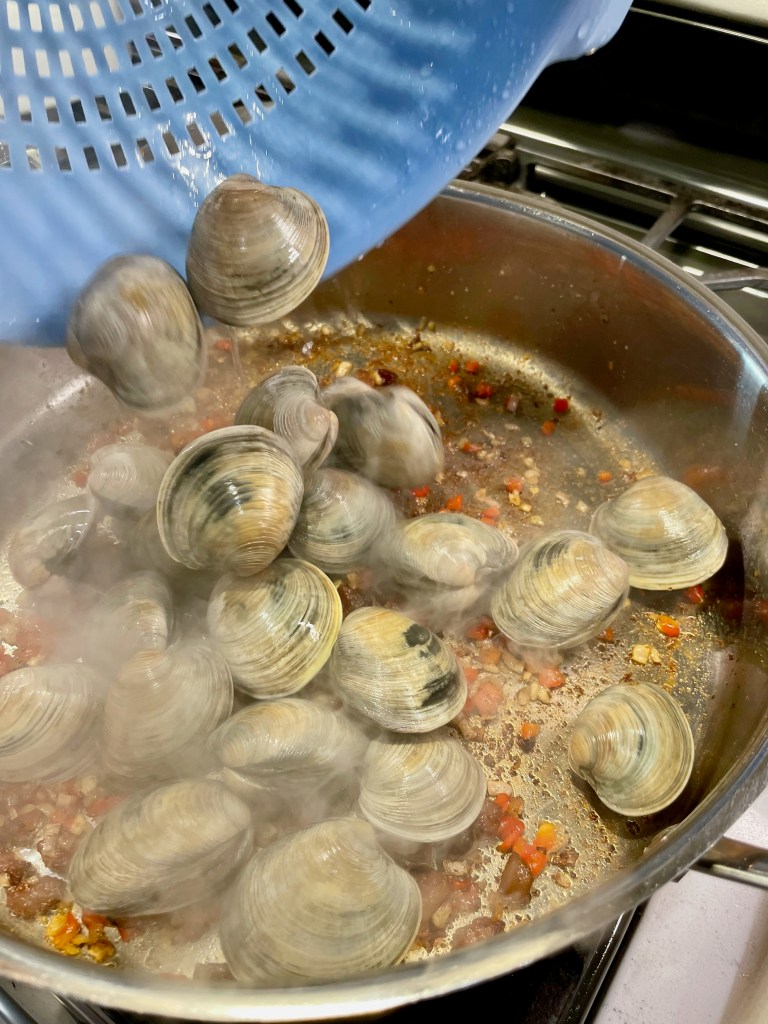
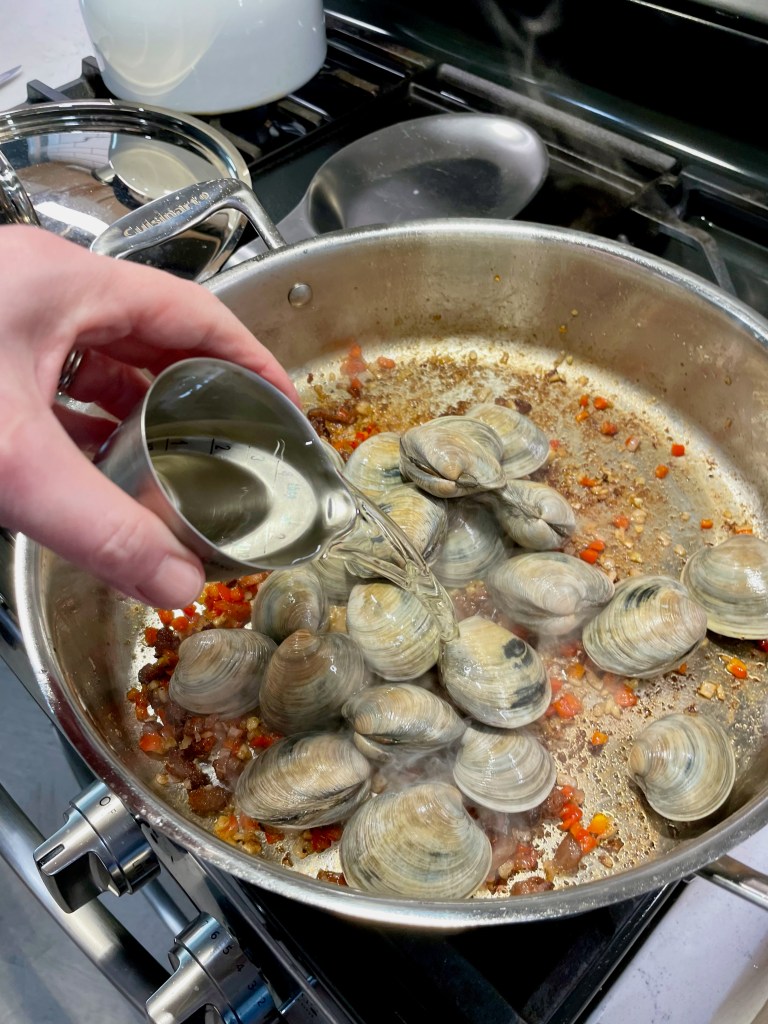
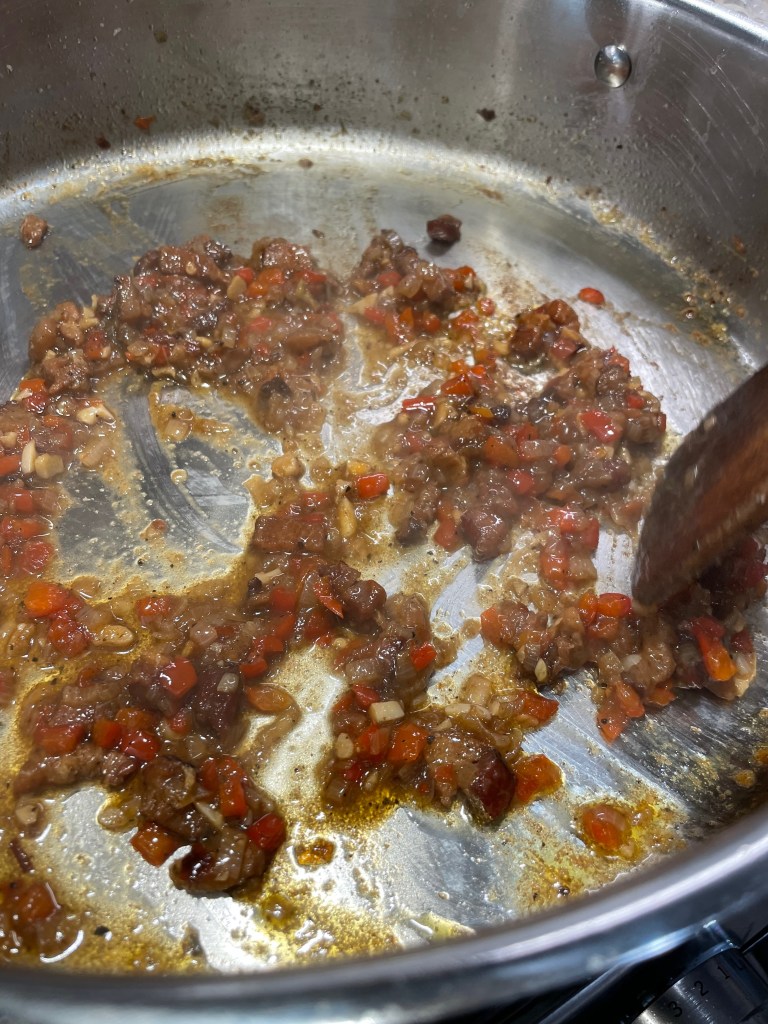
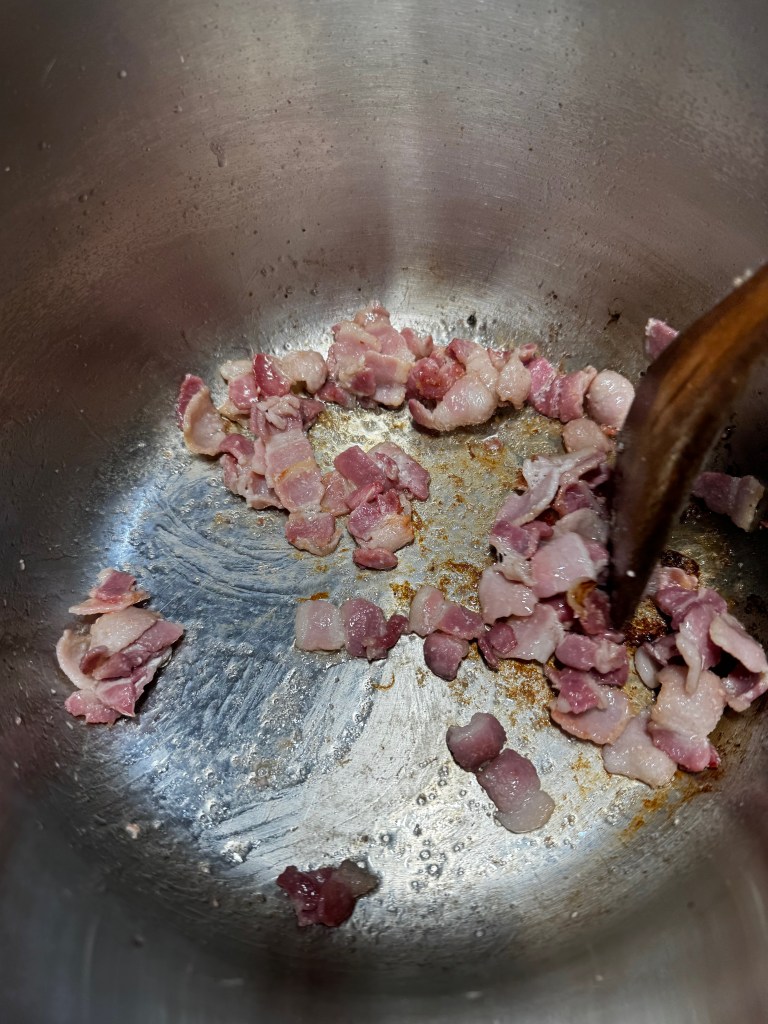
After crisping up some small cubes of really good bacon, I cooked panko crumbs in the grease (they get sprinkled on the pie after baking), and added finely minced red bell pepper, shallots and garlic and cooked them together until the bacon was crispy and the veggies were softened. Next came the clams, and I tossed the lot of them right into the pot with the bacon-veggie mixture and poured in about two ounces (a quarter cup) of dry vermouth— the same thing I use in my martinis. If you wish, you could use pinot grigio or any other dry white wine you like. I just happen to have vermouth open more often than wine, and I love the savory edge it adds when I cook with it.


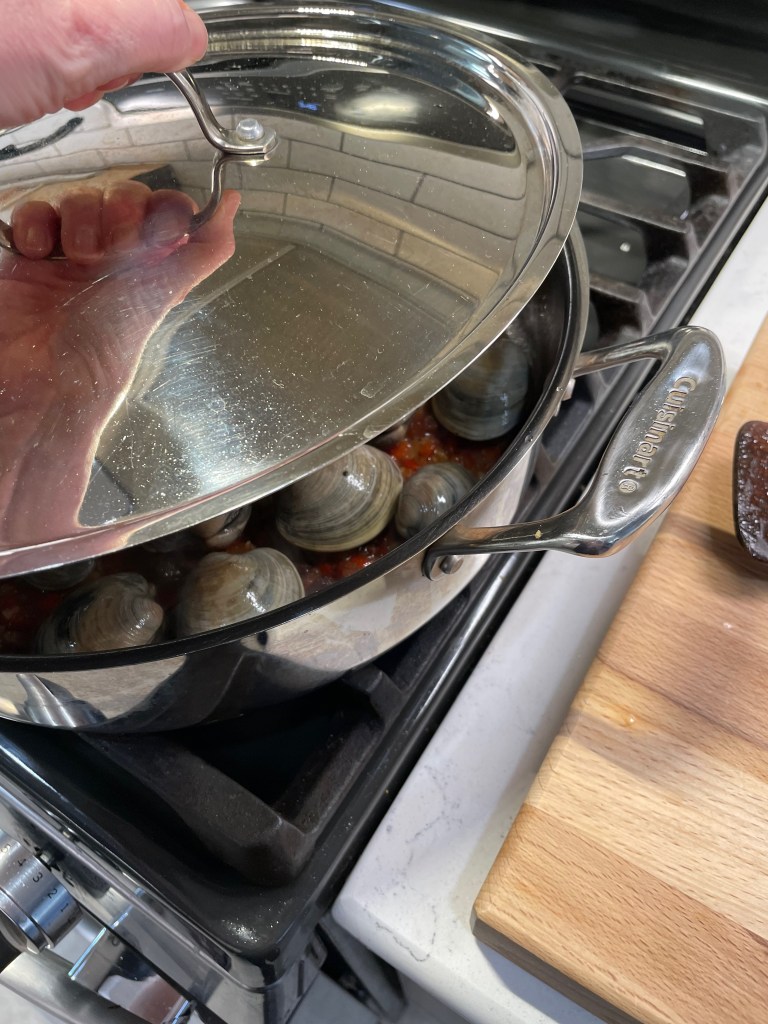
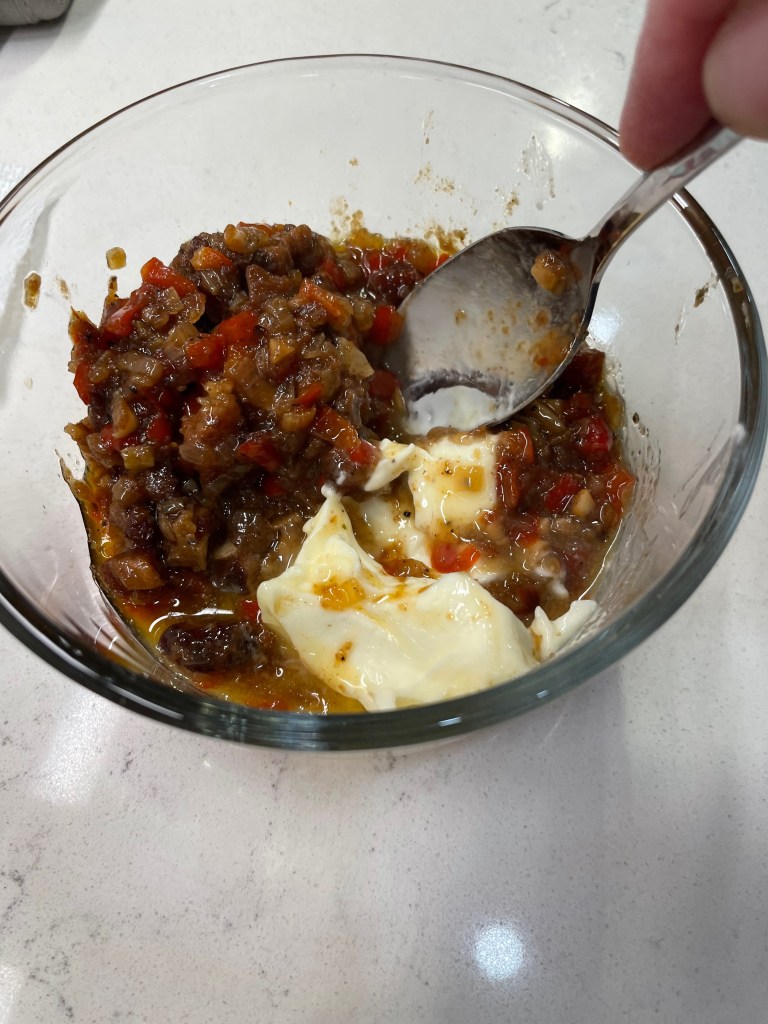
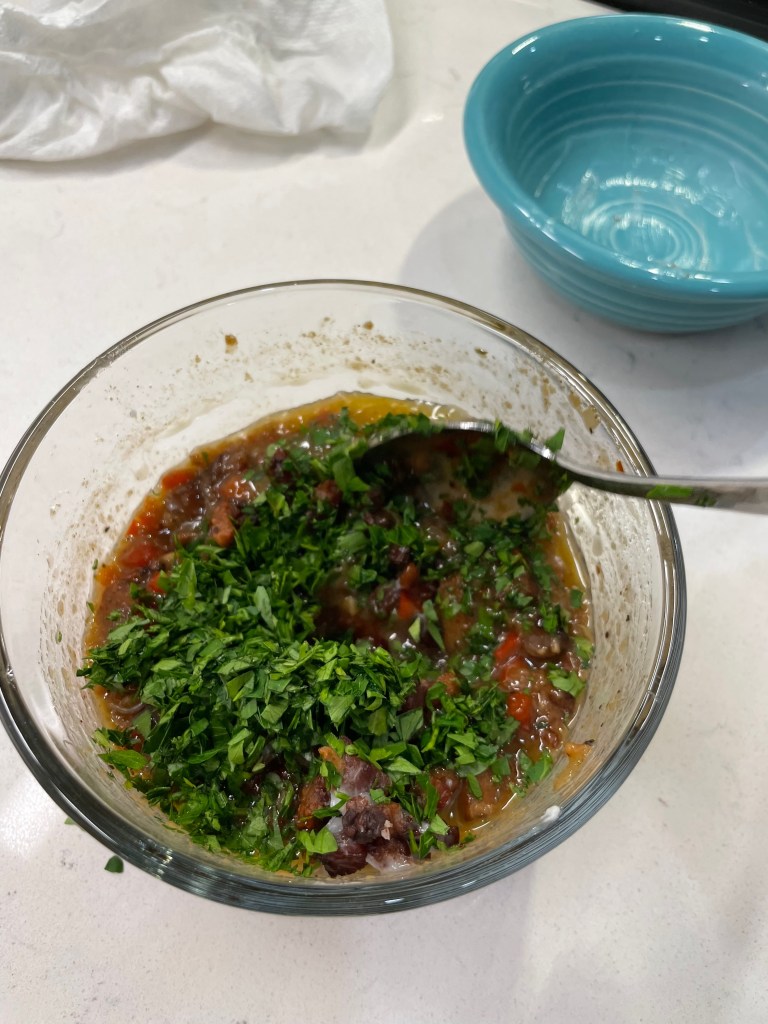
After just a couple minutes of steaming, the clams open up and spill out that glorious, briny liquid. Use tongs to lift them up, and empty that liquid right into the pan. As it reduces with the rest of the pan ingredients, it melds into an intensely flavored mixture that will turn my clams— and my pizza— into something really special. When this mixture cools, I stir in a bit of softened butter and fresh parsley, and chill it until it’s time to build the pizza. 

All of the above can be done ahead, but for sure, you want to take care of the clams so that they remain fresh and tasty, so I wouldn’t recommend working ahead more than one day. Get the clam meats removed from their shells and protect them with layers of damp paper towel or parchment paper so that they don’t dry out. 

What if you don’t eat bacon?

Substitutions are always possible! The main assets of bacon are the smokiness and the deep umami flavor, so a good understudy would be able to do both, but there’s no harm in making up those flavors with more than one addition. I brainstormed about this with my pal, Dorothy, from New Vintage Kitchen because she is mainly pescatarian and she knows all the tricks. We came up with a short list of suitable step-ins, including soy bacon or turkey bacon (both of which I’m sure have the smoke and umami), smoked paprika (never a bad idea in anything, as far as I’m concerned), or a dash of liquid smoke in the veggies, and some chopped up crisp mushrooms, which you can likely find in the snacks section of a larger supermarket. And I thought of one more, just in the last 10
seconds— one so obvious, I’m embarrassed that I didn’t think of it immediately. Anchovies! Bobby Flay even calls them “bacon of the sea.” They are potent, so use them sparingly, and for sure, include one in the toasted panko crumbs that will finish the pizza.

Time to build the clams casino pizza!

If you’ve followed me for any length of time, you know that I do a long preheat on a baking steel, and all my pizzas all begin with sourdough. The flavor imparted to pizza from the long, cold ferment is amazing, but if you already have a favorite dough recipe, or if you prefer the convenience of buying ready-made dough at your nearby deli or supermarket, have at it. These toppings will work, regardless. If you don’t have a steel, a sturdy baking stone will work, but you may need to dial back the temperature a bit and cook an extra few minutes.


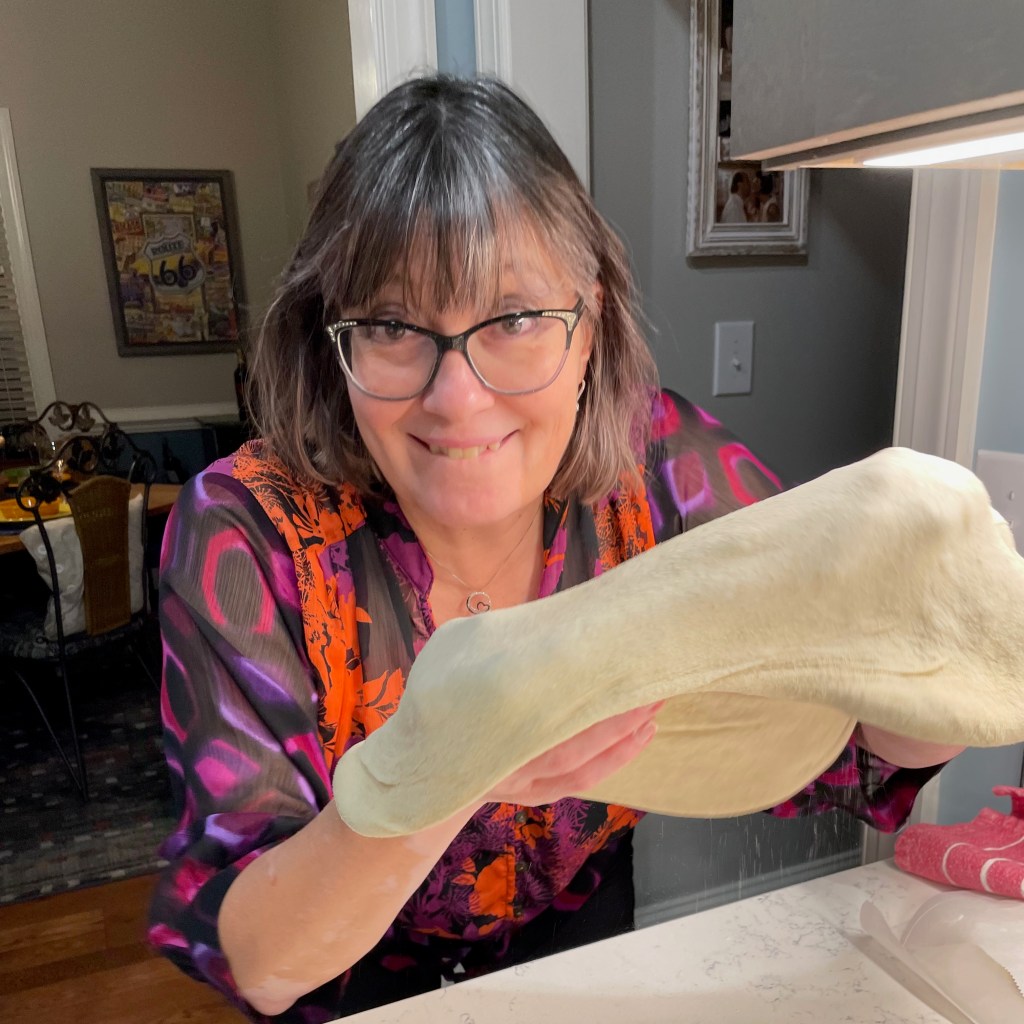
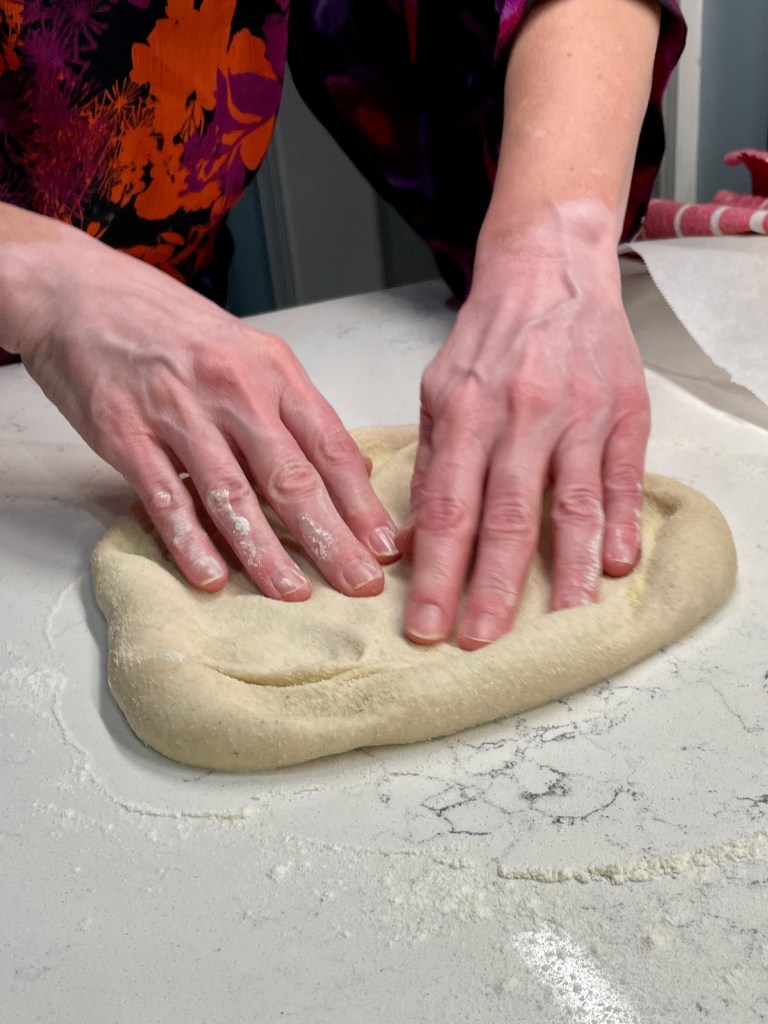
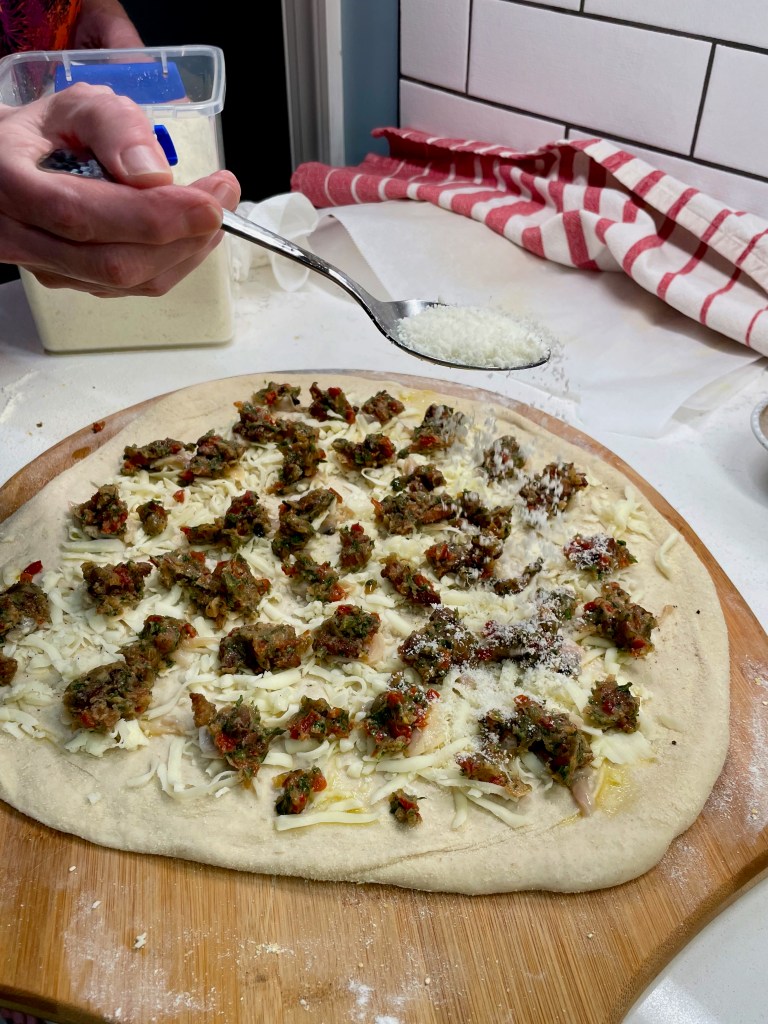
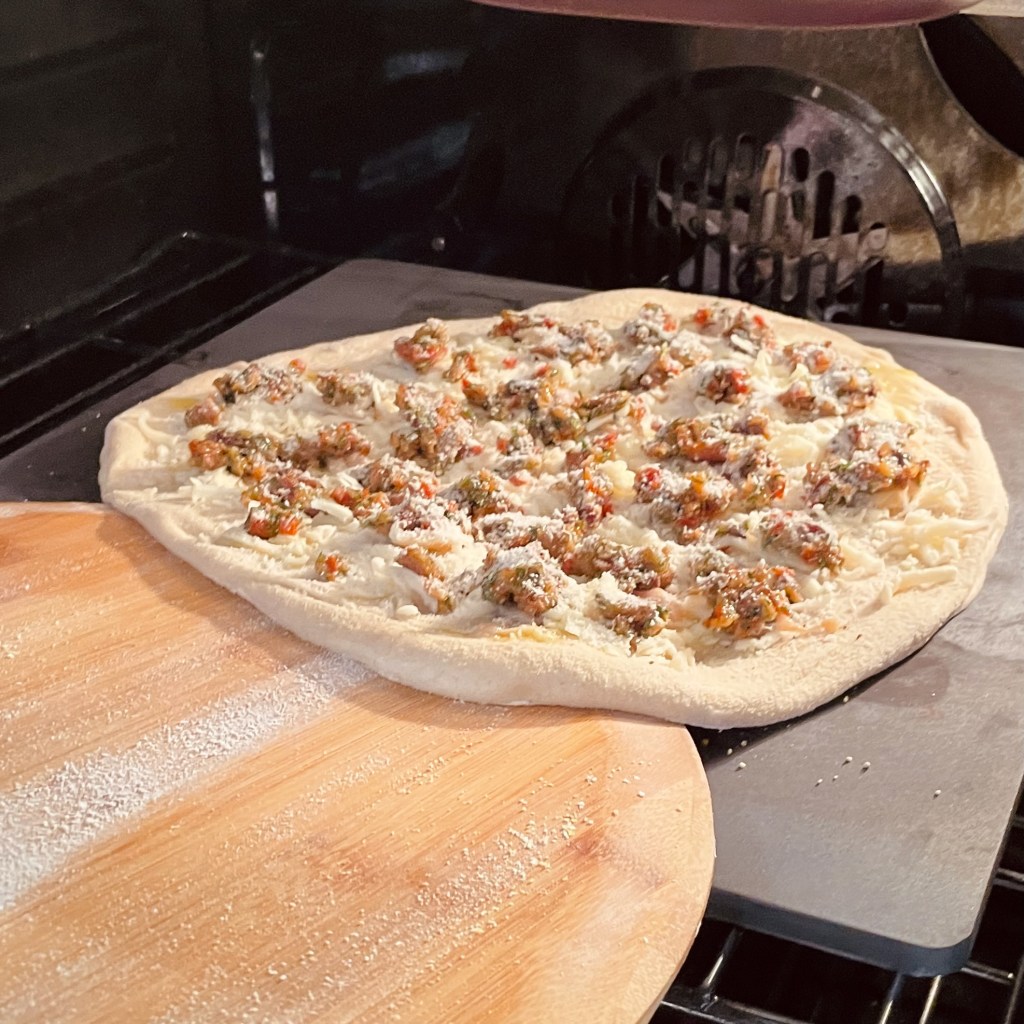
Shape the dough by hand, rather than rolling it out, as this ensures some of the air pockets will remain in the dough for an airy texture after baking. Scatter mozzarella all over the dough, then arrange the clams and top each one with a bit of the clams casino compound butter. Sprinkle a bit of Parm-Romano blend cheese over the top, and slide that gorgeous thing into the oven.


Six to seven minutes is all it takes on a 550° F preheated steel. When it comes out of the oven, scatter the bacon-scented panko crumbs over the top and serve at once. 


Clams Casino Pizza

  • Servings: 6 slices
  • Difficulty: Average
  • Print

An easy compound butter is what makes this classic appetizer-inspired pizza special enough for New Year's Eve. Use the freshest clams you can get, and don't skip the bacon-scented panko crumbs on top!


Prep for this pizza should happen earlier in the day, or perhaps even the day before, so that the clams casino compound butter only needs to be divvied out onto the clams when you build the pizza. Note that parsley appears twice in this list; there are different purposes for each amount. You will want to use a heavy-bottomed pan to cook the compound butter ingredients, preferably one that is more wide than high. This will make it easier to steam the clams in a single layer.

Ingredients

  • 1/2 cup cubed thick-cut smoked bacon
  • 1/3 cup Italian seasoned panko bread crumbs
  • 1 Tbsp. finely chopped Italian parsley (for the panko topping)
  • 1/3 cup minced shallot
  • 1/3 cup minced red bell pepper
  • 2 large cloves garlic, minced (about 1 Tbsp)
  • A few shakes red pepper flakes
  • 1/4 cup dry vermouth or white wine + 1/4 cup water
  • 24 littleneck clams, purged of sand and grit (see first step of directions)
  • 2 Tbsp. finely chopped Italian parsley (for the compound butter)
  • 2 Tbsp. unsalted butter, halfway softened

Directions

  1. Purge the clams by placing them in a large bowl of salted cold water. Sprinkle a generous spoonful of flour over the clams and swirl gently to mix it in. Allow to rest 30 minutes, and then scoop out the clams to a platter. Empty and rinse the bowl, inspecting the water for grit and/or sand. Repeat as many times as needed, until water is clear.
  2. Cook bacon to render the fat. Remove the crispy bacon bits with slotted spoon, reserving fat in skillet. Toss panko crumbs in bacon fat. Cook until crumbs are golden and crispy. Set aside to top pizza after baking.
  3. Put half of the bacon bits back into the pot, along with shallots, bell peppers and garlic, and sauté until vegetables are translucent and tender. Shake in red pepper flakes.
  4. Add clams to the pot and pour in the vermouth and water. Cover with a lid for about 90 seconds, then remove lid. Use tongs to remove clams as they open, and pour off clam liquid into the pot as you remove them. Set the clams in a bowl filled with crushed ice; this will abruptly stop the cooking so that they don’t get tough during baking.
  5. When all clams have been removed from the pot, simmer until liquid is evaporated and only the soft vegetable-bacon mixture remains. Transfer mixture to a bowl to cool, then blend in the butter and chopped parsley. Refrigerate butter until you’re ready to build the pizza.
  6. Slide a knife under the clam meat to remove them from their shells. Refrigerate clam meats until you’re ready to make the pizza. Discard the shells.

Remove the compound butter and clam meats from the fridge a few minutes ahead so that the butter is manageable and can easily be spooned. I bake my pizzas on a steel, which is preheated for an hour at 550° F. If you are using a stone or regular pizza pan, reduce heat and adjust baking time accordingly.

Ingredients

  • 11 oz. pizza dough ball, at room temperature
  • Semolina flour for shaping dough
  • 1 Tbsp. extra virgin olive oil
  • Kosher salt and black pepper
  • 1/2 freshly shredded low-moisture mozzarella
  • Reserved clams
  • Clams casino compound butter
  • 2 Tbsp. grated Parm-Romano blend cheese
  • Reserved panko crumbs

Directions

  1. Shape pizza dough by hand (not by rolling), into a 14-inch round. Transfer round to a flour- and cornmeal-rubbed pizza peel for easy transfer into the oven.
  2. Drizzle olive oil all over dough, then season with salt and pepper. Scatter mozzarella evenly over dough.
  3. Arrange clam meats on dough, and then place a small dollop of the clams casino compound butter over each clam. If you have extra butter, place smaller dollops in between the clams.
  4. Slide onto pizza steel and bake for 6 minutes or until crust is blistered and browned and toppings are bubbly. Sprinkle with bacon panko crumbs and serve immediately.


Sparkling Fresh Cranberry-Ginger Cosmo

I know I promised you a cocktail before Thanksgiving, and I should know by now that late November is not the time to make promises I might not be able to keep. 🤷🏻‍♀️ Better late than never, and it’s all good because what I’m about to share with you could be the holiday miracle your entertaining plans have been waiting for. This drink became an accidental star at our Thanksgiving happy hour, and the great news is that its seasonal flavors and fancy presentation make it perfect for all the holidays coming up. 

I found this inspiration quite unexpectedly while scrolling Instagram in the wee hours, as I am wont to do. A few days before Thanksgiving, Food Network had posted a slideshow of recipes offered by its celeb chefs. There were variations on casseroles and desserts and—oh, who am I kidding? I have no idea what else was in the photo carousel because the fresh cranberry cosmo stopped me dead in my tracks. The ingredient list was simple, the technique brilliant and the drink divine.

Cheers, Christmas!

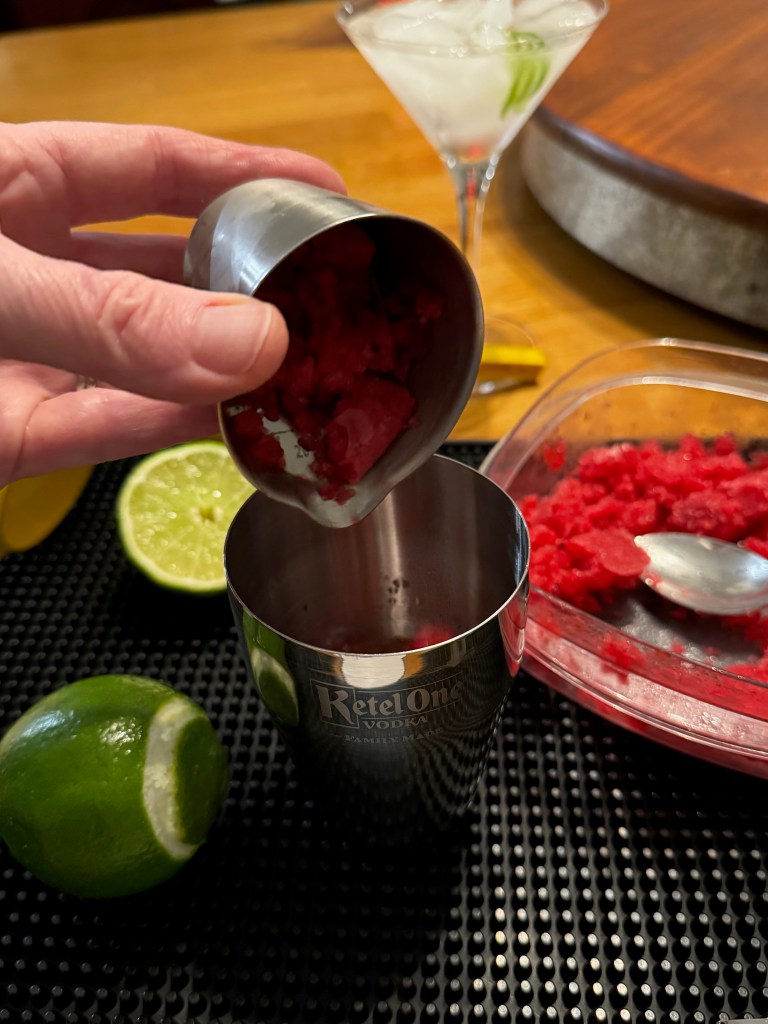
It was star chef Alton Brown who presented the formula for the cranberry granita that is the base of this stunning, neon-colored drink, and the granita itself could be served as a palate cleanser or even a light dessert after a rich holiday meal. His granita was made by simmering fresh cranberries, sugar and lime zest in a fair amount of water, and then blending, straining and freezing. Later, he used a fork to shred the icy mixture into a substance not unlike a snow-cone. That granita mixture is then shaken with vodka and fresh lime juice— no additional ice necessary— and strained into a martini glass for the brightest, freshest seasonal cocktail I’ve ever enjoyed. 

Of course, I couldn’t leave it at that (do ya know me?), and Alton himself is partly to blame for my tendency to twist a classic. During the early aughts, I hardly missed an episode of his “Good Eats” program on Food Network, and that was unquestionably when I became fascinated with the science of food and drink, inspiring me to push the culinary boundaries in my own kitchen. So, Alton, I’ll see your cranberry granita and I’ll raise you some crystallized ginger and orange zest. Because, Christmas. 🎁


You don’t want to know how many spoons I used tasting this stuff along the way, nor how many sample cosmos I made for myself, just to be sure I wasn’t imagining how good it was. The cranberry-ginger granita is equally tart and sweet, and my mind is still racing with possibilities for drinks beyond this festive cosmo. Imagine swapping the vodka for blanco tequila— instant Christmas margarita! Or substitute white rum for a cranberry-ginger daiquiri. Seriously, can anyone give me one reason not to mix it with gin and lemon and top it with champagne for a cranberry-ginger French 75? Could this be the little black dress of the holiday cocktail season?

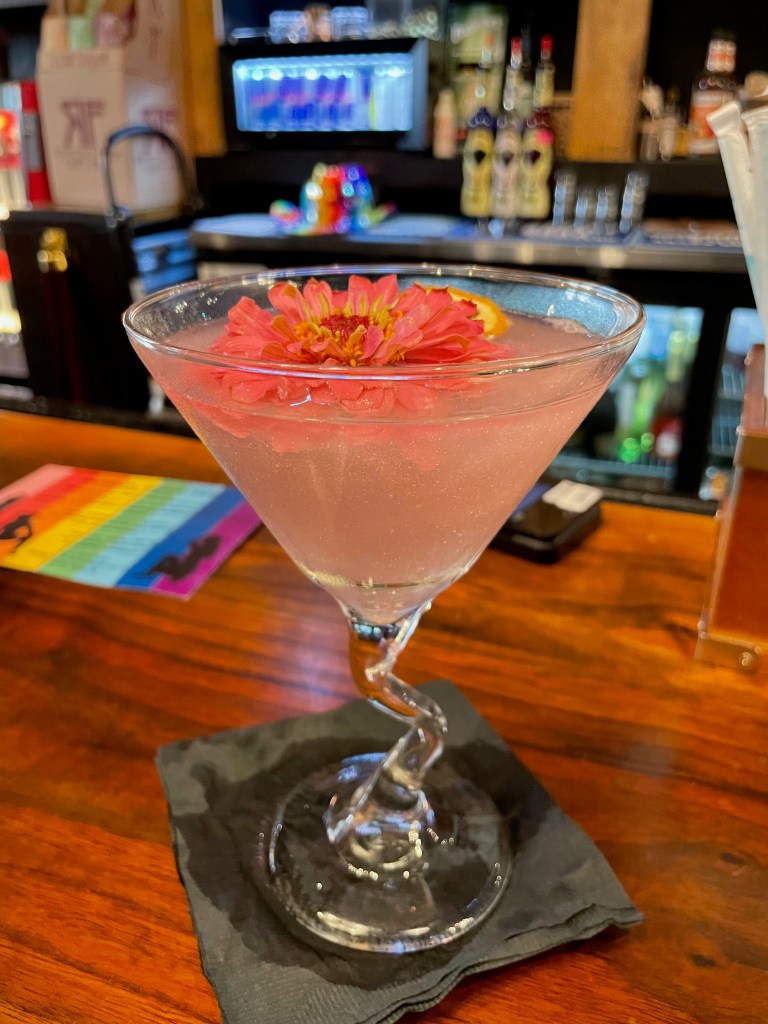
For that matter, I should also be able to sub something non-alcoholic for a tasty mocktail to delight non-drinkers at my party, right? I did that for one of our Thanksgiving guests, and I guarantee you can’t tell which of these glasses held the zero-proof drink. She said it was delicious.

I’ll give you a hint: it wasn’t mine. 😂

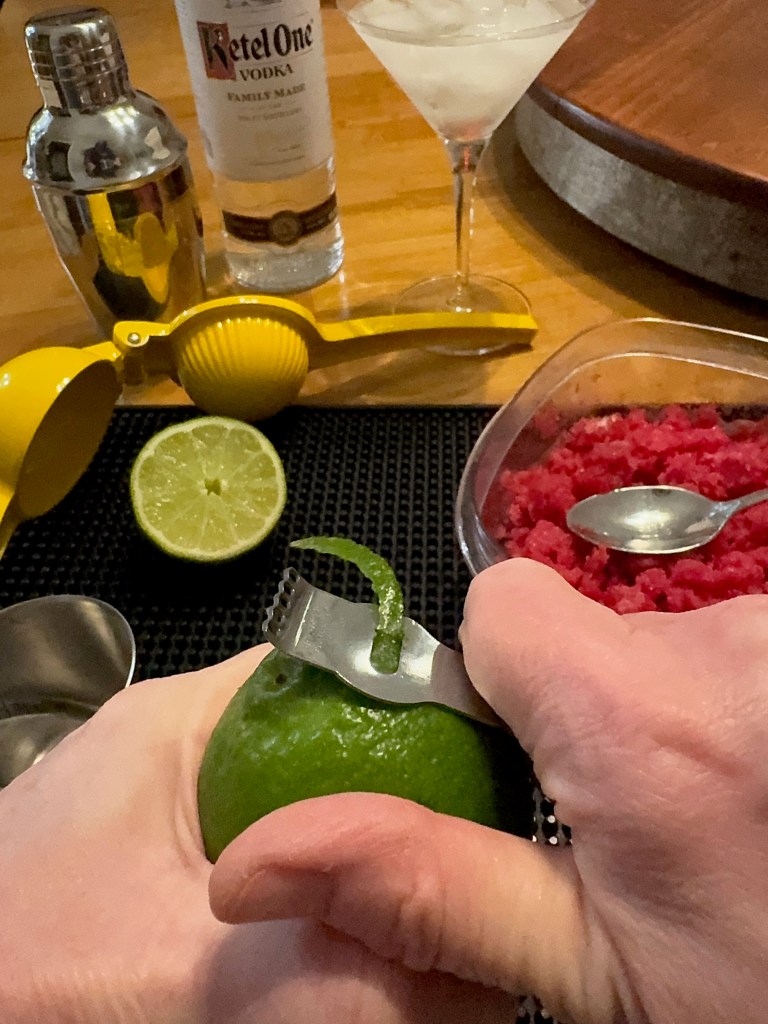
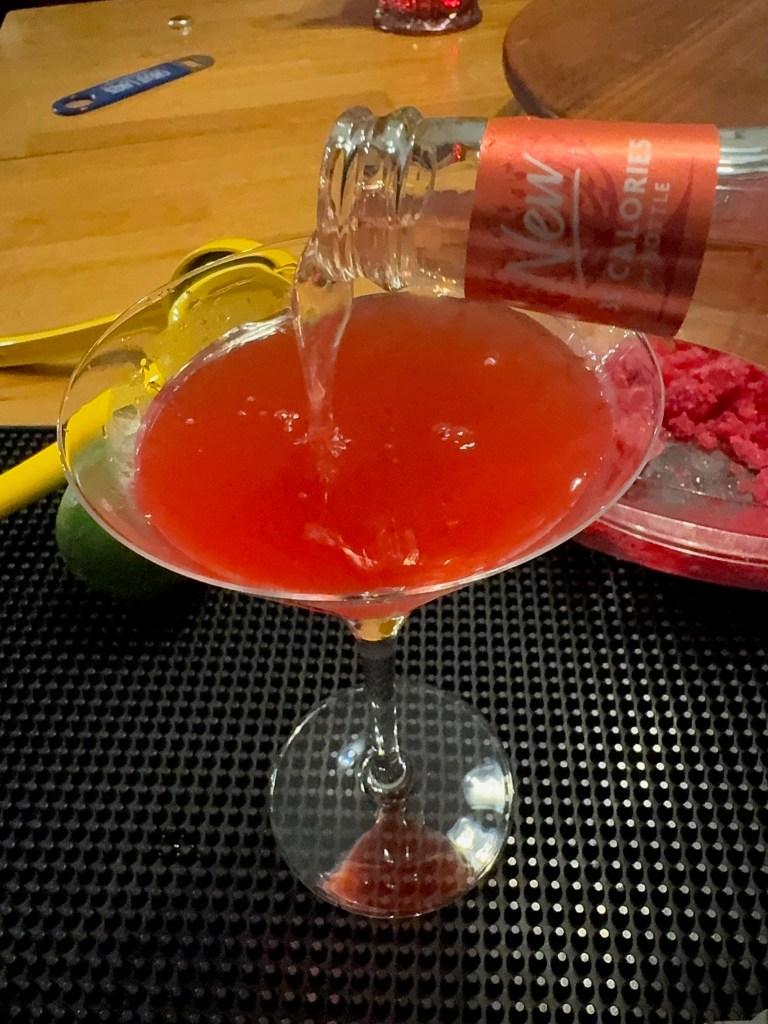
Making this sparkling fresh cranberry-ginger cosmo couldn’t be easier, and I’ll also share my tips for the mocktail in the click-to-print recipe card you’ll find at the bottom of the post. Start by making the granita a few days before you plan to entertain, and wash up several fresh limes so they are ready for happy hour. Plan on one lime for every two drinks; you’ll use the juice in the drinks and a strip of zest for garnish. And for a little extra holiday pizzazz, pick up a four-pack of blood orange ginger beer to top off your cocktails with a sparkly finish. Chill your cocktail glasses while you mix, and use a fine mesh strainer if you don’t want little bits of zest floating in your glass.


Sparkling Fresh Cranberry Cosmo

  • Servings: 1 cocktail
  • Difficulty: Easy
  • Print

This gorgeous holiday drink uses a make-ahead cranberry-ginger granita that is so delicious, you'll want to use it in other drinks, too!


Ingredients

  • 1 1/2 oz. Ketel One (or other premium) vodka
  • 2 1/2 oz. cranberry-ginger granita (recipe follows)
  • 1/2 oz. freshly squeezed lime juice
  • 1 oz. Fever Tree blood orange ginger beer (or regular ginger beer, if desired)
  • lime zest twist to garnish

Notes: Make the cranberry-ginger granita ahead of time, and transfer to airtight containers in your freezer for safekeeping. I recommend using a fine-mesh strainer when pouring the drink into the glass, unless you’re OK with having the zest bits floating in the drink.

For an easy mocktail, swap in Simply Lemonade for the vodka, use 1/4 oz. lime juice and increase the ginger beer a bit. When making both alcohol and non-alcohol drinks for party guests, consider using two separate shakers to avoid mixups and in-between cleanings.

Directions

  1. Chill cocktail glass with ice water, or place in freezer 20 minutes before mixing the drinks.
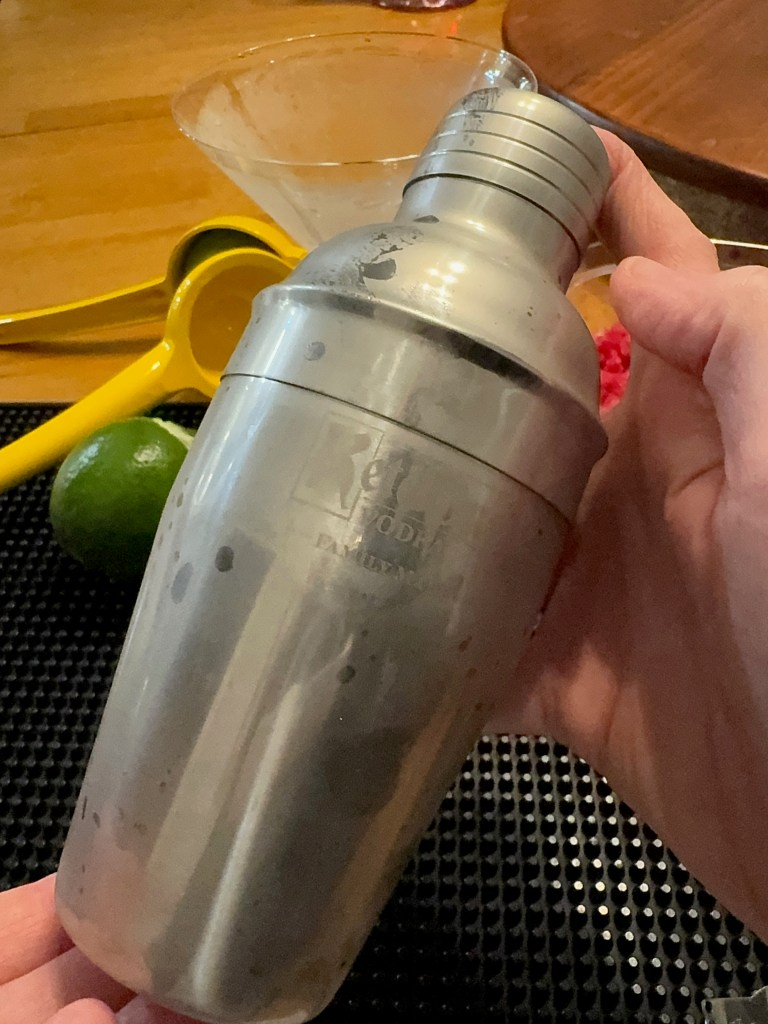
  2. Measure vodka, granita and lime juice into a shaker. Cover and shake the shake out of it until the thing is too frosty to hold comfortably. The granita will melt with the other ingredients, so no ice is required for this step.
  3. Strain into the glass, top off with ginger beer and garnish with the lime strip.

Notes: The cranberry-ginger granita will be enough for about 20 cocktails. Make it ahead and keep it in the freezer so it’s ready for all the holidays.

Ingredients

  • 3 cups water
  • 2 1/4 cups fresh whole cranberries
  • 1 cup plus 2 tablespoons organic cane sugar
  • 2 tablespoons minced crystallized ginger
  • Zest of one lime and half an orange (organic is best and washed thoroughly)

Directions


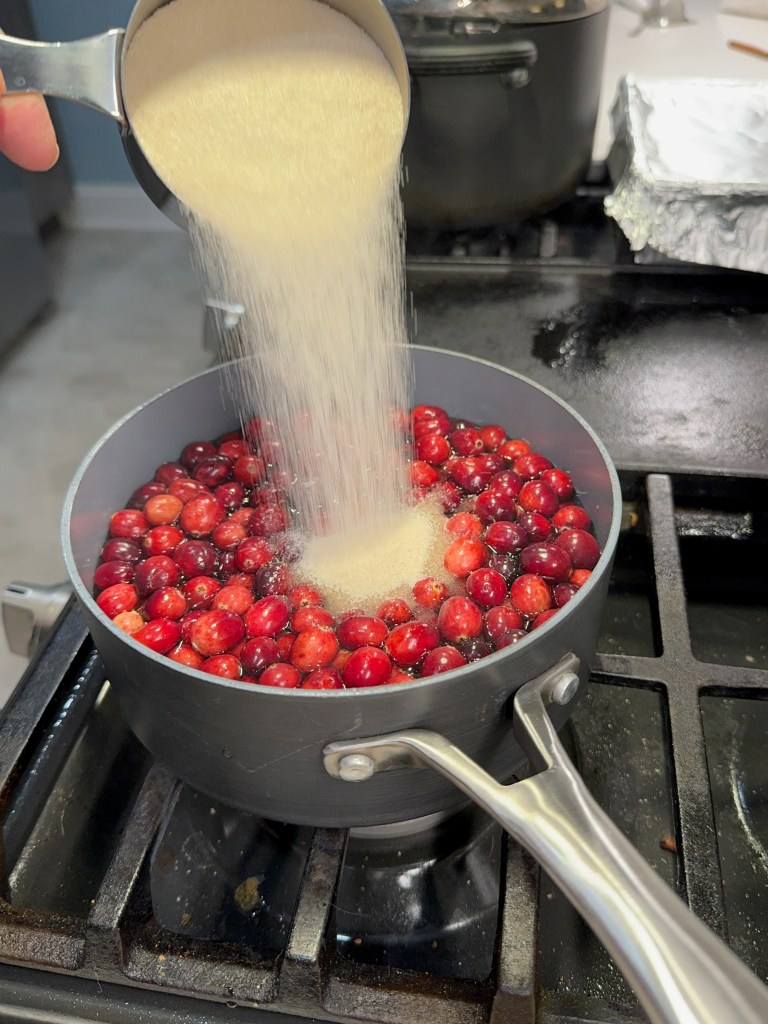
1. Combine water, cranberries, sugar and ginger in a medium saucepan over medium-high heat. Bring to a boil and then simmer for several minutes until the berries soften and split. Remove from heat and cool for a few minutes.
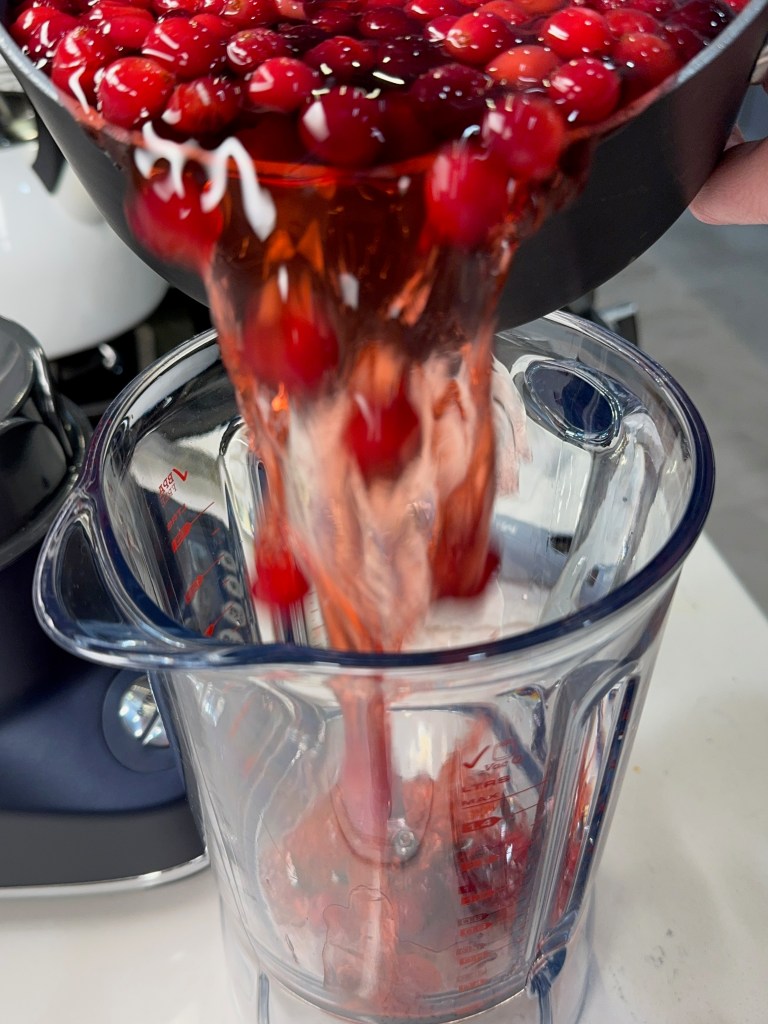
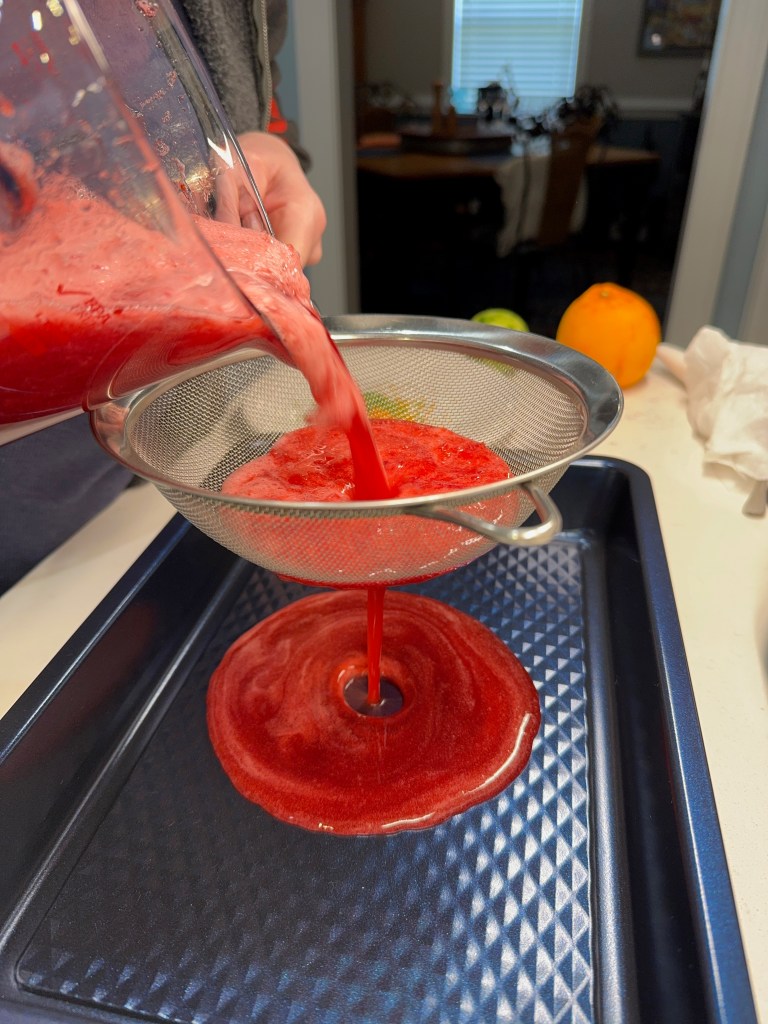
2. Transfer cranberry mixture to a blender (remove vent cover) or use an immersion blender to puree the mixture into a slurry. Pour through a mesh strainer into an oblong, shallow pan. I used a silicone scraper to gently move the puree back and forth on the strainer surface, as the pectin from the berries was quite heavy.
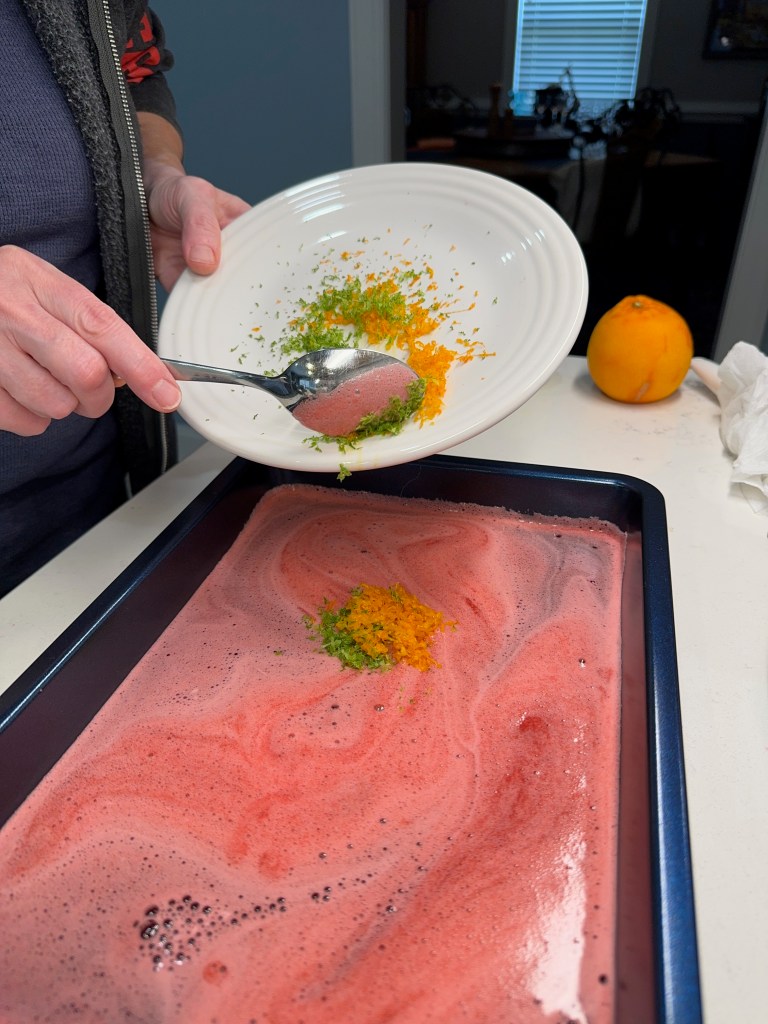
3. Stir in the citrus zest. Cover with plastic wrap and place the pan flat in the freezer for several hours until solid (overnight is fine).
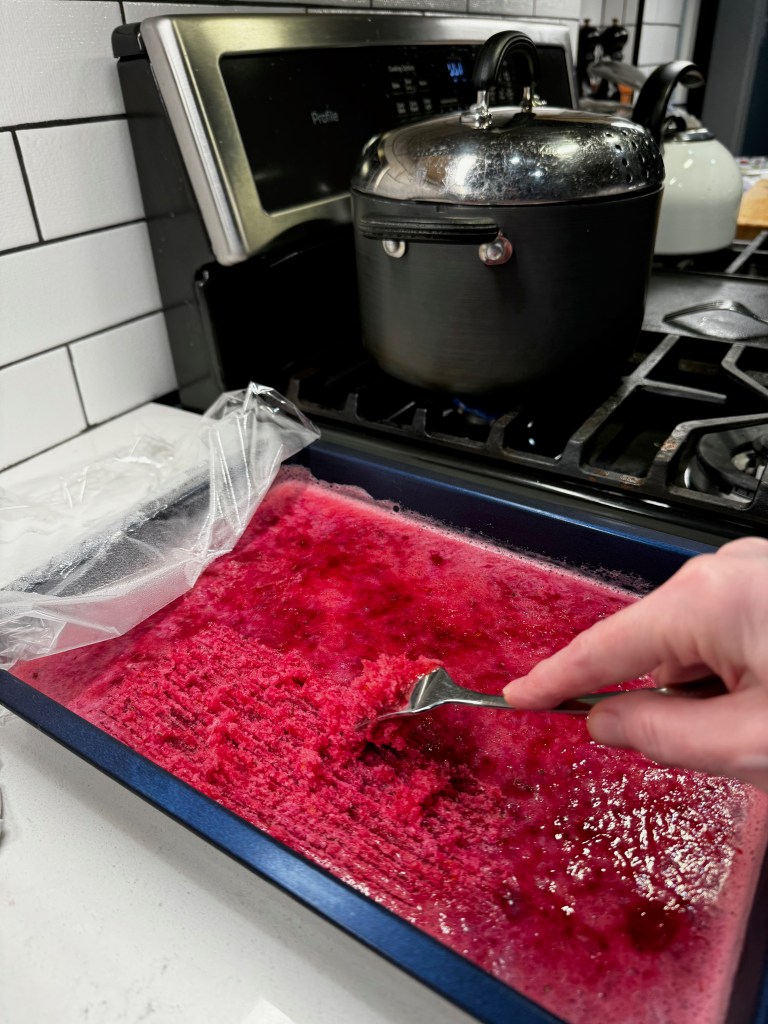
4. Use a fork to scrape the surface of the mixture until you have multiple layers of icy granita. Note that the mixture will likely clump as it refreezes. If you want it to be uniform consistency for cocktail hour, transfer it to a food processor and pulse a few times.

Directions


Smoky Chipotle-Maple Roasted Sweet Potatoes

There’s an old piece of culinary wisdom out there, and it goes like this— “Don’t mess with Thanksgiving!” If you’re a traditionalist when it comes to what goes on the table at everyone’s favorite food holiday, then you probably want to look away, keep scrolling, move along. Because what I’m about to share may seem blasphemous.

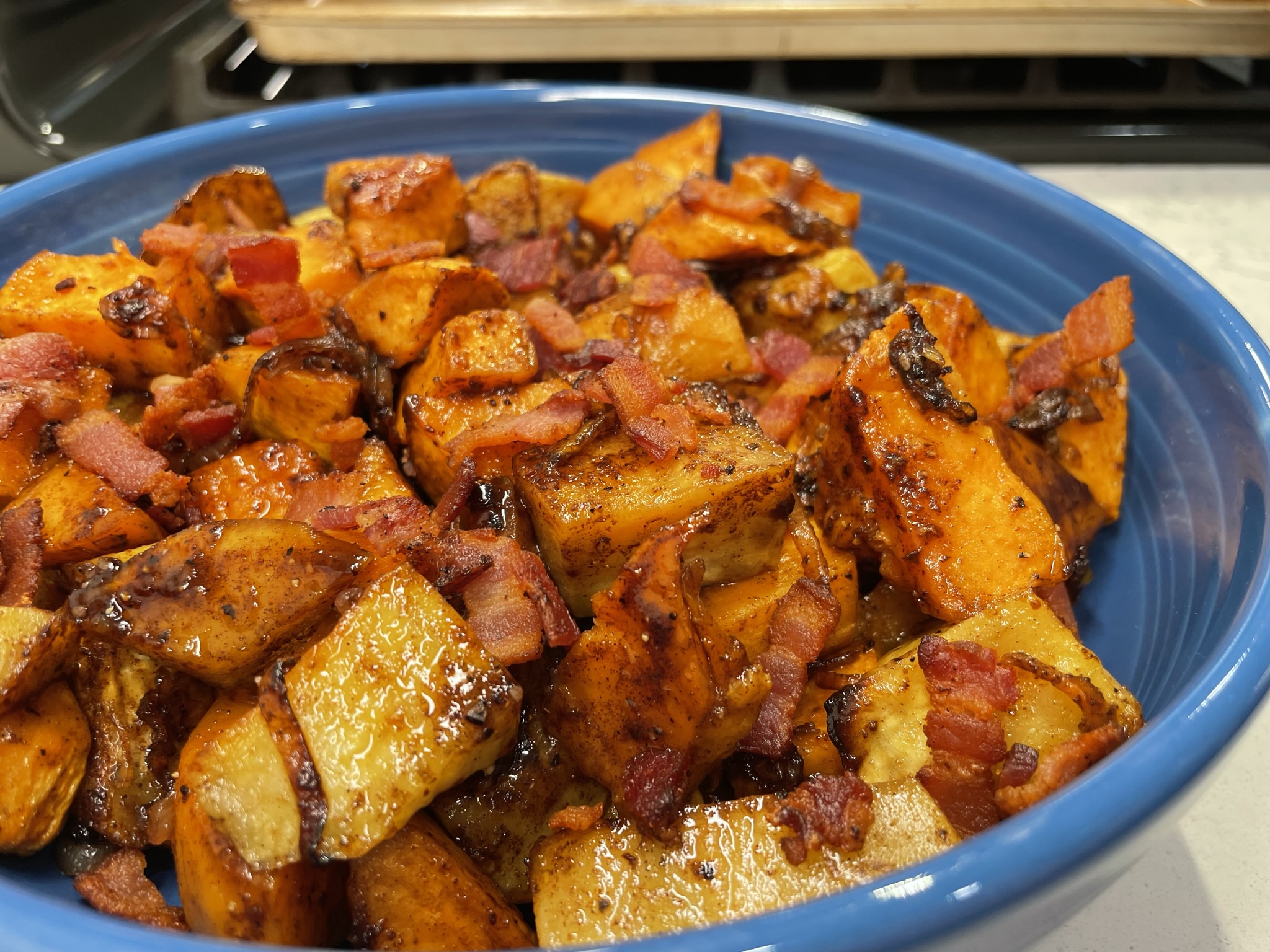
But if you like to shake things up from time to time, and if you can handle a little heat, then you may have just stumbled upon a new favorite sweet potato recipe. These roasted chunks are caramelized and crispy on the outside, tender and creamy on the inside and spicy-sweet all the way through. It’s a far cry from the usual sweet potato sides, but you know that other old piece of wisdom— “Variety of the spice of life!”

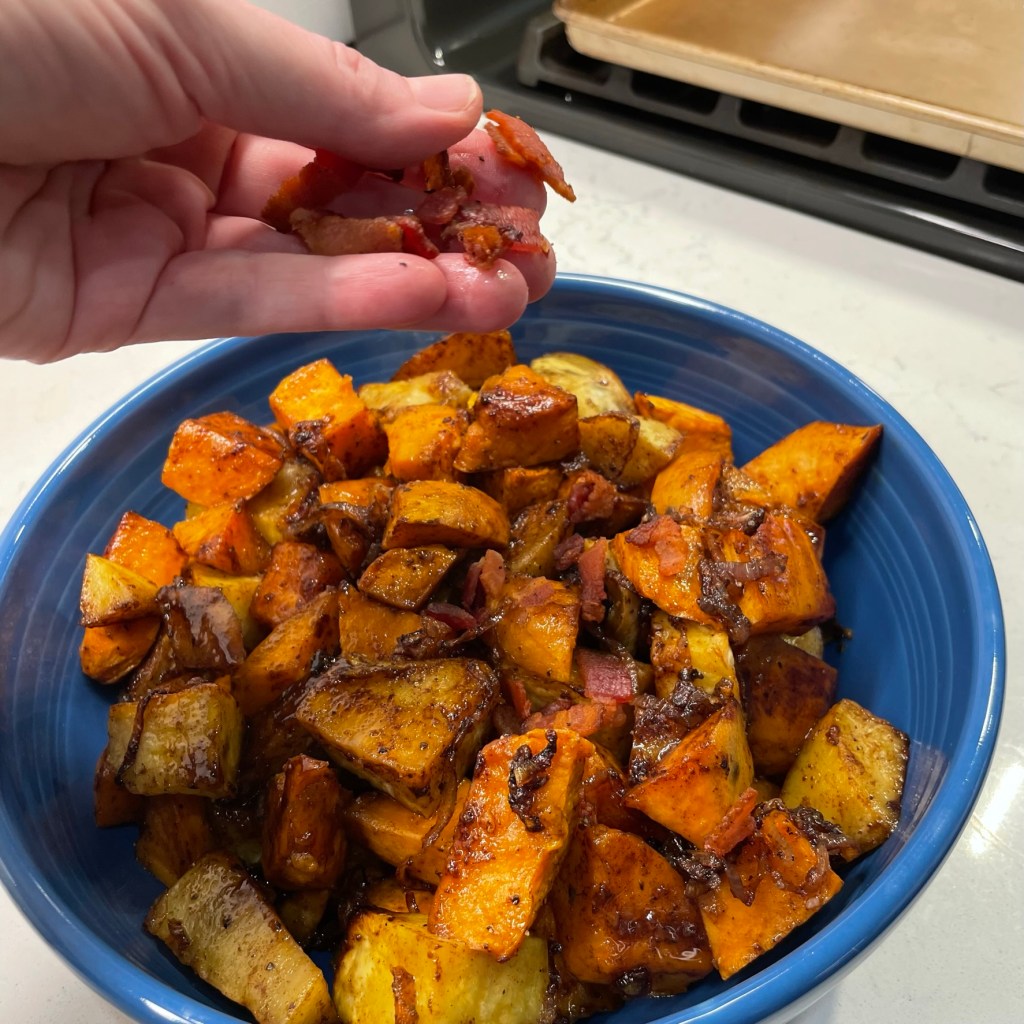
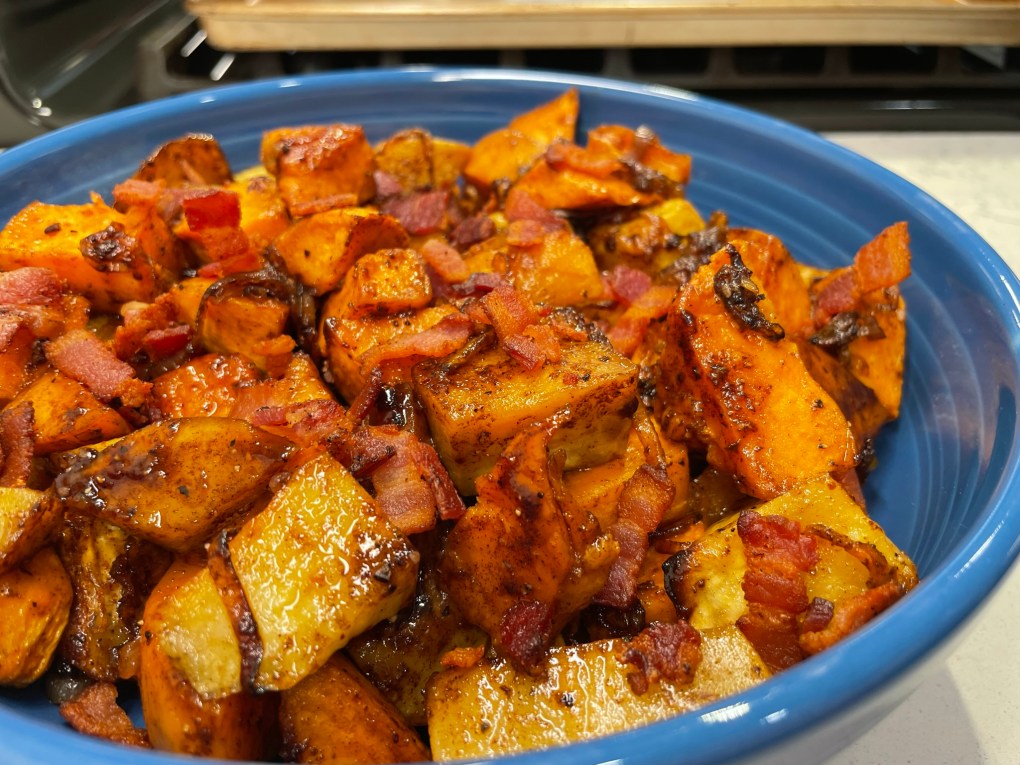
The crispy bacon is optional but delicious.

How spicy are we talking here?

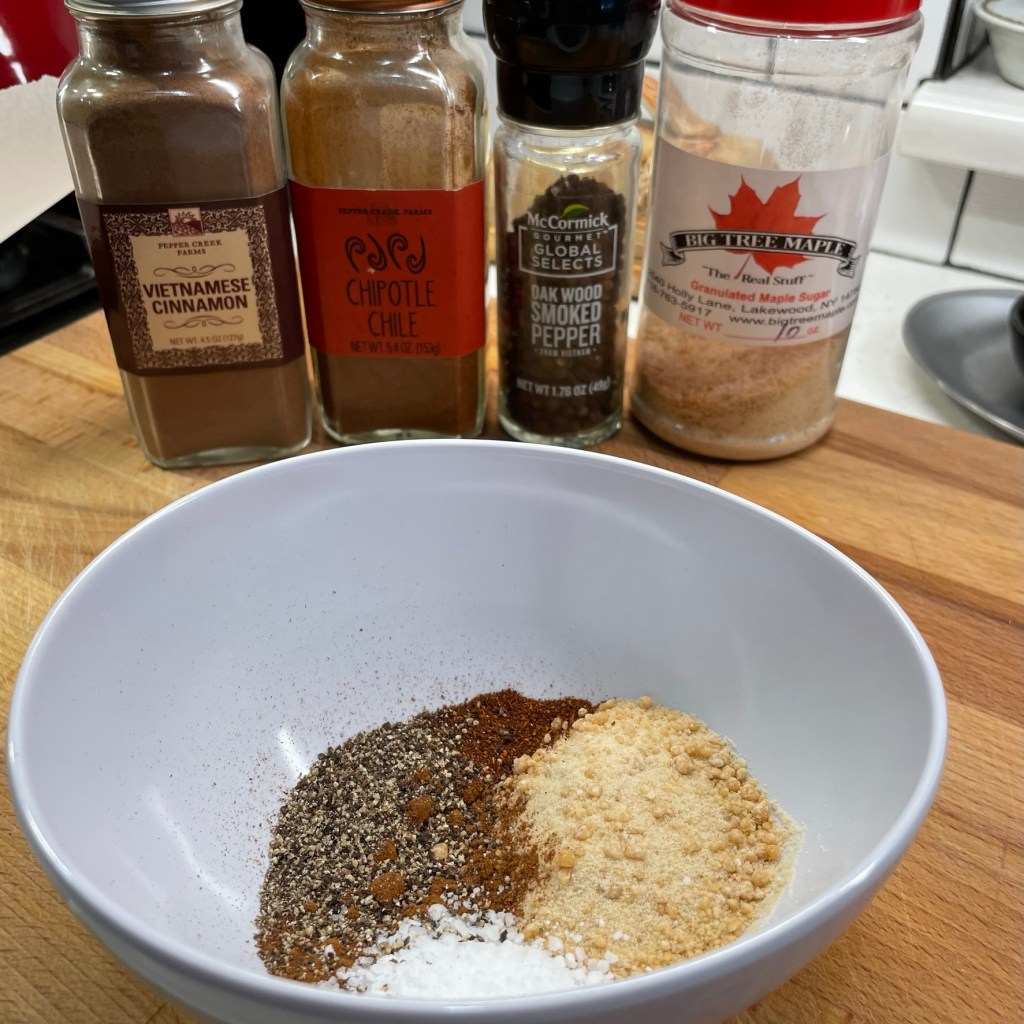
This spice list is short— ground chipotle, smoked black pepper and a hint of cinnamon. And for the sweet counterpart to those spices, maple sugar. I love pairing maple with heat, and when fall rolls around, I pretty much try to put a little bit of maple into everything. If you don’t like the heat of chipotle, you could substitute smoked paprika. If you like the heat but don’t care for the smoky notes, try subbing a lesser amount of cayenne pepper. As with any recipe I share, you are always welcome to make it your own.

Maple sugar is a nice seasonal touch, but light brown sugar would work in a pinch.

Prepping sweet potatoes for roasting

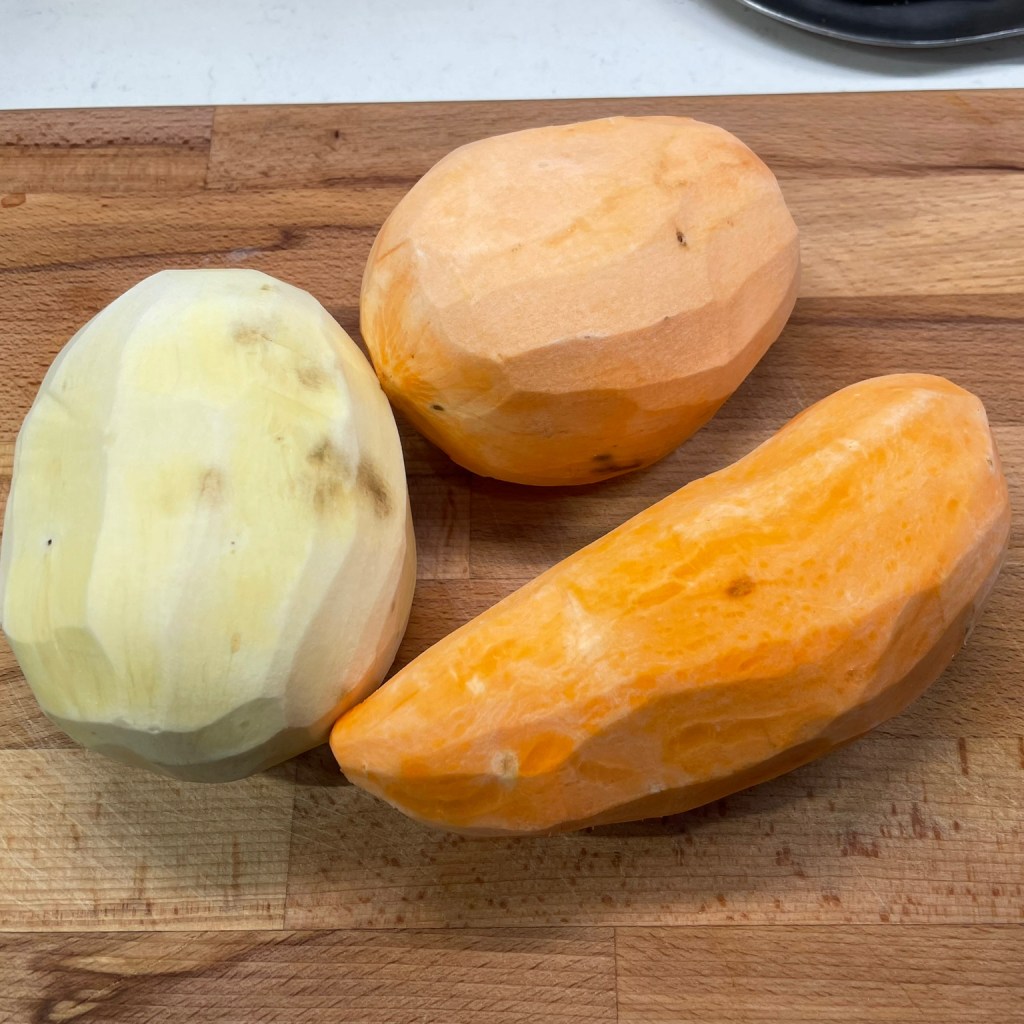
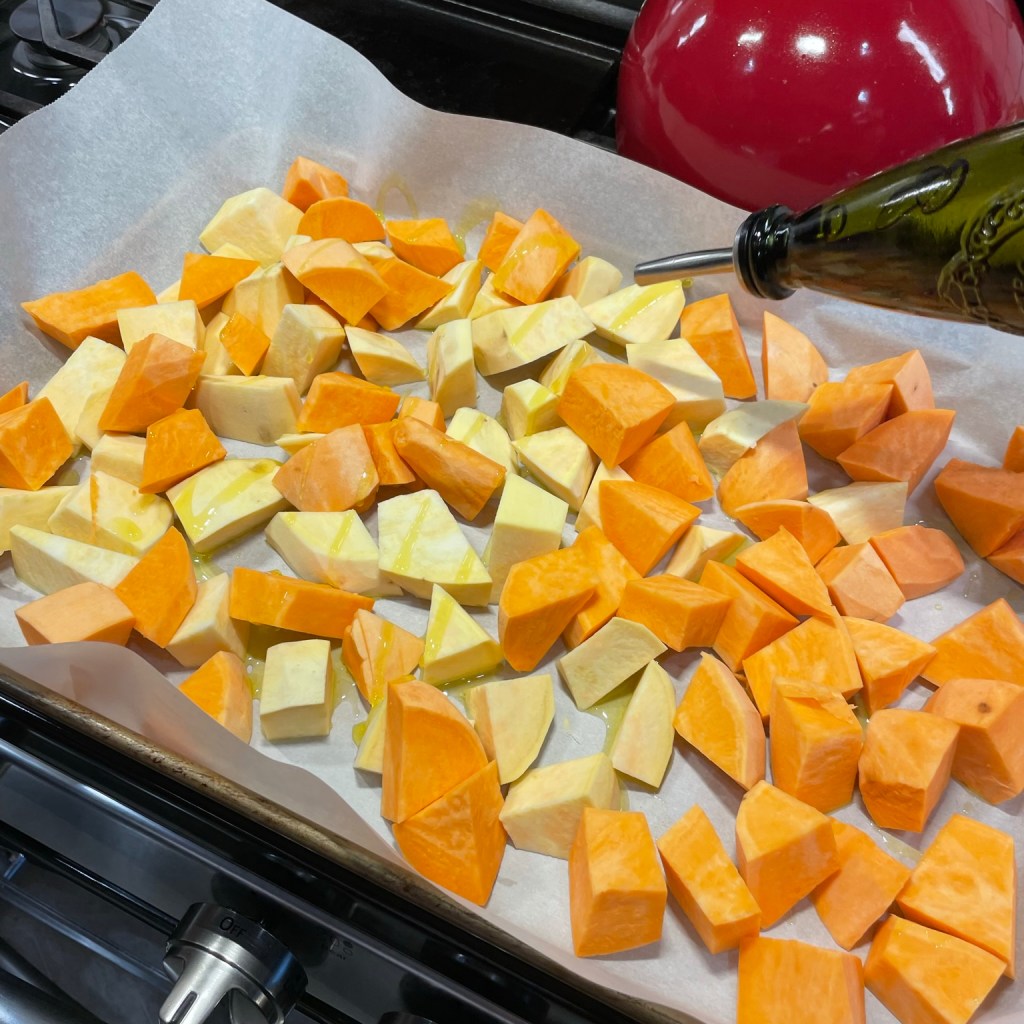
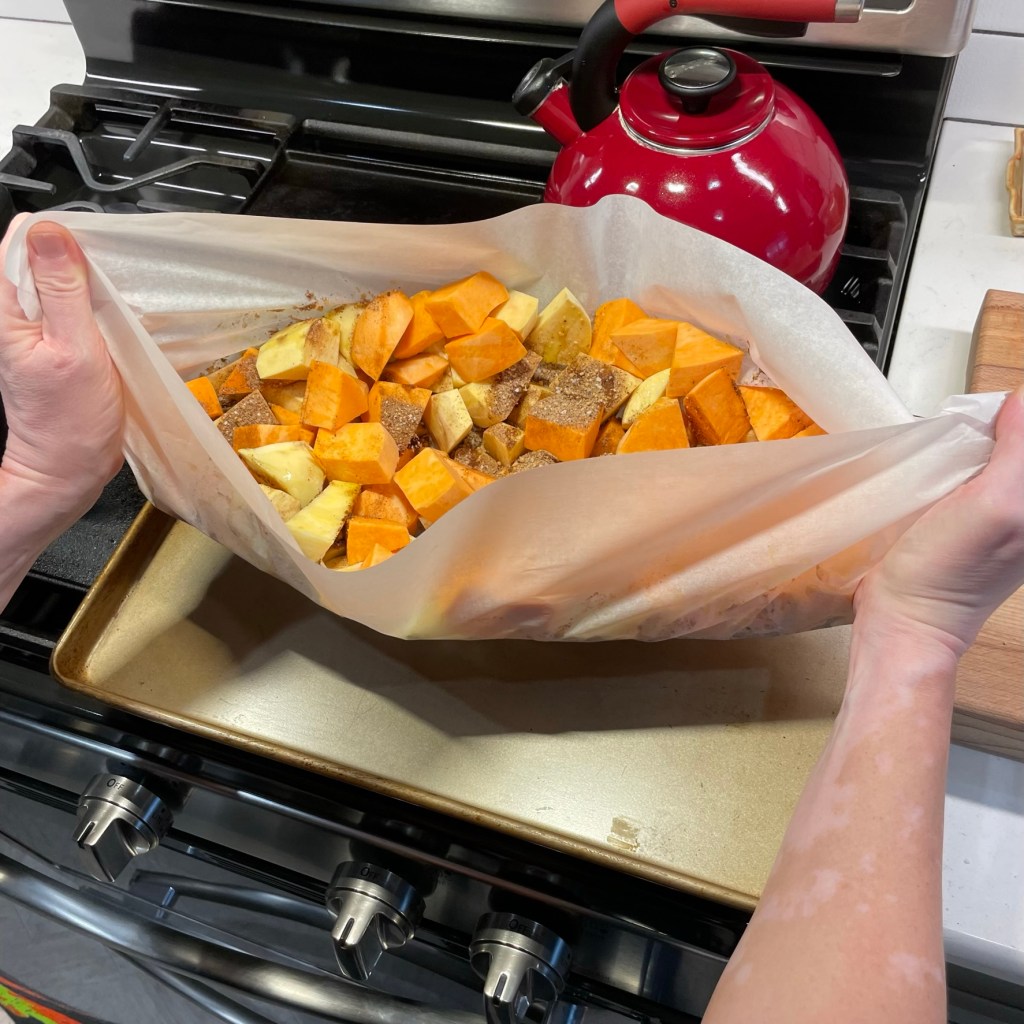
To keep things visually interesting, I picked up three different varieties of sweet potato, and you can see that they each had a unique color after peeling. The texture was the same on all three, so I expected they would roast evenly. I cut them into big chunks and laid them out onto a parchment-lined baking sheet, where they were drizzled with oil and tossed with the maple sugar and spice blend. My quick method for tossing them involves grabbing up two corners of the parchment into each hand like a hammock and quickly “swaying” it left and right. Do this first with just the oil, and again after you add the spices.


The pan slides into a hot oven for about half an hour, with a quick toss-around of the potatoes about halfway through. They will emerge fork-tender, with browned corners and a deeply smoky flavor and just enough sweet to balance the heat. 

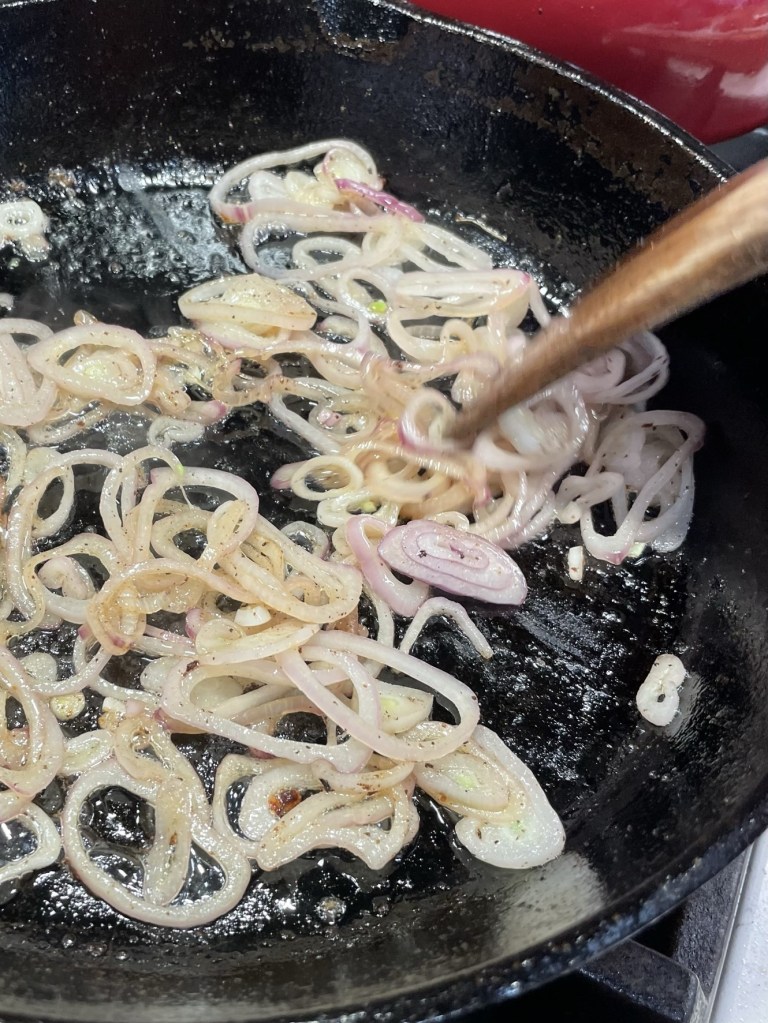
While they roast, cook up a couple slices of cut-up bacon to play up the smoke flavor even more. I go through phases where I put bacon in everything, but these sweet potatoes would be just fine without it. Do not, however, miss out on the caramelized onions. A sweet onion would be ideal here, but on the day that I made this recipe, I didn’t have one, so I sliced a shallot into rings and cooked them up in the bacon drippings until they were golden brown. 


That unnecessary bacon goes on top at serving time, if you so choose. As with all roasted vegetables, these will have their best texture when they are fresh out of the oven, but they can also be done in advance and warmed at dinner time. Just hold the bacon til the end for best contrast of texture.

Smoky Chipotle-Maple Roasted Sweet Potatoes

  • Servings: About 6
  • Difficulty: Average
  • Print

This combination of smoky chipotle and not-too-sweet maple shakes things up for this side, which is a bold one for Thanksgiving or any cold-weather weeknight dinner.


Ingredients

  • 3 extra large sweet potatoes (any color), cut into large chunks
  • 2 Tbsp. extra virgin olive oil
  • 2 Tbsp. brown sugar
  • 2 Tbsp. maple sugar (or additional brown sugar if not available)
  • 1 tsp. kosher salt (less if regular table salt)
  • 1/2 tsp. ground chipotle powder (see notes for substitution ideas)
  • 1/4 tsp. ground cinnamon
  • 1/2 tsp. freshly ground black pepper (smoked, if you can find it)
  • 4 slices uncured bacon, cut into one-inch pieces
  • 1 large shallot, sliced into rings (or 1/2 cup chopped sweet onion)

Notes: There are several substitutes for chipotle powder, depending on preference. Paprika is good if like the smoky flavor but not the heat. Cayenne would provide heat without smoke. Ancho chile powder is slightly hot with brighter, fruity pepper notes. Choose what works for you.

Omit the bacon, if you wish, and sauté the shallots instead in a teaspoon or two of olive oil.

Directions

  1. Preheat oven to 375° F, with rack in center position. Line a baking sheet with parchment paper.
  2. Combine brown and maple sugars in a small bowl with the other dry seasonings and mix to blend evenly.
  3. Drizzle olive oil over sweet potato chunks on parchment, and then sprinkle the seasonings all over them. Gather up both short ends of the parchment to make a “pouch” and gently shake it side-to-side to coat the chunks with the seasonings.
  4. Roast potatoes 30 to 35 minutes, until they are fork-tender.
  5. While potatoes roast, cut bacon into bite sized pieces and cook in a cast iron skillet until crispy. Transfer the bacon to a paper towel to drain, but keep the drippings in the skillet. Add the shallots to the skillet and season them with salt and pepper. Cook over medium heat, tossing frequently, until the onions are as caramelized or crispy as you like them.
  6. Scatter onions all over the roasted potatoes (while they are still on the parchment sheet pan), and then transfer the mix to a serving bowl. Sprinkle bacon bits over the potatoes and serve.


Pumpkin Spice Espresso Martini

Well, now I’ve gone and done it, haven’t I? I’m fully confessing to a moment of weakness during a recent visit to Trader Joe’s, but I’m not apologizing. The whole pumpkin spice thing was just too much for me to ignore this year, and I’m not saying that I was on the wagon against pumpkin spice, but if I had been on the wagon— well, this martini would sure as hell knock me off.

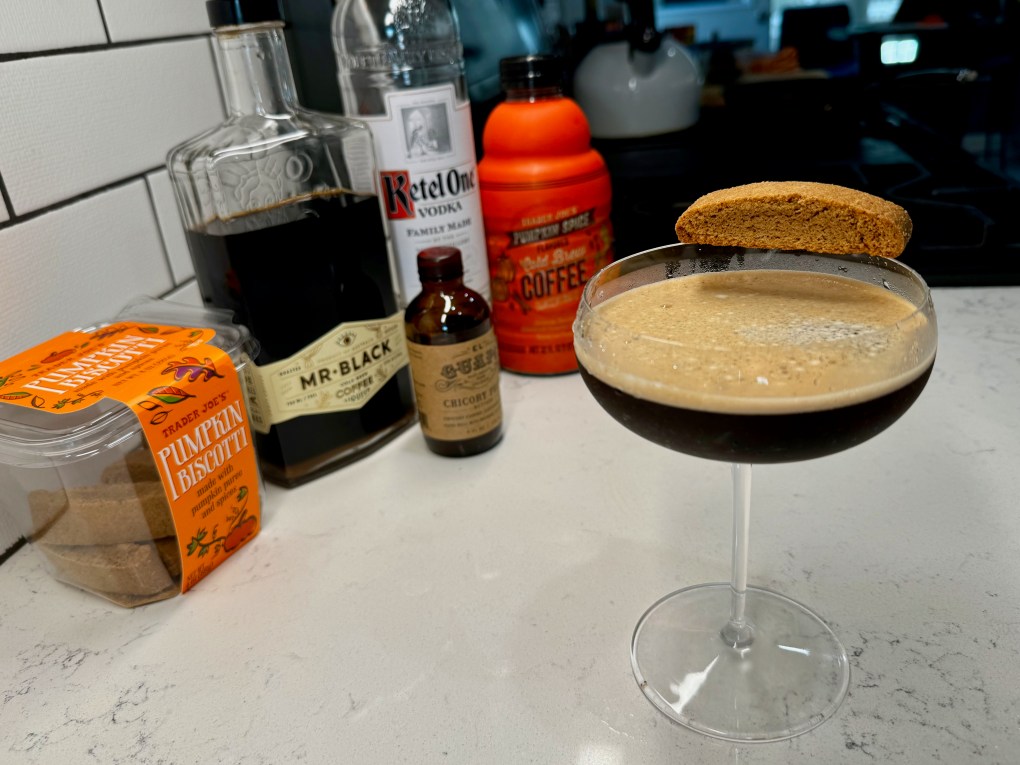
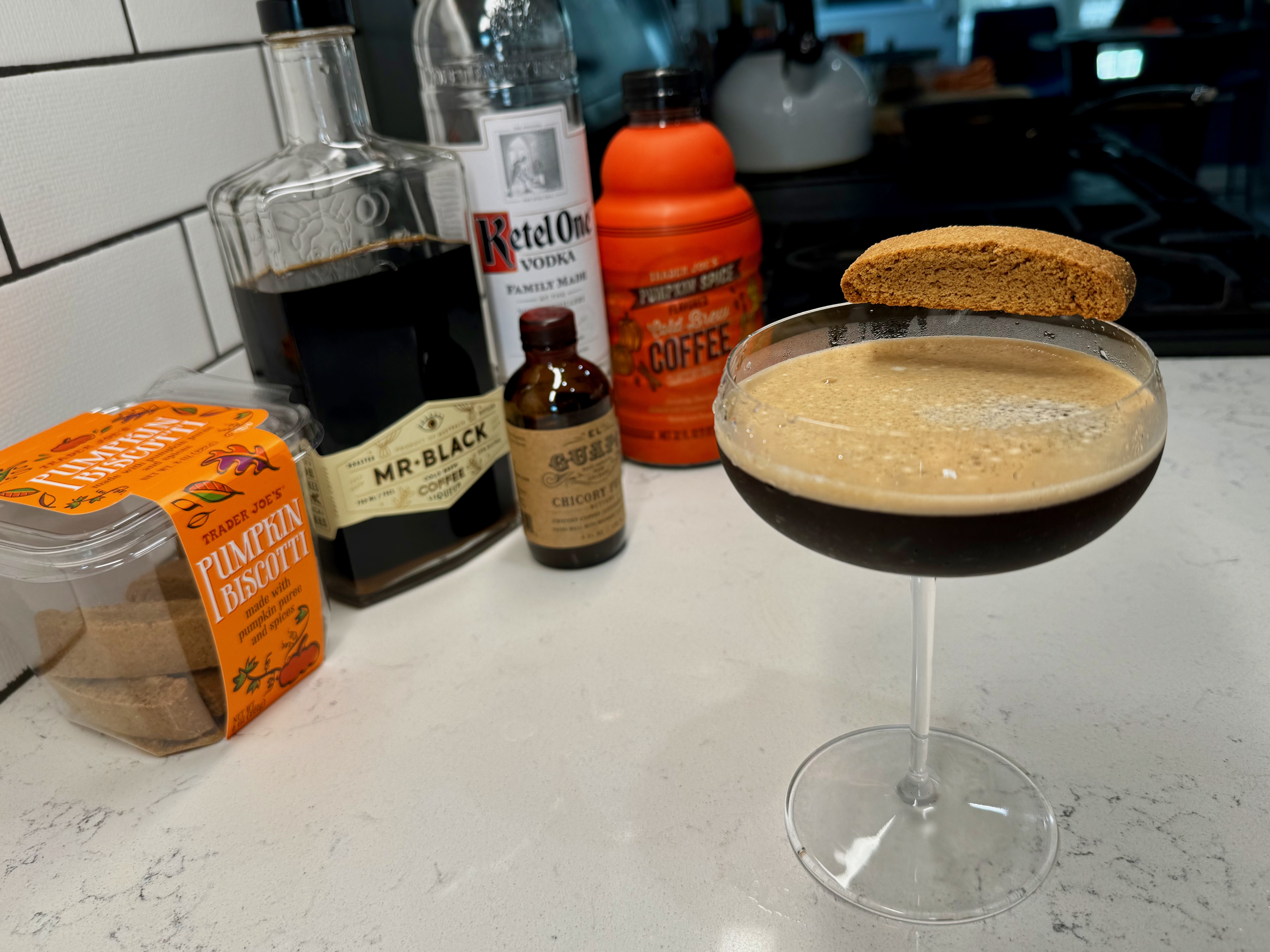
The only actual pumpkin here is the biscotti garnish.

For those of you cringing at the idea of a pumpkin spice espresso martini, here’s a reality check. No pumpkins were harmed in the making of this martini, because the “pumpkin spice” cold brew concentrate from Trader Joe’s has exactly ZERO percent pumpkin; it’s only spices that one might use with pumpkin pie— cinnamon, ginger, clove, nutmeg and orange peel— and it turns out they are fine companions to arabica coffee, with or without the other things that make this a cocktail.

So, would you feel better if we called this an autumn spice espresso martini? 

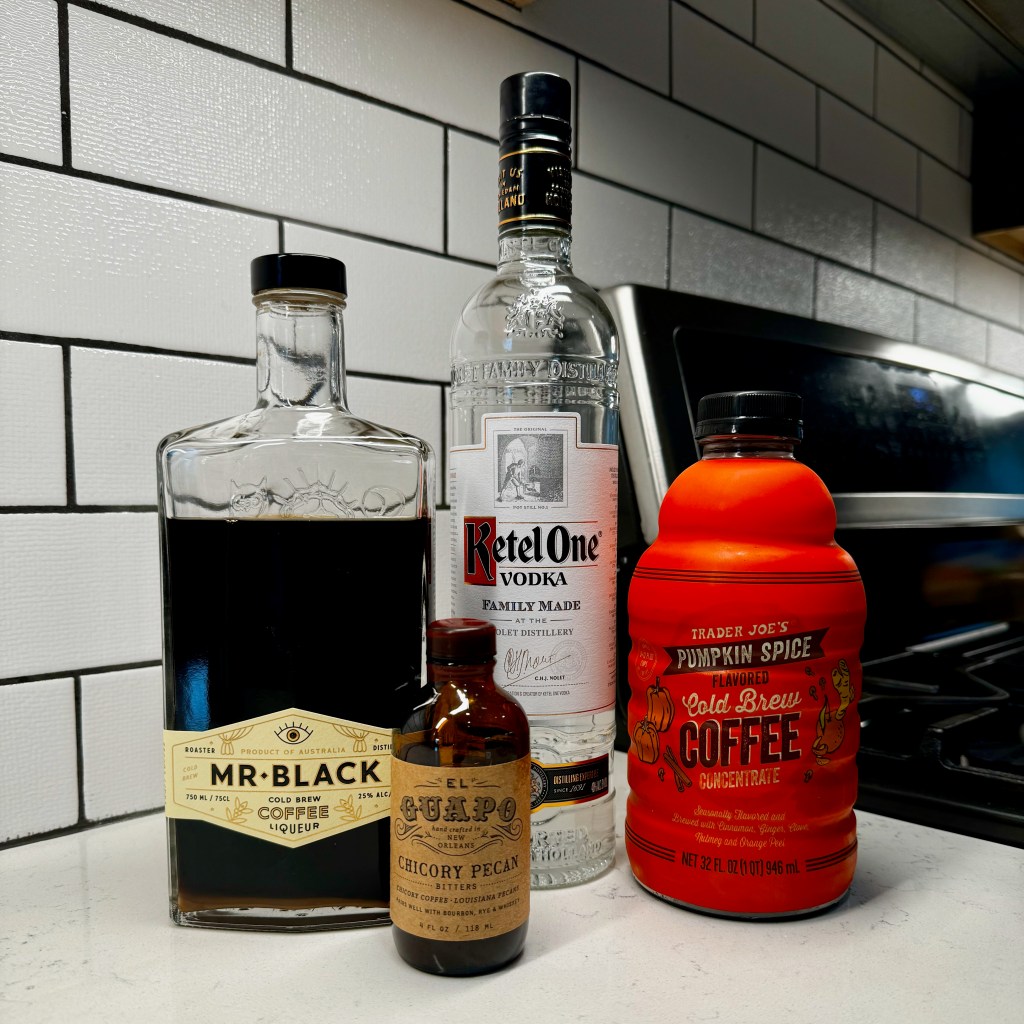
My new favorite fall lineup!

I mentioned when I shared my favorite new Negroni cocktail that Mr. Black cold brew liqueur was going to show up here again soon, and though I don’t usually share two cocktails so close to each other, I didn’t want to wait because we all know that Trader Joe’s has a short attention span with their limited season items. If you’re thinking about making some of these, leave right now to get your cold brew concentrate. I’ll wait. And while you’re at it, pick up the miniature pumpkin biscotti; they’re delicious with your morning coffee and equally good for garnishing this cocktail.

Should an espresso martini be sweet?

This is strictly a matter of opinion, and for this black coffee drinker, the answer is no. The difference between Mr. Black and other coffee liqueurs I’ve tried— Kahlua, Tia Maria and a Kentucky-made liqueur called Grind— is the level of sweetness. If you have a sweet tooth, these other options are probably right up your alley, especially if you take sugar in your morning coffee. But for me, an espresso martini with those options is essentially just a Black Russian in a different glass. I want the deep, dark, roasty flavor, and I’m happy to report that Mr. Black brings it!

Should an espresso martini be creamy?

People who take cream in their coffee probably also expect the creamy touch that Bailey’s liqueur or half-and-half bring to an espresso martini, but not me. Too many bars I’ve visited have turned this on-trend cocktail into something akin to a mudslide, even so far as drizzling chocolate syrup drizzled inside the glass. I can’t even. As with coffee, all of this is personal preference.

My perfect espresso martini

One of the things that held me back for a while from trying this drink at home is that I don’t have an espresso machine, and cold coffee just isn’t the same. But I have found that cold brew concentrate is a fantastic substitute because it is dark and robust, and it contains enough of the natural coffee oils that can be frothed for that beautiful coffee foam on top of the drink. The cold brew concentrate has caffeine, obviously, but each drink only uses two tablespoons, so it isn’t going to keep me up all night— unless I have three of them. 😂


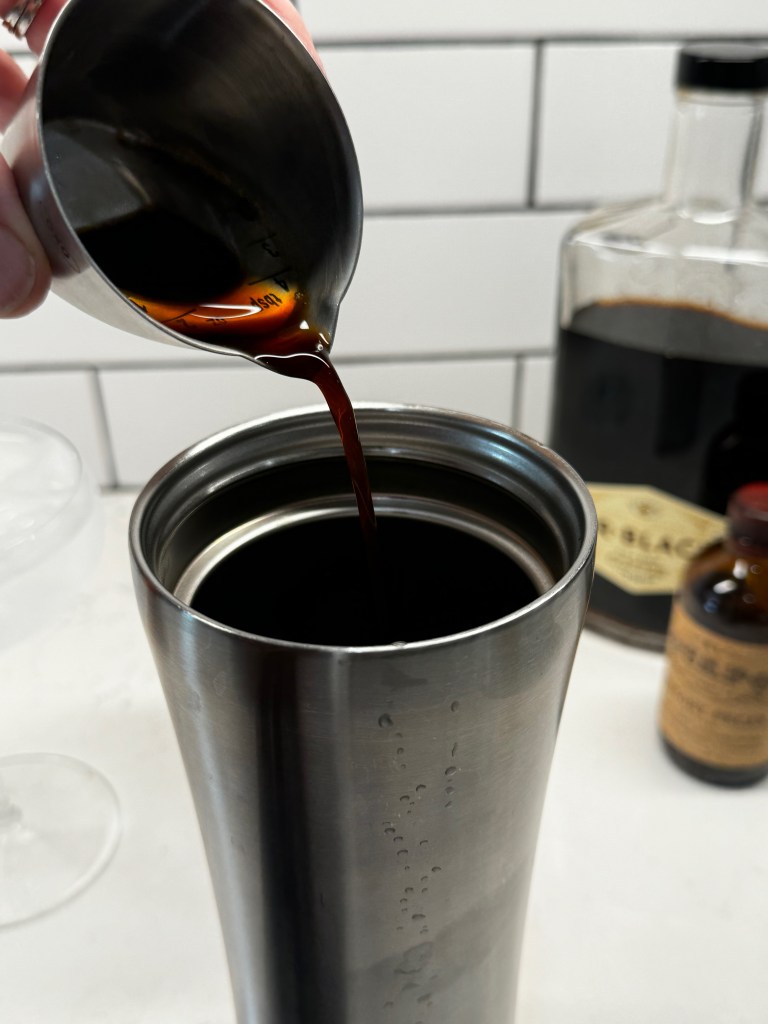
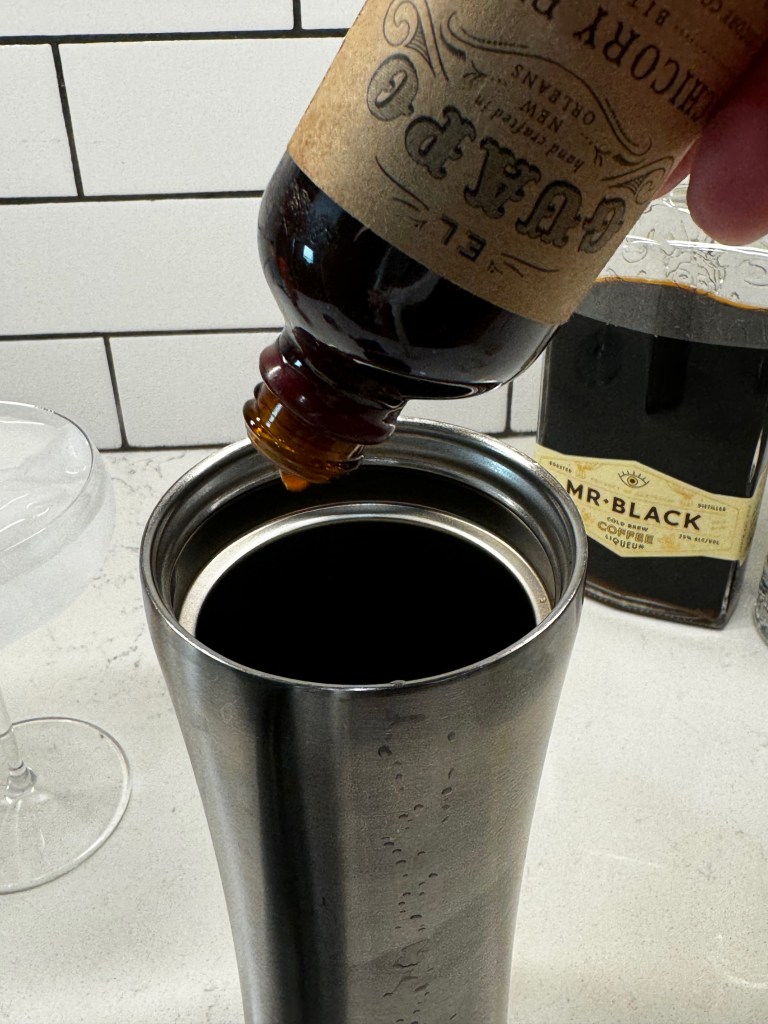
Combine a quality vodka (I like Ketel One), Mr. Black, a shot of cold brew concentrate and a smidgeon of simple syrup— or if you want to go crazy, try smoked maple syrup (OMG). For extra pizzazz, I’m loving a couple of dashes of chicory and pecan bitters, the same product I used last year in my sweet potato casserole old fashioned. The bitters are not necessary because the coffee already carries the bitter flavor, and you could either omit them or substitute chocolate or even orange bitters, if you’d like. I like the warmth and extra roast flavor that the El Guapo bitters add. 

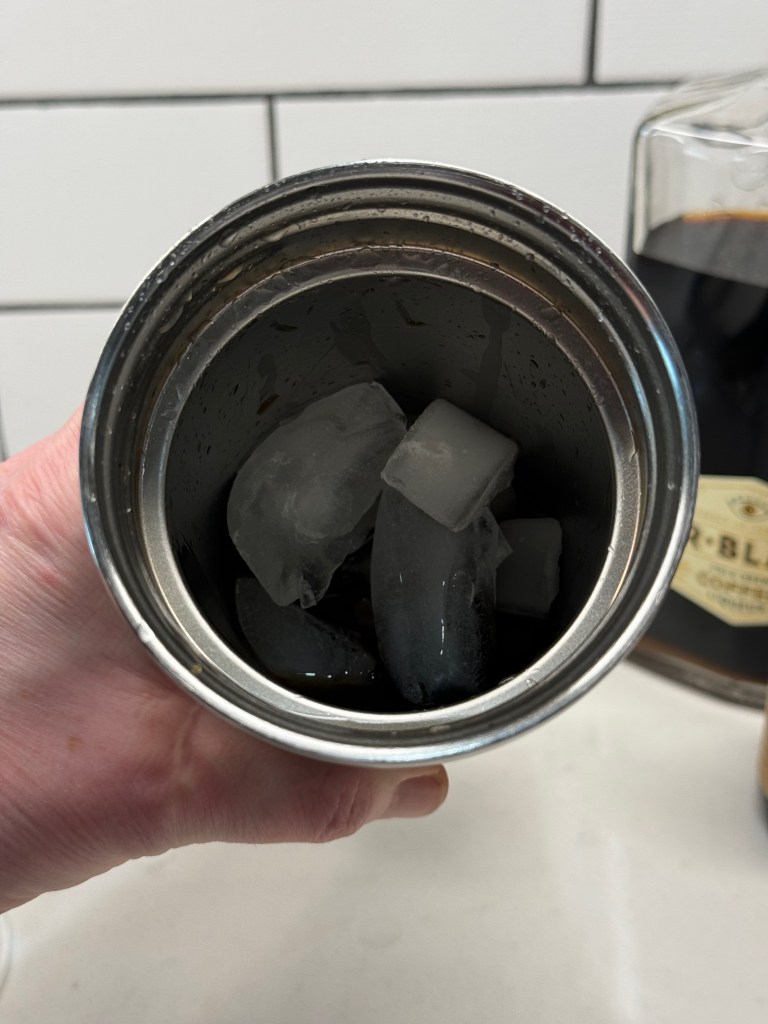
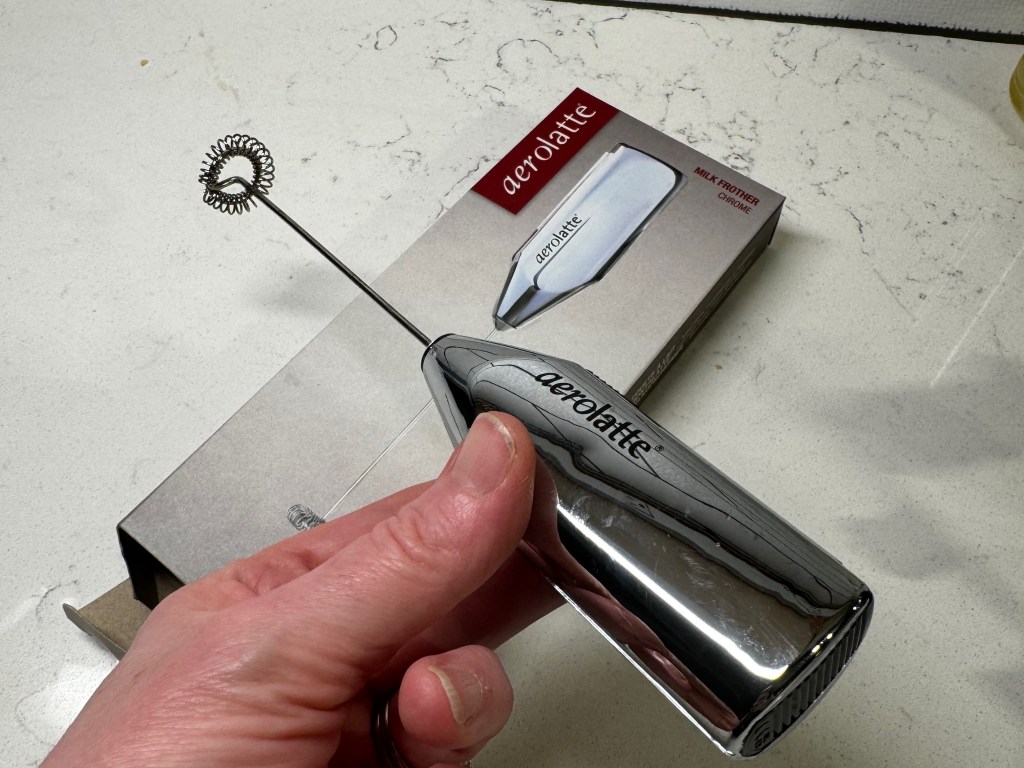
Finally, add one cup of ice and shake the dickens out of it. The more you shake, the better chance you have of frothing up that cold brew concentrate. But if you really love the rich, foamy layer on top of your martini, I have a simple trick for that, too. You will need one of these little gadgets.

It’s sold as a “milk frother,” but I call it the espresso martini magic maker!

I bought this simple little device last year for Les’s Christmukkah stocking, thinking that it would elevate his hot chocolate, but it found its way into my cocktail tool kit. Here, I added a bit of the cold brew concentrate plus a splash of simple syrup to a separate glass and used the frother to whip it up into a foamy topping for my espresso martini. Surprisingly, you don’t have to pour this on top of the cocktail; you can actually pour it right into the glass and then pour the shaken drink over it. Because the foam is whipped full of air, it will remain on top of the drink either way.

Cheers. 😎

A word to the wise

As simple and innocent as this drink might seem, it goes down extra easy. Not only does the alcohol sneak up on you; too many will keep you up all night. So, if you’re making these at home, you’ll probably want to keep score.

Pumpkin Spice Espresso Martini

  • Servings: One cocktail
  • Difficulty: Average
  • Print

My version of espresso martini forgoes the sweetness and cream in favor of a deep coffee flavor. The spice blend (which doesn't have a bit of pumpkin) is not only fun but really delicious. If you cannot get the Trader Joe's flavored cold brew concentrate, check Starbucks for their version.


Ingredients

  • 1 1/2 oz. Ketel One vodka
  • 1 1/2 oz. Mr. Black cold brew liqueur
  • 1/2 oz. Trader Joe’s pumpkin spice cold brew concentrate
  • 1/4 to 1/2 oz. simple syrup (depending on your sweet tooth)
  • 2 dashes El Guapo Pecan Chicory bitters (see notes)
  • For the foam: 1/2 oz. cold brew concentrate and 1/4 oz. simple syrup
  • Just for fun, a pumpkin spice biscotti for garnish

Notes: If the spices aren’t your thing, you could easily substitute a regular cold brew concentrate here and still enjoy a wonderful drink. The chicory bitters can be purchased online and they add another layer of roasty flavor to this drink. If you can’t find them, omit them or sub in another type of bitters, especially chocolate or orange.

Directions

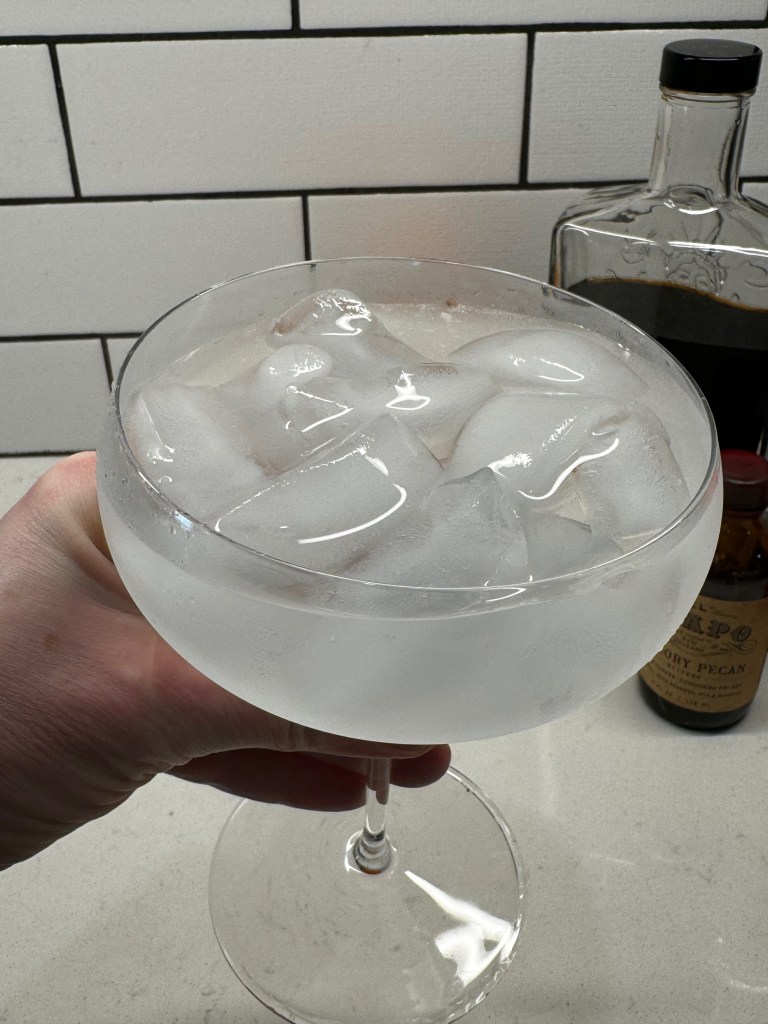
  1. Chill a coupe or martini glass with ice and a splash of water.
  2. Measure vodka, Mr. Black, cold brew concentrate, simple syrup and bitters into a cocktail shaker. Add one cup ice and shake vigorously to blend and dilute the drink.
  3. In a separate glass, measure the additional cold brew concentrate and simple syrup. Use the milk frother to whip this into a foamy mixture.
  4. Dump out the ice chilling your glass. Pour the foam directly into the glass, and then pour the espresso martini over the foam. If you prefer, pour the cocktail first and the foam on top; either way, the foam will stay on top.
  5. Garnish with a pumpkin spice biscotti, if desired.


Hatteras-style Clam Chowder

There are days that I go looking for a good inspiration recipe, and then there are days when they pop up out of nowhere while I’m looking for something else. This recipe, I suppose, was somewhere in between. 

I’ve been wanting to make a clam chowder with the fresh chopped clams that always tempt me from the case at my local seafood shop, but I didn’t want either of the classic chowder options that you always hear about. New England style, of course, is the creamy, white version that uses potatoes, clams, onions and loads of heavy cream. It’s luxurious and comforting, but high on the saturated fat scale. And then there’s Manhattan style, with its light tomato broth, onions, big chunks of potato and chewy clams. It’s a lovely light bite, but some people (my New York-born-and-raised husband included) don’t find brothy soups as satisfying. 

A perfect in-between

As I pondered how to find a happy medium between the lighter, tomato brothy chowder I craved and the creamy but bland version my husband favored, I got to thinking maybe it would fun to create something altogether new— a chowder with more texture and maybe some autumn ingredients. That’s when my search for “autumn clam chowder” turned up a terrific inspiration recipe on the Southern Living website— they called it Hatteras Chowder.

How in the world this dish escaped my eye after the 37+ years I’ve lived in North Carolina is beyond me, and I am taking it as my sign that I need to finally visit the Outer Banks, where Hatteras Island graces the Atlantic coastline with the tallest brick lighthouse in the United States. 

Hatteras Lightstation
Photo by Shalom Shore on Pexels.com

It was lucky that I stumbled on this inspiration, because I had been wrestling with what to make to honor my state on North Carolina Day. I’ll share my own version of this recipe in a moment, but first, I want to brag on my state a little bit. After all, I have called it home for nearly four decades! 

I love living in North Carolina. I drove into town in my little white Pontiac (that had no A/C), with my cat, my clothes, a big stereo system and $800 in my pocket. This place gave me hope for achieving my dream, and I found more than I had imagined, personally and career-wise. We have the coast just a few hours east and the mountains two hours west. We get to enjoy all four seasons, though we haven’t seen much snow in recent winters in my neck of the woods.

The city of Winston-Salem, where Les and I met and live, boasts a vibrant arts and innovation culture— a big step up from the days when Winston-Salem was only about tobacco. We have terrific indoor and outdoor venues nearby for live music, great food and drink, and our city is proud of the diversity of its citizens. Yes, we have our share of unfortunate political embarrassments (you’ve probably read about one of them even this week, but we will take care of that in November), and our coastline frequently bears the brunt of tropical storms and hurricanes, but the good in North Carolina truly outweighs the bad or we wouldn’t still be here!


Our state is also well known for many foods, including pulled pork bbq, collard greens and pimento cheese, but this Hatteras chowder that I’ve just learned about is made with fresh-from-the-Atlantic clams, red potatoes, bacon, onion, celery, carrot, white wine, herbs and clam juice. As written, the recipe sounds delicious. But you know me, I have to make it my own.

Twisting up a classic

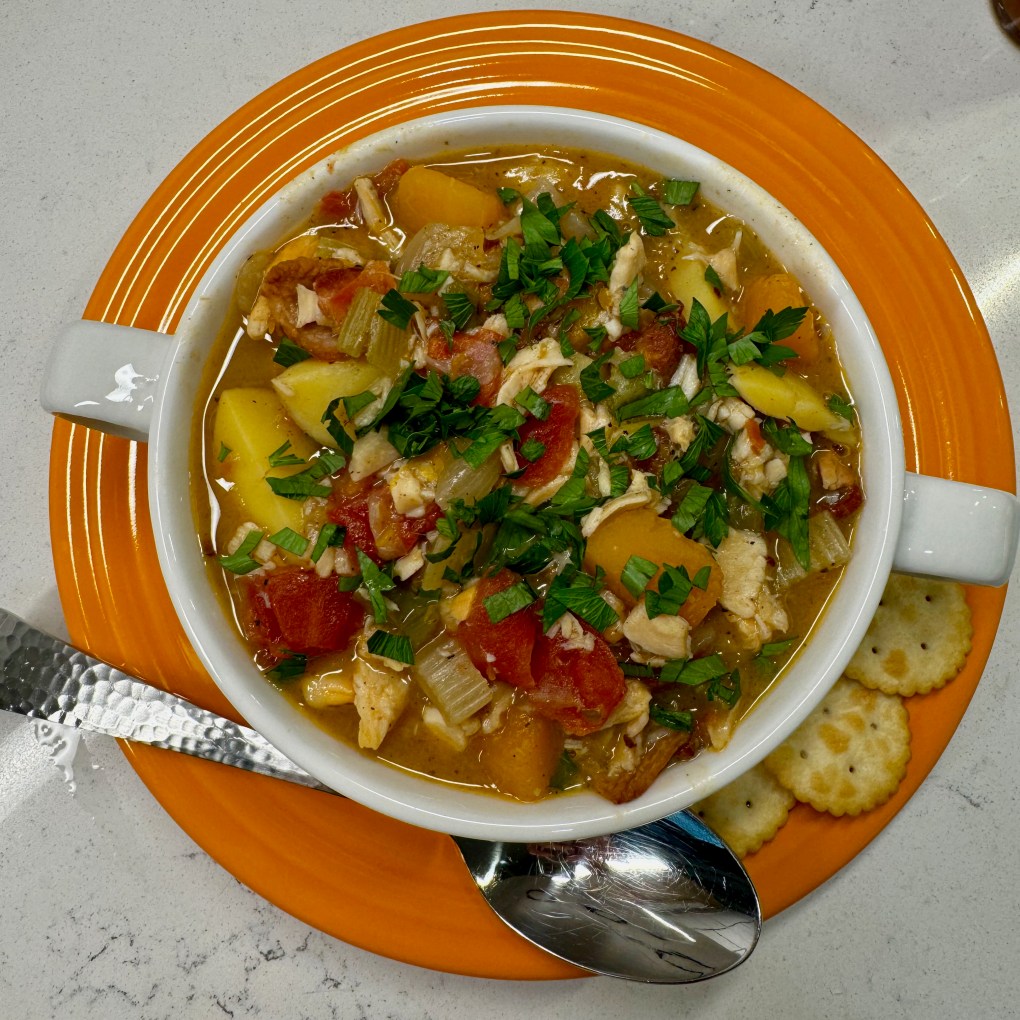
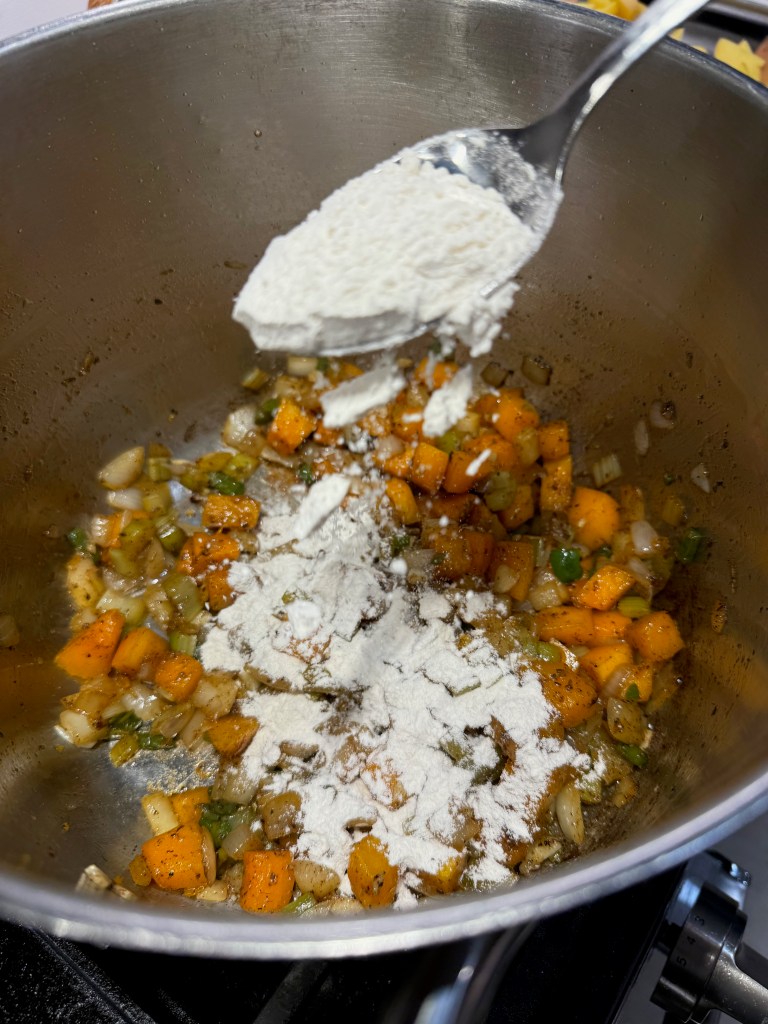
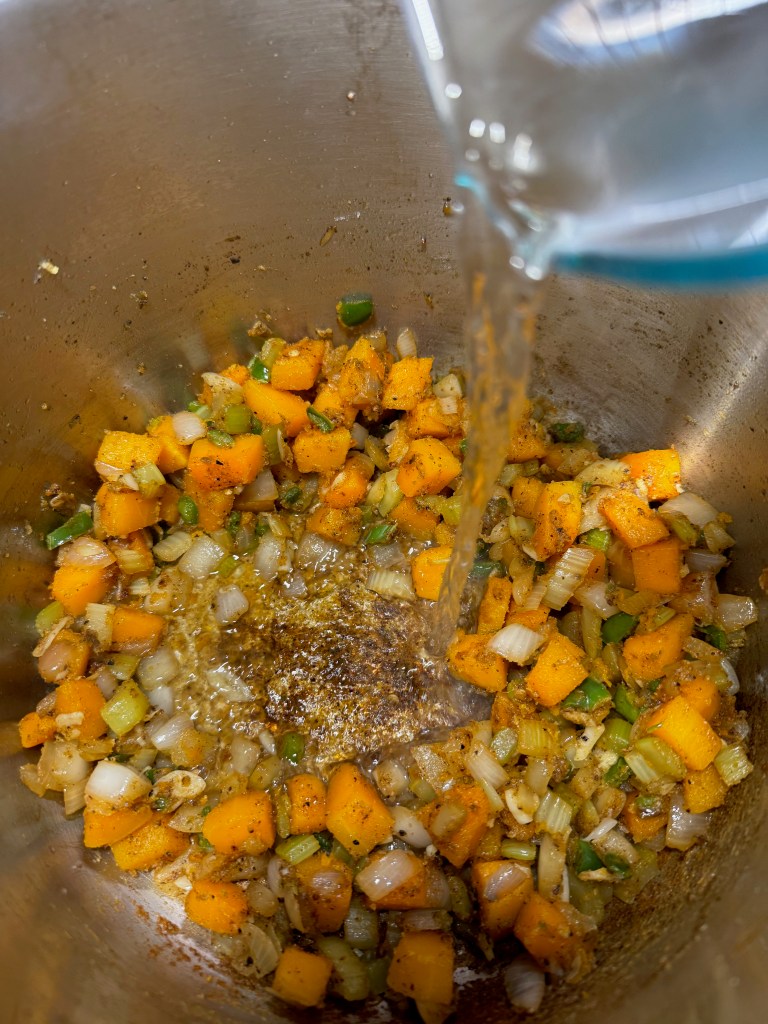
I didn’t have carrots on hand, but butternut squash stood in nicely. A jalapeño in the produce drawer promised to add a subtle layer of heat, which Les would never argue against. I sautéed those in the fat rendered from the bacon. To add a little extra body to the chowder, I cooked in a bit of flour just before deglazing the pot with white vermouth (because I never have wine on hand anymore).


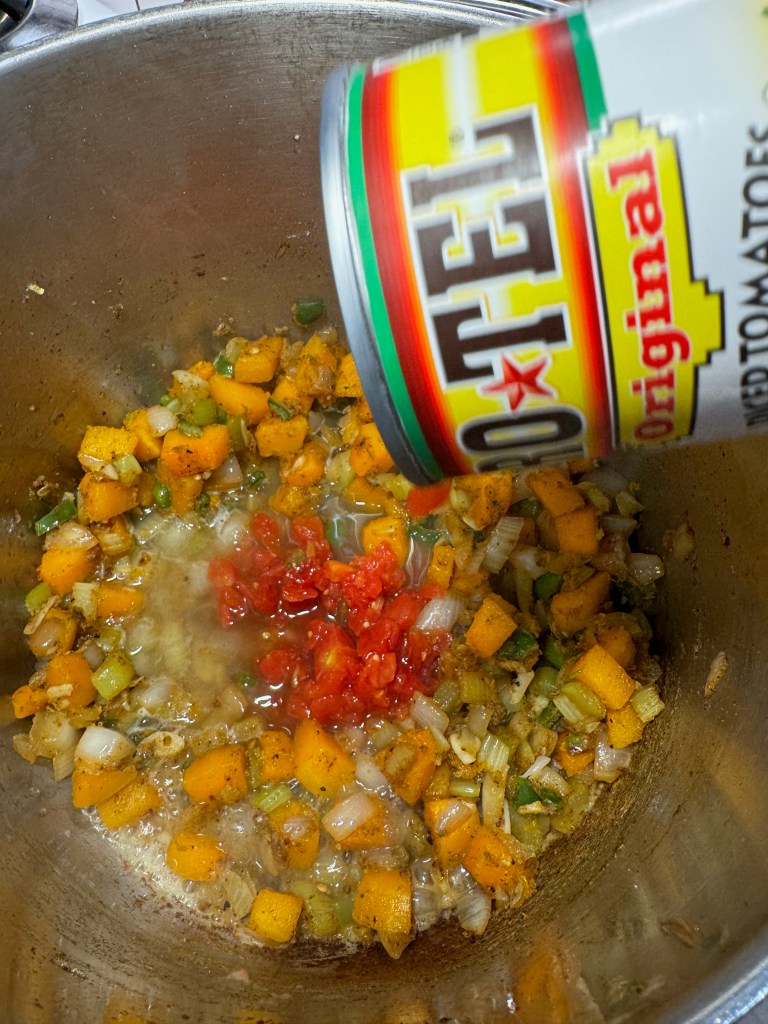
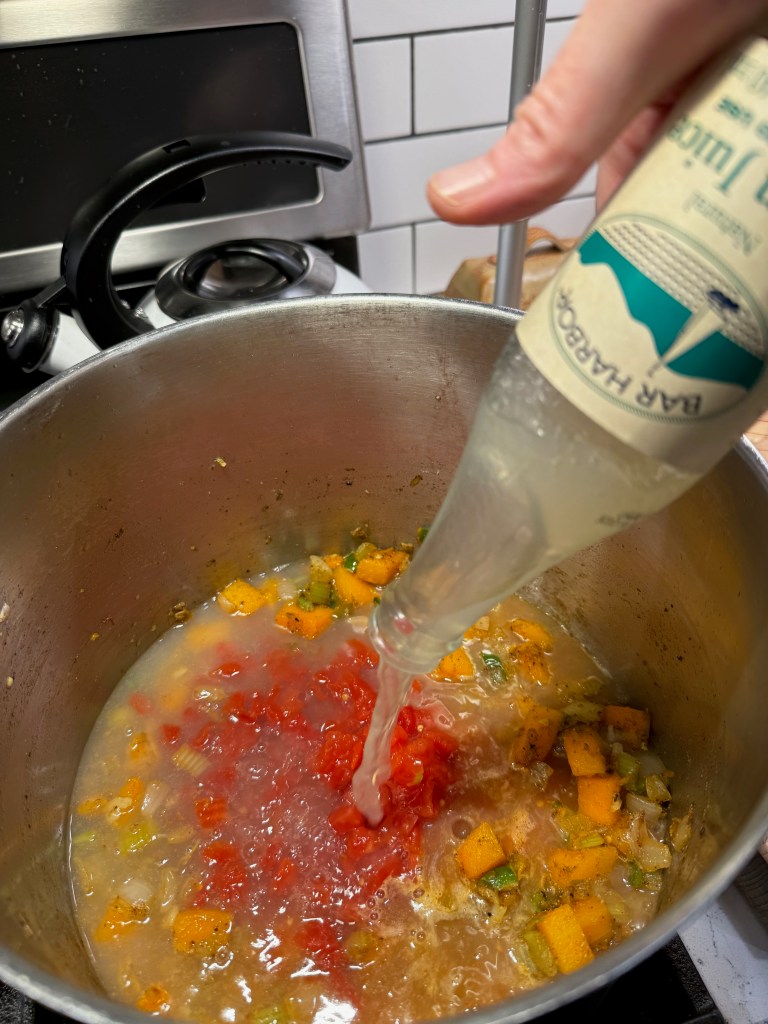
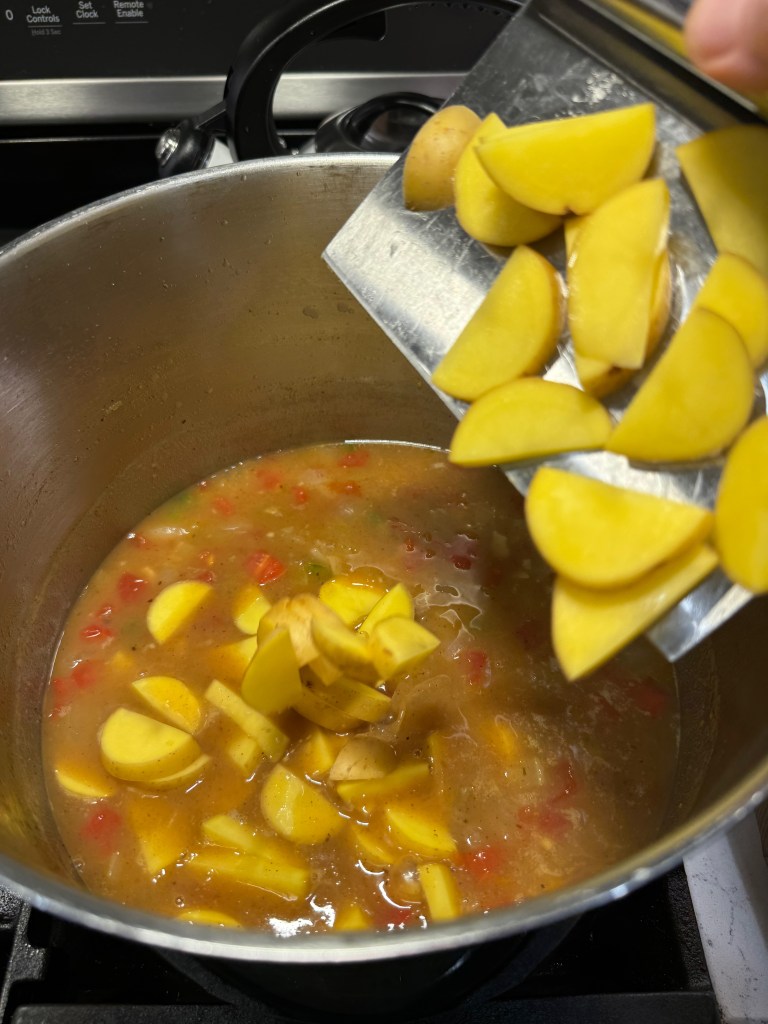
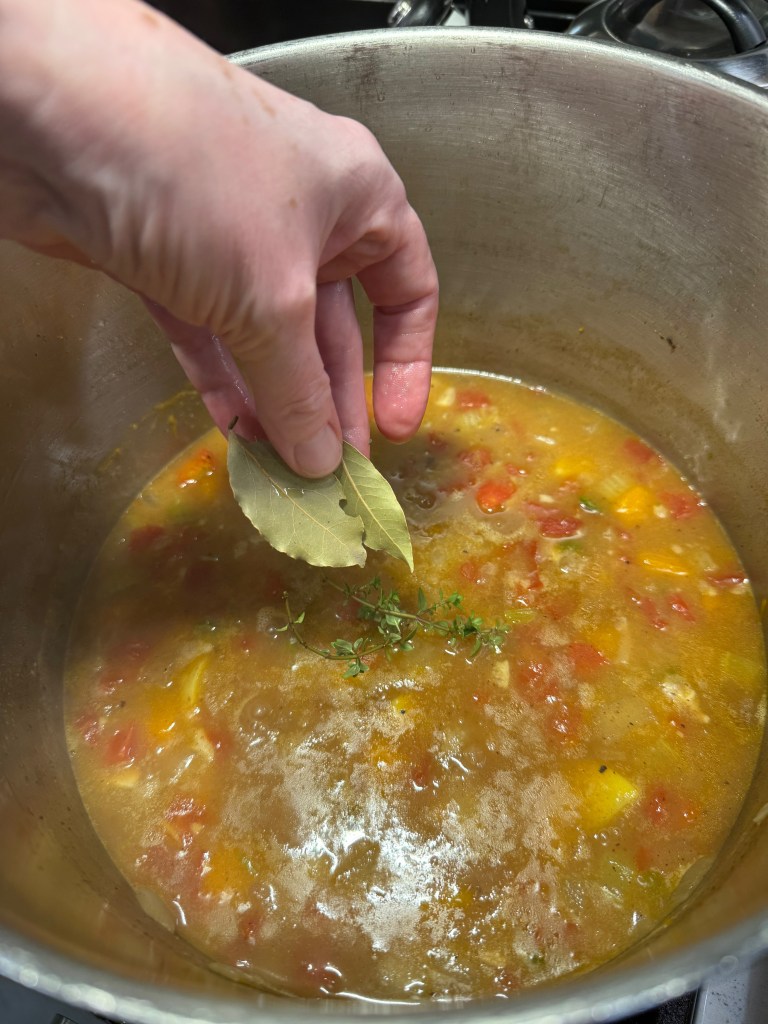
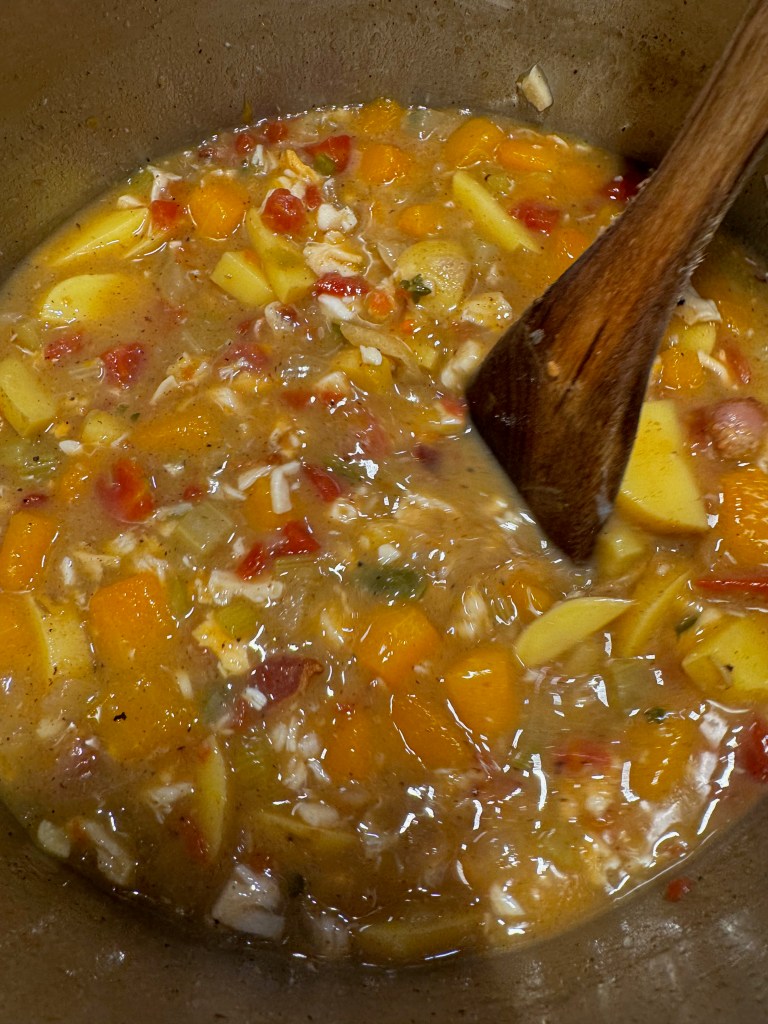
Believe it or not, I did have two bottles of clam juice in the pantry, because I’ve been jonesing to make chowder for over a year. The recipe called for three, but I didn’t mind keeping this on the thicker side. To bring a tiny bit of “Manhattan” into it, I tossed in a can of Rotel tomatoes which also brought another layer of heat, and that touch of acidity was perfect for balancing the flavors. Finally, my sliced Yukon gold potatoes (I didn’t have red), fresh thyme sprigs and dried bay leaves, and then it was time to simmer this hearty, chock-full-of-flavor autumn soup.


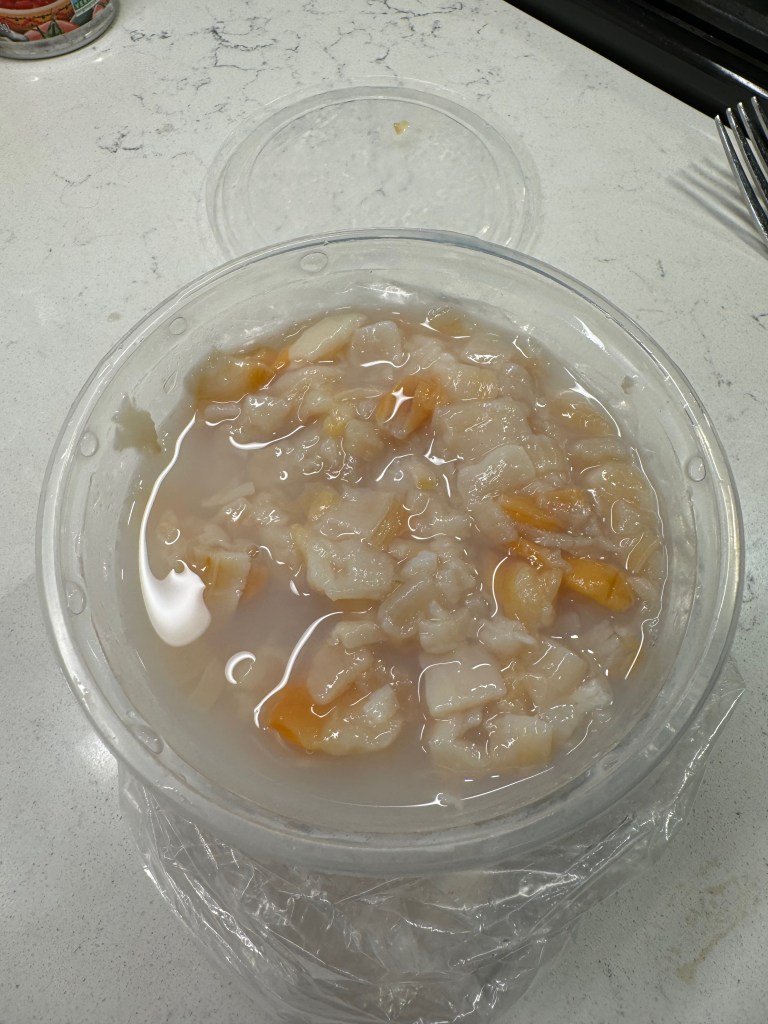
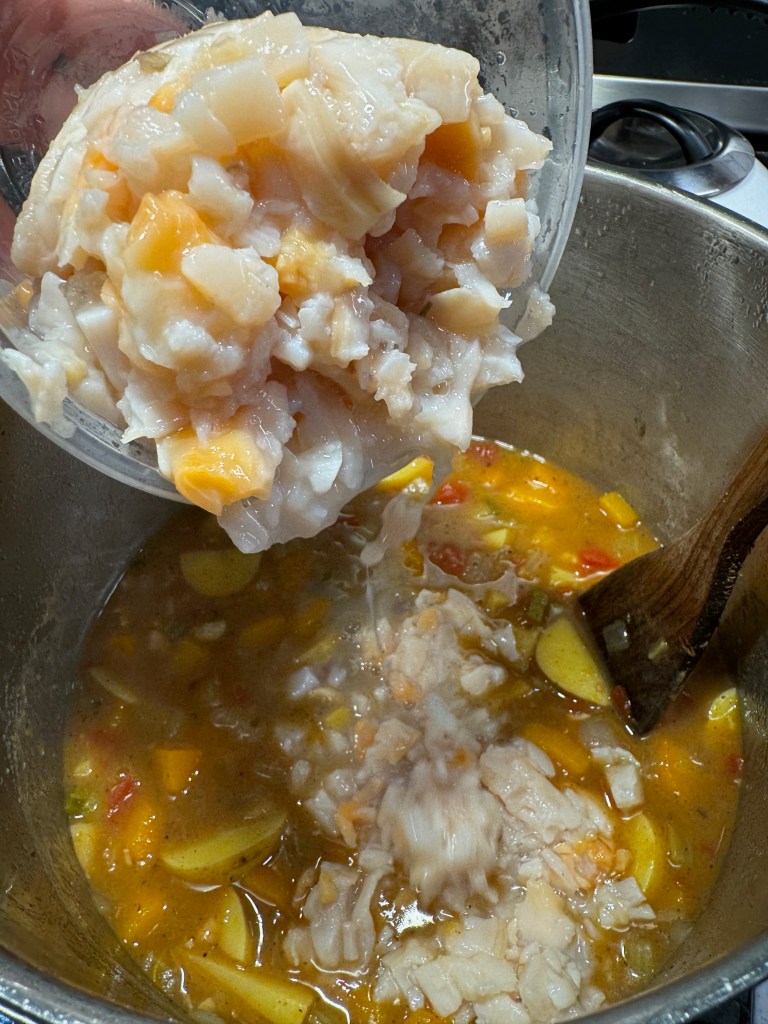
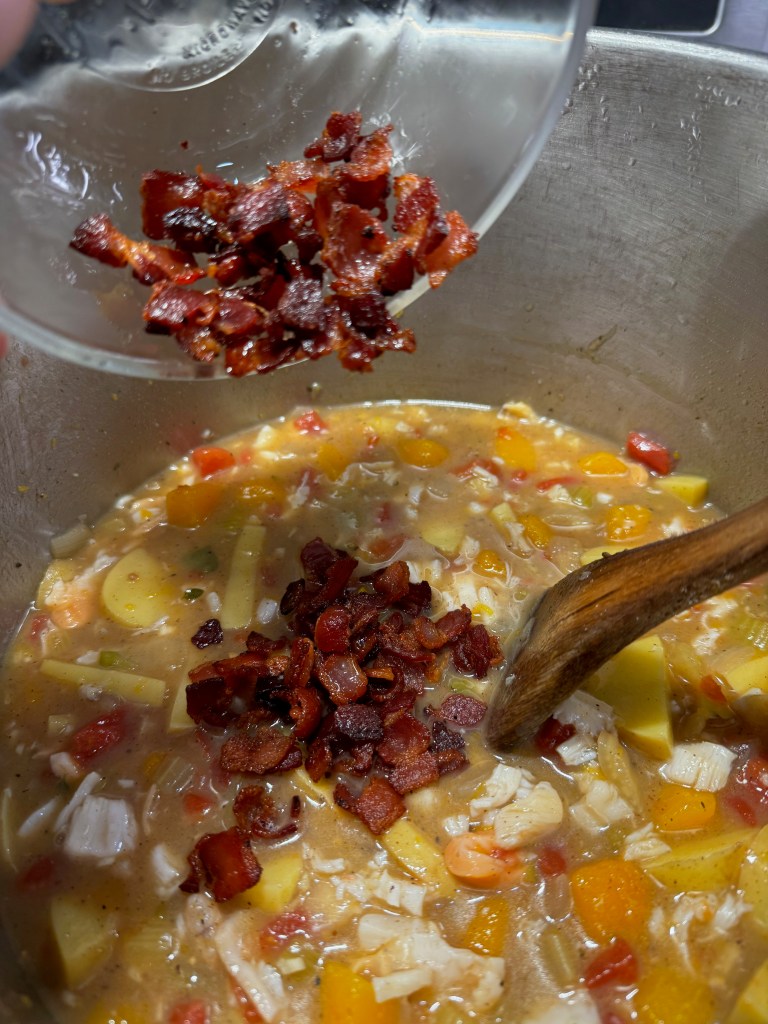
Here comes the big shortcut I took with this recipe. The Southern Living article said that only fresh whole clams were appropriate for this chowder—not chopped— and it included steps for purging the grit and then cooking the clams separately. I’m sure that canned chopped clams would come up short here, but the fresh chopped clams from my favorite local seafood chop were sweet, slightly chewy and so fresh; I’d put them up against the fussy whole-clam process any day of the week. These sweet little gems and their liquid get stirred in just at the end, along with the crisped-up bacon that started this whole thing.


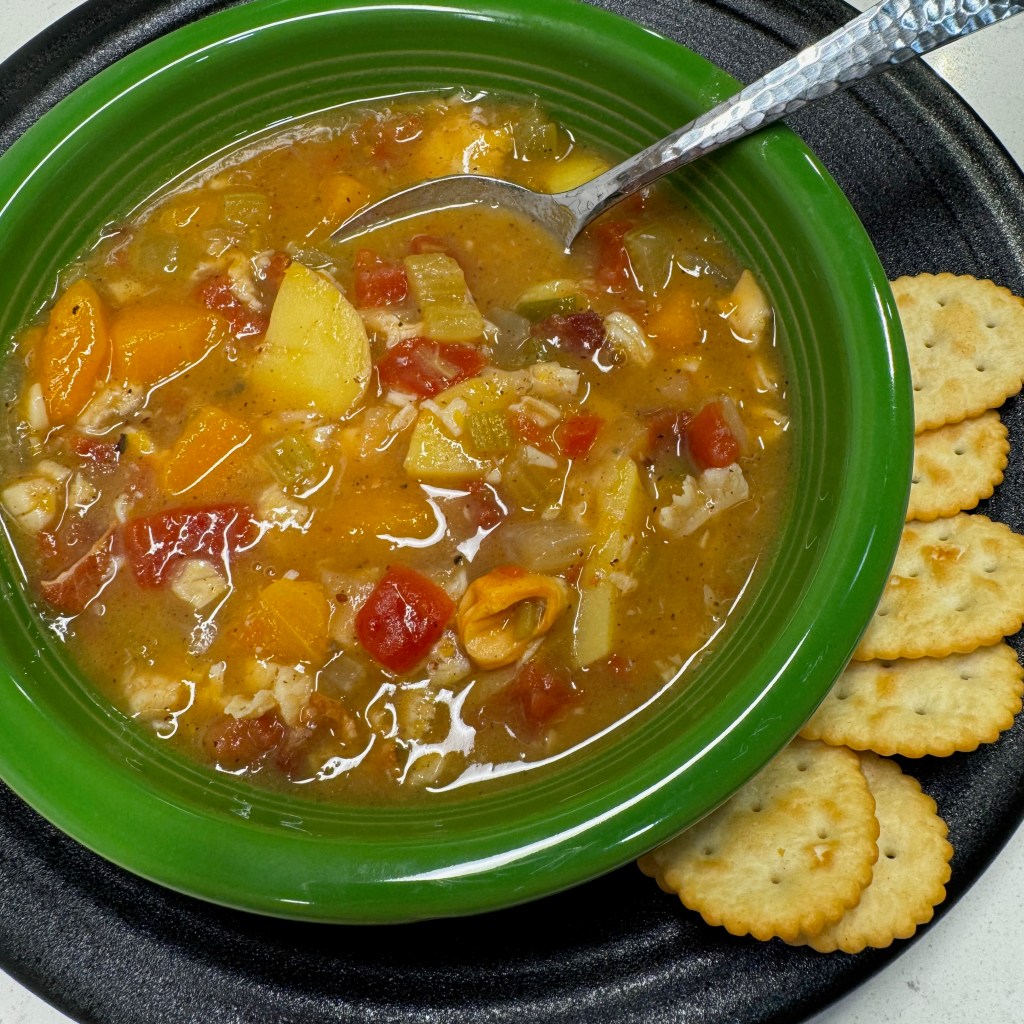
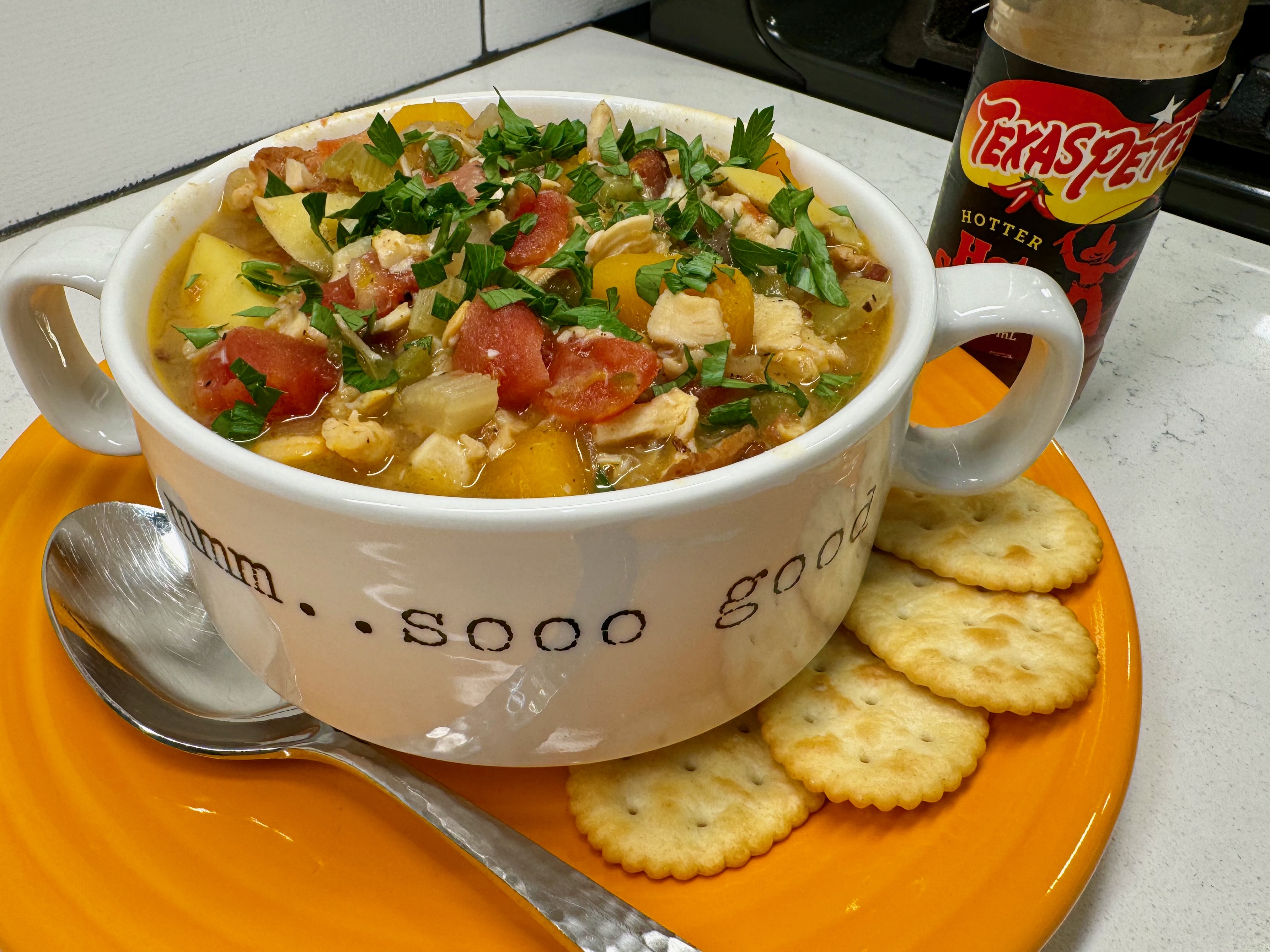
This chowder was satisfying in every way— it had the hearty, chunky texture that Les wanted without the heavy cream that I didn’t want. The jalapeño and Rotel put a slight south-of-the-border spin on it, and I’ll add that this chowder reheated as leftovers very well. The only thing I’d do differently next time is make a double batch. 


So this is a new “North Carolina” recipe that I will most definitely add to my repertoire, and it was a perfect way to celebrate all things Tar Heel on North Carolina Day. Click to print recipe is below; I hope you enjoy it.

For a fun little sendoff today, I’ve also prepared a Spotify playlist of artists that call North Carolina home. Some of these names will be instantly familiar; others will be new. I hope you find something fun among them. 

Cheers, y’all!


Hatteras-style Clam Chowder

  • Servings: About 6
  • Difficulty: Average
  • Print

Somehow, I've missed this delicious coastal North Carolina dish, despite having lived in the state more than 30 years. My version swaps in winter squash for carrots and adds jalapeño and spicy tomatoes for a little extra pizzazz.


Ingredients

  • 4 slices thick bacon, chopped
  • 1 medium onion, chopped
  • 3 ribs celery, strings removed and sliced
  • 1 cup butternut squash cubes
  • Kosher salt and black pepper
  • 1/4 cup all-purpose flour
  • 1/2 cup dry white wine (I used dry vermouth)
  • 1/2 cup water
  • 1/2 can original Rotel
  • 2 bottles clam juice
  • 2 cups Yukon gold potatoes, scrubbed and diced
  • 2 dried bay leaves and 3 sprigs fresh thyme
  • 1 lb. fresh chopped clam meat (with liquor)

I found this chowder recipe very versatile to accept substitutions, based on what you like or have on hand. I’m sure that you could swap in shrimp or whitefish for the clams, and seafood or veggie broth in place of the clam juice. My inspiration recipe used carrots rather than butternut squash and it did not include flour for thickening. The tomatoes and jalapeño were my additions, and a fun twist!

Directions

  1. In a heavy-bottomed pot, cook bacon over medium heat until crispy and then remove to a separate bowl.
  2. Add onion, celery, butternut squash and jalapeños (season with salt and pepper)and sauté until softened. Add flour and stir until foamy. Add wine (or vermouth) and water, Rotel and clam juice. Add potatoes, bay leaves and thyme and reduce heat to low. Simmer for about 30 minutes.
  3. Gently stir clams (including liquid) into the pot. Add bacon and heat through. Serve right away with hot sauce and saltine or butter crackers.


Cinnamon Espresso Negroni

If your social media feeds are flooded with Negroni cocktails lately, there’s good reason. It’s “Negroni Week,” an event launched in 2013 by Imbibe (print and online) magazine and Campari as a means to spotlight a worldwide sustainable food movement called Slow Food. This program has an ambitious but very noble goal of ensuring “good, clean and fair food” for all human beings everywhere. I’m all for feeding people good food, but let’s explore how a cocktail benefits this cause. The organizers pitched an idea to the hospitality industry— register your venue with the Negroni Week site, and share a percentage of Negroni sales to benefit the Slow Food movement. That might not seem like much but to date, they’ve raised more than $5 million, so it’s working!

You can learn more about Slow Food here: https://www.slowfood.com/, and find a participating Negroni Week venue near you here: https://www.negroniweek.com/find/. If you can’t find a local bar that’s taking part in the annual event, why not donate to a similar cause close to home and make the cocktail (or some version of it) yourself? I’ll show you how.

What exactly is a Negroni?

The Negroni cocktail— invented in 1919 in Italy— is traditionally considered to be an “equal parts” drink with dry gin, sweet vermouth and Campari, the bright red Italian bitter aperitivo. The components are stirred with ice and then the drink is garnished with a juicy slice of fresh orange. It is both refreshing and appetite-stirring, sophisticated yet bold and gutsy.

My first introduction to Negroni came only a few years ago (during Covid, probably), and it took me a while to consider making this drink at home. I didn’t want to drop big bucks on a bottle of Campari unless I was fully committed. The Negroni is what I call a “strong drink”— it’s literally all booze— and if you can’t handle bitter, you definitely don’t want one. But there is something that really works about combining these spirits, and now that I’ve acclimated to it, I cannot refuse a Negroni.

Of course, me being me, I have joined the throng of amateur and pro mixologists on a mission for new ways to twist up this classic. There are already several notable riffs out there, including many that swap the gin for various other base spirits, including bourbon, rum and tequila. I enjoyed a particularly good Negroni variation that subbed Spanish sherry for the vermouth and Cynar for the Campari when we visited Cúrate in Asheville, North Carolina. I can still taste it in my mind. It was so good.

The base personality of a Negroni is the botanicals and bitterness— if these are not your thing, stick with a vodka martini or an old fashioned. But if you do happen to enjoy an adventurous, spirit-forward cocktail that whets the appetite before dinner, I propose my take on this lovely libation for Negroni Week 2024. Cheers!

Cinnamon Espresso Negroni

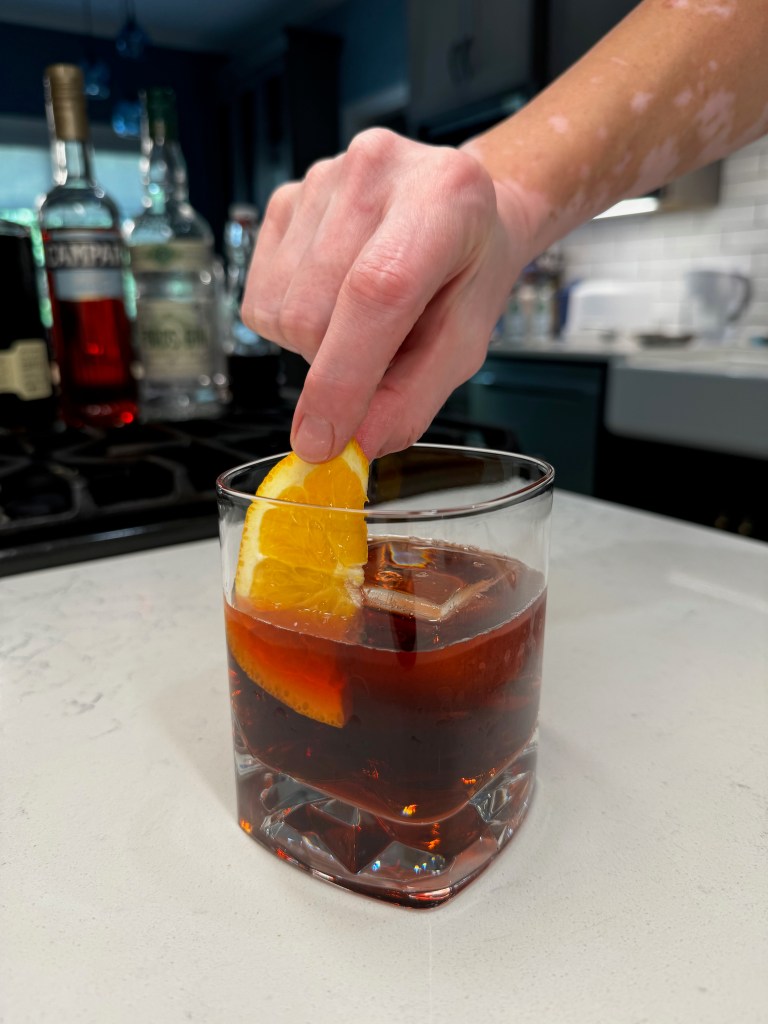
The color and aroma of this drink are really special!

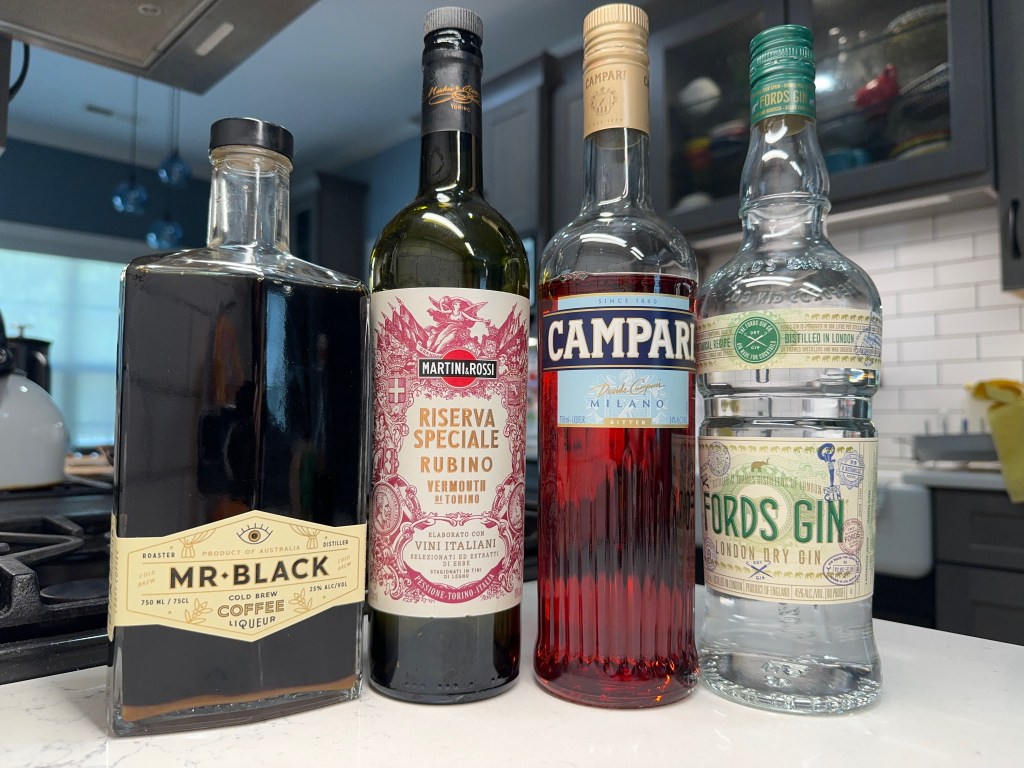
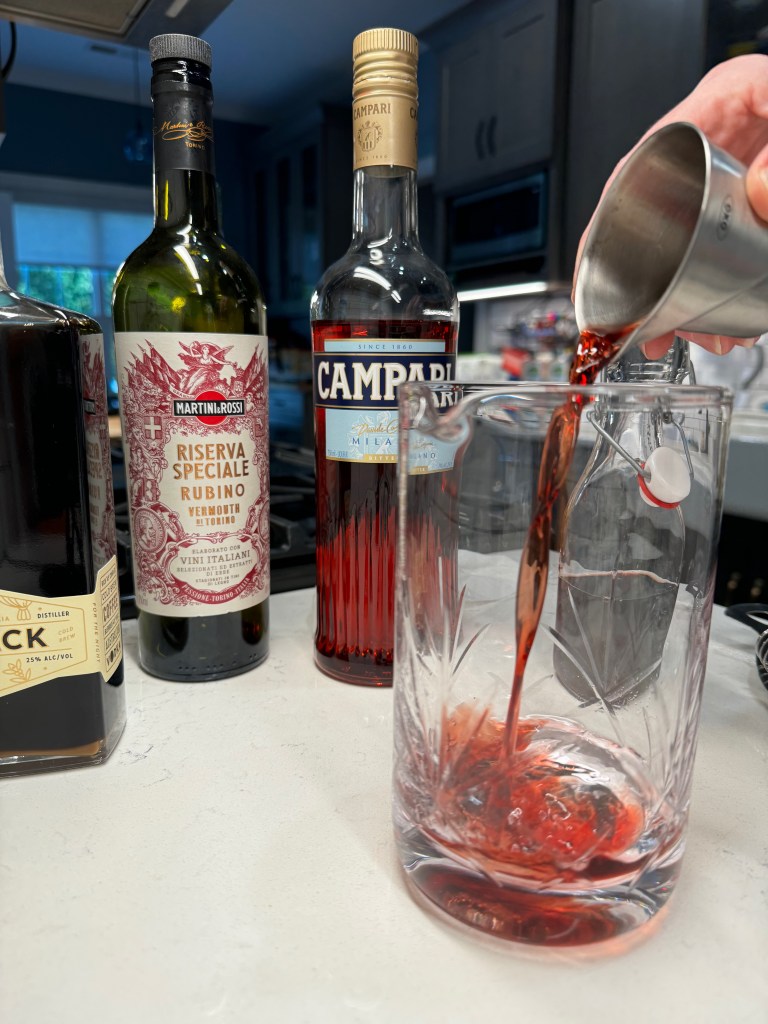
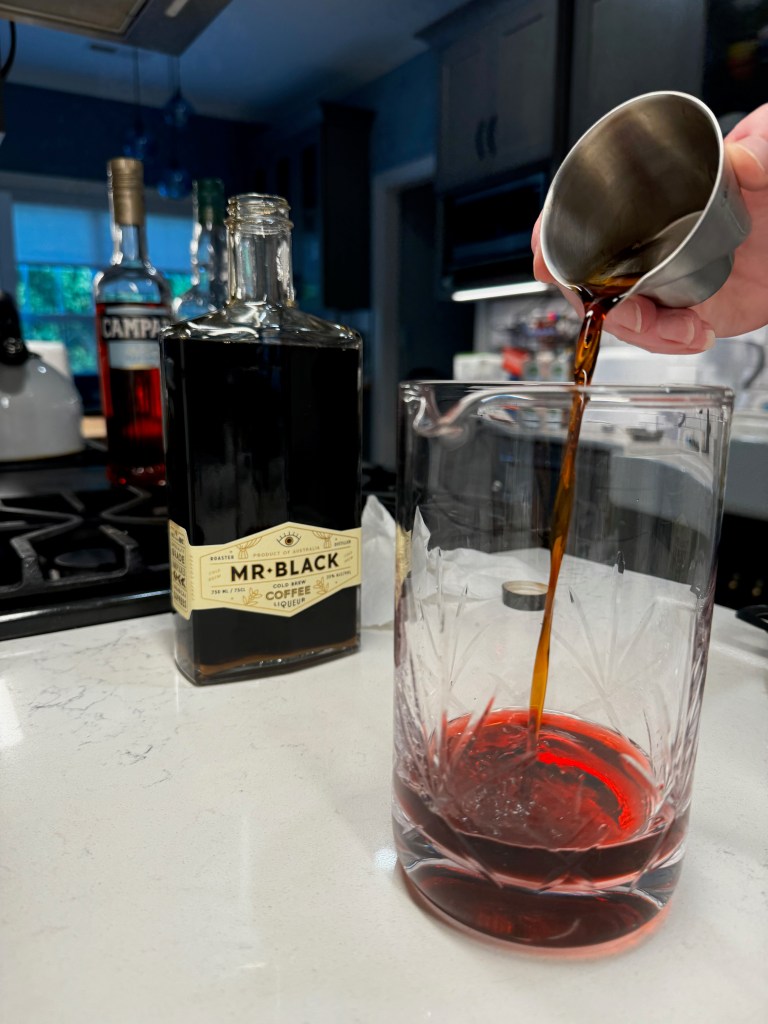
My version includes a couple of twists, including addition of cold brew coffee liqueur. I split the Campari element of the drink 50/50 with the coffee-flavored spirit I like best, Mr. Black. Yes, you could use Kahlua, Tia Maria or Grind Double Espresso liqueur, but I find all of these rum-based spirits to be too sweet for Negroni. Mr. Black is a vodka base, so the emphasis is on the coffee. I had to search for months to find it because our state-run liquor stores are pitifully limited in inventory, but it was worth the wait. I also happen to like Mr. Black in an espresso martini, which I am still working on and will share when I get there.

Ford’s is my house brand of gin. Any London dry is suitable for Negroni, so use your favorite.

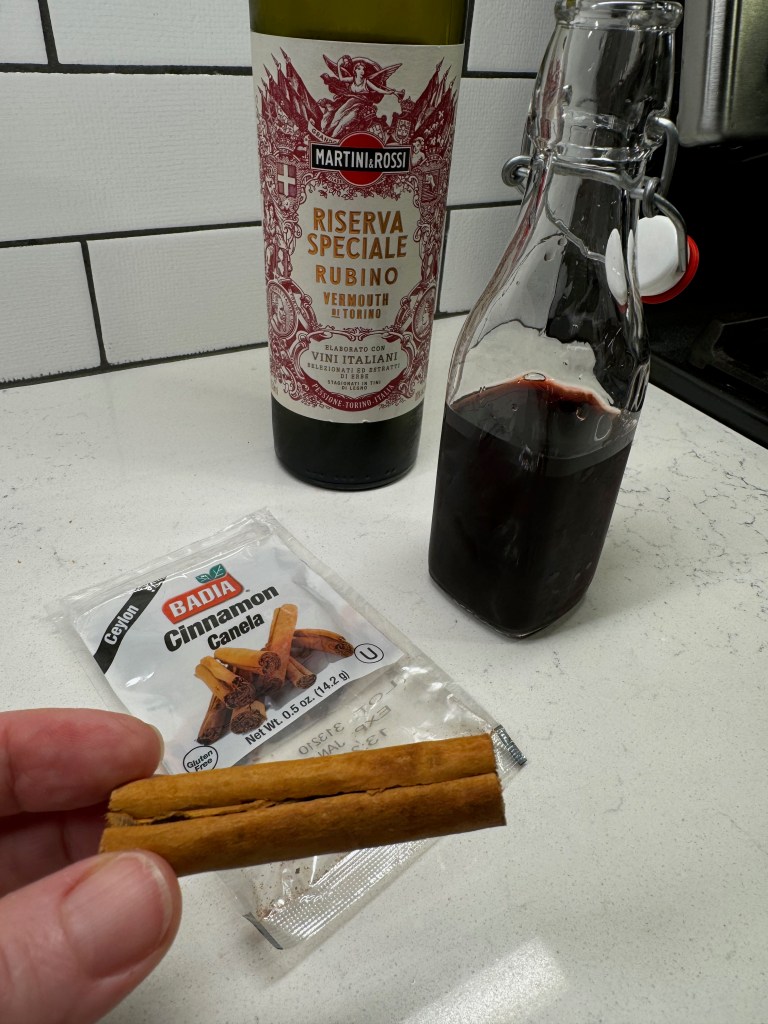
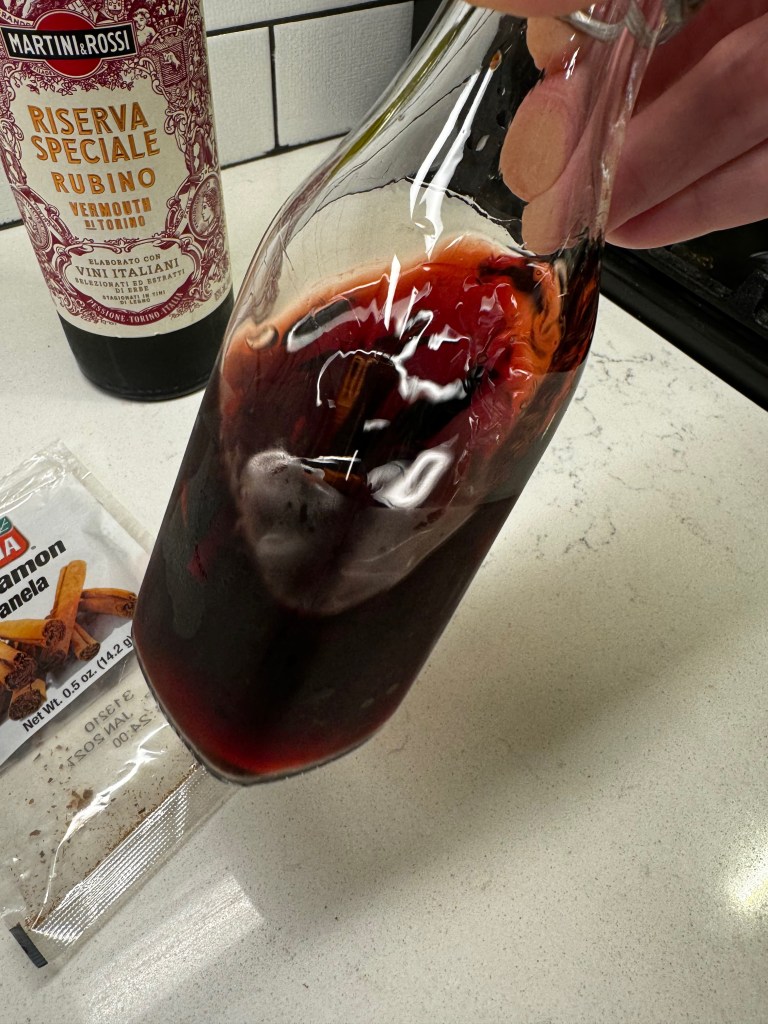
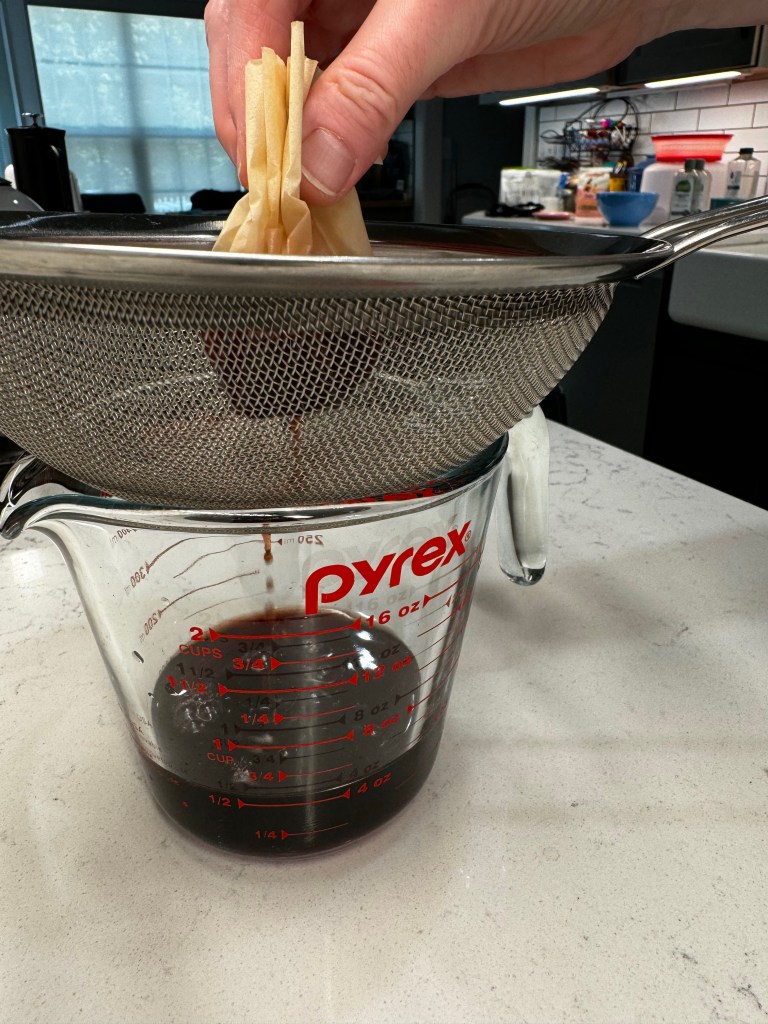
The cinnamon enters the mixing glass in the form of an infusion in the sweet vermouth, and this requires a bit of advance preparation. I added a ceylon cinnamon stick to the vermouth in a small bottle and gave it a day and a half before straining out the cinnamon and filtering the vermouth back into the bottle.


The cinnamon lends a delightful warmth to the vermouth that spices up my Espresso Negroni in the best possible way, and I cannot wait to try this in a Manhattan. My vermouth brand is Martini & Rossi Riserva Speciale Rubino. I’m willing to pay a bit more for the spicy richness and deep ruby red color of this premium vermouth. I panicked last year when our Total Wine stores stopped carrying this product, and then I remembered— it’s a fortified wine, legal in my state for online purchase. Sure enough, I hit the buy-it button on the M & R website and had two bottles shipped directly to my door within days. Thank you, internet! If you already have a favorite sweet vermouth, I’m sure it’ll be just fine.

Campari is what it is, and frankly, there is no true substitute. It is bright red, bitter and complex. Don’t be fooled by other spirits that cost less and claim to be the same— they’re not. If a Negroni riff calls for something else, then the substitute probably works with the other ingredients. But if you love the classics, or if you’re trying a Negroni for the first time, Campari is the right stuff. Also, because Campari is a presenting sponsor of Negroni Week, your purchase will help the sustainable food cause in a secondary way, even if you don’t find a bar participating in Negroni Week.

How to Make a Negroni


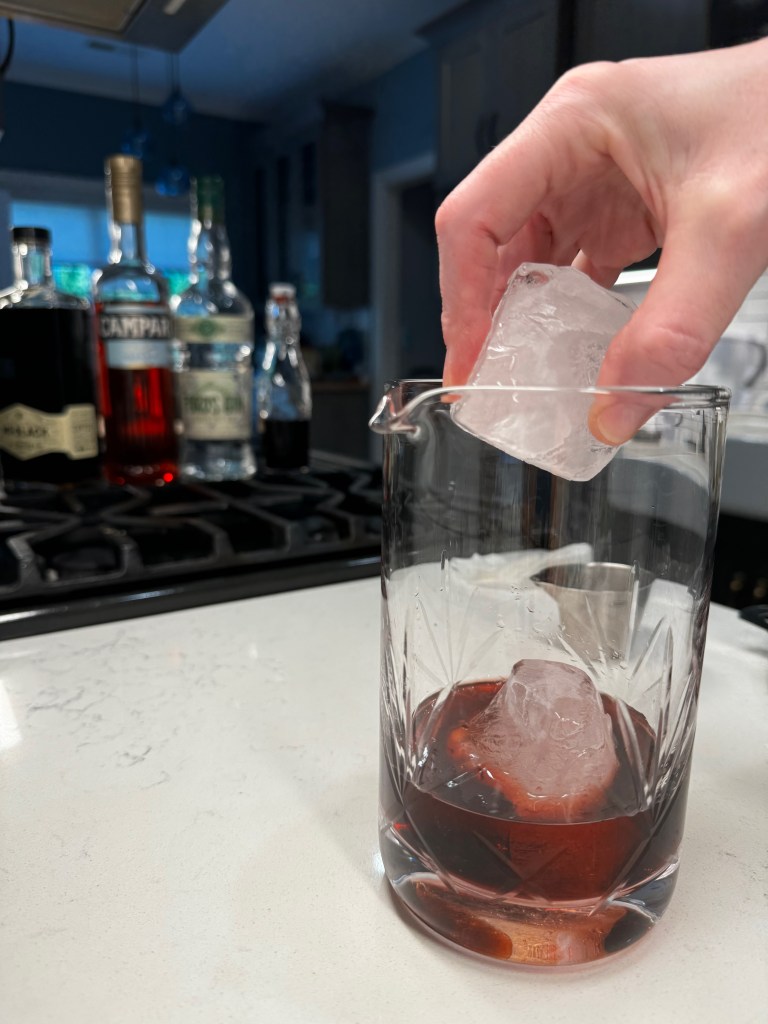
The traditional way to make a Negroni is to build it directly in the glass over ice, but that’s not how I like to do it at home because I prefer equal dilution of the ingredients. Here’s what I mean— let’s say you start by pouring the gin first; it’s generally room temperature and it’s going to start melting the ice immediately. If the vermouth goes in next, and the Campari at the end, both are going to be less diluted than the gin because the total contents of the glass are already cold.

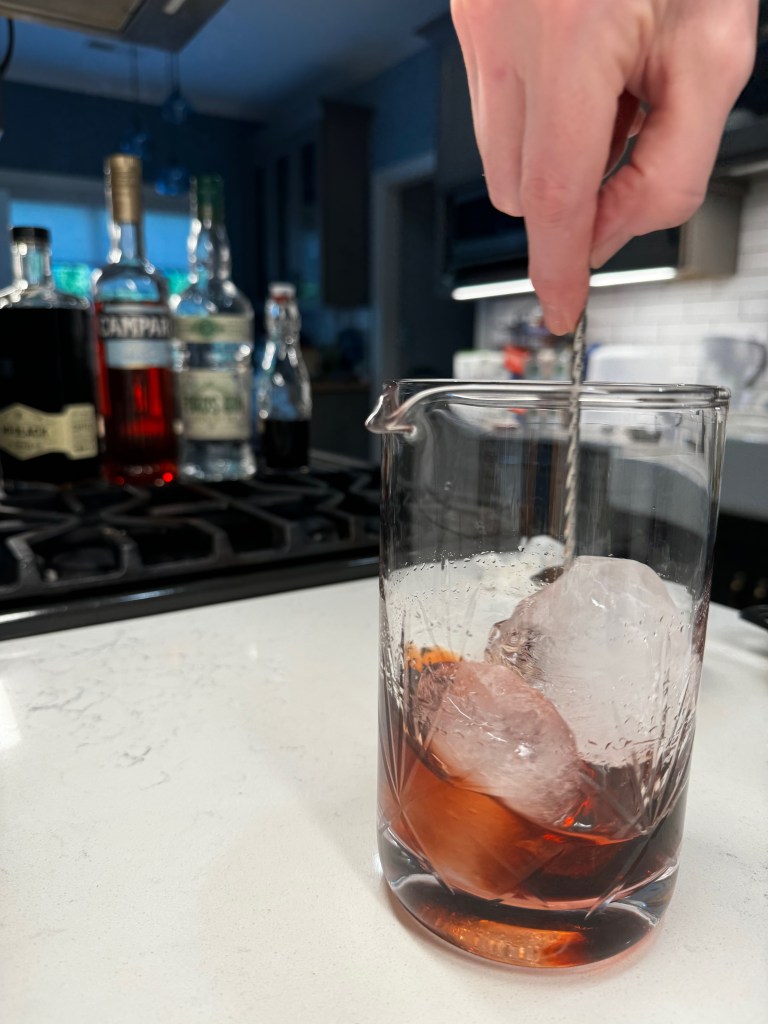
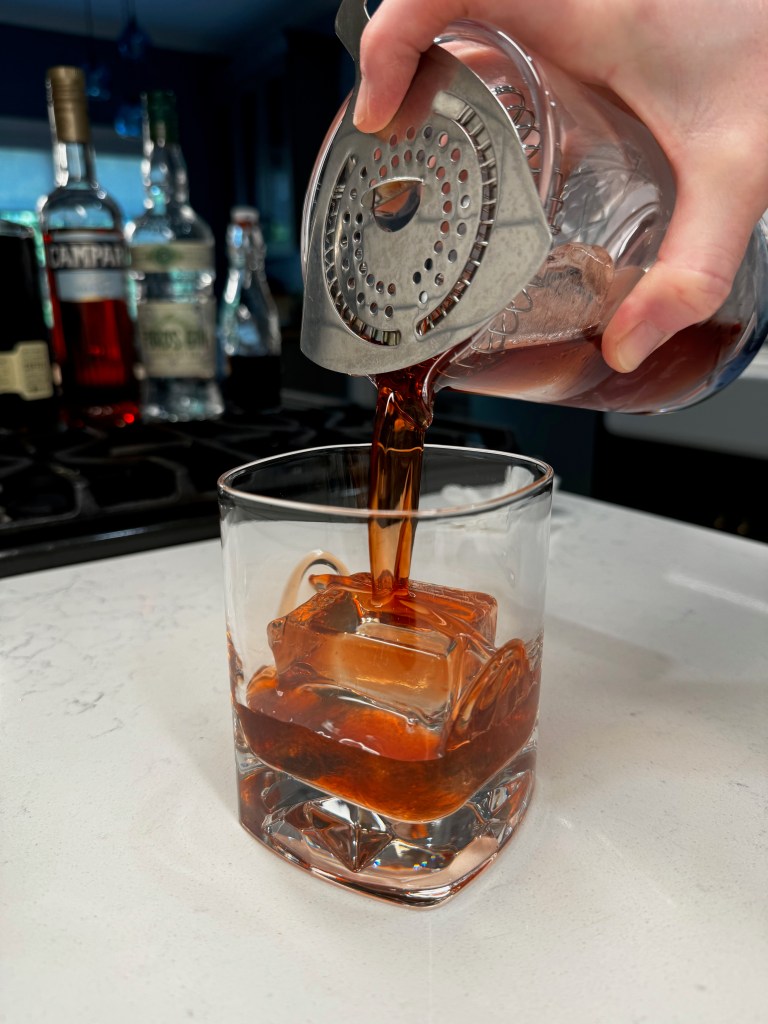
Mixing the ingredients in the glass and then adding the ice doesn’t work for me either, because my giant ice cube will melt at the bottom, creating a weird, top-heavy shape. So what’s the solution? My go-to method is to add the ingredients to a mixing glass first, then add a bunch of ice to chill the whole thing down quickly. Give it a gentle stir for about 30 seconds, or until the outside of the mixing glass is nice and frosty. Then strain it over a big cube of clear ice for a perfectly diluted, evenly chilled cocktail.


Cinnamon Espresso Negroni

  • Servings: 1 cocktail
  • Difficulty: Average
  • Print

For Negroni Week, I am sharing my own favorite variation including espresso liqueur and my favorite autumn spice. Infusing the sweet vermouth with cinnamon lends a warm, familiar flavor to the classic Italian cocktail.


Ingredients

  • 1 oz. London dry gin
  • 1 oz. cinnamon-infused sweet vermouth (recipe below)
  • 1/2 oz. Campari
  • 1/2 oz. Mr. Black cold brew coffee liqueur (see notes for substitution ideas)
  • 1 cup ice
  • Orange slice for garnish

Notes: If you cannot find Mr. Black liqueur, you may substitute another coffee liqueur, but note that most of them are sweeter and this will change the outcome of the drink. My suggestion would be to sub in an equal measure of cold brew concentrate, which you can find in the coffee aisle of the supermarket.

Directions

  1. Add gin, vermouth, Campari and coffee liqueur to a cocktail mixing glass. Add a generous amount of cracked ice and stir about 30 seconds for proper dilution and chilling.
  2. Strain over a large, clear ice cube into a double rocks glass. Garnish with the orange slice.

For the cinnamon-infused sweet vermouth: measure out six ounces of vermouth into a mixing bottle or clean jar. Add a 3-inch piece of whole cinnamon stick and infuse 24 to 36 hours in the refrigerator (where vermouth should live anyway). Strain out the cinnamon stick and any lingering shreds through a coffee filter-lined mesh strainer; return the vermouth to the bottle or jar and keep in the fridge for up to two weeks. This will be enough for six Negroni cocktails.


S’mores Cookie Bars

It’s National S’mores Day, and I’ve been thinking about what makes this treat so special to deserve its own day of honor. The first written recipe for “s’mores” appeared in a Girl Scout handbook in 1927, when Calvin Coolidge was President of the United States— 16 presidents and almost 100 years ago. Amid a sea of other snack trends and fads that have come and gone (I’m lookin’ at you, Hostess pudding pies!), the s’more has stood the test of time. And no wonder! A melty morsel of milk chocolate and campfire-toasted gooey marshmallow, bookended by a sweet and simple whole grain cookie, what’s not to love? 

Like most of you, I’ve enjoyed s’mores since I was a kid in rural upstate New York. But our weather in the South is hot as hell in August, not particularly conducive to a campfire, and I’m sorry to say that the oven and microwave versions of s’mores just don’t cut it. There are appliances out there now for making s’mores indoors, like this one sold through Williams-Sonoma, but who has room for another gadget that only serves one purpose? 

Luckily, I’ve found many other ways to capture the essence of s’mores (along with all the happy feelings they invoke), twisting the ingredients of this summer classic into ice cream, brownies, cocktails and even dessert pizza! When I made s’mores cupcakes last year, I mused that perhaps I could have used up the leftover homemade marshmallow topping by making rice krispie treats, and I considered a s’mores version of those this year, except for one problem— my husband doesn’t like the krispie treats, and I would have been left to eat the entire batch! These s’mores cookie bars are my compromise, and I have no regrets.

I’d like s’more, please.

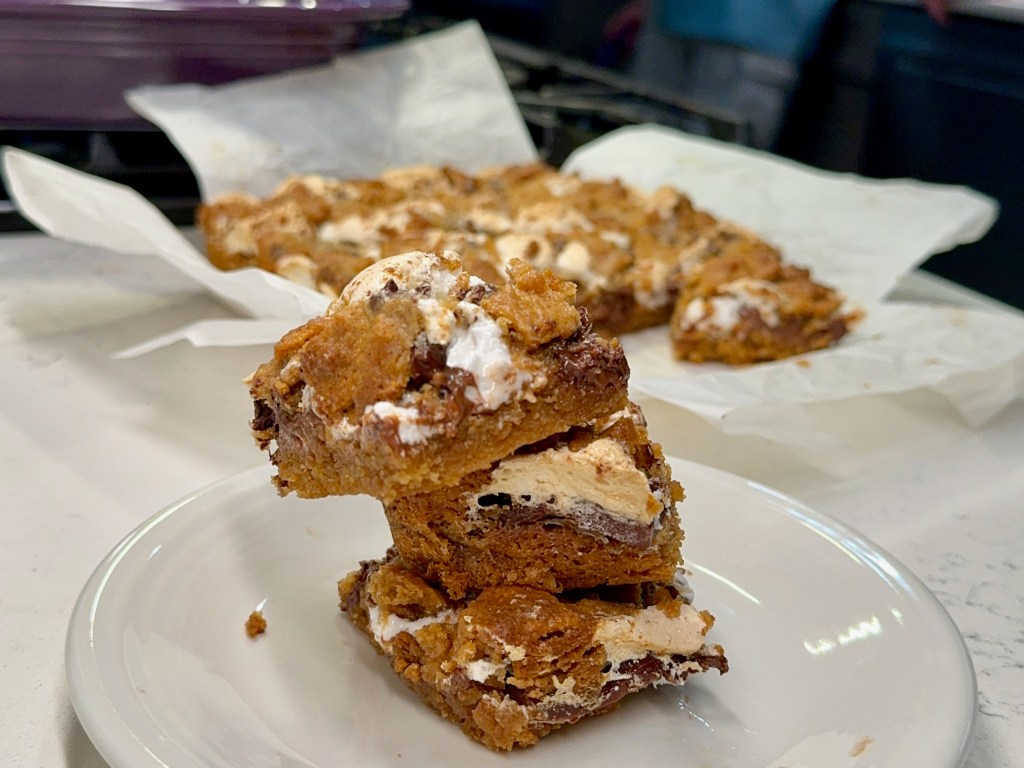
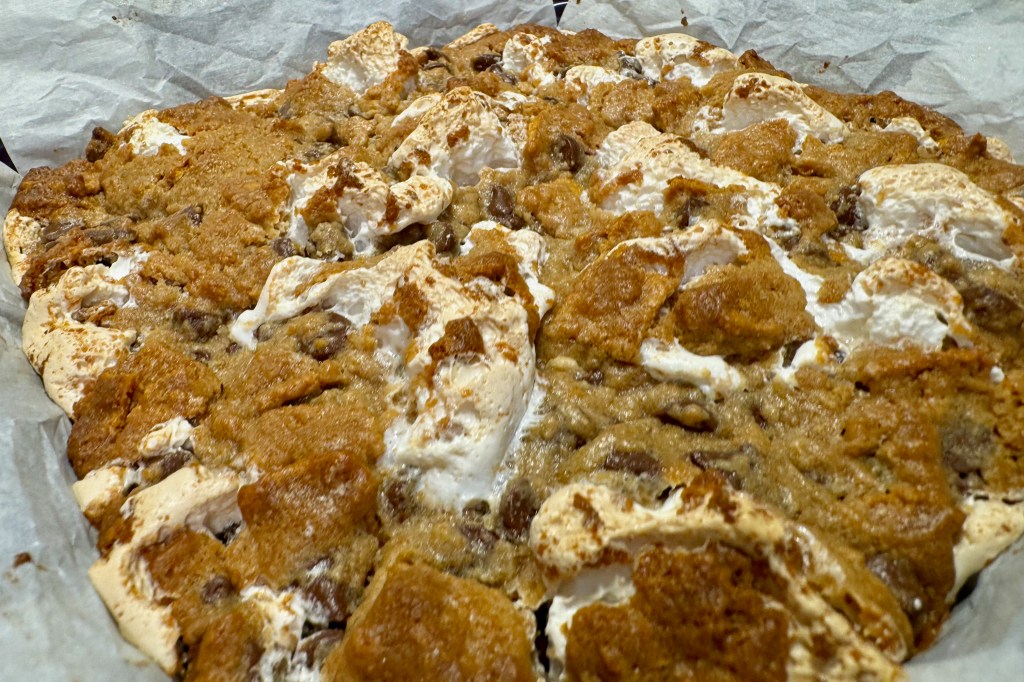
They are part s’more, part blondie, part cereal treat and 100% yummy!

What goes into s’mores cookie bars?

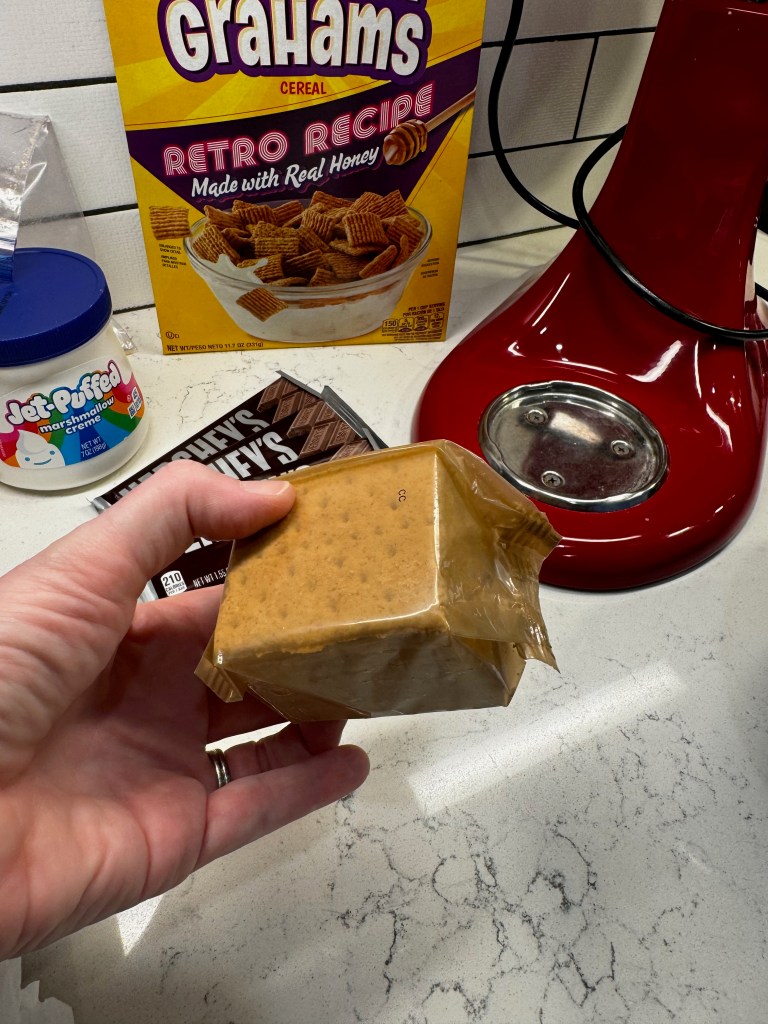
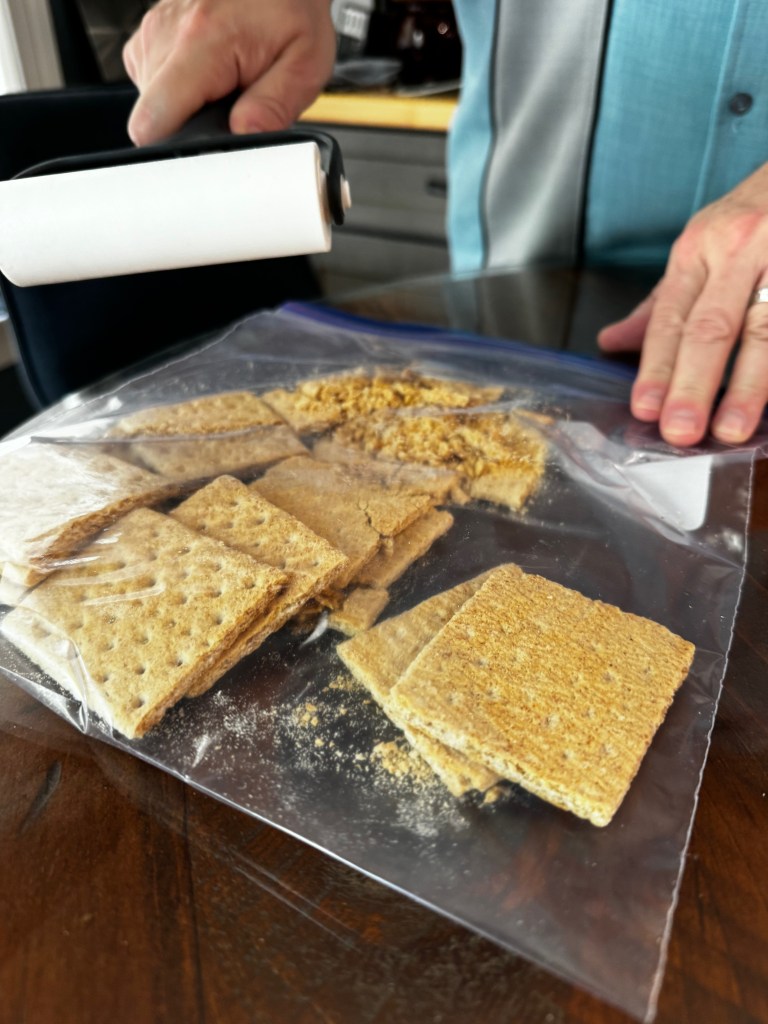
The base of my s’mores bars is essentially a blondie dough, with softened butter, brown sugar, egg, vanilla, baking powder and flour. But to emulate the s’mores more distinctly, I used whole wheat pastry flour and also added in honey for additional sweetness and some finely crushed graham crackers, which my hubby was happy to prepare for me. I used two of the little sleeves of Honey Maid “stackers,” which measured out to a little more than one cup of crumbs.


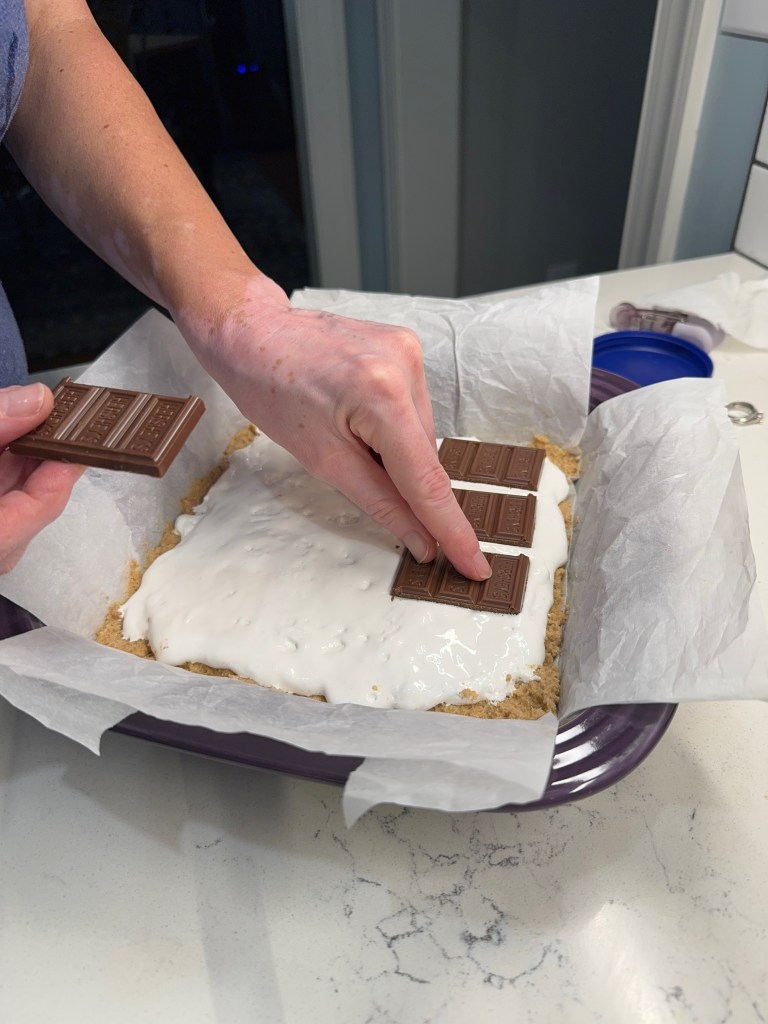
For the ooey-gooey goodness, I went with marshmallow creme, which holds its shape much better than actual marshmallows. When I made my s’mores pizza in 2020, I was disappointed at how much the mini marshmallows deteriorated after they cooled from the oven. Knowing that we would not devour this entire batch of cookie bars right away (though believe me, it was tempting!), I wanted a better, more stable option. Marshmallow creme, made with dried egg whites, is the way to go here, and I used almost an entire jar spread over two-thirds of the blondie dough. It may seem excessive, but isn’t that kind of the point with s’mores? 😏


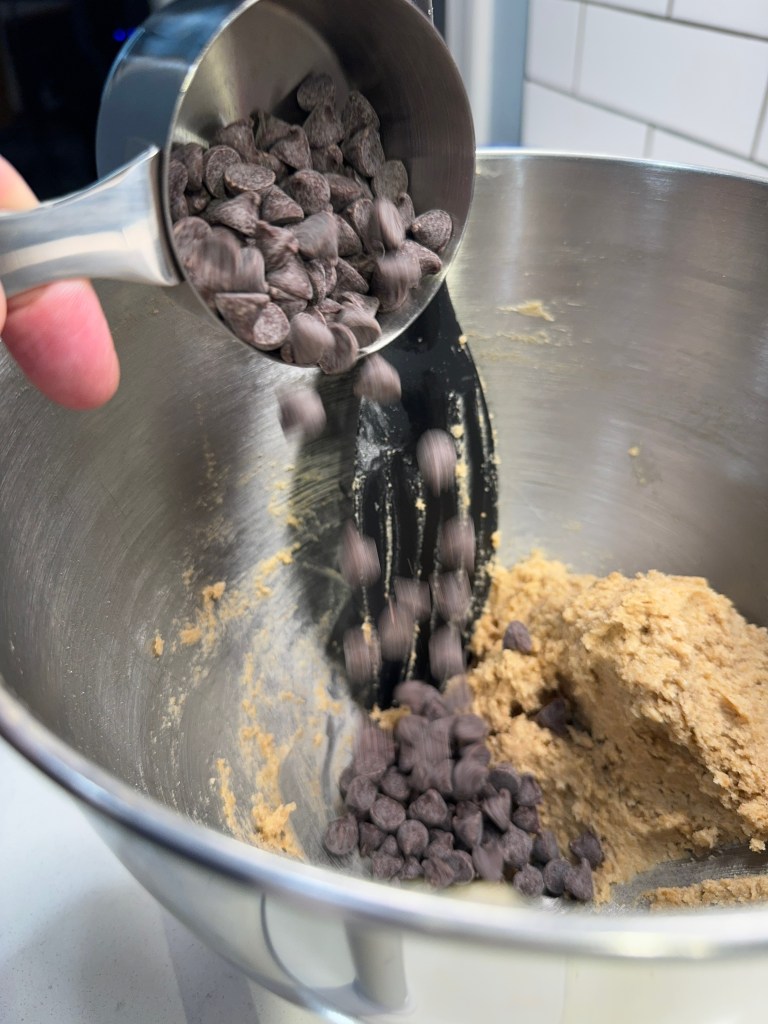
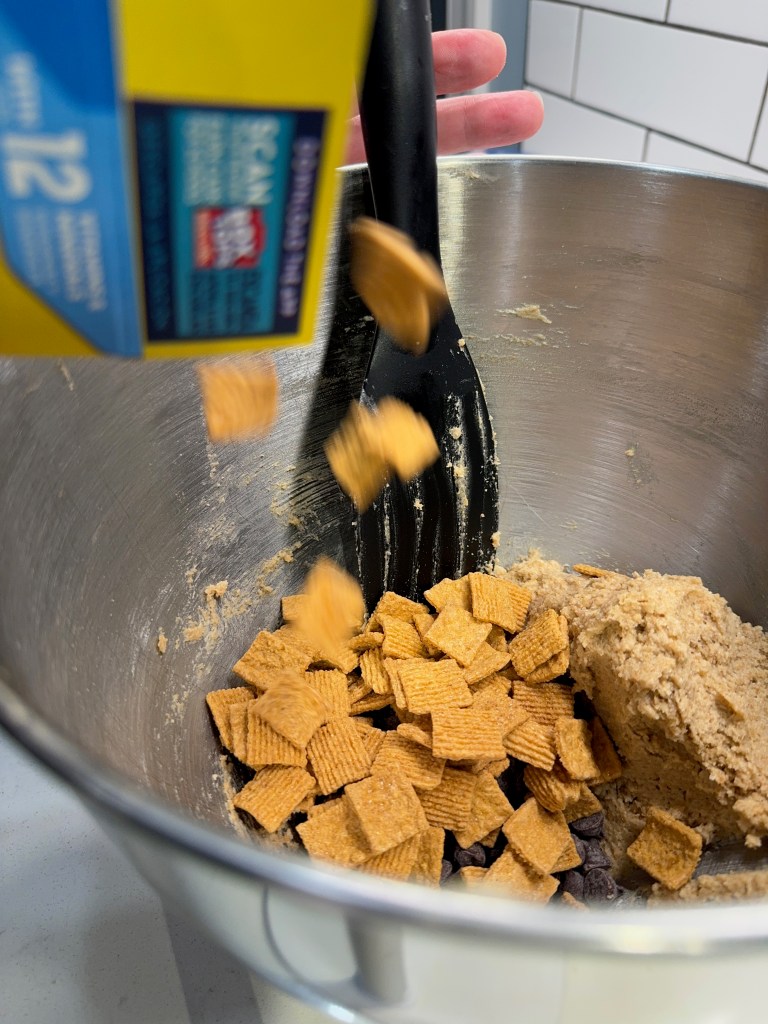
You could, naturally, whip up a batch of seven-minute frosting in its place if you have the time, but I was getting impatient for my cookie bars. Real Hershey bars were layered over the marshmallow creme (because milk chocolate rules when it comes to s’mores), and then I mixed darker, semi-sweet chocolate chips and crispy Golden Grahams cereal into the remaining blondie dough, lending a cookie-meets-cereal bar vibe to my sticky, delicious treats.


I baked the bars for about 35 minutes, and then let them cool a few hours before removing them from the pan. The result? 

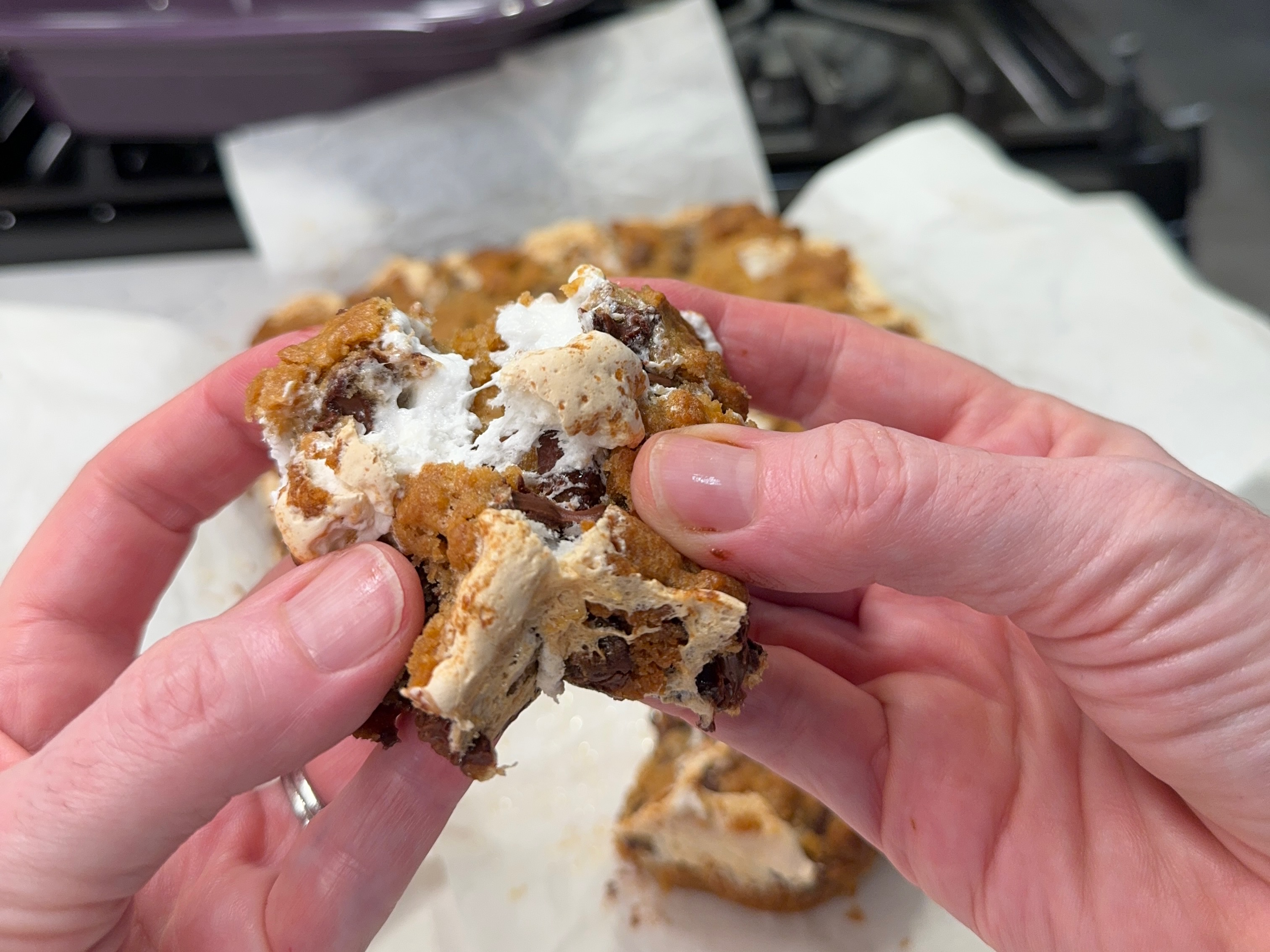
Ooey-gooey perfection!

Deliciously sticky, utterly addictive and every bit as ooey-gooey as I wanted them to be, and they have kept on the counter nicely so we can enjoy them for several days. Plus, no campfire required. 😋
Tips for success

As with all baking recipes, it’s best to have all your ingredients lined up, measured and ready to go before you begin. Take your butter out of the fridge an hour ahead so that it isn’t rock solid, and let your egg come to room temperature. Use extra bowls if that’s what it takes to have everything ready for mixing as the recipe indicates. For years, I considered myself to be a mediocre baker, but I’ve come to learn that my failing was mostly in preparation. Get your ducks in a row, and watch your baking game improve!
Following the steps in order does make a difference. If you don’t cream together the butter and sugar before adding in the other ingredients, the texture of your cookie bars may be quite crumbly. When you mix in the flour, do so only long enough to fully incorporate it. Overmixing will lead to gluten development, and you don’t want that. Use the paddle attachment on your mixer, or use a firm spatula to press the ingredients together by hand.

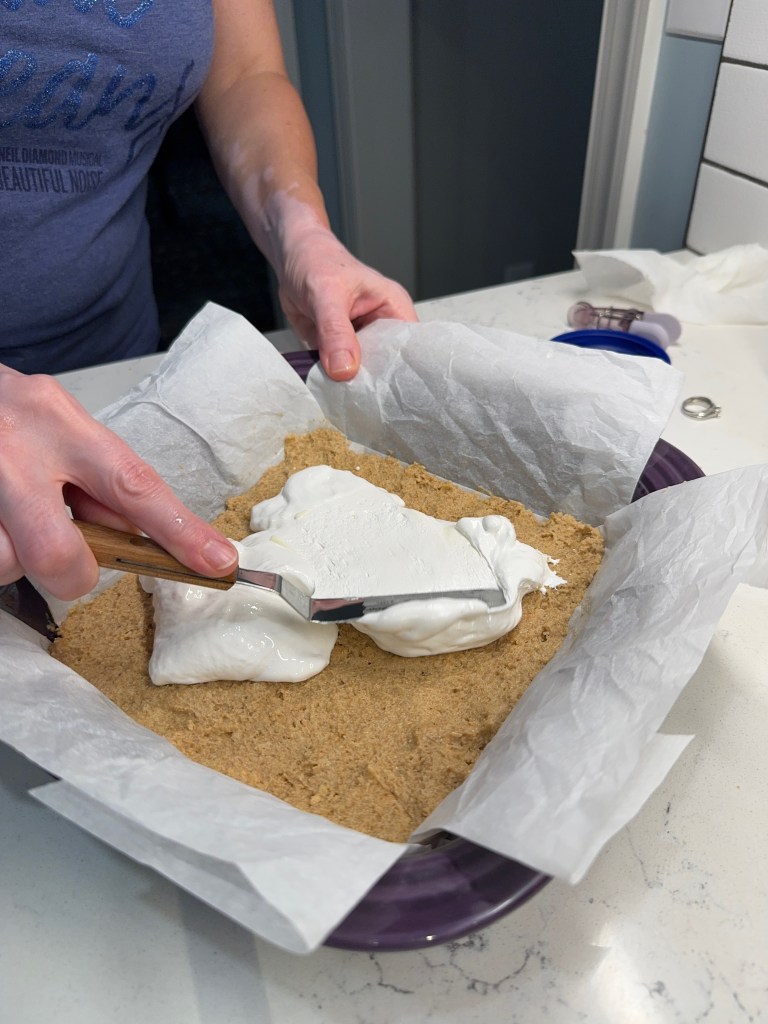
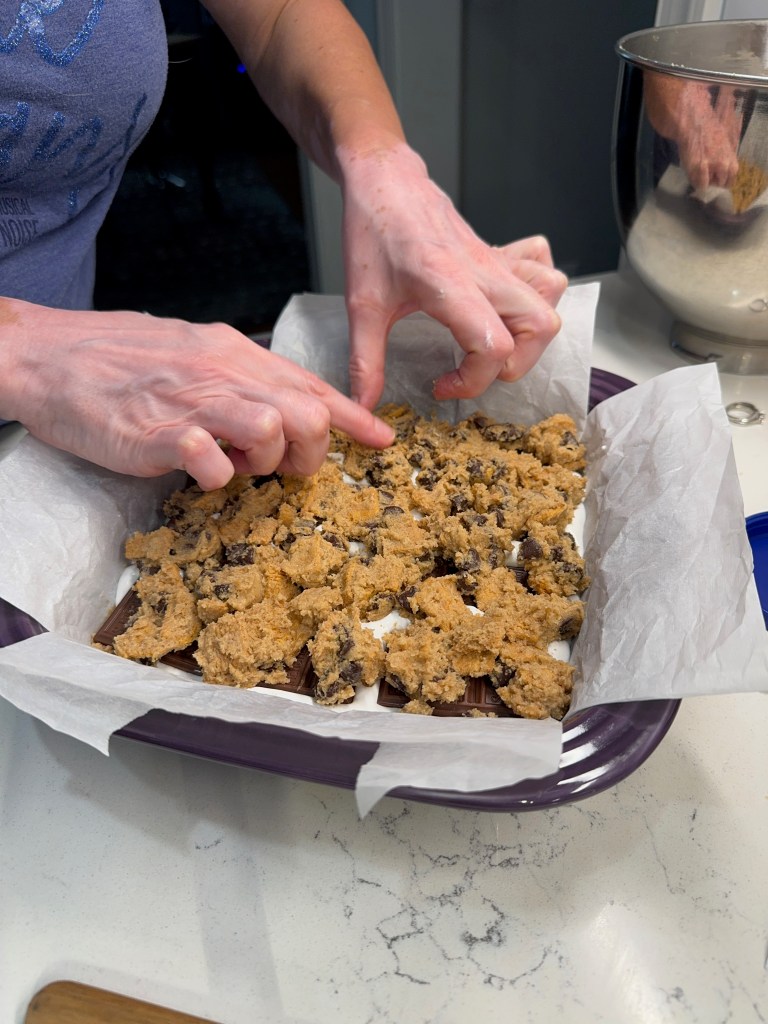
When layering the marshmallow creme, try to keep it about an inch away from the edges of the pan so that it doesn’t stick and burn. Keep in mind that when you press the chocolate bars and cookie dough topping, the creme will smoosh and spread. Give it room to do so.

If possible, use a metal pan to bake these cookie bars. You can see in my photos that I used a ceramic baking dish (it’s all I have in this size), and these simply do not heat as quickly or evenly as a metal pan.

After baking, give these cookie bars plenty of time to cool before you attempt to lift out the parchment sling. The marshmallow and chocolate will be very hot, and thin enough to ooze out everywhere, making a mess and potentially burning your hands. They will still be delicious when cool, and if you wish, you can pop your cookie bar into the microwave for a few seconds to recapture the ooey-gooey stretch of the marshmallow.

S'mores Cookie Bars

  • Servings: 9 or 16, depending on how you cut
  • Difficulty: Average
  • Print

These are part s'mores, part blondie, part cereal bar and 100% ooey-gooey delicious!


Ingredients

  • 1 stick salted butter, softened
  • 1/2 stick unsalted butter, softened
  • 3/4 cup light brown sugar, packed
  • 3 Tbsp. honey
  • 1 egg, room temperature
  • 2 tsp. real vanilla extract
  • 1 cup whole wheat pastry flour (sub regular or white whole wheat, or use all a-p if desired)
  • 1/2 cup all-purpose flour
  • 1 tsp. baking powder
  • 1/2 tsp. salt
  • 2 pouches Honey Maid “stackers” graham crackers, crushed fine
  • 2/3 cup semi-sweet chocolate chips
  • 2/3 cup Golden Grahams cereal
  • Most of a 7 oz. jar marshmallow creme
  • 3 standard size Hershey milk chocolate bars

Note: For easy removal of cookie bars, layer ingredients over criss-crossed parchment laid inside a 9-inch square baking pan. Overlap the paper so that you can use it as “handles” for lifting the cookie bars out after they’ve cooled.
If possible, use a metal baking pan, as glass or ceramic (as I used) tends to heat more slowly, causing the bottom to be slightly underdone.

Directions

  1. Preheat oven to 350° F, with oven rack in the center position. Prepare 9” square baking dish by lining with crossed pieces of parchment paper, overlapping the sides of the dish.
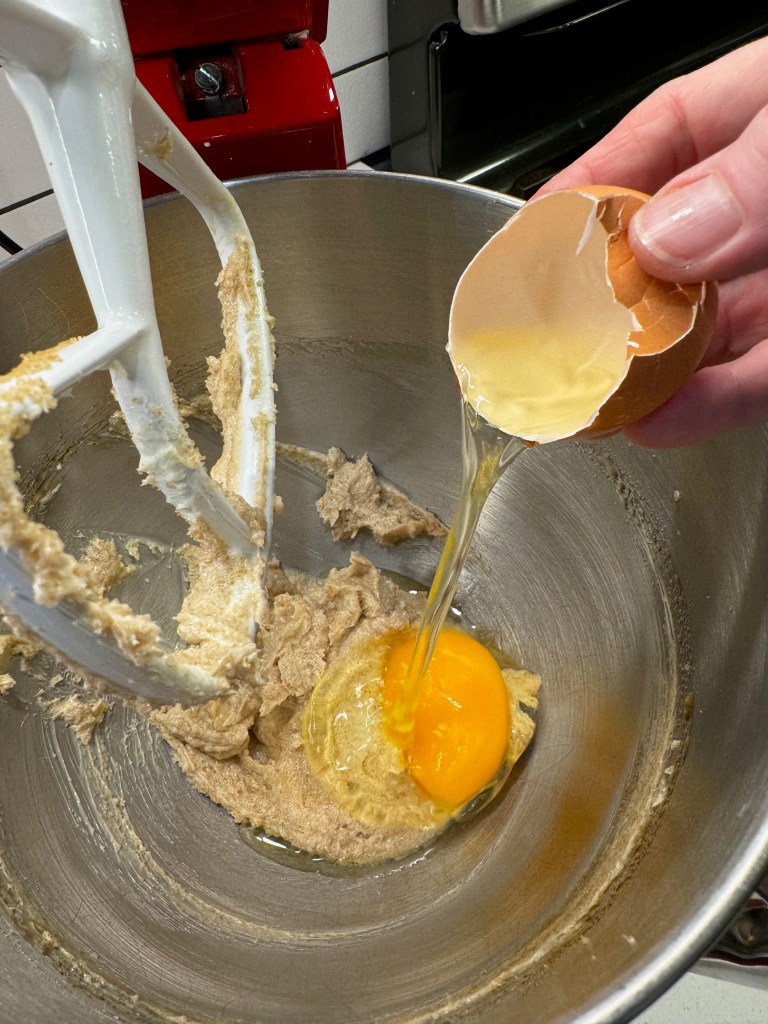
  2. In a stand mixer fitted with paddle blade, beat butter on medium high speed until fluffy. Add honey and then brown sugar a little at a time, beating until fluffy again. Add egg and vanilla, beating until evenly blended.
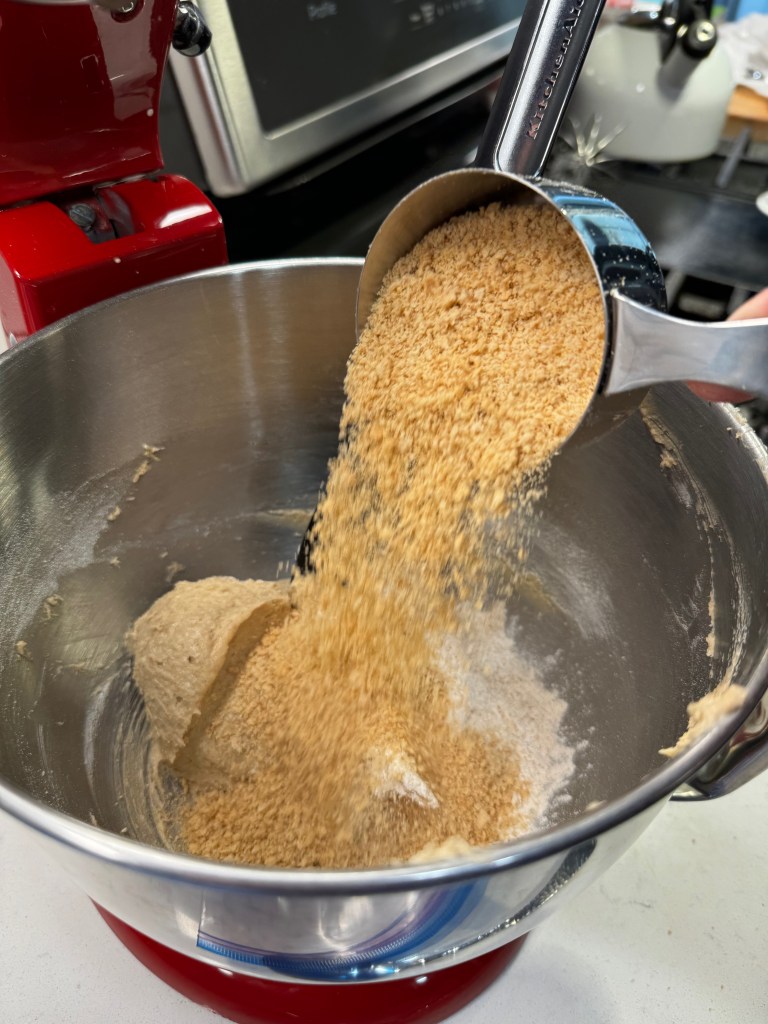
  3. Whisk together flours, baking powder and salt in a medium bowl. With mixer running, add flour by the spoonful until all is incorporated. Turn off mixer and scrape dough off beater. Add crushed graham crumbs and use a silicone spatula to press and blend them into the dough. Do not overmix.
  4. Transfer about 2/3 of the cookie dough to the parchment lined baking dish. Butter hands and press evenly over parchment. The dough will be very soft and sticky. Add the semi-sweet chips and cereal to the remaining dough, pressing firmly with the spatula to mix them in completely. Set aside for topping.
  5. Butter an offset spatula (or dip into hot water) and spread the marshmallow creme evenly over the cookie dough, keeping it about one inch away from the edges.
  6. Break the Hershey bars into four sections each and arrange them evenly over the marshmallow layer, gently pressing so that the marshmallow oozes up between the chocolate pieces.
  7. Use a scoop, spoon or your fingers to place dollops of the remaining cookie dough over the chocolate pieces, taking care to leave only small gaps for the marshmallow to bubble through.
  8. Bake 30 to 35 minutes (depending on your oven), until cookie batter is just barely baked through and the peekaboo marshmallow creme is lightly browned. Remove from oven and cool on a rack for a few hours before lifting out the parchment and cutting into squares.


Carrot Cake Waffles (with maple-cream cheese icing)

“Hey, what do you say we have our Easter breakfast outside on our new patio?” 

This was a brilliant suggestion from my husband this past Sunday, and right on the heels of his first suggestion that weekend— applying carrot cake flavors to homemade waffles! Just two more reasons to adore this man I married. And I can’t think of a more appropriate way to celebrate the fourth anniversary of Comfort du Jour than a recipe that twists up a classic into something unique, delicious and unexpected.

Who doesn’t want dessert for breakfast?!

Life has been very busy lately, and I’ve lamented not having as much time as I’d like to engage on my blog. I’ve been cooking, don’t get me wrong, but I’ve lacked inspiration, passion and time. What I needed most was a recipe that I was really excited about. This is the one, and it is exactly the kind of thing I had in mind when I launched my little blog on this date in 2020.

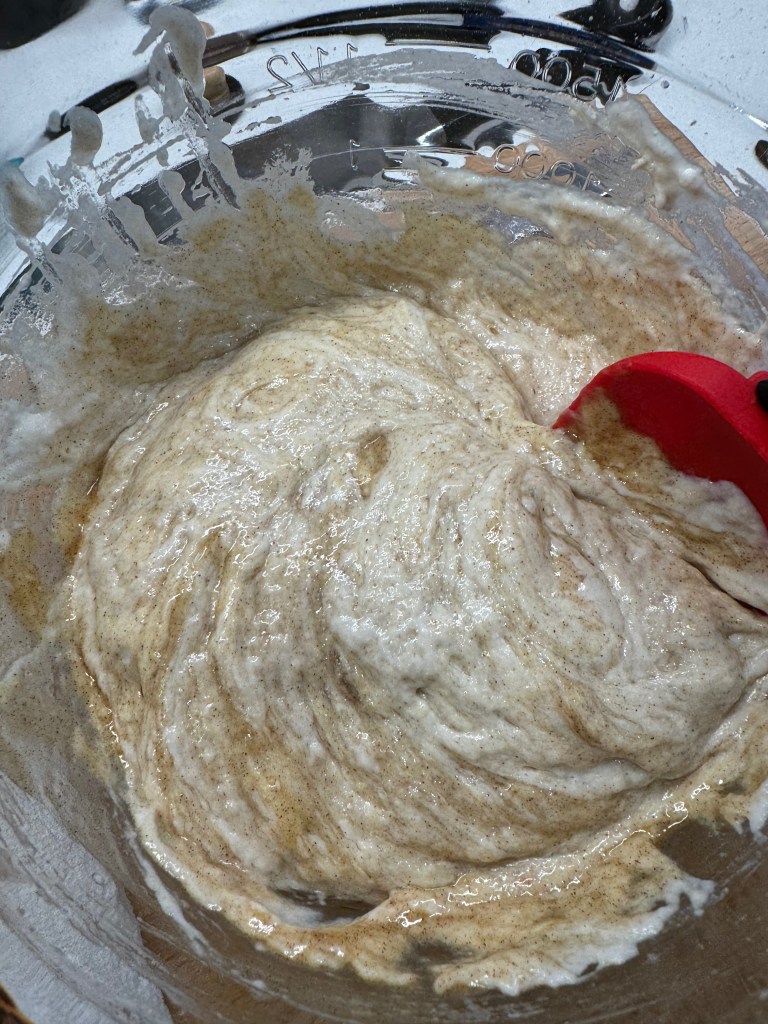
I started waffles as I always do— with half of my favorite King Arthur Baking Company’s “Classic Sourdough Pancakes or Waffles” recipe. It begins the night before with sourdough discard, flour, sugar and buttermilk— stirred together and left on the counter overnight to work its fermentation magic.

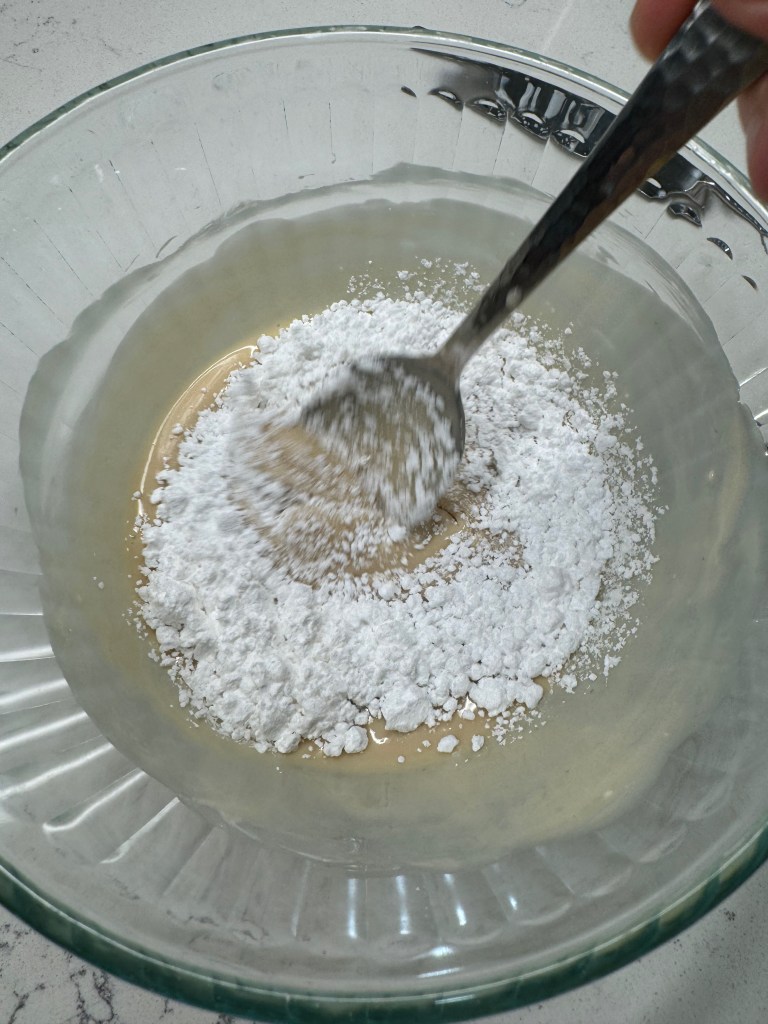
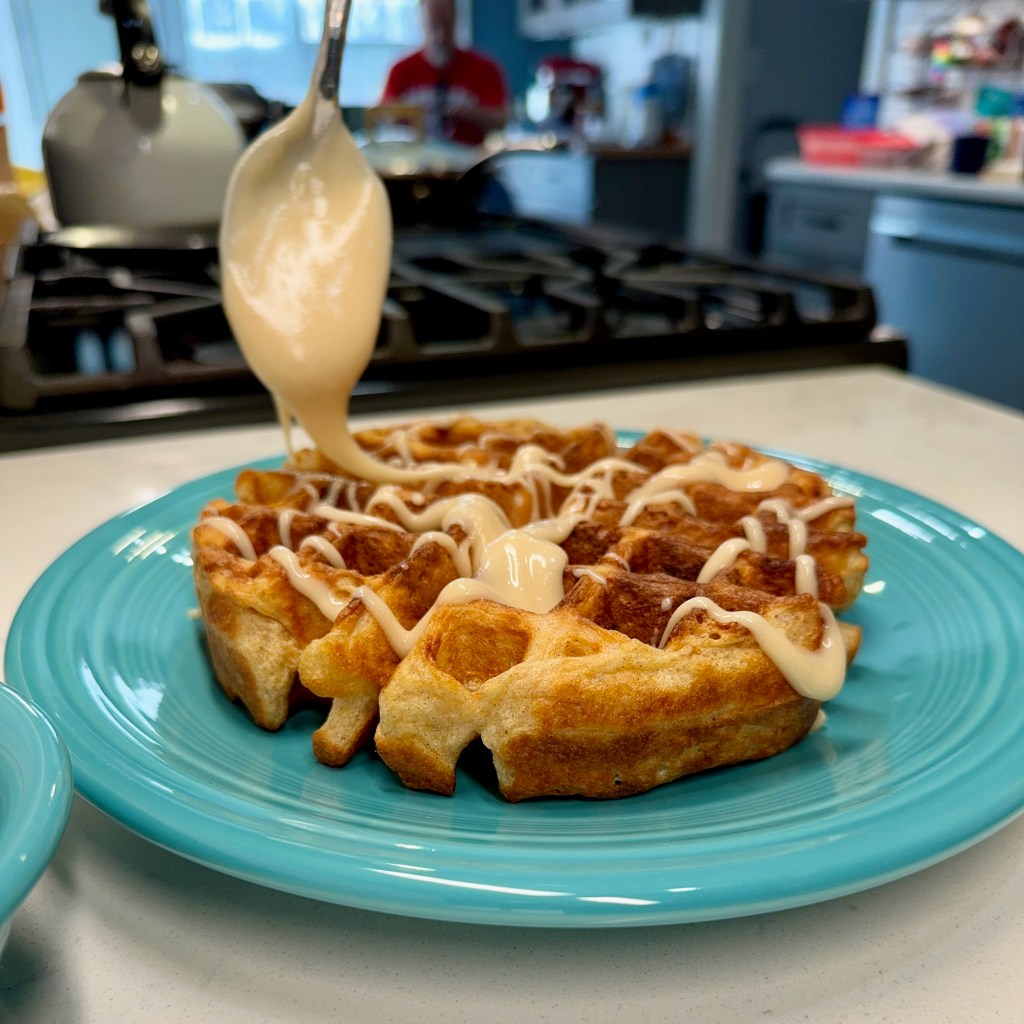
Easter morning, the first order of business was coffee, my favorite dark roast blend, 50/50 with decaf, French-pressed. Then, I whipped up a little cream cheese “icing” for my waffles. Maple cream, which is essentially just whipped maple syrup, was blended together with low-fat cream cheese. A touch more syrup (maple, infused with vanilla bean) and just enough powdered sugar to balance the tang of the cream cheese. Oh my goodness, I could’ve eaten the entire bowl with just a spoon!


Then, to snazz up my waffle batter, which was nice and bubbly from its overnight nap, I added every flavor you’d expect in a carrot cake. That means plenty of warm spices (ground cinnamon and freshly grated ginger), an entire shredded carrot (patted dry after grating on the large holes of my box grater), and even a small handful of plump raisins (because I happen to love them in carrot cake, so why not)? 


Adding the carrots put a healthy touch on this recipe, and I played that up with two more adjustments: blood orange-fused olive oil stood in for the melted butter that my inspiration recipe suggested, and I went halvsies on the flour, subbing in 50% white whole wheat for all-purpose. An egg, a little salt and baking soda to counter the acidity of the buttermilk, and this was taking shape very nicely!


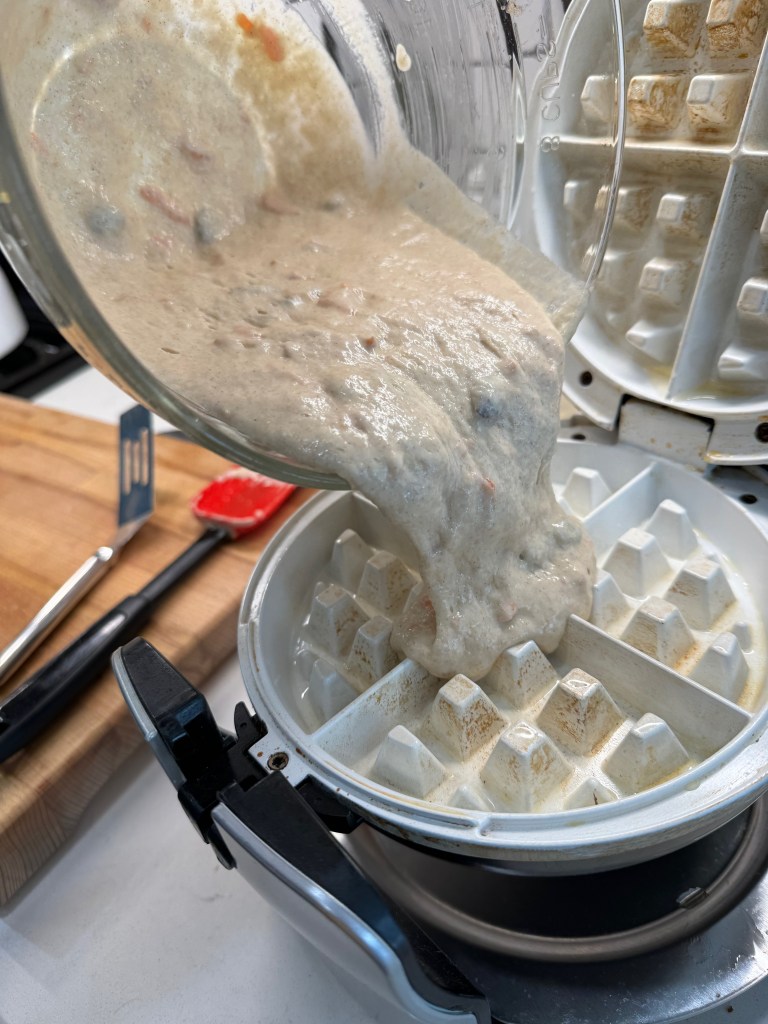
The Belgian waffle maker seemed right for these— it holds more batter so the waffles would be higher and larger— but a standard square or round iron would work just fine. I like to put a touch of oil on the hot plates right before adding the batter. This ensures a crispy exterior to contrast with the soft and fluffy insides.


Finally, the moment of truth. Would these taste like carrot cake, as we imagined? They absolutely did! Not as sweet, of course, and that was intentional. But a drizzle of that maple-y delicious cream cheese icing handled the sweet part, and a little sprinkle of pecan chips made this the perfect Easter breakfast— especially on a gorgeous Spring morning, on our new patio with the love of my life. 

Carrot Cake Waffles

  • Servings: 2 large Belgian waffles
  • Difficulty: Average
  • Print

A maple-kissed cream cheese icing really dressed up these waffles, which had all the flavor of carrot cake with a fraction of the guilt.


Ingredients

  • 1/2 cup sourdough discard
  • 1 cup real cultured buttermilk (mine was low-fat, but nonfat or whole is fine)
  • 1/2 cup all-purpose flour
  • 1/2 cup white whole wheat flour (or whole wheat pastry flour)
  • 1 Tbsp. organic cane sugar

The remaining waffle ingredients are added in the morning, and I recommend having your waffle iron pre-heated before you complete the waffle batter.

Ingredients

  • 1 large egg, beaten
  • 2 Tbsp. orange-fused EVOO (see notes)
  • 3/8 tsp. salt (1/4 + 1/8)
  • 1/2 tsp. baking soda
  • 1/2 tsp ground cinnamon
  • 1/2 tsp. freshly grated ginger (or 1/4 tsp. ground ginger)
  • 1 medium carrot, grated on large holes of box grater, blotted dry with paper towels
  • 2 Tbsp. raisins (if dry, rehydrated briefly with boiling water and then blot dry)
  • Expeller-pressed canola oil, for the waffle iron
  • Toasted pecan chips, for serving

For the Maple-Cream Cheese icing, I recommend making this first, so that it is ready when your waffles are and you have time to adjust the sweetness to your liking. If you end up with extra, do what we did and just eat it with a spoon.

Ingredients

  • About 3 oz. Neufchâtel (or regular) cream cheese, softened at room temperature
  • About 2 Tbsp. maple cream
  • About 2 Tbsp. maple syrup
  • About 3 Tbsp. powdered sugar
  • 1 tsp. real vanilla extract

Directions

  1. The night before, combine sourdough starter, buttermilk, flours and sugar. Use a large bowl, as the mixture will bubble up overnight. Cover and rest at room temperature for 12 hours.
  2. Make the maple-cream cheese icing by stirring together the Neufchâtel, maple cream, syrup, and vanilla. Stir in enough powdered sugar to achieve the drizzling consistency and sweetness you desire.
  3. Preheat the waffle iron according to manufacturer’s instructions. In a glass measuring cup, combine the egg, oil, baking soda, salt and cinnamon. Add to the overnight sourdough mixture and fold gently to combine (you will see some chemical reaction fairly quickly). Fold in the carrots, ginger and raisins.
  4. Brush or drizzle oil on the hot waffle plates and add batter. Cook according to manufacturer’s instructions until waffles are done through, crispy and golden.
  5. Spoon maple-cream cheese icing over the warm waffles and sprinkle with toasted pecan chips.


Harissa Tomato Soup

Raise your hand if you got a jar of harissa in your Christmas stocking this year. Really, I’m the only one? 😂 Sincerely, I love that my husband sneaks fun foodie surprises into my gifts, because it sets me up for interesting flavor adventures throughout the coming year.

I’m here to tell you, this isn’t that spicy. 😏

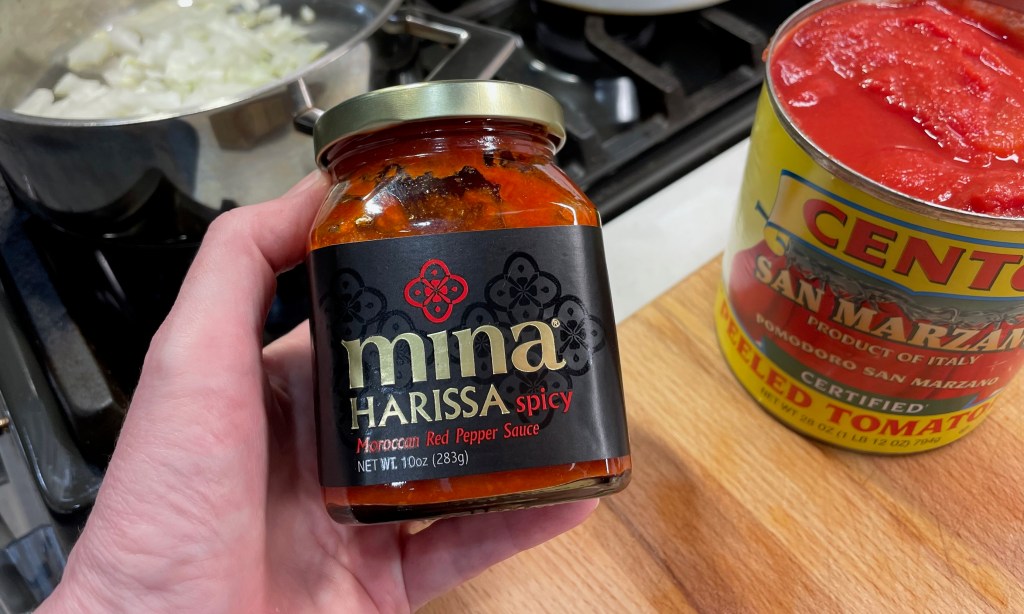
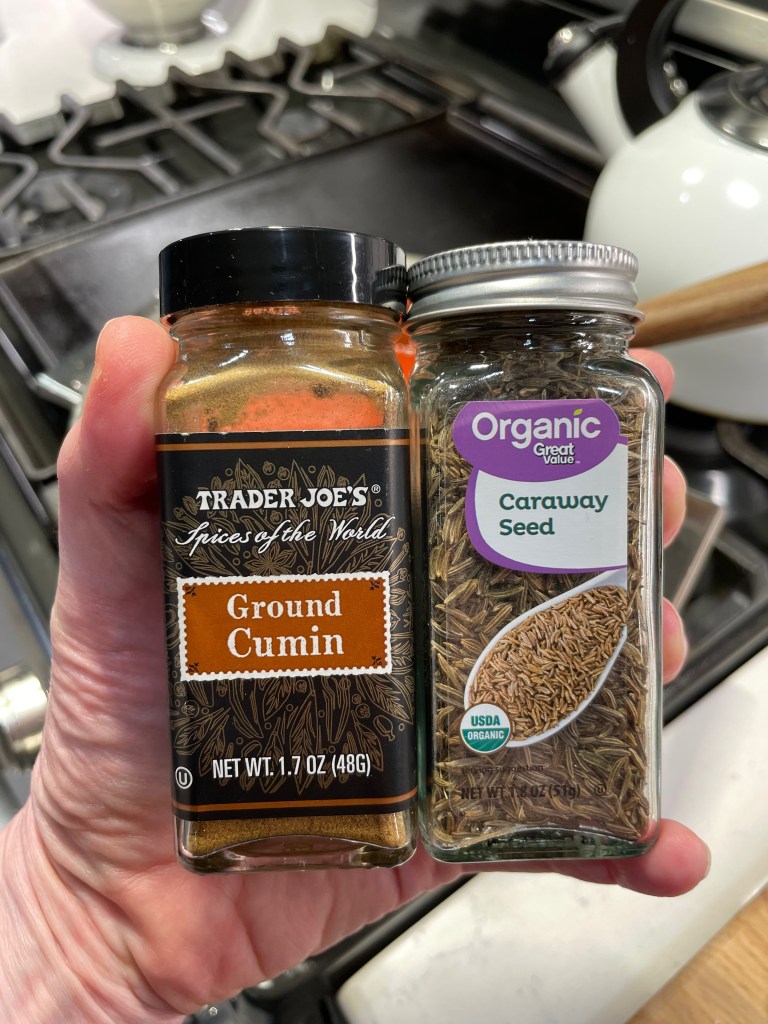
Harissa, if you’re not familiar, is a Moroccan concoction made with roasted red peppers— ranging from sweet to hot—along with garlic and what I like to call the “C spices” of cumin, caraway and coriander. It’s a complex blend of flavors that can be used in a marinade or added directly to a meat or vegetable dish to perk up the flavors. It is typically quite aromatic and spicy, so a little usually goes a long way.

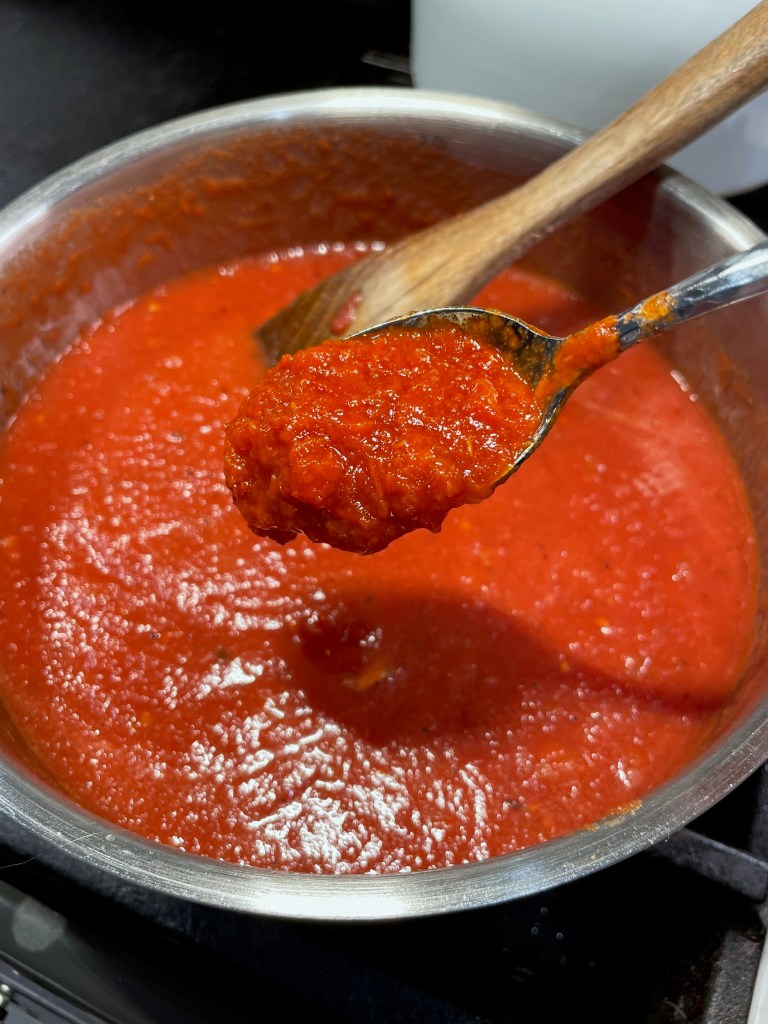
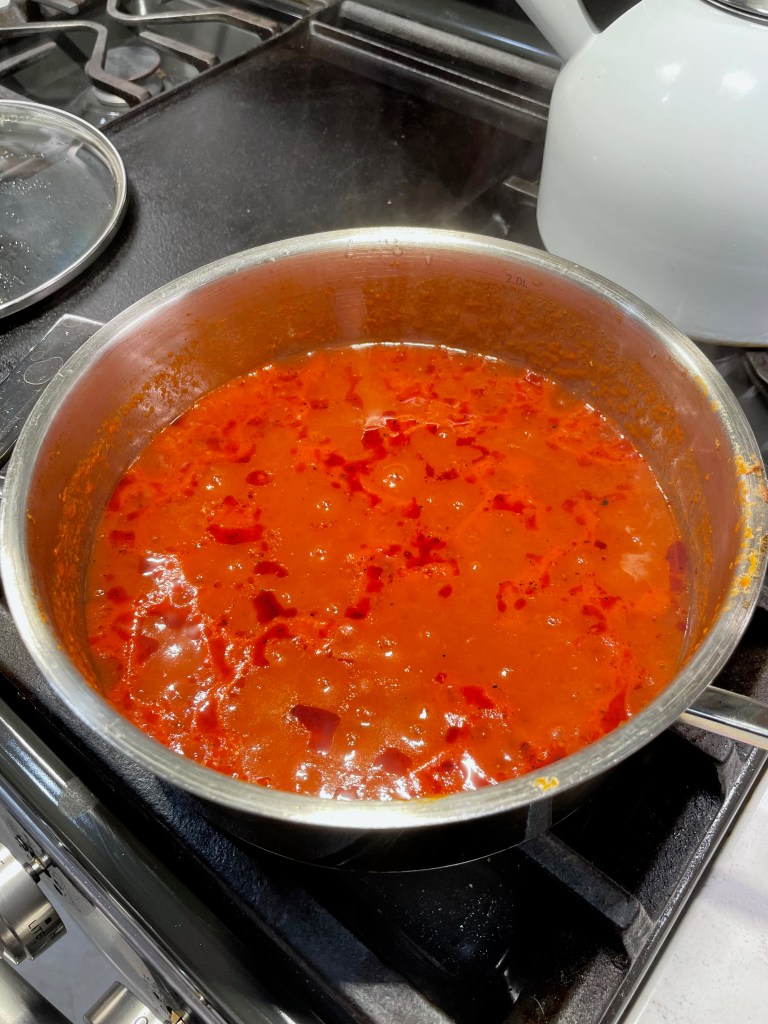
This jar of harissa has already served me well because it transformed what would otherwise have been an ordinary bowl of tomato soup. If you’re bored in the kitchen and tired of making the same things over and over, this post should inspire you to see how easily you can change things up with one ingredient swap or addition. A couple of generous spoonfuls of harissa, along with accompanying spices, elevated this simple, made-from-canned-tomatoes soup to such a degree that Les and I devoured the entire batch in one sitting.

I will confess here that I did not find this particular brand of harissa as flavorful as some others I have tried, including the one carried by Trader Joe’s. My first taste of harissa was during the few years that I worked in a specialty olive oil store. Our harissa-infused extra virgin olive oil was bold, spicy and flavorful, and this jar of harissa paste didn’t quite measure up in the flavor (or heat) department. Still, I found it a good base, which I jazzed up with more of the other flavors I expected— namely hot pepper flakes, cumin and caraway— and this soup did not disappoint!


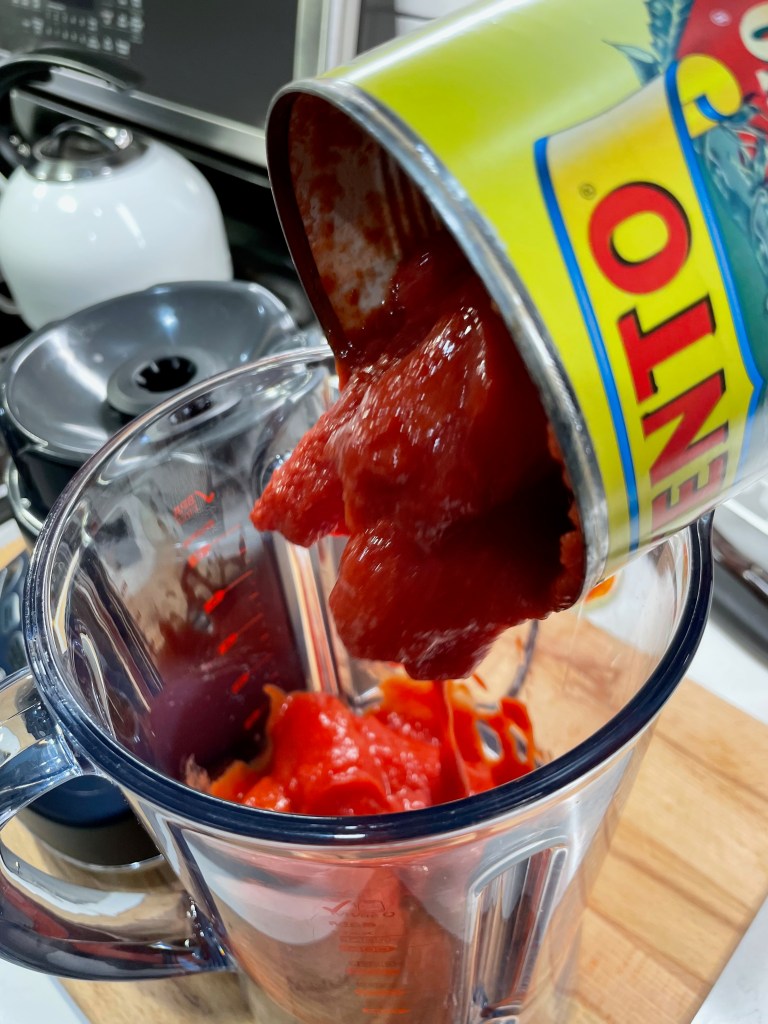
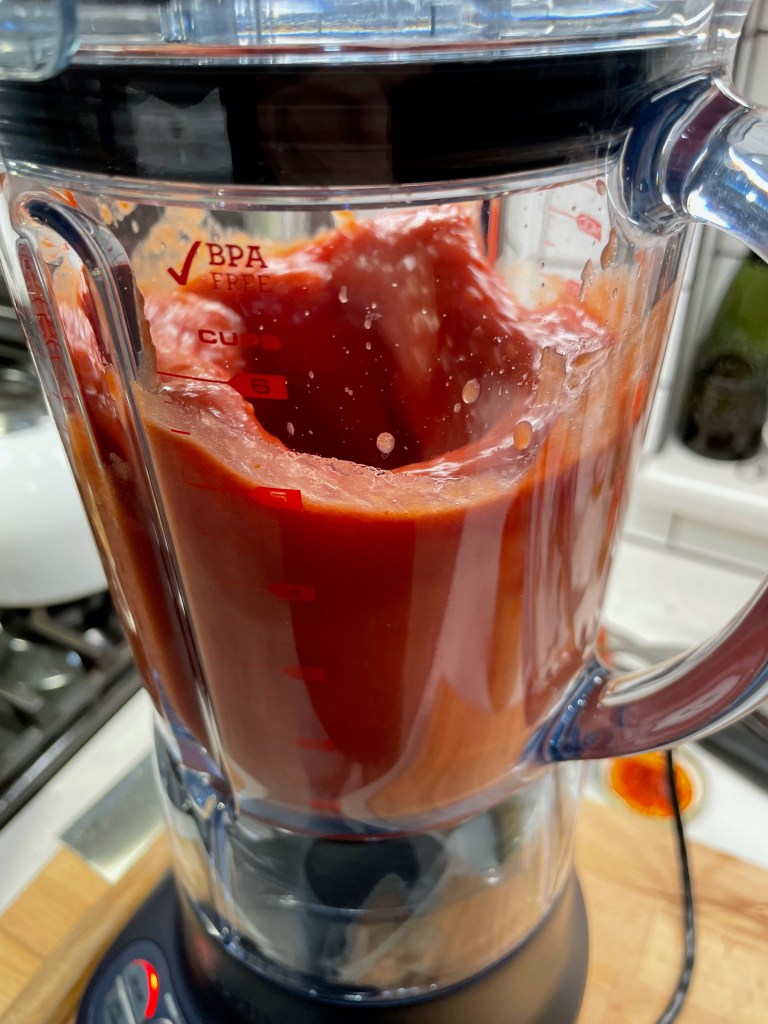
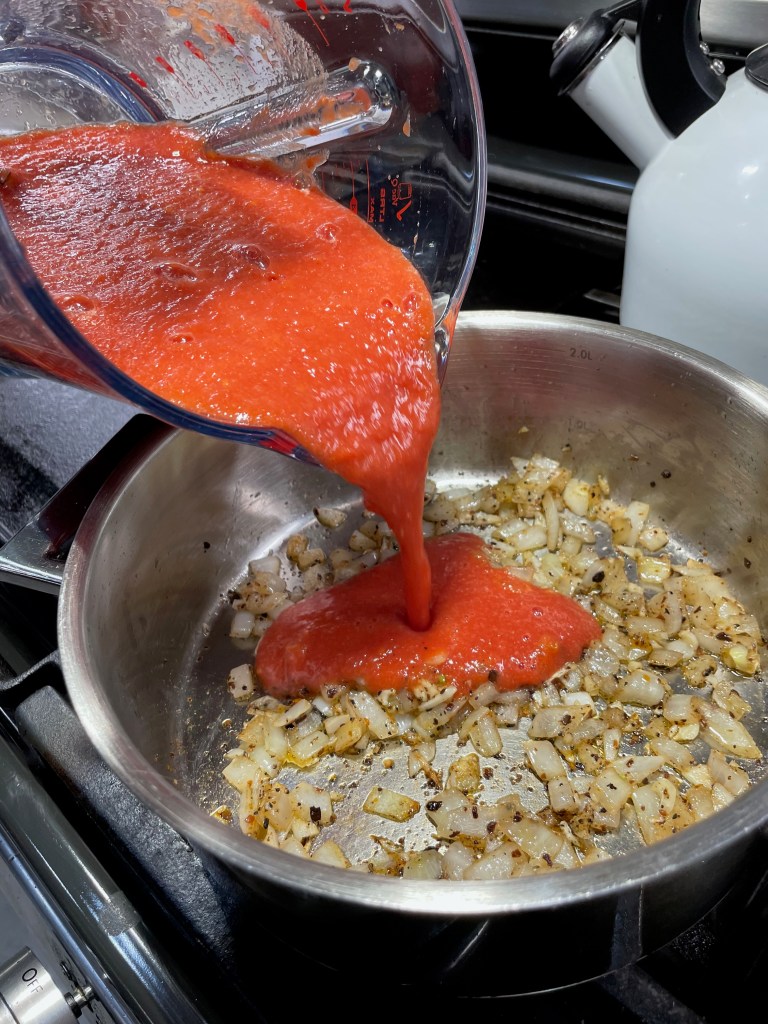
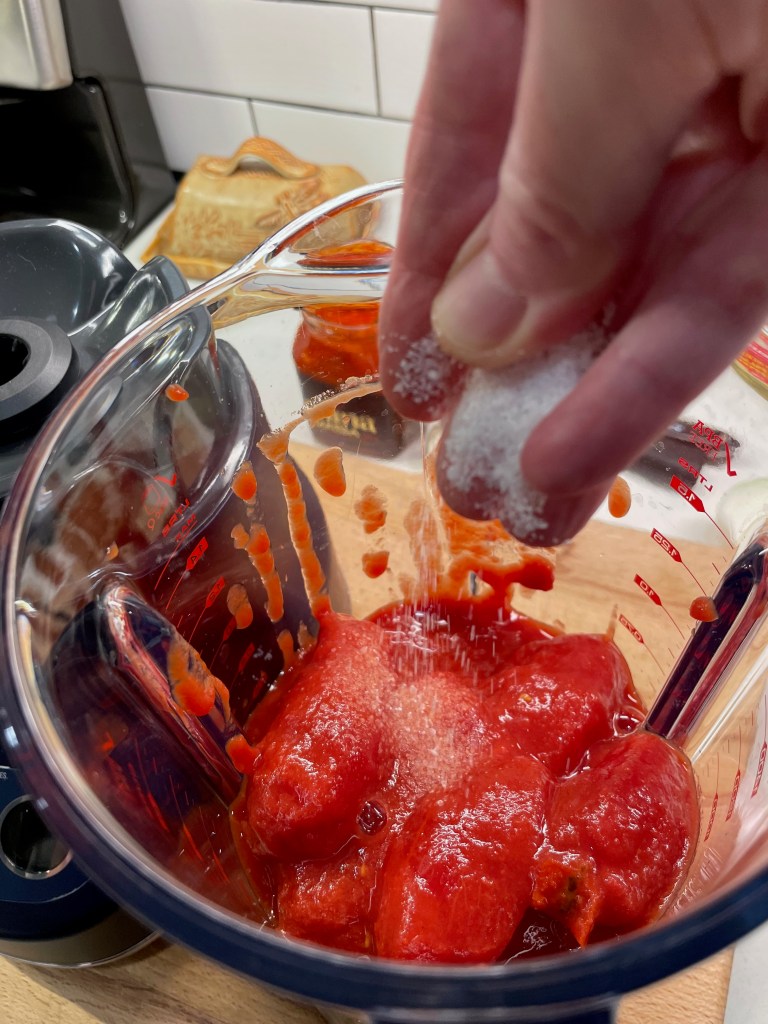
The base of any good tomato soup, of course, is tomatoes! And given that fresh tomato season is still about four months out, I reached for a big can of San Marzanos. I’ve learned the hard way that lesser quality tomatoes don’t have the same depth as real San Marzanos, so choose well. I whizzed these up in my George Clooney blender (so named because it is tall, handsome and versatile), and then I added it to lightly sautéed onions and garlic along with a few tablespoons of the harissa.


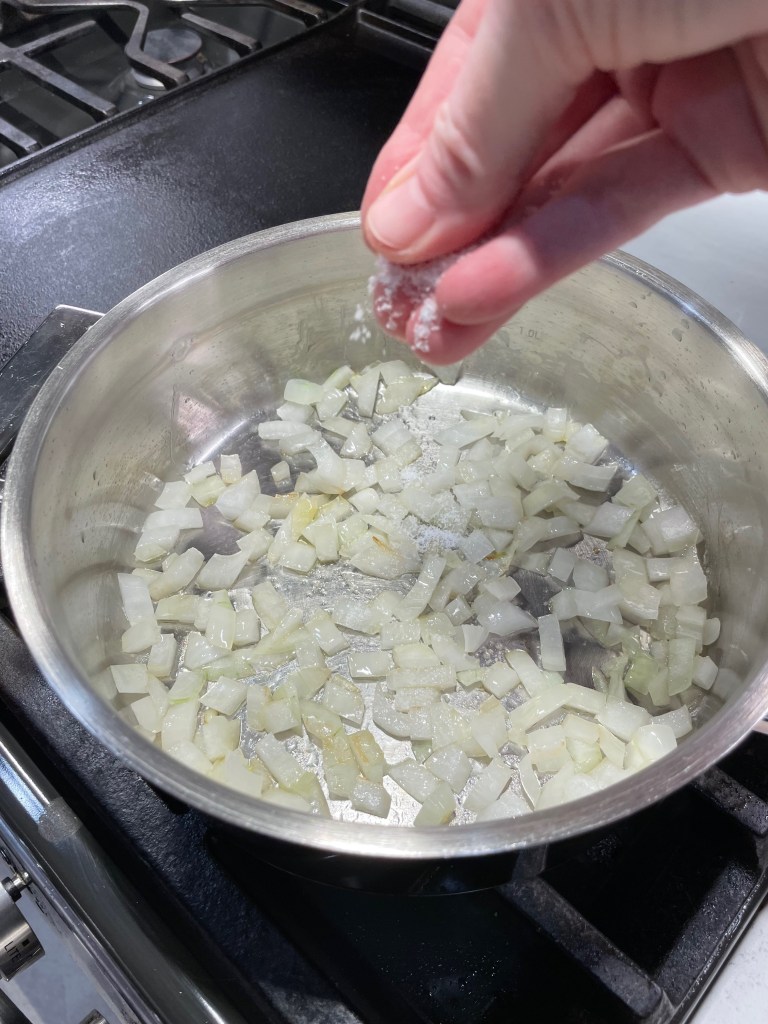
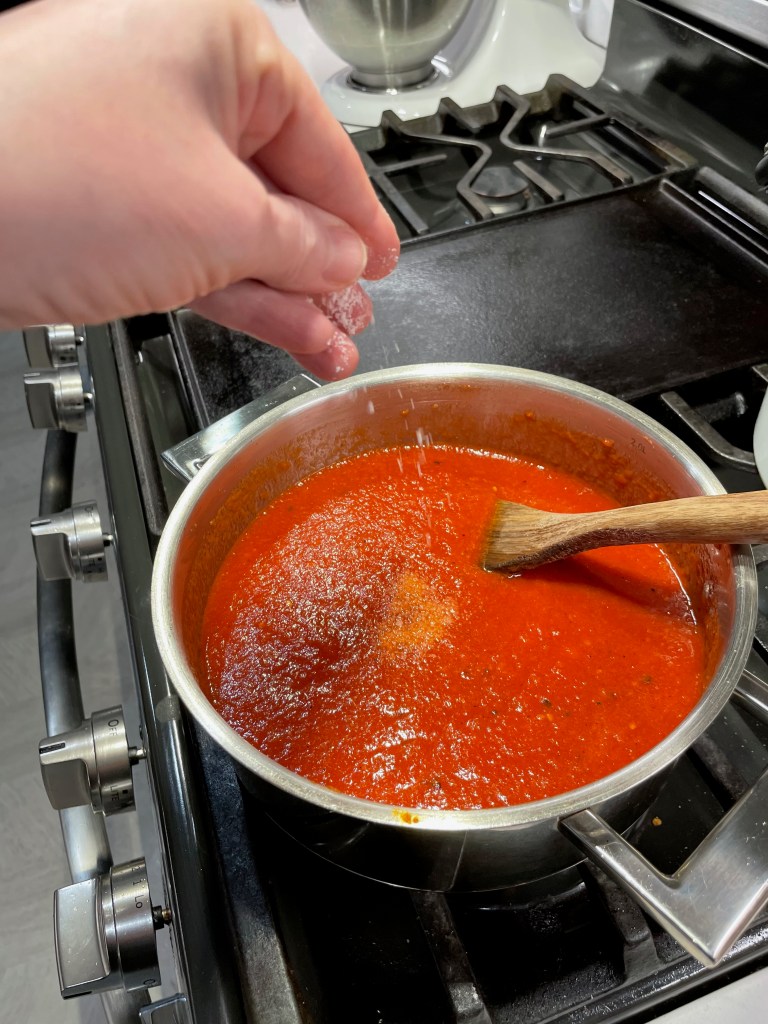
As with any recipe, I followed the advice of every culinary expert I respect, by seasoning every layer— during sauté of the onions, preparing the tomatoes and building the soup over heat. Salt has more purpose than just flavor, and if you miss seasoning the layers of a recipe, you may end up with a meal that tastes under-seasoned and over-salted at the same time.


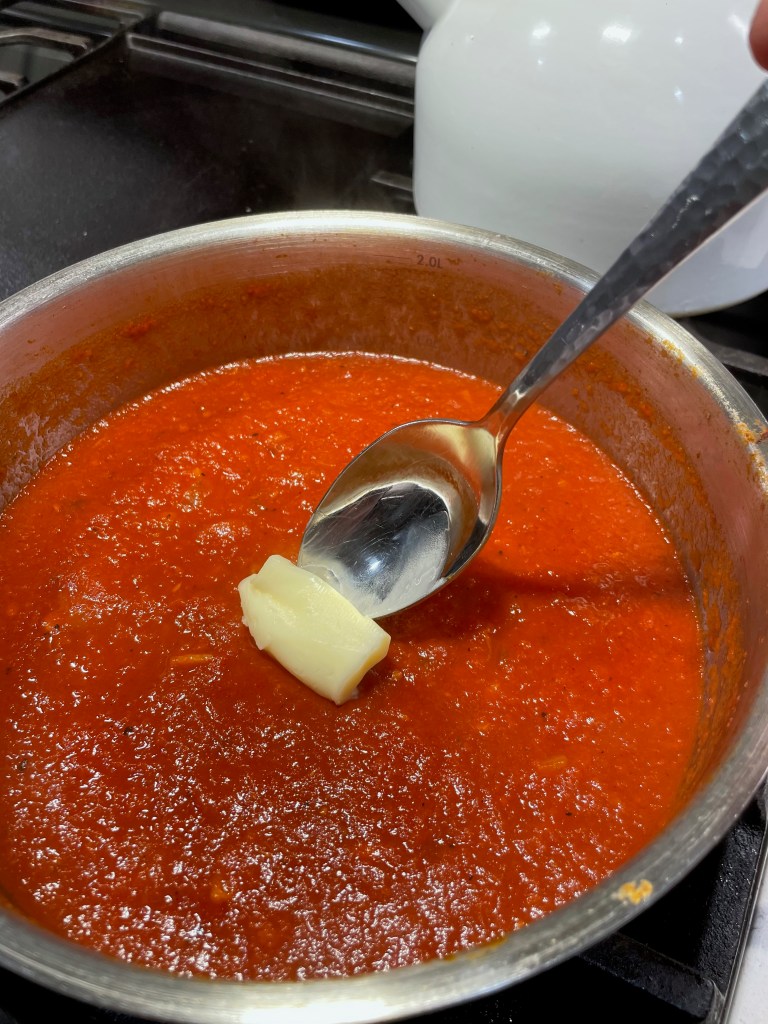
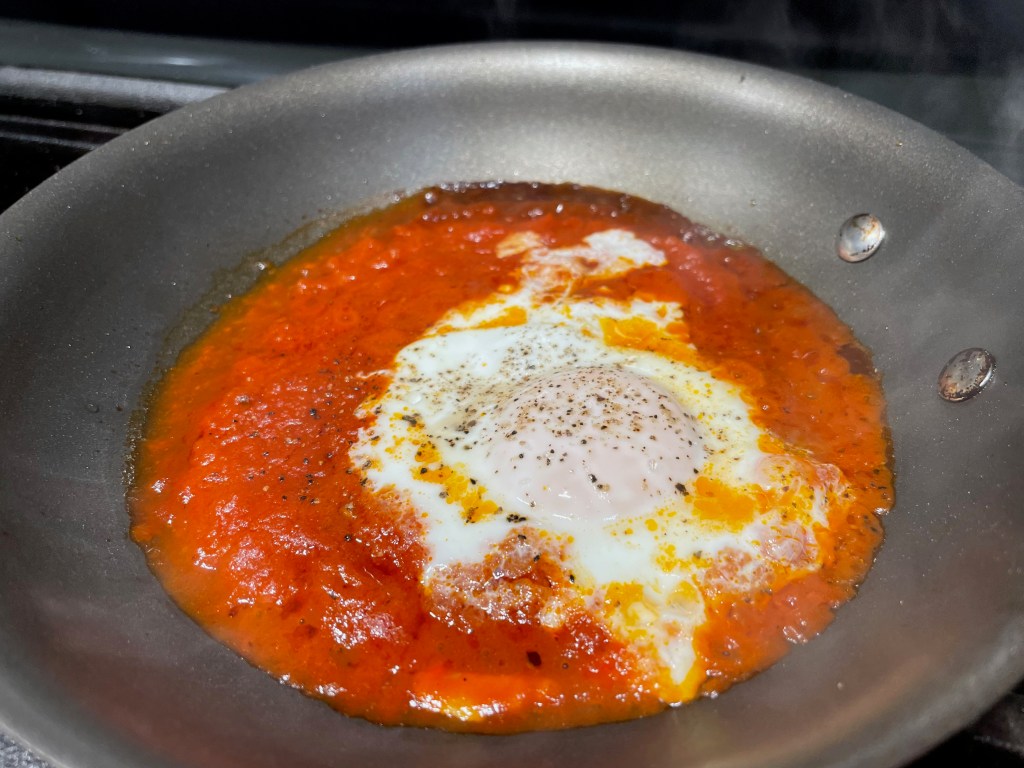
For a rich finishing touch, I melted in about a tablespoon of butter just before serving— borrowing a trick from the playbook of Italian chefs. This may have been the best tomato soup I’ve ever made, and I give credit to the harissa, if only for inspiration. I mentioned earlier that we devoured the whole pot that night. But that’s not quite right. I saved about a quarter cup, which I had in mind for a miniature shakshuka for breakfast the next day, and, no surprise, it was also delicious!

Next time, I’ll make a whole batch of shakshuka with harissa. This was divine!

Harissa Tomato Soup

  • Servings: 4 cups
  • Difficulty: Average
  • Print

It's amazing that a few tablespoons of harissa can elevate a classic soup so much, but it really does!


Ingredients

  • 2 Tbsp. extra virgin olive oil
  • 1/2 medium onion, chopped
  • 2 cloves garlic, minced
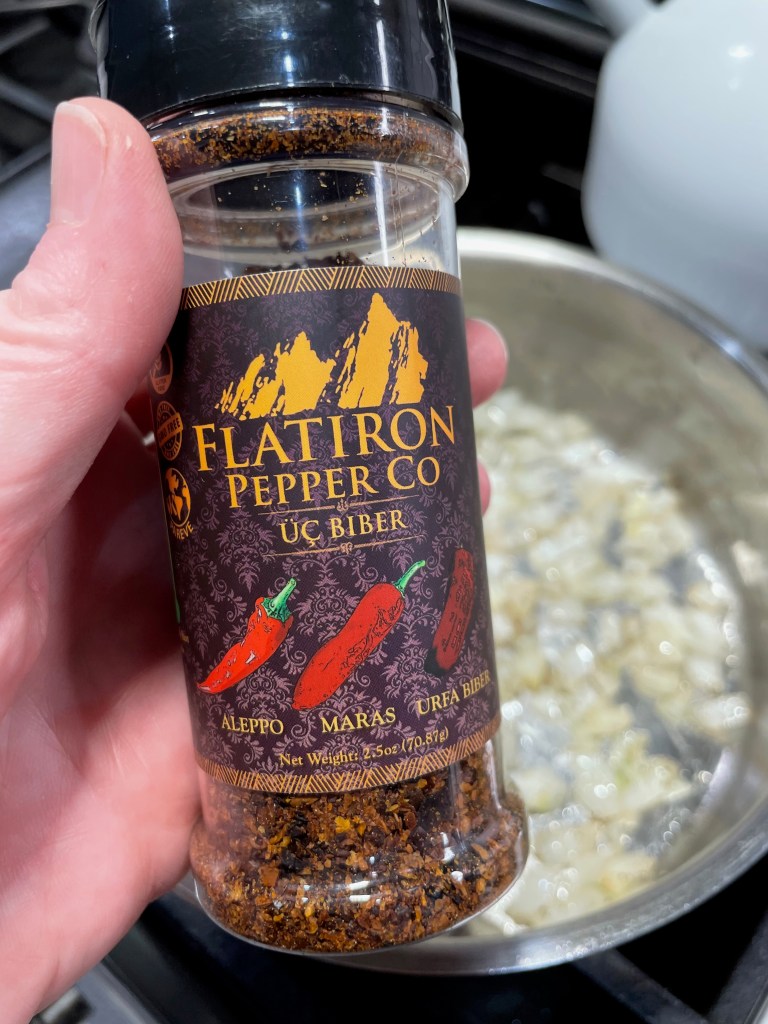
  • A few shakes red pepper flakes (I used Flatiron Pepper’s Uç Biber variety)
  • 28 oz. can real San Marzano peeled tomatoes, pureed in blender briefly with a pinch of salt
  • 2 Tbsp. Mina brand harissa paste
  • 1/2 tsp. ground cumin
  • 1/2 tsp. ground caraway seed
  • Salt and pepper for seasoning each layer
  • 1 Tbsp. unsalted butter

My recommendation for adding red pepper flakes, cumin and caraway is based on the mild nature of this particular harissa. If you use another brand with more flavor, adjust additions accordingly.

Directions

  1. Heat a heavy-bottomed pot over medium heat. Swirl in olive oil and sauté onions until slightly softened. Season with salt and pepper to aid in releasing moisture from the onions. Add red pepper flakes and garlic and cook another minute or so.
  2. Pour the puréed tomatoes into the pot with the onions. Add the harissa and stir to combine. Add a pinch of salt and the ground cumin and caraway. Bring the mixture to a low boil, and then reduce heat and simmer for approximately 30 minutes (longer if you have time). Give the soup a taste and adjust seasonings as needed.
  3. Just before serving, stir in butter.


Muffuletta Pizza

As we near the end of this year’s Mardi Gras celebration, which wraps up on Feb.13, I’m presenting a pizza twist on the muffuletta, a sandwich that has its origin in New Orleans. You may recall from some of my previous Mardi Gras posts that my travels have not led me to The Big Easy (yet), though it is certainly on my bucket list of foodie places to visit. Still, I love a theme party, and I have a vivid memory of muffuletta, thanks to a part-time job I had more than two decades ago.

Allow me to back up a bit to explain about muffuletta for those who may not be familiar, and why it ties to New Orleans, which we usually associate with Creole-inspired and French cuisine. One glimpse of the muffuletta ingredients list— cured salami, mortadella, ham, provolone and a chopped giardiniera-olive spread— would make one think of Italian food, and rightly so. The muffuletta is said to have been created by a Sicilian immigrant who settled in New Orleans about the turn of the previous century. It is usually presented with loads of layers on a large, round, focaccia-like bread topped with sesame seeds.


My first experience of muffuletta came during my two-year stint in a catering kitchen in Greensboro, N.C., where a friend had recruited me to be a kitchen helper during busy periods. The kitchen was jamming during wedding season, the winter holidays and the twice-a-year High Point Furniture Market, and I was happy to jump in to help fulfill orders. 

At some point in those two years, one of our regular customers must have hosted a Mardi Gras-themed event, because I was charged with making approximately four quarts of the chopped olive and vegetable mix that was to be used for muffuletta sandwiches. Not knowing anything at all about that sandwich, I followed the instructions on the recipe card I’d been given. Green olives, black olives, capers, pickled vegetables, olive oil, vinegar and dried Italian herbs— what in the world was this concoction? And then Rodney, our smart-ass head chef, labeled the giant plastic jar “Muff Stuff.” You can imagine the chaos that ensued over the nickname in our kitchen of mostly immature amateurs.

“Muff stuff” was the briny, pickled relish for muffuletta, and you can easily make this condiment in just a few minutes with a food processor, though my task was to chop up the ingredients by hand. It was delicious on its own, though not very pretty to look at, and it wasn’t until Rodney whipped up a miniature version of muffuletta for the kitchen crew to sample that I understood the importance of what I had made. 

It was like an Italian sub on steroids. A salty flavor explosion that is both rich and fatty, and only makes you feel guilty until you go in for another bite. It’s so good! I’ve wanted to put these flavors on a pizza for a long time, and here you go. Mardi Gras is all about indulgence and excess, and this meat-and-cheese lover’s pizza is doing its part, in the spirit of New Orleans!

You could just call it an Italian meat lover’s dream pizza.

For my muffuletta pizza, I did not delve into making the muff stuff from scratch. Rather, I took advantage of the Trader Joe’s product that pushed me over the finish line to tackle this culinary bucket list item. They call it “cracked olive salad,” and yes, I checked to be sure that TJ’s still sells it, given the store’s tendency to cancel items without notice. Having said that, if you cannot find the cracked olive salad or don’t have a TJ’s nearby, there are similar products in other supermarkets—check the pickle section. If you still can’t find it, check out this recipe on Serious Eats, where my culinary idol Kenji López-Alt will be happy to walk you through making the olive salad, or indeed, the entire muffuletta.


I wanted my muffuletta pizza to have as many authentic flavors as possible, so I considered the three categories of meat recommended by Kenji in the aforementioned article. Mortadella, a fatty, emulsified deli meat, is hard to come by in my city, and bologna was out of the question for me, so I went with three of our favorites from the other two categories— Genoa salami, spicy soppressata and thinly sliced prosciutto. Provolone was in the package alongside the salami, and I rolled them up together for an impression of layers, like on the sandwich. I wrapped the rolls snugly in plastic wrap and stuck them in the freezer for an hour or so to help them keep their spiraled shape after slicing. The soppressata was cut into cubes, and the prosciutto into thin strips, so that my pizza would have plenty of interesting texture. I also bumped up the flavor of the olive salad with a few shakes of dried Italian seasoning.


All my pizzas are made with sourdough crust and baked on a screaming hot pizza steel for a brick oven-like finish, but you could replicate the idea of this pizza on any crust you like, perhaps even fresh dough you pick up at the deli. I sprinkled sesame seeds all over the dough, which was more symbolic than anything because we couldn’t detect them on the finished pizza. Sauce went down next, followed by copious amounts of freshly shredded mozzarella, the cubed soppressata, fresh sliced onions and Calabrian chile flakes. Then, the rest of my muffuletta-inspired flavors!


A sprinkle of Parm-Romano blend was a finishing touch, and then into the oven for six minutes— oh, how I love our Dough Joe pizza steel!— and this was possibly one of the most delicious pizzas I’ve ever made. I had some jitters about having “too much meat” on this pizza (my husband would say there’s no such thing), but the flavors worked really well together and the pickled vegetables in the cracked olive salad kept the richness in check.

One of these days, I’m going to get down to New Orleans. Maybe next year. But for now, I’m satisfied to let the good times roll with as many Mardi Gras-inspired foods as I can dream up. What should I make next?

Muffuletta Pizza

  • Servings: 8 slices
  • Difficulty: Average
  • Print

It's an Italian meat lover's dream come true, and with special ties to New Orleans, a fun pizza for Mardi Gras!


Ingredients

  • 3 large slices Genoa salami
  • 3 thin slices smoked provolone
  • 1/3 cup Trader Joe’s “cracked olive salad,” or something similar
  • A few shakes of dried Italian herb blend
  • 1 pizza dough ball, at room temperature
  • Extra virgin olive oil, for drizzling
  • 1 Tbsp. sesame seeds (optional, for effect)
  • 1/4 to 1/3 cup favorite pizza sauce (mine was Dei Fratelli fire-roasted)
  • 1 cup freshly shredded, low-moisture mozzarella
  • 1/3 cup cubed spicy soppressata
  • 1/2 sweet or yellow onion, sliced into crescents
  • A few shakes crushed red pepper, if desired for extra spice
  • 2 slices prosciutto, cut into ribbons
  • About 1/4 cup grated Parm-Romano blend cheese

Note: All my thin-crust pizzas are made with sourdough and baked quickly on a pizza steel, preheated on the center rack of a 550° F oven for one hour. This is an extreme temperature, and the results are very similar to what you would achieve in a brick oven. If you don’t have a steel, a pizza stone works great; follow manufacturer’s recommendations for temperature and adjust baking time accordingly.

Directions

  1. While the oven preheats, layer each slice of salami with a slice of provolone. Roll up into cigar shapes and wrap tightly together in plastic wrap. Tuck this into the freezer for an hour before slicing, so that the twirls keep their shape on top of the pizza. Add a few shakes of Italian seasoning to the olive salad and set aside.
  2. Shape dough into a 14-inch round and place on a flour and cornmeal-dusted pizza peel for easy transfer into and out of the oven. Drizzle the dough with olive oil and season with salt and pepper. Sprinkle all over with sesame seeds, if desired.
  3. Spread sauce over dough to within one inch of the edges; you should be able to see the dough through it. Layer mozzarella generously over the sauce, then scatter the soppressata cubes and onion slices. Shake on crushed red pepper.
  4. Distribute the olive salad evenly over the pizza toppings, then top with the prosciutto and swirls of salami-provolone. Scatter Parm-Romano lightly over the entire pie and slide it into the oven.
  5. Turn pizza 180° after about four minutes to ensure crust is evenly blistered. Remove from oven and transfer to a pizza tray. Serve immediately.