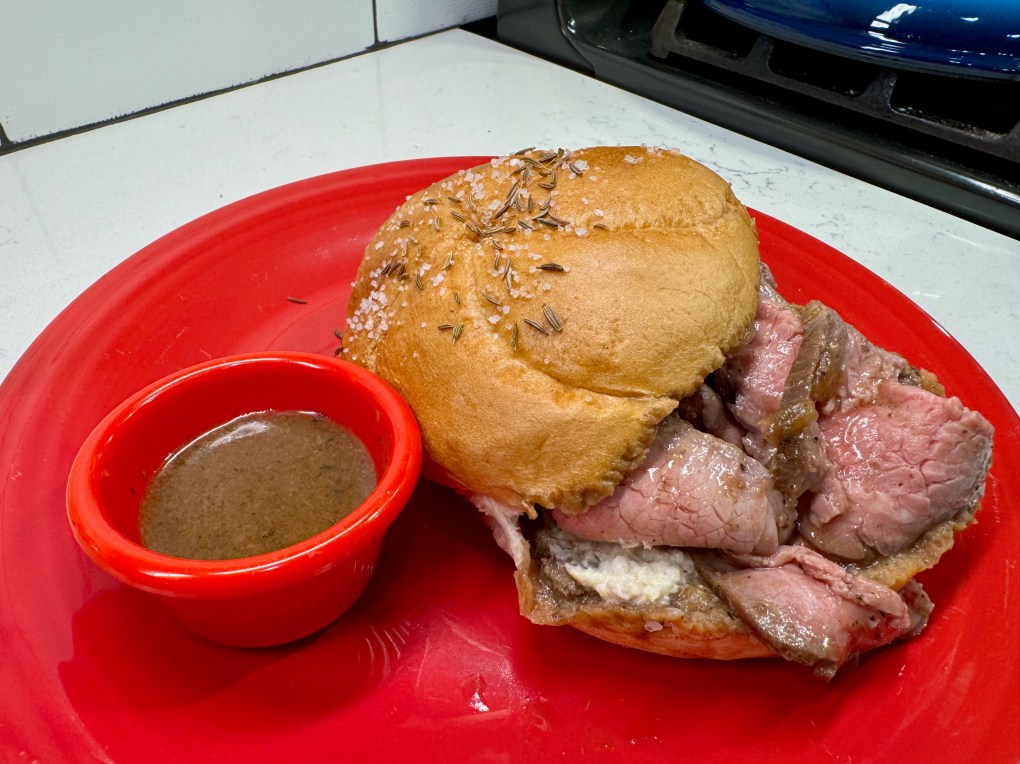
Saturday marks the fifth anniversary of Comfort du Jour. I am 448 blog entries into the story of my life through food, and that boggles my mind a bit. I cannot reflect on my culinary passions without thinking of my maternal grandmother, and thinking about her makes me long for the flavors of “home.” This simple yet iconic sandwich of my old neck of the woods has been pushed around on my culinary bucket list since 2020, and I am aware that my procrastination in making it has nothing to do with ingredients or complexity. It has everything to do with my own expectation and the same old, six-word worry:
What if I mess it up?
Fear is a weird phenomenon, isn’t it? And for people who’ve been raised by perfectionists and other hard-to-please grown-ups, it becomes a normal state of mind that lingers long after the initial disappointees have faded into the background. Fear has kept me from a million things in this life, culinary challenges among them. But I threw caution to the wind last week and tried my hand at beef on weck, figuring, seriously, what’s the worst that could happen?
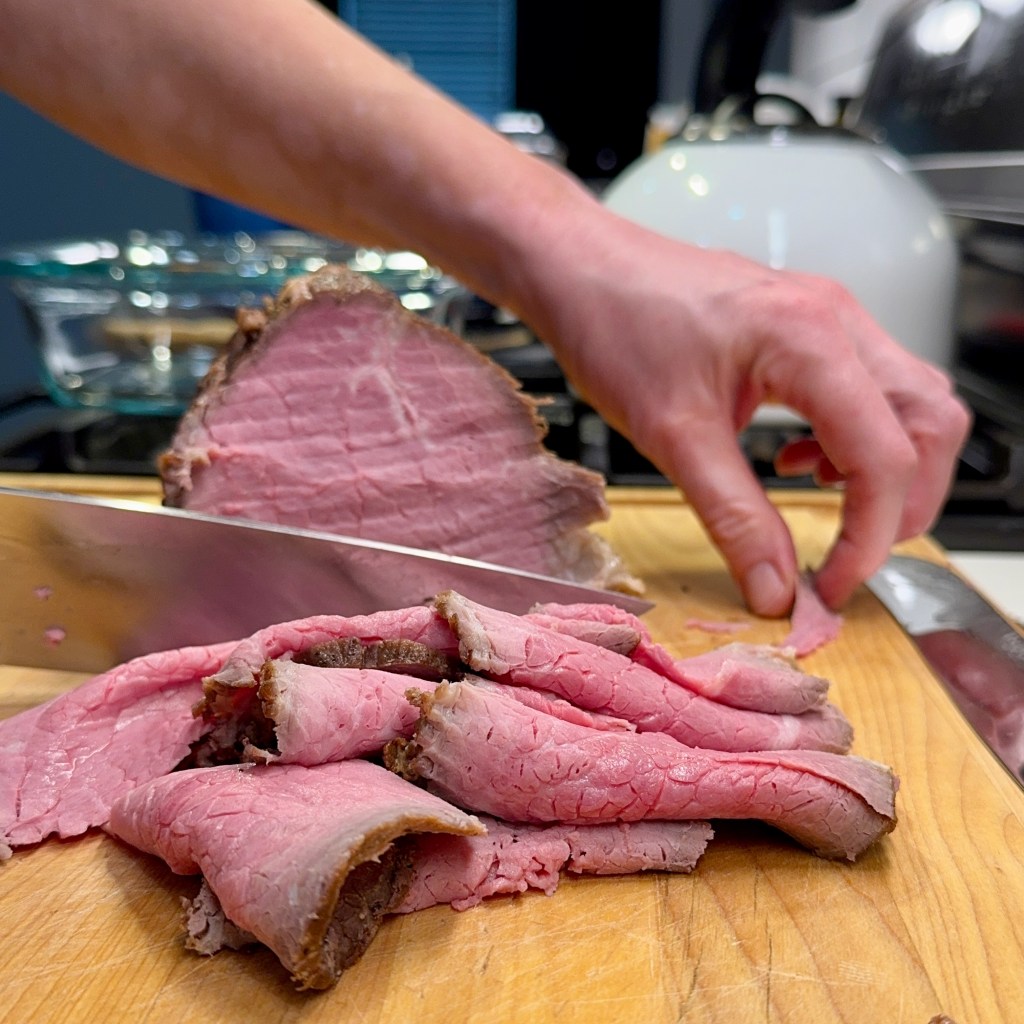
This experiment was not without lessons, mind you, but the outcome was so delicious and so well received at my house (I made it while my husband’s son, Alex, was visiting from his home in Hungary), that you can bet I’ll be making it again and again, with these notes as my template.
Whattya mean, no sandwiches?!
I am always happy to see Alex arrive for a visit. He’s a cool millennial kid who, like his dad, never met a stranger. His knack for making friends quickly is a great asset for someone who co-owns and operates a hostel in Budapest. In the quiet breaks in my work-from-home schedule, Alex and I had some great conversations, including several around food. When I asked him what kind of sandwiches are popular in Budapest, he hesitated a few beats and then admitted, “none, really.” Despite the constant stream of international tourists, the Hungarian capital is oddly bereft of good sandwich shops amid all the Asian and Italian hot spots aimed at visitors.
This, I thought, was a tragedy, and it was the final push I needed to get on top of making beef on weck. What American-born man doesn’t want a good, medium-rare roast beef on a bun? The bun, in this case, being a kummelweck roll (or kimmelweck, depending on who you ask), which is essentially a kaiser roll that has been adorned with aromatic caraway seeds and coarse salt. I wanted so much to make my own rolls for this, but I cheated a bit and gussied up plain kaiser rolls from my supermarket bakery. It worked perfectly.
The butcher always knows…
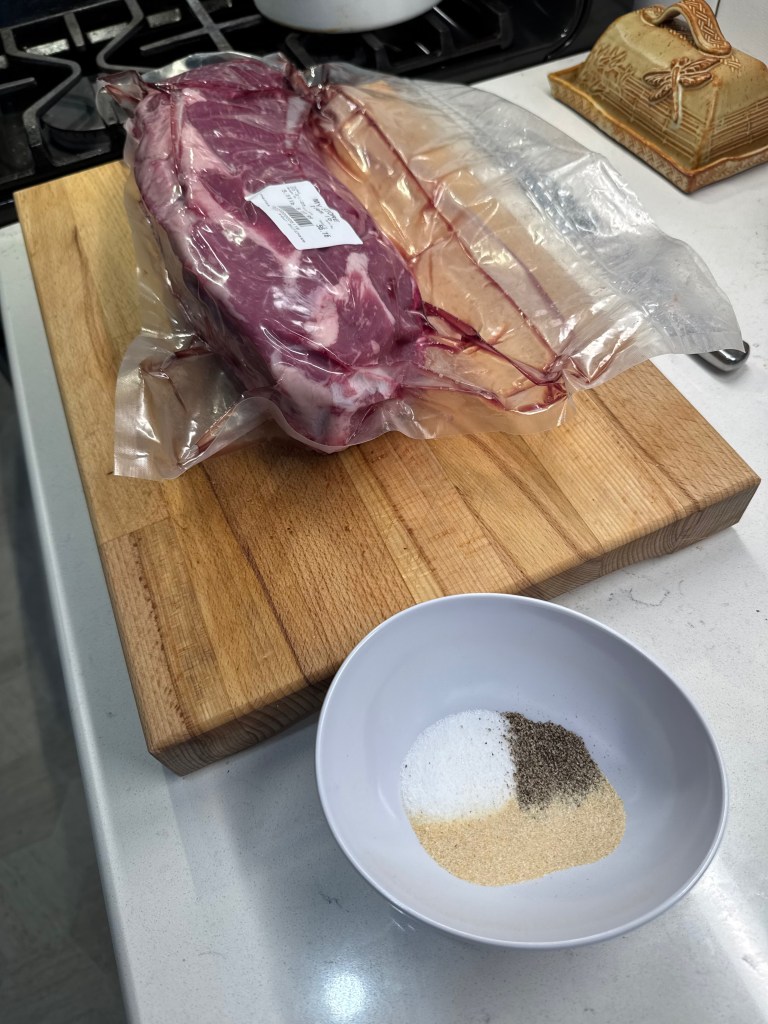
We are very fortunate to have a high quality, local-sourcing, independent butcher in our city. The guys at @SmokeCityMeats in Winston-Salem always set me up for success. When I asked Matt about getting an eye of round roast for beef on weck for three people with plenty of leftovers, Matt replied that he may as well set aside a whole one for me, and this cut was a little over five pounds. It seemed like A LOT, but it turned out to be exactly what we needed for our meal plan. This is why I trust my butchers, the same guys who hooked me up with the pork belly and tenderloin that became my fabulous porchetta, and the lamb for my tasty grilled lamb burgers and the duck breasts for my crispy five spice duck with cherry-pinot noir sauce, and the strip steaks I used in my reverse-sear experiment. They always know best, and I’m grateful for their expert suggestions.
I know it probably sounds like a commercial, but I swear that they are not paying me to promote their shop. I’m genuinely a happy customer who is proud to support local, and in return, we get to enjoy responsibly raised, incredibly flavorful local meats. It’s truly a win-win.
A method to my madness
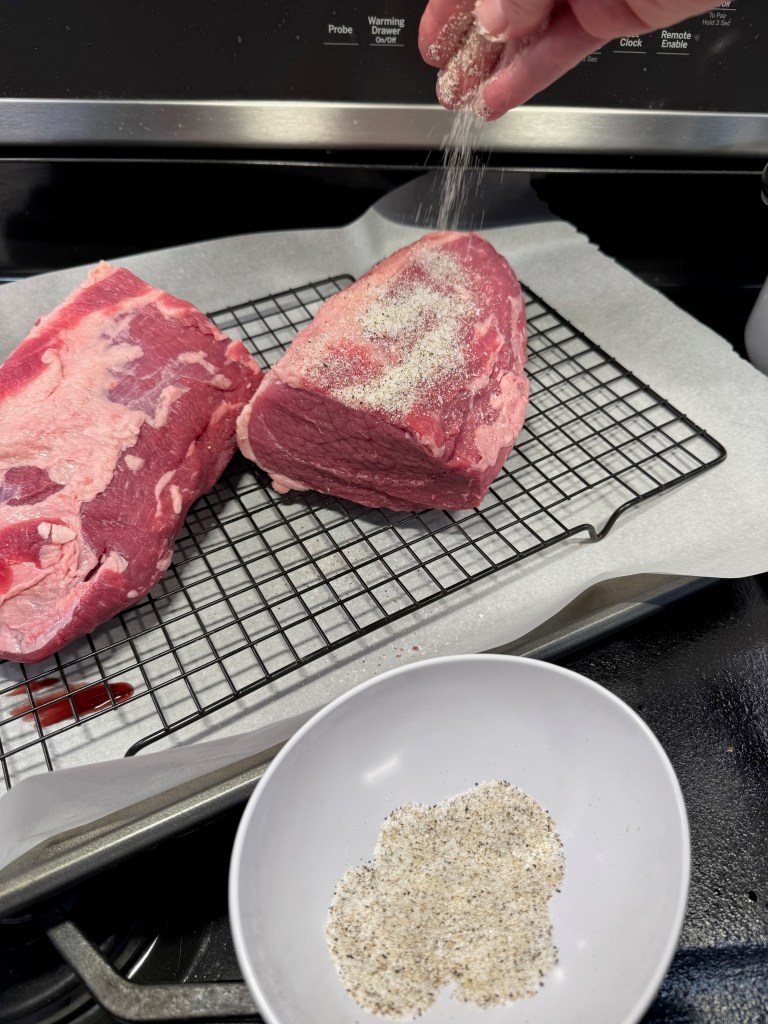
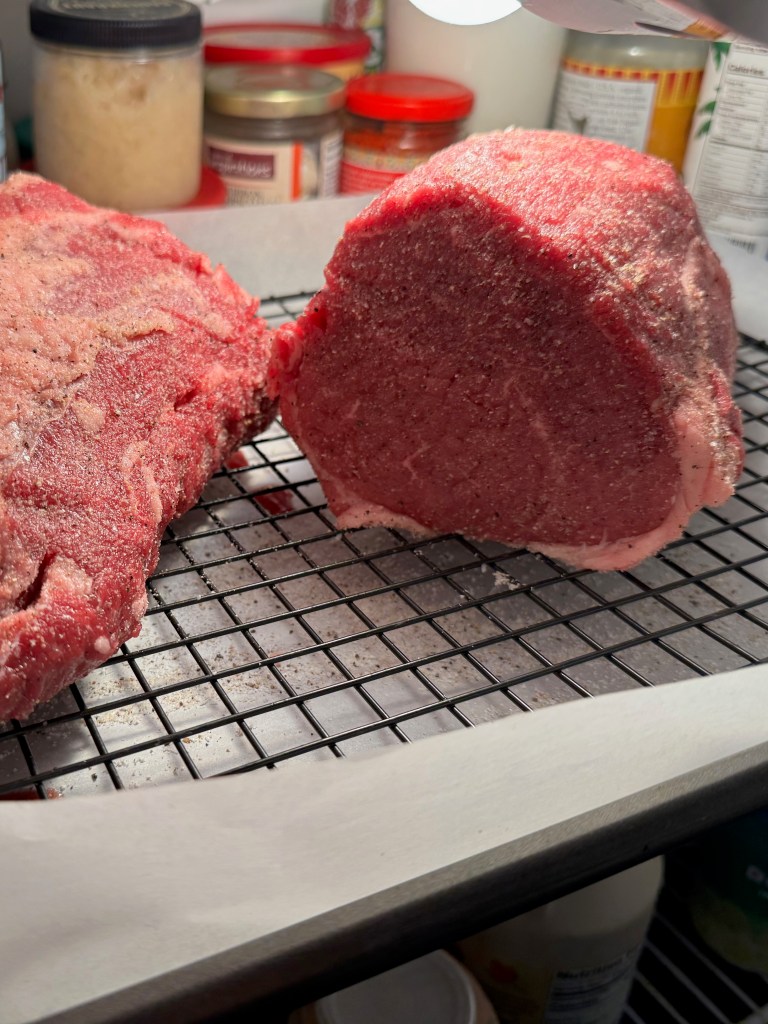
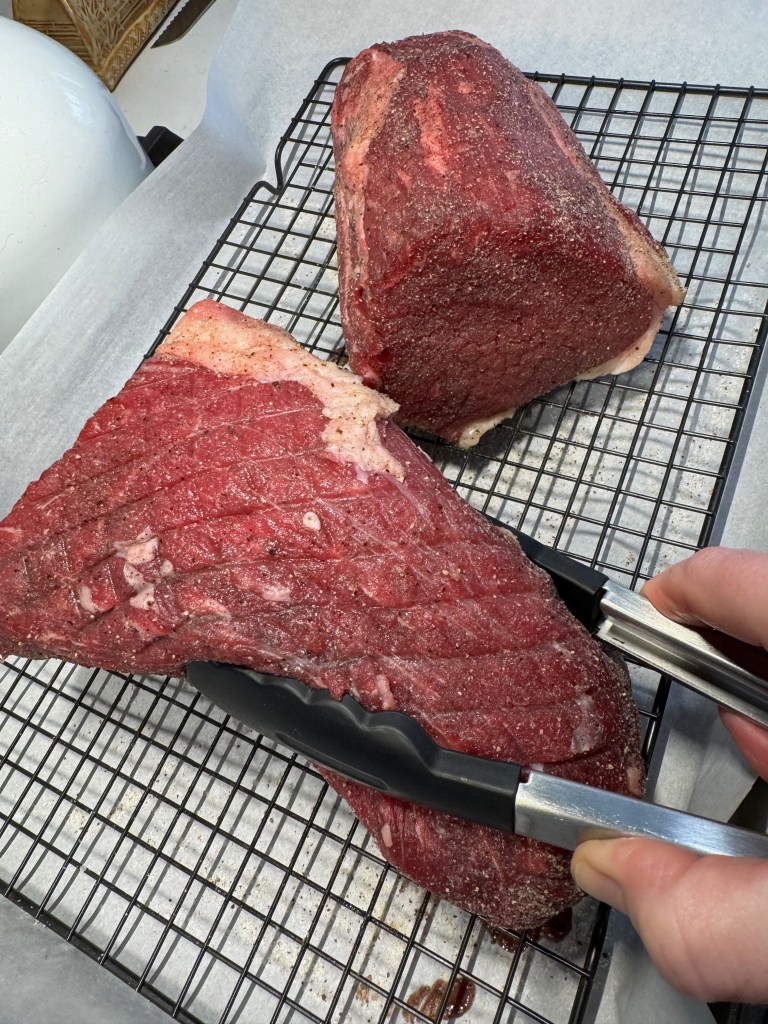
It isn’t enough to have an incredible cut of meat— one also needs to know the best technique for preparing it, and for that, I’m trusting J. Kenji Lopez-Alt, the science-y chef whose method for dry brining has become my standard. Whether I’m prepping duck breasts, a Thanksgiving turkey or a pulled pork shoulder, you can bet I’ll be sprinkling it with salt and stuffing it into the fridge overnight. I cannot overstate how much this technique has elevated my cooking. The key is to place the meat in the fridge uncovered, so that the salt draws out moisture, dissolves into a brine and then soaks back into the meat. For my beef on weck, my salt was also peppered and spiked with onion powder.
Learn more about the science behind dry brining in this video by Kenji.
This is scary the first time, because when you open the fridge the next day, the meat will look dry, tight and somewhat shriveled. The level of panic you feel will be directly related to the price you paid for the meat in question. My first time dry brining was a heritage-breed Thanksgiving turkey, and the price tag was about $100, so it was a huge amount of faith placed in Kenji’s knowledge and experience. It was also one of the most delicious turkeys I’ve ever done. This time, it was a $56 eye of round roast, and I was confident as could be. Try it once, and I promise you won’t be disappointed.
Horseradish and kummelweck (the signature flavors)
The horseradish sauce is merely a small bowlful of drained, prepared horseradish mixed with a spoonful each of sour cream and mayonnaise. It is quite pungent, and if you are not a fan of horseradish, you may want to skip this. But it is a key component in an authentic beef on weck. The important thing is keeping the horseradish flavor front and center, with only enough of the creamy ingredients to make it somewhat spreadable. You can make this ahead and keep it in the fridge until ready to serve.
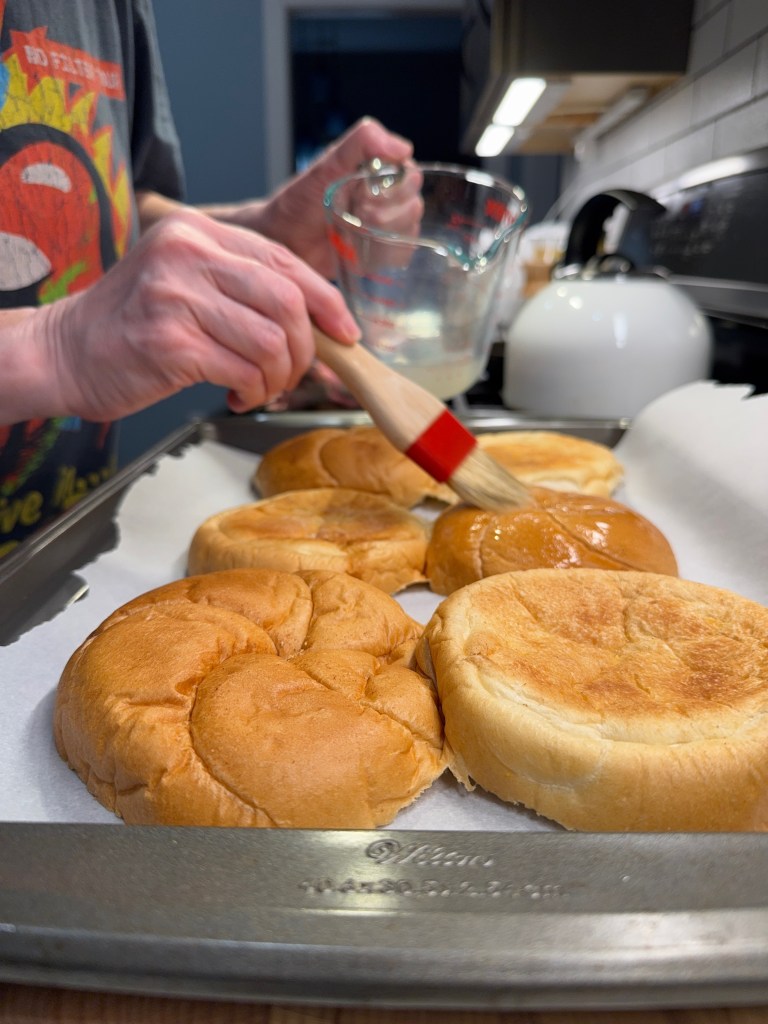
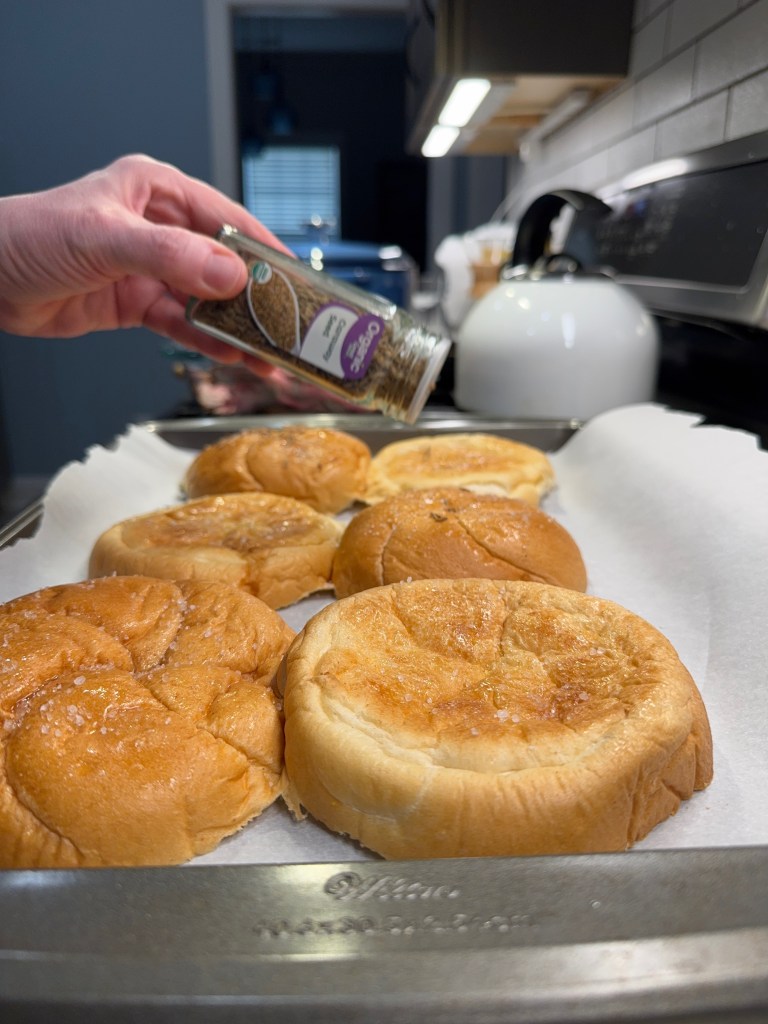
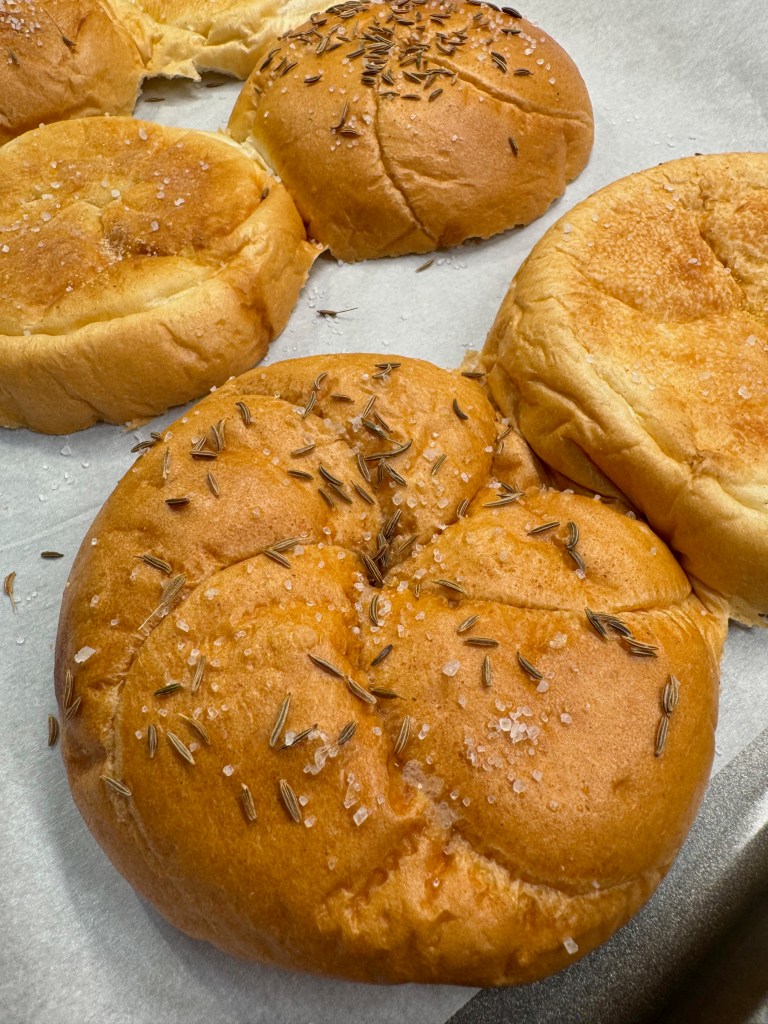
For the kummelweck rolls, you may not find them ready-made if you are outside the Western New York area. Fortunately, it is easy to transform more readily available kaiser rolls simply by brushing them with a cornstarch slurry, sprinkling with coarse salt and caraway seeds, and baking until the seeds are set and the rolls are crispy again. The caraway, like the horseradish, is also very traditional for this sandwich. If you don’t care for the flavor, go with a sesame-topped kaiser instead. But if you skip both the horseradish and the caraway bun, you’re basically just eating a roast beef sandwich.
Achieving the perfect roast beef
This is not in my wheelhouse (hence my hesitation making beef on weck in the first place), but as luck would have it, a book that I gave Les at Christmukkah happened to have instructions for roasting eye of round— for beef on weck— right there on page 134!
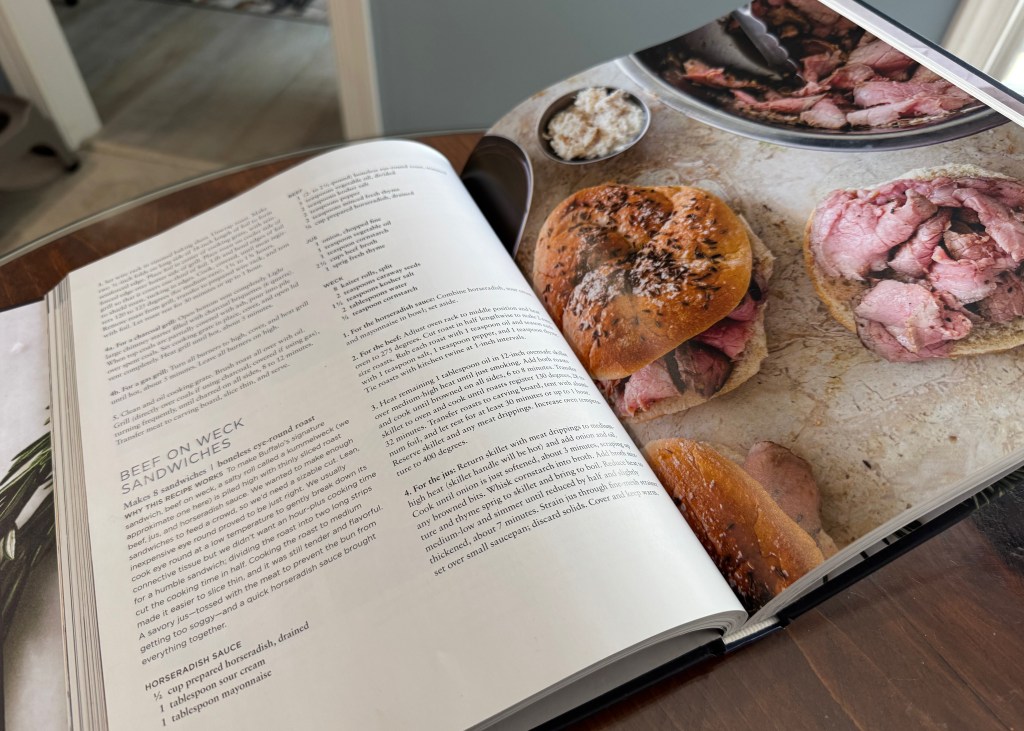
To this point, the only thing my recipe had in common with the one I found in Meat Illustrated was the specific cut, eye of round. Mine was twice the size called for, and I had already done the 20+ hour dry brine, which was not outlined in the book. But I needed a solid method for cooking said roast, and this one was perfect. It prescribed a low oven (275° F), a couple of heavy skillets (I went with a cast iron and my enameled Dutch oven) and a bit of oil for searing all the sides of the meat. My own instinct told me to placed the seared roasts onto beds of sliced onions, as I really wanted that flavor in the final mix.
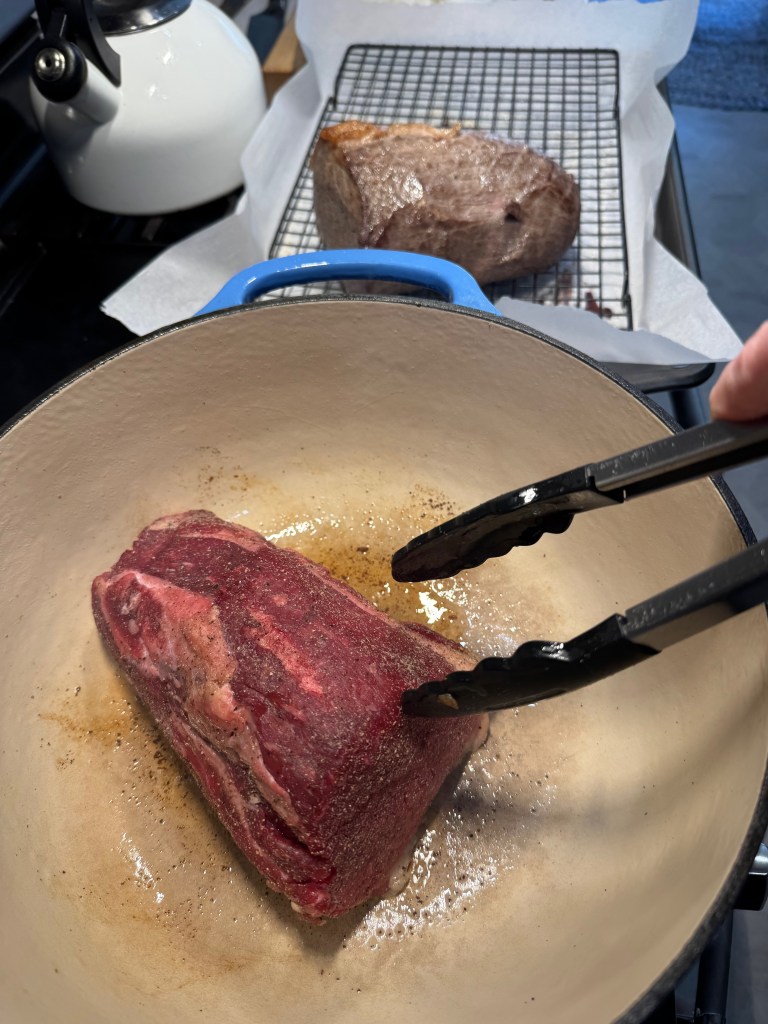
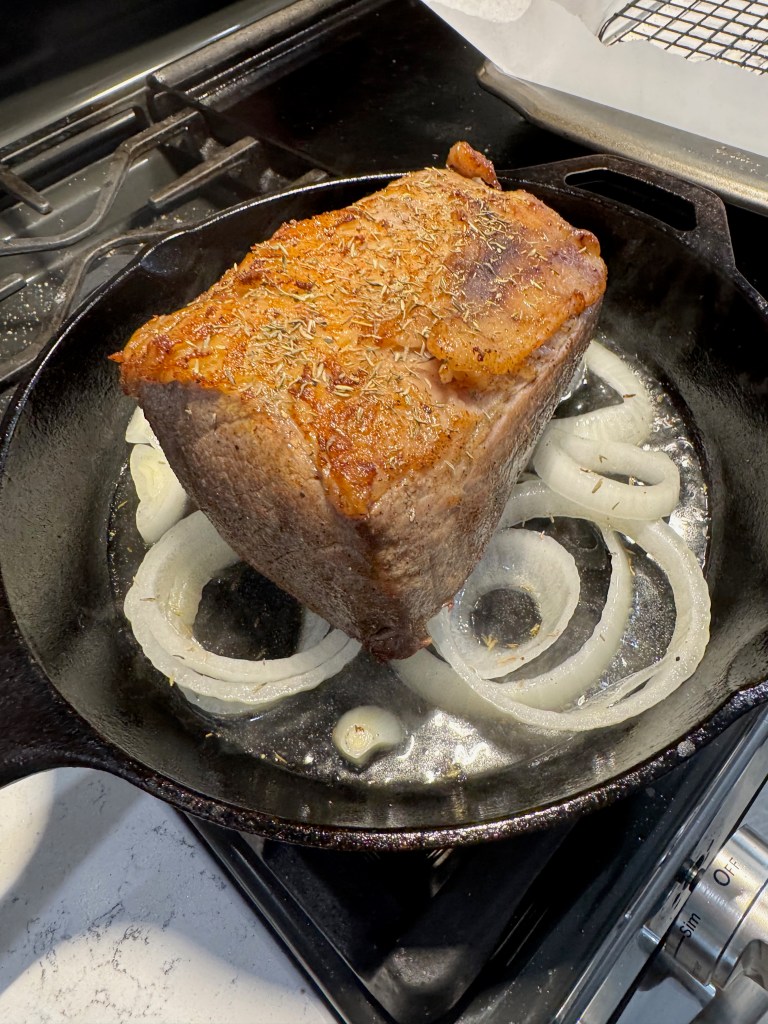
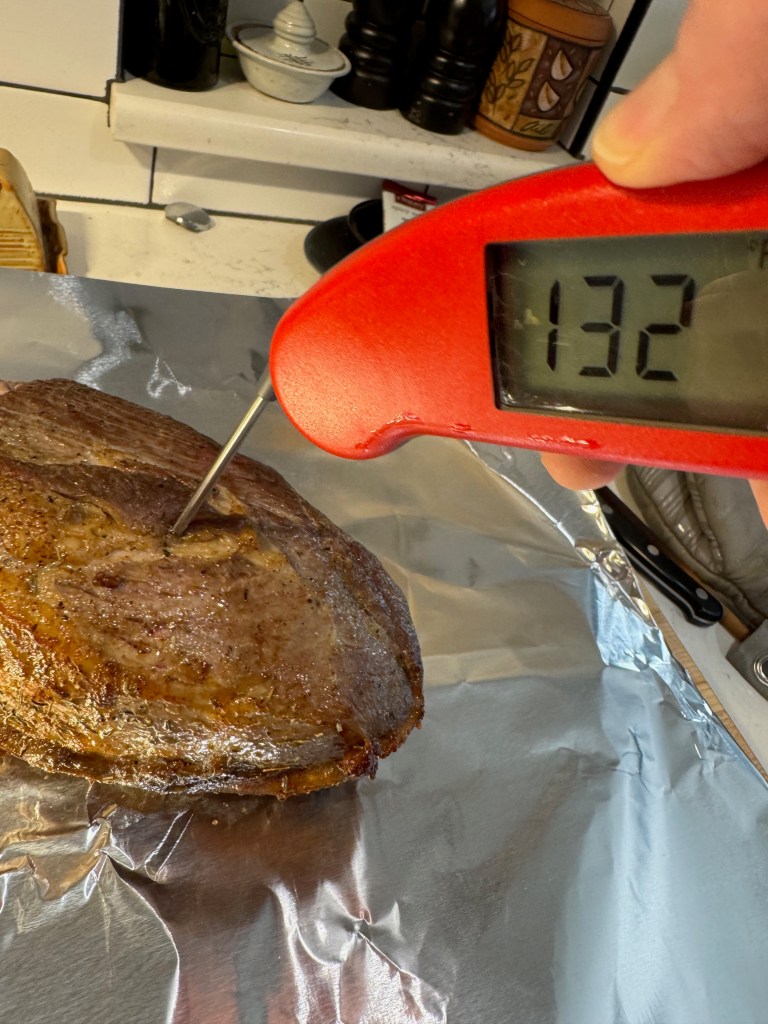
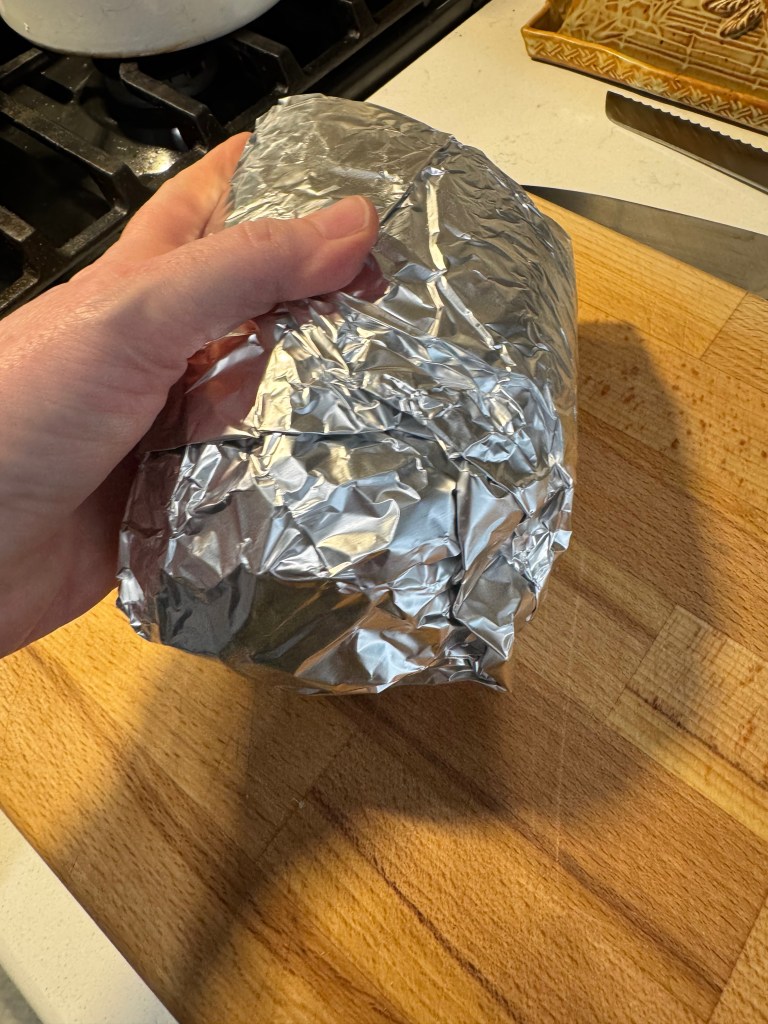
The first roast (in the Dutch oven) reached optimal temperature within 45 minutes, significantly less time than the second (in the skillet), which took an hour and 20 minutes. They were roughly the same size and went into the oven at the same time, so my best guess on this difference is that the ambient heat from the high sides of the Dutch oven get credit for the quicker result. Because the time cannot be trusted for consistency, I strongly recommend using an internal thermometer to gauge doneness. I followed instructions to wrap the finished roasts snugly in foil, which ensures that the juices redistribute evenly through the meat.
I could not resist carving the first roast as soon as it had finished resting, but my recommendation is to chill the meat overnight so that it can be sliced super thin for these iconic sandwiches.
Last but not least, the jus!
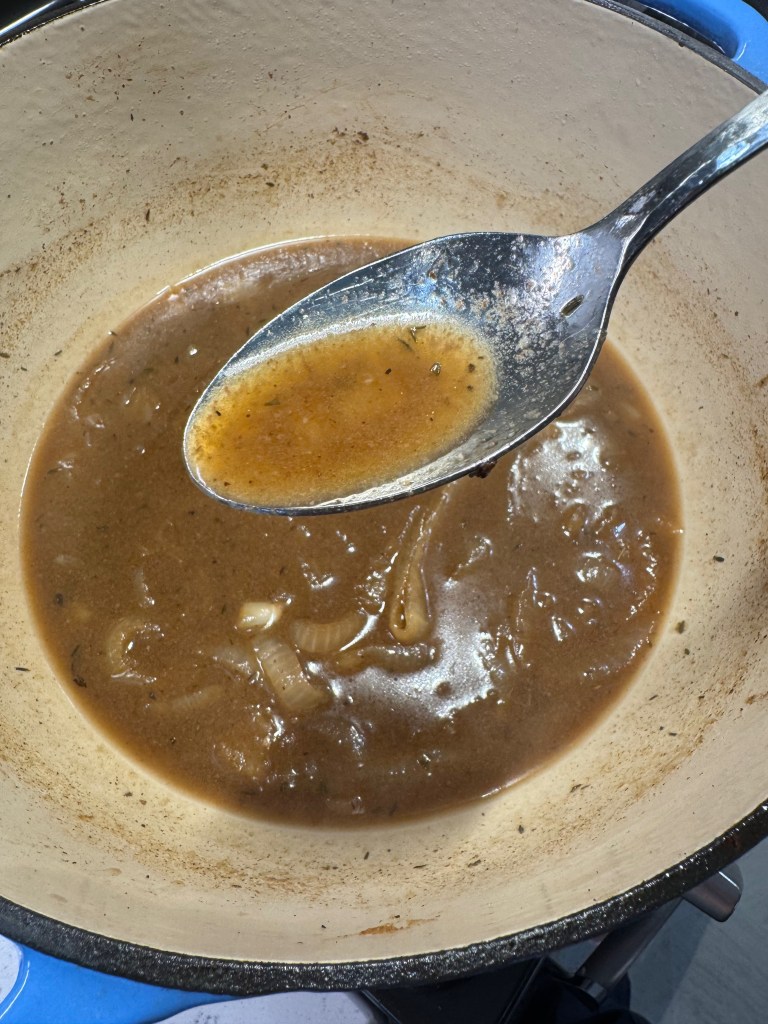
This part of the sandwich gave me the most pause, as I struggled to remember how the side sauce tasted. It was beefy, but not gravy-like. It was similar to au jus that one might find alongside a French Dip sandwich, but not as salty. I waffled quite a bit on how to achieve this traditional flavor, and of the three options I purchased, there was a very clear winner.
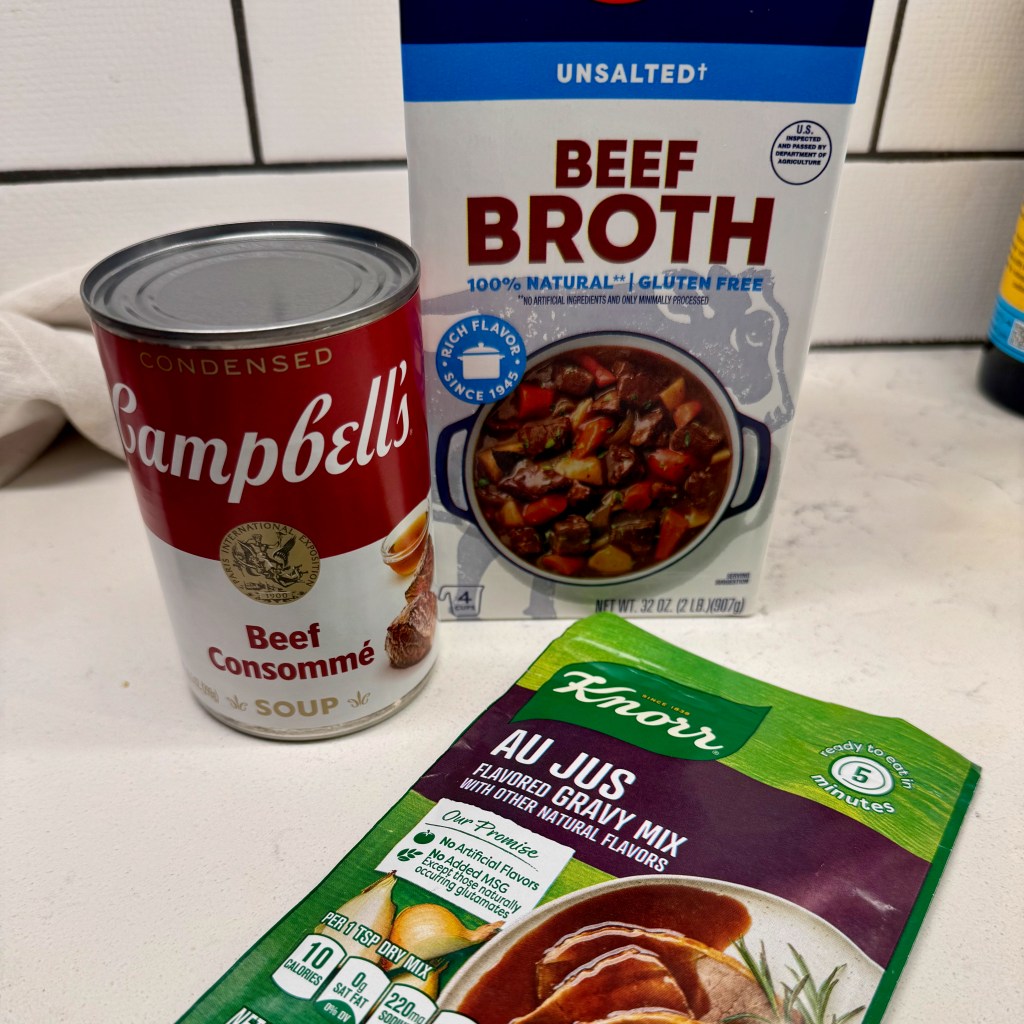
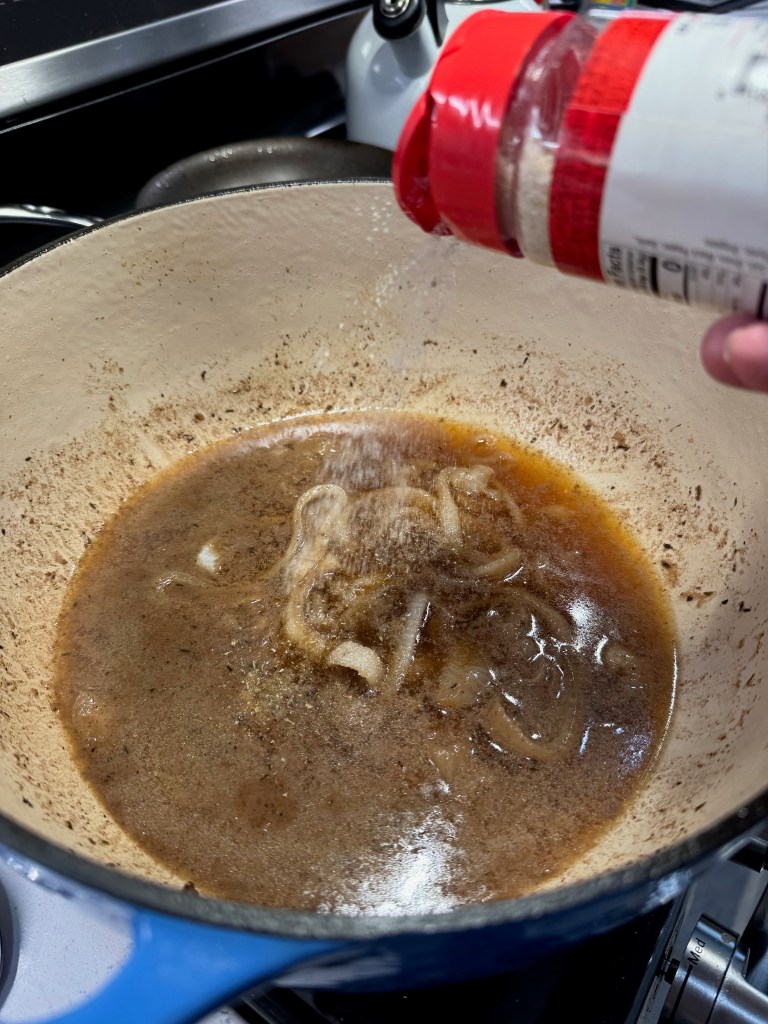
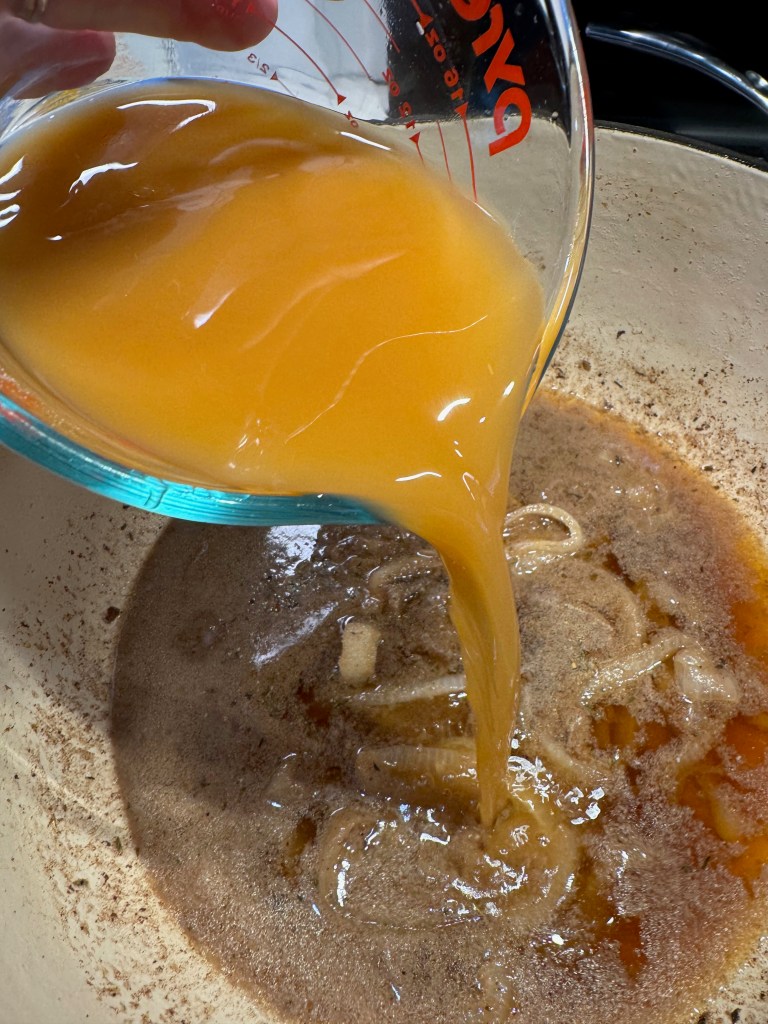
Let me cut to the chase and tell you that the beef broth won this battle. The consommé had a heavy soy flavor that was not working, and the dry jus packet (which I didn’t think to inspect until I was home with it) had exactly zero beef ingredients, so that was a hard no. My hungry husband, who had never had beef on weck in his life, made the winning suggestion to add a half packet of dry French onion soup mix to the sodium-free beef broth. It was perfect!
Assembling the beef on weck
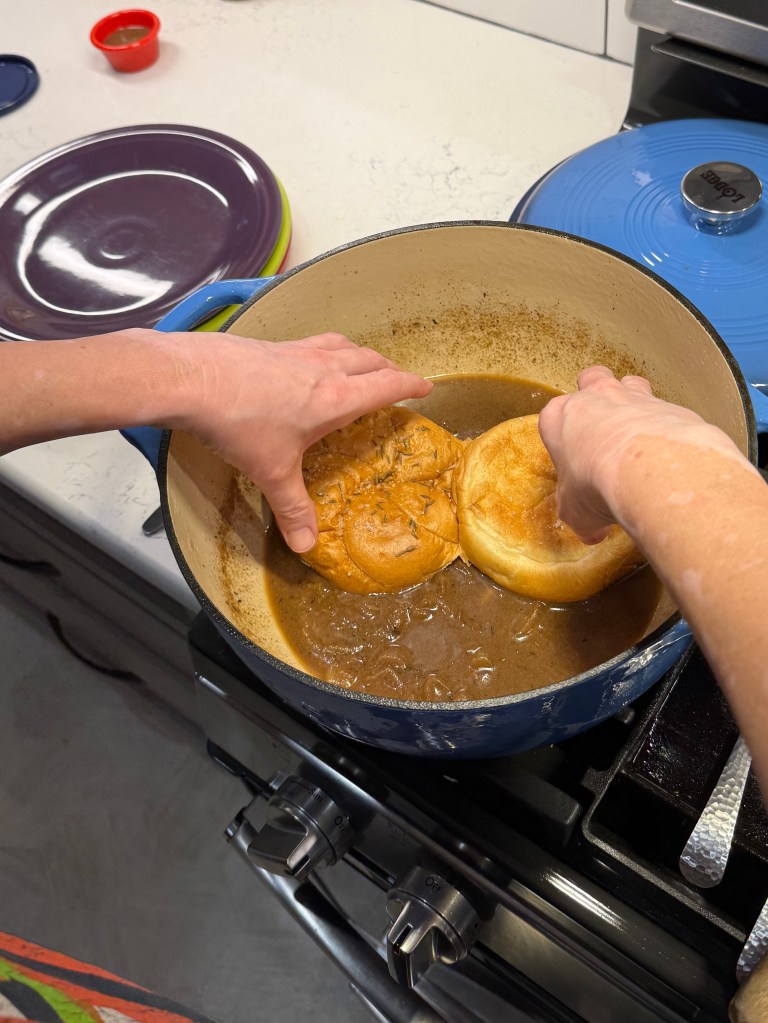
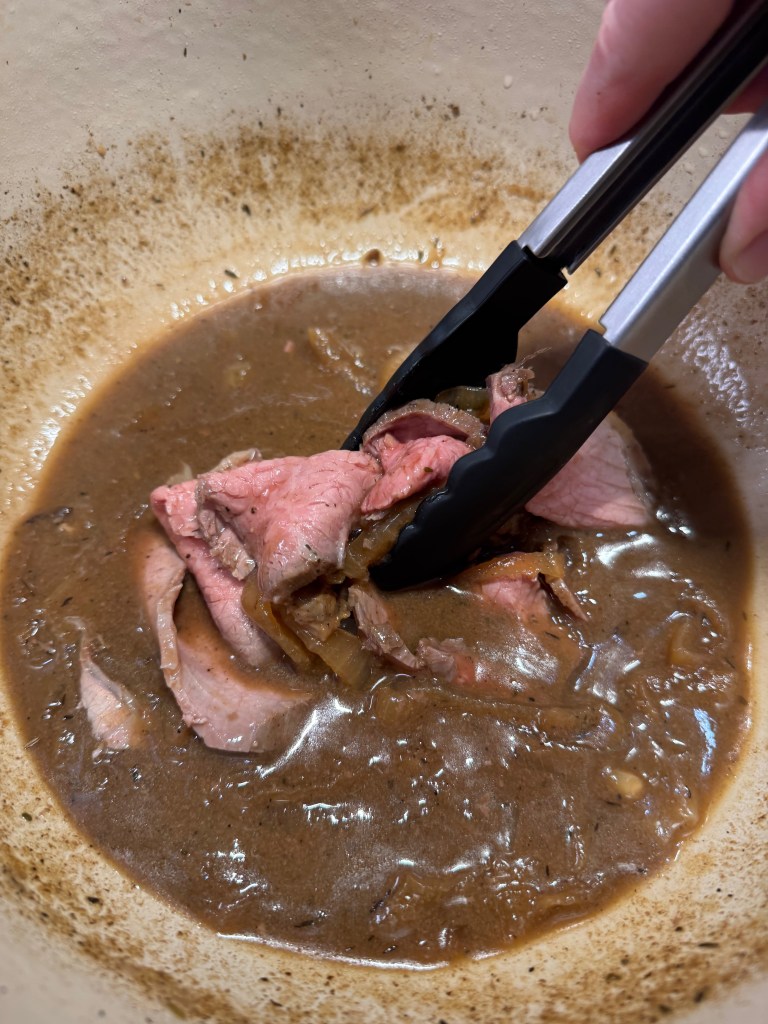
The traditional, Western New York way to serve this sandwich is to first dip the cut sides of the kummelweck roll into the jus, then smear on a little horseradish spread and pile on the meat. I warmed the thinly sliced beef in the hot jus, and so I grabbed a few of the soft onions in the process, and this was not a problem at all. Extra jus and/or horseradish may be served on the side.
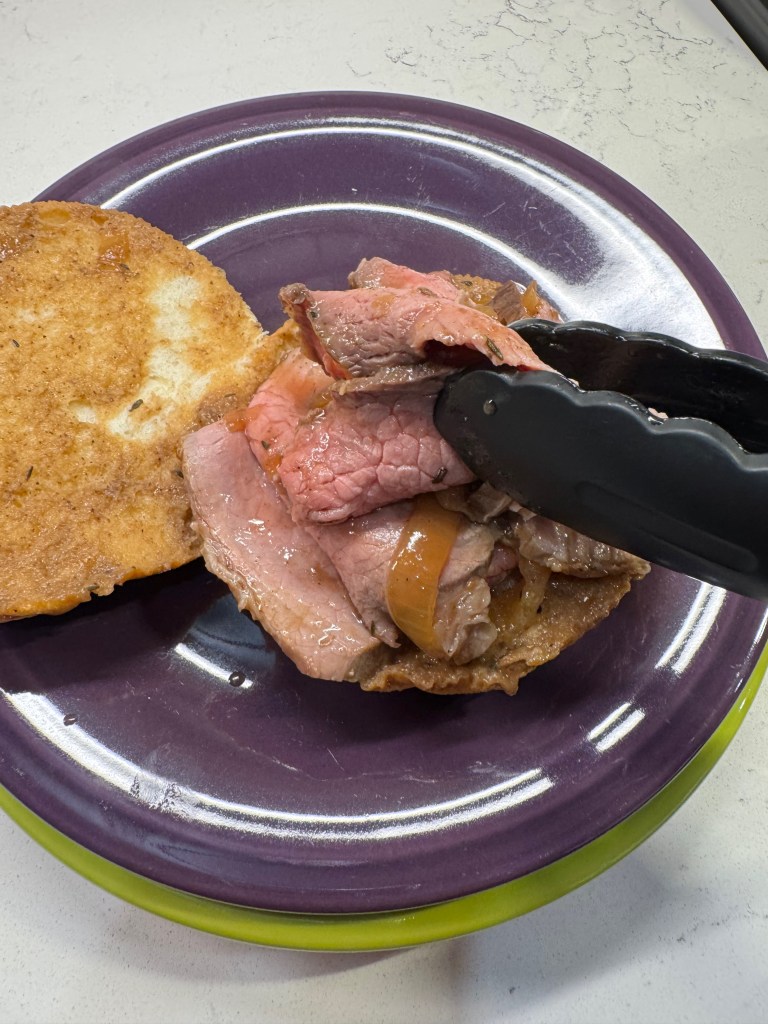
Beef on Weck (a Western New York classic)
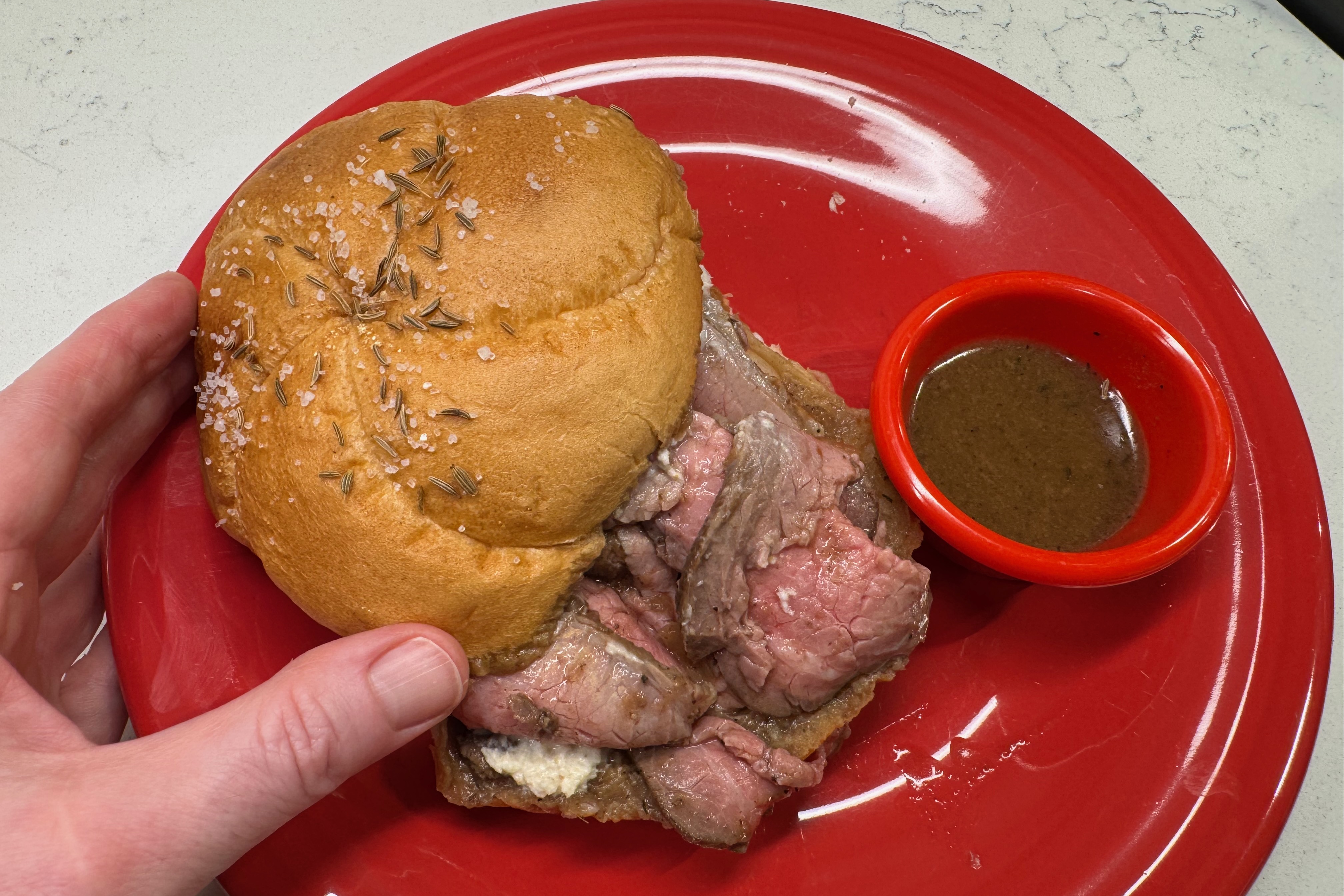
I've been craving this taste of home for a very long time, and a few trusted tricks helped me move this into the done column of my culinary bucket list!
Ingredients
- 5 lb. eye of round roast, locally sourced if possible
- 4 tsp. kosher salt
- 25 twists freshly ground black pepper
- 1/2 tsp. onion powder
- 2 Tbsp. extra virgin olive oil
- 1 large sweet onion, cut into thick slices
- 1/2 cup water
- 2 1/2 cups no-salt beef broth, combined with a teaspoon of cornstarch
- 1/2 packet French onion soup mix
- Horseradish sauce (recipe in notes)
- Kummelweck rolls (see notes for instruction)
Directions
- Trim eye of round of excess fat and cut crosswise into two equal-ish chunks. Place meat on a rack over a parchment-lined baking sheet.
- Combine salt, pepper and onion powder in a small bowl. Sprinkle dry brine mixture generously over the entire surface of both roasts. Gently pat the mixture so that it adheres well. Place the sheet, uncovered, into the fridge for up to 24 hours.
- Preheat oven to 275° F, with oven rack in lower third of the oven. Place Dutch oven or oven-safe skillet over medium heat with olive oil. When oil is glistening, Use tongs to sear every side of the eye of round until browned. Set aside.
- Add onion slices to the pot and toss to cook for about one minute. Add 1/4 cup water and scrape up any browned bits stuck to the pot. Place browned roast on top of onions and transfer to oven, roasting until meat is 130 to 135° F internal temp for medium rare doneness. Remove from pot and wrap tightly in heavy duty foil, resting at room temperature for at least 30 minutes (longer is better, chilling is best) before slicing.
- Add French onion soup mix to the softened onions left in the roasting pan. Dissolve cornstarch into beef broth and add the liquid to the pot, stirring and cooking until bubbly and slightly thickened.
- To assemble sandwiches, dip cut sides of kummelweck rolls into the beef jus and then swirl a handful of sliced beef at a time in the hot jus. Pile the meat onto the buns and serve immediately with horseradish sauce and a cup of jus.
Discover more from Comfort du Jour
Subscribe to get the latest posts sent to your email.
 Comfort du Jour
13 thoughts on “Beef on Weck (another Western New York classic)”