Roasted Ratatouille Ravioli

If I had a nickel for every time this year that I’ve told my husband, “I really wanna make some homemade pasta,” well, I’d have at least $1.35. Handmade pasta is a time-consuming project, but it’s so satisfying and gives me such joy that I just had to find the time. Ravioli is my favorite kind of handmade pasta because it gives me creative license not only for the pasta dough but also the filling that gets tucked inside. And— bonus points— I married it with ratatouille, my favorite summer dish. Yeah, this one was extra fun!

Ratatouille— a stew of eggplant, zucchini, peppers, onions and tomatoes— was indeed the inspiration for my ravioli adventure. I adore the melded flavors of the vegetables, along with the subtly floral Herbs de Provence that is traditional for ratatouille, and I look for new ways to enjoy it every summer. Once the idea hit me to pair all of that with handmade ravioli, there was no going back. 
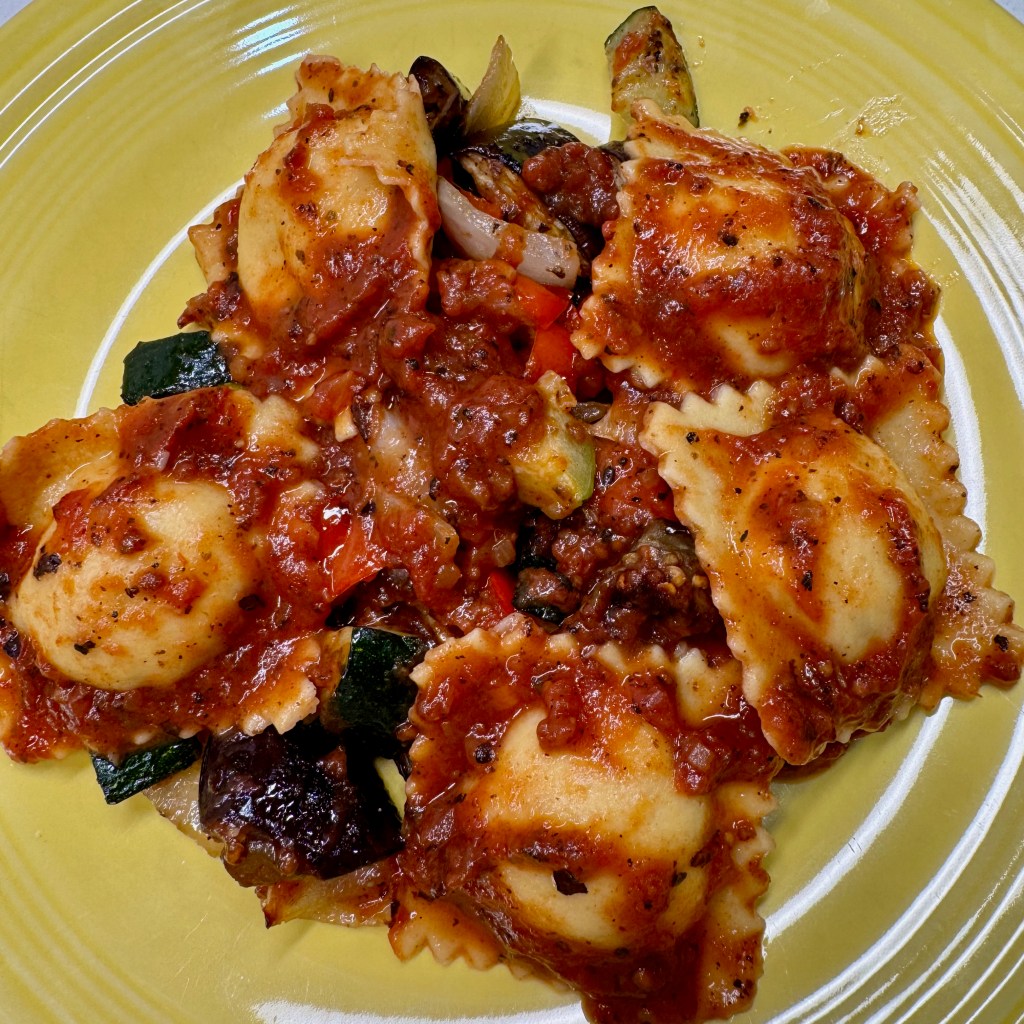
I wish I had made a triple batch of this!

First, the pasta dough

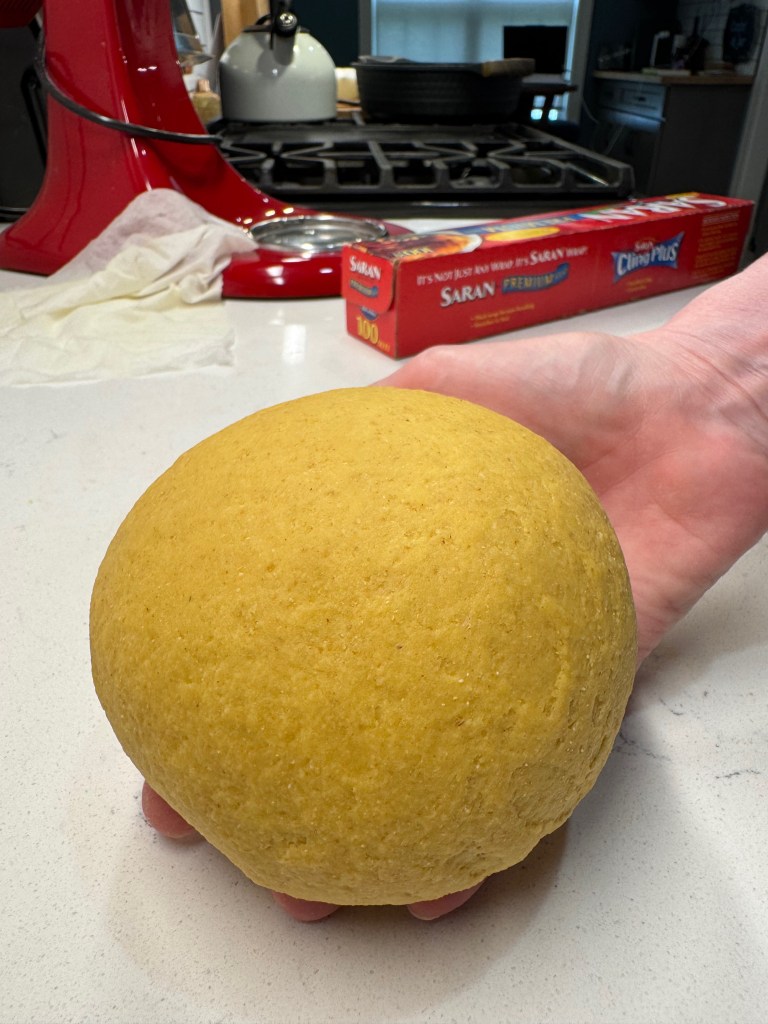
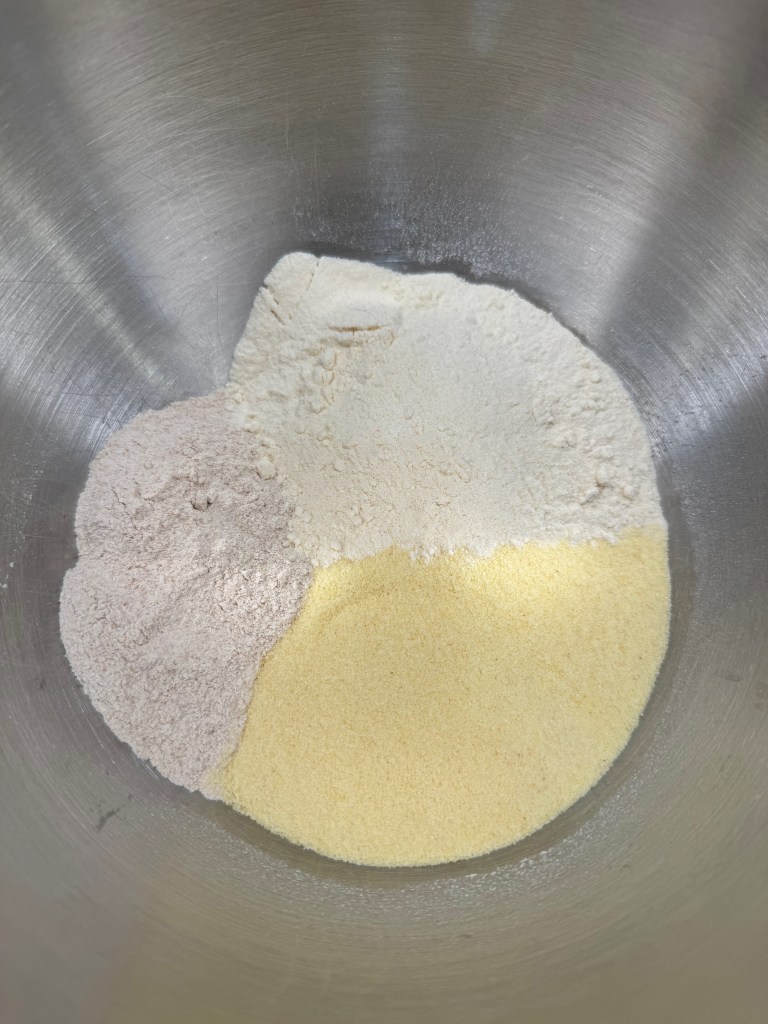
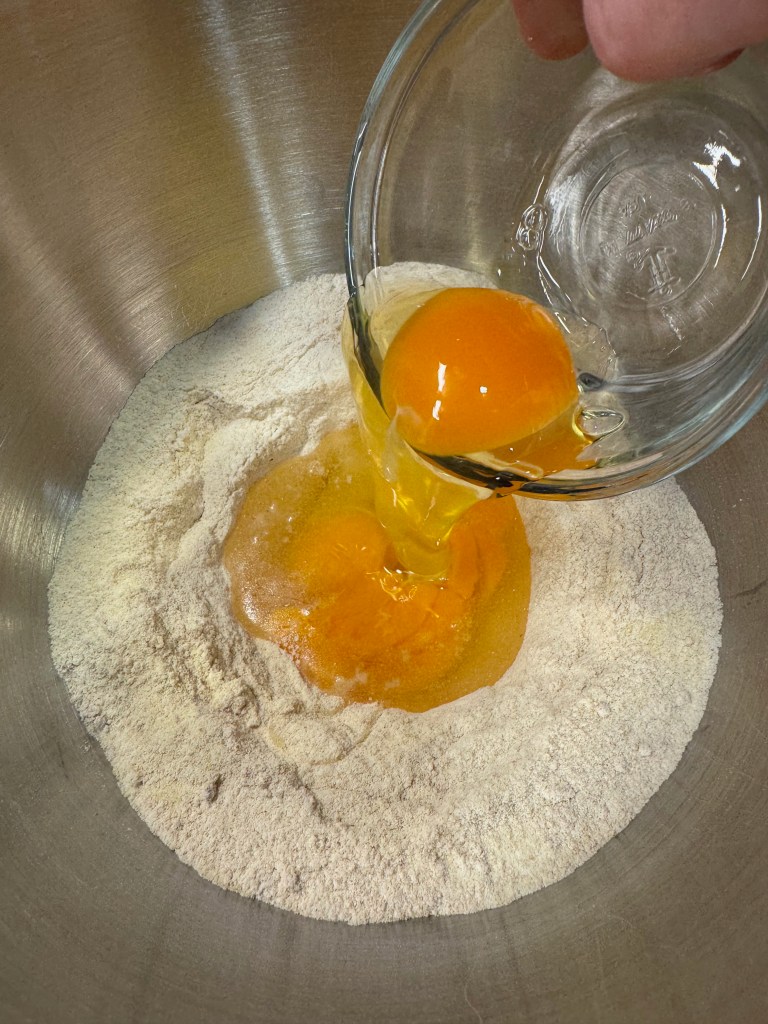
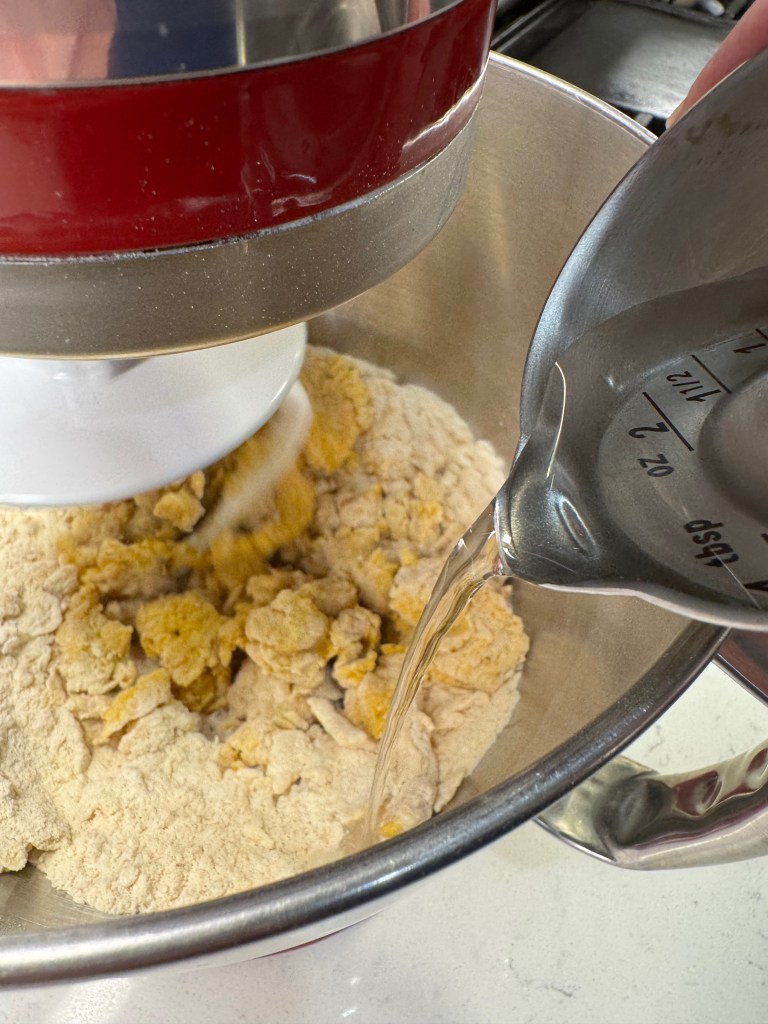
I used a mix of flour, including all-purpose, white whole wheat and semolina. A generous sprinkle of onion powder gave the dough an underlying flavor to support the ratatouille theme, and I gave it a good long kneading to build strength in the dough. I wrapped it up and tucked it into the fridge for a few hours to rest. If you need to save time, you could make the dough a day ahead.
The ravioli filling

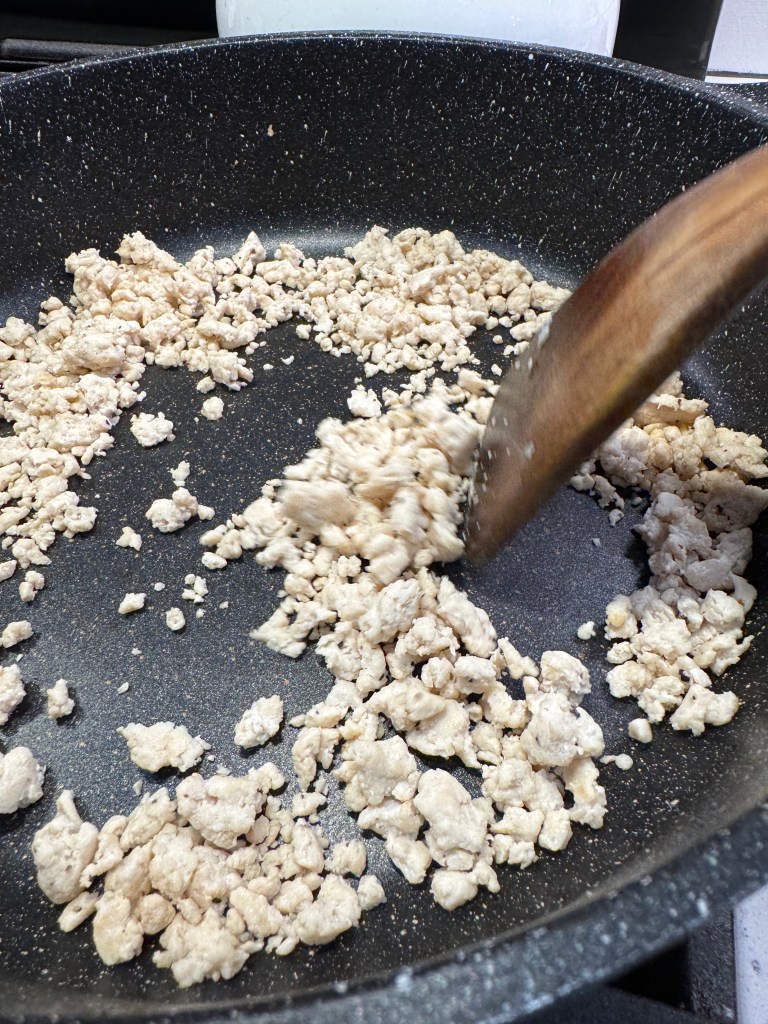
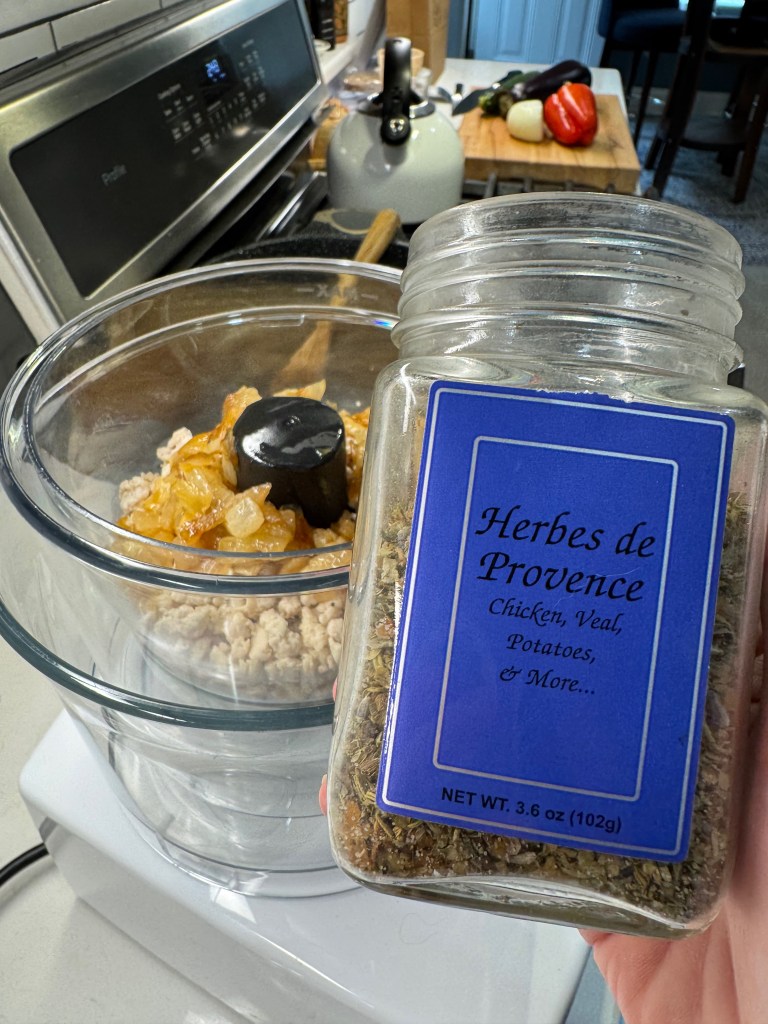
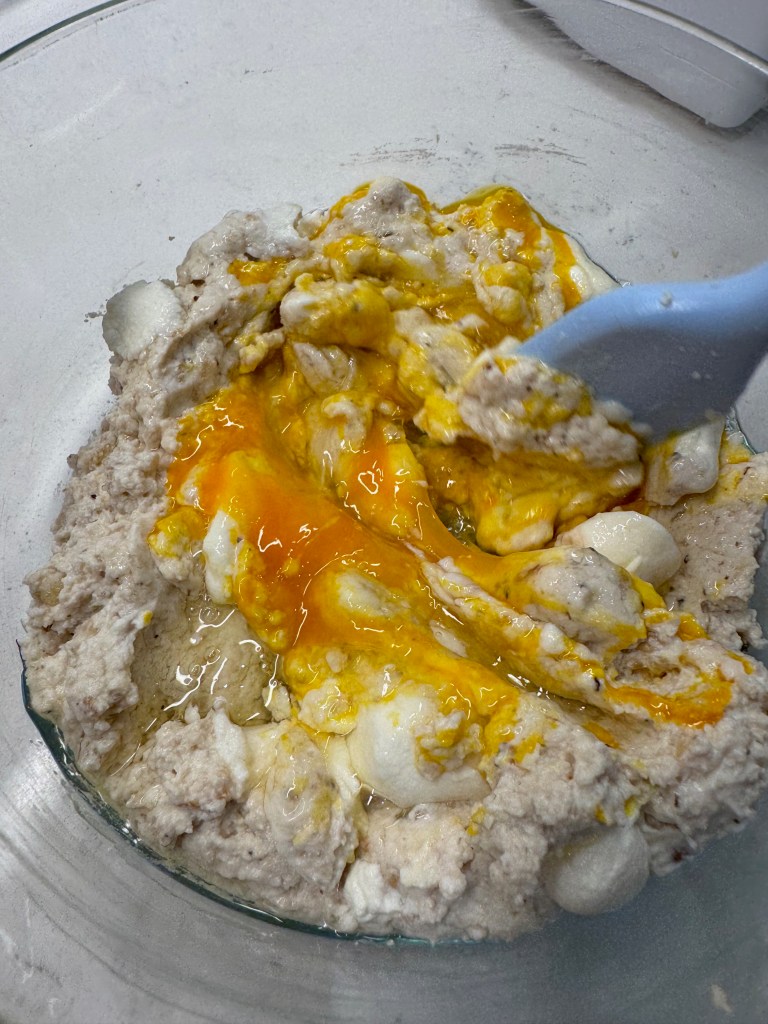
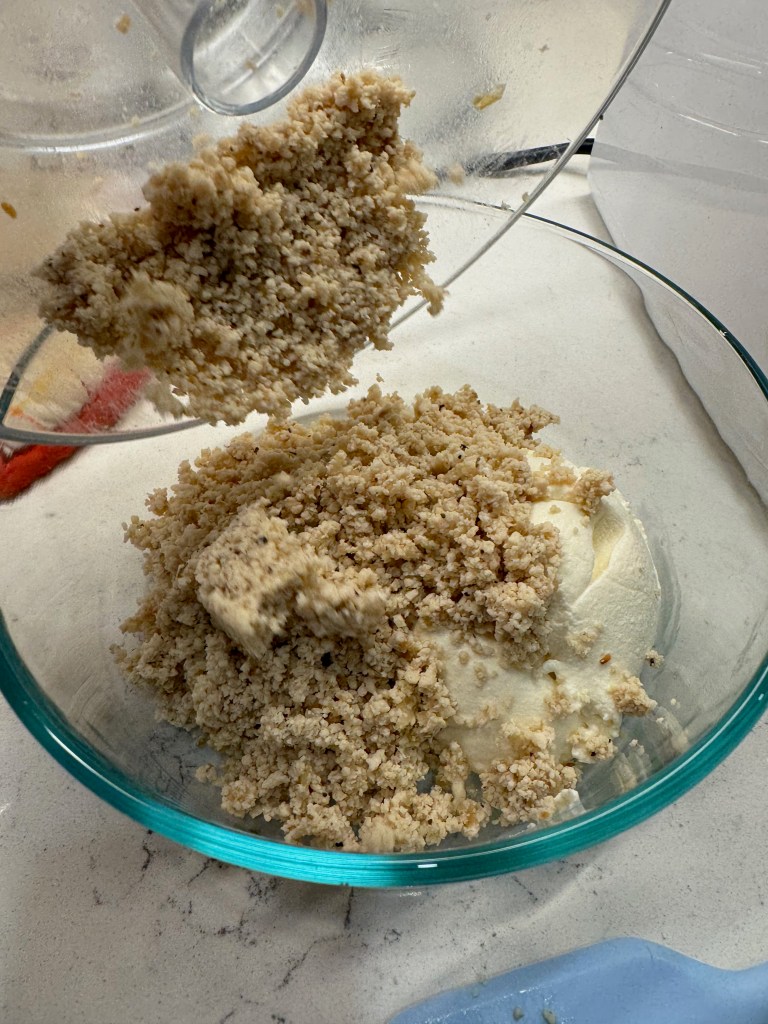
Next up, I pondered the filling for ravioli, which had to be more than just ricotta. After my less-than-great lab report this year, I’ve been more conscious of the saturated fat I consume, and so it occurred to me that maybe I’d incorporate a different protein into the mix. Lean ground chicken worked great, and I pulsed it in the food processor to make it as fine as possible. Also in the mix were golden caramelized onions and a pinch or two of Herbs de Provence, plus some lemon zest, and I blended all of those with strained ricotta and an egg to hold it together. This part of the recipe could also be done a day ahead.


Bend me, shape me, anyway you want me

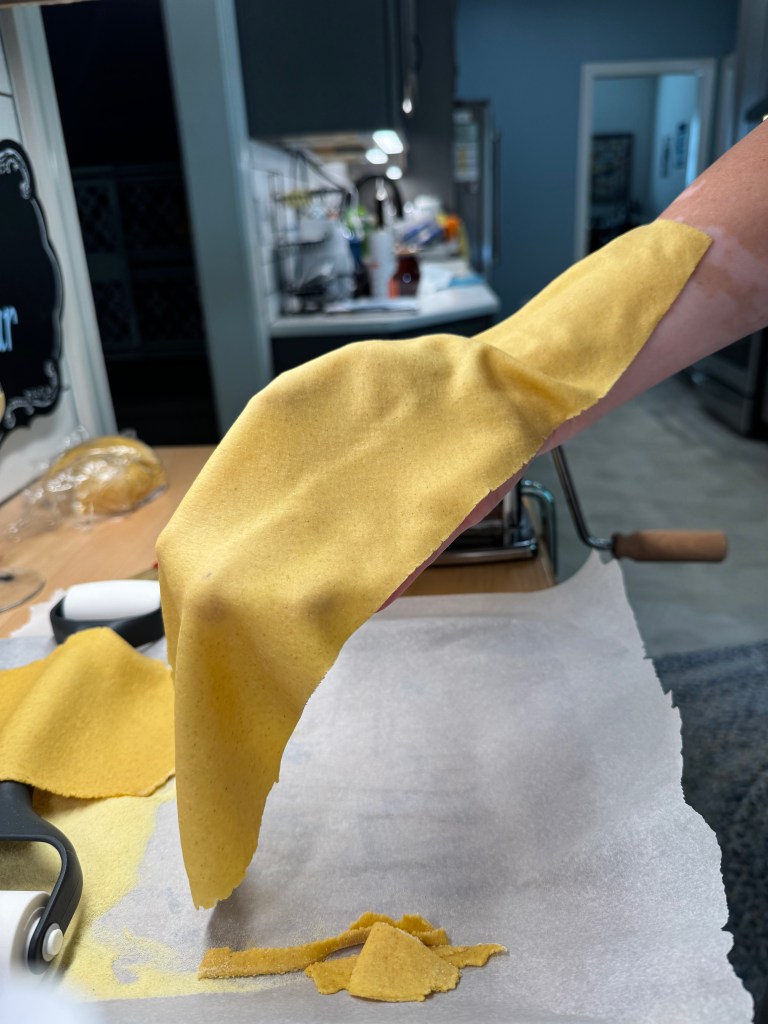
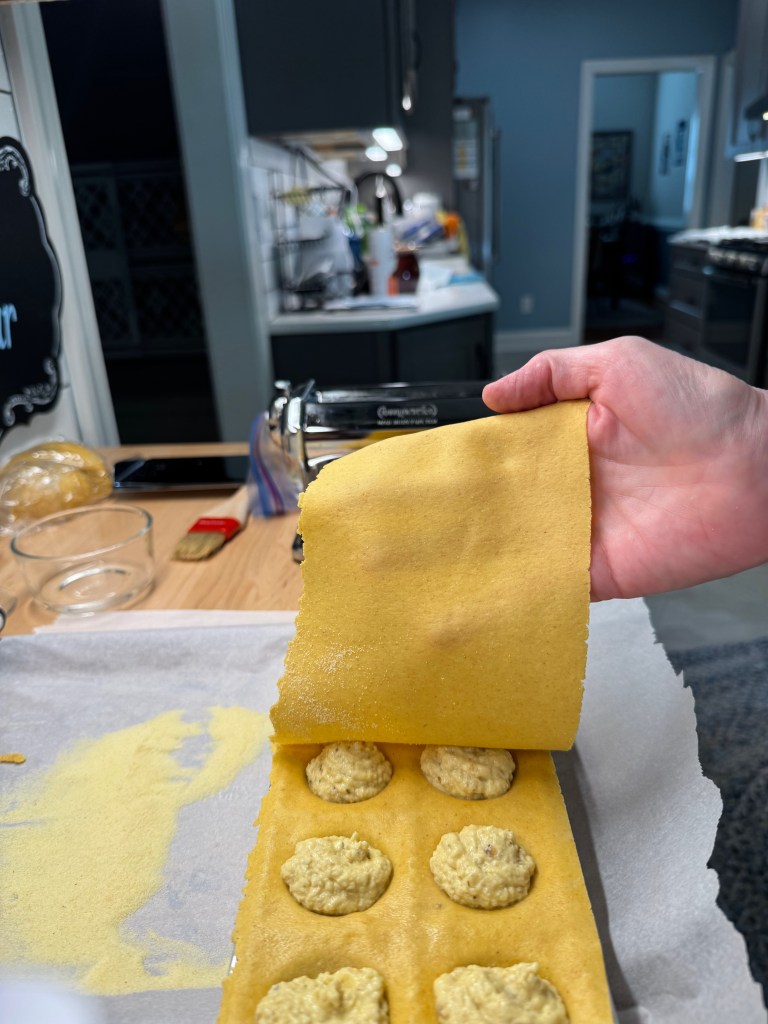
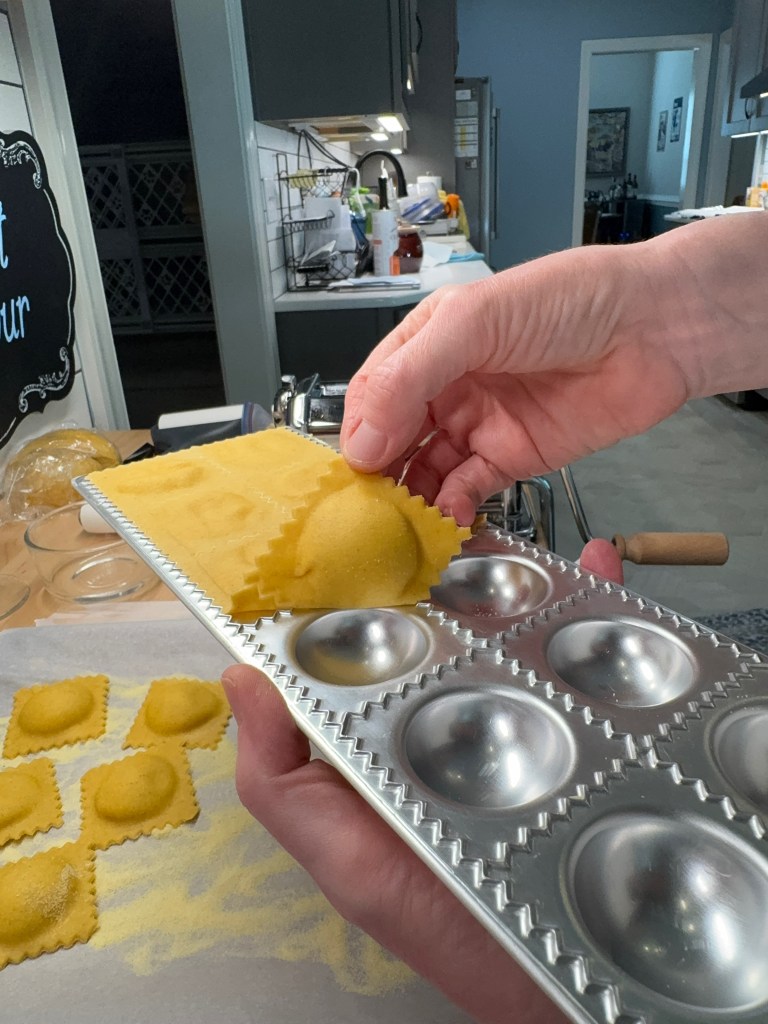
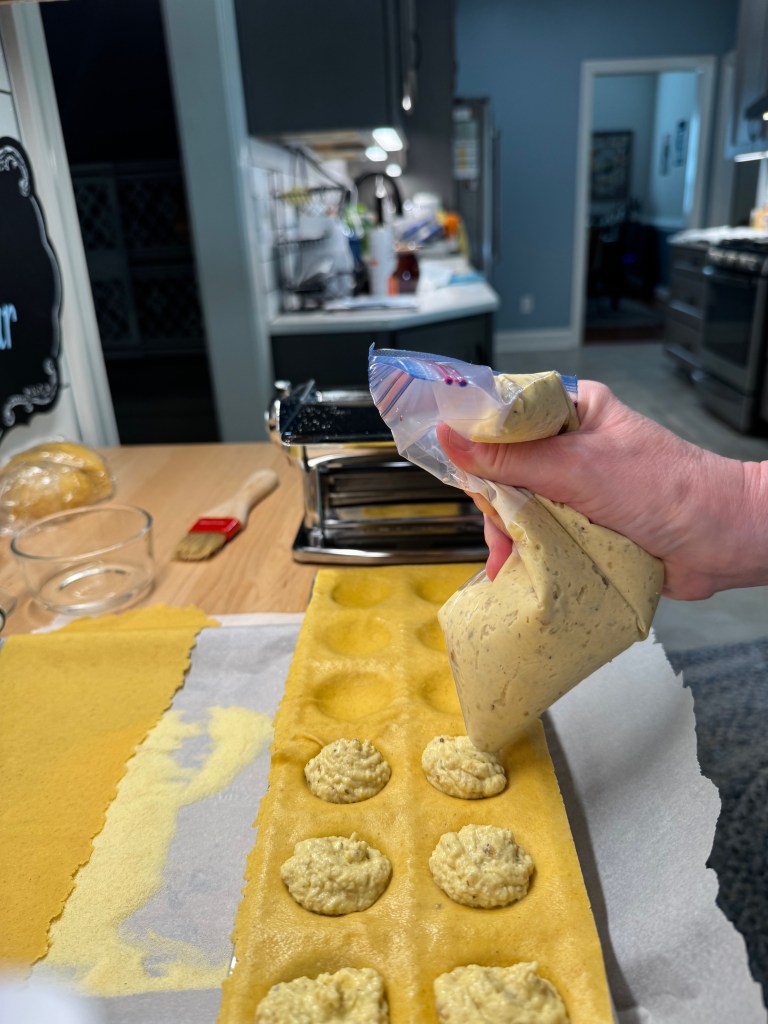
By the time the filling was prepared, I was ready to roll out the pasta dough into thin sheets, and I used my handy ravioli mold to make uniform little pillows. This is the fun part! It’s important when you make handmade pasta that you give it a little bit of time to dry before dropping it into boiling water, so when the ravioli were done, I placed them on a semolina-dusted cookie sheet. For more detailed instruction on how to make ravioli— with or without special gadgets— check out my post for handmade spinach ricotta ravioli, which includes tons of photos and tips, along with lessons I learned myself along my pasta-making journey. 


Ratatouille = EZ-POT

Finally, I made the ratatouille itself, which is delicious as a stew but perfection when roasted. I always remember this French country dish by the acronym “EZ-POT” because of Next Food Network Star season 5 winner, Melissa D’Arabian, who simplified the ingredients of into a five letter description of a dish that really is “e-z,” and usually is made in a “pot.” This little memory trick has saved me on more than one occasion when I craved ratatouille but forgot to make a farmers’ market shopping list. 😉

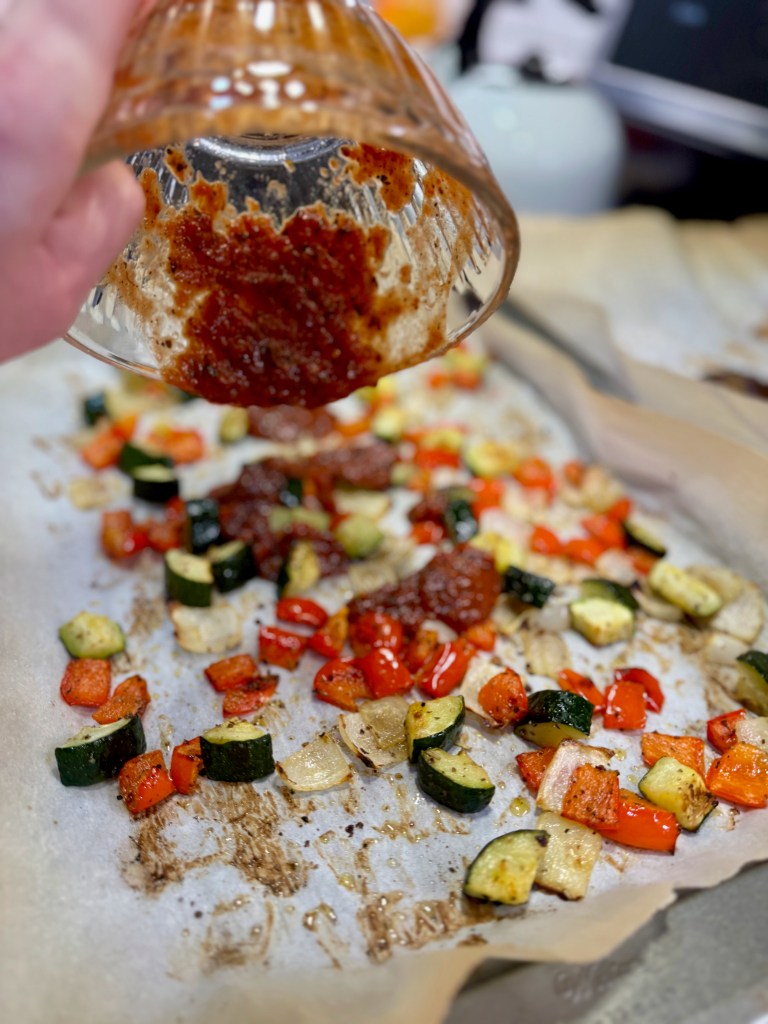
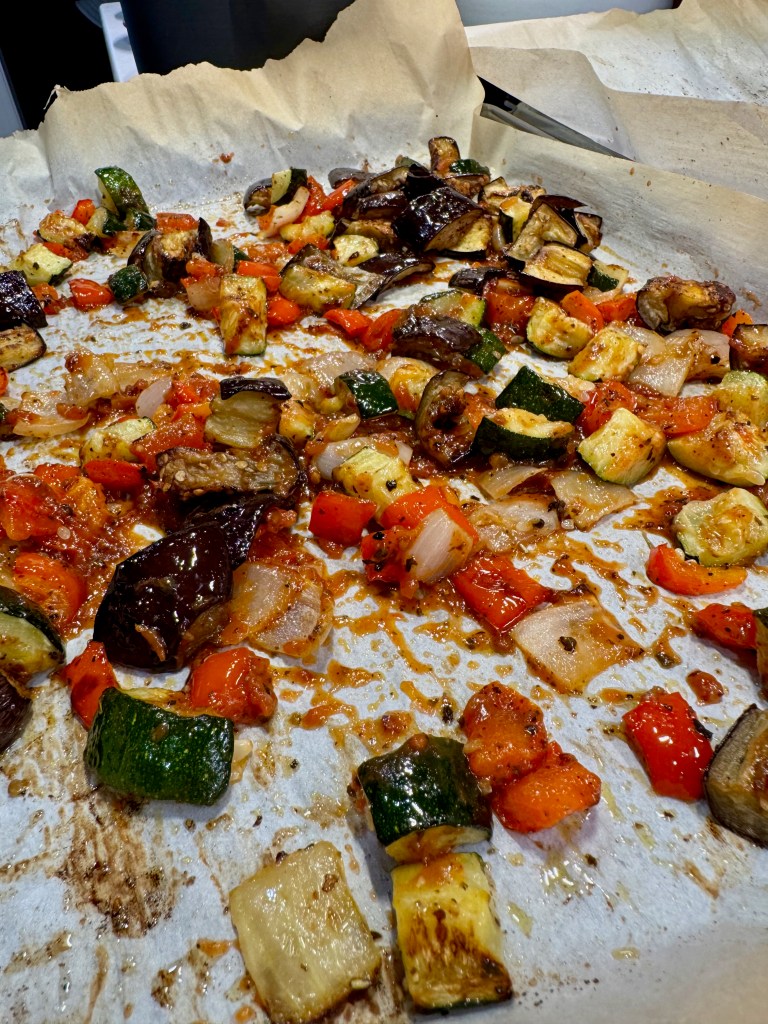
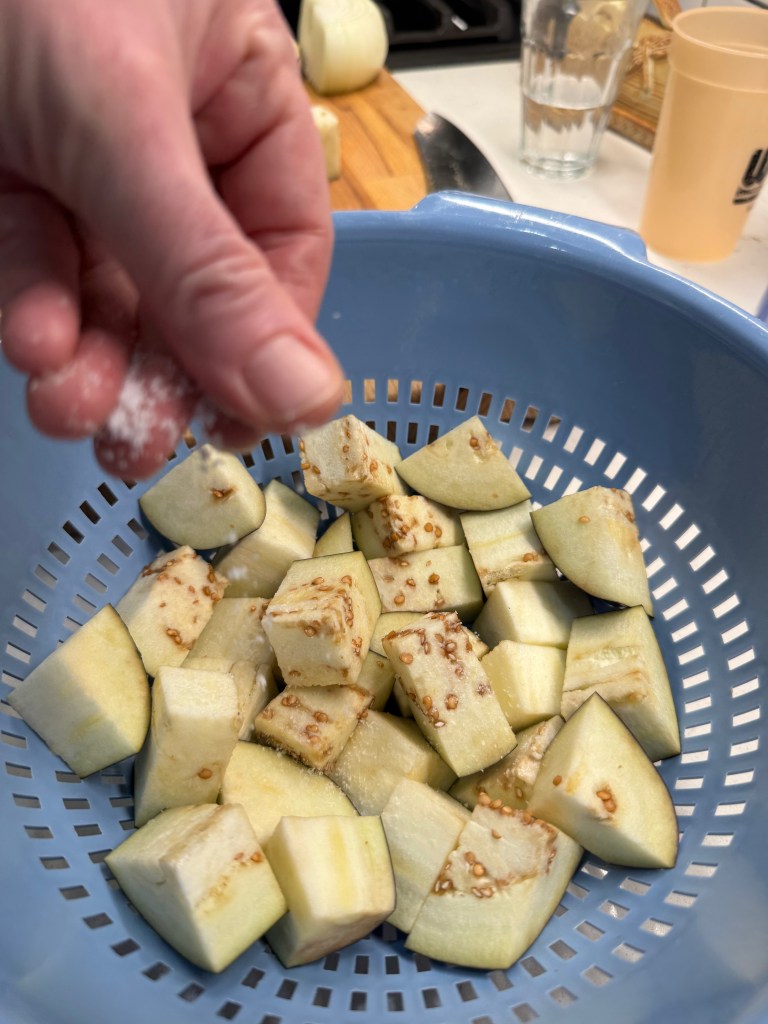
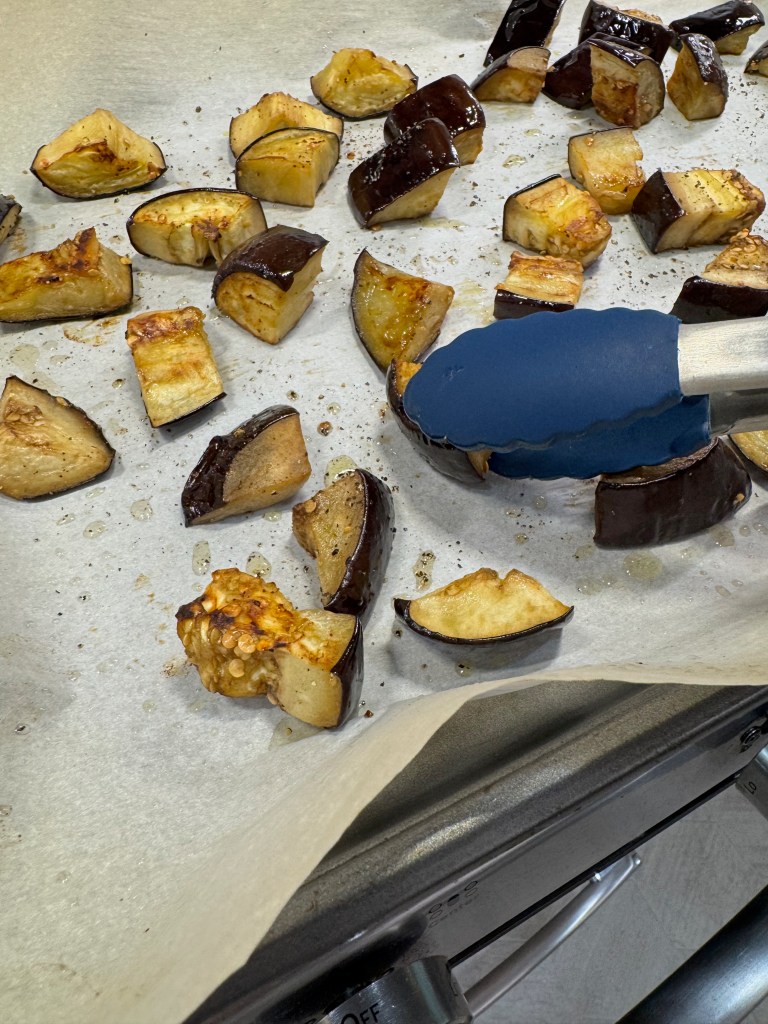
I salted my eggplant chunks for a few minutes first, to help draw out excess moisture, and this worked really well for achieving crispy edges when they roasted. The other vegetables were roasted on a separate sheet, and then I tossed everything gently in a fire-roasted tomato sauce which, if you can believe it, was from a can! Sure, I could have made my own sauce, but I was trying to be thrifty and use up some leftover pizza sauce, and it was a winner! If you make your own sauce, keep the flavors simple and try to make it on the thicker side.

While all of this was happening, I had the water on to boil for the pasta. I love this part of seeing a meal come together, especially one that I’ve pondered for a while, and though it satisfied my desire to make handmade pasta, it somehow also inspired me to want to make more handmade pasta. Stay tuned! 


Roasted Ratatouille Ravioli

  • Servings: 4
  • Difficulty: Intermediate
  • Print

This recipe is split into three parts for the pasta dough, the ravioli filling and the ratatouille vegetables with sauce. If you love the hands-on experience, this is worth the trouble. If the steps are too much for you, it's easy to make the pasta dough and filling ahead and finish the dish one or two days later. Not ready to make your own pasta? No problem! The chicken-ricotta filling and roasted vegetables would be awesome in a lasagna, using store-bought noodles. Adapt it however makes you happy.


Ingredients

  • 165g all-purpose flour
  • 60g white whole wheat flour
  • 45g semolina flour
  • 1/2 tsp. onion powder
  • 3 large eggs, at room temperature
  • 50g to 70g room temperature water

Notes: Depending on your overall environment, you may need to adjust the water somewhat to achieve a dough that is smooth and supple, without being too dry or too wet. If the dough is too dry with the maximum amount of water recommended, wet your hands and knead until smooth. Repeat as needed. You may end up with more pasta dough than is needed for ravioli. Simply roll it out with flour and cut into strips. Let it dry and freeze in zip-top bags. Cook from frozen.

Directions

  1. Combine flours and onion powder in the bowl of a stand mixer, fitted with the dough hook
  2. Make a well in the center of the flour mixture and add eggs. Knead with the dough hook on speed 3 until dough starts to come together (it will be dry). Drizzle in water, a little at a time, until all flour is incorporated and dough is gathered up on the hook. This may take extra water.
  3. Transfer dough to the counter and knead by hand for about eight minutes, until smooth, firm and supple. Wrap dough tightly in plastic wrap and refrigerate at least 30 minutes or up to a day before rolling and shaping.
  4. Divide dough into sections and roll out with a pasta machine or rolling pin to approximately 1/16″ thickness. Use a piping bag to apply filling, then lightly brush another sheet with cold water and seal up each pillow, pushing out any air as you go. Transfer raviolis to a parchment-lined cookie sheet sprinkled with semolina.

Ingredients

  • 1 medium sweet onion, chopped
  • 1 Tbsp. extra virgin olive oil
  • Kosher salt and pepper
  • 1 lb. ground chicken breast
  • 1/2 tsp. Herbs de Provence seasoning
  • 1 tsp. lemon zest
  • 1 cup whole milk ricotta, strained for 30 minutes to remove excess moisture
  • 1 large egg

Note: If you wish, you could skip the ground chicken and double the strained ricotta for a vegetarian version of this dish.

Directions

  1. Sauté onions in olive oil over low heat with a sprinkle of salt. Toss frequently, until all the moisture has evaporated and onions soften and take on a deep golden color. Transfer to a bowl and increase heat to medium.
  2. Add ground chicken to the same pan, cooking gently until meat is no longer pink, but do not let it brown. Season the meat the salt and pepper and allow it to cool.
  3. Add meat mixture and caramelized onions to the bowl of a food processor. Add Herbs de Provence and lemon zest. Pulse a few times until the meat is ground to a fine texture and onions are no longer visible in whole.
  4. Transfer processed mixture to a bowl with ricotta and egg and stir together until evenly blended. Refrigerate this mixture until you’re ready to fill the ravioli.

Ingredients

  • 1 small eggplant (keep the peel on), cut into large cubes
  • 1 medium zucchini, but into large chunks
  • 1 red bell pepper
  • 1/2 medium sweet onion, cut into chunks
  • Extra virgin olive oil
  • Kosher salt and pepper
  • A couple pinches of Herbs de Provence seasoning
  • 2 cups fire-roasted tomato sauce (ours was a thick pizza sauce)

Note: Keeping the peel on the eggplant and cutting it into large chunks is key to getting a crispy outer texture. Aim for pieces large enough that every piece has a bit of peel on it, as this will help the eggplant hold its shape during roasting so that it doesn’t turn mushy.

Directions

  1. Heat oven to 450° F, with rack in center position. Prepare two baking sheets by lining with parchment paper. Place eggplant cubes in a colander and toss gently with 1/2 tsp. salt. Let it rest half an hour, then gently rinse and pat dry before proceeding. Toss with a tablespoon of olive oil on one of the baking sheets and season with pepper only (they will have plenty of salty flavor from the prep stage).
  2. Toss zucchini, bell pepper and onion chunks in a tablespoon of olive oil on the second baking sheet. Season with salt, pepper and Herbs de Provence. Roast both sheets of vegetables for about 30 minutes, turning pieces over halfway through.
  3. Meanwhile, bring a pot of salted water to a gentle boil and add the ravioli by hand to prevent sticking. Cook for six to seven minutes; the pillows should all be floating and the sealed edges of pasta should be tender.
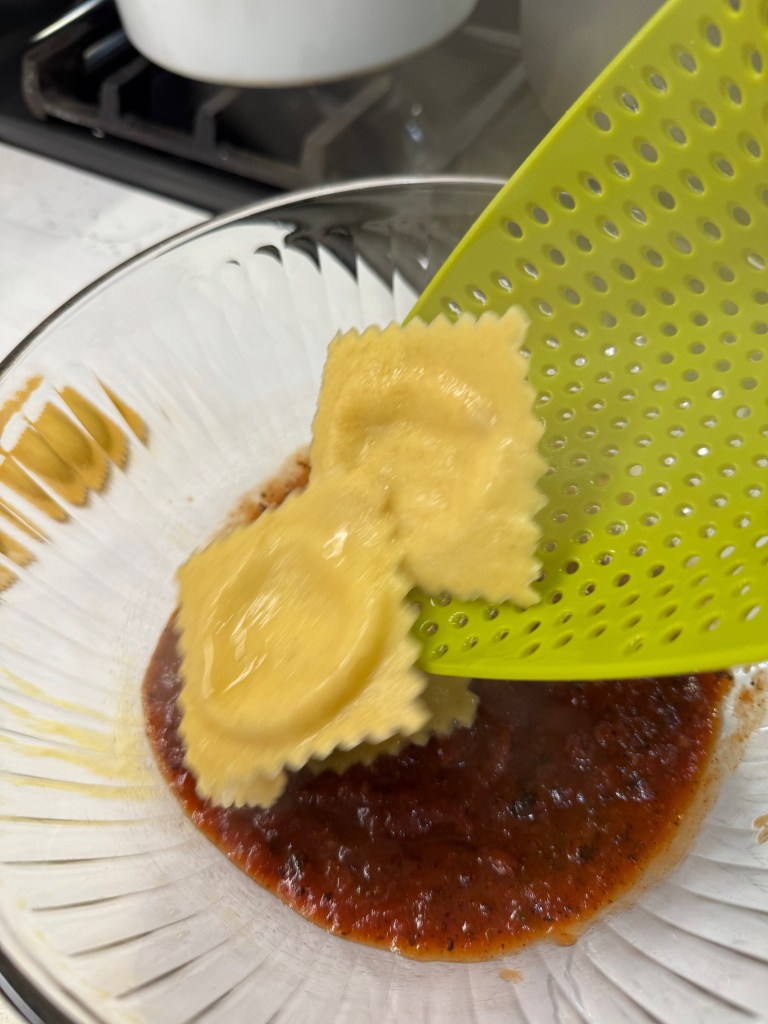
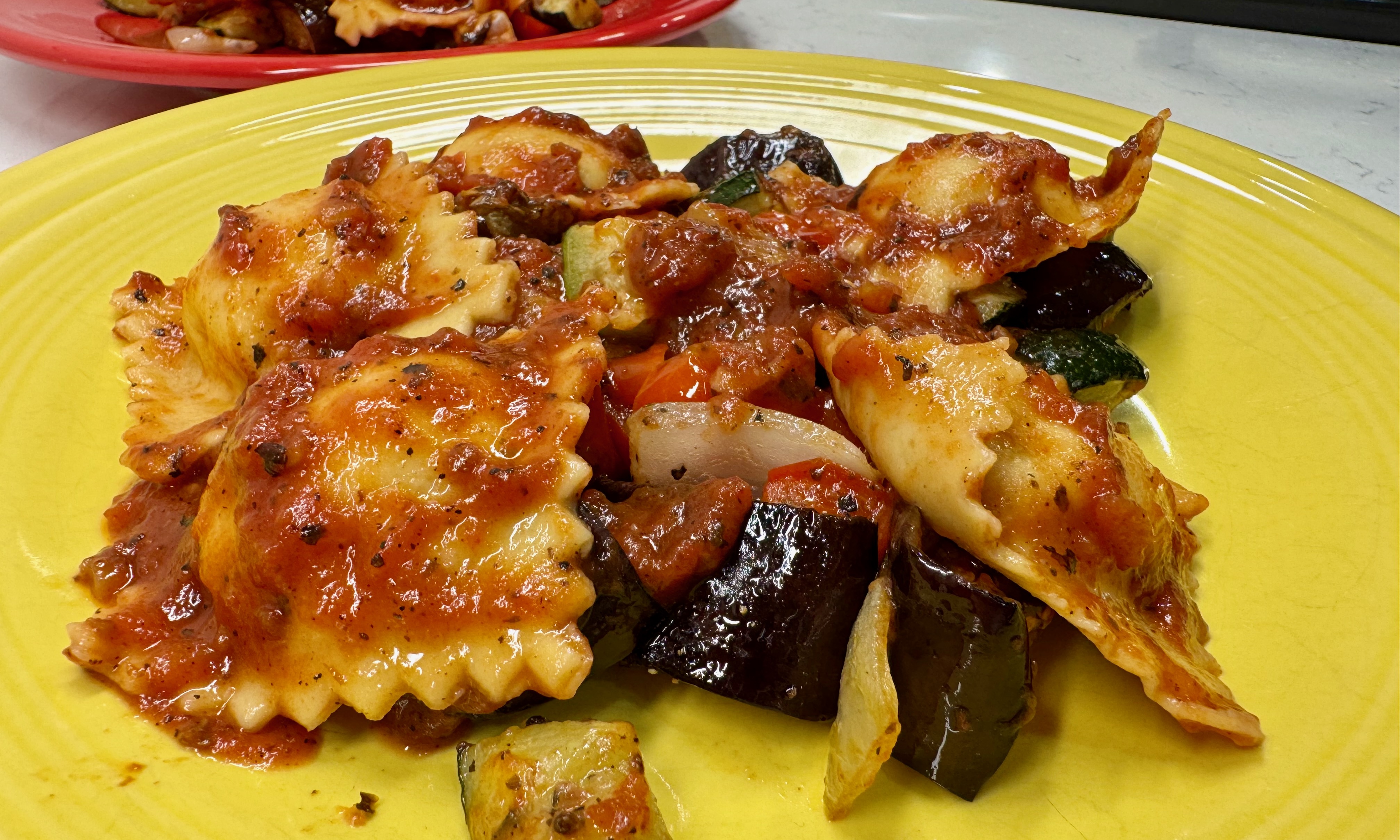
  4. Retrieve the pasta with a vented spoon and transfer directly to the tomato sauce. Toss gently and arrange the ravioli on serving plates. Toss the roasted vegetables in the remaining sauce and spoon over the ravioli portions. Serve at once.
Banana Pudding Ice Cream

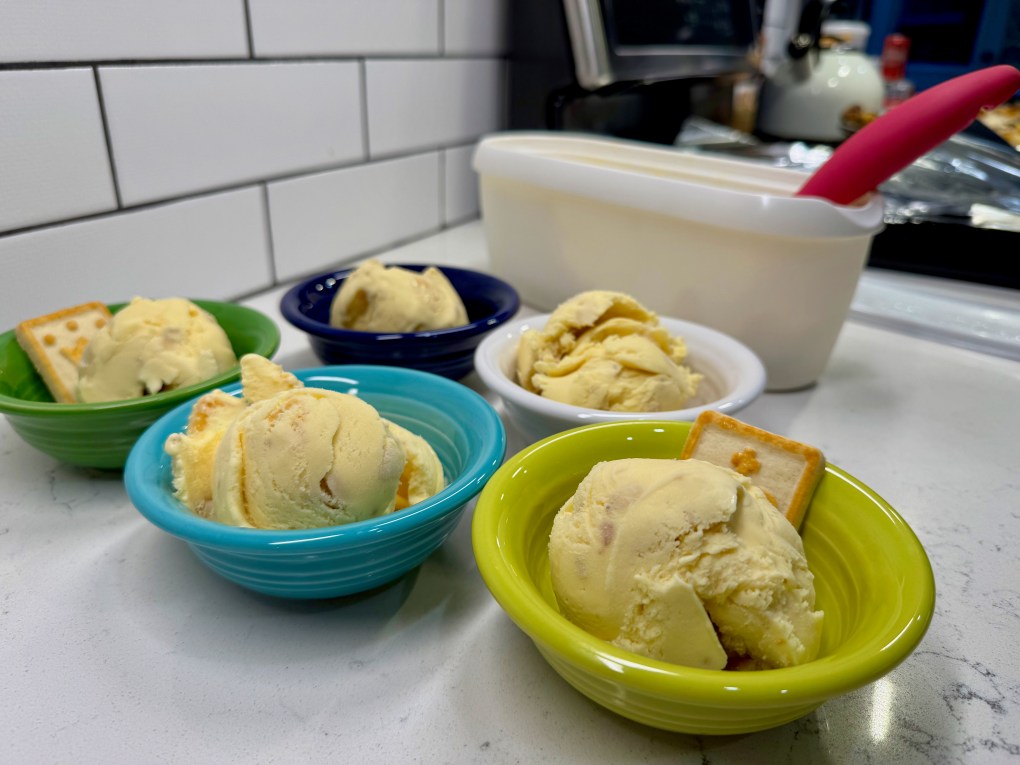
My muse has been after me for at least four years to turn banana pudding, a classic North Carolina dessert, into an ice cream. Imagine the creamy, comforting texture of pudding, wrapped around bits of fresh banana and complemented with delicate, vanilla-scented cookies. But frozen! And just in time for the ridiculous heat wave that has gripped our state. This turned out to be a very good thing.

Even a non-pudding fan would like this ice cream.

So what took me so long? My husband, Les, doesn’t care for banana pudding, and I didn’t want to make a big dessert that I’d have to eat by myself. I will admit that I’ve also considered banana pudding to be generally overrated since I moved to the American South some 38 years ago. The pudding part isn’t even banana flavored, but vanilla (did you know this?), and everyone knows how visually unappealing bananas get when they’ve been exposed to air. Don’t even get me started on vanilla wafers because they are just so boring. 🥱

But if I elevated the ingredients, and if it was frozen— well, let’s just say that I haven’t met many ice creams that I didn’t love. Fortunately, we had company for dinner on a recent weekend, giving me the perfect excuse to finally put this one in the “done” column of my culinary bucket list. And guess what? Even Les liked it!

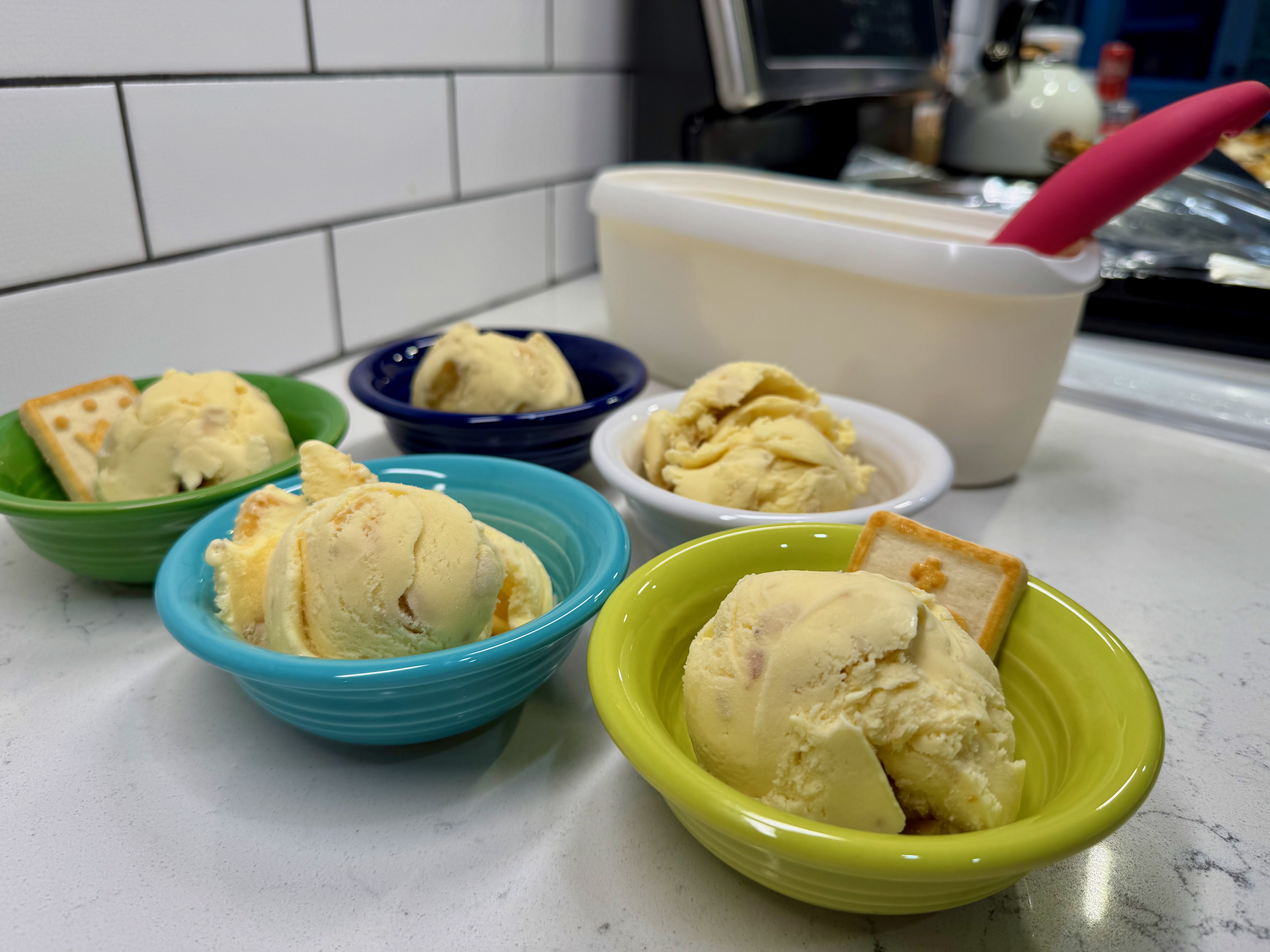
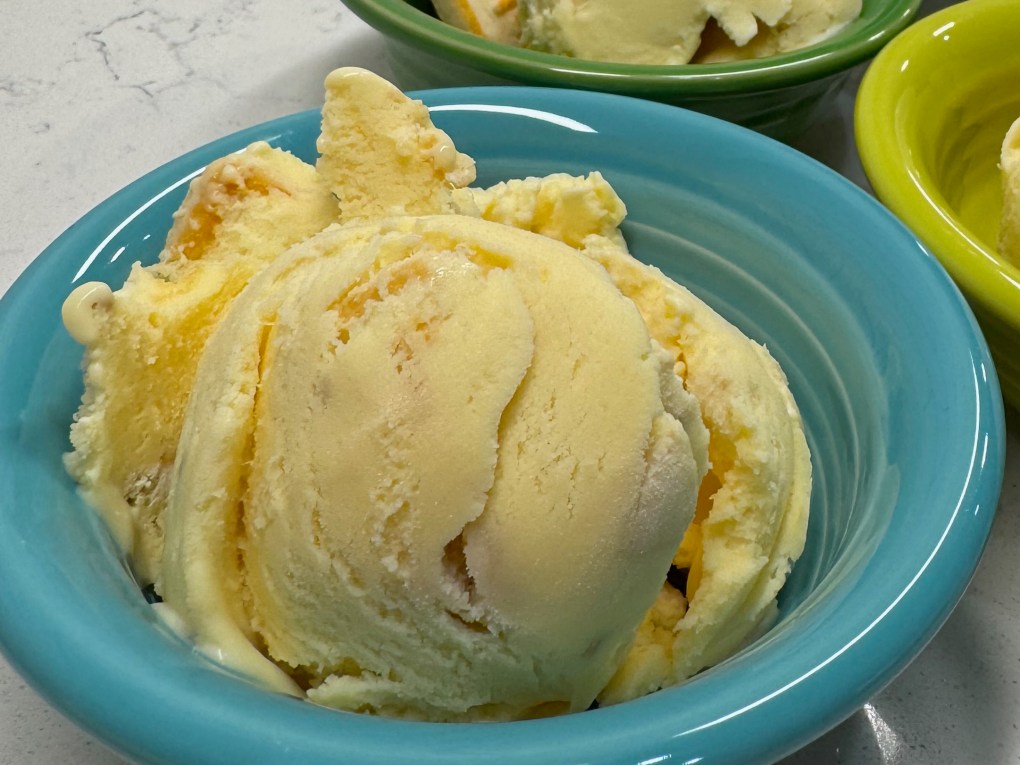
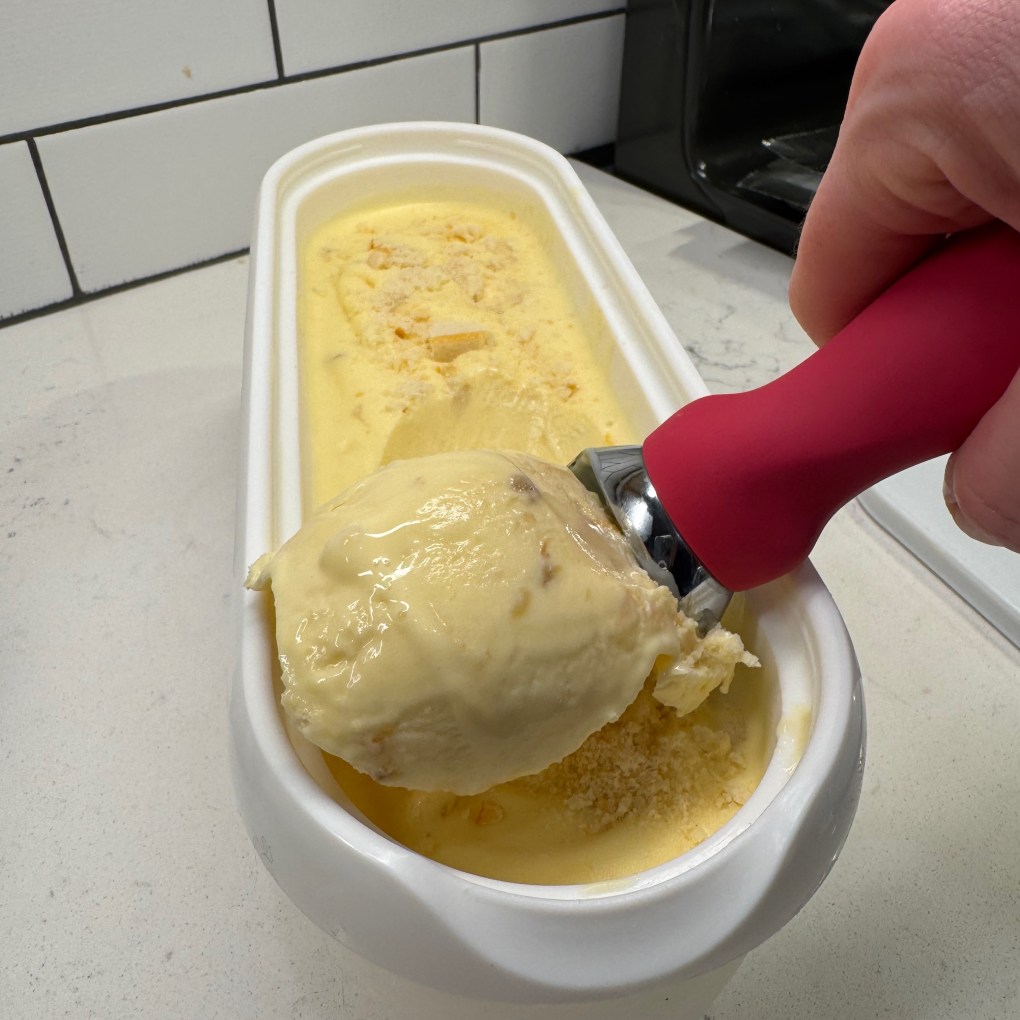
Delicious from the first scoop to the last!

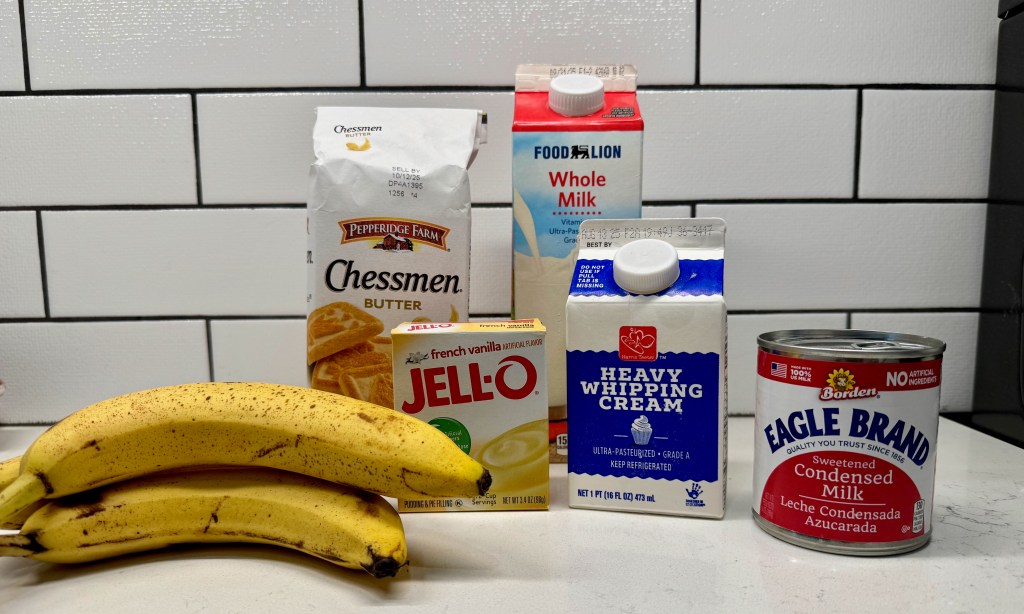
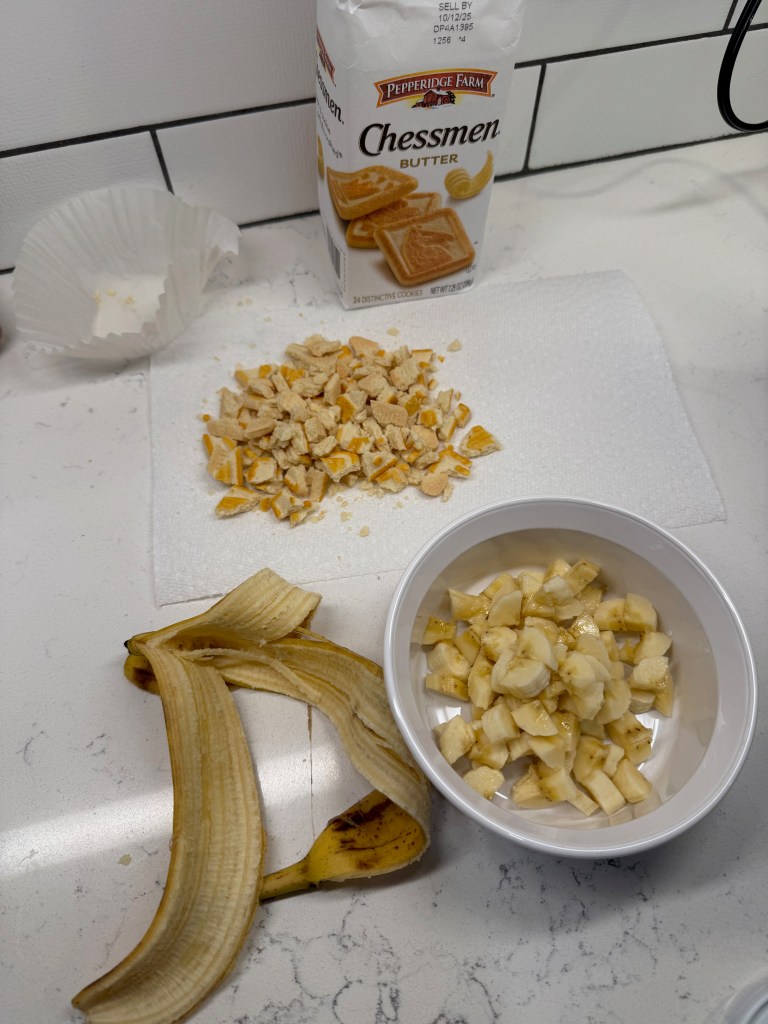
Ingredients for banana pudding ice cream

All of our guests enjoyed this creamy treat, and one asked, “what makes this banana pudding ice cream rather than just banana ice cream?” The answer is exactly what you might expect—there is actual pudding mix in the ice cream, and I’m shocked by how good it is.

Condensed milk lends additional sweetness, so I only used half the can.

Perhaps one day, I will have all the time in the world to make my own pudding from scratch, but I’ve been giving myself permission lately to take shortcuts, and here I used a boxed instant pudding mix. French vanilla has a richer color than regular vanilla, so that’s what I chose. A fresh, perfectly ripe banana was chilled, cubed and folded into the mix, and I passed over bland vanilla wafers in favor of buttery Chessman cookies.


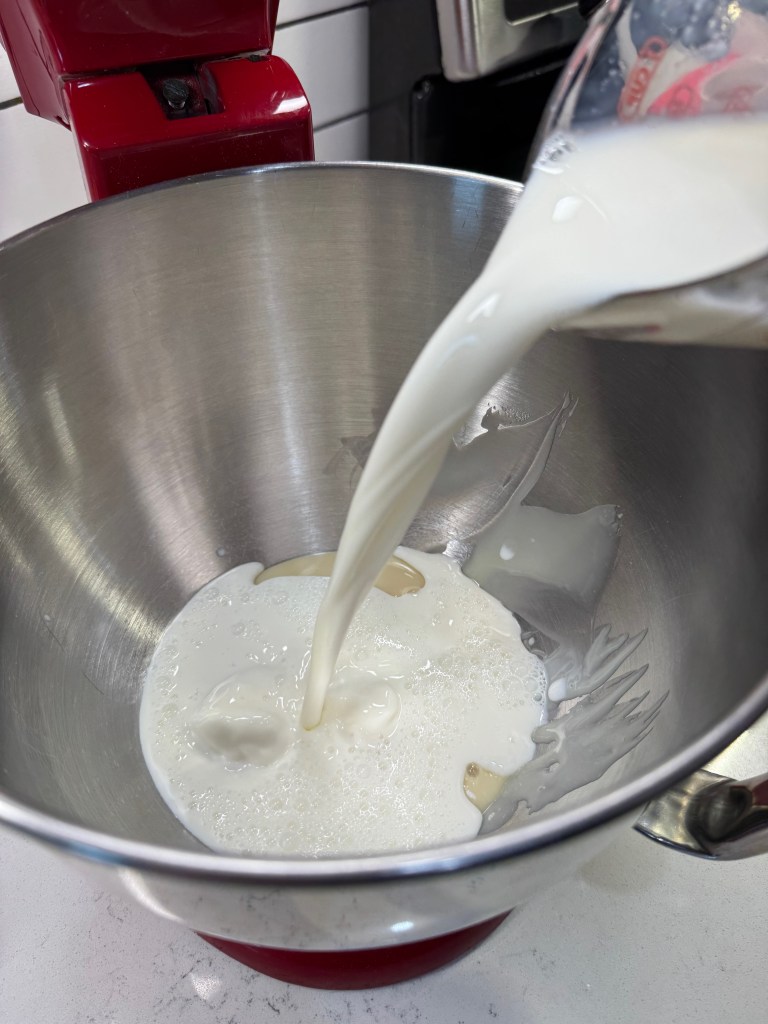
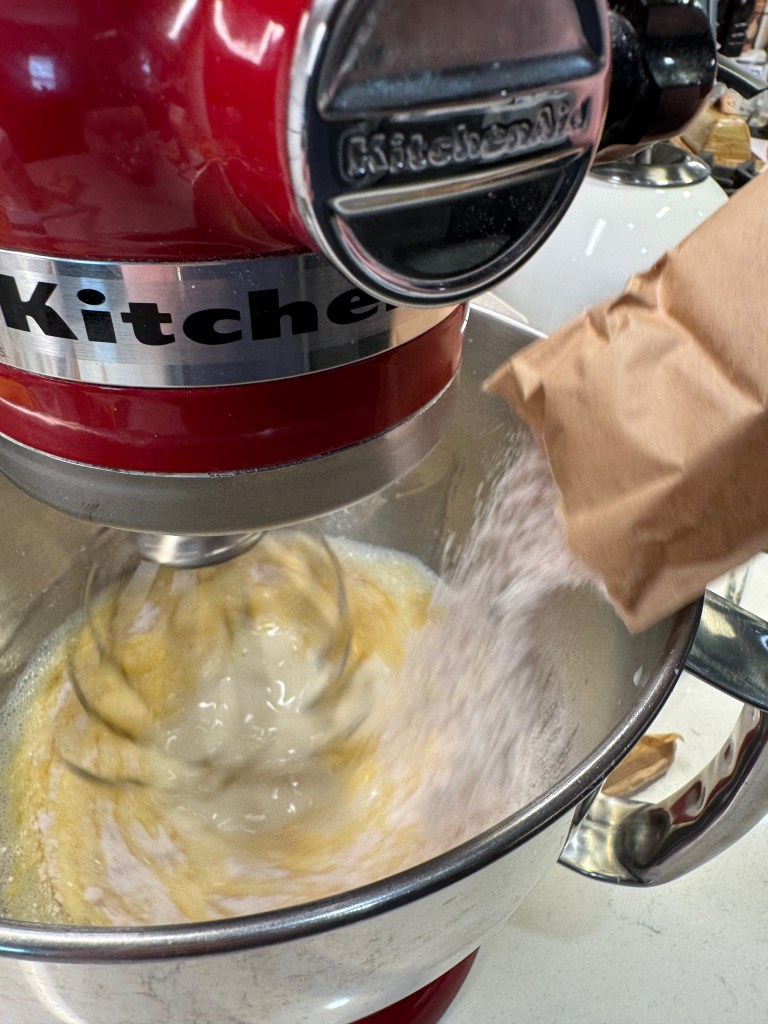
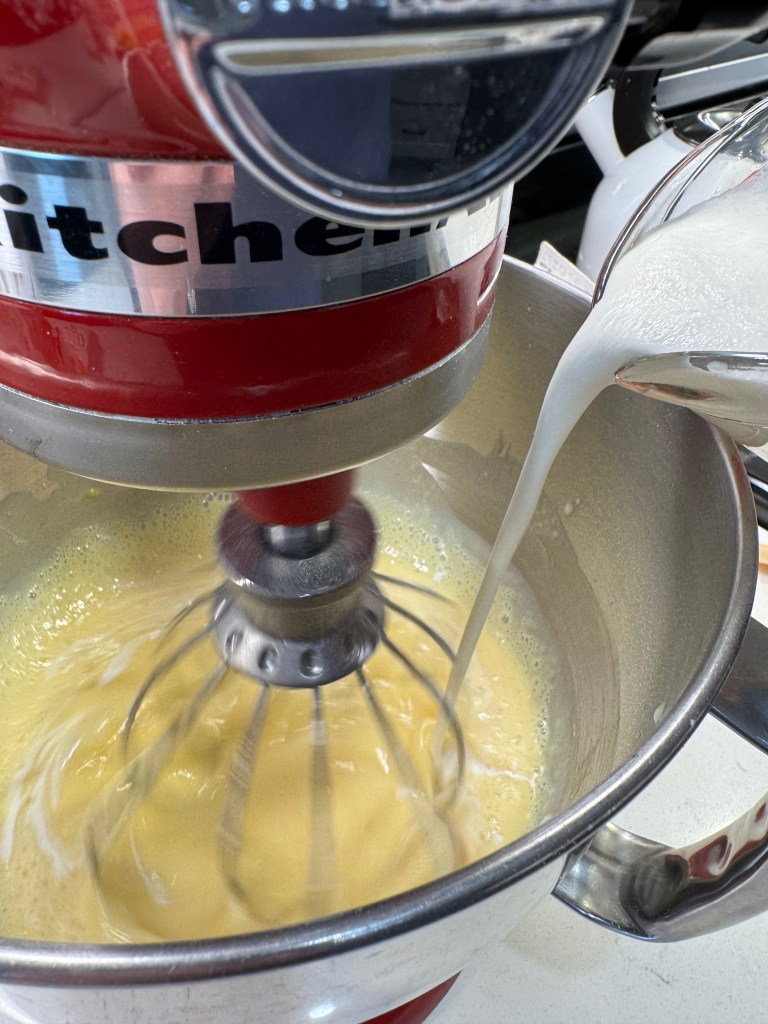
First into the mixer was the sweetened condensed milk and the regular whole milk. These two ingredients are very different in consistency, so getting them blended first felt important. Next came the pudding mix, which I whisked and whipped until it was a soft, airy consistency. I stirred in the heavy cream, and I was trying to act quickly before the pudding thickeners took over, and then this base mixture went into the fridge for a few hours to chill through before churning in my electric ice cream maker. 


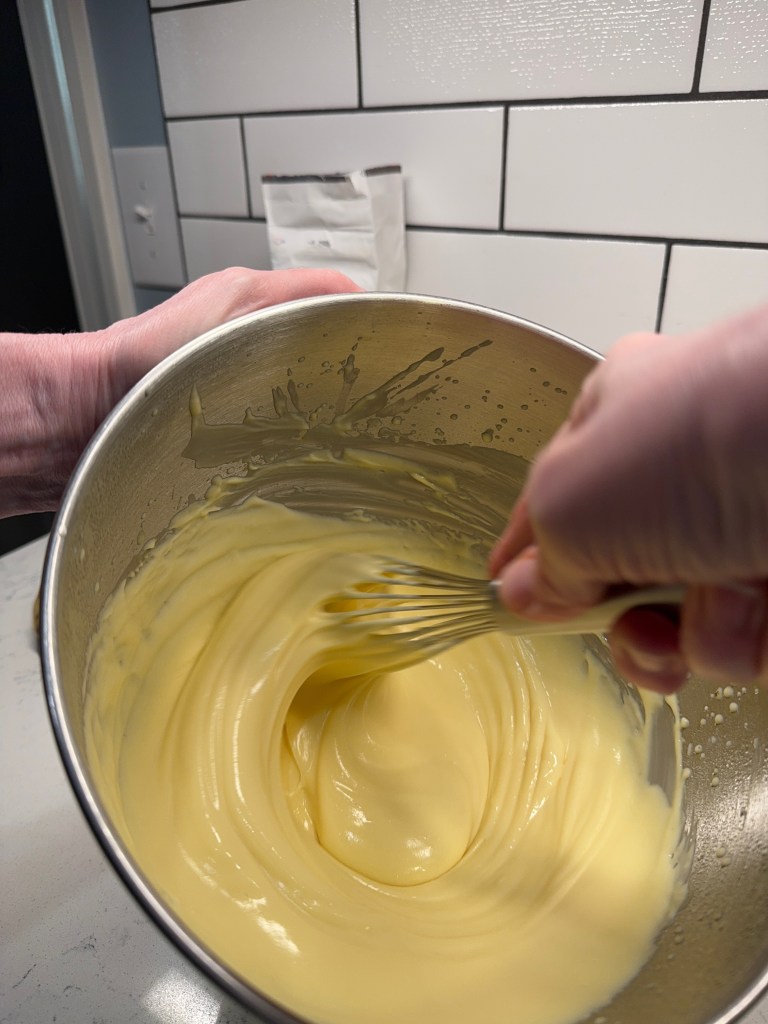
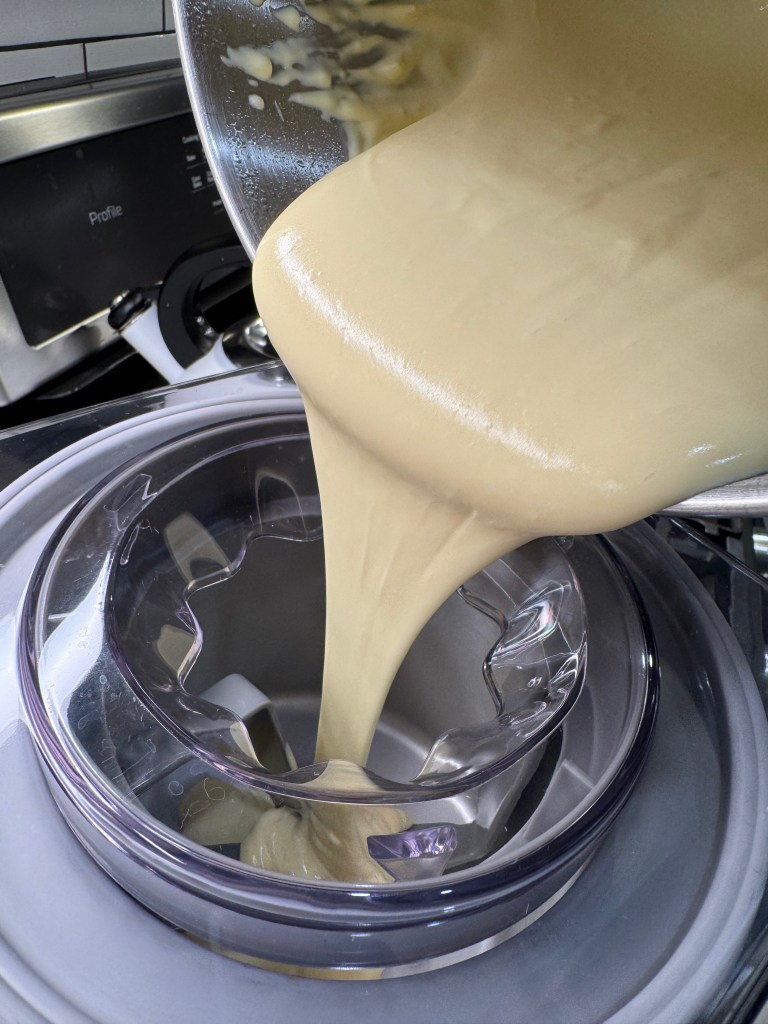
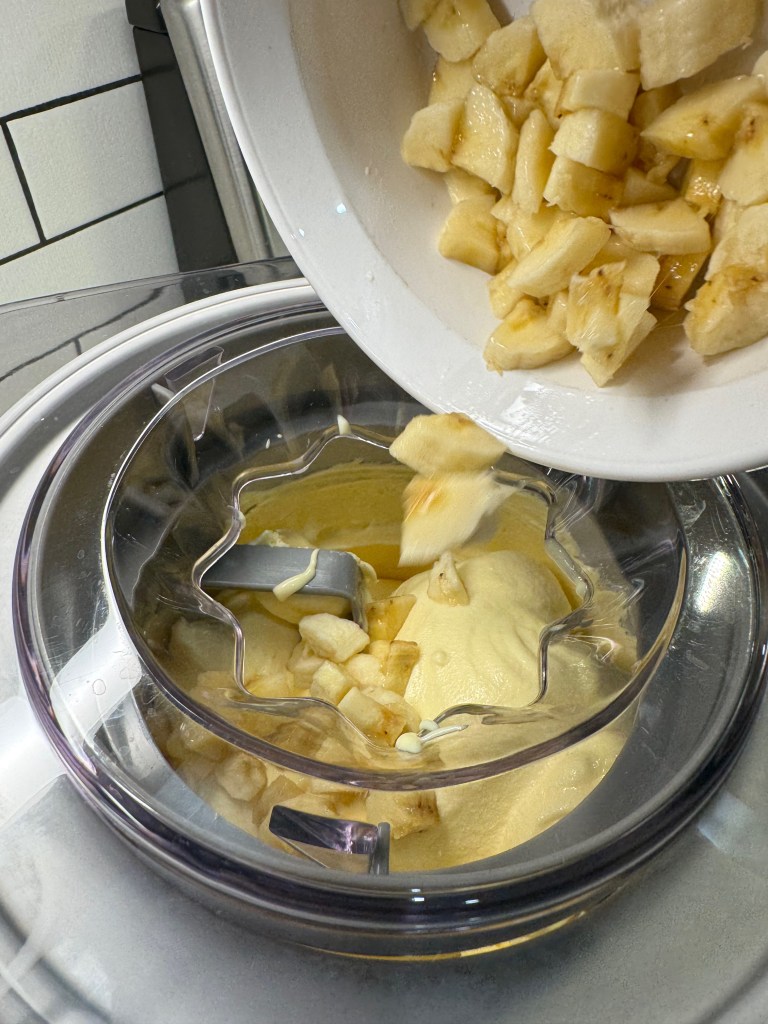
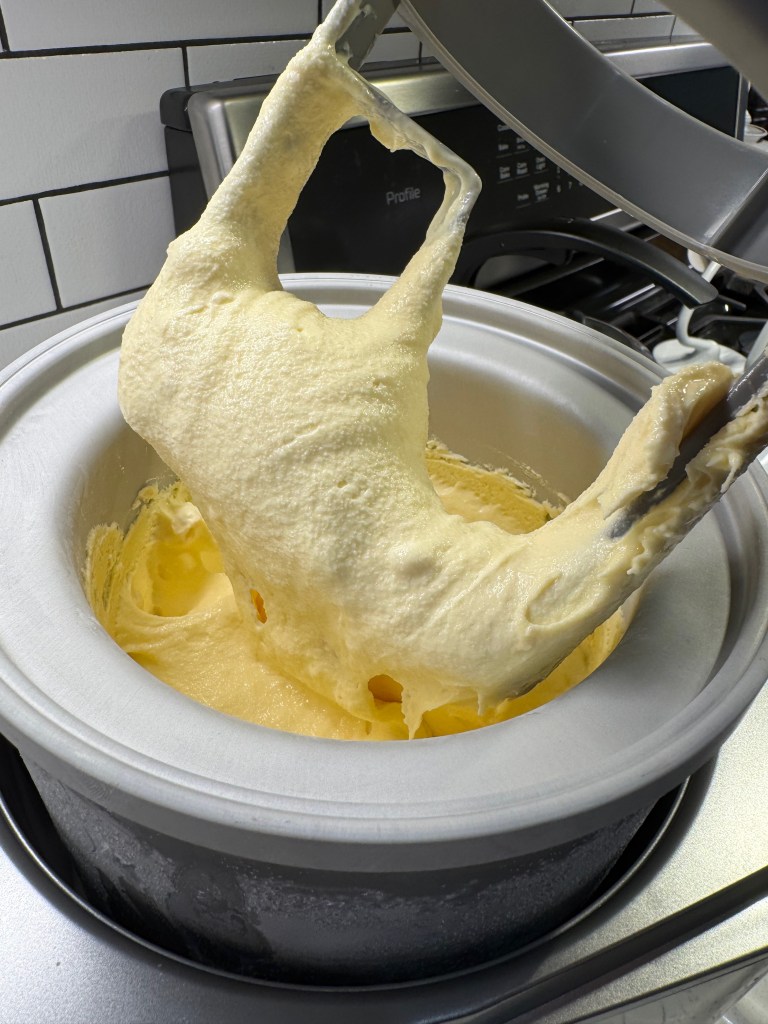
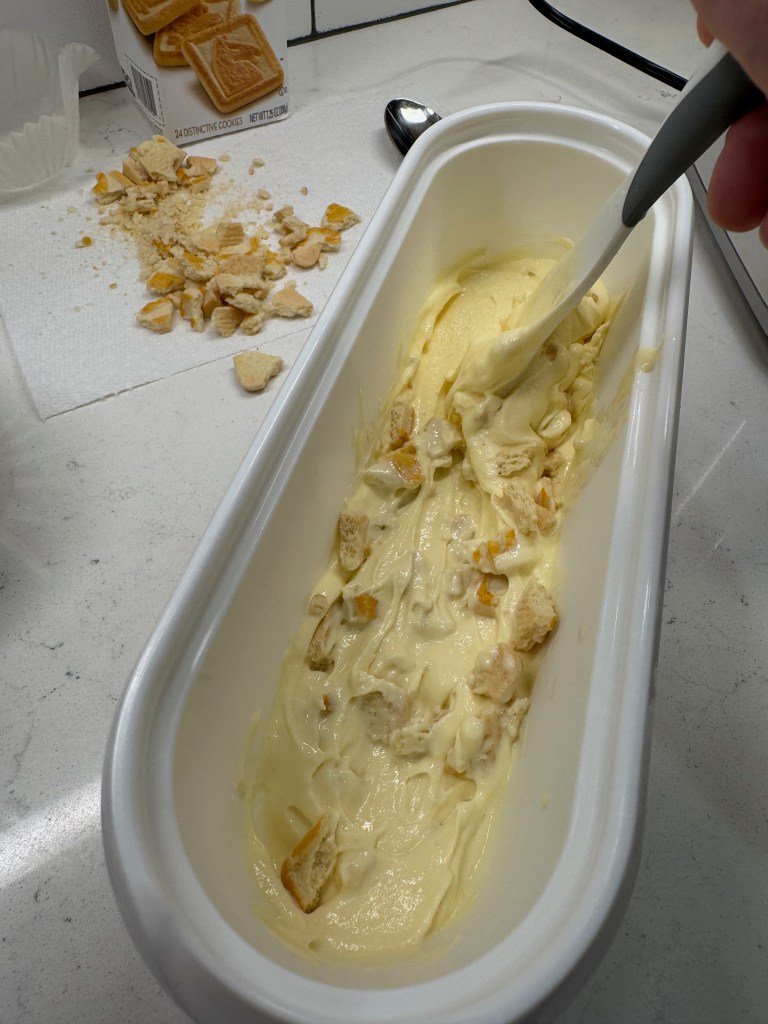
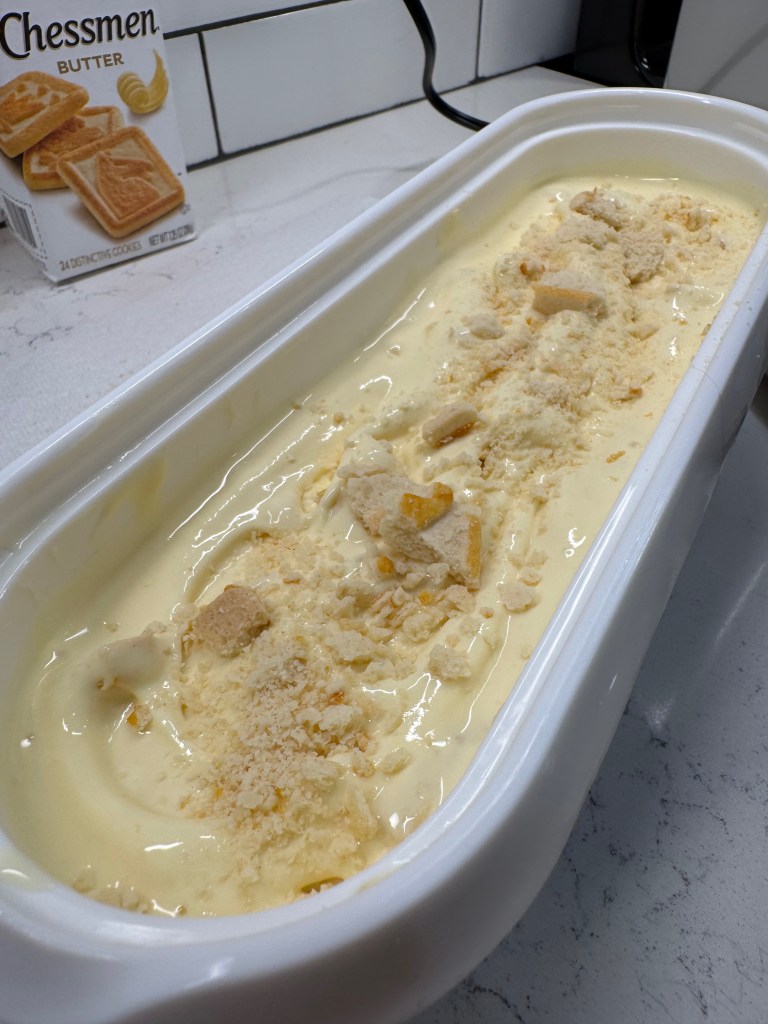
You can see how thick and rich the mixture is after that chill-down time, but a good whisking made it pourable, and then it just needed time to freeze into soft-serve texture. This usually takes about 25 minutes In my Cuisinart, long enough to cut up my banana and break a few of the Chessman cookies to be mixed in with the finished ice cream. Assembling the final product was so easy because the bananas were already mixed in. It was just a matter of layering and swirling in the cookie bits, and then it was off to the freezer for the “ripening” stage.


National Ice Cream month is winding down, but there’s still plenty of hot summer weather, especially in North Carolina, which has experienced some brutal upper 90s temperatures this past week. Don’t be surprised if I toss one more ice cream your way before we get to Labor Day!

Banana Pudding Ice Cream

  • Servings: About 8
  • Difficulty: Average
  • Print

What if we took all the ingredients for banana pudding and turned them into an ice cream? This is a really fun surprise for National Ice Cream Month!


Ingredients

  • 1/2 can sweetened condensed milk
  • 1 1/2 cups cold whole milk
  • 1 package French vanilla instant pudding mix
  • 1 cup cold heavy cream
  • 1 Tbsp. vodka (optional, added in final minute of freezing for improved texture)
  • 1 large ripe banana, chilled and cut up into cubes (this measured approximately one cup)
  • 6 Pepperidge Farm Chessman butter cookies, broken into bits (this measured approximately 2/3 cup)

Note: Classic Southern banana pudding is made with vanilla wafers rather than Chessman cookies. Feel free to substitute as you wish.

Directions

  1. In the bowl of a stand mixer, fitted with the whisk, blend condensed milk and whole milk until evenly combined. Add instant pudding mix and blend with the whisk on medium speed, stopping twice to scrape down the sides.
  2. Using low speed, gently blend in the heavy cream. Cover and refrigerate the ice cream base for several hours until fully chilled.
  3. Whisk chilled ice cream base vigorously until it’s smooth again, and then pour it into the ice cream machine. Churn until mixture is nearly finished, and then add the cut-up banana bits, churning again for a few minutes to incorporate. During the final minute of freezing, pour in vodka (if using) and allow it to disperse throughout the ice cream.
  4. Transfer finished ice cream to an insulated freezer container, a third at a time, layering and mixing in Chessman cookie bits as you go. Sprinkle fine cookie crumbs over the top of the ice cream and freeze overnight for best results.


Fuzzy Navel Spritz 🥳

It’s that time of year again, and I don’t mean Christmas in July. I’m completing another trip around the sun this weekend, and what better way to celebrate than with a signature cocktail for the birthday girl? 

My husband, Les, is throwing me a party, and though many of the party details are a secret (including most of the guest list), I do at least know what will be on the drink menu because the venue gave us the option to request a special cocktail—yay! I love a theme for a party, and I’ve decided that my signature birthday drink should be reminiscent of the one that was in my hand back in the days when I was first “of age” to imbibe. Oops, did I just give away my age?! 

How is it possible that it was soooo long ago??

DeKuyper had just released its Peachtree™️ schnapps, and everyone who was anyone— at least among the girls— was sipping on fuzzy navels, a blend of this syrupy sweet schnapps and equally sweet orange juice. The drink gave us a fun little buzz, and it was perfectly simple for all the bridal showers that my girlfriends were having.

Fast forward, ahem, a few decades and I’m still fond of the “idea” of the fuzzy navel, though I could never stomach the sweetness of it today. So I did what I always do— a modern makeover of an old favorite into a cocktail that is familiar but fresh— this one is easy to make, easy to drink, easy on the alcohol and yes, easy on the eyes.

Hello, Gorgeous!

What’s fun about a fuzzy navel spritz?

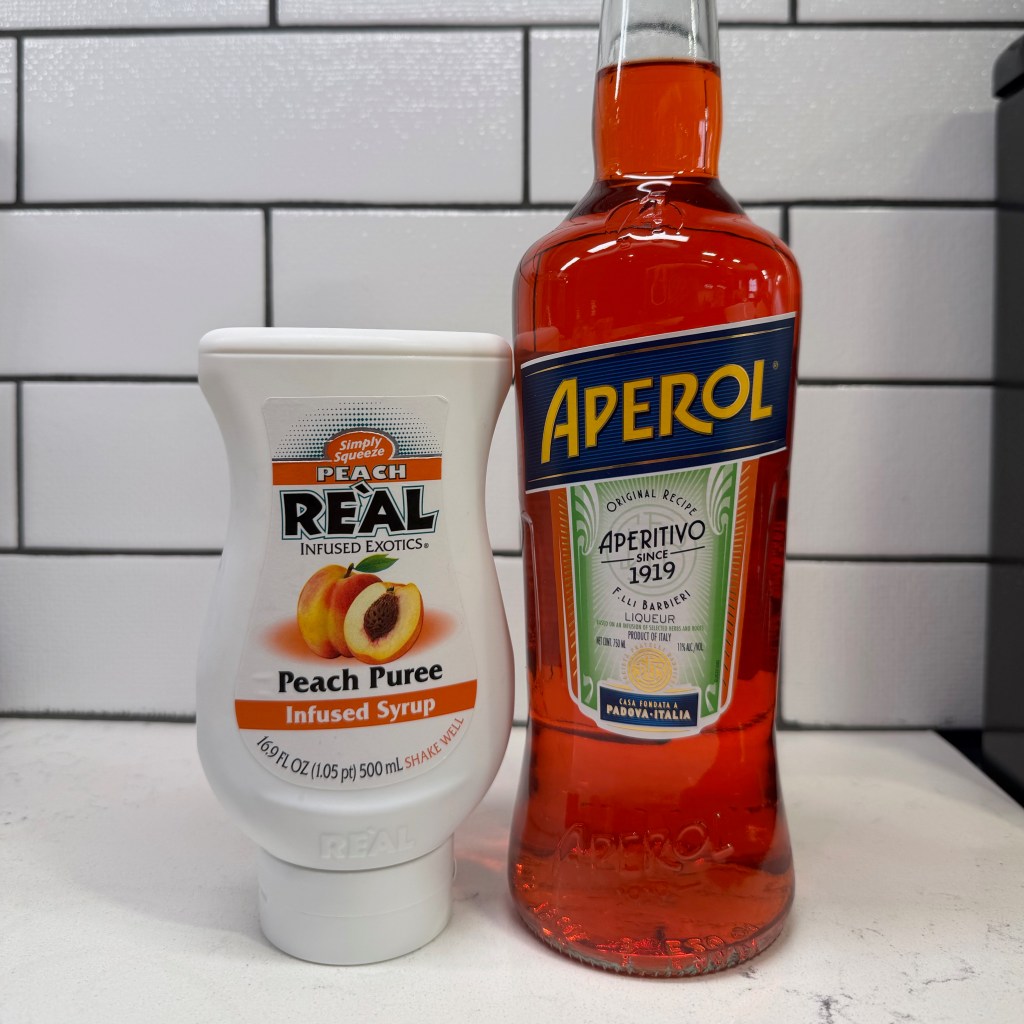
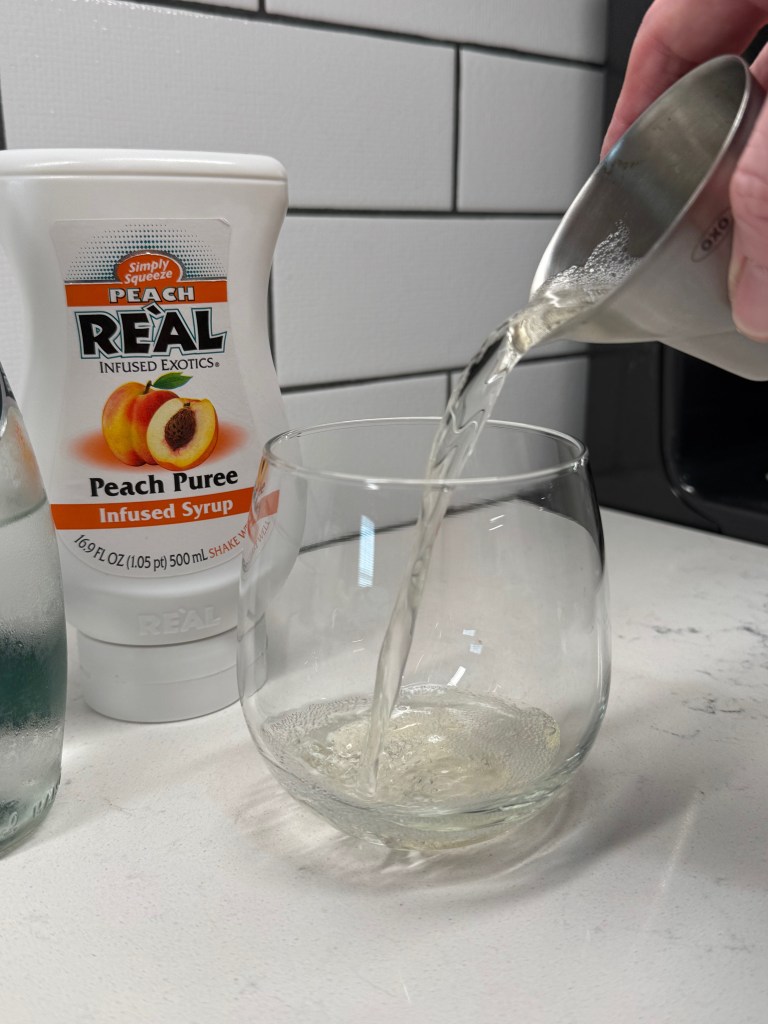
First of all, there’s no peach schnapps! The last time I tasted that stuff, I cringed at the artificial aftertaste. No, this glow-up gets its “fuzzy” flavor from a peach puree that concentrates real peaches into a thick syrup that plays nice with a number of alcoholic spirits— vodka, bourbon, blanco tequila, need I go on? It’s sweet (but naturally so), and a little goes a long way. You can find this product in the mixers section of a larger supermarket, or in the same aisle of a wine or spirits store.

The “navel” aspect of my upscale drink comes from Aperol. This slightly bitter, orange-meets-herbal aperitivo from Italy brings an instant citrusy balance to the sweetness of the peach puree. Aperol is having more than a fleeting moment of popularity, and I decided to ride that wave for my birthday.

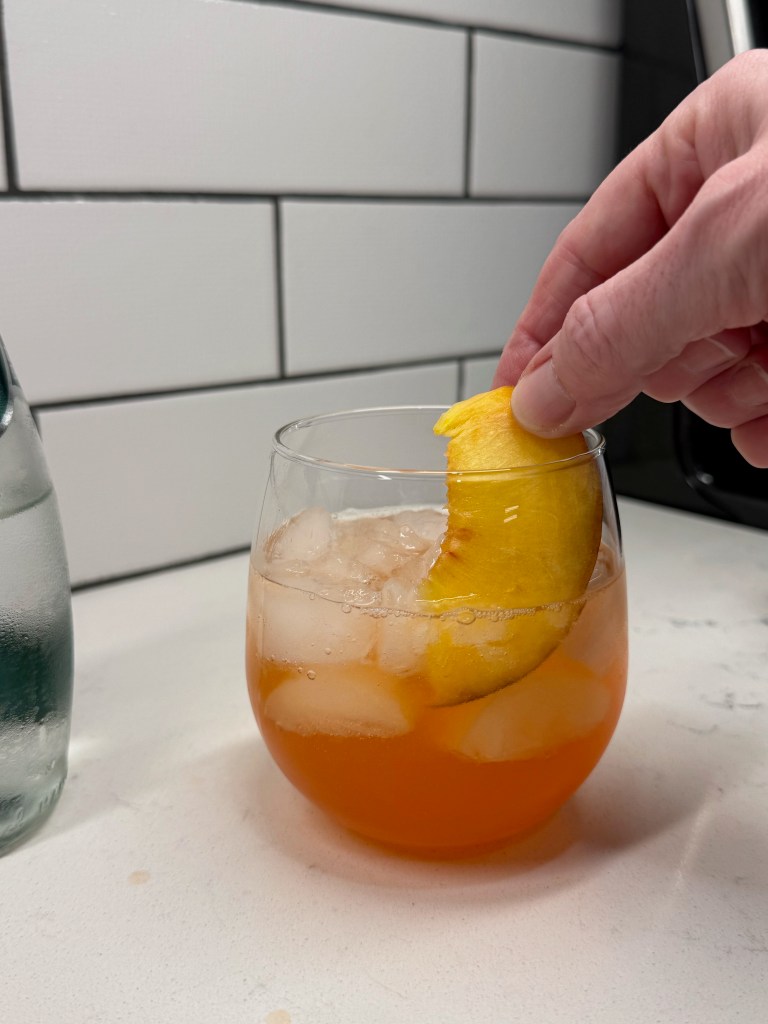
The peach and orange flavors are covered here!

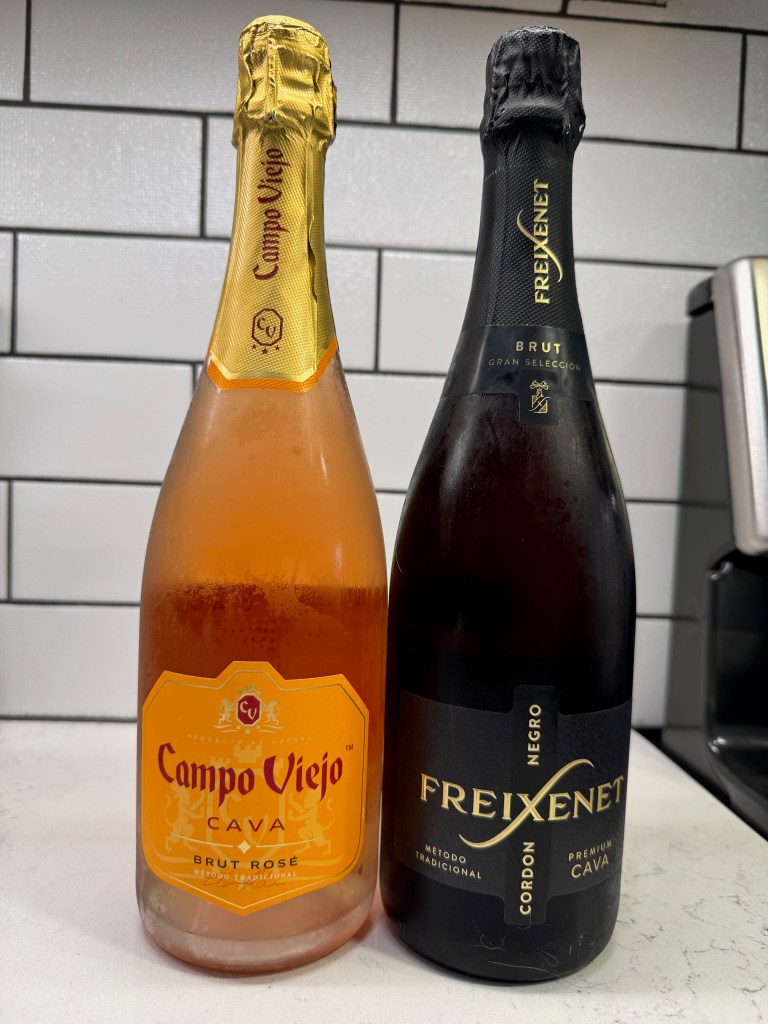
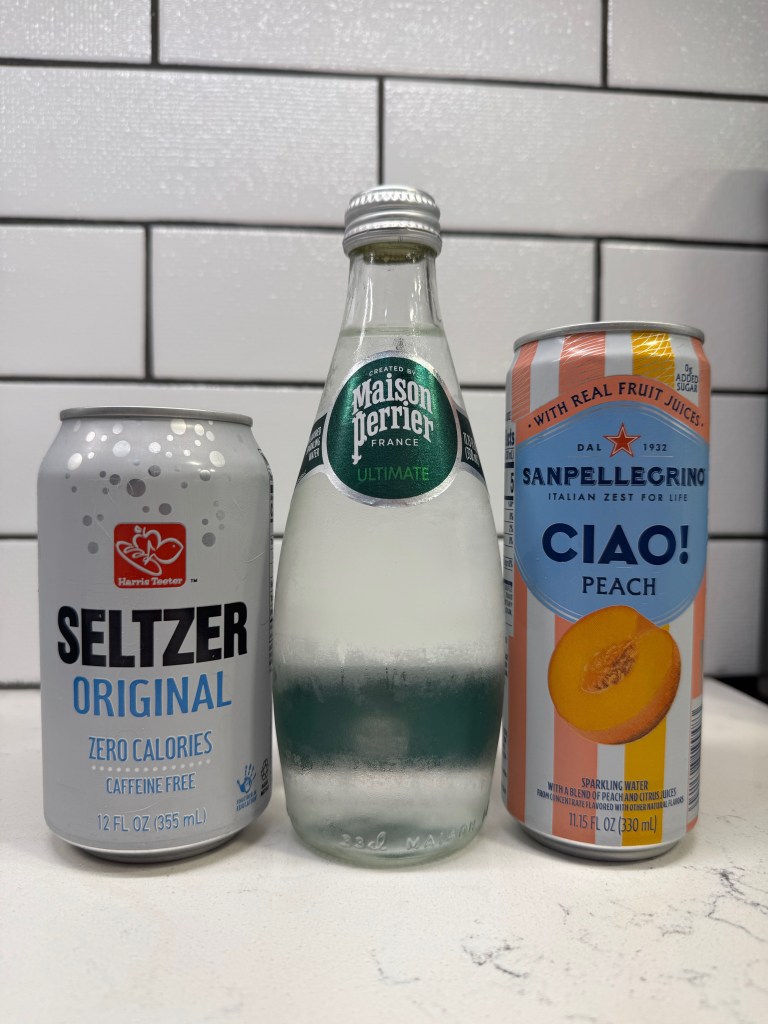
Finally, the base of the drink is Cava, Spain’s counterpart to champagne, bringing a little “fizzy” to my “fuzzy,” and a splash of sparkling water on top softens the drink for superb sipability. Any sparkling will do, whether club soda, seltzer or one of the fancy European options. If you happen to find one scented with orange or peach, even better!


If at first I don’t succeed, and I didn’t

This cocktail idea has been floating in my mind since at least my last birthday, but it was only in the past few weeks that I got serious about making it work. My first effort looked nothing like what you see here. It included vodka, peach nectar (which is not as peach-forward as it sounds), orange juice, Aperol and prosecco. It was too boozy, too sweet, not very peachy, not pretty and not refreshing at all. In other words, it needed a lot of work!

The peach flavor needed to be concentrated. I considered cooking peaches down into a puree to replace that so-called nectar, but would my birthday venue be willing to do that when I handed them the recipe? Relying on a pre-made mixer felt like cheating, but I am so glad that I checked out this peach puree. It’s just sugar, peaches, citric acid and a preservative—not so bad after all! Did I mention that it is great with bourbon, too? I’ll save that for another post. 😉

The vodka got 86’d because I wanted this to be a lower proof drink for easy summer sipping. Prosecco wasn’t right because the peach puree makes this drink sweet enough. Cava feels like the perfect choice, but a California brut would be great as well.

In the name of research and development, I’ve made quite a few iterations of this drink, fiddling with the ratios to balance the flavor. A traditional Aperol spritz follows a 3-2-1 ratio of bubbly, Aperol and sparkling water. But two ounces of Aperol was overwhelming to the peach, so I’ve cut it almost in half. The ratios you see in the click-to-print recipe below are my final decision, and I think it’s perfect.

Just one more thing…

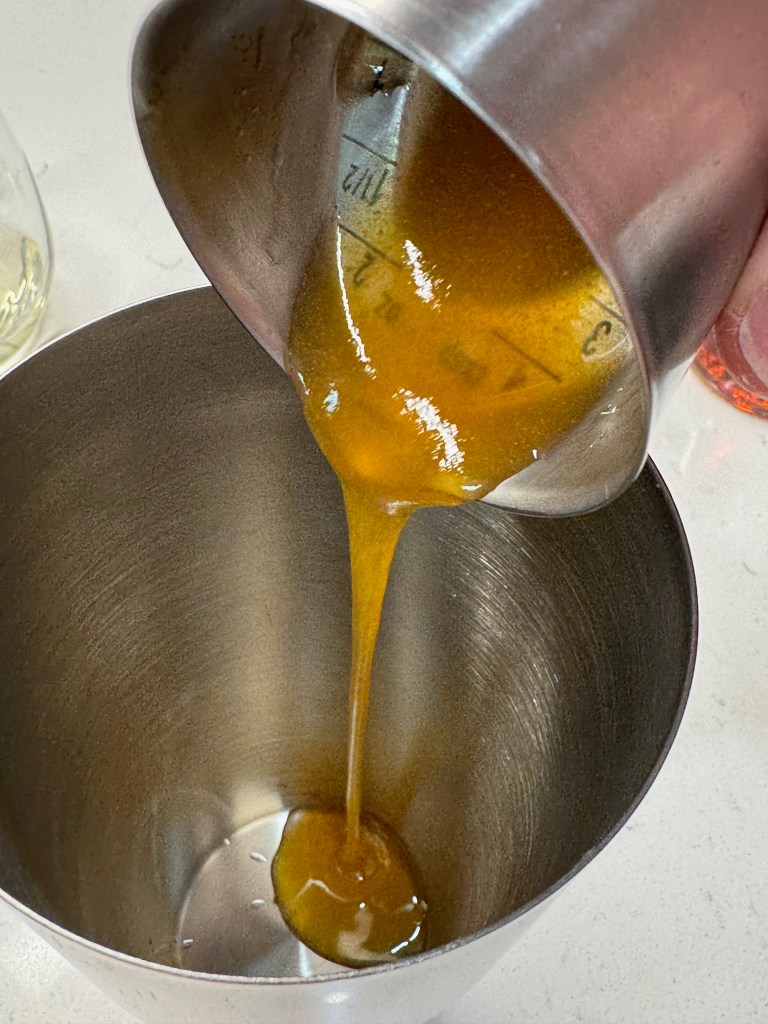
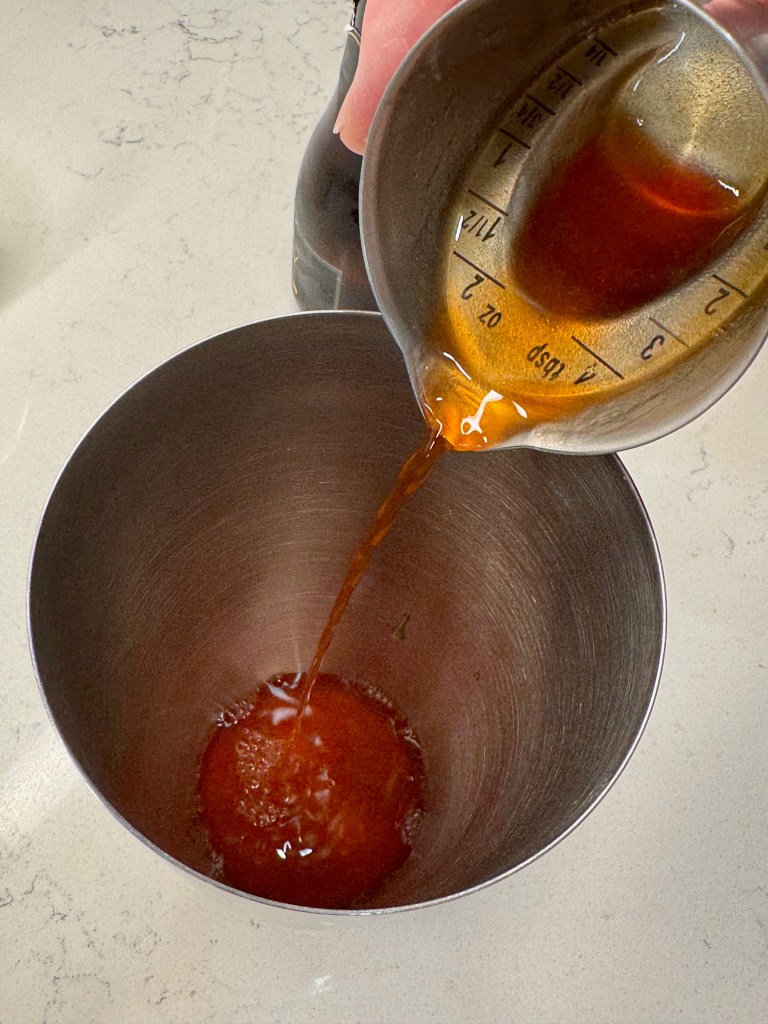
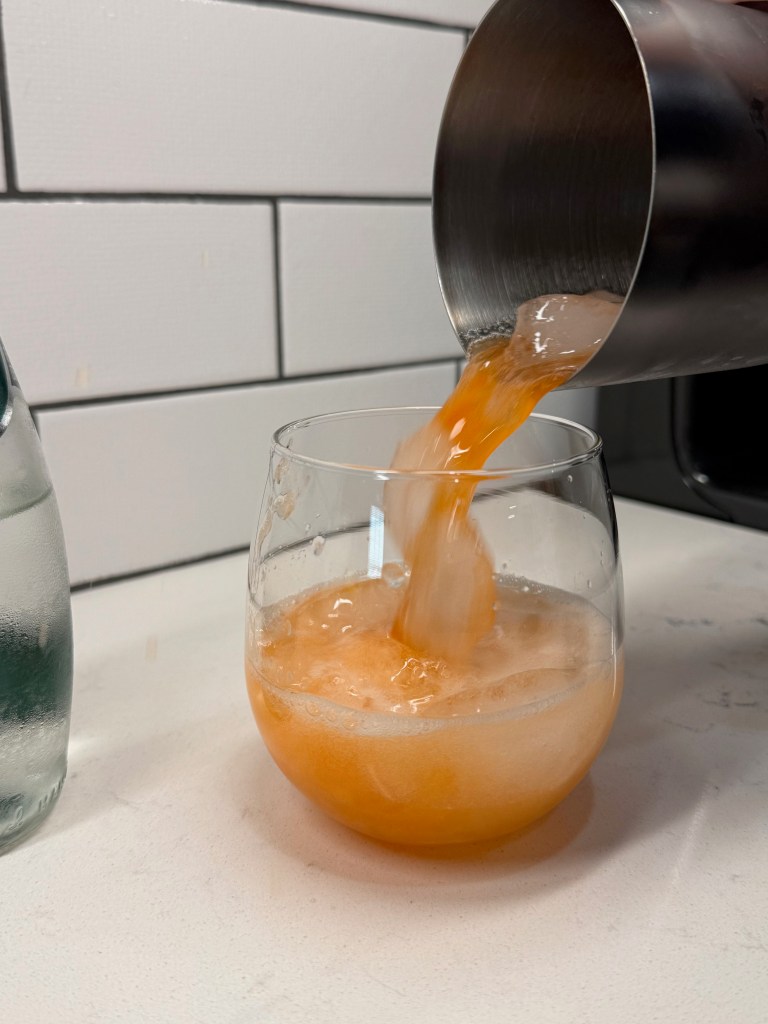
Though a spritz is typically mixed directly in the glass, this one does require a shaker to mix the Aperol and the peach puree, which is very thick. The bubbly ingredients should not go into the shaker, unless you want to clean the whole kitchen when it bubbles over! My method is to measure the chilled Cava into the glass first, shake up the Aperol and peach puree with a decent amount of ice, and then do what pro bartenders call a “dirty pour,” ice and all, into the glass with the Cava. A final splash of sparkling water at the end, and a wedge of fresh, juicy peach finishes this drink. 


Fuzzy Navel Spritz

  • Servings: 1 cocktail
  • Difficulty: Easy!
  • Print

This is my modernized interpretation of a drink I loved back in the 1980s. It's less sweet than the fuzzy navels of my youth, but still light and very refreshing!


Ingredients

  • 3 oz. Cava or other dry, sparkling wine
  • 3/4 oz. peach puree syrup (Reàl brand)
  • 1 1/4 oz. Aperol
  • 1 or 2 oz. sparkling water, seltzer or club soda
  • Slice of fresh peach or orange, to garnish

Note: Most spritz cocktails are built directly in the glass, but this one requires a shaker for mixing the thick peach puree. Use a balloon glass, such as a red wine glass, that will hold all of the ice you use for mixing the drink.

Directions

  1. Pour Cava into the serving glass.
  2. Add peach puree and Aperol to a cocktail shaker. Add about one cup ice cubes and shake for several seconds until the shaker is frosty and very cold.
  3. Pour the entire contents of the shaker (ice and all) into the glass with the Cava. Top with sparkling water. Garnish with a fresh fruit slice.


Everything Bagel Pizza

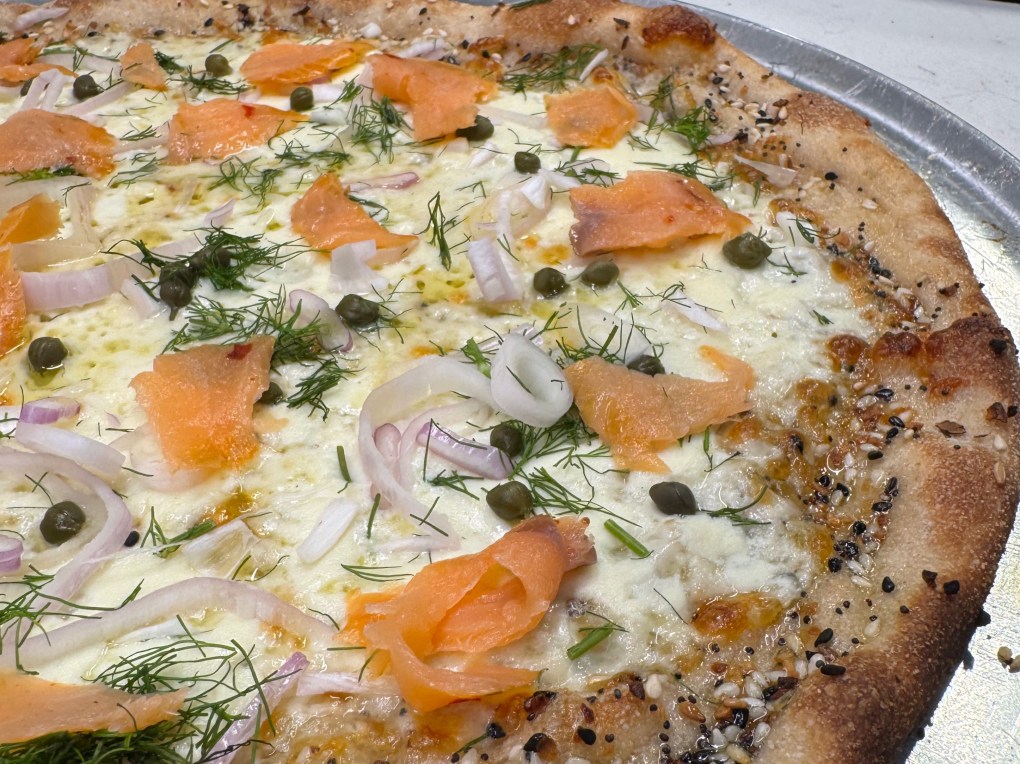
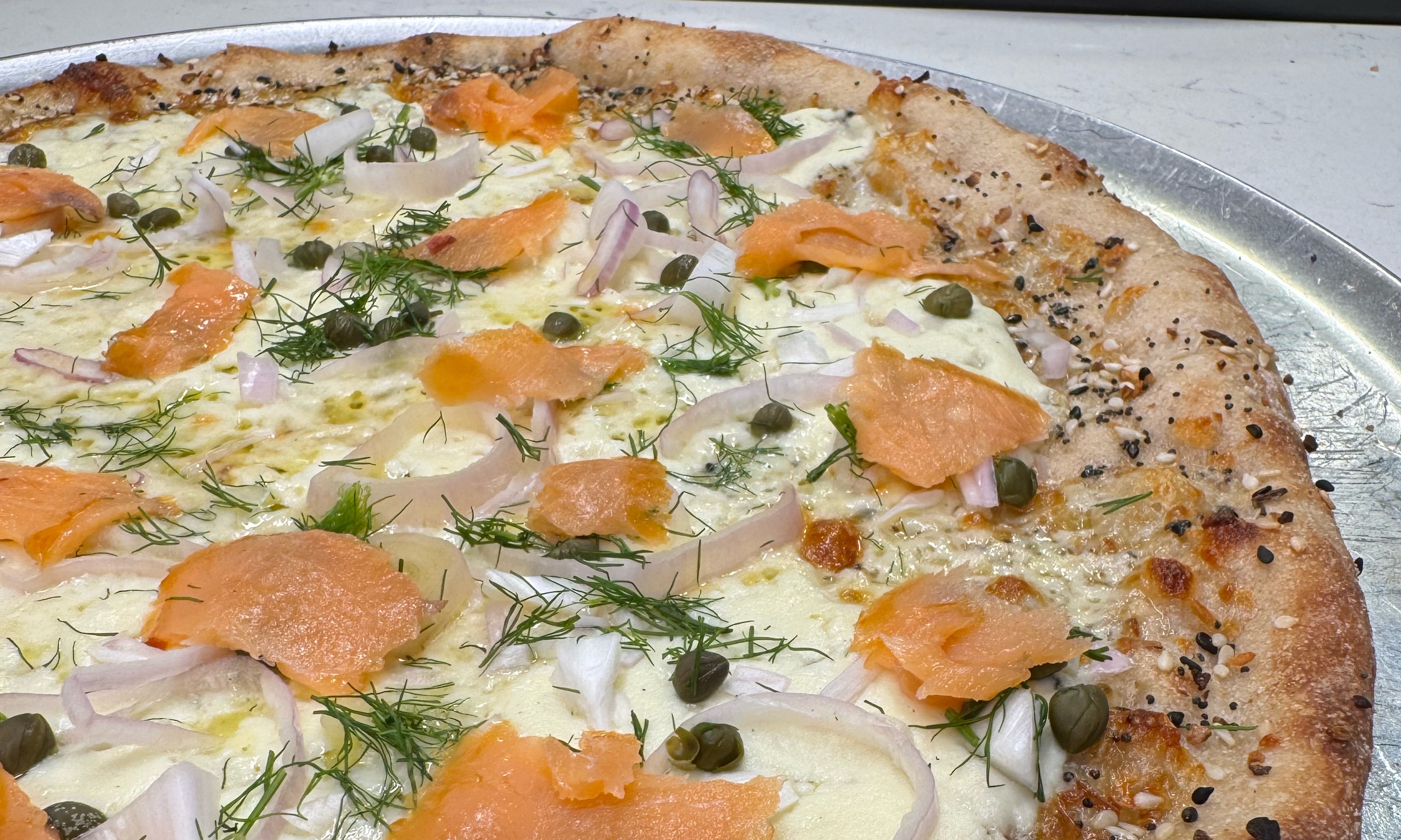
There’s almost no limit to what can be put on a pizza. The question is whether you should. And in this case of Jewish bagel toppings, I’m saying that the answer is yes! It’s a no-sauce, creamy cheese topping on an “everything” seasoned sourdough crust, finished with all the fixings you’d find on a Jewish deli bagel— onions, capers, dill and lox. 

Think of it as a really big bagel!

Before I met my husband, who is Jewish, I could count on one hand the number of times I’d eaten bagels with lox. But this has become very much a staple in our home, and Les and I enjoy it for breakfast at least once a week. I love the flavors (especially when fresh dill is in season), and we’ve adapted it to dips and cheese spreads for parties, but I was eager to apply the unique flavors and textures to something else.

It wasn’t until we finally had a date on the calendar to have Rabbi Charlie and his family over for pizza that I decided to test it. You see, the rabbi keeps kosher rules, and that means meat and cheese cannot co-exist on the table. This regulation stems back to verses in Leviticus that declare you “shall not cook the kid in its mother’s milk,” and over time, the rule has expanded to include any kind of meat with any kind of dairy. Pizza without cheese is a sin in my book, so it would have to be the meat that would be kicked to the curb when we hosted them. 

But isn’t fish meat?

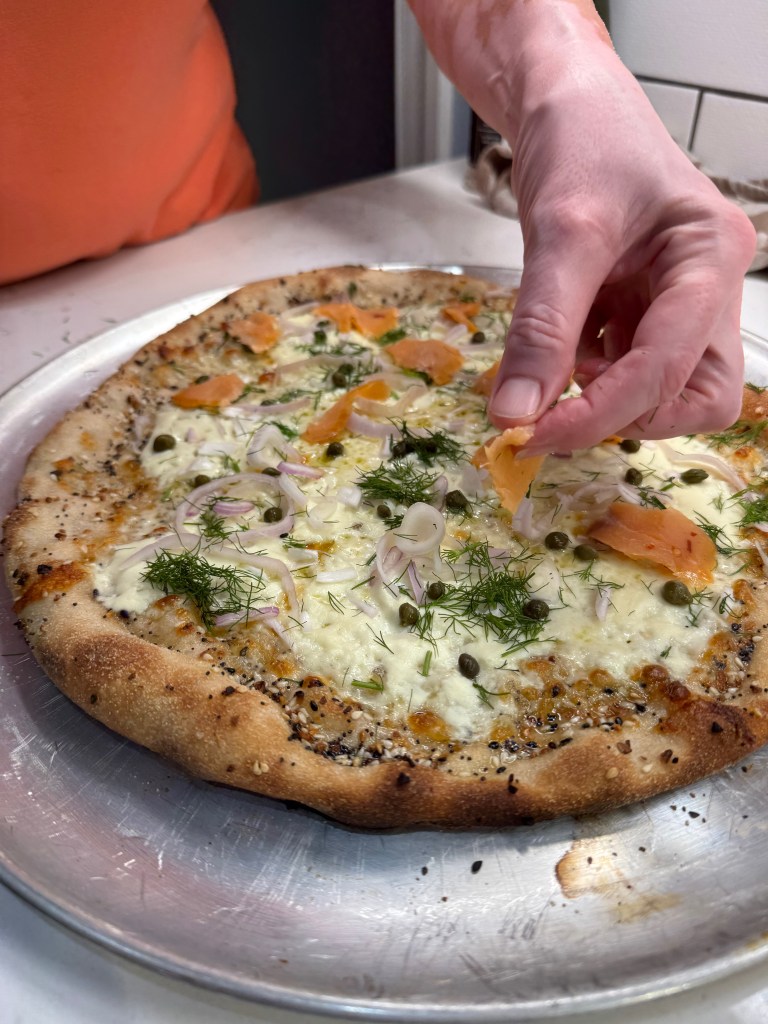
Nope. In Jewish kosher regulations, fish—or at least those fish with both fins and scales— are given a pass; they are considered “pareve,” neither meat nor dairy. The only fish (other than anchovies) that sounds evenly remotely good to me on a pizza is salmon, and this is how I decided to go for it. We used a lox-type of salmon, and it was not cooked but added to the pizza after the crust emerged from the oven. In fact, most of the toppings were added after baking, the same as we would dress a bagel after toasting it.

Now, before I get too far ahead of myself, I want to clarify that we actually did not serve this everything bagel pizza when we hosted the rabbi because I felt it needed some tweaking. When the time came, we opted for all-veggie pizzas for our guests. But this test was tasty and fun, and I learned at least two things that will make it better next time. Ready to see how we made it?

How to make everything bagel pizza

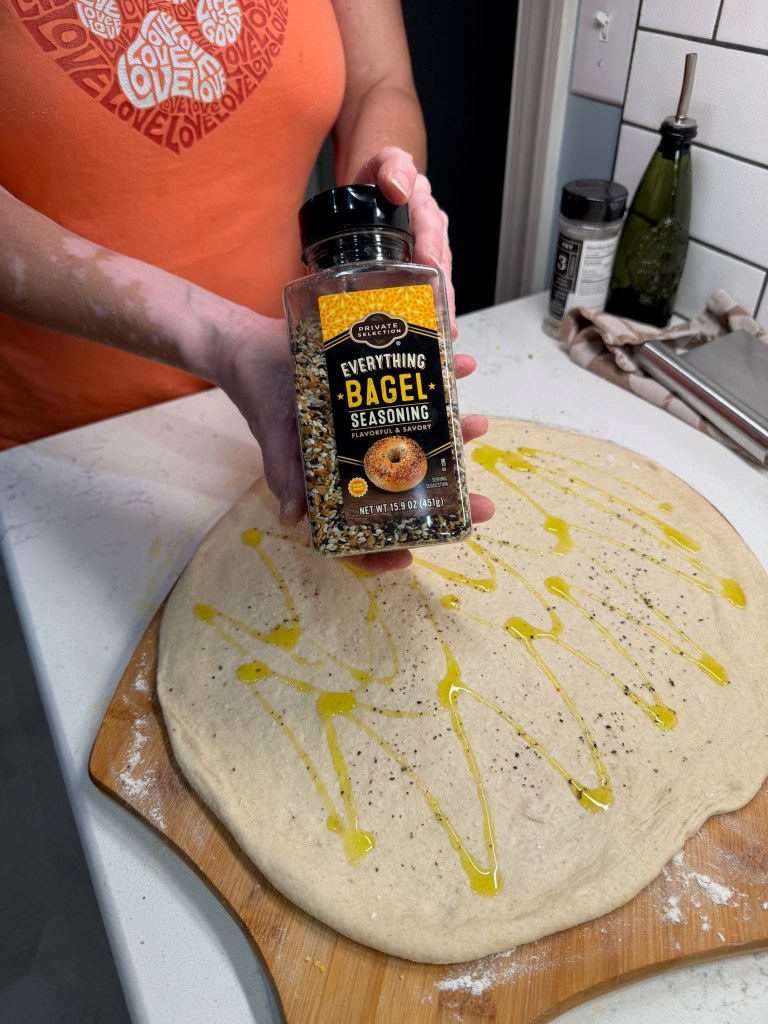
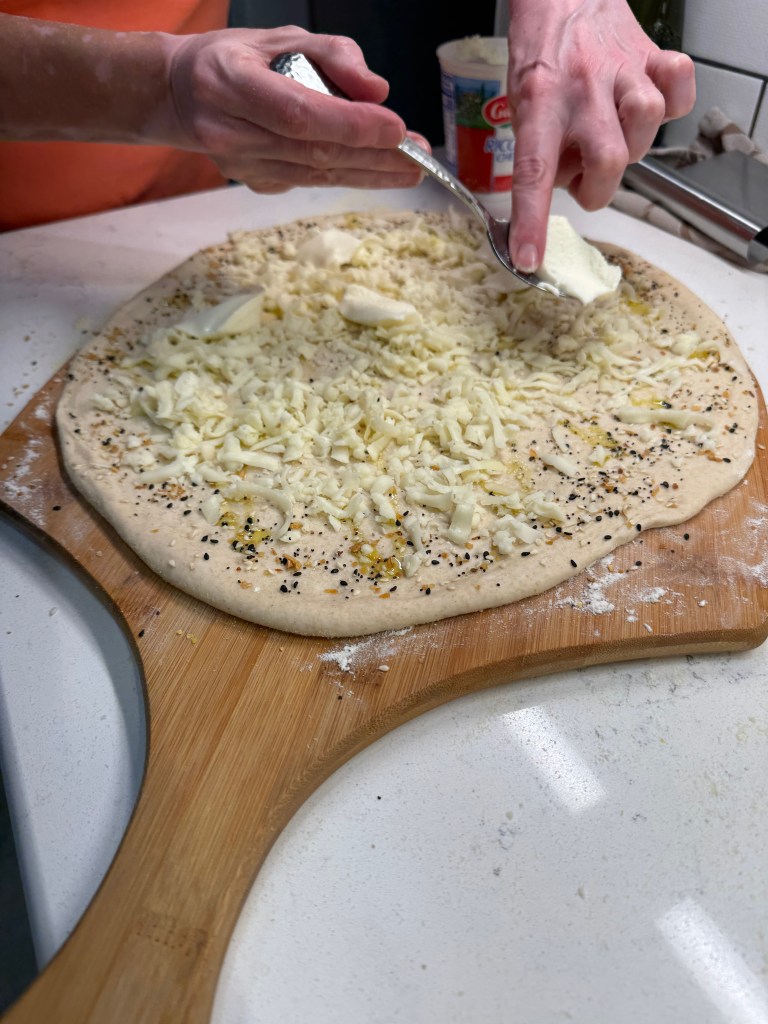
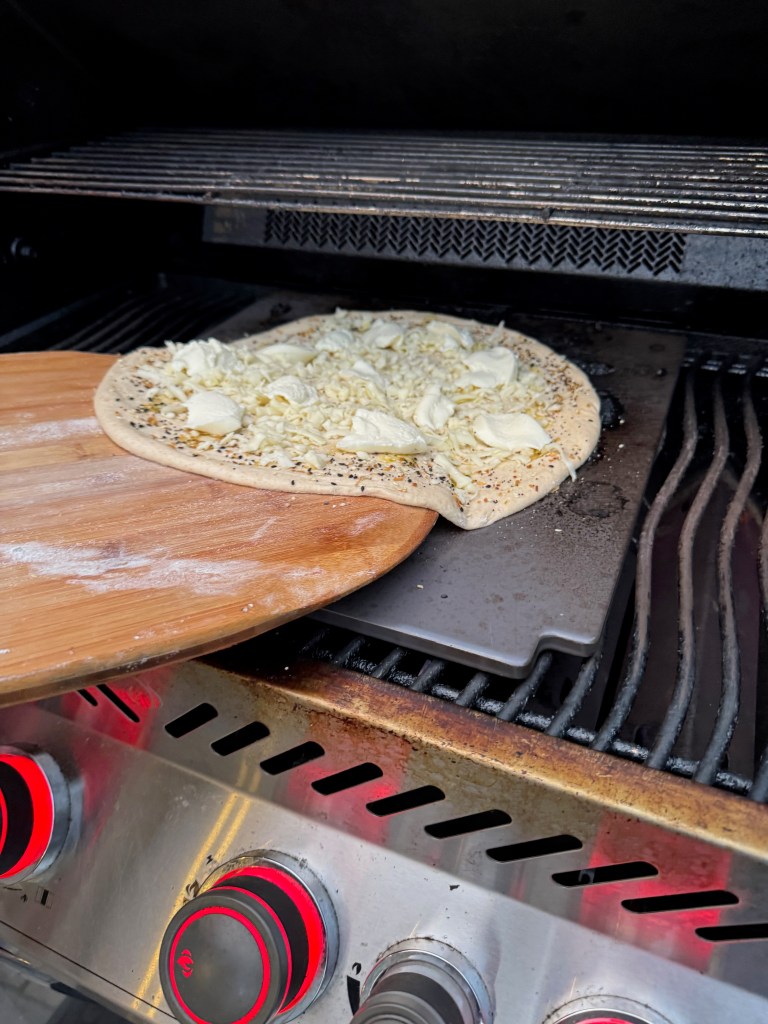
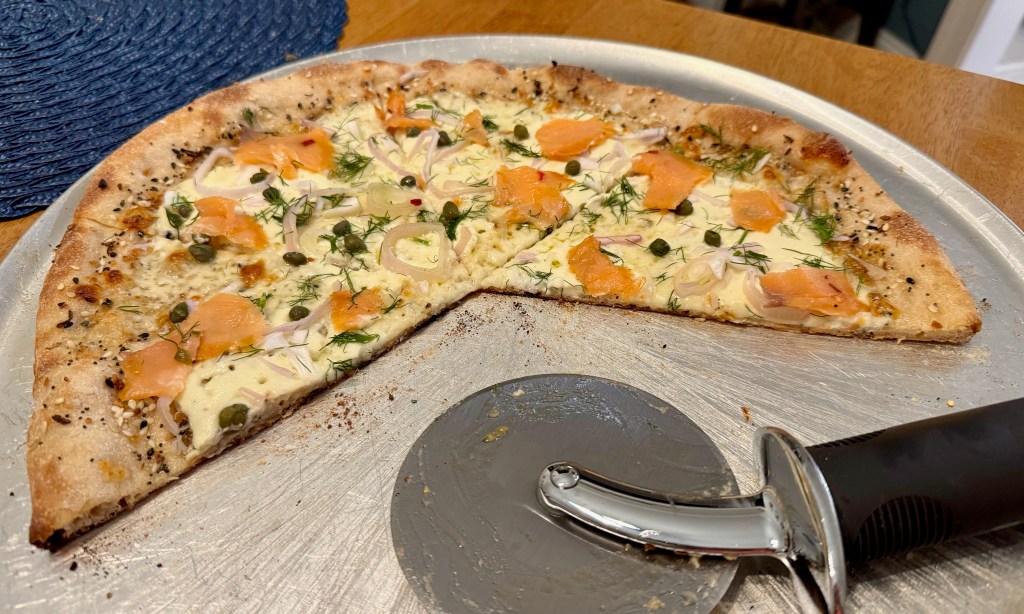
The crust for my pizza is the same as always: sourdough from scratch, made two days ahead and kept in the fridge for a cold ferment until pizza time. There was no sauce on this pizza. I sprinkled the dough generously, especially on the edges, with everything bagel seasoning and then spread a light layer of freshly grated mozzarella and a few dollops of ricotta cheese before we slid it onto the preheated stone on our outdoor grill.


I know what you’re thinking—“doesn’t a bagel get spread with cream cheese?”— and you’d be correct. But I wasn’t sure how well cream cheese would hold up under the intense heat we use for pizza, so I substituted ricotta, which I’ve used successfully on other pies in the past. In hindsight, this is one thing I’ll do differently next time. There was nothing wrong with the ricotta, but I missed the smooth texture of cream cheese. I think if the cream cheese was very cold, straight from the fridge, it would do just fine and would provide a more expected flavor.


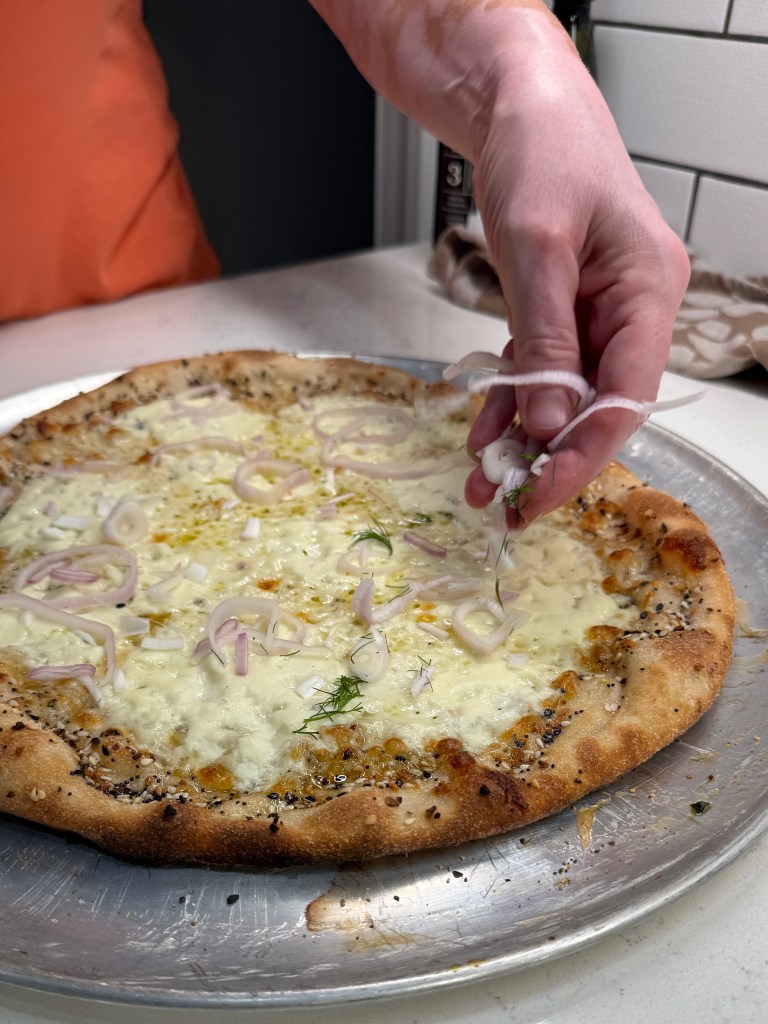
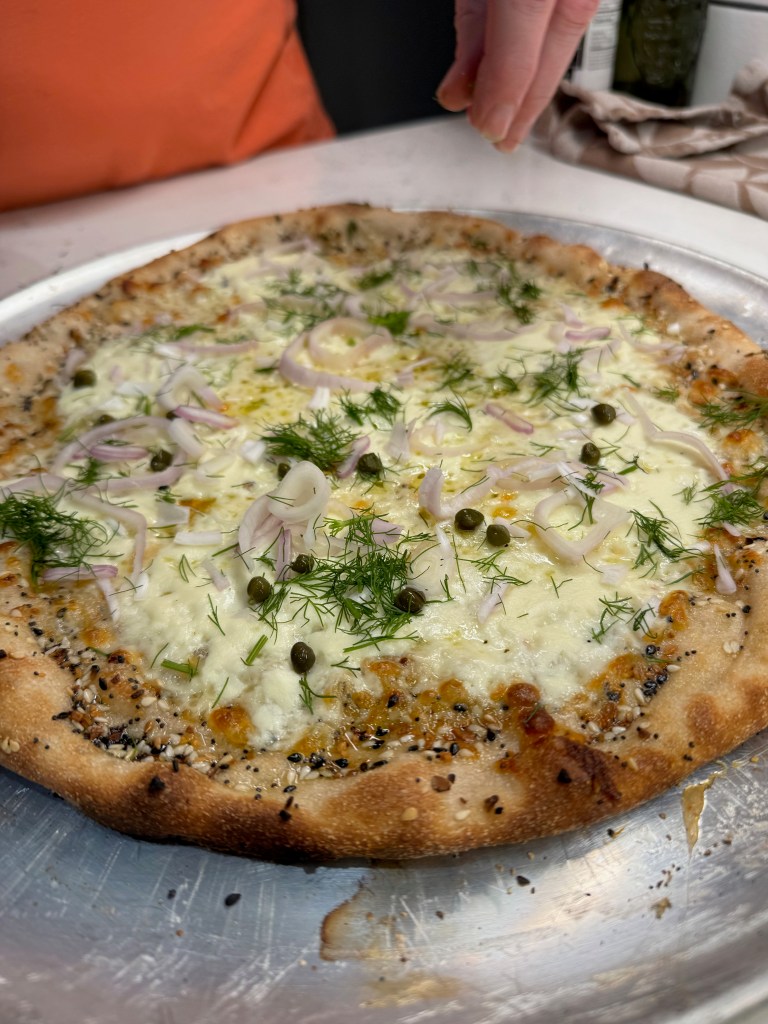
The ricotta oozed out into thin puddles, which gave every bite a nice even base. I scattered thinly sliced shallots, small capers and fresh dill over the hot pizza, and then arranged bite-sized bits of our smoked salmon all over just before serving. This kind of salmon would have shriveled terribly in the oven, so I believe this was the way to go. But here’s the other thing I’ll do differently next time—and there will be a next time—I’ll double the amount of salmon. It looked pretty in pictures to have a sparse amount of salmon, but when sliced and served, it felt a little skimpy. The salmon I used was supposedly a “hot honey” variety, but neither Les nor I found it to taste any different from a regular smoked salmon. I won’t spend extra next time for the fancy flavor (given that it didn’t have any). 

So what did we serve the rabbi and his family?

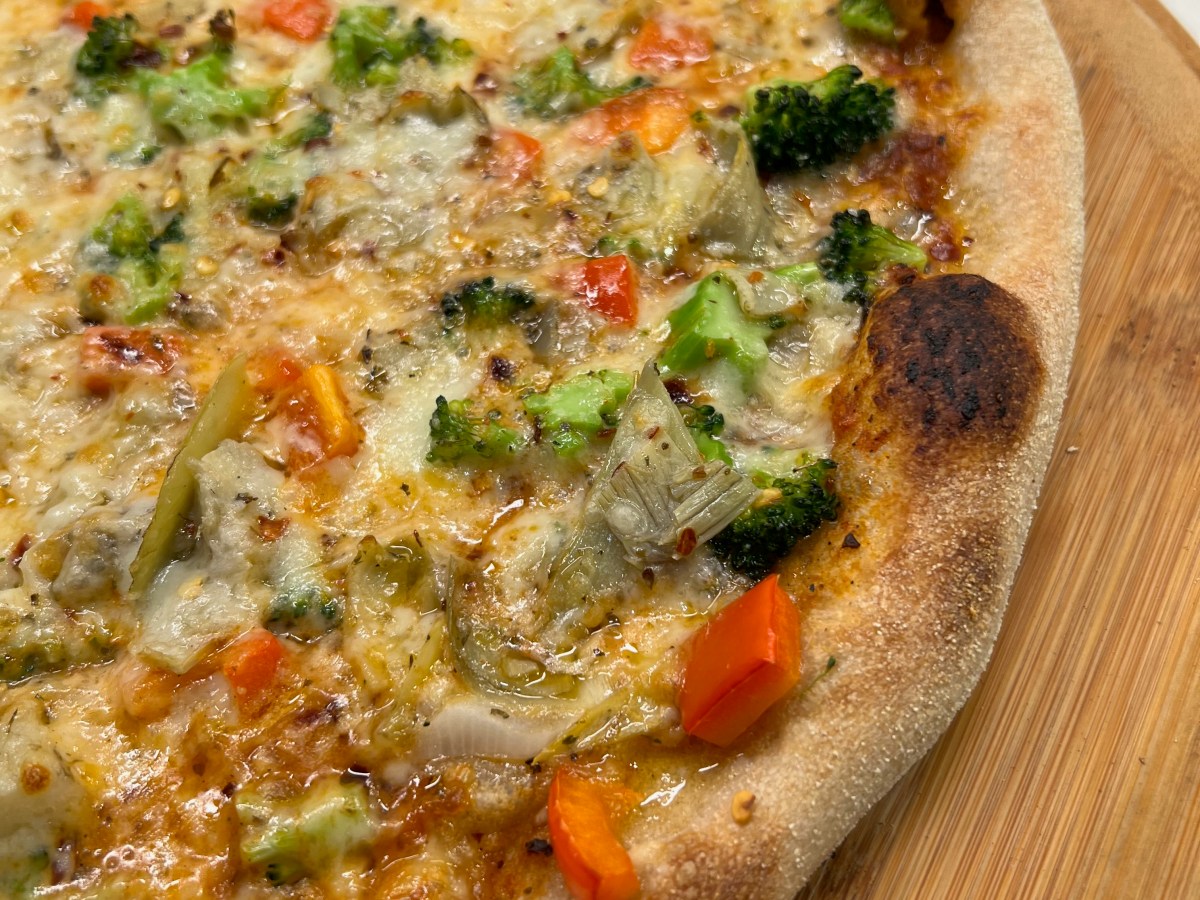
Pizza without meat is easy-peasy, and we managed just fine with a variety of veggie-forward pies for our kosher-keeping guests. One pizza was half classic veggie (peppers, onions, mushrooms and spinach) and half plain cheese. Here are the other two, and I promise that nobody ended the evening hungry. Especially after the ice cream, which is coming later this week. 😉


One more kosher tidbit…

I learned only within the past few years that traditional Italian hard cheeses, such as Parmigiano-Reggiano and Pecorino-Romano, are made with animal rennet and therefore not generally regarded as vegetarian. This is important to consider when serving guests who steer clear of meat for any reason, and I called this out when we were prepping pizzas, assuring our kosher guests that I had found a Wisconsin-made parmesan that used plant-based enzymes rather than rennet. The rabbi shared the good news that there is a kosher (though not vegetarian) exception, using rennet from kosher-slaughtered lambs. This would not exonerate parmesan for vegetarian diets, but for religious purposes, it has been deemed acceptable. 

If you know me at all, you know that I can’t resist a good rabbit hole, so I dug in a bit and found this interesting article to explain more about it, in case you’d like to check it out.

The leftovers became our next-day breakfast!

Everything Bagel Pizza

  • Servings: 6 slices
  • Difficulty: Average
  • Print

This is a unique twist on an everything bagel, topped with all the ingredients we enjoy at breakfast. But this time, it's on a sourdough pizza crust!


Ingredients

  • 11 oz. pizza dough ball, at room temperature
  • Extra virgin olive oil
  • 2 Tbsp. “everything bagel” seasoning (a combination of sesame seed, coarse salt, poppy seed and dried garlic)
  • 1/2 cup freshly shredded firm mozzarella
  • About 1/3 cup whole milk ricotta, cold from the fridge
  • 1/4 cup thinly sliced shallots (or red onion)
  • 1 Tbsp. small capers, drained but not rinsed
  • Small handful fresh dill, chopped
  • 3 oz. cold smoked salmon (lox)

Note: We make most of our pizzas on a steel that has been pre-heated for one hour at 550° F, or sometimes on a specialty stone on our outdoor grill, also at least 550° F. This very closely replicates a brick oven-style pizza that is finished in about seven minutes. If you are using an oven pizza stone or a pizza pan, you will need to adjust your temperature and cooking time accordingly.

Directions

  1. Preheat your oven or grill, and bring the pizza dough to room temperature.
  2. Shape pizza dough by hand into a 14-inch round and place on a flour- and cornmeal-dusted wooden peel for easy transfer to and from the oven or grill.
  3. Drizzle dough with olive oil and sprinkle salt and pepper over the surface. Generously scatter the everything bagel seasoning over the crust, concentrating mostly on the outer edges.
  4. Spread mozzarella evenly over the center of the dough, and use a large spoon to arrange dollops of the ricotta around the pizza.
  5. Transfer to the pizza steel or stone and bake for 6 to 7 minutes, rotating the pizza after about four minutes.
  6. Transfer hot pizza to a serving pan. Quickly scatter shallots, capers and dill over the pizza, and then arrange the smoked salmon so that every slice has an equal amount.


Caprese-inspired Pasta Salad

I’ve been ruminating lately about my grandmother’s ways in the kitchen. How she fed everyone on scraps— not because she had to but because she could— and realizing that I don’t employ her tactics as often as I have opportunity. Pinching pennies doesn’t have to be a necessity; it can be a strategy for ensuring that we always have enough. And in times of financial uncertainty (which lately seems to be always), that strategy can keep us fed, not only physically, but also emotionally. 

My grandmother knew this, and it’s why she used up all the bread heels and stale sweet rolls to make her amazing bread pudding, which we all loved. It’s why 10-year-old me could sit at her dinner table, puzzled at her claim that we were having leftovers, not recognizing the food before me as something we’d already eaten that week. She was terrific at transforming, and I have that spirit in my bones, too— I just don’t always realize when I’m doing it.

We are about to enter an era where many ingredients we take for granted will be less available or more expensive than we’ve come to expect, thanks to climate change, tariffs, supply chain chaos and farm worker shortages. I thought it timely to share one of my favorite ways to stretch expensive ingredients: a pasta salad. My offering is a Caprese-inspired summer side dish that uses half a bag of pasta bowties, a small container of cherry tomatoes, fresh summer basil and mozzarella. None of these items is particularly expensive— especially if you happen to have a little garden at home— but I hope to provide a template that might help you stretch out other ingredients that lean toward the pricey side.

Summer in a bowl! 😎

Classic caprese— sort of

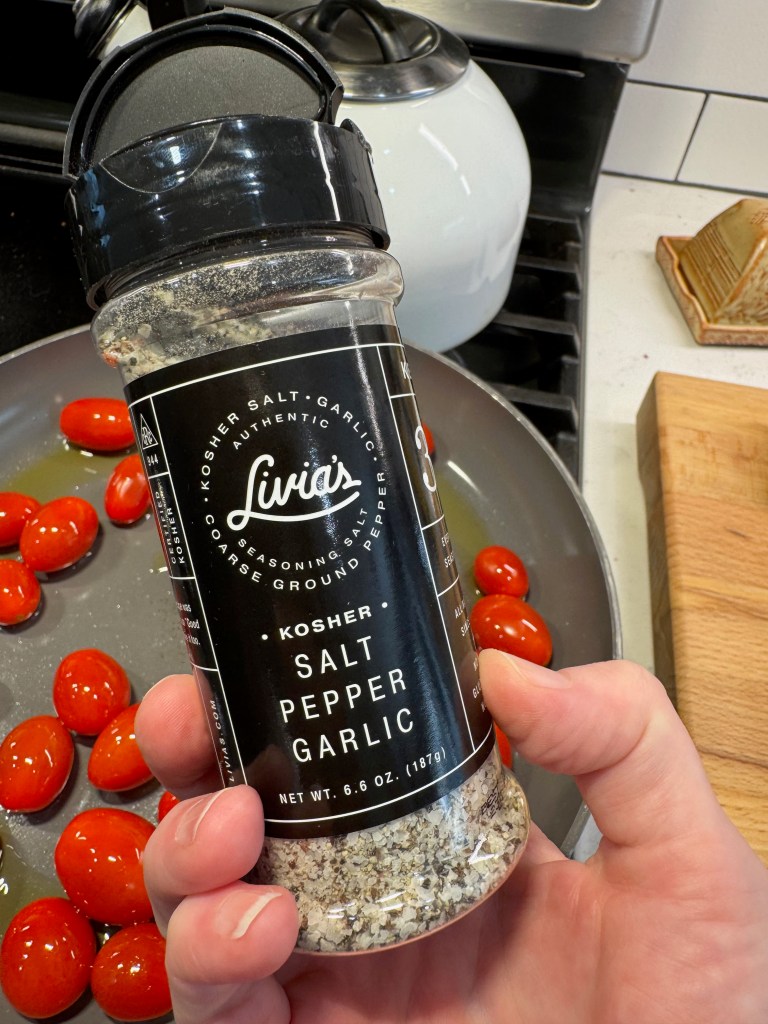
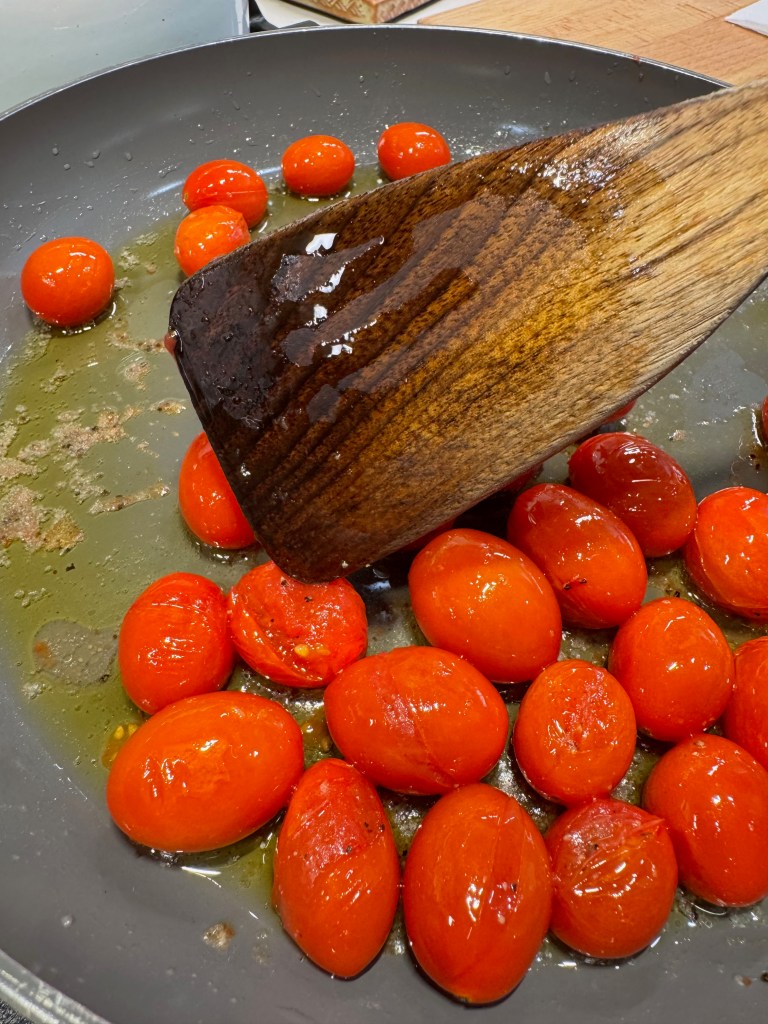
The flavors (and 🇮🇹 colors) of Caprese are all present here, but I’ve taken a few liberties to amplify the key ingredients. For starters, I poached the tomatoes in a bit of extra virgin olive oil to concentrate their sweetness and to reduce some of the moisture, and then I scooped the cooked tomatoes into a bowl to cool, reserving the flavorful oil for later. This is a simple trick for getting the most flavor out of the tomato and, as a bonus, it’s easier to eat them without the juice bursting out everywhere.


Next, I had a ball of sliced soft mozzarella, as well as a small package of the more expensive mozzarella pearls. I blotted all of it with paper towels and cut the slices into bite-sized pieces. I saved the prettier pearls for the top of the salad. Same flavor, a few pennies cheaper.

My mozzarella was pre-sliced, so this was quick work.

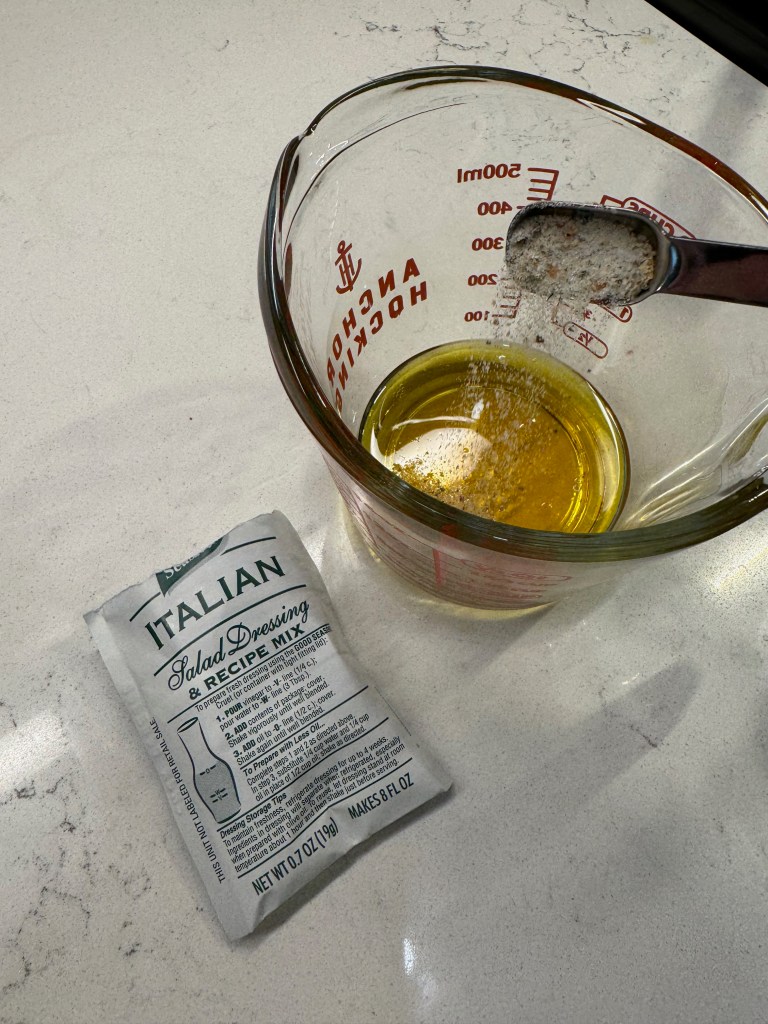
Dark balsamic vinegar, typical for Caprese,  leaves splotchy stains on mozzarella, and that’s not a good look when you’re tossing the salad rather than drizzling it. I opted instead for a white balsamic-based dressing, jazzed up with fresh lemon, olive oil and a spoonful of Italian dressing mix. I had a plan to include a touch of dark balsamic, but not yet.


Rule #1 – Season every layer!

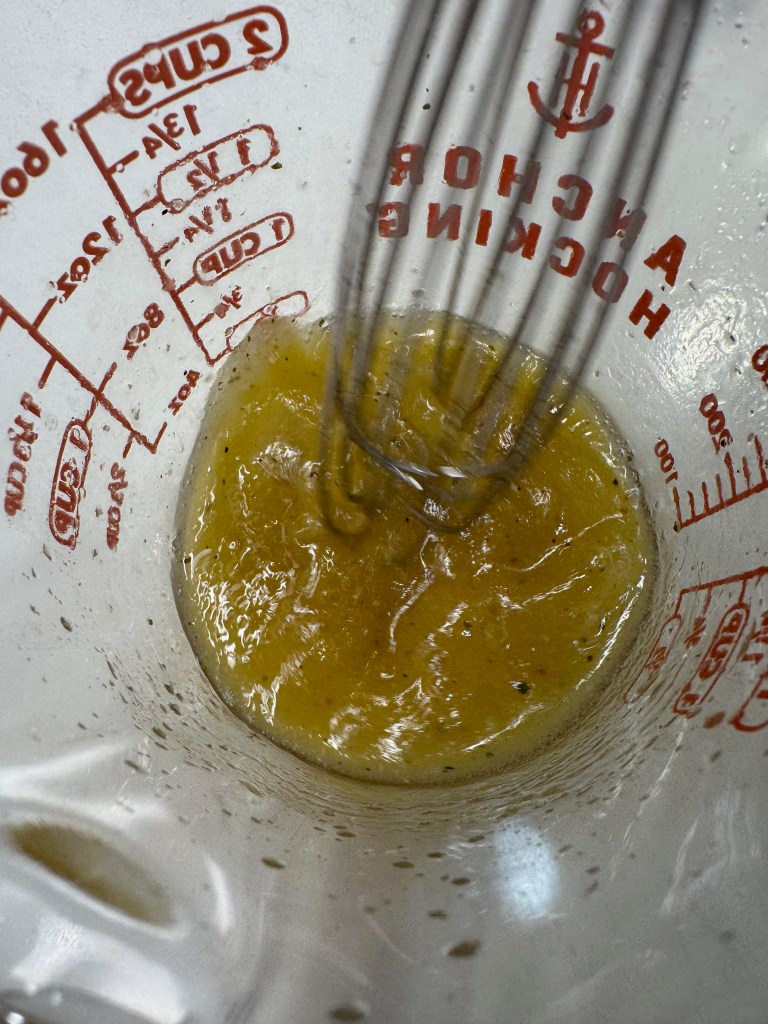
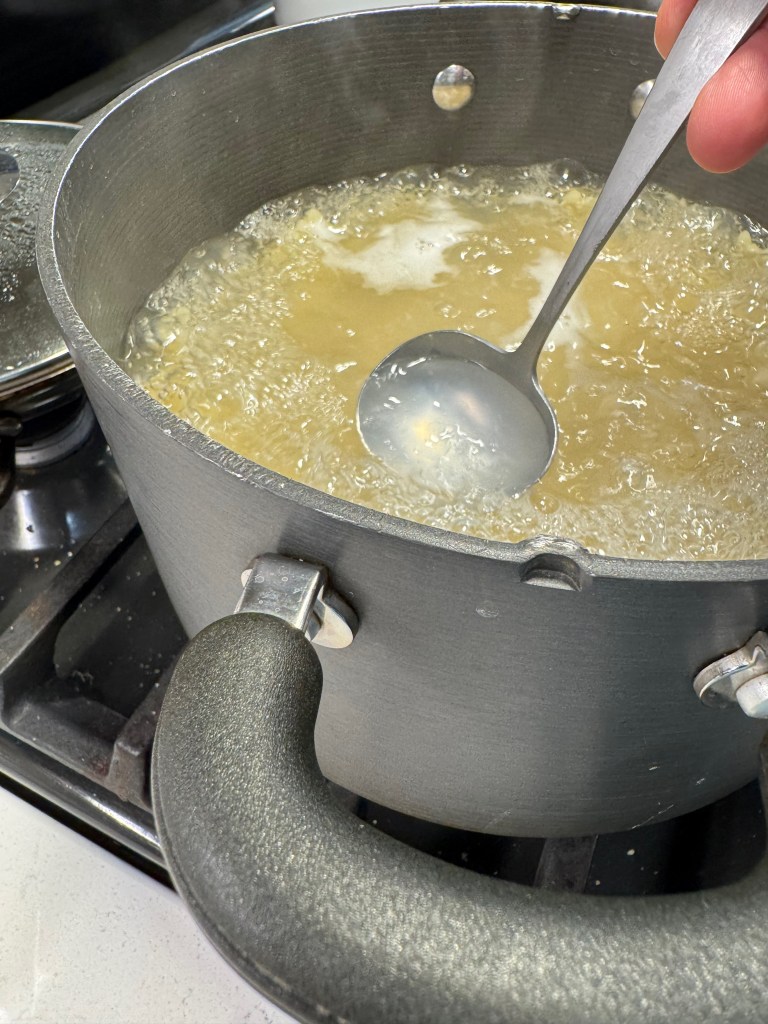
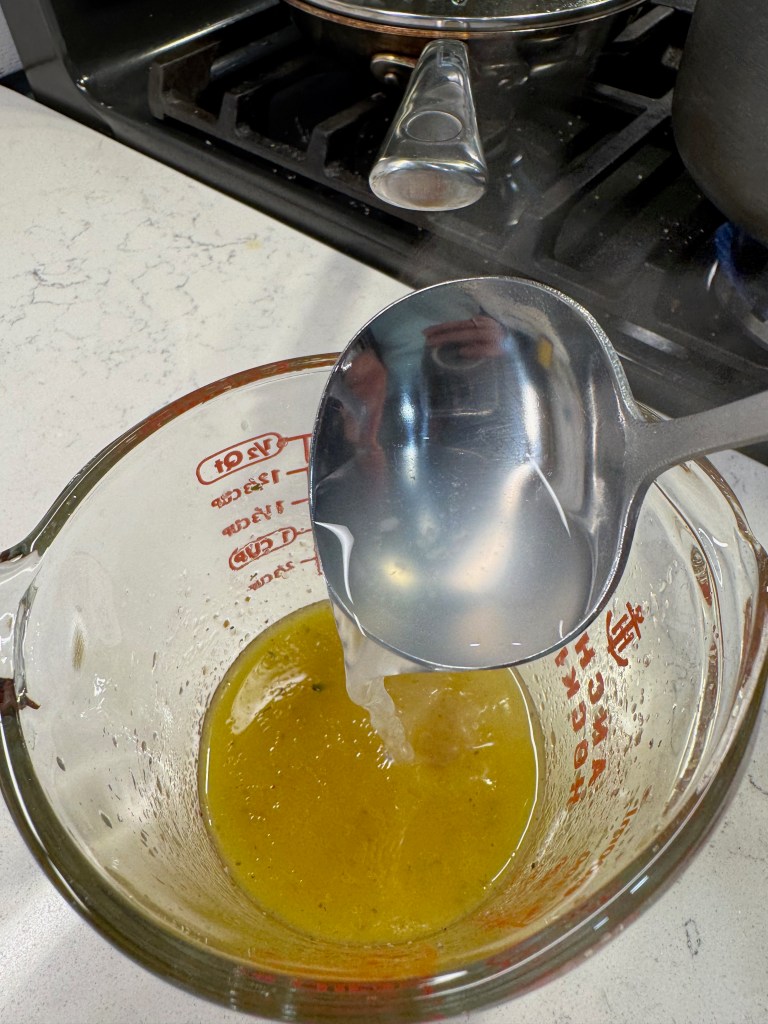
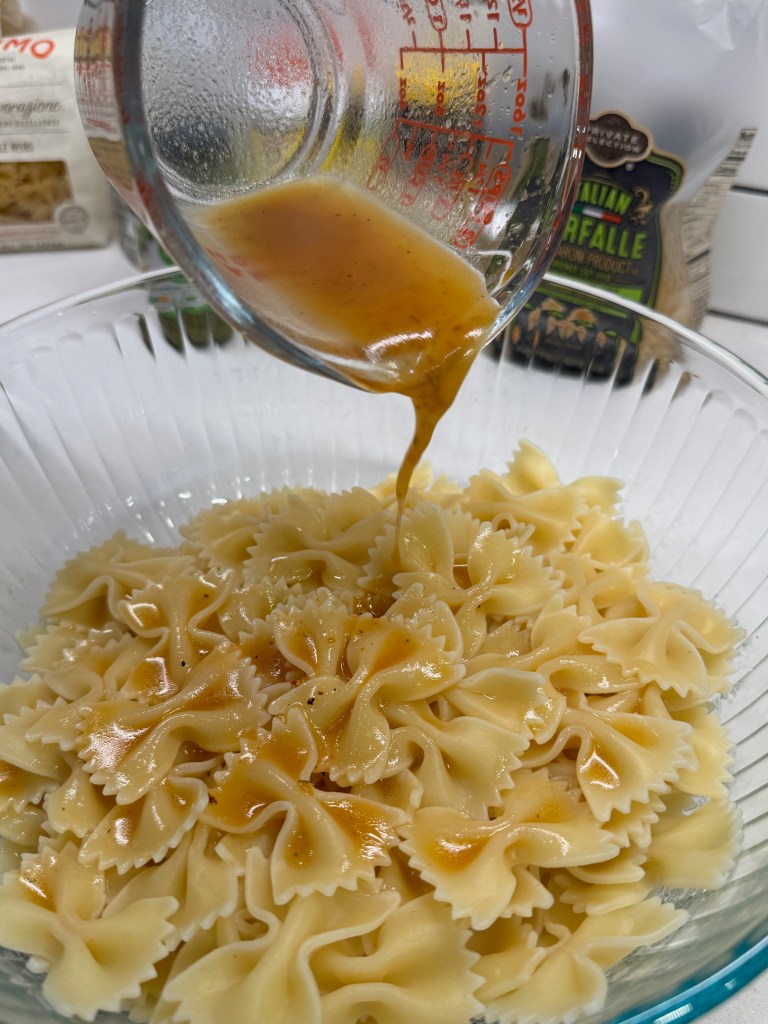
As always, I recommend plenty of salt in the pasta water. You only get one shot to add flavor, so be generous and remember that most of that sodium goes down the drain— you’re not eating it all. When the pasta was al dente, I scooped out a little bit of the starchy water and whisked it into my dressing to help it cling to the pasta.


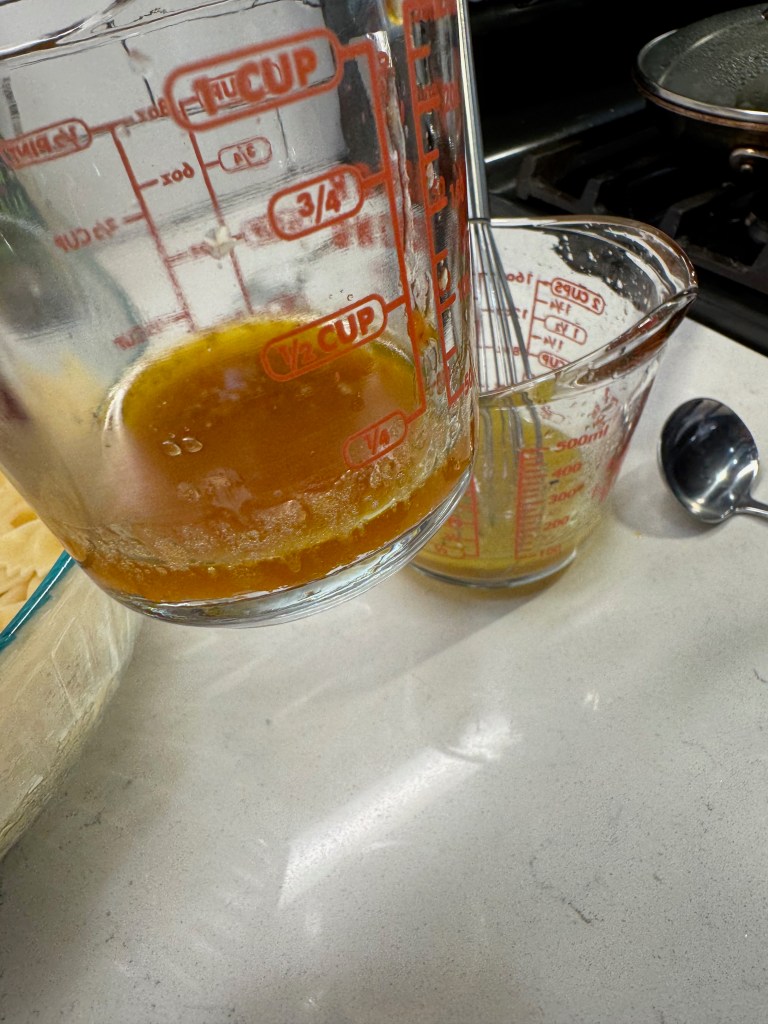
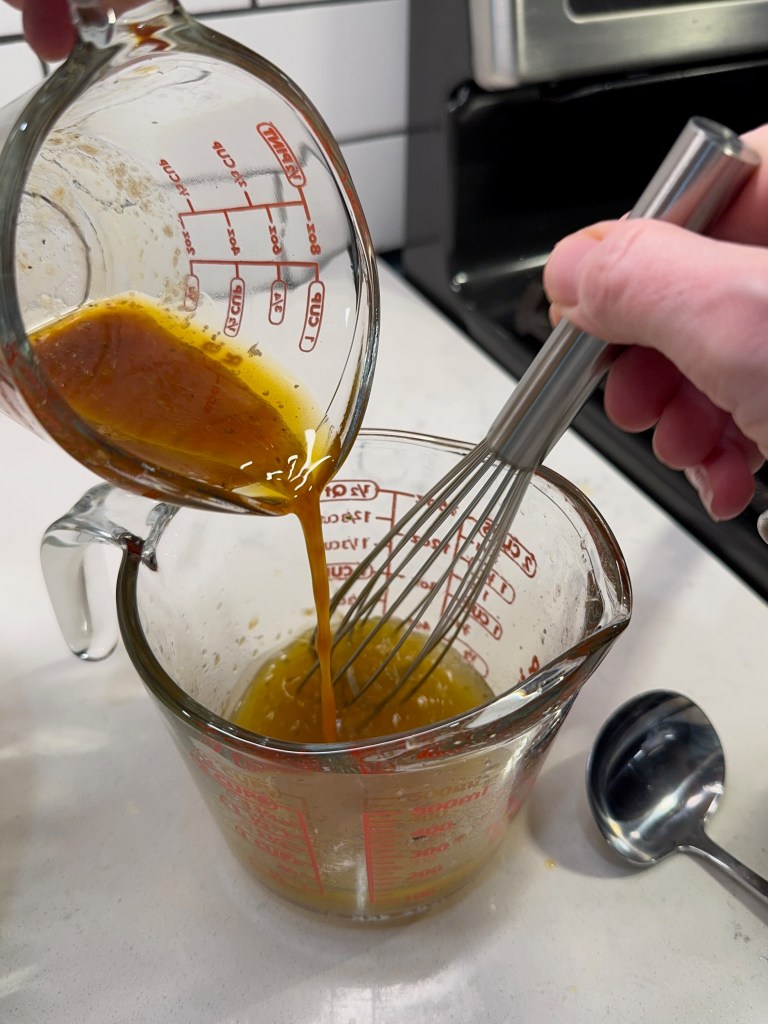
Finally, remember the tomato-scented oil that was left over after poaching the cherry tomatoes? I whisked that cooled oil into the dressing, too, extending the sweet tomato flavor throughout my salad in the process. I poured the dressing over the pasta while it was hot, ensuring that it would soak into every bow tie. Toss this for a couple of minutes to distribute the dressing evenly.


Bring on the Caprese

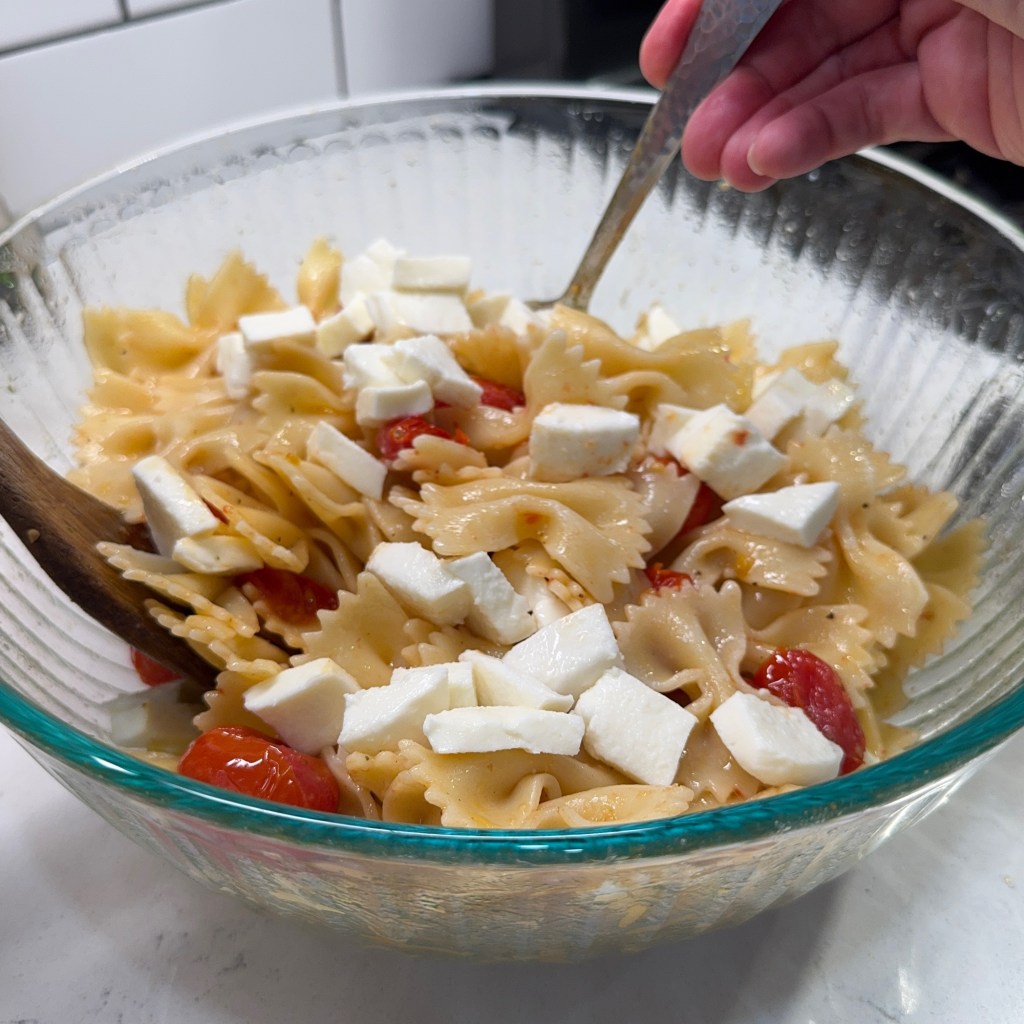
A few minutes later, when the pasta was cooled to room temperature, I gently tossed in the poached tomatoes and the pieces of sliced mozzarella, and sent it to the fridge until we were ready to pack up for dinner with some friends.


For serving a pasta salad, I love to line the bowl or platter with leafy lettuce greens. It looks pretty, and it also gives excess dressing a place to run so that the salad doesn’t get too drippy. If you are entertaining a larger crowd, a deep platter with extra spoons is nice because it allows more people to self-serve at once. For a small crowd, or if you have limited space on the table, a bowl works great.
Final touches on this Caprese-inspired salad

A good quality bottle of balsamic is a secret weapon in the kitchen!

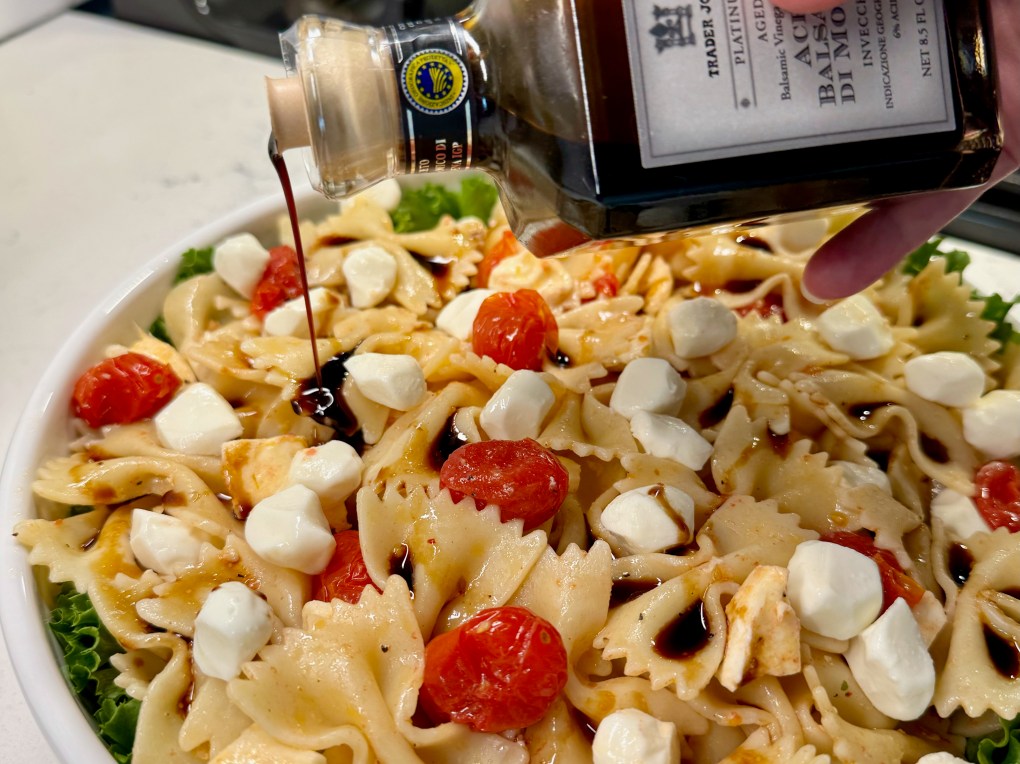
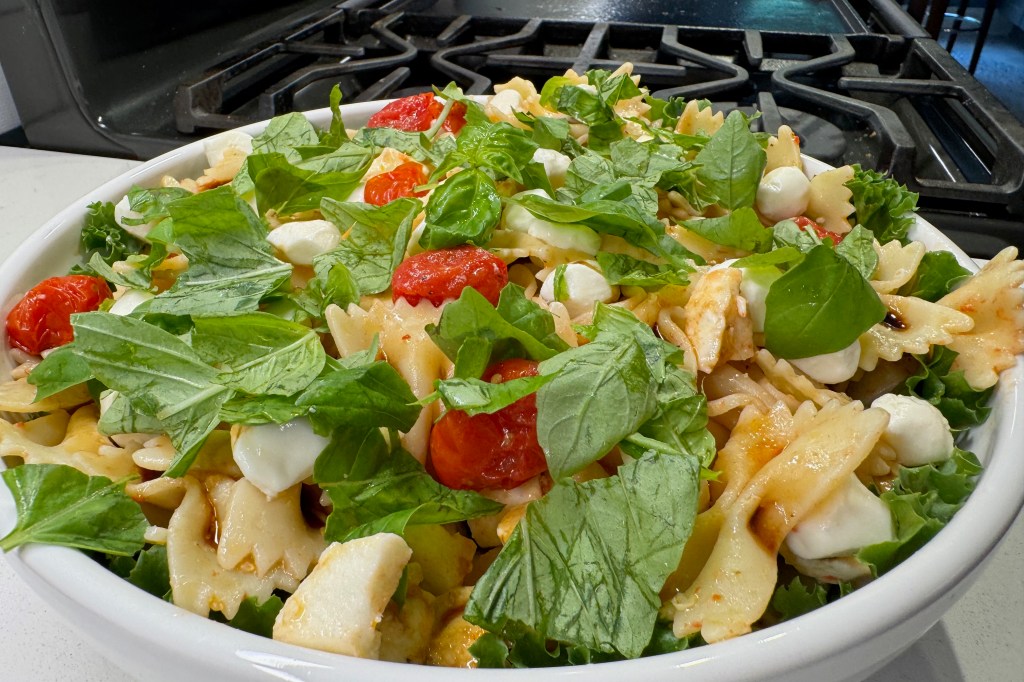
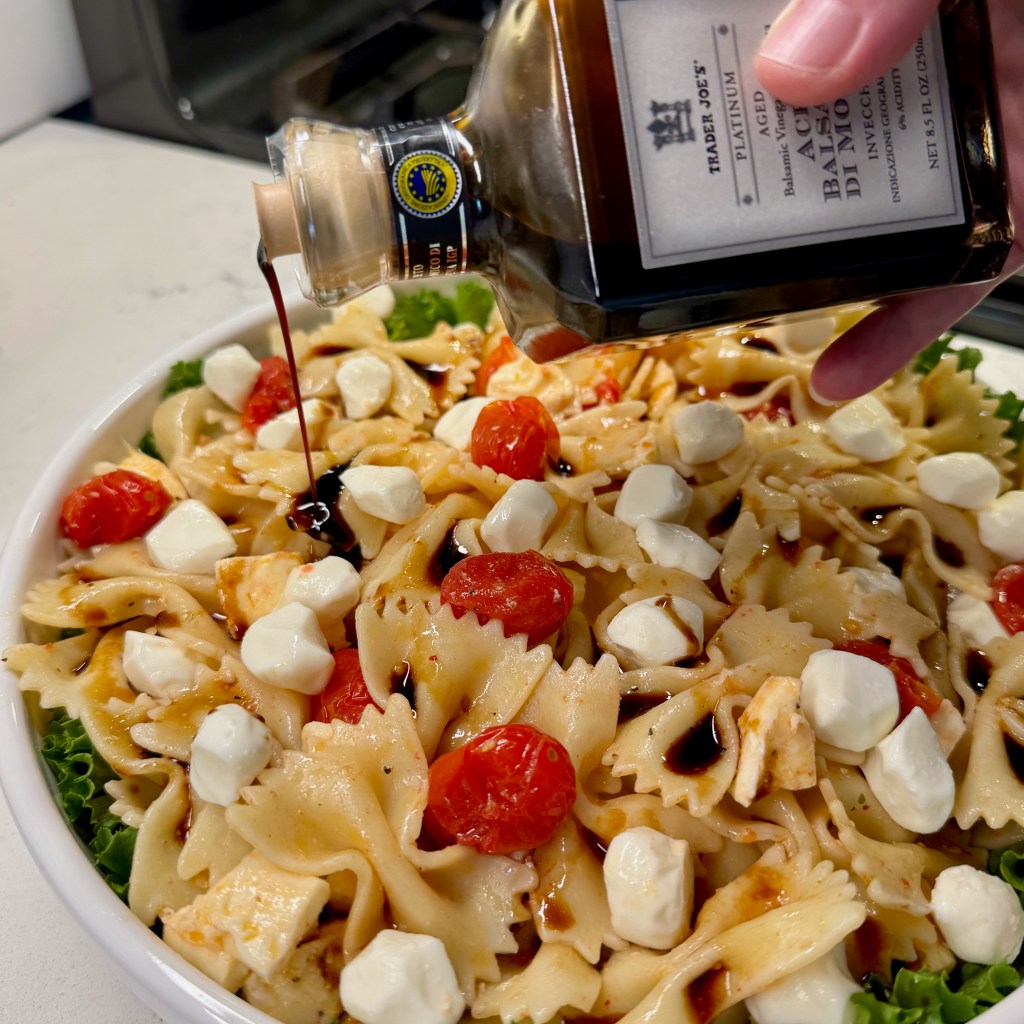
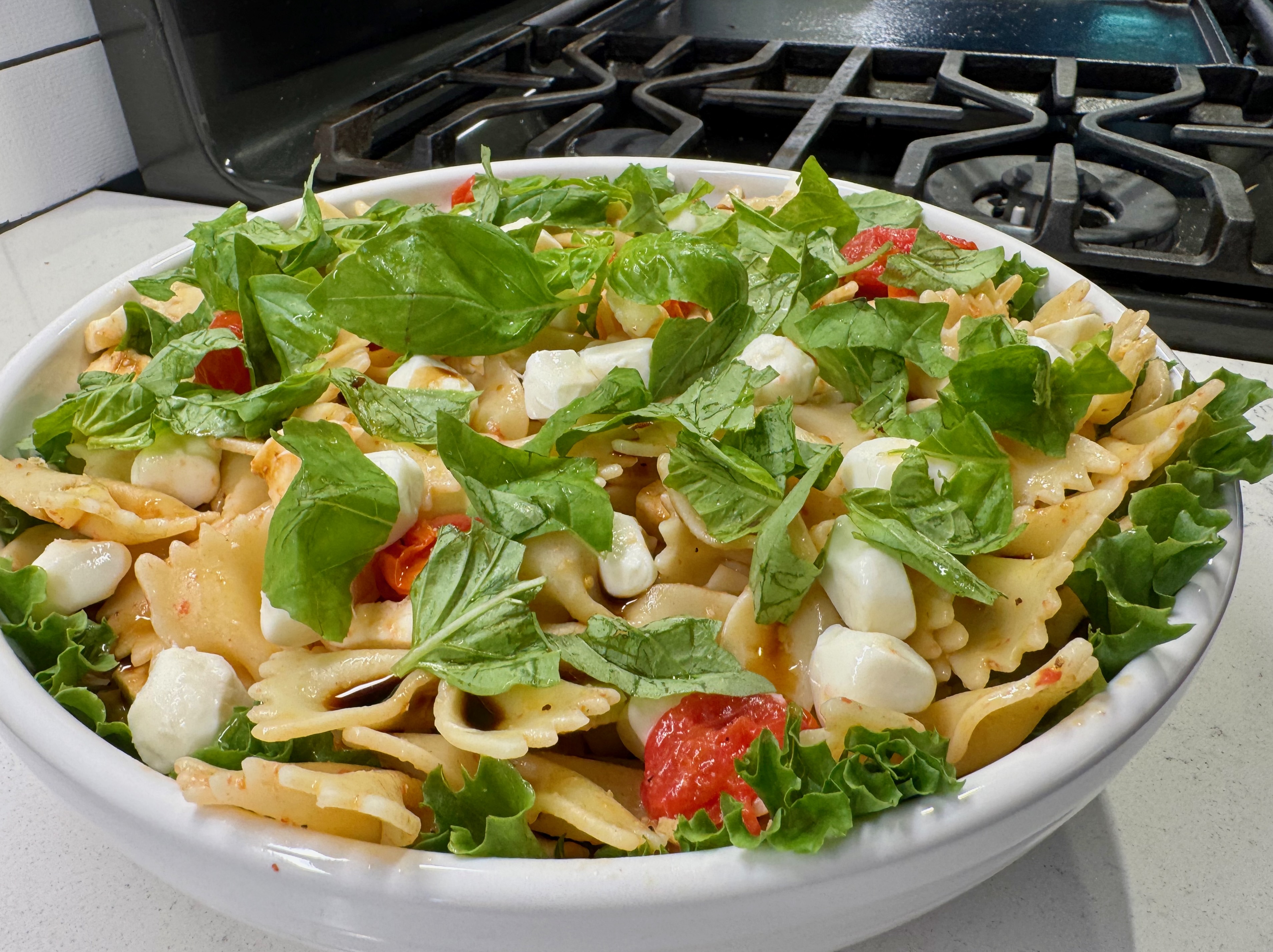
I scattered the mozzarella pearls on top, and then it was finally time for a touch of classic dark balsamic. Just a few drizzles over the pasta bowties, and I used a reduction that was thick and syrupy, so it stayed in perfect little puddles. Fresh basil is classic on a Caprese, and it’s easy to find this time of year, especially in my patio container garden. If basil isn’t your thing, I think fresh Italian parsley would be a good substitute here.

Caprese-inspired Pasta Salad

  • Servings: 6 to 8
  • Difficulty: Average
  • Print

It's summer salad season, and this Caprese-inspired dish is a great way to highlight the classic flavors when serving a crowd.


Ingredients

  • 8 oz. semolina bowtie pasta (see recipe notes)
  • 1 dry pint cherry or grape tomatoes, washed and patted dry
  • 2 Tbsp. extra virgin olive oil
  • Salt and pepper to taste
  • 2 to 3 Tbsp. white balsamic vinegar
  • 1 tsp. fresh lemon juice
  • 1 tsp. dry Italian salad dressing mix (see recipe notes)
  • 2 Tbsp. extra virgin olive oil
  • 2 Tbsp. hot pasta cooking water
  • 1 lb. fresh soft mozzarella (cut into cubes or pearls)
  • 2 Tbsp. dark balsamic glaze
  • 1 handful fresh torn basil leaves

Recipe Notes: Whenever possible, seek out pasta that is made with durum (semolina) flour, and labeled as bronze-cut. This method of cutting leaves a slightly rough texture, better for sauce or dressing to cling.

I used Good Seasons brand dressing mix, but you could easily substitute a pinch of garlic powder and some dry Italian herbs.

Directions

  1. Prepare a pot to boil the pasta, and season it generously with kosher salt. Begin cooking pasta when tomatoes are nearly finished cooking.
  2. Heat a medium-size skillet or sauté pan over low heat, and swirl in extra virgin olive oil. Add tomatoes, season with salt and pepper and roll to coat them in the oil. Cook the tomatoes very slowly until the tomatoes are softened and easily smashed with a utensil (about 25 minutes). Press each of them when they reach this softened stage to release the juice inside. Cool slightly, and then spoon out the oil into a measuring glass. Reserve this for the dressing.
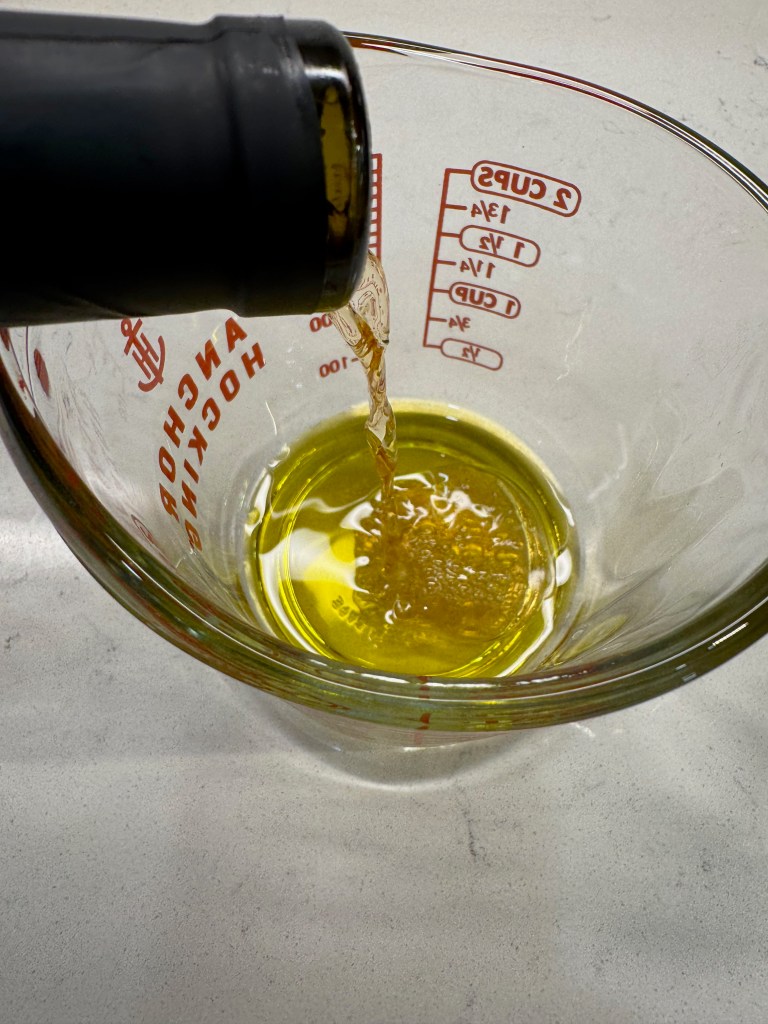
  3. In a second measuring glass, combine white balsamic, lemon juice, Italian dressing mix and olive oil. Whisk to combine and set aside.
  4. When pasta reaches al denté stage, spoon out about two tablespoons of the hot pasta water. Whisk it into the dressing mixture, along with the reserved tomato cooking oil.
  5. Drain pasta thoroughly and transfer to a large bowl. Pour dressing over the pasta while it is still hot, and toss gently a few times to coat evenly. Toss again after a minute or two, and then allow the pasta to cool to room temperature.
  6. Gently toss cooled tomatoes and half of the mozzarella into the pasta. Refrigerate until serving time.
  7. Transfer chilled pasta salad to a serving bowl. Top with remaining mozzarella, drizzle dark balsamic over salad, and scatter fresh basil leaves just before serving.


But, the cheese!

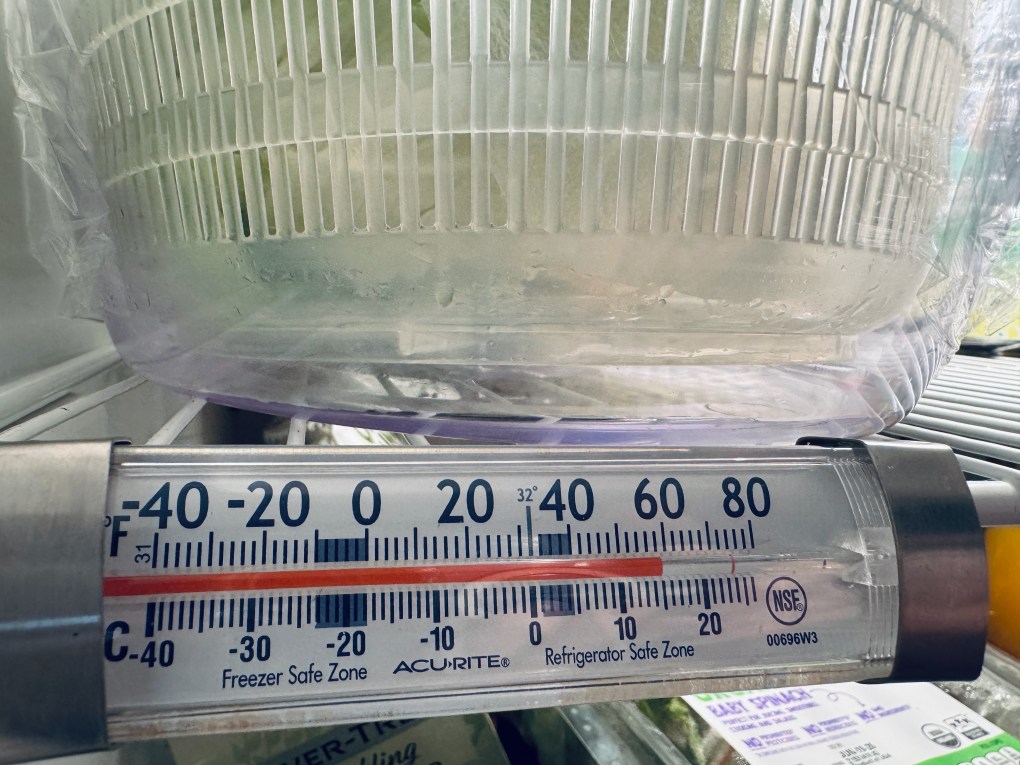
My heart sank yesterday when I stepped out into our enclosed garage and noticed a stream of light running the full length of the refrigerator door. Had we retrieved something from the extra fridge earlier that morning and just missed closing it tight? Unfortunately, it quickly became apparent that this was not a recent mistake, as a large block of cheese on the top shelf was warm to the touch. The door had been open all night, at least ten hours, and the small thermometer clipped onto the top shelf registered nearly 70° F. Ugh. 

In that moment, I became the father in A Christmas Story in the scene where he wailed about all the favorite foods that he wouldn’t be able to enjoy after the neighbor dogs attacked the roast turkey. You see, I had just gone to Costco a few days prior to this debacle to restock on our favorite expensive cheeses, and I had placed them on the top shelf of the fridge. My plan was to grate the one-and-a-half pound wedge of Parmagiano-Reggiano together with the one-pound wedge of Pecorino Romano, and we would have a hefty bucket of our beloved Parm-Romano Blend to get us through all the pizzas, grilled caesar salads and quick pasta dishes that I would make during summer. I had been fantasizing ways to use the huge double block of feta before its early November expiration, and I’d finally make one of my culinary bucket list items, a whipped feta dip. And there was a mellow cheddar aged in pale ale that had caught my eye. That would be a winner on an appetizer platter, and wouldn’t it also rock a macaroni and cheese? Sigh, I’ll never know. 

A few things I won’t be making 😕


Not only were the specialty cheeses no longer cold, they had virtually cooked under the constant heat of the incandescent light bulb, and smelly, oily liquid dripped from the corners of all the packages. If I could have salvaged any of it, I would have. It was easily $70 worth of cheese. For someone who searches out volume bargains and plans so carefully with food, this was a gut punch.

On the bright side, the rest of the refrigerator’s residents seem to be mostly OK. A jug of buttermilk in the door was a loss, but it was almost gone anyway. My vermouths would be fine. On lower shelves, an array of drinks and cocktail mixers that don’t technically need cold storage. A few fruits and veggies that I picked up Saturday at the farmers’ market would be used quickly enough that they would not be a loss. Even my sourdough starter, Pete, is expected to make a full recovery.

But, the cheeeeese. 😩

I imagined what my frugal grandmother would do in such a situation. She’d probably cuss, as I did (one of these days, I’ll share her favorite “bad” word, which she used with bold intention when circumstances warranted), and then she’d put on a pick-up-the-pieces attitude, scan the pantry and pull something together for dinner. She would not let the mistake define her. 

Onward.


Cherry & Blueberry Cheesecake Ice Cream

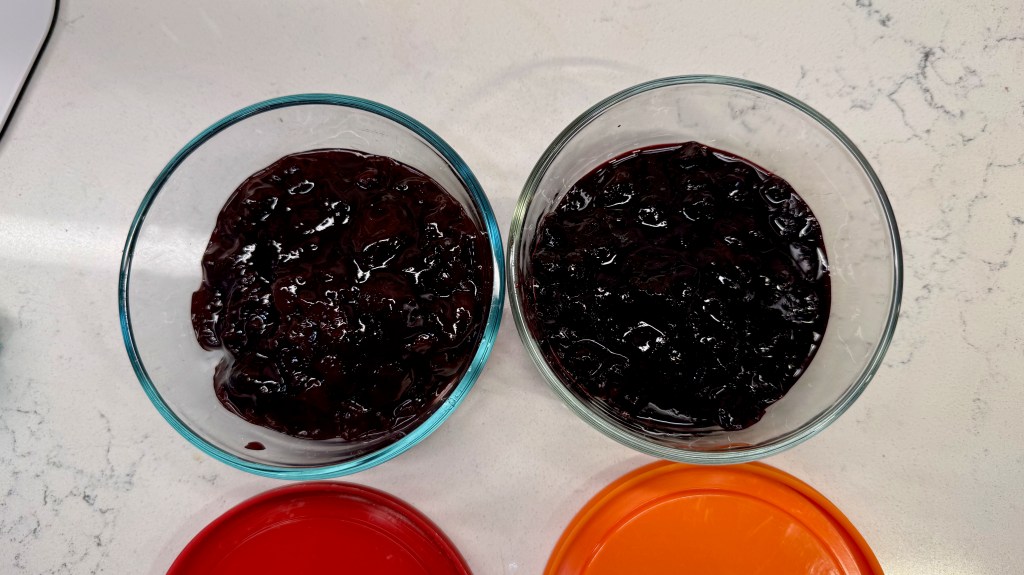
Three cheers for the purple, white and purple?! Yes, I know that isn’t exactly how the patriotic verse goes, and I had every intention and imagination for this ice cream to represent the colors of the American flag, just in time for the 4th of July. But something interesting happened when I cooked the cherry and blueberry compotes that were destined to be the “red and blue swirls” in my easy, no-egg cheesecake ice cream. They both turned to lovely shades of purple!

Can you tell which is which? Put your guess in the comments section!

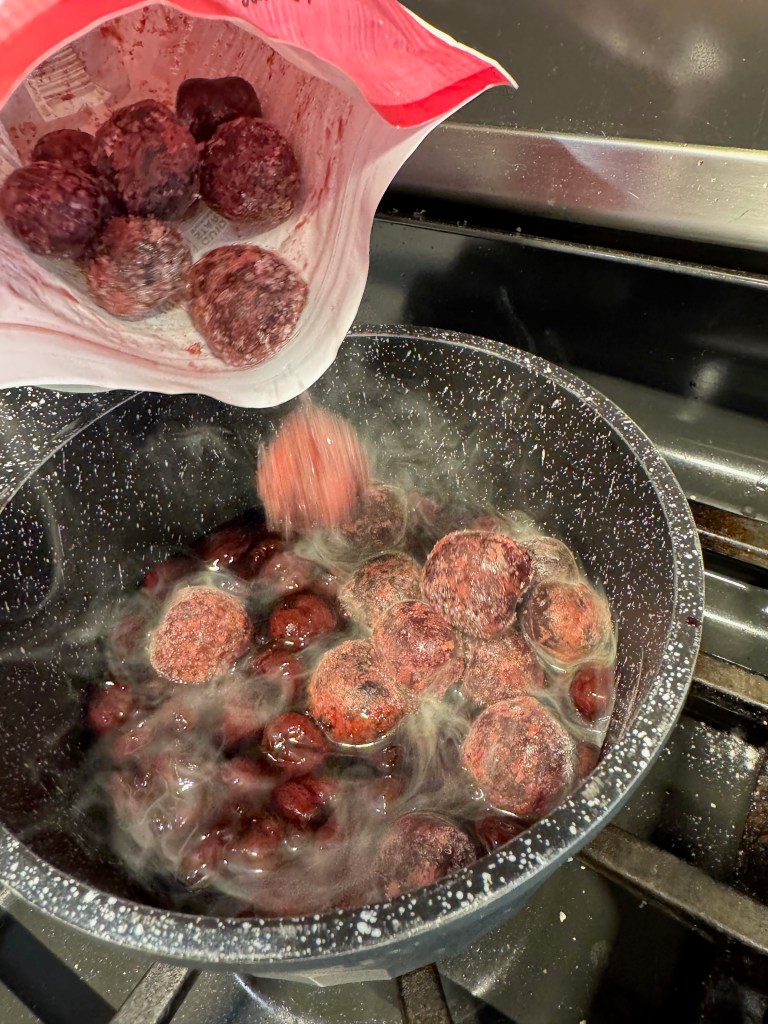
Well, dang! My vision was burst for this year’s first National Ice Cream Month offering, and I was bummed. I expected the blueberries would shift to a purplish color, just as they do in pancakes, muffins and even in the mouthwatering Vermont maple blueberry bread pudding that I made a couple of summers ago. But the cherries turning purple surprised me. I had fair warning when I opened the jar of tart cherries, which at first glance were as dull as Kalamata olives! The color perked up slightly when I added frozen dark sweet cherries, but not enough to bring them fully back to red.


Power to the purple!

I won’t pretend that I wasn’t disappointed and a little frustrated at the outcome of my “red and blue” ribbons, but there was a valuable meaning in this for me, and it has nothing to do with ice cream. As a nation, we have been self-segregating into red and blue buckets for generations, and how is that working out for us? Anyone who doubts the extent of social division in our land should check the comments section of literally any social media post, political or not. We are losing common ground, losing heart, and losing hope, and that is by design. For as long as rulers have coveted power, they have found ways to pit the people against each other to distract from the real damage they are inflicting on the masses. If they can get us to blame and hate each other, they win and we all lose. We need less revisionist history and fake patriotism that celebrates only “our own kind,” whatever that means, and more of the sentiment that focuses on the bigger picture of a nation that started out as, and still has the potential to be, a melting pot with room and respect for everyone. Power to the purple!

Press play: Little Steven doesn’t mince words in his message about patriotism.
It is as relevant today as when he performed this in 1984.

Give that some thought, and then let’s talk about the delicious cheesecake ice cream base that held my purple and purpler fruit ribbons together.

Cheesecake ice cream

Only a few slight adjustments to my usual base recipe.

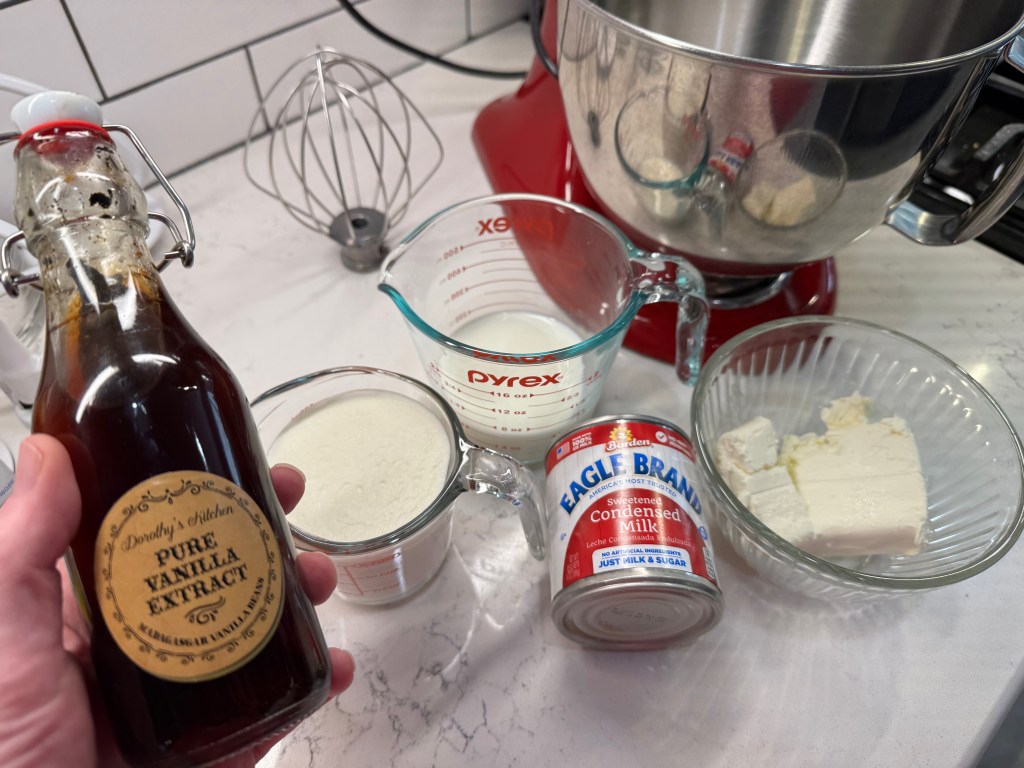
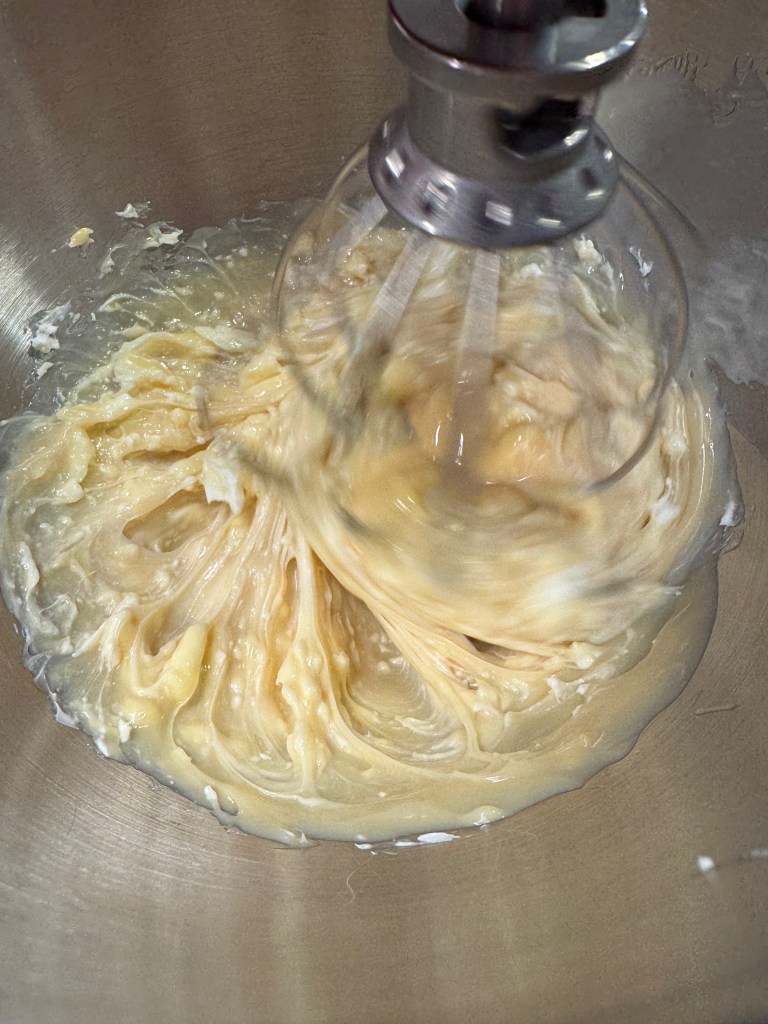
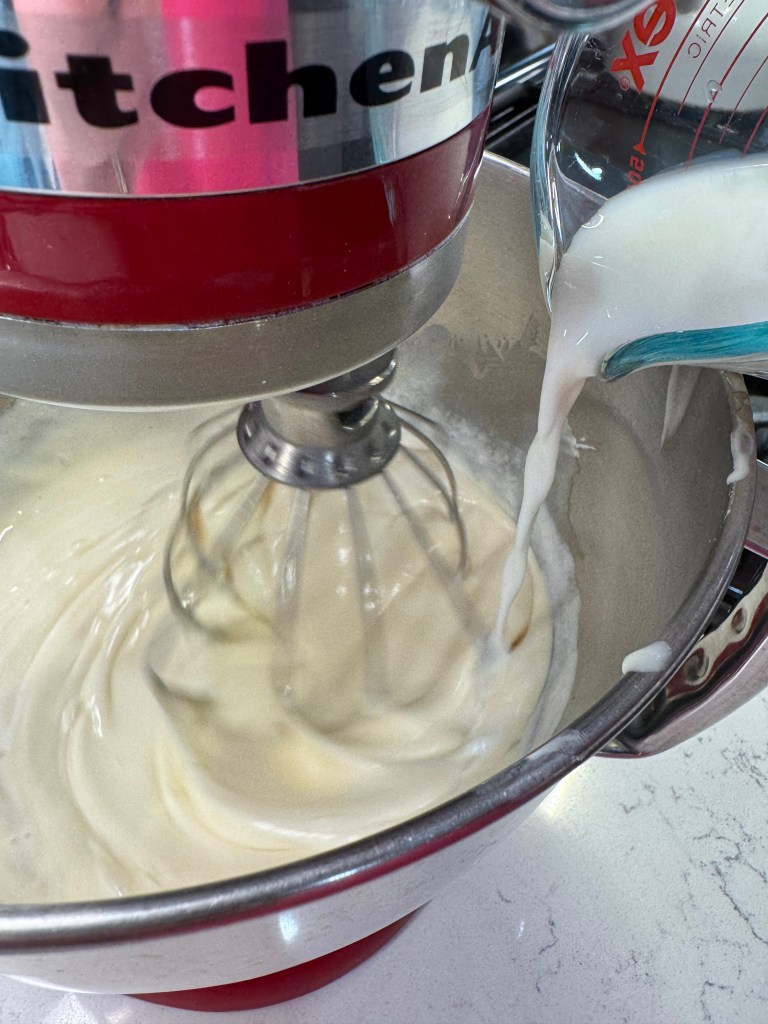
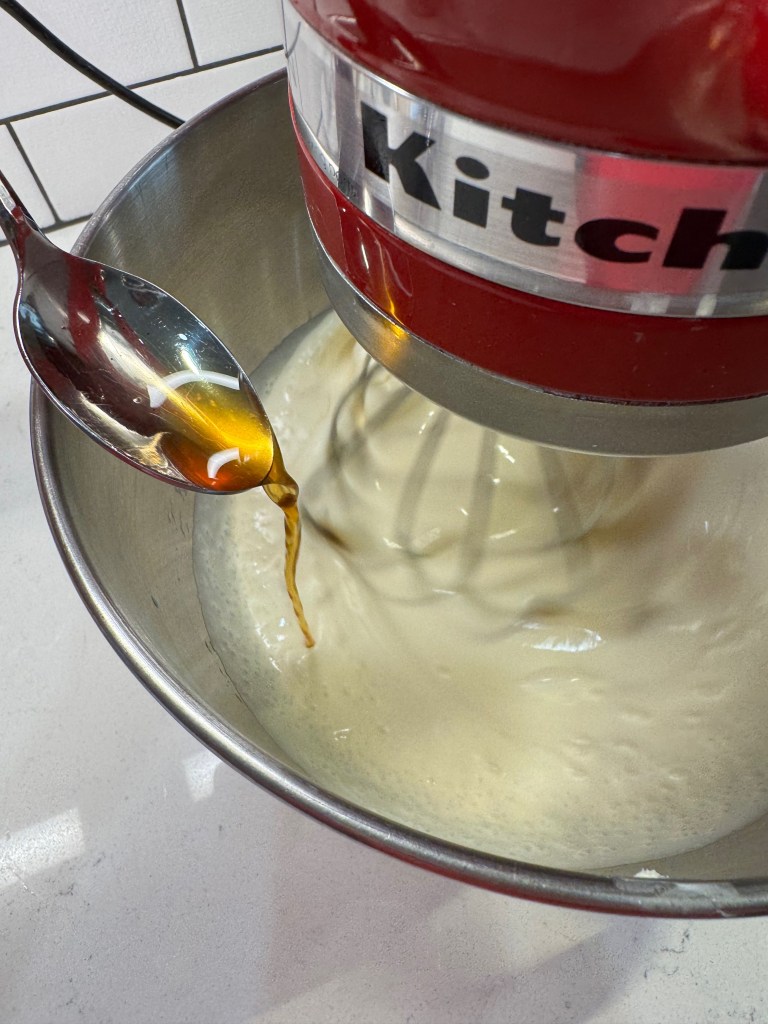
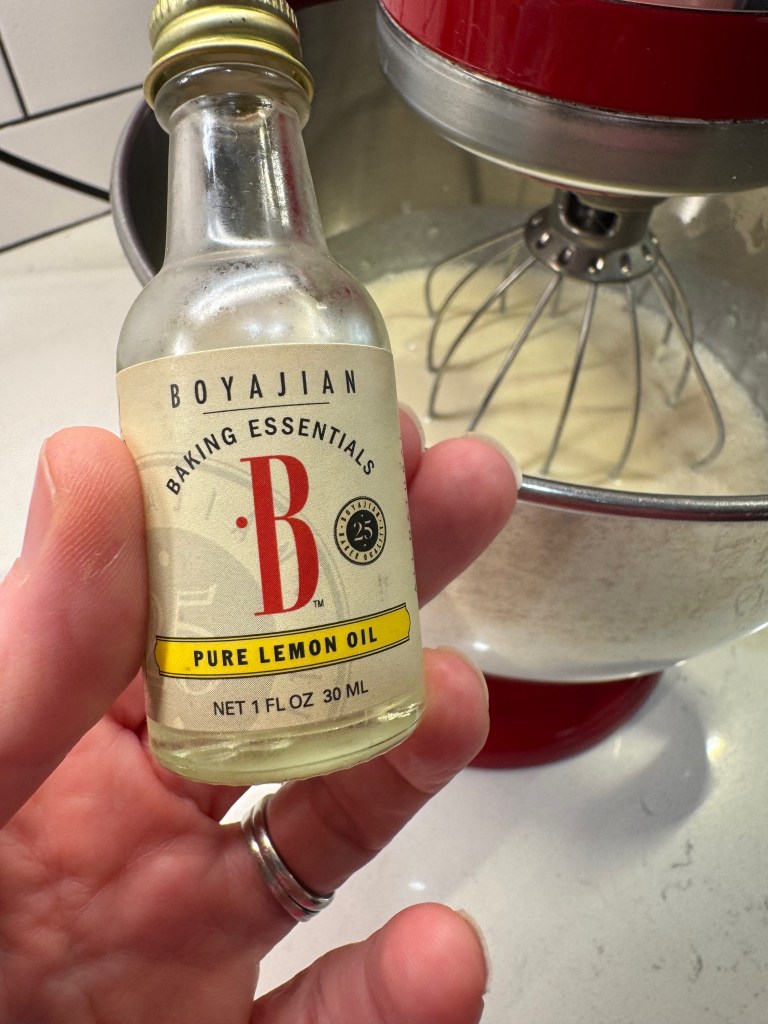
It’s been years since I made a cheesecake version of ice cream, and this time, I focused on bringing a tart, slightly lemon flavor to the base to counter all the sweetness of the fruit ribbons. My ice cream began with most of a block of cream cheese, sweetened condensed milk, whole milk and heavy cream, plus a shot of vanilla and a few drops of lemon oil. The latter is a specialty product I ordered from King Arthur Baking Company, but you could easily substitute the zest of a fresh lemon in its place. I don’t recommend lemon juice, which could potentially curdle the dairy ingredients.


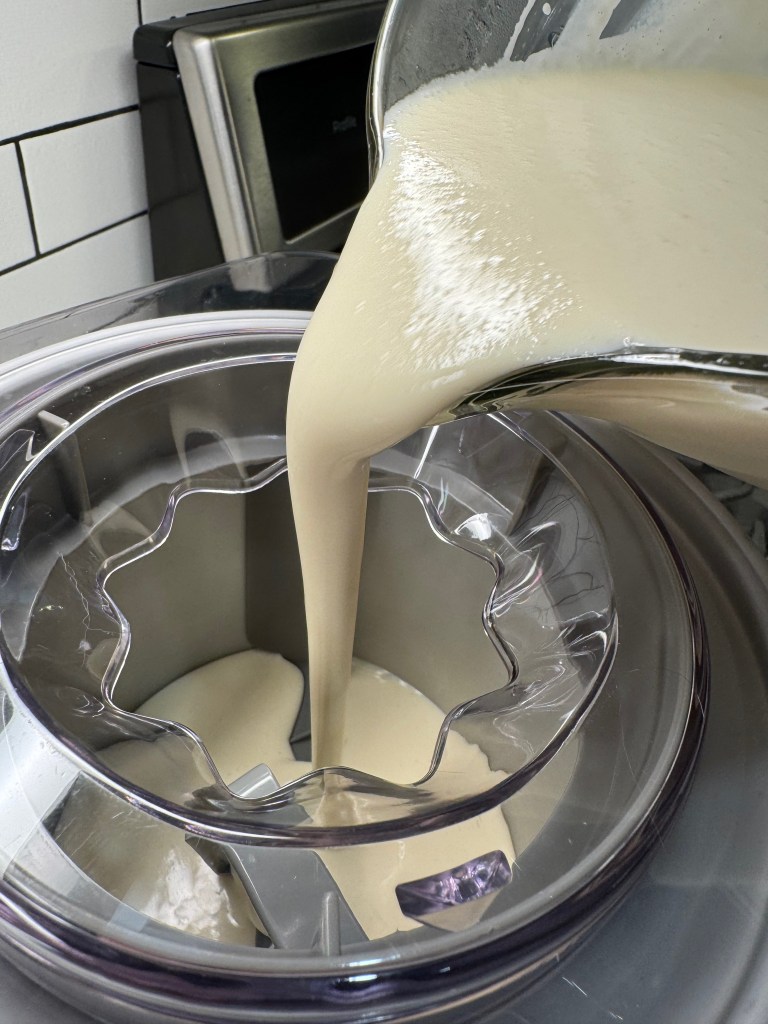
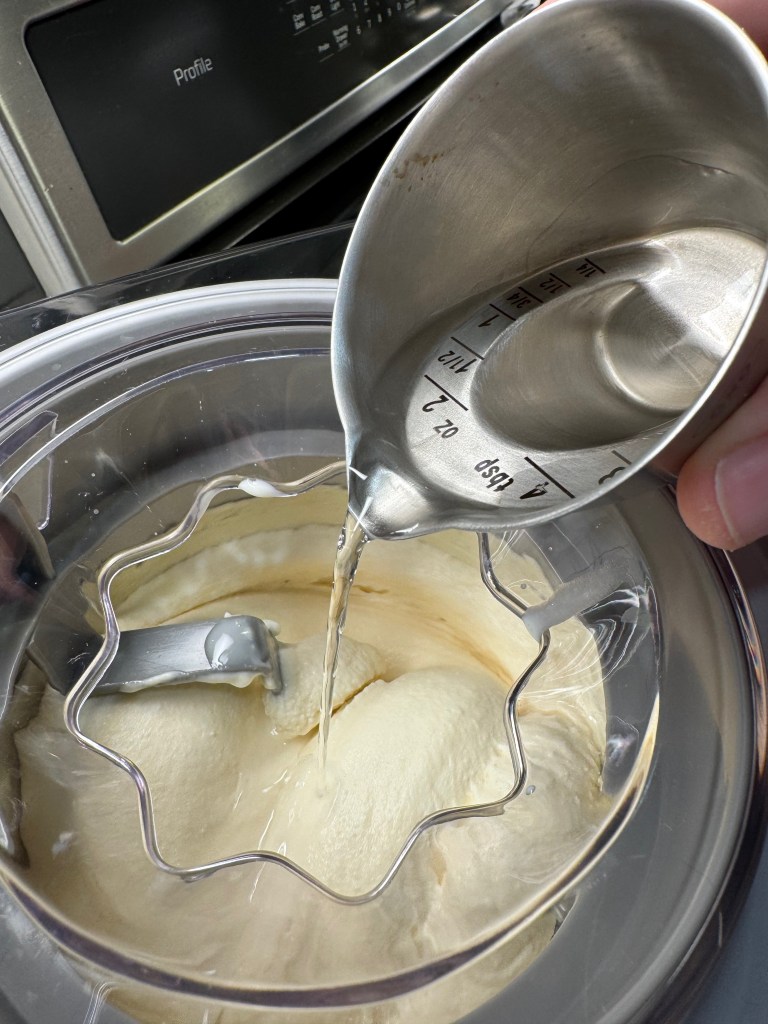
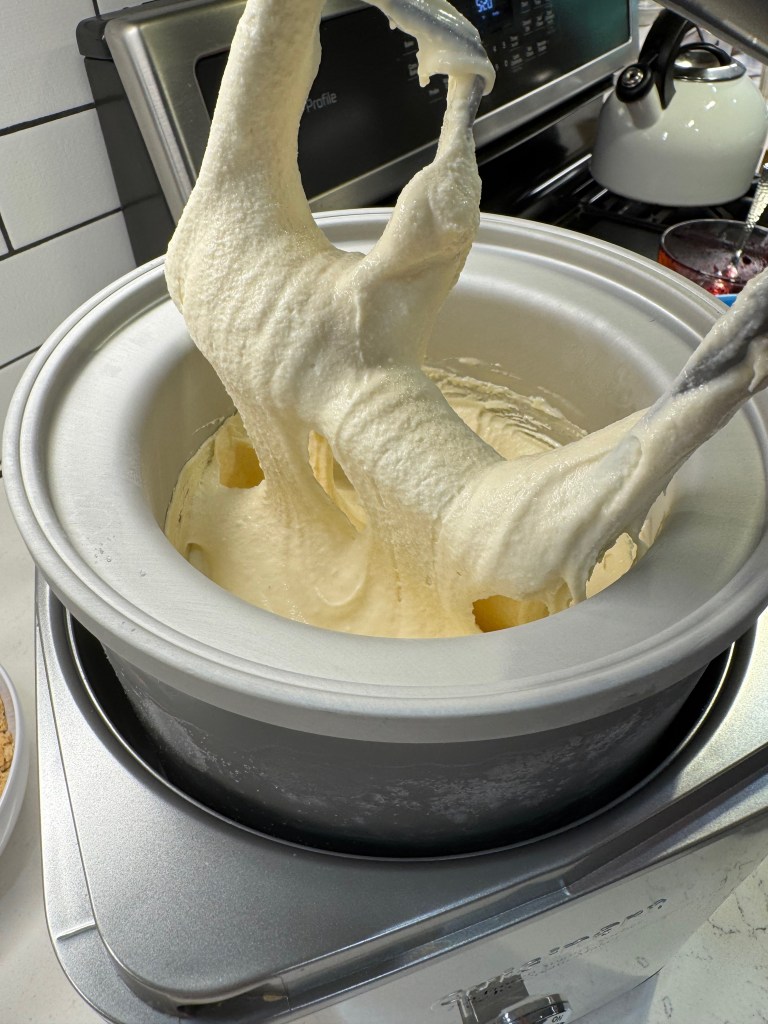
I chilled the base for six hours, then churned it in my Cuisinart ice cream machine until it was silky smooth. This took about 25 minutes, and during the last minute of churning, I did my usual trick of blending in a tablespoon of vodka, which improves the texture of my ice cream so that I can scoop it straight from the freezer later. It’s a minimal amount of alcohol and you never taste it in the ice cream, but feel free to skip this step if you’re avoiding alcohol or serving to children. 


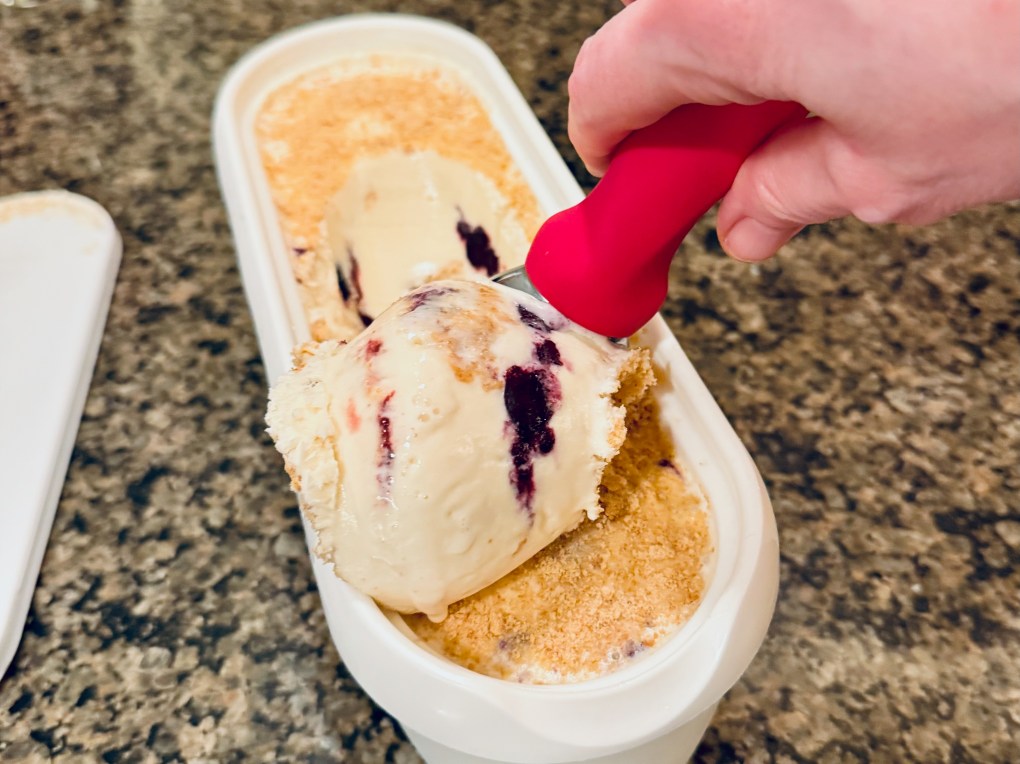
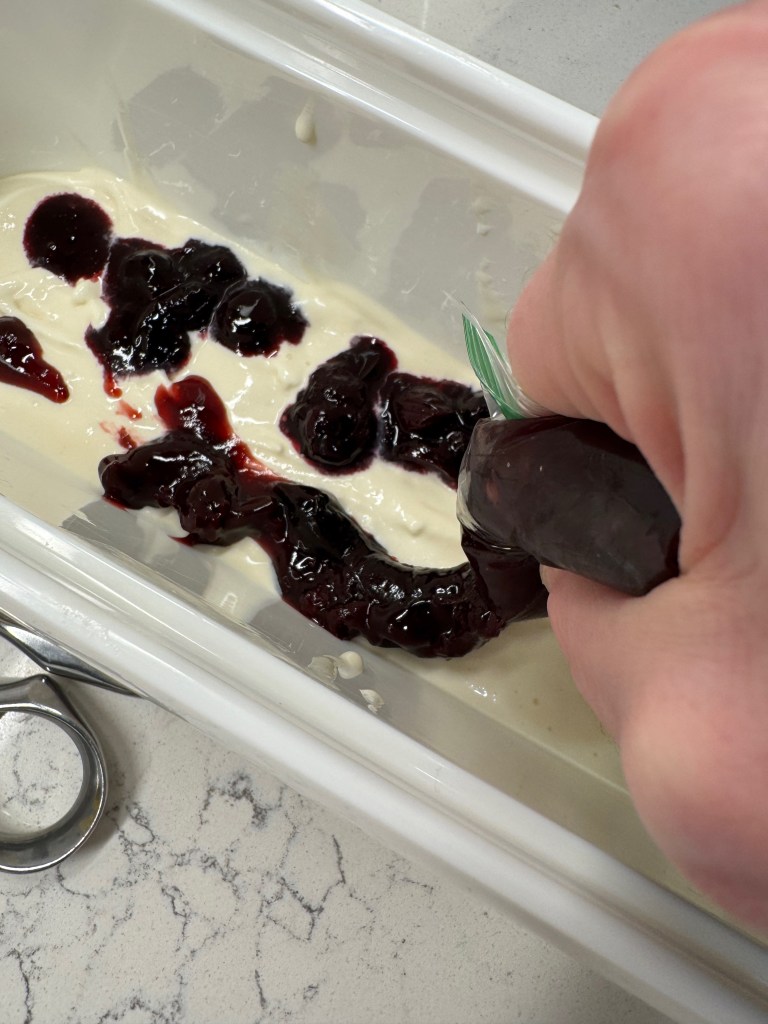
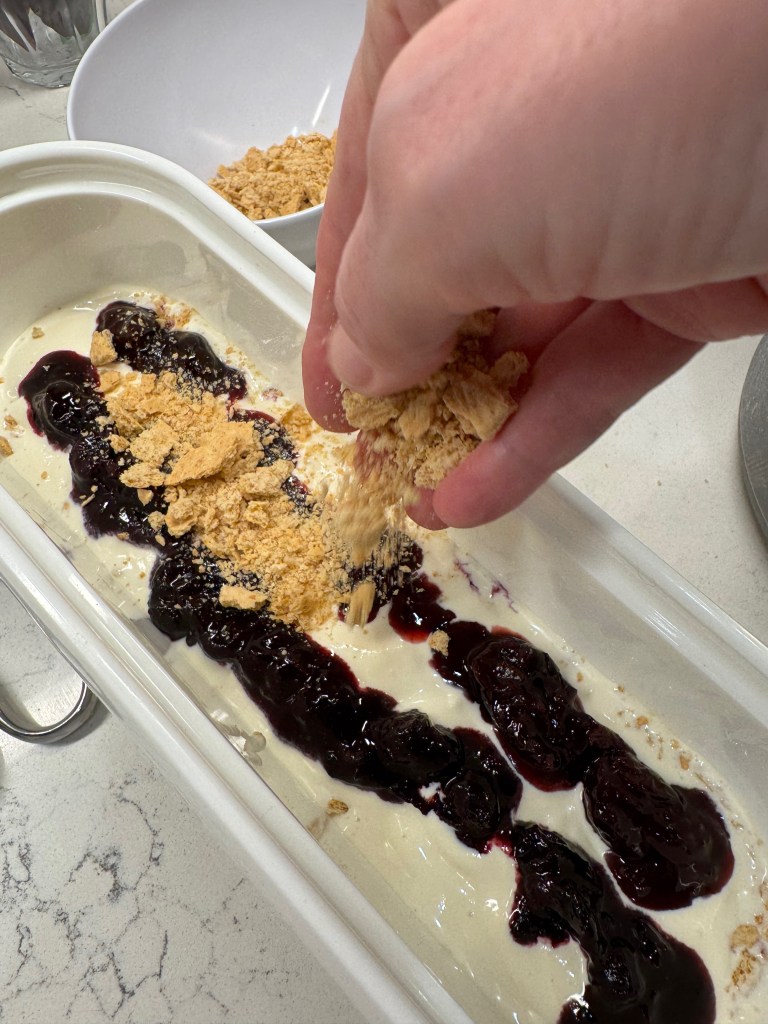
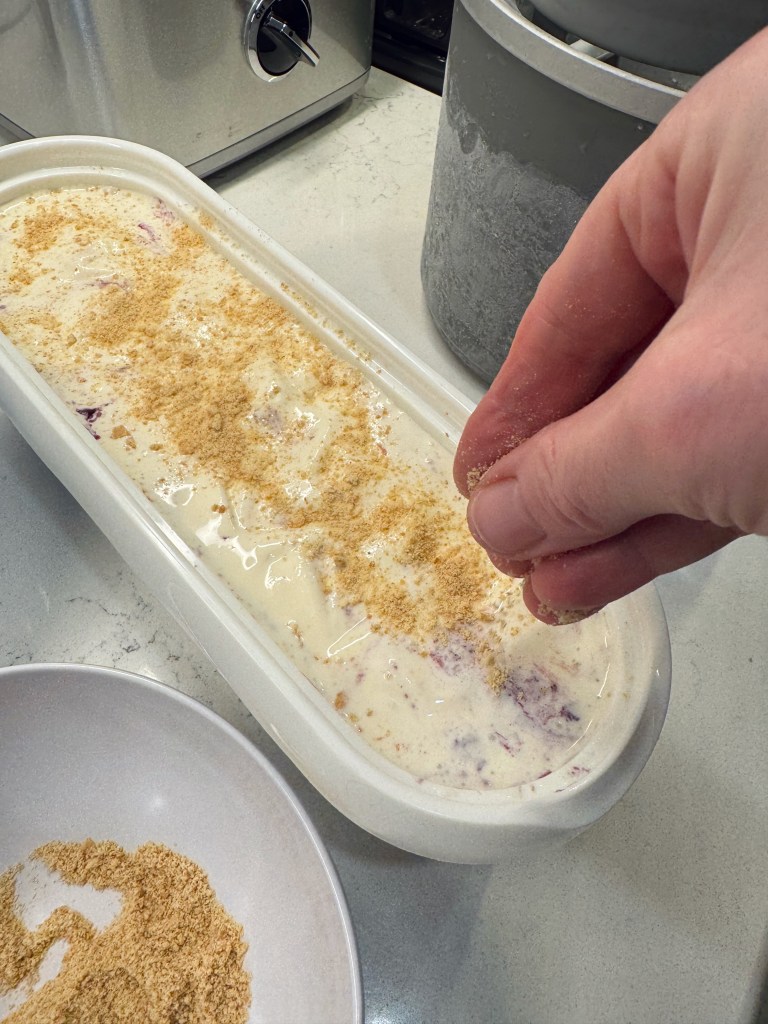
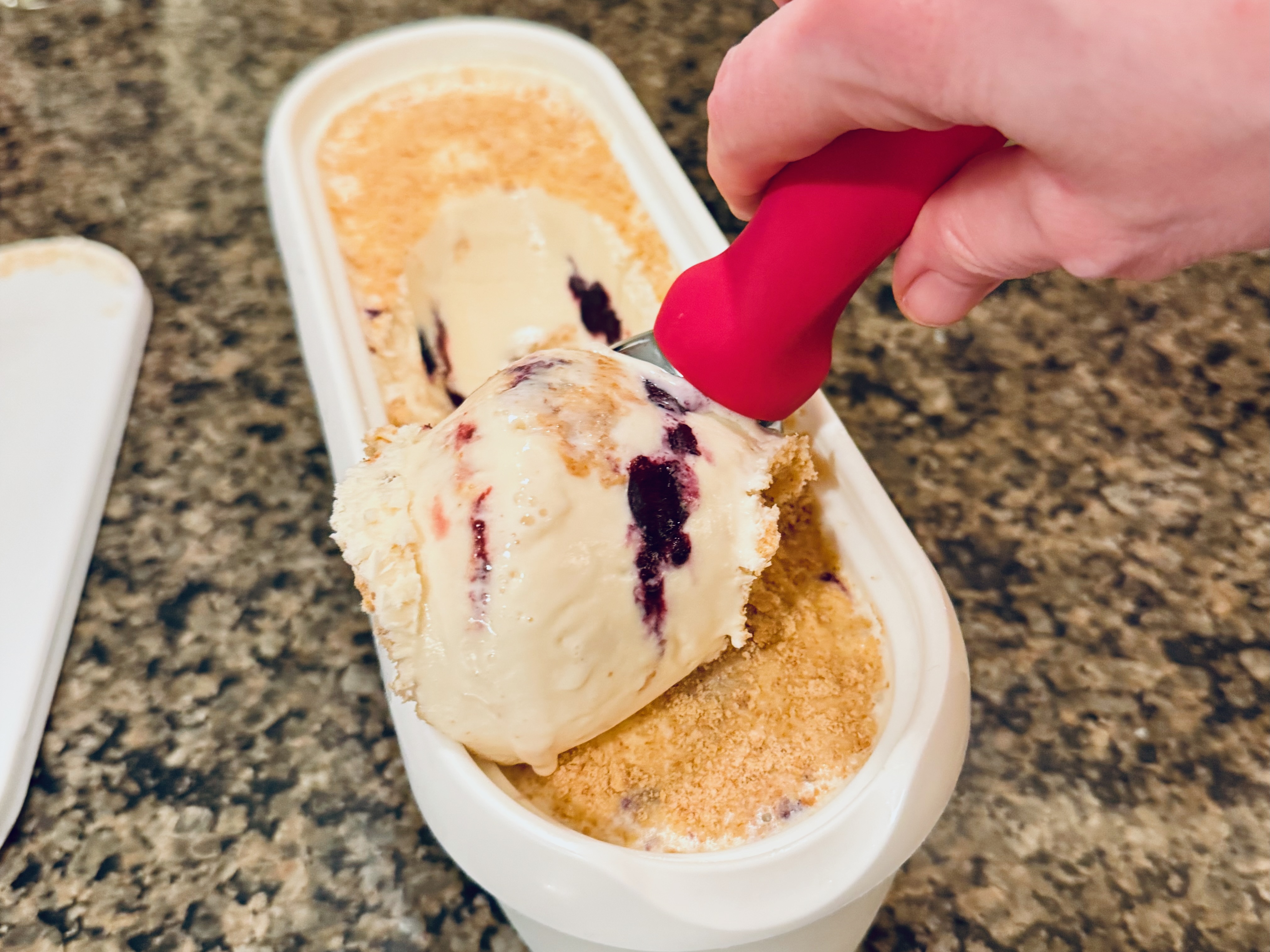
The best and most fun part of making an ice cream with any kind of swirl add-in is layering it in the freezer container. Don’t worry about creating the swirls at this stage; doing so tends to create a “muddy” appearance. Just layer away, and trust that the swirls will happen on their own when you scoop the finished product.
There’s magic in the layers!

I had transferred part of my cherry and berry compotes to small zip-top bags, and had crushed several graham crackers into pieces to scatter between layers. Having these components lined up when the ice cream is finished churning makes things come together smoothly. 


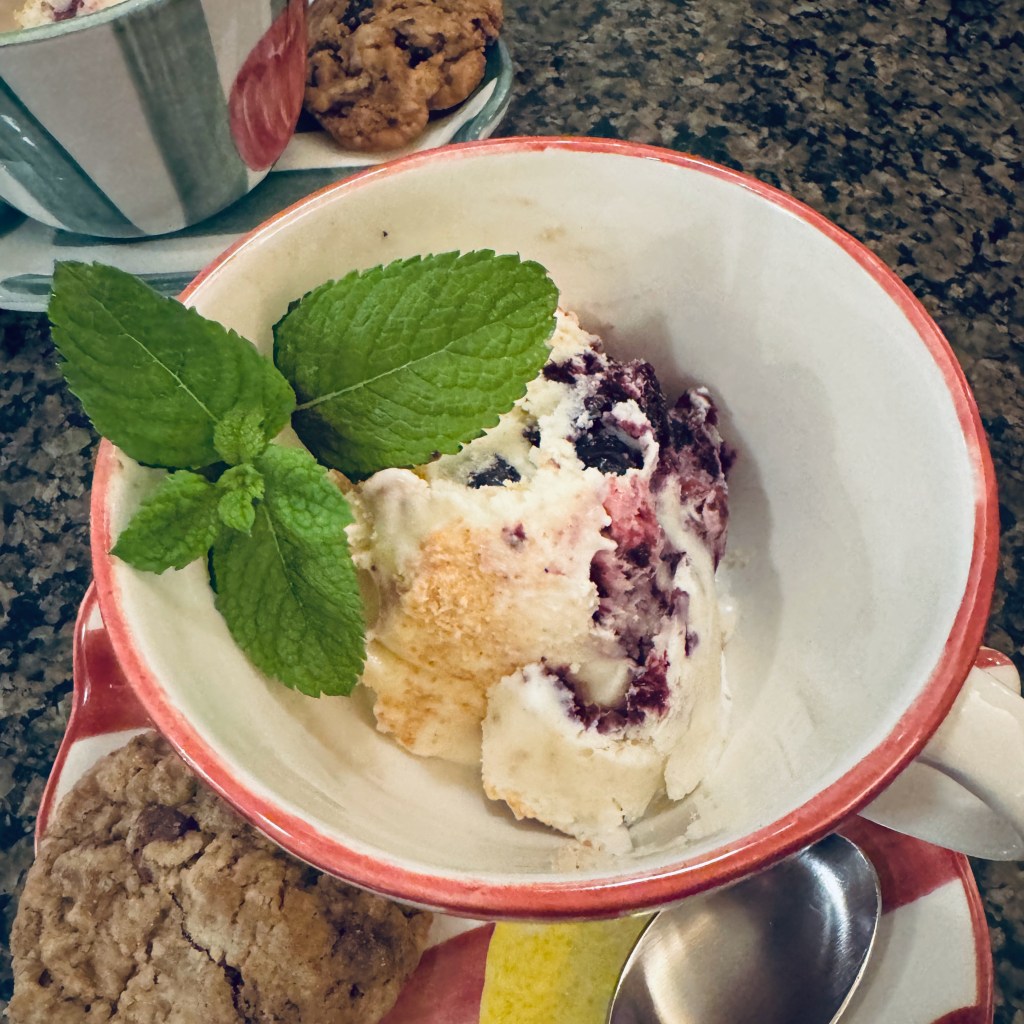
As always, homemade ice cream is best served fully “ripened,” which just means you put it in the freezer overnight. We shared this purple, white and purple ice cream with friends over Memorial Day weekend and it was fabulous! The cheesecake flavor was prominent, and the cherry and blueberry ribbons tasted exactly like summer. 


To my delight, by the way, the purple ribbons did reveal a bit more of their intended blue and red tones when scooped out with the white ice cream. I hope we can look forward together and commit to a positive outcome for our great nation as well. Oh, how I hope.

Cherry & Blueberry Cheesecake Ice Cream

  • Servings: 8
  • Difficulty: Average
  • Print

Use your imagination a bit to see this as 'red, white and blue' ice cream, as the blueberries and cherries both turn purplish when you cook them into compotes. The slight lemon flavor in the cheesecake ice cream base is a nice tart balance to all the fruit sweetness, making this ice cream ideal for a July 4th party or any other special occasion this summer!


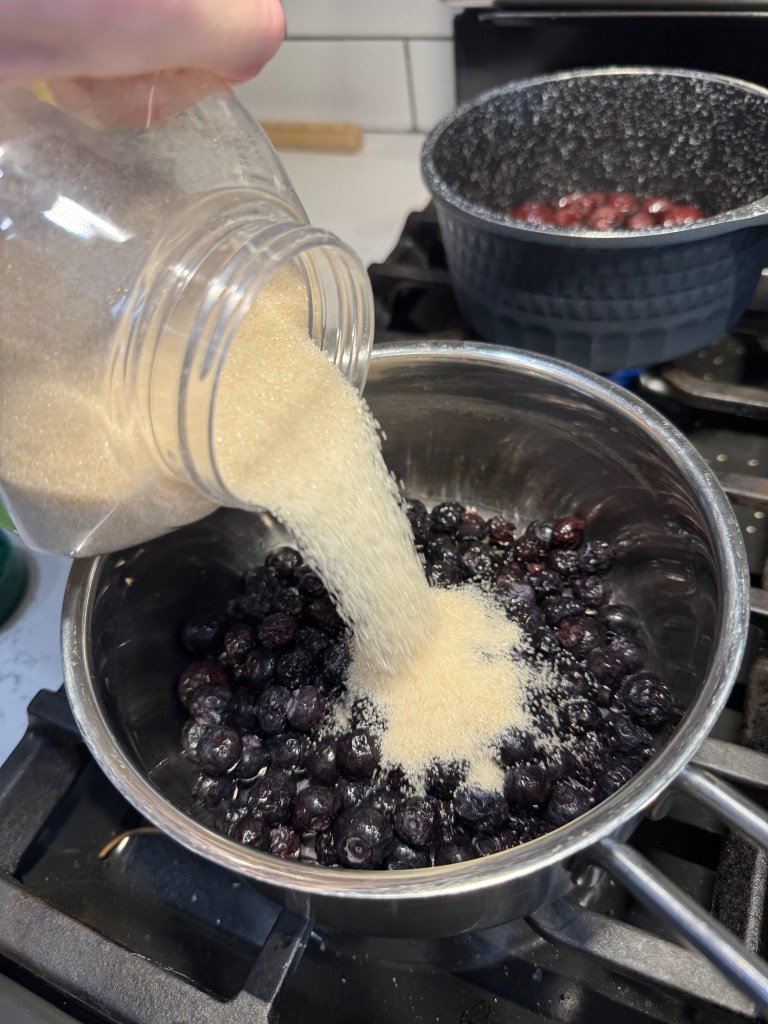
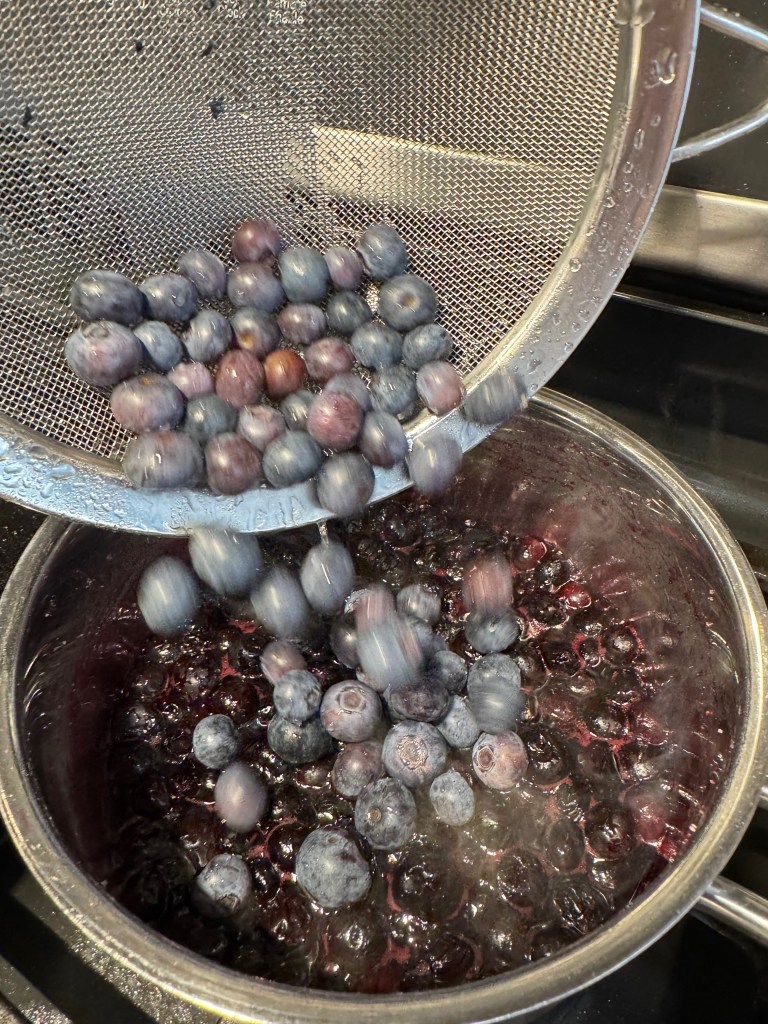
The cherry compote and blueberry compote are virtually identical in preparation. See the directions below the blueberry compote ingredients list. Of course, make the compotes in separate saucepans so that you may layer them side-by-side in the ice cream.

Ingredients

  • 1 jar tart cherries, drained
  • 1/2 cup frozen dark sweet cherries
  • 1/4 cup granulated sugar
  • 1/2 tsp. cornstarch
  • 1 Tbsp. light corn syrup (to prevent crystallization)

Ingredients

  • 3/4 cup frozen blueberries
  • 1/2 dry pint fresh blueberries
  • 1/4 cup granulated sugar
  • 1/2 tsp. cornstarch
  • 1 tsp. lemon juice (or powder)
  • 1 Tbsp. light corn syrup

Directions

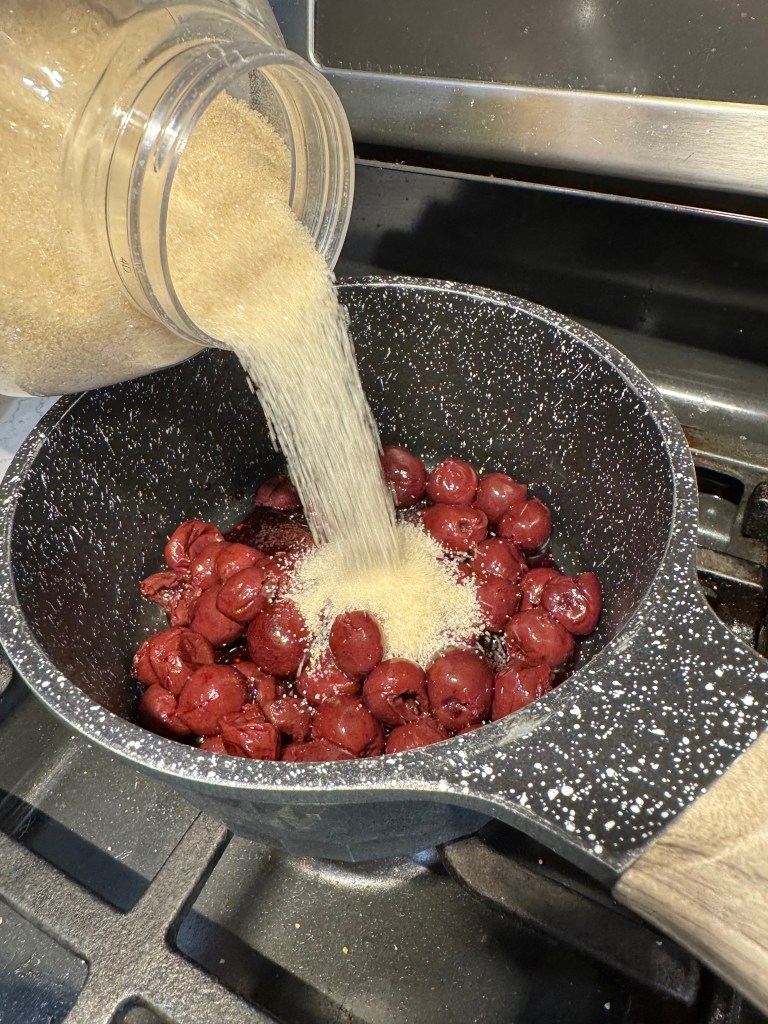
  1. Combine fruit, sugar, lemon juice and cornstarch in a small saucepan over medium heat.
  2. Cook and stir until sugar is dissolved, and then reduced heat to low and cook until liquid is reduced and mixture is syrupy.
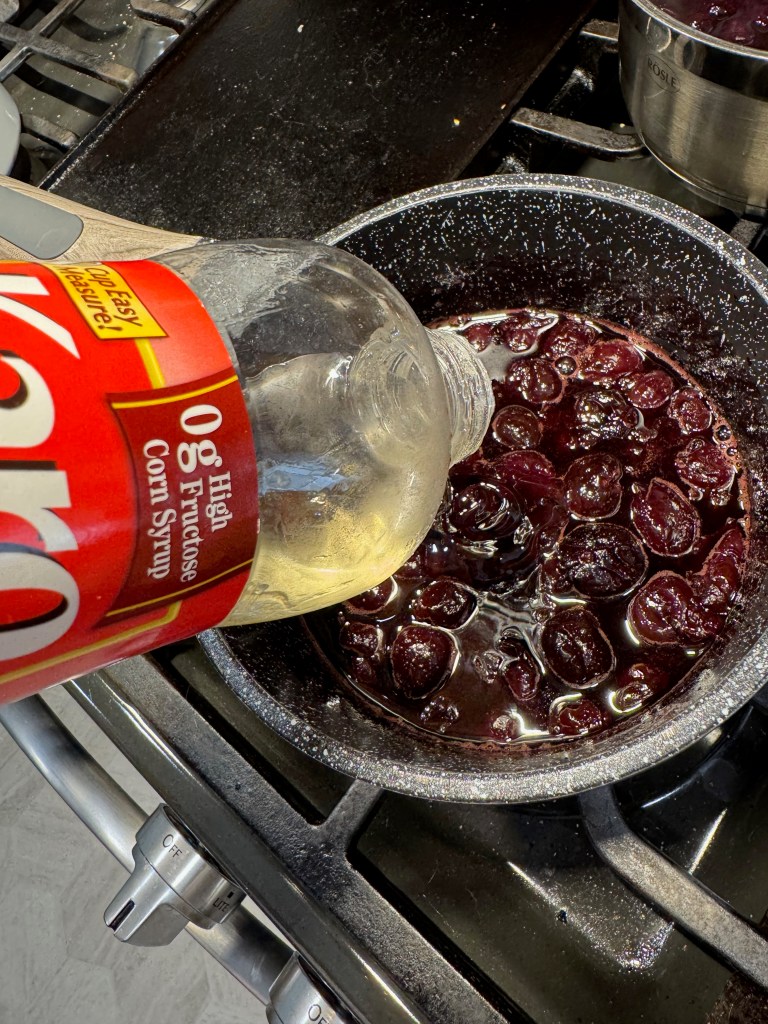
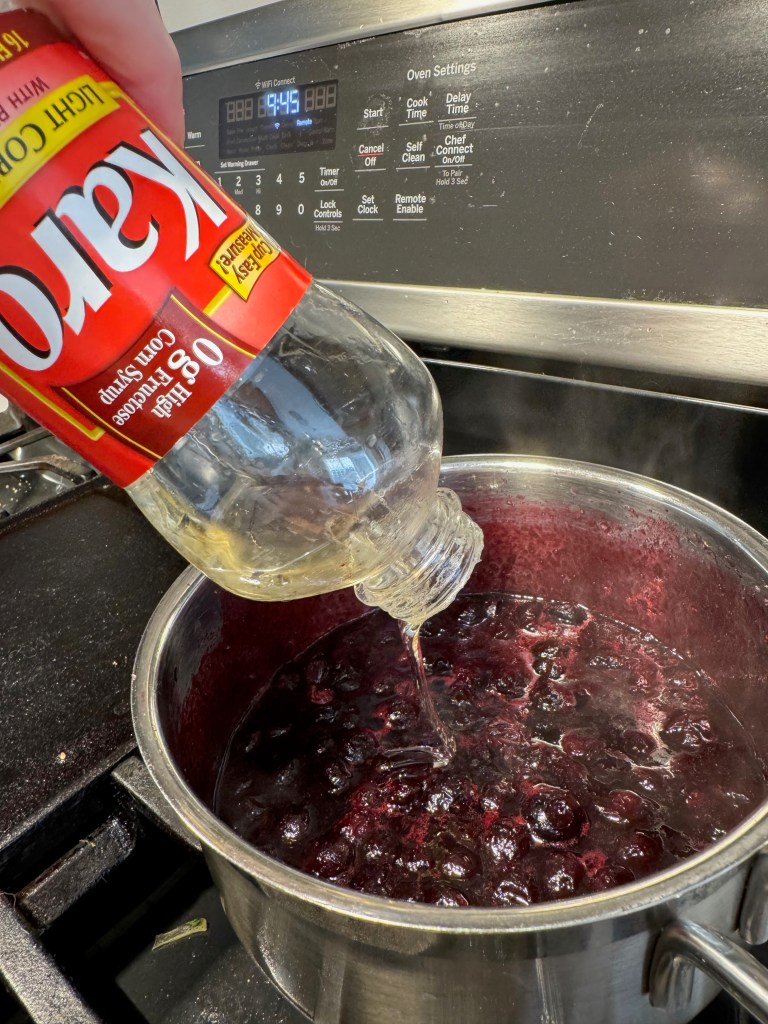
  3. Stir in light corn syrup, remove from heat and cool to room temperature. Transfer to a bowl and refrigerate. Before layering in ice cream, transfer part of the compote to a small zip-top bag. You will have extra of both compotes left over; enjoy them on top of the ice cream!

Make the ice cream base far enough ahead to chill for a few hours before churning in your ice cream maker.

Ingredients

  • 6 oz. full-fat cream cheese, at room temperature (this is 3/4 of a standard package)
  • 14 oz. can sweetened condensed milk
  • 3/4 cup whole milk
  • 1 cup heavy cream
  • 1 tsp. vanilla
  • 1/4 tsp. lemon oil (optional)
  • 1 Tbsp. vodka (optional for texture, added during final minute of churning)
  • Cherry and blueberry compotes (recipes above)
  • 1/2 cup crushed graham crackers, for layering (this was one “stacker” package)

Directions

  1. Add cream cheese and sweetened condensed milk to the bowl of a stand mixer, fitted with the whisk blade. Mix on one of the low speeds until evenly combined.
  2. Add cream and milk to the mixture and whisk on low speed until the mixture is smooth and even. Gently whisk in vanilla and lemon oil.
  3. Transfer ice cream base to a covered bowl or pitcher and refrigerate at least six hours, or up to 24 hours.
  4. Freeze in ice cream machine, following manufacturer’s instructions. Drizzle in vodka (if using) during the final minute of mixing.
  5. Layer churned ice cream into an insulated freezer container, about one third at a time. Follow the layer with one stripe each of the fruit compotes, then scatter crushed graham cracker crumbs over the fruit stripes. Repeat twice with more ice cream, more fruit compote and more graham cracker crumbs. Save the finest crumbs for the final layer. Cover and freeze at least overnight.


Dilly-dilly Three Bean Salad

When the heat goes up, my appetite goes down. Like, waaaay down. And that means I’ve barely been hungry at all this week, as the afternoon highs got stuck around 97° F for five days in a row with 70% humidity as the norm. It has been too hot to weed my flower beds, too hot to walk the dog, and definitely too hot to cook. It’s brutal, and I know that much of the U.S. has been dealing with the same as climate change has altered what summer looks like— probably forever.

But at some point, we’ve gotta eat, right? I’ve put some new ideas into practice to ensure that we have something of substance, without me having to stand at a hot stove. Taking a cue from my blog buddy, Michelle, who endured the vicious summer heat of California’s Coachella Valley for too many years, I have found it helpful to do my cooking in the morning hours and then serve up the food as cool meals in the evenings. This has proven to be beneficial for more than one reason, as I often find myself less motivated at the end of the workday; my brain has run dry of decision-making ability. Getting meals done early has saved my sanity!

I love every single thing about this!

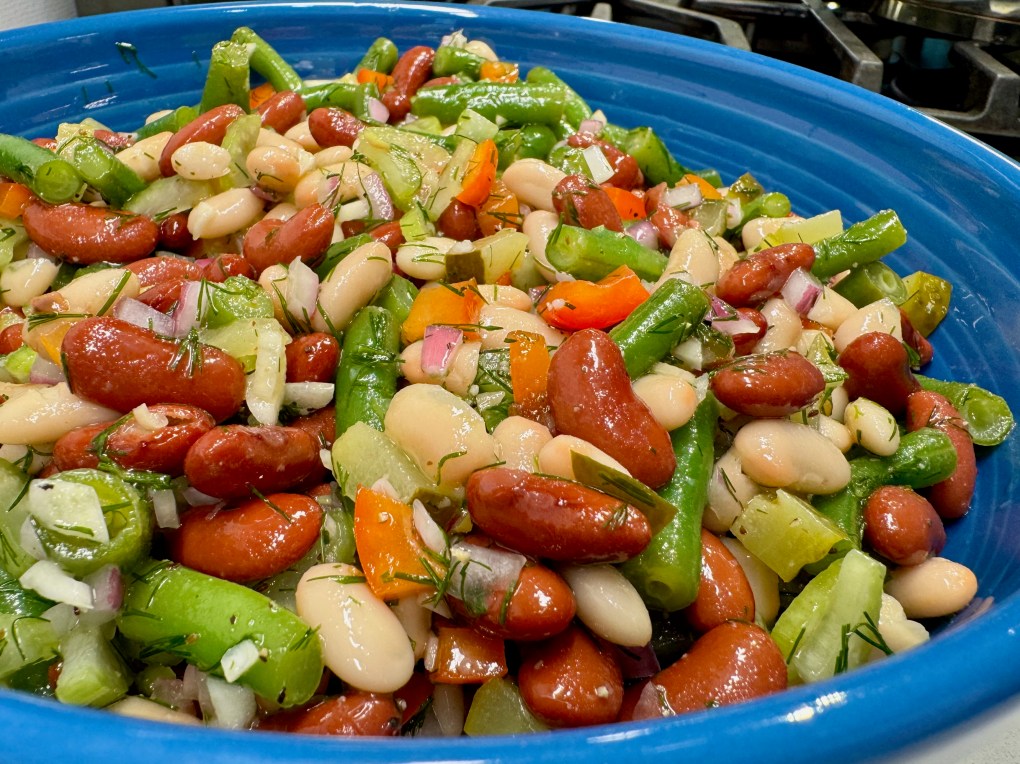
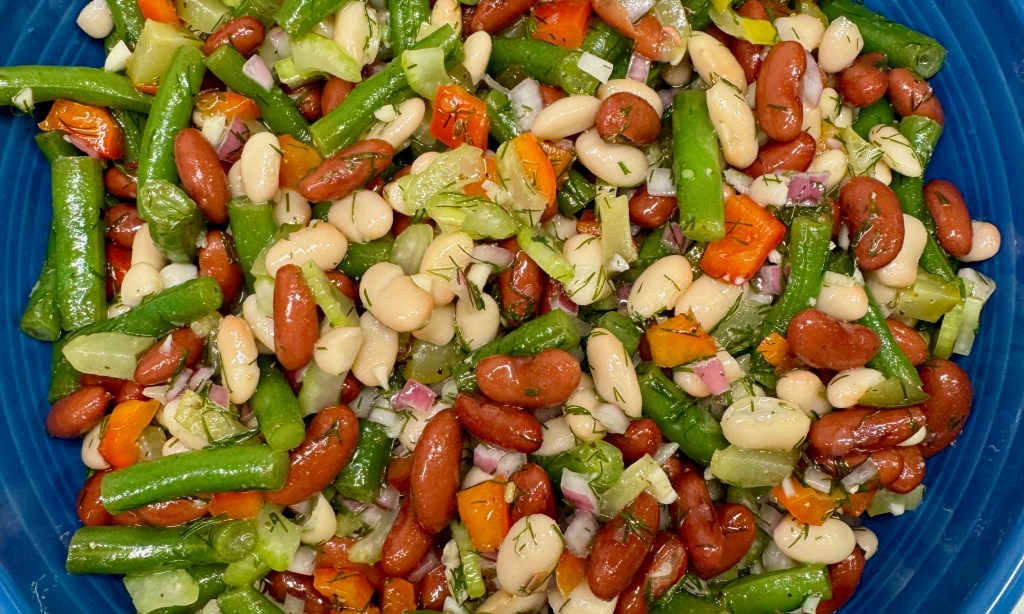
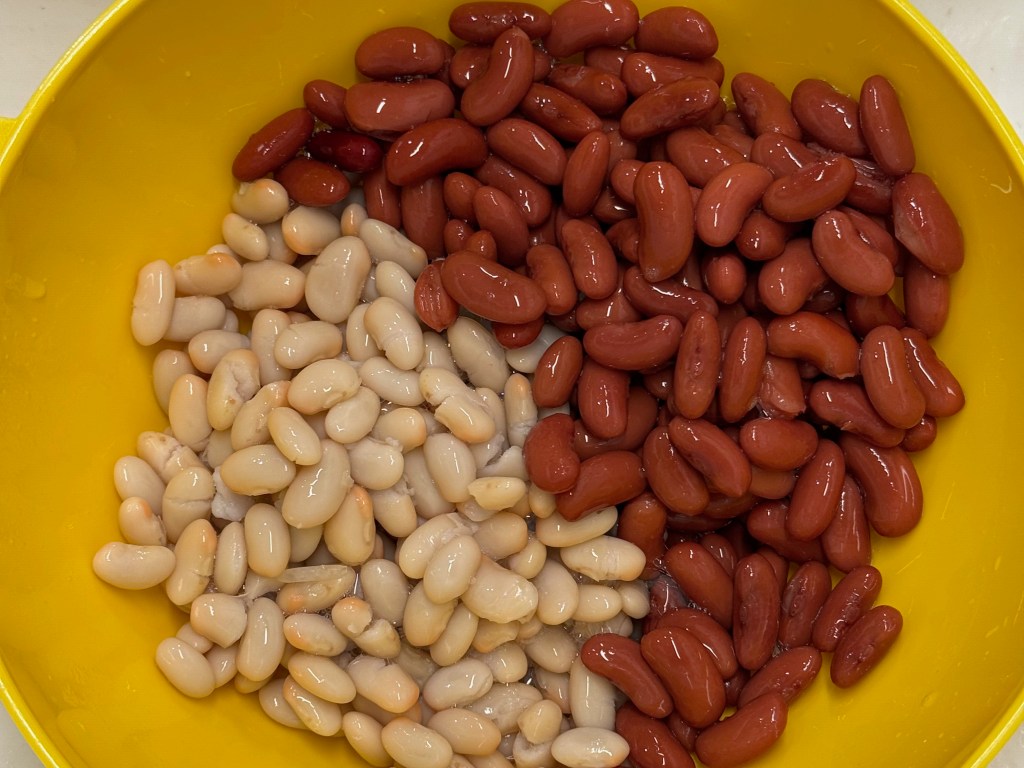
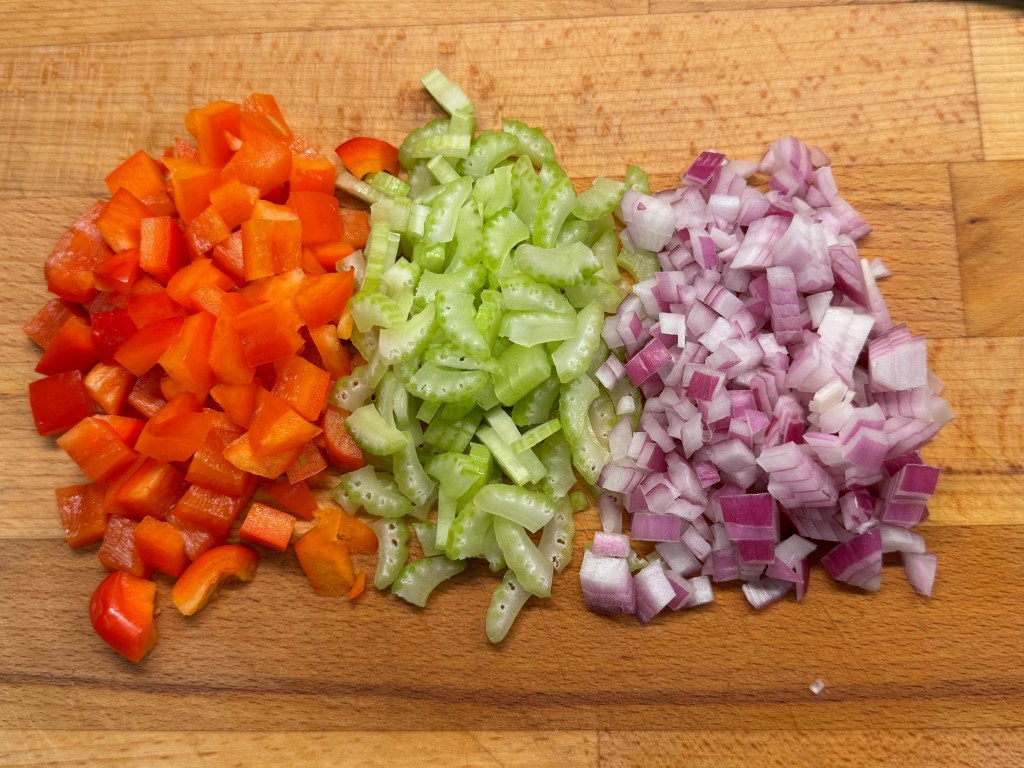
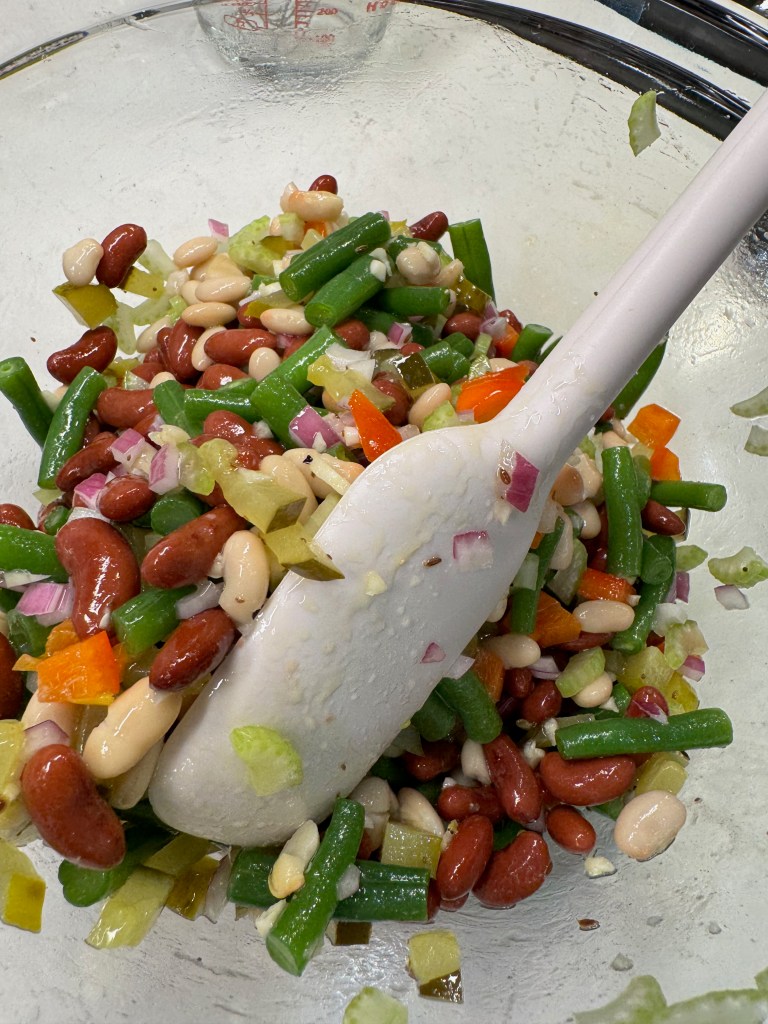
This variation on three-bean salad has even more texture than my usual, with crunchy bits of celery, bell pepper and red onion, the zesty bite of minced garlic, creamy kidney and cannellini beans, and a big punch of dilly-dilly flavor, courtesy of chopped spicy pickles and fresh summer dill. The fresh green beans have a nice “snap,” and the canned beans provide terrific fiber for a healthy gut, along with enough protein to carry me through this god-awful heat spell. Let’s get into it!


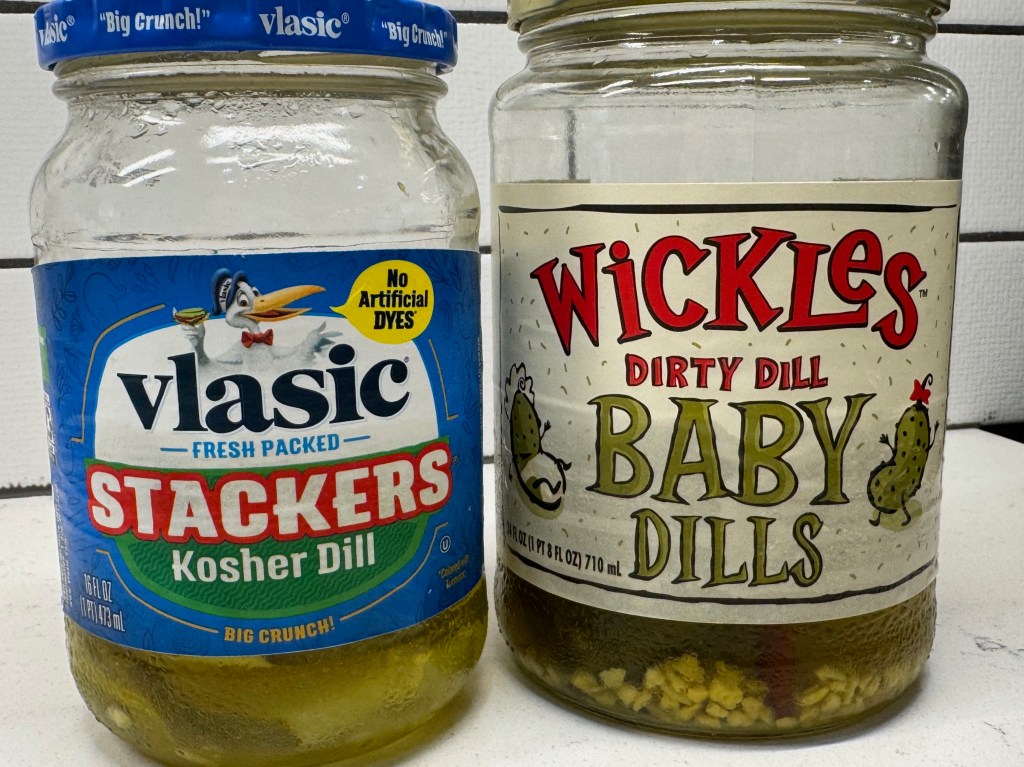
Par for the course, my inspiration for this recipe came from a desire to get rid of random jars in my refrigerator. We have had a bevy of leftover pickles taking up space after my husband’s son, Alex, visited a few months ago from Hungary. Alex loves dill pickles (especially spicy ones), and I always pick up a few options for easy snacking when he’s with us. Alex is very polite and doesn’t like to consume the whole contents of the jars, so he leaves them for us, which means that they get shoved to the back of the fridge until I get tired of moving them around. For this salad, I chopped up the remains of two kinds of pickles and I also used the kosher dill liquid in the dressing. 

This dressing would be terrific on a greens-based salad, too.

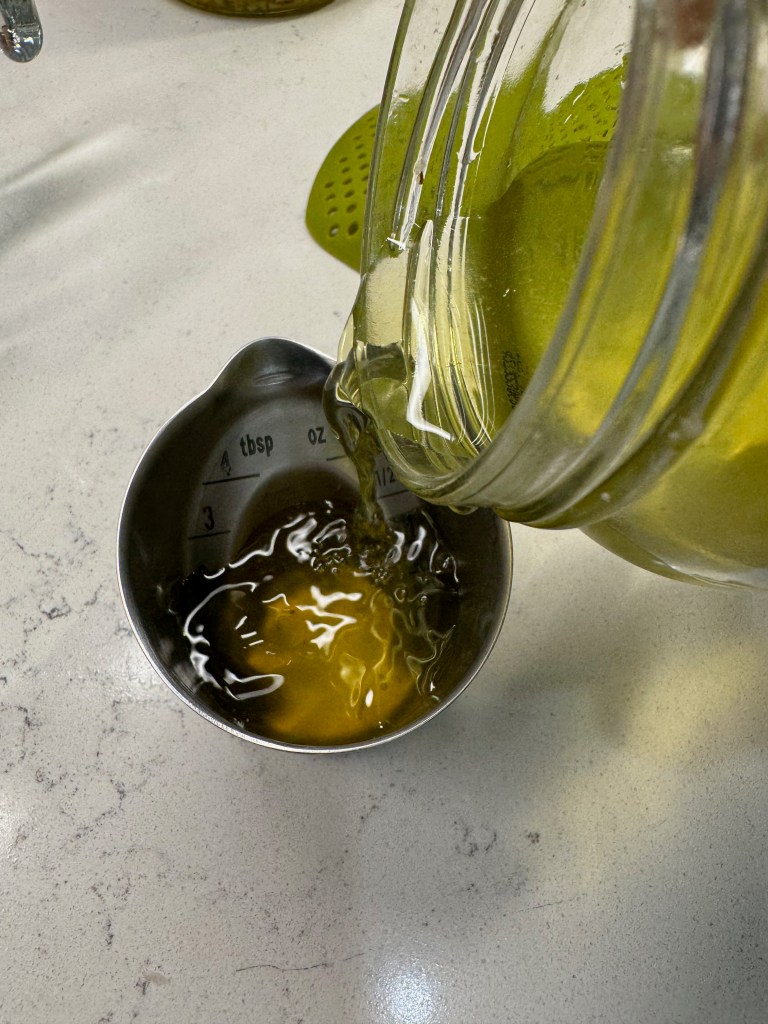
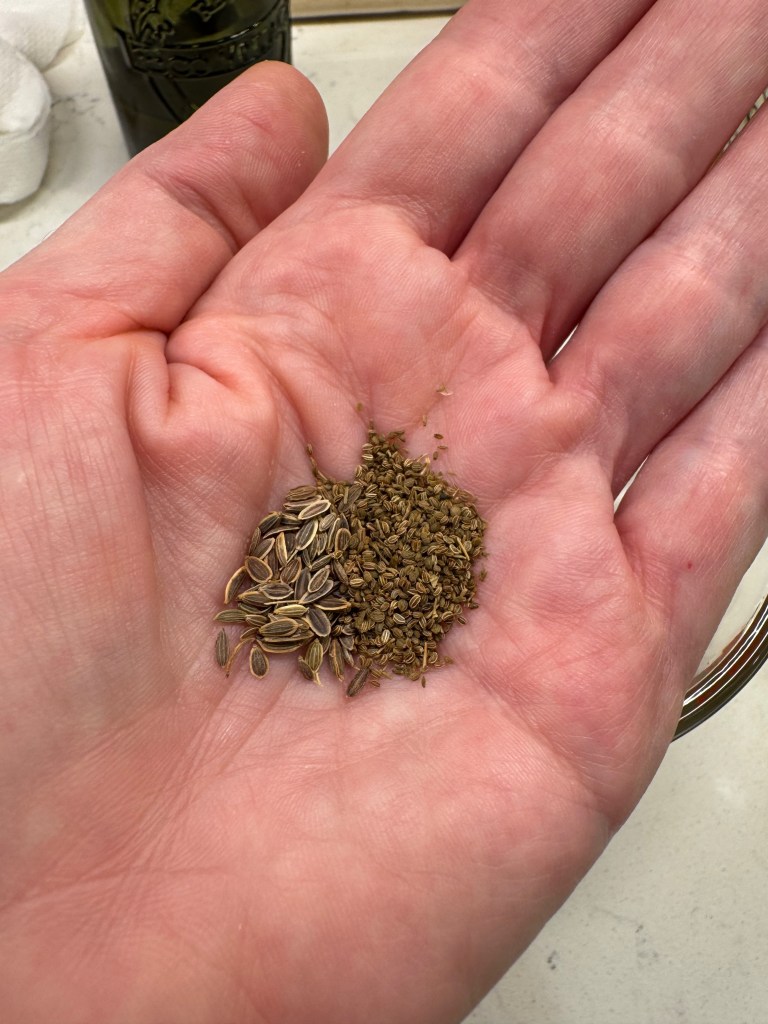
The balance of the dressing recipe is Dijon mustard, a spoonful of sugar, dill and celery seeds, and a healthy drizzle of extra virgin olive oil. Salt and pepper to taste, plus a splash of water, and that’s done. 


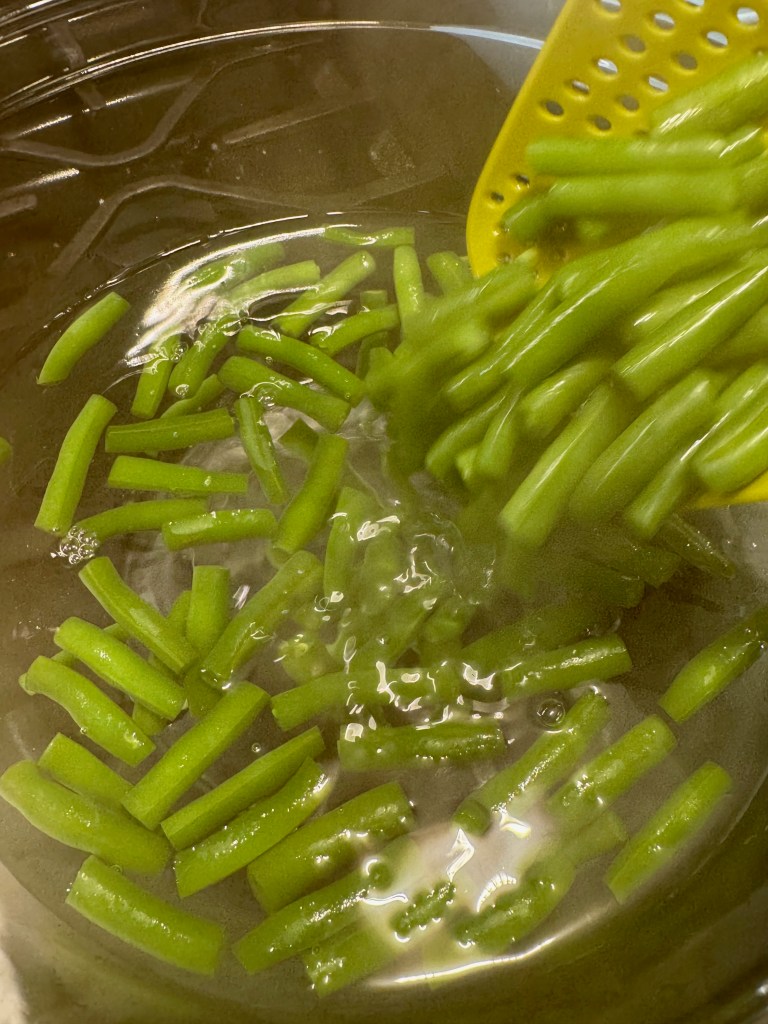
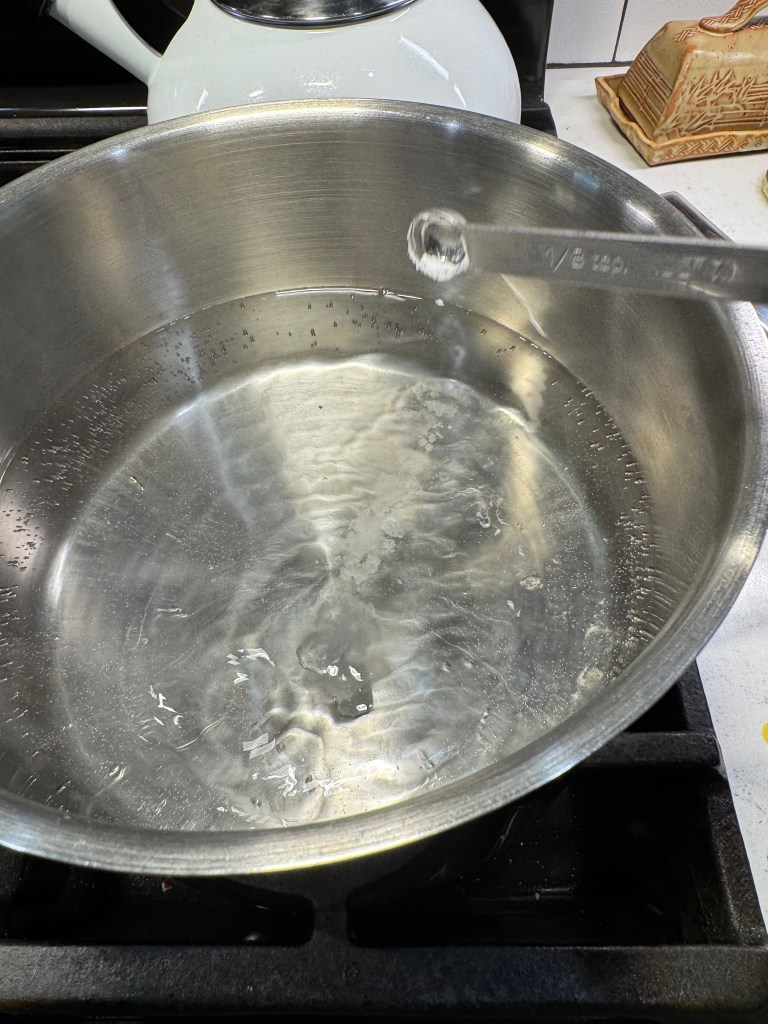
The green beans were the only ingredient in this salad that required cooking— thankfully, we only needed to have the stove on for about 10 minutes— so I got that going with a pinch of baking soda in a pot of barely-boiling water. The alkaline nature of the soda helps preserve the color of the green beans, and a shock of ice water at the end of cooking also helps with color retention.


This process, called “blanching,” takes me back to my grandmother’s kitchen, where I learned so many basic lessons of cooking— including blanching vegetables for freezing and canning— when I was barely tall enough to reach the stove. Gram would have loved this three-bean salad, especially the use of the leftover pickle liquid. Like so many people who lived through the Great Depression, she used every scrap, drop, peeling, stem and leaf that could be used. These are still important lessons today, and I aim to make her proud every time I step into my own kitchen.


Assembling the salad is easy. Give the dressing another good whisking before you pour it over the main ingredients, and fold it gently to avoid breaking up the canned beans. Add more fresh dill than you think is necessary, as the fine fronds will disperse a great deal when you fold it in. This freshness adds something special to the salad, but if you cannot find it in your supermarket or farm stand, a teaspoon of dried dill leaves will work in a pinch; add them to the dressing ingredients instead.

So there you have it— a three-bean salad, inspired by Alex’s leftover pickles, bringing loads of flavor to the table with ingredients that will satisfy, even when it feels too damn hot to eat. Make this early in the day and let the salad chill in the fridge several hours before enjoying. It keeps well for about a week, and you’ll want to remove it from the fridge for about 20 minutes when you’re ready to serve so that the olive oil softens from its chilled state.

Dilly-dilly Three Bean Salad

  • Servings: 8
  • Difficulty: Average
  • Print

Spicy dill pickles and fresh dill lend a tangy twist to classic three bean salad. Use the pickle juice in the dressing, and make it early in the day so that the flavors have time to mingle in the fridge.


Ingredients

  • 3/4 pound fresh green beans, trimmed and cut into uniform small pieces
  • 1 tsp. kosher salt
  • 1/4 tsp. baking soda (optional, for color retention)
  • 1 can light red kidney beans, drained and rinsed
  • 1 can cannellini beans, drained and rinsed
  • 1/2 cup chopped red bell pepper
  • 1/2 cup chopped celery
  • 1/2 cup diced red onion
  • 1/2 cup chopped dill pickles
  • 2 cloves garlic, finely minced
  • 3 Tbsp. dill pickle juice
  • 1 Tbsp. apple cider vinegar
  • 1 Tbsp. cold water
  • About 2 tsp. Dijon mustard
  • 1 tsp. cane sugar
  • 1/2 tsp. celery seed (or combo with dill seed, if you have it)
  • Salt and pepper to taste
  • 1/4 cup extra virgin olive oil
  • 1/4 cup fresh dill, chopped

Note: I used a combination of pickles in my salad. Be as creative as you dare, subbing in spicy pickles or even other pickled vegetables as the mood strikes! Take note of the sodium in your pickled ingredients so that you can adjust salt to taste without overdoing it.

Directions

  1. Prepare an ice bath in a large bowl. Bring a pot of water to low boil over medium-high heat. Stir in salt and baking soda, then add green beans. Simmer for 6 to 7 minutes, until beans are slightly tender but still bright green. Transfer beans to the ice bath and rest at least 5 minutes, then drain in a colander.
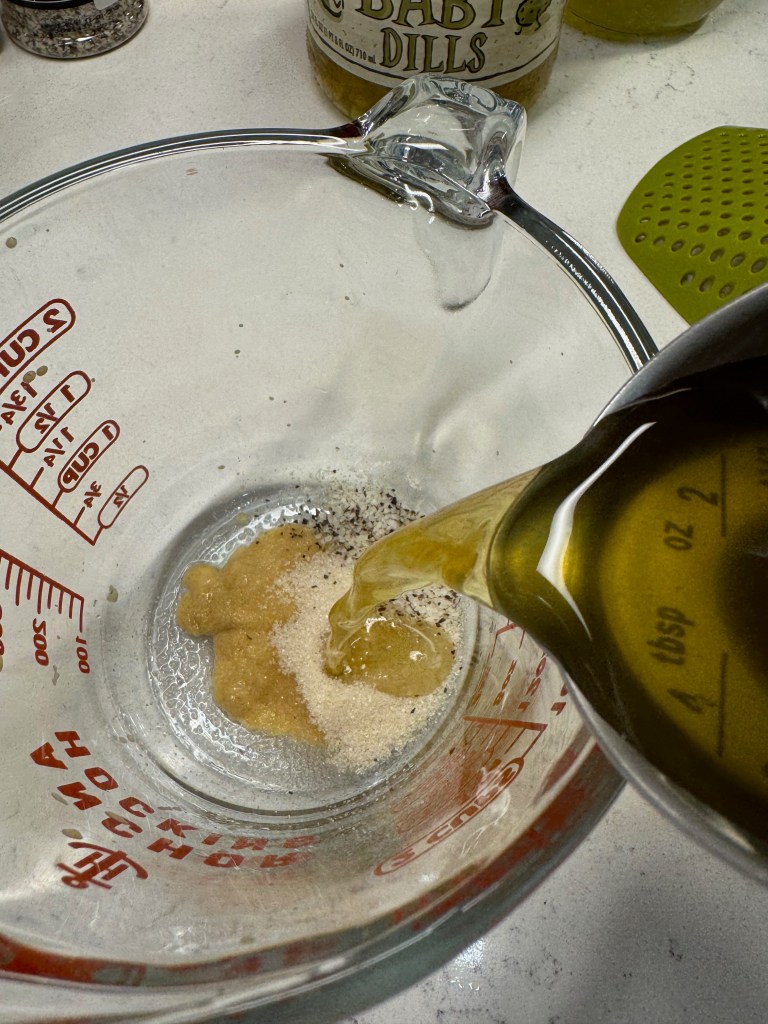
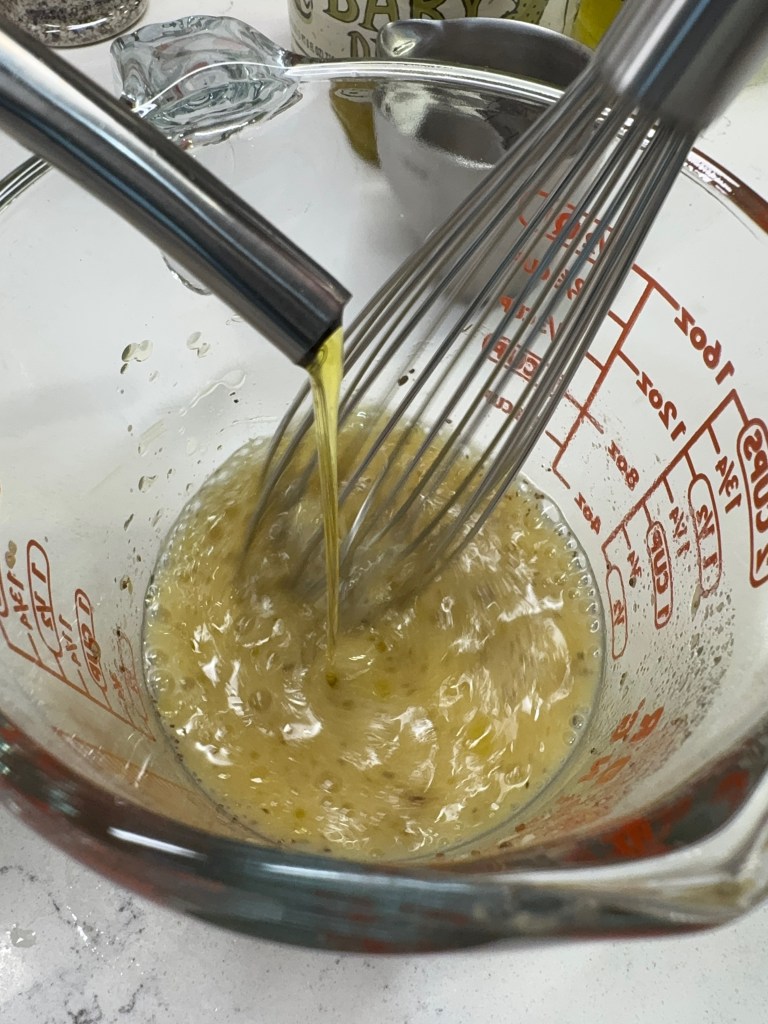
  2. Make the dressing while the beans are blanching. Combine pickle juice, vinegar, cold water, Dijon, sugar and celery seed in a measuring glass. Whisk vigorously while drizzling olive oil into the glass, creating an emulsion. Season to taste with salt and pepper.
  3. Blot the green beans with a towel to remove excess moisture. Combine in a large bowl with the drained canned beans, vegetables and chopped pickles.
  4. Pour dressing over the salad ingredients, and fold gently with a spatula or wooden spoon to avoid breaking the tender canned beans. Add salt and pepper as needed. Fold in dill and refrigerate until ready to serve. This keeps well for up to a week.


Mexican Street Corn Potato Salad

Summer officially hit last night at 10:42pm ET, and you know what that means. Millions of backyard barbecues, picnics, family reunions and summer parties are straight ahead! Some of my fondest memories are closely tied to the foods served at such occasions, and I’m a firm believer in the notion that one can never have too many recipes for summer side salads.

For the past couple of summers, I’ve steered away from mayonnaise-based salads, mainly because they don’t hold up well in the summer heat, at least for outdoor parties. So my husband’s special request last weekend should not have been any surprise when I mentioned whipping up a potato salad to serve with our grilled coffee-rubbed tri-tip.

“Can you make more of a mayonnaise-y dressing this time? Not one of those vinegar things you’ve been doing.”

Well, okey-dokey! We have a running joke at our house about how long it takes for foods to come back around in “rotation,” so I’m happy to oblige a sincere requst.

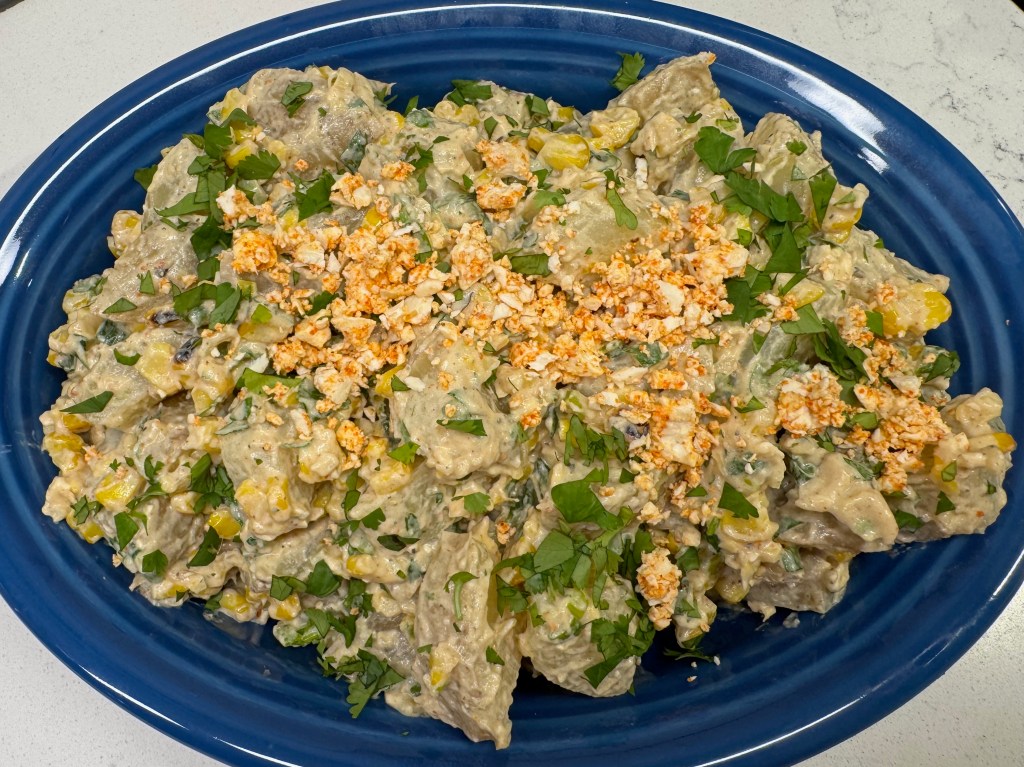
I think I satisfied his craving with this creamy, mayo-dressed potato salad that conveys all the flavors of Mexican street corn, also known as eloté. The textures were great, and the dressing and seasonings were unmistakably eloté— creamy, sweet bite on the corn, tangy from the mayo and lime, a sharp saltiness from the crumbled cheese, and just spicy enough to be interesting. It was fantastic with the tri-tip he grilled for us, and we enjoyed this salad again with lunches during the week as well as with spicy grilled chicken tenders a couple nights ago. I’m sad that it’s gone!

This recipe makes enough for eight servings (unless you do excessive taste-testing like I did).

Ingredients for my Mexican street corn potato salad

Any finished dish is only as good as what goes into it, and given that this is a bit of a twist, I’ll break down the role that each ingredient played in this salad. Note that some ingredients may be tricky to find, so I’ve offered reasonable substitutions for those. Here we go!

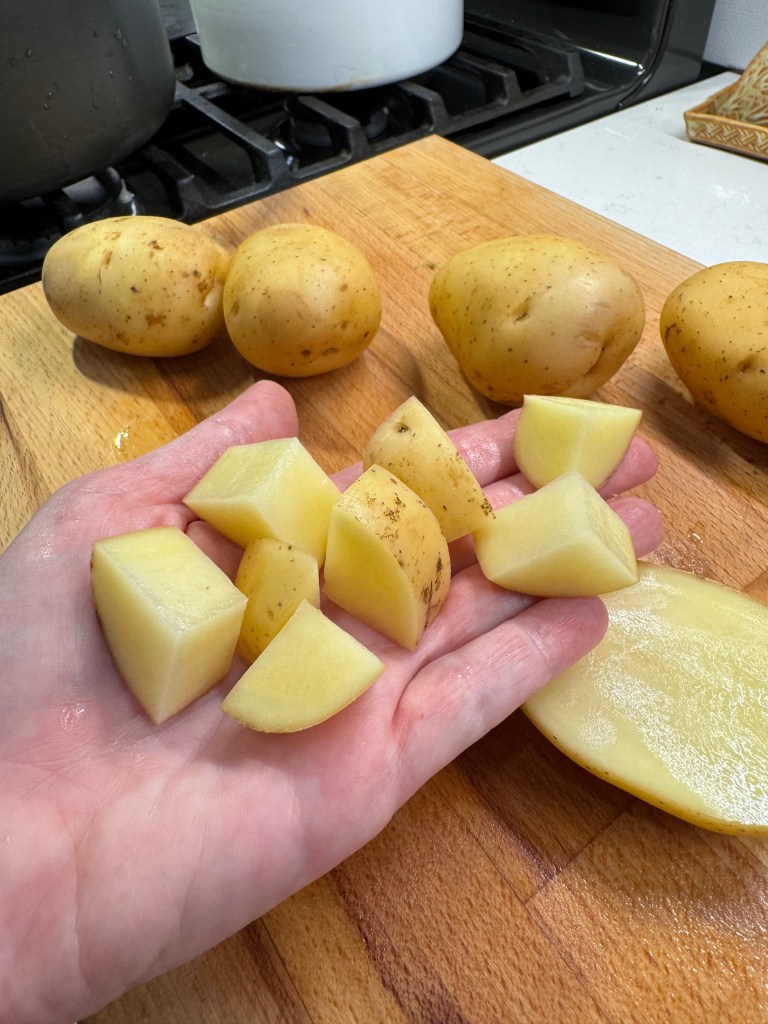
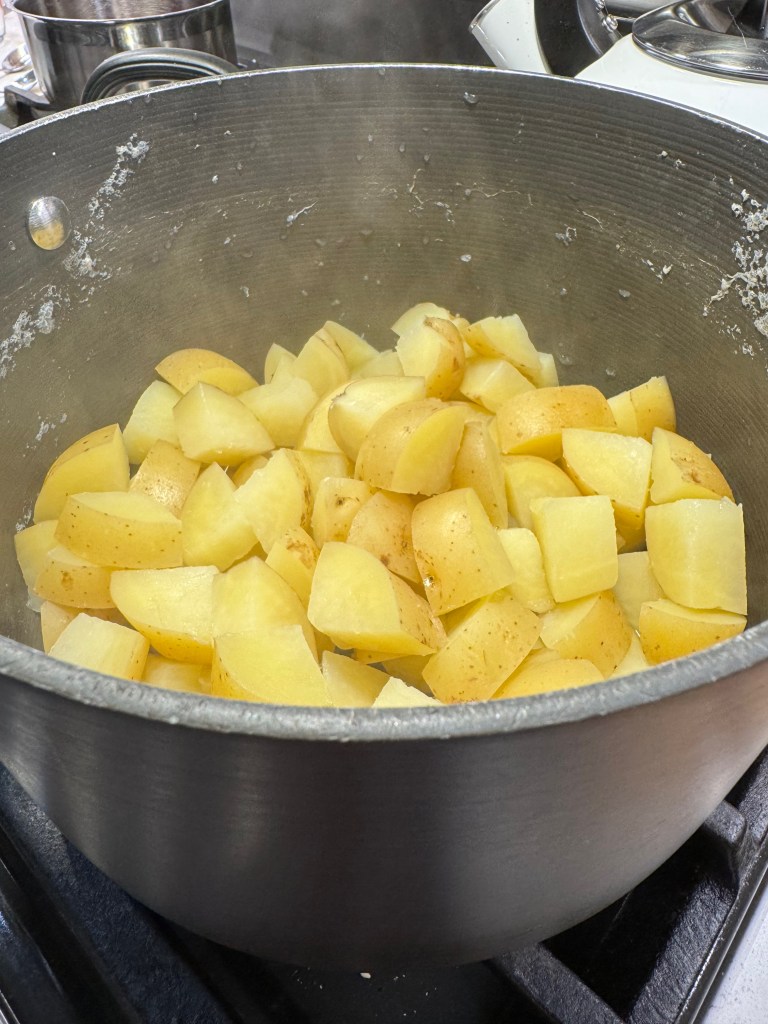
Yukon gold potatoes – these are a perfect balance of creamy and starchy, and because the skin is so tender, I don’t bother peeling them. Choose potatoes on the smallish side if possible, so that every chunk has a bit of skin on it. You’ll cook them gently in salted water until fork tender, then drain and let the steam roll off before chilling.


Mayonnaise and sour cream – My dressing is made with equal parts of these two, and if you can get your hands on Mexican crema, use that in place of sour cream. 

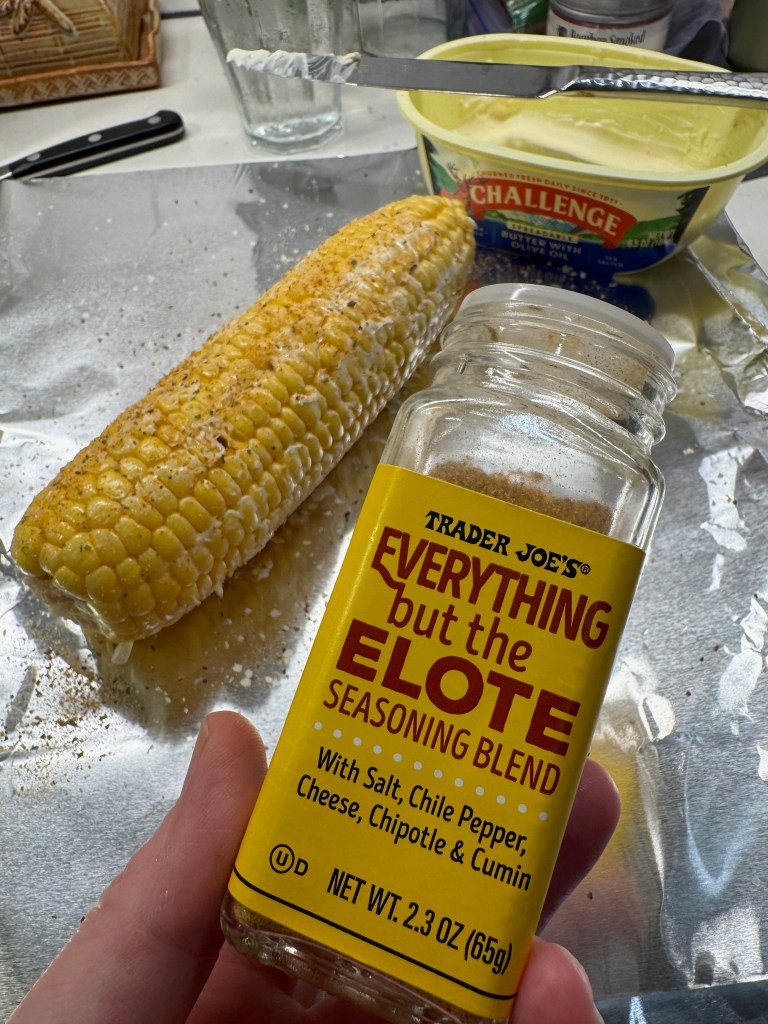
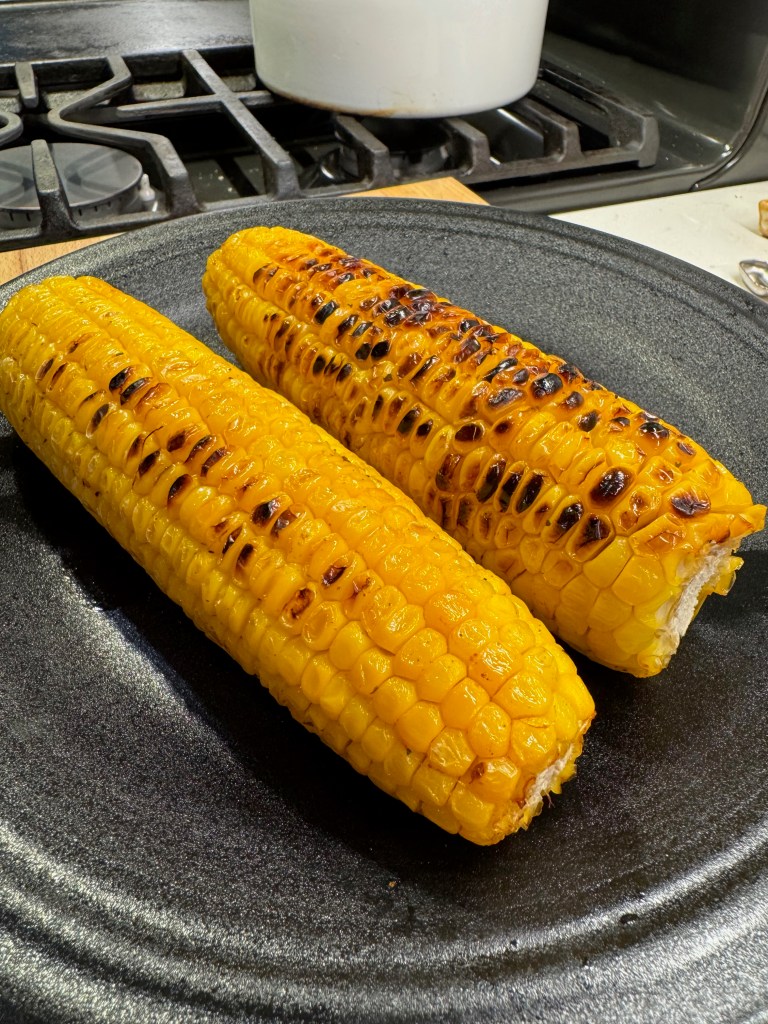
Roasted corn – we love grilling corn in the summer time, and we sometimes make extra ears so that we have them for dressing up another dish. If you don’t have a grill (or the time to mess with grilling corn), pick up a bag of frozen fire-roasted corn, which will work just as well. We like the one that’s available from Trader Joe’s.


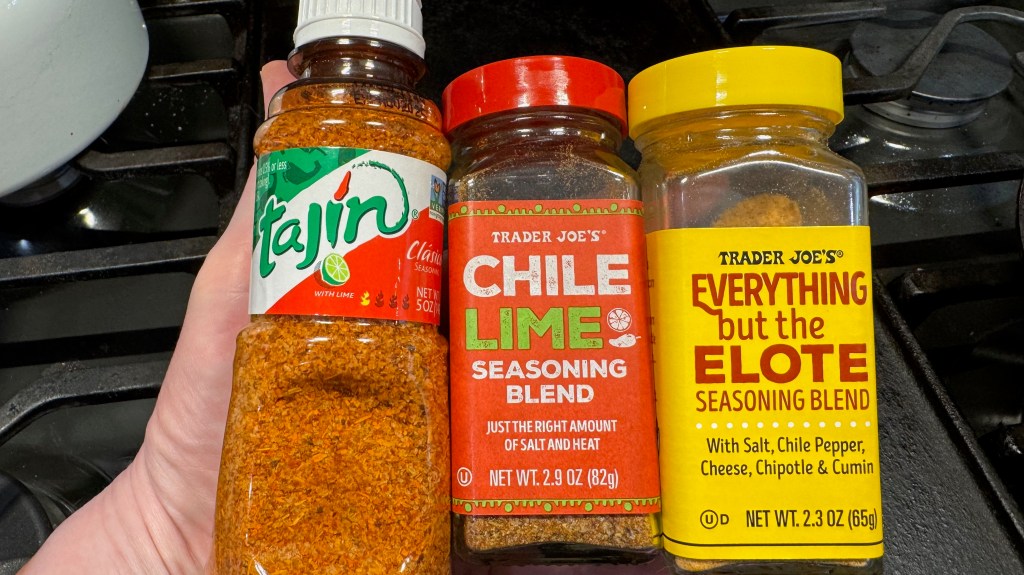
Eloté spices – traditionally, Mexican street corn is seasoned with any number of ground chile powders, including chipotle, cumin, cayenne, ancho or pasilla. I used ground ancho and cumin in my dressing, but if you don’t have the individual chile powders, don’t sweat it! Just pick up a bottle of Tajin seasoning, either in the spice aisle or the International aisle. Trader Joe’s chili-lime seasoning is very similar, and I also love their “Everything But the Eloté,” to season my corn before grilling. It also happens to be excellent on popcorn!

Three terrific options for flavoring this salad, from hottest to mild.
Check out the saltiness ahead of time so you know what to expect.

Scallions – this is not traditional for Mexican street corn, but I can’t make potato salad without some variety of onions, and this one works well with the other ingredients. Use the white and green parts, and slice them thin.

Lime – the lime zest and juice are what really make the flavors of this salad pop. Purchase organic citrus because you’ll be using the peel, and choose heavy fruit with a smooth skin for the most juice and brightest flavor.

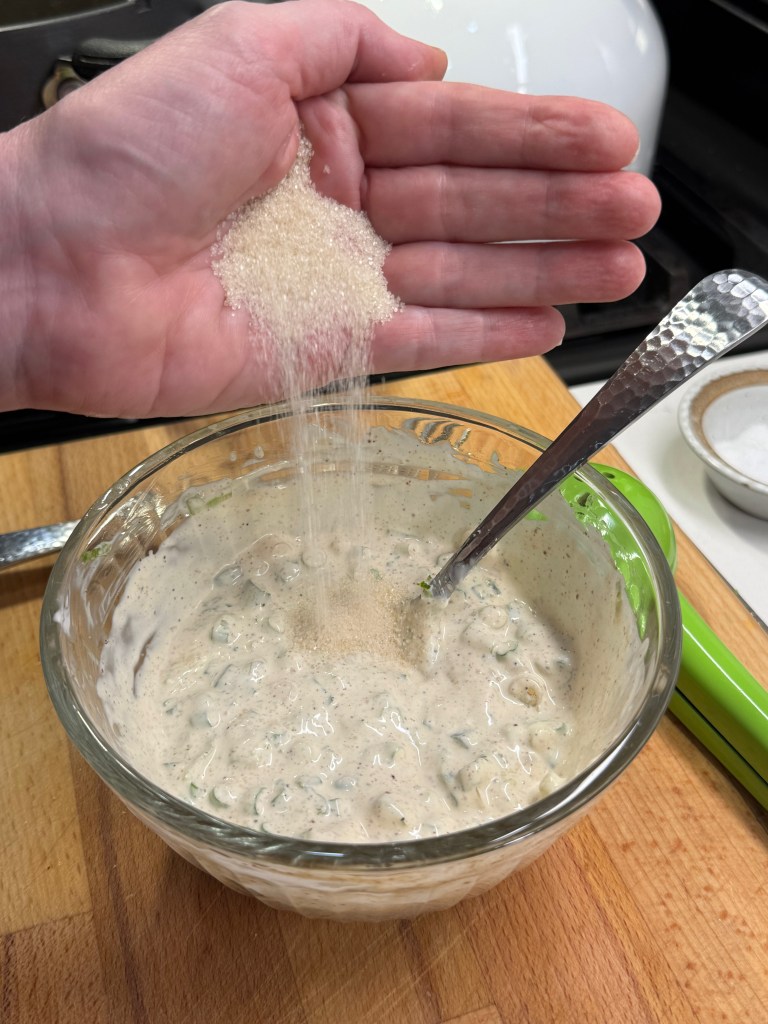
Sugar – every Mexican street corn I’ve ever tasted had a slightly sweet flavor, and a small spoonful of sugar in the dressing made this perfect. Don’t skip it. 

Fresh cilantro – authentic for Mexican street corn, but if you are among the 20% who find that it tastes like dish soap, then just skip it. There isn’t another herb similar enough, and the dish won’t suffer without it.

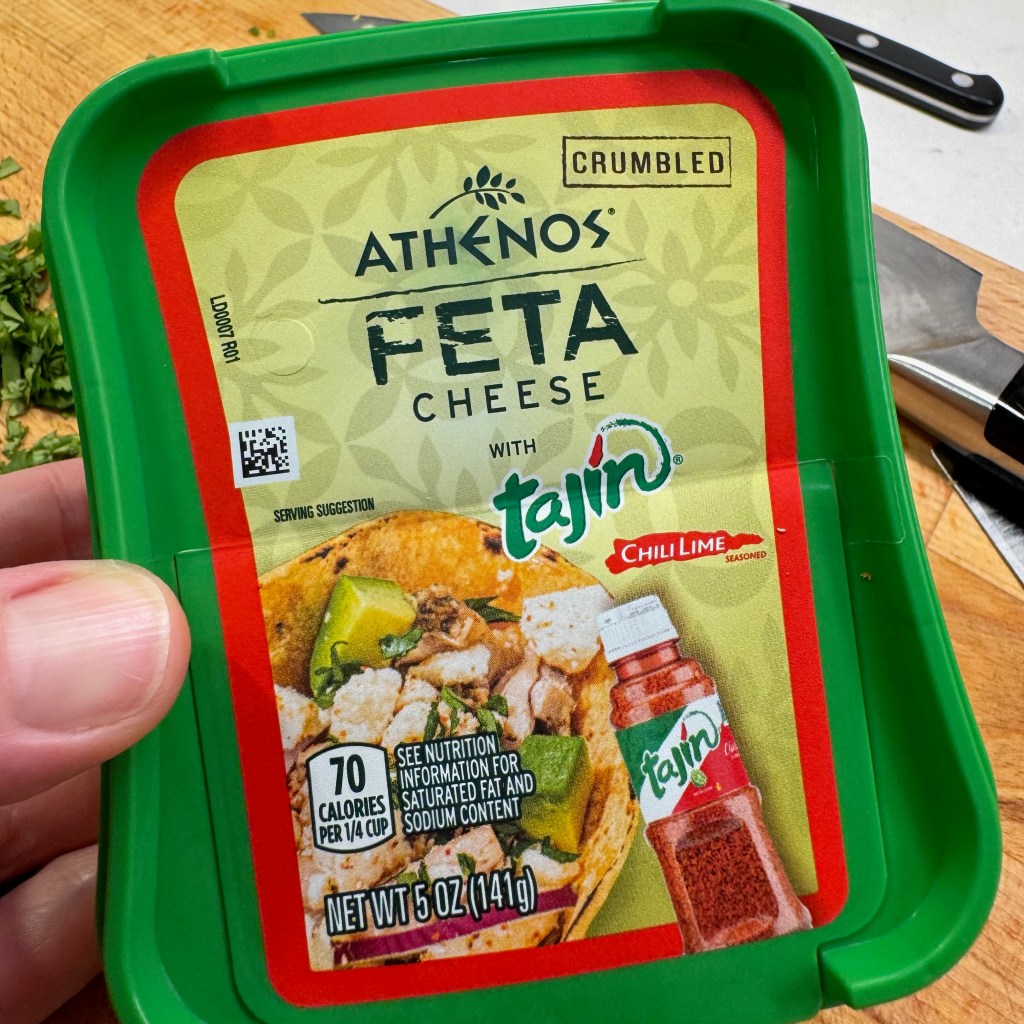
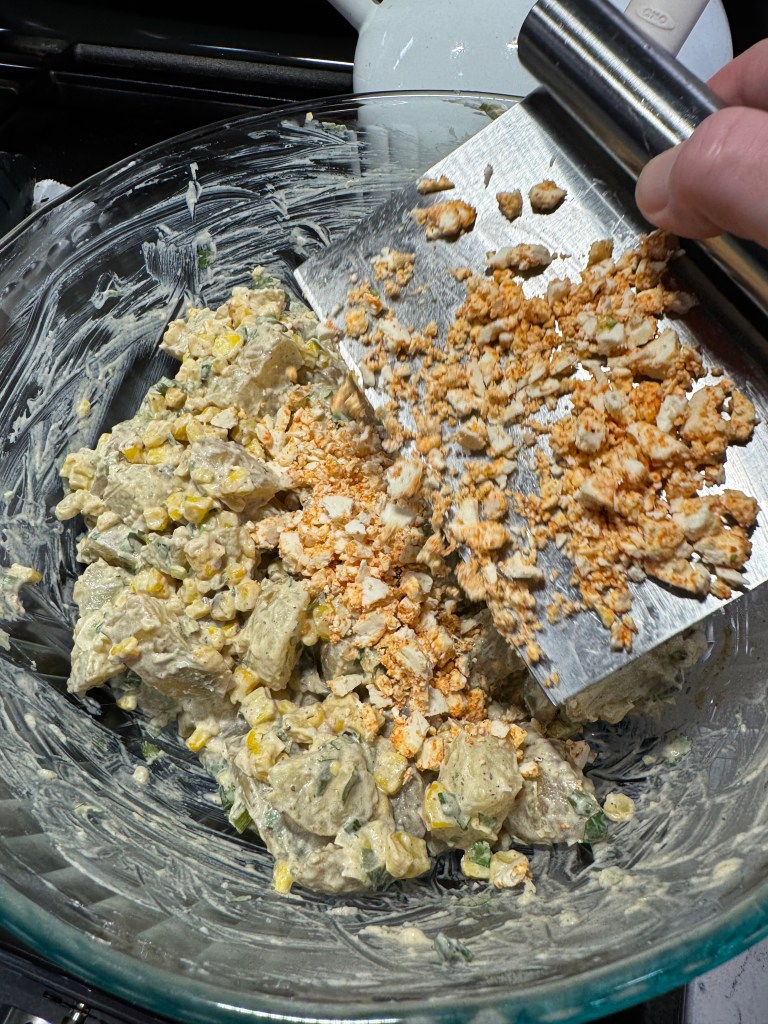
Crumbled cheese – ah, I saved the best for last! Mexican street corn is traditionally slathered with mayonnaise dressing and sprinkled liberally with cotija, a Mexican hard cheese that is reminiscent of parmesan, but less pungent. Cotija can be a little tricky to find outside of a specialty cheese section, but not to worry— feta, the dry crumbly kind, is a lovely substitute. And that leads me to a funny story…

A side note, on “sending the husband to the grocery store”

I love my husband dearly, and his sensibilities in the kitchen are usually right on target, but sometimes, I still make specific and detailed notes on the list when I send him to the store by himself, and I might even text him a picture of an exact item I need. For this recipe, I was very clear that if cotija cheese was not available, he should get “dry crumbled feta,” and in the margin, I wrote, “PLAIN, NO FLAVORS!” So you can imagine the stink-eye he received when he returned with a “flavored feta that sounded interesting.” My dramatic Leo side went bonkers as I yelled, “Geezus, can you not read???” But then I saw what he found, and of course, it was literally perfect for this recipe! Gotta trust my man sometimes, ya know?

You NAILED it, Babe! 😘

Making this Mexican street corn potato salad

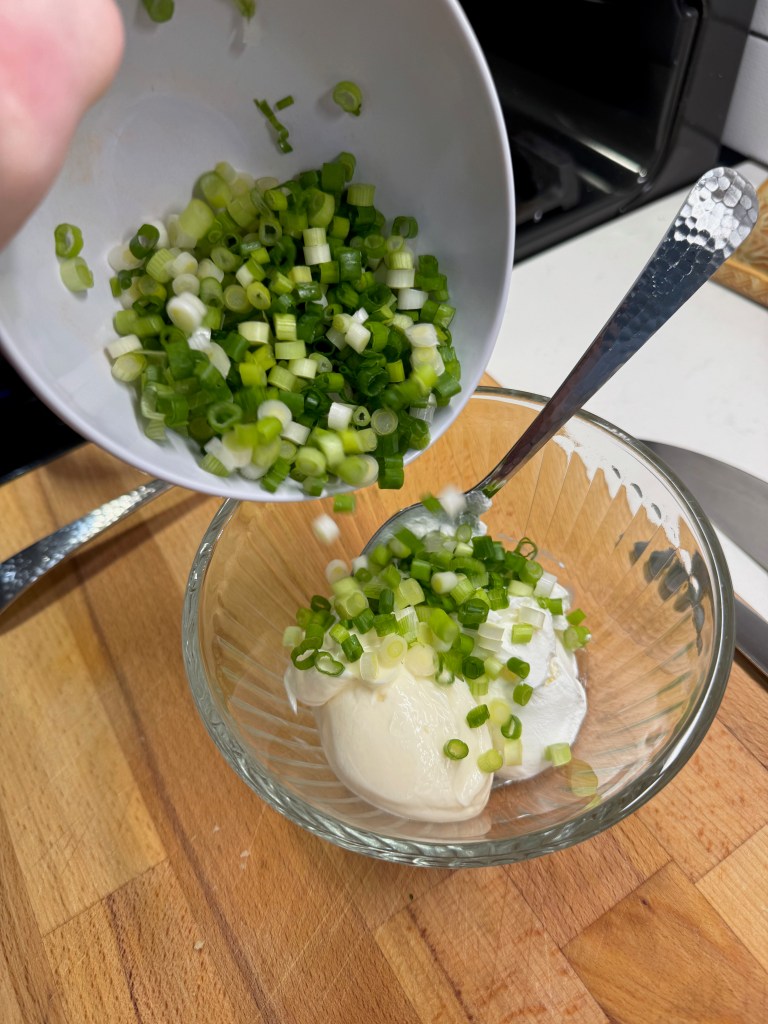
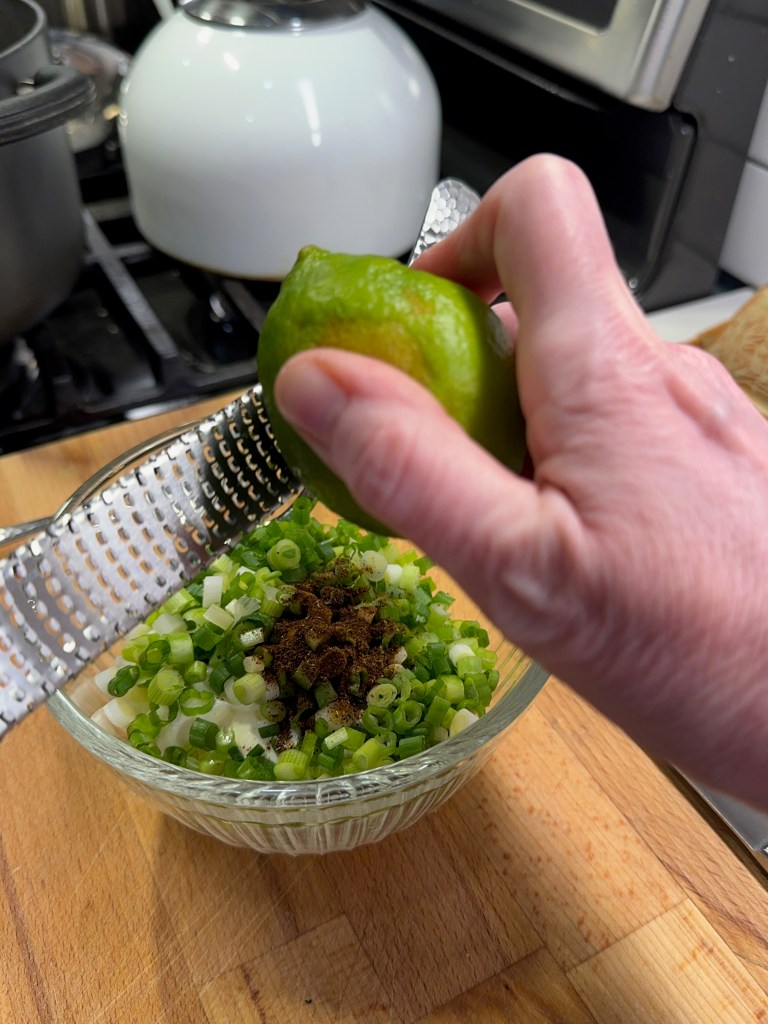
From this point, it’s a pretty standard potato salad in terms of mixing, so I’ll let my photos do the talking while you imagine this deliciousness coming to life in your own kitchen. Find full instructions below in an easy, click-to-print recipe card that you can save for your files. Welcome back, summer! 😎


Mexican Street Corn Potato Salad

  • Servings: About 8
  • Difficulty: Average
  • Print

This is two of my all-time favorite carbs, together in one really flavorful salad! Plenty of seasoning options, so you can make it as spicy (or not) as you like it!


Ingredients

  • 2 lbs. Yukon gold potatoes, skin-on and cut into 1-inch chunks
  • 1/4 cup mayonnaise
  • 1/4 cup Mexican crema (or sour cream)
  • 3/4 cup finely sliced scallions
  • 3/4 tsp. ancho chile powder
  • 1/4 tsp. ground cumin
  • Salt and pepper
  • Zest and juice of one lime
  • 1 tsp. cane sugar
  • 2 ears fresh yellow sweet corn, roasted or grilled until charred but tender
  • 1/3 cup cotija cheese, divided (you’ll mix some into the salad and sprinkle the rest on top)
  • fresh cilantro

Substitution notes: If you don’t have the means to roast or grill the fresh corn, don’t hesitate to pick up a bag of frozen fire-roasted corn. We love the one from Trader Joe’s, and it would work terrific here. If you cannot find cotija cheese, dry crumbled feta is a reasonable substitute; consider chopping it finer if the crumbles are larger than peas. Ancho chile powder is a spice unto itself, without salt or other ingredients. If you can’t find it, or if you want flavor without heat, swap in smoked paprika.

Directions

  1. Place the potatoes in a pot with cold water, and heat over medium-low until they are fork tender. Drain gently and return to the hot pot with the lid off, so that excess moisture can escape through the steam. Sprinkle 1/2 tsp. salt over the hot potatoes and cool them to room temperature, then transfer to a large mixing bowl and refrigerate for an hour or longer.
  2. In a medium bowl, combine mayo, crema, scallions, spices, lime and sugar. Adjust to taste with salt and pepper. Put the dressing in the fridge to chill until you’re ready to assemble the salad.
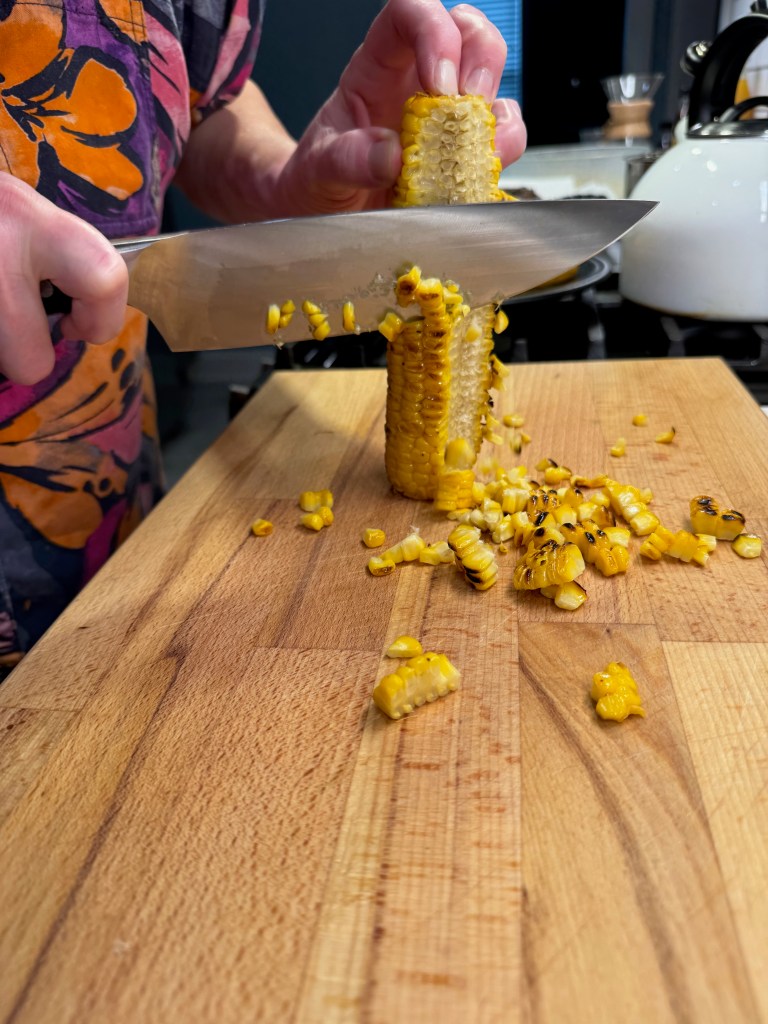
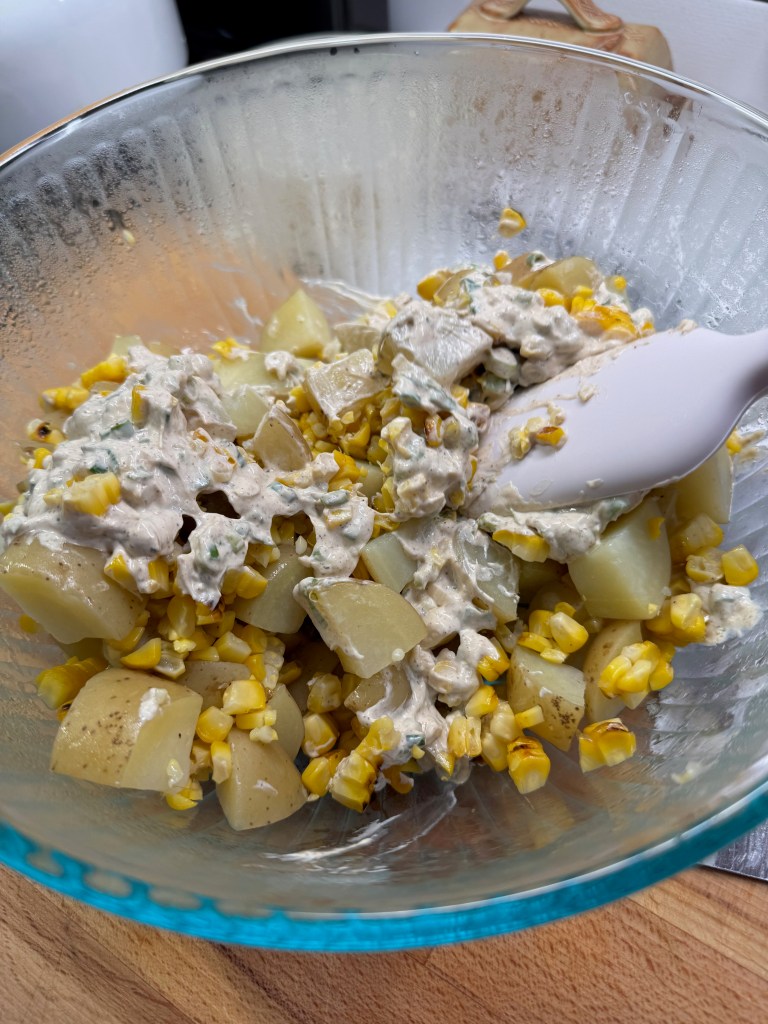
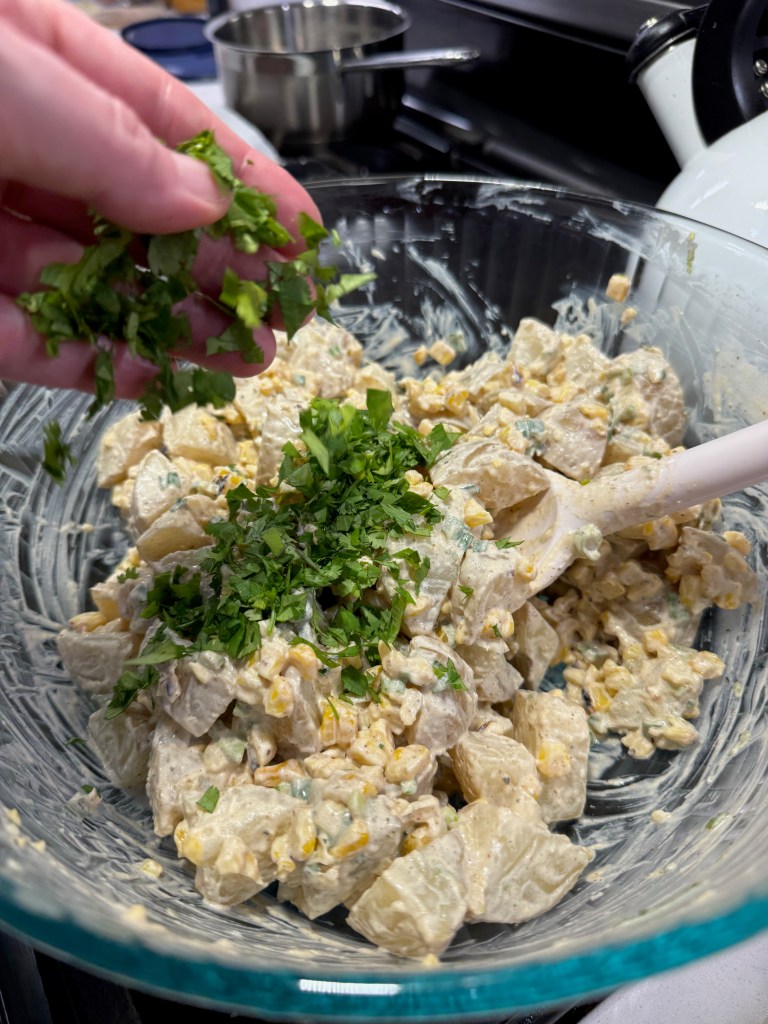
  3. Stand the corn on end and use a sharp knife to cut the roasted kernels off. Add them to the potatoes and fold in gently with the dressing until the salad is consistently coated. Fold in about half of the cotija cheese and a bit of the chopped cilantro, reserving the rest for garnish.
  4. Transfer the potato salad to a serving dish, and sprinkle the top with remaining cheese and cilantro.


Hibiscus Bee’s Knees 🌺

The saying goes that there’s nothing new under the sun, and though I generally believe it to be true with food and drink, I do think that sometimes a twist on a classic is different enough to warrant calling it “new.” Case in point, this tart and sassy summer cocktail.

It’s refreshing, balanced and beautiful!

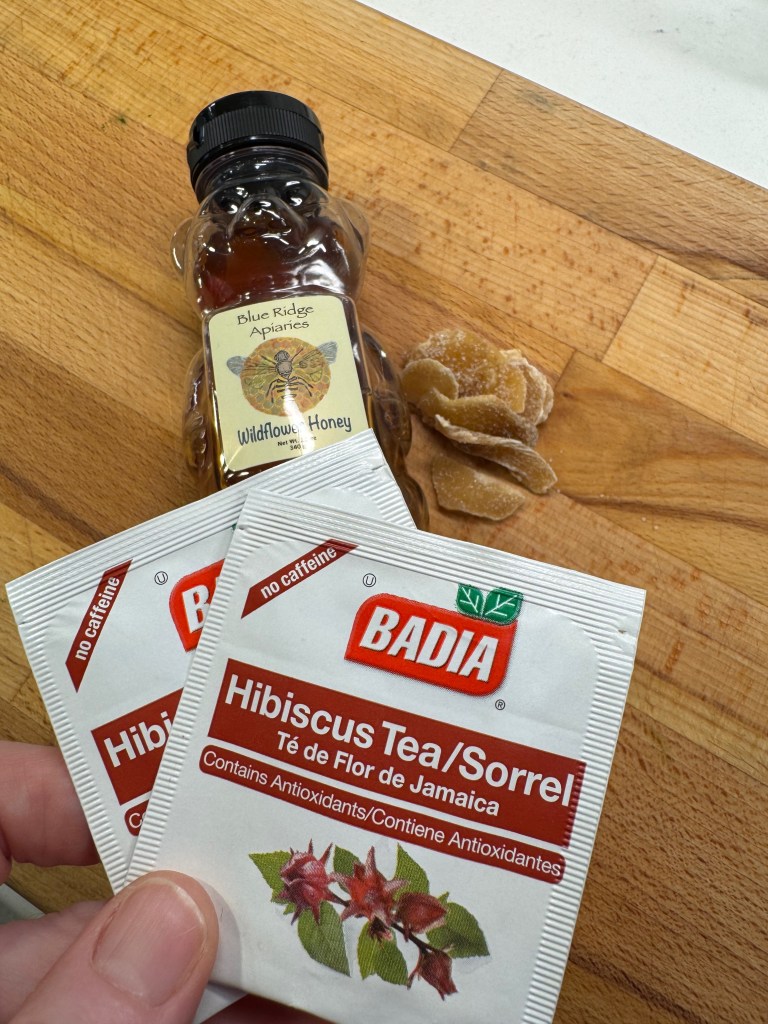
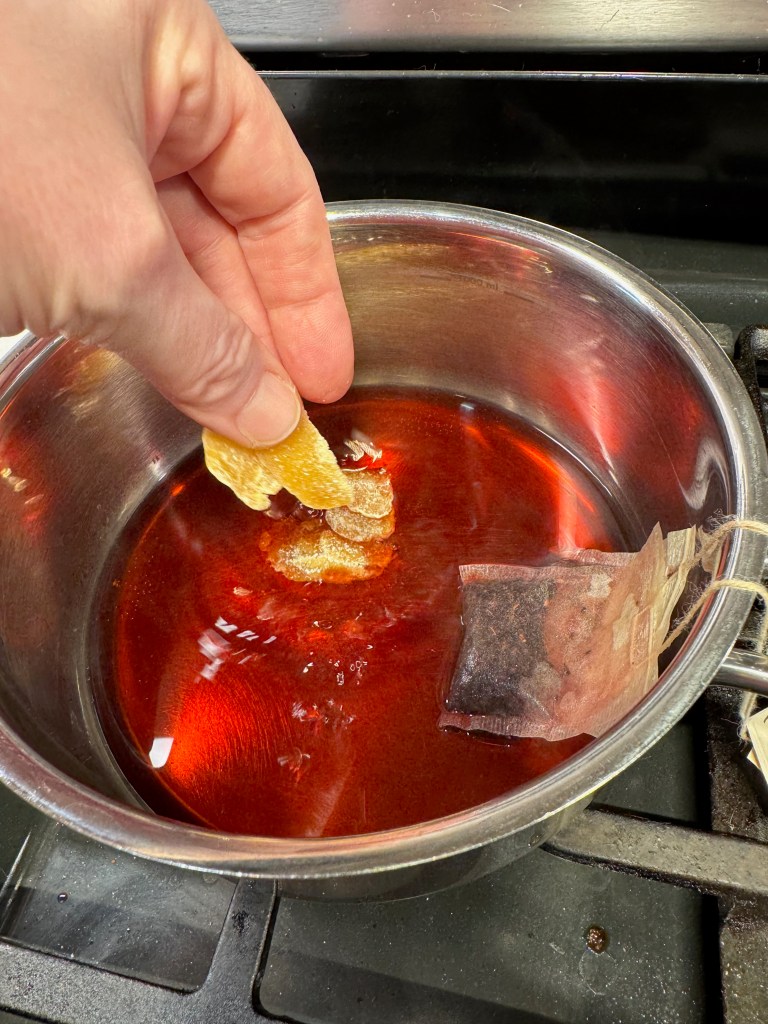
Mine is a two-ingredient update to a Prohibition-era cocktail, and it pushes a classic into the modern, with a vibrant reddish hue that is perfect for Juneteenth or the summer solstice. The key difference is hibiscus, in the form of pure hibiscus tea bags, which I simmered in boiling water long enough to draw out the tart, floral flavors. A few pieces of crystallized ginger added a subtle zing of spice, and I think it would be even better with fresh ginger if you like the flavor.
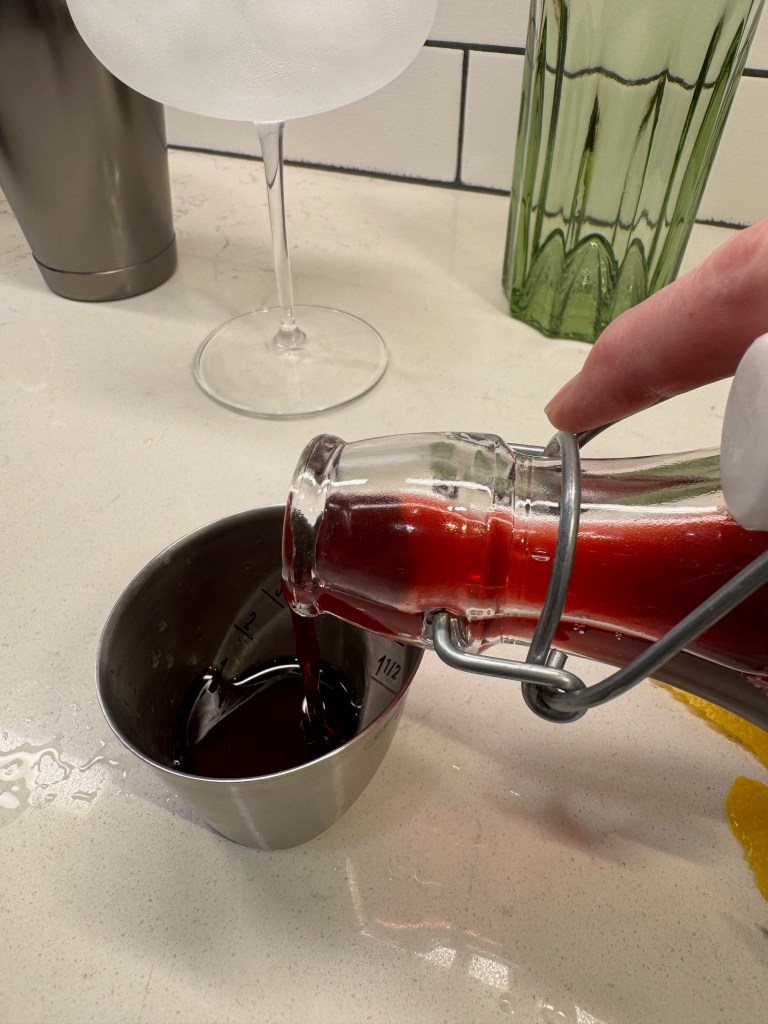
The resulting strong tea was sweetened with a generous squeeze of local honey, for a syrup that is thin enough to blend well with the cocktail ingredients in a shaker filled with ice. I do not recommend adding honey straight, as it would remain heavy and thick. But in an equal parts syrup, it’s perfect.

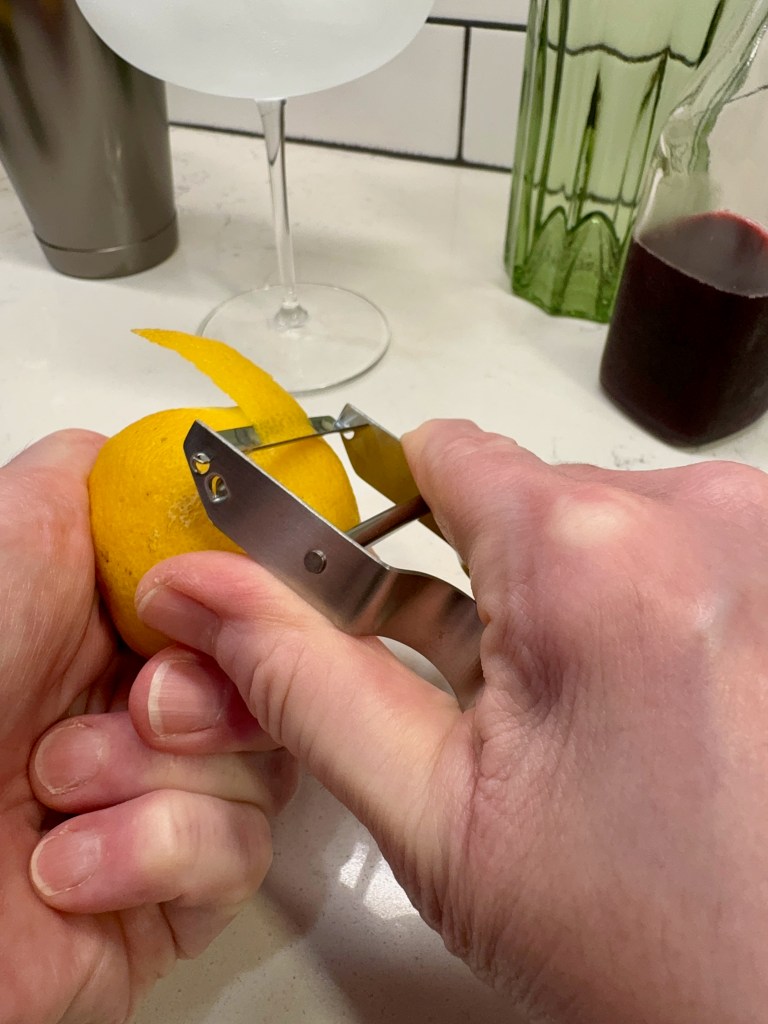
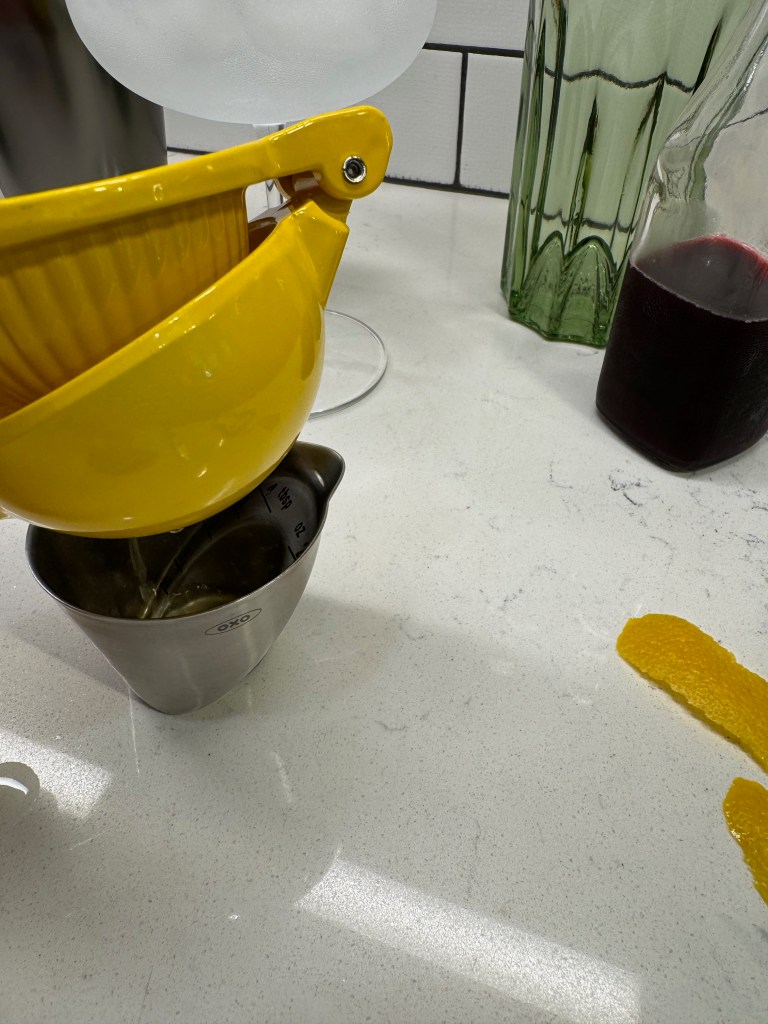
This hibiscus-ginger syrup will keep in the fridge for about two weeks, and I have no doubt that it would be great in other cocktails or even as a flavor enhancer for sparkling water or tonic on a hot summer day. But for this featured cocktail, we need gin— the traditional spirit for bee’s knees— and fresh lemon. Grab a cocktail shaker, a lemon squeezer and a peeler to strip a bit of peel for garnish, and chill down a cocktail glass with ice water.

Once the syrup is made, it’s quite a simple drink.

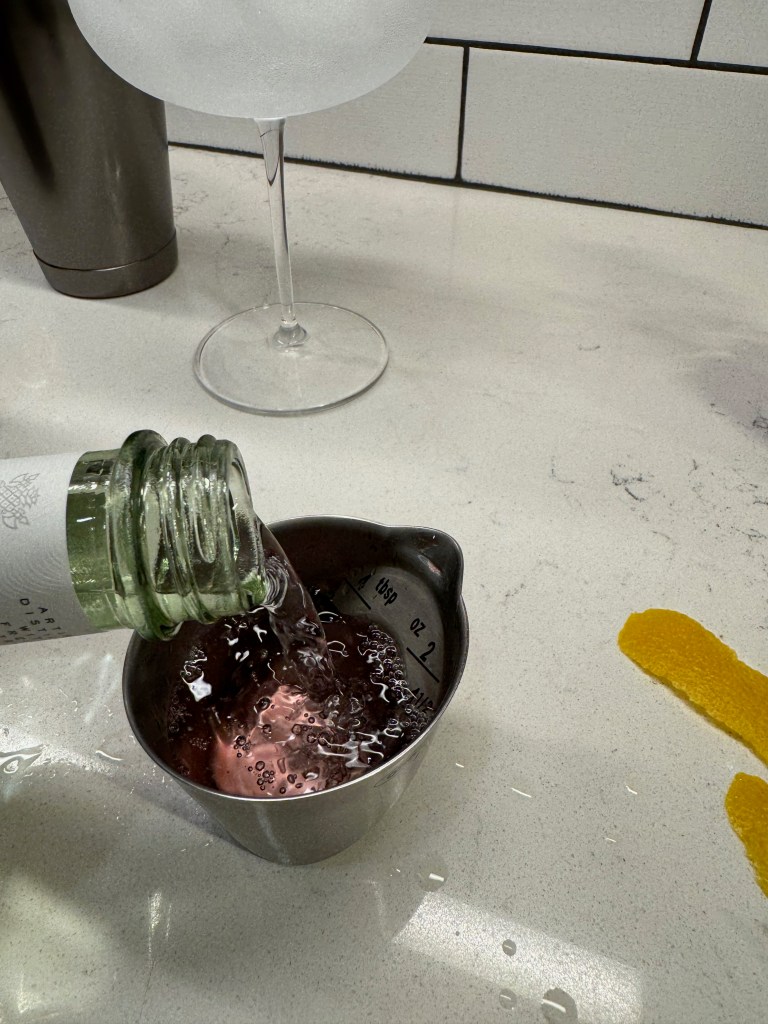
Get your lemon strip first, then cut the lemon in half for easy squeezing into the shaker. Add an equal amount of hibiscus-ginger honey syrup and then two ounces of your favorite gin. While you enjoy these refreshing images, let’s take a trip down nostalgia lane to learn more about the original “bee’s knees.”


How did the bees knees come about?

Back in the days of Prohibition, otherwise known as “the U.S. Government’s 13-year attempt at controlling its citizens,” grown adults had to get creative to find ways to cover up the questionable flavors of crappy liquor, the only kind they could get their hands on at the time. There were bootleggers, of course, who smuggled booze into the cities. And there were also people making their own at home, and the term “bathtub gin” arose from that era, a fair description of what was likely not very palatable. 

Honey and lemon juice, both strong flavors on their own, did a terrific job of hiding the paltry gin enough for them to choke it down and get their buzz on. People enjoyed the combination so much that the the drink became known by a phrase that everyone was using at the time to describe what was “the best.” The bee’s knees!

Early recipes for bee’s knees were in the “equal parts” category, meaning that they used the same amounts of gin, lemon and honey. Yikes. For modern times, the recipe is adjusted to a more standard ratio of 2 ounces gin and 3/4 ounce each of the other two ingredients. It’s nicely balanced, not too sweet and not too acidic.

I found a fun and informative article that delves deeper into the history of the bee’s knees, including its possible connection to “the Unsinkable Molly Brown,” as well as some interesting variations that I’d love to try sometime. Check it out here if you’re curious.

Back to our cocktail!

Today, of course, we have plenty of options for quality gin, and I imagine that your favorite would work just fine in this drink. I’ll also say that if you have always considered yourself to be a non-gin drinker, the bee’s knees might be the cocktail to change your mind. 

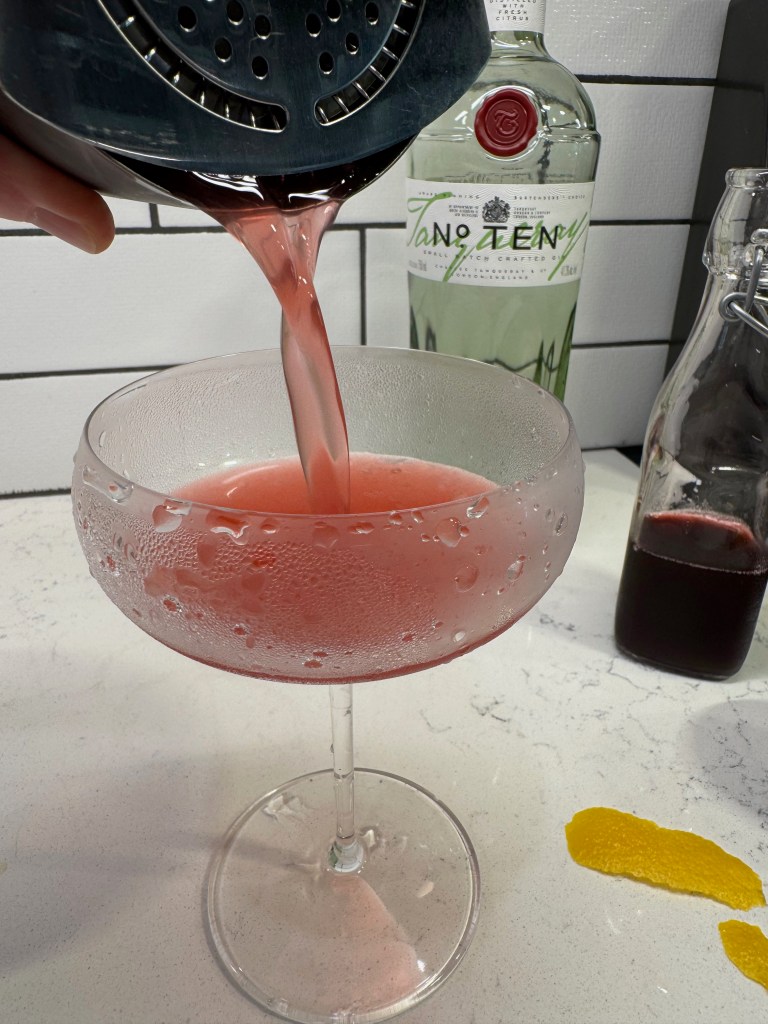
I’ve chosen Tanqueray No. 10 this time, for no other reason than the store was sold out of my usual Ford’s gin. Actor Stanley Tucci recently collaborated with Tanqueray No. 10 in an ad campaign, where he discussed the proper way to order a martini, and his description of the spirit won me over. Or maybe it was his voice. Either way, there’s a distinctive citrus note running through this gin, making it a nice anchor for the lemon and hibiscus.

Shake your cocktail ingredients with plenty of ice until the outside of the shaker is uncomfortable to hold. Strain it into the chilled glass and express the lemon peel over the drink, finishing with a wipe of the oily side of the peel all around the edge. 

The pretty, bright reddish hue of this drink makes it suitable for a Juneteenth celebration, where the color red symbolizes strength and resilience. And I can’t think of a more appropriate drink for summer than one made with fresh citrus and bright florals. This one deserves to be on repeat for the whole season!
Hibiscus Bee's Knees

  • Servings: 1 cocktail
  • Difficulty: Easy
  • Print

This two-ingredient twist on a classic cocktail is bright, beautiful and delicious enough to deserve a spot in the rotation all summer long. Use pure hibiscus tea bags, or seek out dried hibiscus flowers to make the syrup.


Ingredients

  • 2 oz. citrus-forward gin
  • 3/4 oz. fresh lemon juice
  • 3/4 oz. hibiscus-ginger honey syrup (see below for recipe)
  • A strip of lemon peel, for garnish

Directions

  1. Add a generous amount of ice, plus water, to a cocktail glass to chill it down. Set aside while you prepare the cocktail.
  2. Combine gin, lemon juice and hibiscus-ginger honey syrup in a cocktail shaker.
  3. Add at least one cup of ice and shake vigorously for about 20 seconds. Strain into the chilled glass. Squeeze the outside curve of lemon peel over the drink, swiping the peel all around the edge of the glass. Drop peel in glass or cut a slit in it to balance it on the edge.
Note: Make the hibiscus-ginger honey syrup early enough to allow it to fully cool before using in cocktails. Strain the syrup into a sealable bottle or jar, and keep it in the fridge for up to two weeks. This recipe will make enough syrup for about six cocktails or cocktails.
Ingredients

  • 1/2 cup cold water
  • 2 pure hibiscus tea bags
  • About 6 pieces crystallized ginger (or half as much fresh sliced ginger)
  • 1/2 cup local honey

Directions

  1. Bring water to a gentle boil in a small saucepan. Turn off heat and add tea bags and ginger, swirling and steeping for about five minutes. Remove tea bags. Stir honey into the tea and continue to steep with the ginger until cooled to room temperature.
  2. Strain out solids and transfer syrup to a jar or bottle.