Baby Back Ribs with Root Beer BBQ Glaze

A few weeks ago, my husband, Les, and I had the unfortunate experience of being forced to empty and clean out what we call our “downstairs” fridge. The term is a misnomer, for sure, given that our home is built on a slab, and we have no downstairs—unless you consider the main level as “downstairs,” and that would only make sense if you were standing in the loft. No, our extra refrigerator lives in the garage, just through the laundry room, about six steps from the kitchen. The confusion is built on Les’s occasional reference to the spaces of a home he once owned in Connecticut, where he apparently did have a downstairs fridge. He also sometimes mistakenly tells me he was listening to “K-ROQ” on the drive home, which was his favorite radio station when he lived in Southern California (which, by the way, was only 28 years ago), but I digress.

What happened that night recently was a flat-out mess, as a forgotten glass bottle of “nitro” cold brew coffee was shoved into one of the uneven cold spots in the back of the extra refrigerator, and the darn thing exploded all over everything. There was broken glass and sticky cold coffee on the shelves and walls of the fridge and spattered on several food and drink containers that were sitting beneath the mishap. It was not exactly the way we intended to “clean out” the fridge, but it did force us to dump some things and gave us a chance to properly inventory the ridiculous quantity of stuff that has piled up in the overflow fridge, which we frankly would not need if it were not for my impulse purchases, especially, it seems, the beverages.

What can I say? I don’t want anyone to be thirsty!

One such impulse buy stood out as a bucket list item for me, and the forced fridge cleanup gave me a push on my culinary intention of making a root beer-based barbecue sauce. I will admit that neither Les nor I are fans of carbonated soda. I have not had a Coca-Cola or 7-Up or anything like them in years (maybe decades), and I don’t miss them. My aversion is based partly on the fact that they are carbonated and leave me feeling bloated and uncomfortable, but more on the fact that nearly every soda on the market is made with high-fructose corn syrup. And that, my friends, is a total deal breaker for me. Diet sodas are no better, because I cannot abide the aftertaste of alternative sweeteners, including the plant-based stevia.

But when I had spotted this small-batch, handcrafted root beer a few months ago, I thought again about my desire to make a root beer sauce or maybe root beer-braised pulled pork. This specialty root beer is sweetened with cane sugar, and on its own, it is sweet. Like, melt-your-teeth sweet. When I reduced it down, however, and simmered it with ketchup and spices and onions, it was exactly right for dressing up baby back ribs on the grill. As with most rib recipes, I started with a brine to give the meat a jump start toward tenderness and flavor, and I got some good advice from chef Bobby Flay about what to put in the brine—cinnamon, star anise and molasses were a giant echo for the root beer flavor that would be slathered on the ribs near the end of cooking. There are a couple of things Les and I agreed we would do differently next time, and I’ll explain that at the end. But overall, this was a successful adventure!
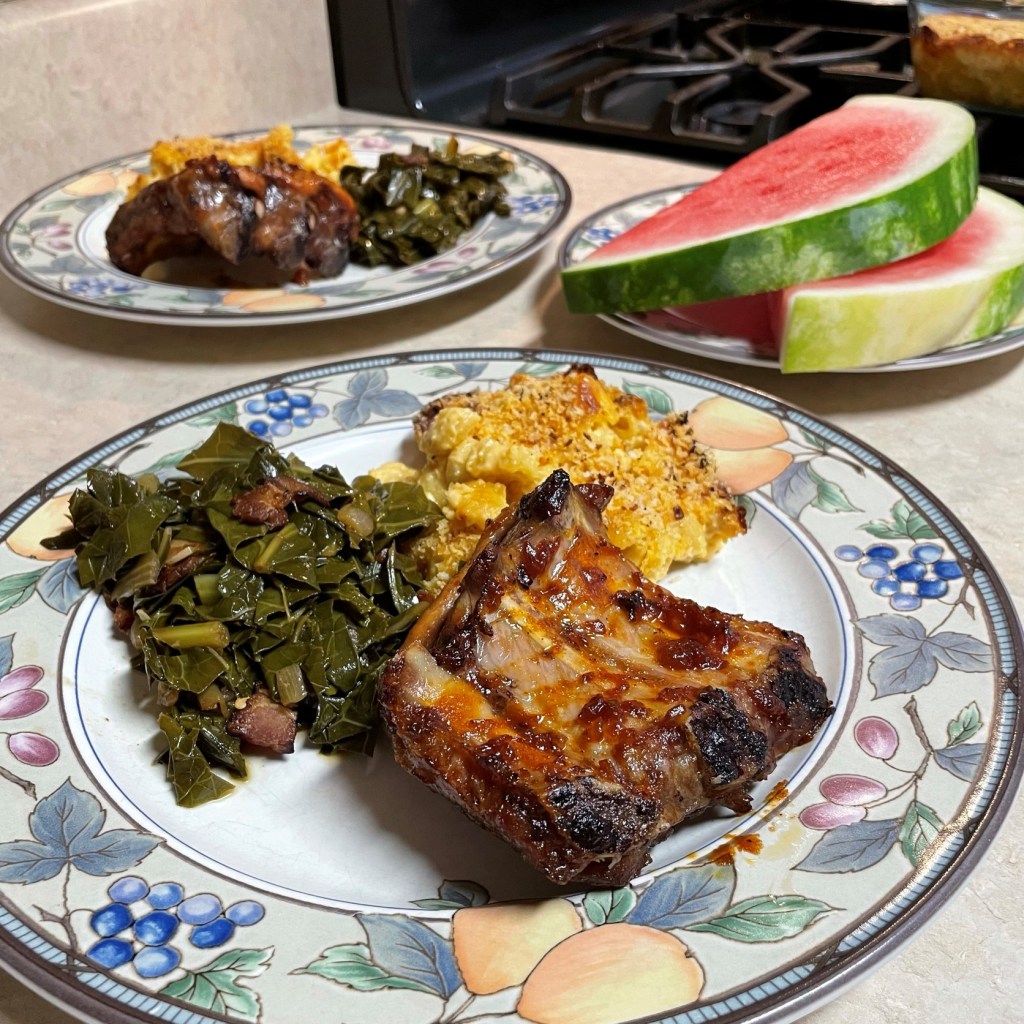
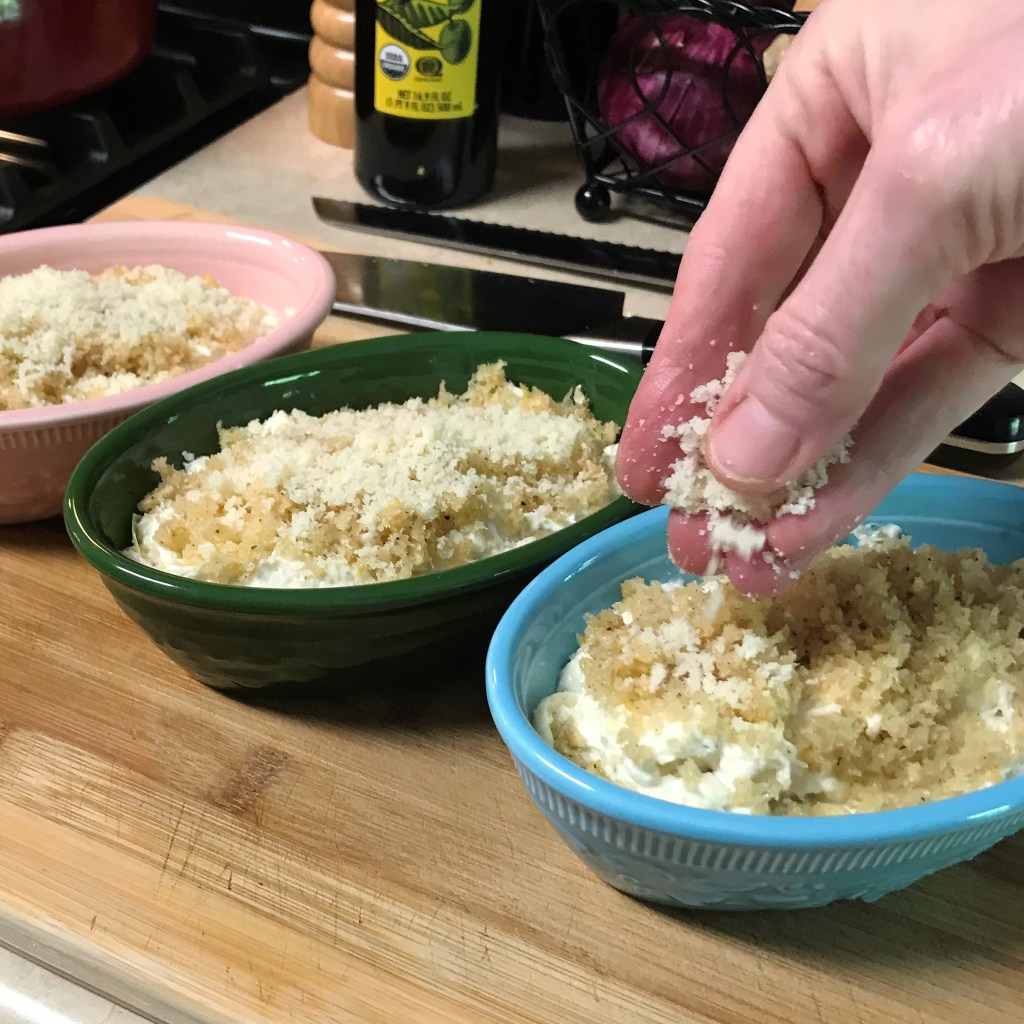
It was a southern BBQ feast, with spicy collards and homemade mac and cheese.

Another bucket list item has been moved to the “done” column, and because I discovered that I also really like the essence of root beer, I used two more bottles of it from the “downstairs fridge” to make syrup for bourbon cocktail experiments. Alas, my friends, that will be a post for another day.


Inspired by  BBQ Ribs with Root Beer BBQ Sauce Recipe | Bobby Flay | Food Network

Ingredients – the ribs

1 large rack baby back ribs (ours were pasture-raised from the local farmers’ market)

1/2 cup kosher salt

1/4 cup molasses

2 whole cinnamon sticks

2 star anise

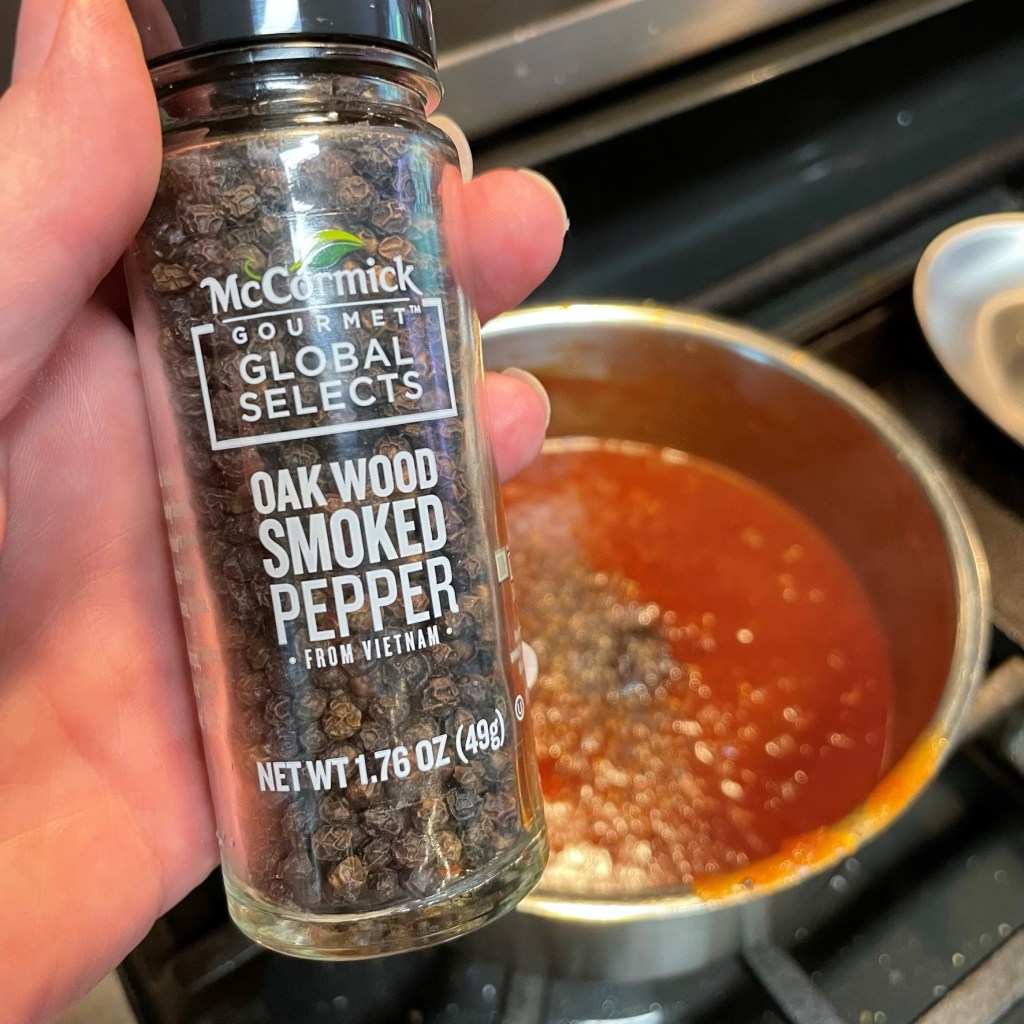
1 Tbsp. oak-smoked black peppercorns* (see notes)

1/4 cup sweet onion juice, optional*

Enough ice and water to make 8 cups of brine liquid


*Notes

The smoked peppercorns are made by McCormick and sold in a tall jar with a built-in grinder top. I am thoroughly addicted to their flavor and have used them in various food and cocktail recipes whenever I want to add a smoky flavor.

I made these ribs the same weekend as the tangy apple cole slaw that I shared a few days ago, and the onion juice was the discard from the shredded onions in the slaw. Waste nothing, right? 😉


Prepping the ribs
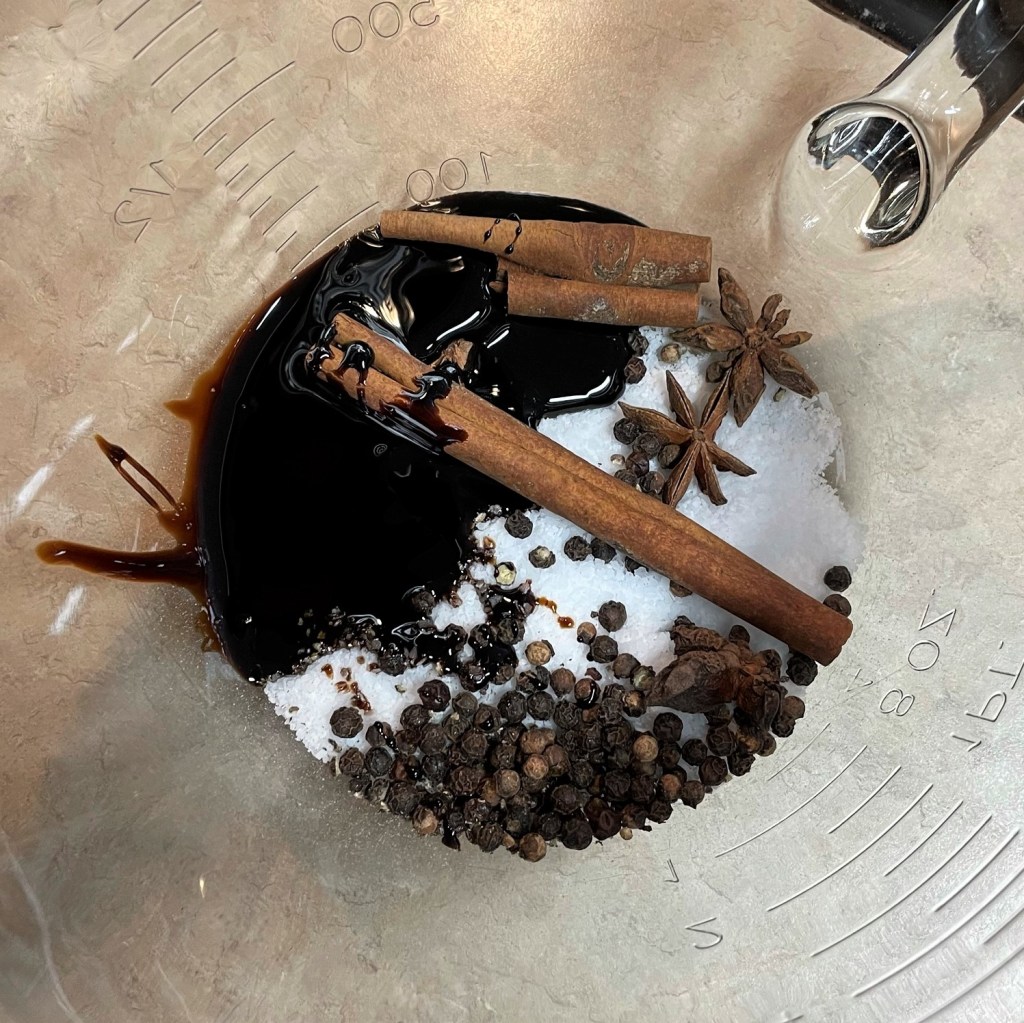
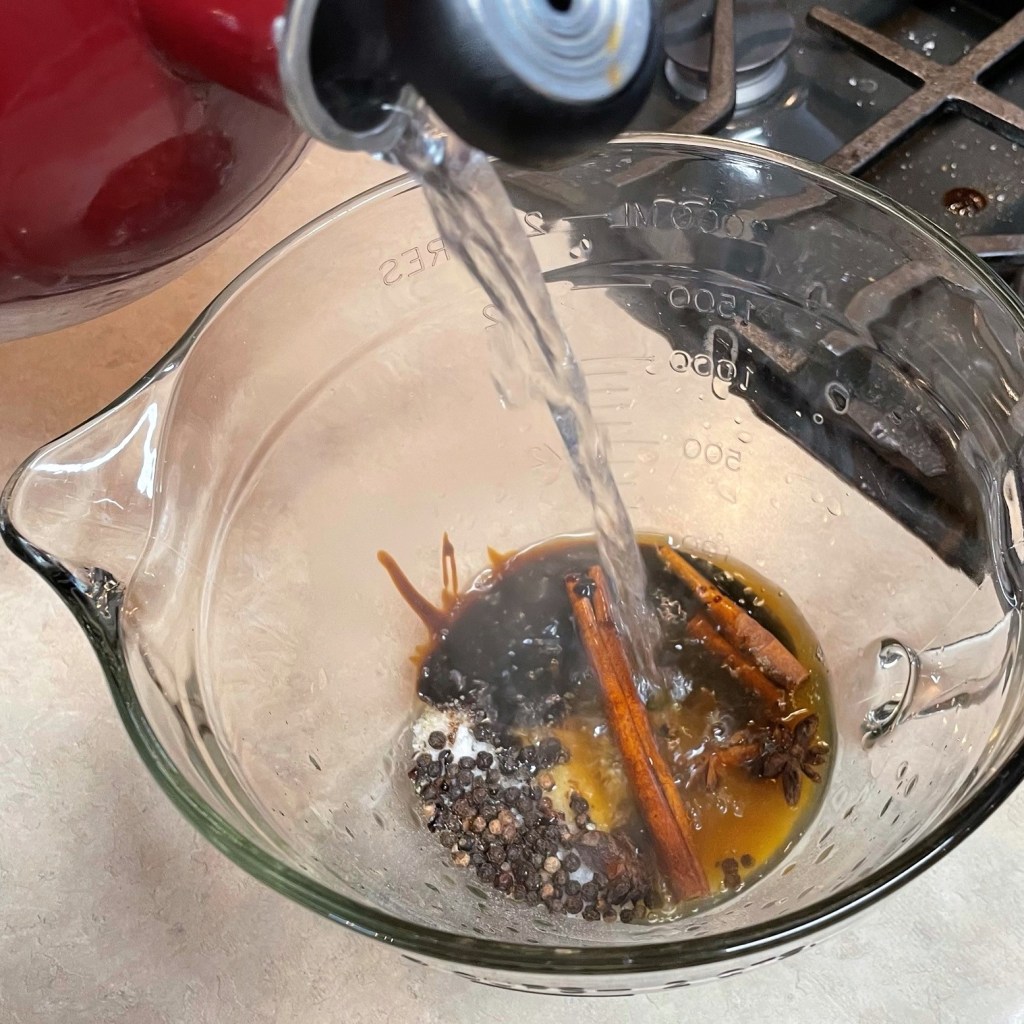
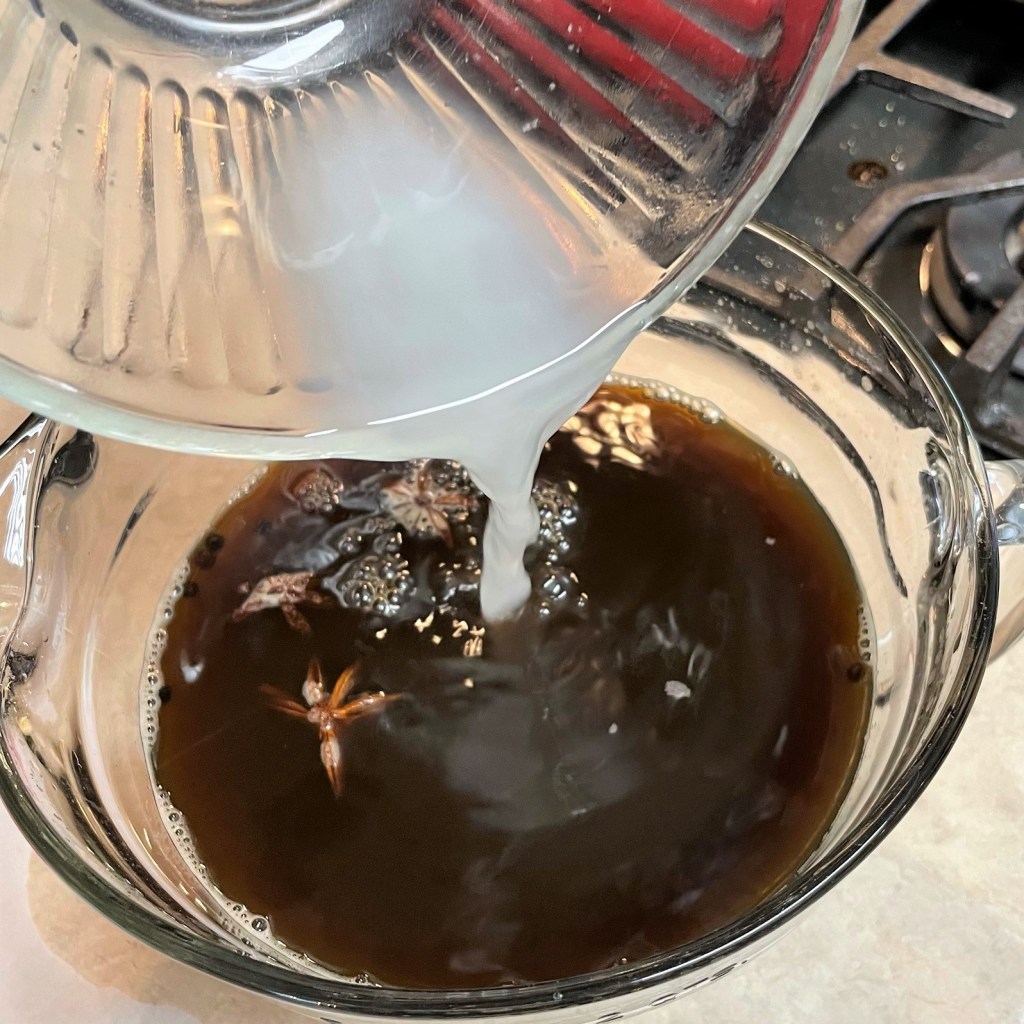
  1. Prepare the brine by combining kosher salt, molasses, cinnamon, star anise and black pepper in a large glass pitcher bowl. Add two cups of boiling water and stir to dissolve the salt and sugar. Add ice cubes and enough cold water to make 8 cups total.
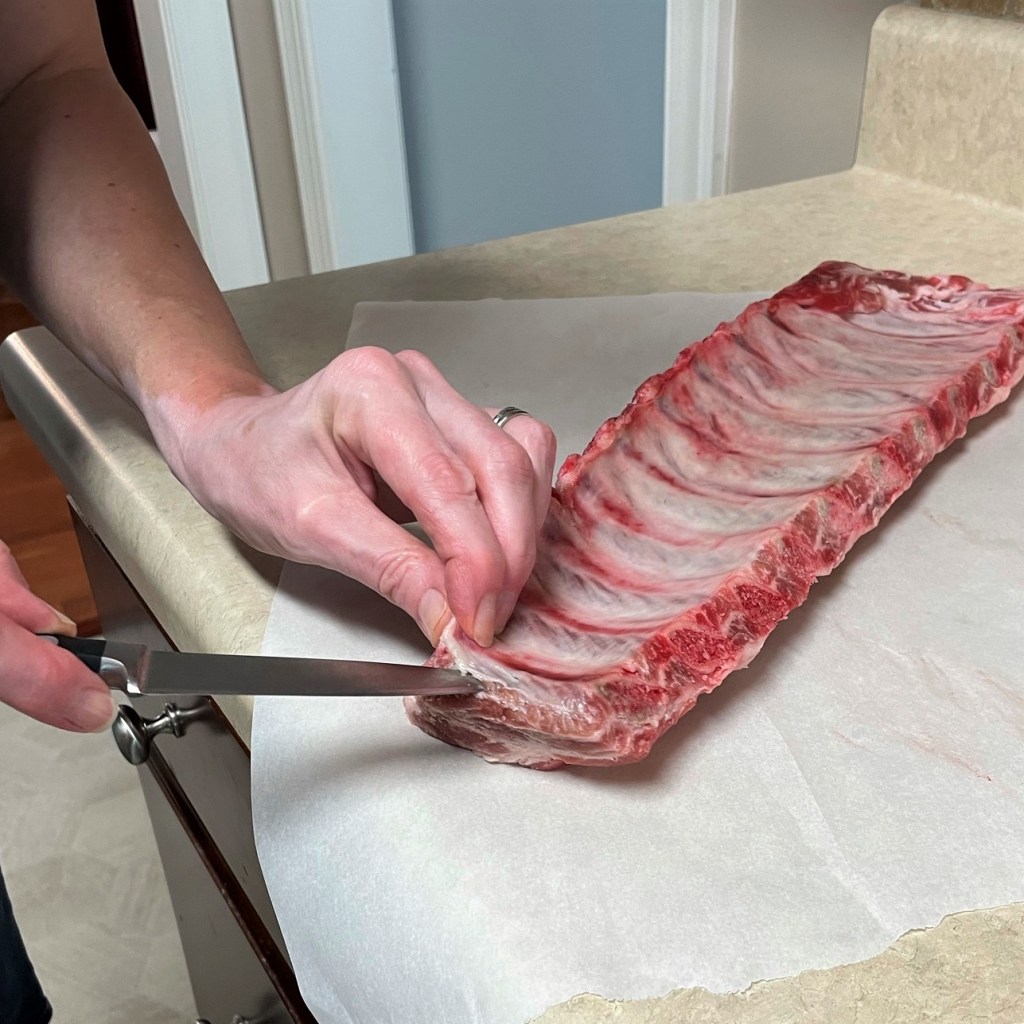
  2. Remove the tough membrane from the back side of the ribs. Begin by slipping a sharp paring knife under the membrane on the smaller end of the rack. Separate enough of it to grab onto with a dry paper towel, and then slowly but steadily lift it up and away from the ribs.
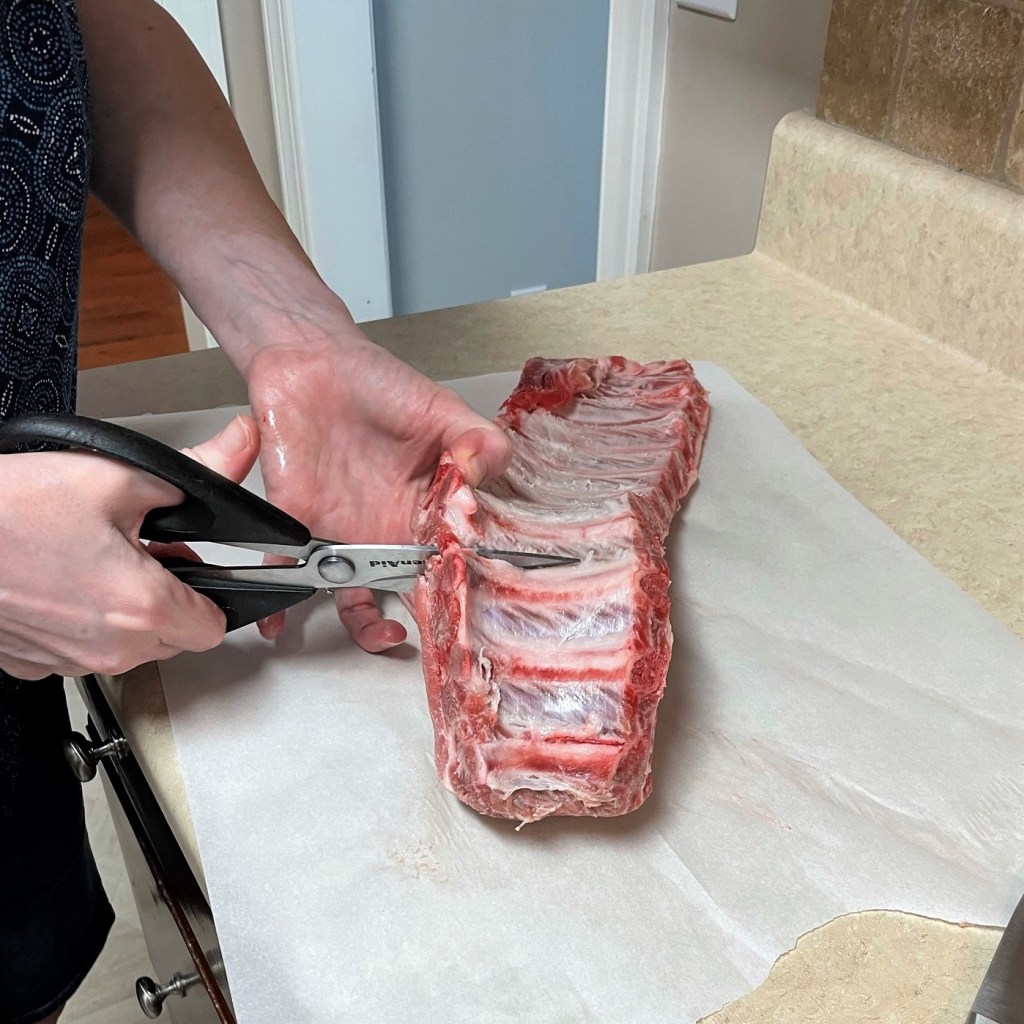
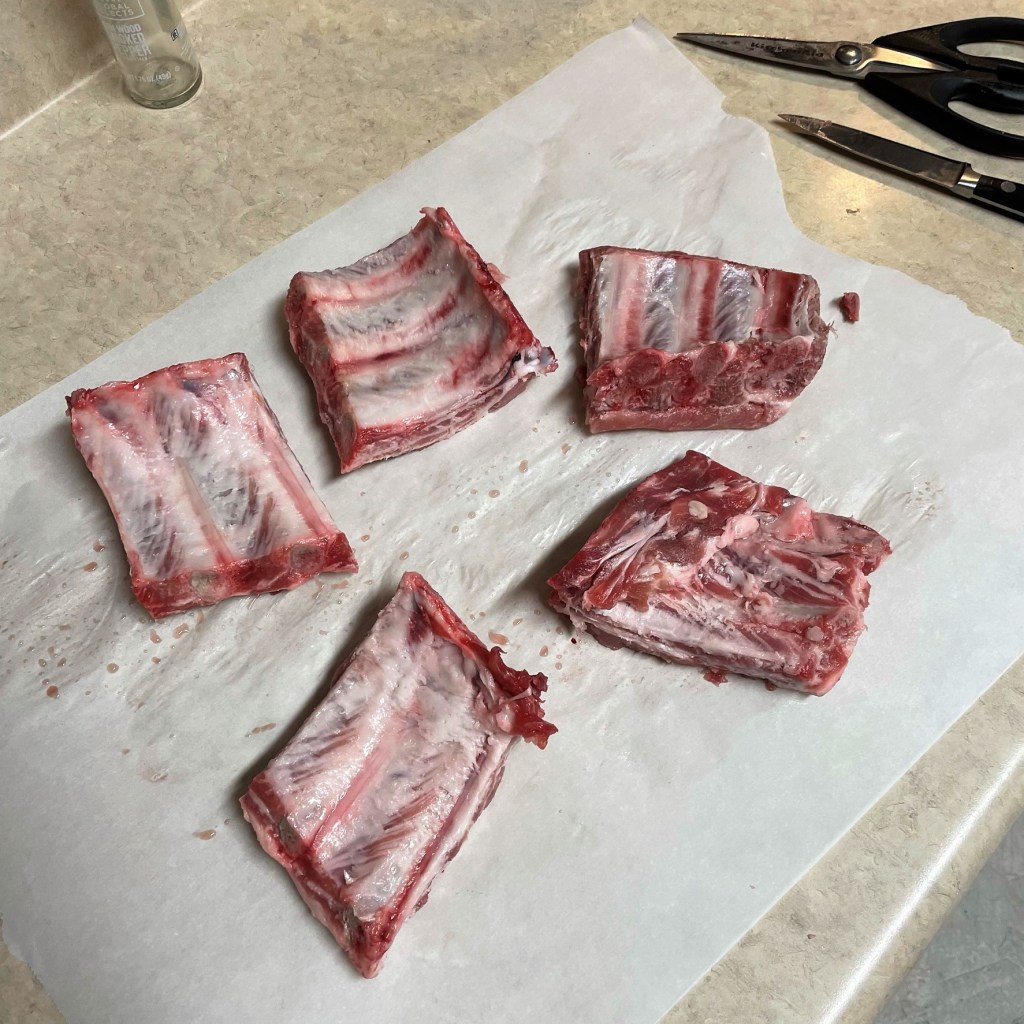
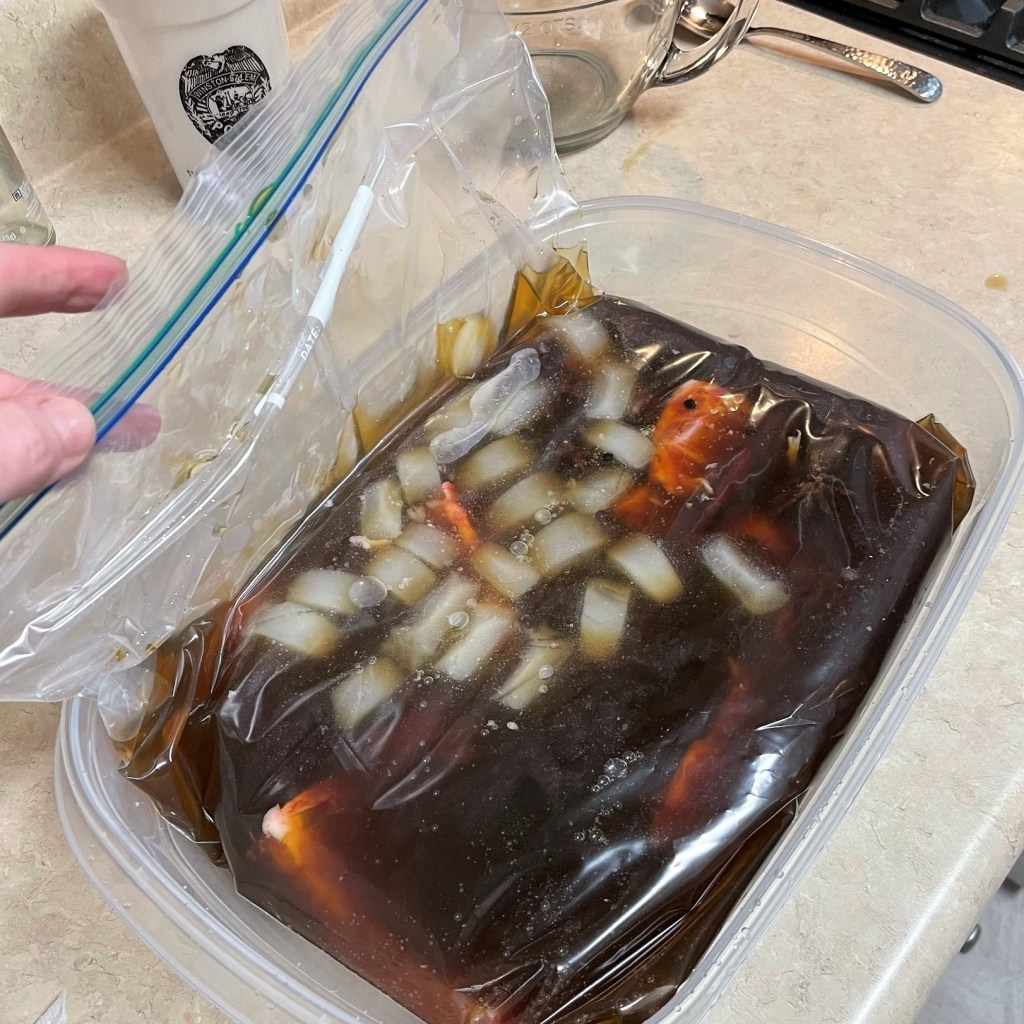
  3. Use kitchen shears or a sharp knife to separate the ribs into portions. Transfer the rib portions to a 2-gallon zip top freezer bag, placed in a container large enough to contain the brine if the bag should happen to leak. Pour the cold brine over the ribs, squeeze out as much air as possible and send them to the fridge to marinate at least overnight, and up to 24 hours.
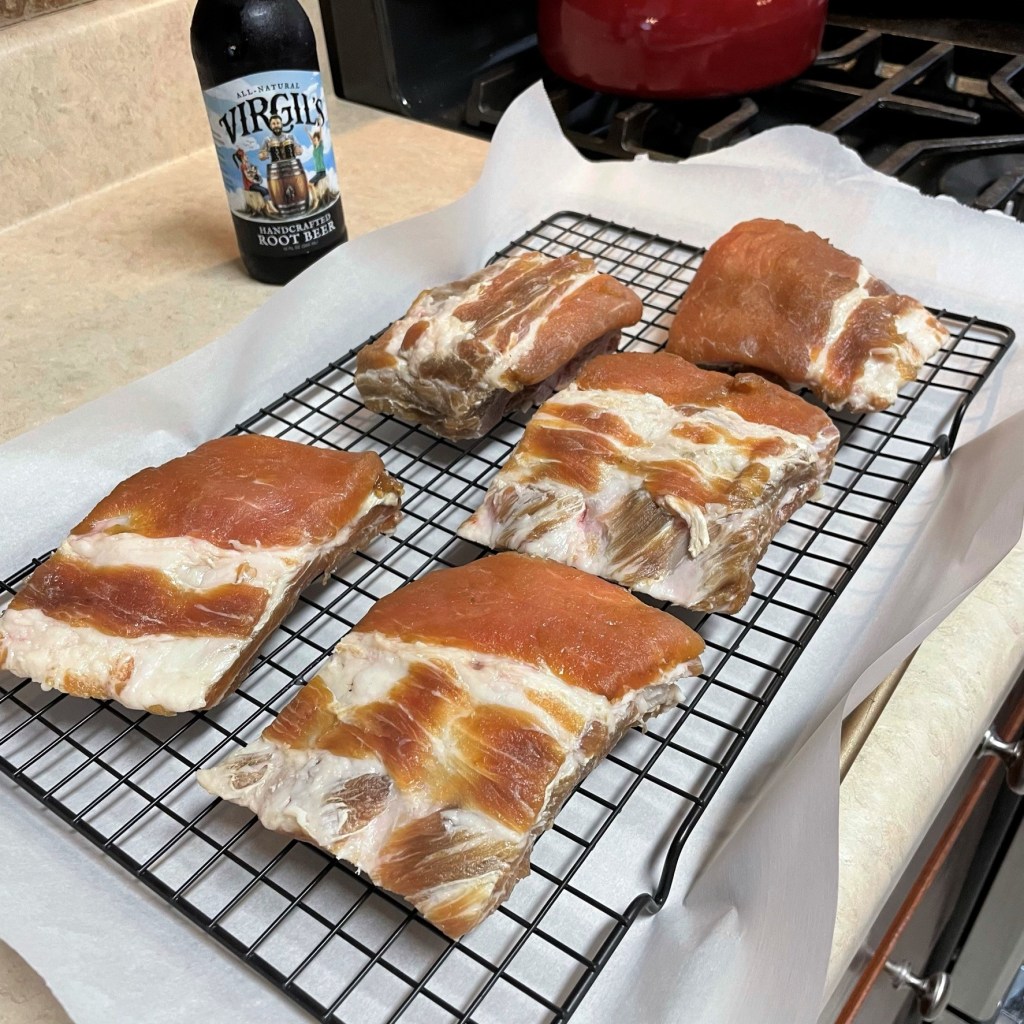
  4. When the brine is complete, remove the ribs and pat them dry. Place them on a rack over a baking sheet and refrigerate, uncovered, for a few hours. This prepares the surface of the meat for more flavorful grilling.

Root Beer BBQ Glaze

2 Tbsp. canola oil

1/2 sweet onion, finely chopped

2 cloves garlic, minced

Zest of a fresh lemon

2 pieces crystallized ginger, finely minced

3 Tbsp. light brown sugar

1 cup tomato ketchup

12 oz. bottle naturally sweetened root beer

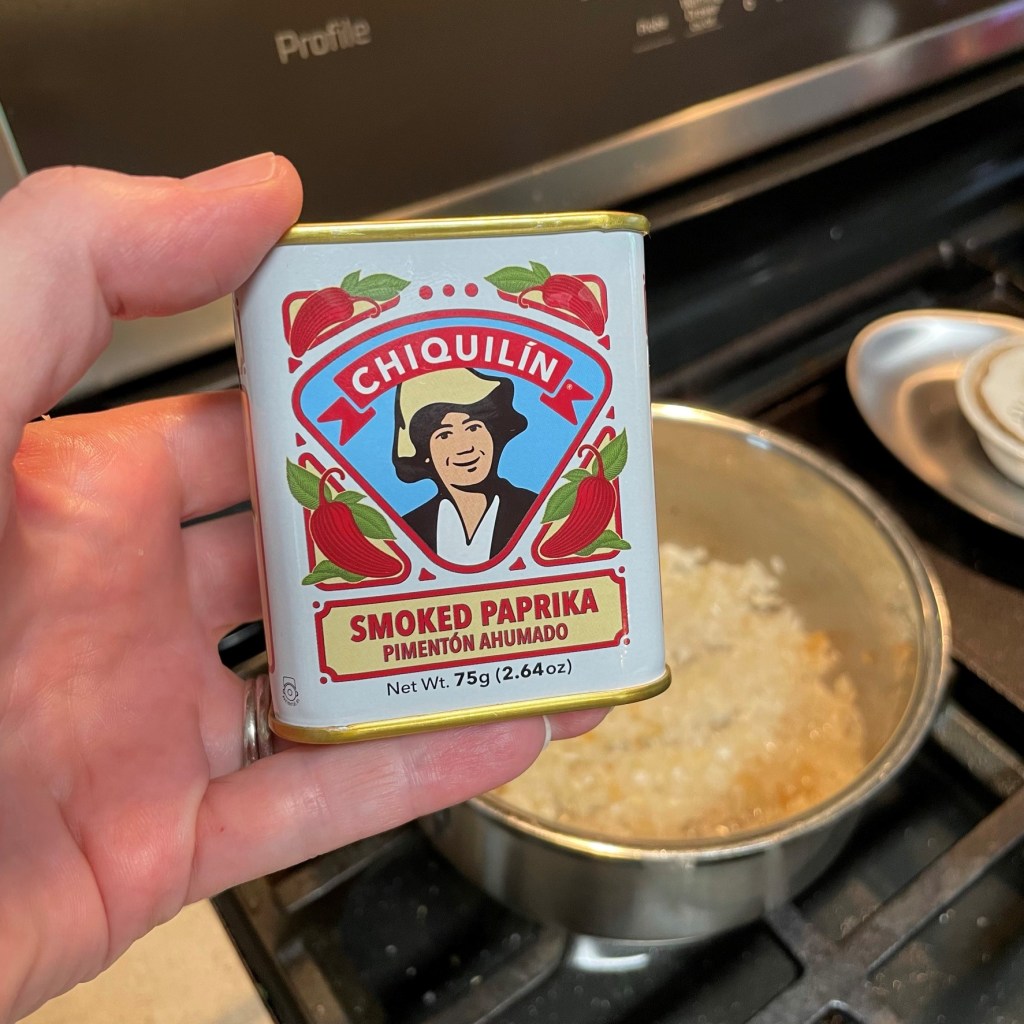
1 tsp. smoked Spanish paprika

Kosher salt and oak-smoked black pepper


Make the glaze
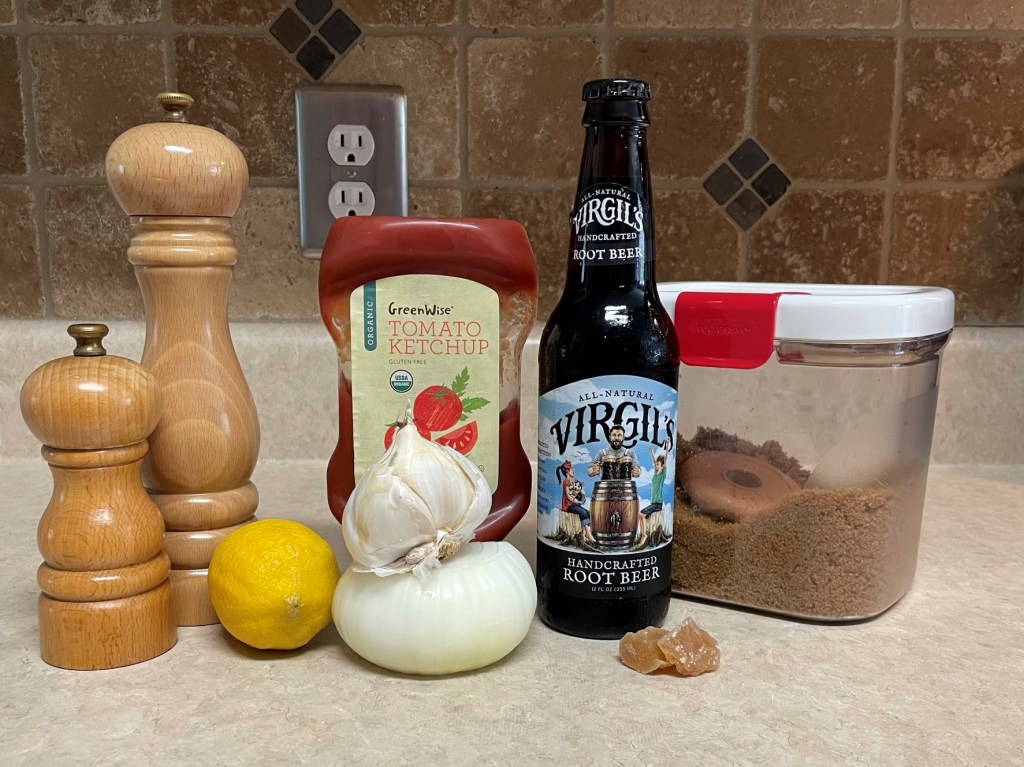
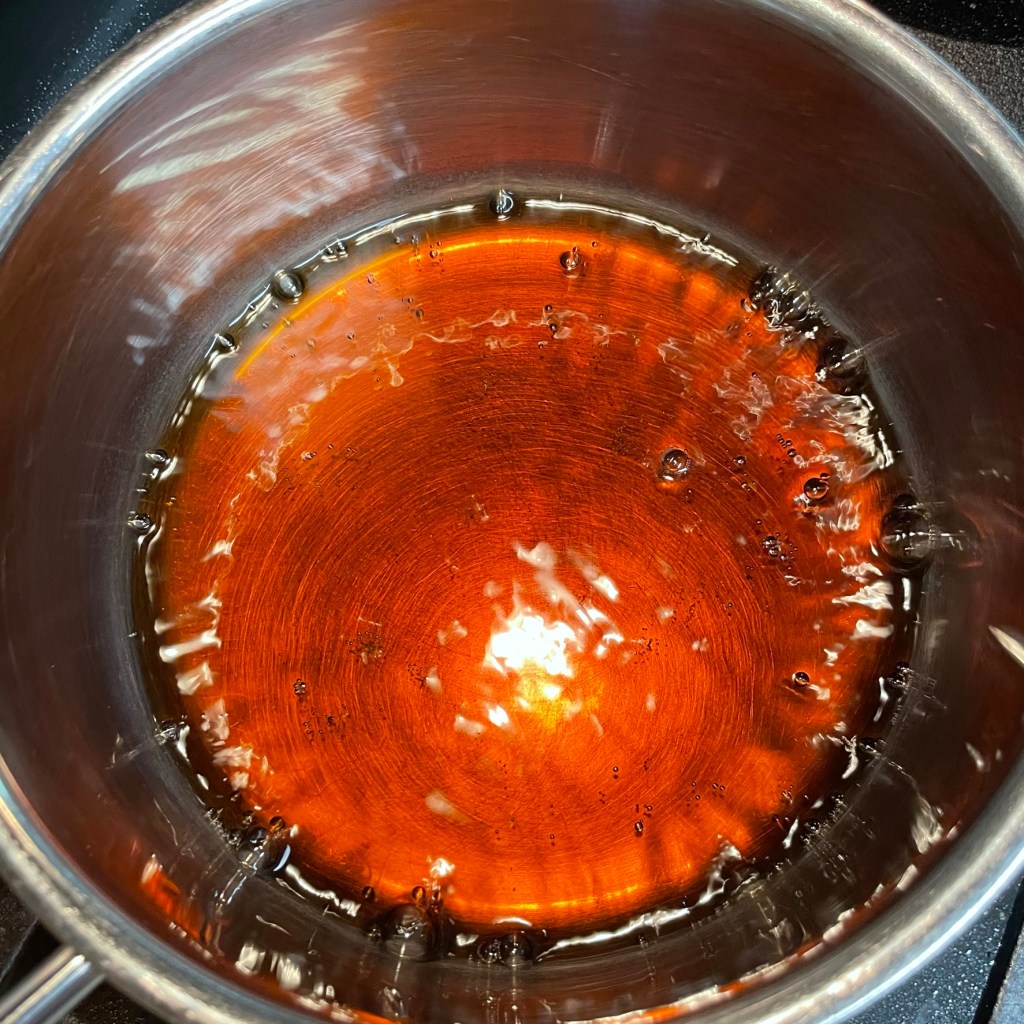
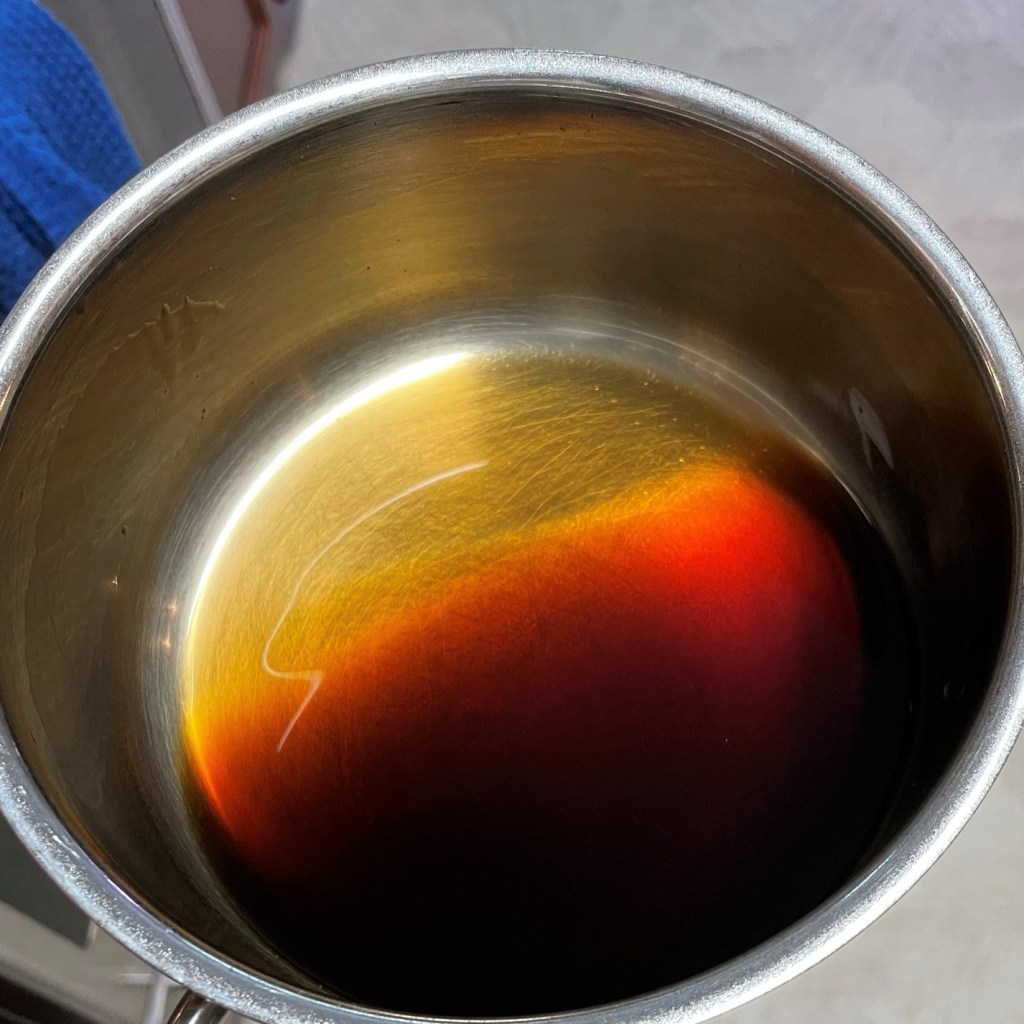
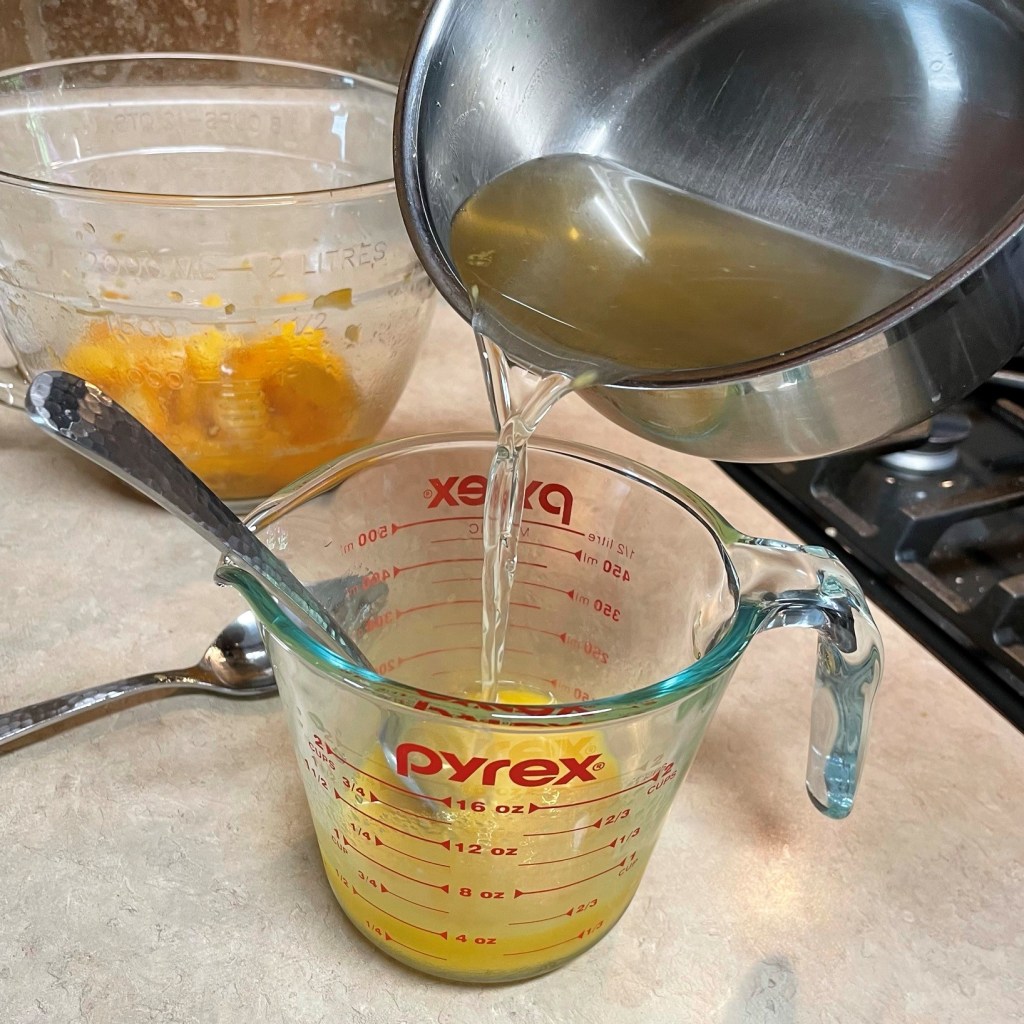
  1. Empty root beer into a heavy-bottomed saucepan, and simmer over medium-low heat until the liquid is reduced to about 1/2 cup. Transfer to a measuring cup.
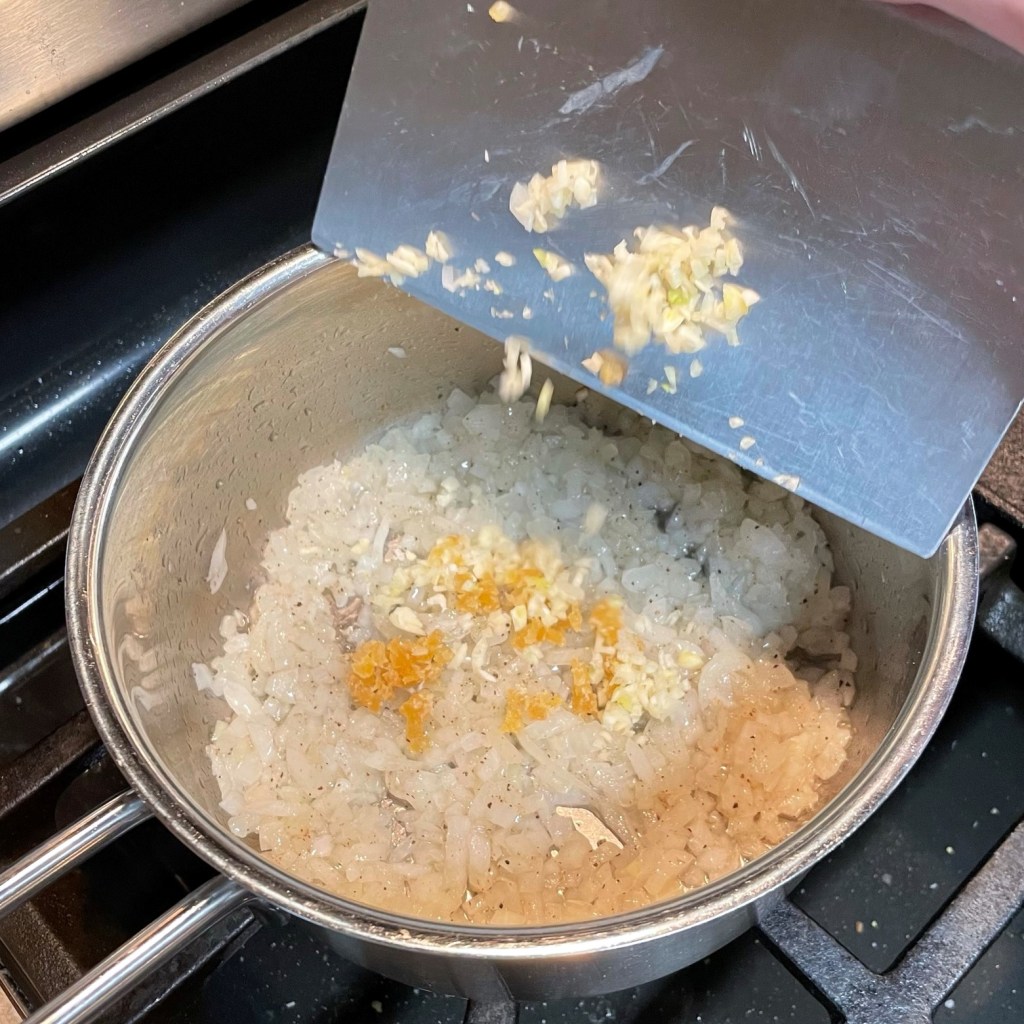
  2.  In the same saucepan, heat canola oil and sauté onions about two minutes, until slightly softened. Add minced garlic and crystallized ginger and cook one to two minutes more.
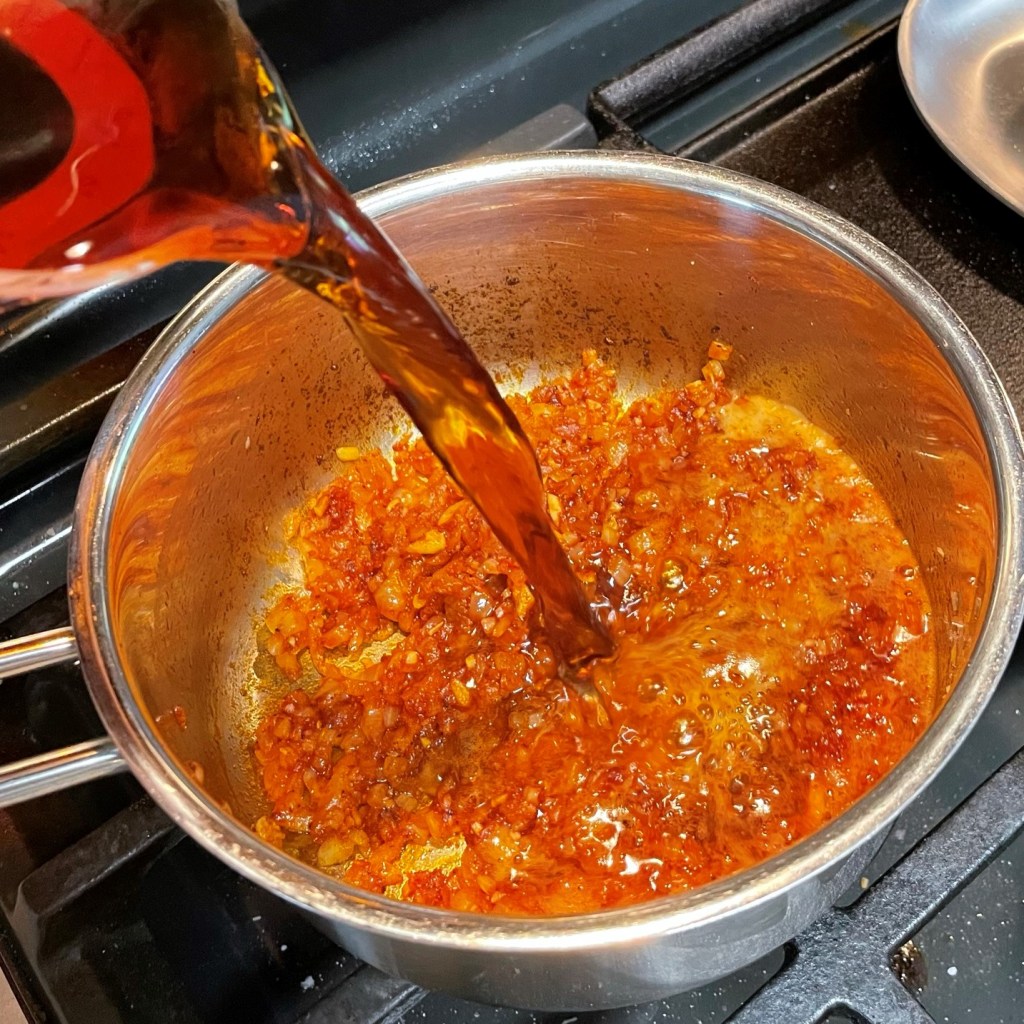
  3. Add smoked paprika to the pan and cook just until the paprika becomes fragrant. Add root beer reduction and simmer on low heat several minutes until the mixture is syrupy.
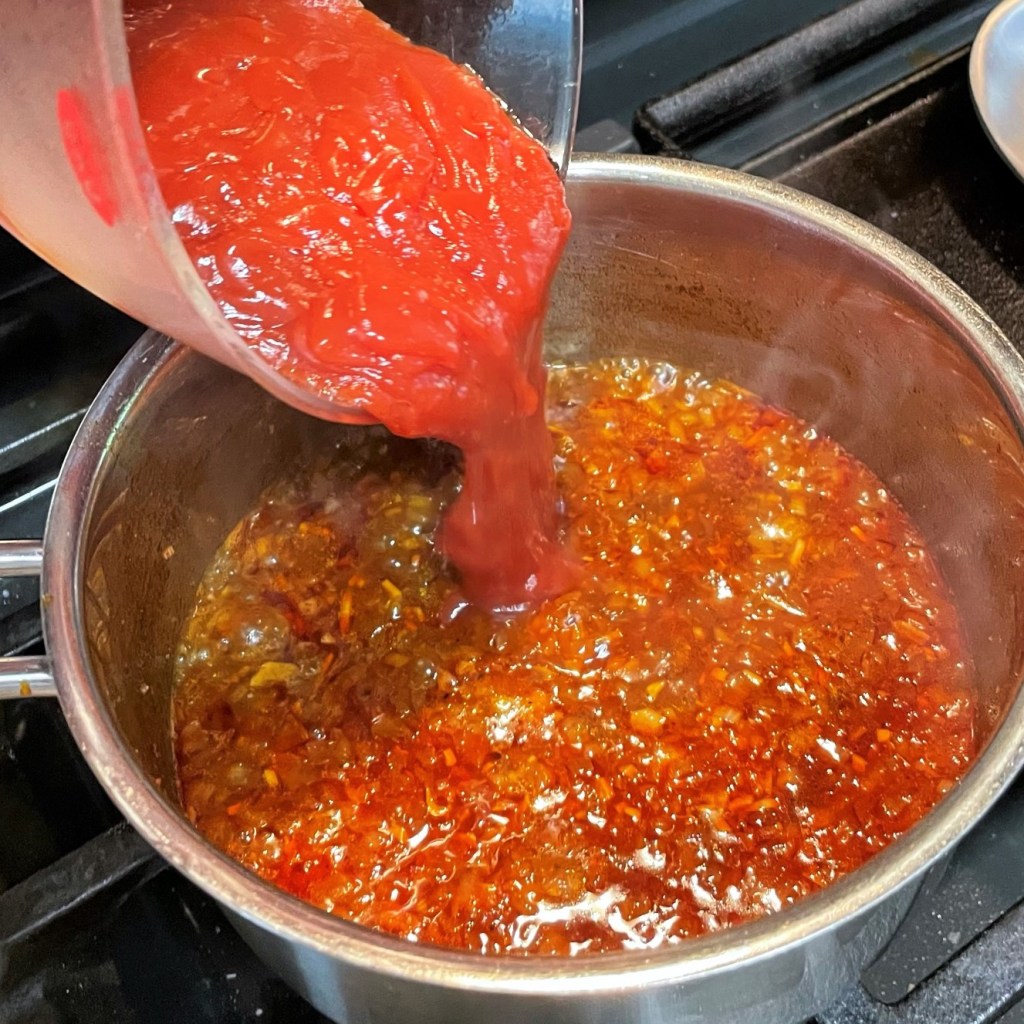
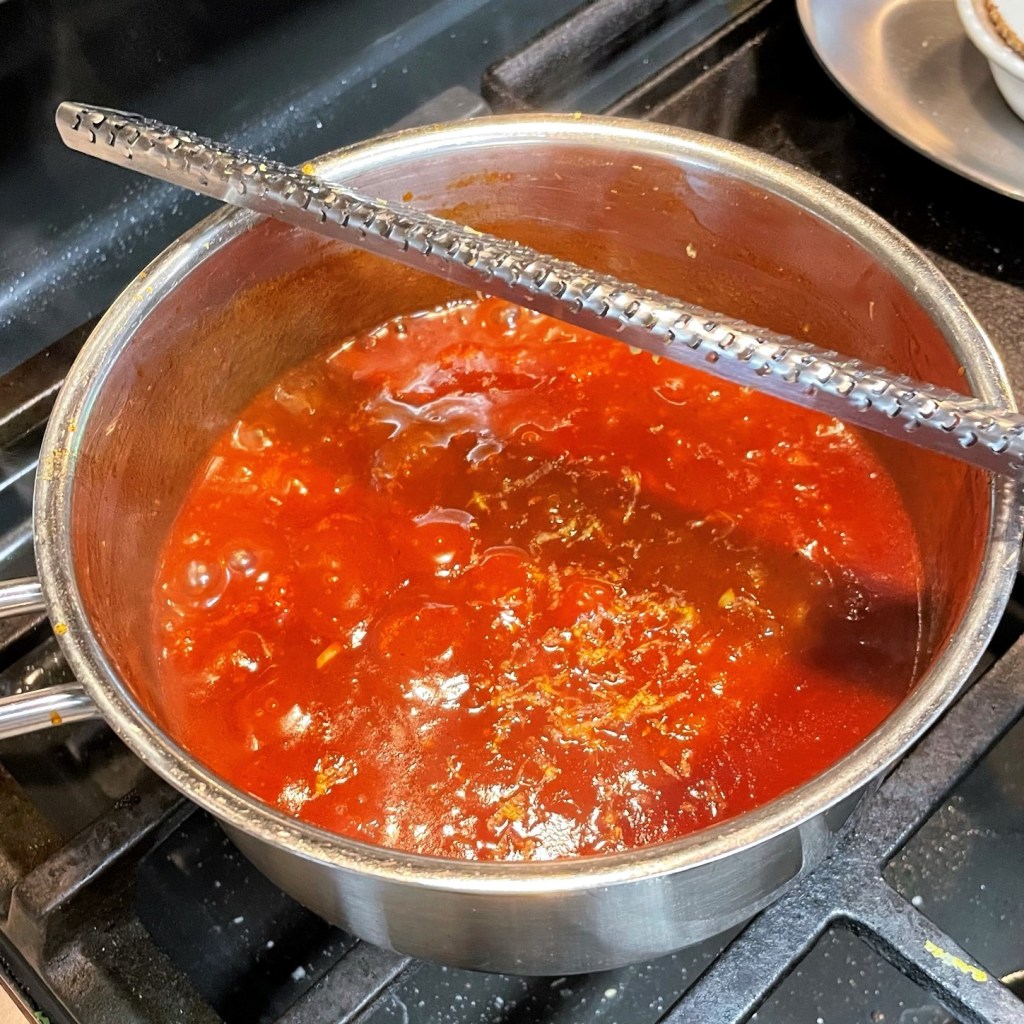
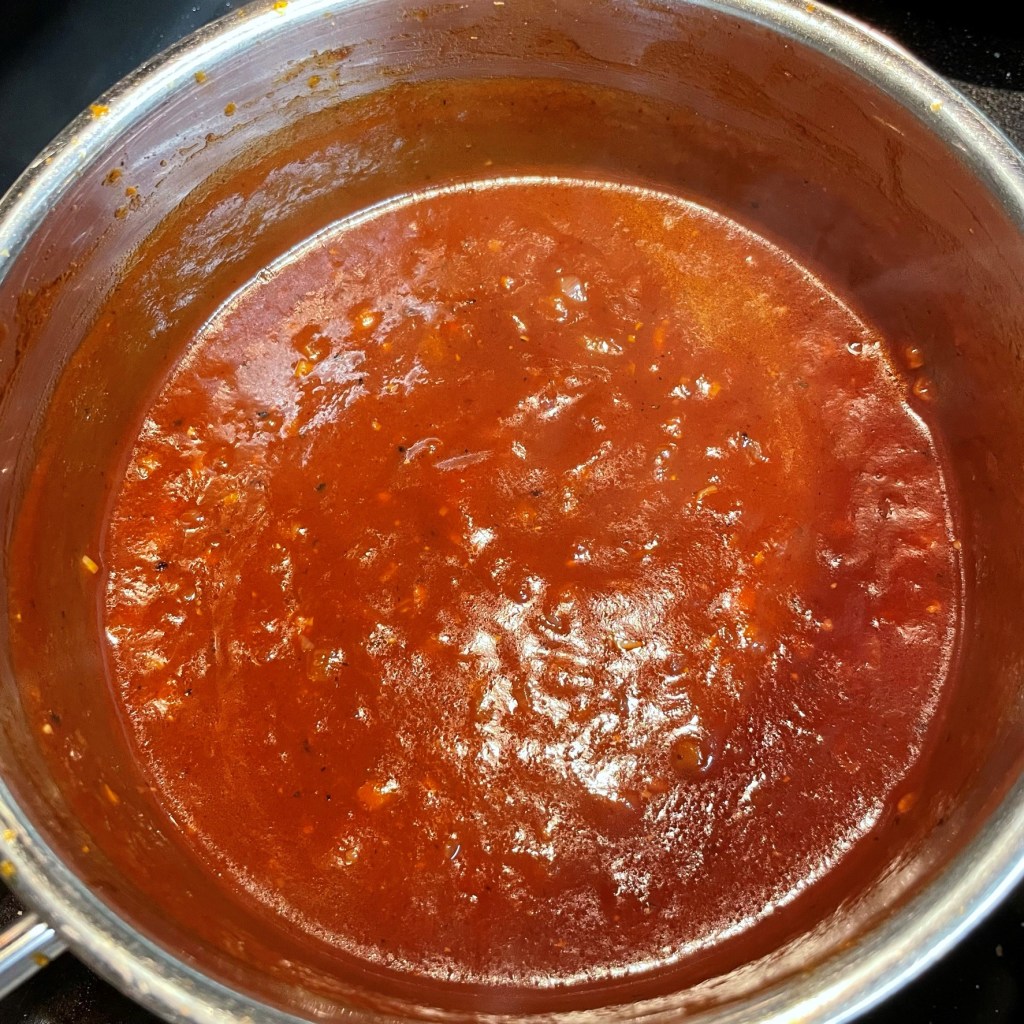
  4. Add the ketchup and brown sugar, stirring to combine. Add lemon zest and smoked black pepper. Simmer on low heat until just bubbly at the edges. Adjust salt, pepper and sweetness to taste. I wanted it a little bit sweeter, so I added a splash of additional root beer.

Time to grill the ribs!
My hubby, the grill master, questioned the instructions I handed him from the Bobby Flay recipe, and I darn sure should have listened. We followed the gist of the original recipe, grilling the ribs naked over indirect heat at about 250° F for two hours, then glazing them with the root beer BBQ glaze for the last 20 minutes or so. Granted, we do not have a “kamado-style” charcoal grill, but I had hoped

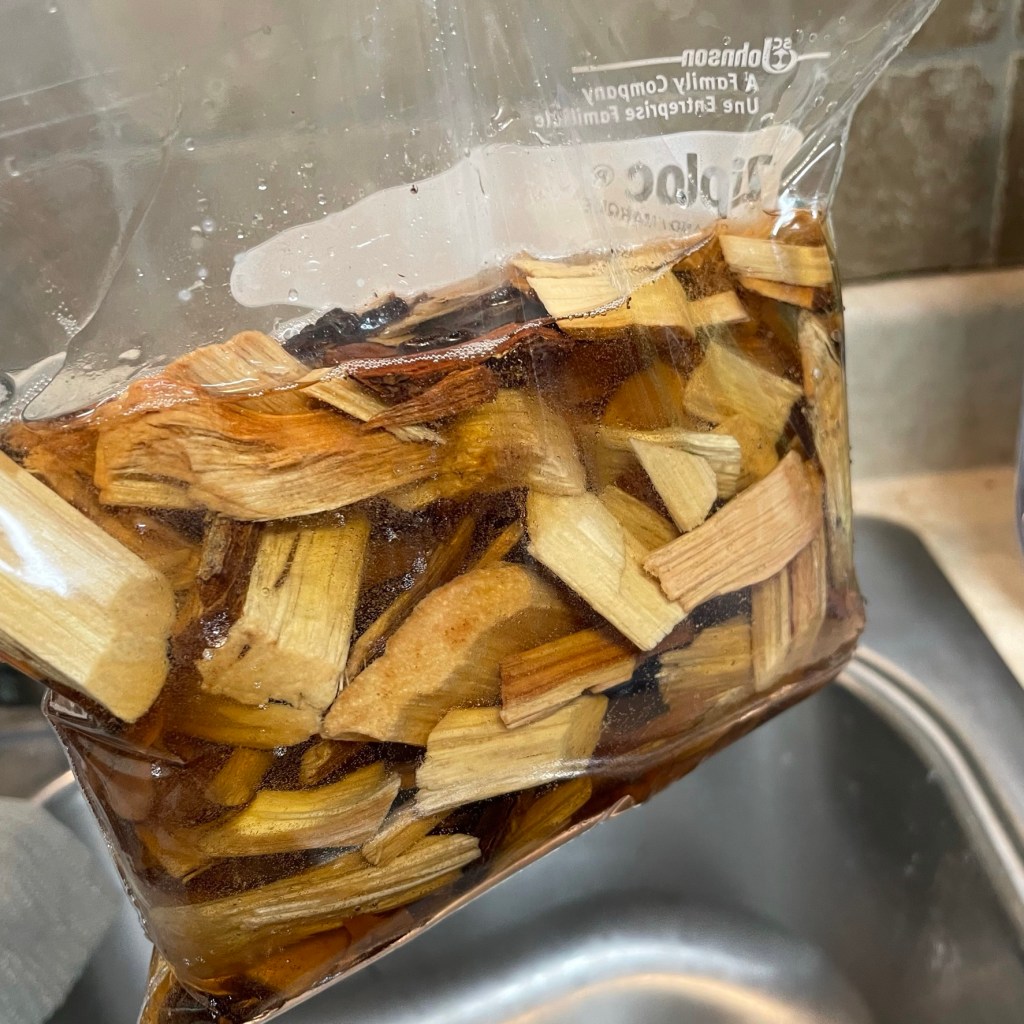
This was enough time to cook them, but not enough to make them fall-off-the-bone tender, which is what my root beer-loving heart desired. We had also soaked some hickory chunks in cold water and root beer, and tried out the small smoker box we had purchased for the grill. Friends, let me just say, “don’t bother,” because we did not get even a hint of smoke on the ribs. It would have been terrific, though, on a regular smoker. Overall, The meat was tasty (I think the brine did wonders) and the sauce was just as I imagined—root beer was present but not too sweet.

We have had more tender ribs without following a recipe, and next time we make these, I will hand the reins over to Les to grill or smoke the ribs however he chooses. We also agreed that low and slow roasting in the oven would probably have resulted in more tender ribs, and I sure would not mind the aroma in the house!

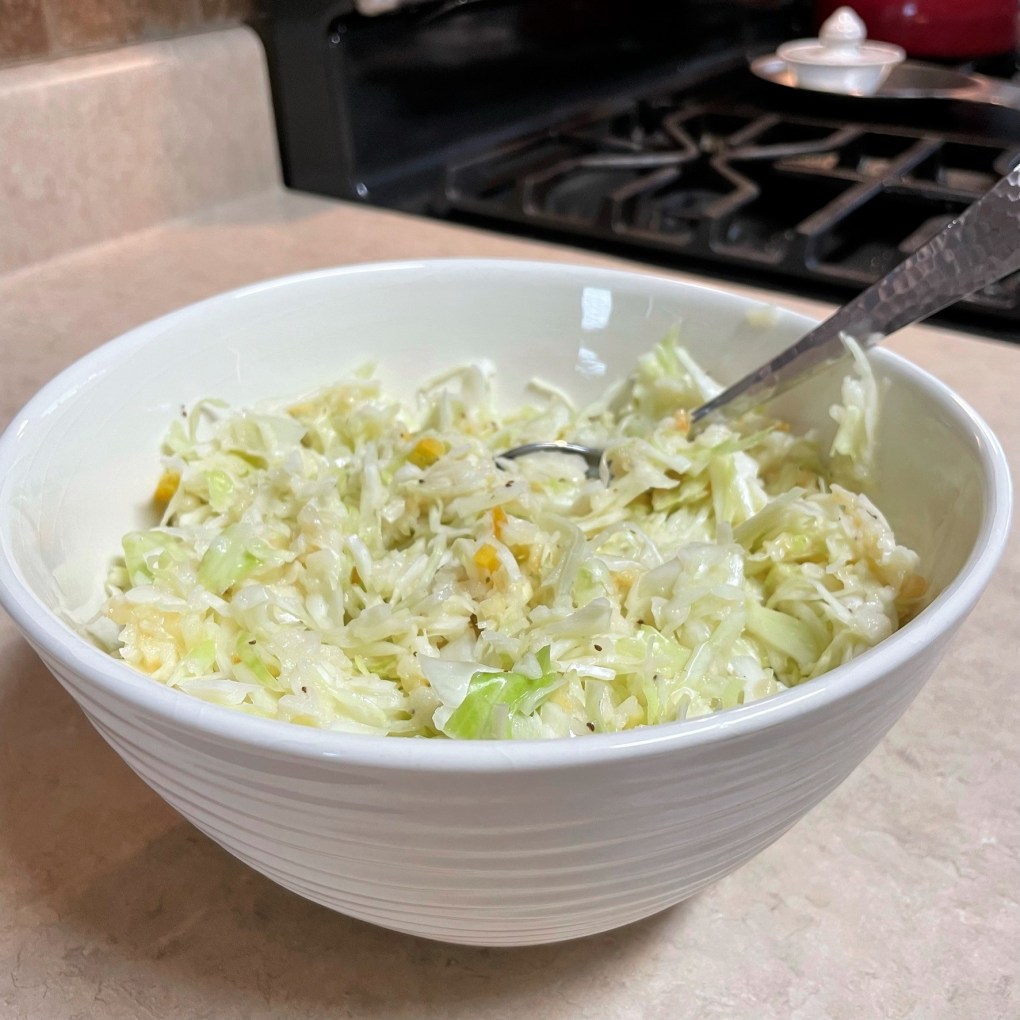
The flavorful brine and the root beer glaze were the real winners for this recipe!


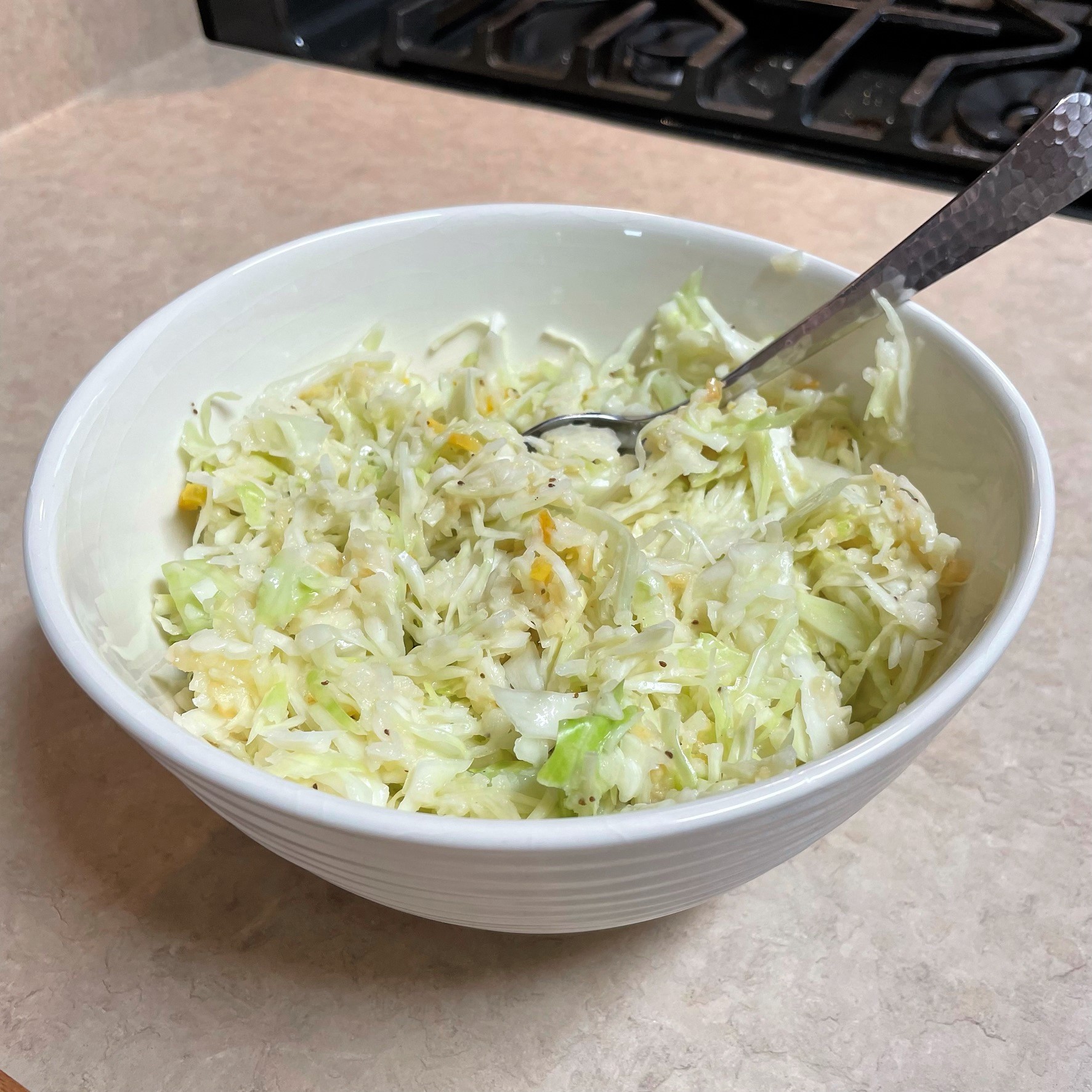
Tangy Apple Cole Slaw

It seems funny to me that the three most popular summer salads are based on the most economical ingredients—macaroni, potatoes or cabbage. Nothing fancy and yet we love them! As we wind down summer (which I can hardly believe is happening, even as I write this), I will share a few of my own twists on these three summer classic salads, beginning with the easiest—cole slaw.
The most obvious benefit of cole slaw is that you don’t have to cook anything to make it. This easy summer side comes together lickety-split (especially if you buy the pre-shredded bagged cabbage), it pairs nicely with everything from grilled chicken to pulled pork to burgers and beyond, and with cabbage as the primary ingredient, it packs a pretty hefty nutritional punch, with loads of fiber, vitamins and minerals. If you don’t drown it in mayonnaise or sugary dressing, it’s pretty darn good for you.

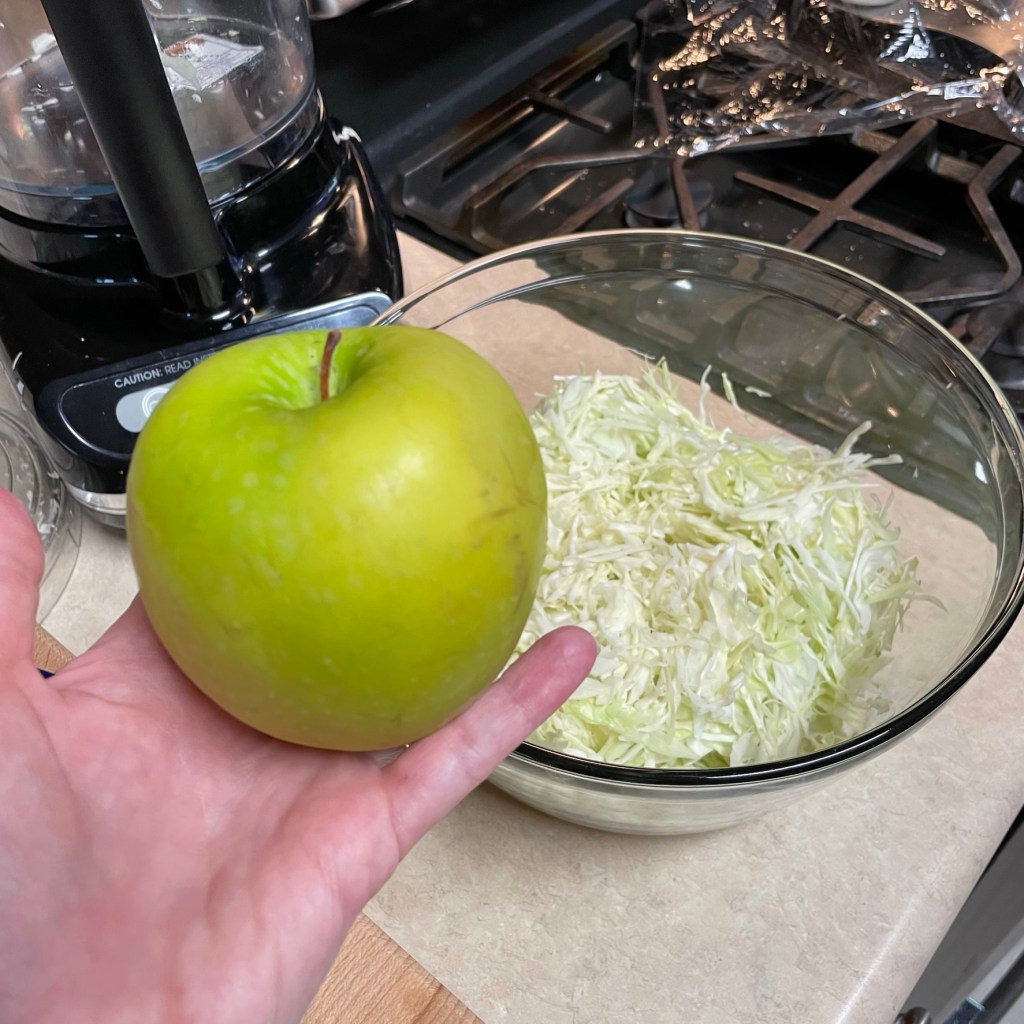
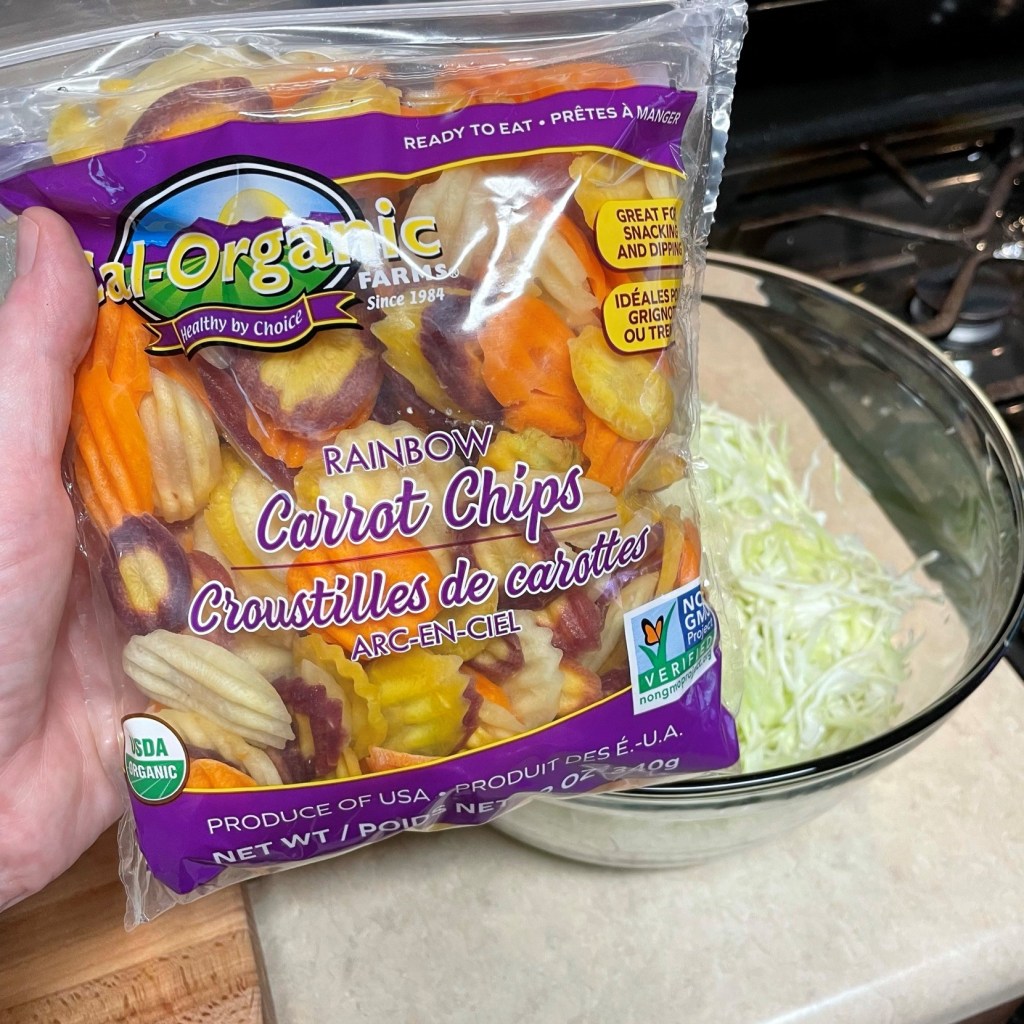
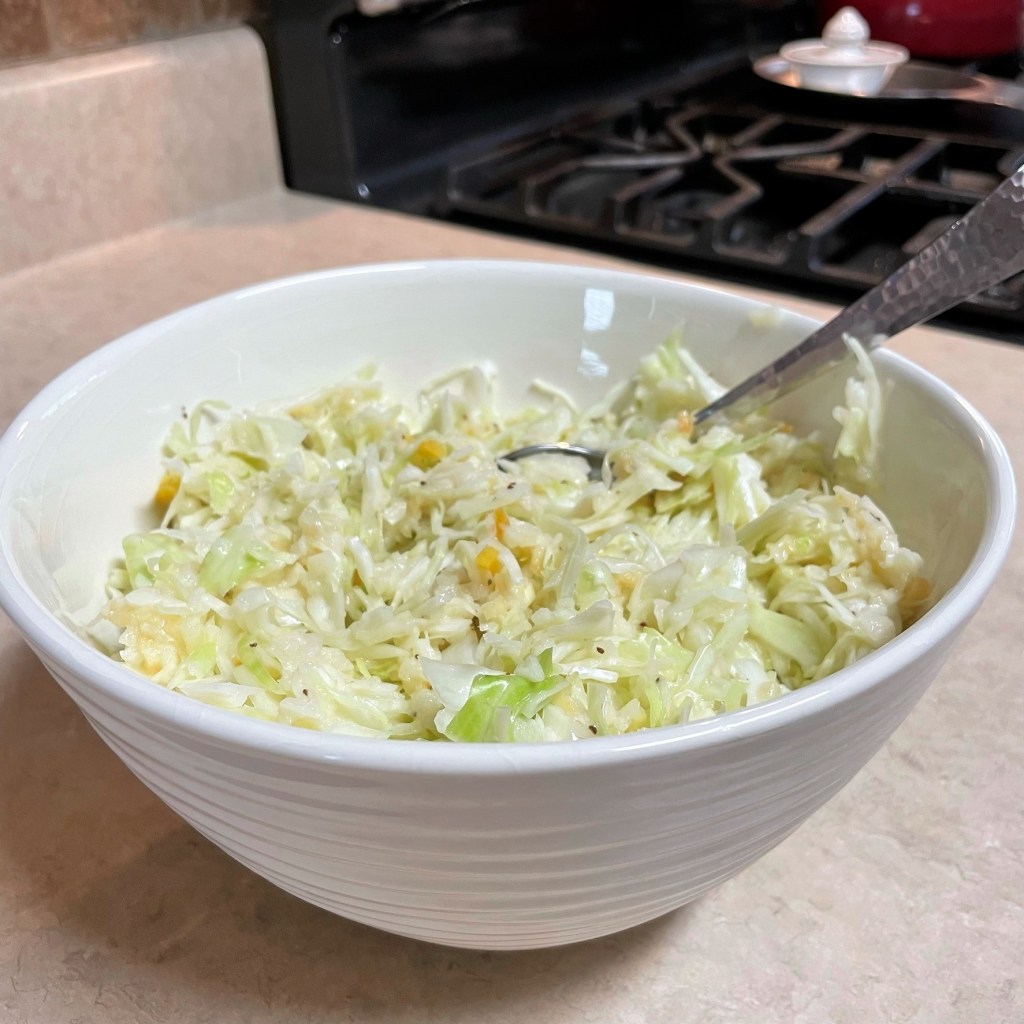
I’ve taken my standby “KFC-style” slaw in a slightly different direction with this recipe, keeping the cabbage and carrots (though I used yellow and white ones this time) and adding shredded Granny Smith apple for a little extra tartness. For my creamy-style dressing (which does have some mayonnaise but also cultured buttermilk and regular milk), I’ve swapped in a specialty white balsamic vinegar that echoes the flavors of the Granny Smith apple. The result is a tangier offering than usual, perfect as a side for anything rich or meaty that you might be pulling off the grill through the last days of summer.


Ingredients


About 6 cups finely shredded green cabbage

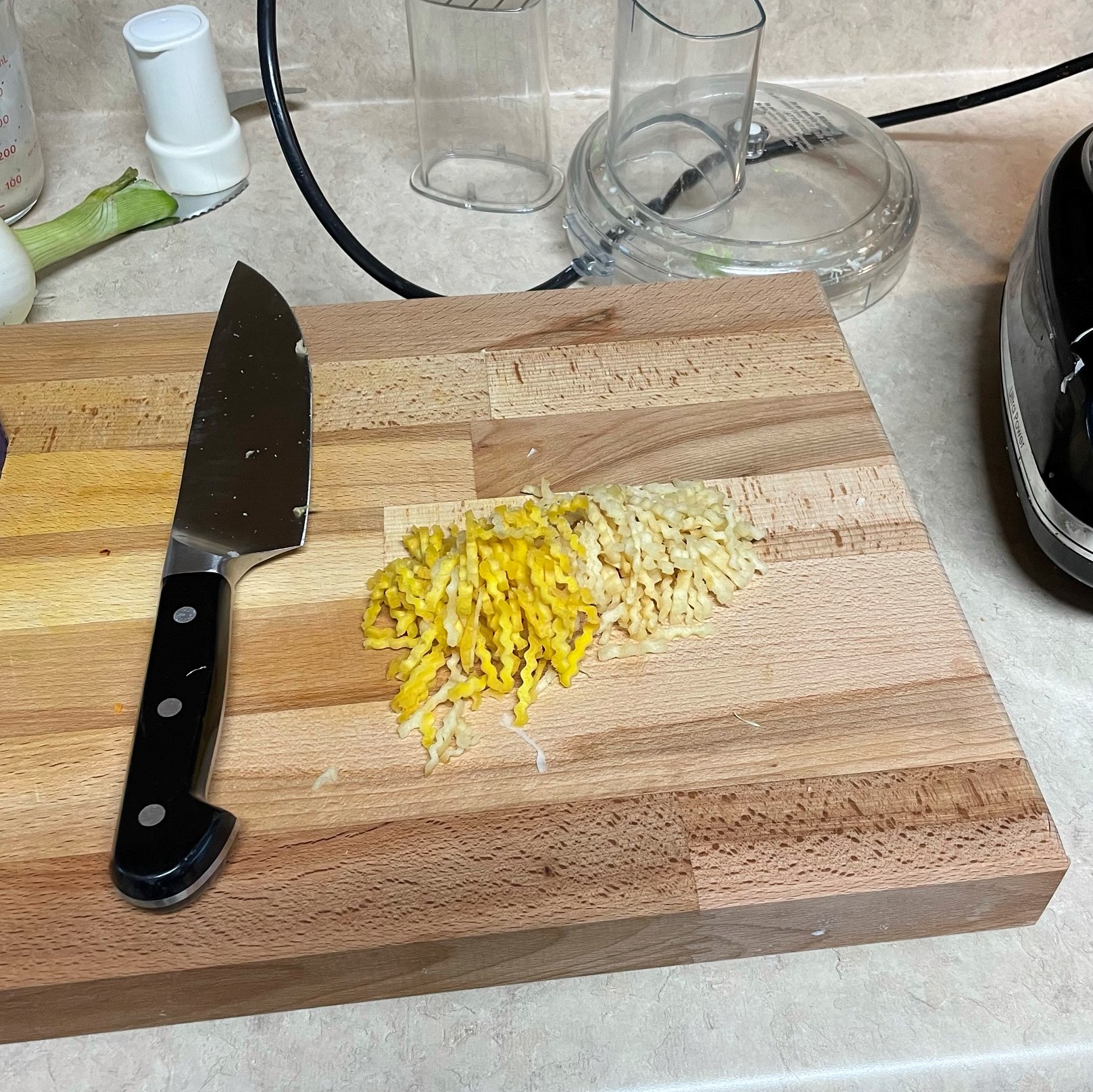
1 cup carrots, finely shredded or cut into thin matchstick pieces

1 large Granny Smith apple, peeled (or not), cored and shredded

Juice of 1/2 small lemon (to prevent apple browning)

1/2 medium sweet onion, shredded and squeezed dry of juice* (see notes)

1/3 cup mayonnaise (I used canola mayo from Trader Joe’s)

3 Tbsp. whole milk

3 Tbsp. buttermilk*

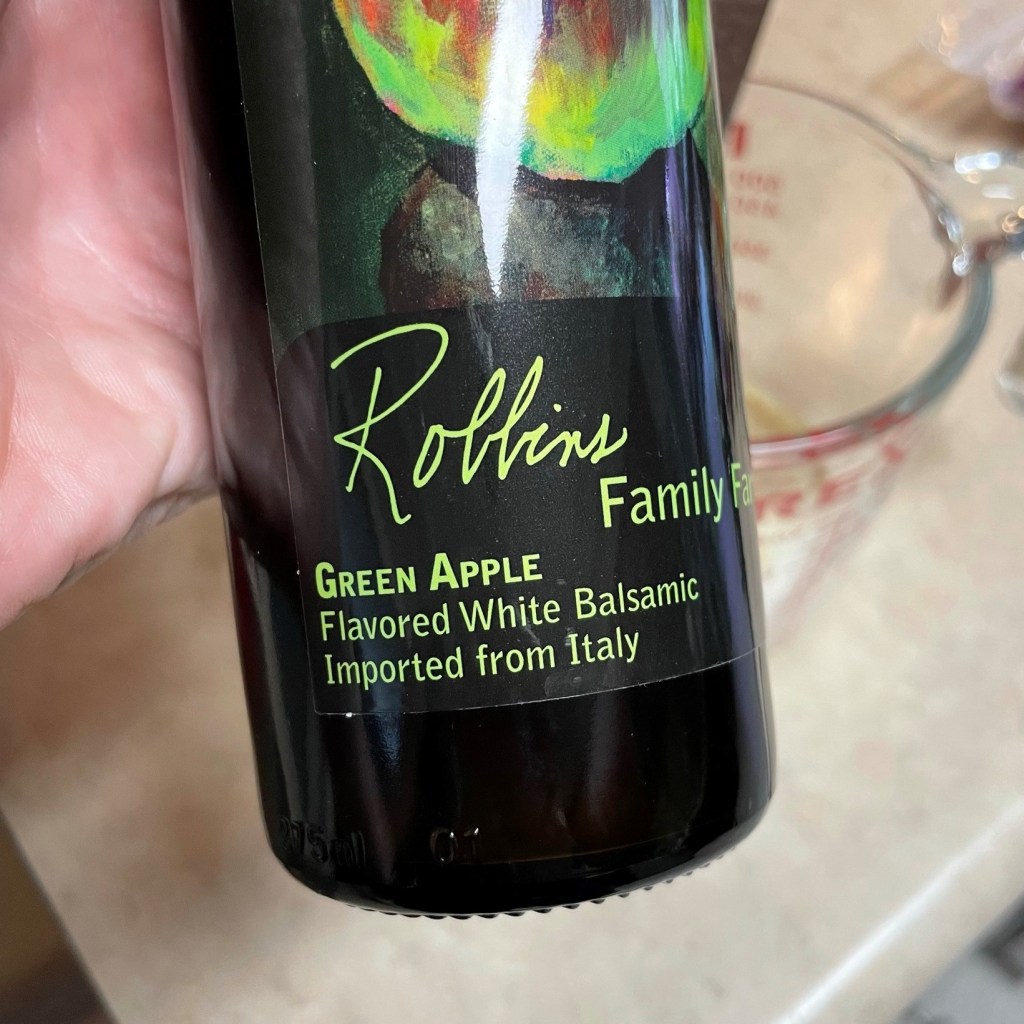
3 Tbsp. green apple white balsamic vinegar*

1 tsp. kosher salt

1/2 tsp. white pepper

1/2 tsp. celery seed


*Notes

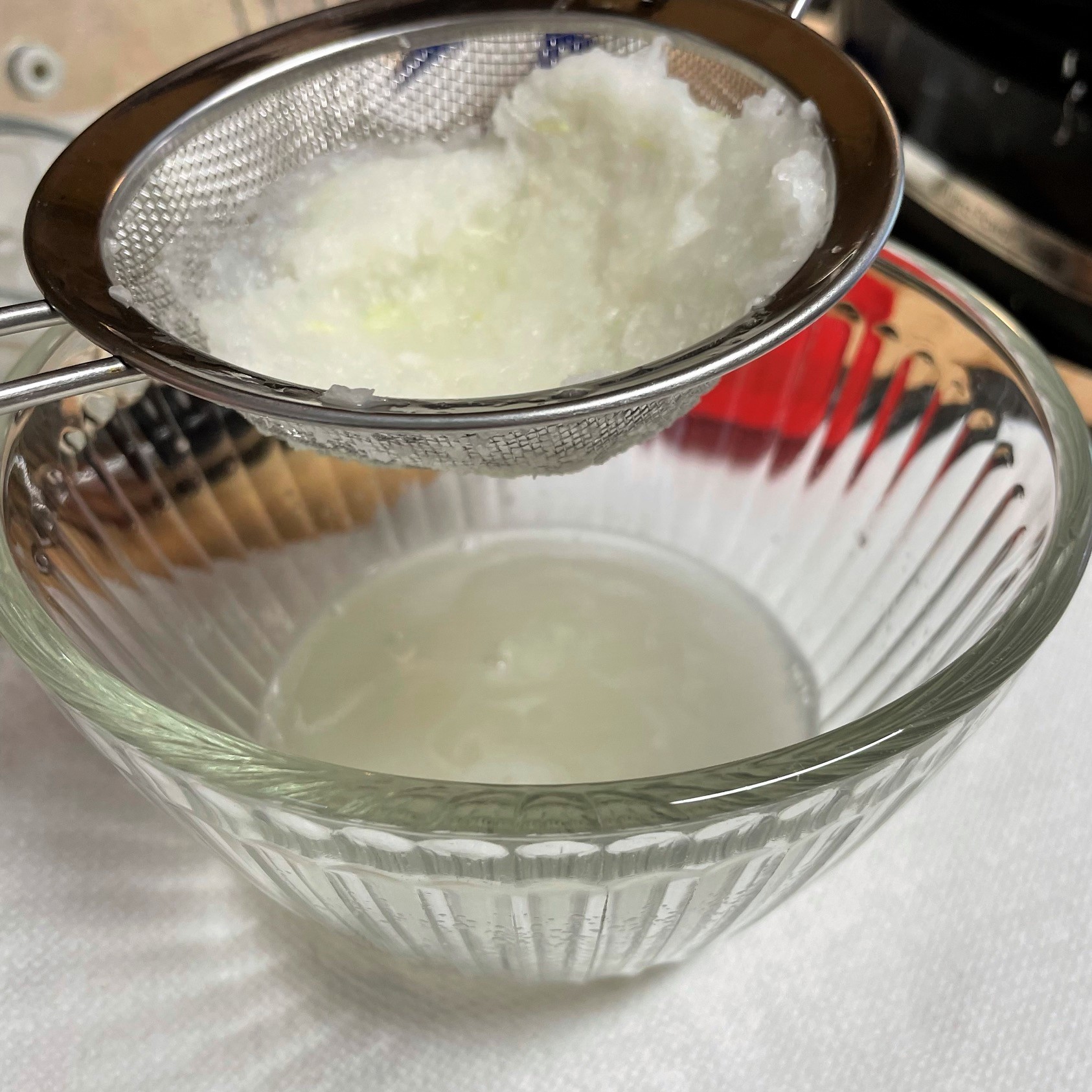
It is important that you press out as much of the onion juice as possible; otherwise the dressing will break down and become watery. I shredded the onion in my food processor and then pressed it through a mesh strainer. When assembling the salad, add the onion to the dressing rather than the cabbage blend.

Real cultured buttermilk works best, but you could have similar results with the same amount of plain,  low-fat yogurt or Greek yogurt.

The green apple white balsamic vinegar is a specialty item that my husband picked up on a trip to California a few years ago. Check with a balsamic and olive oil shop in your area to see if it carries “Gravenstein apple” balsamic, as that would be a perfect substitution. Otherwise, use 2 Tbsp. apple cider vinegar and 2 Tbsp. sugar to mimic the balanced sweetness of the balsamic.


Instructions

Combine the shredded cabbage and carrots in a large bowl. Add the shredded apple to the bowl, immediately squeeze the fresh lemon juice over the apple and then toss the apple to distribute the lemon juice. This will help prevent the apple from browning while you mix the dressing.

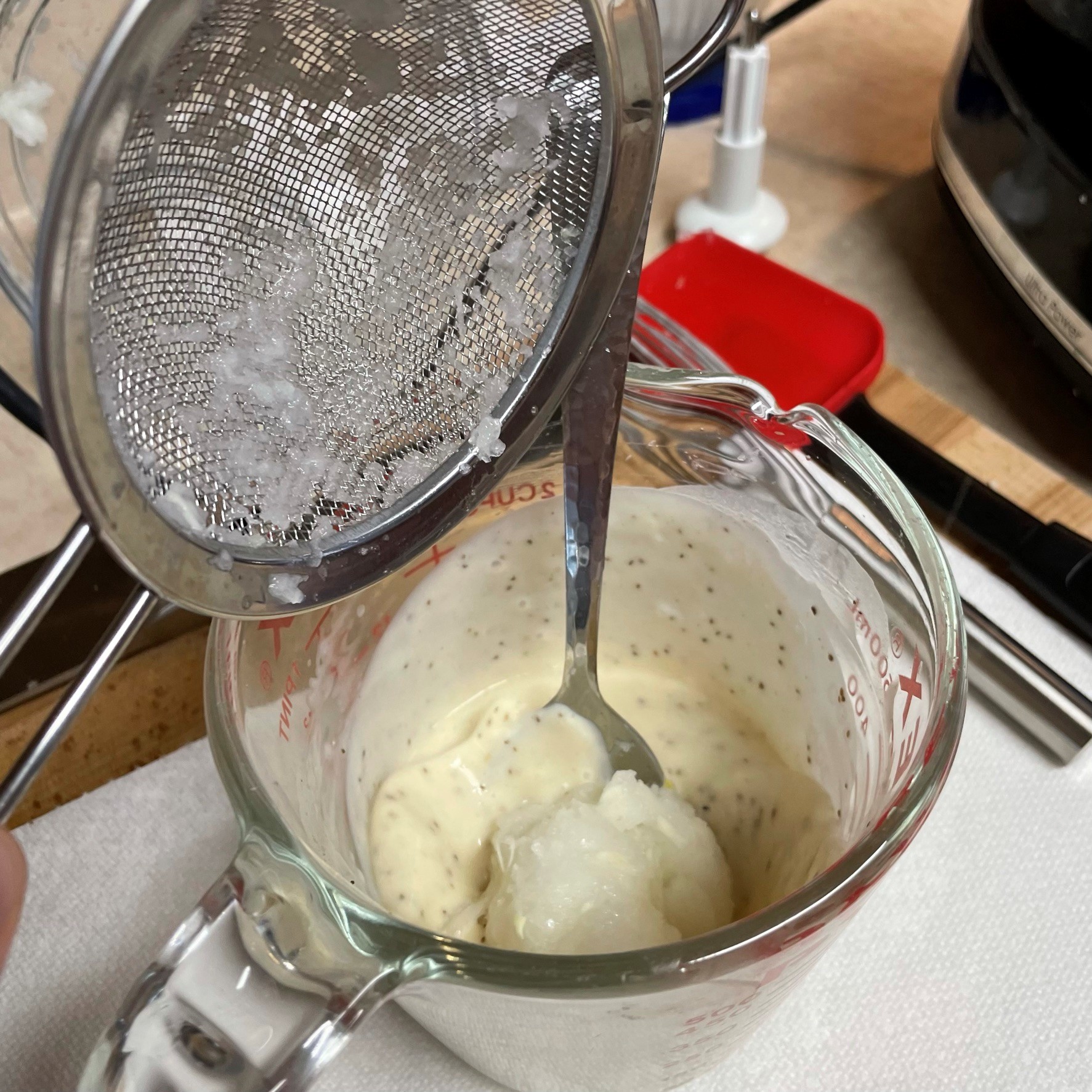
In a large glass measuring cup, whisk together mayonnaise, buttermilk and milk until the mixture is smooth. Add vinegar, salt, pepper and celery seed, and stir to blend. Add the shredded onion to the dressing and stir until it’s evenly distributed.

Adjust the dressing to your taste; if you find it too tart, add a teaspoon of sugar at a time until it is to your liking. Remember that sugar (or salt) needs a few minutes to dissolve in a dressing, so you may want to let it rest a few minutes to be sure you have adjusted correctly.

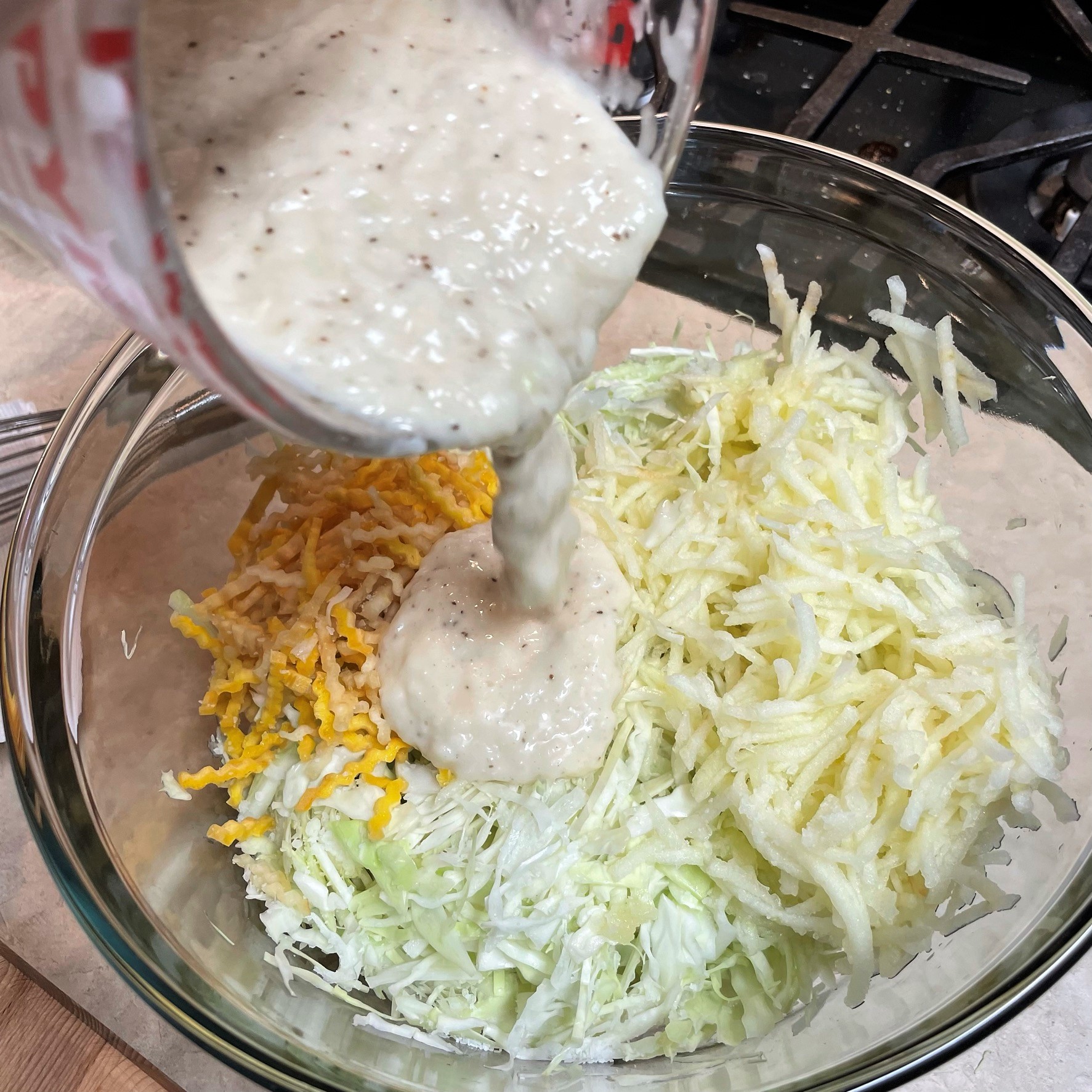
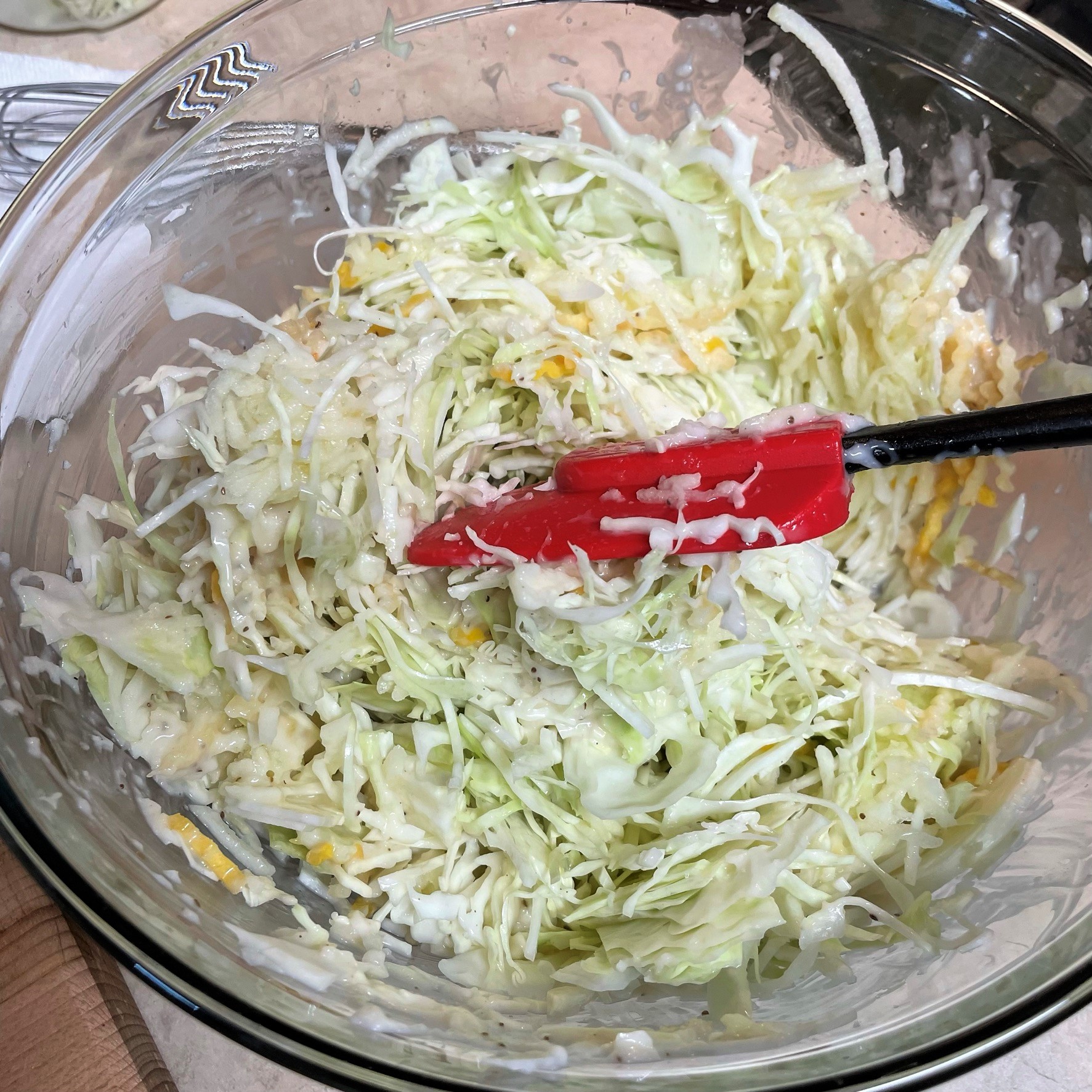
Pour the dressing over the cole slaw mix and toss to combine. Refrigerate at least an hour for best flavor, but this salad will also keep in the fridge for several days.


S’mores Ice Cream

There is something very special and nostalgic about s’mores, the delightfully sugary campfire treat that I first learned of when I was a young girl. I cannot say for sure that my first experience of s’mores was during my time as a Girl Scout, though legend has it a troop leader named Loretta Scott Crew first dreamed them up to feed 16 hungry girl campers in 1927. But I do know that my first taste of this wonderful confection—toasted marshmallow and Hershey’s chocolate square, melted between two graham crackers—was like a seductive symphony of ooey-gooey summer heaven. The only cooking involved in making s’mores is toasting a marshmallow to golden perfection, and then allowing the contained heat within the marshmallow to melt the piece of chocolate bar when you squish the graham cracker cookies together.

Truth be told, I was prone to wreck my marshmallows by over-toasting them. I’d position my marshmallow stick (and yes, where I come from, we used actual sticks) directly into the hottest part of the campfire until my puffy marshmallows blazed with a blue light around them. I’d blow out the fire, only to skim off and eat the scorched sugary jacket and plunge them back into the fire for another round of overcooking. I’m quite sure that was not the intention behind the “toasted” marshmallow portion of s’mores, but nobody ever accused me of following the rules—I like what I like.

Now that I’m all grown up, I still love the idea of s’mores, but I cannot fathom the notion of sitting around a campfire in the dead heat of summer, and we don’t usually fire up our patio chiminea until at least October. Not even for a sticky-sweet s’more—sorry.

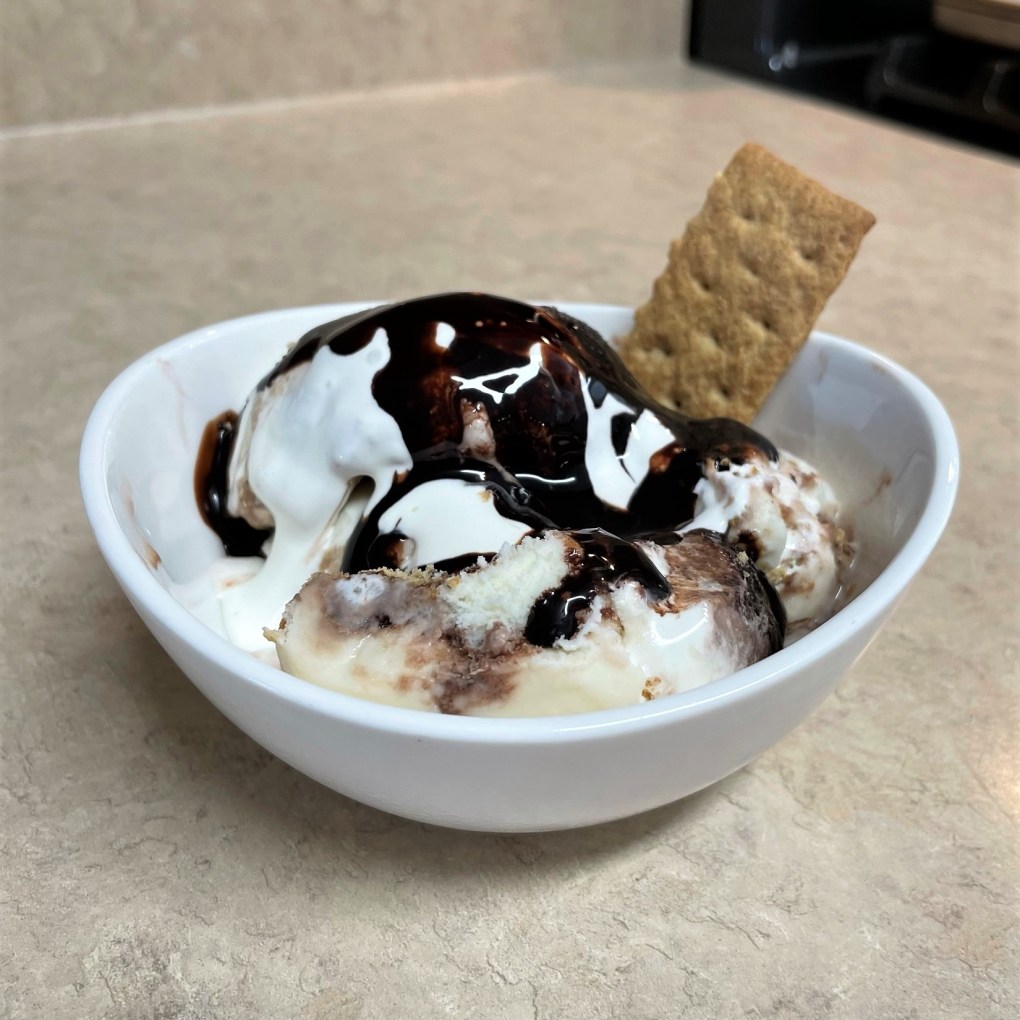
Luckily, I have other plans for those delicious flavors, and just in the nick of time, it seems, given that today is National S’mores Day. Why, I wondered, couldn’t I represent the same s’mores flavors in a cold treat form that was more suitable for the middle of August?

No campfire required!

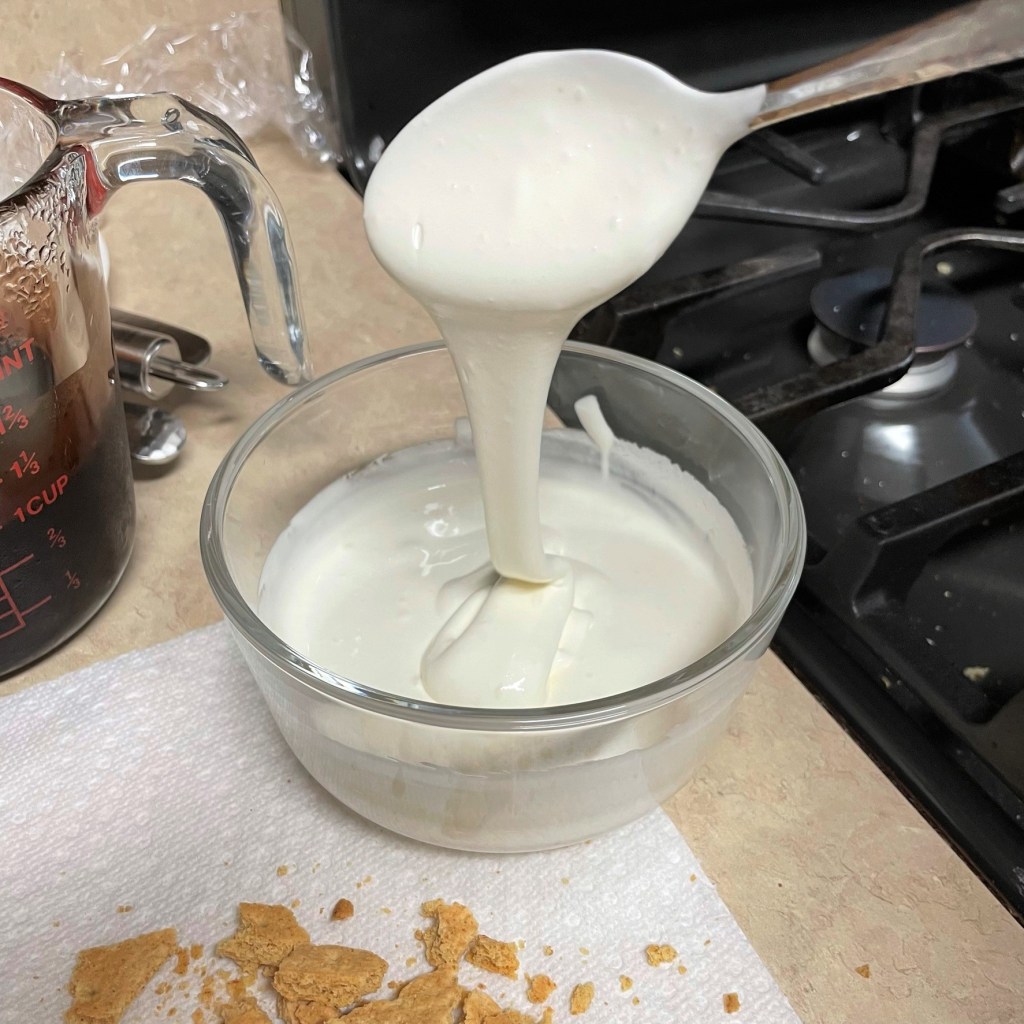
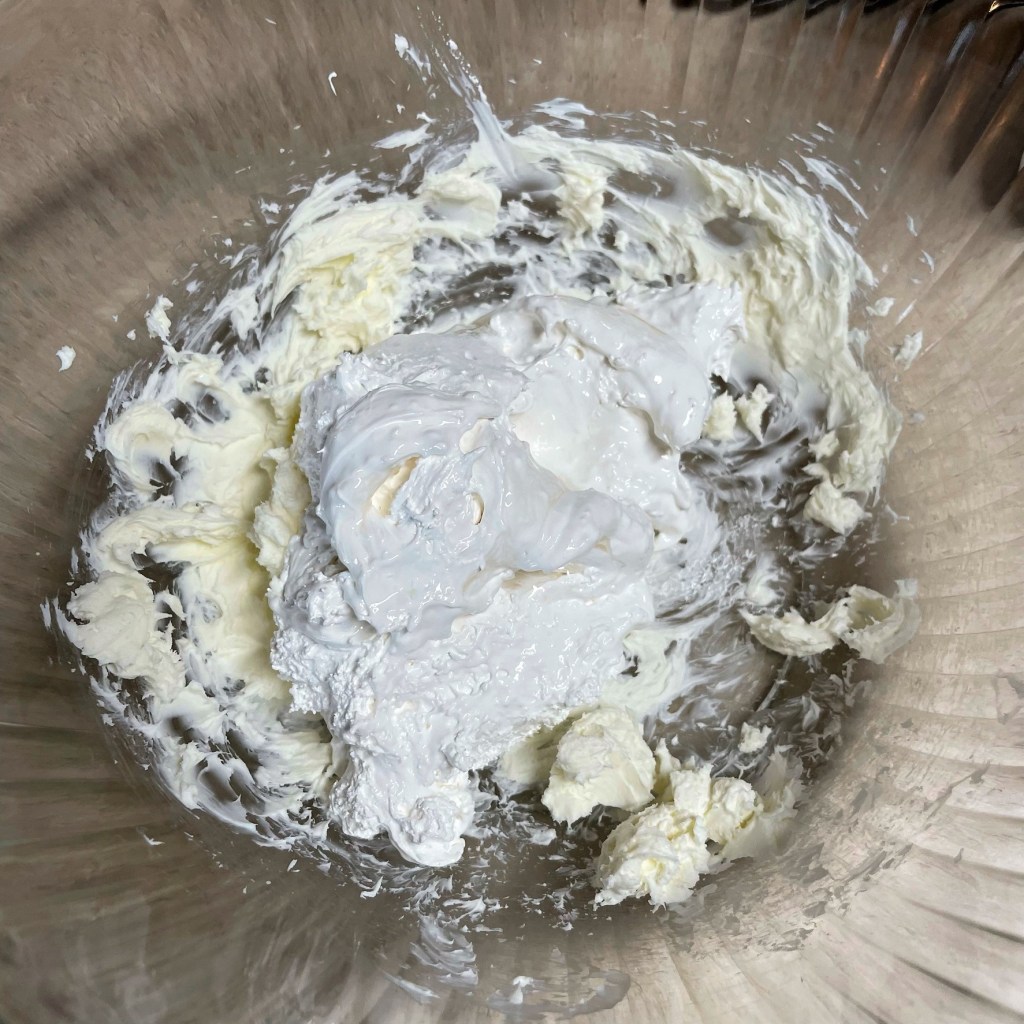
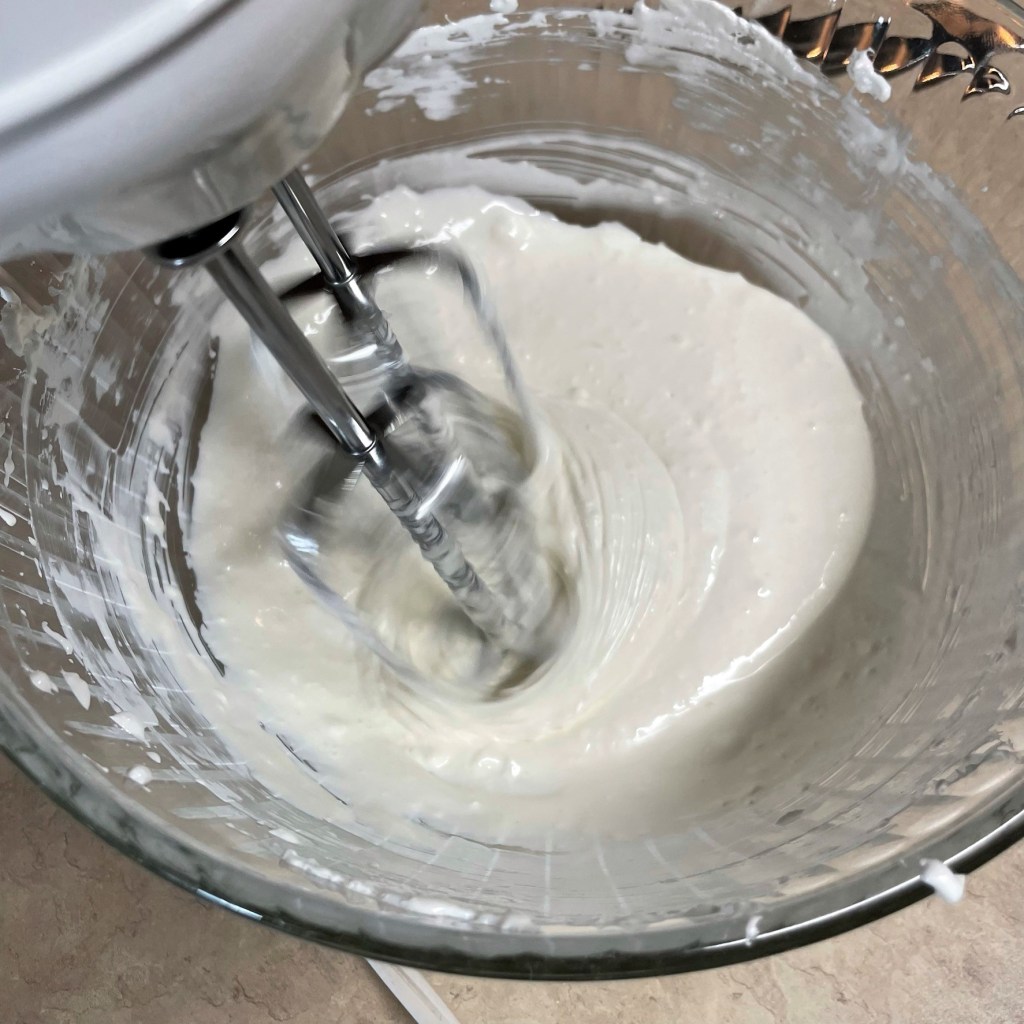
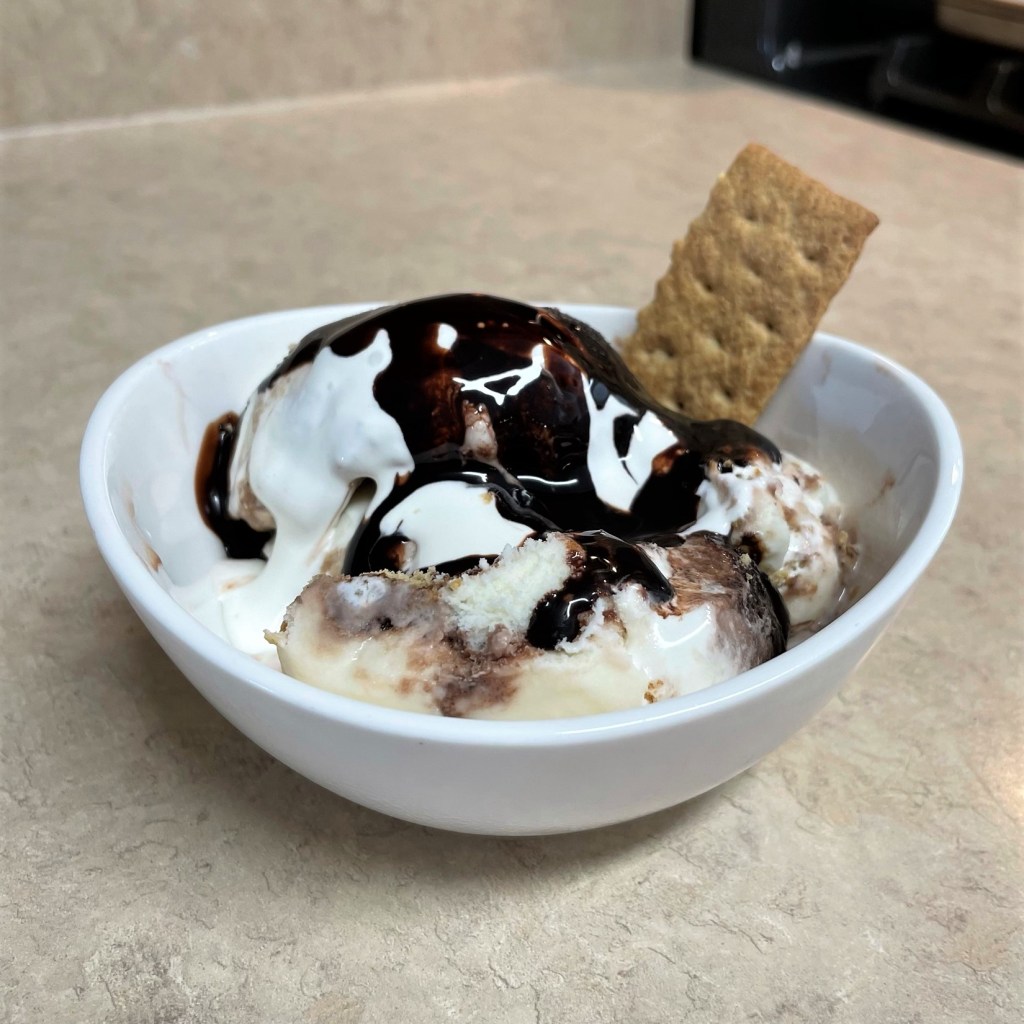
And that was my approach to this yummy spectacle of summer sweetness. For a change of pace, I skipped the eggs in my ice cream base and used sweetened condensed milk instead. I wanted the vanilla ice cream to be a pure palate of white, but I was also trying to avoid cooking as much as possible. It’s been pretty dang hot here in the South, and if I have the option to keep the stove turned off, I’m taking it. The marshmallow swirl was also a no-cook step, and for this, I relied on a tried-and-true fruit dip recipe that fuses marshmallow fluff with cream cheese. The dairy ingredient gave the fluff just enough body to take away the ultra-sticky consistency but retain the marshmallow flavor.

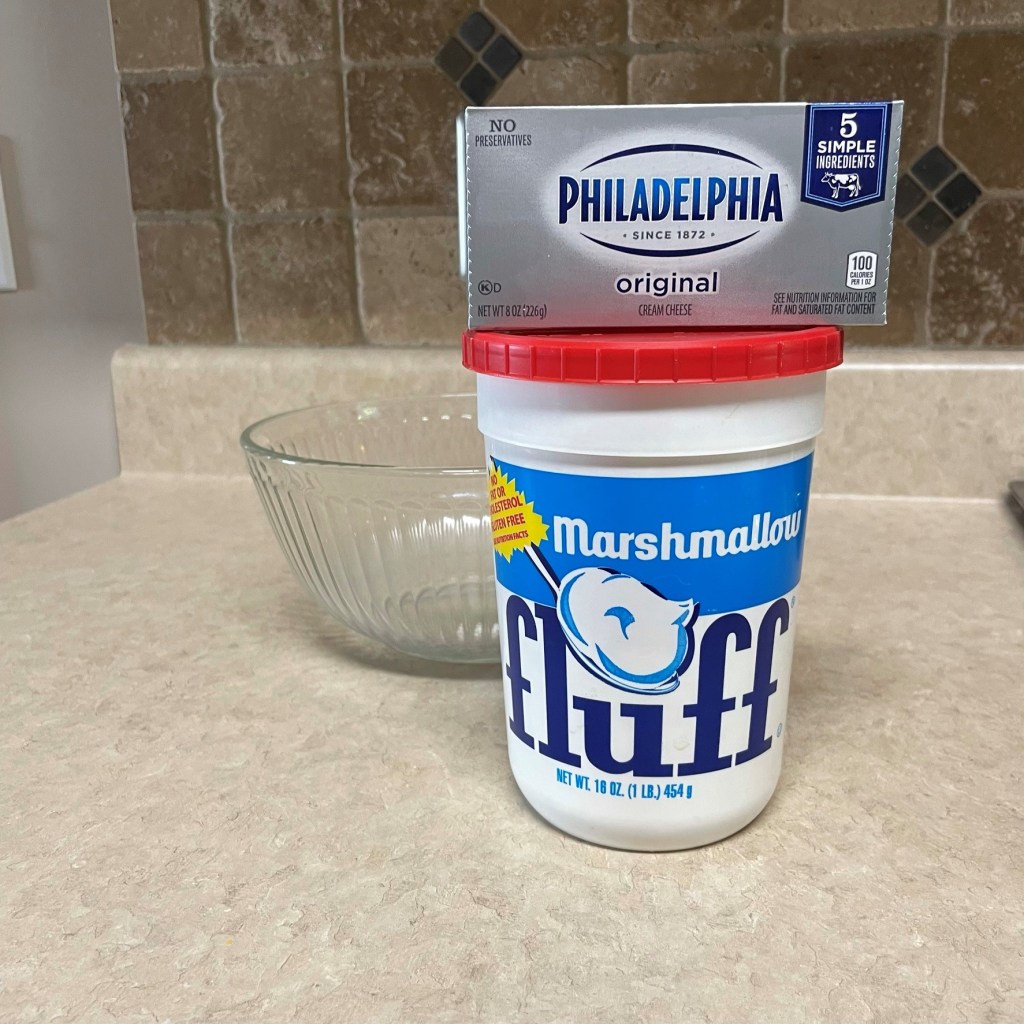
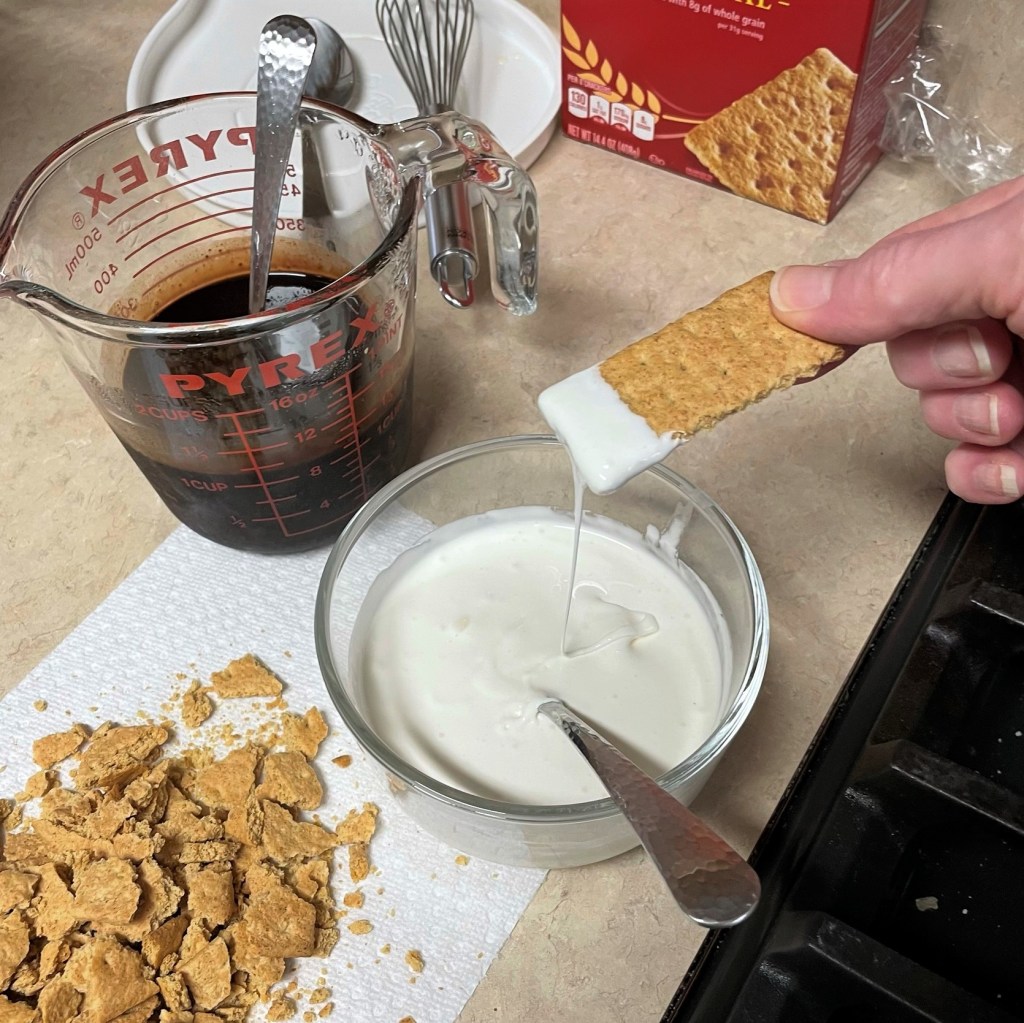
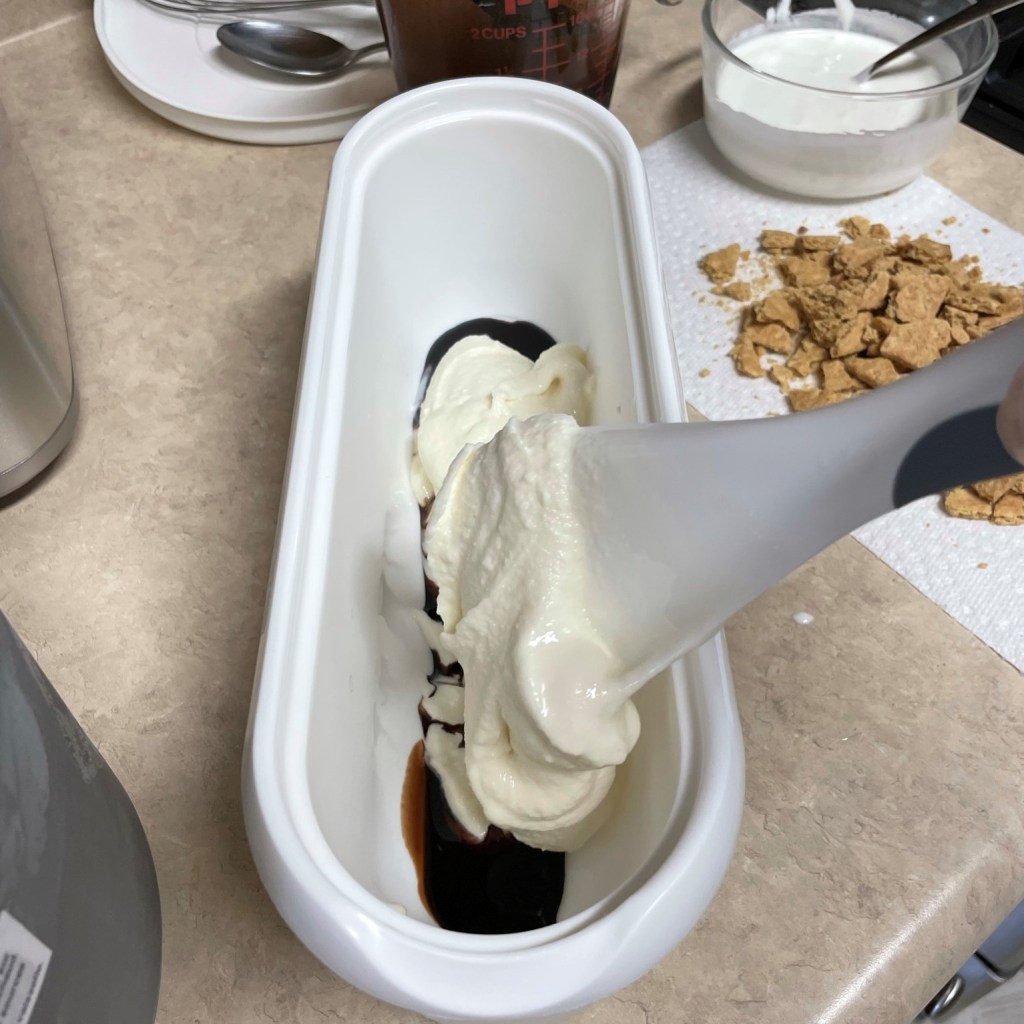
See how the cream cheese mellowed out the sticky marshmallow fluff? And it still tastes exactly like marshmallow (but creamier).

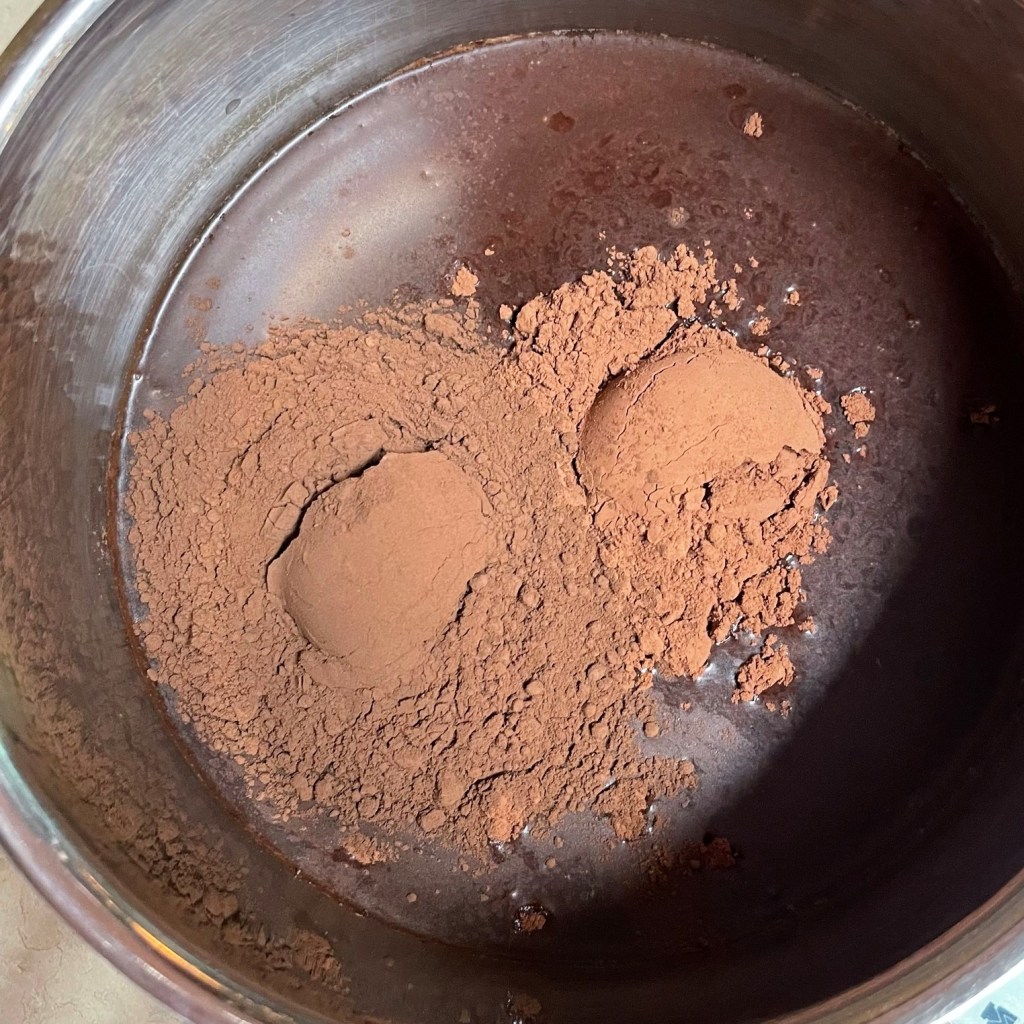
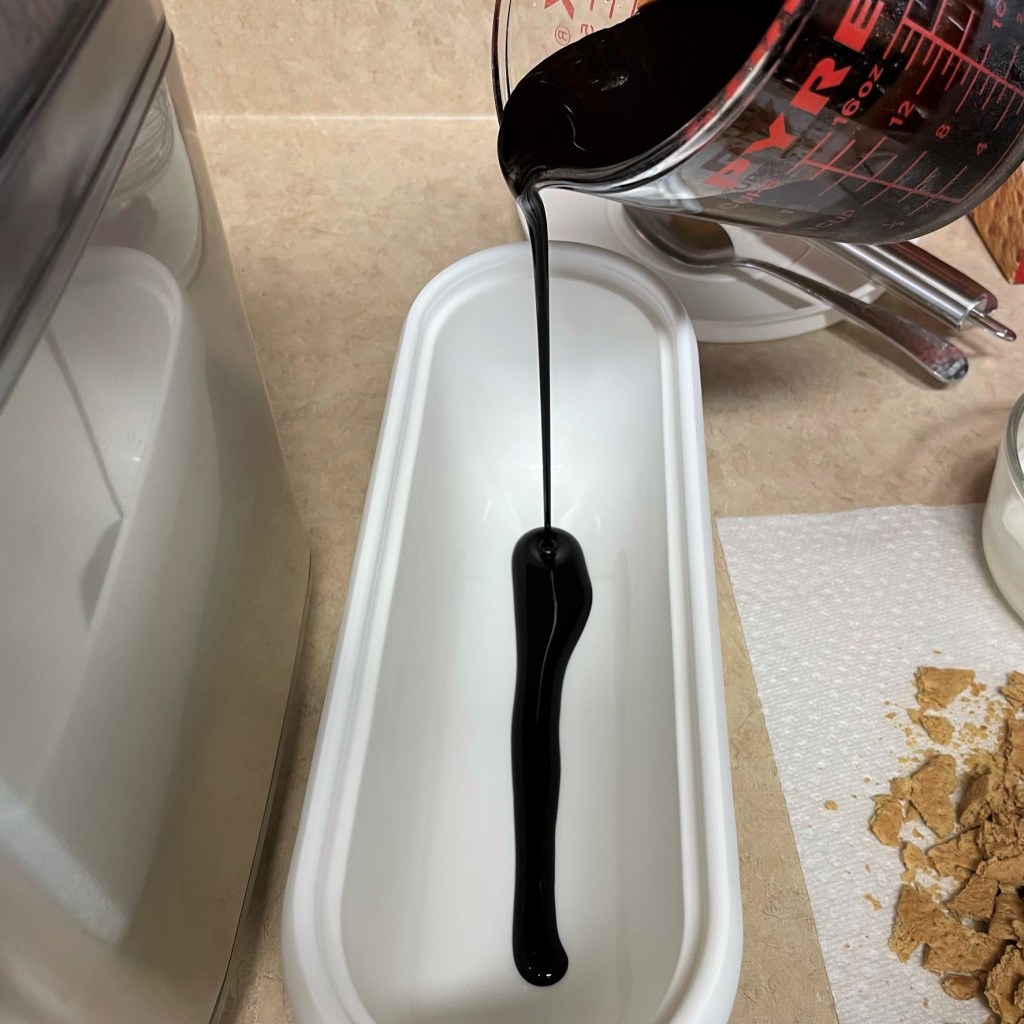
I did turn on the stove briefly to make the fudgy swirl that represents the melted chocolate square of a traditional s’more, but that was a small price to pay for this delicious final result.

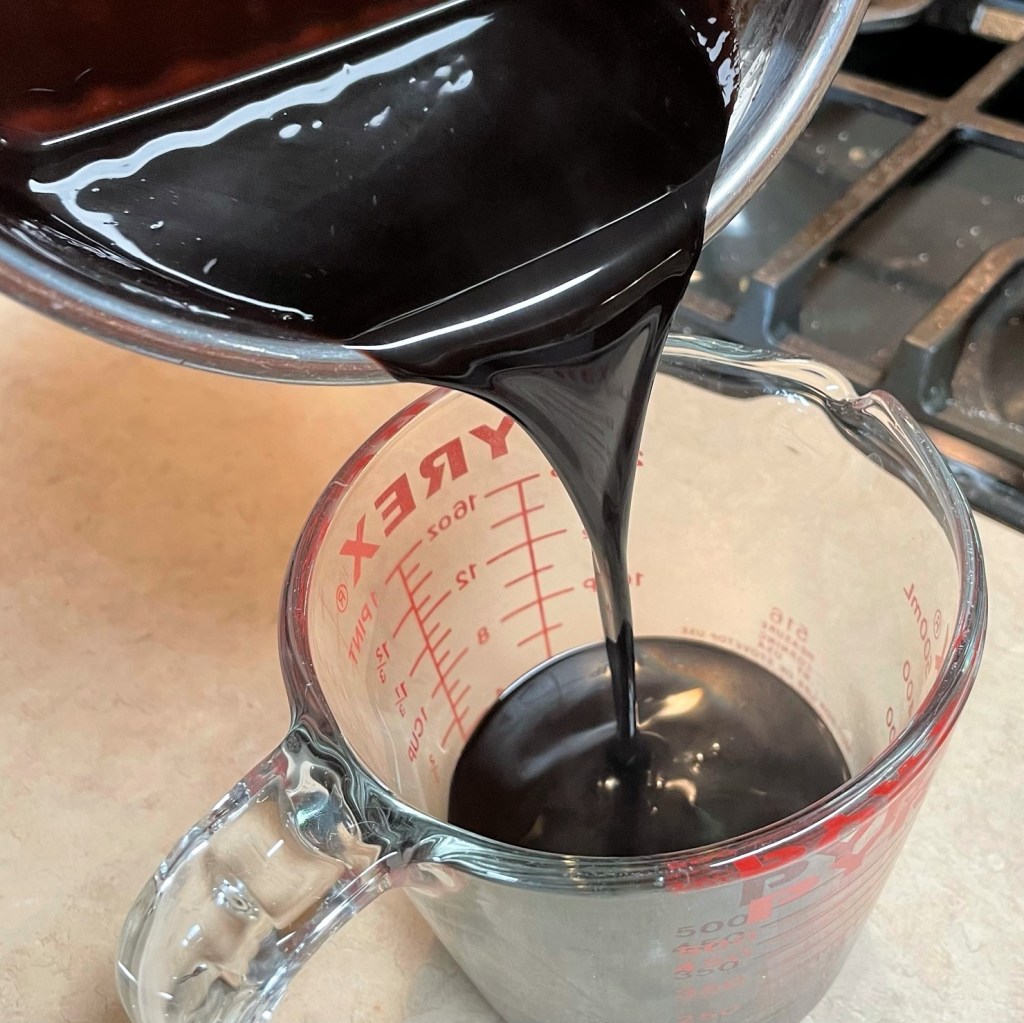
Looks like delicious black gold, doesn’t it?

Happy S’mores Day, everyone!
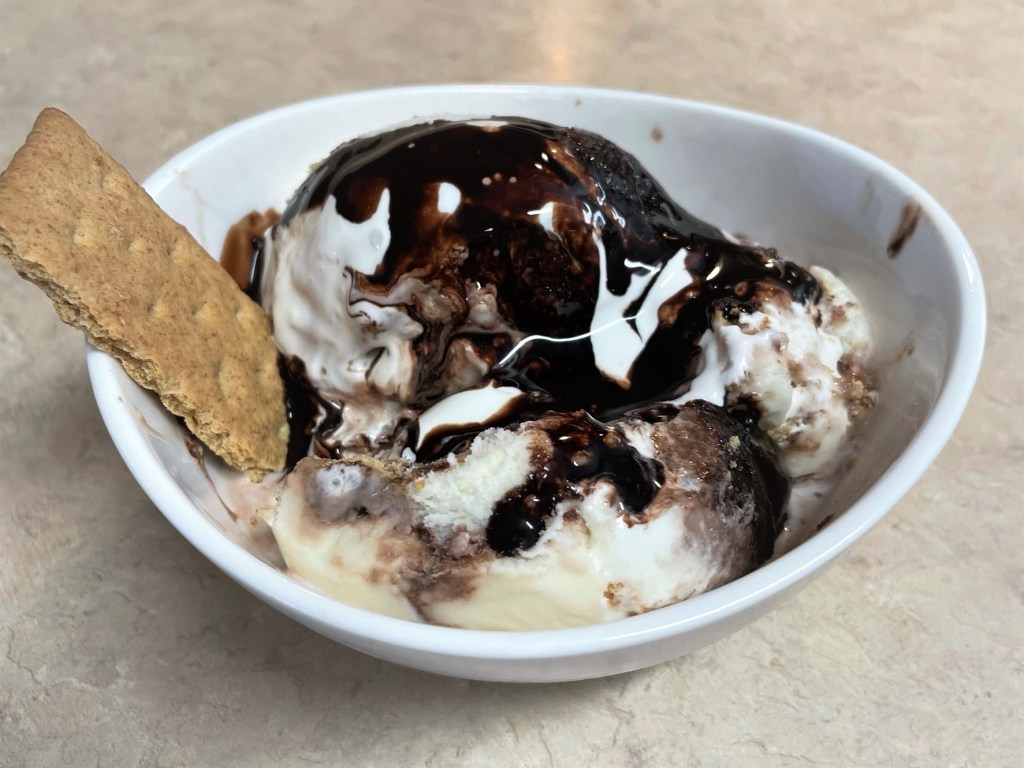
Yes, please, may I have s’more?!
Ingredients


Ice Cream Base

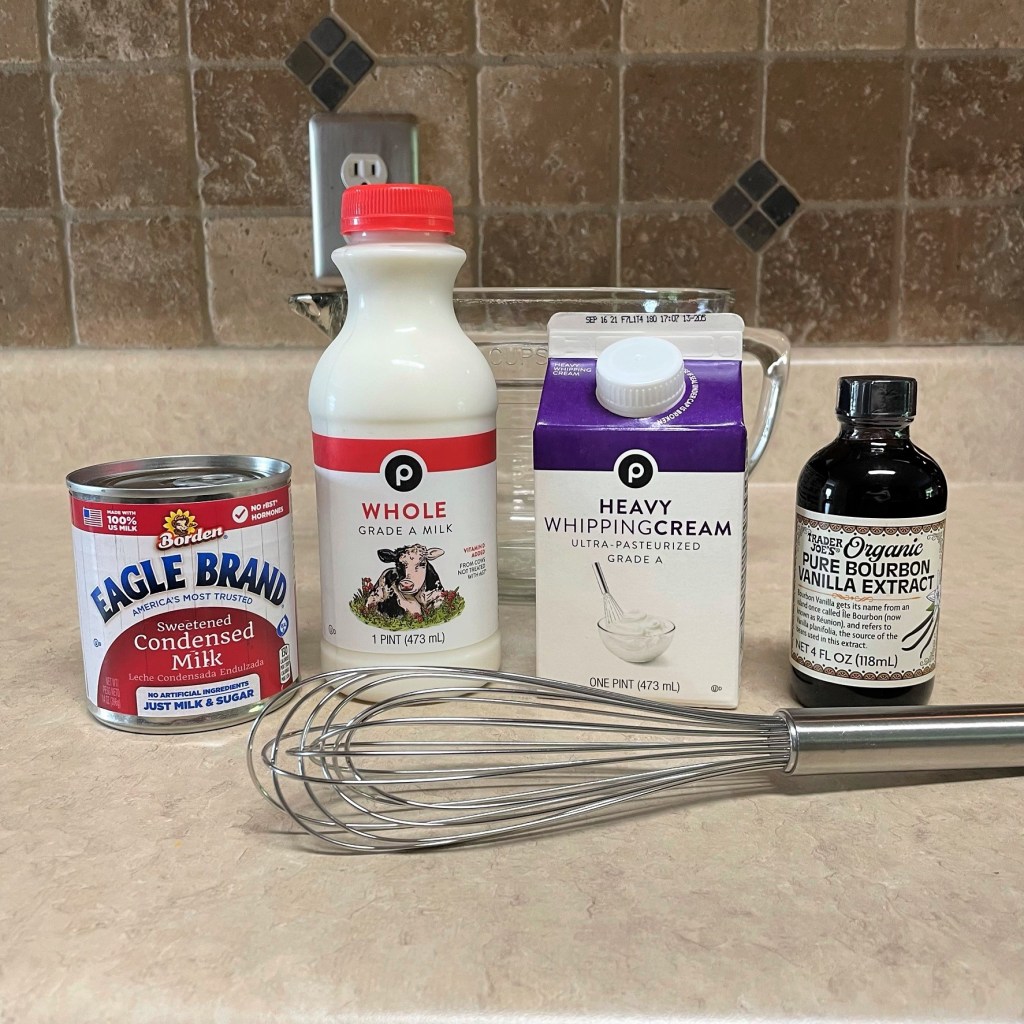
14.5 oz. can sweetened condensed milk

1 cup whole milk

1 cup heavy cream

1 tsp. real vanilla extract

1 Tbsp. vanilla flavored vodka (optional, for improved texture)


Gooey Marshmallow Swirl

2 oz. full-fat cream cheese (this is 1/4 of a regular brick)

1 cup marshmallow fluff (give or take, as this stuff is difficult to scoop and measure)


Chocolate Fudge Ripple

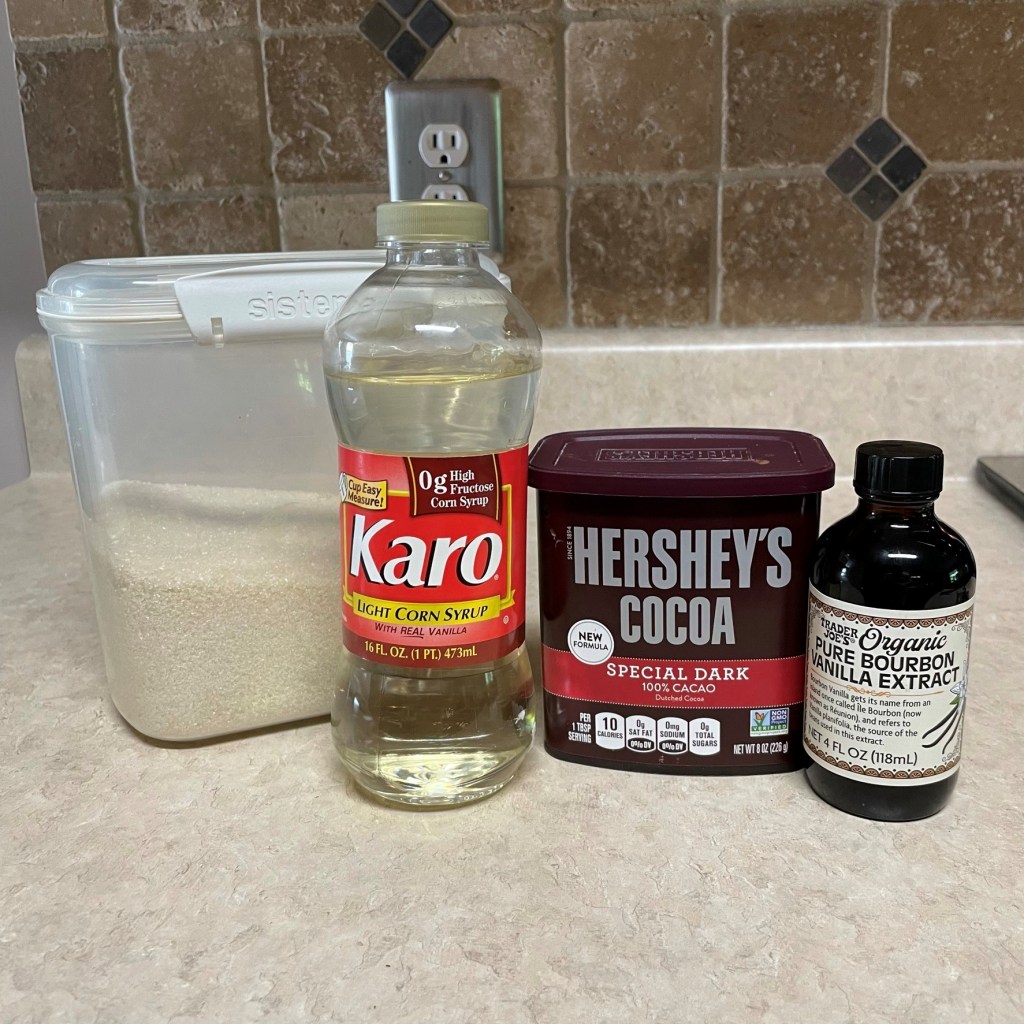
1/2 cup cane sugar

1/3 cup light corn syrup

1/2 cup water

3 Tbsp. Hershey’s Special Dark cocoa

3 Tbsp. King Arthur Double Dutch Dark cocoa

1/2 tsp. real vanilla extract

Pinch sea salt

and…

Of course, you will also need graham crackers, about 6 cookie sheets, broken into pieces


Instructions

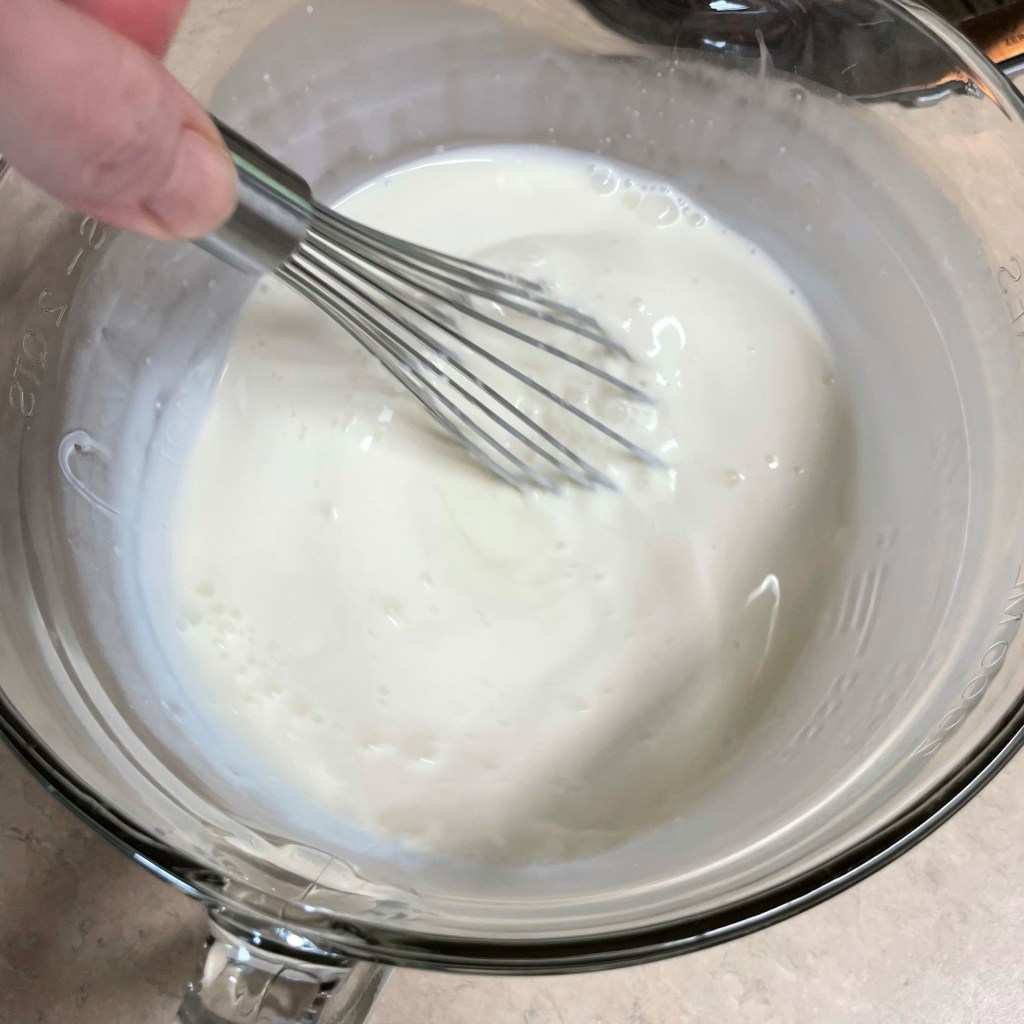
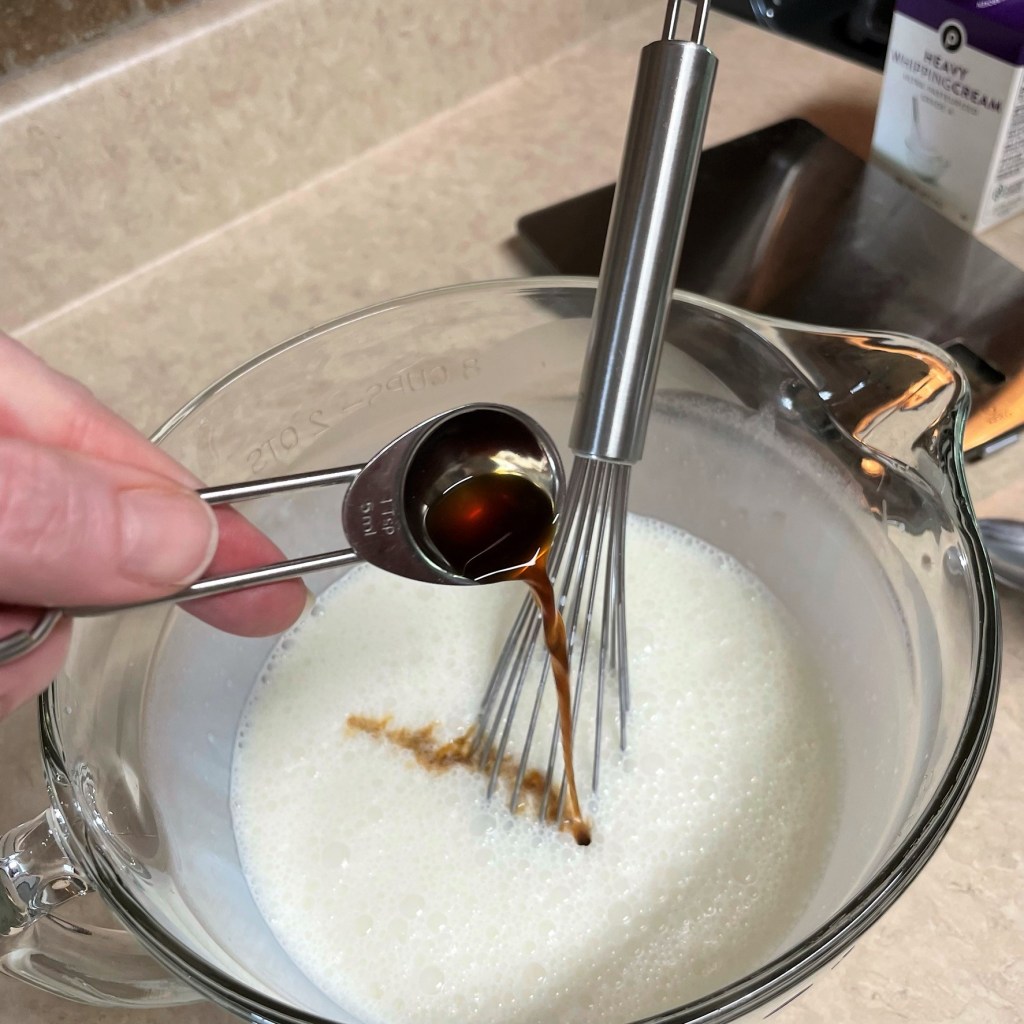
For the base of the ice cream, whisk together the condensed milk, whole milk and heavy cream. When the mixture is smooth and even, stir in vanilla extract. Cover and refrigerate until all other ingredients are cold and ready for layering.

For the marshmallow swirl, use an electric mixer to whip the cream cheese and marshmallow fluff together. Allow enough time for the mixture to settle into a smooth consistency. Cover and refrigerate.

For the fudge ripple, combine sugar, corn syrup, water and cocoa powders in a small saucepan over medium-low heat. Whisk constantly until mixture reaches a just-barely-boiling point. Remove from heat and stir in sea salt and vanilla extract. Transfer to a bowl, cool several minutes, then cover and refrigerate until fully chilled.  

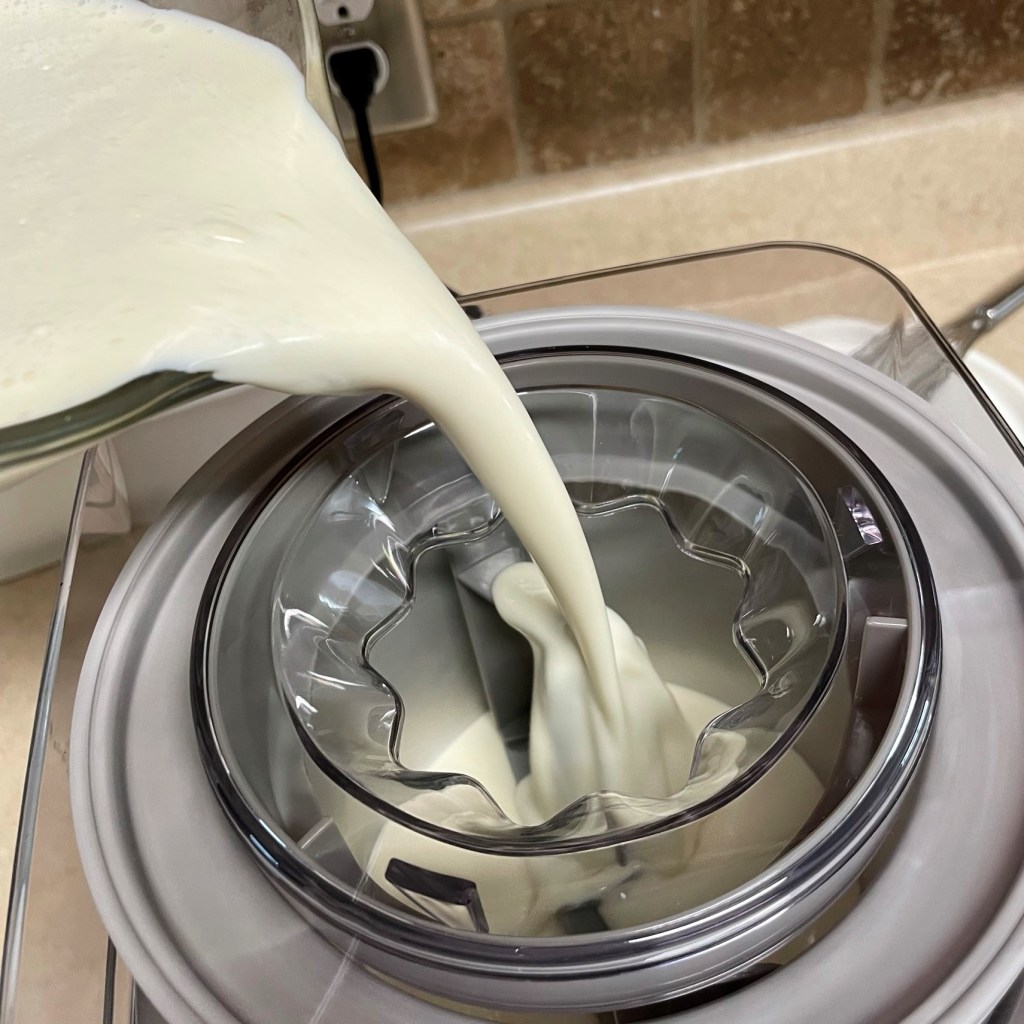
To make the layered ice cream: Freeze the base ice cream according to manufacturer’s instructions; my Cuisinart machine takes about 20 minutes. During the final minute, add the vanilla flavored vodka. This ingredient is not essential, but it helps make the ice cream scoopable immediately upon removal from the freezer. If you avoid alcohol—no problem; simply remove the ice cream about 15 minutes before serving to slightly soften.

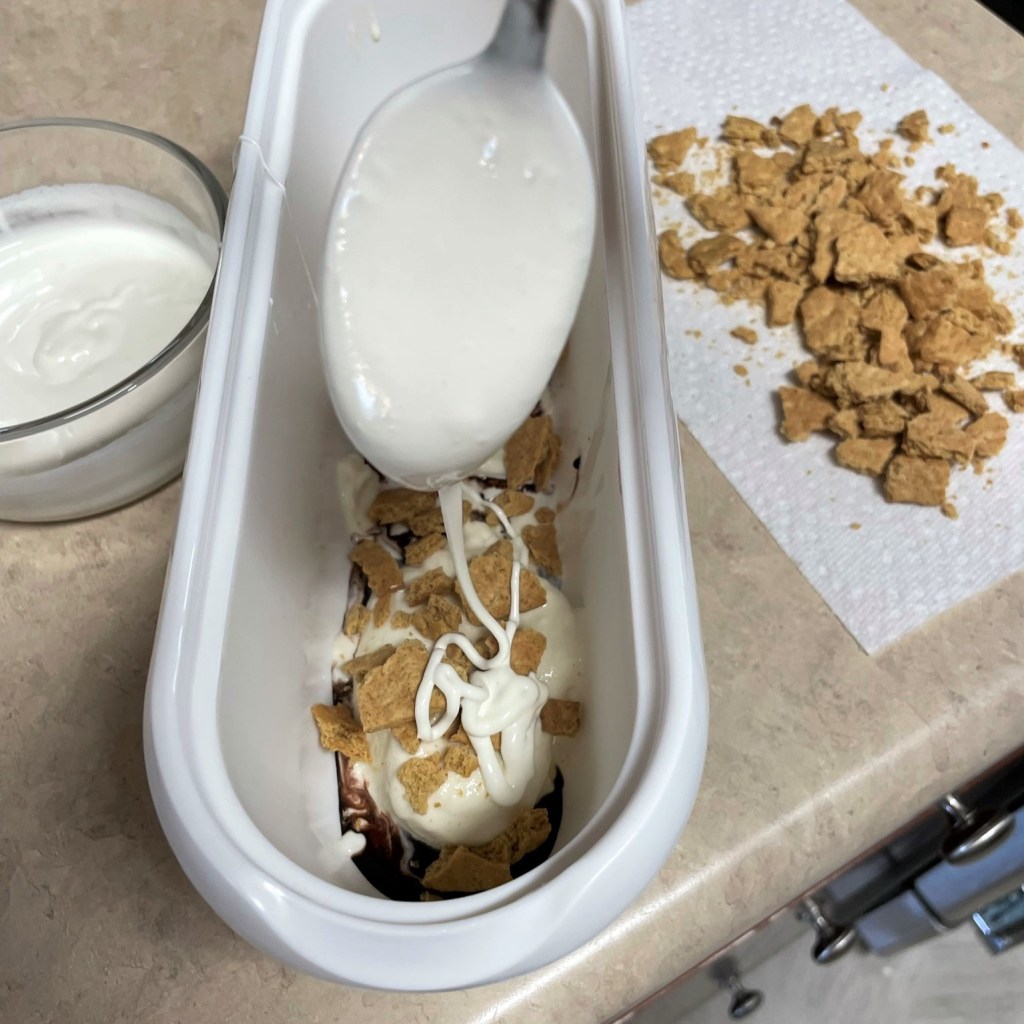
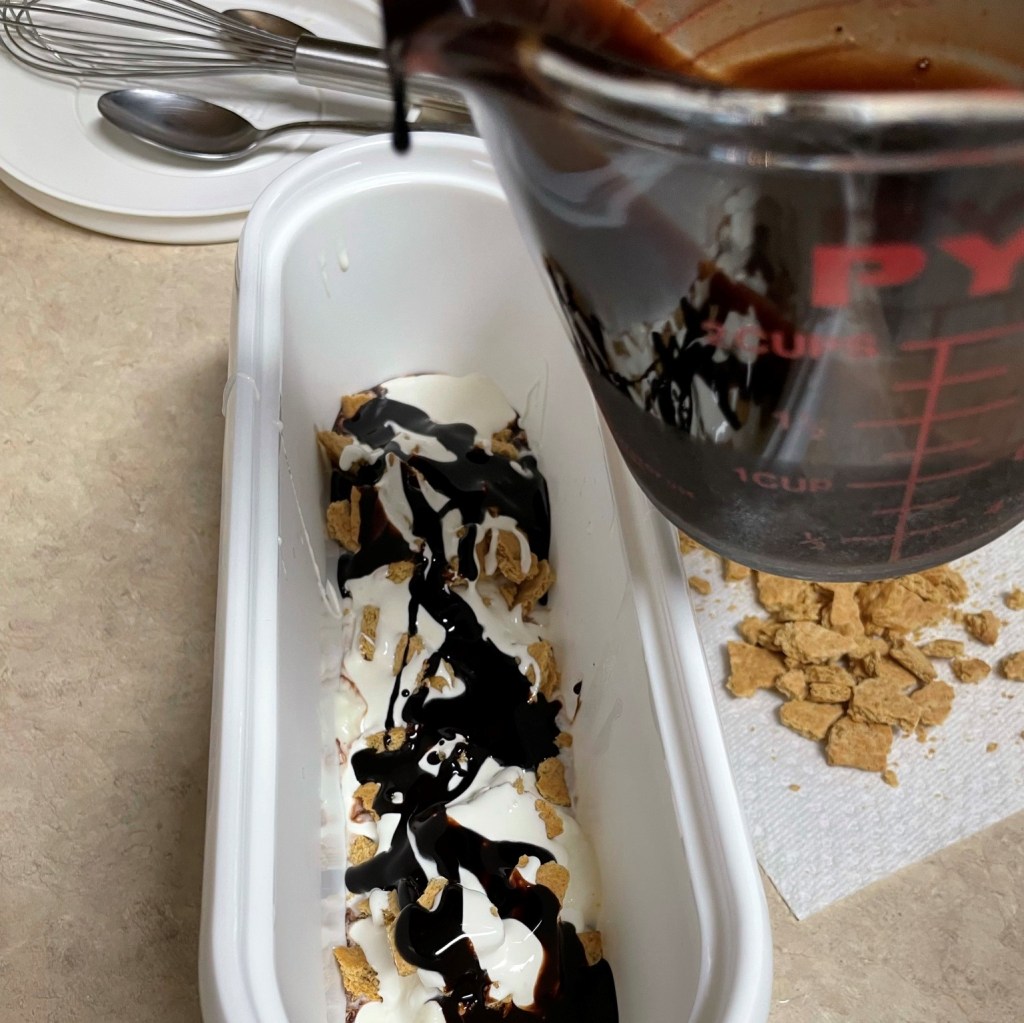
When ice cream is finished churning, add a slight ribbon of fudgy ripple to the bottom of an insulated ice cream container. Spoon in a few dollops of the ice cream base, followed by the graham cracker pieces and a generous drizzling of the marshmallow fluff mixture. Swirl on more fudge ripple, then repeat with ice cream, graham pieces and marshmallow fluff mixture. Be generous with the s’mores ingredients for best results. Any remaining fluff or fudge swirl mixture can be used to “dress up” your ice cream at serving time.


Transfer ice cream container to the freezer for several hours (preferably overnight) to firm up. Serve with additional topping ingredients.


Crab & Artichoke Bisque

If this soup looks and sounds familiar to you, it’s because you are a faithful reader of Comfort du Jour, and you probably remember it from the Chopped Challenge post of a few days ago. In that post, I detailed my thought process in transforming a basket of ordinary mystery ingredients (curated by my darling husband, Les) into stunning food magnificence. Dramatic? Perhaps I have been watching too much of the real “Chopped” on Food Network and channeling host Ted Allen. Or blame the stars—I am, after all, a Leo.

Anywho, because of the overwhelming response and multitude of requests for the details of this recipe (OK, it was only my foodie pal, Dorothy, who requested the particulars, but she is enough), I share it today for your culinary pleasure. Dorothy and I met on WordPress, the digital platform for my blog, and we follow each other’s kitchen adventures with great joy and mutual encouragement. Her own blog, The New Vintage Kitchen, has me swooning over homemade delicacies on the regular, so if she wants one of my original recipes, you can bet I’ll hustle it up here. This works out well for me, too, because my usual M.O. is cooking without a specific plan or purpose, adding a little of this and that, skipping all effort of writing down the ingredients, amounts or instructions. Inevitably, Les will casually mention how much he enjoyed the such-and-such that I made back in oh, I don’t know, 2017, maybe? And at that point, I have absolutely no idea how to replicate it. Sigh.

That will not happen with this delicious soup, which also happened to be easy to make, even though I felt at the time as though I was flying by the seat of my pants (I was). I created it as a challenge to myself, to avoid the pitfalls of my own comfortable repertoire, and to surprise Les with something more interesting than the most obvious dish I might have otherwise prepared from my mystery basket (pizza). Do I not already make enough pizzas here on the blog? [Insert shameless plug for Pizza Party page] Thankfully, I had the presence of mind to jot down my method and amounts, so this will be a piece of cake—no, wait, a pot of soup—and I will be able to refer back to my own blog to revisit the recipe anytime I want (you’d be surprised at how often I really do this).

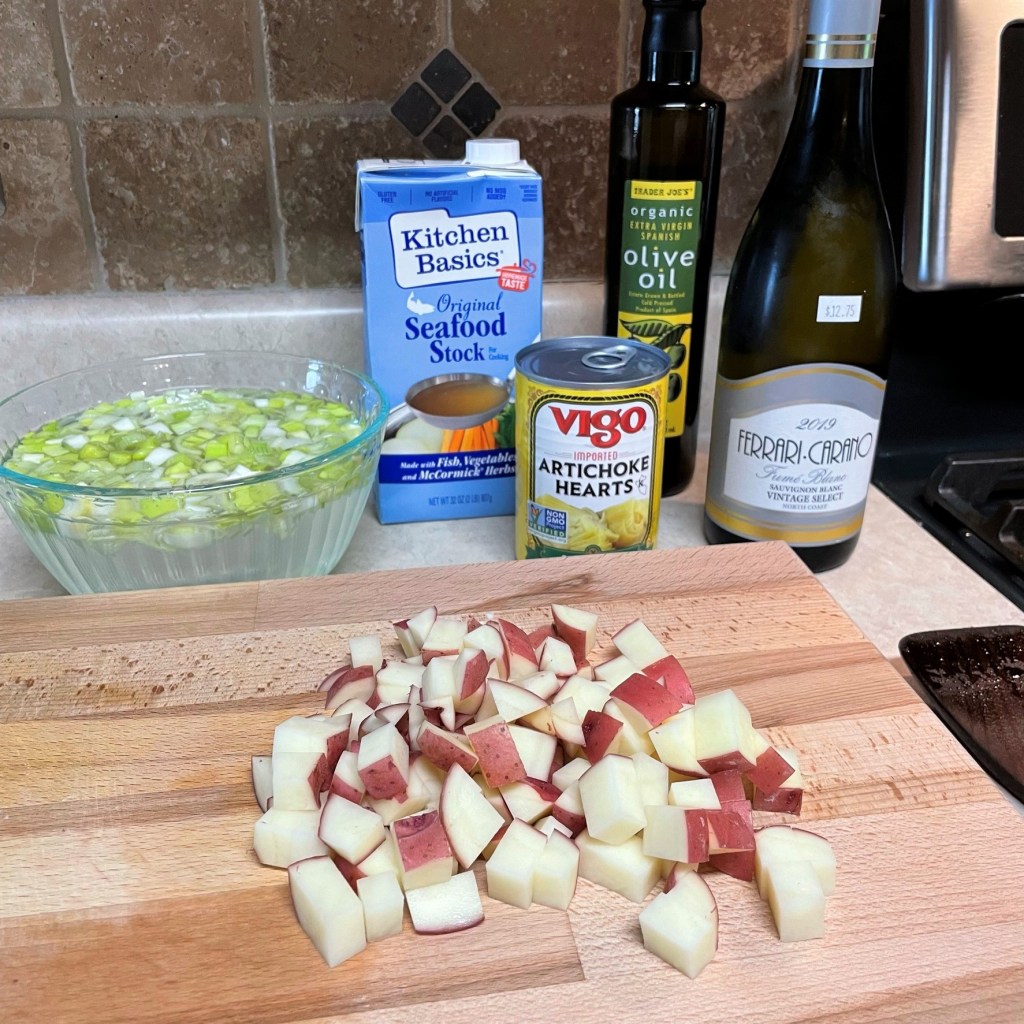
The soup ingredients themselves are no mystery. You’ll need lump crab meat and canned artichoke hearts, plus some onions (I used leeks), small red potatoes, seafood stock or veggie broth, a generous glug of white wine, a splash of cream and an immersion blender. Oh, and some crispy bacon for serving. If you don’t have an immersion blender, I am confident that this soup would also have been delicious in the style of a chowder, and I almost made it that way myself, except for the fact that Les loves creamy soups, and bisques in particular. I took a chance pureeing it, given that the potatoes had red skin and the leaves of the artichoke hearts can be kind of stringy, but it worked out beautifully. So you choose which works for you.

As a bonus, I will also share the ratio of ingredients for the tangy tapenade I served on the side, taking advantage of another basket ingredient (Kalamata olives) that didn’t seem to fit the soup itself. Enjoy!

Note to self: Must make again; Les loved it and declared my Chopped challenge a “winner.” And it just might be served one day in Dorothy’s own kitchen, or perhaps under her majestic maple tree named Alice, and that would make me super proud.

Recipe makes about 6 servings

Ingredients

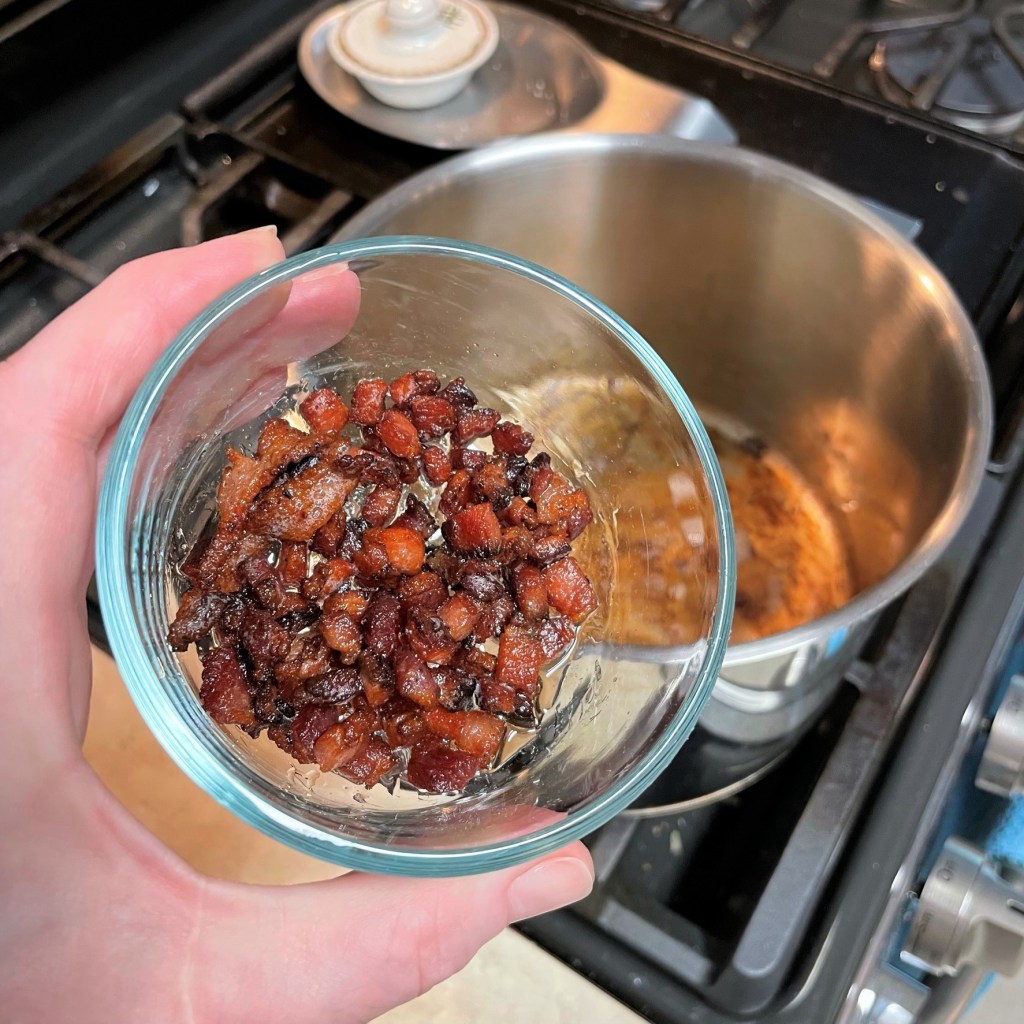
1 slice thick center-cut bacon, diced* (see notes)

2 leeks (white and pale green parts), sliced and cleaned (or 1 medium onion, chopped)

2 Tbsp. salted butter

4 smallish young red potatoes, skin-on, diced (should be about 1 1/2 cups)

15 oz. can artichoke hearts, drained*

3 cups seafood stock or veggie broth*

About 1/3 cup dry white wine

Juice of 1/2 fresh lemon

1 or 2 bay leaves for simmering

Salt and pepper to taste

1/2 cup heavy cream

8 oz. lump crab meat

1 rib celery, strings removed and finely minced

Lemon slices and freshly chopped parsley (for garnish)


*Notes

The bacon I used for this recipe was pasture-raised and very thick cut. If using a grocery store brand, I recommend the thickest center cut available, and consider using two slices.

If you intend to make the artichoke-Kalamata tapenade, cut a few of the artichoke hearts in half, reserving the very tender parts for the tapenade. Otherwise, use the entire can in the soup. These artichoke hearts were packed only in water, not in oil with spices.

I used seafood stock from a carton because I already had it on hand. I knew the crab would be introduced at the very end, and I wanted more of the seafood flavor simmered into the soup. If I had the time (and enough shrimp shells in my freezer stash) I probably would have made this from scratch. In a pinch, a favorite veggie broth would work well. Or perhaps veggie broth, plus a small bottle of clam juice.


Instructions

  1. Place a heavy-bottomed soup pot over medium heat. Add the bacon to the pot and cook until crispy. Remove the bacon with a slotted spoon and set it aside.
  2. Add butter to the bacon grease and saute the leeks (or onions) until tender. Stir them around to loosen all the browned bacon-y goodness from the bottom of the pot.
  3. Add the potatoes and artichoke hearts and toss to coat in the bacon drippings mixture. Season with salt and pepper to taste. Add the stock, white wine, lemon juice and bay leaf. Bring to a gentle boil, then reduce to simmer for about 45 minutes. Check to be sure the potato cubes are completely tender.
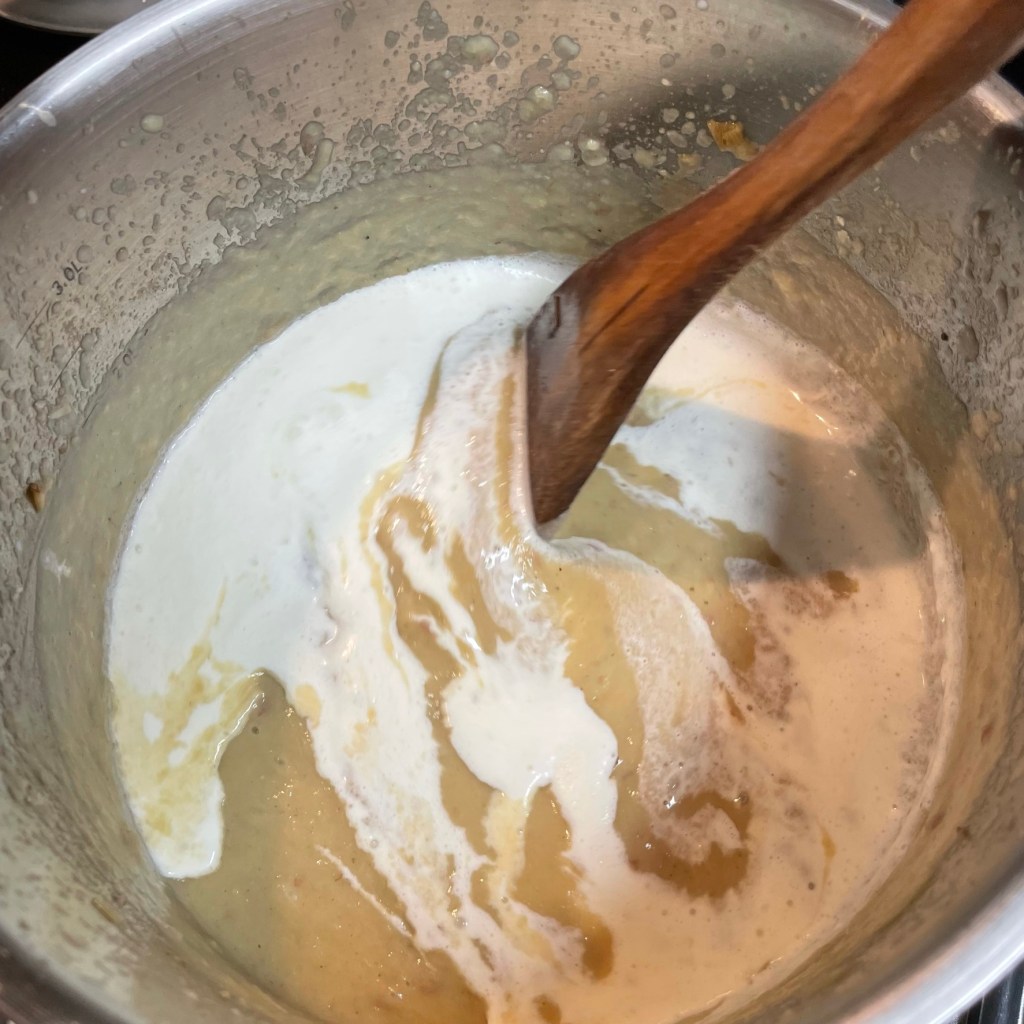
  4. Remove bay leaf from the pot. Use an immersion blender to puree the soup mixture to the desired consistency. Stir in heavy cream. Adjust seasoning to taste.
  5. Add most of the lump crab, reserving a bit to sprinkle on top of each serving. Add the minced celery here at the very end also, for a surprising little bit of texture in each spoonful. Stir gently to combine and simmer until the crab is warmed through. Drizzle a bit of olive oil into the reserved crab and place it near the stove to warm.
  6. Ladle the soup into serving bowls. Top each bowl with a tablespoon of reserved lump crab, a sprinkling of the crisp bacon, a scatter of fresh parsley and a broiled lemon slice.

Broiled lemon slices: Cut thin slices from the center of a lemon (where it is thickest). Remove the seeds and press between paper towels to remove as much juice and moisture as possible. Arrange the lemon slices on a parchment-lined baking sheet and broil on low for a few minutes (watch them closely). I placed mine on a baking sheet with another item and baked them for about 20 minutes, and the result was nearly the same.


Artichoke-Kalamata Tapenade

A handful of pitted Kalamata olives, preferably packed in brine with oil

1/4 cup artichoke hearts (only the tender “bottoms”)

2 large “lemon twist” cocktail olives in vermouth (mine were Tillen Farms brand)

2 Tbsp. sun-dried tomatoes, snipped into bits and rehydrated with boiling water

Juice of 1/2 fresh lemon

1 Tbsp. extra virgin olive oil (mine happened to be from Kalamata olives)

Kosher salt and freshly cracked pepper


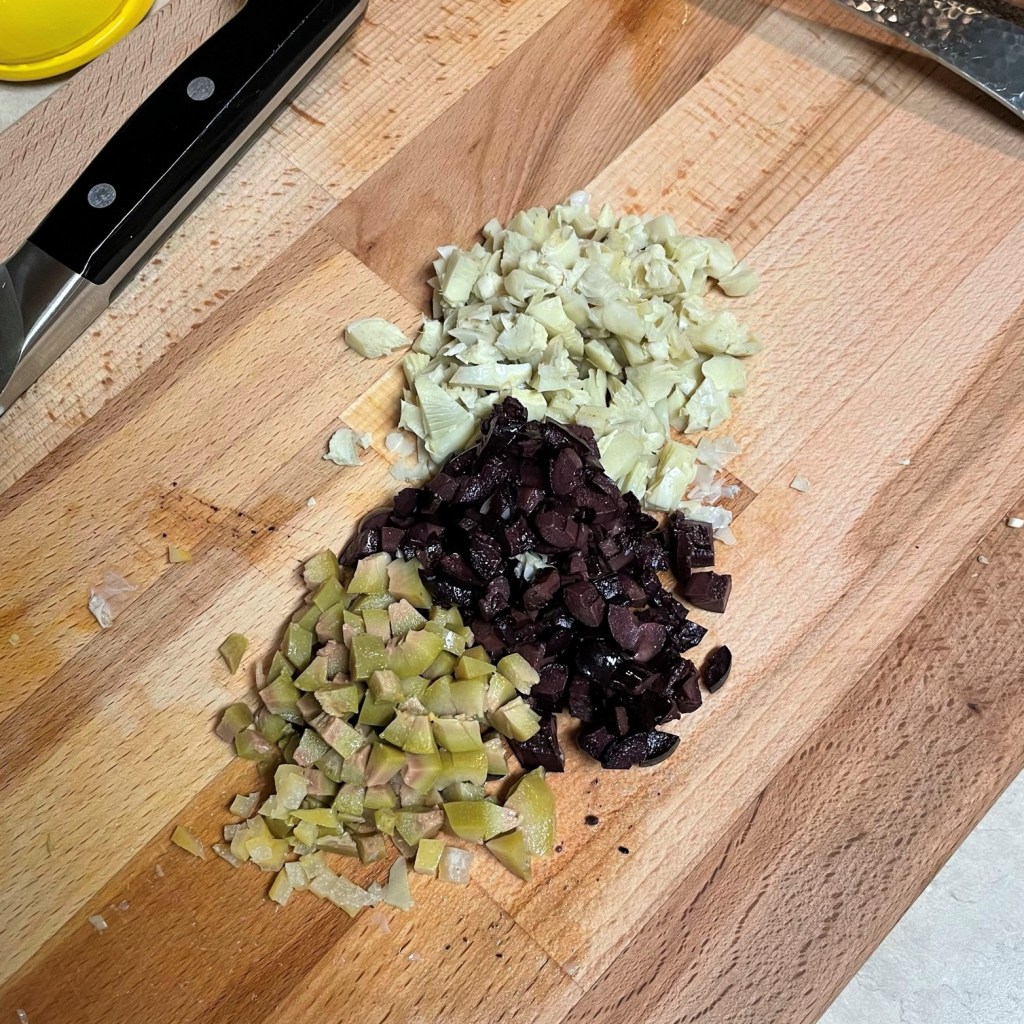
Chop up the olives, artichoke hearts and cocktail olives (including lemon peels inside) into very small bits. Do this by hand, as a food processor would pulverize them into mush. Drain the sun-dried tomatoes and add them to the mix. Stir in lemon juice. Drizzle in olive oil and stir to coat everything. Season the mixture to taste with salt and pepper. Serve alongside the soup with crackers, pita, crostini or bread sticks.


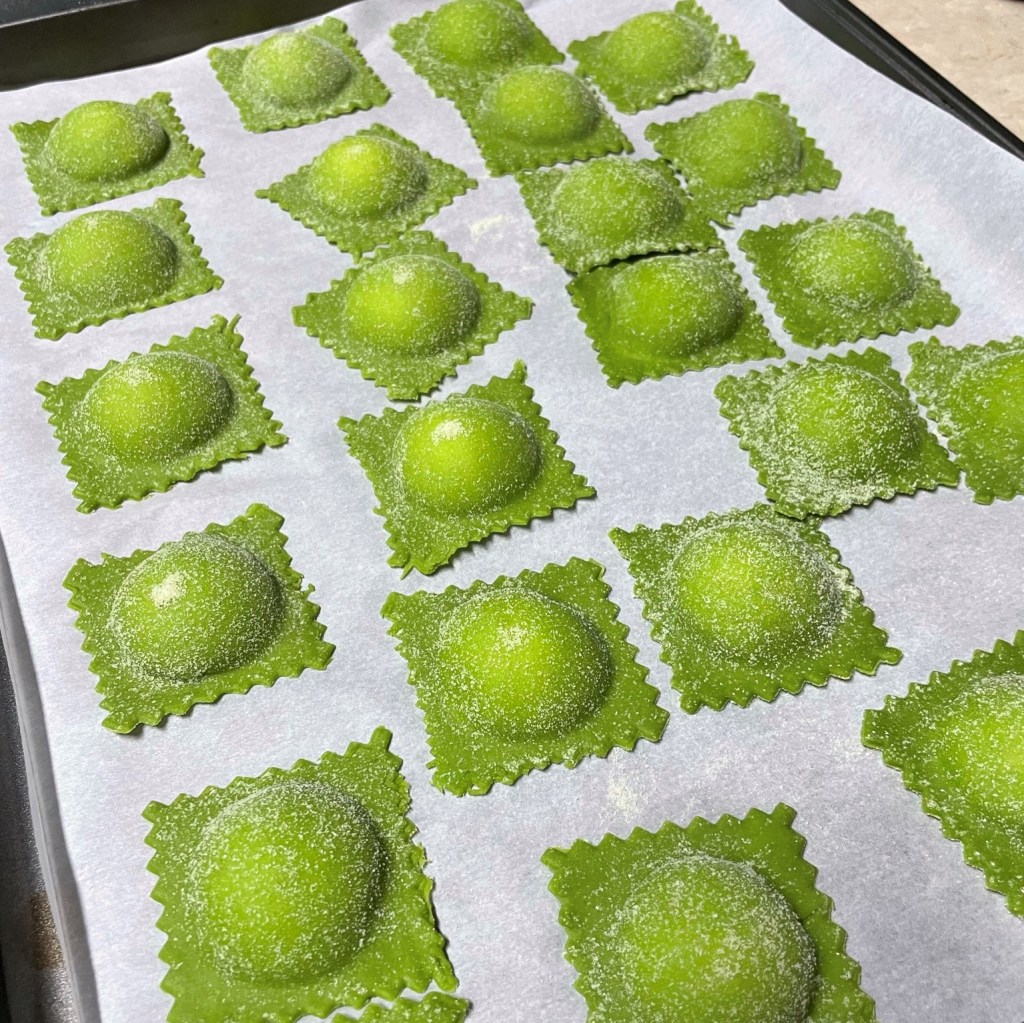
Handmade Spinach Ricotta Ravioli

Of all the things to be excited about when our kitchen remodel is finished, I’m especially looking forward to having my pasta rolling machine closer at hand. We have what we call the “prime real estate” rule in our existing kitchen, which means that we must use a gadget or appliance more than a couple times each week to justify giving it counter space or base cabinet storage. Everything else is relegated to the baker’s rack in the attached garage, or atop the wall cabinets in our laundry room.

See it way up there? Next to the spiralizer, my grain mill and underneath the deadly mandoline.

My pasta machine, which I only use once every few months, lives way up there, mere inches from the ceiling. I can only reach it if I stand on tippy toes on the top step of our stepladder—it is inconvenient, to say the least. And I have not pressed very hard on the argument that if I could actually reach the thing, I might use it more often, thereby earning its spot in the better real estate. It’s a catch-22 kind of thing, and a real shame because I love to make handmade pasta.

But my deepest pasta prayers will be answered with the installation of a brand-new section of cabinetry in this unused corner of our kitchen, right next to the huge sunny window. It will be my own special space—a baking station—and the cabinets and drawers will give me all the space I need for my favorite gadgets, including the pasta machine, plus a lovely butcher block countertop where I will make pasta (and sourdough bread) to my heart’s content. I cannot wait!

Am I the only one who hears angels singing?

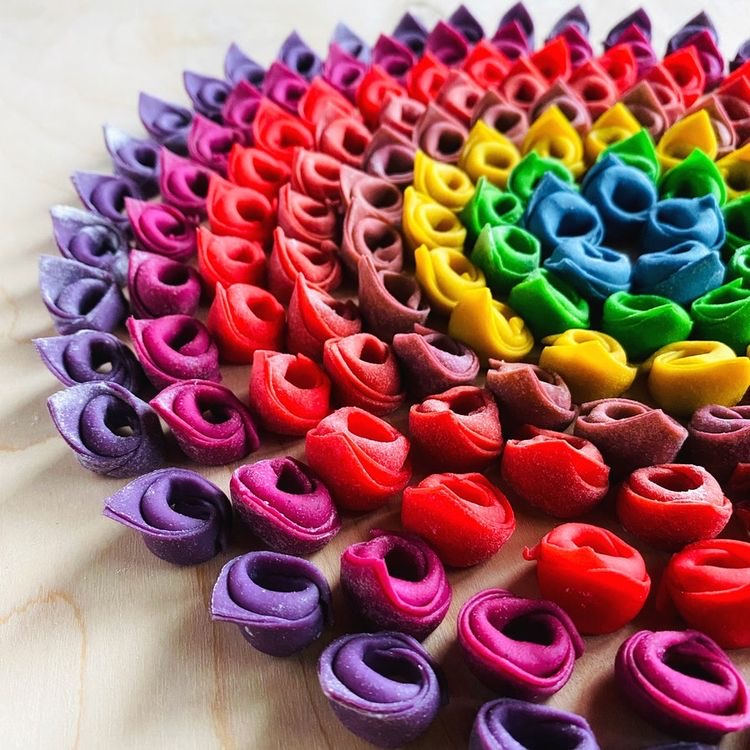
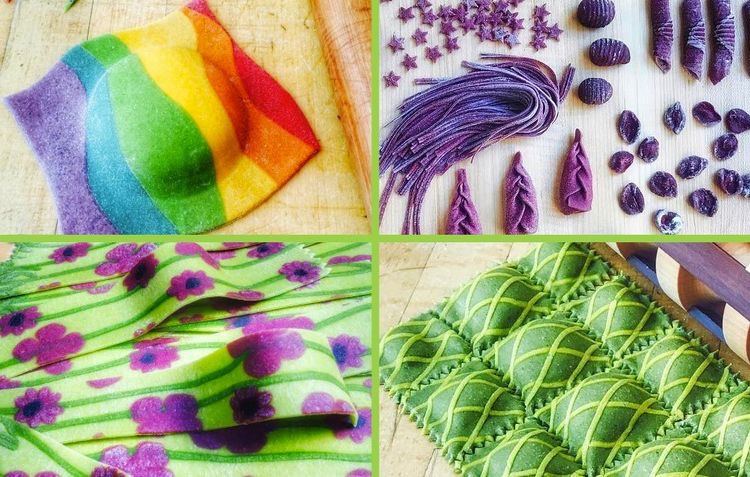
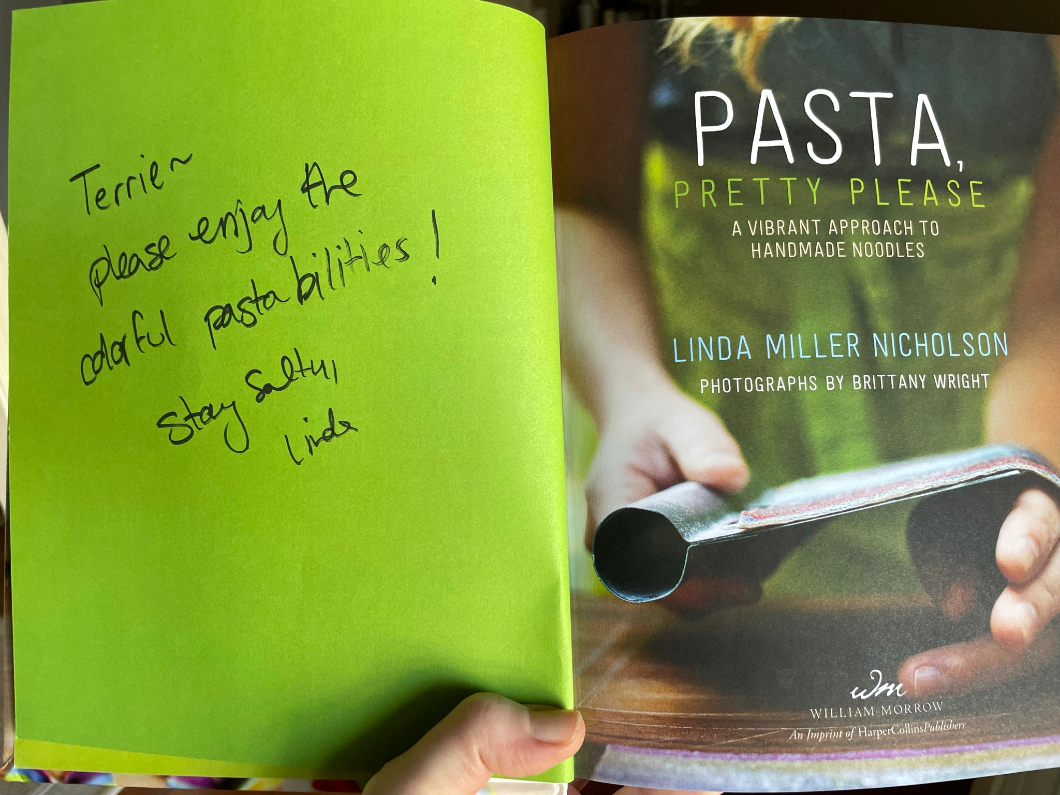
And in preparation for that time, I have been getting in some practice rounds with handmade pasta, due in part to my purchase of this amazing how-to book. The author of Pasta, Pretty Please, Linda Miller Nicholson, describes her recipes for brilliantly hued handmade pasta dough, flavored and colored with pure, natural ingredients, and then shaped with the most clever and creative techniques. Linda is all over Facebook, YouTube and Instragram with her craft, and you can count me among those who are utterly enthralled by her incredible, edible art. Feast your eyes!

Amazing, right??


The impatient side of me wants to dive head first into the most complex shapes, designs and colors, but I am restraining and pacing myself—partly so that I don’t get frustrated with techniques that I don’t yet understand, and partly because there is only so much pasta that my husband, Les, and I can consume in a week. If I made as much pasta as my heart desired, we’d be in major carb overload!

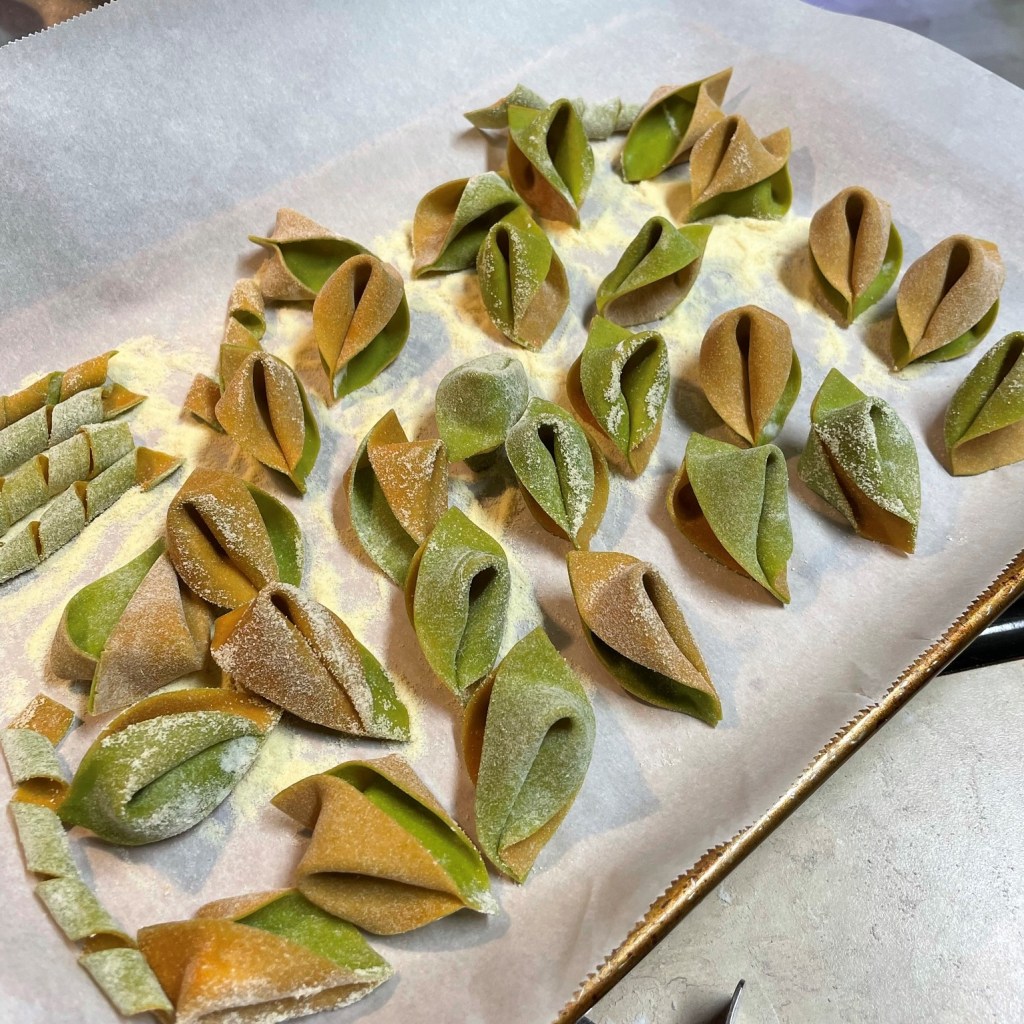
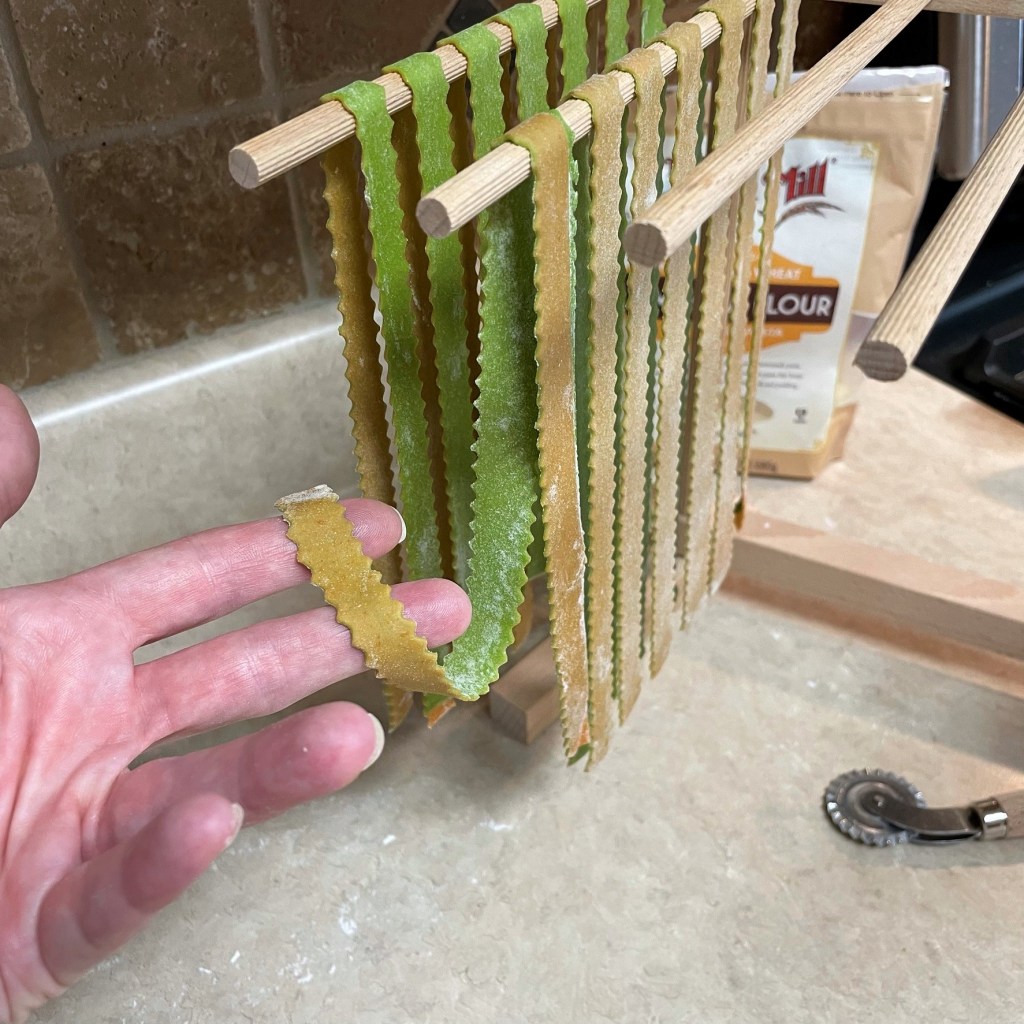
But I am practicing, both with the natural color ingredients and some of the special shaping. I’m happy to share a sneak peek of my progress, and then I’ll dive into the recipe that I promised at the beginning.


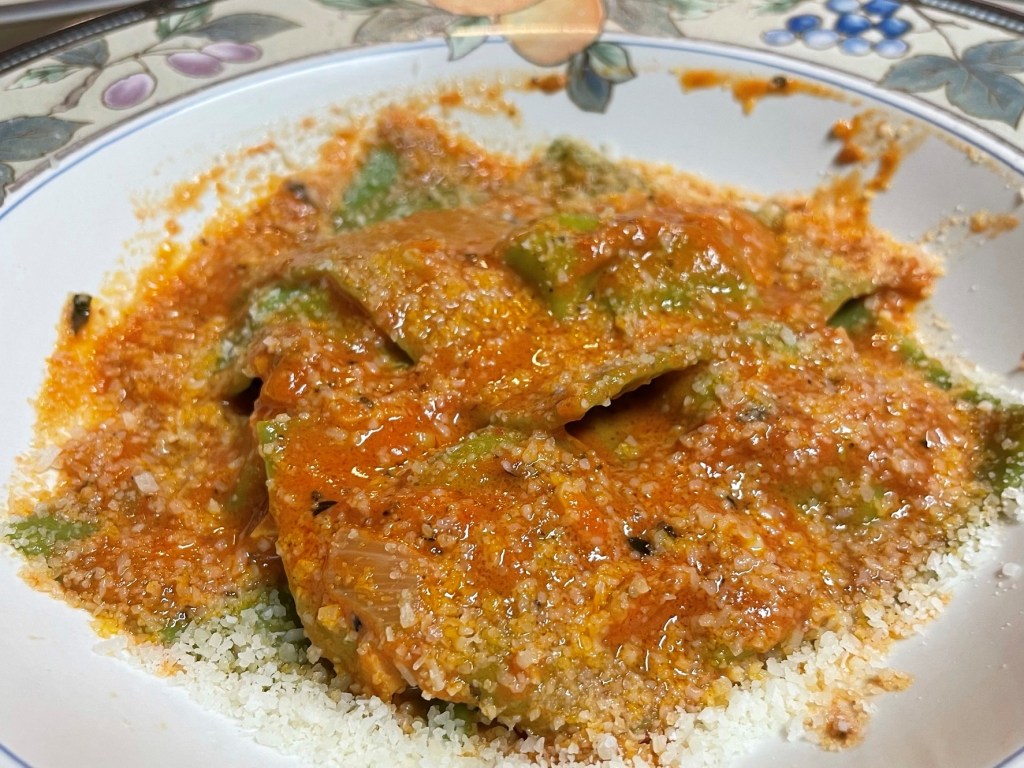
Stay tuned for more progress as I go. Until then, let’s talk about this handmade spinach pasta, lovingly wrapped around an easy ricotta and parm-romano filling. I will not be so smug as to imply that handmade pasta is a cinch (because it does take practice), but I will absolutely say that it is worth the effort, and if you have made pasta before, you can make a couple of simple changes to twist up the flavor and color, and you will impress even yourself with the outcome. I’ve made colored and flavored pasta many times before—with spinach, butternut squash, sun-dried tomato, lemon and dried mushrooms as ingredients—but I have already learned some new tricks from Linda Miller Nicholson, and I am excited to share them with you.

For starters, her instruction shifted me away from extensive kneading of the dough to a simpler means of laminating the dough to build gluten strength. Laminating means “layers.” After a brief kneading and a half-hour rest, you repeatedly fold the sheets of dough onto itself, layer upon layer, as you run it through the pasta machine. As you go, the dough becomes more and more supple and strong enough to withstand pressing into thin sheets for ravioli. This is good news for anyone who finds kneading tedious or painful.

Next, the color of the pasta can be intensified with a simple addition of baking soda in the blanching water for any vegetables you use to color up your dough; then, a quick straining through a mesh sieve weeds out the solids for a cleaner-looking dough. In the past, I have simply wilted spinach in a pan and pureed it into my dough. My previous results were good, but not this good.

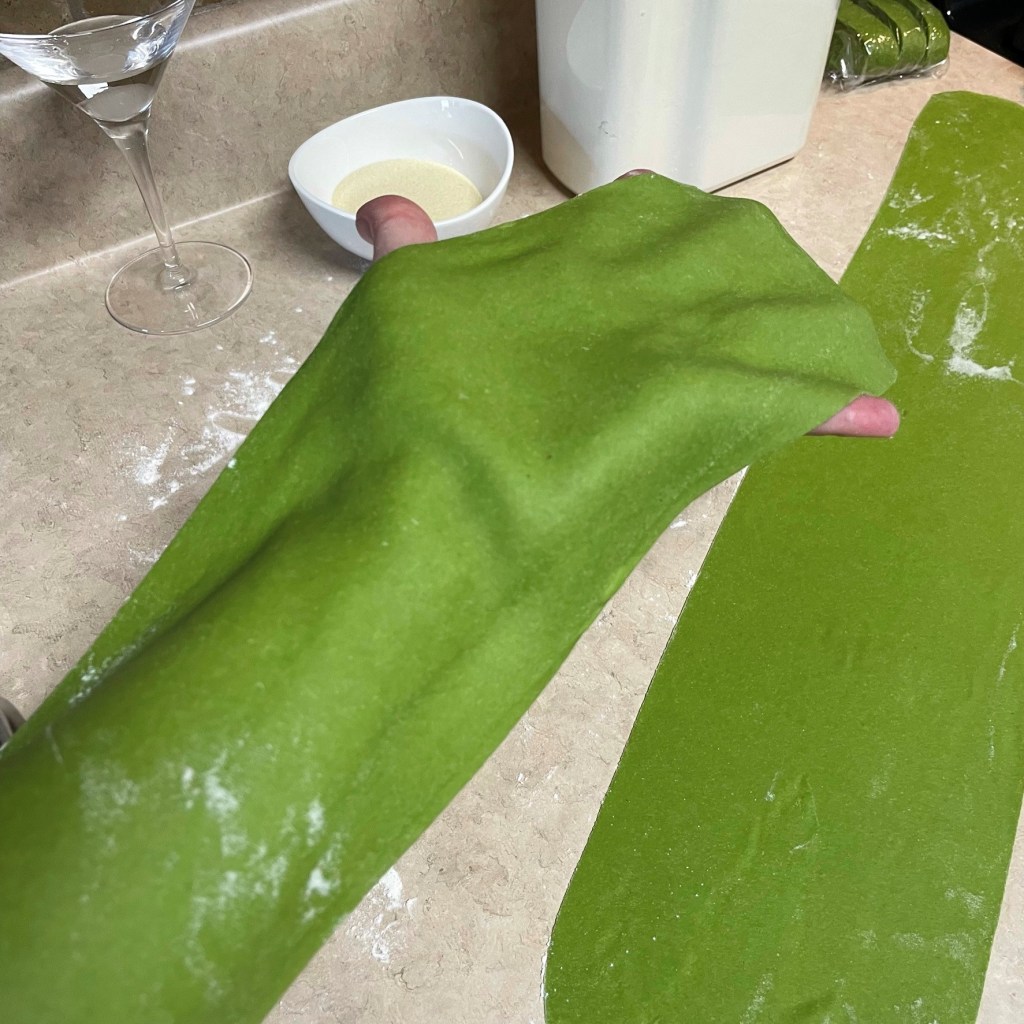
I am astonished at how bright green the color remains, even after cooking. The baking soda trick when blanching the spinach really makes a difference.

And my filling is improved also, simply because I took a few extra minutes to drain excess moisture from the ricotta before mixing the filling. More advice from Linda, and it worked like a charm. Oh, it pays to stay curious!


The dough

2 1/4 cups unbleached all-purpose flour* (see notes)

2 large eggs, room temperature (plus water, as noted in the instructions)

A fat handful of fresh baby spinach leaves, washed

1 tsp. baking soda (in the blanching water, not the dough)

1 Tbsp. kosher salt (also for the blanching water)


The filling

15 oz. container of whole fat ricotta

1/3 cup parm-romano blend (or grated parmesan)

1 egg yolk

Zest of 1/2 lemon

A few grates of fresh nutmeg


*Notes

As always, be sure you measure the flour properly so that your dough is not dense. Use the fluff, sprinkle, level method if measuring by volume. For less fuss and greater precision, measure it by weight—270 grams.

The very best flour to use for pasta is Italian 00 milled flour or finely milled durum (semolina), which is my favorite. But both can be tricky to find. For the sake of practice, I have been using King Arthur all-purpose flour, and I have had excellent results so far. If you sub in any amount of whole wheat flour, increase the water a bit as well.


Instructions

Here, I will run through the instructions in pictures, as usual. At the end of the post, you’ll find a PDF available for download, so you can print it for your recipe files. 🙂

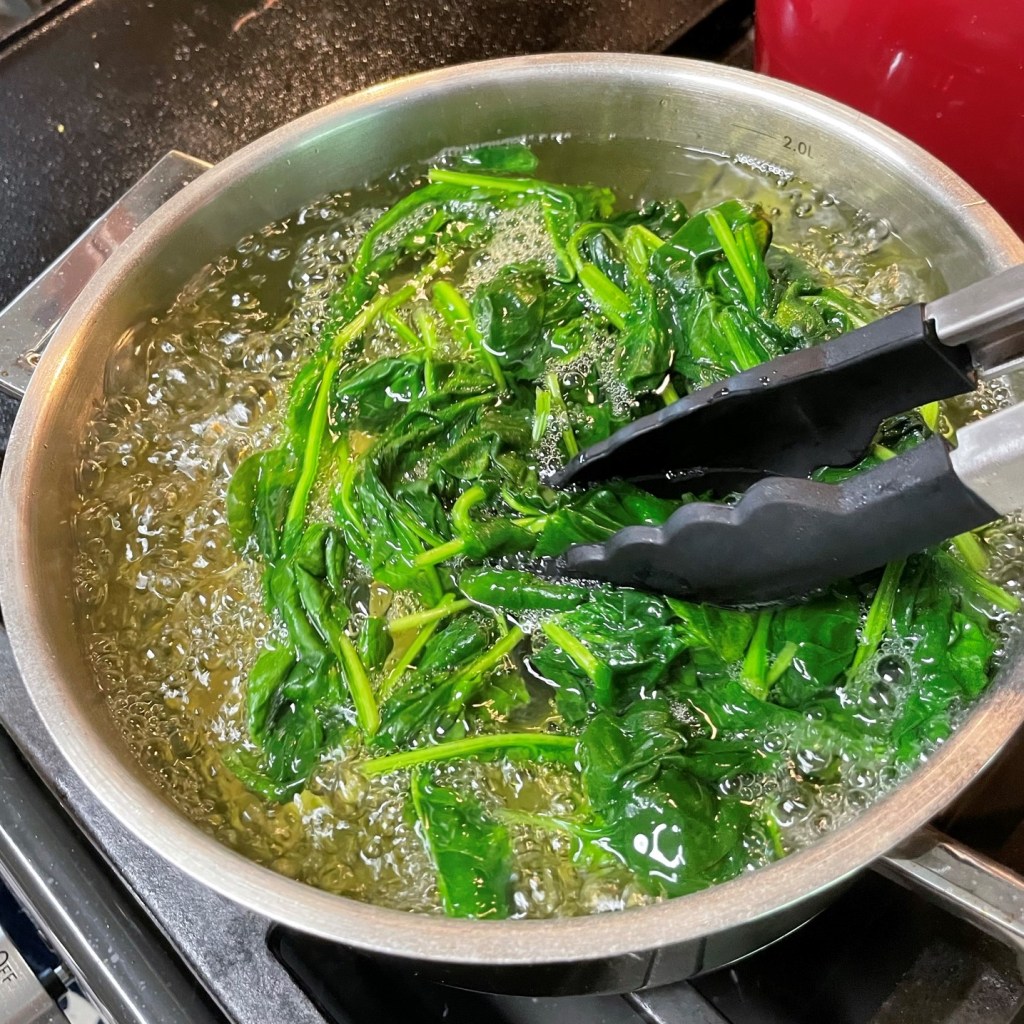
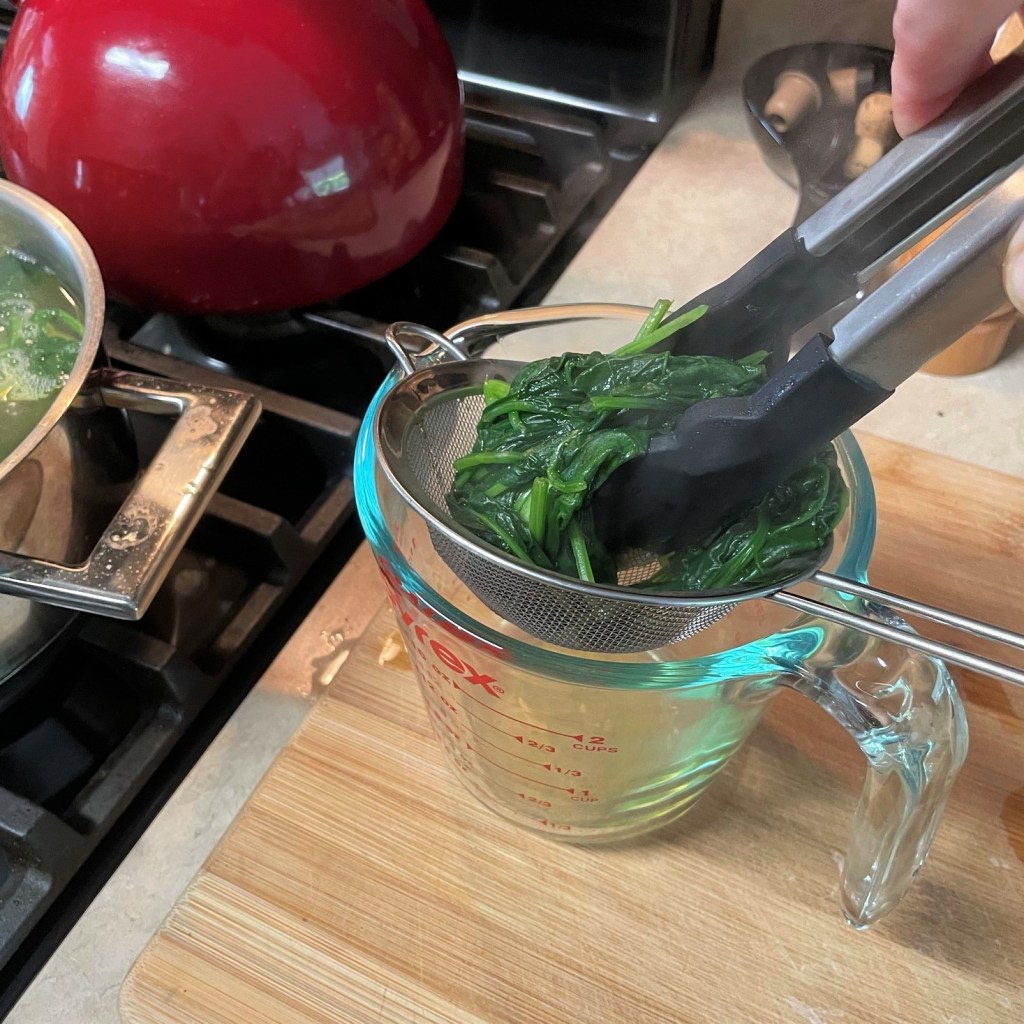
  1. Bring a pot of water to boil. Add the salt and baking soda and stir briefly to dissolve. Toss in the baby spinach and stir it around for 15 seconds. Use a slotted spoon or tongs to remove the spinach and place it in a mesh strainer to drain excess water.
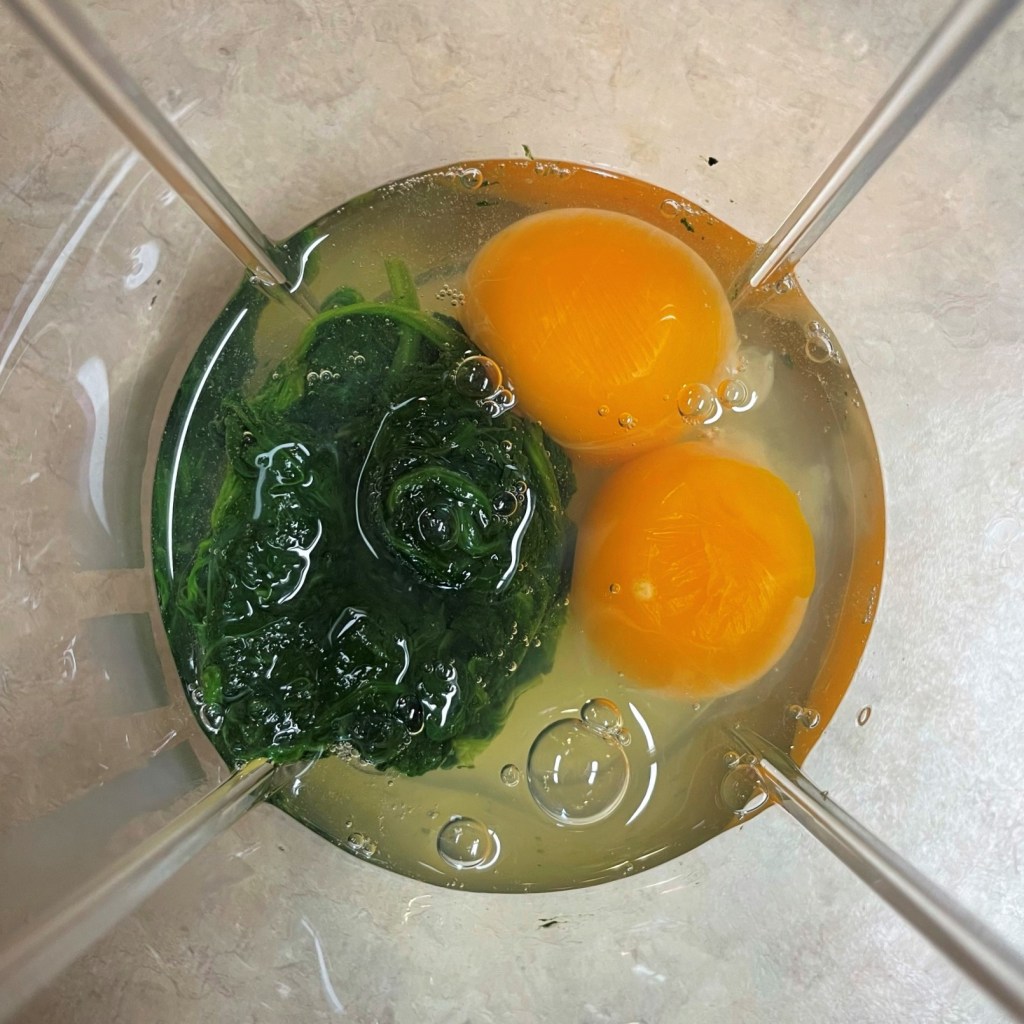
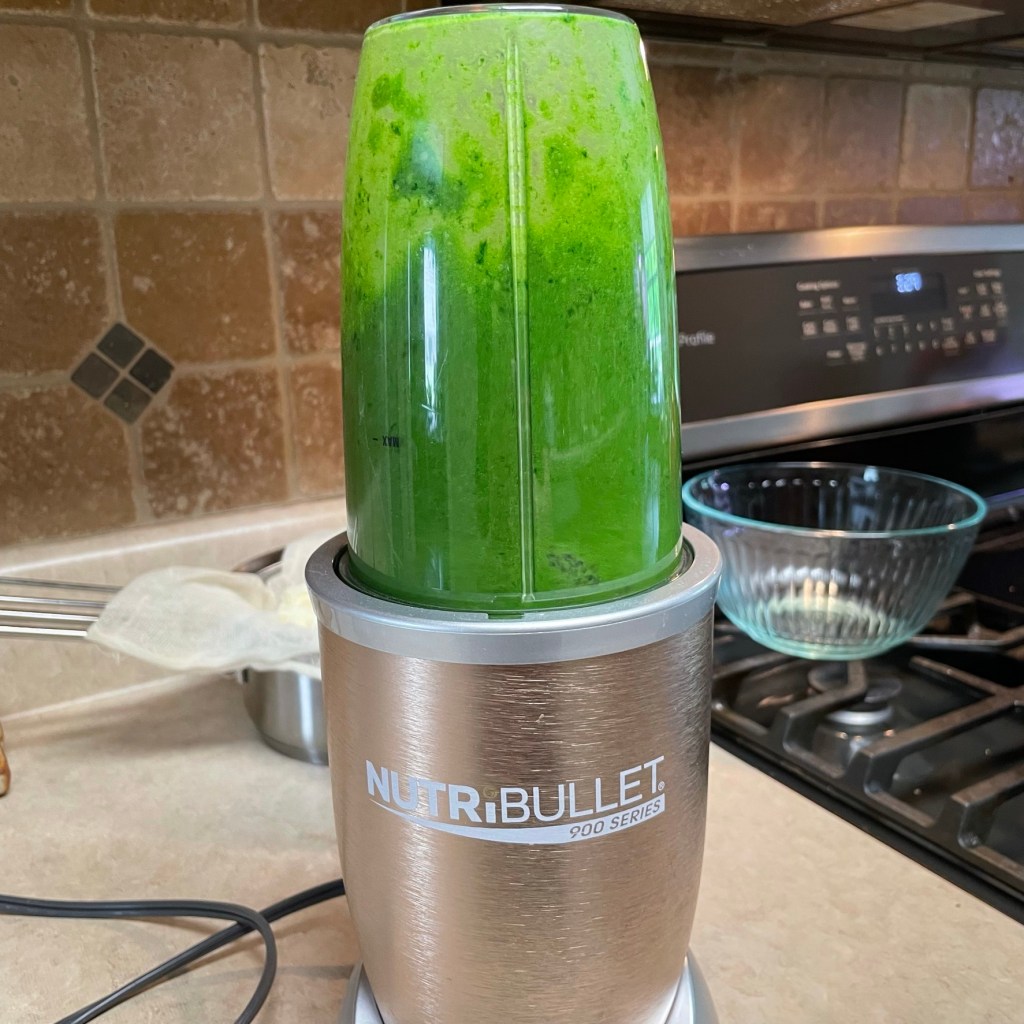
  2. Transfer the spinach to a regular or bullet blender, together with the eggs. Pulse blend a few times, and then run the blender continuously until the mixture is evenly mixed.
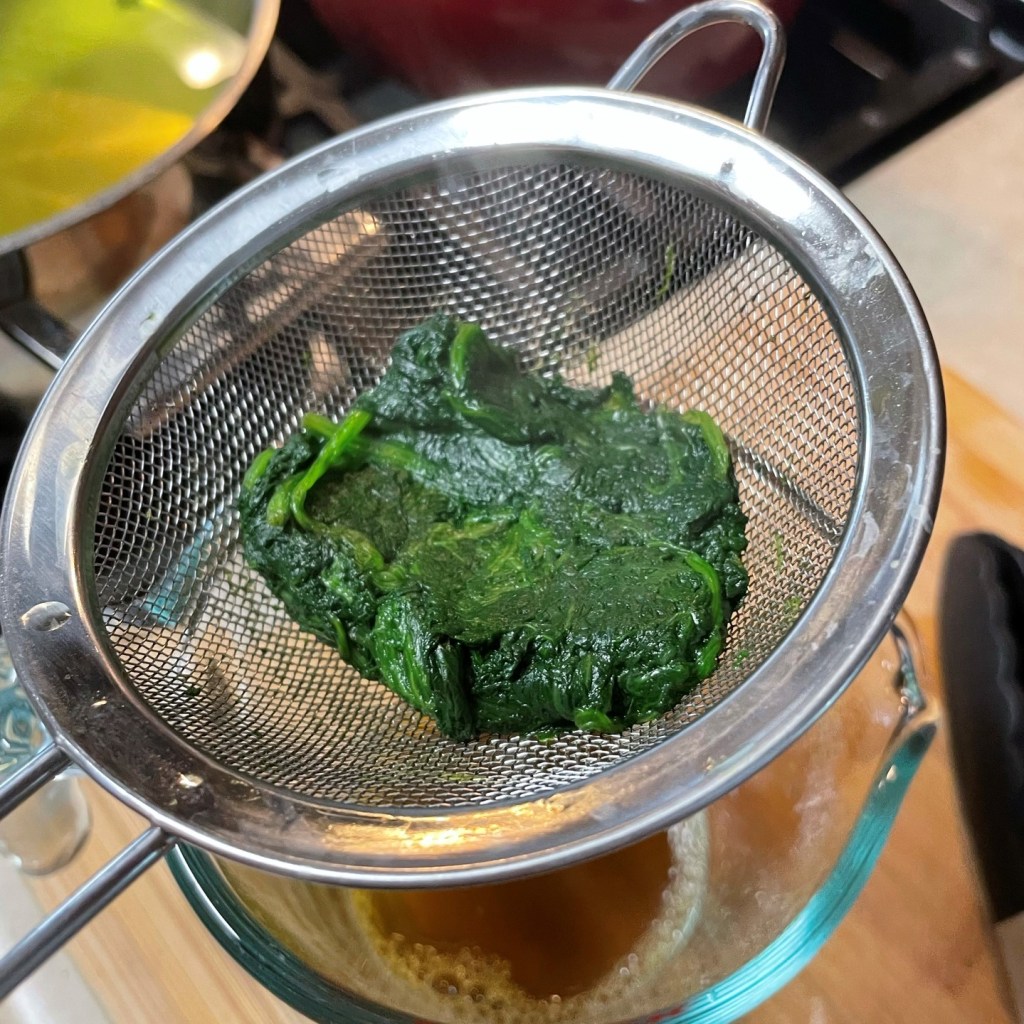
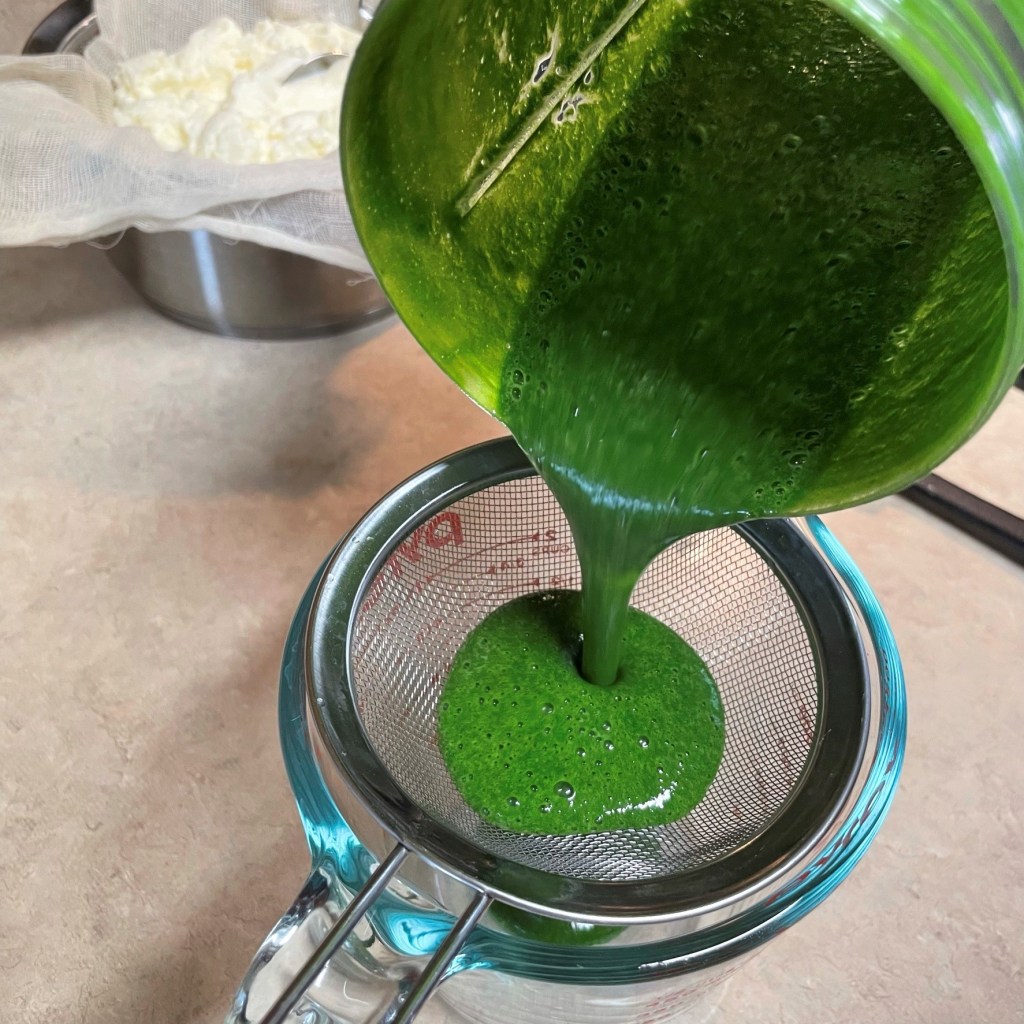
  3. Pour the pureed mixture through a mesh strainer over a glass measuring cup. Press the puree through to strain out the solids, and then add enough water to the mixture in the glass to measure exactly 3/4 cup.
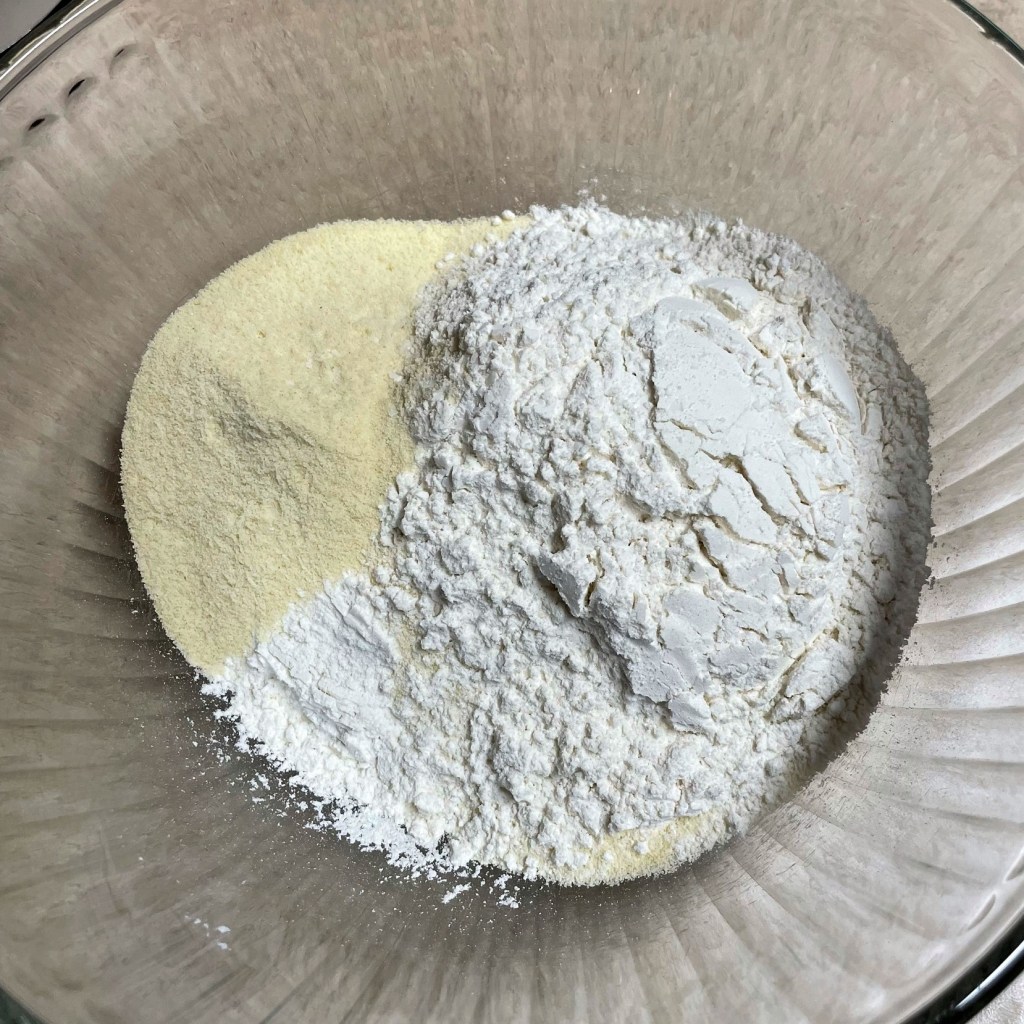
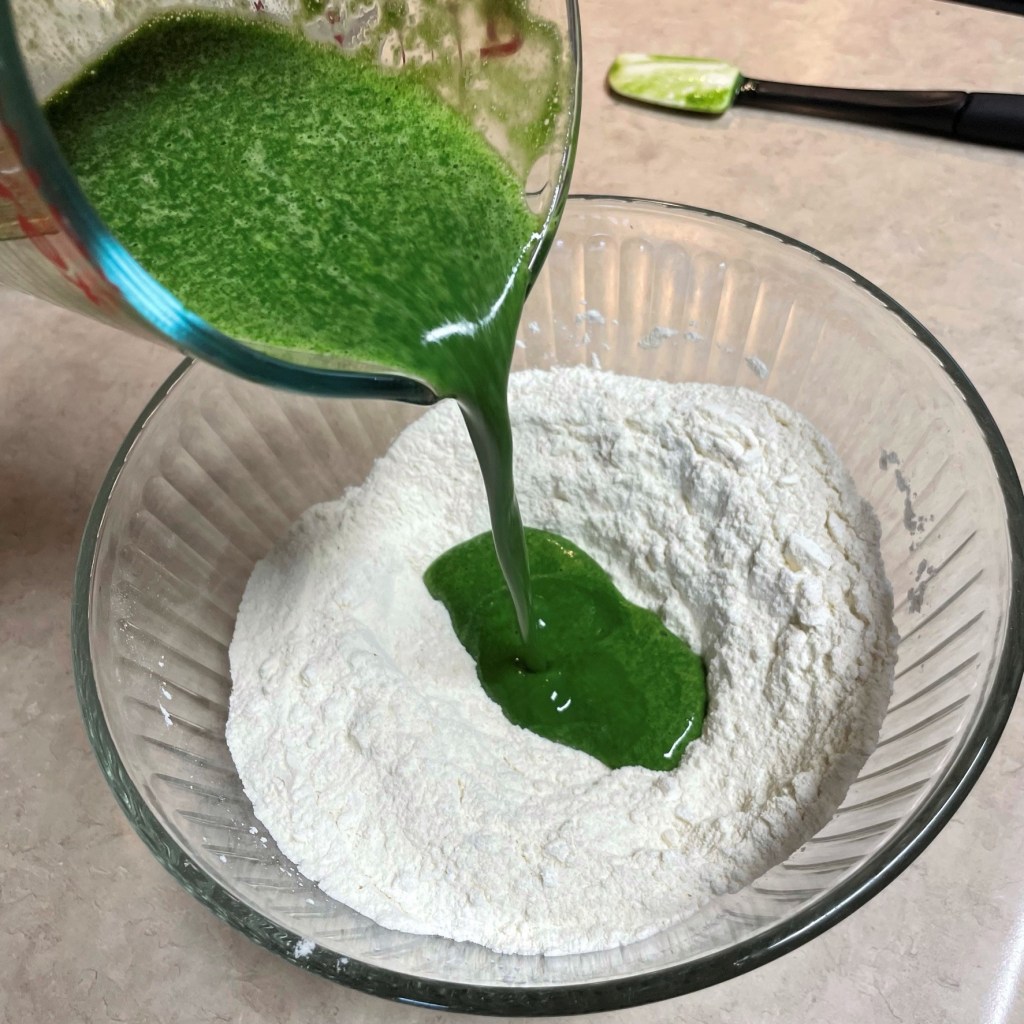
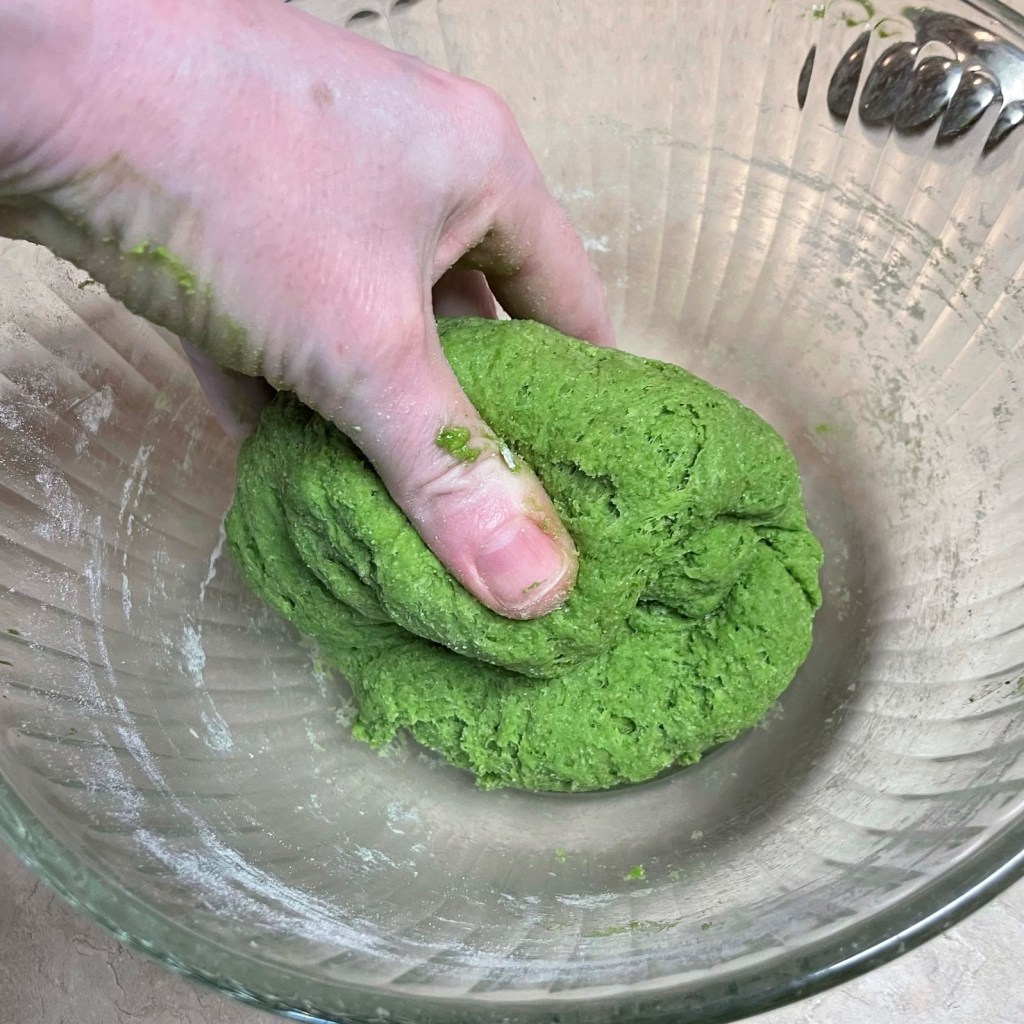
  4. In a large bowl, stir a generous pinch of salt into the flour and create a well in the center of the flour. Pour in the pureed spinach mixture and mix with a spoon until a clumpy mixture comes together. Knead with your hands in the bowl or turn the dough out onto a countertop and knead several times until all flour is incorporated and no dry spots remain.
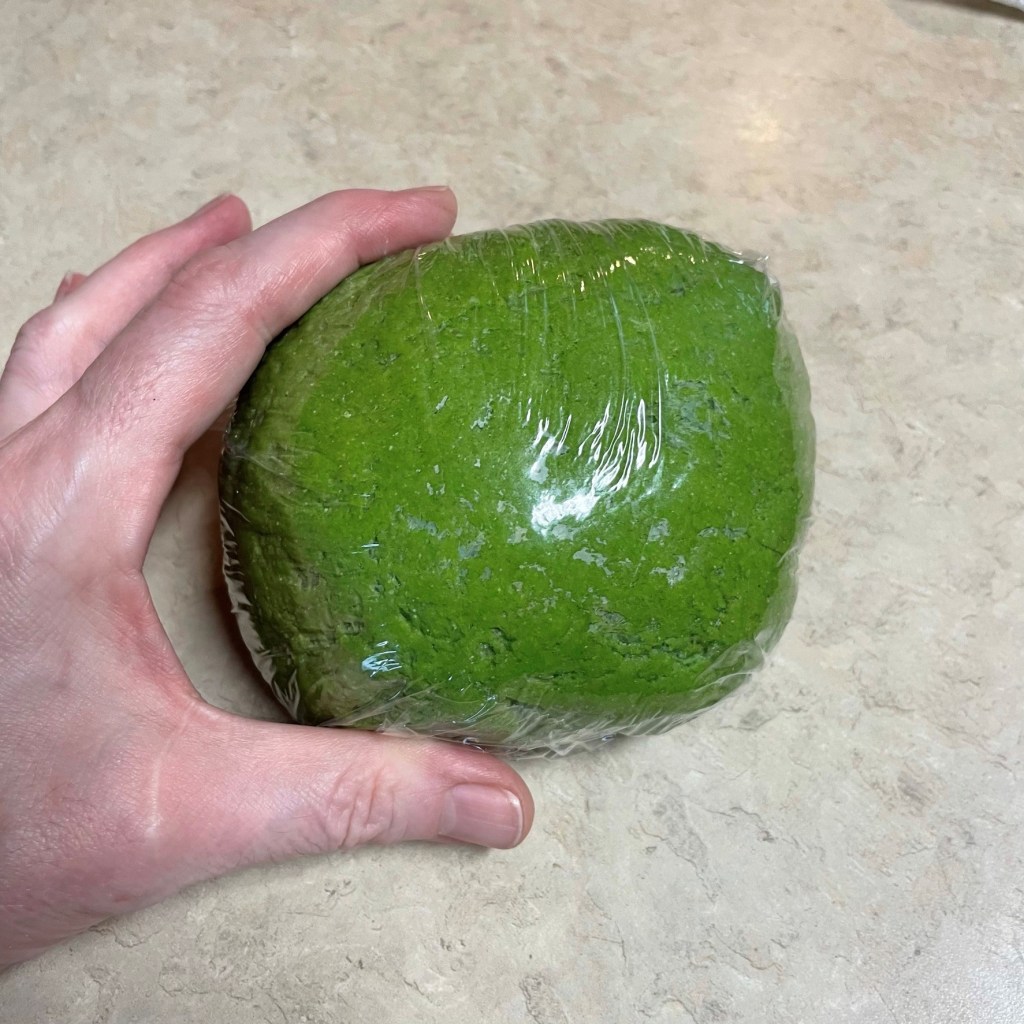
  5. Wrap the dough tightly in plastic wrap and let it rest for at least 30 minutes before rolling. You may also refrigerate the dough for several hours or even a day. I’ve found this formula for pasta dough to be very forgiving.

Make the ricotta filling while you rest the pasta dough

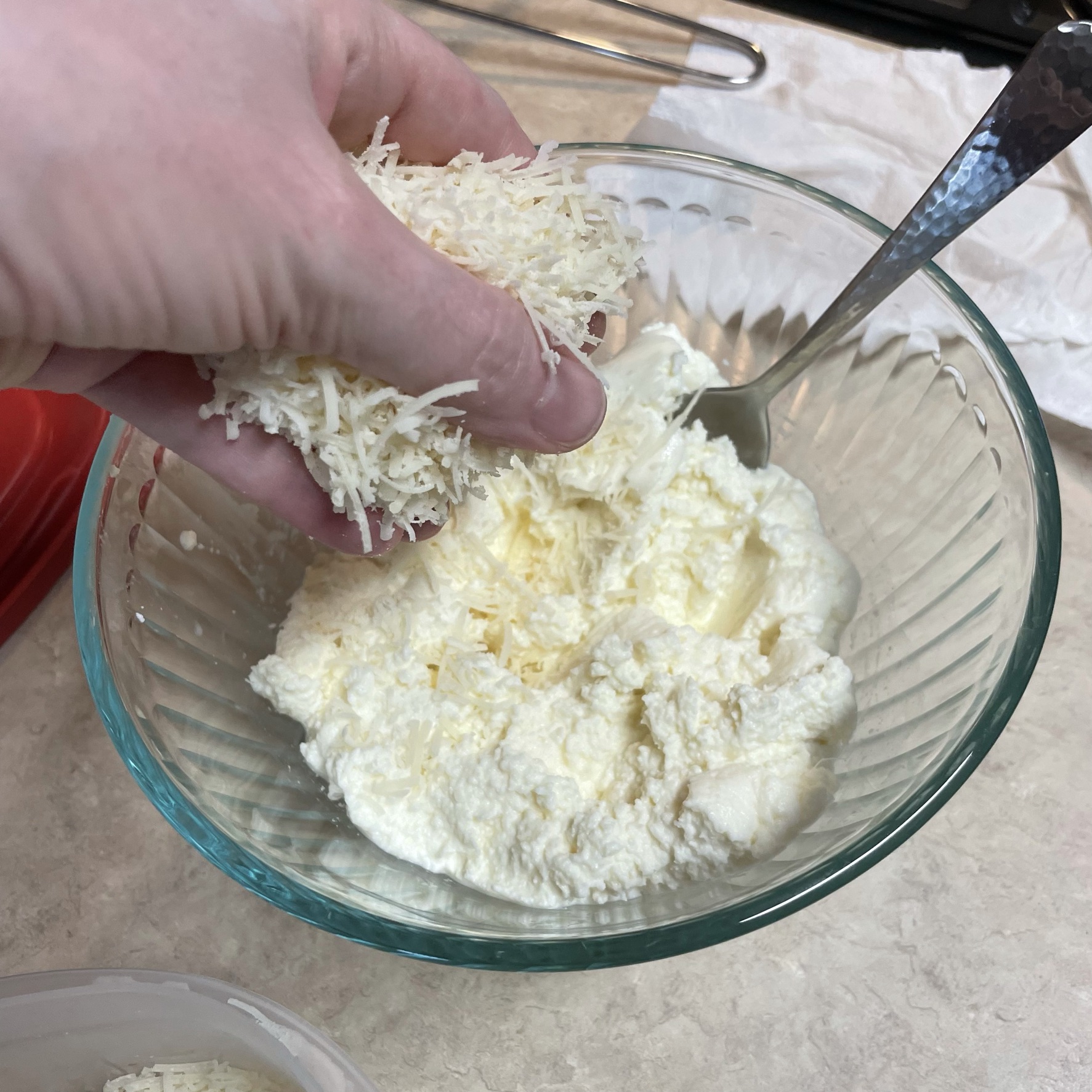
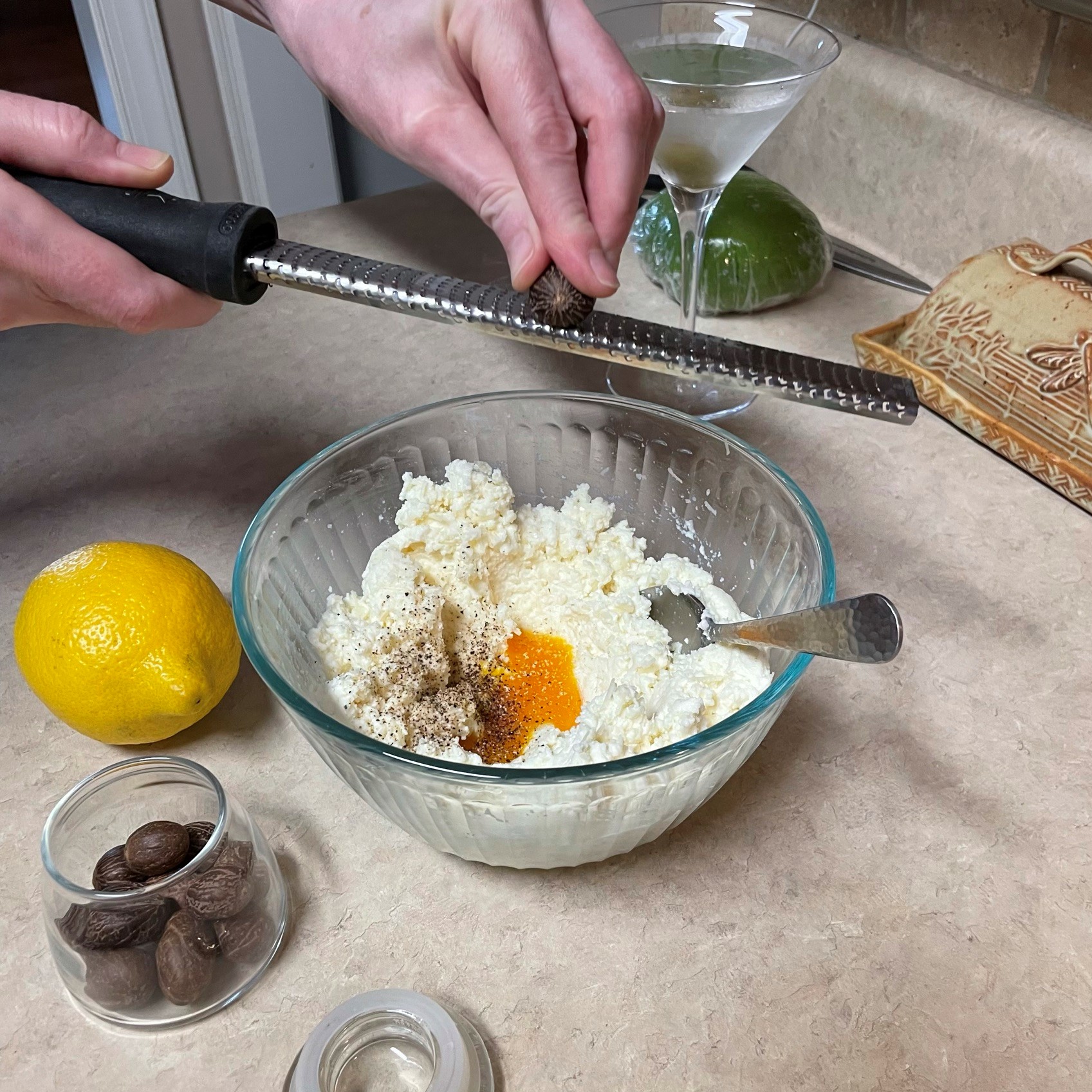
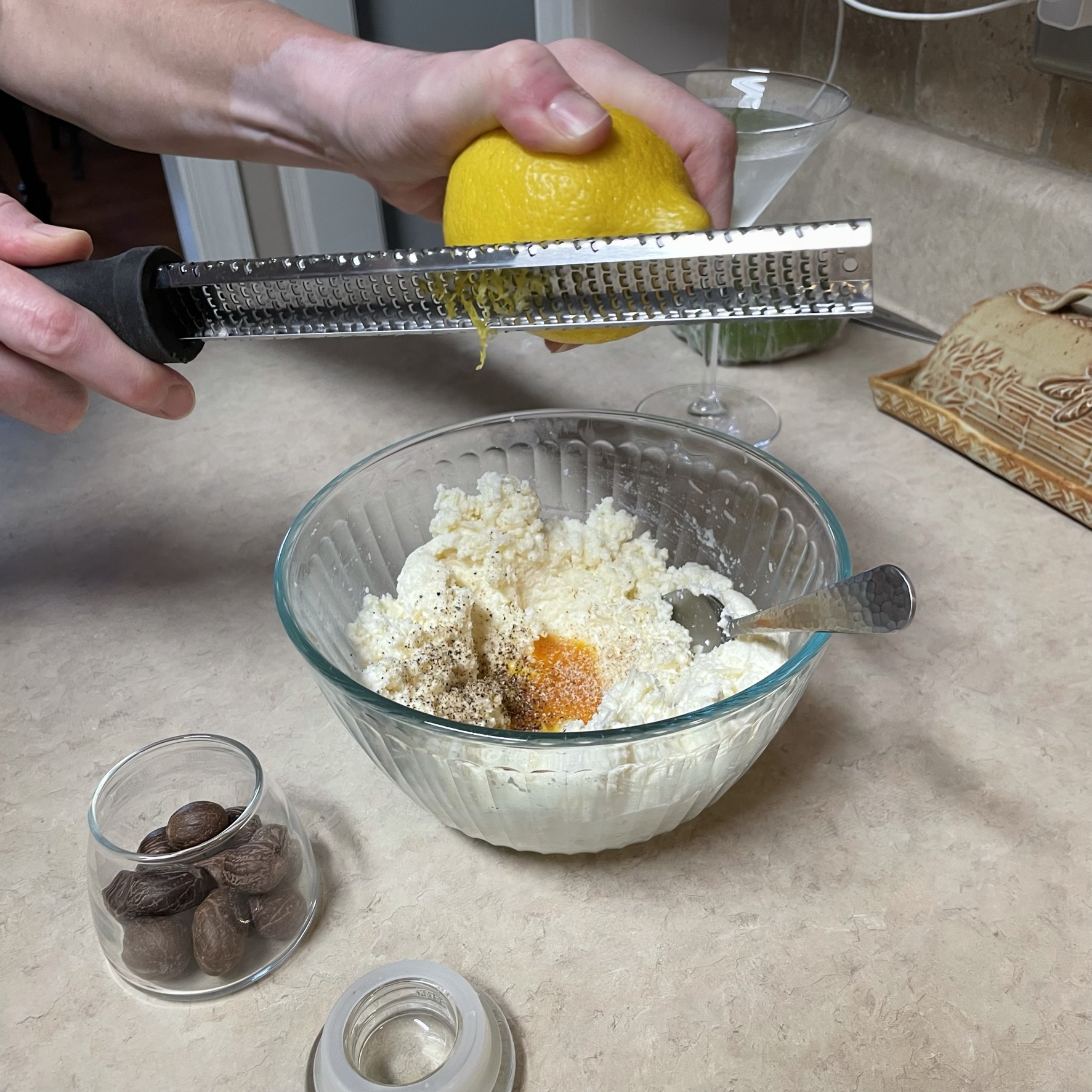
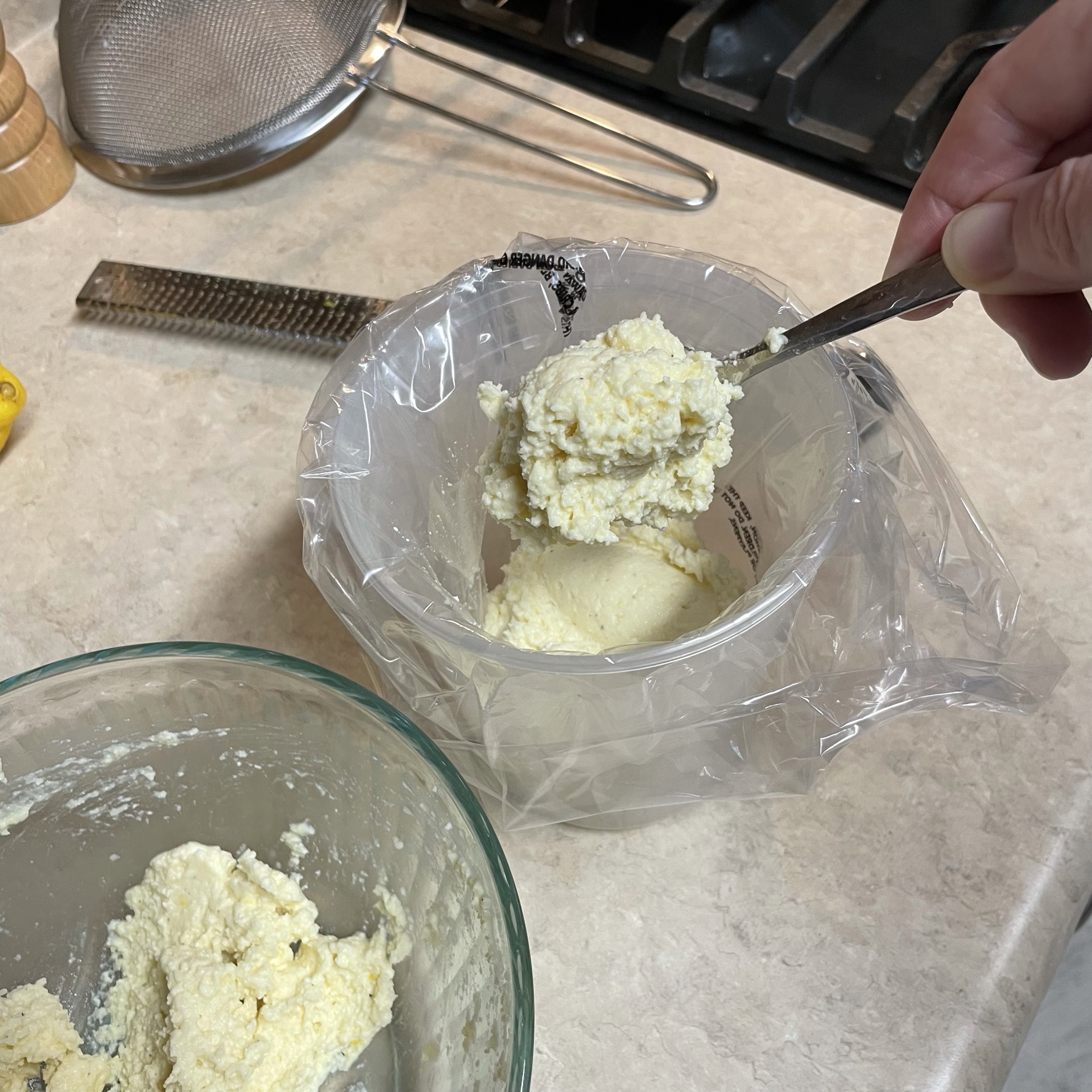
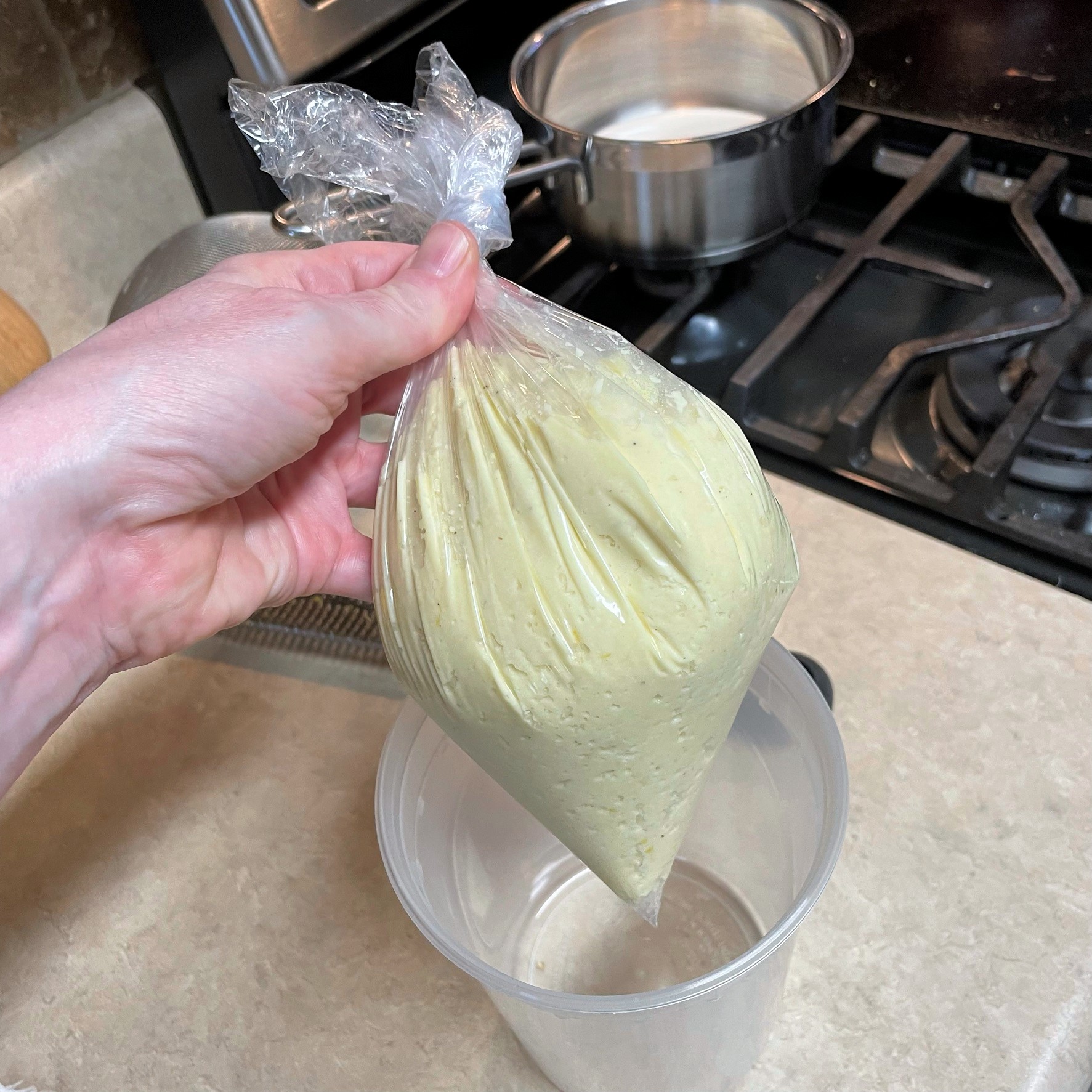
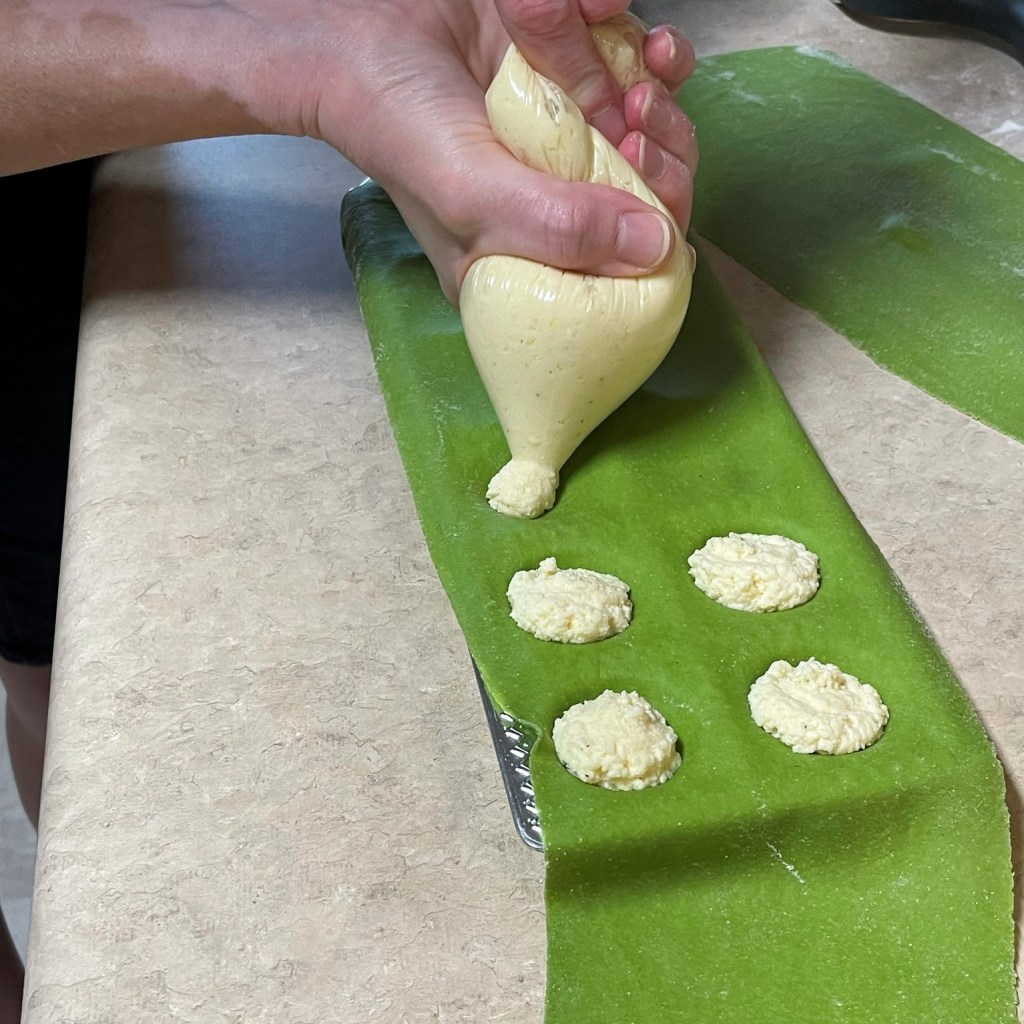
Strain the ricotta in a mesh strainer (lined with cheesecloth if you have it) over a medium bowl. Let the ricotta drain for at least 30 minutes. Stir in parm-romano, egg yolk, lemon zest and nutmeg. Salt and pepper to taste. Spoon the mixture into a plastic bread bag for easy piping. Refrigerate mixture while you roll out the pasta dough.


Sheet the pasta and fill the ravioli

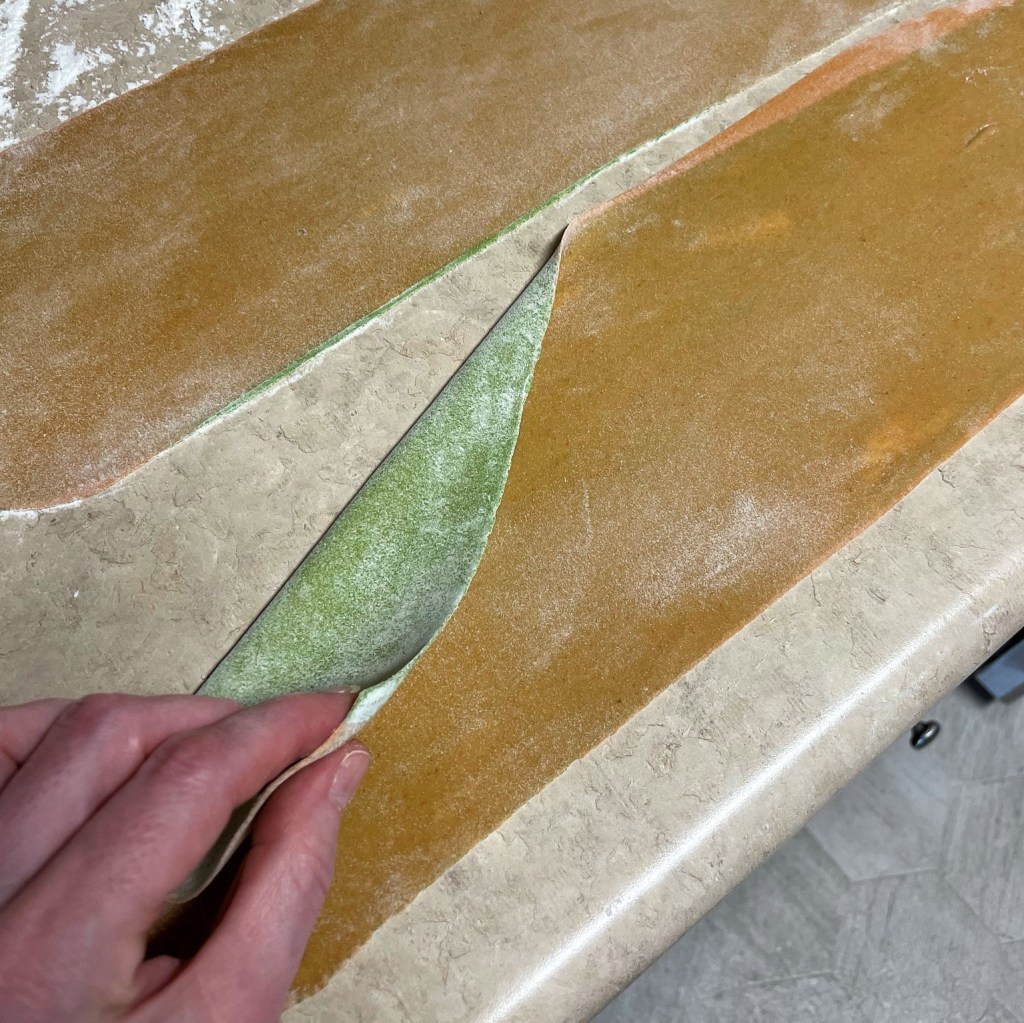
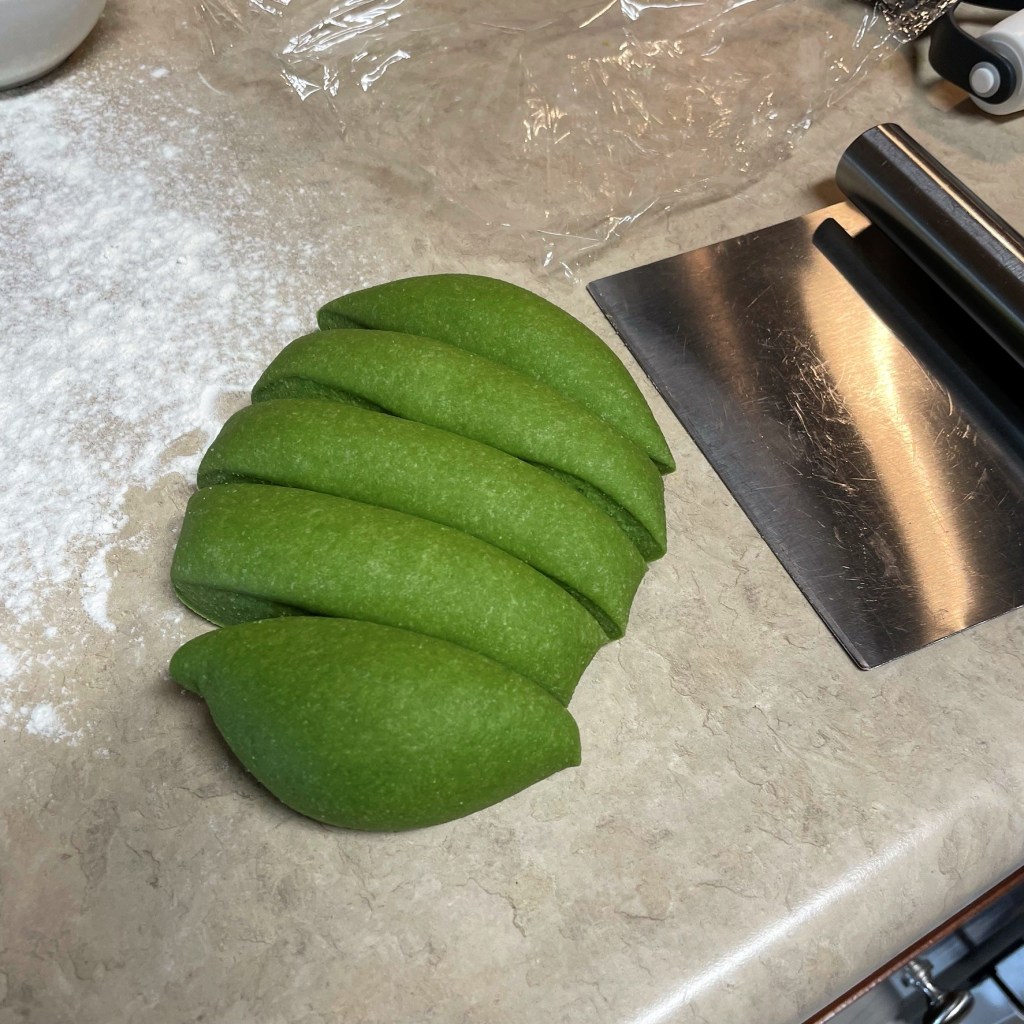
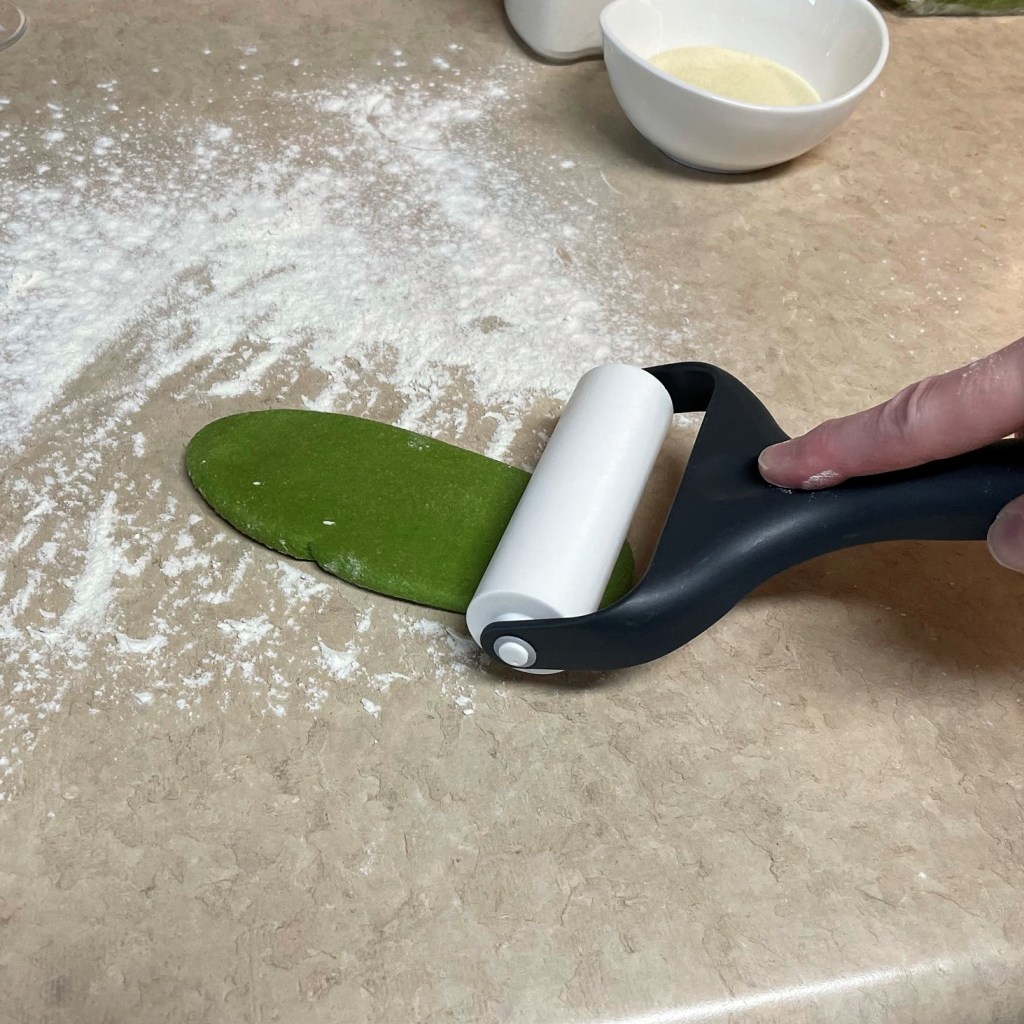
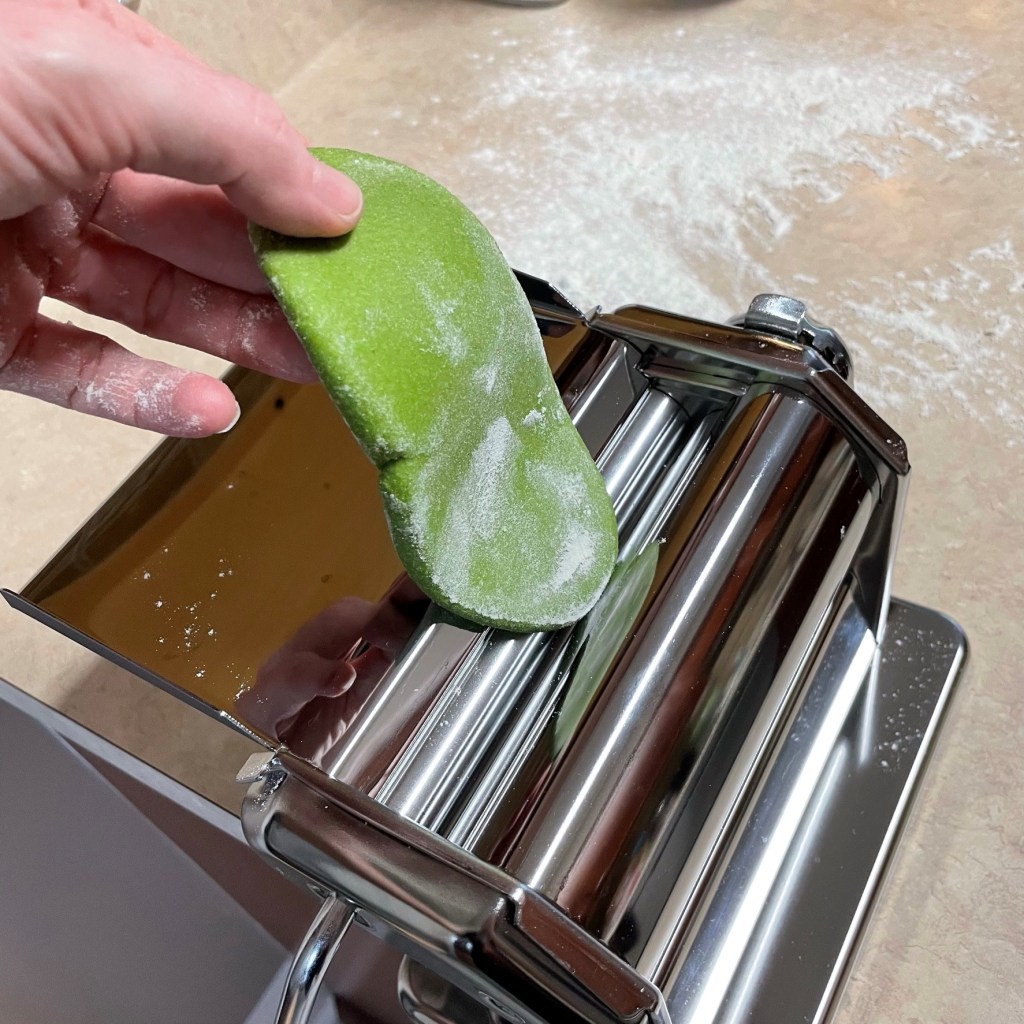
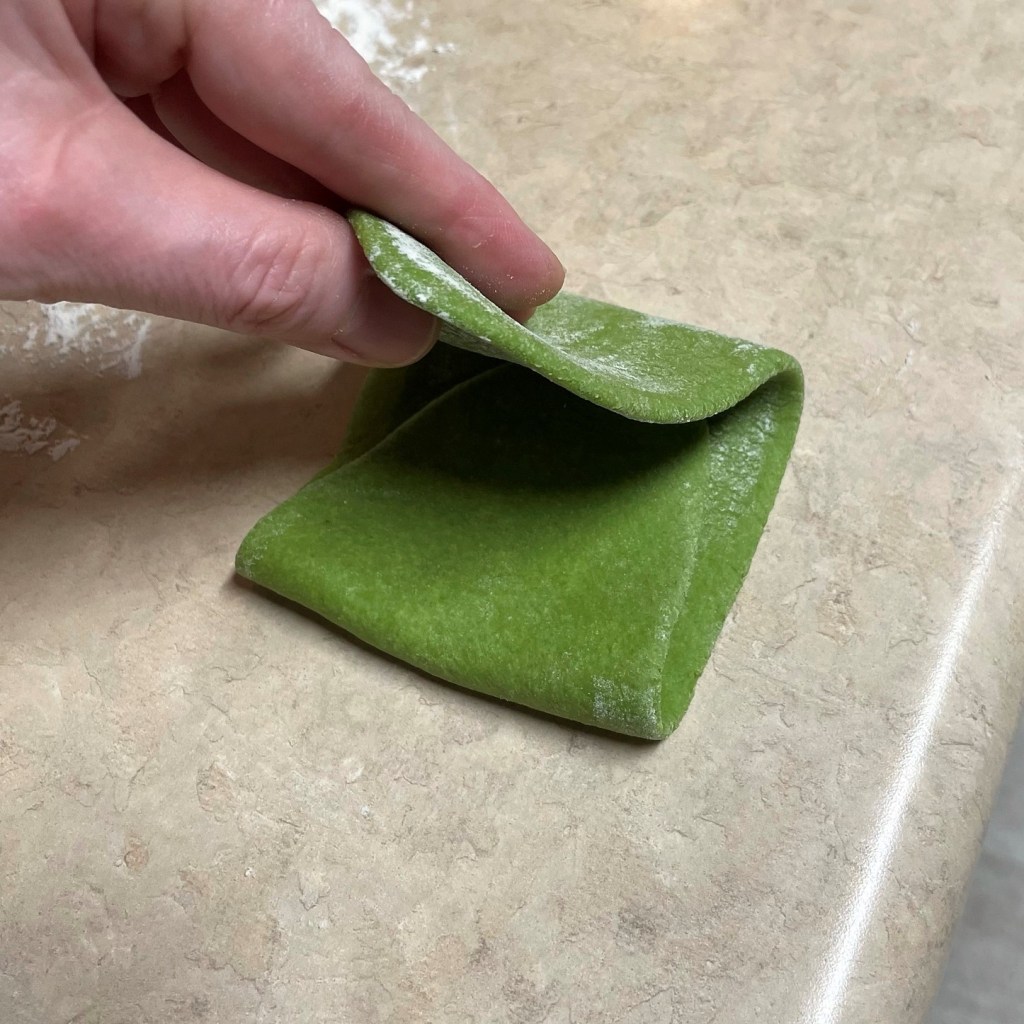
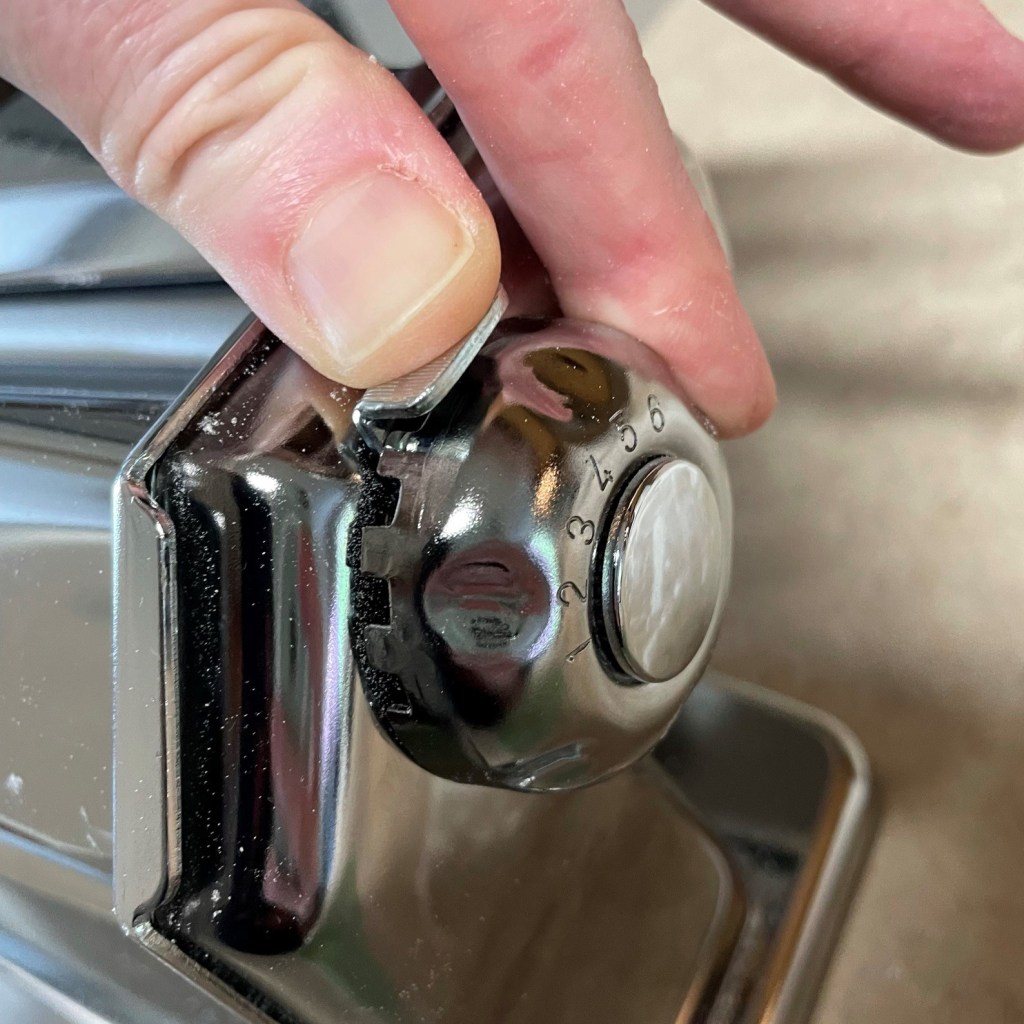
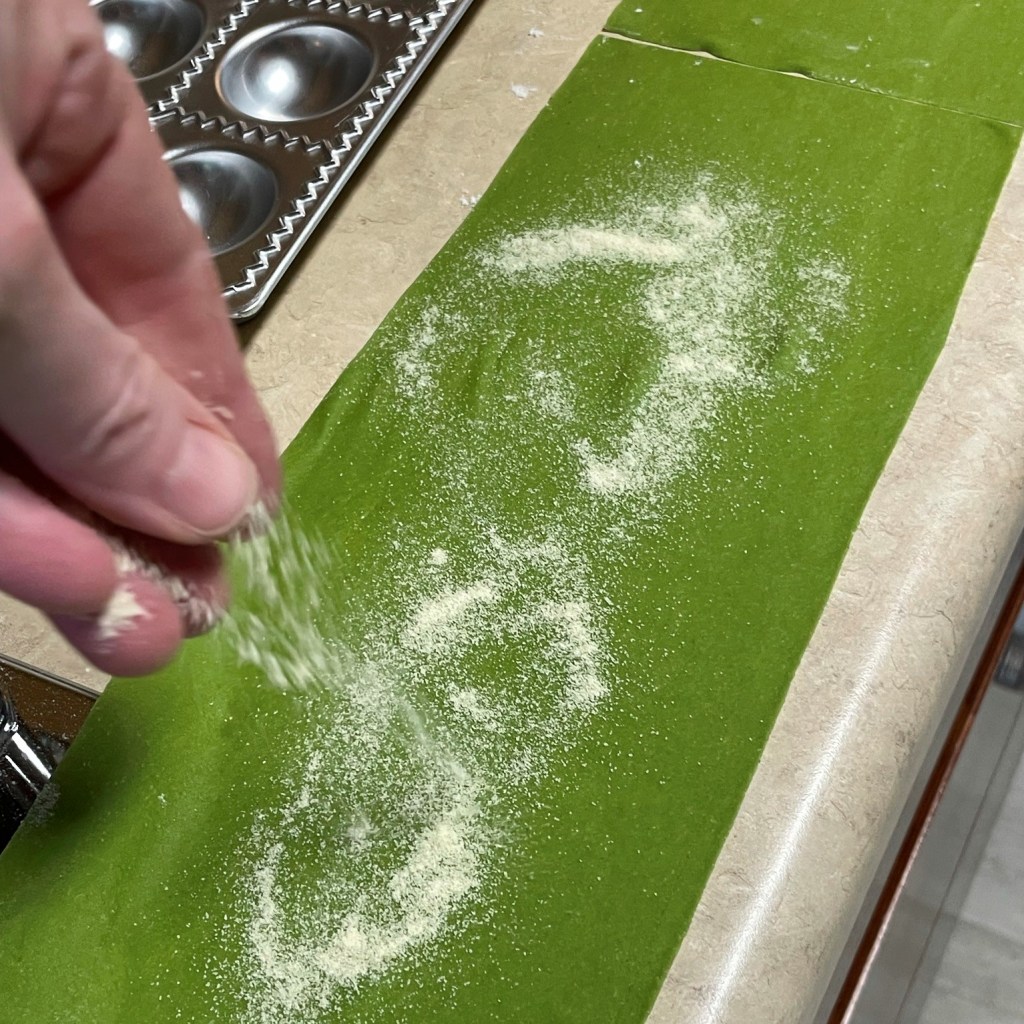
  1. Divide the dough into sections, keeping most of them wrapped as you work on one. Use a rolling pin or the heel of your hand to press the first section into a flat oval. Run it through the pasta machine on the thickest setting, folding it into thirds like an envelope and then run it through again. If it sticks, dust both sides with flour. When the dough reaches a very supple stage, adjust the setting knob one notch per run, until the dough reaches the desired thinness. For ravioli, I recommend using the thinnest or second-thinnest setting.
  2. Let the pasta sheet rest, uncovered, on the floured counter for about 10 minutes before filling with ricotta filling. This gives the pasta time to tighten up a bit for easier shaping.
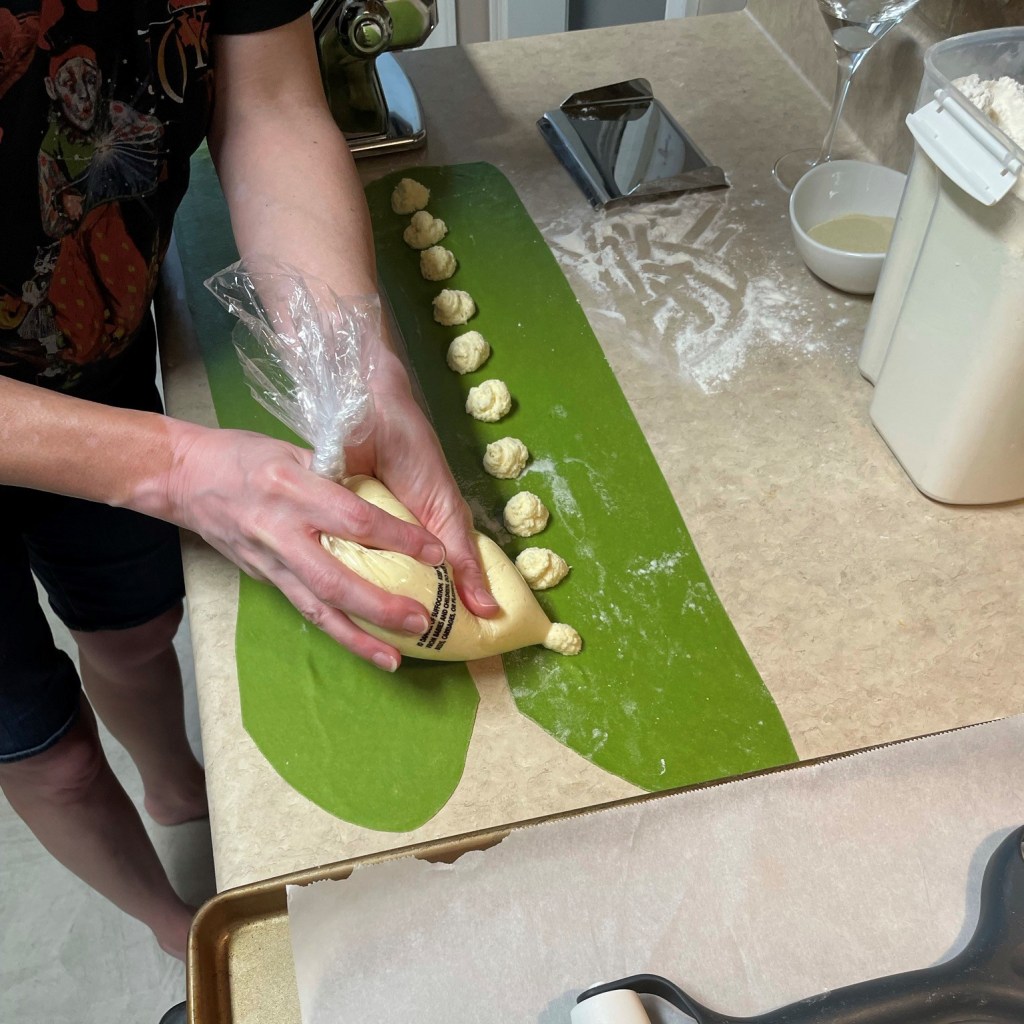
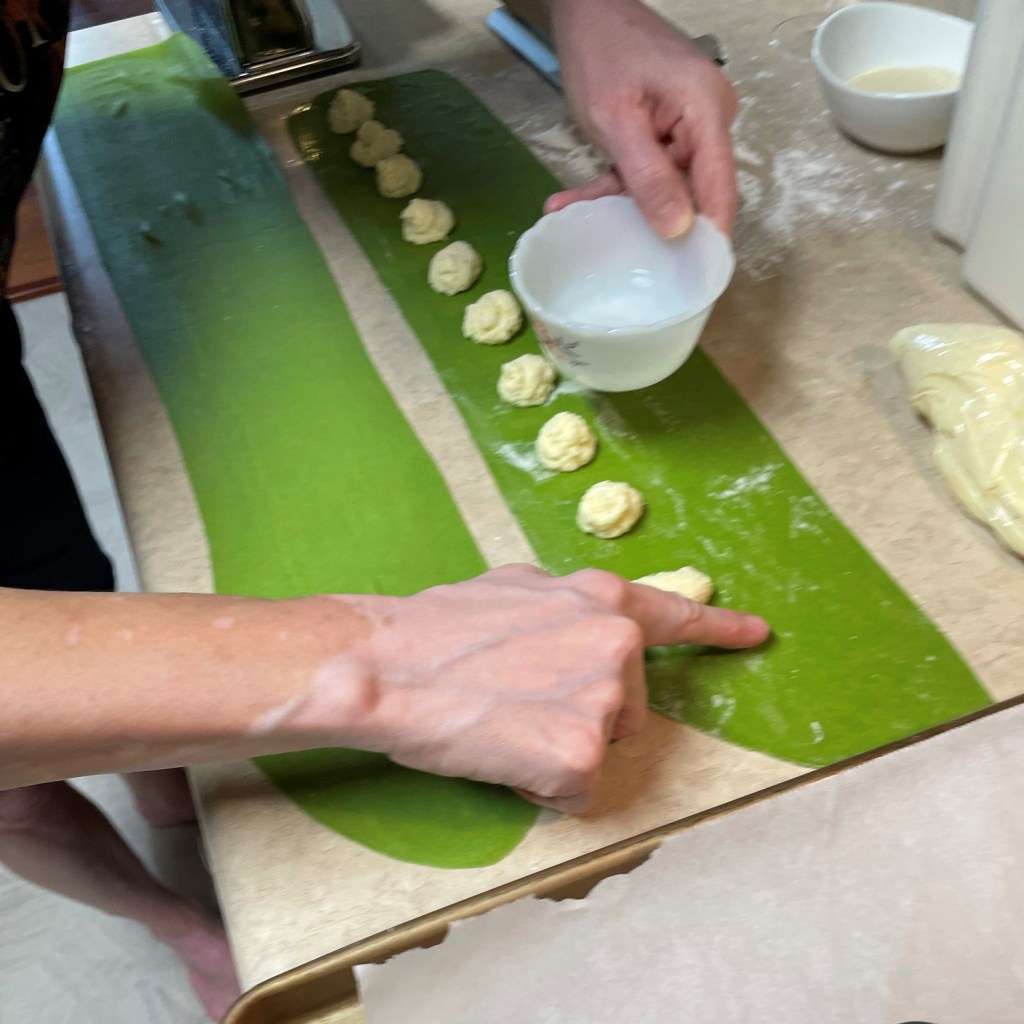
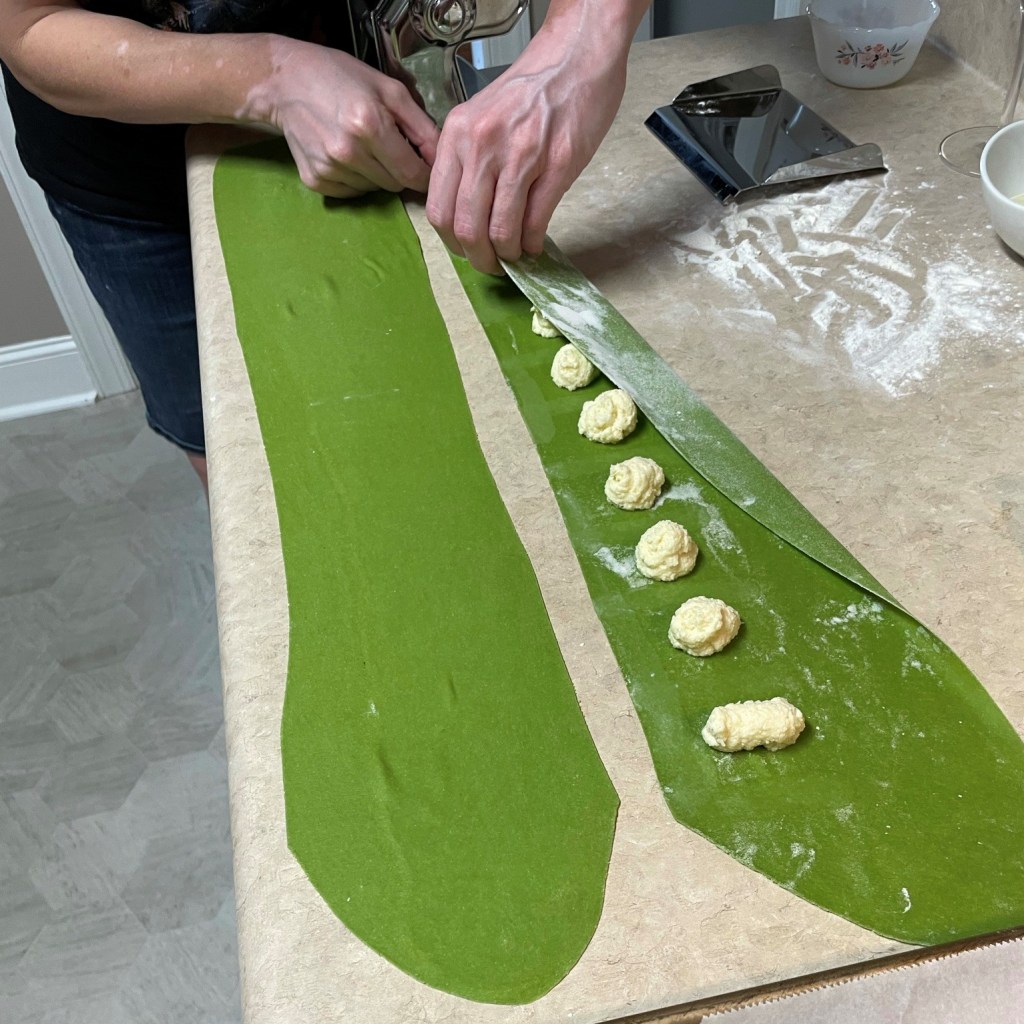
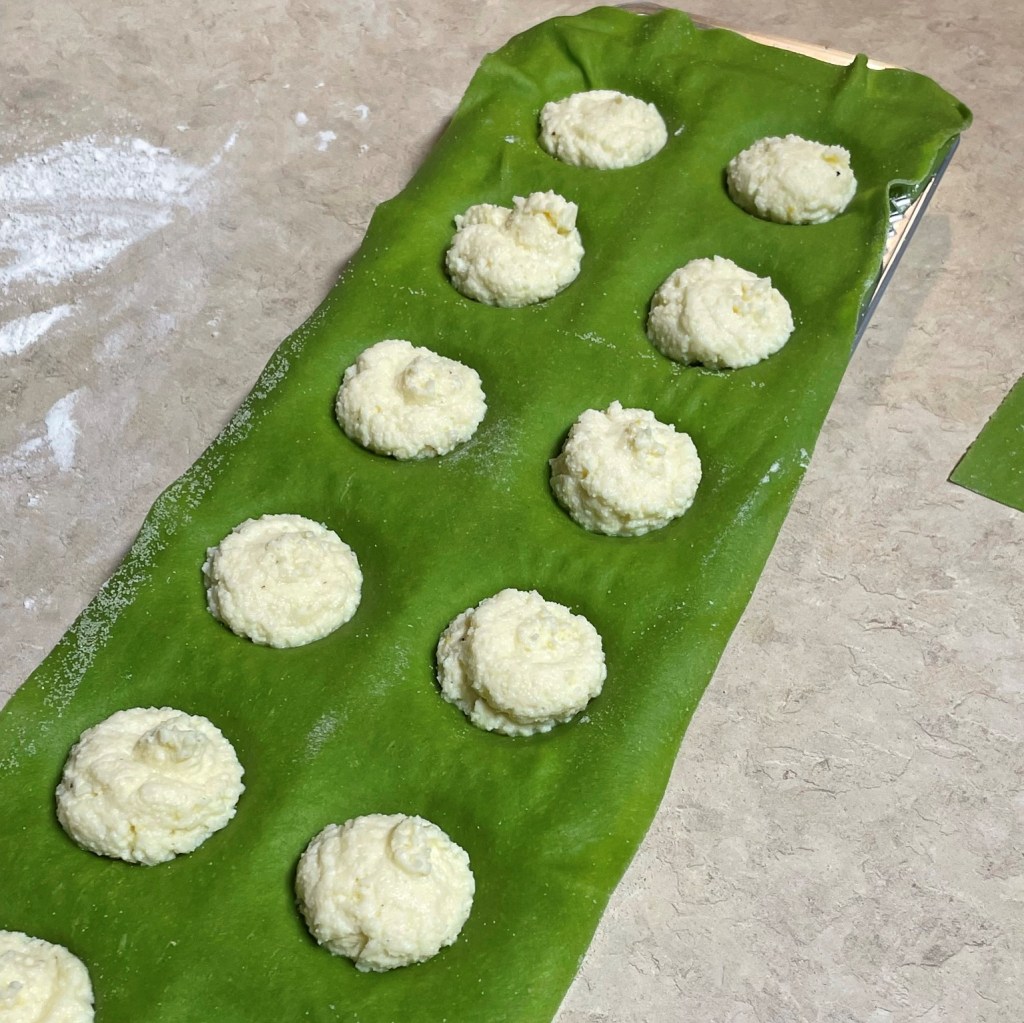
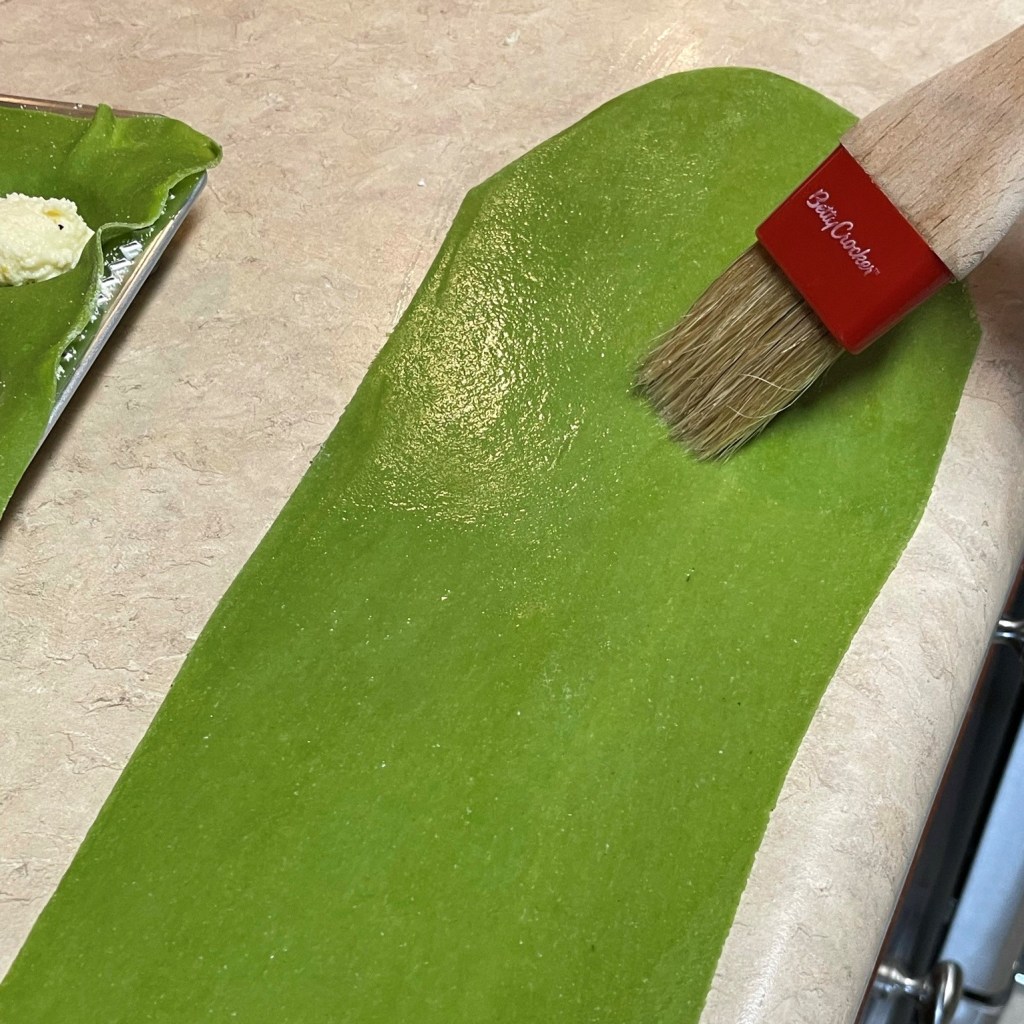
  3. If you are making ravioli without a mold, squeeze 1 1/2 teaspoon-sized dollops of ricotta filling onto one long side of the pasta sheet. Space the dollops about 2 inches apart, allowing room to seal up the pillows on all sides. Dip a finger into a small bowl of water and slightly moisten the dough in between ricotta dollops and along the long edge.
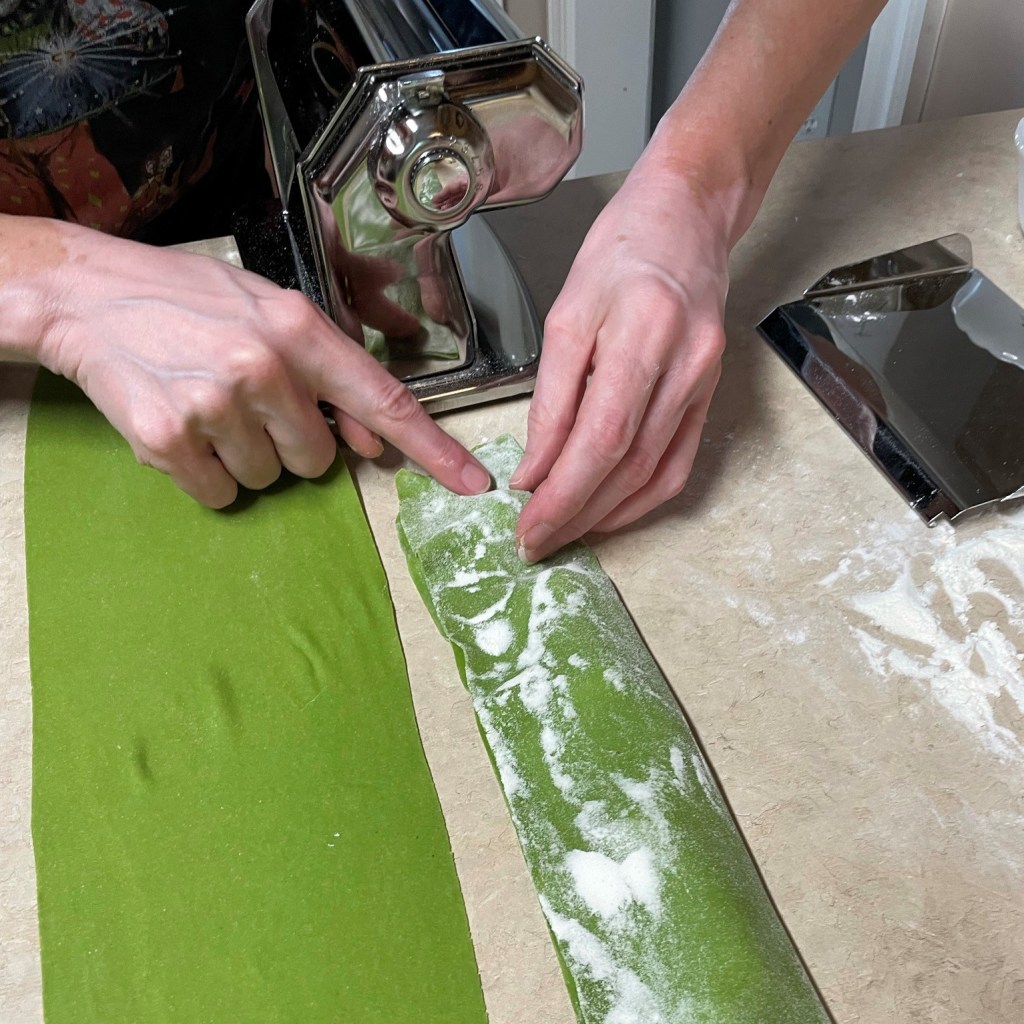
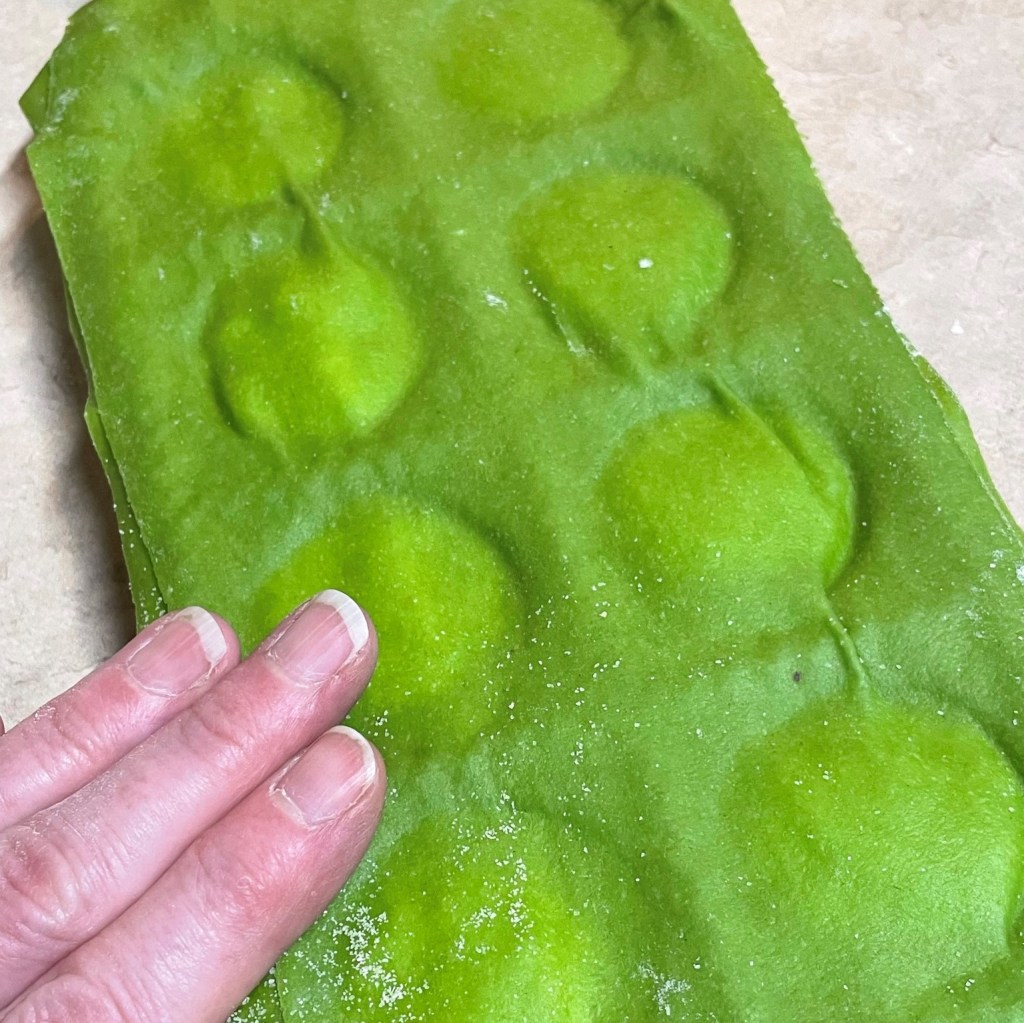
  4. Fold the dough over the ricotta dollops, taking care to keep the edges aligned. Carefully press out any air pockets, starting from the folded edge, then in between dollops. Seal the open edge last to ensure no air bubbles are trapped.
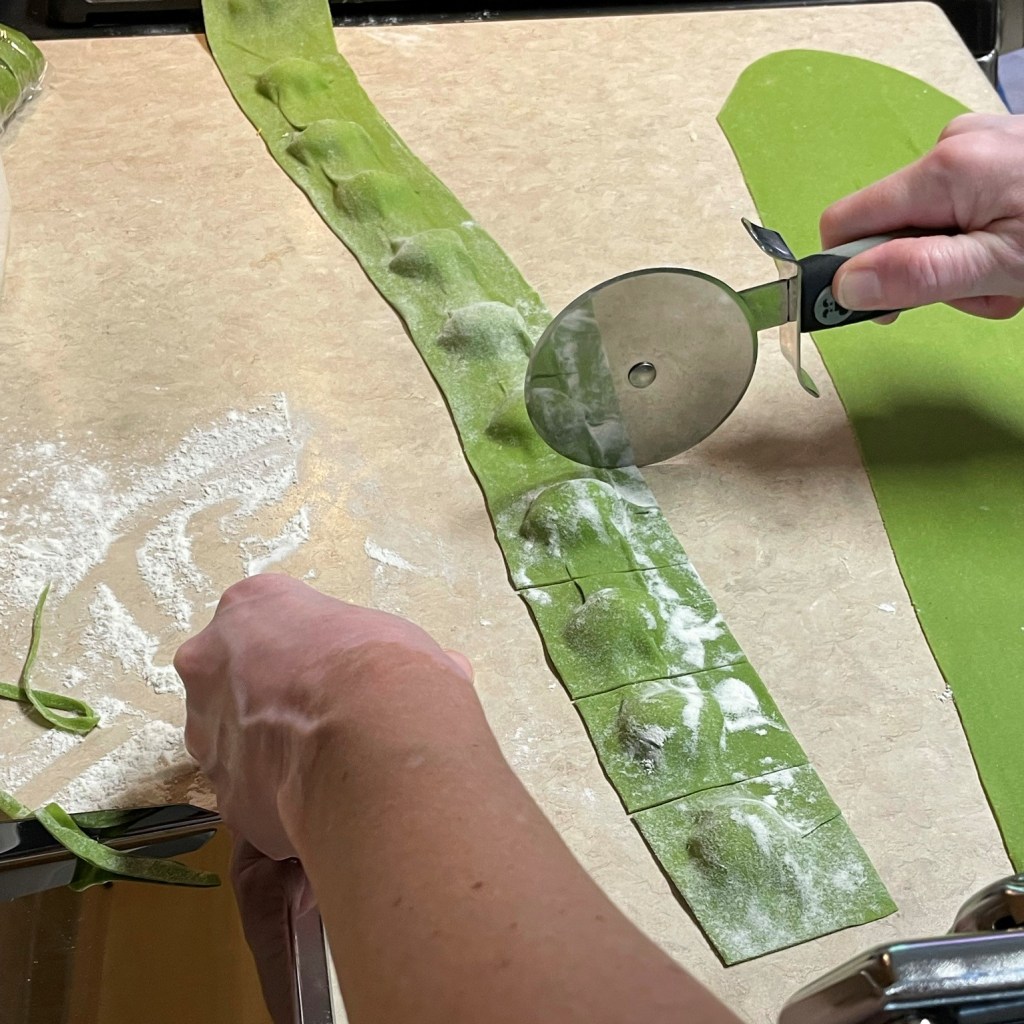
  5. Use a pizza wheel or sharp knife to trim any ragged edges. Cut between the raviolis and transfer them to a semolina- or flour-dusted parchment paper. Allow the ravioli to dry for at least an hour before cooking.

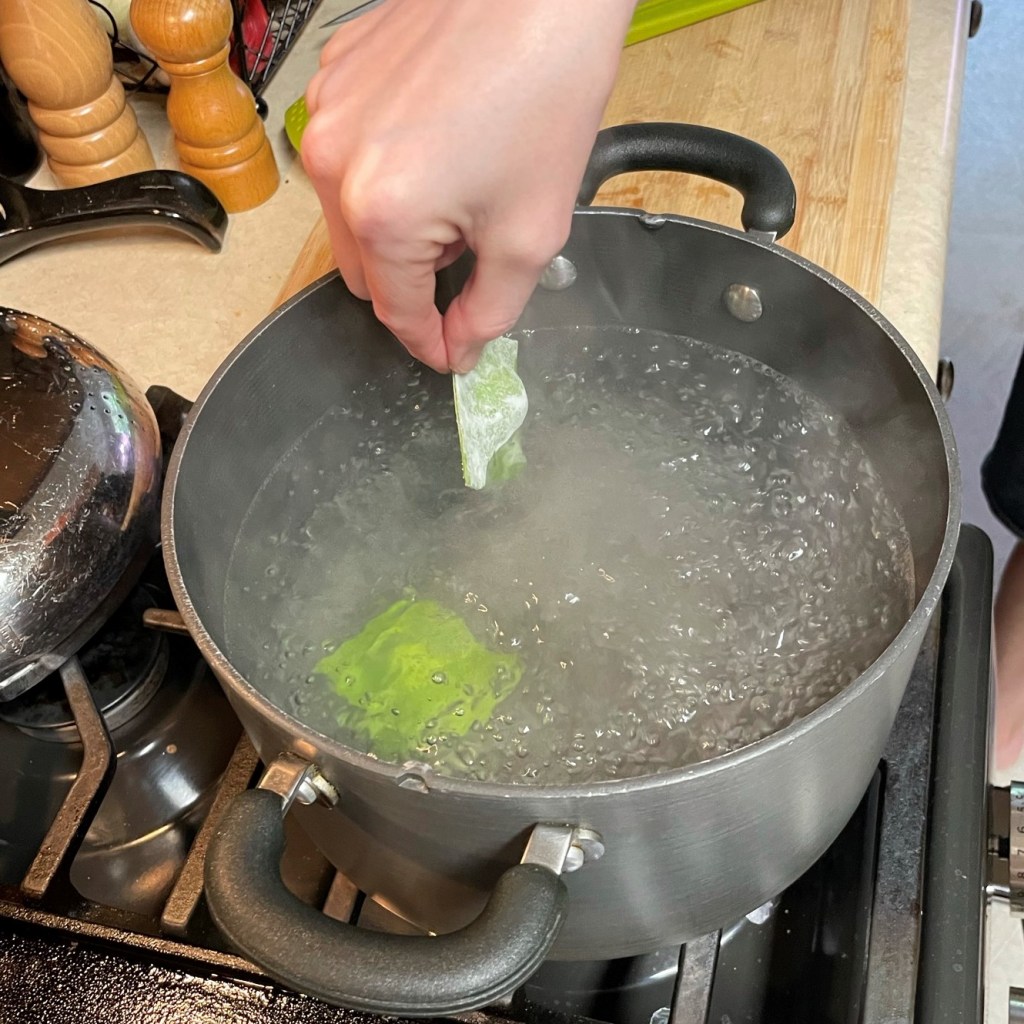
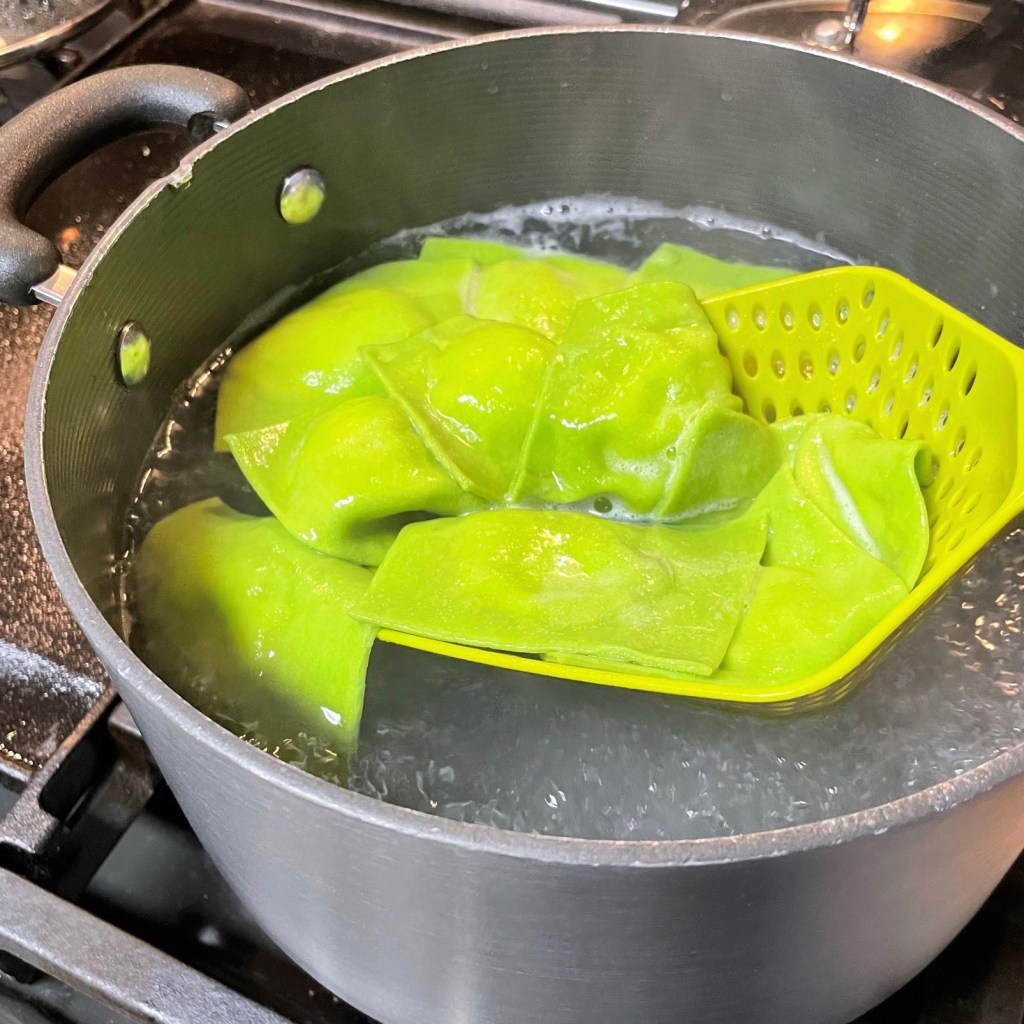
To cook handmade ravioli, bring salted water to a gentle boil. Carefully transfer ravioli, taking care not to overcrowd the pot. Fresh pasta cooks much more quickly than dried or frozen, so keep an eye on it and prepare to rescue it from the pot after about four minutes.

Serve with any favorite sauce. I made the simplest marinara with sauteed onions and garlic, my own Italian spice blend and canned San Marzano tomatoes, plus a splash of cream.


Want to make it even easier?

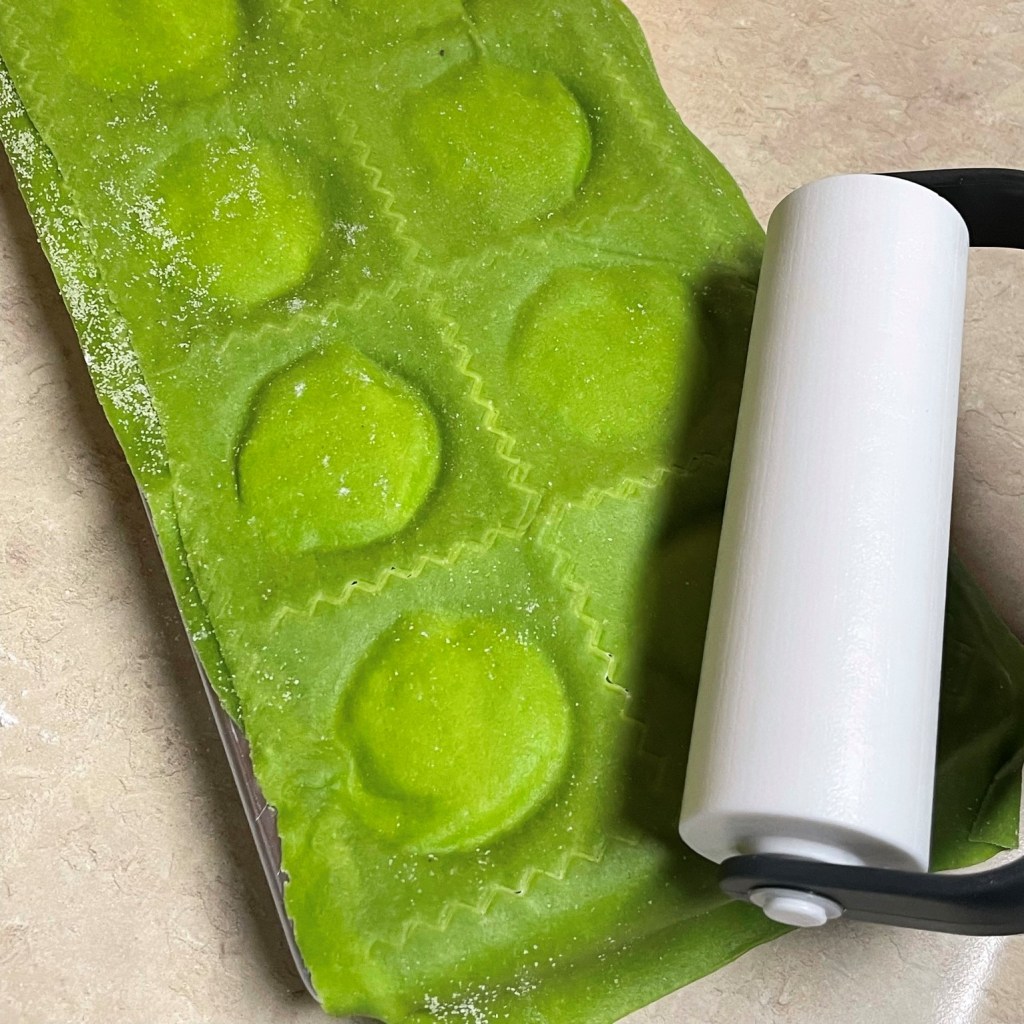
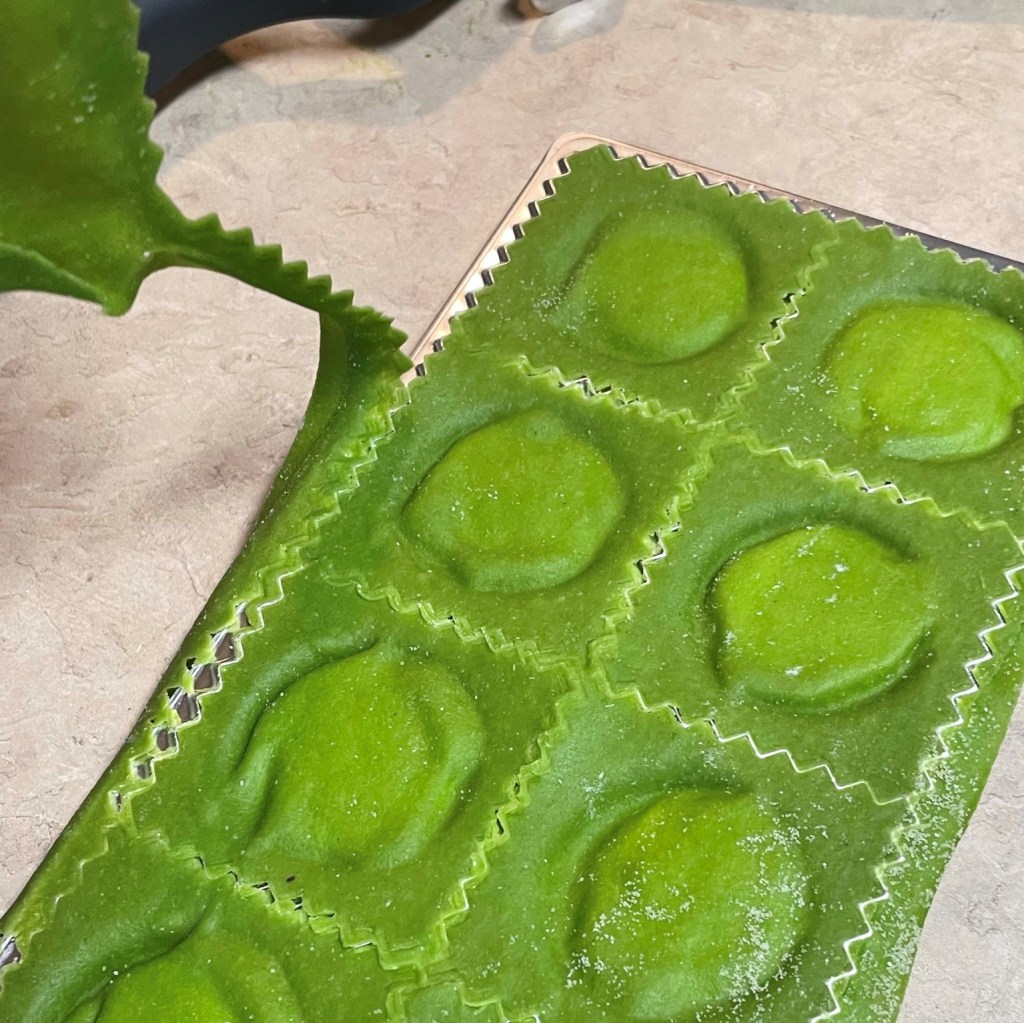
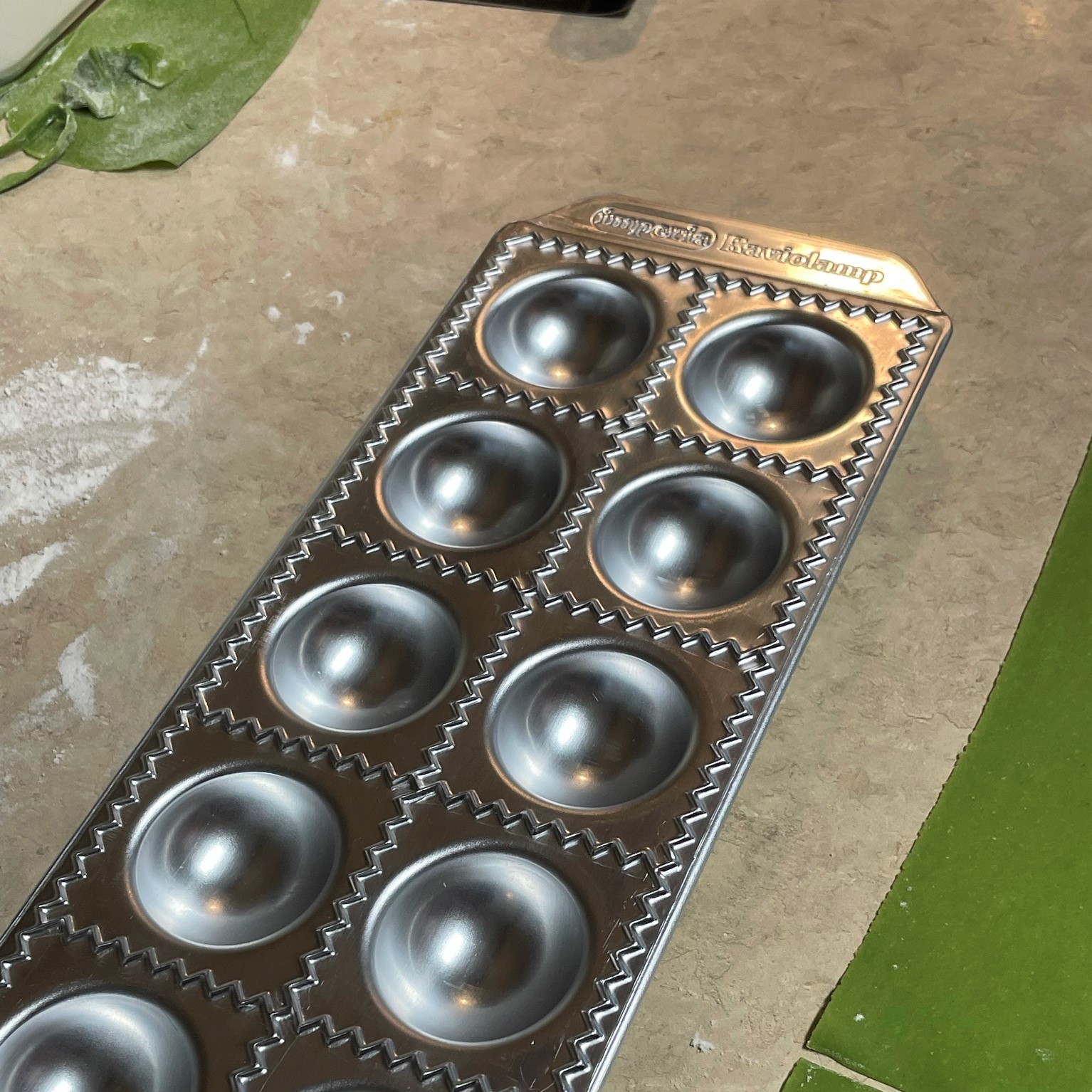
A ravioli mold makes this work much simpler. I bought a set of three different shapes for about $20, also at TJMaxx.


For the record, I bought Linda Miller Nicholson’s book with my own hard-earned money. This is not a paid advertisement for Linda, but I cannot help sharing my discovery of her work because she is just awesome. You can pick up a copy of Pasta, Pretty Please at the bookstore or on Amazon, but I bought it directly from Linda’s website, called Salty Seattle. If you buy the book directly from Linda, she will even sign it for you. 🙂

Oh, Linda, I most definitely will!


“Chopped” Challenge (Episode No. 5 – “A pinsa this, a pinsa that”)

With a few weeks to go before our kitchen shuts down for renovation, my husband, Les, and I are scrambling to use up all the random ingredients in our pantry, fridge and freezer. We decided to turn our adventures into a fun challenge, and it’s time for another episode.

Before we started our challenge, Les and I established and agreed upon the following rules for setting up each other’s baskets:

  1. Each basket must hold four mystery ingredients, found in our cabinets, fridge or freezer.
  2. The goal of the challenge is to use up our surplus food, with as little waste as possible. We will not be using some small portion of an ingredient and throwing the rest in the trash.
  3. Basket ingredients can be used in any course of the meal or broken into separate courses of a single meal, i.e.: cocktail, appetizer, salad, entrée, dessert. Cook’s choice.
  4. Basket ingredients must be transformed in the meal, not merely served as is.
  5. Pet foods may not be submitted as basket ingredients, even though Les says we have way too many bags of kitty treats (we do).

OK, let’s do this! Please press play on the video to see what kind if ingredients I had to work with for my third challenge!


It seems pretty obvious that I should make some kind of flatbread appetizer from these basket ingredients, right? And perhaps on another day, that’s what I would do. Les said himself that he might have made it too easy for me, and I tend to agree. Pizzas are such a regular entry for me, and I want to push myself out of my comfort zone, and that means—no pizza here today!

Artichoke and crab have become well-acquainted in other dishes I’ve made here on Comfort du Jour, including this creamy artichoke and crab appetizer dip and these crab and artichoke cakes that found their way to the top of a cobb salad. If you love these flavors together, please circle back to check out these recipes.


I wanted to try something different with these complementary flavors, and I had never paired them in a soup, nor had I even tasted them together in a soup. I was certain it would be delicious.

I think this is the beginning of a beautiful soup!

So that’s what I’ll be making from my mystery basket—soup! It was a tossup whether to take it in a smooth and creamy direction (think bisque) or rustic and chunky (as a chowder). Either would be tasty, and I decided to let the ingredients show me along the way which version would be best. The Kalamata olives don’t fit (at least not yet), so I set them aside. And then there was the matter of the pinsa dough, which is an interesting type of flatbread that is gaining some traction in the modern restaurant world. I like to think I am on the front of the curve with fun “new” foods, but I had only heard of pinsa very recently, so it has been a bit of a mystery to me. I will come back to that later.


To start, I rendered small cubes of bacon and set them aside to be a crispy topper for the soup, which would be delicious, regardless of whether I went creamy or chowder-y. Next, I sauteed a couple of leeks that were sliced thin, and that picked up all the delicious browned-on bacon goodness from the bottom of my pan. Diced baby red potatoes went in next, and it occurred to me that tossing them in there may have limited me to the chowder category, given that I’d have to puree the mixture to make it a bisque. I already had my doubts about pureeing the soup, because of the fibrous nature of the leaf part of the artichoke hearts. And now, potato skins, too? Hmm.


I cut up the artichoke hearts, reserving the tender “bottom” part of several, and tossing the rest into the pot, along with seafood stock, dry white wine and a bay leaf. After a good simmering, I would decide between bisque and chowder. I still had decisions to make about the Kalamatas and the pinsa.

The Kalamatas and artichoke hearts can play nice together, but the sweet lump crab has such a delicate flavor that I didn’t want the bold Kalamatas mingling with it in the same dish. Frankly, I was surprised that Les put the Kalamatas in the basket because he doesn’t really like their flavor. To balance them, I added in a couple of my favorite martini olives, which are a brighter flavor, soaked in vermouth and stuffed with preserved lemon peel. The result was a tapenade, an appetizer dip I had learned to make during my time in the catering kitchen. This version was delicious, but I was skeptical about whether Les would like it, so I added one more thing, a small handful of sweet sun-dried tomatoes, and that was perfect. I could serve this on the side of the artichoke-crab soup, but how?


Ultimately, it was the Kalamata olives—what I considered to be the red herring of this basket—that pushed me to my decision on the pinsa. I was confident that Les would like the balance of the tapenade mixture, and the pinsa dough would have to carry it. It helped to know a bit more about this interesting “new” bread product, so I’ll share what my research taught me.

Pinsa Romana dough

What is pinsa dough, anyway?

Imagine the result if focaccia and a cloud had a baby. That’s pinsa, puffy and airy and very different from pizza dough. Pinsa dough has a high water content, which makes it a little fussier to work with, but gives it those lovely air pockets. The dough has a cold-and-slow fermentation method that guarantees terrific flavor. And pinsa is traditionally made from a combination of flours, including typical wheat, but also soy and rice flours. This gives it higher protein, easier digestibility and supreme crispiness when baked. It is light, crispy and heavenly to bite into. And though it may seem like an innovative take on bread, a new discovery from some leading-edge chef, pinsa has been around for a very long time—some say back to ancient Roman days. Who knows where it has been hiding all this time, but as I have said here many times, all things old become new again, and pinsa is back in the game!

As Les pointed out during the unveiling of my mystery basket, this flatbread dough he pulled from our freezer for my basket was given to us by a friend in the restaurant business. Our buddy, Dave Hillman, is always on the lookout for interesting foods, and he has three local-to-us restaurants of his own to serve as testing grounds for the fun things he finds. One of them, Burke Street Pizza, has won the favor of my native New Yorker husband as a “real deal” version of N.Y. pizza, but that’s not where the pinsa came from. Another of his restaurants, West End Poke, offers a modern approach to healthy eating with poke, a native Hawaiian dish that has rightfully gained a lot of attention in the mainland U.S. in recent years. Dave’s third local restaurant, a casual tavern eatery called The Quiet Pint, could best be described as a gastropub, a term Dave says means they “serve up your favorite pub fare, but with interesting twists.” One of those recent twists is pinsa dough, the base for the Pint’s creative flatbread pizzas.

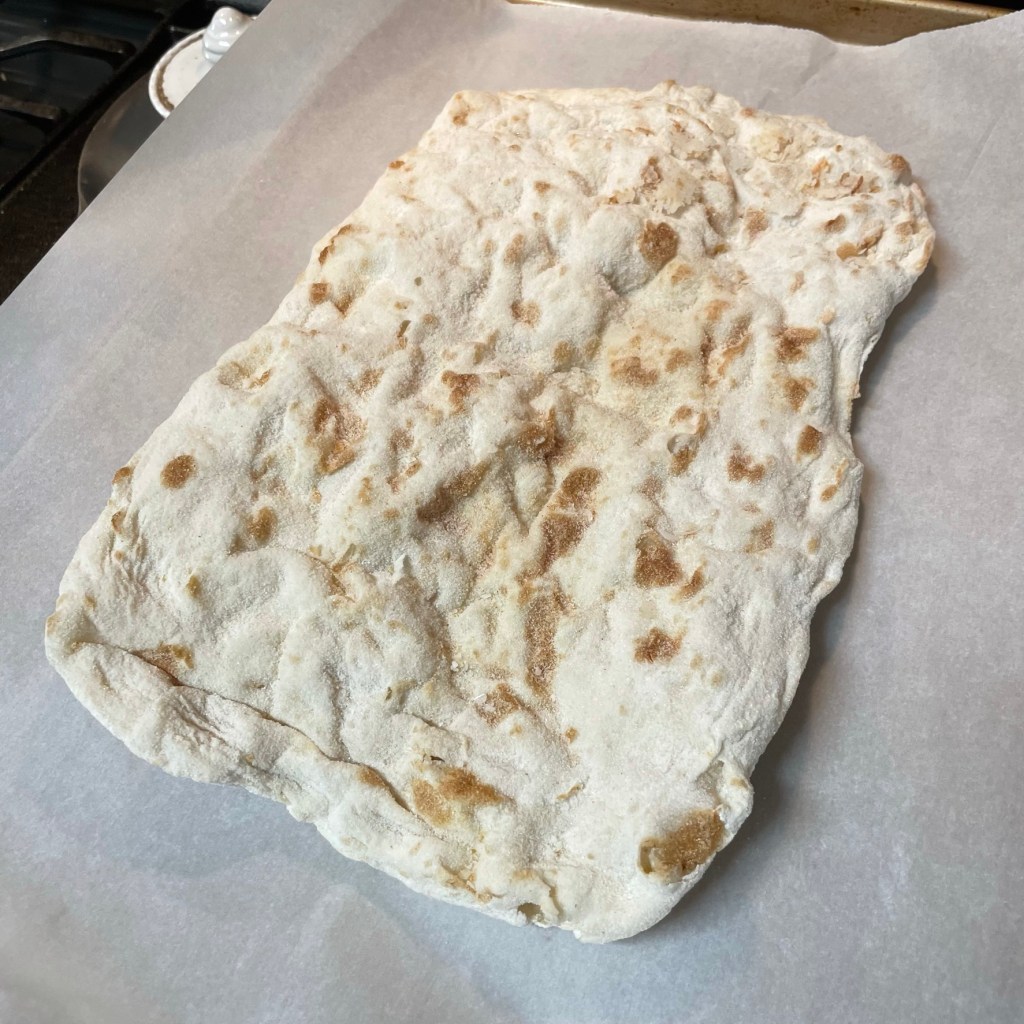
The pinsa dough is the most unusual ingredient in my basket, and I needed time to consider how to give it proper attention. My goal is to take full advantage of its crispy nature and also to make it the key that ties the creamy, silky soup with the chunky, savory tapenade. And though the dough was already par-baked, I still had options for transforming it to serve a new purpose with the other ingredients of my mystery basket meal. The pinsa would become breadsticks.

From that decision forward, it was all a bit of a blur. The potatoes and artichoke hearts had become very tender during the simmer, so I pulled out my trusty immersion blender and pureed it smooth. This was not a problem with either the fibrous artichokes or the red potato skins; it was quite lovely. I added heavy cream, another splash of wine and about a cup of the sweet lump crab and let it simmer to heat through.


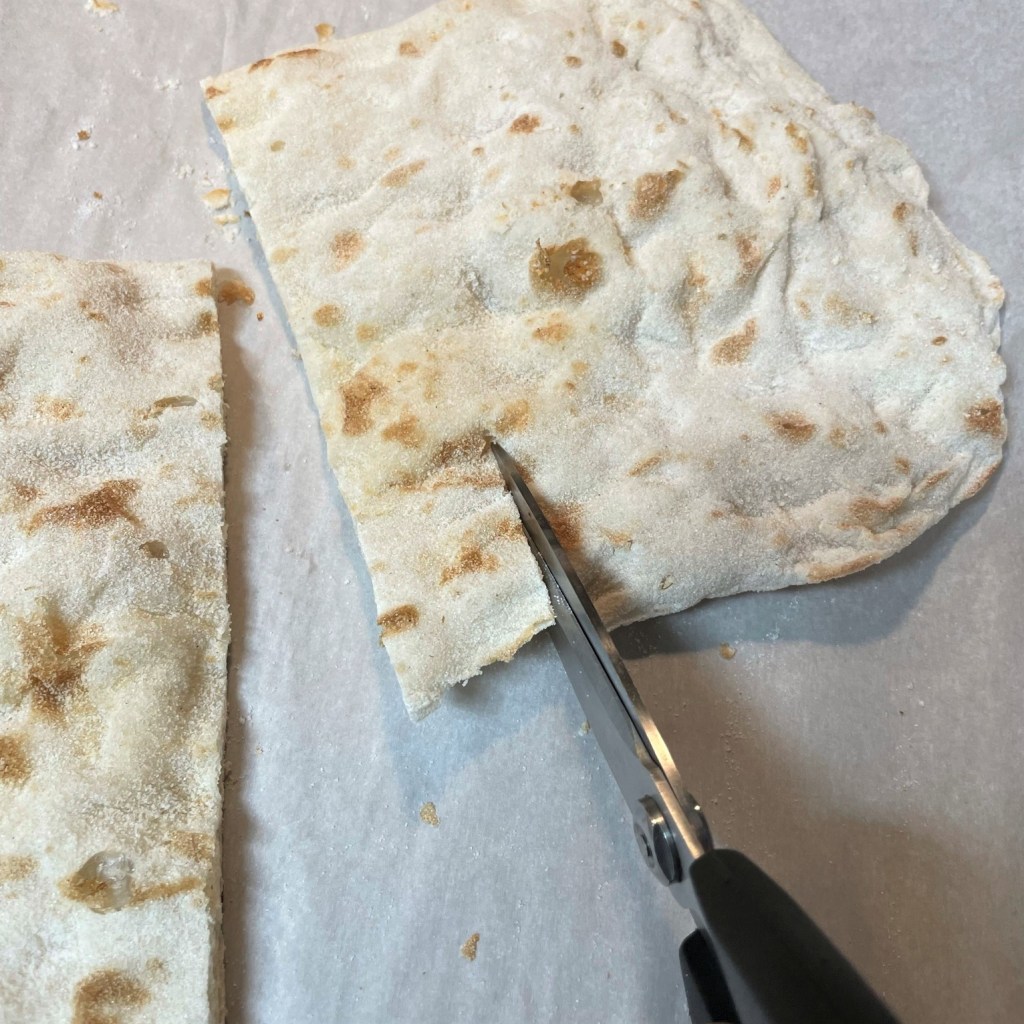
The delicate pinsa was fully thawed by this time, and I used my kitchen shears to cut it into strips about 1 inch wide. I minced several cloves of fresh garlic and drowned them in melted butter, which I brushed onto one side of my pinsa sticks. A few minutes in the oven, then I turned them and brushed the other side. They emerged from the oven with an ethereally crispy, perfect texture.


I topped the creamy artichoke crab bisque with additional fresh crab, the crispy bacon and a broiled lemon slice. A quick smear of my artichoke and garlic hummus (a recipe I shared a few days ago here) went down on the plate, topped with the kalamata-artichoke heart tapenade, and accompanied by the pinsa breadsticks, which pretty much stole the show.

Who’s hungry?

I am super proud of the way I used these basket ingredients but, as always, the decision lies with our esteemed panel of culinary judges—Les. 😊

That crunch! 🙂


You may be wondering if I’m a paid endorser for the brands and products I spotlight on Comfort du Jour, and the answer is “no.” I do not receive money or merchandise in exchange for my recommendations, and what that means for you is that you can count on me to give an honest opinion. If something changes, I will update my disclosures. Either way, you can still count on me to be honest in my recommendations, as I will only stand behind services and products I believe in. Fair enough? 😀

Terrie


Artichoke & Garlic Hummus

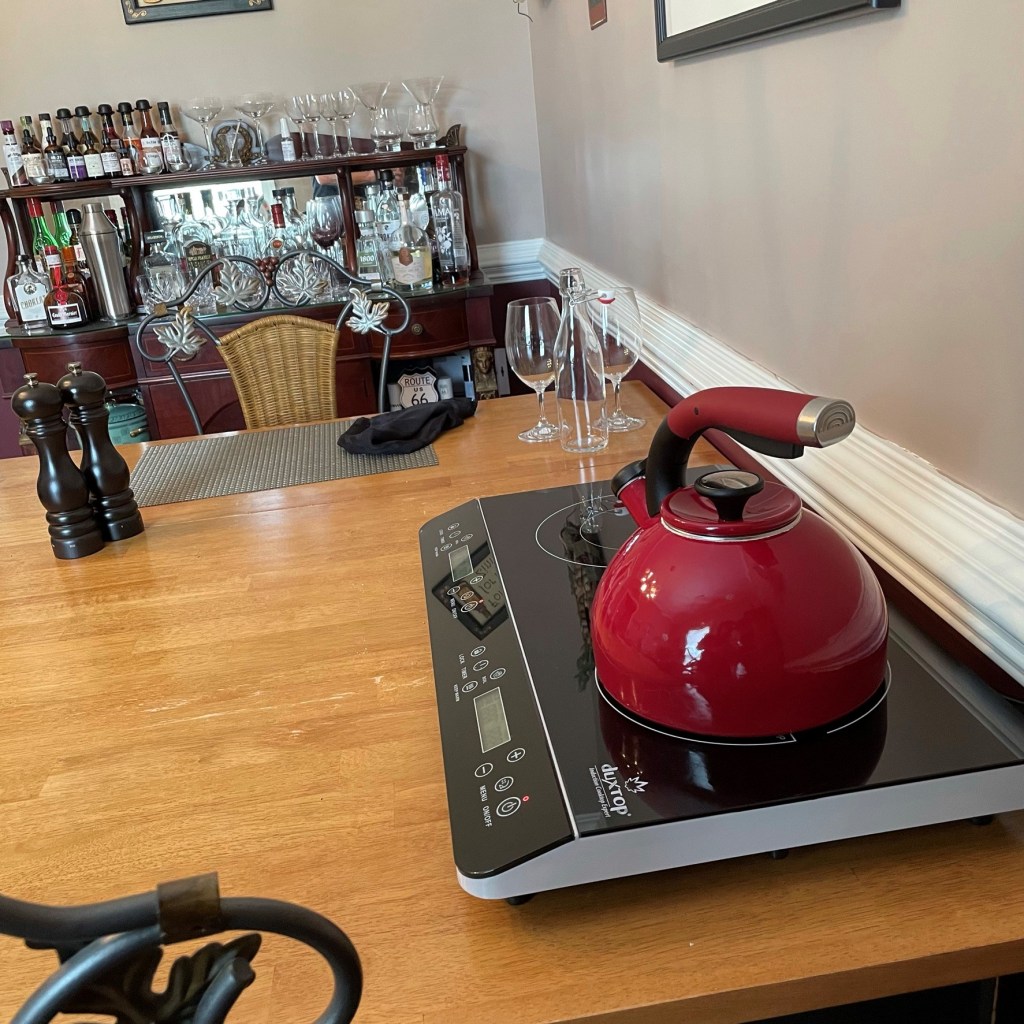
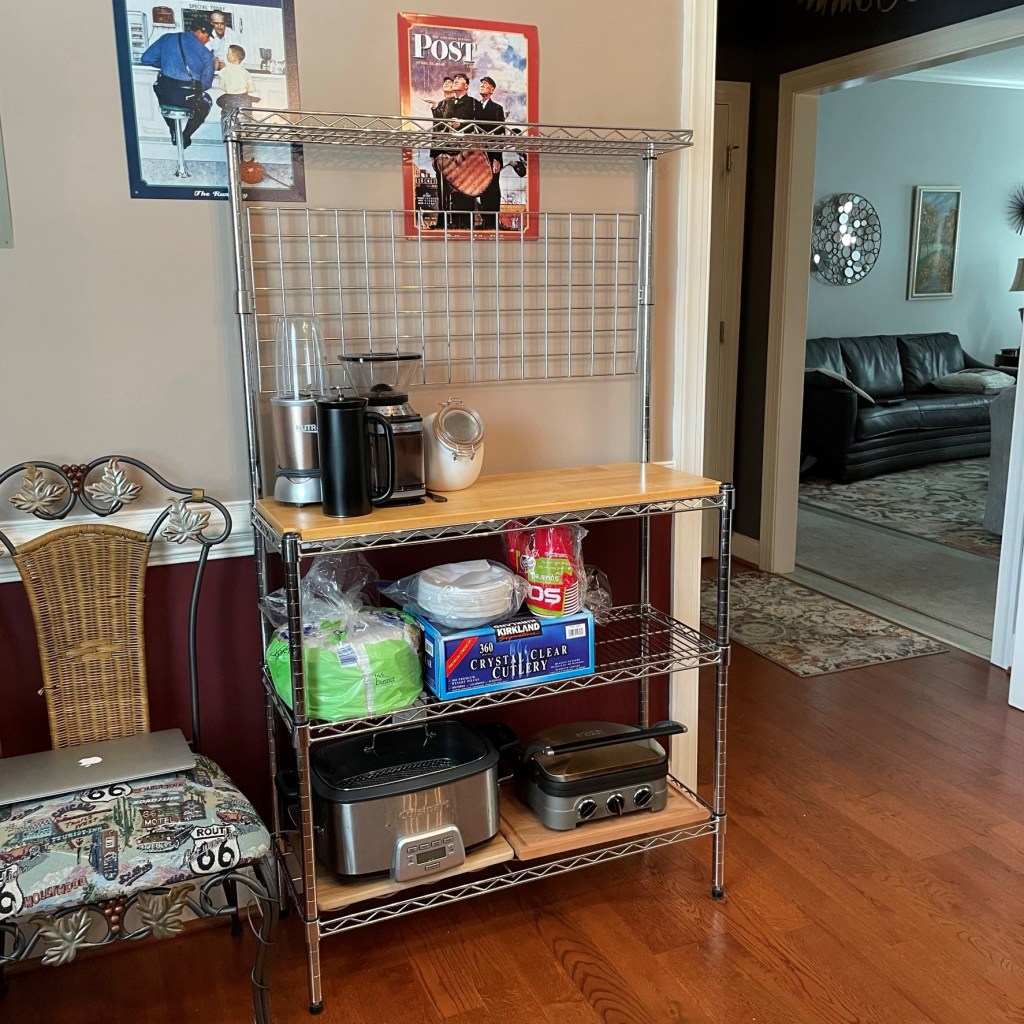
In six short weeks, life will be turned upside down for my husband, Les, and me. This is when our kitchen tear-out will begin, and we are beginning to shift our expectations as we prepare for the eight weeks or so that we will be “without” a kitchen. Welcome, friends, to our “in-between” kitchen!


We have rearranged our dining room space to accommodate a baker’s rack that will hold some of the appliances that will help us get through the chaos. A new two-burner induction cooktop will allow us to do simple stove-top cooking, including heating water for my daily dose of French press coffee. We will make good use of our slow cooker, toaster oven and the panini griddle that doubles as a waffle iron. We have the gas grill for outdoor cooking, and so far, the only thing I haven’t quite figured out is how I will make bread without our oven, though don’t be surprised if I use one or more of the above to make it happen!

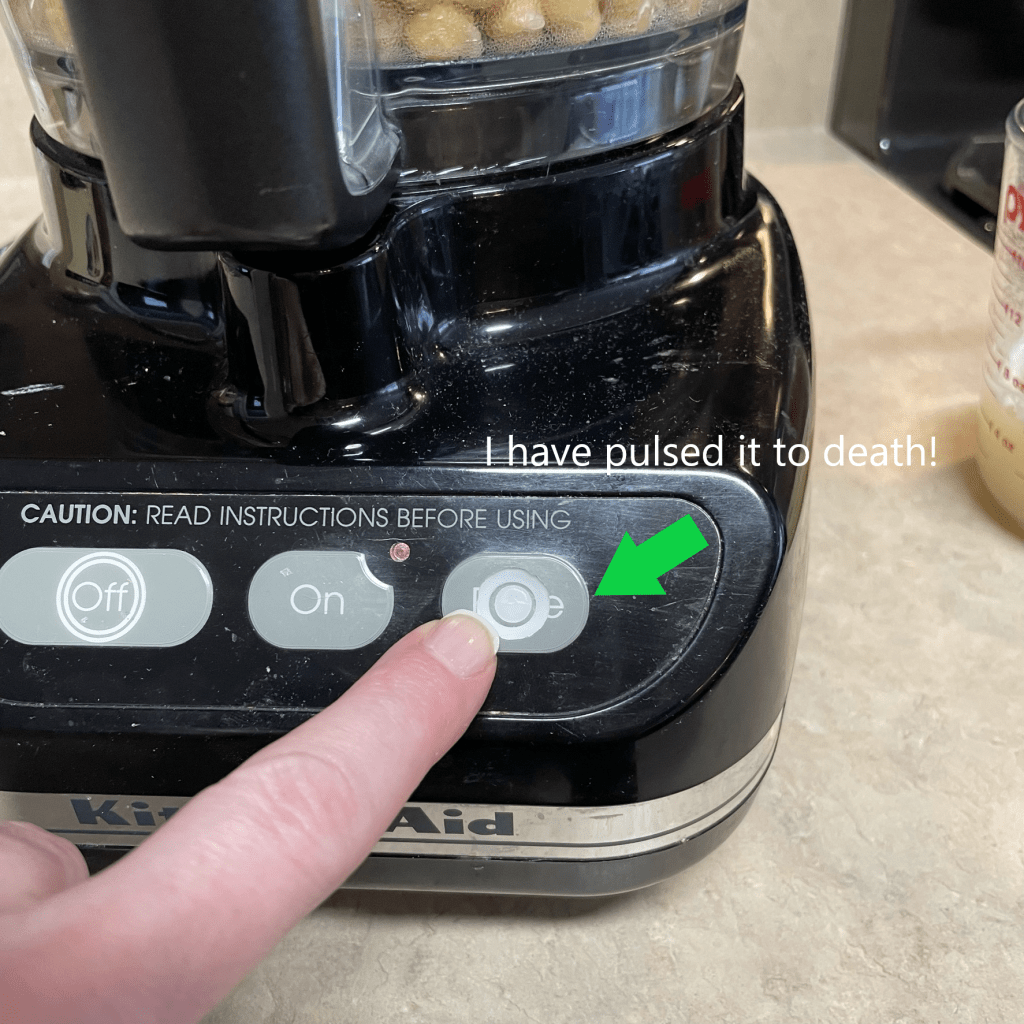
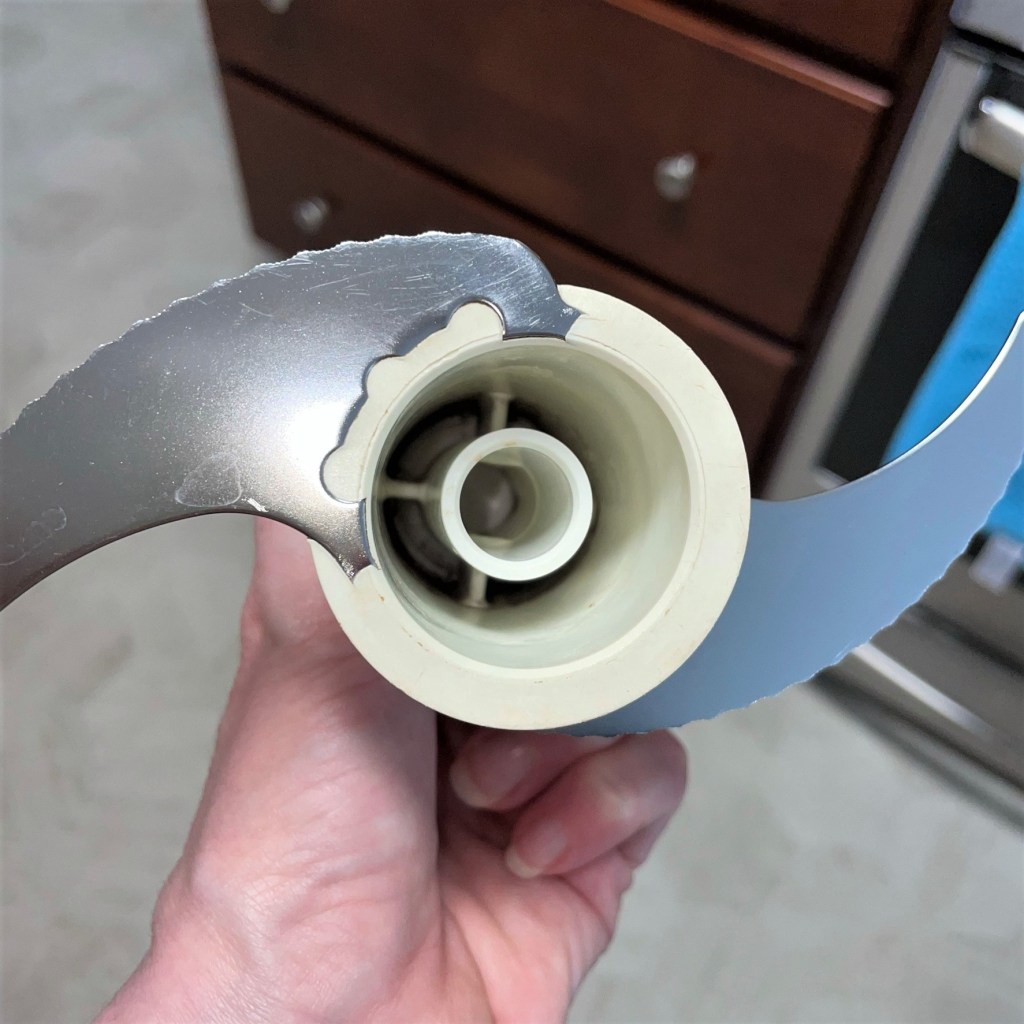
As we are preparing for the load out of the old kitchen (not to mention a bevy of random pantry and freezer ingredients), I’m giving all of our other small electrics a chance to prove themselves worthy of a spot in our new space. One item that will be (sadly) getting the boot is our KitchenAid 11-cup food processor, but not because we don’t use it; on the contrary, this thing gets so much action, it is on its last legs. The protective film over the power buttons has become brittle and is completely worn away from the pulse button, the feed chute is cracked and the inside of the “S” blade stem has some dried-on crud that I have not been able to remove. I have had the appliance nearly 20 years, and KitchenAid no longer makes my model (or any of the parts), so my only choice will be to replace the machine.


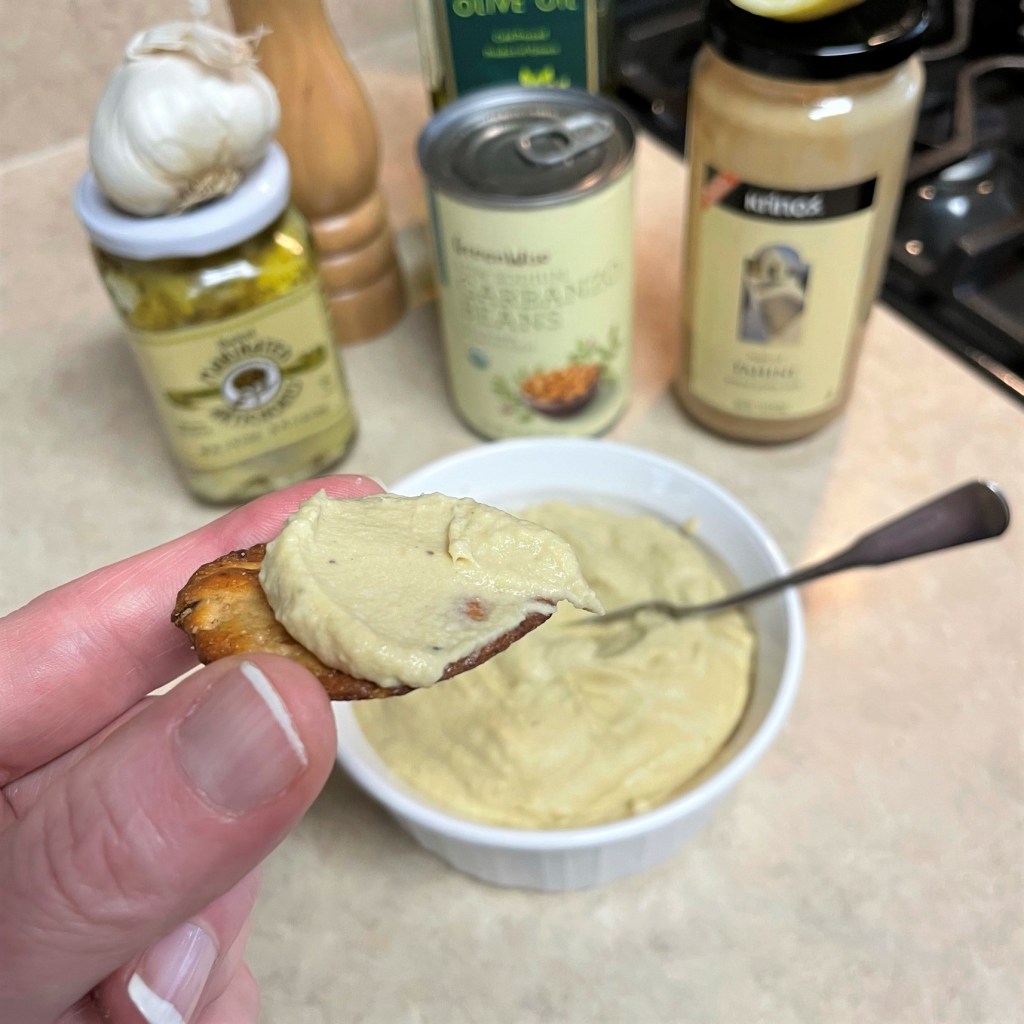
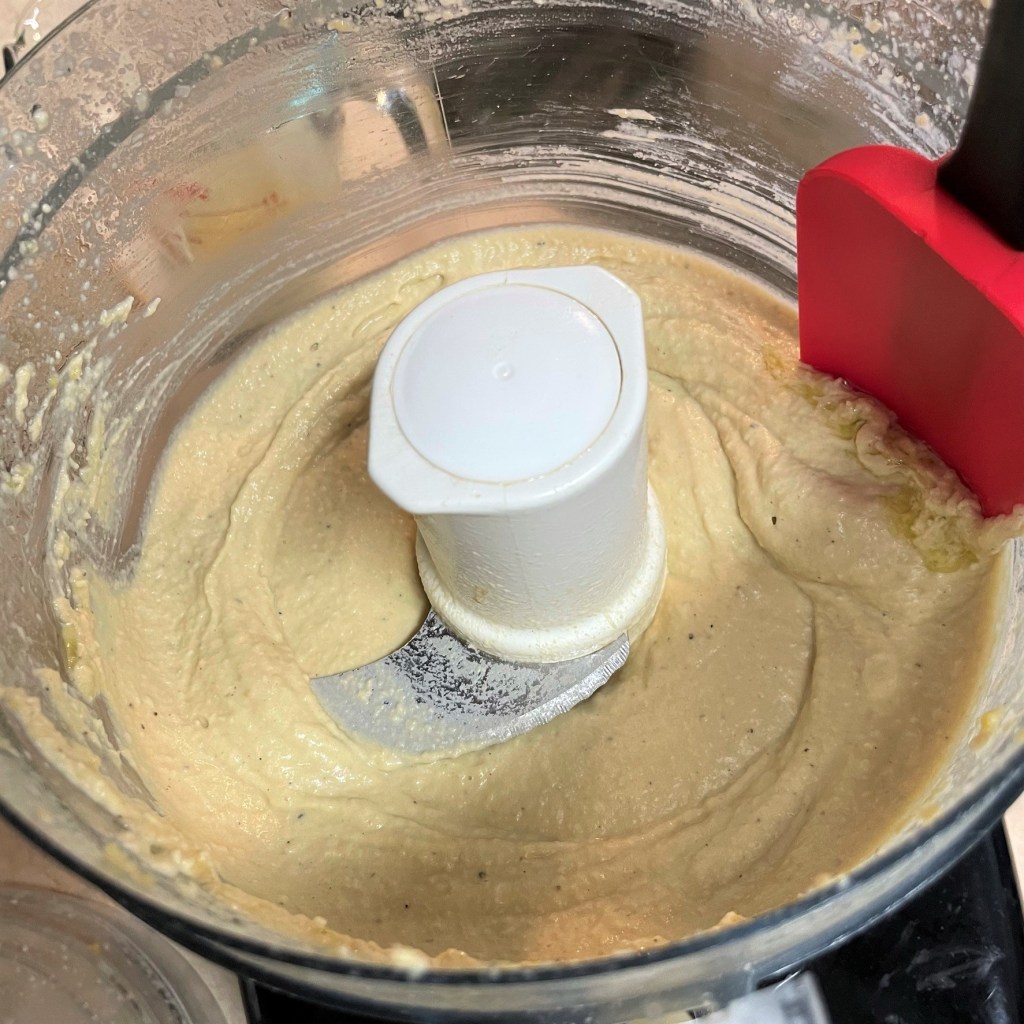
Until then, I’ll keep going with recipes like this one, for easy homemade hummus made with garbanzo beans, lemony artichoke hearts and lots of fresh garlic. Hummus is one of my favorite “blank canvas” foods, and it’s so simple at home, it makes no sense to buy it. The other key ingredients include tahini, olive oil and a squeeze of fresh lemon, which is a perfect highlight to the tangy artichoke. 

Warm the garbanzo beans to soften them up before you begin and use a food processor or a good blender for best, smoothest results. Enjoy your hummus on crackers, chips, crostini or fresh veggie slices.


It’s so much tastier than store-bought!

Ingredients

15 oz. can garbanzo beans, with liquid

3 Tbsp. tahini* (see notes)

2 to 3 cloves garlic, finely chopped

About 1/2 cup marinated artichoke hearts*, drained and rough-chopped

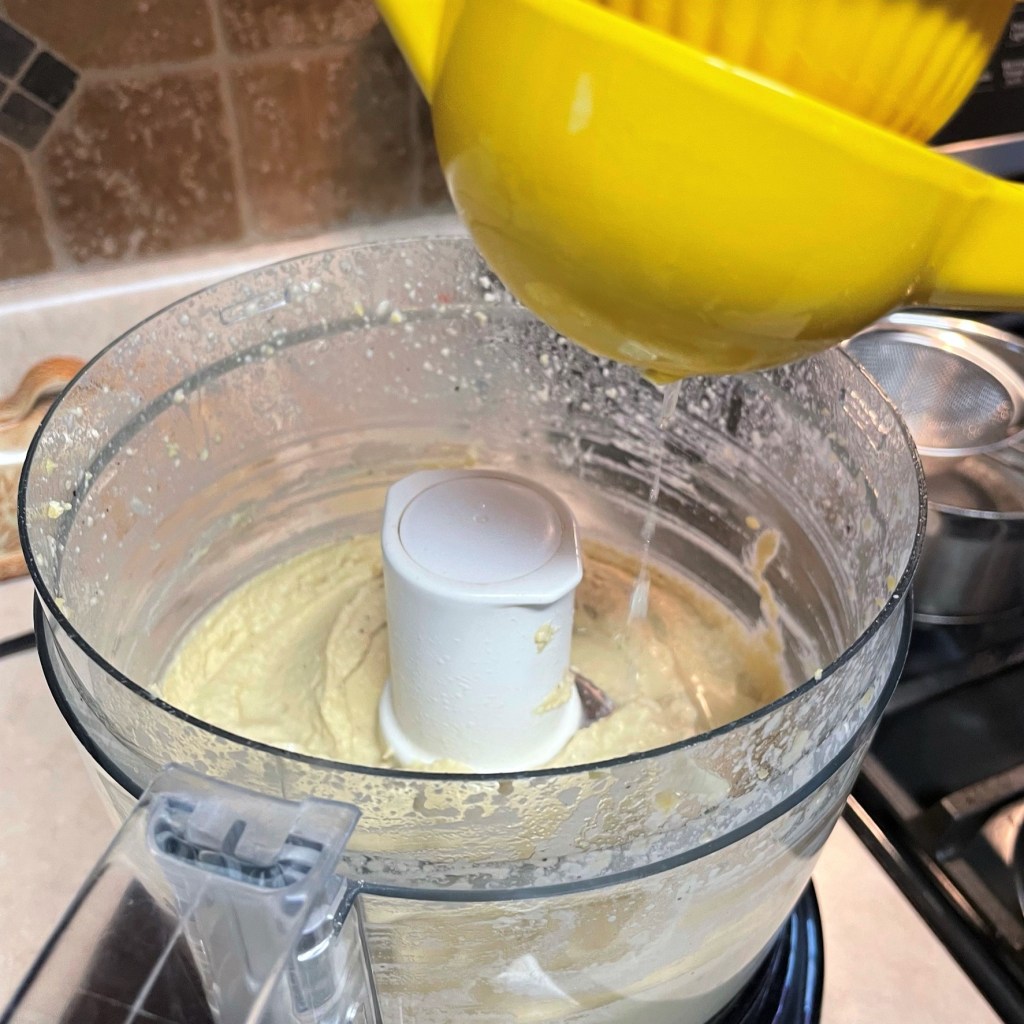
Juice of 1/2 lemon

Kosher salt and pepper

3 Tbsp. extra virgin olive oil


*Notes

Tahini is a paste made of ground sesame seeds. It is available in most larger supermarkets, usually in the same section as olives, or perhaps in the international aisle.

The artichoke hearts I used were Trader Joe’s, marinated in sunflower oil, vinegar and spices. If you use plain hearts, consider adding a pinch or dried herbs (dill or oregano would be great), and either way, drain all the excess liquid from them.


Instructions


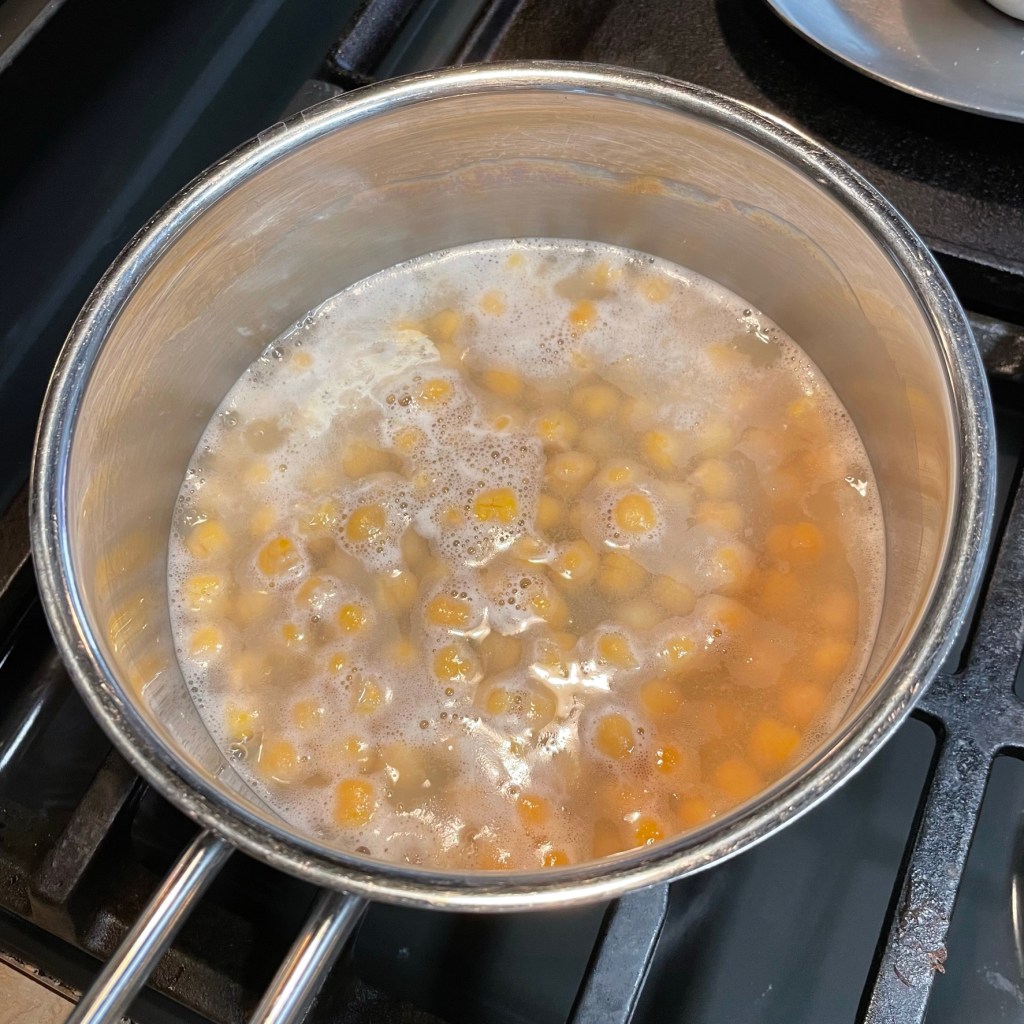
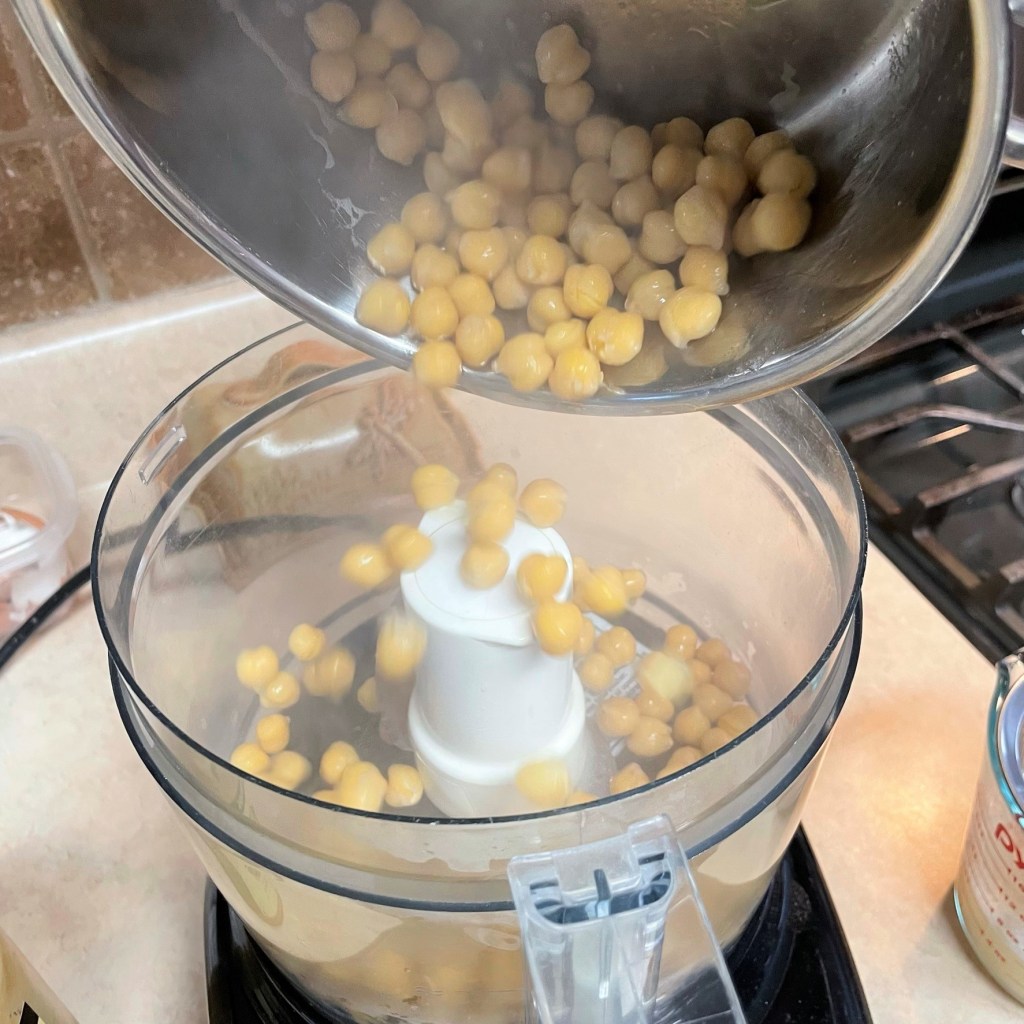
Pour the entire contents of the canned garbanzo beans into a small saucepan. Heat over medium-low heat until mixture just begins to boil. Remove from heat and drain liquid off beans, but do not discard it (you’ll use it for blending).

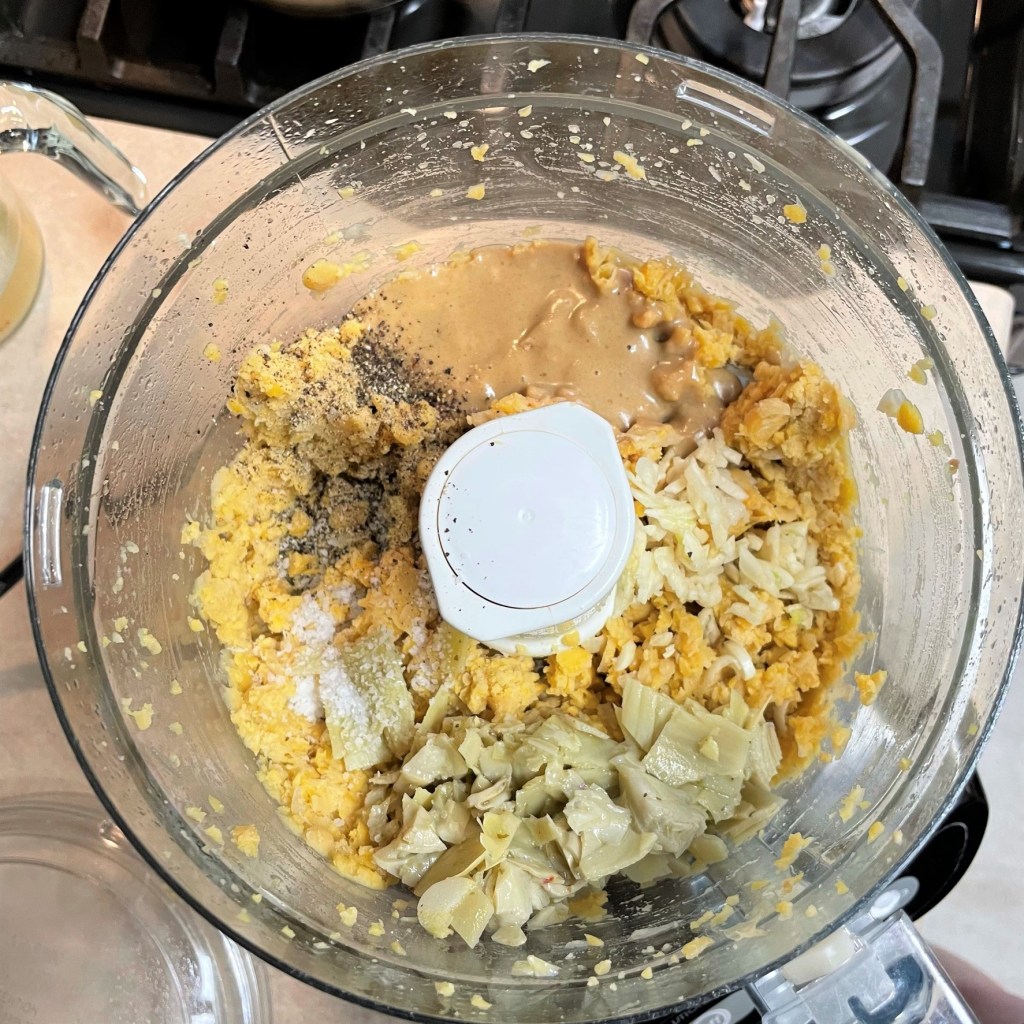
Transfer warm beans into a food processor or blender and pulse a few times to grind the beans into a meal-like texture. Scrape down sides of the processor bowl. Add tahini, garlic, artichoke hearts, salt and pepper. Pulse a few times to combine. Scrape down the sides again.

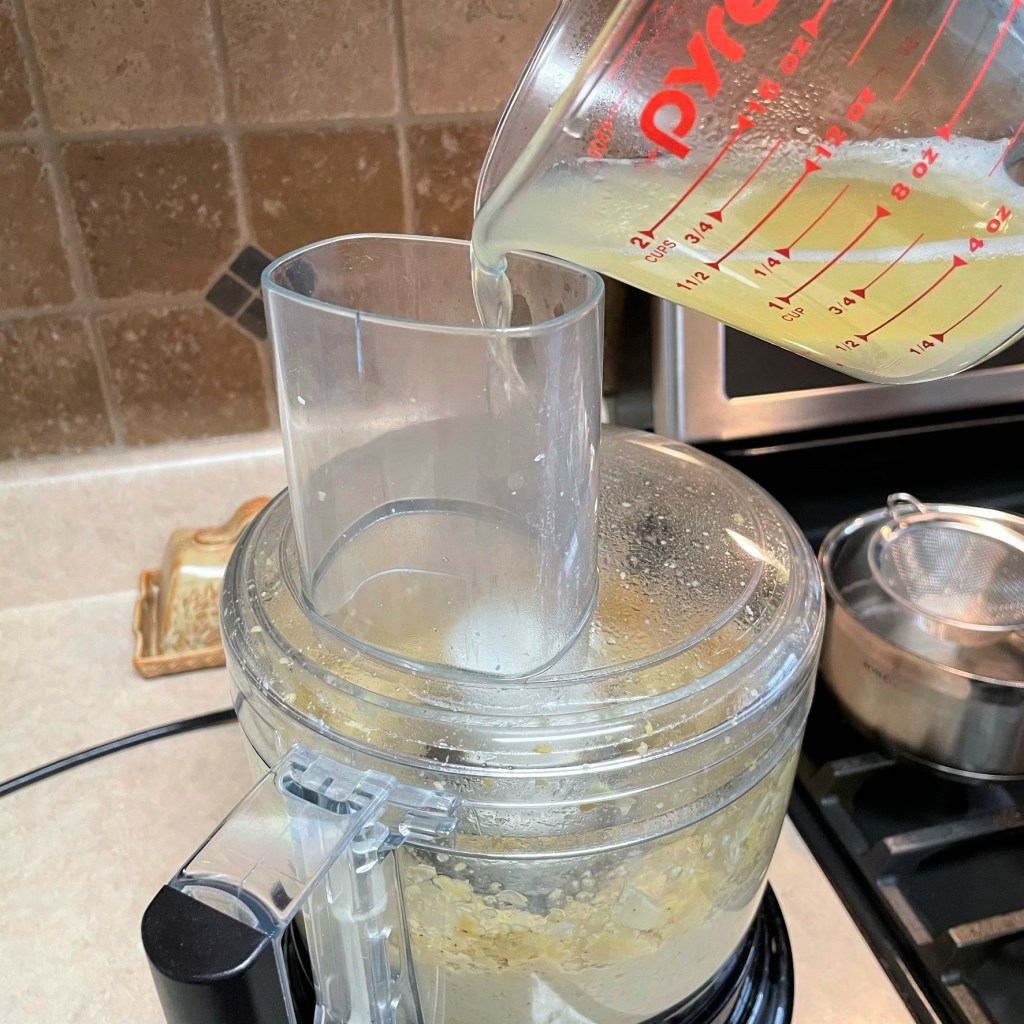
Turn processor on and run continuously while slowly pouring about 3 tablespoons of the warm liquid into the processor. Blending slowly will help to emulsify the ingredients into a smooth blend. Add more or less of the liquid, depending on your preference for hummus consistency. Remember that the mixture will become firmer after chilling. Scrape down sides once more.

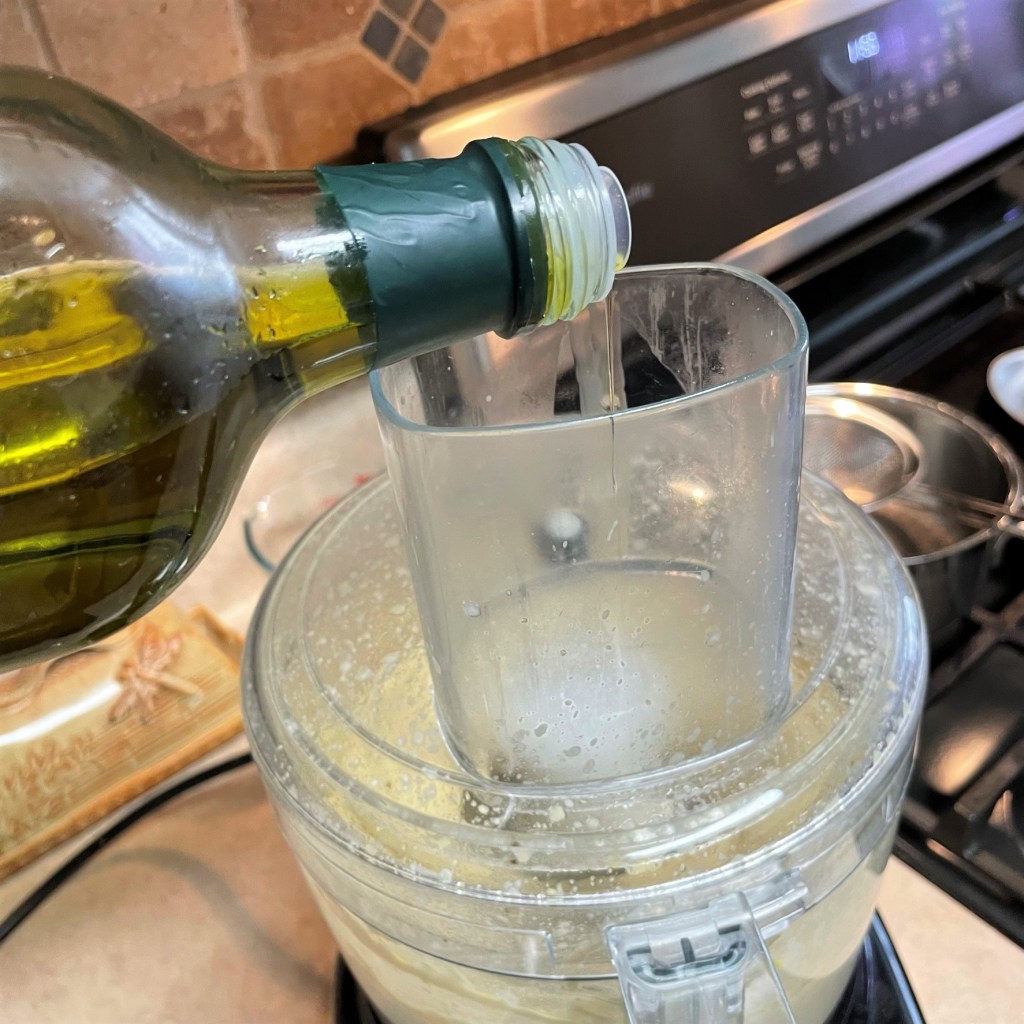
Run processor continuously and slowly blend in about 3 tablespoons of extra virgin olive oil.

Transfer hummus to a bowl and refrigerate, covered, for up to a week.


Artichoke & Garlic Hummus


“Plan B” Birthday Dessert

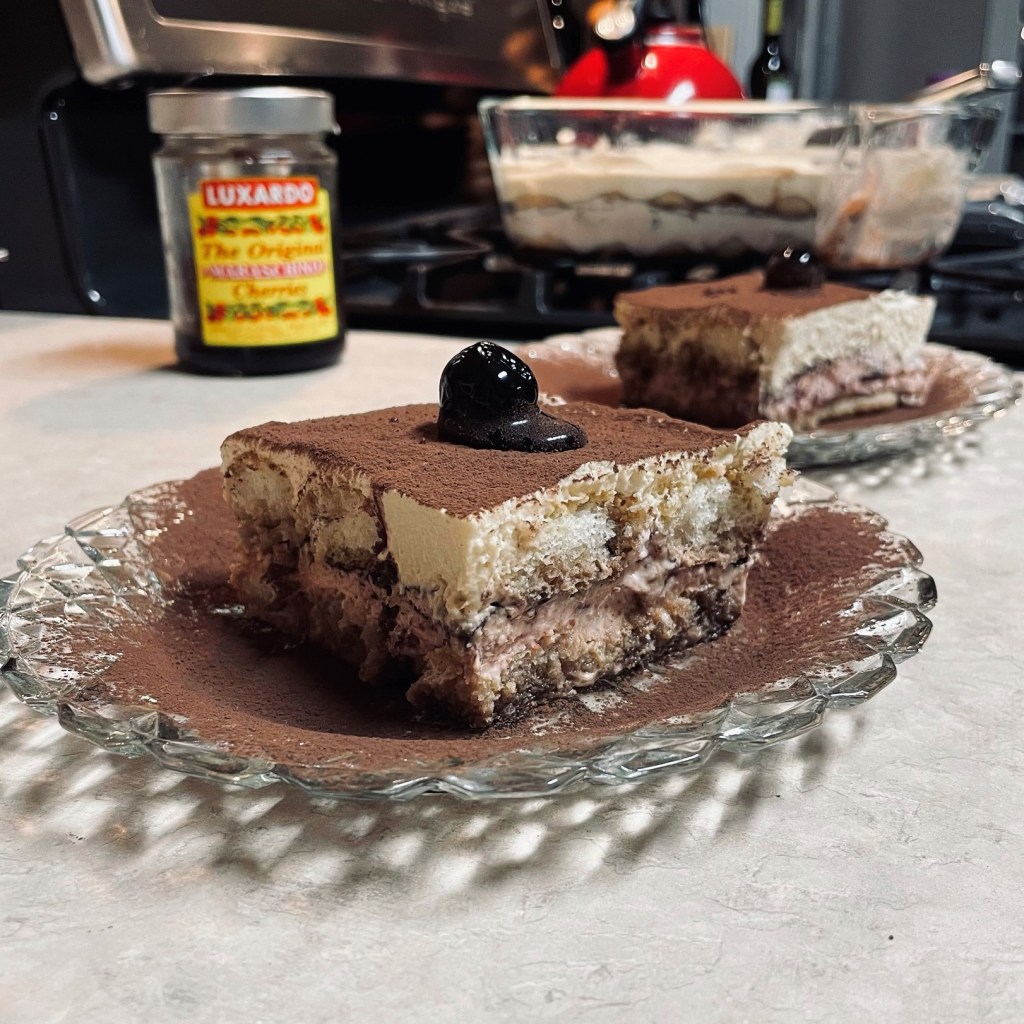
Everyone has heard of delayed gratification, but what about delayed disappointment? That is the best way to describe the outcome of what was meant to be a super cool and special dessert for my birthday. If you were following my kitchen adventures back in February, you may remember the luscious chocolate-cherry tiramisu that I created for a Valentine’s Day dinner with my husband, Les.

I was so excited about putting a fun flavor twist on the classic Italian dessert, which is a favorite of mine, but not so much for Les, who cannot stand the flavor of coffee. My chocolate-cherry version of tiramisu swapped out the usual espresso in favor of a brewed cacao beverage, and it was oh so delicious.


After that successful twist on a classic, my creative juices flooded over and I created an array of other flavors for tiramisu—at least, in my mind. Every time another great flavor idea occurred to me, I opened the notes feature on my iPhone and added it to the list. To date, I have imagined six more flavor profiles, and one that was particularly appealing to me was pina colada. Could you imagine? The sweet flavors of fresh pineapple and tropical coconut, layered with the mascarpone and ladyfingers—oh, I dreamed about it for months. And my birthday, right in the middle of summer, would be the perfect occasion for it.

Except for one thing. Pineapple has some unusual properties, and in my excitement about what I envisioned would be a huge “wow” moment, I failed to recognize or plan for that.

I had thought of everything. Almost.

Nope, I only charged forward with my plan, thinking through the flavor aspects and the presentation and what ingredients I would substitute for the espresso, the brandy and the cocoa powder. I would dip the ladyfingers into a delicious coconut smoothie concoction, spiked with a lovely golden rum from one of our local distilleries. I searched three supermarkets to find a version of pineapple preserves with ingredients that met my approval. I would fold that into the mascarpone mixture, as I had with the cherry preserves in my perfect Valentine’s Day version. Rather than cocoa dusted between layers, I’d sprinkle it with toasted desiccated coconut, and serve it on my grandmother’s vintage plates, and it was going to be great!

I started mixing, following the inspiration of the same Ina Garten recipe that led me to success the first time, and I got to the point of mixing a splash of pineapple juice and rum into the whipped mascarpone mixture, and suddenly the silky, creamy stuff in my bowl turned into a clumpy, curdled mess.


If I had been a contestant on Food Network’s Chopped, this would have been the moment that the judges would begin to panic, foreshadowing my disastrous ending. My favorite judge, Amanda Freitag, would have buried her face into her hands, whispering, “oh no, did she just put the pineapple juice in there?”

Yes, I sure did, and now I was puzzled. It must have been too cold, I reasoned, remembering that Ina Garten’s recipe made a big deal about starting with every single ingredient at room temperature. Not to worry, though. I’ve seen plenty of TV chefs fix broken sauces with an immersion blender, so I grabbed mine and whipped that mixture back into shape. It seemed mostly OK, and then I folded in a few tablespoons of the incredible pineapple preserves I had found at Trader Joe’s. This stuff was awesome, and I could almost taste sweet success. And then, dang if it didn’t curdle again!


And that was the exact moment I remembered about bromelain, the powerful enzyme in pineapple that does freaky things when it mingles with protein. I knew about this from years ago when I had marinated a pork tenderloin with pineapple and cilantro. The soaking liquid had smelled and tasted incredible, and I was sure my tenderloin would be remarkable. Oh, it was—remarkably mushy with a paste-like coating after grilling. Bromelain breaks down proteins into weird particles, and it happens quickly. This is why the splashes of pineapple juice wrecked the whipped egg yolk mixture, and I’m sure the immersion trick would have proved only temporarily effective. But I had not remembered any of this in time.

It was clear to me then that my pina colada tiramisu was not going to be successful, and I faced a tough decision to either scrap the whole mess or try to salvage it into some other kind of dessert. It was serendipitous that I arrived at this crossroads while making my own birthday dessert. Birthdays for me are weird occasions anyway, and for many very old reasons, I tend to steer clear of setting expectations of any kind. If I don’t make a big deal of it being my birthday, then it stings less when things don’t work out. But this dessert disaster was more disappointment than I was prepared for, partly because I had spent so much time dreaming up this tiramisu, and partly because the person disappointing me was me. So I took some deep breaths and made my decision. I wasn’t ready to give up, because then I was telling myself that my birthday wasn’t important. I had to be true to me and try to save it. But how?

I had a very successful grilled pineapple and jalapeno ice cream last summer, so maybe I could retrofit this mixture into ice cream—except no, because the egg yolks were raw and already mixed with mascarpone so I couldn’t cook the mixture now. Could I find a way to shift gears and make a pineapple cake? I’m not much of a baker (unless it’s sourdough bread), but I dug around on Pinterest and found a recipe that could serve as inspiration. It called for three sticks of butter, and mascarpone is kind of like butter. So I started whipping new ingredients into the clumpy mess in my stand mixer and I combined it with flour until it looked like batter. And then I crossed my fingers and baked it. Well?

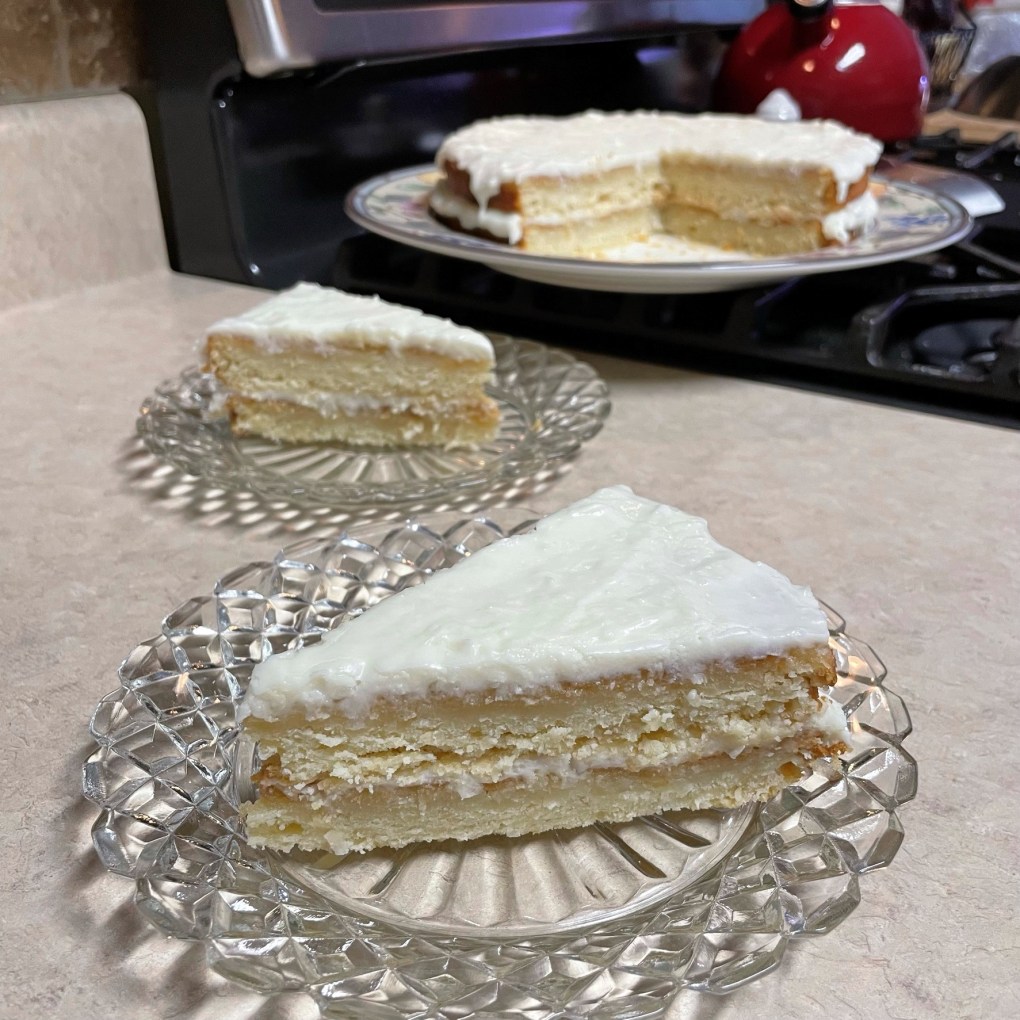
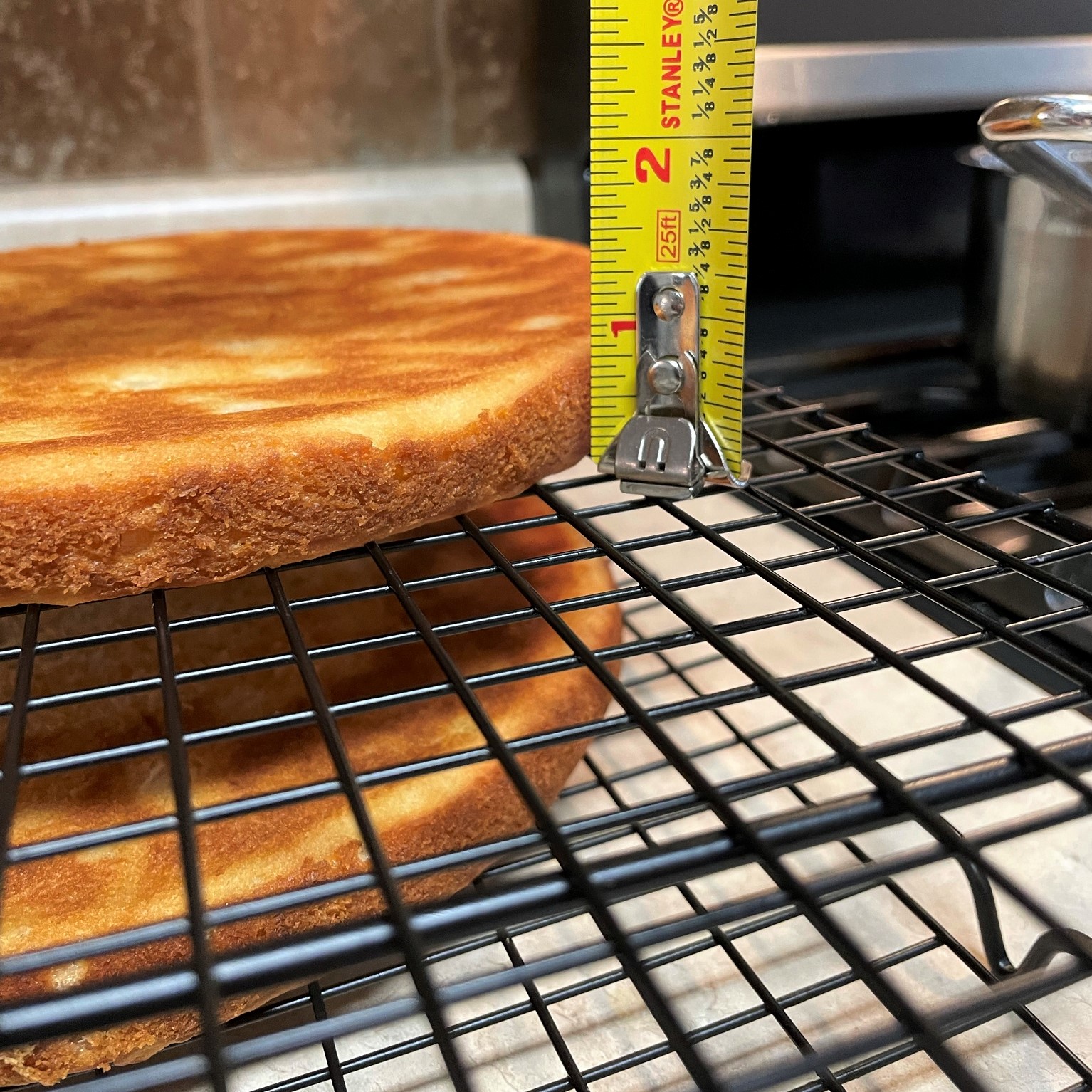
Each layer was about 3/4″ high. 😦

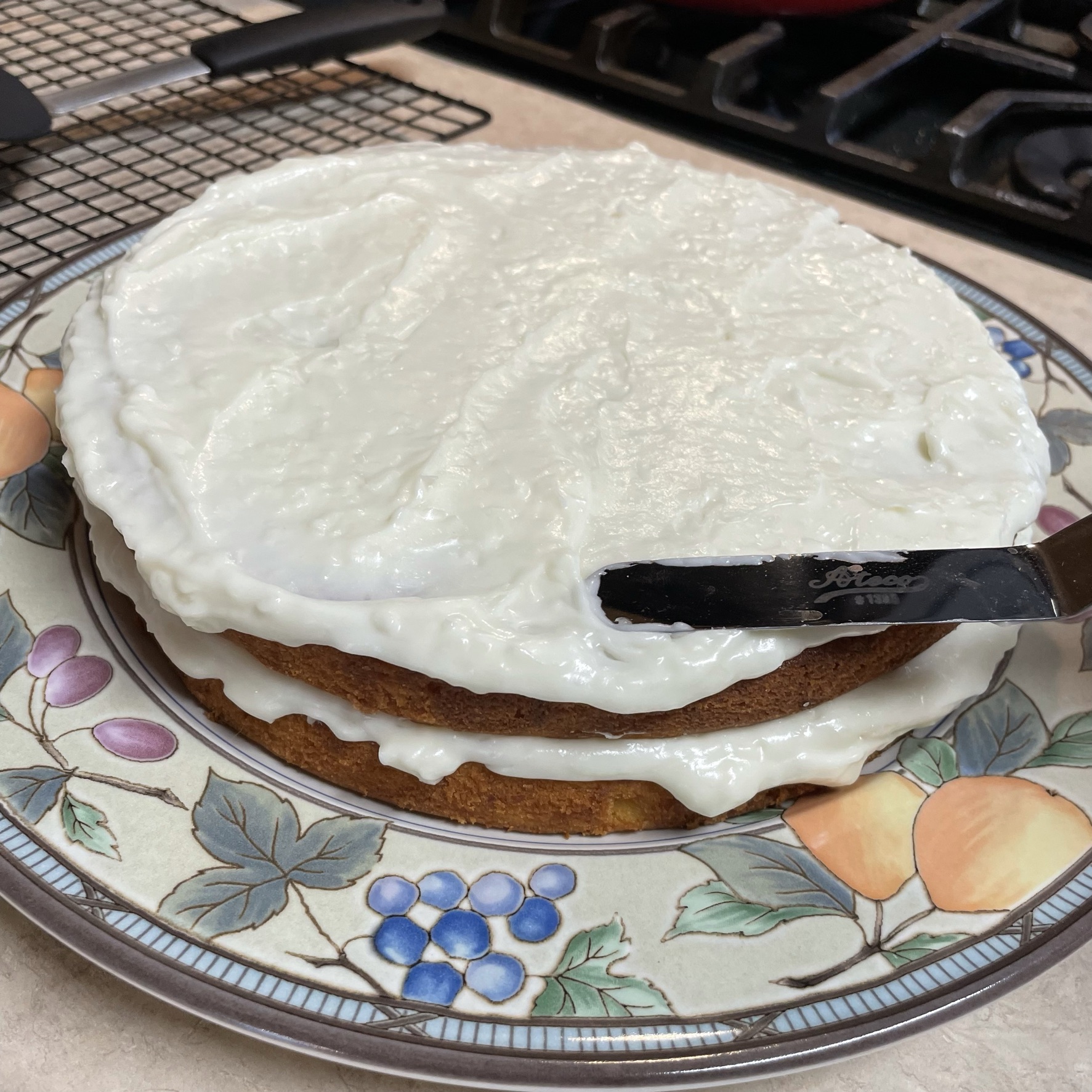
At this point, I had no idea whether the cakes would even be edible. In my mind, another Chopped judge, Alex Guarnaschelli, was pursing her lips and shaking her head. The cakes were so dense and flat, and I knew they didn’t have near enough sugar, so I cooked the coconut smoothie-rum mixture with some turbinado sugar and made a syrup. I poked a toothpick all over the surface of the two cakes and spooned the syrup over them, hoping against hope that they’d soak up some flavor and sweetness. We ran out of powdered sugar for the icing, so I sent Les out to get more, and I pondered why I even bothered. Sadly, birthday disappointment was setting in, but I pressed on. I whipped more powdered sugar into the icing, but I couldn’t get the coconut flavor right, despite addition of coconut power, extract and actual coconut. But at least it didn’t look horrible. I mean, the frosting dressed it up, right?

OK, so it was flat. But it might still taste like pina colada.

I thought of the Rolling Stones’ tune, “You Can’t Always Get What You Want,” and I reassured myself that even if my heavenly pina colada tiramisu that morphed into a flat, flavorless cake turned out to be a total bust, it was not the end of the world. It didn’t have to ruin my birthday, and it would not be my last chance to create something spectacular. I stepped outside to call our kitty, and I saw this.

But if you try sometimes, well, you might find
You get what you need.

The cake didn’t look horrible, but it really was. It was dense, pasty, heavy and not very sweet. The cooked rum syrup had a strange metallic taste that was not at all reminiscent of pina colada, and it didn’t hurt my feelings one bit to slide the whole mess into the trash. My birthday dessert was, in fact, a bust.

I learned something important about myself, though, and perhaps that was meant to be the point of all the hours I spent on my project. I am not a quitter, and I have gotten better in my later years at changing course when a situation demands it. And though I didn’t get my birthday wish for a tasty pina colada dessert, I did have a front row seat to witness the reveal of my true colors. And that part wasn’t so bad.

Besides, this coming weekend, I’ll be making ice cream. 😊


Fuzzy Navel Sorbet

It was July, 1986. My wardrobe included stirrup pants, big blouses and my favorite pin-striped, high-waisted skinny jeans. The ones with the pleats. My hair was permed and teased out to here, and all the girls were lusting after Tom Cruise in Top Gun. I was restless in my not-so-exciting hometown, and I spent entirely too many weekend nights on the dance floor at a bar called the Rusty Nail, drinking the most sticky-sweet drink that was all the rage that year.

When we were not enjoying our Bartles & Jaymes wine coolers, the “fuzzy navel,” made with orange juice and DeKuyper Peachtree schnapps, was the “cocktail” of choice for me and so many of my friends, whether we were out on the town (which meant we were in the next town over), hanging at home (because our town didn’t have much going on) or gathering for a bridal shower (because getting hitched is what several of my friends were doing that year). Man, we were so cool.

Why did we ever think it was cool to smoke??
But I wish I still had that striped top!

It was an odd time for me, as I turned 21 and I would finally be cleared to order a drink in public. Again. There was a great deal of confusion for my friends and me, as the state of New York had raised the legal drinking age not once, but twice, in a short period of time. First, they raised it from 18 to 19, after I had been legally imbibing for about eight months. Then, when I was 20 and enjoying my fuzzy navels, they upped it to the national standard age of 21. In the next town over, this did not present as much of a problem, because I had a fake ID. Yes, it was bad, but shame on the state for having a no-photo ID that was made of plain old paper. I had used a safety pin to scratch off the bottom part of the 7 and a #2 pencil to reshape it into a 2, giving myself a Feb. 25 birthday! Seriously, it was ridiculous that the powers in Albany did not find a way to “grandfather” in the people who were already considered “of age.”

In my hometown though, everyone knew I was a July baby, so I had to rely on the bottles of DeKuyper Peachtree schnapps I had already purchased (when I was younger, yet “old enough”), and that was what carried me through the final stretch of waiting. Let’s just say that I bought a lot of orange juice during those weird alcohol retrograde months.

A few weeks ago, for nostalgia’s sake, I brought home a bottle of Peachtree schnapps when I spotted it in our local ABC store (that’s what we call our state-run liquor stores in North Carolina), and Lord have mercy, I wish I could have seen my own face when I took a sip! It has a fake fruit flavor and a slight medicinal edge, definitely not what I remembered as being “totally awesome.”

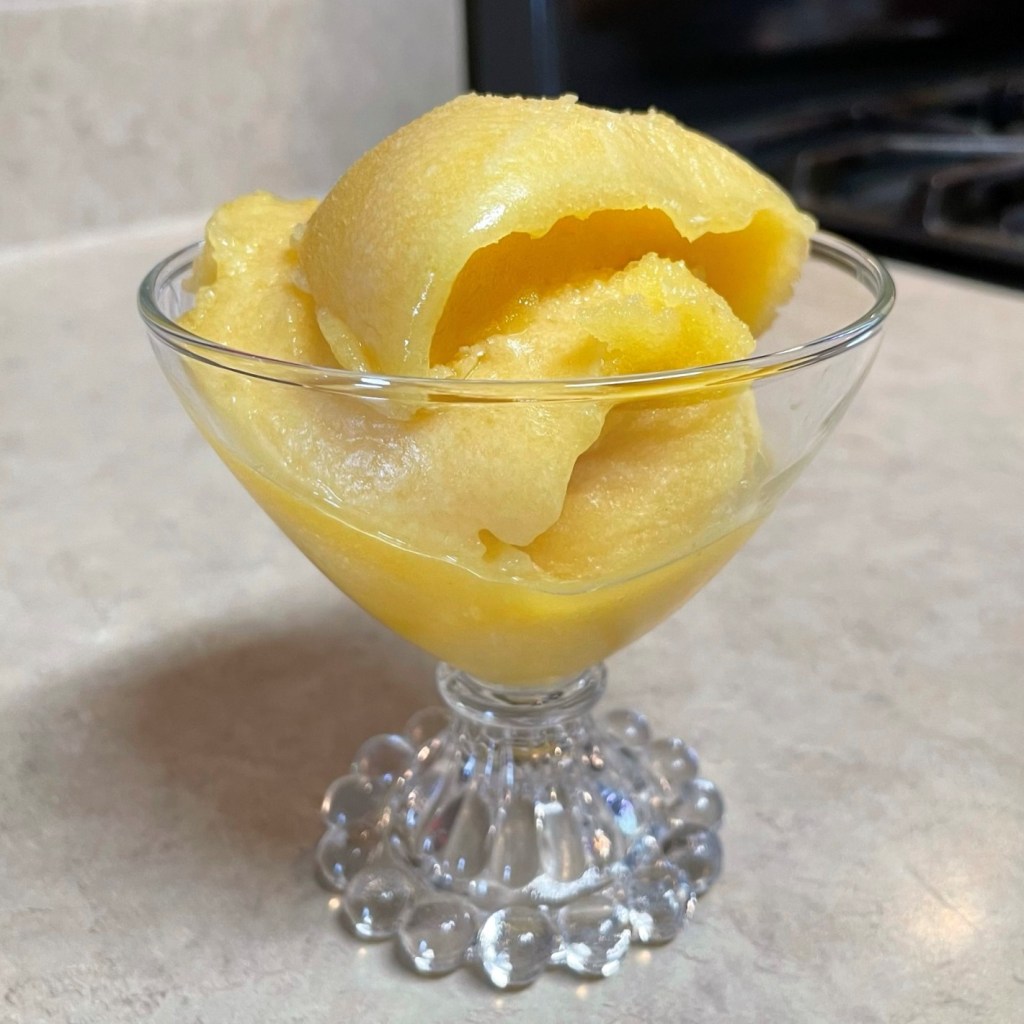
Yes, my taste has changed a great deal (thankfully), but I could not resist finding a fun way to pay homage to the drink of my youth, and this easy sorbet is the result of my effort. I am presenting it during National Ice Cream Month, as an alternative frozen treat for anyone who can’t eat ice cream, and as a nod to my younger self on her 21st birthday. The sorbet is surprisingly refreshing on its own, and I found that it also makes a fun brunch cocktail when topped with prosecco!

Please help me think of a good name for this fuzzy navel brunch cocktail. Mimosa and Bellini are already taken. 🙂

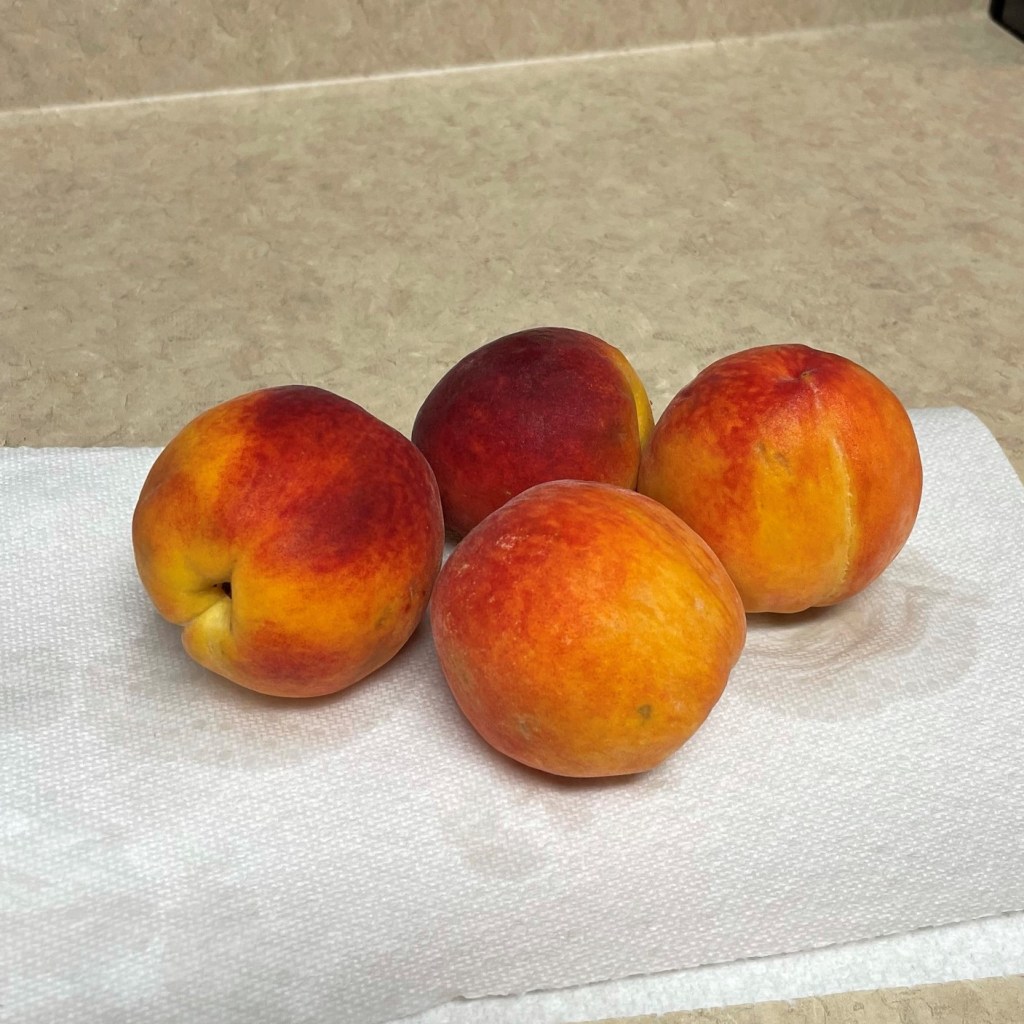
There is a hefty amount of peach schnapps in this sorbet, but fear not—the stuff is only 40-proof, so it isn’t going to wreck you. I pureed a handful of fresh summer peaches to add some freshness and actual peach flavor. The orange juice was a frozen concentrate (which is not as commonly available as in 1986), and I finished the mixture with a light simple syrup of sugar and water.


Ingredients

4 medium peaches, peeled and pitted

Juice of 1/2 fresh lemon

2 cups water, divided

1/2 cup cane sugar

2 Tbsp. light corn syrup* (see notes)

1/3 cup frozen orange juice concentrate

1/3 cup DeKuyper Peachtree schnapps

2 Tbsp. vodka, optional for extra kick


*Notes

Corn syrup is not crucial, but I used it to help keep the sugar from forming unpleasant crystals in the frozen sorbet.


Instructions

  1. Cut up the peaches into chunks and transfer them to a regular or bullet blender. Squeeze in the lemon juice and toss lightly to prevent discoloration of the peaches.
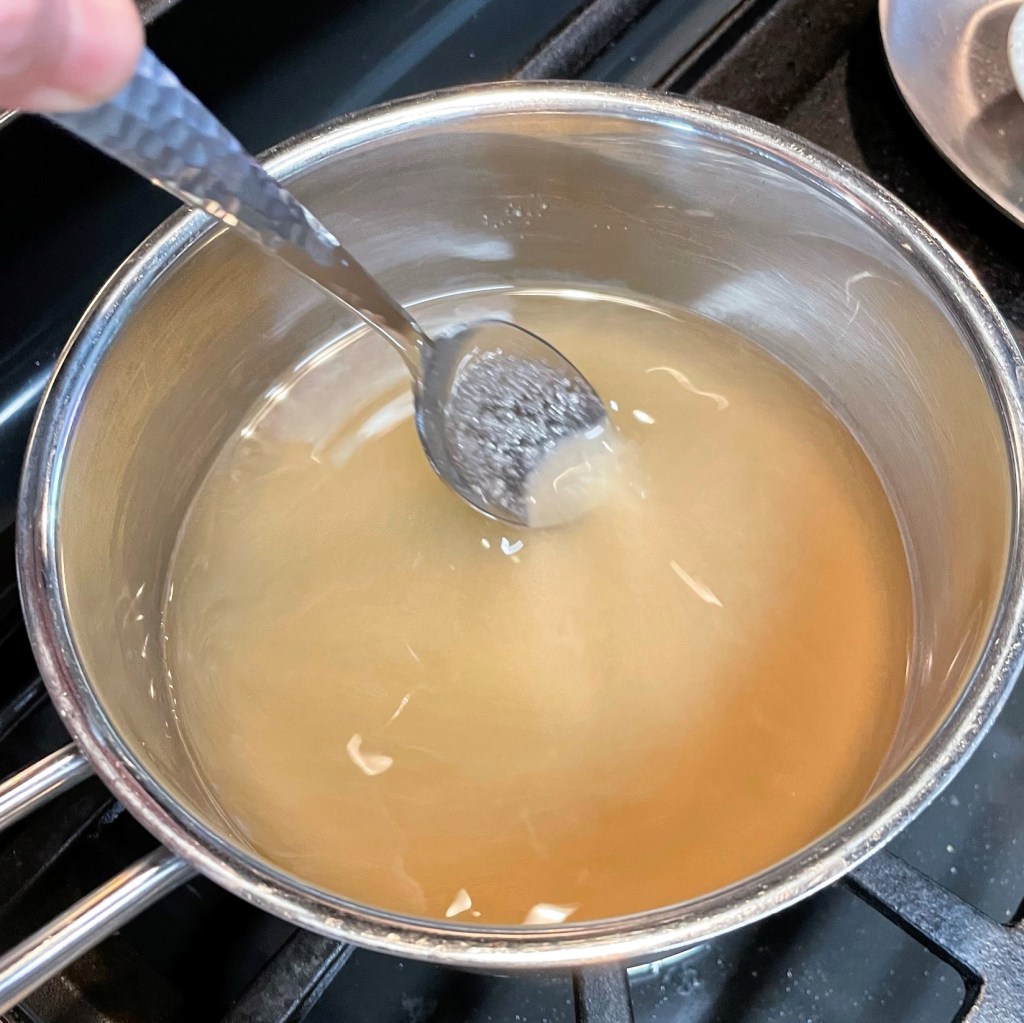
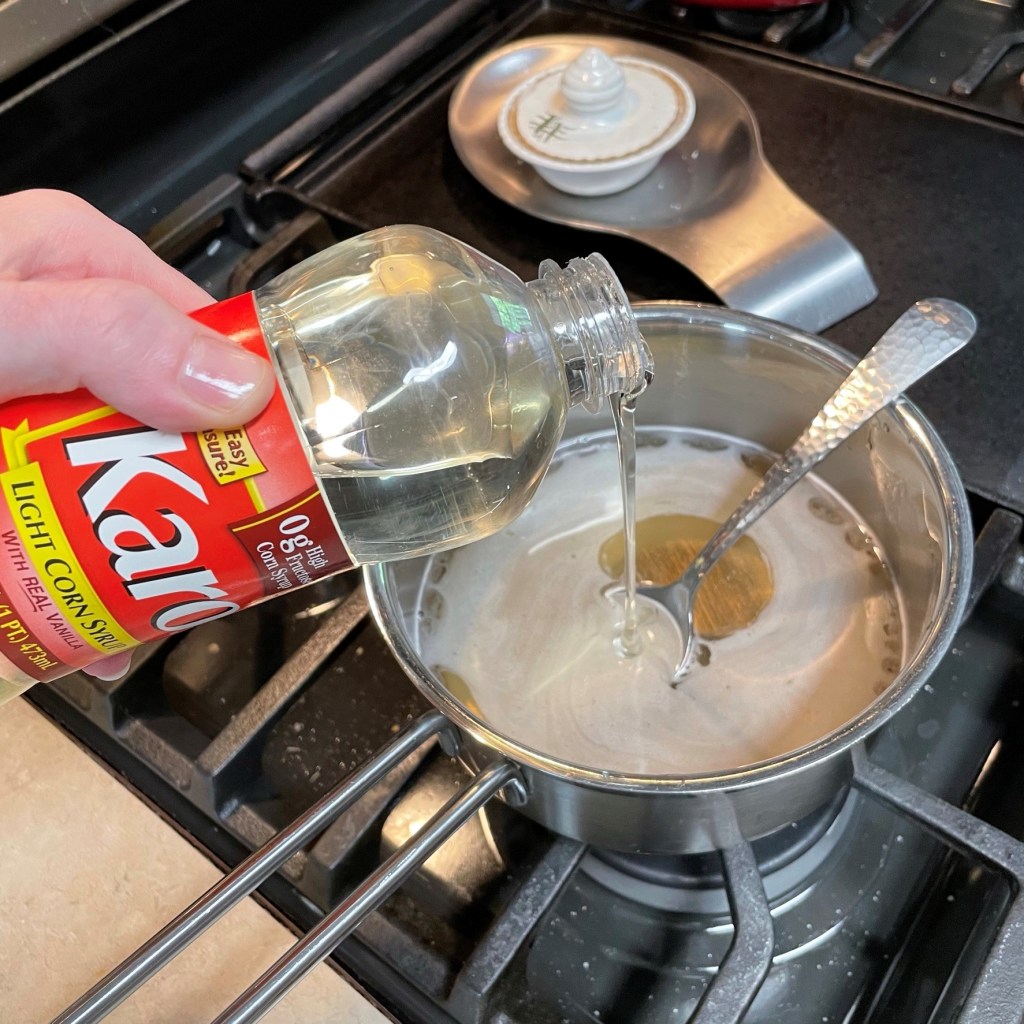
  2. Combine 1 cup of the water and all of the sugar in a small saucepan. Bring to a low boil and stir until sugar is dissolved. Stir in corn syrup. Remove from heat and allow the syrup to cool.
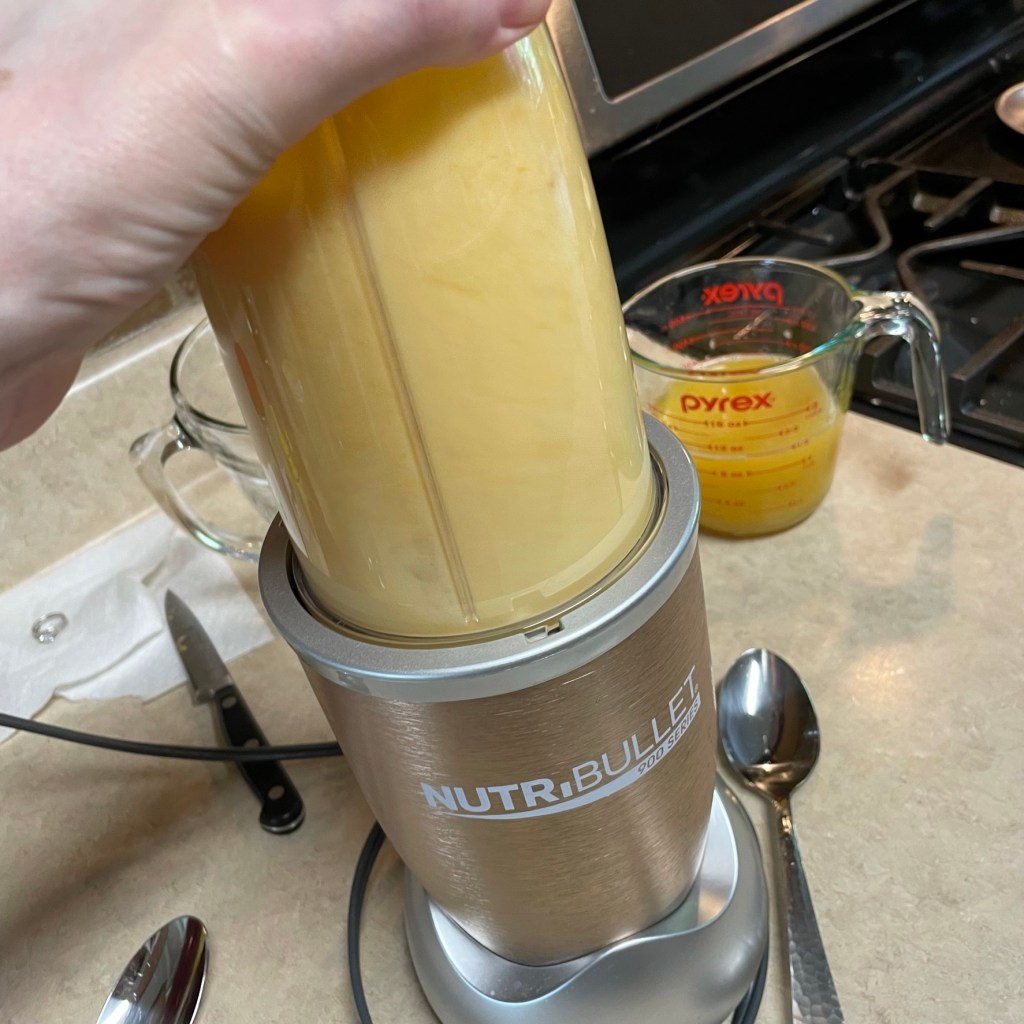
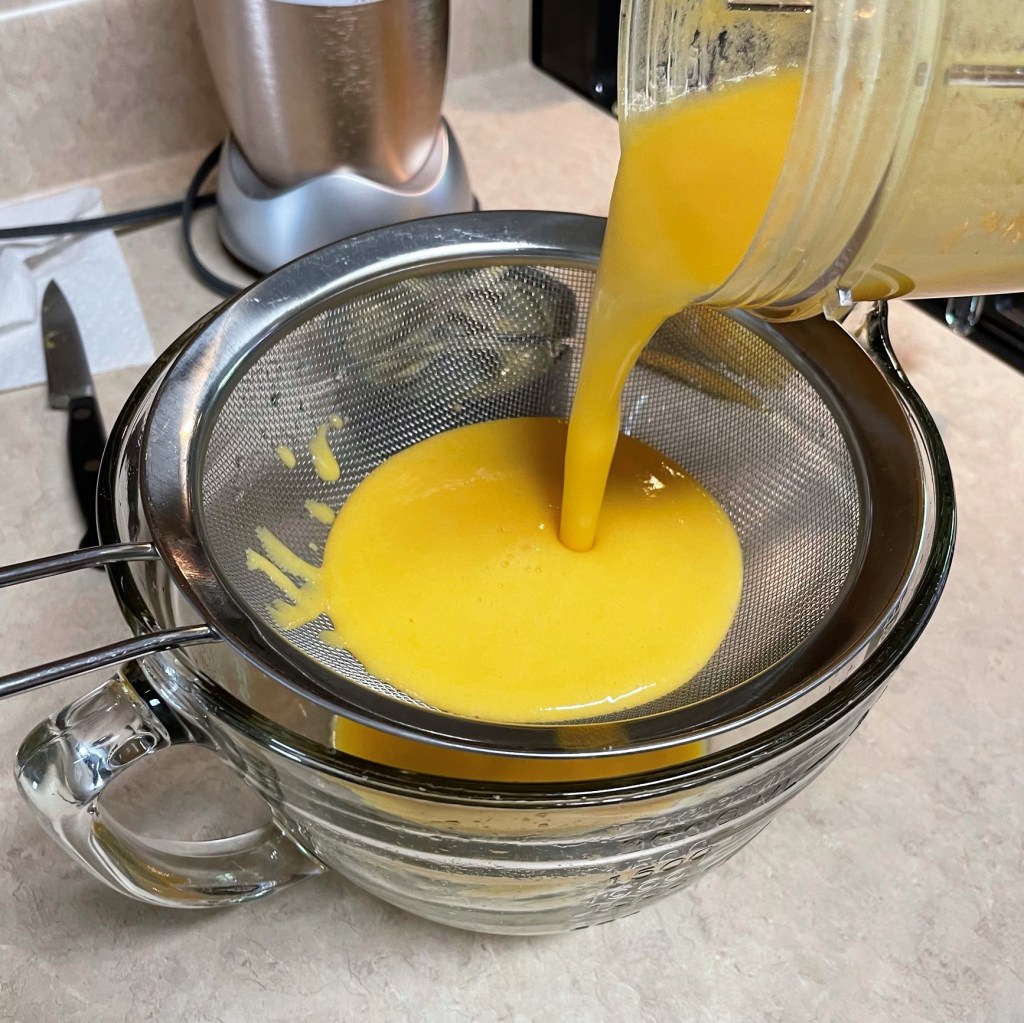
  3. Add the orange juice concentrate to the bullet blender, along with the peaches and about 1/2 cup of the simple syrup. Pulse a few times, then blend continuously until the mixture is smooth and uniform.
  4. Strain the puree through a mesh strainer to remove any solids, including the stringy fibers that surround the peach pits.
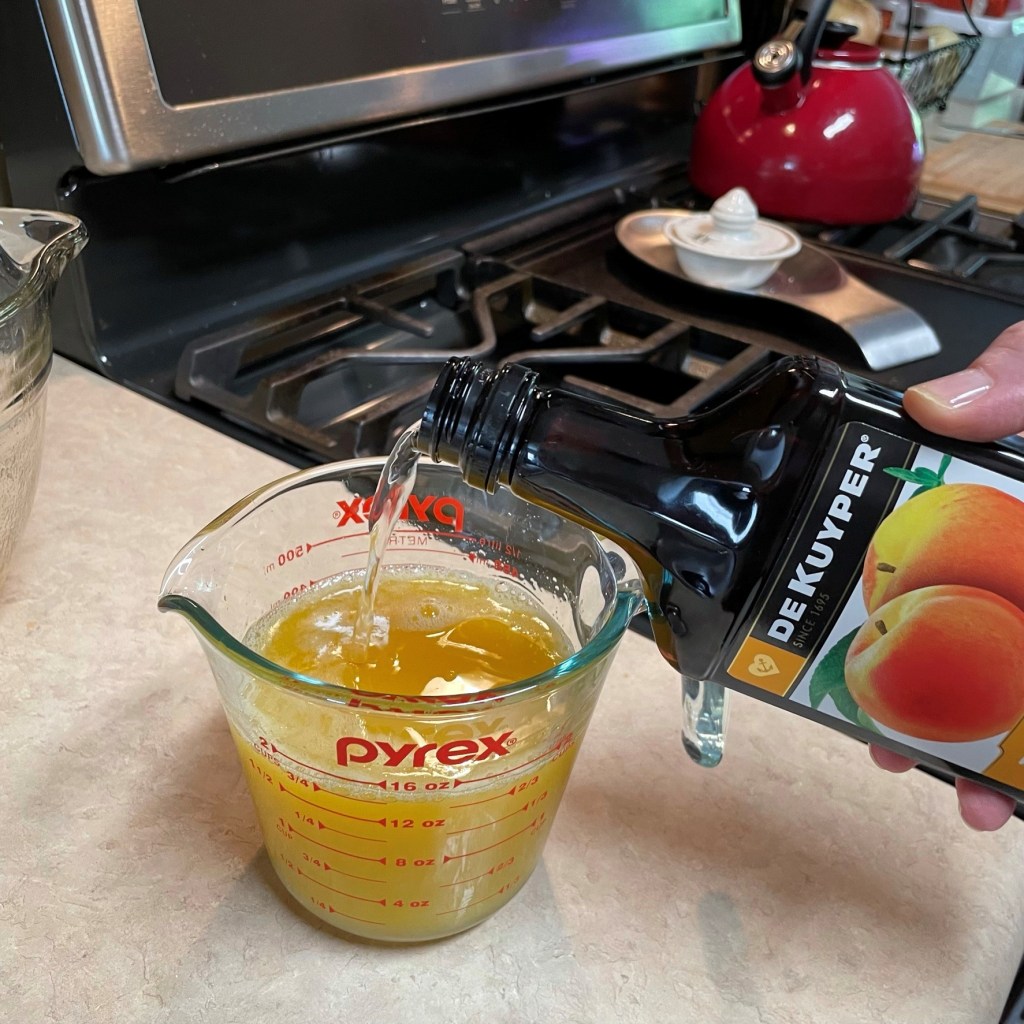
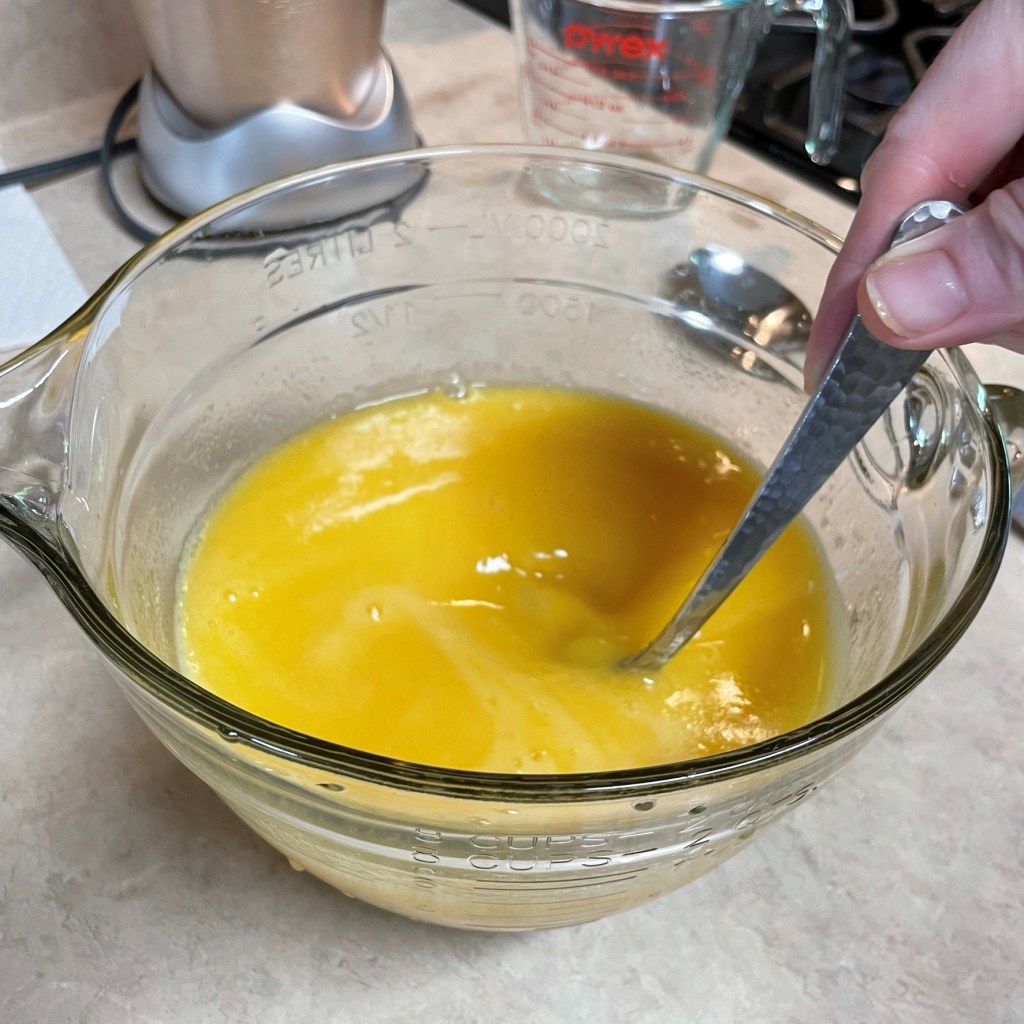
  5. Combine the pureed mixture, the remaining simple syrup, remaining water and the Peachtree schnapps in a large bowl or pitcher. Stir to blend. Cover with plastic wrap and chill several hours or overnight.
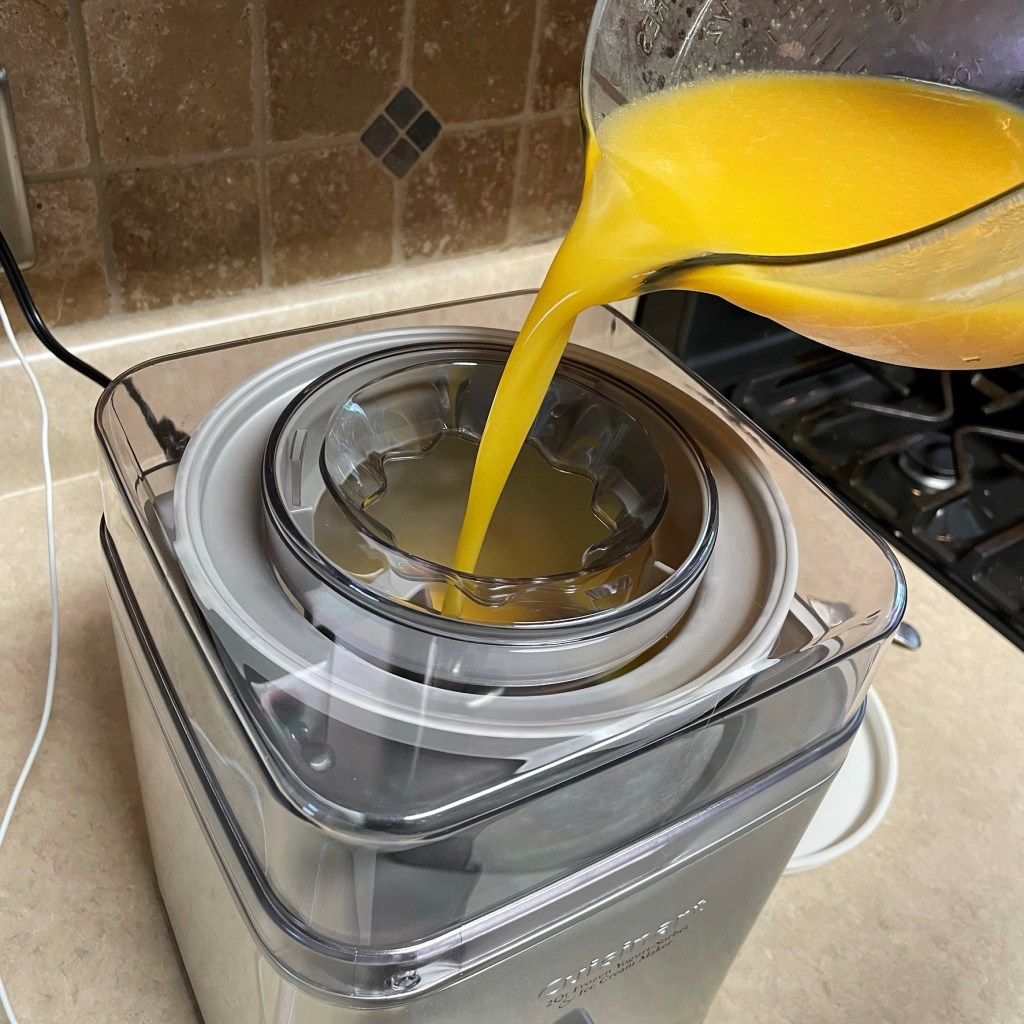
  6. Freeze the fuzzy navel mixture in an ice cream machine for about 25 minutes, until it’s frozen and slushy. Transfer to an insulated container and freeze overnight.

This sorbet can be served as is, or spoon a couple of tablespoons into a flute glass and top with prosecco. It’s a fun little brunch drink, almost as if a mimosa and a Bellini had a baby.


And as for you, young lady—well, you have a lot to learn. But you are awesome just as you are, even with your eyes closed. Don’t ever let anyone tell you different. ❤


Ratatouille Lasagna Roll-ups

The summer season brings all the garden-fresh vegetables I love, including zucchini and eggplant, which I would definitely be growing in our little garden plot if it weren’t for the deer. Year after year, I have tried in vain to grow my own veggies, and the increase of deer activity on our property and that of our neighbors has been almost humorous. Almost.

Gardening, for me, started as a fun, nature-loving adventure but has rapidly declined into a frustrating drama, and now we have this elevated box in our yard, where we cannot grow anything but marigolds and basil, which have proven to be the only things our local deer detest. Last year’s garden was demolished, right down to the flowers and budding fruit of the eggplants and even the jalapeno pepper plants (which I had been told deer would never eat). We have tried all the folk remedies on the internet—human hair, shavings of bar soap, peppermint oil, so-called deer repellent, and even a weird concoction I made from rotten eggs, cayenne and dish soap. That last remedy had near-catastrophic results, but I won’t embarrass my husband again with that story (you can read it here, if you’d like). This year, we didn’t even bother planting a garden, and I’m contemplating turning the raised bed into some kind of wildflower bed. I get exasperated just thinking about it.

To make up for a lack of homegrown veggies, we are regularly visiting our weekly Cobblestone farmers’ market, which features a variety of vendors offering fresh produce as well as pastured meat, eggs, organic mushrooms, jams and preserves, and even handmade alpaca wool products. It’s a fun way to spend an hour on a Saturday morning, and this past weekend, we came home with everything I needed for a new batch of ratatouille. Ah, my favorite veggie-centered summer meal!

Classic ratatouille ingredients = zucchini, eggplant, pepper, onions (leeks this time), tomato and herbs de Provence!

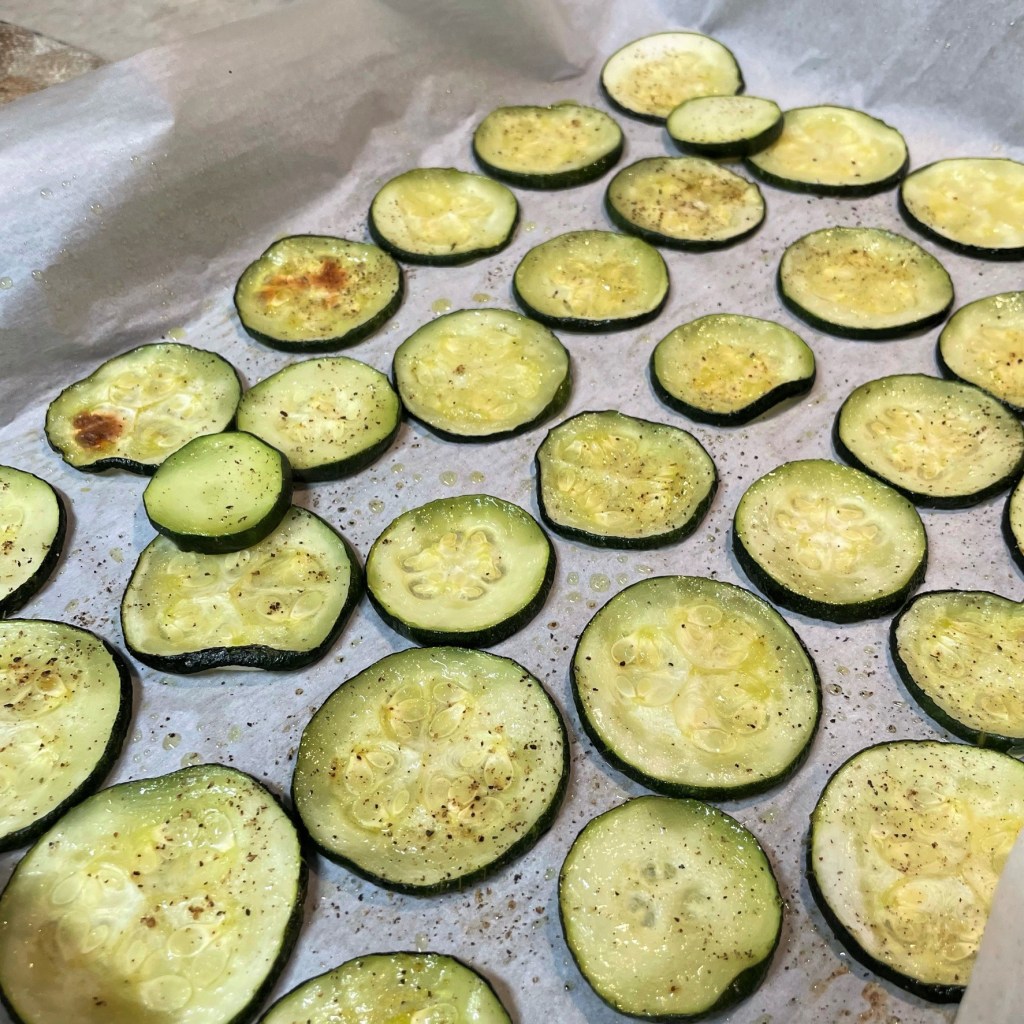
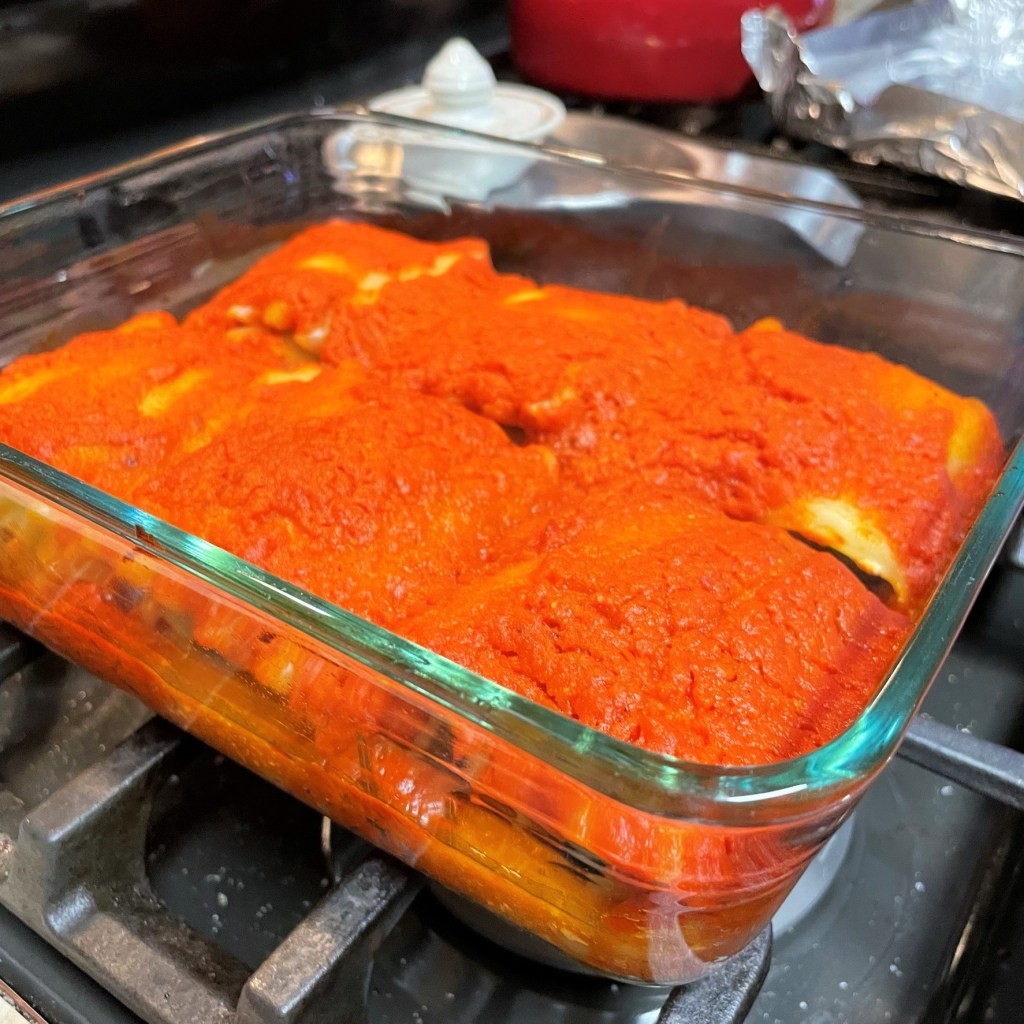
Me being me, though, I cannot simply chop up these ingredients and make a “traditional” ratatouille, which would be a rustic casserole-meets-stew kind of thing. I have to twist it up! My culinary muse inspired me this time to combine the French classic dish with another favorite comfort food—lasagna. I figured that I could infuse my herbs de Provence seasoning into a ricotta mixture with lemon zest and some grated cheese and that it would be the “glue” to hold the other ingredients together inside a rolled-up lasagna noodle. The eggplant and zucchini would be sliced and roasted, and the red pepper would be worked into the sauce. This is how my mind sees a pile of ingredients, and the end result was exactly as I had imagined, both visually and in perfect summer flavor. Delicious!

Inside, you can see and taste all the flavors of a summer ratatouille!

This reimagined one-dish meal took mostly time to put together; it was not at all difficult. I cannot say definitively how much time is needed because I was cooking all day, in between work emails and other home tasks. I will say that it was mostly passive time; I was either waiting for things to lose moisture or to finish roasting or to boil or bake. The rest was just slicing, chopping and stirring, and there’s no particular order that must be followed. You could even make everything a day ahead and just assemble and bake it the next day.


The entire ratatouille-meets-lasagna project weaved itself nicely into my busy day, and because each ingredient received its own treatment, the simplest way I can describe it is to share the process of each component. I’ll share a PDF version of the recipe at the end if you want to try it, but I’ll let the pictures tell the story in today’s post. Here we go! 🙂


The Ricotta Filling


The Eggplant


The Zucchini


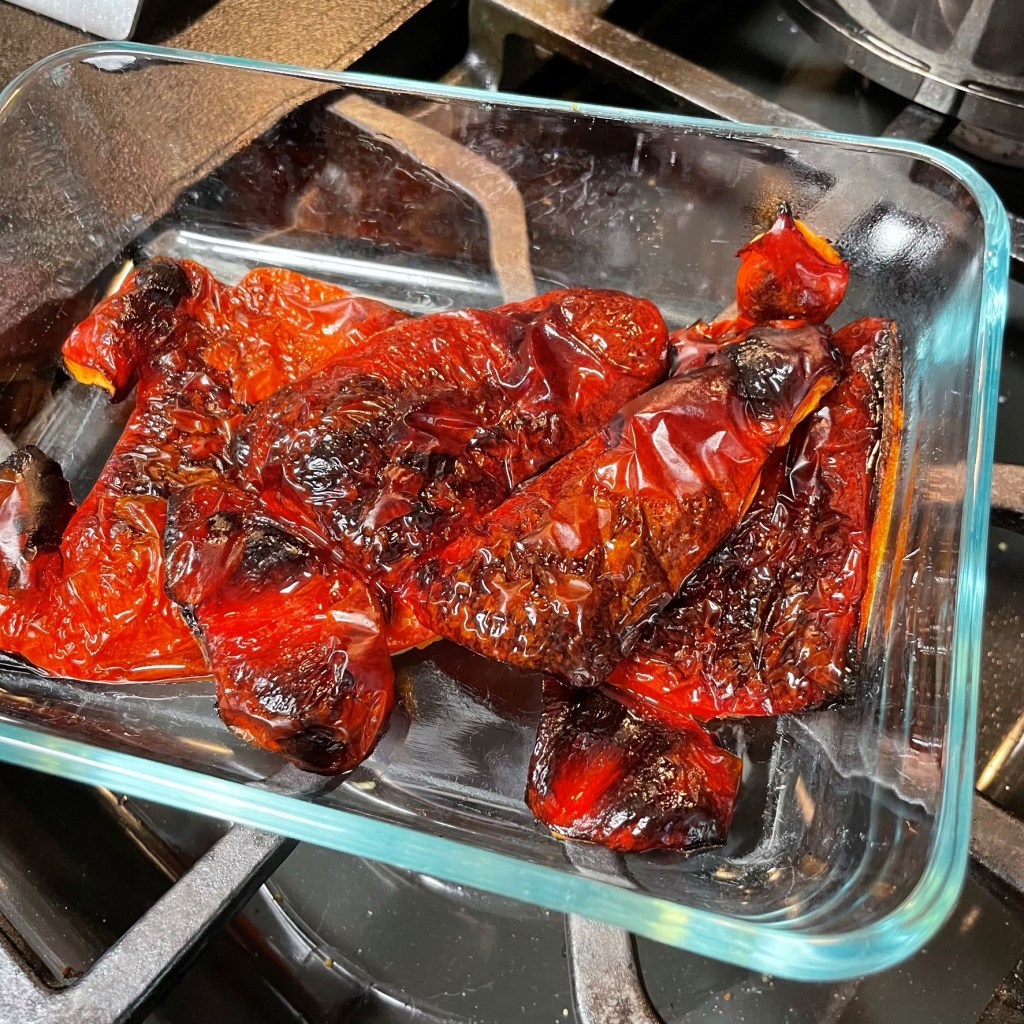
The Red Bell Pepper


The Onions


The Tomatoes

The only classic ratatouille ingredient remaining is tomato, and though my ingredients photo displays a big, lovely heirloom tomato from the farmers’ market, I thought better of it when I began cooking my ratatouille. The heirloom tomato would have been full of seeds and too juicy for this dish, so I cast it aside and used half a can of San Marzano tomatoes instead to produce a fusion sauce, together with the roasted red pepper and a healthy dose of garlic. This sauce was similar to the roasted red pepper sauce that my husband, Les, discovered last year, but it leans more toward tomato than pepper. It was exactly what this recipe needed.


Putting it all together

Assembling and finishing my ratatouille lasagna roll-ups was a cinch! I par-cooked the lasagna noodles until they were soft and flexible, spread the ricotta mixture onto them, layered the eggplant, zucchini and leeks and rolled them up!


First ratatouille of the summer! 🙂

Oh, and that plump, juicy heirloom tomato I mentioned found its way instead to a BLT, which we enjoyed as a separate meal on freshly baked sourdough bread with local greens and some pastured pork bacon (also from the farmers’ market).

Who needs a garden, anyway? 😉