Zesty Three Bean Salad

There is nothing new under the sun, as they say, and when I start to feel flummoxed over what side dishes to make for summer meals, one of the best things I can do is revisit a classic and modernize it for my grown-up palate.

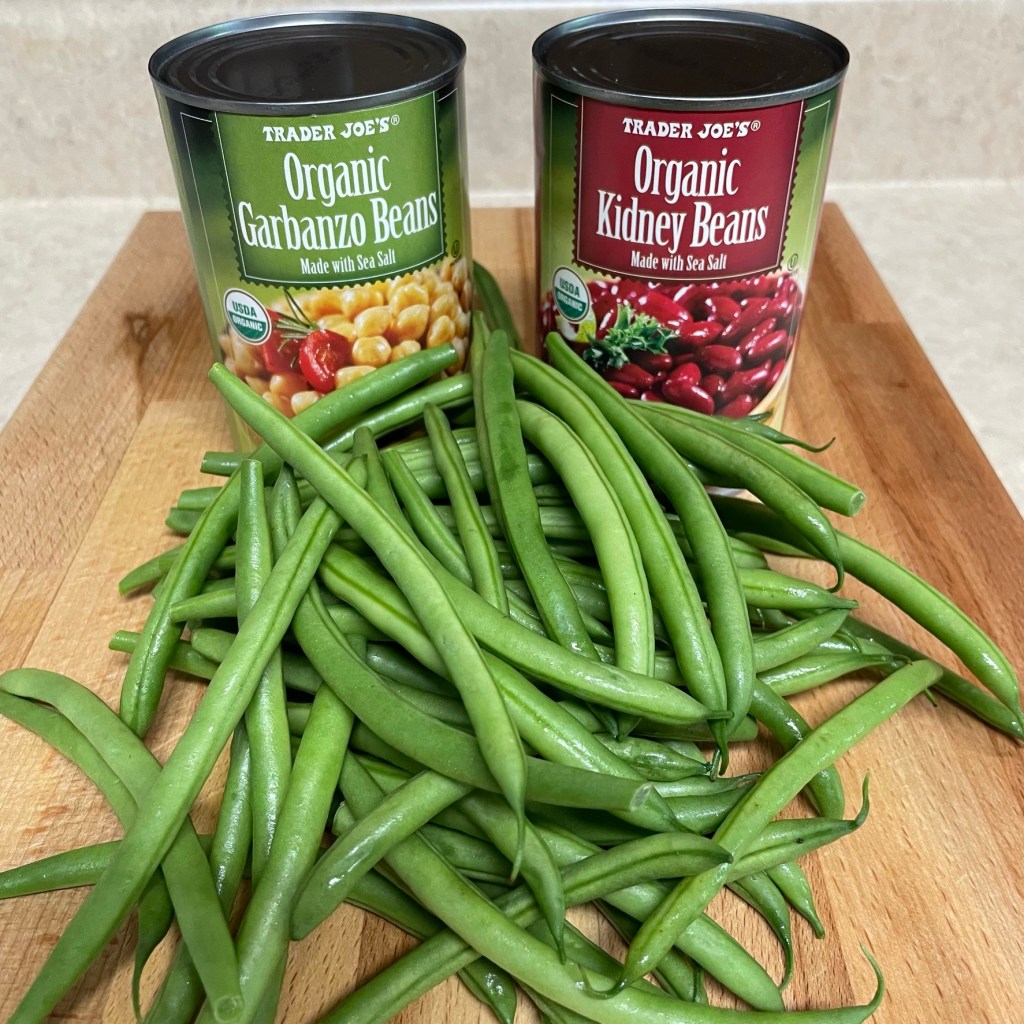
About the same period of time I became enthralled with the immense variety of baked beans at my great grandmother’s Fourth of July celebrations, there was a popular salad showing up on everyone’s dinner table. It might have been called a three-bean salad, including cut green beans, dark red kidney beans and little round garbanzo beans, which my dad always called “ceci beans.” But once in a while, yellow wax beans would also be in the mix, technically making it a four-bean salad but with generally the same flavors. This salad was often purchased ready-made, and as I recall, it was a popular item in the deli department of the grocery store where I worked as a young adult. The main thing I remember about it, besides its ubiquitous presence, is that it was sweet. Too sweet, in my opinion. I have no problem with a touch of sweetness in a salad dressing, but if it’s too sweet, it counters the benefit of eating vegetables.
Why diminish the goodness of these ingredients with a bunch of sugar?

So this summer, I have created an updated version of this otherwise good-for-you salad, shifting the flavor profile from sweet to zesty and herbaceous. The sugar in the recipe is nominal, and I’ve amped up the other side of the salad flavors with a hefty addition of minced garlic and a good bit of chopped fresh parsley and basil. The salad is quick and easy to make, as it relies somewhat on canned beans, and I’ve used ready-to-go fresh green beans to save time. If you’re lucky enough to have garden-fresh green beans, well, that would be awesome.


Ingredients

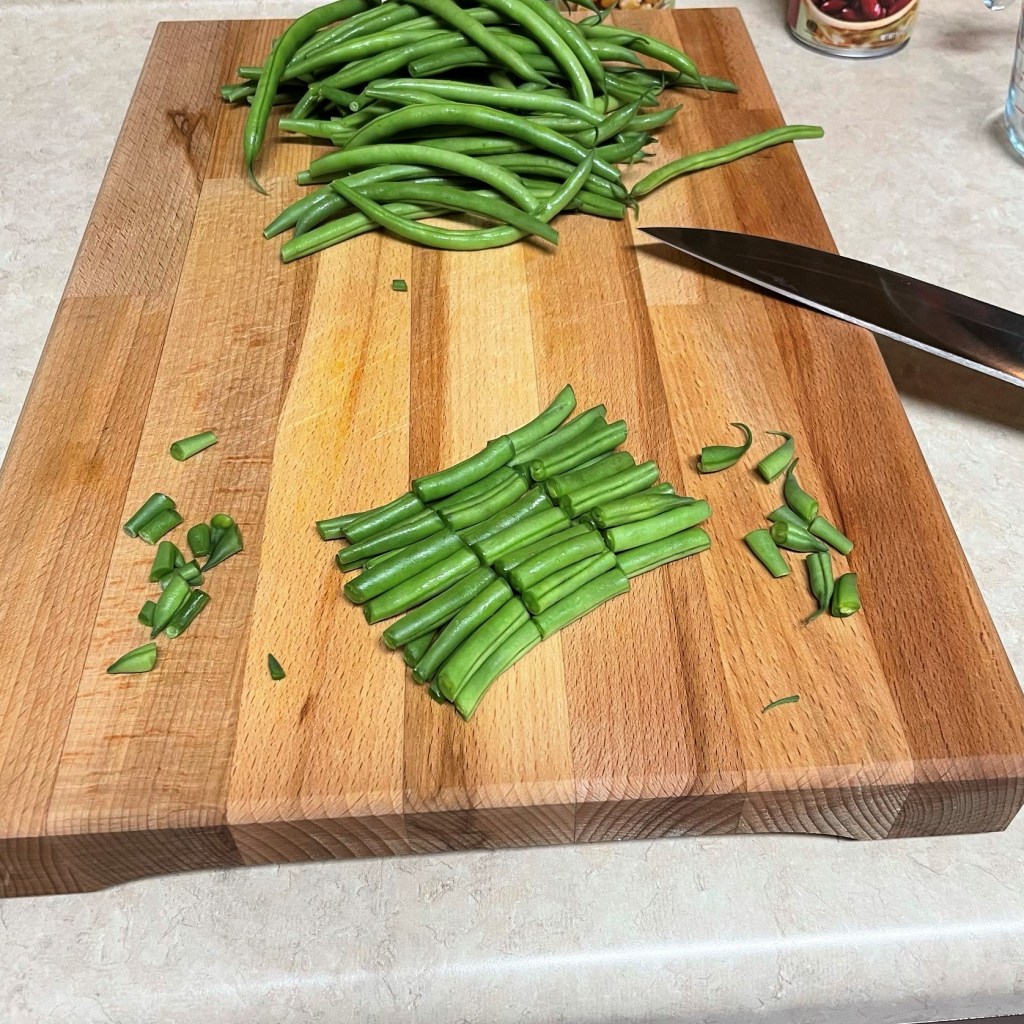
3/4 lb. fresh green beans, trimmed and cut into 1 1/2 inch pieces

15 oz. can dark red kidney beans, drained and rinsed

15 oz. can garbanzo (ceci) beans, drained and rinsed

1/2 cup sweet onion, finely diced

1/2 cup green bell pepper, finely diced

1/2 cup red bell pepper, finely diced

3 large cloves garlic, finely minced

1 handful fresh Italian parsley, chopped

Small handful fresh basil leaves, chopped


Dressing ingredients

1/4 cup red wine vinegar

2 tsp. Dijon mustard* (see notes)

2 tsp. cane sugar

1/2 tsp. celery seed

1/2 tsp. garlic pepper seasoning

2 Tbsp. cold water

1/4 cup extra virgin olive oil


*Notes

In lieu of regular Dijon mustard, I used the recently-discontinued Honey Pale Ale mustard from Trader Joe’s. Does anyone besides me have a gripe about how they pick and choose which products to keep? If you happen to have a jar of it, I think it’s terrific in salad dressings. Otherwise, just use regular Dijon.

Why, Trader Joe’s? I love this mustard. 😦

Instructions


  1. Heat a pot of water to a gentle boil. Add a generous pinch of kosher salt to the water, along with a half teaspoon of baking soda, which will help the beans retain their bright color.
  2. Make dressing for the salad; combine all ingredients except the olive oil. Whisk in olive oil gradually to create an emulsion. Salt and pepper to taste.
  3. Spoon the trimmed green beans into the simmering water and cook for about 6 minutes, or just until beans are tender enough to bite. Immediately spoon the cooked beans into a bowl of ice water to stop the cooking process. Drain beans to remove excess water.
  4. Combine green beans, canned beans, peppers, onions and garlic in a large mixing bowl.
  5. Pour in dressing and toss gently to combine. Adjust salt and pepper to taste. Add fresh herbs and toss again. Chill salad several hours and toss lightly to redistribute dressing just before serving. The olive oil in the dressing will solidify in the fridge, so plan to remove the salad at least ten minutes before serving for best presentation.
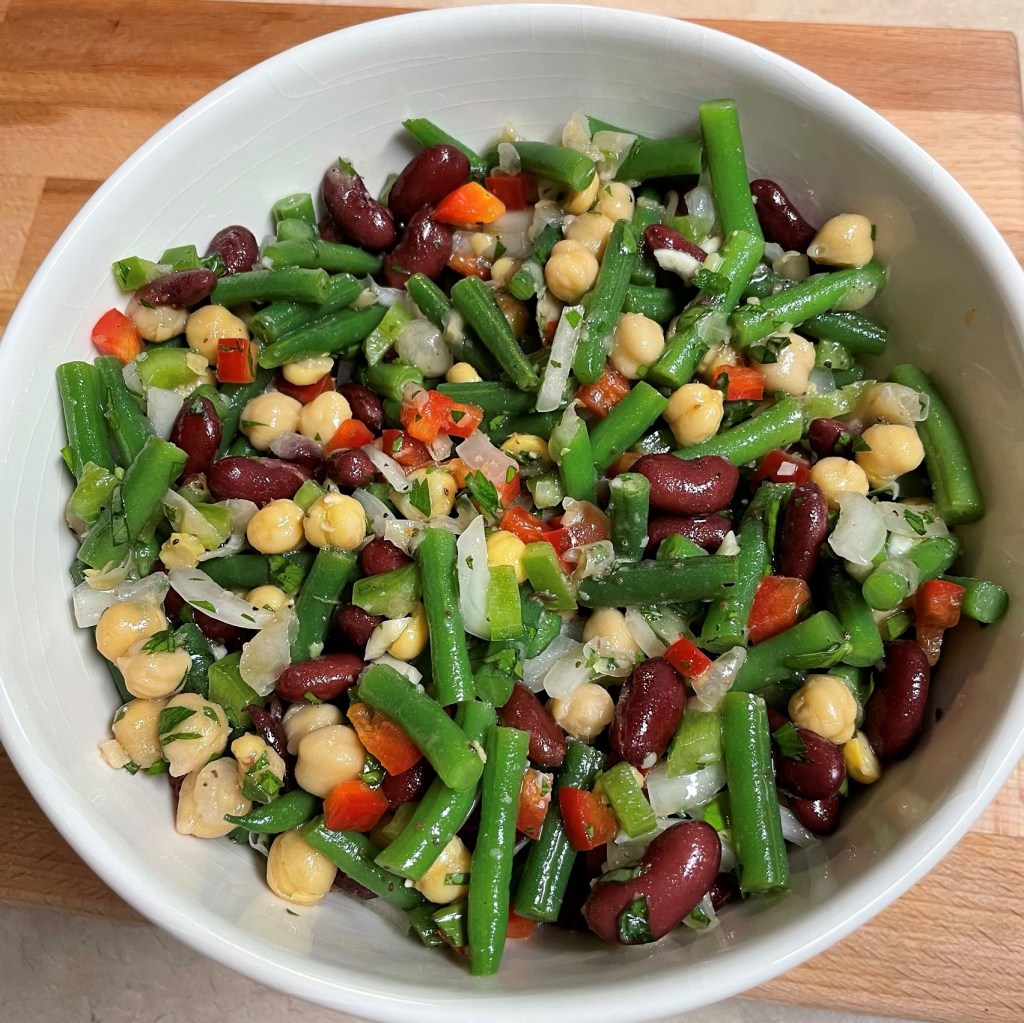
This zesty salad is loaded up with bright color, texture and flavor!


Apropos of nothing


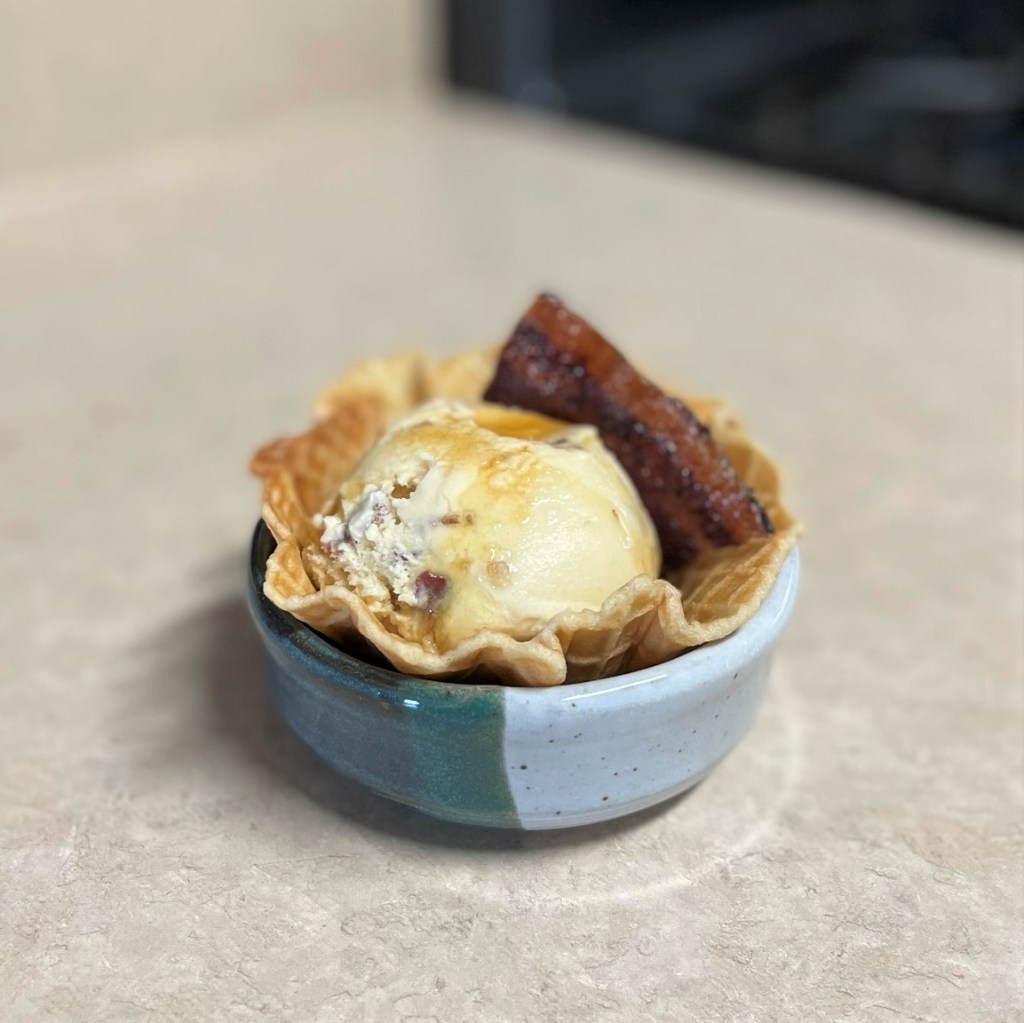
Salted Maple-Bacon Ice Cream

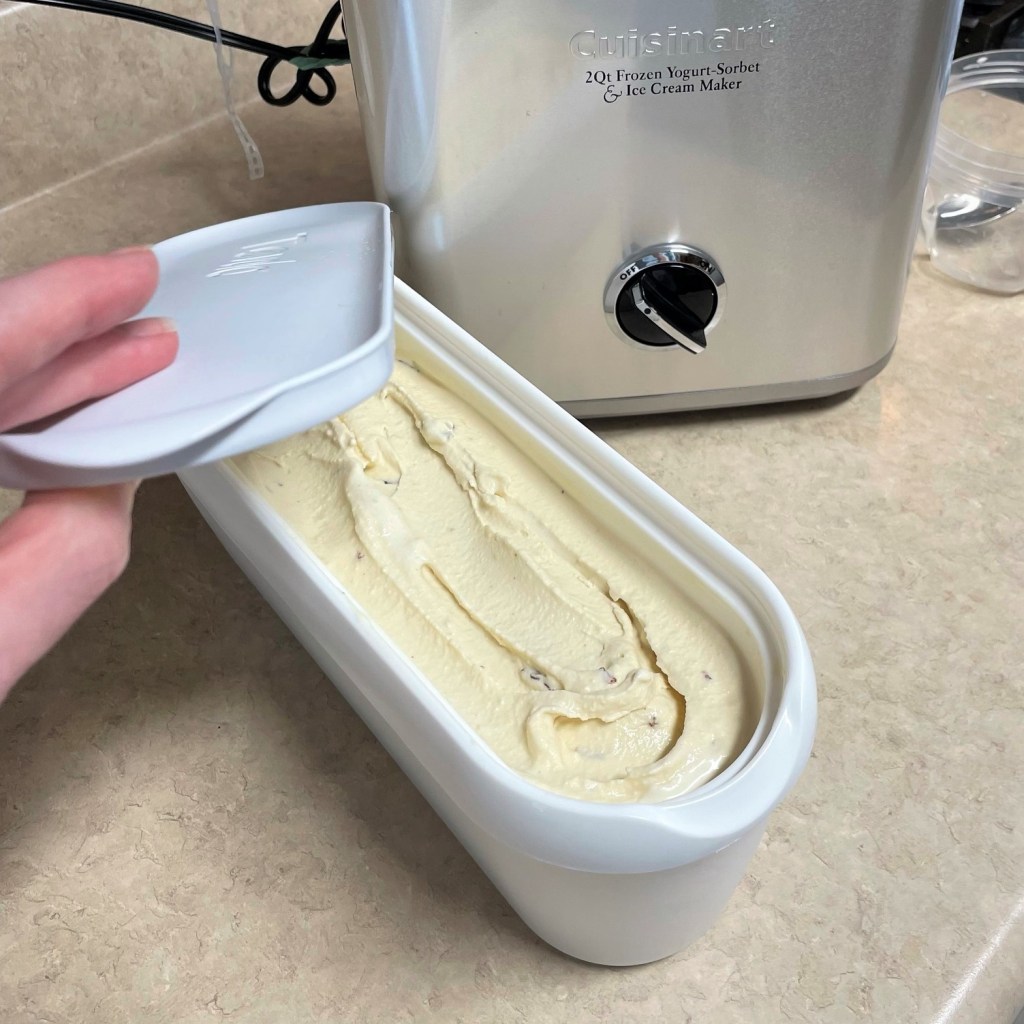
It wouldn’t be summer without ice cream, and it wouldn’t be Comfort du Jour without some unexpected flavor twists. One of the biggest reasons I love my ice cream machine is that I can choose my own flavors rather than relying on the same old varieties you find everywhere else. Using my easy formula for custard ice cream base, I’ve whipped two of my all-time favorite flavors into one frosty treat.

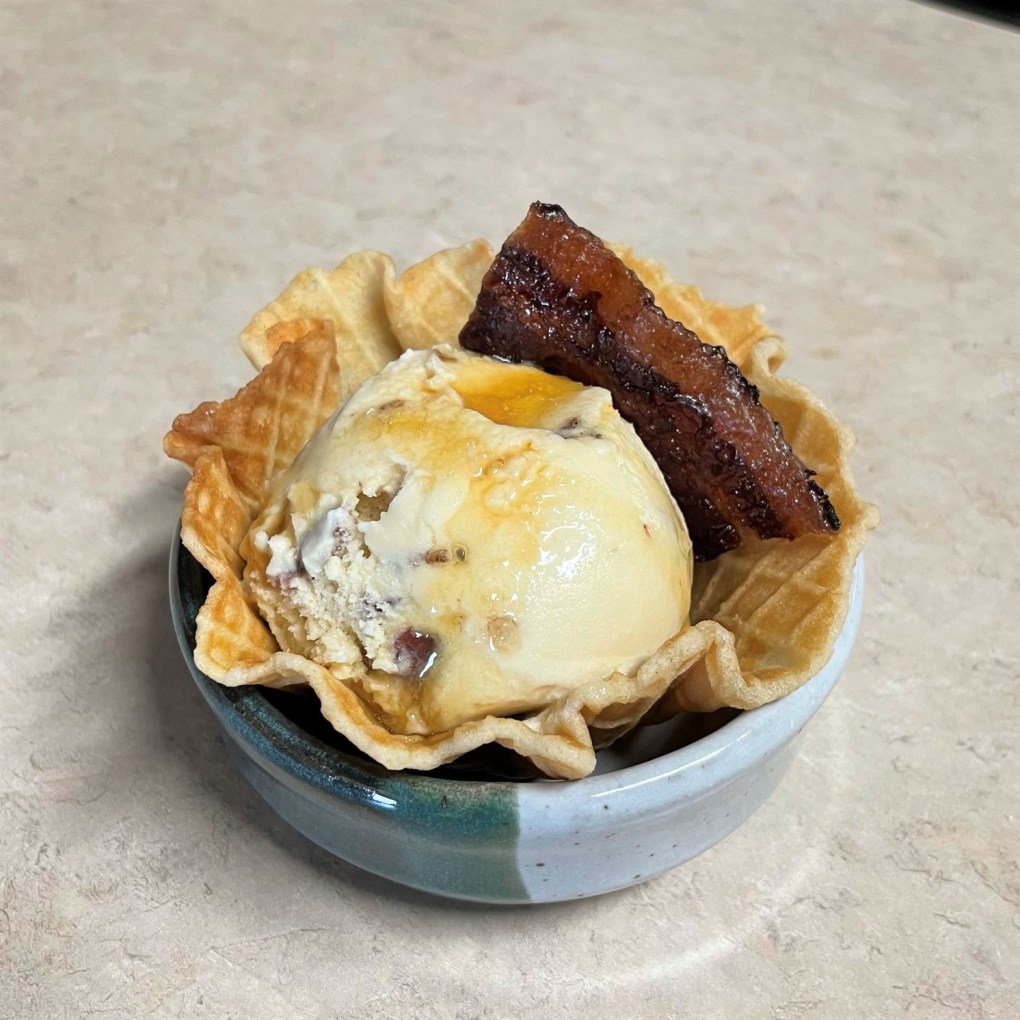
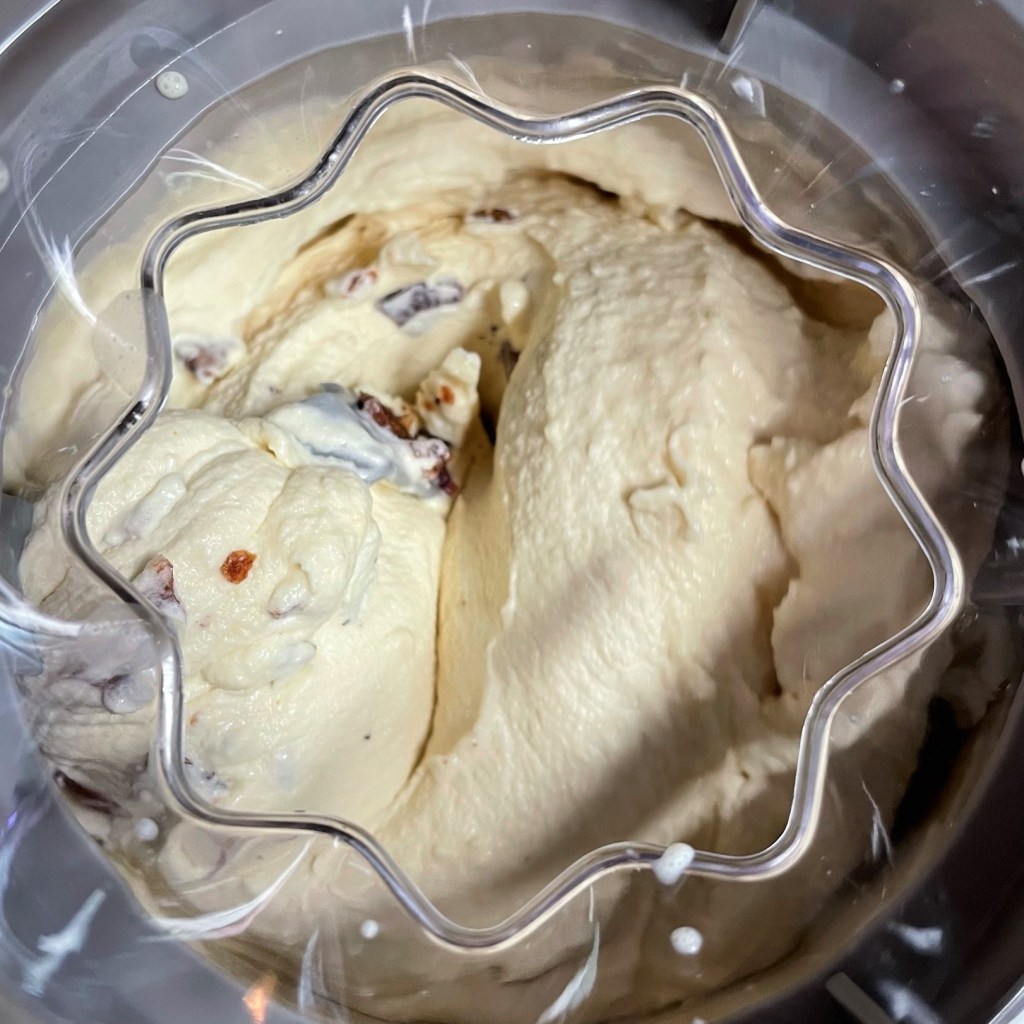
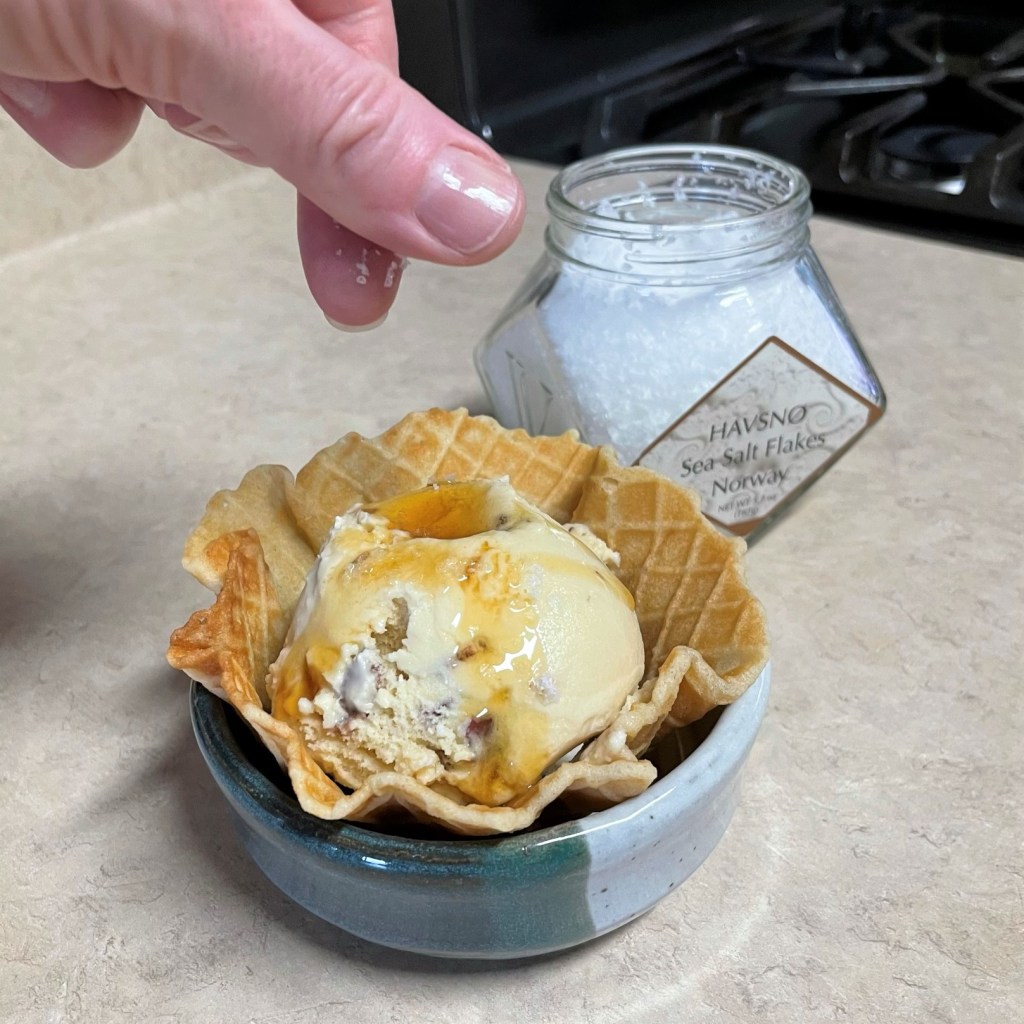
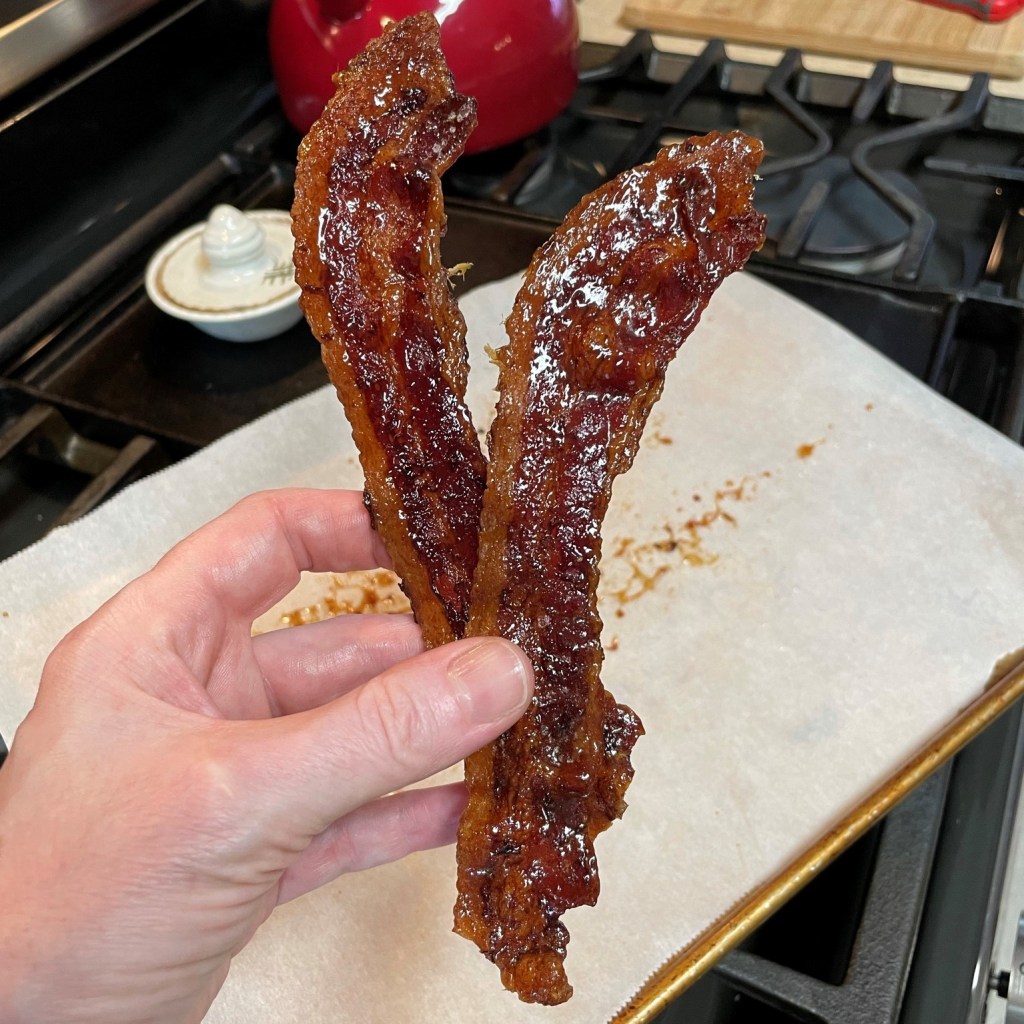
I’ve swapped out sugar in favor of maple syrup, and paired it with the delicious, smoky flavor of real bacon! These two flavors are like an old married couple, finishing each other’s sentences and picking up each other’s slack. When the maple syrup starts to feel too sweet, here comes the salty, savory bacon to keep it in check. And because we get a little crazy at our house about the sweet-salty combination of maple and bacon, I’ve garnished the ice cream with additional bacon, glazed with maple syrup. I’ll share that, too.

It’s National Ice Cream Day, smack in the middle of National Ice Cream Month, and I am on it!

I know you want some.

Ingredients

1 1/2 cups whole milk

1 1/2 cups heavy cream

1/3 cup maple sugar* (see notes)

3 egg yolks

1/2 cup dark maple syrup

1/2 tsp. kosher salt

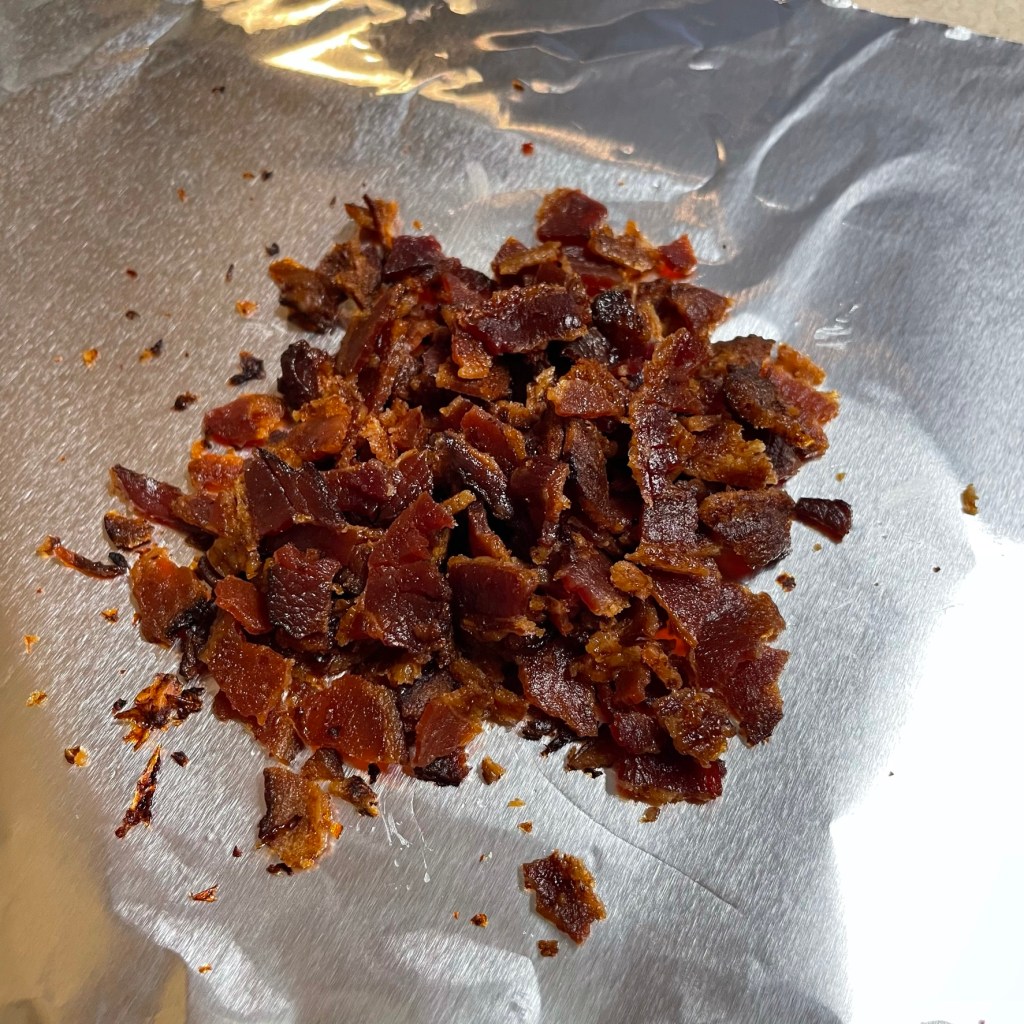
4 thin slices uncured maple bacon, cooked until crispy, then broken into bits*

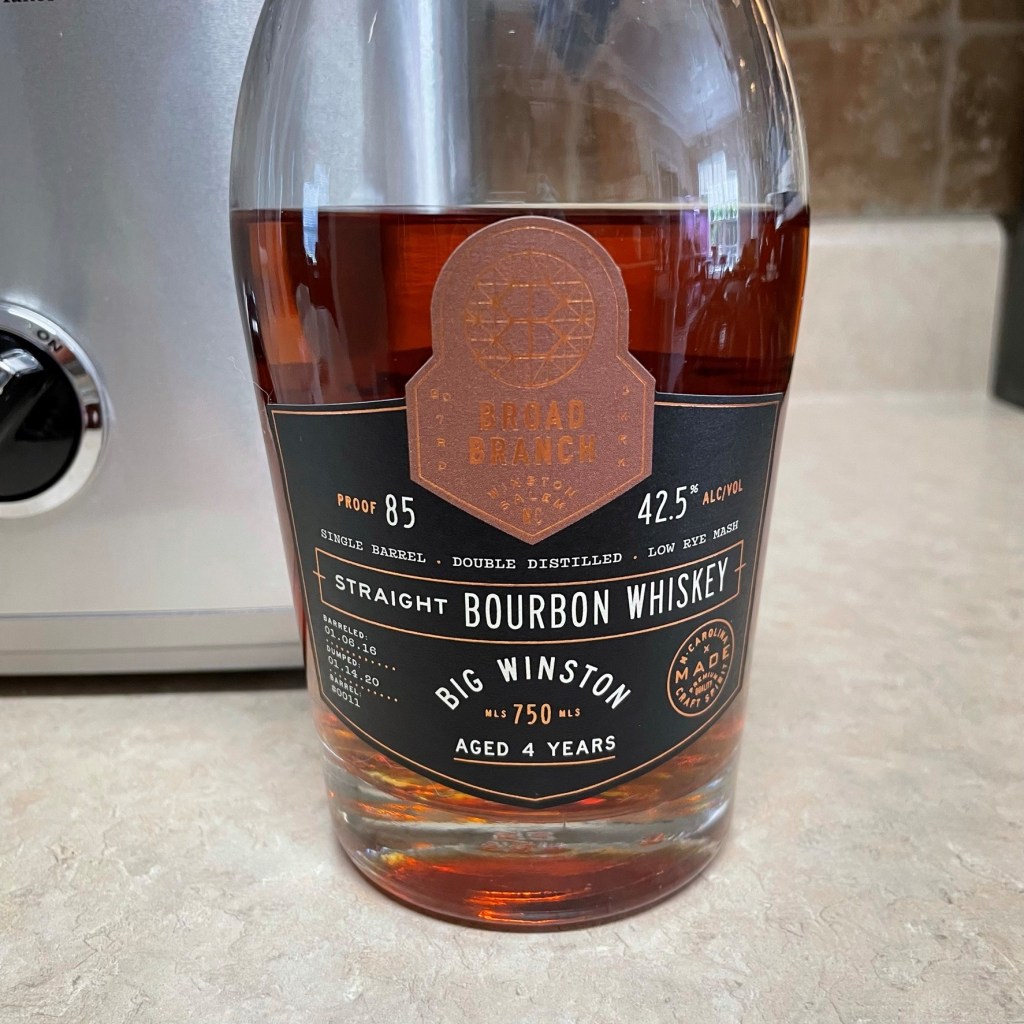
1 Tbsp. bourbon (optional but recommended for improved texture)


*Notes

Double maple means double tasty!

My maple sugar is sourced from the same place I order my syrup, Big Tree Maple in Lakewood, N.Y., which is just up the road from where I grew up. Maple sugar is not as easy to find in local stores as maple syrup, but you will be happy to know that Big Tree offers shipping on its products. You could also substitute with caster sugar (sometimes called “superfine” sugar) or simply increase the maple syrup to a total of 3/4 cup.

All 4 pieces of bacon are intended for mixing into the ice cream. Cook a few extra slices of bacon if you want to make the maple-glazed candied bacon garnish. And, trust me, you want to! 😉


Instructions


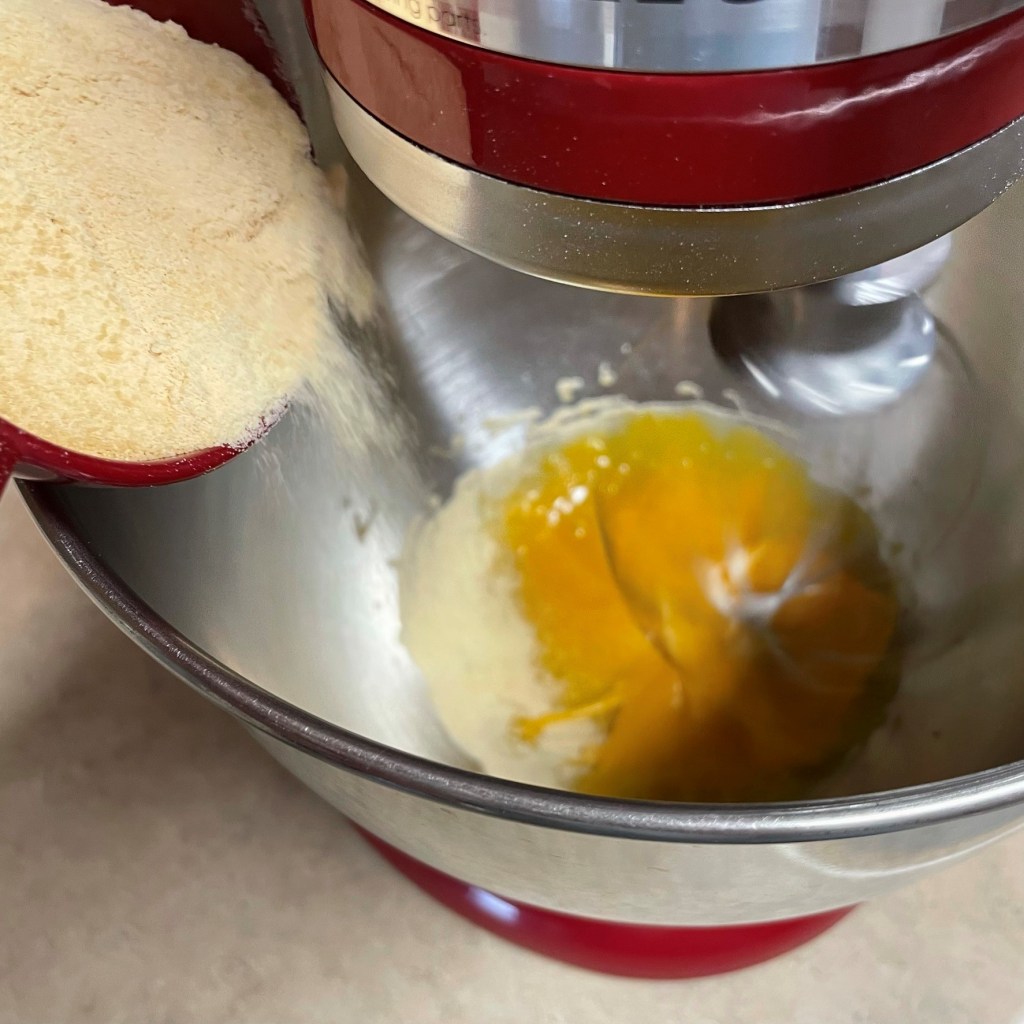
  1. In a stand mixer or bowl with hand mixer, whip egg yolks until they get frothy and increase in volume. Gradually add maple sugar, whipping constantly and stopping occasionally to scrape down the sides of the bowl.
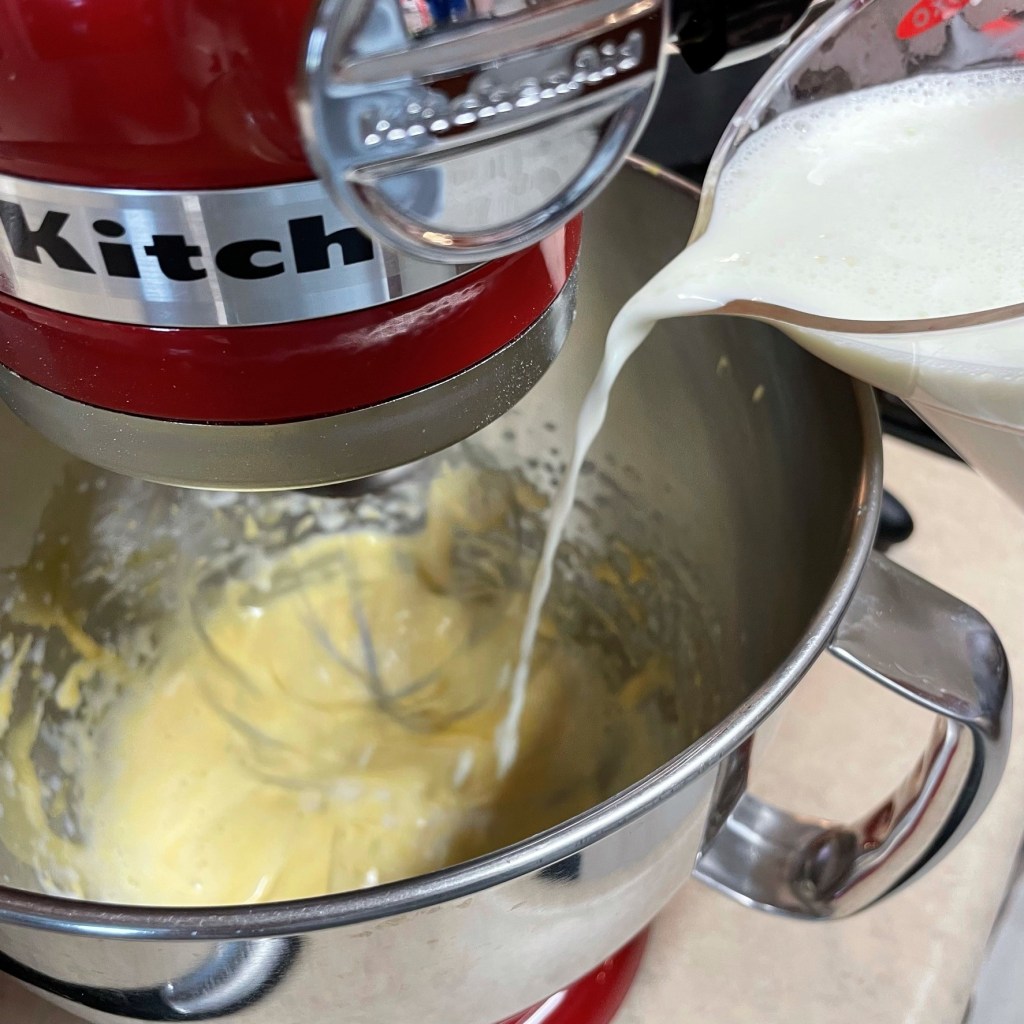
  2. Heat milk and cream until hot and steaming but not boiling. Reduce the heat to very low (or turn it off) at this point, so that the milk mixture doesn’t curdle. Measure out about 1 cup of the hot milk mixture. Stream it slowly into the egg yolk mixture while running the mixer. Use a lower speed on the mixer to avoid whipping too much air into the cream mixture.
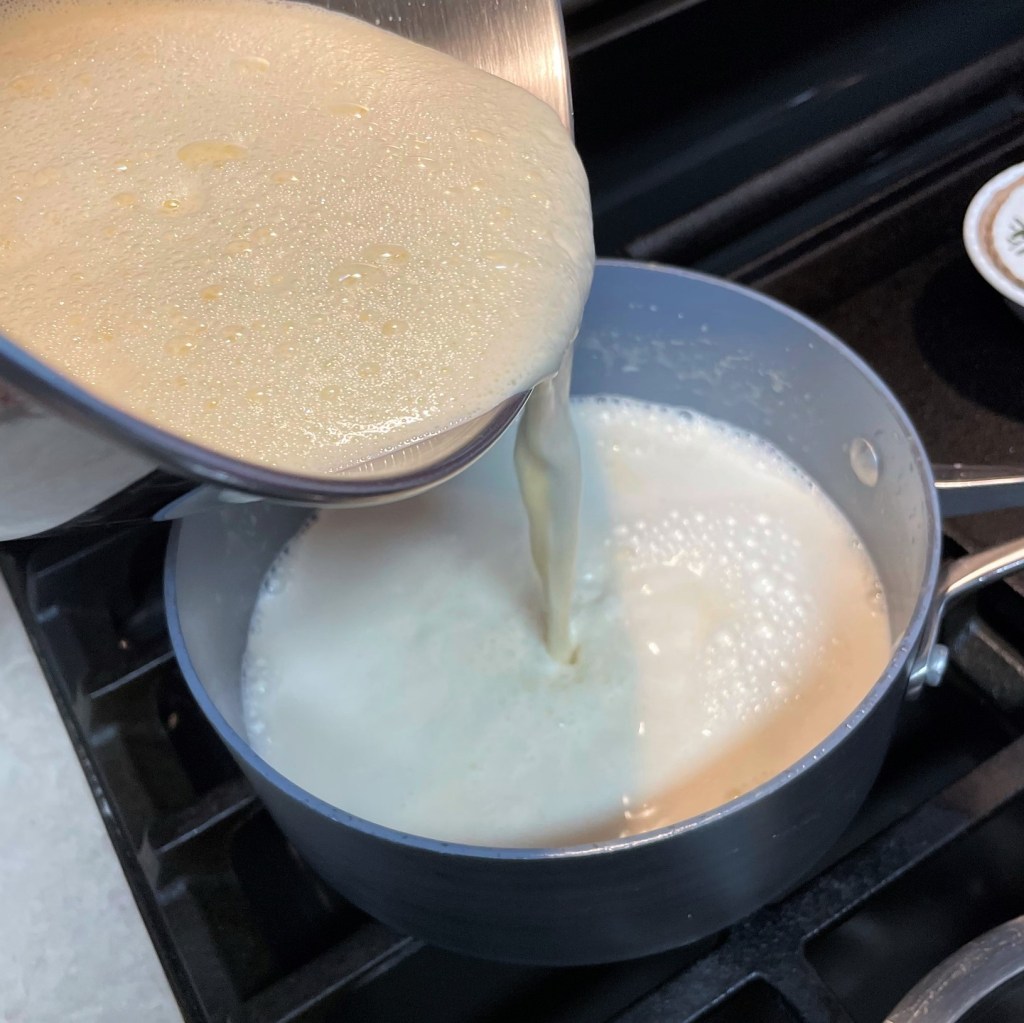
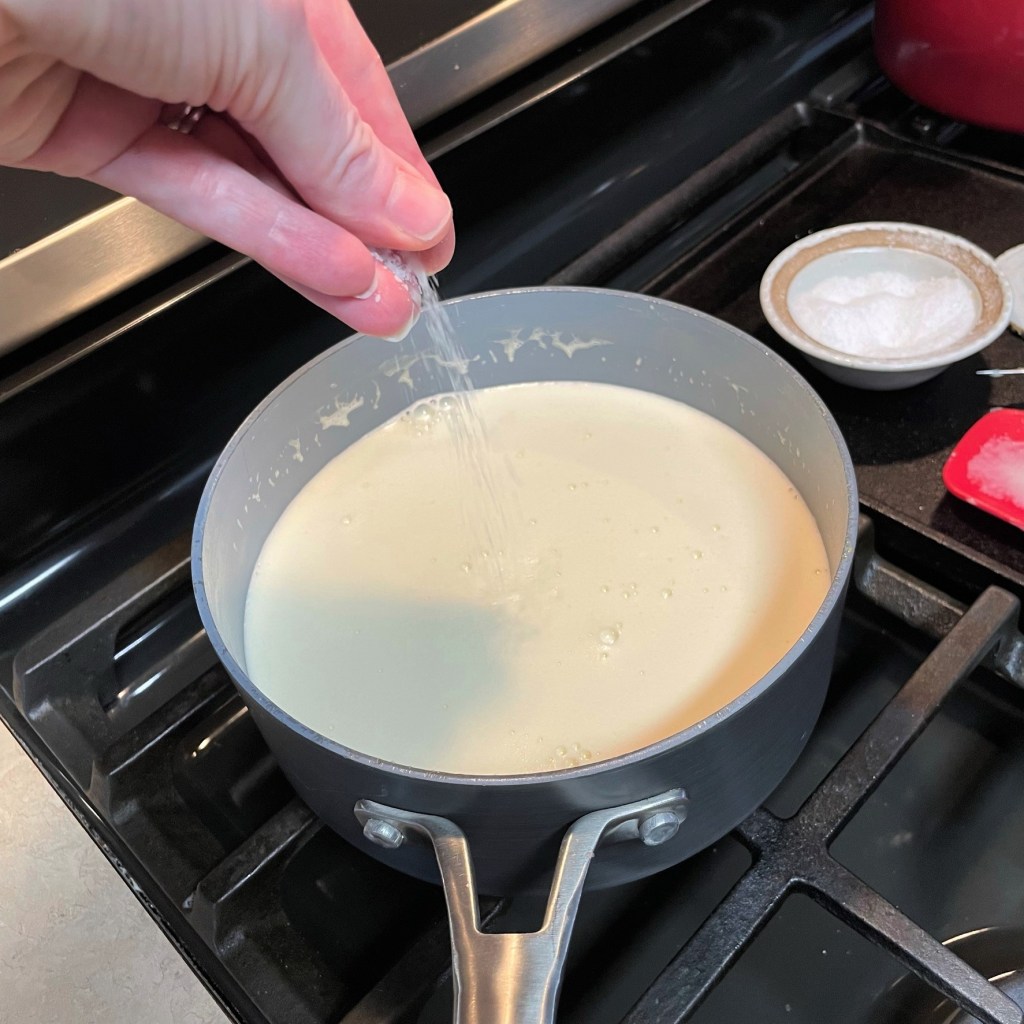
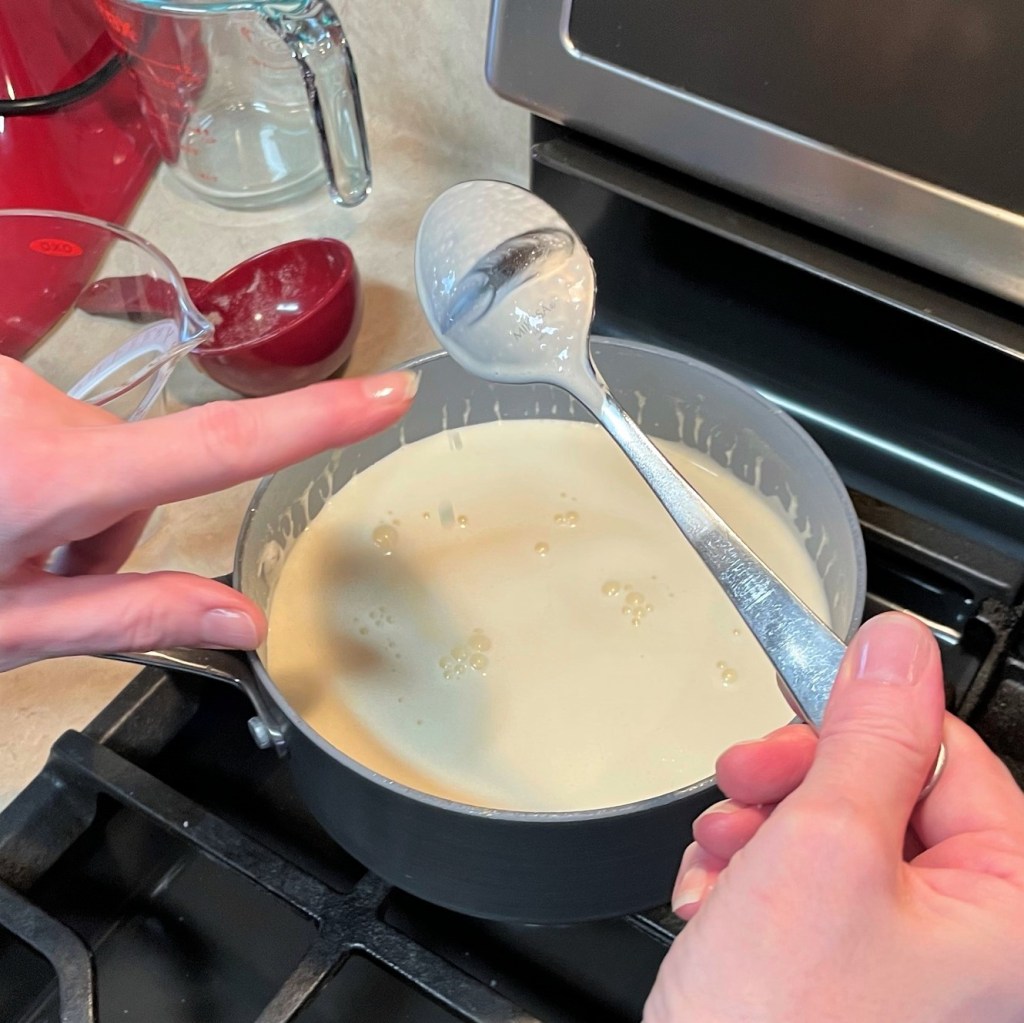
  3. Transfer the tempered yolk mixture back to the saucepan with the remaining milk-cream mixture and cook over medium-low heat, stirring constantly, until custard is smooth and coats the back of the spoon. Remove from heat. Stir in kosher salt until dissolved.
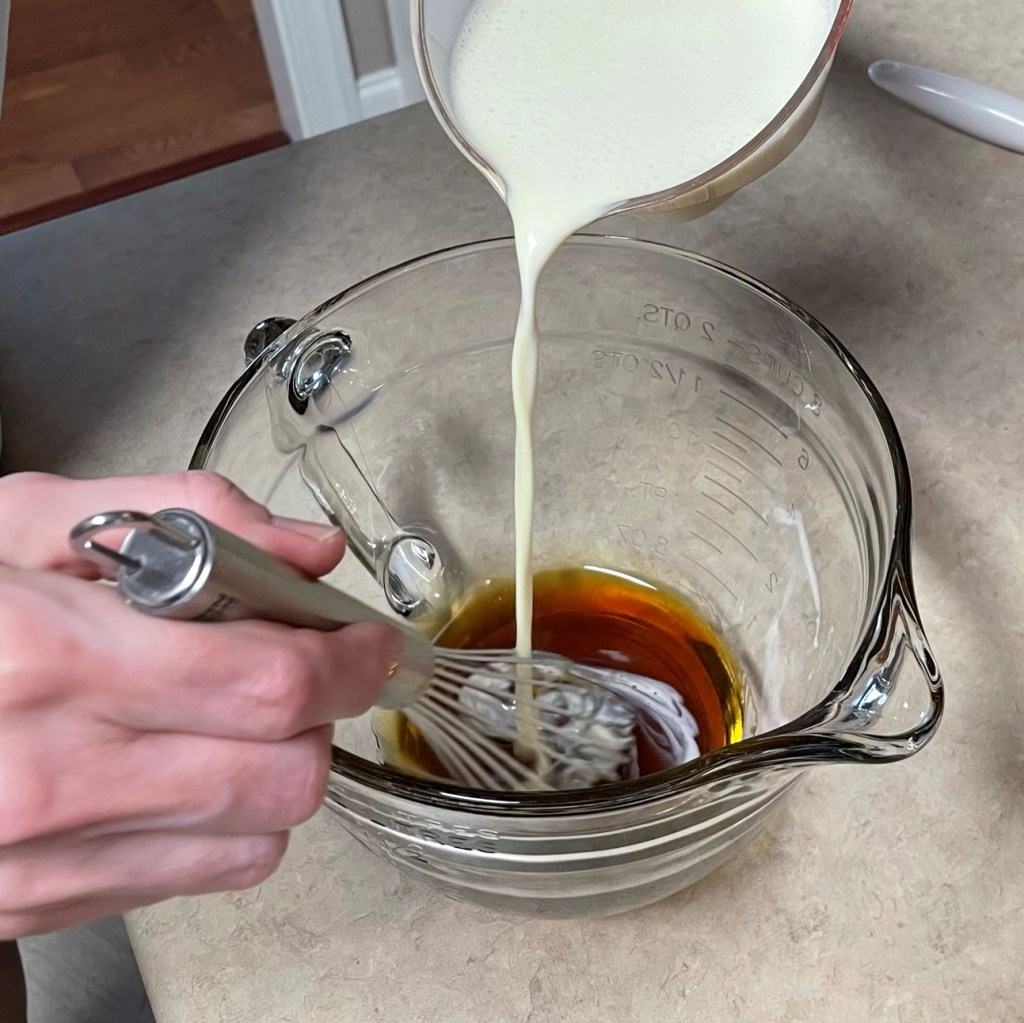
  4. Whisk in maple syrup, stirring thoroughly to combine. Lay plastic film directly onto the surface of the custard to prevent condensation. Cover the bowl with additional film or lid and refrigerate several hours to overnight.

Time to freeze the ice cream!

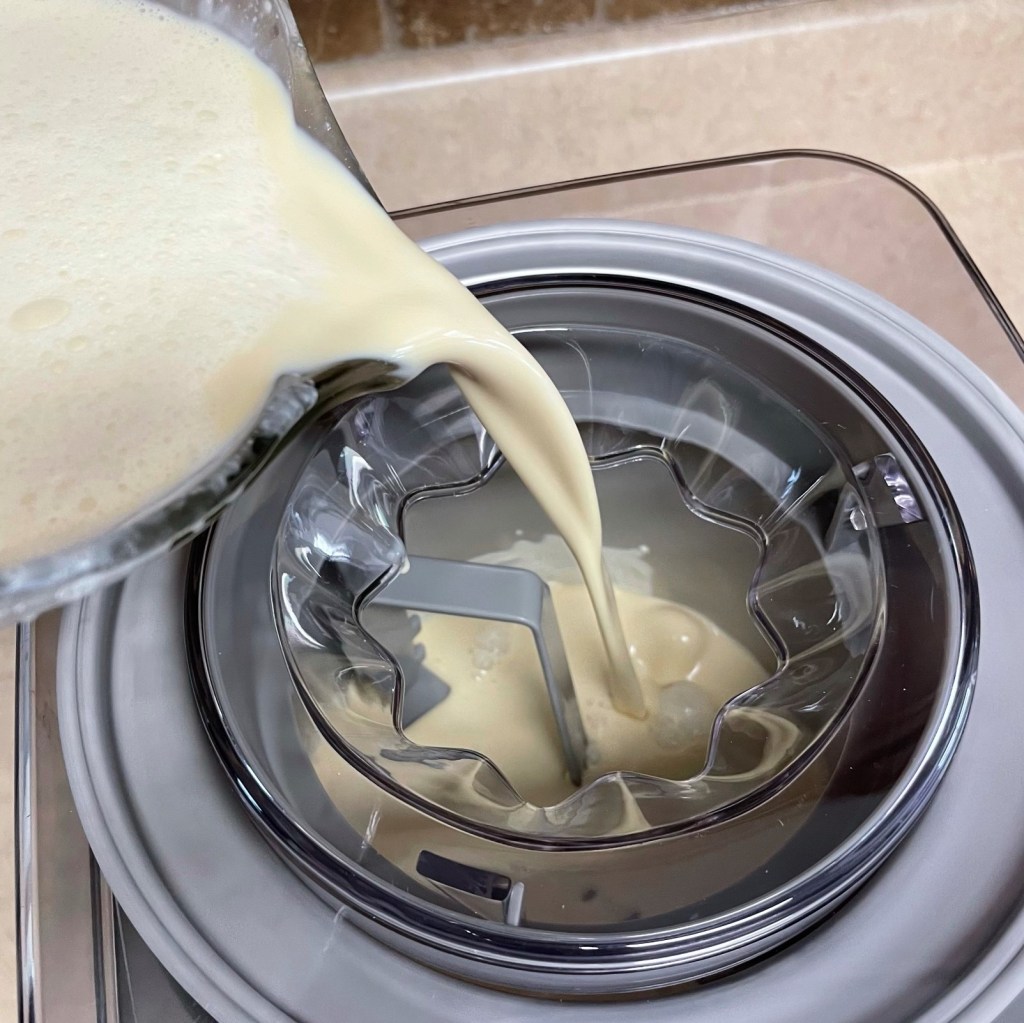
  1. Before freezing, remove plastic film and stir mixture to reincorporate any ingredients that may have settled to the bottom. Freeze in ice cream maker according to manufacturer’s instructions.
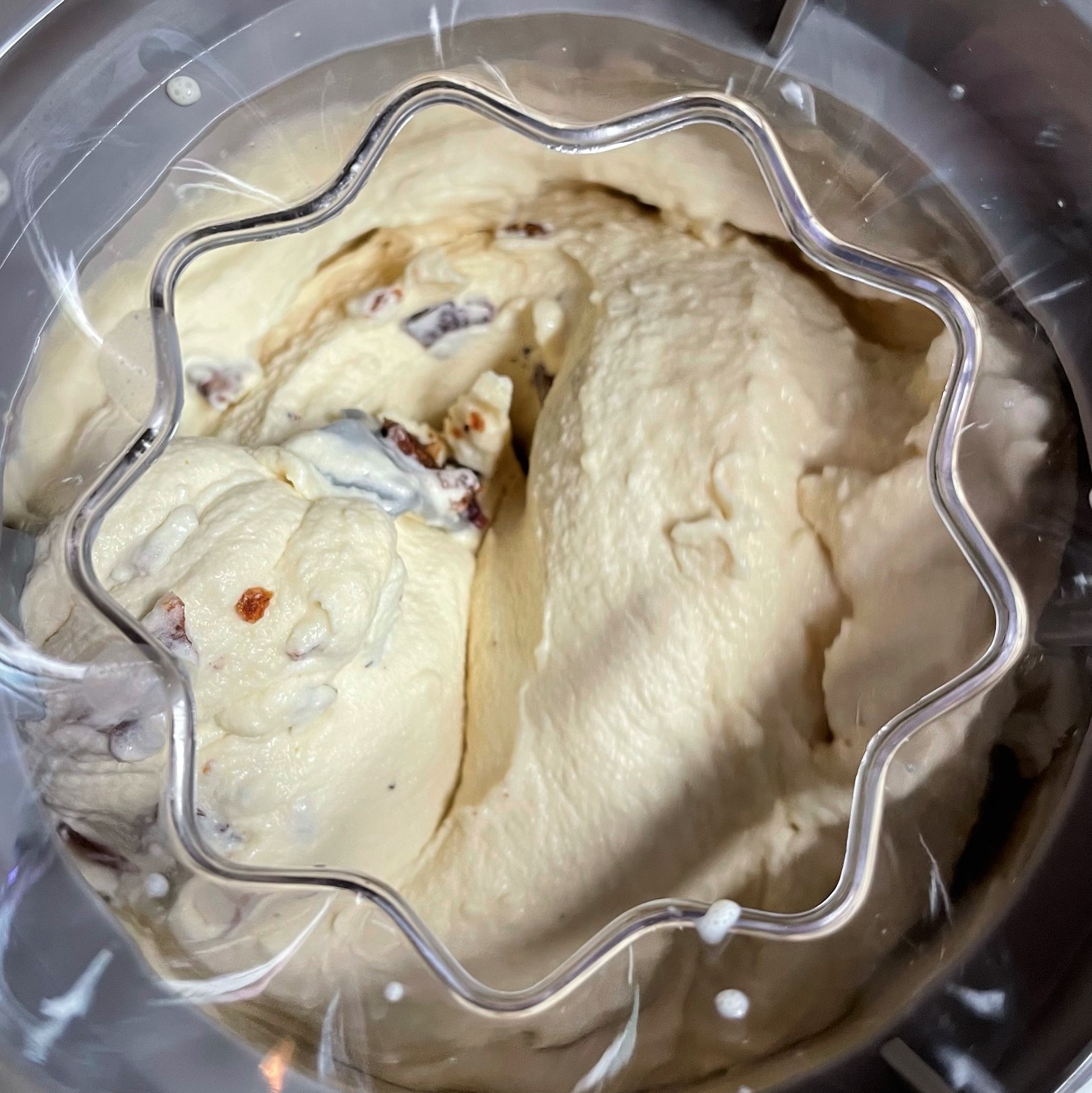
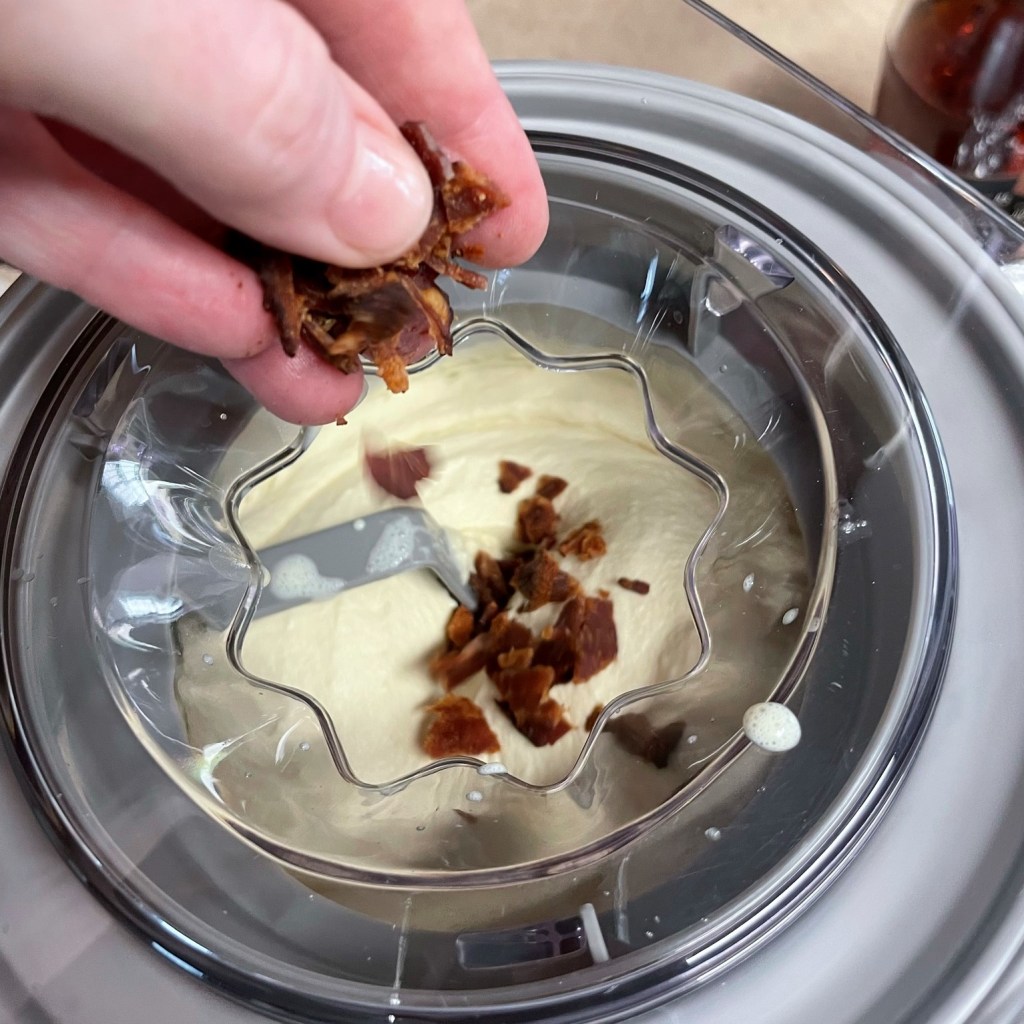
  2. In the last few minutes of churning, add bacon crumbles to the ice cream.
  3. Mix in a tablespoon of bourbon in the final minute. The alcohol will just barely flavor the ice cream, but the real benefit will be improved texture for scooping directly from the freezer.


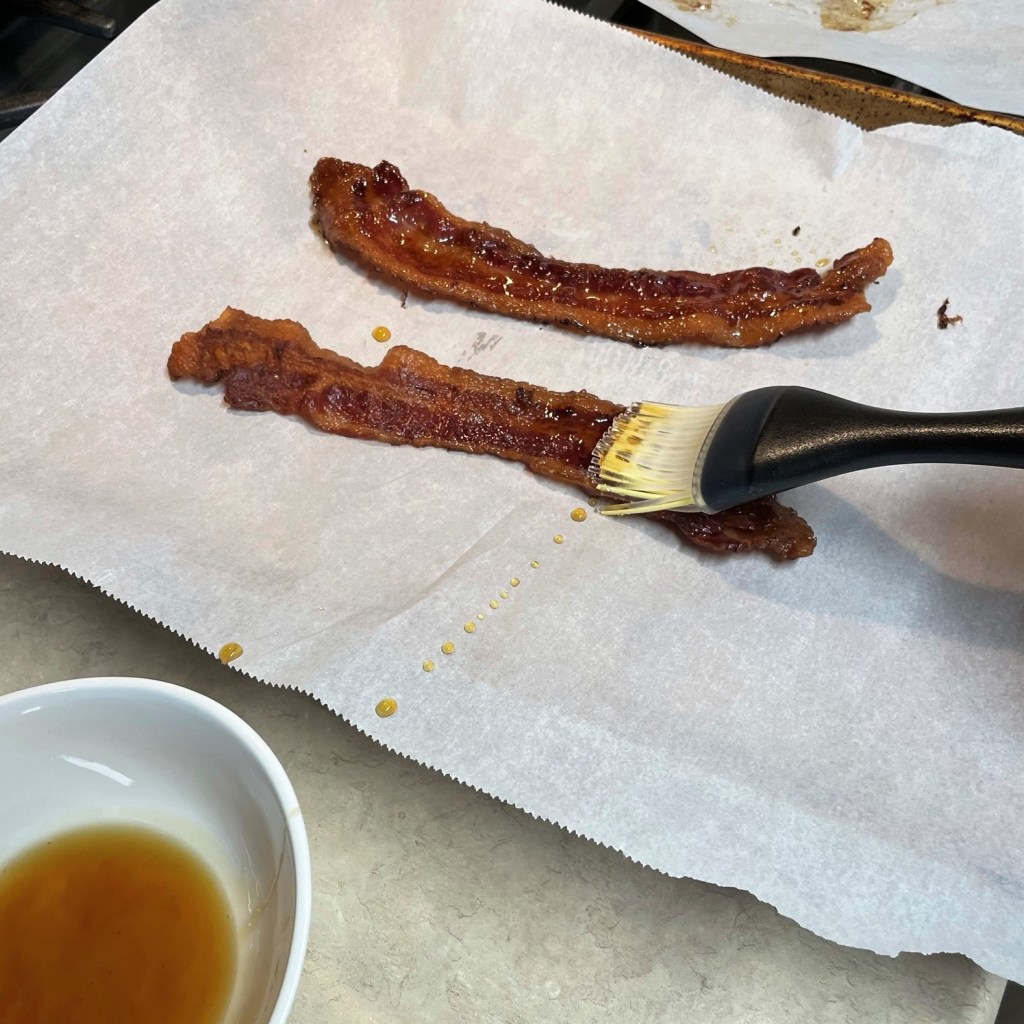
Bonus recipe – Candied Maple Bacon

2 to 3 thin strips uncured maple bacon

2 Tbsp. maple syrup

Cook bacon in the 350°F oven on a parchment-lined baking sheet. When bacon is crisp, transfer to a paper towel and replace parchment paper. Lightly brush maple syrup onto each side of the bacon slices, and return it to the oven for a few minutes. Repeat two or three more times, until syrup is hardened and bacon looks like candy. Cool completely and wrap loosely in foil or parchment. Garnish ice cream portions with a piece of the bacon.


You may be wondering if I’m a paid endorser for the brands and products I spotlight on Comfort du Jour, and the answer is “no.” I do not receive money or merchandise for my recommendations, and what that means for you is that you can count on me to give an honest opinion. If something changes, I will update my disclosures. Either way, you can still count on me to be honest in my recommendations, as I will only stand behind services and products I believe in. Fair enough? 😀
Terrie


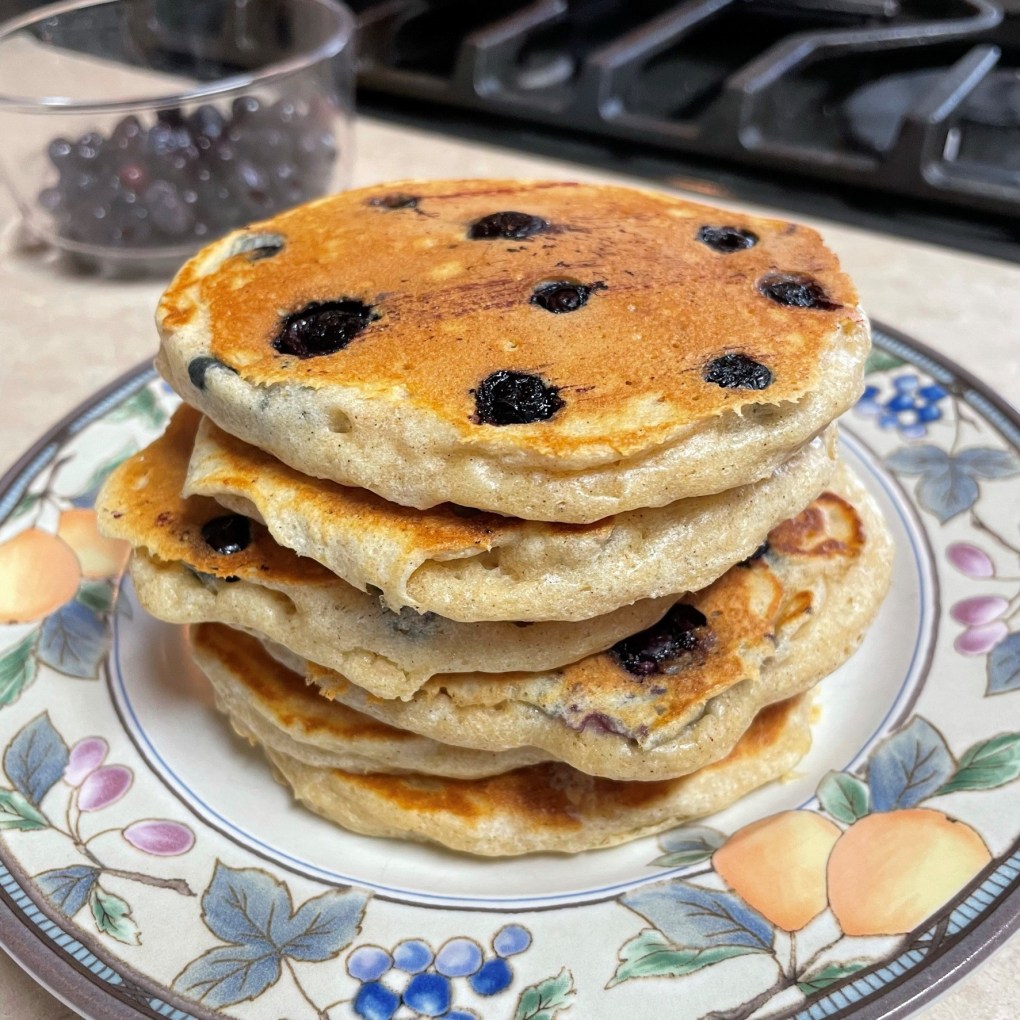
Fluffy Blueberry Buttermilk Pancakes

In my quest to determine which of our gadgets and small kitchen electrics will win a permanent spot in our soon-to-be-new kitchen, I am cycling through some recipes I haven’t made in a while, just to have a reason to pull those gadgets from storage and give them a run.

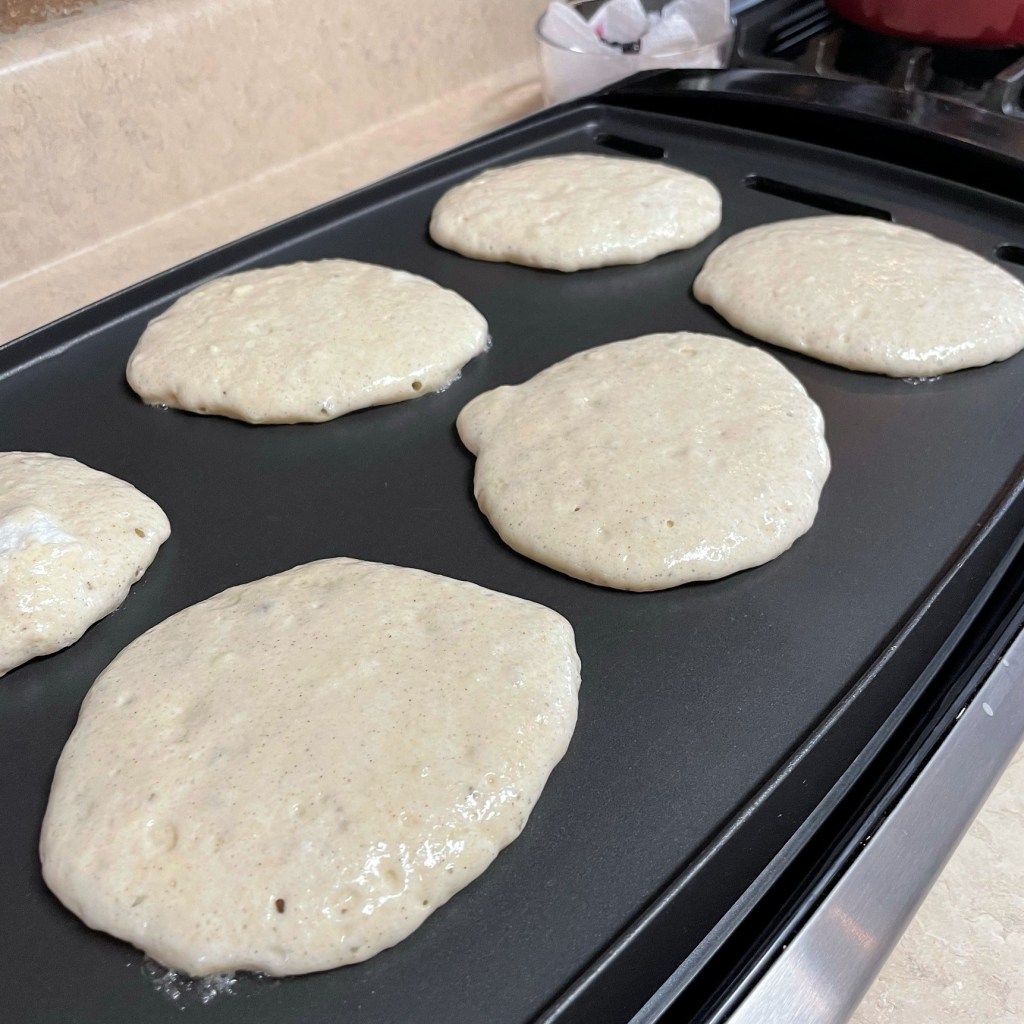
For these fluffy, buttermilk-rich blueberry pancakes, I turned to a favorite King Arthur Baking Company recipe, and I added a twist to give them extra loft. The ingredient list isn’t changed, but the technique is slightly different in that I separate the eggs before mixing, whipping the whites by themselves and then folding them into the batter just before griddling. It’s a simple kitchen trick that elevates any favorite pancake recipe—figuratively and literally.

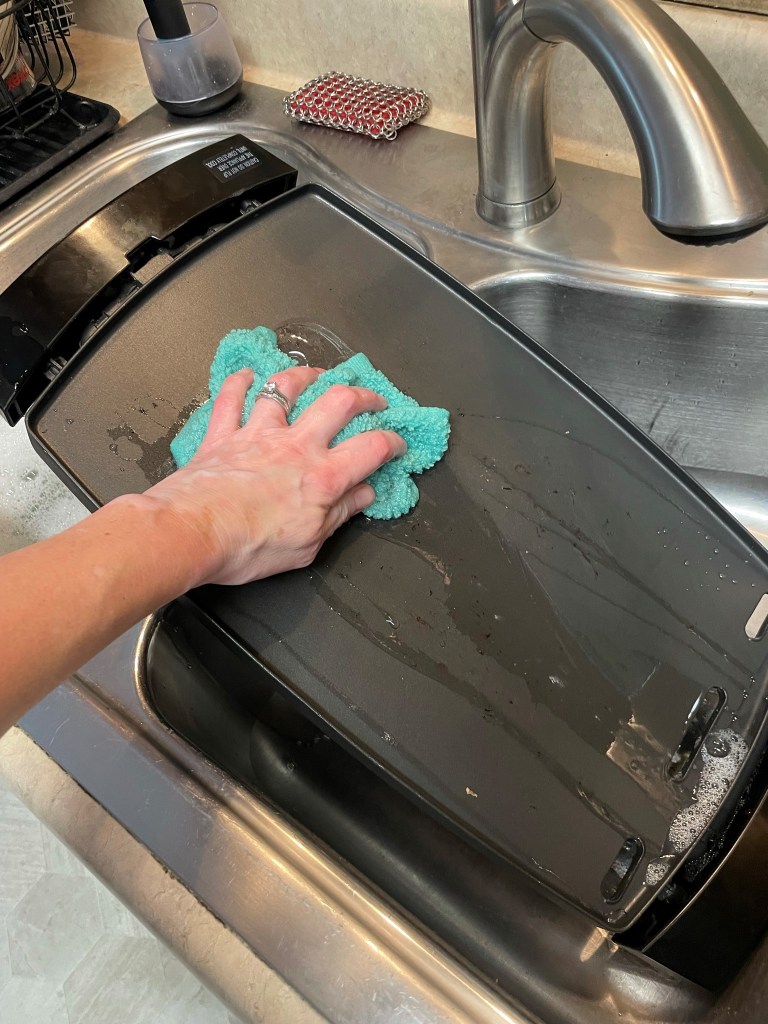
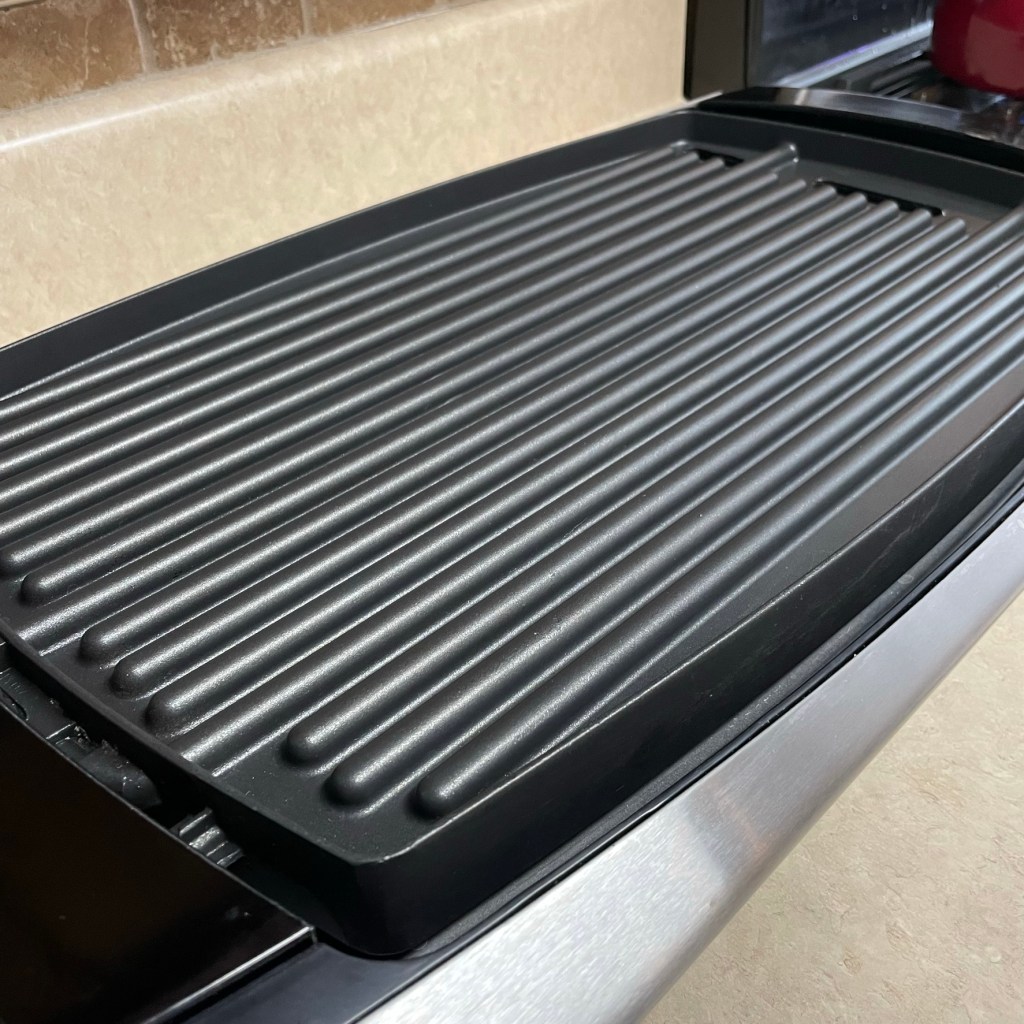
Rather than cooking the pancakes on my beloved middle griddle that lives permanently on our gas range top, I asked my husband, Les, to get the stepladder for fetching my reversible, non-stick griddle from its unlikely storage spot in the kitchen. The griddle is enormous, and for lack of a better stowing spot, we have kept it wrapped in a large kitchen trash bag, stored way up there on top of the cabinets, where Taz is sitting!

She is large and in charge up there!

I’m reluctant to let go of this griddle because it is easy to clean, reversible to a grill side and the temperature dial ensures consistent cooking. Needless to say, its large cooking surface helps me get breakfast ready all at once. Unfortunately, the out-of-reach storage makes it inconvenient for regular use.


When the big reveal happens on our remodel, Les and I will be re-evaluating where everything goes, and the full-height pantry cabinet should have plenty of room for this convenient, though bulky, appliance (fingers crossed)!

Now, about these fluffy pancakes. 🙂

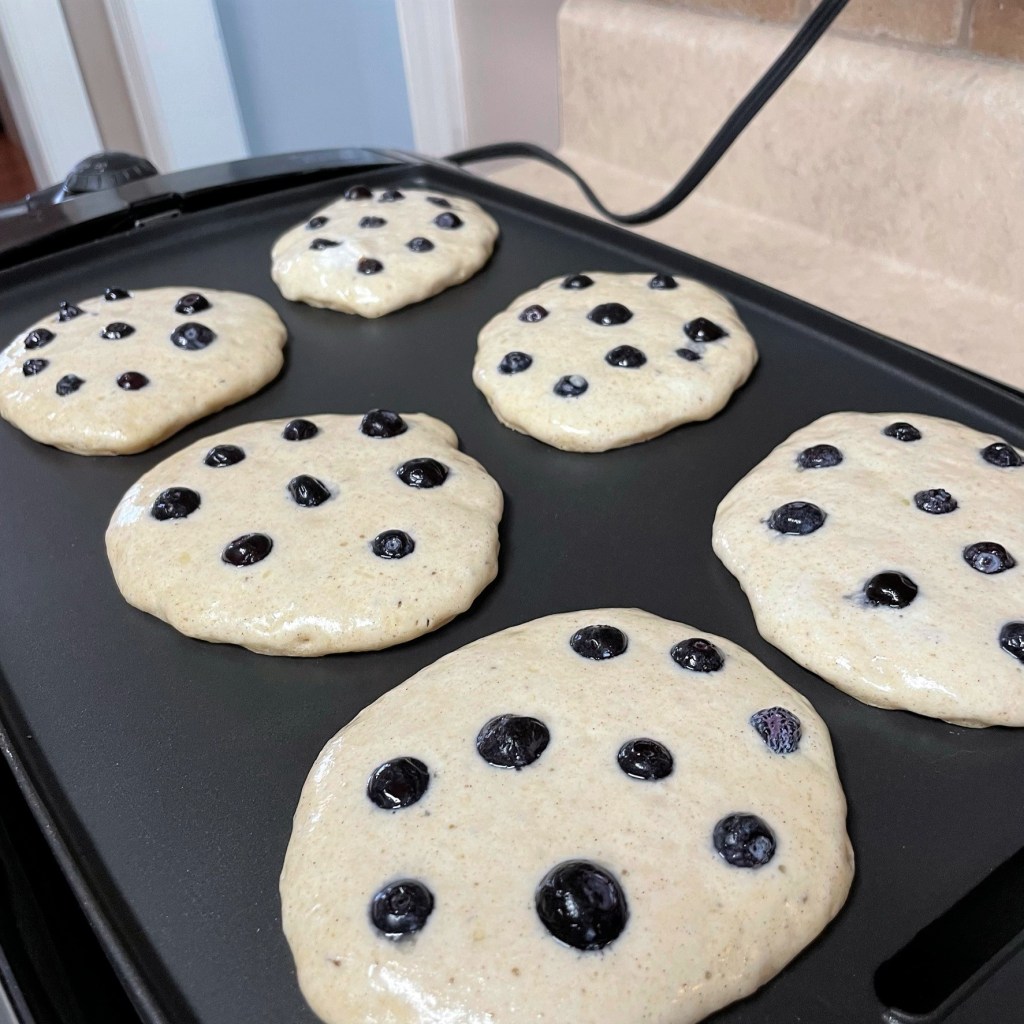
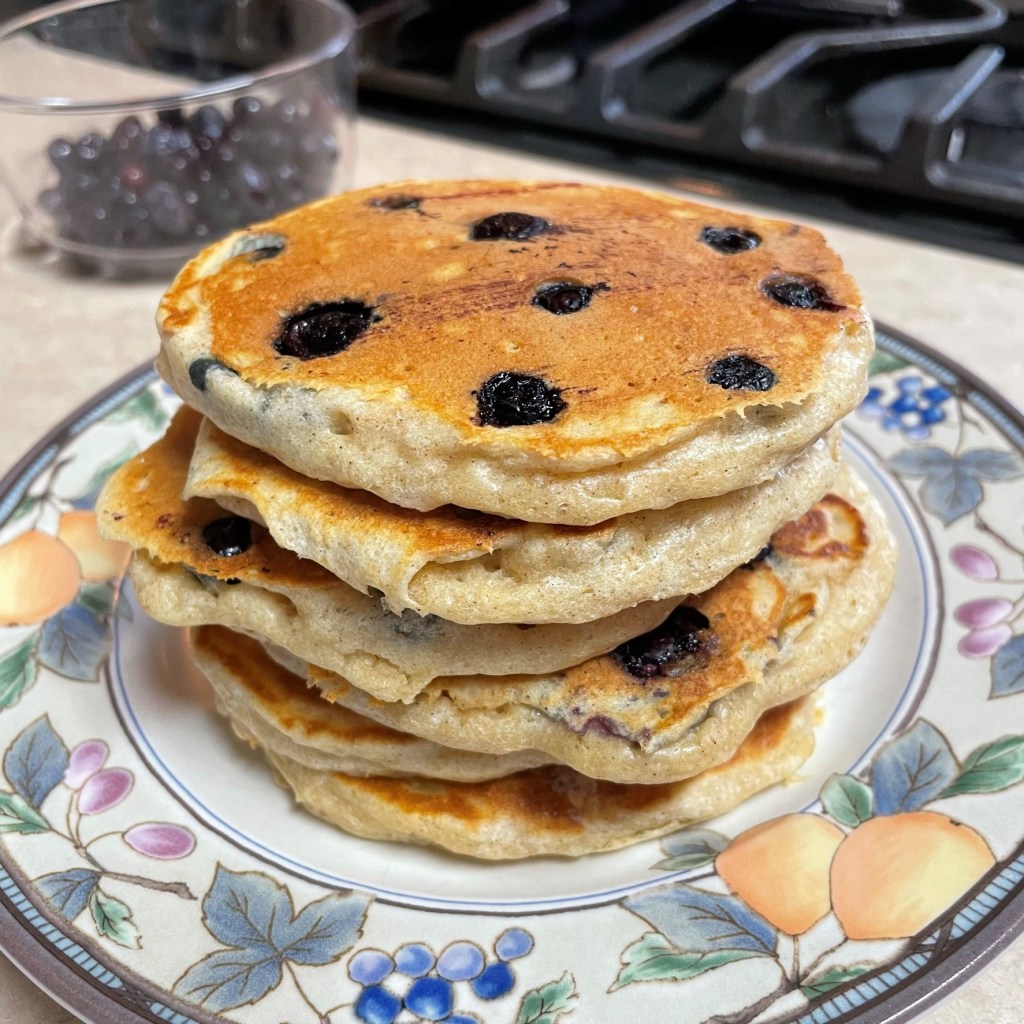
The air whipped into the egg whites gives the pancakes extra loft and lightness. They are so delicious with real maple syrup!

Serves 4

Adapted from Buttermilk Pancakes | King Arthur Baking

Ingredients

3/4 cup all-purpose flour

1/4 cup whole wheat pastry flour

1 Tbsp. sugar

1/2 tsp. ground cinnamon

1/2 tsp. baking powder

1/2 tsp. baking soda

1/4 tsp. salt

1 large egg, separated* (see notes)

1 cup thick buttermilk*

1 Tbsp. melted butter

1 tsp. real vanilla extract

1 cup blueberries or other soft fruit


*Notes

Eggs separate more easily when they are cold, so take care of that first and set each part aside until they are room temperature.

It’s best for the buttermilk to be near room temperature, also.


Instructions

Heat an electric griddle to 350°F, or a cast-iron skillet over medium heat.


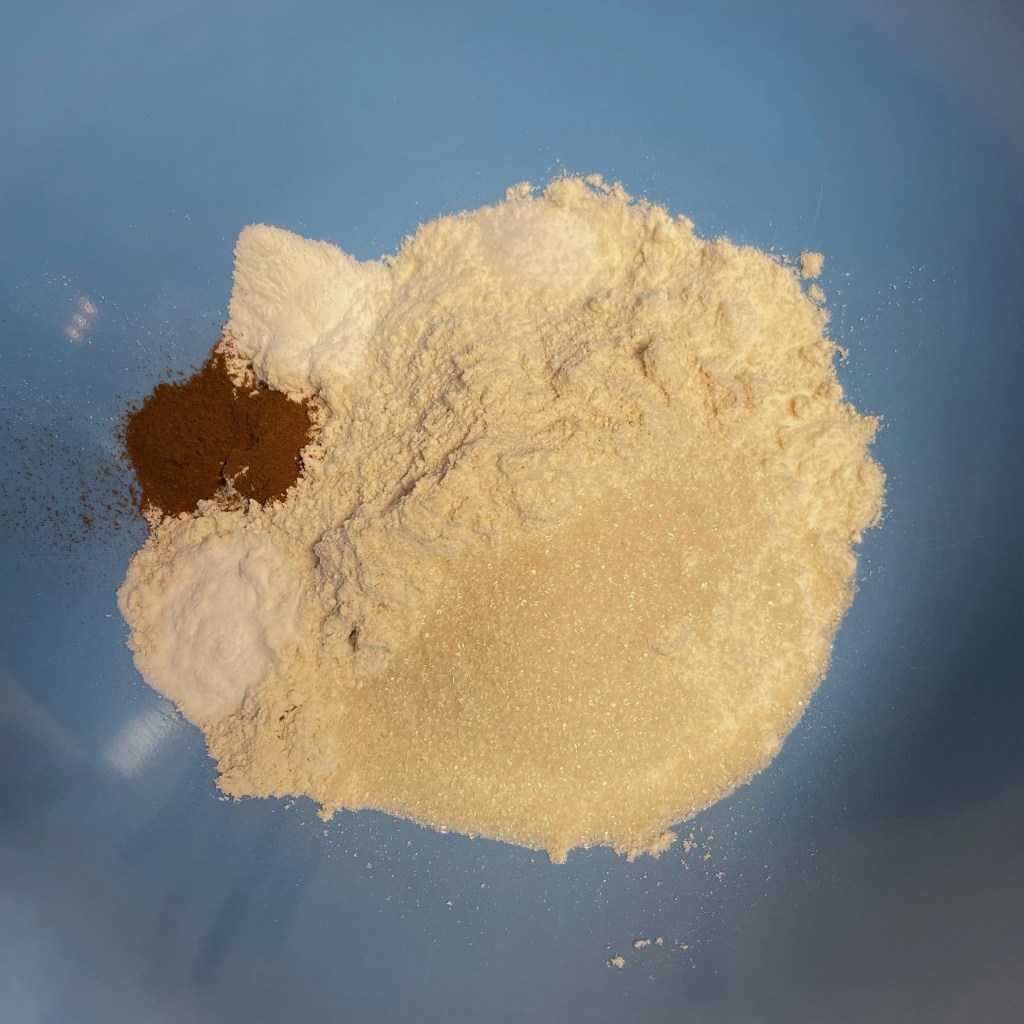
In a medium bowl, whisk together the dry ingredients.

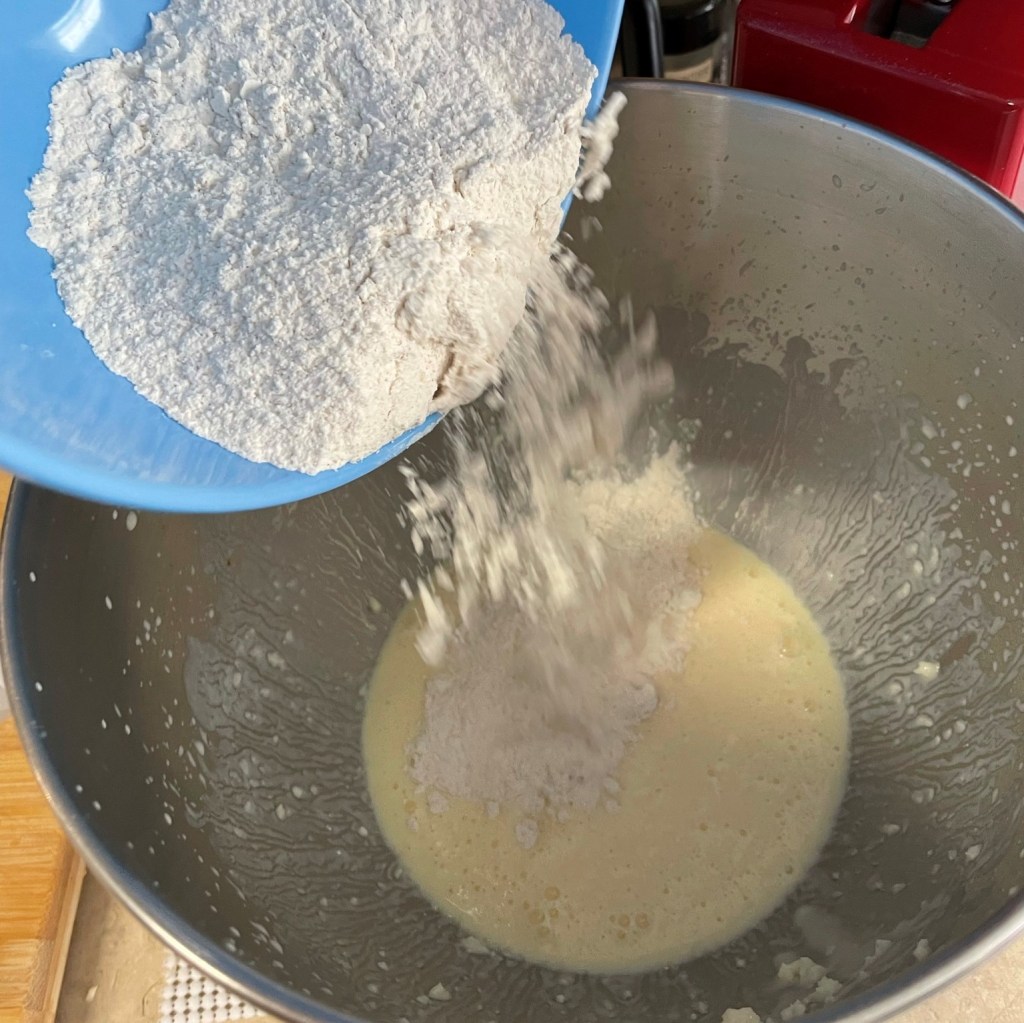
In a separate bowl, combine the egg yolk, buttermilk, melted butter and vanilla. Whisk together until smooth. Mix the wet ingredients with the flour ingredients, stirring just until blended.

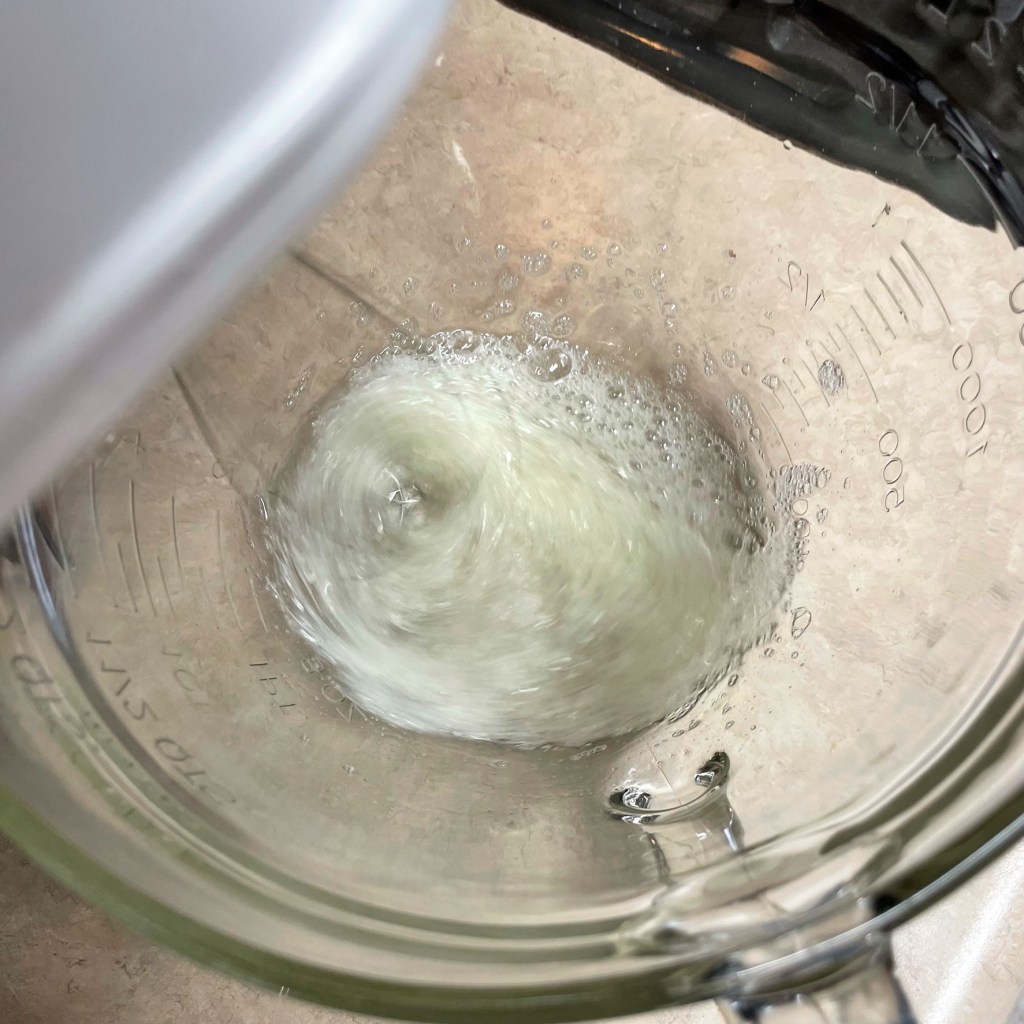
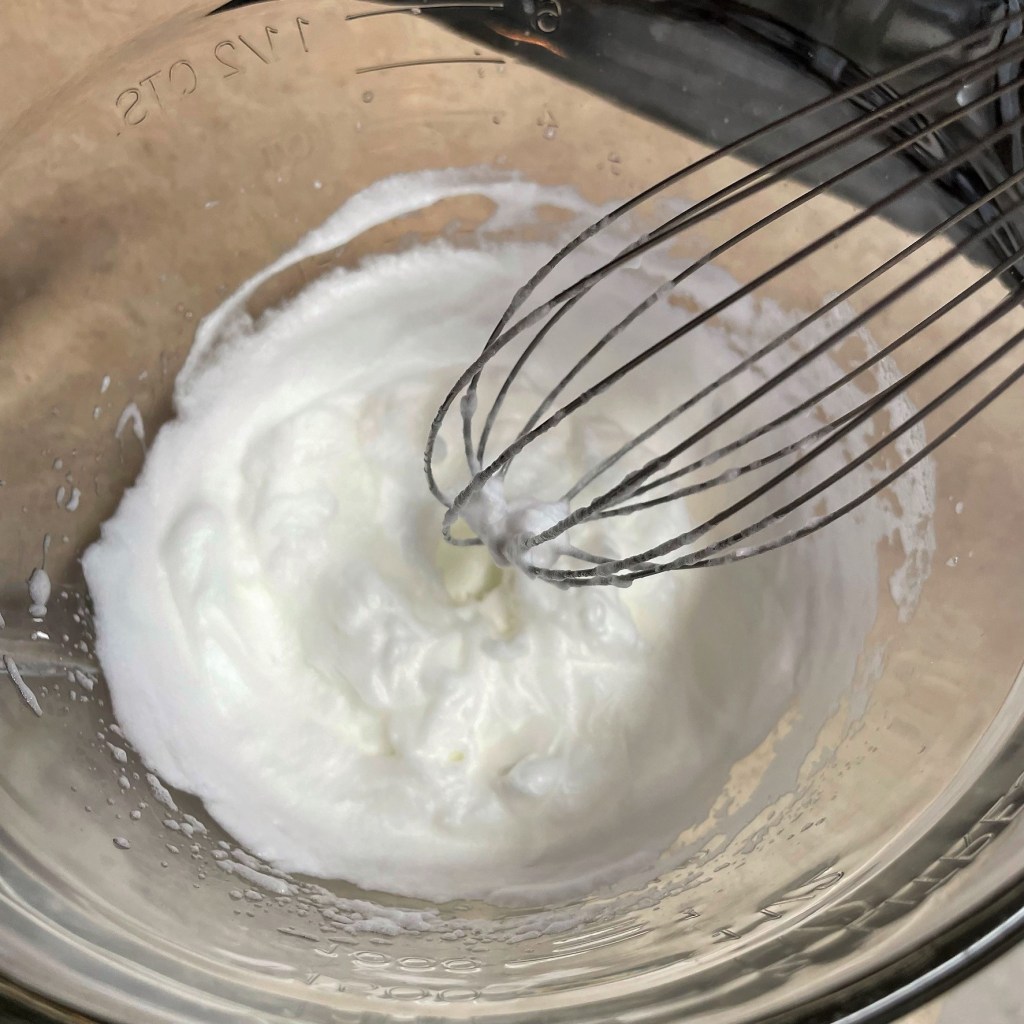
In yet another bowl, whip the egg white with an electric hand mixer (or with a whisk and some elbow grease, if you’re feeling sassy). When properly whipped, the egg white should increase a great deal in volume and will form stiff peaks when you remove the whisk.

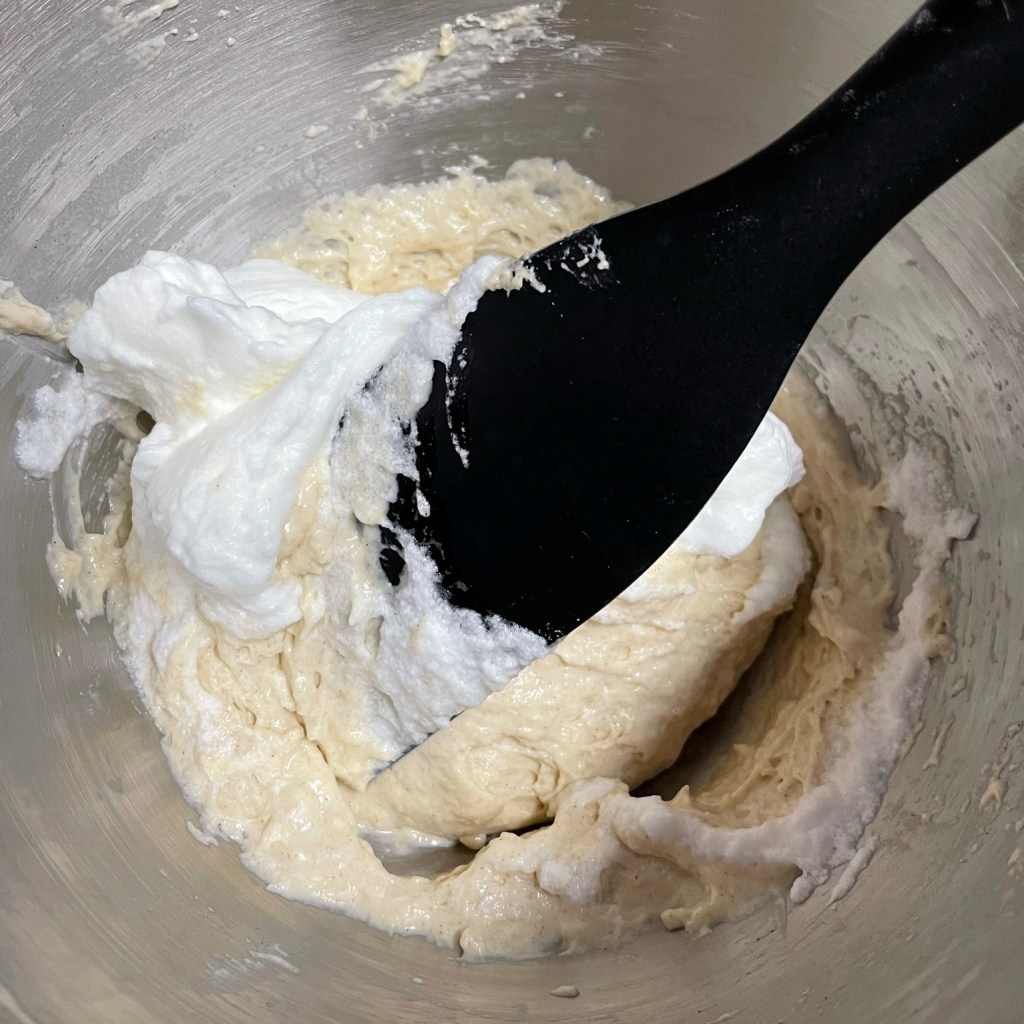
Fold the whipped white into the bowl with the rest of the batter, taking care not to stir down and deflate the batter. Allow it to rest about 15 minutes.

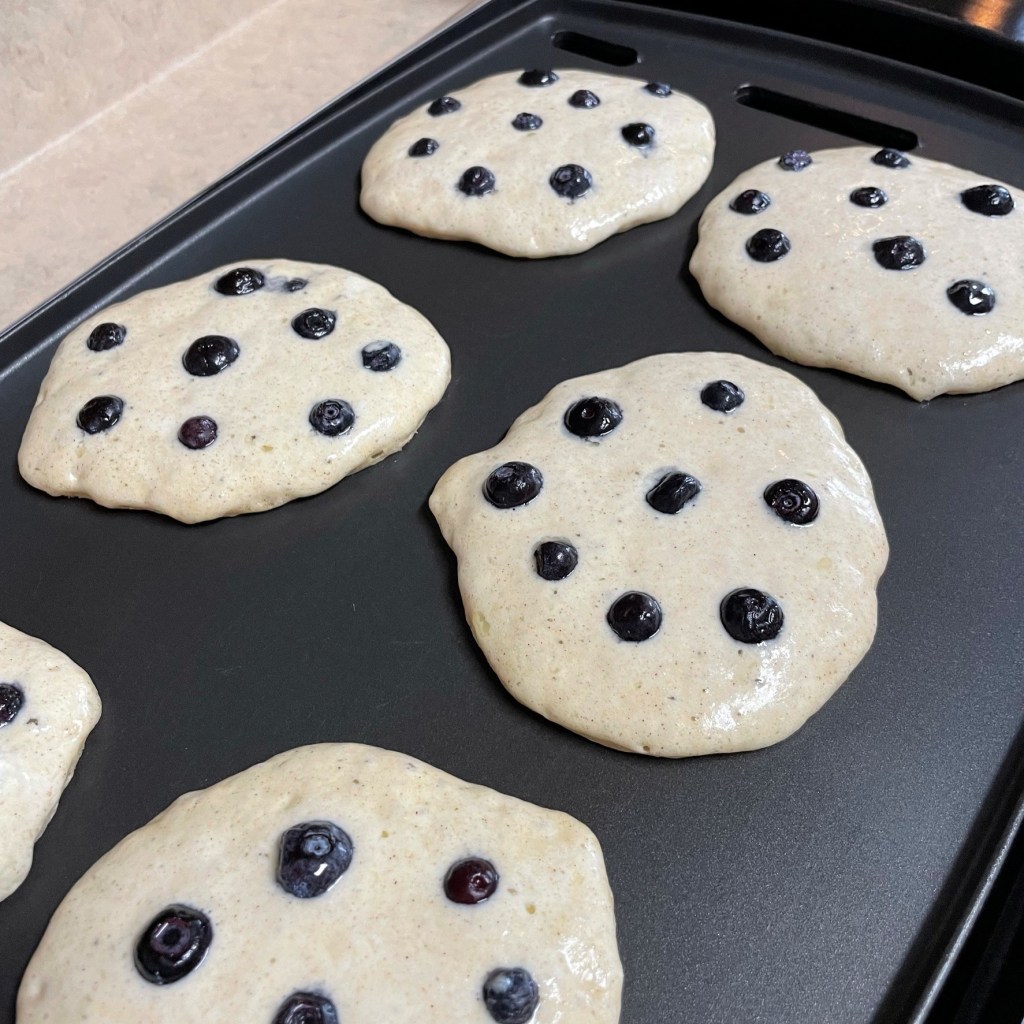
Pour or ladle batter onto griddle in smallish rounds, about 4 inches across. Do not swirl or otherwise flatten the batter—we want them fluffy, remember? 😊 Cook the first side about a minute, then carefully arrange blueberries onto the cakes. Continue to cook until the pancakes are set on the edges and bubbly all over the top.
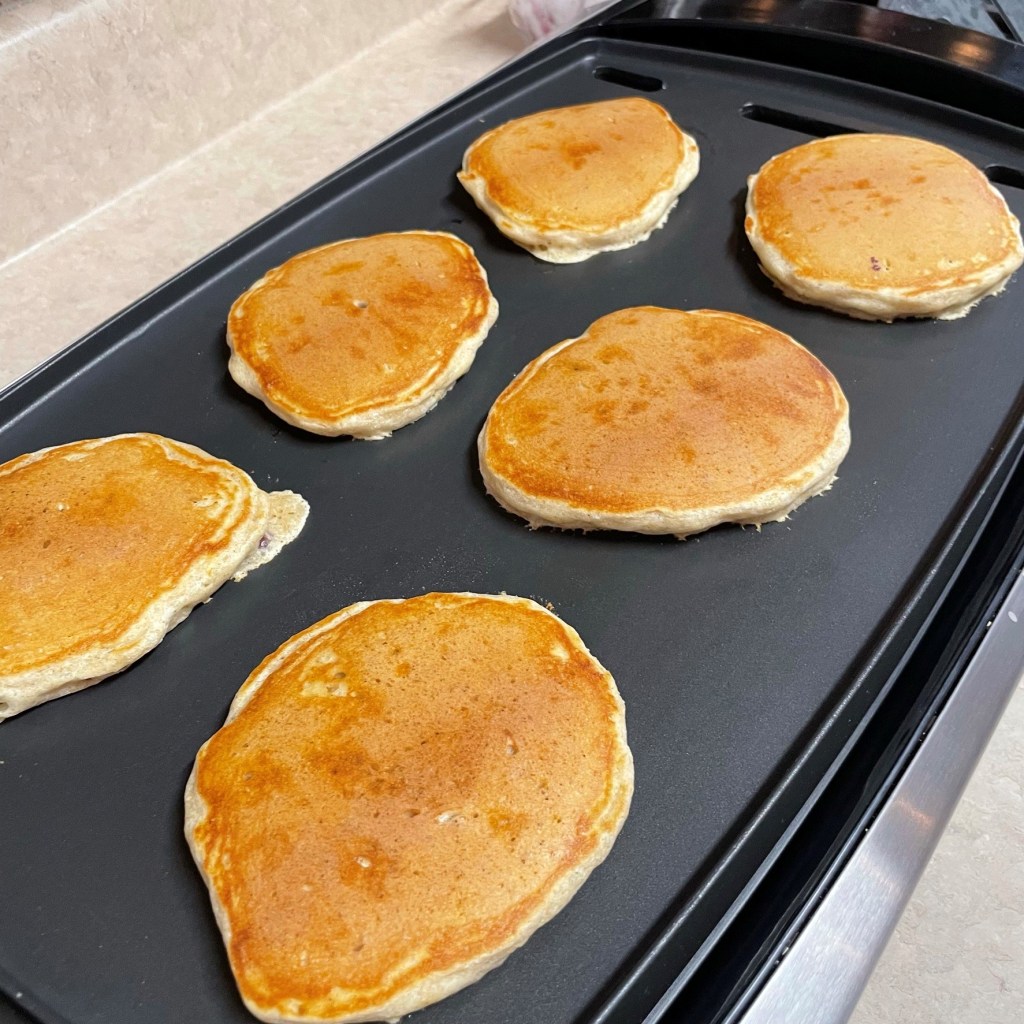
Turn gently and cook the other side. Serve warm with butter and real maple syrup.


Who’s ready for pancakes?


Orange & Honey-Ginger Fruit Salad

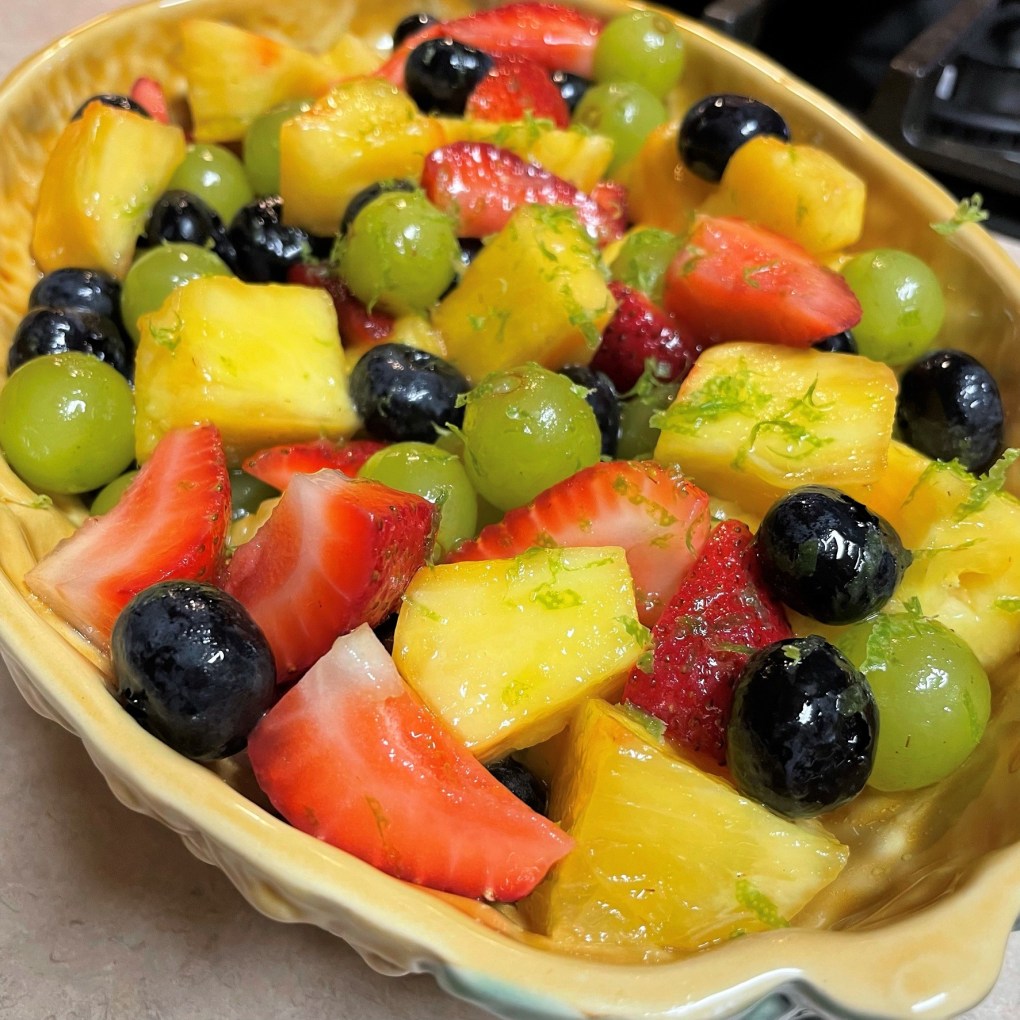
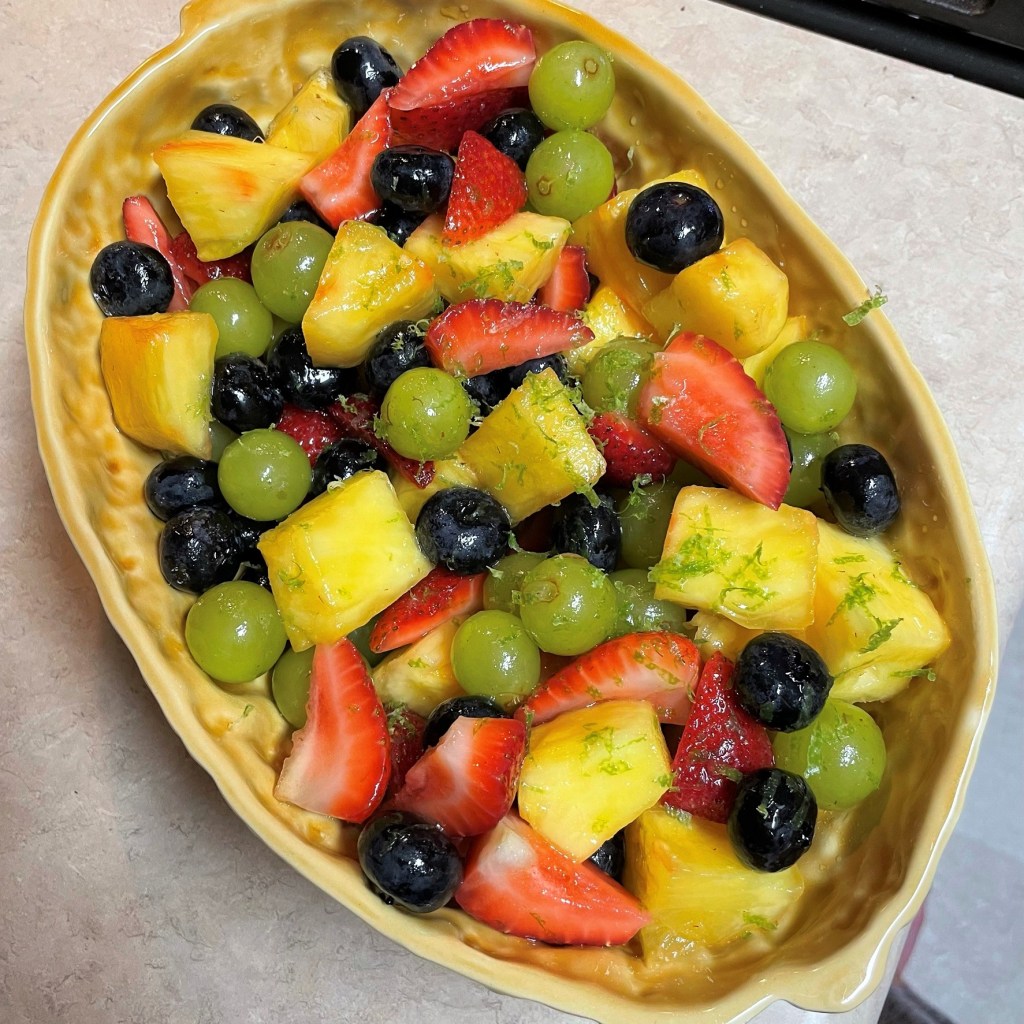
You didn’t know it when you opened this post, but you are about to witness something that doesn’t happen all that often in my kitchen—a simple, two-ingredient twist that will transform a basic fruit bowl into a mouthwatering side dish that is almost as sumptuous as dessert. Unlike some of my other “make-the-whole-thing-from-scratch” ideas, this one really is ridiculously simple. You can apply this easy twist to virtually any kind of fruit, including pre-cut if you are short on time, and the fruit itself does not have to be fancy. Look at my salad again—it’s only pineapple, grapes and berries. What elevates this simple fruit combo into an elegant and special treat is the dressing.

Nothing fancy about this fruit.

It may be that you have never considered “dressing” a fruit salad, but why? We don’t often see a vegetable salad served dry, and fruit is just as worthy of dressing up a bit. Dressing a fruit salad is not only tasty; it also helps the fruit retain moisture and color. Try this once and you’ll be craving fresh fruit salad every day.

The dressing for this salad depends on two special ingredients that can only be purchased in a boutique olive oil and balsamic vinegar shop, and they are worth every penny. You have probably seen one of these stores, with all their shiny stainless steel containers lined up on a high table. Those containers, called “fustis,” hold exquisitely flavored extra virgin olive oils and balsamic vinegars, ingredients which have uncanny power to change the way you cook. In the spirit of full disclosure, I will tell you that I used to work in one of those shops here in my city, and it was one of my most fun jobs ever—a true foodie fantasy, come true!

These days, nobody is paying me to share about these products, but I feel compelled to do so because of the one question we received over and again at the shop, from customers who enjoyed the flavors but asked, “what would I ever do with it?” Part of my job as a sales associate was taking home various products and coming back with inspiration for the home cooks who shopped our store. I guess you could say I took my job seriously, because I’m still doing it. 🙂

These flavors work great together!

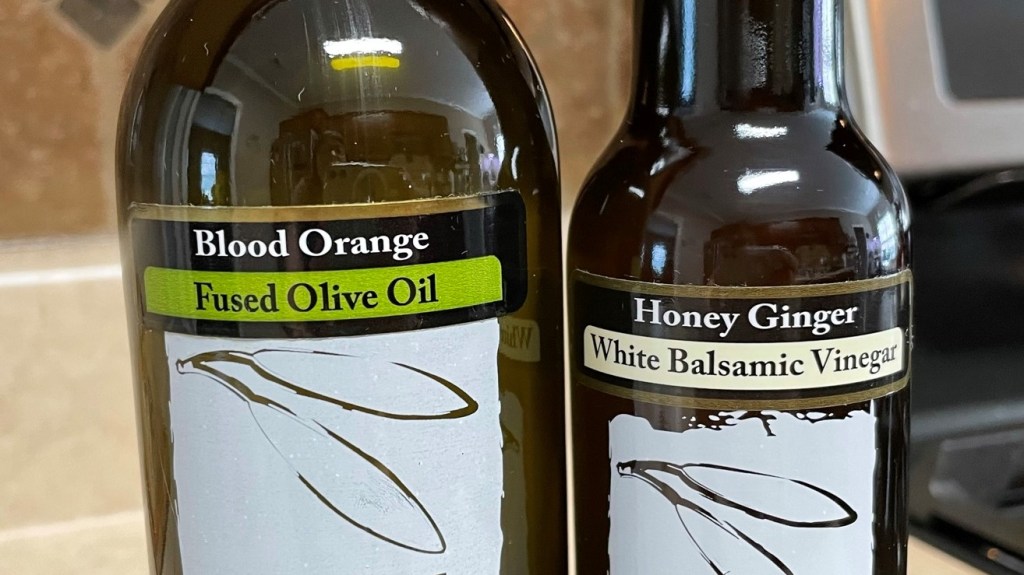
The combination I’ve used for this fruit salad is blood orange-fused extra virgin olive oil and honey-ginger white balsamic vinegar. The vinegar has a slight tartness to it, but it is mostly sweet with the warmth of honey, and the ginger is subtle but present. The olive oil is rich with the flavor of blood orange, because the oranges and olives are pressed together during production. The result is so good, it makes itself at home in sweet and savory dishes alike.

At the end of the post, I’ll share some other ideas for using up these two ingredients.


Ingredients

2 cups fresh pineapple chunks, cut into bite-sized bits

1 heaping cup fresh strawberries, sliced into quarters

1 cup fresh large blueberries

1 cup fresh white seedless grapes

3 Tbsp. honey-ginger white balsamic vinegar* (see notes)

3 Tbsp. blood orange whole fruit-fused extra virgin olive oil*

Lime zest or fresh chopped mint or basil, optional for garnish


*Notes

I wish I could offer up a universal brand name for the olive oil and balsamics that I use, but they are bottled under various franchised shop names. Here’s a tip—if you have this type of store in your community, ask for the name of the supplier. If it is Veronica Foods, you’re in the right place. 😊


Instructions

Wash your fruit just before assembling the salad, and it’s best to add berries just before serving or they tend to get mushy. Combine all the fruit in a bowl large enough for easy tossing in the dressing.

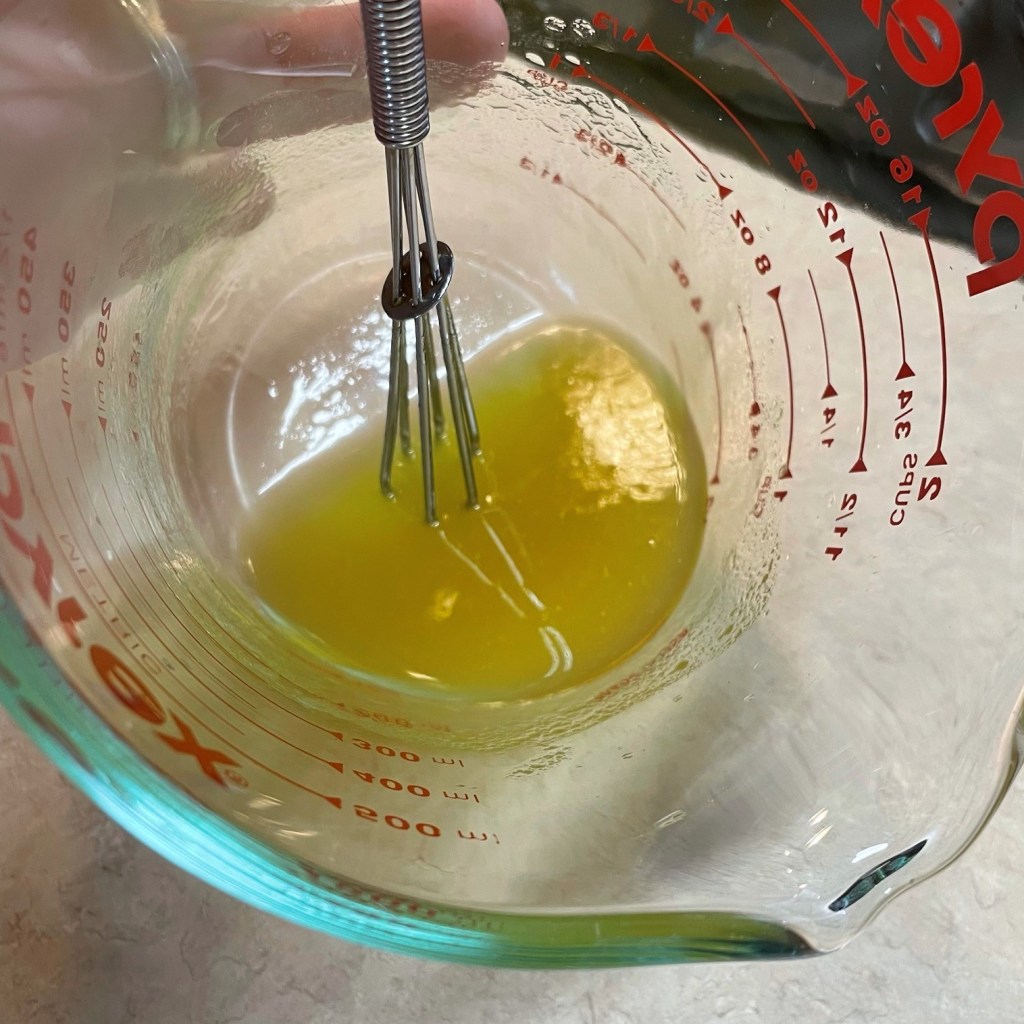
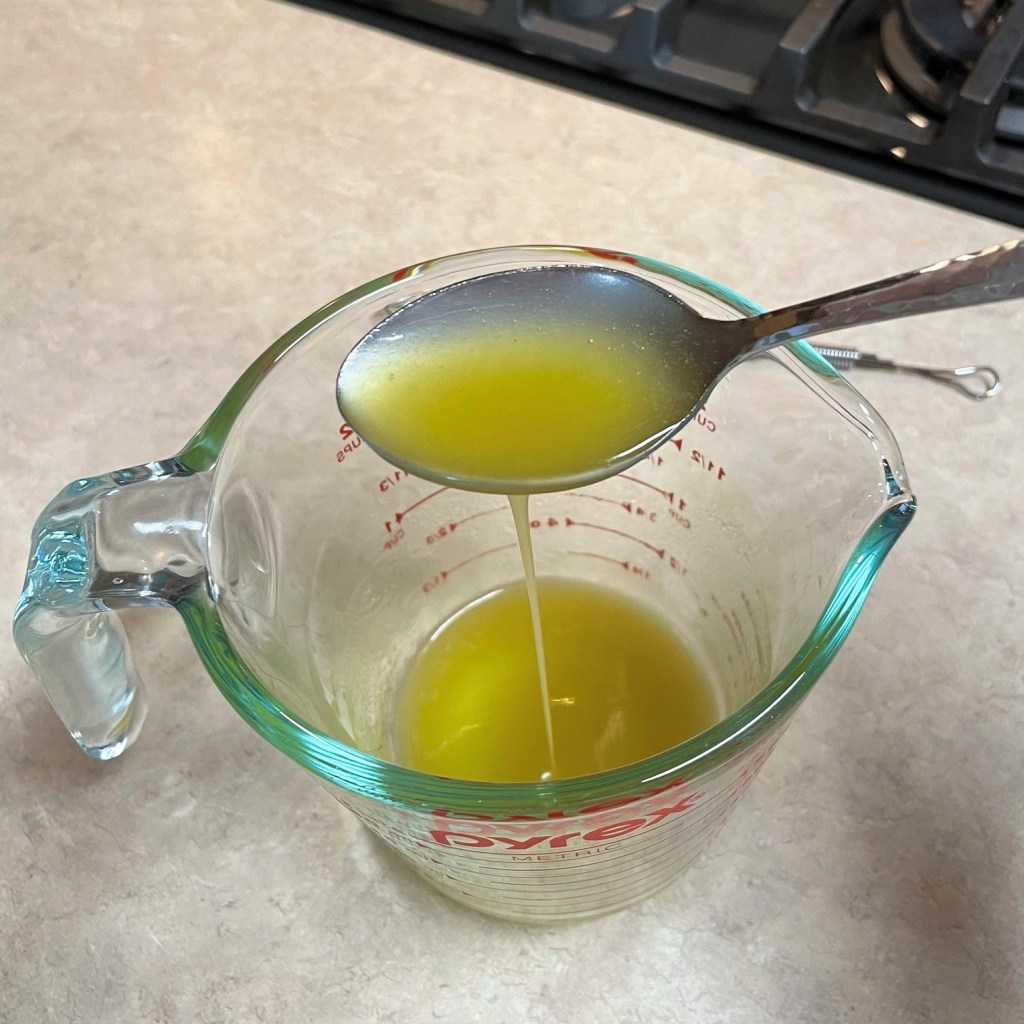
Pour the honey-ginger white balsamic into a small bowl, or a glass measuring cup for easier pouring. Slowly pour the olive oil into the balsamic, whisking quickly and constantly, until the mixture is thick and syrupy.

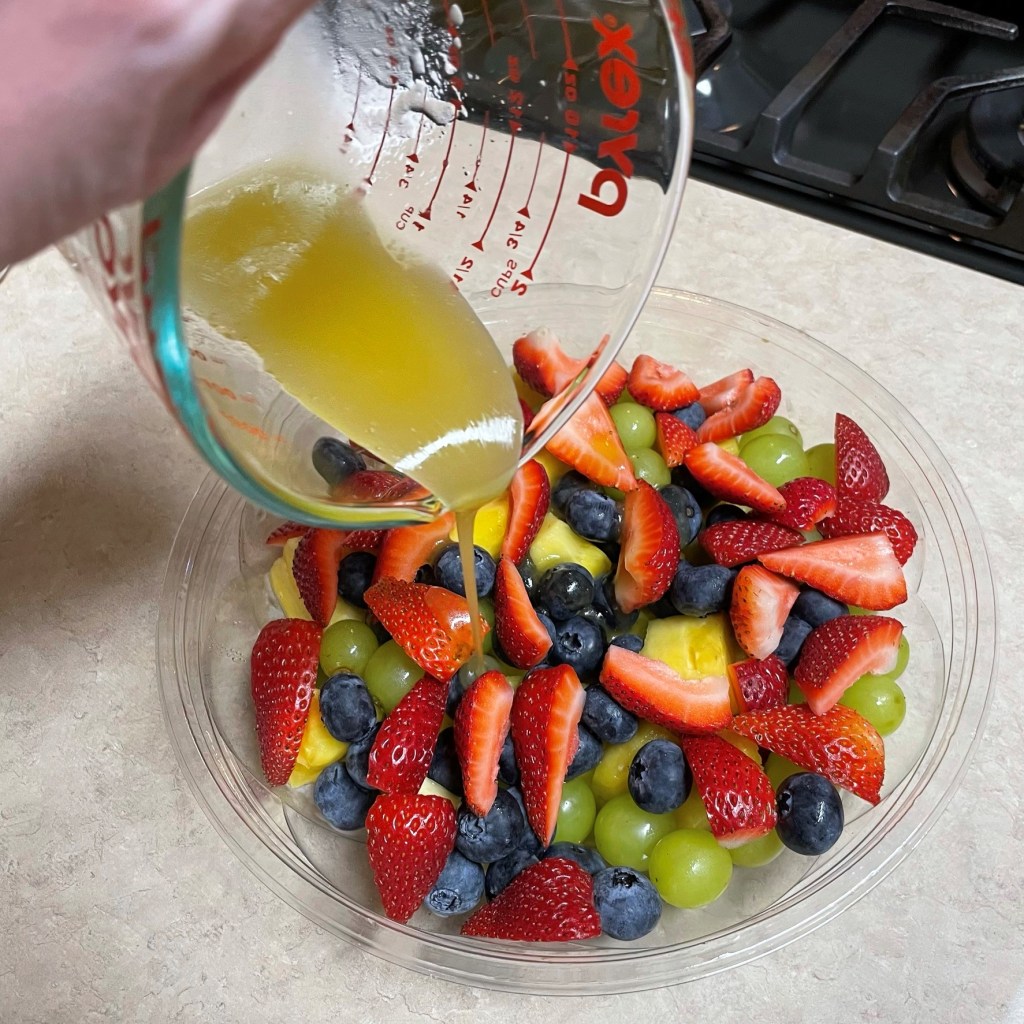
Immediately pour the dressing over the fruit and toss gently to coat the fruit. Serve right away or refrigerate up to one hour before serving.

If you would like to put a little extra pizzazz onto the salad, sprinkle with fresh lime zest or thin strips of fresh mint or basil.


Looking for more ways to use your blood orange-fused olive oil?

Substitute for the equal amount of oil in your favorite carrot cake recipe

Use it in a marinade for chicken or fish

Drizzle a teaspoon over dark chocolate ice cream (yes, really!)

Toss vegetables in it before roasting

Use it in your favorite pancake or waffle recipe


Need ideas for using up the honey-ginger white balsamic?

Try it an any salad dressing, especially Asian-inspired salads

Use it in a marinade for chicken, fish, shrimp or pork

Add a splash to a cocktail or white sangria

Drizzle it onto vegetables after grilling or roasting

Add a tablespoon to your water bottle for flavorful summer hydration


“Chopped” Challenge (Episode No. 3 – “Holy Mole”)

Things are steaming up around here, as my husband, Les, and I count down the weeks til the kickoff of our kitchen remodel. We are doing our best to trim the pantry and freezer inventory before we get there, to help ease the pain that comes naturally with home renovation. I will admit that I have been nervous, not only for turning my own mystery basket into something special, but also for preparing baskets for Les. I don’t want to stump him, but I also don’t want to hand him a victory on a silver platter. As this challenge continues, we are certain to face weirder combinations of ingredients than either of us imagined.

Before we started our challenge, Les and I established and agreed upon the following rules for setting up each other’s baskets:

  1. Each basket must hold four mystery ingredients, found in our cabinets, fridge or freezer.
  2. The goal of the challenge is to use up our surplus food, with as little waste as possible. We will not be using some small portion of an ingredient and throwing the rest in the trash.
  3. Basket ingredients can be used in any course of the meal or broken into separate courses of a single meal, i.e.: cocktail, appetizer, salad, entrée, dessert. Cook’s choice.
  4. Basket ingredients must be transformed in the meal, not merely served as is.
  5. Pet foods may not be submitted as basket ingredients, even though Les says we have way too many bags of kitty treats.

It’s time for my second basket of mystery ingredients in our homegrown “Chopped” challenge, and I can hardly stand still.

Holy Mole.

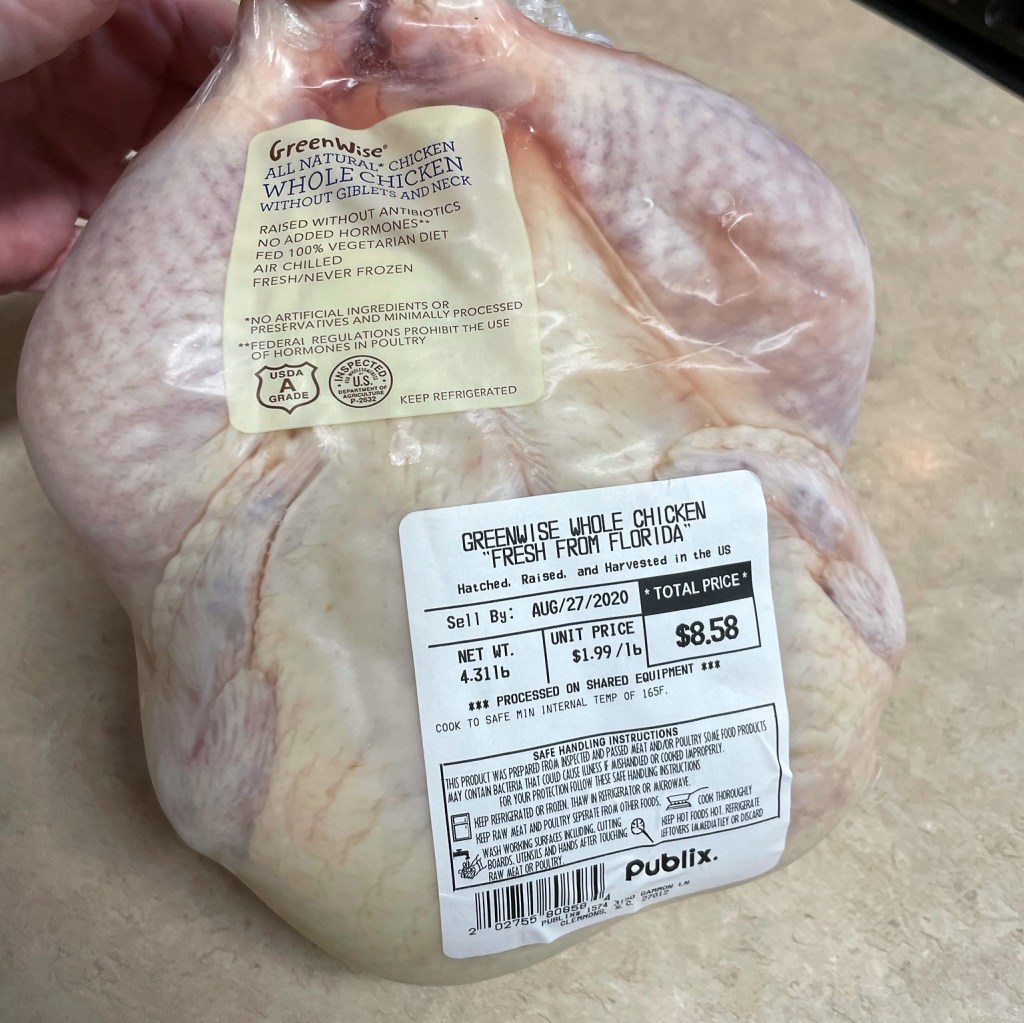
My first reaction for this whole chicken is disappointment because I was planning to make soup with it, and now that plan is shot. But this also reveals one of my own personal shortcomings—I have wanted to make soup with the chicken since last August, and I still haven’t. My procrastination is part of the reason we have so much stuff! Les did us a big favor by putting that thing in my Chopped basket.

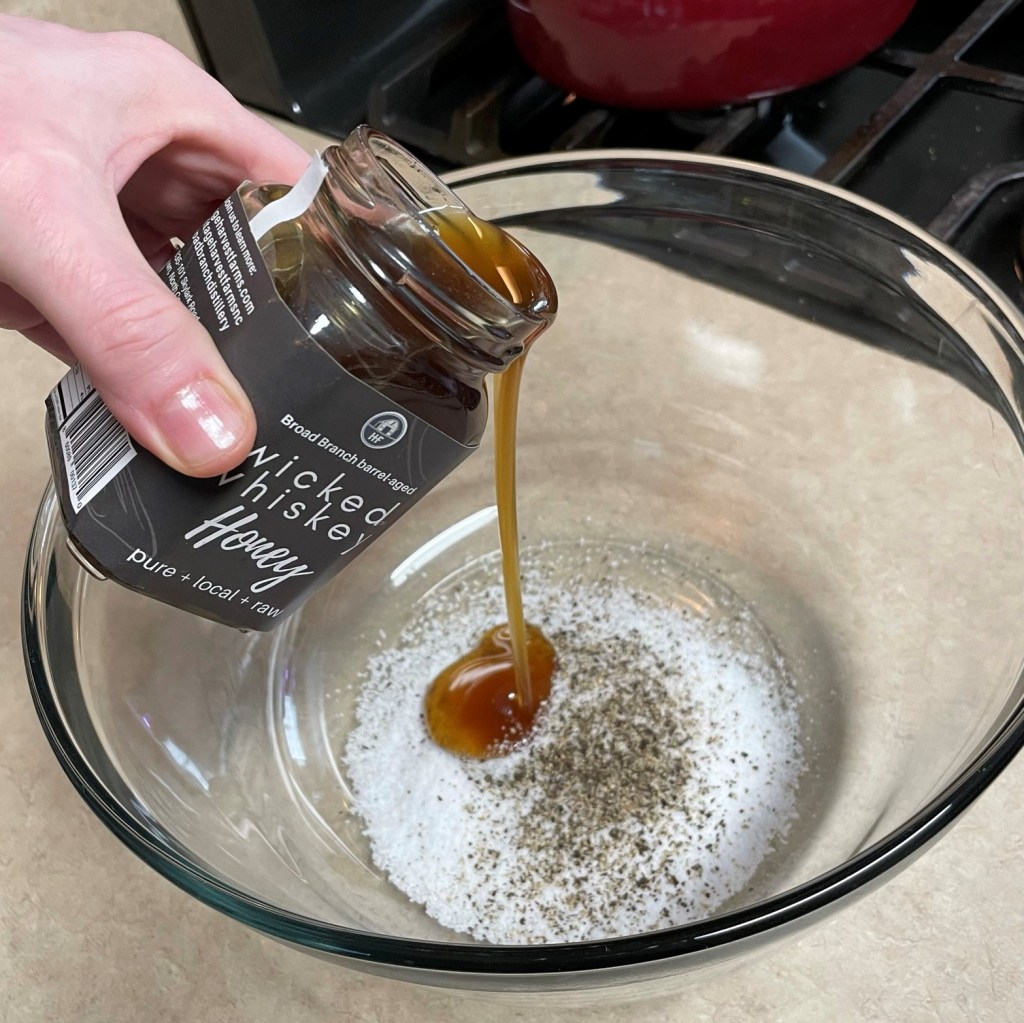
This was my chance to do something cool with the chicken, even more special than soup, and my first step would be brining it in a mixture that would include the Wicked Whiskey honey. After 11 months in the freezer, it probably needs a flavor boost and some assurance of retained moisture. I got that started and sent it to the fridge for five hours.


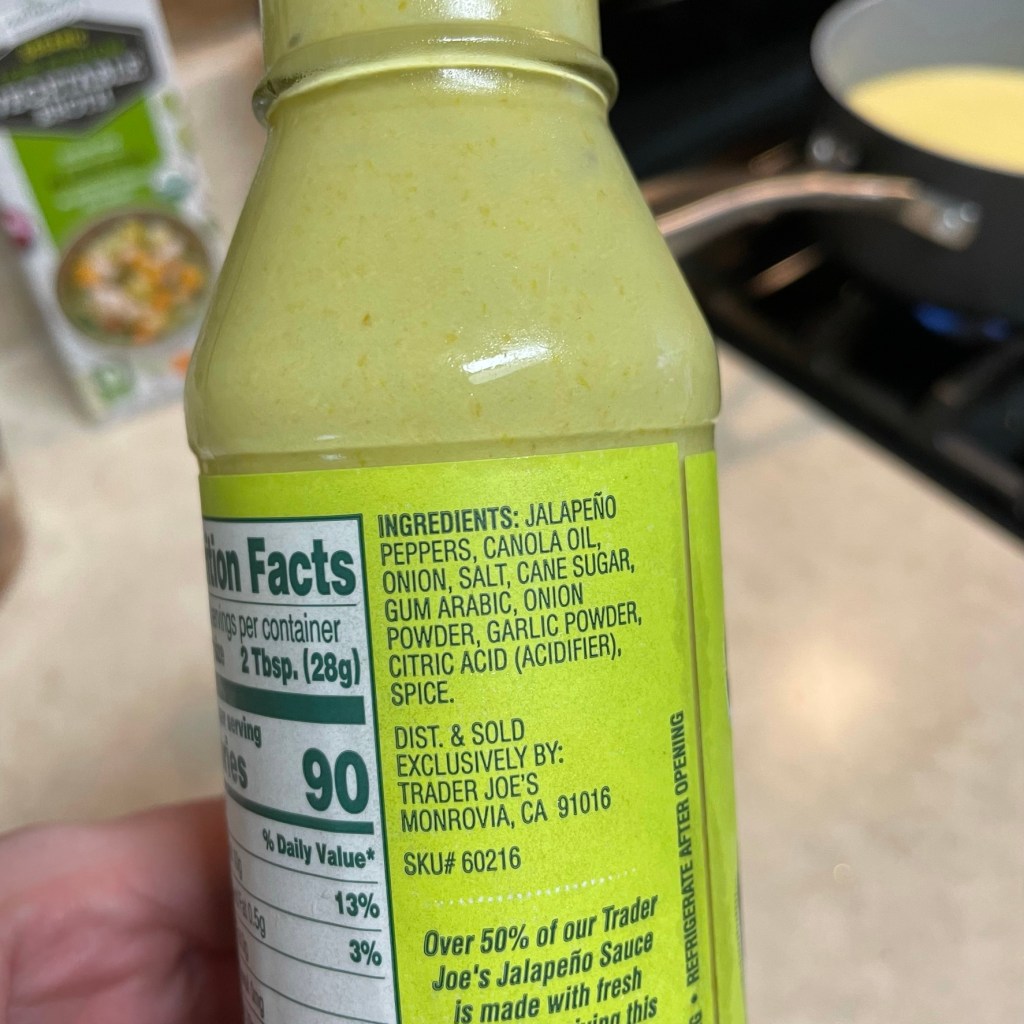
Let’s talk about this jalapeno sauce for a moment. This awful, one-note, ugly-to-look-at, disgusting jalapeno sauce. I’m usually all about the novel condiments at Trader Joe’s, but this product has been letting me down since Les first brought it home a few months ago. All I taste in it is jalapeno and heat. There’s no balance of acid or sweetness or even salt. It has a weird creamy texture, and I am suspicious of any product that tastes creamy without a speck of cream on the ingredients list. And that color—ugh.  


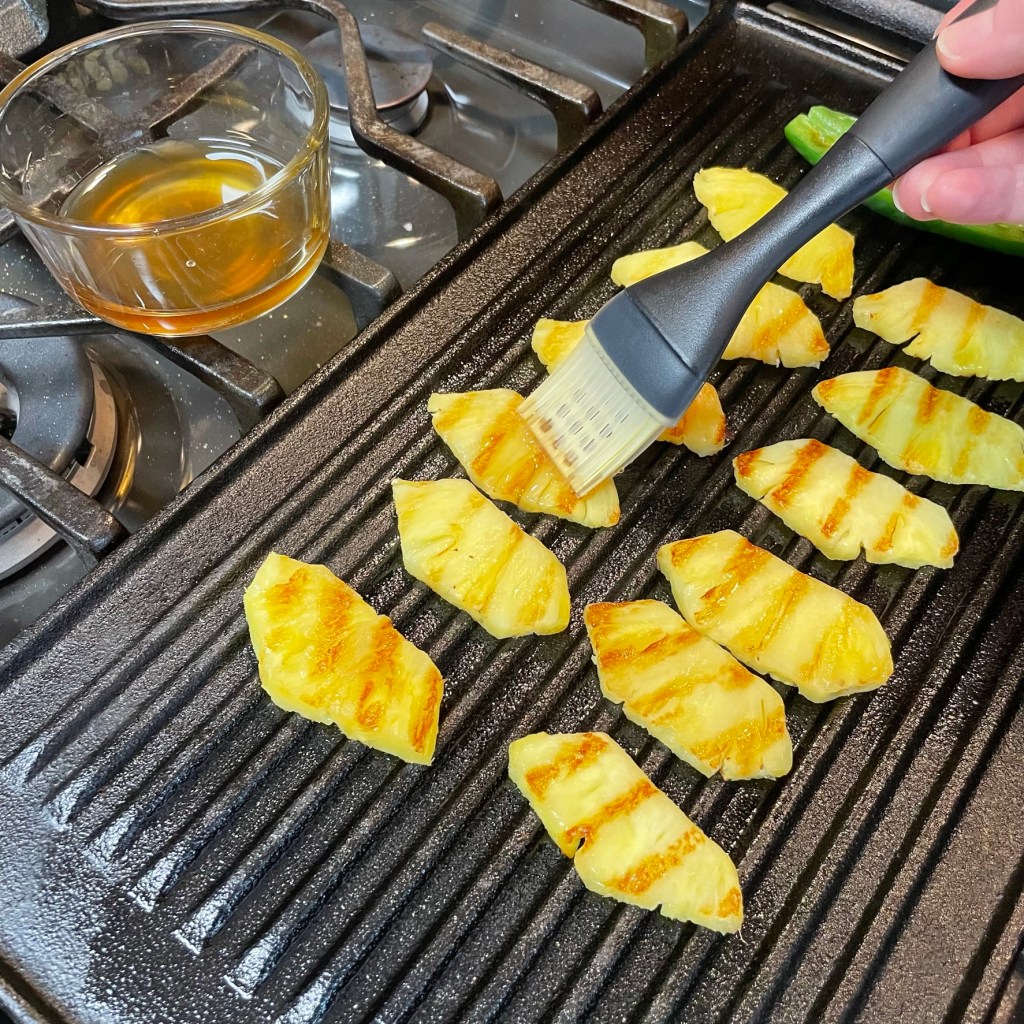
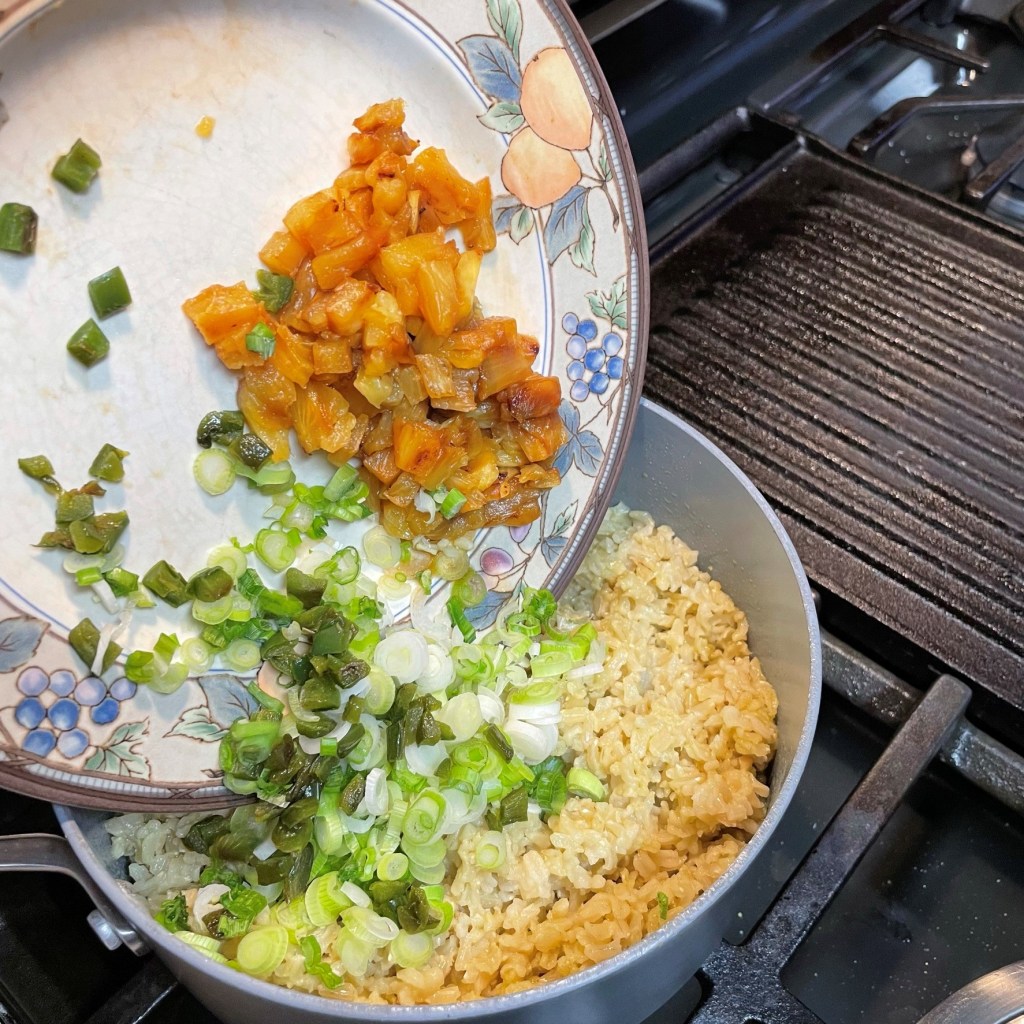
I’m going to bury the sauce by blending it into the broth used to make brown rice, and I’ll add my own complementary flavors, in the form of fresh jalapenos, scallions and grilled fresh pineapple brushed with more of the Wicked Whiskey honey. Basically, I’m trying to play up the jalapeno flavor while simultaneously hiding the sauce. Is that gonna work? We’ll see.


That leaves the mole, and although it seems like a random ingredient, it is something I was quite proud of when I first made it. Mole is a traditional, labor-of-love sauce, signature to the Mexican region of Puebla, where they love blending chiles with fruit and onions and nuts and seeds and (wait for it) dark chocolate! My guess about the origin of this mole was on point; I looked through my iPhone and found the photos I took while making this sauce for Cinco de Mayo—in 2019! My favorite part was melting in the dark chocolate. 😊


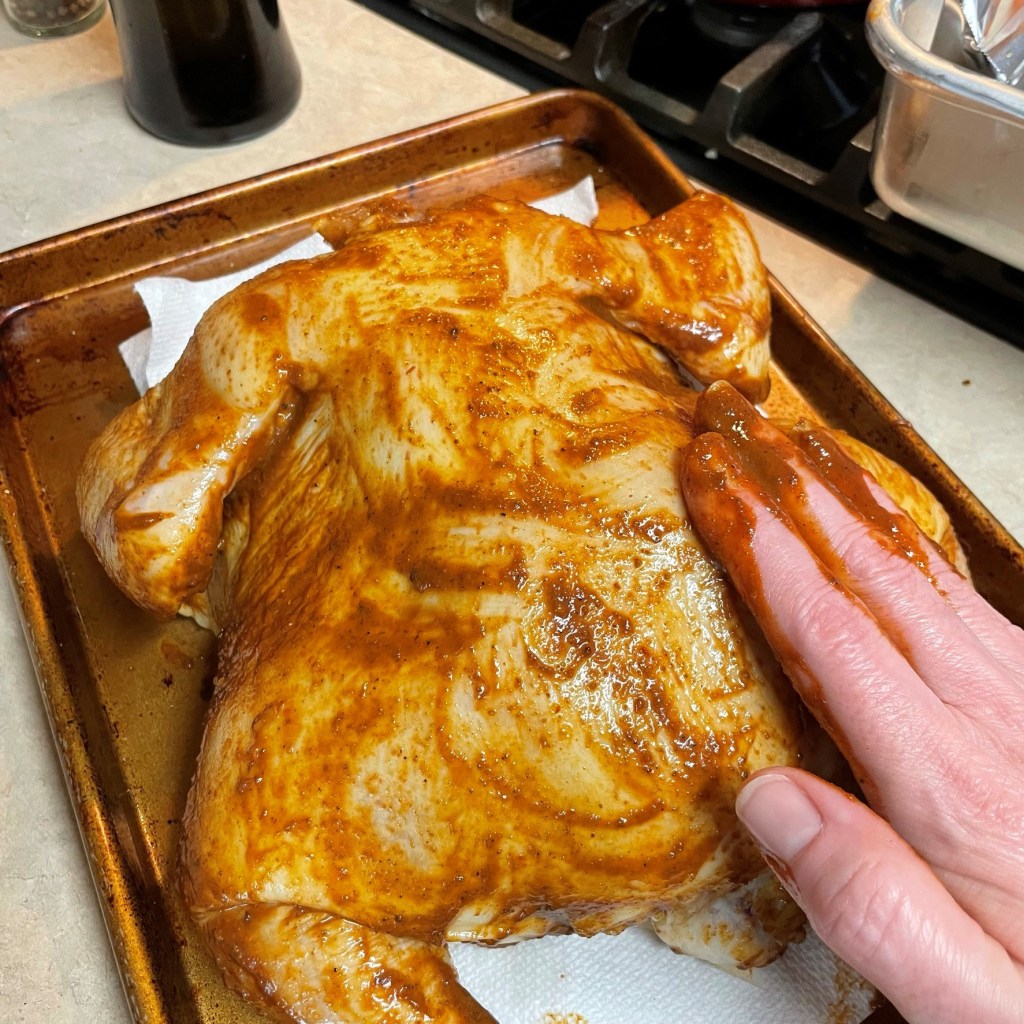
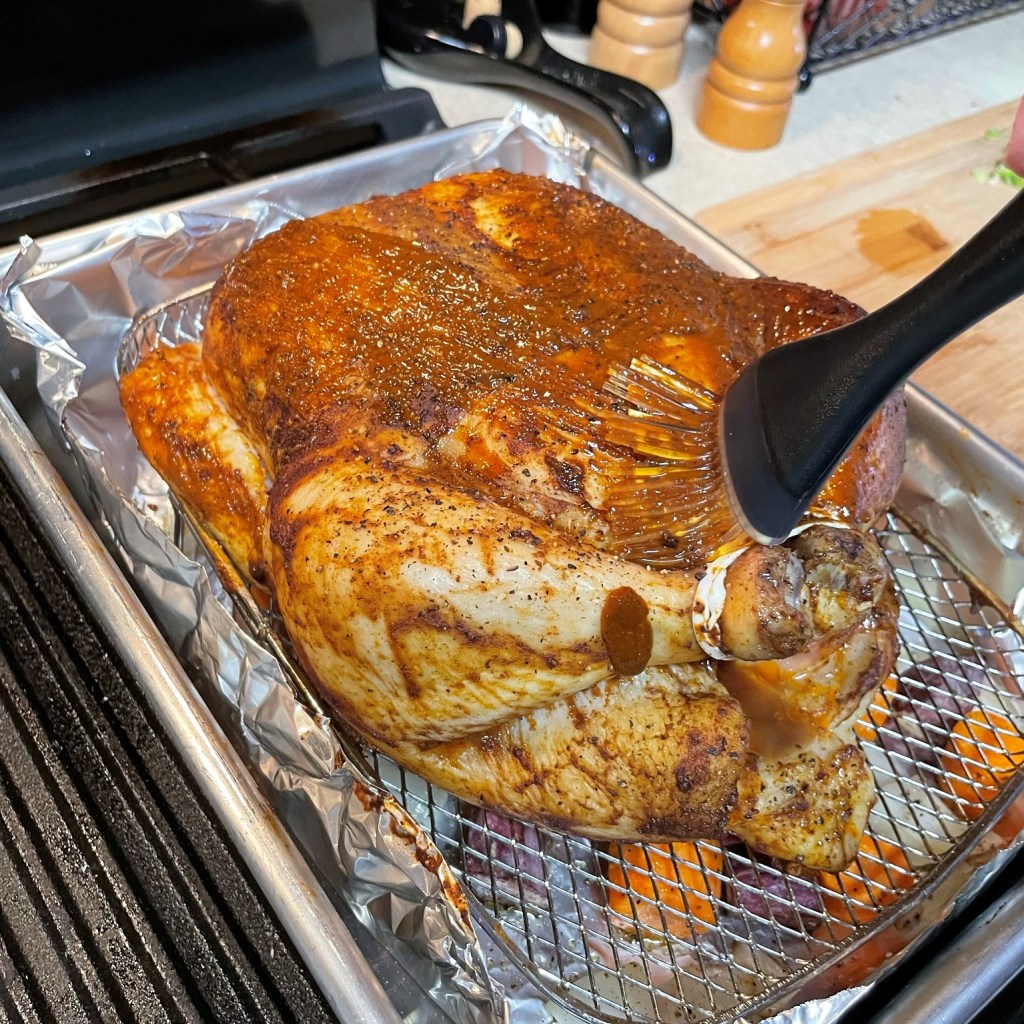
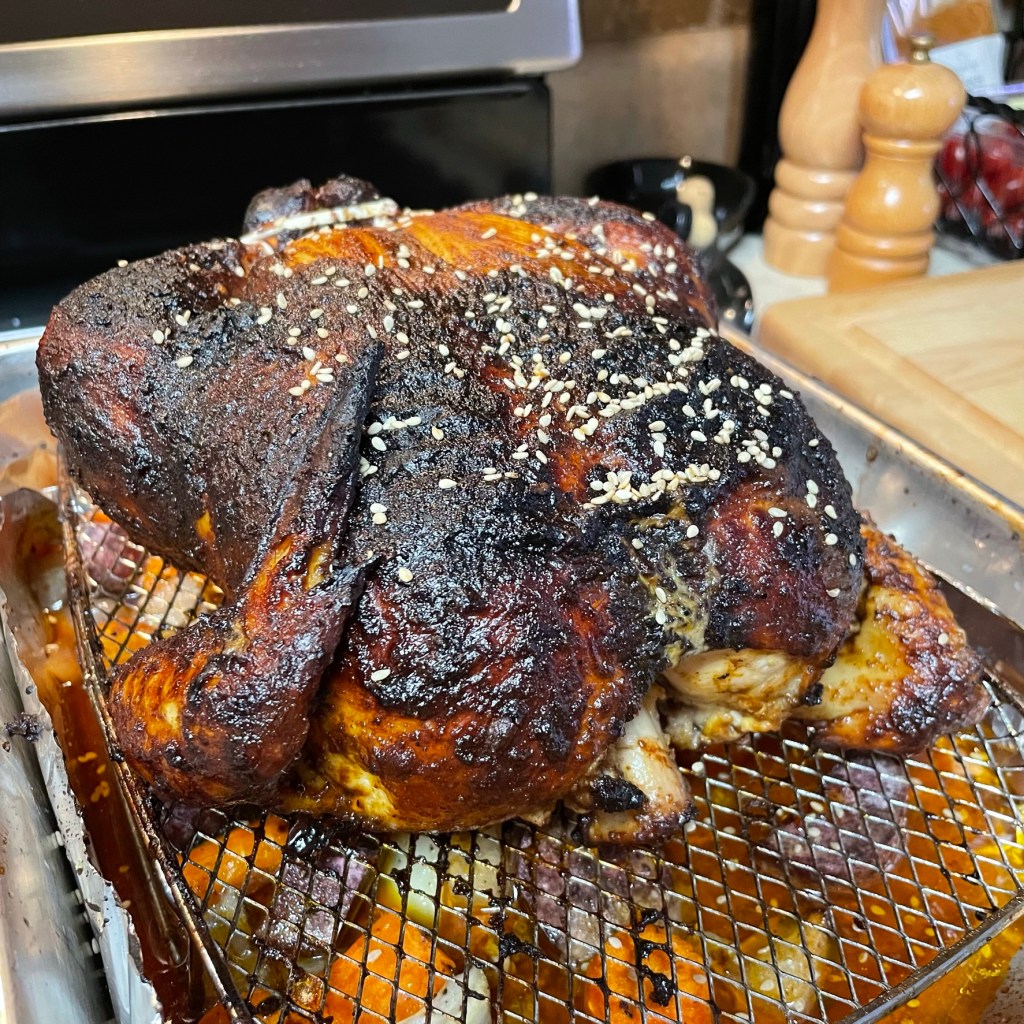
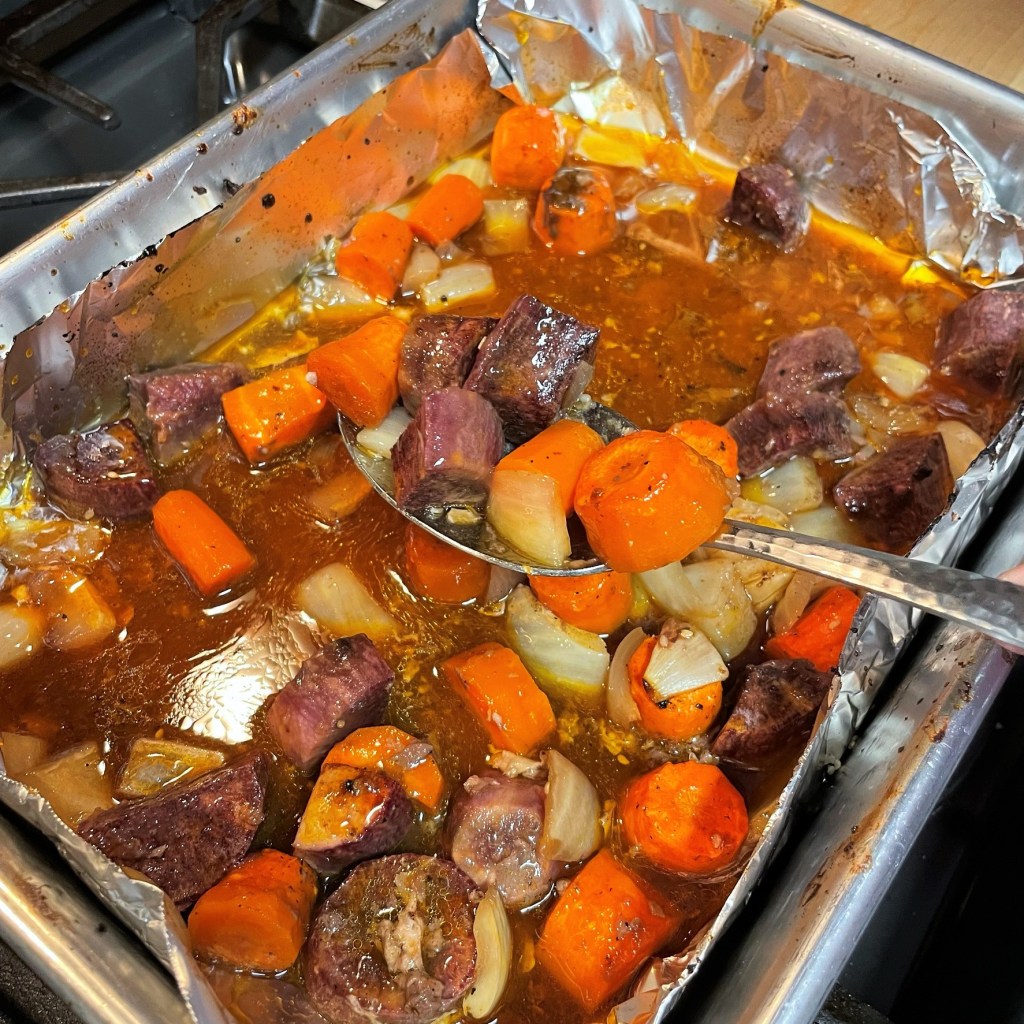
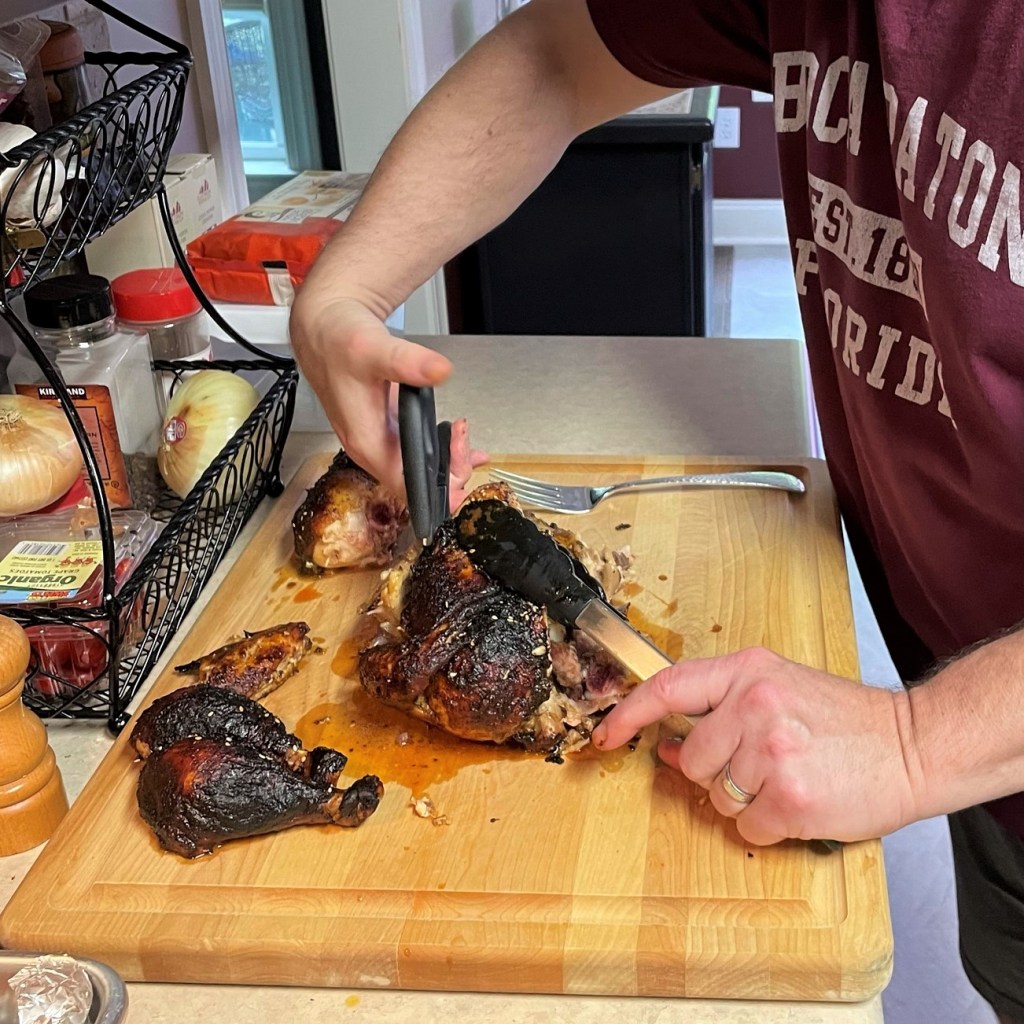
Despite having been in the deep freezer for two years, the mole still had exquisite layers of flavor. I blended it with a bit of olive oil and a touch of Wicked Whiskey honey, and I rubbed it all over the brined chicken, which I roasted over root vegetables on the convection setting of our oven for I have no idea how long, and lo and behold, it turned out beautiful!


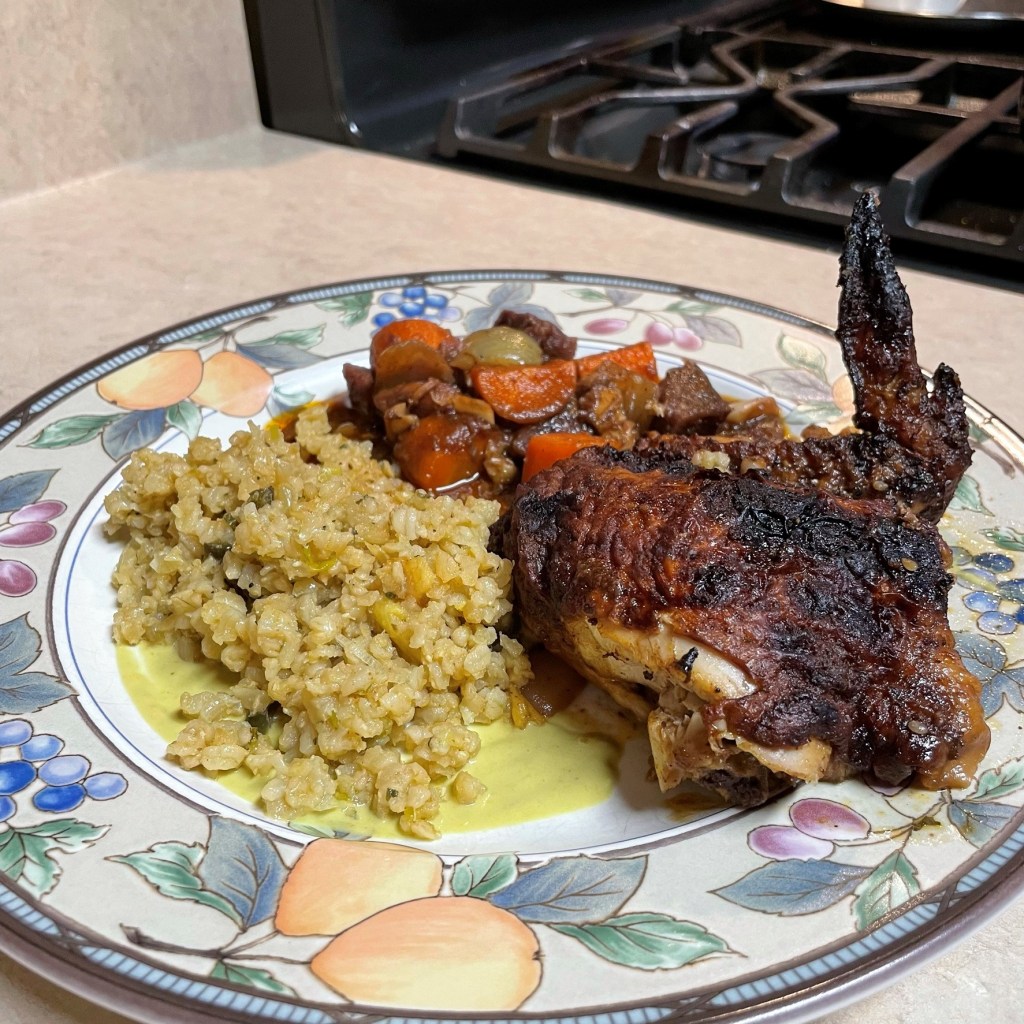
The mole-rubbed chicken looks great, but how does it taste, and what about that rice made with disgusting jalapeno sauce? It’s time for judging.

Les is a very generous judge. In my own opinion, the jalapeno sauce-infused rice was decidedly not a winner, and not only because the sauce is gross. I overcooked it because I miscalculated the amount of liquid when I blended in the jalapeno sauce. It was edible, but not delicious.

But that chicken!


Thank you, dear reader, for joining us on this crazy culinary journey! The next basket is for Les. I’ll spring it on him tomorrow—stay tuned! 🙂


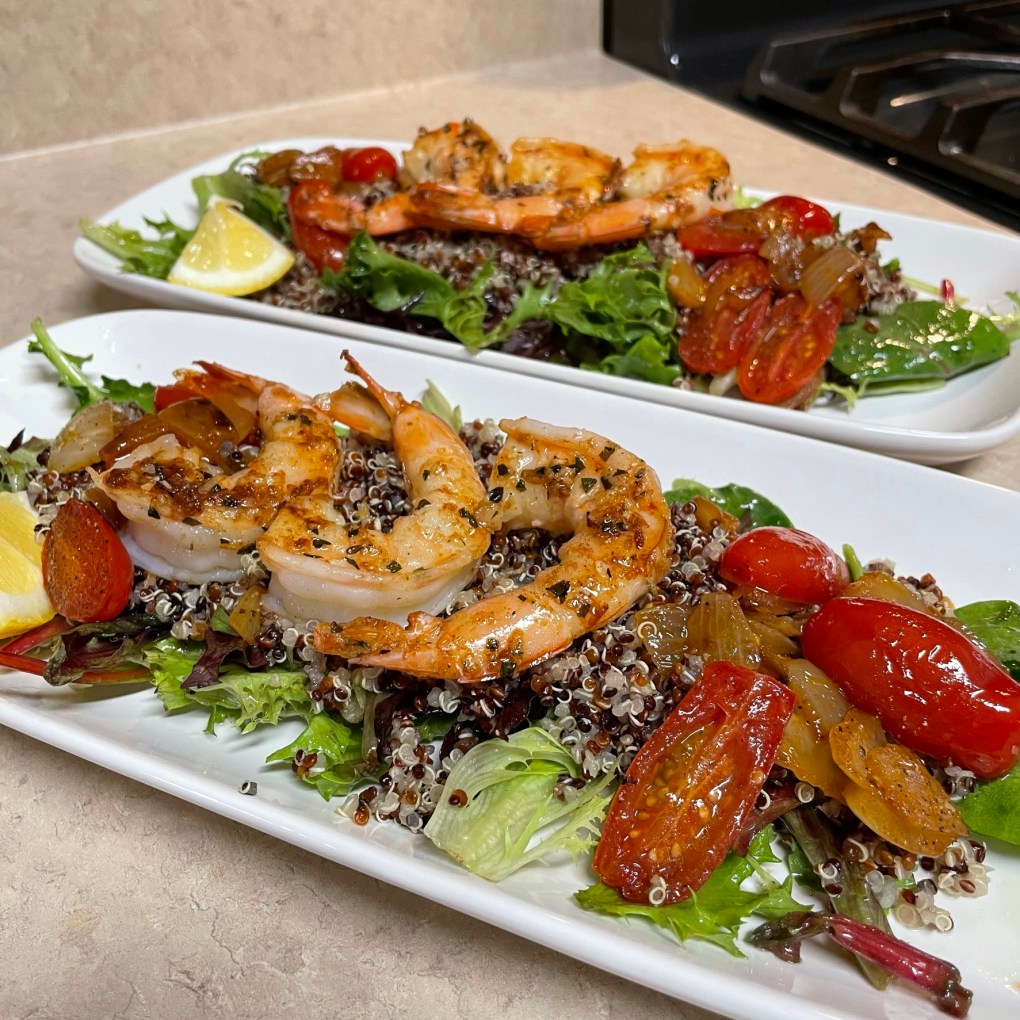
Shrimp & Quinoa Salad

One of the benefits of working from home is the flexibility to carry out personal tasks during my workday. It is not unusual, even during my job’s “busy” seasons, for me to be working on a loaf of sourdough bread or some other dinner prep amid online conference calls or in between answering emails. So when my friend, Ruthanne, texted a few weeks ago to ask if she could come to my house for an online job interview, I instantly answered, “of course!”  

Her own home was more than 45 minutes away, and she needed a quiet place to land where she could conduct her meeting without attracting suspicion from management at her current job. My place was an easy solution, being just a few minutes down the parkway, and (obviously) I also promised her a tasty lunch.

Ruthanne has a fit, healthy lifestyle that is usually along low-carb lines with an emphasis on clean, whole food ingredients, and I took that into consideration when I planned this simple lunch. It was mostly made in advance—I cooked up the quinoa and sauteed the onions and tomatoes before she arrived, then I set her up in the loft space in our home, where she connected to our wi-fi, took a few deep breaths, shook off her nerves and started her call.

The irony of the situation is that my friend was hoping to land a position with a company that exclusively employs remote workers, and that was their practice even before the COVID-19 pandemic forced so many companies to create a remote plan. Job interviews are stressful under the best of circumstances, but this one was a high-stakes situation. After 15 months of pandemic-forced remote work, her existing employer had mandated an immediate return to the office. Like so many other people, my friend had adjusted to working productively in the quiet environment of her own home, and despite her pleas to continue the arrangement for a few more weeks so that she could manage new family obligations, it was a no go. She needed this new job.

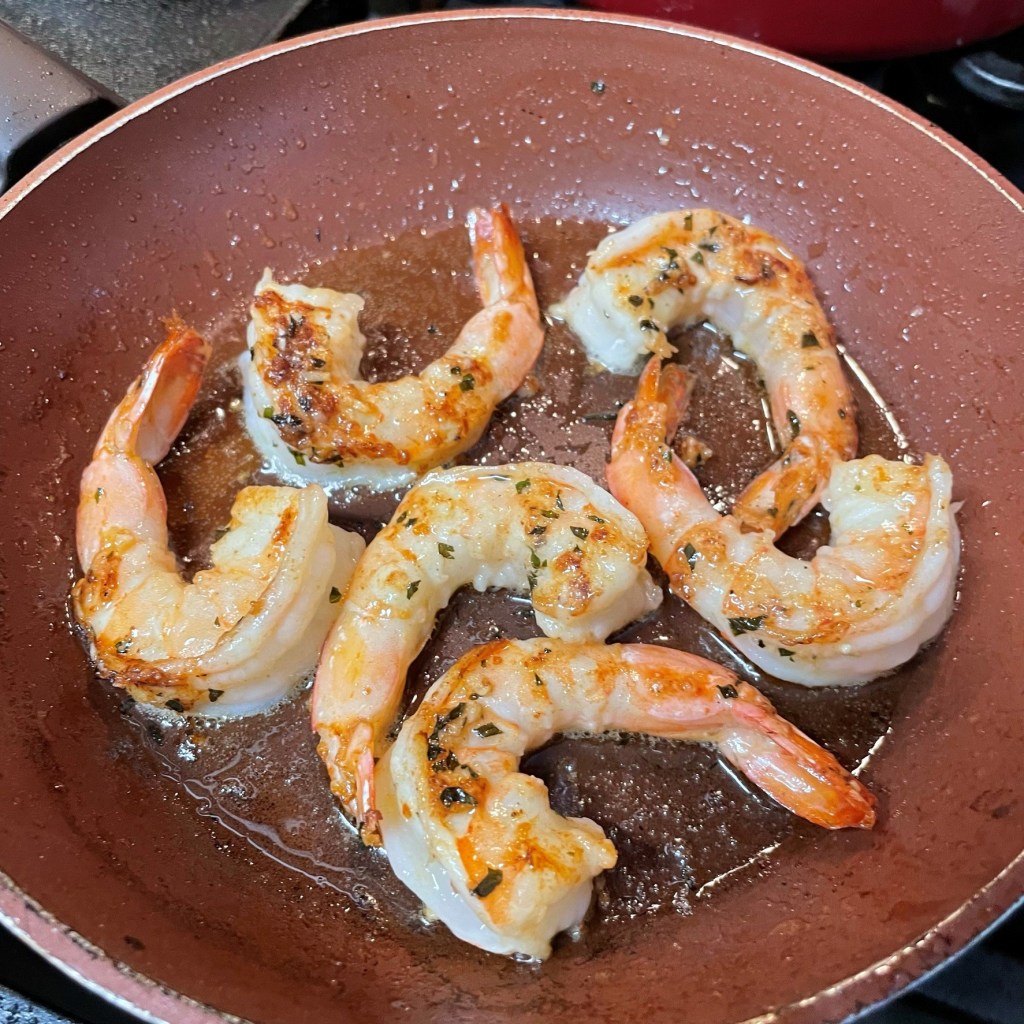
When she descended from the loft with a huge smile and an expression of relief, I popped the top on a bottle of blood orange seltzer for a quick workday-friendly mocktail. We had to celebrate what she said felt like a sure thing. With the pressure of the interview behind her, we had just enough time left for lunch. I did a super-quick sauté on the shrimp (using the pesto compound butter I already had in the fridge) and arranged this tasty plate.

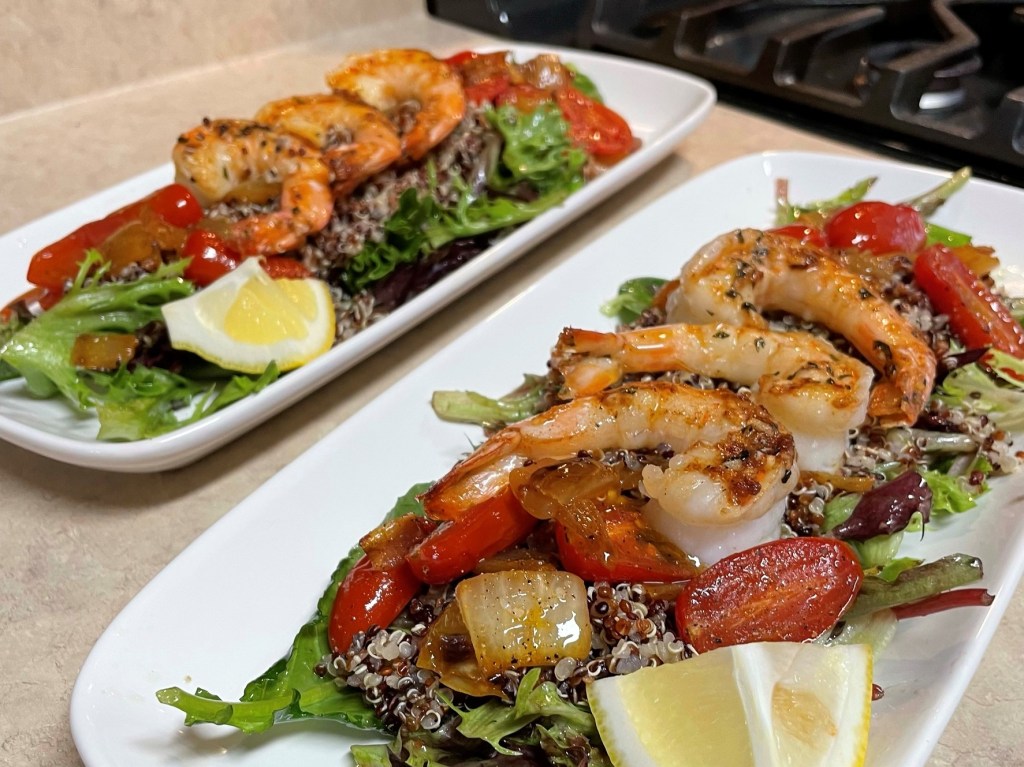
So much to love about a lunch that is quick, easy, satisfying and good for you!

This was a light, clean bite with a good, healthy dose of protein. Quinoa is the only plant-based food that satisfies all nine of the amino acids our bodies need, yet it doesn’t feel heavy or too filling. Mixed salad greens in vinaigrette were a fresh backdrop to the quinoa and the gently sauteed tomatoes provided a juicy pop of acid against the sweetness of the shrimp. It was exactly what we needed, and my BFF was able to scoot back to work on time.

It’s exciting to see how quickly things can happen when you are courageous enough to put yourself out there. Ruthanne begins her new job today, and I’m so proud of her! 😀


Serves 2 for lunch

Ingredients

1 cup cooked red, white or mixed quinoa* (see notes)

1 Tbsp. extra virgin olive oil

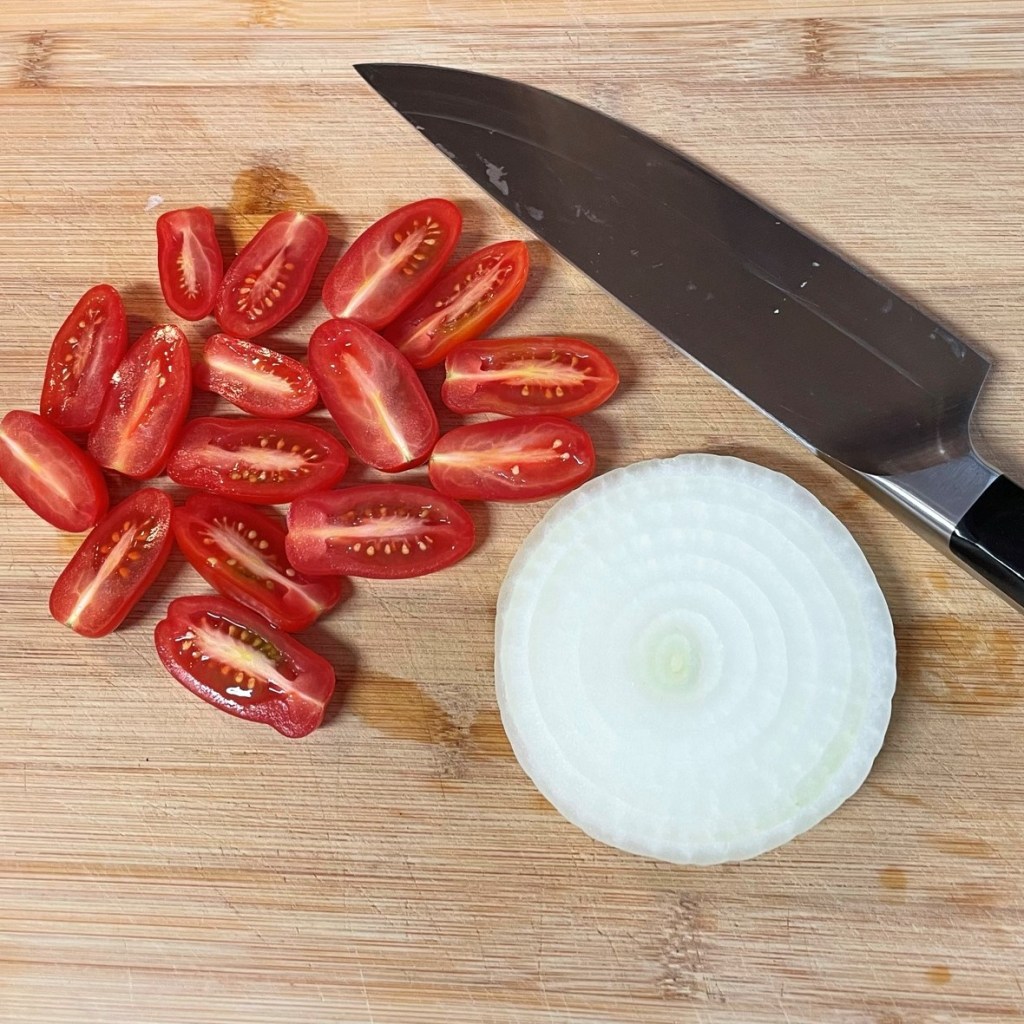
2 sweet onion slices, chopped

Small handful organic baby tomatoes, halved

2 handfuls mixed baby greens

4 Tbsp. vinaigrette (I used the last bit of some Good Seasons dressing, but any vinaigrette would work)

6 jumbo shrimp, peeled and deveined*

2 Tbsp. pesto compound butter*

Lemon wedges for serving


*Notes

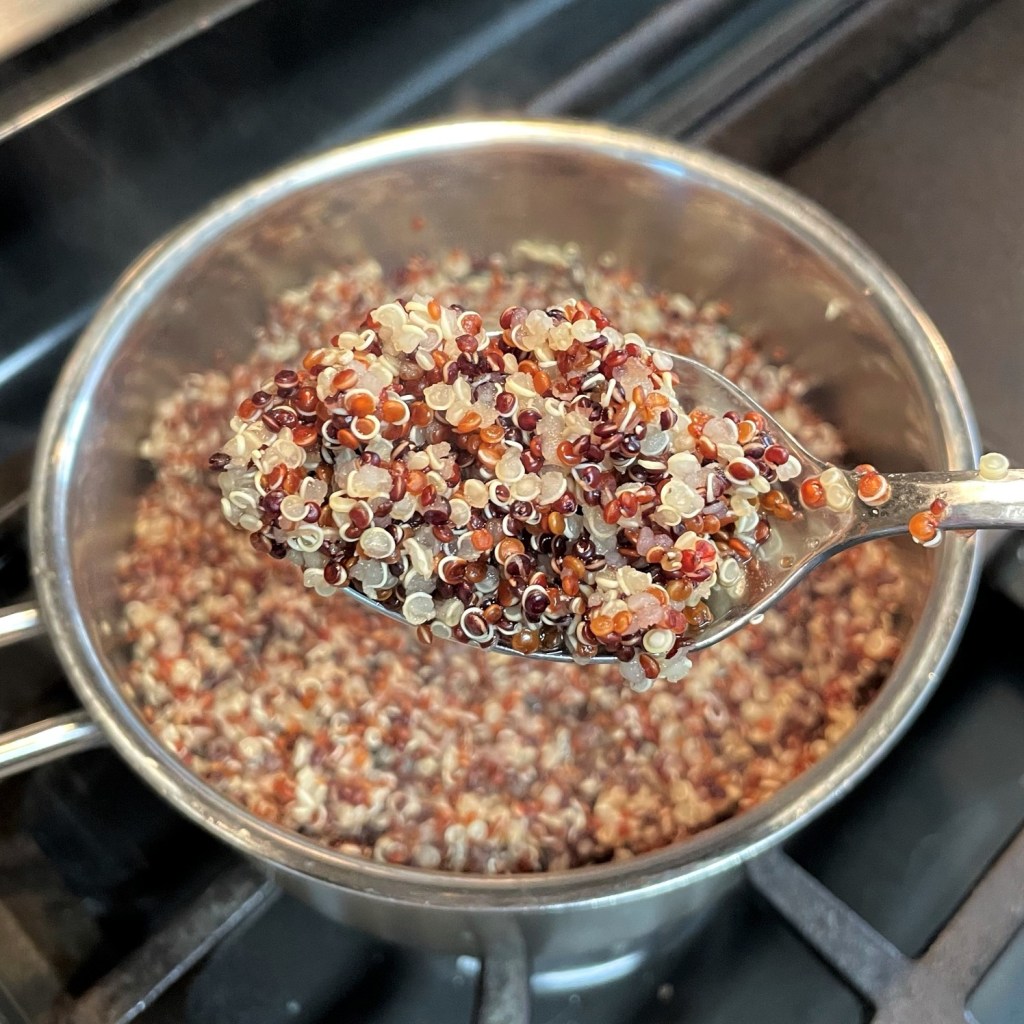
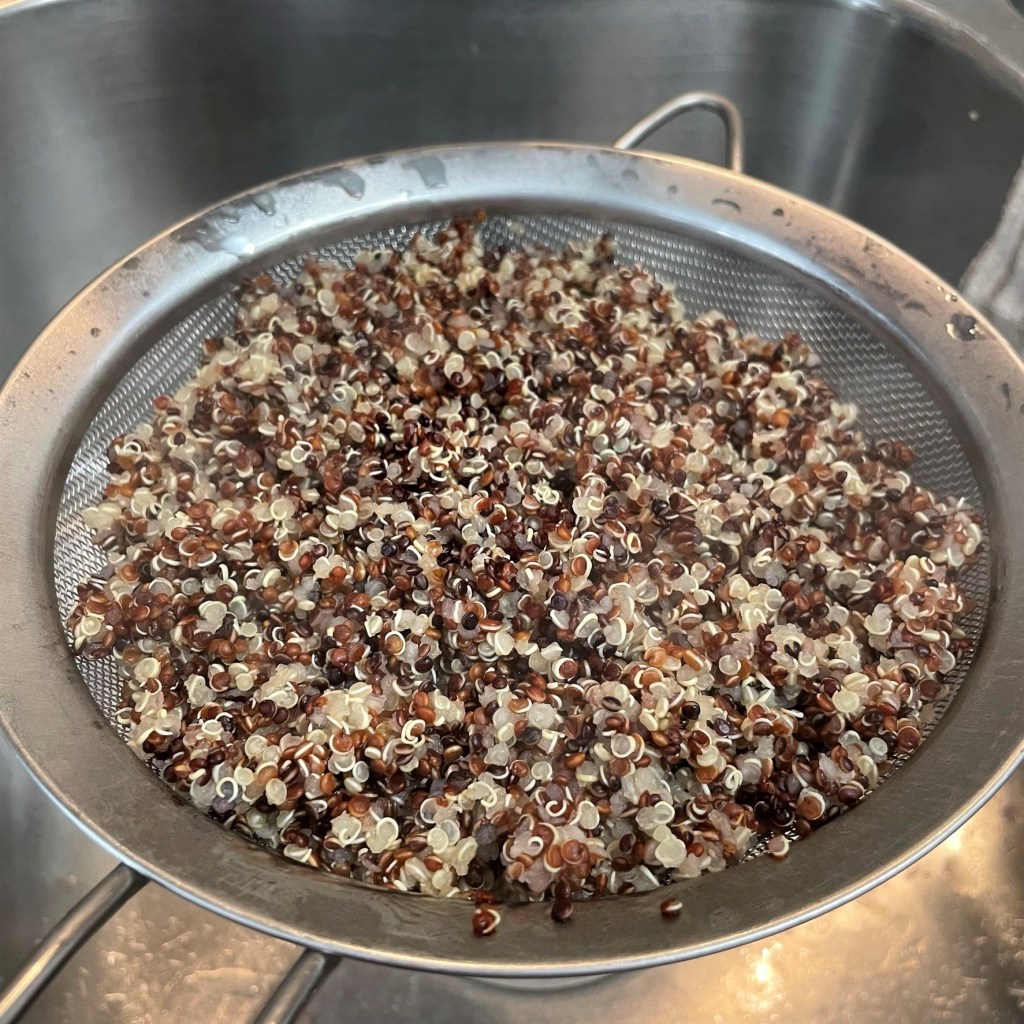
Cook the quinoa ahead to allow time for chilling it. If you have found quinoa to have a bitter taste, you may have missed the step of rinsing it before cooking. Give these instructions a quick review to see how I prepped the quinoa. I made a large batch and used up the rest in other dishes.


The shrimp I used for this dish were “16-20” size, which means a pound of the shrimp would include 16 to 20 individual shrimp. Each portion of this salad included about 4 ounces of shrimp.

This recipe makes use of the compound butter I shared in my previous post, or you could swap in regular butter or extra virgin olive oil, but add a little minced garlic and herbs to the pan when you cook the shrimp.


Instructions


  1. Place a small, non-stick skillet over medium heat. Swirl in olive oil and heat until shimmering. Sauté onions and baby tomatoes just long enough to soften them. Season with salt and pepper and transfer to a bowl until you’re ready to assemble the salad.
  2. Toss the mixed greens in vinaigrette until lightly coated. Arrange the greens on the plate, reserving leftover dressing.
  3. Add the quinoa to the bowl with dressing and toss it around to absorb it. Mound the quinoa on top of the dressed greens, then scatter the onions and tomatoes over it.
  4. Heat the compound butter in the same skillet used for cooking the onions. When it is melted and the skillet is hot, lay the shrimp into the pan, taking note of the order you added them. After about one minute, turn each shrimp over, following the same order, to cook the second side.
  5. Arrange the shrimp on top of the salad. Drizzle any remaining melted butter over the top of the shrimp.


Compound Butters for Grilled Corn

Summer, meet your new best friend at the grill.

No matter what you’re into grilling during the warm weather months, you’ll find countless ways to use compound butter, and I do hope you’ll try it on my favorite—freshly grilled summer sweet corn.

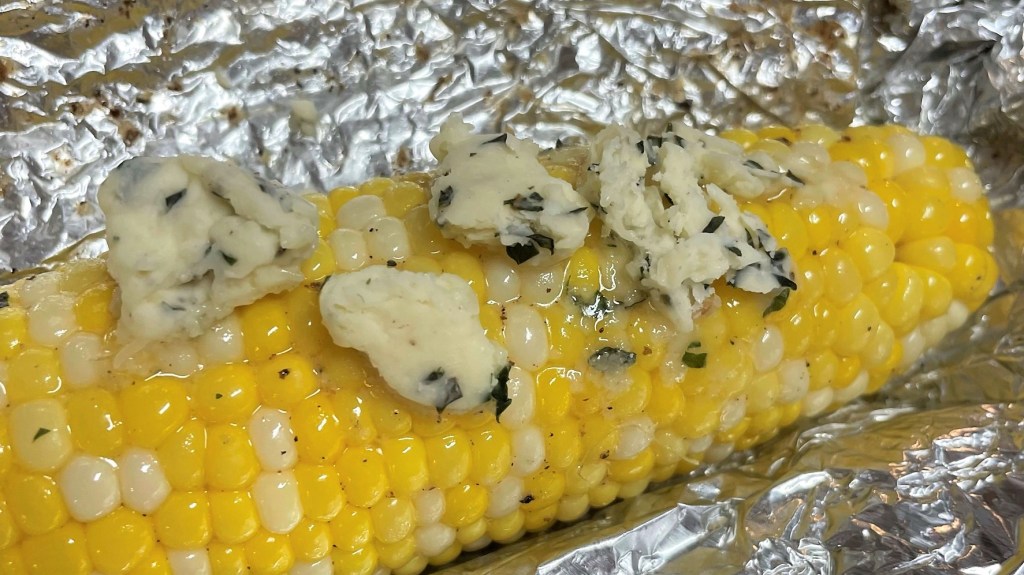
Oooh, look at that beautiful char!

In the days of my youth, I ate more sweet corn than I can recall. My small, upstate New York town was one of those idyllic, rolling green hills kind of places you read about. The landscape was dotted with dairy farms, and sweet corn was so prolific, it was not unusual at all to see freshly picked ears of it piled high against trees at the side of the road with a sign that said, “for the love of God, please take this corn already.” The grocery store didn’t even order corn in the summer because everyone already had more than they needed.

The down-side of living in one of these pastoral places was that we didn’t have much to do. Many a summer night in my young-adult years, I would gather for a backyard bonfire and corn roast with my cousin, Annie, and a friend, Julie. It was just the three of us most times, and we were not exactly living large. We would fill up two big, galvanized steel buckets—one with cans of cheap beer and a bag of ice, and the other with cold water and as many ears of free corn as we could fit—and we’d spend the night lamenting our town’s lack of interesting options (for anything). The corn was still dressed in its husks, silk and all, and after a good soaking, we would toss it directly onto the bonfire to roast and steam it to perfection. We peeled the charred husks back and used them like a handle as we finished off ear after ear. Little flakes of black, burned-up husks and silk would end up all over us, but do you think we cared? There is nothing that compares to that roast-y flavor and it never occurred to us that we should dress up our fresh summer feast with butter or anything else.

A couple of years later, Annie and I had both moved away from our little town, rarely to return. Julie got married and stayed in town, and the last time I saw her, she was happily raising a family. I don’t miss our small town much (except perhaps in mid-October, when I know the maple trees are turning brilliant shades of rust and red), but I do miss the abundance of sweet corn in the summer. Come to think of it, I equally miss the piles of free zucchini squash, but that will be another post.

Today, when I want to enjoy summer corn (which is always), we “roast” it on the grill. There’s no soaking involved and no charred corn husk getting all over everything, and the flavor of grilled corn, though not quite as intense as the bonfire-roasted corn of those olden days, is still far superior to that of boiled corn. And because I’m all grown up now, I do enjoy putting a flavor spin on my grilled corn, and that’s where the compound butter comes in.

Grilled corn with pesto compound butter

This is a simple way to add a little pizzazz to corn, or whatever else you might be pulling off the grill—fish, shrimp, chicken, steak, burgers or other vegetables. Not grilling? No problem, because compound butter also comes in handy when you need to give a boost of flavor to something you make on the stove. Use it to sauté shrimp or vegetables, liven up a baked potato, melt over cooked pasta or drizzle onto your popcorn. What I love about compound butters is that you can make them in advance, they keep a good long time in the fridge (or freezer), and they afford multiple flavor options when you are serving guests.

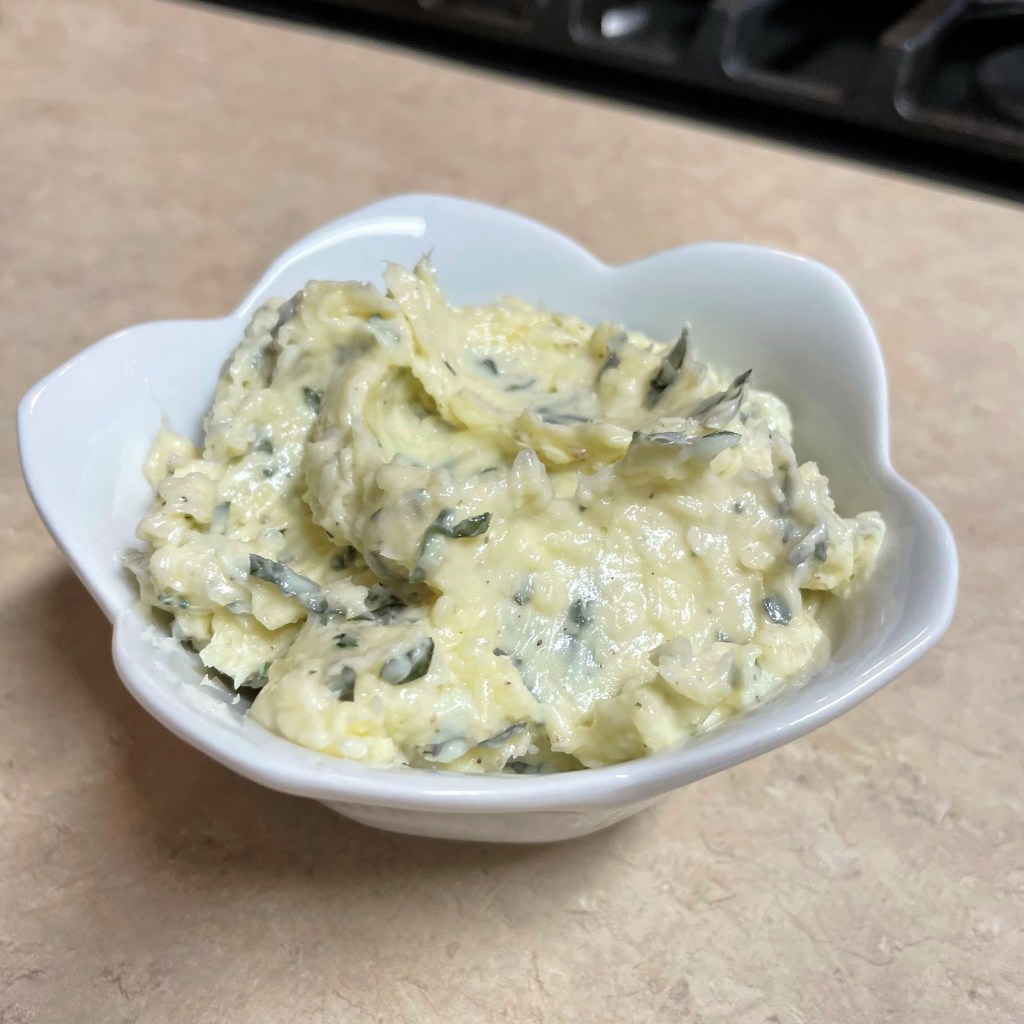
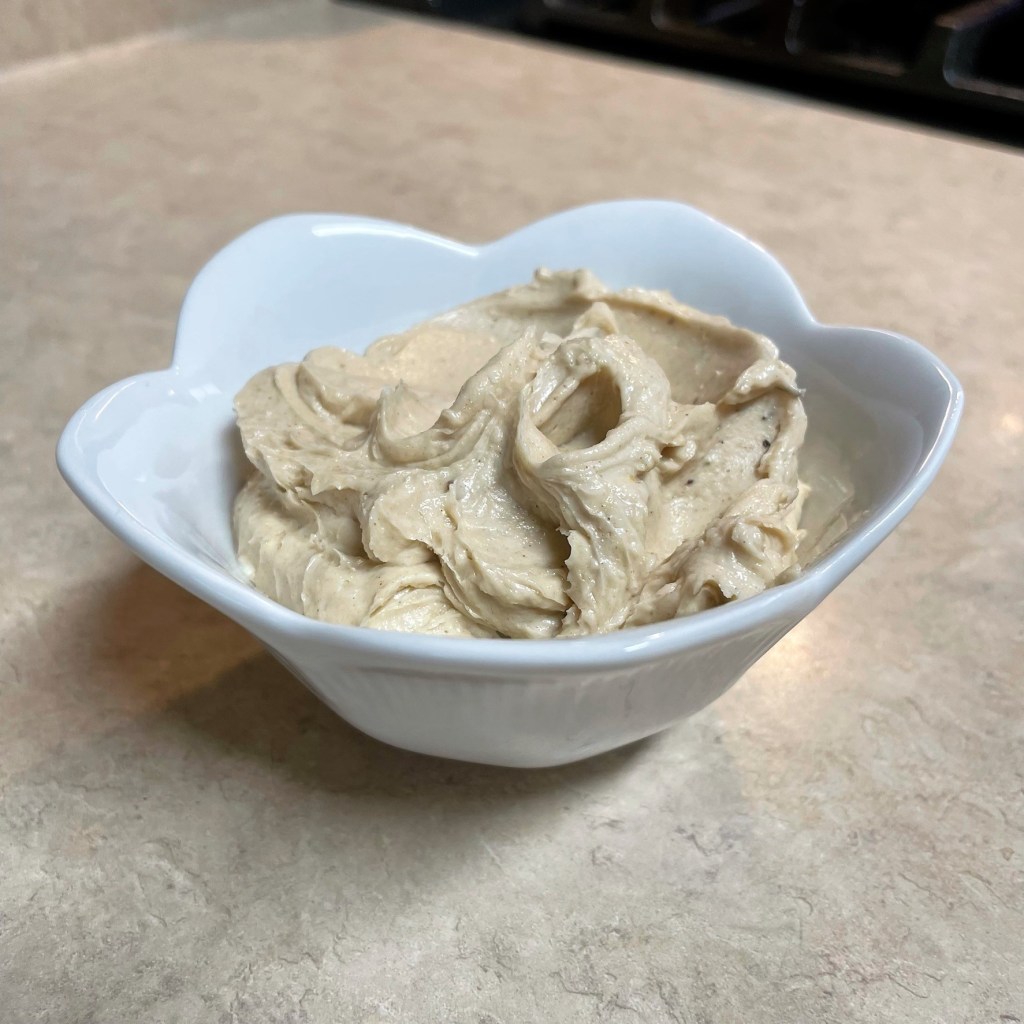
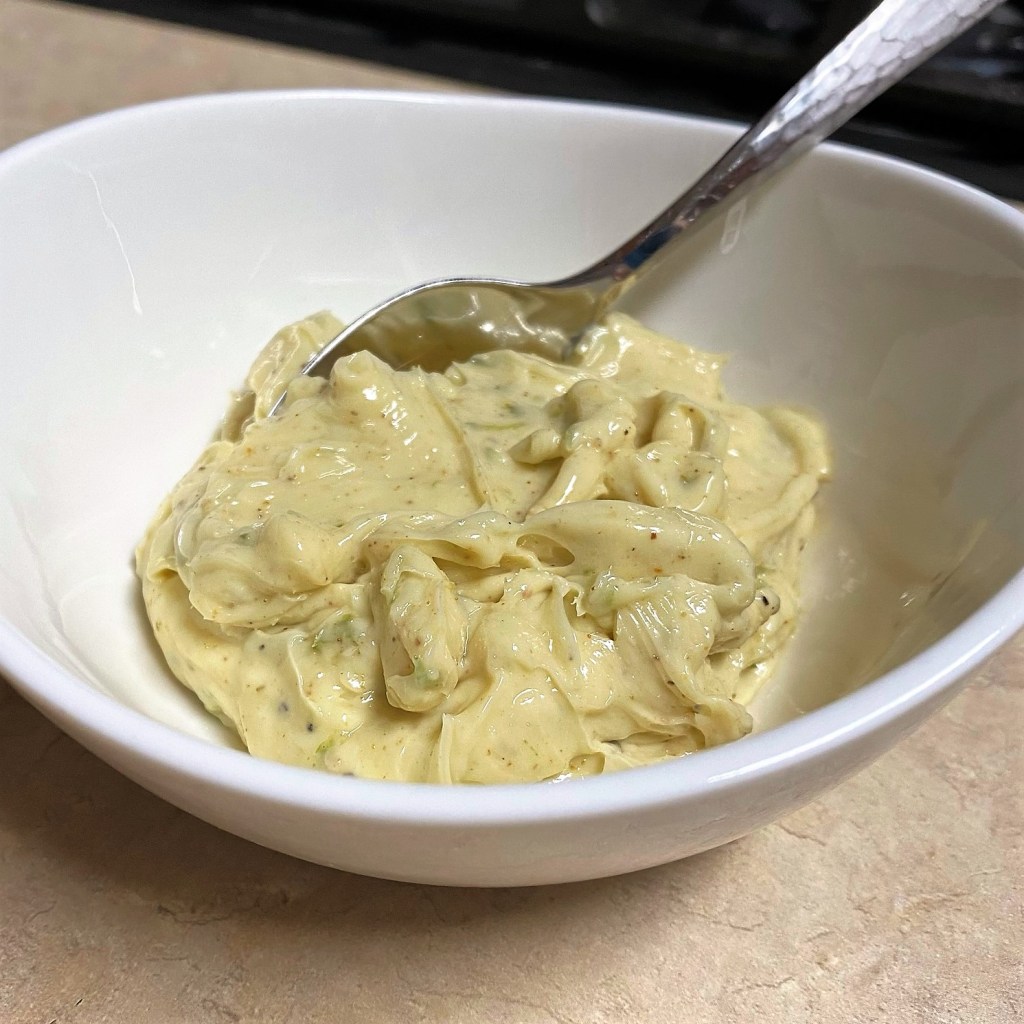
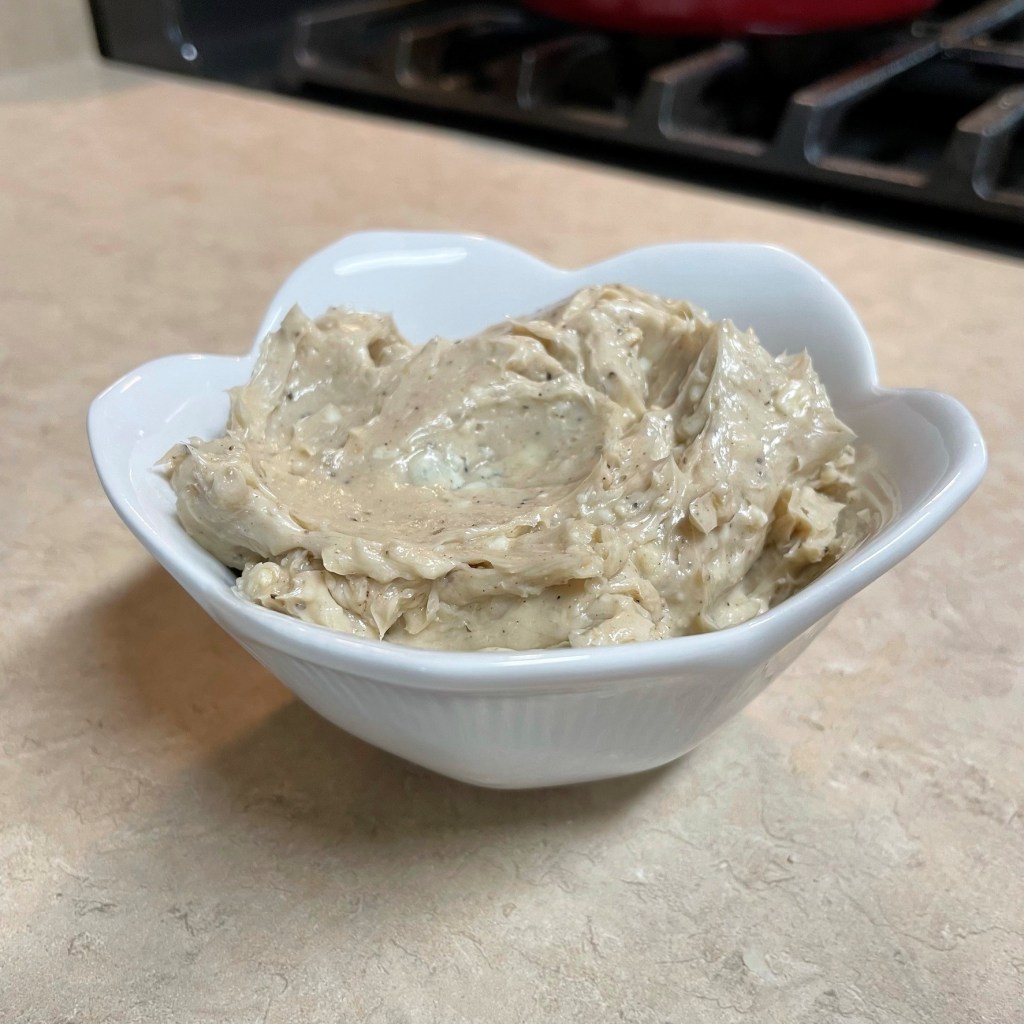
Compound butter may sound complicated, but it could not be simpler—soften up a stick of salted butter and stir in the flavors that suit your fancy. Mix in a swirl of olive oil for extra depth of flavor and extended “spreadability.” I will offer up a few compound butter combos, using simple ingredients I already had in my fridge. Mix and match them any way you like. And, by all means, please share your ideas for compound butter flavors and uses, too.


Pesto Compound Butter

1 stick salted butter, slightly softened

2 cloves fresh garlic, very finely minced

Small handful fresh basil leaves, finely snipped or cut into ribbons

1/3 cup finely shredded Parmesan cheese (or parm-romano blend)

A few twists freshly ground black pepper

1 Tbsp. extra virgin olive oil


Sun-dried Tomato & Feta Compound Butter

1 stick salted butter, slightly softened

2 to 3 Tbsp. sun-dried tomatoes, cut or snipped into very small bits* (see notes)

2 oz. whole milk feta cheese, crumbled and pressed dry

A few twists freshly ground black pepper

1 Tbsp. extra virgin olive oil

*Notes – If the sun-dried tomatoes are packed dry, rehydrate them for a few minutes in boiling water, then drain and press out the excess moisture. If they are packed in oil, chop them fine and stir them in as the final ingredient, omitting olive oil.


Vegan Tahini-Soy Compound “Butter”

1 stick dairy-free butter substitute

2 Tbsp. tahini paste

1 tsp. soy or tamari sauce

1/2 tsp. Trader Joe’s Umami seasoning (powdered blend of garlic, mushroom, salt and red pepper)


Chili & Lime Compound Butter

1 stick salted butter, slightly softened

Zest of 1 small organic lime

1/2 tsp. ground chili powder (your favorite, check the sodium)

1/4 tsp. ground cumin

1 Tbsp. extra virgin olive oil


Steakhouse Bleu Cheese Compound Butter

1 stick salted butter, slightly softened

1 tsp. Worcestershire sauce

freshly ground black pepper

1/4 cup crumbled bleu cheese

1 Tbsp. extra virgin olive oil


Instructions

Press and stir the butter down into a smooth, creamy spread. Add the other ingredients, beginning with those that can be stirred into the butter, and ending with any ingredients that need to be folded in. If you want to keep a few distinguishable bits, such as crumbled cheeses, fold them in at the end.

If you are adding ingredients that are inherently salty, such as hard cheeses or pre-mixed spice blends, you might opt to use unsalted butter to keep the sodium at the right level.

Keep compound butters in tightly sealed bowls in the fridge, or wrap them tightly in two layers of plastic wrap for freezing. Bring to cool room temperature to soften before serving.


Instructions for prepping easy grilled corn:

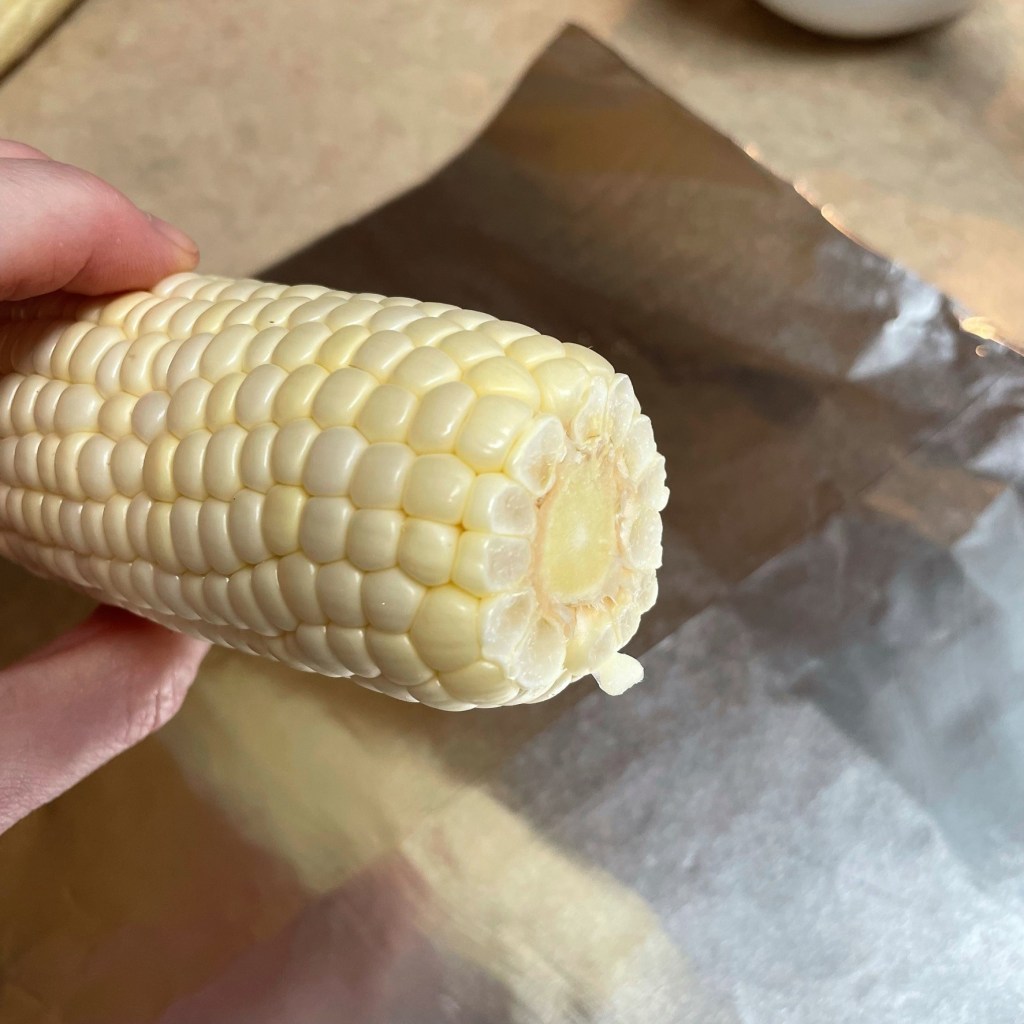
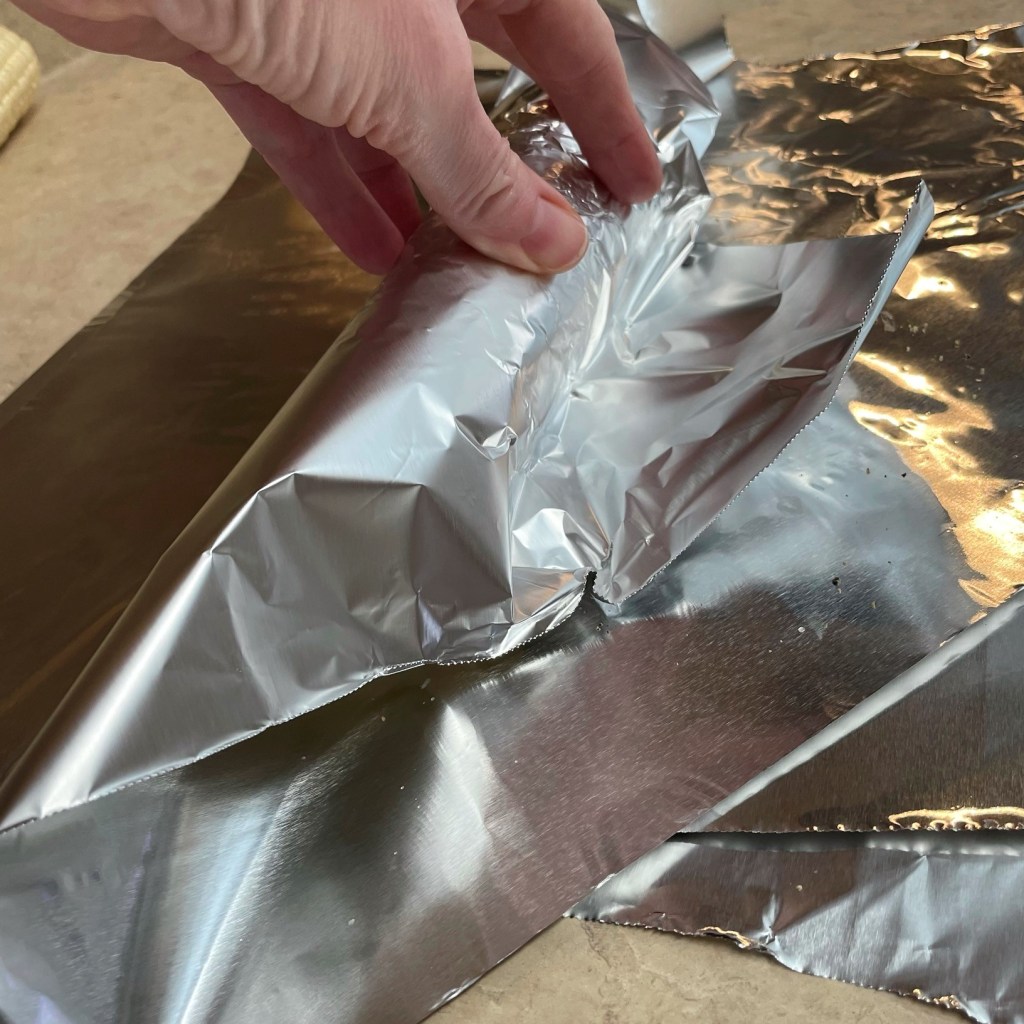
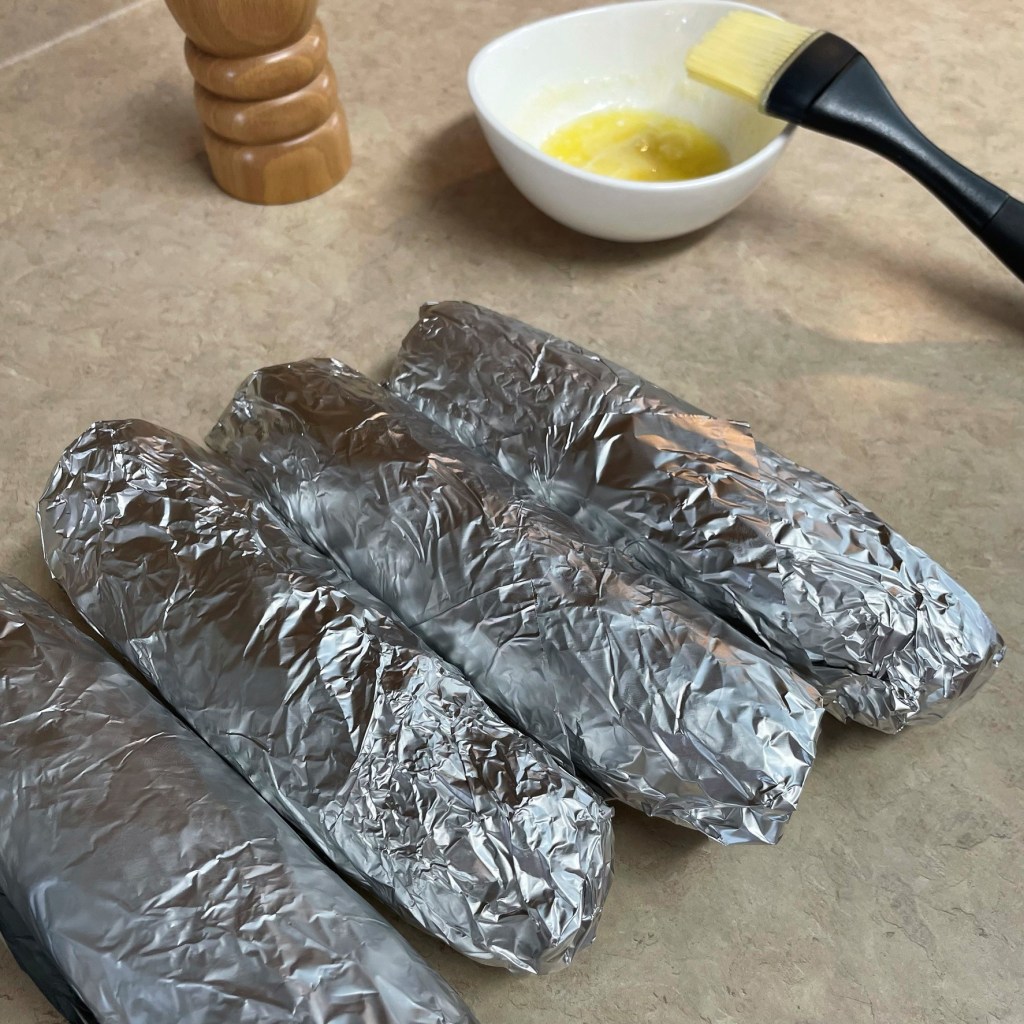
Remove husks and silks from fresh sweet corn. Use a sharp knife to make fresh, flat cuts on the ends of the corn ears. This will make it easier to hold them with corn handles. Tear off a square piece of aluminum foil for each ear. Melt salted butter in the microwave or on the stove top. Use a pastry brush to thoroughly but lightly coat each ear with melted butter. Season with salt and pepper. With the corn ear centered on the foil square, fold up one long end of foil all the way over the corn. Then, roll it up and twist or fold the ends to seal.

A bit of friendly, been-there-tried-that advice: resist the temptation to put the compound butter on the corn before grilling, especially if it has any type of cheese in it. In my experience, the add-ins will burn or gunk up or stick to the foil, rather than the corn. It does not seem to make a difference what type of foil you use, either, as I’ve had the same trouble using the expensive “non-stick” foil. It’s best to keep it simple for grilling, and add your flavored butter component at serving time. Besides, it’s fun to watch the butter ooze over the hot ears of corn! 🙂


The cooking instruction is a bit more nebulous because, as my husband, Les, says, grilling is an inexact science. How long you cook the corn depends on the type of grill you use, the temperature you are using for whatever else you’re grilling and placement of the corn on the grill, whether direct or indirect heat. When I pressed Les for a “ballpark” estimate on time, he quickly answered, “40 minutes.” The best thing to do is put it on the grill early, turn it periodically and check it a few times until it is done to your liking. We love it with a little bit of char on some of the kernels. And Les says if you turn up the temperature sometime to sear meat or another food, move the corn onto the upper warming rack.


Happy Summer!


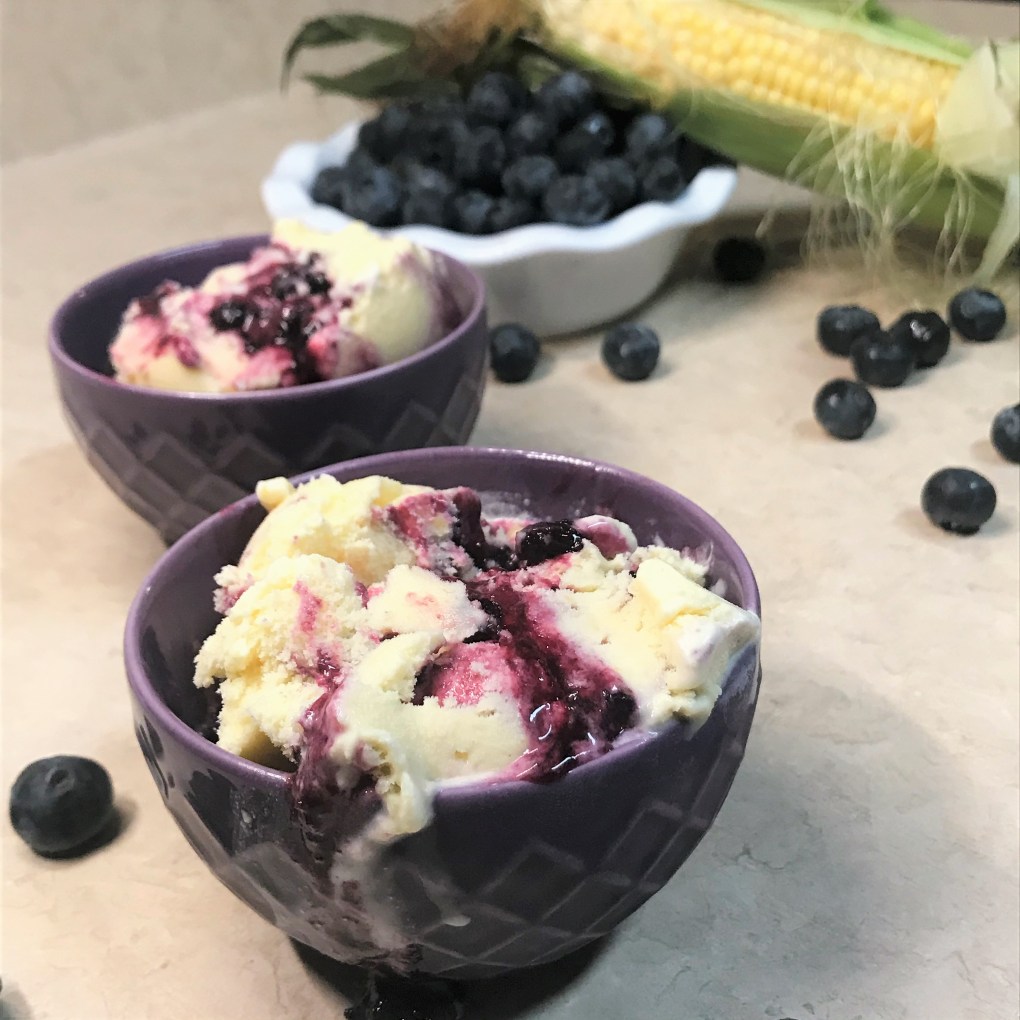
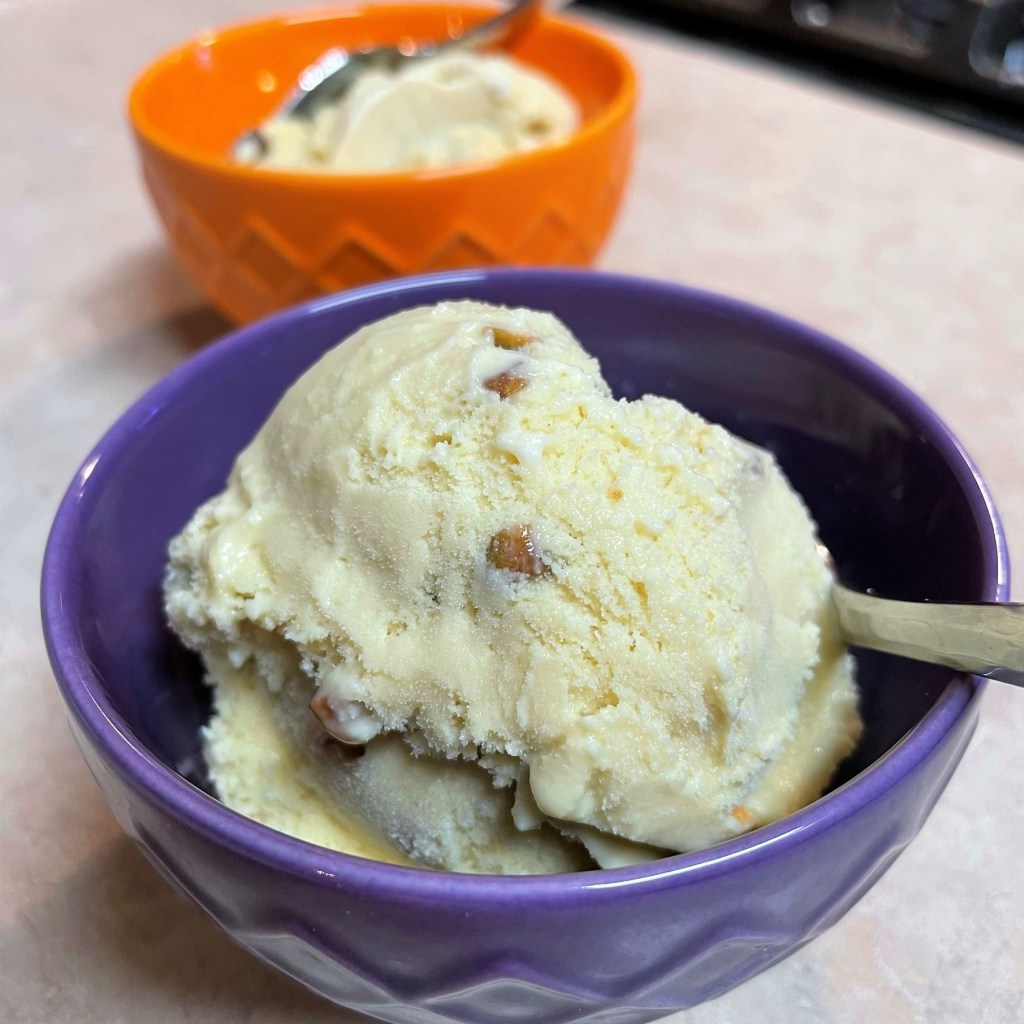
Homemade Pistachio Ice Cream

When our new kitchen is installed this fall, organization will be priority one. My husband, Les, and I are not doing all this planning and spending only to fall into the same jumbled mess of stuff we started with. To that point, every gadget we own is going to be catching a little side eye, as we make some hard, overdue decisions about what deserves to stay in our beautiful new prime real estate and what must go.

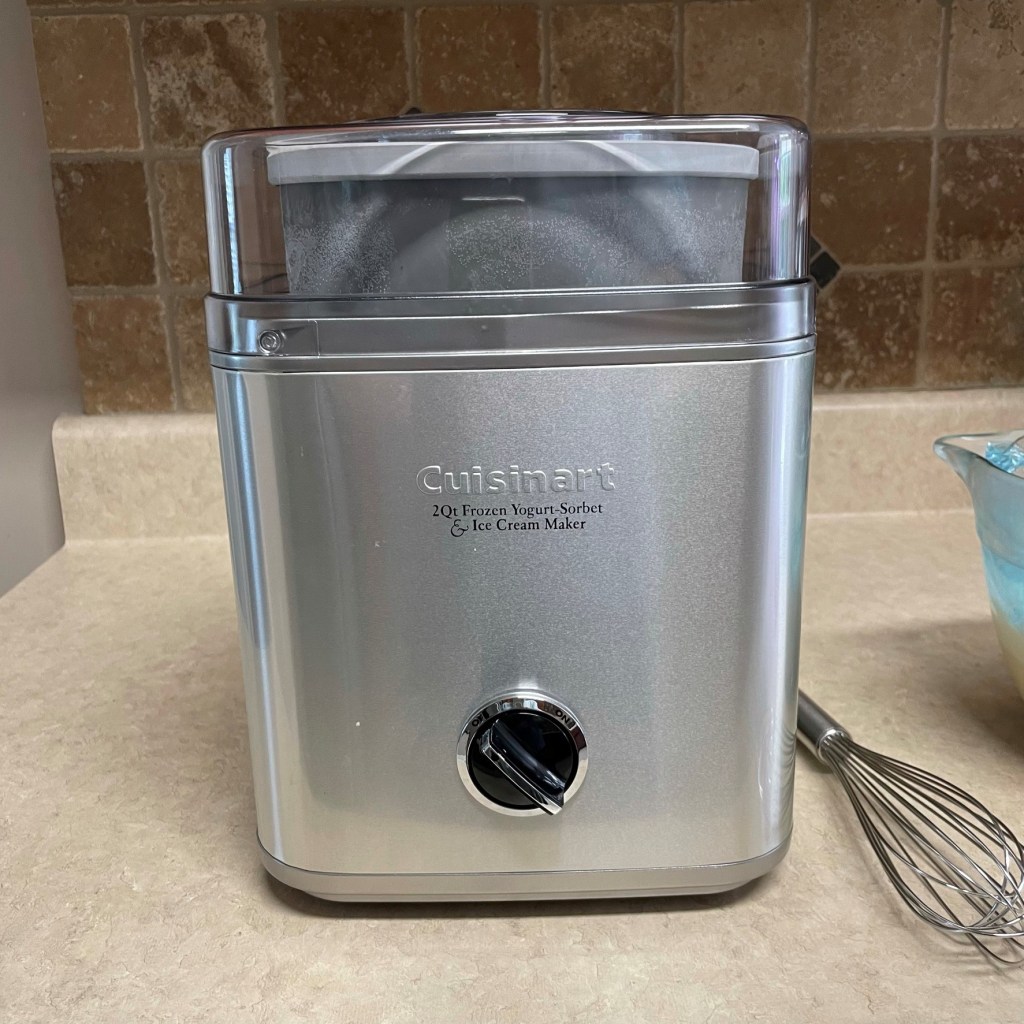
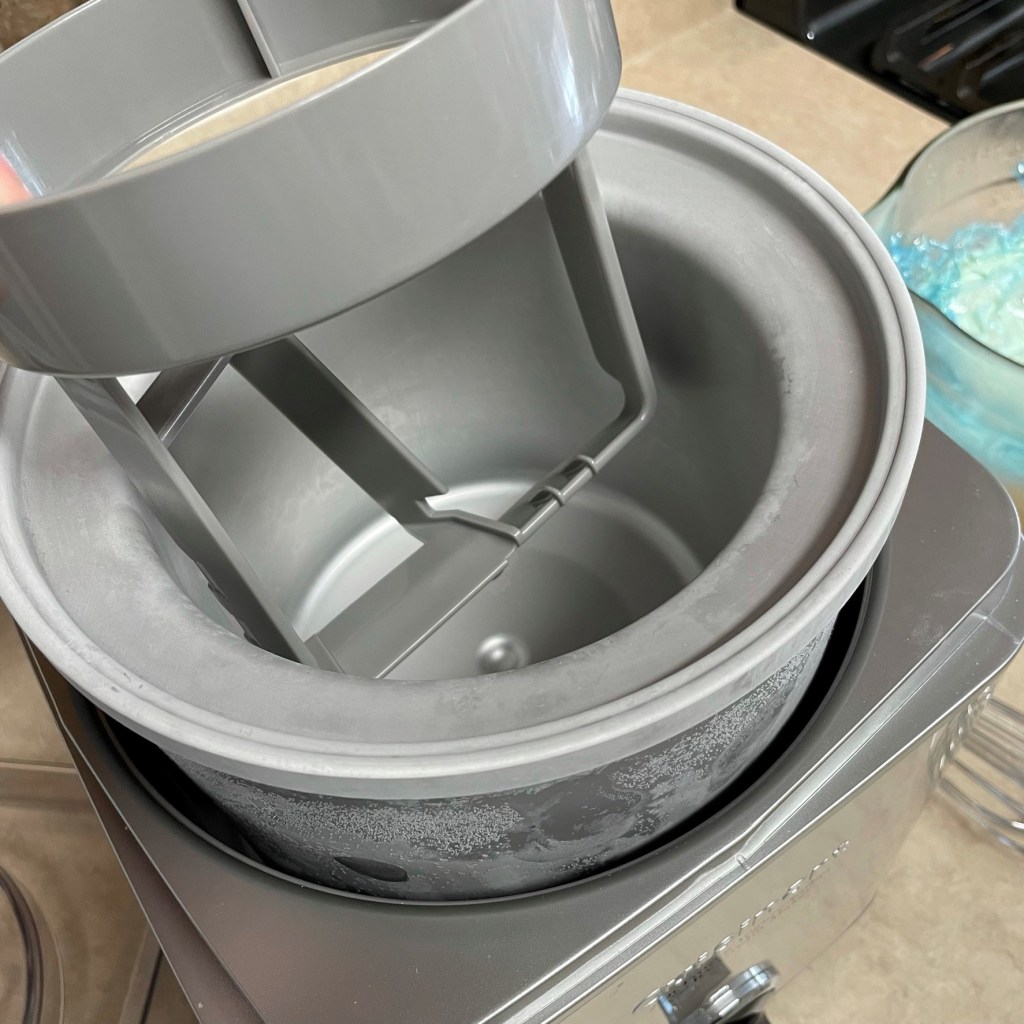
One small electric that has already passed muster in my mind is my Cuisinart ice cream maker. This device gets plenty of action at our house, and I have no complaints about it whatsoever. It’s easy to use, requires no hand-cranking effort or rock salt, and it quickly churns out up to two quarts of ice cream at a time. I purchased it several years ago (when I lived in a different kitchen) and it was one of the first things I laid claim to when I struck out on my own. I have made some delicious, memorable ice creams with this machine, and it technically does not fall into the single-purpose category because I can also use it to make sorbets and fruity wine slushies. How could I not love that, especially during summer?

Check out these fun ice cream flavors I churned out in summer of 2020:

July is one of my favorite months, not only because I will celebrate my birthday in the late part of the month, but also because it happens to be National Ice Cream Month! For your summer refreshment pleasure, I’ll be sharing several delicious ice cream recipes in the coming weeks. If you enjoy ice cream (especially if you like unexpected flavor combinations), I urge you to make a small, one-time investment in an ice cream machine. Sure, there are about a million “no-churn” recipes for ice cream on Pinterest and other internet sites, but if you look closely at some of those recipes, they often depend on numerous extra steps to produce the texture you expect in an ice cream, including setting a timer to pull it out of the freezer every couple of hours to stir it up. I’d rather just use an ice cream maker and be done with it.

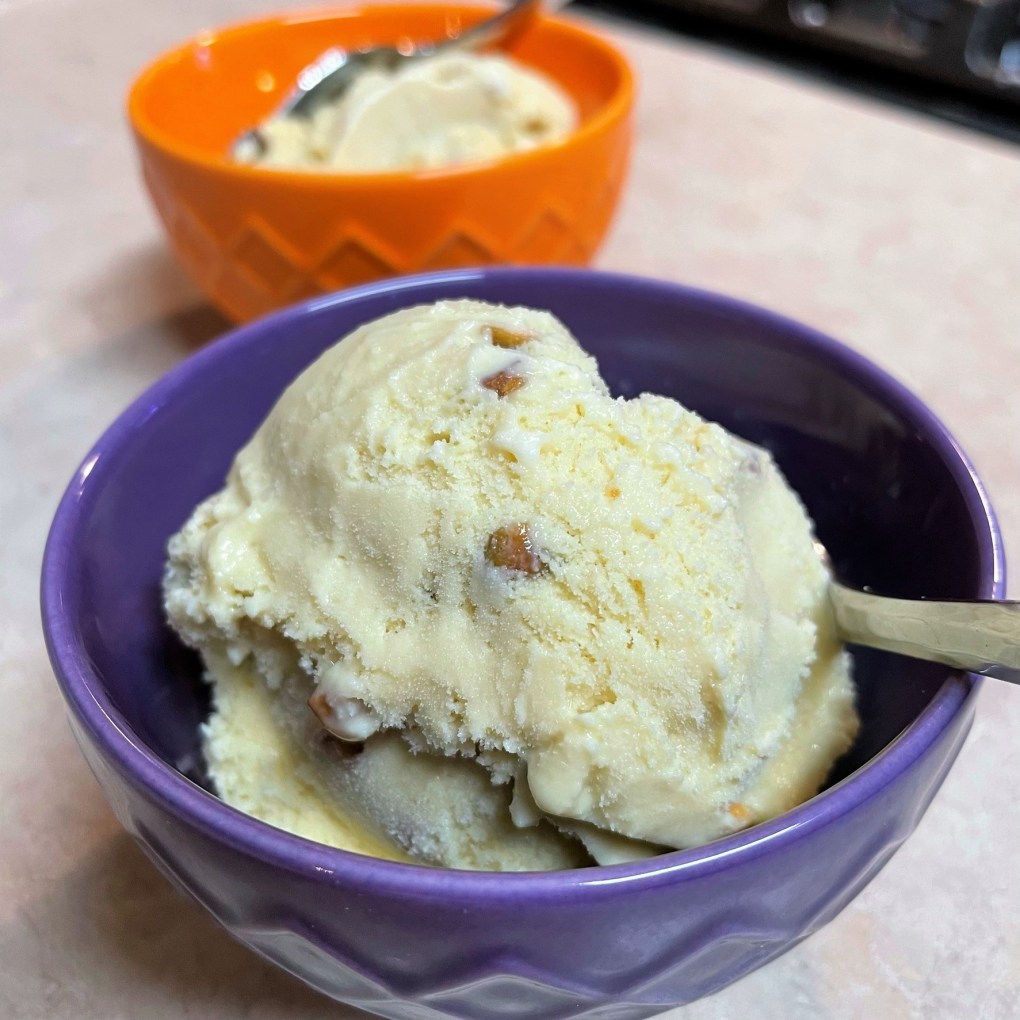
The first ice cream for 2021 is pistachio, and though this was my first time making this particular flavor, it was simple because it begins with my “basic” formula for custard-based ice cream, which is as follows:

  • 1 1/2 cups each of heavy cream and whole milk
  • 3/4 cup organic cane sugar
  • 3 free-range egg yolks

The cream and milk are heated together with half of the sugar, and the egg yolks are whipped with the rest of it. When the cream mixture is hot enough, I whisk it into the whipped yolks to temper them, then it all goes back into the pot to cook until custardy. From that point, you can flavor it up as you like, chill it and then churn it in the ice cream machine. Homemade ice cream has a somewhat shorter shelf life than store-bought because it doesn’t have any weird, chemistry-lab ingredients. But here’s the fun flip side—you don’t need homemade ice cream to have a long shelf life because it’s usually gobbled up within a few days anyway!


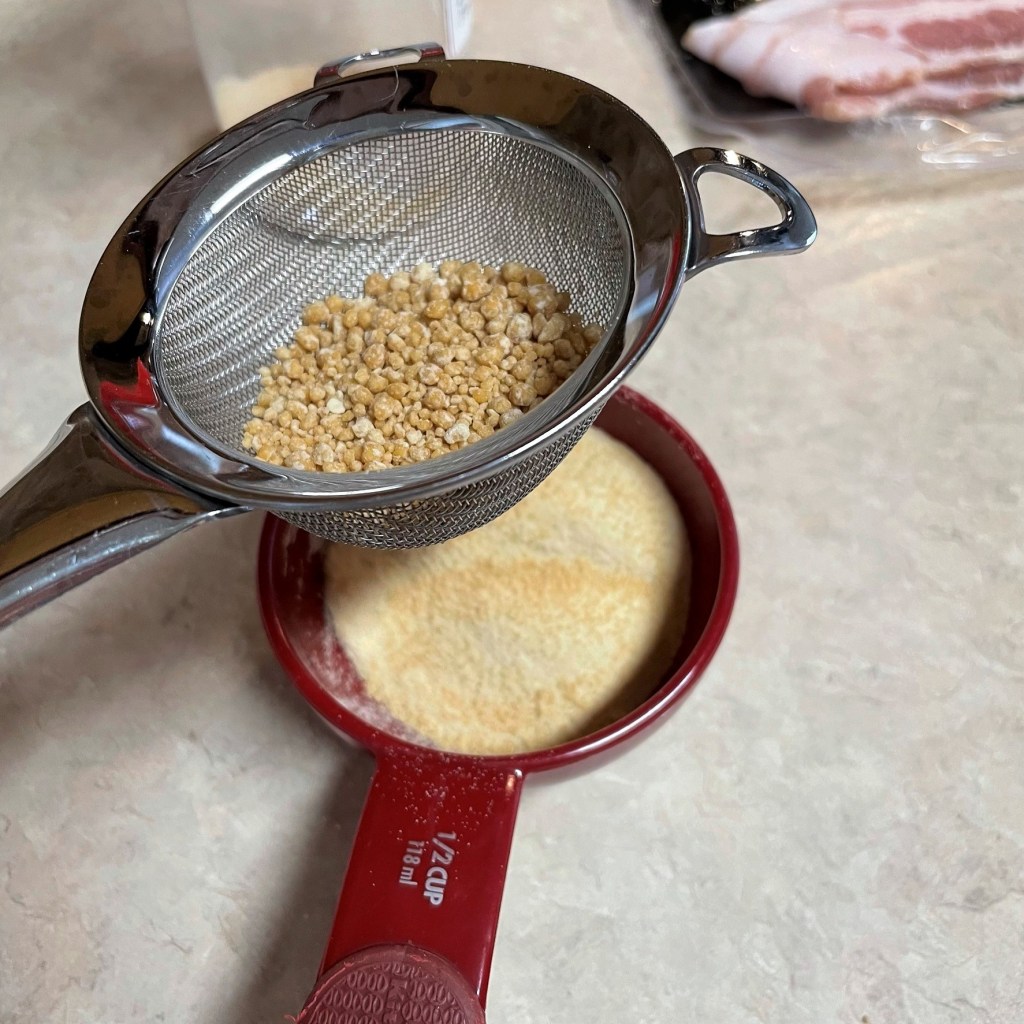
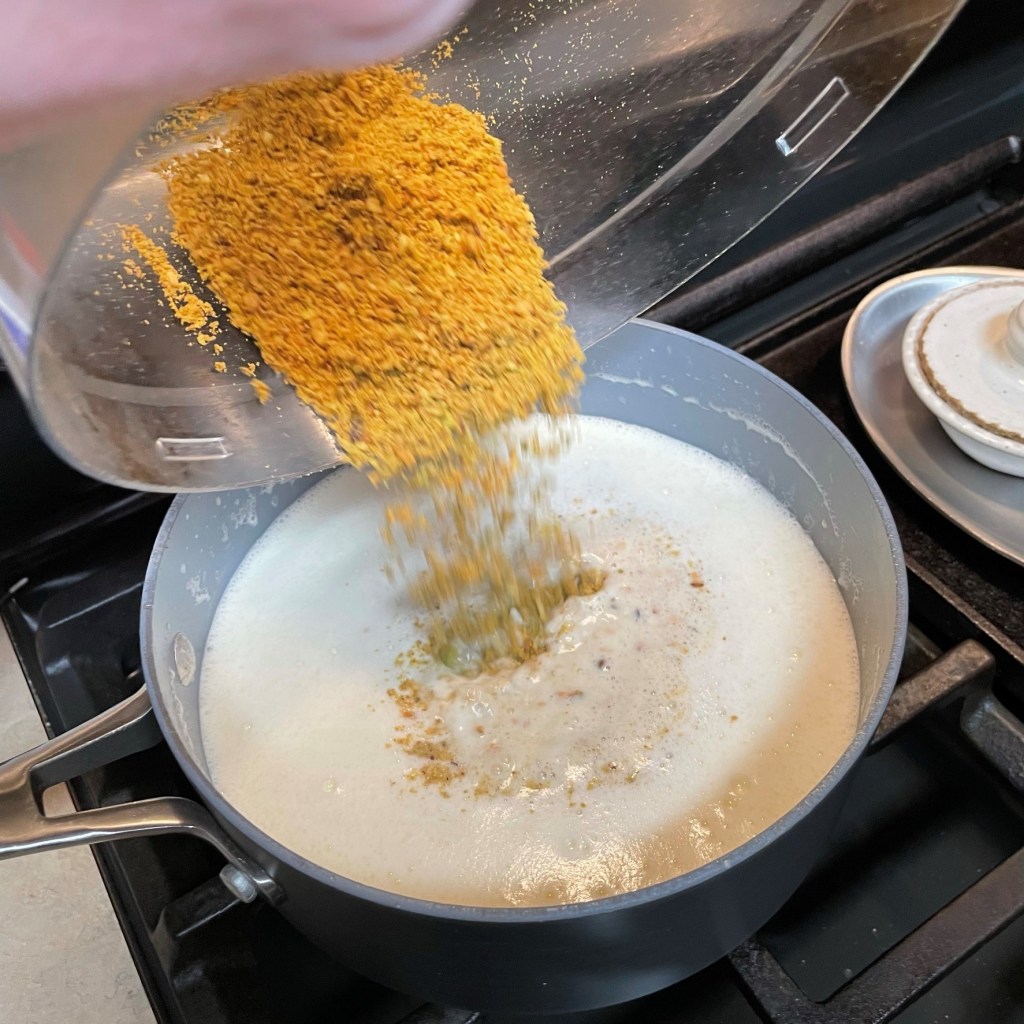
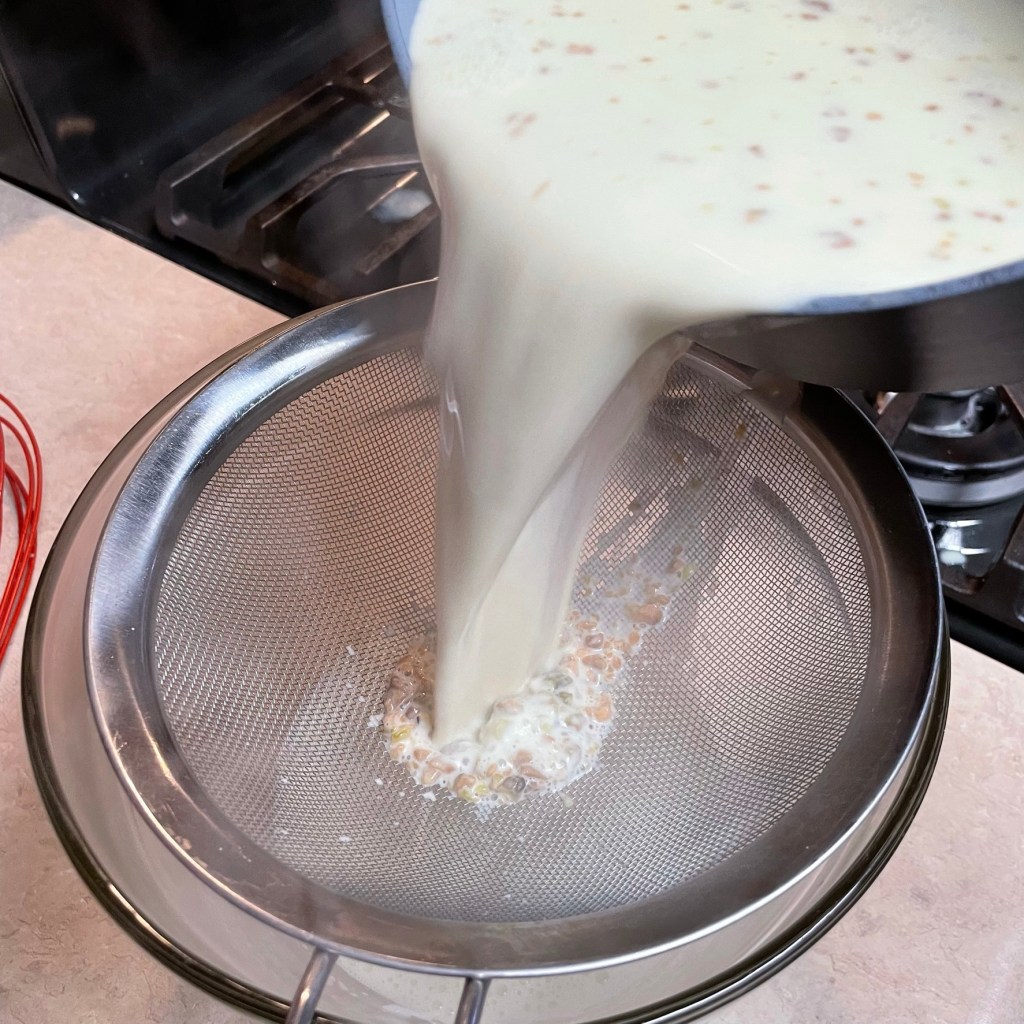
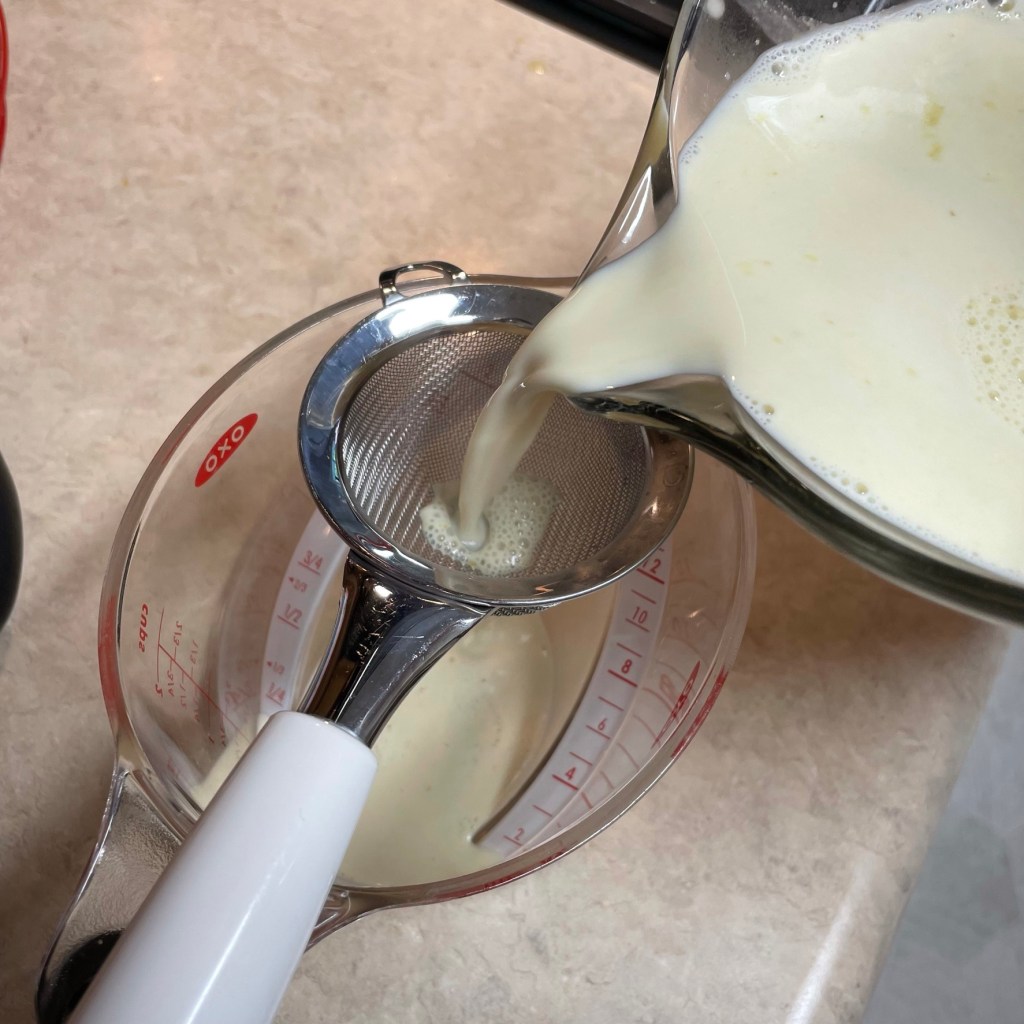
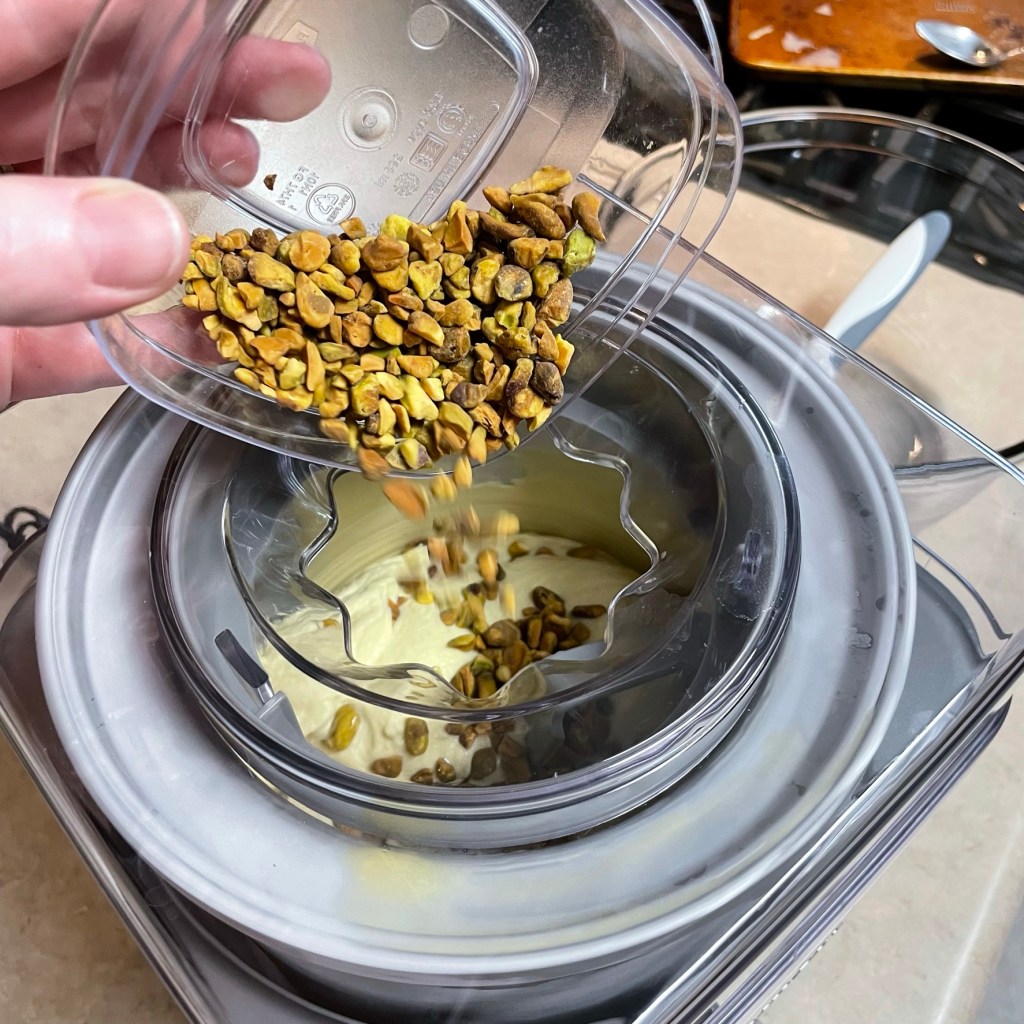
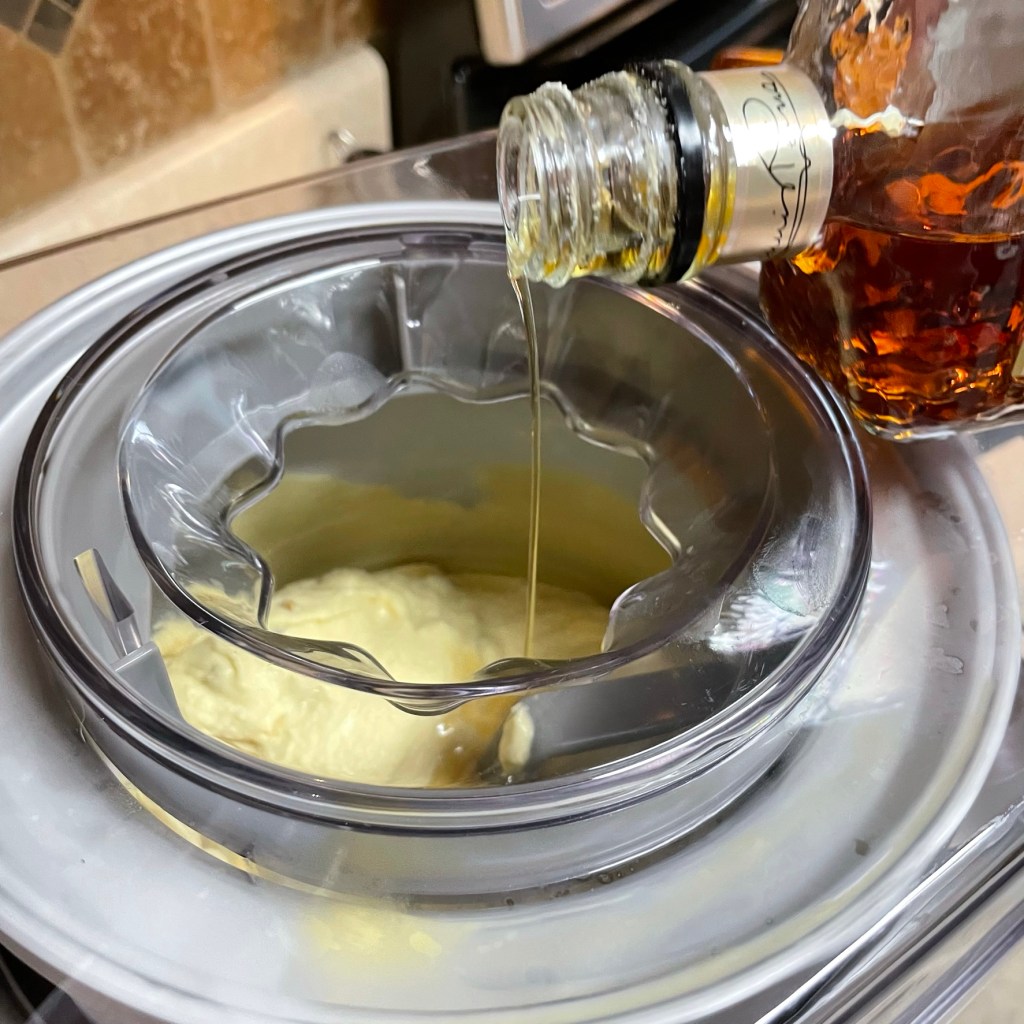
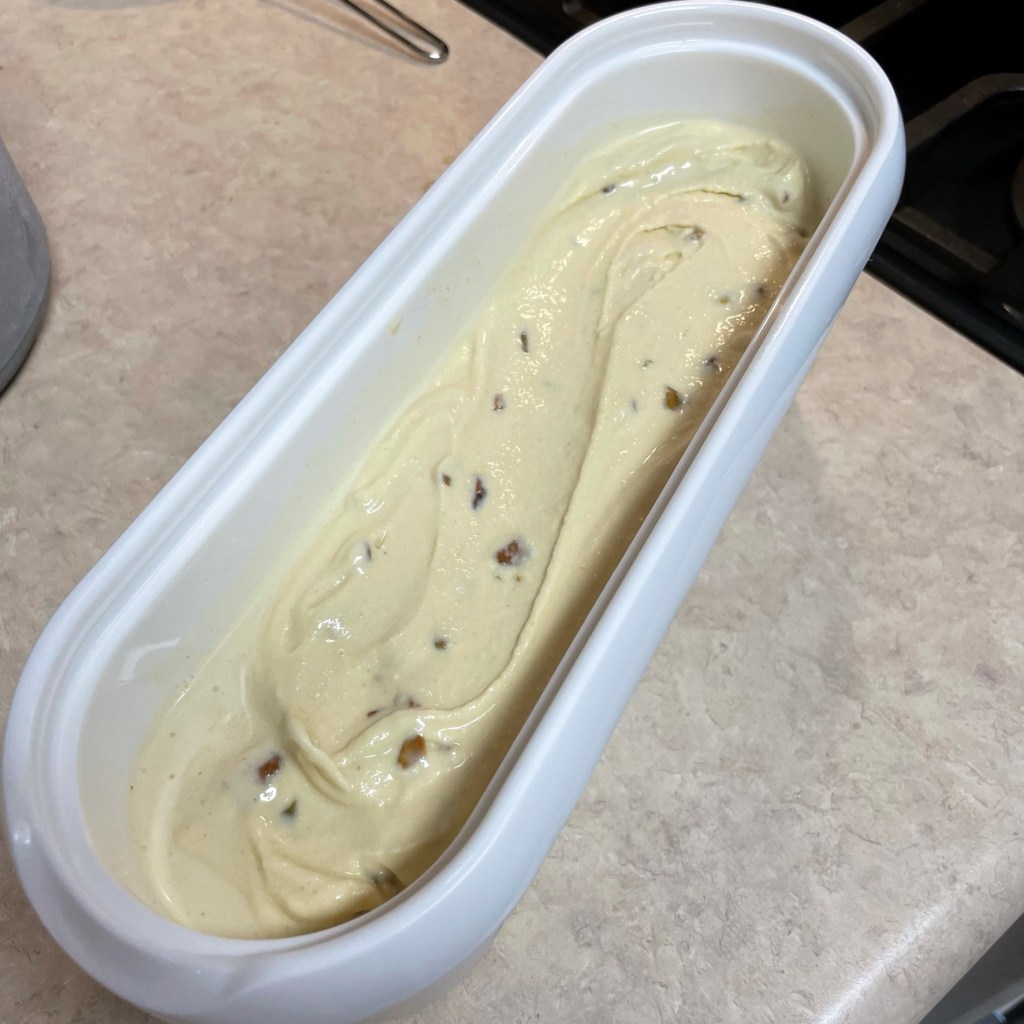
To infuse this ice cream with the unique flavor of pistachio, I toasted the pistachios briefly, pulsed them in the food processor, and then infused their flavor into the cream mixture. I double-strained the mixture to remove the gritty bits of pistachio before tempering the eggs, but next time I will use cheesecloth to simplify that step. At the end of the freeze-churn stage, I added roasted pieces of pistachio for extra flavor and texture. A little touch of amaretto churned in during the final minute gave the ice cream a perfectly scoopable consistency for serving, straight from the freezer.


Ingredients

1 1/2 cups whole milk

1 1/2 cups heavy cream

3/4 cup organic cane sugar, divided

3 egg yolks

1 cup raw, unsalted pistachio meats, divided

1/2 tsp. real vanilla extract

1/2 tsp. pure almond extract

1 Tbsp. amaretto liqueur (optional at the end of churning, for improved texture)


Instructions

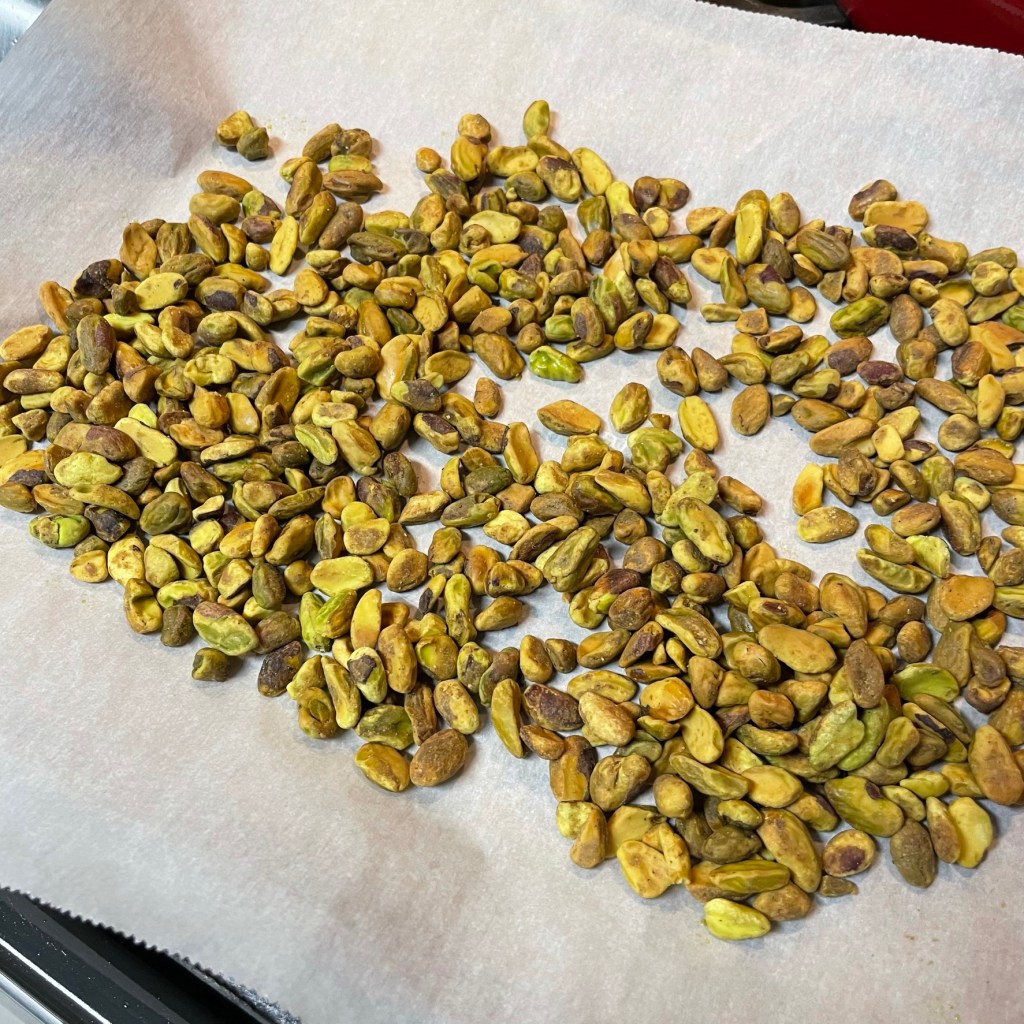
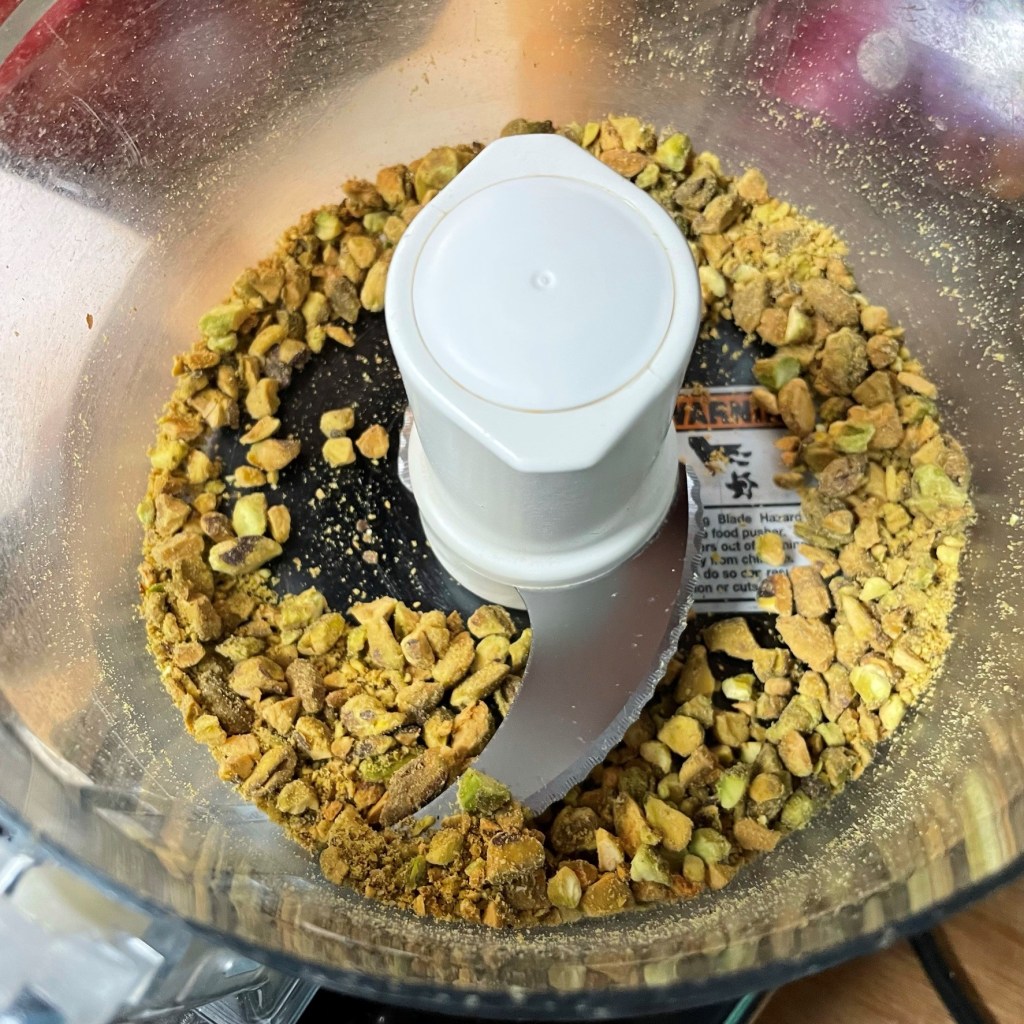
  1. Preheat oven to 350°F. Toast the pistachio meats on a parchment-lined baking sheet for about 7 minutes, or until fragrant and toasty. Remove from oven and cool. Divide pistachios evenly, transferring half of them to a food processor bowl. Pulse a few times until the nuts are reduced to small bits, but not to the point of powder. Use a sharp knife to gently chop the remaining pistachios. Set them aside for mixing into the ice cream during freezing.
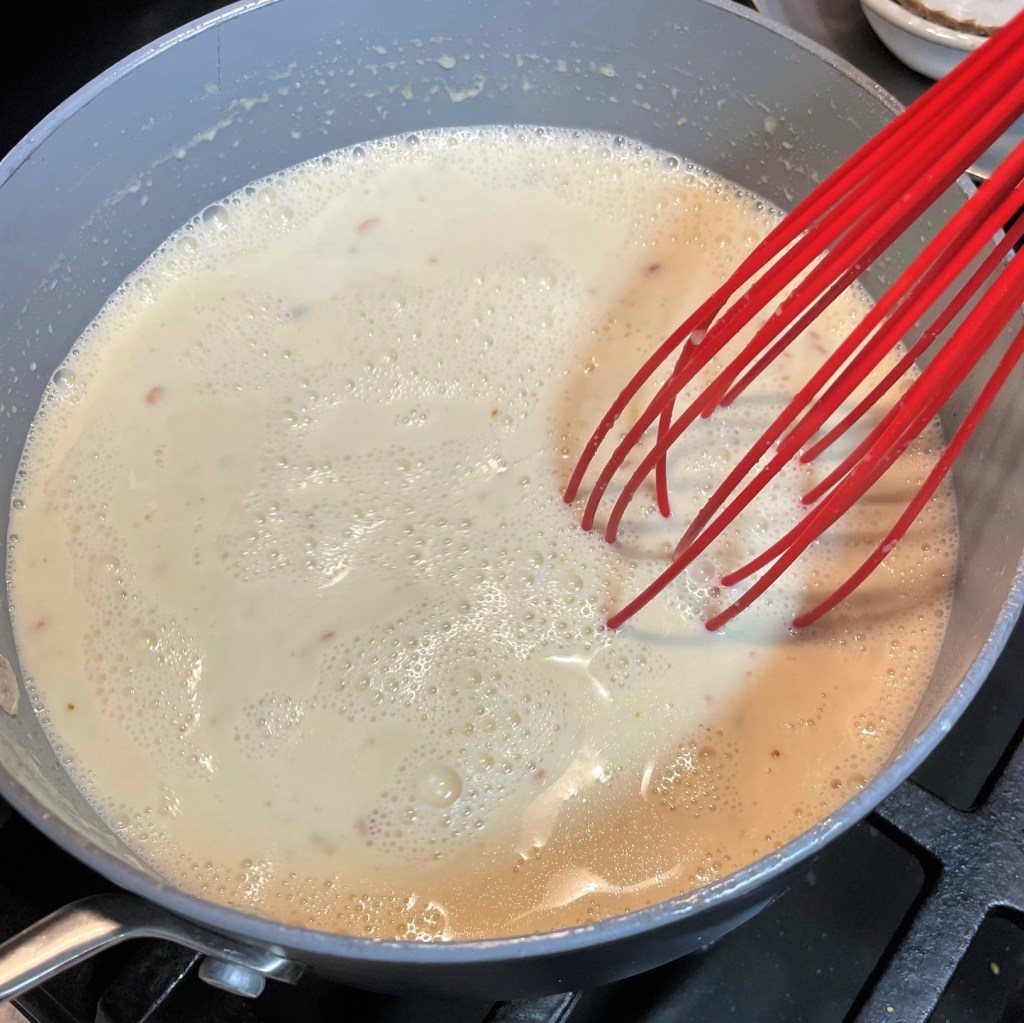
  2. Combine milk and cream in a medium saucepan over medium heat. Add half the amount of sugar and whisk gently until sugar is dissolved. Add the pulverized pistachios to the milk mixture and simmer until the mixture is hot but not quite boiling. Remove from heat and let this stand for about 10 minutes. This will steep the pistachio flavor into the cream mixture.
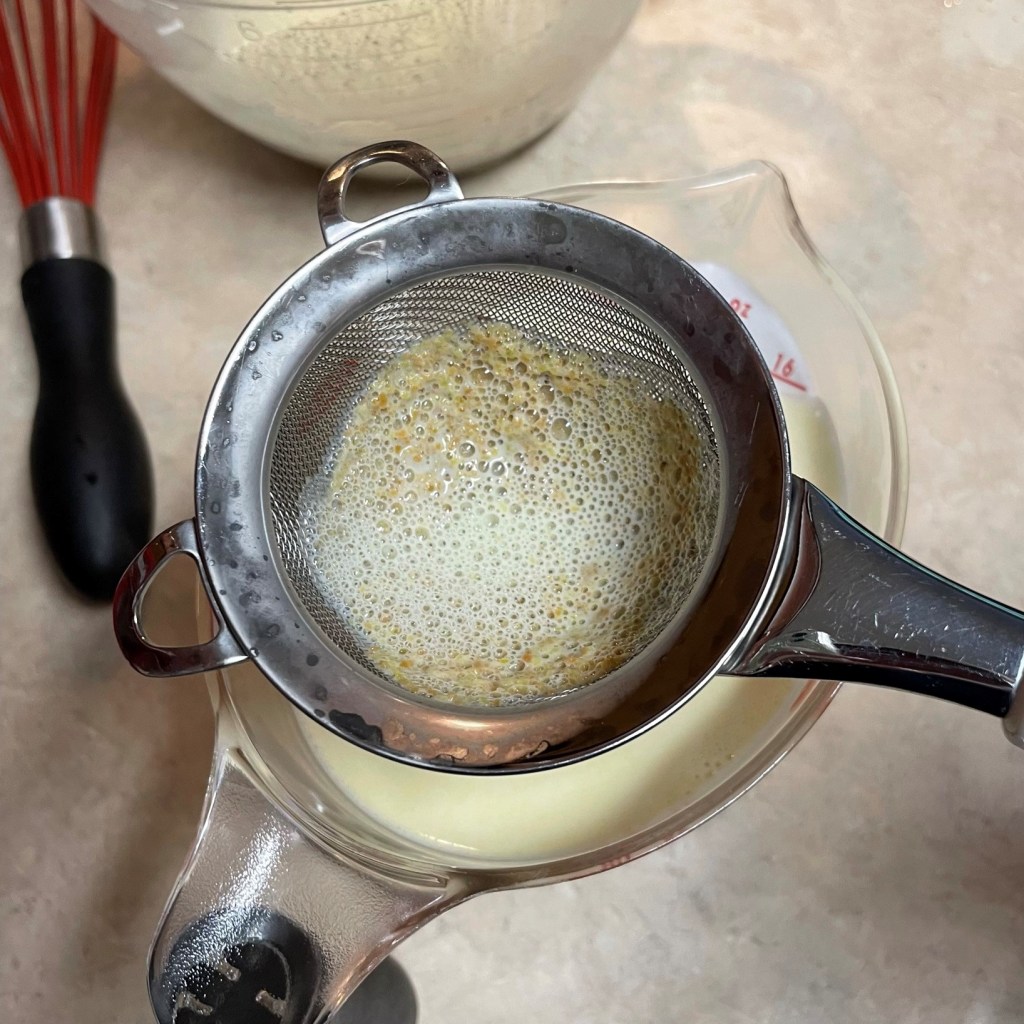
  3. When steeping is finished (you will know because the cream mixture will have taken on a slightly chartreuse green color), pour the mixture through a mesh strainer lined with cheesecloth to remove the nut solids. Clean out the saucepan and dry it. Return the strained cream mixture to the pan and heat over medium until it returns to the not-quite-boiling stage.
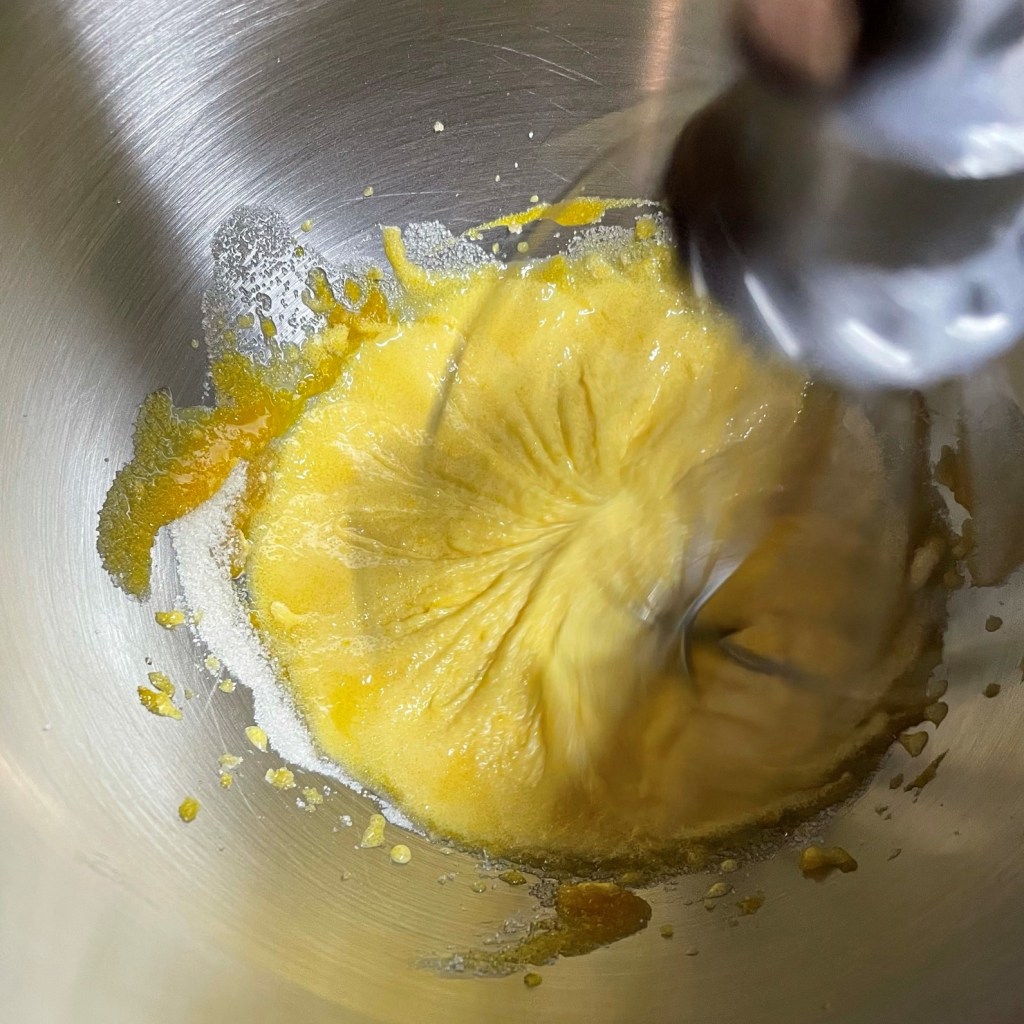
  4. While the cream mixture is heating, use a hand or stand mixer to whip the egg yolks until silky. Add the sugar, a little bit at a time, mixing well and stopping a couple of times to scrape down the sides of the bowl. Whip until the mixture is soft, light and lemon-colored.
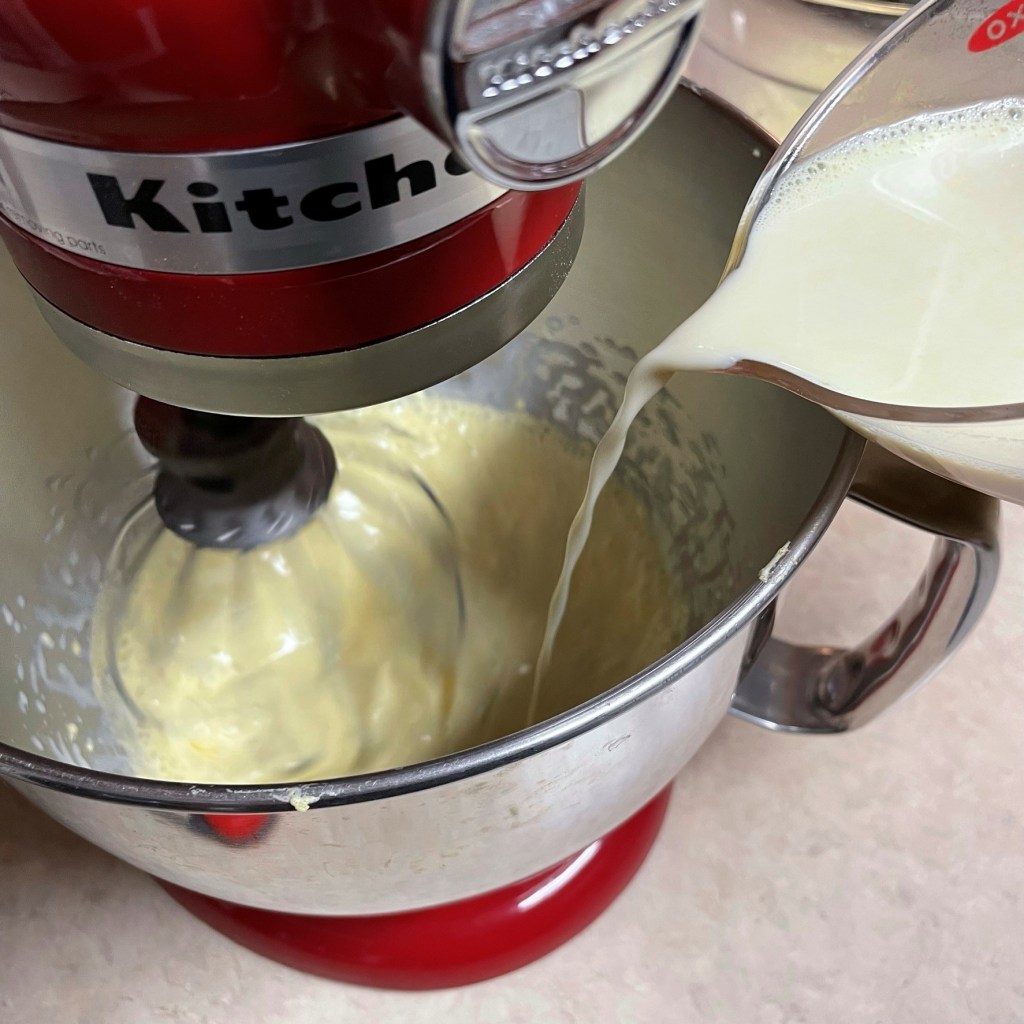
  5. Measure out about 2 cups of the milk-cream mixture. Slowly pour it into the egg mixture, whisking or beating with electric mixer the entire time. This step will temper the eggs, gradually cooking them without scrambling or breaking them.
  6. Pour the egg mixture back into the remaining milk-cream mixture and cook over medium heat, stirring constantly, until the custard begins to slightly thicken and coats the back of your spoon.
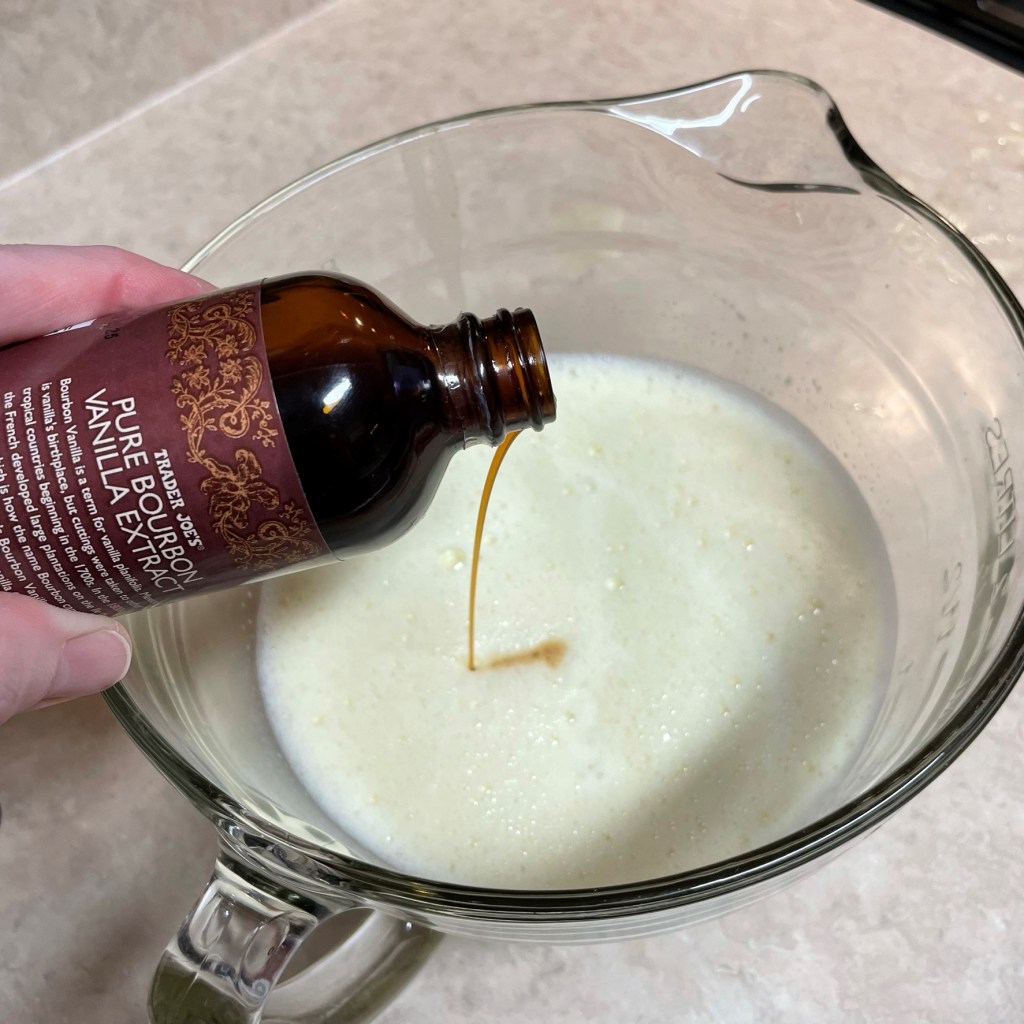
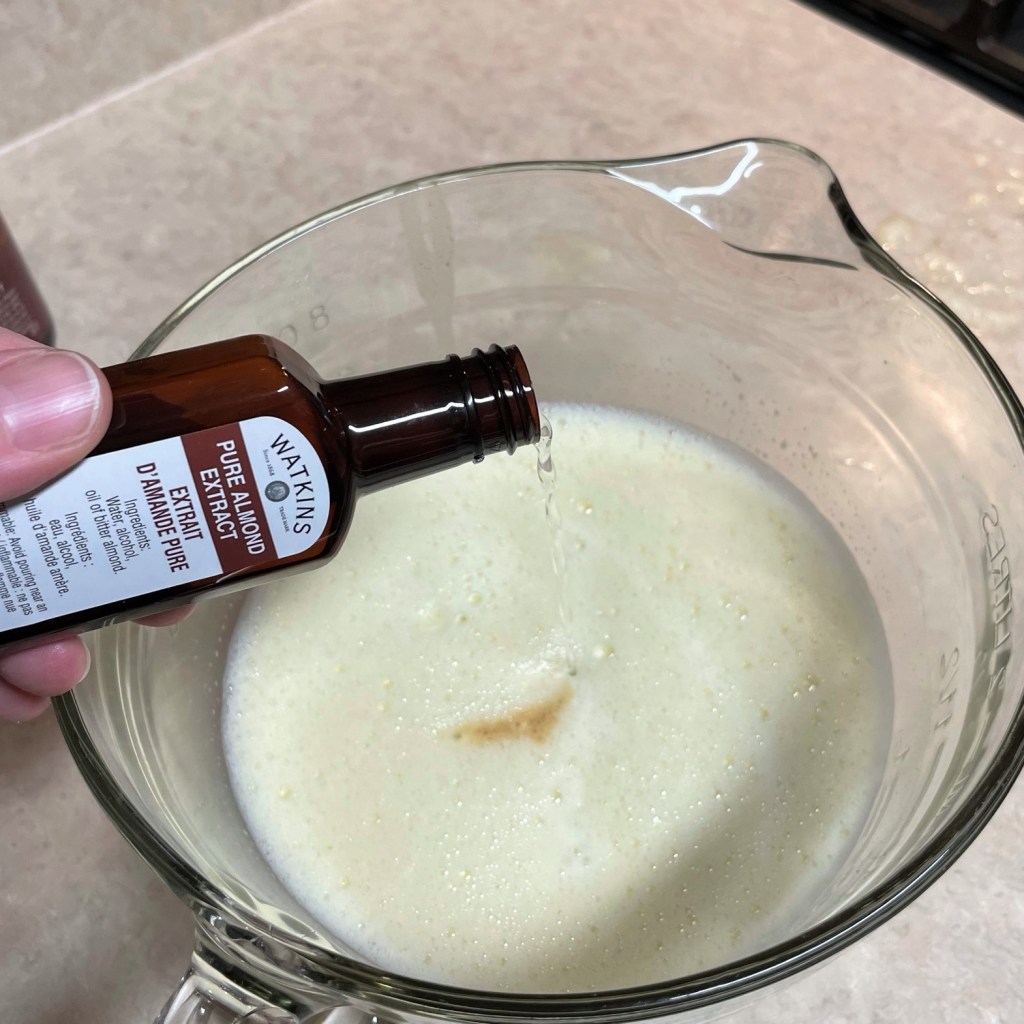
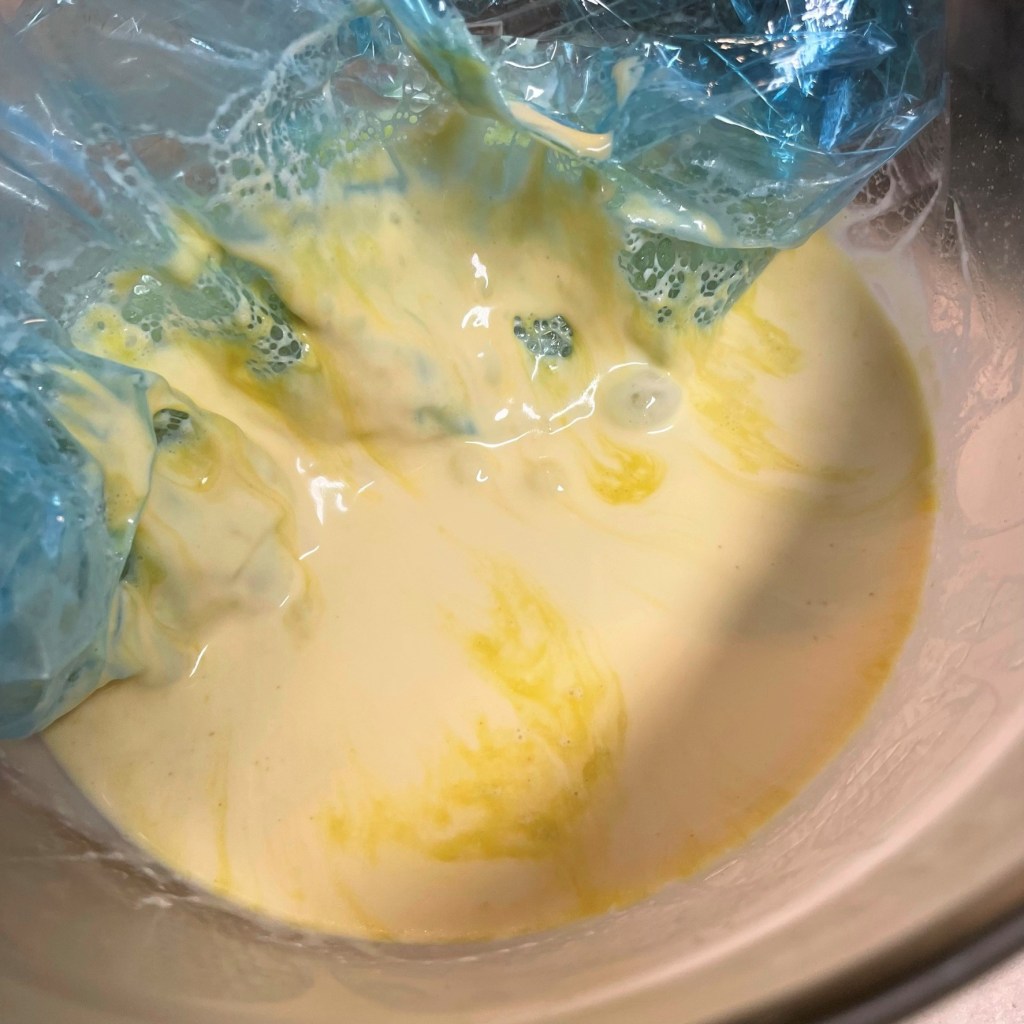
  7. Remove from heat immediately. Stir in vanilla and almond extracts. Lay a film of plastic wrap directly onto the surface of the custard to prevent condensation from forming. Cover the entire bowl with a lid or additional plastic wrap. Refrigerate several hours or overnight until fully chilled.
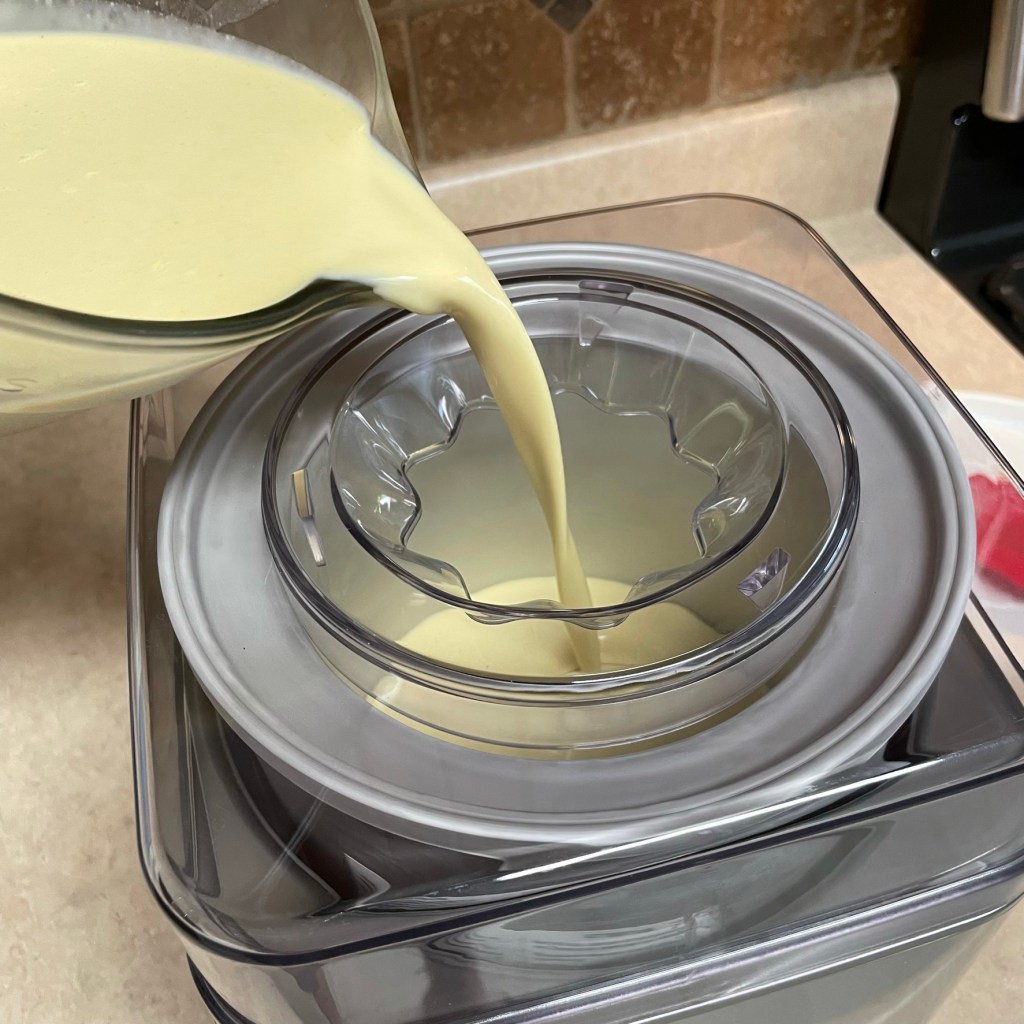
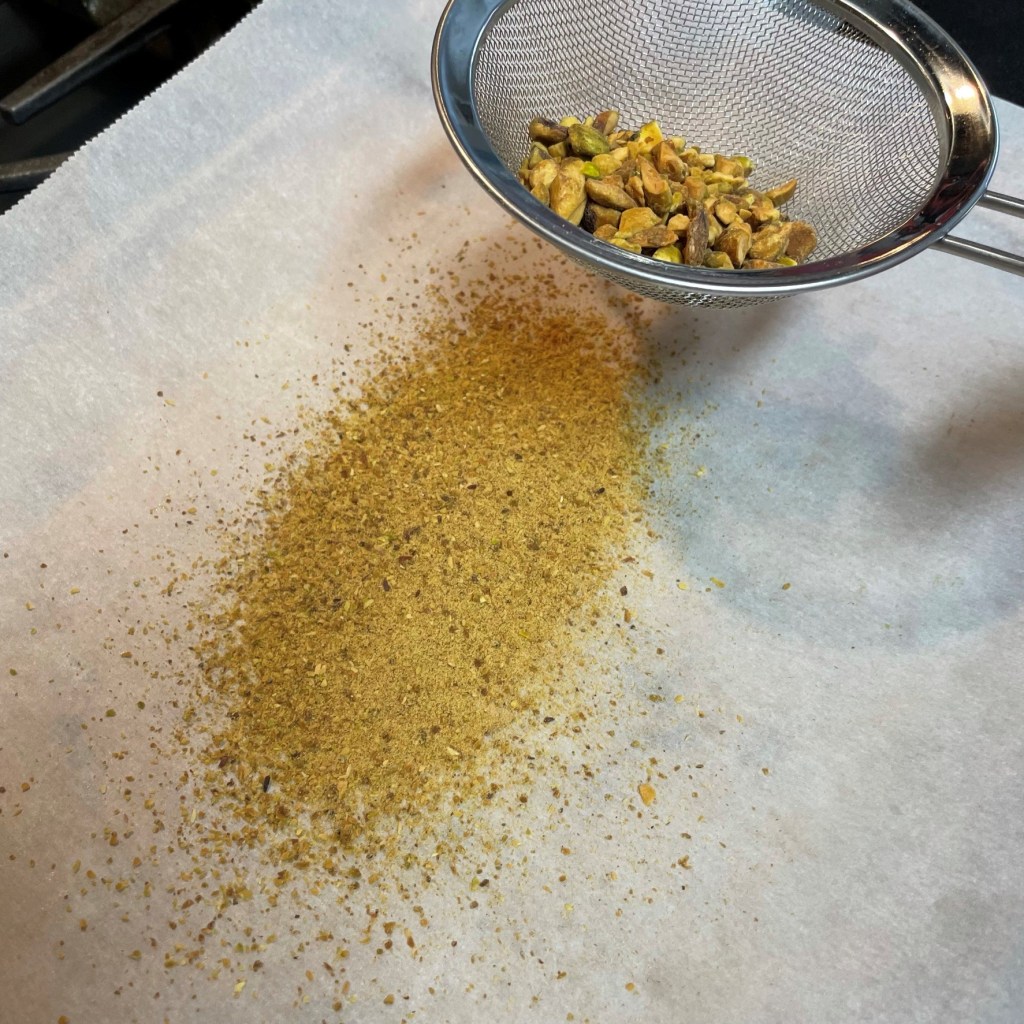
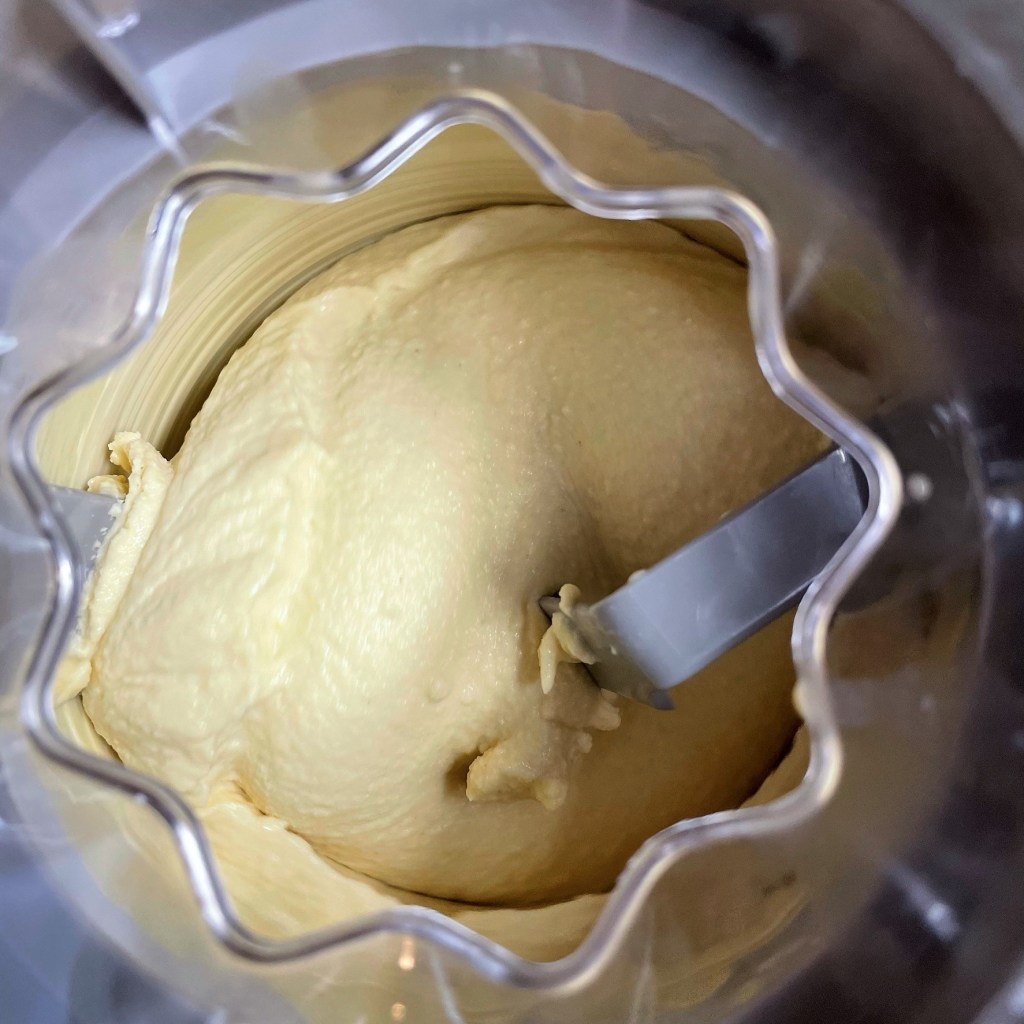
  8. When you’re ready to freeze the ice cream, give the cream mixture a good stirring to minimize any settling that has occurred in the fridge. Freeze according to manufacturer’s instructions. My Cuisinart takes about 20 minutes. Sift the reserved pistachio nuts in a mesh strainer to remove any powdery crumbs from chopping them. Add them to the ice cream machine only for the last few minutes. Add amaretto (optional, but recommended) for the final minute of mixing. You will not taste the alcohol, but its addition ensures easy scooping of the ice cream straight from the freezer. If you avoid alcohol, or if you will be serving children, skip it and simply remove the ice cream from the freezer about 15 minutes ahead of serving.

Great way to start the summer!


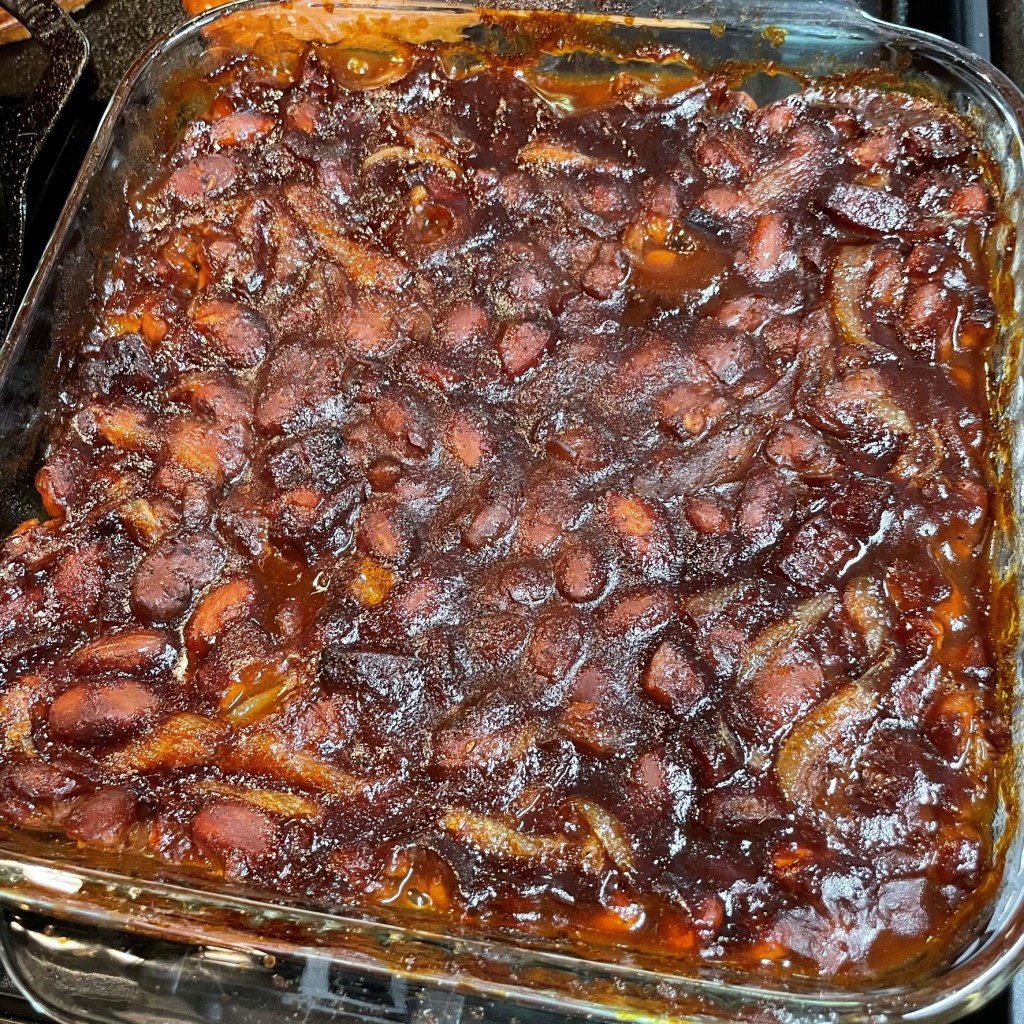
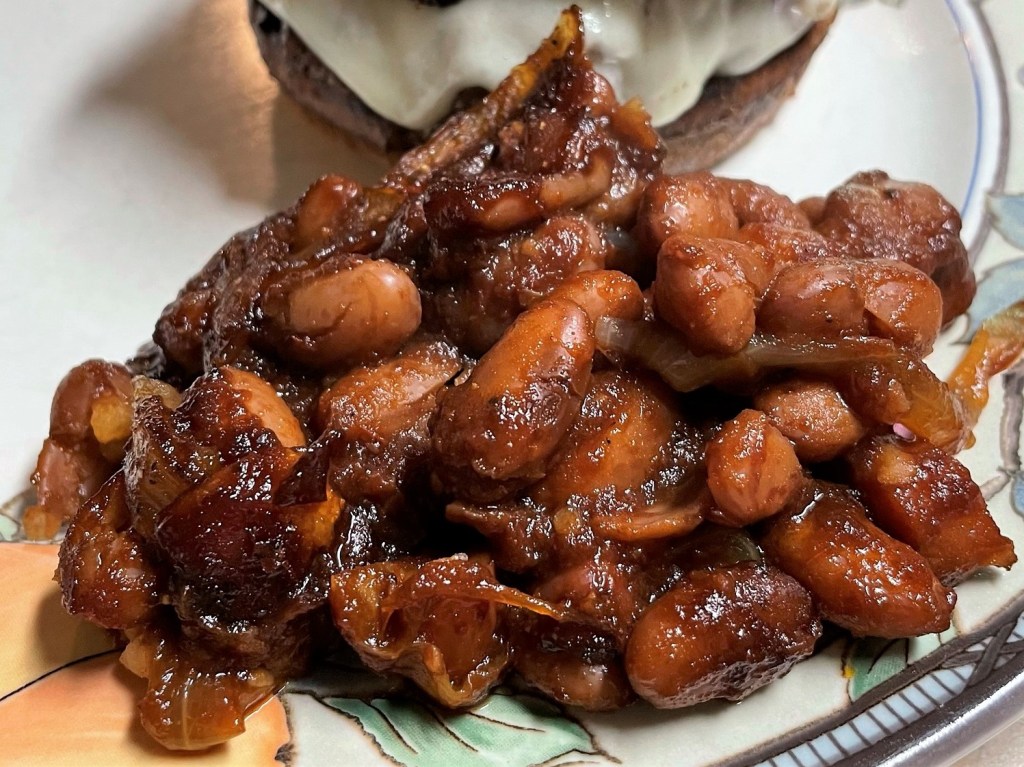
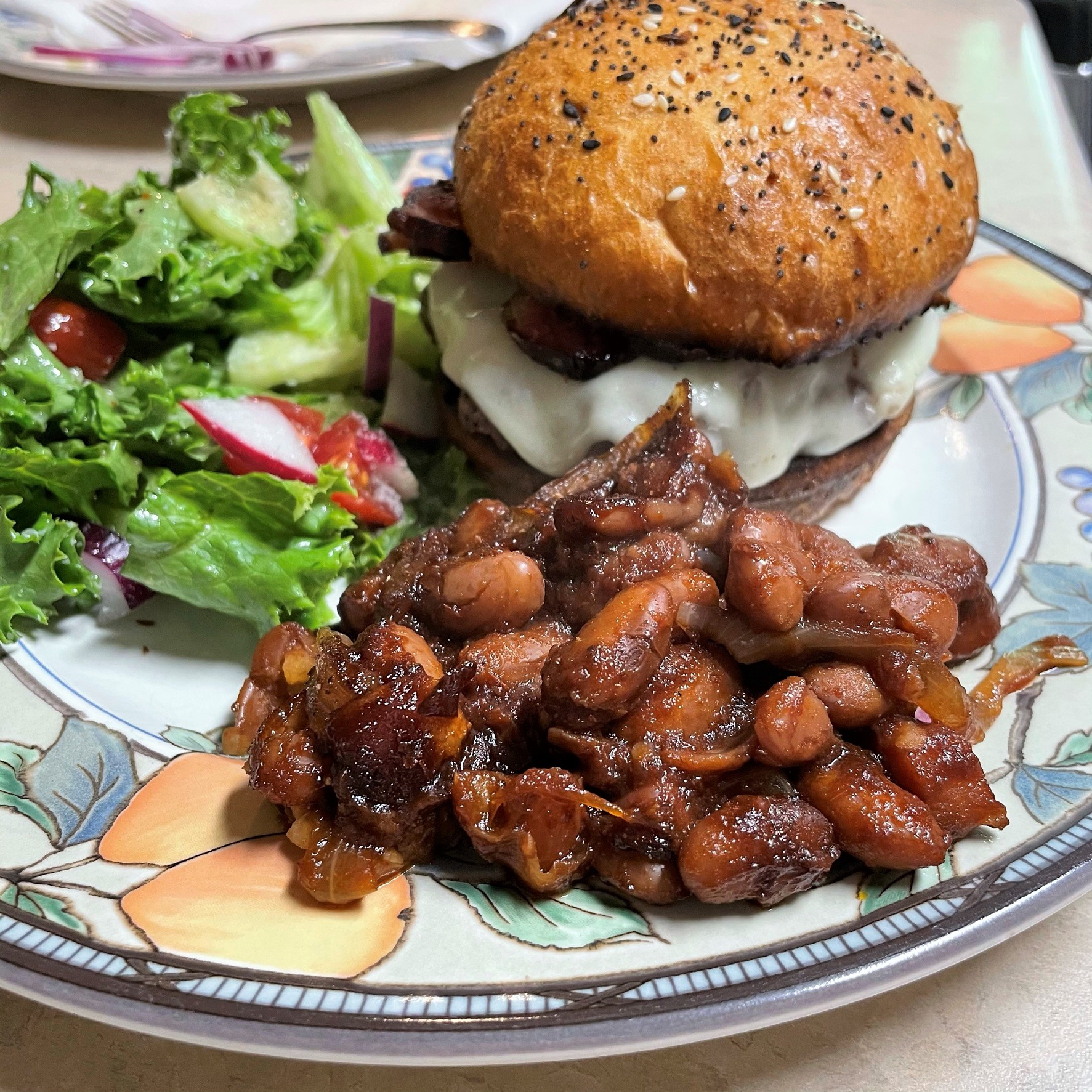
Fourth of July Baked Beans

The Fourth of July conjures very specific childhood memories for me, and baked beans has a major role in that nostalgia. Every year, members of my family on my maternal grandfather’s side gathered at the home of my great grandmother for a reunion-of-sorts picnic and, especially, for fireworks. Grandma Stoney, whose nickname was derived from her married last name, Stonehouse, lived across the street from the community baseball field, and we were lucky to have a front row seat for the excitement of what seemed to me at the time to be an enormous fireworks display. The tiny burg where Grandma Stoney lived put on quite a shindig for Independence Day, including a parade, complete with a marching band and people throwing candy to the kids from firetrucks. Back at Grandma’s house, we amused ourselves by playing croquet in the front yard and taking turns cranking the handle on an old timey ice cream maker. No doubt, my great grandmother felt great joy having everyone there.

What I remember most, besides playing with distant cousins I rarely saw, was the food. Inside the house, every available horizontal surface—and I mean tables, countertops, the stove, card tables and anything else that could be rigged up to hold dishes—was covered with potluck offerings, as everyone in attendance always brought a dish or two to share. It was unbelievable. For me, the best of all was the dining room table, which was always covered from corner to corner with every variety of baked beans you could imagine. Some of the dishes were very saucy, some looked as though they had been dumped directly from a can of Van Camp’s, and others were baked with that delightfully sticky sweet sauce pooled in the corners of the pan. And there were always several dishes of beans topped with slices of bacon. Oh man, how I loved that table!

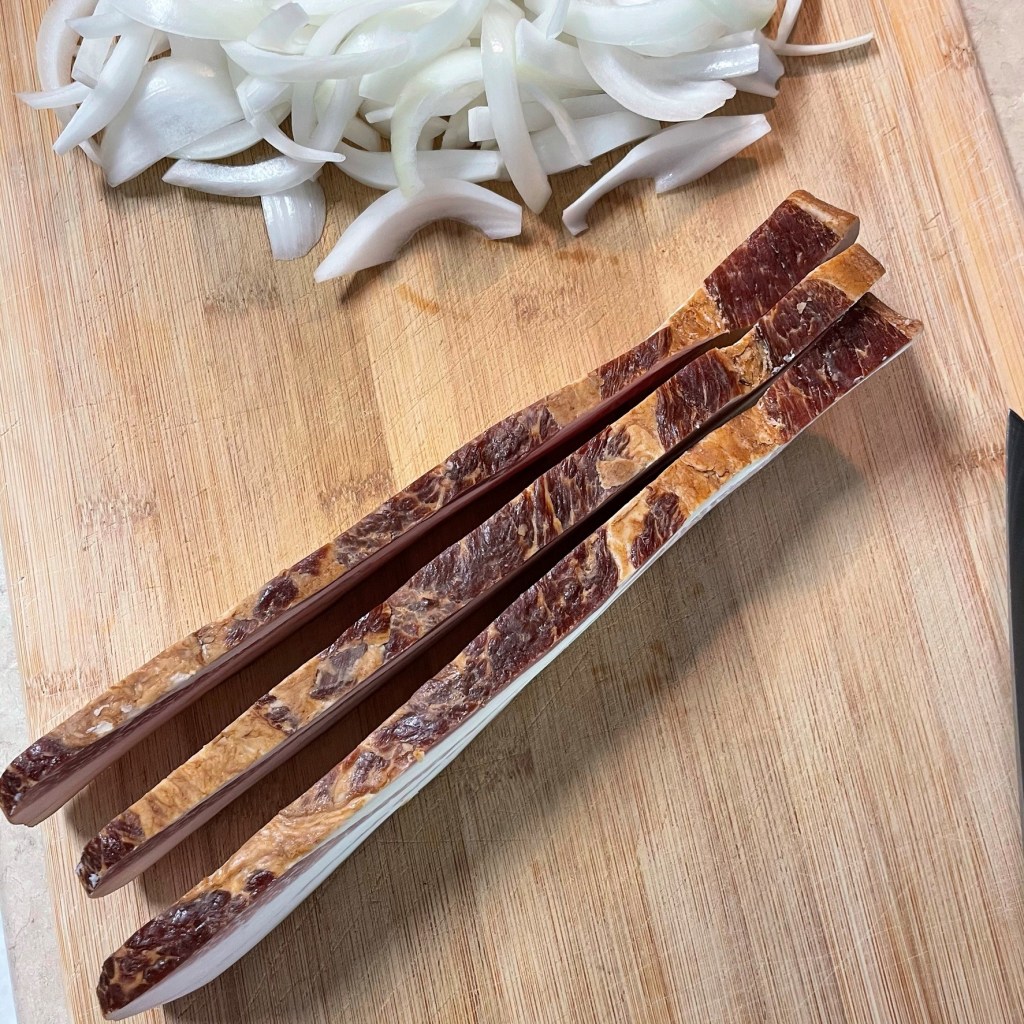
Bacon is still one of my very favorite ingredients for baked beans, and I’ve paired it here with a favorite flavor of my Upstate New York home—maple. That combination of smoky-salty-sweet cannot be beat, and for me, it’s as much a part of Fourth of July celebration as parades and fireworks.

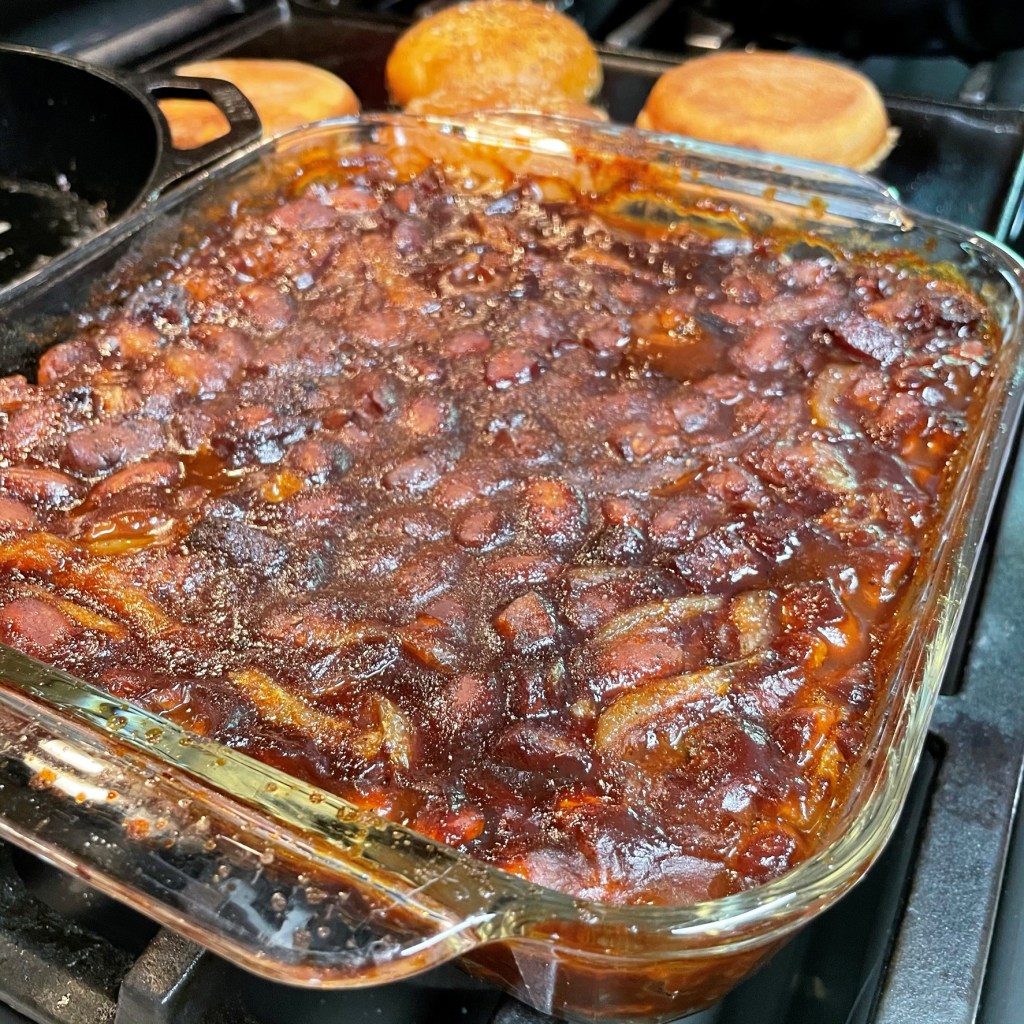
I don’t need fireworks on the Fourth of July. All I really want is these maple bacon baked beans! YUM.

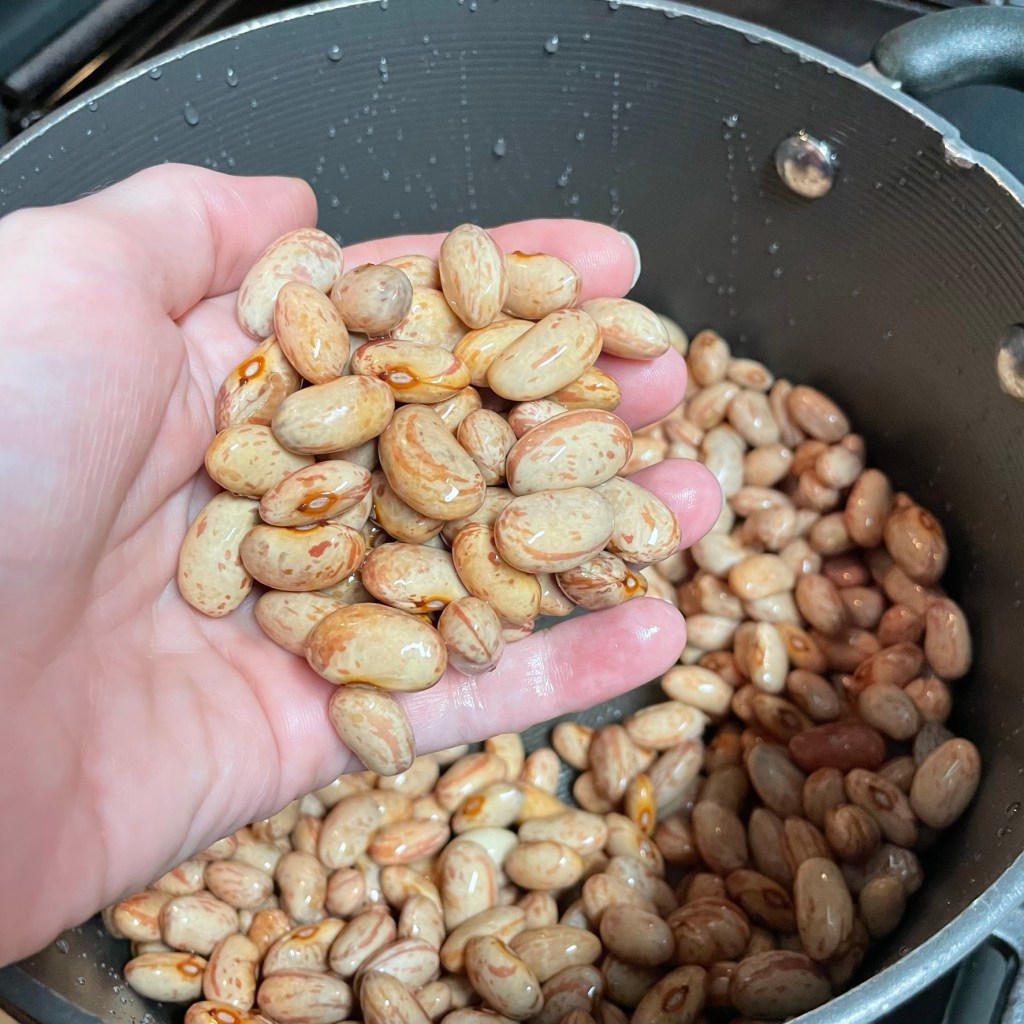
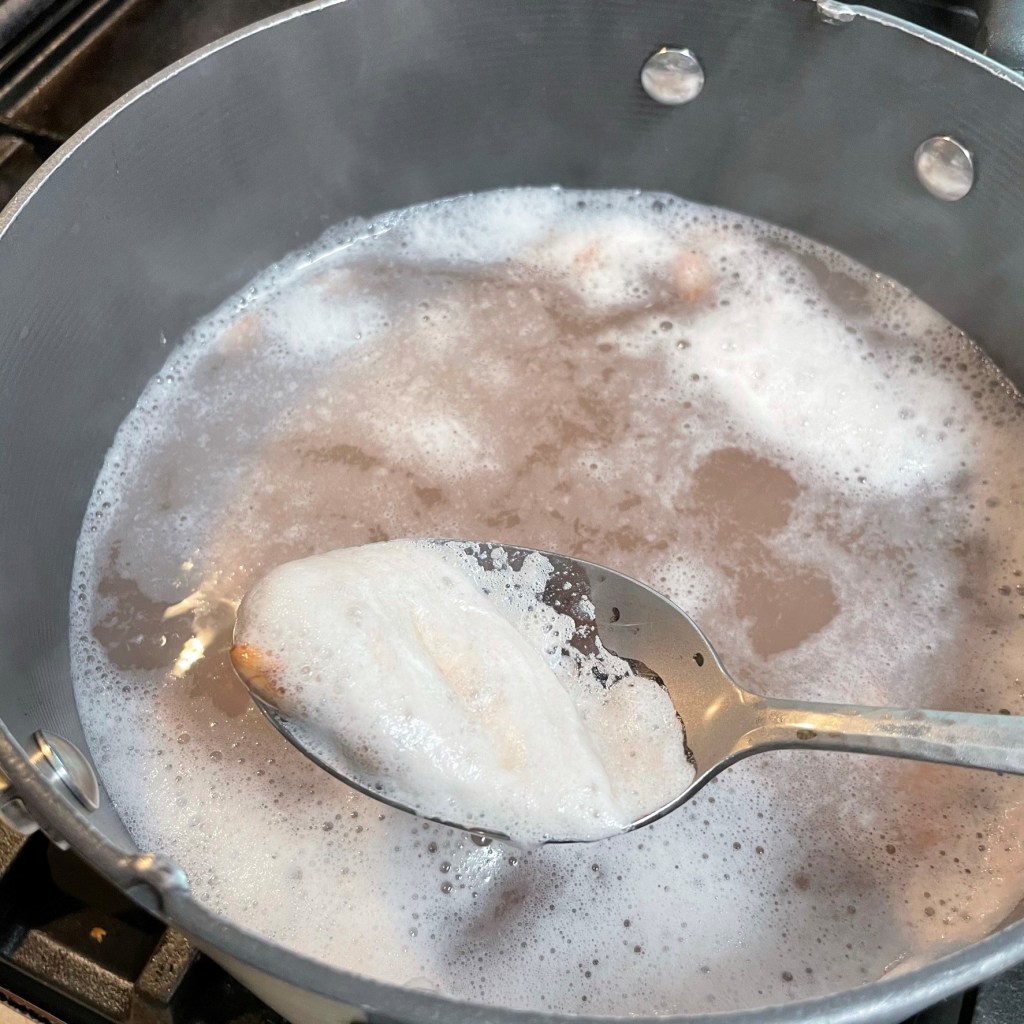
This time, I made my baked beans from scratch, having soaked the beans overnight and then cooking them until tender before adding the flavorful sauce. But you could absolutely take a time-saving shortcut and use cans of beans. Just be sure you drain and rinse them thoroughly before you begin.


Ingredients

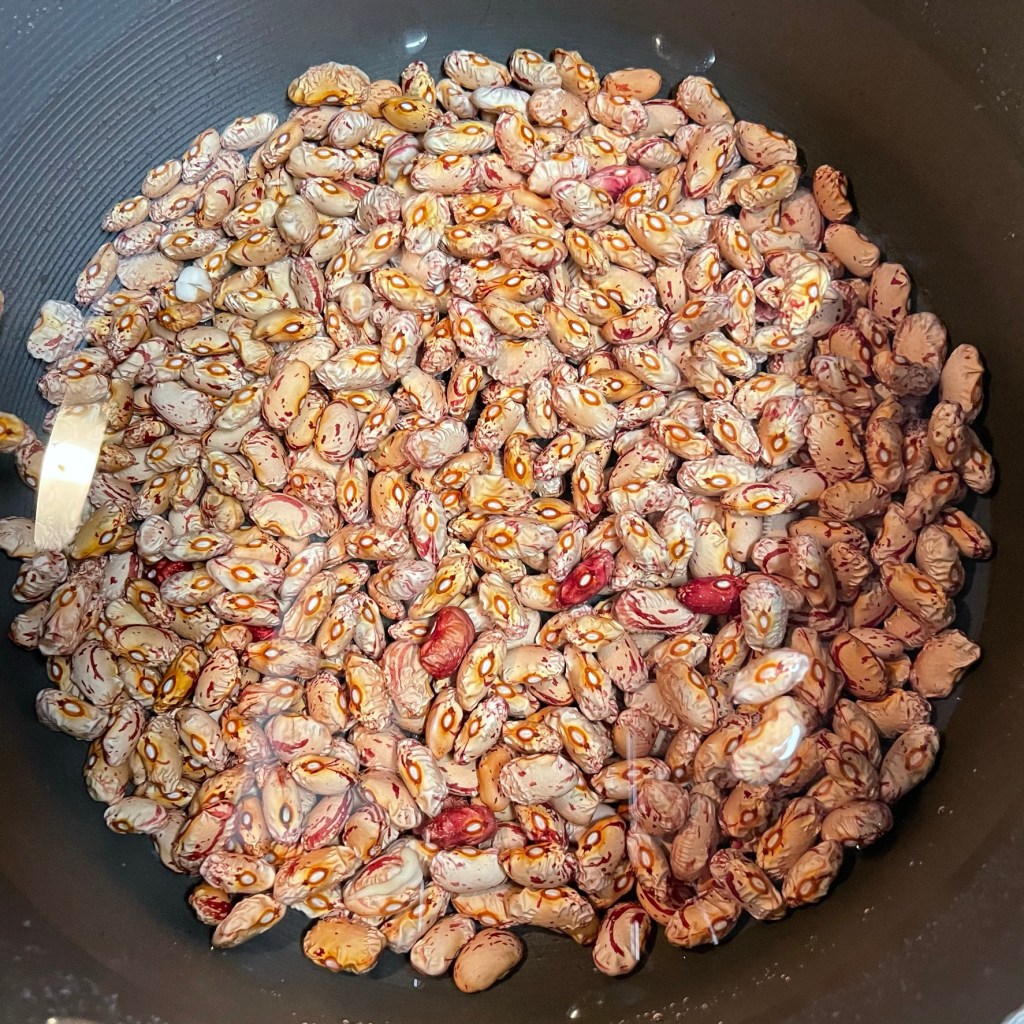
1 lb. dried beans, soaked and prepared for cooking* (see notes)

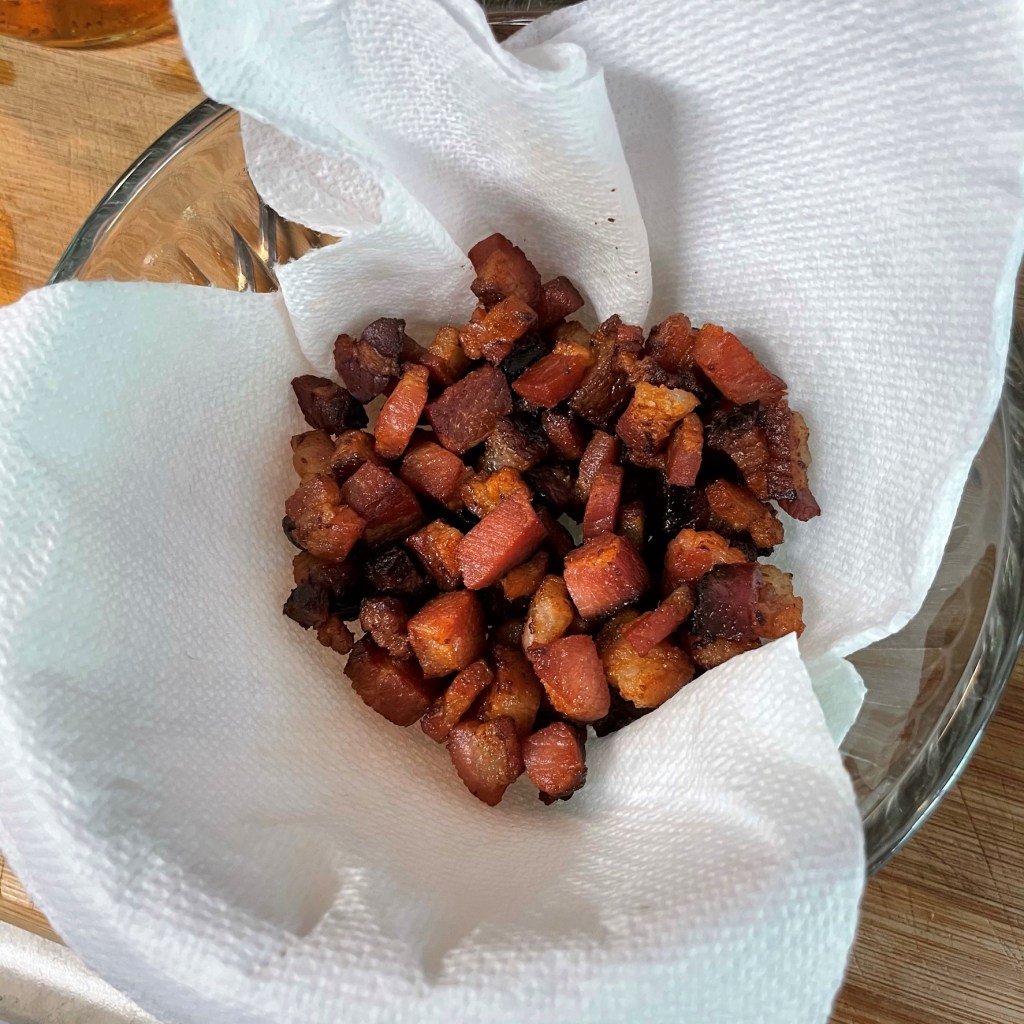
1 heaping cup thick-cut bacon, cut into cubes

1 sweet onion, sliced or chopped

Sauce:

6 oz. can no-salt tomato paste

1/2 cup real maple syrup

1/4 cup maple-infused balsamic vinegar*

About 20 grinds fresh black pepper

1/2 tsp. chipotle powder (optional)

3/4 tsp. kosher salt

1/4 tsp. dry mustard powder

3/4 cup cold water (added after flavor adjustment)


*Notes

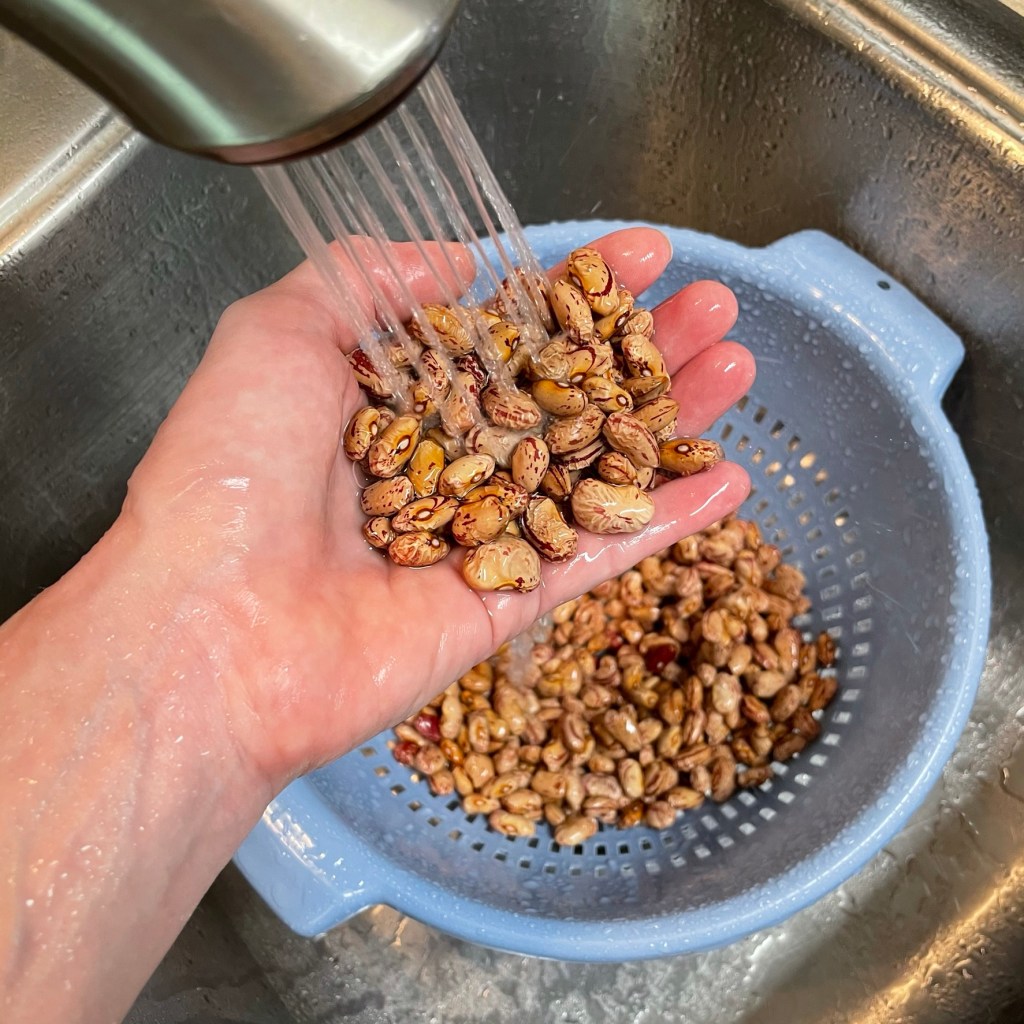
My recipe was made with dried cranberry beans, rinsed and soaked overnight, then drained twice and cooked low and slow until tender. If you prefer, or if you are pressed for time, feel free to use 3 standard cans of cooked beans. Drain the beans and rinse under cold running water, to remove all the “goo” from the cans. Great Northern, navy or white kidney beans (cannellini) would be great.

The maple-infused balsamic is a specialty ingredient, purchased at one of the stores that sells flavored olive oils and balsamic vinegars. I love this product because it enhances the maple flavor without making it more sweet. If you do not find this maple balsamic, substitute an equal amount of regular dark balsamic vinegar or a couple of tablespoons of apple cider vinegar.


Instructions

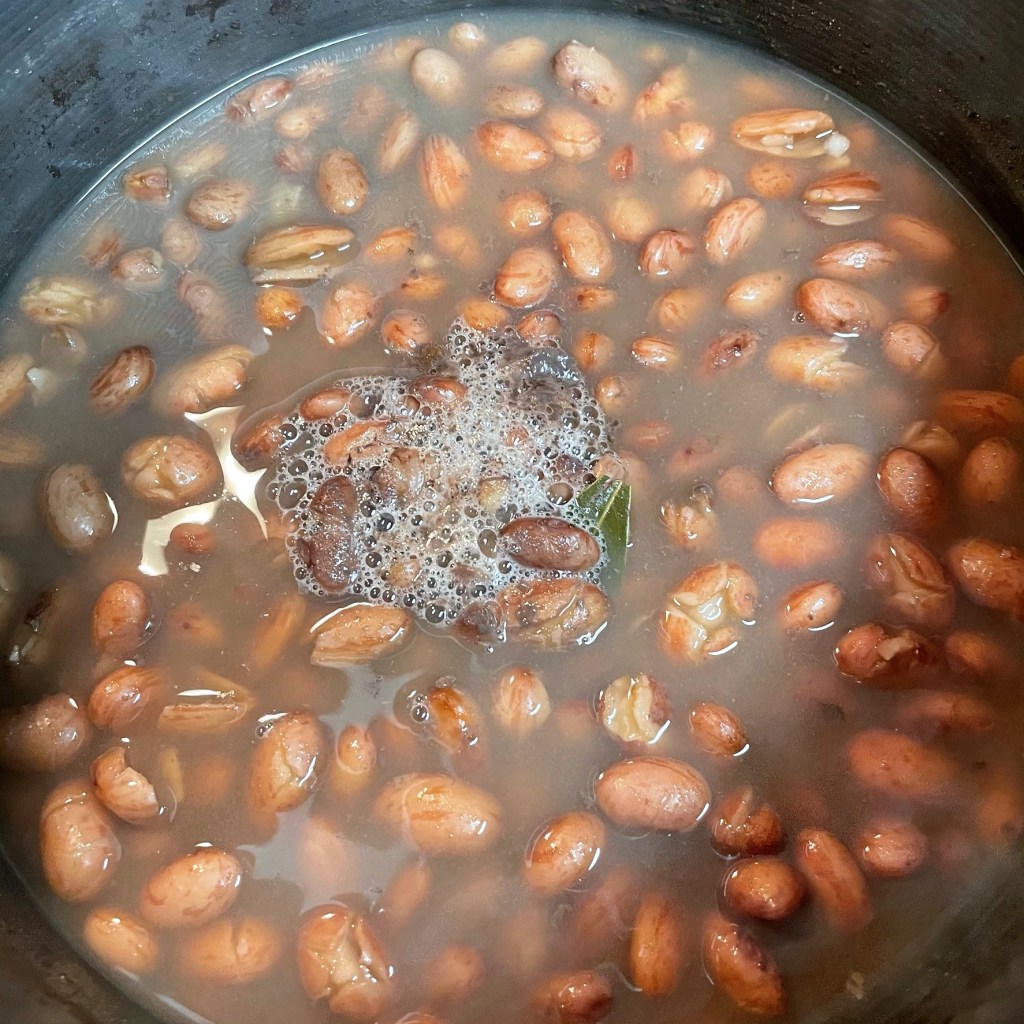
  1. Cook beans as directed or rinse canned beans.
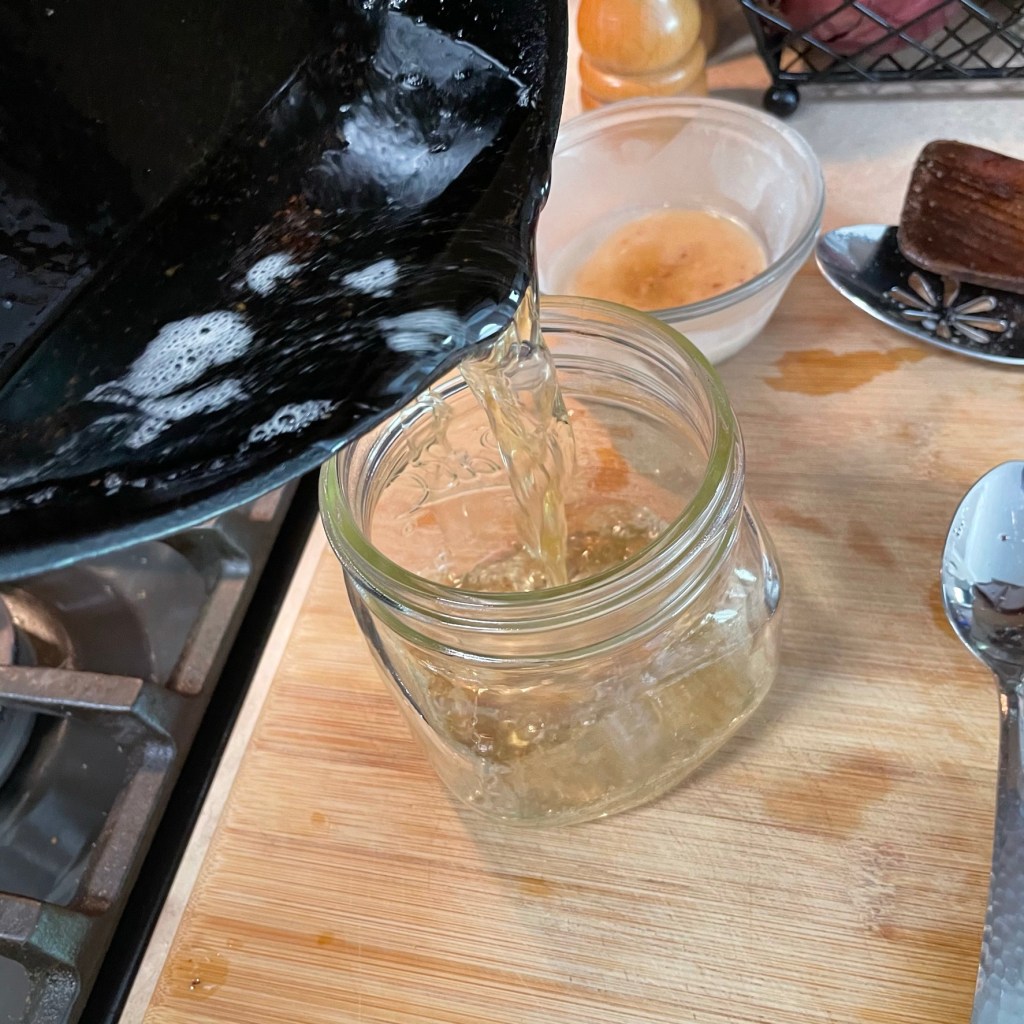
  2. Place a cast-iron skillet over medium heat. Add bacon cubes and cook, tossing occasionally, until fat is rendered and bacon cubes are just crisp. Transfer cubes to a paper towel-lined plate and drain off all but about 2 tablespoons of the bacon fat.
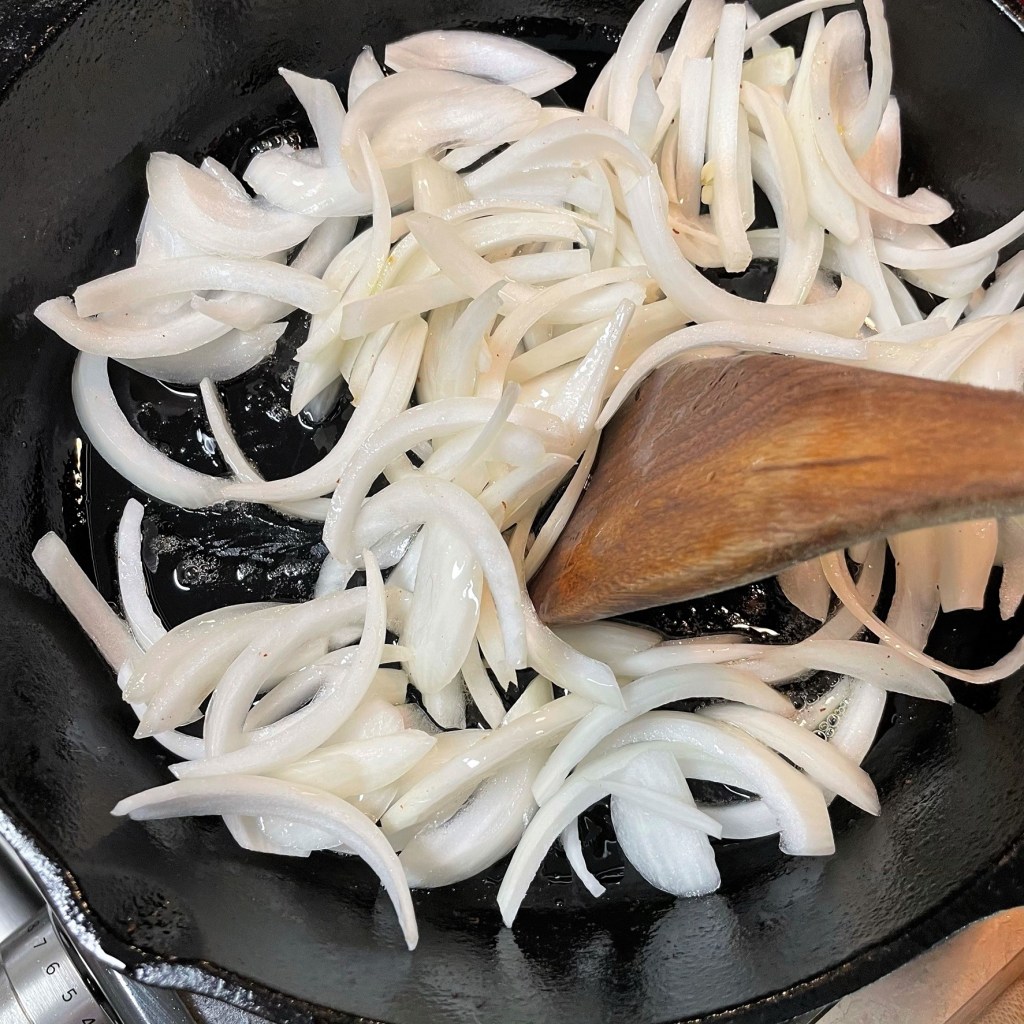
  3. In the same skillet, saute the chopped onion in the bacon fat until onions are tender and slightly golden.
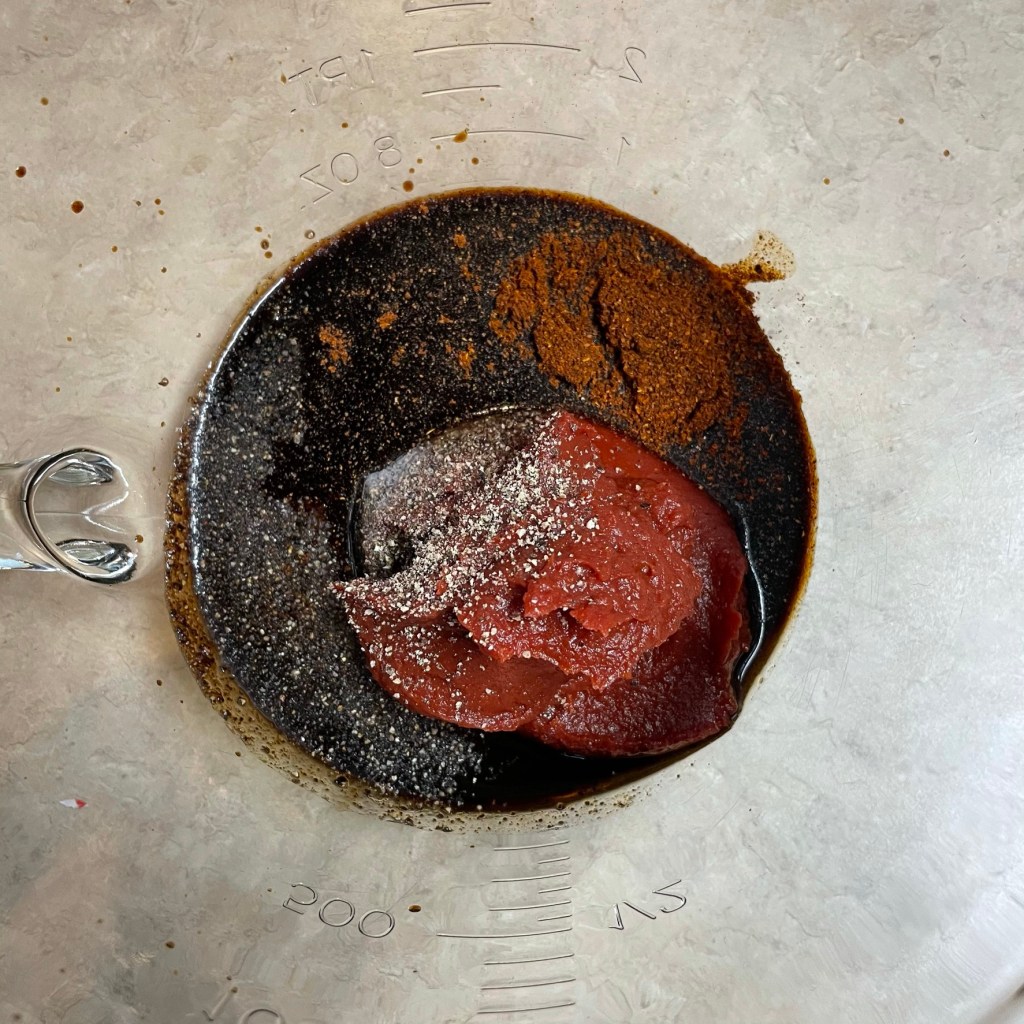
  4. In a large bowl or measuring glass, combine sauce ingredients and stir to combine. Adjust seasonings to taste, then add water.
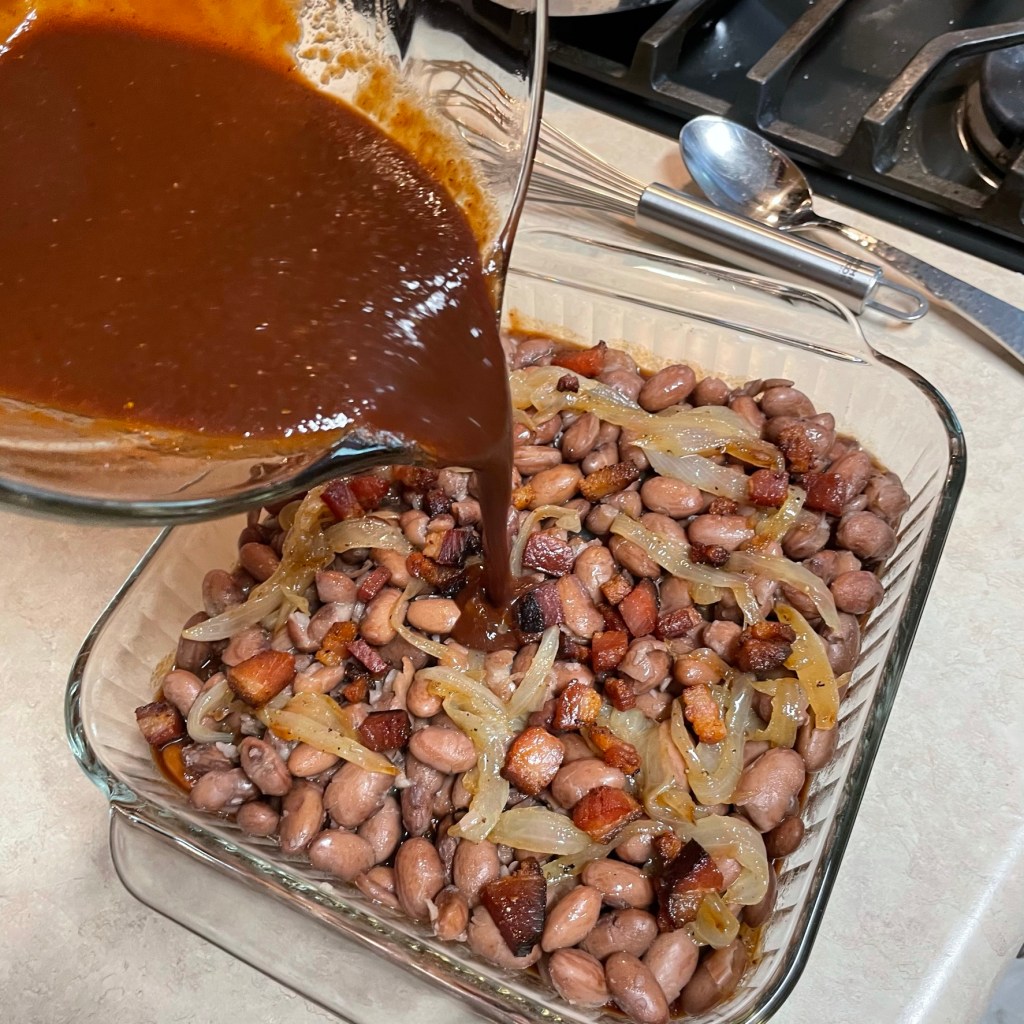
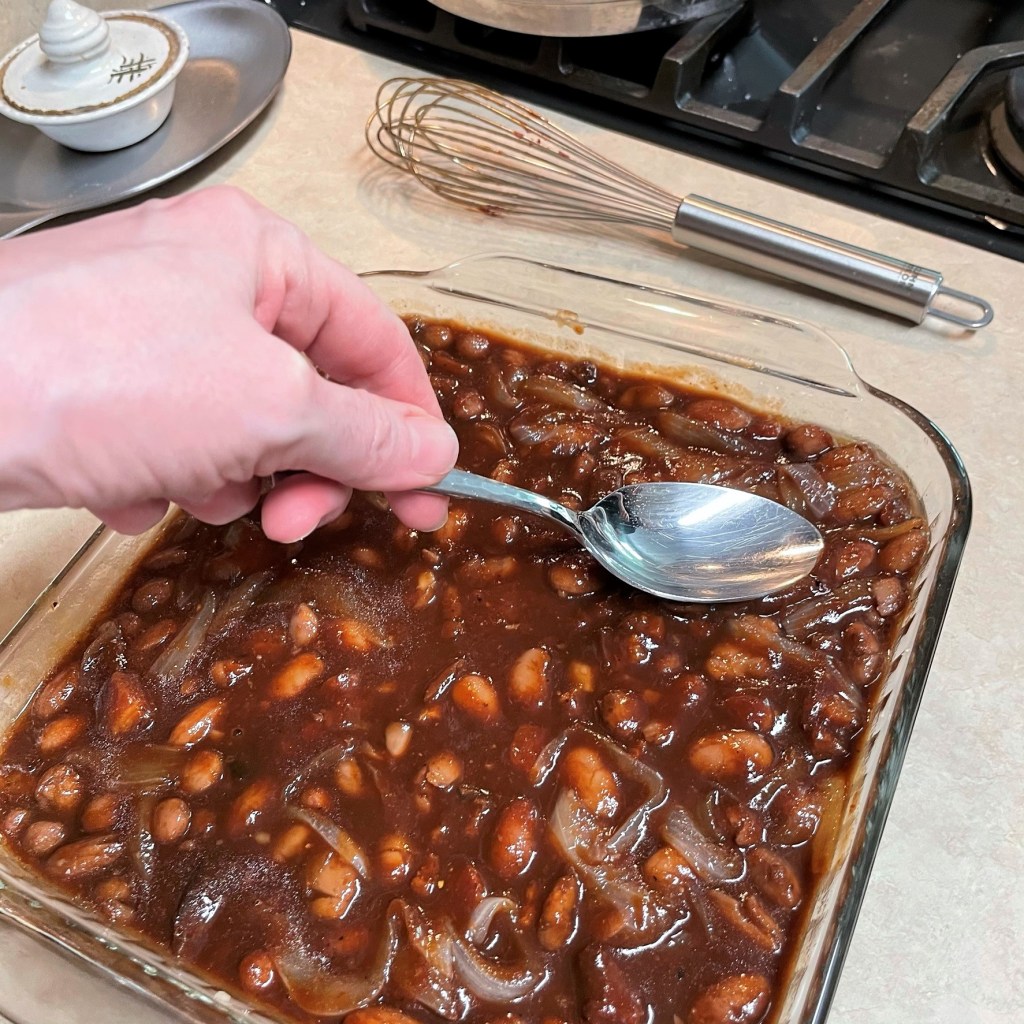
  5. Layer the cooked beans, bacon and onions in a glass 8 x 8-inch baking dish. Pour the sauce into the beans and give the baking dish a few gentle shakes to distribute the sauce throughout. The beans should be swimming in sauce, as much of it will absorb into the beans during baking.
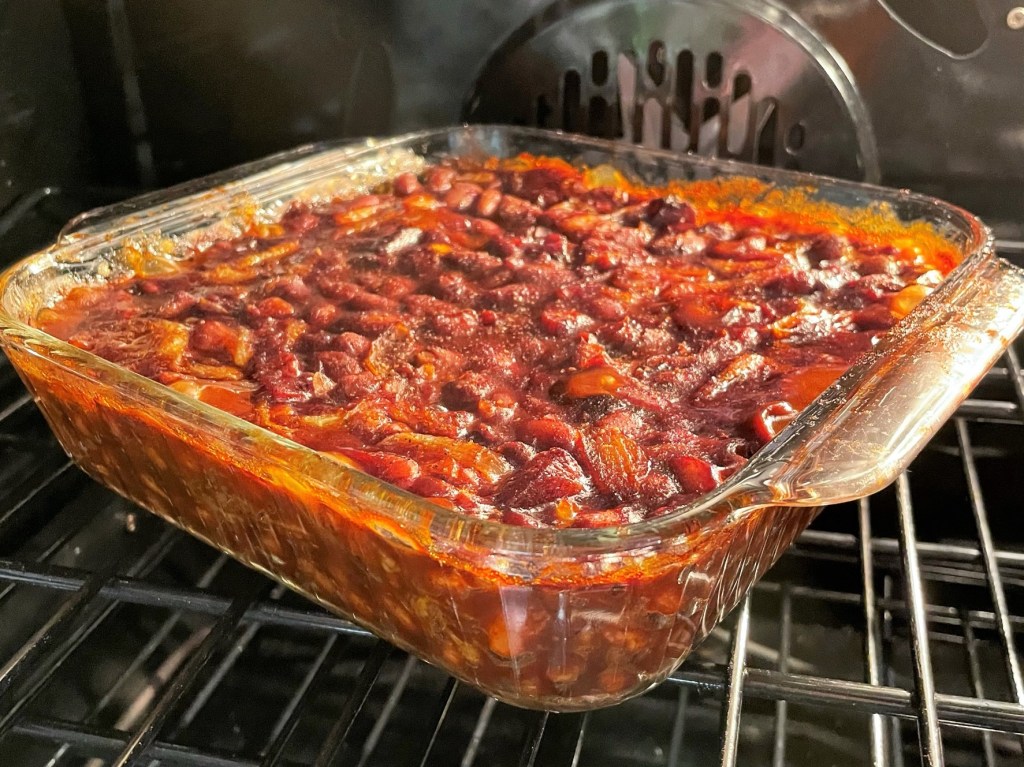
  6. Bake at 350° F for about an hour, until sauce is reduced to a perfectly rich and sticky mess.
Happy Fourth of July!


“Chopped” Challenge (Episode No. 1 – “Mystery Meat”)

Planning and living through a kitchen remodel can be stressful business, and my husband, Les, and I are looking for fun ways to distract ourselves from the chaos that will undoubtedly ensue when our remodel begins at the end of summer. We both want to whittle down some of the excess pantry and freezer inventory in our kitchen (and the overflow in the laundry room and the garage) so that we don’t carry it over into our redesigned space. I will admit that I am a bit of a pack rat when it comes to foodstuffs—I cannot seem to resist purchasing unusual ingredients when I see them on a market run. I mean, one never knows when it might be handy to have an extra package of raw cacao on reserve. Or three. Yes, we have a lot of stuff.


Les and I are avid fans of “Chopped” on Food Network, and we play along vicariously, suggesting (OK, sometimes shouting) to the chef competitors how they might use the ingredients in their mystery baskets. We cringe when we see them do something that never ends well, such as putting cooked potatoes in a food processor (instant glue, coming right up!) or repeatedly opening the oven door to see if their dessert still isn’t baking fast enough. We feel the anxiety of the judges in the final seconds, and we often join their chorus, urging the competitors to “just get it on the plate!”

When I casually mentioned to a friend last week that I needed to get creative about using up our own kitchen surplus, she joked that she could imagine me doing my own version of a “Chopped” challenge and scratching ingredients off the inventory list as the weeks wear on for our kitchen work to begin. It was a brilliant idea, and we are off and running with our first episode!

Les and I will not be competing against each other, because we are on the same team. Also, we don’t have multiple cooking stations, ovens and deep fryers, and we certainly do not have a blast chiller or an anti-griddle or a salamander (professional grade broiler oven), as they do on the set of “Chopped.” We do not plan to enforce a time limit on completing the challenge, as our goal is simply to use up our stuff and, of course, eat and enjoy the meals we create through this experience. We are not going to record every moment (you’re welcome), but we will let you in on the fun of the challenge with the unveiling of the mystery baskets we prepare for each other. And, of course, the outcomes.


Before we started our challenge, Les and I established and agreed upon the following rules for setting up each other’s baskets:

  • Each basket must hold four mystery ingredients, found in our cabinets, fridge or freezer. No sought-out, wacky ingredients for the purpose of stumping each other.
  • The goal of the challenge is to use up our surplus food, with as little waste as possible. We will not be using some small portion of an ingredient and throwing the rest in the trash.
  • Basket ingredients can be used in any course of the meal or broken into separate courses of a single meal, i.e.: cocktail, appetizer, salad, entrée, dessert. Cook’s choice.
  • Basket ingredients must be transformed in the meal, not merely served as is.
  • Pet foods may not be submitted as basket ingredients, even though Les says we have way too many bags of kitty treats (and we do).

The first challenge was mine. Press “play” on the video to witness the unveiling of my mystery basket. Here we go!!!

I did not expect to feel so nervous!

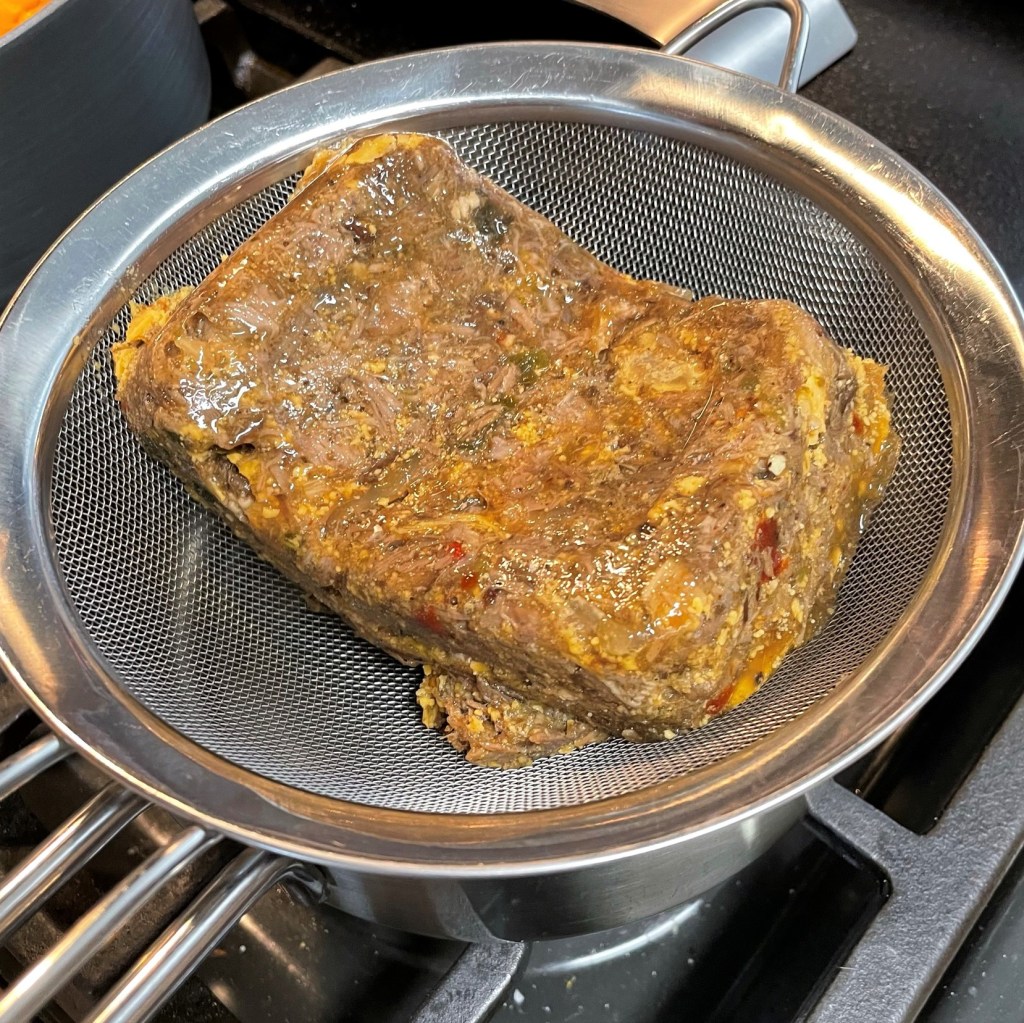
The mystery meat was easy to identify, once I was able to stop laughing and remove the cover. It was leftover barbacoa, which I made back in February, and five months in the freezer did not do it any favors. It still had plenty of spicy flavor, but the texture was somewhat mushy. To transform it, I would need to combine it with something else, or put it inside something else to make the unpleasant texture less noticeable.

The brownie brittle is a crispy, chocolatey dessert snack that I picked up at Costco. It’s very tasty but in true Costco fashion, there’s just too darn much of it. We have tendency to buy products like this one, and we get bored with it about halfway through. As far as I’m concerned, the brownie brittle is the red herring in this basket. There’s no obvious way to use it, so I’ll set it aside for now.

The butternut squash, as Les pointed out, genuinely has been wearing out its welcome in our kitchen. I bought it near the end of winter, but then I got excited about cooking things for spring and I just kept putting it off. For better or worse, winter squash has a long shelf life. The biggest challenge with the squash is that it’s big, and so there’s a lot of it. My plan to use it up will be to incorporate it into our meal in multiple ways, and I might also try to slip a few pieces to my kitchen assistant, Nilla, who is always on standby and happy to help.


Finally, the poor, sad little apples that have been buried in the fruit drawer for a least a month. They aren’t even the same variety—one Granny Smith and one honeycrisp, although there’s nothing crisp about either of these tired fruits. They won’t mix with the barbacoa, so I will transform them into a dessert, and I’ll use some of the squash in it, too. This is the easiest part of the basket for me. Might as well map this one out; I pulled a box of puff pastry from the freezer (heaven only knows how long it’s been buried in there), and some simple dessert spices.

Add a few spices, some butter and sugar, and this can be dessert.

I cubed the other neck piece and tossed it into the oven to roast, with oil and a little salt and pepper. I love roasted squash, so the hardest thing for me will be not snacking on it while I figure out the rest of the basket. The remaining squash went into a saucepan to simmer until tender, and that’s when the rest of the dish came into focus for me.

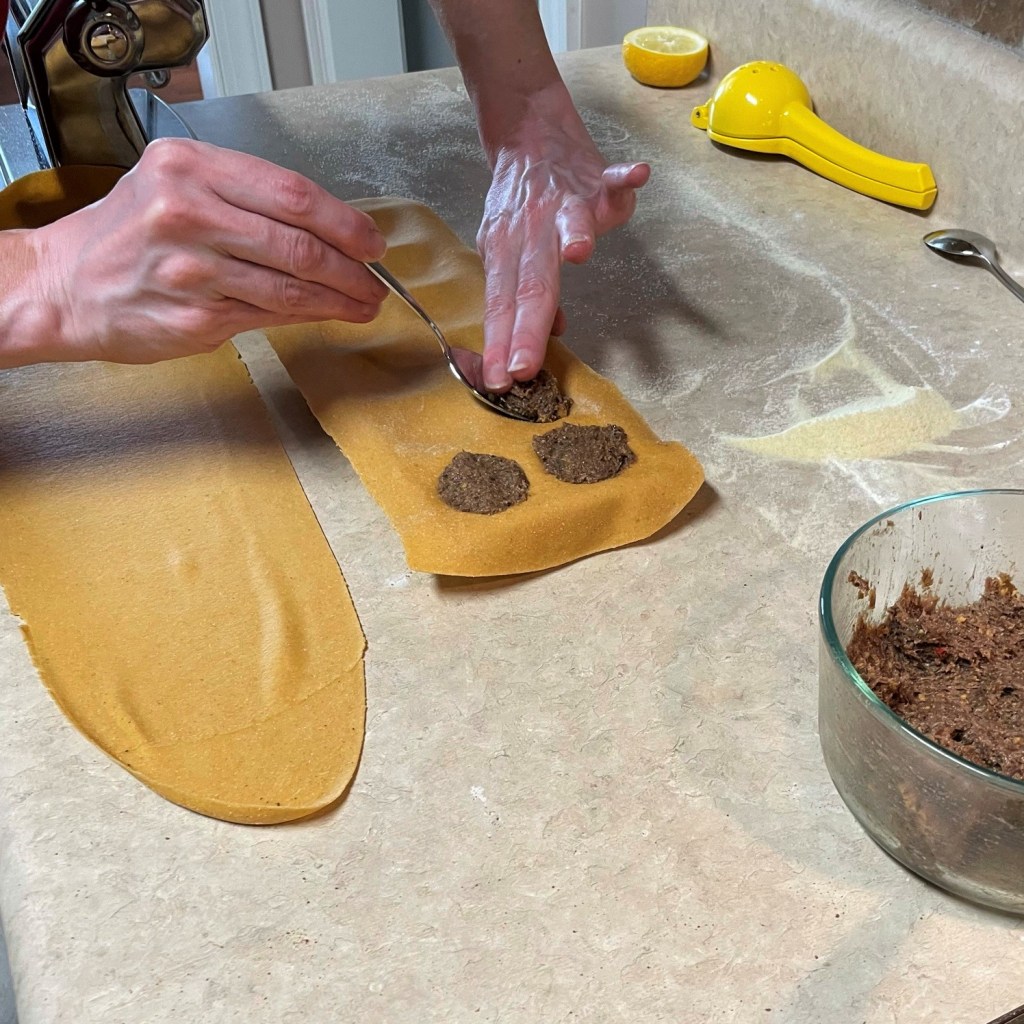
Some of the tender squash could be worked into a pasta dough, and it would be a nice color as well as flavor! The barbacoa could be used as a filling for ravioli, but what about my red herring, the sweet brownie brittle? And that’s when it hit me that chocolate is used in mole, and Les always puts a little cocoa powder in a pot of his chili. There it was, I would crush up the brownie brittle and add those dark, chocolaty crumbs to the meat filling! This made sense to me, and when Les took a taste of the barbacoa-brownie brittle mixture, he confirmed it was working. He could taste the chocolate, and said it was good.

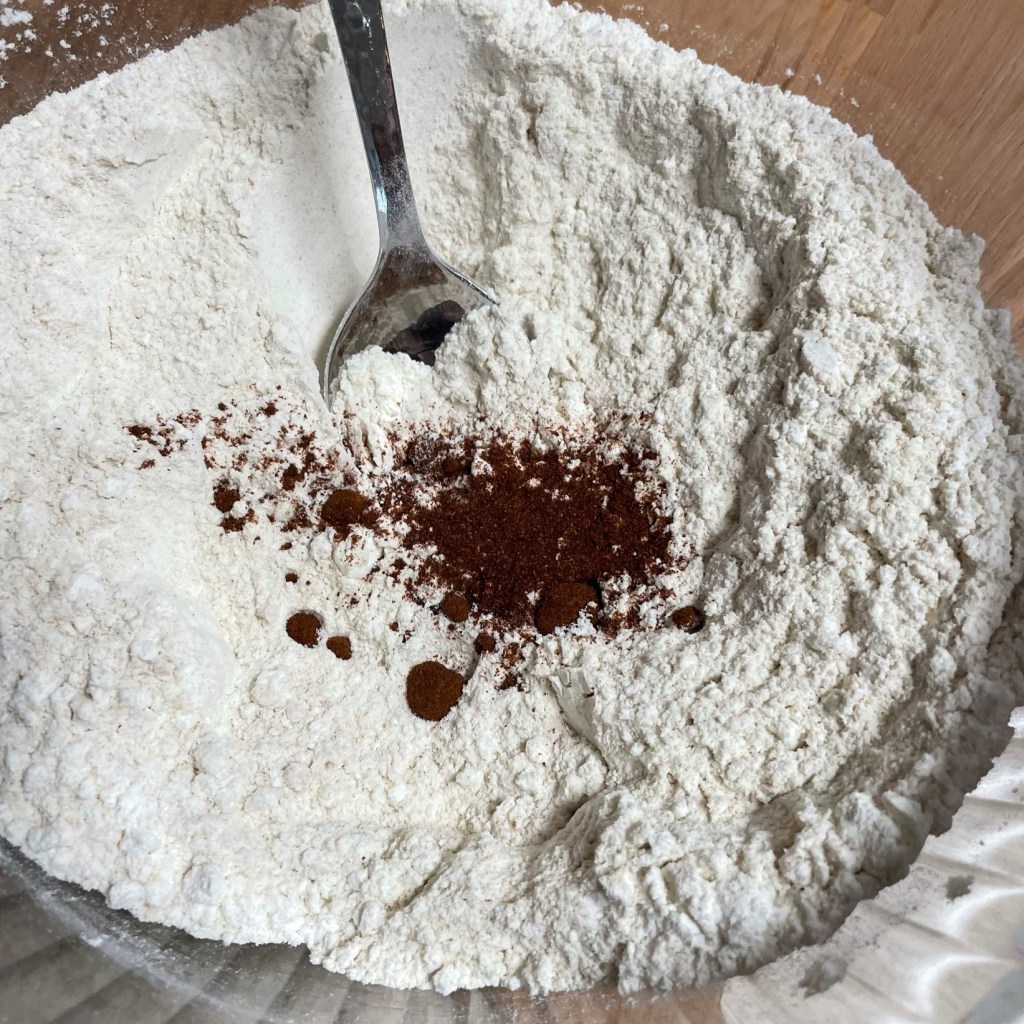
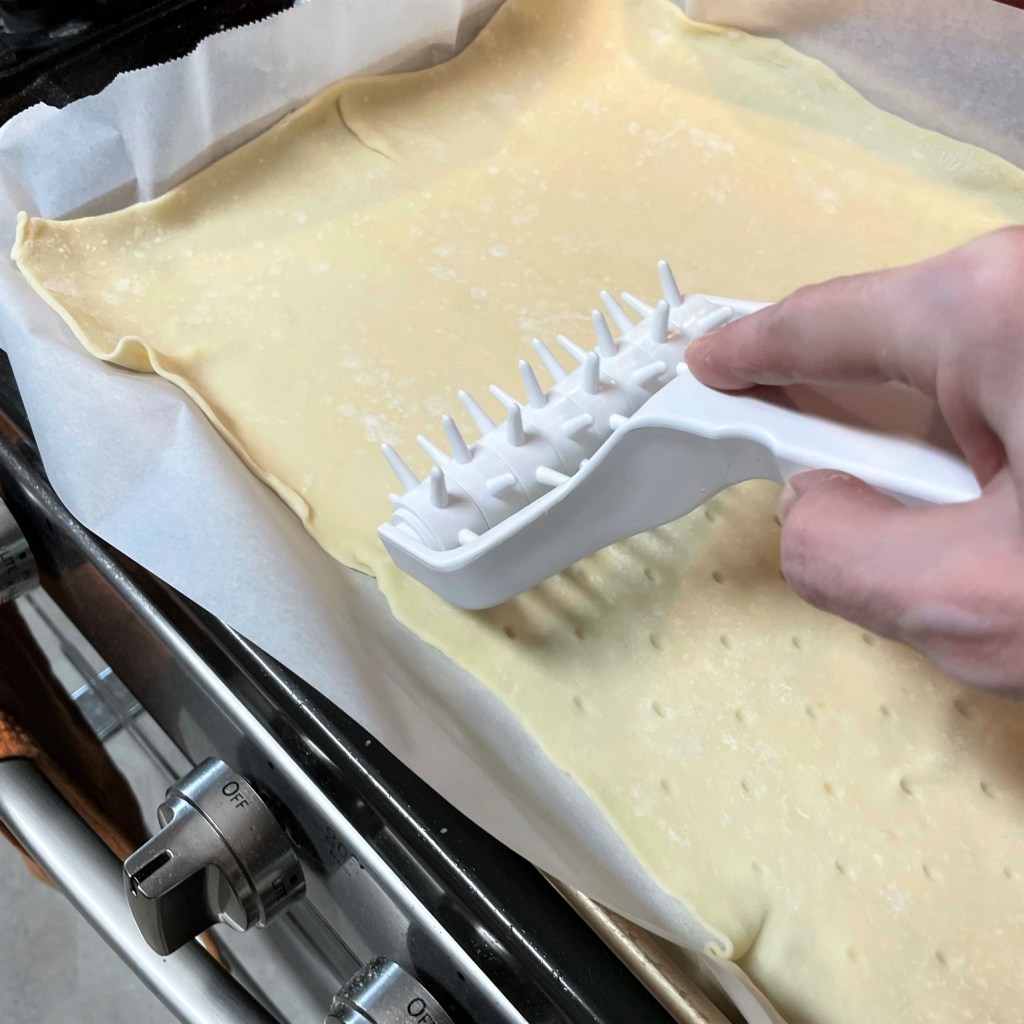
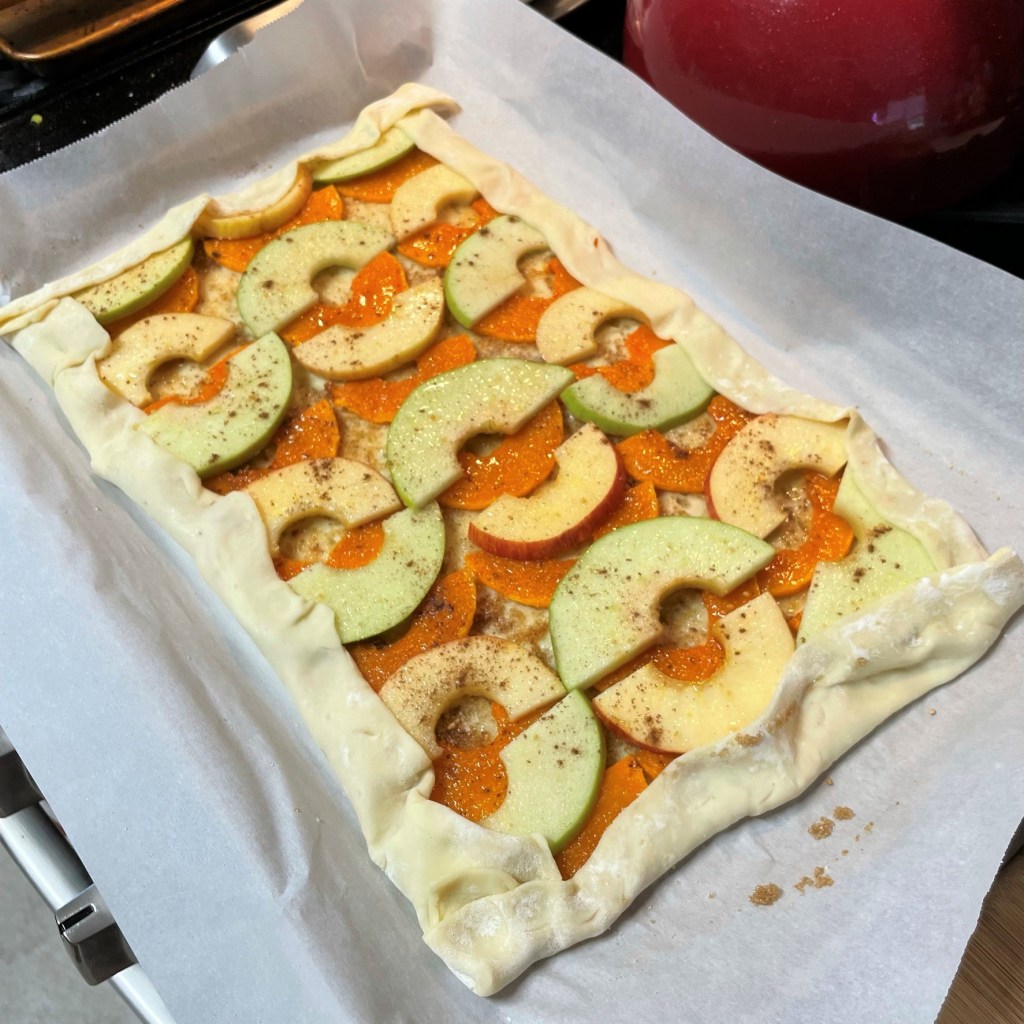
The ravioli plan had taken so much attention, I had put the squash and apple tart on the back burner. I thawed a sheet of puff pastry from our freezer, rolled it out to smooth the wrinkles, sprinkled brown sugar and cinnamon over it, then alternated rows of squash and the two kinds of apple, and another sprinkle of cinnamon. Then I folded up the edges, as if making a galette, brushed them with egg white and into the oven.


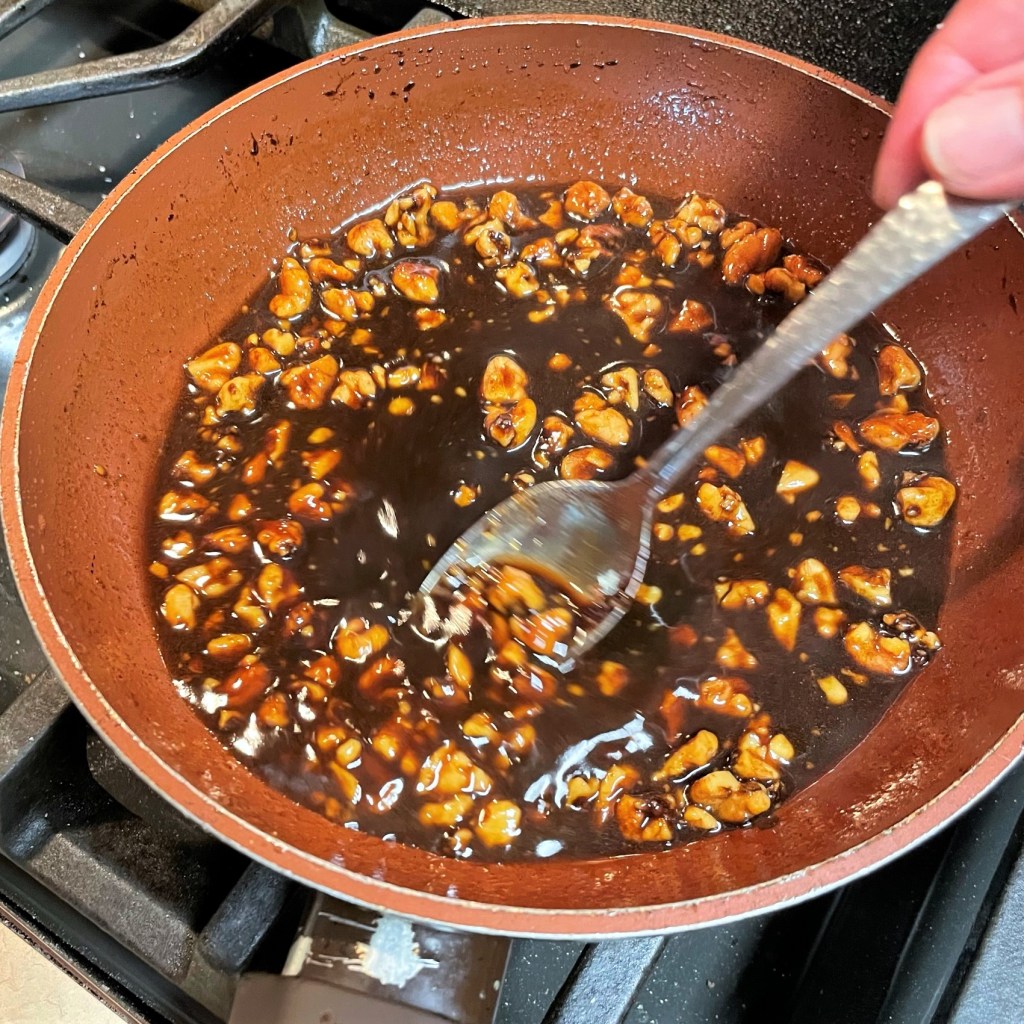
I also needed a quick sauce to drizzle on the baked squash-apple tart, because it was rather dry and plain from the oven. I melted butter with maple sugar, tossed a small handful of chopped walnuts into it, then more maple sugar and a splash of maple-infused balsamic vinegar. A little bit of tartness is usually exactly what any dish needs to feel and taste “finished,” and both Les and I were sampling this sauce beyond what was necessary. I wish I had made more because it would be great over ice cream. The squash and apple tart turned out tasty, even as leftovers the next evening.

Butternut squash and apple puff pastry tart, with a maple walnut dessert glaze. Winner!

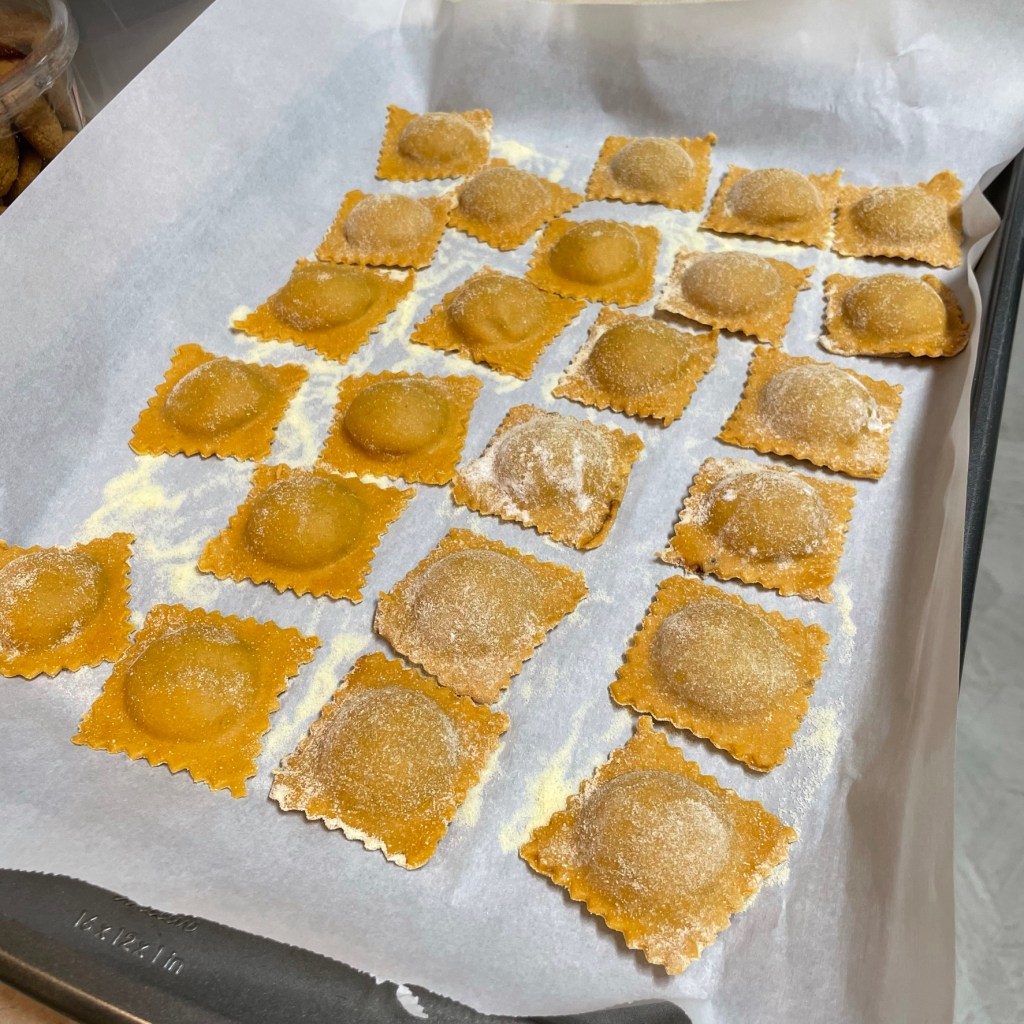
Rolling the pasta didn’t take long (I have been practicing lately and will share more about that soon), and I was thankful to have my ravioli mold to make quick work of finishing that part of the meal. I made an easy “sauce” for my ravioli, using up a half onion from the crisper drawer, the last dregs of a bag of frozen roasted corn, some veggie broth and half and half, and some kind of seasonings but I honestly can’t remember! The finished dish seemed a little boring in color, and everything had a soft texture, so I chopped a handful of toasted pumpkin seeds and scattered them on top. And this one is done.


“Chef Les, I have prepared for you a spiced butternut squash ravioli with barbacoa-brownie brittle filling.
It is topped with a simple roasted corn sauce and caramelized butternut squash, and accented with toasted pumpkin seeds for a little crunch.”


“And that means, Chef Terrie, you have conquered the basket ingredients and chopped your way to victory in the first challenge!”

Will Les have what it takes to do the same? Find out next week, when we unveil his mystery basket ingredients!


Oh, and just for fun, I combined the final 1/2 cup of cooked butternut squash with some rolled oats, brown rice flour, a touch of cinnamon and the rest of the pasta egg mixture. Processed it, scooped it out and baked it up as cookies for my kitchen helper. 🙂 ❤