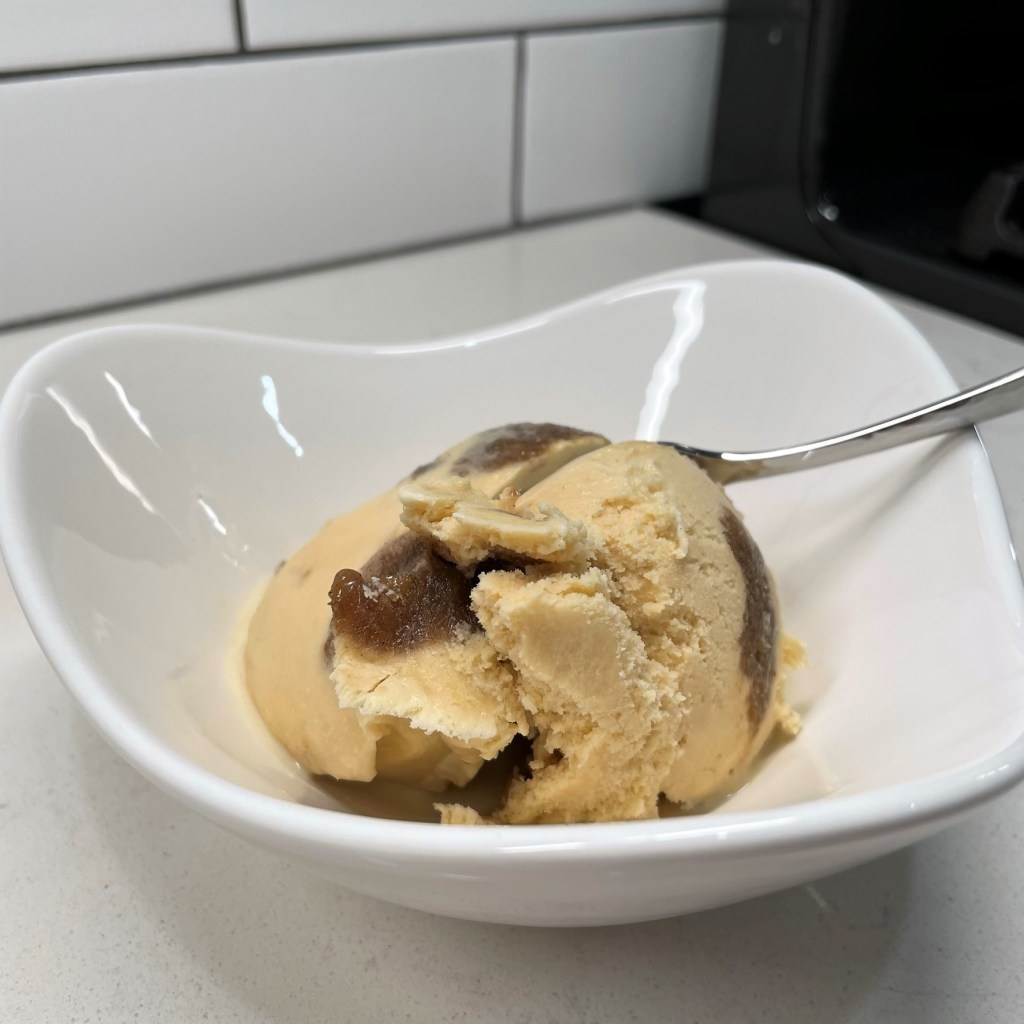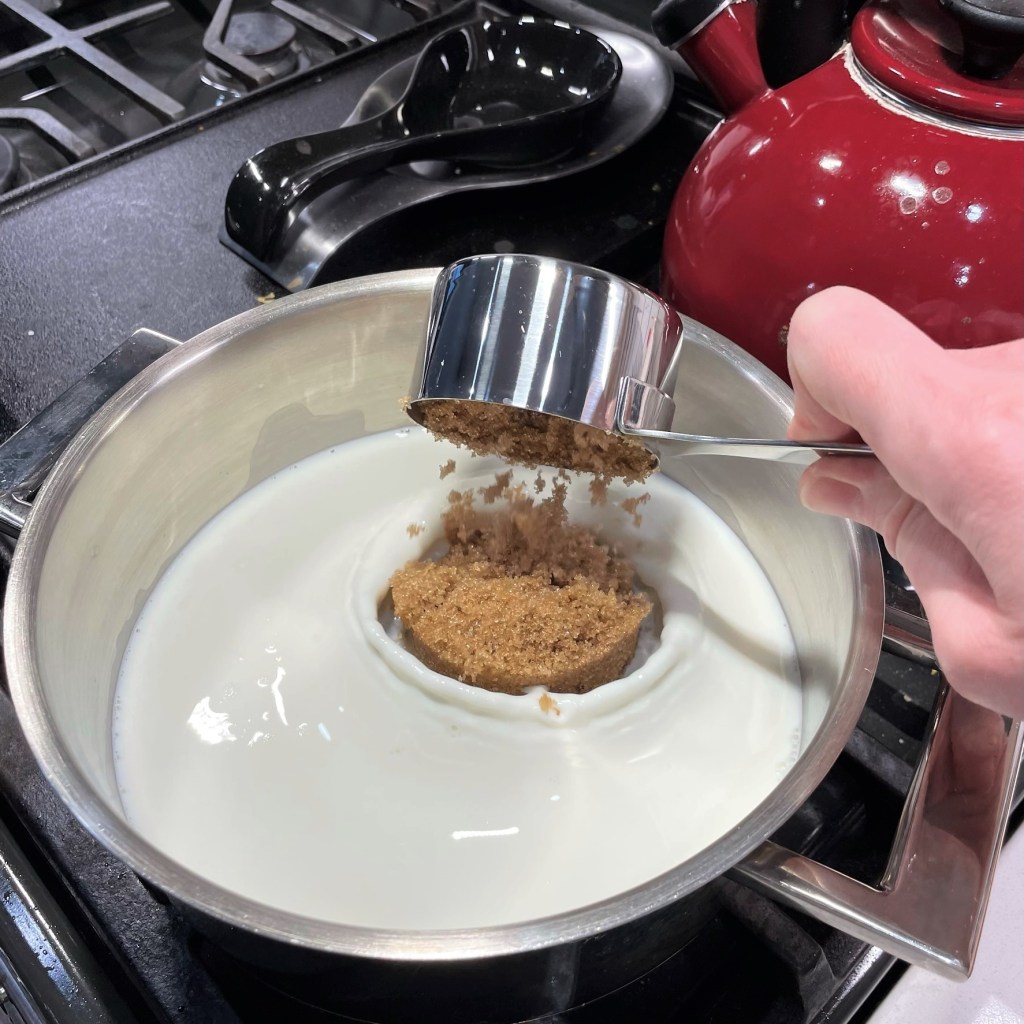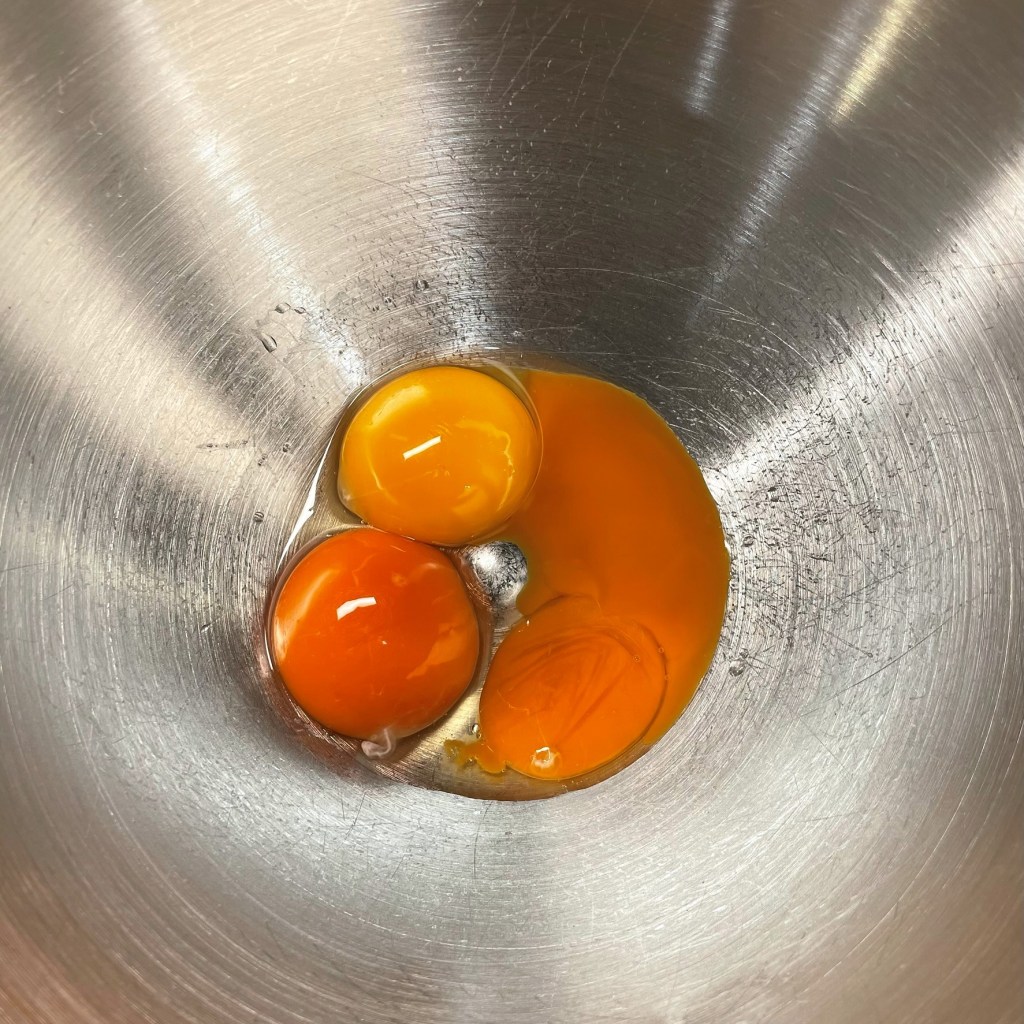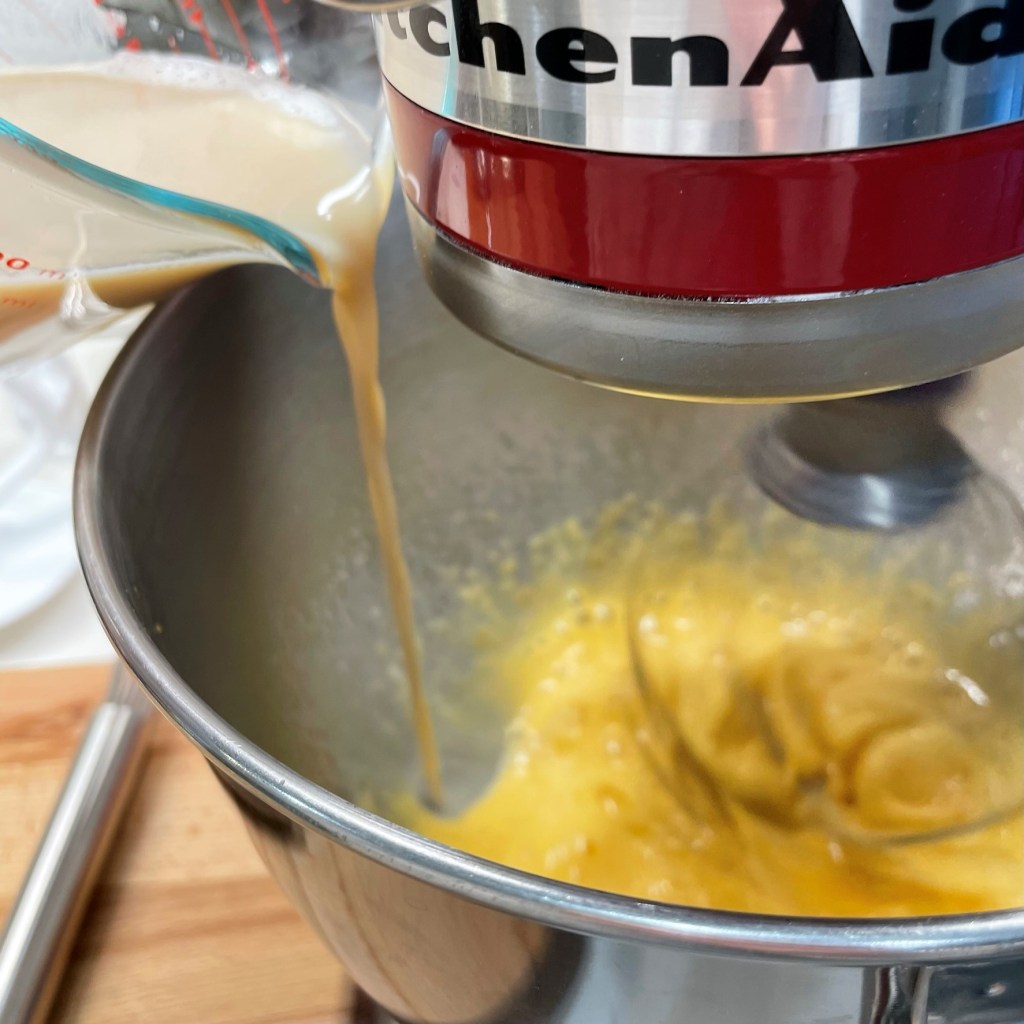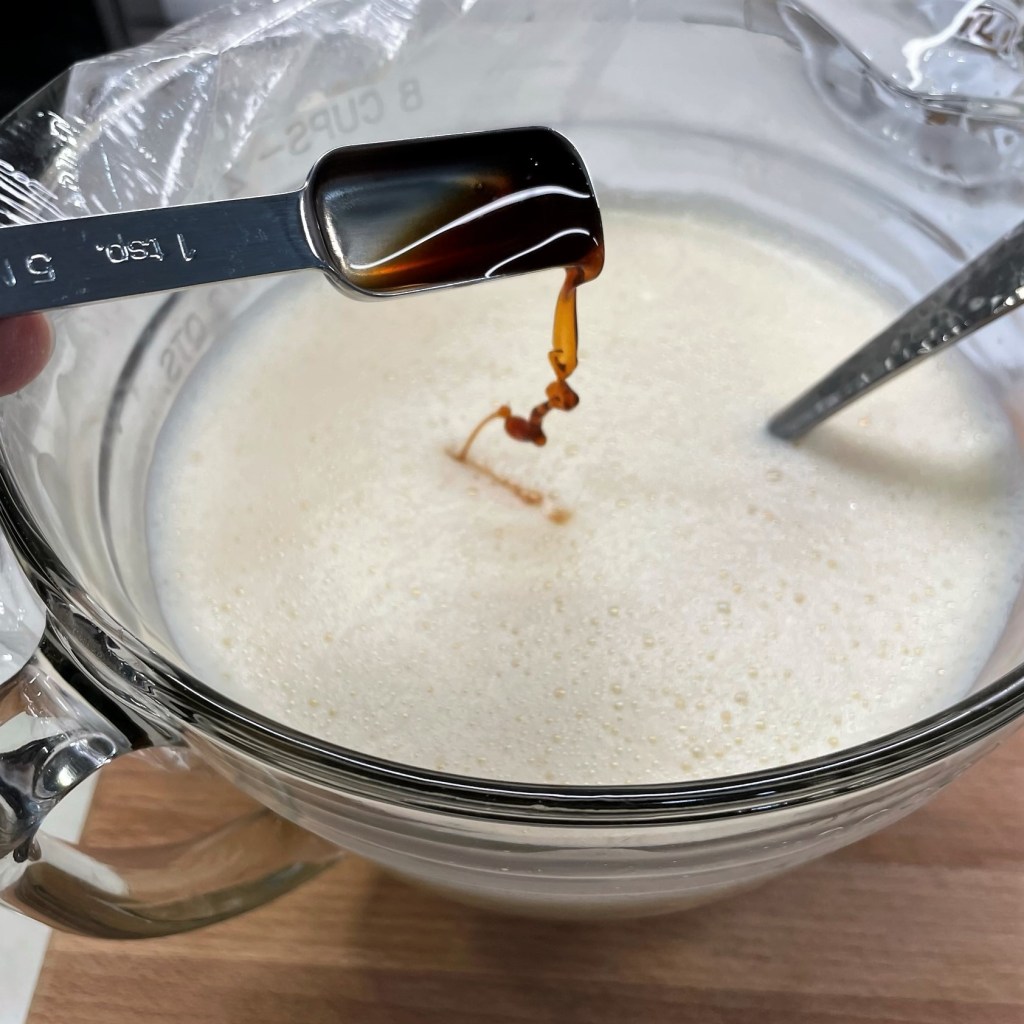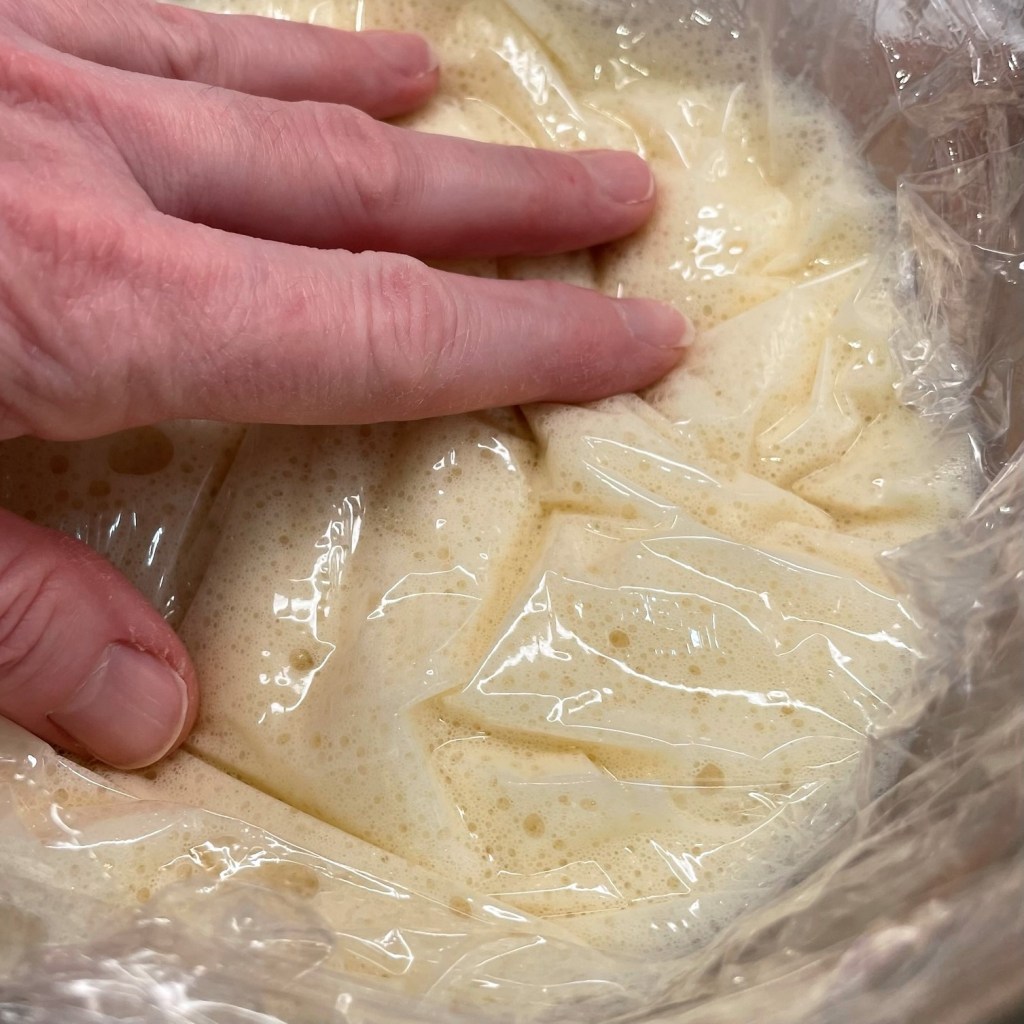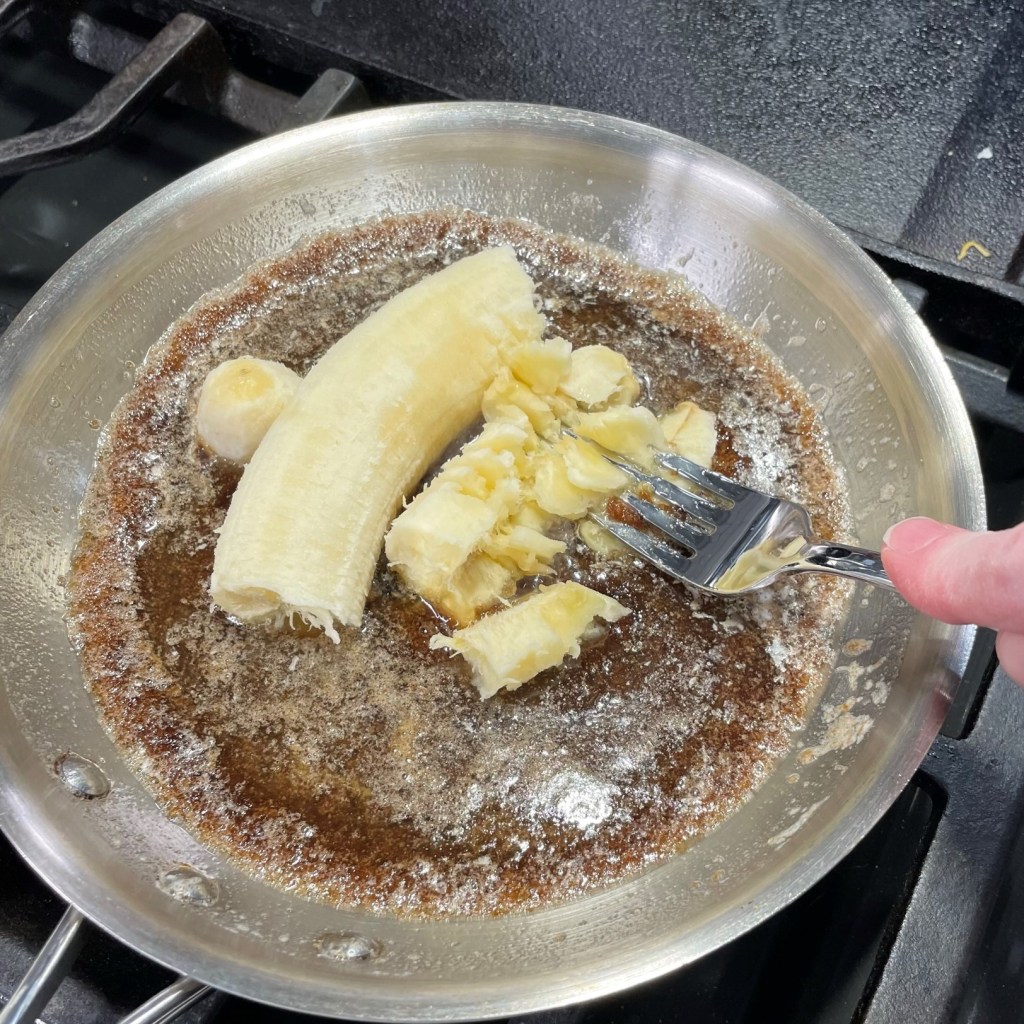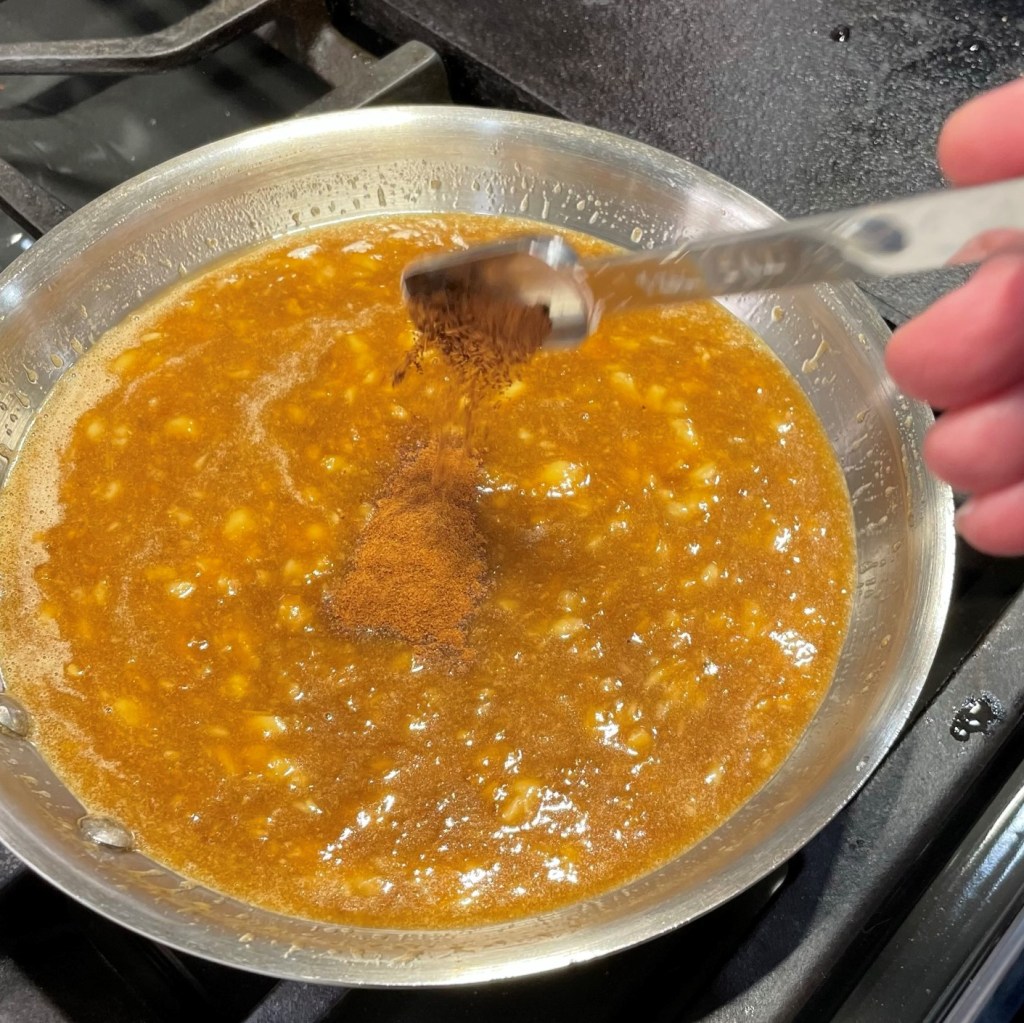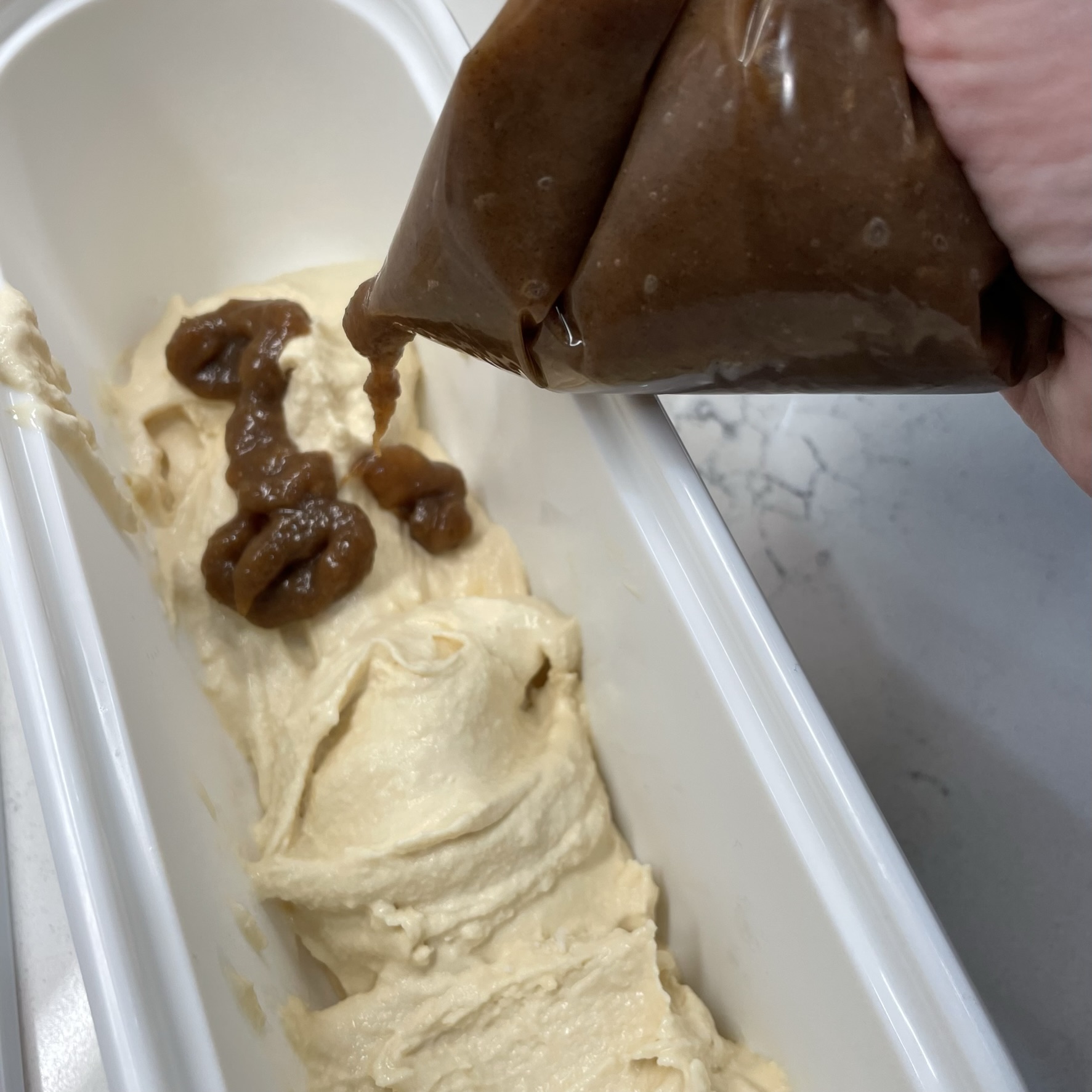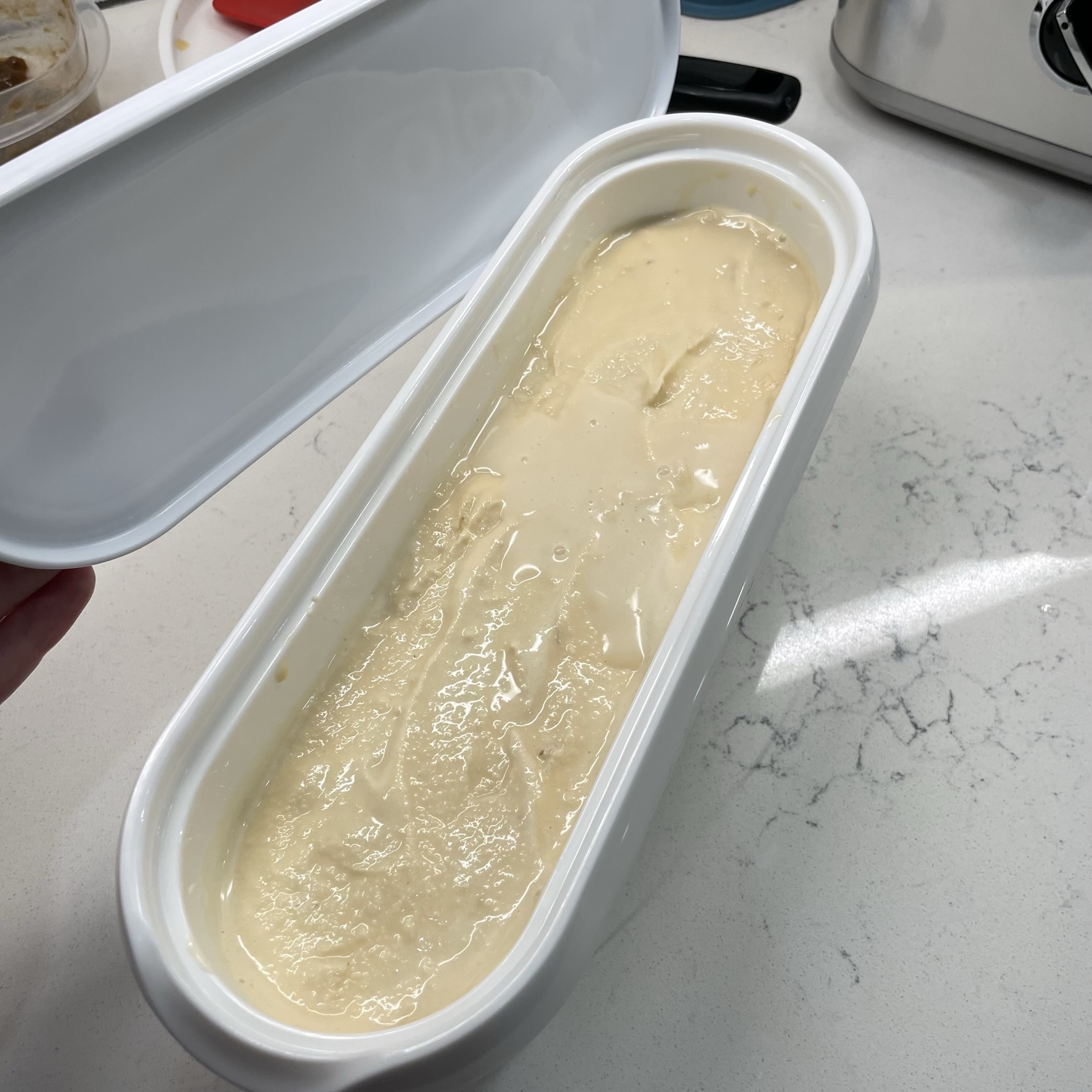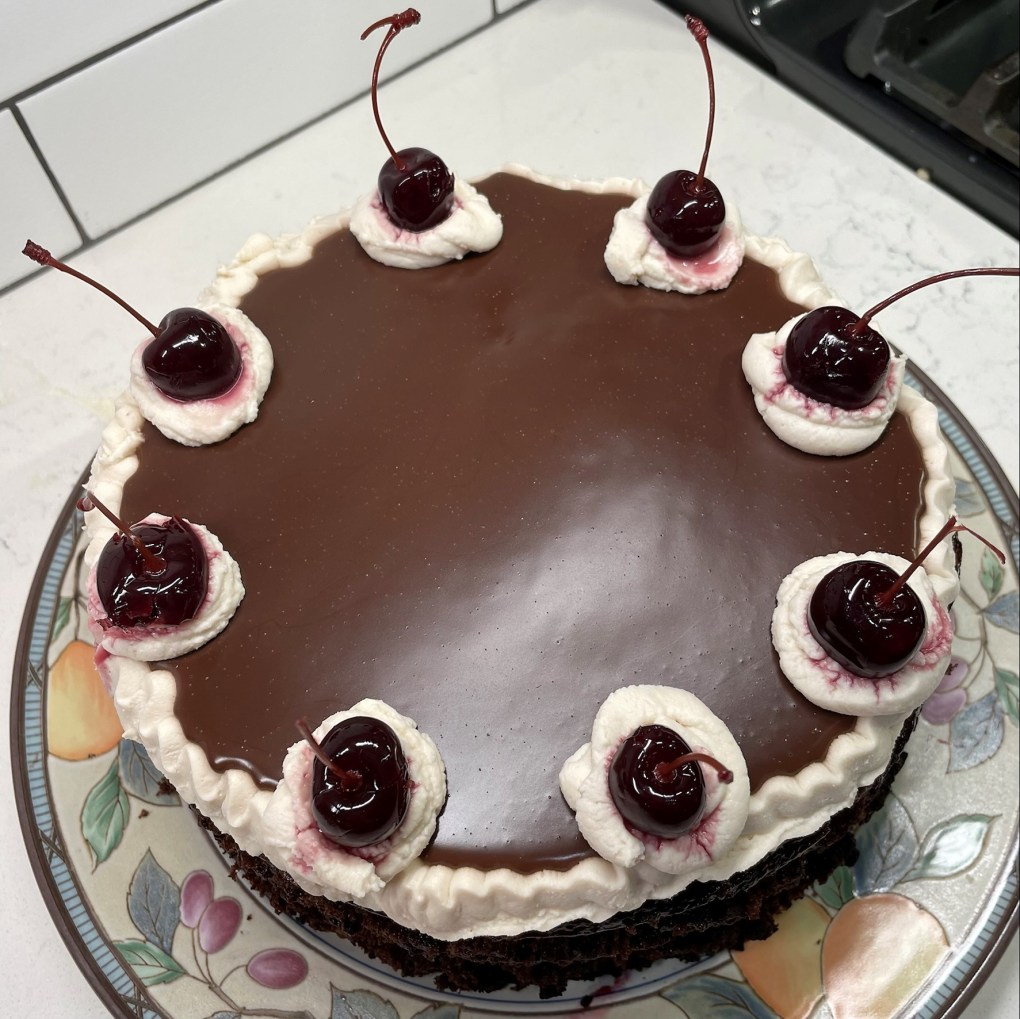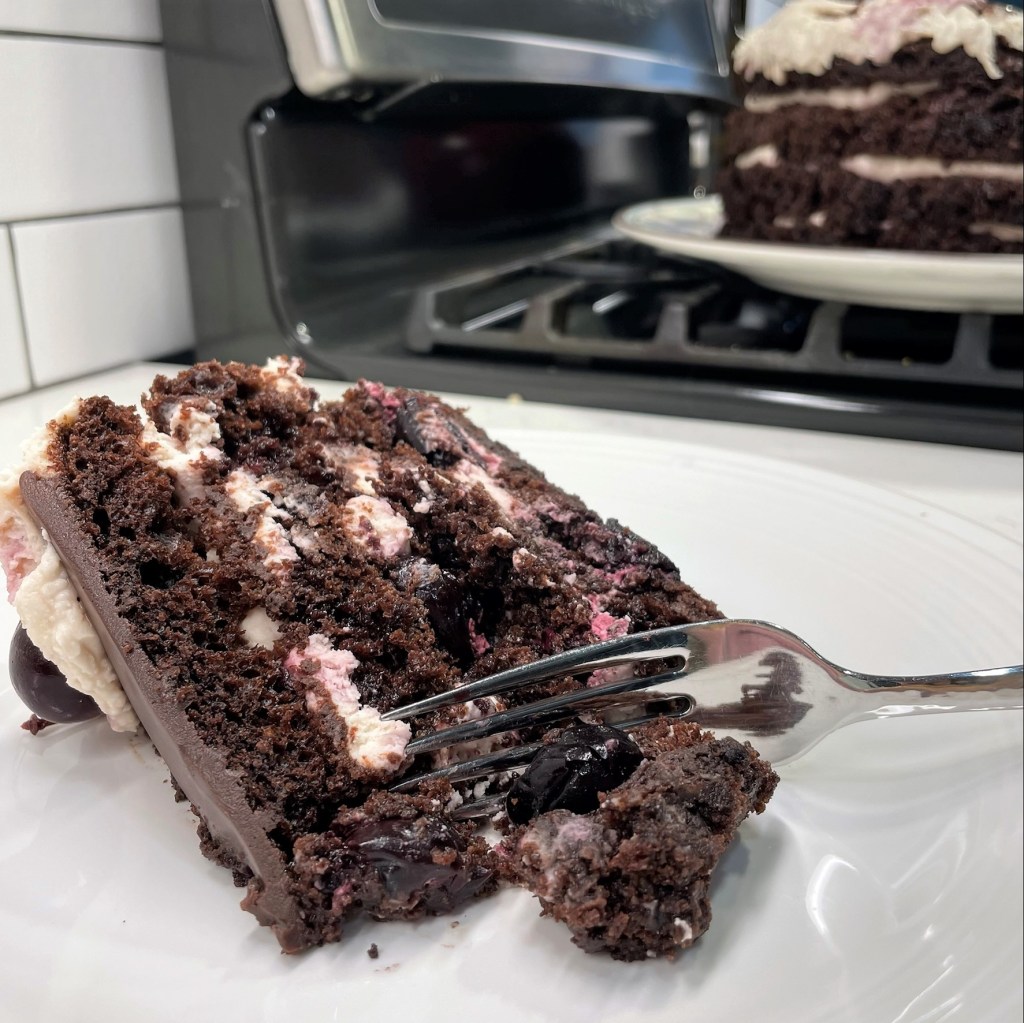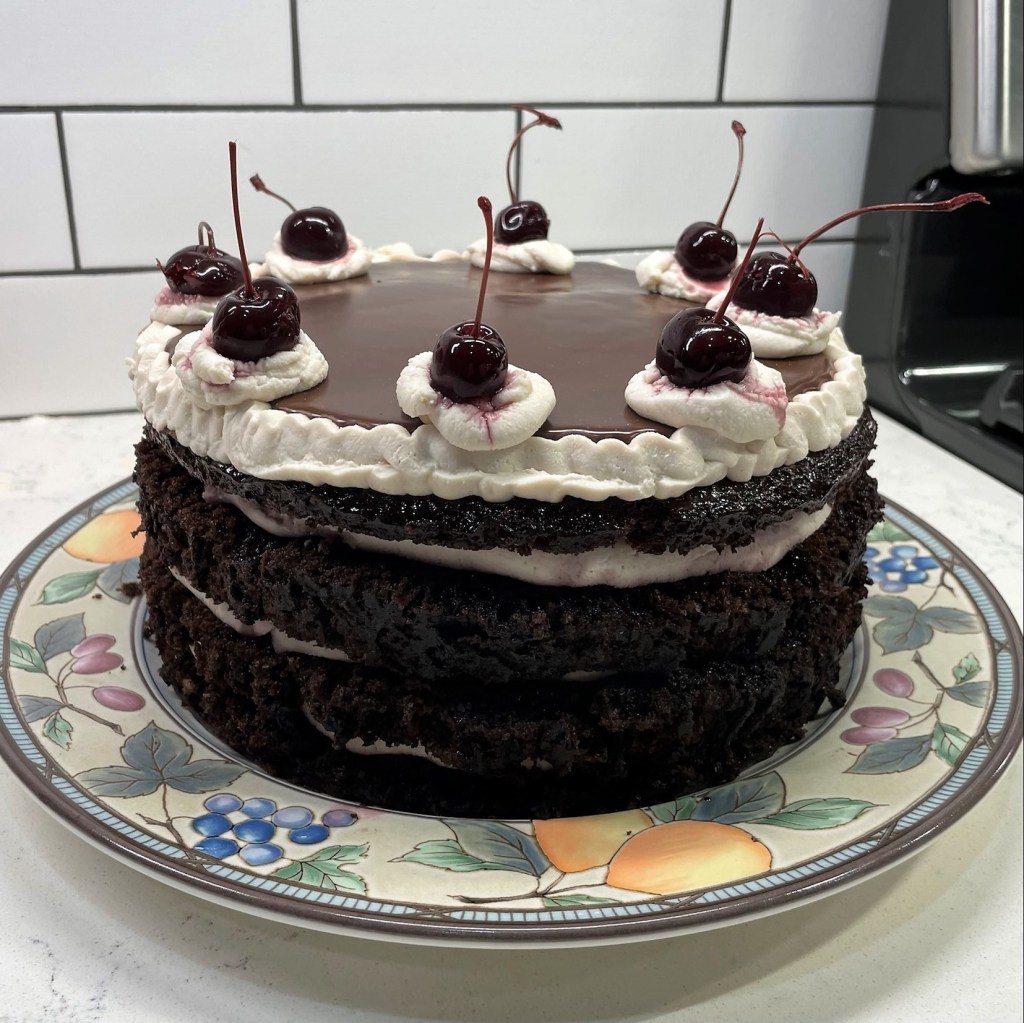
Before we get into it, I’d like to issue my own disclaimer about the inauthenticity of this recipe as a “Black Forest” cake. Any purist would quickly point out that a true, German Schwarzwälder Kirschtorte would be more of a spongy chocolate cake, soaked with kirsch (a clear cherry liqueur) and decorated with whipped cream, sour cherries and shavings of chocolate. But when is the last time you remember me sticking to tradition?
My version of this cake is a departure in almost every category, save for the chocolate and cherry flavors. Cake baking is not in my wheelhouse, so I went for a recipe that I knew I could count on—a sourdough chocolate cake from King Arthur Baking that has served me well before—and I adjusted the fillings to match it. My whipped cream filling is enhanced with mascarpone, making it more substantial to support the sturdy cake. The cake itself is not super sweet, so the cherries had to be. And kirsch liqueur (or any cherry liqueur, for that matter) is nowhere to be found in our liquor stores, so I reached straight for what’s plentiful at our house—bourbon, and that was a very good call.
The cake is not difficult to make, but it is fussy enough that it deserves a special occasion. I was going to save this until the week of Valentine’s Day, but my husband heard on his favorite sports talk show this morning that today is National Chocolate Cake Day, so, heck yeah! We might as well get a jump start on swooning over it. 😉
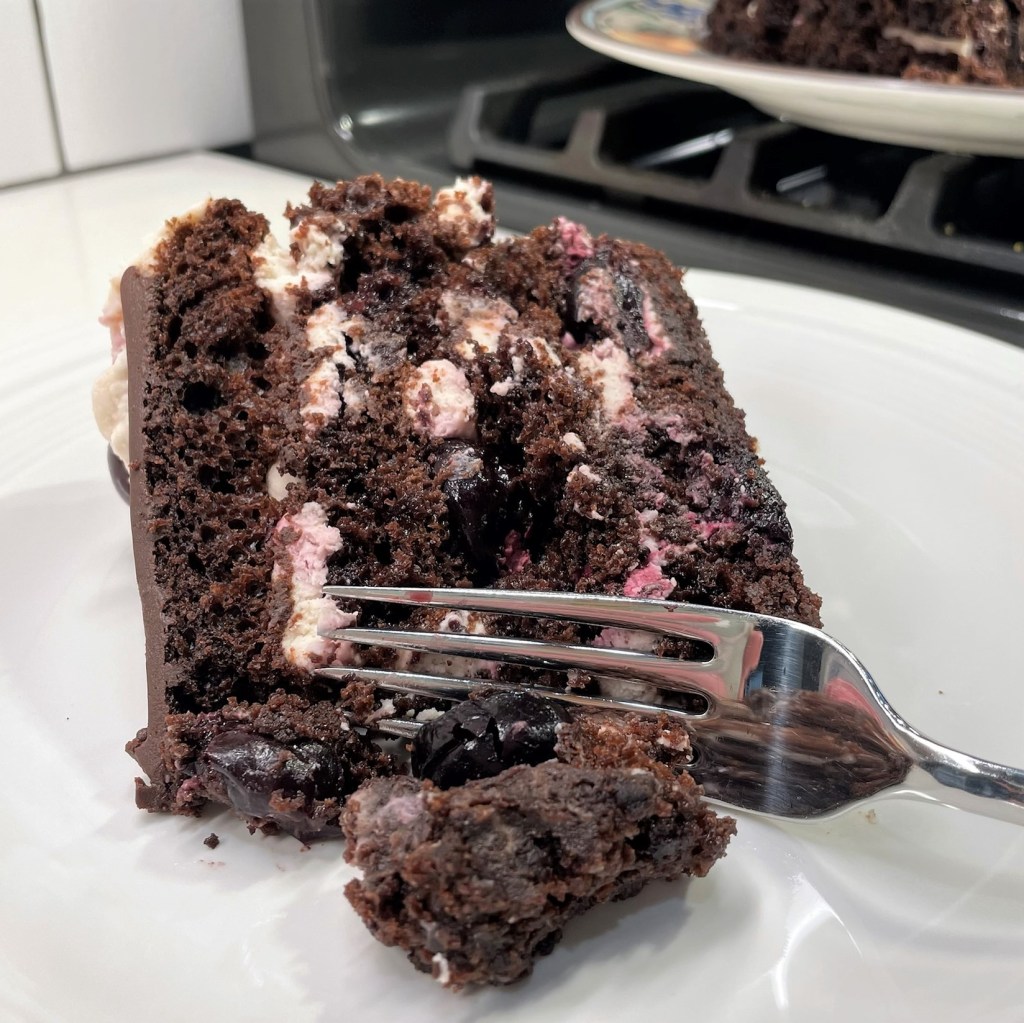
Every slice has a great balance of cherry and chocolate. Who cares if it isn’t a true Black Forest cake? 🙂
We splurged on this decadent, multi-layer dessert to finish our New Year’s Eve meal of White Clam Pizzaand our newest addition, the Oysters Rockefeller Pizza, and the cake was delicious for the occasion (and, remarkably, just as good later as leftovers straight from the fridge).
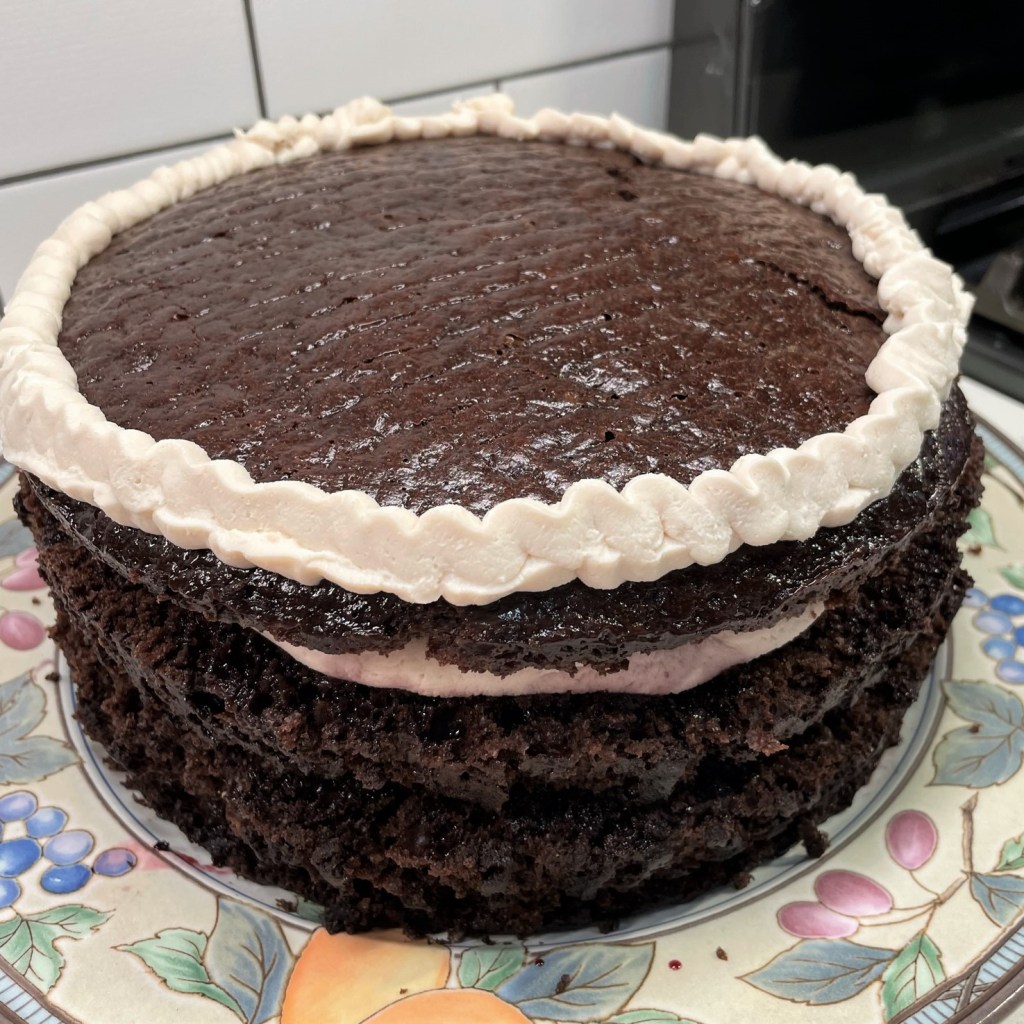
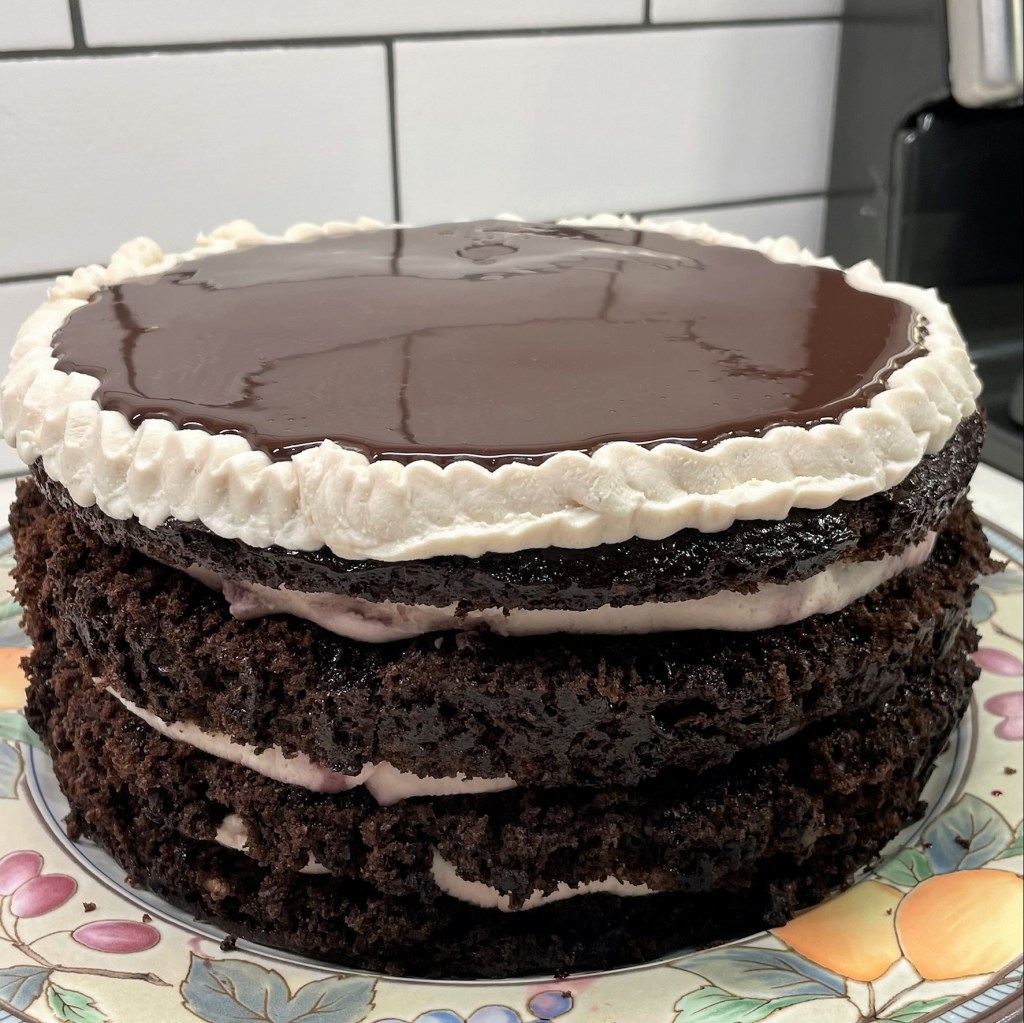
Frosting a cake requires patience that I do not have (especially at the holidays), so I went for a more rustic appearance, which also afforded us a glimpse of the yumminess that was to come, in the form of mascarpone cream and cherries hanging out the sides. There was no whipped cream wrapped around the outside of my cake and no shavings of chocolate, as one would find on a true Black Forest Cake. But it was delicious, with a capital D.
My layers were a little uneven, but the flavors were phenomenal.
So, is it authentic Black Forest Cake? No, but “Sourdough Dark Chocolate Cake with Bourbon-Soaked Cherry and Mascarpone Filling with Ganache Topping” is a mouthful. Plus, it didn’t fit in the title box. 😉
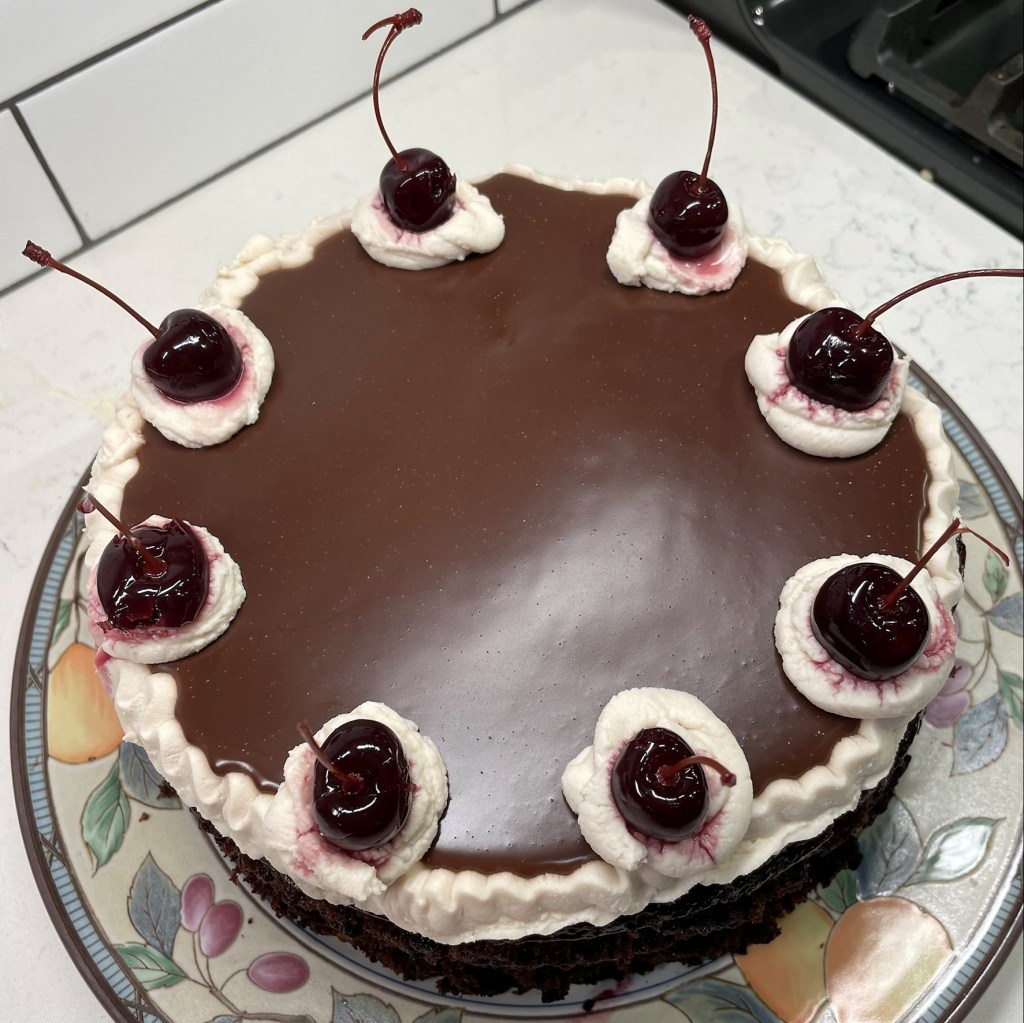
8 bourbon cherries or morello cherries, with stems (for decorating cake top)
Instructions
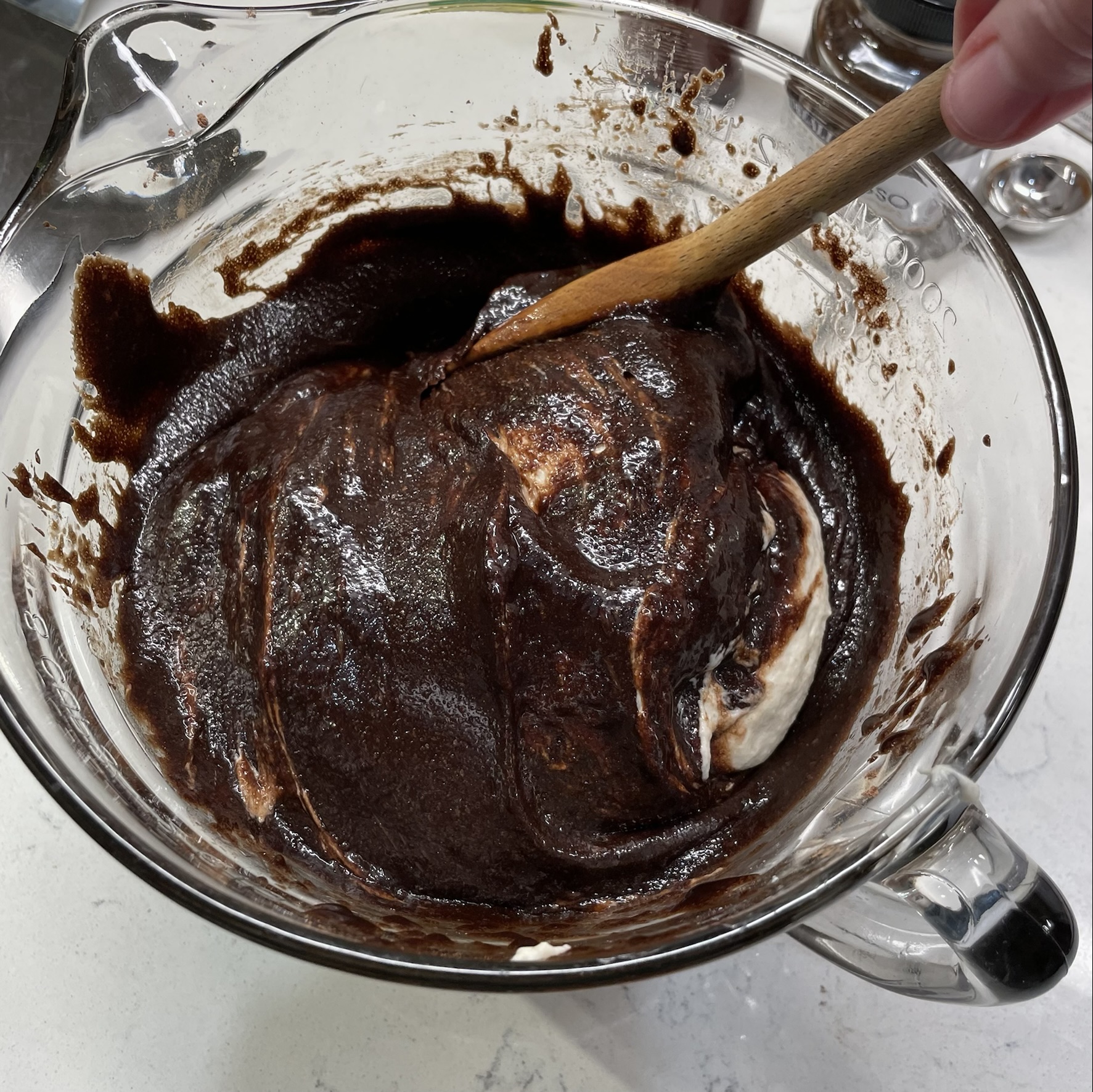
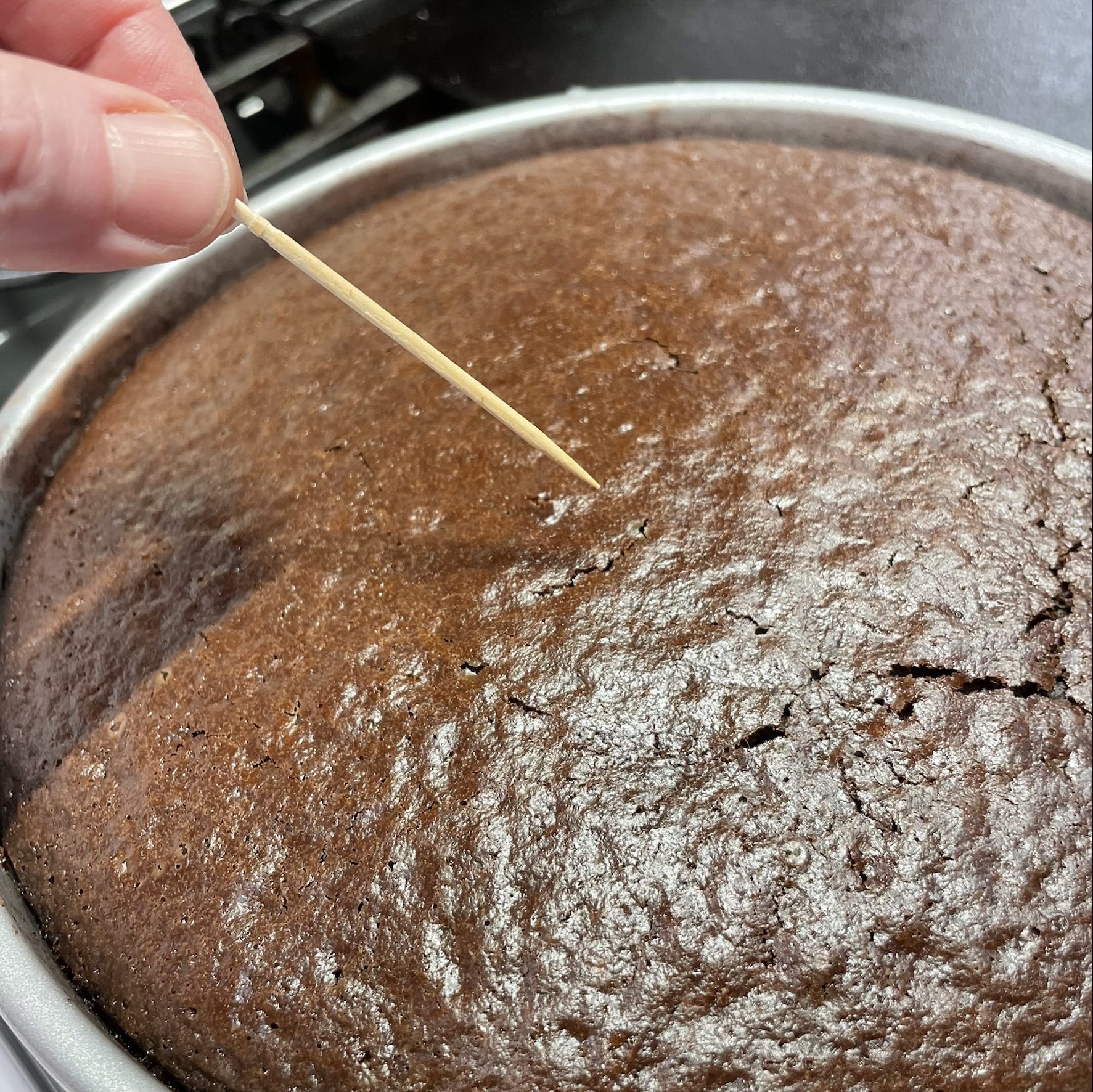
Bake the cake as instructed on King Arthur website. I followed the instructions with one ingredient adjustment; I replaced half of the natural cocoa with KA’s Double Dark Dutch Cocoa. I am crazy about the deep, dark color and chocolate flavor! Also, I baked it in two buttered and cocoa-dusted 9-inch layer pans rather than the 9 x 13 that was suggested, and the cake was done in 30 minutes. Cool the cake layers completely before removing them from the pans.
Not riding the sourdough train? No problem; use any other dark chocolate cake recipe you like, provided the layers are sturdy.
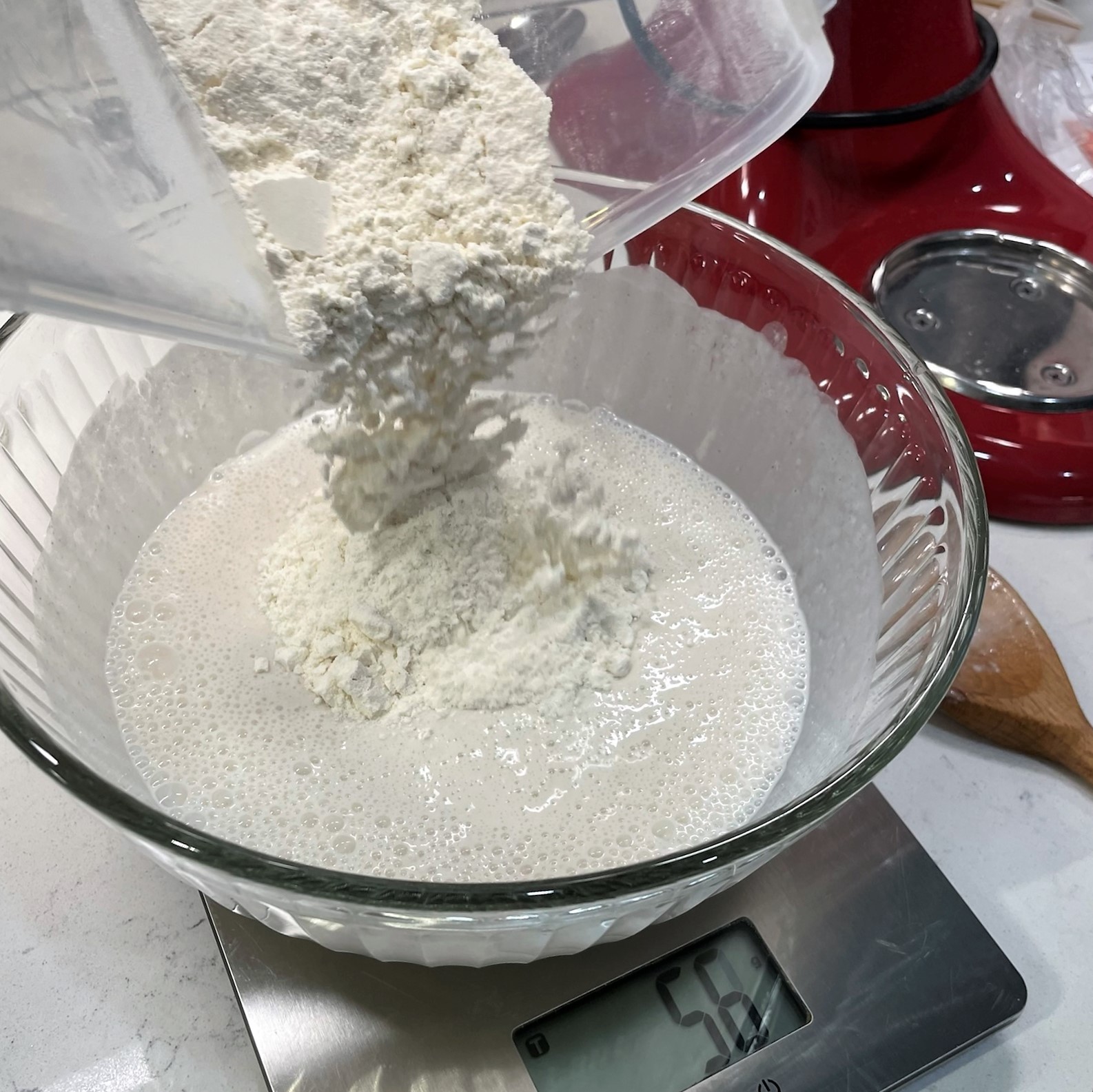
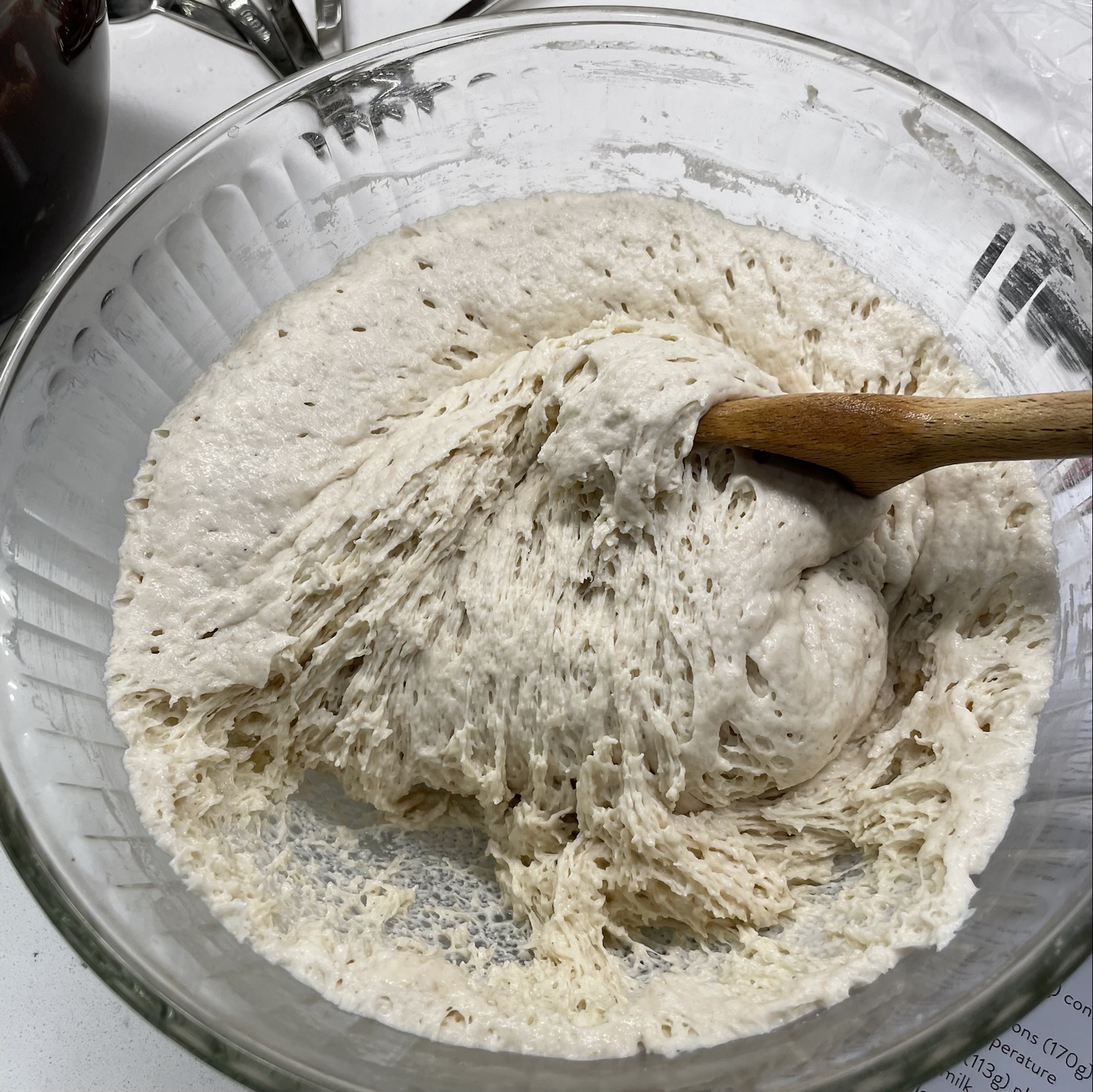
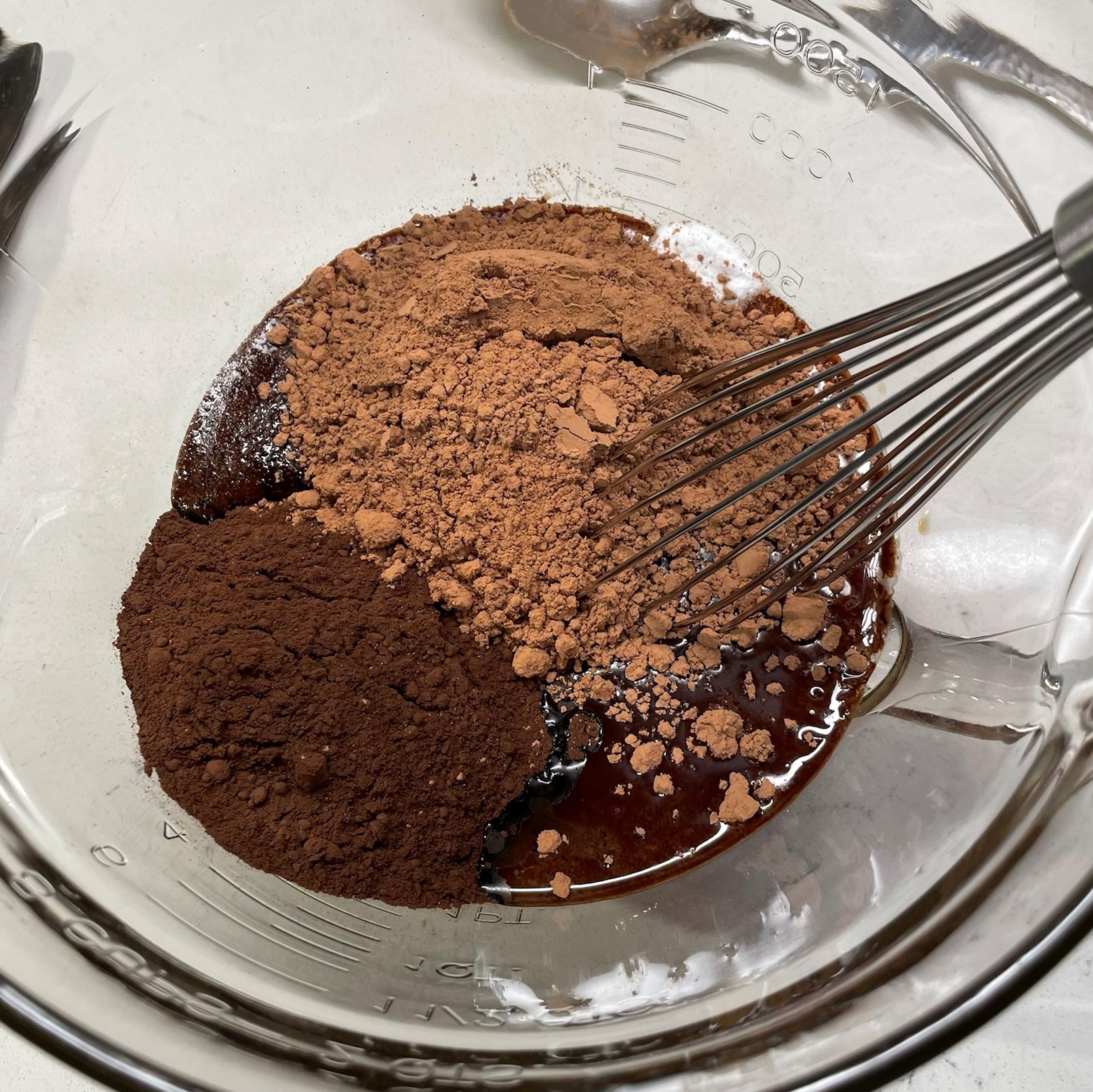
First, you build an overnight starter.By morning, the starter is very spongy.I used half natural cocoa, and half Double Dutch Dark cocoa. Love that color!It seems impossible, but it works!My Gram taught me to dust the cake pans with cocoa when making a chocolate cake, so that’s what I do.I baked the cake in layers rather than in a 9 x 13, as suggested on the King Arthur site. The pick comes out clean after 30 minutes.
For the cherry syrup, mascarpone filling and shiny ganache topping, I’ll provide a visual walkthrough, and you can scroll to the bottom of the post for a printable recipe if you want to give it a go in your kitchen. Happy Chocolate Cake Day! 🙂
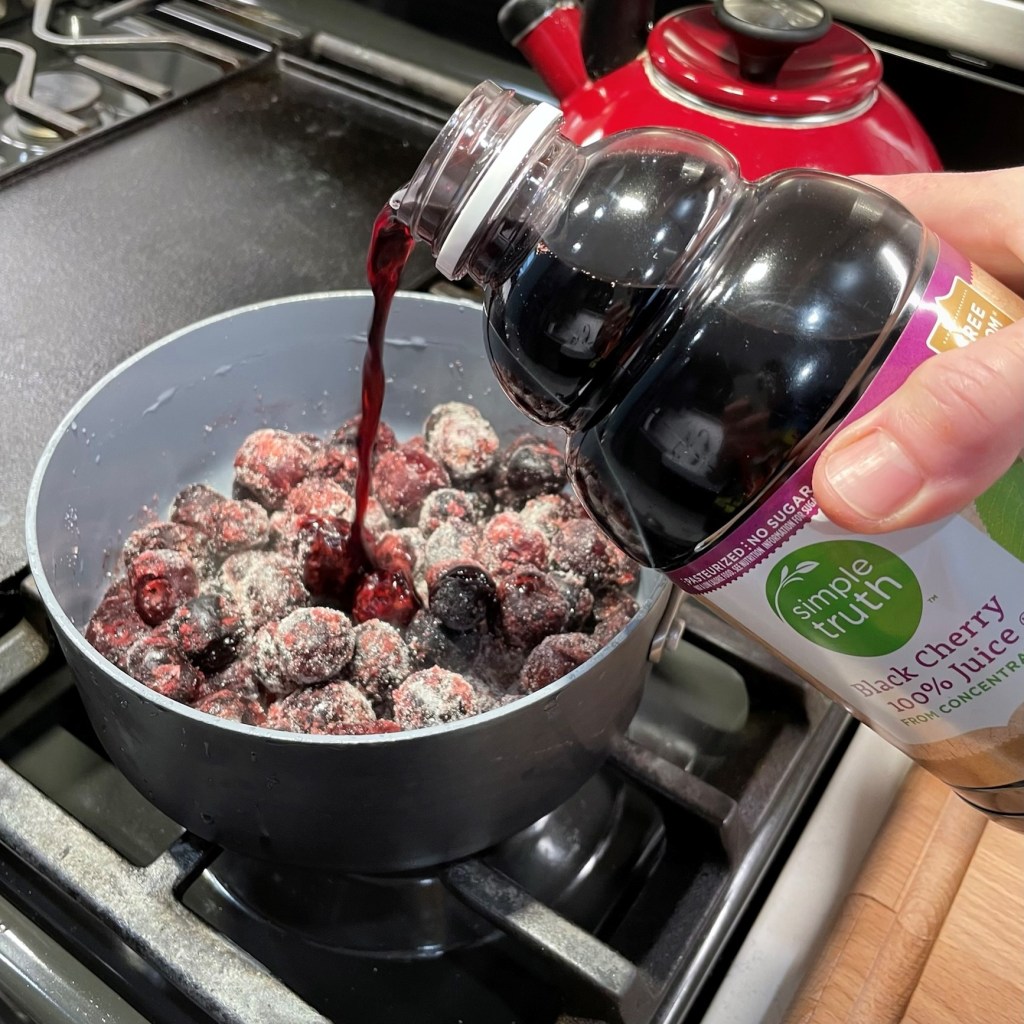
Combine the frozen cherries and sugar in a saucepan.
Add the unsweetened black cherry juice and bring to a slight boil.
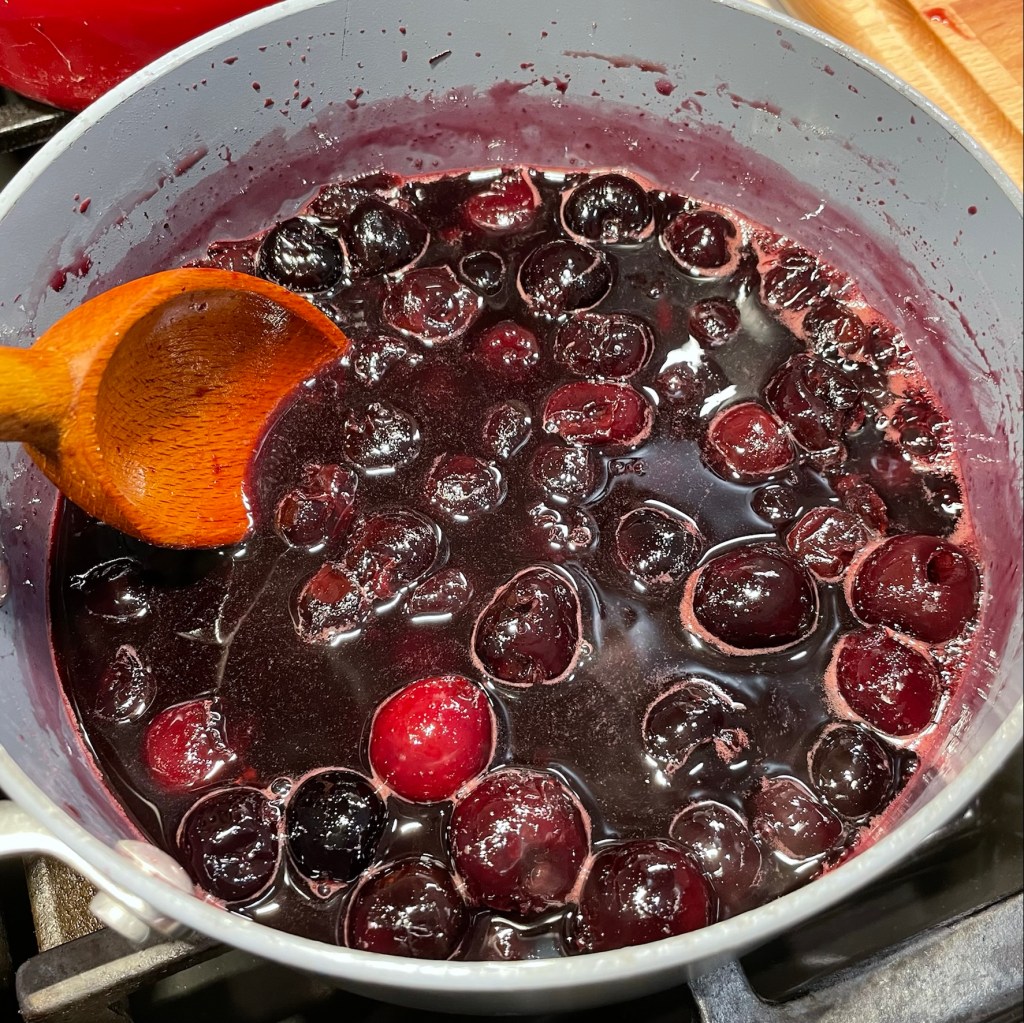
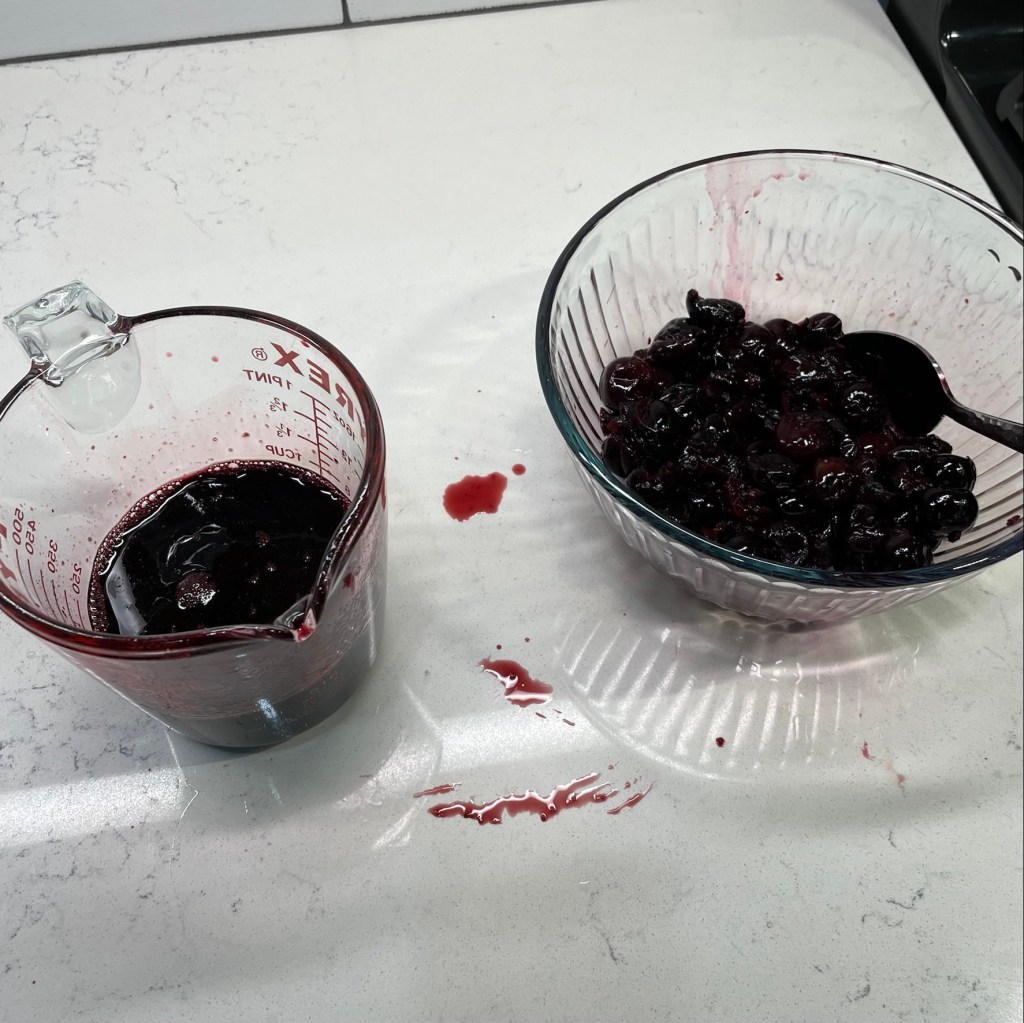
When the syrup has simmered a few minutes, drain the cherries into a bowl and return the syrup to the pan.
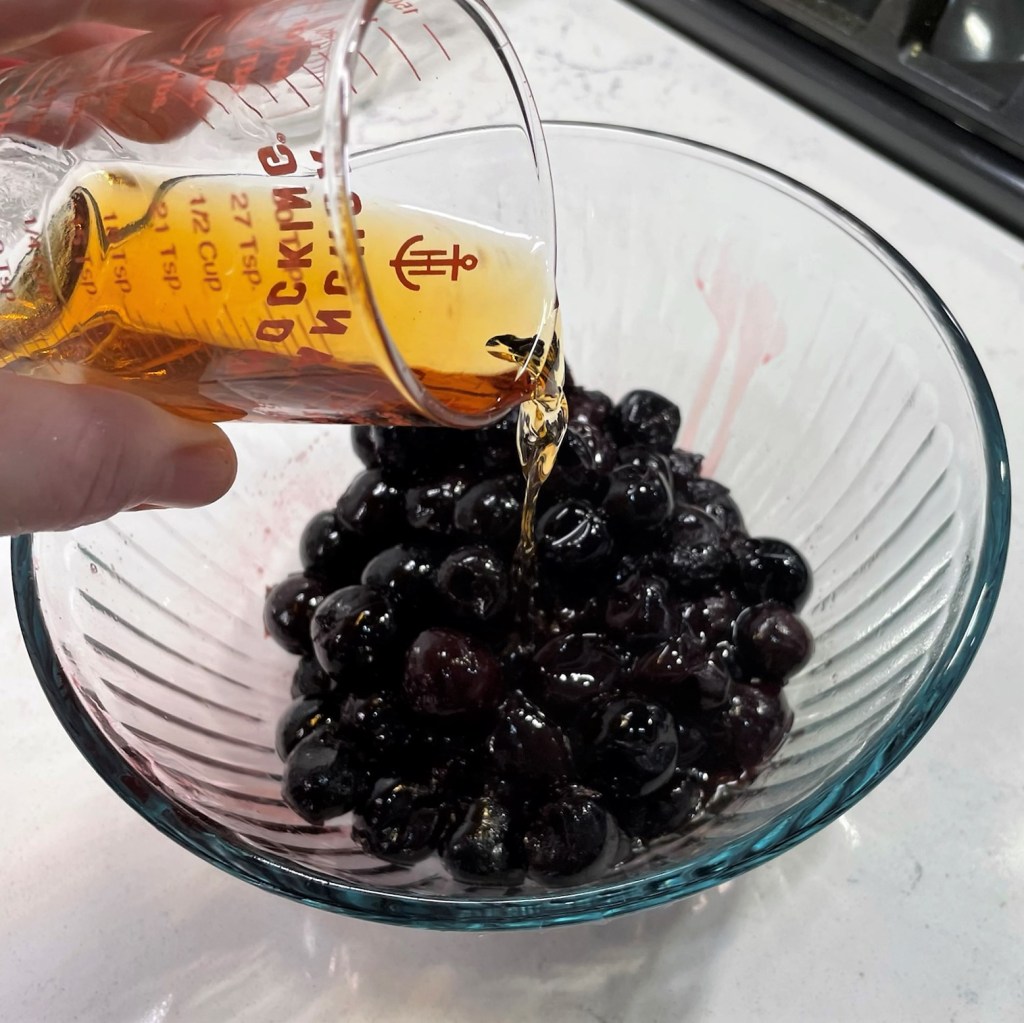
Pour bourbon over the strained cherries and steep until they are cooled.
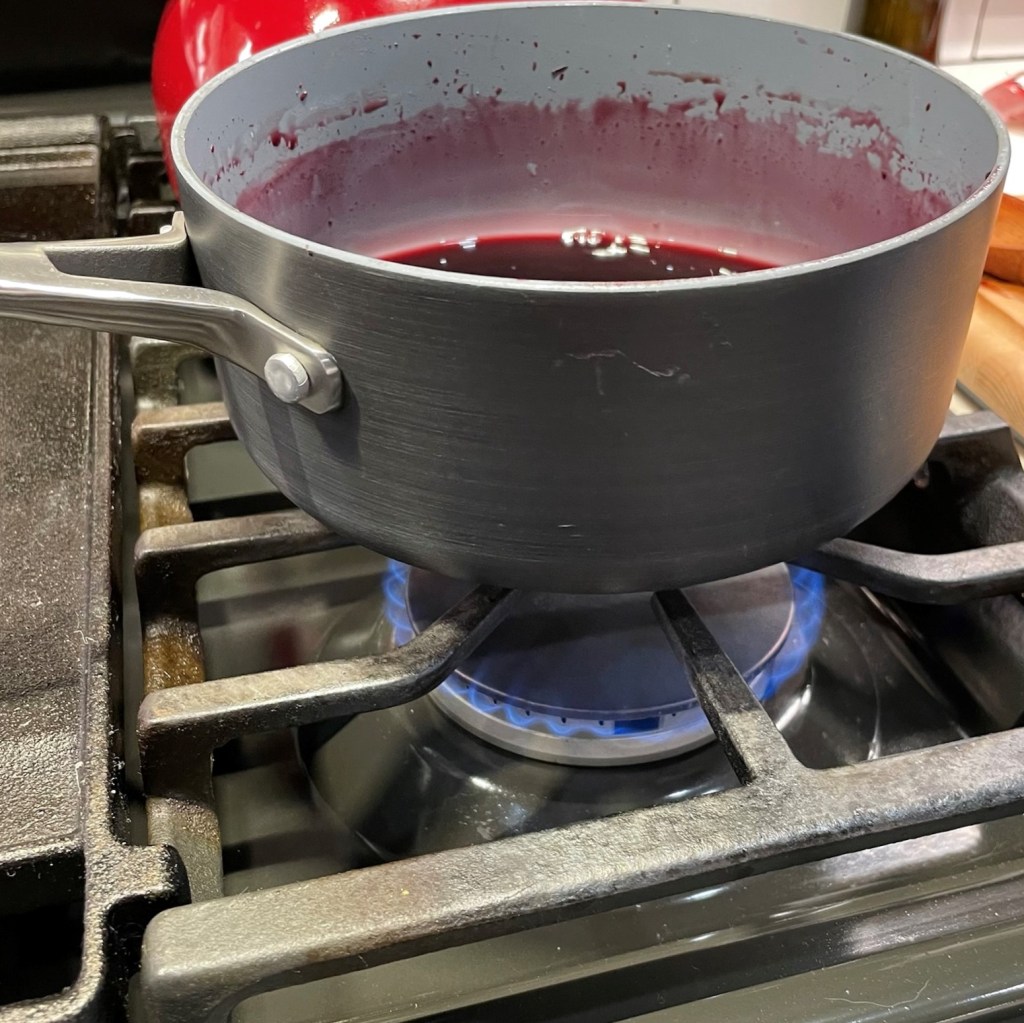
Simmer the syrup over medium heat until reduced to 2/3 cup.
Drain the cherries again and add the bourbon syrup to the other syrup.
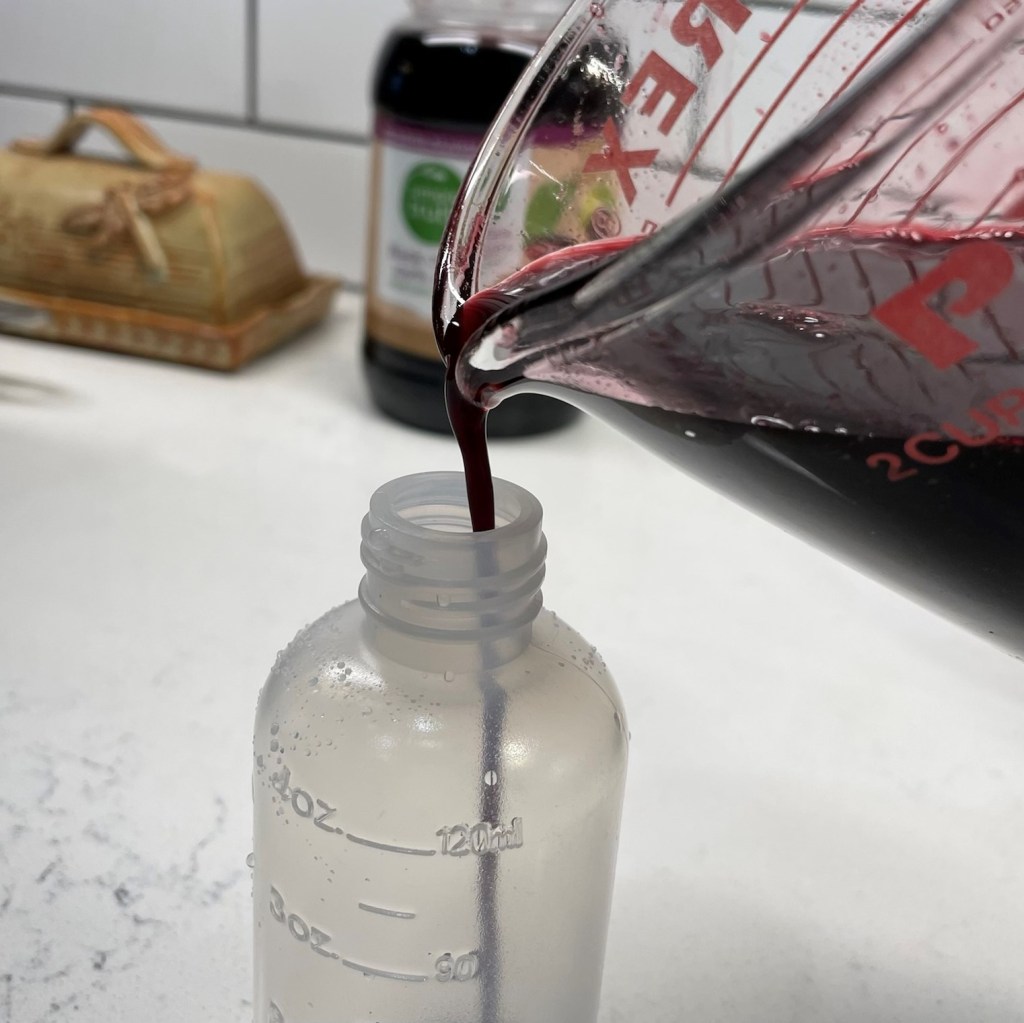
Transfer the syrup into a squeeze bottle if you have one; I found it an easy way to distribute the syrup over the cake layers.
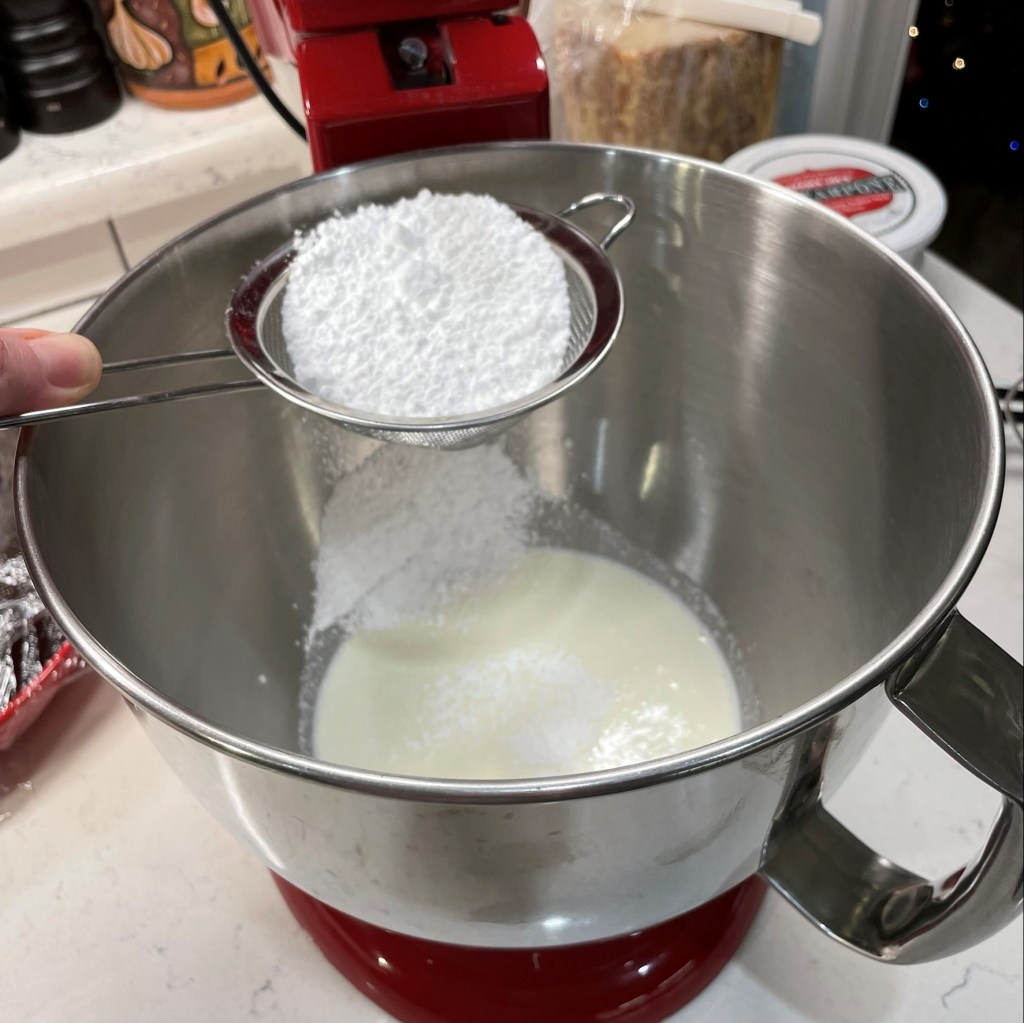
Sift powdered sugar into the heavy cream.
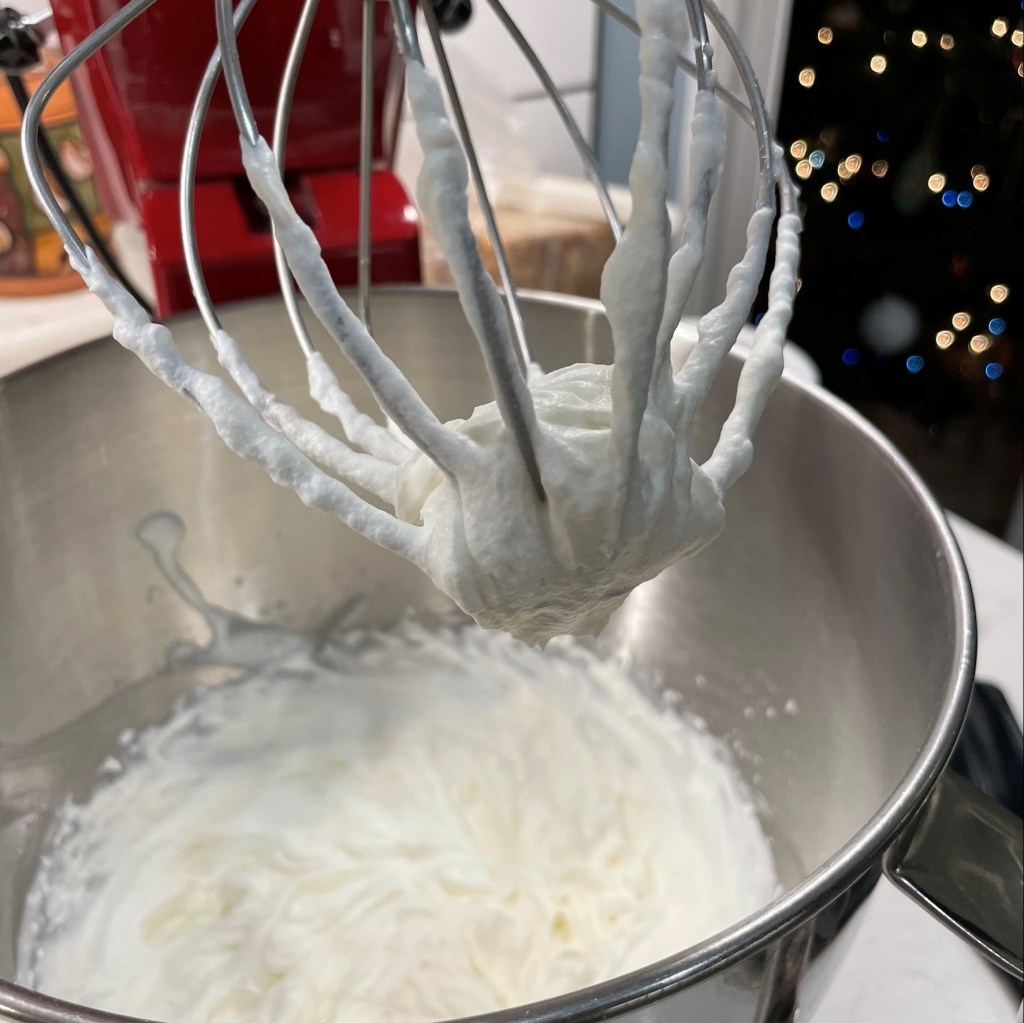
Whip the sweetened cream until soft and lightly fluffy.
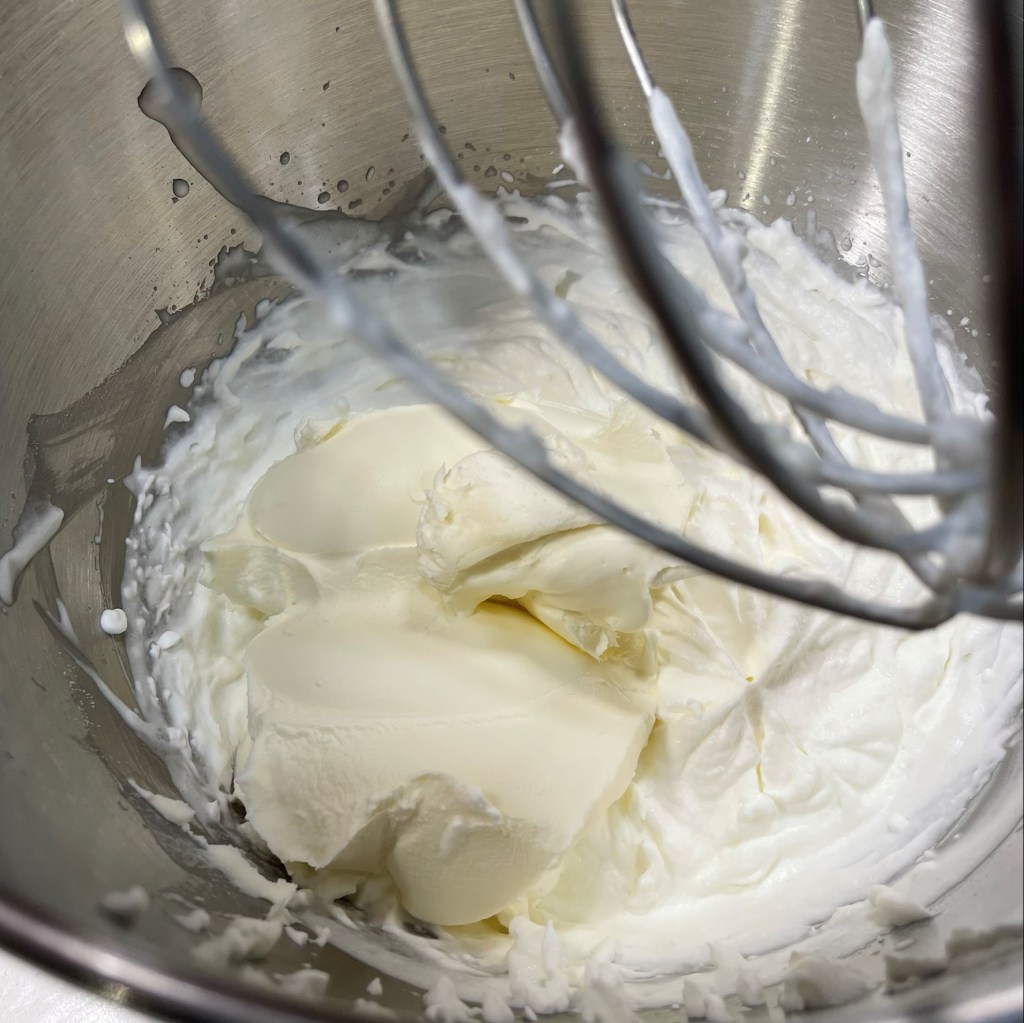
Add the mascarpone and whip on low speed until until combined.
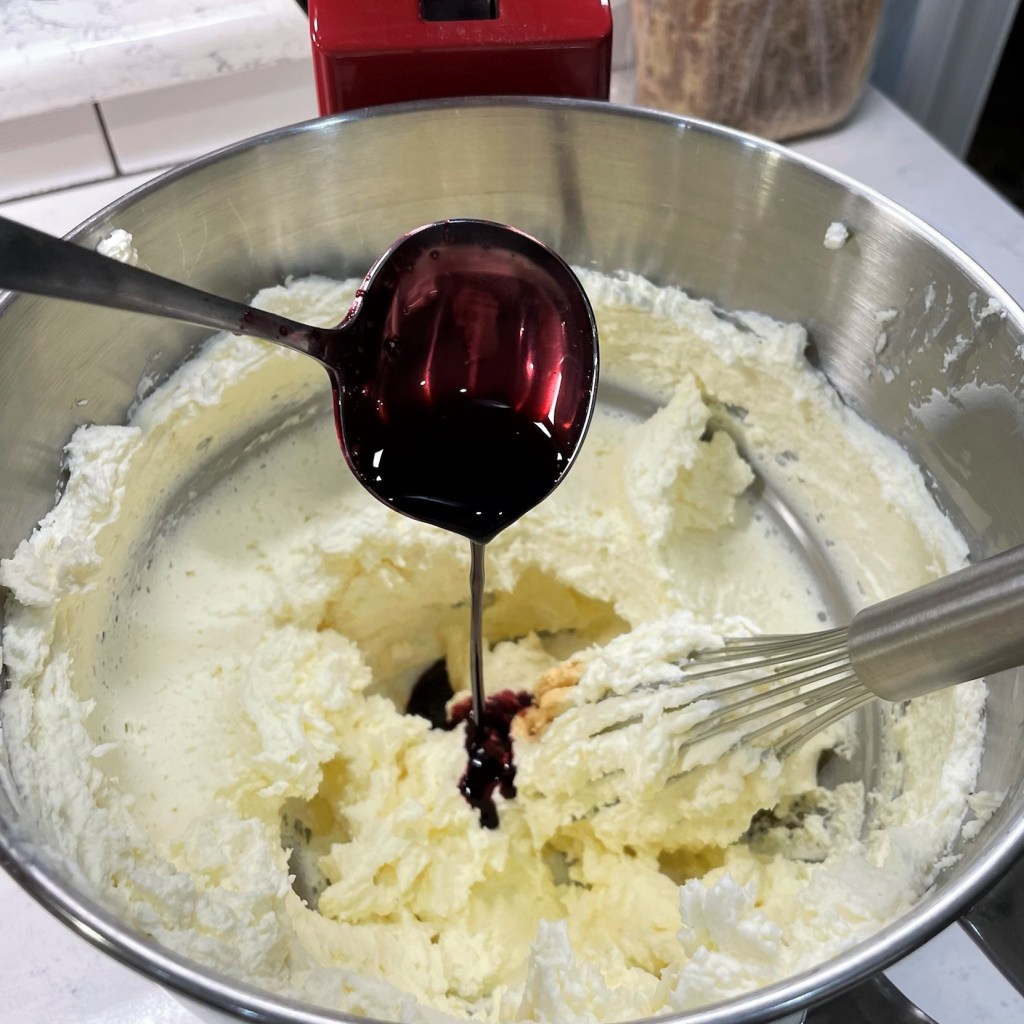
Drizzle 2 tablespoons of the syrup into the mascarpone and fold until blended.
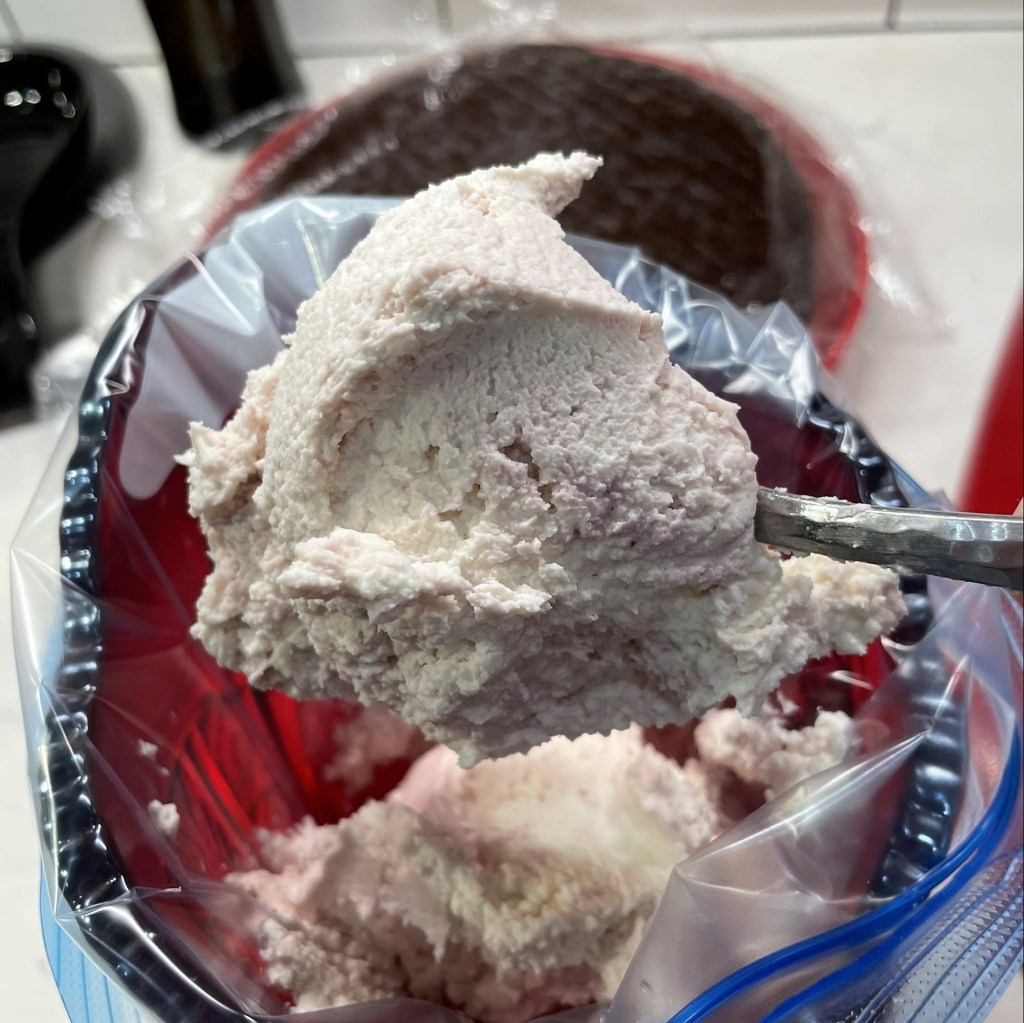
Transfer the mascarpone cream to a large zip-top bag and put it in the refrigerator.
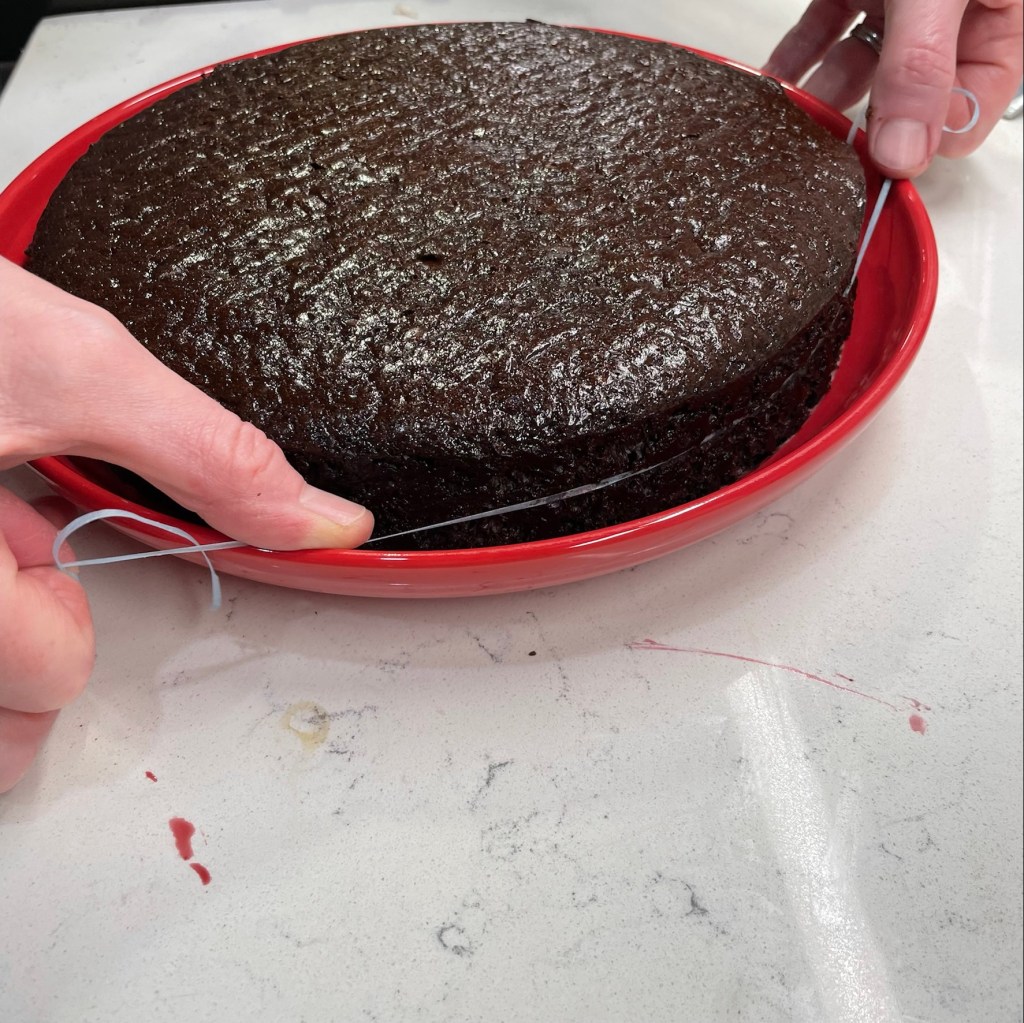
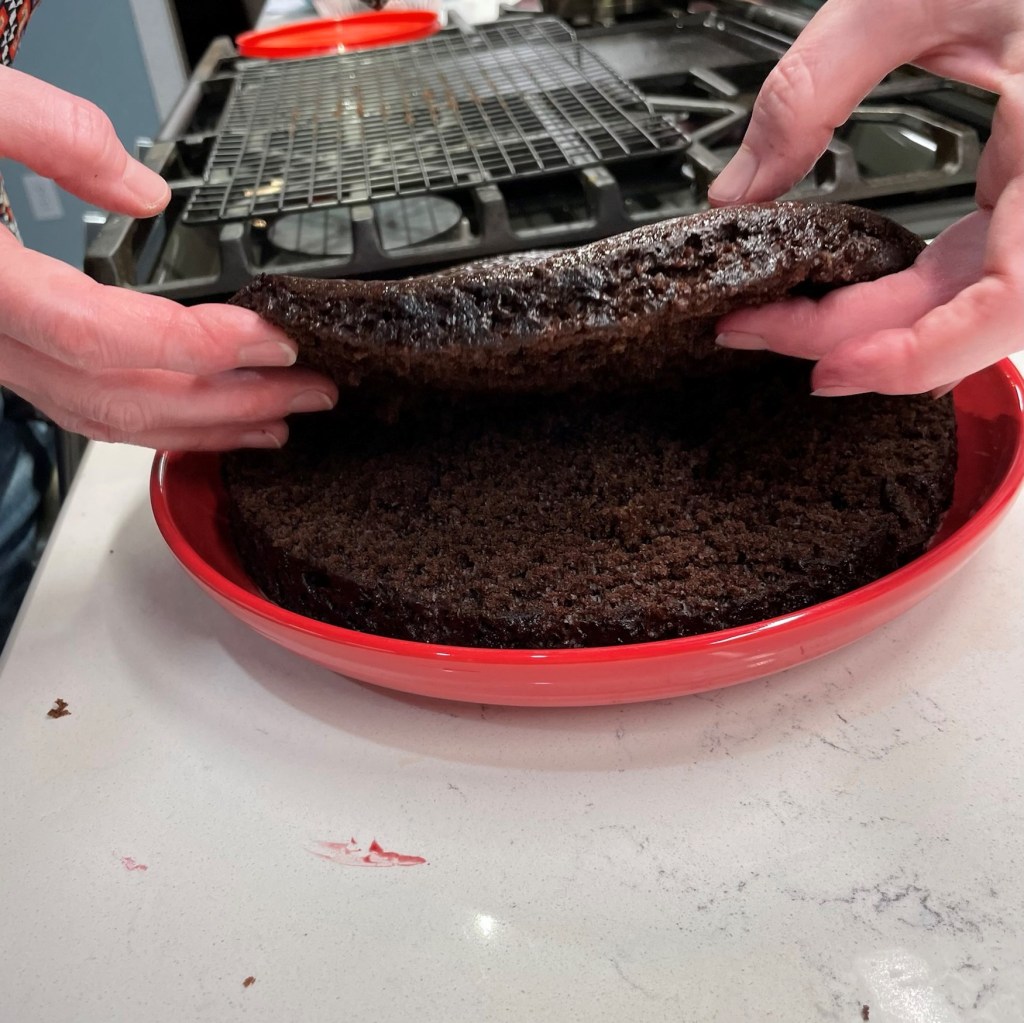
To slice the cake layers, I used a long piece of unflavored dental floss.
The layers may not be totally perfect, but that’s OK.
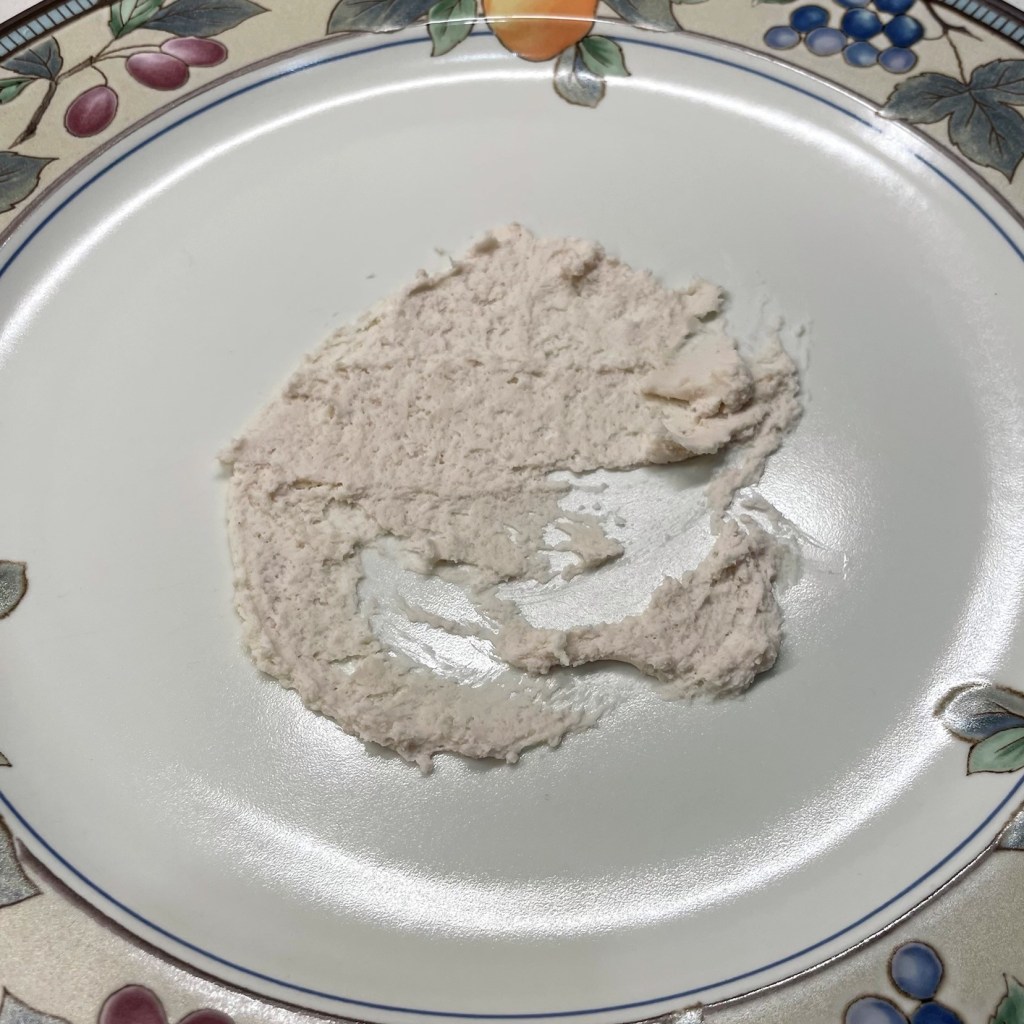
When you’re ready to assemble the cake, smear a small amount of mascarpone cream onto the cake platter to stabilize the first layer.
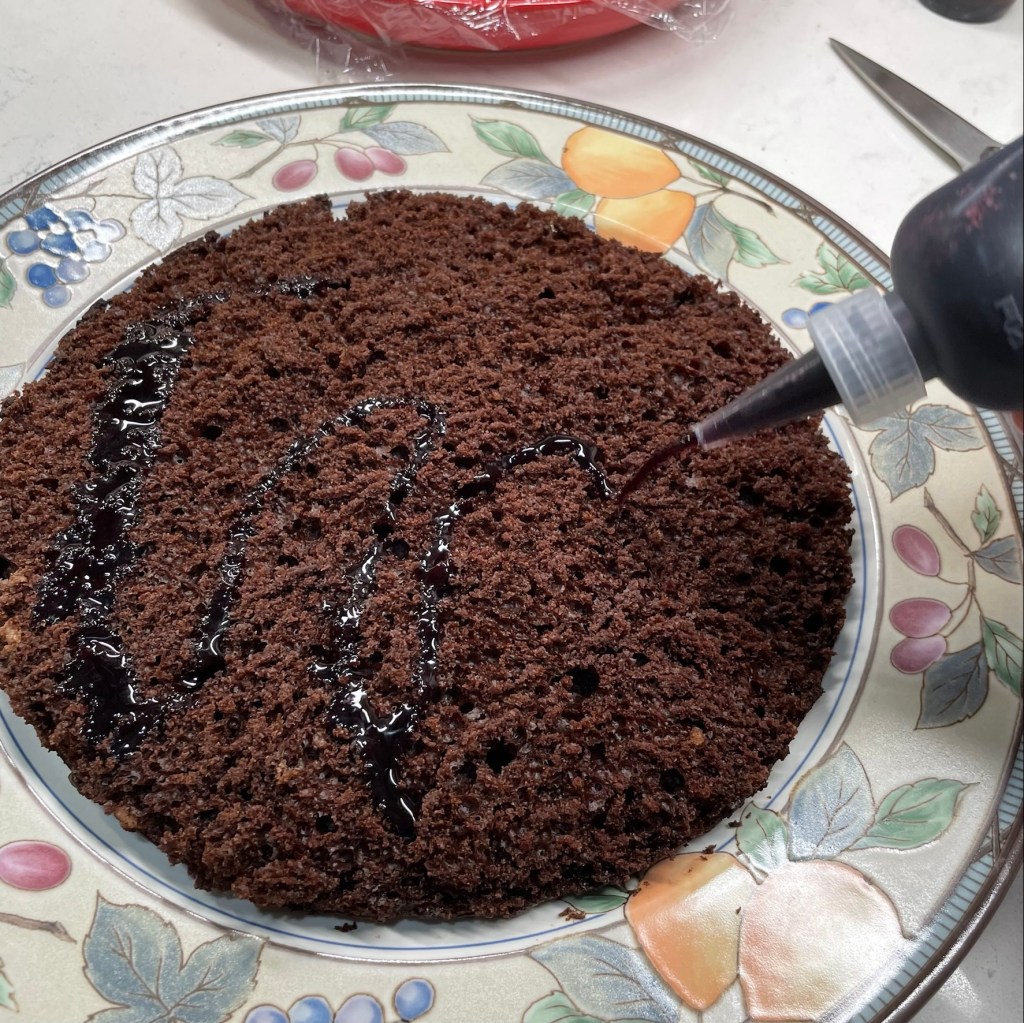
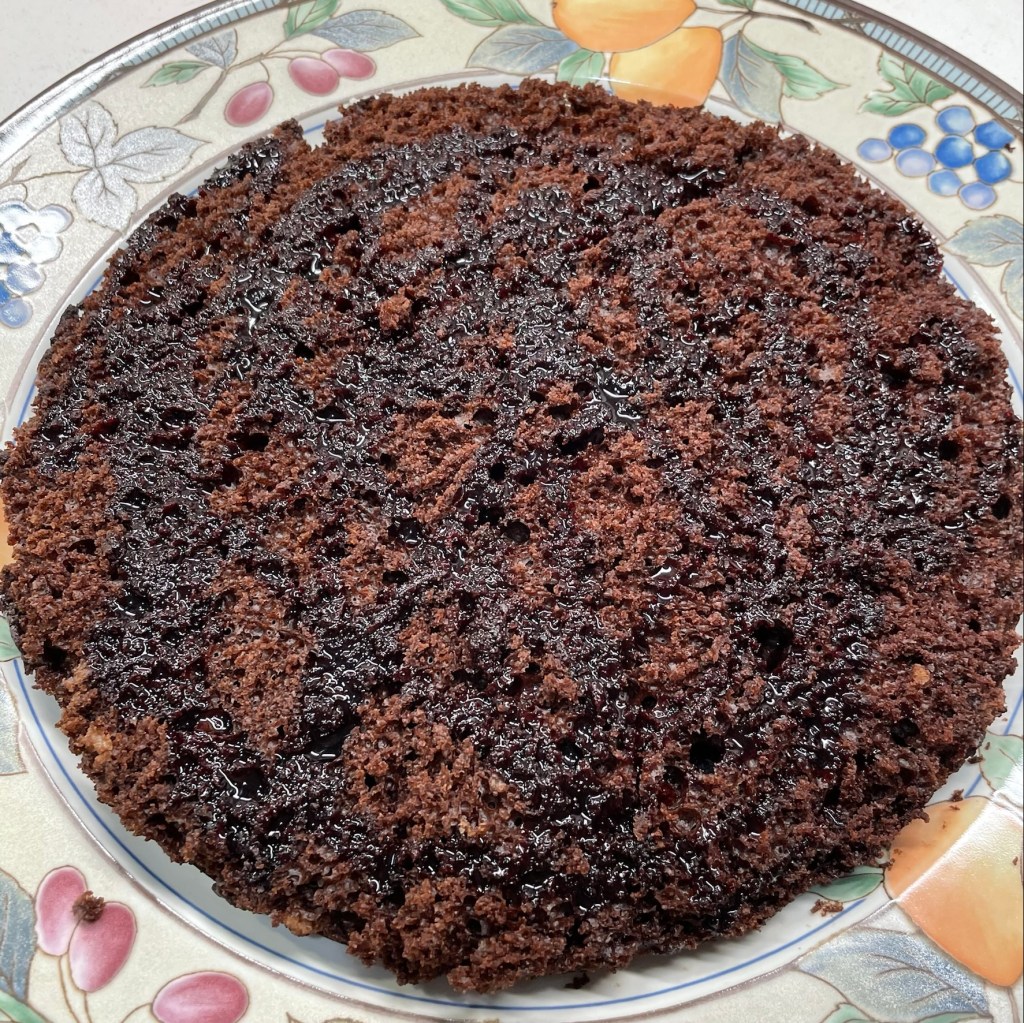
Drizzle about 1/3 of the cherry syrup over the cut side of the cake layer.
The syrup will soak into the cake, drenching every bite with the bourbon-cherry flavors.
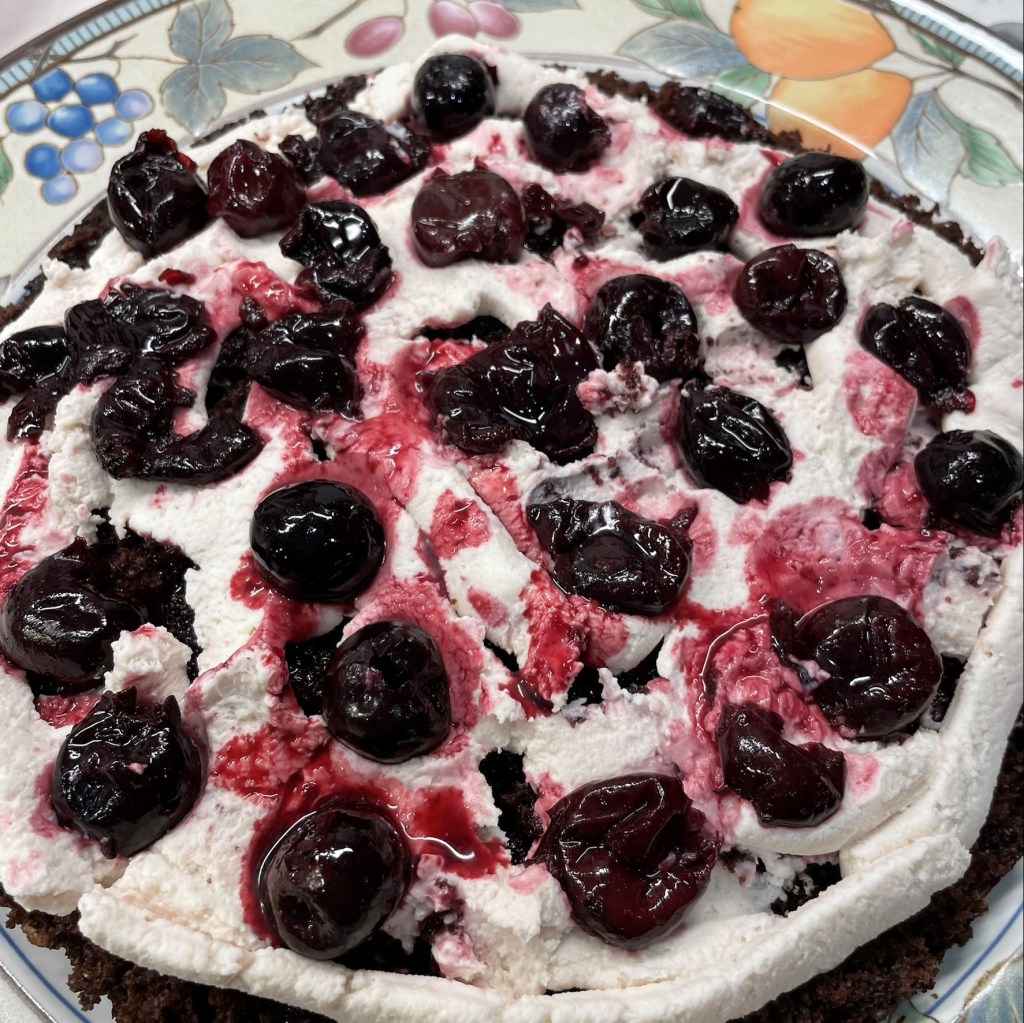
Snip the corner of the mascarpone cream bag and pipe about 1/4 of it onto the soaked cake layer. Spread gently to get more coverage, or just fill in with a few dots of additional cream.
Arrange 1/3 of the drunken cherries onto the mascarpone cream. Repeat with the next two layers, saving a rounded piece for the top.
Pipe some of the remaining mascarpone cream around the top edge of the final layer. Refrigerate the cake while you make the ganache.
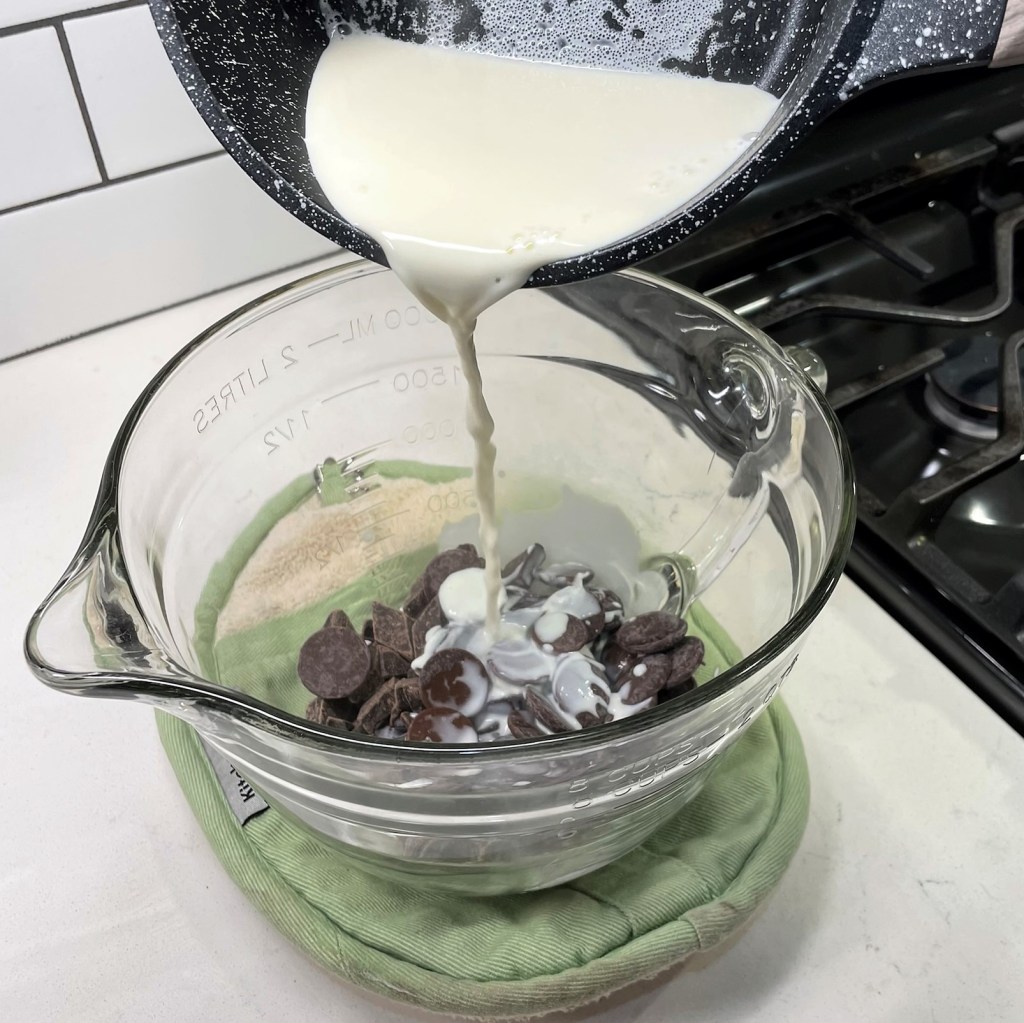
To make the ganache, heat heavy cream over medium-low heat until steaming. Pour over chocolate and leave it alone for 10 minutes.
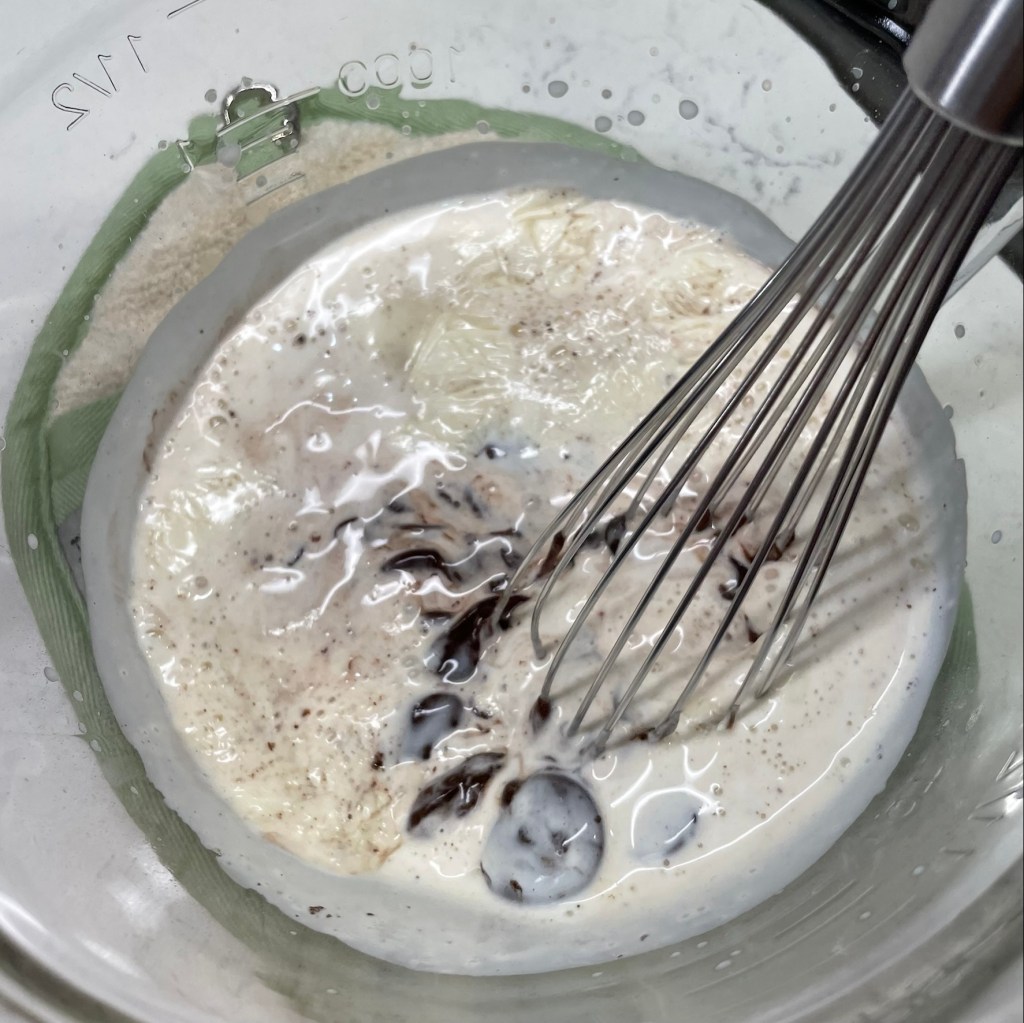
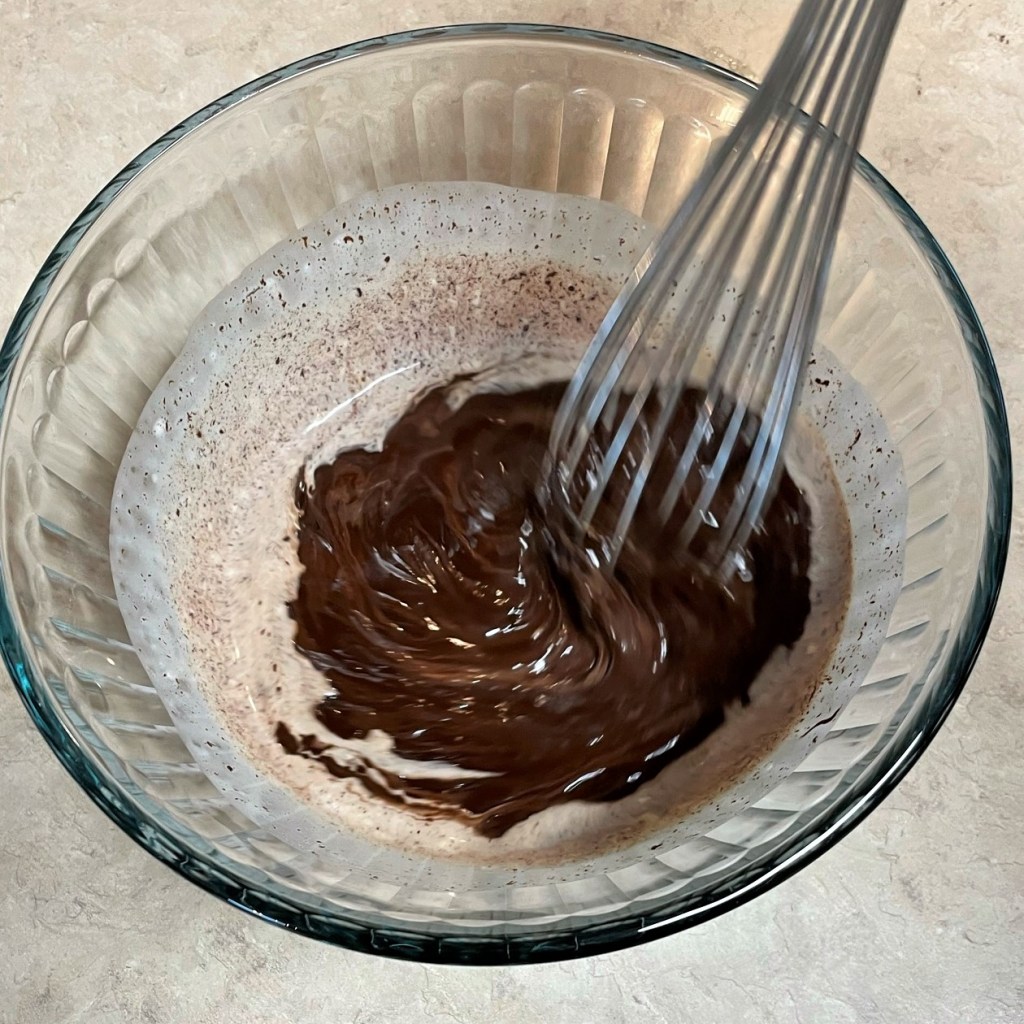
After 10 minutes, blend with a whisk, stirring mainly in the center of the bowl.
At first, it will seem like it isn’t working, but stay with it.
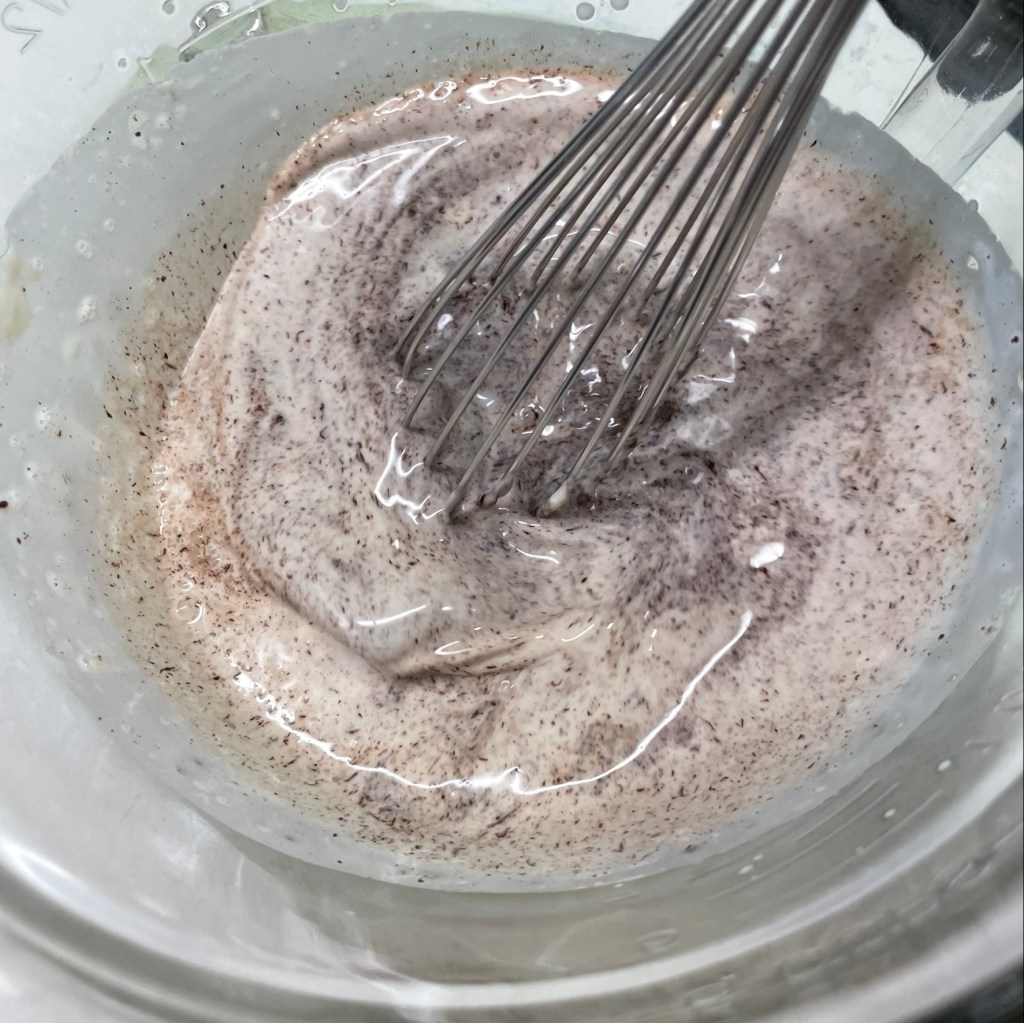
Aha! Continue to whisk until the entire mixture is smooth and chocolatey.
This is what my ganache looked like after only one minute of whisking.
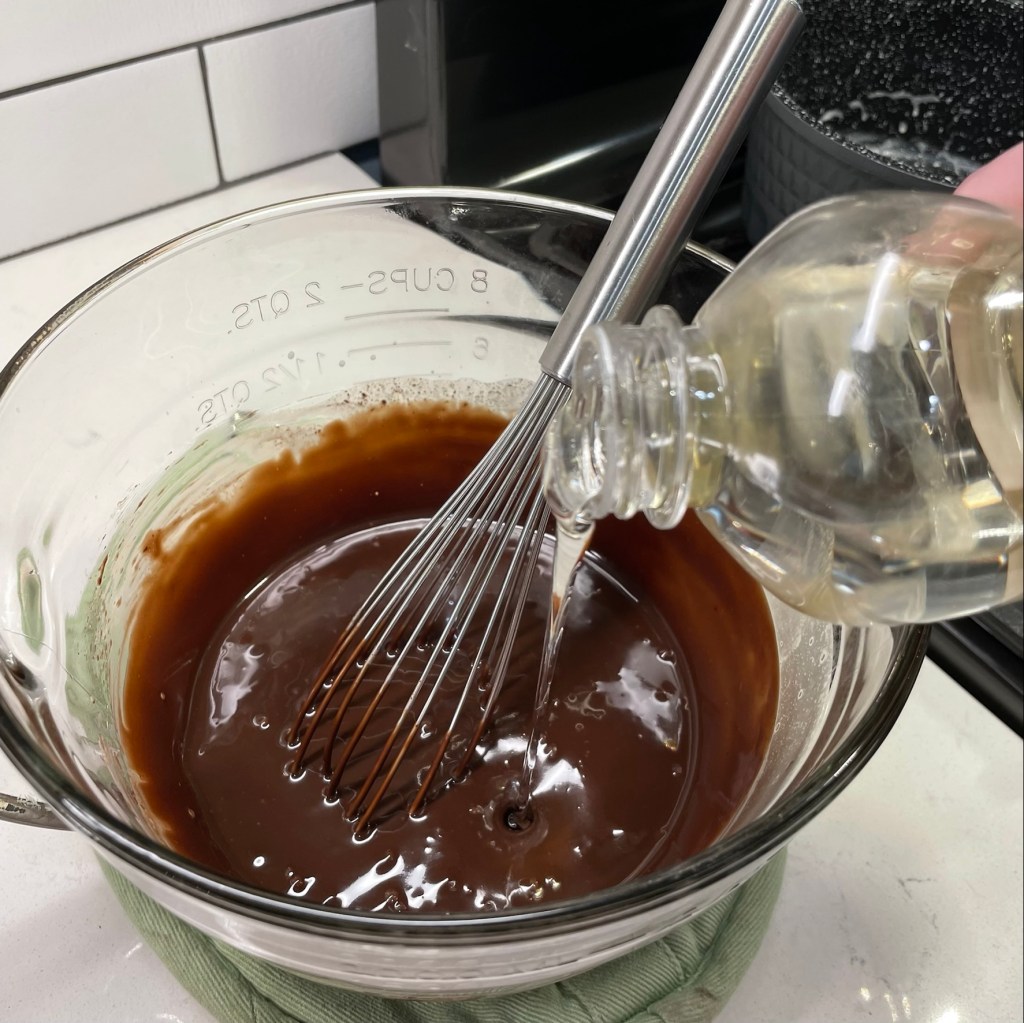
Stir in a small amount of corn syrup for a glossy shine and to keep the sugars from crystallizing.
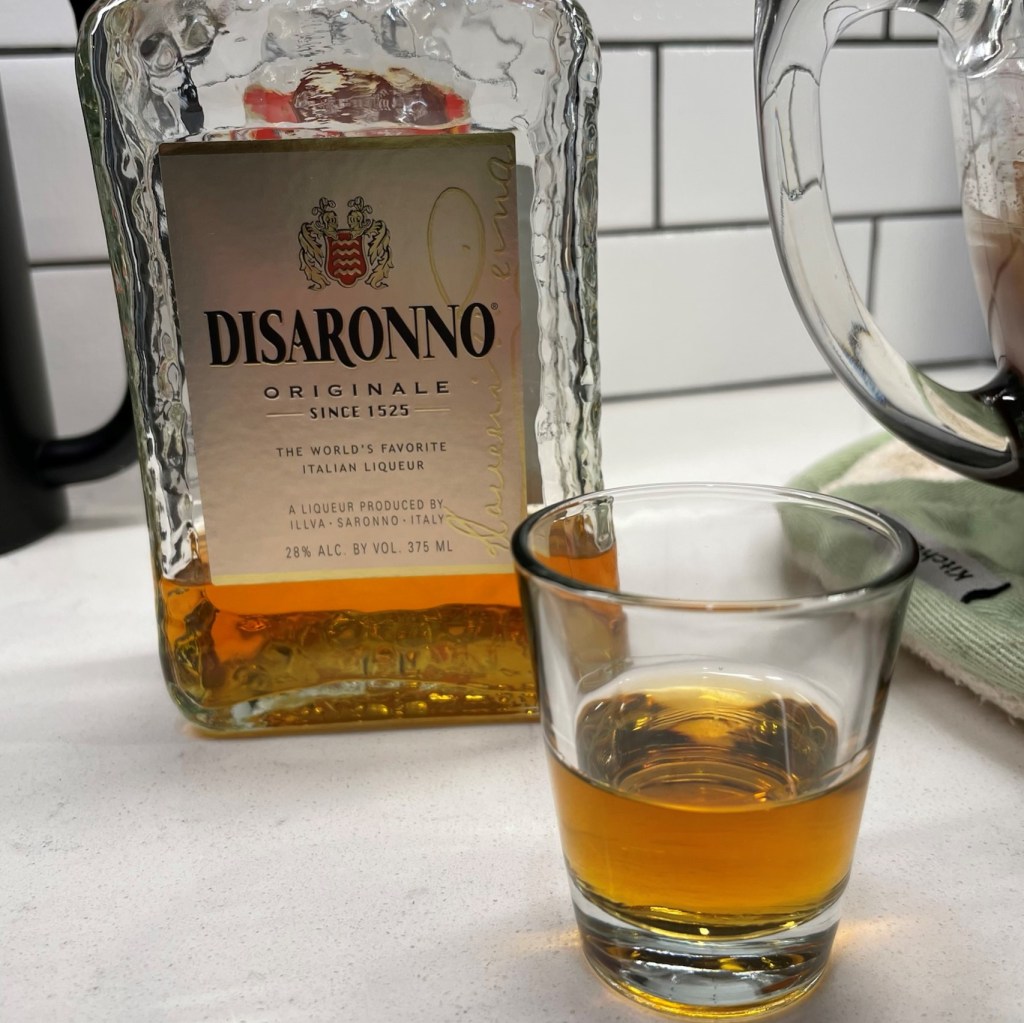
Just for fun, I whisked in a half shot of amaretto. We like it in bourbon-cherry cocktails, and it worked here as well.
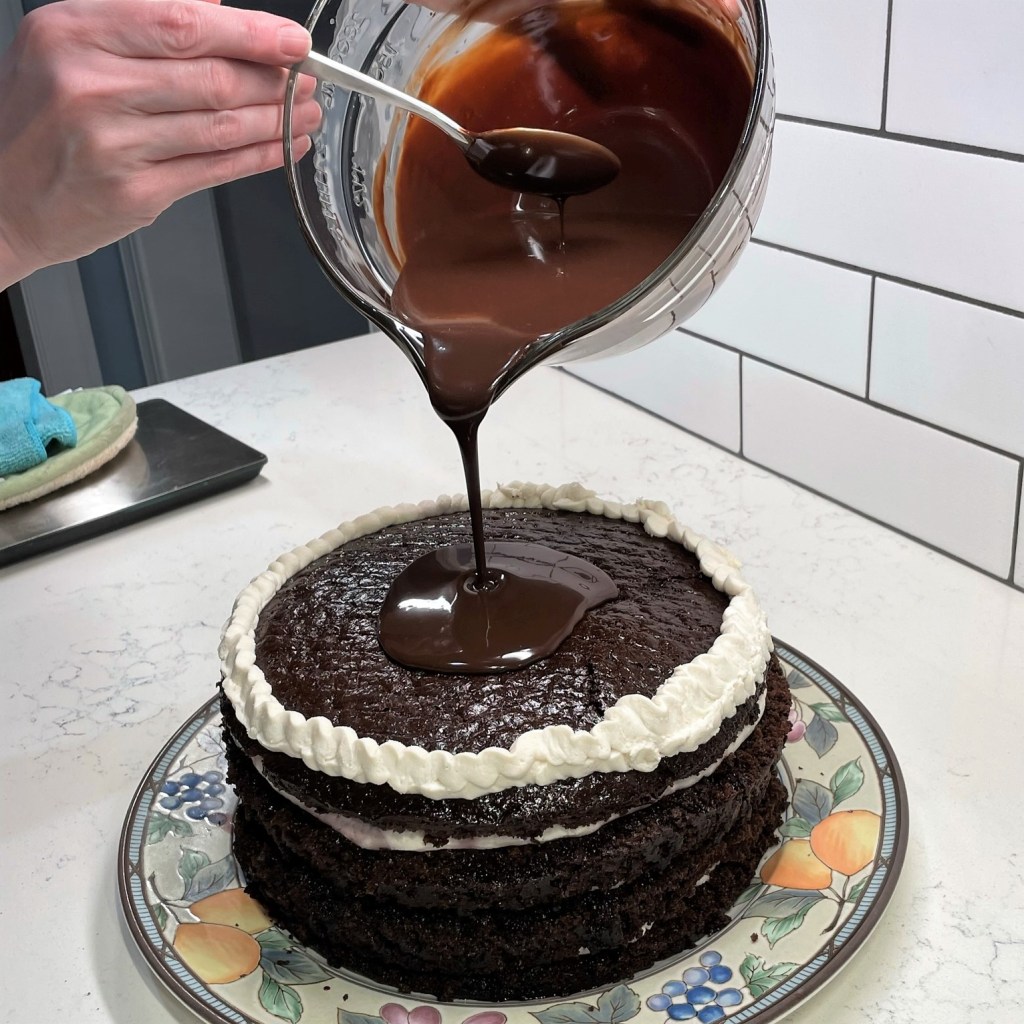
Slowly pour the cooled ganache onto the cake. The ganache will run off the center of the cake, but the mascarpone will keep it from running off. Keep pouring.
I poured the ganache right to the top of the edge. When the ganache has set, cover and refrigerate the cake until ready to serve.
Just before serving, pipe on the last bit of mascarpone cream, making little cushions for the bourbon cherries. Serve immediately.
The cake keeps very well in the fridge, and we decided the flavors were even better after a day or two!
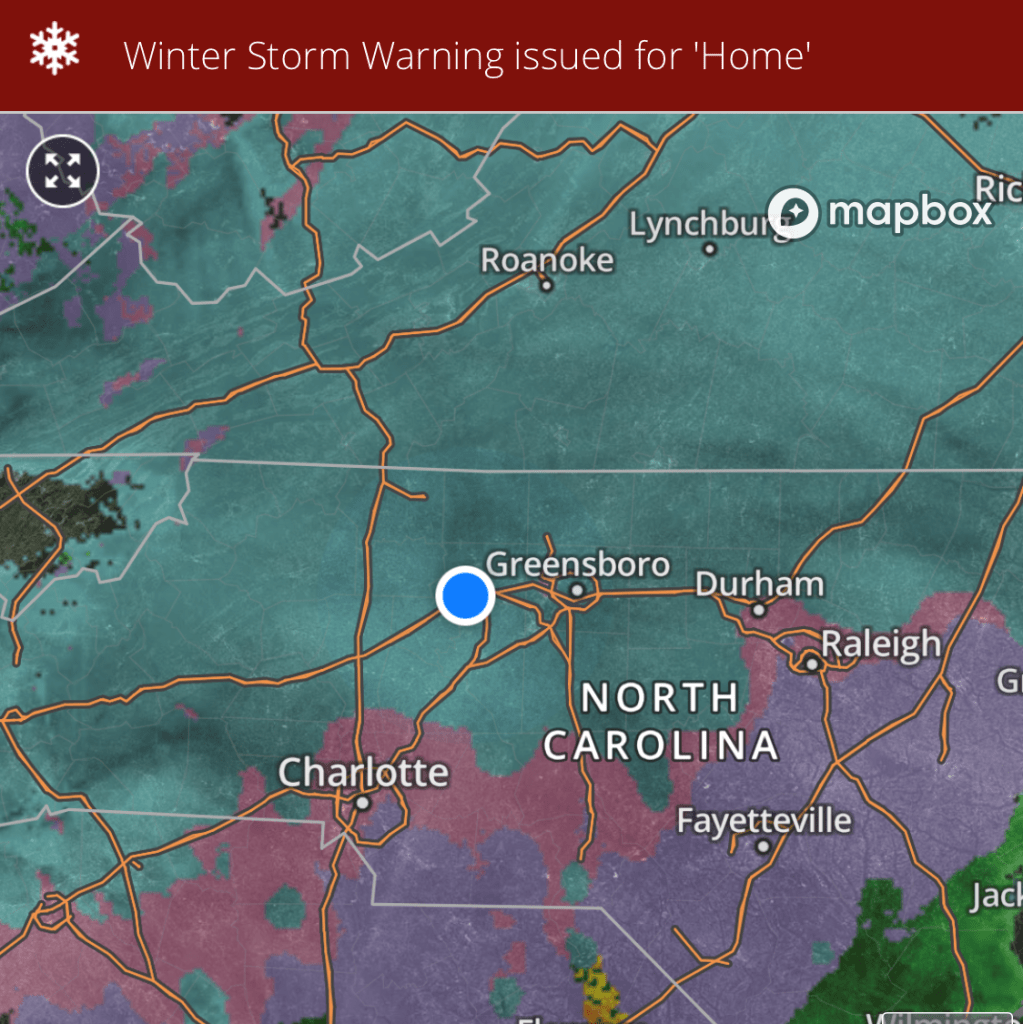
Much of the Southeast U.S. has been under a winter storm warning since we went to bed last night, and as I have watched tentatively out the window today, half expecting the power to go out from wind-toppled trees that have been coated with sleet and ice, I wrestled with my desire to be at the stove and the oven. There’s something very cozy about simmering a stew or pulling a loaf of bread from the oven on a blustery day, and this is definitely one.
It’s pretty on paper, I guess.
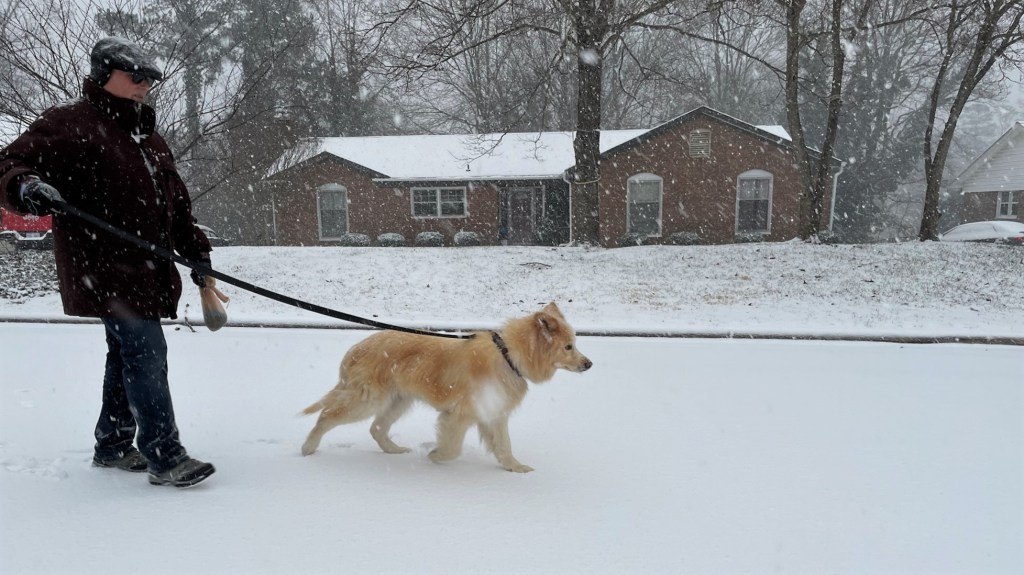
The day was beautiful at first, with mainly fluffy snow falling at a steady pace. We knew it would morph into a nasty mix, though, so we bundled up and headed out early for a walk around the neighborhood with our dog, Nilla, who absolutely loves cold and snow. It was beginning to sleet when we got back to the house.
This is Nilla’s favorite kind of day!
After much consideration, I finally gave in to the temptation to bake. It feels risky for many reasons. Our gas range is technically dual-fuel, with a natural gas cooktop but an electric-powered oven, so I had to choose something that could be done quickly (or at least put aside to bake later, should the power go out). Also, I come from a long line of highly accomplished cookie bakers, and that’s a lot to live up to, given that I hardly ever venture into treat baking. On top of that, my dear husband has made a reputation for himself with his own cookie baking, so I’m living on the edge in several ways today.
When Les makes cookies, they are almost always a version of chocolate chip; sometimes they have chips and chunks, with big, chewy bits of dried cherries or cranberries. Sometimes he adds cocoa powder to the dough itself, making them chocolate on chocolate with more chocolate. No wonder he is so popular, right? But he seldom strays from the chocolate chip category, and I wanted something different today.
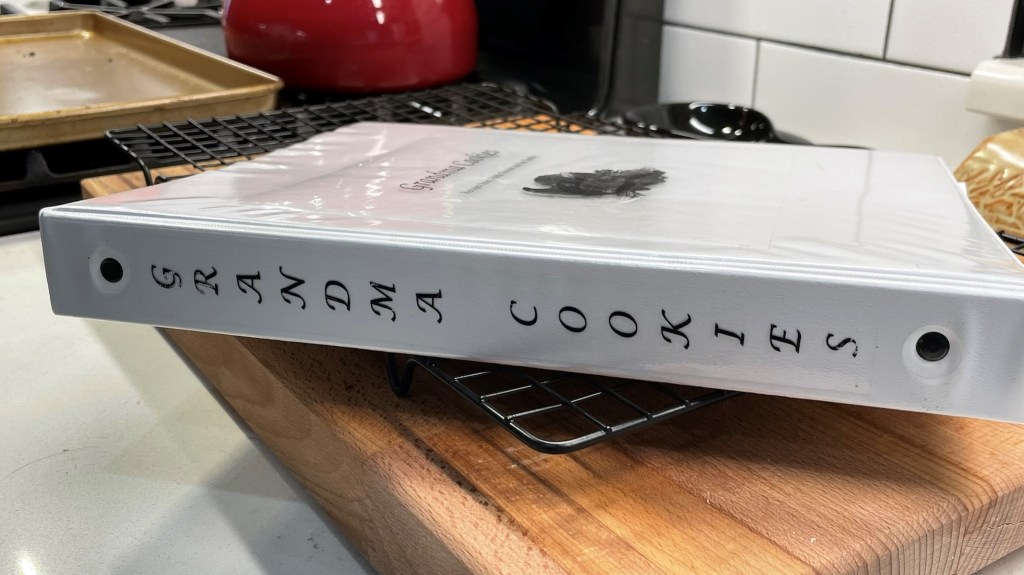
Several members of my mother’s side of the family have contributed to this collection, but it is mostly sweet treat recipes of my great aunt.
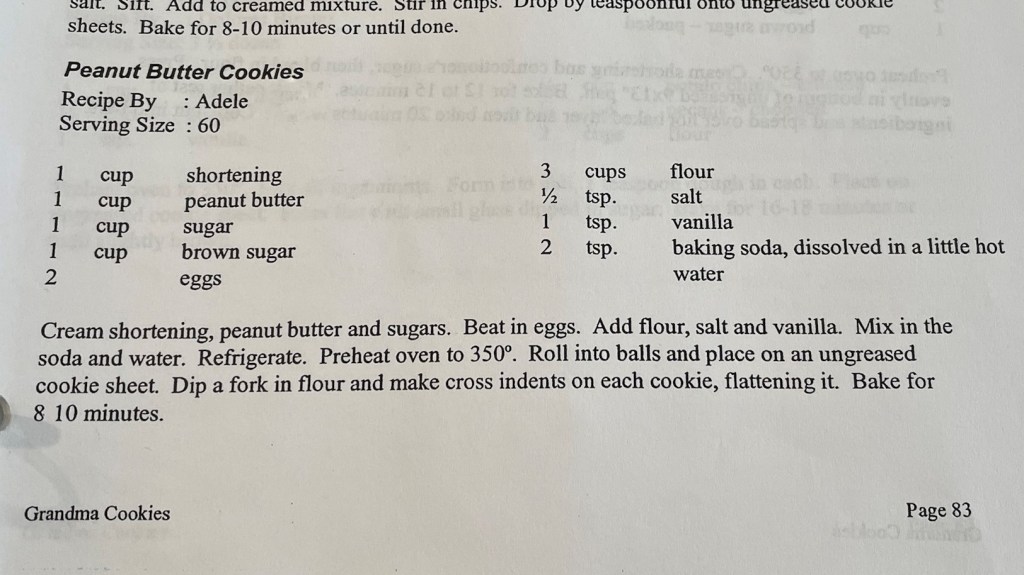
Without my own arsenal of go-to cookie recipes, I reached for a family cookbook—this homemade, 3-ring binder notebook, chock-full of recipes submitted by various members of my maternal family, and especially my great-aunt Adele. She was my Gram’s sister, and she was a master cookie baker if there ever was one. She was so known for her baked goods that her grandchildren called her “Grandma Cookies,” and I have my own memories of the treats she joyfully baked and shared with everyone. At Christmastime, you could count on receiving a box of various homemade cookies—and it didn’t matter if you lived across the street or on the other side of the country. She saved up cracker boxes and tea bag boxes and coffee tins and filled them up with her goodies so you could always have a taste of home.
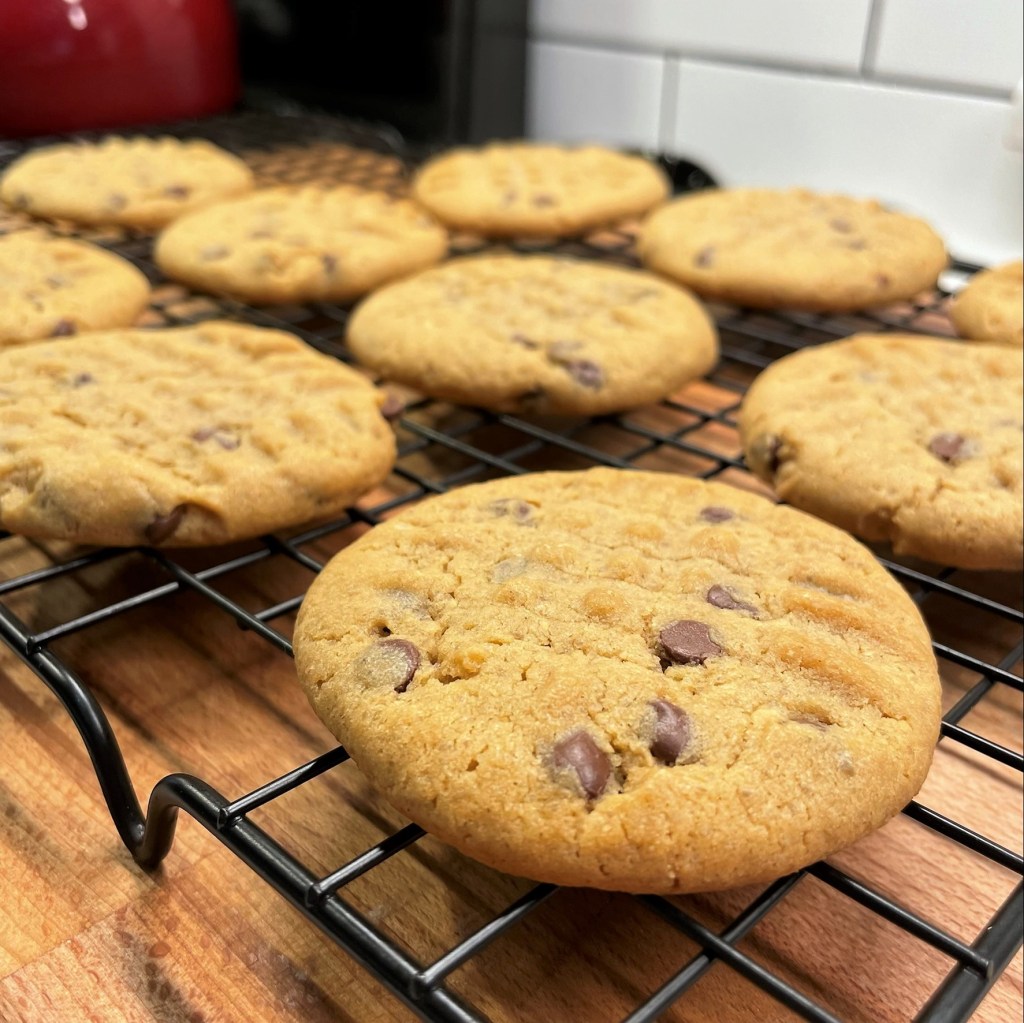
I’ll never live up to that standard, but I did a decent job with her peanut butter cookie recipe, with a few adjustments of course. First, I made a half batch, because we don’t need 60 cookies when we are stuck in the house. I never use only white flour in any recipe, so I subbed in an amount of whole wheat pastry flour which is nice and soft for tender baked goods. I don’t use shortening either, but real butter worked great. And, because my hubby is so fond of chocolate chips, I divided the dough in half and added mini chocolate chips to one portion of it for his taste, and the cookies turned out great both ways.
Some of the instructions in Aunt Adele’s recipe were a bit vague for this cookie novice but, thankfully, my Aunt Joy offered her experience to help me fill in the blanks.
My great aunt’s original recipe. I halved it and took a few liberties with the ingredients list.
Ingredients
1 stick salted butter, slightly softened* (see notes)
1/2 cup peanut butter
1 cup light brown sugar, packed*
1 large egg
1/2 tsp. real vanilla extract
1 tsp. baking soda, dissolved in a small amount of hot water*
1 cup all-purpose flour
1/2 cup whole wheat pastry flour
1/2 tsp. kosher salt (or 1/4 tsp. regular salt)*
1/4 to 1/2 cup mini chocolate chips (optional)*
*Notes
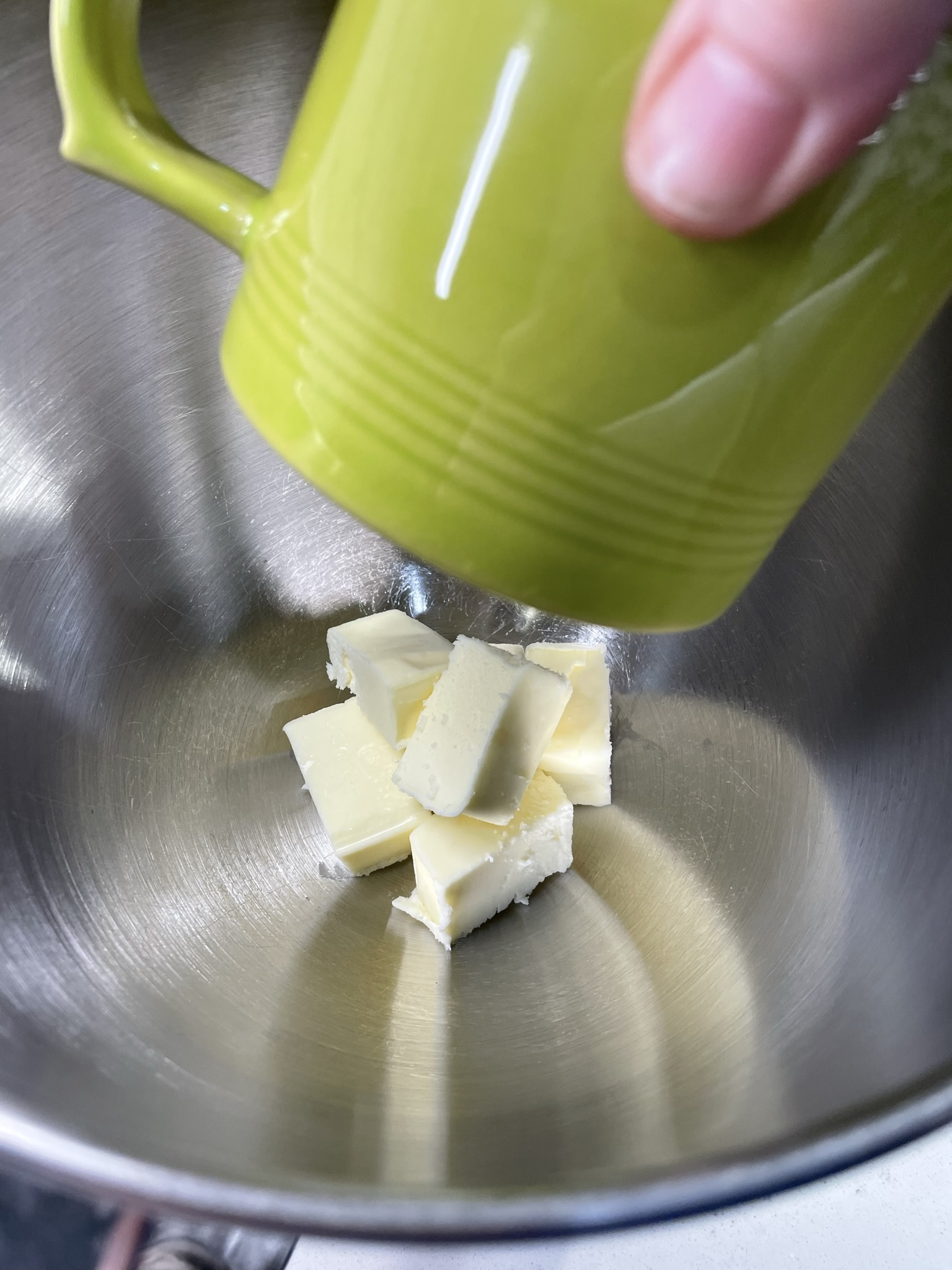
Butter should not be so cold that it’s hard, but not room temperature either. When you cream it with the sugar, you want it to be smooth and just slightly firm. I was impatient so I took a shortcut with my straight-from-the-fridge stick of butter.
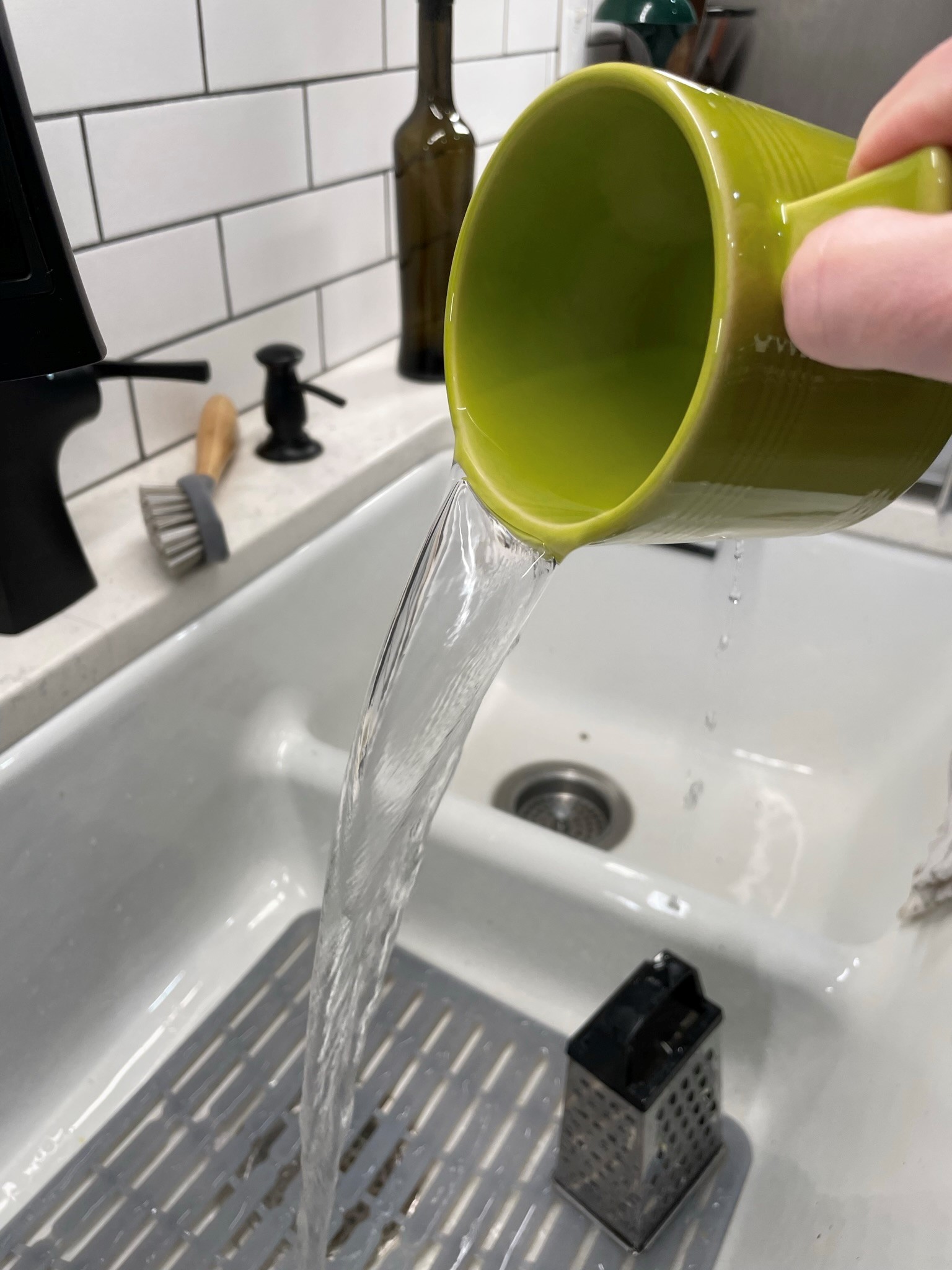
I filled a large mug with boiling water for a few minutes, then emptied it.The cold butter was cut into pieces, and I placed the hot mug over it for about ten minutes.Soft, but not melted. Easy and done!
My great-aunt’s original recipe suggested equal parts sugar and brown sugar, but I like a soft cookie, so I used all brown sugar. When you measure brown sugar, be sure to pack it snugly into the measuring cup. When you turn it over into your bowl, it should mostly hold its shape.
I have long wondered why some cookie recipes call for dissolving the baking soda in hot water. Given that it appears on many of the recipes my grandmother and her family have shared, I even considered that perhaps it was something they all learned from my great grandmother or something. But a quick bit of research (thank you, internet) turned up the real reason—dissolving the soda helps ensure that it can be evenly dispersed throughout the dough. If I were to mix it in with the dry ingredients, it would be prone to clumping. Now we know!
I cook and bake mostly with kosher salt, which has larger crystals than table salt. Those crystals take up more space in the measuring spoon, but some of that space is just air, so I use a little extra. My conversion is probably not exact, but I generally like to add a bit of extra salt to a baked good anyway to enhance the other flavors.
I used mini chocolate chips in half the cookie dough, and kept the rest as simple peanut butter dough. If you want chocolate chips in all the cookies, use 1/2 cup rather than 1/4 cup, as I did for my half-batch.
Instructions
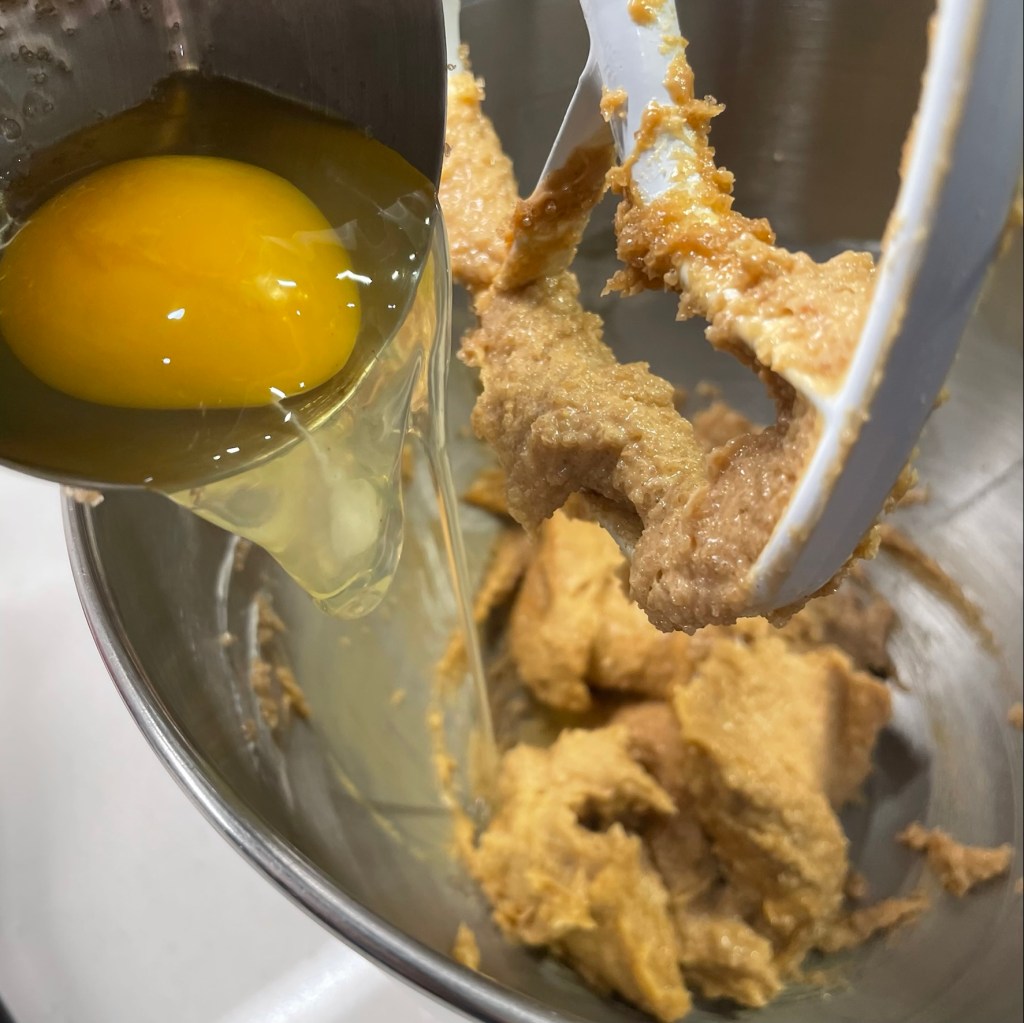
You know this goes; cream the butter and sugar together with the peanut butter, then beat in an egg and stir in the vanilla.
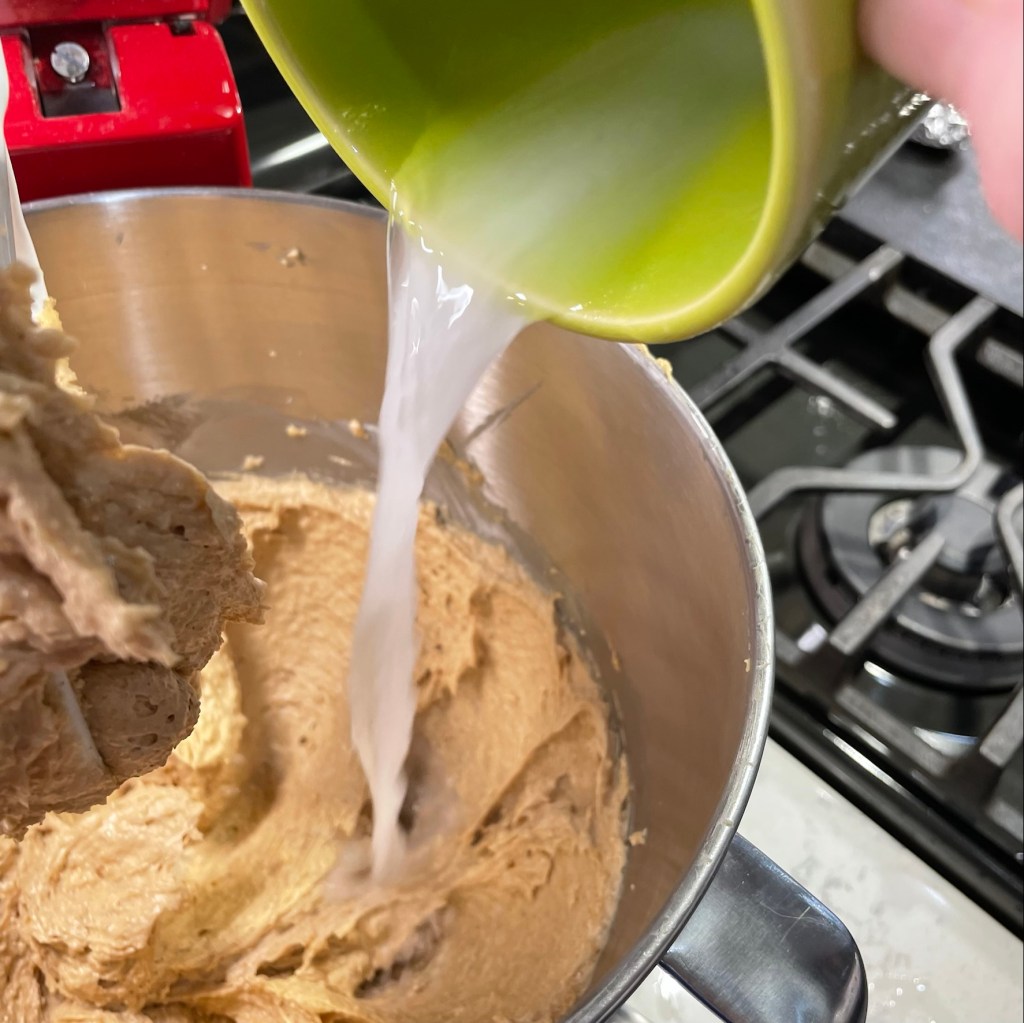
Here goes the dissolved soda, and I beat it long enough to mix it with the dough.
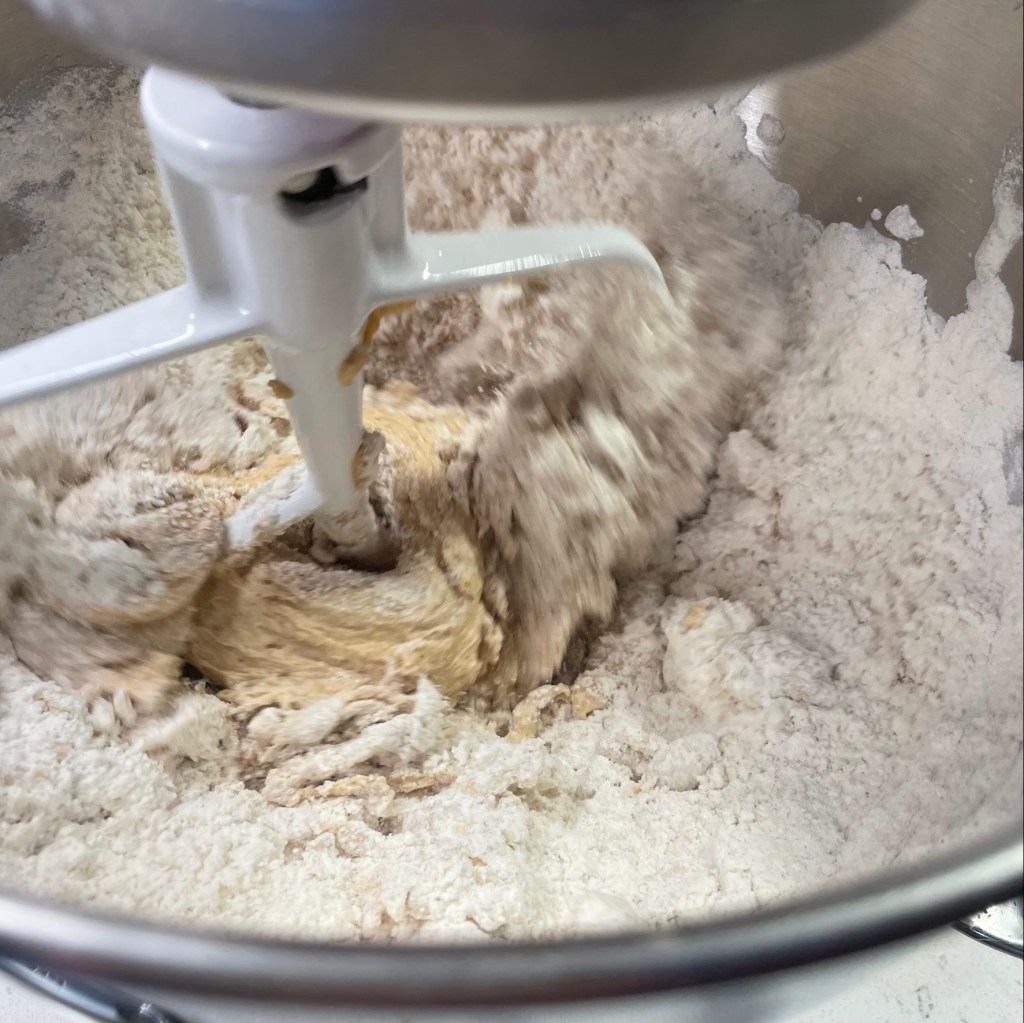
Beat in the flour and salt just until incorporated, and scrape down the sides to be sure all is mixed well.
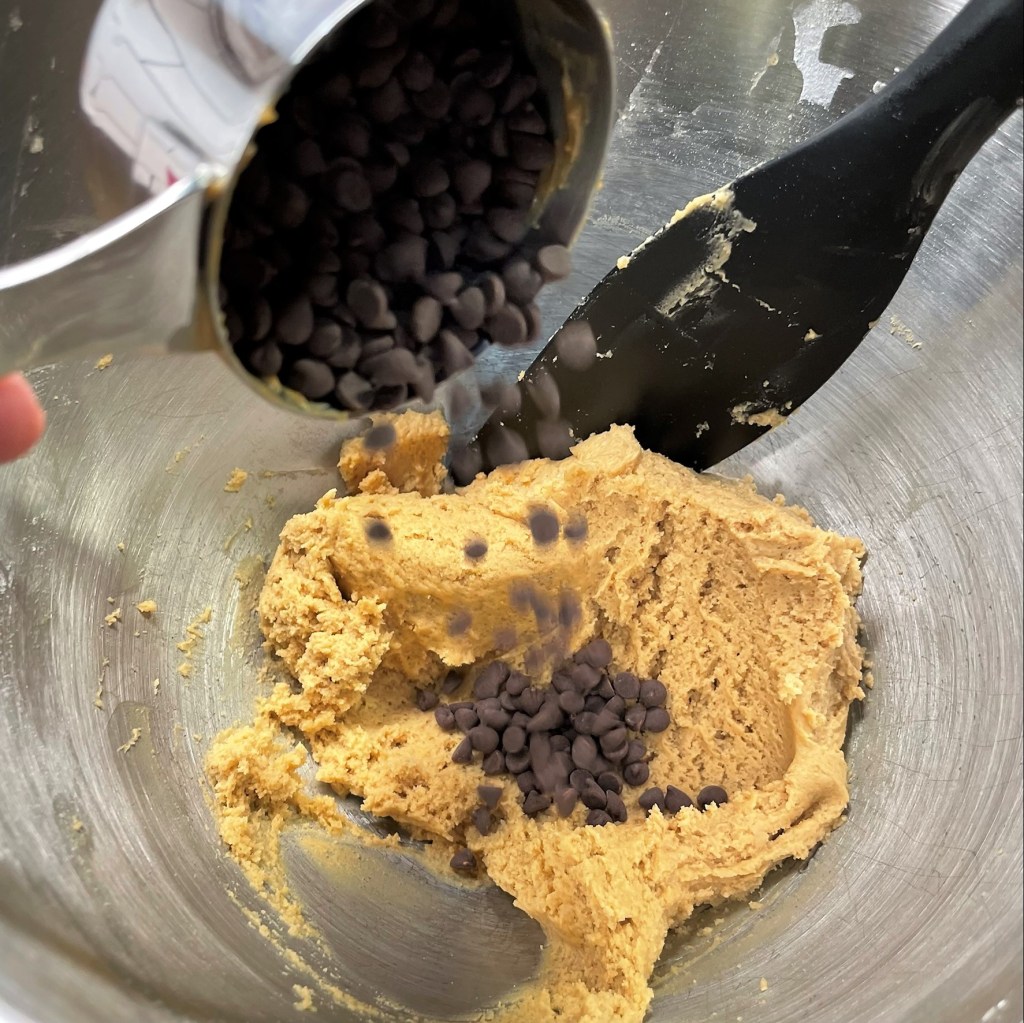
I divided the dough in half and folded the mini chips into one portion of the dough.
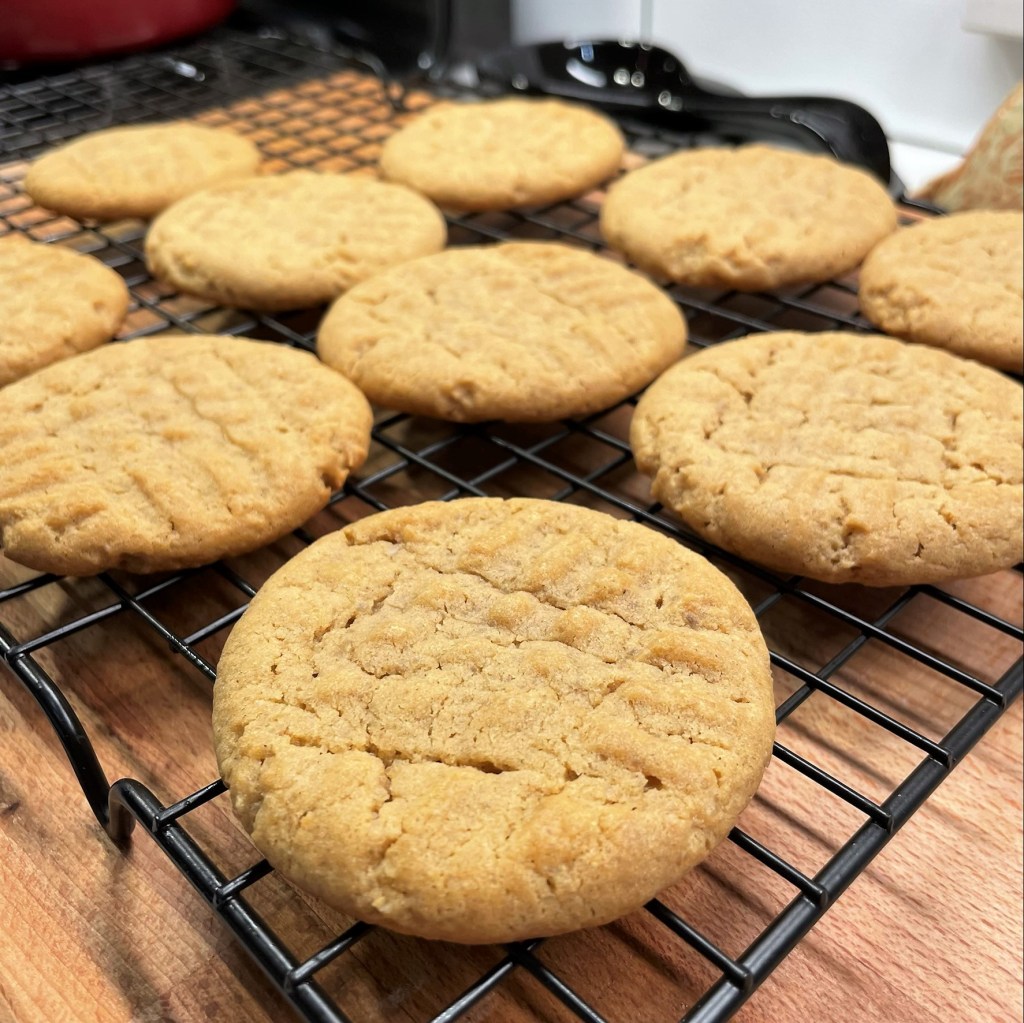
Chill the dough for an hour, then shape into balls. These are getting the usual criss-cross shape, with a floured fork.
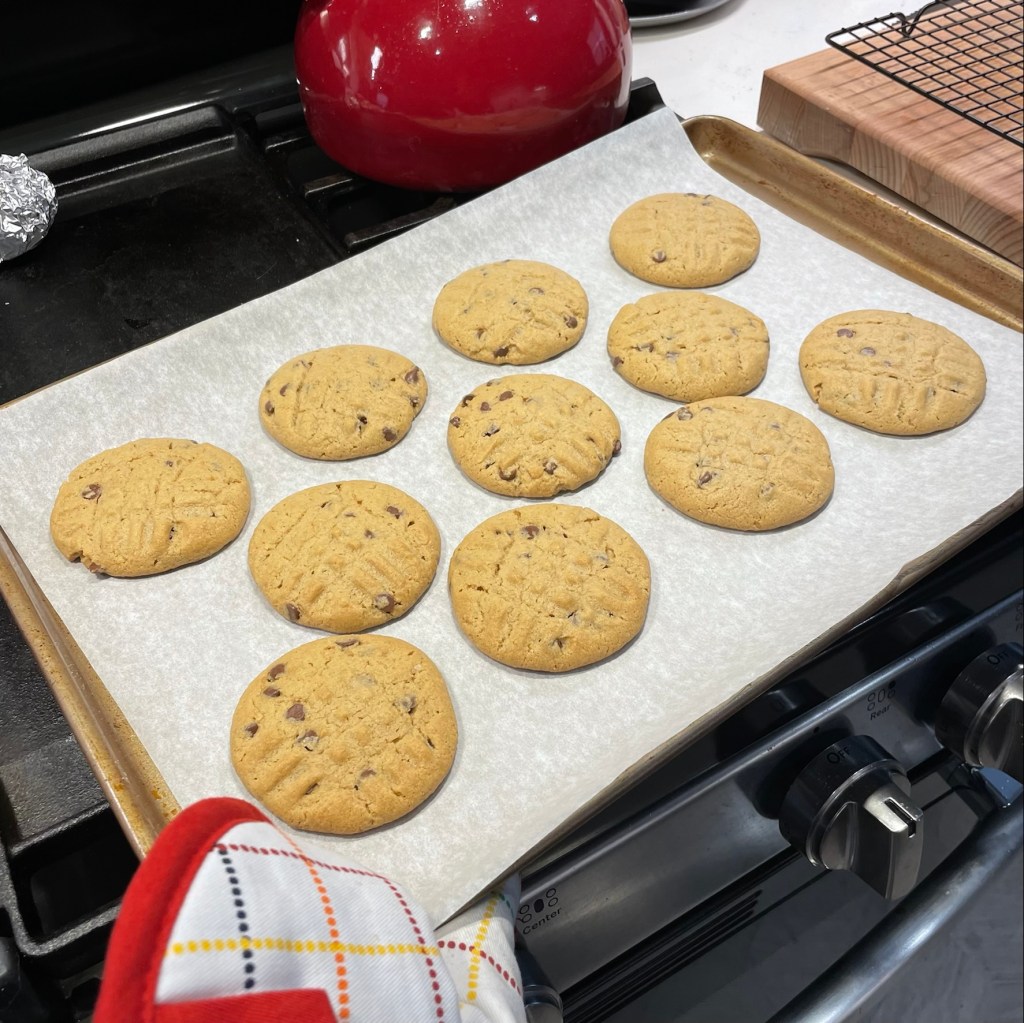
Bake the cookies at 350° F for about 10 minutes.
They softened and flattened, but did not spread much, which is good.
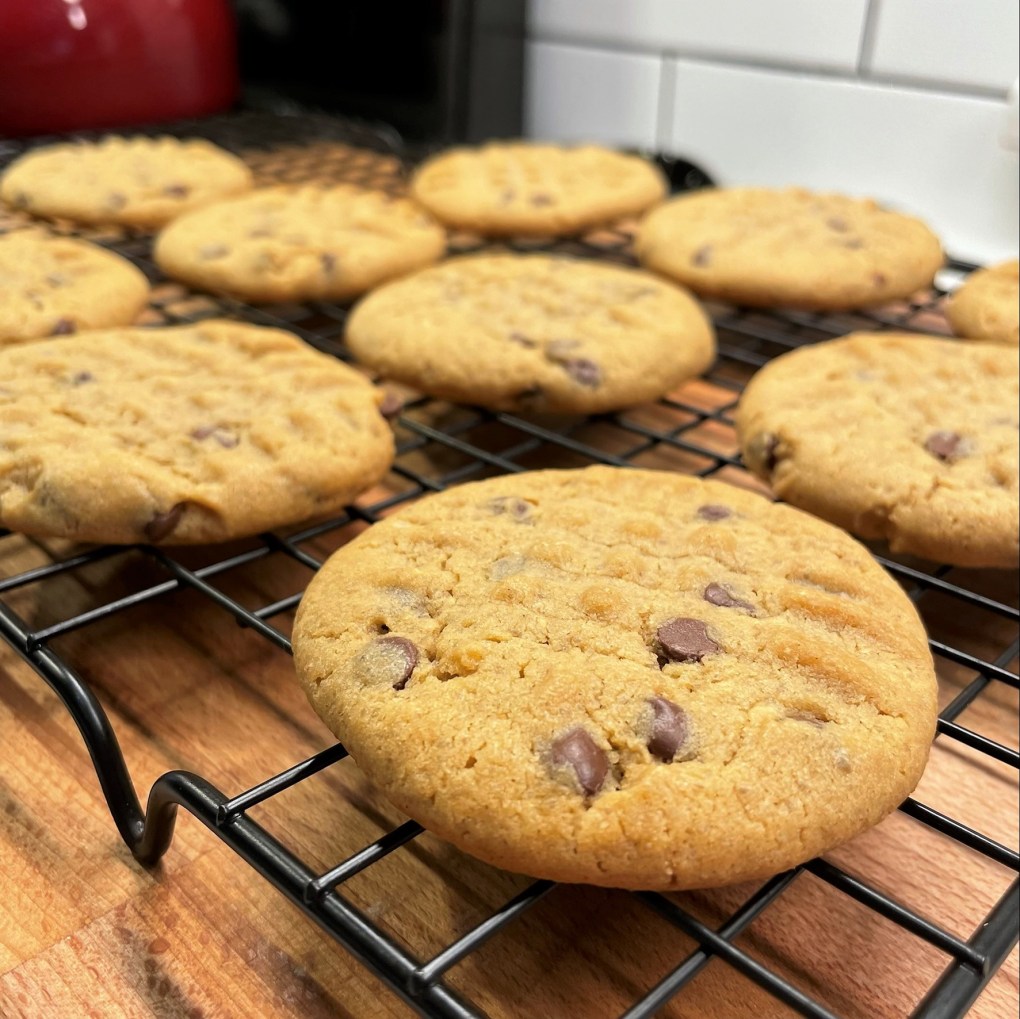
The chocolate chip peanut butter cookies turned out delicious.
And so did the plain ones!
Cream together the butter, peanut butter and sugar until evenly combined and somewhat fluffy.
Add egg and beat until blended. Stir in vanilla, then stir in dissolved baking soda.
Add flour, beating only until incorporated. Stop the mixer and scrape down the sides, then mix again only long enough to blend in loose flour.
If using the mini chocolate chips, fold them into the dough. Cover the bowl and refrigerate for about one hour before baking.
Preheat oven to 350° F, with oven rack in the center position, or two racks roughly positioned near the center of the oven.
Roll cookie dough into balls about 1 1/4” diameter. Place them on a parchment lined cookie sheet. Flatten in a criss-cross pattern, using a fork dipped in flour to prevent sticking.
Bake 9-11 minutes, depending on your oven. The cookies will be very puffy, and slightly dry at the edges when finished. Cool on the sheet about two minutes, then transfer to a cooling rack.
Sometimes, saying your goals out loud is enough to cement them into reality, and this has been true for my quest to have a calmer, more peaceful holiday season. Letting go of expectations for a “perfect” holiday has given me the freedom to enjoy it more, regardless of how things unfold. One thing I really wanted to do this year (for the first time in a long time) was settle in to making Christmas cookies, and I am on a roll—figuratively and literally—with these sweet little rugelach. They are my first cookies of the season and making them satisfies not only my desire for a pretty holiday treat, but also another item on my culinary bucket list.
As much as I love to bake bread and rolls, I hardly ever bake sweet things, such as cakes, pies or cookies. I’m not sure why, because I do like them, and I have fond memories of doing that kind of baking in my grandmother’s kitchen. The holidays are a perfect time for baking sweets, and so far, I am loving it.
Rugelach (which is pronounced in such a way that it might seem you are gargling with a feather in your throat) is a treat that originated in Poland and is popular in Jewish culture, and it has been on my bucket list for a couple of years. My husband, Les, remembers them from childhood, not only because he is of Polish-Jewish descent, but also from the bakeries and pastry shops all over New York, where he was raised.
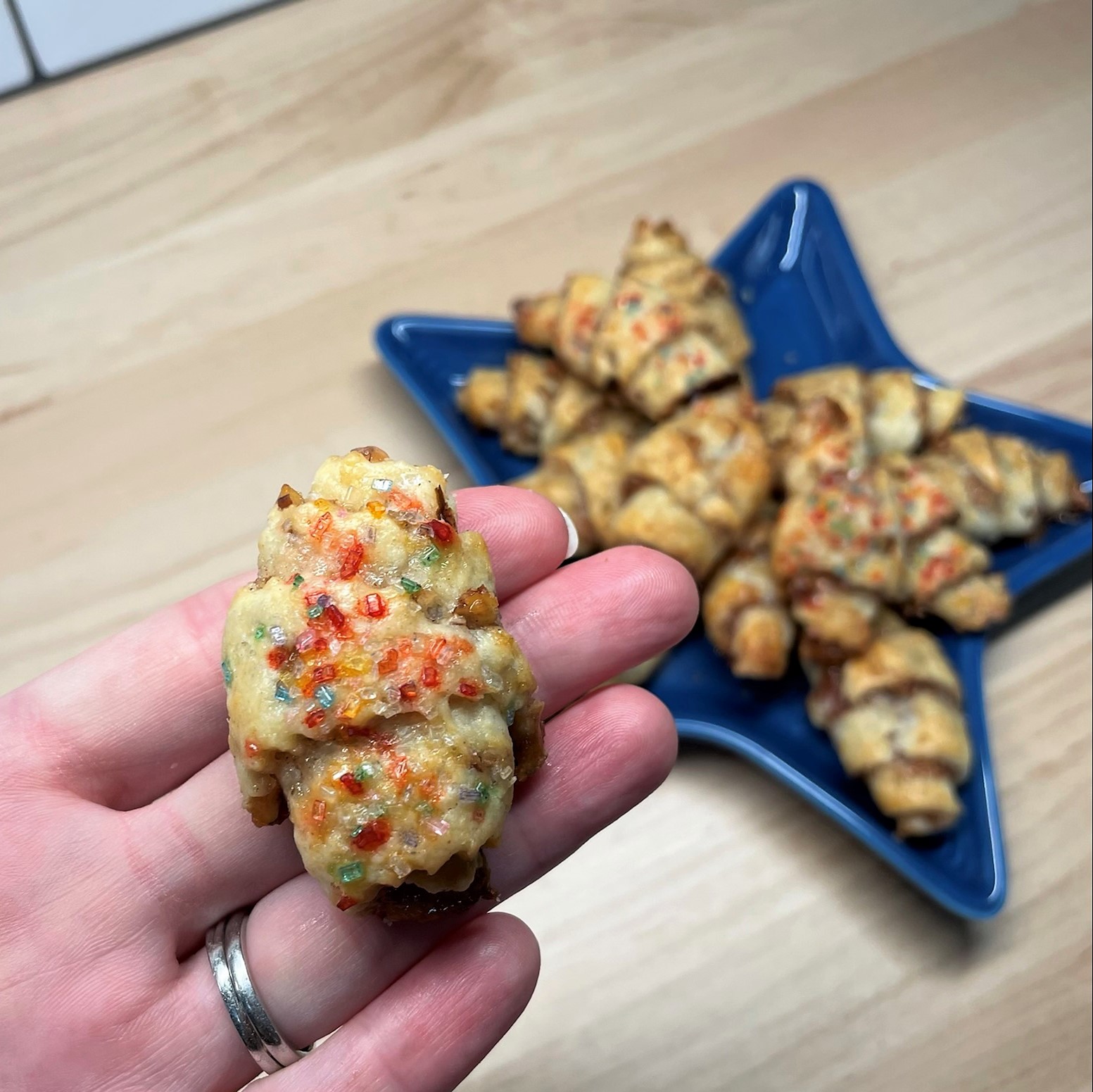
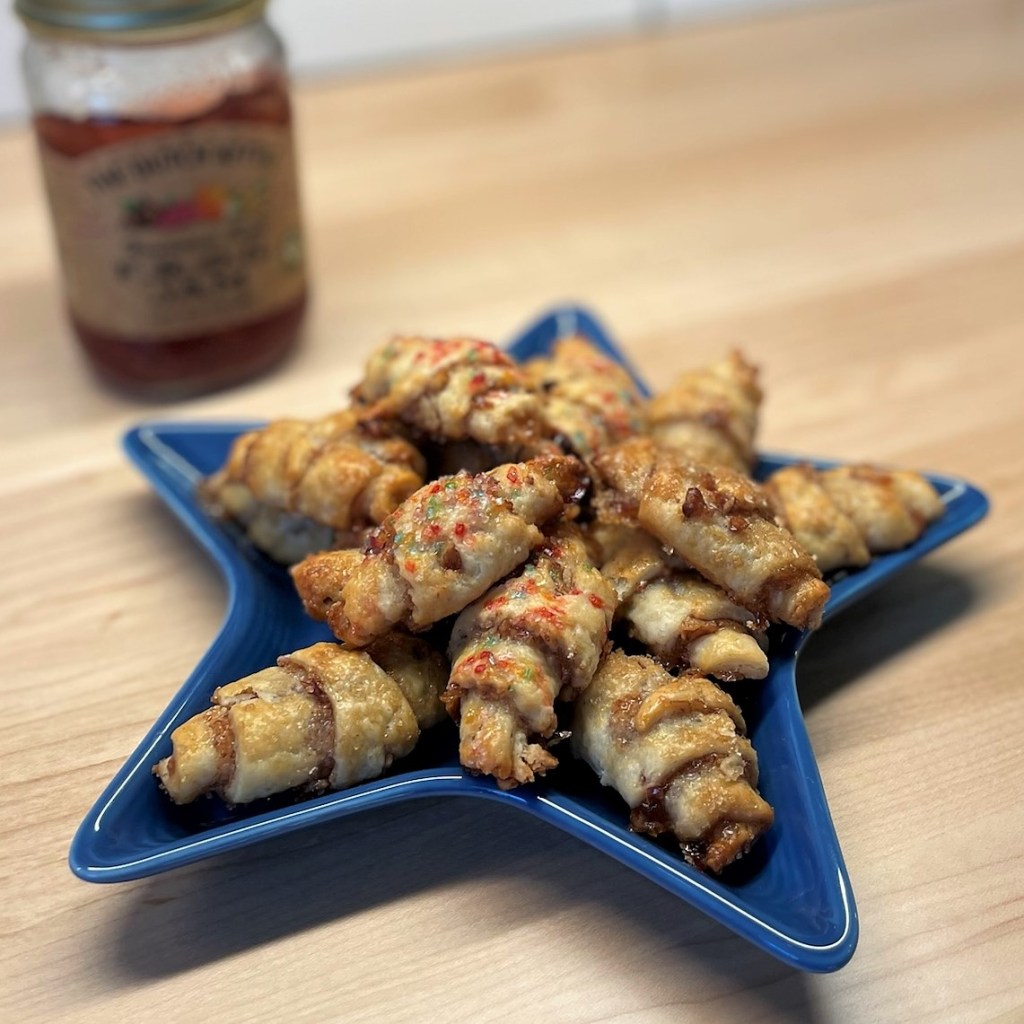
It’s a perfect, little two-bite cookie.
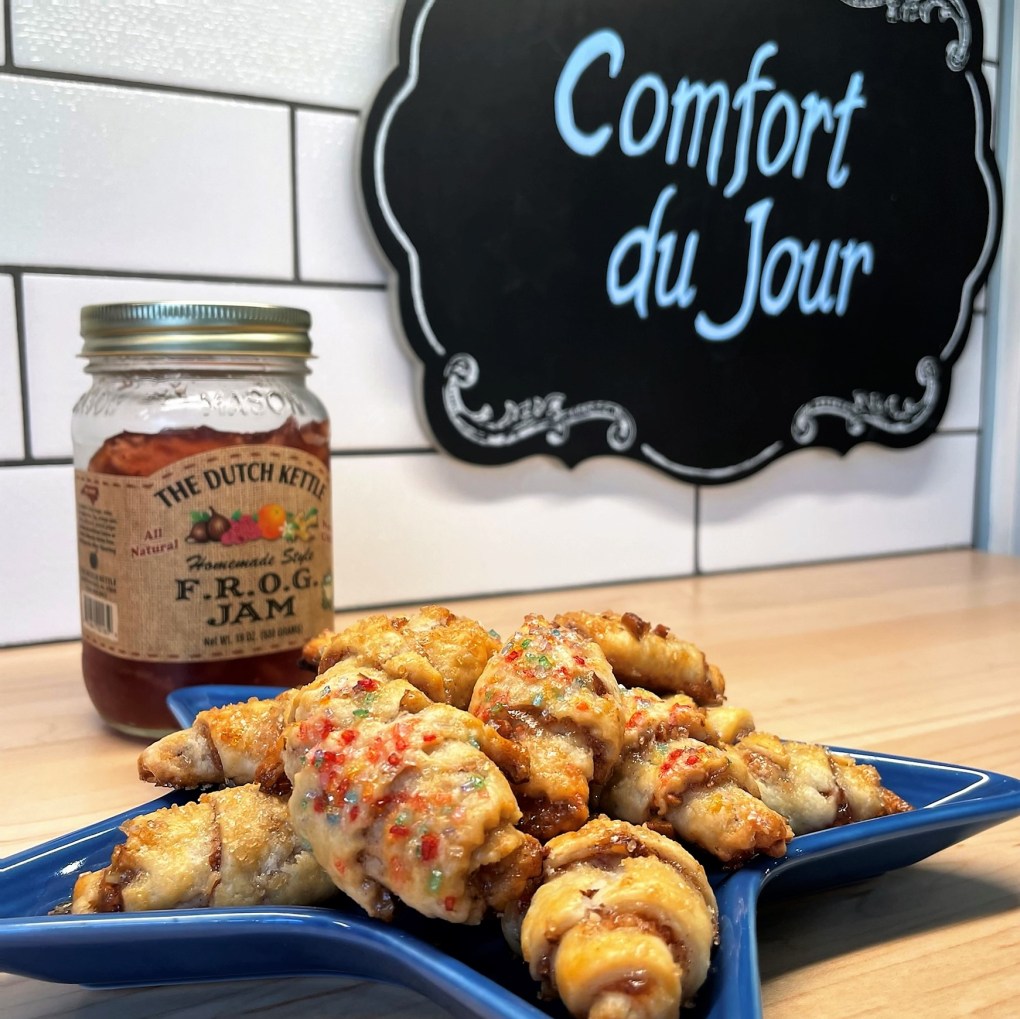
The cookies are tiny, which makes them perfect for gift-giving or tucking into an extra little space on a dessert platter. My rugelach dough is made of butter, cream cheese and flour, with only a slight hint of powdered sugar. The rest of the sweetness comes from the layers of filling and the large crystals of sugar sprinkled on top before baking. Given the variety of flavors I have seen, you can put almost anything in rugelach, and the gears of my mind are already spinning ideas for my next batch. This time, I used a jar of jam we spotted while waiting in line to purchase our fancy Christmas tree stand.
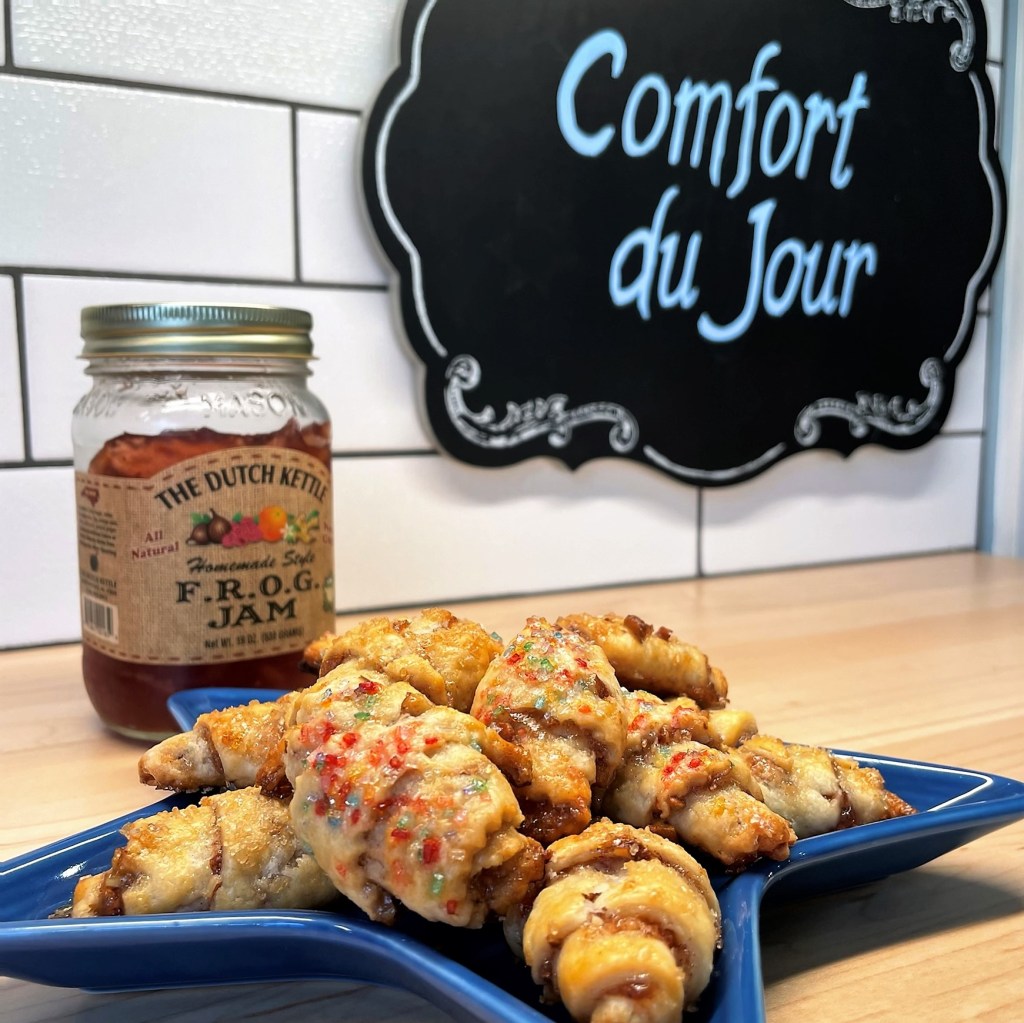
No frogs were harmed in the making of these cookies. 🙂
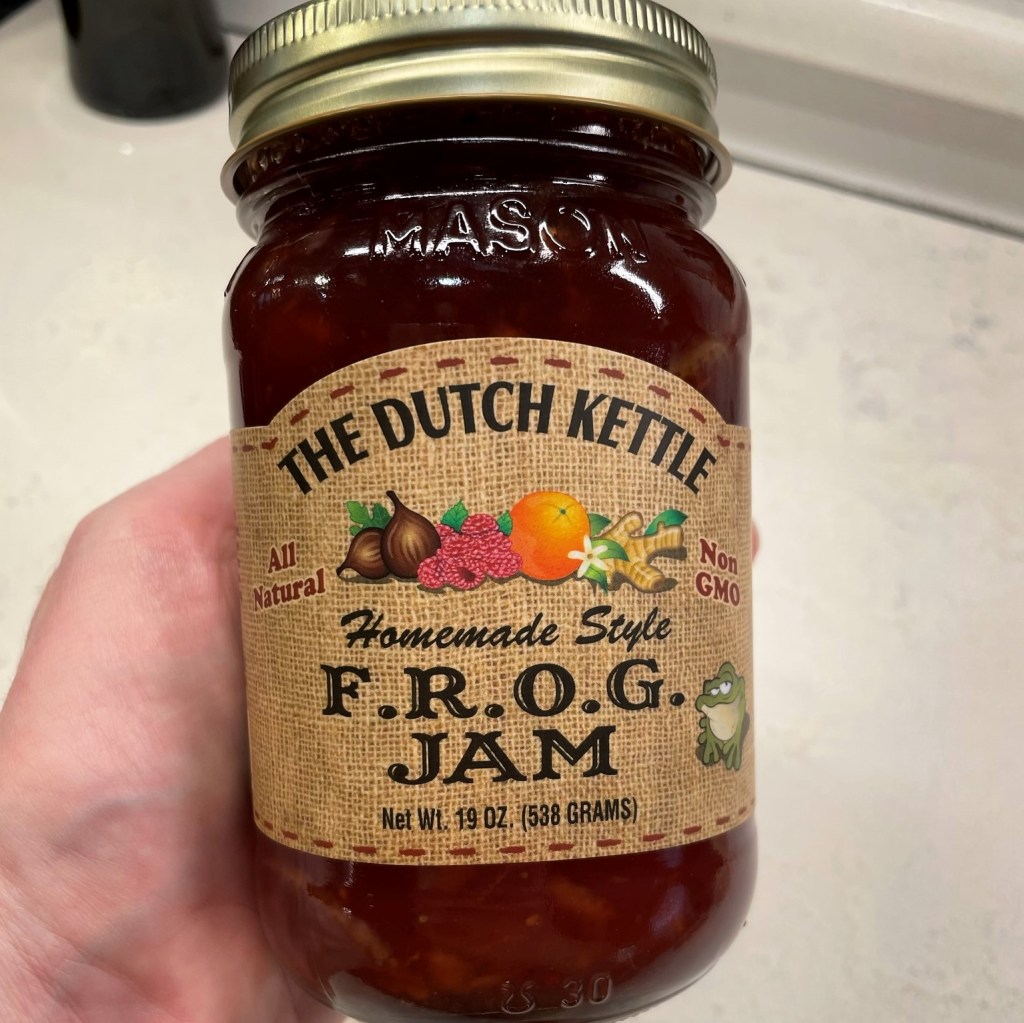
The fruity filling in these bite-sized little rollups is F.R.O.G. jam, with the letters representing the flavors of fig, raspberry, orange peel and ginger. That’s a whole lot of holiday flavor happening in one spoonful, and though Les is not particularly fond of ginger, he likes the other flavors and said my addition of cinnamon sugar and chopped pecans rounded these out nicely for him. The cookies are made in stages, including a significant amount of time chilling the dough, and then the cookies before baking, so plan accordingly.
As always, I learned a few things along the way to making these, and I’ll share those discoveries throughout the instructions below.
Ingredients
4 oz. full-fat cream cheese (this is half a brick package)
1 stick cold unsalted butter
3/4 cup all-purpose flour* (see notes)
1/4 cup whole wheat pastry flour*
1 Tbsp. powdered sugar
1/4 tsp. kosher salt
2/3 cup jam, preserves or marmalade
2 Tbsp. organic cane sugar
1/2 tsp. ground cinnamon
1/4 cup chopped, toasted pecans
Egg wash and coarse sugar sprinkles, for baking
*Notes
For best results, measure flour using the fluff, sprinkle, level method. If you dunk your scoop directly into the flour bag, you will compact the flour and end up with heavy cookies.
I always sub in a portion of whole grain into everything I bake, but if you do not have whole wheat pastry flour (I like Bob’s Red Mill) or white whole wheat (King Arthur is a great choice), it is fine to use a full cup of all-purpose flour. I personally like the flavor boost of the whole wheat, and it helps me justify eating an extra cookie. 😉
Instructions
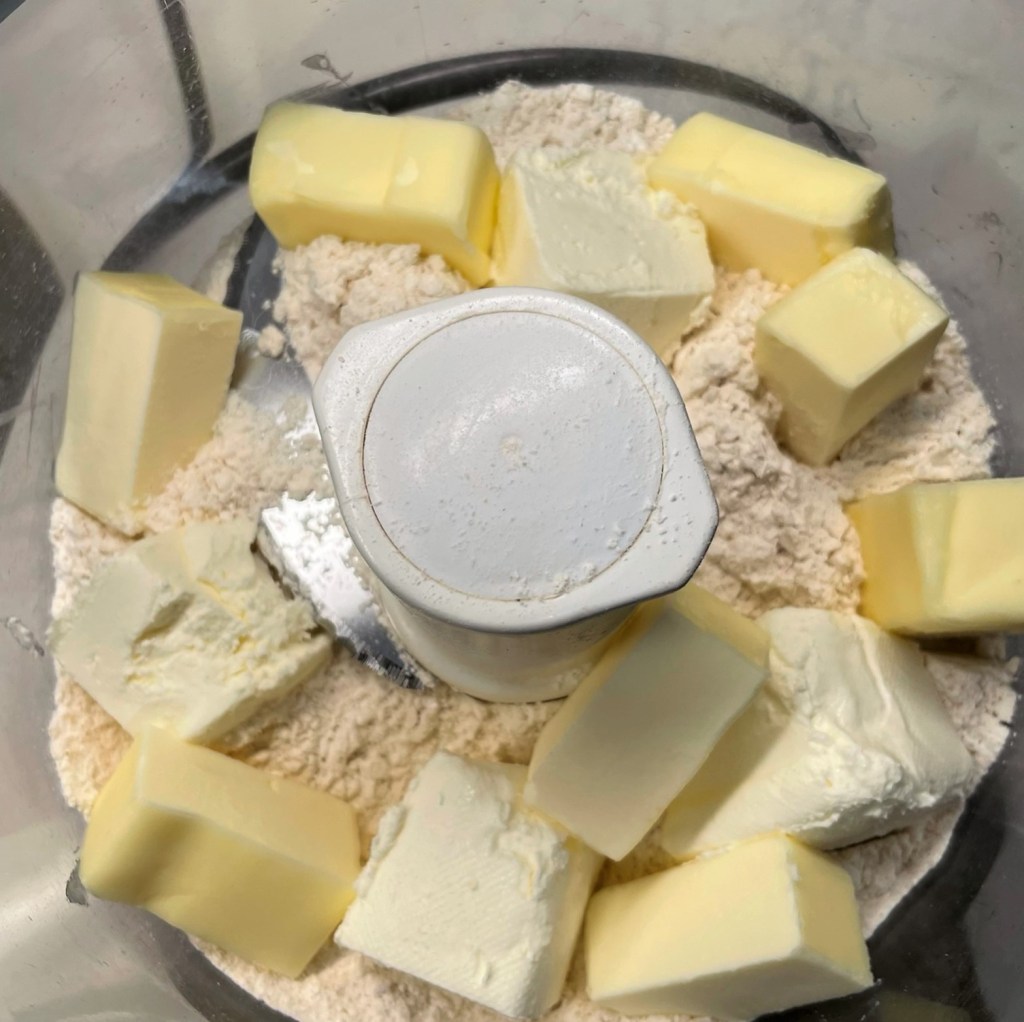
Cut the cold butter and cream cheese into cubes before pulsing into the flour a few times.
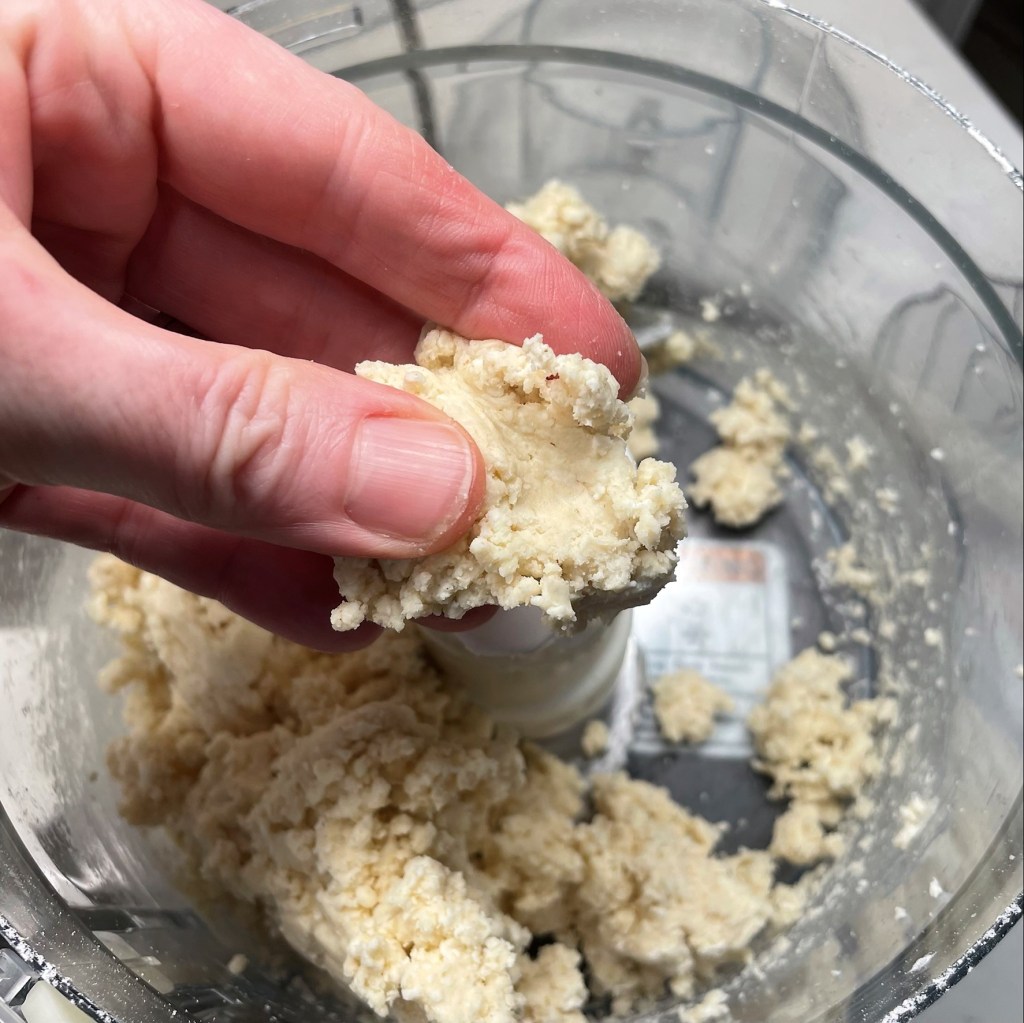
After a few pulses, run the processor continuously, but just until the dough comes together like this.
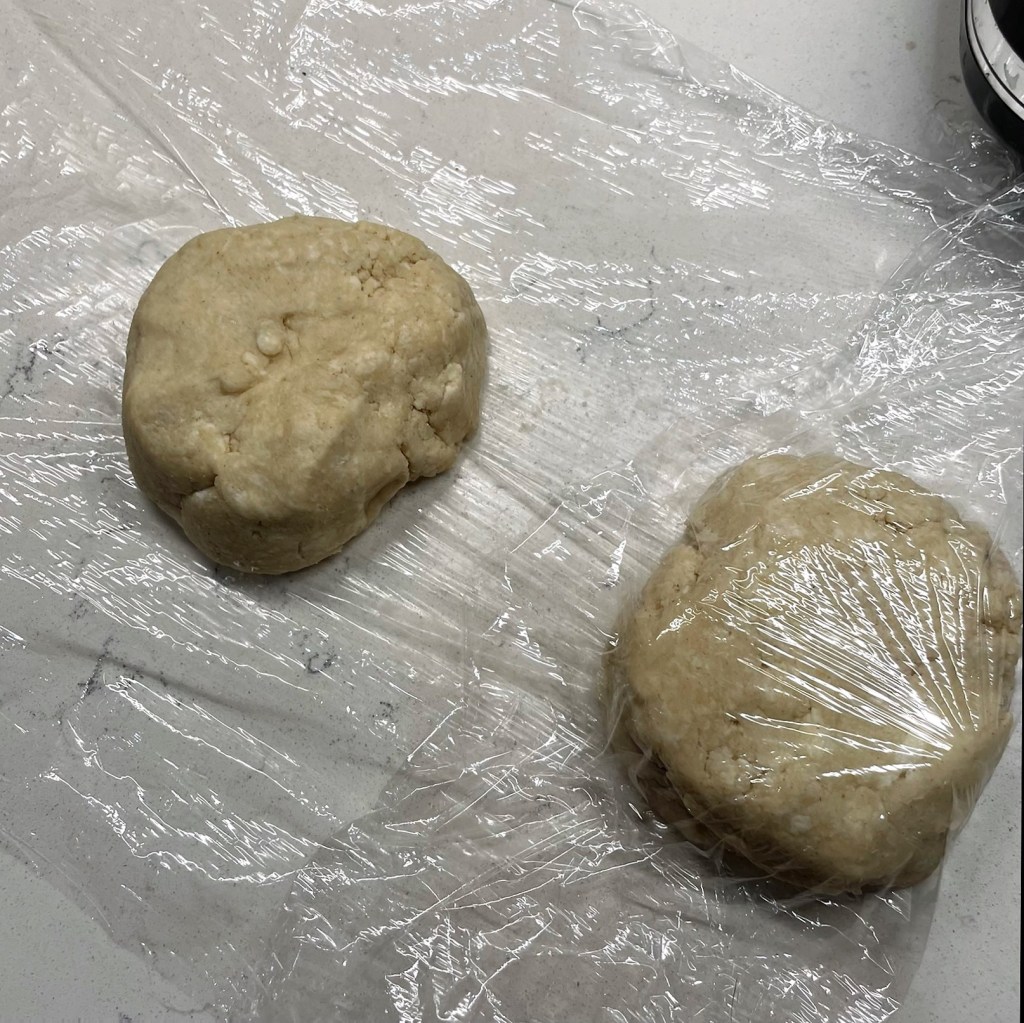
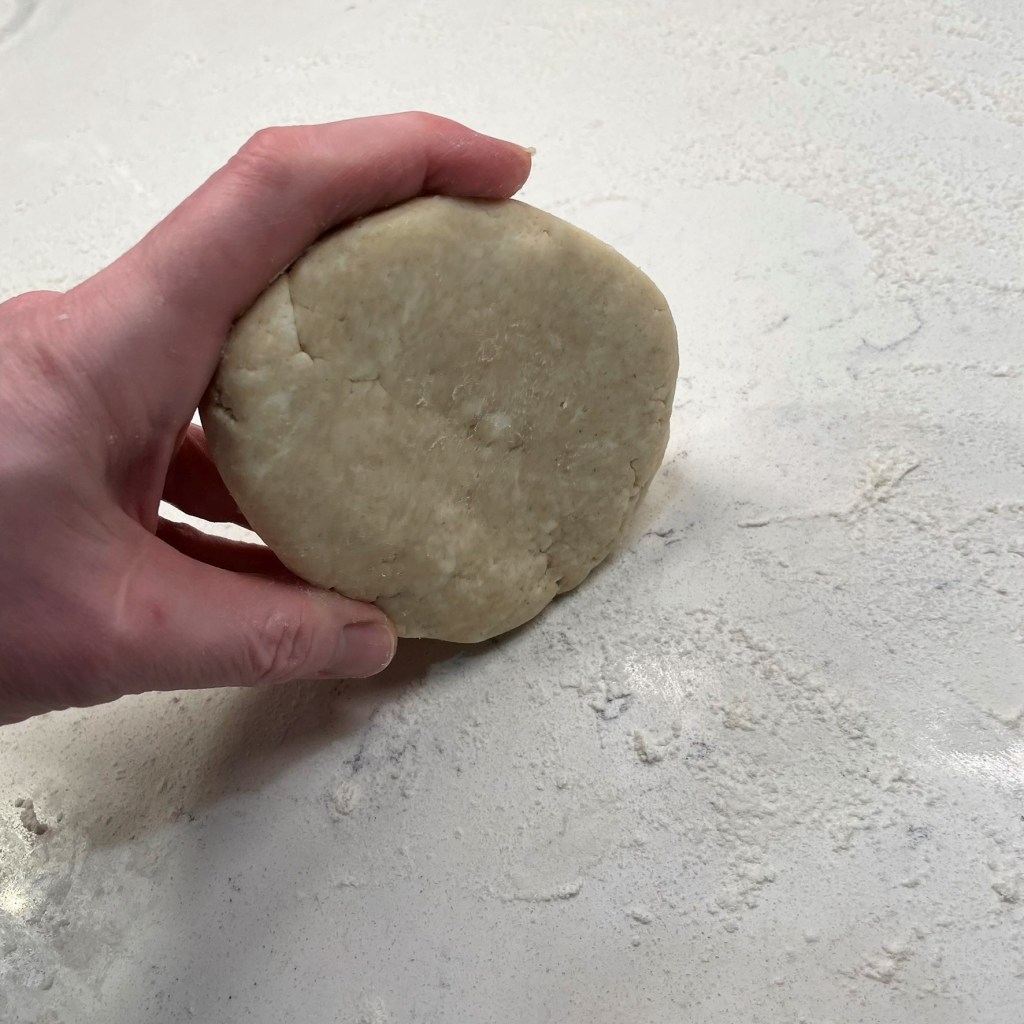
Divide the dough into two disks and wrap them up to chill several hours or overnight.
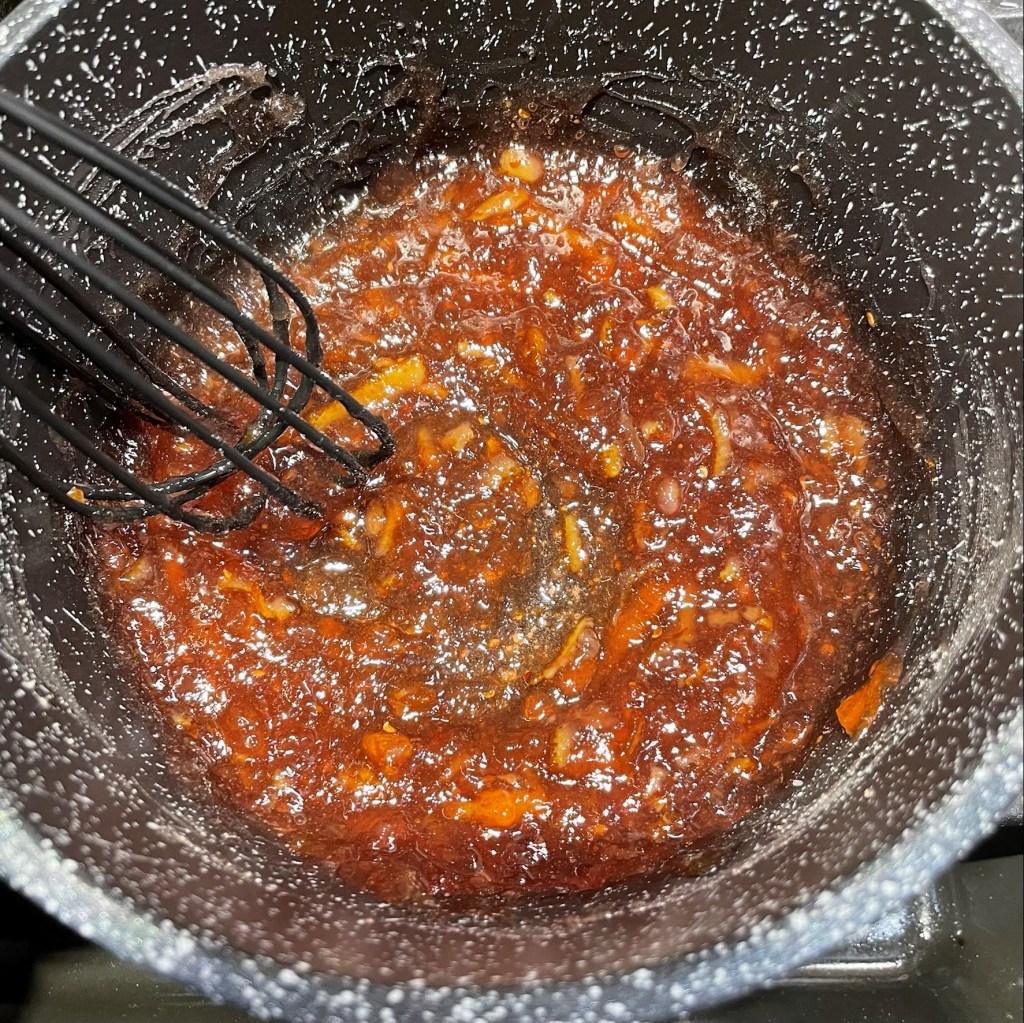
This is tricky, because you want the jam to melt but you don’t want it too warm.
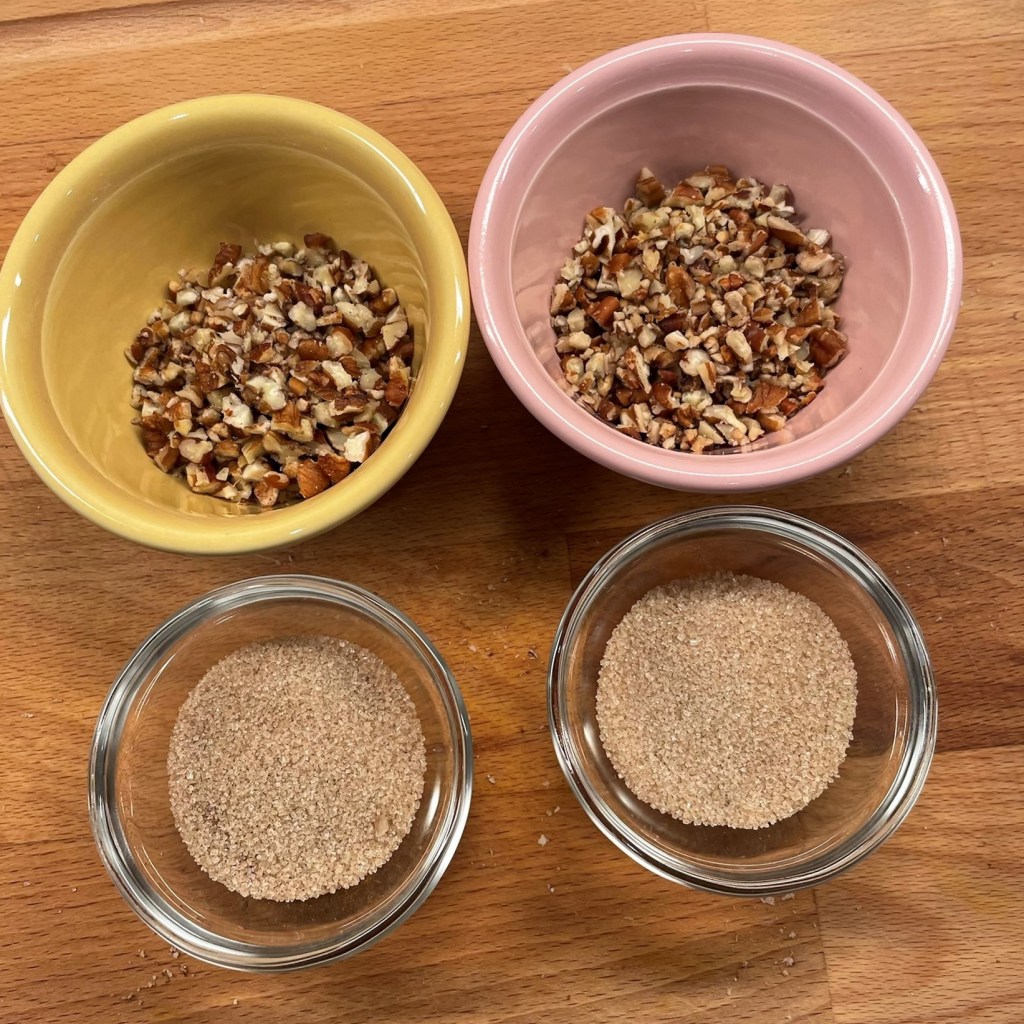
For the sake of consistency, I divided my cinnamon sugar and pecans so that both wheels of rugelach got the correct amounts.
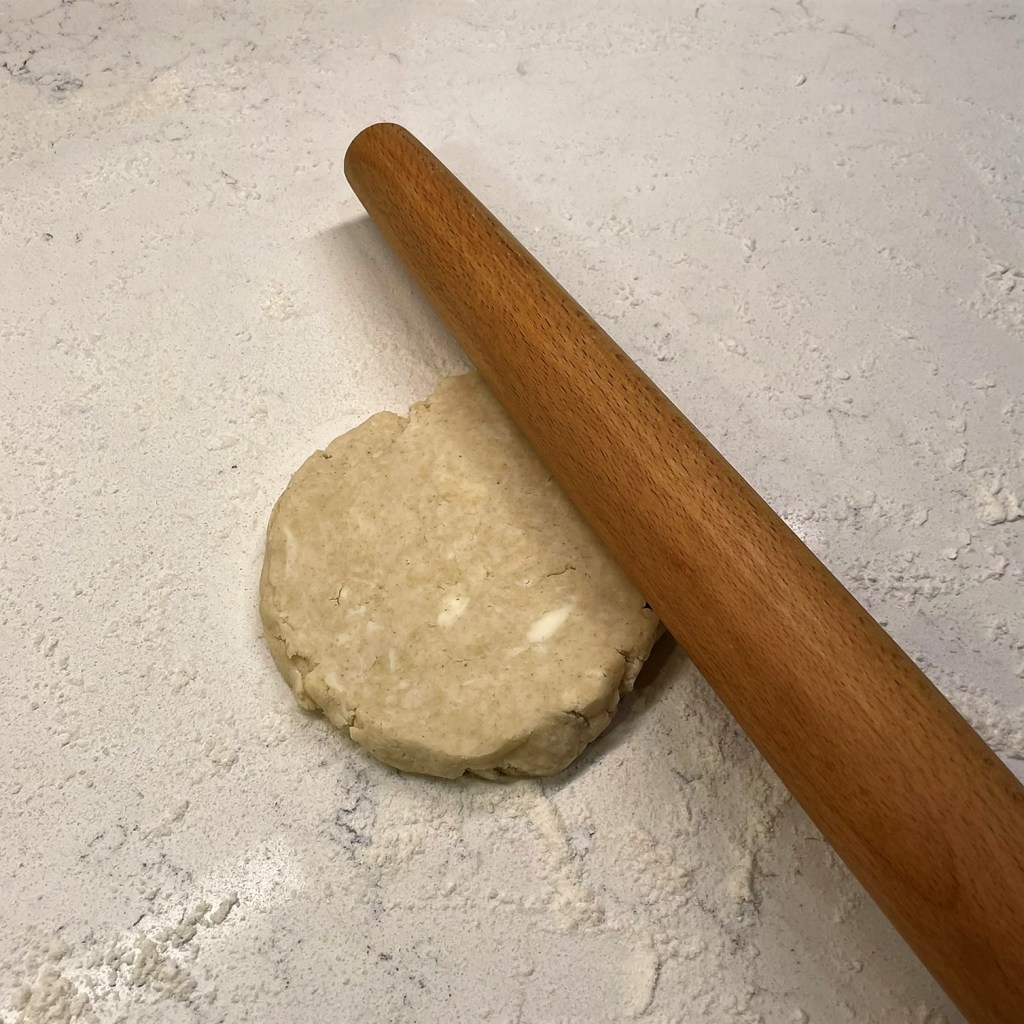
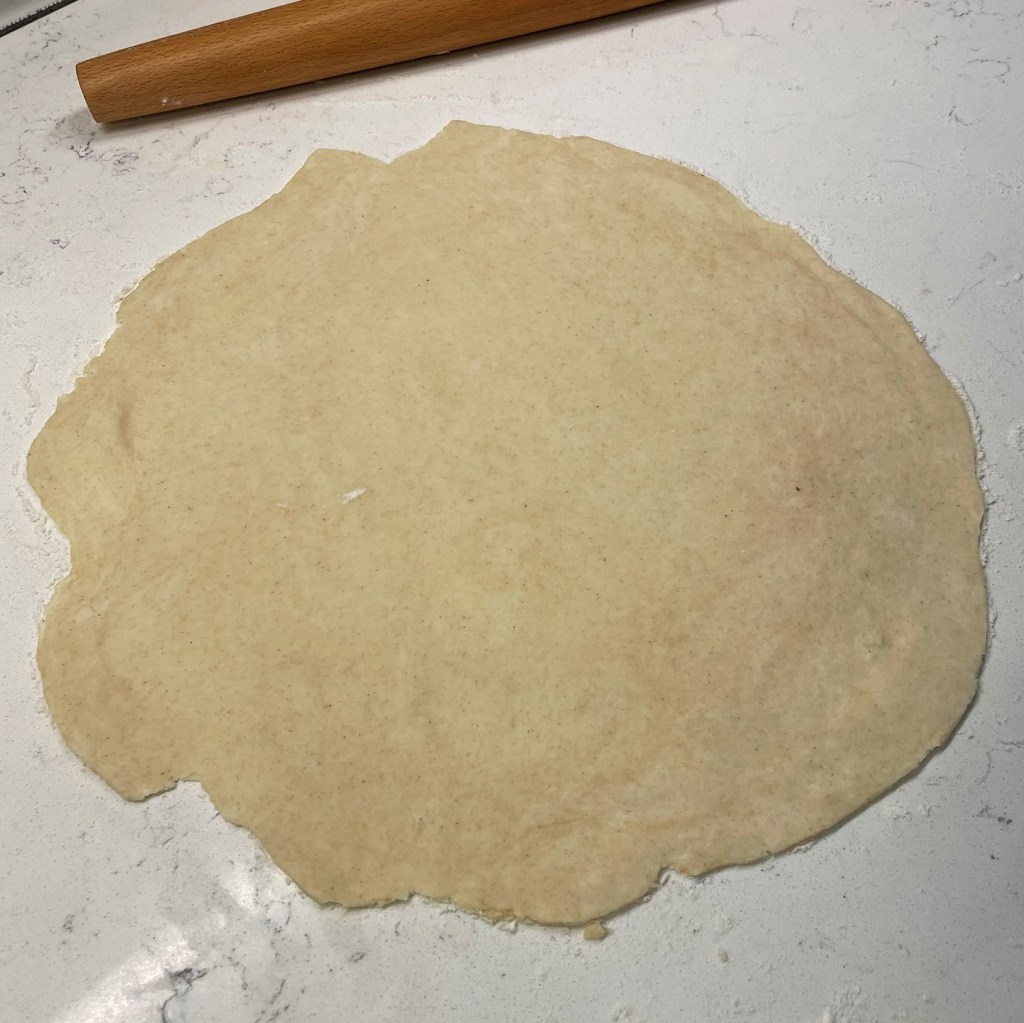
The chilled dough was rock hard, so I gave it a few gentle smacks with my rolling pin before pressing it out into a 12″ circle.
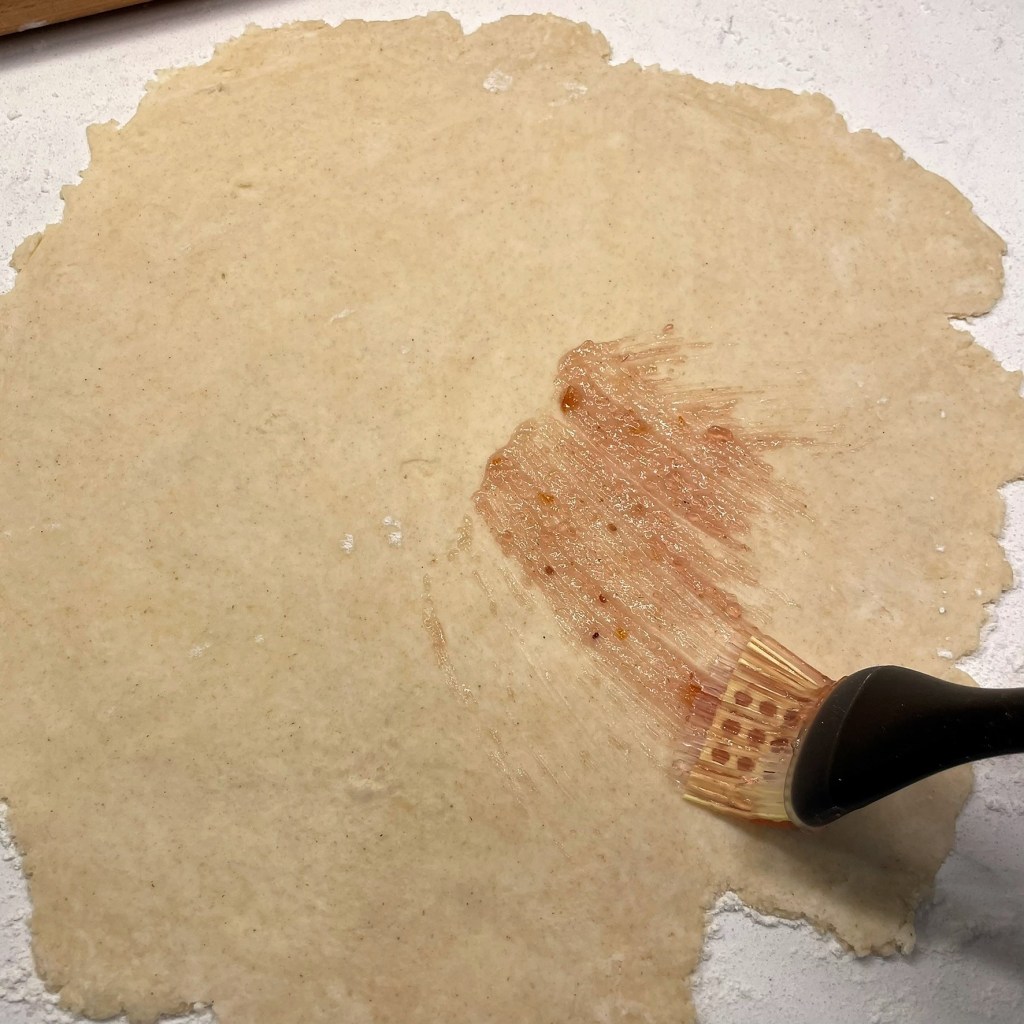
Yes, my edges are wonky, but I figured it would be OK since they’ll be rolled up. Spread the melted jam out thinly over the entire dough.
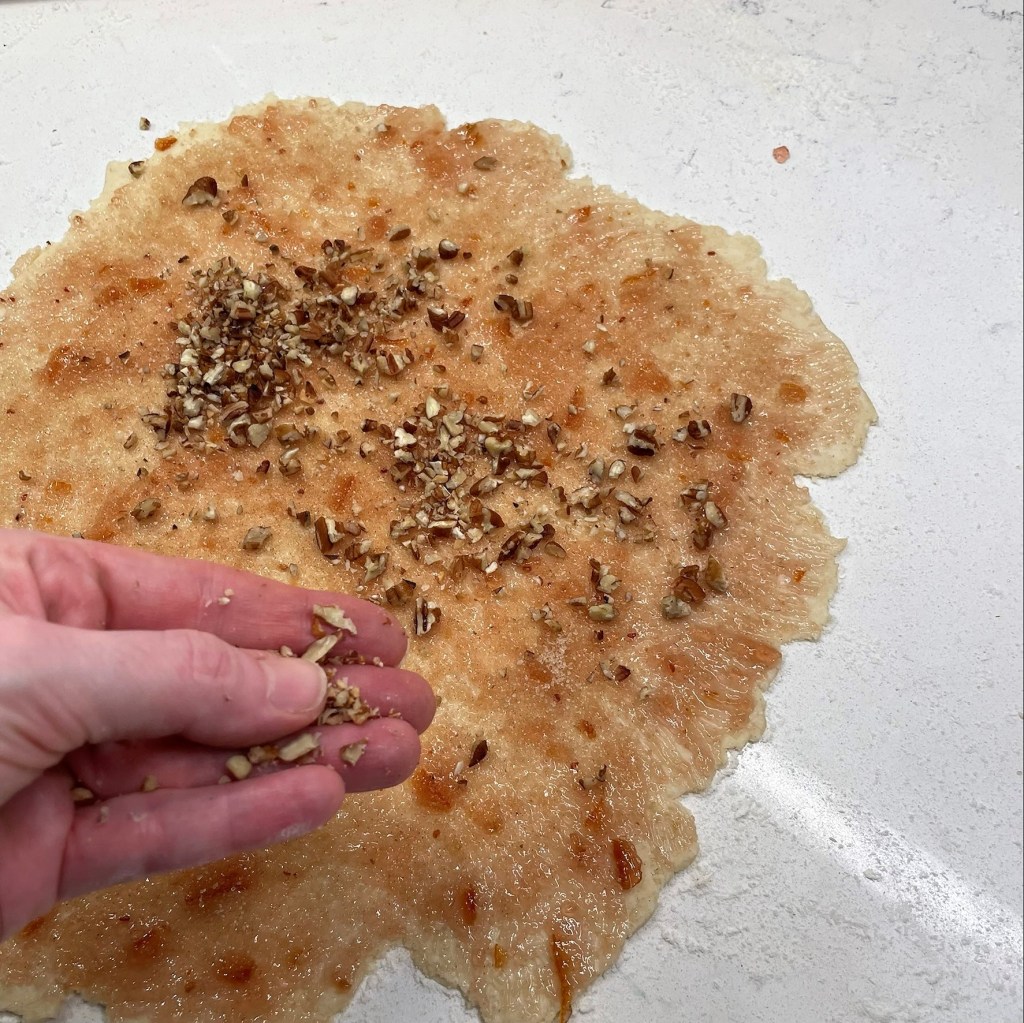
Sprinkle on the cinnamon sugar and scatter the pecan bits. I had to move them around a bit for more even coverage.
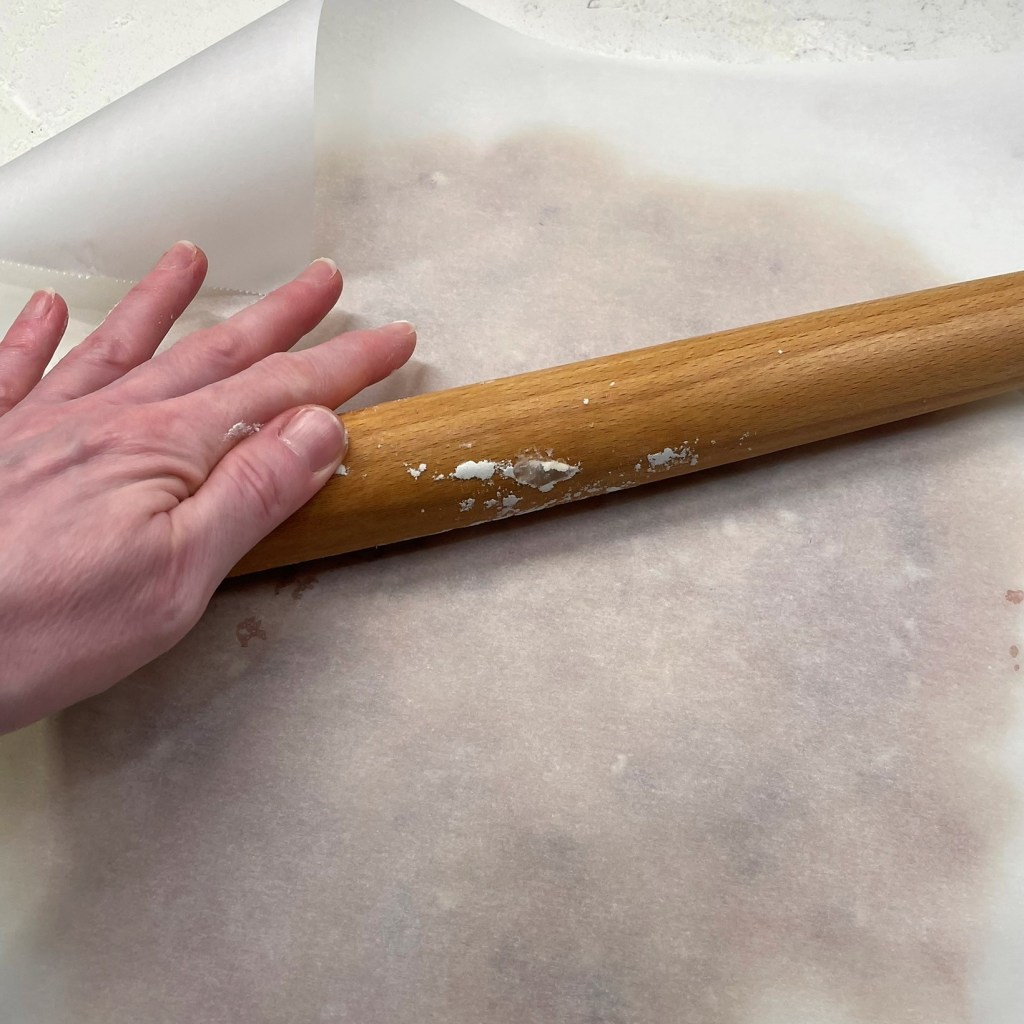
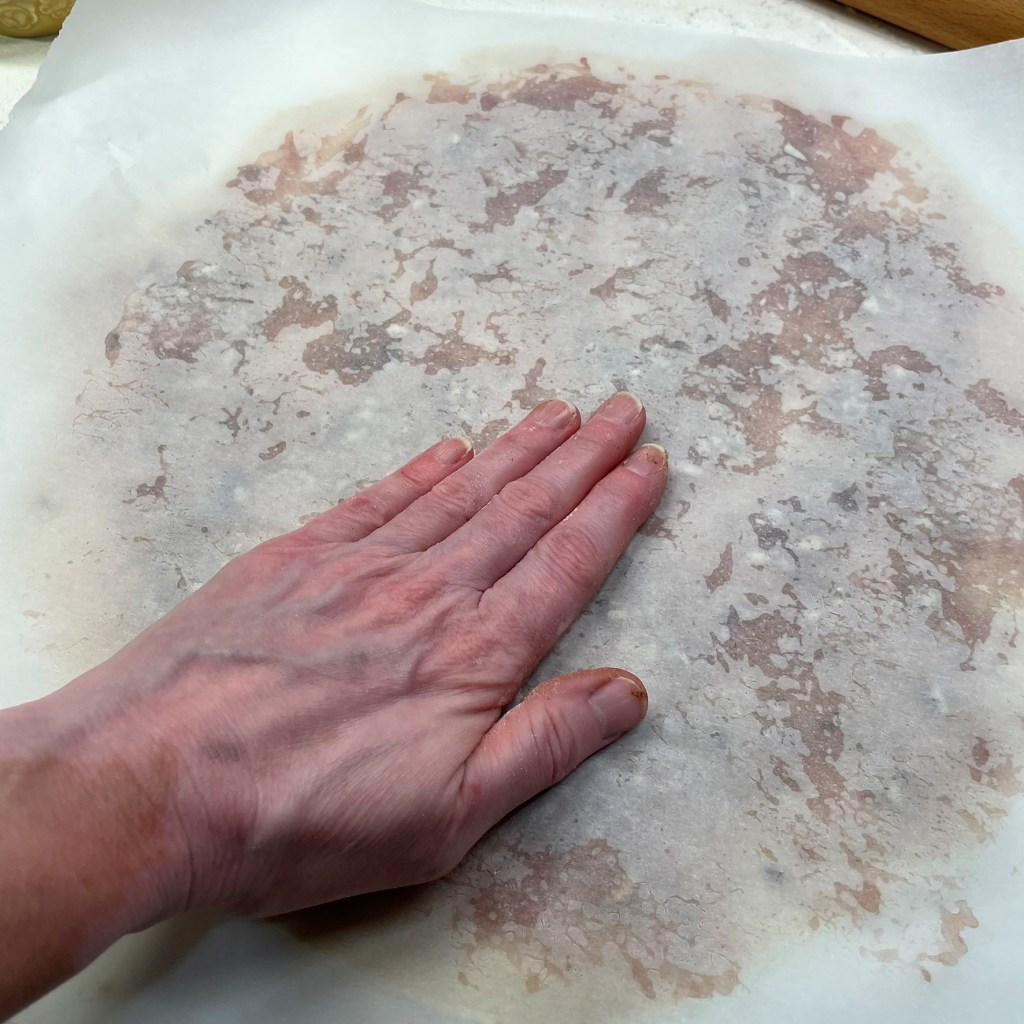
I used my rolling pin to press the parchment paper over the dough to secure the toppings. This turned out to be a mistake…
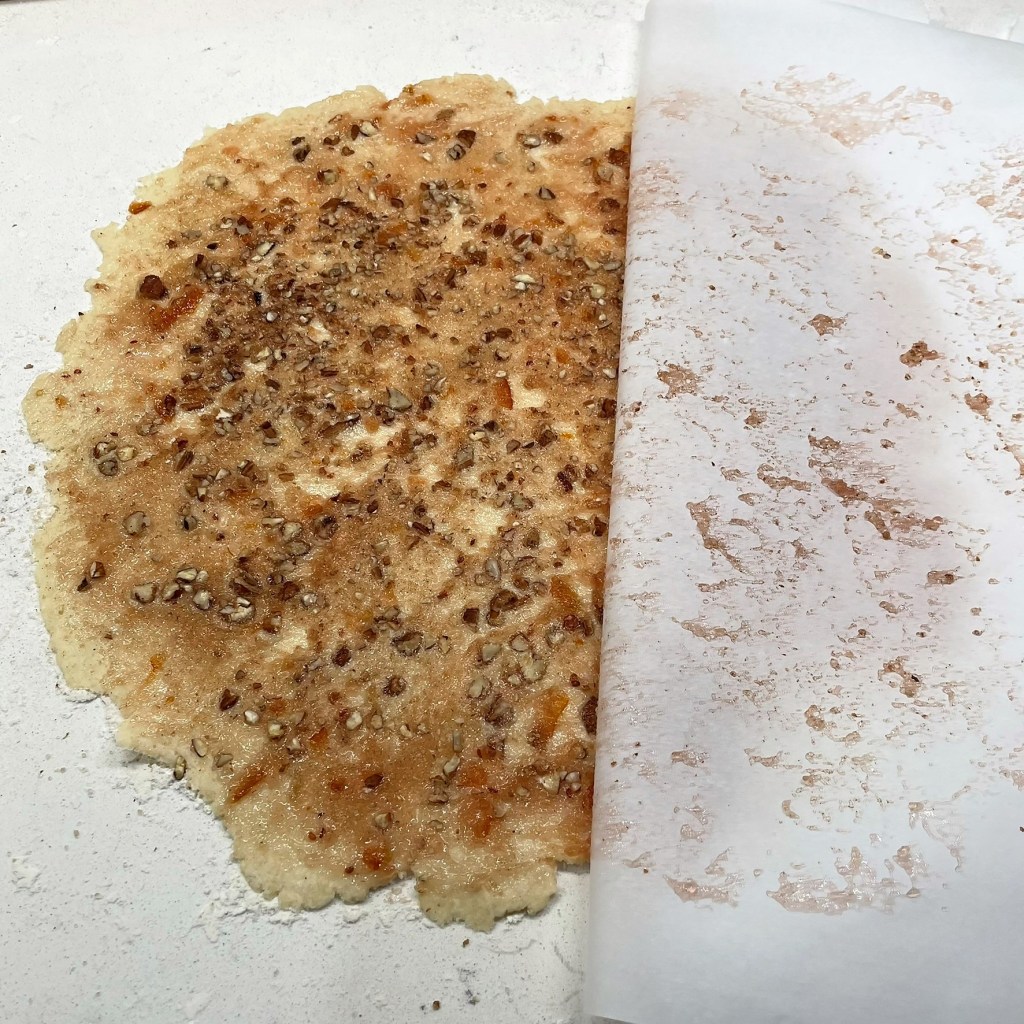
The rolling pin pressed it a little too well, and I had trouble peeling off the parchment. I peeled it back flat, the same as I do when making corn tortillas.
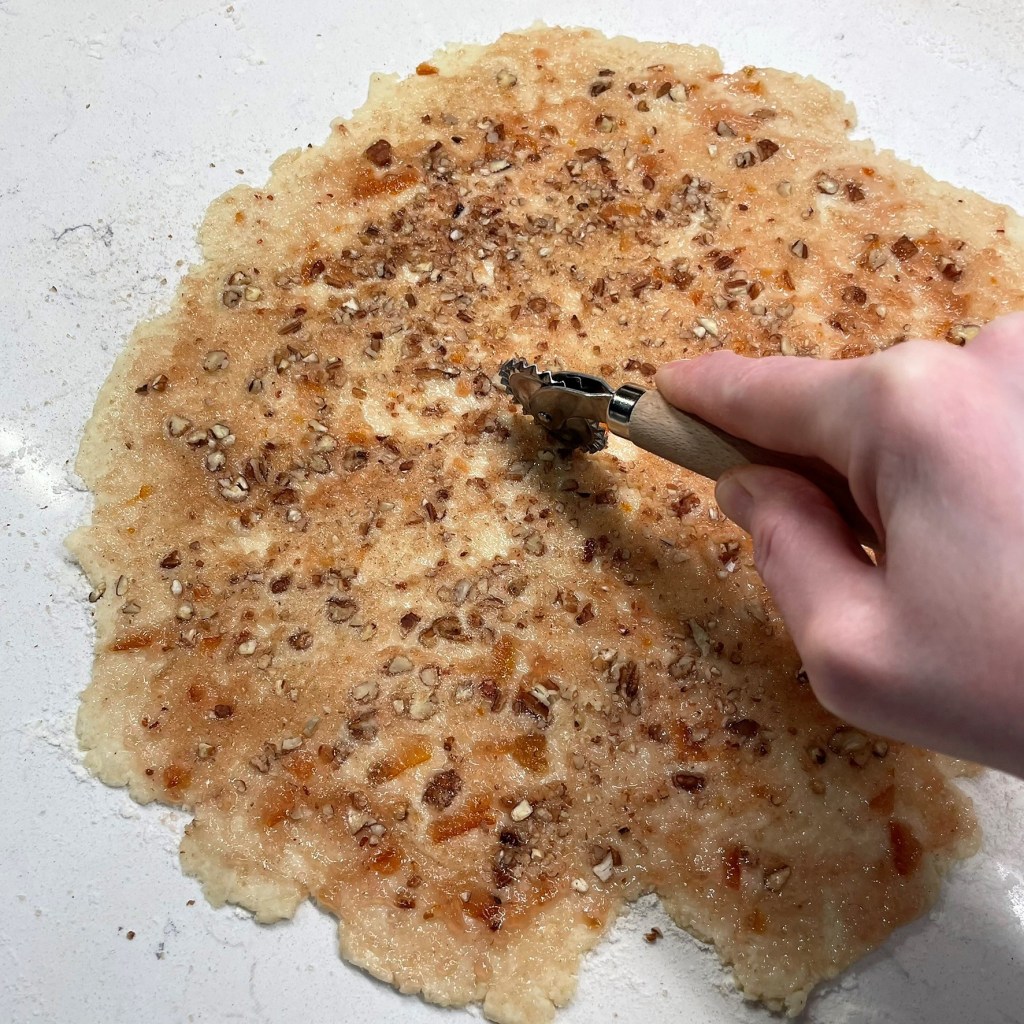
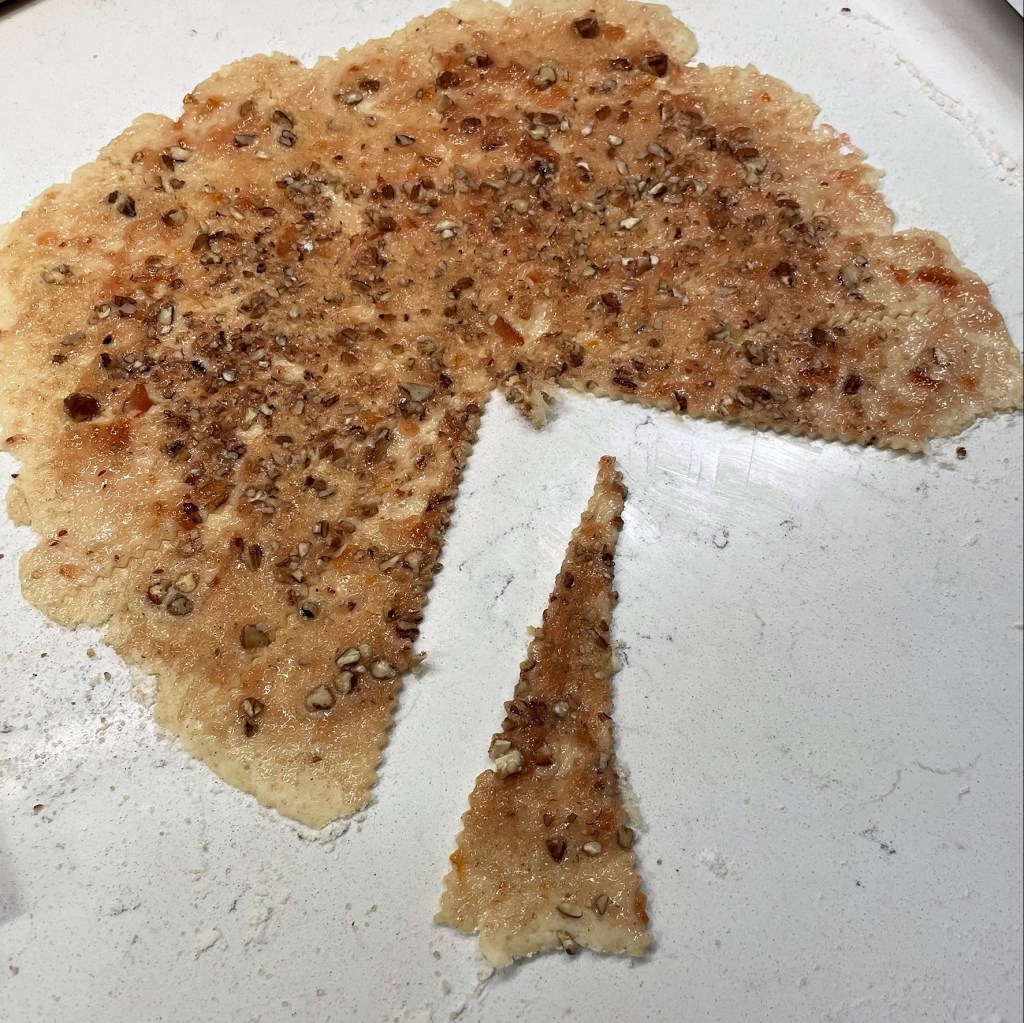
For a prettier cookie, I decided to use my wavy pasta roller to cut it into 16 equal wedges. Also, not the best idea because it made rolling them pretty tricky.
My wavy edges caused the pecan bits to fall off the sides when I rolled, and I had a tough time separating each wedge because the cuts were not clean.
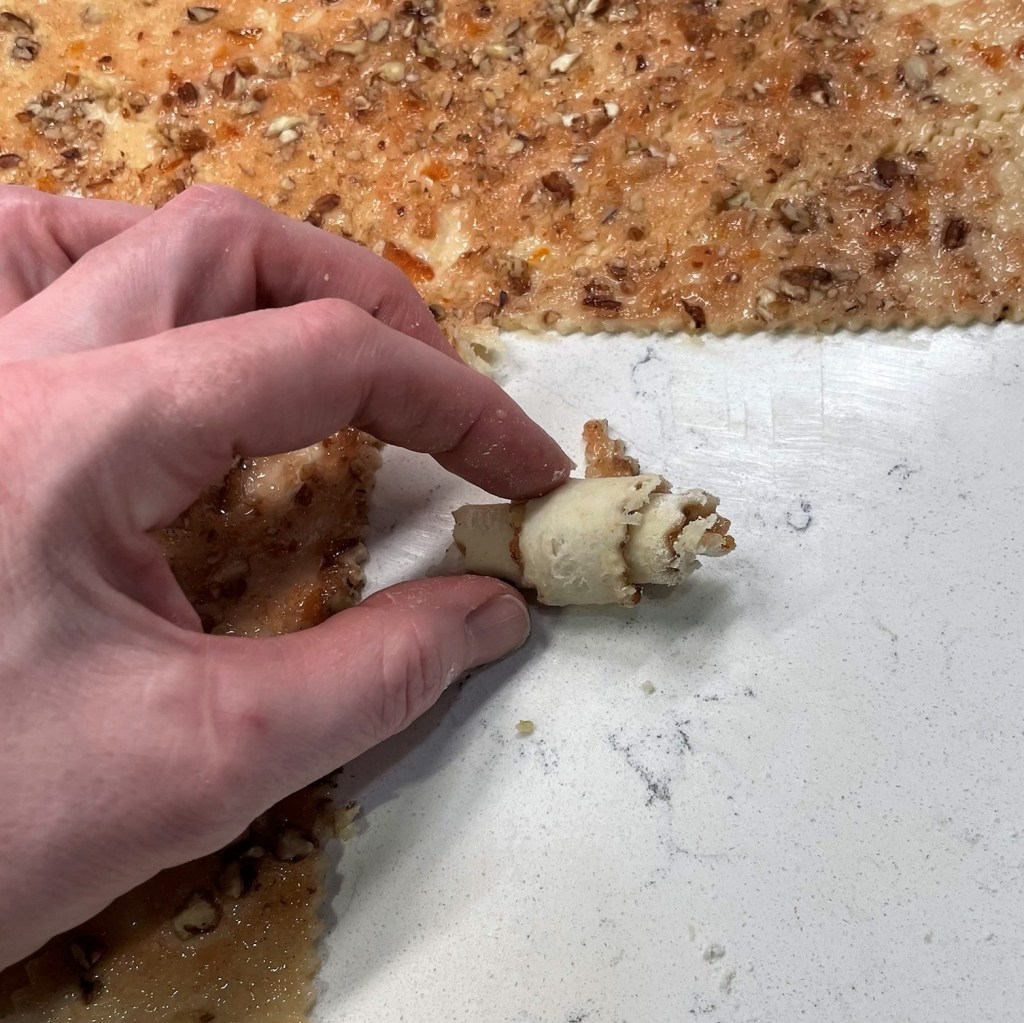
The rolling step is pretty straightforward. Just like a crescent roll, but way tinier!
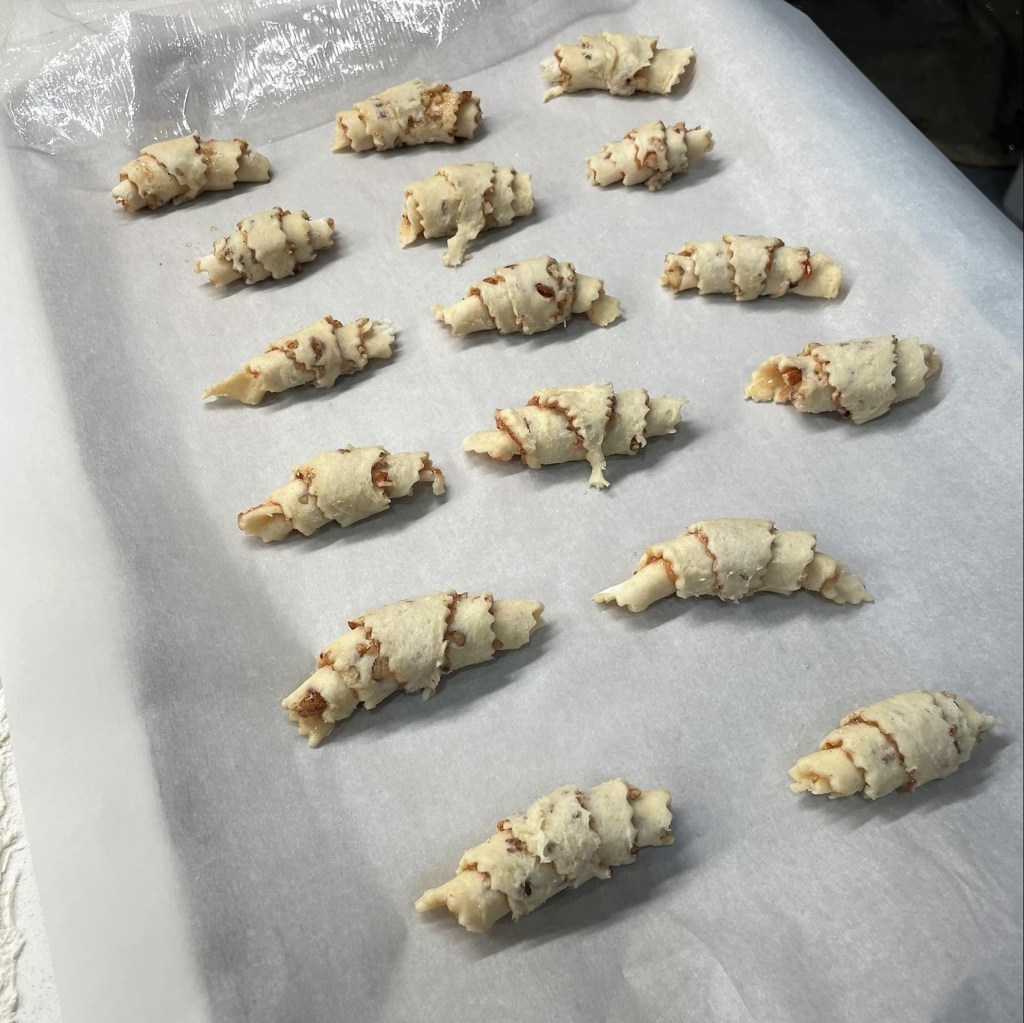
Whew, I got 16 of them onto my baking sheet! Cover with plastic and into the fridge.
I made three changes for my second disk of dough. First, I rolled the edges flat before I began rolling out the dough. I learned this a long time ago with pie crust.
Much better rollout, and without so many shaggy edges!
My second change was pressing the pecans into place with my hand rather than the rolling pin. Much easier to remove the parchment!
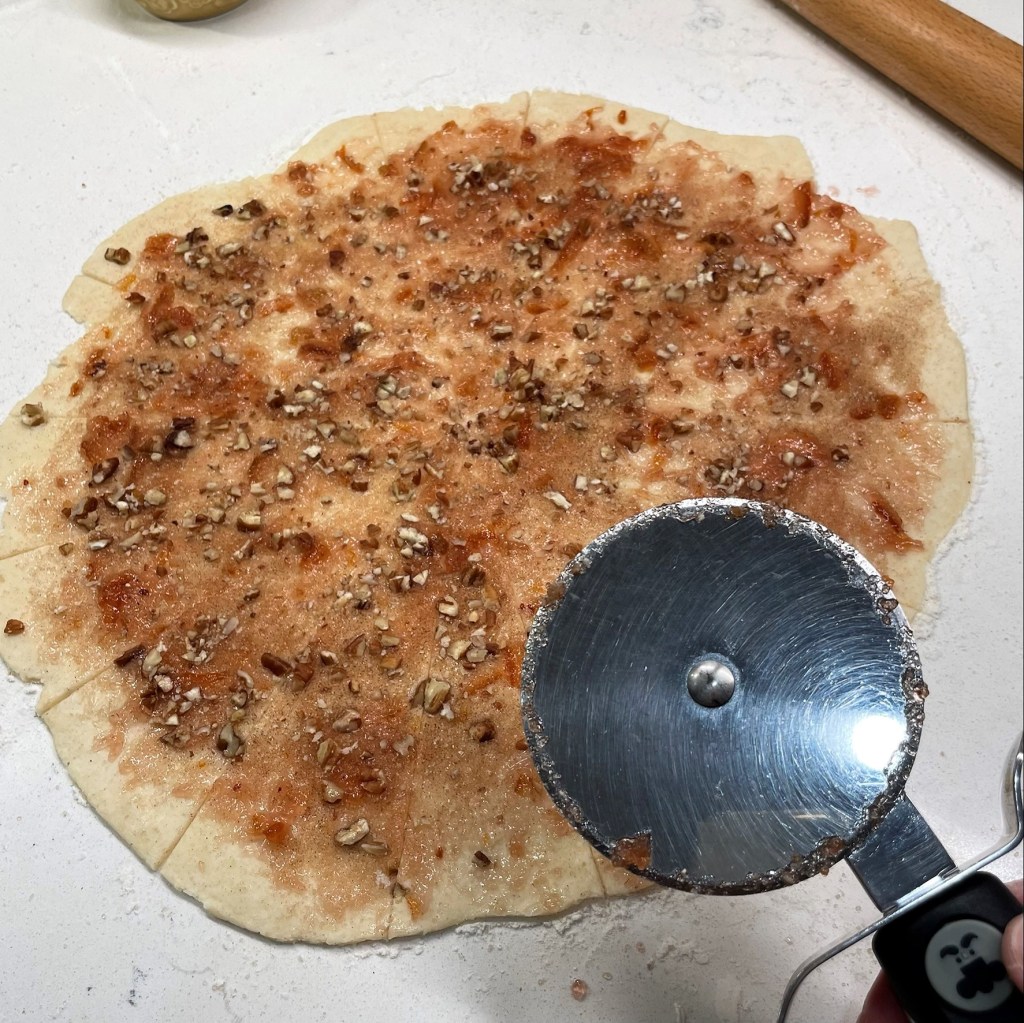
And I used a pizza wheel to cut my wedges, which made the rolling step easier and cleaner. The little things can make a big difference!
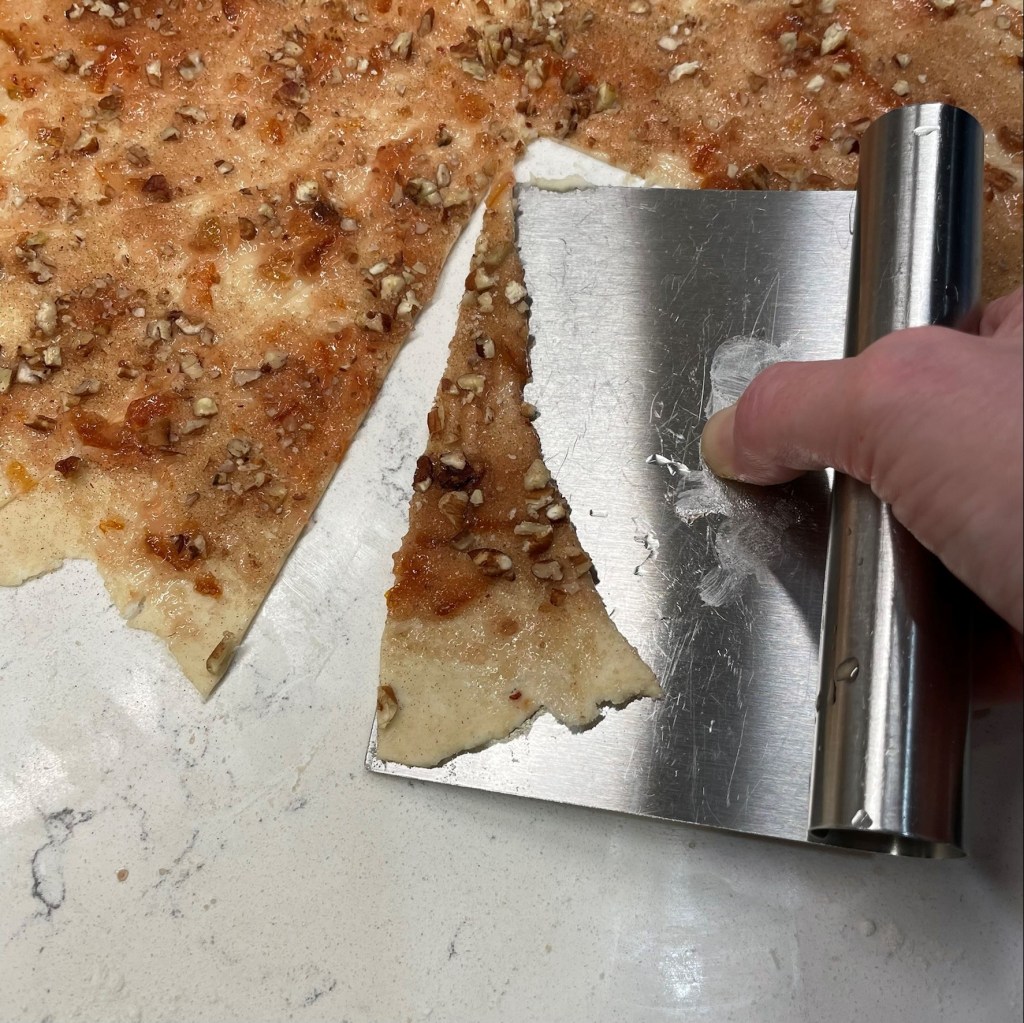
Even with clean cuts on the dough, I found it easier to roll the rugelach by pulling a wedge away from the larger whole.
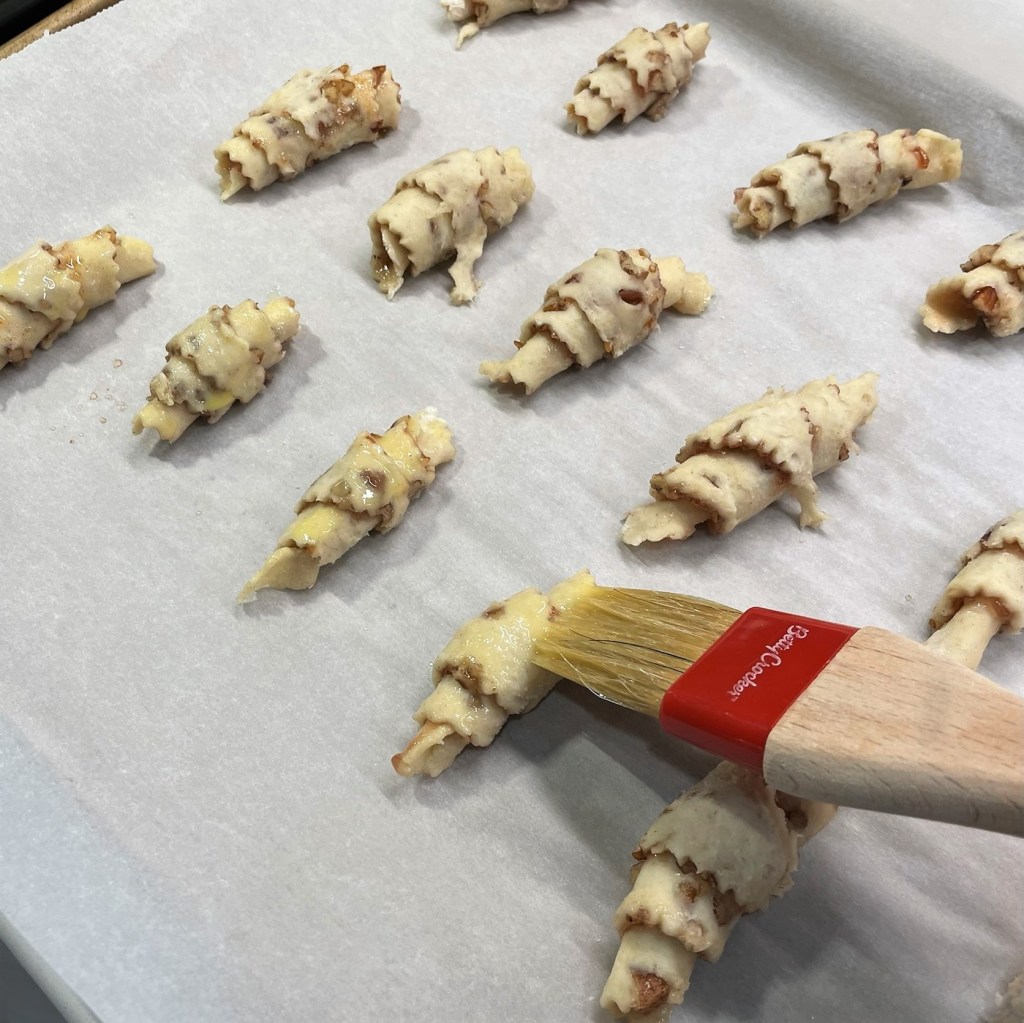
Time for baking! I brushed on a quick egg wash.
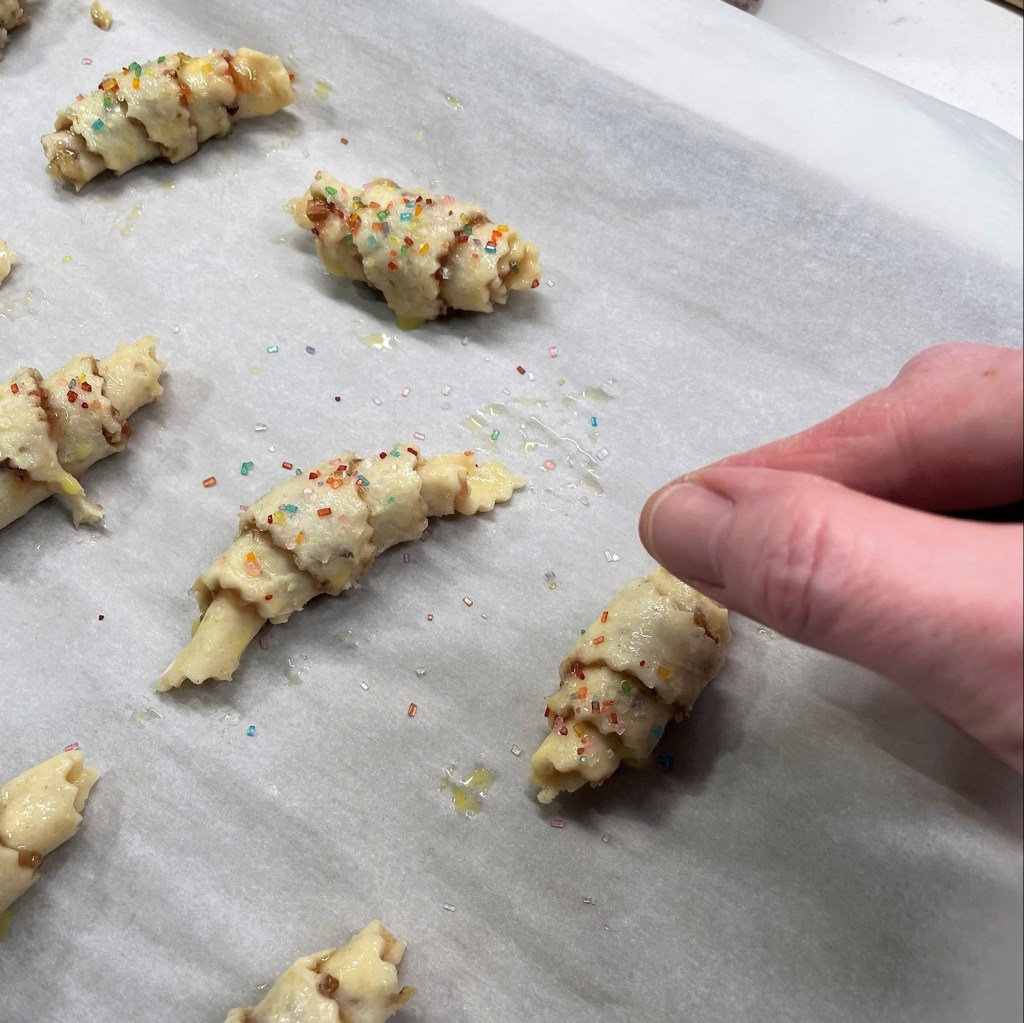
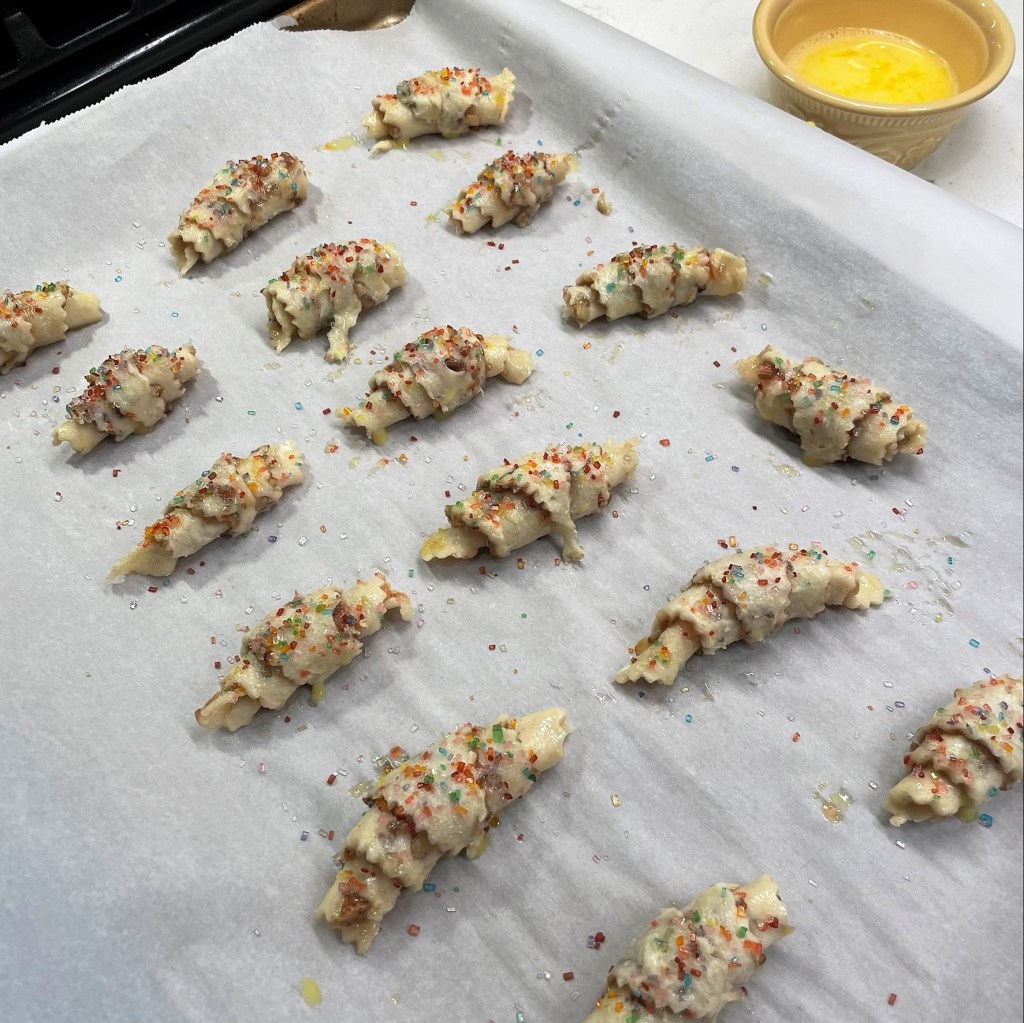
And sprinkled each cookie with coarse sugar. On my first batch, I used colorful sprinkles; on the second, natural turbinado.
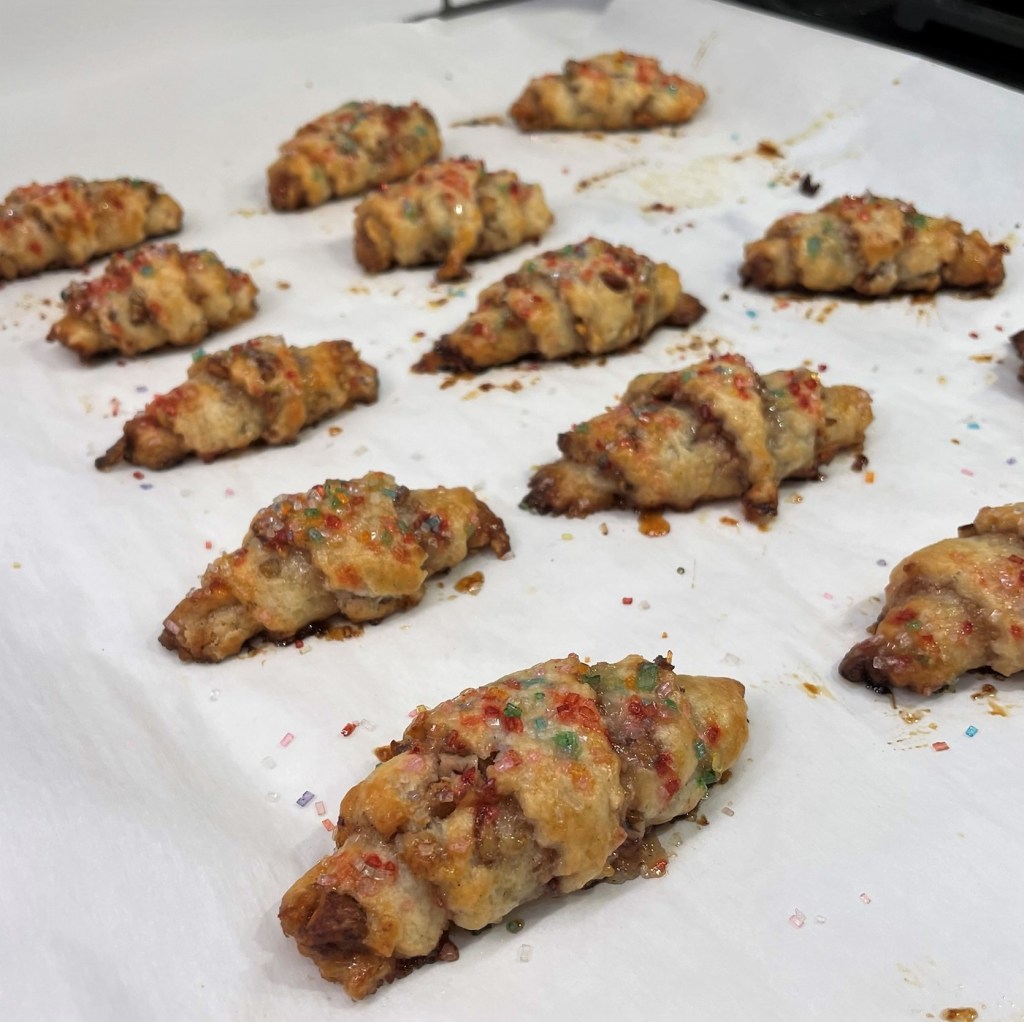
I do like the wavy edges on this batch. Into the oven for 25 minutes, until puffy and golden.
I love how the filling peeks out of the baked rugelach, and these little bite size cookies were delicious!
I’m excited to move rugelach to the “done” column of my bucket list. Next time, I want to make them with chocolate and cherry!
Combine flour, powdered sugar and salt in the bowl of a food processor and pulse a couple of times to blend them evenly. Add cold pieces of butter and cream cheese. Pulse a few times to cut the fats into the dough, then run the processor continuously just barely long enough to see it come together but not long enough for it to clump in a ball around the blades.
Scrape the dough out onto plastic wrap. Divide it into two equal pieces and shape them into disks about the size of hockey pucks. Wrap them tightly in the plastic wrap and refrigerate a few hours to overnight.
The rolling out and rolling up stage of this recipe moves quickly, so I encourage reading through it completely before beginning. As with any butter-based dough, you want to try to keep it as cold as possible so that it remains flaky during baking. Get all your filling ingredients measured, lined up and ready. Warm the preserves in a small saucepan until they loosen up to spreadable consistency, then remove from heat. Divide the cinnamon sugar and toasted pecans so that you have equal amounts for each dough disk. Set up two baking sheets, lined with parchment, and arrange enough space in the fridge to chill them for an hour or two.
Roll the dough out on a lightly floured countertop, until it is about 1/8” thick and roughly 12” in diameter. Working from the edges inward, brush half of the melted preserves onto the dough round. You should see quite a lot of dough through the preserves and try to keep the glaze light in the center of the dough round, which will ultimately be the tips of each rugelach.
Sprinkle the cinnamon sugar all over the glazed dough, and then scatter the toasted pecan bits evenly over the sugar. Lay a piece of parchment or waxed paper over the dough round and gently press to secure the pecan bits into the dough. Carefully peel the paper away and set it aside for the second batch.
Using a pizza wheel, cut the dough into 16 equal triangles, with tips at the center of the dough round. The easiest way to do this is to cut it into fourths, then cut the fourths into eighths and finally the eighths into sixteenths. This will make sense to you when you begin cutting. Some of the pecan pieces will fall off or come loose; just press them back onto the dough.
Beginning with one of the triangles, start rolling from the outer, wide end toward the center, as if rolling up a crescent roll. Keep it tight as you go and place the cookie on the parchment-lined baking sheet. I found it easier, once I had about three of the triangles rolled, to use my bench scraper to loosen a triangle away from the round before rolling. The far-away side of the dough round was the trickiest, and next time I may try rolling it on parchment paper that can be moved around for the rolling step.
When all 16 cookies have been rolled, cover the baking sheet with plastic wrap and place it in the fridge. Repeat with the second dough disk. Chill the cookies for at least an hour before baking.
Toward the end of chill time, pre-heat the oven to 350° F, with the oven rack in the center position. I baked only one sheet at a time, but if you wish to bake both at once, arrange the racks with enough room for both and plan to rotate the pans halfway through baking time.
Prepare an egg wash (beaten egg with a teaspoon of cold water) and lightly brush the chilled cookies. Sprinkle them with a pinch of sugar. You can use decorative sugar or (as I did with my second batch) a pinch of natural turbinado sugar.
Bake for about 25 minutes, until cookies are puffed up a bit and golden brown in color. Cool on the pan for about 5 minutes, then use a spatula to transfer them to a cooling rack.
WARNING: Consumption of this rich and decadent dessert after a big meal may result in excessive lazing on the sofa, and may also force extended procrastination of post-entertaining kitchen cleanup.
At least, that’s what happened at our house—twice.
We had a very small gathering at our home for Thanksgiving—just me, my husband and our friend, Maria. I knew when I was planning dinner that it would not make sense to have large pies, cakes or other desserts that yielded 12 portions. As it is, we are scarce on refrigerator space for the leftover turkey and sides, and we certainly did not need extra portions of dessert hanging around. I wanted to make something special for our intimate holiday, and this crème brûlée definitely fit the bill, both for Thanksgiving Day and again for “leftovers” night on Saturday. And let me tell you, even after said lazing kept us up until after 11 pm washing dishes, I had no regrets about this dessert.
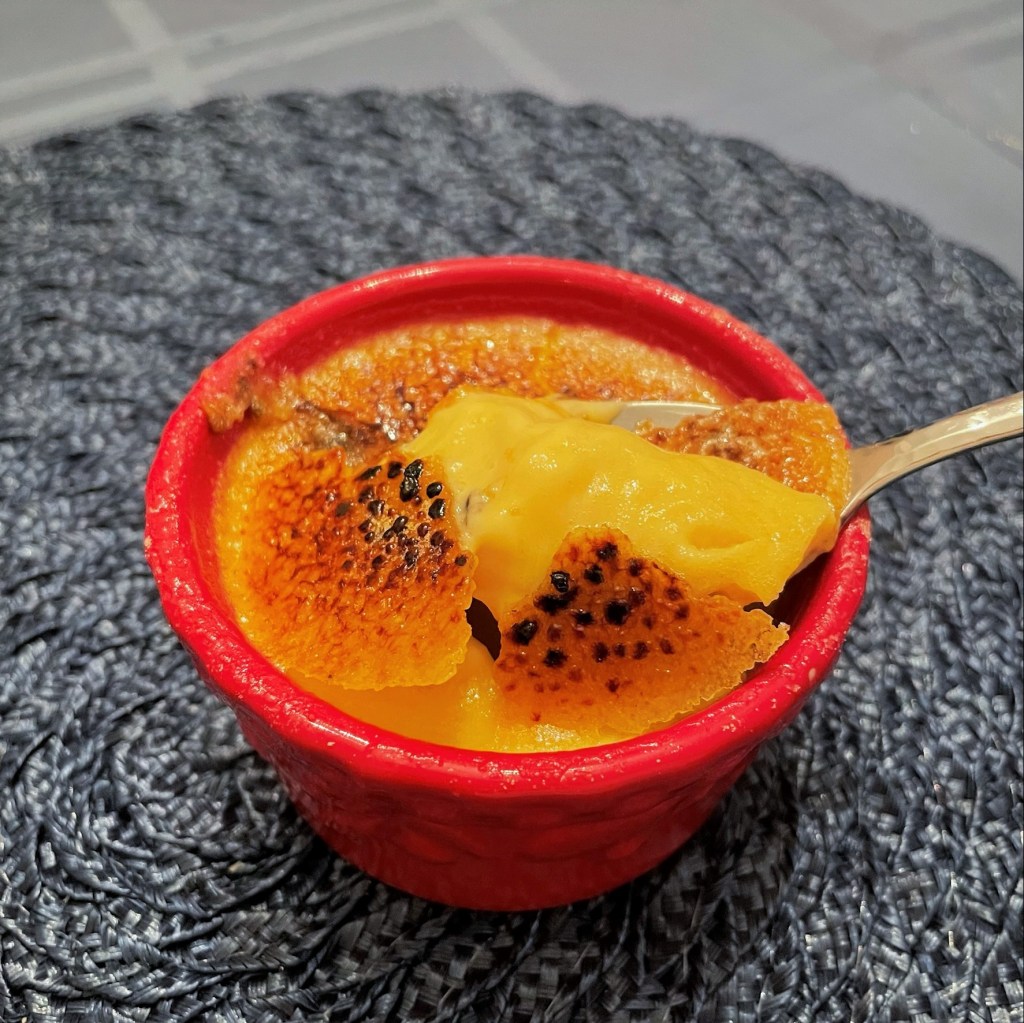
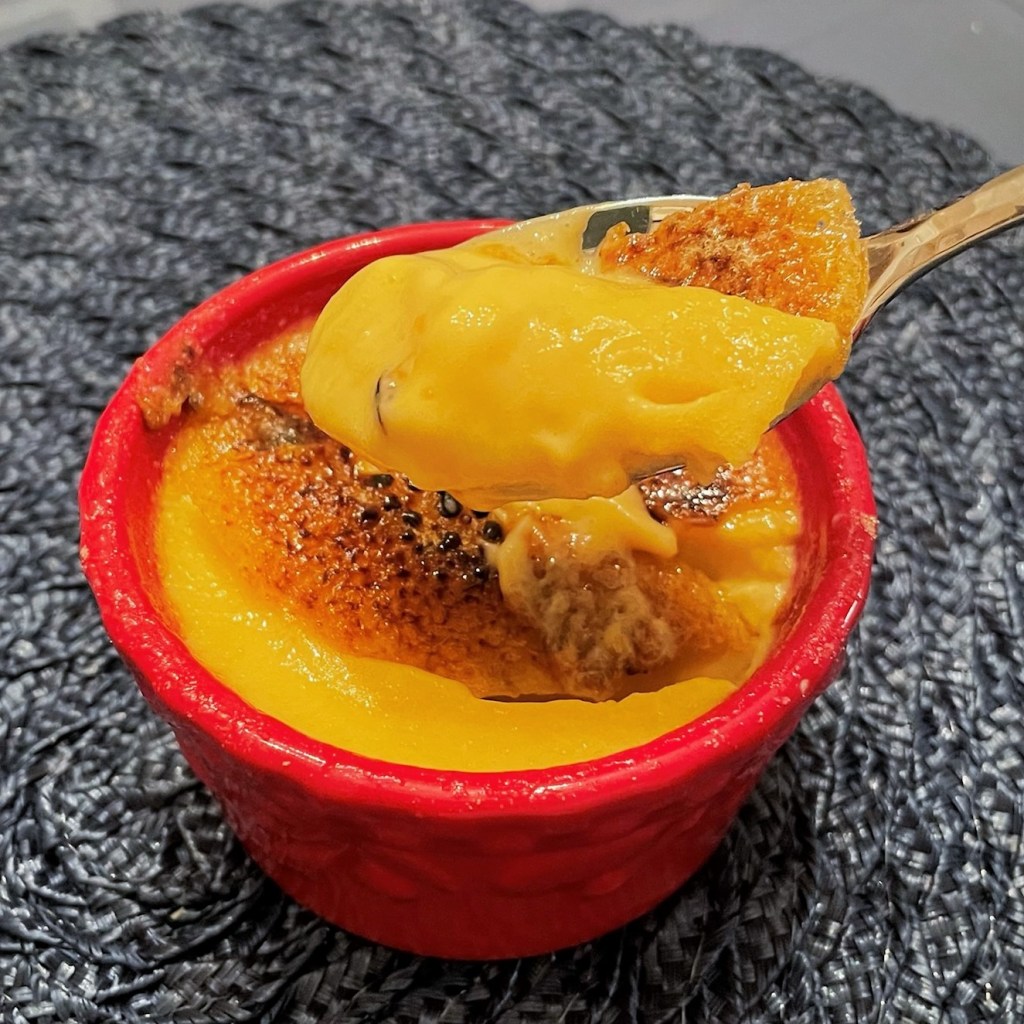
If you follow my blog regularly, you already know about our recent discovery of the Knob Creek smoked maple bourbon—the amazing dark spirit that became the star of our 2021 signature cocktail. I have made crème brûlée before, using the incomparable Ina Garten’s recipe as a guide, but I have never added bourbon to it before now. The warmth of the smoked maple bourbon married so perfectly to the creamy silkiness of our individual little custards, and the maple sugar that I torched on top was exactly what it should have been; crunchy, sweet and toffee-like. The custard inside was silky, sweet and creamy, with hints of the smoked maple bourbon. Yes, it was divine, as you’d expect from a dessert that is made from egg yolks, cream and sugar.
I can only hope that when we smashed the tips of our spoons into the crème brûlée, some of the calories fell out. On second thought, who cares?
5 large egg yolks + 1 large egg (at room temperature)
1/2 cup maple sugar* + extra for torching (see notes)
1/2 tsp. real vanilla extract
2 Tbsp. Knob Creek smoked maple bourbon
*Notes
I purchase maple sugar online from Big Tree Maple, a company that is based near my hometown in upstate New York. You might also find it in the baking aisle of a specialty market, or substitute caster sugar, which does not have the maple flavor but is also finely textured for easy dissolving.
Ina’s recipe does not call for salt, but I like to put a pinch in most dessert recipes because it highlights the flavors and balances the sweet.
If you use a stand mixer to make the crème brûlée, keep it fitted with the mixing paddle rather than the whisk, and work on the slowest speed so you don’t create a lot of bubbles. If you mix by hand, use a whisk but keep a gentle touch when adding the hot cream to the eggs.
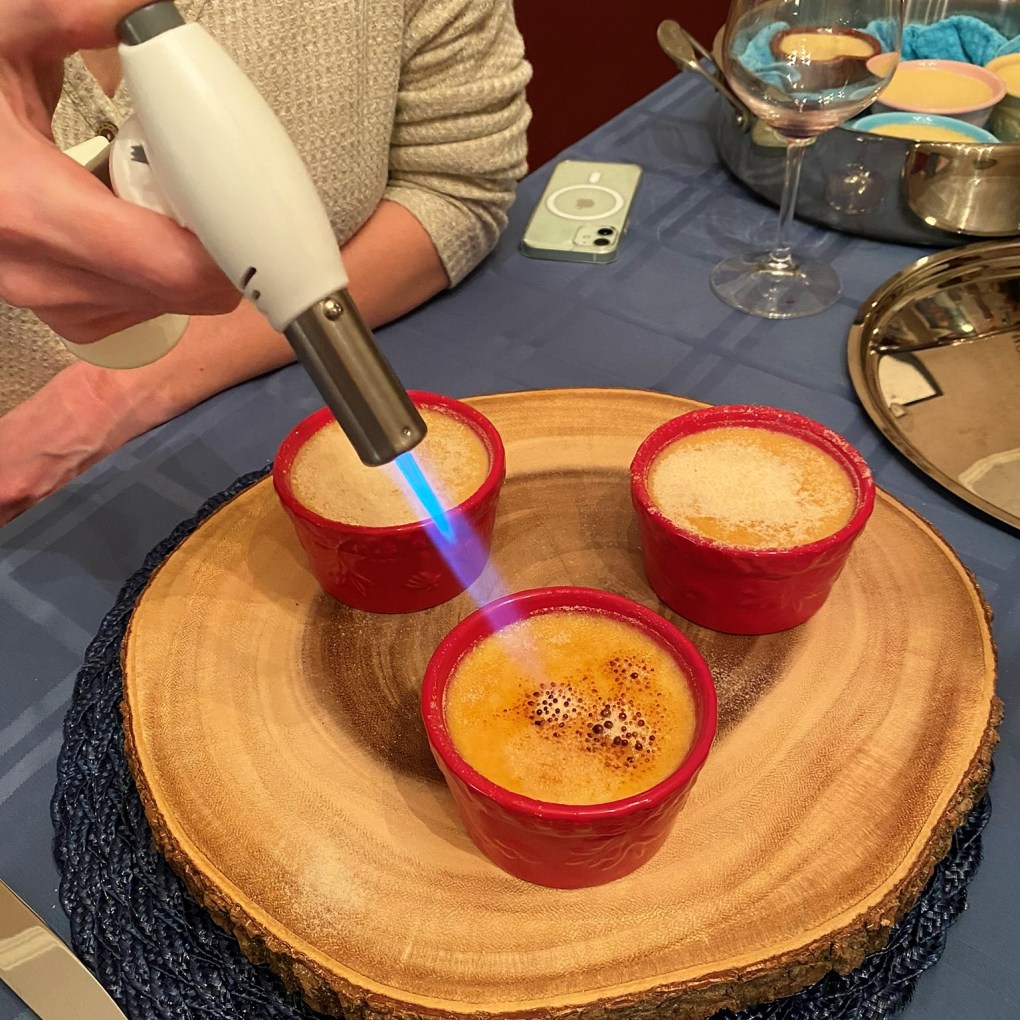
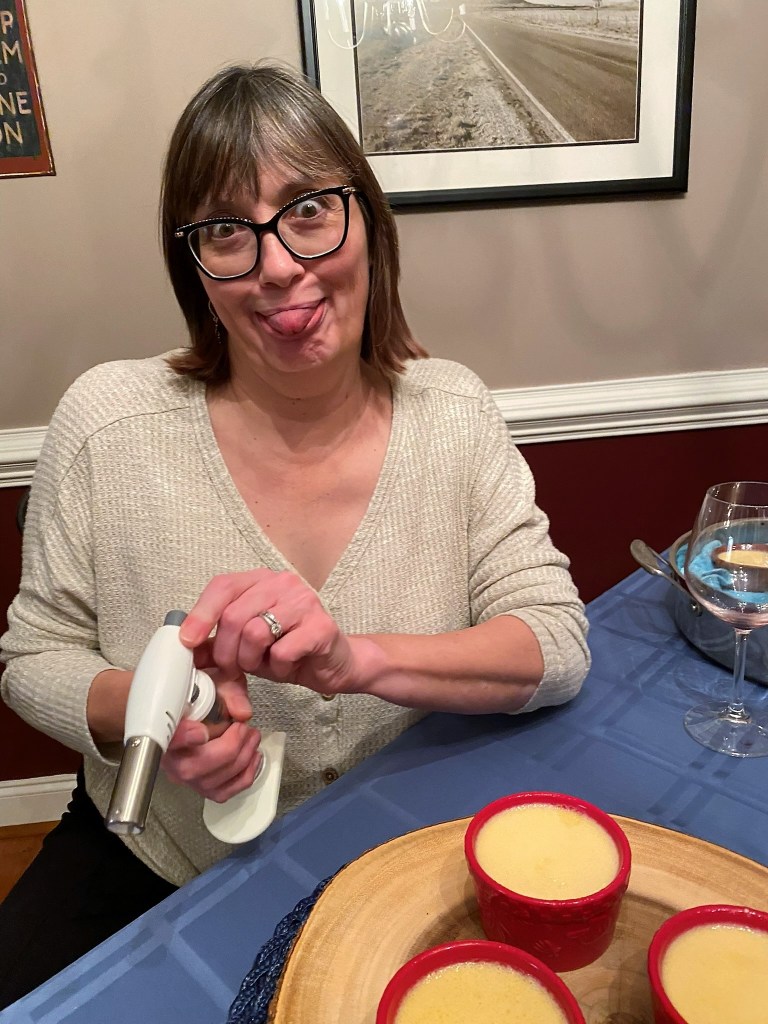
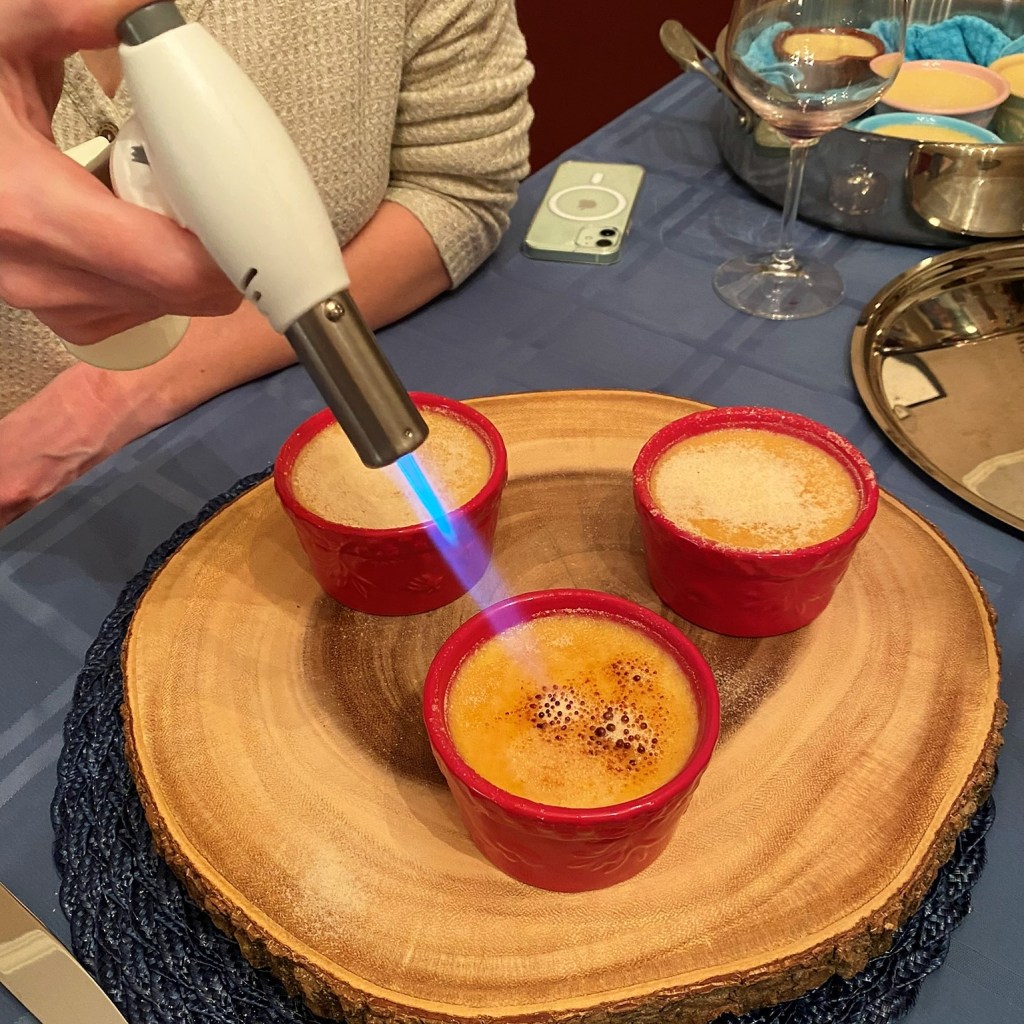
As if our holiday was not already joyful, I also had the pleasure of finishing our dessert tableside with my kitchen torch, a dramatic endeavor that just pleased the dickens out of my Leo personality.
Let’s do this!
Instructions
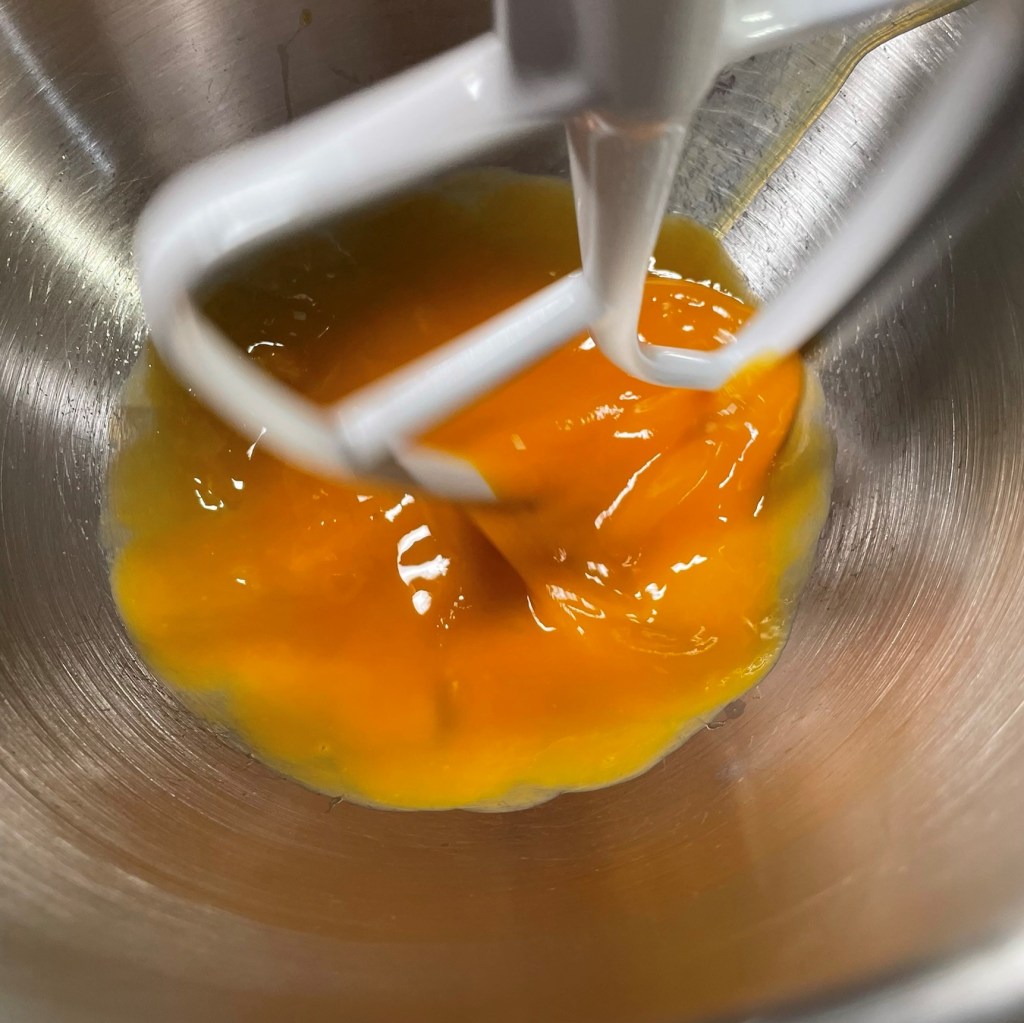
My free range egg yolks are going to give the crème brûlée a rich color.
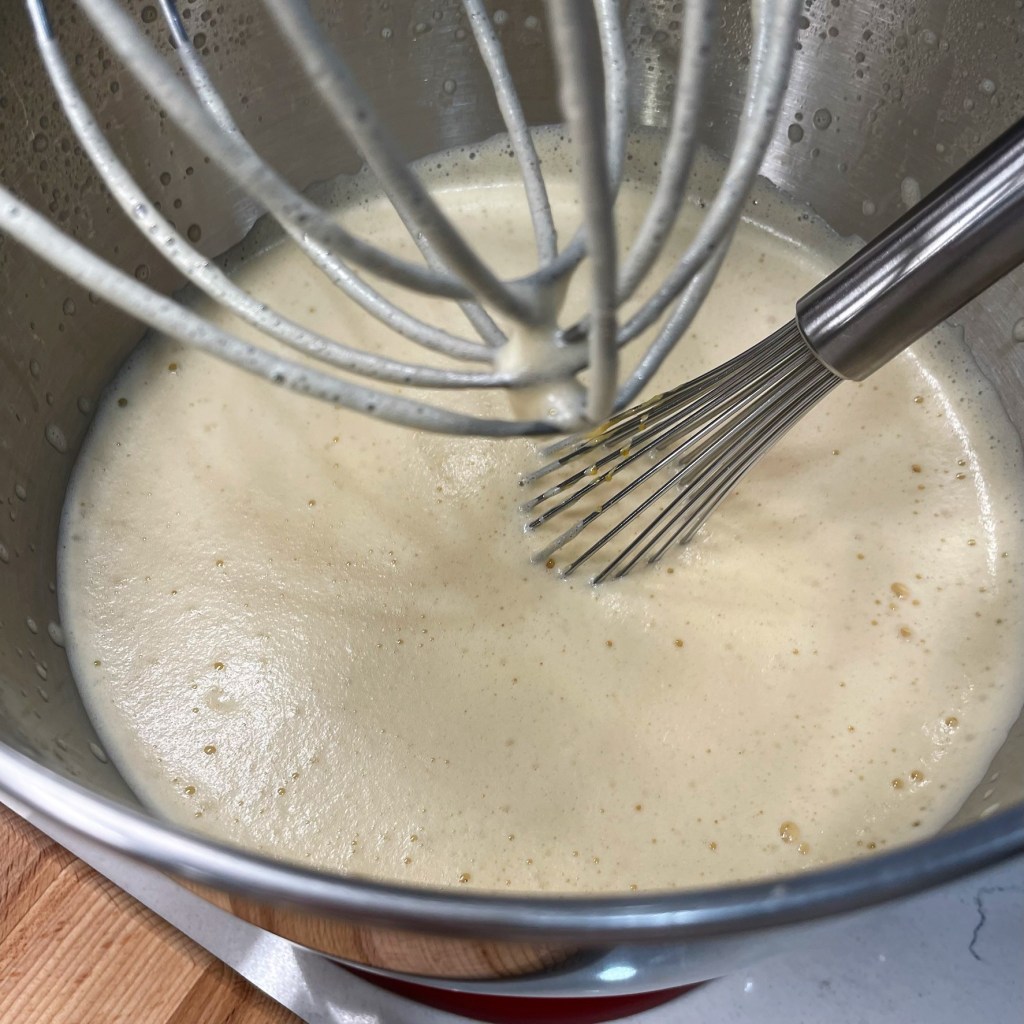
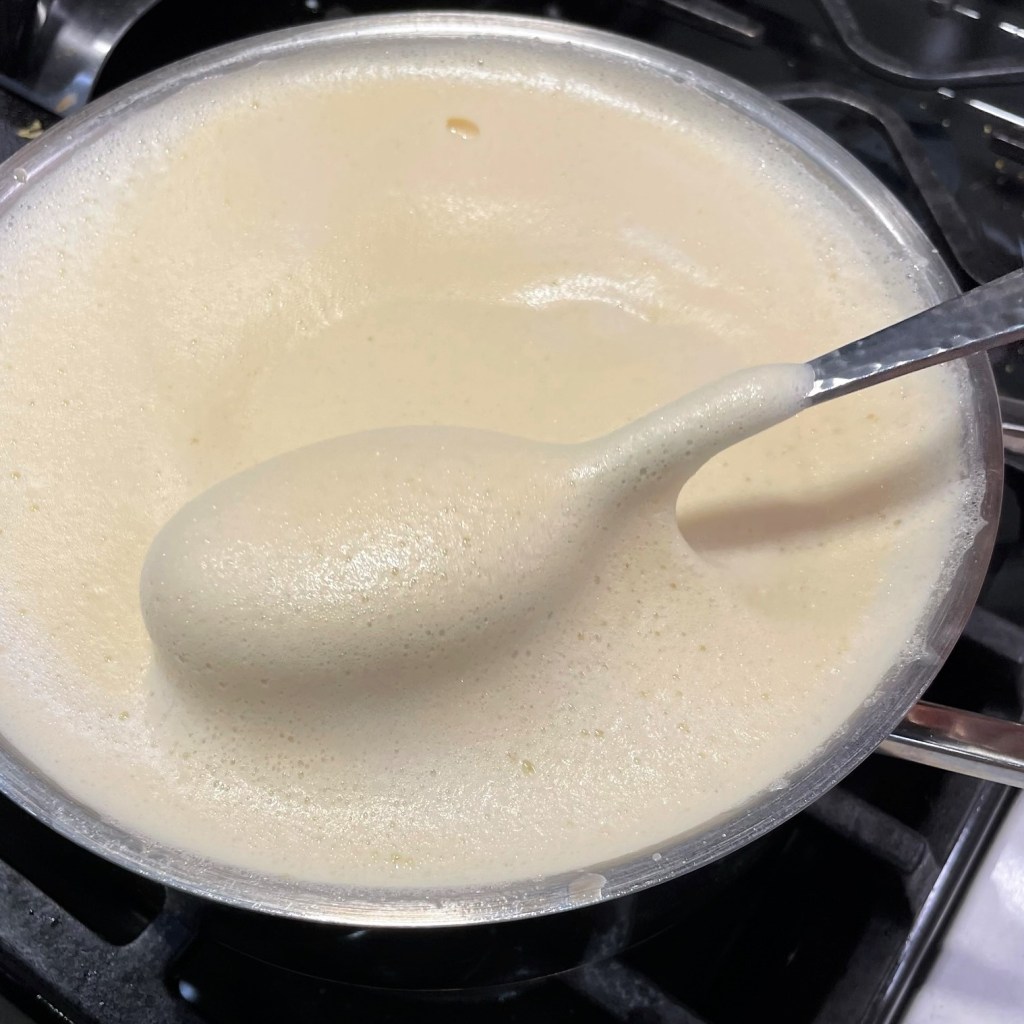
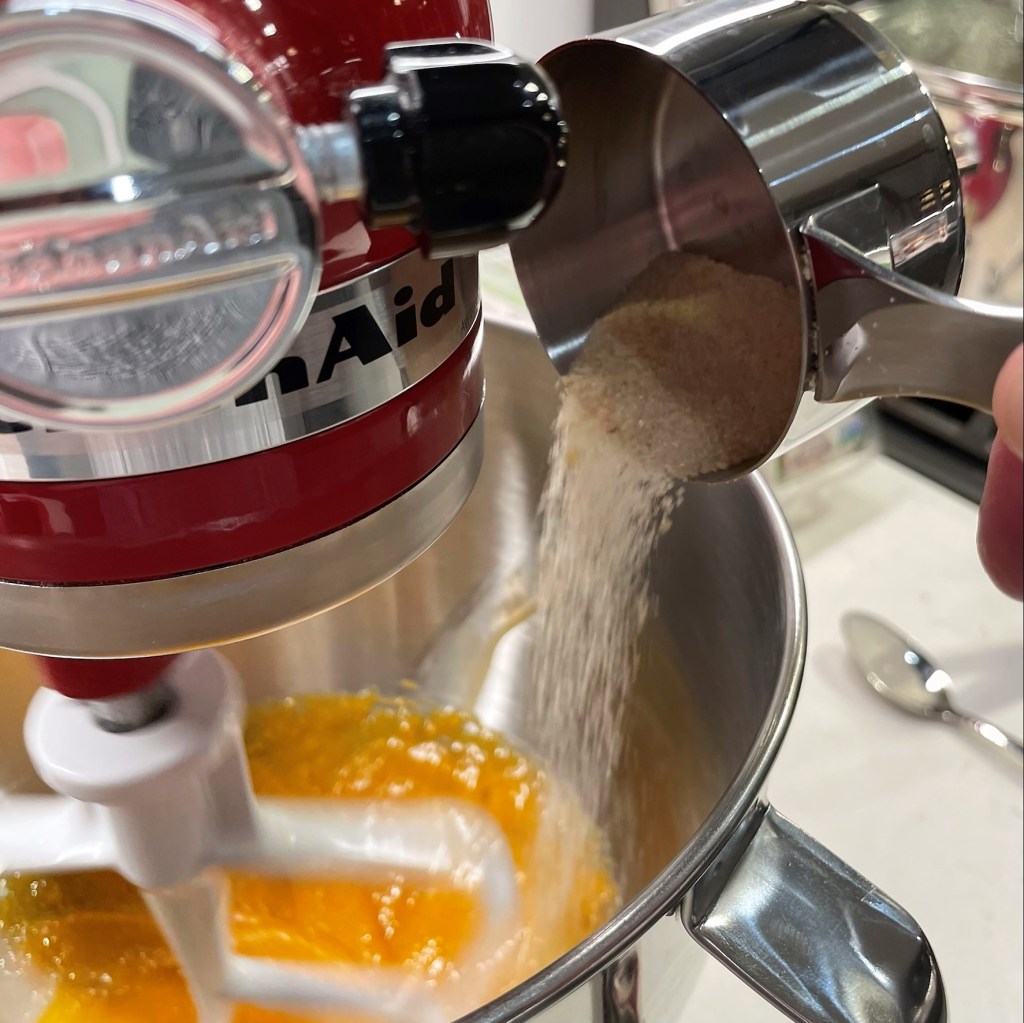
Gradually add the maple sugar to the eggs, taking care not to whip bubbles into the mixture.
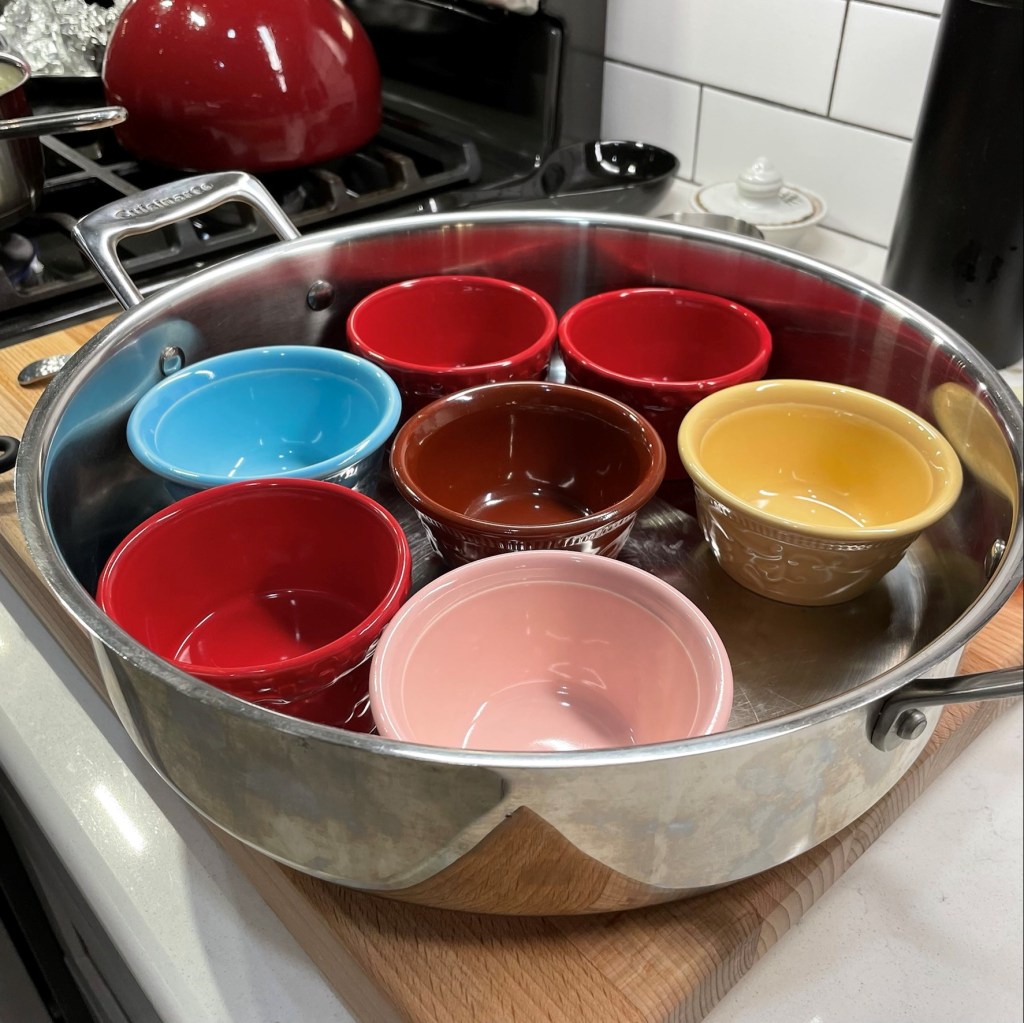
While the cream is heating, prepare a pan for a water bath and arrange the ramekins in it.
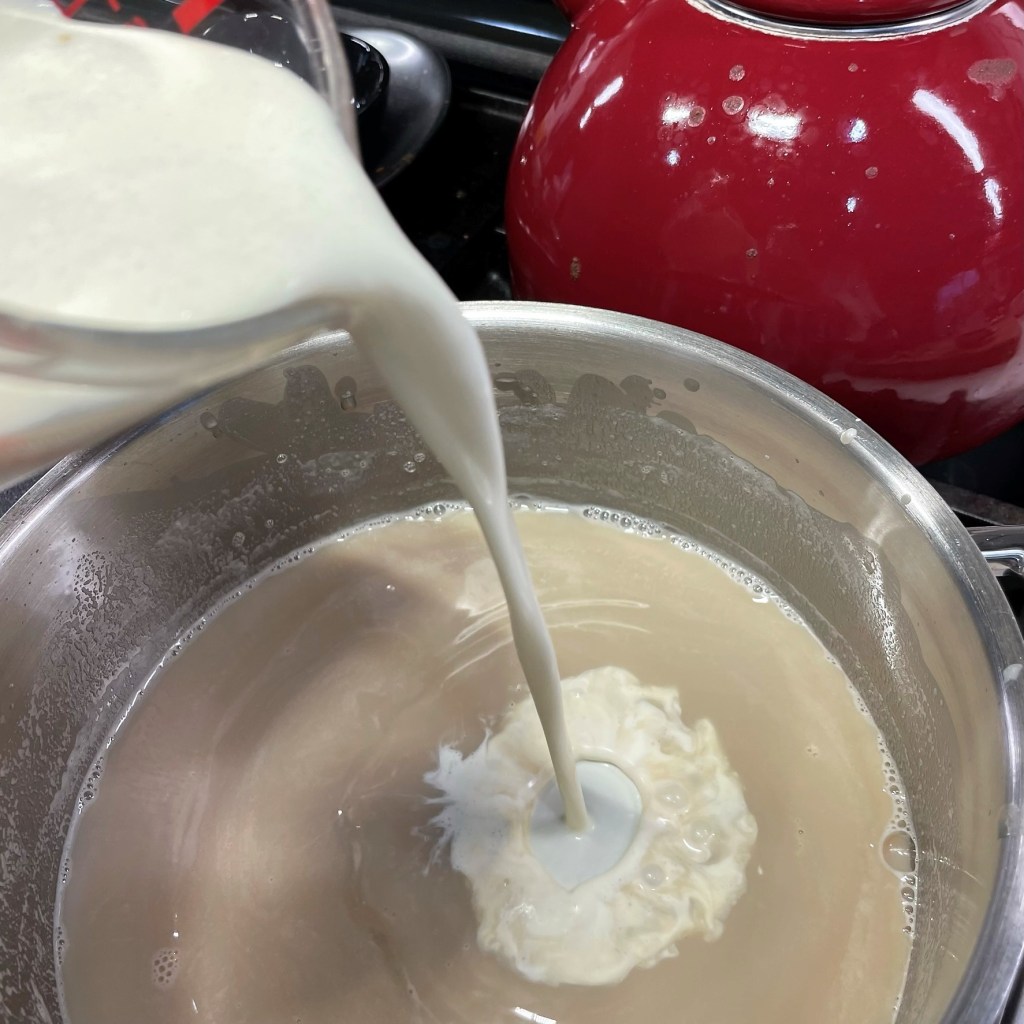
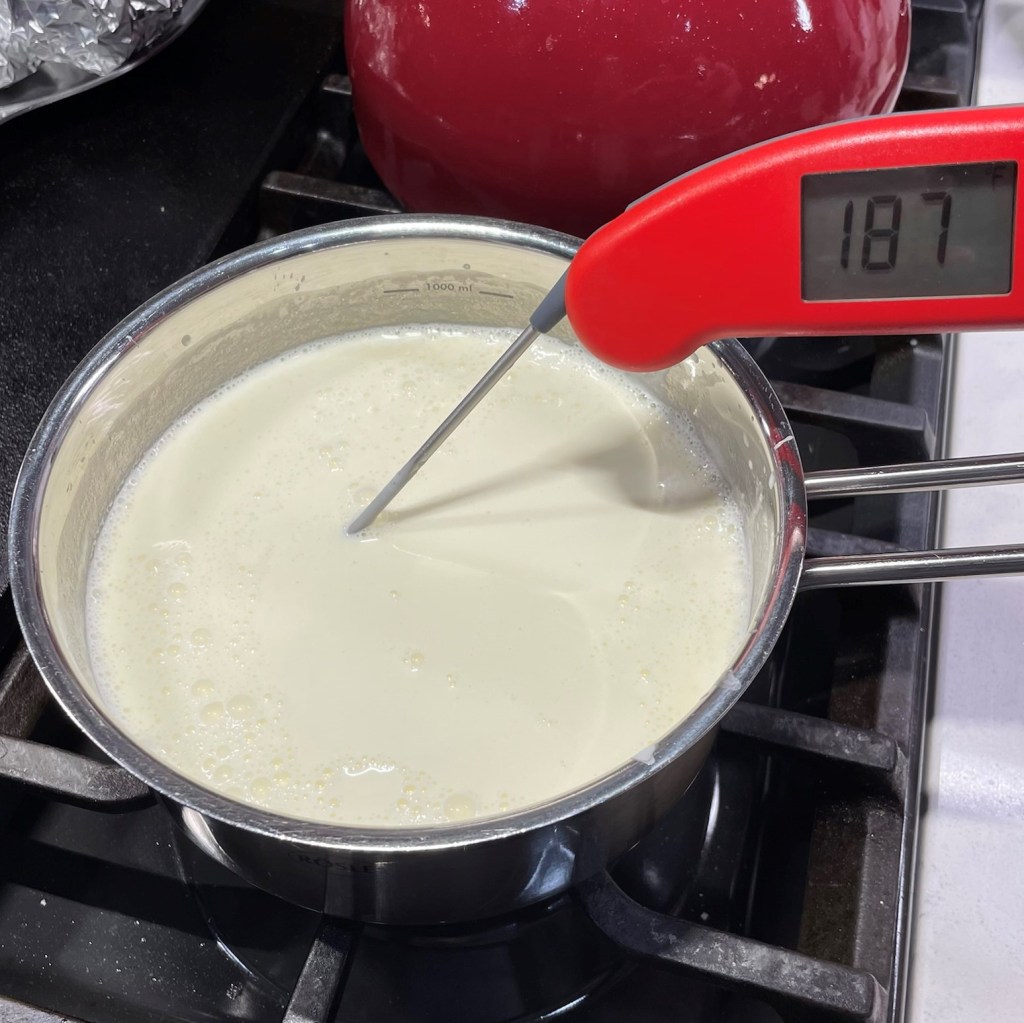
Heat the heavy cream with a pinch of salt until it is very hot but not boiling, then drizzle it into the egg mixture, stirring constantly.
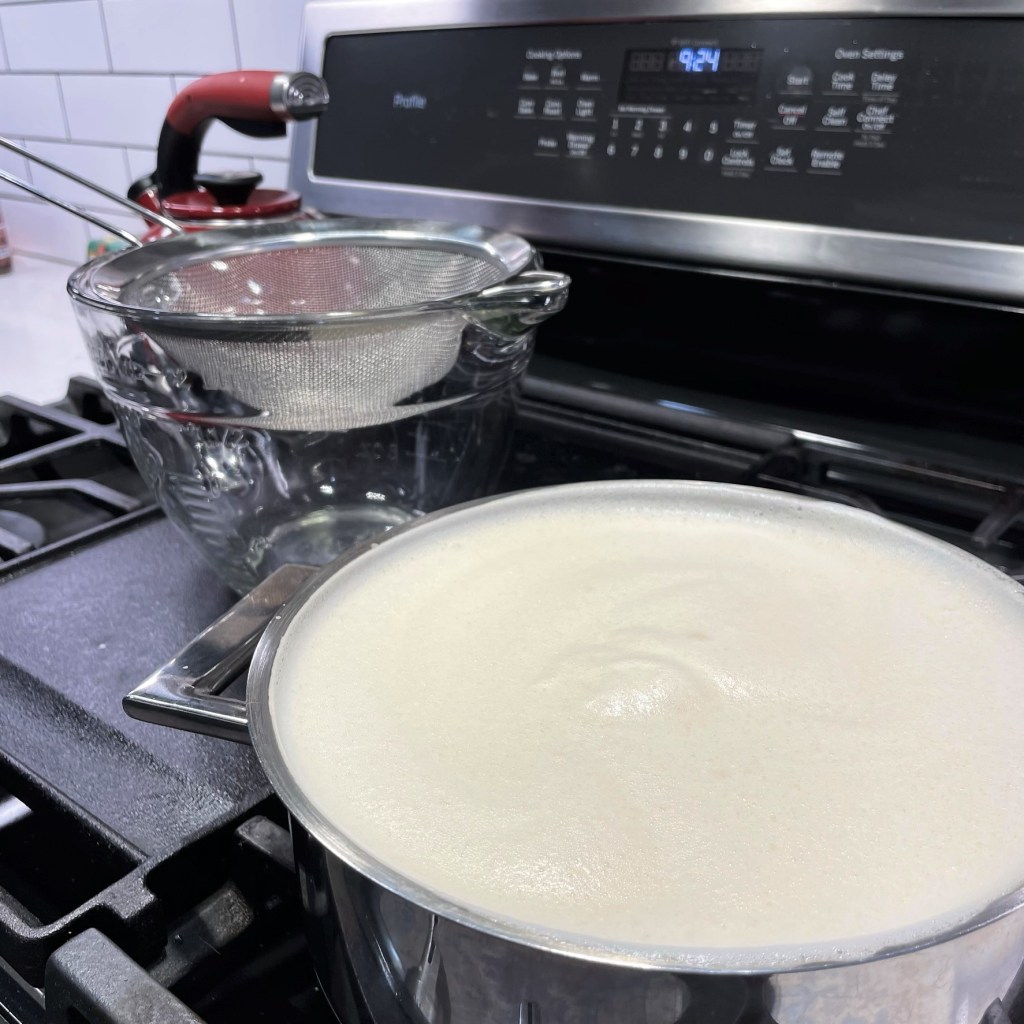
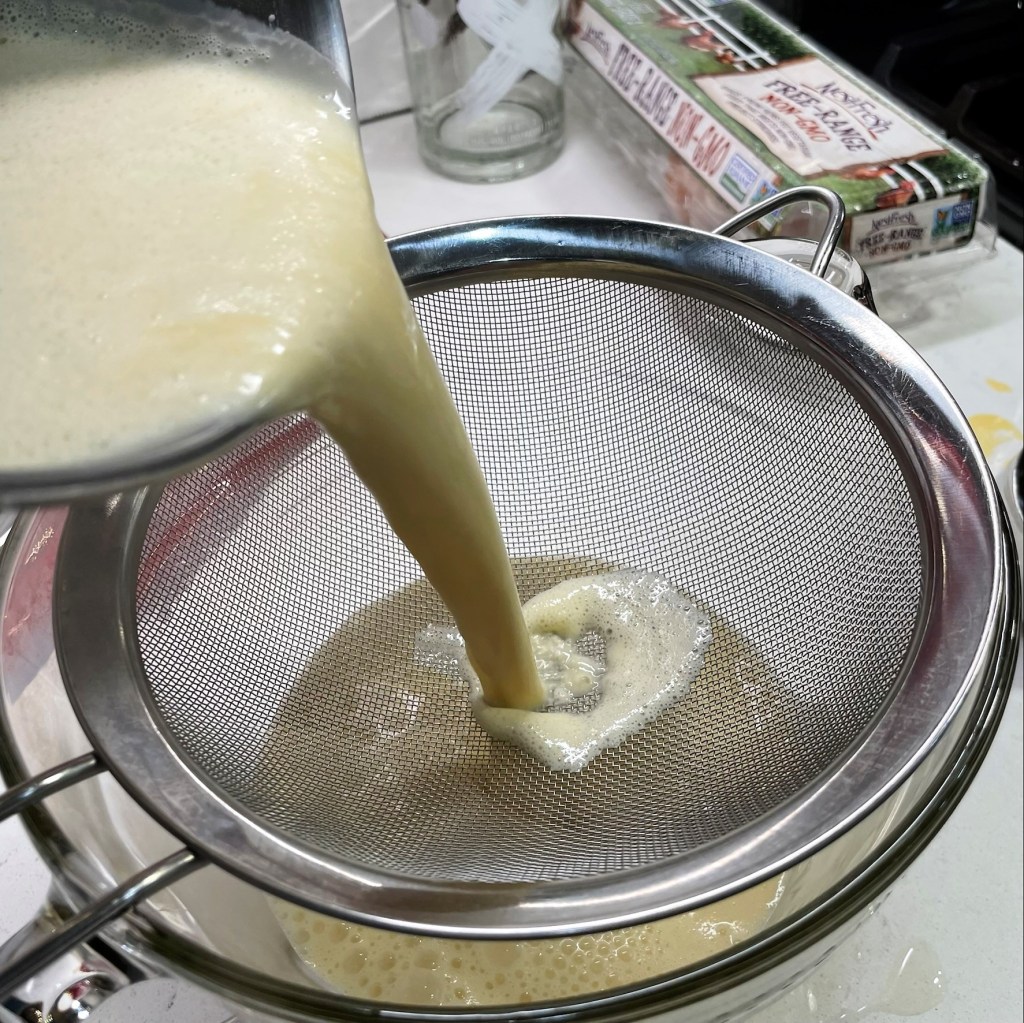
Pour the custard through a mesh strainer to catch any curdled bits of egg.
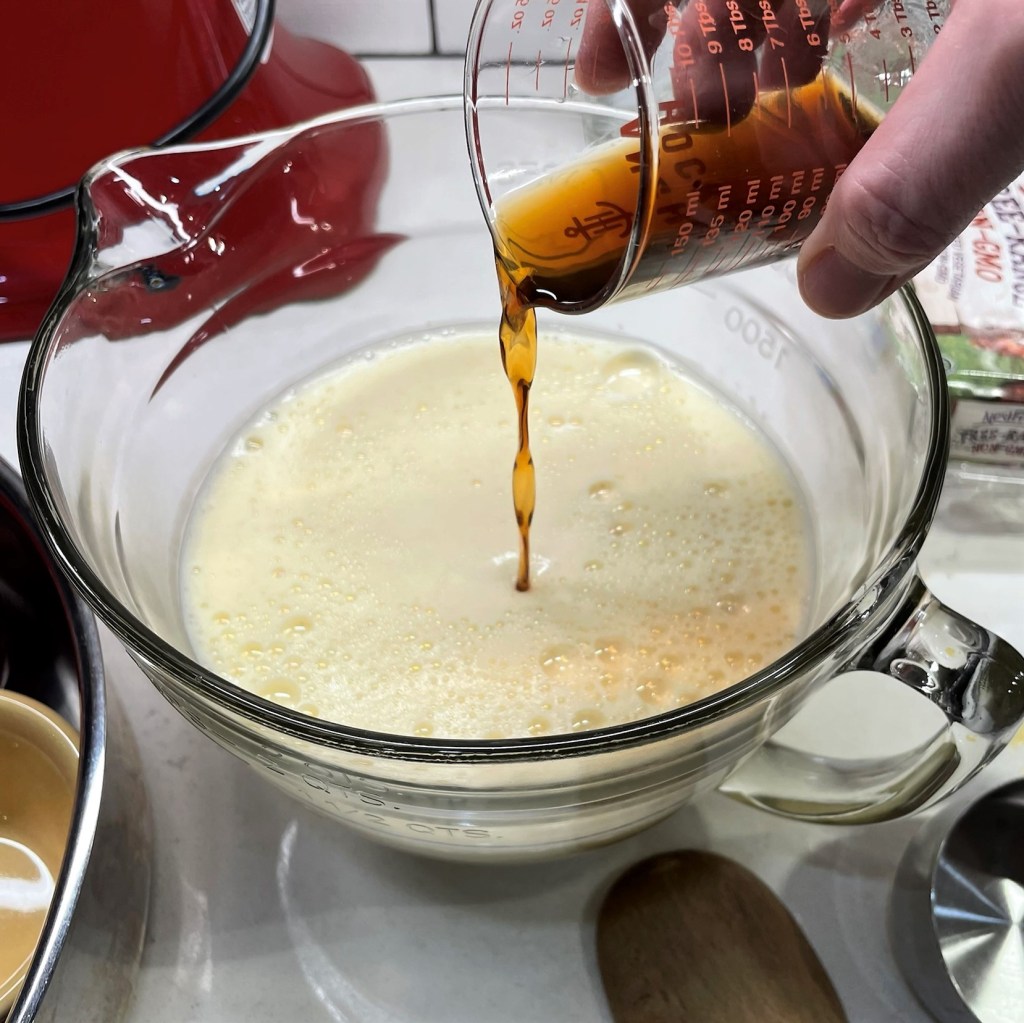
Stir in the vanilla and bourbon. Smells so good!
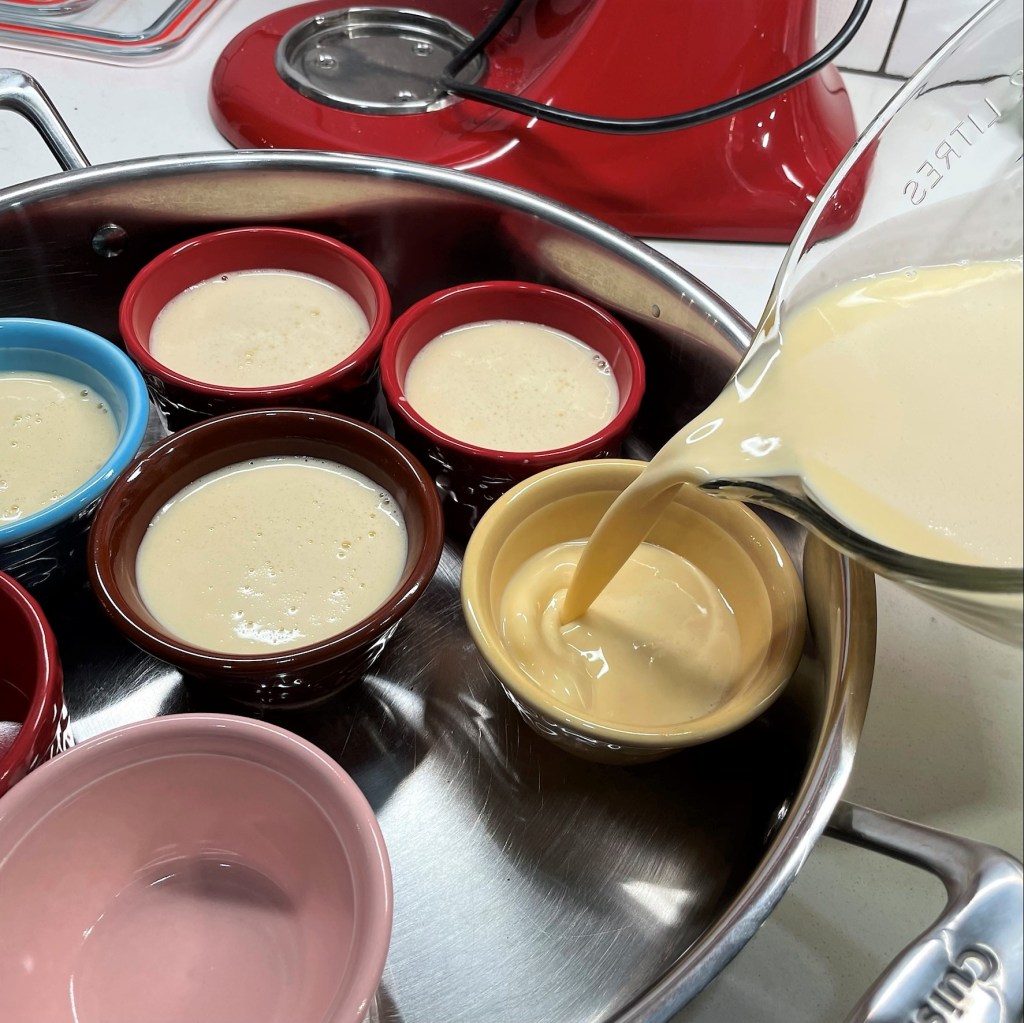
Divide the custard among the ramekins.
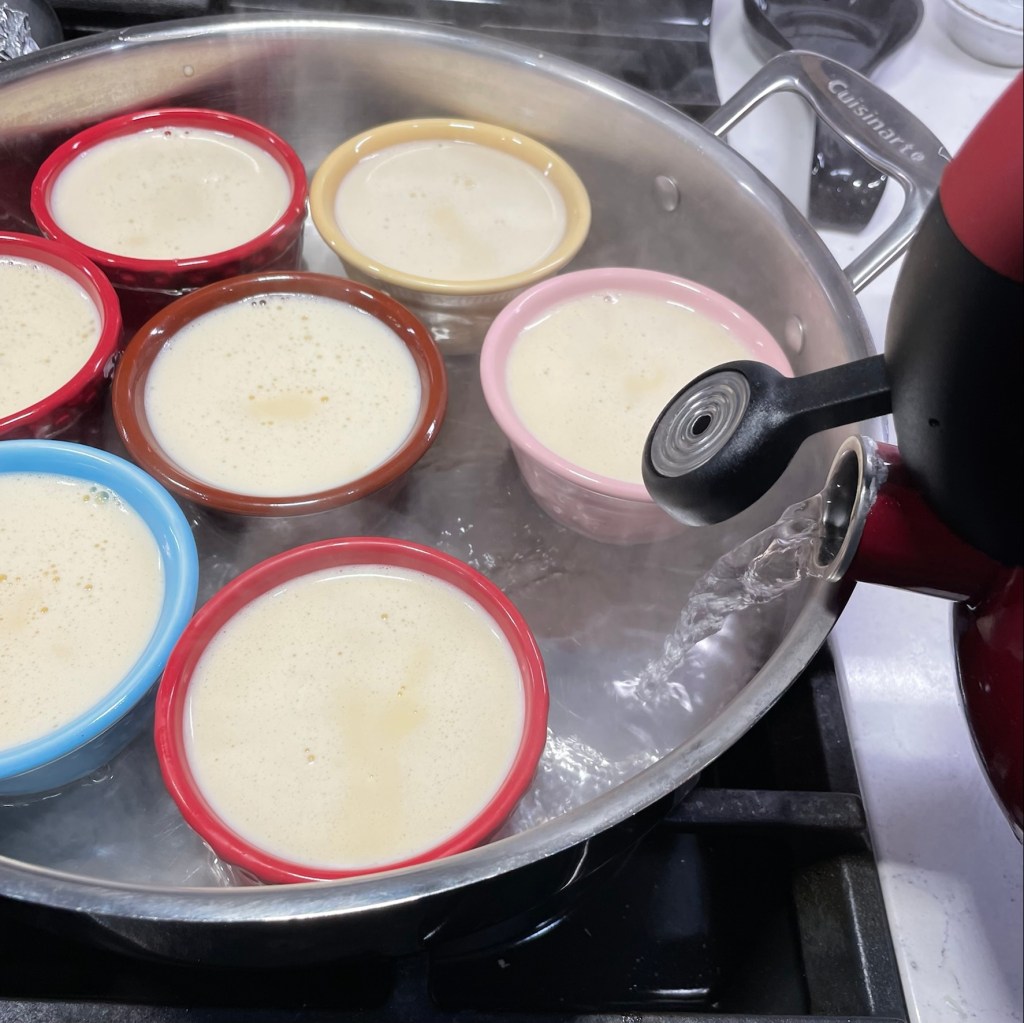
Pour boiling water into the pan, and pop it into the 300° F oven for 35 to 40 minutes, until custards are set. Cool, then chill overnight.
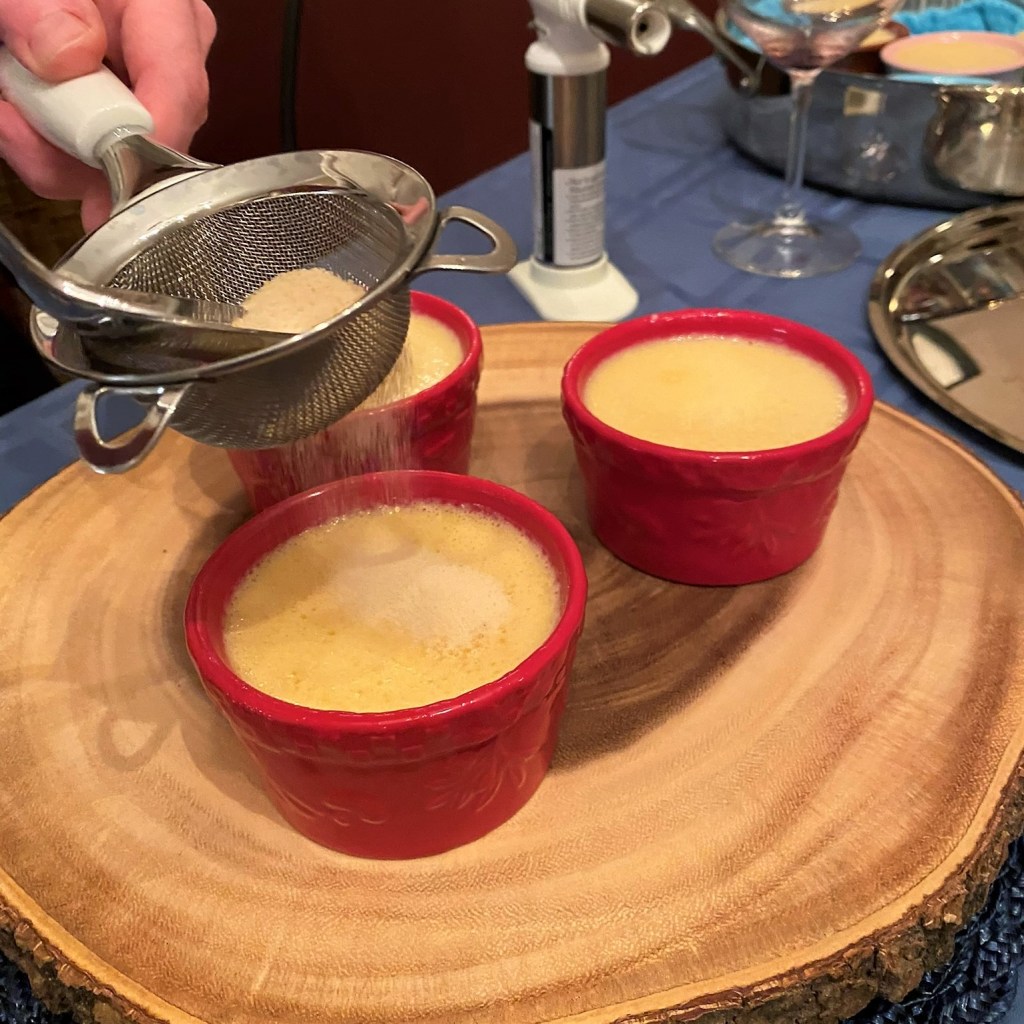
Sprinkle maple sugar over the top of the custards. Tip them to get the sugar even, and all the way to the edges.
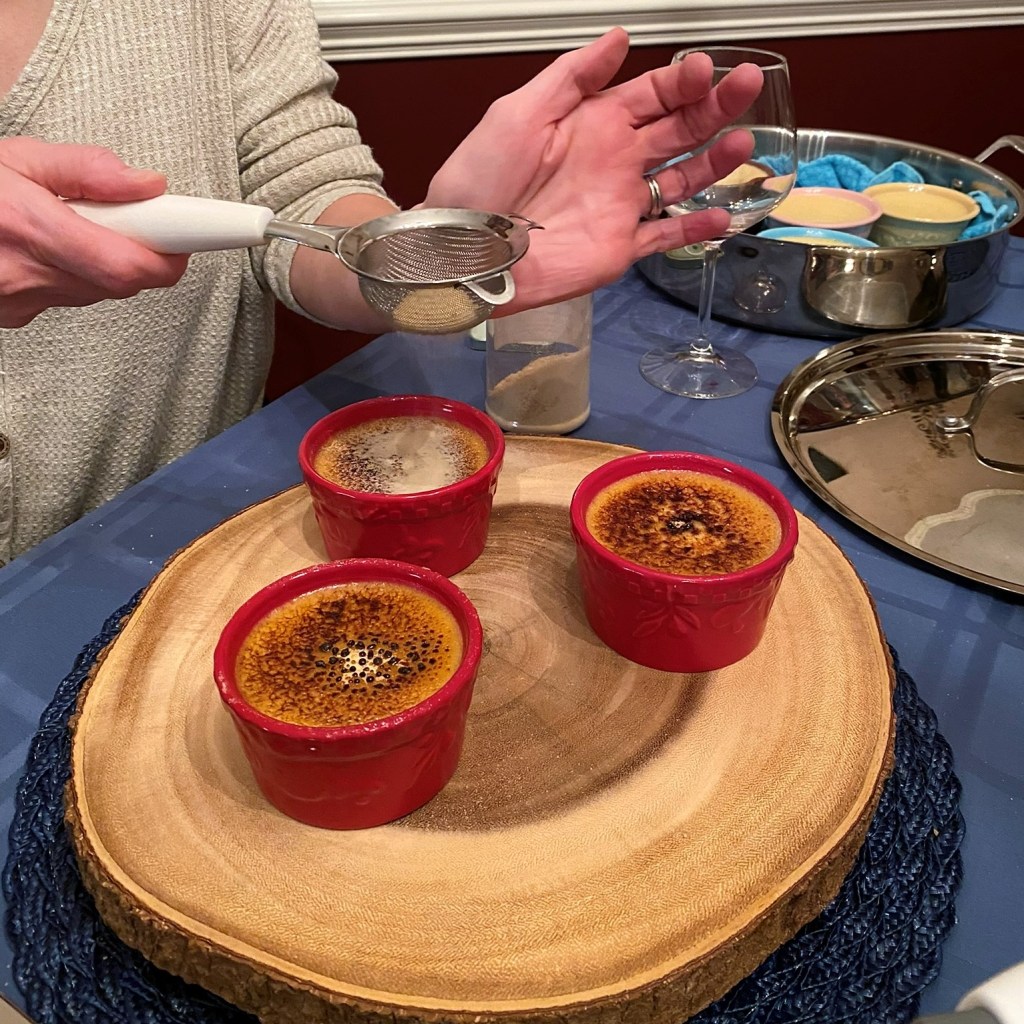
The camera always makes the butane flame look like a light saber! Take your time torching the custards, and try to caramelize all the way to the edge.
Just for kicks (and crunch), I sprinkled on another thin layer of maple sugar, and torched them again.
Allow the crème brûlée to cool at least a minute, to harden the sugar top.
Try to restrain yourself. Just try.
Preheat the oven to 300° F. Heat about 2 cups of water in a tea kettle for a water bath. Prepare your ramekins by arranging them in a handled pan with sides at least as high as the ramekins.
In a medium saucepan, heat heavy cream over medium-low heat until hot butnot boiling. Stir in a pinch of salt. Transfer the hot cream to a measuring cup with a spout for easier blending in the next steps.
Combine the egg and egg yolks in a mixing bowl, and gradually stir in the maple sugar until the mixture is smooth and even, and the sugar appears somewhat dissolved.
Very gradually pour the hot cream into the egg mixture, stirring constantly to prevent curdling. This is easiest with a stand mixer, but you can do it by hand as well. I recommend placing your mixing bowl on something that will prevent it from slipping while you stir or whisk.
Strain the custard mixture through a mesh strainer over a pitcher bowl or large measuring cup. This is not absolutely necessary, but it will help strain out any curdled bits of egg.
Stir vanilla and bourbon into the custard. Slowly pour the custard into the ramekins. I did this by filling each of them halfway, then “topping them off” around the pan until all were filled equally.
Carefully pour hot water into the pan, taking care to not splash it into the ramekins. The water bath should be about halfway up the sides of the ramekins. Transfer the water bath pan to the preheated oven and bake for 35 to 40 minutes, or until custards are just barely jiggly. They will continue to cook when you remove the pan from the oven. Allow the pan to cool until you’re comfortable handling them. Remove the ramekins and cool on a rack, then cover and transfer them to the refrigerator for several hours to overnight.
To finish the crème brûlée, remove ramekins from the fridge about 20 minutes before you’re ready to serve. Sprinkle about two teaspoons of maple sugar over the entire surface of each custard. Use a kitchen torch to caramelize the sugar evenly. Sprinkle an additional teaspoon onto each, and torch again. Allow the crème brûlées to cool for at least a minute so the melted sugar will harden and create the beautiful, shiny crust.
I’m thinking that maybe I need to make this again. You know, just to be sure.
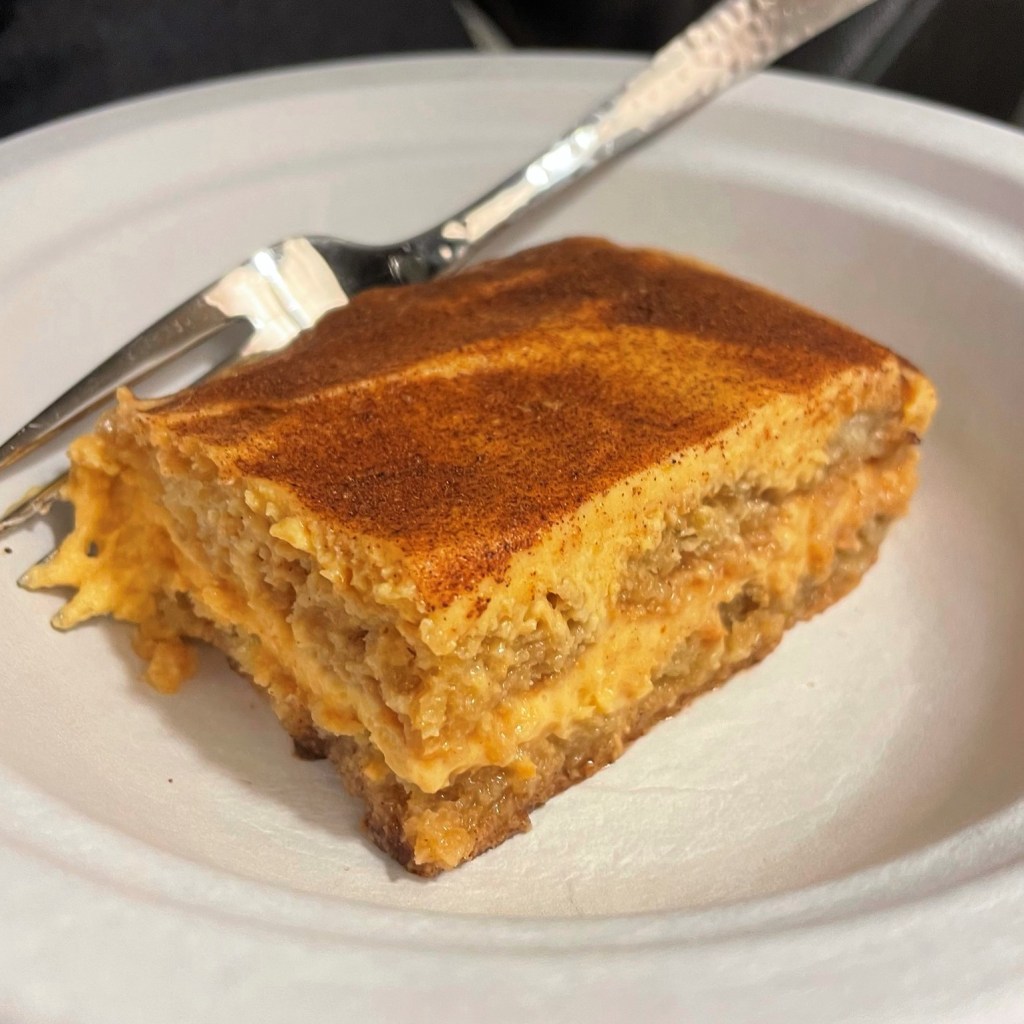
If I told you that you could serve up a pumpkin spice dessert for Thanksgiving that was creamy, indulgent, no-bake, no-cook and easy to prepare ahead with no special tools—well, you’d probably think I was lying or, at least, overpromising, right? But the proof is right there in the picture, and this tiramisu achieves all of that and then some.
As I surmised when I made the chocolate-cherry tiramisu at Valentine’s Day this year, the classic Italian dessert is basically a dressed-up version of an ice-box cake. Layers of sweetened mascarpone cream and espresso-soaked delicate ladyfingers are accented with a hint of rum or brandy, and dusted with pure cocoa for a chocolate-y finish. I am a huge fan of tiramisu, and I enjoyed it most recently in its traditional Italian style when my friend, Peg, and I traveled up to West Virginia and Ohio for the Fiesta Factory tent sale.
But I came home thinking, “why couldn’t I give this scrumptious dessert a little Thanksgiving twist?” And so I did. Note that I have made several substitutions from a typical tiramisu recipe:
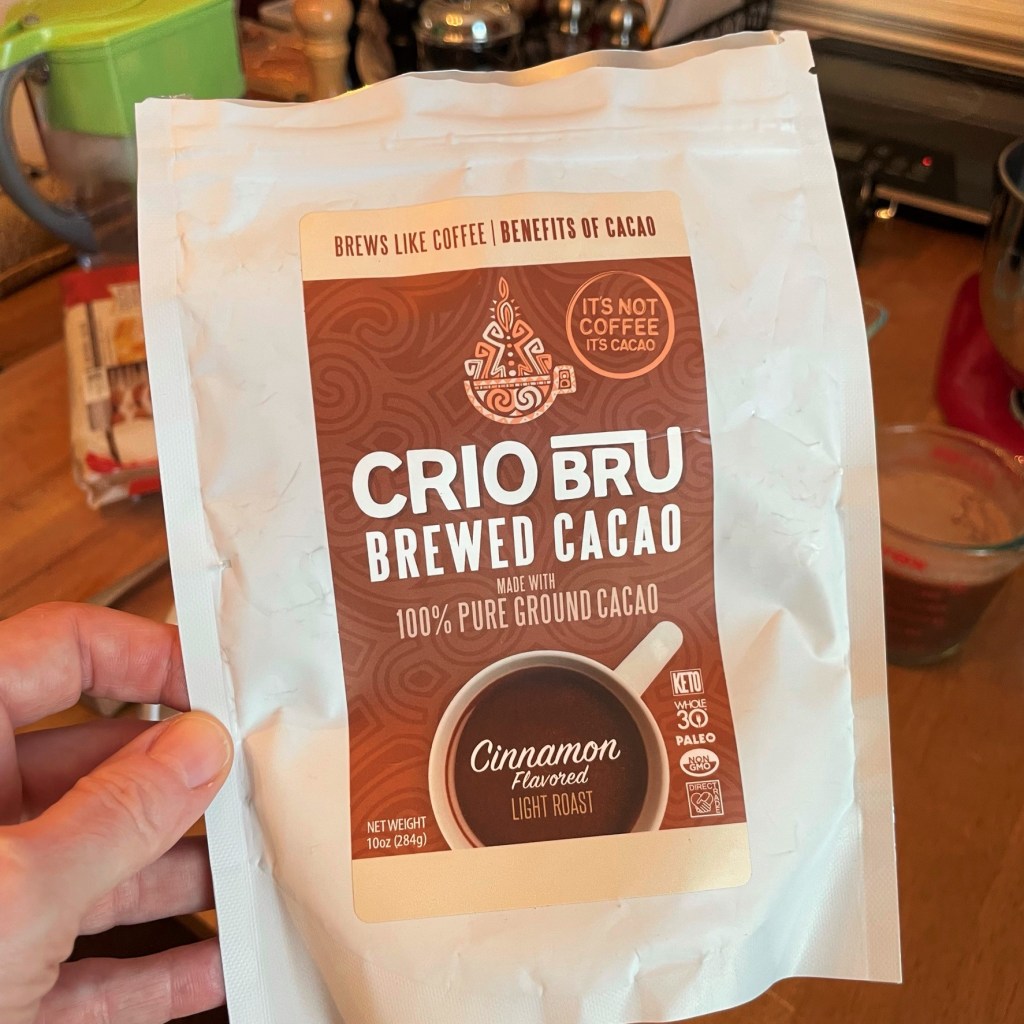
For the espresso, a brewed cacao beverage that’s flavored with cinnamon.
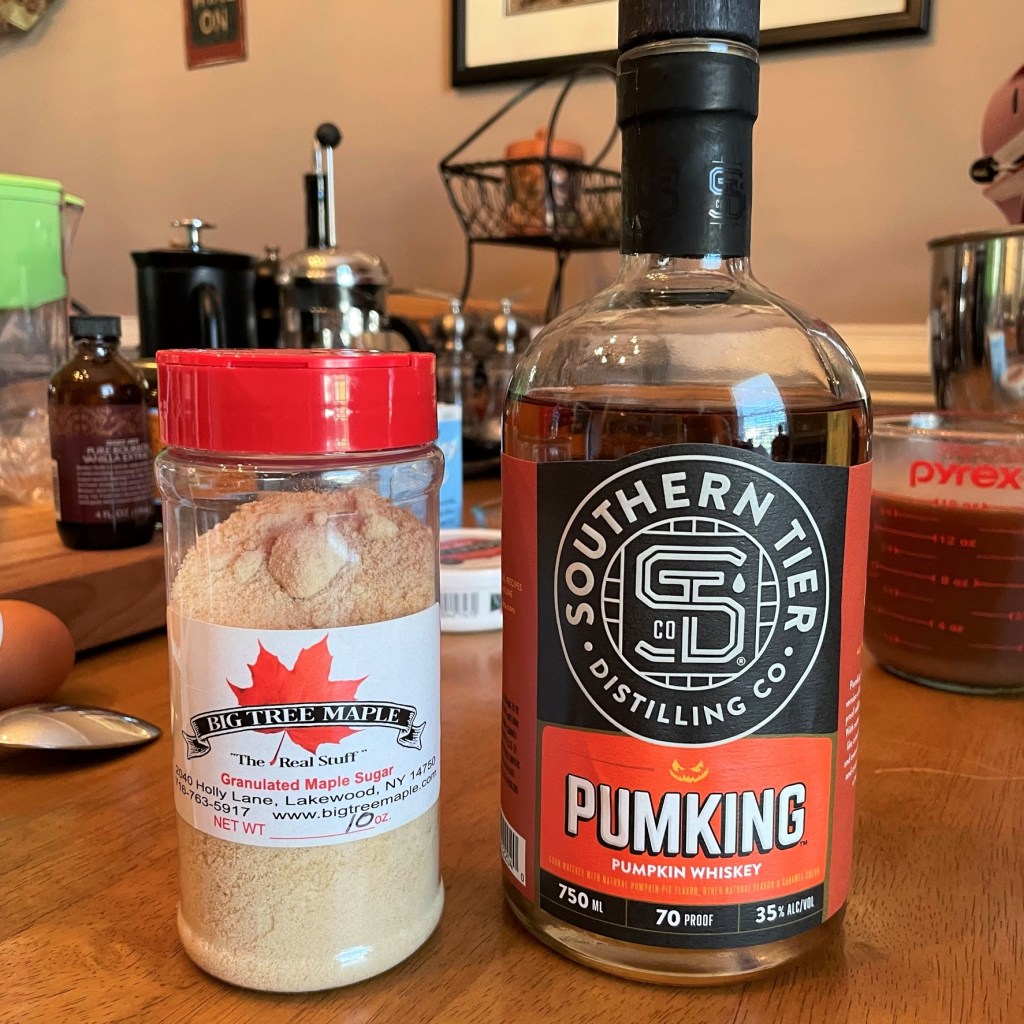
For the caster sugar, maple sugar, which tastes like autumn. For the rum, a pumpkin spiced whiskey, produced by Southern Tier Distilling Co. in Lakewood, N.Y.
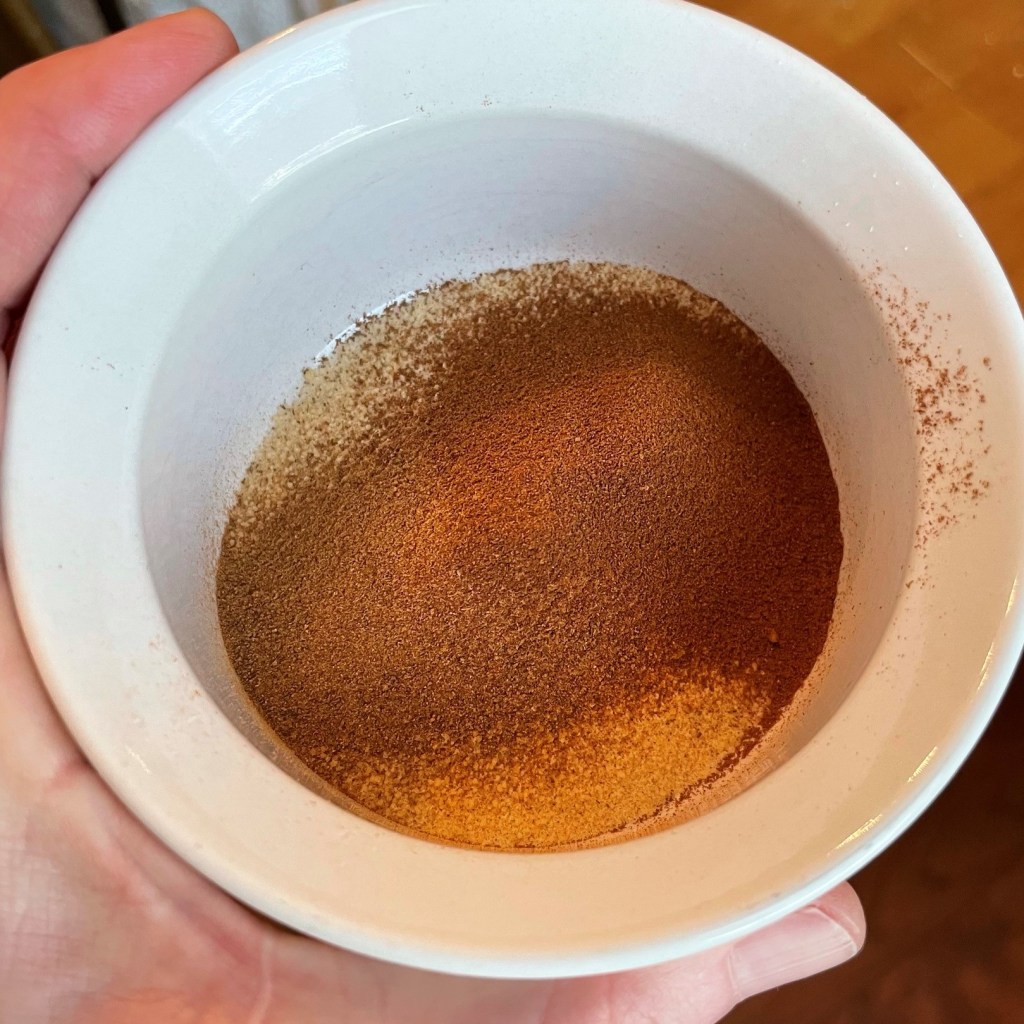
For the dusting cocoa, a blend of maple sugar, cinnamon and pumpkin pie spice.
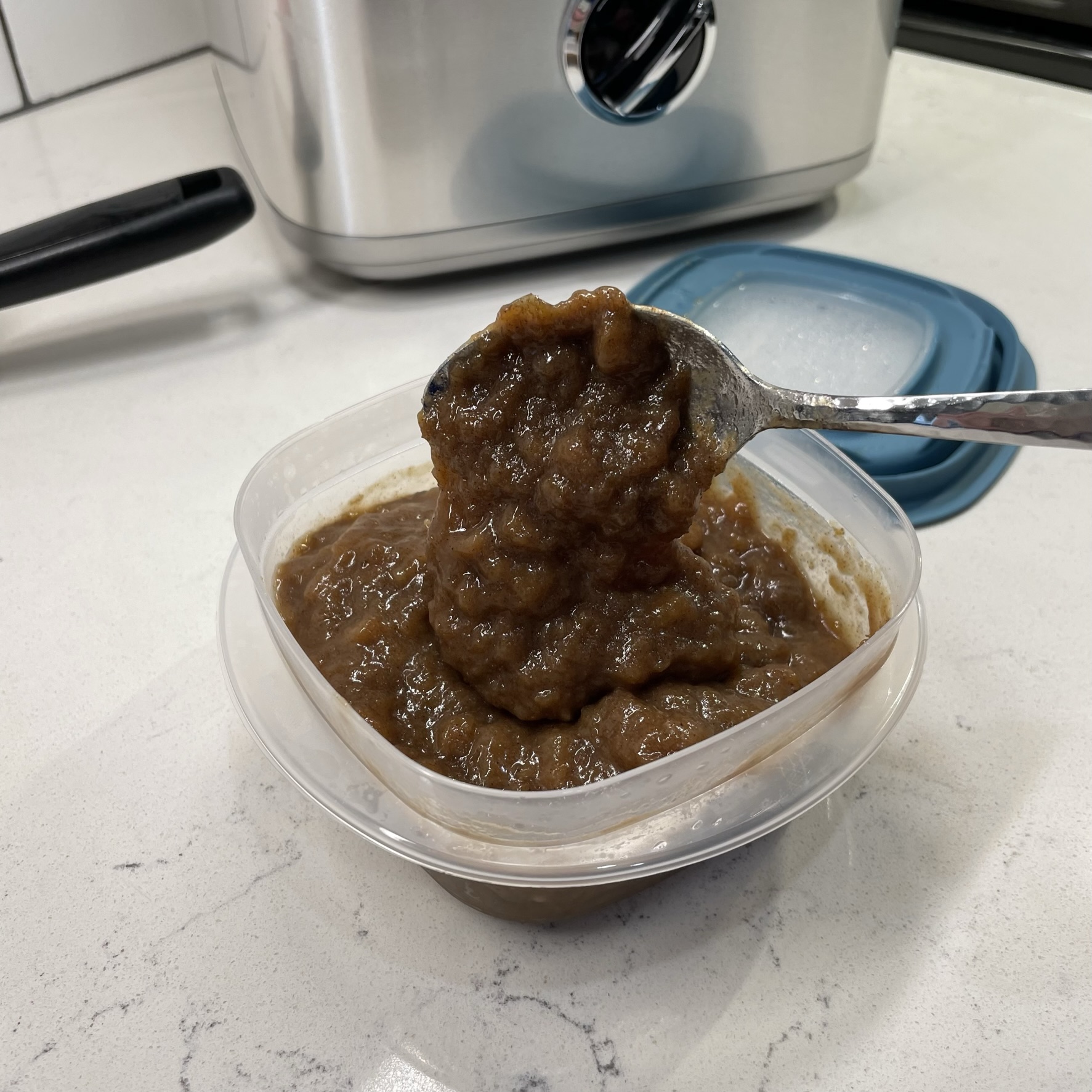
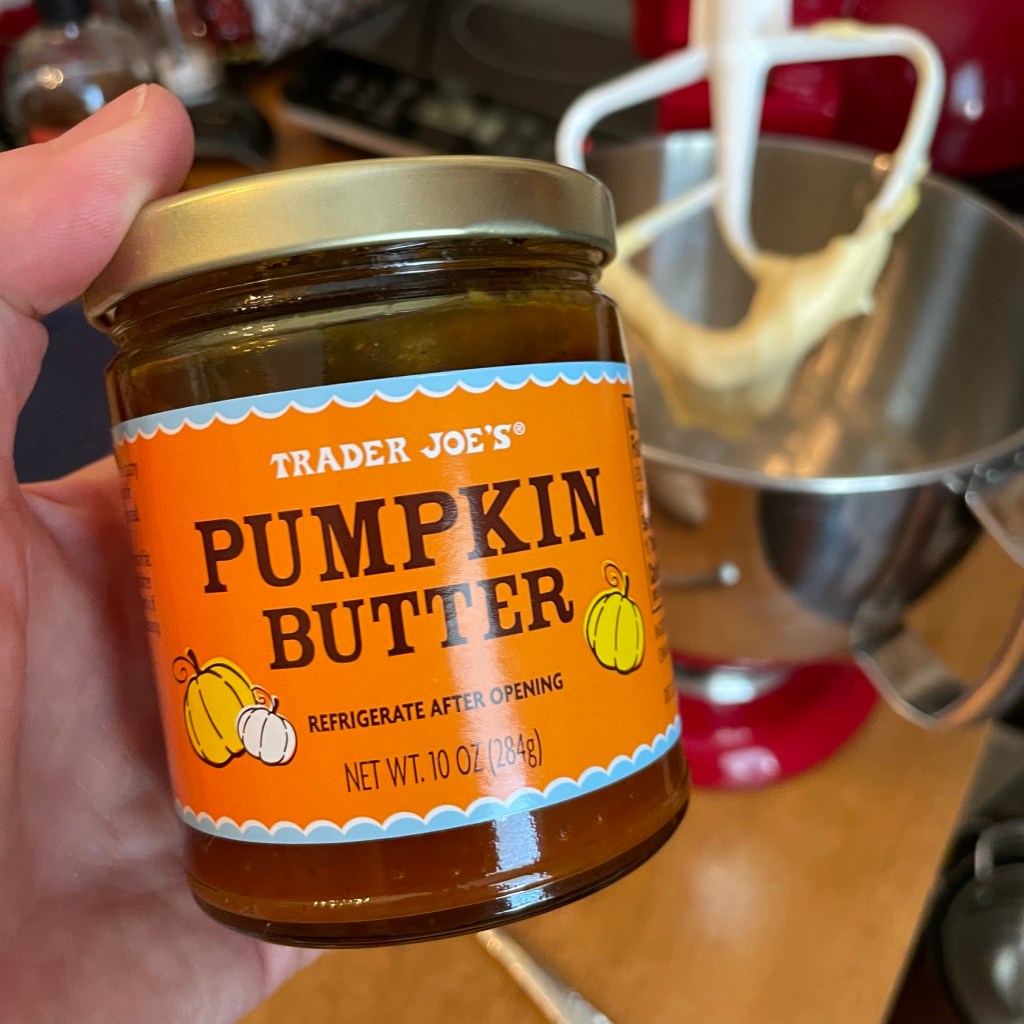
For an additional Thanksgiving twist, a bit of pumpkin butter, courtesy of Trader Joe’s.
The lighting in my dining room is the worst!
The recipe is made with raw egg yolks, so if you have health concerns about that, I’d encourage you to seek out an eggless or cooked egg recipe, or perhaps consider using pasteurized eggs. Also, planning ahead is more of a requirement than a convenience, as tiramisu improves after a 24-hour setup time. If you’re going to try the recipe for Thanksgiving, you might want to make it a couple of evenings ahead.
Ingredients (6 generous servings)
3 egg yolks, room temperature*
2 Tbsp. maple sugar (or use superfine if you can’t find maple)
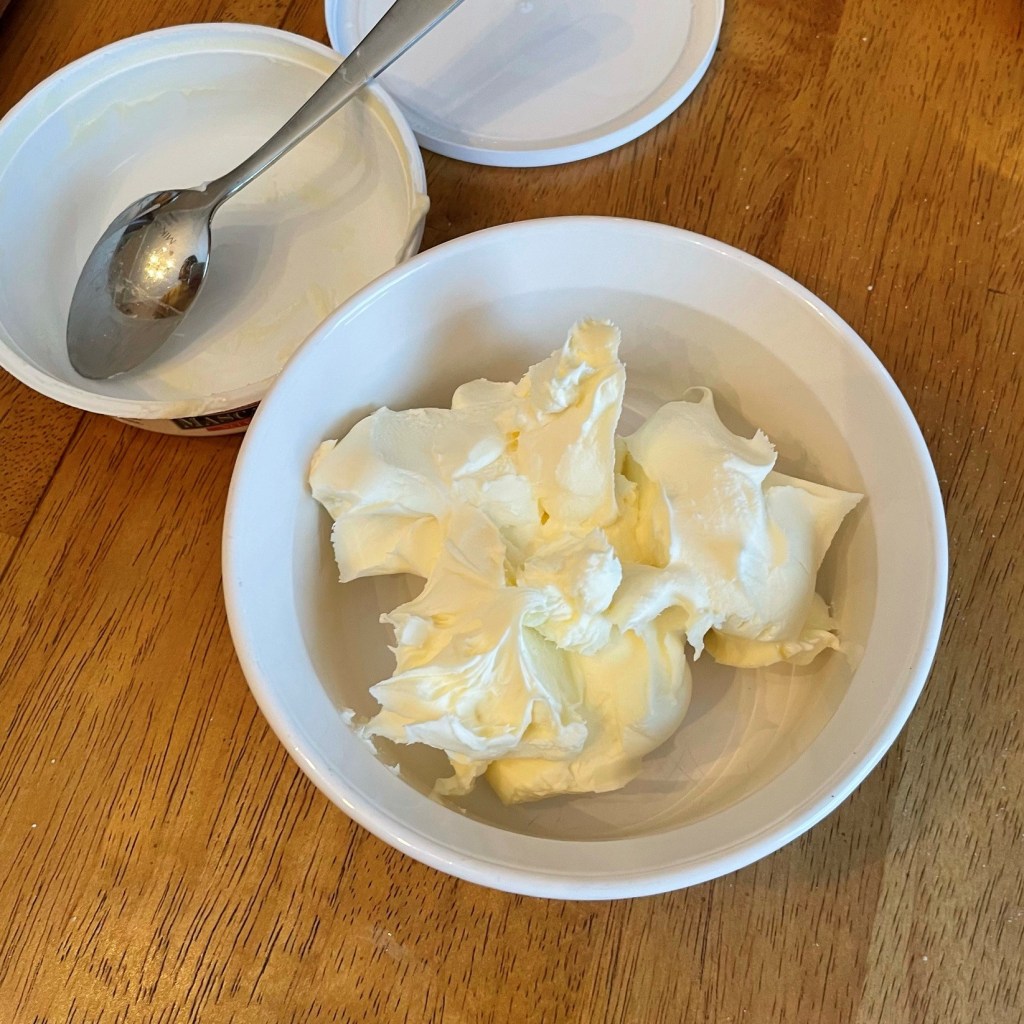
8 oz. tub mascarpone, room temperature
5 Tbsp. Trader Joe’s pumpkin butter*
1 tsp. real vanilla extract
4 Tbsp. Pumking whiskey, divided* (see notes)
1 1/2 cups brewed light roast cacao with cinnamon*
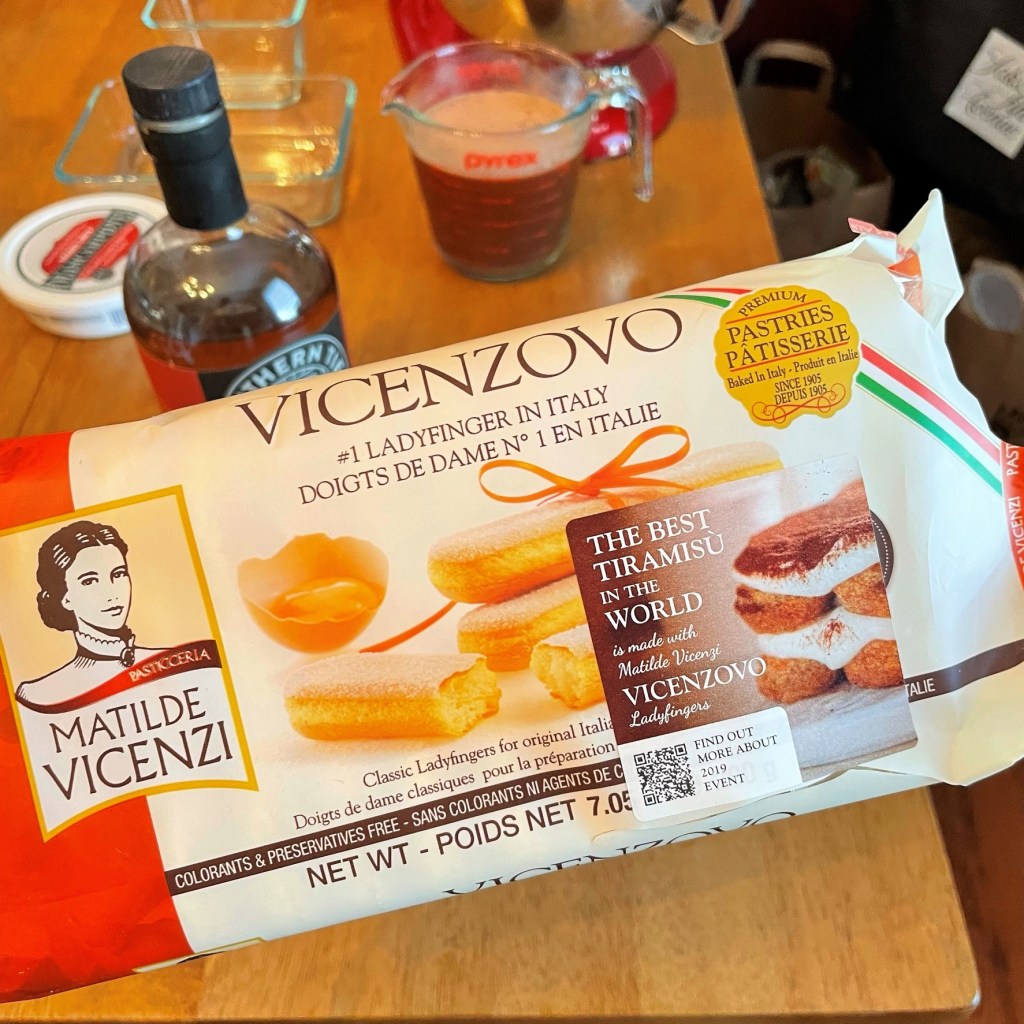
7 oz. package ladyfingers (this might be labeled as biscotti savoiardi)
2 Tbsp. maple sugar, mixed with 1/4 tsp. ground cinnamon and 1/4 tsp. pumpkin pie spice
*Notes
The egg yolks should be room temperature for this recipe, but it is easier to separate the eggs when they are cold from the fridge. Save the whites for your weekend omelet.
If you don’t have access to a Trader Joe’s store, any other brand of pumpkin butter will work just fine. Homemade would be even better!
I found the Pumking Whiskey completely by chance when my husband and I traveled through New Jersey and Connecticut at the end of summer, and it’s a real treat. Distribution from this craft distillery is limited, but readers in the northeast U.S. should have little trouble finding it. Otherwise, go with spiced light rum, or perhaps even Frangelico.
My first impressions of the Crio Bru brewed cacao were only so-so, but I’ve grown to really enjoy this as an occasional alternative to coffee. Since the time I first discovered the company, it has added an array of new seasonal flavors, and the cinnamon is one of my favorites. It’s a limited edition that is currently only available in a sample pack, but the company just added another flavor—you guessed it, pumpkin spice!
I made this in a Pyrex dish that measures 8 ½ x 7” inches, but I’m sure you could also make this recipe work in an 8 x 8” dish. Or double the recipe and use a 9 x 13.
It helps to have an electric mixer (either stand or handheld) to make this dessert, but it can also be done with a whisk and a good strong arm. 🙂
Instructions
I spooned the mascarpone into a separate bowl to help it come to room temp.
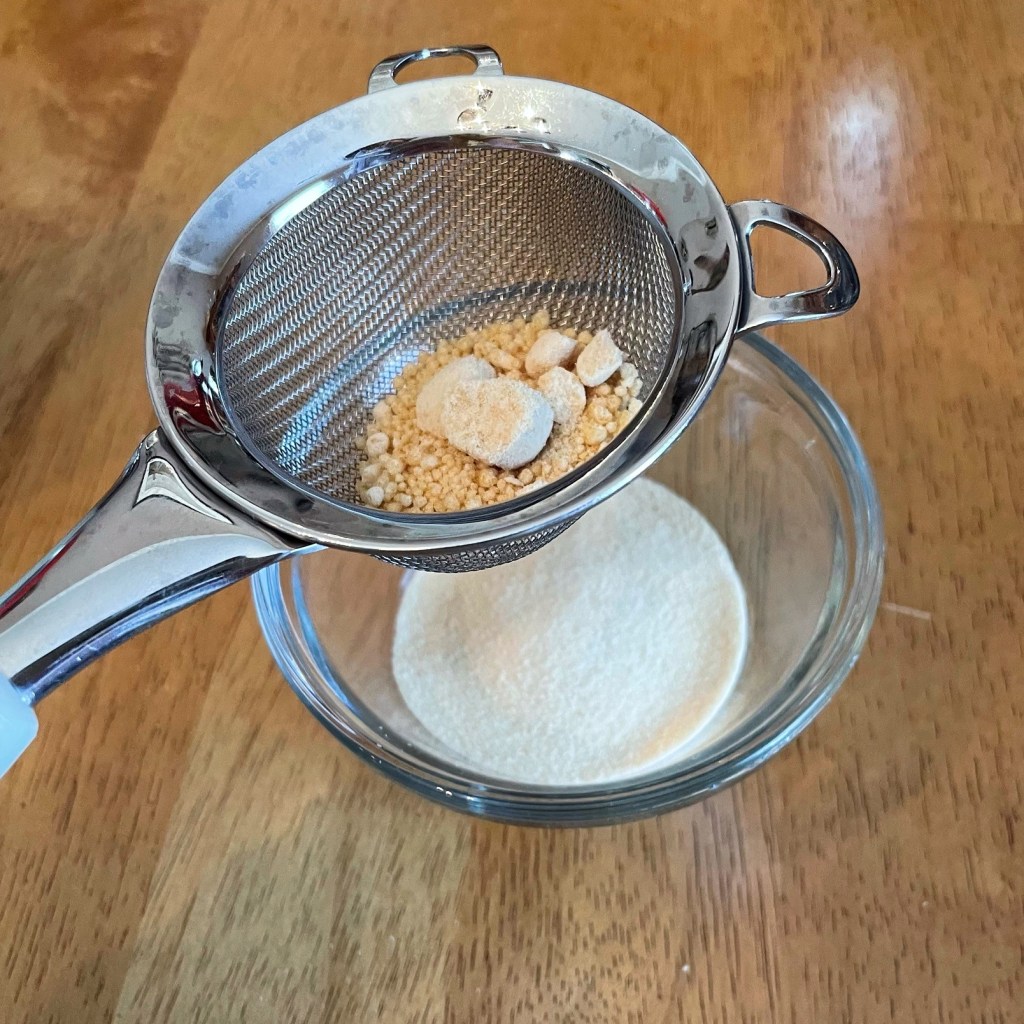
I sifted the maple sugar to weed out the clumps. This sugar is very fine, just like caster sugar.
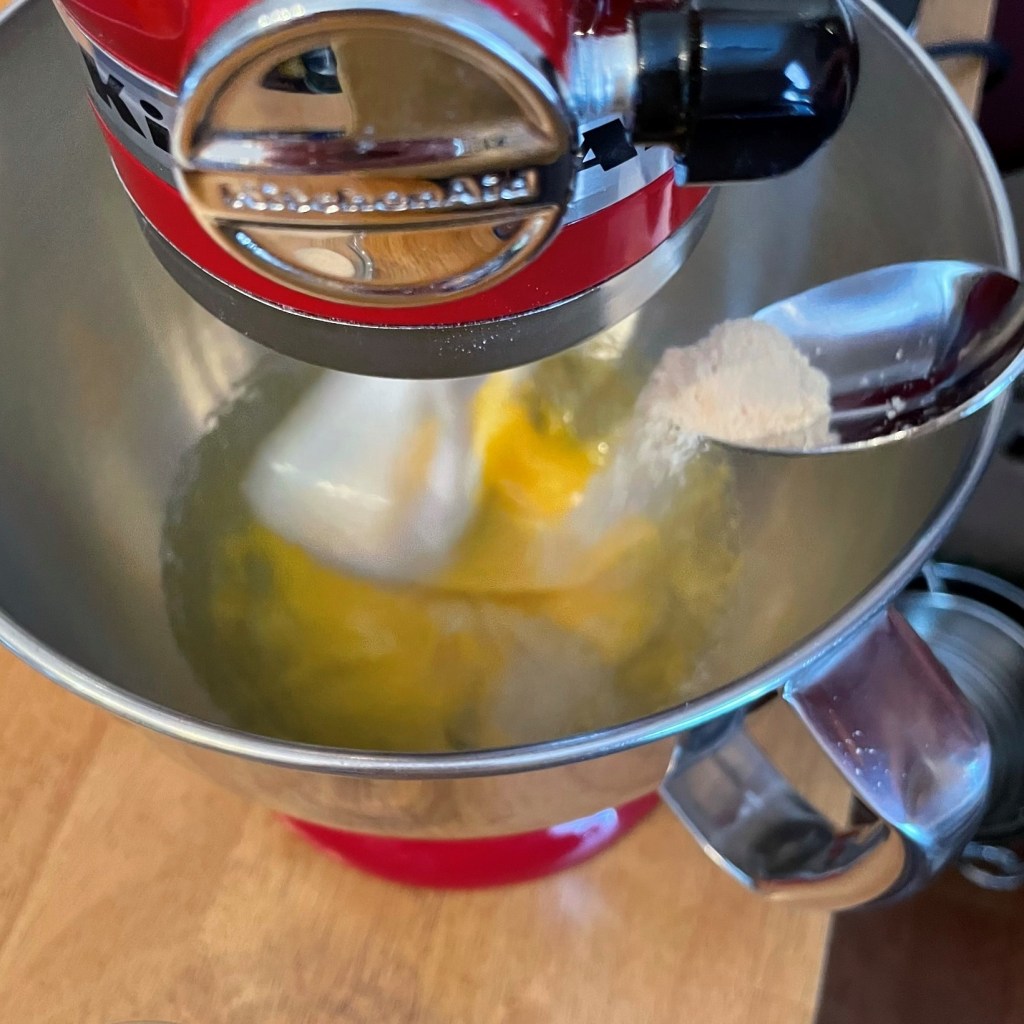
Add the sugar to the whipped egg yolks.
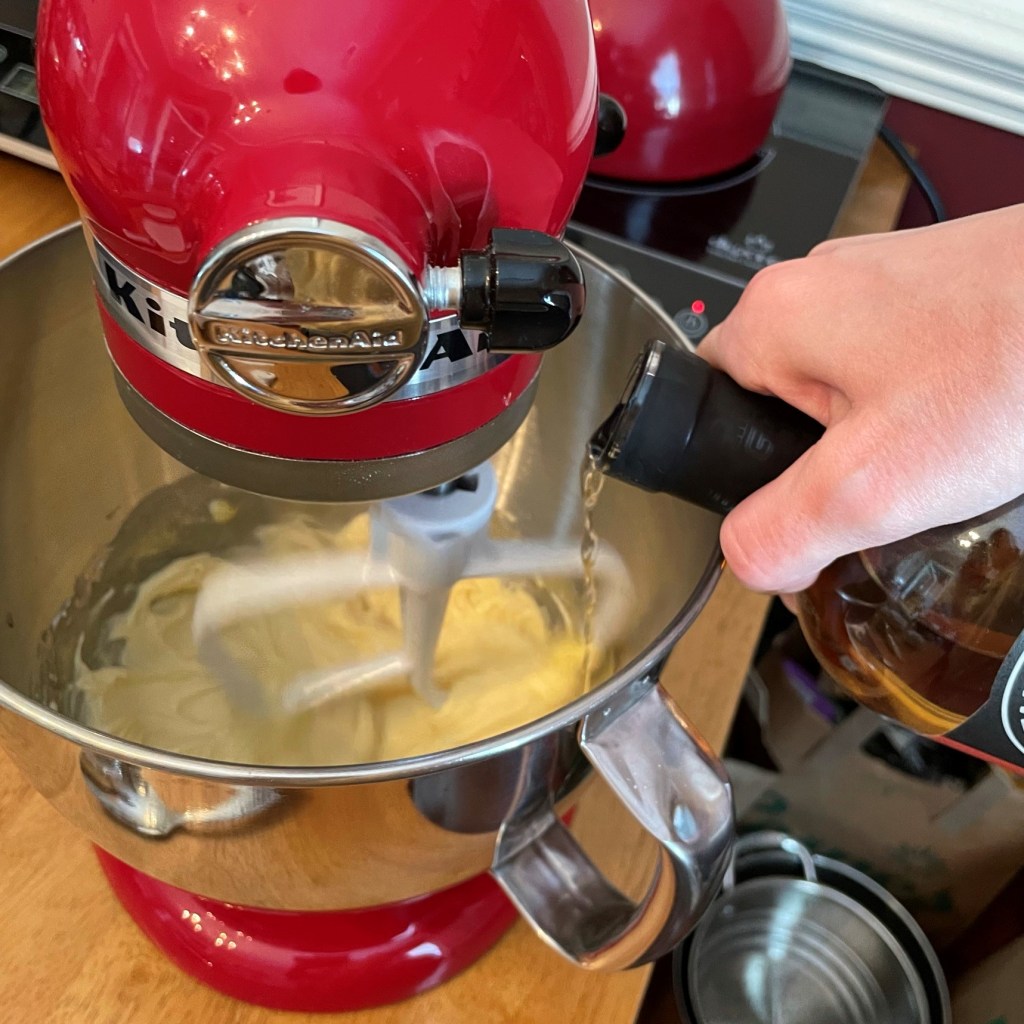
Whip in the mascarpone and spike it with two tablespoons of Pumking whiskey.
Mix in the pumpkin butter. That looks so pretty!
I used my trusty digital scale to measure out an ounce of the Pumking whiskey into the brewed cacao.
Ladyfingers are wispy little cookies, not very interesting on their own but amazing in tiramisu.
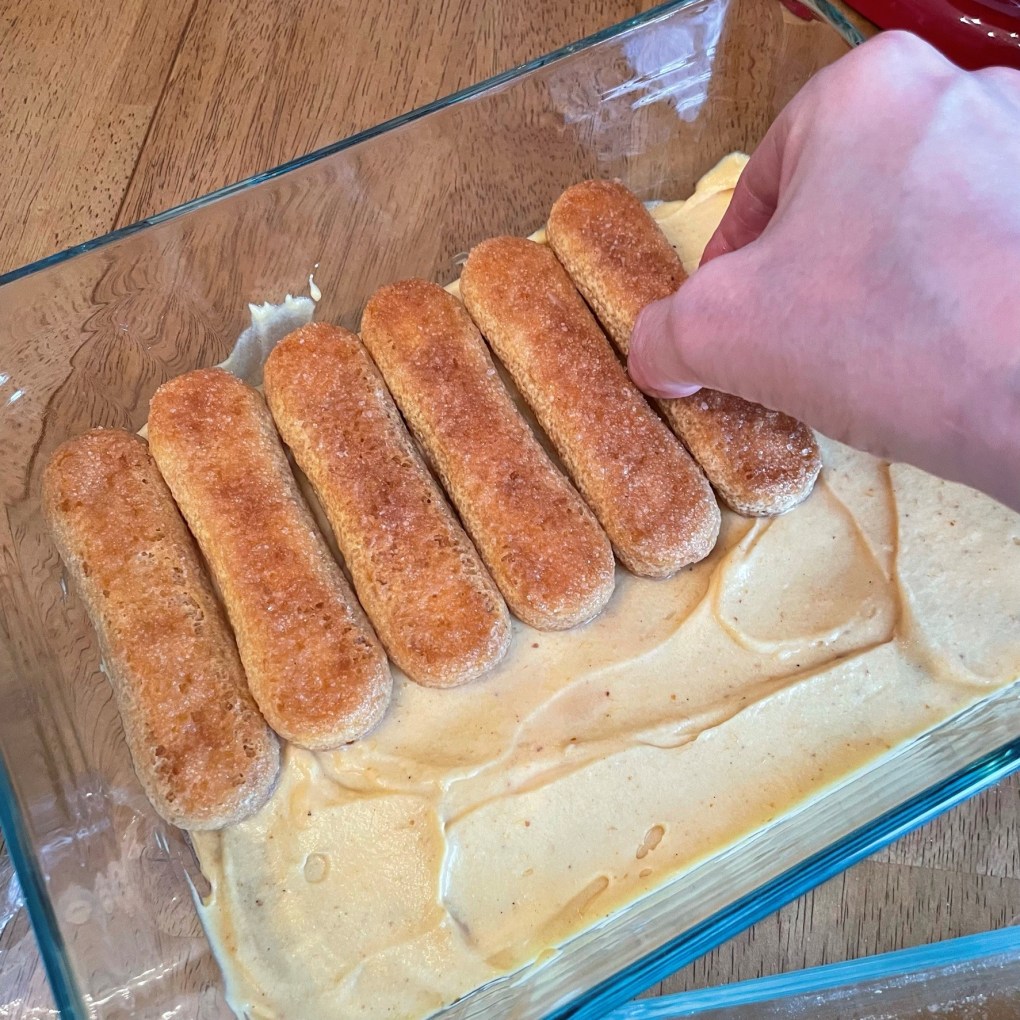
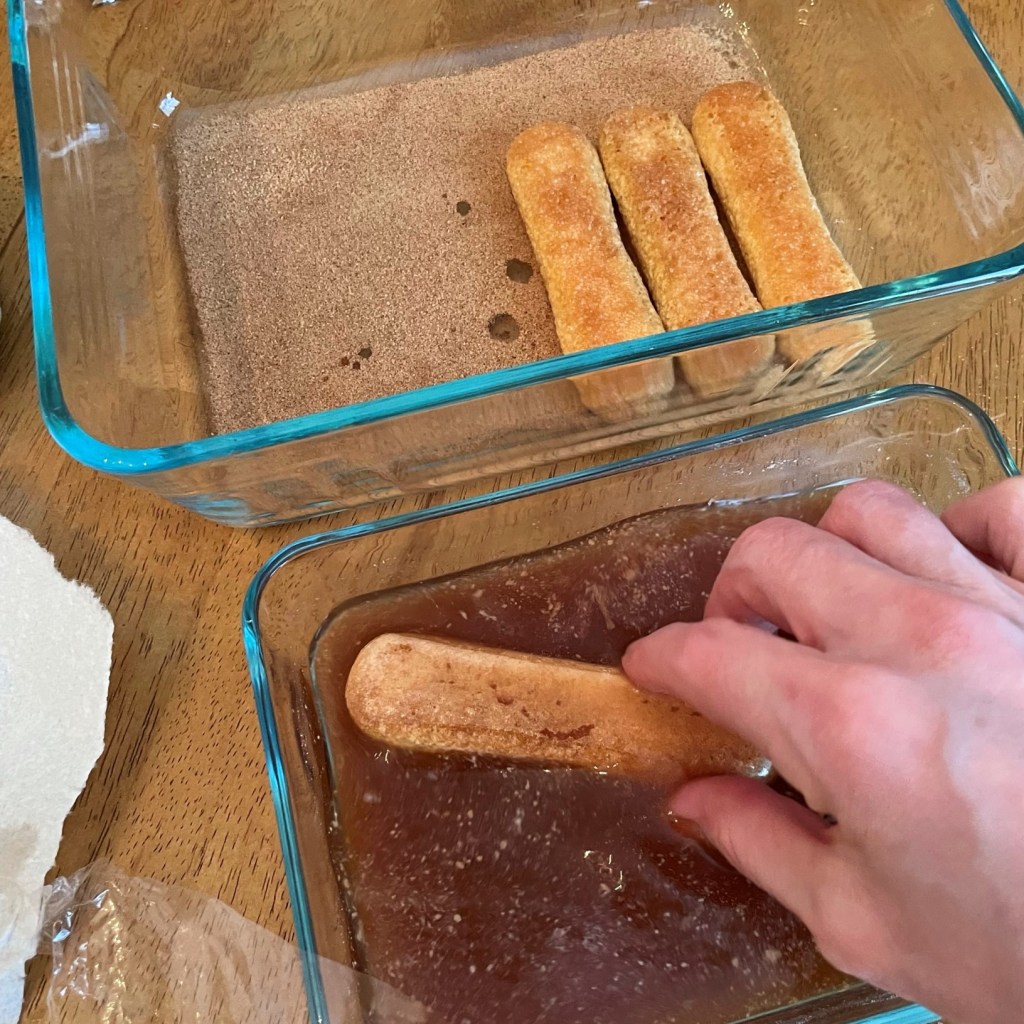
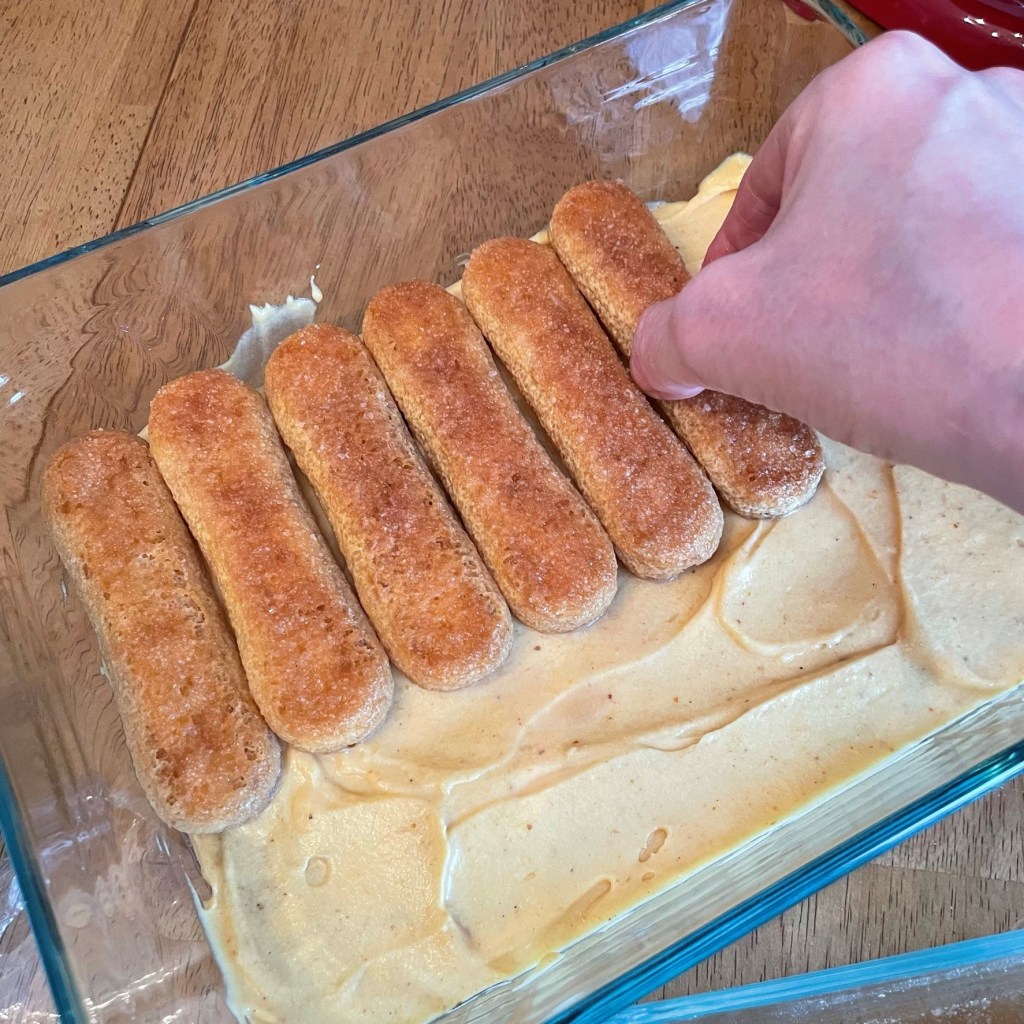
Give the ladyfingers a very quick spin through the spiked brewed cacao, then arrange in the dish. Don’t soak them too long or they will turn to mush in your hands!
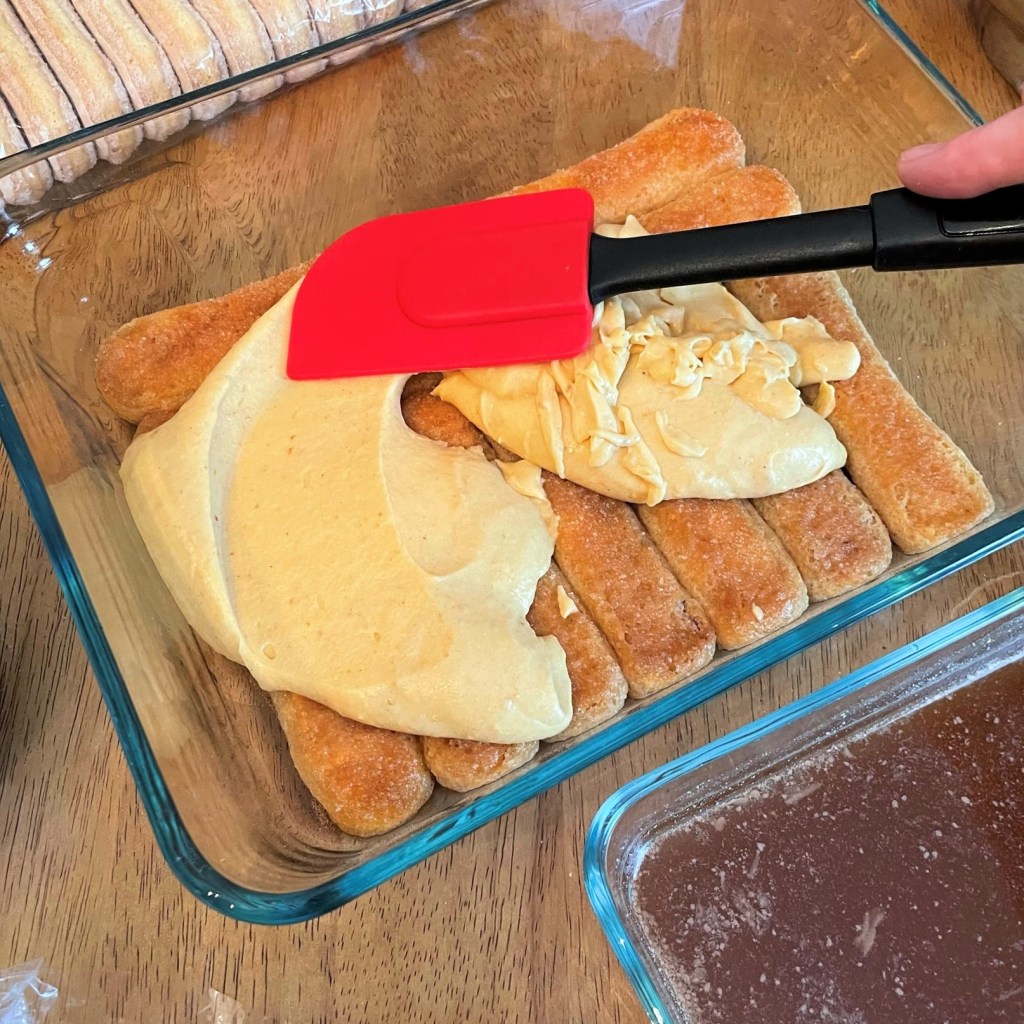
Evenly spread half of the mascarpone mixture over the first layer of ladyfingers.
Repeat with a second layer.
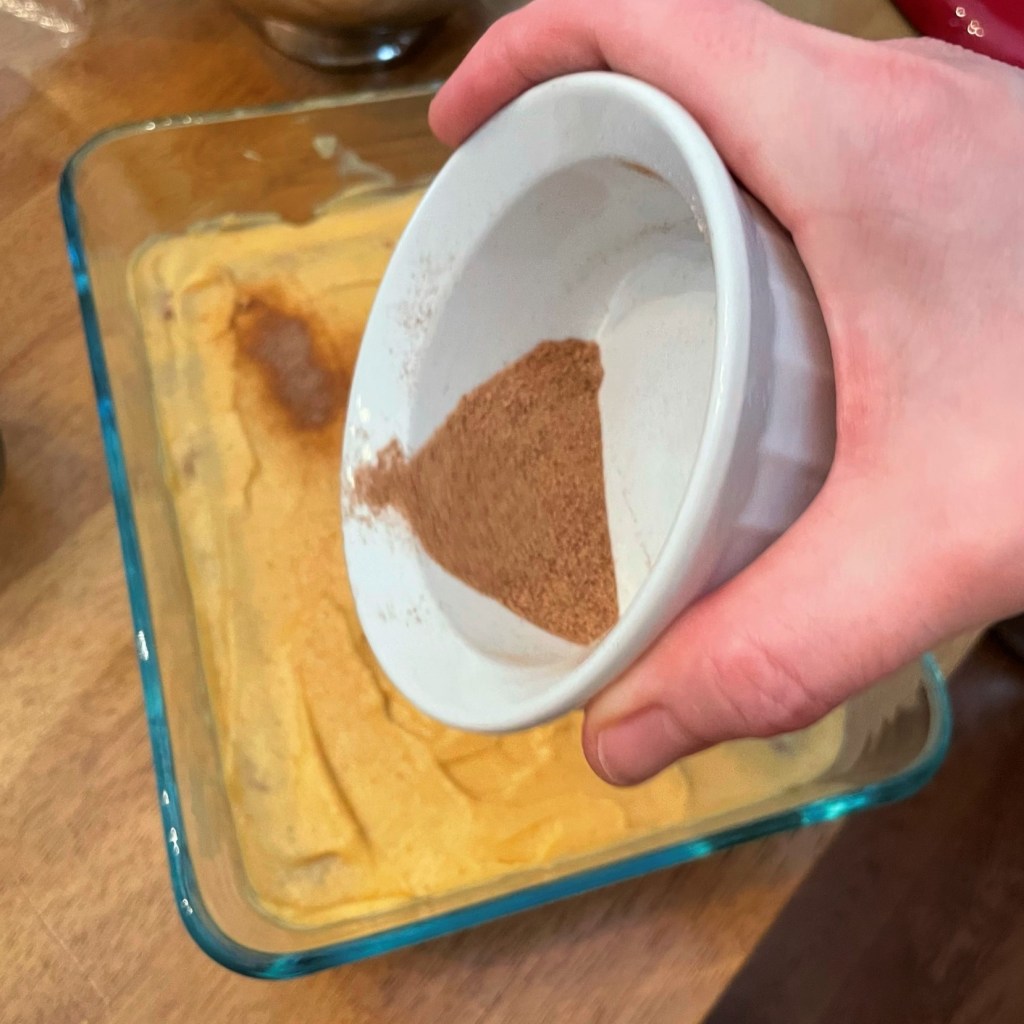
Sprinkle the remaining pumpkin spice sugar over the top of the dessert.
Lovely! Cover it and send it to the fridge for at least 24 hours.
In a mixing bowl or the bowl of a stand mixer, whip eggs until they are smooth. Gradually add maple sugar and continue whipping until all sugar is dissolved into the yolks.
Add mascarpone into the bowl and blend on low speed until the mixture is evenly mixed, smooth and glossy. Fold in 2 Tbsp. of the Pumking whiskey, plus the pumpkin butter and vanilla extract.
Using a mesh sifter, sprinkle about half of the maple-spice mixture into the baking dish.
Combine brewed cacao and remaining Pumking whiskey in a flat bowl. Carefully dip the ladyfingers, one at a time, into the liquid. Turn only twice before arranging the cookies in the dessert dish. I have learned that it is very easy to make the ladyfingers soggy, so err on the conservative side. Repeat until you have a complete single layer of ladyfingers in the dish.
Carefully spread half of the pumpkin-mascarpone mixture over the ladyfingers, smoothing it all the way to the edges of the dish.
Repeat with the next layer of ladyfingers, top with the remaining mascarpone mixture, and sprinkle the top with the remaining maple-spice mixture. Cover tightly and refrigerate at least 24 hours before serving.
There is something very special and nostalgic about s’mores, the delightfully sugary campfire treat that I first learned of when I was a young girl. I cannot say for sure that my first experience of s’mores was during my time as a Girl Scout, though legend has it a troop leader named Loretta Scott Crew first dreamed them up to feed 16 hungry girl campers in 1927. But I do know that my first taste of this wonderful confection—toasted marshmallow and Hershey’s chocolate square, melted between two graham crackers—was like a seductive symphony of ooey-gooey summer heaven. The only cooking involved in making s’mores is toasting a marshmallow to golden perfection, and then allowing the contained heat within the marshmallow to melt the piece of chocolate bar when you squish the graham cracker cookies together.
Truth be told, I was prone to wreck my marshmallows by over-toasting them. I’d position my marshmallow stick (and yes, where I come from, we used actual sticks) directly into the hottest part of the campfire until my puffy marshmallows blazed with a blue light around them. I’d blow out the fire, only to skim off and eat the scorched sugary jacket and plunge them back into the fire for another round of overcooking. I’m quite sure that was not the intention behind the “toasted” marshmallow portion of s’mores, but nobody ever accused me of following the rules—I like what I like.
Now that I’m all grown up, I still love the idea of s’mores, but I cannot fathom the notion of sitting around a campfire in the dead heat of summer, and we don’t usually fire up our patio chiminea until at least October. Not even for a sticky-sweet s’more—sorry.
Luckily, I have other plans for those delicious flavors, and just in the nick of time, it seems, given that today is National S’mores Day. Why, I wondered, couldn’t I represent the same s’mores flavors in a cold treat form that was more suitable for the middle of August?
No campfire required!
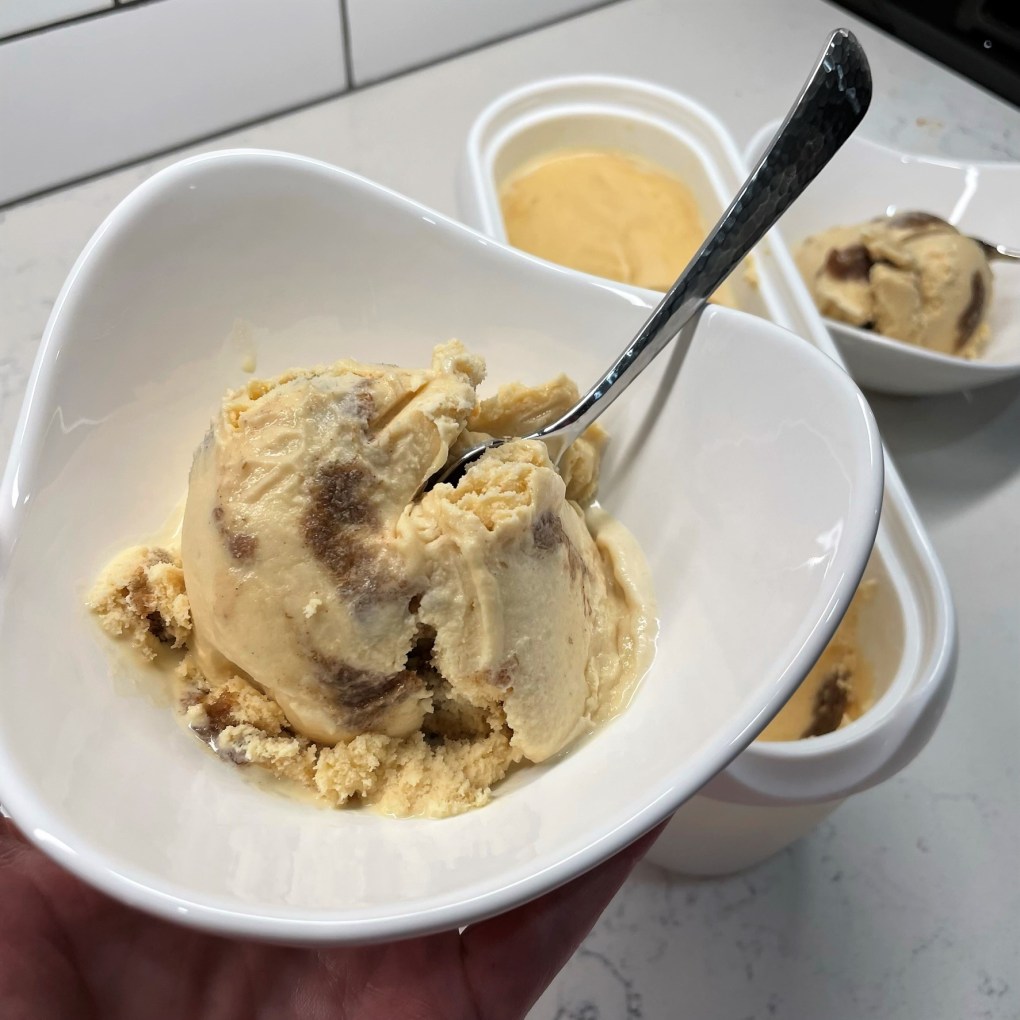
And that was my approach to this yummy spectacle of summer sweetness. For a change of pace, I skipped the eggs in my ice cream base and used sweetened condensed milk instead. I wanted the vanilla ice cream to be a pure palate of white, but I was also trying to avoid cooking as much as possible. It’s been pretty dang hot here in the South, and if I have the option to keep the stove turned off, I’m taking it. The marshmallow swirl was also a no-cook step, and for this, I relied on a tried-and-true fruit dip recipe that fuses marshmallow fluff with cream cheese. The dairy ingredient gave the fluff just enough body to take away the ultra-sticky consistency but retain the marshmallow flavor.
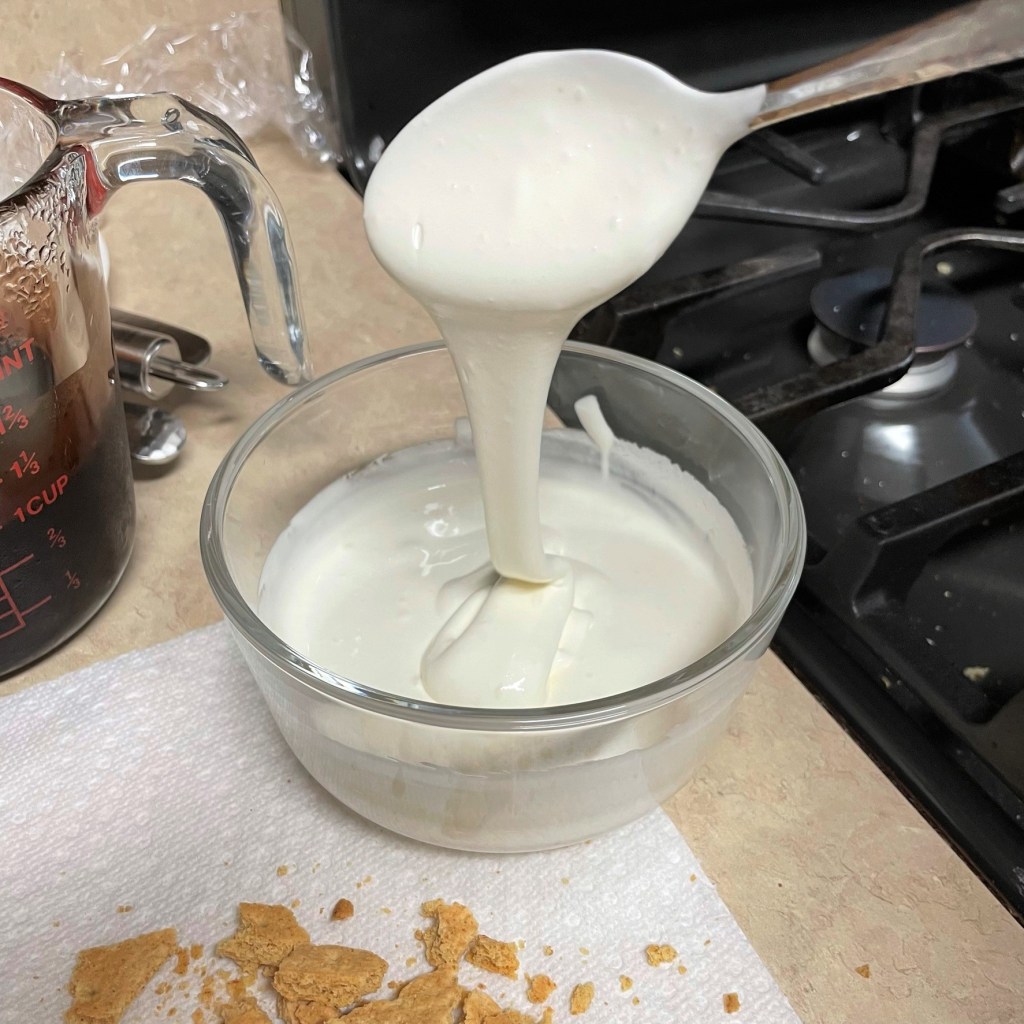
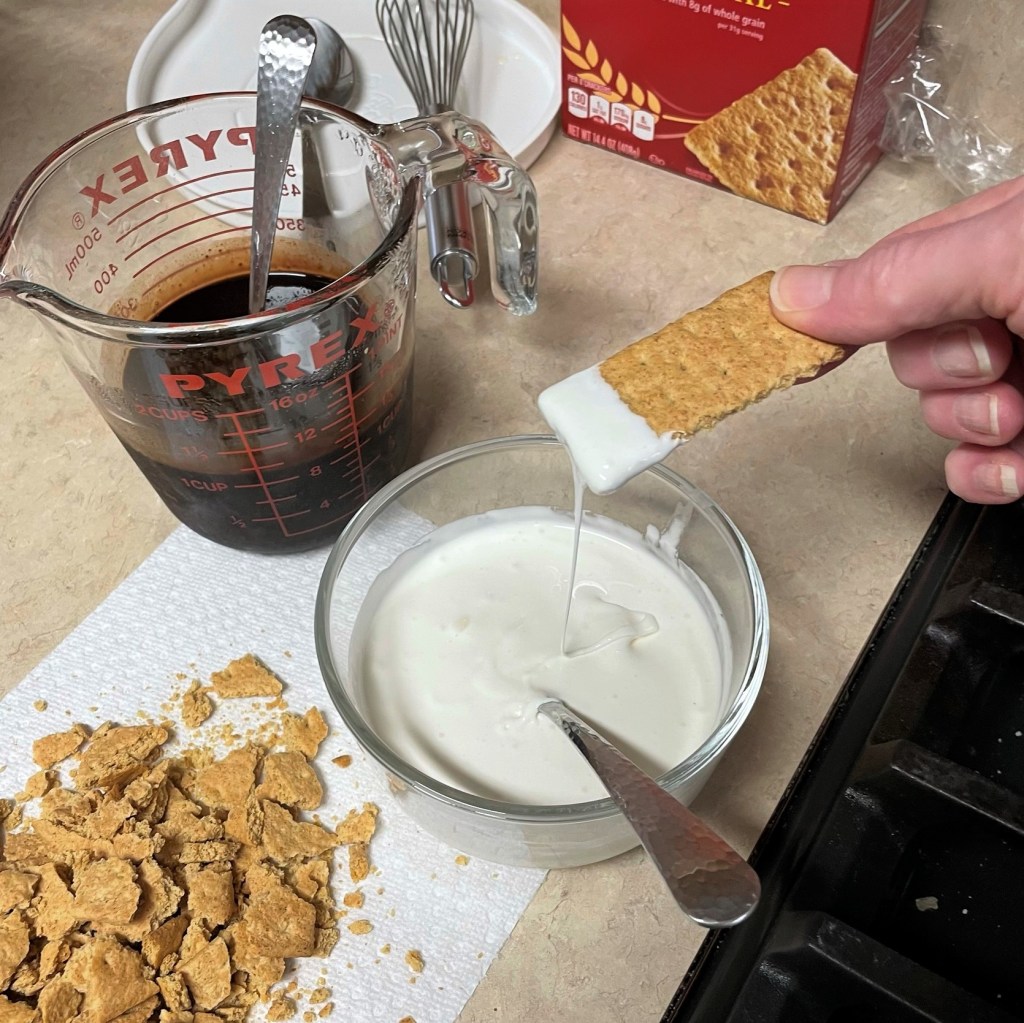
See how the cream cheese mellowed out the sticky marshmallow fluff? And it still tastes exactly like marshmallow (but creamier).
I did turn on the stove briefly to make the fudgy swirl that represents the melted chocolate square of a traditional s’more, but that was a small price to pay for this delicious final result.
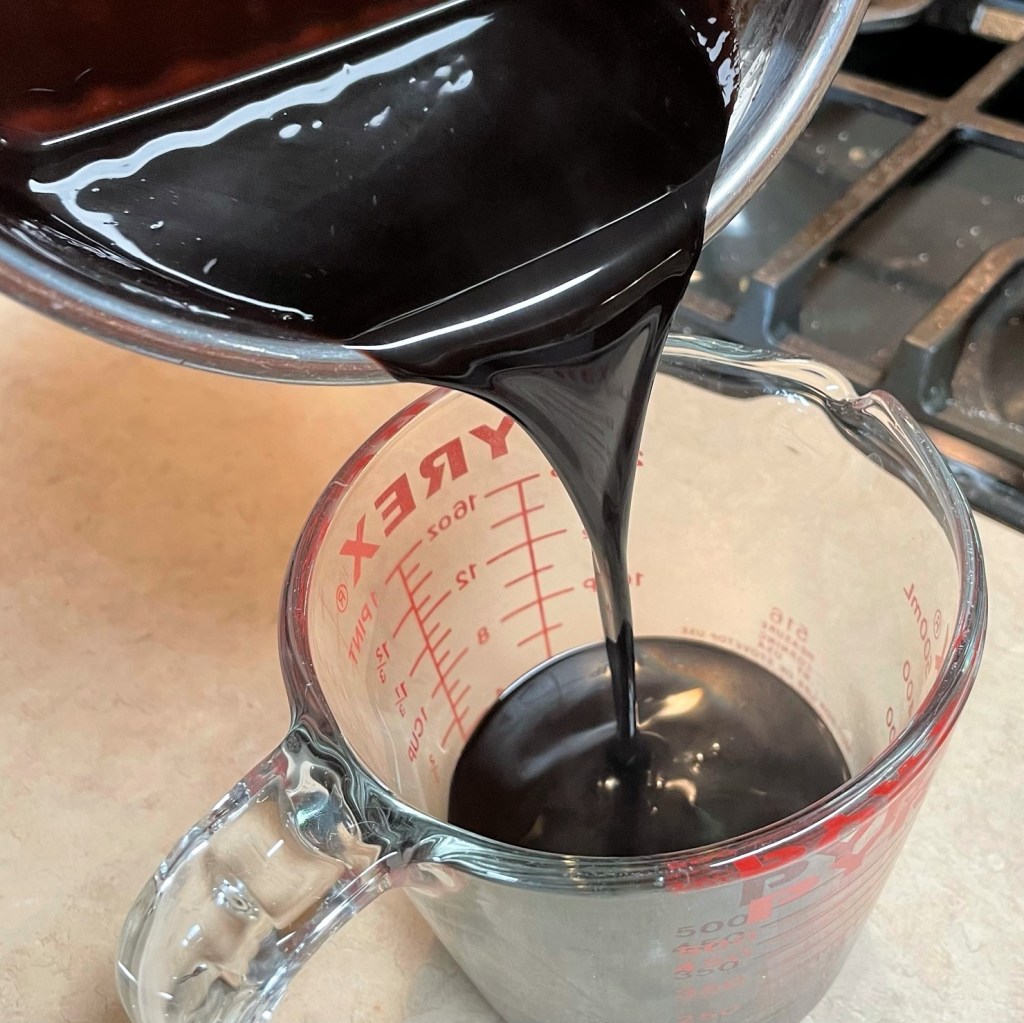
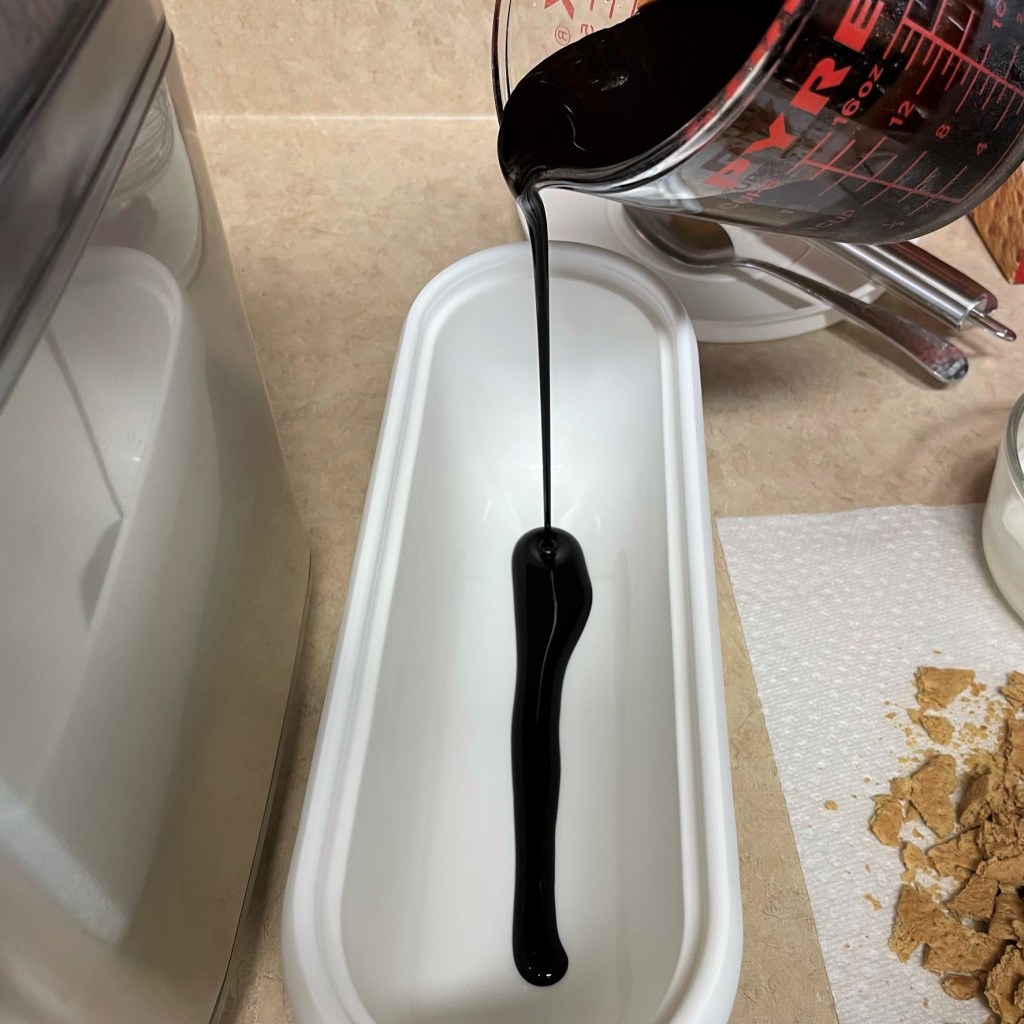
Looks like delicious black gold, doesn’t it?
Happy S’mores Day, everyone!
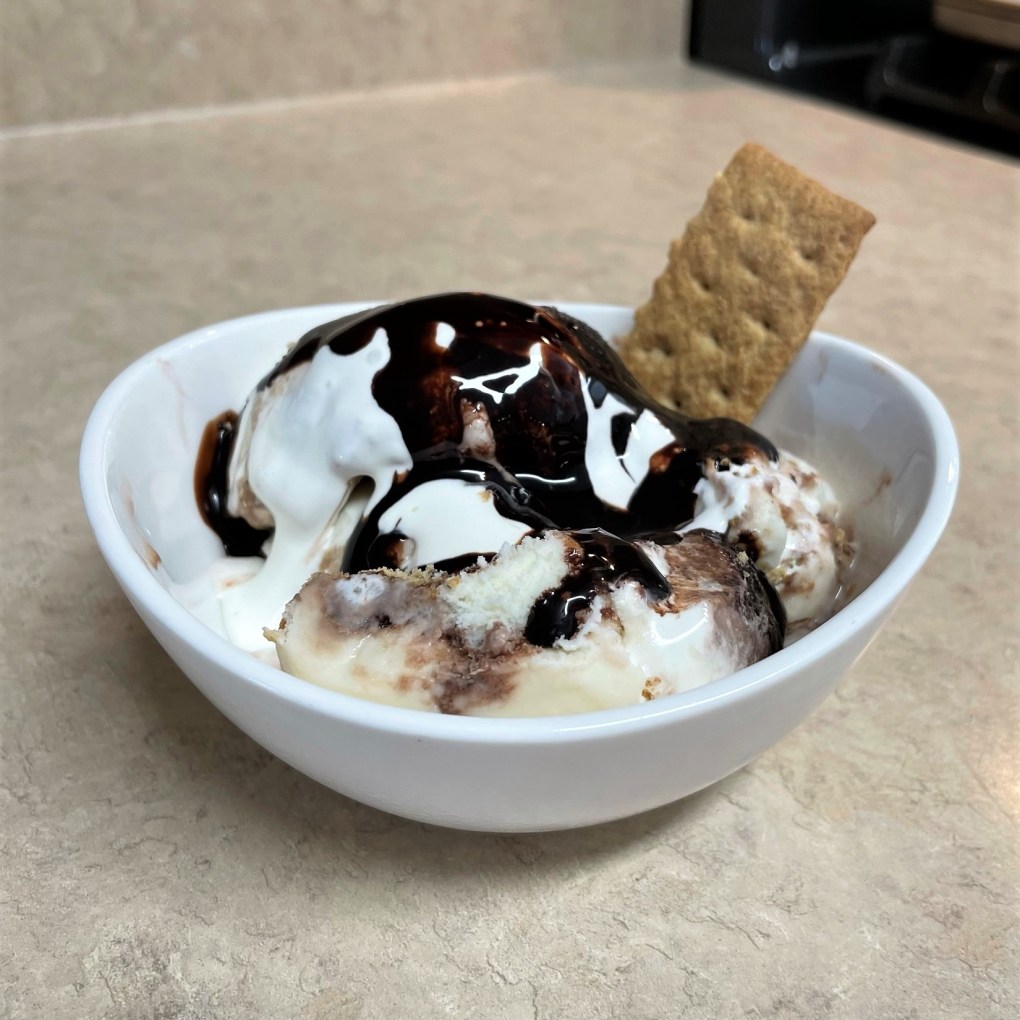
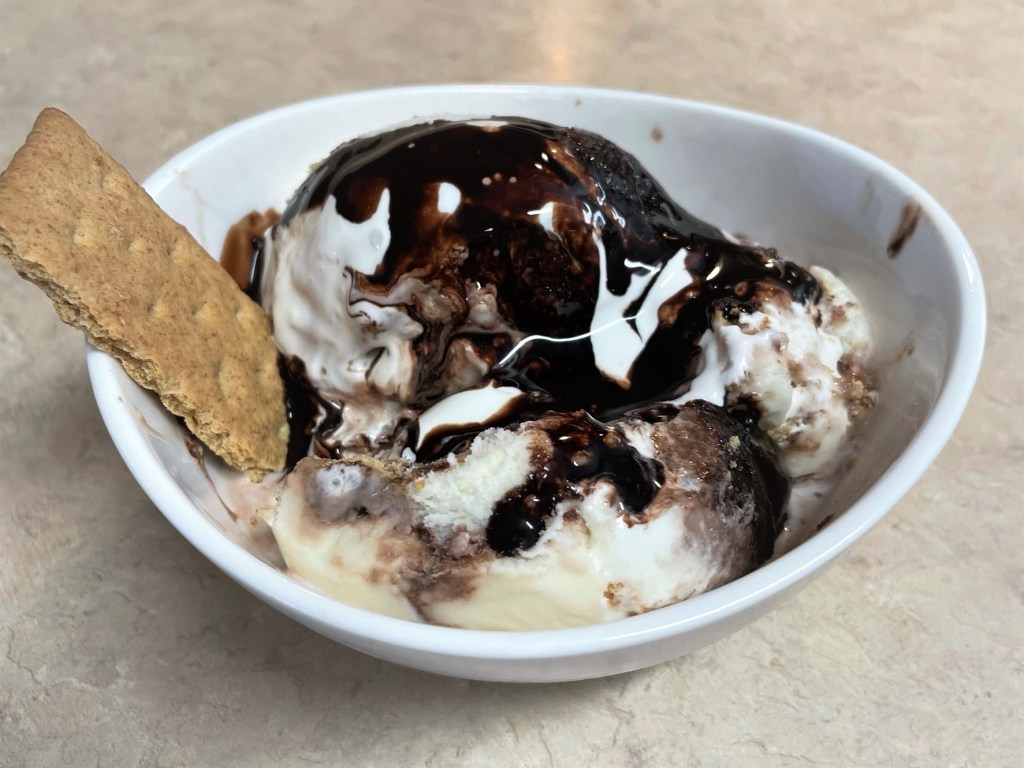
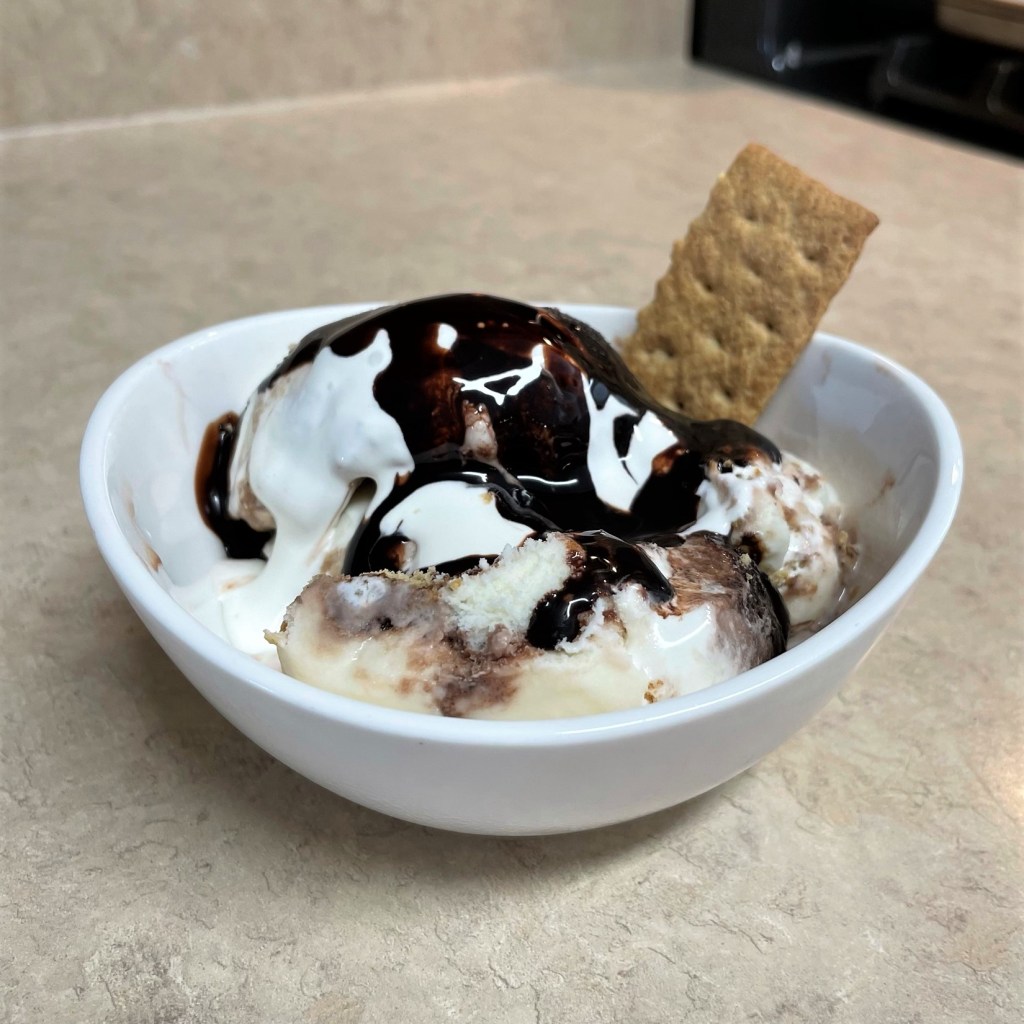
Yes, please, may I have s’more?!
Ingredients
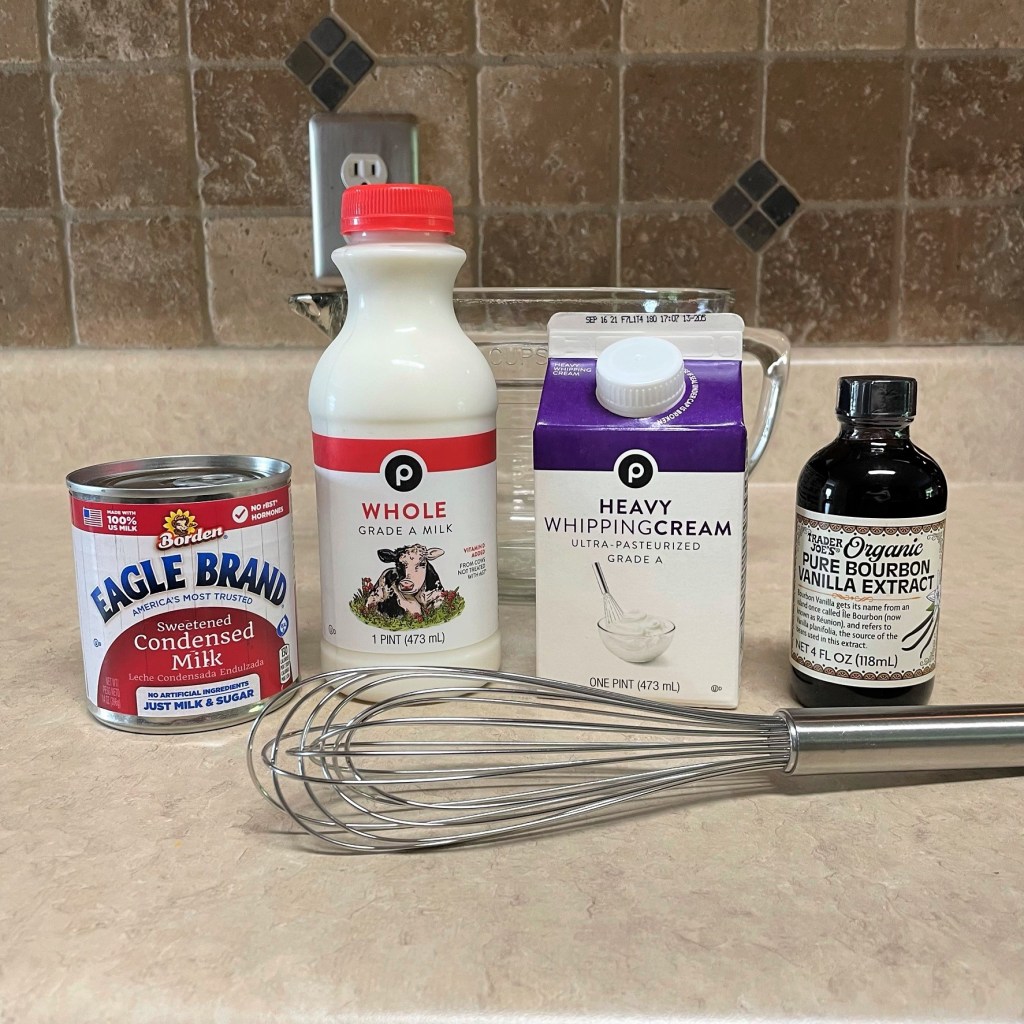
No eggs = no cooking! The sweetened condensed milk also provides all the sugar I need for this ice cream.
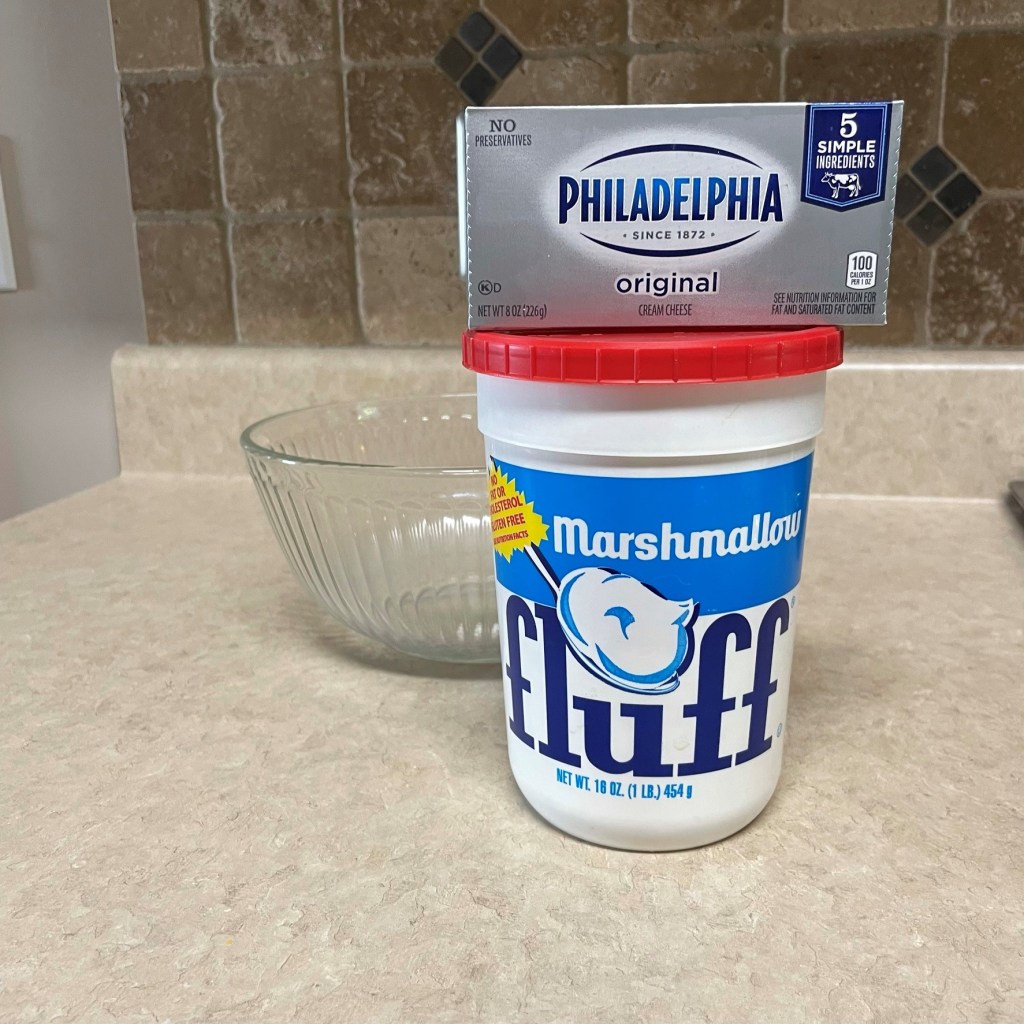
A little bit of cream cheese will soften the stickiness of the marshmallow fluff and help improve the texture when frozen.
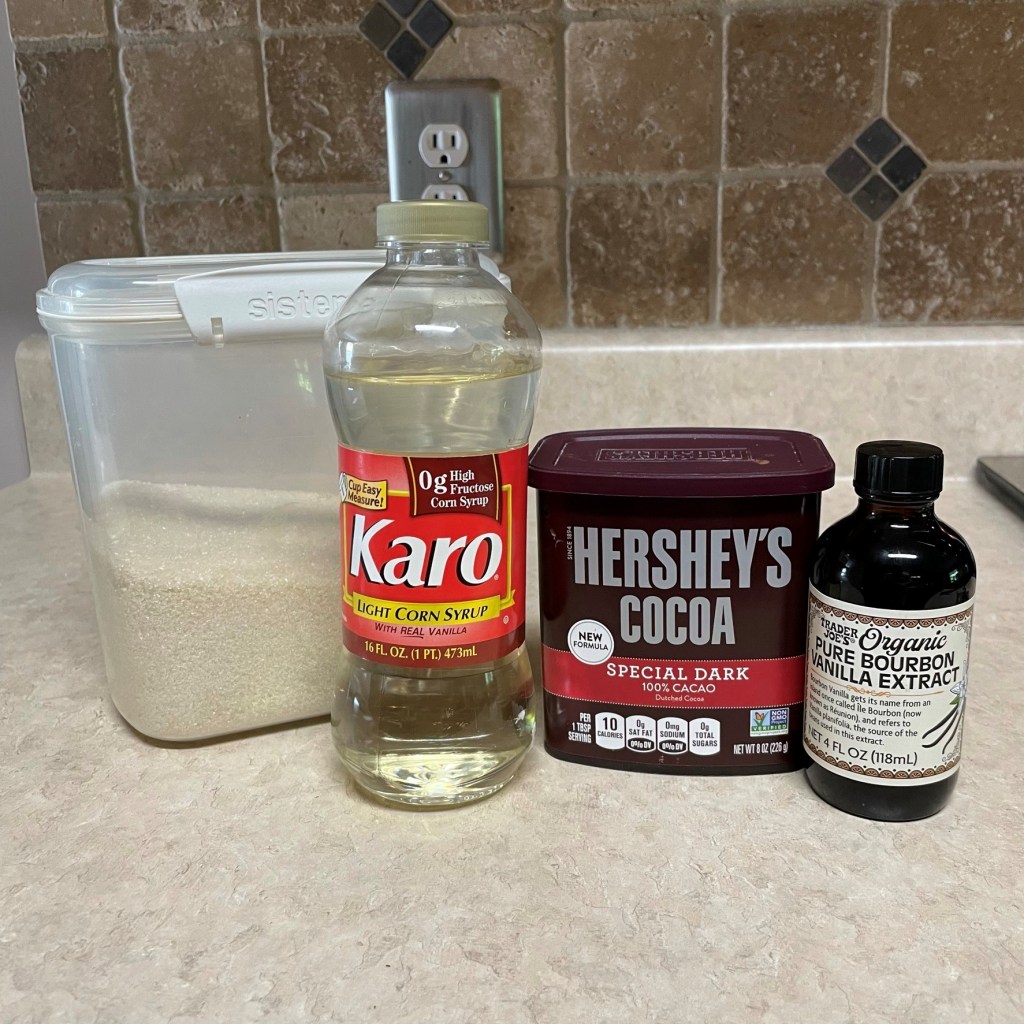
These ingredients will produce a chocolate syrup, but with no high fructose stuff!
And of course, graham crackers! 🙂
Ice Cream Base
14.5 oz. can sweetened condensed milk
1 cup whole milk
1 cup heavy cream
1 tsp. real vanilla extract
1 Tbsp. vanilla flavored vodka (optional, for improved texture)
Gooey Marshmallow Swirl
2 oz. full-fat cream cheese (this is 1/4 of a regular brick)
1 cup marshmallow fluff (give or take, as this stuff is difficult to scoop and measure)
Of course, you will also need graham crackers, about 6 cookie sheets, broken into pieces
Instructions
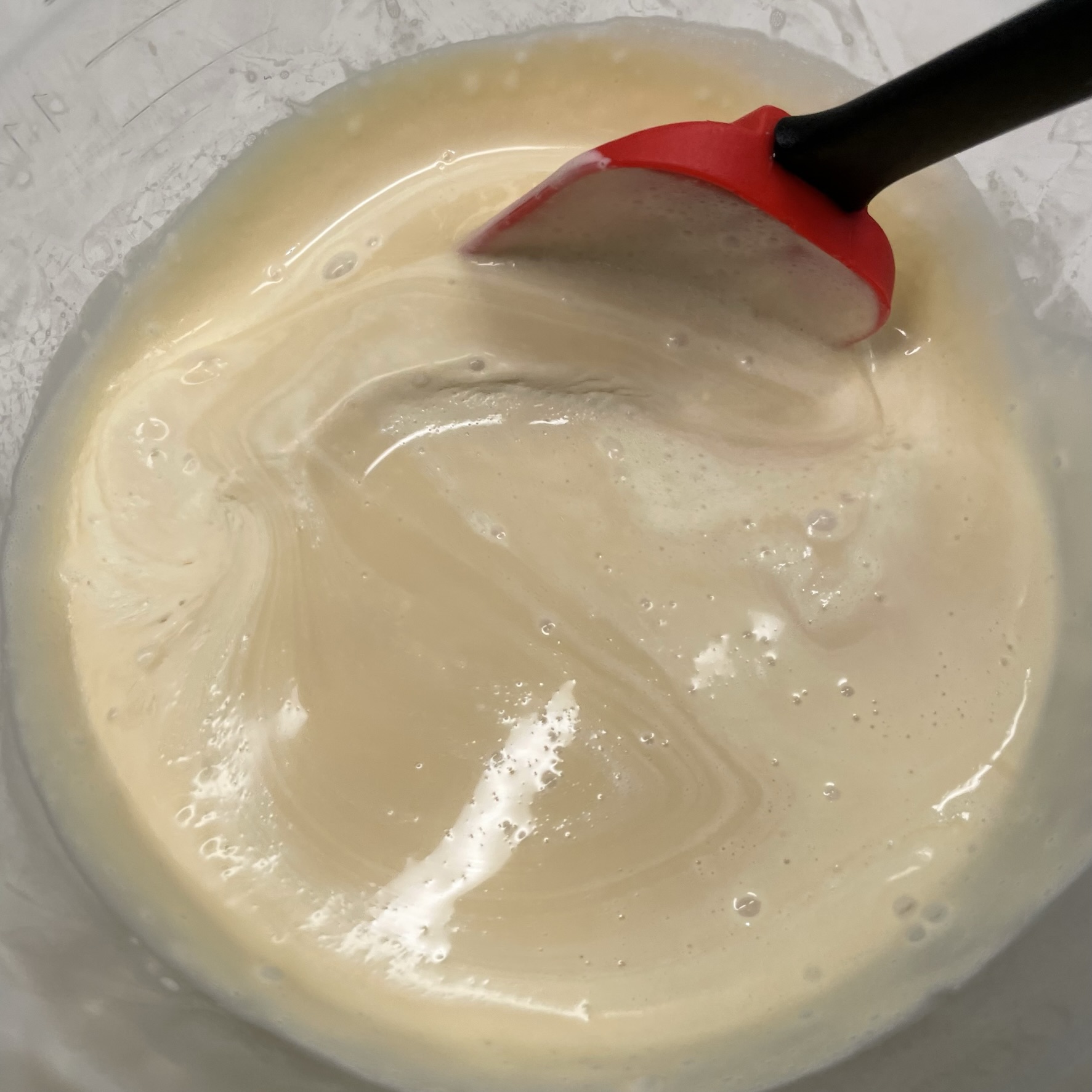
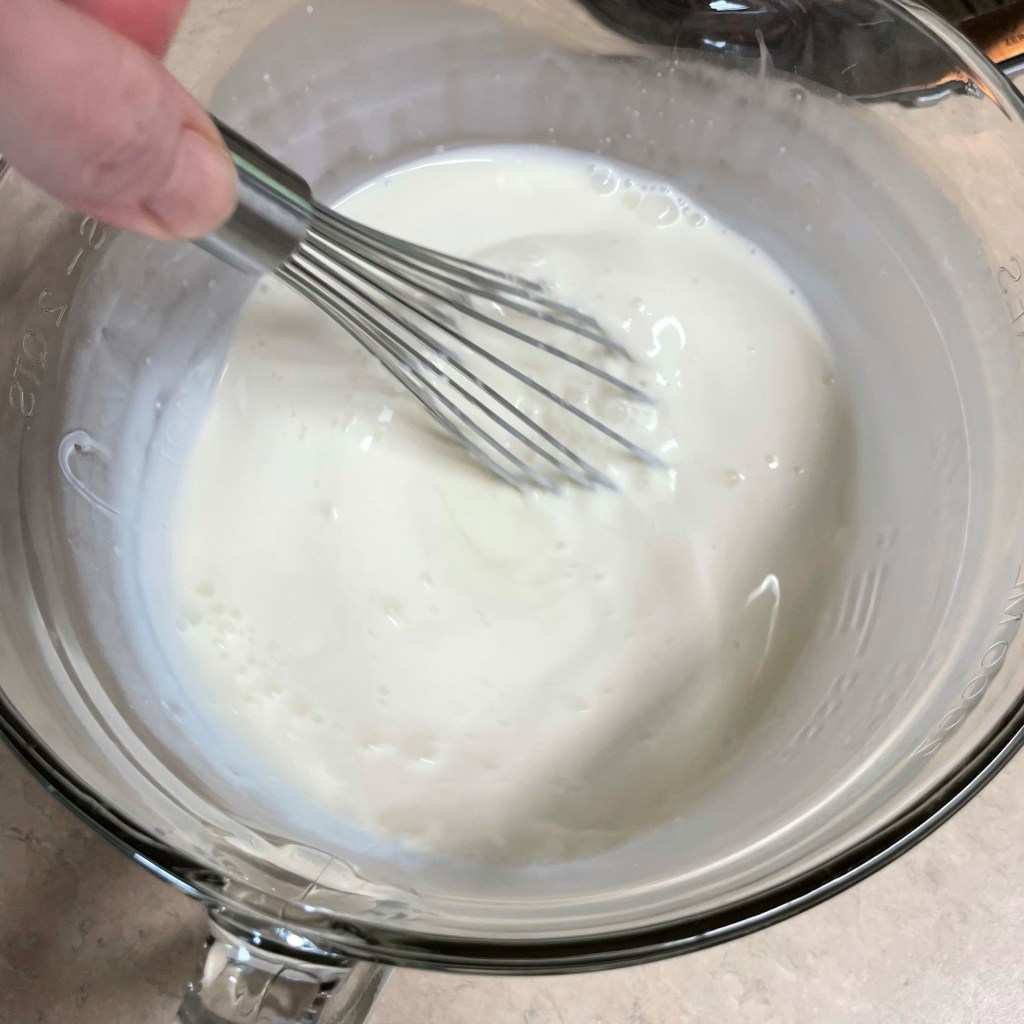
For the base of the ice cream, whisk together the condensed milk, whole milk and heavy cream. When the mixture is smooth and even, stir in vanilla extract. Cover and refrigerate until all other ingredients are cold and ready for layering.
Take plenty of time to thoroughly whisk these together. The condensed milk is very thick.
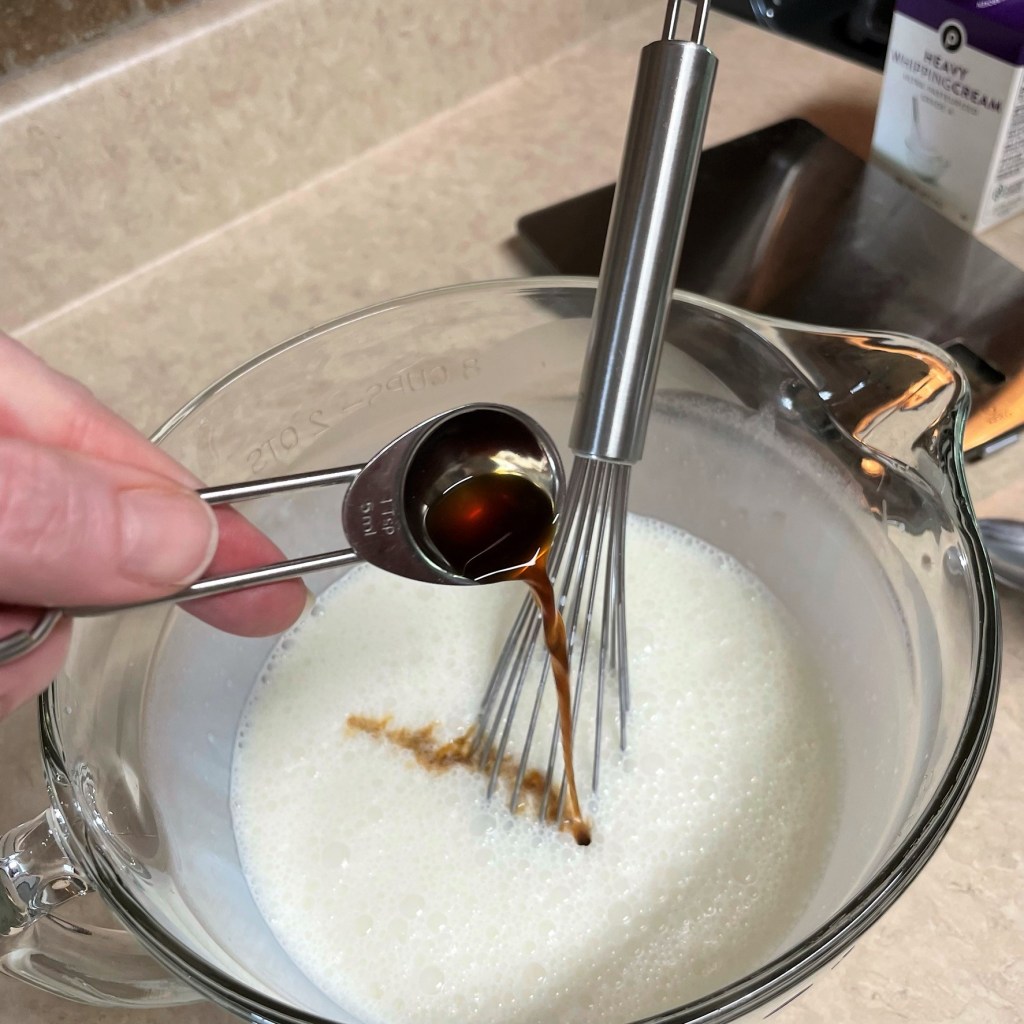
A splash of real vanilla extract, and the base is done!
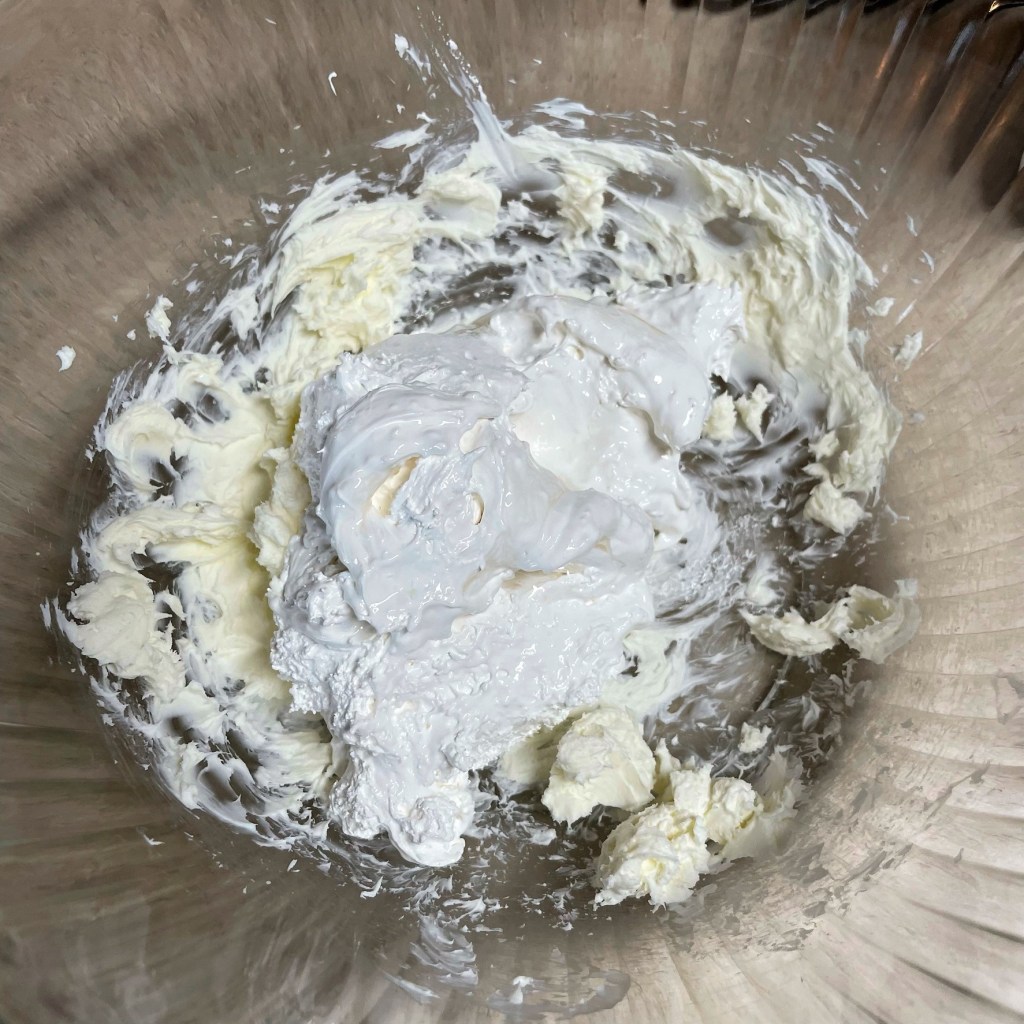
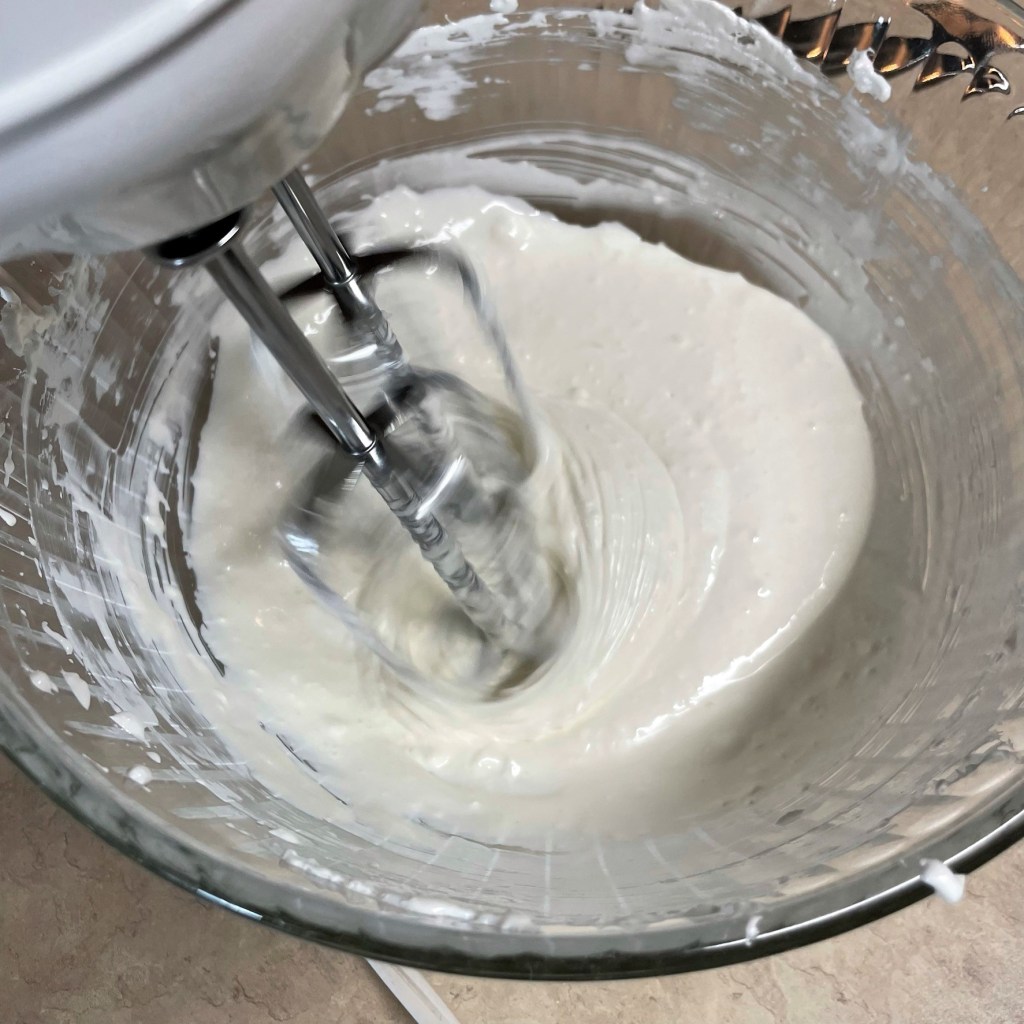
For the marshmallow swirl, use an electric mixer to whip the cream cheese and marshmallow fluff together. Allow enough time for the mixture to settle into a smooth consistency. Cover and refrigerate.
I whipped the 2 oz. chunk of cream cheese briefly before adding the VERY STICKY fluff to the bowl.
Beat on low until the ingredients come together a bit, then increase the speed to whip out any lumps or bubbles.
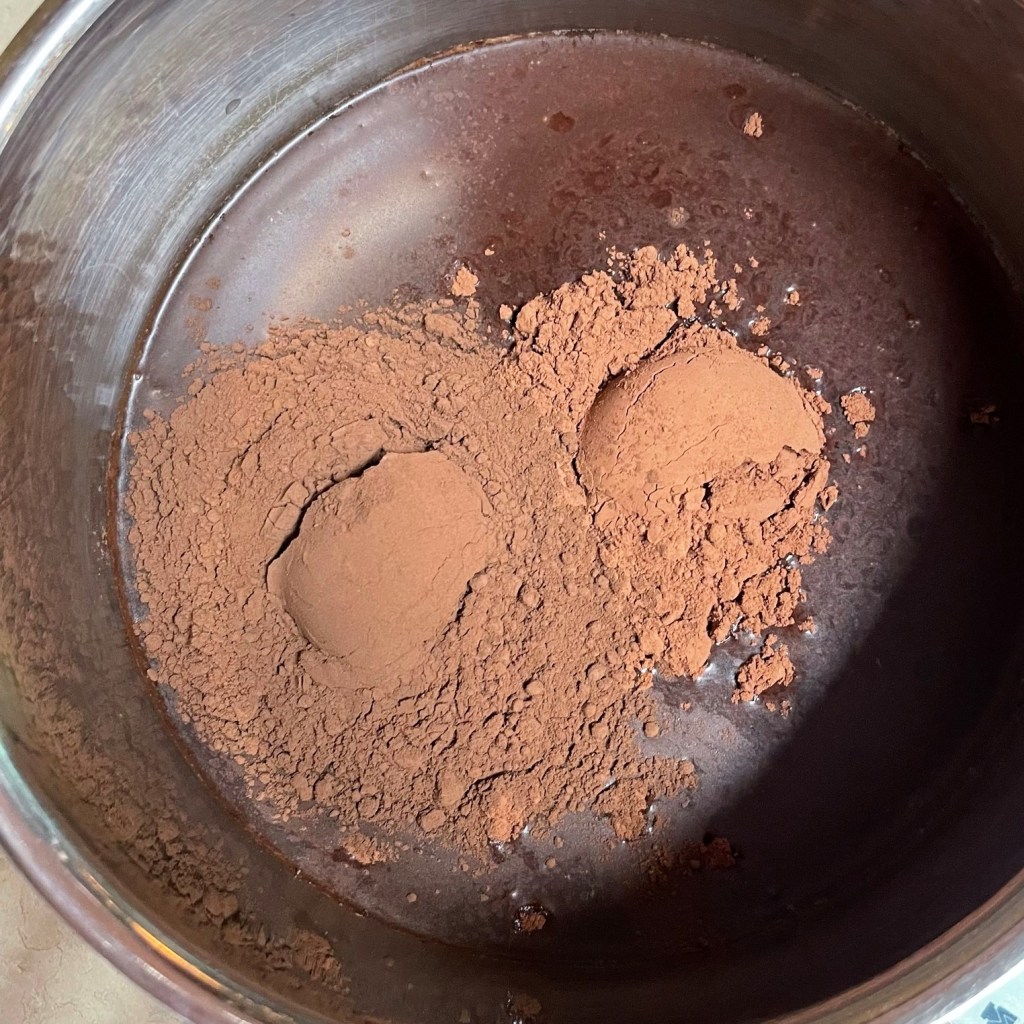
For the fudge ripple, combine sugar, corn syrup, water and cocoa powders in a small saucepan over medium-low heat. Whisk constantly until mixture reaches a just-barely-boiling point. Remove from heat and stir in sea salt and vanilla extract. Transfer to a bowl, cool several minutes, then cover and refrigerate until fully chilled.
The intense color and flavor of the Double Dutch dark cocoa (on the left) can’t be beat.
Whisk the syrup ingredients constantly over medium-low heat, until it just comes to boil, like this. Turn off the heat and stir in the vanilla and sea salt.
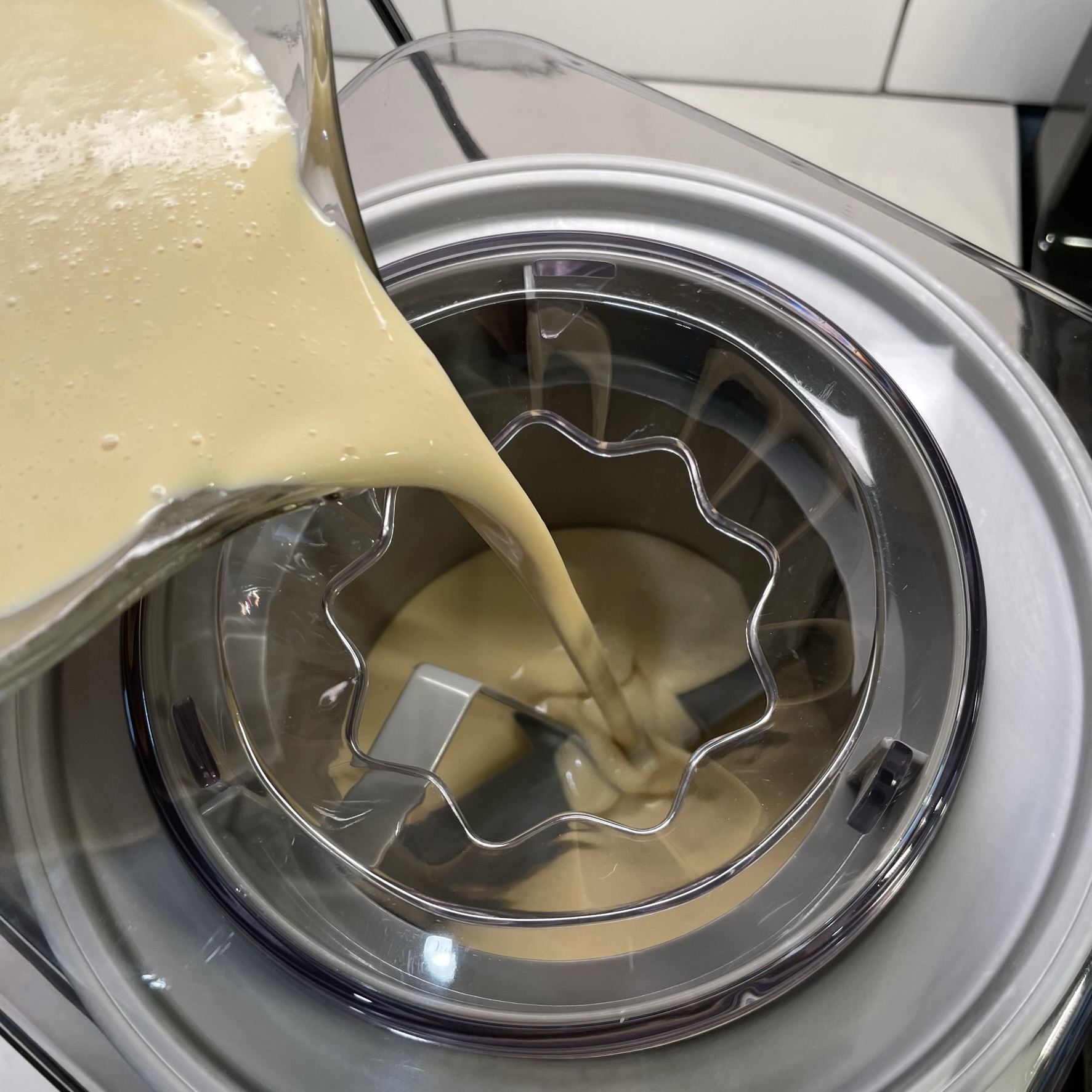
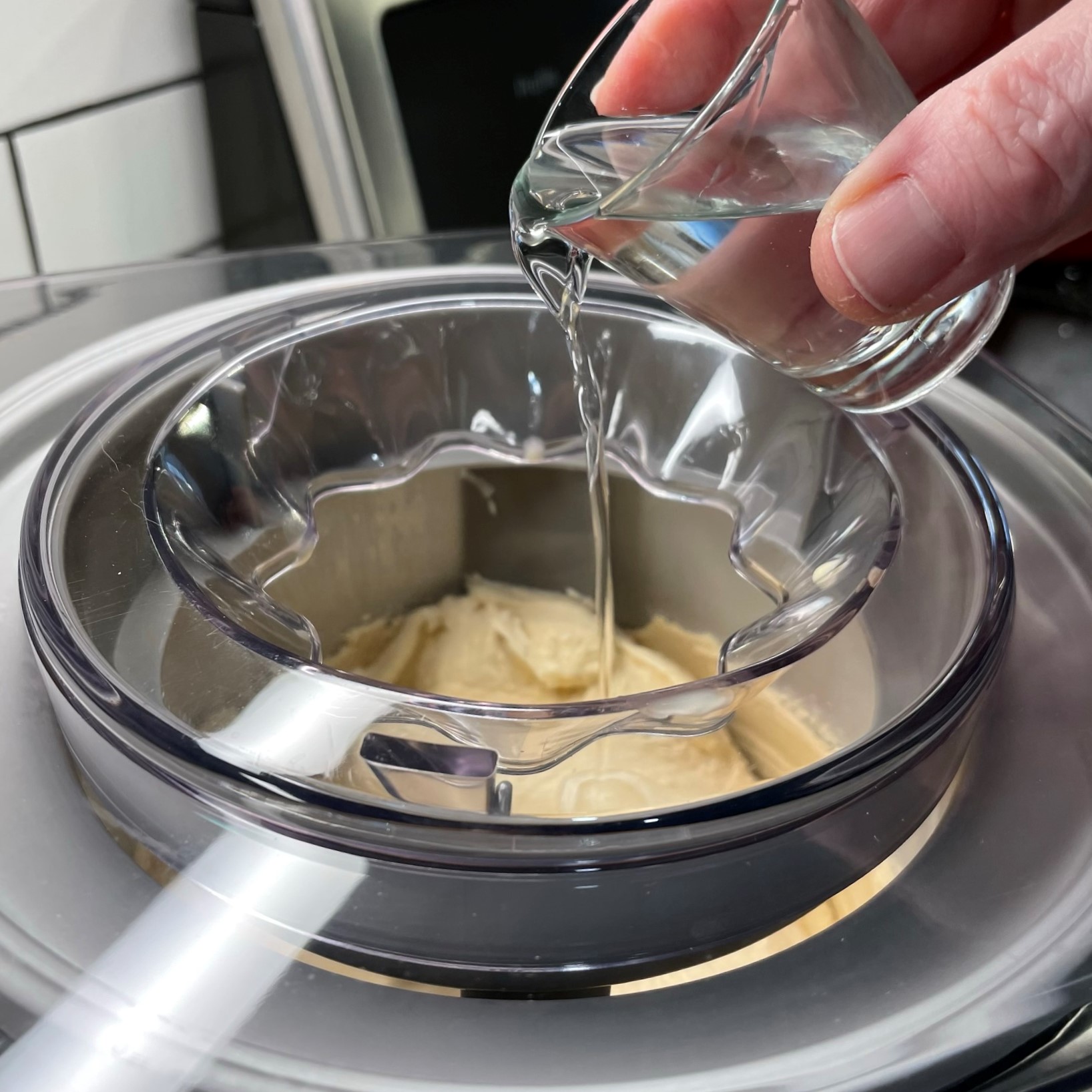
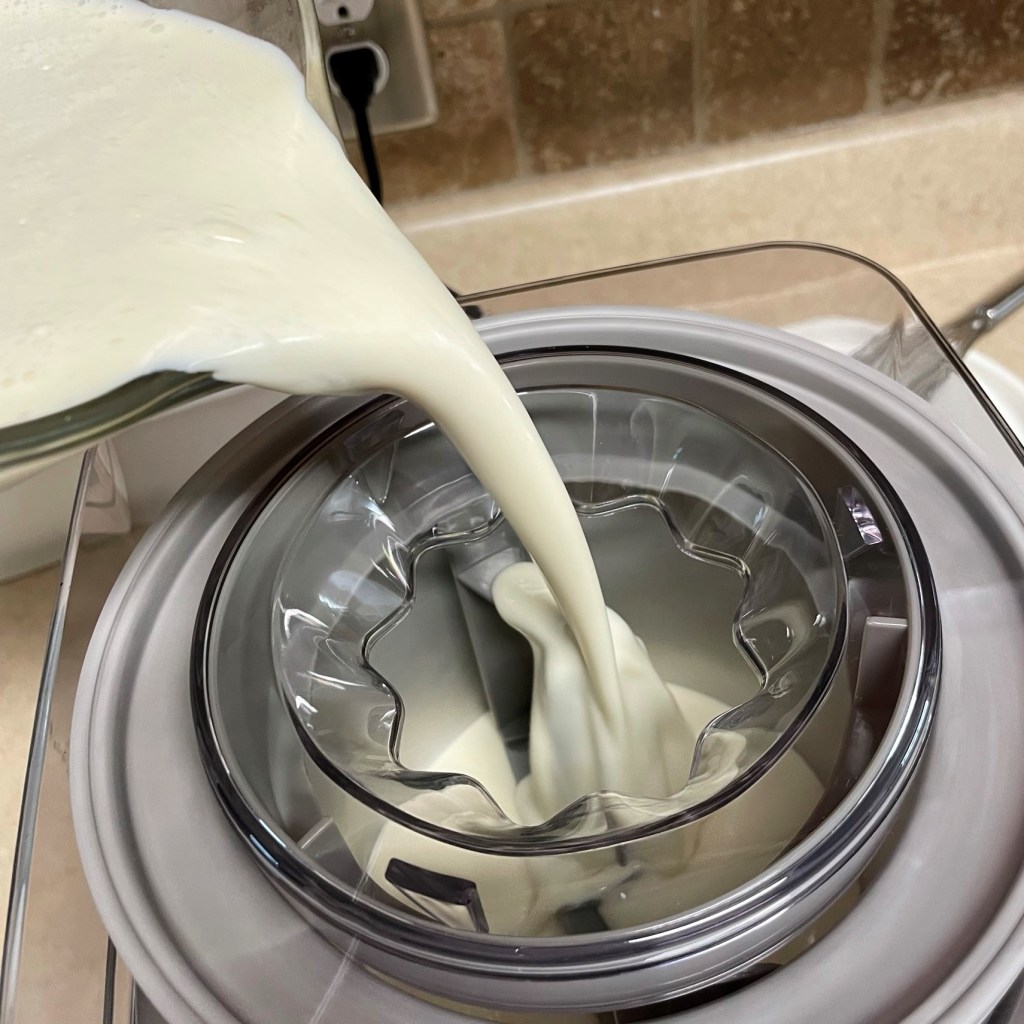
To make the layered ice cream: Freeze the base ice cream according to manufacturer’s instructions; my Cuisinart machine takes about 20 minutes. During the final minute, add the vanilla flavored vodka. This ingredient is not essential, but it helps make the ice cream scoopable immediately upon removal from the freezer. If you avoid alcohol—no problem; simply remove the ice cream about 15 minutes before serving to slightly soften.
Pour the chilled ice cream base into the freezer bowl, and wait 20 minutes for summer dessert magic.
Add a tablespoon of vodka during the final minute of churning. Skip this step if you’ll be feeding kids or others who avoid alcohol.
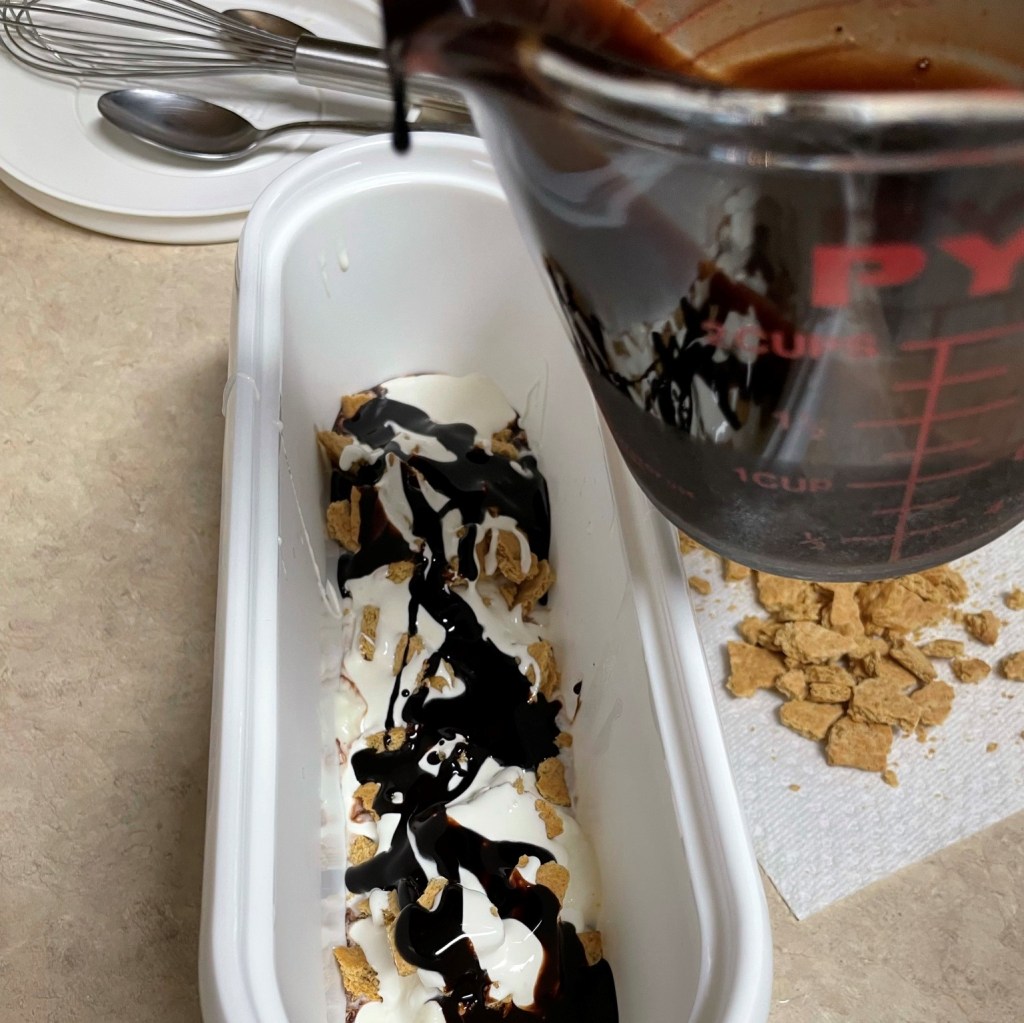
When ice cream is finished churning, add a slight ribbon of fudgy ripple to the bottom of an insulated ice cream container. Spoon in a few dollops of the ice cream base, followed by the graham cracker pieces and a generous drizzling of the marshmallow fluff mixture. Swirl on more fudge ripple, then repeat with ice cream, graham pieces and marshmallow fluff mixture. Be generous with the s’mores ingredients for best results. Any remaining fluff or fudge swirl mixture can be used to “dress up” your ice cream at serving time.
I had all my s’mores add-in ingredients on standby, and I couldn’t resist sampling the goods. 😉
The anticipation usually gets to me right at this point.
I scream, you scream…
For no particular reason, I drizzled some of the chocolate syrup into the bottom of the insulated ice cream container.
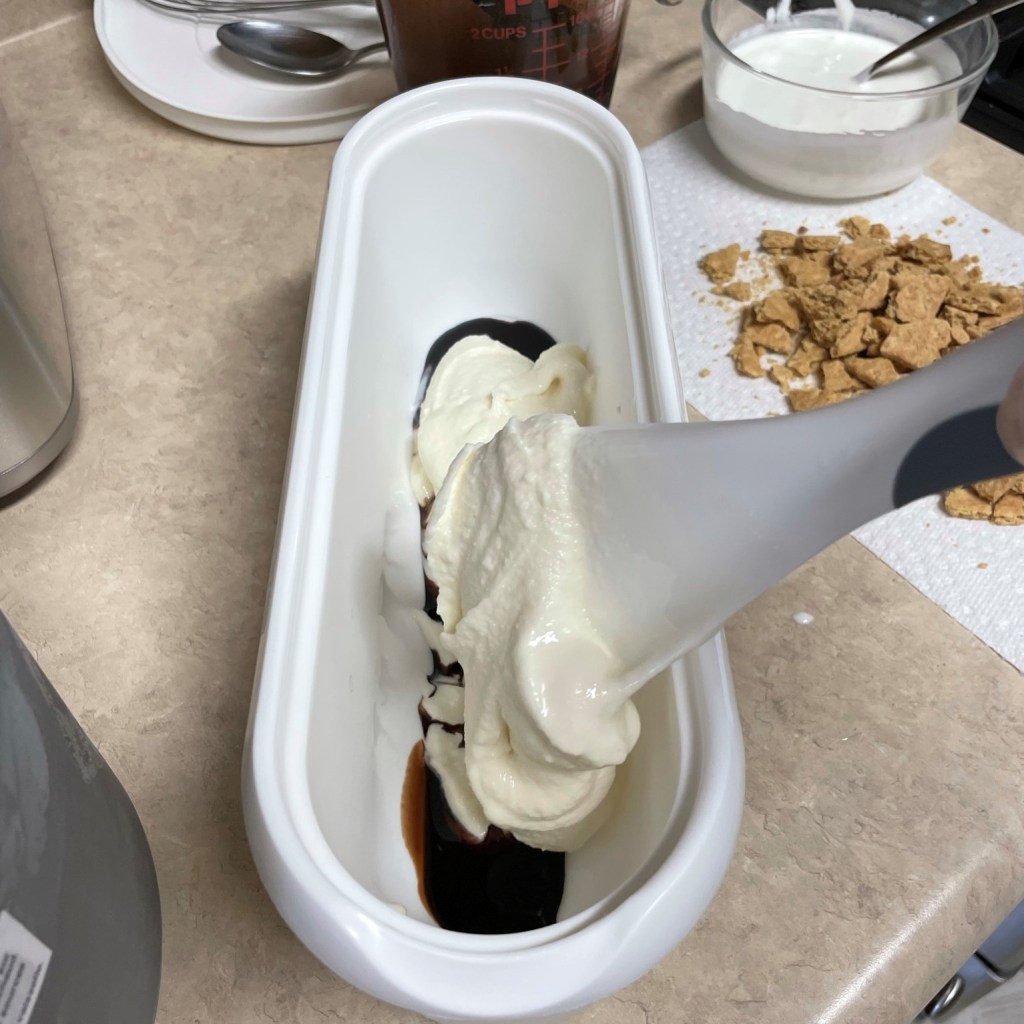
Spoon in a layer of the churned ice cream, but resist the urge to “swirl” it in the syrup.
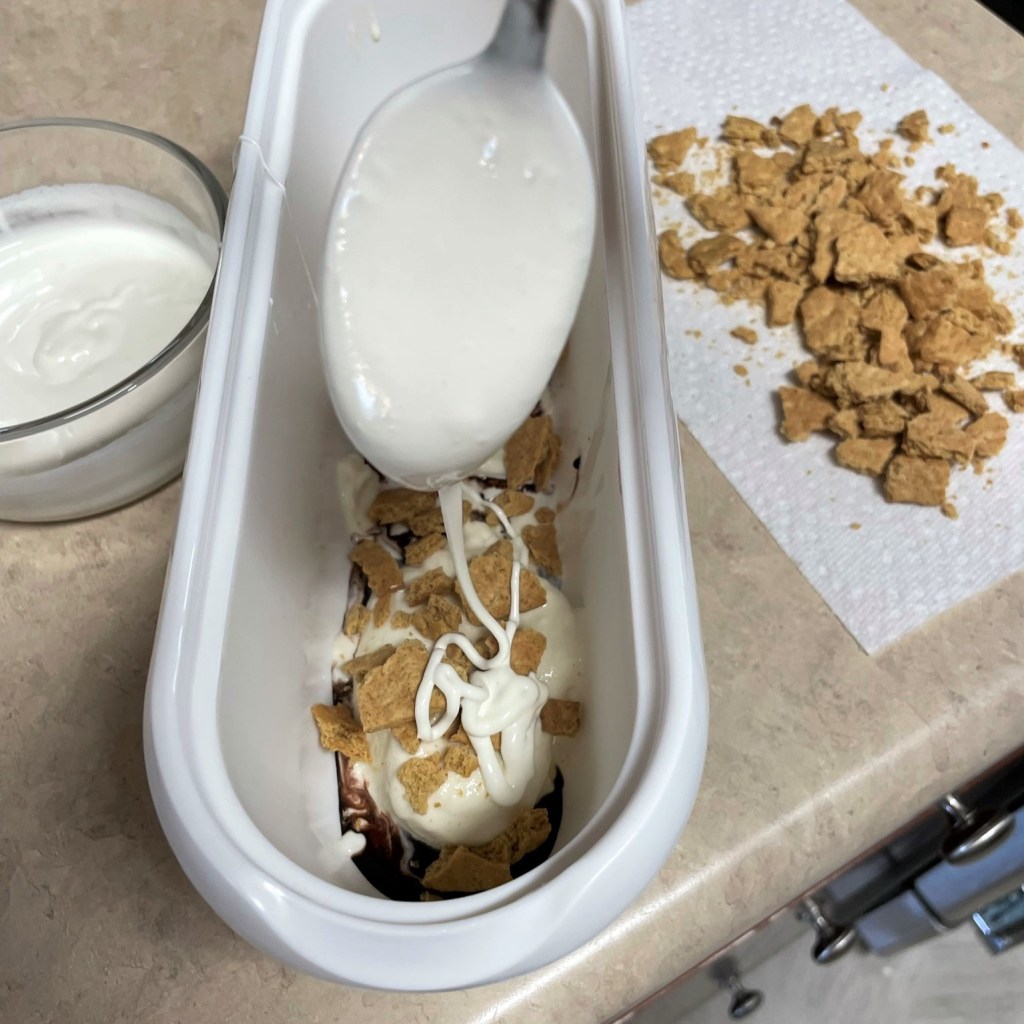
Sprinkle on a generous layer of crushed graham crackers and several spoonfuls of the marshmallow mixture.
Another layer of chocolate syrup, and repeat the layers, finishing with ice cream on top.
Scatter all the graham crumbs on top of the ice cream and send it to the freezer to firm up.
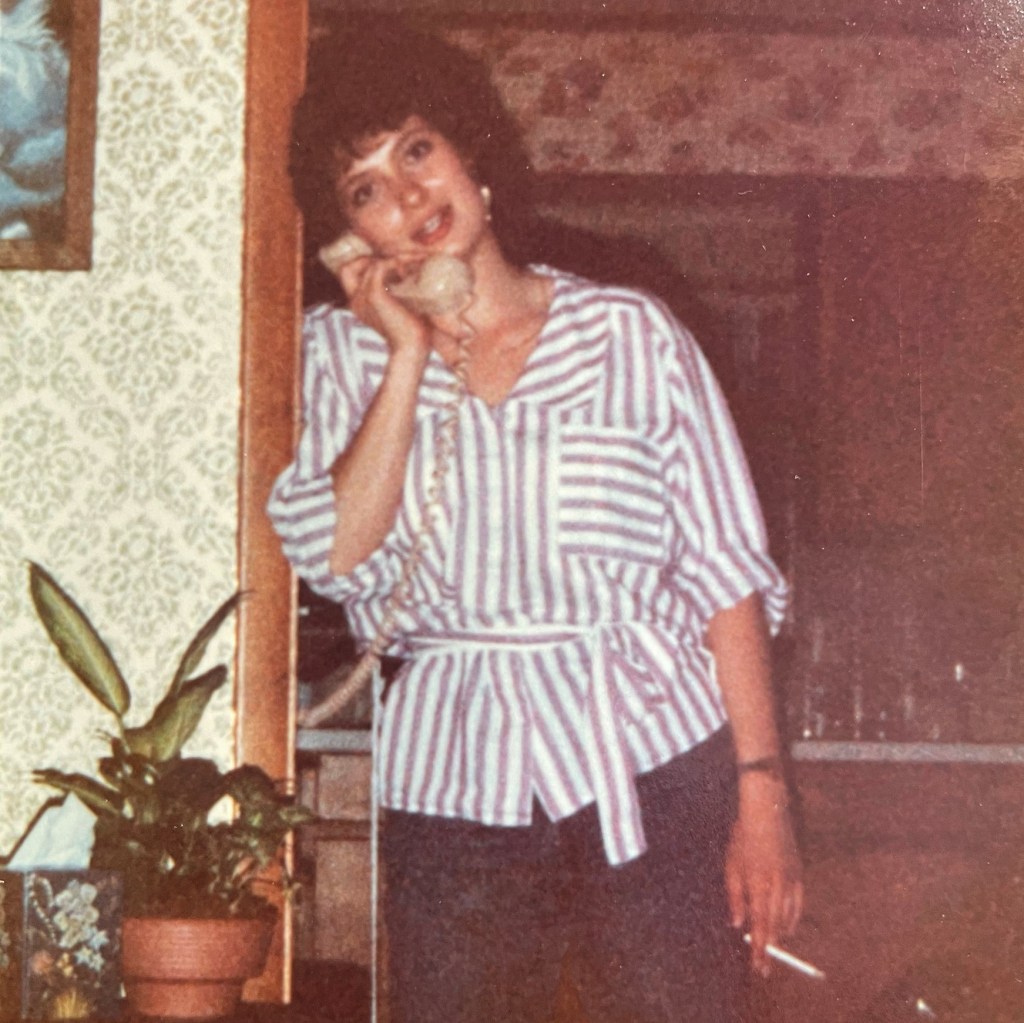
It was July, 1986. My wardrobe included stirrup pants, big blouses and my favorite pin-striped, high-waisted skinny jeans. The ones with the pleats. My hair was permed and teased out to here, and all the girls were lusting after Tom Cruise in Top Gun. I was restless in my not-so-exciting hometown, and I spent entirely too many weekend nights on the dance floor at a bar called the Rusty Nail, drinking the most sticky-sweet drink that was all the rage that year.
When we were not enjoying our Bartles & Jaymes wine coolers, the “fuzzy navel,” made with orange juice and DeKuyper Peachtree schnapps, was the “cocktail” of choice for me and so many of my friends, whether we were out on the town (which meant we were in the next town over), hanging at home (because our town didn’t have much going on) or gathering for a bridal shower (because getting hitched is what several of my friends were doing that year). Man, we were so cool.
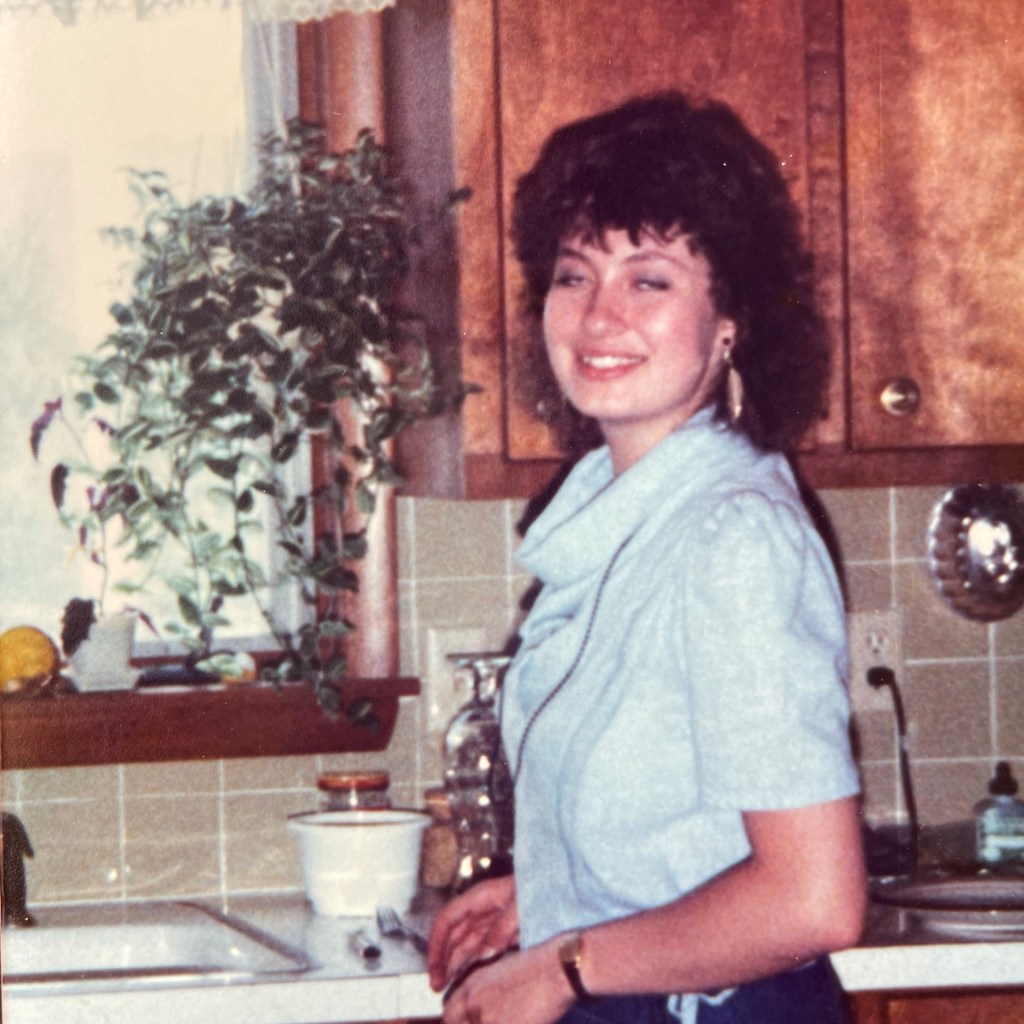
Why did we ever think it was cool to smoke?? But I wish I still had that striped top!
It was an odd time for me, as I turned 21 and I would finally be cleared to order a drink in public. Again. There was a great deal of confusion for my friends and me, as the state of New York had raised the legal drinking age not once, but twice, in a short period of time. First, they raised it from 18 to 19, after I had been legally imbibing for about eight months. Then, when I was 20 and enjoying my fuzzy navels, they upped it to the national standard age of 21. In the next town over, this did not present as much of a problem, because I had a fake ID. Yes, it was bad, but shame on the state for having a no-photo ID that was made of plain old paper. I had used a safety pin to scratch off the bottom part of the 7 and a #2 pencil to reshape it into a 2, giving myself a Feb. 25 birthday! Seriously, it was ridiculous that the powers in Albany did not find a way to “grandfather” in the people who were already considered “of age.”
In my hometown though, everyone knew I was a July baby, so I had to rely on the bottles of DeKuyper Peachtree schnapps I had already purchased (when I was younger, yet “old enough”), and that was what carried me through the final stretch of waiting. Let’s just say that I bought a lot of orange juice during those weird alcohol retrograde months.
A few weeks ago, for nostalgia’s sake, I brought home a bottle of Peachtree schnapps when I spotted it in our local ABC store (that’s what we call our state-run liquor stores in North Carolina), and Lord have mercy, I wish I could have seen my own face when I took a sip! It has a fake fruit flavor and a slight medicinal edge, definitely not what I remembered as being “totally awesome.”
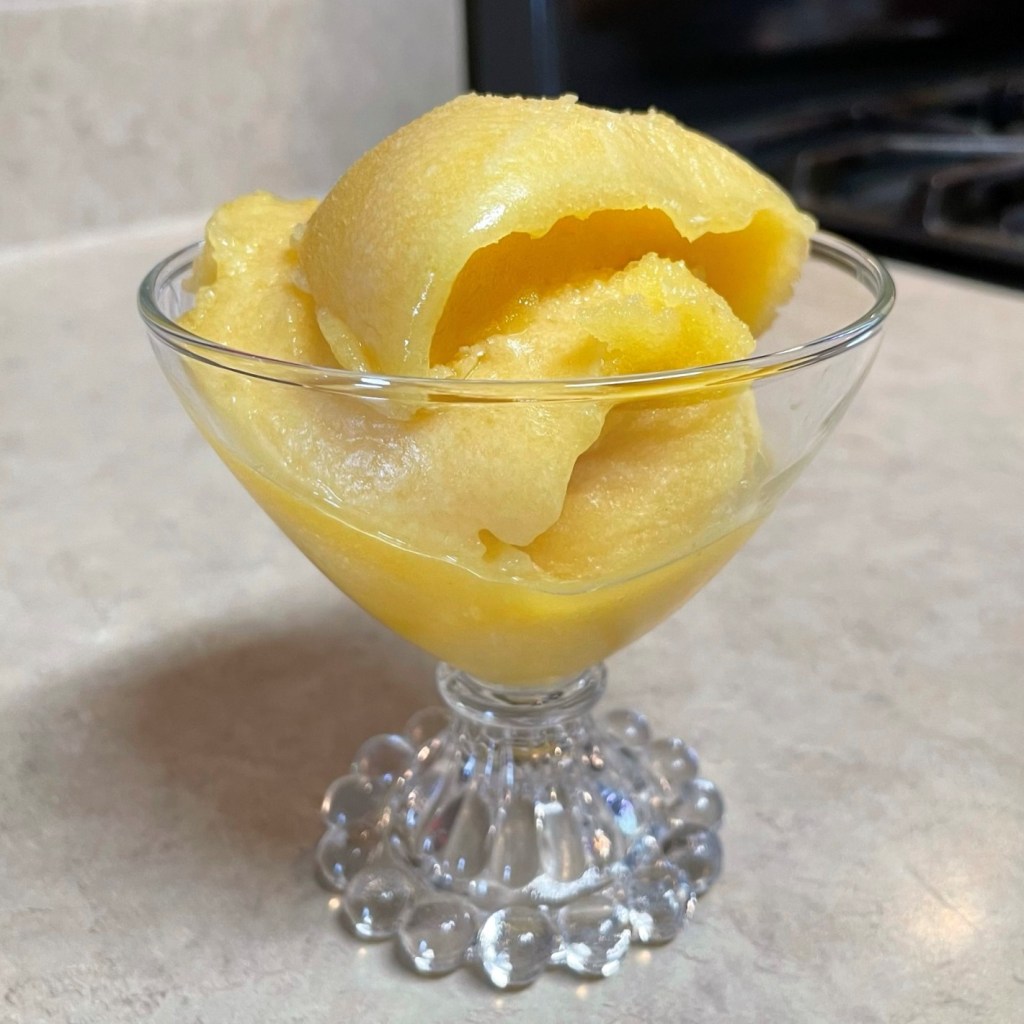
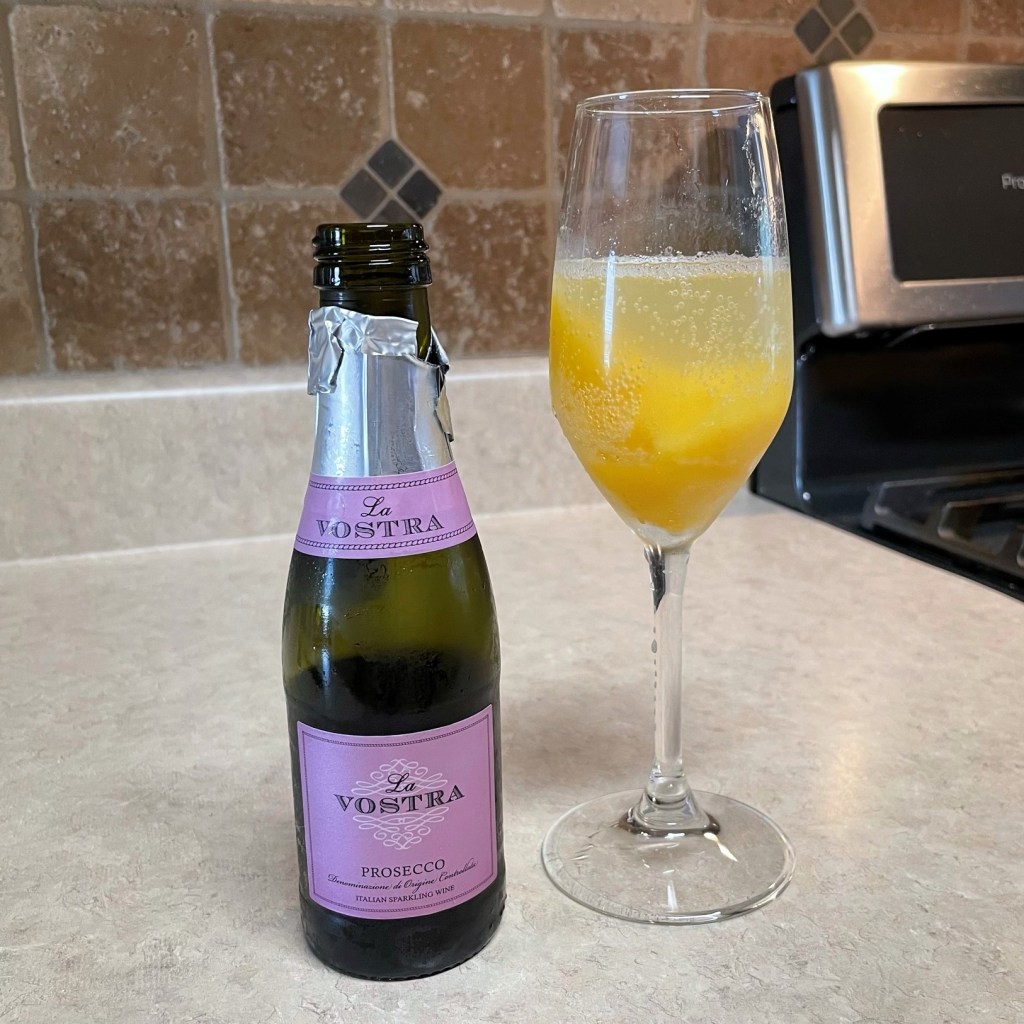
Yes, my taste has changed a great deal (thankfully), but I could not resist finding a fun way to pay homage to the drink of my youth, and this easy sorbet is the result of my effort. I am presenting it during National Ice Cream Month, as an alternative frozen treat for anyone who can’t eat ice cream, and as a nod to my younger self on her 21st birthday. The sorbet is surprisingly refreshing on its own, and I found that it also makes a fun brunch cocktail when topped with prosecco!
Please help me think of a good name for this fuzzy navel brunch cocktail. Mimosa and Bellini are already taken. 🙂
There is a hefty amount of peach schnapps in this sorbet, but fear not—the stuff is only 40-proof, so it isn’t going to wreck you. I pureed a handful of fresh summer peaches to add some freshness and actual peach flavor. The orange juice was a frozen concentrate (which is not as commonly available as in 1986), and I finished the mixture with a light simple syrup of sugar and water.
Ingredients
4 medium peaches, peeled and pitted
Juice of 1/2 fresh lemon
2 cups water, divided
1/2 cup cane sugar
2 Tbsp. light corn syrup* (see notes)
1/3 cup frozen orange juice concentrate
1/3 cup DeKuyper Peachtree schnapps
2 Tbsp. vodka, optional for extra kick
*Notes
Corn syrup is not crucial, but I used it to help keep the sugar from forming unpleasant crystals in the frozen sorbet.
Instructions
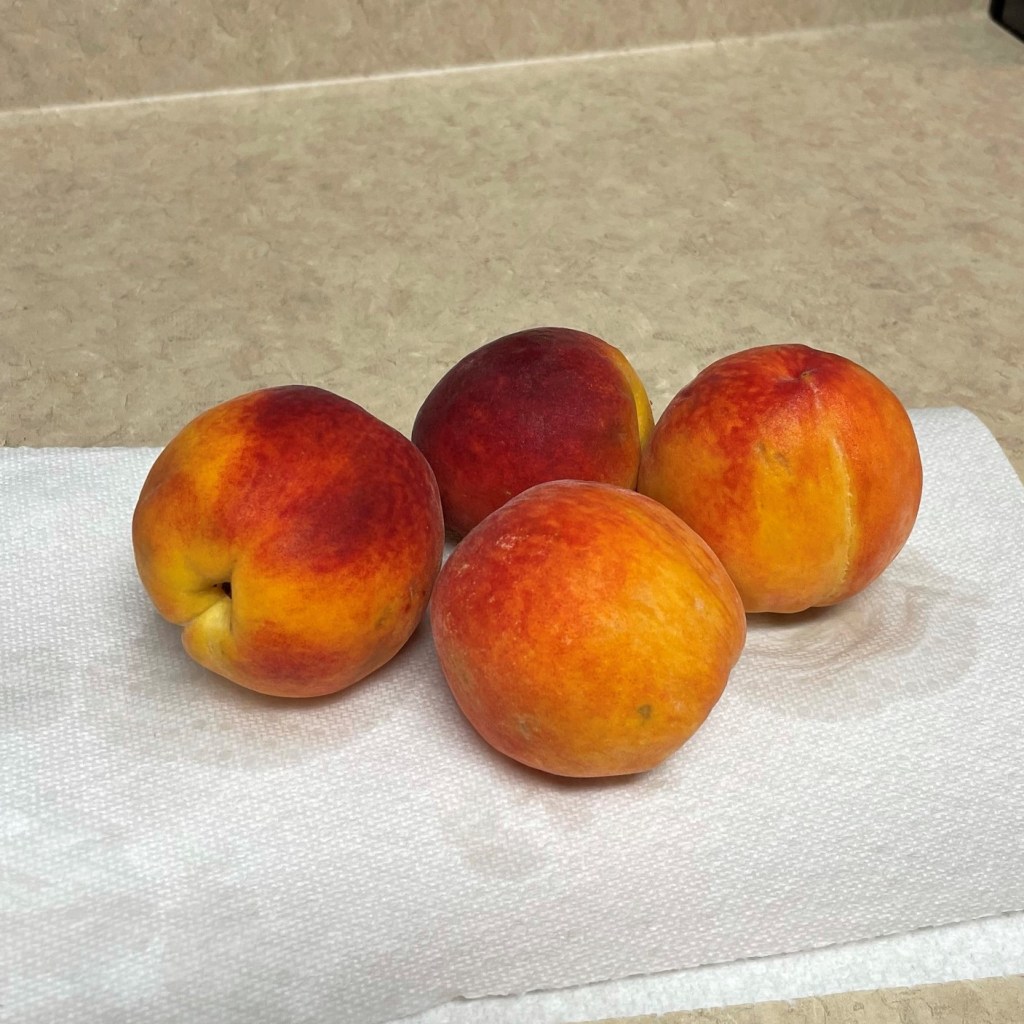
Fresh summer peaches can’t be beat, and they lend a real fruit flavor to my sorbet.
Simple syrup is sugar dissolved into water. Make it as sweet or light as you like.
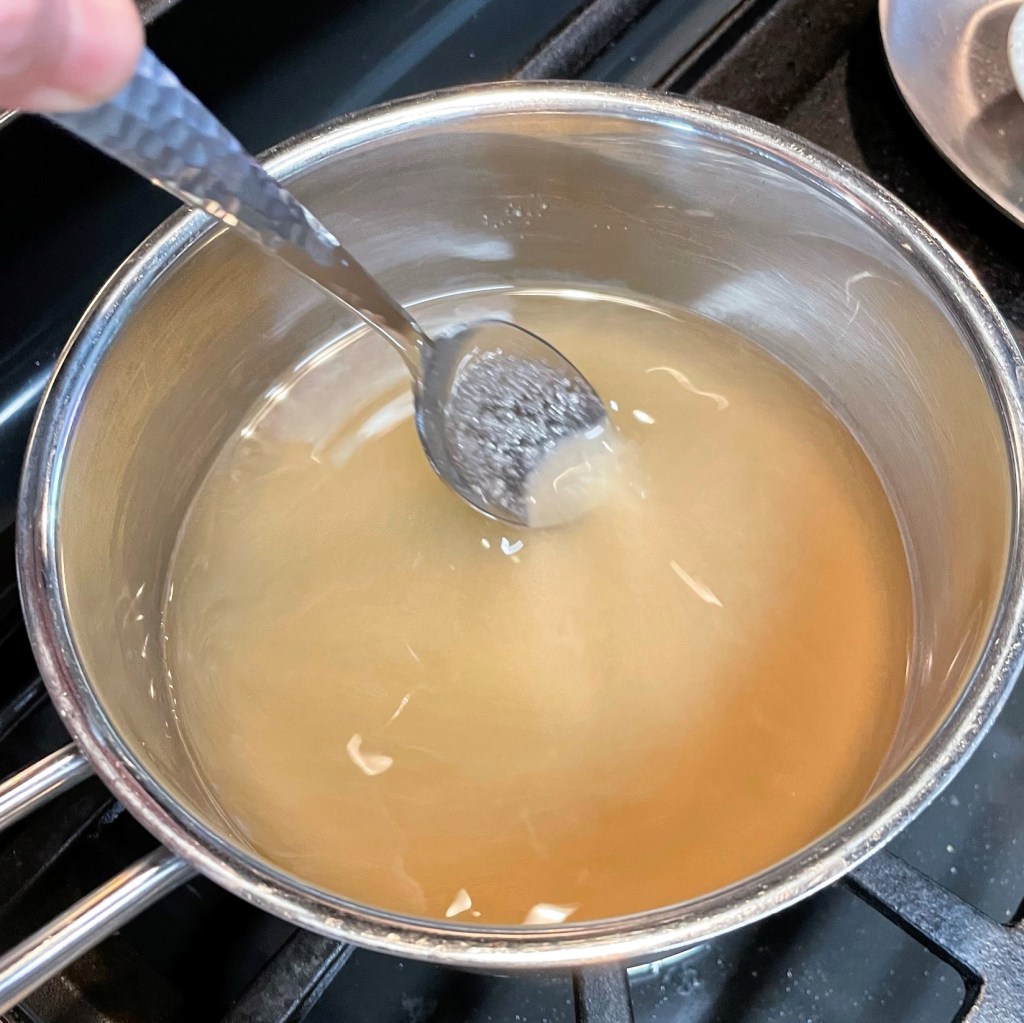
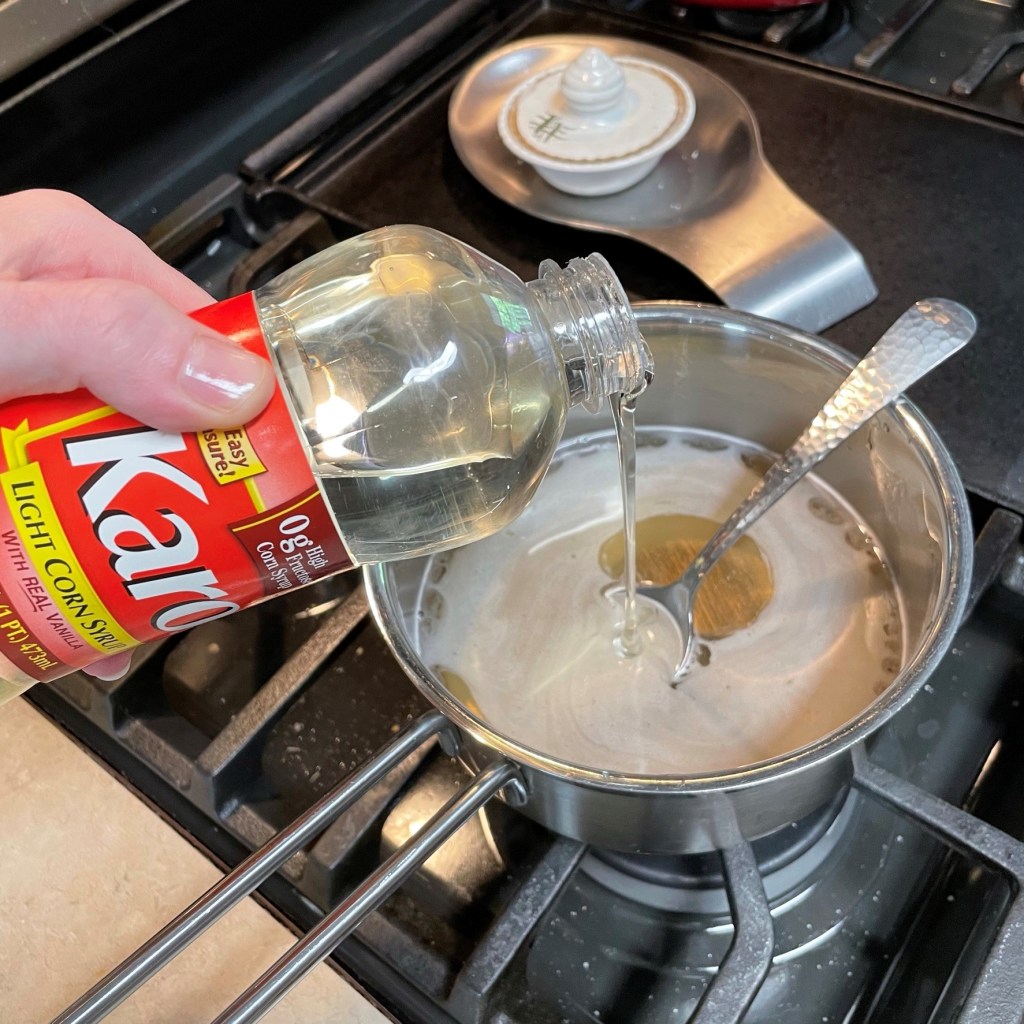
I added a little corn syrup for assurance that my sorbet would not become too icy.
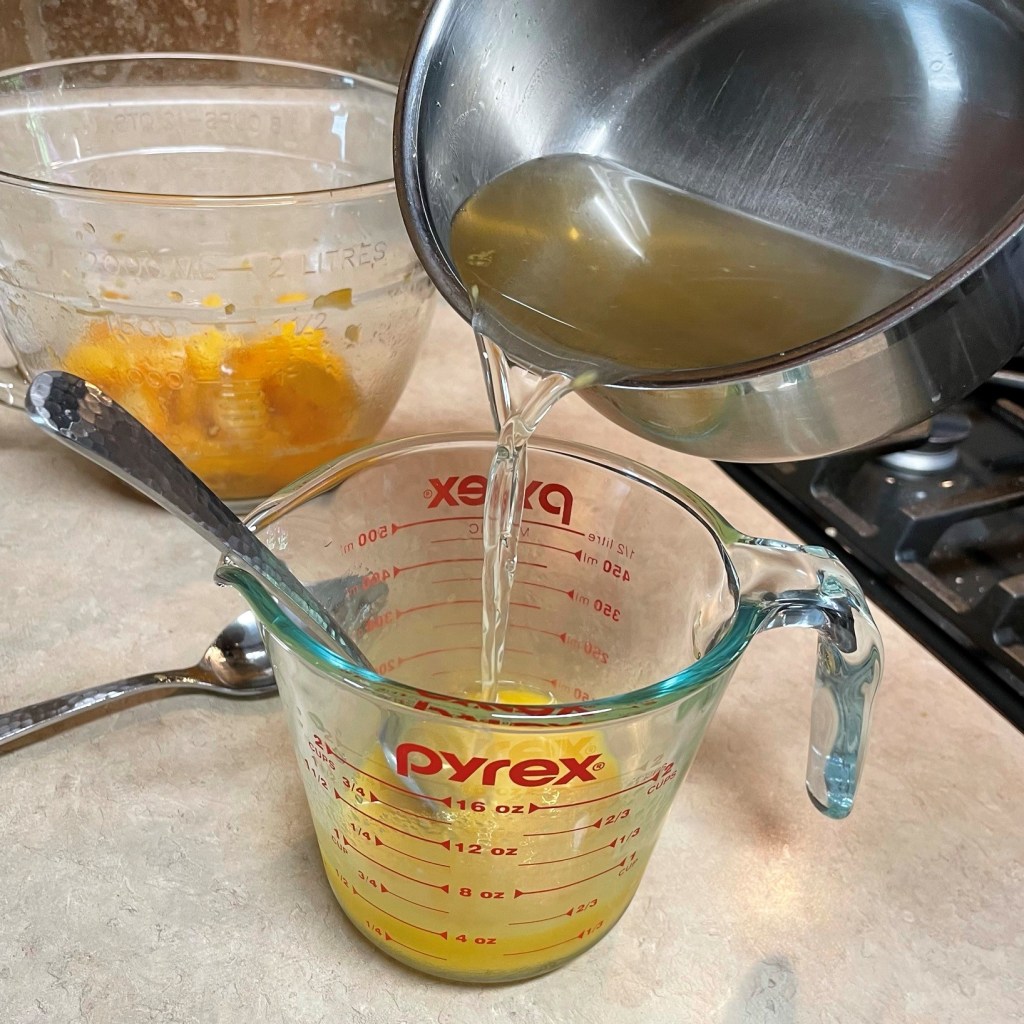
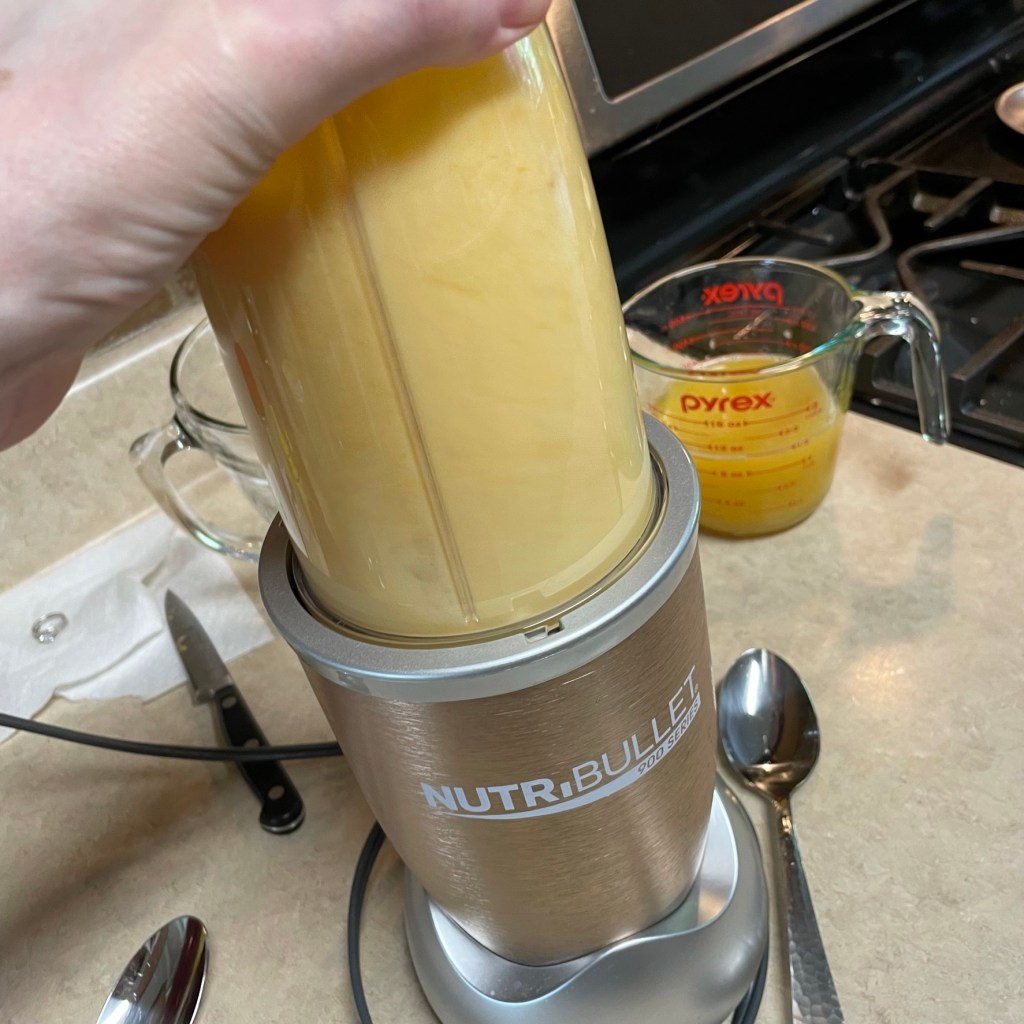
I used the simple syrup to soften the frozen orange juice concentrate.
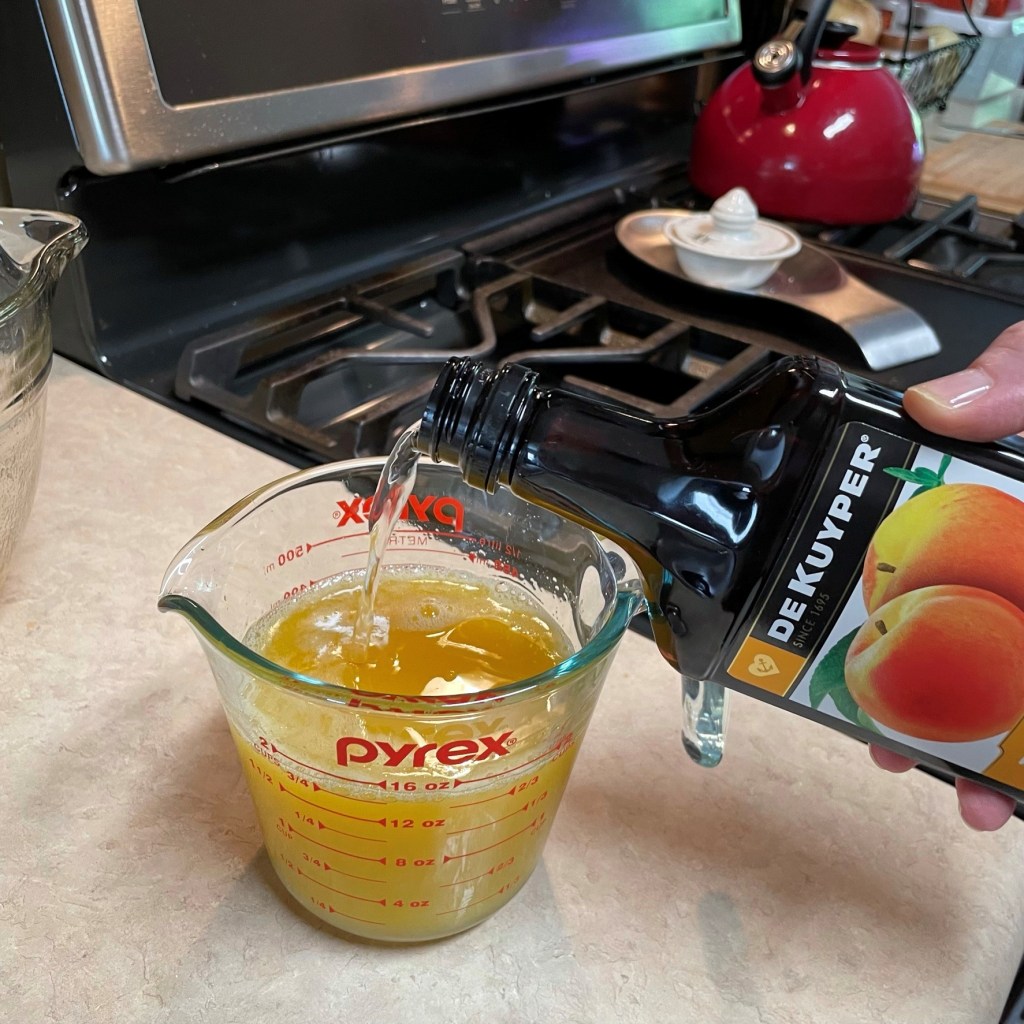
A hefty dose of the Peachtree schnapps goes into this frozen treat, but don’t worry, it’s not very potent.
I pureed the fresh peaches with a small amount of the juicy syrup mixture.
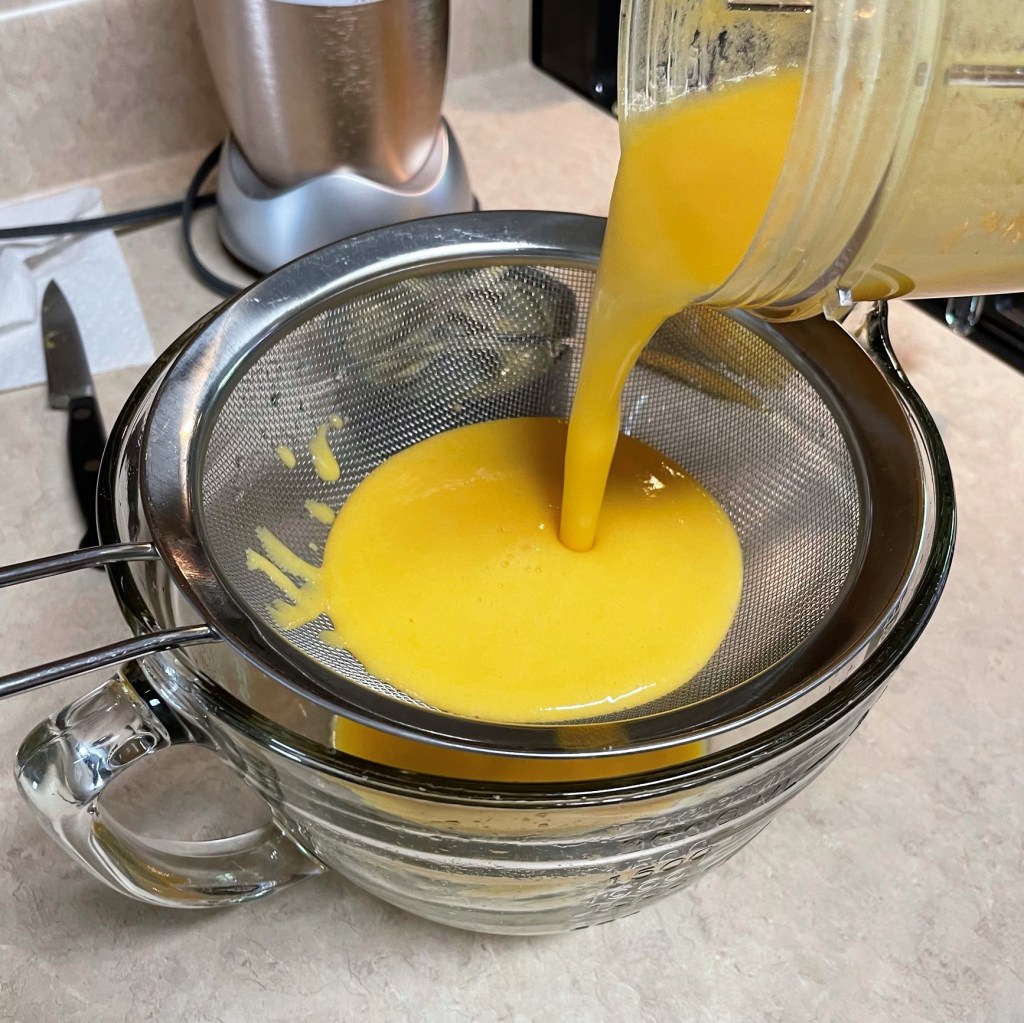
Straining the peach puree removed all those stringy things that hang on around the pit.
There was a lot of blending and tasting going on. This is a great way to customize the flavor to the right level of sweetness or booziness.
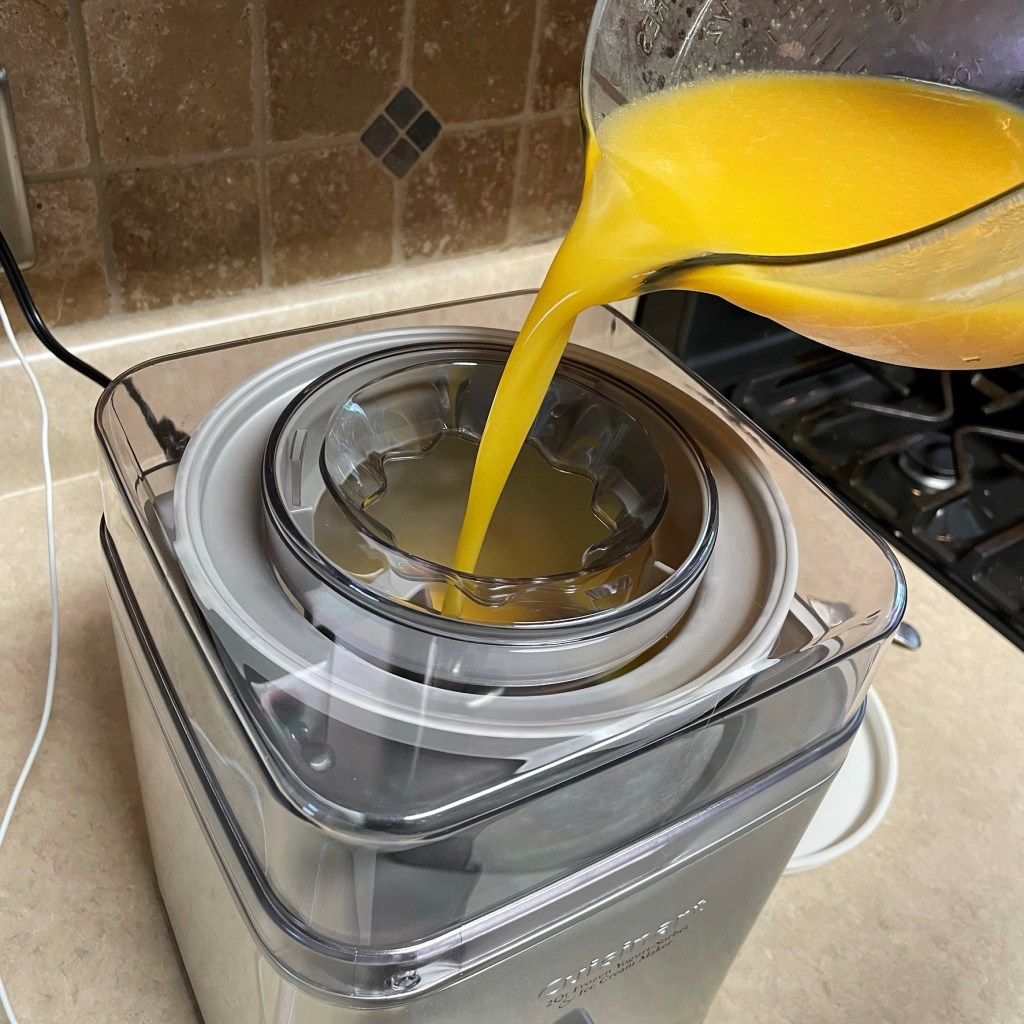
After chilling the mixture several hours, I poured it into my trusty ice cream machine and churned for about 25 minutes.
Tastes like 1986! 🙂
My grandmother would have loved that I served this in one of the footed dessert glasses she gave me back in those days. ❤
Cut up the peaches into chunks and transfer them to a regular or bullet blender. Squeeze in the lemon juice and toss lightly to prevent discoloration of the peaches.
Combine 1 cup of the water and all of the sugar in a small saucepan. Bring to a low boil and stir until sugar is dissolved. Stir in corn syrup. Remove from heat and allow the syrup to cool.
Add the orange juice concentrate to the bullet blender, along with the peaches and about 1/2 cup of the simple syrup. Pulse a few times, then blend continuously until the mixture is smooth and uniform.
Strain the puree through a mesh strainer to remove any solids, including the stringy fibers that surround the peach pits.
Combine the pureed mixture, the remaining simple syrup, remaining water and the Peachtree schnapps in a large bowl or pitcher. Stir to blend. Cover with plastic wrap and chill several hours or overnight.
Freeze the fuzzy navel mixture in an ice cream machine for about 25 minutes, until it’s frozen and slushy. Transfer to an insulated container and freeze overnight.
This sorbet can be served as is, or spoon a couple of tablespoons into a flute glass and top with prosecco. It’s a fun little brunch drink, almost as if a mimosa and a Bellini had a baby.
And as for you, young lady—well, you have a lot to learn. But you are awesome just as you are, even with your eyes closed. Don’t ever let anyone tell you different. ❤
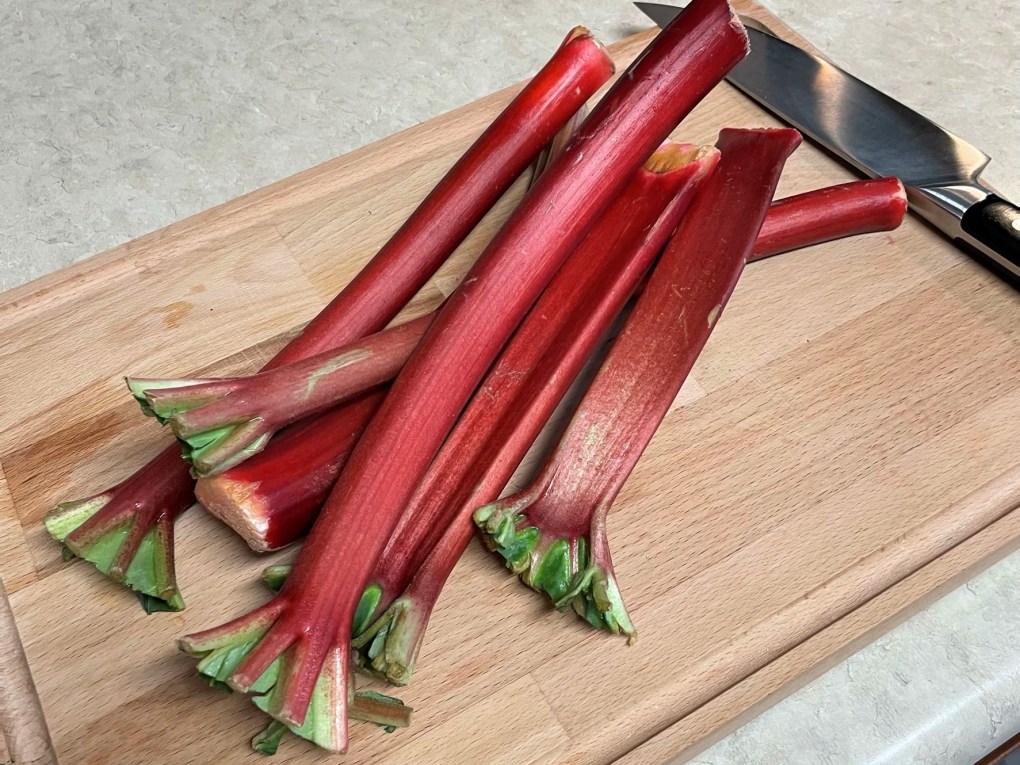
For at least three weeks, I had been watching all the markets I shop, waiting and hoping to see fresh stalks of spring rhubarb. It doesn’t seem to be a very popular item here in the South, or at least not as much as in my old stomping grounds in upstate N.Y., and there’s good reason—the winter soil is too warm in North Carolina. Rhubarb thrives in areas that have very cold winters, making it a common plant in the snow belt. Some folks around here have never even had the pleasure of tasting it.
When I was young, I remember my Gram always had rhubarb growing near a small outbuilding shed behind her house, and plenty of it. To find it locally, however, takes patience. When I do see it here, it is usually a small quantity, quite expensive, and often placed in one of the obscure sections of the refrigerated case, near the other “weird” produce items (think horseradish root and kohlrabi). I had even checked at the local farmer’s market, to no avail. One grocery produce manager, when asked about the expected arrival of rhubarb, looked puzzled and asked, “what does it look like?”
I always look forward to seeing these red beauties in the spring!
By the time rhubarb makes it to the supermarket, the leaves have been stripped, and just as well—they are loaded with oxalic acid, so they are inedible and even toxic. The stems, which range in color from bright red to pink to pale green, look like smooth celery stalks and they are equally crisp in texture. I am hard-pressed to describe the flavor of rhubarb other than to say that it is tart, maybe like a cross between a green apple and a lemon. Although technically a vegetable that can be eaten raw, most people cook rhubarb with sugar and use it as a fruit, especially in pies, crumbles, jams and preserves.
My Gram made a delicious rhubarb sauce that was as delicious to me as any applesauce, and I remember asking for it as a topping on vanilla ice cream. In the summer of 2011, on my last visit with my grandmother, who had relocated to Montana to be near my aunt, we enjoyed this dessert together. Lucky for me, my aunt happily shared her recipe for this yummy dessert, which is very adaptable to include other fruits, especially strawberry. Aunt Joy and I were reminiscing the other day about the times I visited her house when I was young, and she made memorable, mouthwatering strawberry-rhubarb jam. It’s a fantastic flavor combination!
Just a couple of days before my mandoline accident, when I decided to shave that extra 1/8” off the end of my finger, I had been overjoyed to finally find fresh rhubarb in one of the markets I shop. My usual time in the kitchen has been abbreviated by my injury (which is driving me crazy, if you want to know the truth), but I have a wonderful and willing husband, Les, who has been my “hands” for some the kitchen tasks that are tricky for me right now. I won’t say that it has all been smooth sailing (I am a bit of a bossy britches), but we are getting better at working together to make some great food, including this fabulous dessert. Les did all the washing and cutting of fresh ingredients, and I did more of the mixing.
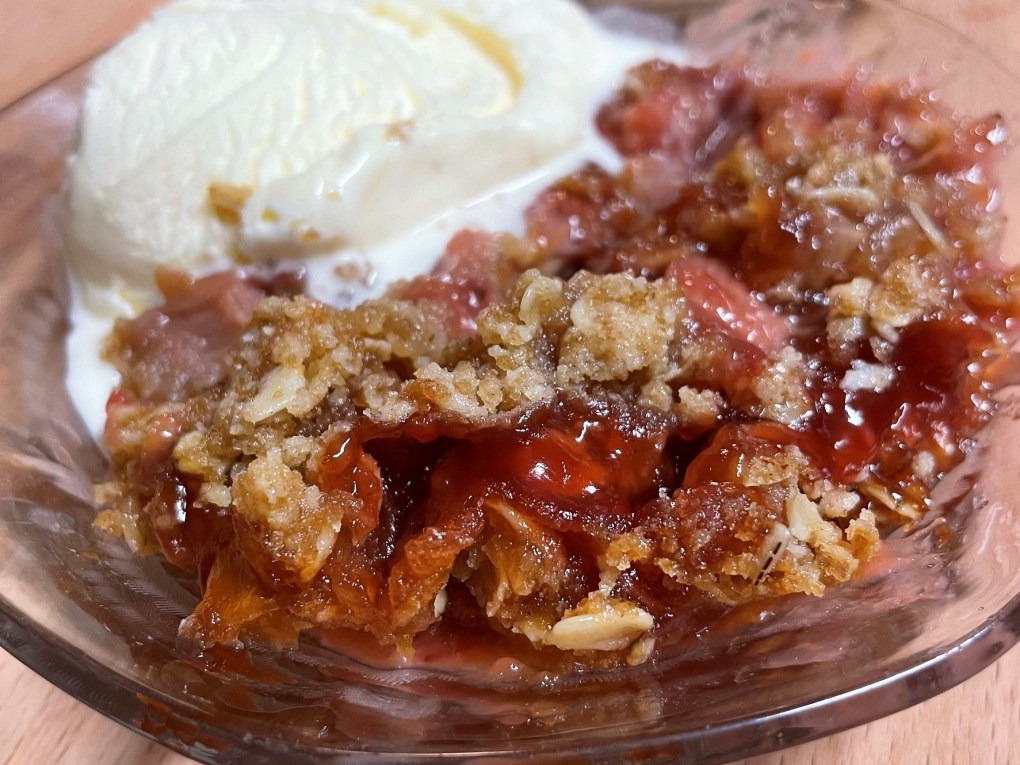
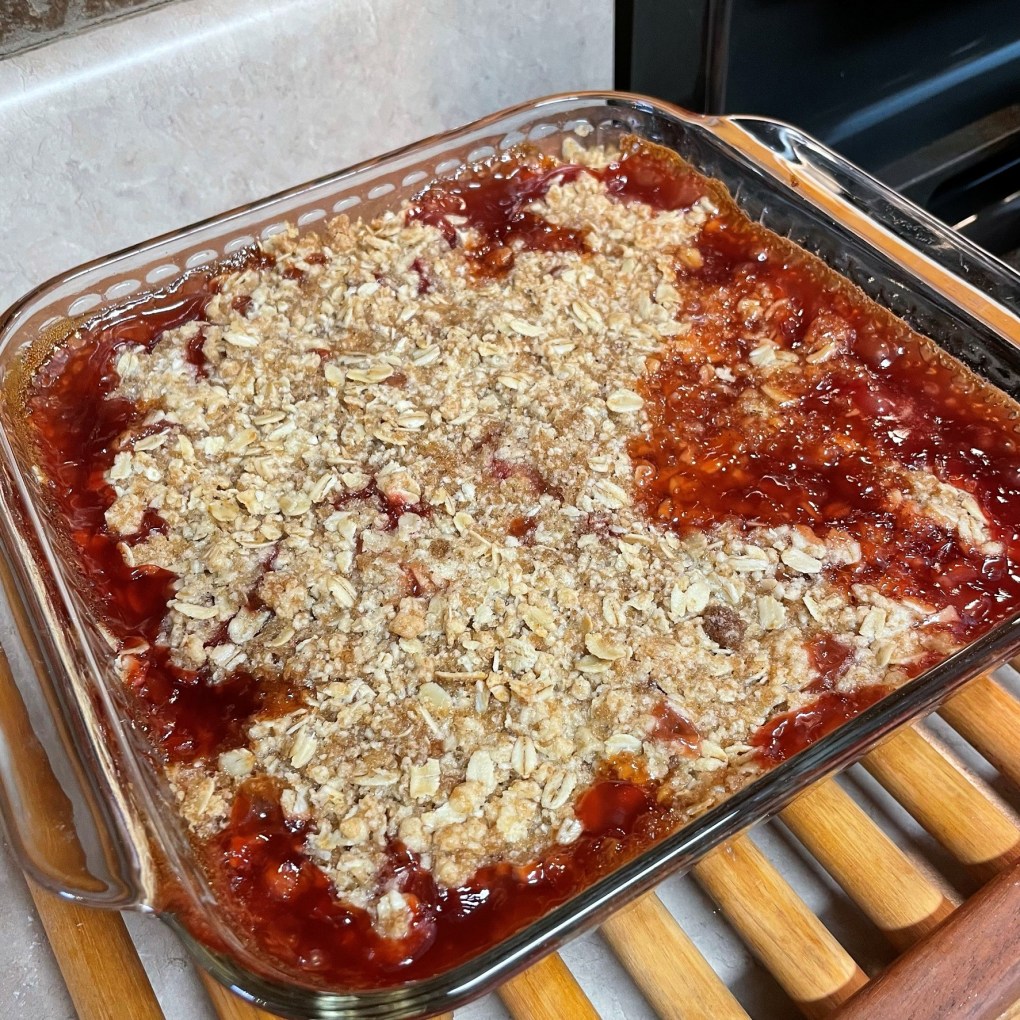
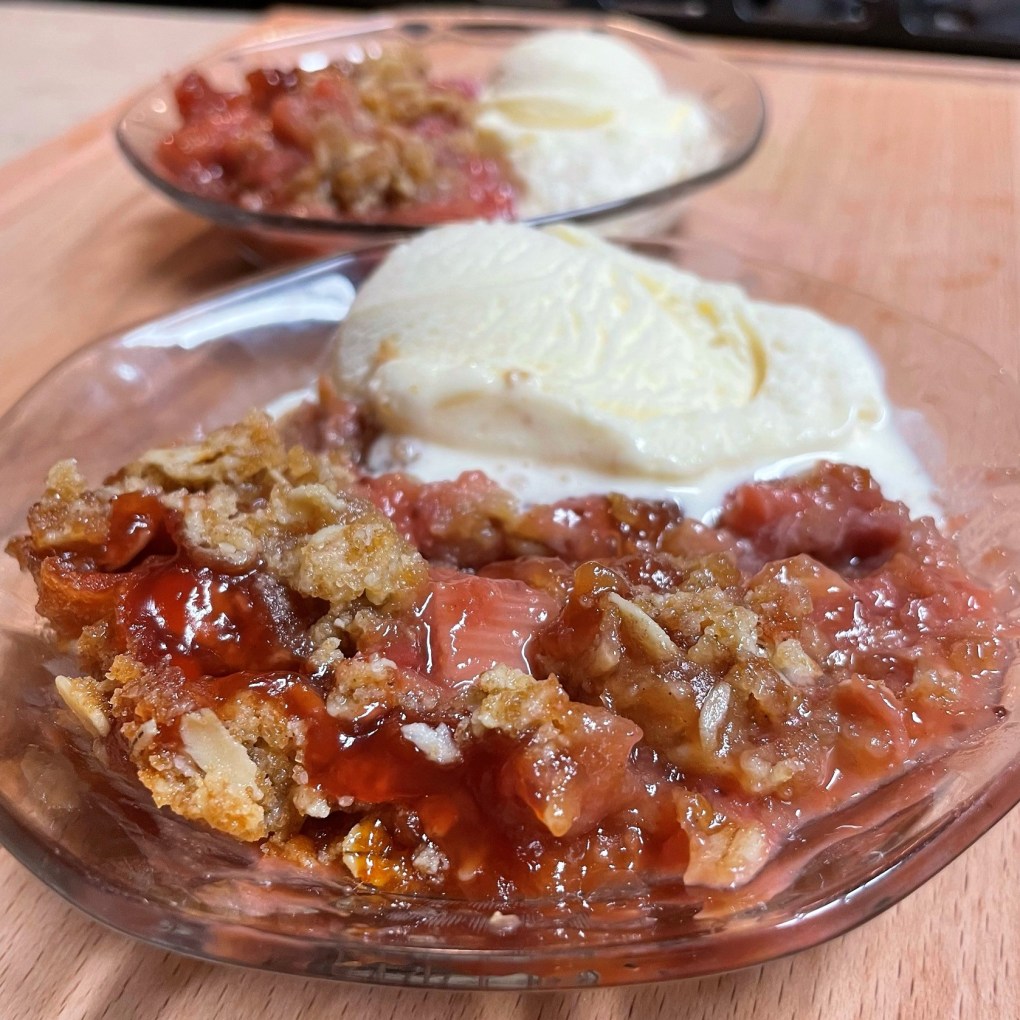
The filling is perfectly cooked and slightly sticky, and the oat topping is crunchy in all the right places. Served warm with vanilla ice cream, this is springtime heaven for my taste buds!
This delicious crunch was Les’s first-ever taste of rhubarb, so I leaned a little heavier on the strawberry than I otherwise would. I expected that his sweet tooth might reject the tartness of rhubarb on its own, but he really enjoys the flavor, so next time, I will go all-in with rhubarb. Assuming, of course, I can find it. 😊
Filling Ingredients
1 1/2 cups fresh rhubarb, cleaned and diced
1 1/2 cups strawberries, cleaned and halved
1/2 cup cane sugar
1/2 cup brown sugar* (see notes)
3 Tbsp. all-purpose flour
1/4 to 1/2 tsp. ground ginger
Topping Ingredients
1/2 cup brown sugar
1/2 cup rolled oats
1/2 cup all-purpose flour
1/4 cup whole wheat pastry flour* (see notes)
1/2 tsp. ground cinnamon
1 stick (8 Tbsp.) salted cold butter
Pinch of kosher salt
*Notes
My aunt’s original recipe calls for 1 cup sugar, but I split the amount between regular and brown sugars. I use brown sugar in strawberry shortcake and love the rich, warm flavor. Use all regular sugar if you prefer.
I like to use some portion of whole wheat flour in all my baked goods, but if you don’t have whole wheat pastry flour, increase the amount of all-purpose to 3/4 cup.
Instructions
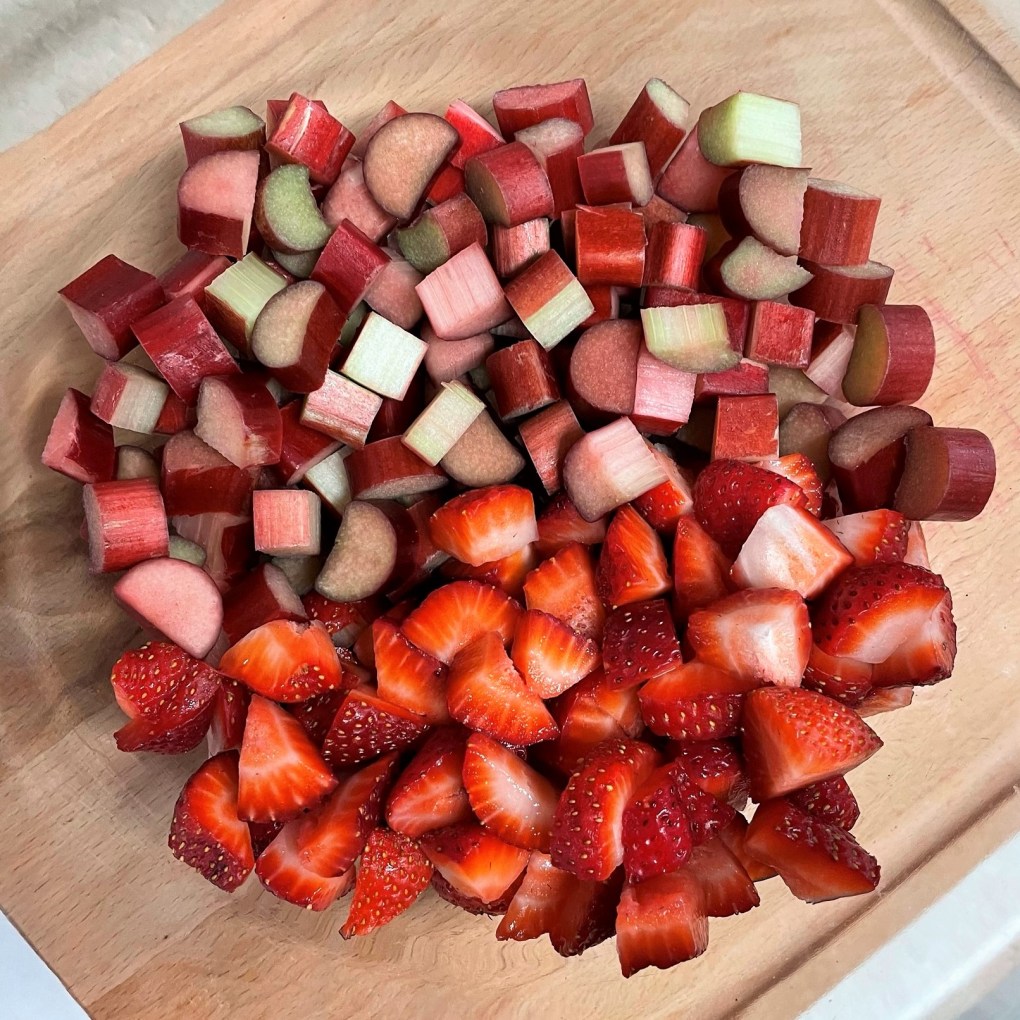
For Les’s first experience of rhubarb, I went 50/50 with sweet strawberries.
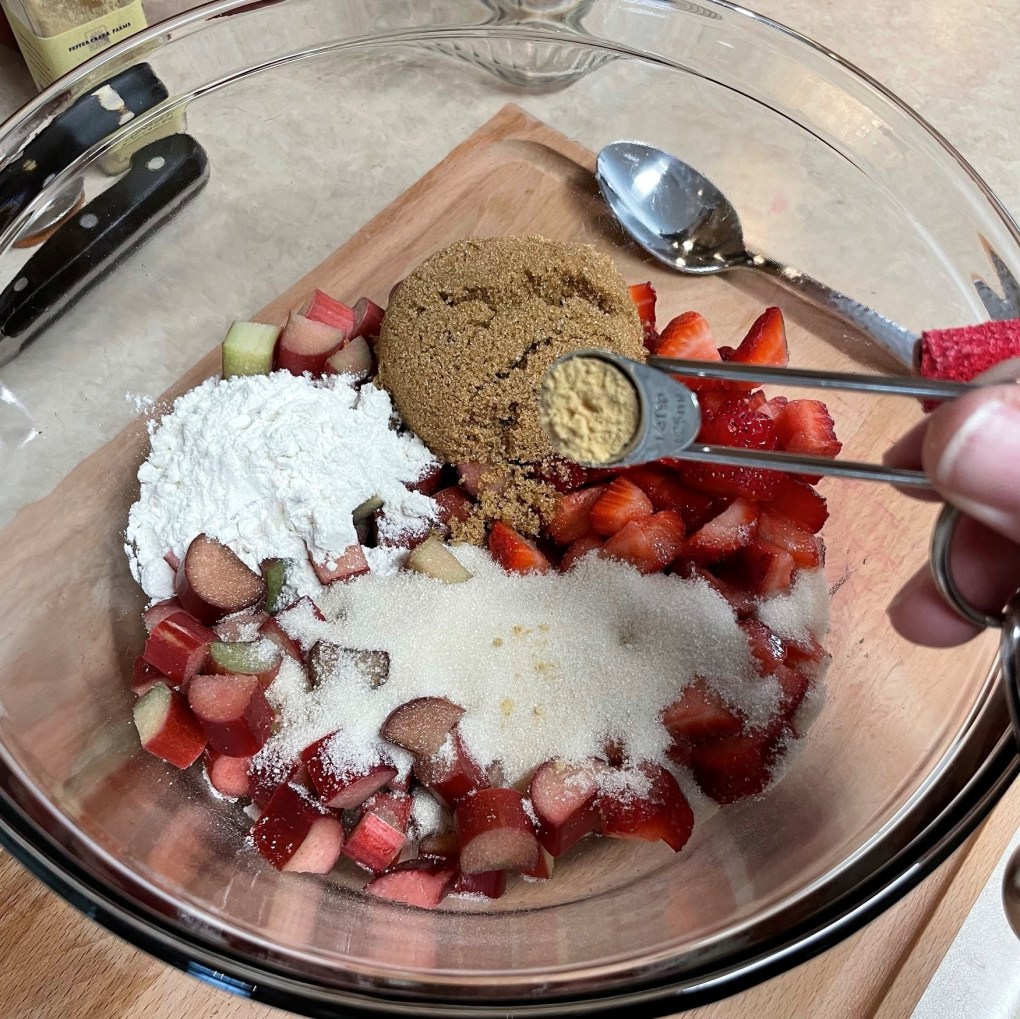
I added a slight sprinkling of ginger to my aunt’s recipe, and I subbed in half brown sugar.
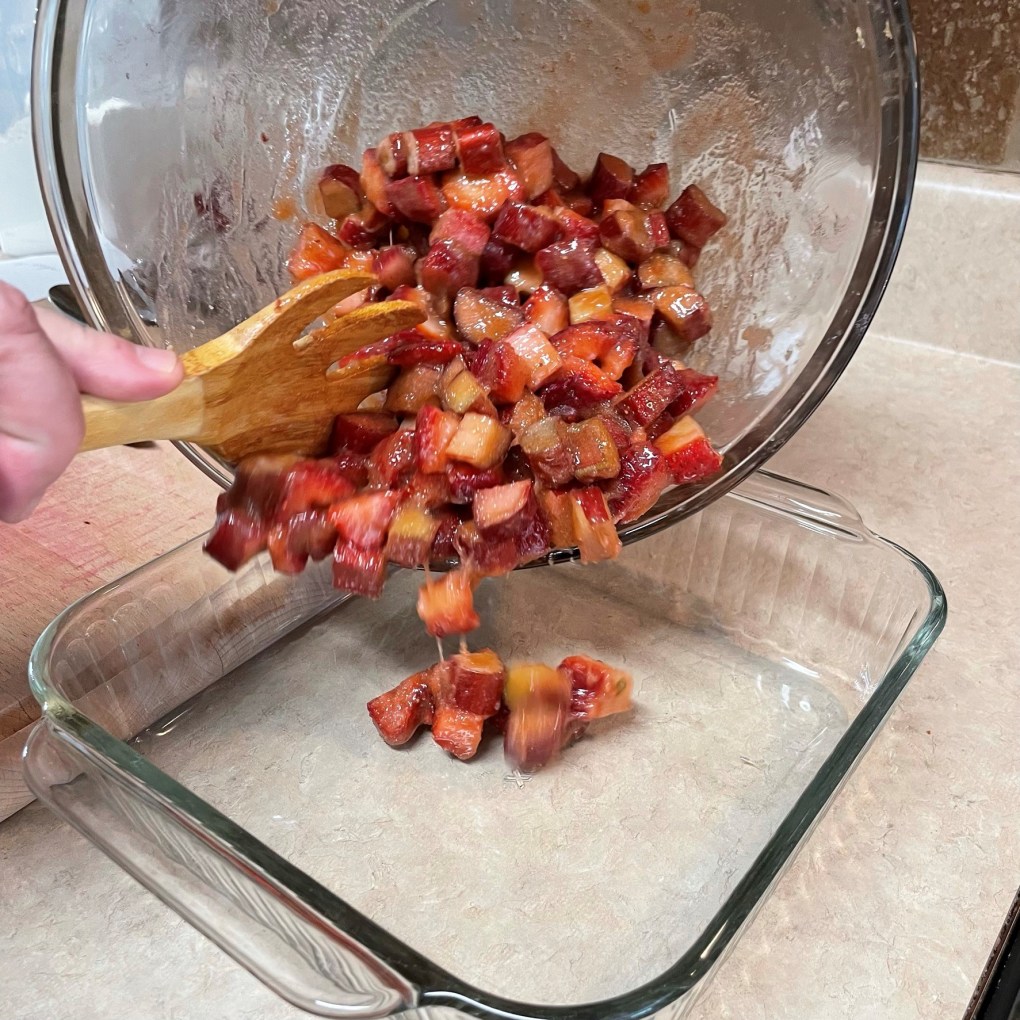
I used my bamboo salad “hands” to toss the filling ingredients, then transferred it into an 8 x 8 glass baking dish.
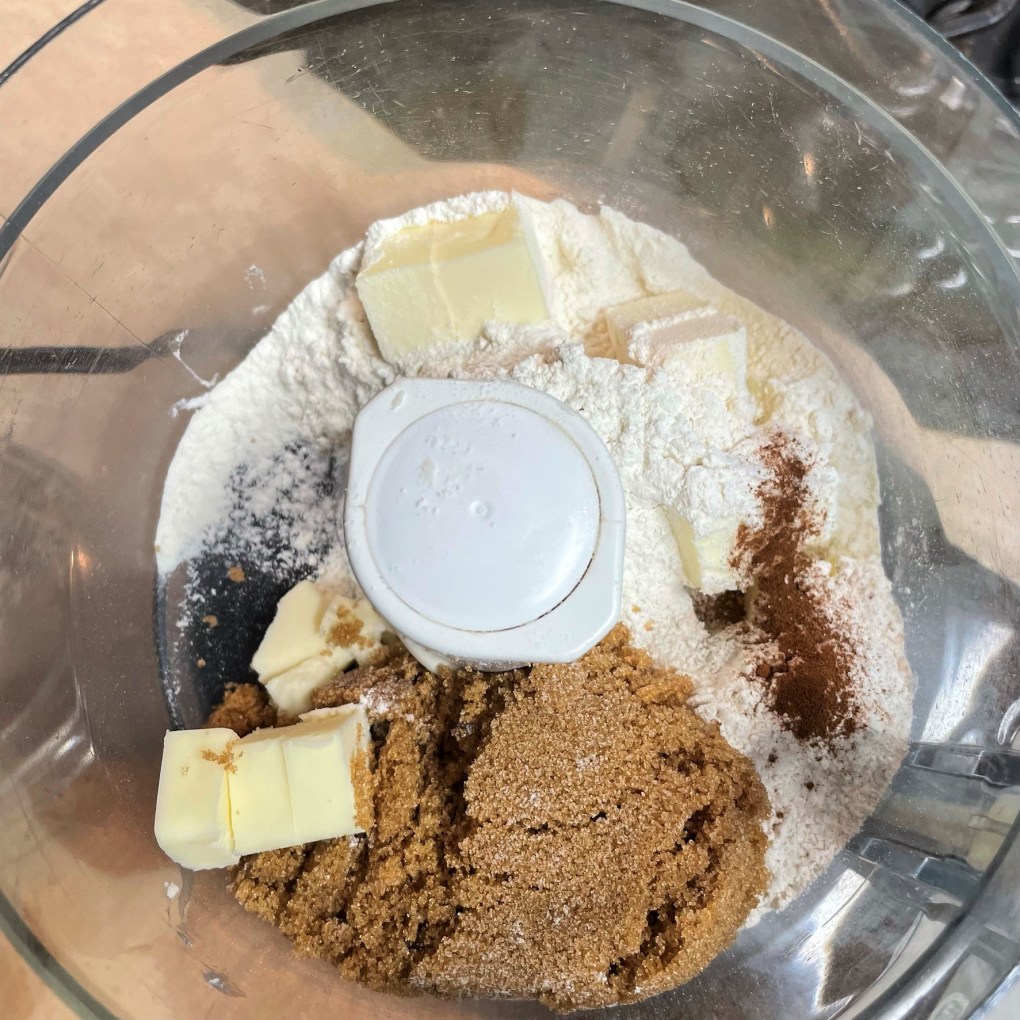
Flour, brown sugar, cold butter and cinnamon get pulsed together in the food processor, or you can use a pastry blender to cut in the butter if you prefer.
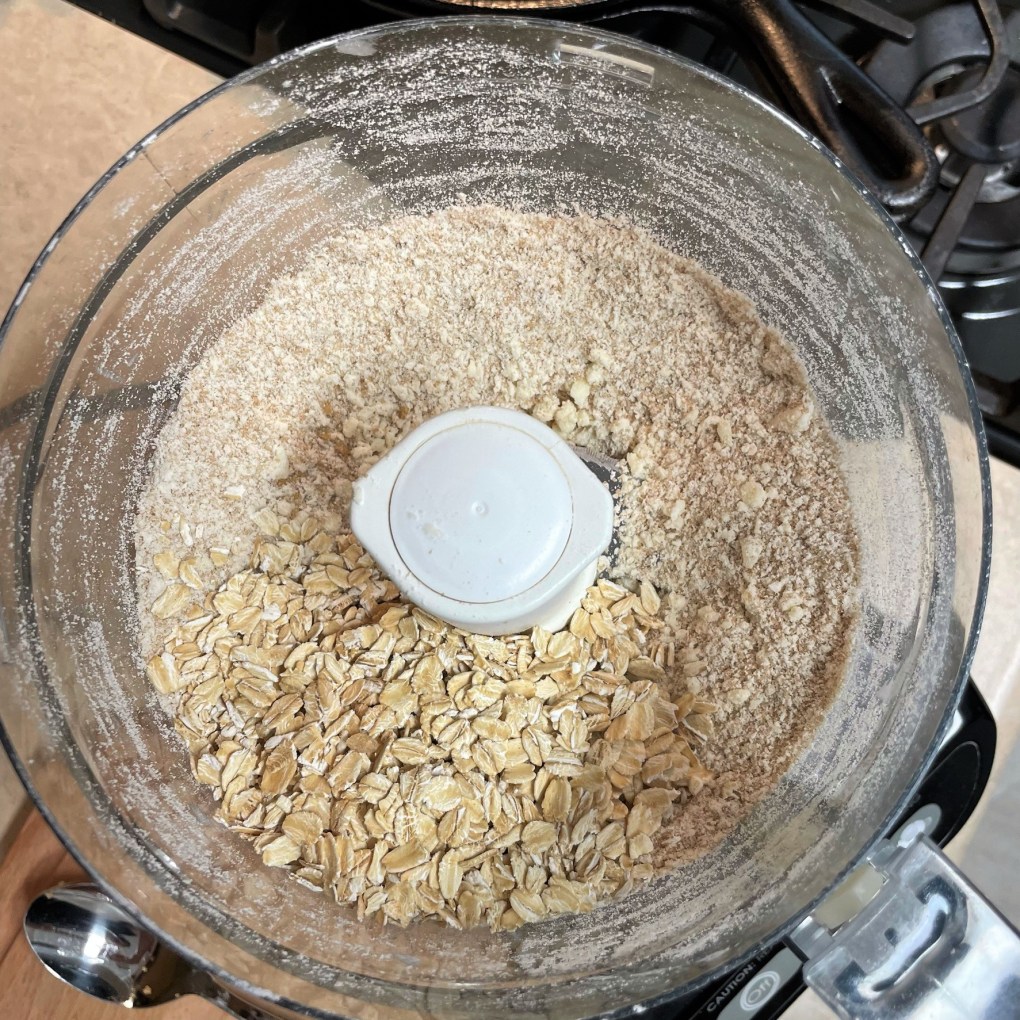
I will only pulse the oats in a few short bursts. I don’t want to cut them up, only mix evenly with the other topping ingredients.
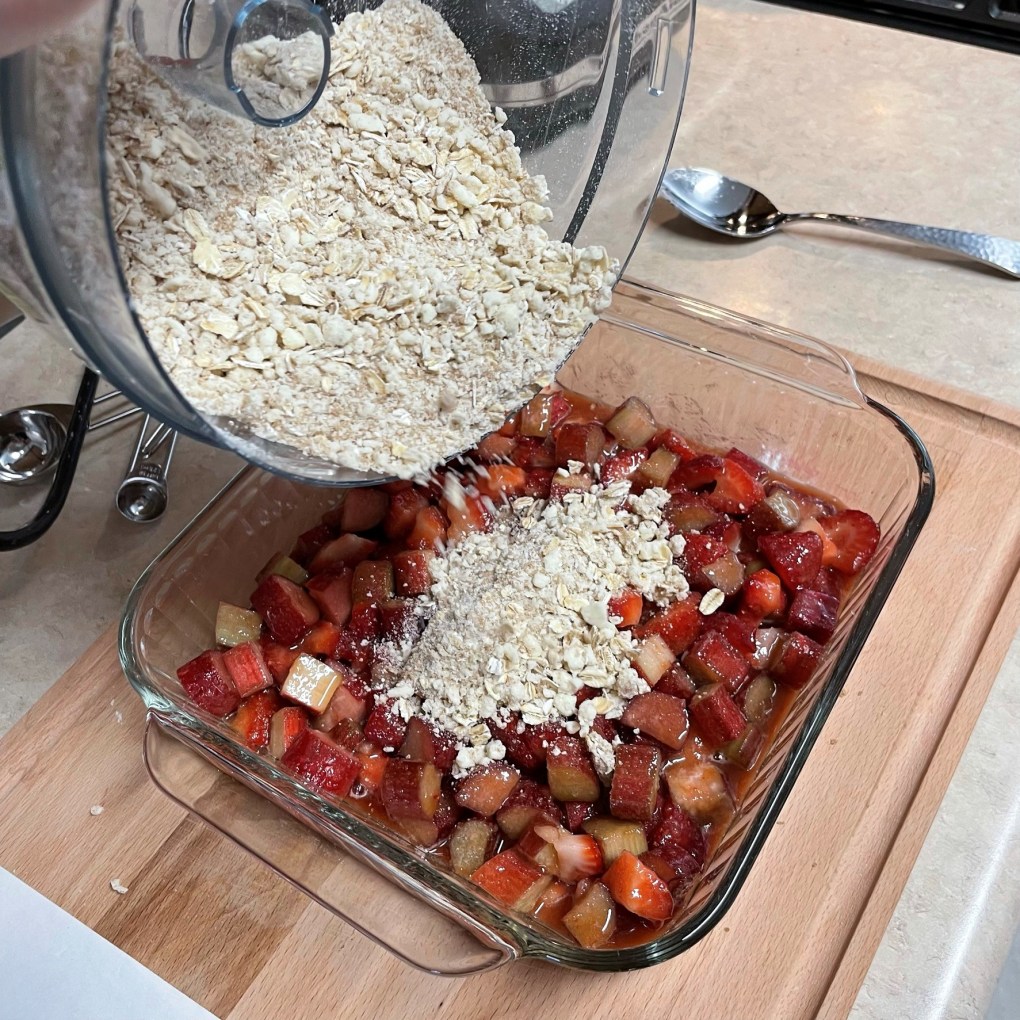
Distribute the topping over the filling and bake at 350 F.
Straight from the oven after 45 minutes. Look at that gorgeous red color! Quick, somebody give me a spoon!! 🙂
Preheat oven to 350°F, with rack in center of oven.
Toss together rhubarb, sugar, flour and ginger transfer into a buttered 8 x 8 glass baking dish.
Use a pastry blender or pulse with food processor to combine flour, brown sugar, cinnamon and butter until mixture appears as crumbs. Toss or lightly pulse with oats just to combine.
Spread oat topping over rhubarb filling. Sprinkle the top with a pinch of kosher salt.
Bake at 350° for about 40 minutes, until oat topping is browned and crunchy, and filling is bubbling up around it.
Serve warm, perhaps with vanilla ice cream. Store leftovers in the refrigerator, and reheat for additional servings.
I especially loved serving this in my Gram’s dainty, vintage dishes. Aunt Joy sent these to me after Gram passed away.
Before we talk about these amazing chocolate-and-spice brownies, let’s clear this up: Cinco de Mayo is not Mexico’s Independence Day. This has long been the belief of many Americans who assume that all the revelry and celebration associated with the 5th of May must be hugely significant to Mexico’s overall history, but it is not correct—Independence Day in Mexico happens in September. Cinco de Mayo is observed in commemoration of what happened half a century later, in 1862, in one Mexican state.
But the story of Cinco de Mayo is a great tale of triumph by a people whose love for their land outweighed the military might of a wealthy bully, and my brownies pay tribute to their passion. It is a tale so inspiring, it cannot be properly told without an incredible, dramatic anthem, like this one by Ennio Morricone (take a listen as you read). Yes, he is Italian, but Morricone’s composition is perfect for this story of a proud and dedicated people. You may also recognize this stunning piece from the ads for Modelo Mexican beer.
Mexico’s newly elected president, Benito Juárez—who was also the first indigenous political leader of the country—had inherited some economic troubles and overdue loans by European governments, and they were demanding payment. Juárez was able to cut a deal with the leaders of the U.K. and Spain, but the French president at that time wanted to call their loans by foreclosing on the region of Puebla, which was along the main road between the capital of Mexico City and the port city of Veracruz. This obviously did not sit well with Juárez. He rallied the loyal locals to stand with the Mexican Army in holding their ground (figuratively and literally) in Puebla, and when the French troops arrived the morning of May 5, outnumbering the Mexican troops and patriots by nearly 3-1, they were in for a surprise. What the Mexicans lacked in numbers, they more than tripled in might and spirit, and the French troops were forced to retreat by the end of the same day.
It was only one battle in a lengthier saga that later ended with the French taking the land for a short few years, but the story rings patriotic for anyone with a heart for civil rights, which was also playing out in the U.S. during those years. Cinco de Mayo is considered a minor holiday in most of Mexico, but here in the States, someone else’s one-day battle victory has become reason enough to throw a party. This one, not surprisingly, works out especially well for the distributors of Mexican beer. Come to think of it, the Cinco de Mayo story itself should be in one of those Modelo commercials. That would make a lot of sense.
My idea of a party, naturally, always comes back to the food. For Cinco de Mayo, I’ve skipped the obvious margaritas in favor of a sweet treat that honors the Mexican tradition of chocolate, which was so revered by the ancient Mayans and Aztecs that they used it as currency. Today, chocolate continues to play a significant role in the traditional moles of the Puebla region. Chile peppers complement chocolate exceptionally well, so I’ve added a hint of chipotle powder to these brownies, which are also kissed with extra dark cocoa, a good dose of cinnamon and real vanilla. And all the Mexican grandmothers shouted, “amén!”
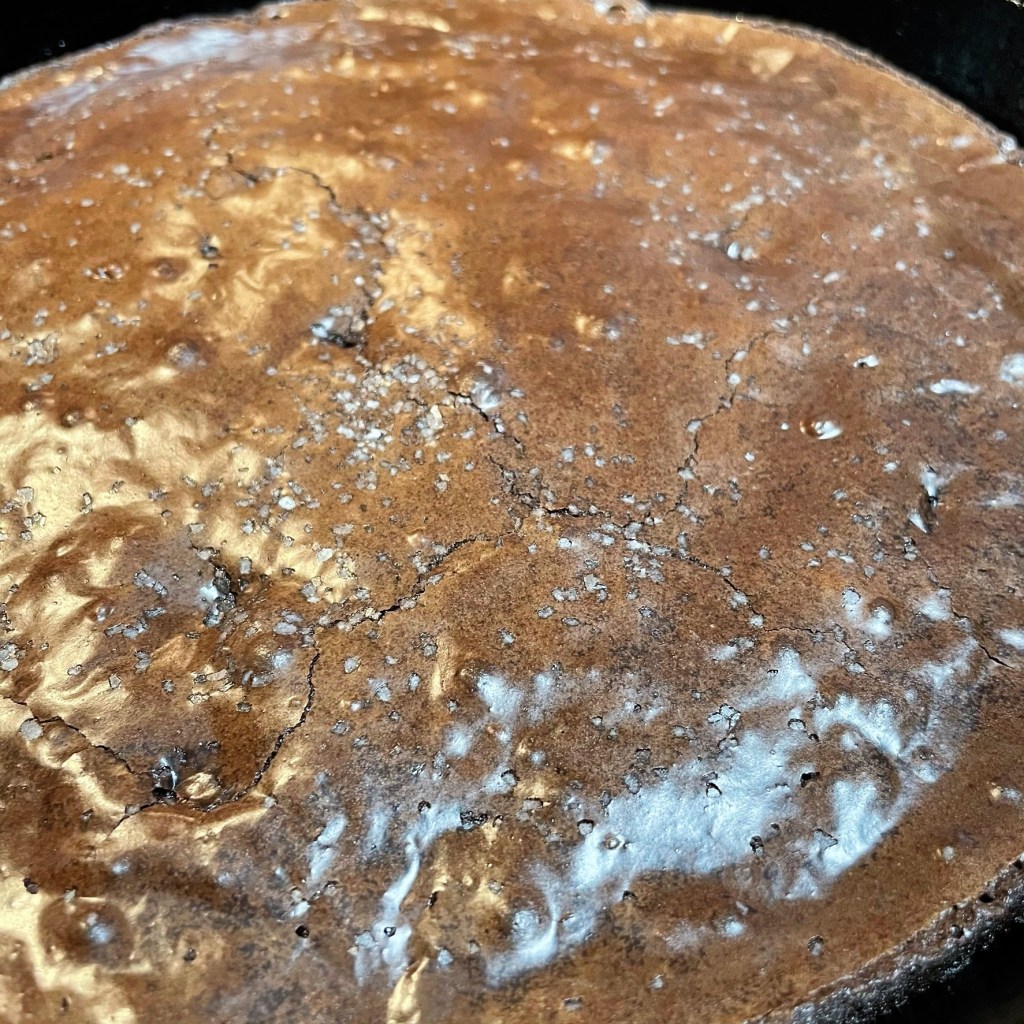
Crazy as it sounds, the crunch of the sea salt is what sends it over the top.
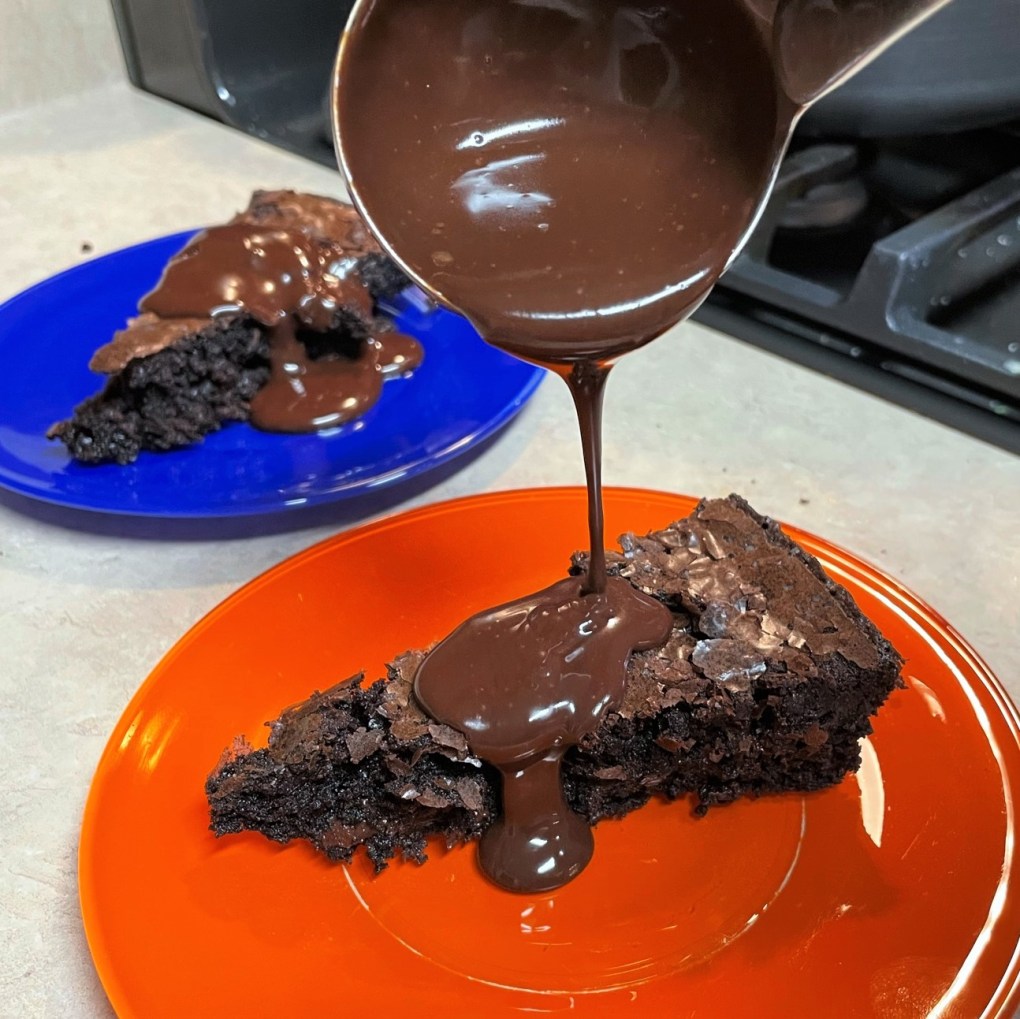
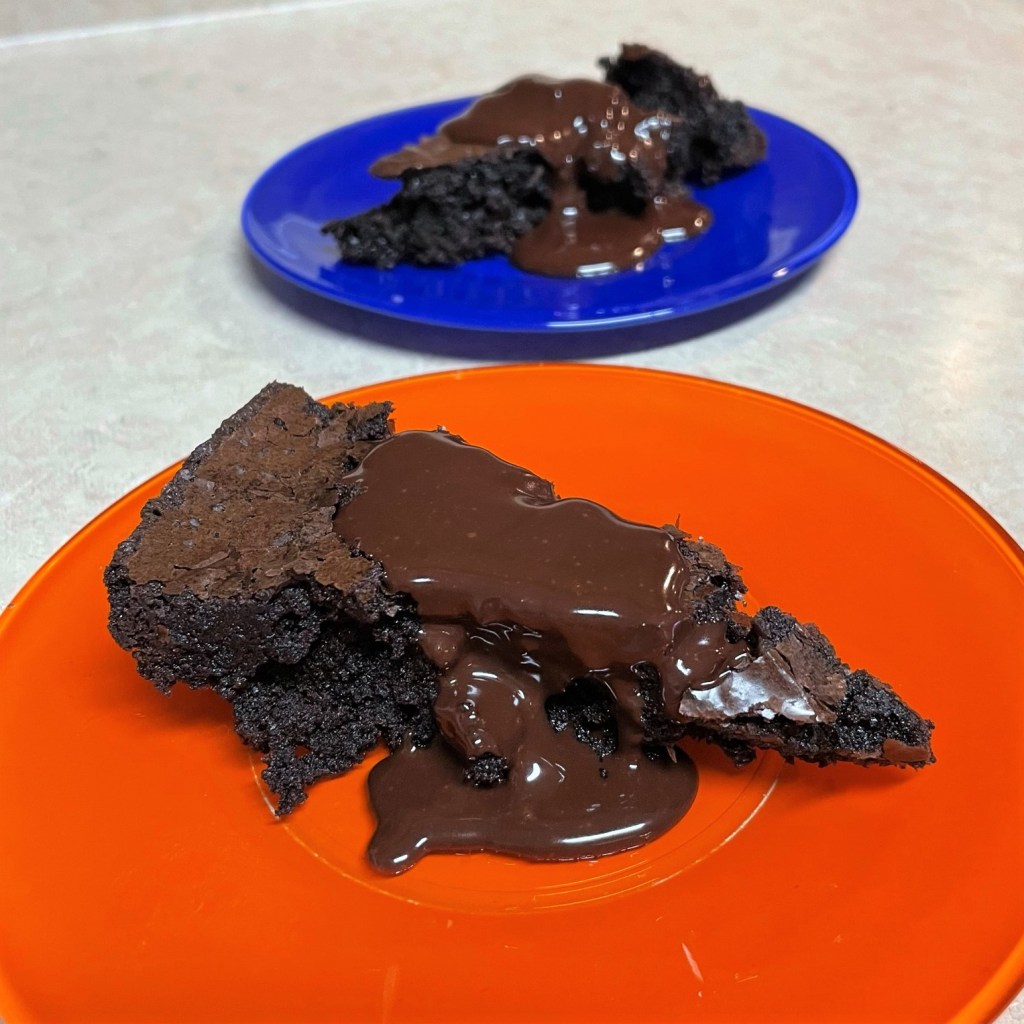
If these brownies sound a bit too gourmet for your kitchen skills, relax, because this decadent dessert begins with a box of Ghirardelli. I’m all in favor of a shortcut that makes sense, and they are, in my opinion, the best box brownies, but use the one you like. The oh-so-easy ganache is optional, but allow me to tempt you further by mentioning that I spiked it with a splash of Patron XO Café Dark, a coffee- and cocoa-infused Mexican tequila. To keep it humble, I’ve baked it up in a cast-iron skillet, but don’t be fooled—this is a rich and decadent dessert for the ages, and it is worth fighting for. Call it “the ecstasy of chocolate,” if you wish.
Can you believe how fudgy and delicious this is?
Ingredients
1 box brownie mix* (I love Ghirardelli dark chocolate, but use your favorite), plus listed ingredients to make them
1 Tbsp. dark cocoa powder (Mine is from King Arthur Baking, but Hershey Special Dark would be OK)
1 tsp. espresso powder*, optional (deepens the chocolate, but does not add coffee flavor)
1 tsp. ground cinnamon
1/2 tsp. pure ground chipotle* (see notes)
1 tsp. real vanilla extract
1/3 cup Ghirardelli semi-sweet chocolate chips
A few pinches of coarse sea salt or kosher salt
Butter, for greasing the skillet or brownie pan*
Ganache
1/2 cup heavy cream
4 oz. Ghirardelli semi-sweet chocolate chips*
1 Tbsp. Kahlua or Patron XO Café Dark liqueur, optional
*Notes
The brownie mix I use produces a chewy, fudge-style brownie. In addition to the mix, be sure you also have the ingredients listed on the box for making them.
Espresso powder is a specialty ingredient that I found in the baking aisle of a gourmet supermarket. You could also substitute a good quality instant coffee, such as Starbucks Via brand, or simply omit it.
I am crazy about the combination of chocolate and chiles! Chipotle, which is smoked jalapeno, is especially nice here. You could also use up to the same amount of pure cayenne powder, which is spicier, or pure ancho powder, which is milder and more fruity. Please do not use what is generically labeled as “chili powder,” as these random blends usually also include salt, garlic, oregano and other spices you wouldn’t want in brownies. Check your labels, always.
My decision to use the cast-iron skillet presented a few other adjustments, because a 10.25” skillet means a slightly different distribution of brownie batter. Also, the cast iron is heavy and retains heat differently than my usual 8 x 8 glass dish. I have adjusted the baking time accordingly in my instructions, but please consider your mix recommendations as well as your baking vessel.
According to my digital kitchen scale, 1/2 cup of chocolate chips was only three ounces, which falls short of “equal parts” with the cream. If you don’t have a scale, measure out 1/2 cup, then pile on as many more chips as you can without them spilling, and you’ll be in good shape.
Instructions
Even if your skillet is well-seasoned, coat it generously with butter.
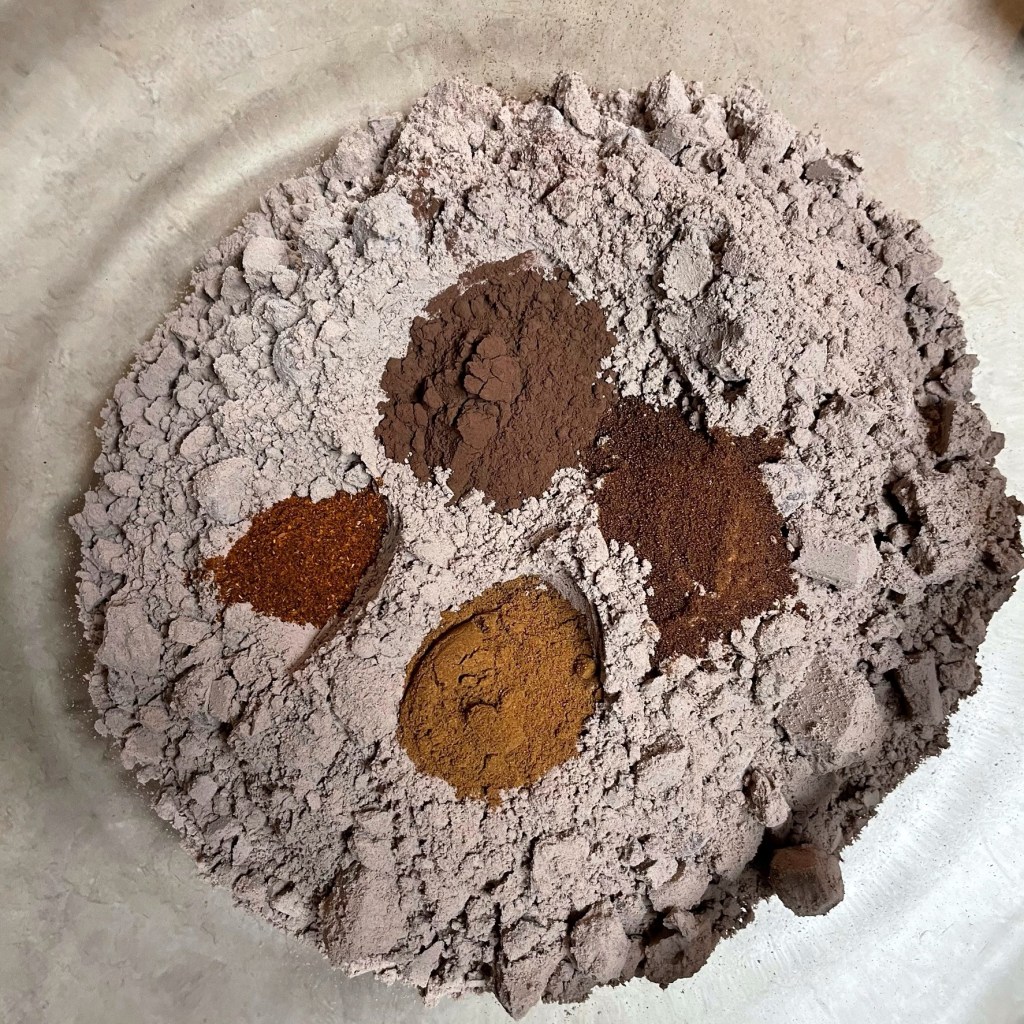
My brownie add-ins, clockwise from the top: additional dark cocoa, espresso powder, cinnamon, pure chipotle powder.
I’ve added pure vanilla extract to my oil, water and egg.
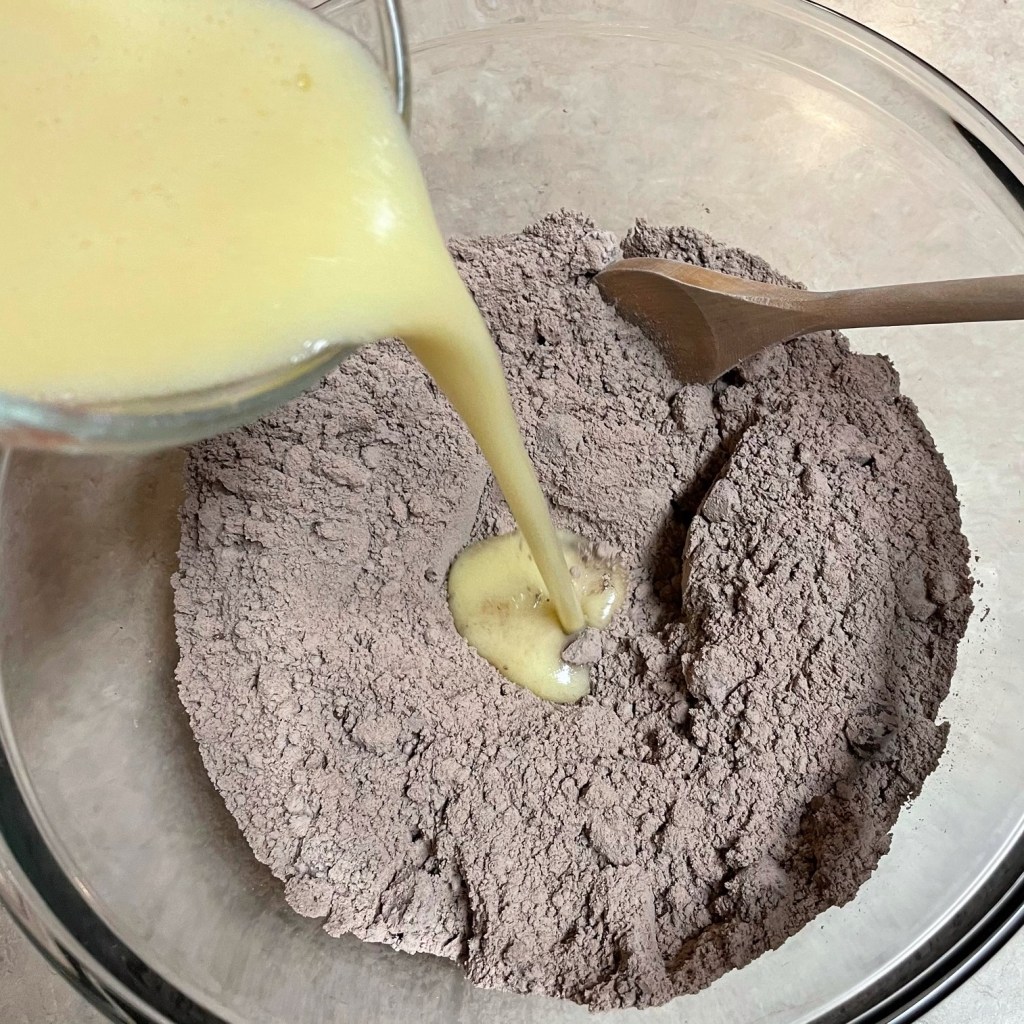
Whisk the liquid ingredients together, then add them to the dry ingredients and fold just until blended.
There is no such thing as too much chocolate. Even though my Ghirardelli mix already has dark chunks, I’m adding semi-sweet chips.
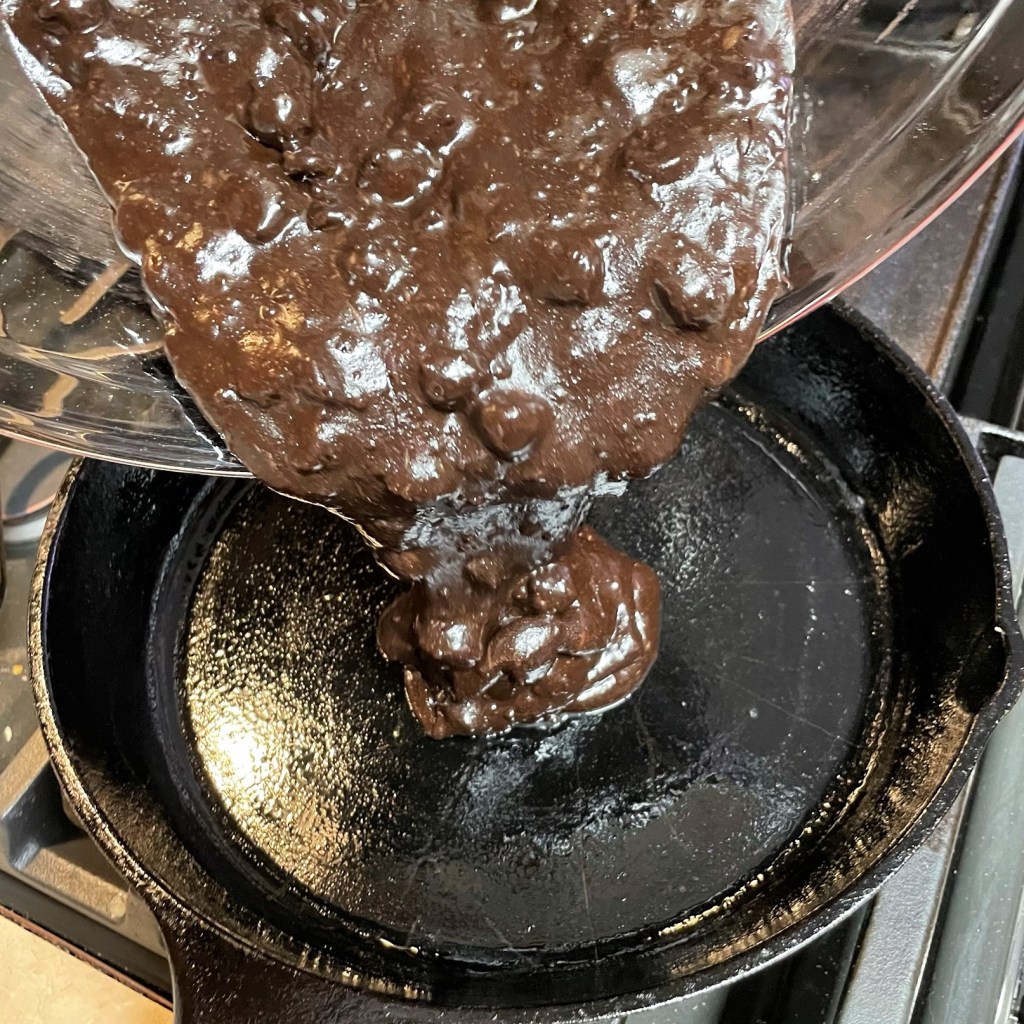
Heat the skillet before adding the batter, to give it a head start on baking.
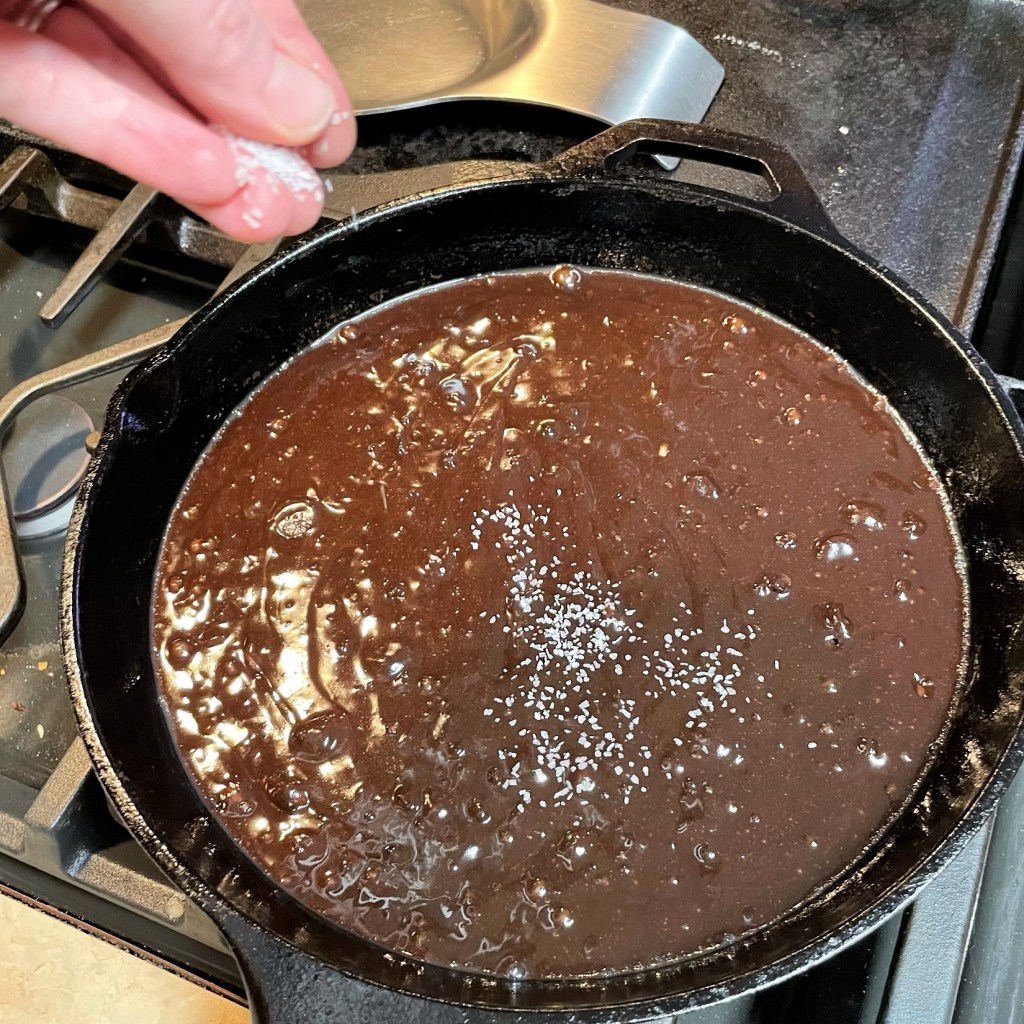
A little sea salt amplifies the richness of dark chocolate. Sprinkle it right on top just before you slide the brownies into the oven.
They looked good at 34 minutes, and the residual heat from the cast iron will finish up any not-quite-done areas.
I’m a total sucker for the chewy-crispy edges of brownies, and I can’t wait to try these from the skillet!
I have a second cast-iron skillet, so I nested them to ease these brownies into cooling.
As if the brownies are not decadent enough, believe that the next step makes them even better. If you have ever thought of ganache as “fancy,” you can lay that idea to rest. It is nothing more than equal parts hot cream and rich chocolate. I’ve spiked it with a Mexican liqueur, and it sends these brownies into purely heroic territory.
Make the ganache:
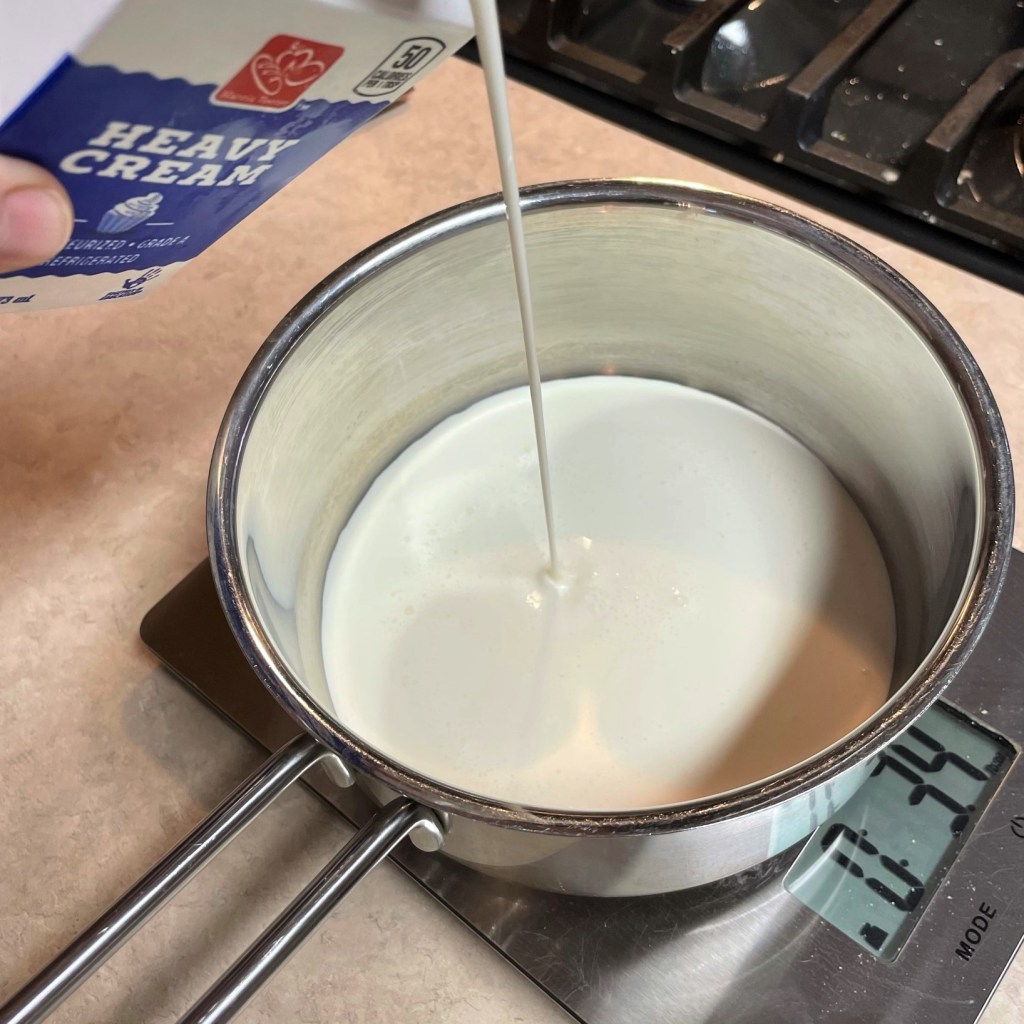
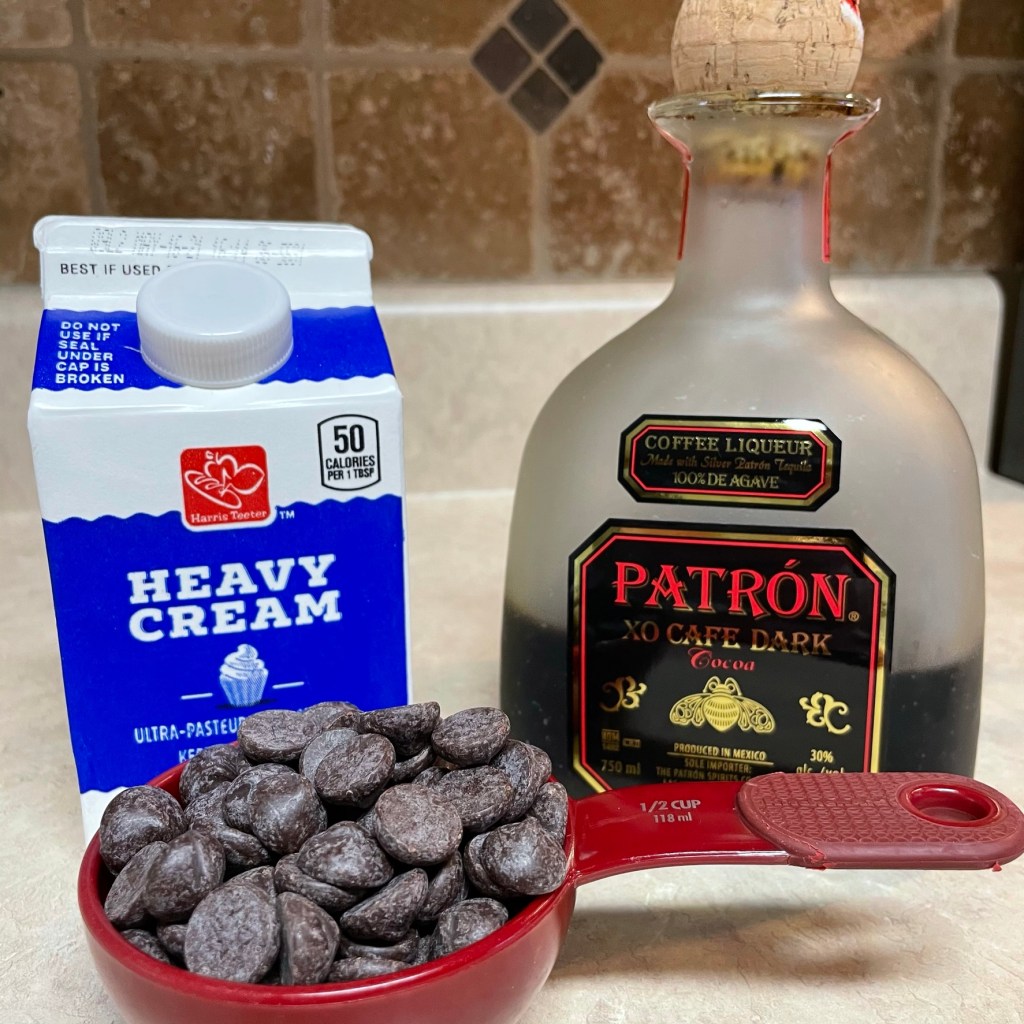
Ganache is so easy to make! For this dessert, I’m using equal parts heavy cream…
…and semi-sweet chocolate chips. Four ounces of each, and it measures out to a heaping half cup.
Somehow, I forgot entirely that I had this XO Cafe Dark in the back of our liquor cabinet. It’s similar to Kahlua, but made with Mexican tequila. In other words, perfect for the ganache on these brownies!
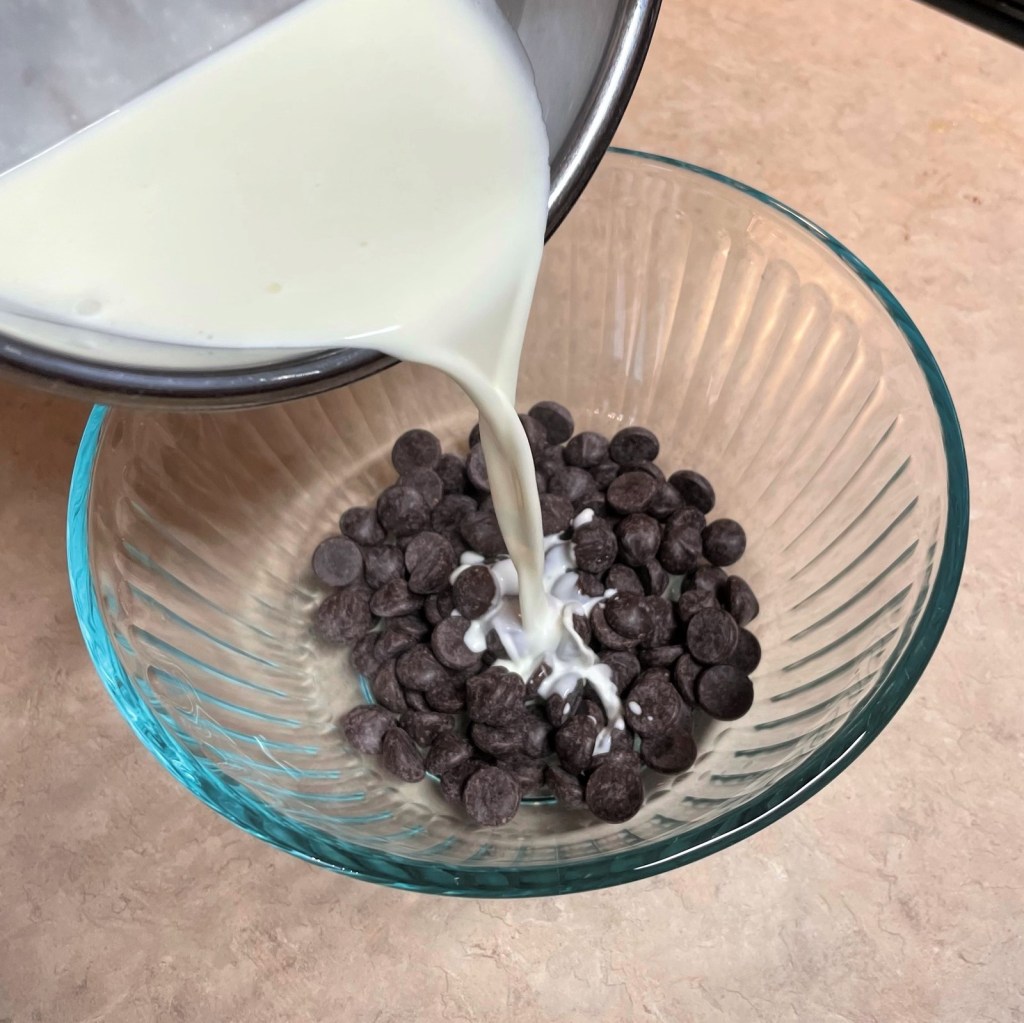
Heat the heavy cream until it is steaming, but not boiling. Pour it over the chocolate and give it five minutes to rest.
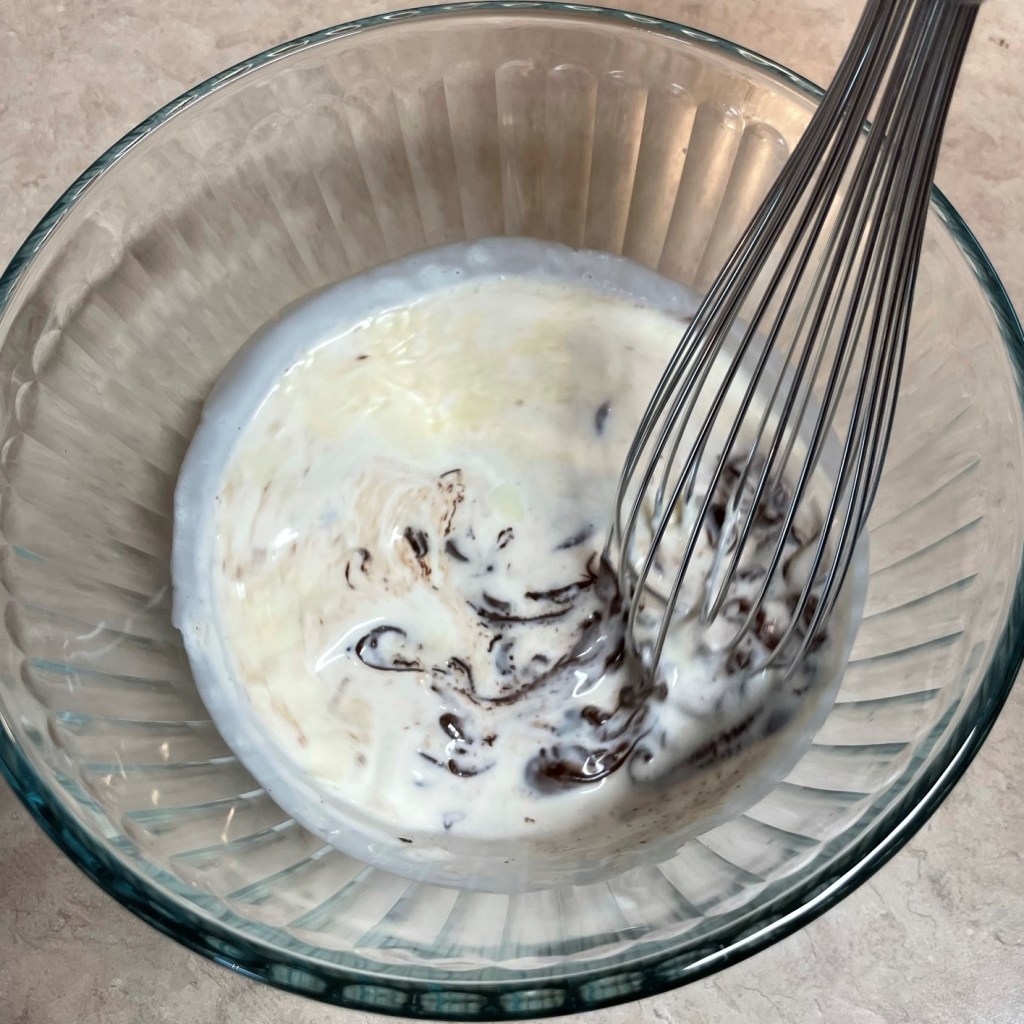
Use a whisk to combine these ingredients. It seems hopeless at first.
But within seconds, you’ll see it come together.
If you think it looks decadent right now, wait until I whisk in that Cafe Dark back there. I need both hands to do it, so I can’t give you a picture of that step.
But I’ll tempt you with the end result. Oh, look! Who wants to lick the whisk?
As we inch toward some new variety of normalcy in the aftermath of the COVID pandemic, my husband, Les, and I have been making an informal list of the top things that helped us get through the past year. Beyond the obvious things, such as face masks and avoiding crowds, we leaned into a few new routines as we fumbled through a year in lockdown.
Last week, I shared one of our favorite rituals—our Friday night menu of homemade pizza and smoked maple old-fashioned cocktails, our “quarantini” of choice. Today, I’m offering up a slice of this easy, no-cooking-involved spring dessert, in honor of the musical duo that has provided the soundtrack for our Friday nights at home for the past year.
My “tequila and lime” pie is obviously a riff on a margarita cocktail. It is bright and citrusy, sweet but tart, with refreshing lime juice plus two shots of tequila and a splash of orange liqueur. The crust, though similar in appearance to a graham cracker cheesecake base, is made from buttery crushed pretzels, a salty accent just like the one you’d expect on the rim of your margarita glass. I’ve made this pie for many years and always called it “margarita pie,” but it shall be known henceforth by its new name, “Tequila and Lime,” which also happens to be the title of a song by our Friday night friends.
The tequila and lime pie is especially good when served frozen!
Nearly every week during lockdown, we have cozied up in front of our big wall-mounted TV for “Quarantunes,” streamed on Facebook Live by Glenn Alexander, an awesome musician and all-around good guy, and his lovely and talented daughter, Oria, who graces us with her phenomenal voice and occasional playing of flute and turkey legs. Yes, I said turkey legs—you must press “play” and see it to understand.
Glenn Alexander and Oria, with Dr. Fauci! 🙂
Together, they are “Blue Americana,” and both Glenn and Oria (pronounced “oh-RYE-uh”) are equal parts gifted and goofy, and their weekly concert, staged from a table in their home kitchen, has helped us maintain humor and a sense of normalcy throughout the turbulence of the past year. We first met Glenn from his role as lead guitarist for Southside Johnny and the Asbury Jukes, a Jersey-based bluesy rock band that my husband has followed for about four decades. Not coincidentally, a Southside concert was the first date that Les and I had in 2015, though Les insists it wasn’t a date and maybe it wasn’t for him, but I still remember how he looked in black jeans that night, and how I wondered to myself, “why have I not noticed this before?” But I digress.
When COVID was still making early headlines, Les and I had gone to one of our last live music shows—a “Jukes” concert, just one night earlier than the Little River Band show I wrote about in my previous post, “Reminiscing.” Yep, for two consecutive nights, just ahead of the first COVID surge, we were nuzzled next to strangers in busy music venues. The reality of the virus obviously had not yet hit us. At the start of the Jukes concert, Southside Johnny strolled onto the stage with his shirt untucked and his usual sense of humor, telling the crowd not to get too close, because they had found the first “coronavirus person” in North Carolina, and he pointed to his left, directly at Glenn Alexander, who replied with his own swagger and wit, “I’m more of a Dos Equis person.” And then they rocked the house.
When we learned later that Glenn was streaming Facebook Live shows on Friday nights, it was a no-brainer—of course we would be watching, whenever we didn’t have plans. Which turned out, of course, to be the whole next year. Little did we know that these two—Glenn, with his virtuoso guitar skills and a side shot of tequila and lime, and Oria, with her sultry, soulful voice and adorable, unapologetic silliness, would become part of the family.
Check out Glenn and Oria on Facebook Live!
If you are on Facebook, please check them out this Friday night. Because if Glenn and Oria are in your living room at the same time they are in our living room—well, that’s almost as good as being together. 😊 You can also check out their shows after live-streaming, on Glenn’s YouTube Channel.
Glenn and Oria, we love and appreciate you! Here’s a delicious slice of “vitamin T” for you and Dr. Fauci!
We feel fine, with our tequila and lime!
Ingredients
Crust:
1 stick (8 Tbsp.) salted butter, melted
1 1/4 cups finely crushed salted pretzels* (see notes)
2 Tbsp. coconut sugar (or regular sugar)
Filling:
14 oz. can sweetened condensed milk
1/3 cup freshly squeezed lime juice, from about two large limes* (see notes)
Zest of one lime*
2 oz. (1/4 cup) 1800 Silver tequila*
1 oz. (2 Tbsp.) Grand Marnier orange liqueur*
8 oz. heavy cream, whipped
A few drops of green food coloring (optional)
*Notes
The measurement of pretzels is after crushing, so you will probably need to crush about 2 cups of loose pretzels to get this amount. Crumbs should be small and uniform, but not as fine as powder. If you have any leftover crumbs, you can use them to garnish.
Use a microplane to remove the zest of one lime before you juice them, and it’s best to use organic citrus anytime you will be eating a portion of the peel. Here’s a tip for getting the most juice out of your fresh limes: microwave them on high for about 40 seconds. Cool until they are easy to handle, then roll under your hand on the counter before halving and squeezing them.
This time around, I used 1800 Coconut tequila, for a little extra tropical flavor. I have also used Cuervo gold tequila with excellent results, so use whatever brand is your favorite, but remember that with so many mixers in this pie, it is not necessary to use a top-shelf tequila. Save the really good stuff for Quarantunes!
I use Grand Marnier in my margaritas, so I have also used it in my tequila and lime pie. Use a splash of triple sec if you prefer or if it is what you have on hand.
Here we go!
This time, I’m using a rolling pin rather than the food processor. I want small, uniform pretzel pieces, not powder.
Add the pretzel crumbs right into the melted butter. If you end up with extra, save them for garnish.
I used coconut sugar in the pretzel crust, to add another tropical twist, but regular sugar is fine, too.
Add the buttered crumbs into a 9-inch pie plate. I used a standard Pyrex plate, and had the perfect amount of crust and filling.
Use the bottom of a small bowl to compress the crumbs into the bottom of the pie plate. Take it slow to keep the crust base even.
My custard cup has a similar sloped side to match the shape of the pie plate. Some of the crumbs will remain loose near the top, and that’s OK.
The crumbs are all at once salty, sweet and crunchy! Put the pie plate in the freezer to firm up while you make the filling.
If you don’t have a microplane, use the smallest holes on a box grater, or use a vegetable peeler to remove just the dark green zest, then mince finely with a good knife.
To extract the most juice from your limes, put them in the microwave for about 40 seconds, then roll them on the counter before halving and juicing them.
My citrus juicers get a lot of action. I love that they squeeze out so much juice, but the seeds stay behind.
Two large limes gave me exactly what I needed, 1/3 cup of juice.
Whip the cold heavy cream with an electric mixer. You want it to be nice and thick, but not broken.
Sweetened condensed milk is very thick. Use a small spatula to scrape out the entire contents of the can.
Add the lime juice to the sweetened condensed milk. I used my large batter bowl, for easy pouring into the crust.
Pour in the tequila…
And the Grand Marnier, or triple sec, if you prefer.
It’s best to use a whisk rather than a spoon to mix these ingredients, because the textures are so different. Mix until fully blended and silky.
Green food color is not critical for this pie, and I’m not a fan of the artificial stuff, so I’m using this “natural” food coloring for the first time.
I added a total of SIX drops of green food color. Does this look green to you? I’m calling the natural food color a “fail.” 🙂
Gently fold in the whipped cream, using a spatula rather than a spoon, to keep the soft texture.
As I was finishing with the cream, I realized I forgot the lime zest! It’s best to stir this in first so you don’t overmix the cream. Still learning here!
Gently pour the filling into the chilled pretzel crust. Take your time so that you don’t disrupt the firmed-up crumbs.
Scrape every last bit of filling into the crust. It’d be a darn shame if I had to lick the bowl, wouldn’t it?
To my point, I smoothed the top with the back of a spoon. Yum! Cover the pie loosely with a foil tent and chill or freeze, depending on how you plan to serve it.
Cover the pie loosely with a foil tent and chill or freeze, depending on how you plan to serve it. We like frozen the best.
Top slices with additional whipped cream, lime zest and leftover pretzel crumbs. Cheers!
Instructions
Melt butter in a small saucepan. Use a fork to combine pretzel crumbs and coconut sugar into the butter. Press into a 9” freezer-safe pie plate, using the bottom of a small dish to compress the crumbs. Put this into the freezer for at least 20 minutes to firm up the crust while you make the filling.
In a large bowl, whisk together condensed milk, lime juice, tequila and triple sec. Stir in green food coloring (if using) and lime zest.
Use a spatula to gently fold in the whipped cream.
Pour mixture (slowly) into the chilled crust and chill or freeze until serving time. For a chilled pie, give it at least two hours in the fridge; for a frozen slice, freeze at least four hours, preferably overnight.
To serve:
Place the pie plate in a shallow skillet filled with about an inch of warm (not hot) water, just a minute or two until the buttery crust is loosened enough to remove.
Top each slice with a dollop of additional whipped cream (spike it with Grand Marnier if you wish), a little lime zest and leftover pretzel crumbs.