Caramel Apple Kugel

When I set out last week to make a somewhat traditional Rosh Hashanah meal to enjoy with my semi-observant husband, I felt a bit of a knot in my belly. What if I get it wrong and ruin Rosh Hashanah? Dramatic, I know, but this is me. I have no Jewish heritage myself— at least not that I’m aware of— and I always worry that my effort might be disrespectful to someone else’s tradition. Les says this is silly, and has at times even suggested that in all my diligence, I might even be more Jewish than he is.

Still, I gave much thought to our meal for Rosh Hashanah (the Jewish New Year) and I settled on roasted chicken with a bevy of root vegetables, including carrots, red potatoes and parsnips with a simple pan dripping gravy. Delicious! And for dessert, kugel, made with noodles, sugar, eggs and various forms of dairy. I want to emphasize that in a kosher household, this dessert would not be served with chicken because Jewish dietary law prohibits meat and dairy together on the table. This rule is born from the commandments in Exodus and Deuteronomy that you should not cook a young goat in its mother’s milk— which over time expanded to “no kind of meat with any kind of dairy, even if said meat doesn’t make milk.” Don’t blame me, I don’t make these rules.

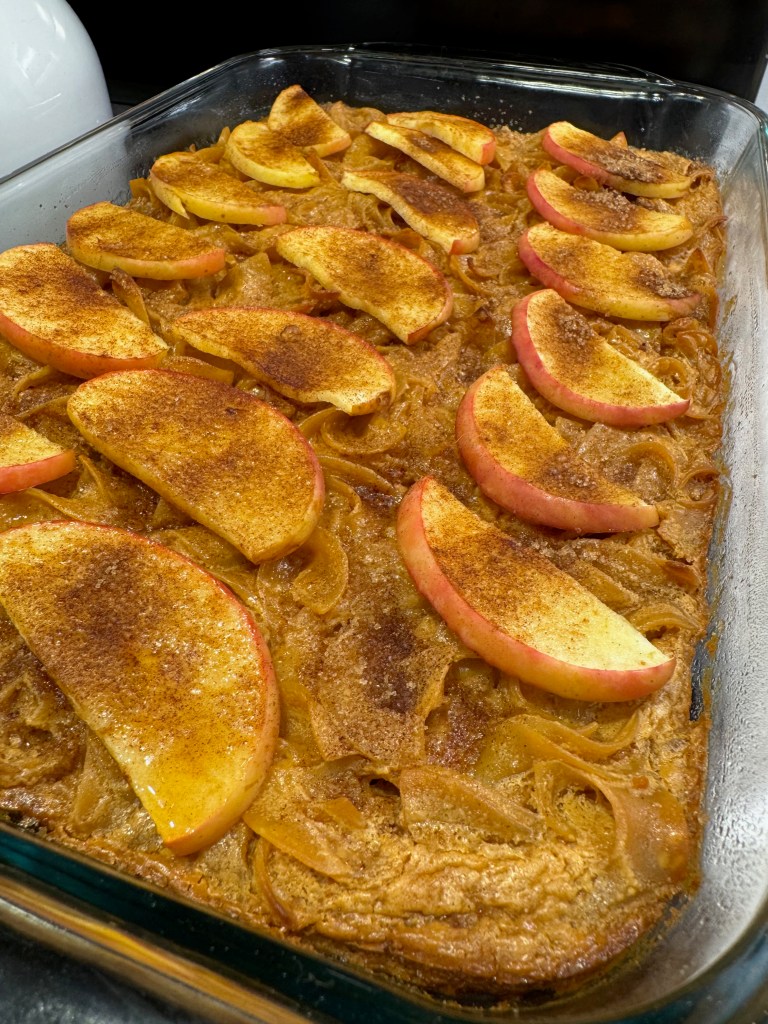
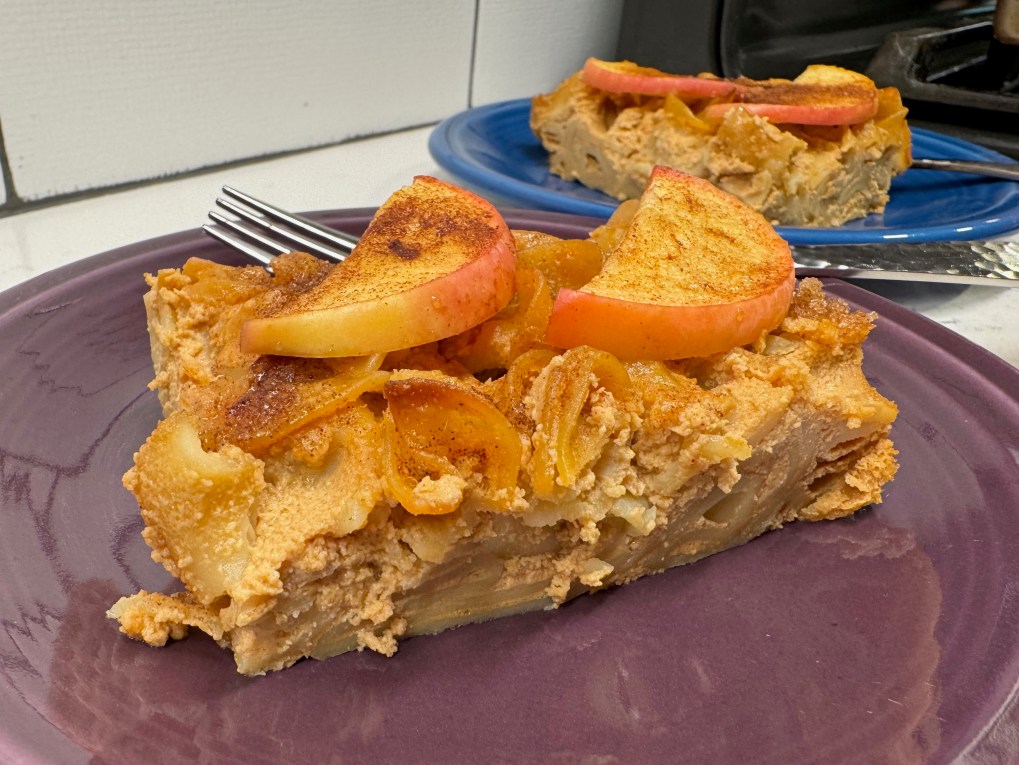
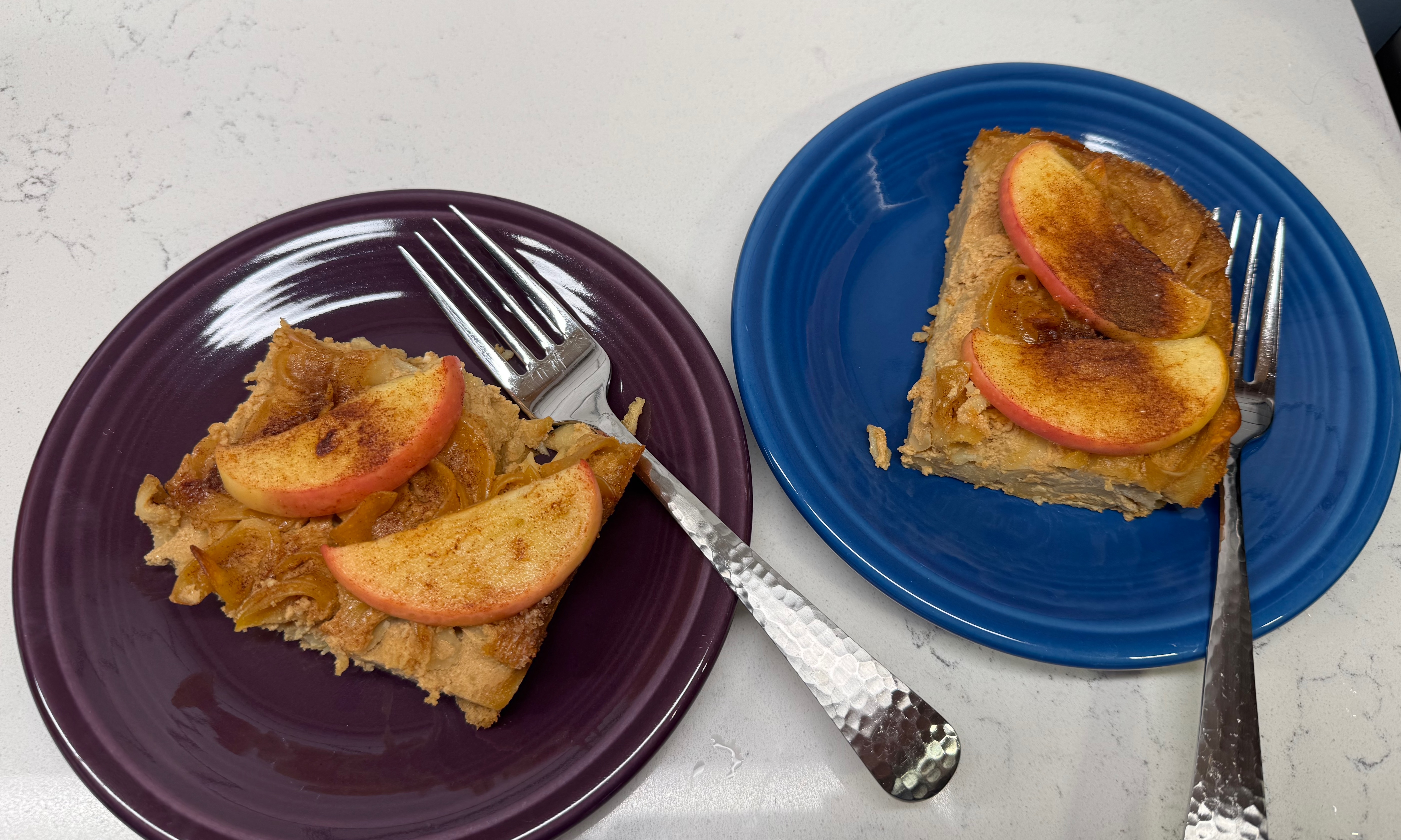
Our meal was delicious and fully representative of autumn, especially with this kugel, with all the flavors of a sweet caramel apple from the county fair.
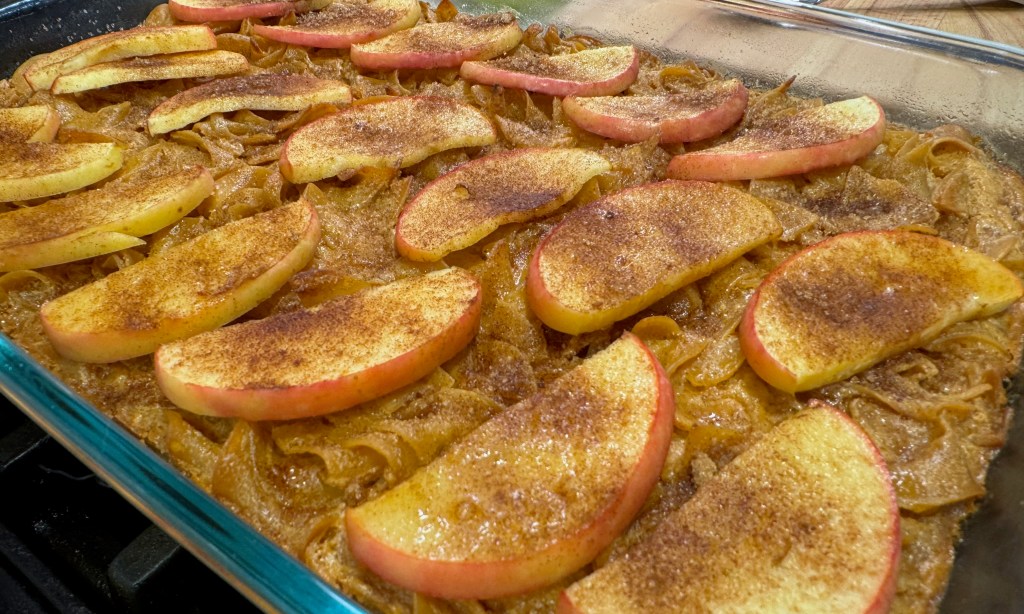
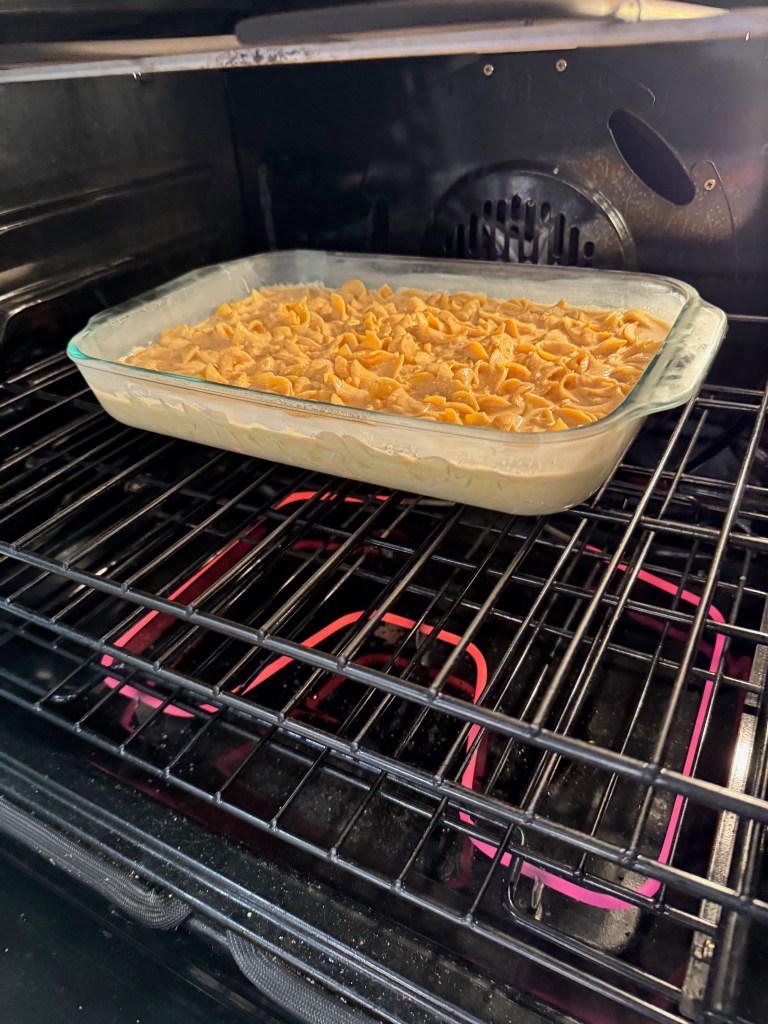
This smelled sooo good from the oven!

Apples are traditional at Rosh Hashanah, usually paired with honey and symbolic for sweet wishes in the new year. I had been thinking about apples and caramel together in a dessert after spotting a caramel apple display at the supermarket. Kugel is a dish perfected by the Ashkenazi (ASH-kuh-NAH-zee) Jews of Eastern Europe, and it is a blank canvas of sorts for any combination of sweet ingredients. It may seem strange the first time you make one; I mean, noodles in a dessert? But trust me, it’s delicious!

Here’s how my dish came together. Enjoy!

The caramel

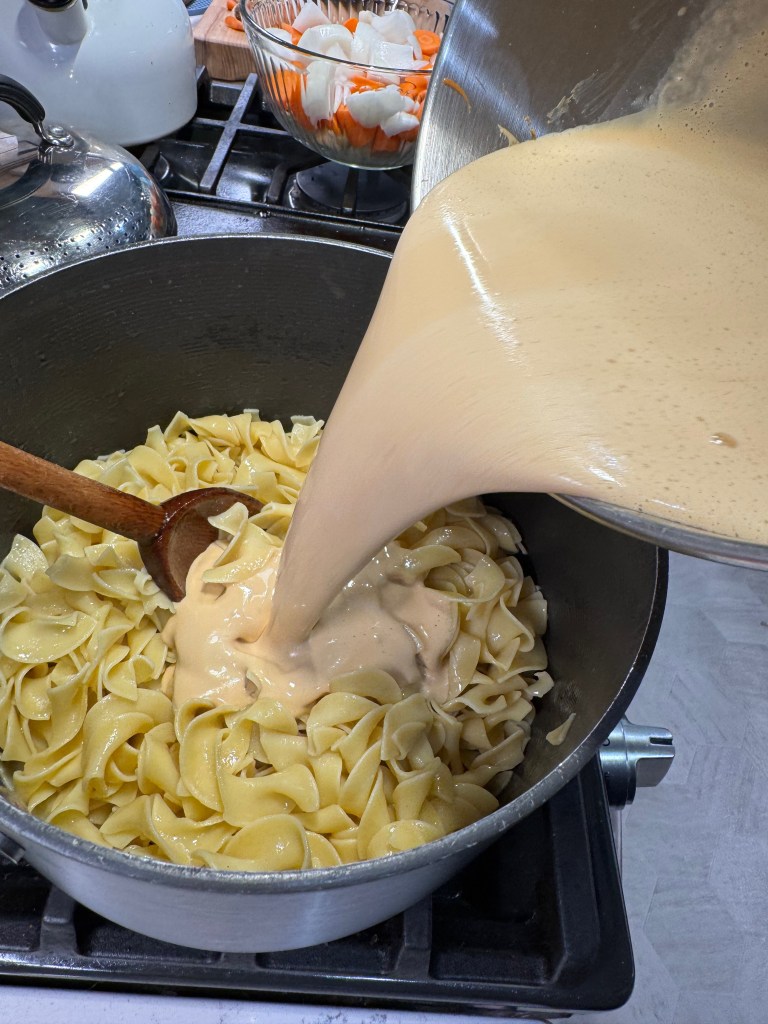
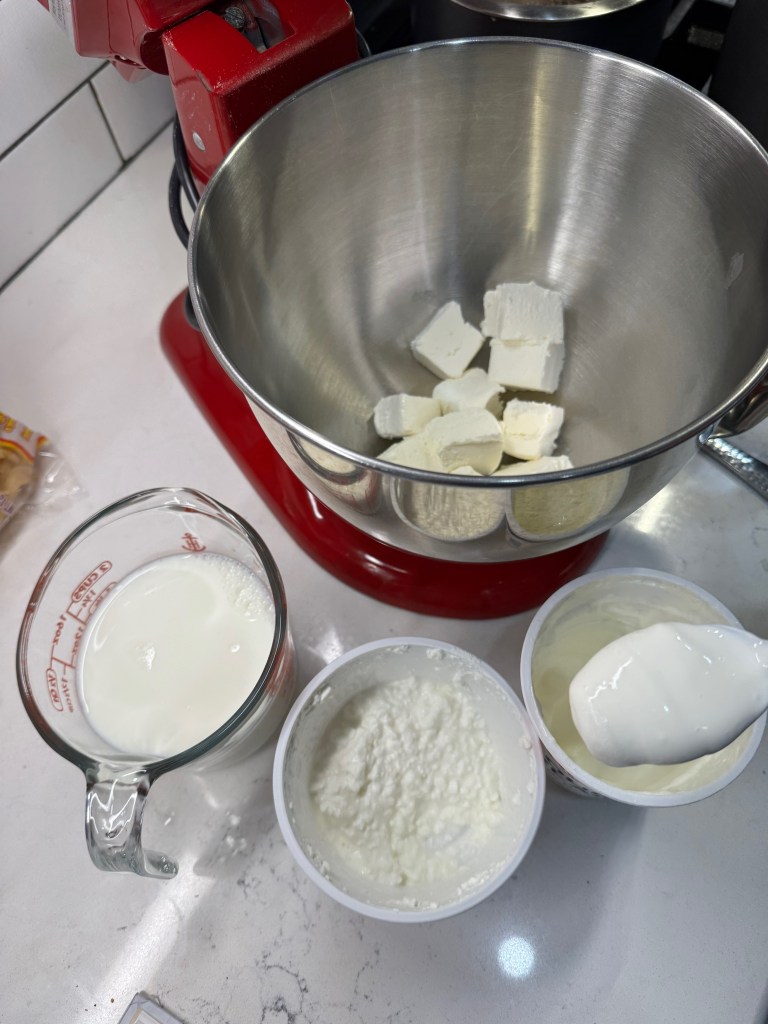
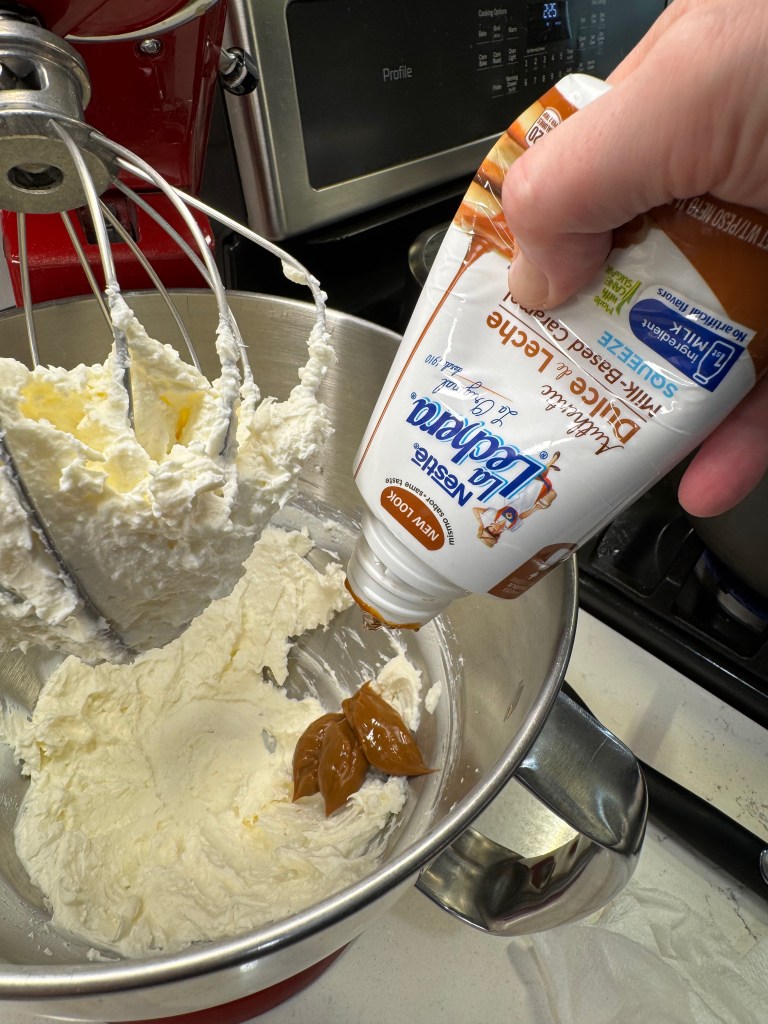
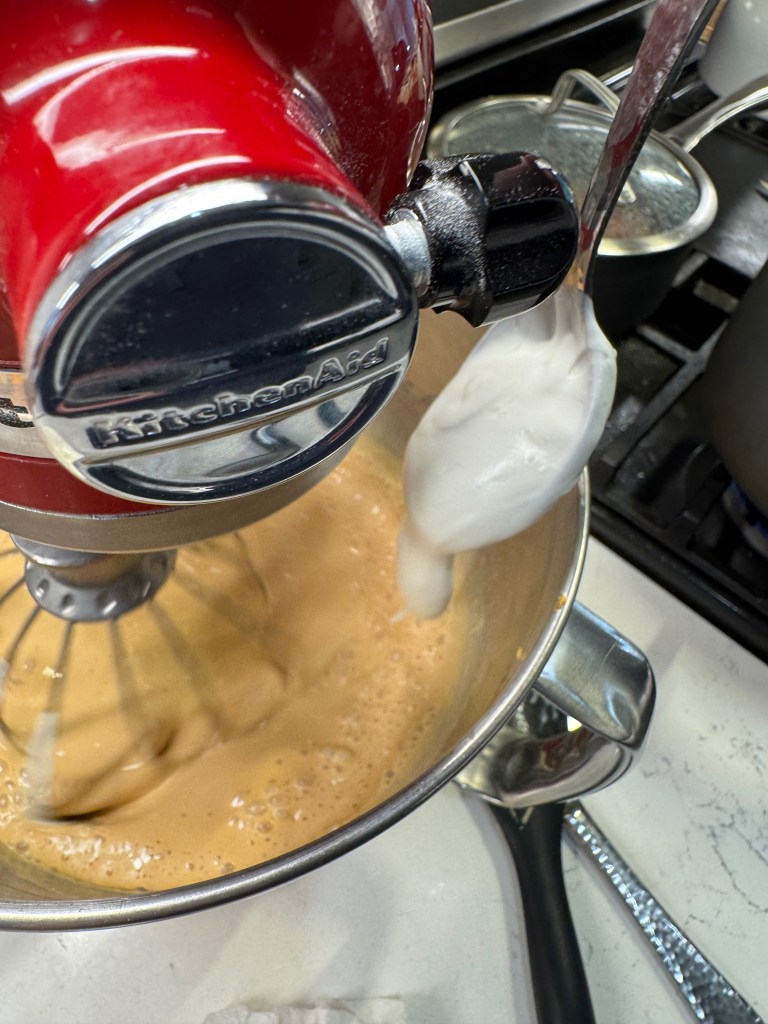
Now, I may not be Jewish, but I come from a long line of improvisers, and my instinct told me that dulce de leche, a thick, rich caramel sauce, would be a reasonable stand-in for most of the sugar in the basic kugel recipe I had found, and for some portion of the milk as well. I blended the thick dulce de leche with cream cheese, cottage cheese, milk, eggs, sour cream and vanilla, and folded in the buttered egg noodles, hoping that some measure of Ashkenazi wisdom would emanate from the wooden spoon that we had rescued from Les’s mother’s condo after she passed. Surely the spoon had done this before.
The apples

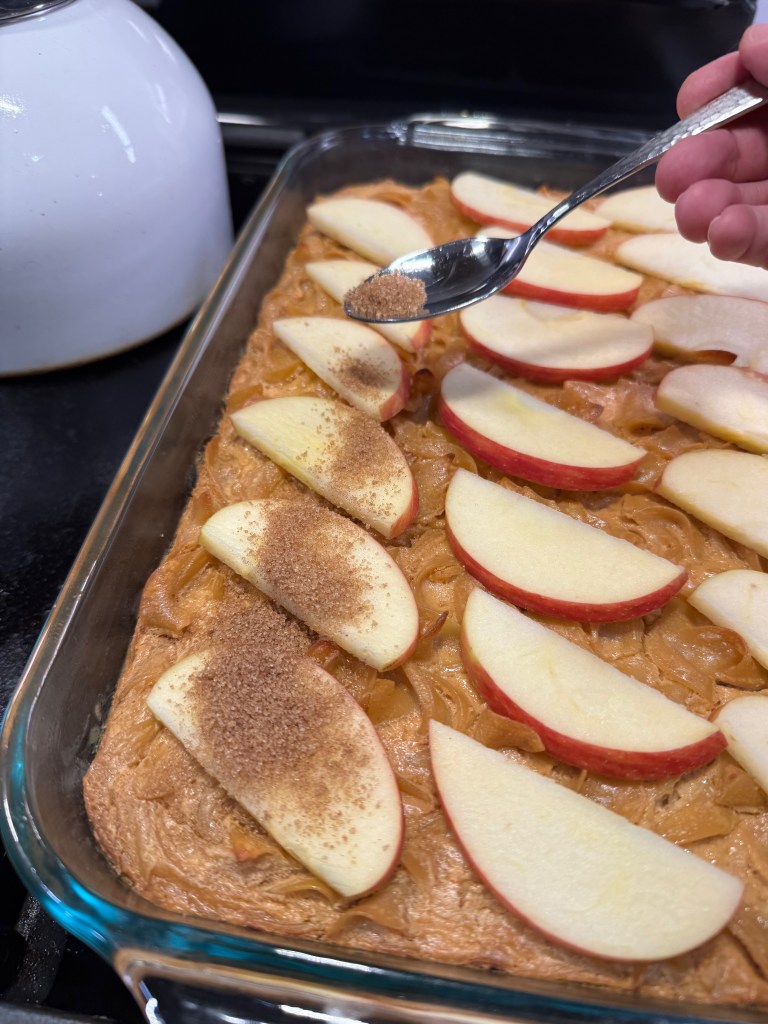
My doubts set in again about the apples because kugel is usually dotted with dried fruits such as raisins, prunes or apricots. Should I cook the apples first? Or dice them up and stir them into the custardy noodles, or would the moisture cause the whole thing to become a big mess? In the end, I decided to par-bake the noodle custard, top it with thin slices of apple and a sprinkling of brown sugar and cinnamon and then bake it again. It turned out to be just the right amount of apple, and the brown sugar-cinnamon topping emphasized the caramel flavors inside.
This kugel was very well-received by my hubby, who had made his own version of kugel a few years back when we were clearing out the pantry for our kitchen remodel. We enjoyed this caramel apple version at Rosh Hashanah and again straight from the fridge later in the week, and I think we may even have a couple of slices left for our “break the fast” meal when Yom Kippur ends tonight.

Shana Tova!

Caramel Apple Kugel
  • Servings: 12
  • Difficulty: Average
  • Print

Jewish New Year calls for a celebratory dessert, and I chose apples and caramel to bring in some comforting fall flavors.


Ingredients

  • 8 oz. cream cheese, softened to room temperature
  • 1 cup small curd cottage cheese
  • 1/2 cup (or more) dulce de leche
  • 2 Tbsp. brown sugar
  • 1/4 cup sour cream (or plain Greek yogurt)
  • 1 1/2 cups whole milk
  • 3 large eggs
  • 1 tsp. vanilla
  • 12 oz. package extra wide egg noodles
  • 6 Tbsp. butter, room temperature (I used salted)
  • 1 large Honeycrisp apple, cored and cut into thin slices
  • 1 Tbsp. brown sugar, mixed with 1/2 tsp. ground cinnamon

Notes: Dulce de leche is usually found in a can, in the same supermarket section as sweetened condensed milk, or possibly in the Hispanic section. If you cannot find this product, a thick, milk-based caramel ice cream topping would work fine.

Directions

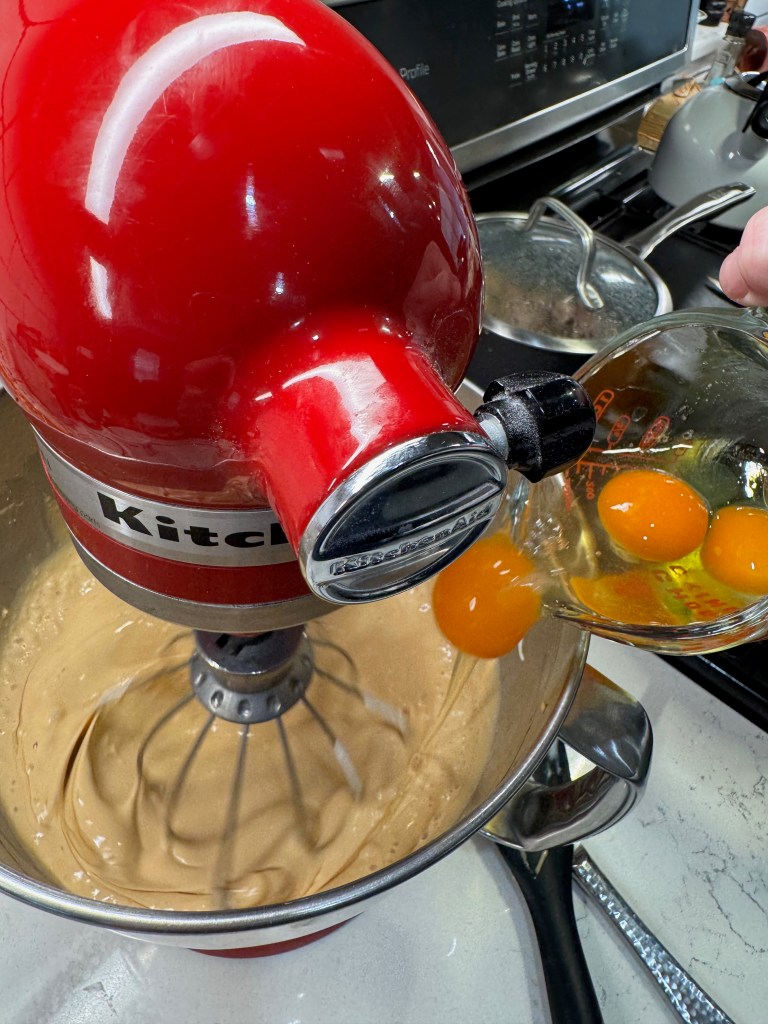
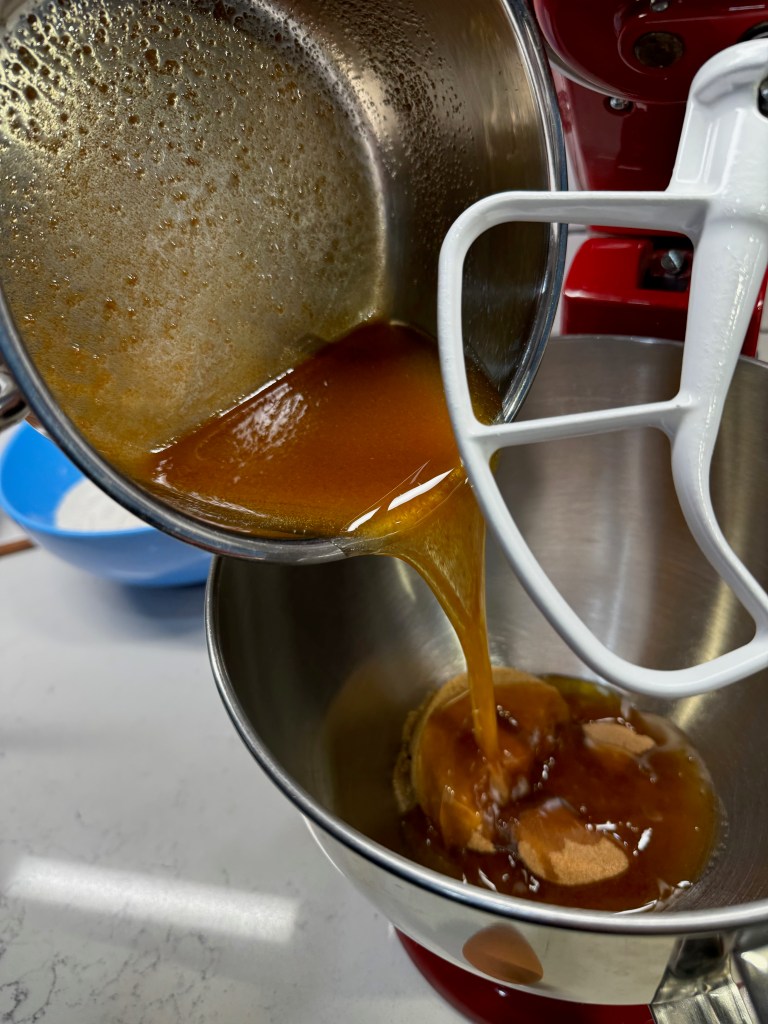
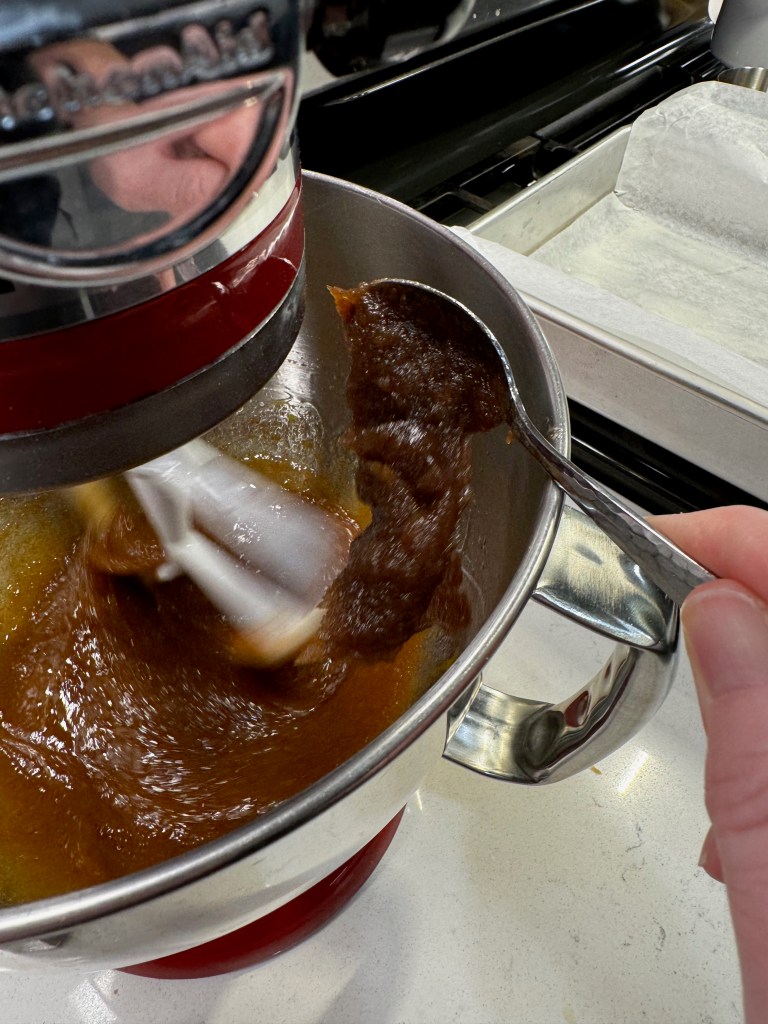
  1. Add cream cheese, cottage cheese and dulce de leche to the bowl of a stand mixer, fitted with the whisk attachment. Blend together on speed 2 or 3 for about two minutes, or until the mixture is evenly combined.
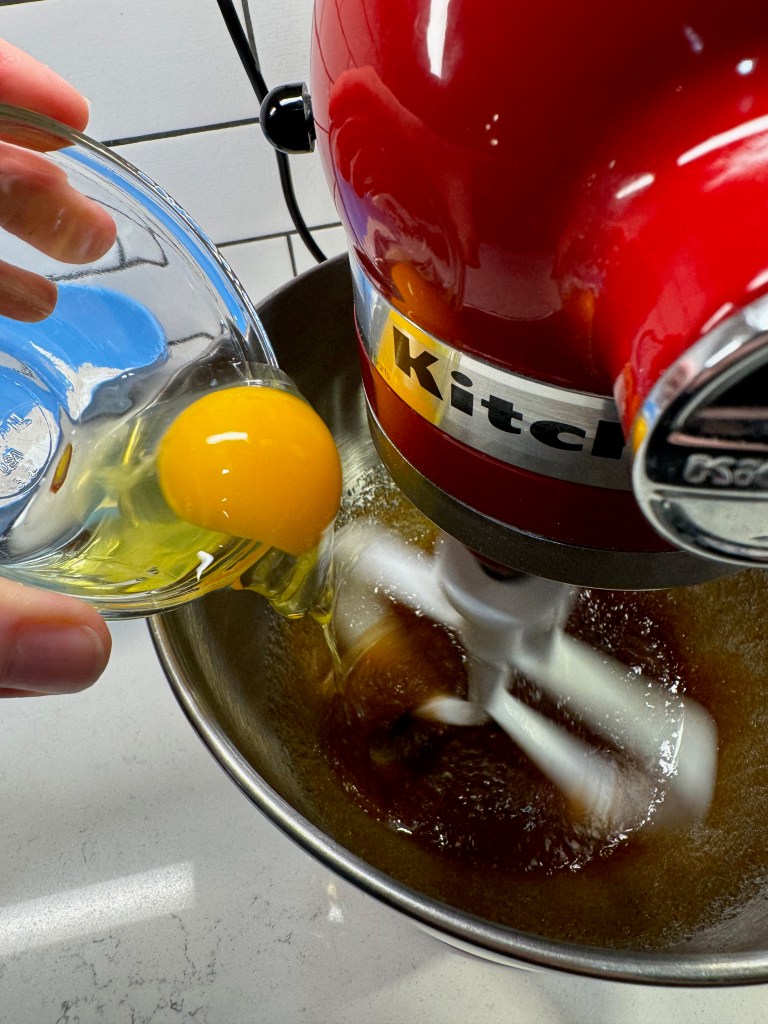
  2. Add brown sugar and sour cream, whisking on low speed until blended. Gradually pour the milk into the bowl while the mixer is running, to avoid splashing. Add the eggs, one at a time and then stir in vanilla.
  3. Meanwhile, cook the egg noodles until just tender, according to package instructions. Drain the noodles and toss with butter until fully melted.
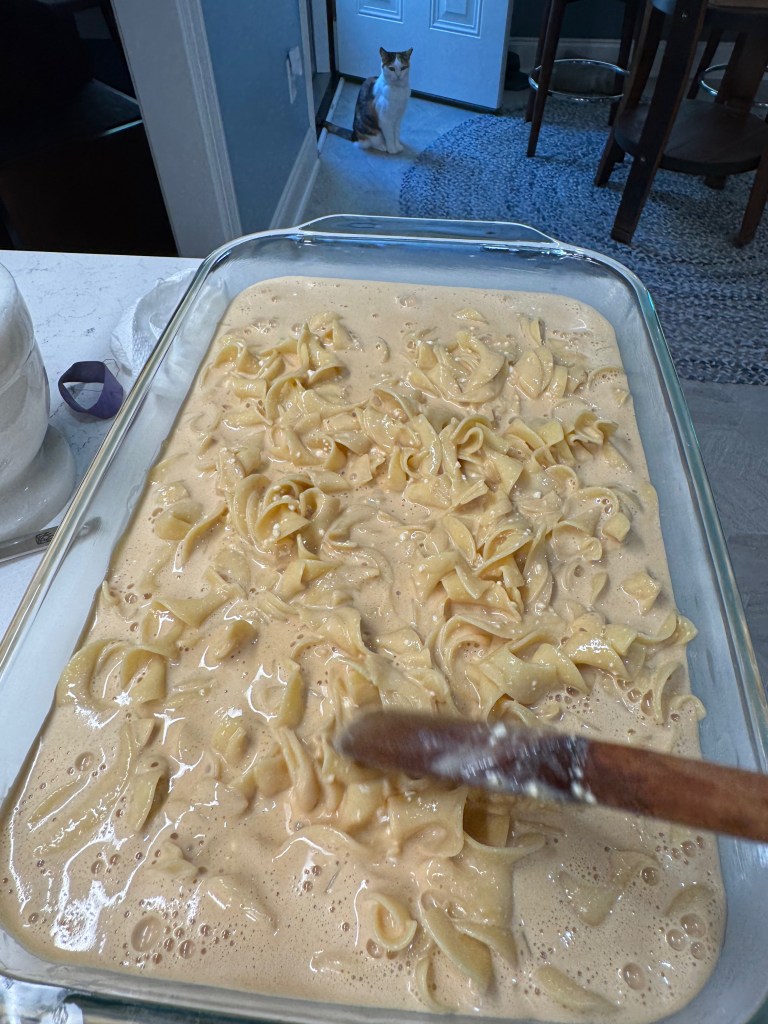
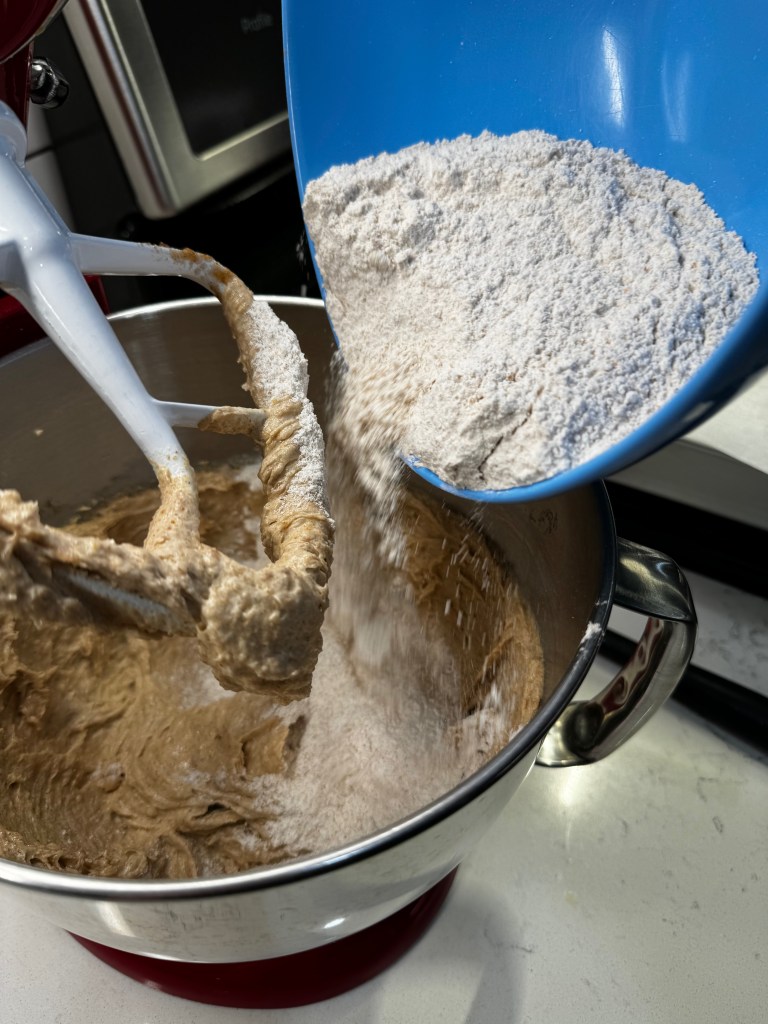
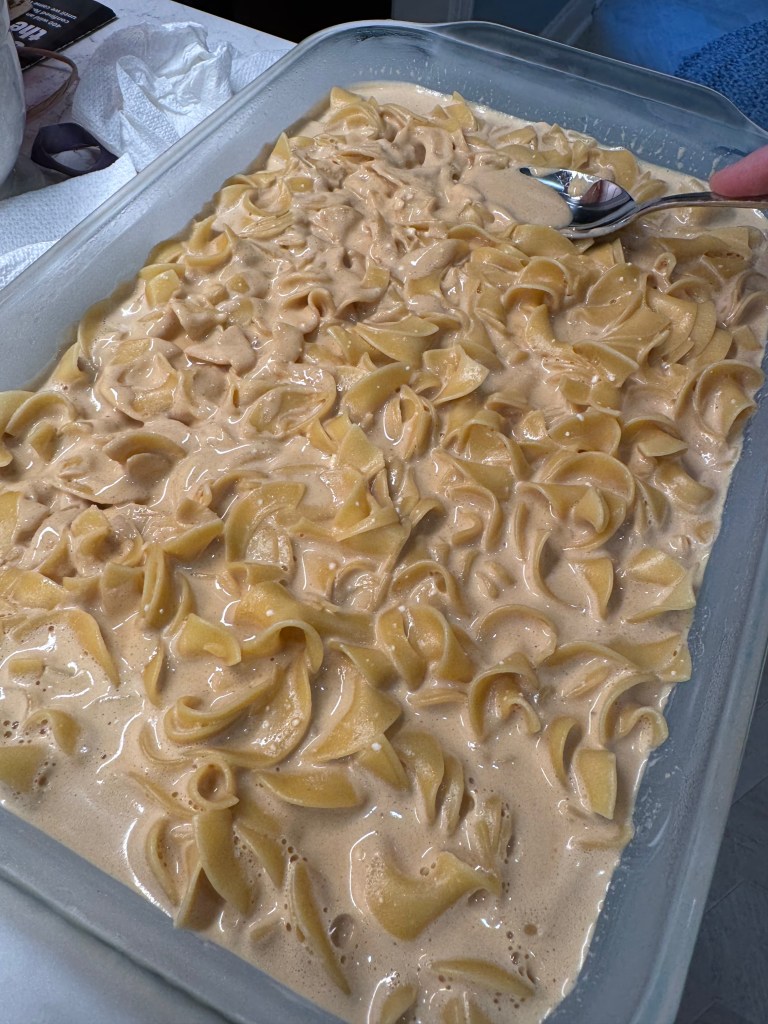
  4. Pour the caramel mixture into the warm noodles and toss to combine. It will seem very liquid-y. Transfer this mixture to a buttered 9 x 13 glass baking dish and spread it out until even. Cover the dish and refrigerate for a couple of hours or overnight.
  5. Preheat oven to 350° F, with rack in center position.
  6. Uncover kugel and use the back of a spoon to press down any noodles that have emerged from the caramel custard mixture. Bake uncovered for 35 minutes. Remove from oven, arrange sliced apples evenly over the top and sprinkle the surface with the brown sugar-cinnamon mixture. Return to oven for 15 more minutes.
  7. Cool to room temperature before enjoying, and refrigerate leftovers. When chilled, the kugel can be cut easily into squares and served almost like brownies.


Just for grins

As desserts go, this one packs a substantial amount of protein with cream cheese, cottage cheese, eggs, sour cream and milk. It also doesn’t have as much sugar as you might expect, with only three tablespoons, plus the sugar in the dulce de leche. Les and I got into a lukewarm debate about the protein content of this dish, with him asserting that the ingredients are spread out across 12 portions, making each portion skimpy on protein. I disagreed, so I did the math to bolster my case and here’s the result:

INGREDIENTPROTEIN GRAMS
cream cheese, full-fat16
cottage cheese, 2%28
whole milk12
dulce de leche6
eggs18
sour cream, full-fat4
noodles(this number surprised me!) 40
butter2
Total grams protein126
divided by 12 servings10.5

Each square contains 10 1/2 grams of protein, significantly more than you can say for most desserts. A serving of vanilla ice cream, for example, typically contains 2 to 3 grams and a slice of chocolate cake is around 4 grams. I’m not claiming this to be a health food by any stretch of imagination. The fat and sugar content are high, and there are irrefutable downsides to that. I’m only suggesting that this could be considered something of a power dessert, if there is such a thing. 😉

Caramel Apple Blondies

What is it about Autumn that everyone finds so appealing? It is easy to imagine that I’m among the majority when it comes to fall being my favorite season. Everyone I know seems to mention that it’s theirs also, so I did a little investigating to see if this is just confirmation bias or a birds-of-a-feather situation. Let’s see what the data says.

A survey reported by CBS says as many as 45% of Americans favor fall over the other three seasons combined. And another poll by Morning Consult—a business intelligence company that specializes in survey data— breaks it down into deeper demographics to reveal that Autumn is the clear favorite, especially among women, especially Gen Xers, and especially in the South. That’s me, on all three counts!

No wonder I get so excited about cooler temperatures, boots, sweaters and pumpkin spice. Indeed, this is my favorite time of year, and I’ve put a new spin on one of my own recipes to highlight one of the season’s best flavors, apple. And, in honor of all the state and county fairs that are happening this time of year, I thought it fitting to wrap a little caramel around the apple for even more nostalgia.

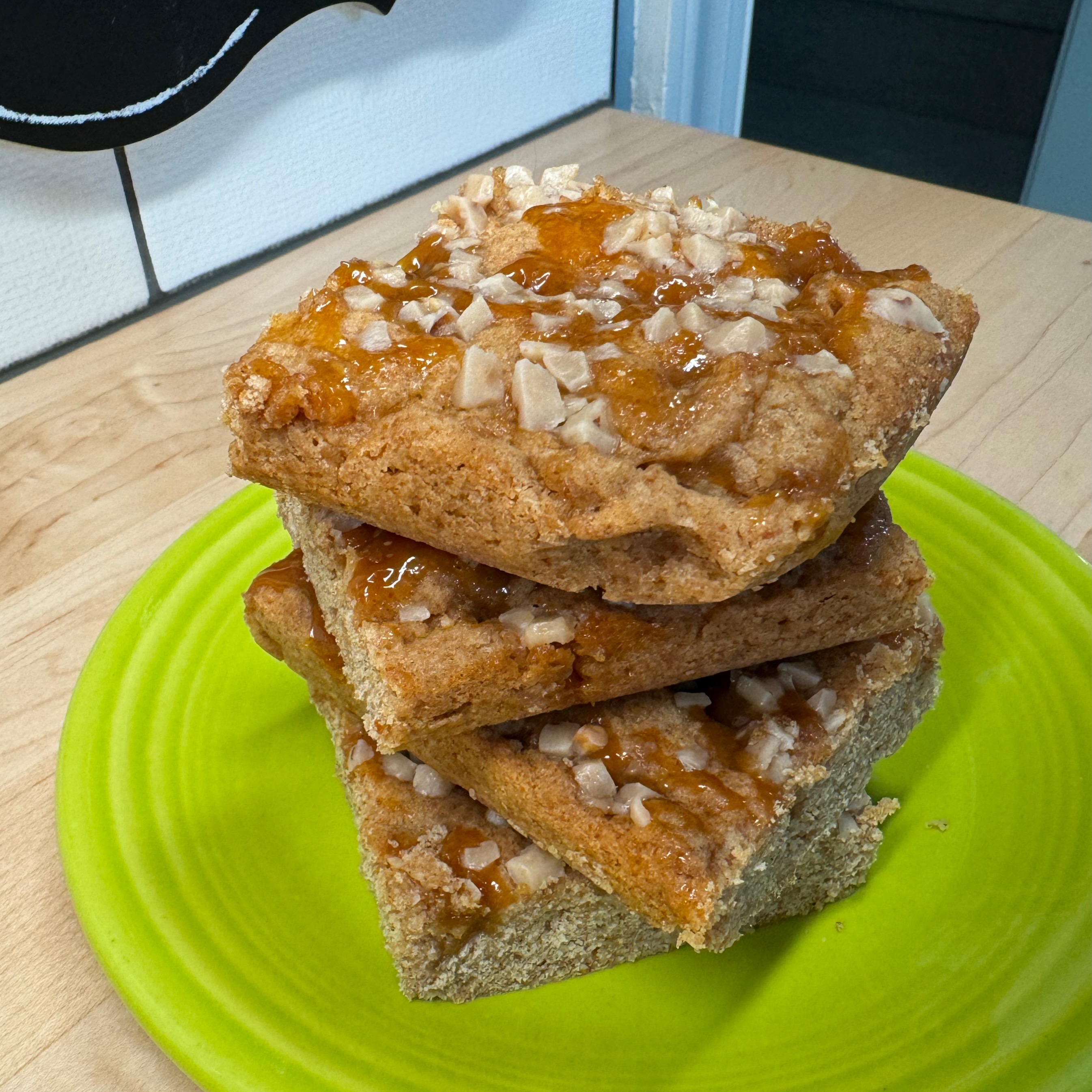
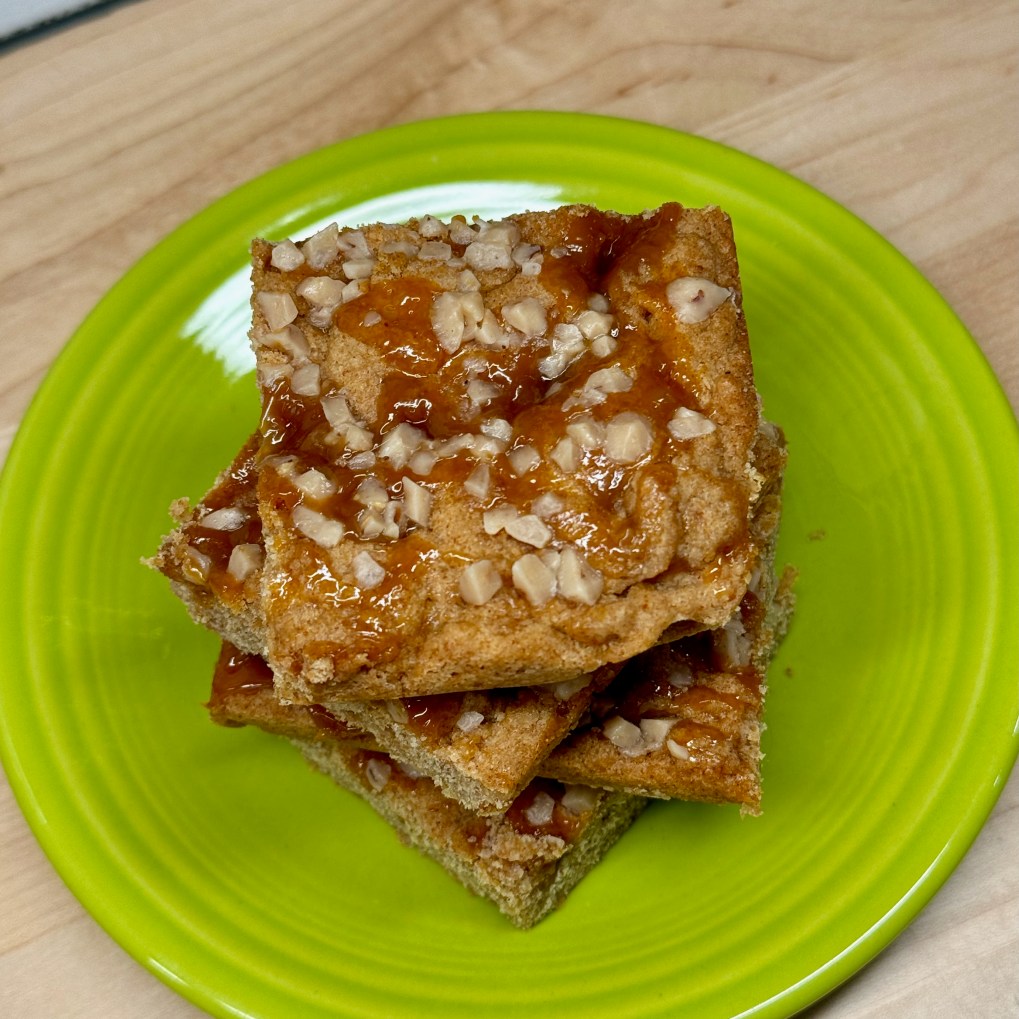
My caramel apple blondies are a deliciously sweet, caramel apple-y treat that’s perfect for a Halloween party, a gift for a favorite teacher or new neighbor, or just tucked into your grandkid’s lunch box.

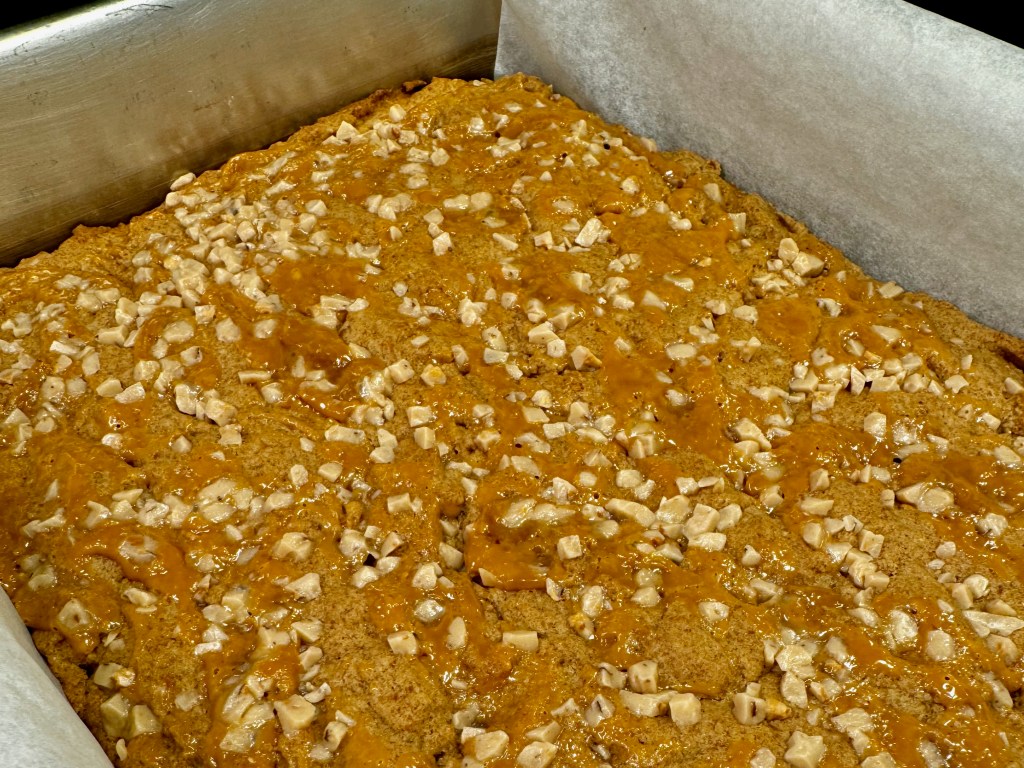
It took great restraint not to cut into them straight from the oven!

What ingredients are in caramel apple blondies?

A blondie is essentially a cookie bar, with a dense, chewy texture and often includes some kind of fun mix-in, such as chocolate chips or nuts. Similar to a brownie, but without chocolate, a blondie is made from a dough that resembles the base of a chocolate chip cookie, with plenty of butter, brown sugar, egg, vanilla, flour and leavening, such as baking powder.

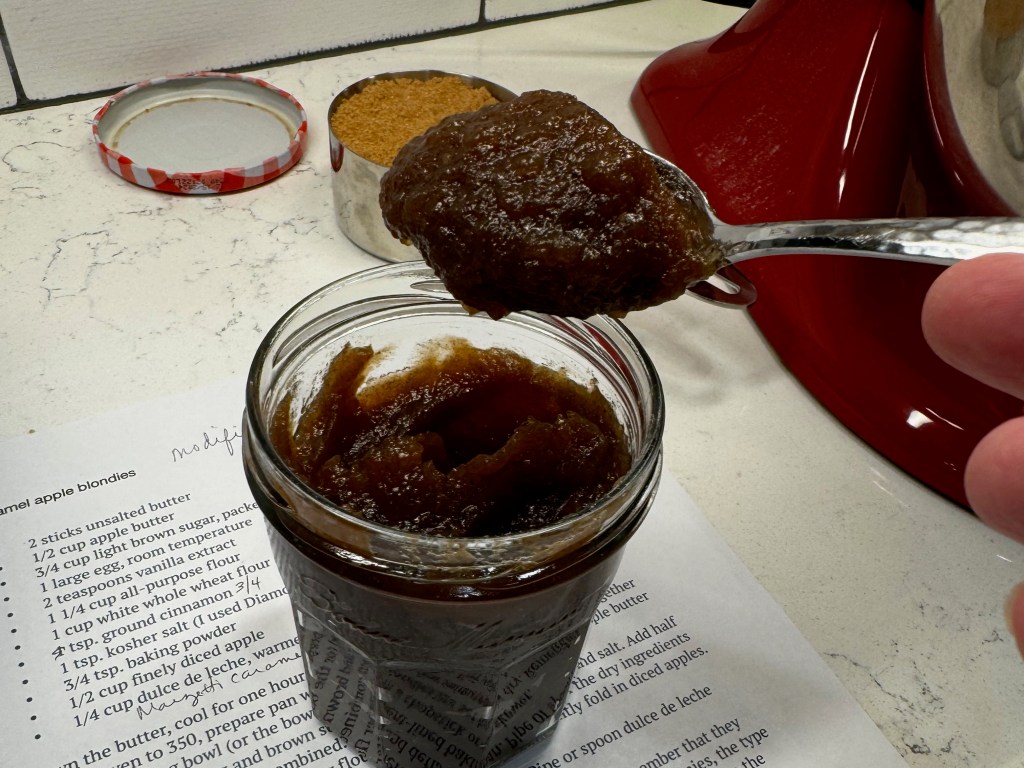
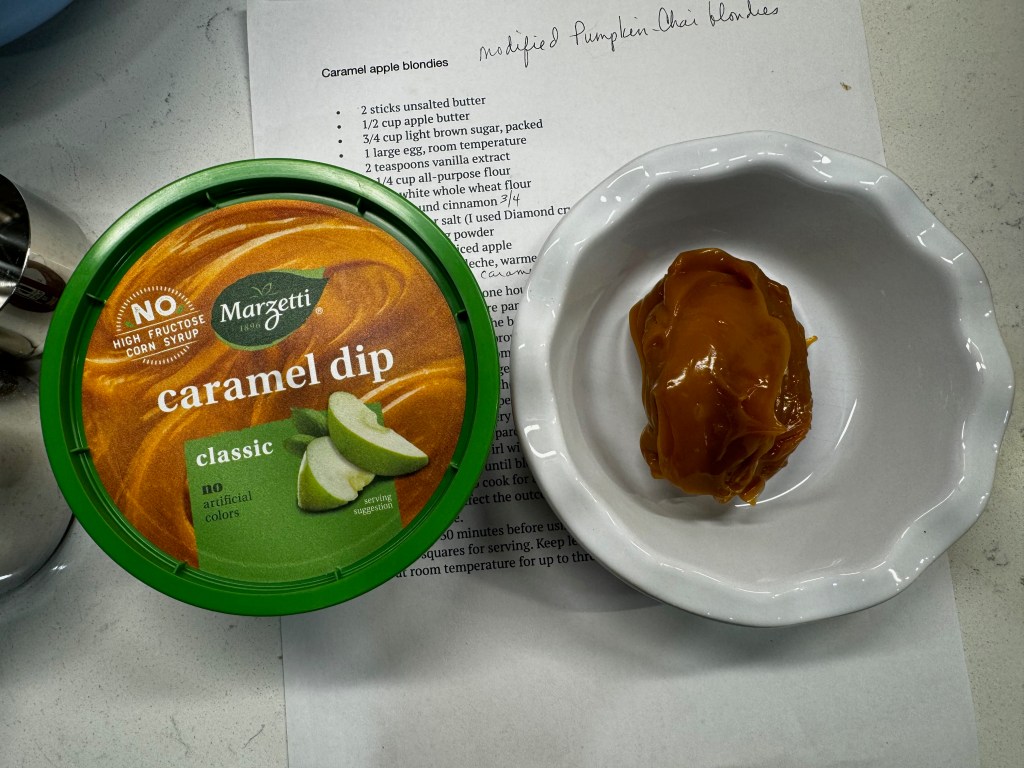
For this recipe, I’ve leveraged the same technique as in last year’s pumpkin chai blondies, using a concentrated paste of cooked down apples this time— otherwise known as apple butter— to give a distinct apple flavor without the high amount of moisture that would have been in fresh chopped apples. The caramel element is an easy grocery store item, the same stuff you pick up in the produce department for dipping apple slices. 


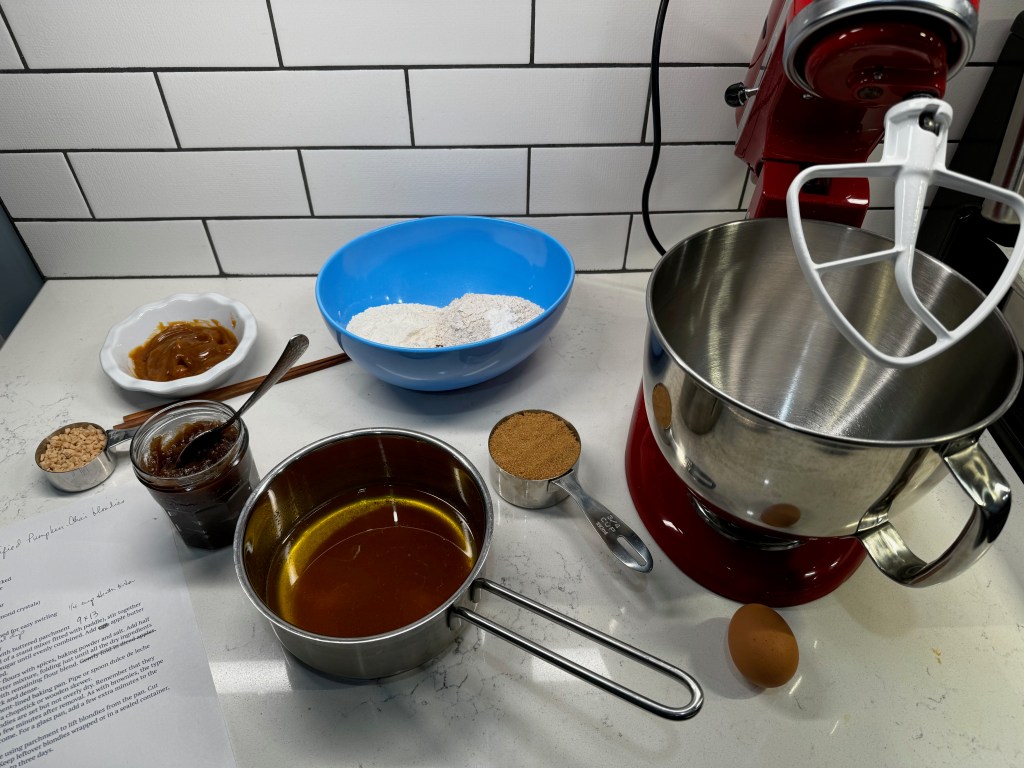
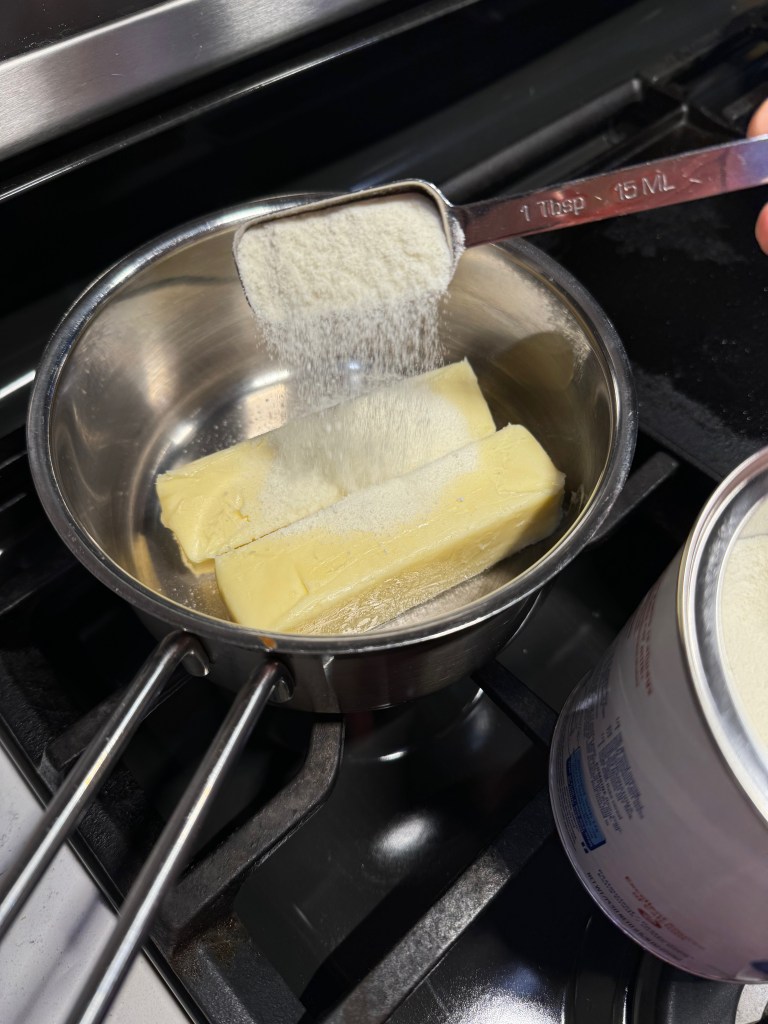
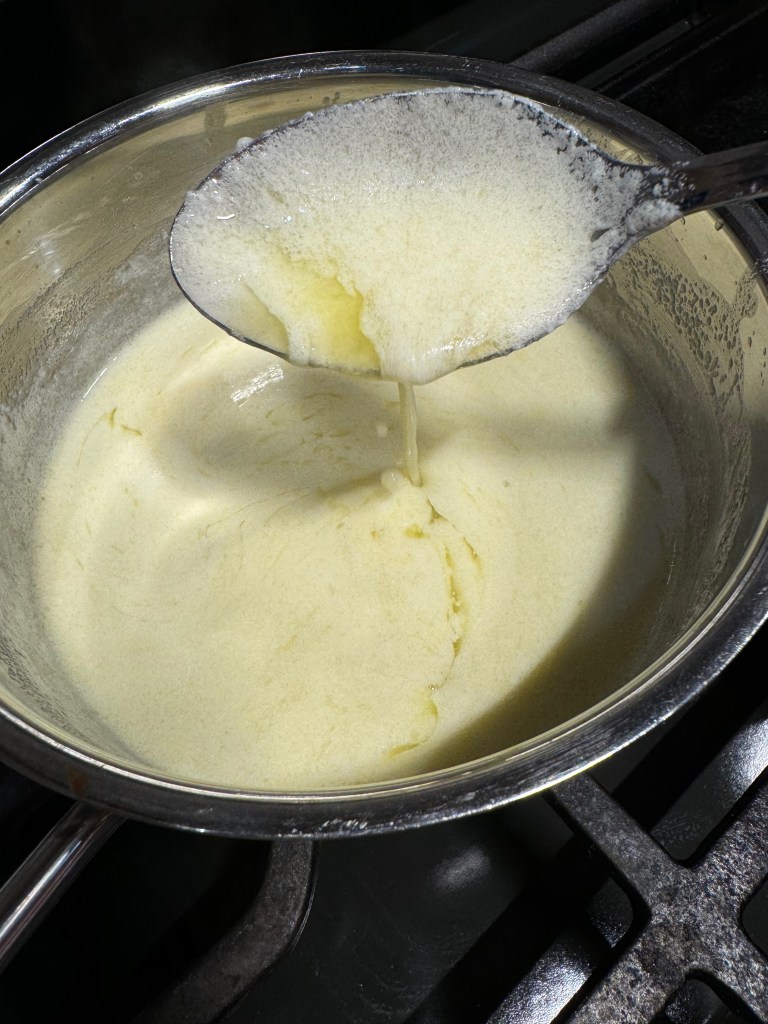
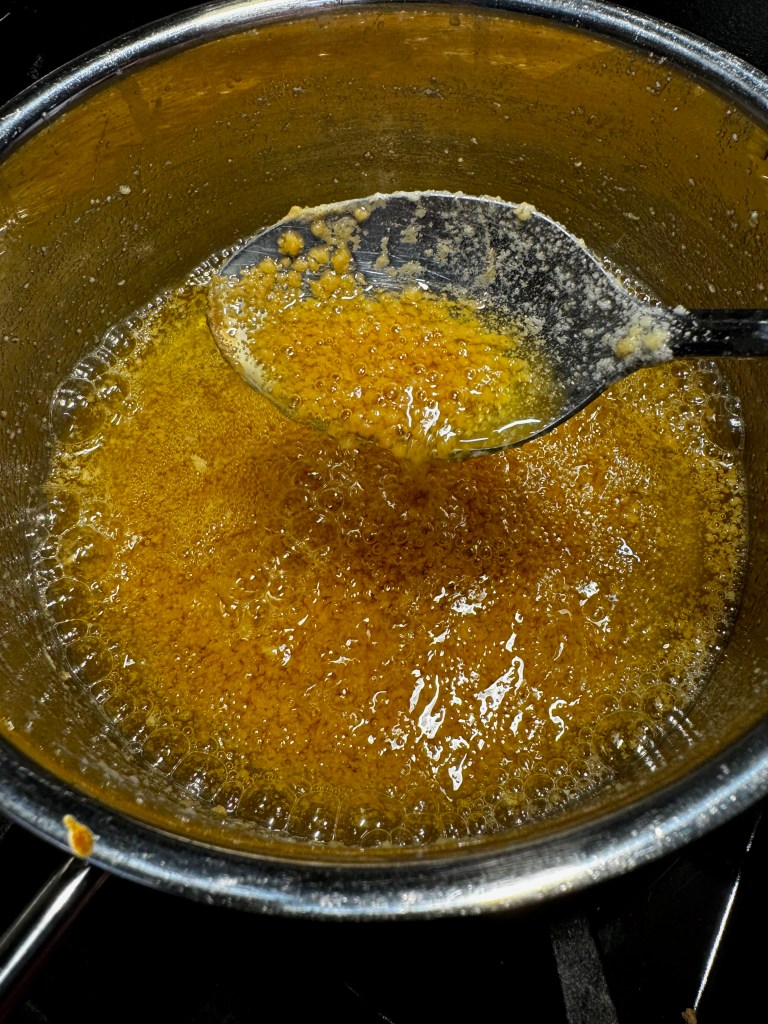
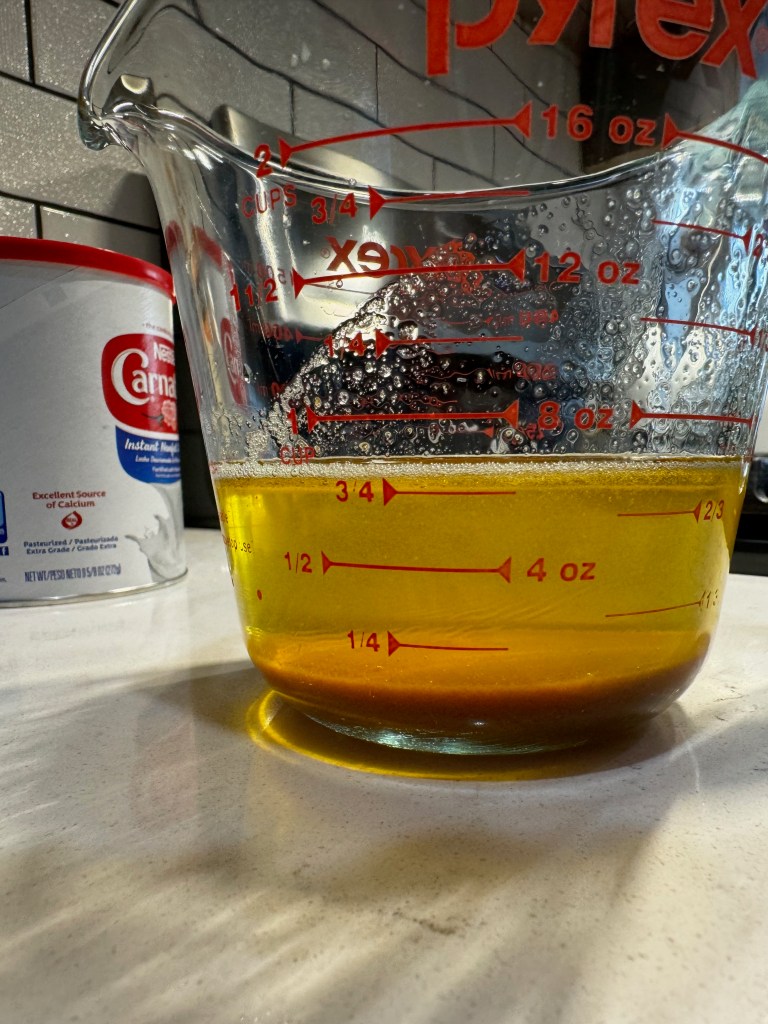
To keep these blondies a bit “healthy-ish,” I subbed in a half amount of whole wheat pastry flour. And in case you wonder why the melted butter is soooo dark in the pan in my ingredients photo, it’s because I tried a new (and very flavorful) trick when I made my browned butter.

Check out that very browned butter!

How to make browned butter even better

If you spend any time at all on social media or the internet, you may have seen this new trend of adding powdered milk to the butter as it browns. Given that it’s the milk solids that actually brown, it stands to reason that increasing the milk solids will amp up the flavor. And holy moly, it sure did! I used salted butter, by the way, though most baking recipes call for unsalted. Why? Because salt in desserts does the same thing as salt in savory dishes— it shoves the most important flavors to the forefront.


How do you make caramel apple blondies?

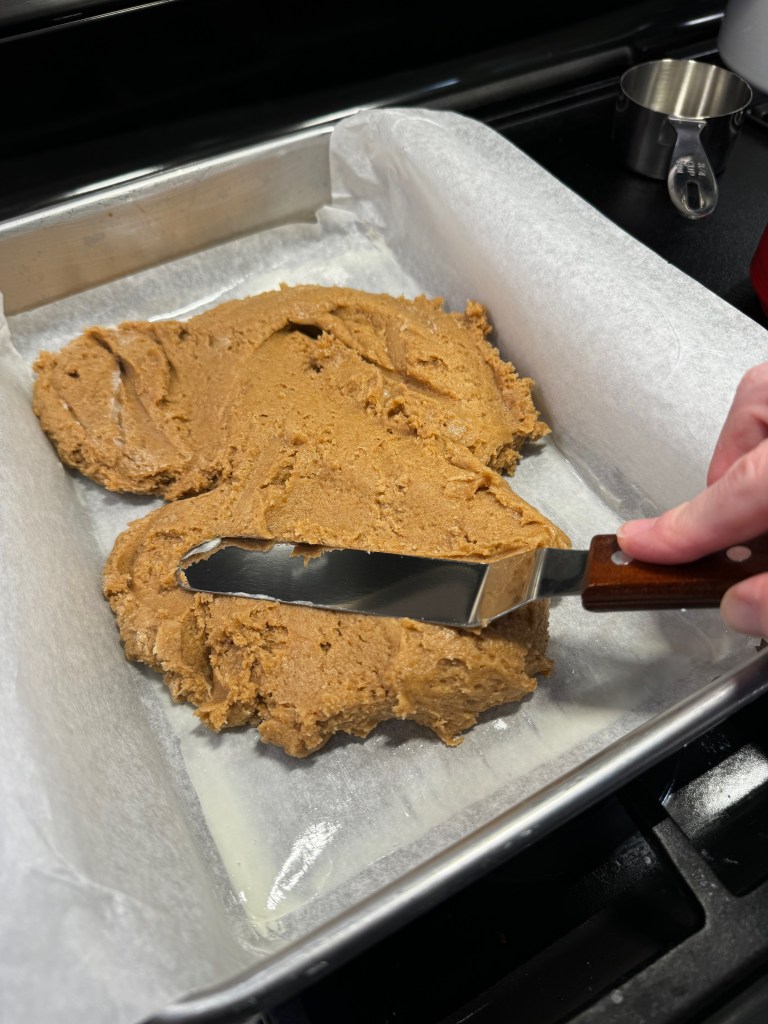
The rest of the recipe is very simple. Mix together the melted butter and brown sugar, then add the egg, apple butter and vanilla. Add the dry ingredients, half at a time, mixing only until all the flour is incorporated. 


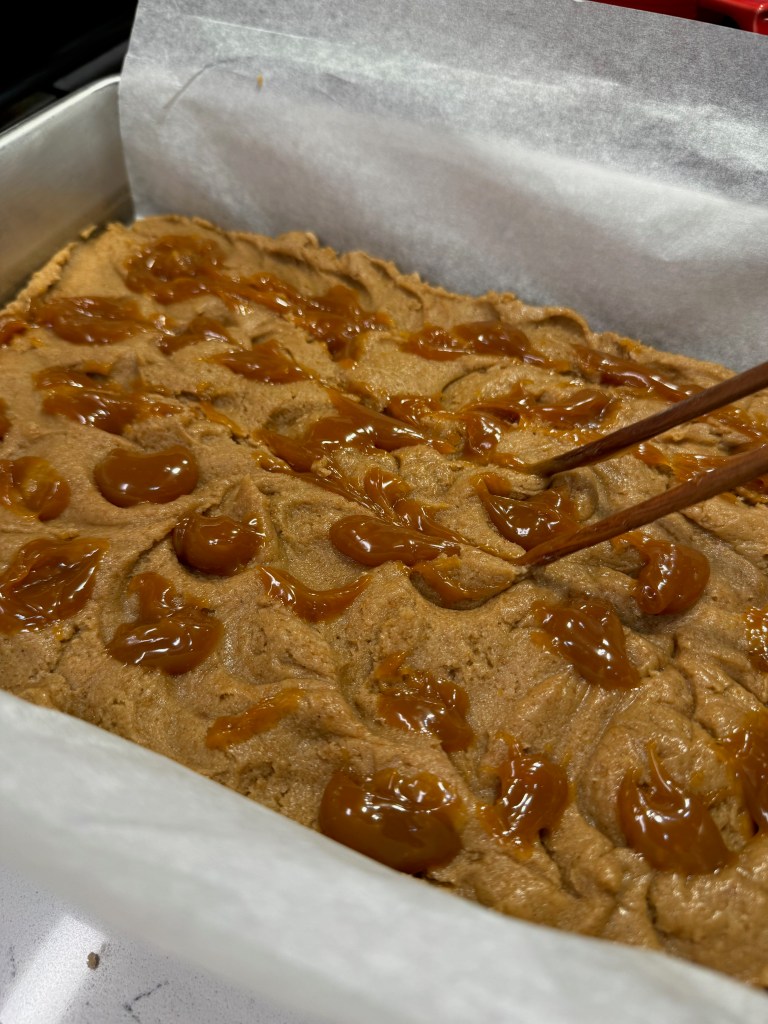
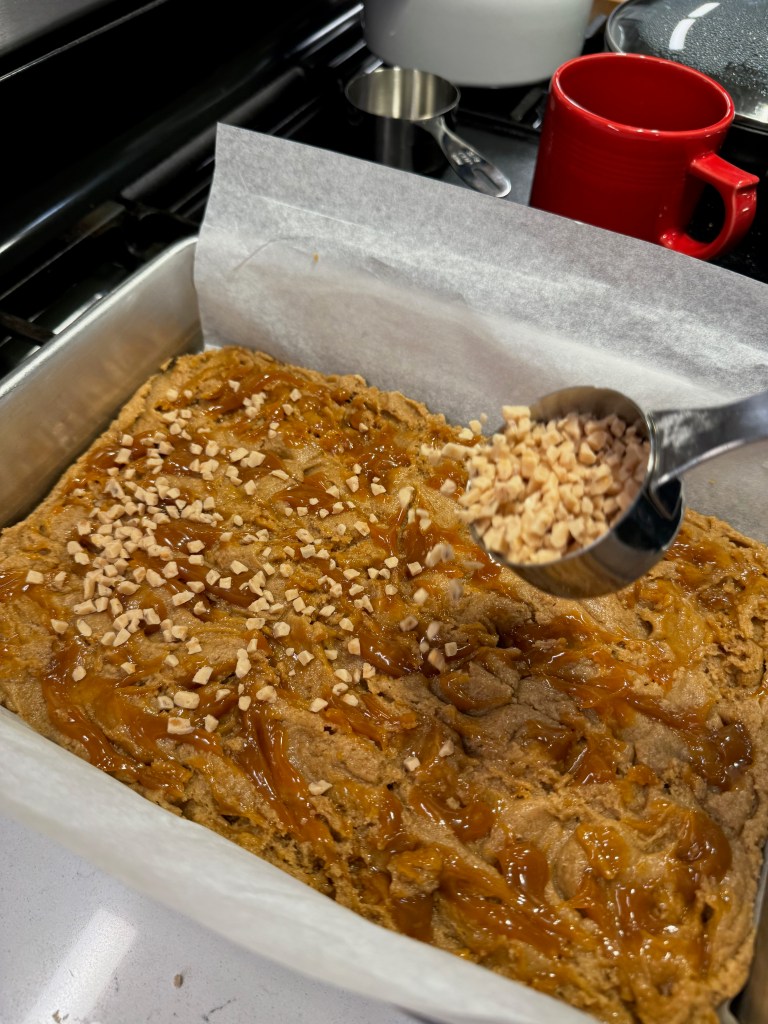
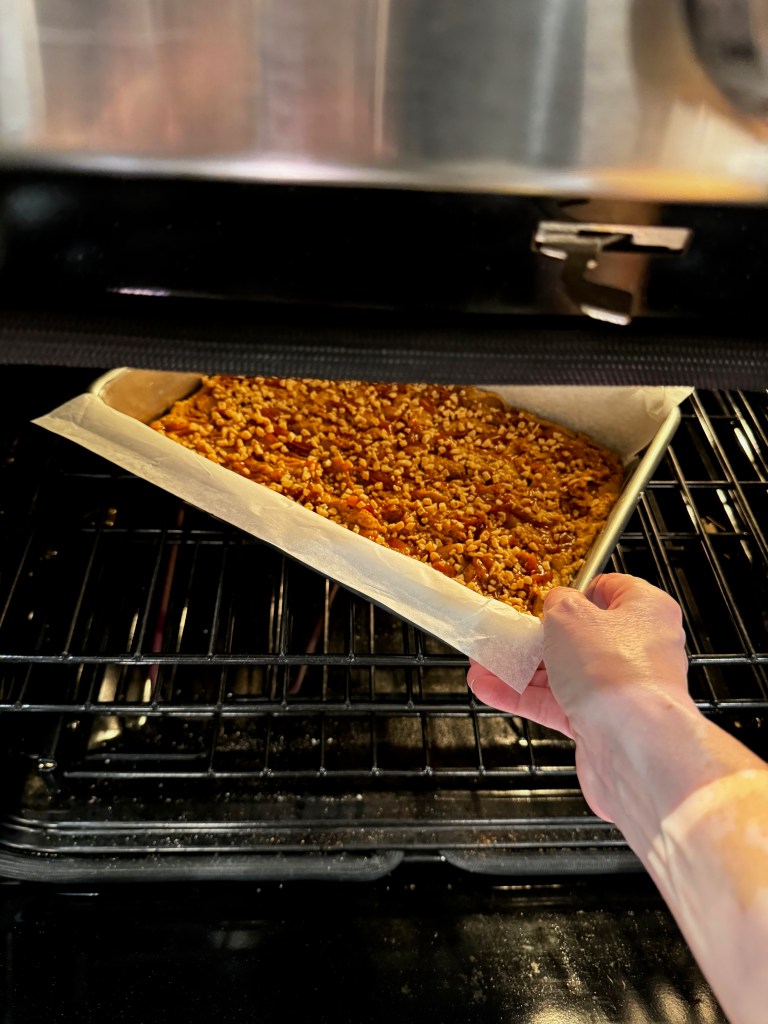
Spread the batter evenly into a buttered, parchment-lined pan, then spoon and swirl a bit of warmed caramel dip over the top. Scatter a few tablespoons of Heath candy bits on top and bake until the blondies test done with a clean toothpick.


Cool the blondies completely before cutting them, and if you really want to push them over the top, serve them with a scoop of my easy cinnamon ice cream. We enjoyed them this way, and I got so excited, I completely forgot to take a picture. But you can imagine, right? 😉
Caramel Apple Blondies

  • Servings: 12 or 16
  • Difficulty: Average
  • Print

Caramel and apples reminds me of the treats I used to look forward to at the county fair. These blondies are just one of many reasons I'm excited about fall.


Ingredients

  • 2 sticks salted butter
  • 2 Tbsp. nonfat dry milk powder
  • 3/4 cup light brown sugar, packed
  • 1 large egg (room temperature)
  • 1 cup apple butter (homemade or store bought)
  • 2 tsp. real vanilla extract
  • 1 1/4 cups all-purpose flour (see notes for measure instructions)
  • 1 cup whole wheat pastry flour (or sub in regular all-purpose flour if desired)
  • 3/4 tsp. ground cinnamon
  • 1/2 tsp. kosher salt
  • 3/4 tsp. baking powder
  • 1/4 cup caramel dip (find in the produce section, near the apples)
  • 1/4 cup Heath candy bits (optional, sub chopped pecans if desired)

Notes: Unsalted butter can be used, if that’s what you have on hand; double the kosher salt if you go this route.

When measuring flour, use the “fluff, sprinkle, level” method rather than scooping directly into the bag or container.

Directions

  1. Place the butter in a heavy-bottomed sauce pan over medium heat. Stir frequently, and when melted butter begins to brown, add the dry milk powder. Stir constantly, as the browning will happen quickly at that point. Remove from heat as soon as the butter reaches a copper color. Transfer to a measuring cup to cool.
  2. Preheat oven to 350° F, with oven rack in center position. Prepare a 9 x 13″ baking pan with a buttered parchment liner, leaving flaps on the long sides for easy lifting of baked blondies.
  3. In a large mixing bowl (or the bowl of a stand mixer fitted with paddle), stir together browned butter and brown sugar until evenly blended. Add apple butter and egg. Beat until combined and somewhat fluffy.
  4. In a medium bowl, whisk together flours with cinnamon, baking powder and salt. Add half the flour mixture to the apple mixture, folding just until all the dry ingredients are incorporated. Repeat with remaining flour blend. The batter will be very thick and dense.
  5. Spread batter evenly over parchment. Warm the caramel dip slightly in the microwave for easier swirling. Pipe or spoon caramel dip over batter and swirl with a chopstick or spoon handle. Sprinkle on Heath candy bits.
  6. Bake for 25 minutes, or until blondies are set but not overly dry. Remember that they will continue to cook for a few minutes after removal. As with brownies, the type of pan may affect the outcome. For a glass pan, add a few extra minutes to the baking time.
  7. Cool for at least 30 minutes before using parchment flaps to lift blondies from the pan. Cut into squares for serving. Keep leftover blondies wrapped or in a sealed container at room temperature for up to three days.


Apple Pie Ice Cream

The kid in me comes out to play in July. It’s my birthday month, and so my memories call me back to childhood more than in other months. But I also think it’s because I learned a few years ago that July is National Ice Cream month. And what kid (even a grownup one) doesn’t love ice cream in the summer?

There’s a saying out there, attributed to President Harry Truman, that “there is nothing new in the world except the history that you do not know,” and though most U.S. citizens grew up believing that apple pie is an all-American dish— right alongside baseball, hot dogs and Chevrolet, remember?— the backstory of apple pie is much older. I found this article in Southern Living interesting; if you like rabbit holes (as I do), then dig into this after we finish this ice cream.

We may not have invented it, but we do indeed love apple pie in this country, and I have many fond childhood memories of my grandmother making pies and applesauce from the tart green apples produced by a tree next to the side of her house in Western New York. My cousins and I would go out there to pick them (sometimes off the ground), and Gram would spin a few other ingredients around like magic, and just like that, a pie would appear. A slice of that pie, alongside a scoop of vanilla ice cream and a wedge of sharp New York cheddar— oh, it was like heaven.

This year, the kid in me was craving something a little simpler, and so for our July Fourth celebration this year, it’ll be this apple pie ice cream. Two summer favorites in one scrumptious scoop!

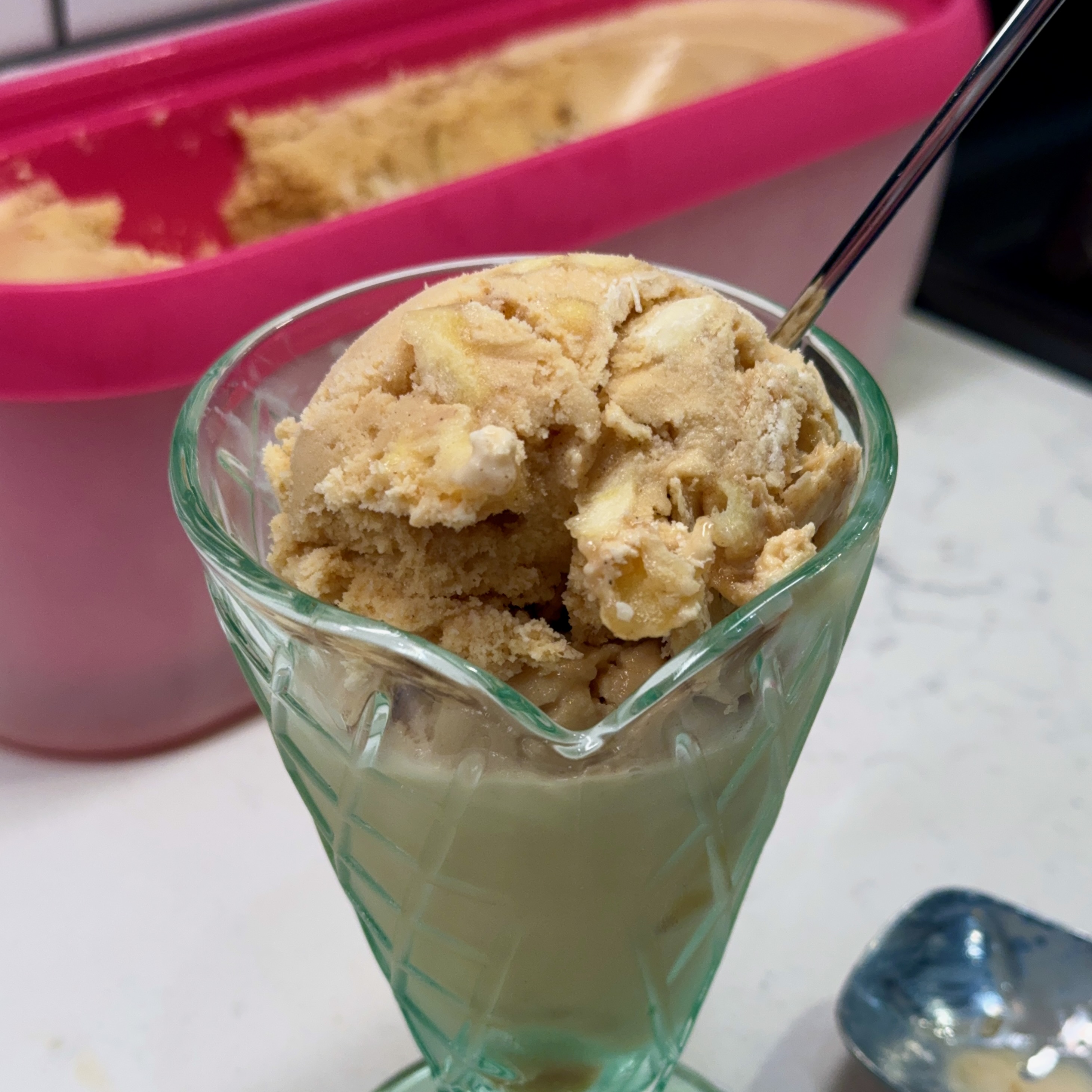
It’s apple pie and à la mode, all in one!

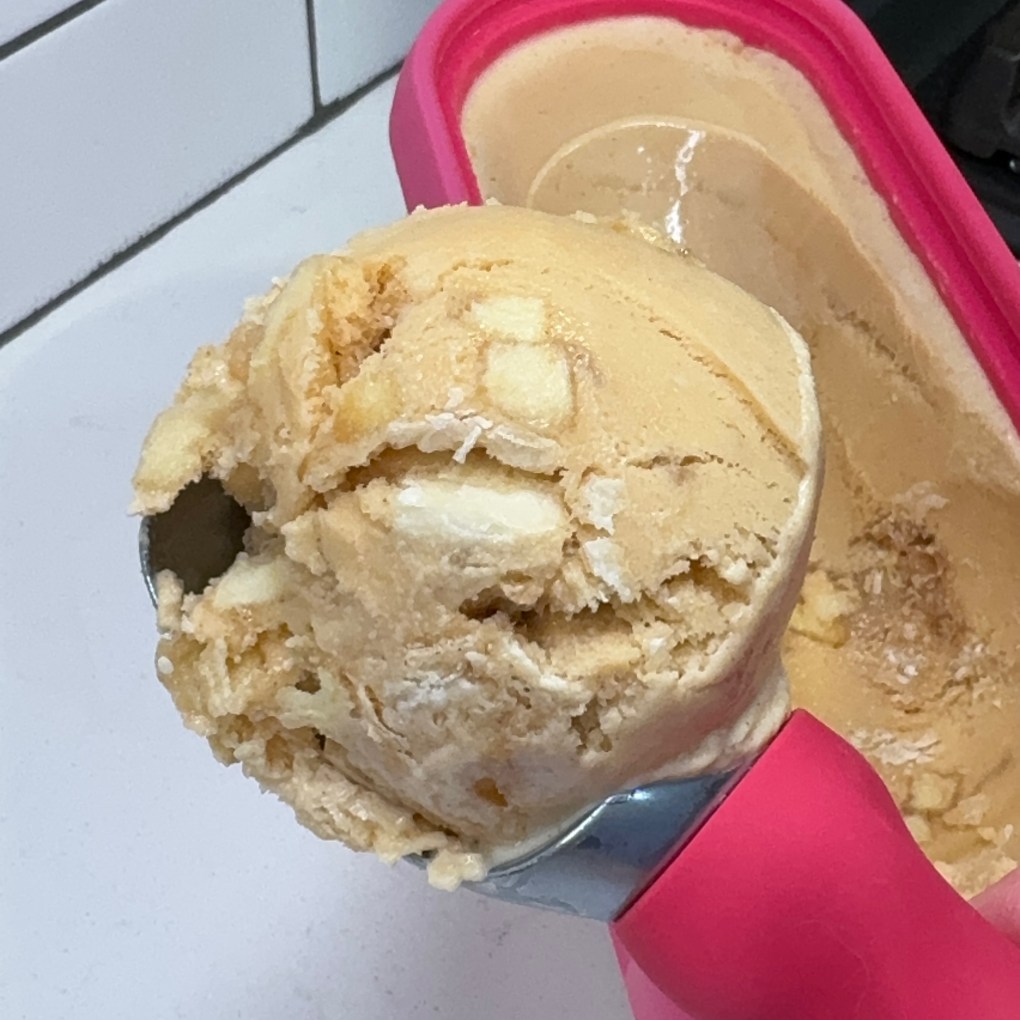
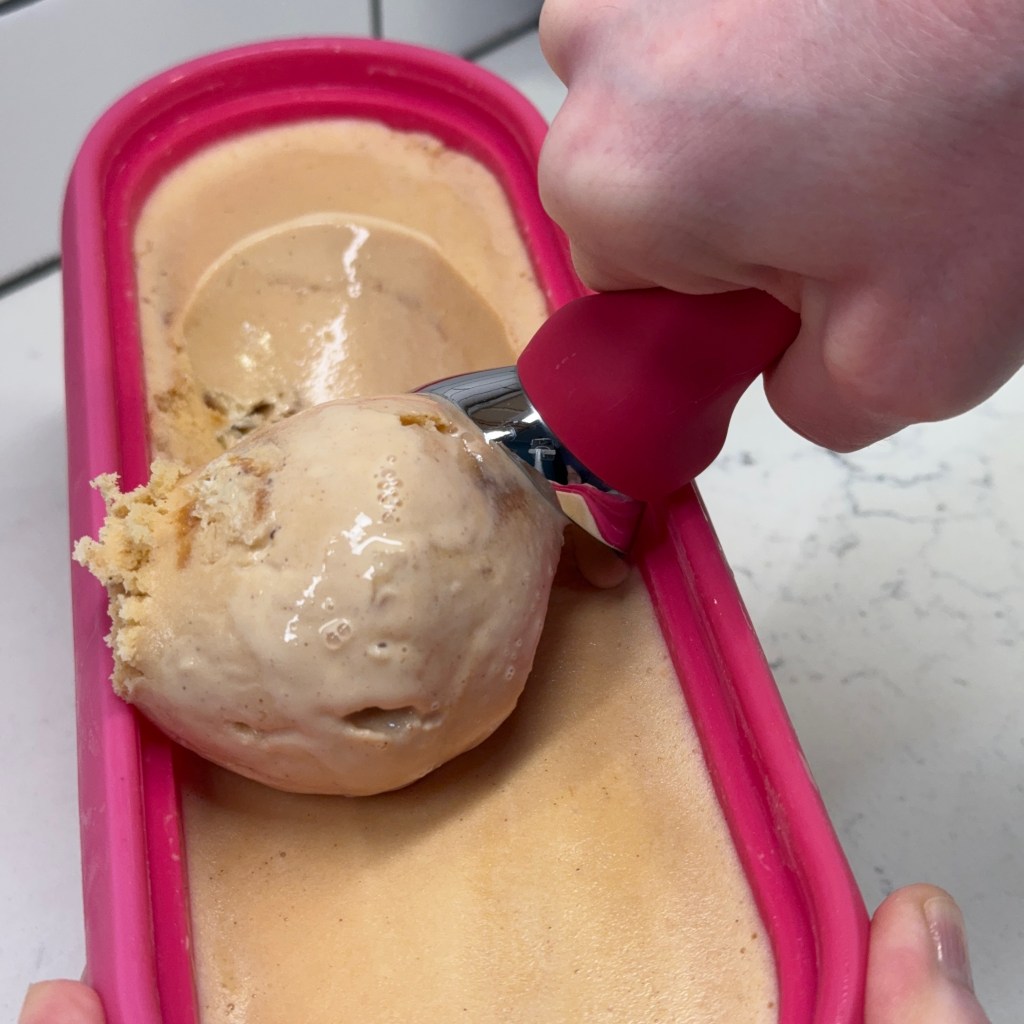
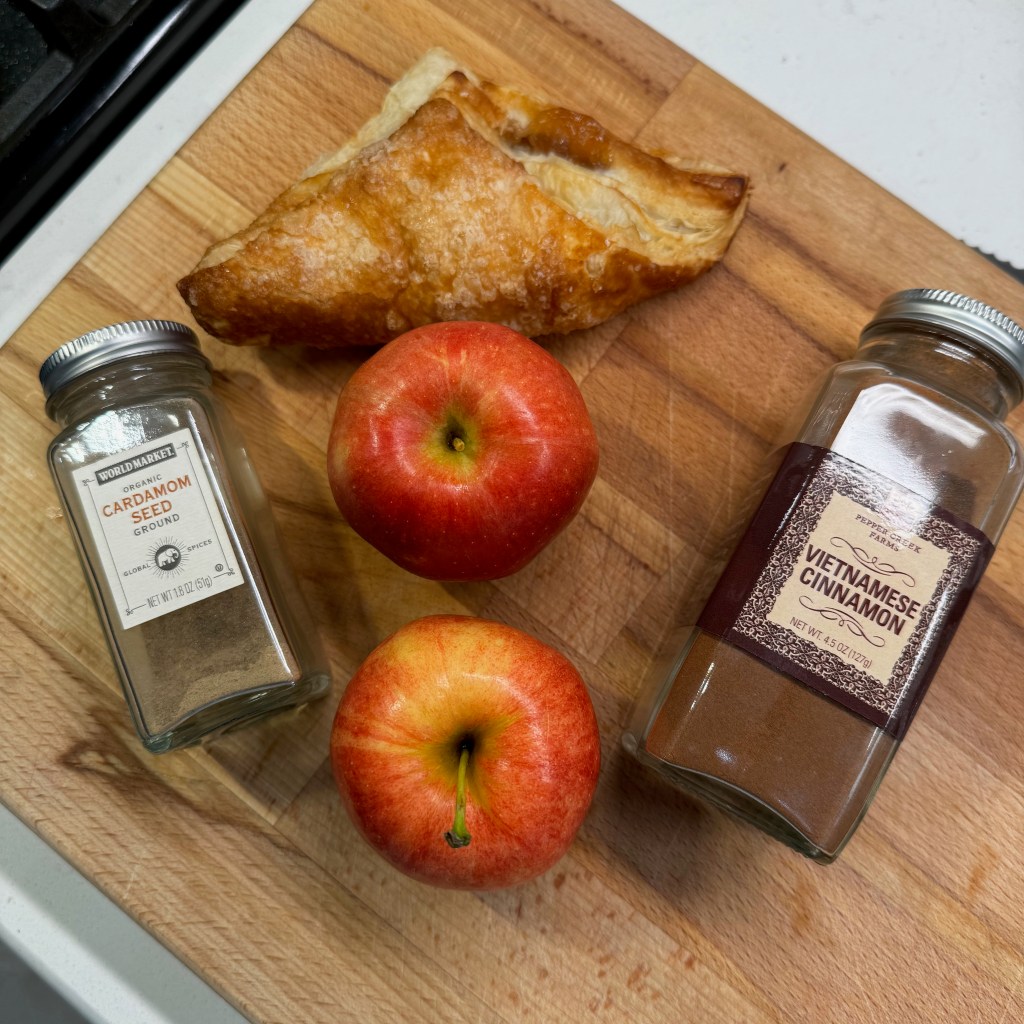
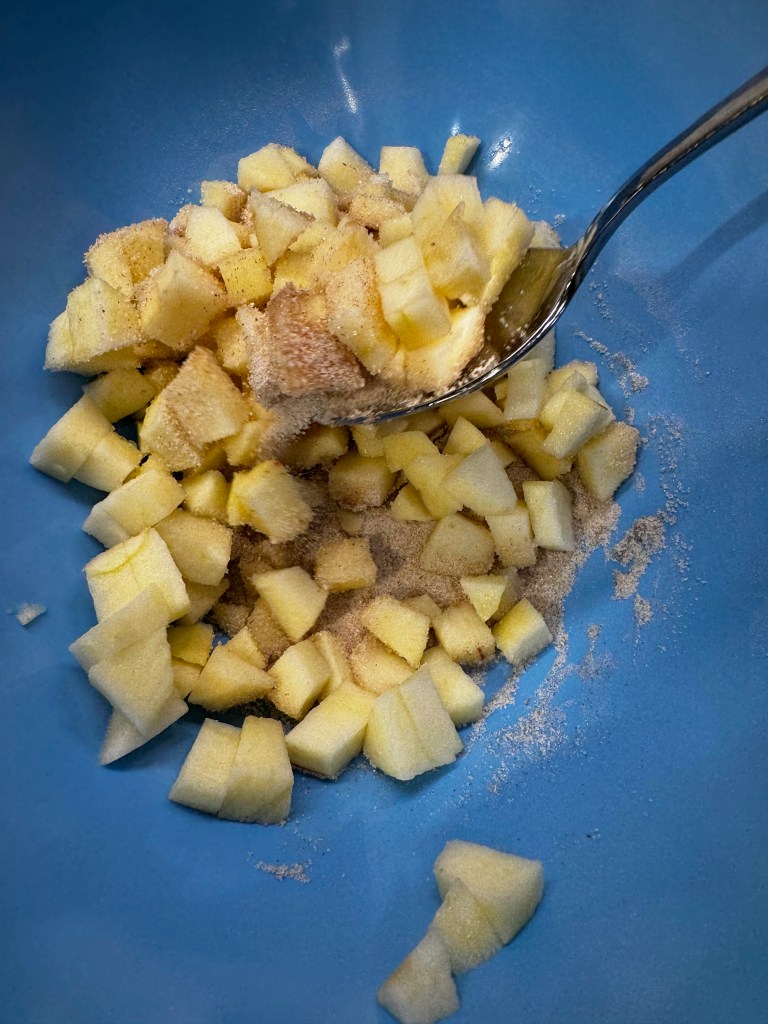
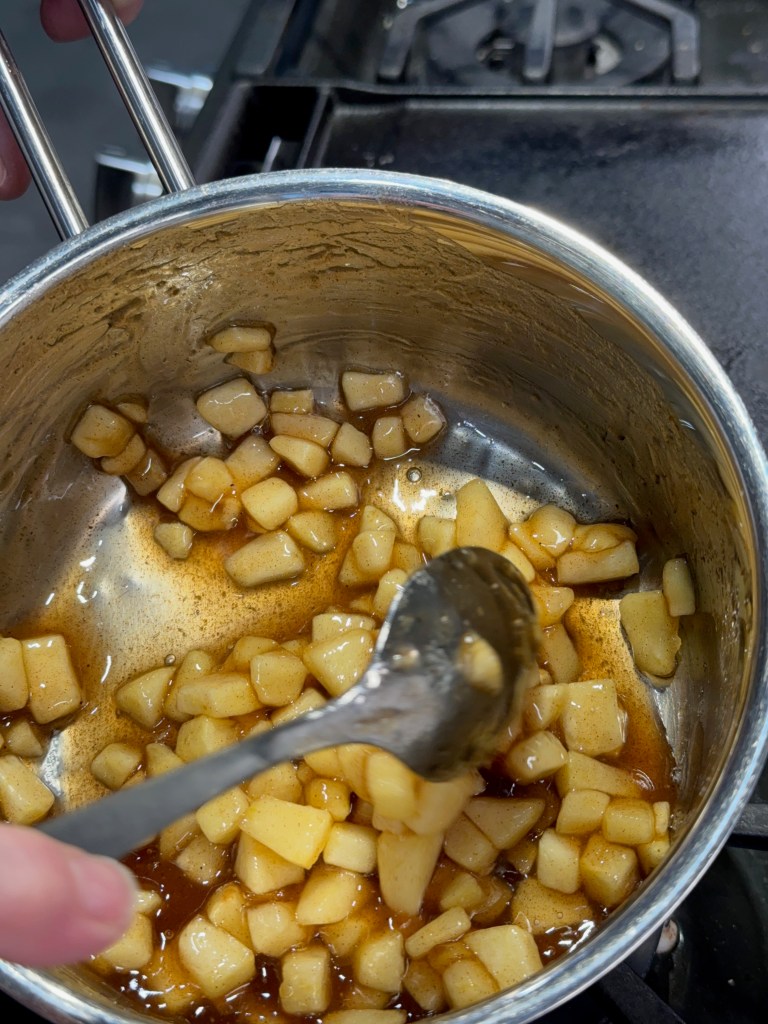
There’s no magic to it, and only a little bit of cooking to get the chopped apples softened and syrupy with cinnamon, sugar and cardamom flavors. I used two small Gala apples, which cooked down to approximately one half cup of syrupy deliciousness. I was on the fence whether to blend those bits into the ice cream base itself or merely layer with the base at the end. Ultimately, I layered them because I love the visual appeal of all the tasty flavors swirled into each scoop.

These flavors were begging to be worked into an ice cream!

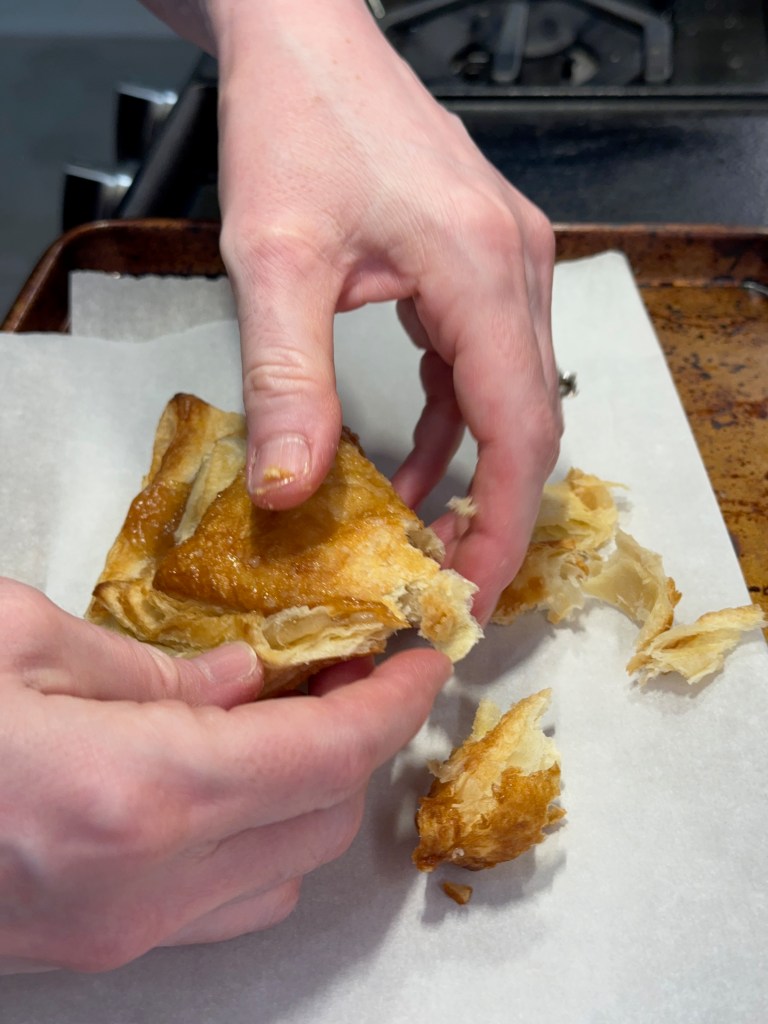
The “pie” part of my recipe comes not from pie crust, but from buttery, flaky apple turnovers. I took a shortcut by using store-bought pastries, but it was a relief to not turn on the oven. If you make the turnovers yourself, you are officially the apple of my eye! 🤩


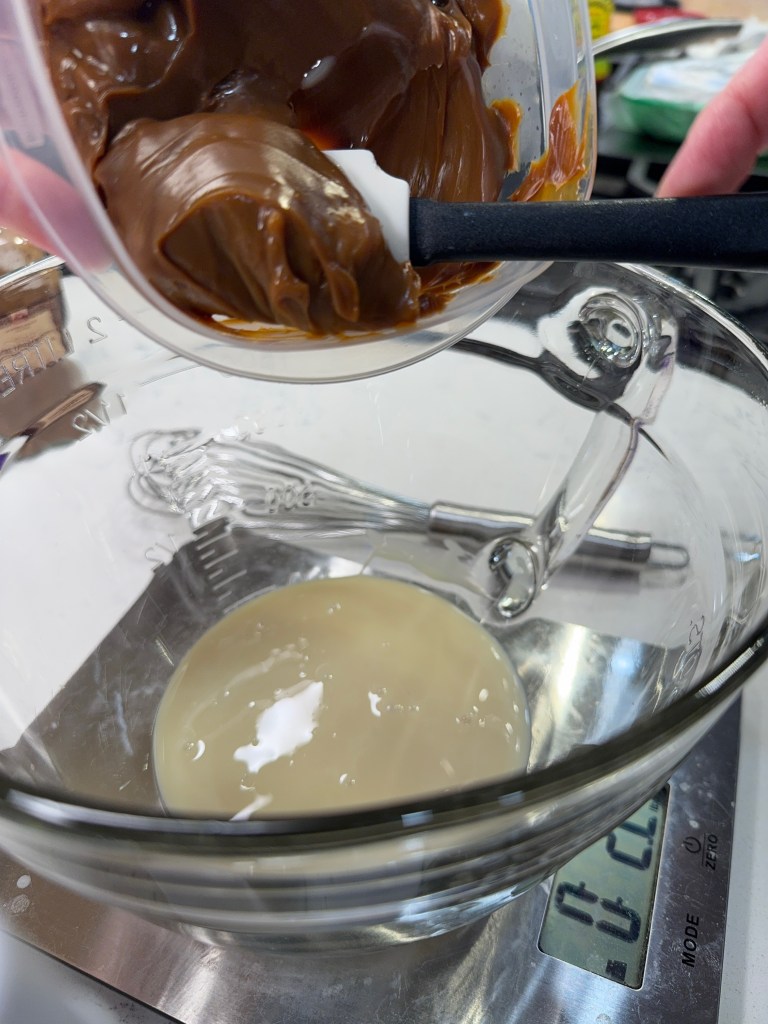
The ice cream base I used is my go-to, with sweetened condensed milk, cream, whole milk and a touch more cinnamon. This time, though, I got a notion to swap in a portion of dulce de leche sweetened condensed milk. It’s a thicker, caramelized version of condensed milk, and its rich, caramel-y flavor gave my ice cream even more of an apple pie vibe. Notice that I did not include vanilla? I wanted no distraction from the apples, caramel and spices.


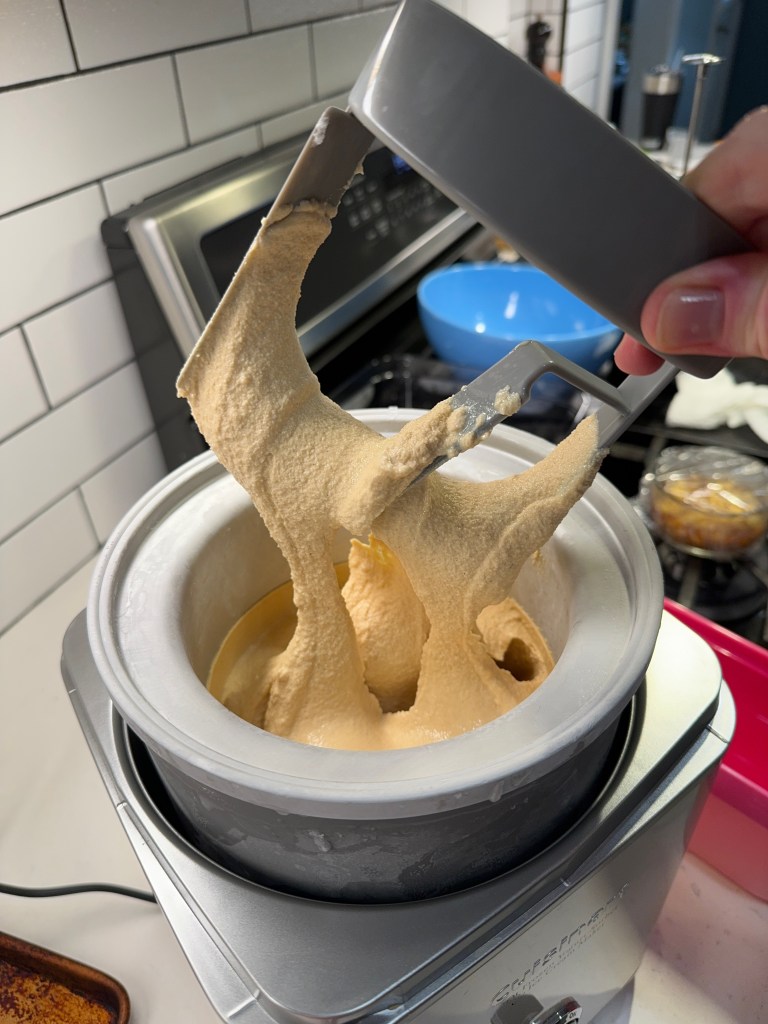
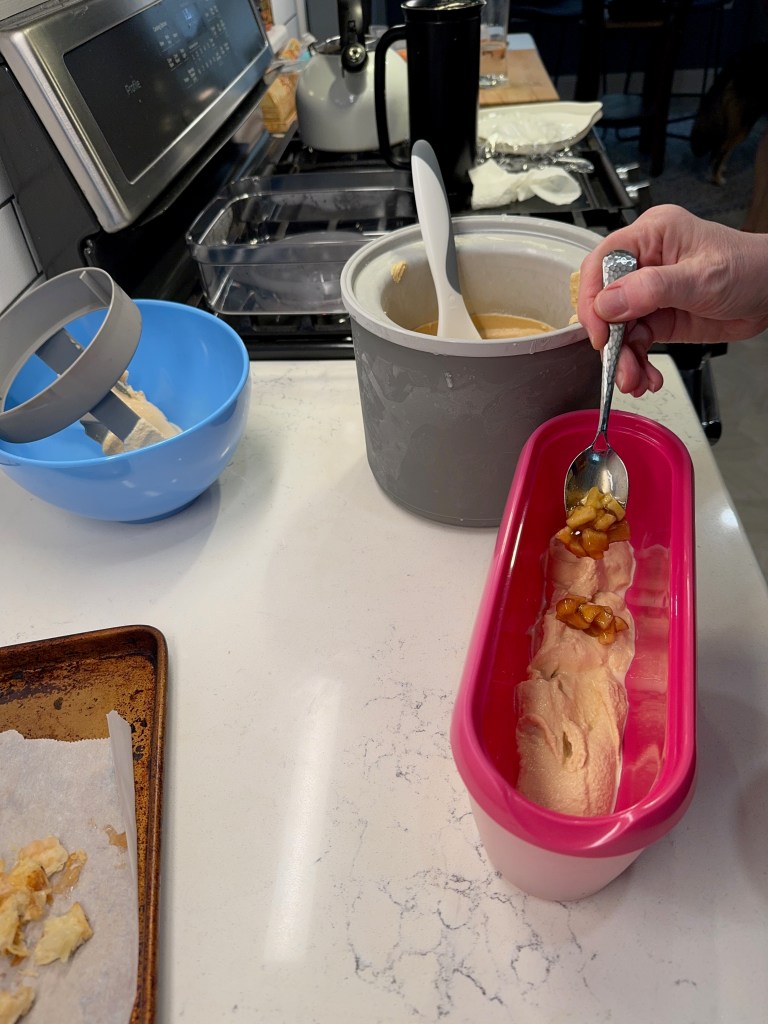
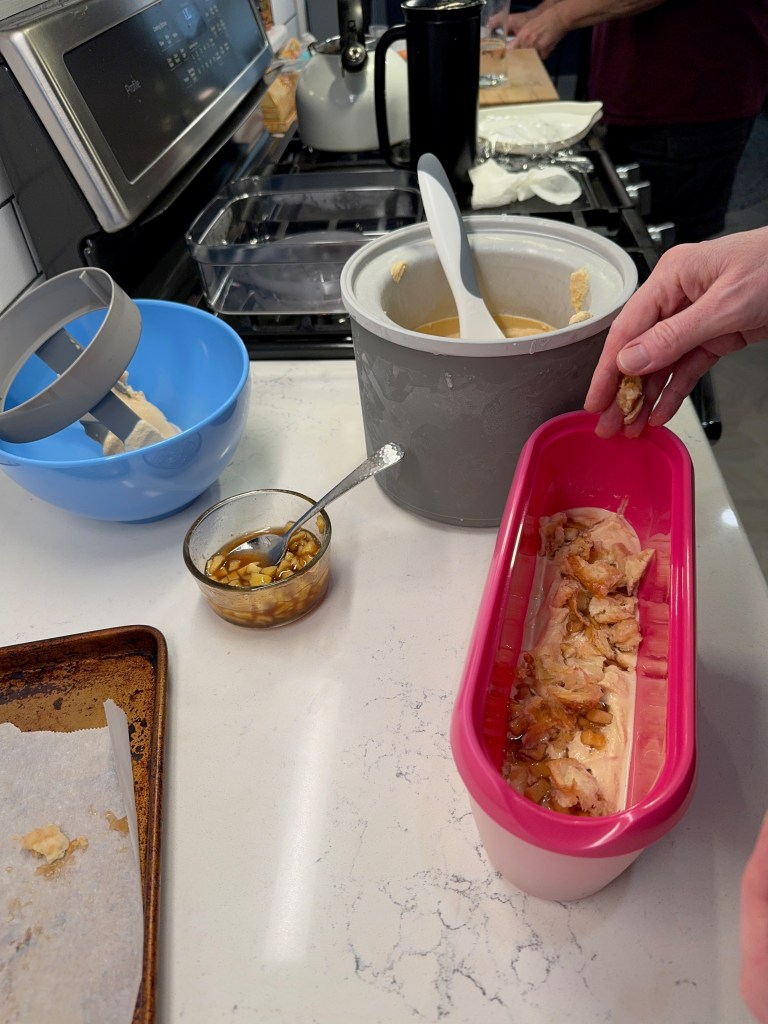
After churning the ice cream in my handy Cuisinart machine, which has paid for itself dozens of times over since I bought it more than 15 years ago, I layered the sweet base with those syrupy apples and some torn up bits of apple turnovers.


My inner kid is grinning ear to ear for this one, and it feels like a perfect way to kick off National Ice Cream Month. Don’t be surprised to see a few other fun flavors pop up here in the weeks to come. Hello, July! 😎


Apple Pie Ice Cream

  • Servings: About 12 scoops
  • Difficulty: Average
  • Print

This is my adaptation of two favorite summer treats, all layered together into one scrumptious scoop!


Ingredients

  • 14 oz. sweetened condensed milk (or swap in a small amount of dulce de leche)
  • 1/2 tsp. cinnamon
  • 1 cup whole milk
  • 1 cup light cream
  • 2 small gala apples, peeled and chopped into bits
  • 1/4 cup sugar
  • 1/4 tsp. cinnamon
  • 1/8 tsp. ground cardamom
  • pinch of salt
  • 2 tsp. pie filling enhancer (a King Arthur product, or sub a teaspoon corn starch)
  • 2 Tbsp. water
  • 1 large baked apple turnover, torn into small pieces

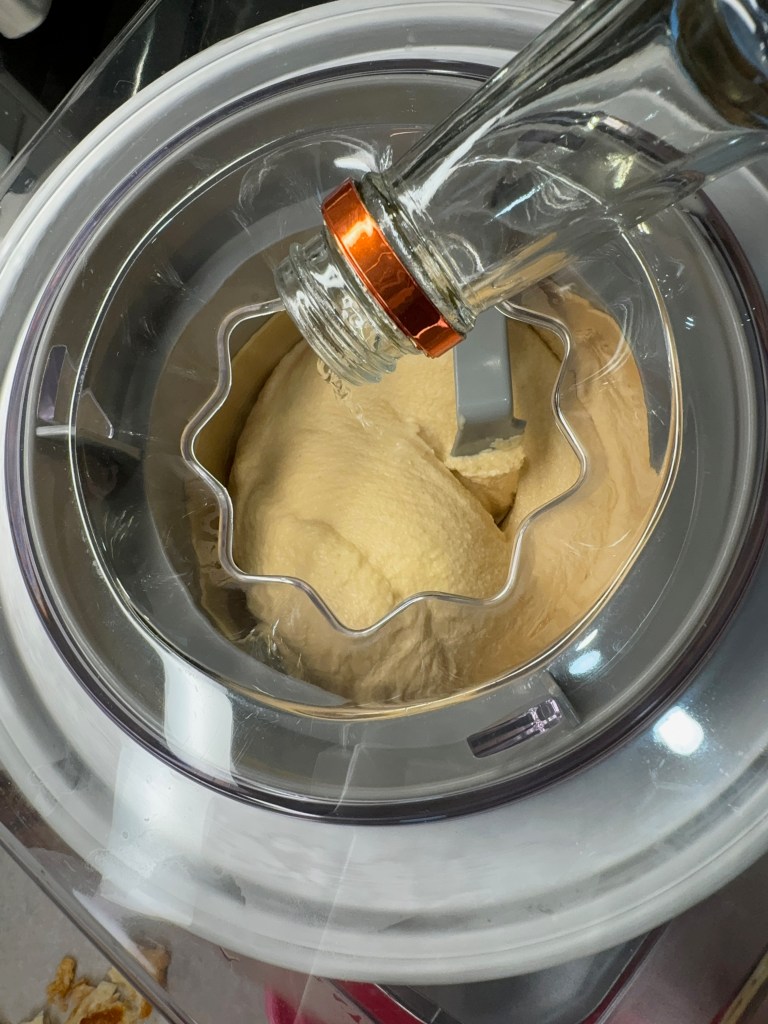
Notes: Do your prep ahead so that everything has time to chill thoroughly in the fridge before churning and layering the ice cream. For easy scooping straight from the freezer, add a tablespoon of vodka during the final minute of churning. This ice cream is best after ripening in the freezer at least 8 hours or preferably overnight.

Directions

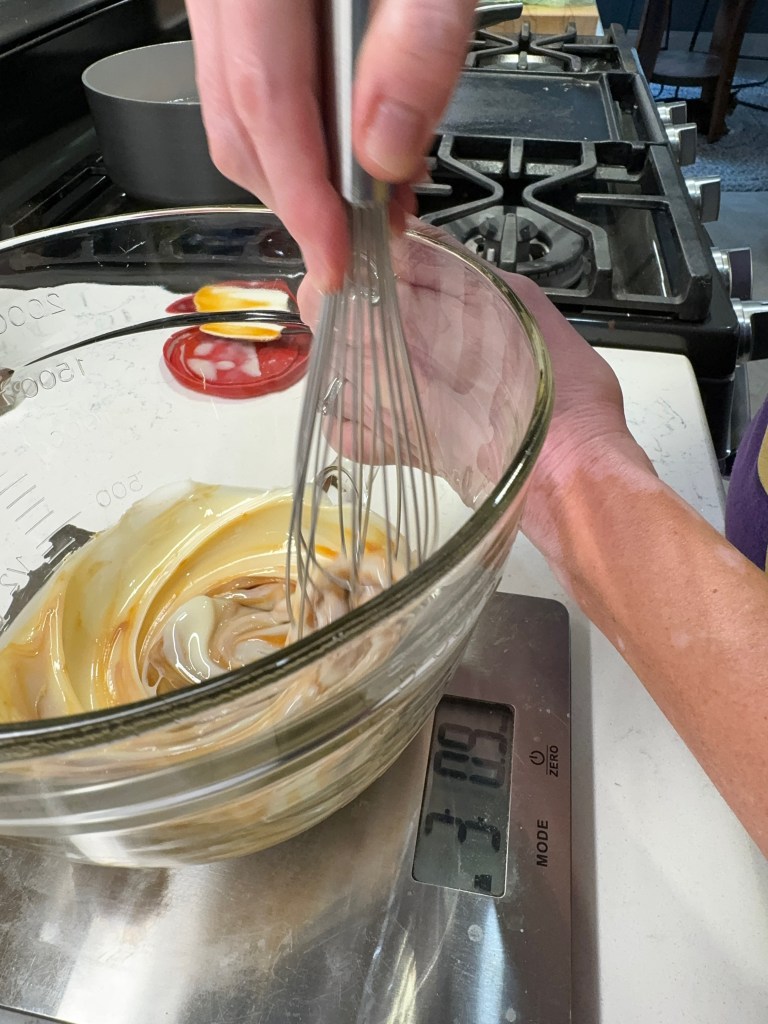
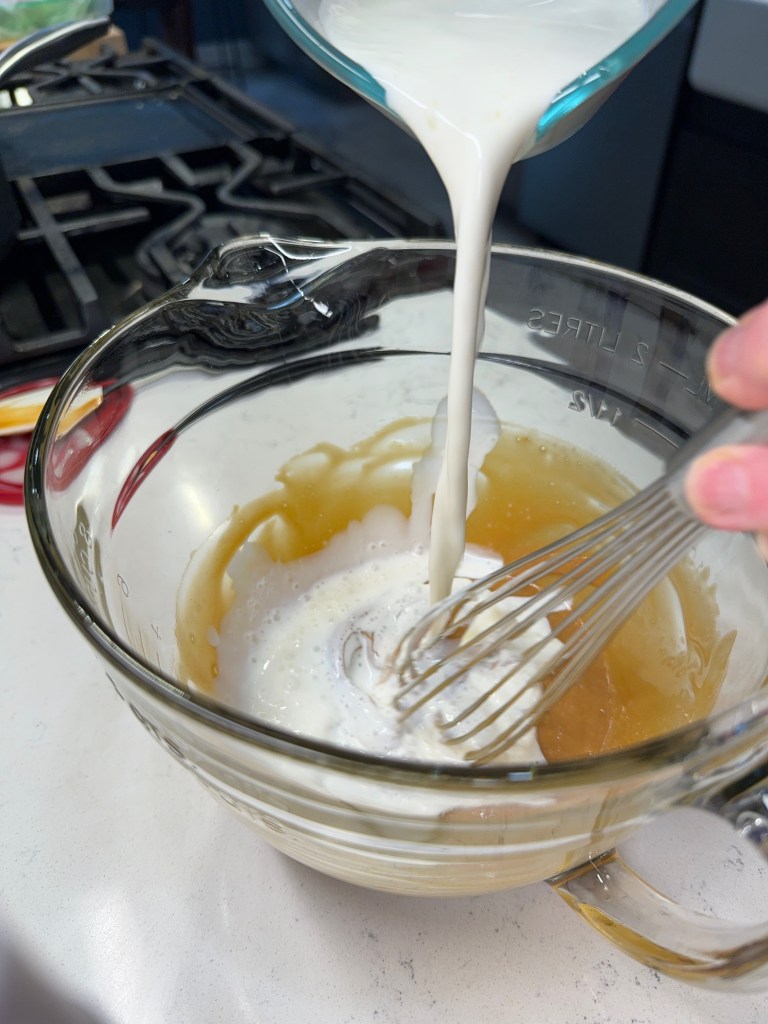
  1. Whisk together sweetened condensed milk and cinnamon. Add milk and cream, and whisk until smooth. Refrigerate until mixture is completely cold.
  2. Toss apple bits with sugar, cinnamon, cardamom, salt and pie filling enhancer (or corn starch). Add to a small saucepan with water and cook over low heat until mixture is thickened and apples are soft with only a light resistance to the bite. Transfer to a small bowl to cool and refrigerate until chilled.
  3. Chop or tear the apple turnover into small pieces. Spread the pieces out on a parchment lined plate or small baking sheet and place in the freezer for at least one hour.
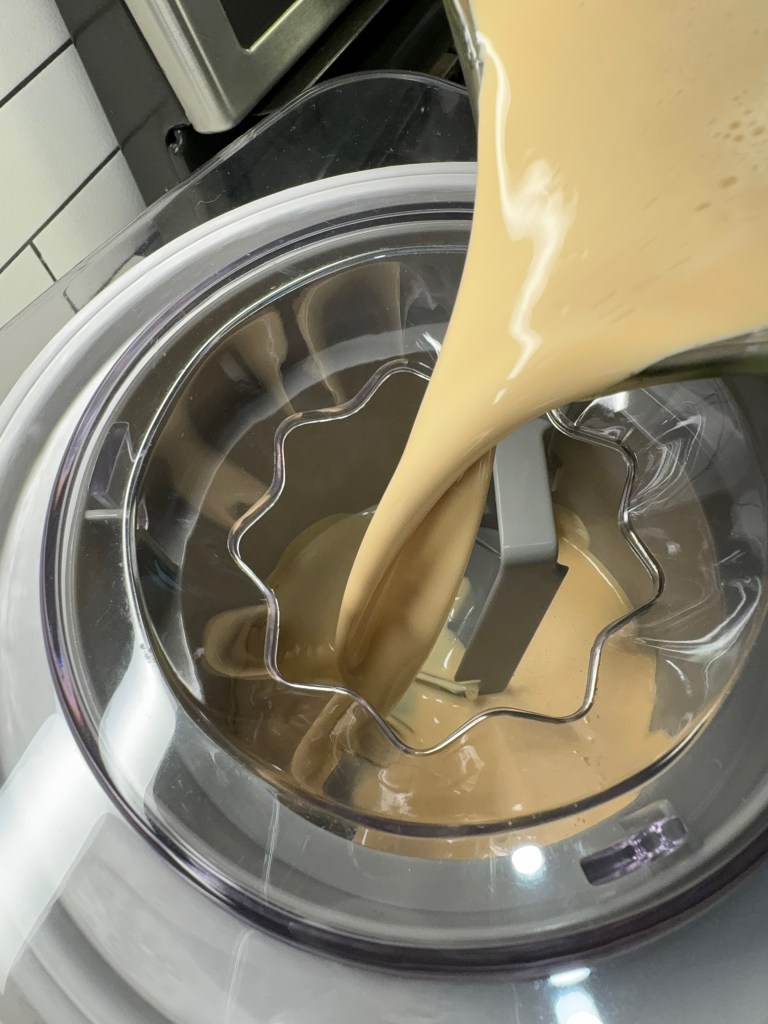
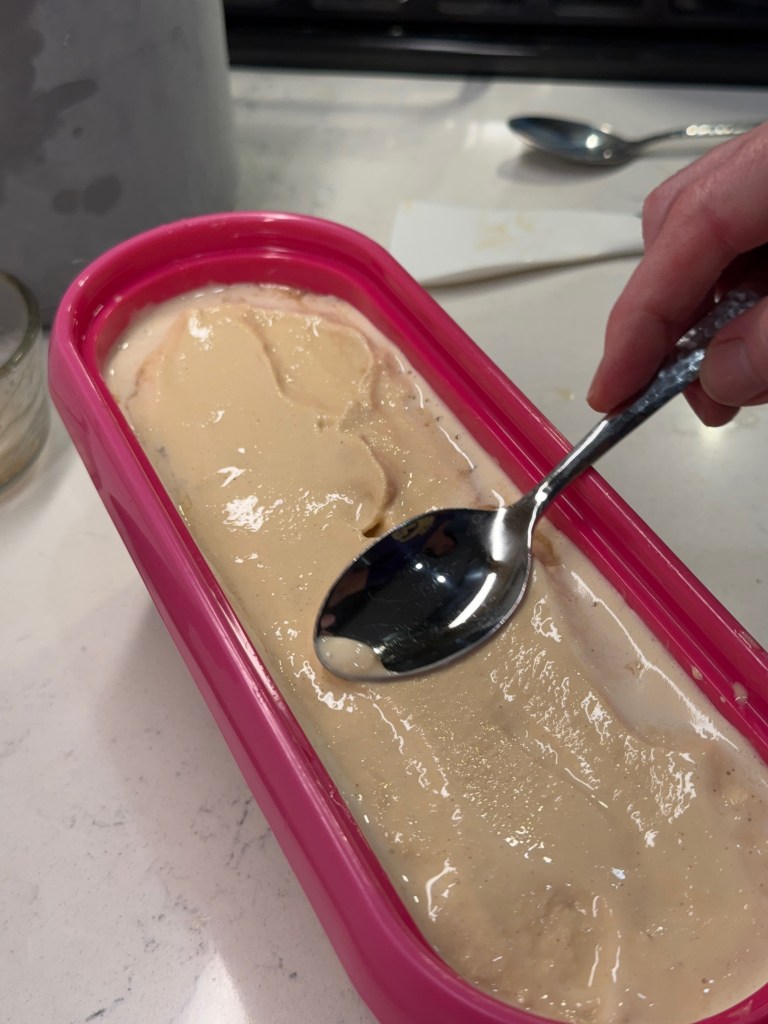
  4. Churn the dairy base in ice cream machine, following manufacturer’s instructions. If using vodka for texture, only add it during the final minute of churning. Transfer ice cream to an insulated freezer container, layering with stewed spiced apples and torn bits of frozen turnover. Ripen in freezer several hours (overnight is best).


Apple & Honey Babka

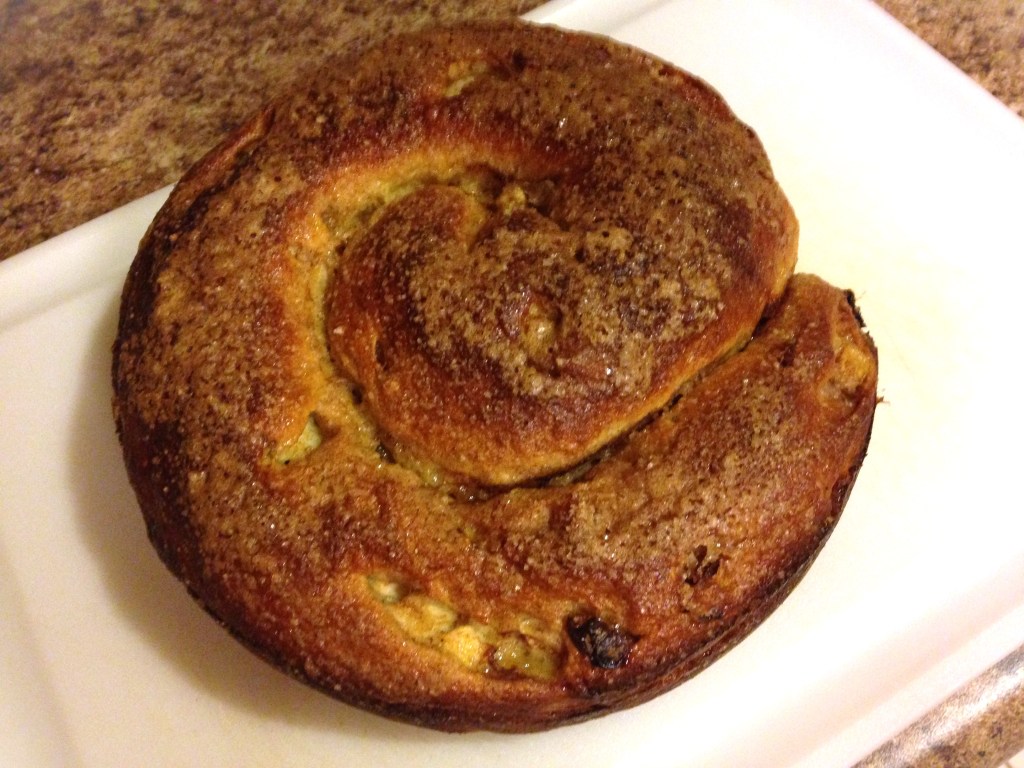
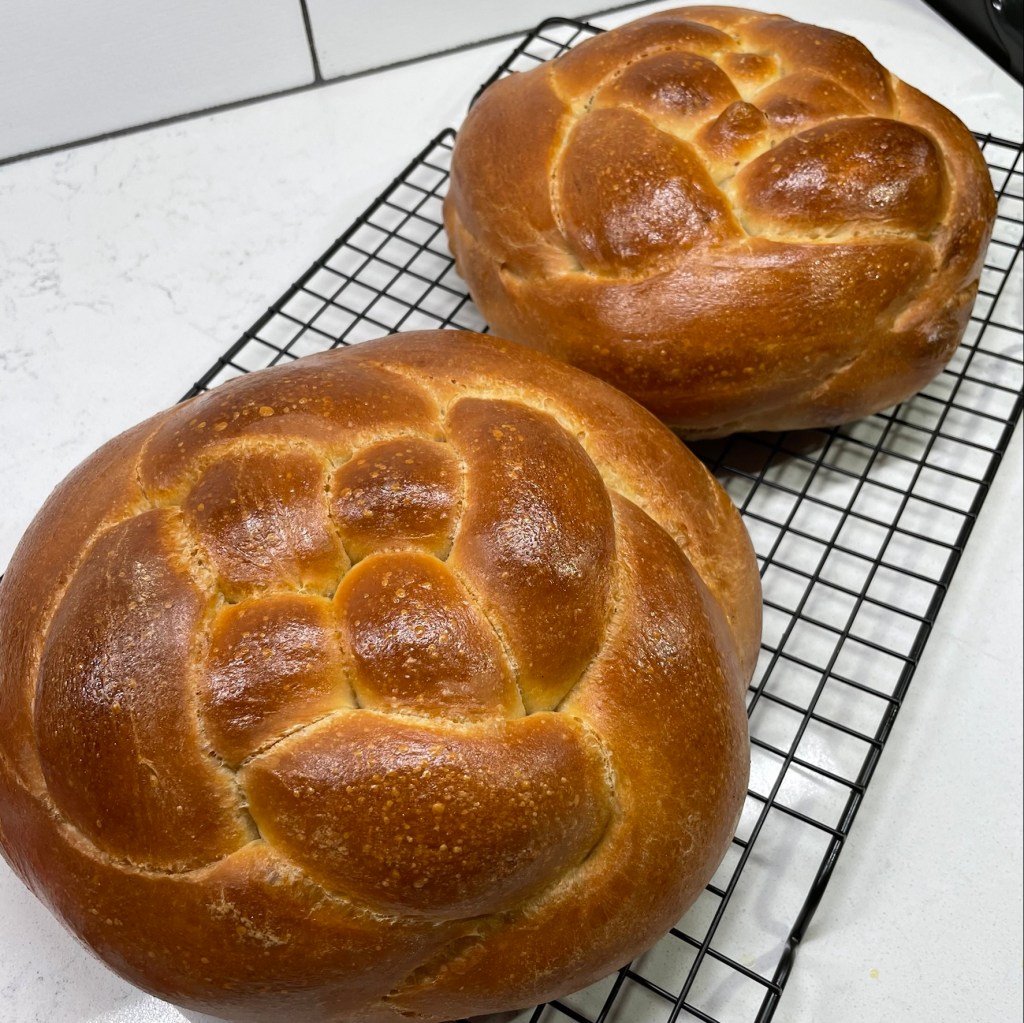
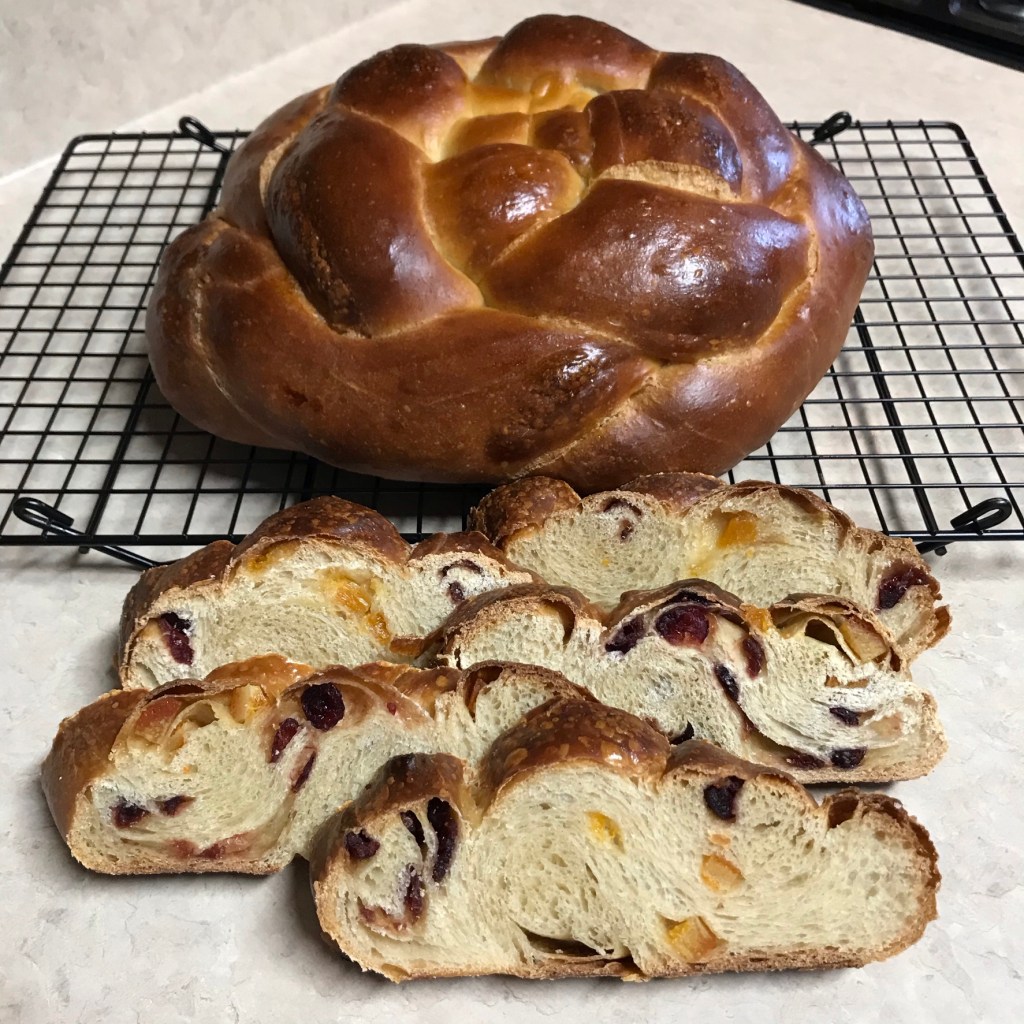
Each fall since I began dating my husband, I’ve made a concerted effort to celebrate the season of Rosh Hashanah— the Jewish New Year— by baking a special bread. That first year, Les had visited a local apple festival and brought back a bagful of gorgeous Jonagold apples, which were lovely in a coiled-into-a-round challah. I was so proud of my bread that I took a picture of it— way before I began blogging— and I even took time to leave a review on the King Arthur website to report my great results. 

Not a bad effort in 2015! But my iPhone 5 camera…

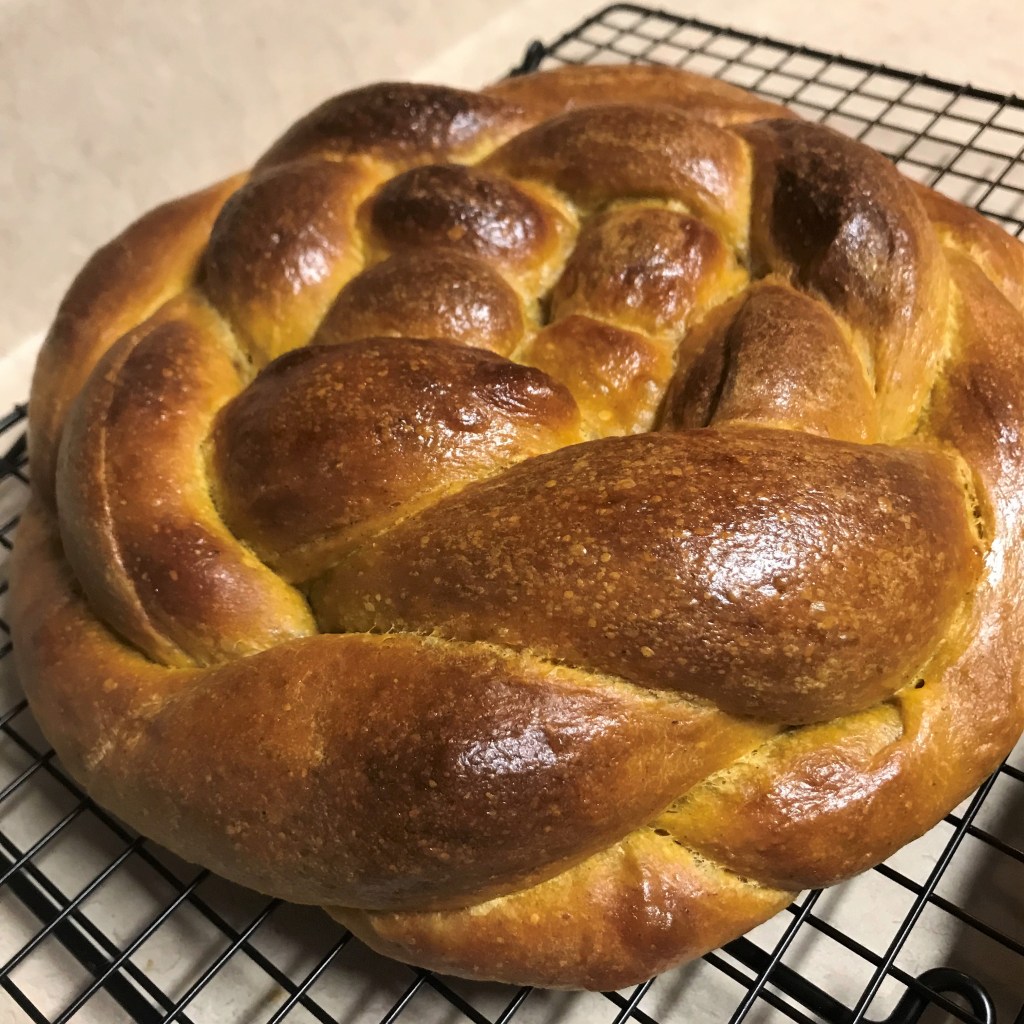
The round shape is significant to Rosh Hashanah because it represents the idea of coming full circle into a new year. The apples were a nice touch, because apples and honey make an appearance on everyone’s holiday table— symbolizing the wishes for a sweet year ahead. Most years since that first one, I’ve worked on my challah braiding skills, specifically the four-strand loaf that is woven like a basket. Here are a few examples of those breads, using my sourdough starter.


This year, however, I decided to tackle another item on my culinary bucket list, and I’ve made a babka! This is another traditional Jewish bread, and I’ve wanted to make one for years but never got around to it until now. Most babka recipes I have seen involve a chocolate filling, which is most dramatic looking in the typical swirly pattern. I pondered, what about a babka that had apples and honey? That would be perfect for Rosh Hashanah, and a double win in that it finally moves babka to the “done” column. 

I didn’t have to look very far for an inspiration recipe, because the first place I looked was King Arthur Baking. Of course!

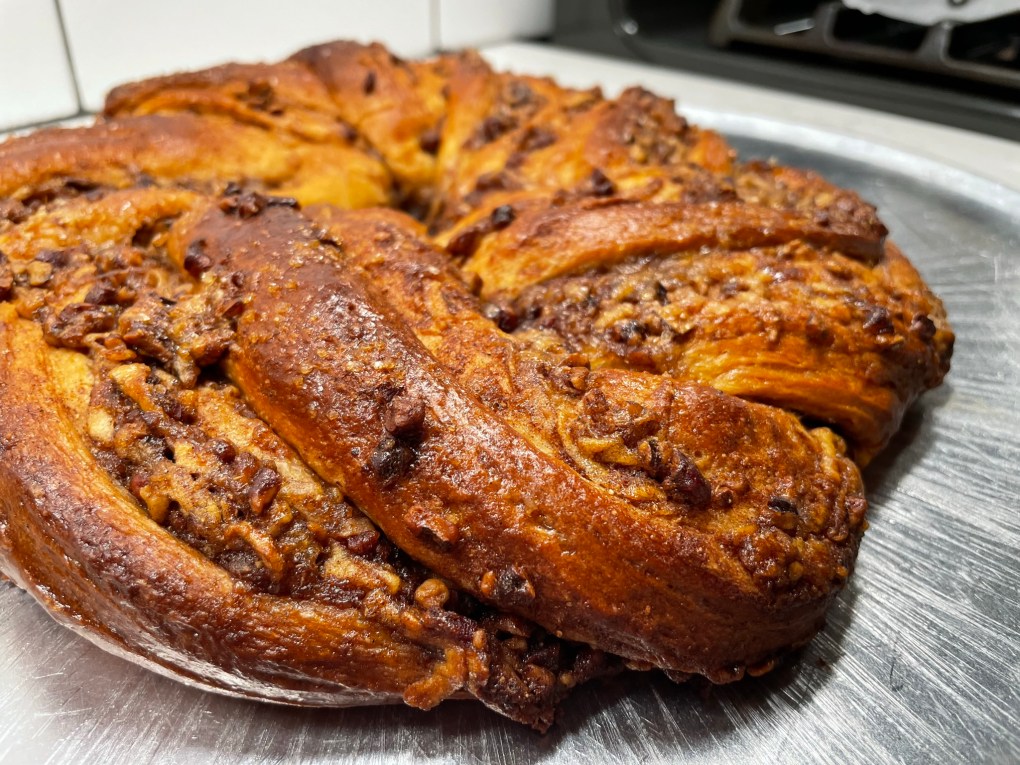
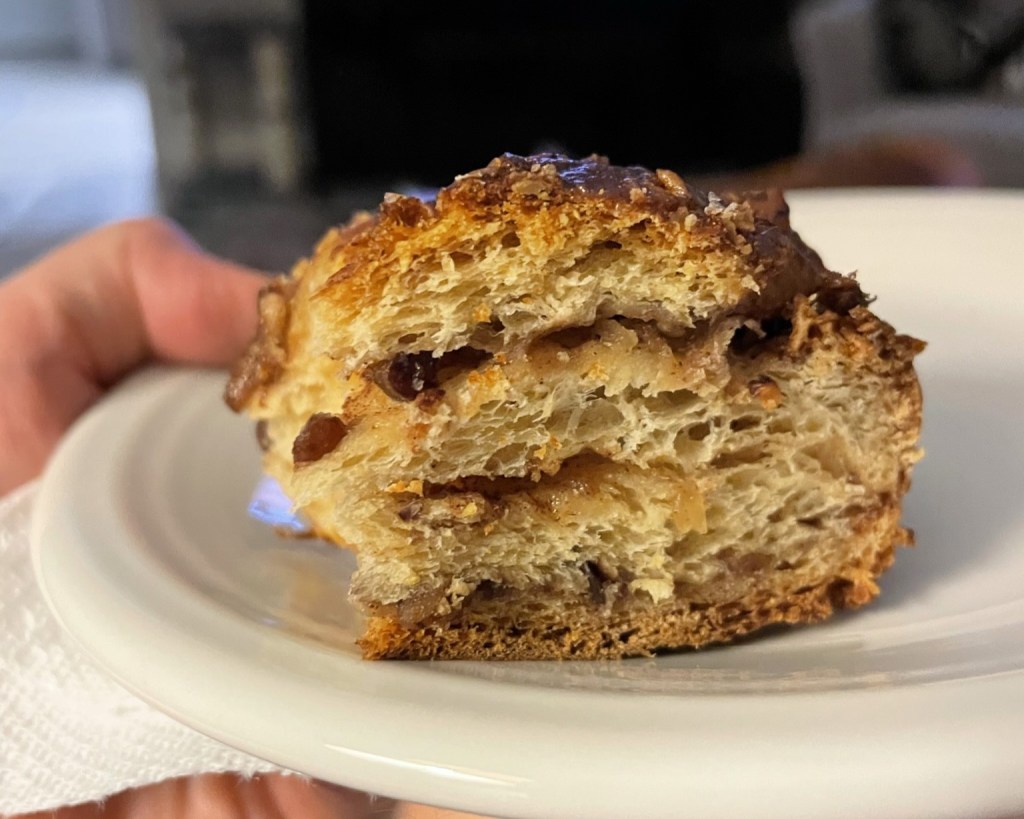
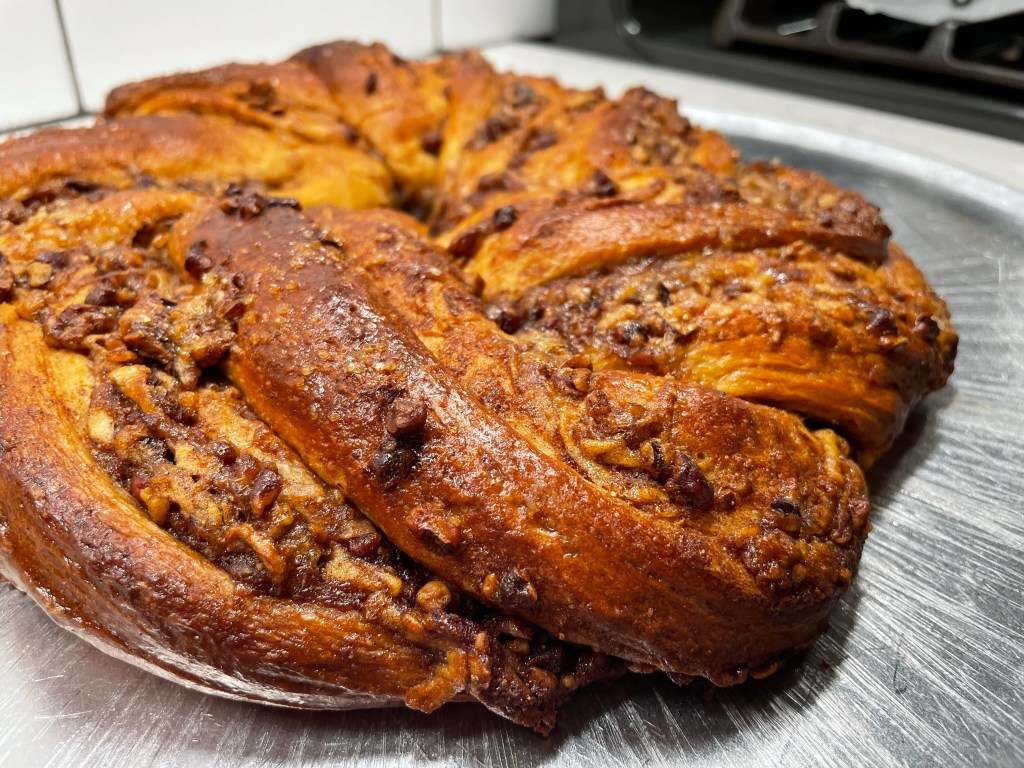
The layers of apple, spices and pecan make this extra special!

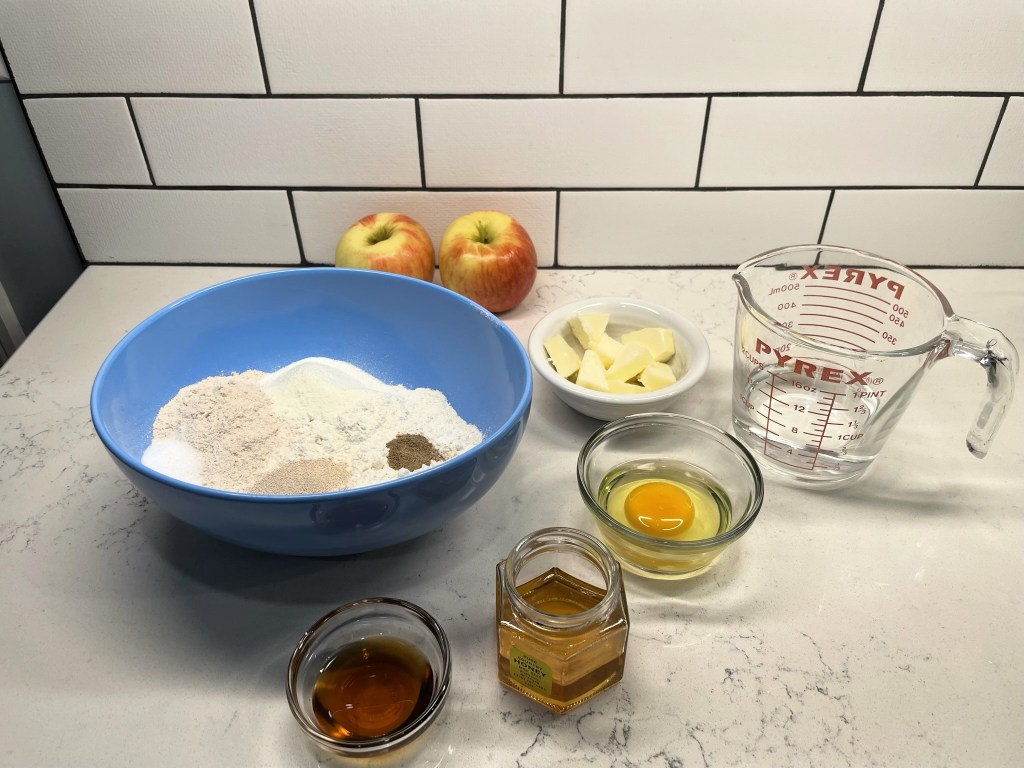
I’ve been a big fan of King Arthur products for years (and no, they never have paid me to say so), and my devotion to them is stronger than ever since my trip to their Vermont baking school, where I am proud to have completed their four-day “Principles & Practice” baking course. I learned a good many things during my time there, and made friends with several of my classmates. Among the takeaway lessons was the importance of using high-quality ingredients (i.e., theirs) and having them organized and properly measured before you begin mixing. That’s how I set up for this recipe, and I swapped in honey for the sugar, following the same helpful tips I used last month when I made my s’mores cupcakes.

Baking is much easier when I’m organized!

My main dry ingredients were measured by weight, which is something I was already doing before my King Arthur class, and all of our instructors during the four days emphasized the benefit of this. I cannot remember the last time I measured by volume, but there is a sensible way to do it for consistent results. They call it the fluff, sprinkle, level method, and it helps ensure that you don’t have dense results in your baked goods. If you are reluctant to get a kitchen scale, I highly recommend following that three-step method; otherwise, you may find your baked goods dense from being flour-heavy. 

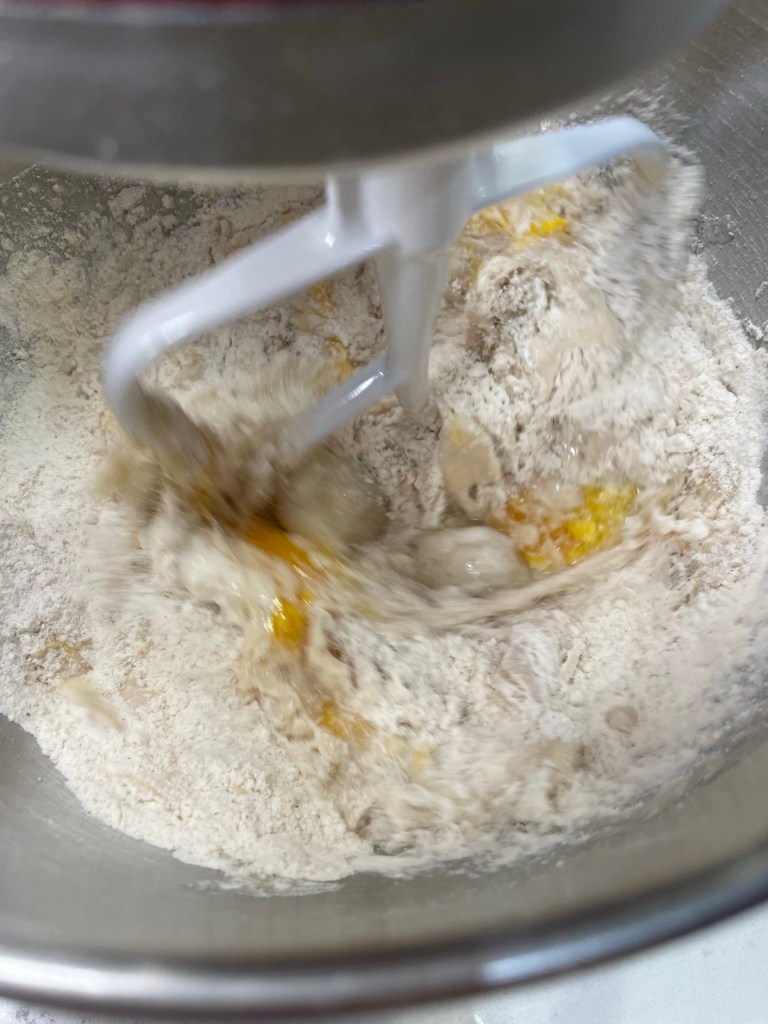
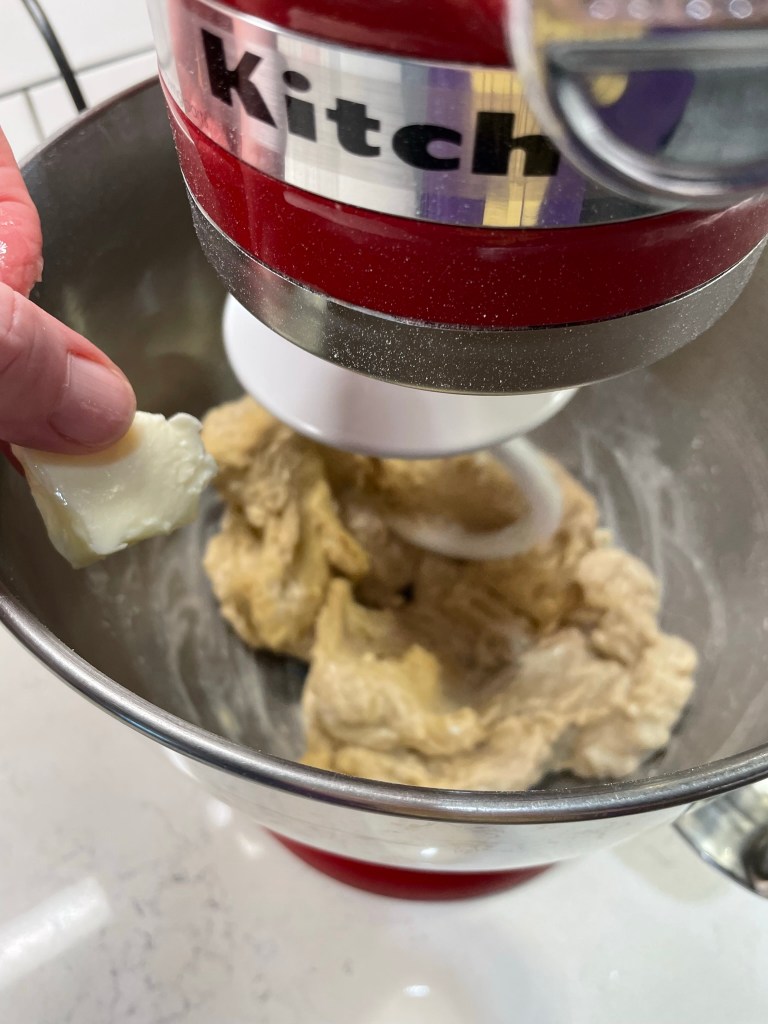
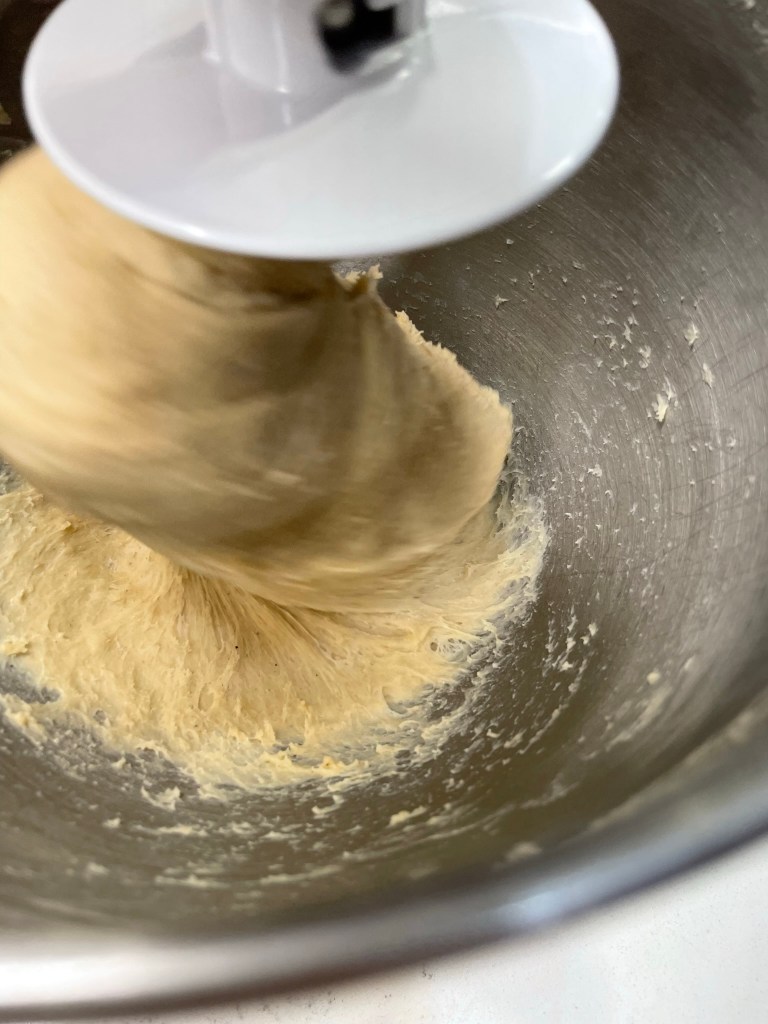
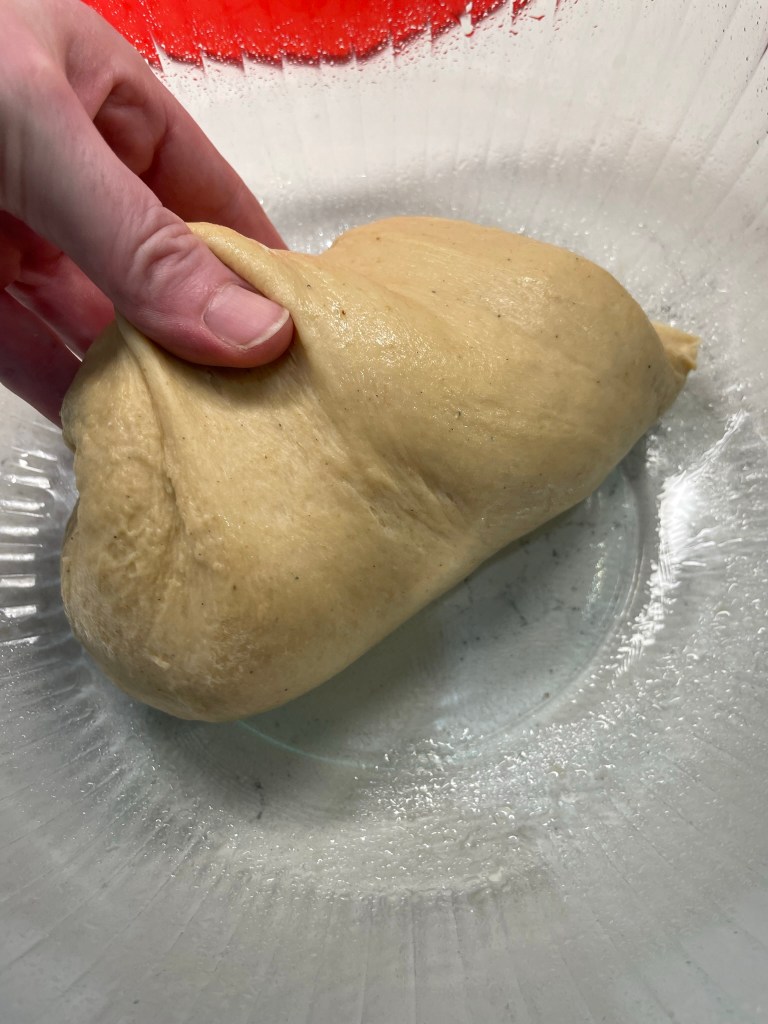
The process of the apple babka recipe was straightforward. I introduced the wet ingredients to the dry ones, then switched to the kneading hook and worked in the softened butter. This recipe would not be suitable for a meal that also includes meat— kosher rules require that meat and dairy not be served together— but it would be wonderful served with breakfast or dessert on another occasion. The dough rested about two hours until it was doubled and puffy.


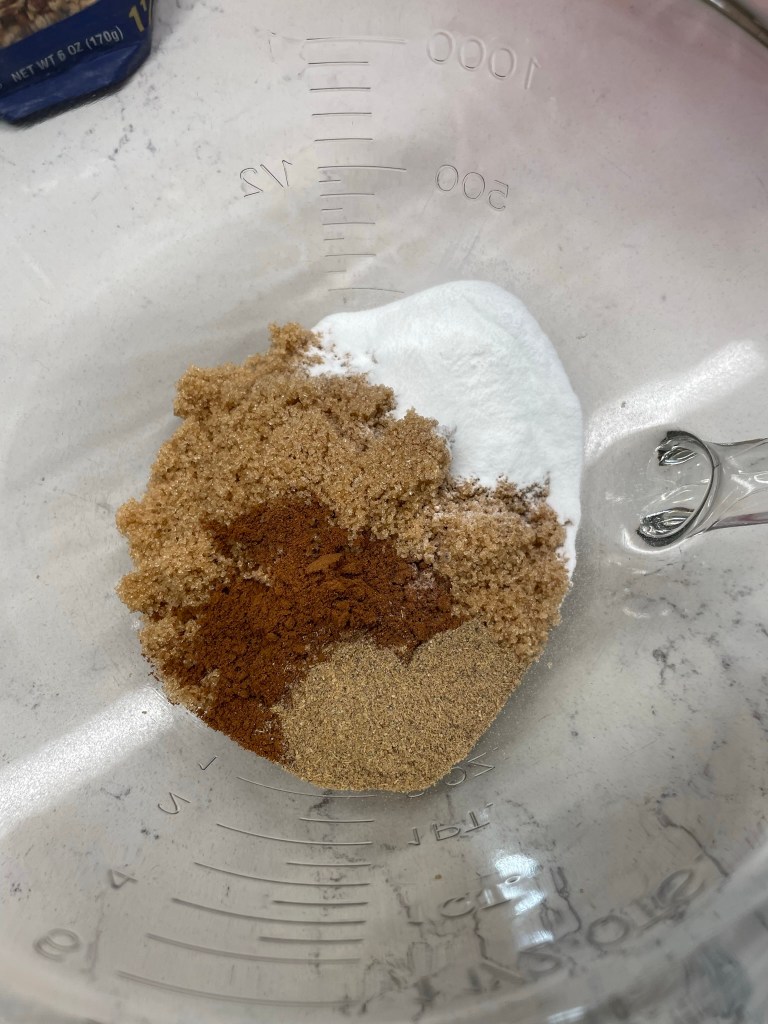
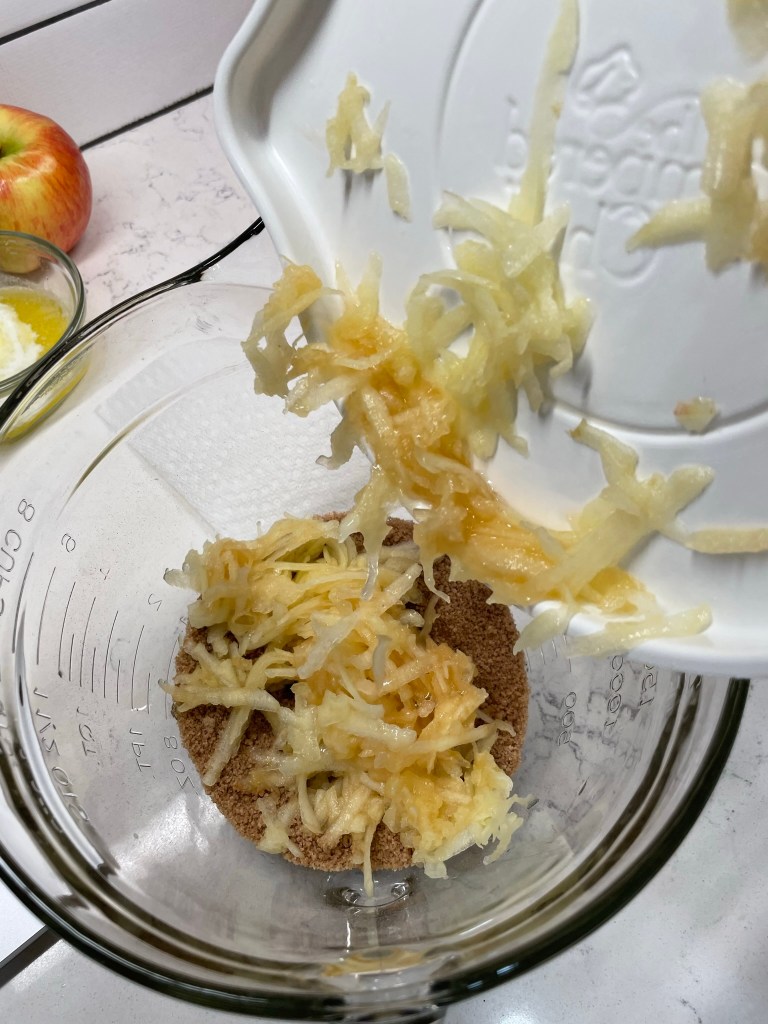
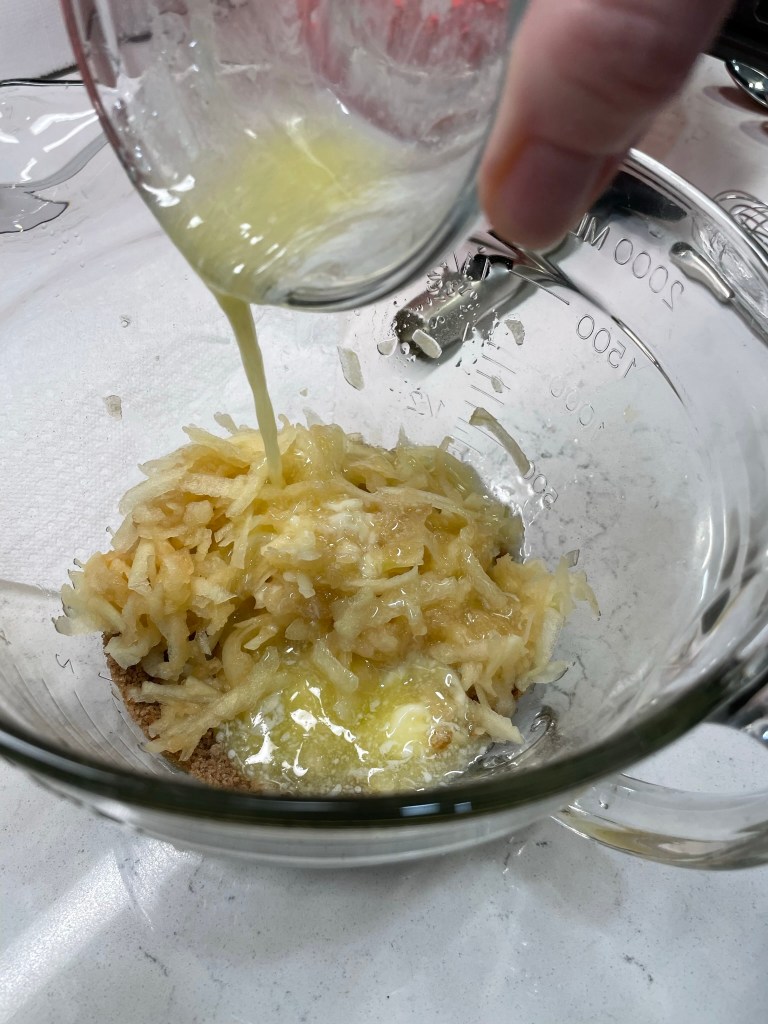
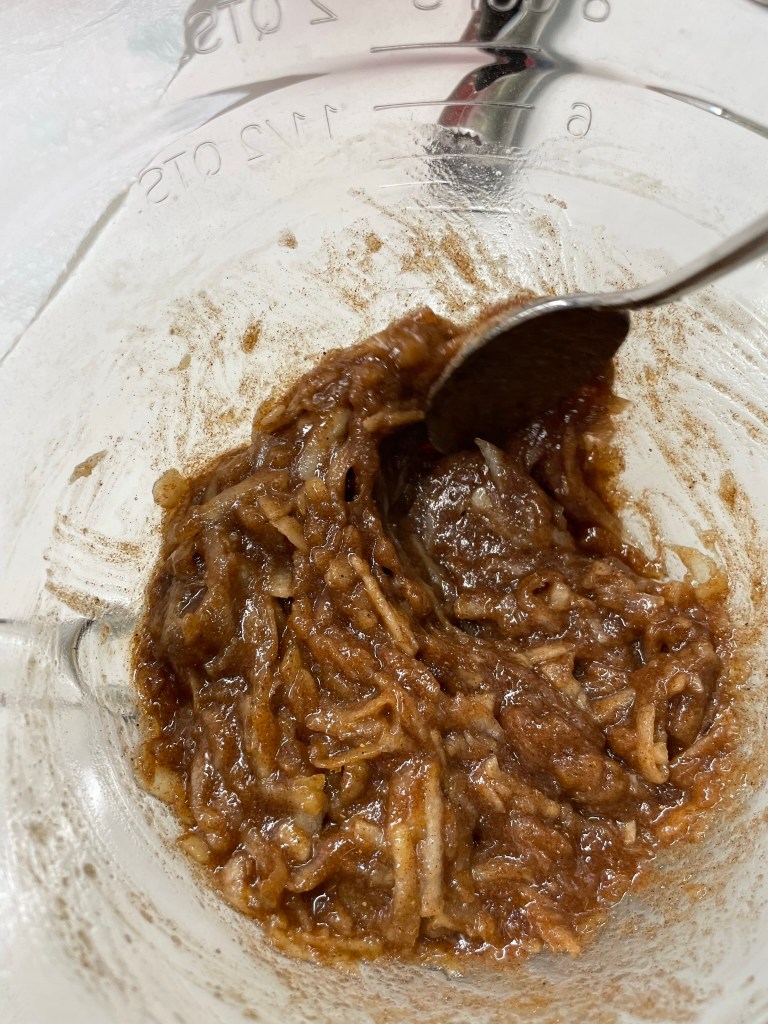
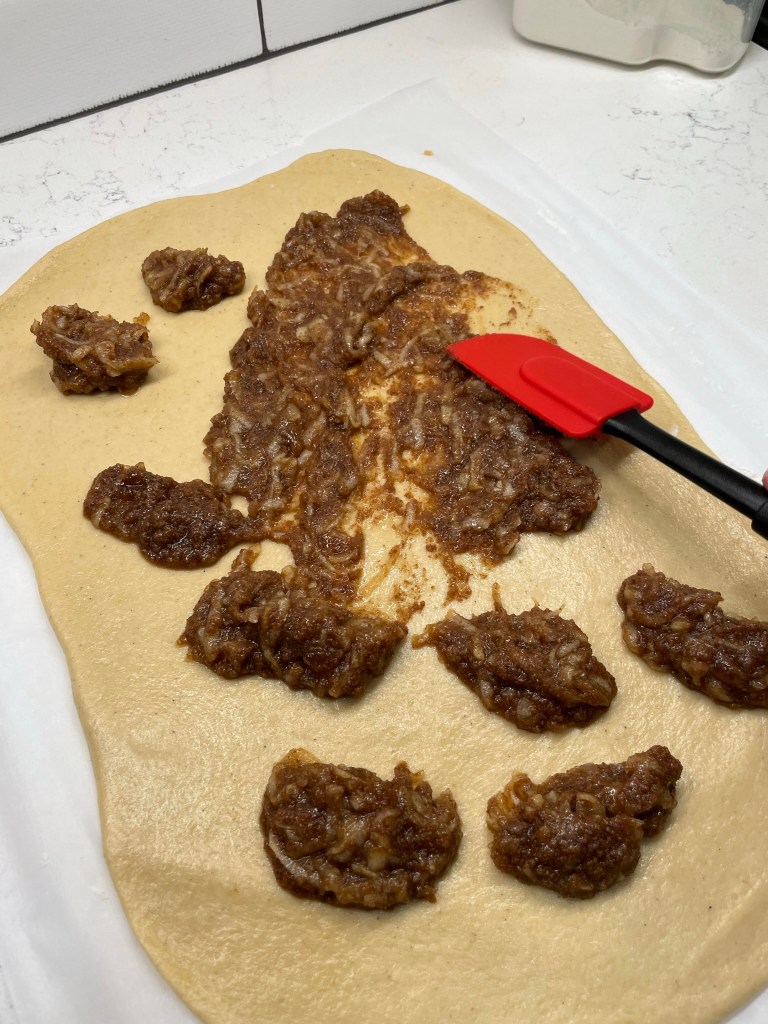
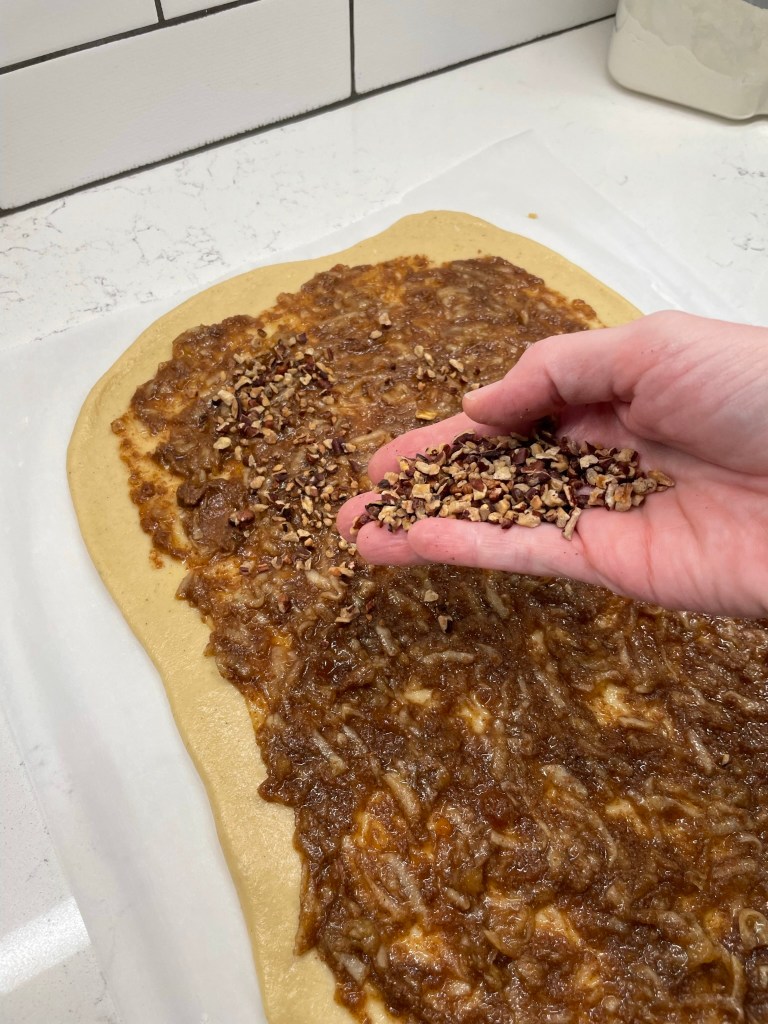
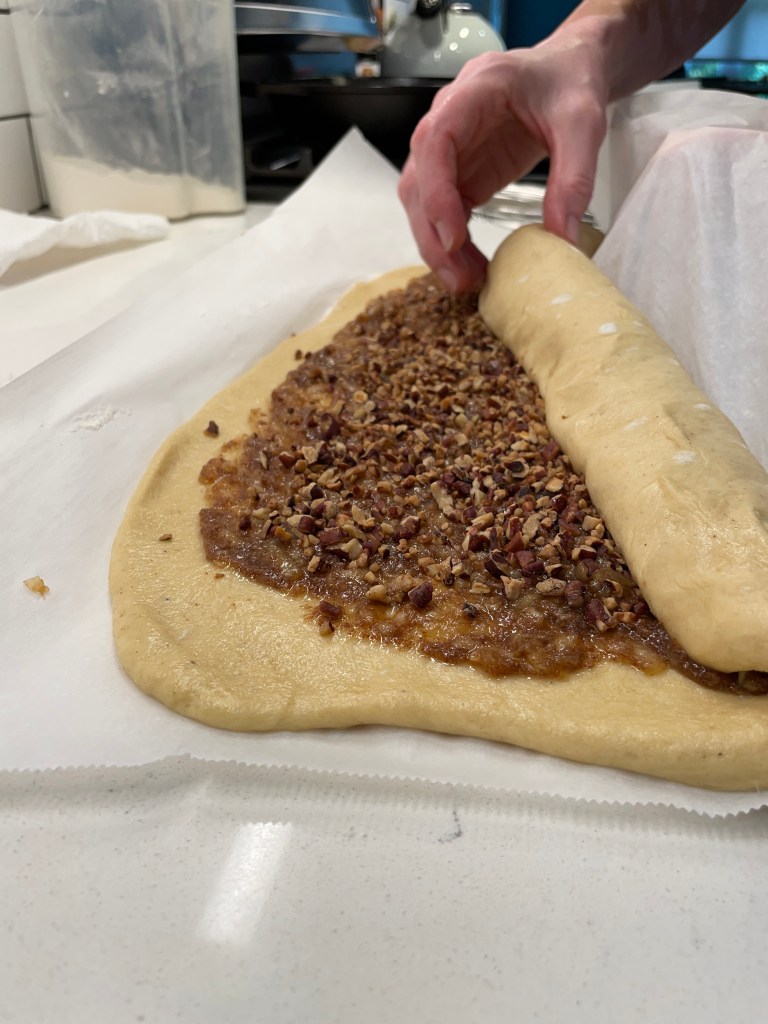
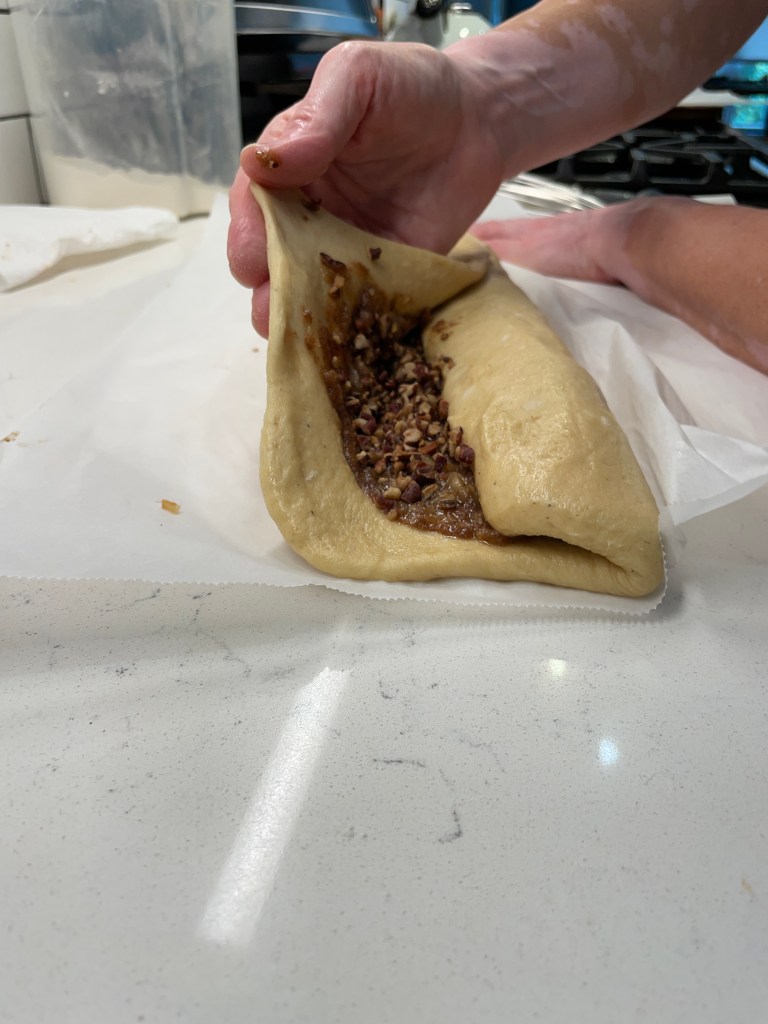
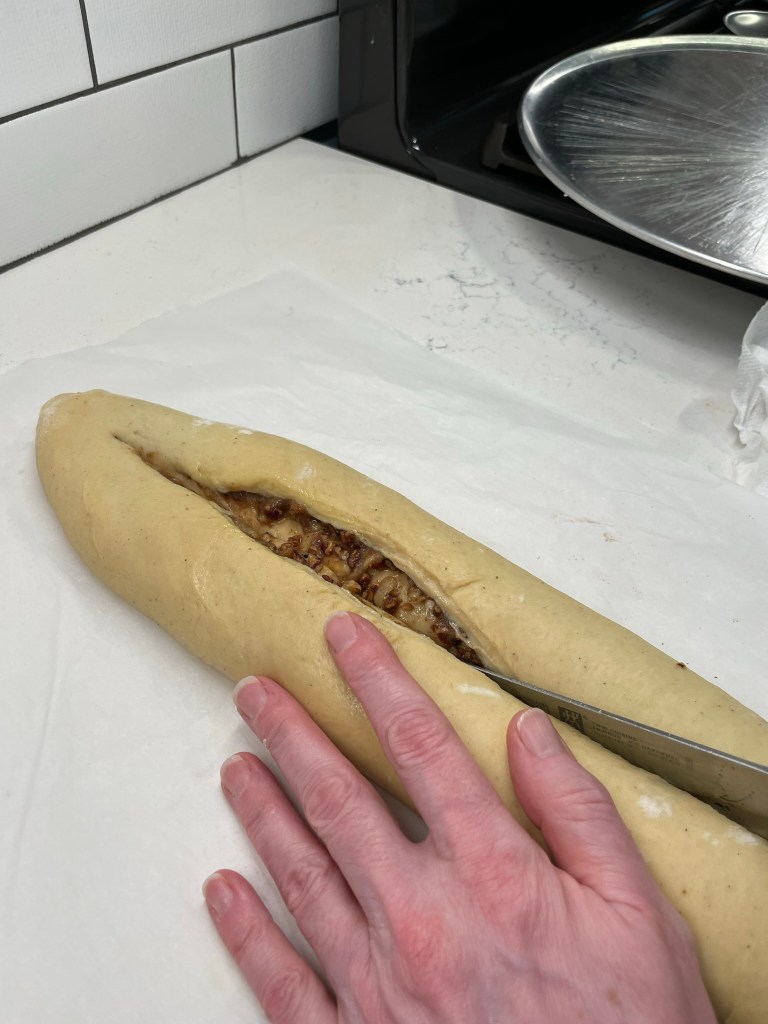
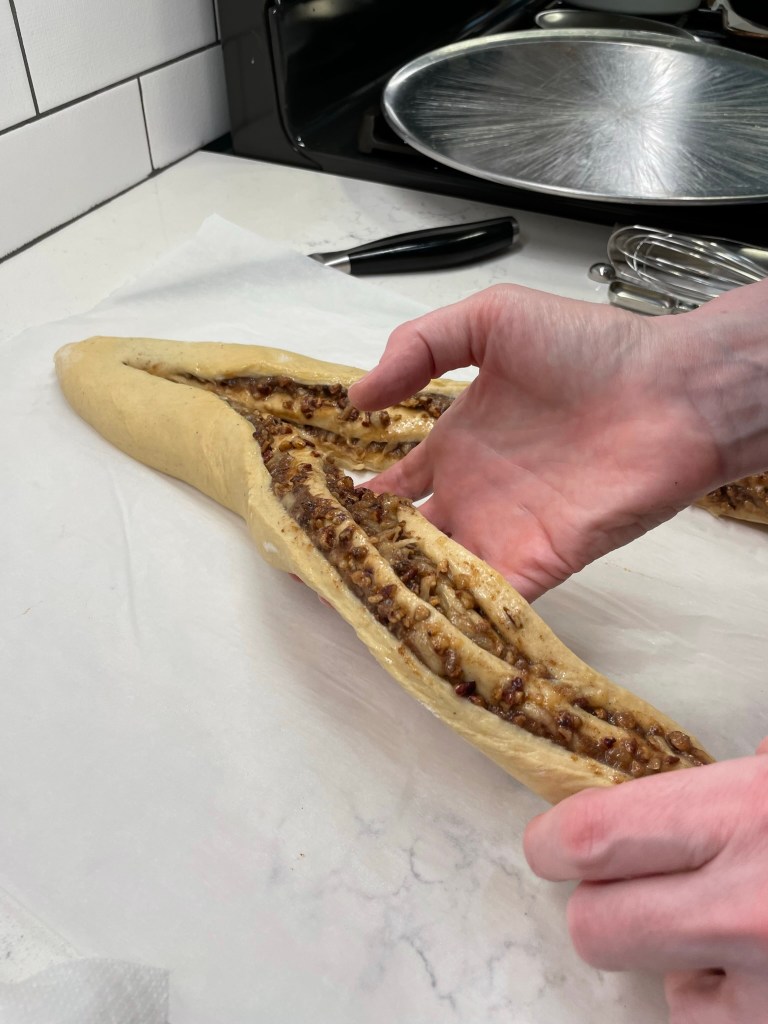
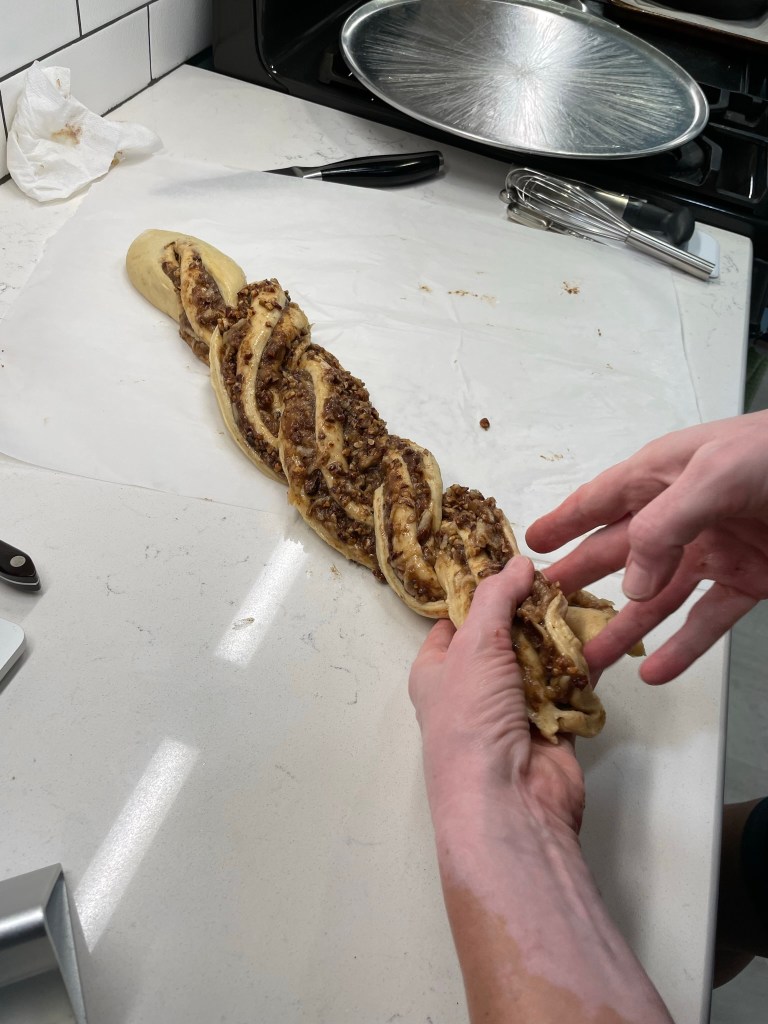
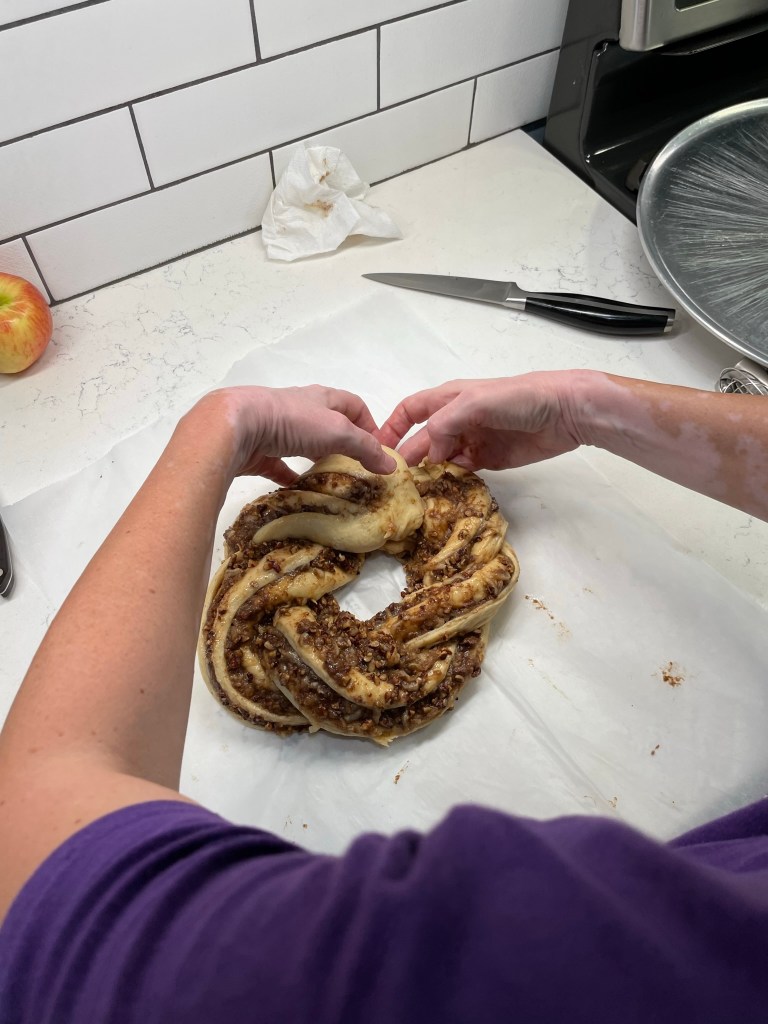
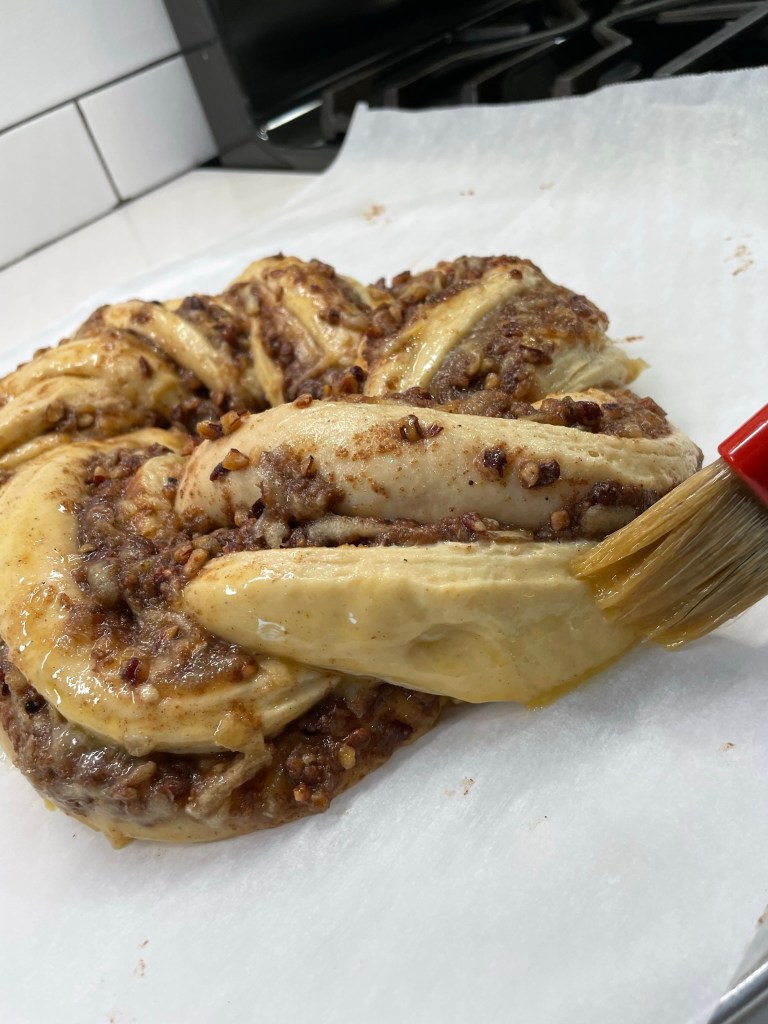
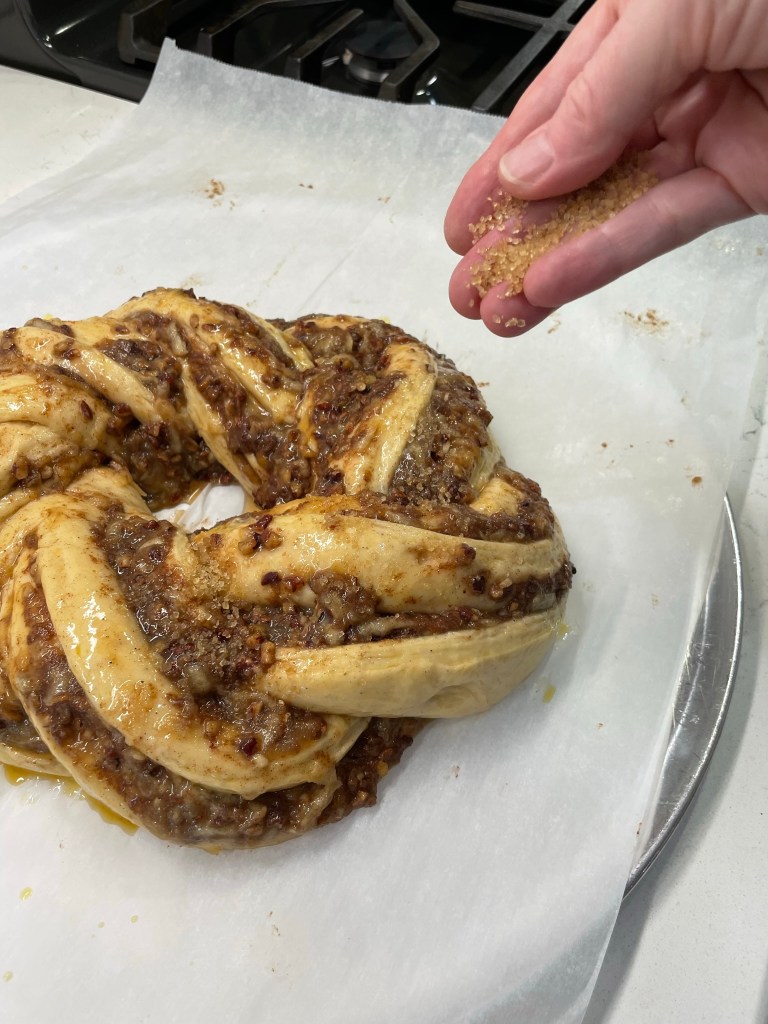
The filling was easy as well— brown sugar, cinnamon, cardamom and grated apple. Honeycrisp seemed appropriate for the occasion of Rosh Hashanah. Next came the rolling up and cutting, and I think this part would have been easier if this dough had been chilled, as the filling was very wet and loose. It was not difficult, but very messy, and not as pretty as I wanted it to be. I shaped the braided babka into a round, like a wreath, and covered it to proof for baking.


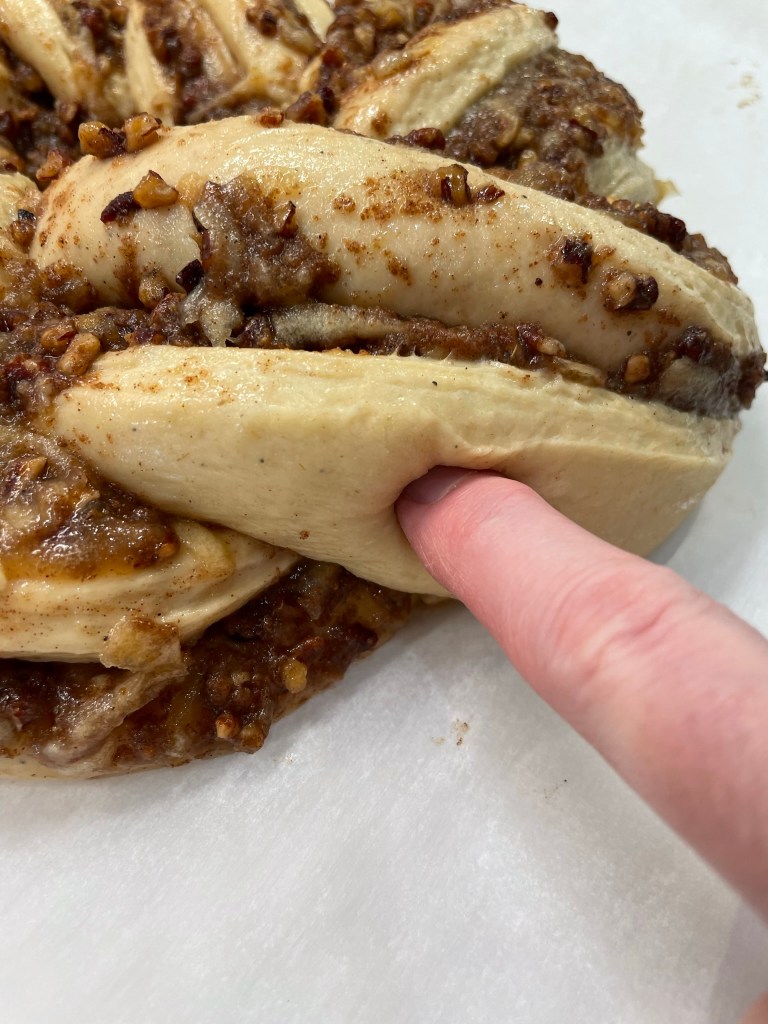
One of the other lessons in the King Arthur class was the simple way to determine whether your dough has proofed sufficiently for baking. If you poke the dough with a floured fingertip and the indent remains, it’s ready. If it bounces back, it needs more time. This one was ready!


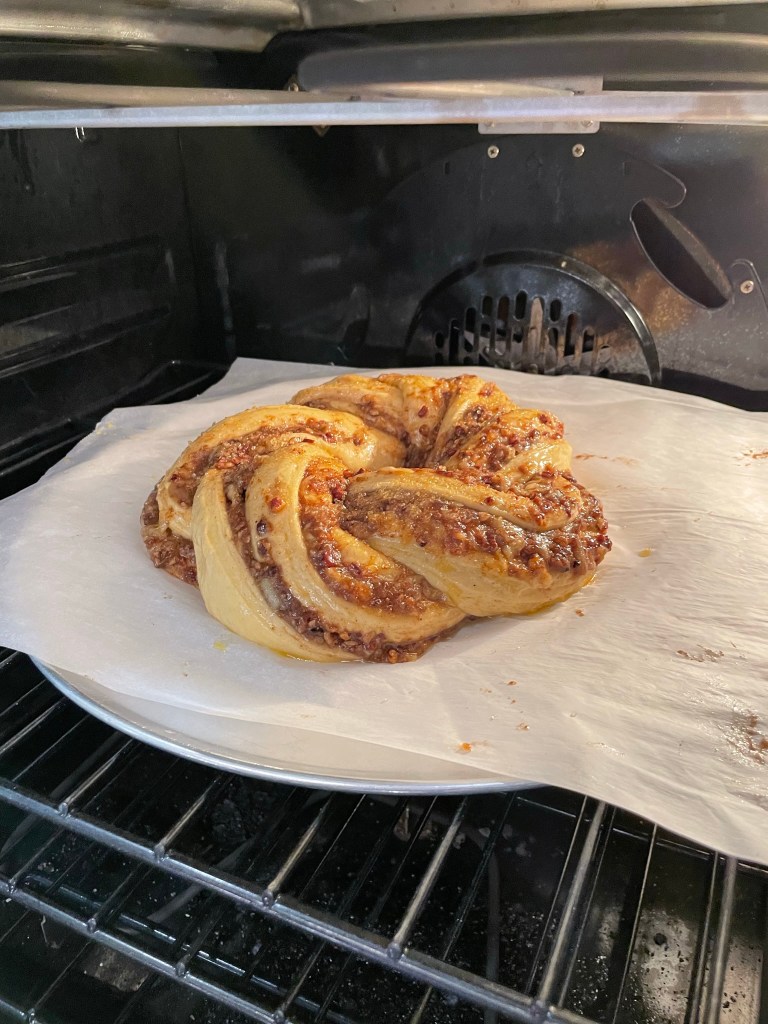
Time for an egg wash and bake, and we are ready for Rosh Hashanah! Of course, you don’t have to be Jewish to enjoy the lovely flavors. The apple, honey and spices make it perfectly appropriate through the rest of the year.

Shana Tova!

Link here for the inspiration recipe: https://www.kingarthurbaking.com/recipes/apple-pie-babka-recipe

I made a few slight adjustments:

  • subbed in a portion of white whole wheat for all-purpose flour
  • replaced dough sugar with honey, but 2/3 as much as honey is sweeter
  • slight reduction of water, about 2 tablespoons (because honey is also liquid)
  • replaced boiled cider with apple balsamic (but I could have omitted it)
  • replaced instant clear gel with a pie filling thickener (but all-purpose flour would have worked, too)
  • allowed a few extra minutes on the bake to ensure the dough in the center of the wreath was done


Mile High Apple Pie

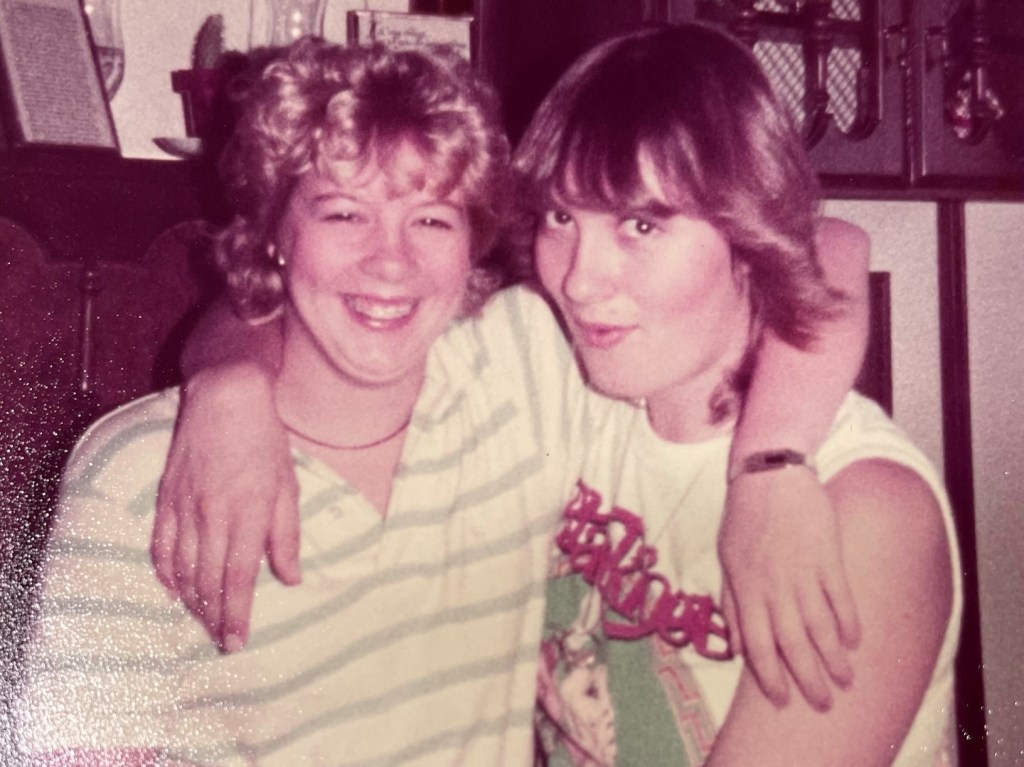
Once upon a time— okay, it was the early 1980s—there were two best friends. It was me and Christine, a girl who befriended me when I was an incoming sophomore to a large high school in Colorado Springs, where I spent two years living with my mother. It was a far cry from rural upstate New York, where we only had two schools— K-6, and the other one that combined junior and senior high. This school had three or four large buildings for 10-12, and I was sure I’d get lost and would never learn the names of all my classmates. Christine was new at the school, too, given that she transferred from a Catholic school. At first glance, we could not have been more different. She was raised in a nuclear family with a healthy support system and I had, well, none of that. Still, we found enough in common that we became fast friends. I’m talking, the kind of friend who gets to sign an entire page of your yearbook!

Life took us in different directions after our two years of inseparableness. I returned to my dad’s in upstate New York for my senior year and then moved south in my 20s, where I pursued my dream of being on the radio. Christine was swept off her feet by the guy who is still her husband, and they welcomed three children, moving to Texas in the process. It was before the internet and even cell phones, and staying in touch proved challenging. We had fun catching up on the occasions that we reconnected, but with little in common, the occasions were fewer and farther between.

And then out of nowhere last December, I started getting emails from the Classmates site, claiming someone I went to school with “wanted an update on my life.” Truth is, I never followed up after my initial early signup to the site, and I don’t even know my password to log in; social media has never been my thing. Anyway, there was only one friend that I could imagine might want to be in touch with me from that school, and it got me curious. A few Google clicks later, I had Christine’s phone number (only, it turned out to be her daughter’s), and after a few text exchanges and FaceTime calls, she booked a flight to visit me in North Carolina! No, she had not been messaging me, and she also had been receiving random messages from Classmates, but at least the company’s dubious marketing effort catalyzed our finding each other again.


Christine and I had a grand time reminiscing through my old yearbooks and pondering whatever happened to this classmate and that teacher. We filled in the gaps of each others’ lives during the time gone by— her move to Texas and back, some scary health situations, my rebound to happiness after divorce— and we had one very poignant moment, during a video call with her parents, when I tearfully thanked them for the positive impact they had so long ago on a lonely teenage girl who desperately needed to see what family could look like. Yes, it was a special four and a half days, and we have vowed to not lose touch again.

Somewhere amid all of that catching up was a lot of really good food. We enjoyed a meal at one of my favorite local restaurants, Les fired up the smoker with a brisket and a whole side of salmon, and we checked out the Greek Festival for authentic gyros and honey-drenched loukoumades. I whipped up some key lime pie martinis and homemade pizzas, indulged her request for fresh seafood, and we visited a local winery. And Christine indulged me, too, by sharing her tips for making a delicious sweetheart of a pie—something I’m not very good at myself.

Nothing went to waste! She used the extra pie dough to decorate the edges. ❤

I’ve made no secret on Comfort du Jour of my lack of confidence in the pastry department. Yes, I can whip up a round-braided sourdough challah, no problem, but I’m still tiptoeing my way into making cakes, and the notion of mastering flaky pastry dough (or even biscuits, for that matter) has always felt just out of reach for me. Christine, on the other hand, had been texting me pictures of mouthwatering pies and pastries she makes on the regular, and well, I had plenty of questions.

YUM!

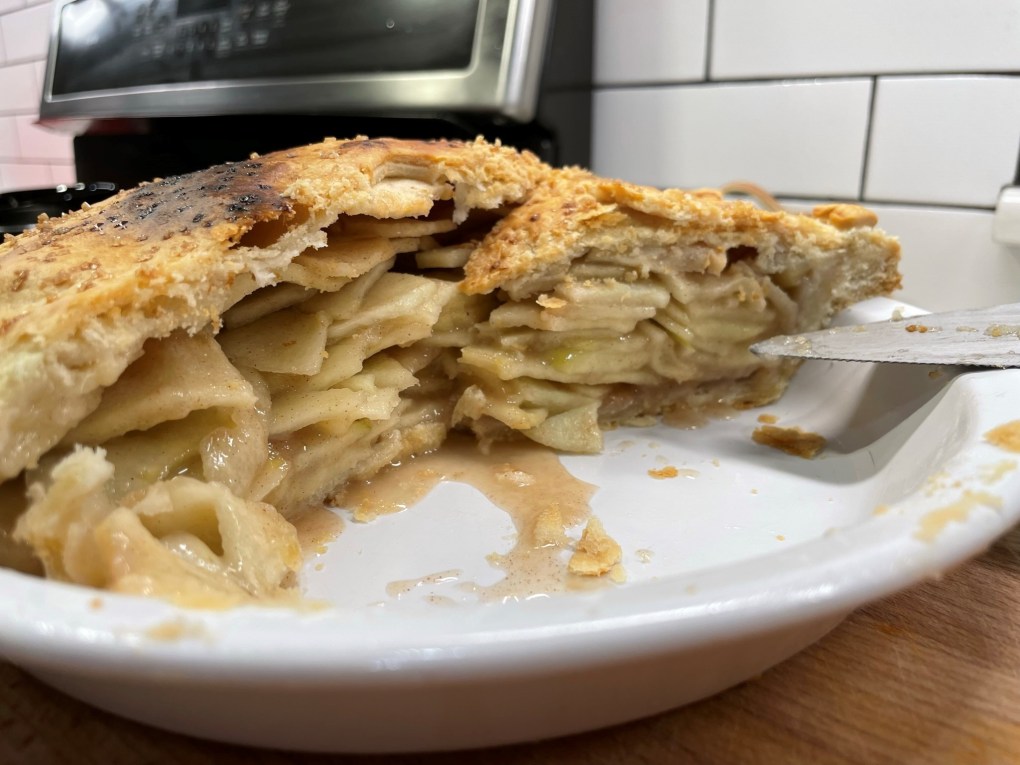
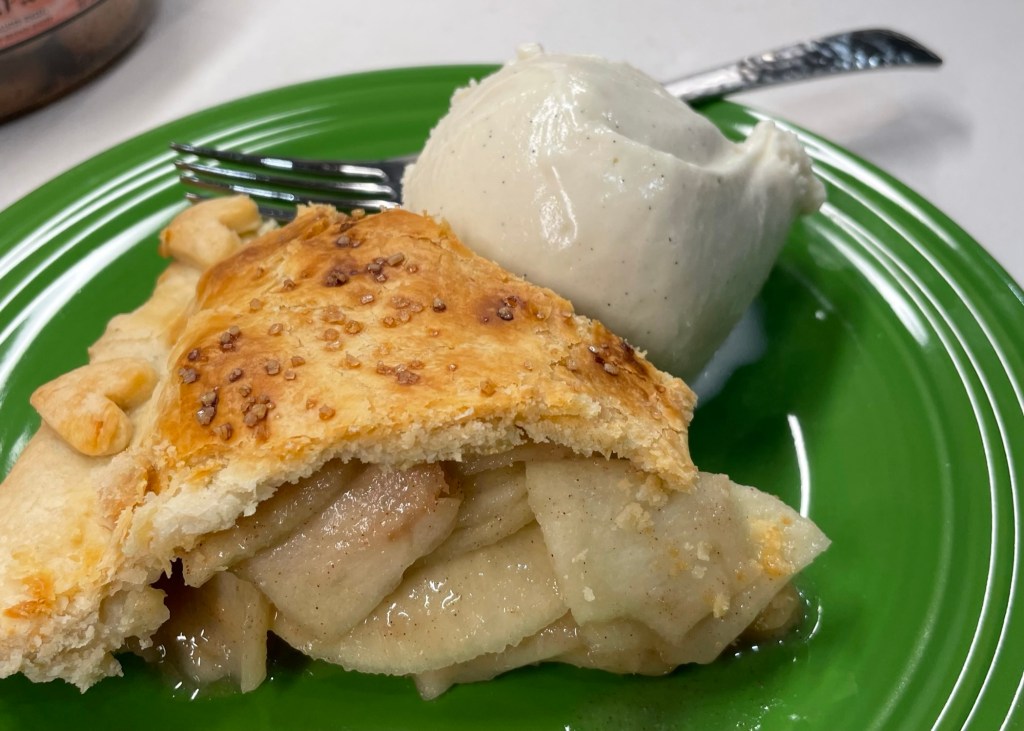
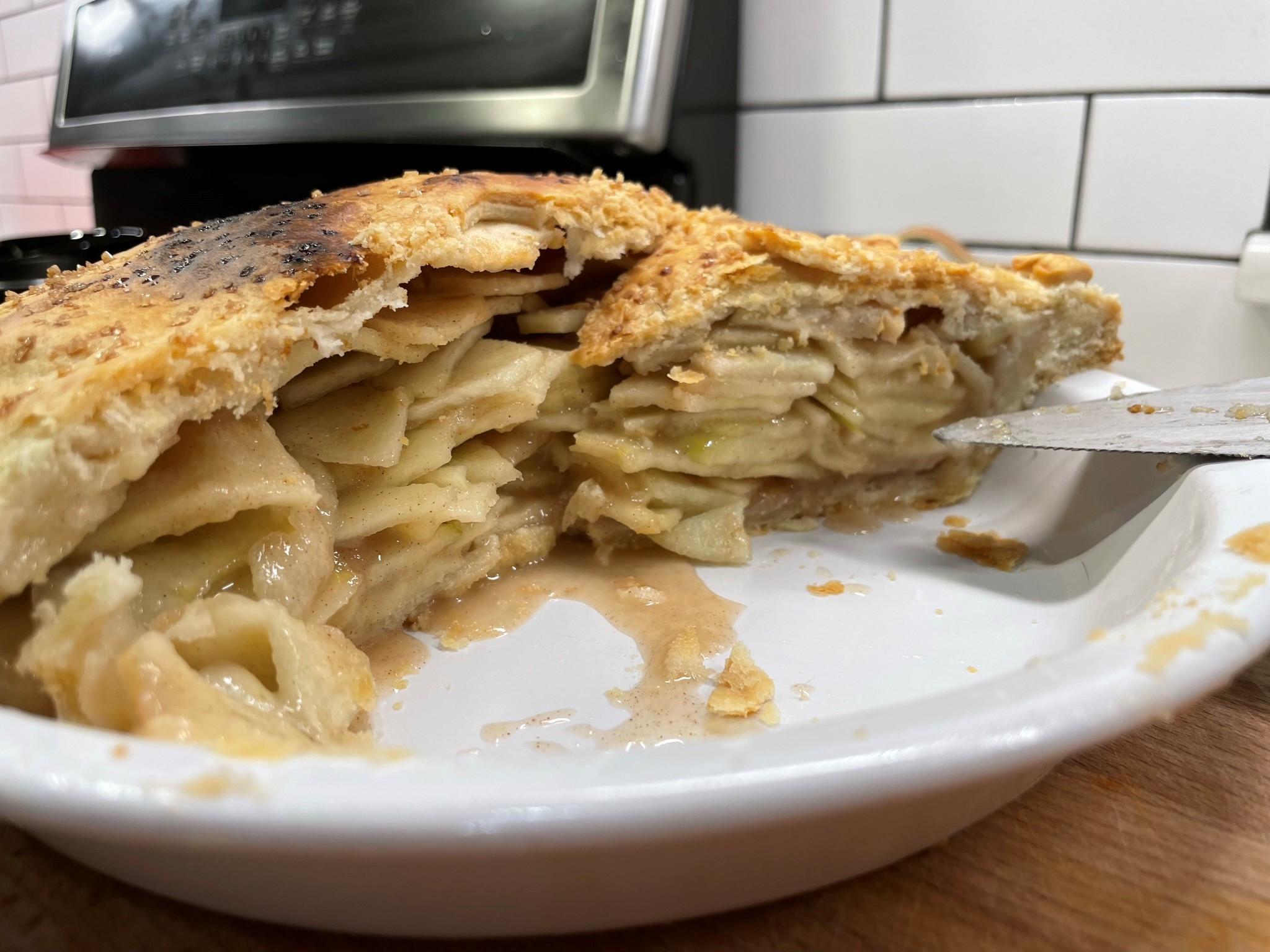
We could not make her favorite kind of pie— sour cherry is her blue ribbon best— because I don’t have a cherry tree in the backyard, as she does. But we found some shiny Granny Smith apples, and I thought it would be perfect for sharing as we head toward July 4th. We served up each mile high slice with a scoop of my reduced-guilt vanilla ice cream!

The crust is my favorite part of everything, so I really want to get good at this!

Christine did all the pie work here, and my job was to pay attention and take pictures. I took lots of mental notes as she worked on this masterpiece, but still forgot a few of the important details. Luckily, she was generous to share her exact crust recipe by text as I wrote this, and I’ve included it below in a printable format.

As for my lessons that day, I discovered three important takeaways for perfect pastry dough. First, I apparently need to start watching the Great British Baking Show, which is where Christine has honed her knowledge that led to her own baking skills. I’ve bookmarked it on Netflix for future binge watching. 🙂


Second, I need to follow a simple rule of thumb for tender, flaky pie crust, and that rule is “more fat, not more water.” For real, this is probably one of the ways I’ve gone astray, as I tend to just add more water when the dough doesn’t come together easily. Christine says a little extra butter (and frozen, at that) worked into the flour is what produces the flaky, delicate layers I long to achieve. Finally, I need to not be afraid to practice, because it’s the only way I will gain confidence to make a good pie. I know she’s right, of course.


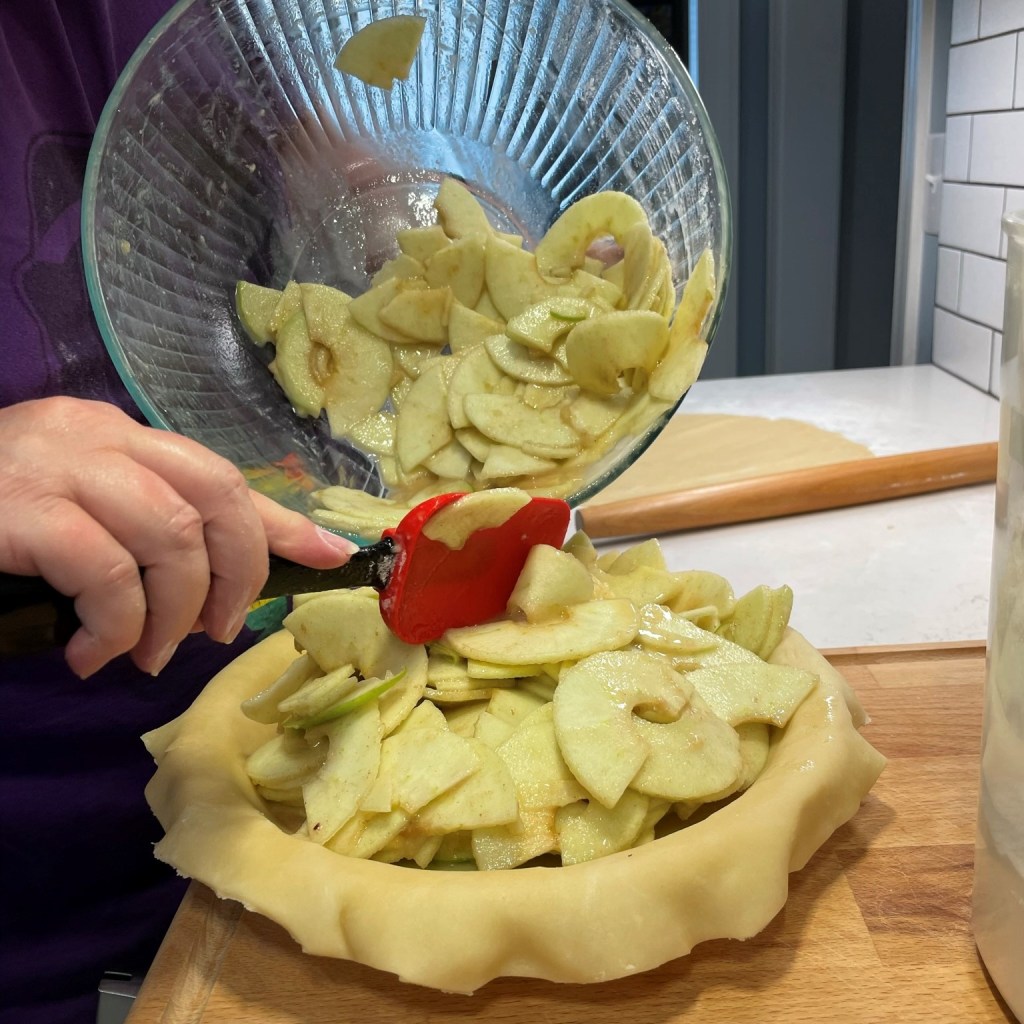
That brings me to my final lesson in successful pie making, which is don’t skimp on the filling— another mistake I now know I have made. Christine used six ginormous apples in this pie, and it wasn’t even deep dish! With so much filling, and given where our friendship began, I named it Mile High Apple Pie. Enjoy!

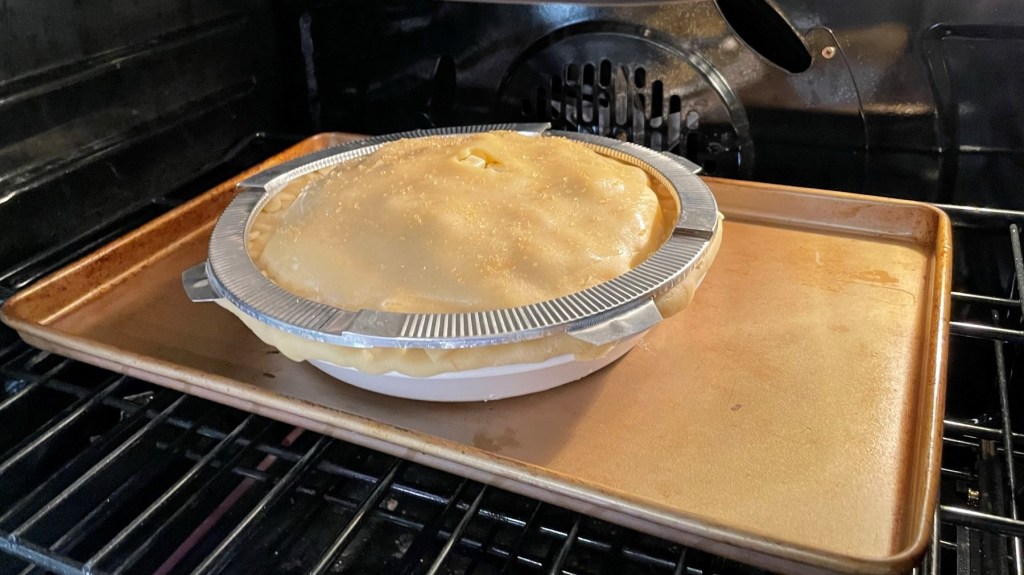
She brushed the top crust with milk and sprinkled on turbinado sugar before it went to the oven.
Pie crust protectors kept the delicate edges from burning.

Mile High Apple Pie

  • Servings: 8 generous pieces
  • Difficulty: Easy, if you're Christine
  • Print

My bestie from high school walked me through how to make a good, flaky pie crust! Three most important lessons; use frozen butter, chill the dough and practice, practice, practice!


Ingredients

  • 2 1/2 cups flour
  • 1 tablespoon sugar
  • 3/4 tsp. salt
  • 2 1/2 sticks frozen, unsalted butter
  • 5 Tablespoons ice water

Planning ahead is important for successful pastry dough. It should be chilled at least 30 minutes, but preferably longer, before filling and baking.

Directions

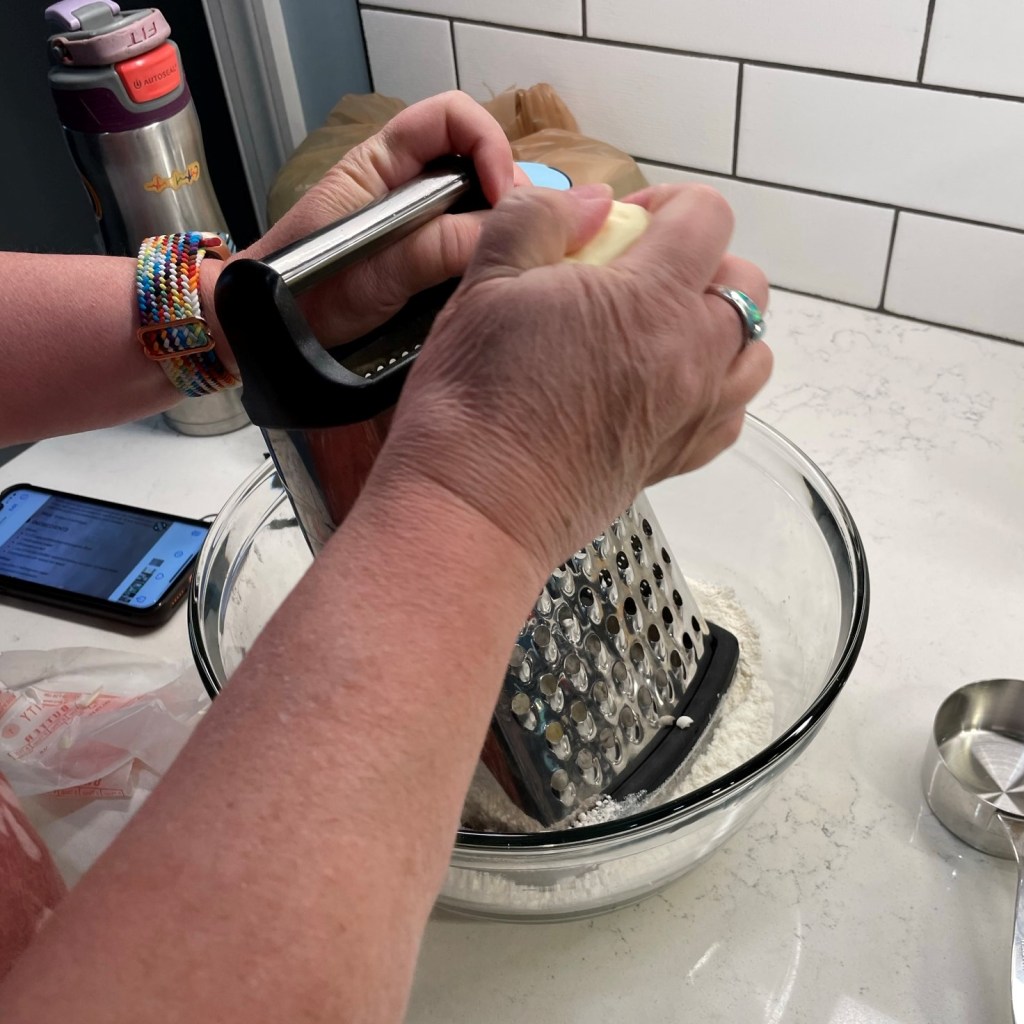
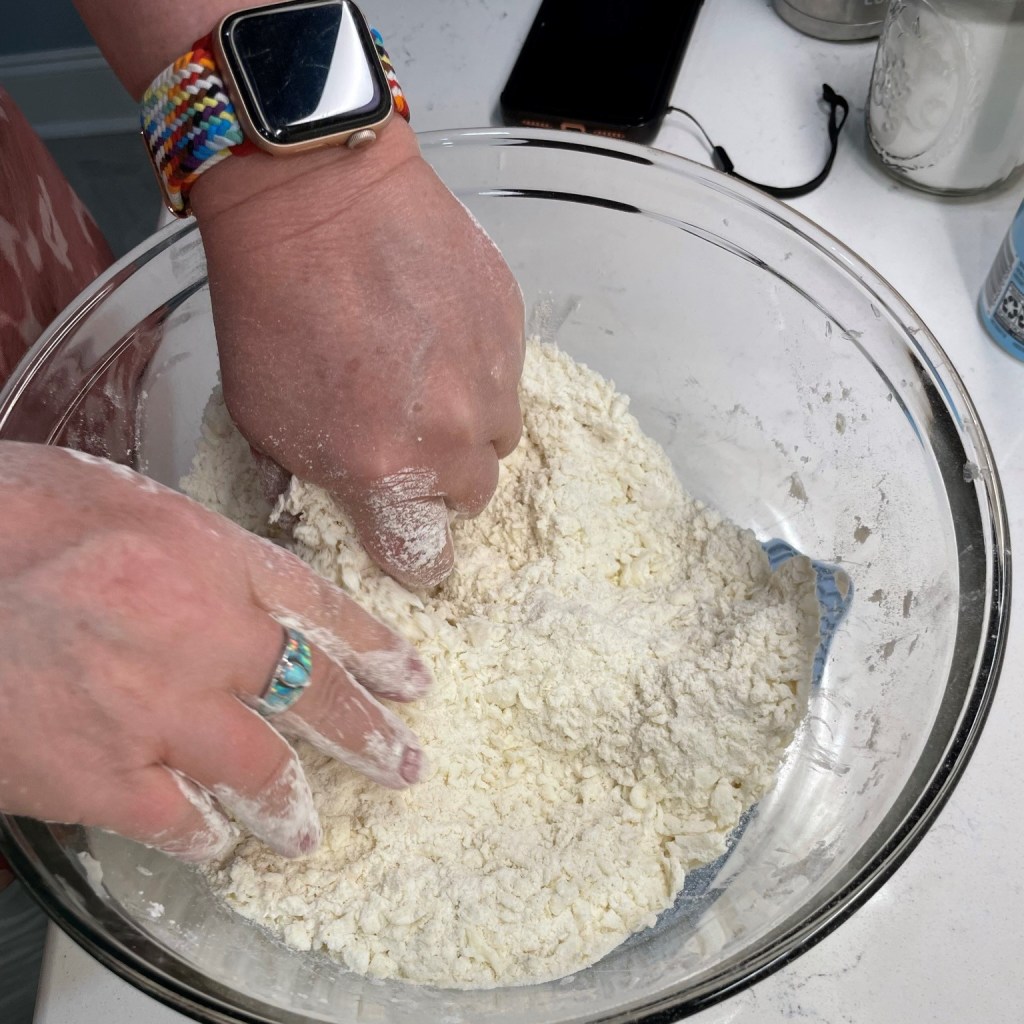
  1. Whisk the flour, sugar and salt in a large bowl. Grate butter over flour through the large holes on a box grater. Rub in with fingertips until small pea-size clumps form. Add 5 tablespoons of water and mix lightly with fork until dough holds together when small pieces are pressed between fingertips, adding more water by teaspoonful if dough is dry.
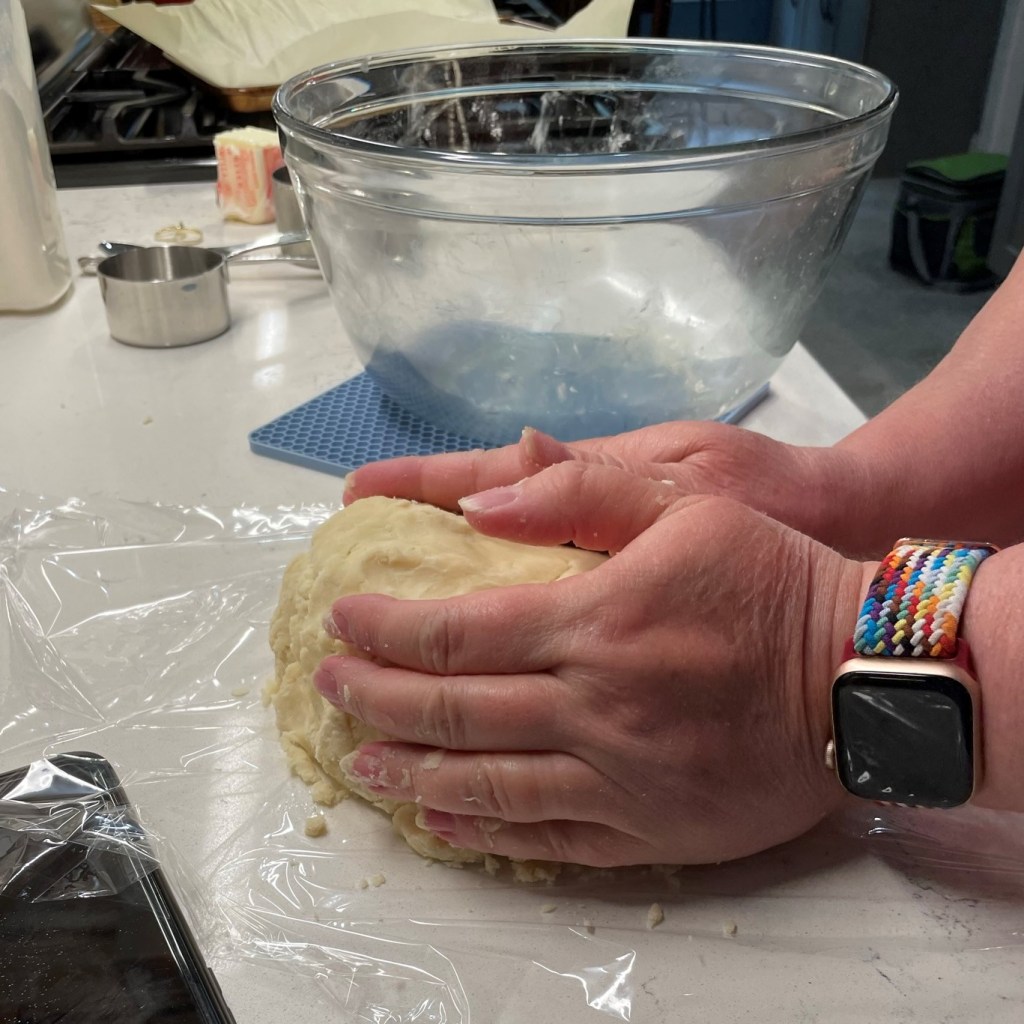
  2. Gather dough together; divide into 2 pieces. Form each piece into ball, then flatten into disks and wrap in plastic. Refrigerate at least 30 minutes, but you can do this up to 2 days in advance.

Remove chilled dough from fridge a few minutes before rolling out. Get the filling mixed up first, then roll the dough.

Ingredients

  • 6 large, Granny Smith apples, peeled and sliced thin
  • Juice of 1/2 fresh lemon
  • About 2/3 cup sugar (more if you like it sweet, I suppose)
  • 2 tablespoons flour, to toss and coat the apple slices
  • 1 teaspoon ground cinnamon
  • 1/4 teaspoon ground cardamom (she added this at my request, because I love it with apples)
  • 4 Tablespoons cold, unsalted butter

Directions

  1. Preheat oven to 375 F, with rack slightly lower than center position.
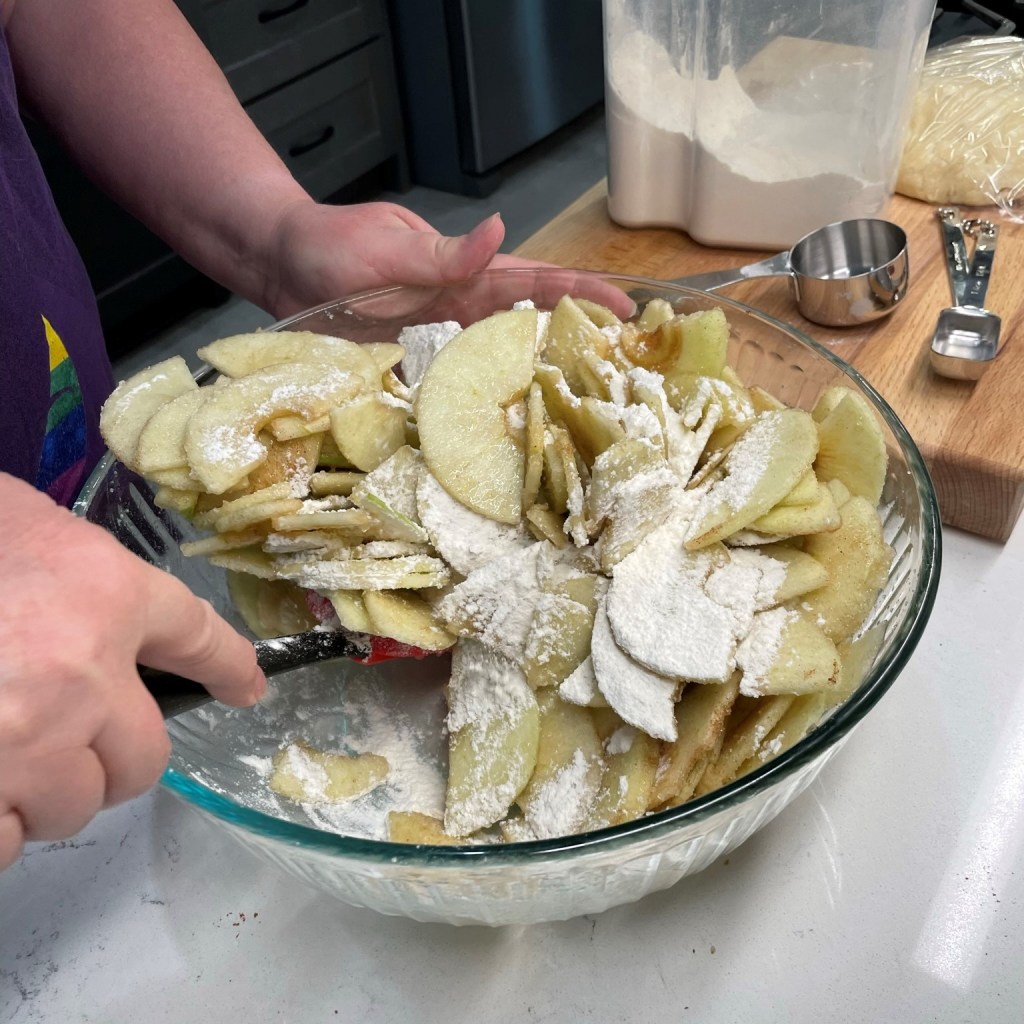
  2. Toss apple slices with lemon juice to prevent browning. Add sugar, flour, cinnamon and cardamom to the apples and fold to coat until no visible flour remains.
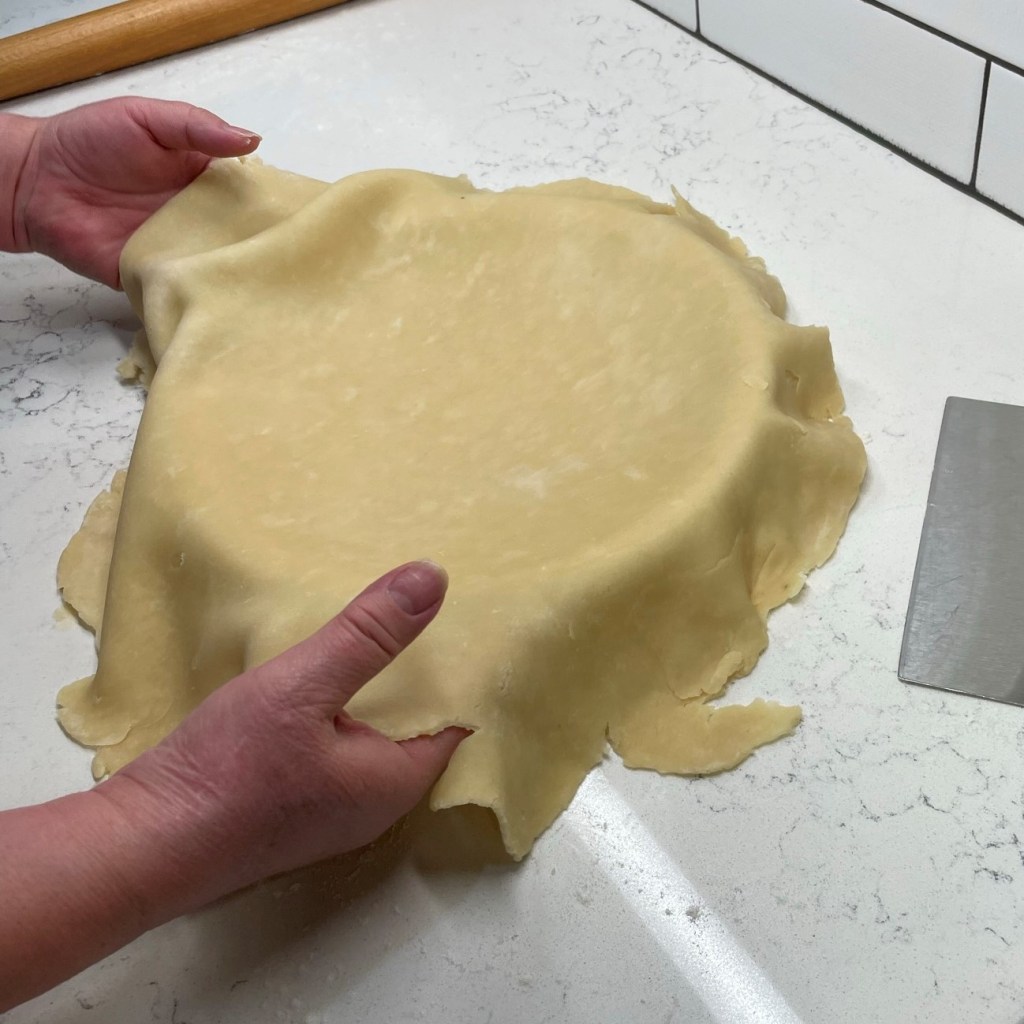
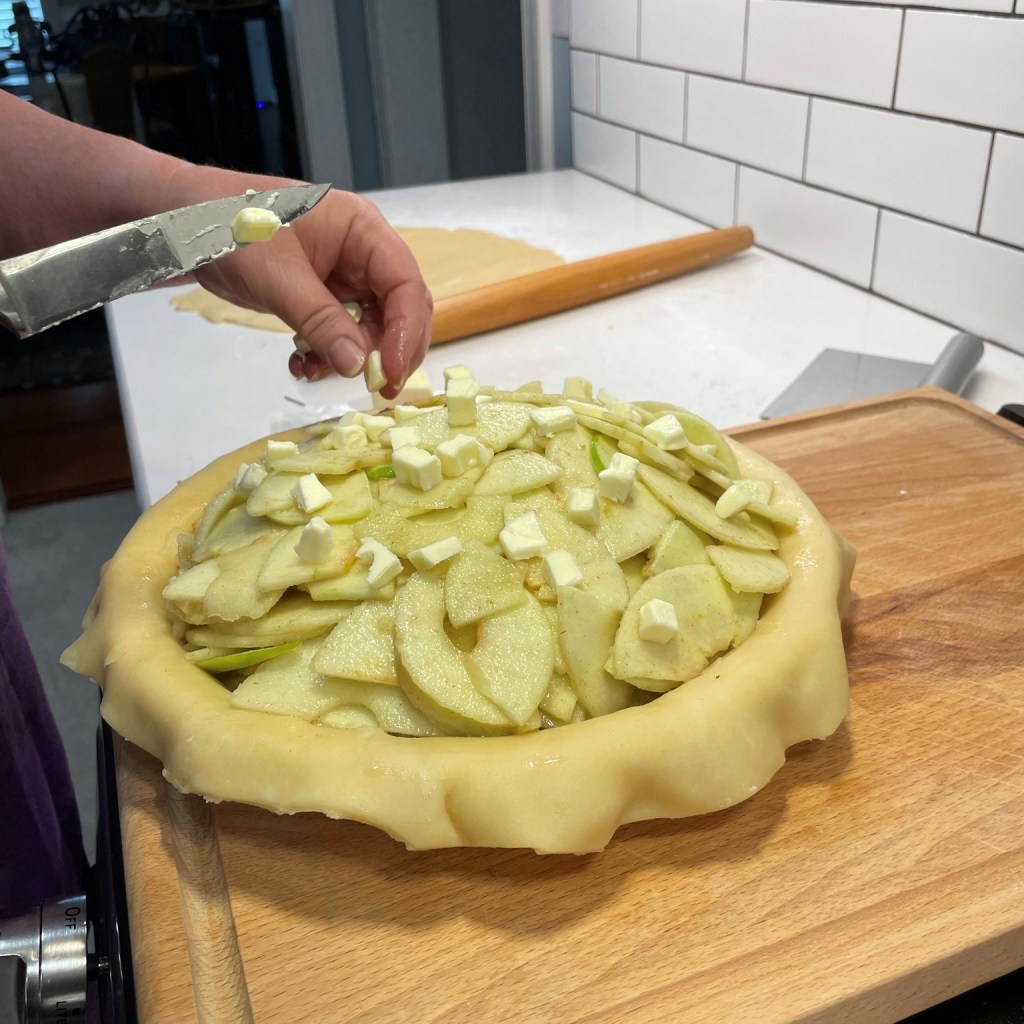
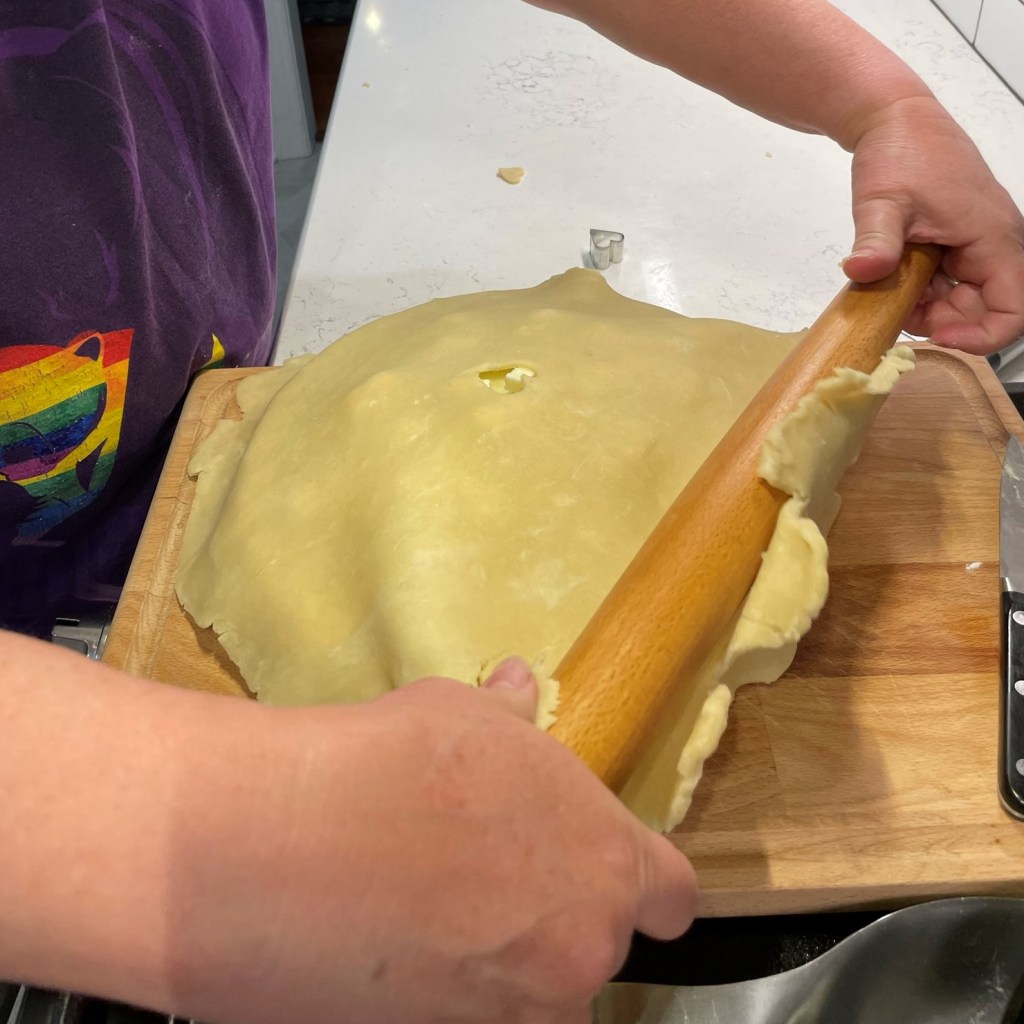
  3. Roll out the first disk of pie dough into a large circle and place it in a 9-inch pie plate. Transfer the apple filling to the pie plate. Cut butter into cubes and arrange the cubes all over the apple filling. Roll out the second dough disk, cutting a shape in the center as a steam vent (if you happen to have a tiny heart-shaped cookie cutter, use that). Roll the top dough around the rolling pin for easy roll-on transfer to the top of the pie. Trim and crimp the top and bottom edges to seal together. If you have extra dough, cut more heart shapes and place them around the edges of the pie.
  4. Brush the whole pie crust with milk and sprinkle with coarse sugar. Bake for about one hour, until pastry is golden brown all over and filling is visibly bubbly through the steam vent.


Fig Butter Cranberry Apple Galette

I am good at a few things in the kitchen, but pie crust is not one of them. I can make the pastry dough, no problem, and I usually use the food processor to speed things along. Getting the thing inside the pan in one piece, especially for a deep dish pie, is quite another story. Yes, I have seen all the tricks, from folding it into quadrants and then unfolding it into the pan, to rolling it up around the rolling pin and transferring it that way. The problem is, by the time I finish monkeying around with patching cracks and moving it (especially if it sticks to my roll-out surface and it always does), I have usually either let it get too warm so that it loses its flakiness or I have overworked the dough to the point that it becomes tough rather than tender.

Thank goodness for this easy-peasy alternative— the galette!


At first glance, a galette might seem like a fancy-schmancy dessert. Not quite a tart, which usually has egg in the pastry dough and requires a special shallow, fluted pan. Also not quite a pie because it only has one piece of pastry, there’s no blind baking involved and it doesn’t require a pie pan at all. Just a cookie sheet or pizza pan, and almost everyone has one of those. 

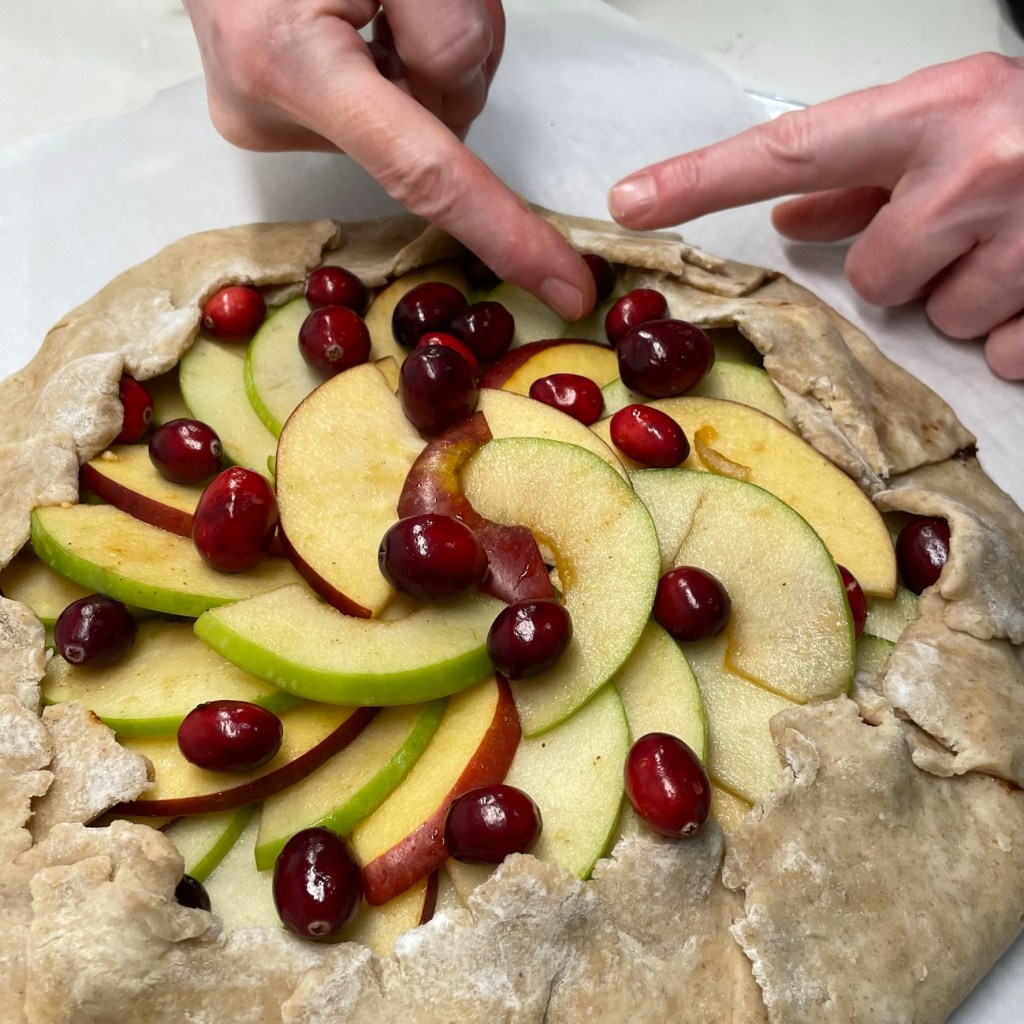
This rustic dessert has all the familiar comfort factor of a pie, but without the fuss. You roll the dough out directly onto parchment, then add your filling, fold up the edges and slide the whole thing right onto your baking sheet. I would not recommend trying a galette for a pie that requires any kind of loose, wet filling, but for uncooked apple slices and raw cranberries, the stars of this dessert, it was perfect.

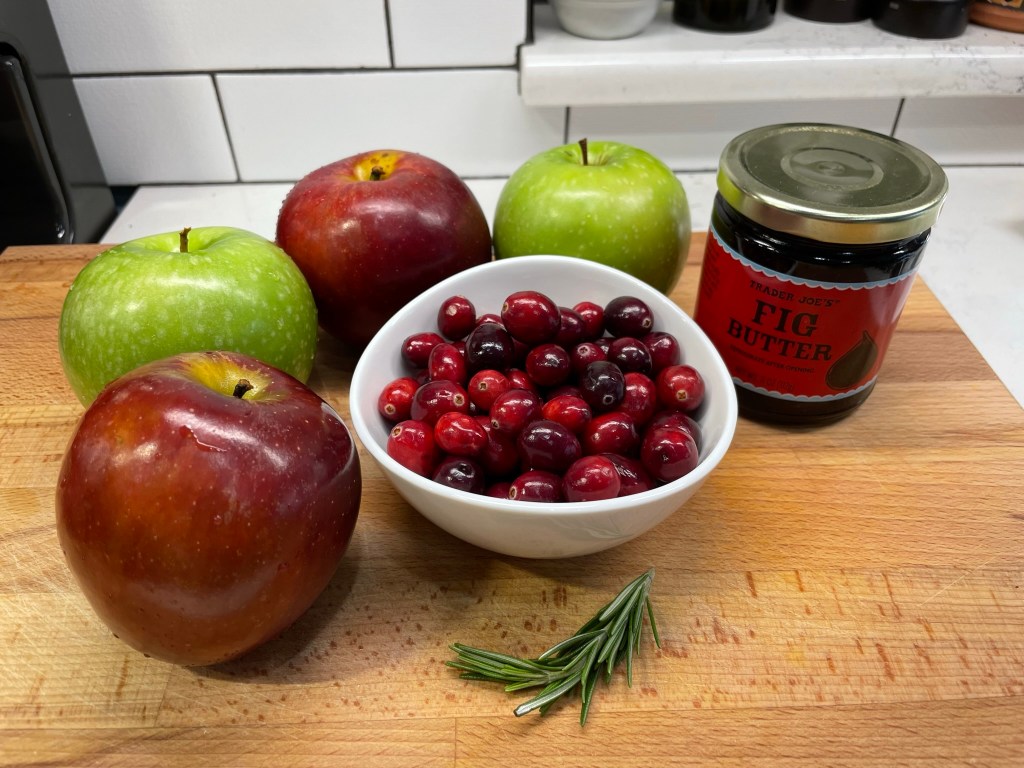
I ended up using only three of the apples and still had a few slices left over.

My recipe is adapted from one that King Arthur Baking Company released just before Thanksgiving. Their version was called Apple Butter Apple Galette, and it did not include cranberries or the tiny flecks of fresh rosemary that I added to adorn the outside of the pastry. I swapped out cinnamon for cardamom because I love the flavor with apples, and I didn’t have apple butter on hand (nor the time to make my own), so I subbed in pre-made fig butter from Trader Joe’s. King Arthur’s recipe already calls for mostly whole wheat flour in the pastry, which makes the dessert feel even more rustic and fall-like.


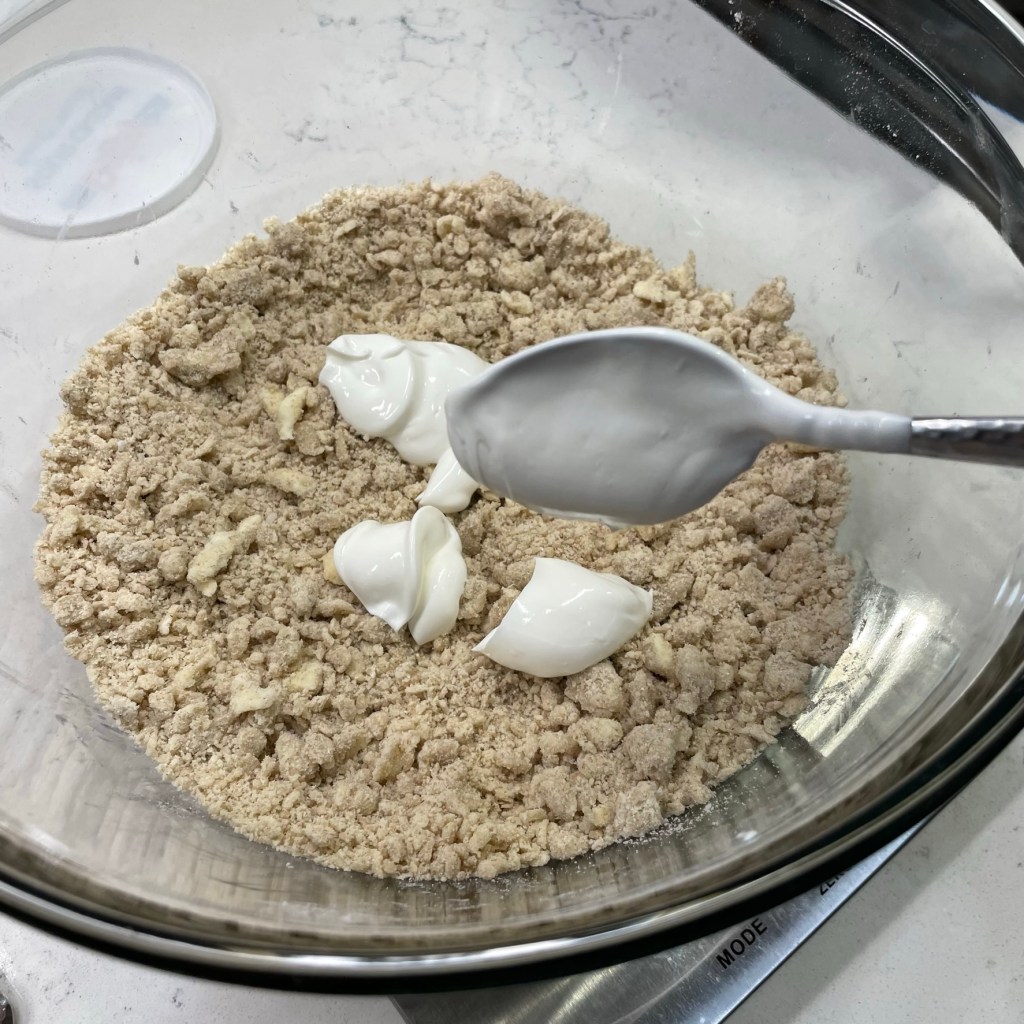
The pastry dough itself is somewhat unusual as there is no water in the mix; rather, the typical cold butter-and-flour mixture is moistened with sour cream, of all things. That inclusion lent a tangy note that was a nice contrast to the slight sweetness of the apple-cranberry filling. The dough needs a good long rest in the fridge, so it’s best to make it the night before and then shape it up when you have the filling ready.


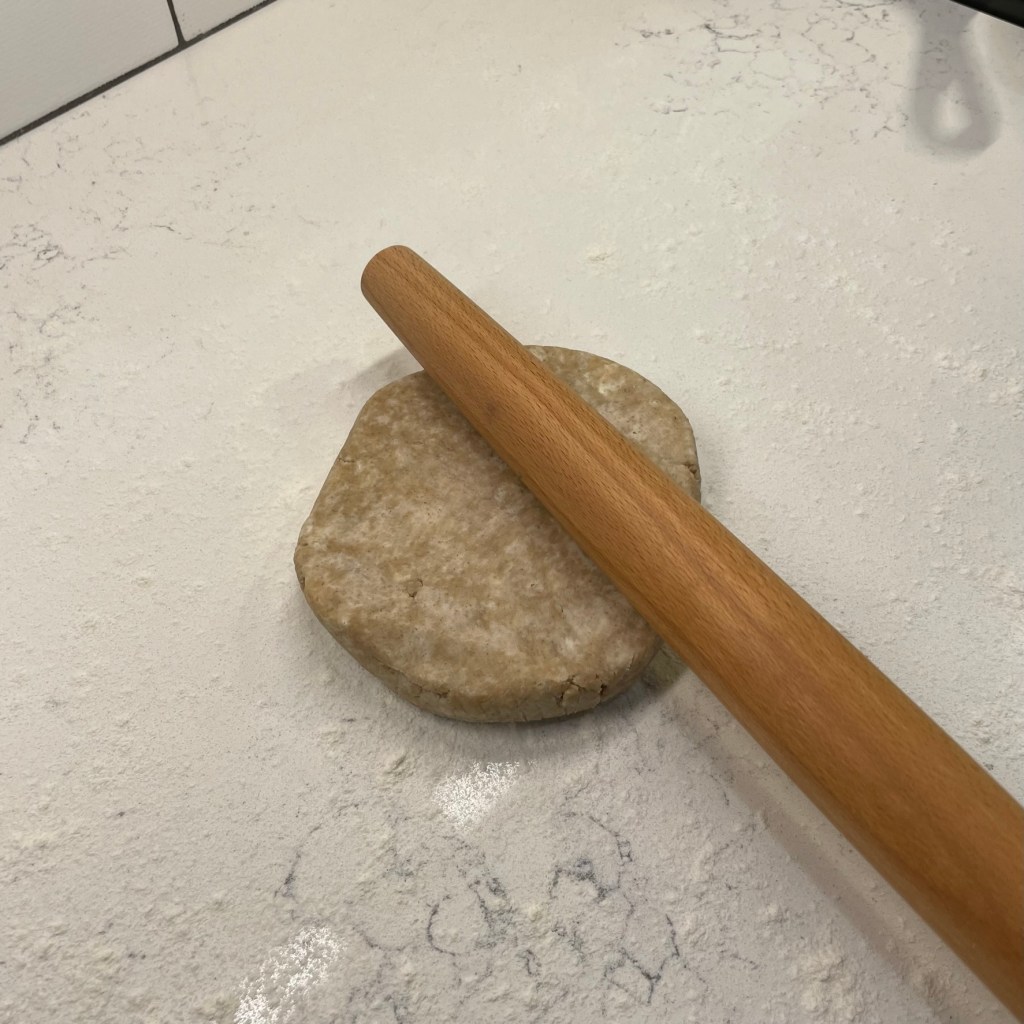
Shaping the dough goes about the same as any pie crust. It helps to use the end of a rolling pin to slightly beat the dough disk into a slightly flattened shape first, then roll it out onto parchment paper for final assembly of the galette.


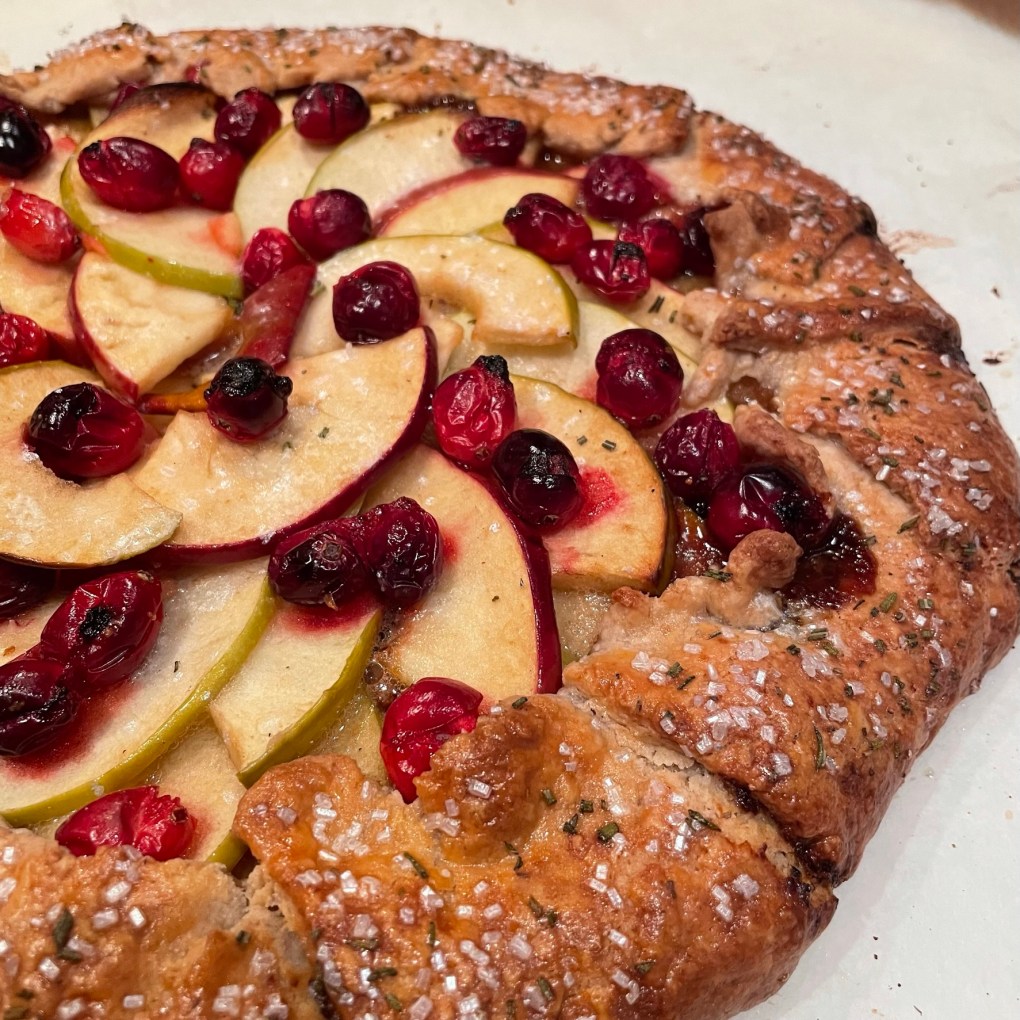
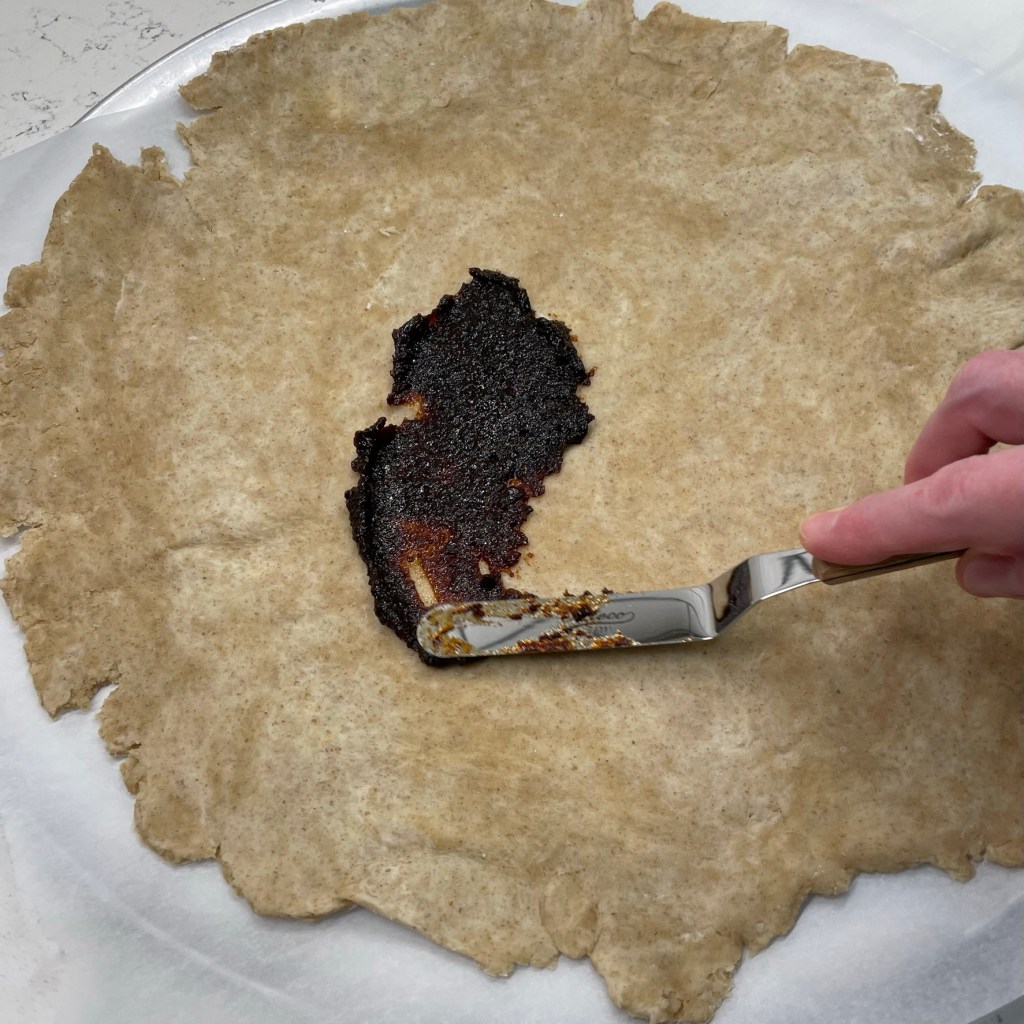
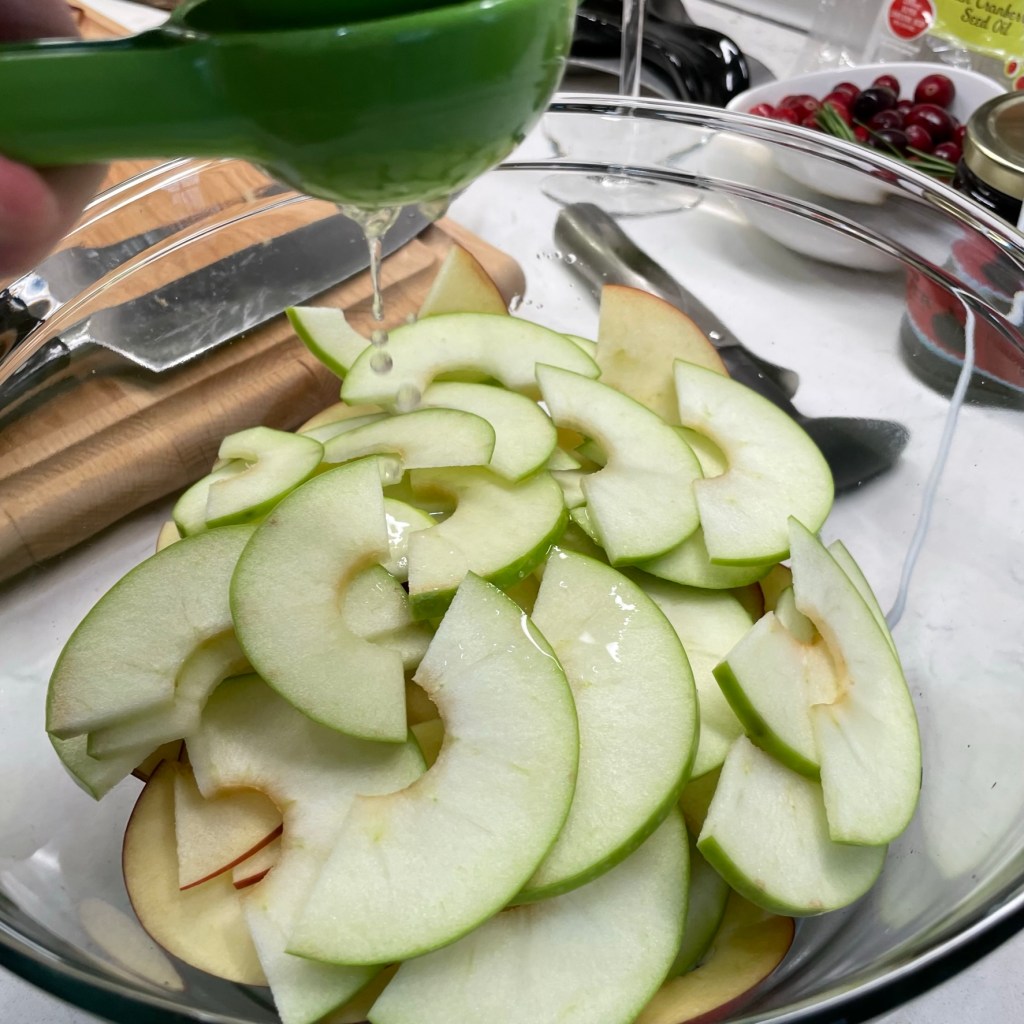
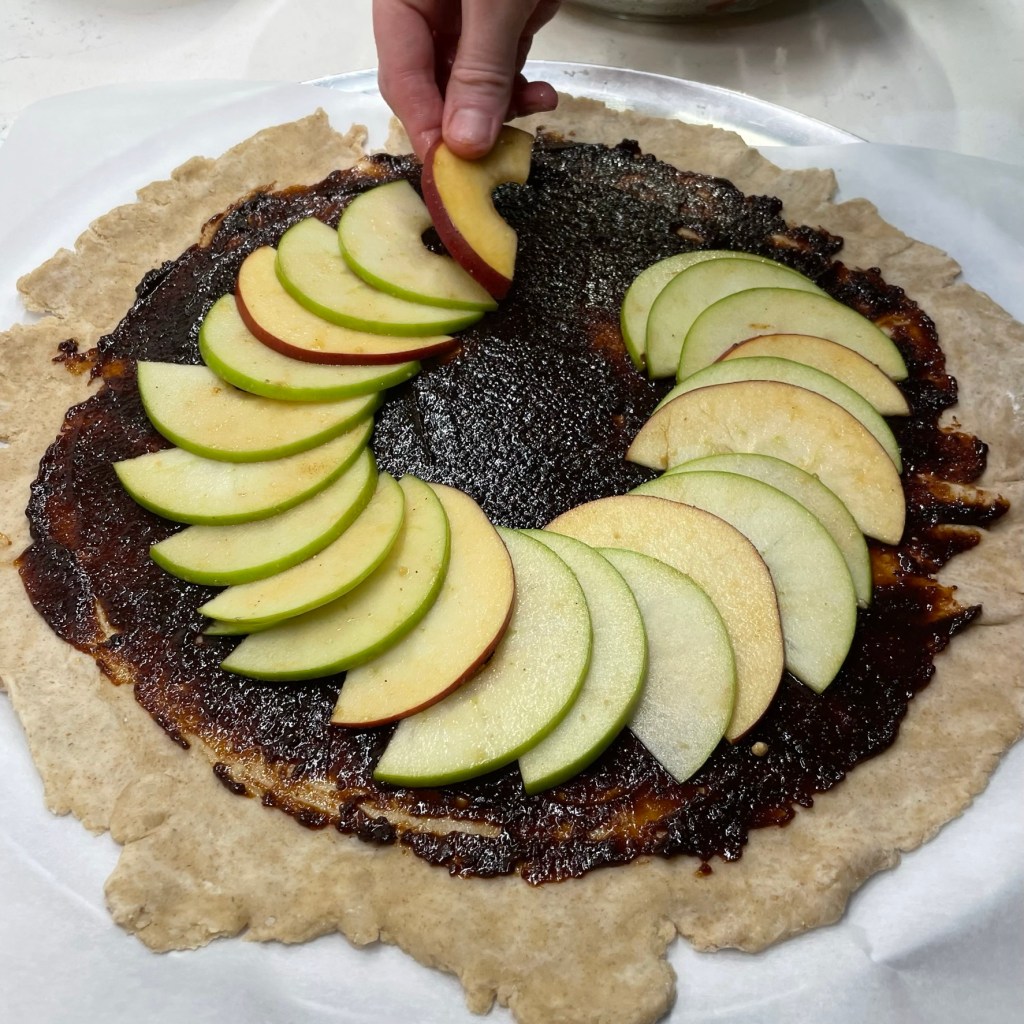
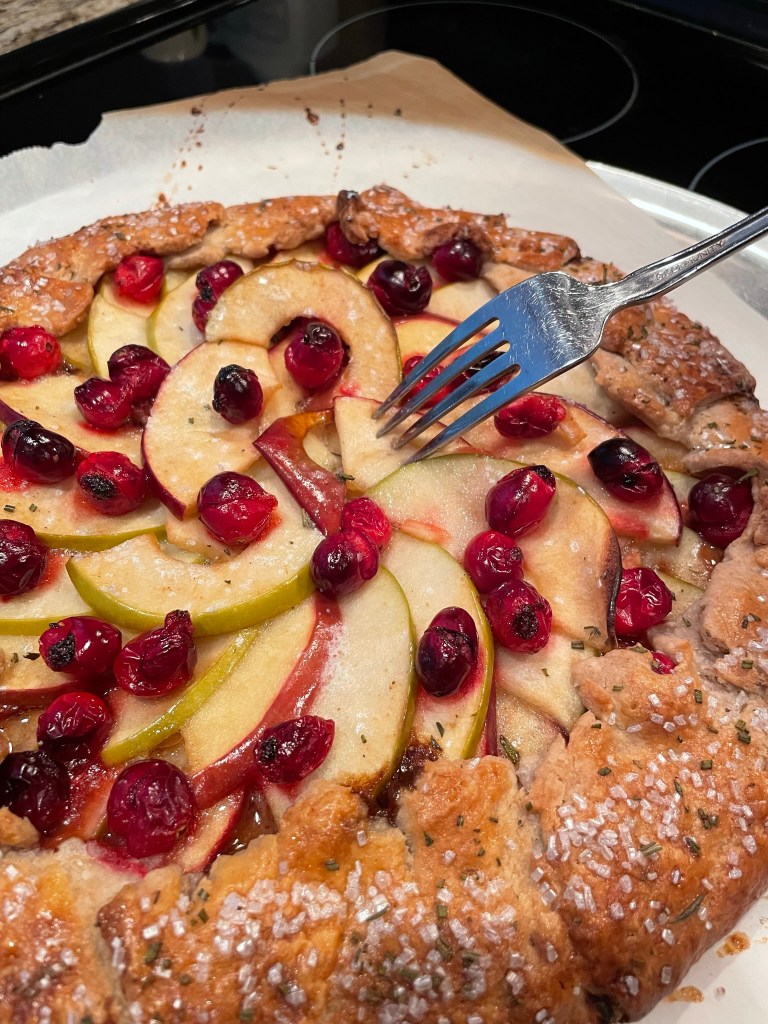
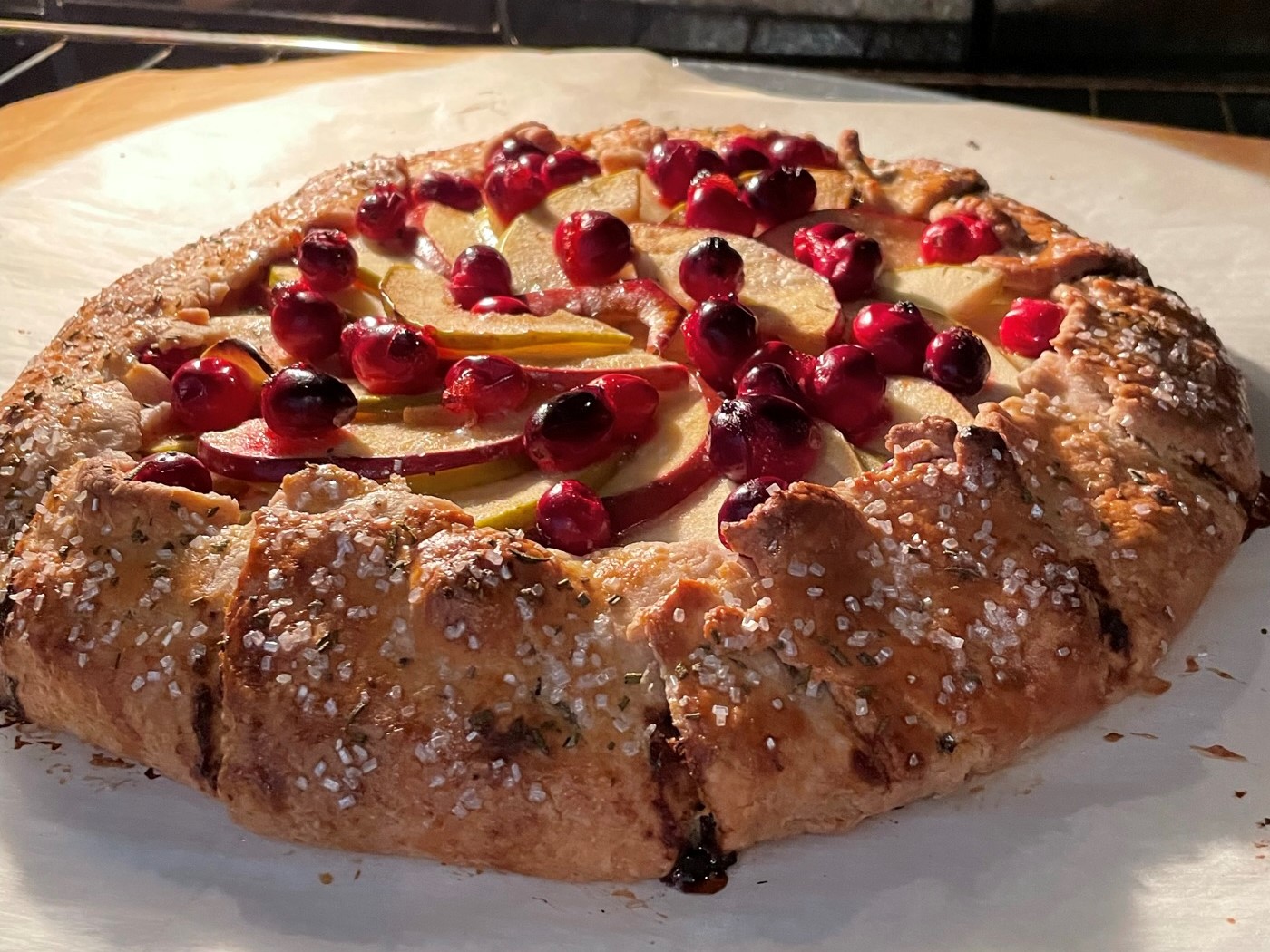
The fig butter is spread out onto the rolled pastry, serving as a base for the apple filling. The apples, which I didn’t even bother to peel, were halved top to bottom, then sliced into half-rings for even appearance and easy arranging. A little lemon juice preserved the color and a good sprinkling with maple sugar and a bit of cardamom added warmth and sweetness. I tucked in the cranberries here and there, including up under a few edges of the folded-up pastry dough, and dotted it with butter, just as you would with an apple pie. A little egg wash and the sugar-rosemary embellishment, and off it went into the oven!


This was a terrific dessert that would work for any meal during the rest of the holiday season. The fig butter, apples and cranberries were a great combination. The sparkling sugar and rosemary made it festive enough to serve for a special meal, but it would be equally nice for a casual weeknight dinner.


Fig Butter Cranberry Apple Galette

  • Servings: 8
  • Difficulty: Average
  • Print

Not quite a tart and not quite a pie, a galette is a quick and simple, rustic dessert, and this fig-apple-cranberry combo is just right for the holidays!


Ingredients

  • 1 cup (113g) King Arthur White Whole Wheat Flour
  • 1/2 cup (60g) King Arthur Unbleached All-Purpose Flour
  • 2 Tbsp. granulated sugar
  • 3/4 teaspoon salt
  • 12 tablespoons (170g) unsalted butter, cold; cut into 1/2″ cubes
  • 6 tablespoons (85g) sour cream

Ingredients

  • 3 medium apples, peeled (or not) and sliced about 1/8″ thick
  • juice of 1/2 lemon (about 1 tablespoon)
  • 2 Tbsp. light brown sugar or maple sugar (see ingredient note below)
  • 1/4 tsp. ground cardamom
  • pinch of salt
  • 1/2 cup prepared fig butter
  • 1/2 cup fresh (or frozen) cranberries
  • 1 tablespoon cold butter, cubed
  • 1 large egg, beaten with 1 tsp. cold water (egg wash)
  • coarse sparkling sugar
  • 1 tsp. finely chopped fresh rosemary

Ingredient note: Adjust sugar to taste, depending on the sweetness of your apples. I used Granny Smith and Arkansas Black, both of which are crisp and tart, so I amped up the sugar a bit. If you are using sweeter apples, feel free to back off the sugar accordingly.

Directions

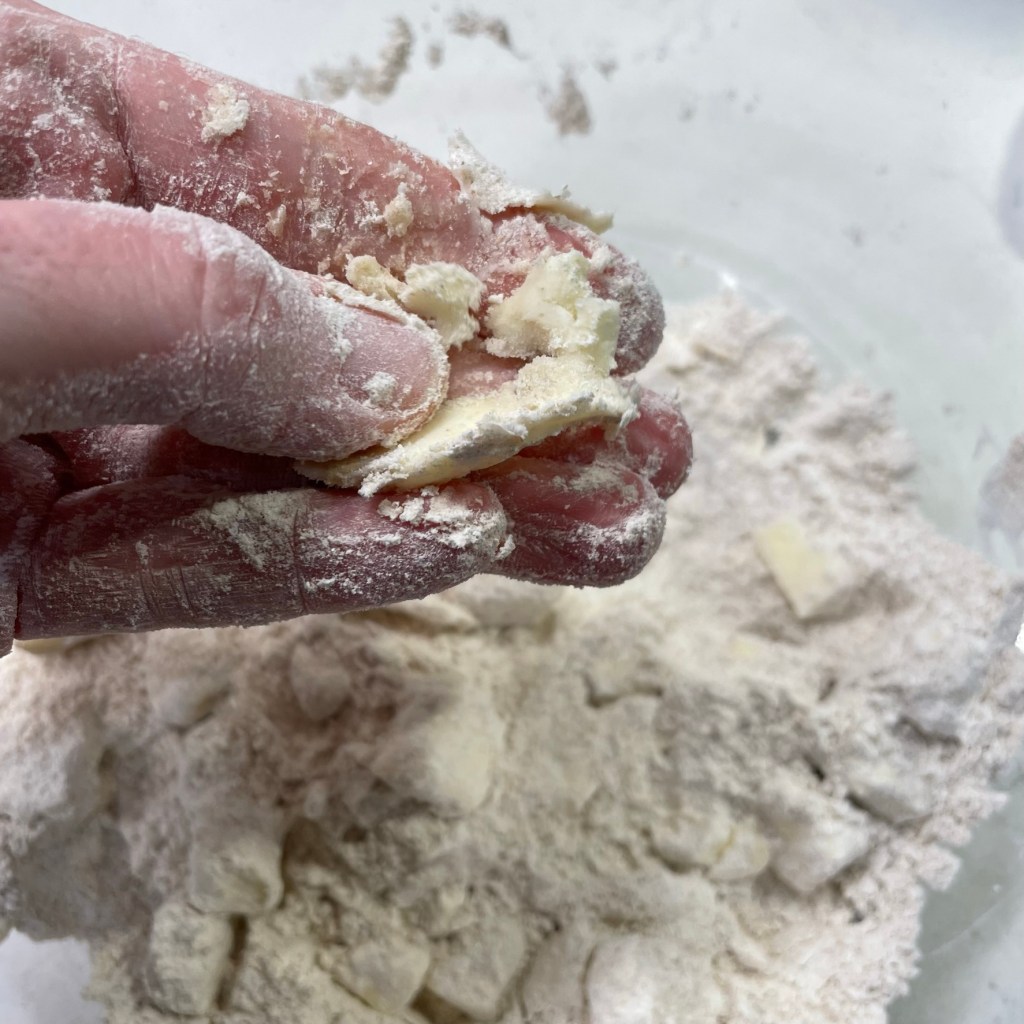
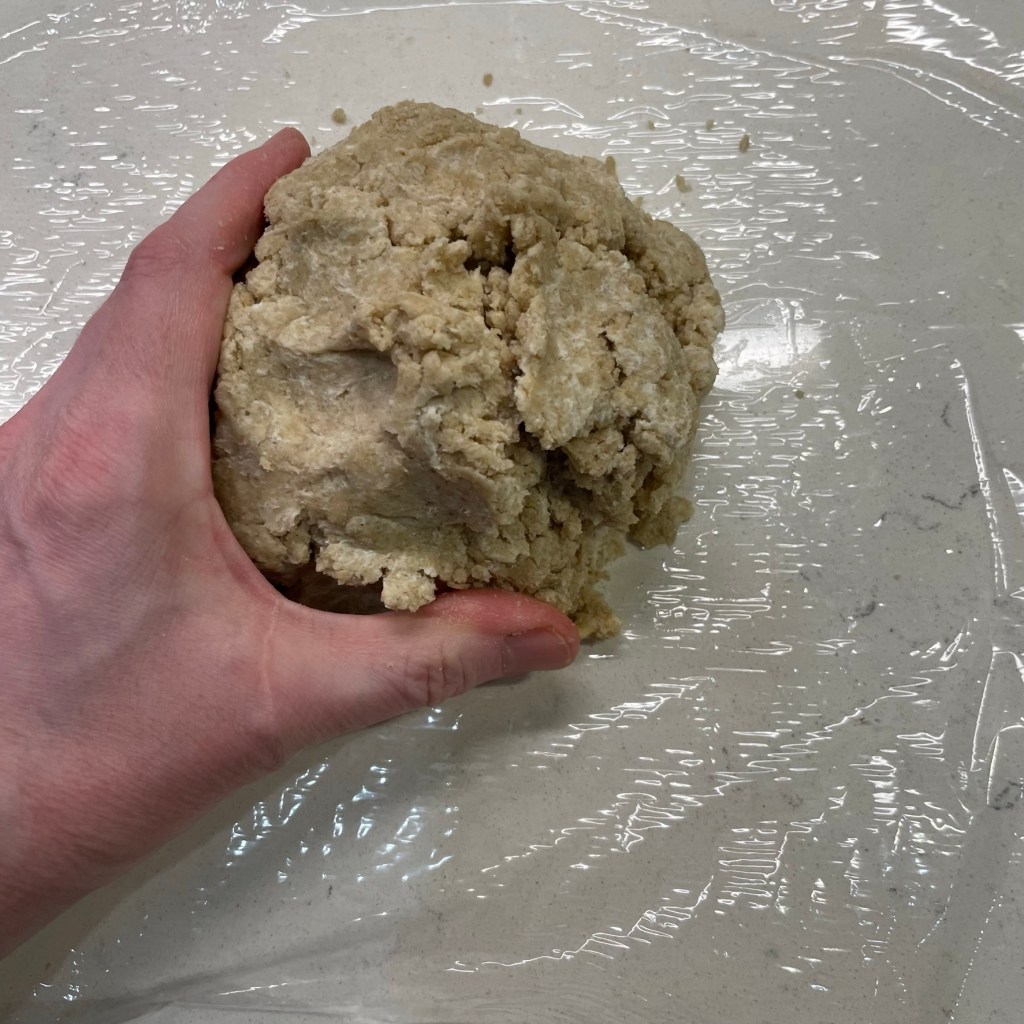
  1. For the pastry dough, combine flours, sugar and salt in a bowl. Pinch cold butter cubes into the flour mix until the whole bowl is filled with crumbs ranging from pea-size to almond-size. Add cold sour cream and blend with a fork just until evenly blended. Shape the pastry dough into a composed disk and wrap tightly in plastic wrap. Roll the edges along the counter to seal it for easier rolling later. Refrigerate overnight.
  2. Preheat oven to 425 F, with oven rack in center position. Prepare apples and squeeze lemon juice over them, tossing to help prevent browning. Sprinkle with brown sugar, salt and ground cardamom. Toss to distribute.
  3. Unwrap pastry dough and place it on a lightly floured countertop. Use the end of a rolling pin to gently “pound” the disk so that it flattens slightly. Transfer pastry to parchment paper and roll it out to about 1/8″ inch thickness, approximately 14″ across.
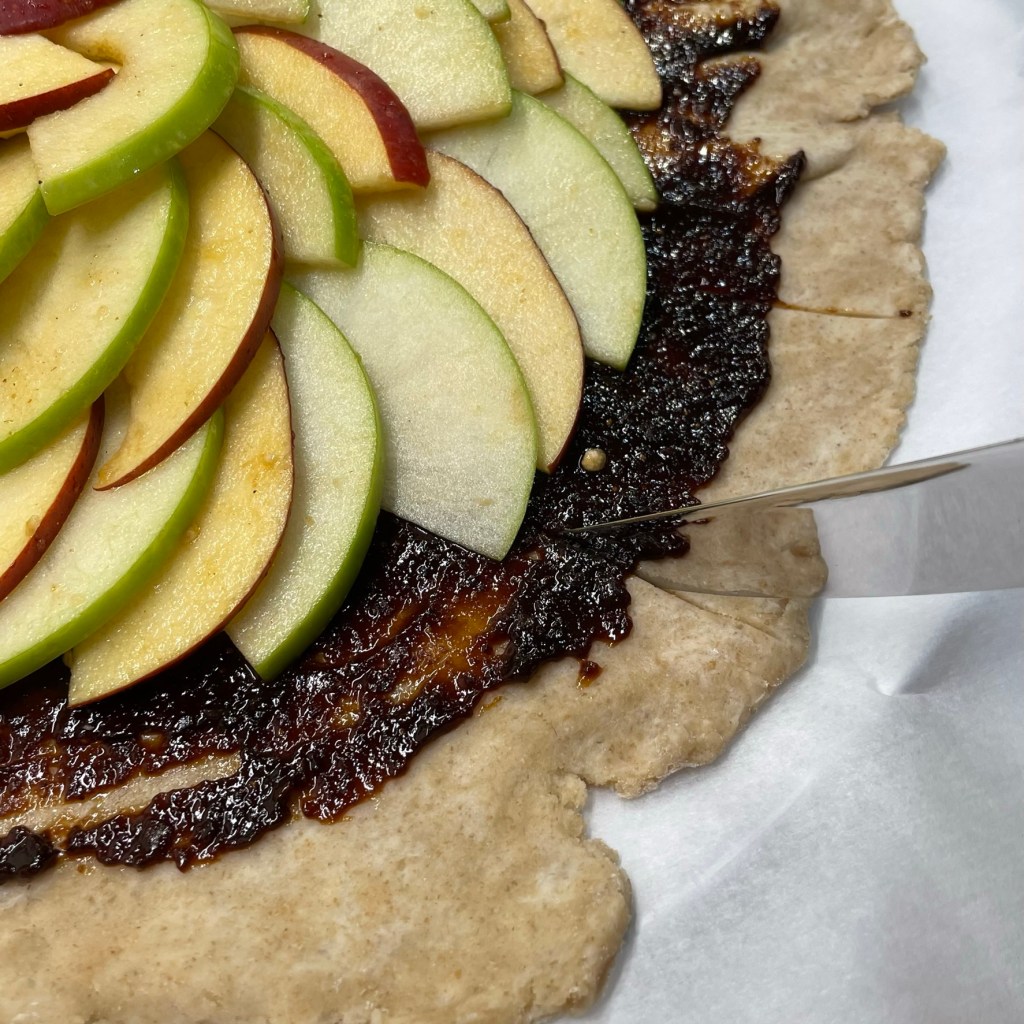
  4. Spread fig butter evenly over pastry dough, to about 1 inch from the edges of pastry dough. Arrange sugared apple slices in concentric circles over the fig butter, approximately 3 inches from the edges. Make radial cuts, about 3 inches apart, from the outer edge of the pastry dough toward the apple filling.
  5. Fold up cut edges of the galette, overlapping as needed to close up the pastry over the filling. Tuck fresh cranberries into layers of apple and under edges of the pastry. Place galette in freezer for 10 minutes to re-chill pastry dough.
  6. Arrange dots of cold butter over the sliced apples. Brush egg wash all over exposed pastry. Sprinkle with sparkling sugar and minced rosemary.
  7. Bake for 30 to 35 minutes, until pastry is deep golden brown all over and apples are tender when pierced with a fork.
  8. Cool to room temperature. Cut into wedges and serve with ice cream or whipped cream.


Les’s 3-Variety Overnight Applesauce

When Terrie asks me to share a recipe for her blog, my immediate thought about the specific post is where my recipe came from. In the case of applesauce, which I make at various times throughout the year, I have no answer.

I simply cannot recall the origin of my homemade applesauce. I suspect it came about originally because of my son’s absolute love of apples; he started eating apples before he was 2, and had one daily into his high school years.

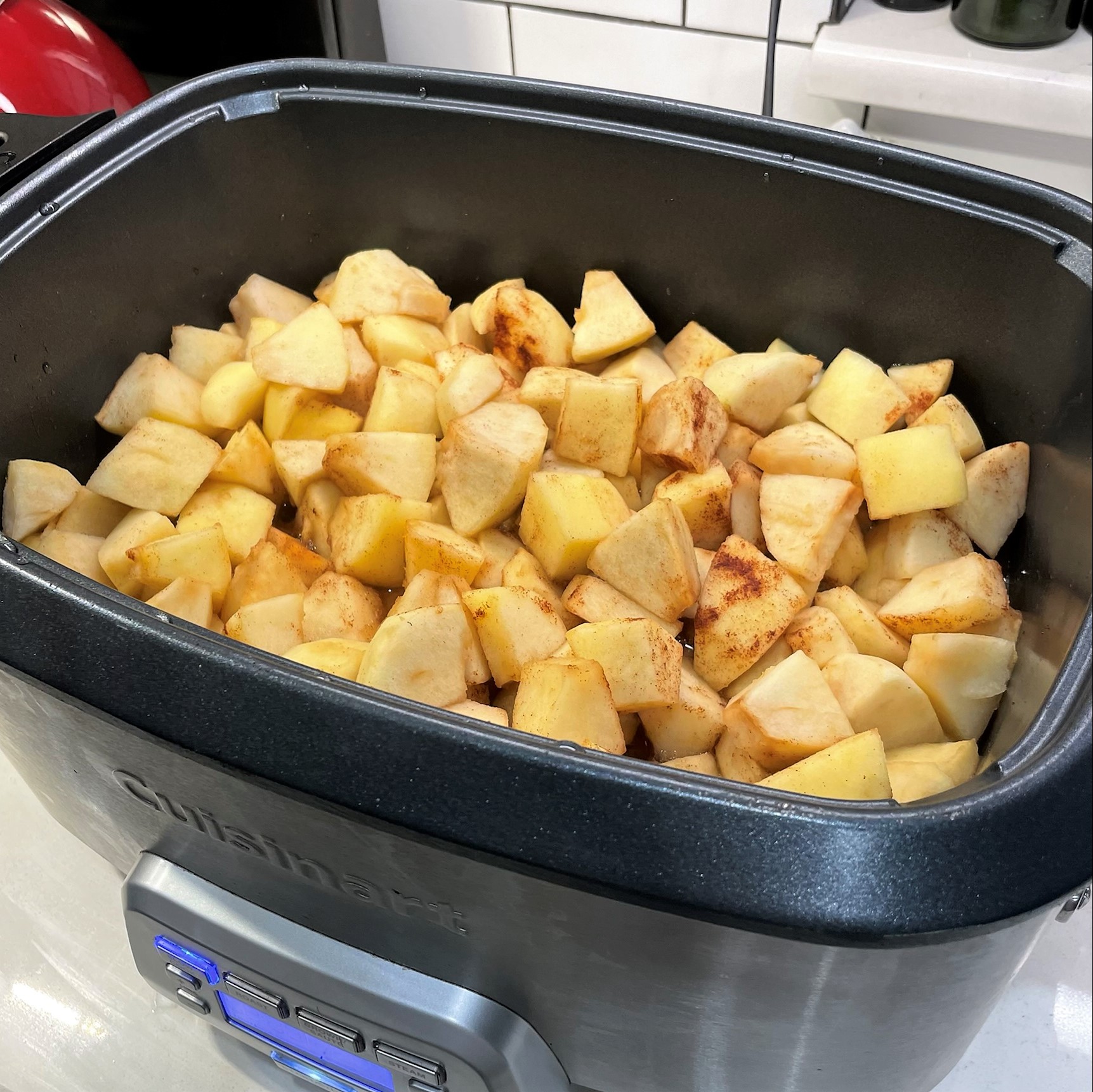
I do know my recipe took a turn when two things happened. First, somewhere along the way, I decided to do with the applesauce what I have done with mashed potatoes, which is mix varieties to increase the flavor and texture. Rather than two varieties (russet and Yukon gold), as I do with my roasted garlic mashed potatoes, I decided three was the perfect mix for apples in applesauce. Second, back about 2013, for my annual gift to self for Thanksgiving (a story unto its own), I bought a Cuisinart multi-cooker, a juiced-up version of a slow cooker. This is the same slow cooker that saved many a day for us during our recent kitchen remodel.

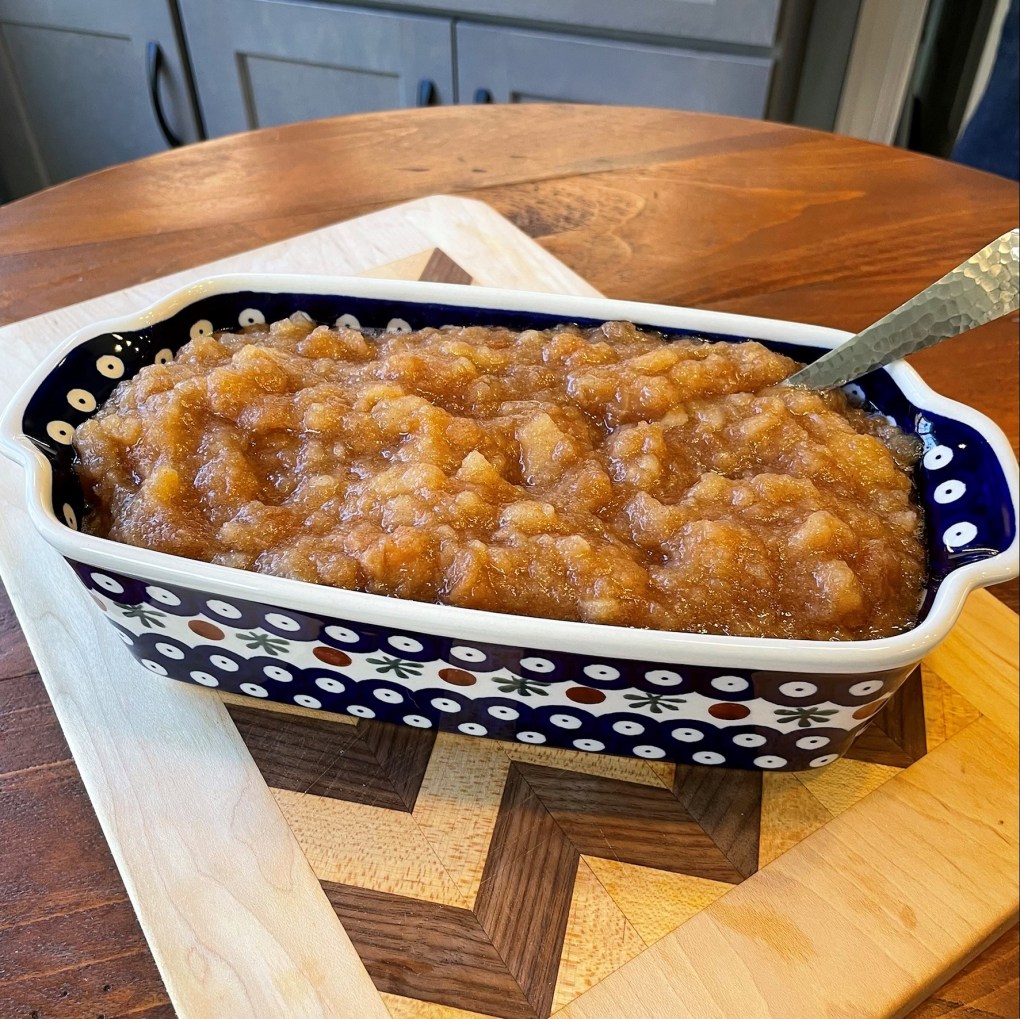
For applesauce, the slow cooker suffices—and it is easier than tending a cast-iron pot, my old method. As for varieties, I’m quite consistent in using Honeycrisp for sweet and Granny Smith for tart; then, the third variety is whatever strikes my fancy. Unless, that is, I can find my all-time favorite, Jonagold, which happen to be extremely tough to locate in North Carolina. This year, the third variety was Kanzi, a style of apple that basic research reveals comes from Belgium. The name means “hidden treasure,” and the apple is considered a cross between a Gala and a Braeburn. It is a mix of tangy and sweet, a fine add to the first two. All three apples are in the crispy category, which I believe makes for better applesauce.

A couple of years ago, Terrie asked me to make this for Thanksgiving as an add to the usual cranberry sauces on our table. It had more to do with the proximity of the Jewish holiday Hanukkah, where applesauce is a wonderful complement to Terrie’s homemade latkes. This year it was a complete no-brainer, as Hanukkah begins the Sunday night of Thanksgiving weekend.

This recipe requires some upfront labor in peeling and dicing the apples. But after that, the slow cooker does the rest and a few hours later—voilà!—a homemade applesauce that will have your dinner table guests thinking you’re a genius in the kitchen.

This recipe could not be simpler. Combine your ingredients in the slow cooker and wait nearby with a spoon.

Ingredients

Eight to nine large apples, three varieties

One small lemon, juiced

1/2 to 3/4 cup brown sugar

Vietnamese cinnamon to taste (I use about 1/2 teaspoon)


Instructions

Peel and core the apples, then cut into bite-size chunks. Add to the slow cooker. Juice the lemon over the apples and toss to prevent browning. Add the brown sugar and cinnamon and toss to coat. Turn the slow cooker to high and let it cook for four to six hours. I usually set it up at bedtime and by morning, the cooker has cooled. Mash the softened apples by hand (I use a potato masher). If you like the applesauce chunky, use a light mashing touch. Chill and enjoy.


Harvest Turkey Salad

Thanksgiving leftovers are a little bit like family—you can wait ‘til they arrive, and you sure are glad to see them go. So far, we’ve enjoyed full leftover plates, grilled cheese sandwiches made with leftover turkey and other accoutrements, and of course the comforting leftover turkey gumbo that I shared yesterday.

On the fresher side of things, how about a fall harvest-themed salad option that makes the most of leftovers in a bright new way? There are plenty of autumn ingredients in here, but lots of fresh and healthful things to soften the reality that you’re still eating leftover turkey.

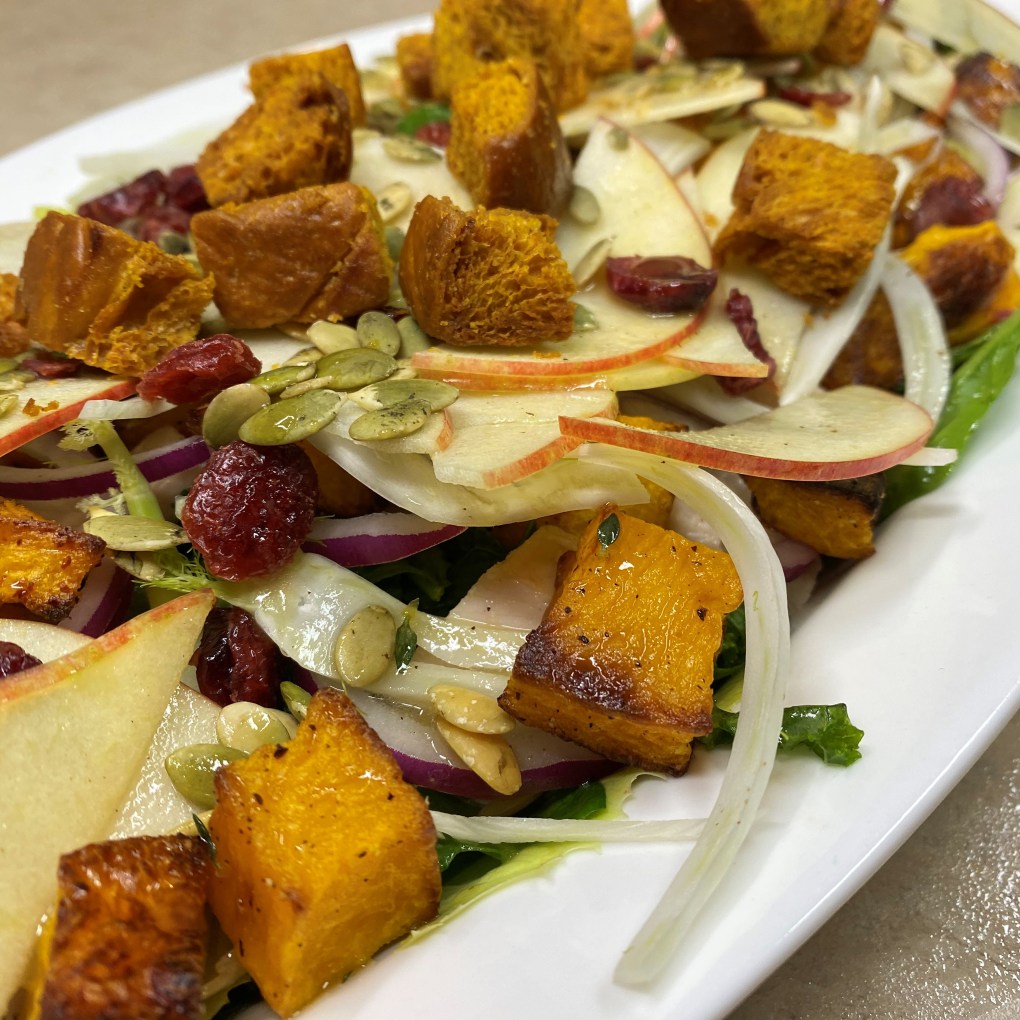
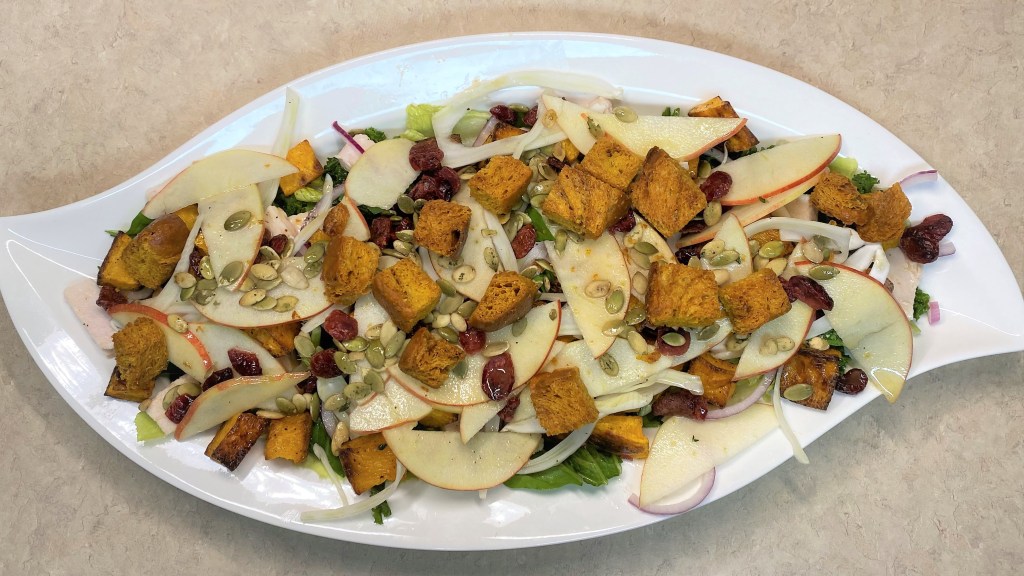
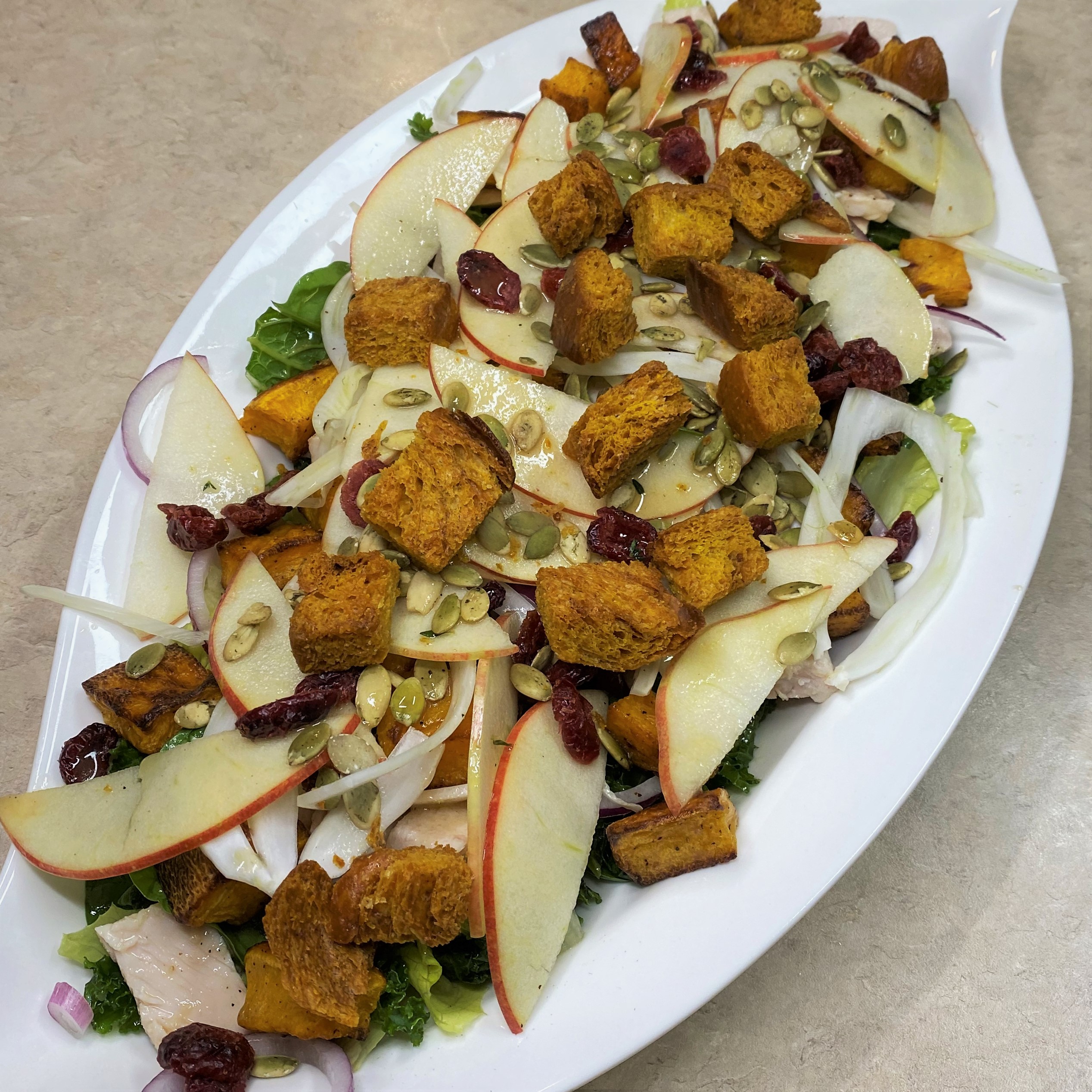
For me, a salad must hold a variety of interesting flavors and textures, so this one has shaved fennel for a little crunch, dried cranberries for a little chew, roasted bites of butternut squash for soft sweetness, thin slices of gala apple for a little snap and an easy citrus-maple vinaigrette for a whole lot of mouthwatering goodness in every bite. The prep is minimal and the salad is pretty.

In the interest of full disclosure, I’ll admit that I made this salad more than a month ago, with a roasted turkey breast that we purchased at Costco for sandwiches and salads. It was filling but light, and it gave my taste buds a bit of that autumn pizzazz I was craving so much. But I know this salad would be just as good today with leftover roasted or smoked turkey breast, or if you downsized Thanksgiving this year for safety reasons and didn’t do a turkey, you could easily swap in cubes of deli roasted chicken. Heck, leave out meat altogether and make it vegan. As always, I hope you find inspiration and flavor in my recipe. Enjoy!

It’s fresh and light, but satisfying with so many fall flavors.

Ingredients

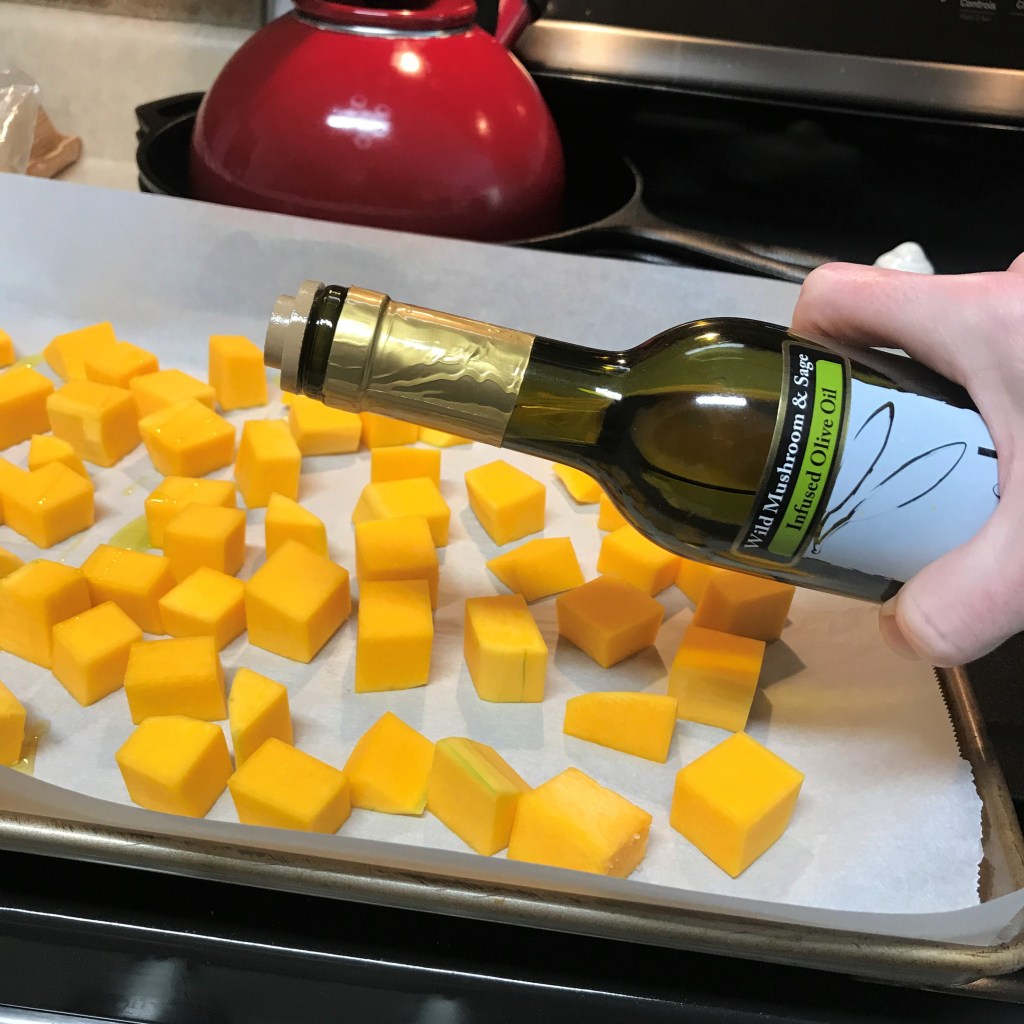
2 cups butternut squash cubes

Extra virgin olive oil

Kosher salt and black pepper

1 fat handful fresh washed kale leaves, rough chopped and thick stems removed

1 fat handful baby spinach leaves

4 romaine heart leaves, torn into bite-sized pieces

1 cup chopped leftover turkey (or deli chicken)

1/2 fresh gala apple, washed and sliced thin

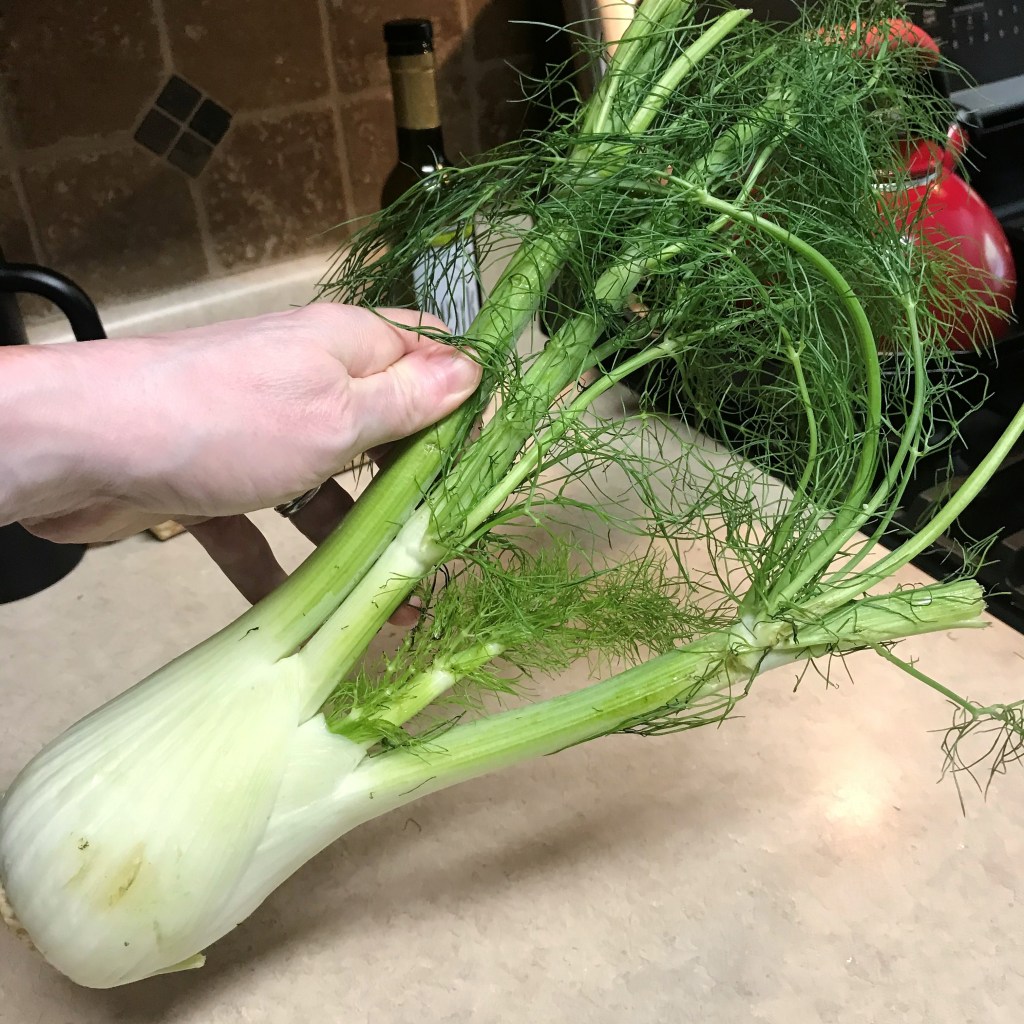
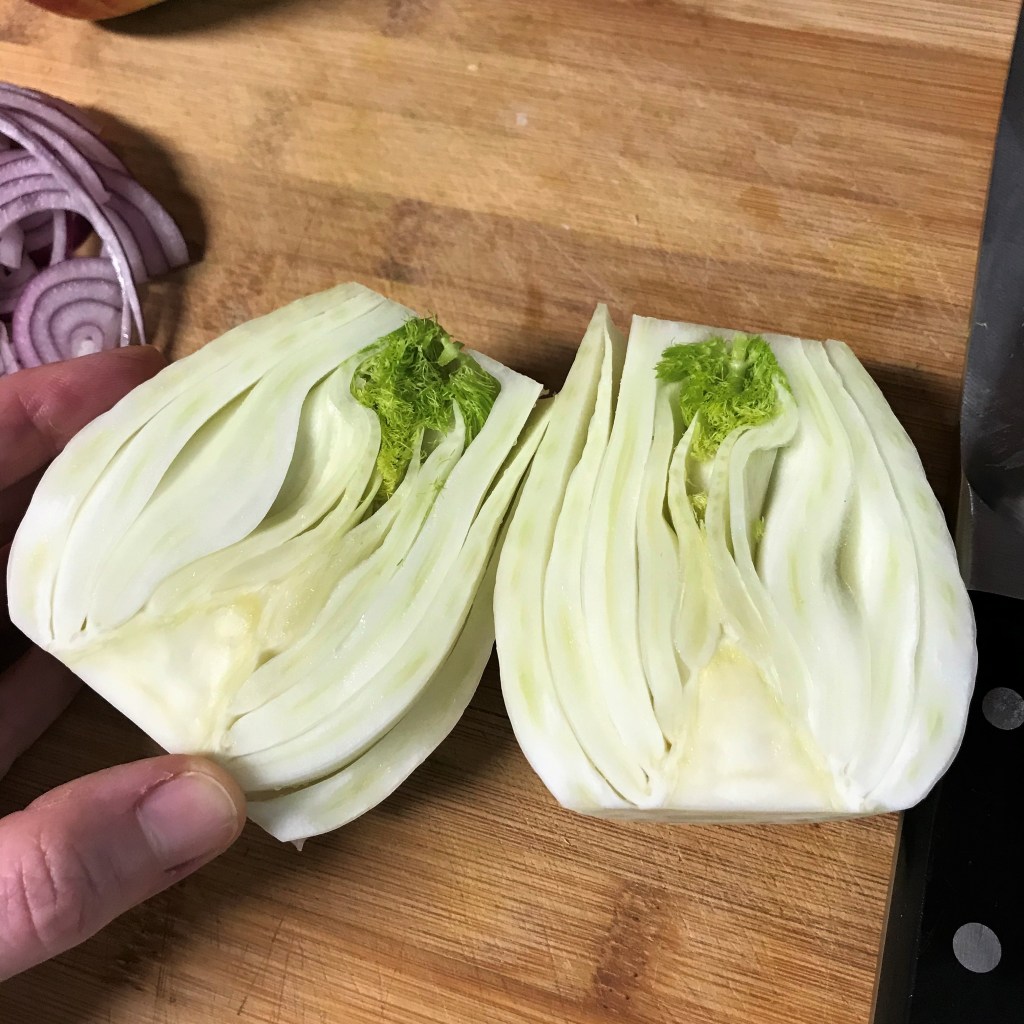
1/2 fennel bulb, trimmed and sliced thin

1/2 small red onion, sliced thin

1/4 cup dried cranberries

2 Tbsp. roasted, salted pumpkin seeds

Citrus-maple vinaigrette (recipe below)

Challah or brioche croutons (instructions below)


Citrus-maple vinaigrette w/sunflower oil and thyme

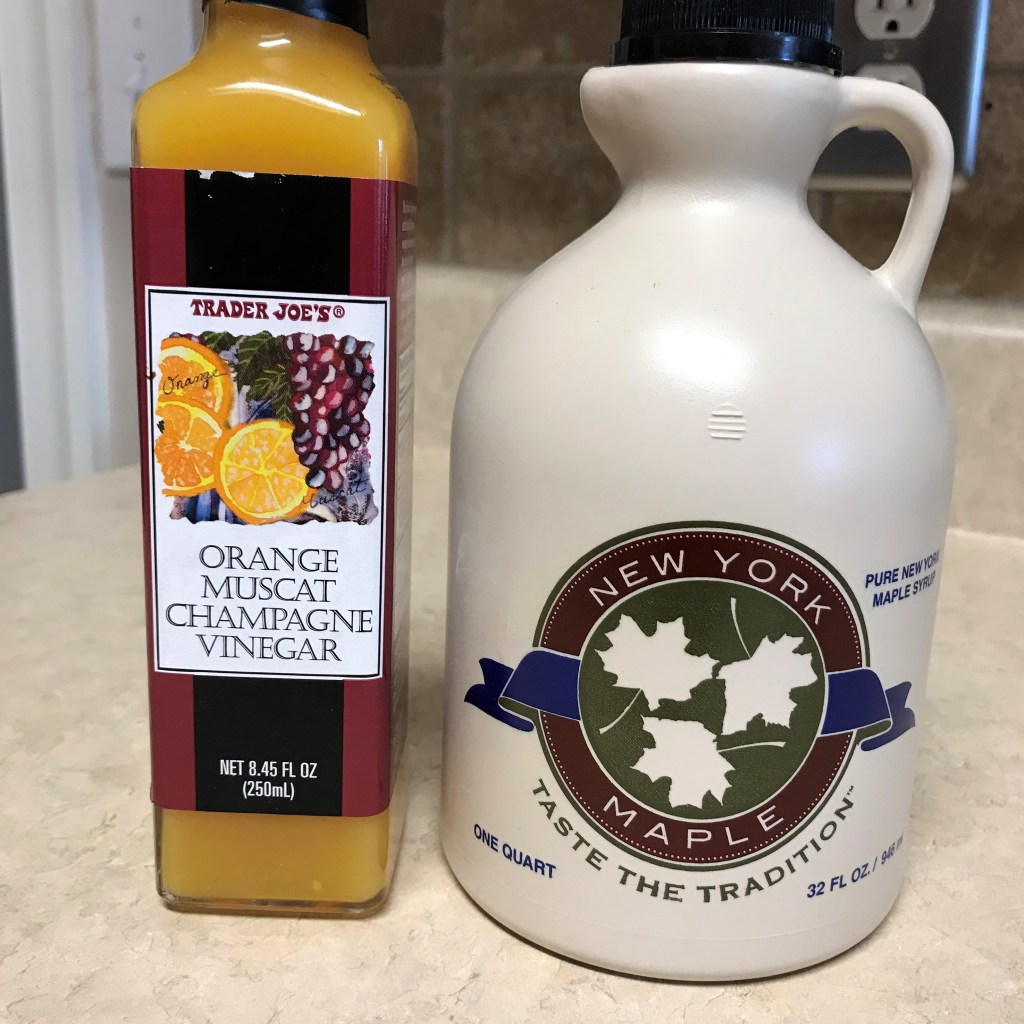
2 Tbsp. orange muscat champagne vinegar* (see notes)

1 Tbsp. maple syrup*

1 tsp. Dijon mustard

Salt and pepper

1 Tbsp. toasted sunflower oil

1 Tbsp. extra virgin olive oil                                                                                           

2 sprigs fresh thyme, leaves stripped

*Notes

The orange muscat champagne vinegar is a product from Trader Joe’s. If you cannot find it, I’d recommend substituting half apple cider vinegar and half freshly squeezed orange juice.

If you need to swap the maple syrup, I’d recommend half as much honey or a teaspoon of regular sugar.

Instructions

Most of this recipe needs no instruction; I don’t need to tell you how to slice an apple or sprinkle on dried cranberries. But here’s a bit of info you may find helpful for the prep of the other ingredients.

  1. Preheat the oven to 400° F. Line a rimmed cookie sheet with parchment paper or foil.
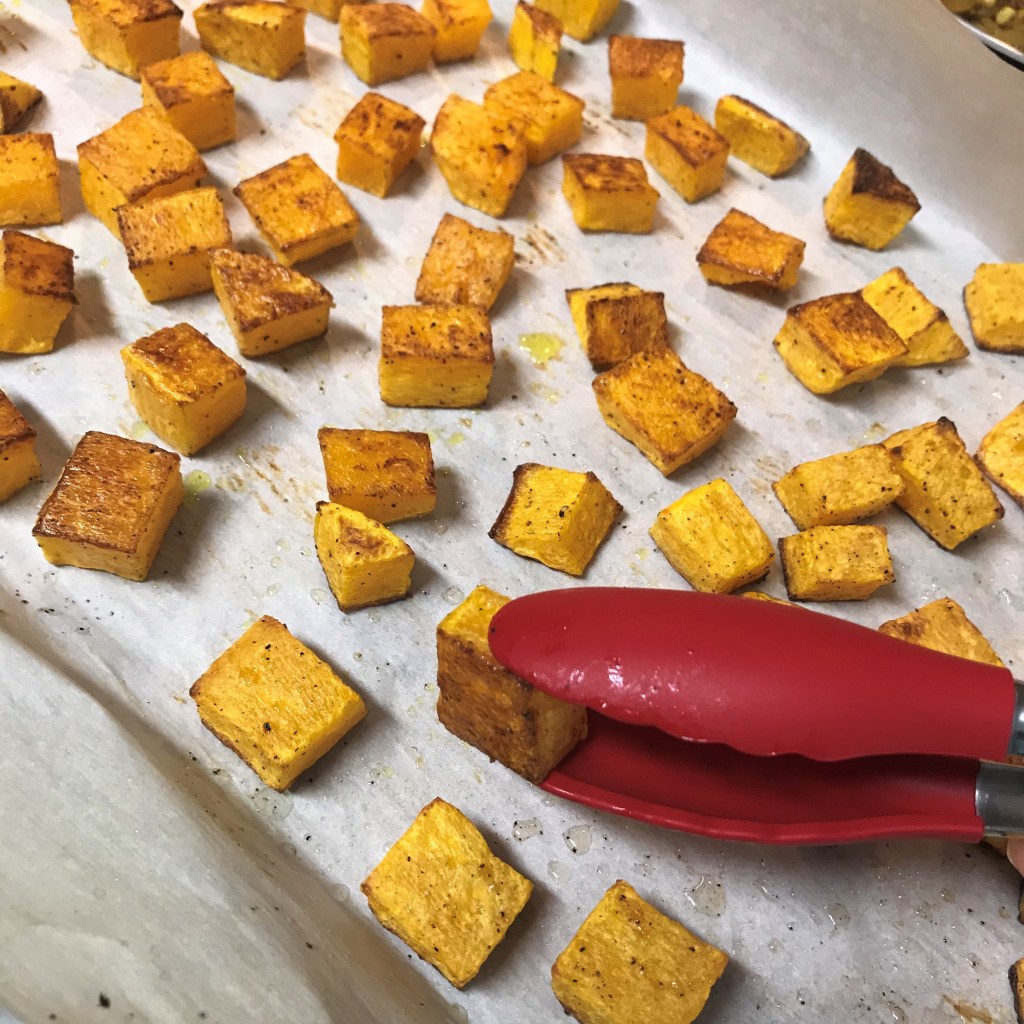
  2. Toss squash cubes with a tablespoon of olive oil, and arrange the cubes on the cookie sheet. Season with salt and pepper. Roast for 35 minutes, or until fork tender and lightly caramelized. Cool completely.
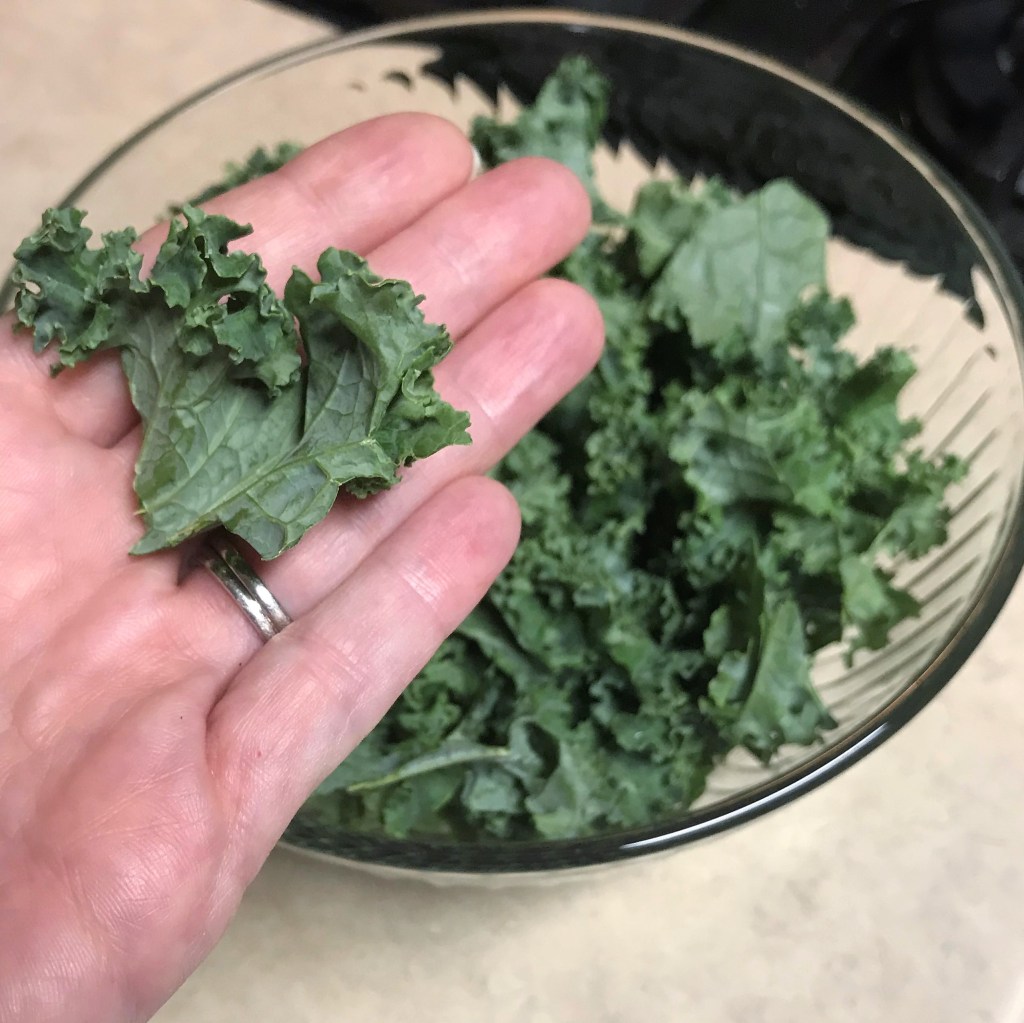
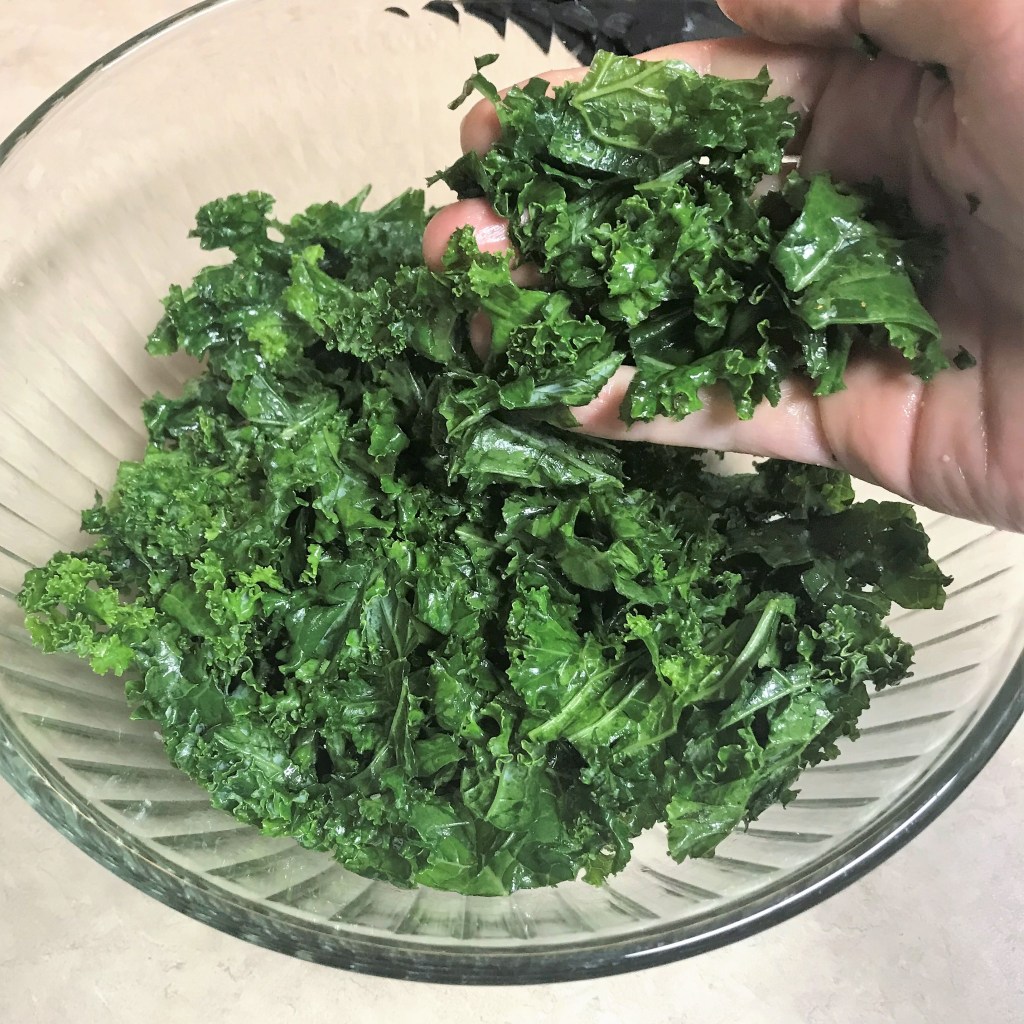
  3. In a large, deep bowl, drizzle a tablespoon olive oil over the chopped kale leaves. Using your hands, reach into the bowl and “scrunch” the kale throughout the bowl. As you massage the greens, they will soften up and wilt in volume. Give it a light sprinkling of kosher salt and pepper and then let it rest while you prep the other salad ingredients.
  4. Make the dressing: combine vinegar, maple syrup, Dijon mustard, salt and pepper in a small bowl or glass measuring cup. Gradually stream in sunflower oil and olive oil, whisking constantly to emulsify the dressing ingredients. Alternatively, you could combine all dressing ingredients in a lidded jar and shake the daylights out of it. Whatever works for you.
  5. Massage the kale once more, then add the spinach and torn romaine leaves and toss to combine.
  6. Drizzle about half of the citrus-thyme vinaigrette over the greens and toss again. Transfer the greens to a platter or individual serving plates.
  7. Add the cubed turkey to the salad. Scatter the pieces of onion, apple and fennel evenly over the greens. Sprinkle with dried cranberries and roasted pumpkin seeds and drizzle the remaining dressing over the entire platter.
  8. Serve with croutons, if desired.

Homemade Croutons

Cut up stale challah or brioche into large cubes or torn pieces. Drizzle with olive oil. Season with salt and pepper and arrange the bread pieces on a parchment-lined baking sheet. Bake at 300° F for about 30 minutes, tossing occasionally to ensure they dry uniformly. When they are crisp but still slightly soft, remove from the oven and cool completely. For this salad, I pulled leftover sourdough pumpkin challah from the freezer. The cubes roasted up nearly the same color as the butternut squash! 🙂

Want to print this recipe?


Autumn Weekend Brunch

If I took all the sweet, warm, comforting flavors of the fall season and combined them into a single weekend breakfast, what would it look like?

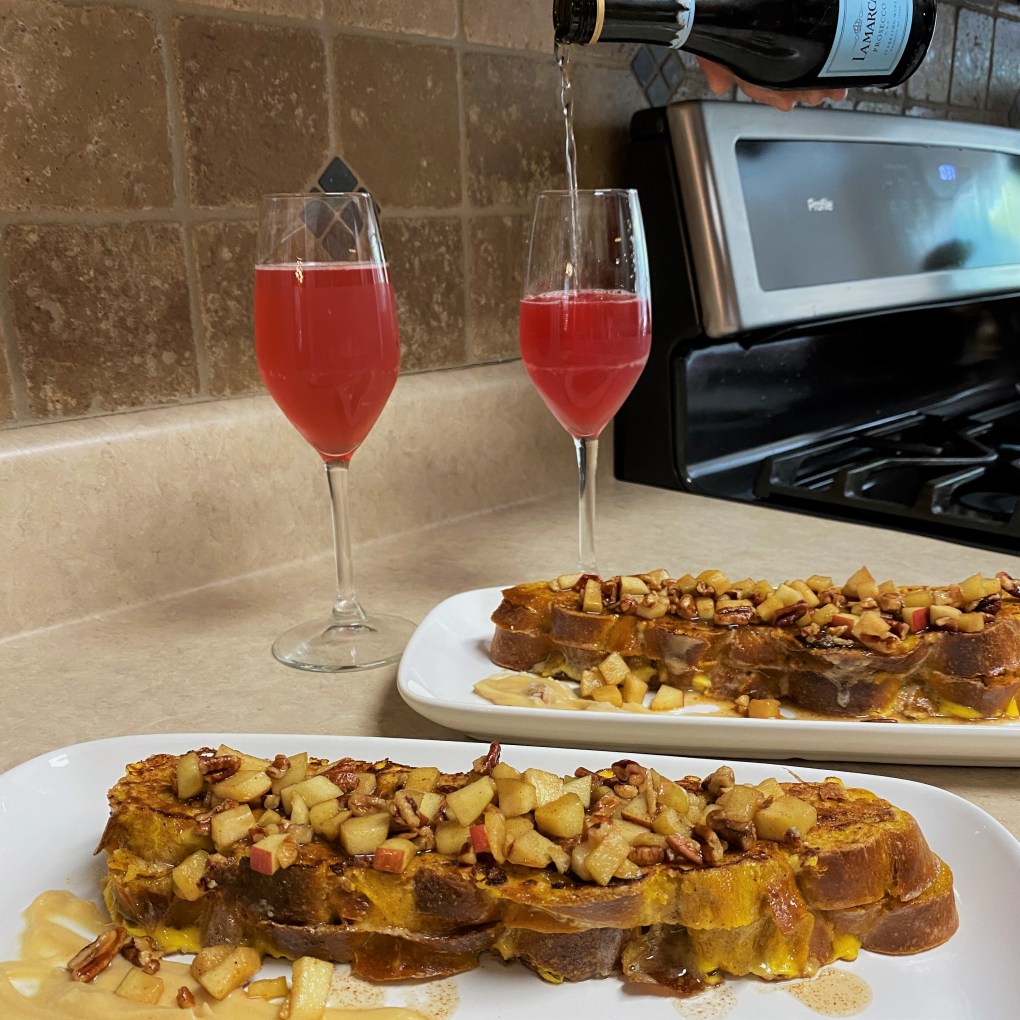
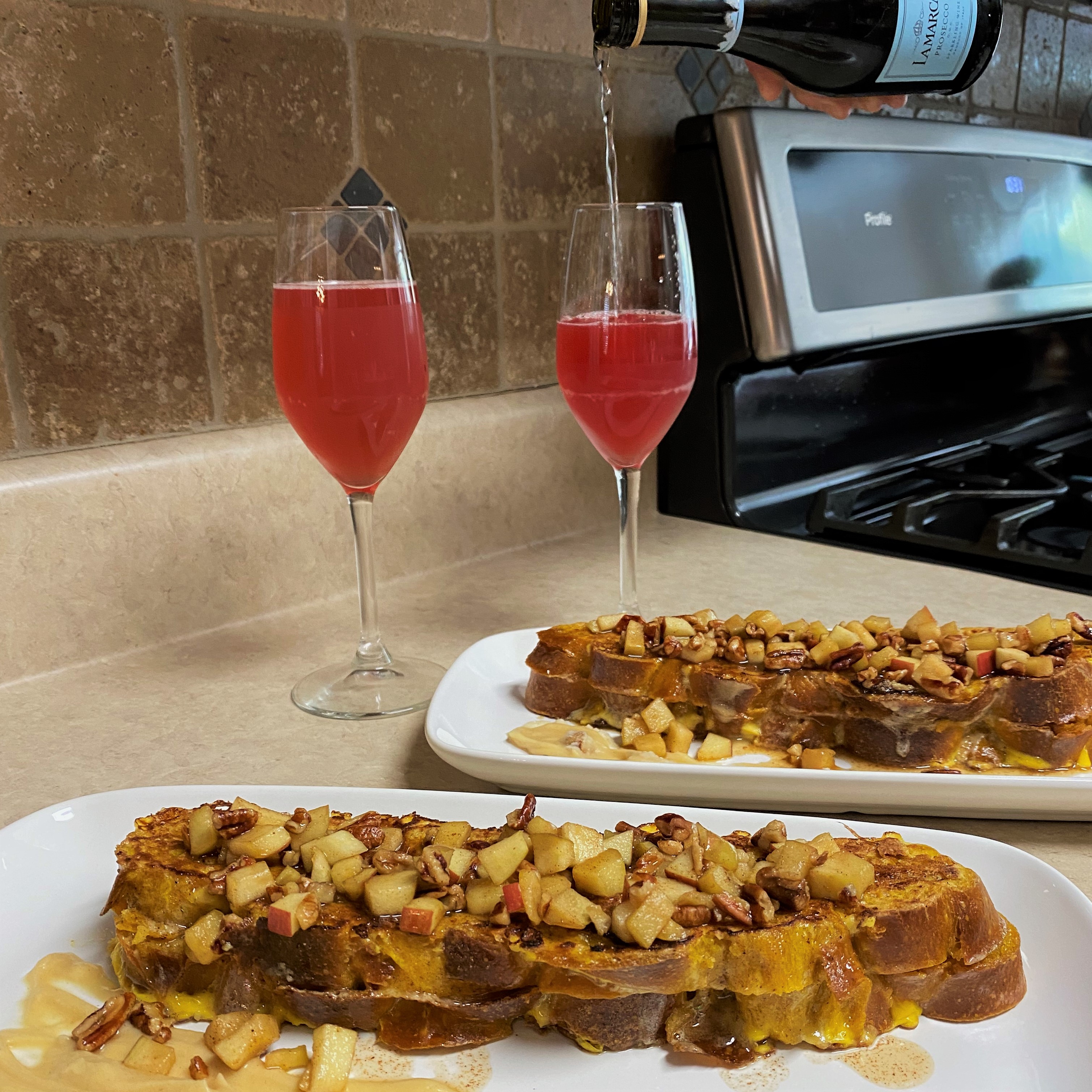
Pumpkin, maple, cinnamon, apples, pecans…it was a chorus of autumn voices singing across this plate!

Yes, I believe it would look a lot like this pumpkin challah French toast, stuffed with a cinnamon-y sweet and creamy maple-mascarpone filling and topped with a warm apple and pecan relish. I couldn’t resist throwing this over the top, given the surprise outcome of the sourdough pumpkin challah I made last week. The maple spice swirl inside the braided round loaf inspired me to repeat those flavors in a “go big or go home” recipe. The result is this French toast—with a luxurious, custard-like center, spiked with maple and spice and everything nice, and topped with a fresh apple and toasted pecan relish for a contrasting texture and bite.

Is it decadent? You bet. Sweet? You cannot imagine. And the only way to bring harmony to such a sweet and creamy brunch item is to serve it with a fall-inspired cranberry-cider mimosa. The prosecco bubbles, plus the tart and tangy flavor of the cranberry are welcome relief to so much richness.

Welcome back, Autumn! We’re so glad you’re here. 🙂

I’ll describe how I made this, but of course, I already had the sourdough pumpkin challah, which is not easy to find. If you enjoy baking bread, you might consider making your own. Or, to replicate the big autumn flavors in this dish, I’ll offer suggestions that allow you to use a regular challah or brioche, either of which should be much easier to get your hands on from the bakery department of your supermarket. My posts are meant to inspire, and however that happens at your house, enjoy!


Ingredients

4 large slices challah or brioche, slightly stale* (see notes)

3 oz. mascarpone*

2 Tbsp. maple cream*

1/4 tsp. cinnamon

3 eggs

2/3 cup whole milk* (see notes for pumpkin adjustment)

1/2 tsp. vanilla extract

pinch of kosher salt


*Notes

Challah and brioche are similar “eggy” breads—each has a light and delicate crumb, and both are perfectly suited for French toast, including this recipe. The primary difference is that brioche is made with butter and challah (being a popular Jewish bread) is frequently made with oil. Leave the slices unwrapped overnight, as the stale texture will force them to better absorb the egg mixture.

Mascarpone is an Italian-style cream cheese, but a bit richer and denser. I buy it in small tubs at Trader Joe’s. Regular cream cheese would also work fine in this recipe.

Maple cream—oh, sweet wonderful maple cream! This delightful confection is pure maple, but in a different form from syrup. It’s made by heating the syrup then whipping until it’s a spreadable texture, similar to peanut butter. It is positively decadent. If you cannot find it, substitute about 1 tablespoon maple syrup.

If using regular bakery challah or brioche, reduce milk to 1/2 cup and add 1/4 cup pure pumpkin puree to the egg mixture before soaking.


Instructions (a.k.a. “feast your eyes”)

  1. Using a handheld mixer, whip together the mascarpone, maple cream and cinnamon until smooth and spreadable.
  2. Spread maple-mascarpone mixture onto two slices of the challah or brioche, then top with remaining pieces to make two “sandwiches.”
  3. Whisk together eggs, milk, pumpkin (if using), vanilla and salt. Pour some of the mixture into a flat glass baking dish and place the filled sandwiches in the egg mixture. Drizzle the remaining mixture over the sandwiches and turn several times for about 20 minutes until most of the mixture has been absorbed.
  4. Heat a skillet or griddle over medium-low heat. When it’s evenly heated, place sandwiches on the griddle and cook until the underside is golden brown. Turn sandwiches over, taking care not to allow the top piece to slip off. Cook until the second side is golden brown.
  5. Serve warm with maple syrup, or go crazy and make the warm apple-pecan relish (below).

For warm apple relish topping:

To this point, pumpkin has enjoyed all the attention in my autumn-inspired brunch. But apples have equal star power this time of year, and this is their cue to step in and share the spotlight. This chunky topping provided textural contrast and flavor to the soft and creamy french toast.

1 medium firm apple, chopped into bite-sized pieces

1 tsp. fresh lemon juice (to prevent browning)

2 Tbsp. chopped toasted pecans

1 Tbsp. maple sugar (or syrup)

1/4 tsp. pumpkin pie spice or cinnamon

Squeeze lemon juice over apple pieces in a small microwave-safe bowl and stir to toss. Microwave for 30 seconds, just long enough to warm and slightly soften the apple bits. Stir in pecans, maple sugar (or syrup) and spice.


For the cran-cider mimosa

This brunch cocktail was exactly what we needed to slice through all the sweet, rich flavors of the French toast. If you prefer, you could easily adapt this to non-alcoholic by substituting selzter or ginger ale for the prosecco. My suggested amounts are for one cocktail.

2 oz. chilled apple cider (I used spiced cider from Trader Joe’s)

2 oz. chilled cranberry juice cocktail

2 oz. chilled prosecco or other bubbly (champagne, seltzer, ginger ale)


Layer ingredients in a champagne flute just before serving the French toast.


Want to print this recipe?


Fresh Broccoli-Apple Salad

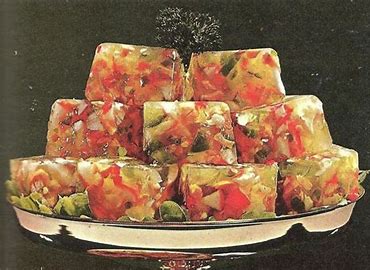
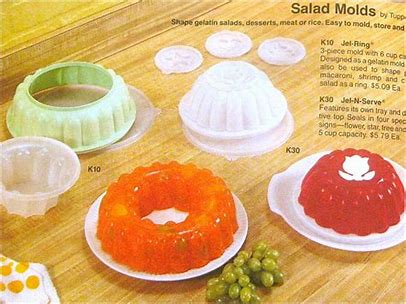
The word “salad” can mean a lot of things, depending on the generation during which the recipe was introduced. For example, in the 1960s or ’70s, a “salad” could have been anything from an iceberg lettuce-based dish served ahead of dinner to a molded concoction of sweetened gelatin, cottage cheese, marshmallow or who knows what.


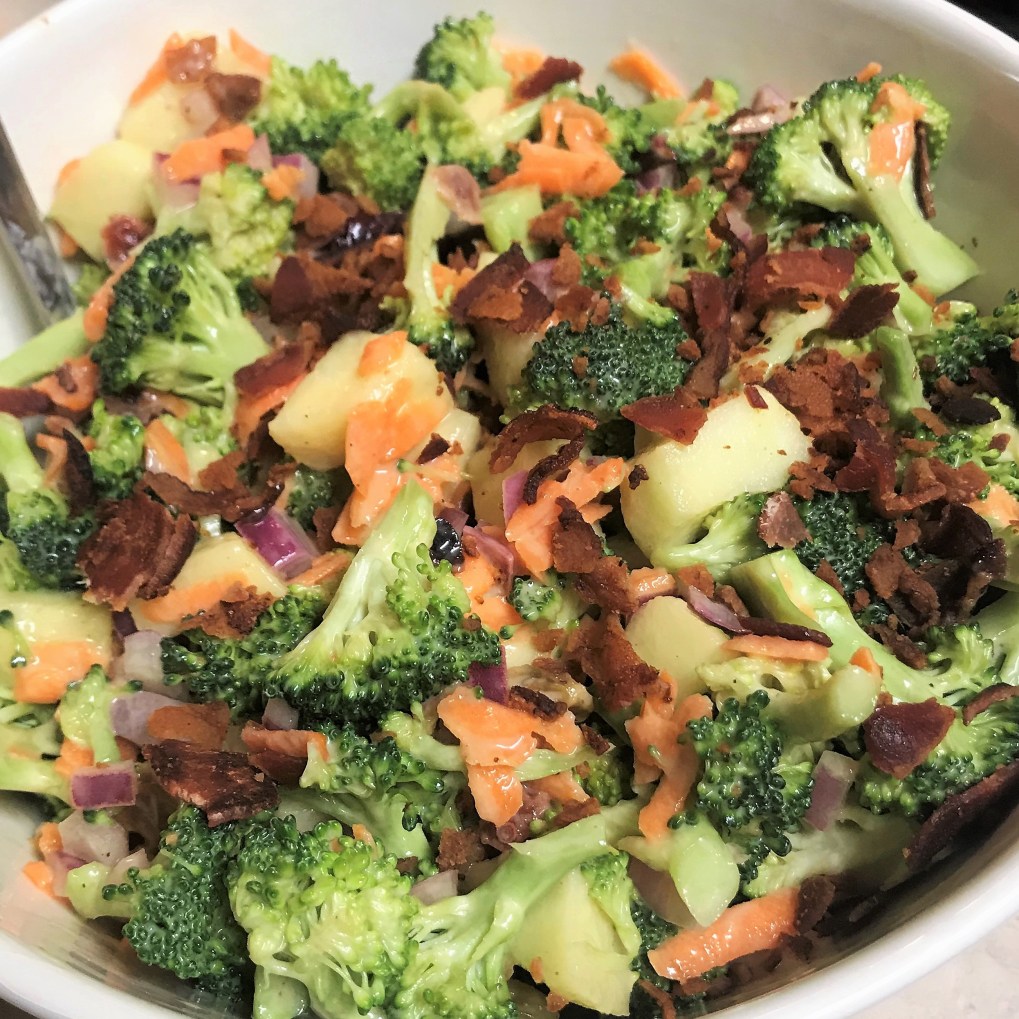
Blame our parents, if you need to, for those atrocities. But this salad is a real salad—vegetables, fruit, dressing—everything you want to complement what you’re serving for dinner in these modern times, especially if what you’re serving is coming off the grill.

Broccoli comes to us from the brassica family of vegetables, kin to brussels sprouts, cabbage and kale, to name a few. Some of these veggies carry a slightly bitter flavor, but here’s a tip to knock it down: give it a quick swim in boiling water (only for a few seconds), then shock it cold again in an ice water bath. Not only will you strip away some of that bitter flavor, you’ll also see the broccoli transform to a much brighter green color. Be sure to drain it well before proceeding with the salad, so the dressing doesn’t get watery.

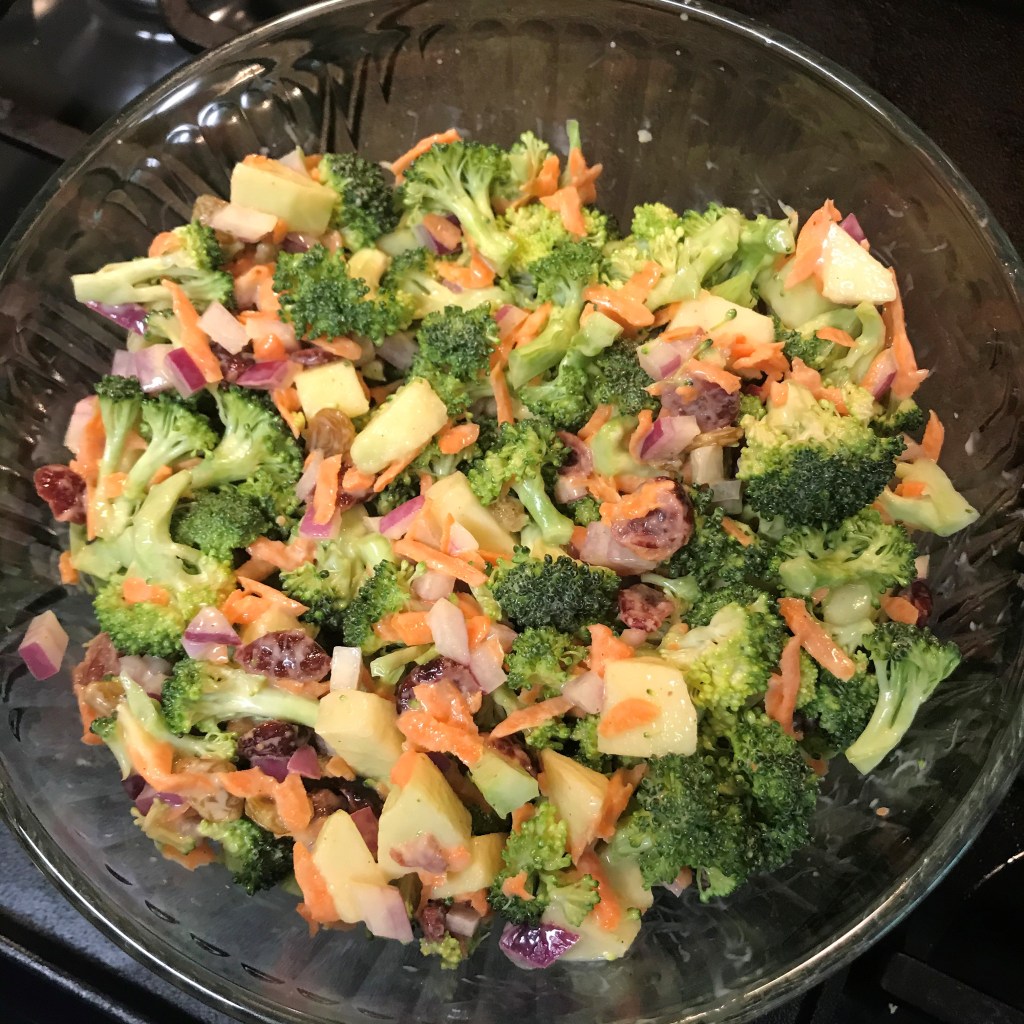
We love salads at our house, but my husband, Les, isn’t wild about broccoli by itself. A salad that features broccoli along with other flavors and textures is a great compromise, and he liked it. His son, Alex, has been with us for meals at least once a week since his return home from Europe at the start of the pandemic, and he announced at dinner that this dish has “all my favorite things in it.” I’m counting that a double success!

This dish is crunchy, cold, fresh and—despite the slight sweetness—still packed with nutrition. Approximately 6 servings.


Ingredients

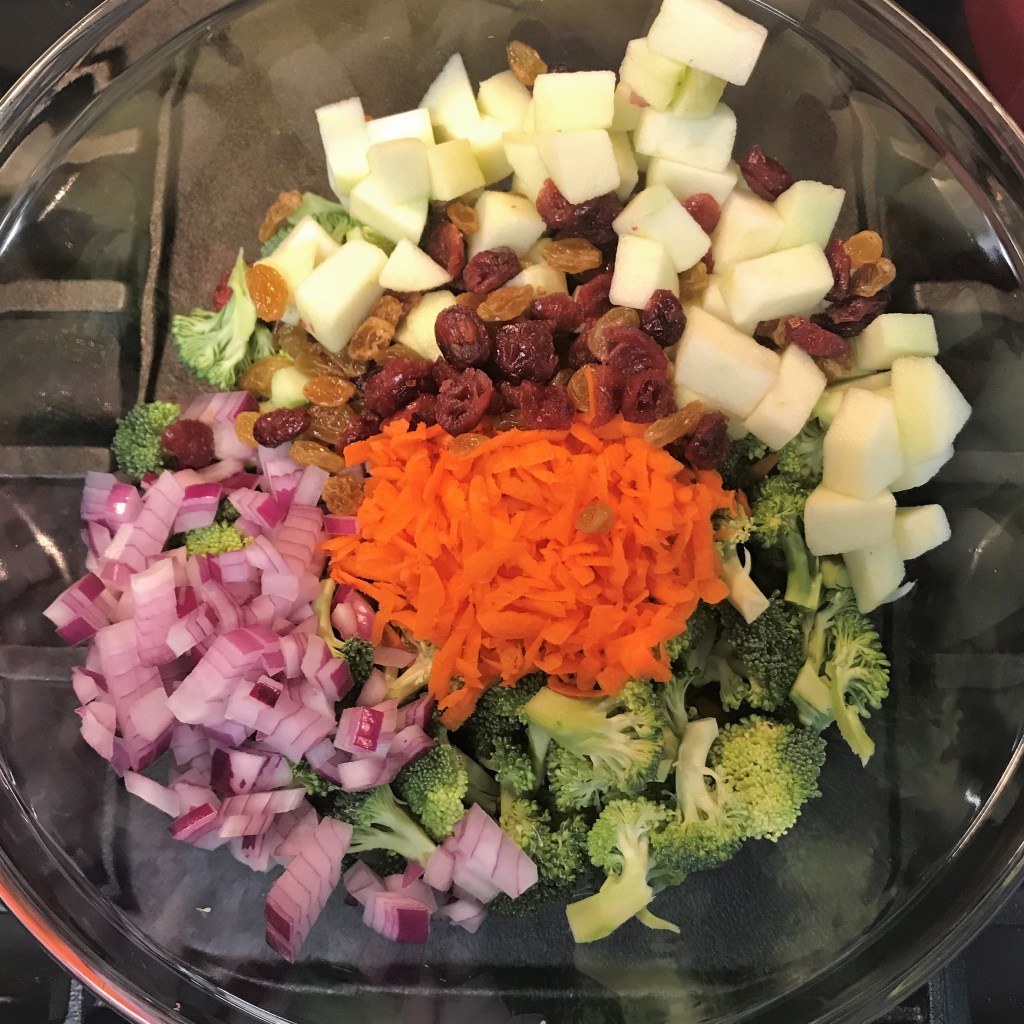
2 broccoli crowns, washed (about 4 cups worth)

2 medium carrots, peeled and shredded

1/2 cup red onion, chopped

1/2 cup golden raisin-dried cranberry blend, soaked briefly in hot water to plump

1 granny smith apple, peeled, cored and chopped

Juice of 1/2 lemon

3 slices thin bacon, cooked crisp and crumbled (this is optional)


If the dressing seems familiar, you might be remembering my creamy cole slaw a few months ago. It’s pretty much the same, repurposed for a different type of salad.

This dressing works for all kinds of summer salads!

Dressing Ingredients

1/4 cup light mayo

2 Tbsp. whole milk

2 Tbsp. buttermilk

2 Tbsp. lemon white balsamic* (or white wine vinegar or lemon juice, but double the sugar)

1 Tbsp. cane sugar

1 tsp. kosher salt

1/8 tsp. white pepper

Freshly ground black pepper


Instructions

  1. Dip the broccoli crowns very briefly into gently boiling water, then shock them in ice water and drain. This helps remove any bitter taste, and also brightens the color. You can skip this step if you don’t mind the slight bitterness of broccoli.
  2. Trim leaves from broccoli crowns and cut up into small bites. You can chop the broccoli if you’re in a hurry, but I like to have cut off whole pieces rather than “crumbs” of broccoli. My general rule of thumb for bite size is this: If a piece is large enough to completely cover a quarter, it’s too big, so I’ll cut it in half.
  3. Combine broccoli pieces with onions, plumped raisins, carrot shreds. Toss the apple pieces in the lemon juice to prevent browning. Add them to the salad.
  4. Combine all dressing ingredients and whisk until smooth. Pour over salad and toss to evenly coat. Refrigerate a few hours to allow flavors to mingle.
  5. Scatter crispy bacon (if using) over salad just before serving.
The crispy bacon adds a nice touch of salty and smoky on this hearty summer side.

Want to print this recipe?