Easy Stewed Prunes

For the past several weeks, I’ve been suffering through my least favorite winter tradition:  regulating my digestive system. On New Year’s Eve, squeezed in between our latest fancy pizzas and the decadent chocolate dessert that ended our evening with friends, I had a Caesar salad. And I realized, as I savored the fresh crunch of the chilled romaine, that it was the first truly fresh thing I’d eaten in a while. Sure, I’ve had plenty of vegetables since Thanksgiving, but most of them were cooked, baked or stewed, doused in cream, butter or gravy. There’s been so much meat and cheese and booze and sweets, and my gut is announcing loud and clear that it does not approve.

I call this unpleasant digestive situation a “tradition” because it has been happening to me every year between Thanksgiving and New Year’s for about a decade. All the rich foods of this season provoke questionable choices that don’t land well for my body. Do I know better? Of course, but the lure of butter and cream and simple carbs and cocktails is powerful, and that sluggish feeling that follows overindulging is compounded by a total lack of energy to do anything, especially in the cold weather and with a stack of my favorite Christmas DVDs nearby. I am doubly wrecked.

Surely, I’m not alone in this annual trip down indigestion lane, and so I’ve decided to share with you one of my favorite gut reset recipes, which I’ve made many times over the past decade or so. In addition to their ability to get things, ahem, moving again, these morsels are sweet enough (without added sugar, mind you) to pacify my sugar dependence after too many holiday treats. All of that from only two ingredients? Behold, stewed prunes!
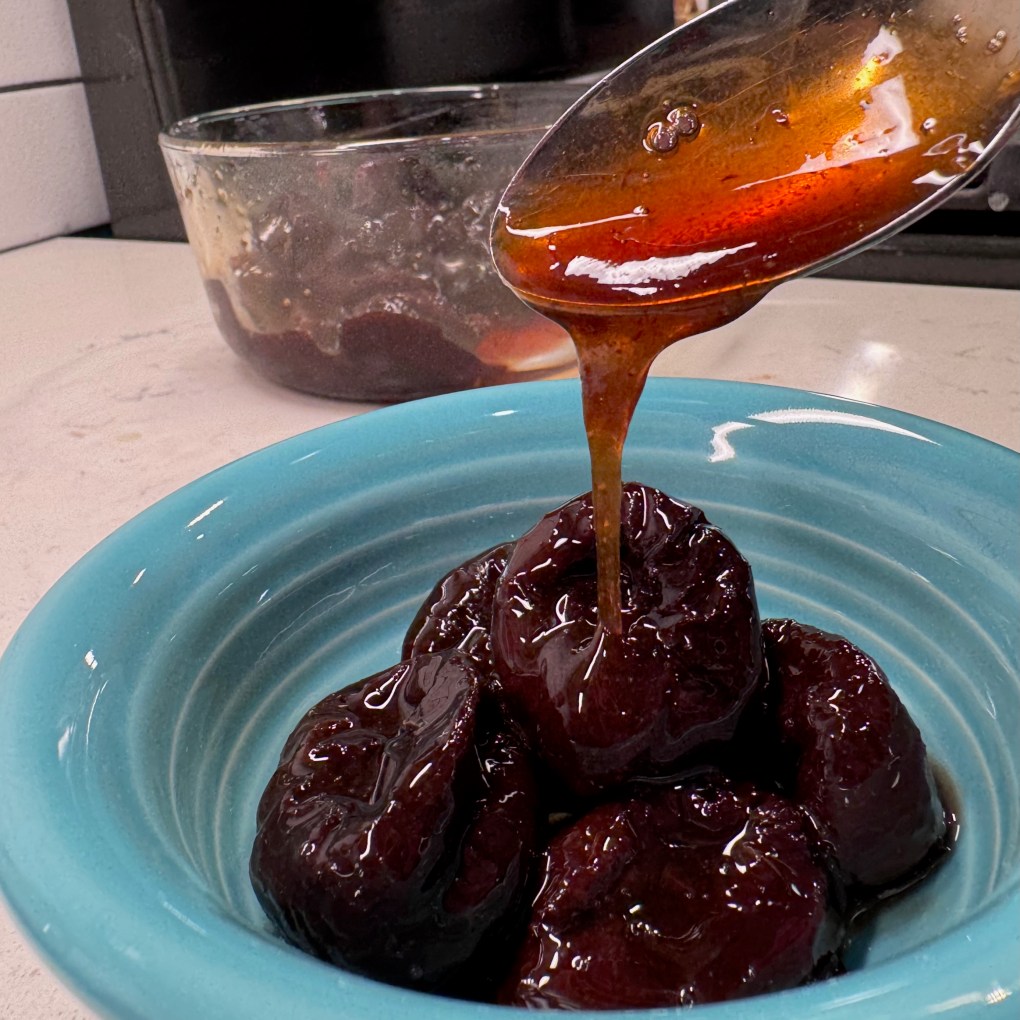
They create their own syrup in the fridge!

Oh, stop your snickering. Prunes— or you can call them dried plums, if it makes you feel less old— are not only fiber-rich and delicious; according to my Reader’s Digest A to Z guide, Foods that Harm, Foods that Heal, these chewy little nuggets happen to be high in vitamin A, potassium and iron. And though they tip the high side of the scales in sugar content (they are concentrated fruit, after all), they are low on the glycemic index, which means they don’t spike your blood sugar, they’re digested slowly and they leave you feeling full. Honestly, I don’t know why they’ve been reduced to a punchline.

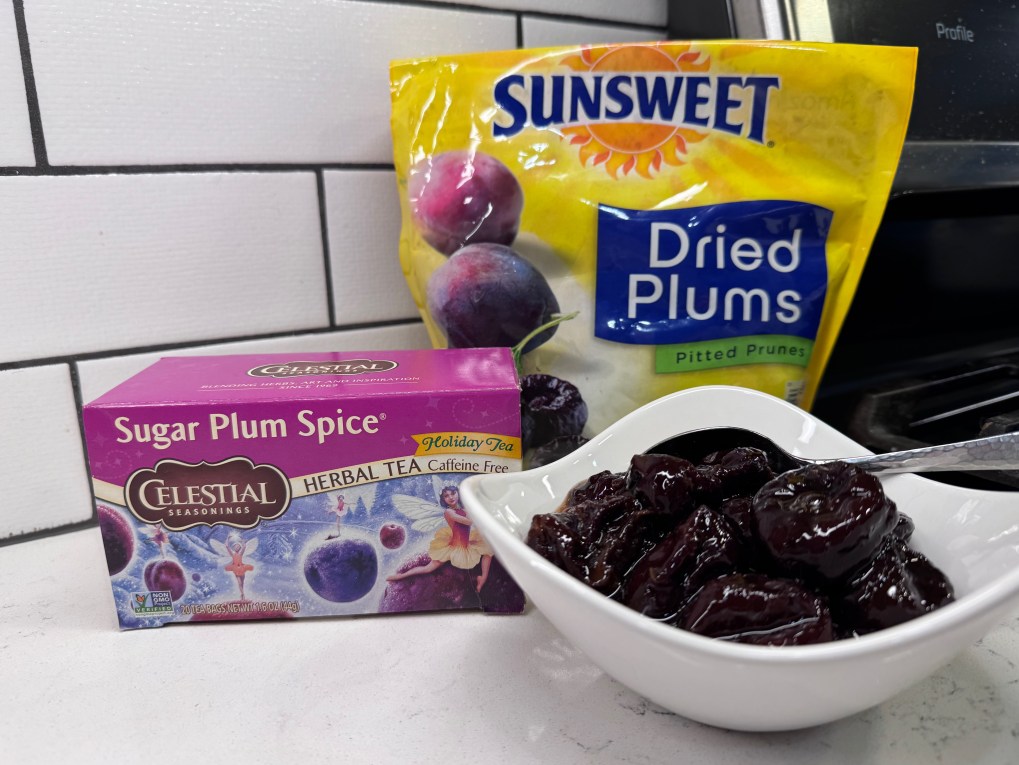
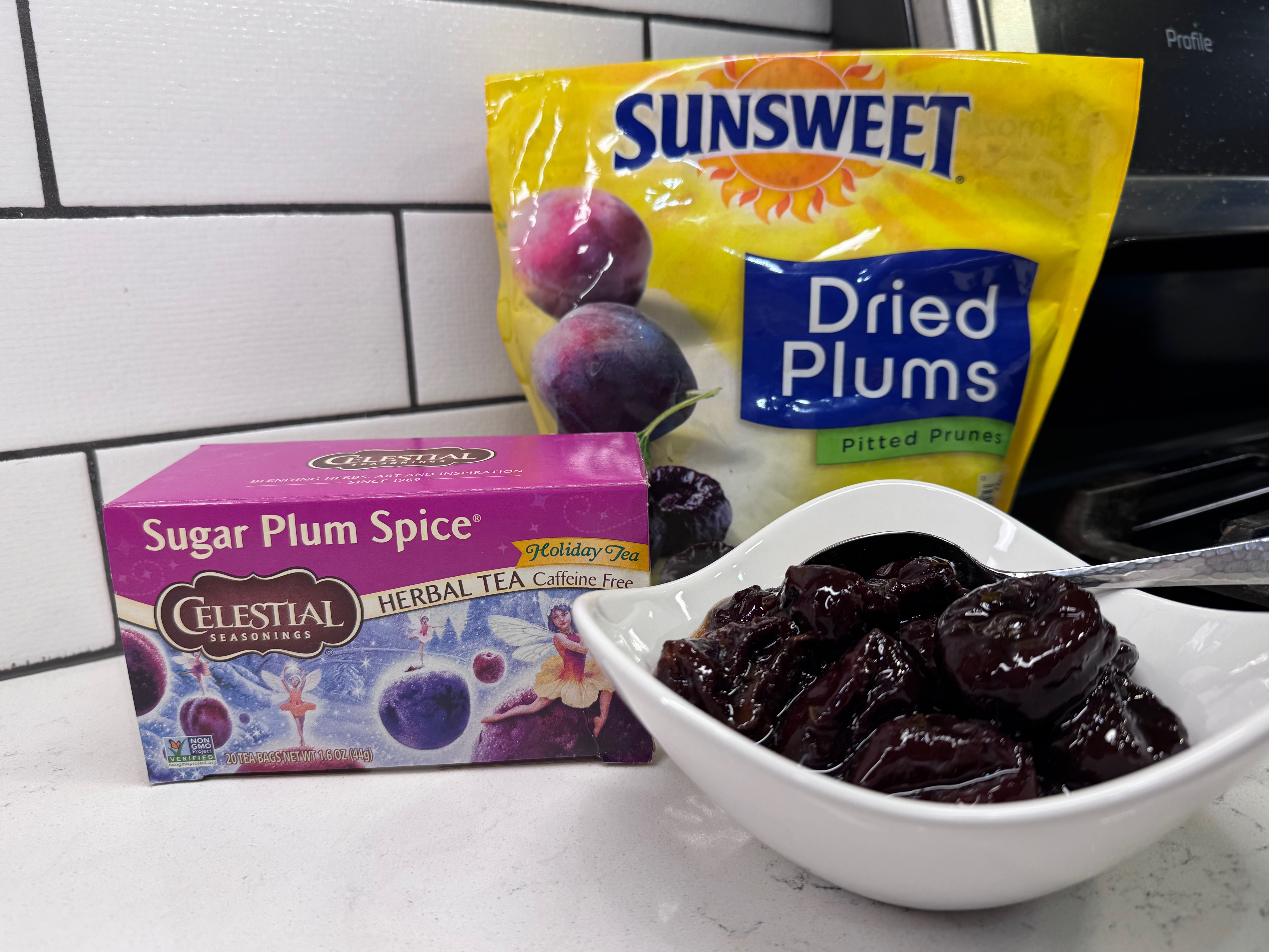
I buy these enormous bags of prunes at Costco that last approximately forever, and while I am often content to stand in front of the fridge and eat them straight out of the bag (sweet like candy, they are), I also like to put them in my Moroccan Chicken recipe. But my favorite way to enjoy them is stewed at breakfast. Stewing puts an elegant spin on prunes, takes some of the sticky out of them, and also creates a world of possibility for flavor infusion. You can do this on the stove by cooking the prunes in a flavorful liquid, but I like the slow and easy steeped method that I’m about to show you. All you need is a bowl full of prunes, some boiling water and a couple of tea bags. What kind of tea? Well, take your pick!
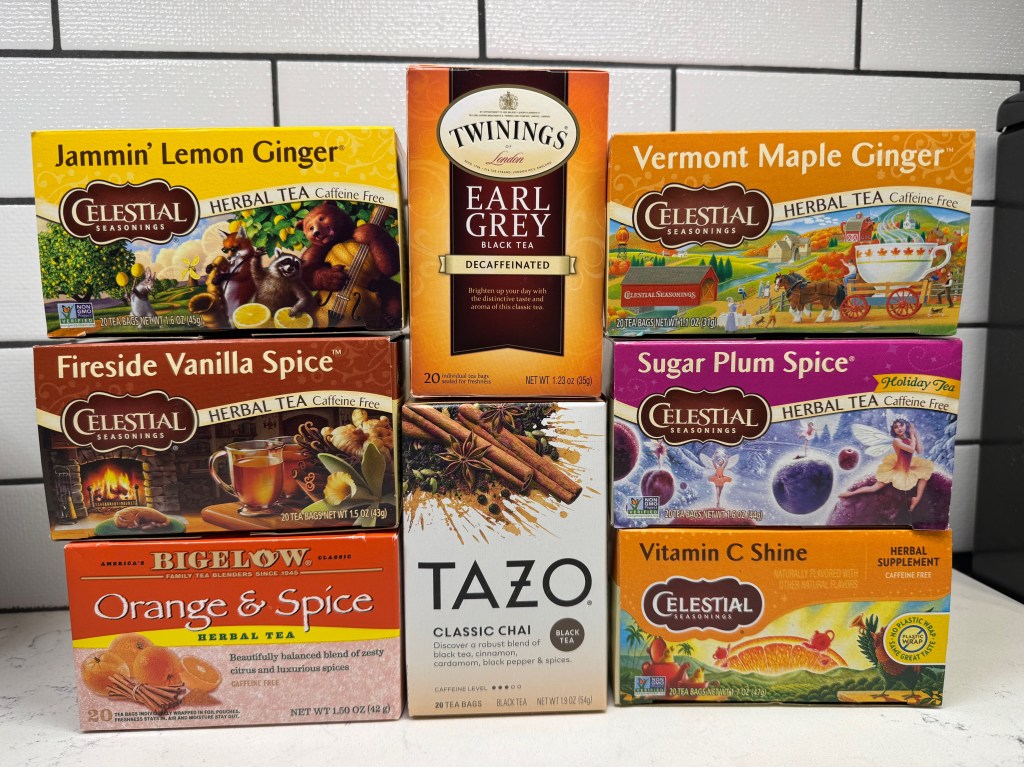

I have no loyalty to a brand, and usually just look for a flavor that matches my mood or the season.

Start stewing!

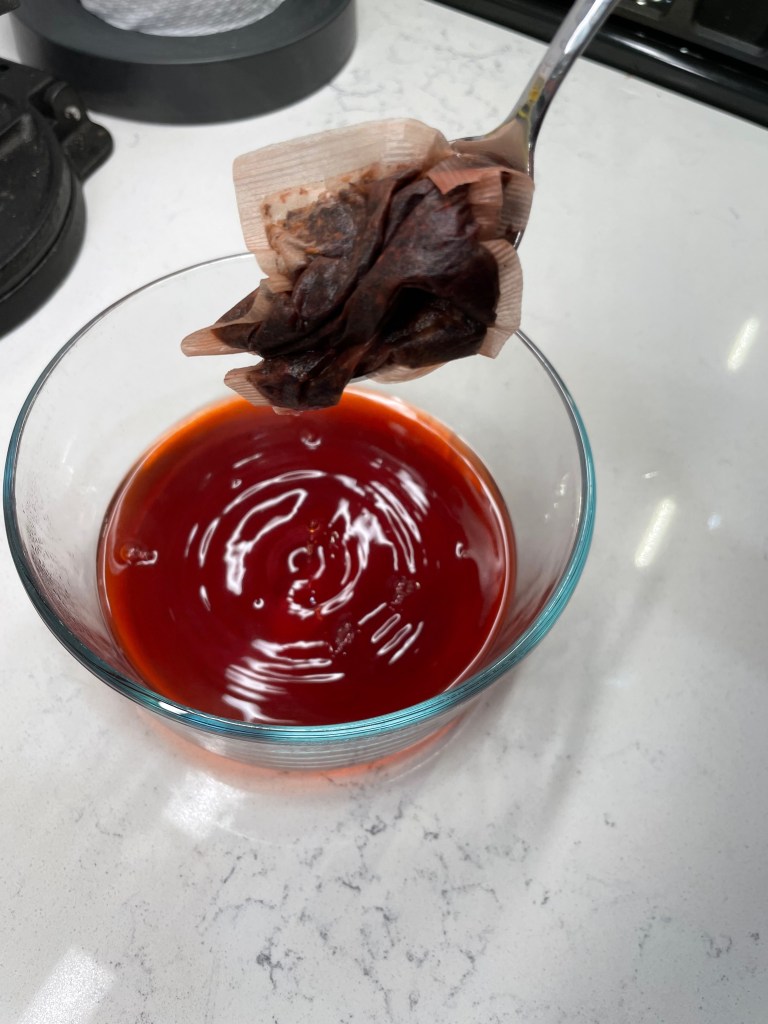
Bring a tea kettle to boil and measure out about 1 cup water into a heatproof glass bowl. Drop in the tea bags and let them steep about 5 minutes. Remove the tea bags, gently squeezing to extract the most flavor (it should be pretty strong). Add the prunes and fold or turn them several times to submerge them. Make sure every prune gets to mingle in the tea while it’s still hot. Cover the bowl and leave it on the counter to cool, checking and stirring a couple of times along the way. When they are completely cooled, turn them once more, press to completely submerge them in the tea, and tuck the bowl into the fridge. If you think of it, give them a turn once a day until you’re ready to enjoy them.
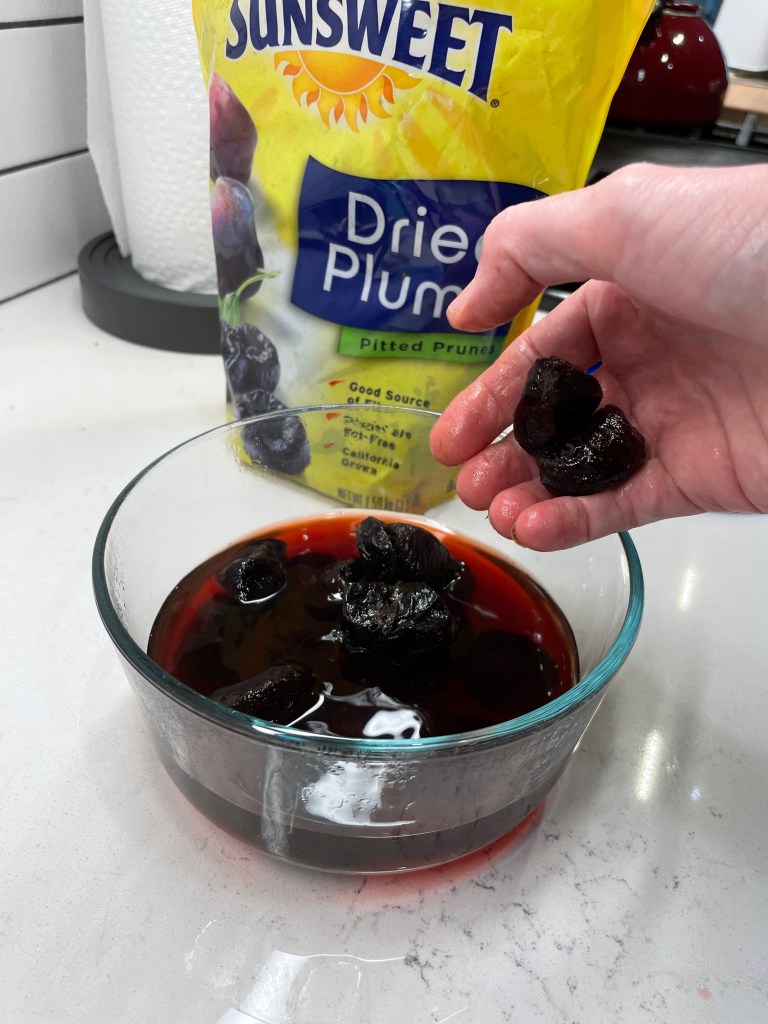
You’ll notice after only a couple of days that the liquid tea has turned to syrup, and this will only get thicker and more delicious with time.
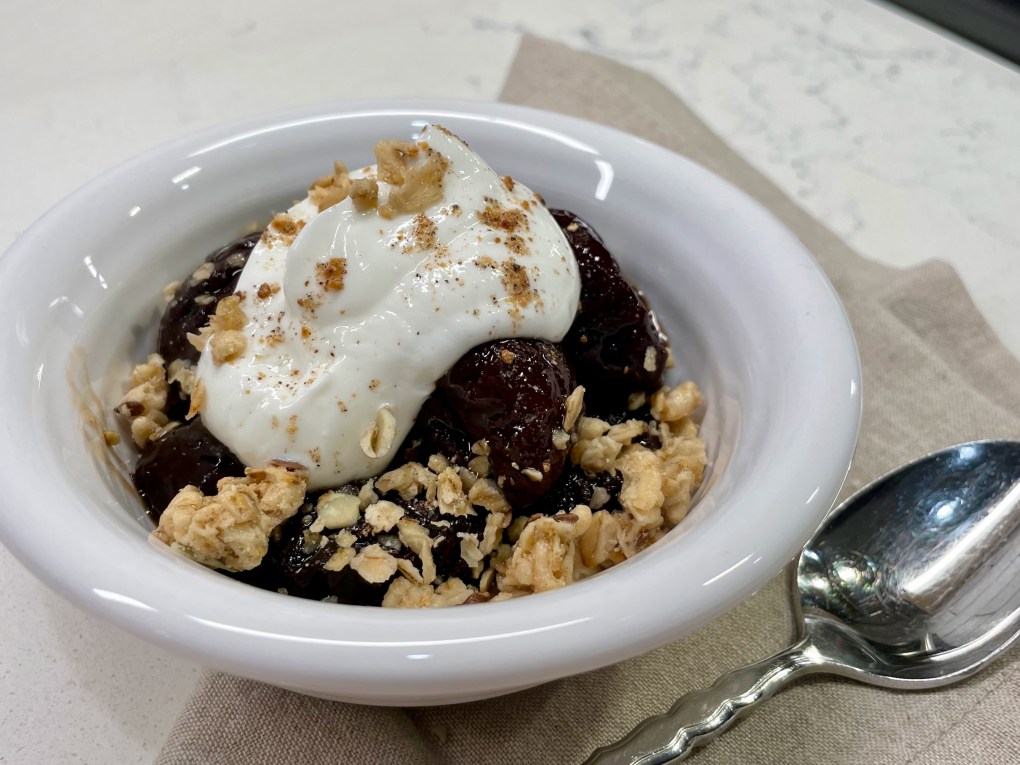
Make ’em fancy if you want.

They will be sweet from their own sugar, and the flavor of your tea will shine through as well. Serve them alongside your avocado toast or with a hard-boiled egg, or decorate your morning oatmeal with them. If you want to fancy them up, dollop on some Greek yogurt with orange or lemon zest, or even a sprinkling of granola. You may be tempted to eat a bowlful of these, but bear in mind that a 100-calorie serving is roughly three prunes.

Delicious, simple and good for you. Enjoy!

Easy Stewed Prunes
  • Servings: About 12
  • Difficulty: Average
  • Print

There's plenty to appreciate about this easy, two-ingredient recipe. They basically make themselves, they are full of fiber, antioxidants and minerals, and you can enjoy them for breakfast, dessert or just a midday snack. It's my favorite way to reset my digestion after the rich foods of the holiday season.


Ingredients

  • 2 cups dried plums (also known as prunes)
  • 2 tea bags of choice
  • 1 cup boiling water

Note: There’s no right or wrong flavor of tea here. I personally love the “spiced” flavors, such as Chai or cinnamon, but Earl Gray tea is lovely with these, as are many herbal varieties. I haven’t tried this with green tea, but I don’t see why it wouldn’t work, especially if there’s a little jasmine in it!

Directions

  1. Place about 2 cups of whole prunes in a smallish bowl, one that is large enough to hold the prunes when they are covered with liquid.
  2. Add tea bags to hot water in a glass measuring cup or mug. Allow tea to steep for about five minutes, then remove tea bags and discard them.
  3. Pour strong tea over prunes and gently stir to saturate and submerge them in the tea. Cover the bowl and allow it to cool to room temperature. Refrigerate for several days or up to a few weeks. As the prunes absorb the flavorful tea, they will release natural sugars that will thicken into a delightful syrup.
Sourdough Pumpkin & Sage English Muffins

It’s always a comical scene at Trader Joe’s this time of year, as every aisle, endcap and special display is loaded up with pumpkin spice goodies. Eager customers load up their carts with all the pumpkin spice cookies, donuts, oat milk, cold brew concentrate (guilty) and even candles and dog biscuits flavored with pumpkin spice. It’s a fall frenzy! Love it or hate it, this trend isn’t going away anytime soon. 

And though I personally love the pumpkin and sweet spice combination, I also love the savory side of pumpkin, which doesn’t get nearly enough attention when fall rolls around. Pumpkin on its own is not sweet at all— it’s a variety of winter squash, you know— but we have become so conditioned to think of it as a pie filling or latté enhancer that we sometimes miss the opportunity to let those savory aspects shine. 

Autumn Benedicts, anyone?

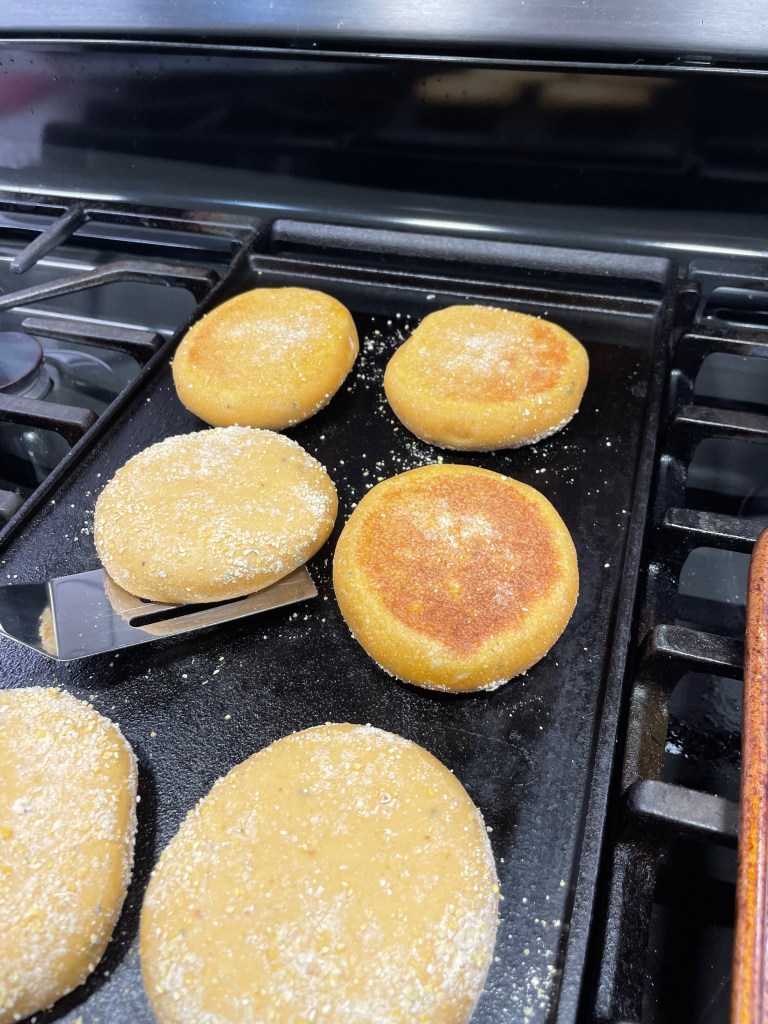
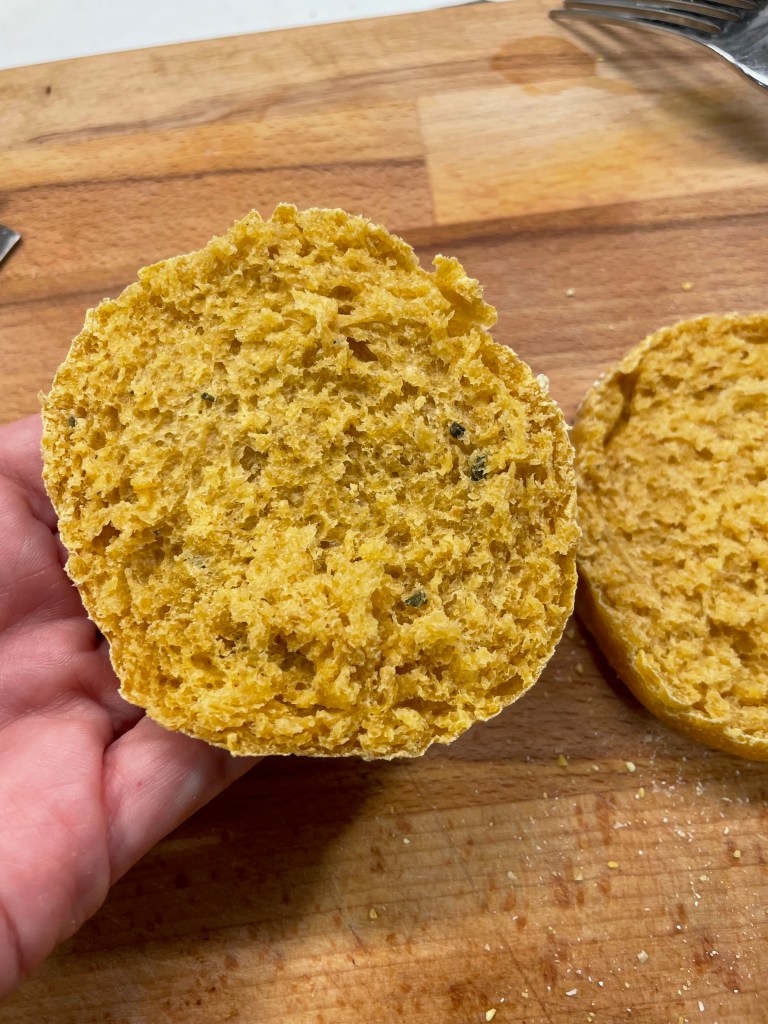
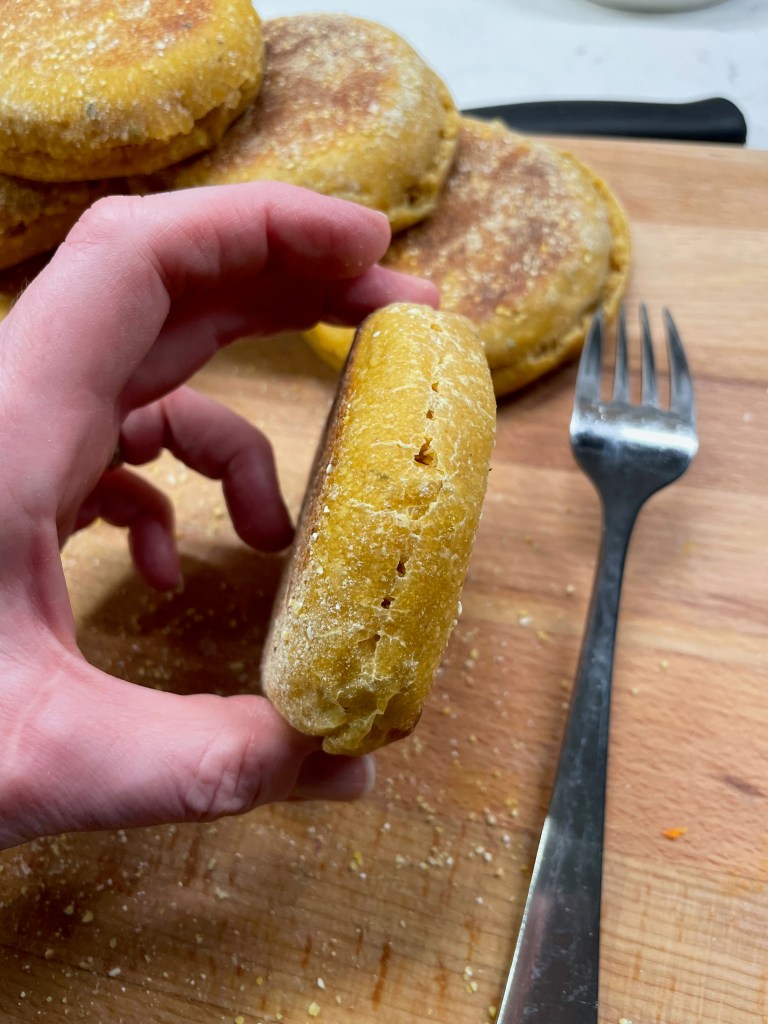
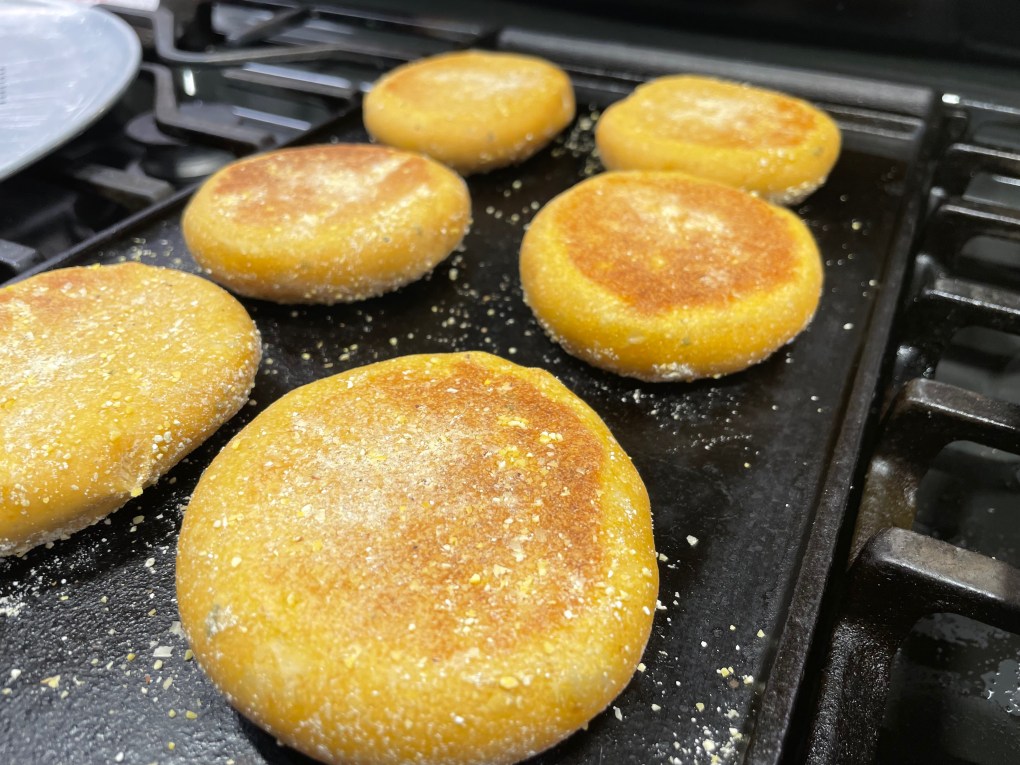
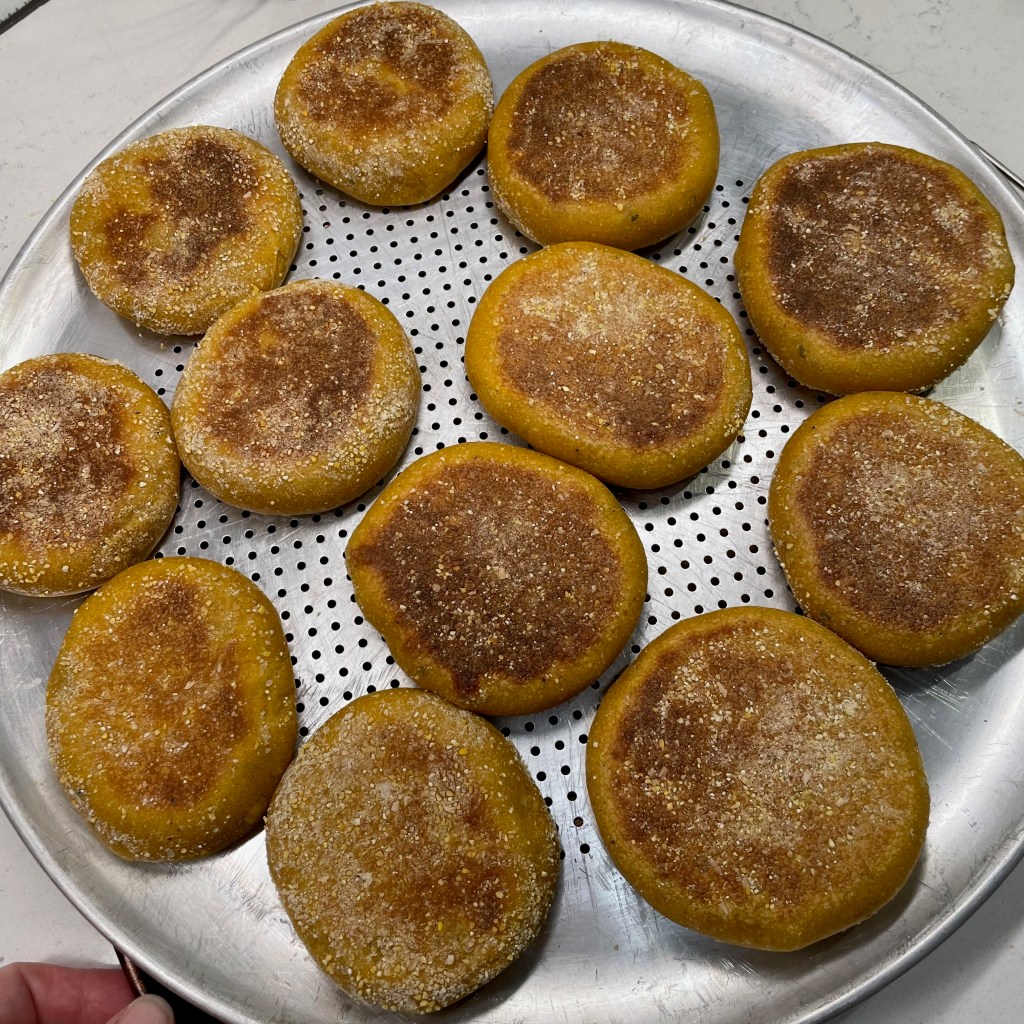
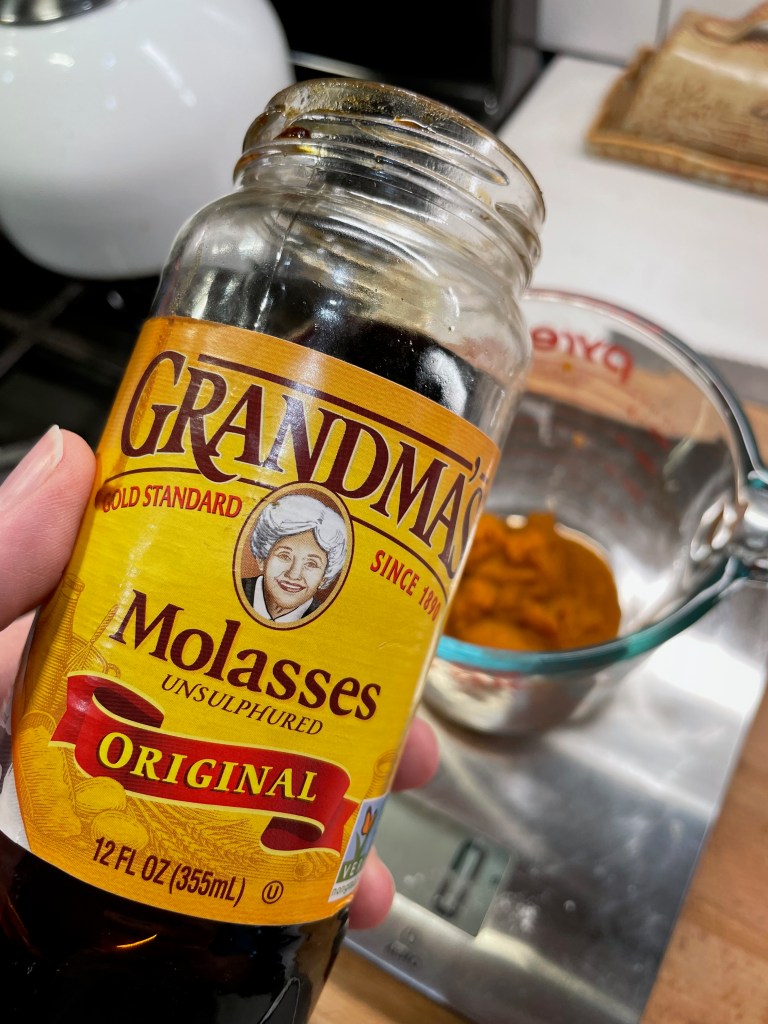
But today, these barely sweet, griddle-baked goodies are getting all the praise. I’ve made a few easy swaps from my go-to sourdough English muffin recipe, working in pure pumpkin and a swap of molasses, plus a hint of onion and some fresh chopped sage leaves. 


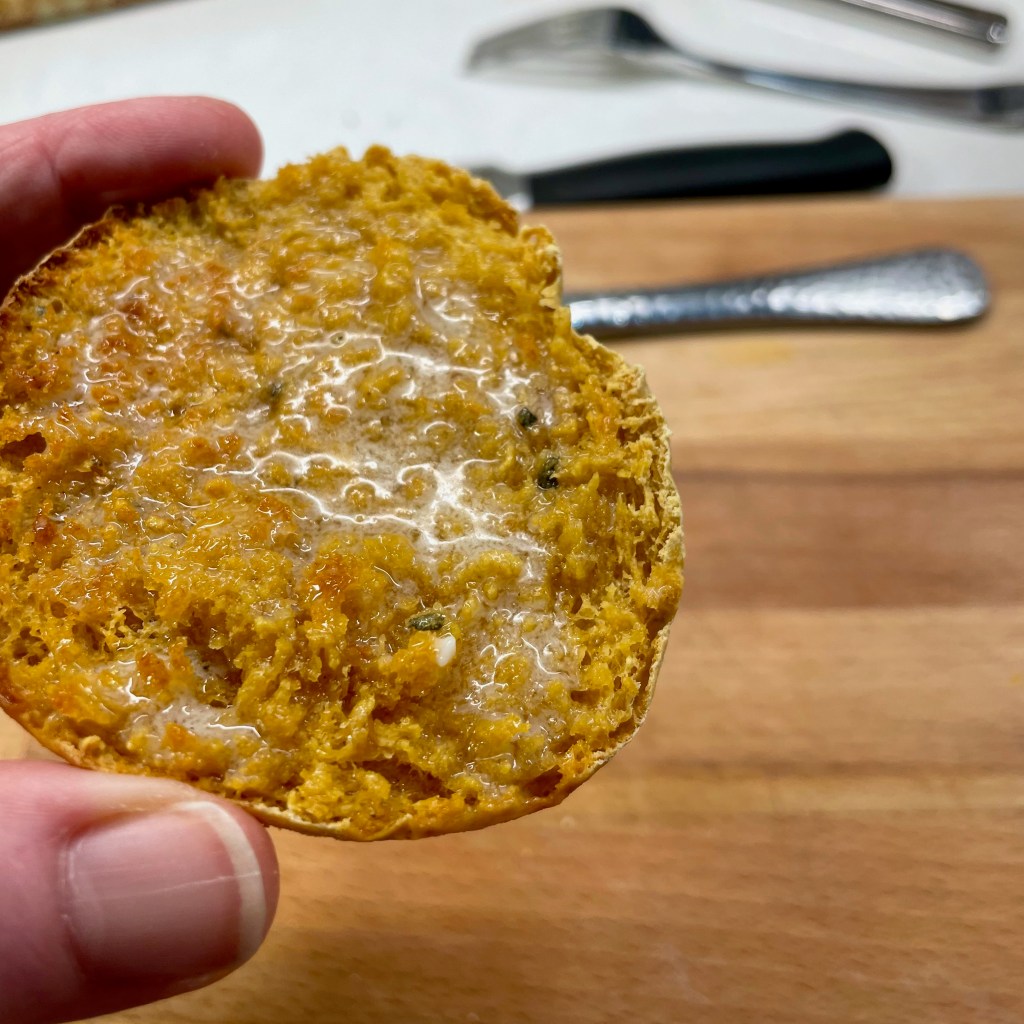
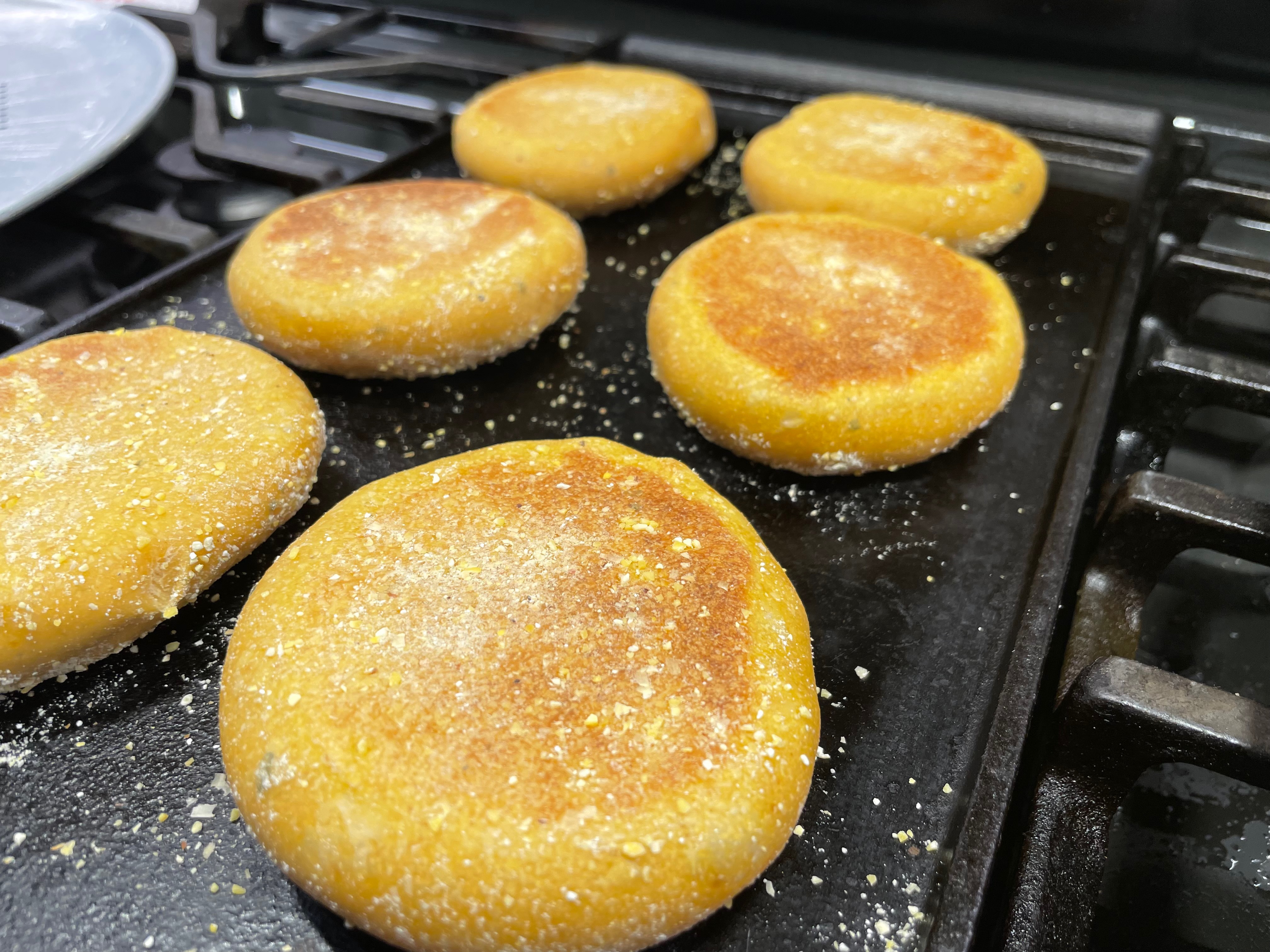
The dough is easy to work, and there’s no need to even turn on the oven because these babies bake on a griddle or in a hot cast iron pan. Let them bring some seasonal pizzazz to your breakfast sandwiches and autumn brunches. Also perfect just toasted with butter. 

I want one of these every day until Spring!

Welcome, fall. We are so glad you’re here!


Sourdough Pumpkin & Sage English Muffins

  • Servings: 12 muffins
  • Difficulty: Average
  • Print

This easy recipe gives pumpkin a chance to show off its savory side. With onion, sage and a touch of molasses, these griddle-baked muffins are ready to elevate your autumn breakfasts. They also work great for turkey sandwiches!


Ingredients

  • 106 g pumpkin puree
  • 170 g warm water
  • 28 g olive oil
  • 113 g ripe sourdough starter
  • 15 g molasses
  • 1 Tbsp fresh sage leaves, chopped
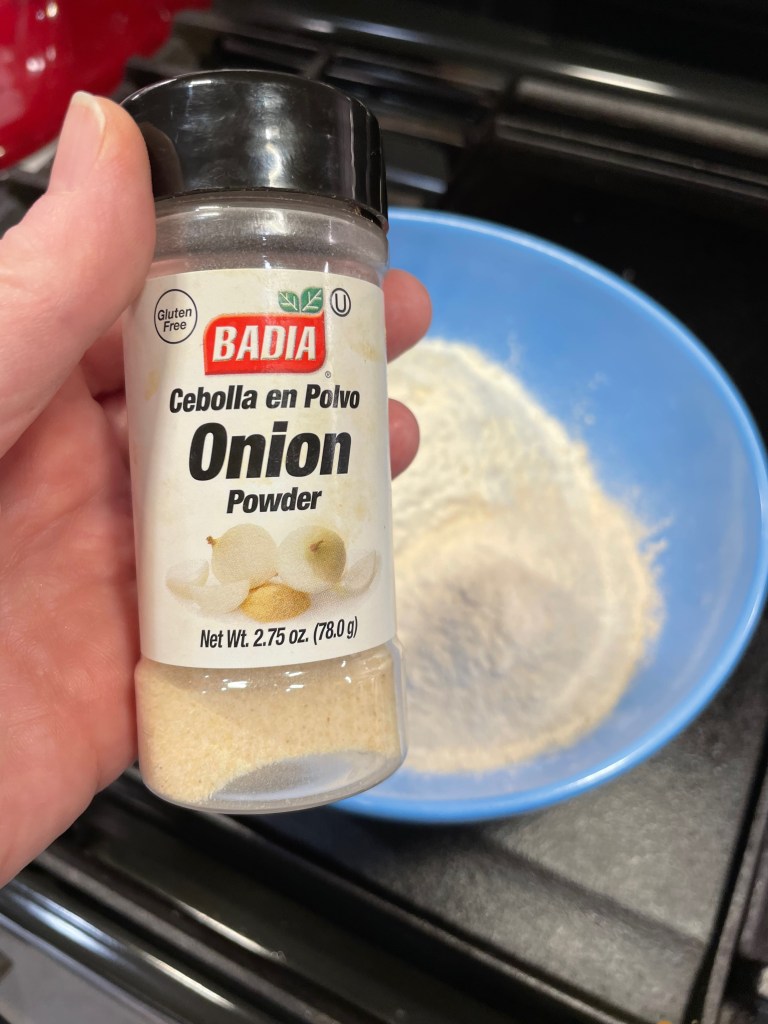
  • 1 tsp onion powder
  • 100 g white whole wheat
  • 320 g all-purpose
  • 22 g dry milk powder
  • 1 1/2 tsp salt
  • 1 tsp instant dry yeast, optional for quicker rise
  • cornmeal for dusting muffins before baking

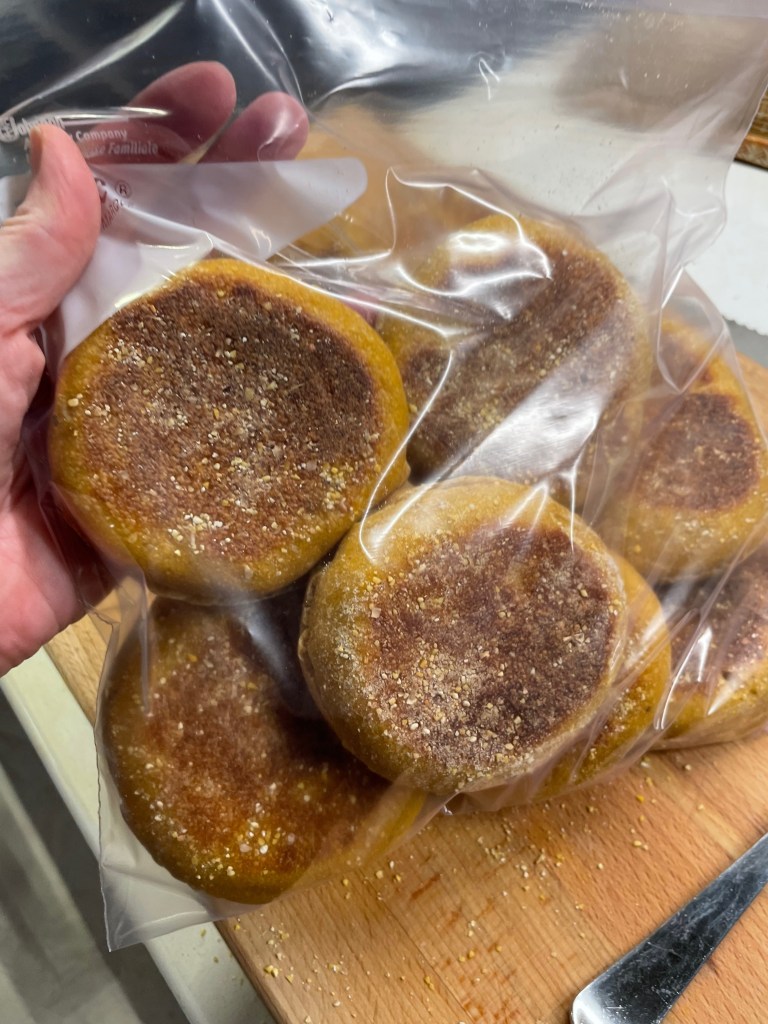
Note: These english muffins will freeze beautifully. Fork-split them all the way through, and pop them into a zip top freezer bag. Press out as much excess air as possible before sealing. When you are ready to serve, either defrost them for an hour or two, or pop them into the toaster on the defrost setting for a few minutes before toasting.

Directions

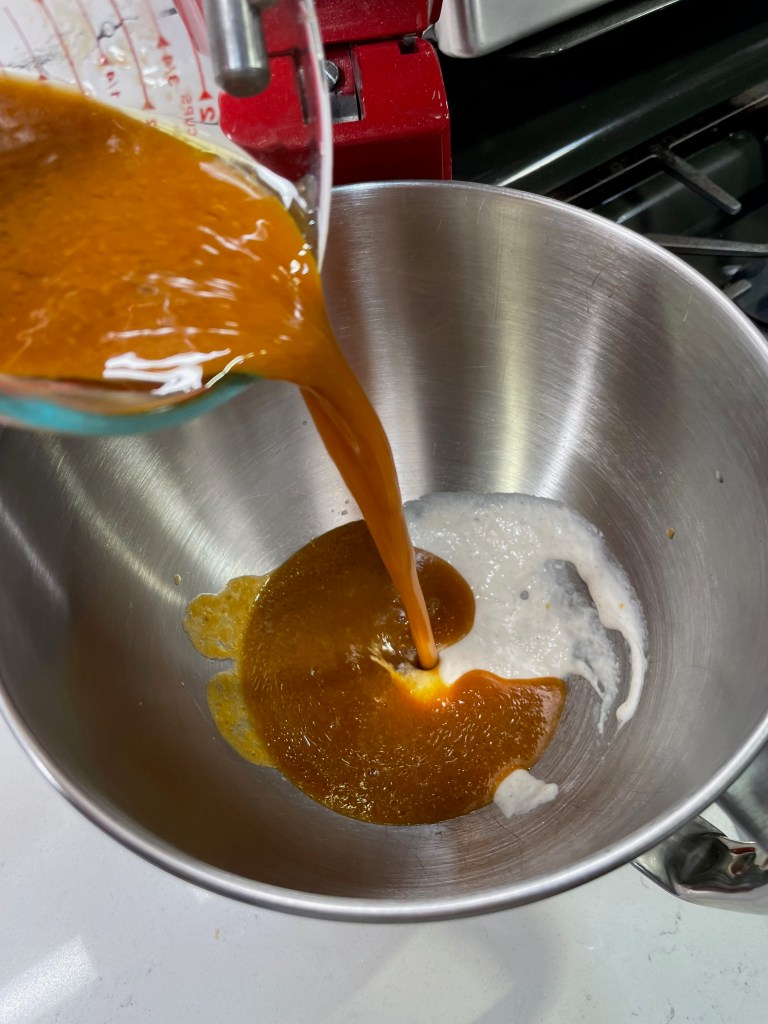
  1. Combine pumpkin, water, olive oil and molasses in a measuring cup with a spout. Warm in the microwave for 30 seconds if the pumpkin is cold.
  2. Mix together the starter and pumpkin mixture in the bowl of a stand mixer, fitted with the paddle blade. Blend until smooth.
  3. Whisk together dry ingredients, plus sage, in a separate bowl. 
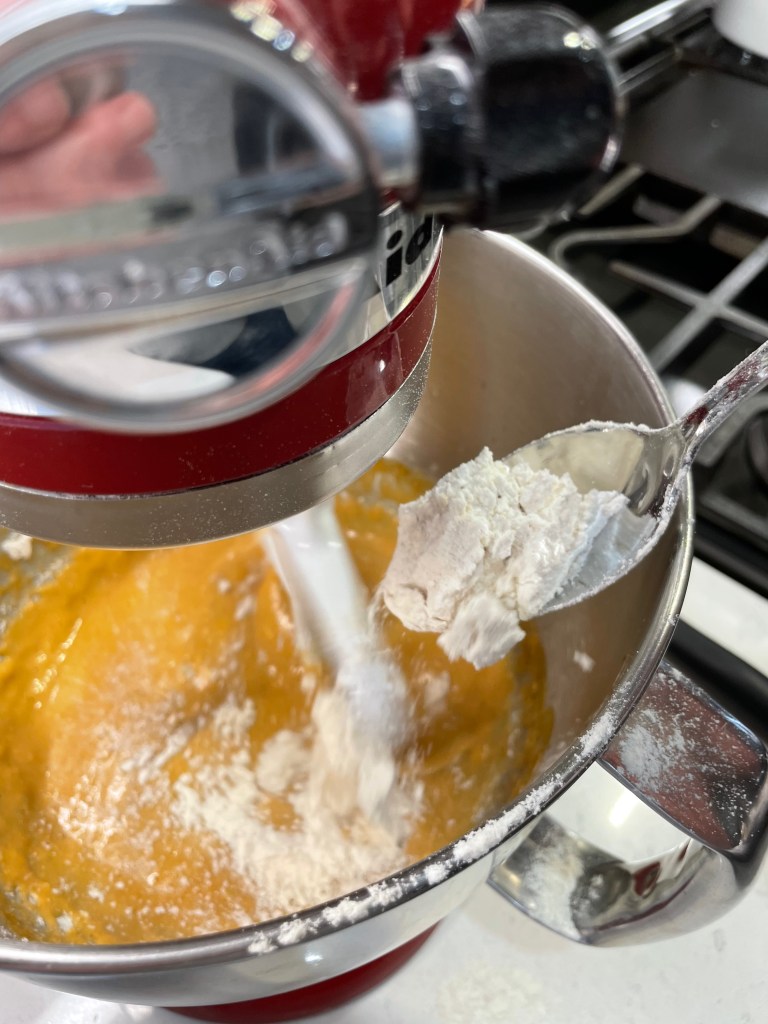
  4. With mixer running on lowest speed, add dry ingredients by the spoonful, just enough to reduce the “splash” of the wet mixture. Stop the mixer and add remaining dry ingredients, then mix on low speed until all the flour is incorporated. Scrape down off the paddle and cover the bowl to rest the dough for about 20 minutes. 
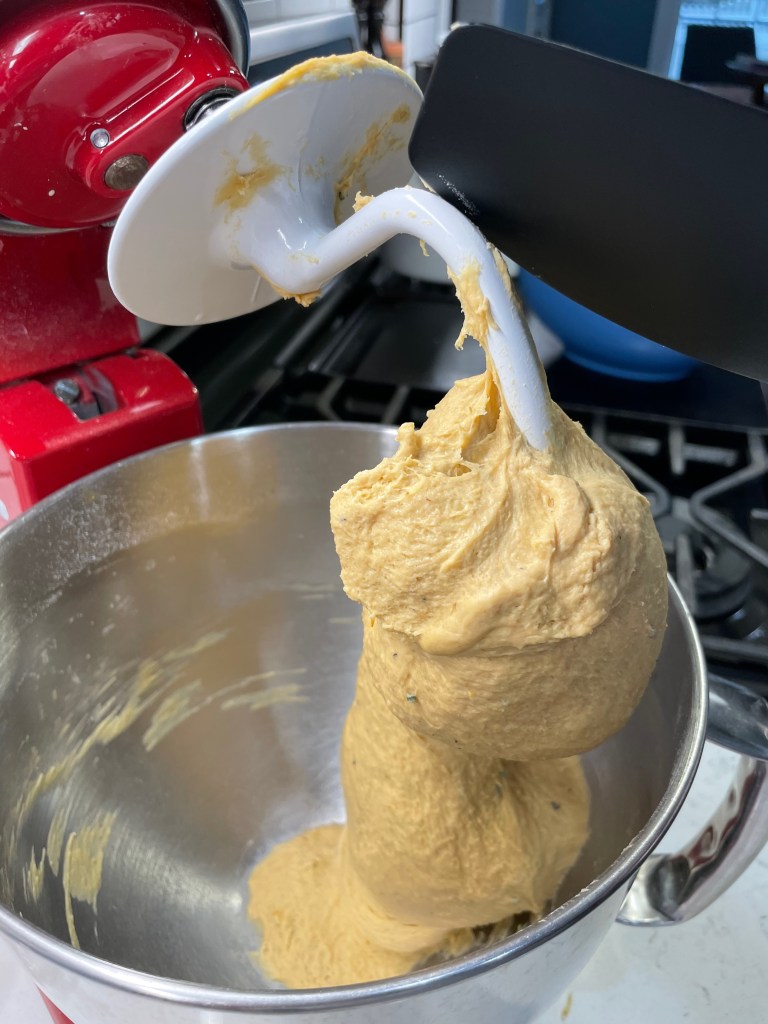
  5. Switch to the dough hook and knead for about 6 minutes until dough is smooth and shiny. Transfer dough to a large bowl, sprayed lightly with oil. Cover and ferment in a warm spot of the kitchen until dough is quite puffy, which could be 2 to 3 hours (or less, if using the yeast).
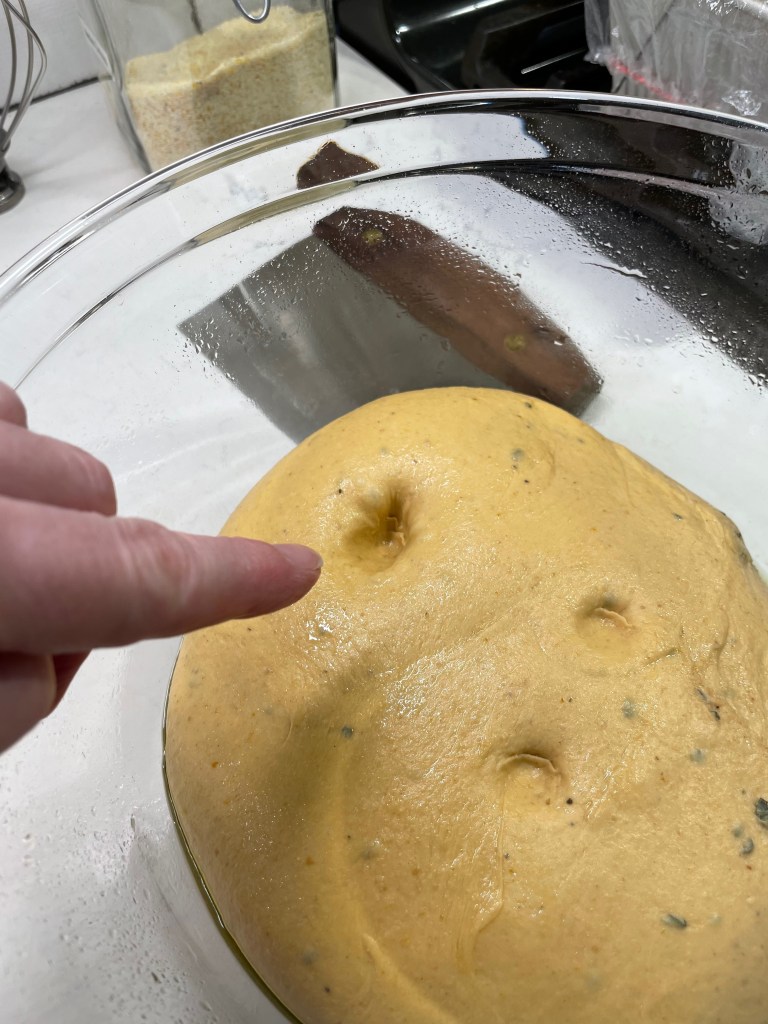
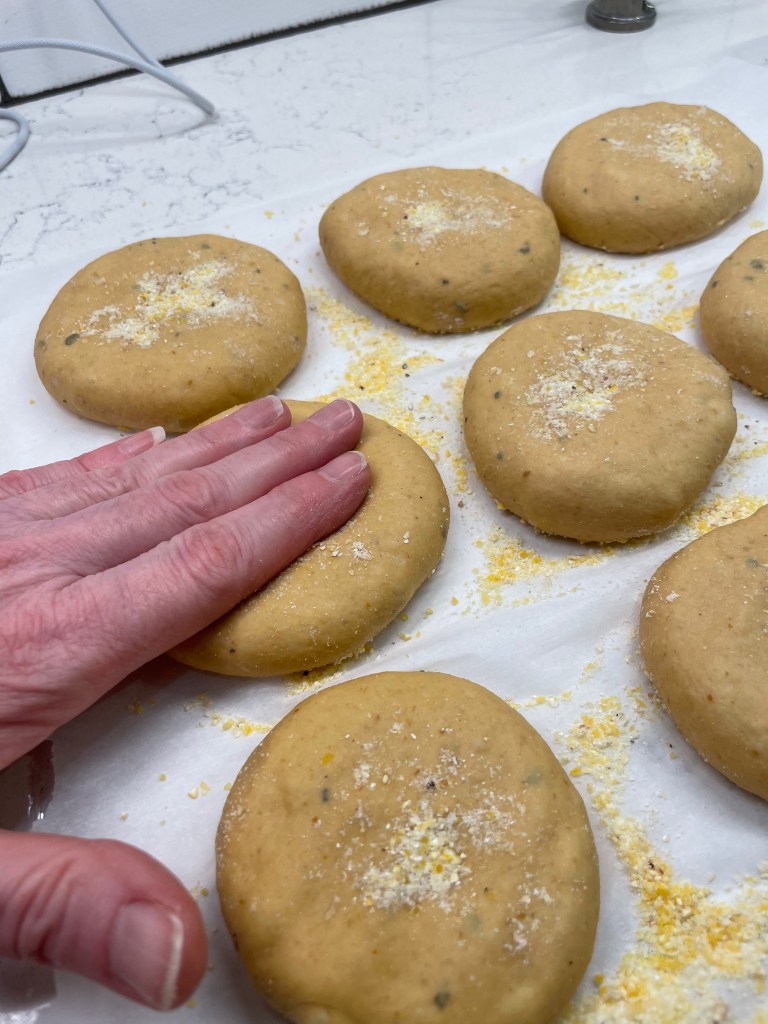
  6. Transfer dough to a lightly floured countertop and cut into 12 equal pieces. Shape the pieces into balls and flatten each ball with your fingertips onto a piece of parchment paper, sprinkled lightly with corn meal. They should measure about 3 1/4” across. Sprinkle the tops with additional corn meal. Cover loosely with oil-sprayed plastic wrap and a kitchen towel. Rest until the dough balls pass the “poke” test. 
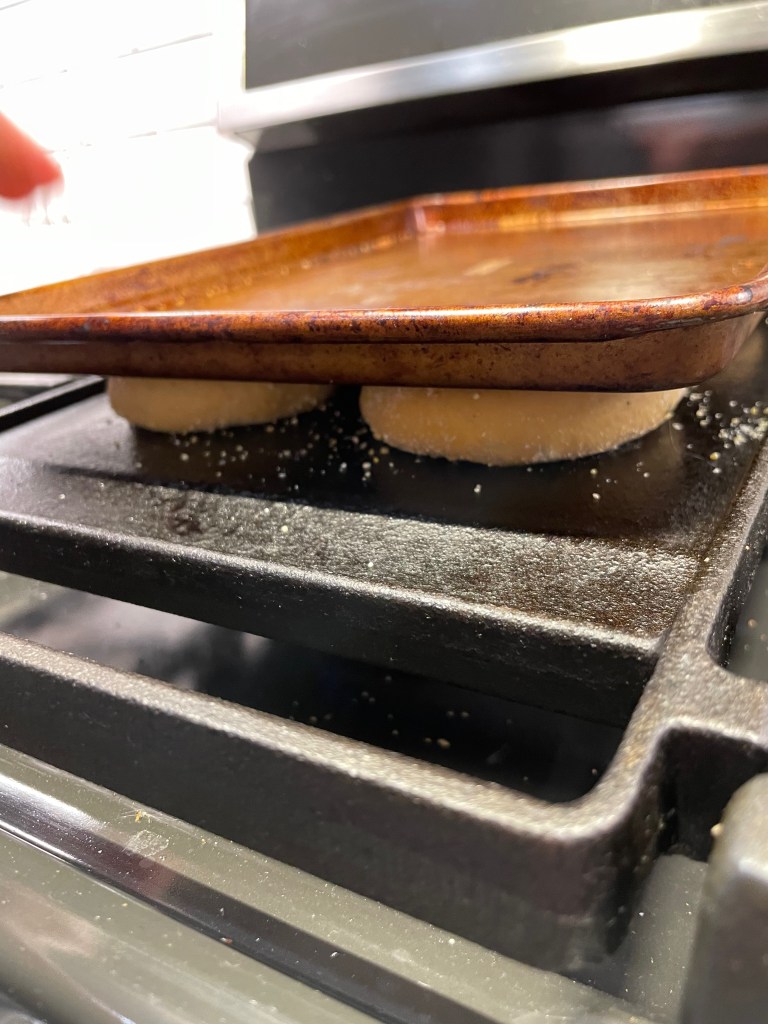
  7. Heat a griddle to medium-low heat (about 325° F). Gently flatten each dough ball, and place them on the griddle, a few inches apart for easy turning. Place a dry cookie sheet on top of the muffins once the griddle is loaded; this helps give the muffins a nice flat second side.
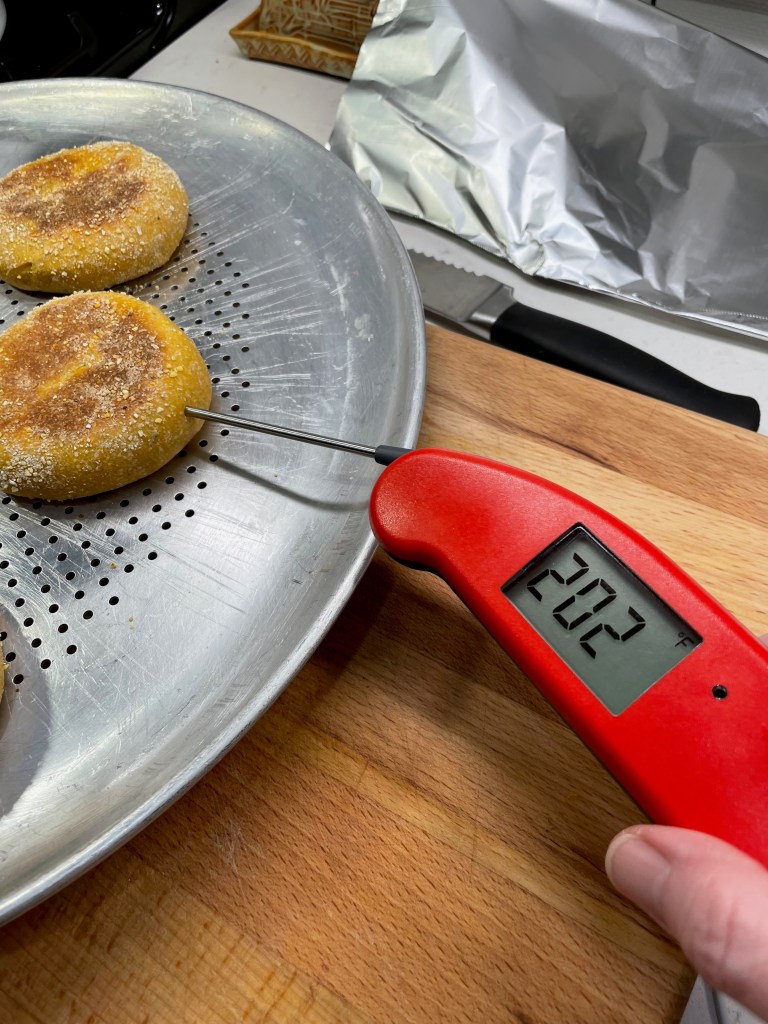
  8. After 6 or 7 minutes, the bottoms of the muffins should be a golden brown color. Give them a little longer if needed. Gently turn the muffins to “bake” the other side. Don’t be concerned if the sides of the muffins still seem soft. The dough will cook from the radiant heat. If the muffins feel spongy or wet, but the sides are done, transfer them to a baking sheet and put them in a 350° oven for a few minutes to finish them off.
  9. Cool the muffins on a wire rack, and when completely cool, use a fork to gently “split” the sides of each muffin for easy slicing when you are ready to serve them.


In case you’re wondering…

Yes! You can freeze them for later. These English muffins freeze beautifully, and they can go straight to the toaster without thawing, too. Simply fork-split them, separating the halves, and load them into a zip-top freezer bag. Be sure to squeeze out excess air. Enjoy!


Zucchini Sunshine Pancakes

“Zucchini—it isn’t just for dinner anymore!”

As I whipped up our breakfast this past weekend, I kept imagining this as a useful advertising slogan for anyone who is, like me, trying to use up an explosion of squash coming out of the garden this time of year. It’s easy to get bored with eating it the same few ways, and it occurred to me this week that I had not tried many ways to incorporate zucchini into a breakfast dish. Sure, I have occasionally tucked leftover sauteed zucchini into an omelet, but I wanted something more interesting—something new. The weekend is the only time I venture beyond the most basic of breakfasts, and though I considered making a version of morning glory muffins (subbing zucchini for the usual shredded carrots), I wanted something simpler, and that’s what made me think of pancakes.

Shredded zucchini would cook quickly inside a pancake batter, I figured, and I could use up a decent amount of this summer vegetable (which is technically a fruit) that has overtaken my countertop and refrigerator. Fresh citrus—in the form of juice and zest from a lemon and an orange—would make the overall flavor of my zucchini pancakes bright and sunny, just like the Saturday morning we would enjoy them.

The bright citrus was like a shot of sunshine in my zucchini pancakes!

For the body of my pancakes, I used a tried-and-true recipe that already has its own health benefits. Unlike typical, carb-heavy pancakes, these are packed with protein, thanks to Greek yogurt, ricotta and whole eggs (which also offer an assist in leavening the batter). The only flour in the mix is white whole wheat (King Arthur brand), and I added a few quick shakes of ground cinnamon to spice things up.   


What I love about these pancakes, other than the fact that they have lots of good-for-me ingredients, is that I don’t suffer any sugar shock effect a few hours after breakfast. Whole grains provide complex carbohydrates, which help keep blood sugar levels stable longer than highly processed white flours. And the protein from the yogurt, ricotta and eggs keeps my hunger at bay for hours. I have made these pancakes dozens of times, and this is the first time I’ve jazzed them up with extra ingredients, though it surely won’t be the last.

Grab an apron, and I’ll show you how easily I whipped them up!


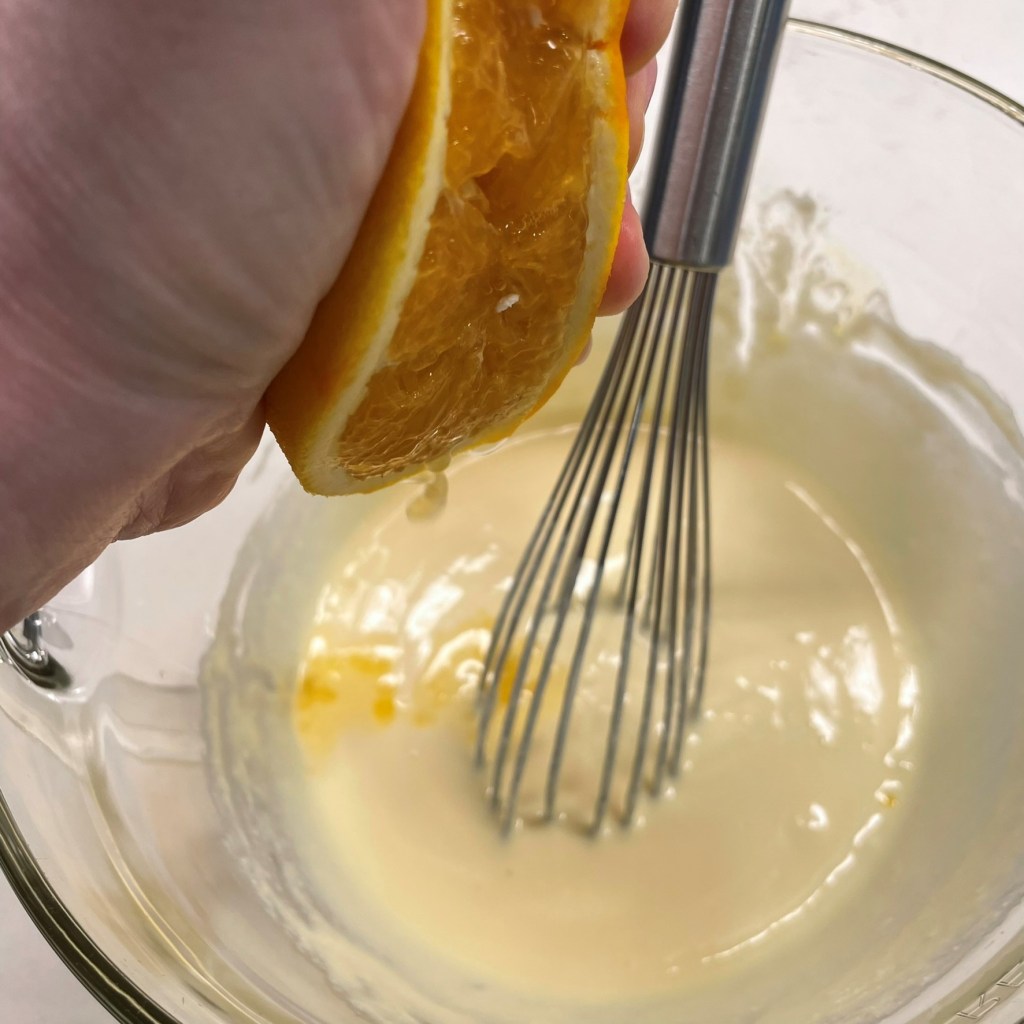
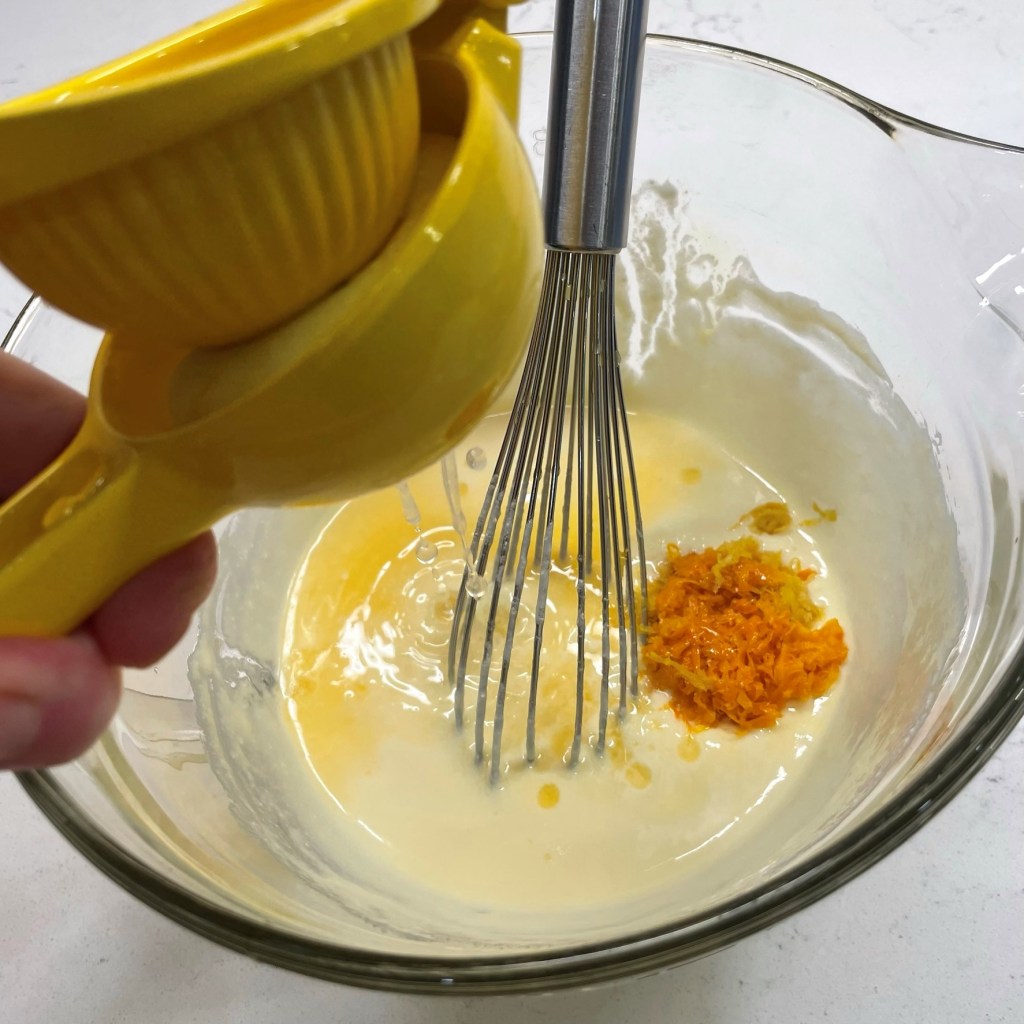
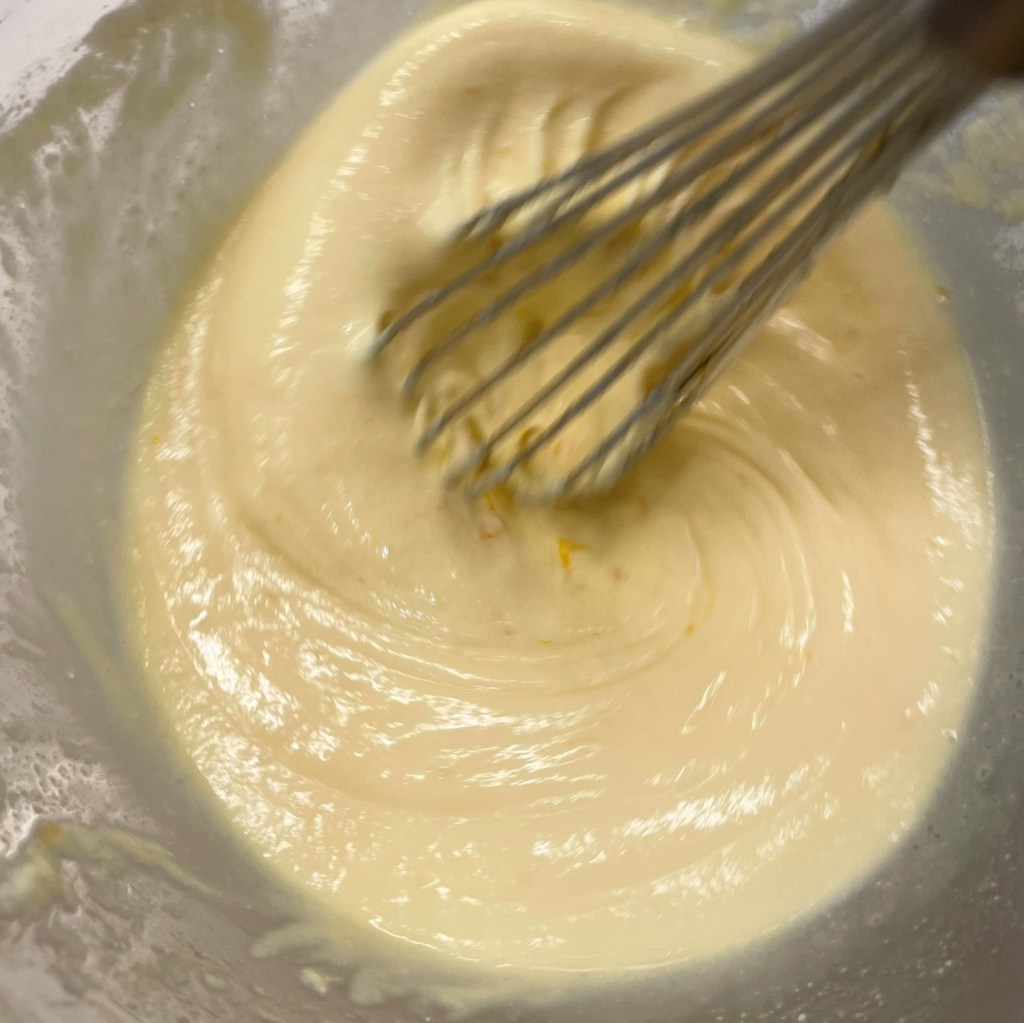
The first step is to get the wet ingredients blended really well. A whisk is the best tool for this, or you could use an electric mixer. Get the mixture smooth and even, and then squeeze in the orange and lemon juices. Whisk it again to incorporate the juice and zest of the citrus fruits.

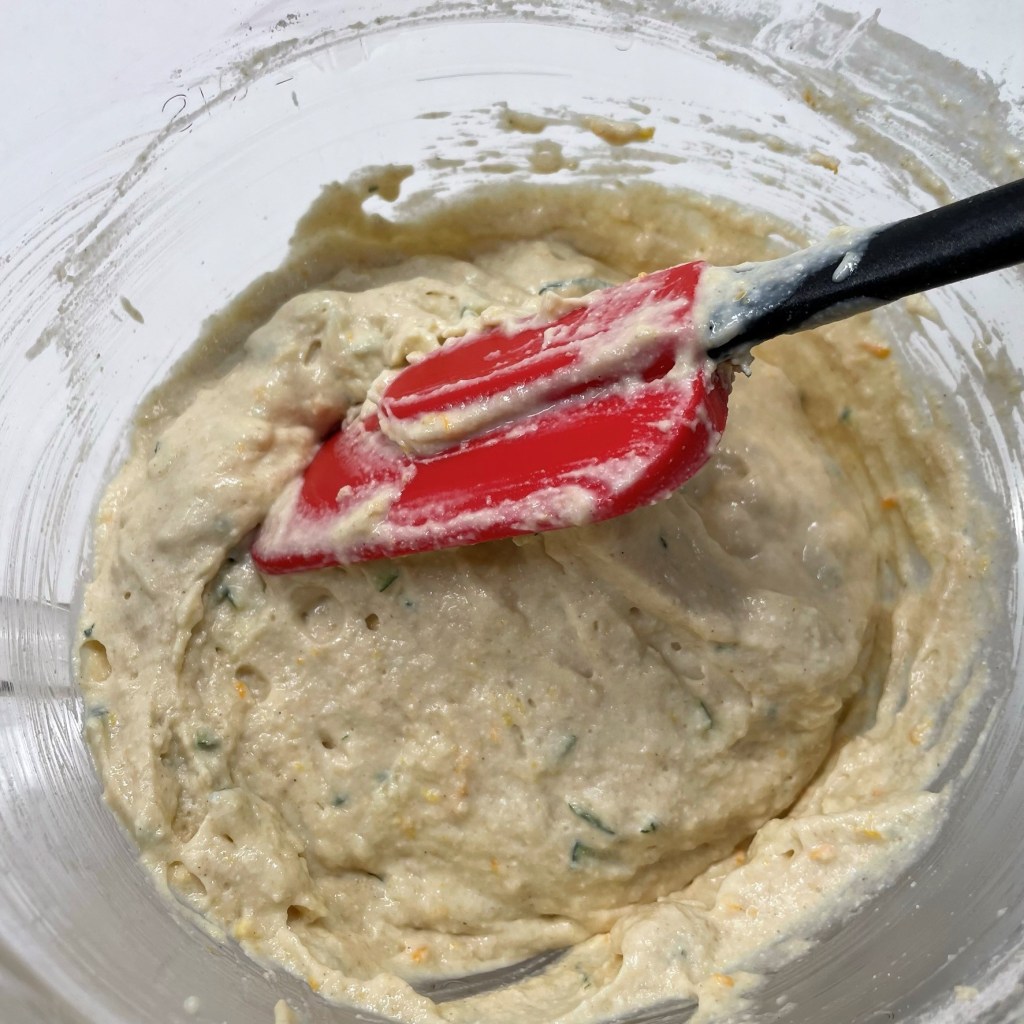
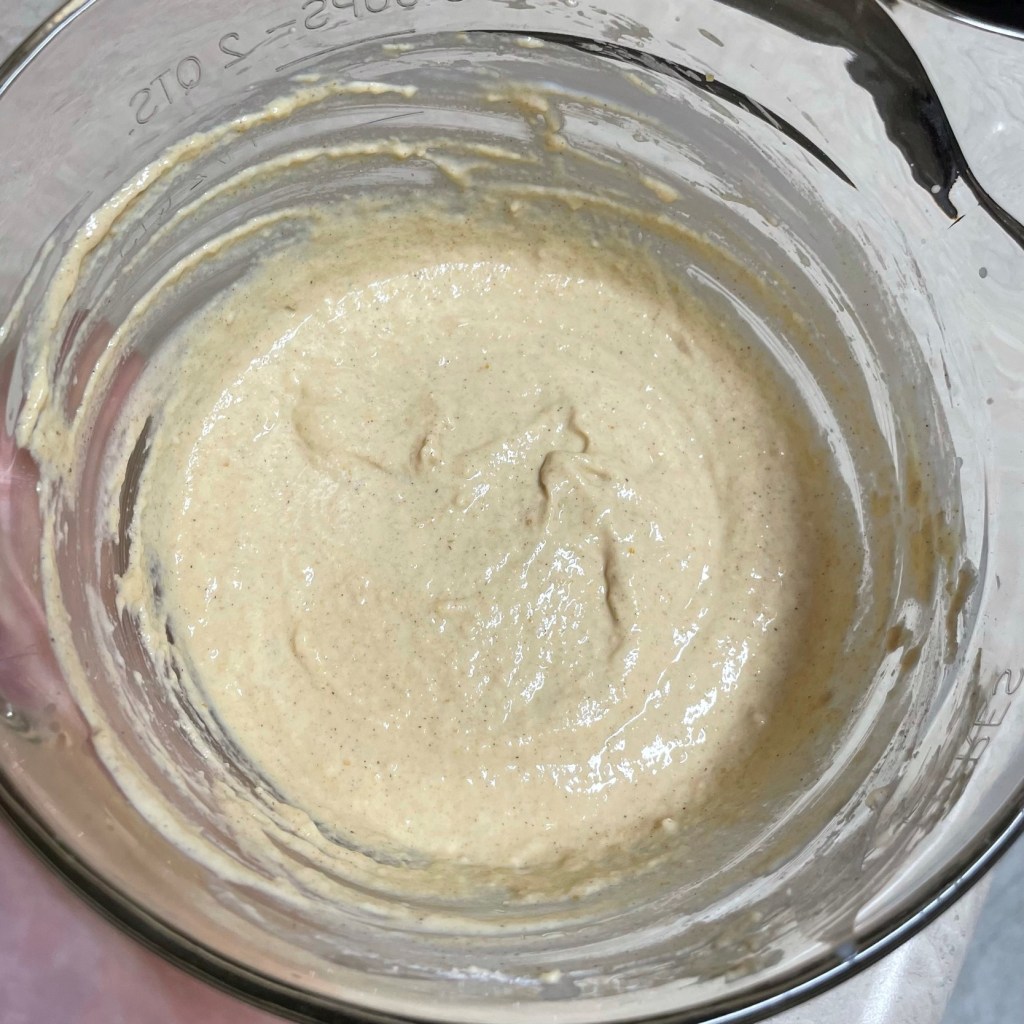
Next, blend in the shredded zucchini and flour mixture. I did this in stages, the same as I did recently for my Healthy-ish Zucchini Bread with Drunken Raisins recipe. You want to avoid overworking the mixture once the flour hits the batter, because excess stirring causes gluten to develop, and that results in a tough pancake. Stir or whisk in about half of the shredded zucchini first, then fold in half of the flour mixture, then the remaining zucchini and then the remaining flour ingredients. Folding is easy—use a wooden spoon or silicone spatula to circle the bowl, turning the batter over onto itself. I did this “folding” action about 10 times, until I couldn’t see any unincorporated pockets of dry ingredients.


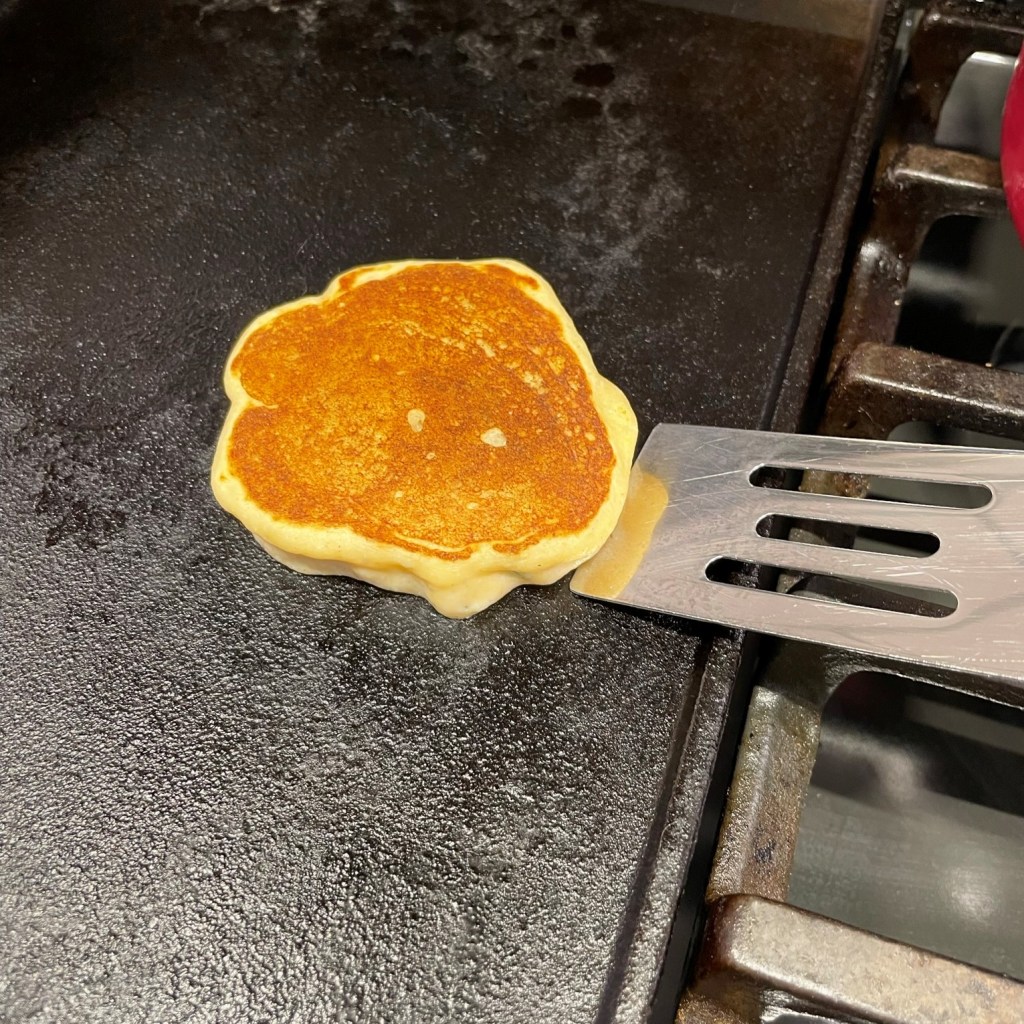
Any pancake or waffle batter performs best when it has a chance to rest several minutes after mixing, so I waited until the batter was ready before I began heating my range-top skillet. You can use a large cast iron pan or an electric skillet if that’s what you have. Heat the cooking surface over medium heat, leaning a little toward medium-low. This is a tricky thing, because every stove is different, and even different burners on the same stove can have a different heat output. I have found that the best way to ensure the temperature is right is to make a couple of small “test” pancakes. Your heat should be at the point that the first side of the pancake is golden brown at about the point that the edges begin to look dry on top. If it’s too brown, reduce your heat slightly and try another test pancake. If it’s too pale, increase the heat slightly and try again. It’s nice to have a test pancake for another reason as well—you get to sample the goods!


When you’ve confirmed the griddle temperature, carefully spoon or ladle out your pancakes onto the heated skillet or griddle, about 1/4 cup per pancake. Keep some distance between them for easy turning, and keep them relatively small to ensure the middle cooks through. Mine were no larger than the palm area of my hand, and I didn’t bother trying to make them in perfect rounds. The yogurt and ricotta make for a heavier batter than is typical for regular pancakes, so the visual cues for doneness are also different. You may not see large bubbles form and pop on the surface; watch for the edges to appear slightly dried out, and a little bit of swelling in the center of the batter. It should take about four minutes for the first side, and two more to finish them.


My camera angle didn’t quite capture the rising action of the pancakes after they were turned, but when you make them, you’ll see that they puff up quite a bit on the griddle. Every bite was fluffy, tender and satisfying, with the fiber goodness of zucchini and the light, sunshine-y citrus.  

Every bite of these zucchini pancakes had a bright, citrus-y flavor, like sunshine on a fork!

Serve these with real maple syrup or switch it up with a spoonful of warmed marmalade or tangy lemon curd.


Zucchini Sunshine Pancakes

  • Servings: about 10 pancakes
  • Difficulty: average
  • Print

Shredded zucchini and citrus provide a fresh burst of summer flavor in these protein-packed pancakes. For best results, let yogurt, ricotta and eggs stand at room temperature for 20 minutes before mixing.

Ingredients

  • 1 cup plain, Greek-style yogurt (stir well before measuring)
  • 1 cup ricotta cheese
  • 3 large eggs (or 2 extra large)
  • Juice and zest of 1/2 lemon
  • Juice and zest of 1/2 navel orange
  • 3/4 cup shredded fresh zucchini, blotted dry with paper towels
  • 1 cup white whole wheat flour (I like King Arthur brand)
  • 3/4 tsp. baking soda
  • 1/4 tsp. ground cinnamon
  • Pinch of kosher salt
  • Real maple syrup or warm marmalade, for serving

Directions

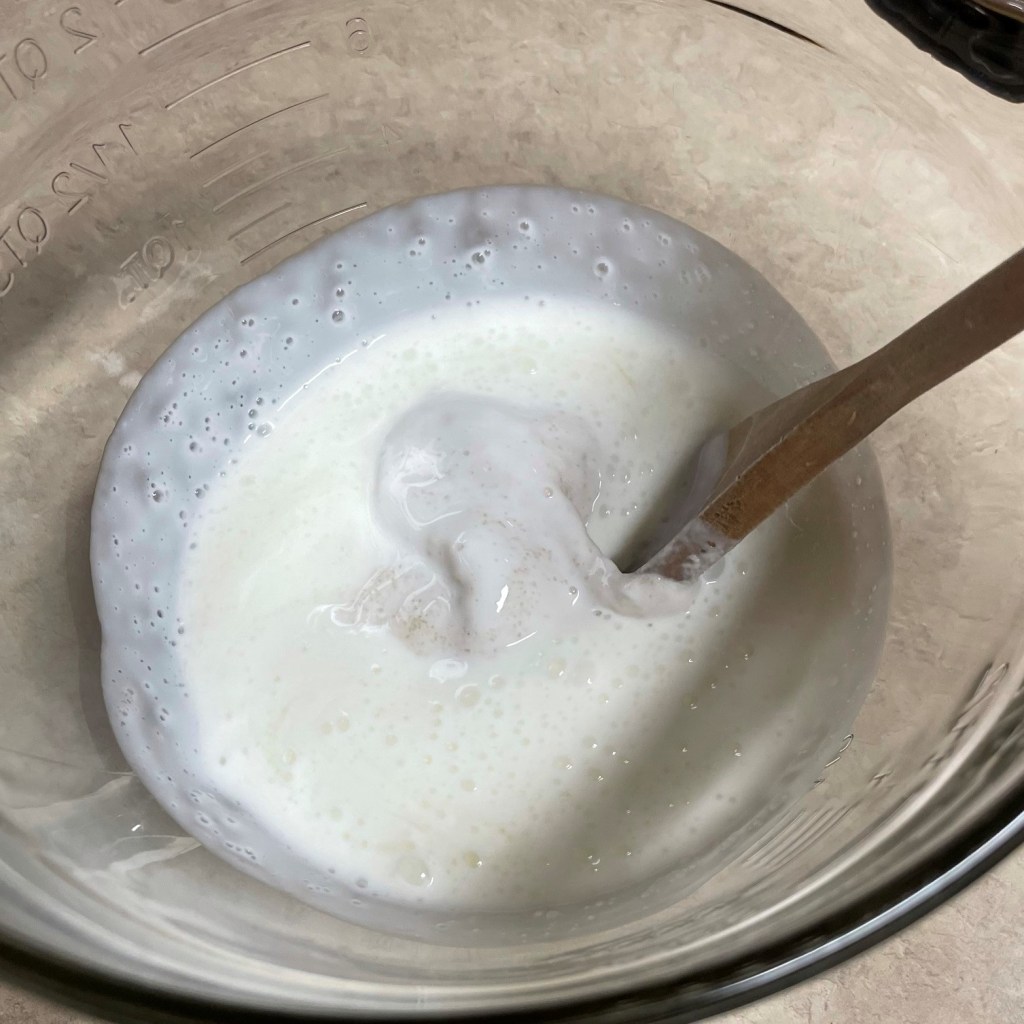
  1. Whisk together (or mix with electric mixer) the yogurt, ricotta and eggs until the mixture is smooth and even.
  2. Stir in juice and zest of lemon and orange.
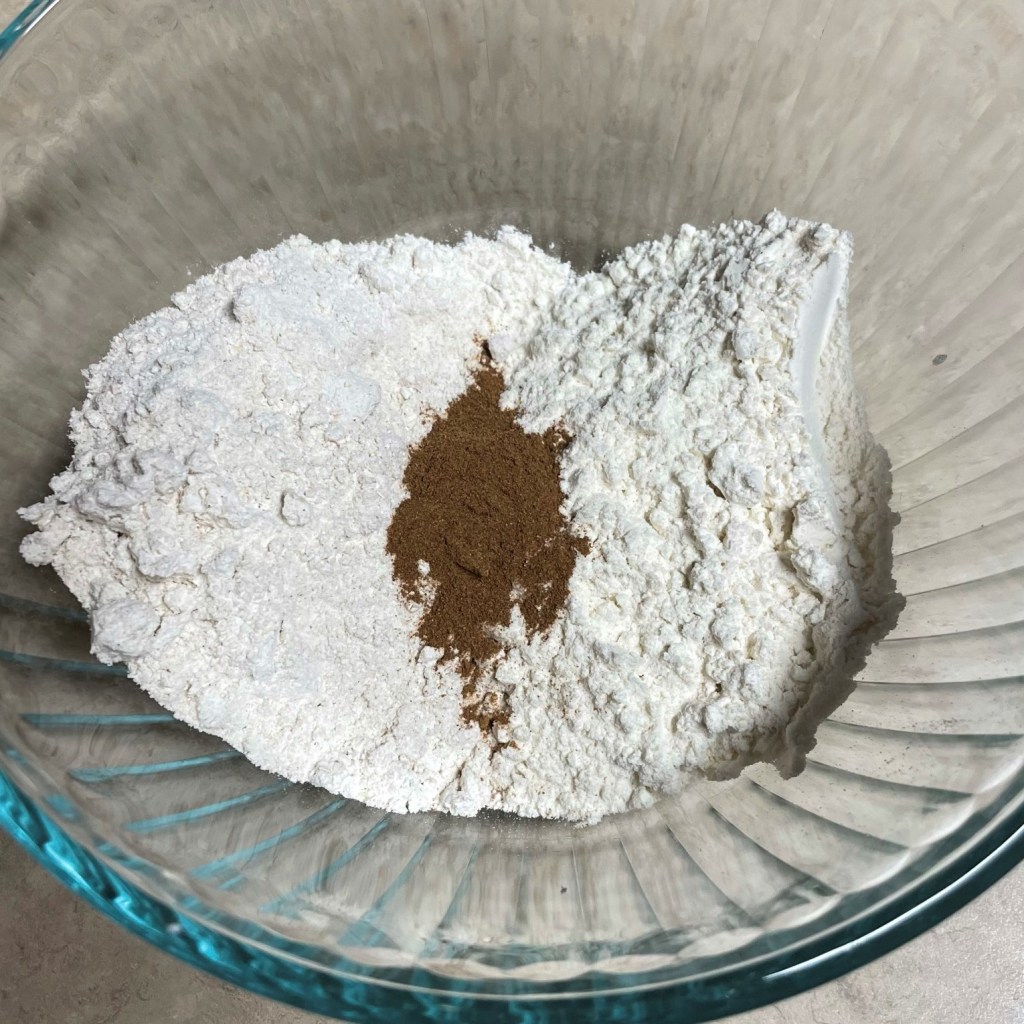
  3. In a separate bowl, whisk together flour, baking soda, cinnamon and salt.
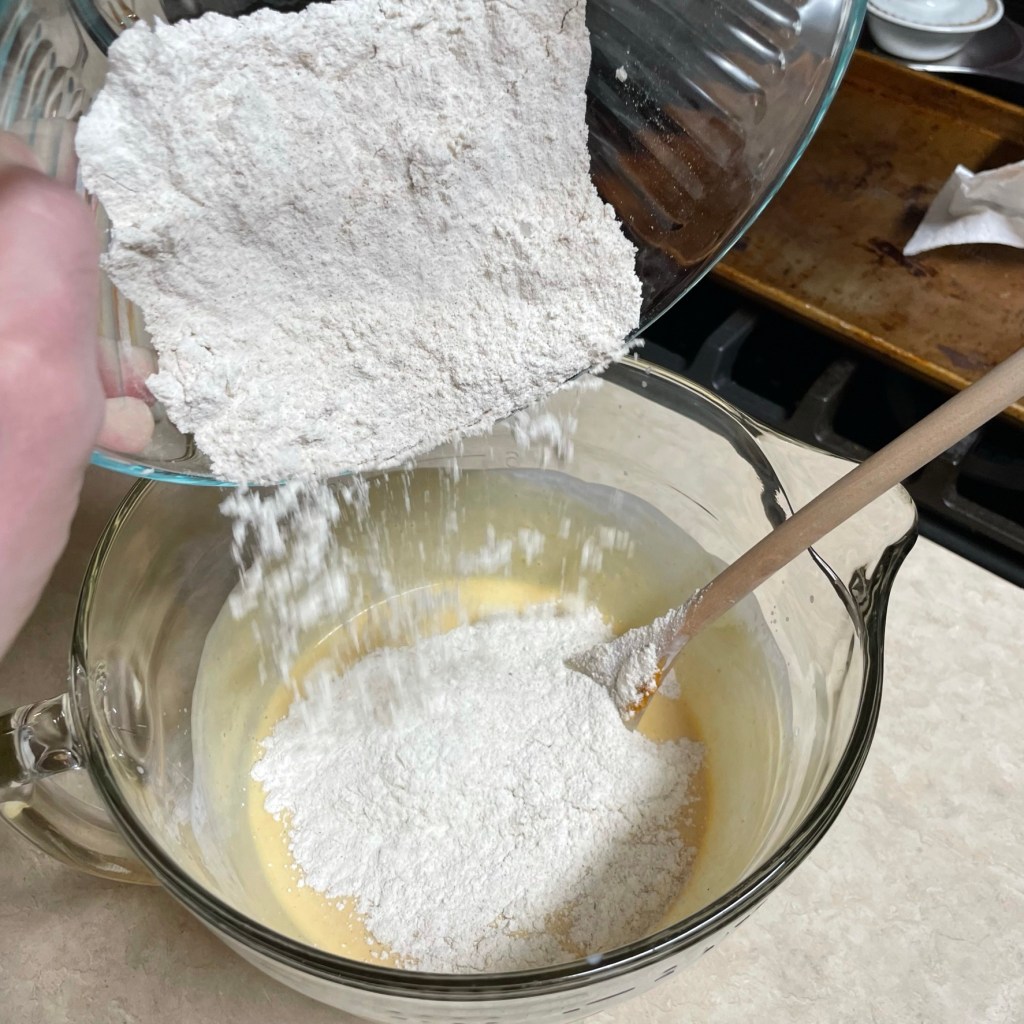
  4. Whisk or stir half of the shredded zucchini into the yogurt mixture. Add half of the flour ingredients to the bowl and fold gently with a wooden spoon or silicone spatula to combine. Fold in the remaining zucchini, and then fold in the remaining flour ingredients, folding about 10 times to ensure all the flour is fully incorporated.
  5. Preheat griddle or skillet to medium/medium-low temperature. Allow pancake batter to rest during this time.
  6. Cook a test pancake to ensure heat is correct; the pancake should be golden brown on the first side when the edges appear dry on the top. Spoon or ladle about 1/4 cup of batter per pancake onto the skillet; the batter will be thick, but resist the temptation to thin it or spread it out into flatter rounds. Pancakes should be ready to turn after about 3 minutes. Stack them on a platter to keep them warm until all pancakes are cooked.
  7. Serve hot with real maple syrup or warmed marmalade.


Sourdough Pumpkin Spice Waffles

As eager as I have been to get things rolling on our kitchen remodel, I have enjoyed being able to make some of the fall recipes I thought would get left behind. If we must be delayed, I may as well keep cooking fun things, right? We still have a few days of “Better Breakfast Month,” and this simple twist on your favorite waffles is covering a lot of territory for me.

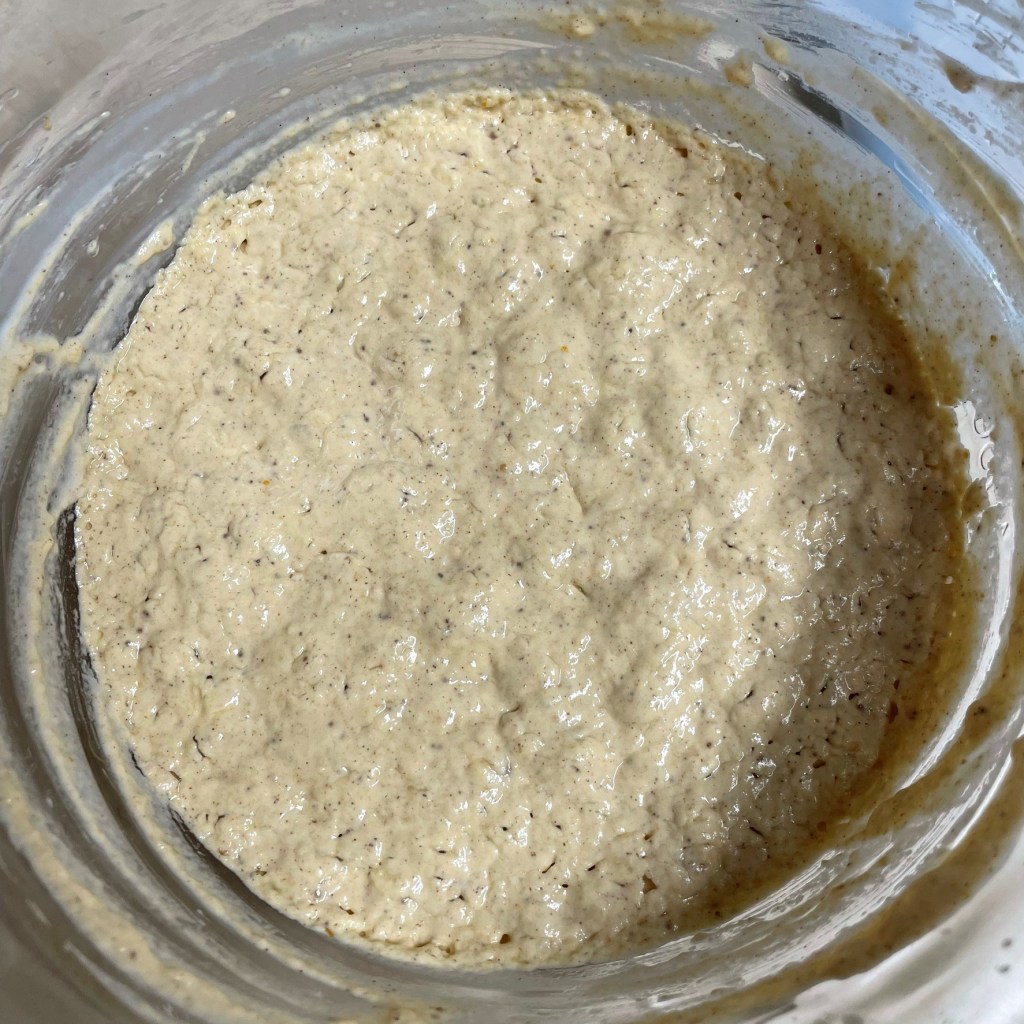
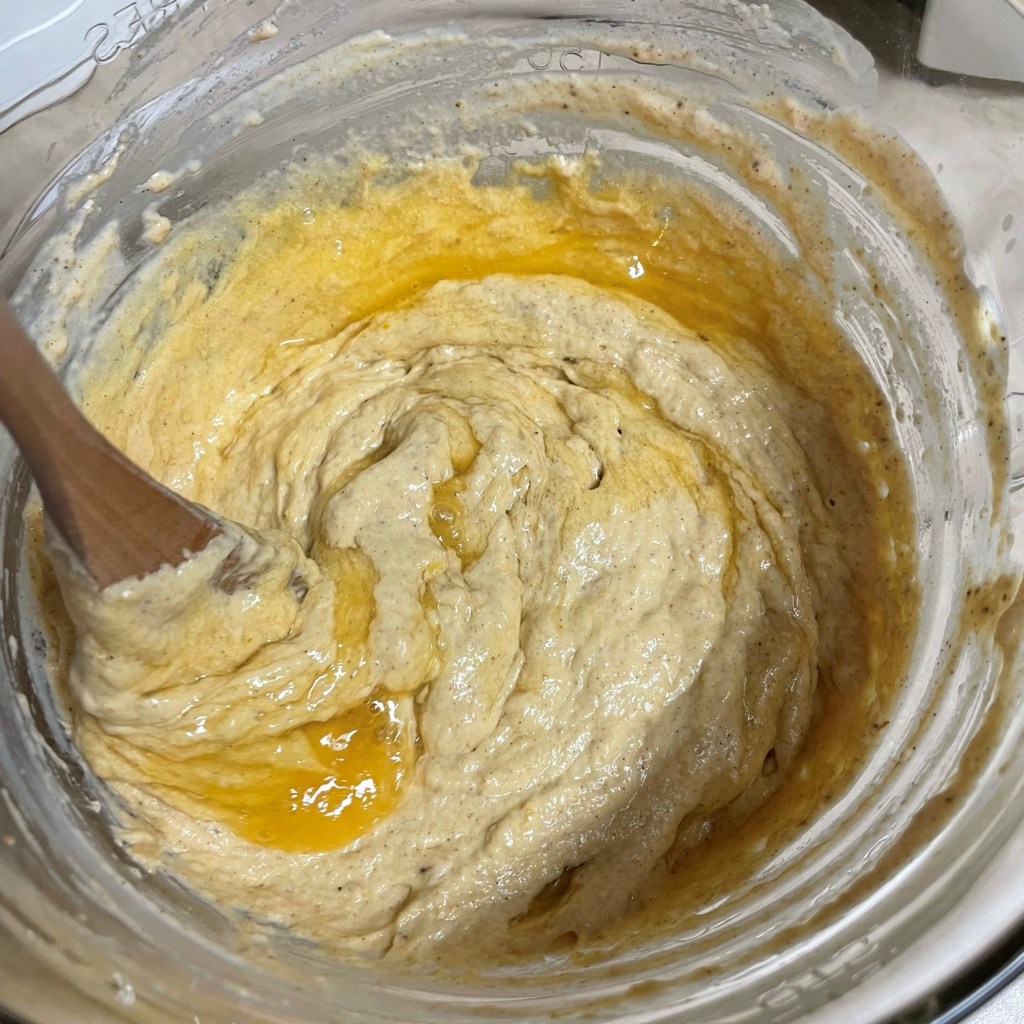
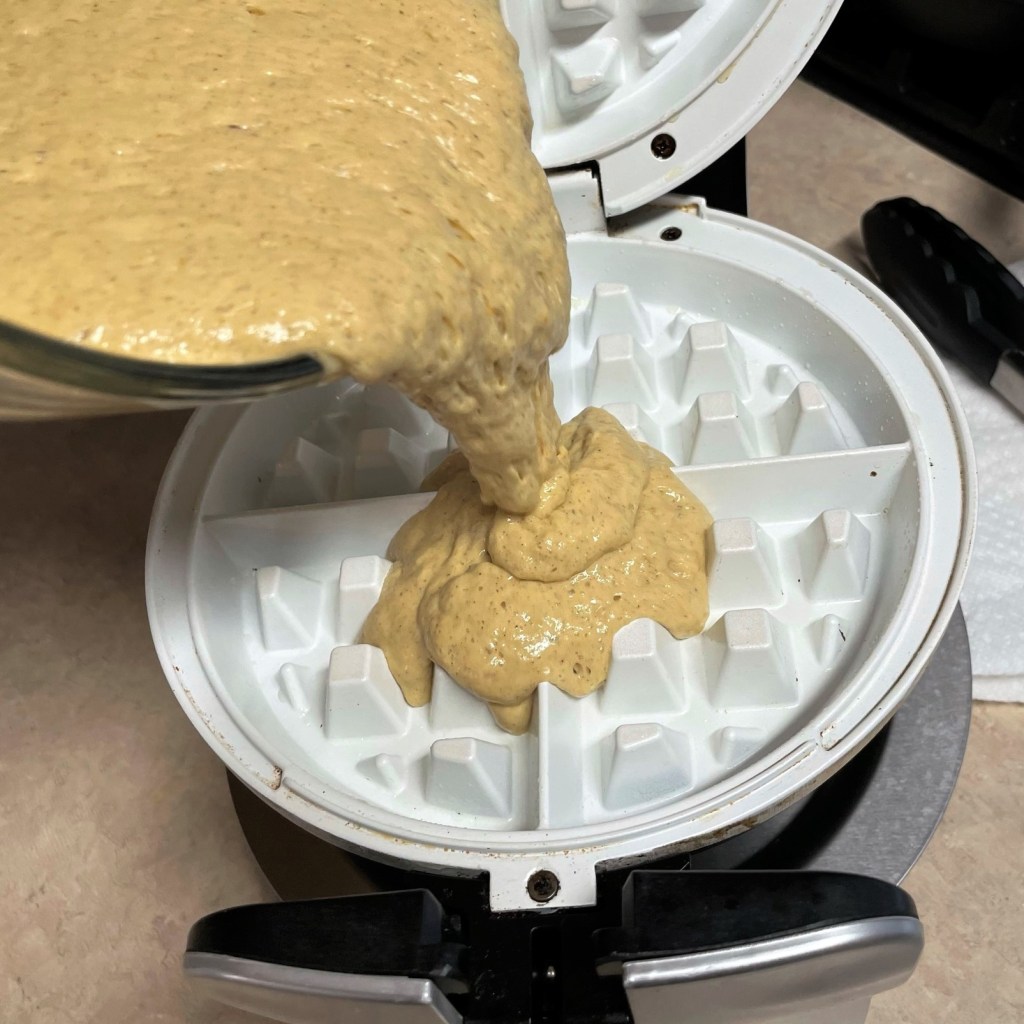
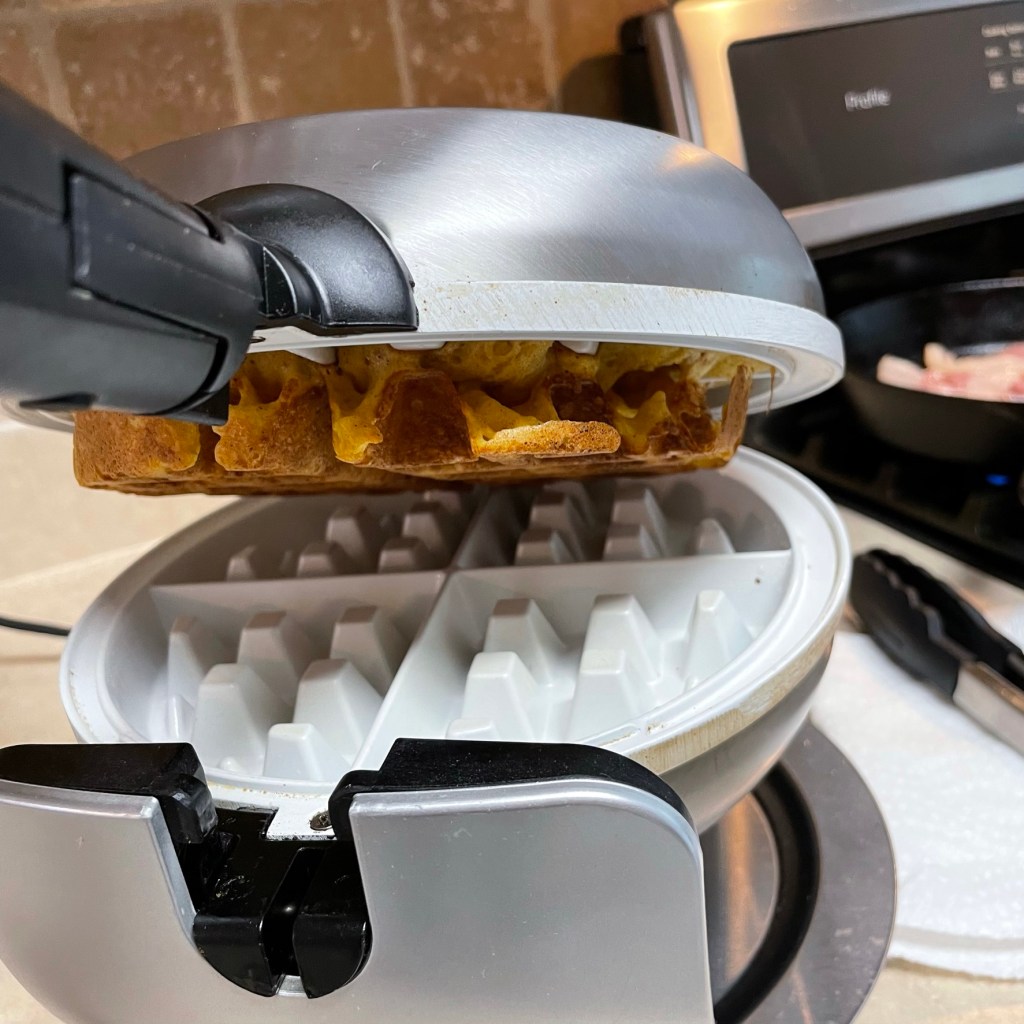
If you have never tried them, sourdough waffles are the best thing going—with delicate, crispy exterior and soft, fluffy goodness on the inside. They are not as sweet as some other waffles, which is fine by me, given that I usually drench them in real maple syrup. In keeping with the season (we are now five full days into fall), I have also spiked these easy-to-make, overnight waffles with pumpkin and warm spices, the two flavors everyone seems to either love or hate. If you’re in the first camp, keep reading. If not—well, perhaps you simply need to try these waffles, so you might want to keep reading, too.
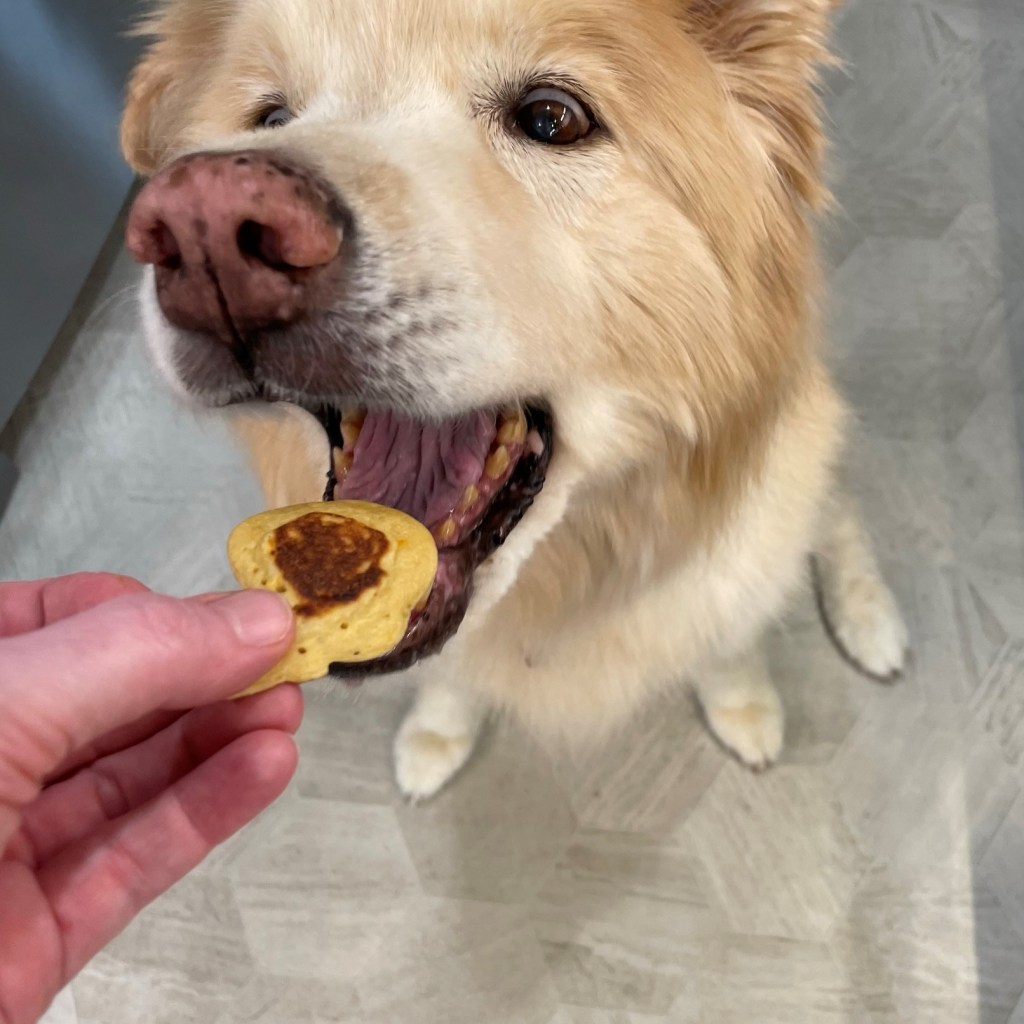
I used to hesitate on pumpkin spice recipes, imagining that maybe this ubiquitous flavor combination was too cliché. But then I went to Trader Joe’s, otherwise known as the pumpkin spice capital of the world, and I found myself surrounded by pumpkin spice cookies, donuts, yogurt, coffee, granola bark, cake bites, scented candles—well, you know the scene. And it was there, standing amid all those fall-inspired goodies, that I realized 75 million Trader Joe’s fans can’t be wrong. And neither are these waffles.

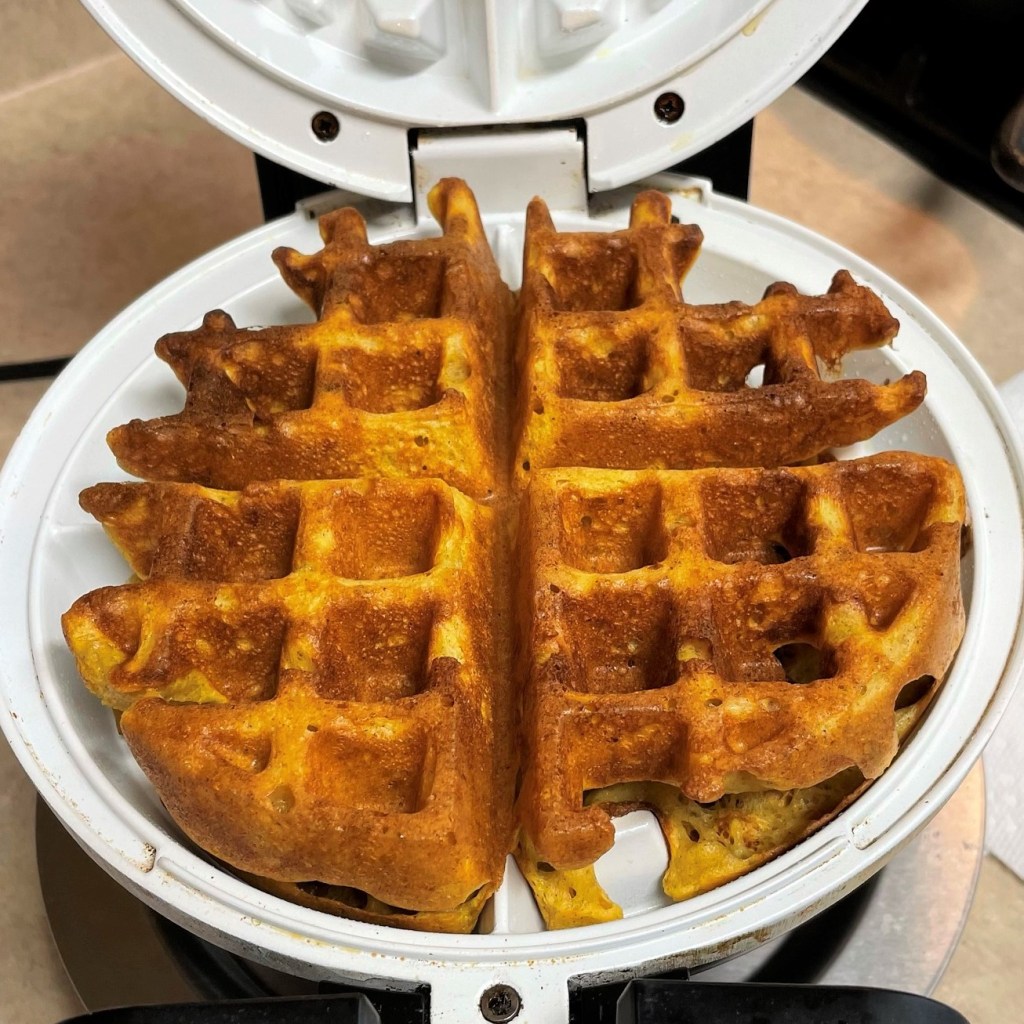
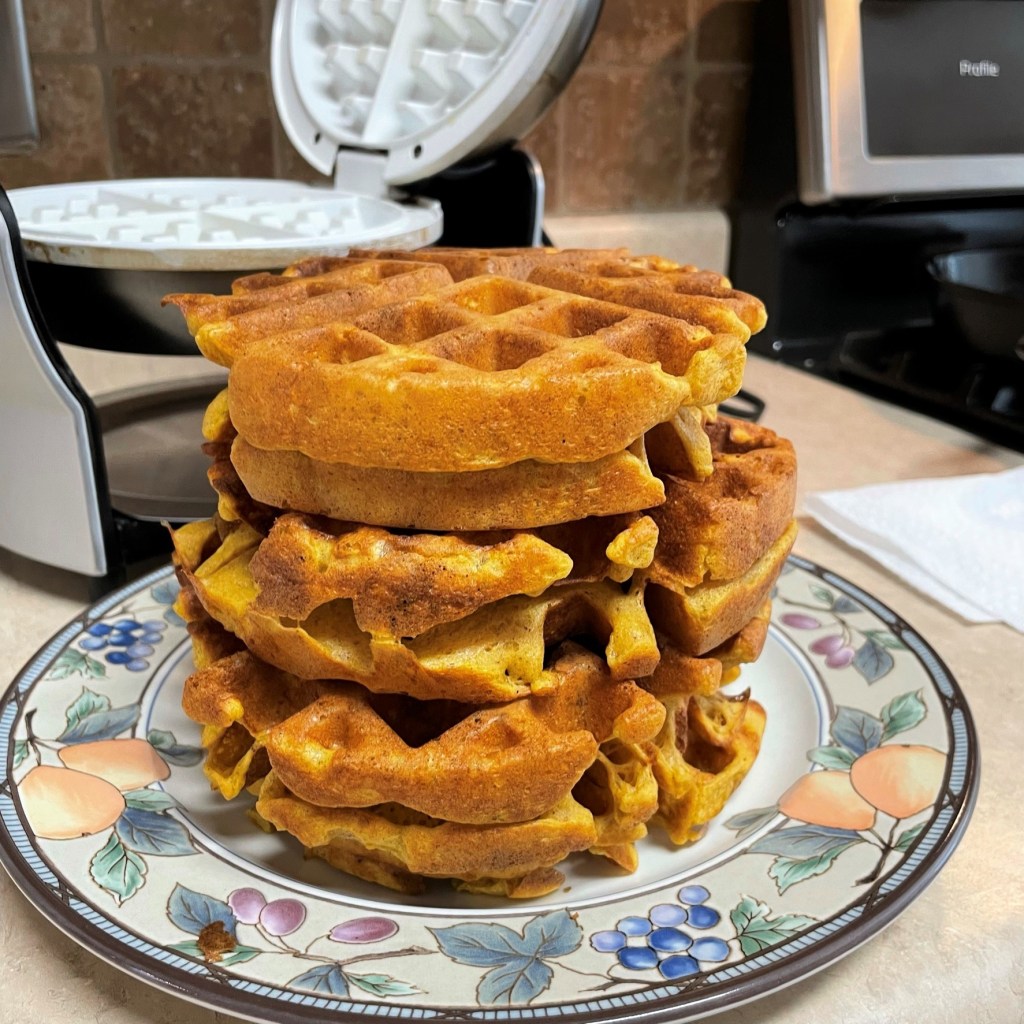
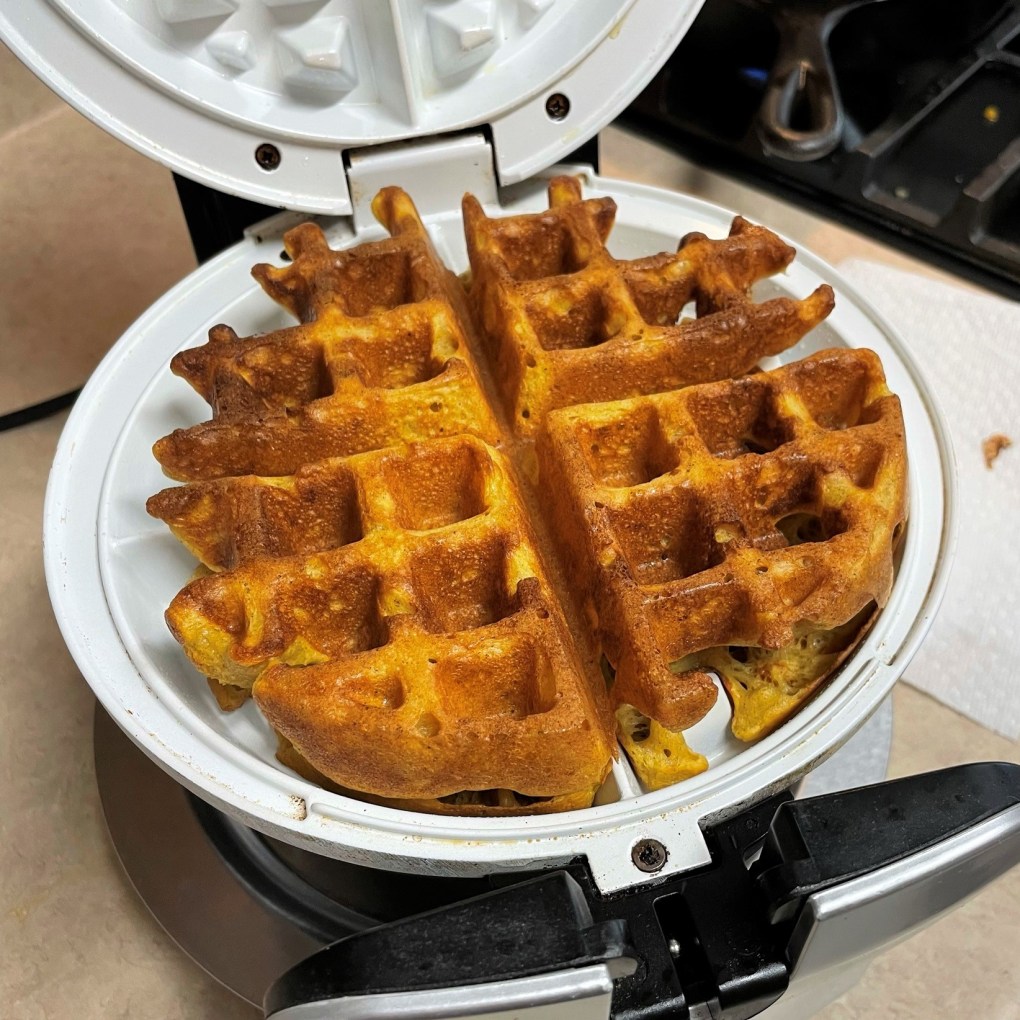
I love the rich autumn color of these pumpkin spice waffles!

The addition of pure pumpkin puree gives these waffles a gorgeous fall color and a big dose of antioxidants, while a teaspoon of pumpkin pie spice brings the essence of the season. Here’s a bit of happy news: if you don’t have a sourdough starter, you can still make a version of these. I made only those two modifications to my favorite sourdough waffle recipe for this variation, and I expect you can do the same with whatever recipe you like to use, sourdough or not. Just add pumpkin to the wet ingredients and pumpkin pie spice to the flour.

Obviously, you do need a waffle iron to make waffles. I have had good results using both a Belgian-style maker and a standard square maker, though the recipe will yield different amounts depending on the size of the waffles. No waffle maker, but jonesing for a pumpkin spice breakfast? Reduce the oil a bit, keep everything else the same and make pancakes instead.


Ingredients

Overnight Starter

1/2 cup sourdough discard

1 cup cultured buttermilk

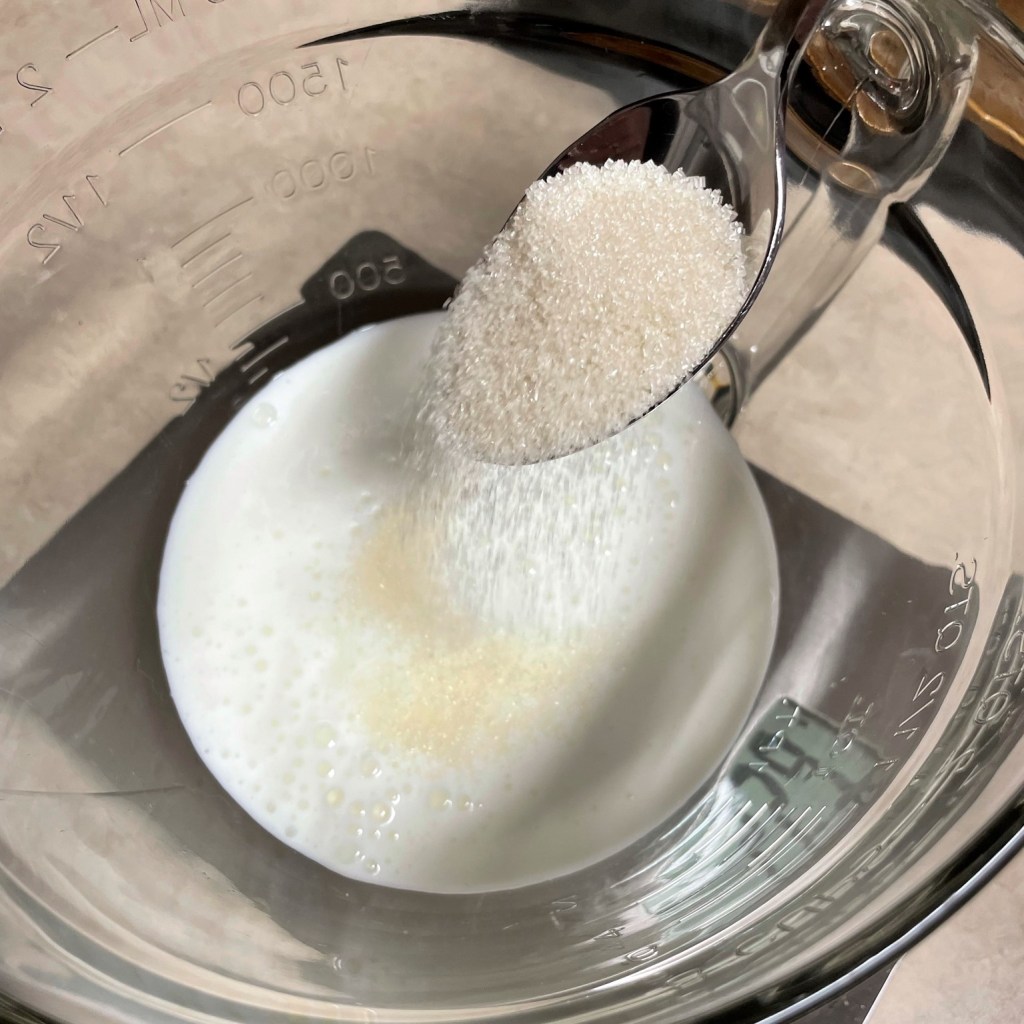
1 Tbsp. cane sugar

1/3 cup pure pumpkin puree

1/2 cup all-purpose flour

1/2 cup whole wheat pastry flour (or white whole wheat)

A heaping 1/2 tsp. pumpkin pie spice (or a few pinches each of cinnamon, nutmeg and ginger)


Combine the first four ingredients in a large bowl (twice as large as you think you’ll need) until smooth. Stir in the flour and spice ingredients. Cover bowl with plastic wrap or a lid and leave it on the counter overnight to ferment.


In the Morning

Heat waffle iron to medium-high heat. Preheat oven to 200°F with oven rack in center position. Place a cooling rack inside a baking sheet inside the oven, for keeping the first few waffles warm while you finish the batch.


Whisk together these ingredients in a glass measuring cup:

1 large egg

2 Tbsp. canola oil (or melted butter)

1/2 tsp. baking soda

2 pinches salt


Pour the mixture into the pumpkin-sourdough starter and fold together, just until evenly combined. The buttermilk and baking soda will react, and the batter will become rather bubbly and rise in the bowl. Let the batter rest on the counter for about 10 minutes before you proceed with making the waffles.

Follow manufacturer’s instructions for making the waffles, transferring them to the oven to keep warm until ready to serve.


This recipe will make about four tall Belgian waffles, or about 12 squares. Either way, it’s plenty of breakfast for four people.


Easy Puff Pastry Pinwheels

Of all the things I love about writing a blog—and there are many, from seeing a record of my kitchen accomplishments to moving another bucket list item to the “done” column to hearing the stories from others who have tried my dishes—the best benefit of all is meeting new friends. I had the most wonderful opportunity to do just that when my husband, Les, and I traveled by car for our recent vacation. Our trip was slated to take us up I-95 through Virginia, D.C., Maryland, Delaware and into New Jersey, and I was thrilled that my blogging pal, Bernadette, was open to a meet-up. She had mentioned many times on her own blog, New Classic Recipe, that she was a resident of the Garden State, and fate was on our side because we were able to meet just one quick exit off the highway, on our way up to the northern part of the state.

I first came to know about Bernadette because she began commenting on some of my posts near the end of 2020, most notably the Oysters Rockefeller Pizza, and when I checked out her blog (WordPress is good that way, encouraging you to check out the bloggers who like your pages), I found myself also mesmerized by stories of her travels and food adventures, and especially the Italian recipes, including this one for fried, stuffed olives. We began following each other’s blogs, but I didn’t expect I would meet her one day.

At least, not until a couple of weeks ago. 😊

Les, me and Bernadette. 🙂

Once our travel plans became clear, I reached out to Bernadette privately, and she was terrific to recommend places near her that we could connect in person, and I’m so glad that we did! We gabbed over lunch—about food and blogging, about family and friendship, and the time just went so fast, as Les and I were suddenly back in the car and on our way to the rest of our action-packed vacation.

Before we parted, my new friend surprised me with a gift bag that contained two jars of handmade preserves, which I treasure. One of them is fig, which we will most certainly dig into when the holidays arrive, and the other is blackberry-prosecco. As much as I have enjoyed slathering the latter on my breakfast toast, I wanted to make something delicious and special with it, both to honor my new friend and to show appreciation for this (literally) sweet handmade food gift. This recipe is simple to make because it relies on store-bought puff pastry, but it has a little bit of “wow” factor, thanks to a pretty shaping method that is very easy to do. And the blackberry-prosecco preserves offer just the right kiss of sweetness on top of a cream cheese cushion.

The laminated dough puffs up during baking and makes the prettiest pastries!

My intention for these pastries is to serve them for breakfast or brunch, and because September is Better Breakfast Month, it seems apropos to do so. But honestly, there’s no reason these could not also be served as a light dessert, perhaps even with a glass of prosecco, in a friendly nod to the prosecco in Bernadette’s preserves.

Wait, why not both? 😉


Ingredients

1 sheet refrigerated (or frozen, thawed) puff pastry

3 oz. cream cheese, slightly softened

1 heaping Tbsp. powdered sugar

1/4 tsp. vanilla

6 tsp. favorite fruit preserves

1 egg (+ 1 tsp. cold water, for egg wash)


Instructions


  1. Preheat the oven to 400° F, with oven rack in the center position.
  2. Remove puff pastry from package and roll out on a lightly floured counter or board. Use a rolling pin to gently press out any folds in the pastry and aim to keep the pastry sheet in a mostly square/rectangle shape.
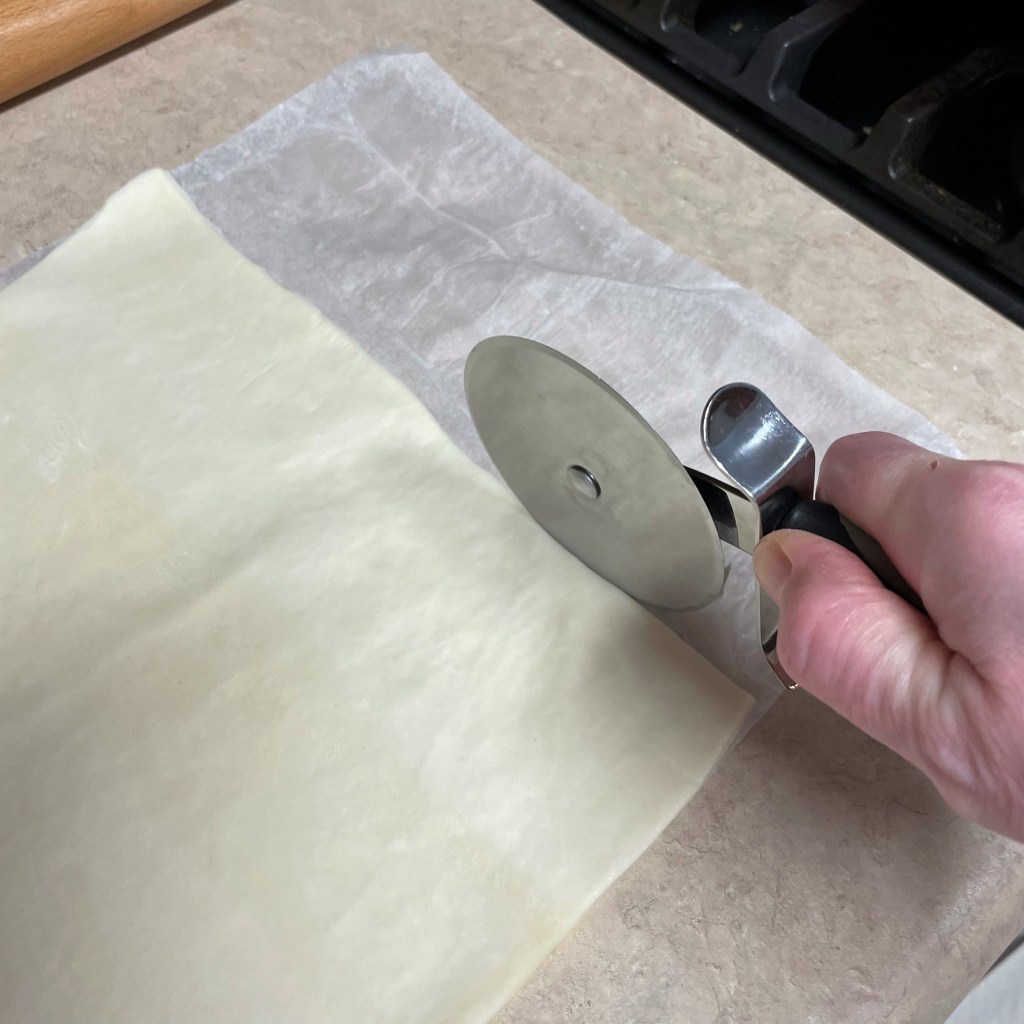
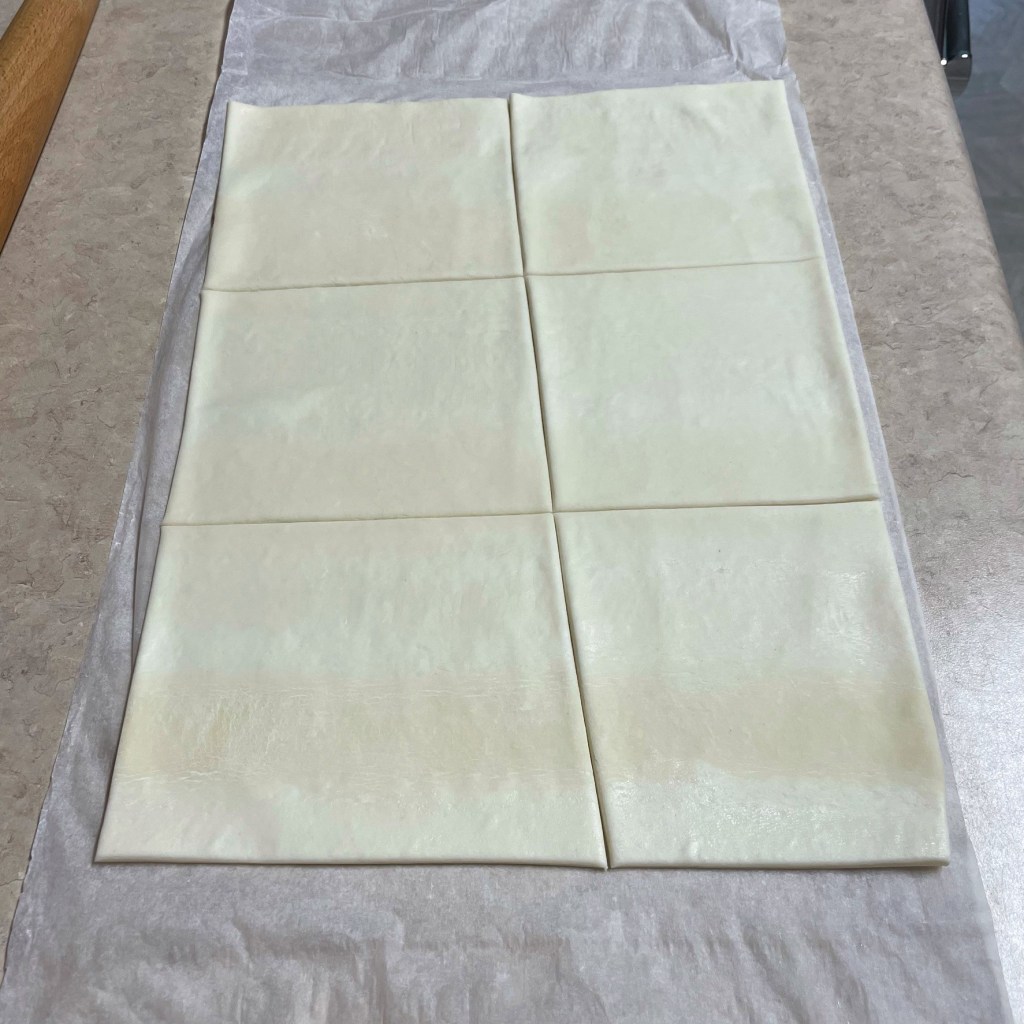
  3. Using a pizza wheel, trim the edges all around and cut the pastry into six roughly equal size squares. Arrange the squares on a parchment-lined cookie sheet. It is not necessary to have much space between them.
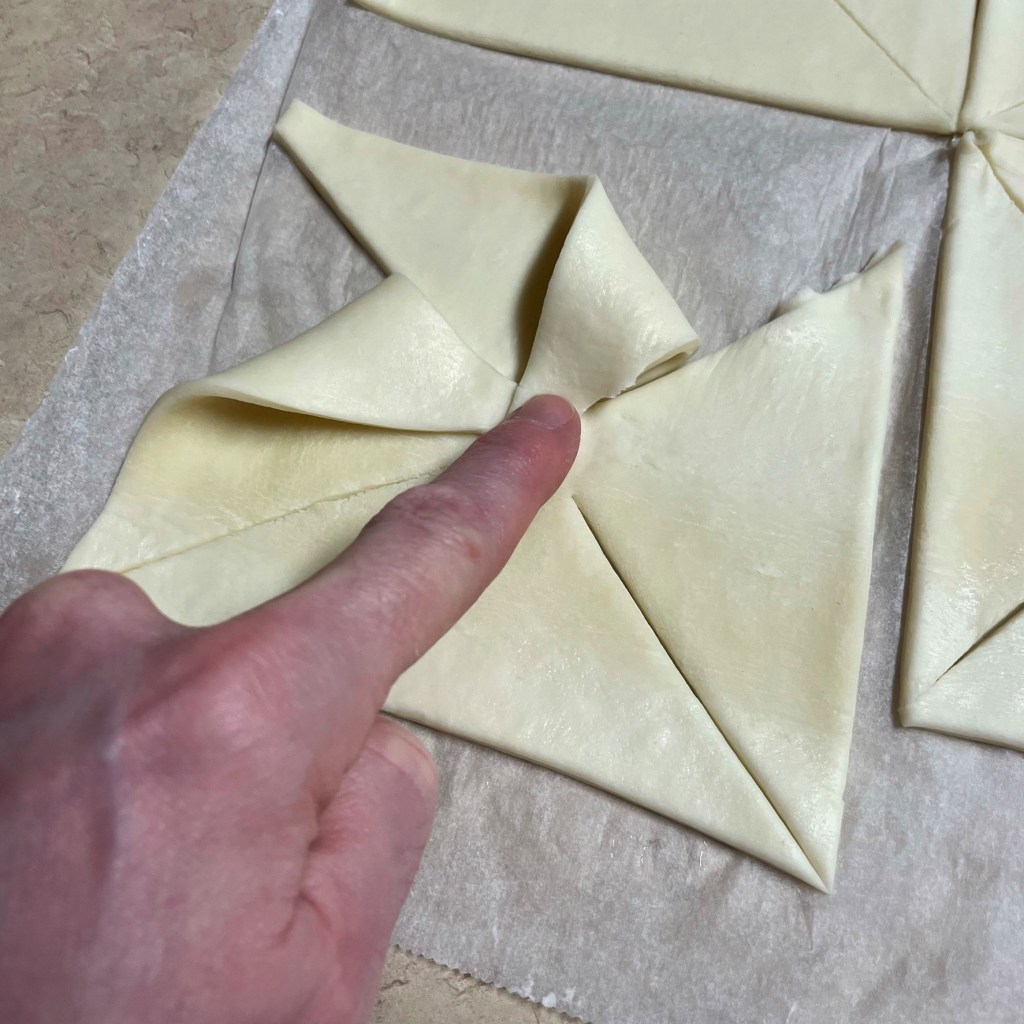
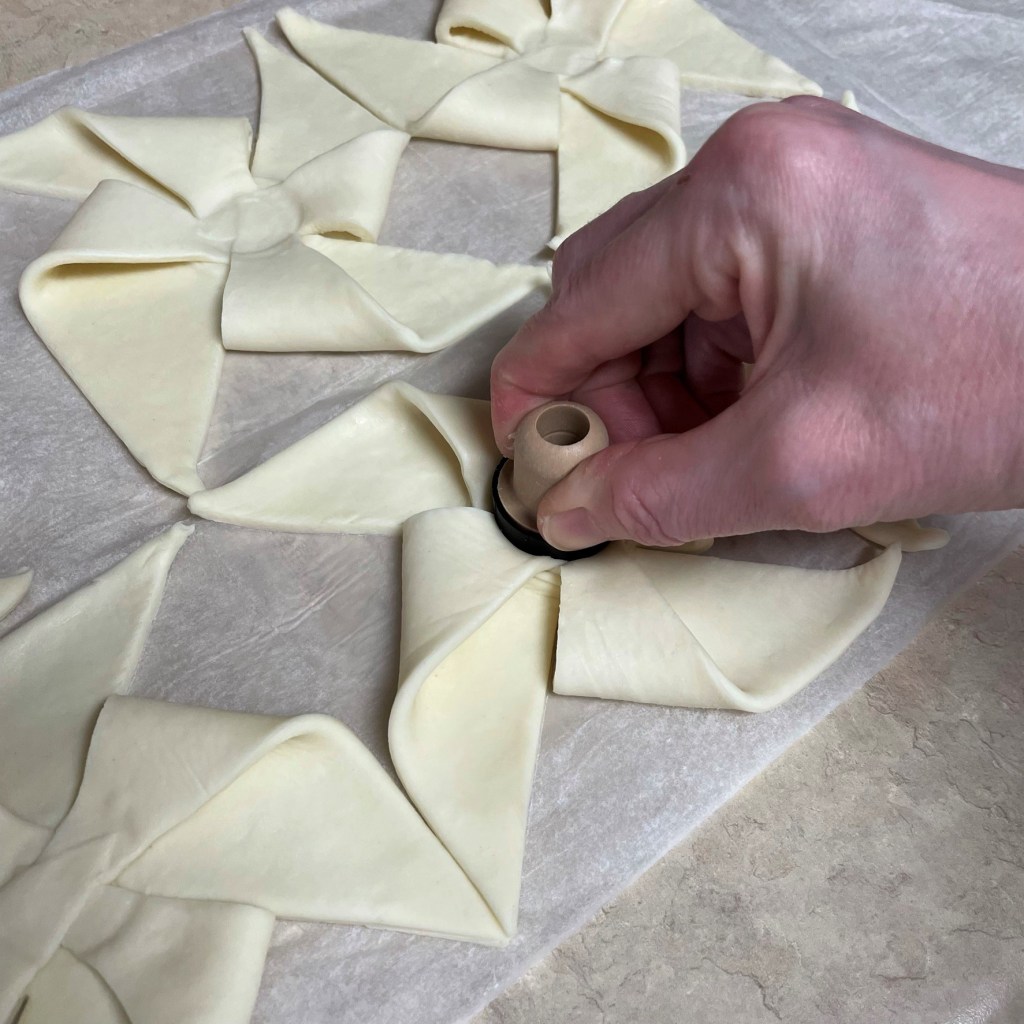
  4. Use a paring knife to cut diagonally from the corners of each pastry square toward the center, but keep about 1½ inches of the center fully intact. Fold every other point toward the center, slightly overlapping them in the middle. Press down firmly on the centers with your thumb to ensure the pastry stays put.
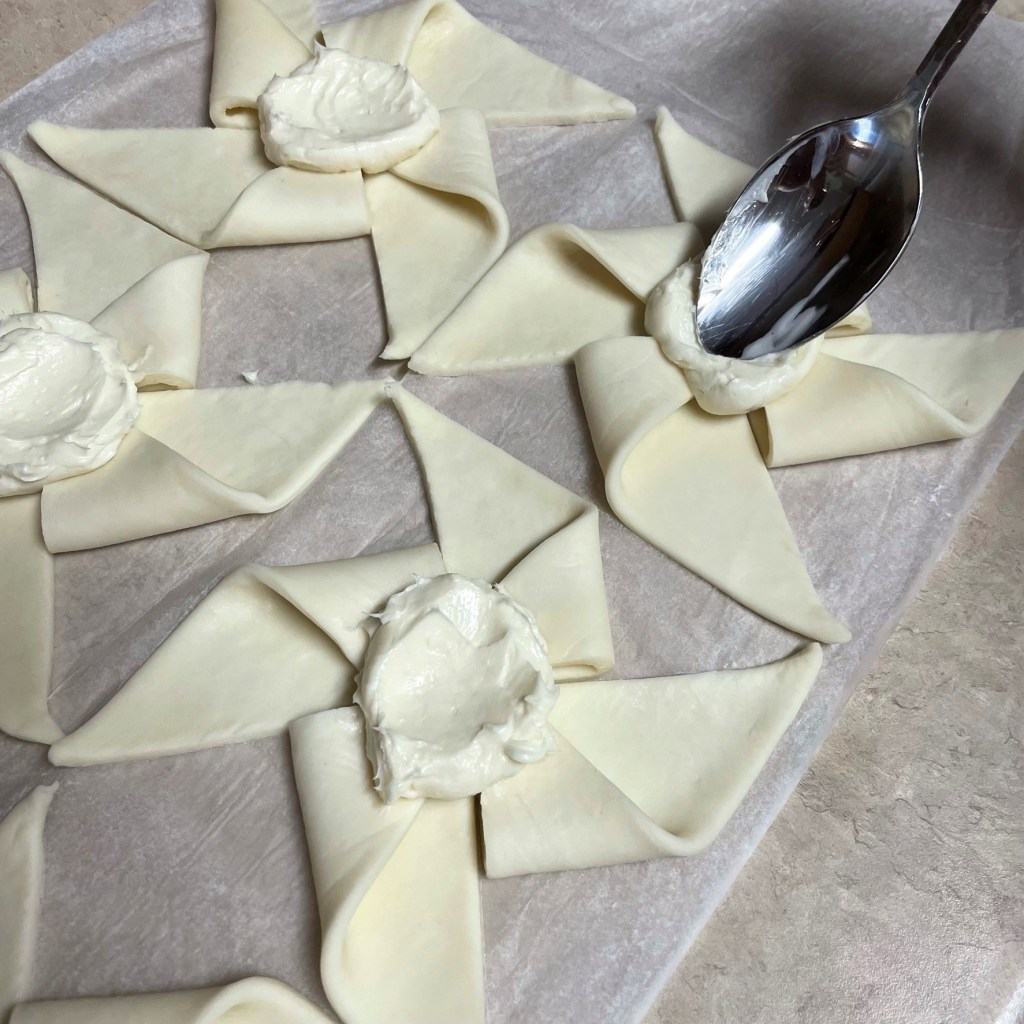
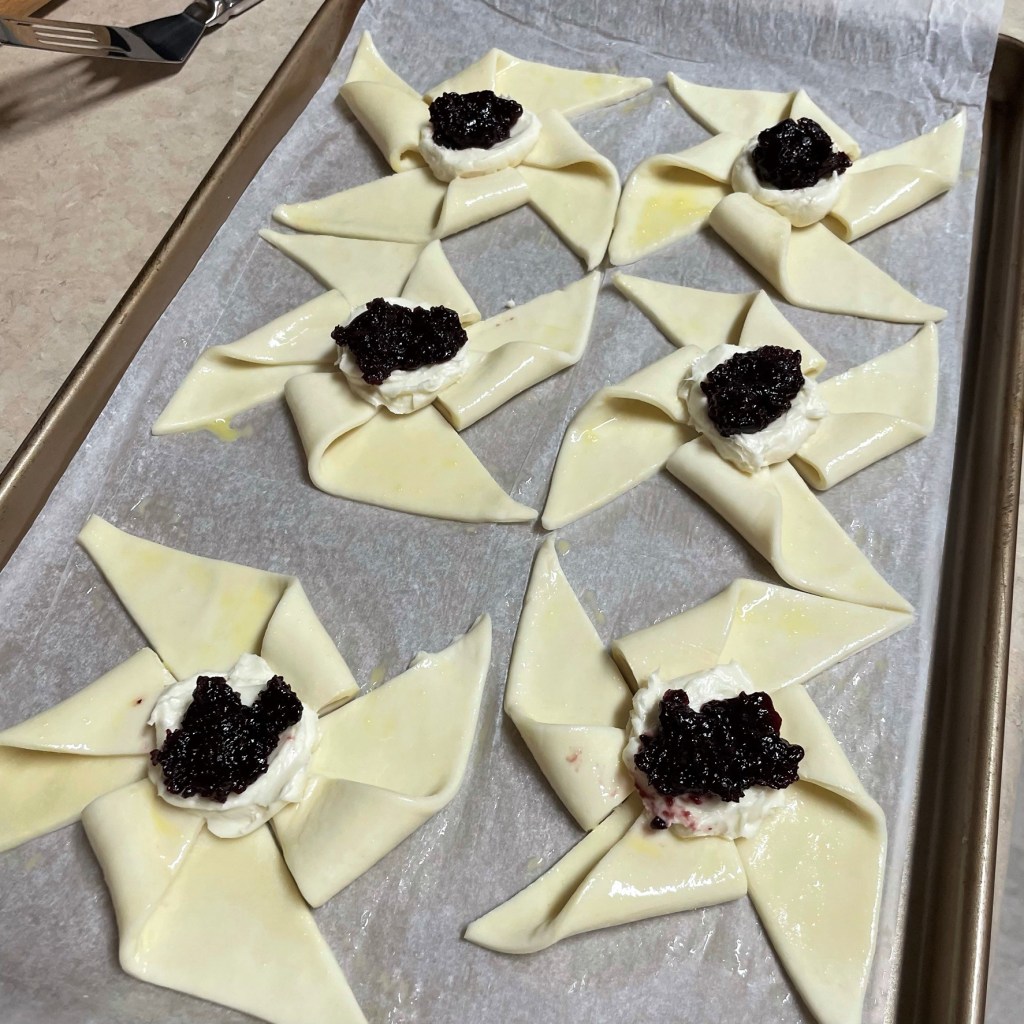
  5. Divide the sweetened cream cheese mixture among the pastry pinwheels. Each should have about 1 tablespoon. Gently press the center of the cream cheese with the back of a spoon to create an impression. Fill each impression with a small spoonful of your favorite preserves.
  6. Brush all exposed pastry dough with egg wash. Bake for about 18 minutes, or until pastries are puffy and golden. Rotate baking sheet about halfway through the time, for even browning.
  7. Cool pastries on the baking sheet for about 2 minutes before transferring to a rack to cool.

Making breakfast better!


Mexican Street Corn Hash and Eggs

Before we get too carried away into kitchen renovation land, I owe the month of September its due respect. We are now 10 days into National Better Breakfast Month, and given that breakfast is my favorite meal, I should have more breakfast recipes on the blog already. But at our house, weekends are the only time we do anything fun or fancy for breakfast, so my opportunities are somewhat limited (much to my chagrin).

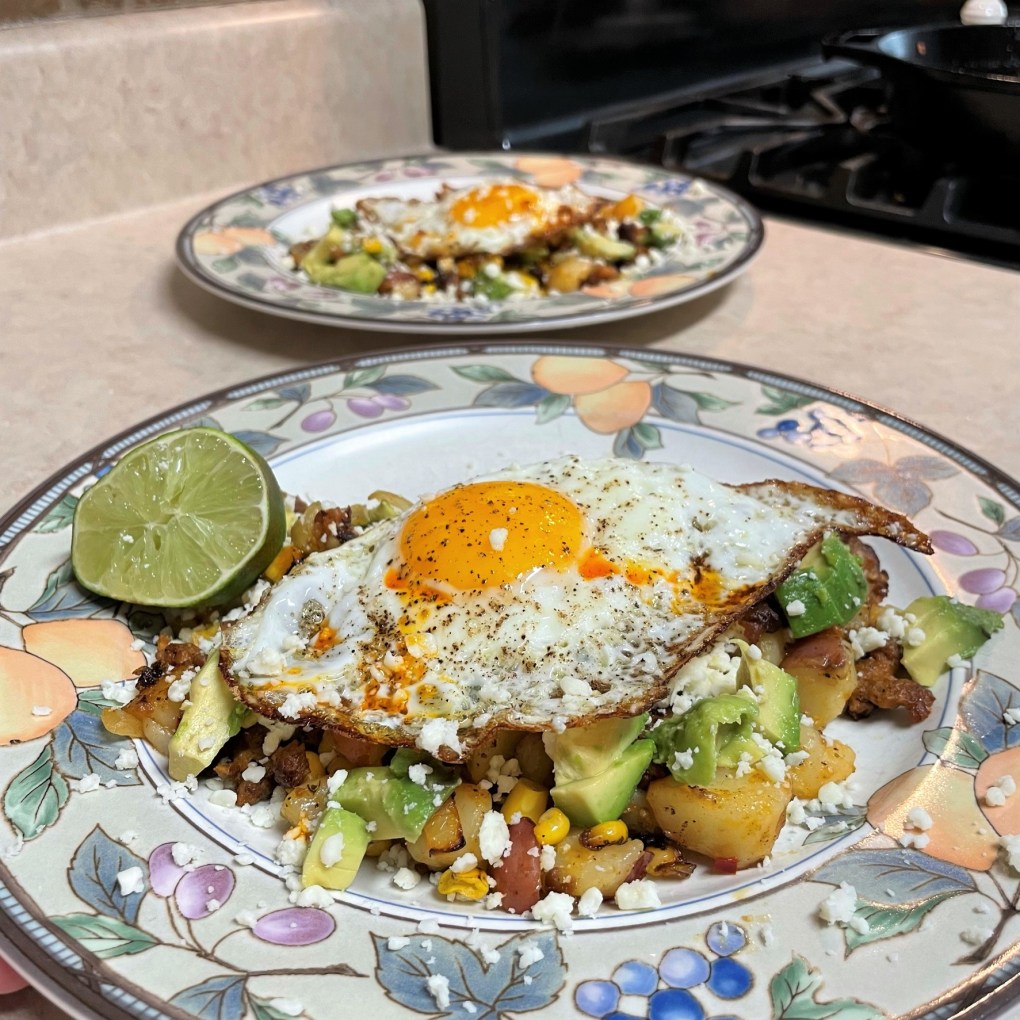
Today’s recipe is not fancy, but it gets high marks in the fun department because of all the flavors and textures. My inspiration for the dish came from a restaurant where my work team had its first face-to-face meeting since the pandemic started. The restaurant, which specializes in breakfast and brunch, had a “specials” board that announced, “Mexican street corn hash,” featuring chorizo, corn, potatoes and a sunny-side egg. It was good, but not particularly spicy, and it was missing a little something for me (smoke). My mind started working to break down the flavors and figure out how to improve it, and the outcome was delicious!

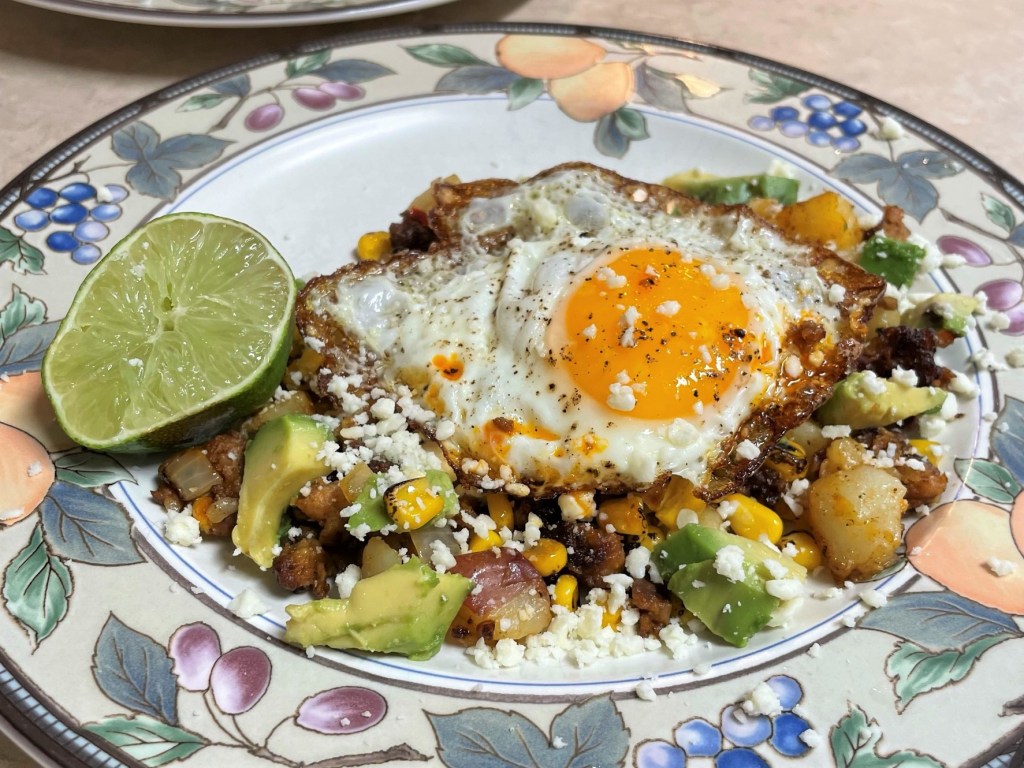
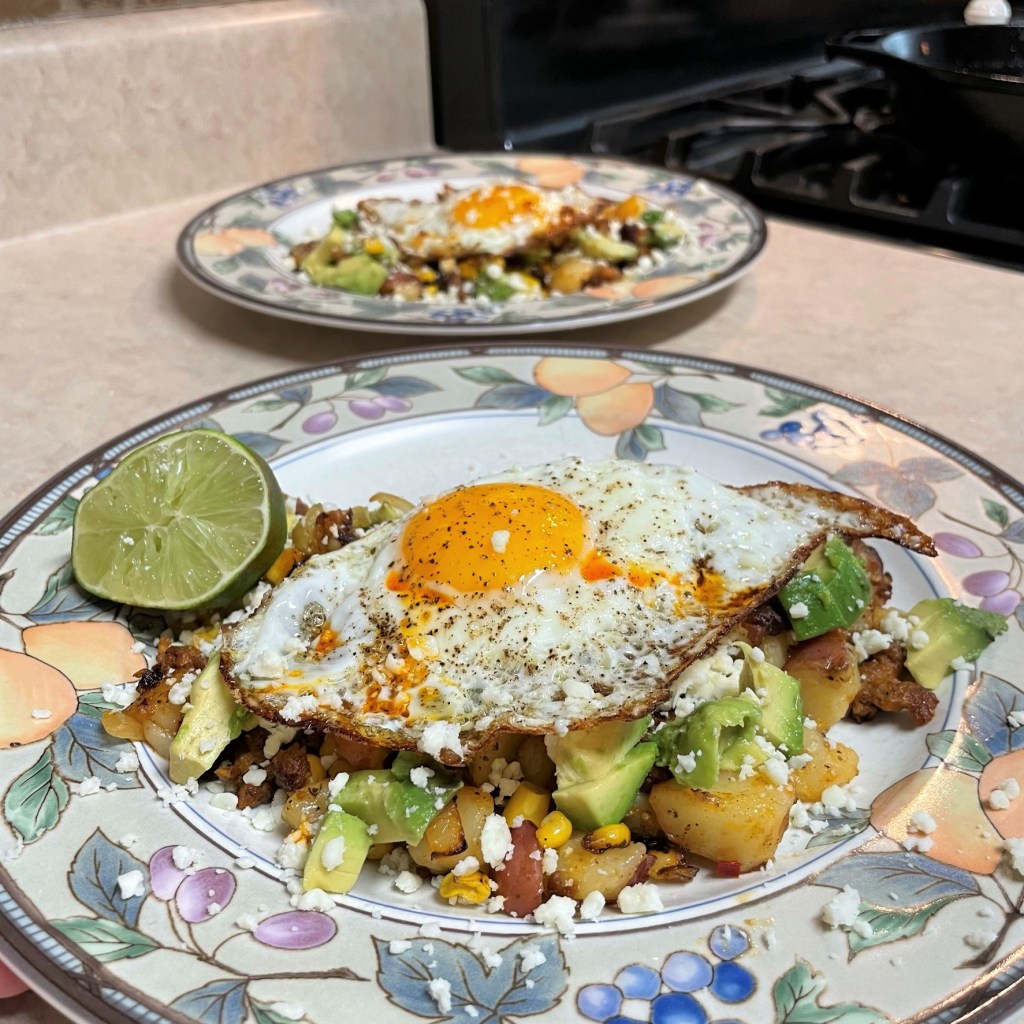
My adjustments made this breakfast spicier and smokier than the restaurant version.

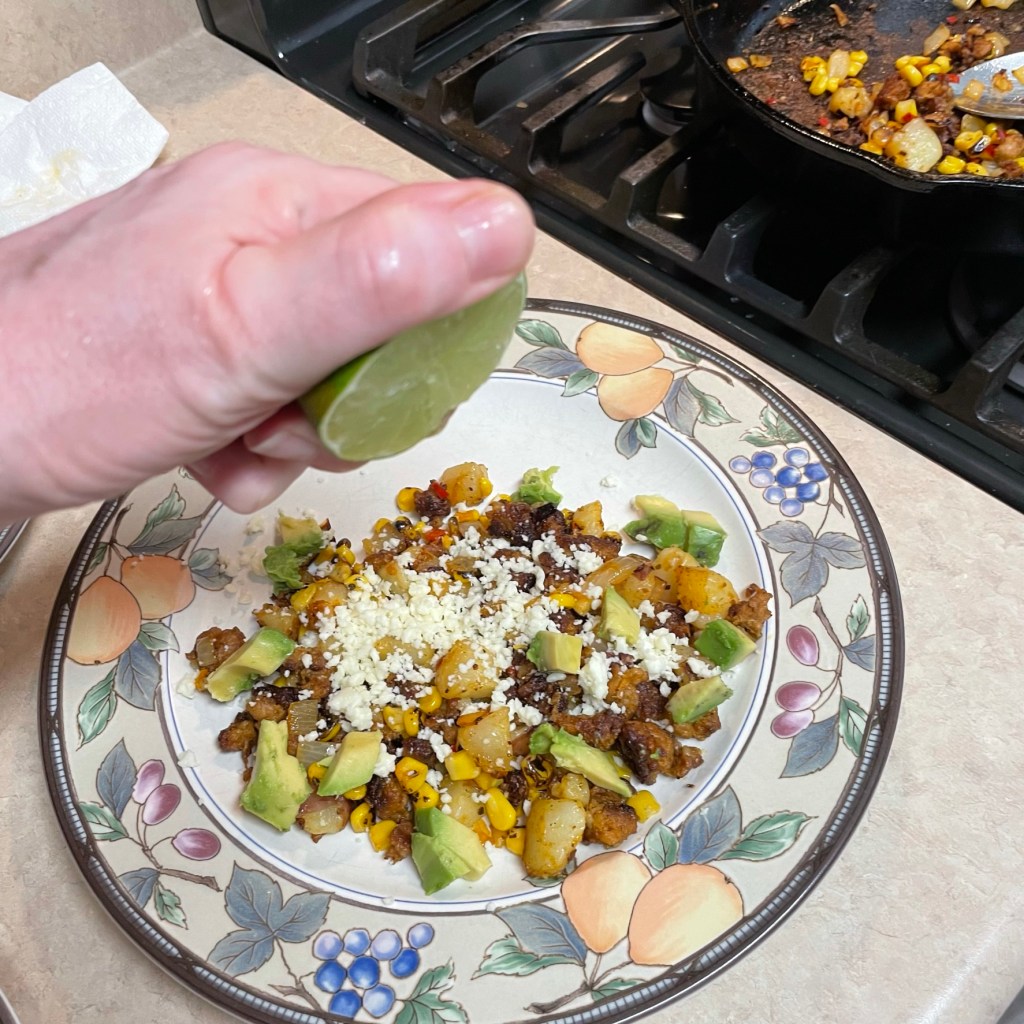
For my version of the dish, I amped up the flavors of a store-bought chorizo, using ordinary spices and a surprise ingredient (keep reading) to boost the texture of the sausage while enhancing the Mexican flavors. I used a combination of red jalapeno peppers and onions to make the potato hash interesting, and I finished the plate with crumbly cotija cheese, avocado cubes and a quick squeeze of fresh lime juice.

As I was discussing with a friend recently, if you have dietary restrictions, you don’t necessarily have to give up all the flavors you love. In this recipe, the yummy Mexican chorizo flavor can be easily adapted to turkey sausage or ground turkey (but be sure to adjust the spices and use a little oil for browning). You will still get the texture and flavors that made this dish delicious, without the ingredients that cause discomfort or health problems.


Ingredients

3 small, skin-on red potatoes, scrubbed and cut into cubes

1/2 tsp. baking soda

1/2 lb. fresh chorizo sausage* (see notes)

1/2 tsp. smoked Spanish paprika (or combine with cayenne, if you dare!)

A few shakes ground cumin

A few shakes of dried Mexican oregano*

1 to 2 Tbsp. fine ground corn meal or masa harina*

1/2 medium yellow onion, chopped

1/2 red jalapeno pepper, finely diced* (handle with care!)

1/2 cup frozen fire-roasted corn kernels*

2 large eggs (and a swirl of oil to fry them)

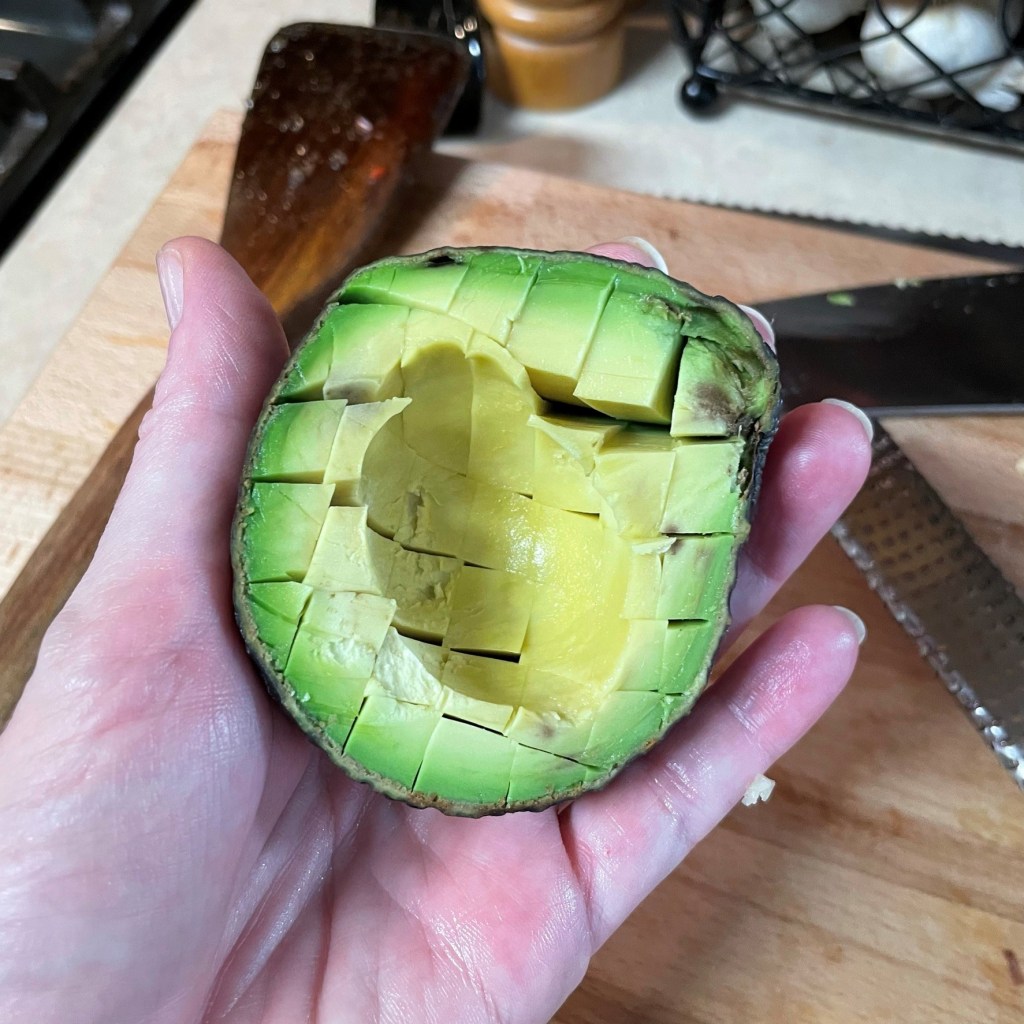
1/2 ripe avocado, cubed

1/4 cup crumbled cotija cheese*

1/2 fresh lime


*Notes

I used 3 fresh chorizo links, similar in size to Italian sausage, with the casings removed. I don’t recommend the hard chorizo sausage that is typical of Spanish cuisine. If you substitute 1/2 lb. ground turkey or turkey sausage, add a bit of garlic powder and adjust the other seasonings to assimilate the flavor of chorizo, and be sure to use a little canola or olive oil in the skillet to make up for the sausage fat.

Mexican oregano, not to be confused with typical Mediterranean oregano, has an earthy flavor with similarities to citrus. This gives a different impression than the oregano you’d use in Greek or Italian recipes, which is a member of the mint family.

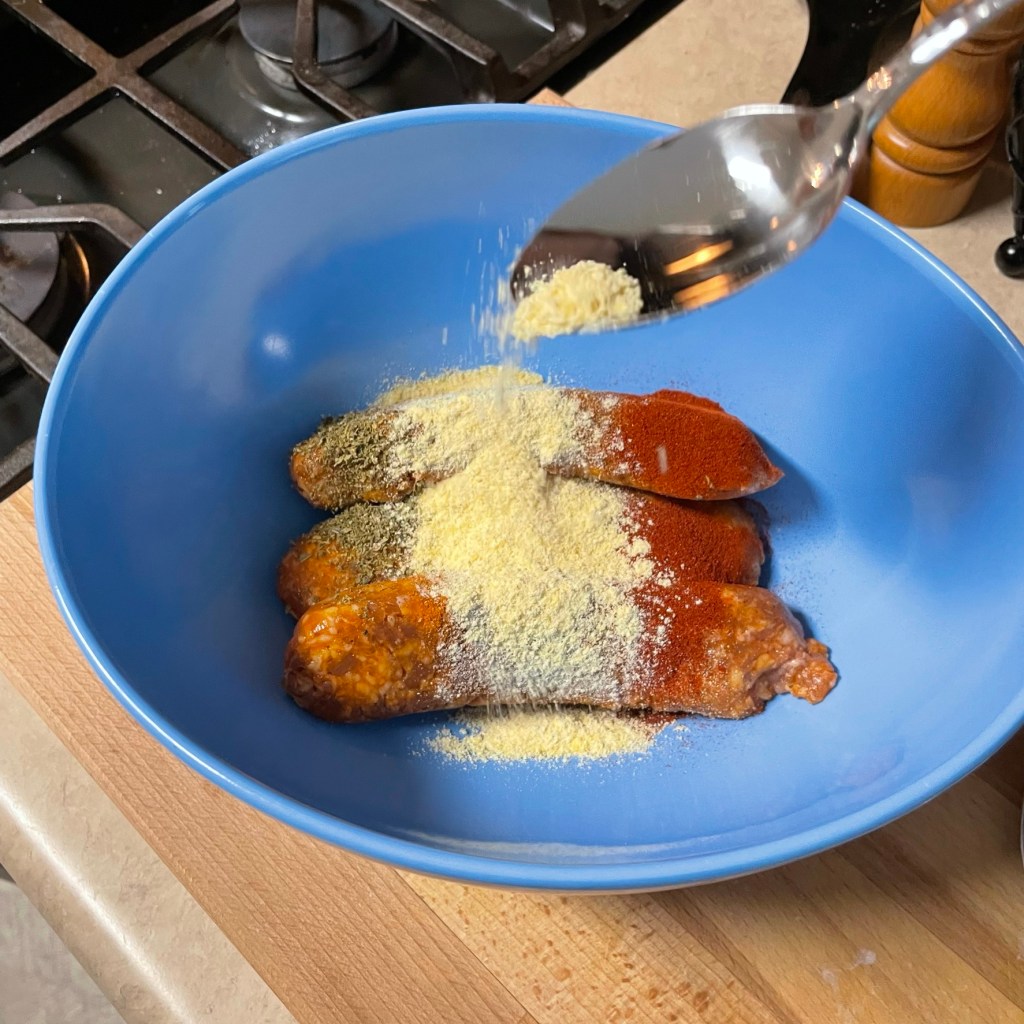
Are you wondering about the corn meal? I discovered a few years ago that adding corn meal (or masa harina, the ingredient used to make corn tortillas) gives a distinctly Mexican flavor to taco seasoning, and for this recipe, it adds a bit of the grainy, gritty texture that is so good in chorizo. It also seems to help absorb some of the grease when the chorizo cooks. Try it and see!

If jalapeno is too spicy for your palate, sub in a similar amount of red bell pepper.

I used Trader Joe’s fire-roasted corn, available in the freezer section. Regular sweet corn would work just as well, but I really like the slightly charred, smoky flavor that the roasted corn conveys.

Cotija is a dry, crumbly cheese that lends a salty touch to Mexican dishes. If you cannot find it, crumbled feta would be a good substitute.


Instructions

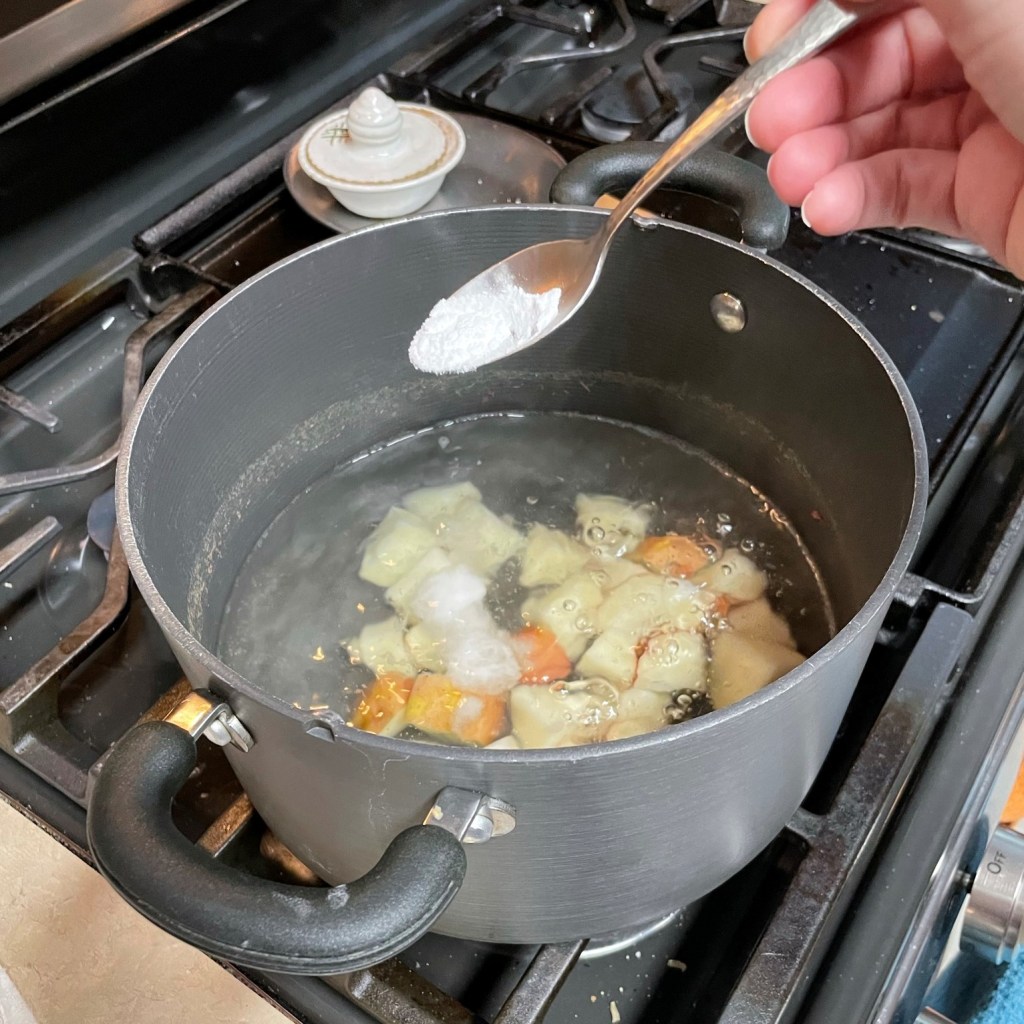
  1. Bring a medium pot of water to boil. Add the potatoes when the water comes to a boil and stir in the baking soda. This will “rough up” the surface of the potatoes to make them more crispy and more porous to the seasonings in the skillet. When the potatoes are just tender enough to pierce with the tip of a knife (but not mushy), drain and set aside.
  2. Remove any casings from the chorizo and sprinkle the paprika, cumin, oregano and corn meal over it. Using your hands, squeeze to combine the seasonings thoroughly into the sausage.
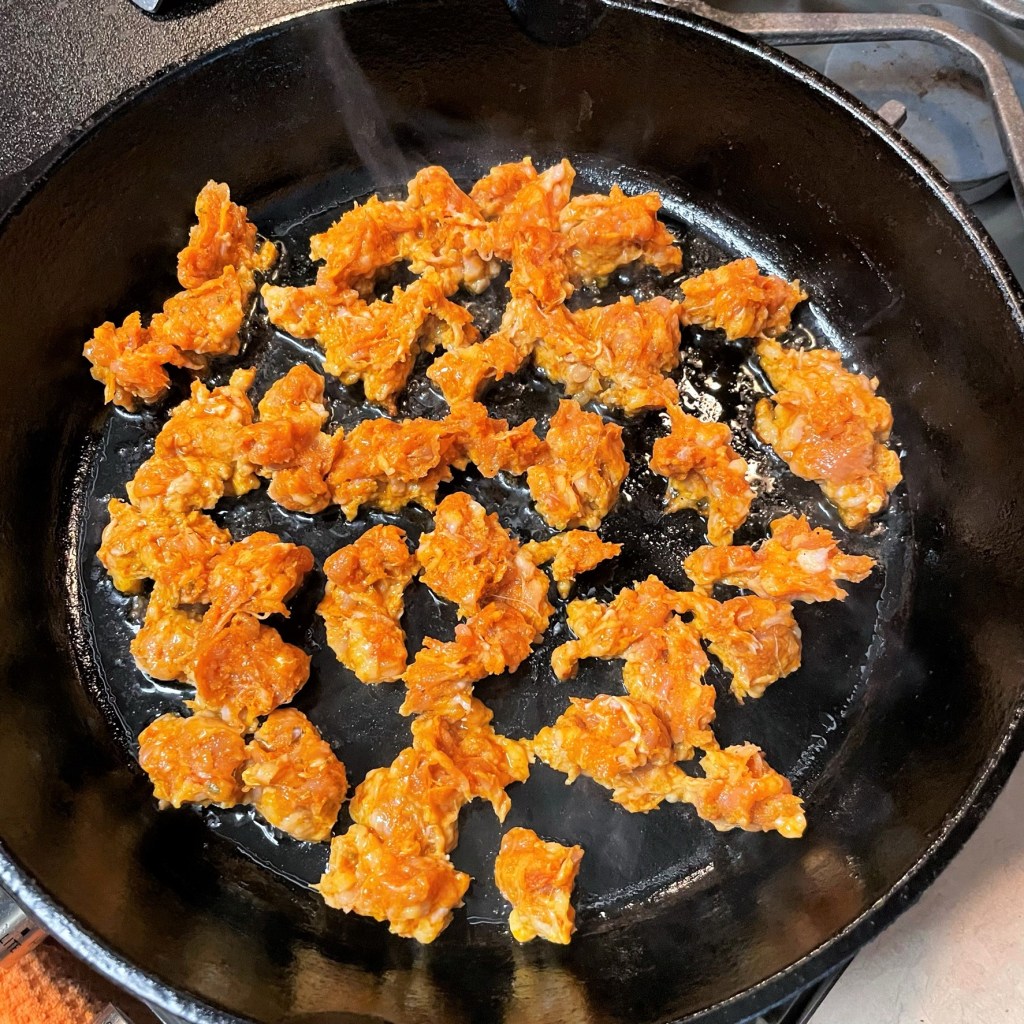
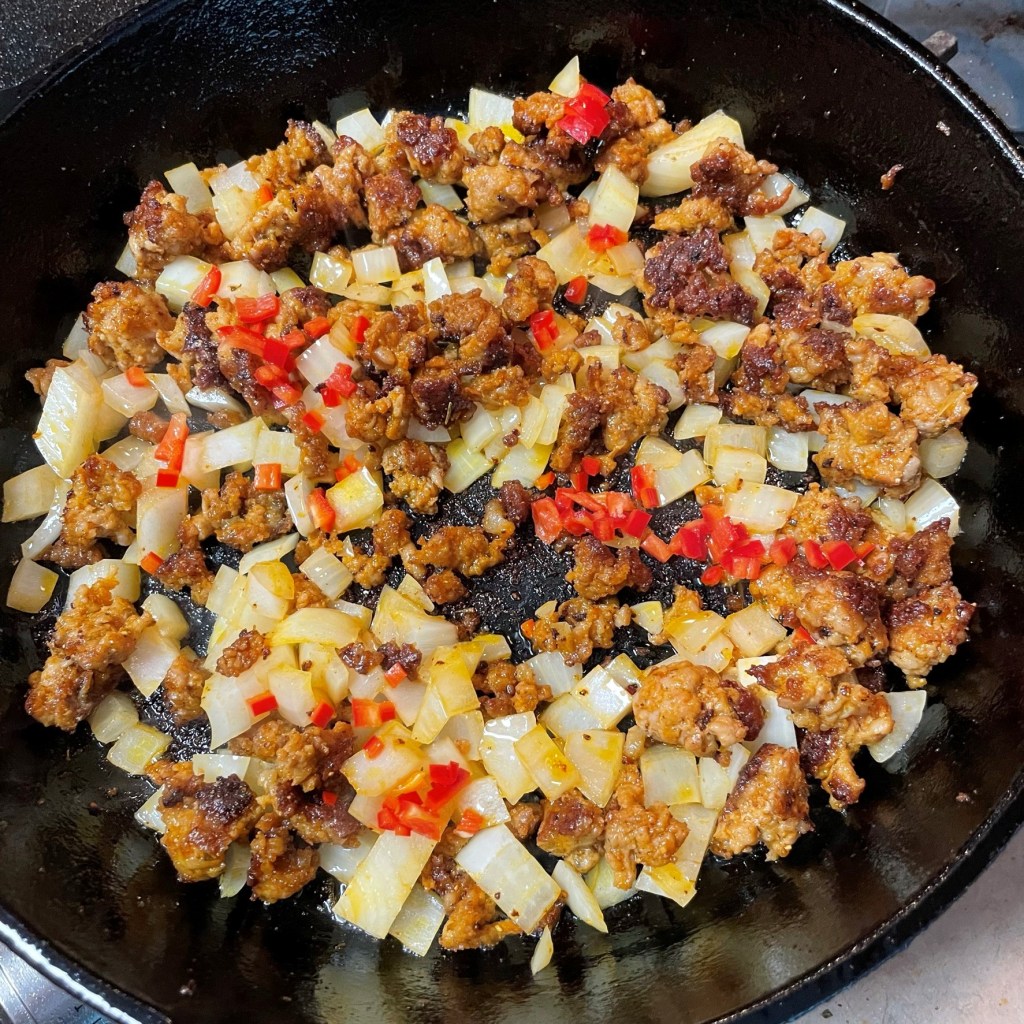
  3. Heat a cast-iron skillet over medium heat. Crumble the sausage into the skillet and cook until all sides have a nice brown crust on them. Add the onions and jalapenos; continue cooking until the onions are soft.
  4. Move the sausage and onion mixture to the edges of the skillet. Add a quick swirl of oil if the skillet is dry. Add the potatoes to the center of the skillet, cooking them to desired texture. Add the corn and cook until heated through.
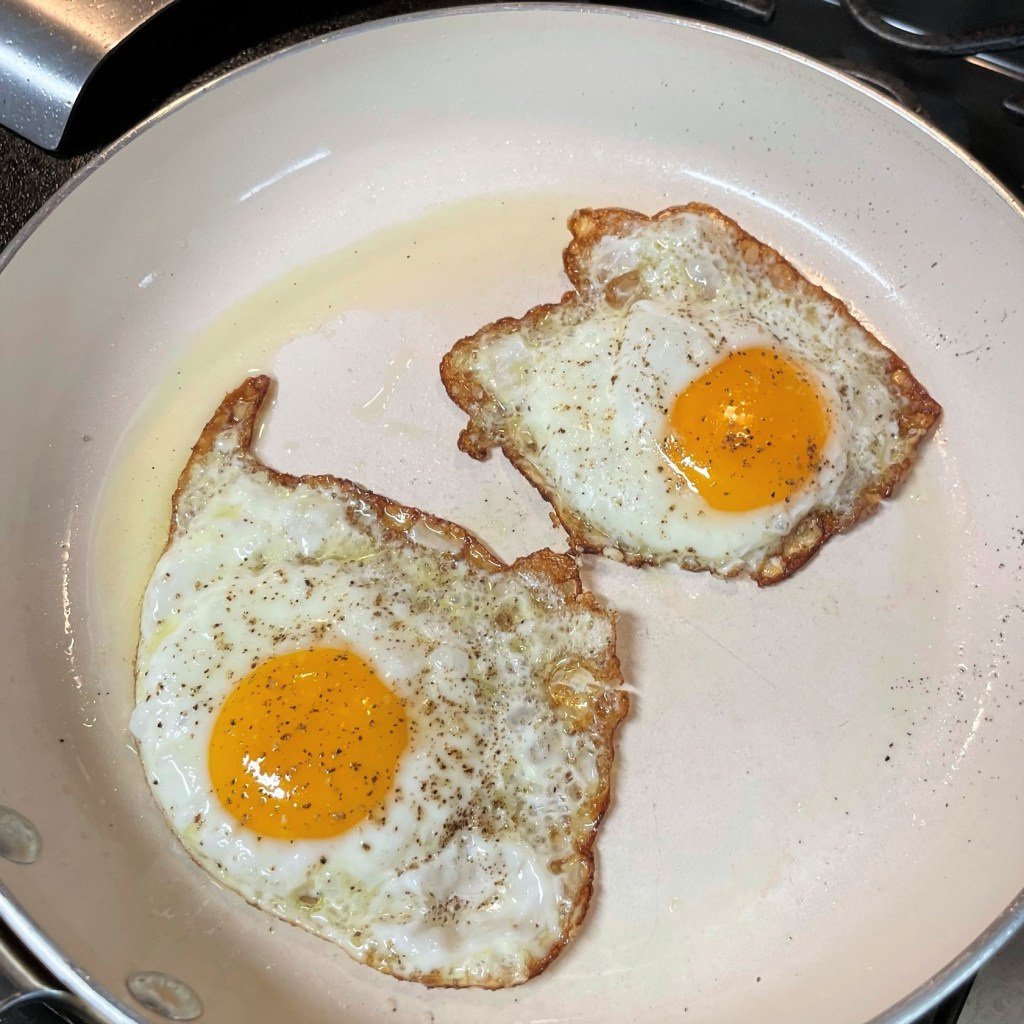
  5. In a separate, non-stick skillet, heat 1 Tbsp. oil over medium heat and fry the eggs to desired doneness.
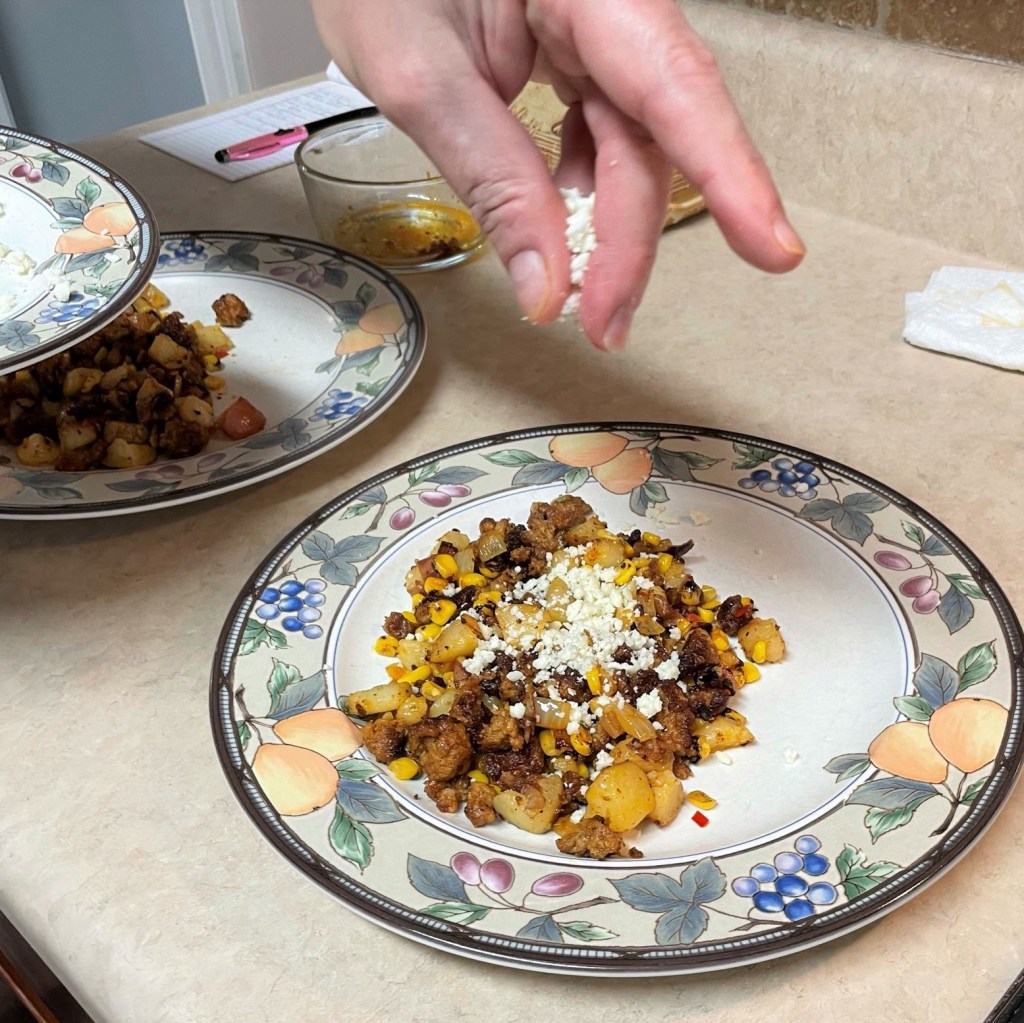
  6. Divide the hash for two servings. Sprinkle each with 2 Tbsp. of the cotija cheese and scatter the avocado cubes around the plate. Squeeze a bit of lime juice over the hash, top with an egg and serve. Any chorizo drippings left in the skillet may be drizzled over the egg if you like. 😊


Fluffy Blueberry Buttermilk Pancakes

In my quest to determine which of our gadgets and small kitchen electrics will win a permanent spot in our soon-to-be-new kitchen, I am cycling through some recipes I haven’t made in a while, just to have a reason to pull those gadgets from storage and give them a run.

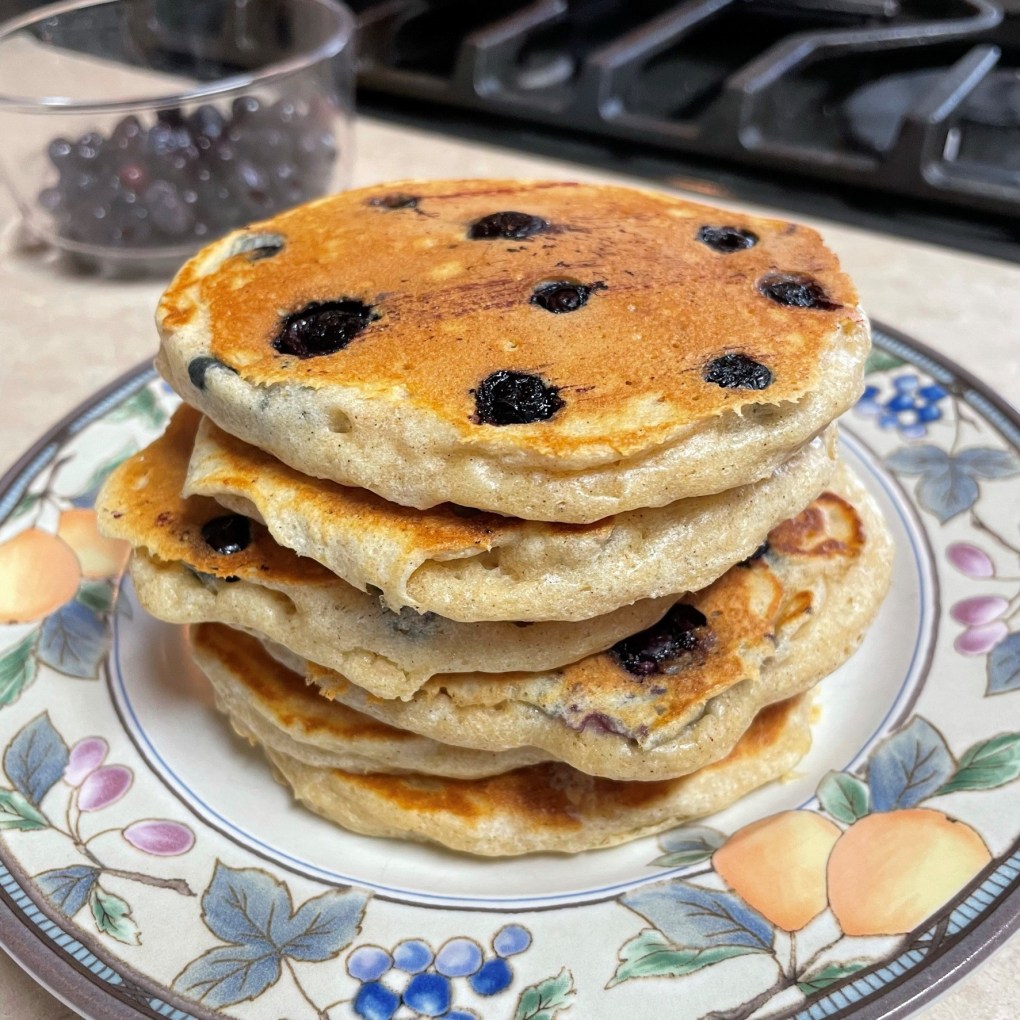
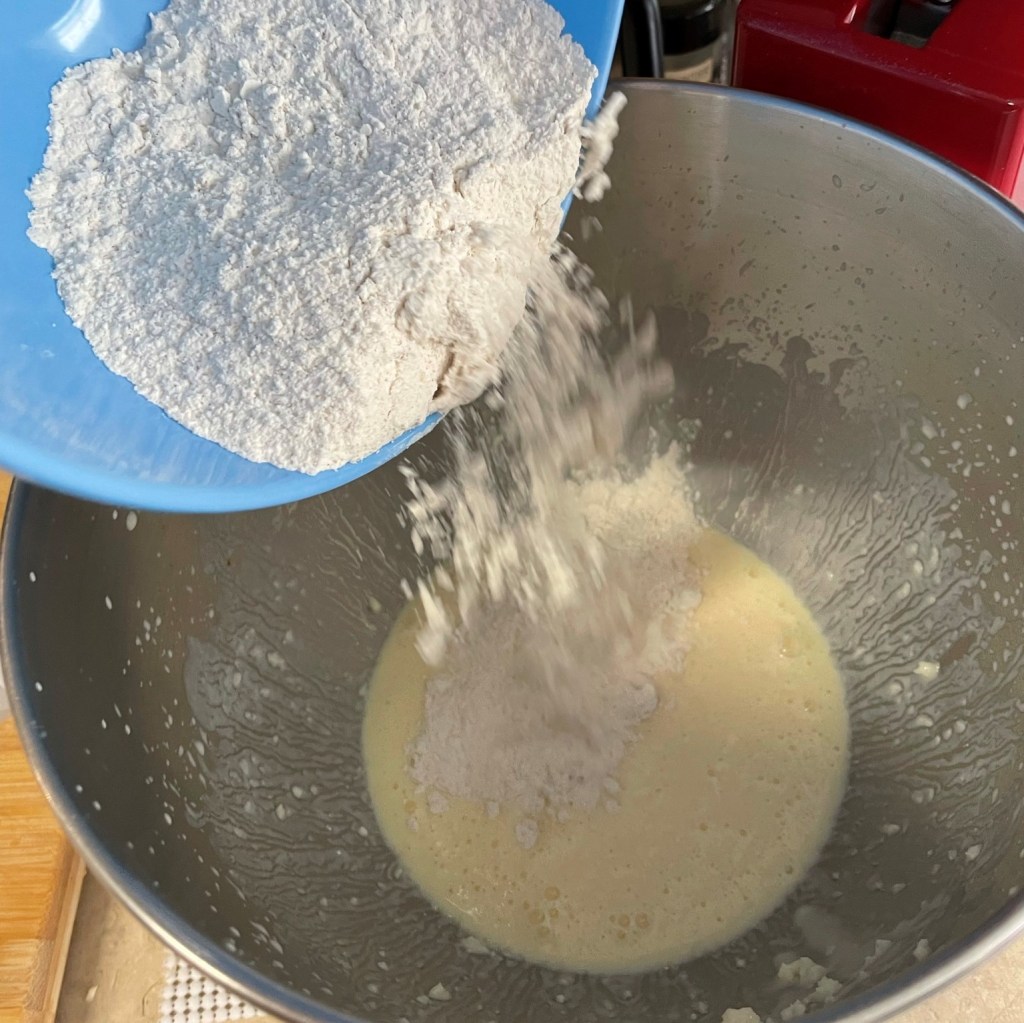
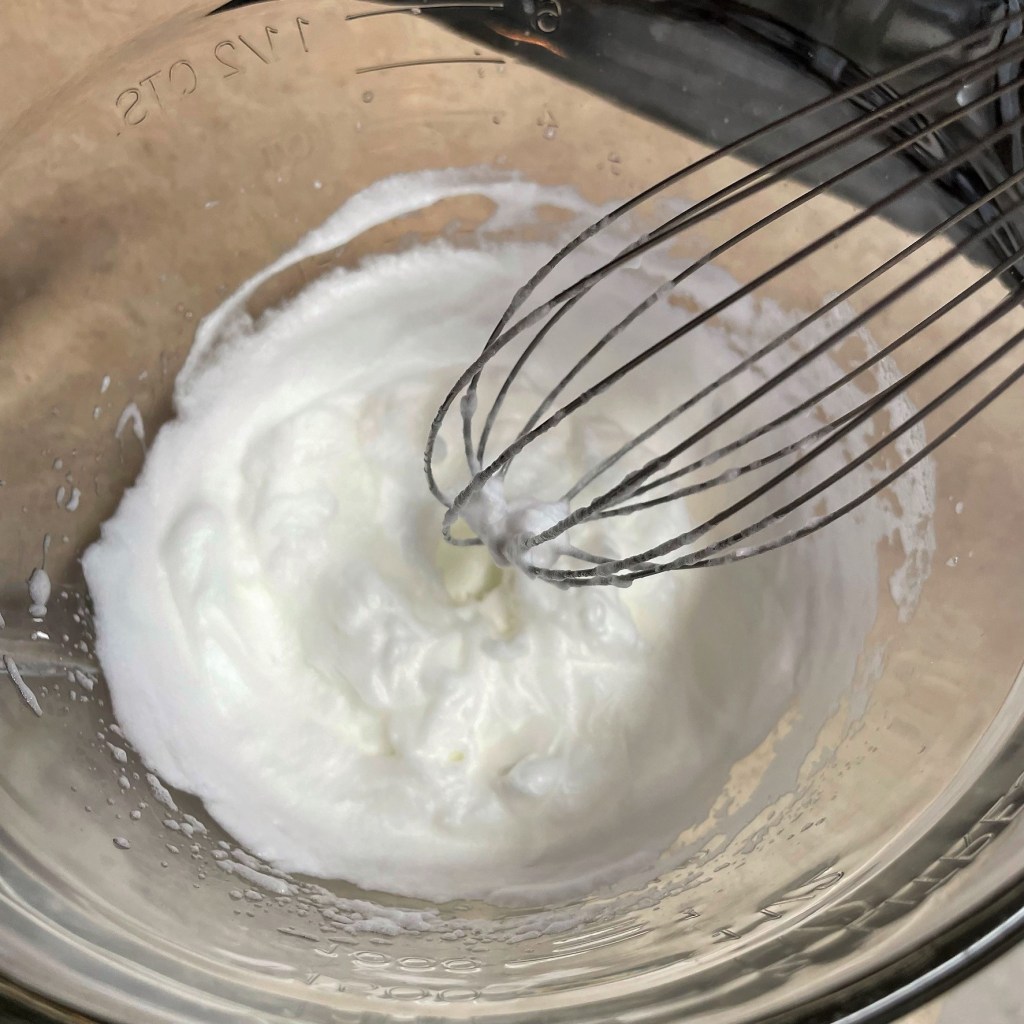
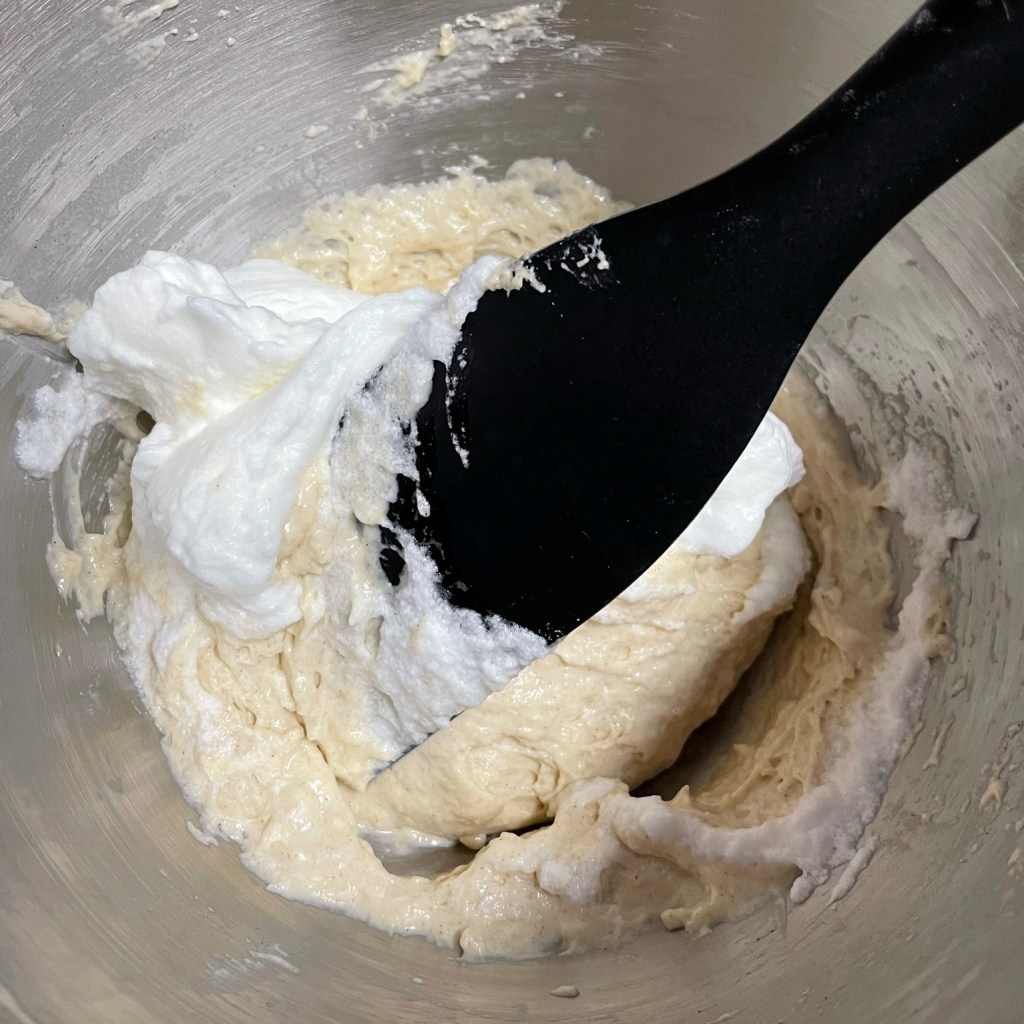
For these fluffy, buttermilk-rich blueberry pancakes, I turned to a favorite King Arthur Baking Company recipe, and I added a twist to give them extra loft. The ingredient list isn’t changed, but the technique is slightly different in that I separate the eggs before mixing, whipping the whites by themselves and then folding them into the batter just before griddling. It’s a simple kitchen trick that elevates any favorite pancake recipe—figuratively and literally.

Rather than cooking the pancakes on my beloved middle griddle that lives permanently on our gas range top, I asked my husband, Les, to get the stepladder for fetching my reversible, non-stick griddle from its unlikely storage spot in the kitchen. The griddle is enormous, and for lack of a better stowing spot, we have kept it wrapped in a large kitchen trash bag, stored way up there on top of the cabinets, where Taz is sitting!

She is large and in charge up there!

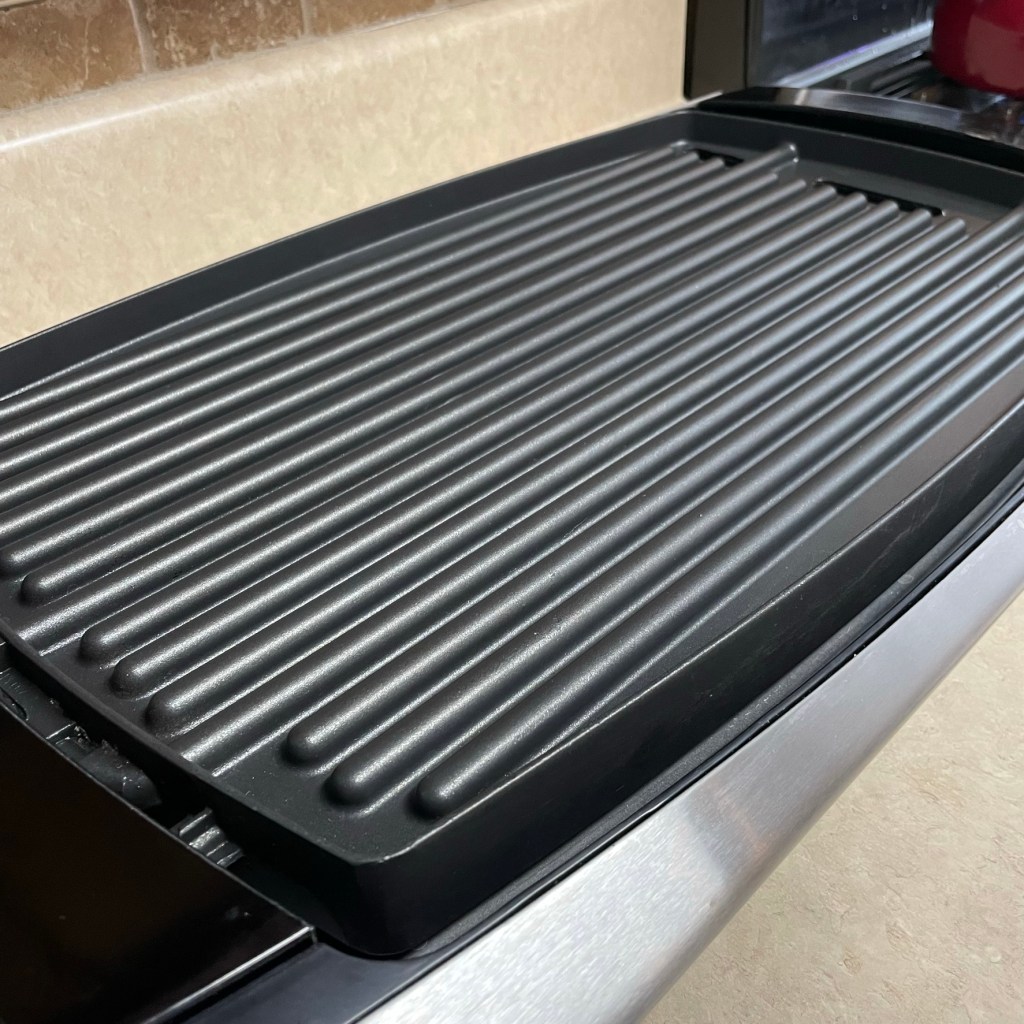
I’m reluctant to let go of this griddle because it is easy to clean, reversible to a grill side and the temperature dial ensures consistent cooking. Needless to say, its large cooking surface helps me get breakfast ready all at once. Unfortunately, the out-of-reach storage makes it inconvenient for regular use.


When the big reveal happens on our remodel, Les and I will be re-evaluating where everything goes, and the full-height pantry cabinet should have plenty of room for this convenient, though bulky, appliance (fingers crossed)!

Now, about these fluffy pancakes. 🙂

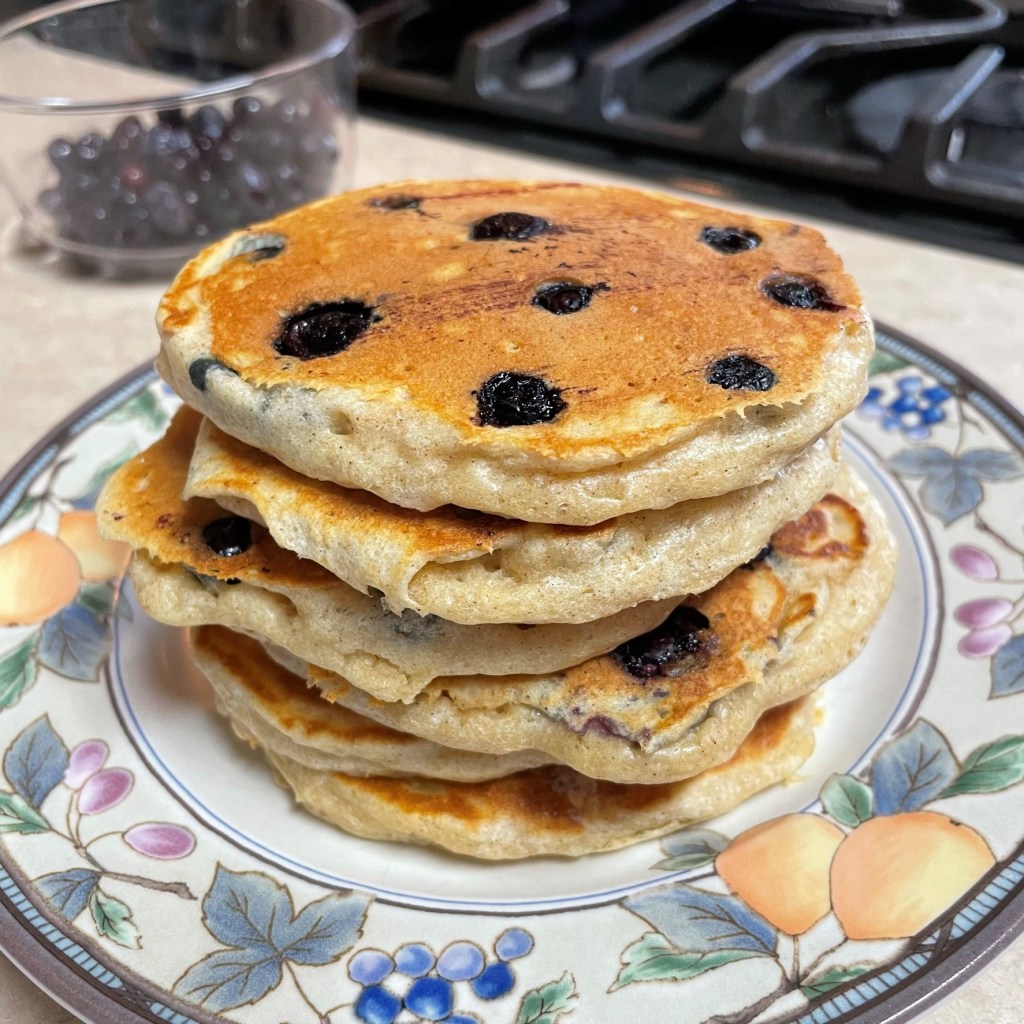
The air whipped into the egg whites gives the pancakes extra loft and lightness. They are so delicious with real maple syrup!

Serves 4

Adapted from Buttermilk Pancakes | King Arthur Baking

Ingredients

3/4 cup all-purpose flour

1/4 cup whole wheat pastry flour

1 Tbsp. sugar

1/2 tsp. ground cinnamon

1/2 tsp. baking powder

1/2 tsp. baking soda

1/4 tsp. salt

1 large egg, separated* (see notes)

1 cup thick buttermilk*

1 Tbsp. melted butter

1 tsp. real vanilla extract

1 cup blueberries or other soft fruit


*Notes

Eggs separate more easily when they are cold, so take care of that first and set each part aside until they are room temperature.

It’s best for the buttermilk to be near room temperature, also.


Instructions

Heat an electric griddle to 350°F, or a cast-iron skillet over medium heat.


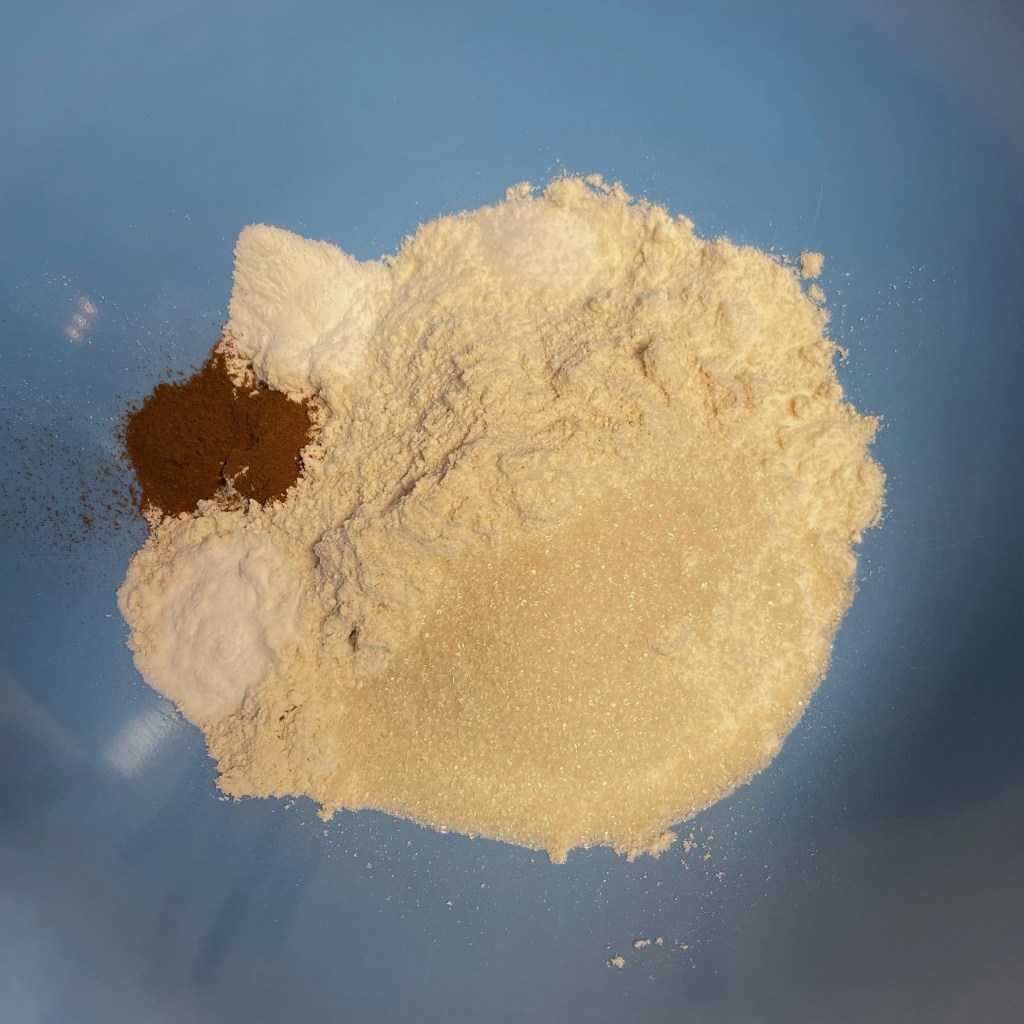
In a medium bowl, whisk together the dry ingredients.

In a separate bowl, combine the egg yolk, buttermilk, melted butter and vanilla. Whisk together until smooth. Mix the wet ingredients with the flour ingredients, stirring just until blended.

In yet another bowl, whip the egg white with an electric hand mixer (or with a whisk and some elbow grease, if you’re feeling sassy). When properly whipped, the egg white should increase a great deal in volume and will form stiff peaks when you remove the whisk.

Fold the whipped white into the bowl with the rest of the batter, taking care not to stir down and deflate the batter. Allow it to rest about 15 minutes.

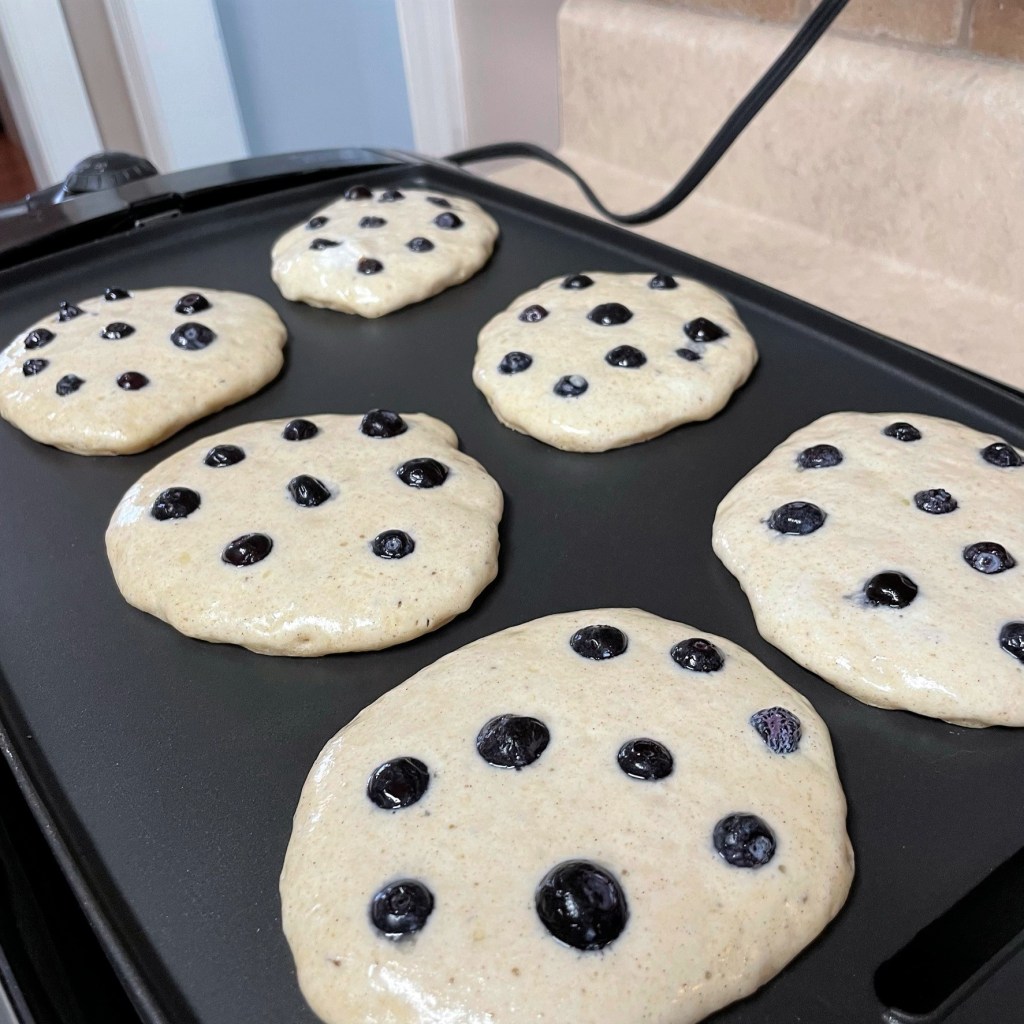
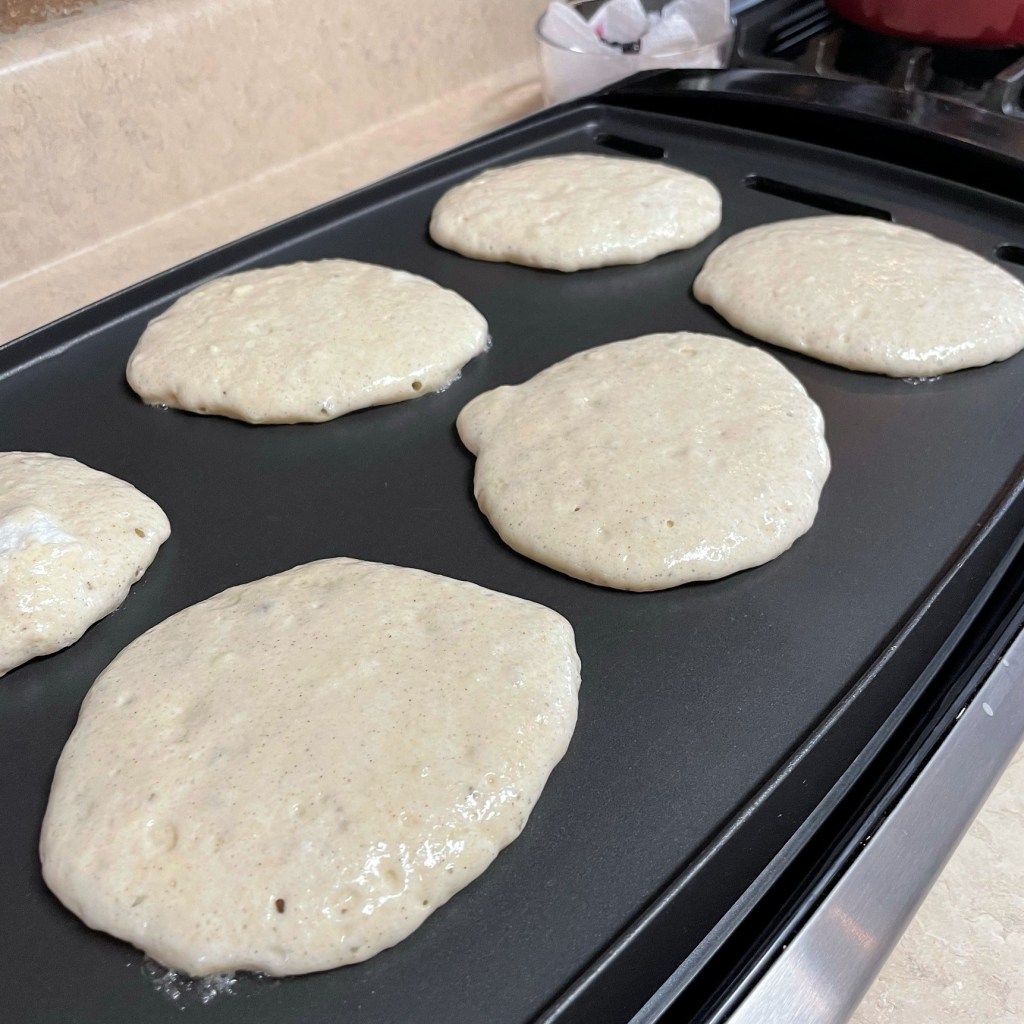
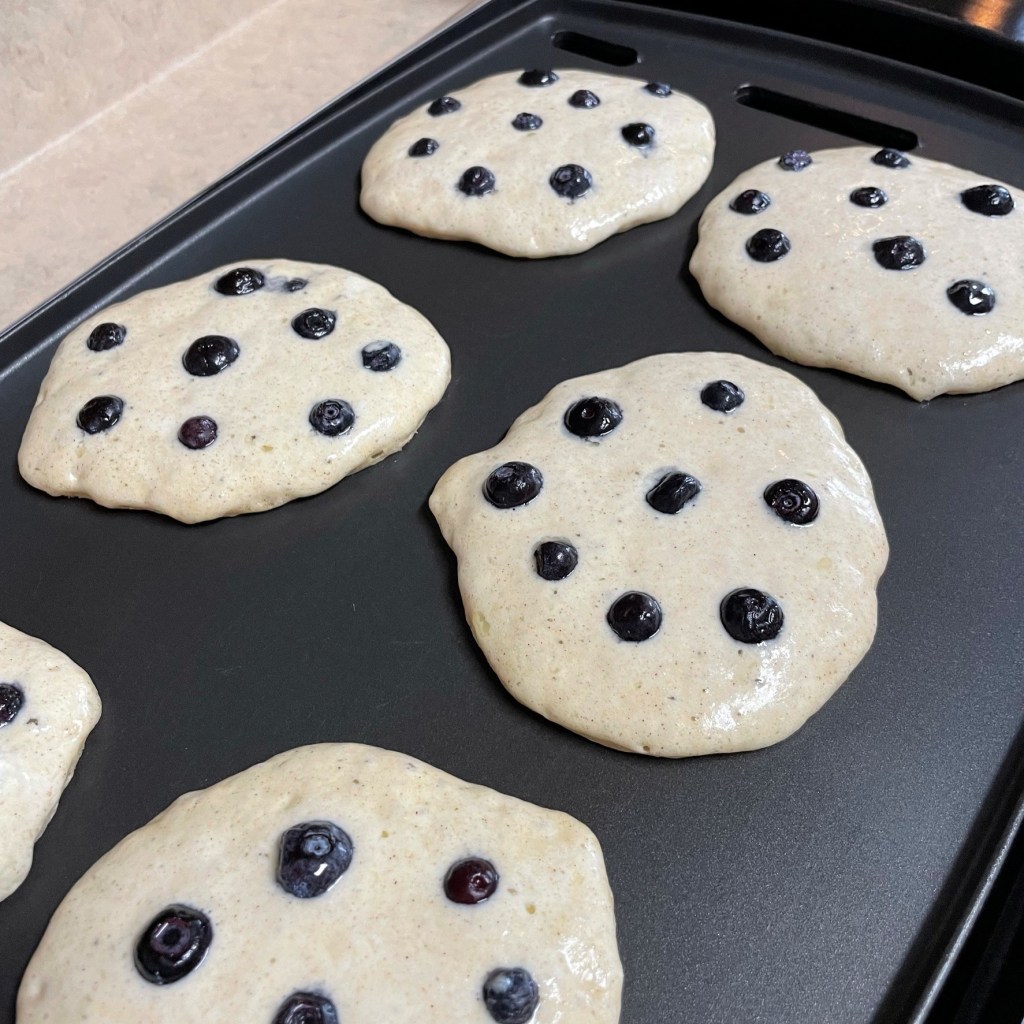
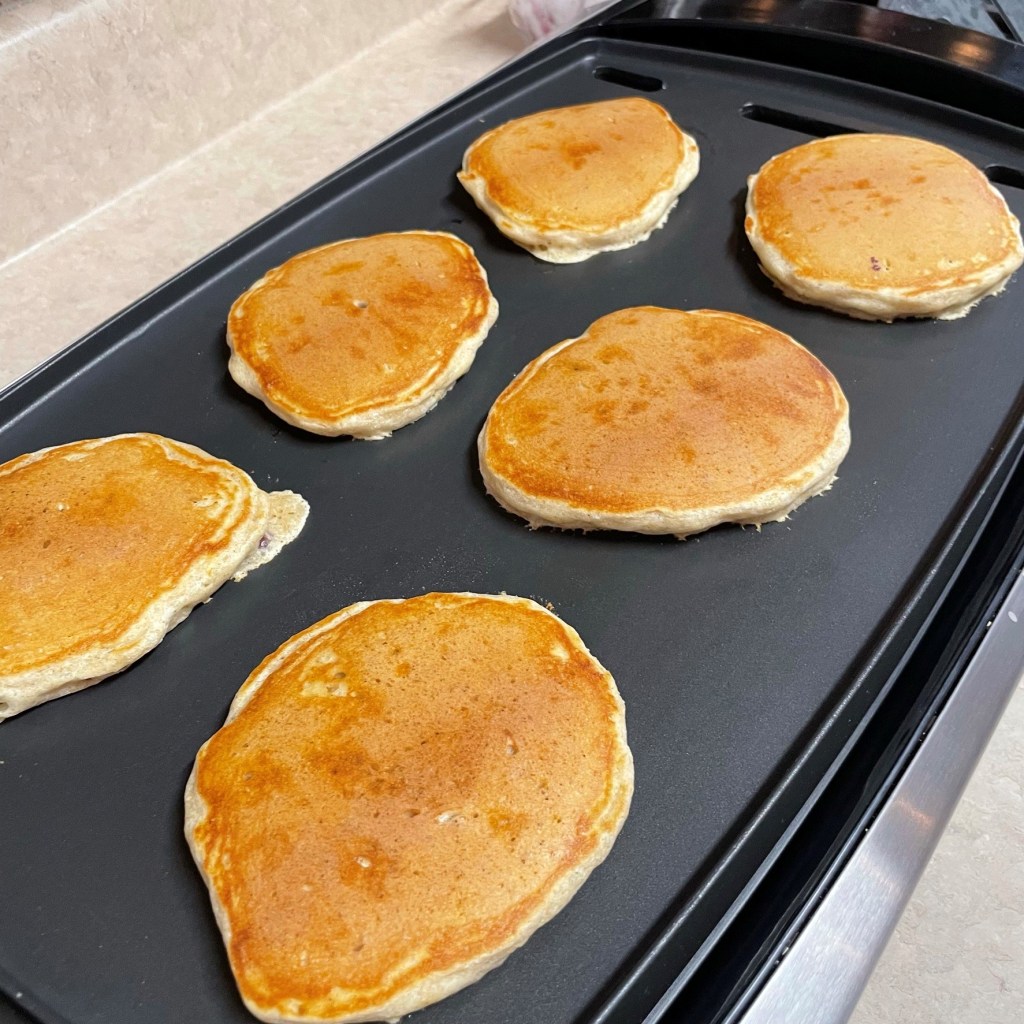
Pour or ladle batter onto griddle in smallish rounds, about 4 inches across. Do not swirl or otherwise flatten the batter—we want them fluffy, remember? 😊 Cook the first side about a minute, then carefully arrange blueberries onto the cakes. Continue to cook until the pancakes are set on the edges and bubbly all over the top.

Turn gently and cook the other side. Serve warm with butter and real maple syrup.


Who’s ready for pancakes?


Tri-tip Benedicts with Roasted Red Pepper Sauce

Everyone has hobbies, and one of my favorites is re-creating or upcycling a recipe I have enjoyed in a restaurant. I’ve been doing it for years, sometimes drawing inspiration from memories of something delicious from childhood and other times because I realize an expensive restaurant dish is easy enough to do at home for a fraction of the price, as was the case with mahi Hemingway, which is still the most-visited post here on Comfort du Jour. And occasionally, I will reimagine a meal as I am eating it—not because I think I know better than the chef, but because I know what flavors would elevate it for me. That’s what happened when my husband, Les, and I pondered the final meal of our recent getaway to Roanoke, Virginia. As you can see, we were not exactly roughing it.

The Hotel Roanoke

I know what you’re thinking, and you’re correct—I am a very lucky woman. For our 4th wedding anniversary, Les had booked us for the weekend in this luxurious, historic hotel, and we had a wonderful and relaxing time, including a luxury foot soak for couples that he arranged in the hotel spa (far and away the most romantic thing we have done together). We were within easy walking distance to some terrific local restaurants, and thanks to Virginia’s smart COVID policies and the protocols of the restaurants we visited (I was still a few days away from my second dose of vaccine), we were able to safely experience incredible food and drink, including this dramatic entrée, served up at a place called Table 50.

Blackened Ahi Tuna with andouille sausage and crawfish risotto and asparagus garnish. I ate every last bite of it!

By the time we got to Sunday morning, we were feeling pretty darn pampered, and we opted for a pre-checkout brunch in the fancy-schmancy hotel dining room. Les and I both zeroed in on the same entrée, which seems to happen more often than it did in our earlier years together. The benedicts before us were served with steak tips, wilted spinach and hollandaise.

Want to make breakfast fancier? Add a white tablecloth! 🙂

Very classic and delicious, though I’m not a huge fan of hollandaise. Les has picked up on my habit of upcycling recipes, and the gears were already turning in both of our minds. Why couldn’t we add some bold flavors to this otherwise classic brunch staple, and make it our own at home? Of course we could, and so we did.

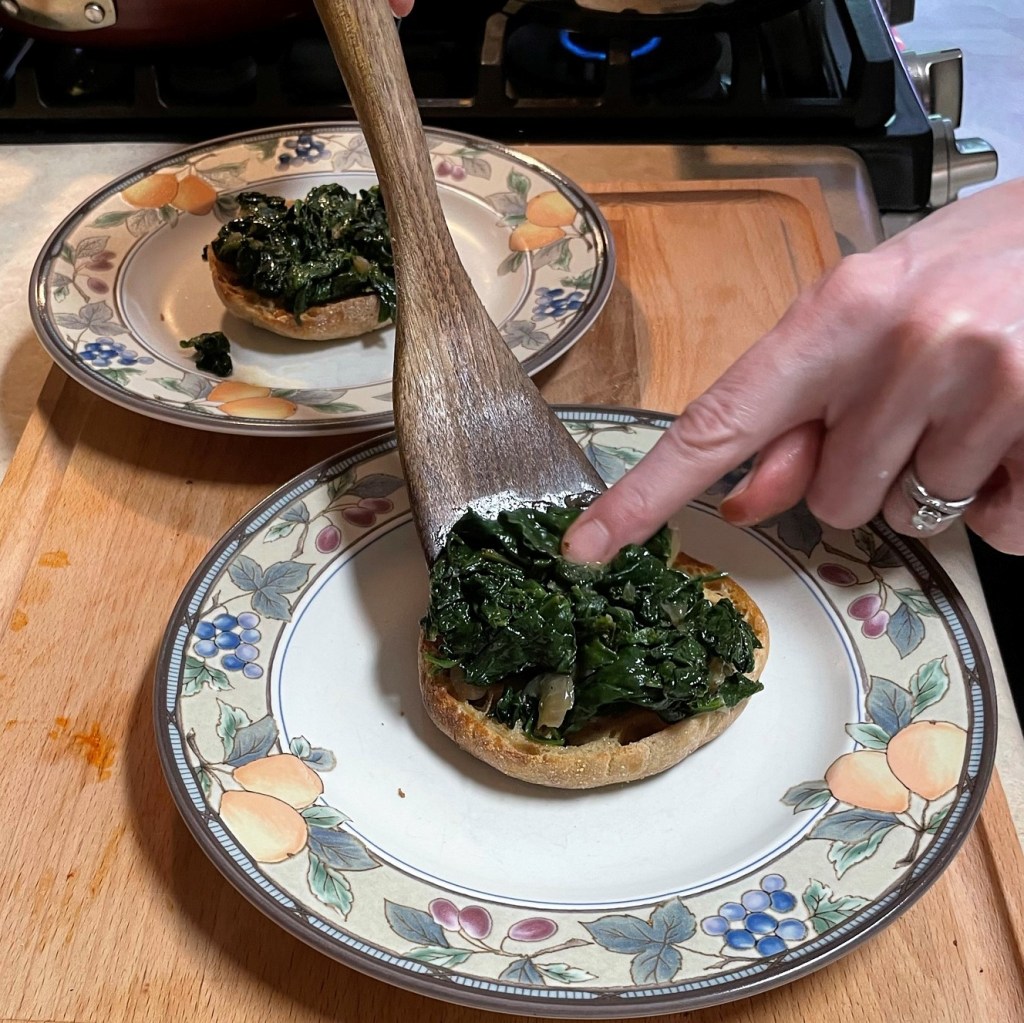
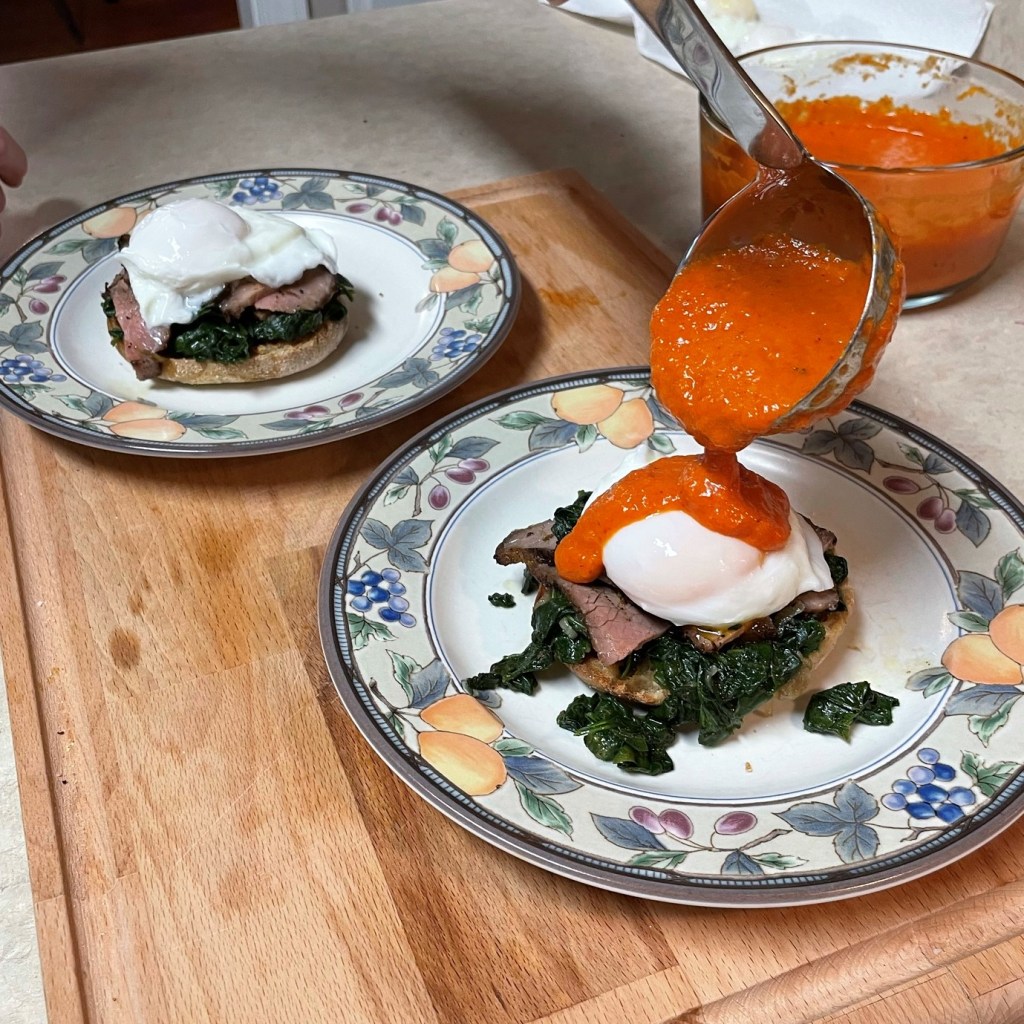
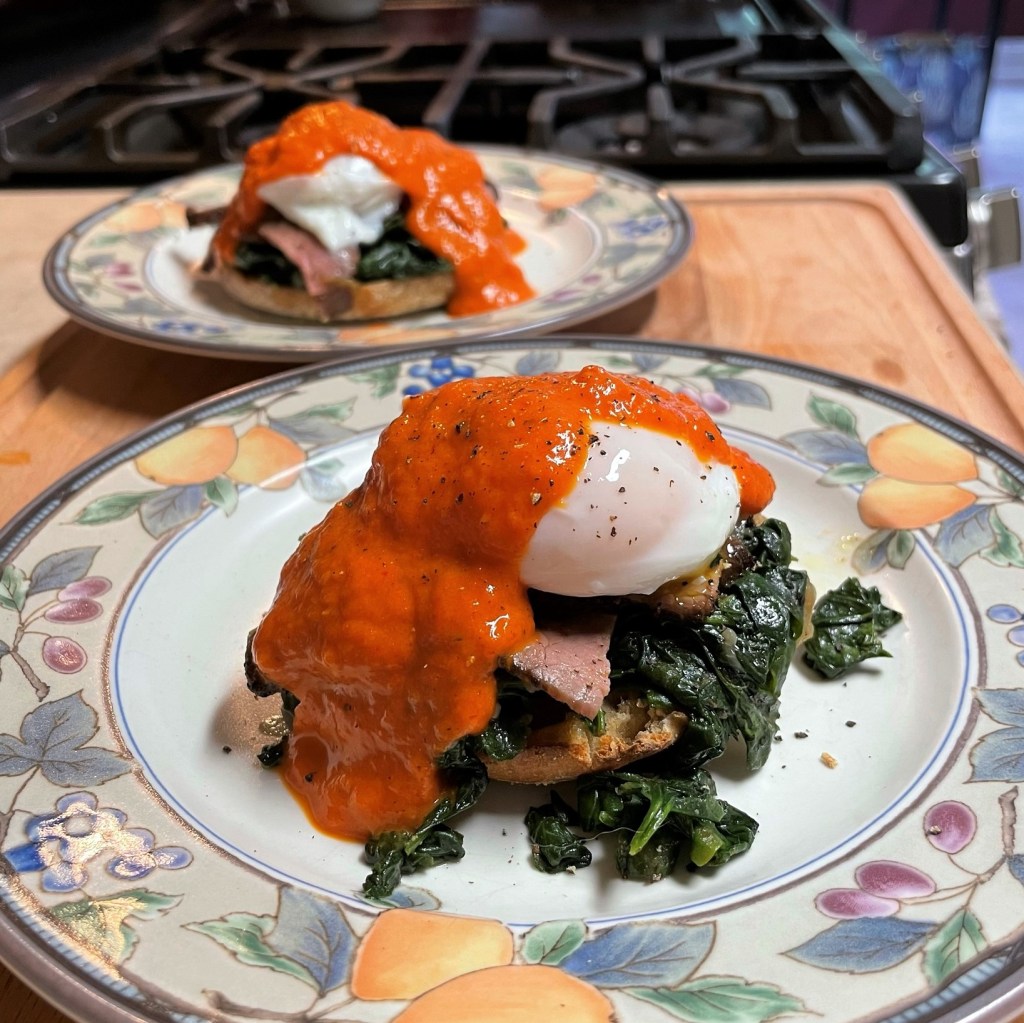
This is our version of that brunch benedict—a toasted English muffin (only one between us), topped with spinach that was sauteed with onion, thin slices of our zesty coffee-rubbed tri-tip steak, a poached runny egg and a generous draping of the roasted red pepper sauce I shared yesterday. Upscaled, yet somehow more rustic and casual. Definitely a Comfort du Jour thing.


Ingredients

Serves 2

1 English muffin, split, toasted and buttered

1 Tbsp. extra virgin olive oil
1/4 onion, thinly sliced

1 fat handful baby spinach leaves

About 4 oz. thinly sliced coffee-rubbed tri-tip steak* (see notes)

2 large eggs, room temperature

About 1/2 cup roasted red pepper sauce*


*Notes

Obviously, to enjoy the benedict this way, you would need to first cook the tri-tip steak according to the recipe Les shared a couple of weeks ago, and you would not regret it. But maybe you have some steak leftover from a nice dinner out, and you could slice that into the recipe instead. Start looking at your leftovers differently and you never know what kind of fabulous creations will happen in your kitchen.

The roasted red pepper sauce is an extremely versatile recipe, and one that we have enjoyed across a variety of recipes. If you make it in advance, you will have about 2 cups, so this recipe only requires a portion of it.

For me, the biggest pain about any benedict is the eggs. I don’t have a lot of success with poaching eggs, and most of the time I just do a quick steam-poach in a non-stick skillet. I’ve tried various poaching gadgets, including the silicone one you’ll see in the slideshow, but they still argue with me. My first set of eggs was way overcooked by the time I had the rest of the benedict plated. I stuck with it and had better success with the second set of eggs, but the whole thing broke my momentum. Follow your own kitchen rules. And if you have any unusual tricks for poaching eggs, I’d sure love to hear them!


Instructions

  1. Put a pot on to boil if you are poaching the eggs, as this will take some time to be ready. Crack each of the eggs into its own custard cup for easy slipping into the water. Say a prayer—oh wait, that’s just for me.
  2. Slice the tri-tip into thin, even slices and set them aside.
  3. Heat a non-stick skillet over medium heat and swirl in the olive oil. Add the onions and baby spinach and sauté until most of the moisture is cooked out of the spinach. If it is still steaming in the pan, it needs another minute. Remove the skillet from the heat and lay the slices of tri-tip on top of the spinach. Cover it to keep warm.
  4. Warm up the roasted red pepper sauce, either in the microwave or in a small saucepan.
  5. Stir the simmering water and slip the eggs, one at a time, into the pot. Watch them closely, because they don’t take long. Or cook the eggs according to your own kitchen rules.
  6. Drop the English muffin halves to toast them, and swipe a quick smear of butter across their nook-and-cranny surfaces if you wish.
  7. Start layering—first spinach, then tri-tip slices, the poached egg and, finally, the roasted red pepper sauce.


My Favorite PB&J

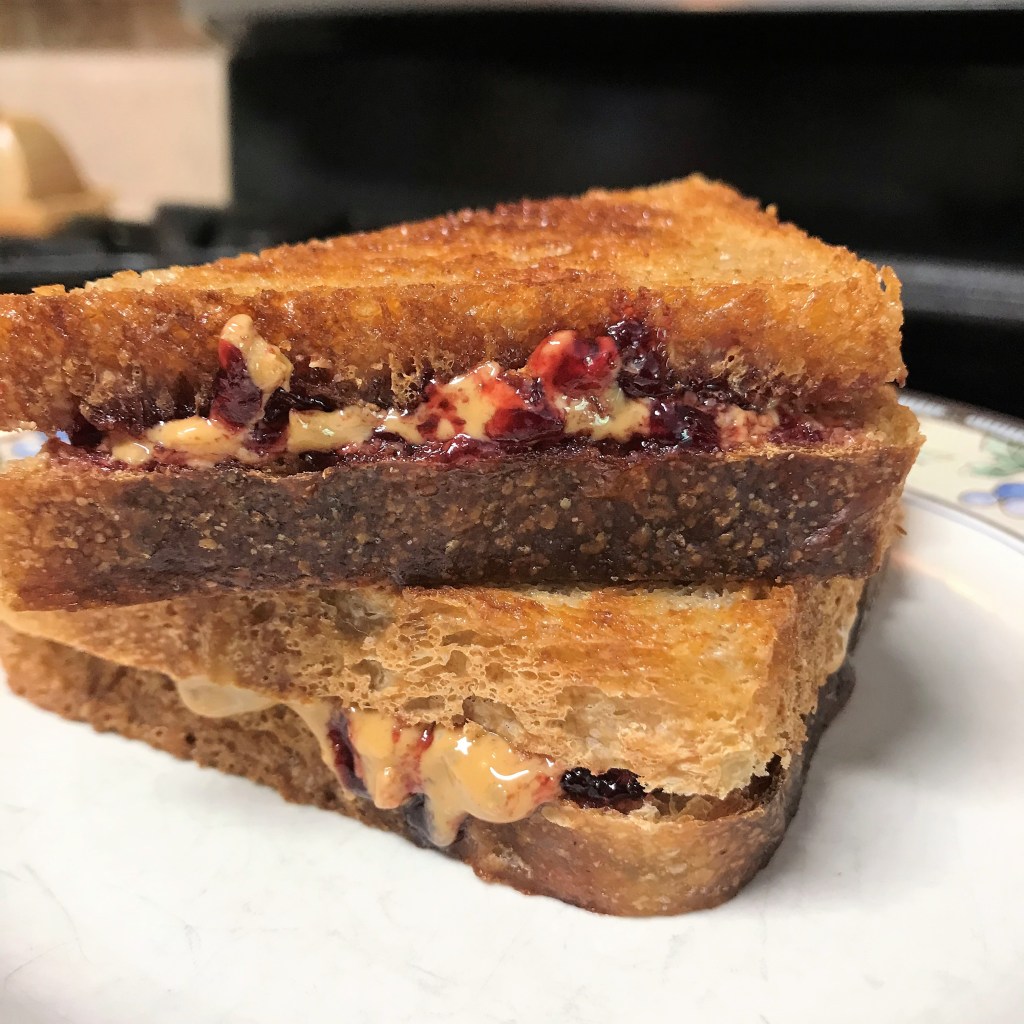
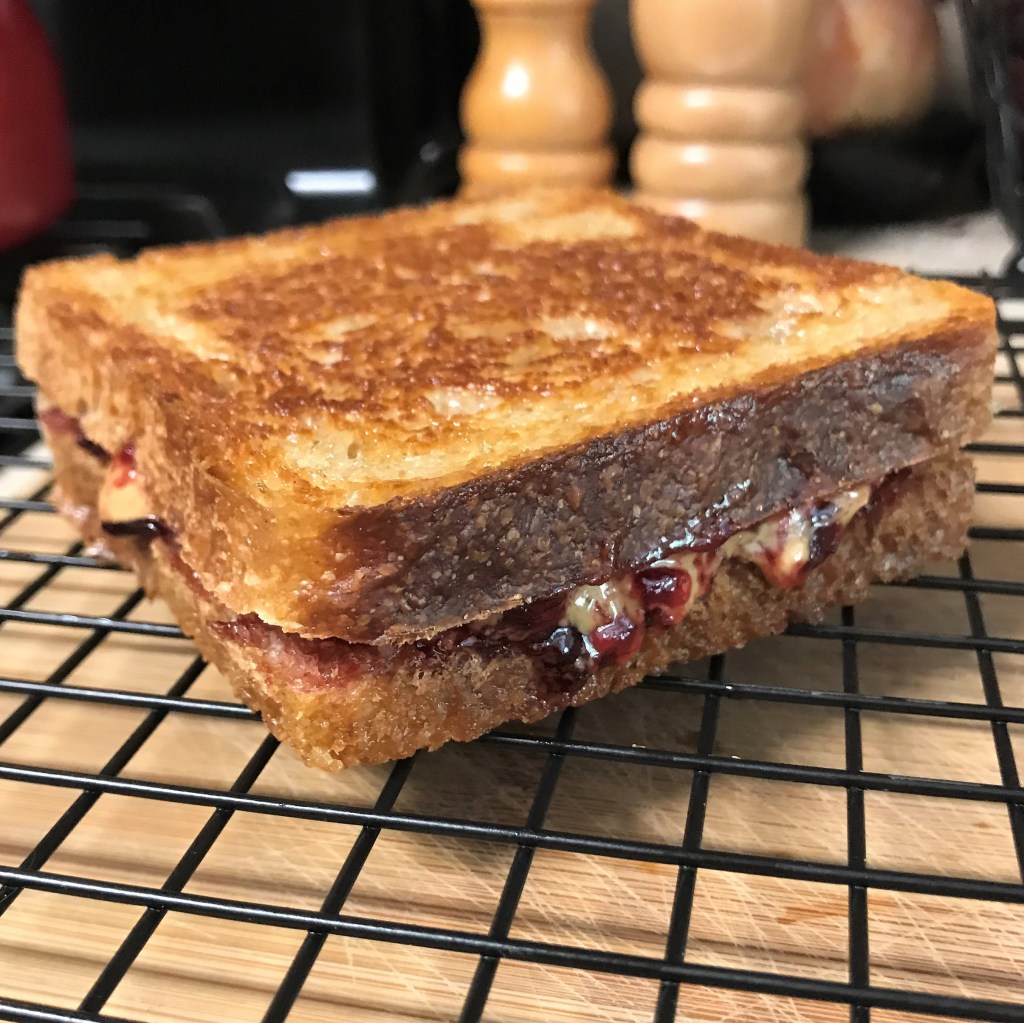
Throughout my childhood, I took for granted that everyone enjoyed peanut butter and jelly sandwiches the way my family made them. Not every time (but a good percentage of the time) I had this quintessential kid favorite, it was fried. You read that correctly—a fried peanut butter and jelly. 😋

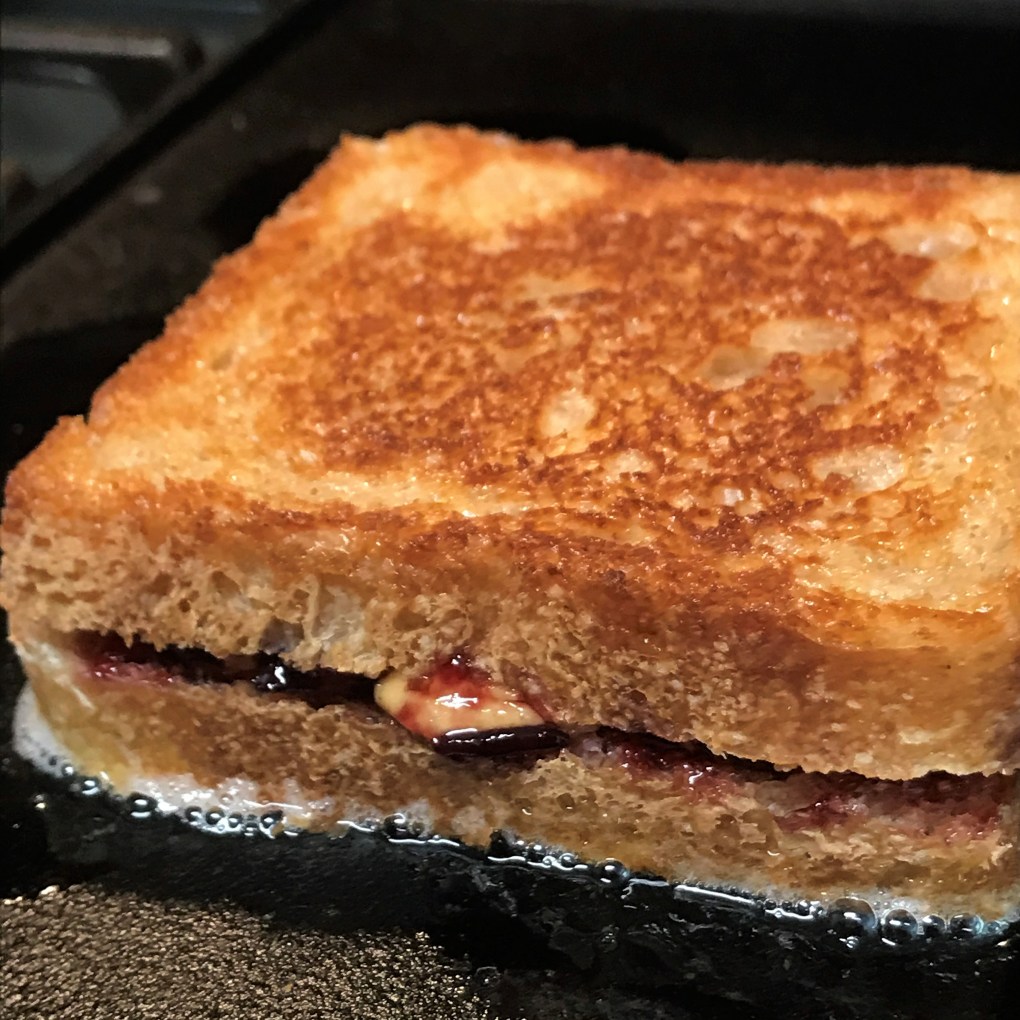
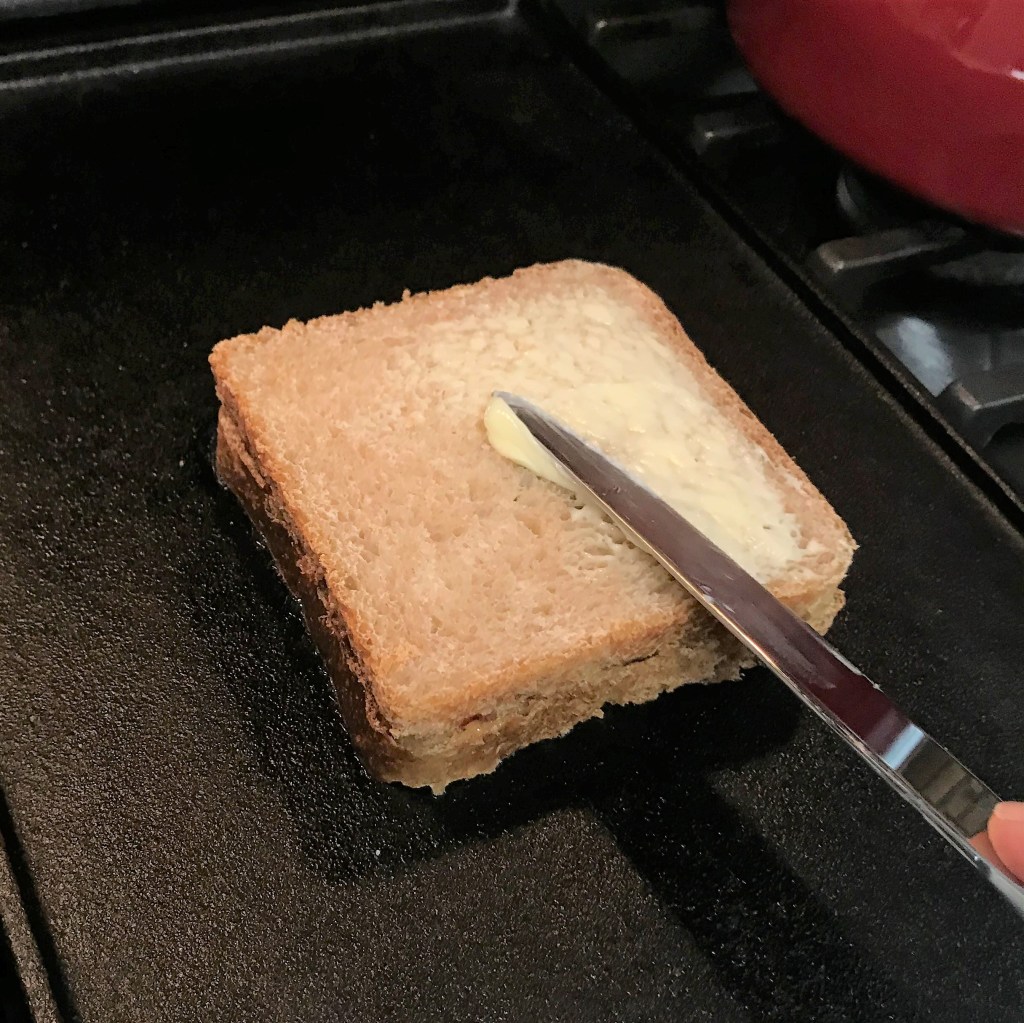
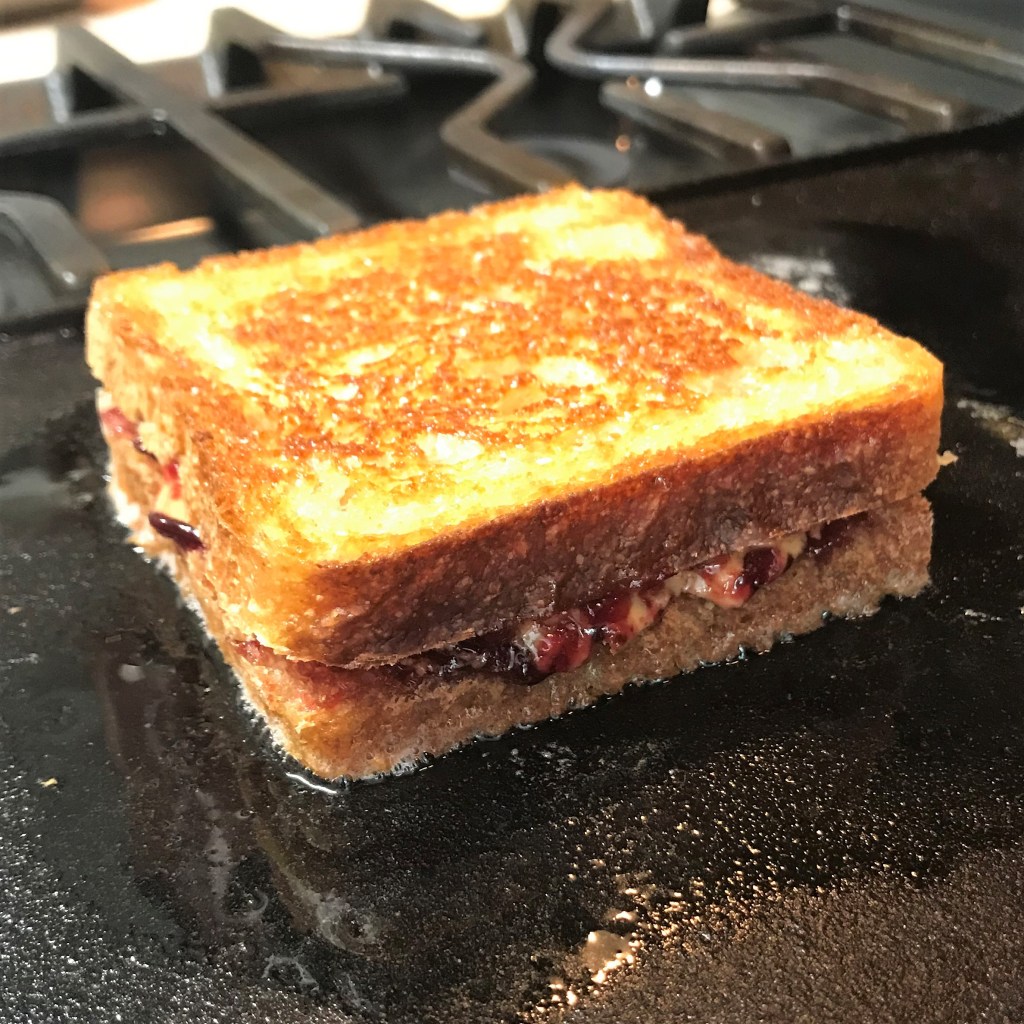
I don’t mean greasy, county fair-style of battered-and-fried. This PB&J sandwich is assembled as usual, and then buttered on both sides and placed on a pan or griddle like a grilled cheese sandwich. The reward for patience while it cooked was a golden and crispy crust, with peanut butter and jelly melted together inside—a sticky, gooey, delicious mess of flavor.

You make me so very happy!

I was at least halfway into my 20s before I realized that a fried PB&J was not a standard sandwich for everyone else, and I’m thrilled to have been let in on this flavorful secret sandwich at such a young age. This sandwich is helping me wrap up Better Breakfast Month, and I believe it qualifies as a “better” breakfast item for a few reasons:

  1. It’s quick and easy to make
  2. Kids and grownups alike will enjoy it
  3. It’s a fun and elegant twist on an ordinary PB&J
  4. It has whole grains, fiber, protein and fruit, which makes it nutritious (that’s my story and I’m sticking with it)
…and utterly DELICIOUS!

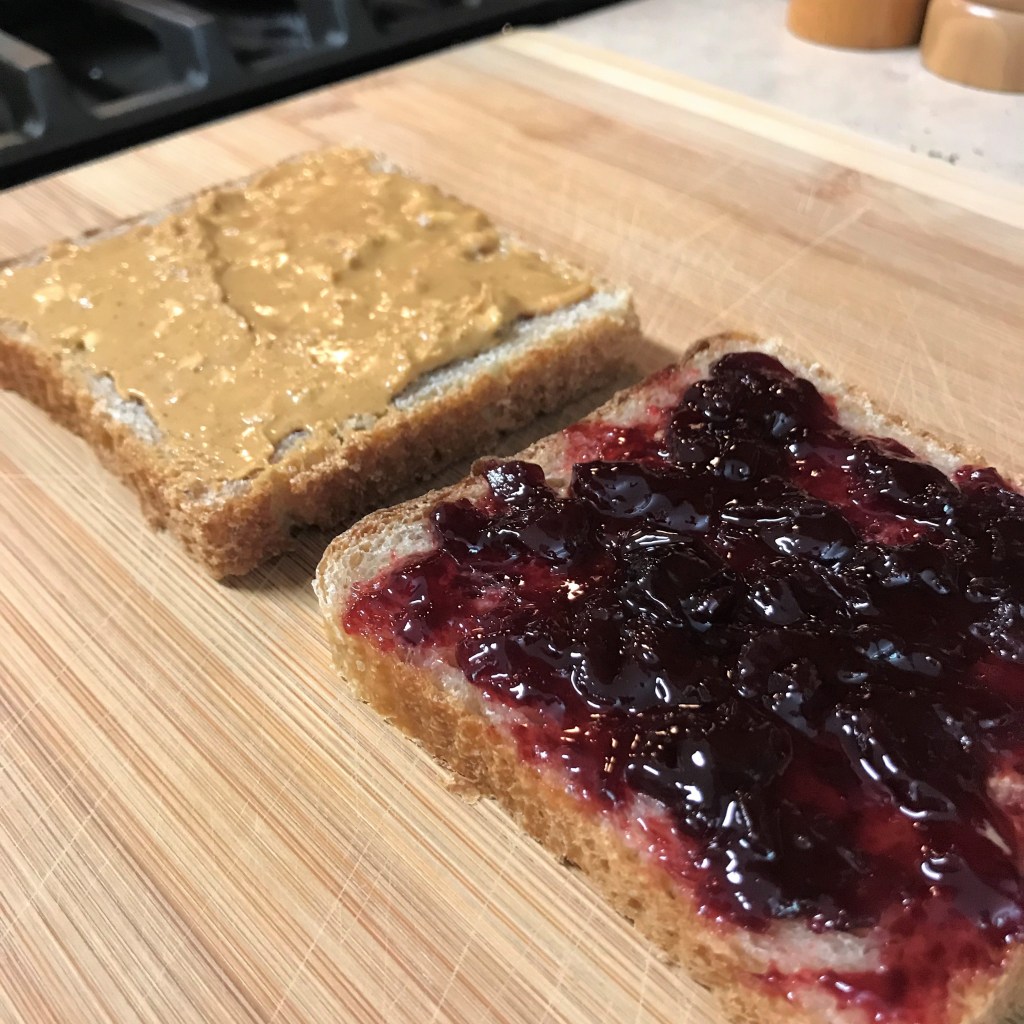
Making a fried PB&J is really as simple as I just described, and you certainly don’t need a recipe to do it. What I will offer instead is my guide to making the most memorable fried PB&J, because the ingredients you choose can make or break your first taste impression of this sandwich, which is, quite frankly, dangling right on the edge of the dessert category. Let’s begin with the foundation of any good sandwich:

The Bread

In my (trying to be) humble opinion, a homemade artisan-style bread will yield the best results. You guys know I’m all about sourdough, and this is the bread I’ll be using here, but I know not everyone has time to invest in learning or making naturally leavened bread. You can use store-bought bread to make a top-notch fried PB&J, provided you choose a suitable type. Hopefully, you are not still purchasing the long, skinny, plastic-wrapped loaves that are found in aisle 12 of the supermarket—but if you are, please stop. Cheap packaged breads are made of cheap, stripped-down ingredients, and the  texture is all wrong for sandwiches, toast—well for anything, really.

I love Maurizio Leo’s sourdough recipe that I’ve linked above because it makes the best sandwiches (and the best toast). It uses a simple but unusual step of pre-cooking a portion of the flour, which enhances the final texture into something that is gelatinized and chewy yet tender, and 100% perfect for sandwiches. To be fair, the recipe is not for beginners, but if you have some experience with sourdough, I hope you’ll try it. Maurizio’s recipe makes two loaves, but I usually halve the recipe, and I bake it in a covered Pullman pan, which gives me perfectly square slices.

If you’re not yet a baker, pick up a good, simple artisan loaf from your supermarket bakery—preferably something partially whole grain, with a soft “crumb” (that’s a bread-nerd term for the interior texture of the bread) and a firm, slightly chewy crust. No nuts or seeds or anything extra—just a classic bread is fine. All your sandwiches henceforth will thank you.

The Peanut Butter

Every PB&J (fried or otherwise) I had as a kid was made with conventional supermarket peanut butter, namely the brand that the (allegedly) choosy mothers chose. But I have not bought that stuff in years because it contains sugar, plus hydrogenated oils that are blended in to keep the natural oils of the peanuts from separating. I discovered long ago the simple pleasure of a natural peanut butter, made from only peanuts and salt. Sure, you’ll have to stir it (but only once) and keep it in the refrigerator, but it’s only 90 extra seconds spent to protect your body from the hazards of trans fats. There’s the question of smooth vs. crunchy, and I’m going with crunchy because I love the added texture of the little peanut pieces. You decide.

The Jelly

The PB&J of my childhood was usually made with grape jelly, and I’ll admit that I still have a special place in my heart for the flavor of good old Welch’s. It may have something to do with the fact that I grew up a few miles down the road from their original headquarters in Westfield, New York. Concord grapes are a native grape, and they were everywhere in my neck of the woods—my best friend’s family even had concord vines growing on a pergola over their backyard patio. Sandy and I used to pick the grapes straight off the vine in late summer and squish the seedy insides into our mouths, tossing aside the bitter, astringent skins and then spitting out the seeds. I can still taste those grapes!

Today, it’s all but impossible to find a grape jelly that doesn’t list high fructose corn syrup in the first two ingredients, and that is a huge problem for me. This is an ingredient that did not exist at all in previous generations, but food manufacturers lean on it heavily today because it’s cheaper and easier to use than sugar. But it’s fake, and I’m not having it on my sandwich. Pick up a jar of handmade jelly at the farmer’s market or diligently inspect the ingredient labels in the supermarket if you’re as concerned about this issue as I am.

As an adult, I’ve developed a fondness for other flavors of jams and preserves, my favorites being raspberry, fig and cherry. For this fried PB&J, seedless is best, so I’m going with cherry preserves, and I’ve carefully selected a brand that is sweetened with real sugar. There are chunks of cherry in these preserves, too, so I know it will be delicious.

The Butter

To grill the sandwich, you’ll need to lightly butter both sides, and I do not recommend margarine or any other kind of butter substitute, unless you are dairy restricted. The milk solids in butter contribute to the lovely browning on the crust and, unfortunately, a substitute will not have the same crispy result. But if your only choice is plant-based butter, you will still enjoy this sandwich for the flavor and the incredible ooey-gooey texture that results from heating the peanut butter and jelly together.

I can’t stand the suspense, and my laptop can’t stand my drooling, so let’s get to it.

For best results, use modest amounts of both peanut butter and jelly. They will marry together so well under the gentle heat of the griddle, but too much of either will cause the filling to seep out everywhere. Keep the griddle level on a medium-low heat, for slow and even browning. This gives the filling time to properly warm so the peanut butter and jelly become like one. Turn the sandwich carefully so it doesn’t slide apart. And for sure, allow it to cool a couple of minutes, so the sandwich is “set up” properly when you cut into it. Plus, if you give into temptation and bite into it too quickly, you’ll burn the roof of your mouth. Trust me on this; warm is good, hot is painful.

This fried PB&J makes me so very happy, with each buttery crisp bite, and the warm nutty, fruity filling makes me feel like I’m nine years old again. In a good way. 😉 Each time I make one, I try to eat it slowly so I can hang onto that feeling. The other beauty of this sandwich is that it works for breakfast, lunch, dinner, late-night snack or any other time your sweet tooth and hunger collide.

Please let me know if you try it, and feel free to share in the comments any fun twists your family made on a classic comfort food!


Healthy Breakfast Fruit Smoothies

We all need options when it comes to breakfast, and so I’m sharing my tips for making a quick and healthy smoothie, regardless of the fruit and other fixings you have on hand.

What makes these smoothies “better” for better breakfast month?

  • They work two servings of fruit into the most important meal of the day.
  • They bend and flex to accommodate your favorite fruit, fresh or frozen.
  • You can easily swap out dairy for plant-based milk.
  • Your favorite protein powder will feel right at home in them.
  • They are quick, easy and portable for rushed-out-the-door mornings.
  • They satisfy your morning hunger and are friendly to a weight-loss diet.
  • They are super kid-friendly.

My magic formula for delicious and healthy fruit smoothies goes like this—something creamy, something packed with protein, some kind of fruit, maybe a juice, and optional special touches, such as coconut or spices. See what I mean? Flexible! I’ll give the full rundown of how I mix and match ingredients (and in what quantity), then I’ll share specifics of my favorites. Here we go!


Something Creamy

about 3/4 cup

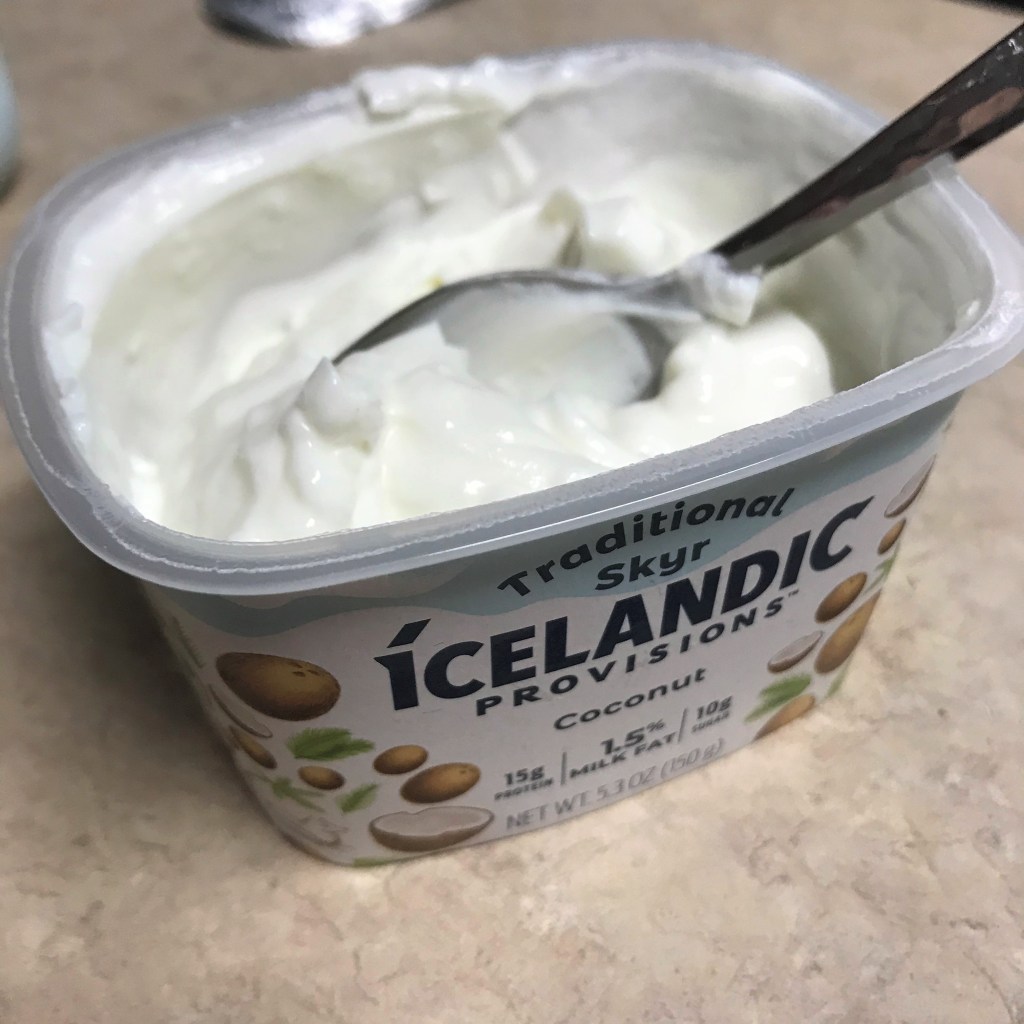
I usually choose plain Greek yogurt or kefir, a cultured dairy drink that is similar to buttermilk but tastes more like a drinkable yogurt. Regular yogurt is also an option, but I avoid the flavored ones and their crazy-high sugar content. Skyr is another good option—a yogurt-like product from Scandinavia. Two popular brands are Siggi’s and Icelandic Provisions. For a plant-based option, choose your favorite non-dairy yogurt substitute, but lean into the low-sugar or plain options. The fruit you add will bring plenty of sweetness to the party.


Something Protein-y

about 1/2 “scoop,” or approximately 1 heaping tablespoon

Choose your favorite powdered form—I like soy protein, but whey works very well in smoothies, and so does hemp or pea protein. Almost every protein powder I’ve purchased comes with a small scoop that is roughly 2 tablespoons, and I fill it halfway for a smoothie. I recommend a plain or unsweetened vanilla option. My husband, Les, likes the chocolate protein powder, but we have found it can be less versatile for matching with fruit. Chocolate and raspberry is great, but chocolate and peaches?—not so much. Vanilla helps us keep our options open.


Something Fruity

total of about 1 cup

Yay—my favorite part! I like my smoothies to be icy cold and shake-like, so I almost always use frozen fruit, and especially bananas because of the creamy texture they provide. The greatest benefit to using frozen is that I don’t have to wait until the fruit is in season. It also saves multiple trips to the market for fresh fruit, or throwing away fruit that has gone bad. The fruits that work best for my homemade smoothies are peaches, bananas, pineapple, mango, cherries and any kind of berry (as long as you don’t mind their seeds). Fresh fruit works fine, of course. I don’t recommend citrus fruits, apples, melons or grapes, as their texture and water content would prevent them from blending well.


Juice or other liquid

1/4 to 1/2 cup, depending on other ingredients

This is helpful for blending the smoothie, but it may not be necessary if you use kefir, which is pourable. Greek yogurt is much thicker and would benefit from addition of juice, especially if you are using mostly frozen fruit in the smoothie. Other suitable liquids include milk, almond milk, coconut water or coconut milk.


Special mix-ins

small amounts of each

The mix-ins can be anything you like, but my favorites are unsweetened coconut (for texture and fiber), chia seed (for fiber and additional protein) and ginger (good for digestion) or another powdered spice, such as cinnamon. Sweeteners are not necessary, but if you must, may I recommend a teaspoon of honey or maple syrup? Anything but sugar, if you are aiming to keep them in the healthy column.


Ordering the layers:

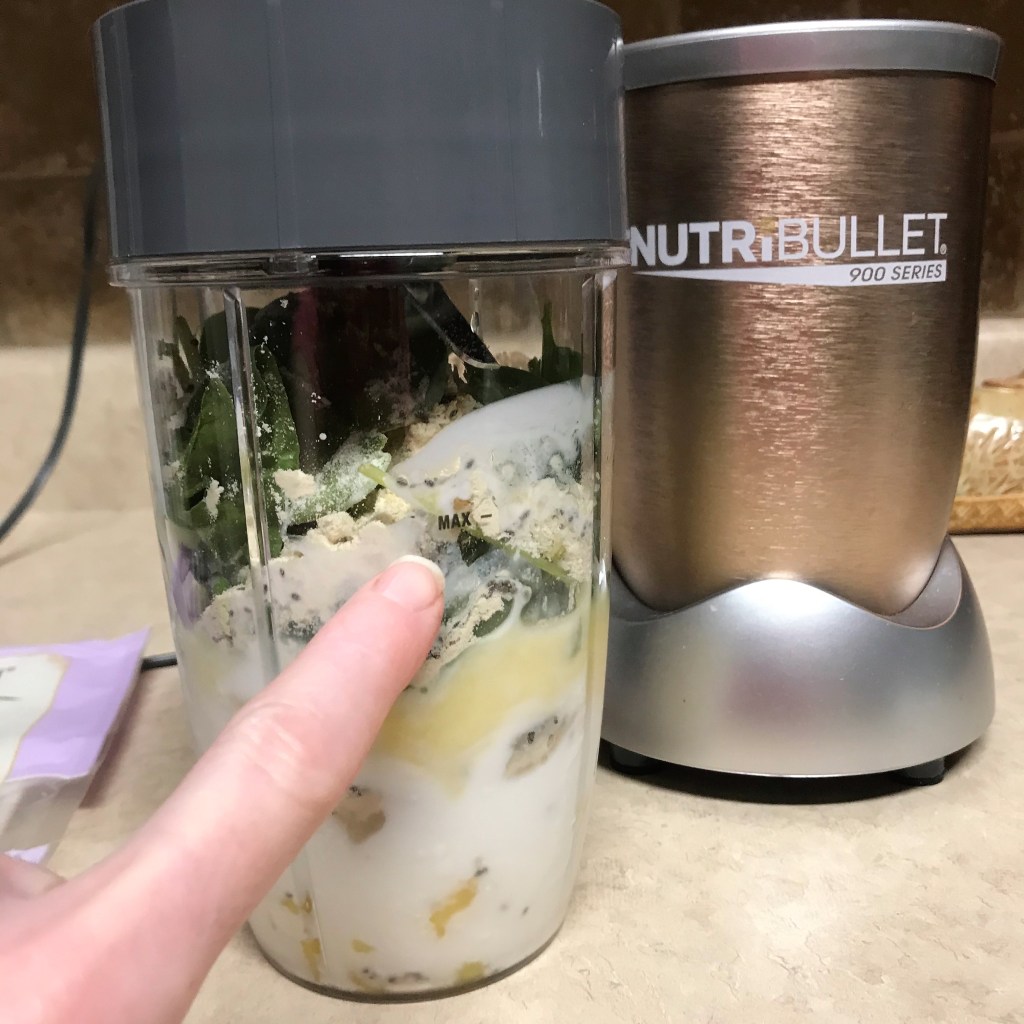
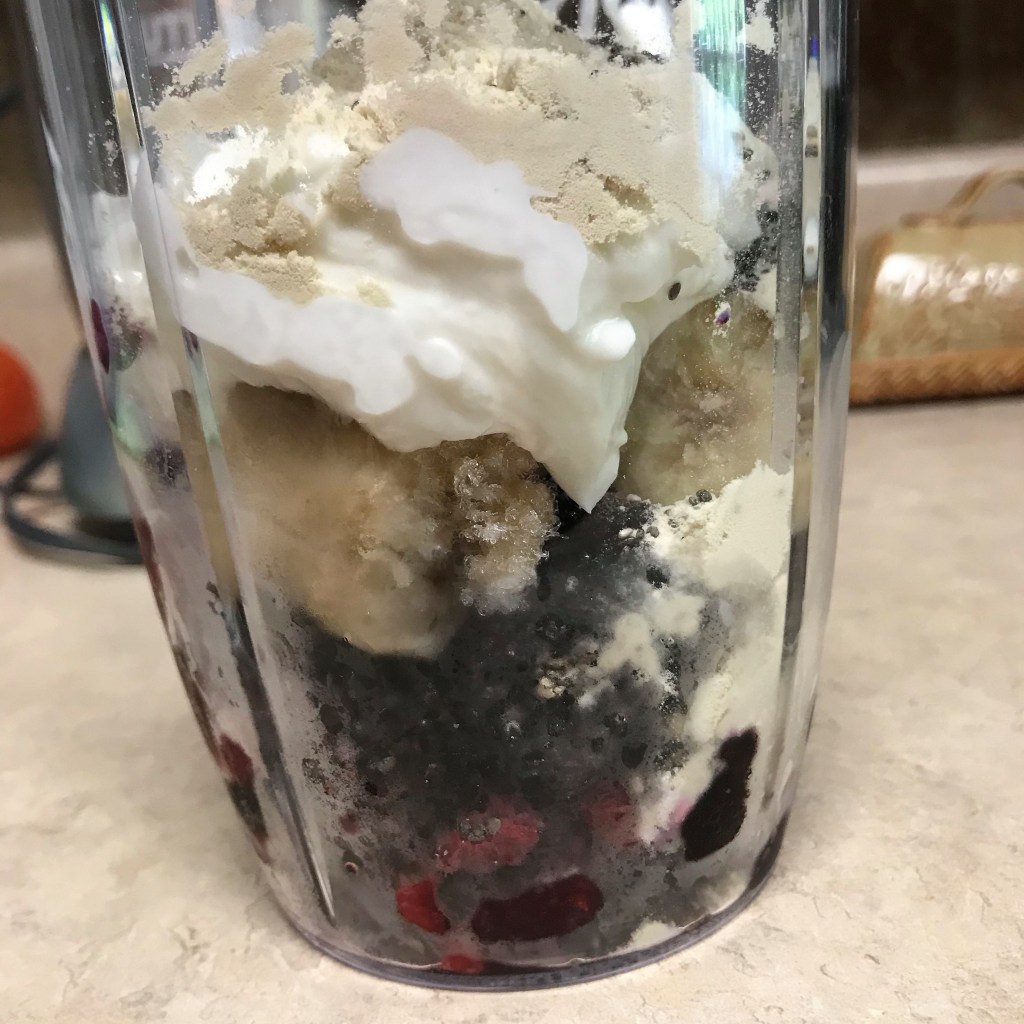
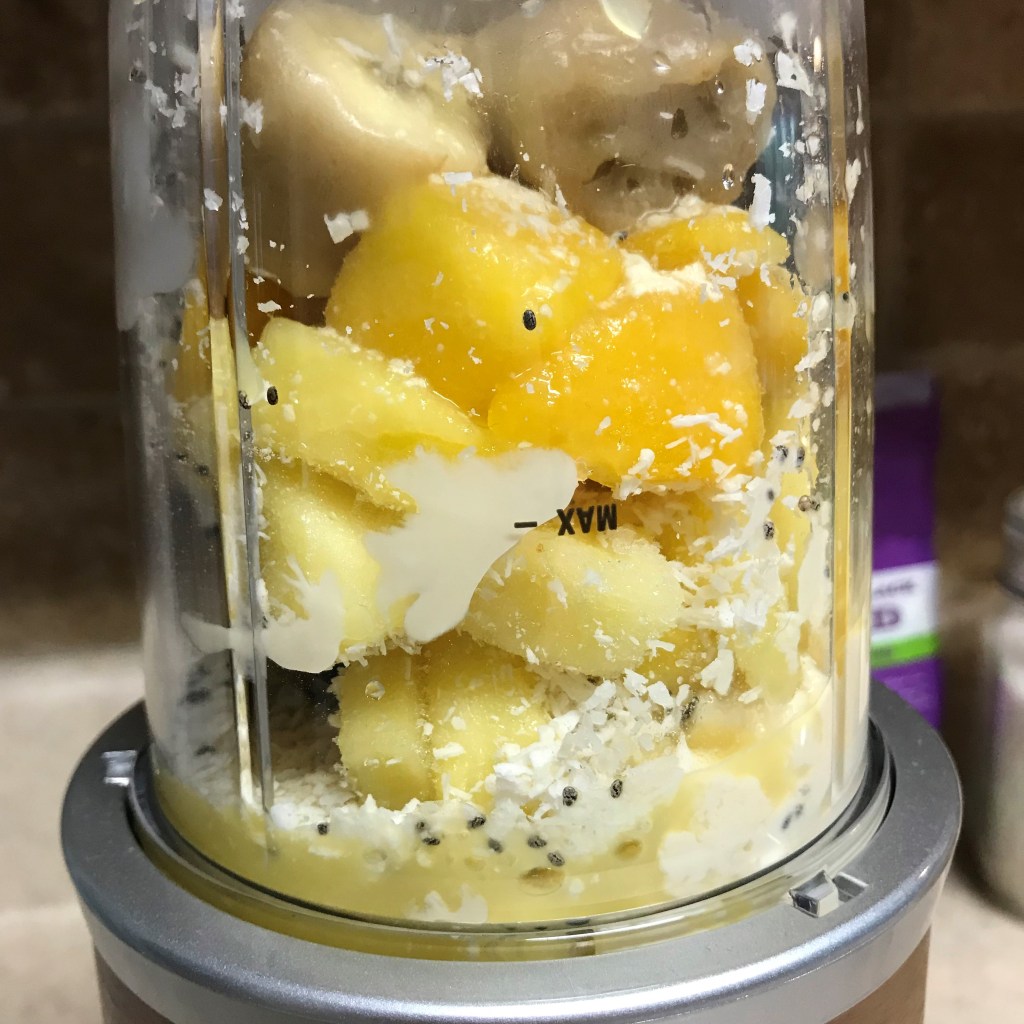
It may seem inconsequential, given that the ingredients will be whirred into one mixture in the blender, but your smoothies will come together faster and more evenly if you layer the ingredients in a way that your blender can best mix them. You want the liquids and powders closest to the blender blade, so they can get a head start on mixing before the frozen stuff enters the game. The heavier ingredients, such as frozen fruit or ice, should be at the top, providing weight to keep the mixture moving downward for thorough blending. For a standard base blender, it might look like this:

My smoothie appliance is a bullet blender, which of course goes upside-down for mixing. So I layer my ingredients in reverse order, beginning with frozen fruit. When I flip the sealed blender cup onto the machine, I give it a minute to allow the liquids to run back to the blade area for more even mixing, leaving the frozen fruit at the top, where it should be.

Enough talk—let’s make a smoothie! Below are some of my favorite blends, and a list of ingredients I use for each of them. I’ve given the ingredients in order for a conventional blender. If you use a bullet-style blender, reverse the list order. Each combination yields a 12 oz. (340 g) smoothie.


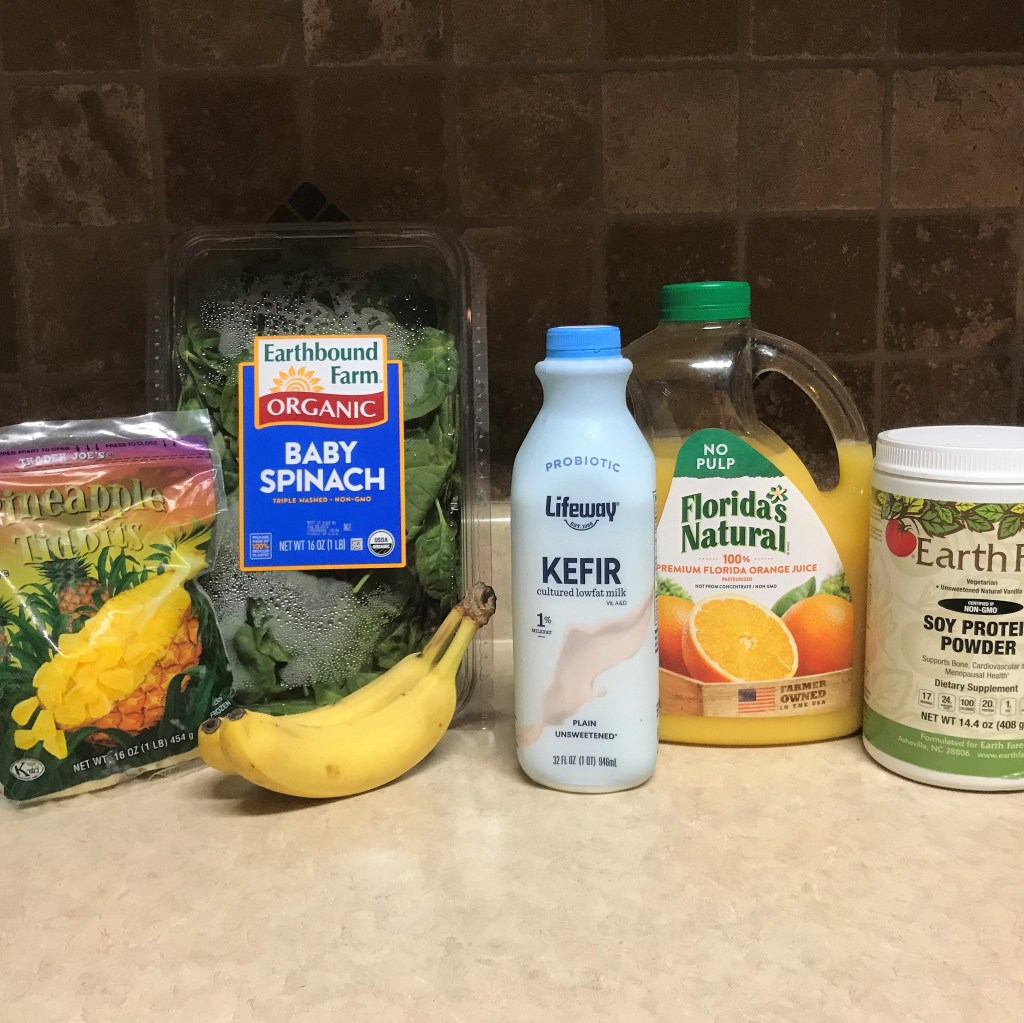
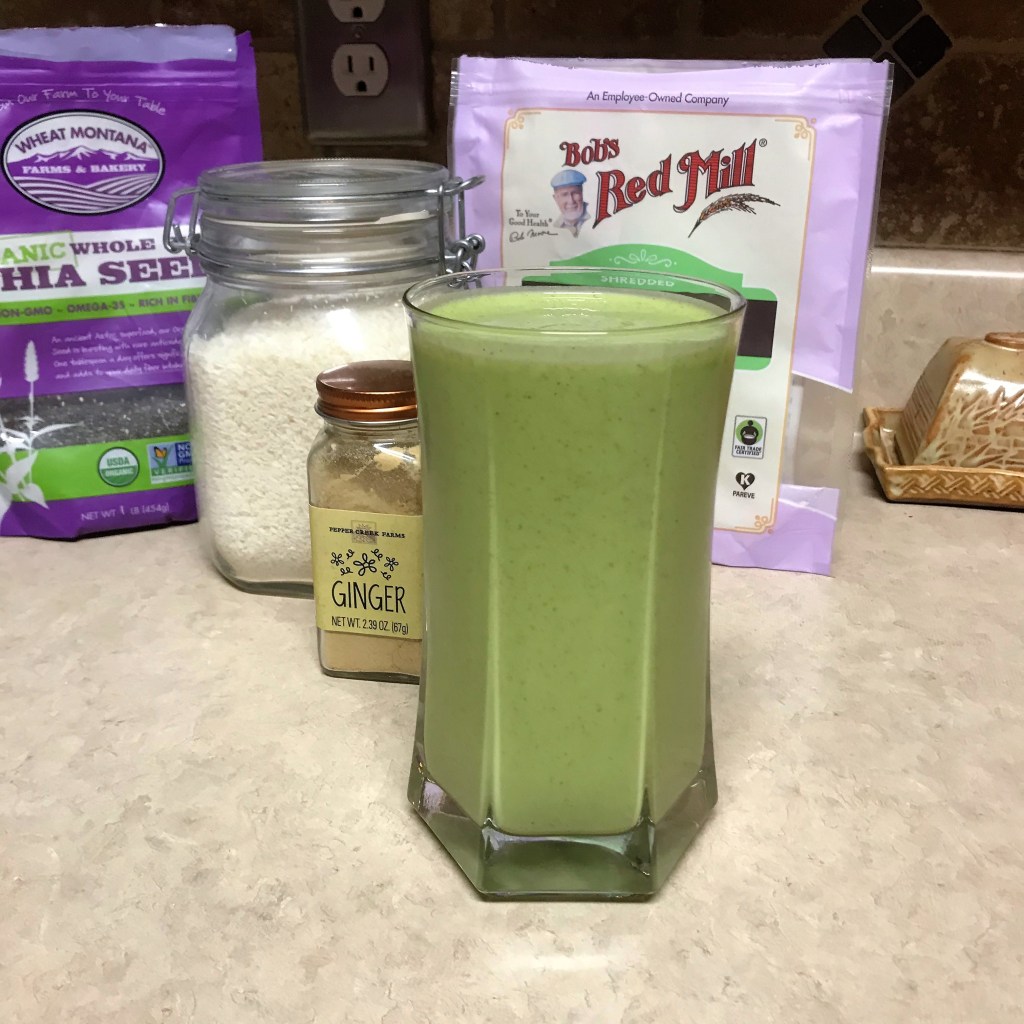
Kefir, pineapple and spinach

I think of this smoothie as a power breakfast for all the nutritional benefit I get from it. Plus, the flavor is so delicious, it is a treat at the same time.

Ingredients: 3/4 cup kefir, 1/4 cup orange juice, 1/2 scoop soy protein powder, 1/2 teaspoon ground ginger, 1 tablespoon chia seed, 2 tablespoons unsweetened coconut, 1 medium handful baby spinach leaves, 1/2 cup banana chunks, 1/2 cup frozen pineapple bits.


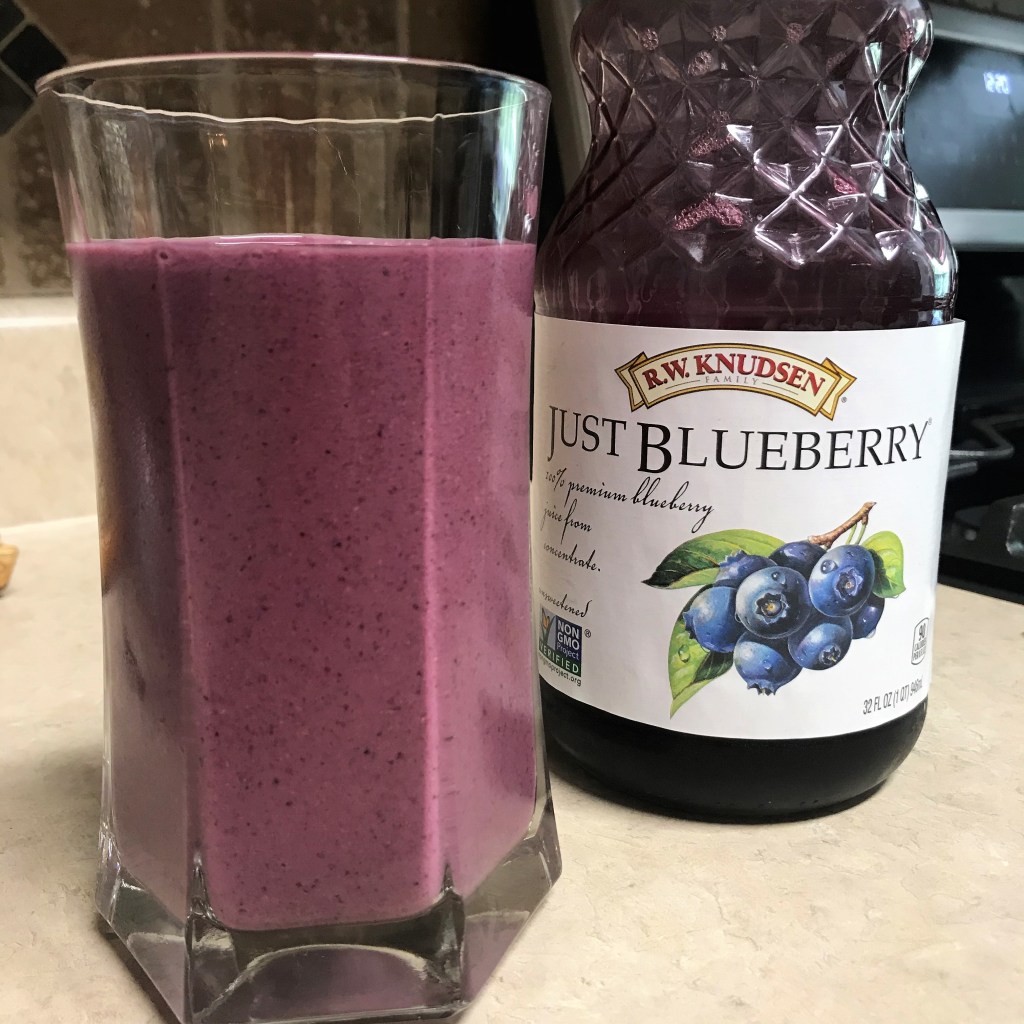
Yogurt and banana-berry blend

This one feels very protective, with lots of antioxidant benefit in the red and blue berries.

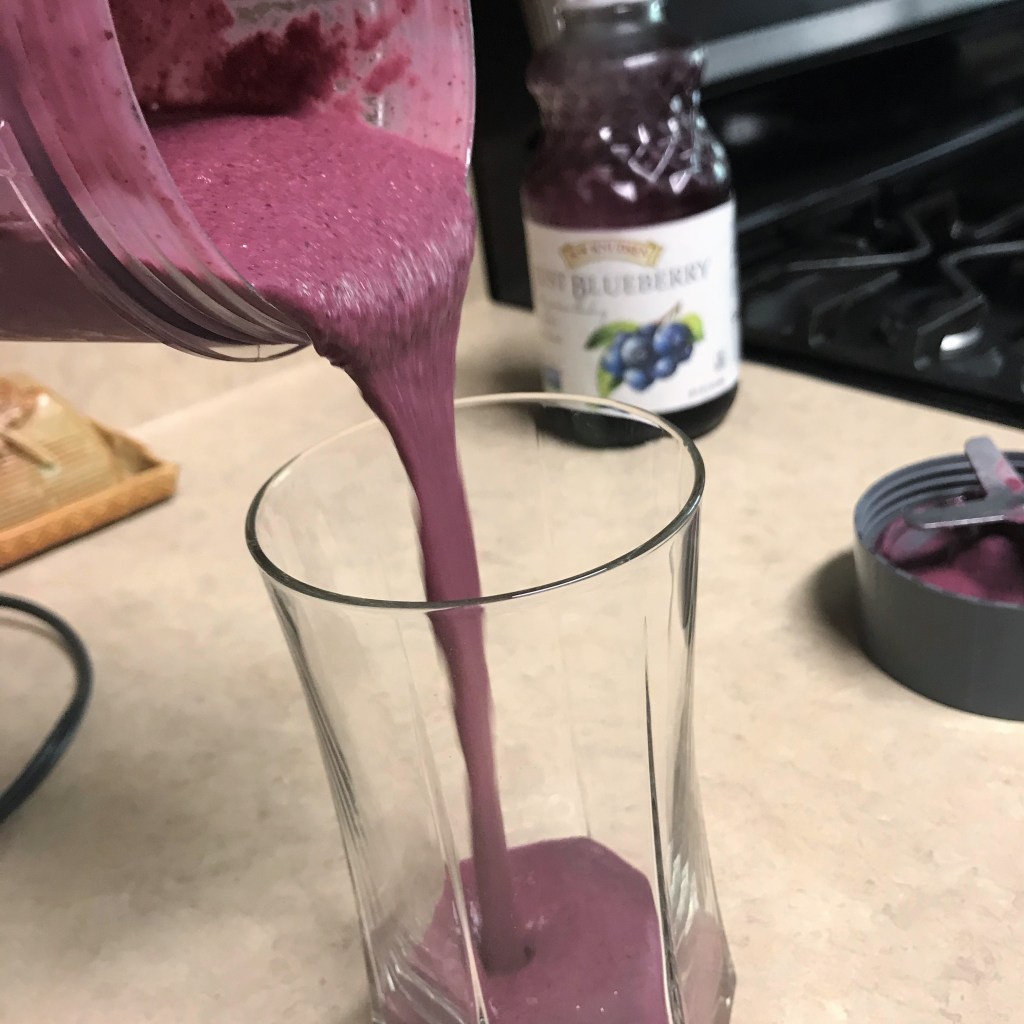
Ingredients: 1 serving cup yogurt (I used coconut flavor skyr for this one), 1/4 cup blueberry juice (any juice or milk will do), 1/2 scoop protein powder, 1 tablespoon chia seed, 2 tablespoons unsweetened coconut, 1/2 cup frozen banana chunks, 1/2 cup frozen berry blend (with blueberry, raspberry, strawberry and blackberry).


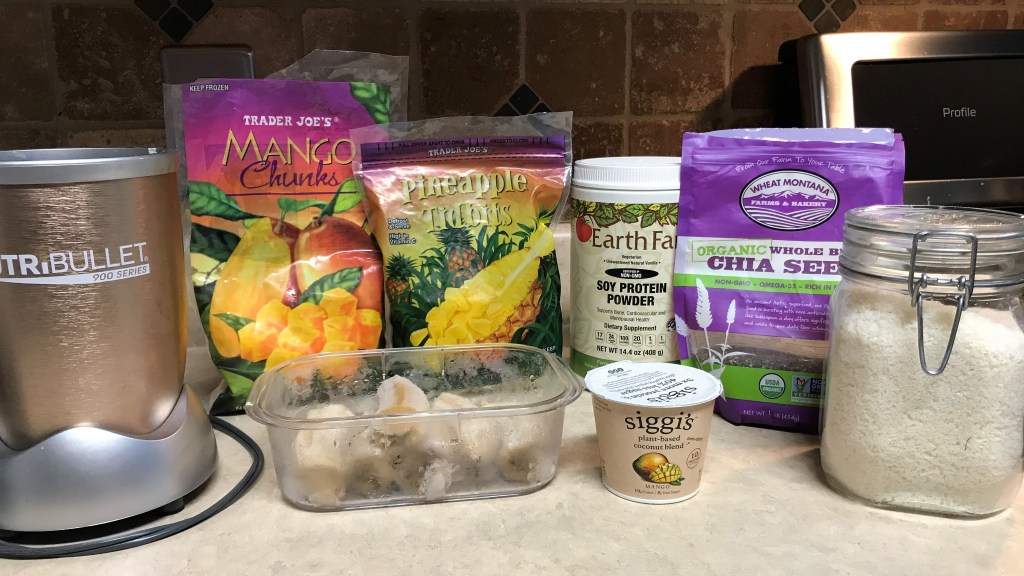
Plant-based yogurt and mango

There are many great flavors of plant-based yogurt available, and this one was mango, so I played up the tropical flavors throughout the smoothie.

Ingredients: 1 serving cup plant-based yogurt, 1/4 cup orange juice, 1/2 scoop protein powder, 1 tablespoon chia seed, 2 tablespoons unsweetened coconut, 1/2 cup frozen banana chunks, 1/2 cup frozen mango chunks.


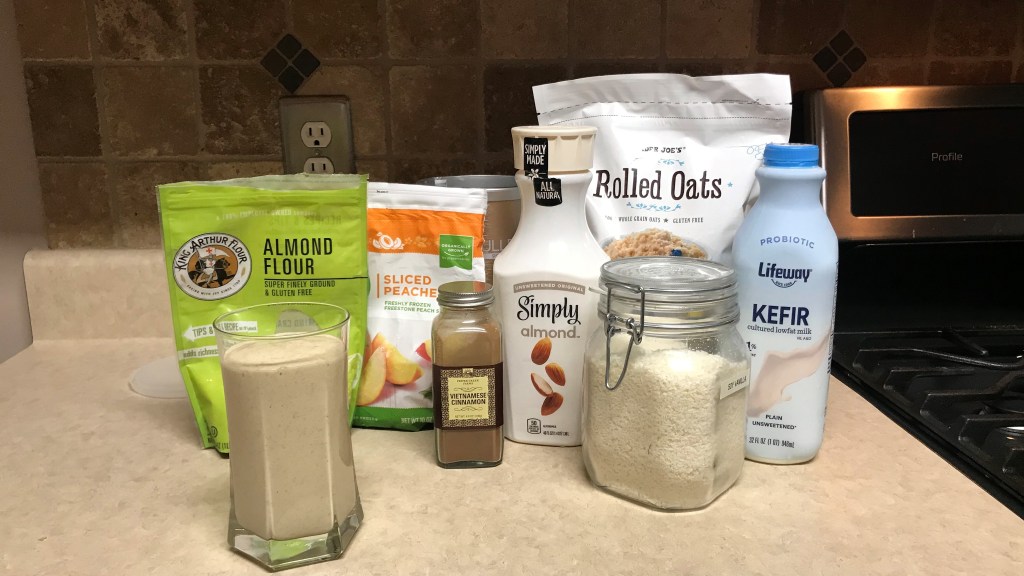
Peach cobbler smoothie

For this one, I soaked 1/4 cup rolled oats in 1/2 cup kefir overnight (in the fridge) and then built the smoothie in the morning. It’s an easy way to work some whole grains into your breakfast drink (because September is also “whole grains month”). From that point, the process was the same for layering and blending. You get the idea, right?

Ingredients: 1/2 cup almond milk, 1/2 scoop protein powder, 1 tablespoon chia seed, kefir-soaked oats, 1 tablespoon almond flour, 1 tablespoon unsweetened coconut, 1/2 teaspoon ground cinnamon, 1/4 cup frozen banana chunks, 1/2 cup frozen peaches.


Want to print these “better breakfast” recipes?