Broccoli, Artichoke and Red Pepper Pizza

What’s your favorite veggie pizza?

While you ponder, I’ll explain how I answered the same question, posed by my high school bestie, Christine. She reached out a couple of weeks ago for ideas, as her daughter had a vegetarian friend coming to visit for a few days and she wanted to help her feel welcome. When you aren’t in the habit of making meatless meals (or if, like Christine, you have allergies to all the common plant-based proteins), the concept of meatless menu planning can feel daunting. I know that feeling well— it’s exactly how I feel about making desserts! 

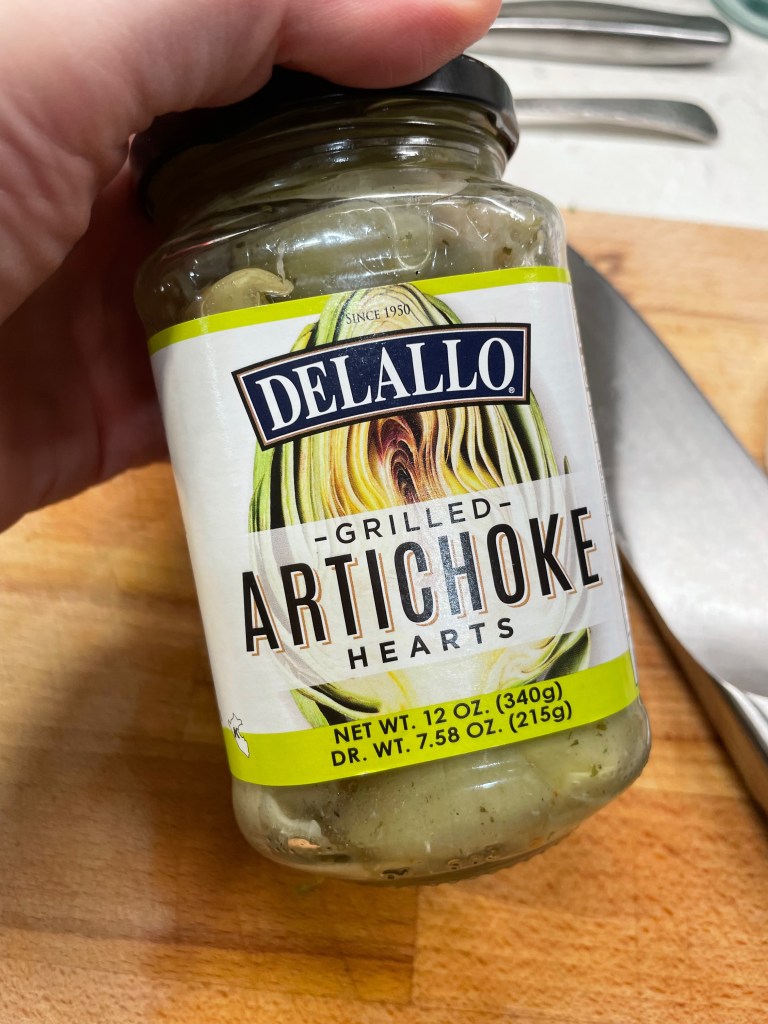
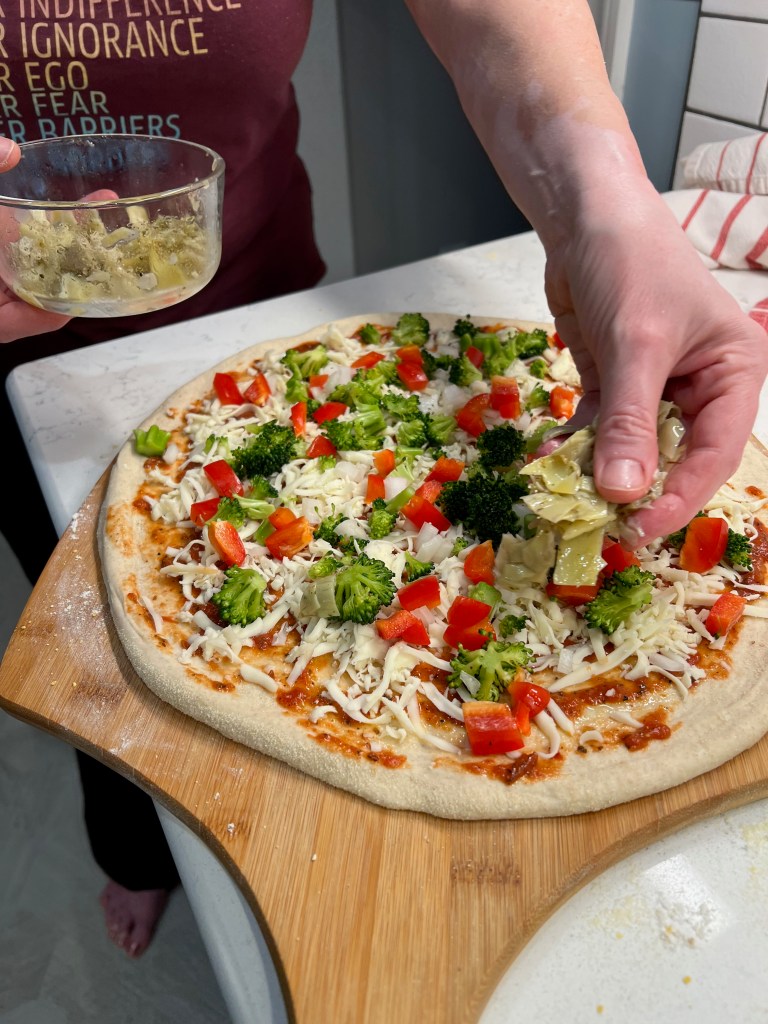
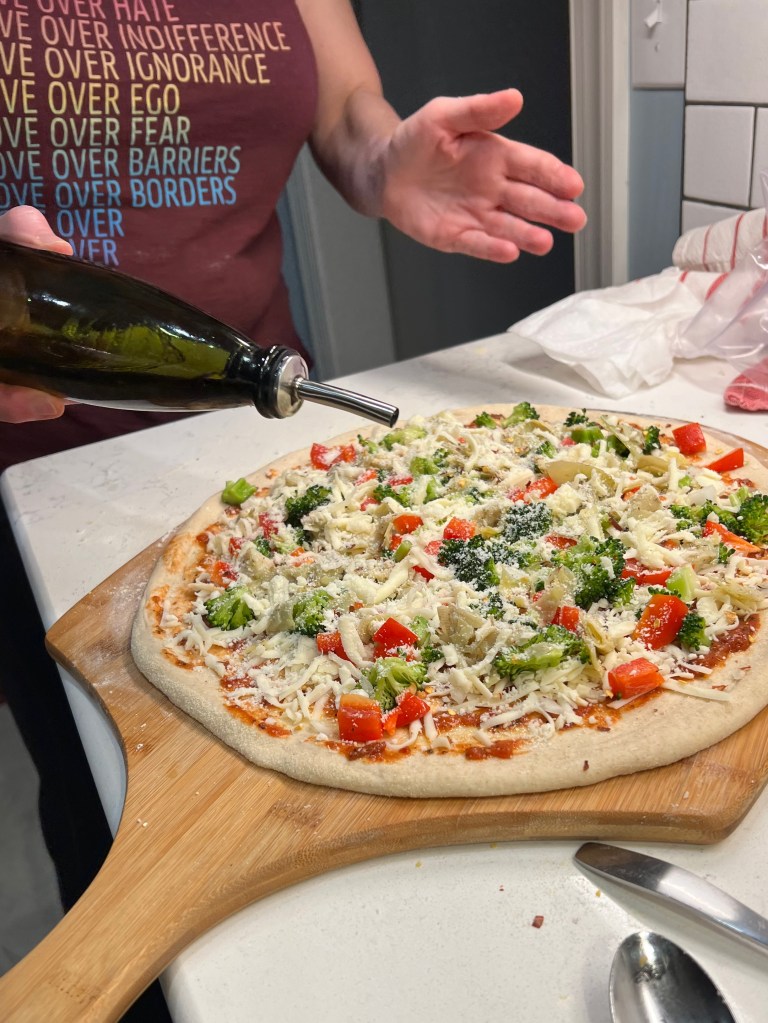
This pizza— with generous scatterings of chopped fresh broccoli, red bell pepper and marinated artichoke hearts— is my current favorite all-veggie pizza. What makes it work for me is the balance of flavors and textures that these ingredients bring to the slice. The red bell pepper bits are vegetal but sweet. The artichoke hearts, especially if you use the ones marinated with olive oil and herbs, are soft and slightly tangy. And the broccoli has a firm enough texture to make the pizza substantial and filling. 

With a healthy dose of fiber, protein (both the artichoke and broccoli contribute a good amount) and vitamins (the red bells have more Vitamin C than oranges), plus all that flavor, this pizza is a winner, any way you, ahem, slice it. 😉
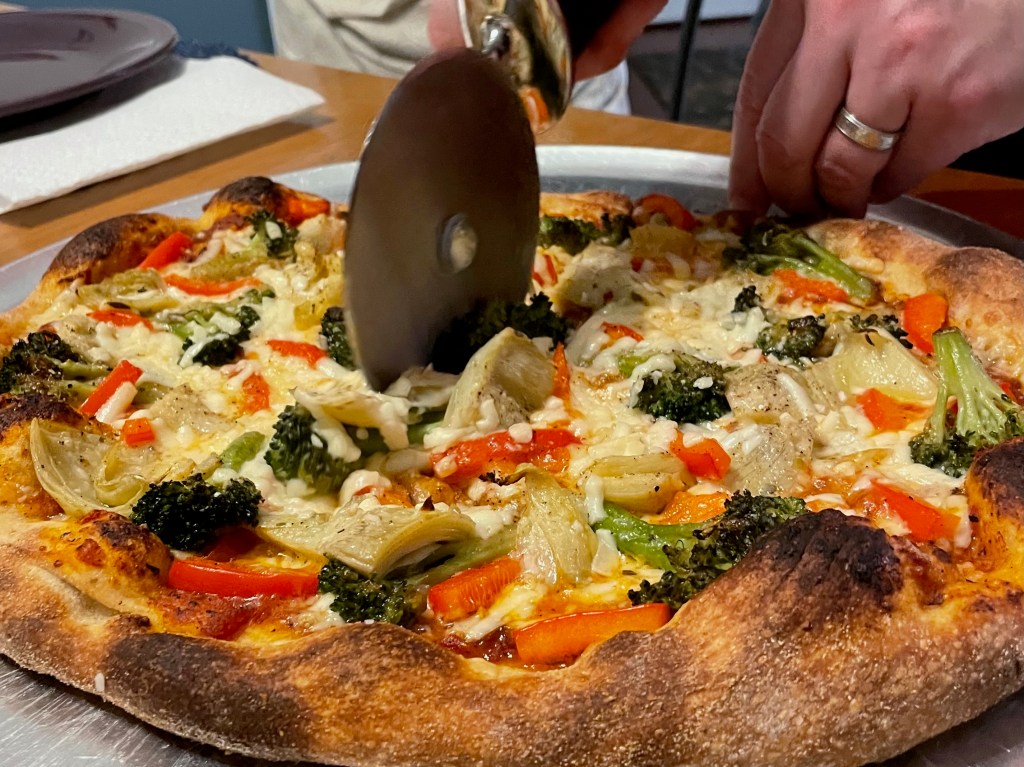
I love the sound when my husband rolls the pizza cutter through the crispy, oven blistered crust! YUM!

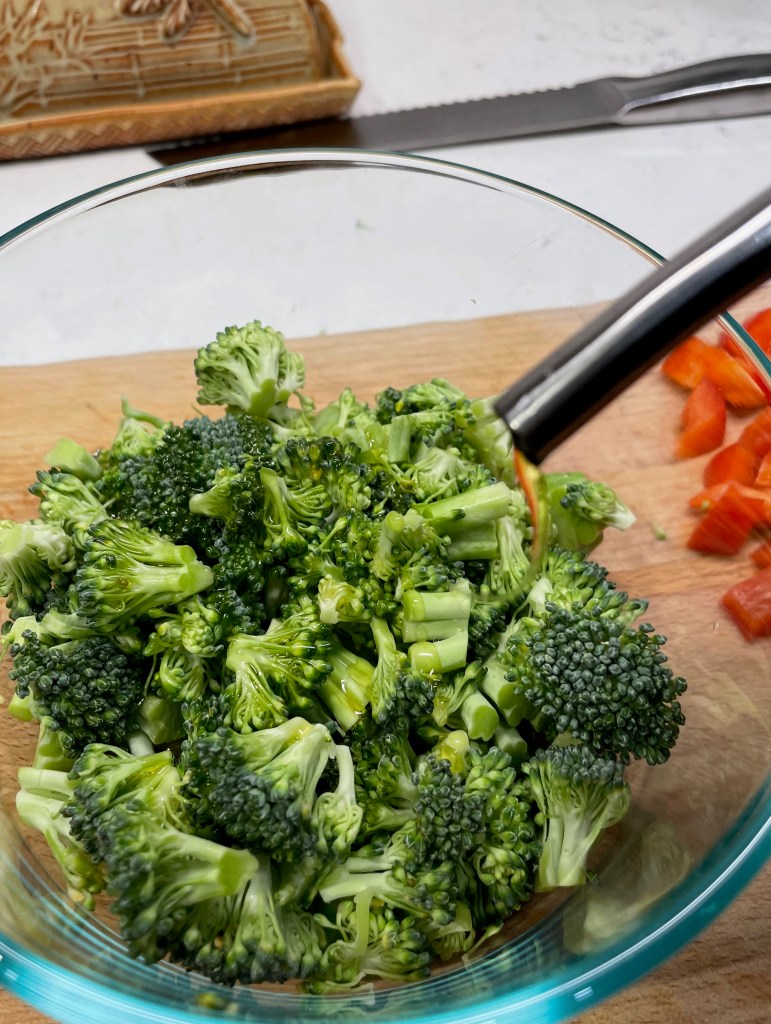
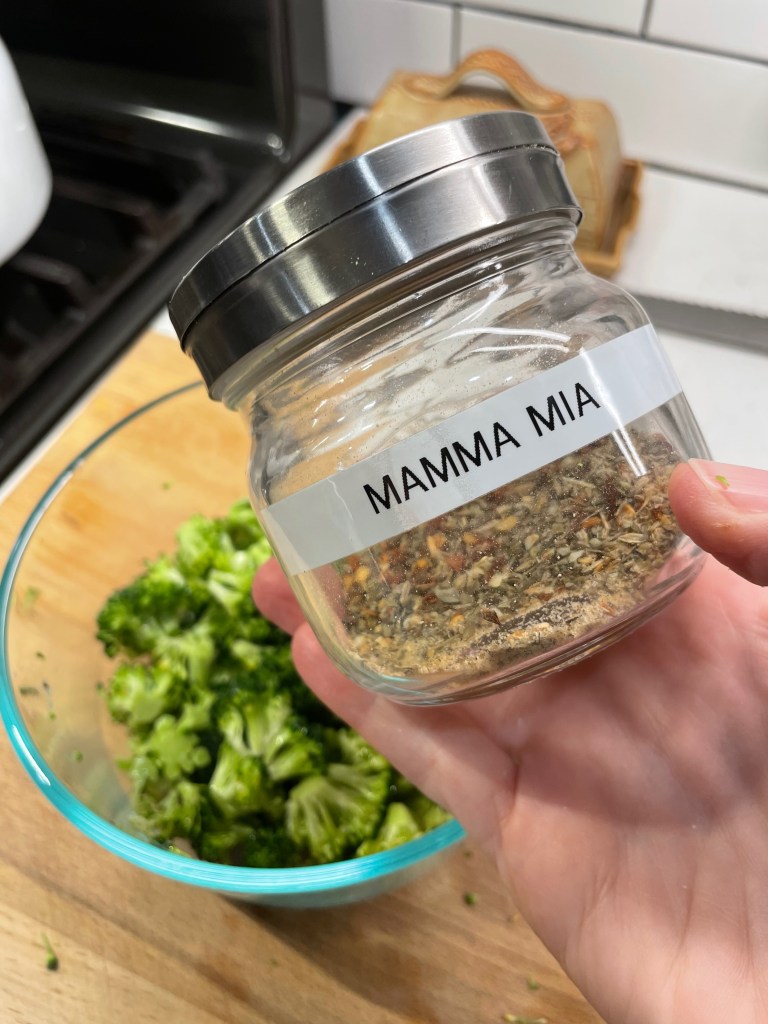
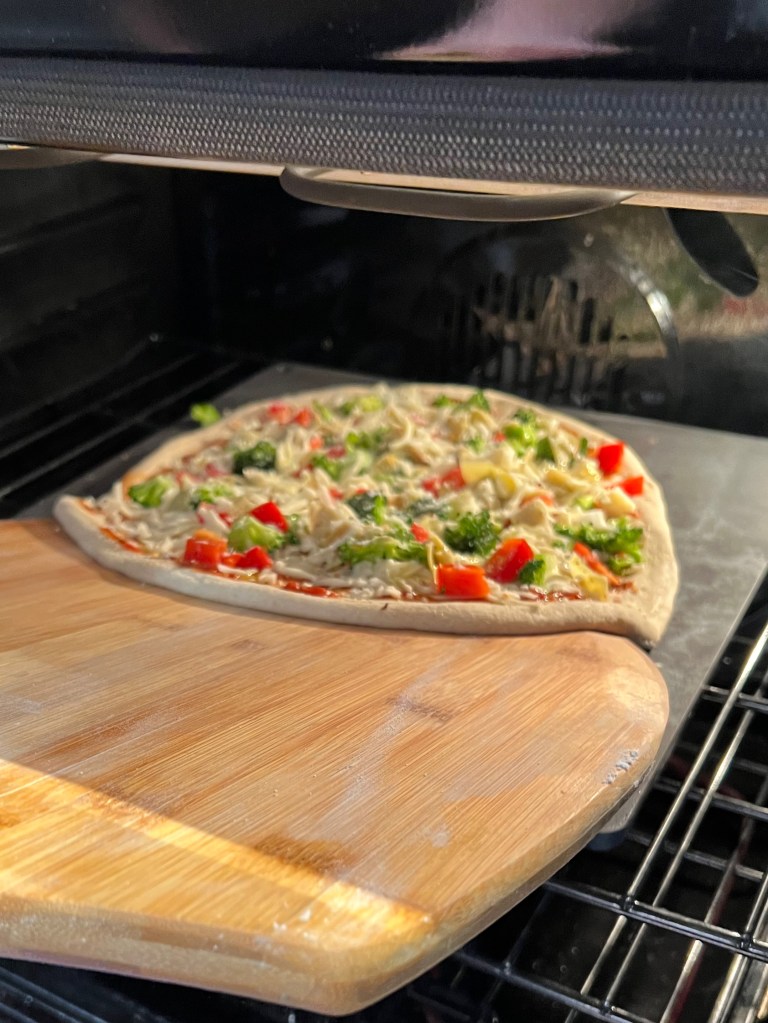
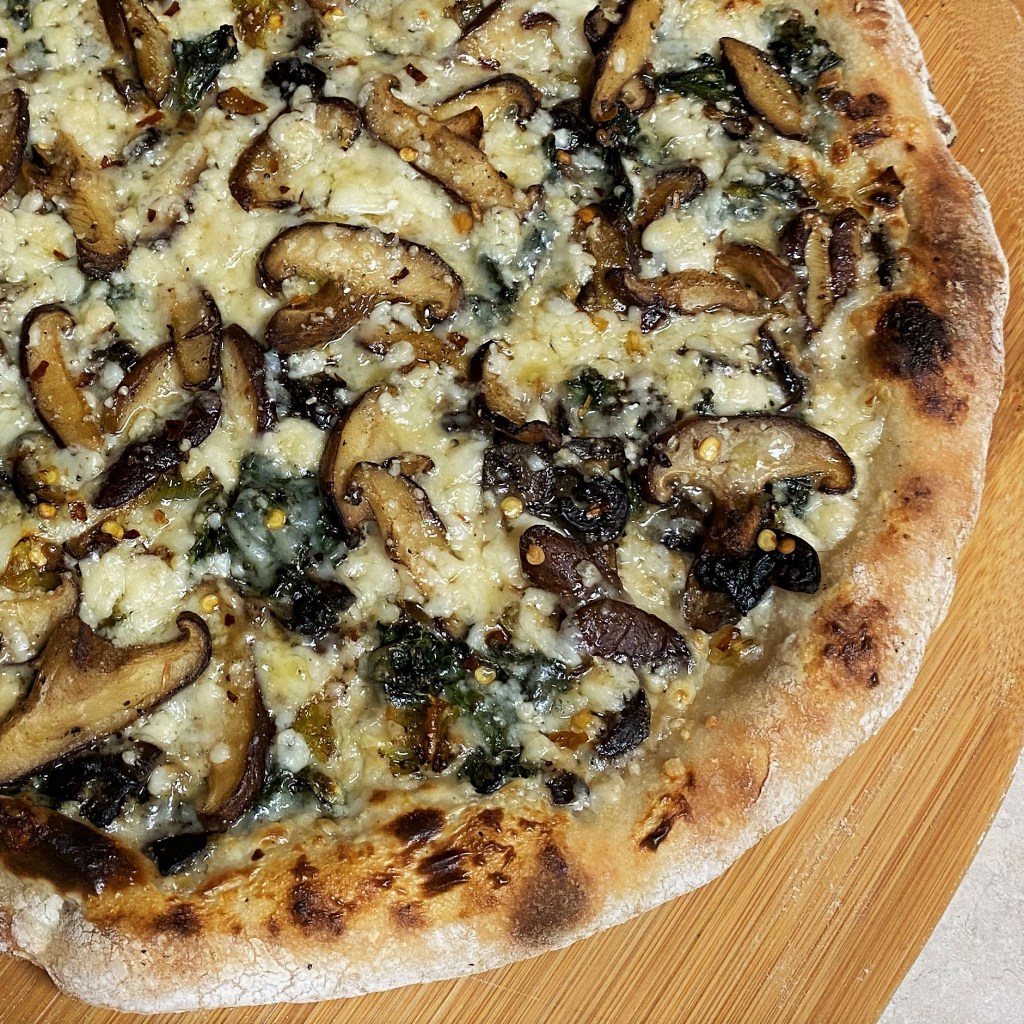
The first time I made this pizza, I used Asiago cheese (delish) and I prepped the ingredients in larger chunks, which made for tantalizing photos (as you can see above), but every bite tasted different because the pieces were farther apart. I also had to add an extra step of par-cooking and chilling the broccoli before topping the cheesy base of the pizza. On this go-around, I kept it simple, with smaller chopped pieces of raw broccoli and smaller chopped artichokes, and the end result was not only easier but a better outcome for the variety of flavor we enjoyed in each bite. A quick drizzle of olive oil and some Italian seasoning revved up the flavor of the broccoli.
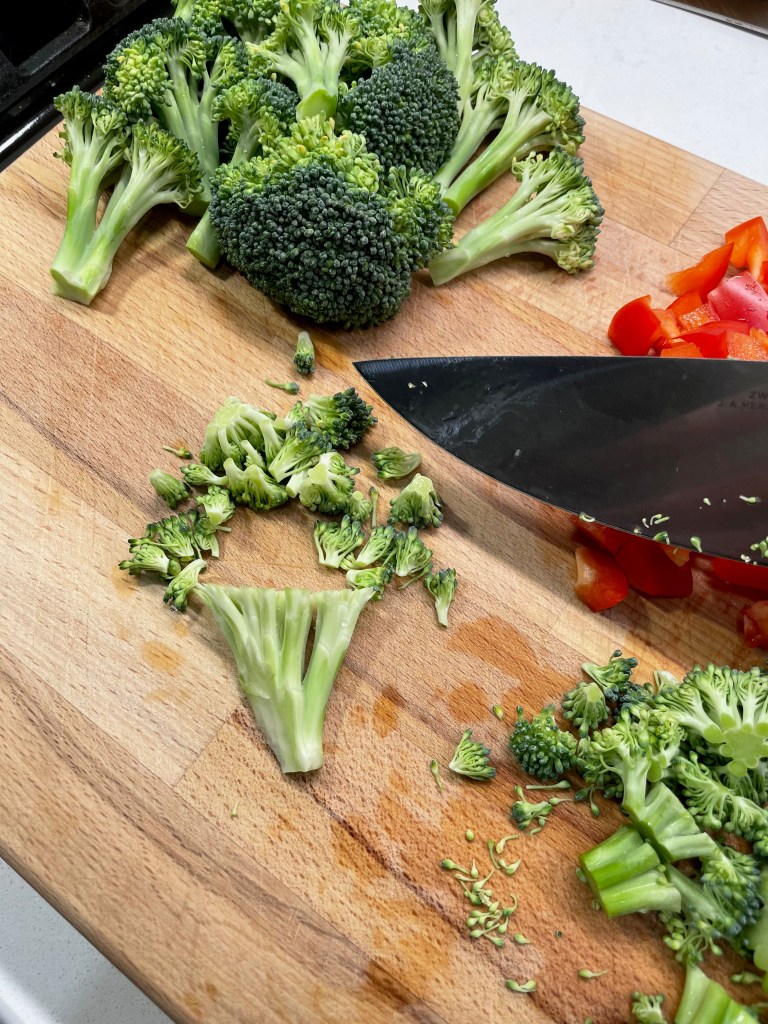

As for the rest of the pizza, you know how that goes at my house. My crust is almost always sourdough, cold-fermented for two days in the fridge drawer, hand shaped and topped with a thin layer of tomato sauce plus hand-grated whole milk mozzarella. A little Parm-Romano blend cheese sprinkled on at the end, plus a quick drizzle of extra virgin olive oil, which is a little trick I picked up during my “backstage” visit to Modern Apizza in New Haven a few summers ago. Here’s a link to my adventure at Modern, in case you missed it! 


We use a steel for all of our indoor pizzas, preheated for about one hour at 550° F, which is the hottest our home oven goes. The intense heat permeates the steel slab for an exceptional crust, and our pizzas are finished to blistery perfection in about six minutes. It’s the closest we can get to brick oven-style pizza at home.

While that bakes, a quick (but important) mention about using cheese on a pizza for vegetarians, especially those who have chosen a meatless lifestyle out of concern for animals. Your guests may be OK with egg and dairy products, but be aware that many hard cheeses, including traditional Parmesan and Pecorino, are not technically vegetarian because animal rennet (an enzyme from the digestive system of young sheep or cows) is used in their production. This enzyme cannot be harvested from living animals, and that means it’s off the table for those following strict vegetarian practices. Thankfully, there are a few producers who have managed to adapt to using a plant-based enzyme to make such cheeses in a way that is approved for vegetarians. It’s a good rule of thumb to scan the label— if it does not explicitly state that it is suitable for vegetarians, you can bet that it isn’t. I only learned this myself a few years ago, so it bears sharing with my foodie friends. 

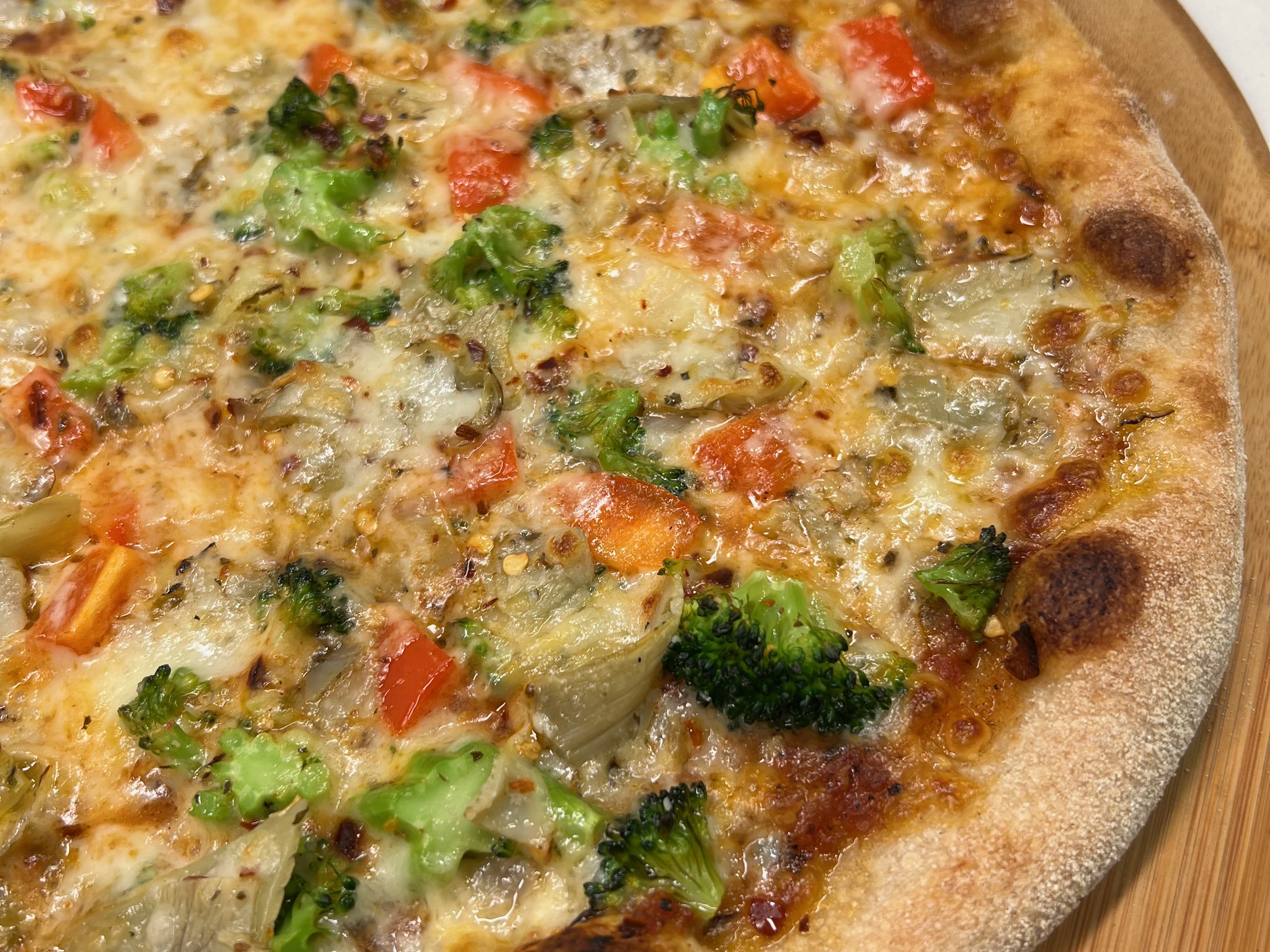
The smaller bits of veggie definitely work better, making every slice consistently delicious!

So there you have it, my current favorite veggie pizza! After the click-to-print recipe below, I’ll share links to a few others we’ve enjoyed at our house, including the one that Christine found irresistible for her pizza party with her daughter and visiting friend.

Now, your turn— what’s your favorite veggie pizza? I’m always on lookout for a new recipe, so please share! 

Broccoli Artichoke and Red Pepper Pizza
  • Servings: 8 slices
  • Difficulty: Average
  • Print

There's so much flavor and texture going on in this pizza, who needs meat?


Ingredients

  • One fresh pizza dough ball, about 11 oz., at room temperature
  • 1/4 to 1/3 cup favorite pizza sauce (we like Dei Fratelli’s “fire roasted”)
  • 2/3 cup hand-grated whole milk mozzarella
  • 2 cloves garlic, minced
  • 1 cup chopped raw broccoli, tossed with a teaspoon of olive oil and Italian seasoning
  • 1/2 cup diced red bell pepper
  • 1/2 cup chopped marinated artichoke hearts
  • 2 Tablespoons chopped fresh onion (sweet or yellow work well here)
  • 2 Tablespoons grated Parm-Romano blend cheese
 (check labels to ensure suitability for vegetarians)
  • Extra virgin olive oil to drizzle

We bake all of our pizzas at very high temperature on a steel slab, which gives us a near-brick oven quality pizza. If you will be using a pizza stone or pan, you may need to adjust temperature and baking time accordingly. I would highly recommend, for anyone who loves making pizza at home, investment in a pizza steel. I promise, you won’t regret it!

Directions

  1. Preheat oven with steel on center rack for one hour at 550° F. Dust pizza peel with flour and medium grind cornmeal for easy transfer in and out of oven.
  2. Shape dough by hand into 14-inch round, taking care not to deflate too many air bubbles. Salt and pepper the dough, and then spread sauce evenly over dough. You should be able to easily see the dough through the sauce.
  3. Scatter mozzarella all over the sauce, then top with fresh garlic, broccoli, peppers, artichoke hearts and onions. Sprinkle Parm-Romano over the toppings and give the whole pie a quick drizzle of olive oil.
  4. Transfer quickly to preheated steel and bake for six minutes, turning pizza after four minutes if needed for even browning of the crust.


Other veggie pizzas you might enjoy, left to right:
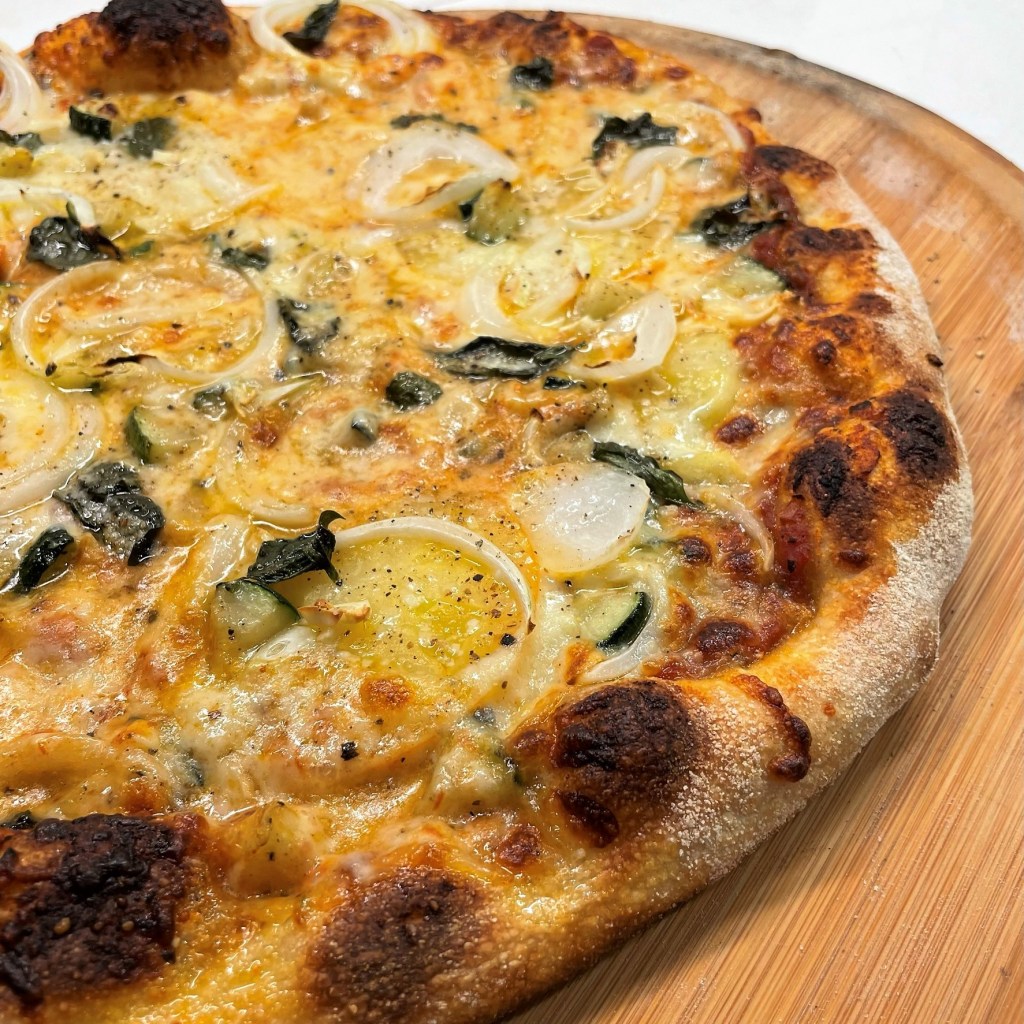
Zucchini and yellow tomato pizza, which I’m really looking forward to making again this summer, when both of these vegetables reach their peak flavor! 

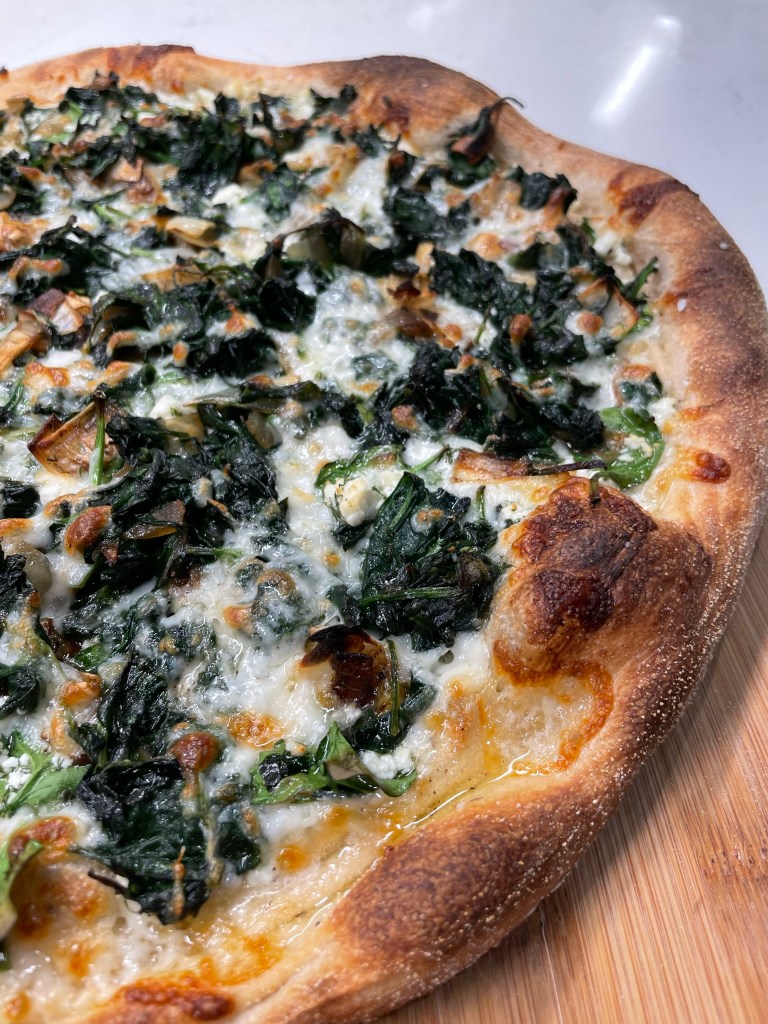
Spanakopizza, loaded with fresh and sautéed spinach, leeks and feta, with a scatter of fresh dill for authentic Greek flavor. This is the one Christine made, and she declared it a big hit!

New Haven-style fresh tomato pizza, another one we enjoyed when we visited Connecticut, and a classic flavor for summer— almost like a margherita pizza but with fresh slices of tomato. So good!

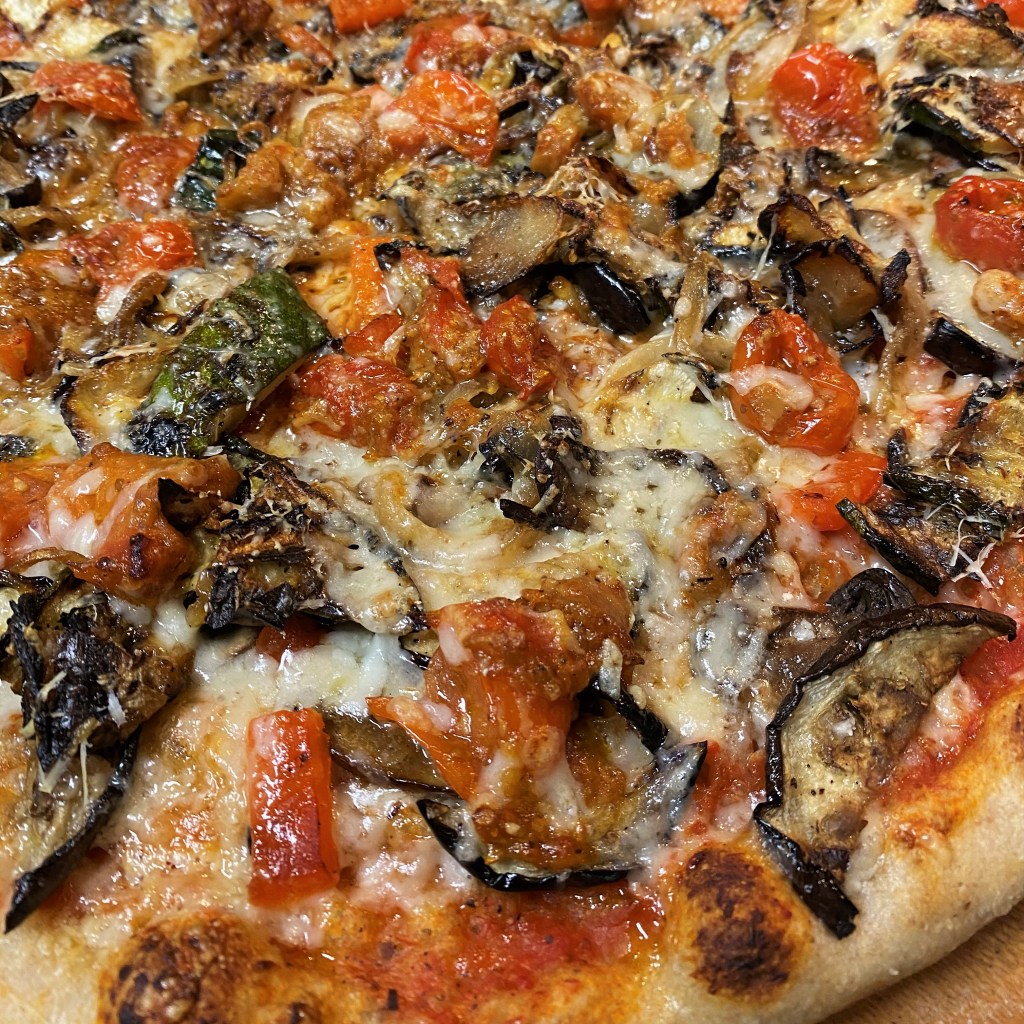
Ratatouille pizza, especially if you take time to grill the eggplant, zucchini, peppers and onions before piling them onto your favorite tomato sauce. 

Creamy garlic mushroom pizza, with a roasted garlic béchamel base and two kinds of mushrooms (plus spinach) turns pizza night into a special occasion. My husband has been begging for this one to come back up in rotation, so I’ll be making it again very soon.

Eggplant parm pizza, but omit the crumbled Italian sausage, which I only used for that recipe because we had a very small amount left over from another meal. Trust me, this pizza would totally rock without the sausage. For this to be truly vegetarian, be mindful of the Parmesan label, to be sure that it uses plant enzymes rather than animal rennet.

Thai Basil Chicken

To say that I’ve been under stress lately would be a gross understatement. I know that many of you feel the same angst related to the stories that plague our newsfeeds, and that alone is enough to make anyone shaky. On top of the stressors of life, things at home have been a little, um, hectic.

Besides the uncharacteristically high pressure of late in my day job (which is usually quiet in June), and beyond the fact that we are now past the 90-day mark since the start of our master bath remodel (with issues still happening every day), I had an unwelcome bit of news this week at my first primary care visit in nearly a decade. It’s nothing serious—at least, not yet—but I am considering the results of my blood workup to be an important wake-up call.

At the risk of TMI, I’ll summarize to say that several key markers are out of whack, and I need to get my act together quickly as it relates to my diet and my overall health. As luck would have it, going through menopause, starting a food blog, and signing up for not one, but two major home renovations during a world pandemic did not have positive effect on my body. I should have seen it coming.

For the first time in my life, a doctor told me that I must make changes, and that was a little scary. There’s plenty of time to turn things around, and I am truly thankful for that, but it means healthier options will be my first choice and decadence is on the bench for a while. I need to embrace regular exercise, too, but that’s another post entirely. Today, I’m focusing on healthier eating. It does not mean that we can’t have pizza or ice cream or some of the other fun things my husband and I love; rather, it only means that I must be more mindful of what goes into those dishes in the first place. Luckily, I do love experimenting!

For me, what makes a meal truly satisfying is variety of texture, big flavor and interesting spices. I’m not suddenly turning vegan or entirely giving up any food groups—I have never been one for a total elimination diet. I can move toward better health with a few lightened-up favorites, more meatless dishes and plenty of vegetables, and that’s what I intend to do. Truth be told, part of the reason I’m telling y’all this is that it builds in an extra level of accountability. Now that you know, I’ve painted myself into a bit of a corner. So here comes the first of several fresh and healthy meals served up at our house recently.

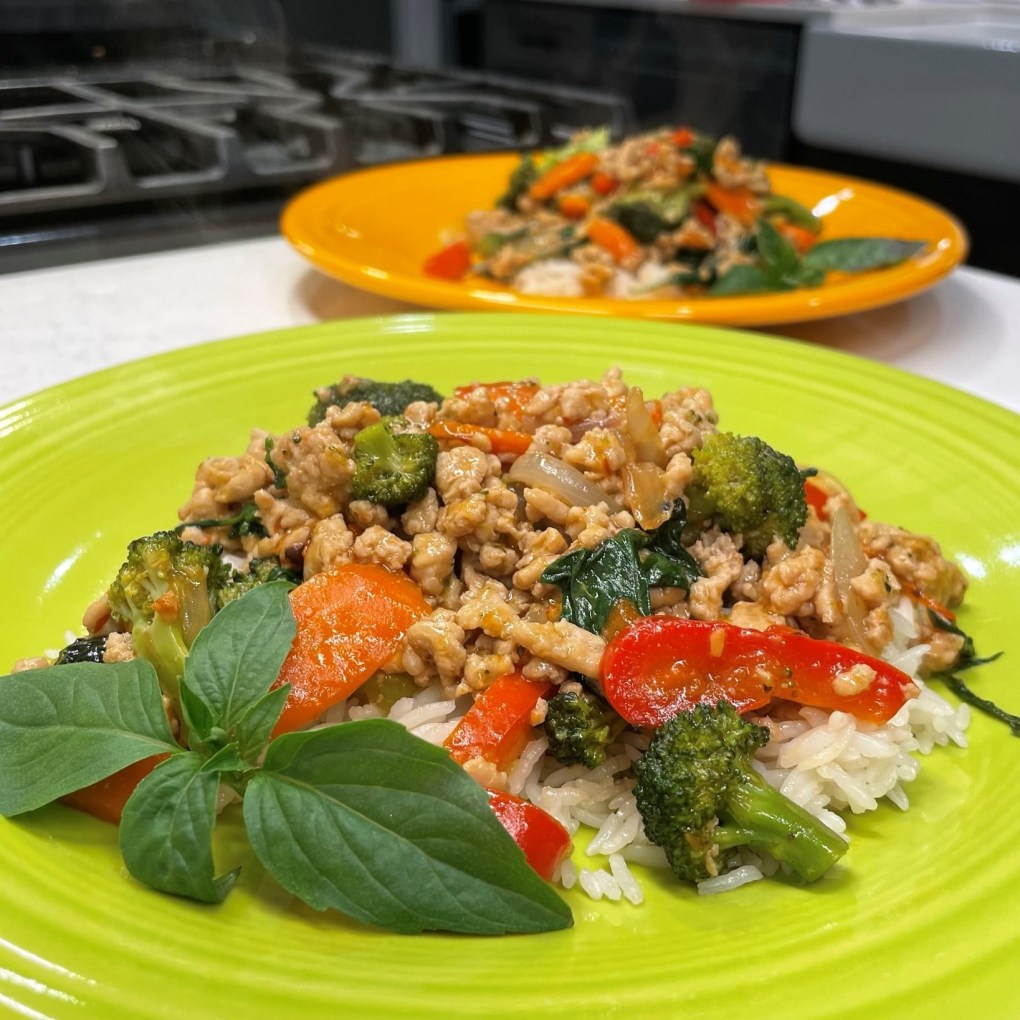
It smells even more delicious than it looks!

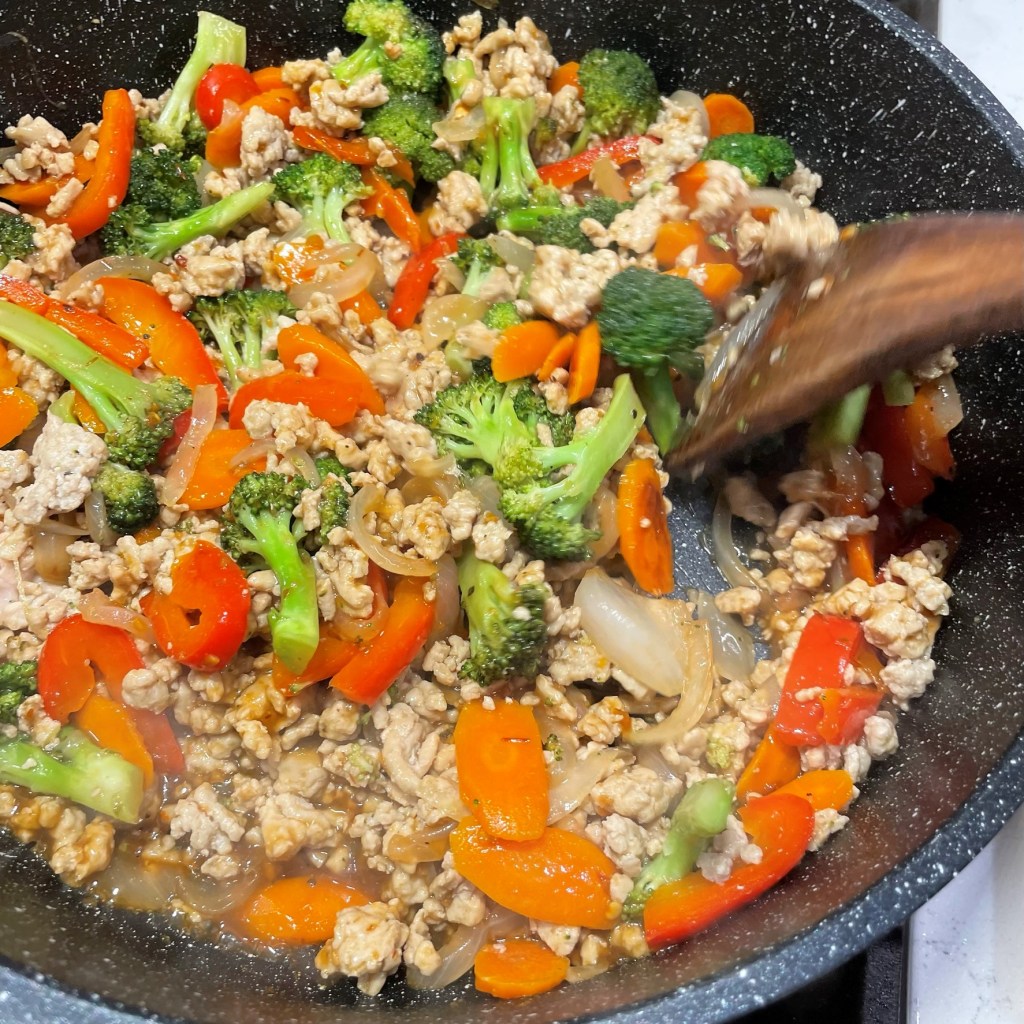
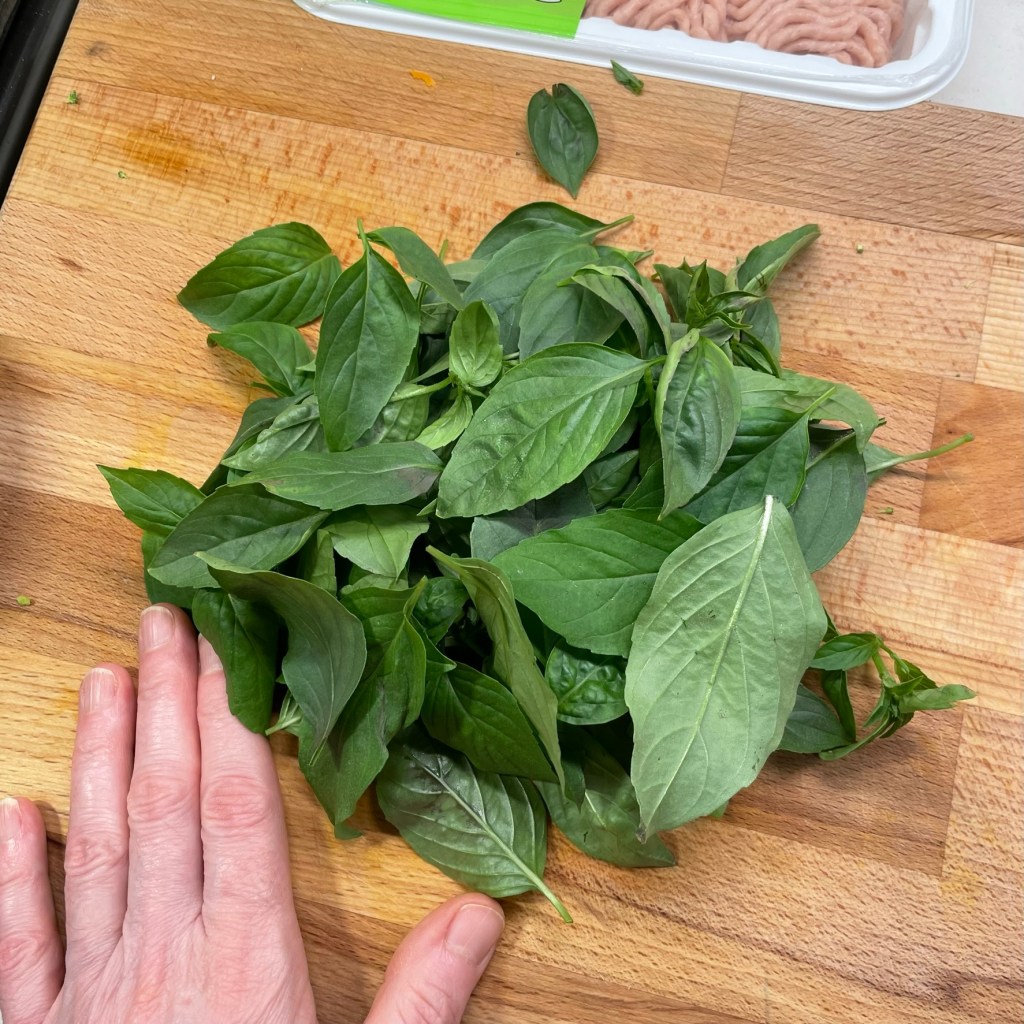
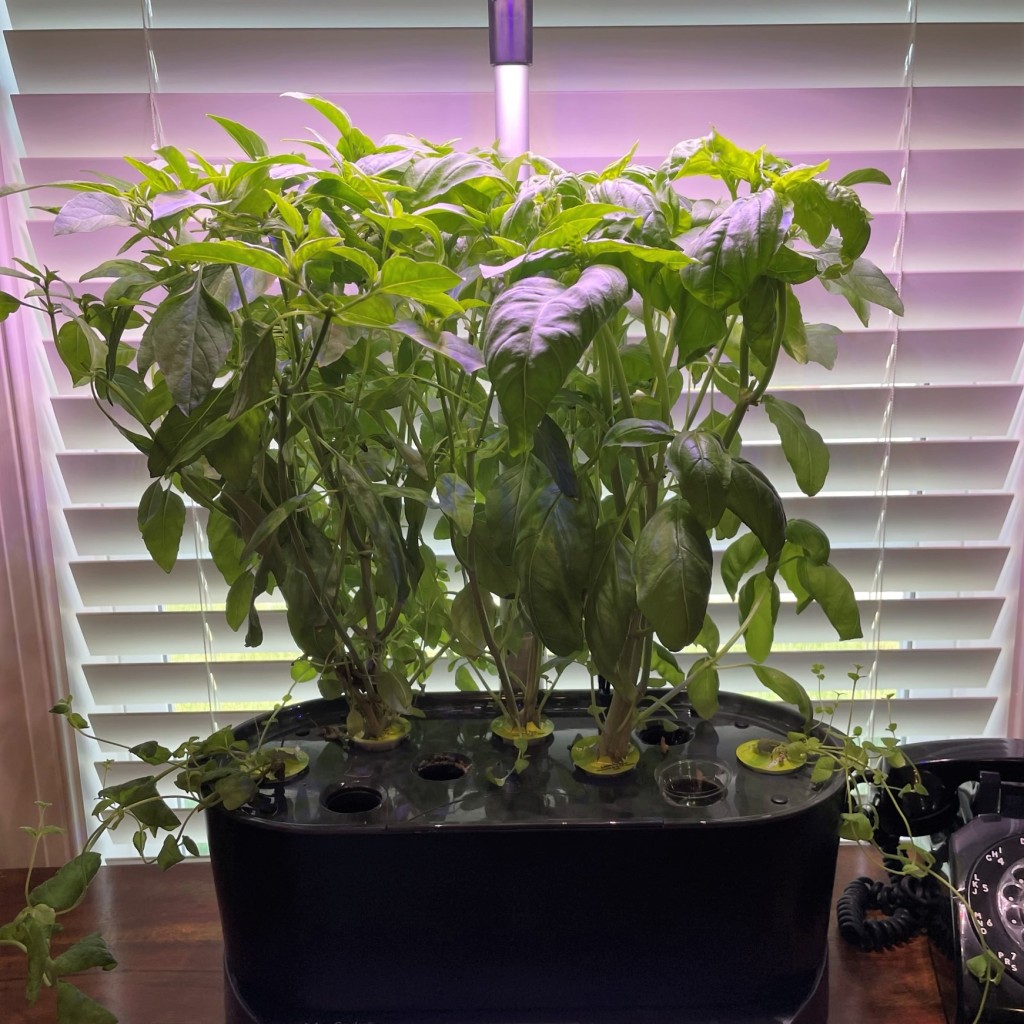
Thai basil chicken meets all the criteria I mentioned for a satisfying meal. The texture is amazing and packed with crunchy vegetables, including carrots, broccoli and red bell pepper. The flavor is phenomenal, with a complex blend of spicy ingredients in the Thai-inspired sauce that gently coats the vegetables and lean ground chicken. The signature flavor that gives this dish a little extra “zhuzh” is Thai basil, a fresh herb in the mint family that is similar to the Genovese basil you’d recognize in Italian food, but with a spicy undernote and a hint of anise or licorice. I’ve had an abundance of this ingredient lately, since my husband and I reinstated the Aerogarden that he gave me for Christmas a couple of years ago. This gorgeous herb has taken over the whole dining room, even visible from outside the window because it’s growing through the blinds (which, I suspect, is causing the neighbors to whisper). I prune the plants every couple of days, which only makes them grow faster, and so I needed a dish that uses a lot of Thai basil at once. This recipe is perfect for it!


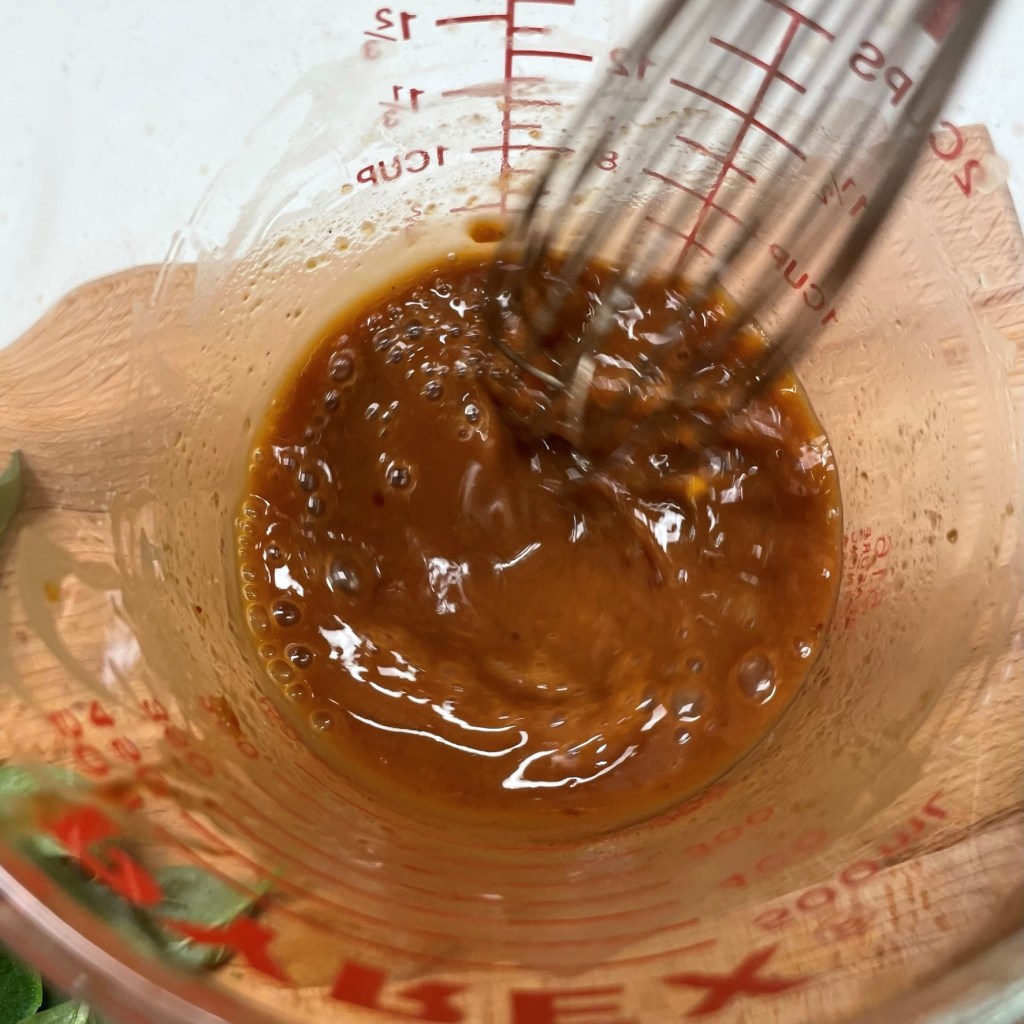
The prep for Thai basil chicken is easy; it’s just a bit of chopping and slicing of fresh vegetables that have plenty of texture, color and nutrition. The other essential prep is making the sauce. My recipe includes chili-garlic paste for heat, soy sauce and coconut aminos for an umami burst, oyster and fish sauces for a little funky depth, rice vinegar for a slight acidity and a touch of coconut sugar to round it all out. There’s also a bit of corn starch in the mix to keep it silky. If you like Asian flavors even a little bit, you won’t regret having these ingredients in the door of your fridge, and in no time at all, you’ll be mixing and matching them to come up with your own amazing recipes. One final note on the point of these Asian sauces, and this is not a joke. There is an imminent shortage of both sriracha sauce and chili-garlic paste, so you may want to grab a jar of each now to avoid the drought that’s coming on these ingredients. Now, let’s get cooking on this dish!


I used carrots, red bell pepper, onions and broccoli in my recipe, but there are other veggies that would feel right at home here, including scallions, cauliflower, celery, crunchy green beans or snow peas. Sliced fennel would also be terrific, and if you can only find Genovese basil, having fresh fennel in the mix would help fill the gap of the licorice flavor that Thai basil offers. Basically, aim for lots of color and texture and you’ll have a winning dish. The only vegetable I wouldn’t recommend is tomato, which is too soft, and hardly ever used in Asian cuisine.

Cooking the dish is simple, beginning with a little bit of oil in a large, fairly deep skillet or wok. Because this recipe is cooked over medium-high heat, you need an oil with a high smoke point, such as peanut, coconut or canola oil, but you won’t need more than a few tablespoons. Extra-virgin olive oil is not best for this kind of cooking because it overheats easily and turns bitter.


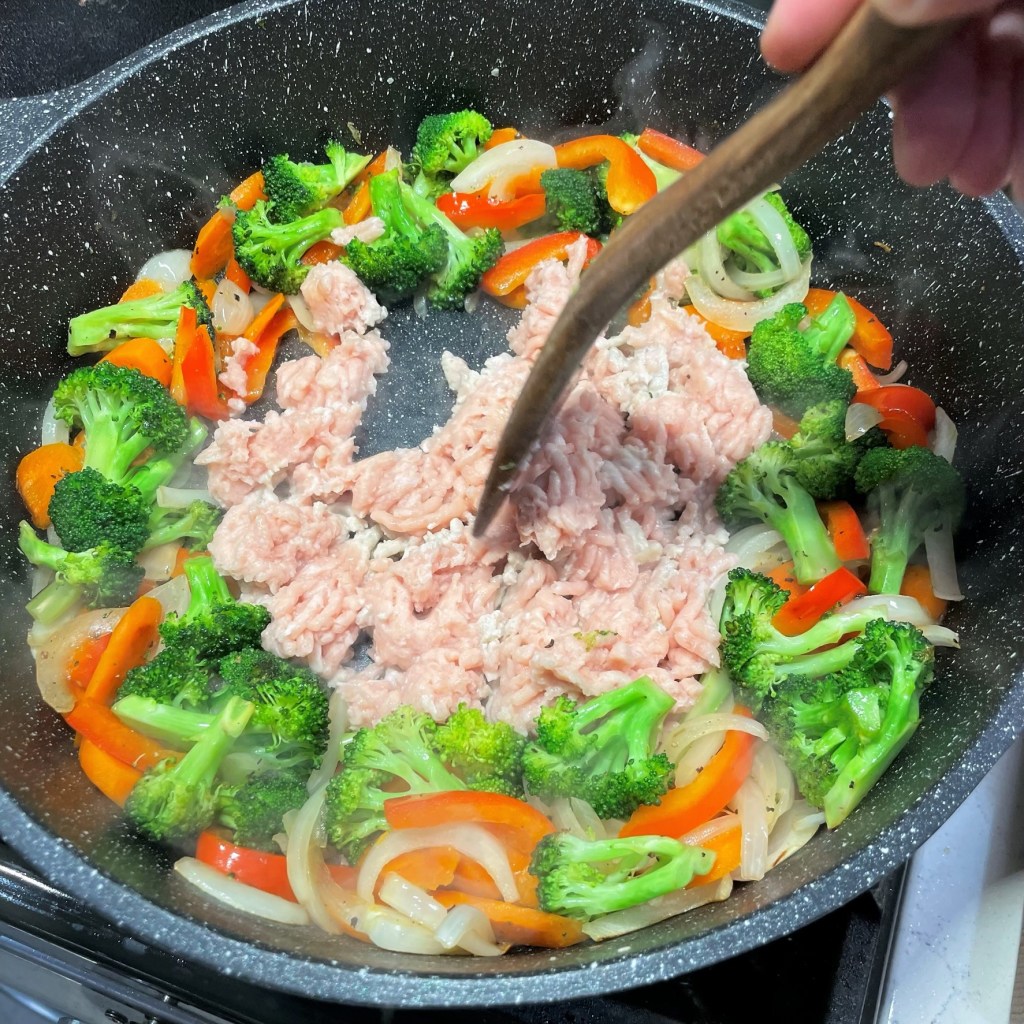
You’ll cook the veggies first, only a few minutes until they begin to soften, then move them to the outside edges of the pan and cook the ground chicken, half at a time. You could use cut-up pieces of chicken breast, also, but I find that ground chicken cooks more quickly and evenly. I normally use a wok when I make this dish, but that is one of the few tools that didn’t earn prime kitchen real estate after our remodel, and the overflow of stuff in the garage is a bit of a nightmare right now. If you have a wok, of course it would be the best vessel for cooking, but any large, sturdy skillet or pan with deep sides will work fine.


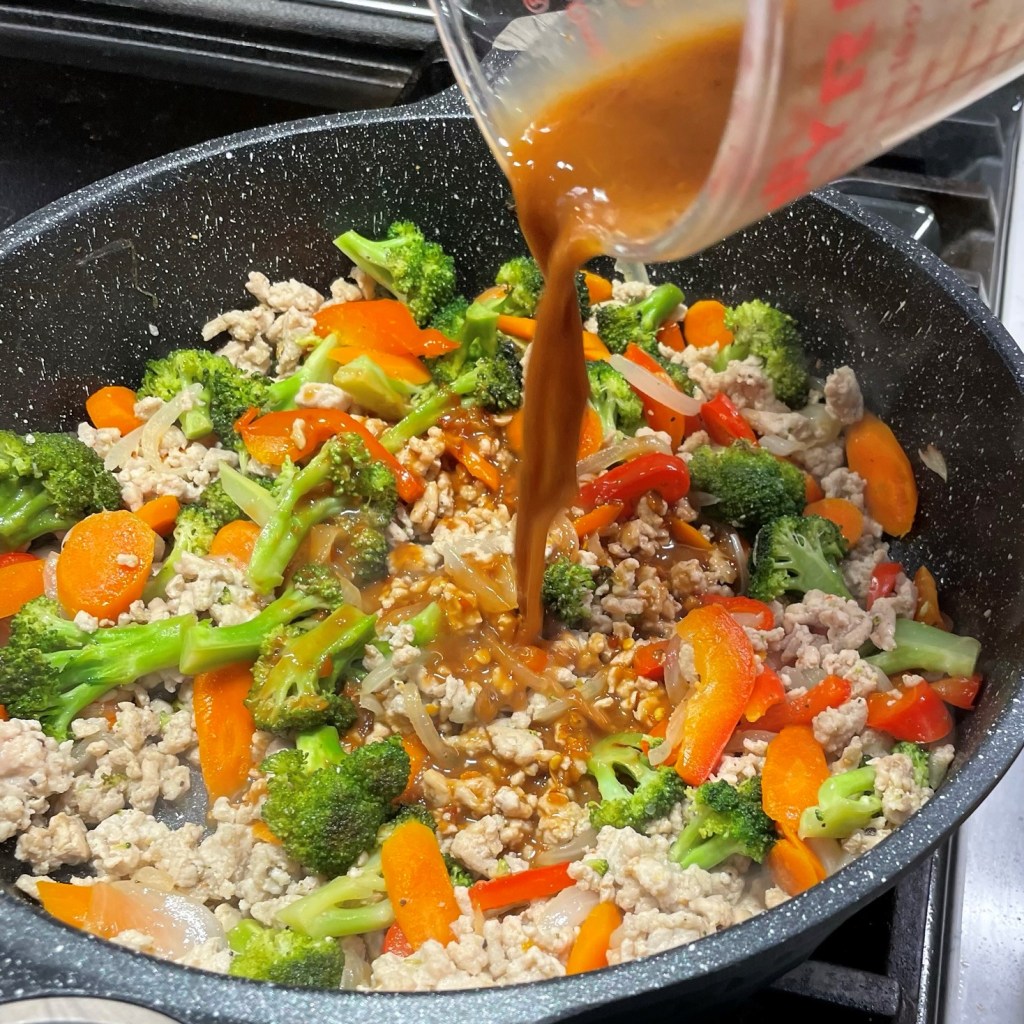
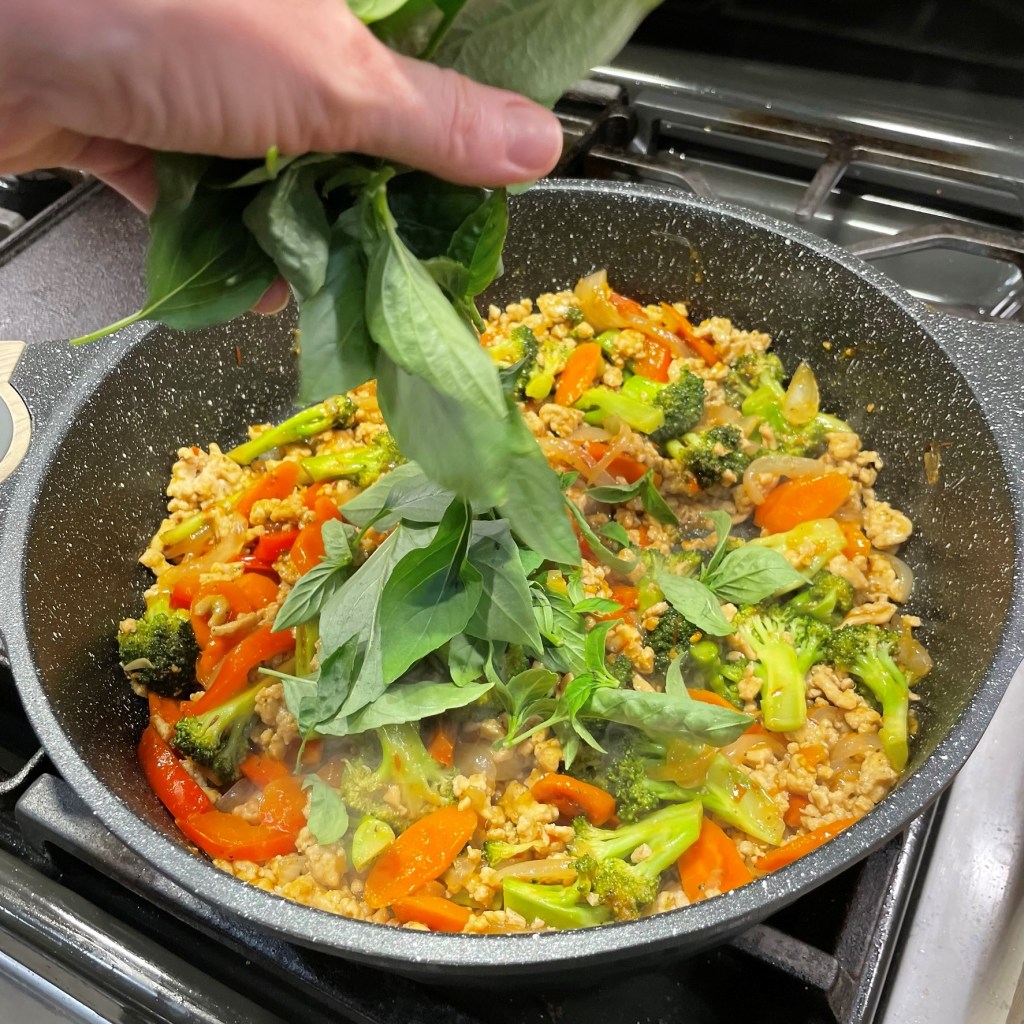
After the chicken has lost its pink color, whisk the sauce to mix it up again, and pour it all at once over the pan ingredients. Toss a few times to coat, and you should see the sauce thicken quickly, thanks to the cornstarch in the mix. Add the Thai basil at the very end, and when it wilts down and turns darker green (which takes no more than 30 seconds), this meal is ready to serve!

I’ll be looking for other fun ways to use my Thai basil, and I’m already planning to do something with the shrimp we have in the freezer—maybe a drunken noodle kind of thing? Oh, aaand, I don’t think I have mentioned that I planted a vegetable garden this year, and we have found a new weapon against deer invasion. More on that next time. 🙂

Fingers crossed, we will have fresh zucchini, tomatoes, peppers and eggplant soon. Stay tuned!


Thai Basil Chicken

  • Servings: 4
  • Difficulty: average
  • Print

This recipe moves quickly, so it’s best to have your fresh ingredients and sauce ready before you begin. If you have a favorite store-bought, spicy Thai sauce, you could substitute that, using about 2/3 cup. If you cannot find fresh Thai basil, a regular Italian basil can be substituted but the flavor will not be quite as authentic. As long as we are talking substitutions, the chicken could also be swapped out for shrimp or even extra firm tofu cubes. Go on, make it yours!

Ingredients

  • 1 pound ground chicken
  • 1 small onion, halved and cut into slivers
  • 1 large broccoli crown, trimmed and cut into florets
  • 1/2 large red bell pepper, cut into strips
  • 3 small carrots, peeled and cut on bias into thin slices
  • a fat handful fresh Thai basil leaves
  • 3-4 Tbsp. high-heat oil, such as coconut, peanut or canola (you will divide this to cook the vegetables and the chicken)
  • Spicy Thai basil sauce (ingredients listed below)
  • Cooked jasmine rice, for serving

Whisk the sauce ingredients together in a glass measuring cup or other bowl that is suitable for pouring. Have it ready before you begin cooking.

Ingredients

  • 2 Tbsp. garlic chili paste
  • 1 Tbsp. oyster sauce
  • 1 Tbsp. low-sodium soy sauce
  • 1 Tbsp. coconut aminos
  • 2 Tbsp. rice vinegar (not seasoned)
  • 1 Tbsp. coconut sugar
  • 1 tsp. fish sauce
  • 1 Tbsp. corn starch
  • 2 Tbsp. COLD water

Directions

  1. Place a large, high-side pan over medium-high heat. Add half of the oil, and when it shimmers, add all vegetables to the pan. Sprinkle with a slight pinch of salt (not too much, because the sauce has plenty), and toss in the pan until they begin to soften, or about 7 minutes.
  2. Push the vegetables toward the outside edge of the pan. Add half of the remaining oil in the center of the pan, and add half the ground chicken, tossing to cook just until it’s no longer pink. Repeat with the remaining chicken.
  3. Whisk the sauce to reincorporate ingredients that have settled. Pour the sauce all over the pan mixture and stir or toss to coat. The sauce should begin to thicken very quickly.
  4. Add the Thai basil to the skillet all at once and toss to wilt it into the recipe. This will happen very quickly.
  5. Spoon the Thai basil chicken over portions of hot cooked rice, and enjoy it while it’s hot!


Fresh Broccoli-Apple Salad

The word “salad” can mean a lot of things, depending on the generation during which the recipe was introduced. For example, in the 1960s or ’70s, a “salad” could have been anything from an iceberg lettuce-based dish served ahead of dinner to a molded concoction of sweetened gelatin, cottage cheese, marshmallow or who knows what.


Blame our parents, if you need to, for those atrocities. But this salad is a real salad—vegetables, fruit, dressing—everything you want to complement what you’re serving for dinner in these modern times, especially if what you’re serving is coming off the grill.

Broccoli comes to us from the brassica family of vegetables, kin to brussels sprouts, cabbage and kale, to name a few. Some of these veggies carry a slightly bitter flavor, but here’s a tip to knock it down: give it a quick swim in boiling water (only for a few seconds), then shock it cold again in an ice water bath. Not only will you strip away some of that bitter flavor, you’ll also see the broccoli transform to a much brighter green color. Be sure to drain it well before proceeding with the salad, so the dressing doesn’t get watery.

We love salads at our house, but my husband, Les, isn’t wild about broccoli by itself. A salad that features broccoli along with other flavors and textures is a great compromise, and he liked it. His son, Alex, has been with us for meals at least once a week since his return home from Europe at the start of the pandemic, and he announced at dinner that this dish has “all my favorite things in it.” I’m counting that a double success!

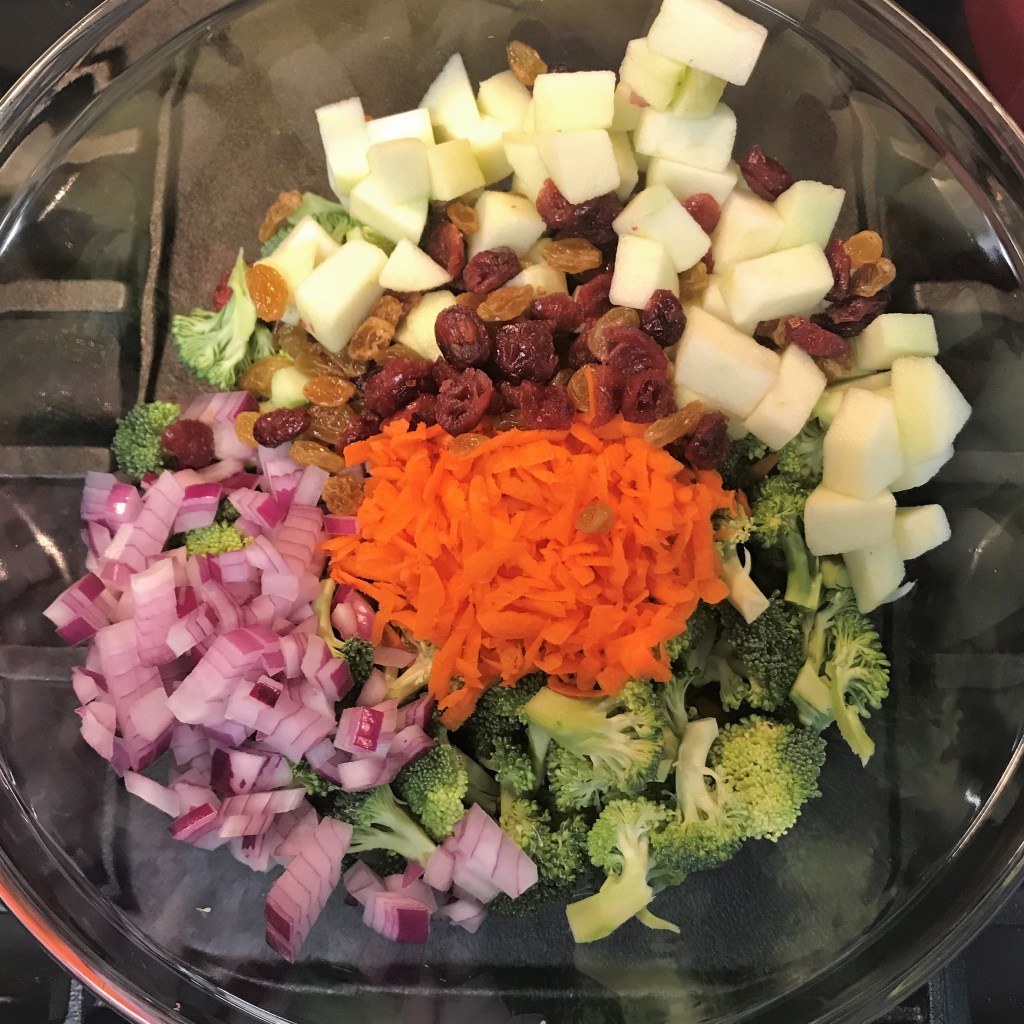
This dish is crunchy, cold, fresh and—despite the slight sweetness—still packed with nutrition. Approximately 6 servings.


Ingredients

2 broccoli crowns, washed (about 4 cups worth)

2 medium carrots, peeled and shredded

1/2 cup red onion, chopped

1/2 cup golden raisin-dried cranberry blend, soaked briefly in hot water to plump

1 granny smith apple, peeled, cored and chopped

Juice of 1/2 lemon

3 slices thin bacon, cooked crisp and crumbled (this is optional)


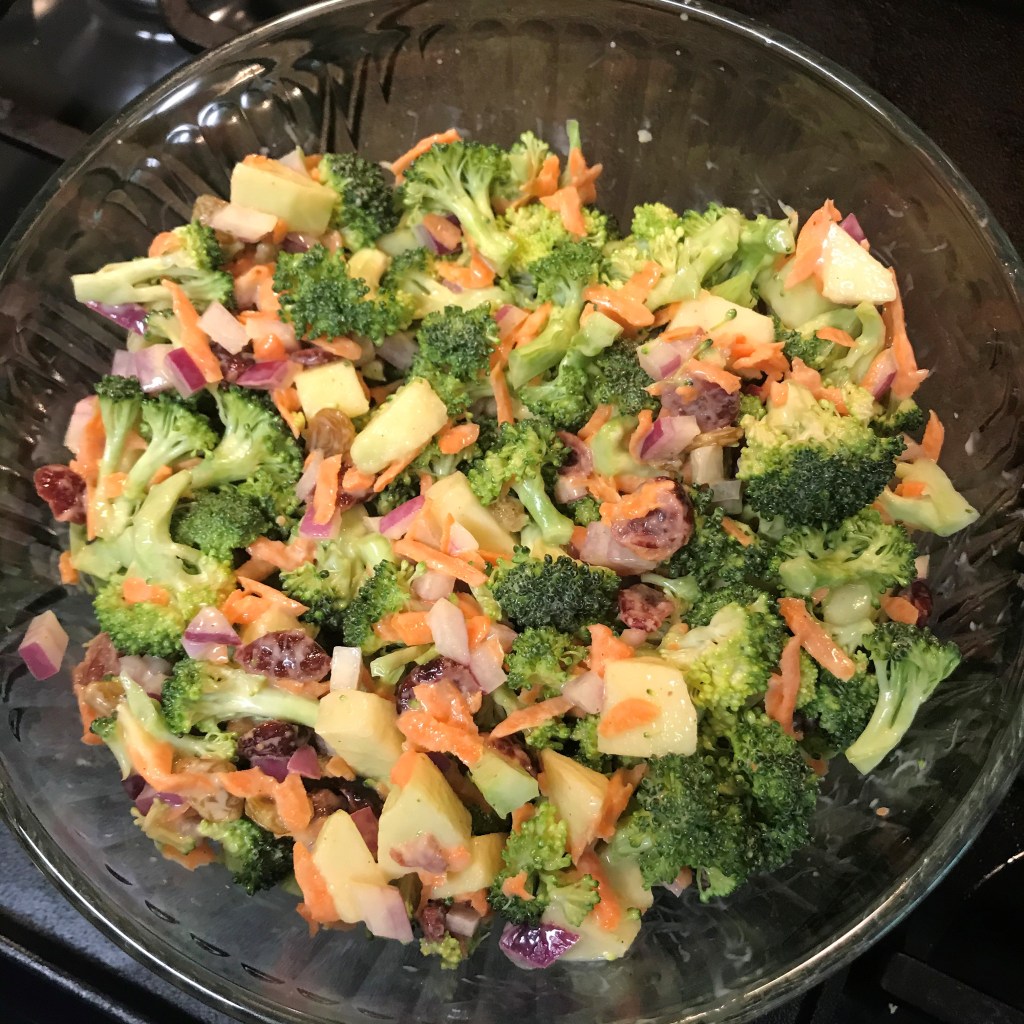
If the dressing seems familiar, you might be remembering my creamy cole slaw a few months ago. It’s pretty much the same, repurposed for a different type of salad.

This dressing works for all kinds of summer salads!

Dressing Ingredients

1/4 cup light mayo

2 Tbsp. whole milk

2 Tbsp. buttermilk

2 Tbsp. lemon white balsamic* (or white wine vinegar or lemon juice, but double the sugar)

1 Tbsp. cane sugar

1 tsp. kosher salt

1/8 tsp. white pepper

Freshly ground black pepper


Instructions

  1. Dip the broccoli crowns very briefly into gently boiling water, then shock them in ice water and drain. This helps remove any bitter taste, and also brightens the color. You can skip this step if you don’t mind the slight bitterness of broccoli.
  2. Trim leaves from broccoli crowns and cut up into small bites. You can chop the broccoli if you’re in a hurry, but I like to have cut off whole pieces rather than “crumbs” of broccoli. My general rule of thumb for bite size is this: If a piece is large enough to completely cover a quarter, it’s too big, so I’ll cut it in half.
  3. Combine broccoli pieces with onions, plumped raisins, carrot shreds. Toss the apple pieces in the lemon juice to prevent browning. Add them to the salad.
  4. Combine all dressing ingredients and whisk until smooth. Pour over salad and toss to evenly coat. Refrigerate a few hours to allow flavors to mingle.
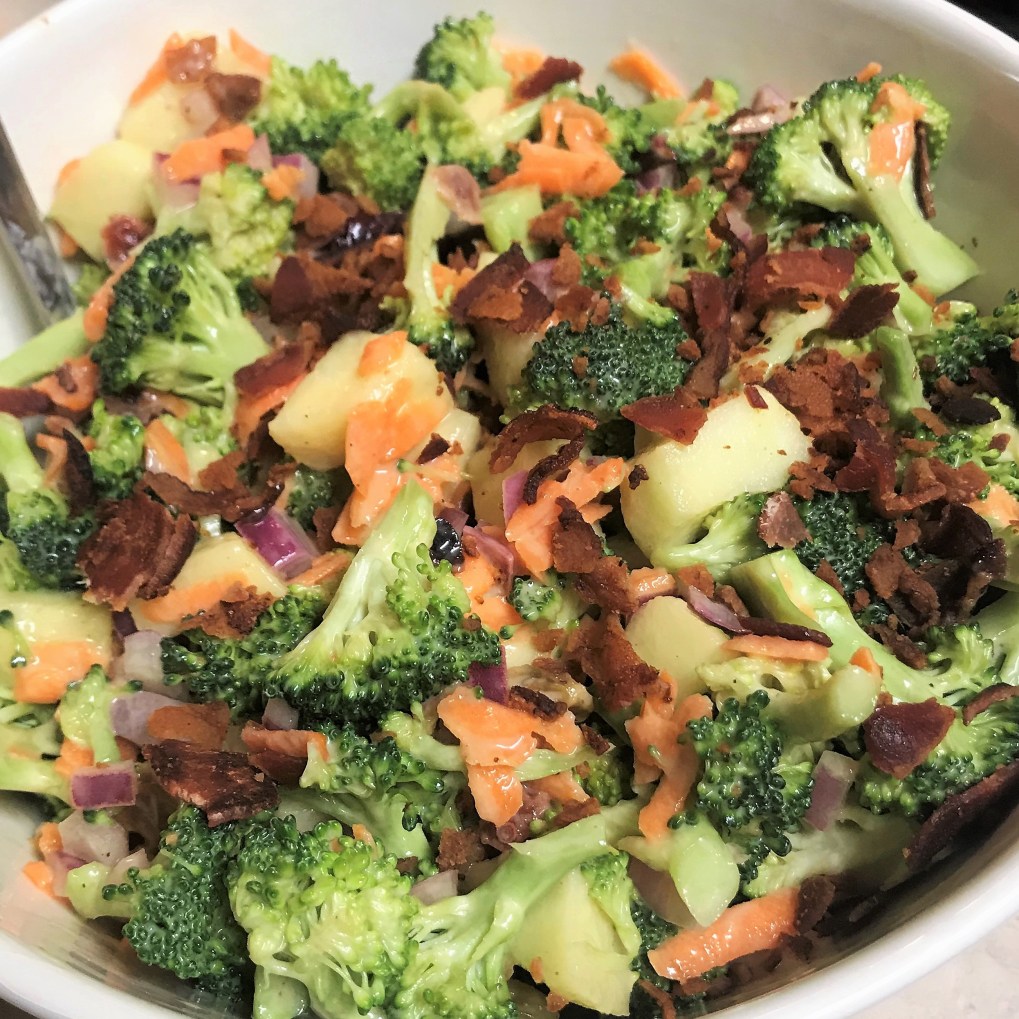
  5. Scatter crispy bacon (if using) over salad just before serving.
The crispy bacon adds a nice touch of salty and smoky on this hearty summer side.

Want to print this recipe?