Zucchini Citrus Pasta

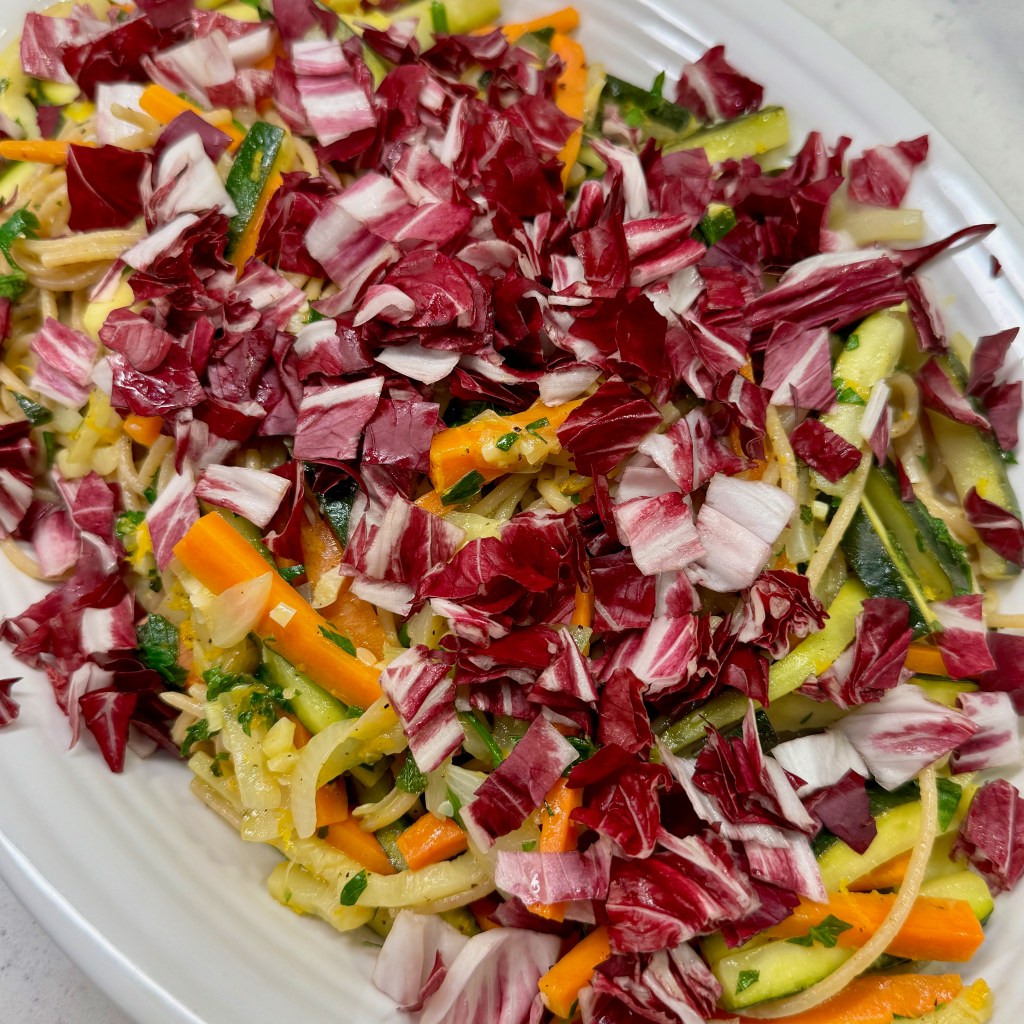
The best thing about summer, besides the sunshine, is all the light and easy food coming our way. From backyard cookouts to easy breezy friend gatherings, there’s always room for one more light and tasty side dish. This colorful platter has refreshing citrusy flavors on top of tender, sautéed zucchini and carrots, chewy-to-the-tooth pasta and a sprinkle of vibrant herbs and crunchy, slightly bitter radicchio. In other words, perfect for summer!
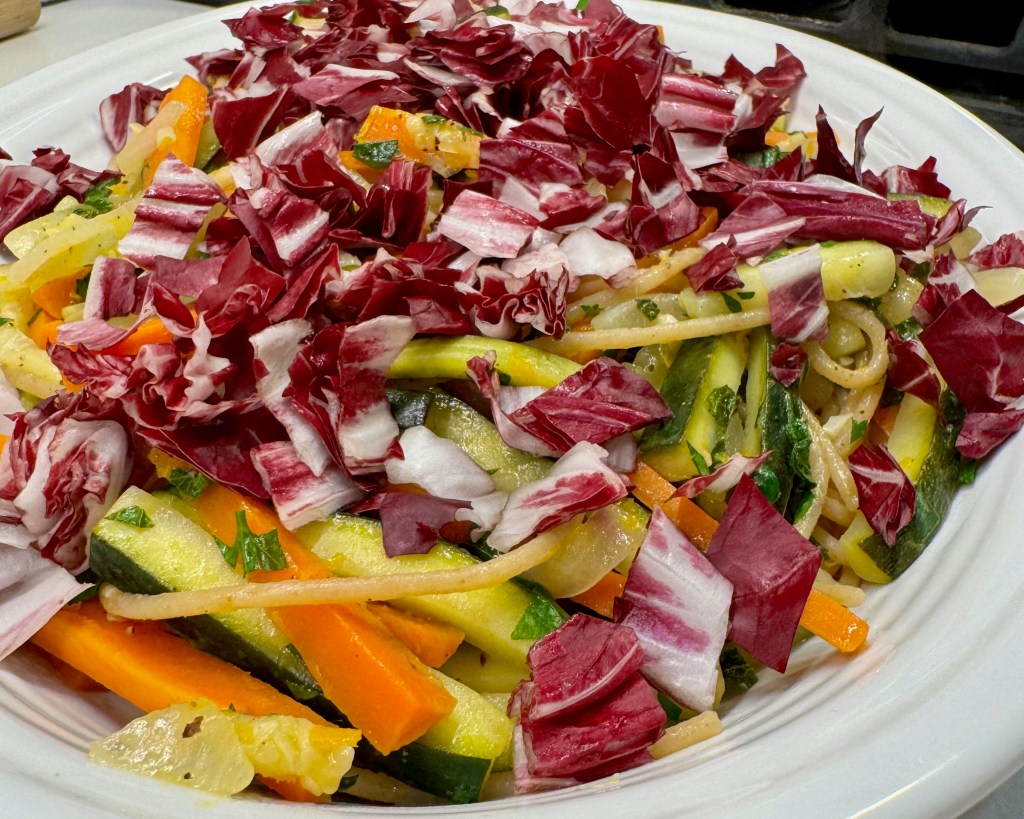
For a lighter appetite, this could be dinner on its own.

I know, of course, that we are still almost two weeks from the summer solstice when the season becomes “official,” whatever that means. But I also know that we’ve had a good number of days tipping toward 90° F, so it feels like summer is already here! Zucchini is one of my favorite summer foods, and though it may be a while before our local farmers start picking zucchini, we’ve seen plenty of it in the supermarket grown in Florida and Georgia, just a couple states away.

My introduction to this zucchini-forward recipe came about 18 years ago, when I was a faithful fan of Rachael Ray’s “30-Minute Meals” on Food Network. You do remember when the channel actually had shows that demonstrated regular people recipes, rather than just over-the-top competition shows, right? Those were the days! 😏

Rachael ruled Food Network in the 2000s (along with Emeril), and I found her casual, not-so-cheflike approach absolutely charming. Her skill was honed not in a culinary institute, but in her Nonna’s kitchen (I can relate) and in an upstate New York grocery store where she did cooking demos. Her food always looked delicious, it was made with common ingredients, and her instruction made even the most gorgeous meals seem approachable. For sure, she’s one of my culinary mentors, and I still love this recipe. Let’s make it!

Mise en place

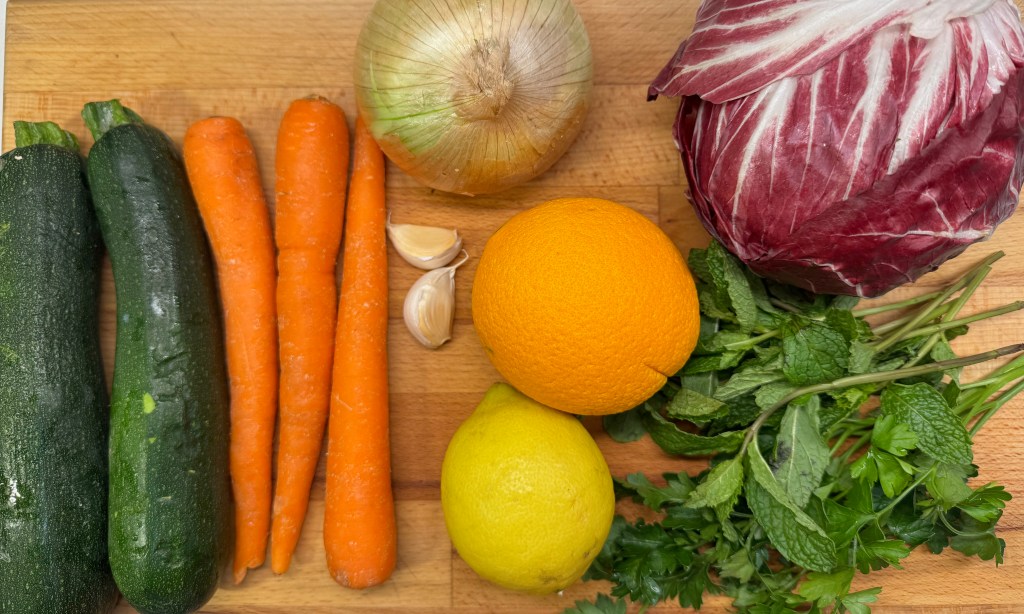
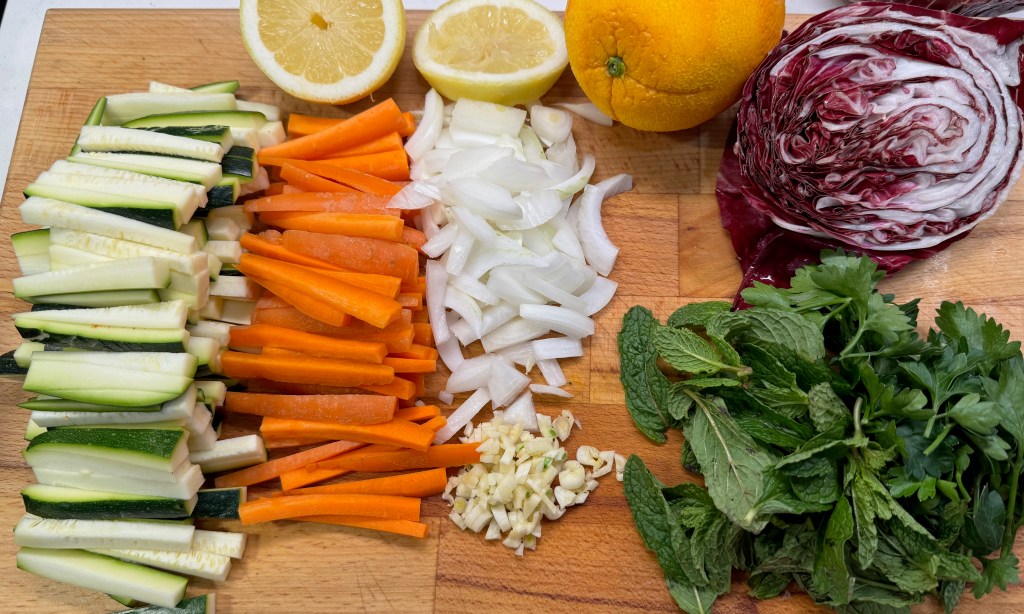
I won’t say that Rachael taught me about mise en place— a French culinary term that means loosely, “get your ducks in a row.” No, I learned that in the 1990s when I worked in a catering kitchen. But Rachael frequently emphasized the importance of organizing ingredients and tools before starting a dish and it’s good advice here, as the recipe goes pretty quickly once it starts.
Multi-tasking for the win

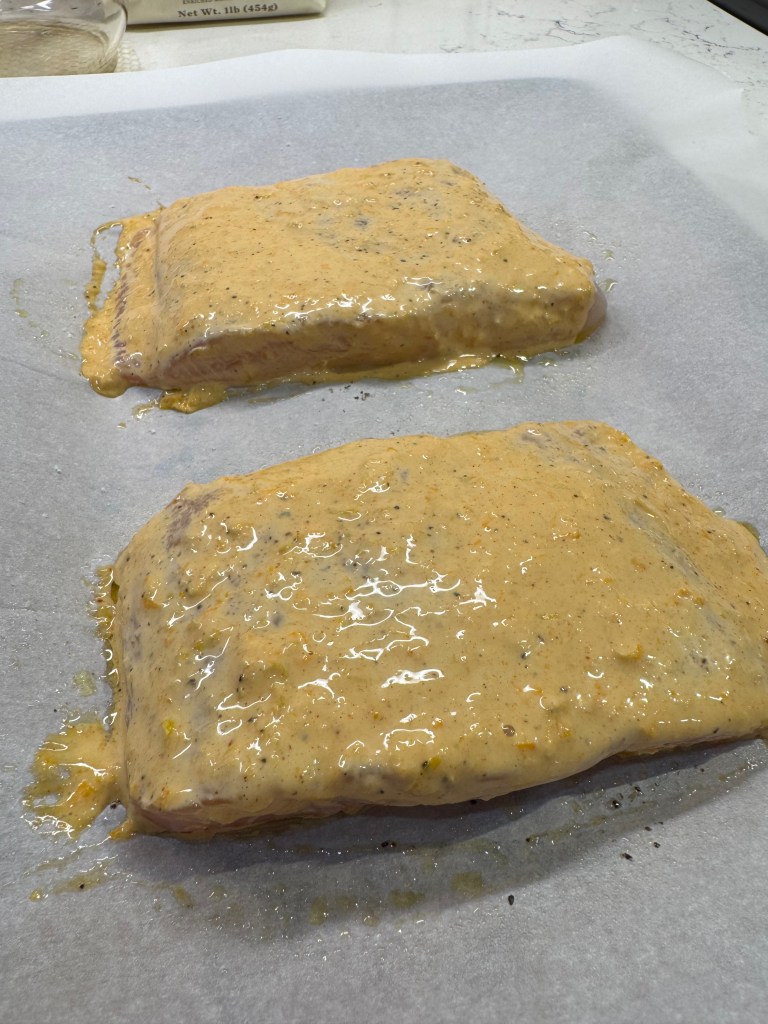
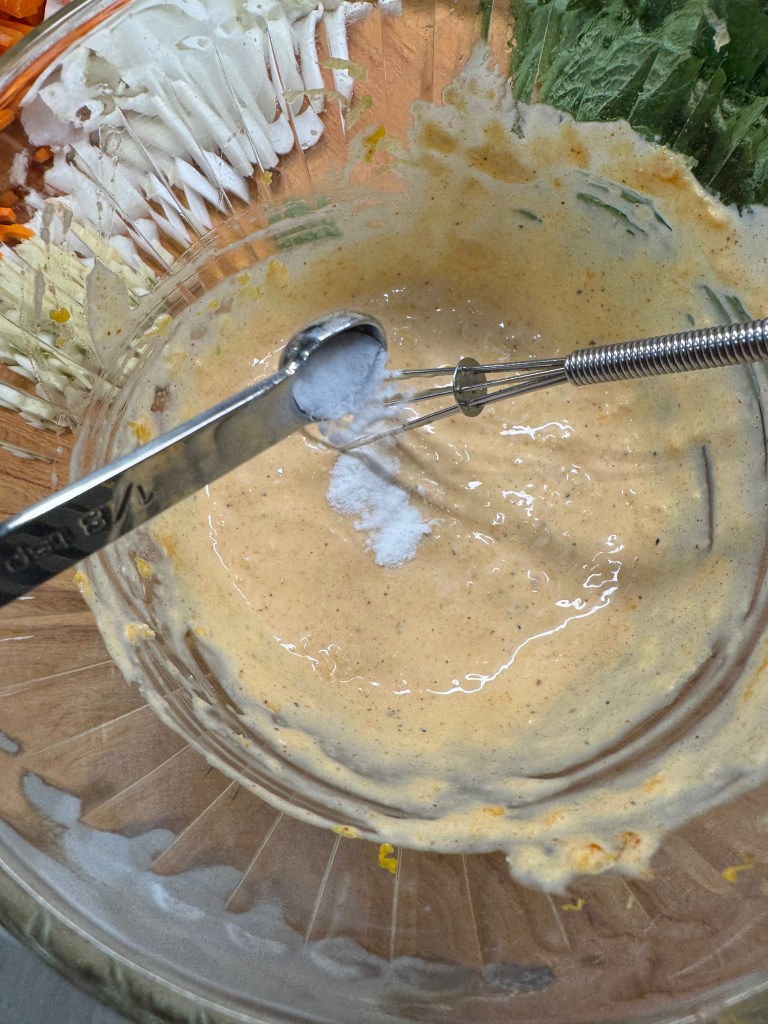
When I made this pretty dish for my husband, Les, I served it with baked halibut, which I seasoned up with the miraculous mayo marinade that I learned a couple of years ago. I mixed up the mayo with some lemon and orange zest, grated garlic and smoked paprika, and then added the pinch of baking soda that gives the marinade a turbo charge. This trick guarantees moist fish every time, so check it out when you have a chance!

This was a true “30-minute meal,” as I prepped all the veggies while I waited for the fish to marinate, and then cooked the dish while the fish was in the oven. Everything was ready at exactly the right time.

On one burner, get a pot boiling for spaghetti, which will be tossed into the dish at the end. Salt that water generously and keep half an eye on it while you work on the veggie part of the dish.

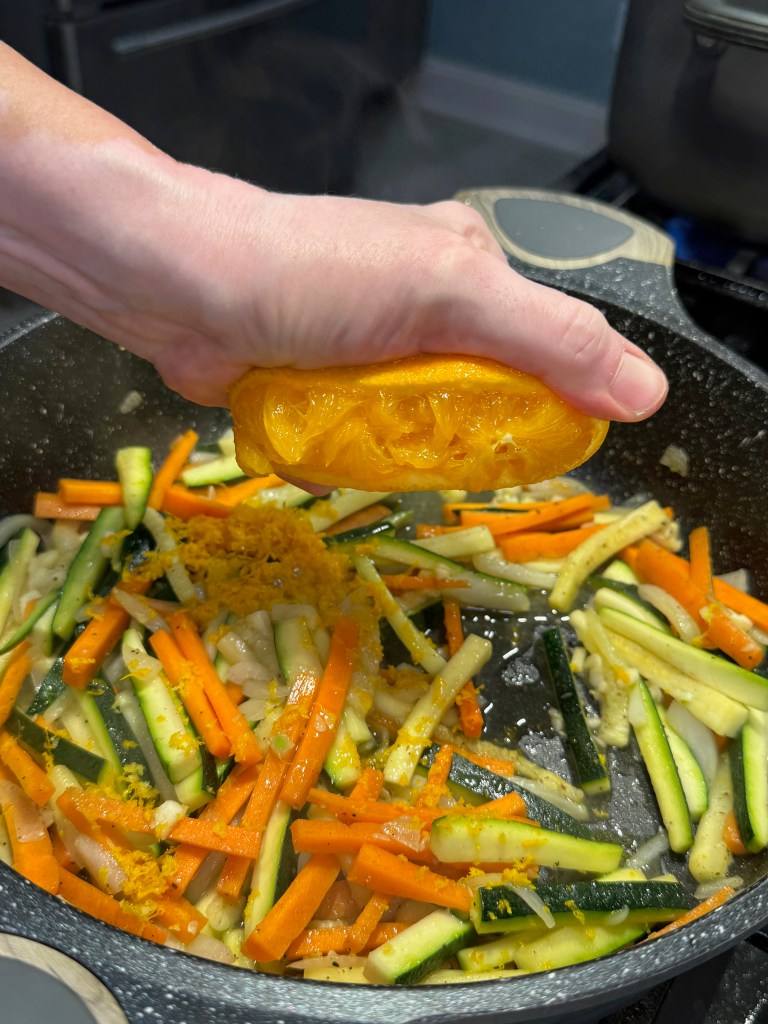
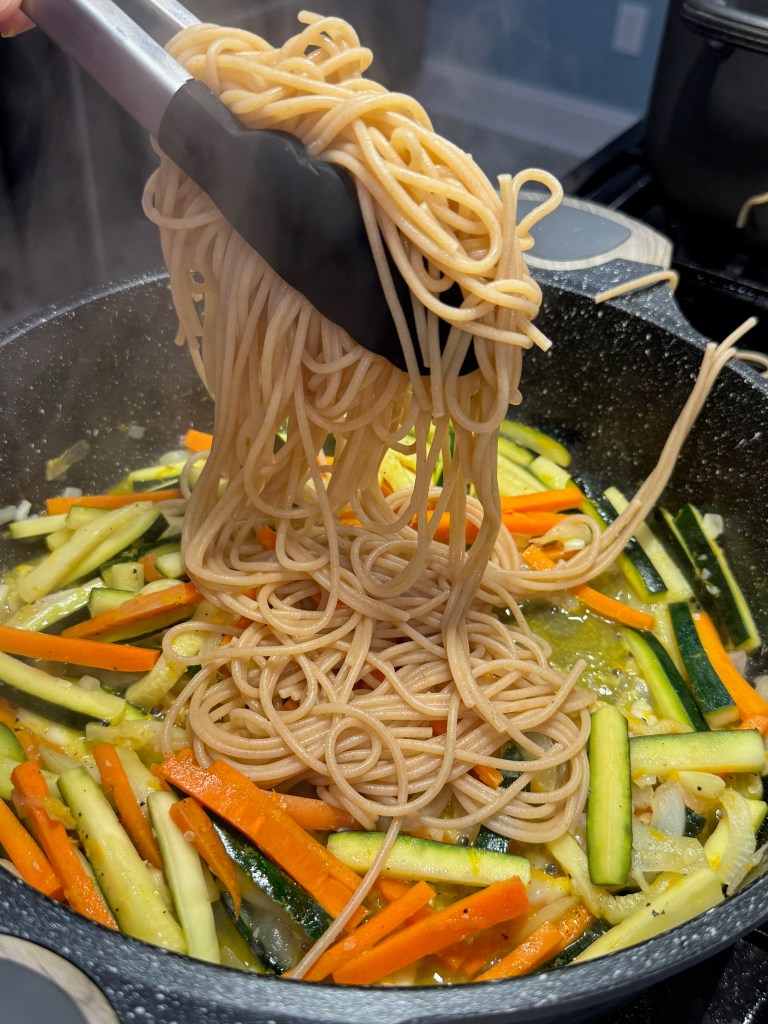
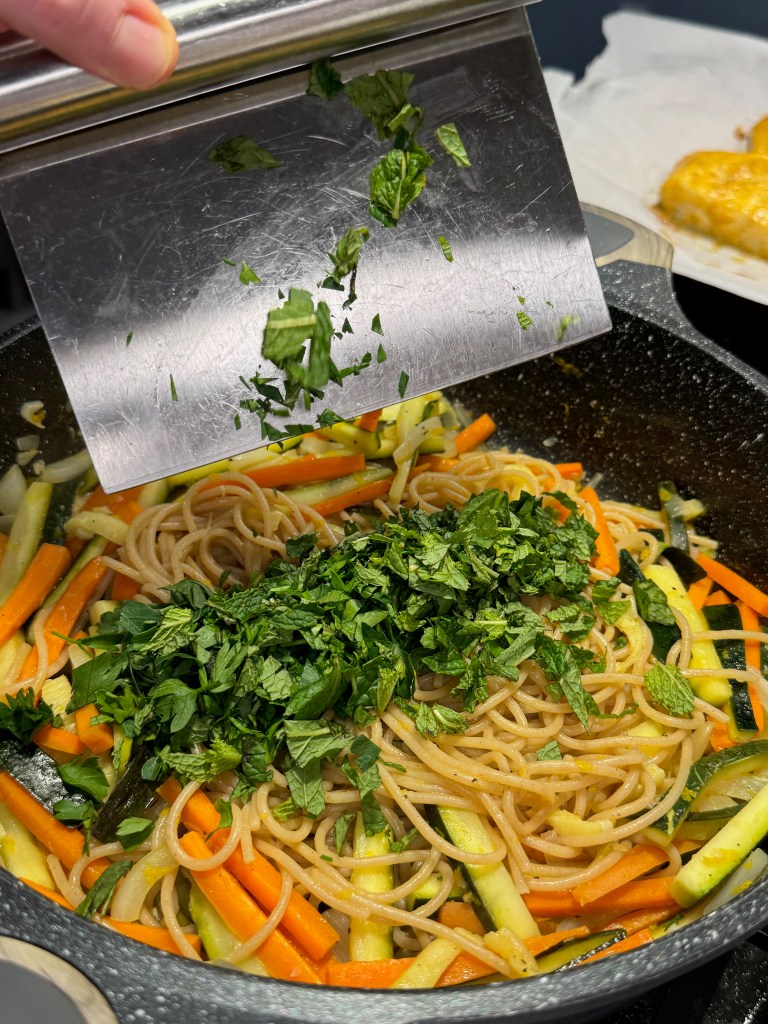
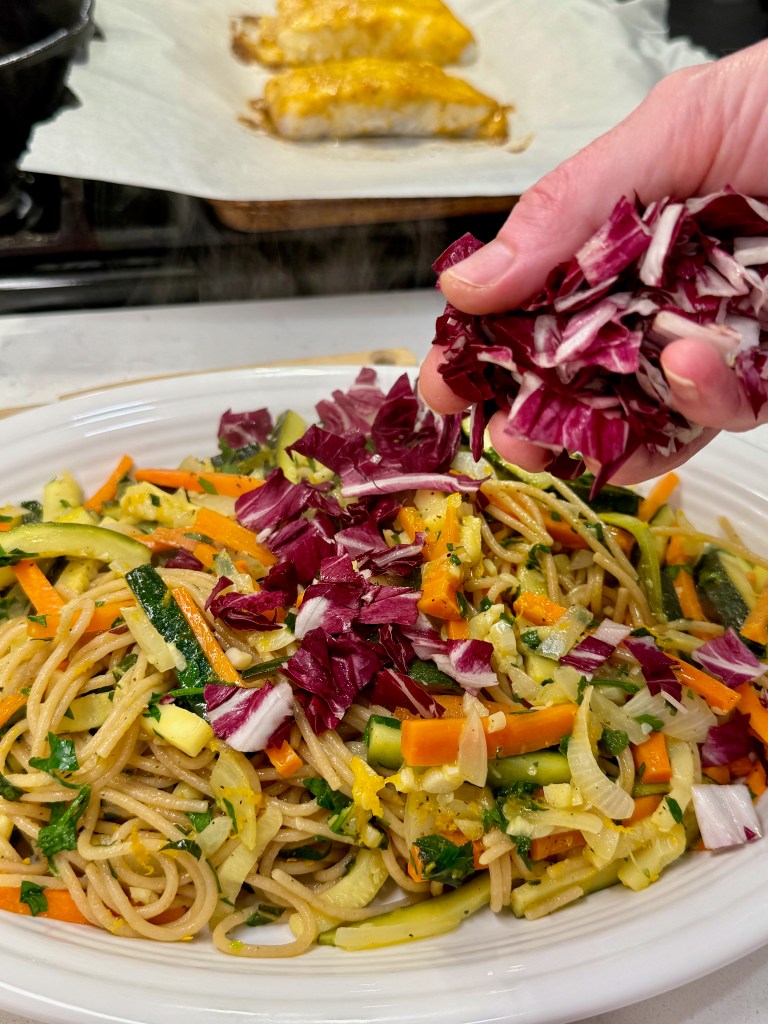
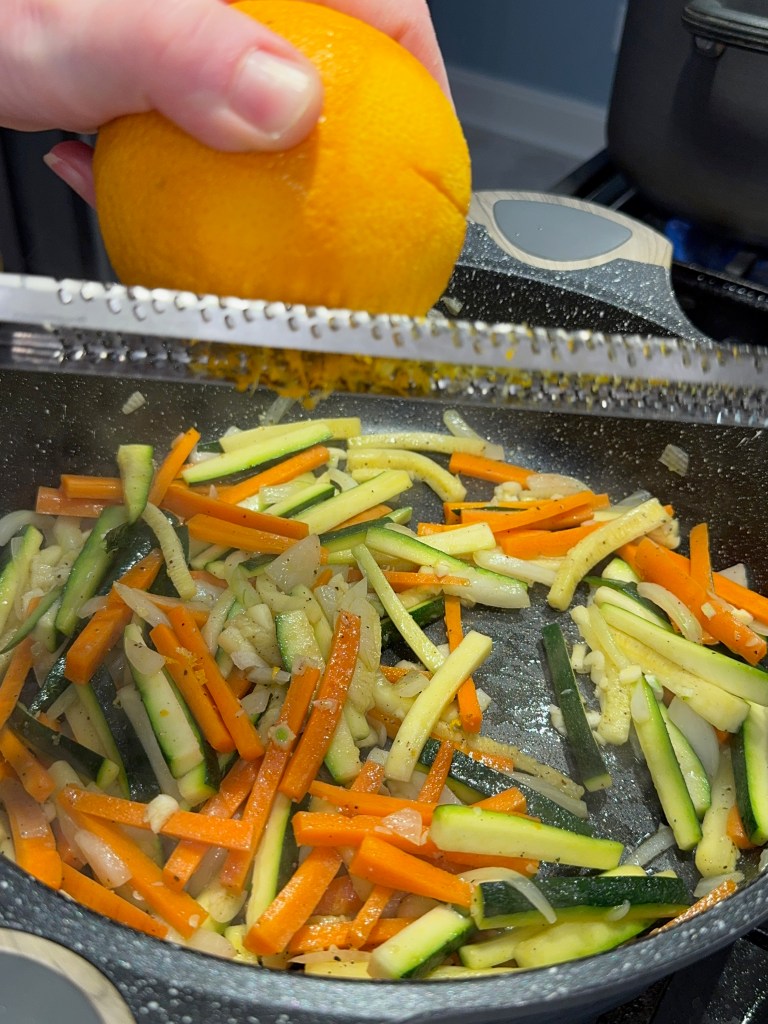
A big swirl of EVOO (as Rachael would say) goes into a large sauté pan for cooking the zucchini, carrots and onions— seasoned, of course— and then you’ll add garlic plus the juice and zest of a lemon and an orange. When the veggies are somewhat tender and the citrus juice has reduced a bit, use tongs to move the cooked spaghetti straight from the hot water to the pan, and toss the whole thing with the fresh parsley and mint. Transfer to a serving platter and scatter the chopped radicchio on top. Yes, it is as easy as it sounds and as delicious as it looks.


I went with my usual whole grain spaghetti for extra nutrition and a slightly chewier bite. As I was tossing the spaghetti with the veggies, it occurred to me that I’d never tried using another pasta shape, but I definitely will next time. Whole grain fusilli or bow ties would both work great, and might even make the dish easier to serve than with spaghetti.
Color, meet flavor. 😋

You’ll find this dish terrific served warm with a lean protein or, if your appetite is light, by itself. And it’s also tasty left over, cold from the fridge or at room temperature. That makes it ideal for taking along to a summer potluck as well as serving up on a busy weeknight. I could not find Rachael’s original recipe on the internet, but I have managed to remember the ingredients and the process over the years, and that’s a testament to the friend-next-door presentation of her cooking shows.

Do you have a favorite TV chef or cook— past or present— who inspires you to this day? Let’s talk about it in the comments!

Zucchini Citrus Pasta

  • Servings: About 6
  • Difficulty: Average
  • Print

This colorful side dish covers all the bases, with bright, fresh flavors and plenty of texture. Cutting the zucchini and carrots into matchstick-sized pieces allows them to cook quickly without turning mushy. Perfect for a busy summer weeknight or a backyard potluck.


Ingredients

  • 2 medium or 3 small zucchini, julienned
  • 2 or 3 medium carrots, julienned
  • 1/2 sweet onion, sliced into crescents
  • 2 cloves garlic, chopped
  • Extra virgin olive oil
  • Kosher salt and freshly ground black pepper
  • Zest and juice of 1 lemon
  • Zest and juice of 1 orange
  • About 1/3 package hot cooked spaghetti or favorite small pasta shape
  • Handful of fresh Italian (flat leaf) parsley, rough chopped
  • Handful of fresh mint, rough chopped
  • 1/2 small head radicchio, rough chopped

Note: This dish is extremely versatile, as it can be served hot, room temperature or chilled. I used whole wheat spaghetti, but any small pasta shape, such as fusilli or farfalle would be great. If you don’t care for mint, fresh dill would also be delicious.

Directions

  1. Place a large, deep sauté pan over medium heat and swirl EVOO around twice (about 2 tablespoons). Add zucchini, carrots and onions to the pan, and season with salt and pepper. Toss and cook a few minutes until the onions are translucent and the carrots begin to soften.
  2. Add garlic, citrus zest and juices, and reduce heat to a simmer so that the liquid doesn’t evaporate too quickly.
  3. Add hot pasta straight to the pan, along with any cooking water that’s clinging to it, as the starchy water will help the citrus sauce cling. Toss to combine.
  4. Add chopped fresh parsley and mint. Toss lightly and then transfer the mixture to a serving platter. Scatter radicchio on top and serve immediately.


Carrot Cake Waffles (with maple-cream cheese icing)

“Hey, what do you say we have our Easter breakfast outside on our new patio?” 

This was a brilliant suggestion from my husband this past Sunday, and right on the heels of his first suggestion that weekend— applying carrot cake flavors to homemade waffles! Just two more reasons to adore this man I married. And I can’t think of a more appropriate way to celebrate the fourth anniversary of Comfort du Jour than a recipe that twists up a classic into something unique, delicious and unexpected.

Who doesn’t want dessert for breakfast?!

Life has been very busy lately, and I’ve lamented not having as much time as I’d like to engage on my blog. I’ve been cooking, don’t get me wrong, but I’ve lacked inspiration, passion and time. What I needed most was a recipe that I was really excited about. This is the one, and it is exactly the kind of thing I had in mind when I launched my little blog on this date in 2020.

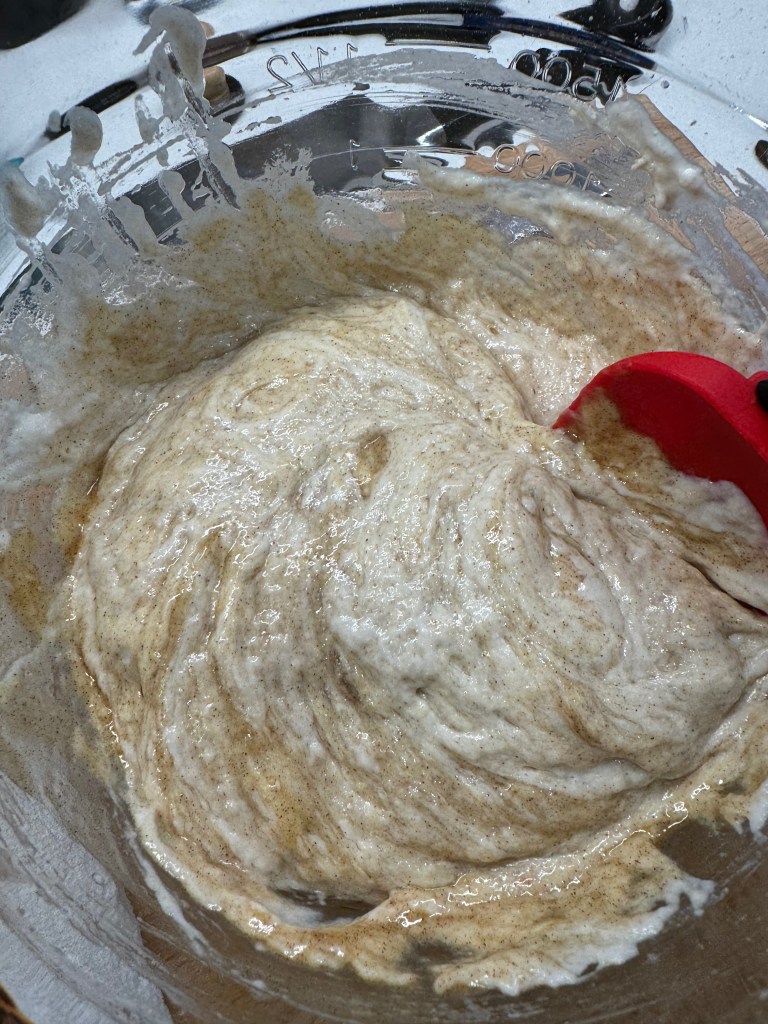
I started waffles as I always do— with half of my favorite King Arthur Baking Company’s “Classic Sourdough Pancakes or Waffles” recipe. It begins the night before with sourdough discard, flour, sugar and buttermilk— stirred together and left on the counter overnight to work its fermentation magic.

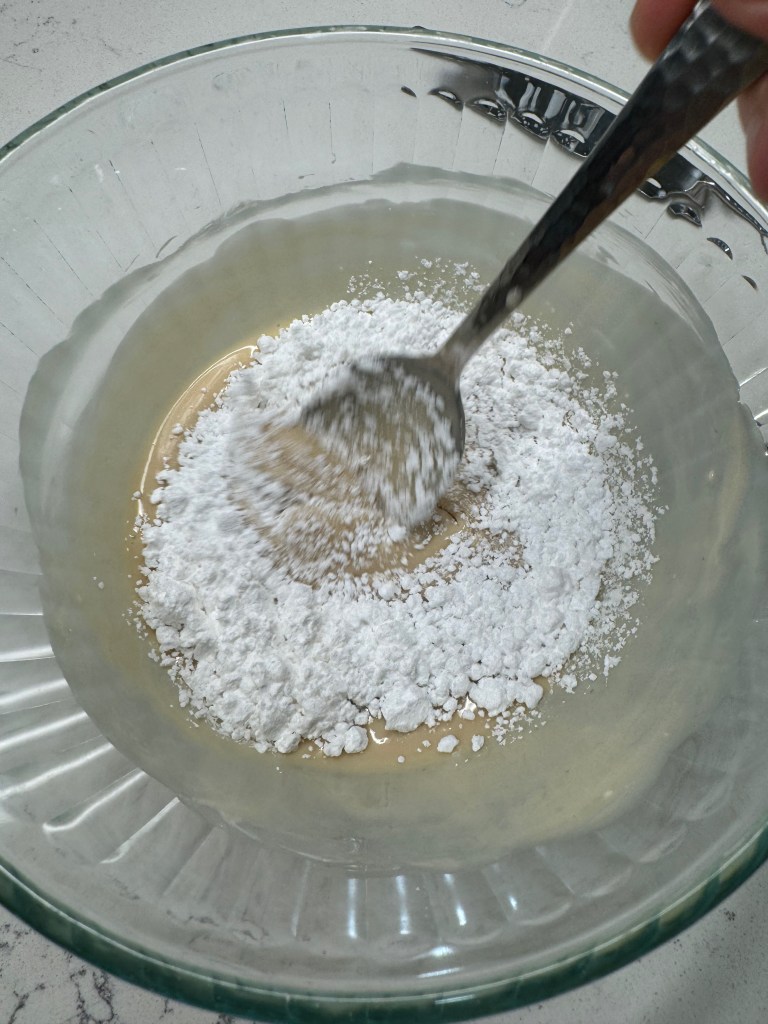
Easter morning, the first order of business was coffee, my favorite dark roast blend, 50/50 with decaf, French-pressed. Then, I whipped up a little cream cheese “icing” for my waffles. Maple cream, which is essentially just whipped maple syrup, was blended together with low-fat cream cheese. A touch more syrup (maple, infused with vanilla bean) and just enough powdered sugar to balance the tang of the cream cheese. Oh my goodness, I could’ve eaten the entire bowl with just a spoon!


Then, to snazz up my waffle batter, which was nice and bubbly from its overnight nap, I added every flavor you’d expect in a carrot cake. That means plenty of warm spices (ground cinnamon and freshly grated ginger), an entire shredded carrot (patted dry after grating on the large holes of my box grater), and even a small handful of plump raisins (because I happen to love them in carrot cake, so why not)? 


Adding the carrots put a healthy touch on this recipe, and I played that up with two more adjustments: blood orange-fused olive oil stood in for the melted butter that my inspiration recipe suggested, and I went halvsies on the flour, subbing in 50% white whole wheat for all-purpose. An egg, a little salt and baking soda to counter the acidity of the buttermilk, and this was taking shape very nicely!


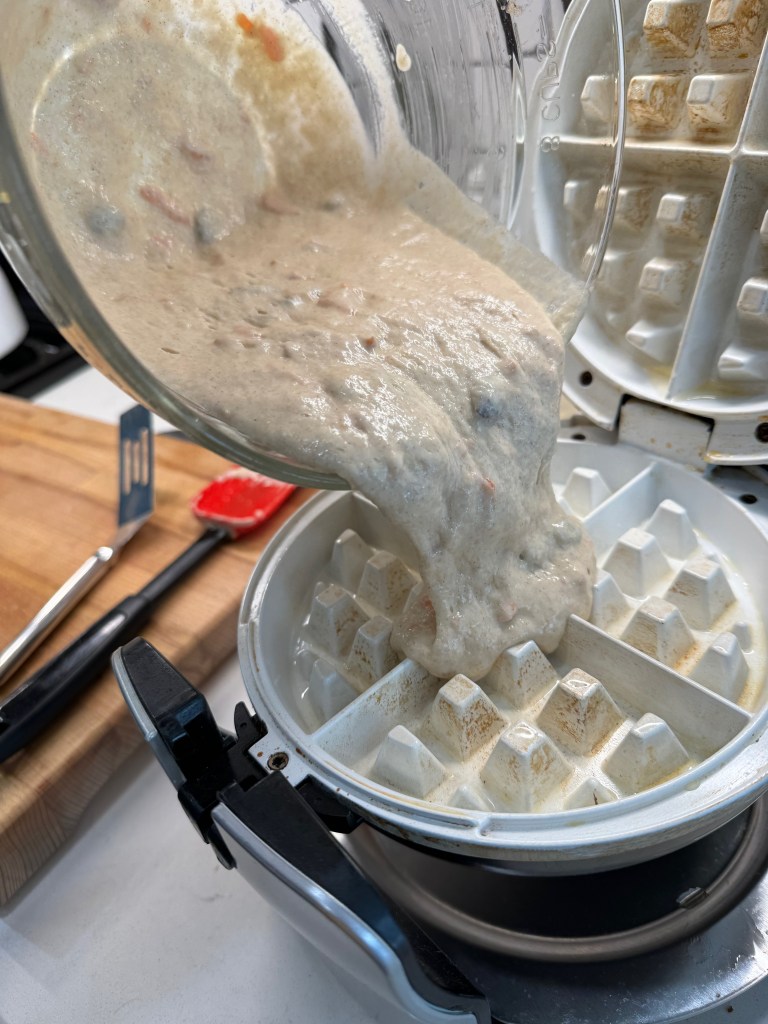
The Belgian waffle maker seemed right for these— it holds more batter so the waffles would be higher and larger— but a standard square or round iron would work just fine. I like to put a touch of oil on the hot plates right before adding the batter. This ensures a crispy exterior to contrast with the soft and fluffy insides.


Finally, the moment of truth. Would these taste like carrot cake, as we imagined? They absolutely did! Not as sweet, of course, and that was intentional. But a drizzle of that maple-y delicious cream cheese icing handled the sweet part, and a little sprinkle of pecan chips made this the perfect Easter breakfast— especially on a gorgeous Spring morning, on our new patio with the love of my life. 

Carrot Cake Waffles

  • Servings: 2 large Belgian waffles
  • Difficulty: Average
  • Print

A maple-kissed cream cheese icing really dressed up these waffles, which had all the flavor of carrot cake with a fraction of the guilt.


Ingredients

  • 1/2 cup sourdough discard
  • 1 cup real cultured buttermilk (mine was low-fat, but nonfat or whole is fine)
  • 1/2 cup all-purpose flour
  • 1/2 cup white whole wheat flour (or whole wheat pastry flour)
  • 1 Tbsp. organic cane sugar

The remaining waffle ingredients are added in the morning, and I recommend having your waffle iron pre-heated before you complete the waffle batter.

Ingredients

  • 1 large egg, beaten
  • 2 Tbsp. orange-fused EVOO (see notes)
  • 3/8 tsp. salt (1/4 + 1/8)
  • 1/2 tsp. baking soda
  • 1/2 tsp ground cinnamon
  • 1/2 tsp. freshly grated ginger (or 1/4 tsp. ground ginger)
  • 1 medium carrot, grated on large holes of box grater, blotted dry with paper towels
  • 2 Tbsp. raisins (if dry, rehydrated briefly with boiling water and then blot dry)
  • Expeller-pressed canola oil, for the waffle iron
  • Toasted pecan chips, for serving

For the Maple-Cream Cheese icing, I recommend making this first, so that it is ready when your waffles are and you have time to adjust the sweetness to your liking. If you end up with extra, do what we did and just eat it with a spoon.

Ingredients

  • About 3 oz. Neufchâtel (or regular) cream cheese, softened at room temperature
  • About 2 Tbsp. maple cream
  • About 2 Tbsp. maple syrup
  • About 3 Tbsp. powdered sugar
  • 1 tsp. real vanilla extract

Directions

  1. The night before, combine sourdough starter, buttermilk, flours and sugar. Use a large bowl, as the mixture will bubble up overnight. Cover and rest at room temperature for 12 hours.
  2. Make the maple-cream cheese icing by stirring together the Neufchâtel, maple cream, syrup, and vanilla. Stir in enough powdered sugar to achieve the drizzling consistency and sweetness you desire.
  3. Preheat the waffle iron according to manufacturer’s instructions. In a glass measuring cup, combine the egg, oil, baking soda, salt and cinnamon. Add to the overnight sourdough mixture and fold gently to combine (you will see some chemical reaction fairly quickly). Fold in the carrots, ginger and raisins.
  4. Brush or drizzle oil on the hot waffle plates and add batter. Cook according to manufacturer’s instructions until waffles are done through, crispy and golden.
  5. Spoon maple-cream cheese icing over the warm waffles and sprinkle with toasted pecan chips.


Copper Pennies

As much as I love experimenting in the kitchen, there are times that I crave a classic. These copper pennies were a dish that I learned to make during my short stint at A Pinch of Thyme, an upscale catering business in Greensboro, North Carolina, during the 1990s. I suppose if they were to have given me a title, I might have been a “food prep specialist” or some such thing, but I basically just did a whole lot of chopping of fresh vegetables for crudité, salads and other recipes.

One of the most important lessons I learned in the “Pinch kitchen,” as we called it, was that simple dishes tend to be everyone’s favorites. You didn’t have to make grand gestures to impress people with food—it just had to hit their palates with balance and sometimes a bit of nostalgia. No wonder these copper pennies were popular with our clients for catered lunches—they cover both!

Copper pennies started appearing on American tables in the 1940s or so (the history on this is tough to track down), and most vintage cookbooks I’ve seen call for Campbell’s condensed tomato soup in the marinade. That’s the nostalgia part, I suppose, but we were having none of that in the Pinch kitchen. Our clients expected the food to be prepared from scratch, and that’s how I’ve made them here as well. In the spirit of full disclosure, the recipe I’m sharing today did not come from Pinch, but from a Junior League cookbook that was gifted to me many years earlier.

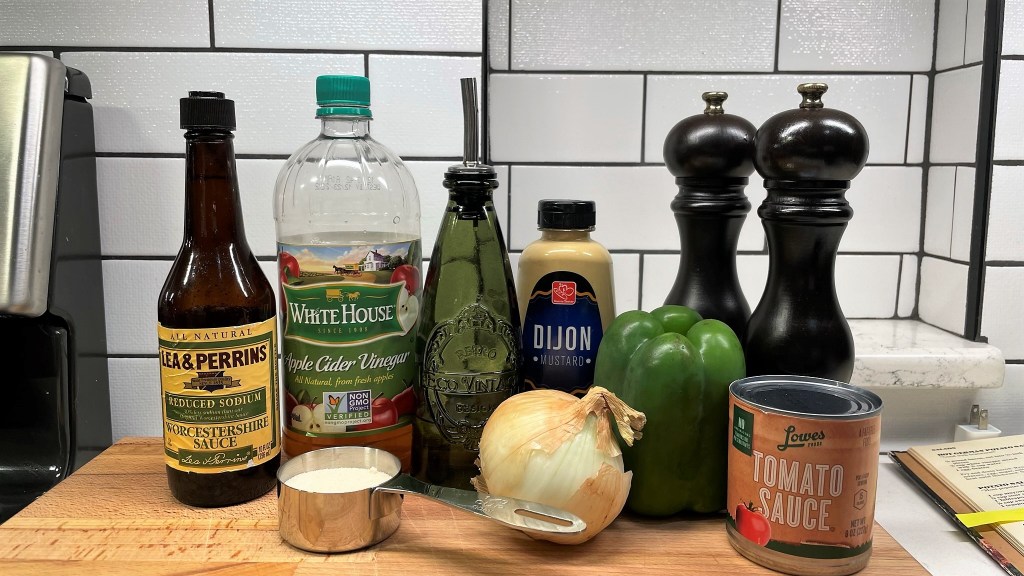
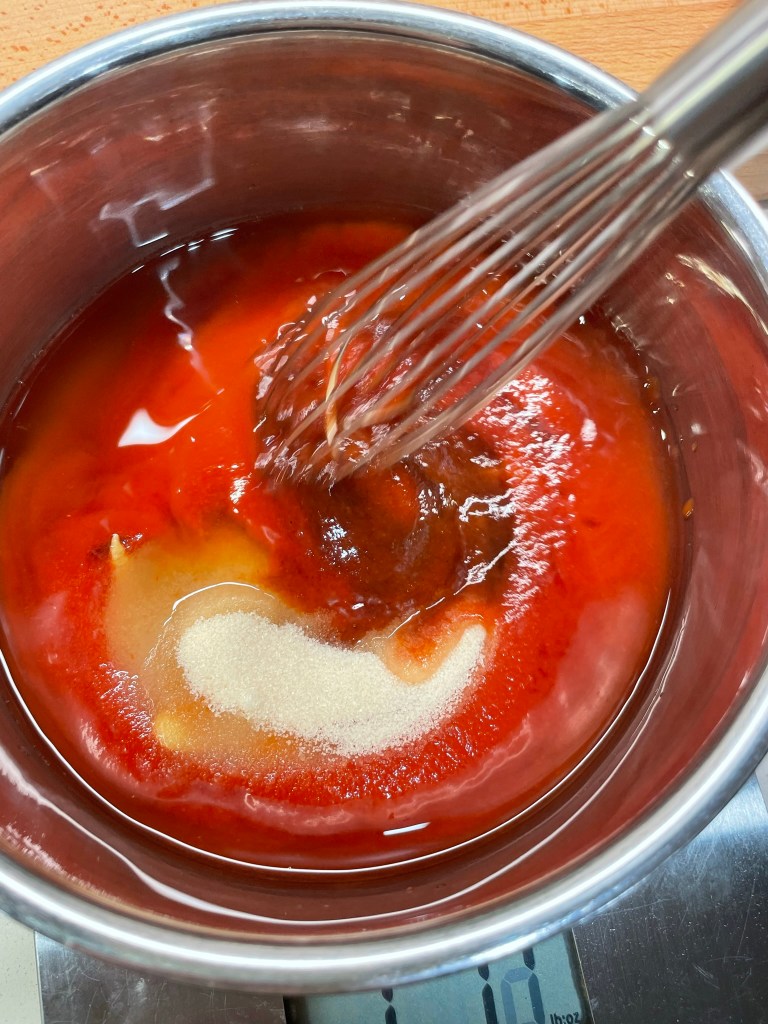
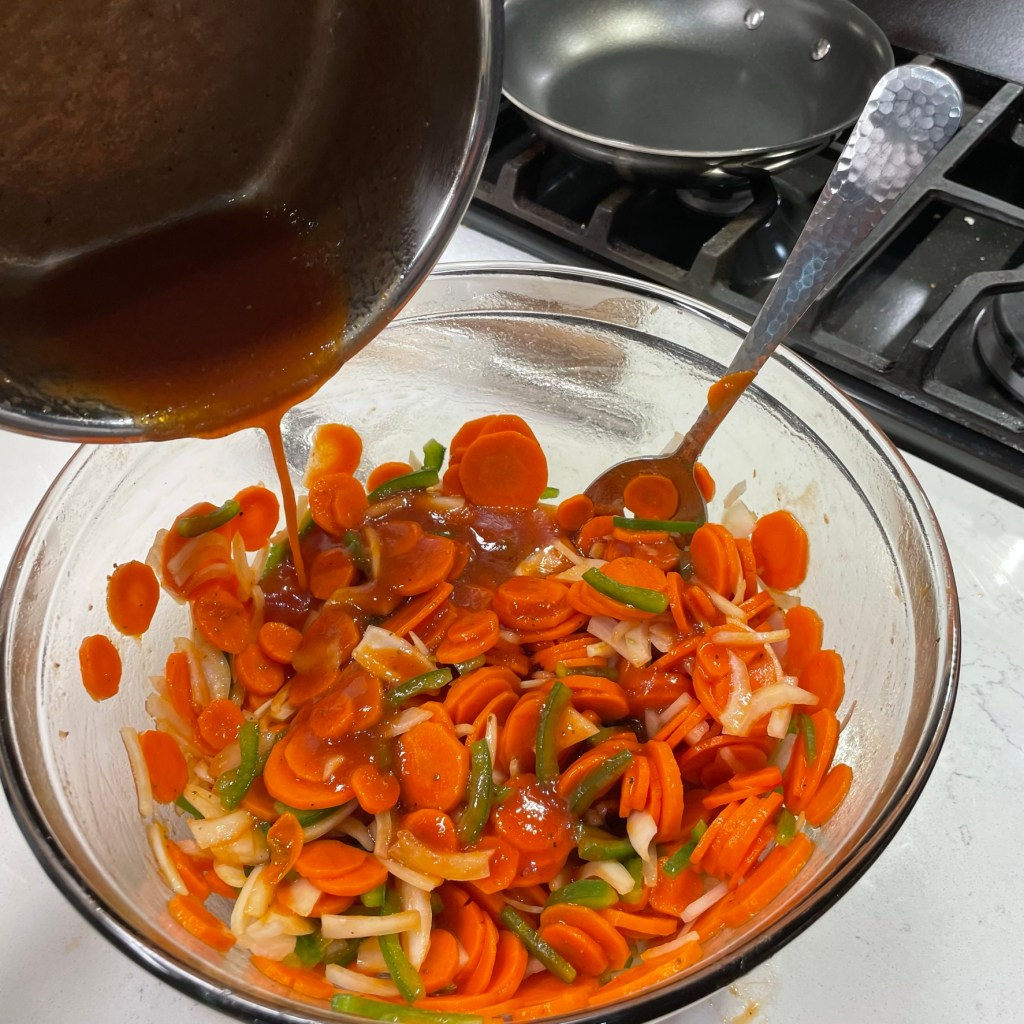
When I ran across the recipe, my mouth instantly began to water, as I recalled the tasty and vibrant copper pennies I had made so many years ago. The recipe builds on a small can of tomato sauce, and I tweaked it a bit for my own taste, cooking the marinade to deepen its flavor as well as cook off the tinny taste from the can. Here’s a glimpse of the rest of the ingredients. See? simple.


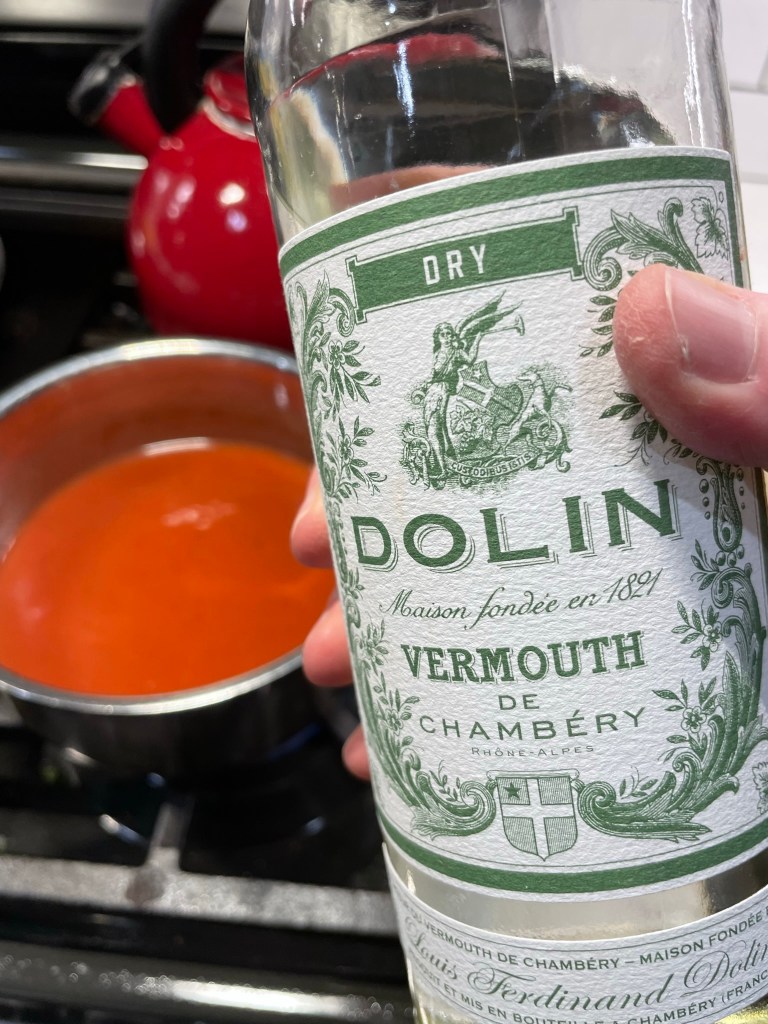
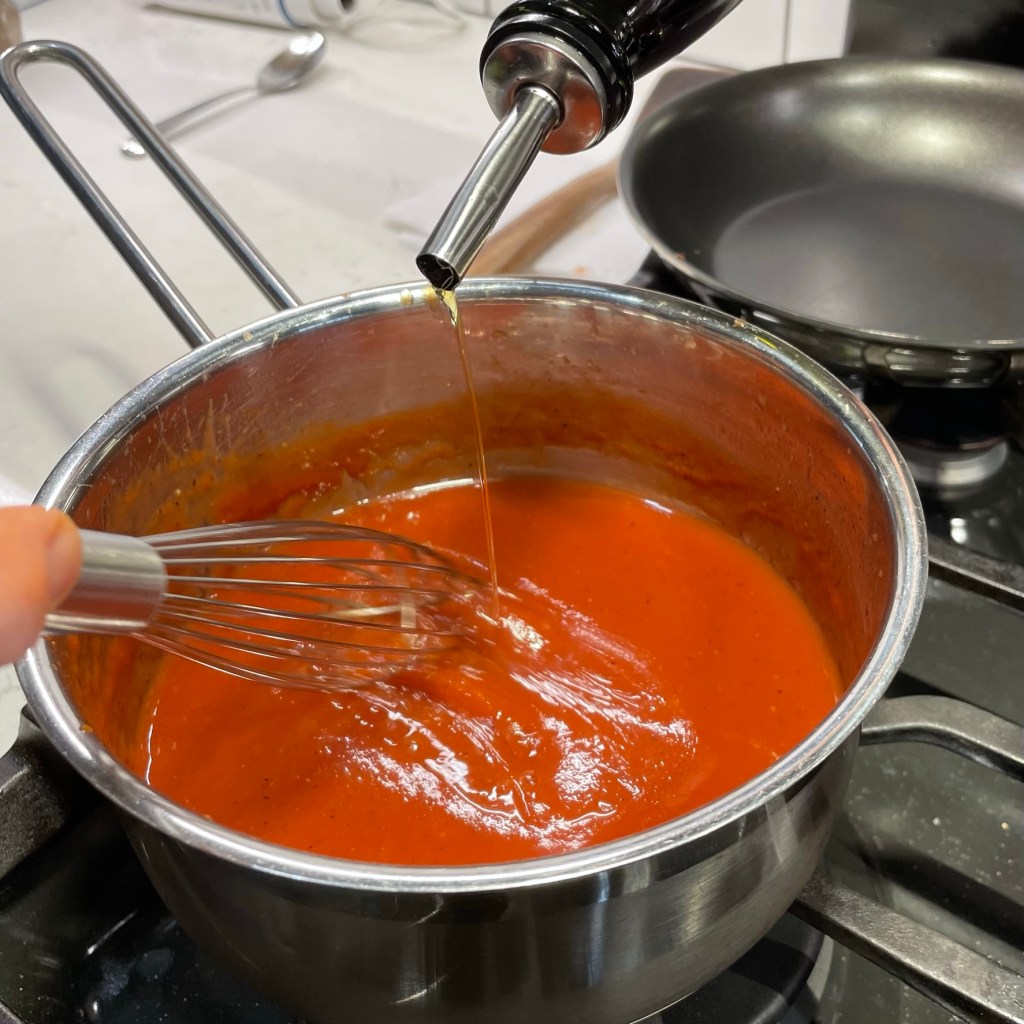
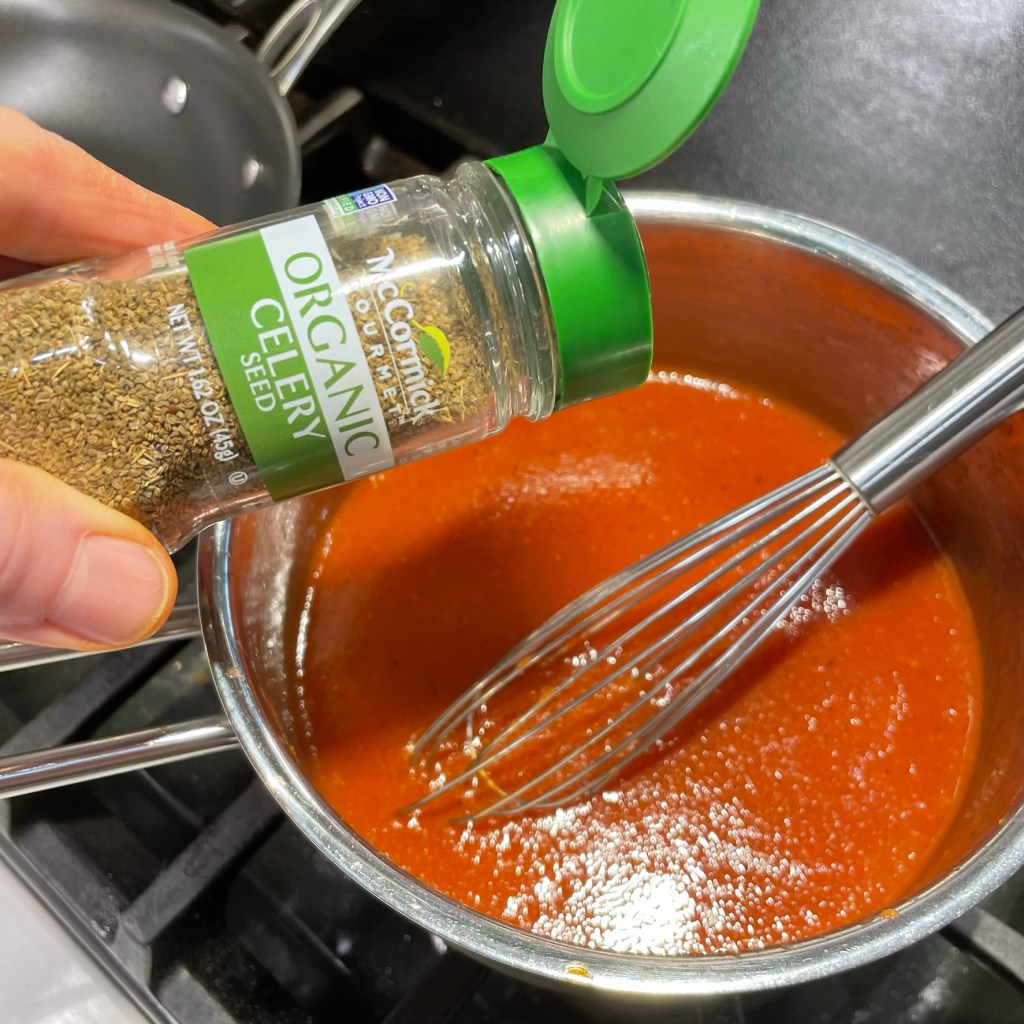
The onions and green bell pepper are standard, and I backed off the sugar in the Junior League recipe and added a splash of dry vermouth to elevate the marinade flavors. Dry white wine would be a perfect substitute, but I never have a bottle of that open and, after reaching for vermouth in its place one day, I found the complexity so appealing that I never looked back. If you’re a fellow martini lover, with a bottle of dry vermouth in the fridge, give it a try in a few recipes and let me know what you think about it in place of wine. I whisked in olive oil when the marinade was nearly finished, and sprinkled in celery seed for an herbal note.


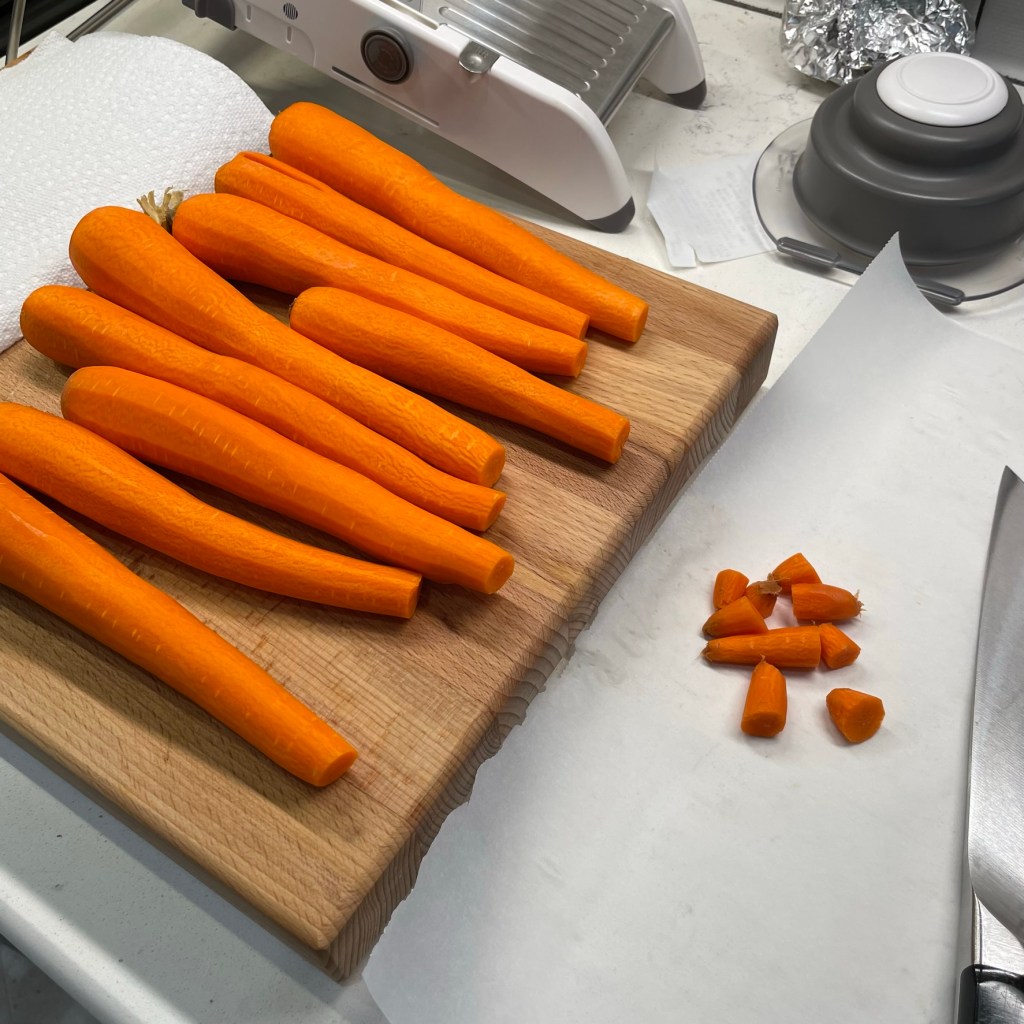
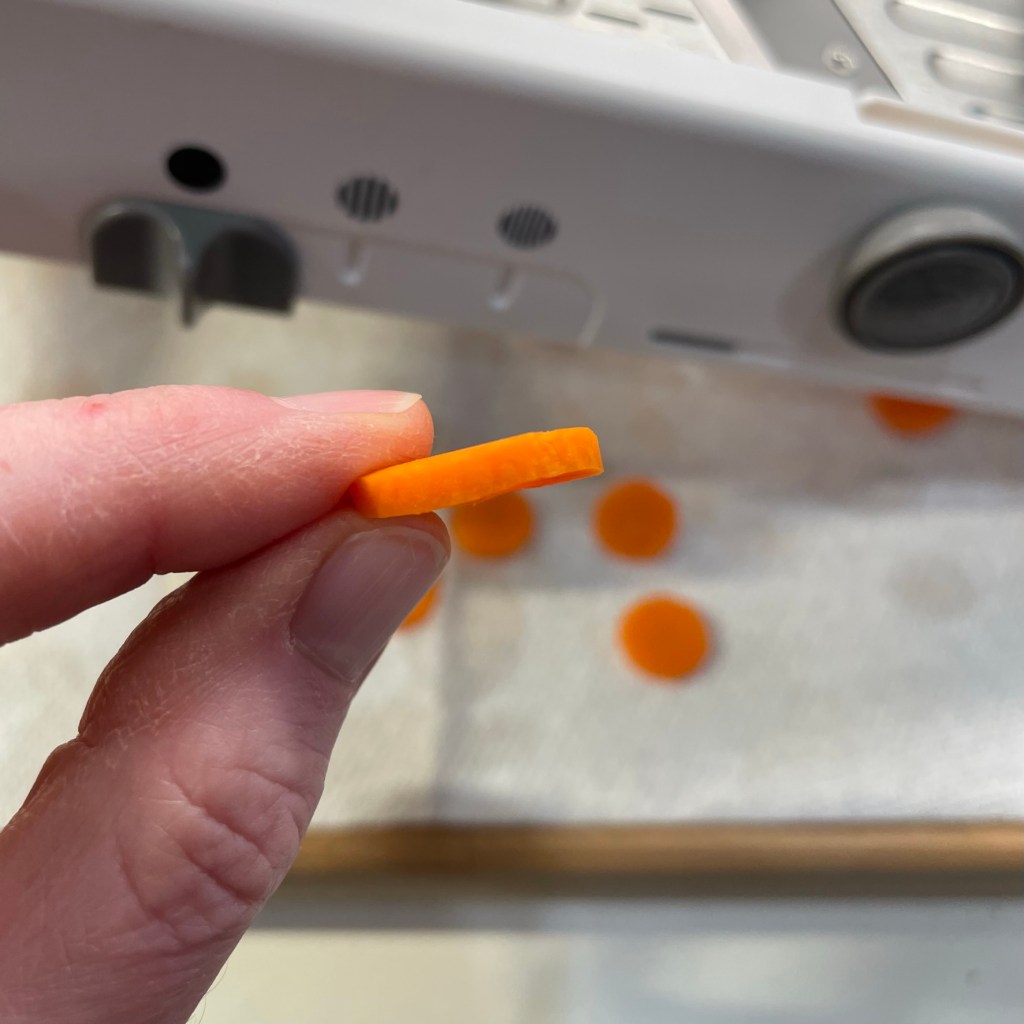
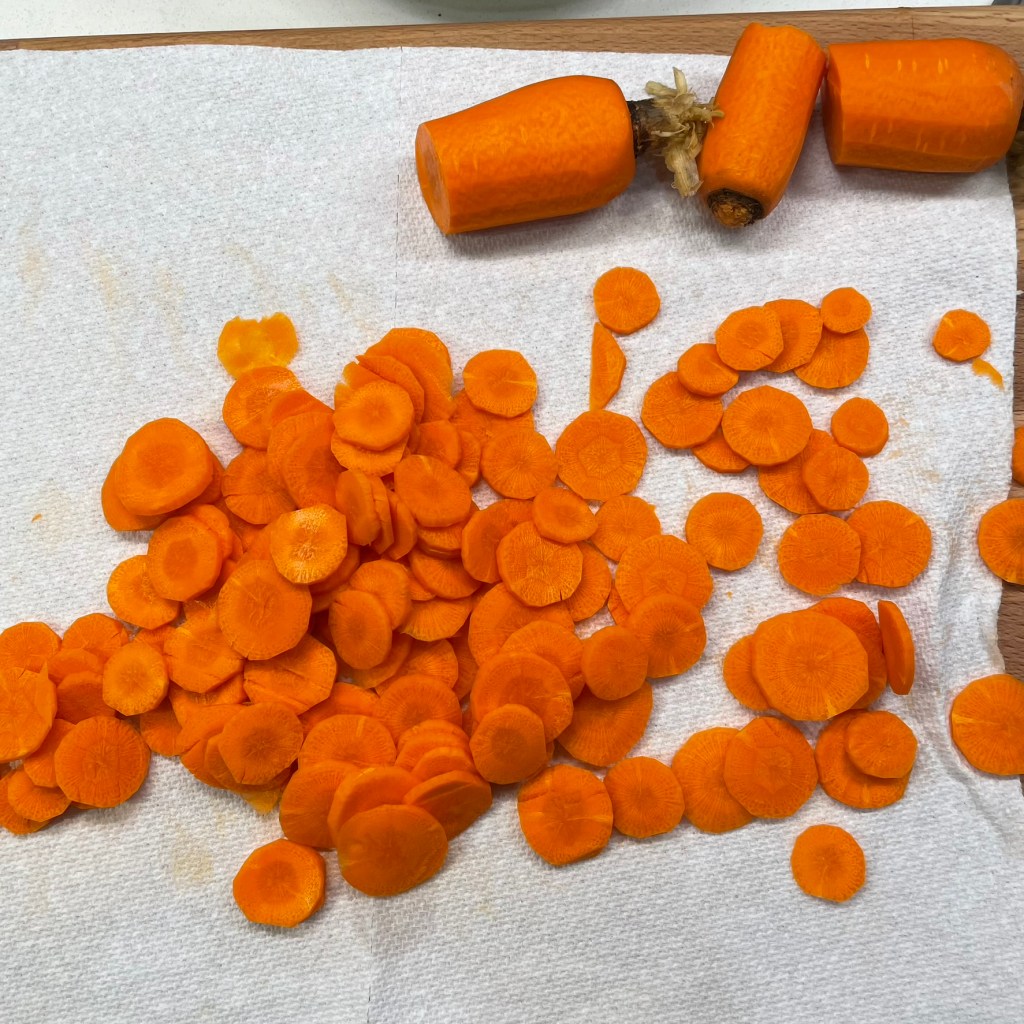
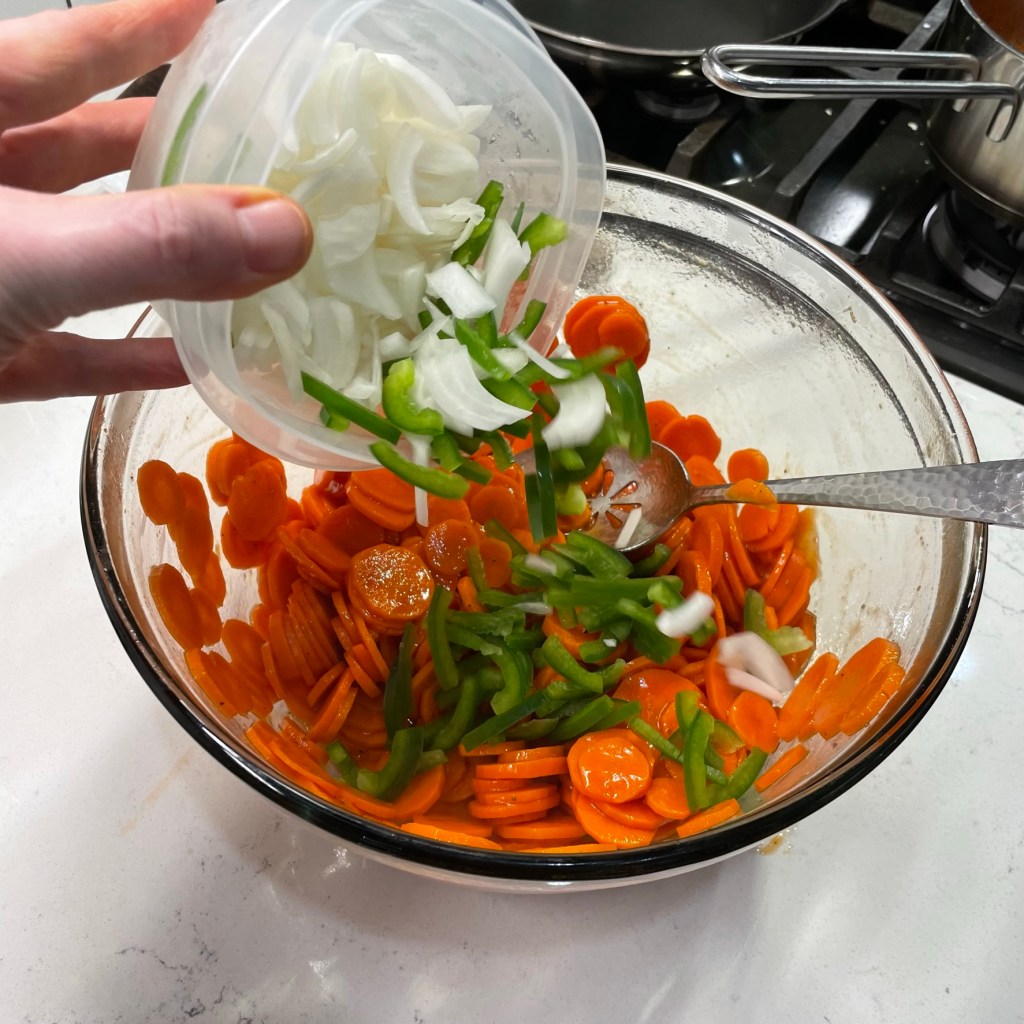
While the sauce simmered, I got to work slicing my carrots, and I purposely selected larger, fatter carrots for this recipe. My mandoline came in handy for this, as I was able to get perfectly round, even slices, but you must be careful using a mandoline. You see the large carrot “heels” I had leftover after slicing? That was because I stopped when my hands were getting too close to the blade. If you have never used a mandoline before, may I suggest you circle back to my post from two years ago, A Quick Flick of the Wrist, to see firsthand how dangerous it can be to ignore the safety features of this versatile kitchen gadget. If you’re more comfortable slicing by hand, that’s fine, too.


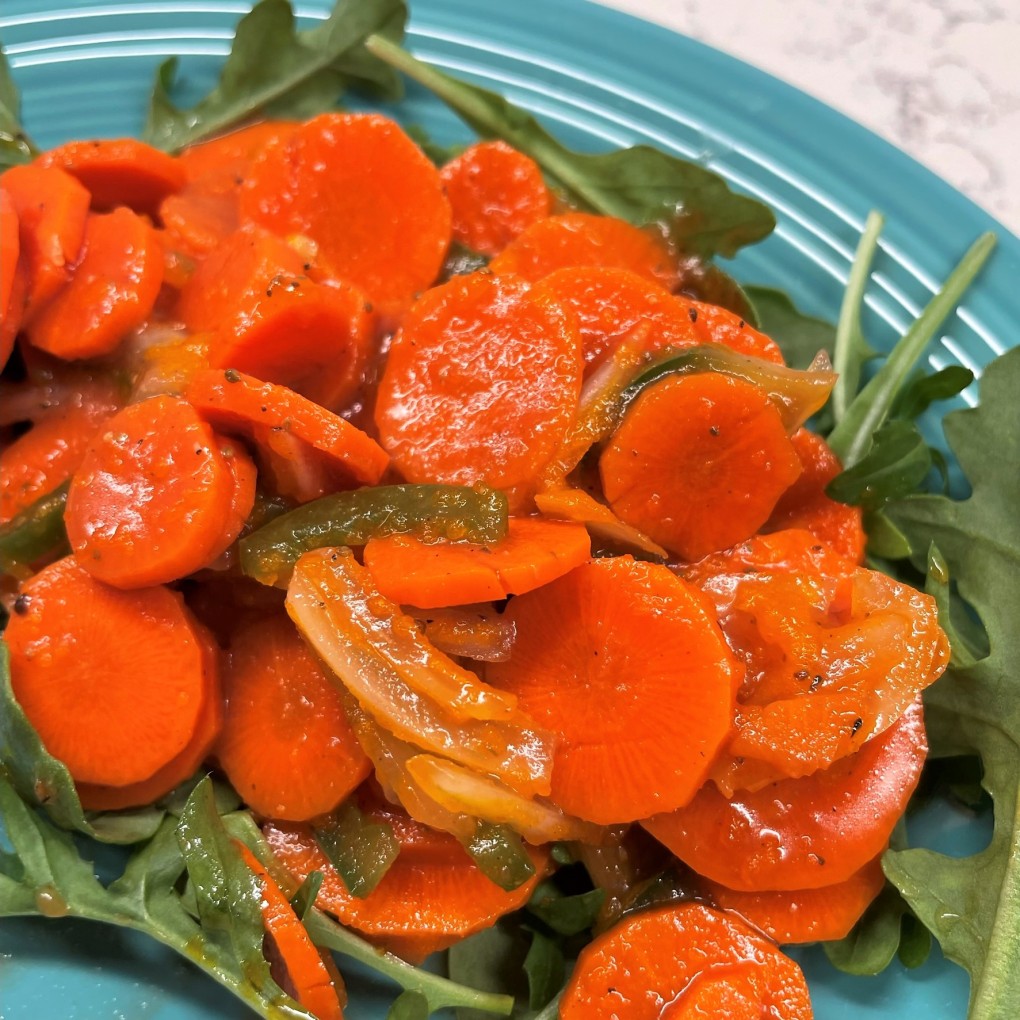
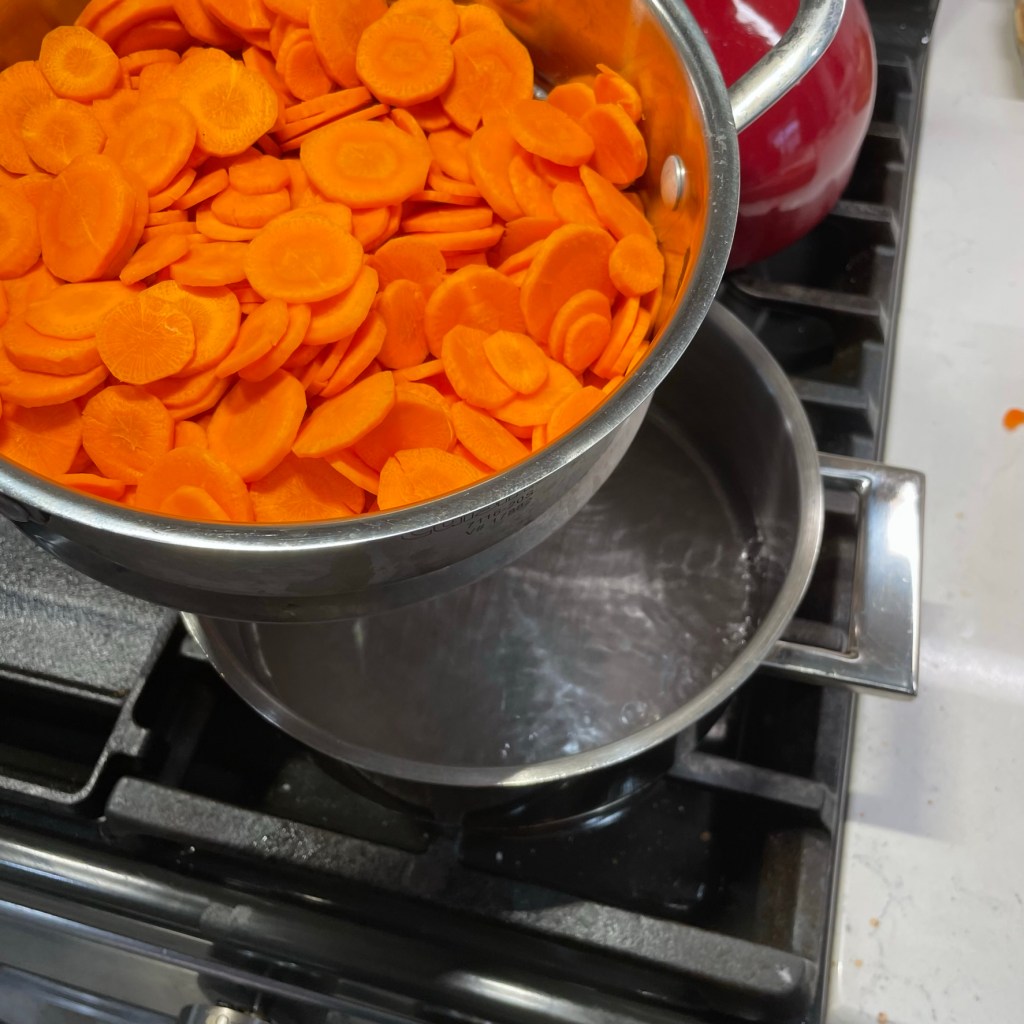
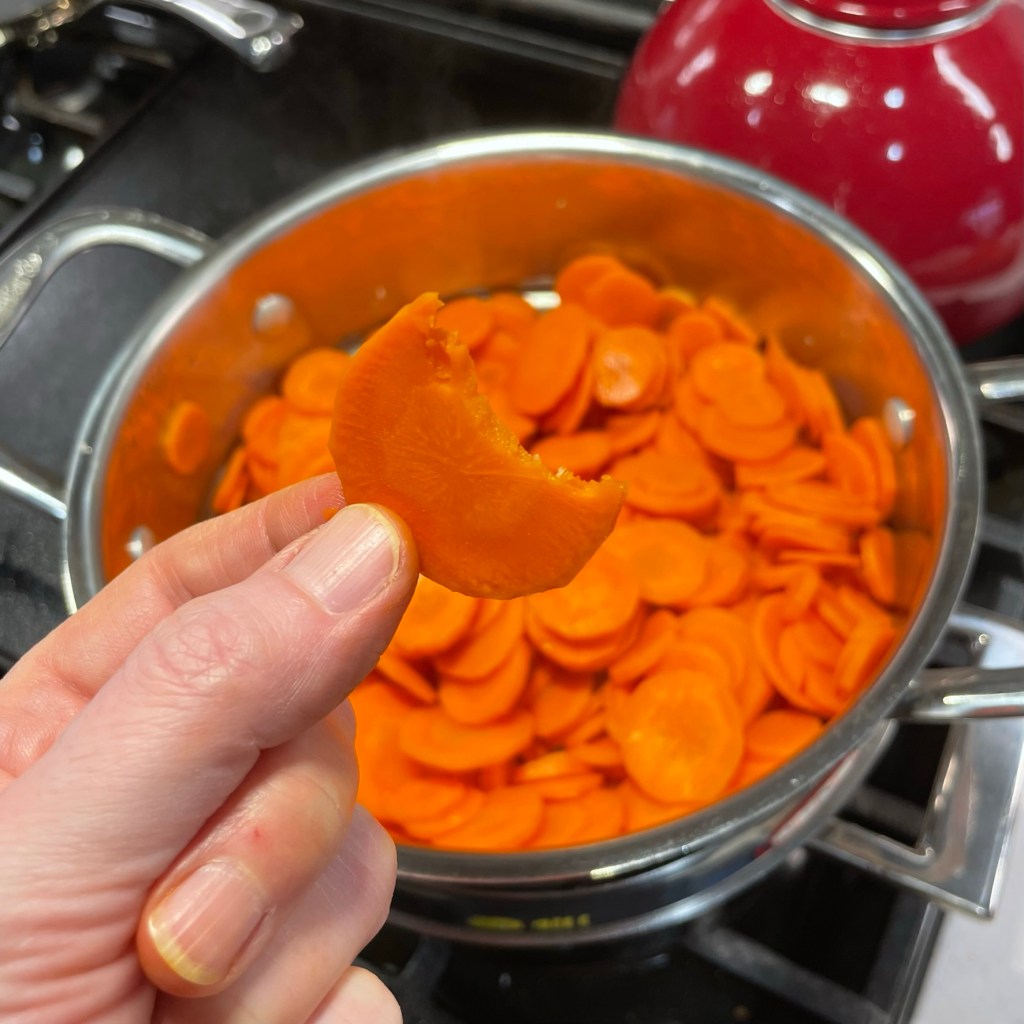
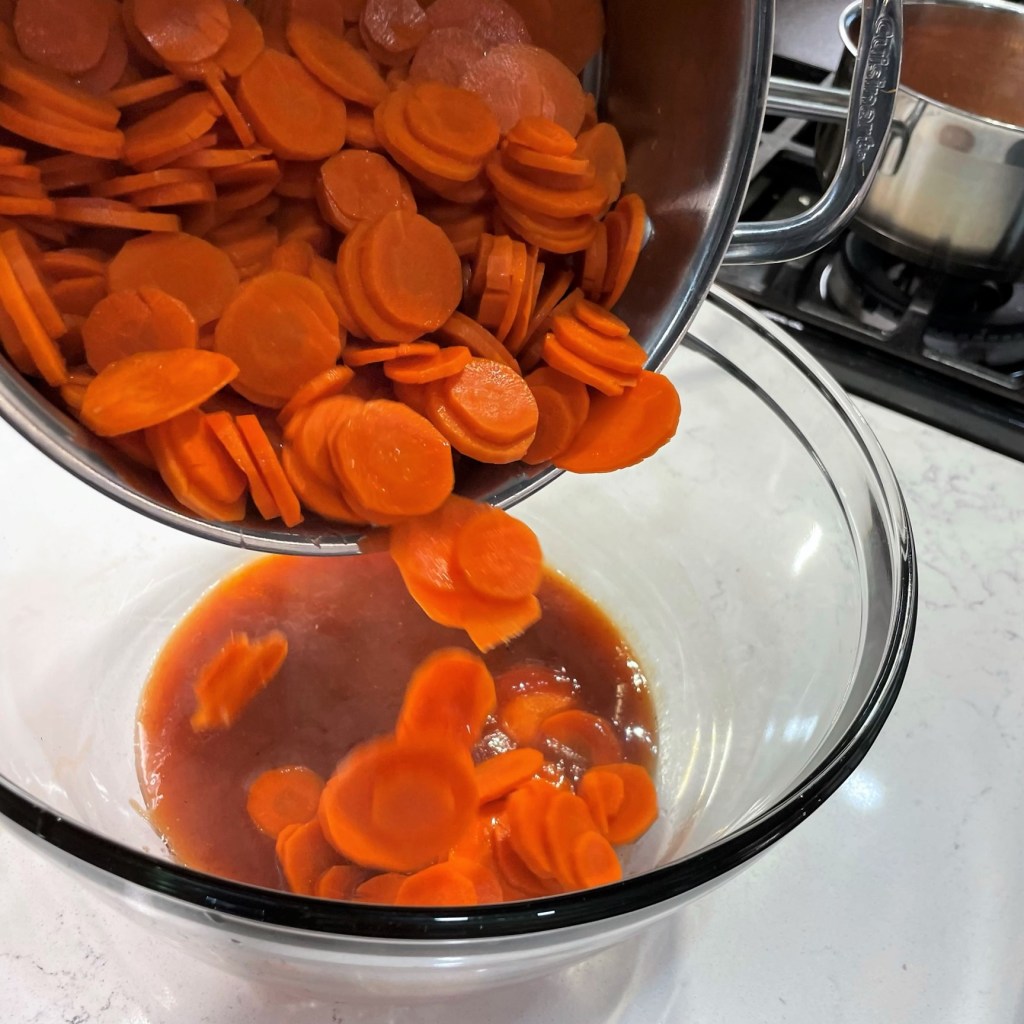
The only thing left to do was steam the carrots, which I did for 8 or 9 minutes, until a carrot slice tested to al dente firmness. I transferred them directly into the tangy tomato marinade, along with the onions and peppers, then tossed it all together before cooling it down in the fridge. 


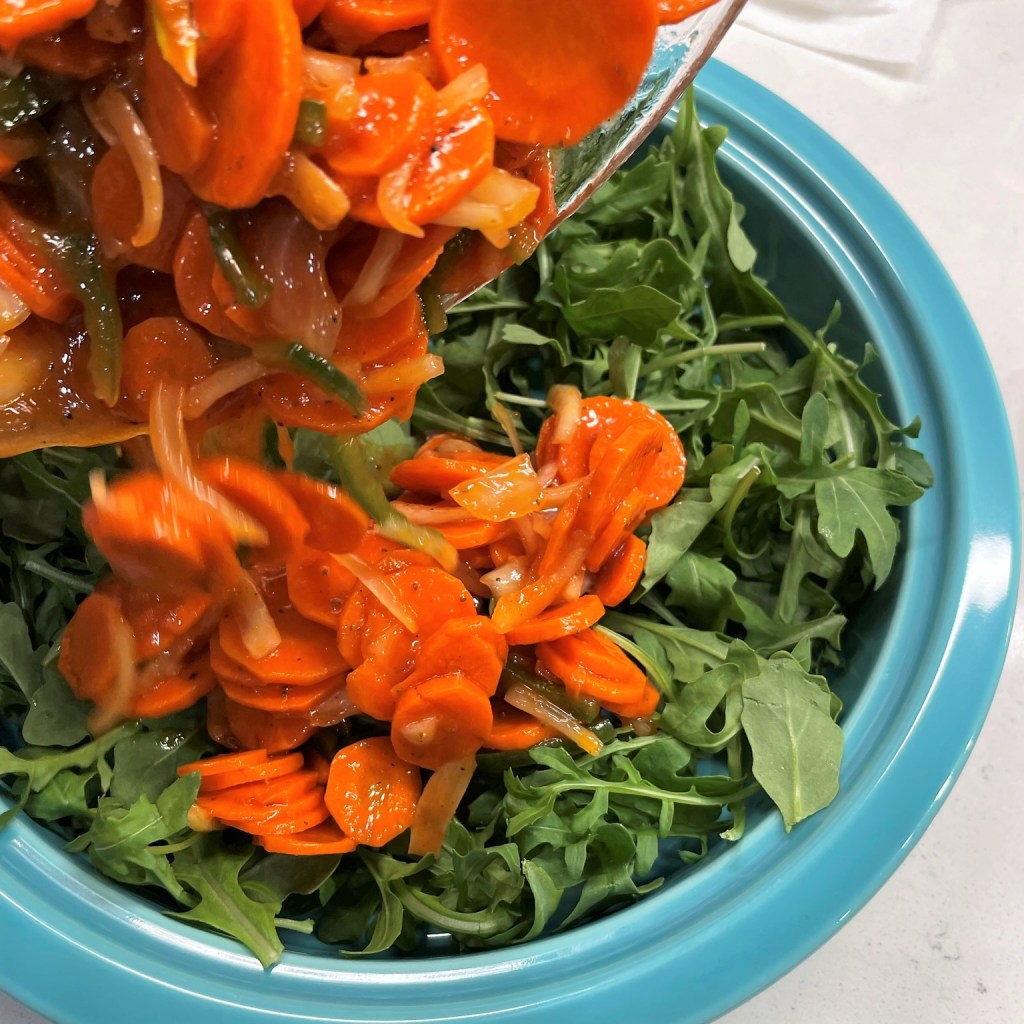
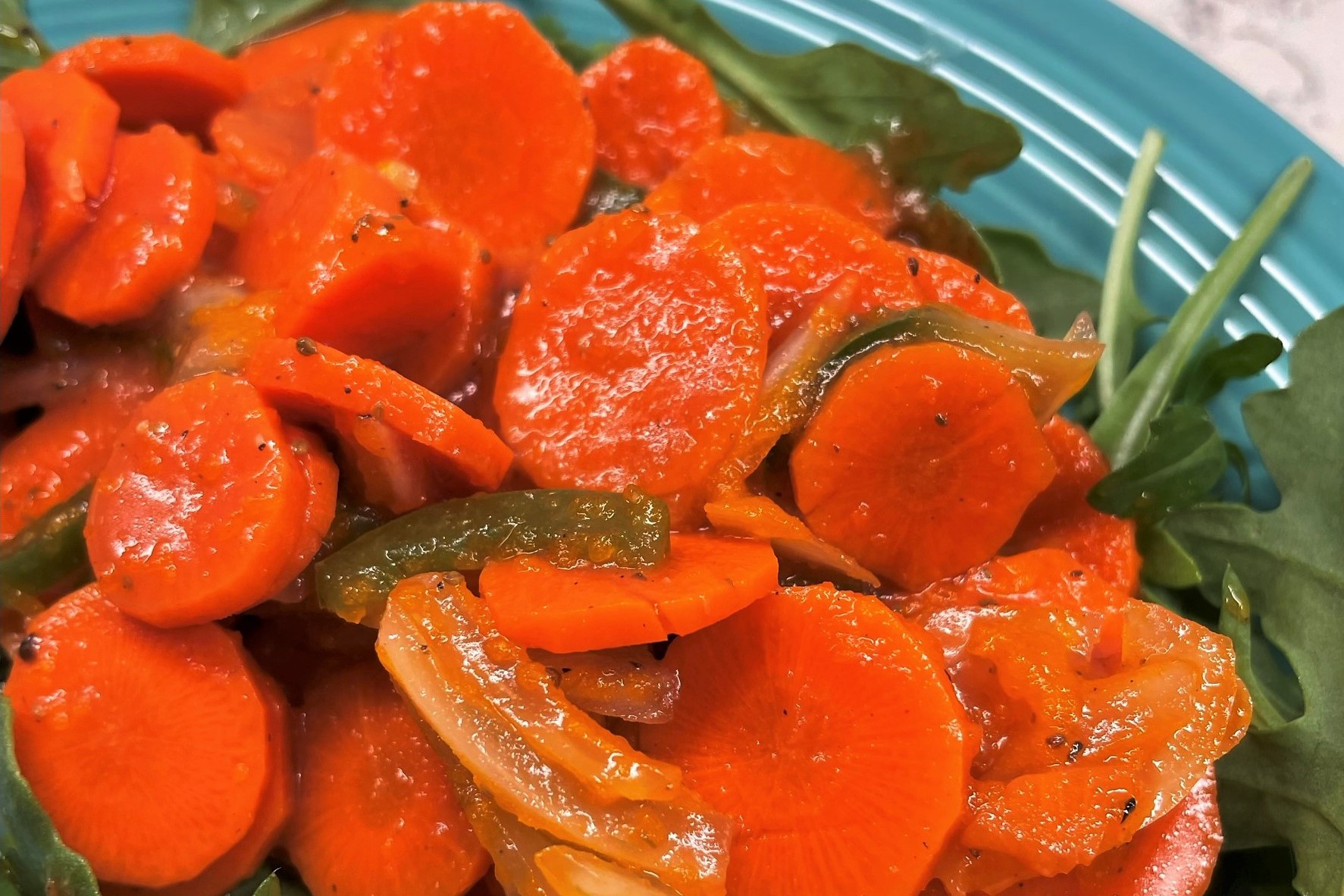
This is a great option for make-ahead side, when you want a chilled salad that isn’t carb-heavy the way pasta or potato salad might be. You can serve it as is, or dress it up a bit by serving it over a bed of greens. One of the tricks I learned in catering is that serving a marinated salad over greens allows for the excess liquid to run underneath, keeping the main part of the dish nice and crisp.


Copper Pennies

  • Servings: 8 to 10
  • Difficulty: Average
  • Print

Tender-crisp steamed carrots and a tangy tomato marinade make this vintage recipe a keeper! It's perfect to make ahead for any kind of summer gathering.


Ingredients

  • 2 pounds fresh carrots, peeled and sliced into 1/4-inch rounds
  • 8 oz. can tomato sauce
  • 1 medium sweet onion, sliced thin from top to bottom
  • 1/2 medium green bell pepper, cut into thin strips and then cut into 1-inch pieces
  • Kosher salt and black pepper
  • 1/3 cup cane sugar
  • 1/4 cup apple cider vinegar
  • 1 tsp. worcestershire sauce
  • 1 tsp. prepared Dijon mustard
  • 2 Tbsp. dry white wine (or vermouth)
  • 3 Tbsp. extra virgin olive oil
  • 1 tsp. celery seed
  • A few handfuls washed baby greens, for serving

Directions

  1. Combine tomato sauce, vinegar, Dijon, sugar and worcestershire a medium saucepan over medium heat. Cook until sugar is dissolved.
  2. Add white wine (or vermouth) and cook until mixture begins to thicken slightly. Stir in celery seeds and adjust salt and pepper to taste. Remove from heat and allow sauce to cool to room temperature.
  3. Prepare to steam carrots by placing a steamer basket or pot over a pot with approximately one inch of water. Heat until water maintains a consistent gentle boil. Add carrots to basket and steam for 8 or 9 minutes, until tender-crisp. No stirring is necessary during steaming.
  4. Transfer carrots directly into cooled tomato sauce. Add onions and bell peppers and toss gently to combine. Cool and then refrigerate overnight to meld the flavors. Serve copper pennies over a bed of baby greens, if desired.


Coq au Vermouth

Excuse me, where is the umbrella?

I spent two years in French class during high school, and that is pretty much all I remember how to ask—“excusez-moi, où est le parapluie?” I suppose it is a question that would have been essential had I become a world traveler (I didn’t), and in fact it was a common question asked among my fellow French club members when we took our senior trip to Quebec City, Canada—they don’t speak much English there, in case you didn’t know. It rained the entire three-day weekend, but it was still a glorious visit to a city rich with history and speckled with exquisite, copper-roofed buildings.

Spanish would undoubtedly have been a more useful class for me, given the increase of Spanish-speaking people in the U.S. since I graduated all those years ago. But there was something sooo sexy about the French spoken word, and well, my best friend signed up for French so I did, too. Our teacher was cool and we got to choose our own names for the class, which was good because there wasn’t a name on the list that was a literal translation for Terrie. My friend Debbie became Christine, pronounced CREE-steen, my friend Christine became Danielle and yours truly selected the name Jacqueline, which was fun to say—zhah-KLEEN, like the French fashion designer who steals Nigel’s dream job in The Devil Wears Prada.

French class was always lively, and we were encouraged to play up the accent and the nasal sound as much as possible. We went through round after round of language exercises, covering the French words for common places, including the bookstore (la librairie) and the library (la bibliothèque) and reciting all the various tenses of the verb words, and for every kind of individual and group instance. For example: for the verb “go,” we would cycle through the French words that meant, “I go, you go, he goes, she goes, we go and they go.” Round and round we went, and after all that repetitious recitation, all I remember how to say is “where is the umbrella?”

Anyway, for me, there is still a lot of mystery and intrigue associated with the French language, and I learned during my short time working in the Pinch of Thyme catering kitchen that if you want people to swoon over food, call it something French! As luck would have it, I do at least remember some of the French words for certain foods, including poulet (chicken), champignons (mushrooms) and carottes (carrots, obviously). I was excited to find this recipe in my most recent digital edition of Imbibe magazine because I have used splashes of vermouth in a few dishes and found it more complex and vibrant than wine, which would traditionally be used for braising chicken in the classic coq au vin. But this recipe was more than a splash, it was a generous amount in a very French-technique kind of recipe.

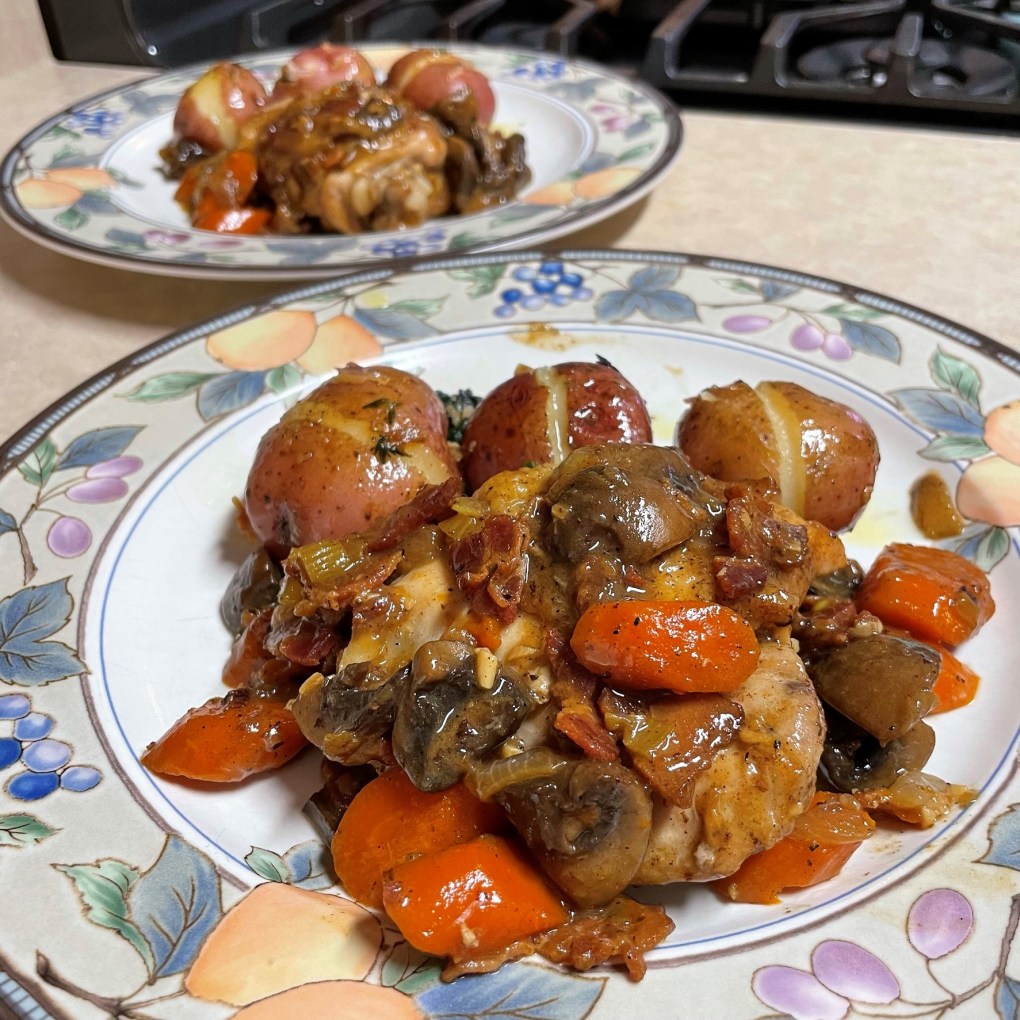
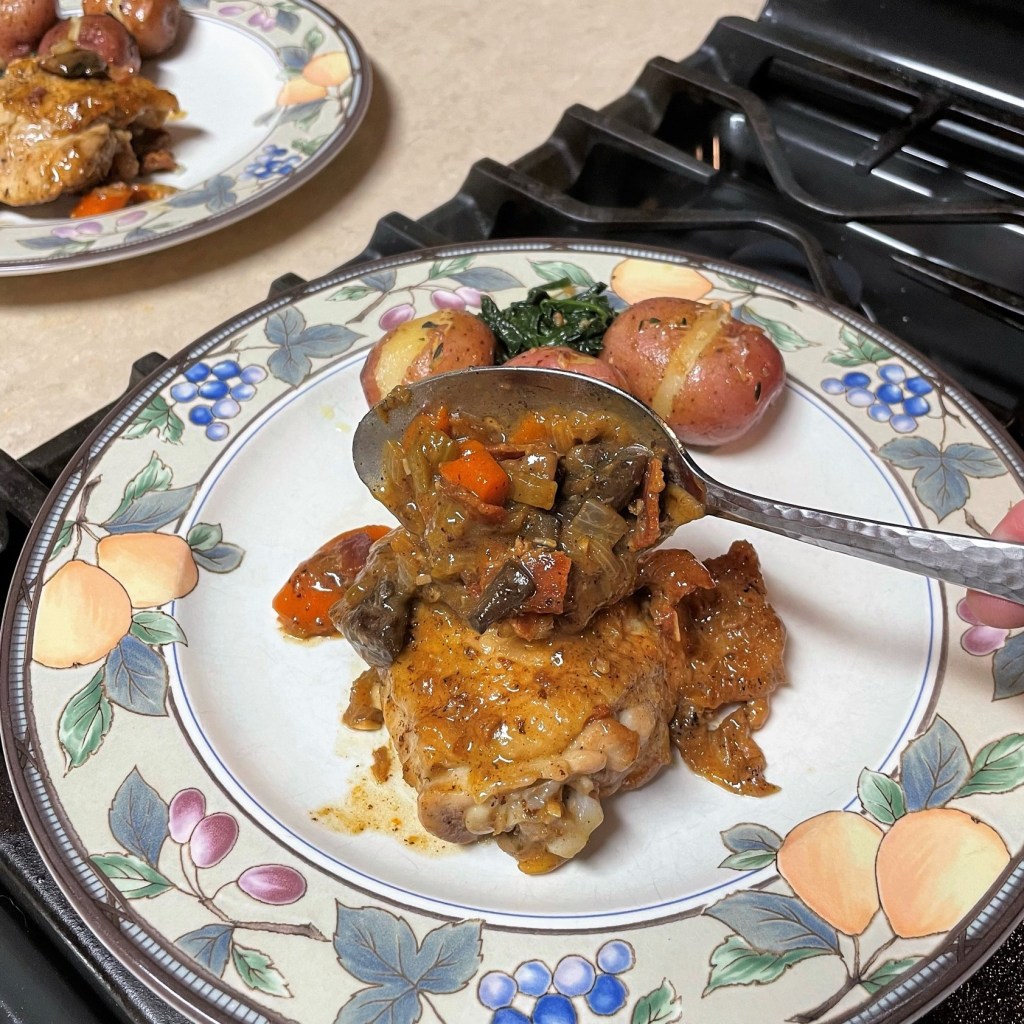
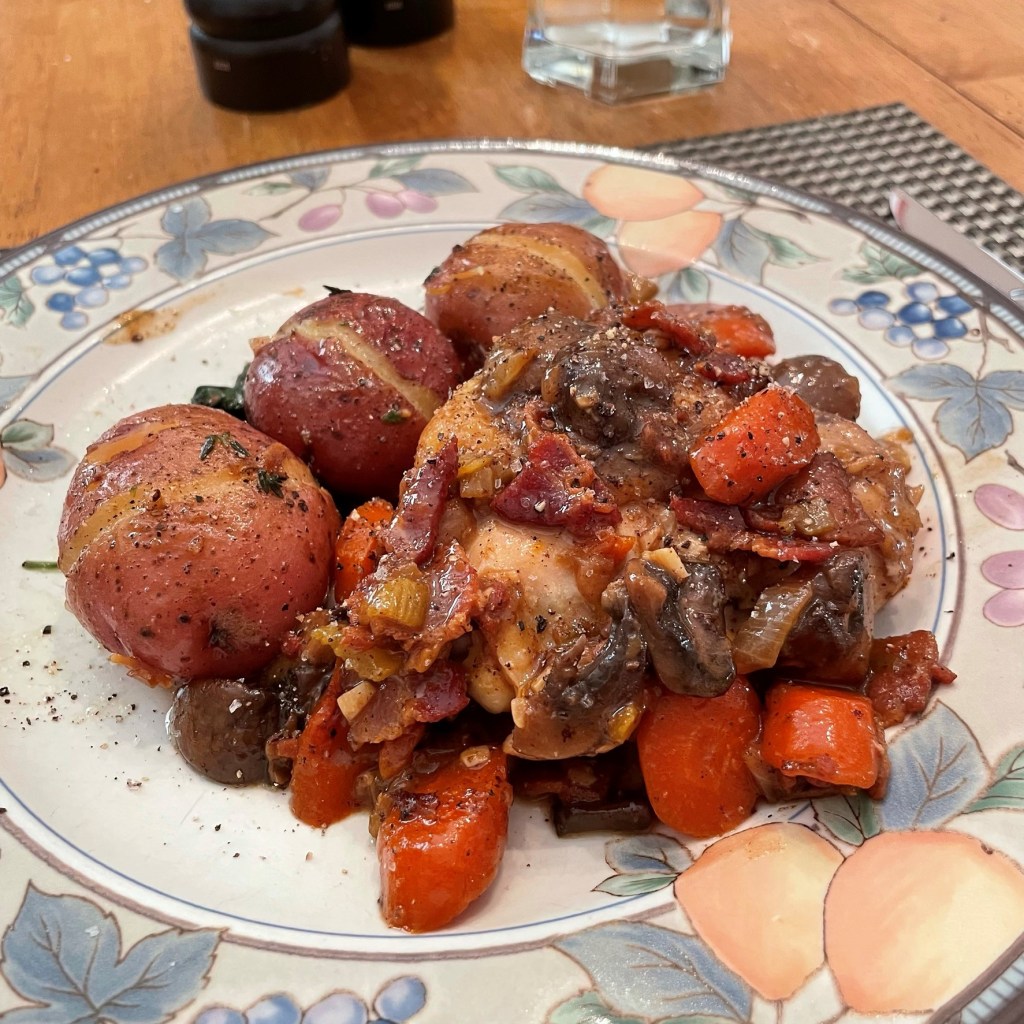
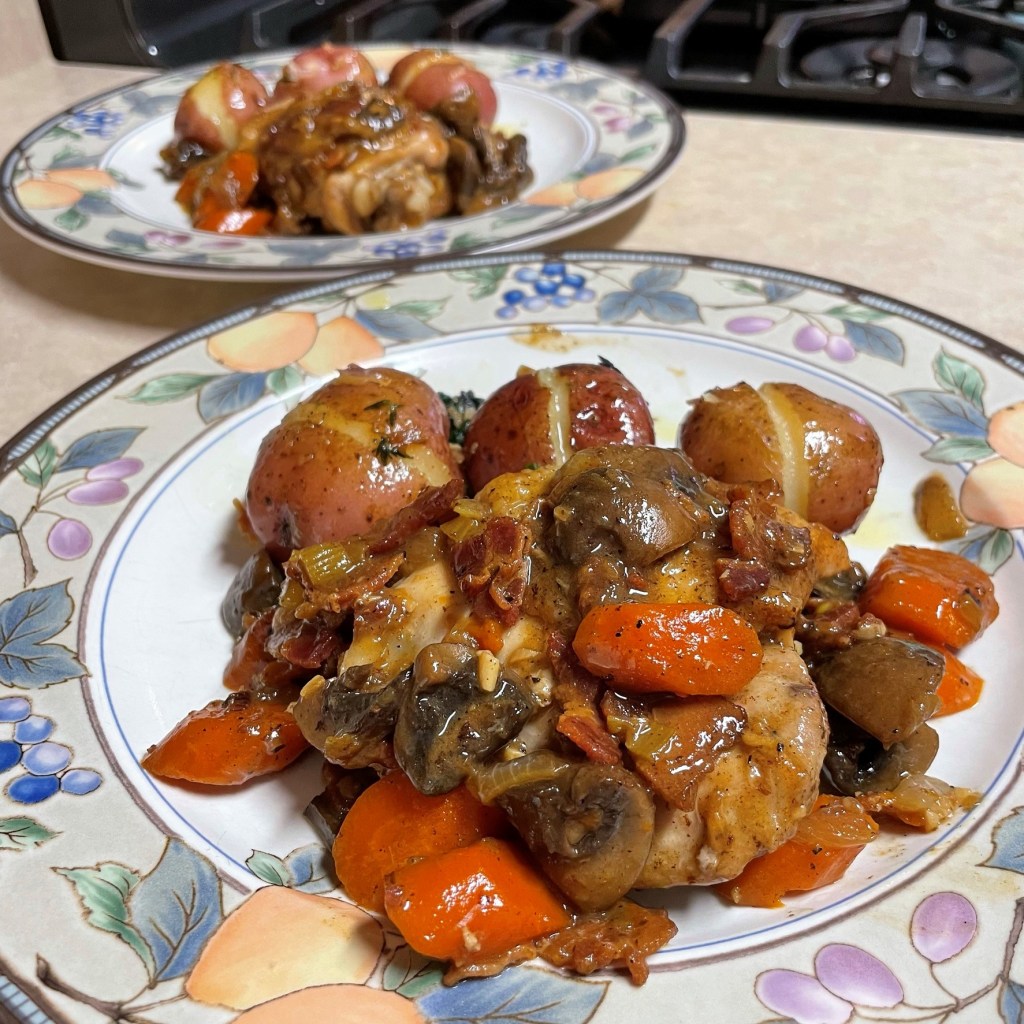
I could not resist turning this into a Sunday Supper meal, with a side of buttered red bliss potatoes and sauteed spinach, and it was—how shall I say—très délicieux!

This dish was rich and succulent, exactly as it should be. The chicken thighs remained tender and moist.

A word or few about vermouth…

I have known about vermouth for decades, but it has only been the past couple of years that I have become more closely acquainted with it, and today I almost always have a bottle open in the fridge for an end-of-day gin martini. Vermouth is a fortified wine, which means other alcohol has been added to grapes during fermentation, and that results in higher alcohol by volume than typical wine. Any variety of botanical ingredients are thrown into the process as well, including herbs, bitter ingredients, bark, roots and spices. Vermouth may be red or white, dry or sweet or really sweet, depending on its origin and method, and it is commonly used as an ingredient for classic cocktails, including martinis and Manhattans. Vermouth, on its own, is also a popular apéritif (pre-dinner drink) in Spain, Italy, France and my house.

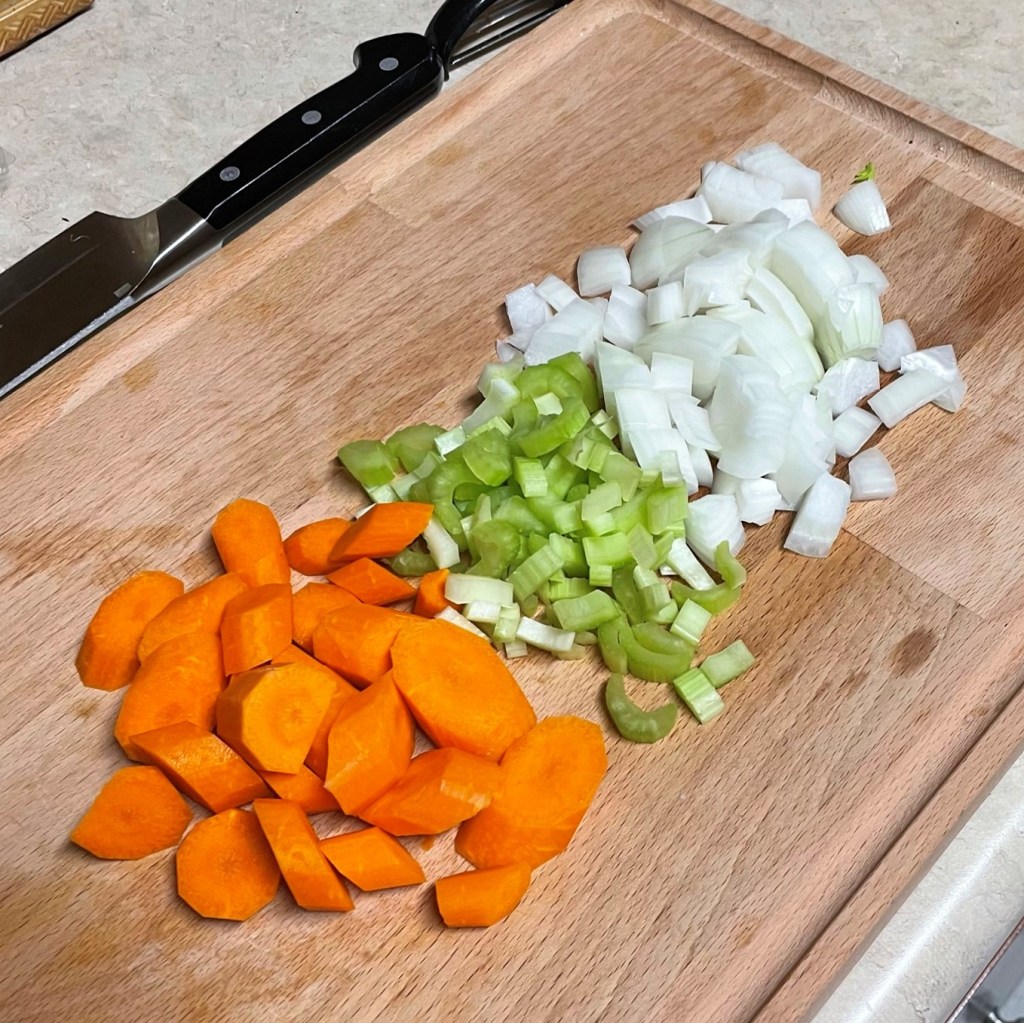
In a literal French-to-English translation, coq au vermouth would demand use of a rooster, but it is not every day that you’d find such a creature in your local market. Large hen thighs is what I used for the recipe, and it was tender, flavorful and oh so fancy. Don’t be intimidated, though, because despite all of the foreign language I’ve been throwing around, this was a very simple dish to make. All you need is a cast iron skillet, chicken thighs, bacon, mushrooms and mirepoix—oops, another French word that is simply a mix of carrots, onions and celery. All that, plus a decent amount of dry white vermouth. Don’t worry, vermouth is easy to find, wherever you might buy wine. To keep the recipe true to its origin, choose a brand from France. I used Dolin Vermouth de Chambéry, dry, in the green bottle. 😊
This is one of my go-to vermouth brands for Gibson cocktails:
2 oz. dry gin, 1/2 oz. dry vermouth, shaken or stirred with ice, strained into a cocktail glass and served with a pickled pearl onion.

Inspired by Coq au Vermouth – Imbibe Magazine

Ingredients

3 slices bacon, cut into thin pieces

4 large, free-range chicken thighs (bone-in and skin-on)

Kosher salt and freshly ground black pepper

1/2 medium onion, sliced or diced

2 medium carrots, peeled and cut into thick diagonal slices

2 stalks celery, cleaned, ribs removed and diced

3 cloves garlic, smashed and sliced

About 1 cup cremini mushrooms, cleaned and cut into quarters

1/2 cup dry vermouth (extra dry would be fine, also)

1/4 cup low-sodium vegetable broth

2 fresh sprigs of thyme

2 Tbsp. cold butter

Juice of 1/2 fresh lemon


Instructions

Let’s run through it in pictures first, and if you keep scrolling, you’ll find the instructions spelled out (in English), and I’ll also include a downloadable PDF for your recipe files.


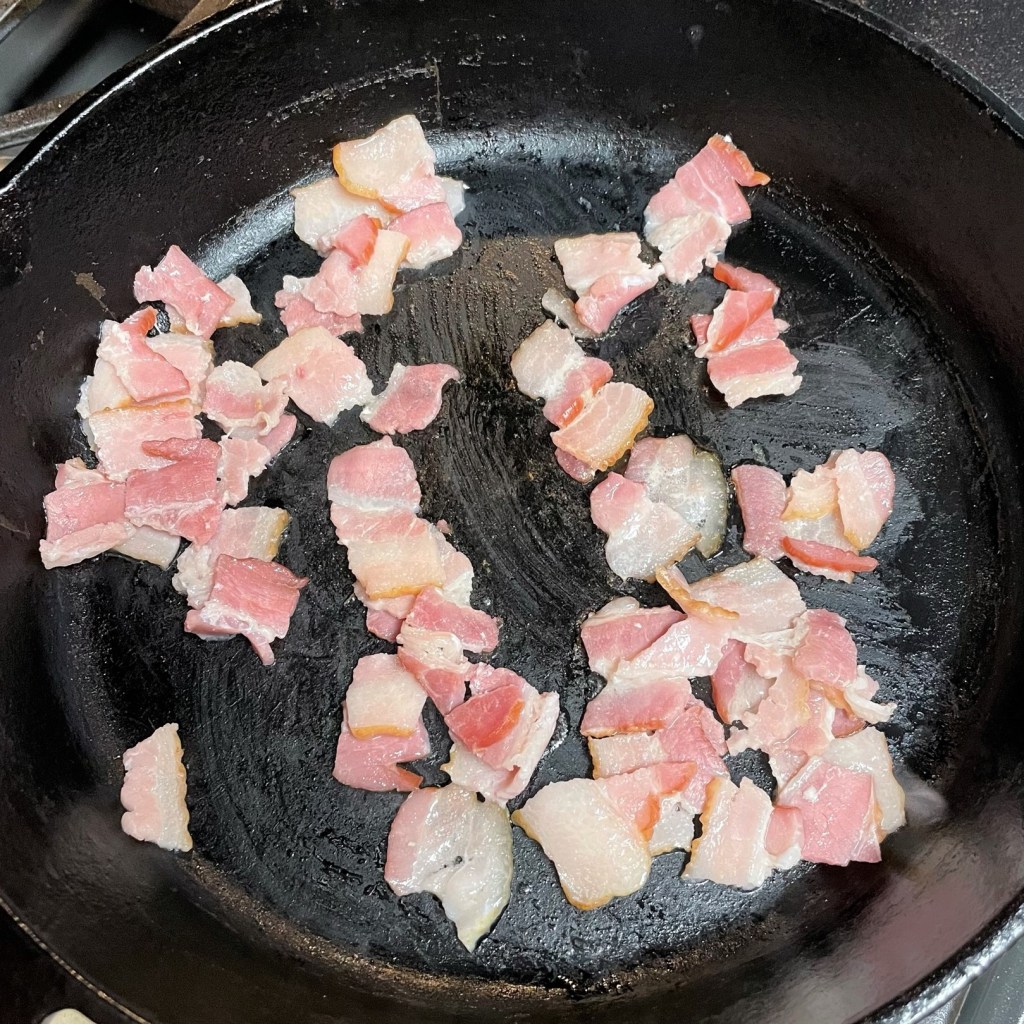
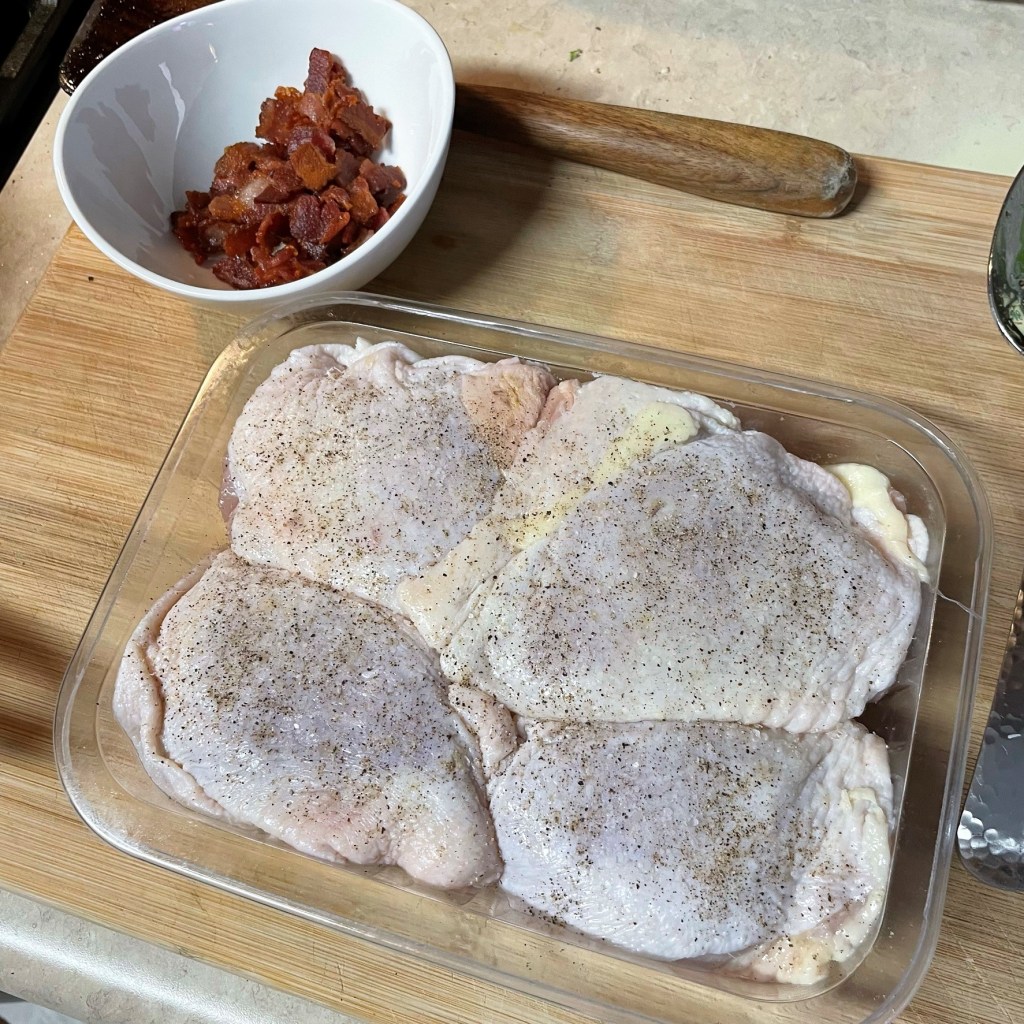
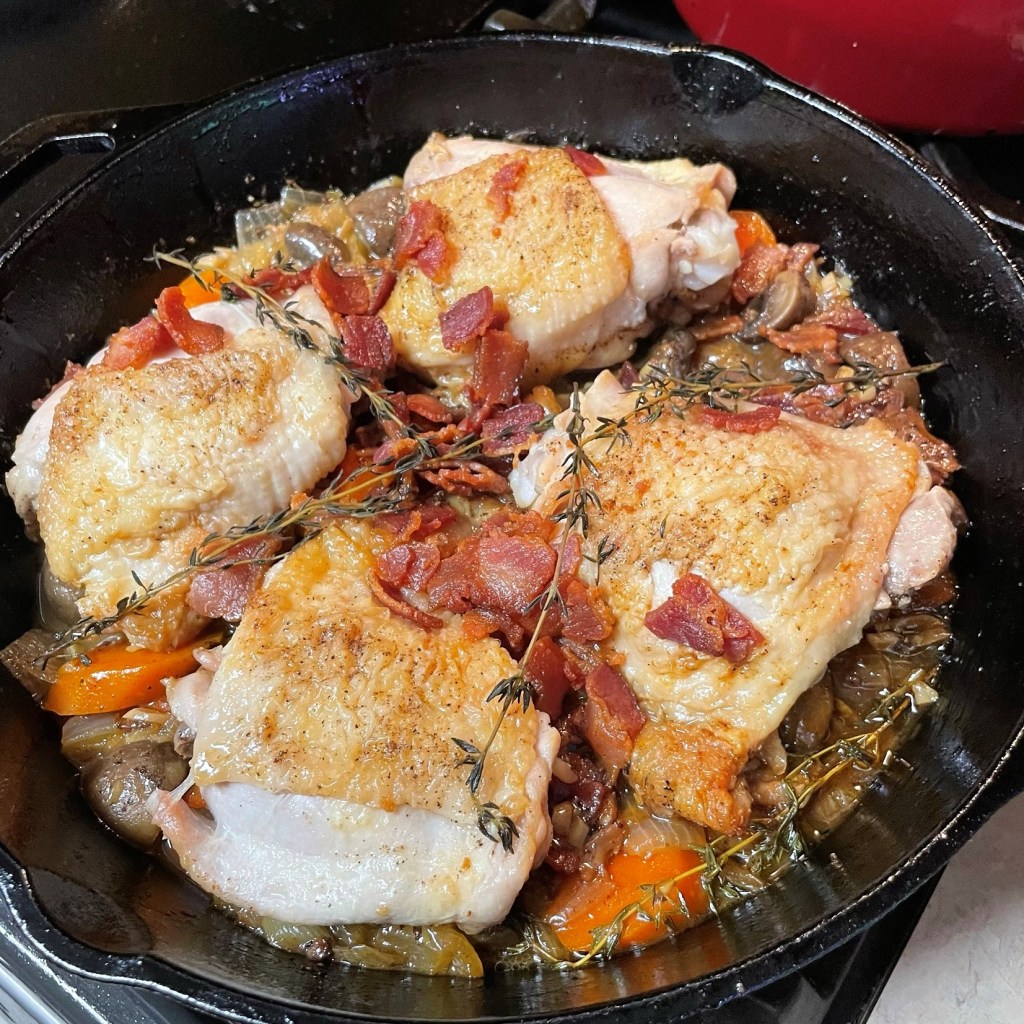
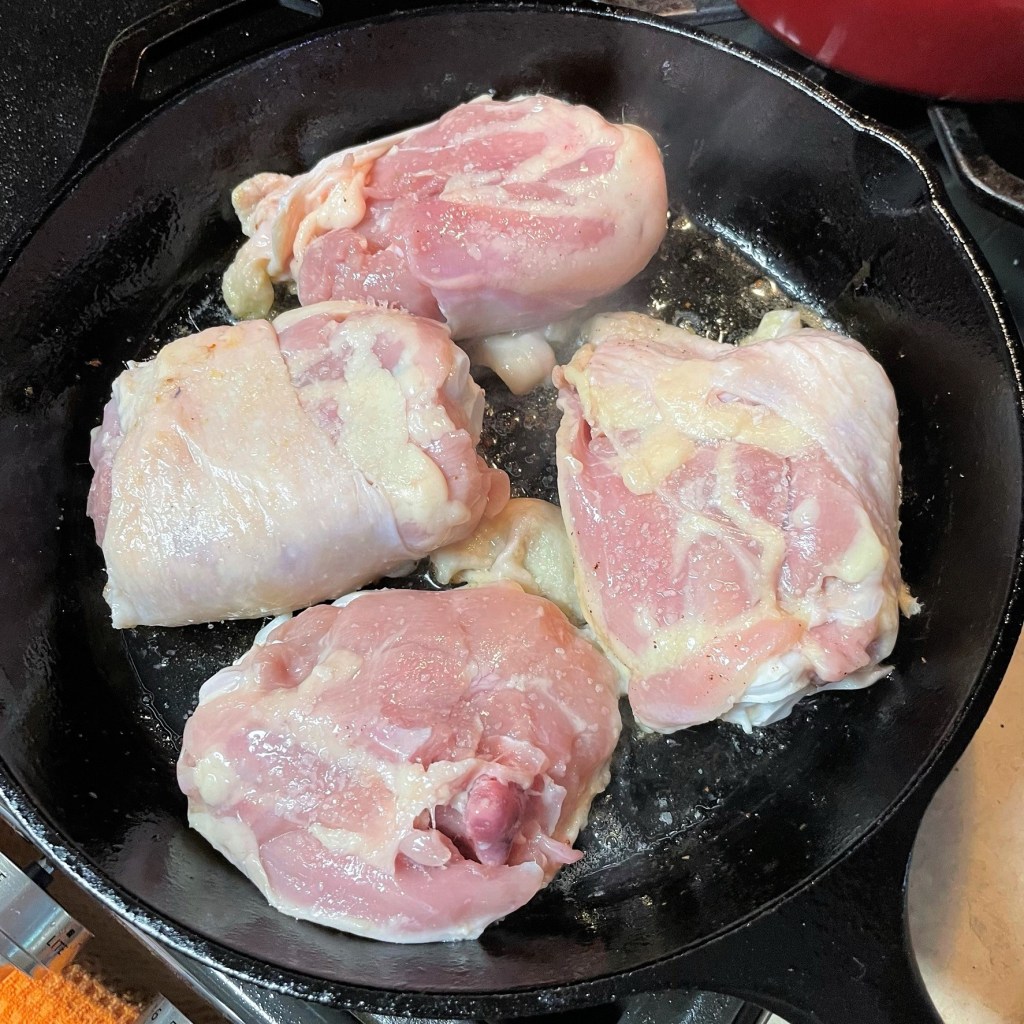
  1. Place a cast-iron skillet over medium heat. Season the chicken thighs liberally with salt and pepper. Cook the bacon until the fat is rendered and the edges begin to crisp. Transfer the pieces to a paper-towel lined dish, keeping all the bacon grease in the skillet. Arrange the chicken thighs, skin side down, into the skillet. Cook them until the skin is crispy and golden, then turn the pieces and cook the other side about two minutes.
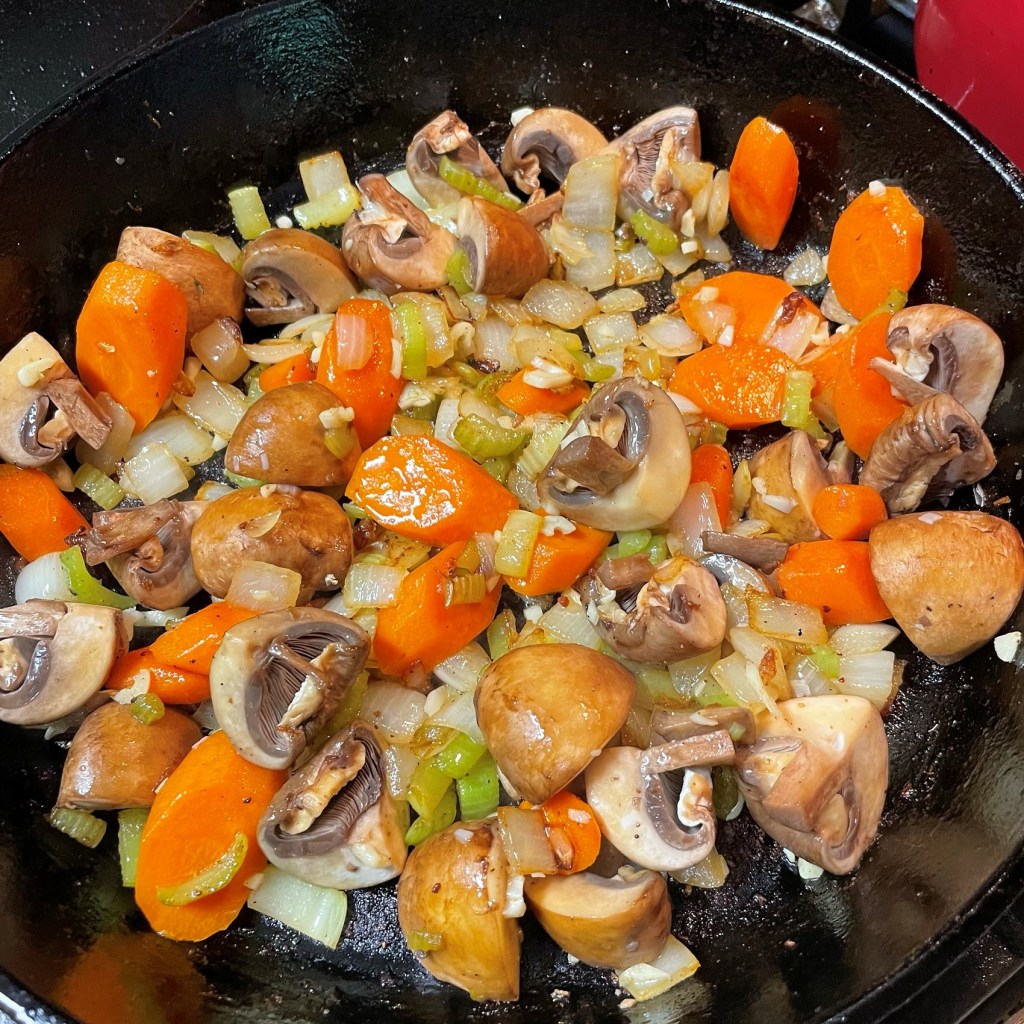
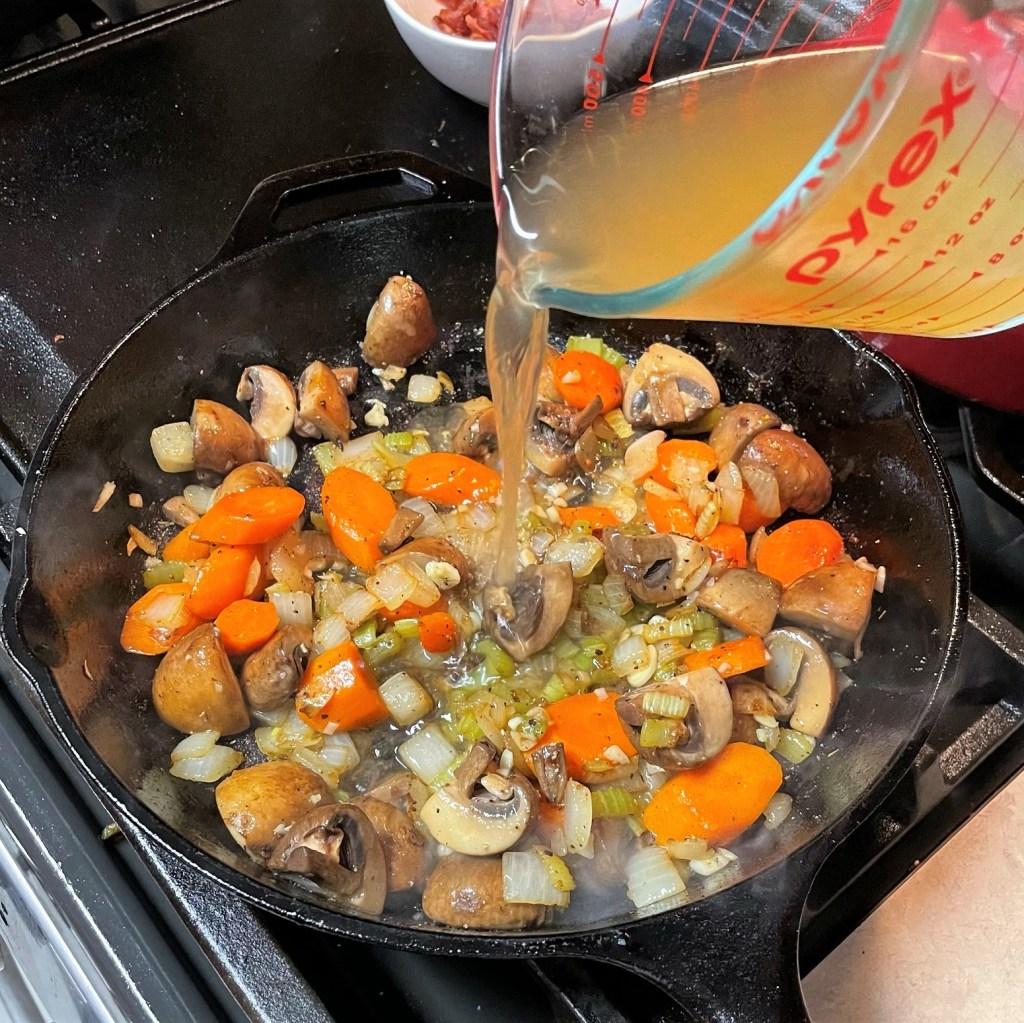
  2. Transfer the thighs to a plate and cover loosely with foil to keep them warm. Add the mirepoix (carrots, onions and celery) to the fond (pan drippings) in the skillet. Cook over medium heat until the vegetables begin to soften. Add the garlic and mushrooms, tossing with the other vegetables until slightly browned. Pour in the vermouth and vegetable broth, and simmer for about two minutes.
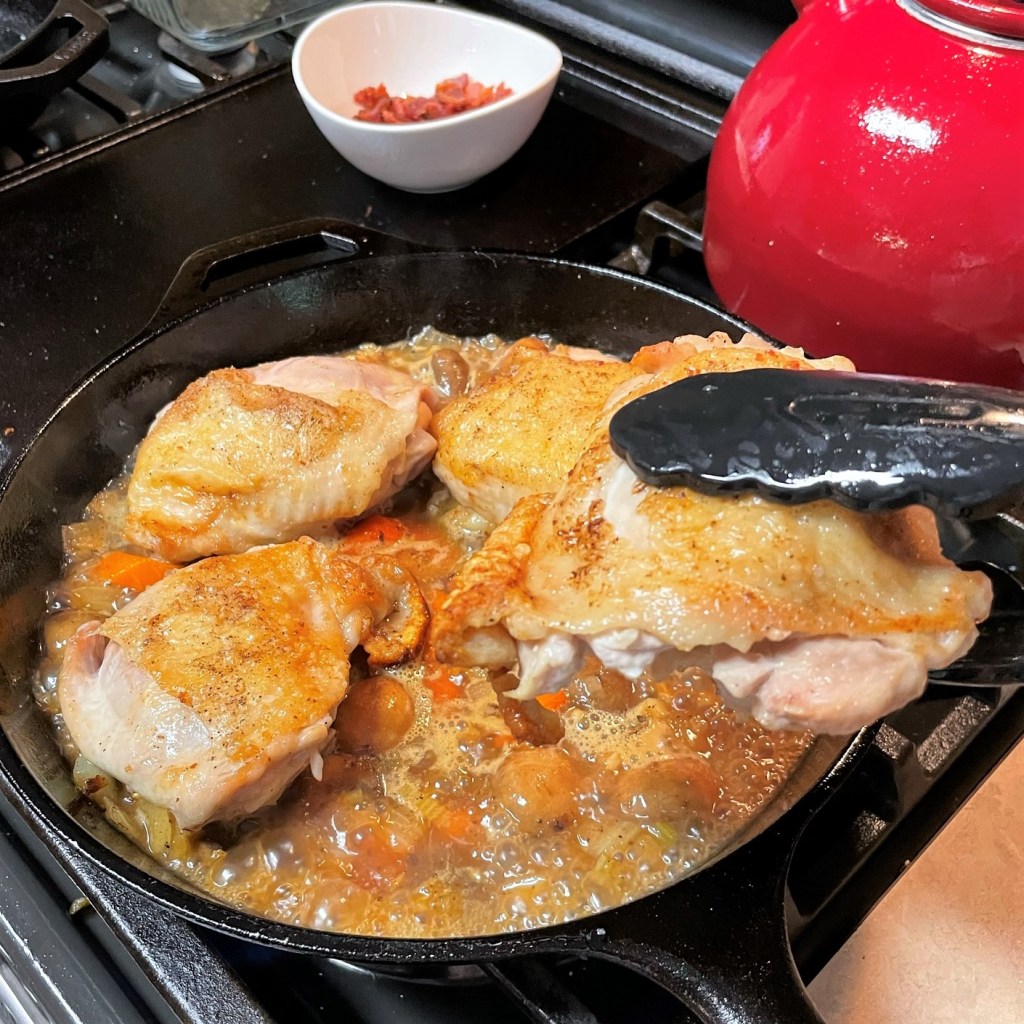
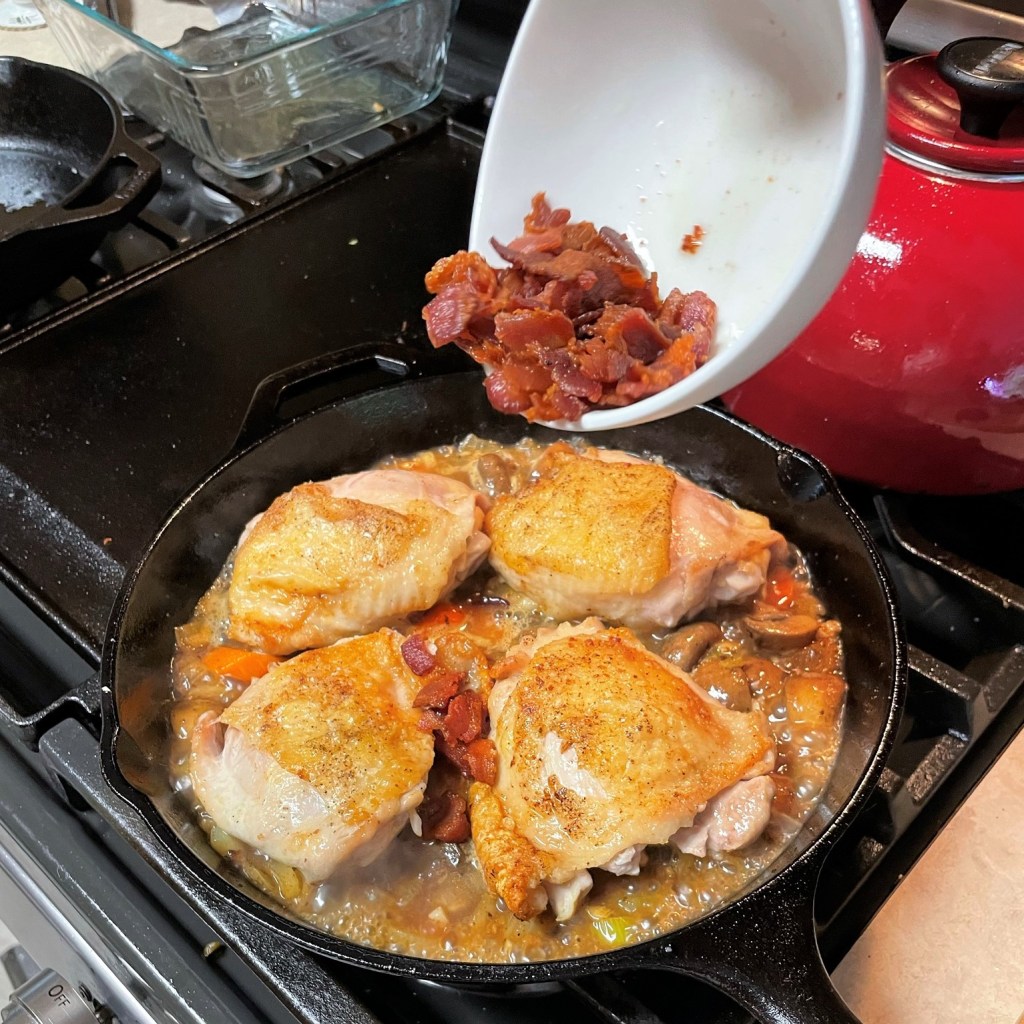
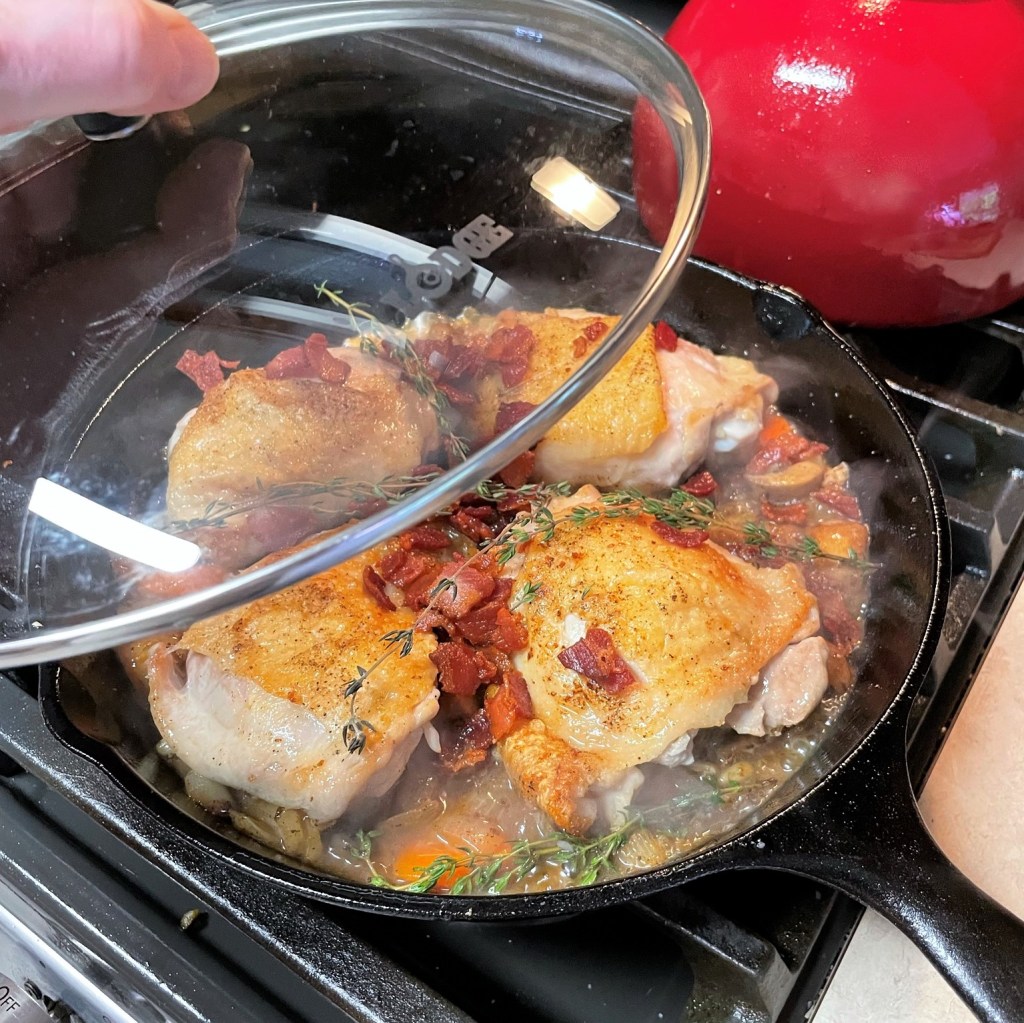
  3. Return the chicken thighs to the skillet, skin side up. Sprinkle the bacon pieces over the top and lay the whole thyme sprigs in a criss-cross fashion over the combination. Reduce the heat to low, cover the skillet tightly and simmer about 30 minutes.
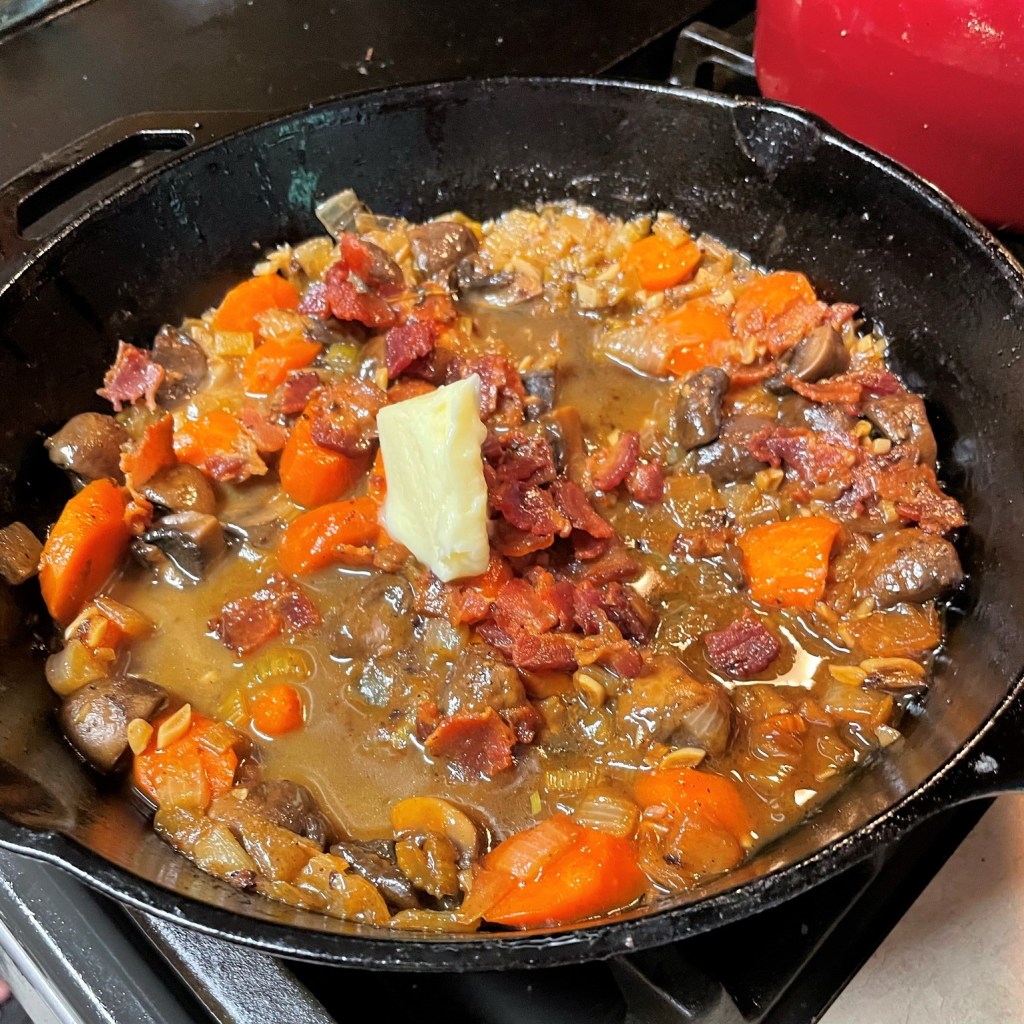
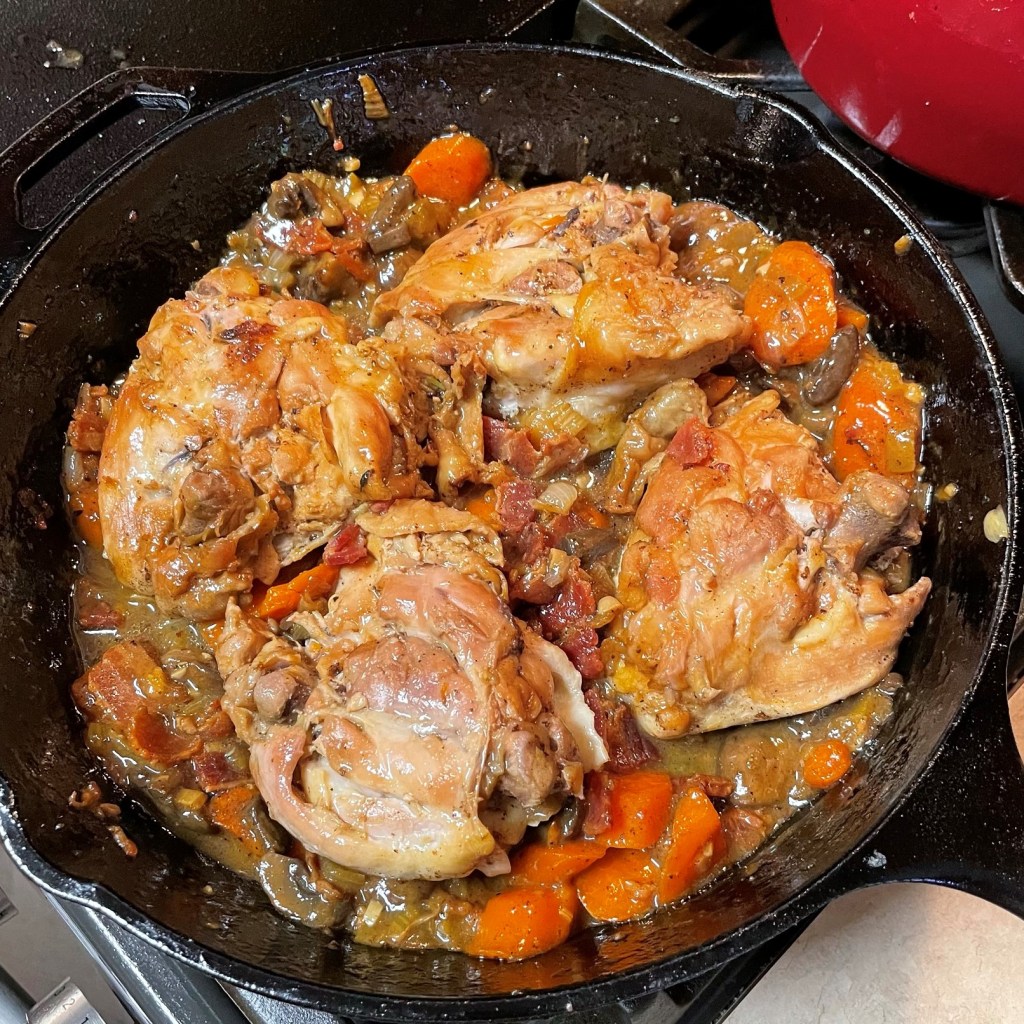
  4. Remove and discard the thyme sprigs. Transfer the chicken thighs to a plate. Add the cold butter and lemon juice to the simmered vegetable mixture and stir until it is a rich, luscious sauce. Just before plating, place the thighs, skin side down, into the skillet to drench them in the sauce. Plate the chicken, then spoon the simmered vegetable mixture (a.k.a. mélange) over the thighs.
I love when an elegant dish is this simple!