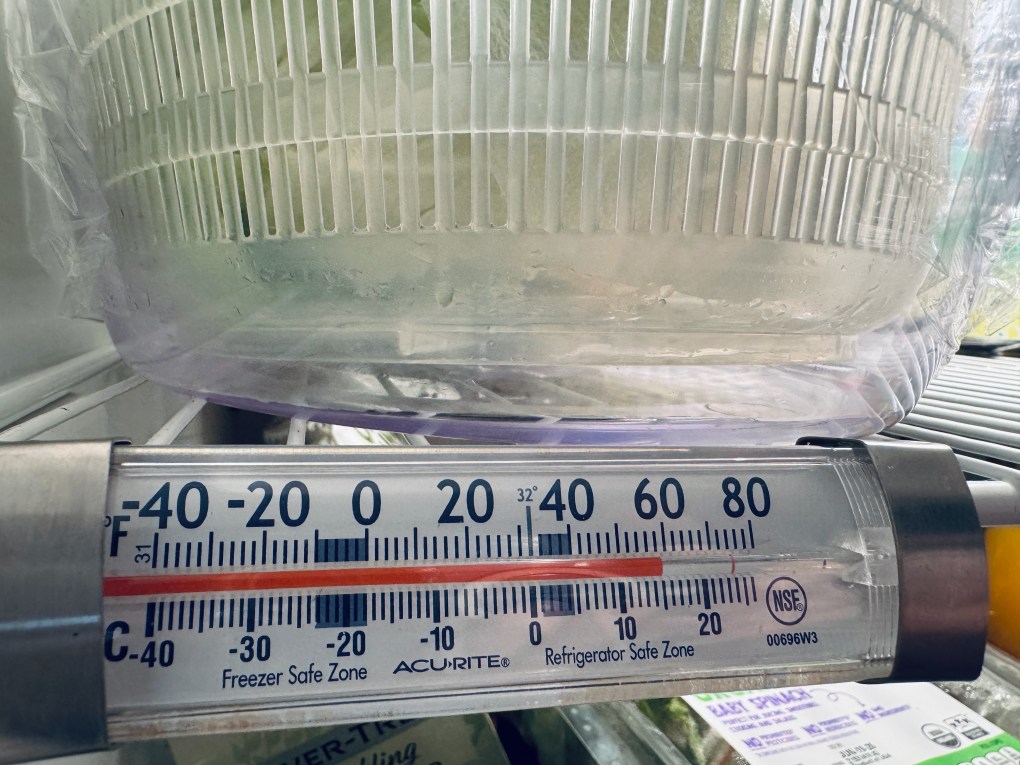
My heart sank yesterday when I stepped out into our enclosed garage and noticed a stream of light running the full length of the refrigerator door. Had we retrieved something from the extra fridge earlier that morning and just missed closing it tight? Unfortunately, it quickly became apparent that this was not a recent mistake, as a large block of cheese on the top shelf was warm to the touch. The door had been open all night, at least ten hours, and the small thermometer clipped onto the top shelf registered nearly 70° F. Ugh.
In that moment, I became the father in A Christmas Story in the scene where he wailed about all the favorite foods that he wouldn’t be able to enjoy after the neighbor dogs attacked the roast turkey. You see, I had just gone to Costco a few days prior to this debacle to restock on our favorite expensive cheeses, and I had placed them on the top shelf of the fridge. My plan was to grate the one-and-a-half pound wedge of Parmagiano-Reggiano together with the one-pound wedge of Pecorino Romano, and we would have a hefty bucket of our beloved “Parm-Romano Blend” to get us through all the pizzas, grilled caesar salads and quick pasta dishes that I would make during summer. I had been fantasizing ways to use the huge double block of feta before its early November expiration, and I’d finally make one of my culinary bucket list items, a whipped feta dip. And there was a mellow cheddar aged in pale ale that had caught my eye. That would be a winner on an appetizer platter, and wouldn’t it also rock a macaroni and cheese? Sigh, I’ll never know.
Not only were the specialty cheeses no longer cold, they had virtually cooked under the constant heat of the incandescent light bulb, and smelly, oily liquid dripped from the corners of all the packages. If I could have salvaged any of it, I would have. It was easily $70 worth of cheese. For someone who searches out volume bargains and plans so carefully with food, this was a gut punch.
On the bright side, the rest of the refrigerator’s residents seem to be mostly OK. A jug of buttermilk in the door was a loss, but it was almost gone anyway. My vermouths would be fine. On lower shelves, an array of drinks and cocktail mixers that don’t technically need cold storage. A few fruits and veggies that I picked up Saturday at the farmers’ market would be used quickly enough that they would not be a loss. Even my sourdough starter, Pete, is expected to make a full recovery.
But, the cheeeeese. 😩
I imagined what my frugal grandmother would do in such a situation. She’d probably cuss, as I did (one of these days, I’ll share her favorite “bad” word, which she used with bold intention when circumstances warranted), and then she’d put on a pick-up-the-pieces attitude, scan the pantry and pull something together for dinner. She would not let the mistake define her.
Today is National Spinach Day, and I would be remiss if I did not share this pizza that I pulled from the oven on Friday. It is absolutely packed with the nutritional powerhouse that is spinach, and a few other key ingredients like feta and dill that give it the signature flavor of Greek spanakopita.
In a roundabout way, this meatless, sauceless pizza brings me full circle to the launching of my blog back in 2020. I have been known at times to take inspiration from the idea of “national” food days, and on this date in that year, I surprised my husband with a batch of spanakopita— the real kind, made with layered phyllo— and served it alongside a Greek salad and easy chicken souvlaki. With spinach being Les’s favorite vegetable, he took a picture of that meal and posted it (along with my national day inspiration) on his Facebook page.
That’s when it occurred to me that I should probably be doing that myself, not on Facebook but on my own platform. About 10 days later, I started Comfort du Jour.
Pizza, as many of my blog followers already know, is one of my favorite “blank canvas” foods, and for this tasty pie, I took inspiration from a different kind of recipe made by another food blogger, Diane Kochilas. She is an amazing chef who shares her passion for Greek food not only through her blog (linked here), but also several award-winning cookbooks and her PBS-aired television show, “My Greek Table.” It just so happens that Diane also went to grade school with my hubby back in the day in Queens, N.Y., and the only reason I mention that is because Les follows Diane’s culinary adventures on Facebook and recreates some of her recipes when he takes his turn in our kitchen.
Diane’s “warm spanakopita dip” has become a big-time favorite at our house. When I scanned the ingredients list on the recipe Les had printed— mozzarella, feta, fresh spinach, onions, leeks, dill— I began to imagine them rearranged on a pizza, and I finally brought that idea to life this past Friday. It wasn’t until this morning, when that picture of my spanakopita popped up in Les’s Facebook memories, that we realized the significance of the date. I decided to hustle and get this post ready to mark the occasion. So that’s the story of this pizza— inspired by a dip that was inspired by a Greek specialty— and it was delicious. A delightful way indeed to recognize National Spinach Day, even if it was not intentional!
So. Much. Spinach!
As with most of my pizza creations, this one begins with my own sourdough pizza dough, but any pizza dough you like is probably fine because it’s the toppings that makes this one special. I bake in a very hot oven (550 F) on a pre-heated slab of steel, and the pie is done in only 6 minutes with that arrangement. On a pizza pan, it will take longer. If you have at least a pizza stone, I recommend using it for even baking of the crust. There is a fair amount of moisture in the toppings, and your crust will thank you for the extra bit of heat.
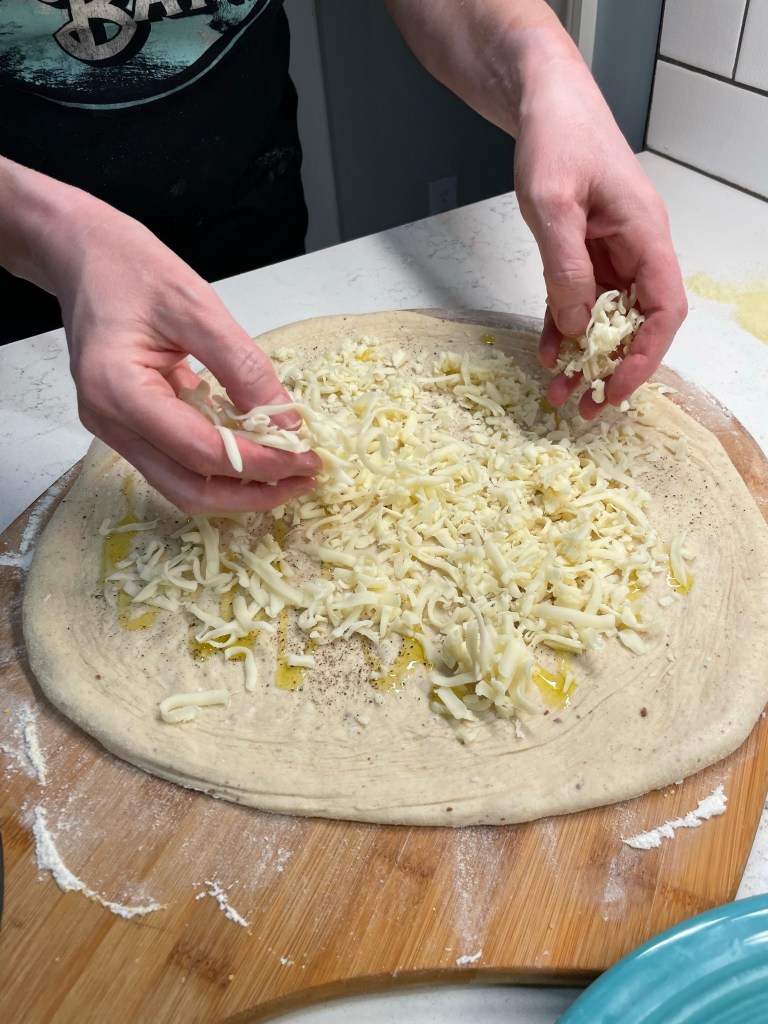
I like to shape the dough by hand, as it results in the light, airy crust we love. A little drizzle of olive oil, and then I layered on freshly grated mozzarella— no sauce is needed for this pie.
Shaping by hand produces an airy crust.Do you see the salt flying through the air?Shredded mozzarella is a perfect base for this pizza.
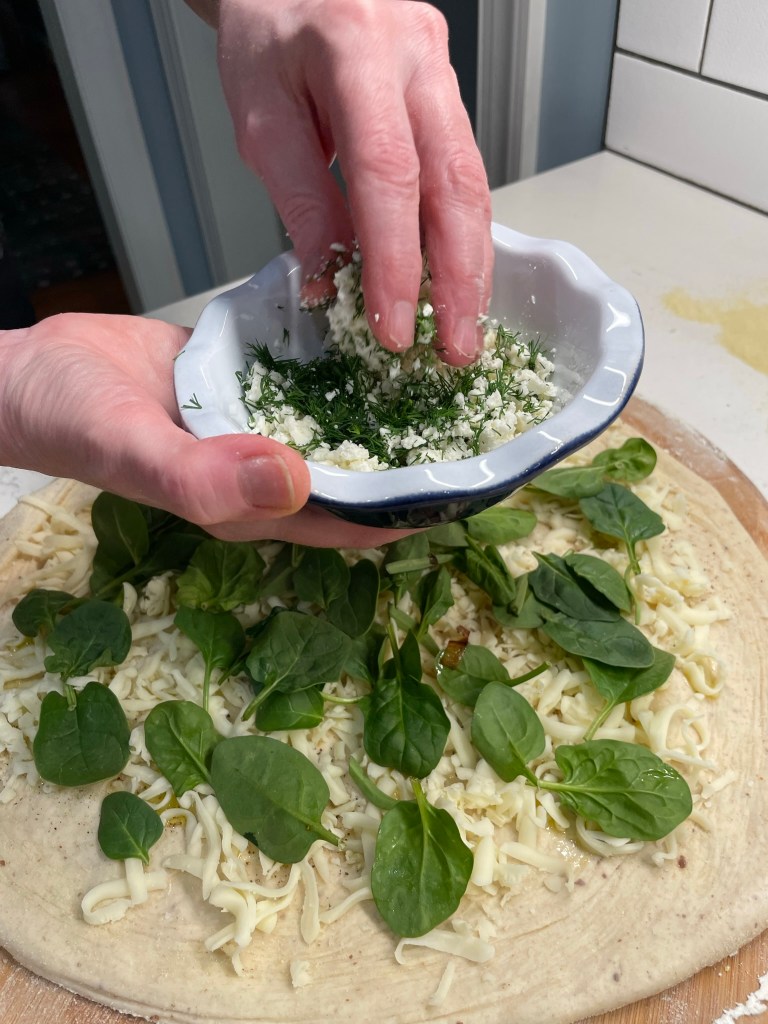
Next was a handful of fresh baby spinach, because I wanted to present the ingredient a couple of different ways. I crumbled up two ounces of feta (the kind packed in brine) and mixed it with chopped fresh dill. This was scattered over the spinach and then buried under a generous amount of spinach that had been sautéed with sweet onions and chopped leeks. A little more mozzarella, and I slid it into the oven!
This pizza is packed with nutritious spinach and carries all the flavors of the Greek specialty, spanakopita.
Ingredients
1 pizza dough ball (about 11 ounces), at room temperature
3 fat handfuls (about 3/4 pound) fresh baby spinach, divided (you’ll cook most of it, and keep a small handful fresh)
1/2 cup sweet onion, chopped
1/2 cup chopped leeks, white and very light green parts only
1 cup freshly shredded whole-milk mozzarella, divided
1/3 cup brine-packed feta, patted dry and crumbled
2 Tbsp. chopped fresh dill leaves
Extra virgin olive oil, salt and pepper
I bake all my pizzas at very high oven temperature (550 F) on a pizza steel that is preheated for one hour. If you have a baking stone or only a pizza pan, you may need to adjust temperature and baking time accordingly. Use a flour- and cornmeal-dusted pizza peel for easy transfer into and out of the oven.
Directions
Preheat oven (and steel or stone) to 550 F, with rack placed about eight inches from the upper heating element.
Heat a non-stick skillet over medium heat with a generous swirl of olive oil in the pan. When the oil begins to shimmer, add onions and leeks and sauté a few minutes until they are softened and translucent. Add two-thirds of the baby spinach (give it a rough-chop first if you’d like) and sauté until most of the moisture is evaporated and spinach is greatly wilted. Transfer the mixture to a bowl and cool to room temperature.
In a small bowl, combine crumbled feta and fresh dill. Set this aside.
Lightly dust a counter or board with flour. Shape dough into a 14-inch round, taking care to keep some airy bubbles in the outer edges of the dough. Transfer to the prepared peel.
Drizzle olive oil onto the dough and sprinkle it with salt and pepper. Arrange most of the mozzarella evenly over the dough, reserving about 1/4 cup for the final layer. Scatter reserved handful of fresh spinach over the mozzarella.
Sprinkle the feta-dill mixture over the spinach. Use a spoon to evenly distribute the sautéed spinach and onion mixture all over the pizza, and be careful not to leave large clumps of it near the pizza’s edges. Top with the remaining bit of mozzarella.
Slide the pizza onto the preheated steel (or stone) and bake 6 minutes, or until cheese is bubbly and edges of crust are puffy and golden brown.
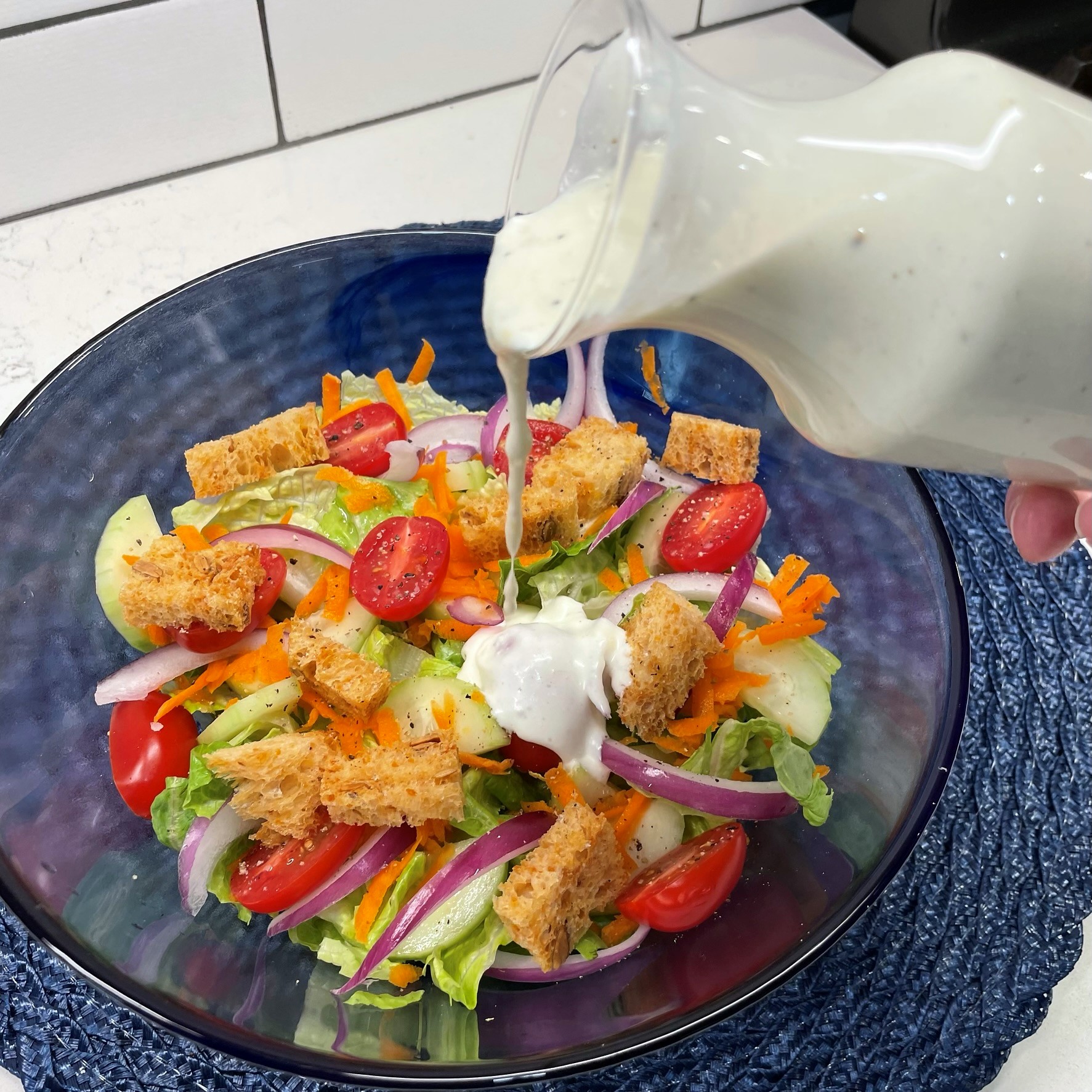
Let’s get this out of the way; today’s post is less about the salad dressing (which was just OK, and I’ll offer my ideas for making it better) and far more about my excitement in finding the new appliance I used to make it. What can I say? —I don’t take my decisions lightly.
We are approaching the six-month mark since the completion of our beautifully remodeled kitchen, and I am still on the hunt for the right tools to help equip me for success. You know how it is—you improve one thing, and suddenly everything in and around it seems outdated. My husband, Les, and I gave every countertop gadget we own a once-over when we did our update, and though a few appliances were deemed worthy, I have decided to replace my tired, old food processor (more to come on that one) and to purchase a real, honest-to-goodness blender. It’s about time!
I’ve had a Nutri-Bullet personal blender for a few years, and it’s great for breakfast smoothies and small amounts of things that I want to puree into oblivion, but not so good for anything that requires finesse, because the Nutri-Bullet has only one setting. It is also inconvenient for making anything that requires adding or adjusting ingredients halfway through, because once you open the wide, jar-like lid, the blended mixture gets all over everything and makes a mess. I needed a blender that opened at the top and had multiple settings and functions to help me with more than just smoothies.
When I had lamented to Les a few years ago that it was difficult to find a quality blender “like they used to make,” you know, with a sturdy glass carafe, he disappeared to our garage and returned with a dusty relic that had been gifted to him many years ago (for his first wedding, as he recalls). It was tall and heavy, with real glass! Unfortunately, when we finally found replacement gaskets for the ones that had dry rotted, we discovered that the blender didn’t have much oomph. It was mostly good for, well, stirring things.
After months of intense research, and reading reviews on every website imaginable, I have finally found the best blender for us. It’s tall, attractive, powerful and versatile enough to handle whatever role I give it. In other words, it’s the George Clooney of countertop appliances. The first challenge I had with it was deciding what to make first, and so far, I’ve only used it to make coconut martini cocktails and this buttermilk feta salad dressing, which was included in the little recipe cards that came with the machine. Regardless of your blender brand, I’m confident that you can make this dressing, and it only requires five ingredients, plus salt and pepper.
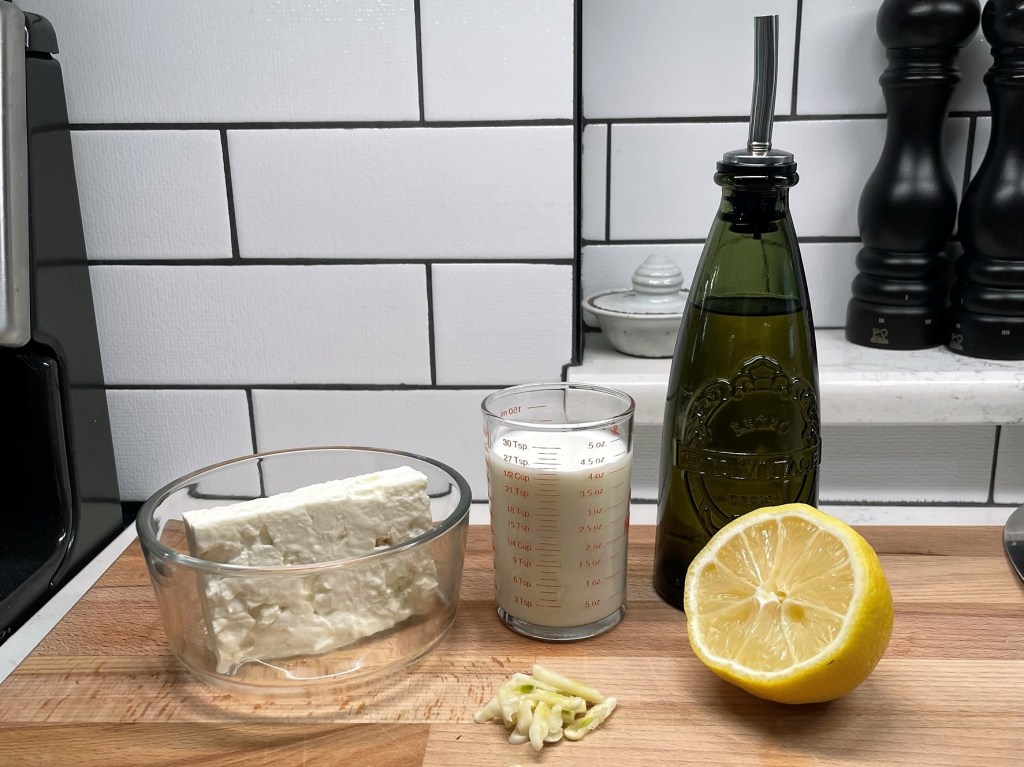
This dressing can’t help being tangy, with feta, buttermilk and lemon! Garlic and olive oil round out the ingredients list.
Part of the appeal of this recipe was that I already had all the ingredients, and the dressing wasn’t bad but I would recommend a few tweaks to improve the texture and balance the tang. Just about any kind of fresh, tender herb would be good here; basil, cilantro or dill would add a zesty punch. In the texture department, I would recommend addition of a couple tablespoons of mayonnaise to produce a creamier dressing that will cling better to your salad greens. If you do stick to the recipe offered by Breville, I recommend using a buttermilk with a thicker consistency so it doesn’t turn out watery.
Here’s how things went for me.
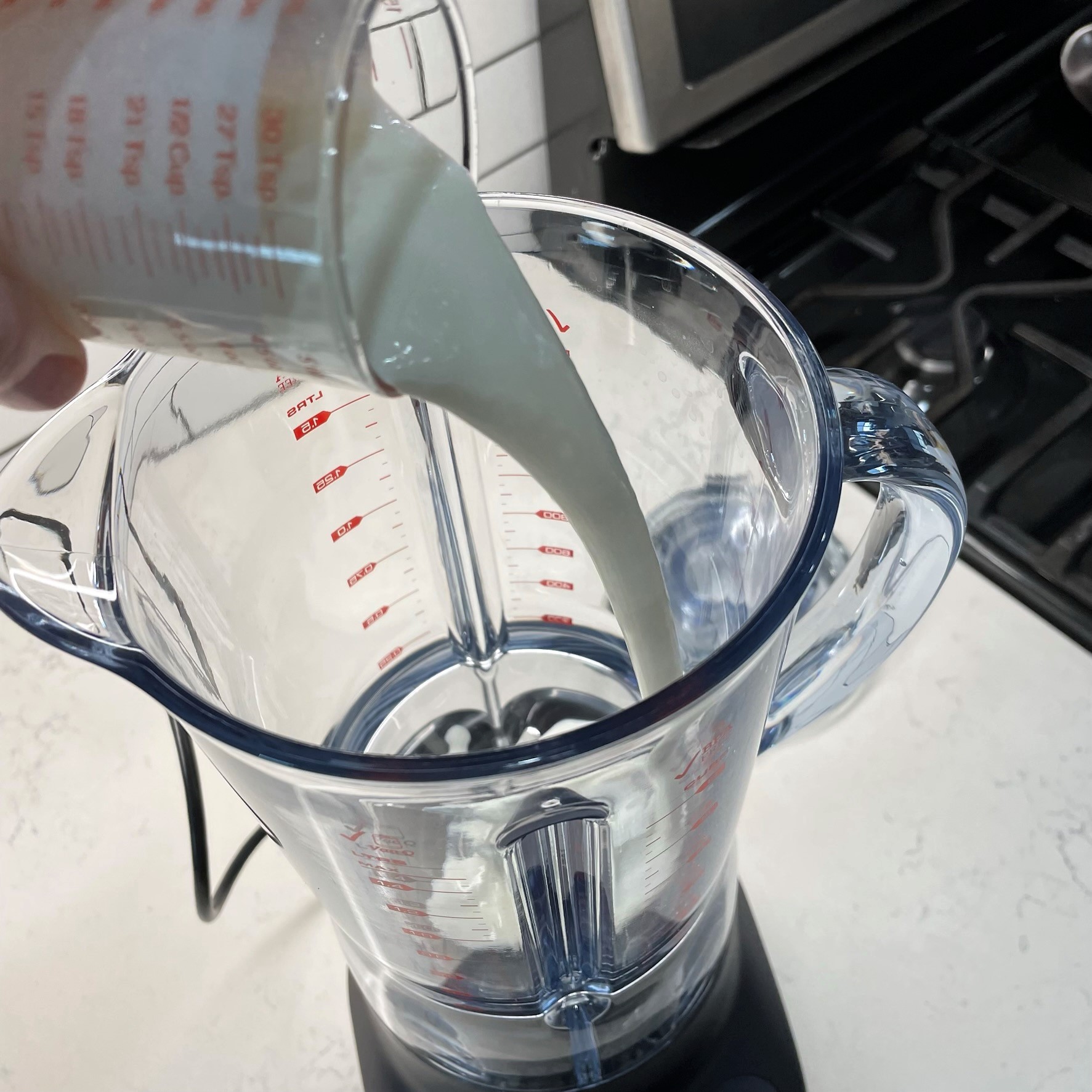
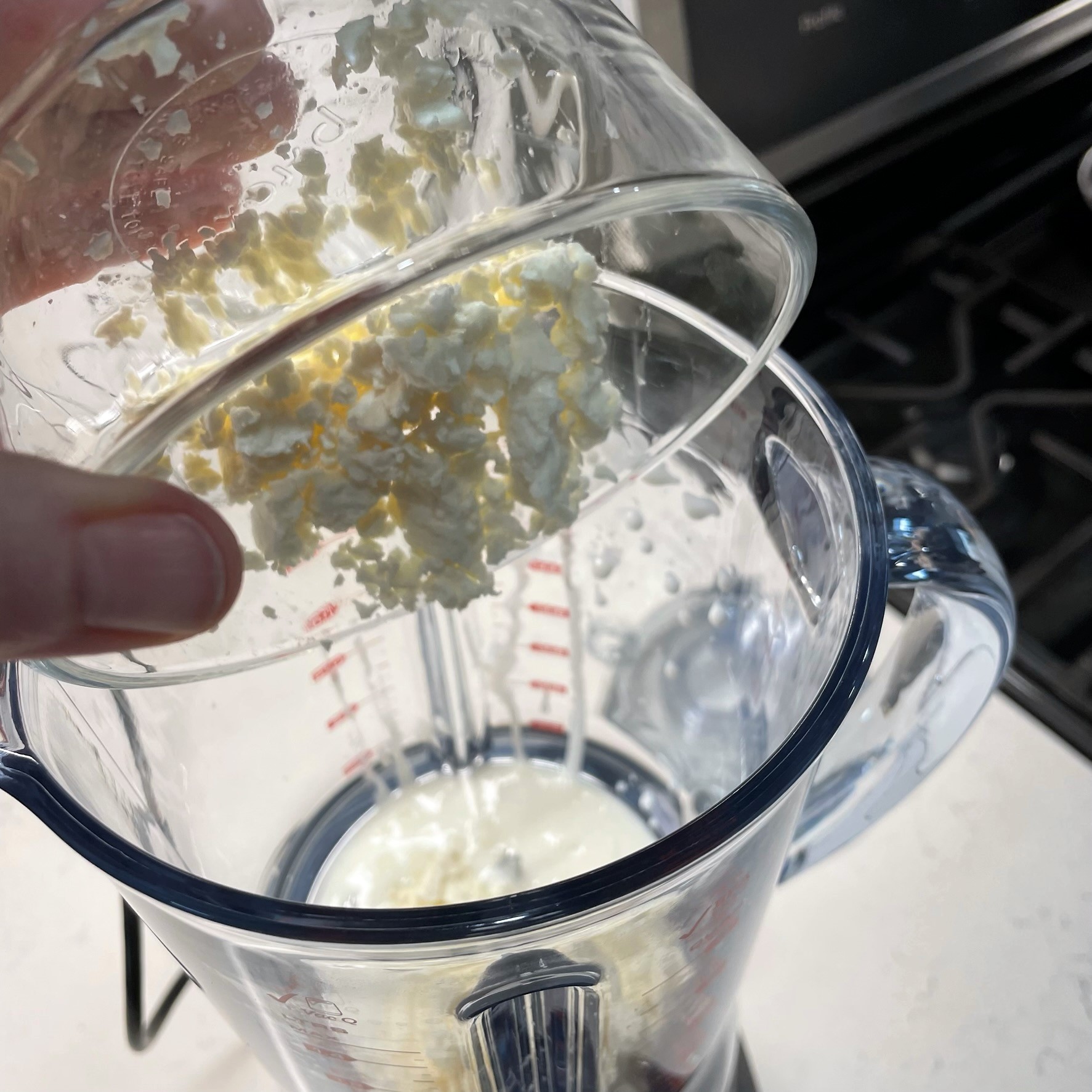
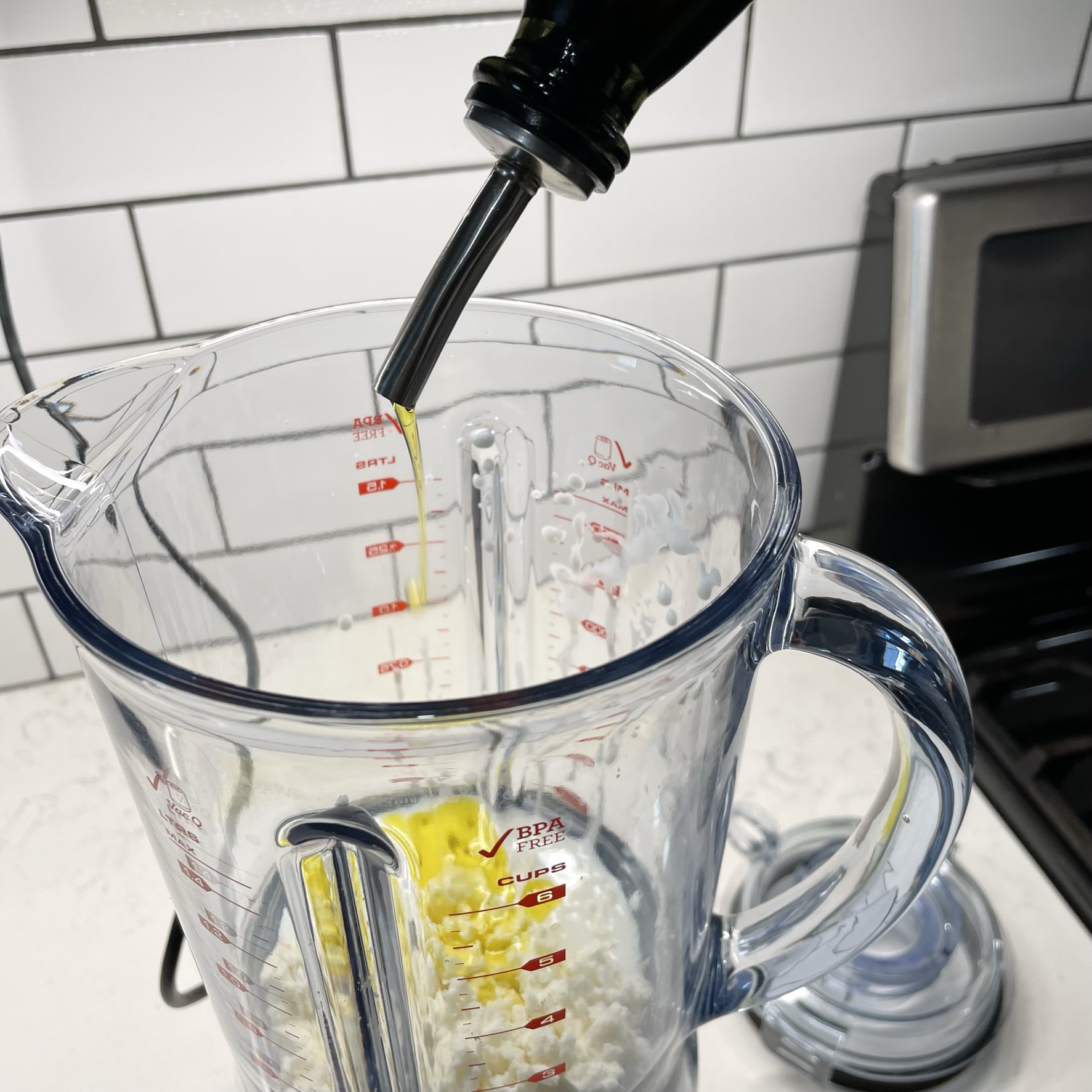
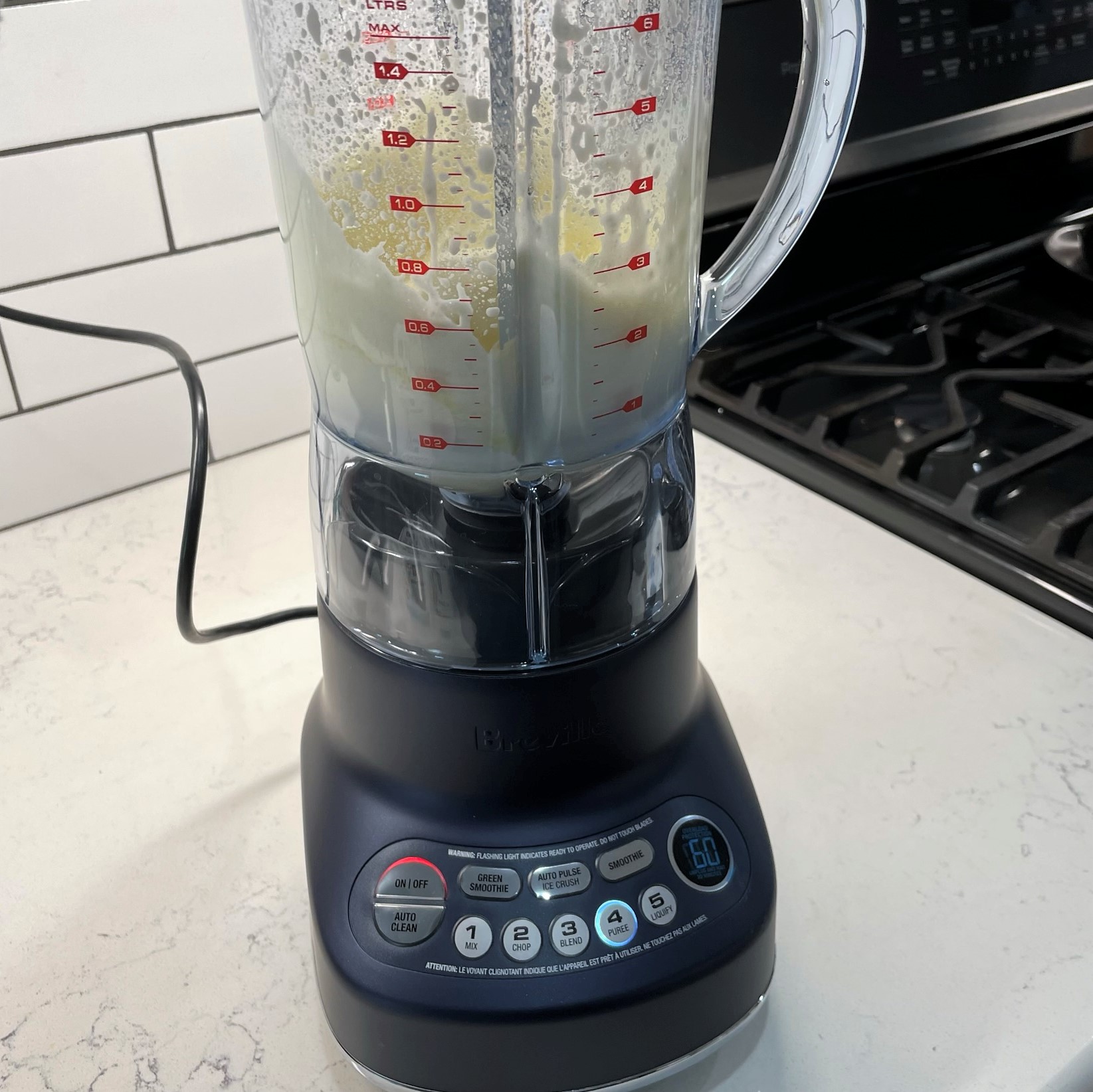
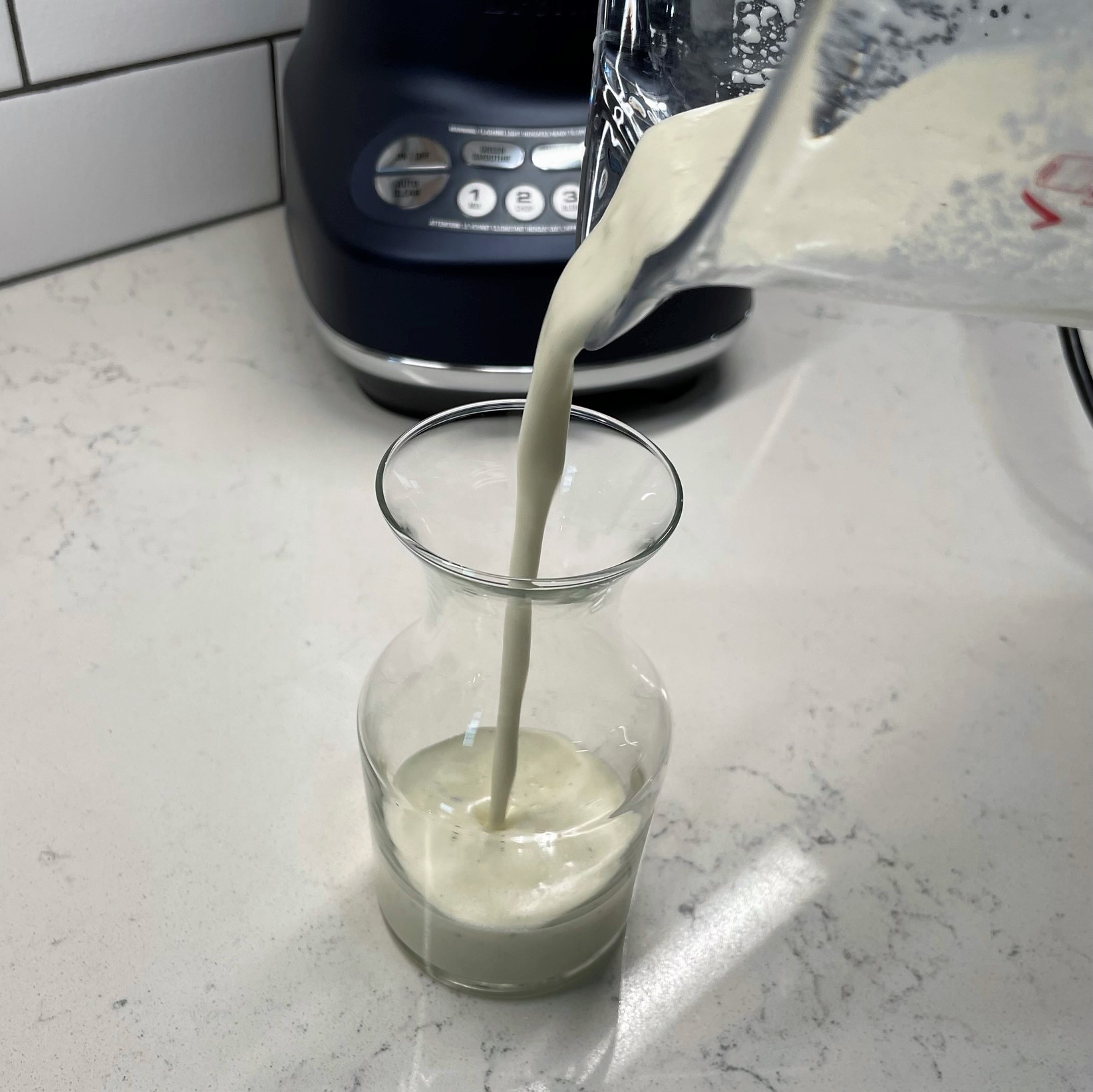
For easier blending, the instructions say to put the liquid ingredients in first.My feta was packed in brine, and it didn’t take much to crumble it into bits, though the blender did not need help with that.I usually blend oil in with the machine running, but I followed the Breville instructions and just added it to the blender from the start.I am enjoying the steady, powerful motor of my new toy!The dressing will keep in the fridge for a few days. This recipe yields about one cup of dressing, enough for 8 salad servings.
But enough about the dressing. 😉
I am very pleased with our new Breville blender, which has a pre-programmed setting for smoothies, and eventually I will get around to making one. I especially appreciate the self-clean function, which makes cleanup a snap, even after making a creamy salad dressing like this one. It’s so easy, I literally put two drops of dish liquid into it with about one cup of water and touch the “auto-clean” button. The blender does the rest, switching between speeds and settings until the pitcher is clean. Quick rinse, and done. I should have bought it years ago. Did I mention that I paid full price for this appliance, and nobody is paying me for my opinion? Just thought I’d mention that, in case this sounds like an advertisement.
Besides the debut of our fab new blender, I am also excited to apply a new way of sharing the details of my recipes with you. When I first started my blog, my sister-in-law, Andrea, suggested adding a “print” feature to make it easier for a reader to save a recipe for later. It was a great idea, and up to this point, I have accomplished it by formatting the recipe into a PDF that I upload at the end of a post. Today, I’m doing something different.
After an hour-long chat session with WordPress support (which left me as confused as ever), and then a few friendly emails and helpful coaching by one of my blog buddies about something called “shortcode,” I have finally figured out how to apply my recipe ingredients and instructions to my posts, including a quick “print” option, without so much background work.
I first spotted this feature on a post by Maylee at BeyondGumbo.com, and when I reached out to ask about it, Maylee graciously walked me through how she uses the feature. As you’ve probably guessed, her blog is all about the regional cuisine of Louisiana (which is so much more than gumbo!), including a beautiful bibb salad with luscious Louisiana strawberries, which she just posted on Sunday. And if you think that sounds delicious, wait until she surprises us with something that she casually whips up from the satsuma trees growing in her backyard. 😊
This recipe is simple and versatile, and it can be made in any blender. Consider tweaking it by adding other ingredients, such as your favorite fresh herbs, for a twist of flavor.
Ingredients
1/2 cup cultured buttermilk
Approximately 1/2 cup feta, crumbled
2 Tbsp. extra virgin olive oil
The juice of one organic lemon
1 small clove garlic, rough-chopped
1/2 tsp. organic lemon zest
Kosher salt and freshly ground black pepper, to taste
Directions
Place buttermilk, feta, olive oil, lemon juice and garlic into the jug of a blender. Puree 15 seconds, or longer if needed to achieve smooth texture.
Add lemon zest. Season with salt and pepper. Mix on a low speed for 5 seconds, to incorporate seasonings. Transfer dressing to a jar and refrigerate until ready to serve.
If this were a normal year, the Greek Orthodox church in our city would not have had a long line of cars snaking around it this past weekend, with drivers waiting to purchase prepared food in white Styrofoam take-out boxes. It would not have been nearly so quiet, and it would not have been the impersonal experience my husband, Les, had when he picked up our Saturday night meal. The string of taillights ahead of him and the line of vehicles in his rear-view mirror were a stark contrast to a “normal” mid-May visit to the church’s annual fundraiser.
The Greek Festival should have been a noisy, three-day celebration for all ages, packed with singing, music, dancing, eating, drinking and intermittent yells of, “Opa!!!!” There would be authentic heritage costumes and colorful art for sale and scheduled history lessons inside the Orthodox Church sanctuary. But this has not been a normal year, nor was it last year, when the Greek Festival was cancelled altogether for safety reasons. This year, at least, the church gave it a go by offering drive-through pickup of its most popular food items—some prepared and some frozen. Sadly, the take-out box did not do my hot meal any favors, but I have higher hopes for the spanakopita we tossed into the freezer.
The food is one of the things I usually love most about the Greek Festival, and you can bet I will be there next year when things (hopefully) look more normal. The flavors of the Greek culture are so bold and fresh, and I cannot resist applying them to foods that don’t necessarily speak Greek, including this inspired pizza.
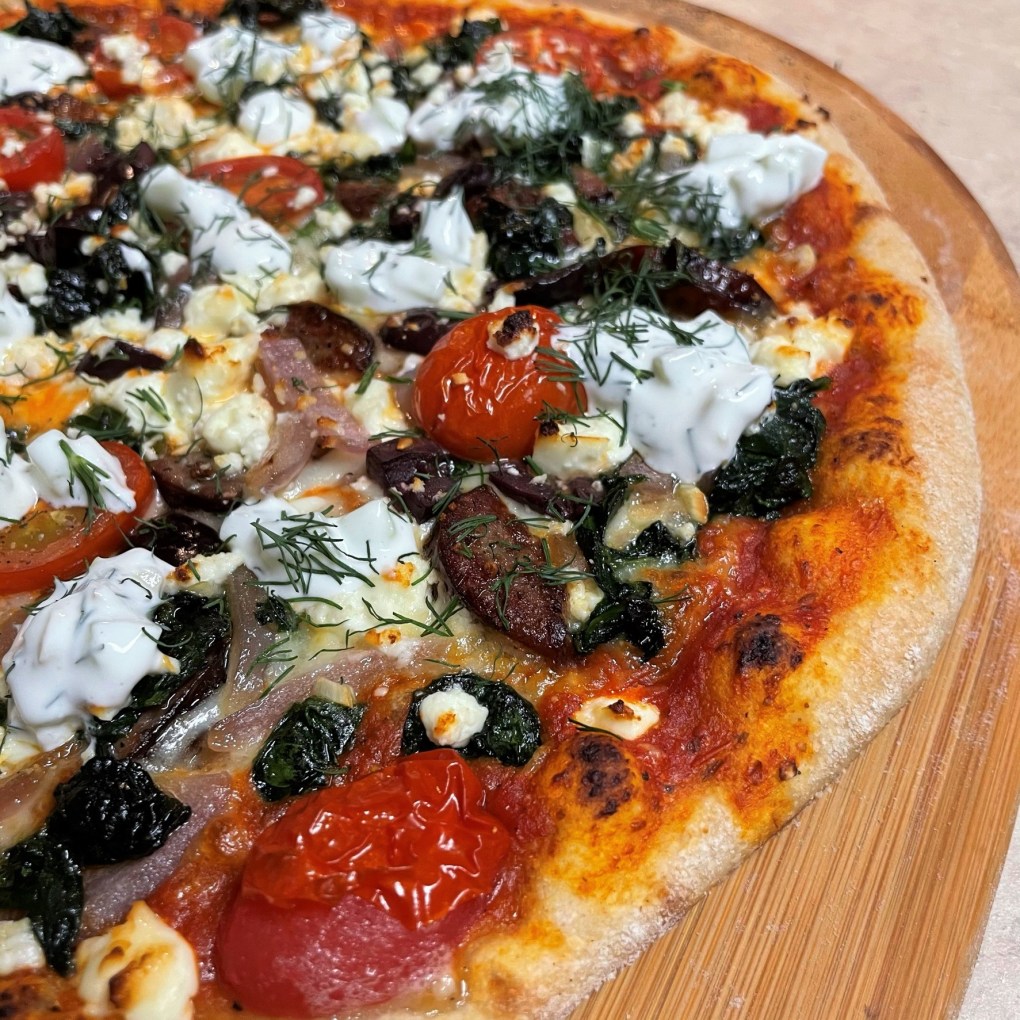
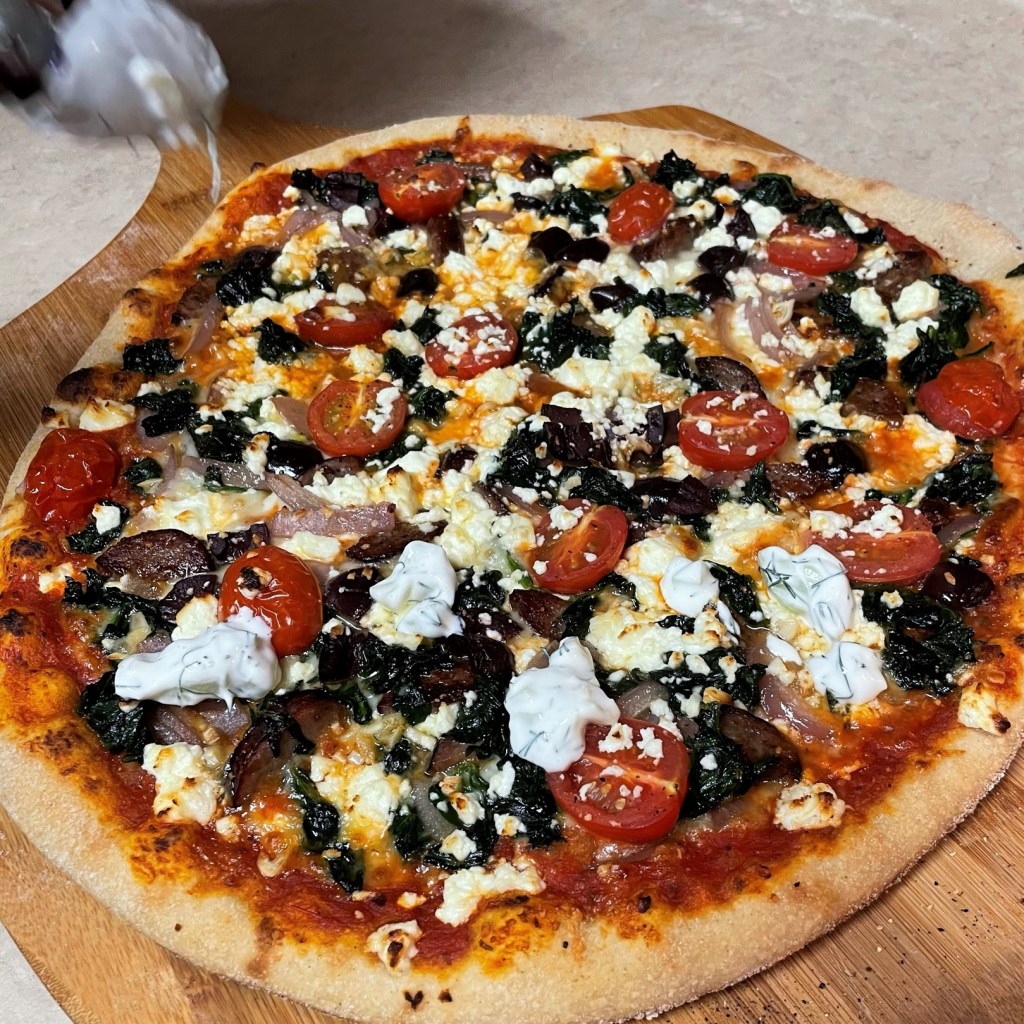
This pie has all my favorite Greek flavors in one bite!
Les and I enjoyed this one a couple of months ago, and I am finally sharing it here on Comfort du Jour. We have a regular tradition of Friday night pizza at our house, and though we do enjoy a classic Italian sausage or pepperoni pie, you know I also love to twist them up with other flavors. Visit the Pizza Party page for a quick review if you are looking for some new topping ideas.
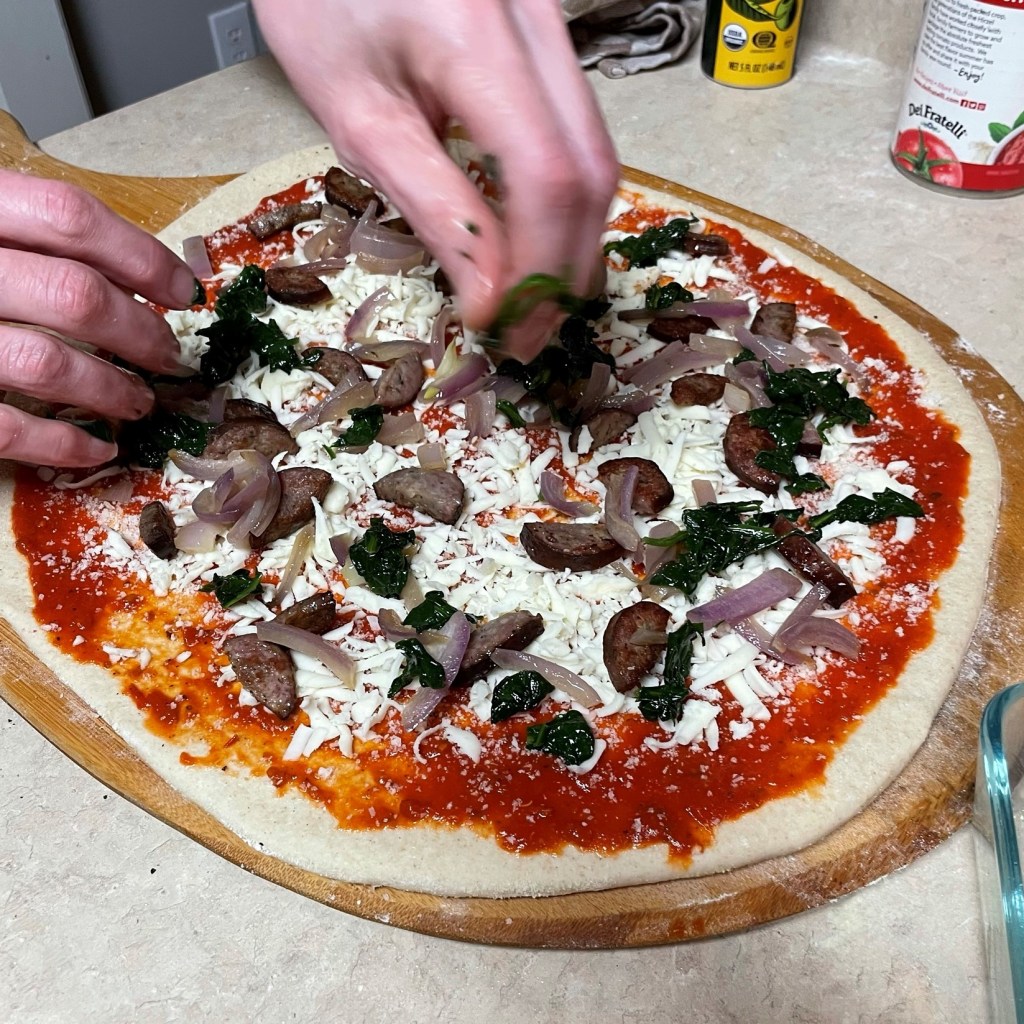
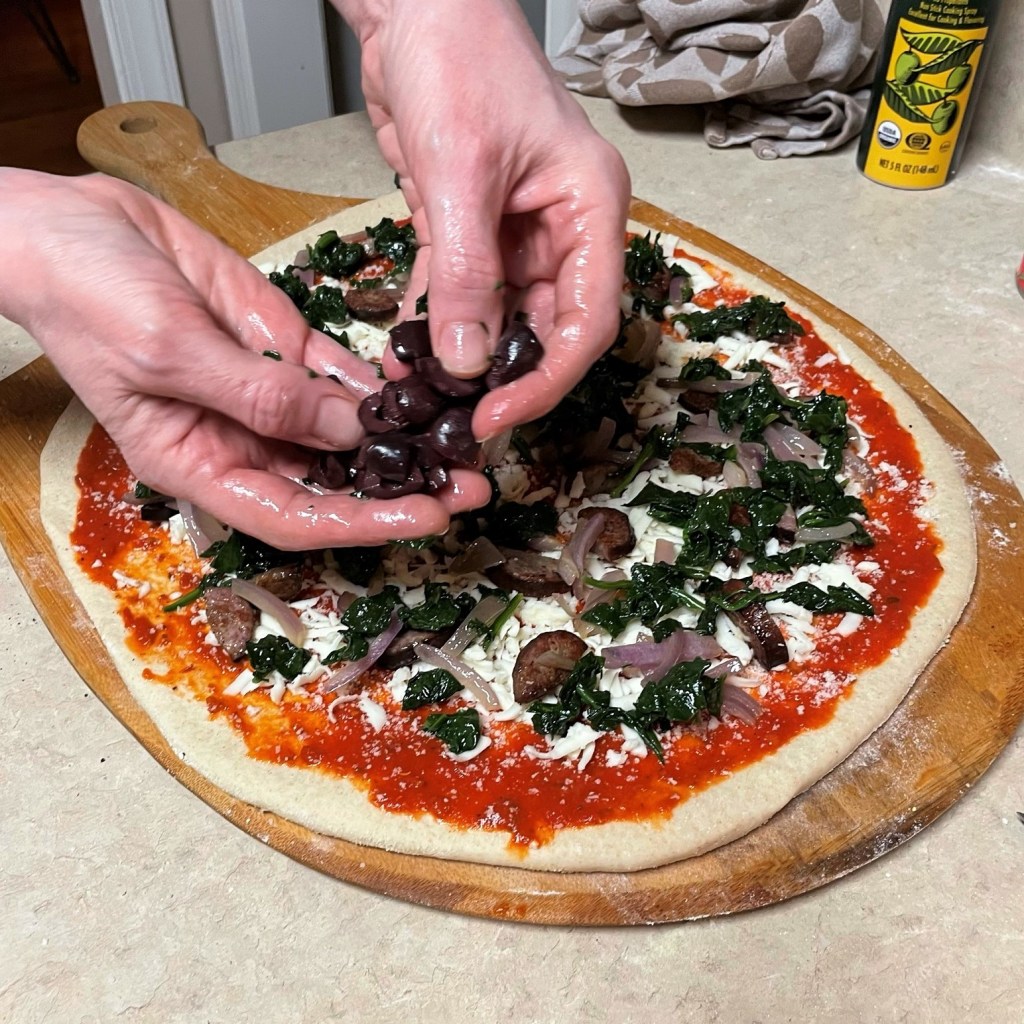
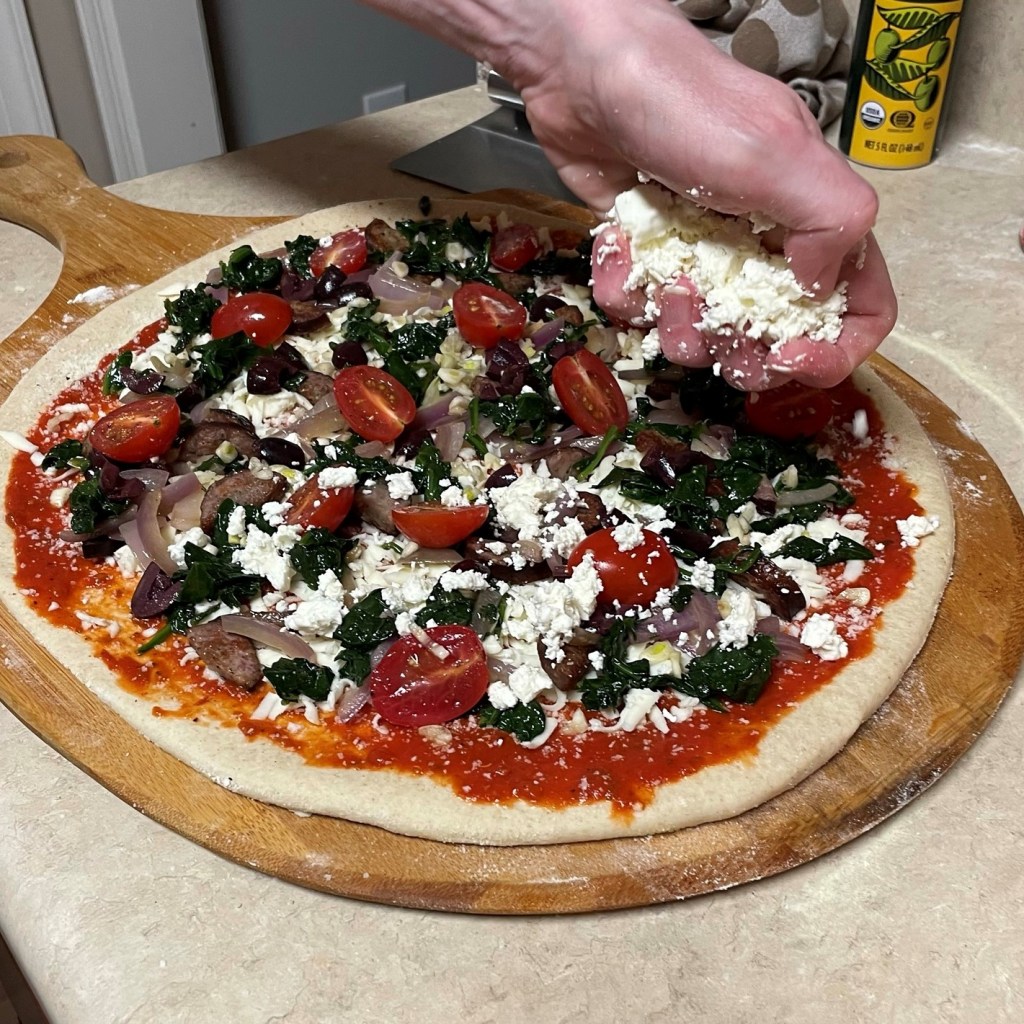
For this tantalizing “Big Fat Greek Pizza,” I started with my own N.Y.-style pizza dough and a simple tomato sauce base, the same as I would use on a traditional Italian pie. Next, I crisped-up bits of “Greek God” sausage, an offering of one of our local butcher counters. The sausage is full of bright herbal flavors—oregano, basil, garlic and rosemary—and I had been imagining it on a pizza for quite some time, though I’m quite sure this pizza would be just as good with no meat. I piled on spinach, red onions, Kalamatas, fresh cherry tomatoes and a whole bunch of feta, and that should have been “Greek” enough. But my favorite part was the dollops of cool cucumber-garlic tzatziki that went into place after the pizza emerged from the oven. The combination of all these ingredients was like a flavor explosion, giving me my very own Greek festival, all in one delicious bite.
Opa!!!
Ingredients
Tzatziki:
1/3 cup plain Greek yogurt, stirred
2 Tbsp. half and half
1/4 cup diced cucumber, seeded and patted dry
1 or 2 cloves garlic, finely minced
1 Tbsp. fresh dill leaves, chopped (chop some extra for sprinkling over the finished pizza)
Combine ingredients and keep refrigerated until ready to serve pizza.
I usually do not add half and half or cream to my tzatziki, but I wanted it a bit thinner for this recipe.
A little chopped dill adds another layer of flavor to the tzatziki. Fresh is always best, but dried will be fine in a pinch.
1 link cooked and sliced Greek God sausage* or similar product (see notes)
1/2 medium red onion, sliced
1 fat handful baby spinach leaves
Handful of pitted Kalamata olives*, roughly chopped
6 or 7 cherry or grape tomatoes, washed and halved
3/4 cup fresh feta, crumbled*
Additional chopped fresh dill, for serving
*Notes
If you decide to try my version of N.Y. pizza dough, note that it takes a few days’ time in the fridge, so plan accordingly. This recipe is intended for a thin-crust pizza, and my heating and bake time instructions are specific to baking on a pizza steel or stone. If you prefer to bake on a pan or at lower temperature, adjust your baking time to your preferred method.
The “Greek God” sausage I used for this pizza is a specialty product from a specific local grocery. It is a fresh pork sausage, seasoned with basil, oregano, garlic and rosemary, and we cooked (actually, smoked) it prior to using it. Any mild pork, chicken or turkey sausage would make a fine substitute, or you could easily omit the sausage altogether. The other flavors on this pizza are more than enough to elevate your happy.
Kalamata olives are specifically grown in the Kalamata region of Greece, and they are not the same as inexpensive, canned “black” olives. They are more oblong than round, and they are usually packed in a briny liquid with wine or olive oil. It’s easy to find them in jars or on specialty olive bars, if your supermarket has one. They can be a little pricey, but as far as I’m concerned, they are worth their weight in gold. Be sure to select pitted olives for this recipe, unless you find it exciting to crack a tooth.
I prefer to use fresh blocks of feta, as it has better flavor and texture than most crumbled feta. If the feta block is packed in brine, be sure to pat it dry with paper towels before crumbling, to minimize excess moisture.
Instructions
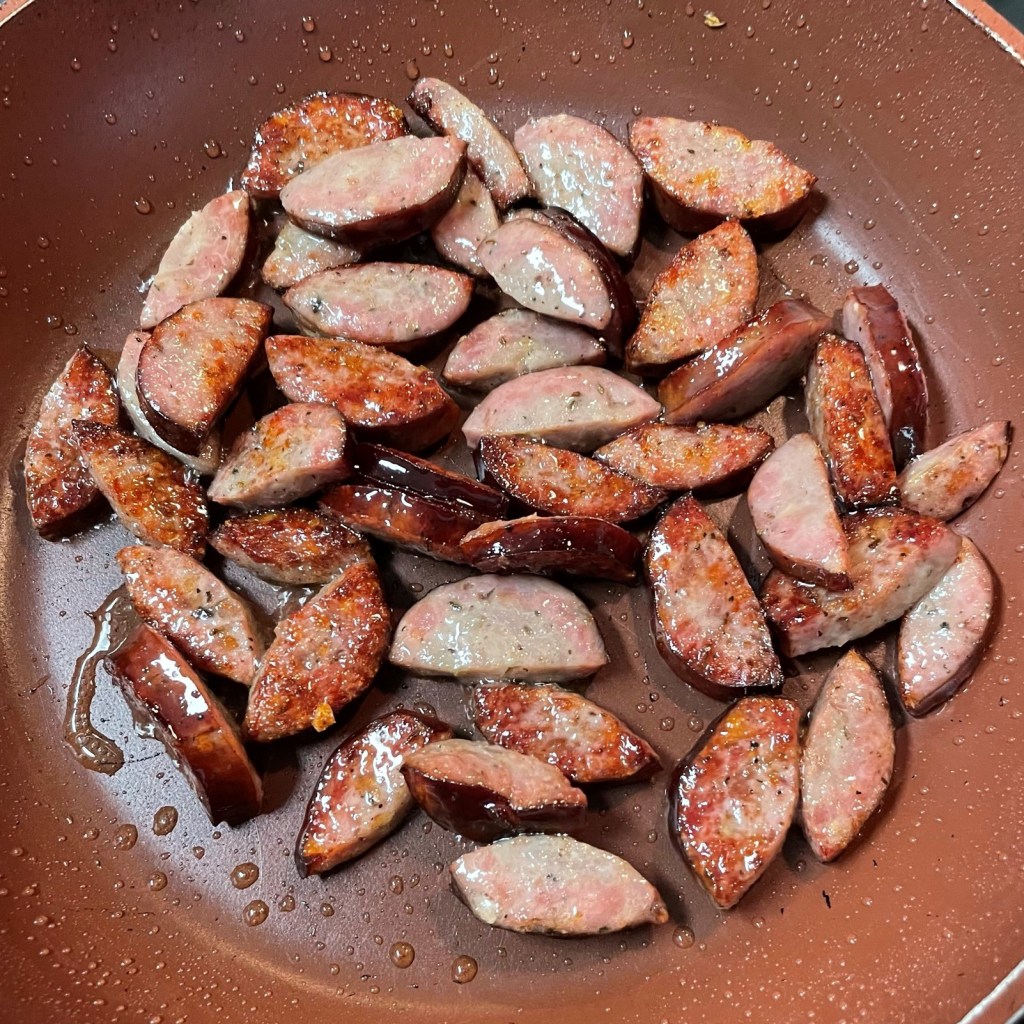
We had a couple of links of this Greek-seasoned sausage leftover from a recent batch we had smoked. I sliced and crisped it for texture.
Saute the onion just until it begins to soften.
Saute the baby spinach just until leaves are wilted.
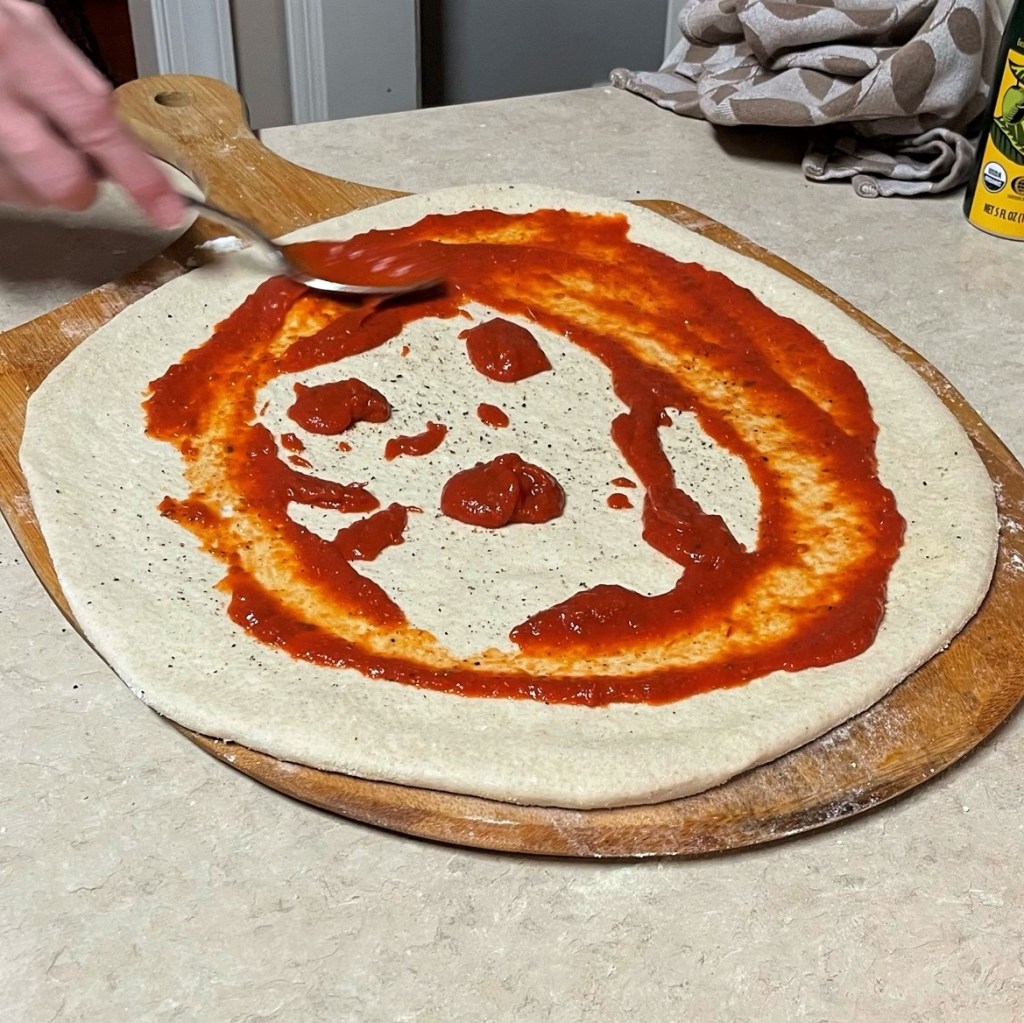
Use sauce sparingly for best results. For a standard 14-inch pizza, about 4 tablespoons will do it. You should be able to see the dough through the sauce.
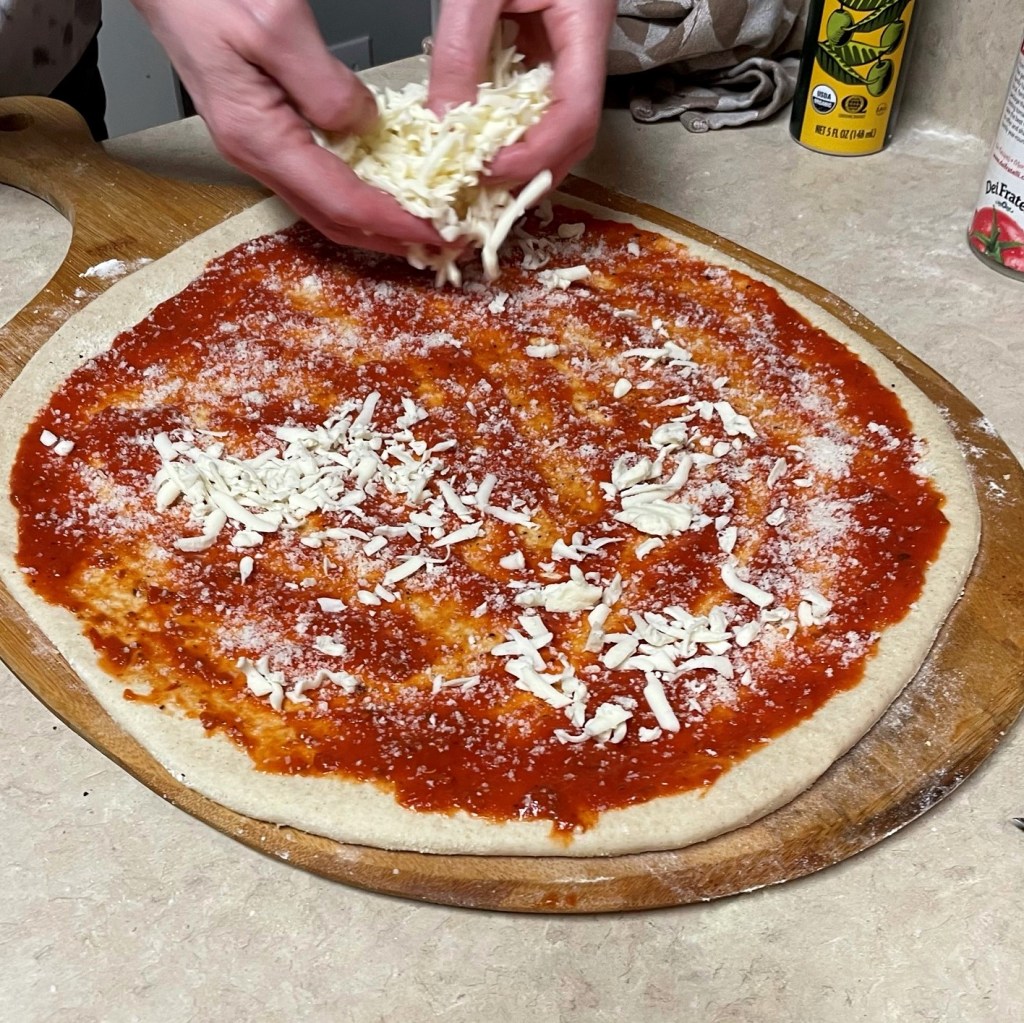
Sprinkle on a few shakes of grated parm-romano, then scatter the shredded mozzarella evenly over the sauce base.
Layer on the cooked ingredients first.
Next comes the briny, juicy Kalamata olives. I could eat these things for breakfast, I like them so much!
Arrange the cherry tomatoes face-up, so they don’t lose their moisture into the pizza. Then scatter the crumbled feta over the whole pie. Slide it into the oven until the crust is golden brown.
Looks darn delicious, right? But I’m about to elevate these Greek flavors one more time.
Distribute dollops of the cool, fresh tzatziki over the pie. Make sure each slice will have its fair share.
Finally, a sprinkling of more fresh dill. This flavor livens up a dish in a hurry!
Cue the bouzouki player! Time to get this personal Greek Festival started!
Preheat pizza steel for one hour at 550° F, or the recommended temperature for your pizza stone, with oven rack about 8 inches from the top heat element. If using a metal pan, place rack in lower third of oven.
Prepare toppings: sauté red onion just until softened, then sauté spinach until wilted. Transfer both to a dish to cool.
Shape pizza dough into a 14-inch round and transfer to a floured pizza peel that is dusted with cornmeal (or place on a greased pizza pan). Brush or spray dough with olive oil, and season with kosher salt and a few twists of black pepper.
Spread tomato sauce evenly over the dough, all but 1 inch around edge.
Distribute the shredded mozzarella, then the cut-up, cooked sausage pieces (if using), onions and spinach, Kalamatas, tomatoes and feta cheese.
Transfer pizza to preheated steel or stone, and bake for about 7 minutes, until crust is golden brown and toppings are bubbling.
Arrange small dollops of tzatziki sauce over pizza, sprinkle with remaining dill leaves.













 Comfort du Jour