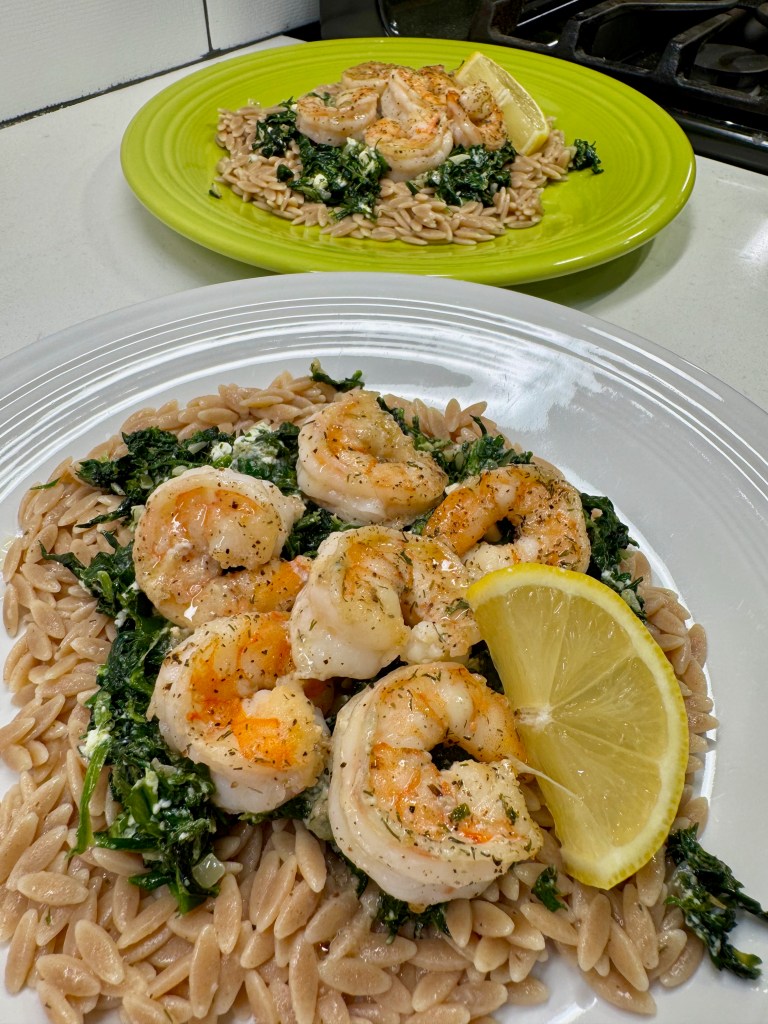
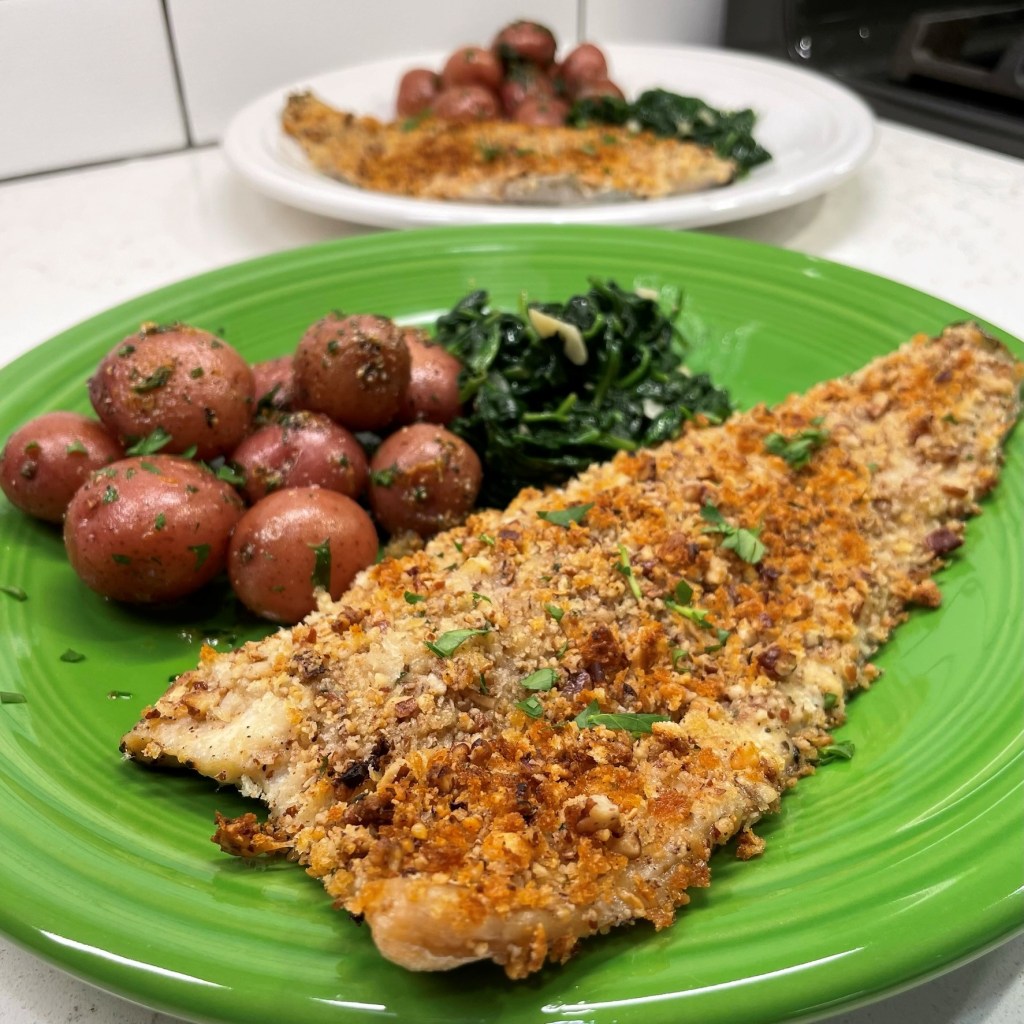
Spanakopita Scampi

Thank goodness for frozen shrimp. I mean this sincerely, as there are many times when life is too busy and even the best-laid plans can’t be pulled together in time to feed the hungry faces in my house. 

We have a weekly ritual here that begins around Sunday morning, when my husband, Les, and I sit down with our respective calendars, the long-range forecast displayed on one of our phones, and we do our best to map out what we are going to do about dinner in the week ahead. This includes a quick inventory of what we already have in the fridge and freezer, consideration of what nights might be good for cooking outdoors, acknowledgement of whether one of us has a hellish workday that week, and— last but not least— how much time we can allot to said meals and which of us will be cooking them.  

It’s a lot of moving parts and sometimes, our meal game falls apart and we need to punt. 

On such an occasion recently, I postponed a more-involved food plan in favor of this ad hoc dish, which turned out so good that I wrote down the ingredients to share it here. It’s something of a mashup of Italian shrimp scampi and Greek spanakopita, and it met all the requirements for a busy weeknight: quick, easy, flavorful and relatively healthful. 

Not too shabby for a last minute improvisation.

What ingredients do you need for spanakopita scampi?

My dish features peeled shrimp (fresh or thawed), garlic and plenty of olive oil, onions, spinach, feta, lemon, parsley and dill. And though I had both angel hair and linguine pastas— two options I’d typically reach for when making scampi, I decided to use the whole wheat orzo that was feeling ignored in the pantry. Orzo is a staple pantry ingredient in Greek cuisine, so it seemed a logical stand in for the spanakopita element of the dish, but almost any small pasta shape you like would work fine.

The most time-consuming part of this meal was thawing and prepping the shrimp, a task that I almost always hand off to Les’s capable hands. If you’re in a hurry, purchase shrimp that is already peeled and deveined to save valuable time. 

How to make spanakopita scampi

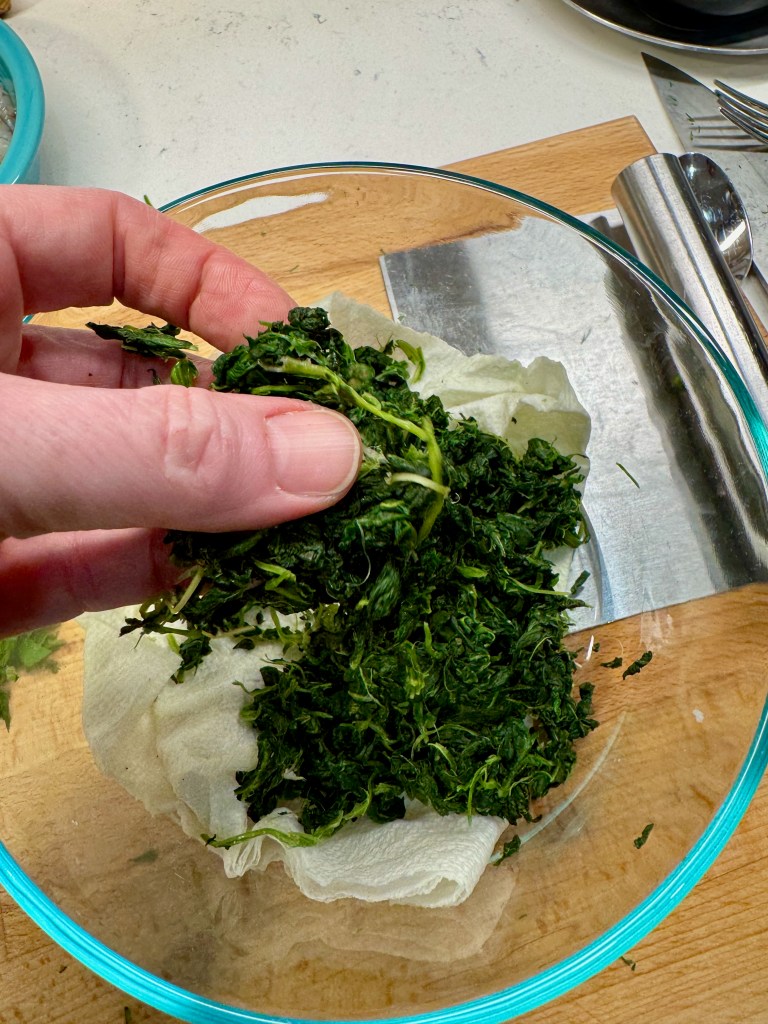
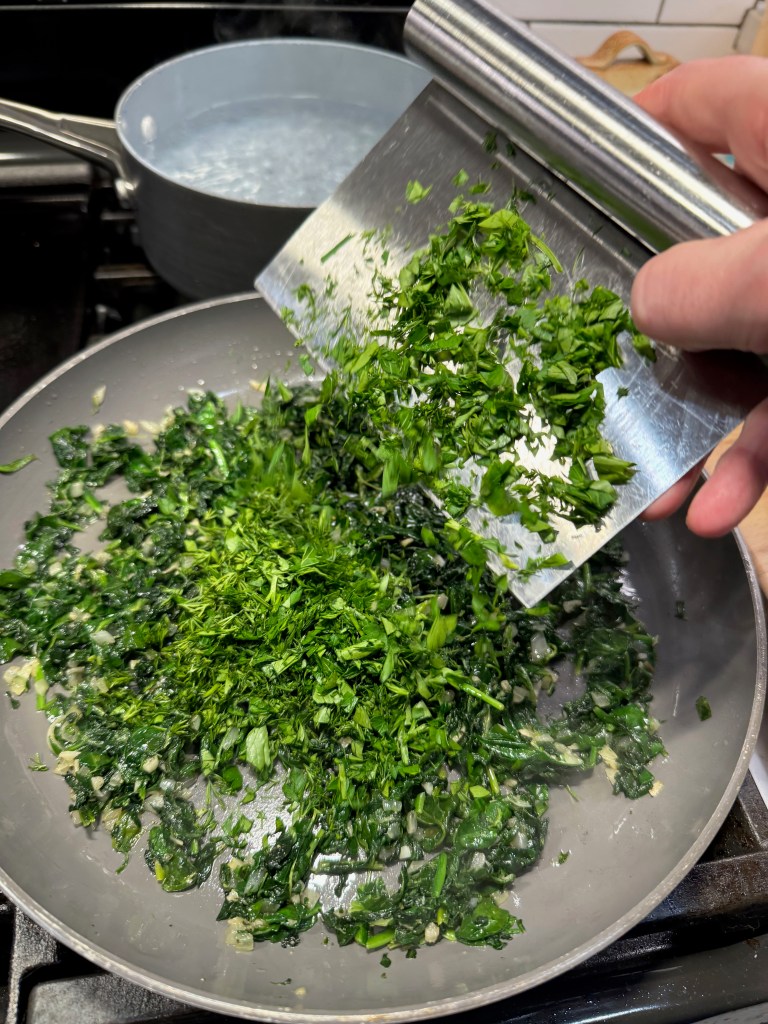
Everything else comes together quickly, beginning with a patient poaching of minced garlic in a large sauté pan. This should be done at a very low temperature, with almost no bubbles evident, so that you don’t burn the garlic. After about 10 minutes, increase the heat and add the diced onions, tossing to soften them in the warm, garlicky oil. Add the chopped spinach (I didn’t have enough so I supplemented with some thawed and squeezed frozen spinach), and then the fresh herbs.
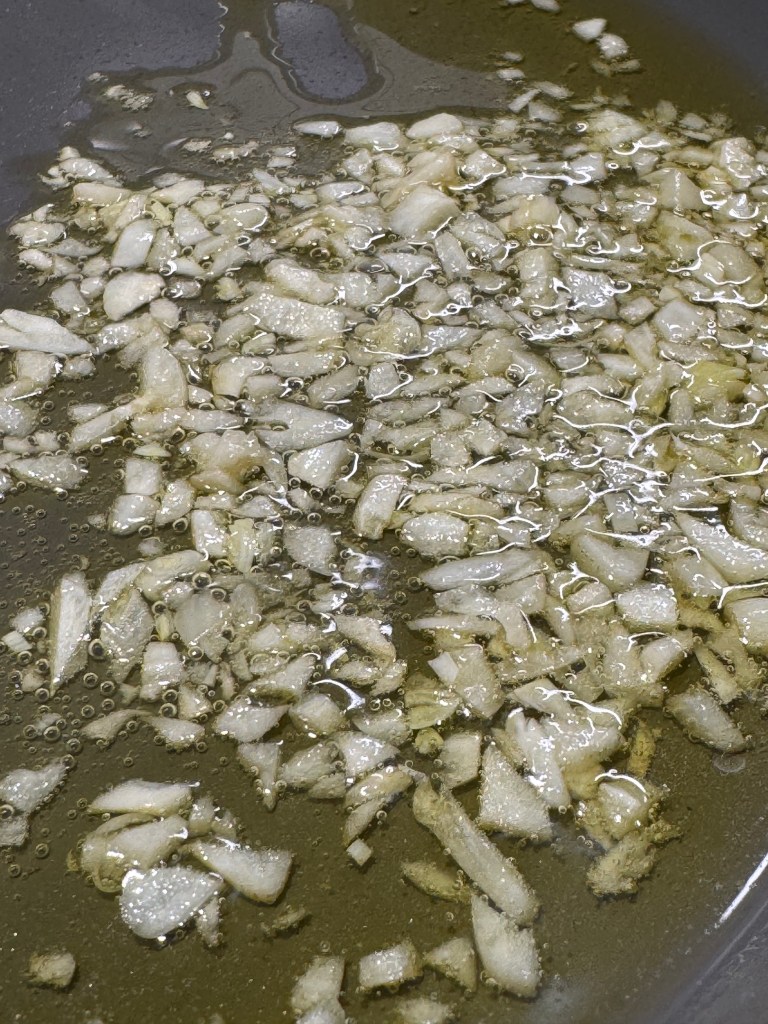
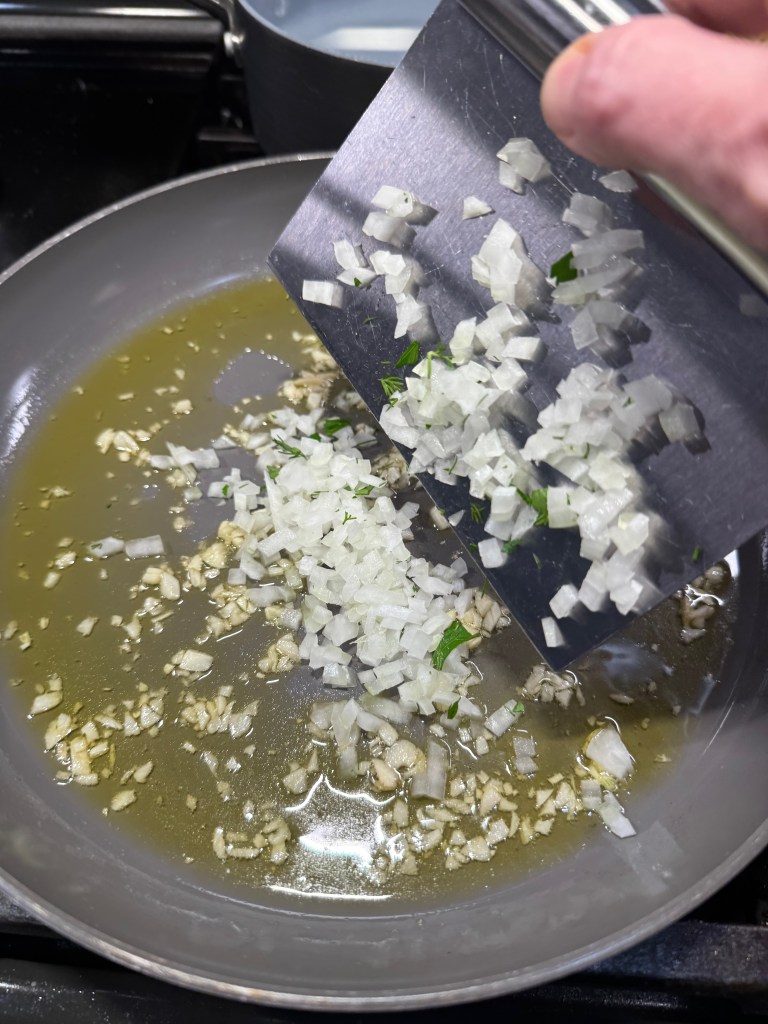
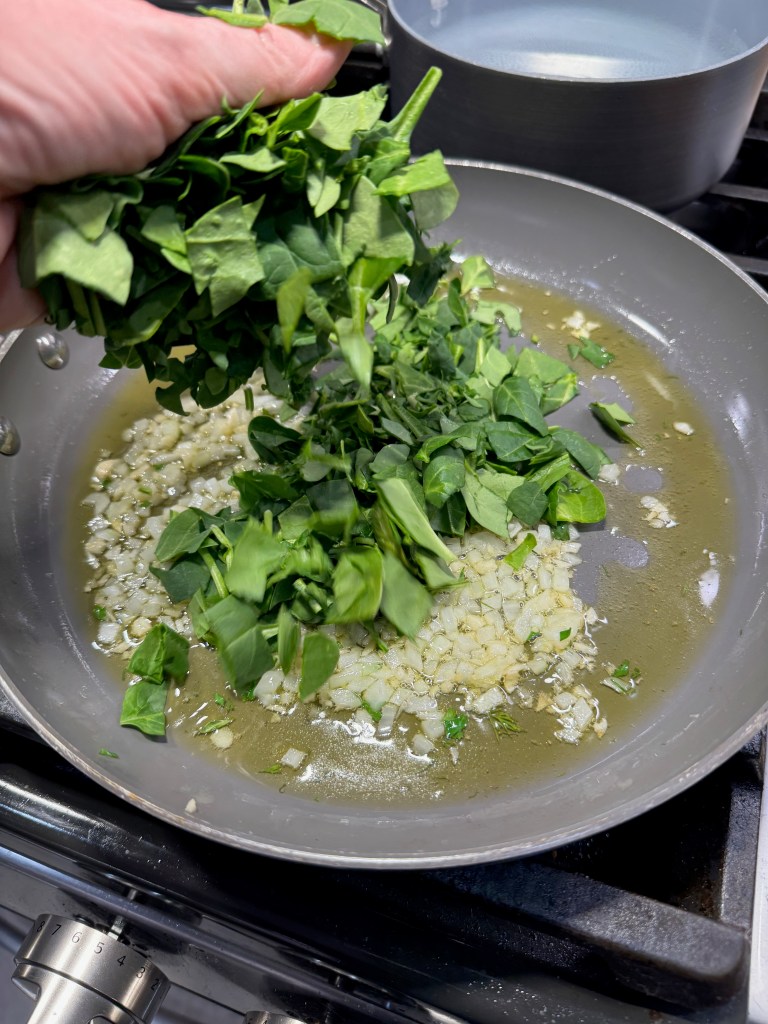
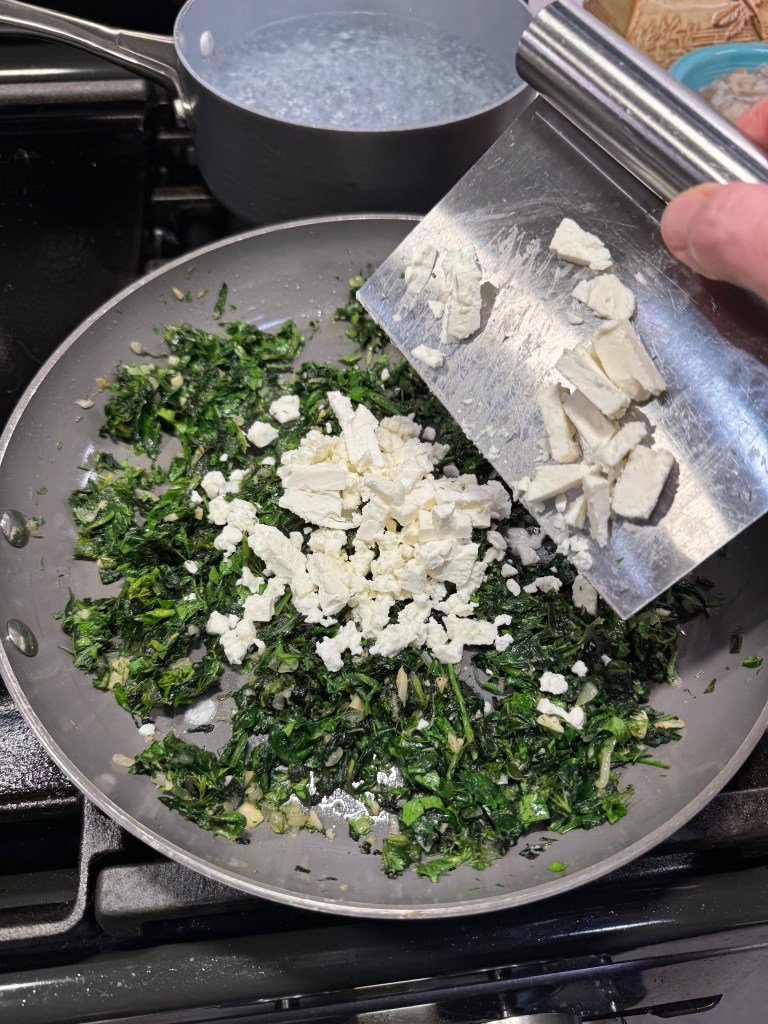
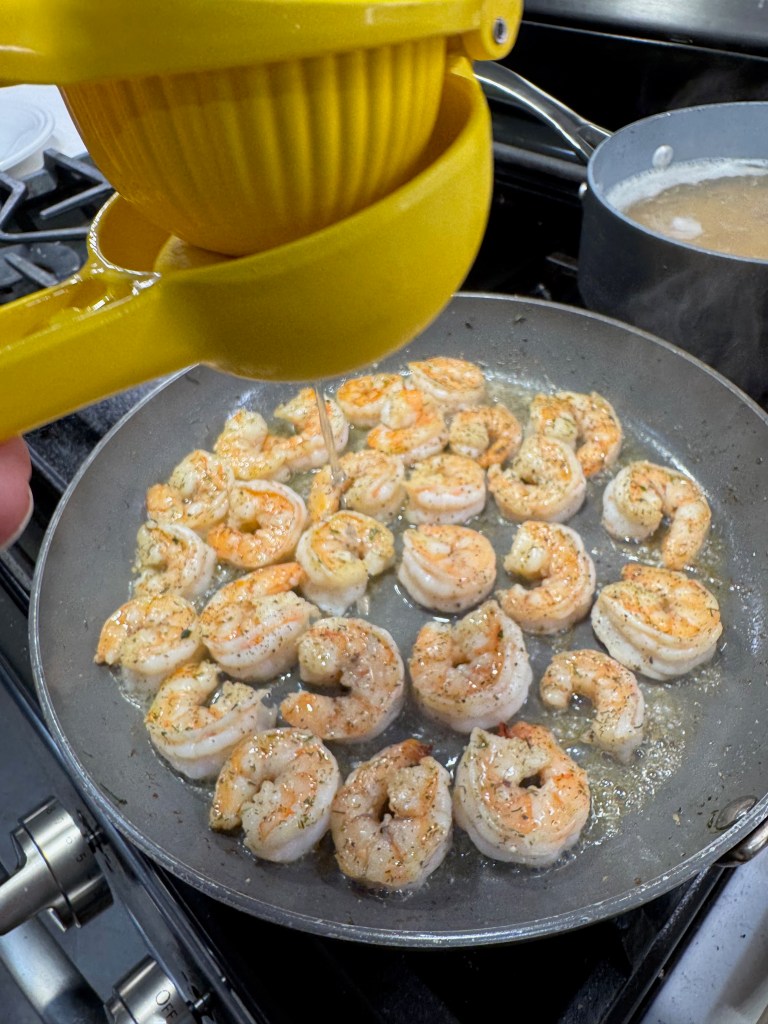
Get the orzo going and toss the feta into the spinach mixture, then transfer that to a bowl and keep it warm. Heat some more olive oil in the same pan, or a bit of butter (or both), and cook the shrimp until it’s just barely a pink/coral color. Always use a delicate touch when cooking shrimp, as it only takes one extra minute to overdo it. My method is to place the shrimp into the hot pan one at a time in concentric circles, and by the time the last shrimp goes in, the first is ready to turn. If you can see a bit of color on the inside curl of the shrimp, that’s your sign to turn it over and cook the other side. The smaller ones will usually cook faster, and if your burner has a hot spot (as mine does), then check the ones there first.
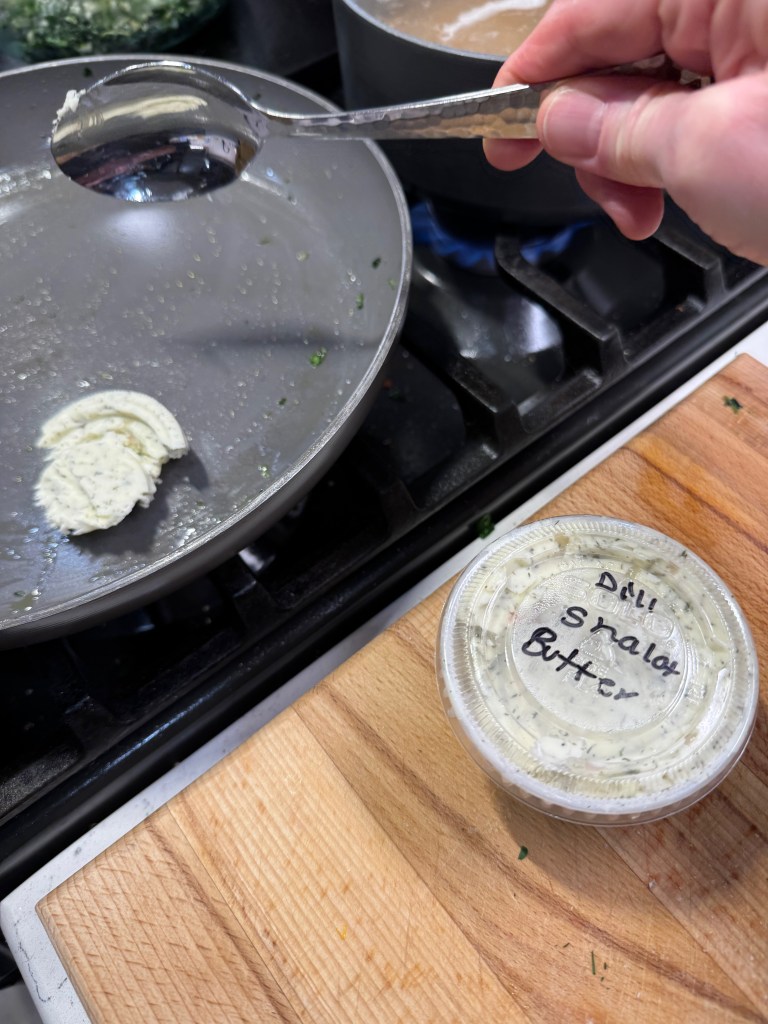

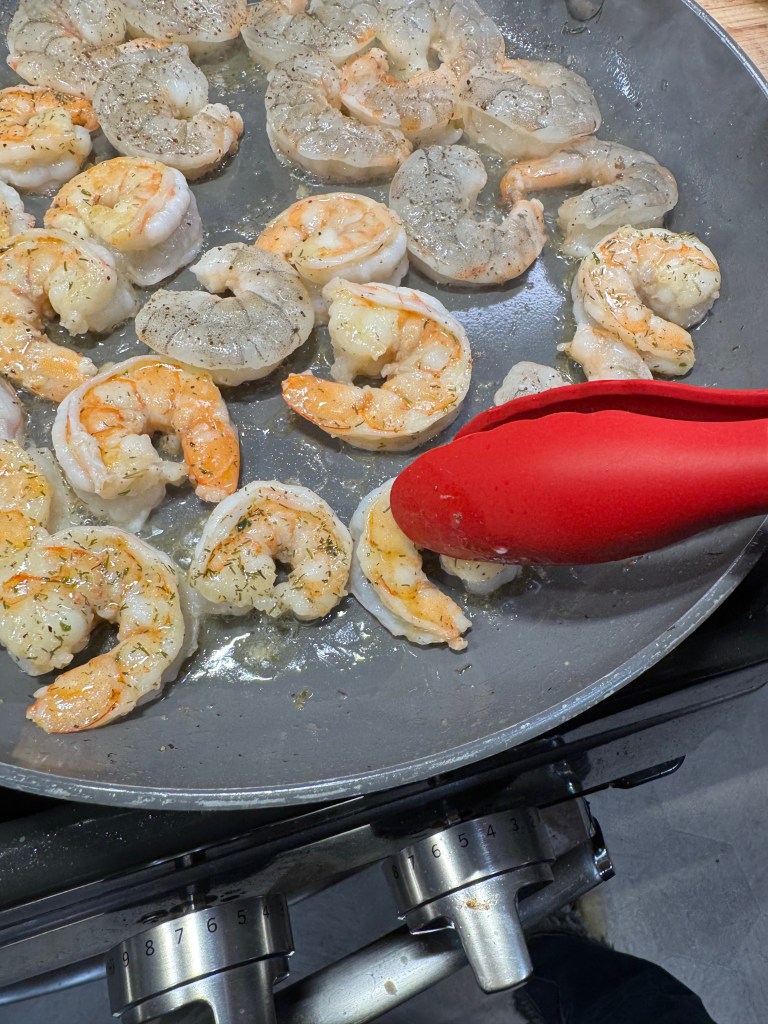
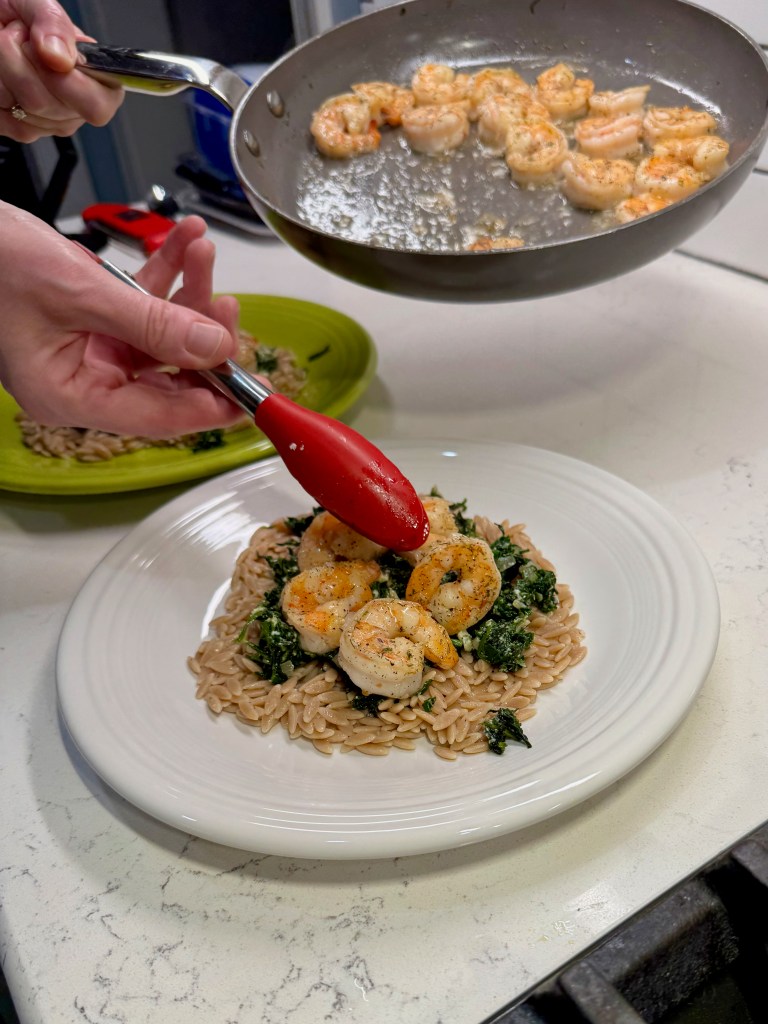
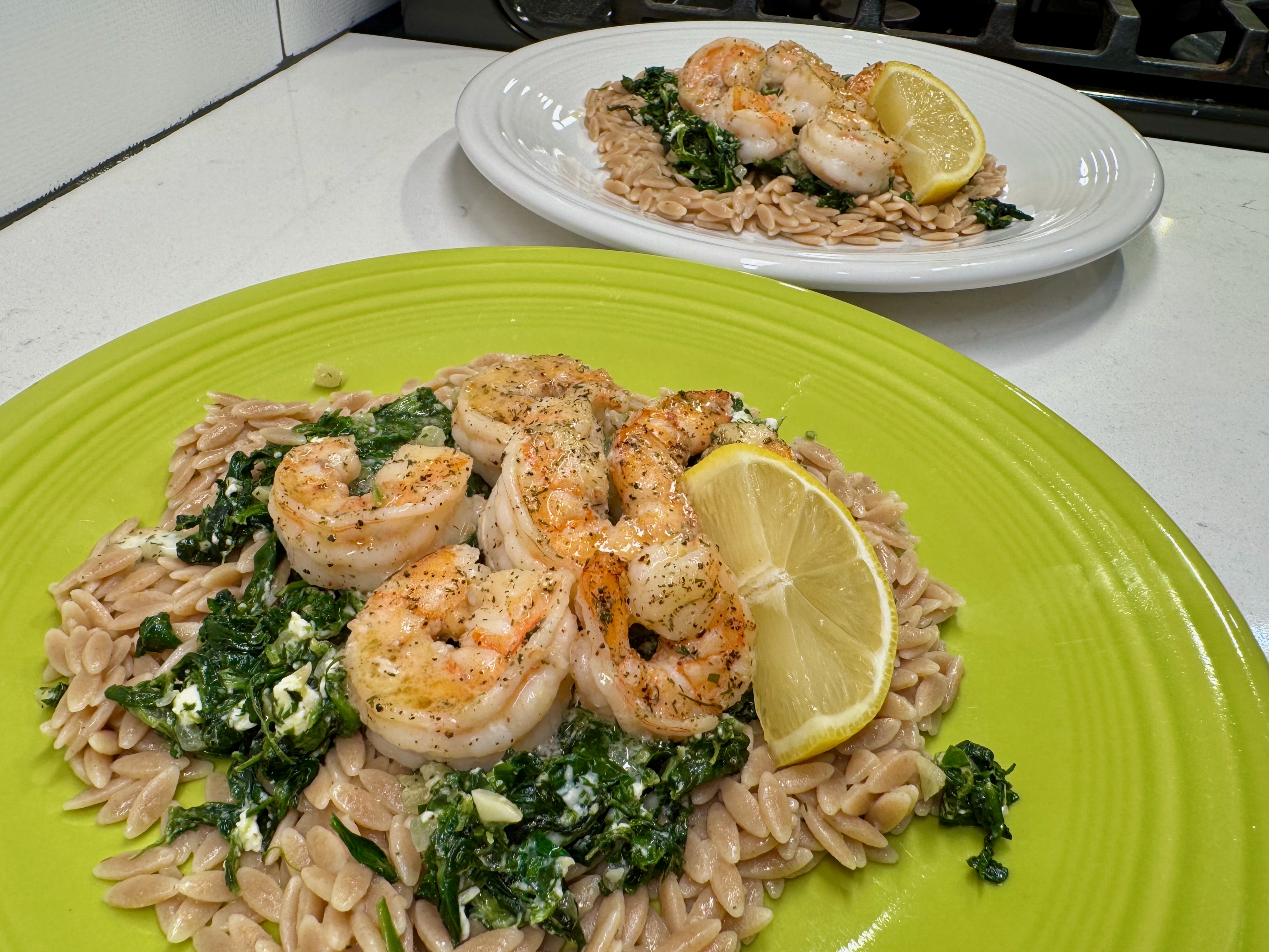
When all the shrimp have been turned over, squeeze fresh lemon over them and turn off the heat. Drain the orzo and toss it in a bit more of butter. Plate it up with the warm spinach-feta mixture and shrimp. Enjoy!

Spanakopita Scampi
  • Servings: 4
  • Difficulty: Average
  • Print

This is a quick and easy weeknight dinner that combines two of my all-time favorite Mediterranean classics. If you don't have orzo, use any kind of small pasta shape that you have on hand.


Ingredients

  • 2 Tbsp. extra virgin olive oil (possibly more for cooking shrimp)
  • 2 cloves garlic, minced
  • 1/3 cup diced sweet or yellow onion
  • Kosher salt and freshly ground black pepper
  • 4 fat handfuls baby spinach leaves, rough chopped* (see notes)
  • A handful each of fresh dill and flat-leaf parsley, chopped
  • 1/3 cup feta, drained and cubed or crumbled
  • 1 Tbsp. butter* (see notes)
  • 1 pound fresh wild-caught shrimp, peeled and deveined
  • Juice of 1/2 fresh lemon
  • Cooked orzo and fresh lemon slices, for serving

Note: Fresh spinach is best, but if you don’t have enough, you can supplement with some frozen chopped spinach. Microwave it in a glass dish until thawed, then press out as much water as possible and add it to the onions after they’re already softened. Proceed with the rest of the recipe as usual.

I was fortunate to have a bit of “dill and shallot” compound butter left over from another recipe, and it was perfect for cooking the shrimp! If using regular butter or oil, consider adding a few shakes of dried dill weed at this step, or reserve a bit of fresh dill for sprinkling over the top of the finished dish.

Directions

  1. Please a large skillet over low heat and add two generous swirls of olive oil with the garlic. Cook this very low and slow, with almost no bubbling action in the pan, so that the garlic become very soft and fragrant. It should take about 10 minutes, and this mellows the flavor of the garlic. Too much heat will give the garlic a burned and acrid taste.
  2. When the garlic is softened, increase the heat to medium and add the onions. Season with salt and pepper and toss to sauté until onions are translucent. Add spinach by the handful, tossing until each handful has wilted before adding the next. If supplementing with frozen spinach, wait until the fresh spinach has fully cooked.
  3. Add fresh herbs and toss for about 30 seconds, then add feta and remove the pan from heat. You may either transfer this mixture to a bowl (keep it warm) and use the same pan for the shrimp, or use a second pan for the shrimp.
  4. Add butter (or oil) to the skillet over medium heat. Place shrimp down in the hot butter and season with salt and pepper, and a quick shake of dried dill if you have it. Watch the shrimp closely, and turn them when you notice the color changing on the inside curl. Depending on the size of your shrimp, two to three minutes total should do it. After the shrimp has cooked on the second side, squeeze the fresh lemon juice into the pan and toss to coat.
  5. Toss cooked orzo with a bit of butter or oil, and serve it with the spinach mixture and shrimp piled on top. Add a lemon slice on the side for one last burst of freshness.
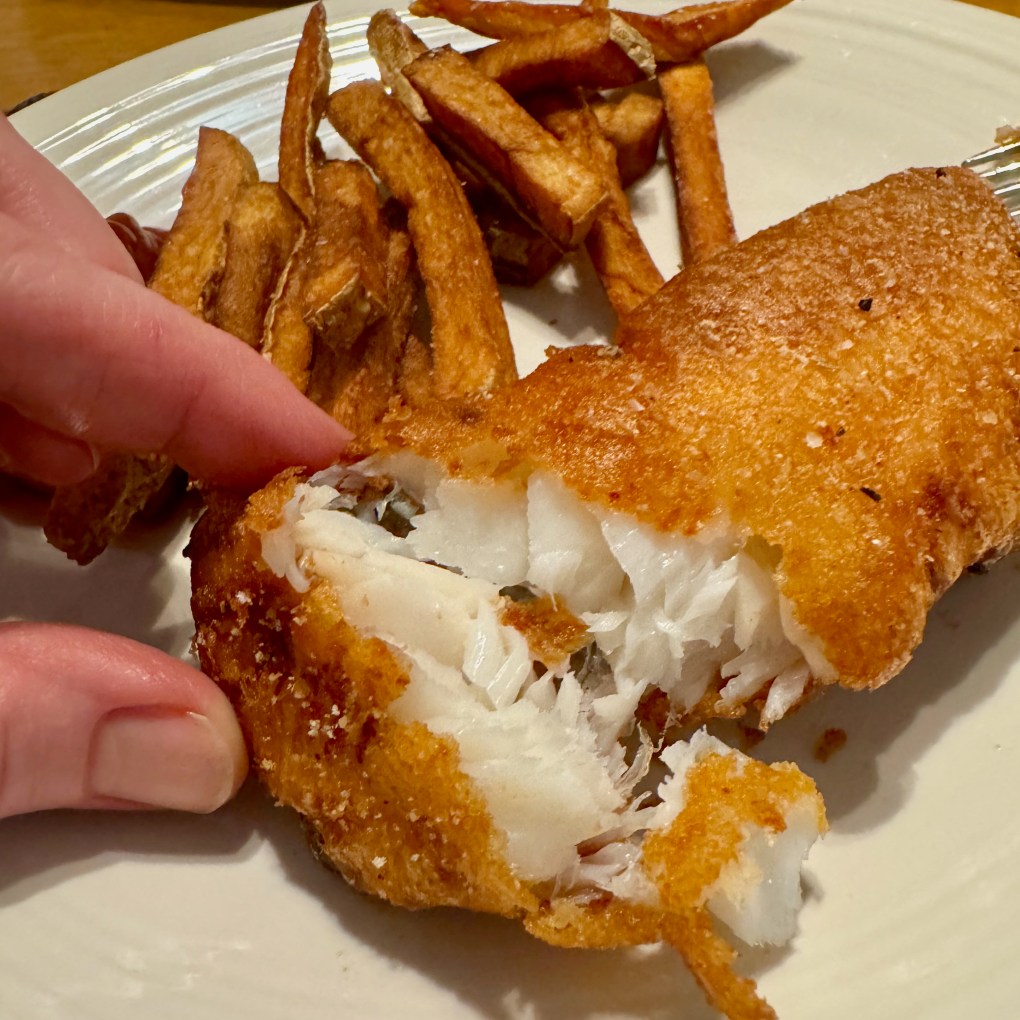

Real Deal, Western New York Fish Fry

This meal reminds me of my hometown in rural upstate New York, and it’s one of the things I couldn’t wait to share with my husband, Les, when we did a drive-by on our solar eclipse-chasing trip to Canada last year. I served up many a fish fry myself during the mid-1980s when I waited tables in a now-closed restaurant called The Cottage, just before I packed up my vinyl albums, Aqua Net hairspray and my cat to move to North Carolina. But my strongest memories of fish fry all happened in a nondescript white house on a side street in my hometown— the American Legion.

Doesn’t look like much, right?

Nearly everyone in my town of 1,200 was a member of the Legion, either by direct military experience or auxiliary membership from a relative’s service. Families gathered there for anniversary dinners and retirement parties and to celebrate the lives of loved ones passed. Technically, it was considered a private club; we had to hit a little doorbell button by the back door that triggered a buzzer for the bartender, and then you’d wait for the click that signaled the lock had been released and you were welcome to enter. Why it had to be such a fuss, I don’t know.

The Legion smelled as old as its furnishings looked. Not musty, but with the lingering aroma of spilled draft beer, frying oil and, in those days, cigarette smoke. It was a popular gathering spot for folks after work and on weekends. And the place was always jumping from open to close on Fridays and Saturdays, when everyone’s order was the same. Fish fry, please!

The same is true for Davidson’s Restaurant in nearby Lakewood, New York— except that they serve fish fry every day—  and that’s where Les was introduced to this culinary experience on our eclipse vacation last year. I had talked it up so much, and I was hoping that it would be all that I remembered. Well, Davidson’s did not disappoint. The deep-fried exterior was perfectly crunchy, and the fish inside was tender, flaky and moist. Believe it or not, this was the lunch portion.


Not the same as “fish and chips”

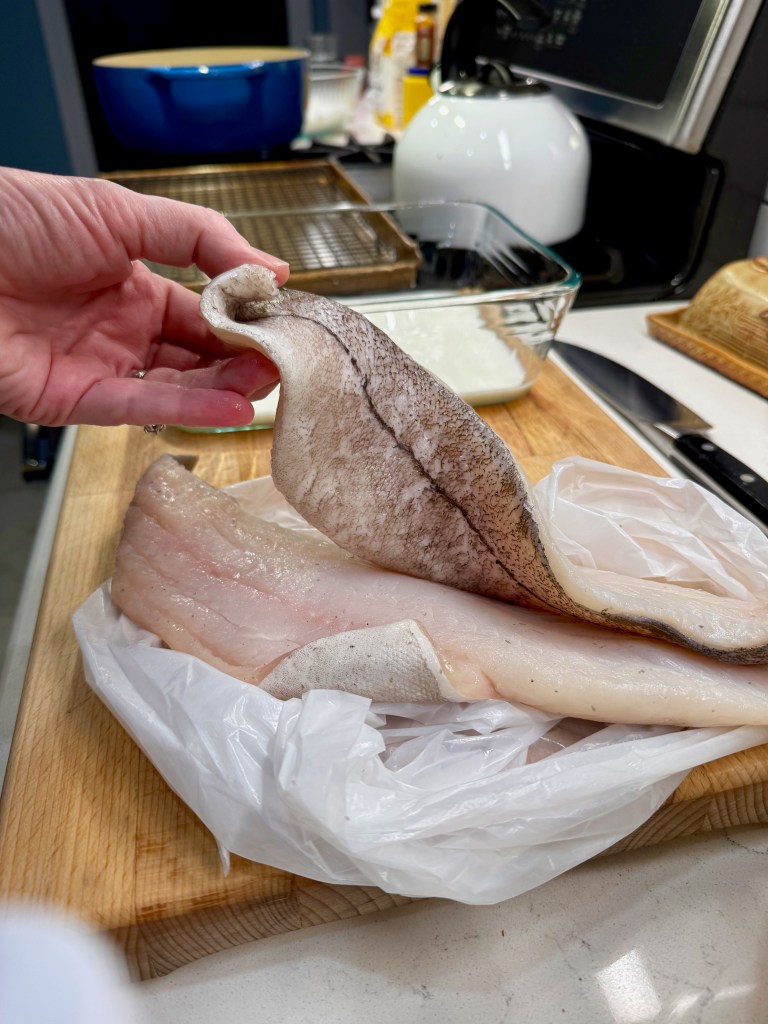
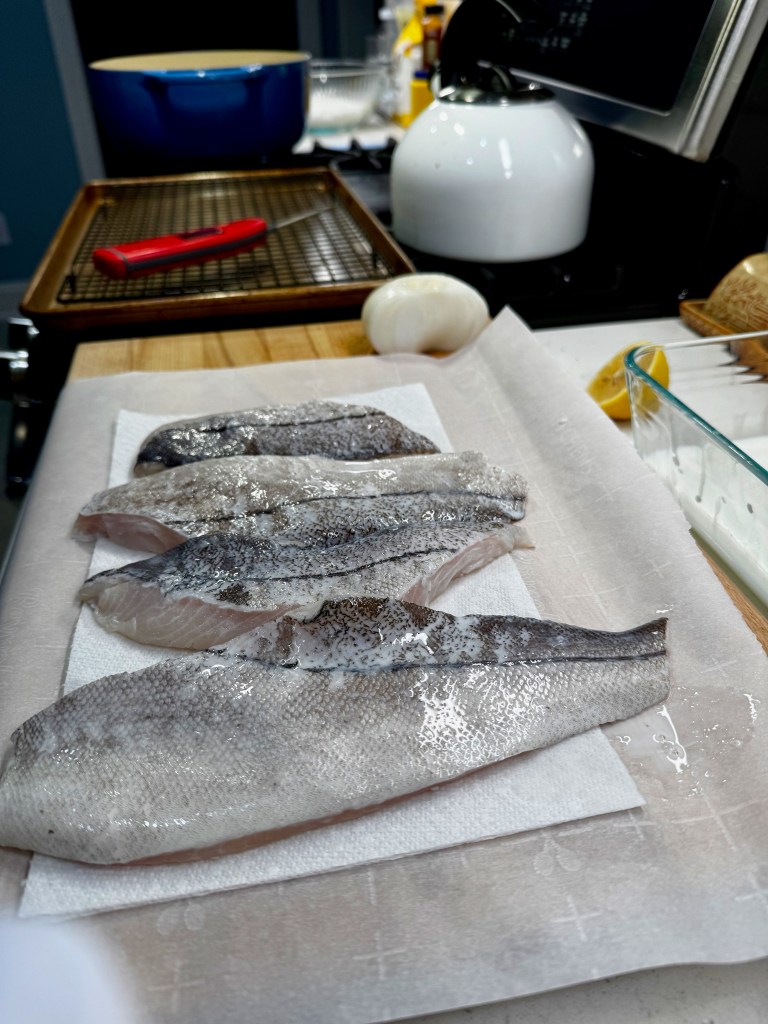
I’d dare say that if Buffalo wings had not come along, it would have been this beer-battered fish that Western New York would have become famous for. It’s a far cry different from the cornmeal-crusted fried fish we see throughout North Carolina, and not even quite the same as the beer-battered cod you’d find in a typical Irish pub. Haddock is the seafood of choice, a North Atlantic whitefish that is tender and flaky, a bit more “fishy” than cod. The fillets are long and slender, and I chose to cut them into smaller pieces so they were more portion-appropriate, and also so that they would fit in the Dutch oven I would be using for frying.


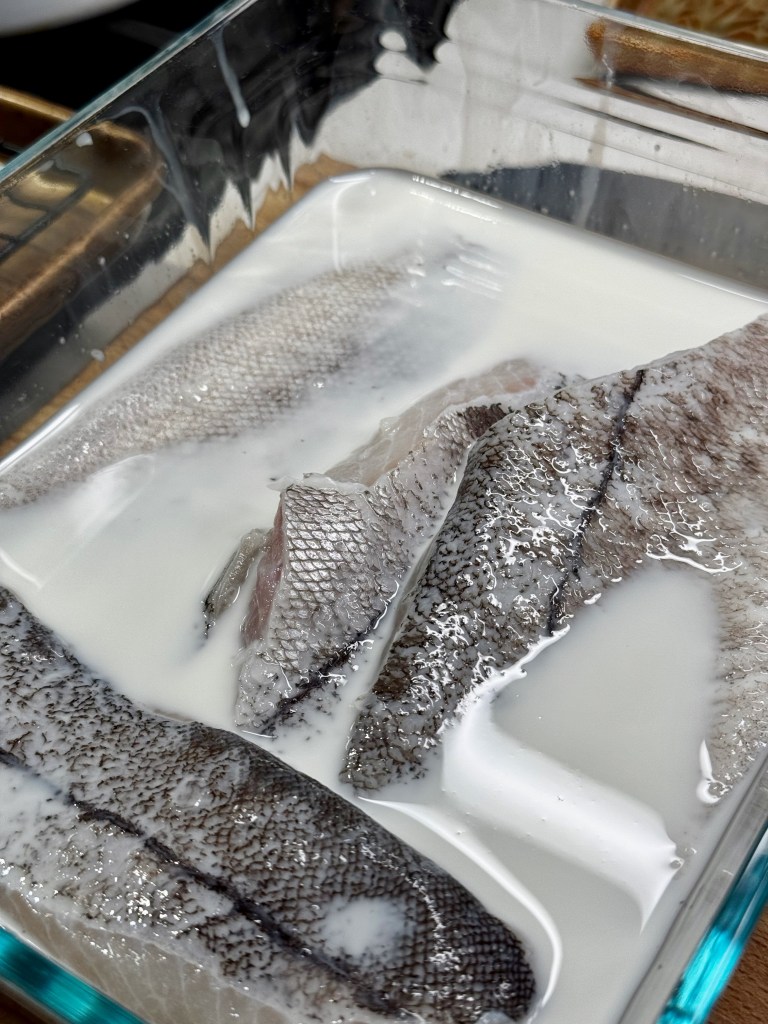
To minimize the fishy smell (and taste), follow my lead and soak the fillets in milk for 20 minutes. The odorous compounds in the fish will cling to the milk proteins, leaving the fillets mild and sweet. This is the first time I’ve done this step, and it will be the new standard, as it also reduced the smell of fried fish in the house after this meal. Take note, though, that this step is not meant to “save” any fish that is past its freshness range; this is an optional step for less fish smell in general.

What about this beer batter?

I’ve lost count of how many conversations I’ve had with my Aunt Joy, my fellow fish fry aficionado, about our trials and errors on the beer batter. Did the batter need egg? How thick should it be? Should it be a certain kind of beer or could you use other liquids? We had a lot of questions! 

Aunt Joy gets most of the credit for the testing, for all the experiments she set up trying to achieve that familiar, crispy texture we both remember so well. She discovered that egg made the batter too heavy, putting a dense, cake-like coating on the delicate fish, and she narrowed down that beer was indeed the right thing. She even tried a recipe that I forgot I had given her, which called for a shot of vodka in the batter. I suppose this might have the same effect as vodka in a pastry dough, though I truly can’t remember whether I’ve tried it myself.


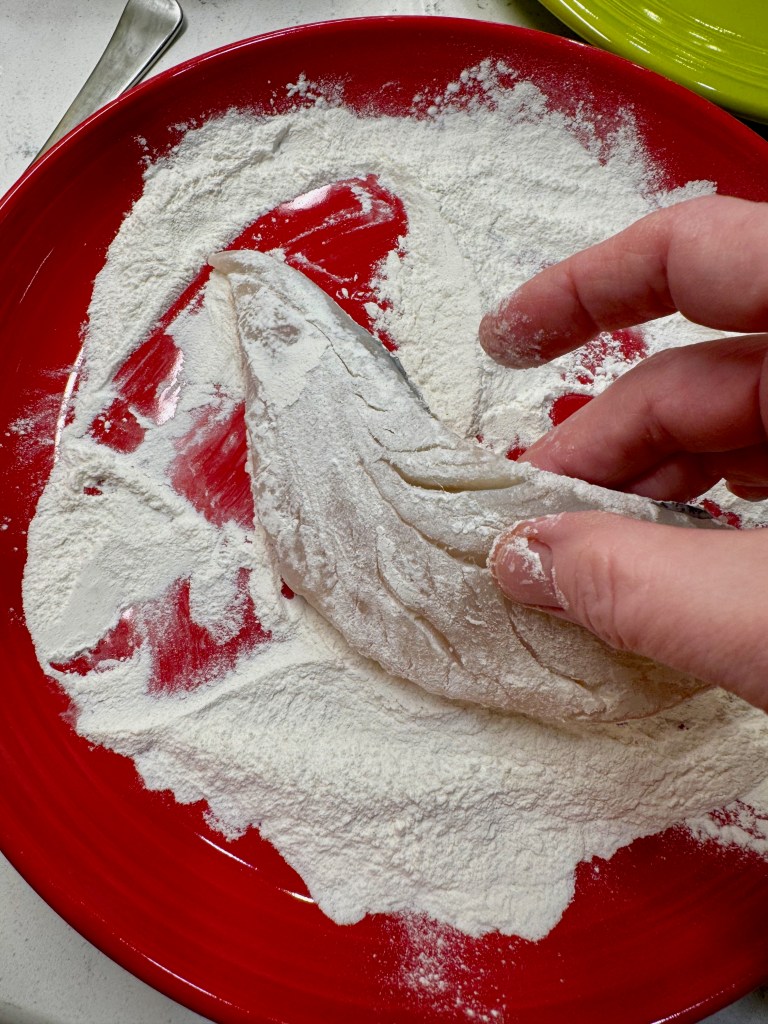
All this testing resulted in the batter I used this time, and it was perfect! Self-rising flour, which already includes baking powder and salt, is the base for it. A couple of tablespoons of corn starch in the mix ensures a light, crispy finish, and a few shakes of sweet paprika lend a nice color and a hint of bright flavor. After whisking this together, I spooned out enough to dredge the haddock fillets, then returned the flour to the batter bowl. Keep the beer (light lager or pilsner-style) on ice until you’re ready to fry.

Time to fry the fish!

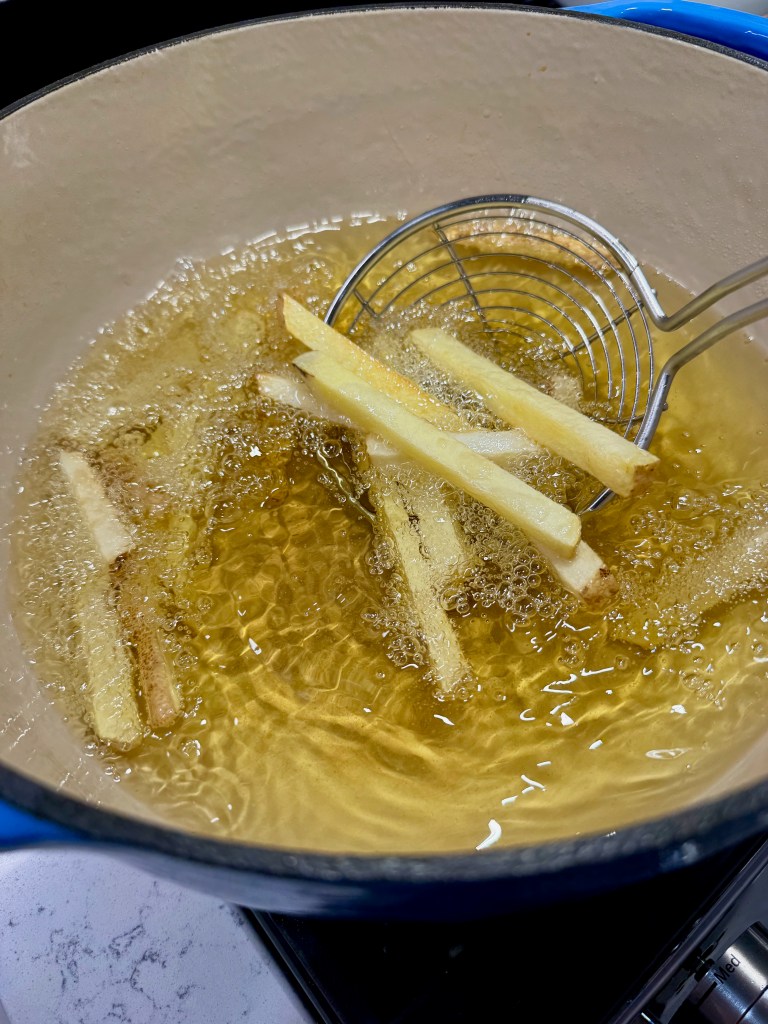
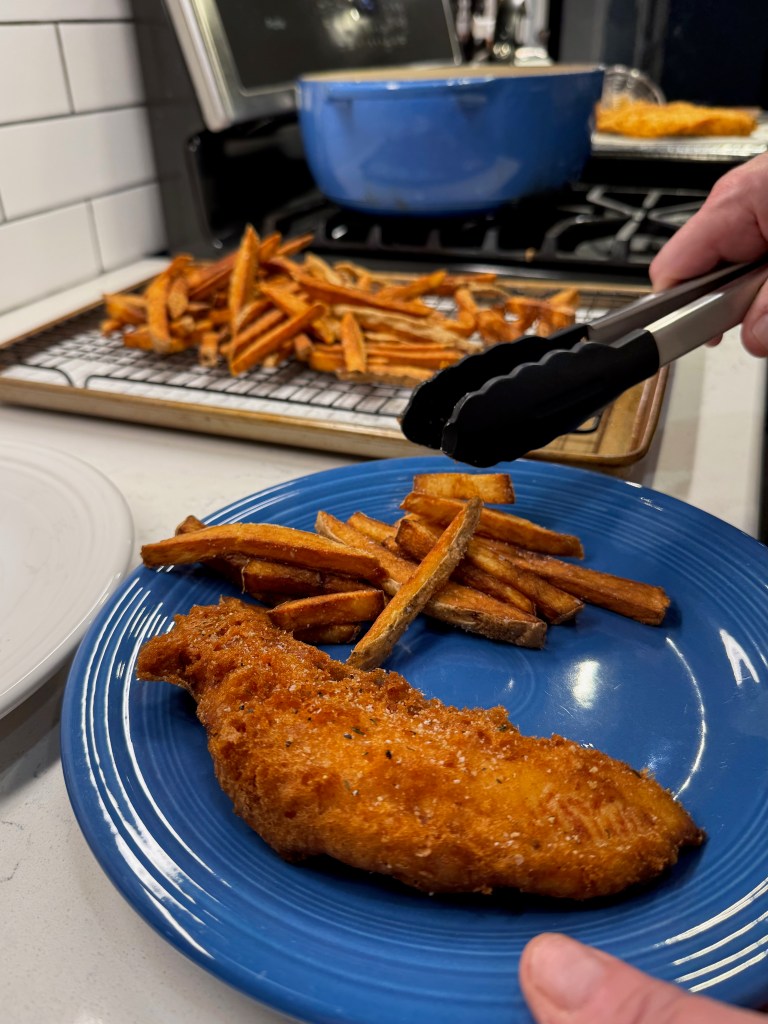
May I recommend, if you choose to make this fish fry, consider not trying to also do deep-fried french fries. Stick with oven fries or some other side, so that you can focus on getting the fish right. You won’t be sorry, and you’ll only have to wait for the oil to reach temperature once.


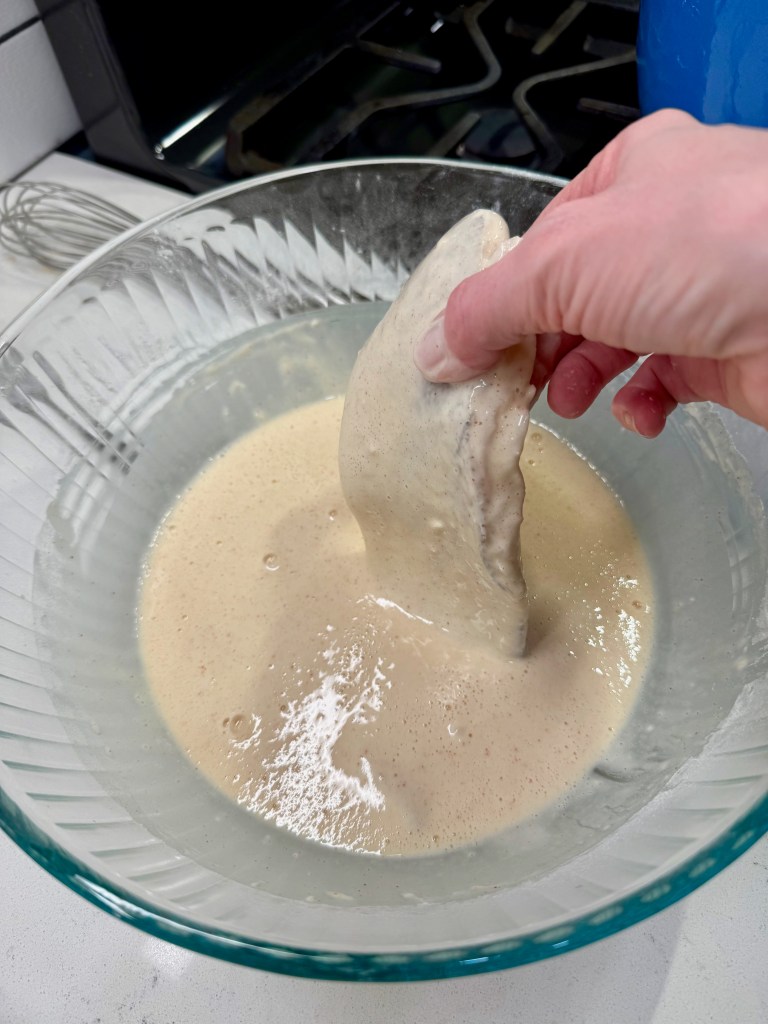
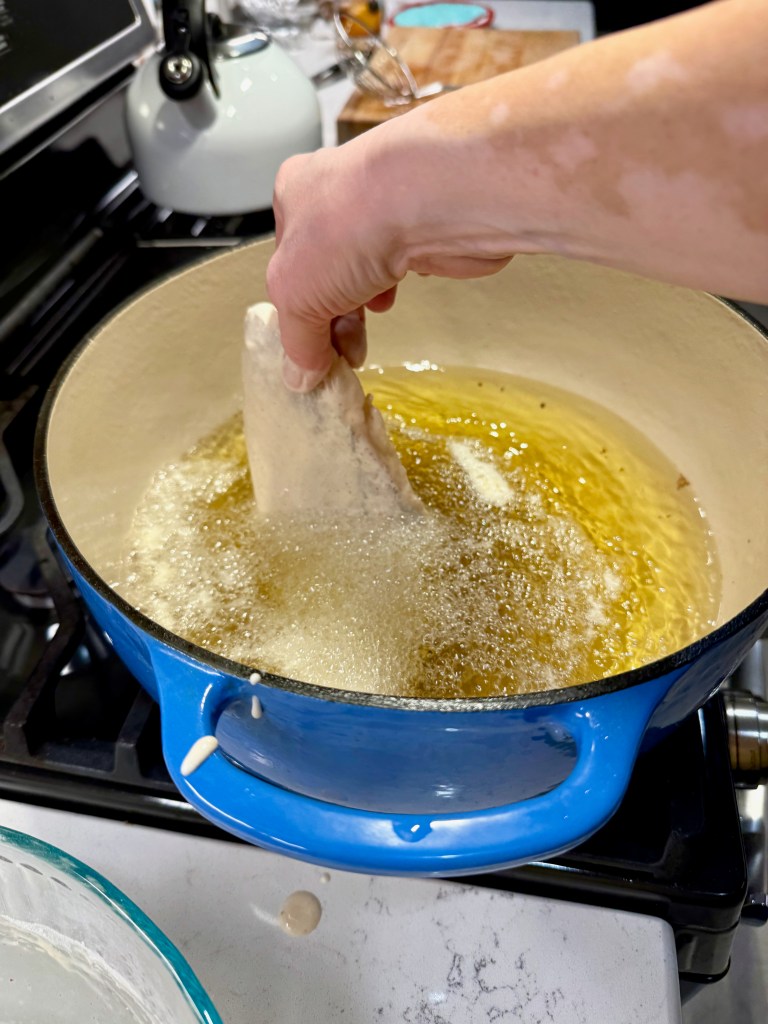
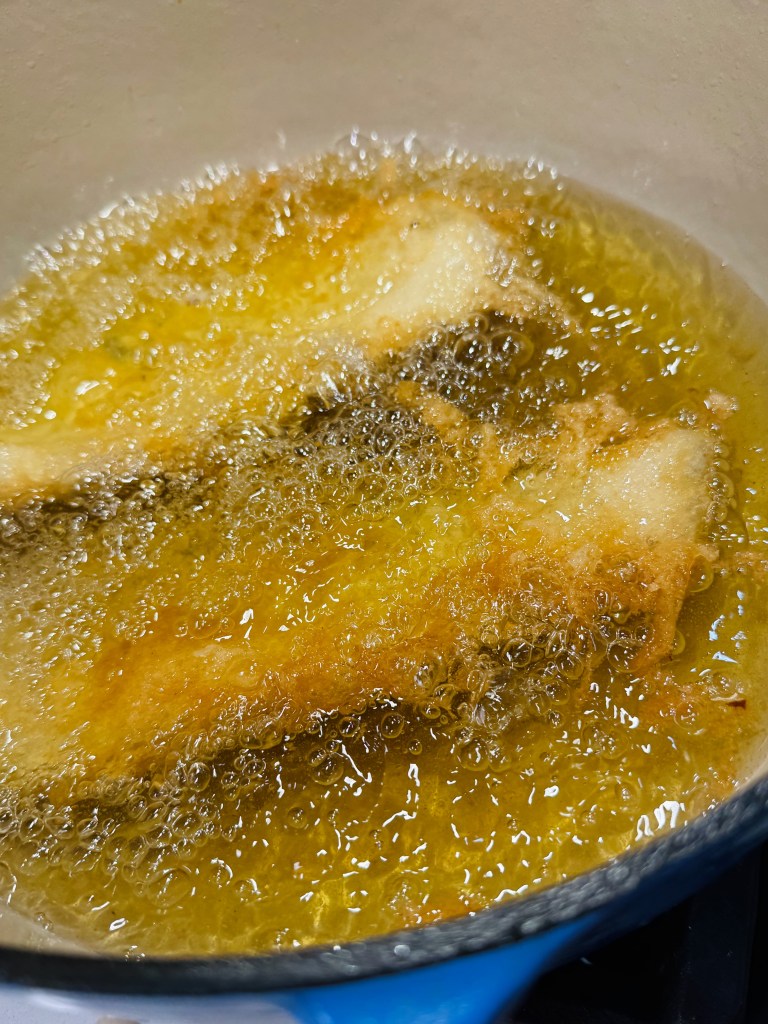
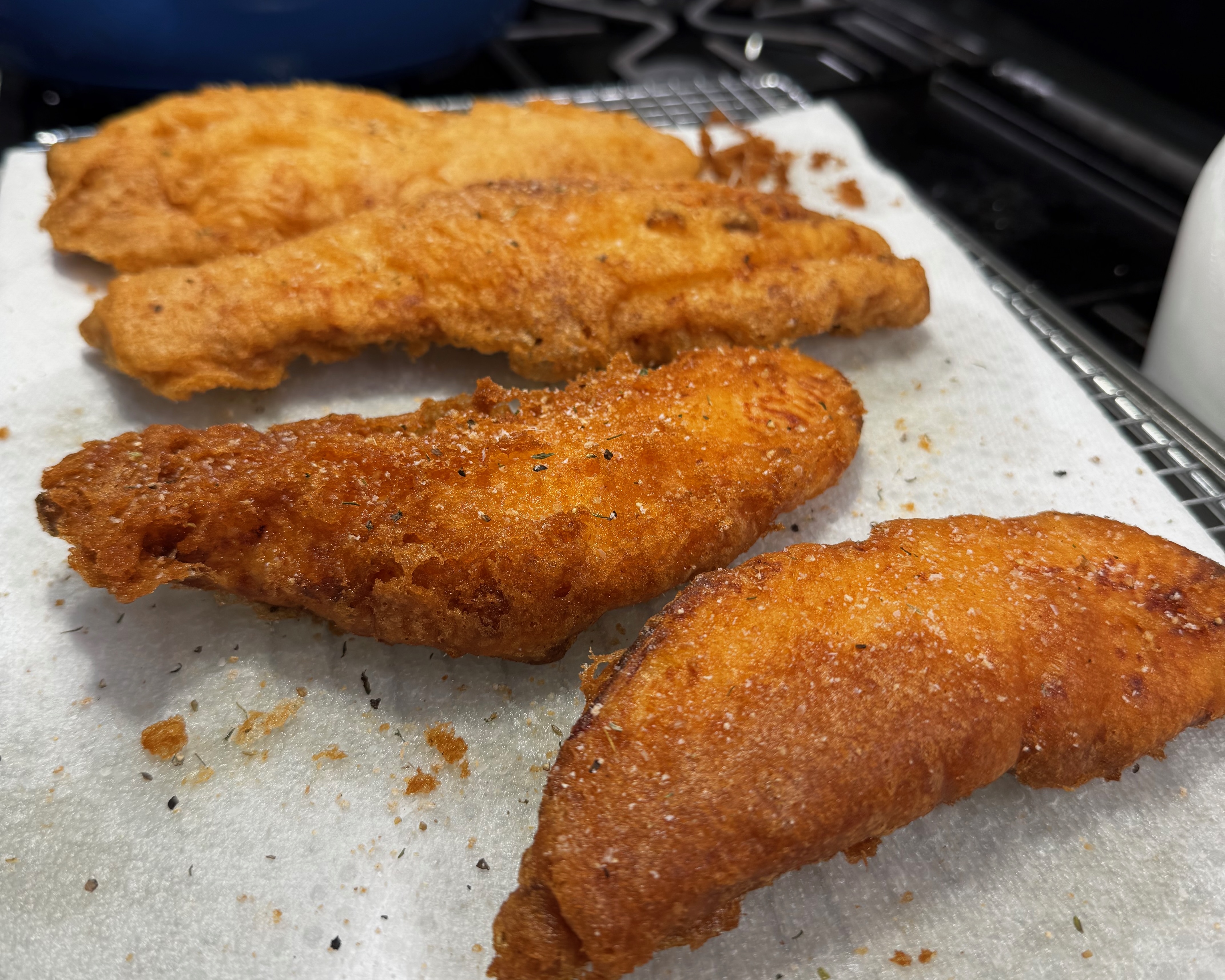
Keep the beer ice cold until go time, and whisk the batter only long enough to achieve a smooth consistency. Dip the flour-dredged haddock into the batter, lifting to allow the excess to drip off before gently placing it into the hot oil. Let it bubble and fry for about six minutes (it goes quick!), or until the batter is a deep golden color with frilly, crispy edges all over. 


Use a spider utensil to lift the fillets onto a paper-lined cookie sheet, and season immediately with salt. For a true, Western New York experience, serve with French fries, creamy coleslaw and an ice cold beer.

Western New York Fish Fry

  • Servings: 4
  • Difficulty: Intermediate
  • Print

A Western New York fish fry is made with haddock and a very distinctive batter. It's crispy and light, golden brown and utterly addictive. This is the closest I've ever gotten to perfect with it, and just in time for Friday!


Ingredients

  • 1 1/2 pounds fresh haddock fillets
  • 1/2 cup milk (skim, 2% or whole will work)
  • 1 cup self-rising flour
  • 1 1/2 Tbsp cornstarch
  • Few shakes paprika
  • Pinch salt
  • 10 oz. ice cold beer (drink the rest!)
  • High temperature oil for frying (canola, grapeseed or peanut oil will work well)


Directions

  1. Prep fish by soaking in the milk for about 20 minutes to remove excess fish smell.
  2. Add oil to a deep fryer or Dutch oven, about three inches deep. Bring oil to 375° F. Preheat oven to 200° F for keeping first batches of fish warm.
  3. While the oil heats, combine flour, cornstarch, paprika and salt in a shallow bowl. Measure out 1/4 cup of the seasoned flour. Pat haddock fillets with paper towels and dredge them in the measured out flour. Place fillets on a parchment-lined plate. Return excess dredging flour back to the bowl.
  4. When oil reaches temperature, whisk the cold beer into the flour mixture, blending only until no lumps appear.
  5. Dip fish fillets into the batter, allowing excess to drip off into the bowl. Carefully lay battered fillets into the hot oil. Use a spider utensil to gently turn the fillets over when the underside becomes golden and crispy, about four minutes. Fry second side until deep golden in color. Use a spider utensil to transfer fillets to a paper towel-lined rack and immediately season them with salt. Keep in the warm oven while the next batch is frying.


Mahi Florentine

The past few weeks have been a struggle for me as my husband and I have committed to making mindful changes to our eating plan. I don’t mind the challenge of eating better, so it isn’t that. My problem has been that I’ve tried too hard to develop original recipes worth sharing here on Comfort du Jour, but so much of what I have done has been with random leftovers that nobody else in their right mind is likely to have on hand. At the end of this post, I’ll show you a glimpse of some of those dishes, and perhaps you’ll draw inspiration for how to repurpose some of your own leftovers with a shift toward healthy.

Moving forward, one of the easiest ways I know to eat better is to choose lean meats and seafood and add a lot of vegetables. So in the weeks to come, you’ll likely see a lot more green on my plate, and I mean that quite literally with this dish, featuring a gorgeous, bright green bed of sautéed spinach, my husband’s all-time favorite vegetable.

What’s so great about spinach?

We all remember from the Popeye cartoons of childhood that spinach made Popeye strong— OK, that connection was overstated. But there is a hint of truth in it, as nutrition science shows the natural nitrates found in leafy greens support healthy muscle function. Spinach is also rich in Vitamins A, C and K, as well as iron, potassium and folate, a B vitamin that helps the body generate healthy cells.

Is it better to eat spinach raw or cooked?

There is no health consequence of eating raw spinach; one of my favorite salads is made from it, along with hard-boiled eggs, red onion slices and goat cheese. But we might miss more than we gain by eating it raw. In addition to all its benefits, raw spinach also contains oxalic acid, which is the stuff that makes your teeth feel squeaky. Oddly, the oxalic acid blocks absorption of some of the very nutrients spinach provides. The cooking process breaks that down, though, so a quick sauté or steaming helps you reap the most benefit of this versatile vegetable. I’ll be using spinach again and again in the coming weeks, so all of my leafy green lovers will want to stay tuned. 😀

So what about this dish?

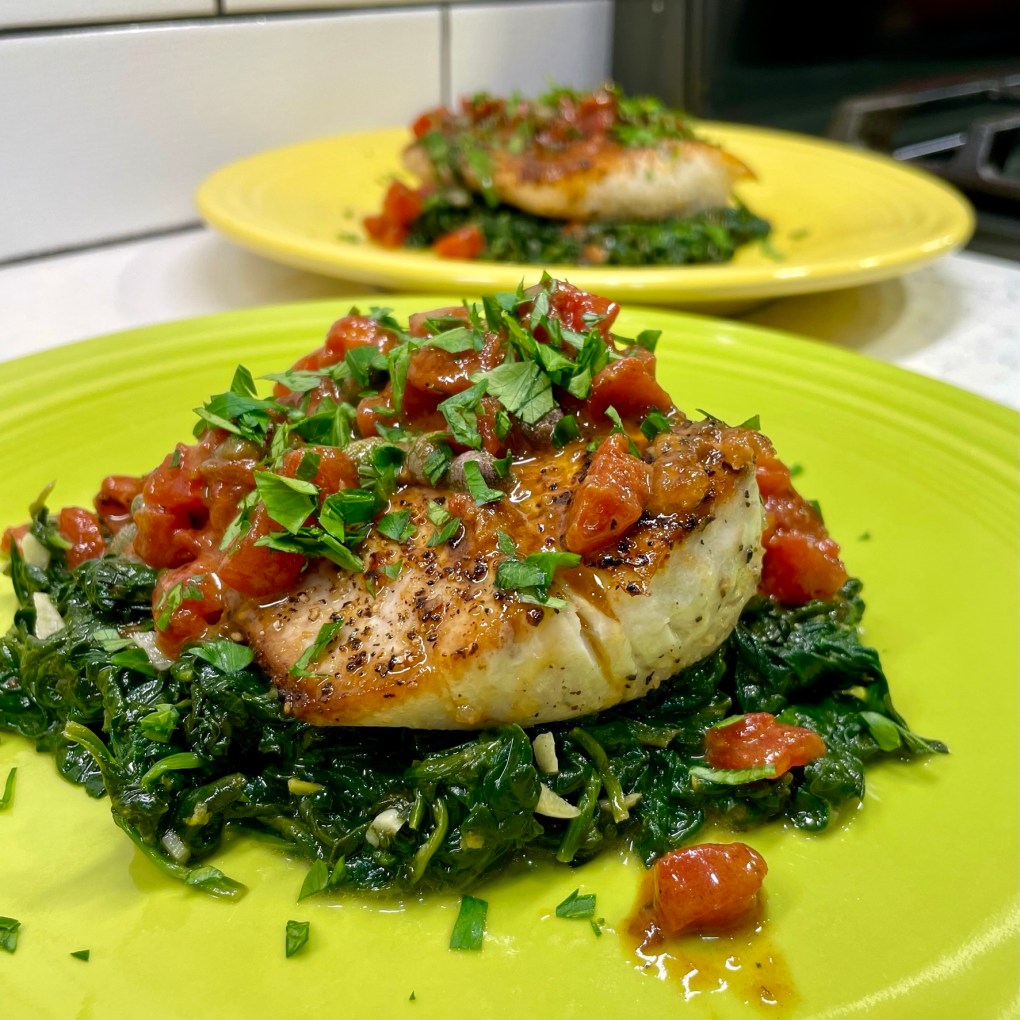
Today’s recipe is a twist on Mahi Hemingway, a dish I posted a few years ago, and my copycat version of a pricey meal I had enjoyed many times at a local restaurant. This time, I’ve plated the fish and sauce atop fresh spinach rather than a pile of carb-y pasta. It’s colorful, easy to prepare and absolutely delicious!

Delicious, and pretty!

To make it, you’ll need a couple fillets of fresh mahi—season them with salt and lemon pepper— plus a fat handful of fresh baby spinach, a little garlic, diced tomato, capers, dry white wine, a squeeze of fresh lemon and a little swirl of butter at the end for a delicate but flavorful sauce. If mahi is unavailable (or not your favorite), try this dish with halibut, grouper or even a mild cut of salmon.

Parsley garnish is optional, but recommended, and you can make two servings of this meal for less than half the cost of a restaurant meal for one. It’s light, delicious, gluten-free and diet-friendly. It’s also easy to make (there’s a click-to-print recipe below), and my Instagram reel will show you in 60 seconds how to put it on your table tonight. Mise en place (having everything in place) is important here, because the dish moves quickly once the pan is hot. Enjoy!


Mahi Florentine

  • Servings: 2
  • Difficulty: Average
  • Print

There's plenty of flavor and nutrition in this light and easy seafood dish, and it comes together in under half an hour. Perfect for a busy weeknight!


Ingredients

  • 2 skinless mahi fillets, about 6 ounces each
  • Several shakes salt-free “lemon pepper” seasoning, such as Mrs. Dash
  • Kosher salt and freshly ground black pepper
  • 3 Tbsp. extra virgin olive oil, divided (1 for the spinach, 2 for the fish)
  • 2 fat handfuls fresh baby spinach, roughly chopped (this is approximately six ounces)
  • 2 cloves fresh garlic, minced
  • 1/3 cup dry white wine, divided (you’ll use some for the spinach, some for the fish; substitutions in the recipe notes)
  • Juice and zest of 1/2 large lemon
  • 1/3 cup petite diced tomatoes, drained
  • 1 Tbsp. nonpareil capers, drained but not rinsed
  • 1 Tbsp. cold butter, cut into teaspoon-size pieces, for swirling into sauce at the end
  • A sprinkle of fresh, chopped parsley to garnish

Notes: This recipe moves quickly, especially once you remove the fish from the skillet. Be sure to have all your ingredients lined up and ready before you begin cooking.

Any firm fish fillet may be substituted for the mahi; I think salmon, grouper, tilapia or halibut would all be terrific in this dish.

Dry vermouth may be used in place of the white wine. If you prefer to avoid alcohol, substitute a quarter cup of low-sodium vegetable broth for the wine and add an extra squeeze of lemon.

Use fresh tomatoes when they’re in season; otherwise, salt-free canned tomatoes work great. If you have trouble with the acidity in tomatoes, try neutralizing it with a pinch of baking soda. Stir the soda into the tomatoes before you begin, and give it a few minutes for any foaminess to subside before proceeding. This will help take the edge off the acid of the tomatoes.

Directions

  1. Pat the mahi fillets dry with a paper towel. Season with salt and pepper, plus a generous few shakes of the lemon pepper seasoning. Set aside to warm to room temp while you prepare the spinach.
  2. Place a non-stick skillet or pot over medium heat. Swirl in about a tablespoon of the olive oil, and then add the spinach a handful at a time. Give it a toss through the oil, then season lightly with salt and pepper. Use an easy touch here, so the spinach isn’t too salty after it wilts down.
  3. Add garlic to the pan and toss until spinach is fully wilted but still bright green. Add a splash of the white wine, plus the zest of the half-lemon. Continue to cook until the wine evaporates. Remove from heat and cover to keep warm.
  4. While the spinach is cooking, heat a second skillet (preferably not non-stick) over medium heat. Add remaining oil when the pan is hot. Place the fish fillets, “pretty” side-down, into the skillet. You should hear them sizzle instantly. Leave the fillets alone until you can see the fish is cooked through about 1/3 of its thickness, about three minutes. Use a metal spatula to carefully turn the fillets to cook the other side, about two additional minutes. They will be a little translucent in the center, but the residual heat will cook them through. Transfer the fillets to a warm plate and set aside while you prepare the sauce.
  5. Add the diced tomatoes and capers into the fish skillet. Add a generous splash of the white wine, and use a whisk or utensil to scrape up all the cooked-on bits in the pan. Turn down the heat to medium-low and cook until wine is reduced by half. Squeeze in the lemon juice and stir until the moisture is reduced by about half; this should happen within about a minute.
  6. Turn off the heat. Carefully swirl the cold butter, a teaspoon at a time, into the pan sauce. This will emulsify and thicken the sauce.
  7. Divide the spinach between serving plates. Place a mahi fillet on top of each and spoon the pan sauce over the fish. Garnish with fresh parsley and serve at once.


Here’s a snapshot of some of the other delicious foods I’ve made since we committed to healthier eating. Some were made from leftovers that you probably don’t have, but others are repeats of favorites, with previous recipes linked for your convenience.


Simple Citrus-Soy Baked Salmon

My husband and I have a regular game we like to play, and it usually starts about 2 pm when I text to ask whether he has any particular cravings for that evening’s dinner. And then I cross my fingers in hope that he doesn’t give me the dreaded response.

“Something simple,” he’ll frequently say. 

And then I really don’t know what to feed him, because what does that even mean? My experimentation in the kitchen more often leads me into complex outcomes rather than simple ones. I would rather he ask for soup and salad or grilled cheese or takeout than the nebulous “something simple.” I don’t know why this throws me for a loop, but I usually stand befuddled, the same as when I ask him what Friday night cocktail he wants, and he says, “surprise me.”

I’m trying to get better about this, and occasionally I find inspiration amid the ingredients I already have in the fridge. And that’s what happened with this vibrant dish that turned out to be simple not only in ingredients but also preparation.


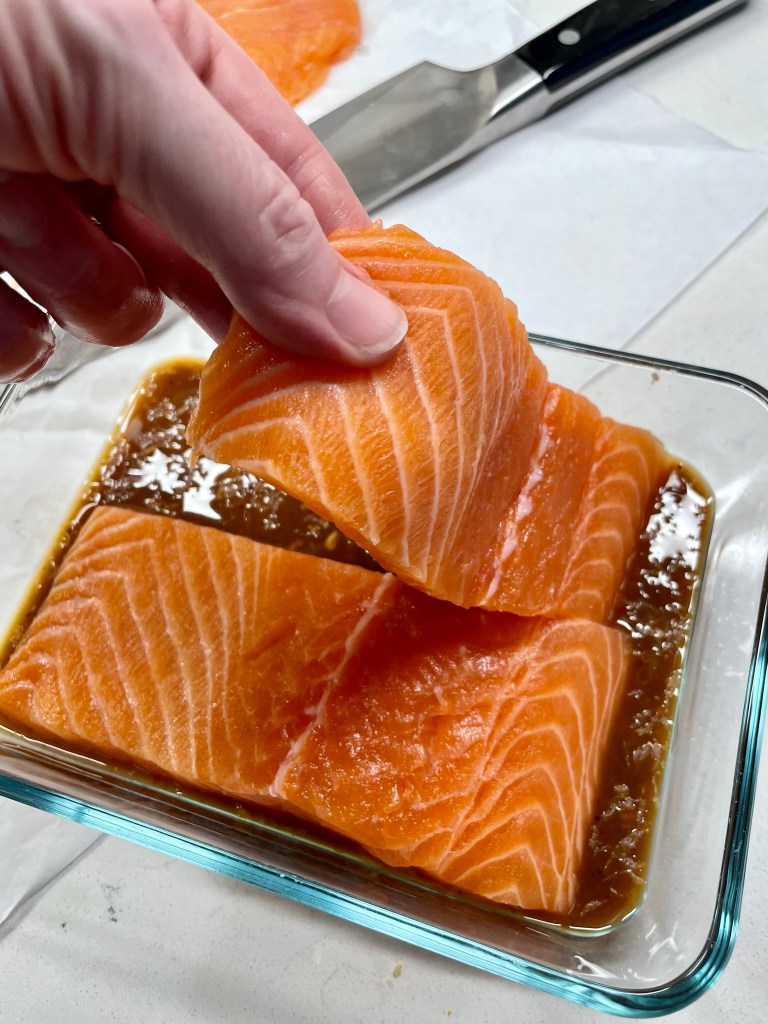
What makes this recipe simple is that the marinade— which ultimately becomes a glaze in the oven— is made from common ingredients that I found in the refrigerator: freshly squeezed orange juice (thanks to a navel I forgot was in there), a bit of marmalade, horseradish, soy sauce and honey. To add a little extra something without extra effort, I decided to add a spoonful of dried onion to the marinade. The bits plumped up quite a bit during the 45 minutes the salmon soaked in its flavor bath, and it added onion flavor without the bite of fresh onions.


I’m struggling to find something else to explain about this dish, but that’s honestly it. Mix the marinade, soak it and then bake it. The oven takes care of the rest, turning the marinade into a somewhat sticky glaze that pairs well with just about anything. The flavors of the marinade do a balancing act between sweet, savory and salty. I served our salmon on a bed of basmati rice (leftovers from Indian takeout), with a sprinkling of sliced scallions and sesame seeds, plus a fresh and pretty side salad.


Hubby was right, as usual— simple is good!

Easy Citrus-Soy Baked Salmon

  • Servings: 2 or 4, depending on weight of salmon
  • Difficulty: So easy!
  • Print

From the prep to the ingredients to the cooking, everything about this dish is simple but the flavors are fantastic! The marinade is enough for a pound of fresh salmon, but please use the same amount even for a lesser weight of fish.


Ingredients

  • Up to 1 pound fresh salmon fillets, skin removed
  • Juice and zest of navel orange
  • 1 Tbsp. low-sodium soy sauce (or tamari for gluten free)
  • 2 Tbsp. orange marmalade
  • 2 tsp. horseradish
  • 1 Tbsp. honey
  • 1/2 tsp. minced, dried onion
  • Kosher salt and black pepper
  • Cooked rice, for serving
  • 2 scallions (white and green parts), thinly sliced
  • Sesame seeds for serving

I removed the skin from our salmon before cooking, but this really was not necessary; it was just me trying to make it “not simple.” After baking, the fillets will easily pull away from the skin, so it’s cook’s choice.

Directions

  1. Whisk together all marinade ingredients. Pat salmon fillets dry with paper towels. Sprinkle them with salt and pepper.
  2. Pour marinade into a shallow dish that is large enough to hold the salmon fillets. Add salmon, turning a few times to ensure even coverage. If preferred, marinate in a plastic zip-top bag for easy turning. Allow salmon to marinate at least 30 minutes, or up to 45 minutes.
  3. Preheat oven to 350F, with oven rack in center position. Line a baking sheet with parchment.
  4. Transfer salmon fillets to parchment, spooning the marinade (especially marmalade peels and onions) over the top of the fish. Bake for 20 to 25 minutes, depending on thickness of salmon and preference for doneness.
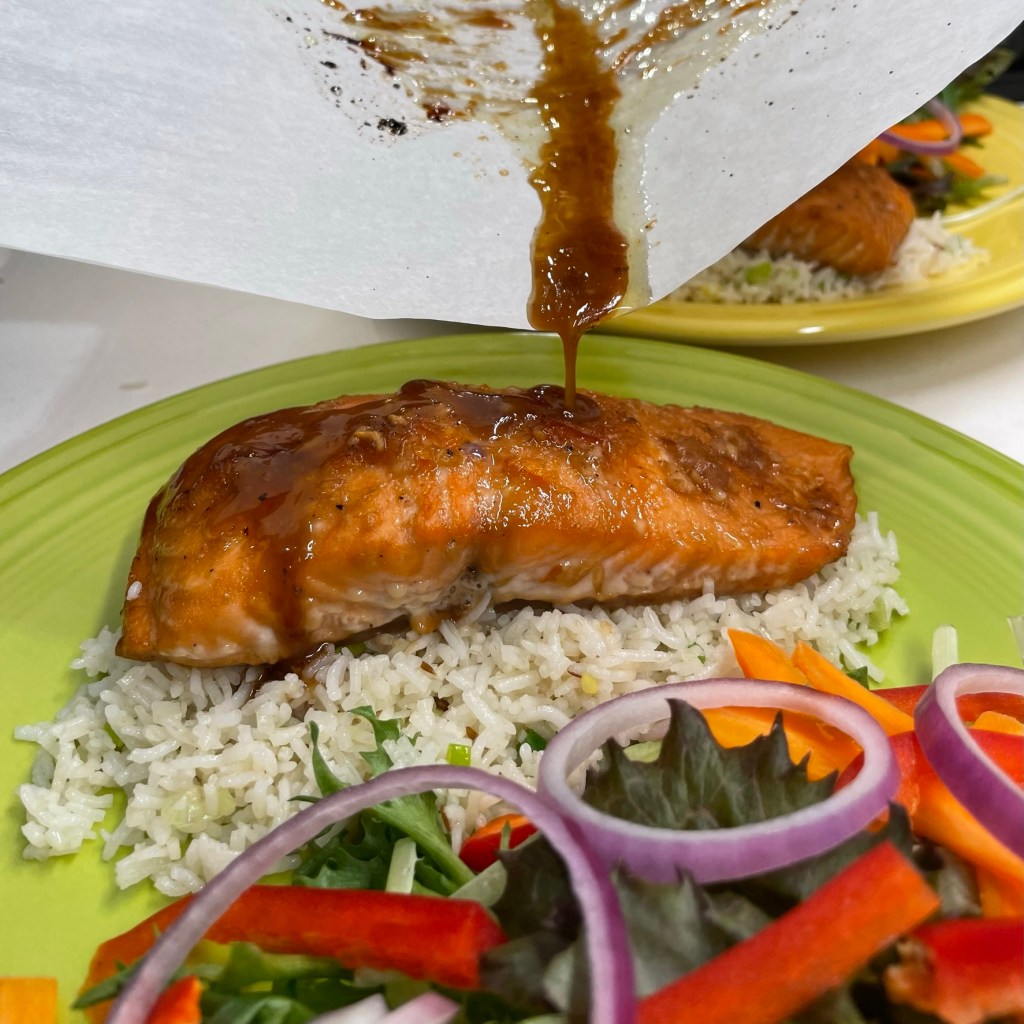
  5. Arrange fillets on plates with desired sides and sprinkle with scallions and sesame seeds. Serve at once.


Tequila & Lime Tuna Tacos

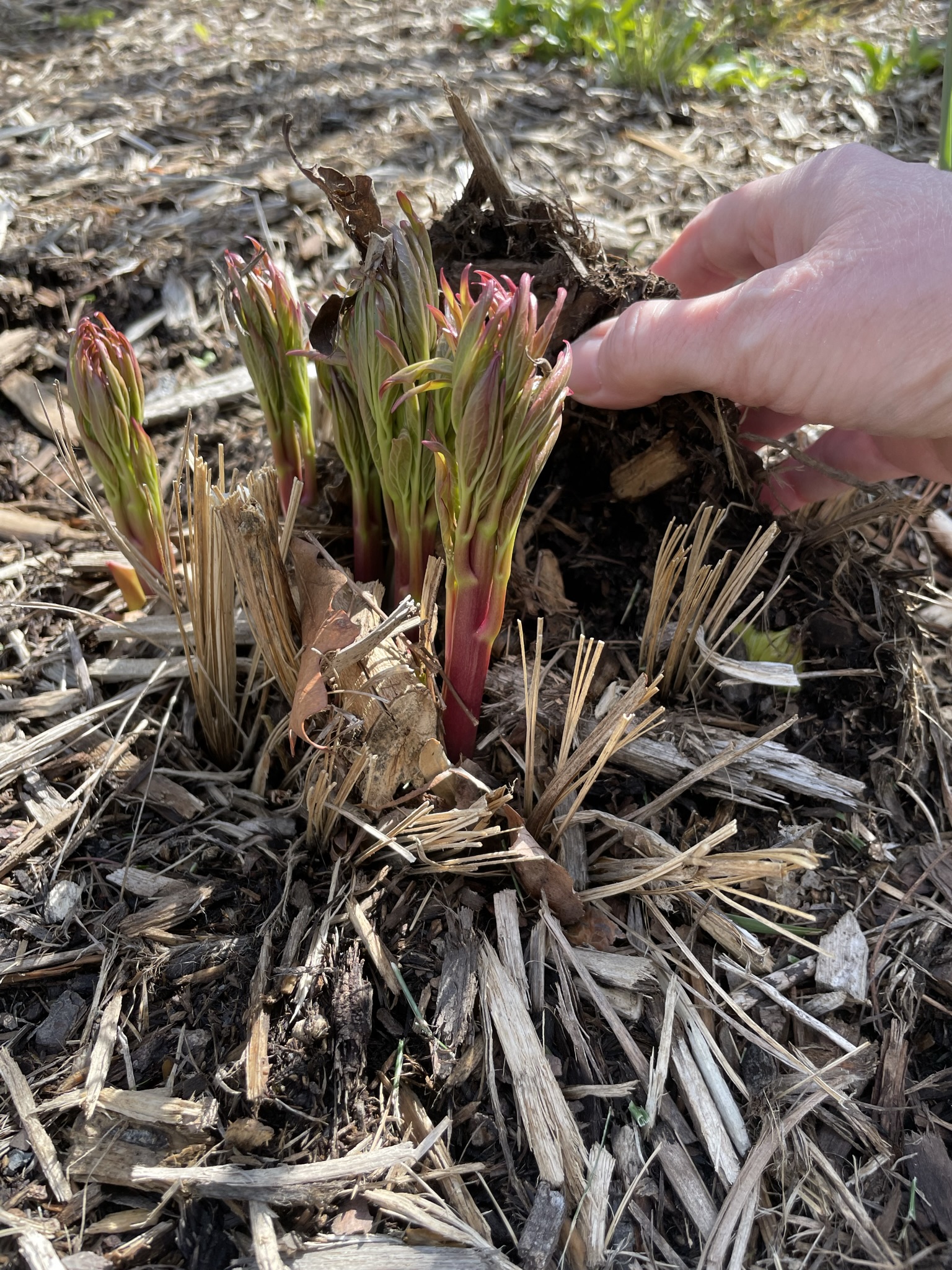
We are getting antsy for grilling season here in North Carolina. That’s not to say that it has been entirely too cold to grill. My husband and I have a 60°F cutoff—we are good to go with grilling as long as the temperature is in that range but so far this “spring,” it has been hit or miss. I put some burgers on the grill just last Wednesday but over the weekend, an unexpected blast of wintry mix left my already-in-bloom daffodils shivering in the beds out front, and a freeze warning last night forced me to lay blankets and towels over my emerging peony shoots. Just when we thought it was warm for good—go figure!

My blooms are sitting on ice!

Until we get some consistency in the weather department (feel free to yell “amen” if the skies are screwy at your house, too), we are stuck cooking indoors. Luckily, we have one of those “griddle in the middle” things on our gas range, which affords us an easy indoor option for light grilling. The heavy cast-iron griddle is removable (and reversible), intended as a swap-in for the grate that would normally cover a wide gas burner, but we use the griddle so frequently that it has become a permanent fixture. The flat side is perfect for making pancakes, reheating pizza slices or crisping up a grilled cheese sandwich. The flip side is great for quick grilling jobs, like the mouth-watering, marinated tuna we put on these tacos.


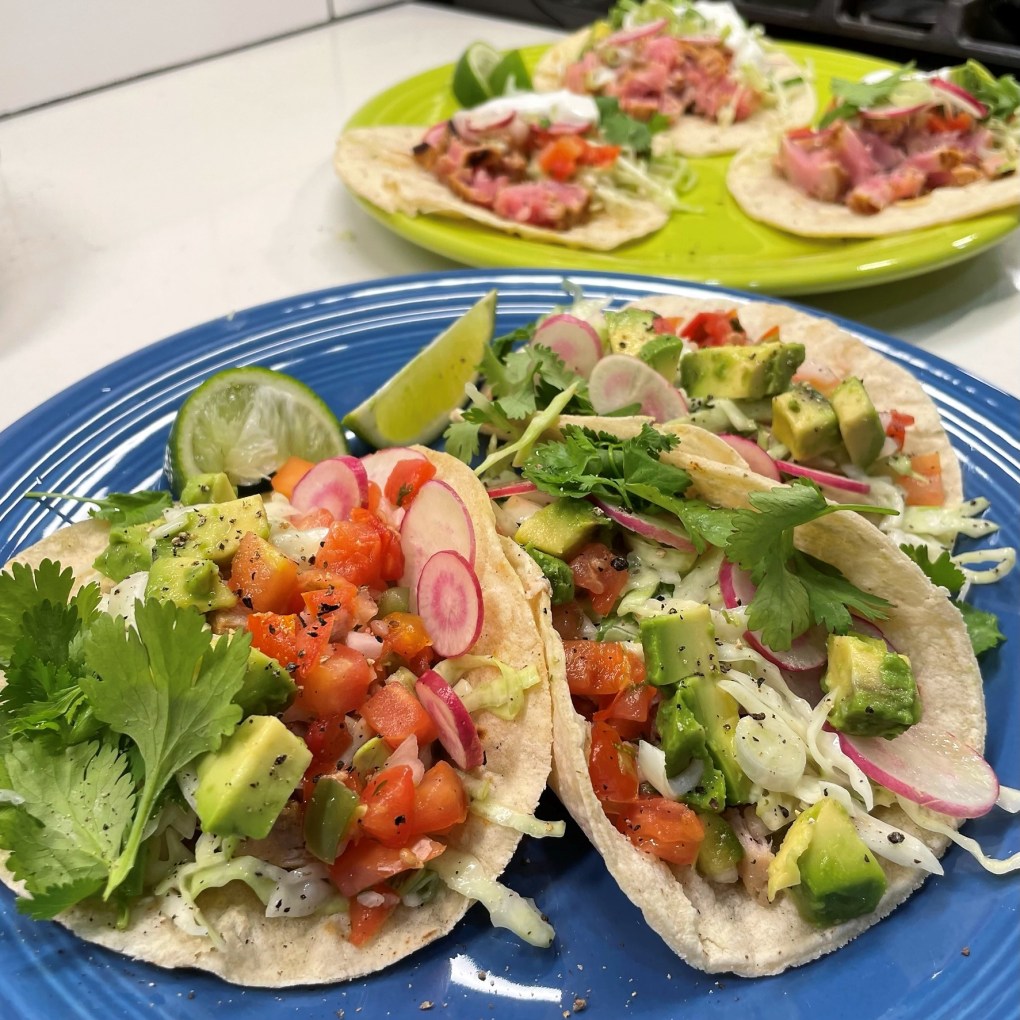
Though I grew up eating tacos and other Mexican cuisine, I had never heard of fish or shrimp tacos until I was an adult, and it was a marvelous epiphany! Unlike the greasy ground beef-and-cheese tacos of my childhood, these beauties are light and flavorful, and I love dressing them up with fresh veggies and a squeeze of citrus. For us this time, it was shredded cabbage tossed with bottled avocado ranch, pico de gallo, scallions, avocado and cilantro. It’s a whole new category of comfort food—easy and fresh, with lots of great texture! Les likes a little dollop of cool sour cream, too, and it sure makes for a pretty picture.

You only need a few minutes for perfectly grilled tuna!

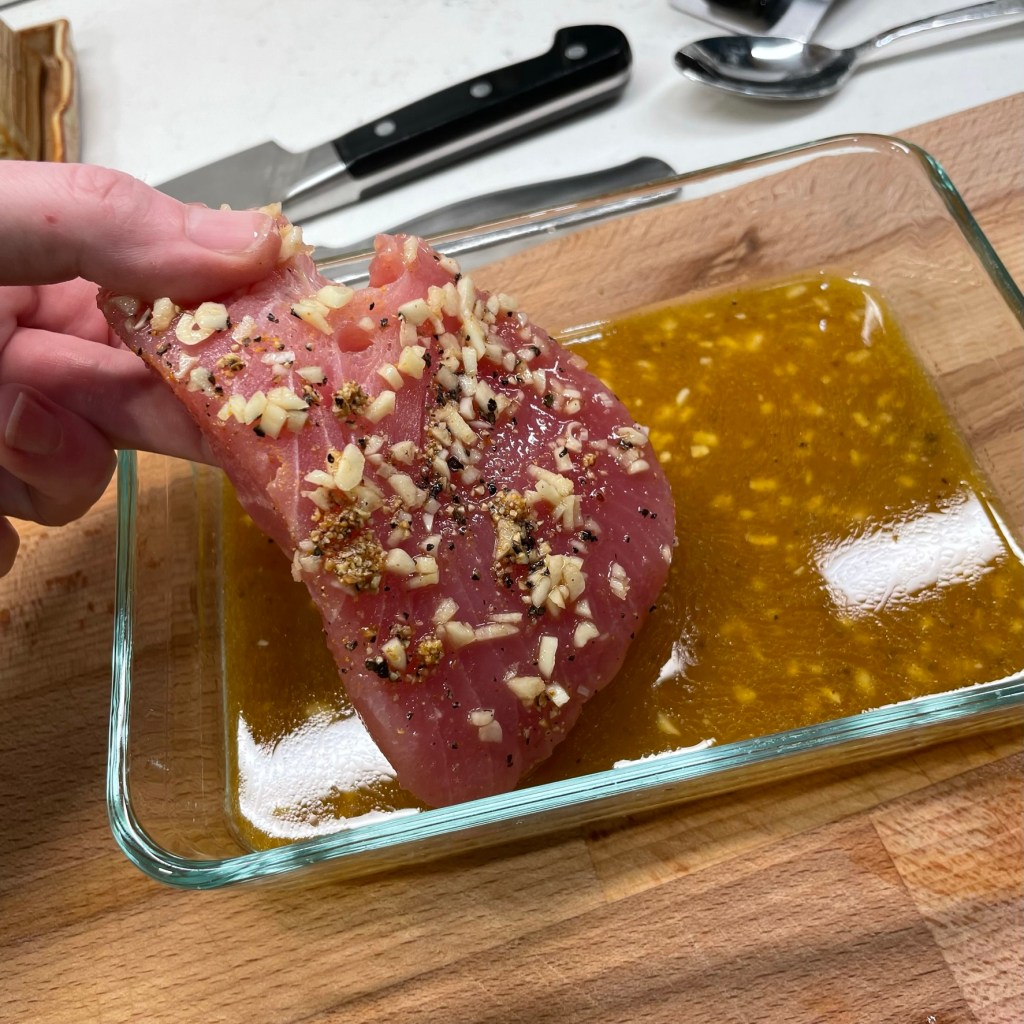
The most important flavor component of this meal was, of course, the tequila-lime marinade. Besides the namesake ingredients, I whisked in fresh garlic, red wine vinegar, chili powder and agave for a bright, punchy flavor on the tuna, and another departure from the heavy flavors I had always associated with Mexican food.


The critical rule for marinating in citrus juice is simple: keep it short and sweet because the acids in the lime juice will turn seafood into ceviche if they mingle too long. I gave it 30 minutes in the marinade, which was just long enough to pour a Mexican lager, prep all my toppings and pre-heat the griddle.

Mix and match toppings to suit your own taste.

Fresh tuna is best (and most tender) when cooked to medium rare, and you should let it rest a couple of minutes before slicing or chopping it for tacos.

Yes, Nilla, we see you peeking! ❤

While the tuna is resting, toss your corn tortillas onto the hot grill long enough to warm them and apply some grill marks. Store-bought tortillas are fine, but if you have some time and a little bit of patience, it’s worth the effort to make them yourself. I shared a post for handmade corn tortillas a while back; feel free to check that out for some tips to make it a little easier (and in fun flavors).

If you don’t have an outdoor grill or in-range griddle, or if unexpected wintry mix shows up out of nowhere, cast-iron grilling can save the day. If your range doesn’t have this option, a grilling pan or range-top griddle are both good options. I don’t recommend using them indoors for very high-fat foods (unless you enjoy degreasing your entire kitchen after a meal), but for veggies, fruit, pancakes, eggs and light seafood, cast iron on the stovetop produces excellent results.


Tequila & Lime Tuna Tacos

  • Servings: Up to 4
  • Difficulty: Easy
  • Print

The marinade is the star of this recipe, which brings freshness and flavor to Taco Tuesday!


Ingredients

  • Up to 16 ounces fresh tuna steak (marinade will cover this much; plan for 4 ounces per person)
  • 2 Tbsp. silver or reposado tequila* (see notes below)
  • Juice of 1 small lime
  • 1 Tbsp. red wine vinegar
  • 2 large cloves garlic, minced
  • 1 tsp. chili powder blend
  • 1 tsp. kosher salt (less if your chili powder includes salt)
  • A few twists black pepper
  • 1 tsp. agave syrup* (or sugar)
  • 3 Tbsp. olive oil or avocado oil
  • White corn tortillas, for serving
  • Desired accoutrements (we used shredded cabbage, thin radish slices, cubes of avocado, bias-cut scallions, cilantro leaves, pico de gallo, sour cream and lime wedges)

Note: Silver tequila is clear and has a very clean, crisp flavor; reposado is golden in color and has a slightly smoky flavor. We used reposado tequila for our tacos, and it was delicious. Agave is my preferred sweetener for this marinade, as it is the same ingredient that powers the tequila. But in a pinch, sugar is an easy substitute.

Directions

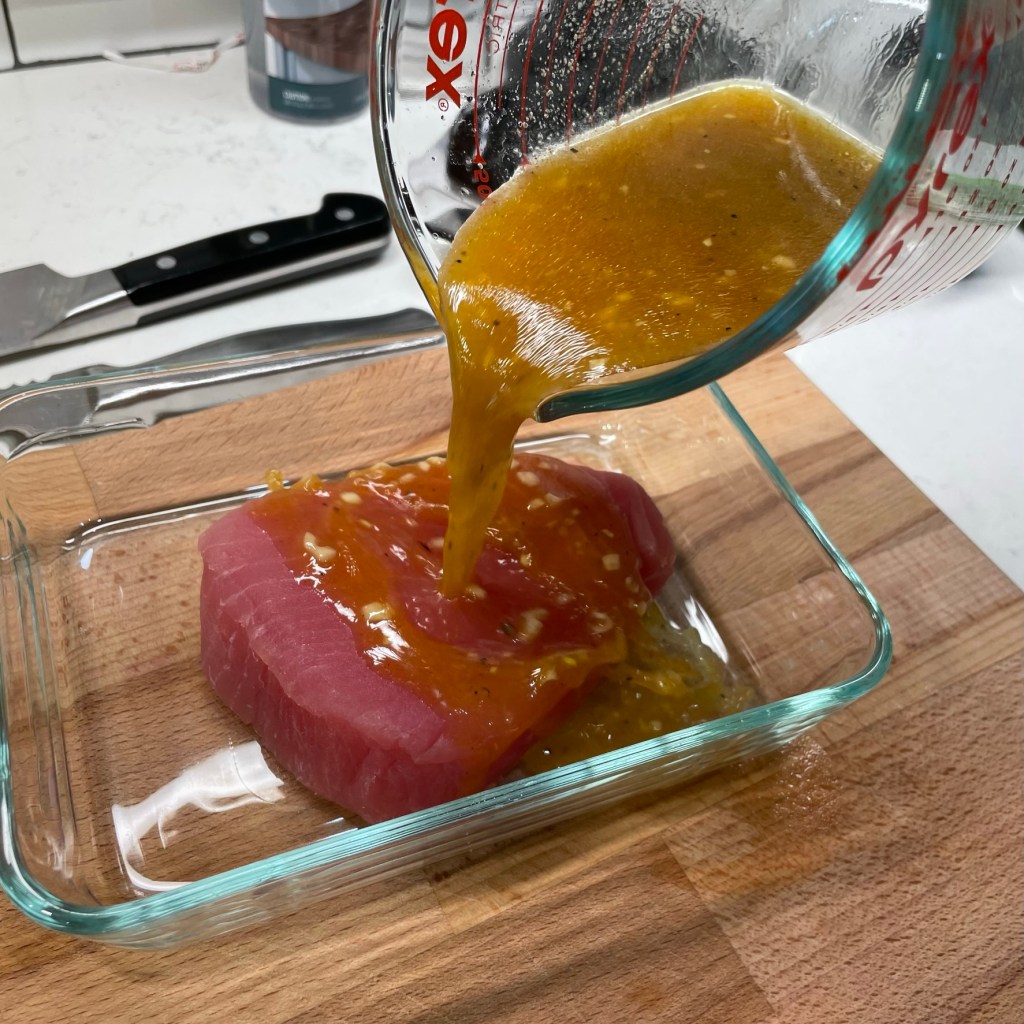
  1. In a glass measuring cup, combine the tequila, lime juice, vinegar, garlic, seasonings and agave. Whisk in olive or avocado oil to create a cohesive marinade.
  2. Place tuna steak(s) into a shallow glass dish or plastic zip-top bag. Pour marinade over steaks, turning several times to ensure good coverage. Let the steaks marinate for 30 minutes while you prep your accoutrements.
  3. Pre-heat a grill pan to medium-high. Oil the grates, and then remove tuna from marinade, allowing excess liquid to drip off. Place the steak on the grill and cook about 2 minutes, until first side is seared and displays nice grill marks. Turn steaks over and cook the other side the same amount of time. Transfer to a warm plate to rest 5 minutes while you heat the corn tortillas on both sides on the same grill pan.
  4. Move tuna steaks to a cutting board and chop into bite-sized pieces. Assemble tacos and enjoy!


Honey-Mustard & Onion Pretzel Crusted Salmon

My husband, Les, and I love taking road trips, and since COVID began, that’s how we have done all of our travel. Our trips may be lengthy, like our 10-day tour of Jersey, Connecticut and New York back in 2021, or quick weekend getaways to one of our beautiful North Carolina beaches. Regardless of length and destination, our trips all have a few things in common; we always have good music and snacks for the drive.

And then, there’s the ritual of departure from our home, which for me always goes something like this:

  • Load our main bags into the car (Les does this part, and I do the rest) 
  • Do a walk-through of every single room of the house to be sure we aren’t forgetting something important
  • Set out instructions for the pet sitter
  • Give the dog a pat on the head and tell her she’s in charge of the house while we’re away
  • Wink at the cat, who knows she’s actually going to be in charge
  • Do another walk-through of the house to be sure nothing electric is plugged in
  • Make a quick trip to the bathroom
  • Confirm with husband that my bag is already in the car
  • Double check on pet supplies to be sure my notes for the sitter match what’s in the cabinet
  • Argue with husband, who keeps yelling from the garage to “COME ON!”
  • Confirm the front door is locked
  • Get in the car (finally)

My backpack goes behind Les’s seat (so I can reach it), and it usually includes a couple of food magazines, my iPad, laptop, charger cables, bottled water and whatever road snacks Les picked up at the convenience store when he stopped to gas up the car. All of this, even for a four-hour car ride!

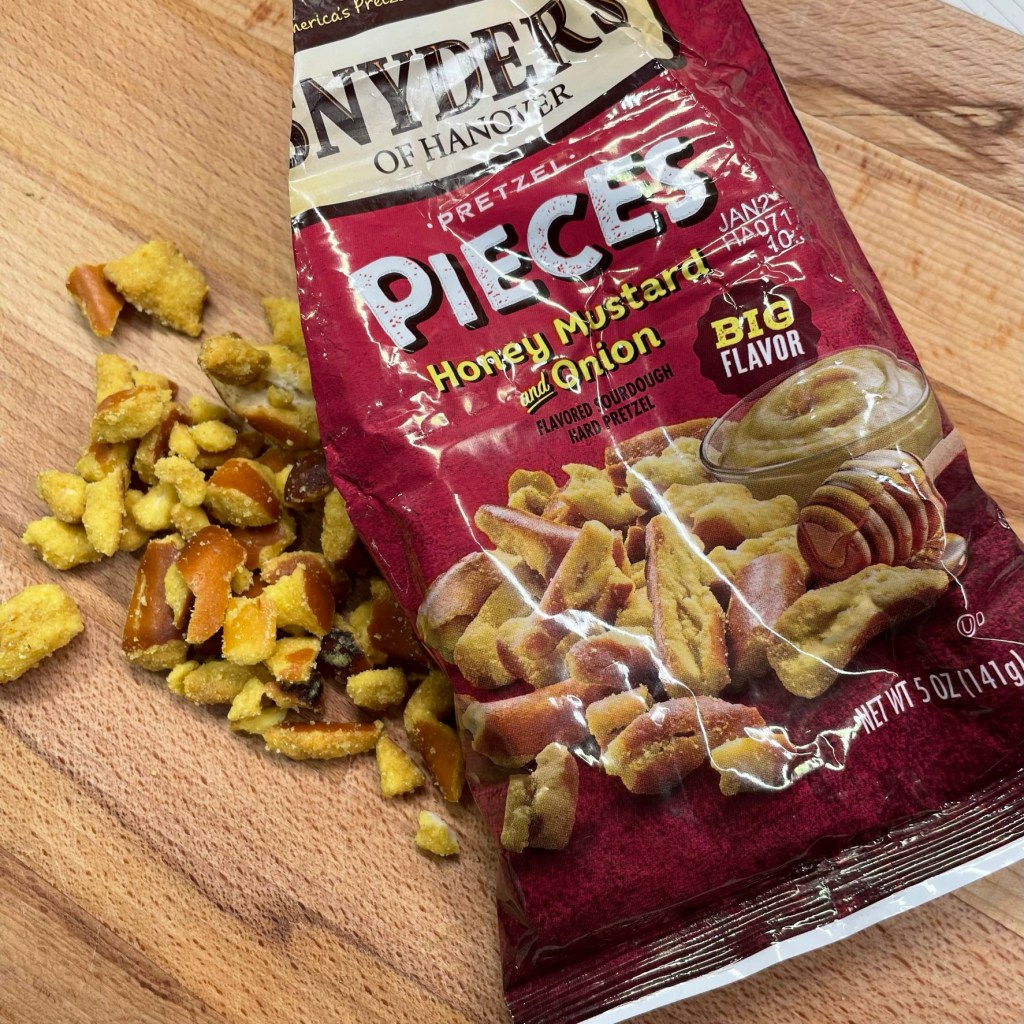
When we make one of these road trips, we throw dietary caution to the wind and load up on some junky snack foods that we would never eat any other time. I mean, junk— like pizza-flavored Combos, cheap chocolate bars, bold and zesty Chex mix, or these honey-mustard and onion pretzel pieces (one of my faves). 

I’d never eat these at home, but they always taste so good in the car!

I have no good excuse for loving these things. It’s the kind of ultra-processed snack I avoid 99% of the time. But I was raised to waste nothing, so after we get home from wherever we went, I don’t want to just throw the remains away. The leftover candy might go into Les’s lunchbox during the work week, but in the case of pretzels, chips or crackers, I can almost always crush them up and use them to coat a piece of fish or chicken.

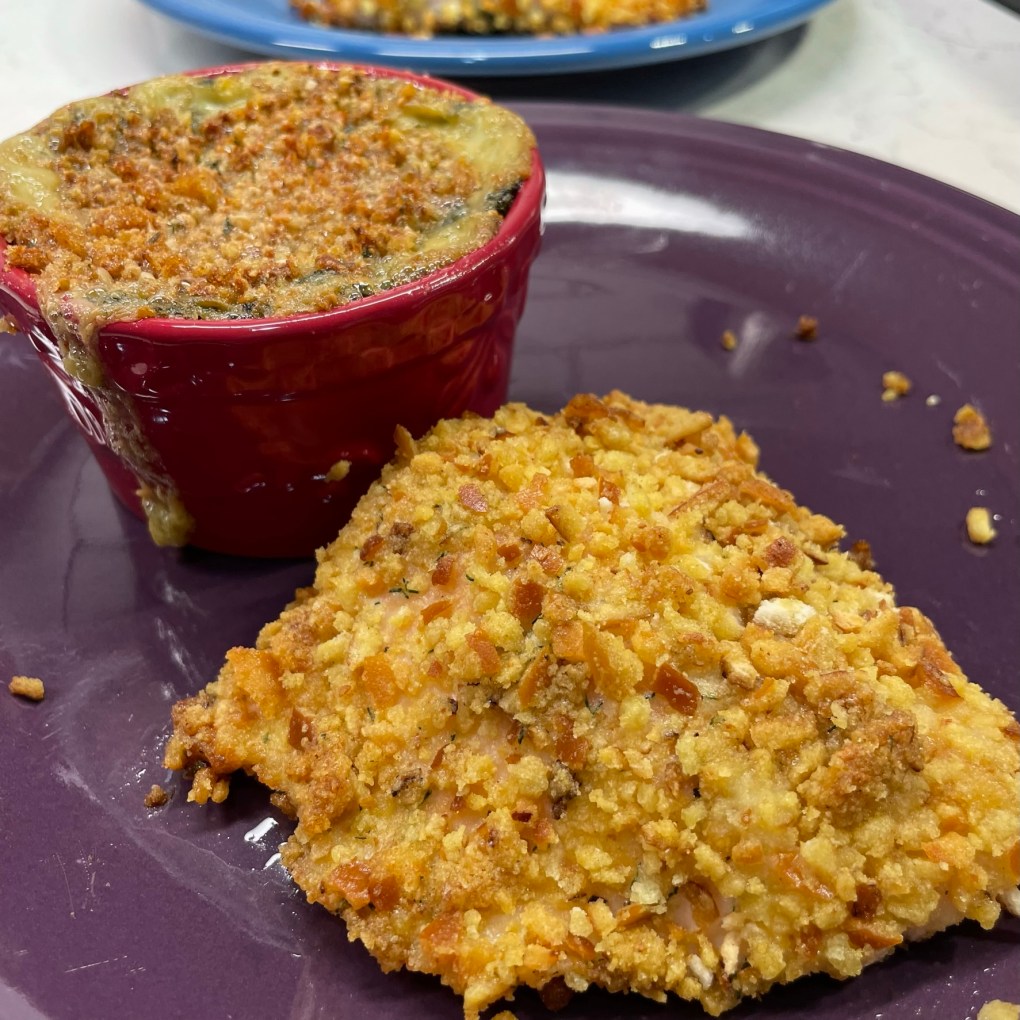
The pretzel bits got so crunchy in the oven, and these flavors worked great with salmon!

The balance of sweet honey, salty pretzel and savory mustard works really well on salmon fillets, and it’s easy to prep this and pop it into the oven while you steam or pan fry a side vegetable. In past times, I’d simply brush a little bit of mayonnaise onto the fish before pressing it into the pretzel crumbs, but I’ve invested some time this past year learning new culinary techniques. I’ve made no secret of my crush on Kenji López-Alt for the scientific approach he takes in the kitchen, and his technique that I call the “miraculous mayo marinade” has become one of my go-tos.


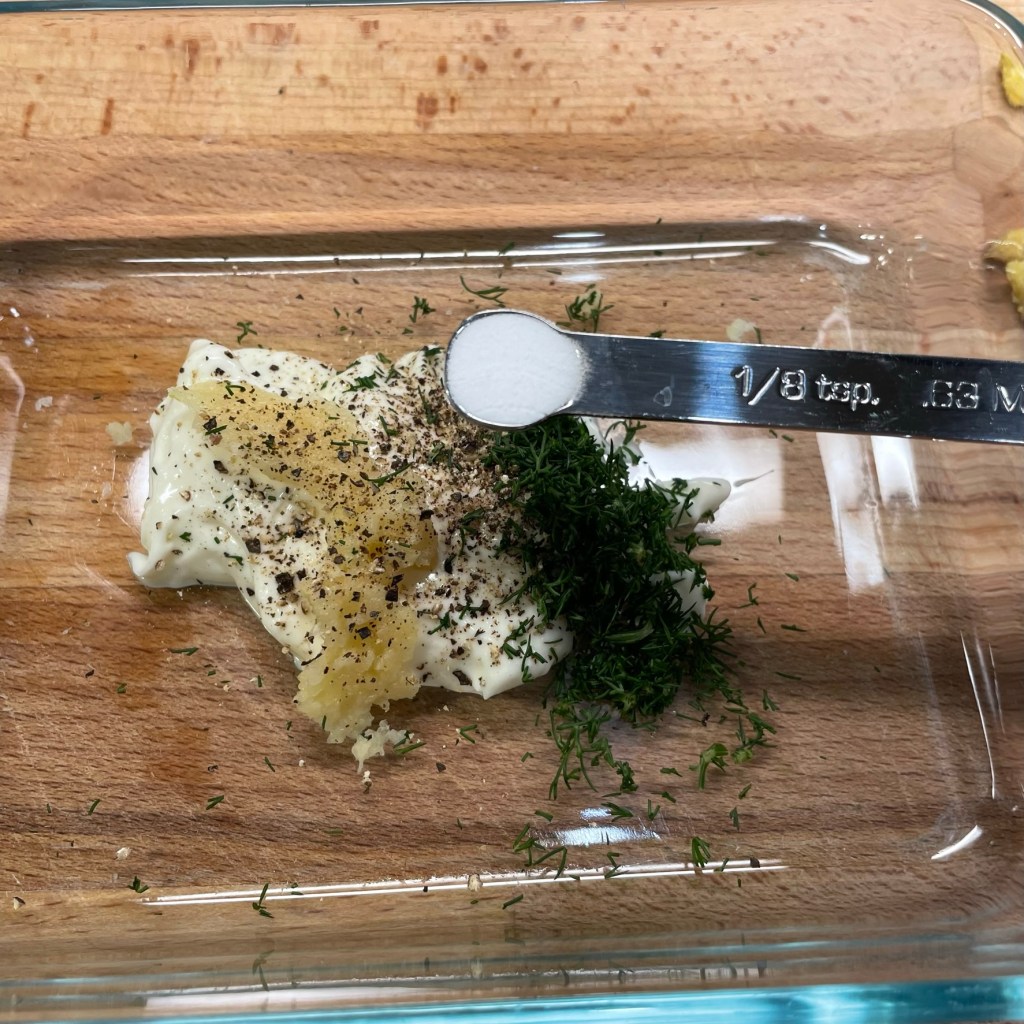
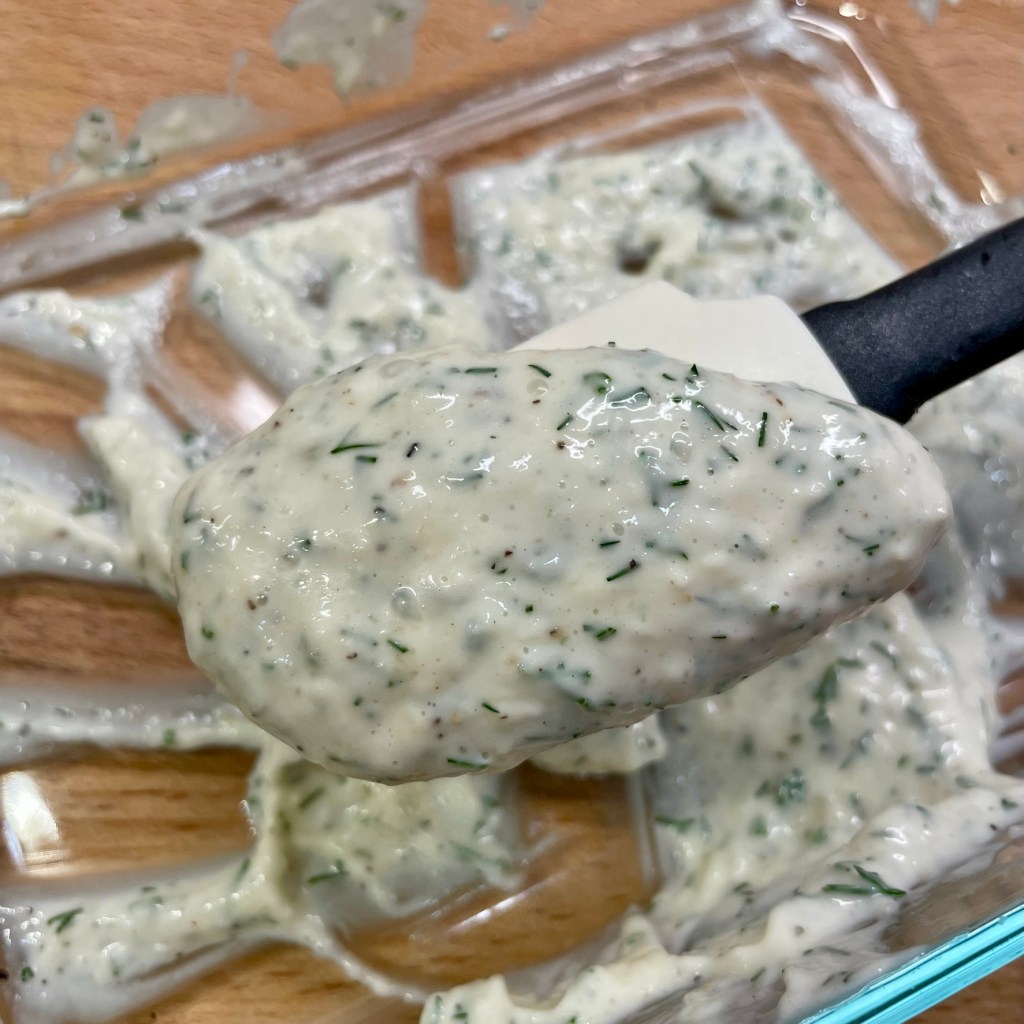
A tiny bit of baking soda added to a seasoned mayonnaise mixture creates a chemical reaction that delivers more flavor into the protein you coat with it, and also helps to keep the protein (in this case, salmon) super moist and juicy after cooking. I used this simple chemistry trick to infuse my skinless salmon fillets with fresh garlic and dill, then I pressed both sides of the salmon into the crushed remains of the honey-mustard and onion pretzels. 


About 20 minutes in the oven, and the salmon emerged with a golden, crunchy coating and moist, juicy interior. The fresh dill in the marinade was a perfect complement to the tangy mustard in the pretzels, and the flavor was so tantalizing, it may be tough for me to wait until our next road trip to make it again!


Honey-Mustard & Onion Pretzel Crusted Salmon

  • Servings: 2
  • Difficulty: Easy
  • Print

This recipe is very simple, and makes the best use of the crumbs at the bottom of a snack food bag. If you don't have these pretzels, try it with tortilla or potato chips!


Ingredients

  • 2 portioned fillets of salmon, skin removed
  • 1/4 cup mayonnaise
  • 2 cloves fresh garlic, grated on microplane
  • Salt and pepper
  • 1 tsp. fresh dill, chopped
  • 1/8 tsp. baking soda
  • 1/2 cup honey-mustard and onion pretzel pieces

Directions

  1. Preheat oven to 350 F, with oven rack in center position. Line a baking sheet with parchment or a silicone liner.
  2. Combine mayo, garlic, dill, salt and pepper in a small bowl. Add baking soda and stir for a few seconds to ensure it’s evenly distributed in the marinade.
  3. When the mayo mixture appears frothy and bubbly, spread it evenly over both sides of the salmon, and let the salmon rest for about 20 minutes.
  4. Place pretzel pieces inside a paper bag or between layers of parchment. Use a rolling pin to gently crush the pieces into smaller pieces, but not to the point of powder. Spread the crumbs out onto a plate or the parchment. Press the salmon into the crumbs on both sides.
  5. Arrange salmon fillets onto lined baking sheet. Scatter any leftover crumbs onto the salmon pieces and gently press to adhere.
  6. Bake for 20 to 25 minutes, depending on size and thickness of salmon fillets.


“Double Rainbow” Trout & Chard

Regardless of one’s religious bent, the season of Lent presents plenty of opportunity to try new seafood dishes. For those abstaining from meat, a fresh idea on the dinner table can help prevent boredom with the same fish dishes over and over for 40 days. For everyone else, it’s simply a healthier meal option—never a bad idea, and especially when we are headed into Spring.

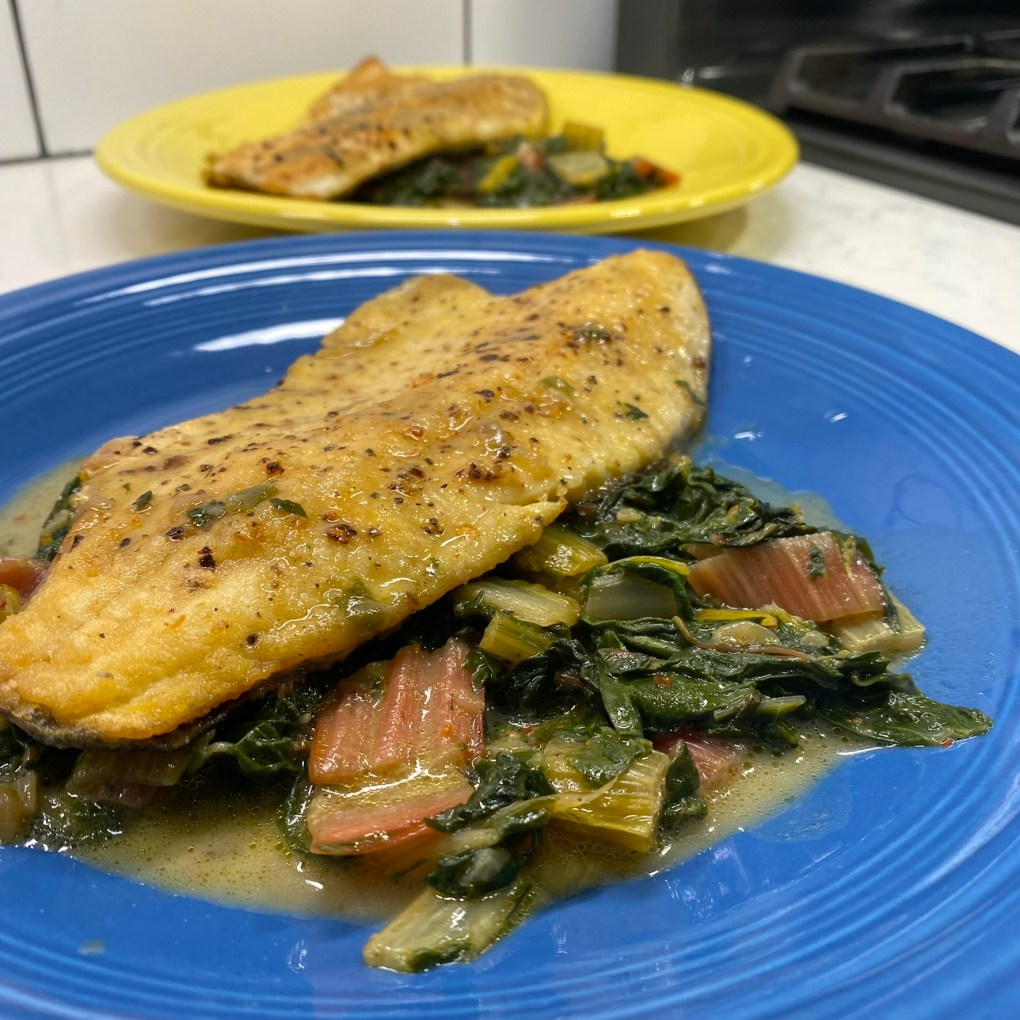
This nutritious, colorful dish has lots of flavor (and heat, if you want it), but is easy on effort, calories and budget. You can have it on the table in under half an hour, too!


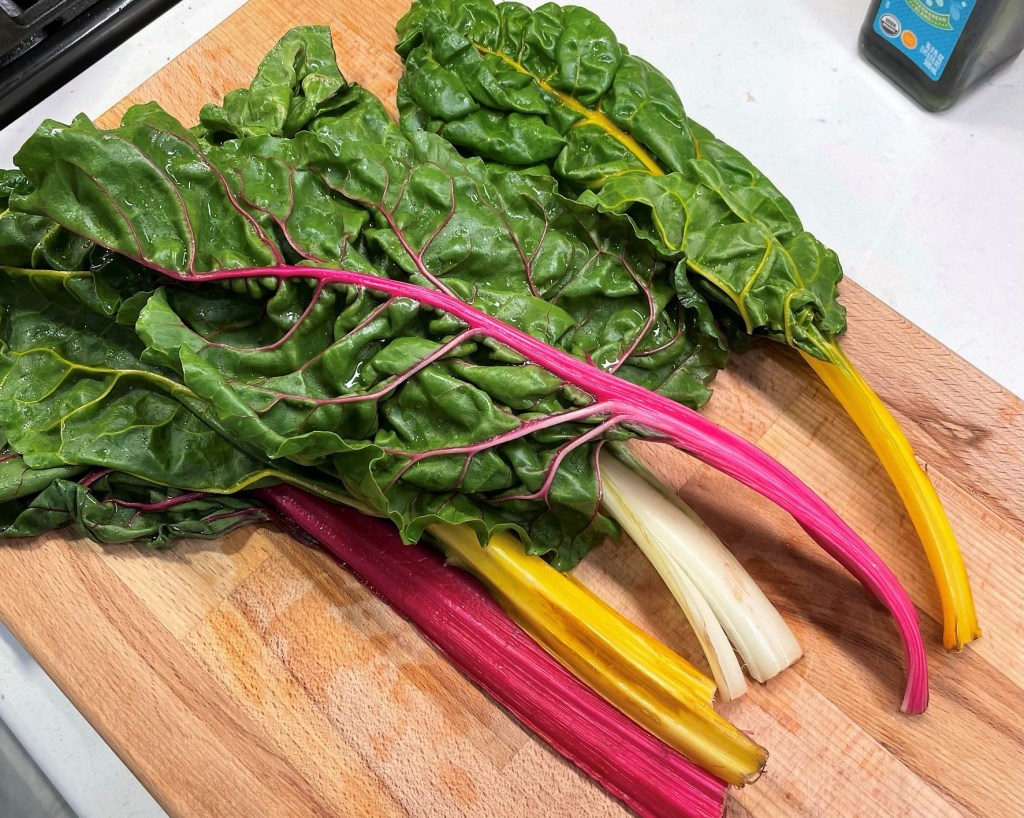
Rainbow chard is one of nature’s superfoods, a leafy green packed with vitamin K (good for our bones), iron (for healthy blood cell production), antioxidants (to reduce inflammation) and manganese (for brain and nerve support). On top of the health benefits, chard is very versatile in the kitchen. It can be eaten raw, steamed, boiled, sautéed or braised. You can add it to everything from soup to an omelet, or even use its leaves to wrap up other ingredients, the way you might use cabbage leaves. I braised it this time, and made it a bed for a crispy, pan-fried trout fillet.

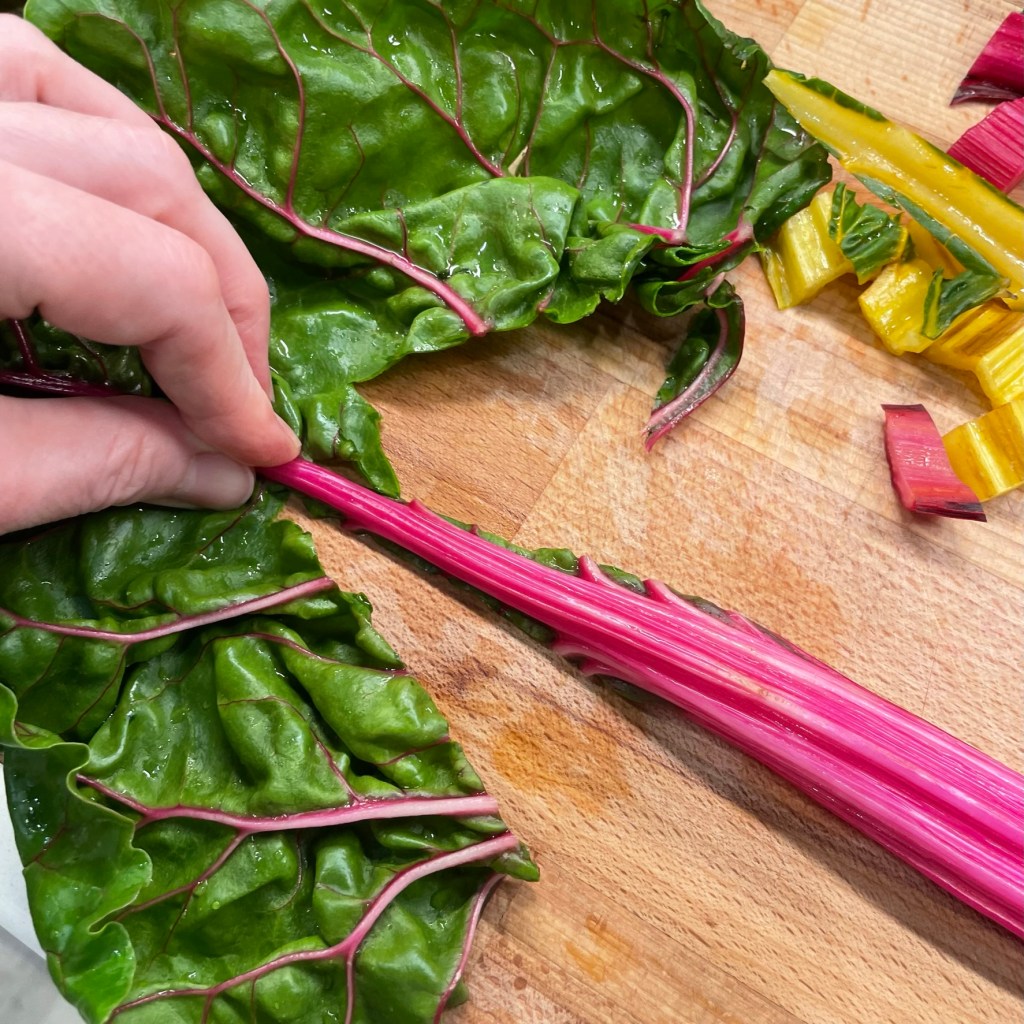
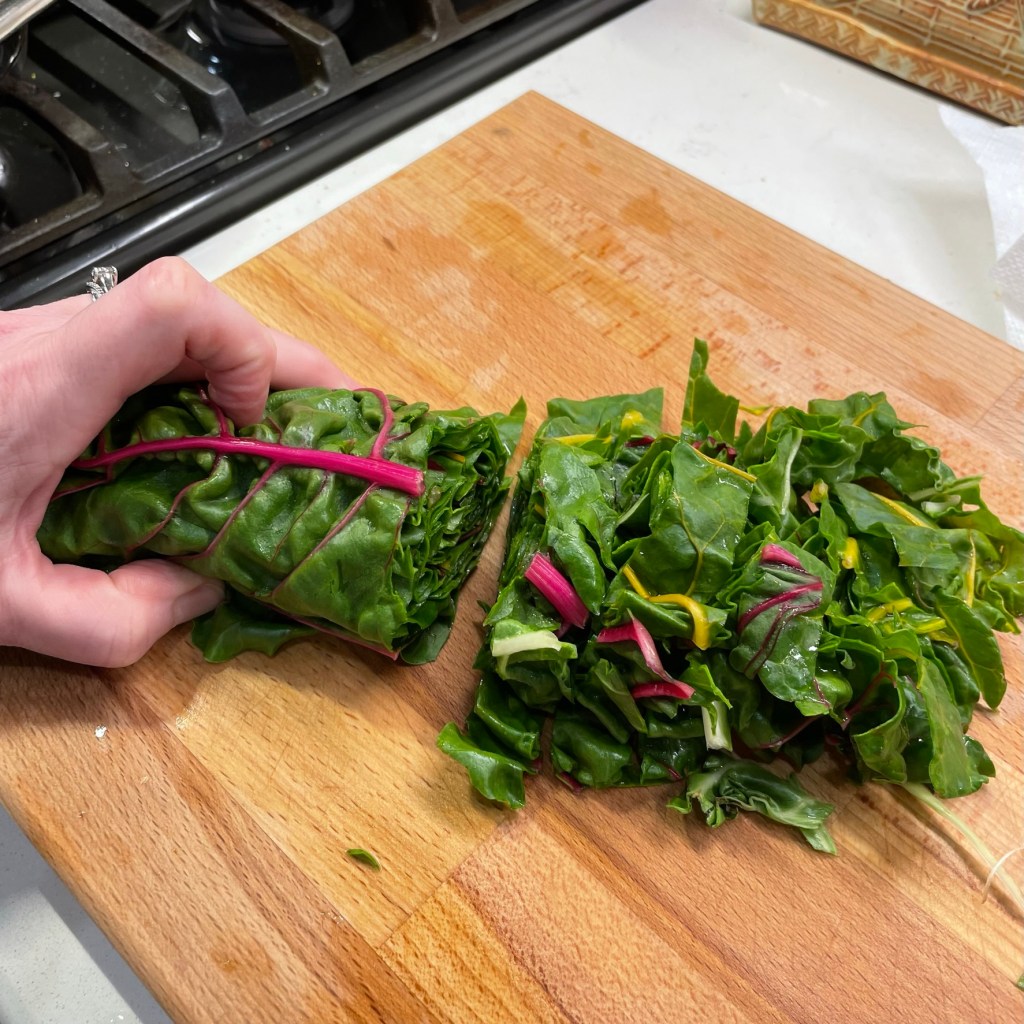
I used the whole chard in this dish, but I separated and chopped the hard stems to give them a 5-minute head start in the pan. To save time chopping the leaves, I stacked and rolled them, and then sliced the roll like a giant chiffonade.


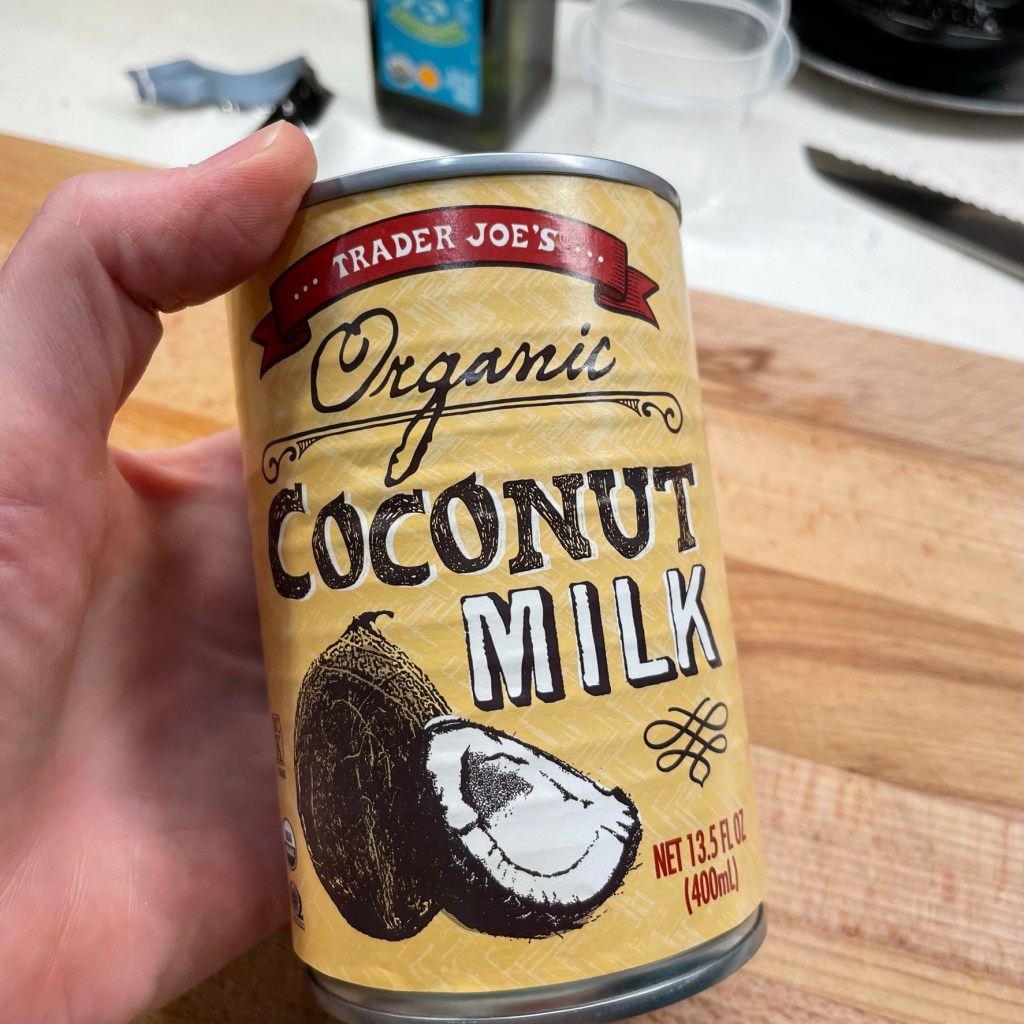
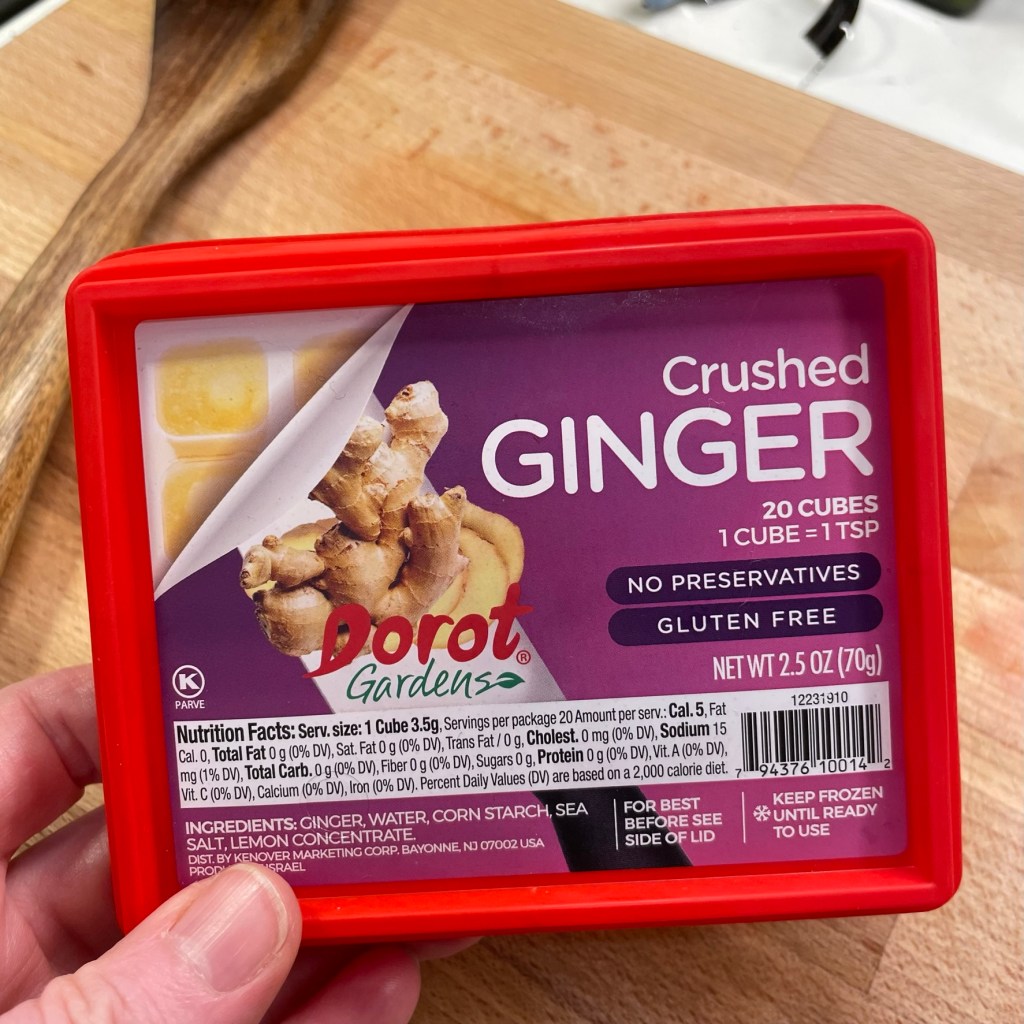
The stems were sautéed in a bit of extra virgin olive oil along with a couple scallions (the only onions I had in the house that day), and then I lined up three of my favorite complementary flavors—coconut milk, spicy Asian Reds pepper flakes and ginger. One of my favorite freezer-section discoveries has been these little cubes of crushed ginger. I can never use up a whole root (even a small one), and these come in very handy.


When the chard stems were tender, I added the leaves a handful at a time and cooked them until they wilted. My coconut milk had a ton of oil solids floating on top, so I scooped those out for another use* (see my note about this after the pictures)—and only the liquid went into the pot to braise the chard. After only a few minutes, the coconut milk softened up and absorbed some of the color from the chard stems. I love the way these ingredients merge together!


*You may as well know, when I say that I set aside some portion of an ingredient “for another use,” it often means I put it into the refrigerator and flat out forget about it. I cannot count the times I have dug around in there, looking for something else, and realized that I missed the freshness deadline on some ingredient I was sure I’d use. If I’d had a can of “light” coconut milk, this would not have been an issue. The full-fat version of coconut milk tends to add a stronger coconut flavor (not what I was going for). Anyway—

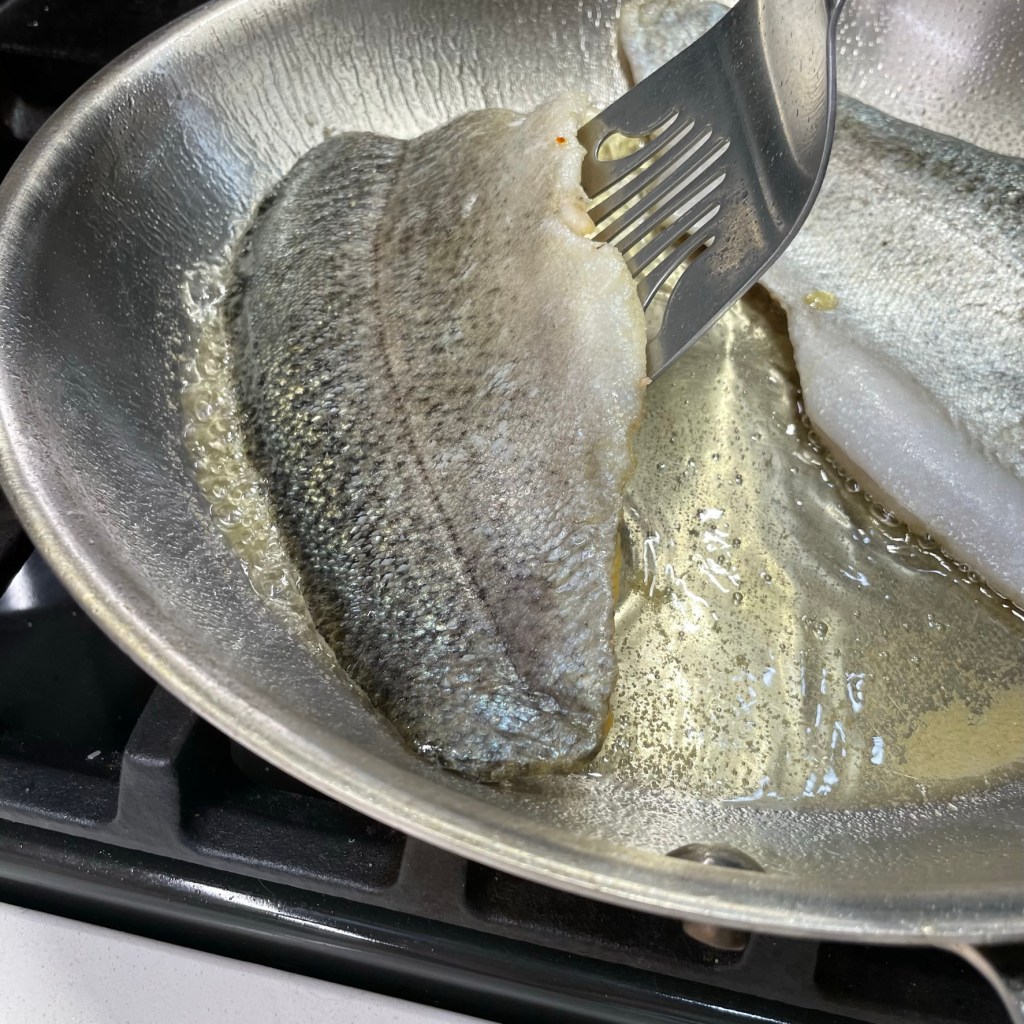
I sprinkled the trout fillets with salt and pepper, and then gave them a flip in flour sprinkled with more of the Asian Reds pepper flakes. I fried them in a little oil until crispy and browned, and then plated the fish on top of the chard and spooned the lingering coconut milk over the top. If you don’t mind a few carbs alongside, this would be great with steamed rice.


So, I’ve called my dish “double rainbow” because the fish counter at my supermarket had labeled this trout as “rainbow trout,” though I didn’t notice any signature rainbow stripes on these fillets. Sometimes, I get the feeling my supermarket is fibbing a little bit, or maybe they don’t know the difference, or they think we don’t. The bottom line is that any trout will be fine for this dish, and of course, another delicate flaky fish could also be substituted.

But I went with it because who doesn’t love a double rainbow?


Double Rainbow Trout & Chard

  • Servings: 2
  • Difficulty: Easy
  • Print

Rainbow trout + rainbow chard = A doubly delicious weeknight meal that is inexpensive, easy to prepare and packed with nutrition.


Ingredients

  • 1 small bunch rainbow chard
  • 2 Tbsp. extra virgin olive oil (one for cooking greens and the other for frying trout)
  • 1/4 cup chopped onion (sweet, yellow, leek, shallot or scallion would all work)
  • Salt and pepper
  • A shake or two of crushed red pepper, to taste (I love the Asian Red blend from Flatiron Pepper Co.)
  • 1 tsp. finely minced ginger (or a shortcut, like the frozen cubes of ginger)
  • 1 cup coconut milk (the canned culinary variety, preferably “light”)
  • 2 fresh trout fillets
  • 1/4 cup all-purpose flour (for dusting the trout fillets)

Directions

  1. Cut out stems of the chard and chop into small pieces. Stack the leaves and roll up tightly like a cigar, and then slice into strips.
  2. Add a tablespoon of olive oil to a small skillet over medium heat. Add the chard stems and onions, season with salt and pepper, and sauté for about five minutes, until slightly tender. Add chard leaves to the pan, along with red pepper and ginger. Cook a few minutes, until leaves are wilted.
  3. Add coconut milk, reduce heat and cover. Allow chard to braise about 15 minutes while you prepare the trout fillets.
  4. Pat fillets dry with paper towels and season with salt and pepper. Sprinkle flour onto a plate or paper towel, and add a few more shakes of red pepper flakes if you like spicy flavors. Press the flesh side of the fish down onto the flour to coat, and then shake off excess.
  5. Heat a large skillet over medium heat. When pan is hot, add the remaining oil and twirl the pan to coat. Place trout fillets, flesh side down, into the hot skillet and cook until fish is crispy and golden, about 4 minutes. Carefully turn fillets and cook the skin side for 2 to 3 minutes.
  6. Plate the braised greens and top with trout. Spoon extra coconut milk sauce over the top of fish and serve at once.


Baked Salmon with Creamy Dijon Sauce

What a week! Things have been a bit upside-down at our house, as my husband and I are now in week five of our master bath remodel. It isn’t clear to me how a room half the size of the kitchen can take longer to overhaul, but we are assured that the end of the month will bring light at the end of the tunnel. I’m sure ready to get back to normal, though “normal” itself is different with the change of season. Can I get an “achoo?”


The weather is warming, my car is predictably covered in yellow pollen, all the flowers are blooming and the bees are buzzing (literally). Yesterday, as I chatted with a neighbor in the warmth of the afternoon, we heard a humming sound that became increasingly loud as we talked. It was not the sound of the nearby wet saw grinding away at the large porcelain tiles that will grace the walls of our new, walk-in shower—no, this sound was much closer and sounded like a chaotic symphony of the natural sort. To be honest, it felt and sounded a bit ominous, as if the wind carried a warning. I finally looked up to realize that an enormous swarm of bees was on the move! In all my years, I had never before witnessed such a sight, and it was something to behold. Thankfully, they kept moving!


Easter arrives this weekend, and for the occasion, I’ll be making a couple batches of homemade Moravian Sugar Cake this evening and tomorrow morning. And then, with the Friday evening arrival of Passover, all leavened baked goods will be “off the table” for a week (plus a day). That is a big test of my willpower, and I will probably try to satisfy my cravings virtually by sharing a previously made bread recipe (or two).

In the meantime, here’s a delicious and healthful seafood recipe that fits the bill for the final Friday of Lent or for a simple Passover meal for the coming week. When I made this dish a few months ago, it was a good reminder for me that a meal does not have to be complicated to seem elegant. The creamy Dijon-spiked sauce has a dual role; first, to coat the salmon during baking (which keeps it delightfully moist) and, second, a reserved amount can be dolloped onto the plate for dipping as you enjoy each bite. I like wild or sustainably farm-raised salmon for this recipe, but arctic char or steelhead trout would be equally delicious, and it only takes 30 minutes, start to finish—perfect at the end of a hectic “here comes spring” week!


Ingredients (serves 2)

2 fillets salmon (about 6 oz. each, skin-on is fine)

Creamy Dijon Sauce

1/3 cup sour cream (or Greek yogurt, if you prefer)

1 tsp. Dijon mustard* (see note below)

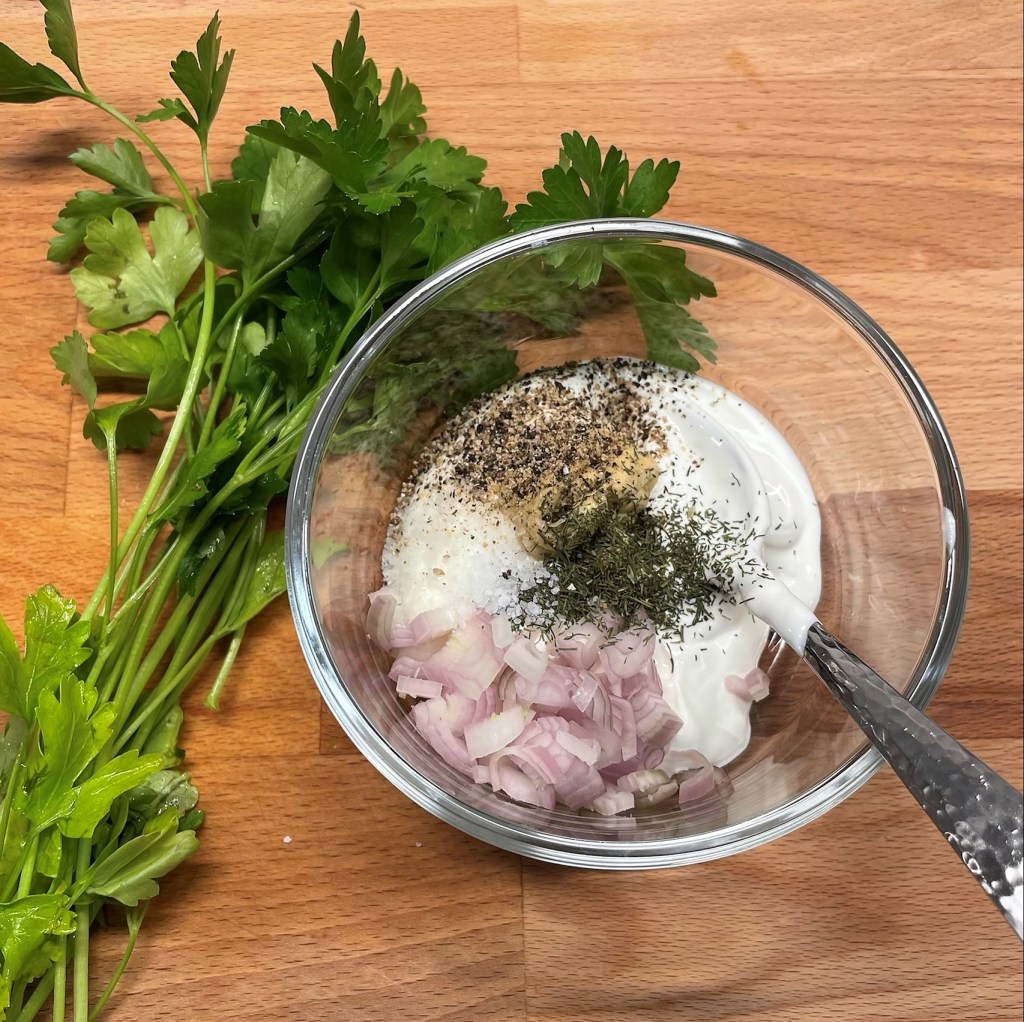
1 small shallot, finely chopped

2 tsp. fresh dill, finely chopped (or about 1/2 tsp. dried dill)

A small handful of fresh, flat-leaf parsley, chopped

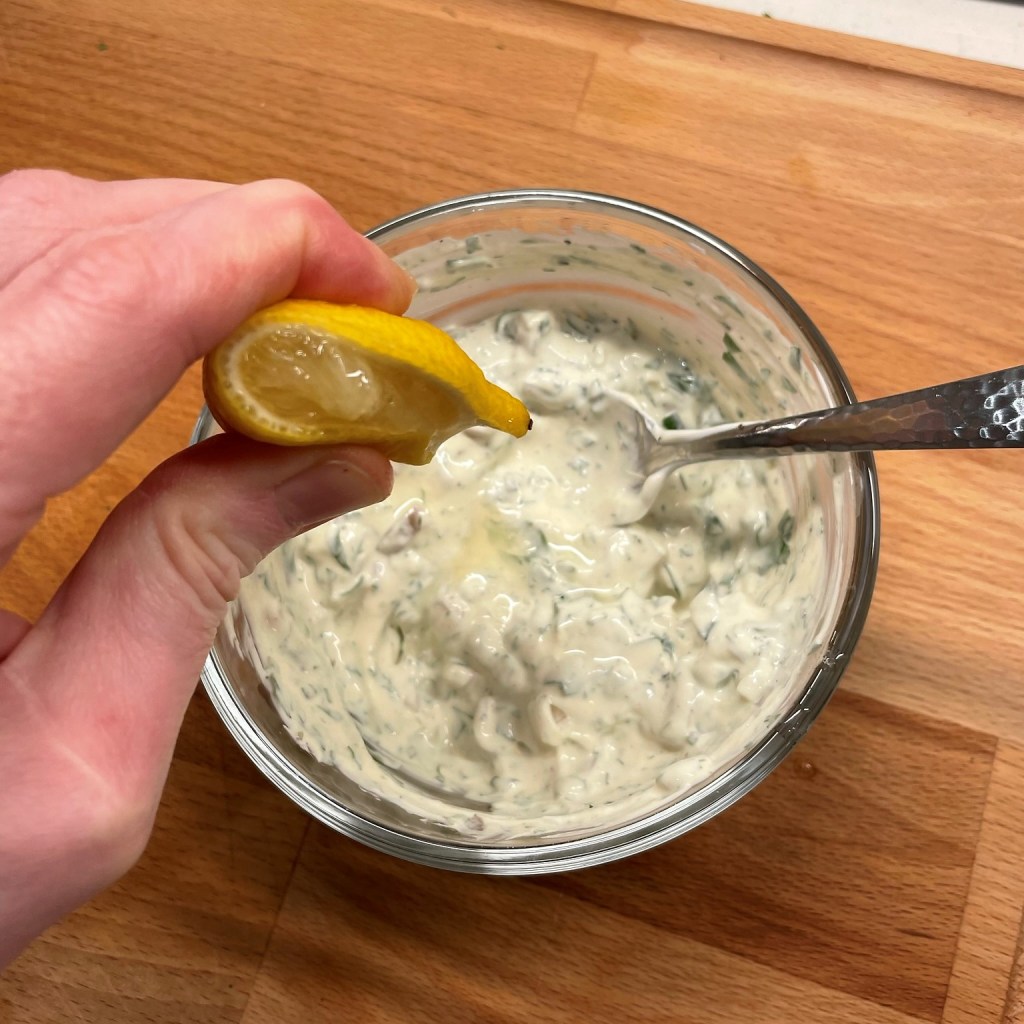
Juice of 1/2 small lemon

Kosher salt and black pepper to taste


*Notes

If you will be making this dish for Passover, omit the Dijon, as mustard is not considered kosher for Passover, especially in Ashkenazi Jewish culture. I’m still learning the rules, and though we don’t follow all of them at our house, I would hate to lead someone else astray of acceptable standards. This will be delicious, even without the mustard.


Instructions

  1. Preheat oven to 350° F. Prepare a baking sheet, lined with parchment or silicone liner.
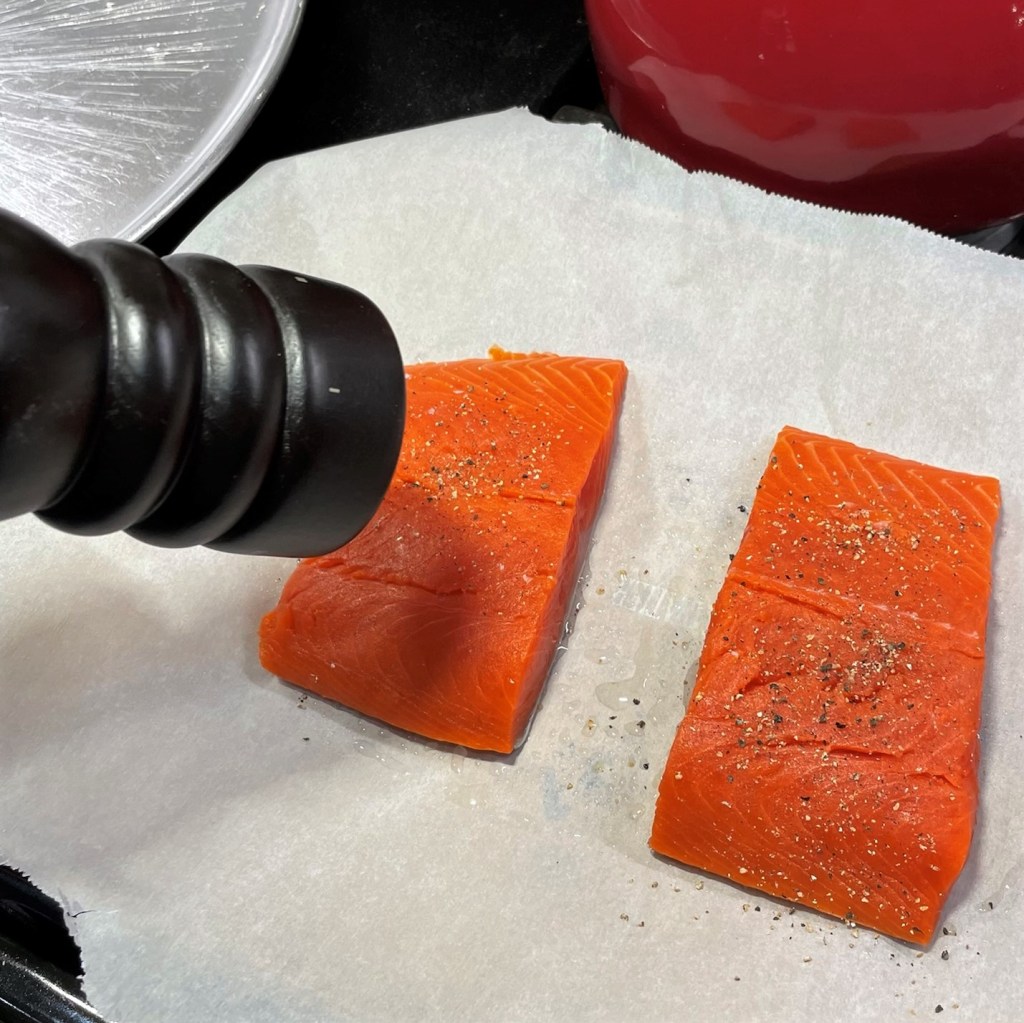
  2. Pat salmon fillets dry with paper towels. Season each with salt and pepper.
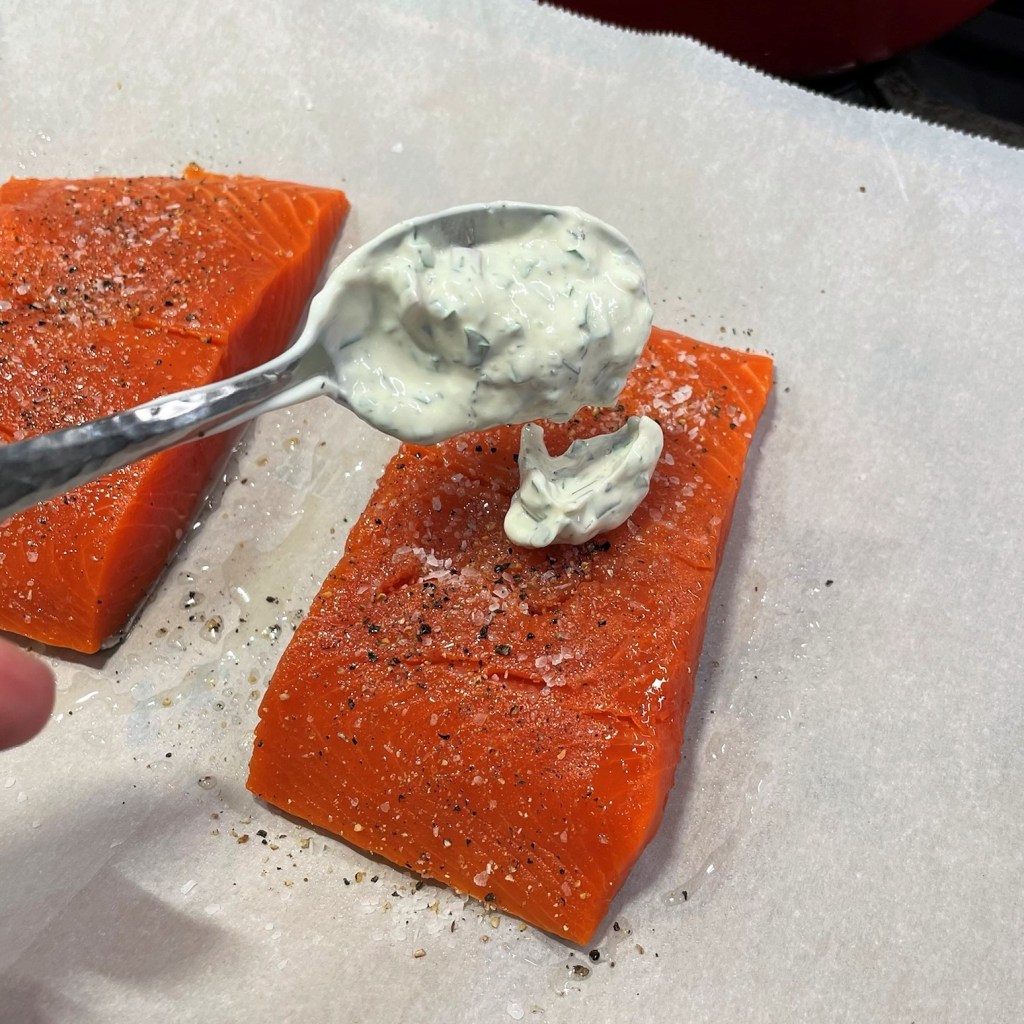
  3. Stir together the sour cream, Dijon, shallots, dill and parsley. Squeeze in lemon juice and stir to combine. Adjust salt and pepper to taste.
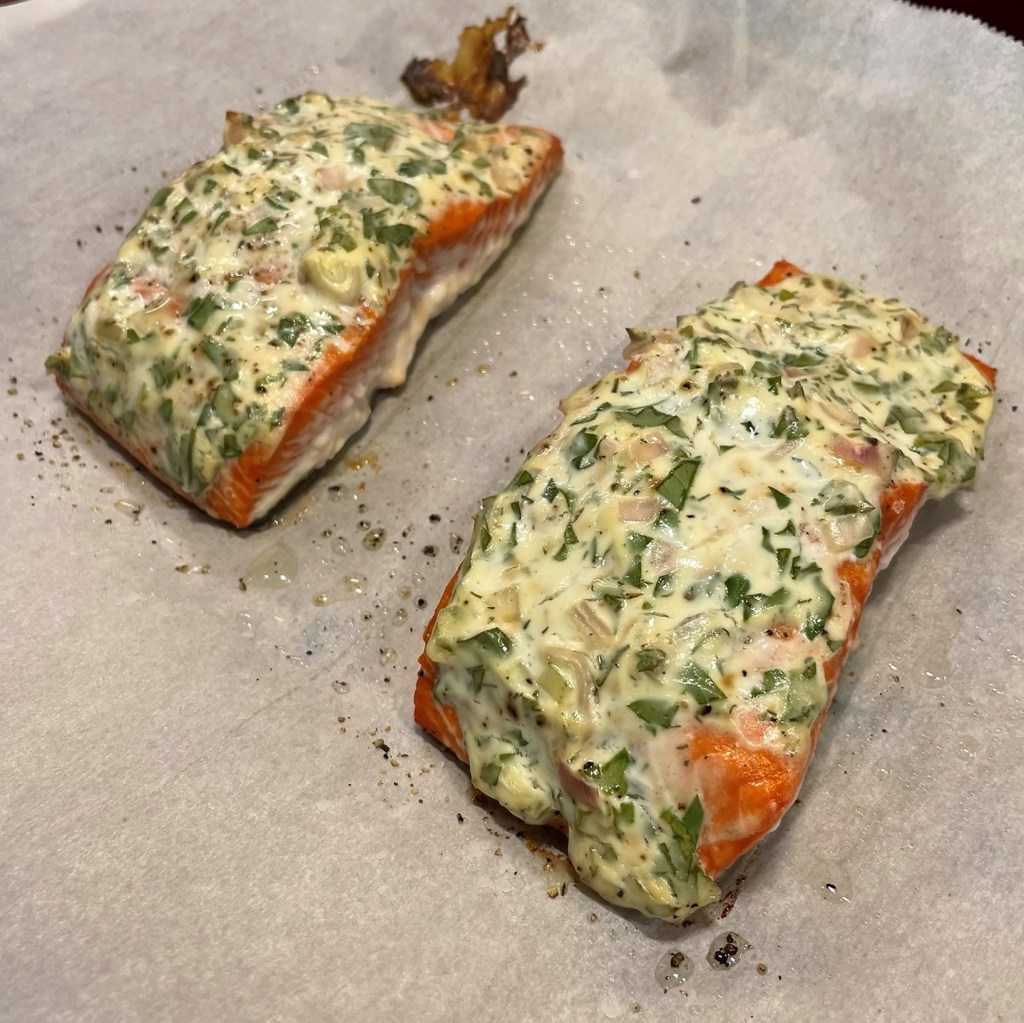
  4. Spread the creamy Dijon sauce generously over each fillet, reserving a few tablespoons for serving later. Bake for 25 minutes, or until salmon flakes easily.

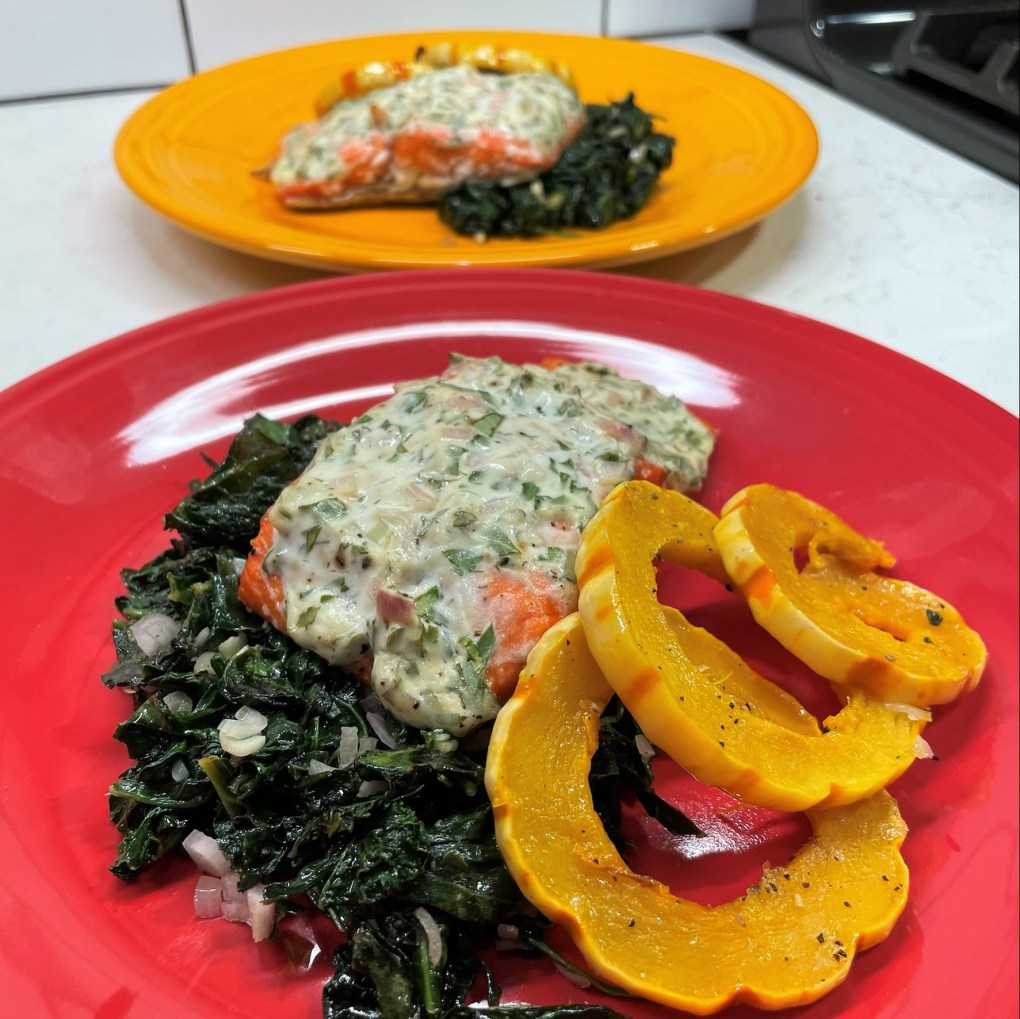
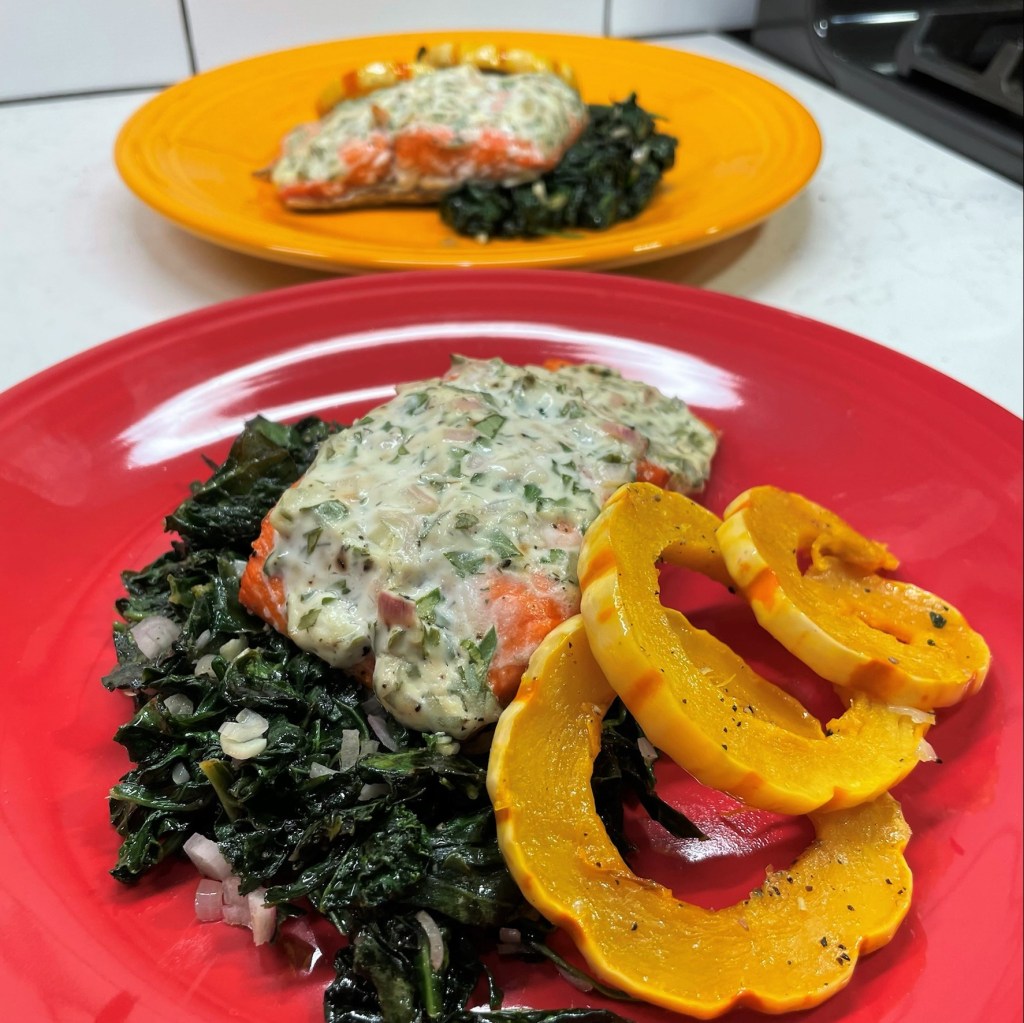
Baked Salmon with Creamy Dijon Sauce
Served with easy sauteed spinach and roasted rings of delicata squash.


Black Sea Bass with Dirty Martini Butter Sauce

I’ve lived in and around Winston-Salem for 35 years, and from the day I arrived as a fresh-faced 20-something, I’ve explored every corner and tried every restaurant and sought out all the specialty shops in a quest to satisfy my food-loving soul.

Or so I thought.

A few years ago, some friends of ours made mention of Sea Products, a hidden gem that has been in business three years longer than I’ve been here, and their recommendation has changed my life. OK, that’s probably a bit overstated, but it has definitely changed my seafood game for the better.

I love stepping into this little shop in the West End of my city. It smells like the ocean in the best possible way and is always amply stocked with fresh seafood—mostly from our own coastline, but sometimes from as far as Canada—and all kinds of accoutrements for whatever preparation you have in mind for your fresh catch. Sea Products throws in a fresh lemon with every seafood purchase, and sells housemade tartar and cocktail sauces, side salads in ready-to-go containers, and fresh breads from a local bakery. They even have a small, curated wine selection, and every bottle pairs with fish. It’s a one-stop shop, and I am a proud supporter of local businesses such as this. The selections are always interesting, to the point that I don’t even bother making a shopping list.

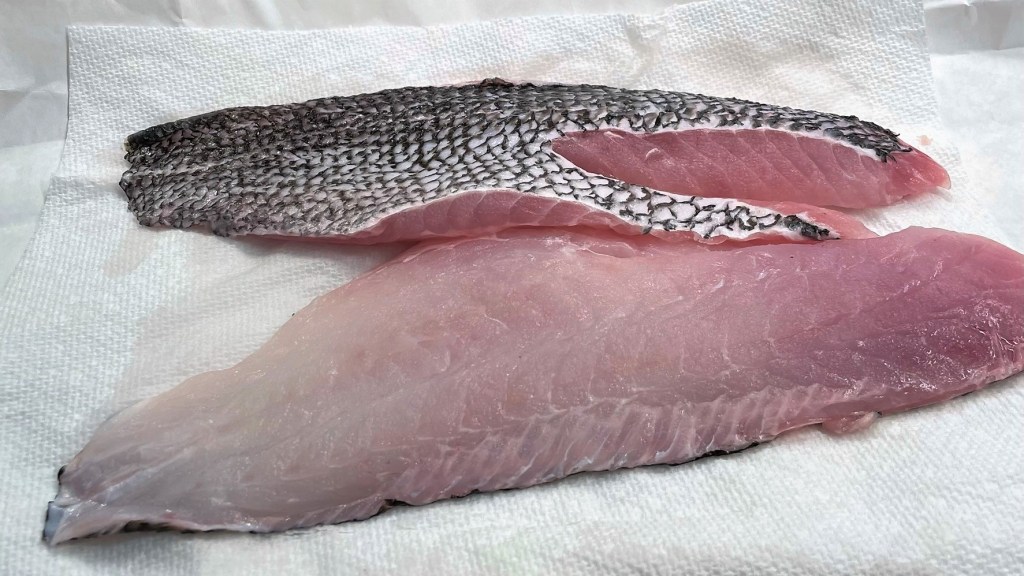
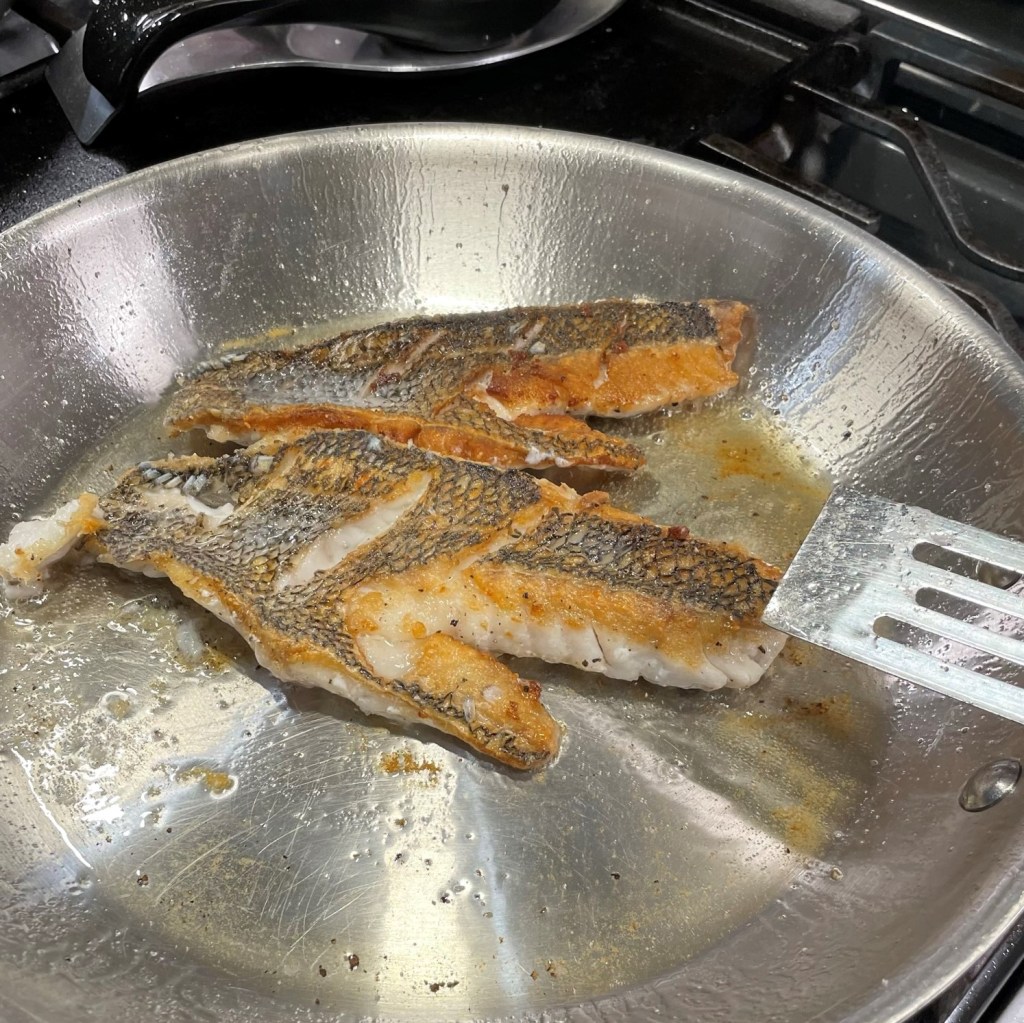
What would it be this day—fresh shrimp, clams or scallops? Pre-made crab or fish cakes? Halibut or grouper? And then something caught my eye from the corner of the case, a fish that I hadn’t seen on previous visits. Black sea bass. The clerk described it as “mild and flaky, similar to snapper but a touch sweeter.”

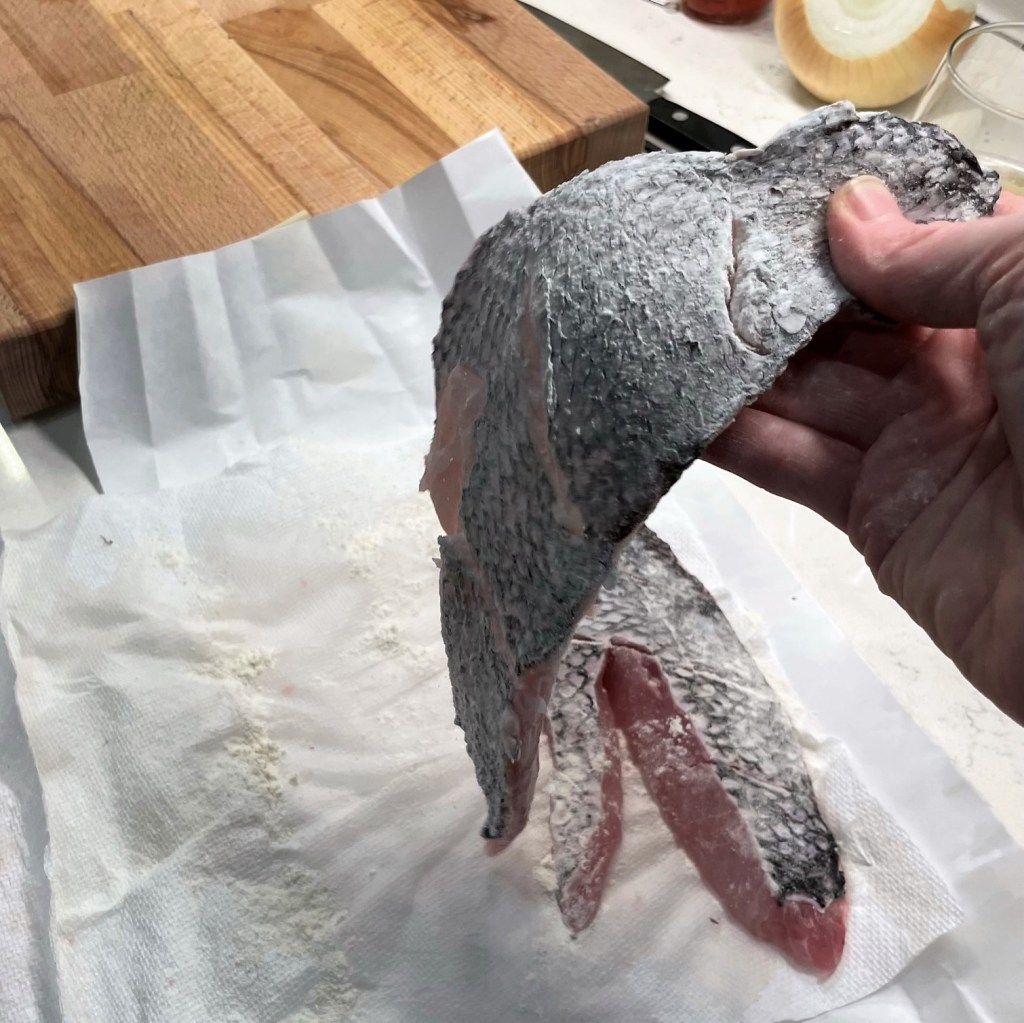
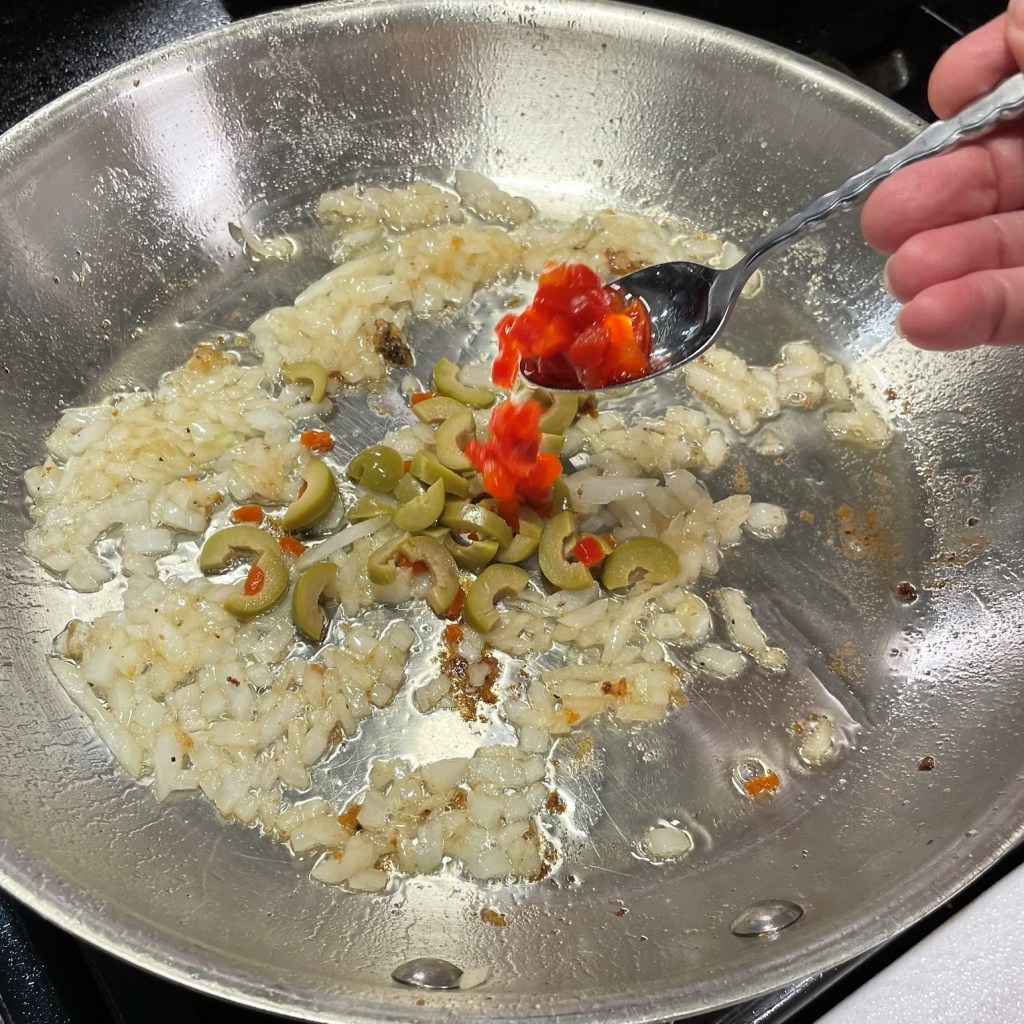
I am always interested in trying new fish, and thought it made sense to pair the unfamiliar black sea bass with flavors we already knew. OK, I thought, piccata sauce. It’s light enough to let the flavors of the fish shine, and both my husband and I like the balance of brine and tartness, softened by the butter that’s swirled in at the end of cooking. Piccata was the plan, at least, until I opened the fridge. As I shuffled jars to reach the capers, my eyes locked in on a taller jar of pimento-stuffed cocktail olives. Ooh, a martini would be nice right now, I thought.

And then, hmmmm.

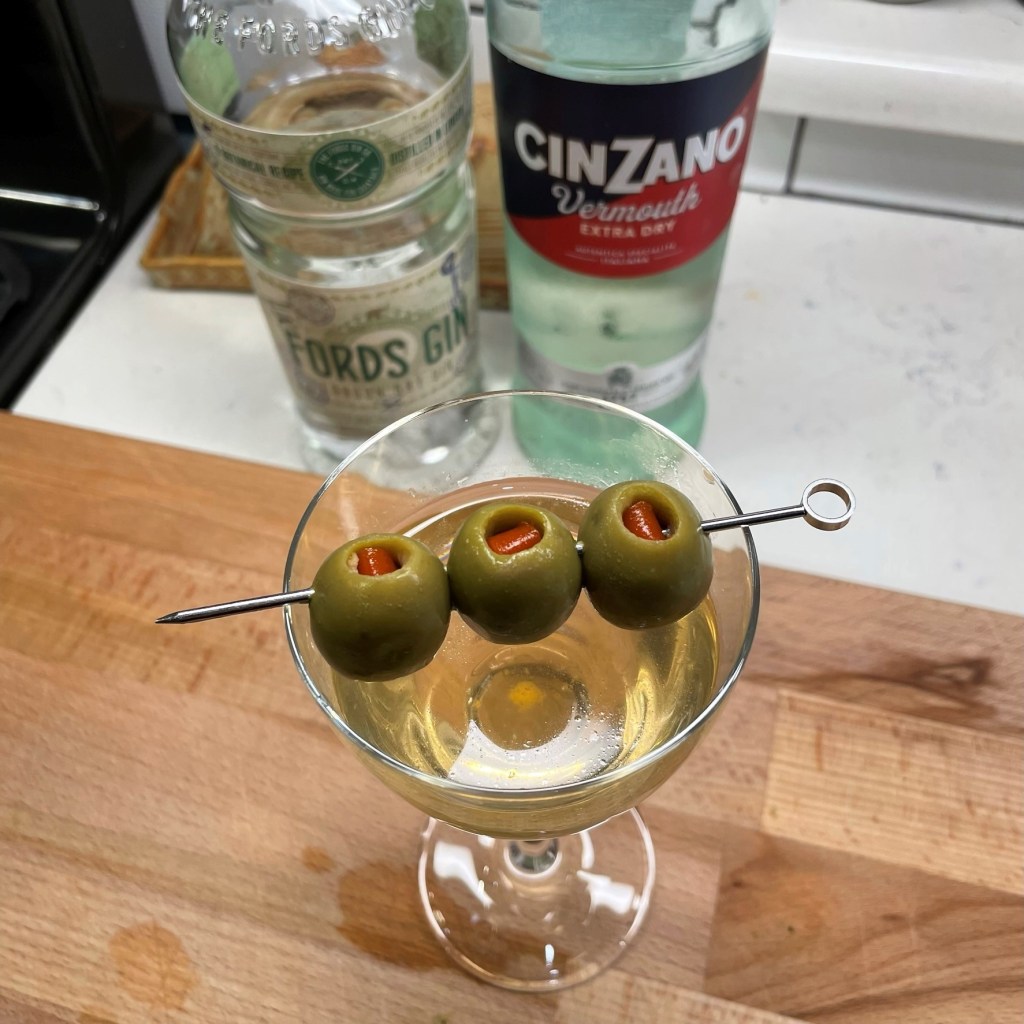
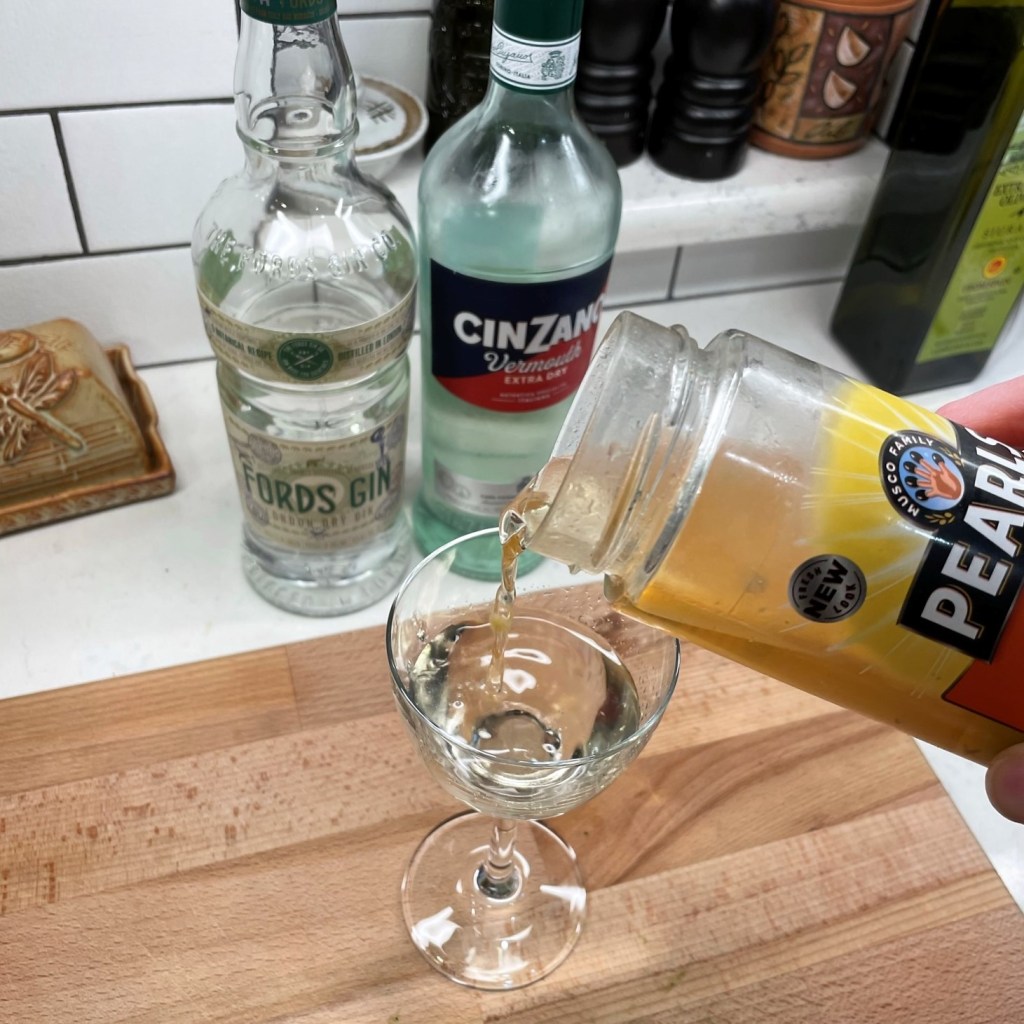
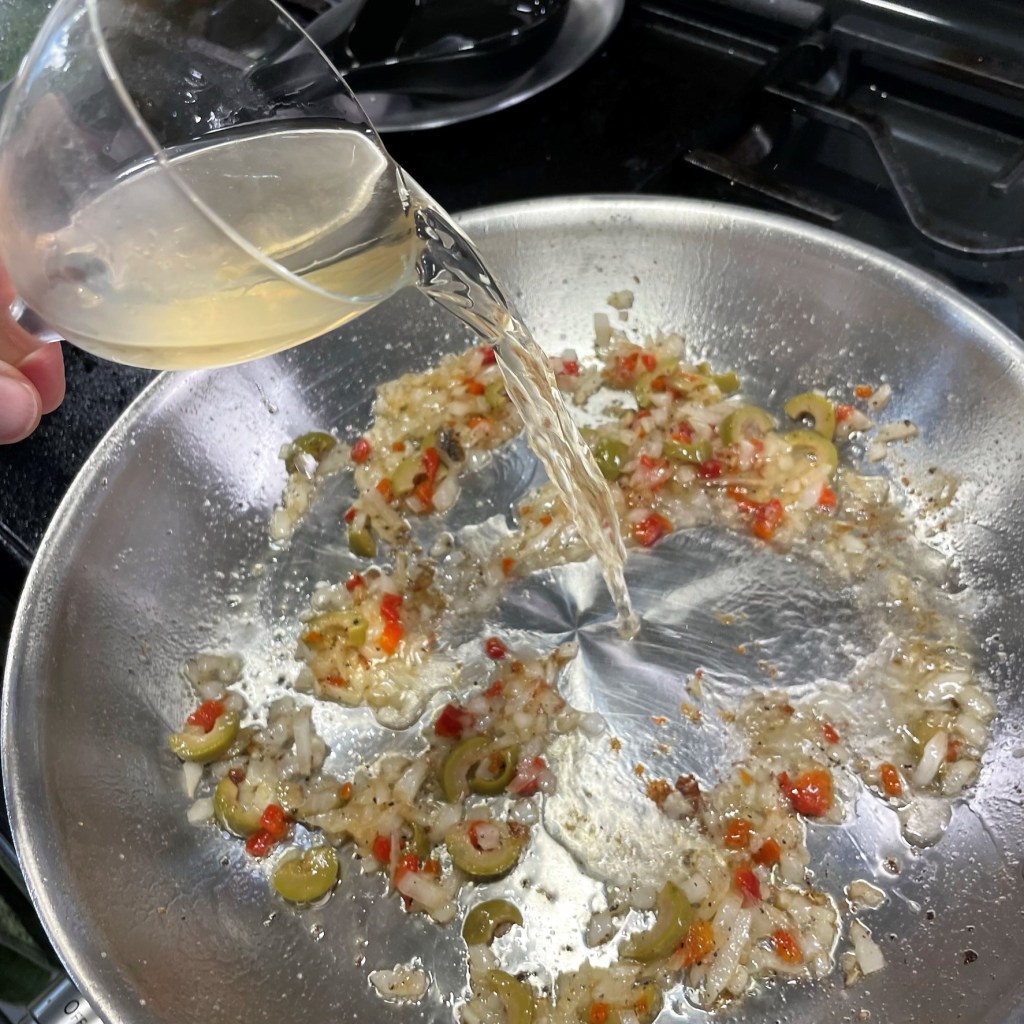
I could not help but wonder what would happen if I made the olives an understudy to the usual capers. And because savory olives work so nicely in a martini, what would happen if I substituted gin and vermouth for the white wine in my piccata? Well, this happened!

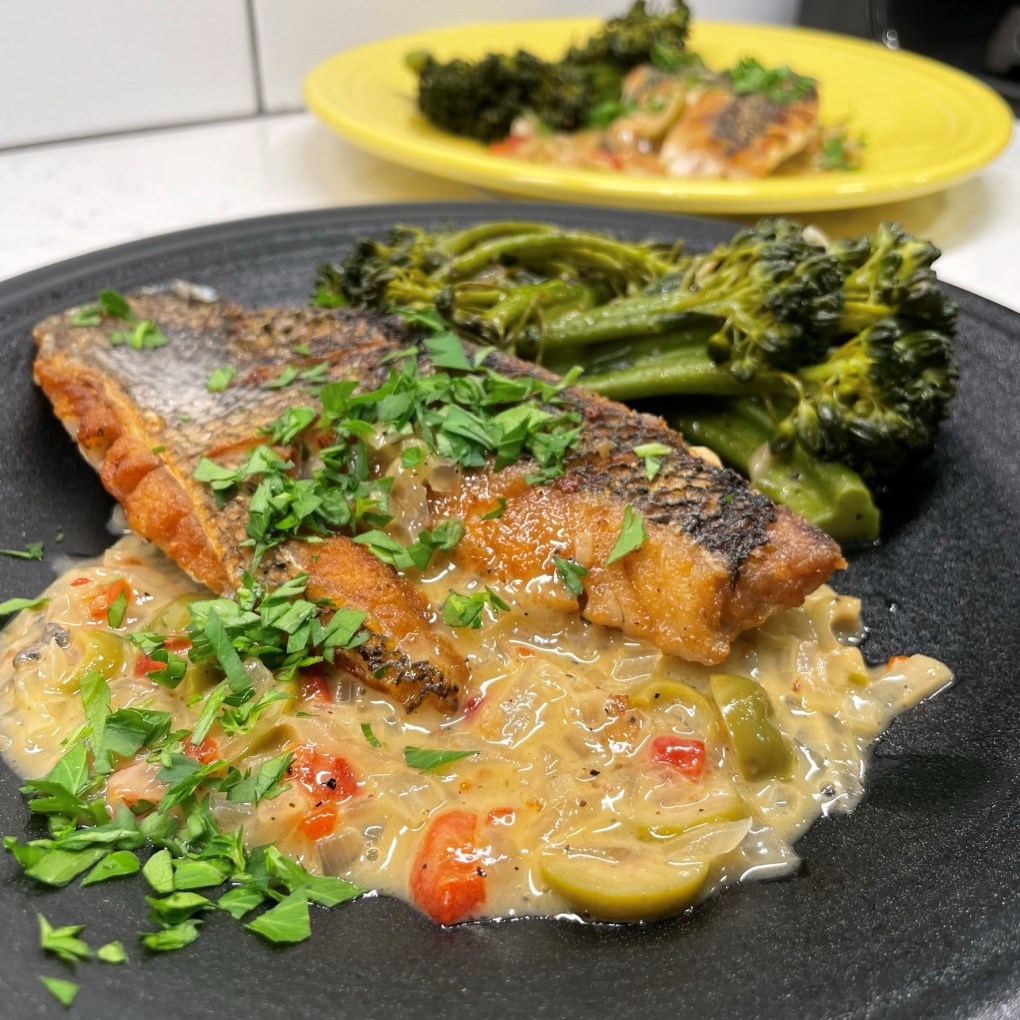
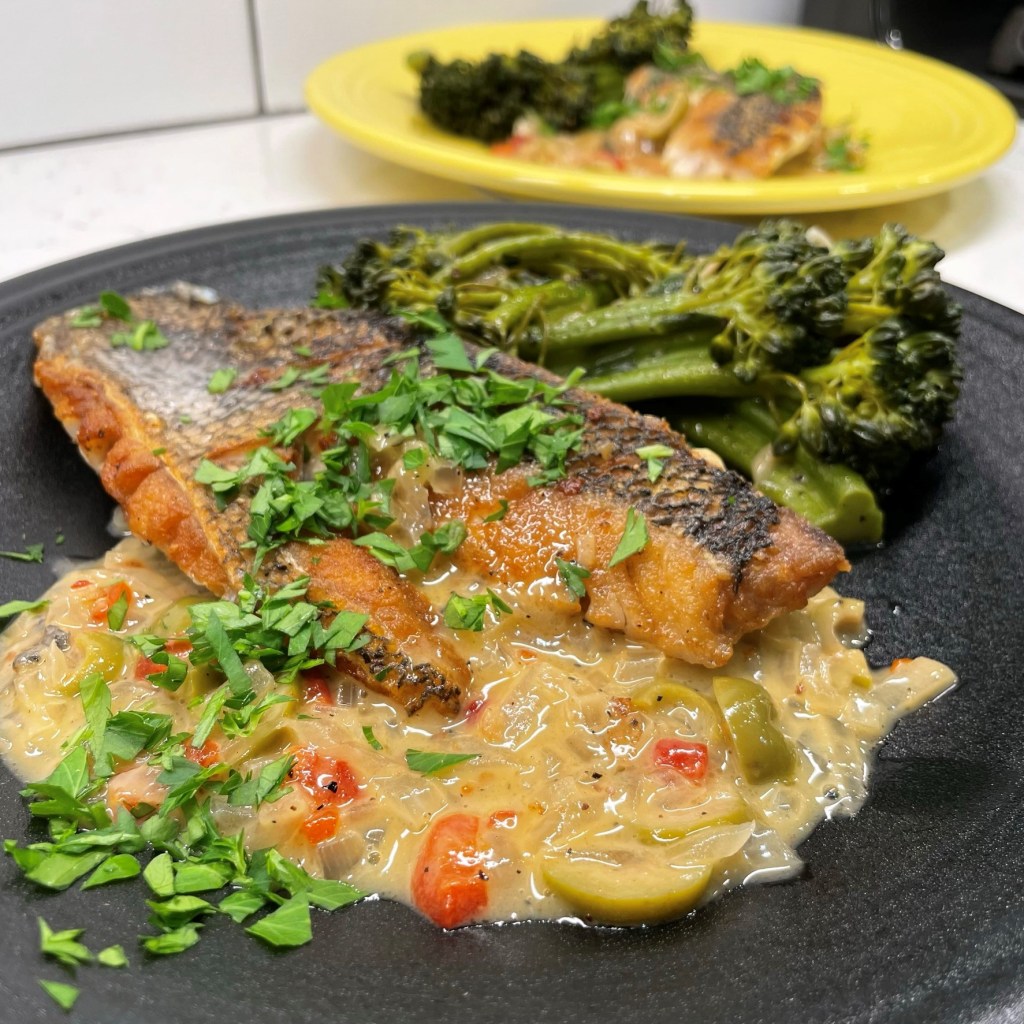
Black Sea Bass with Dirty Martini Butter Sauce

Technically, the alcohol infusion I’ve used here is what a bartender would call a “reverse martini,” because the ratio of gin to vermouth has been flipped. This seemed the right thing to do, not only because my husband is decidedly not a gin lover, but also for the fact that gin is much higher alcohol by volume than white wine. Dry vermouth, on the other hand, is on par with wine, alcohol-wise, and it would be a better flavor choice to highlight the olives without over-boozing the fish. Finally, my splash of olive juice was far more generous than I’d ever drink in a cocktail (I used a full ounce of it), so a bartender would probably declare the drink infusion to be a “filthy reverse martini.” Filthy indeed.
Two olives in a martini is said to be bad luck. One wasn’t enough, I went with three! 😉

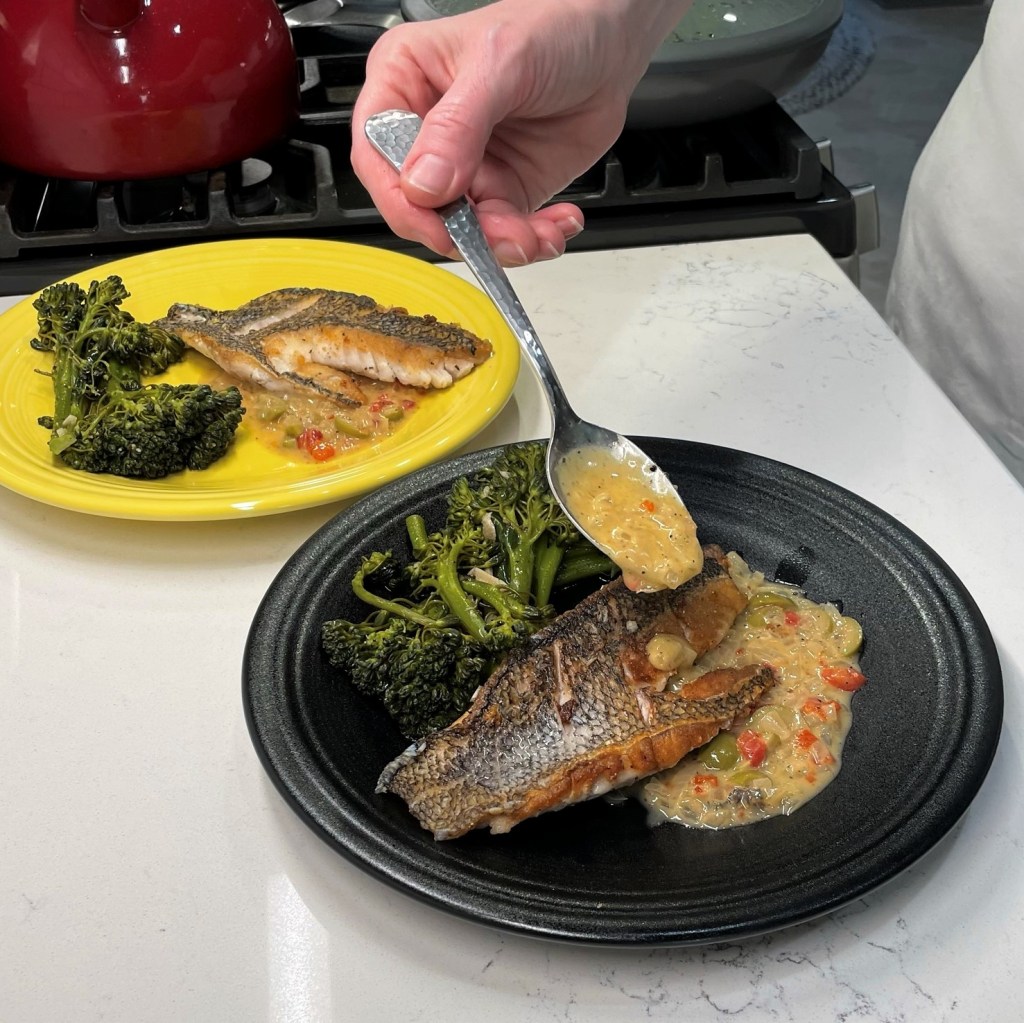
So, those are the flavors and here comes the technique. If you have ever marveled at the elegance of a butter sauce on fresh seafood, you may find it surprising to know that it is simple to make. The trick is to remove the pan from the heat as soon as the juices are reduced, and to swirl cold-from-the-fridge pats of butter into the sauce, one at a time. This easy technique transforms the otherwise liquid leavings in the pan into a silky, rich sauce.

Come, join me in the kitchen!


Ingredients

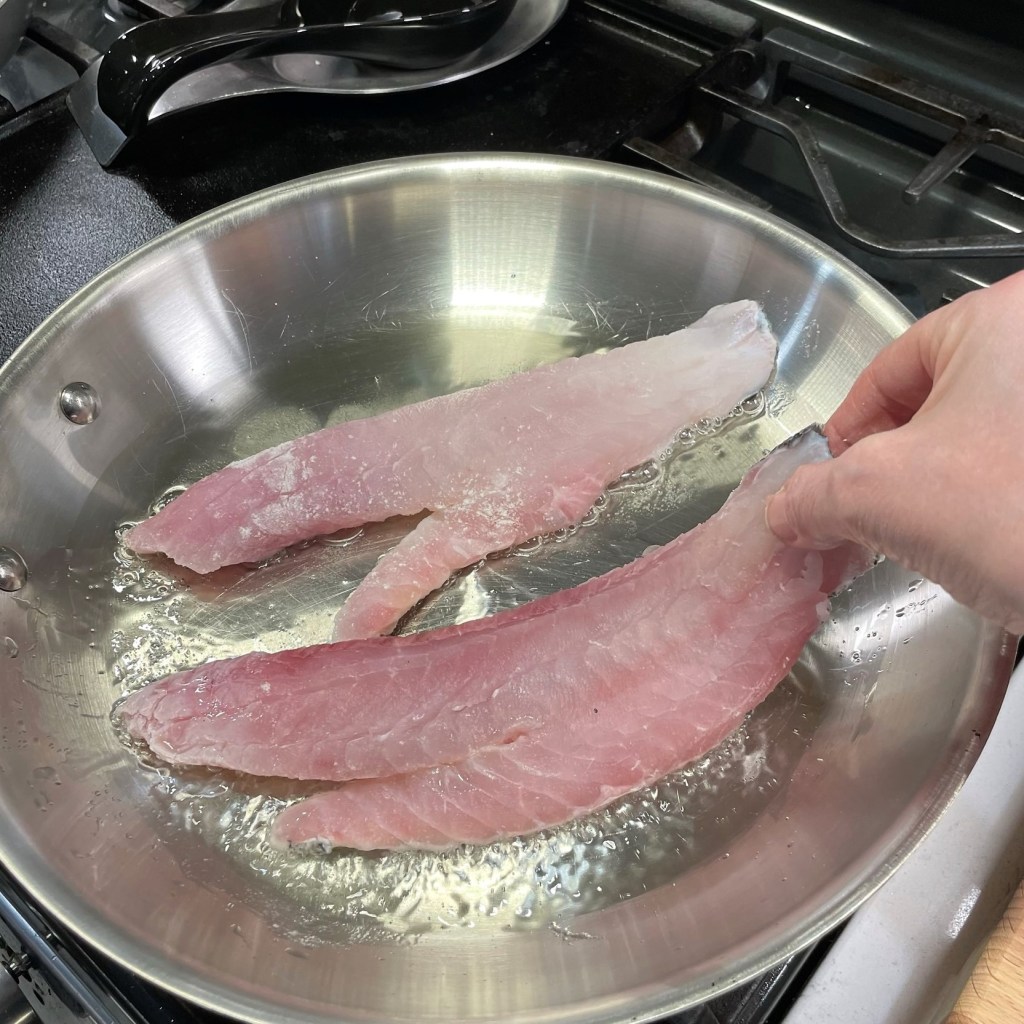
2 fillets fresh black sea bass (or other mild, flaky whitefish)

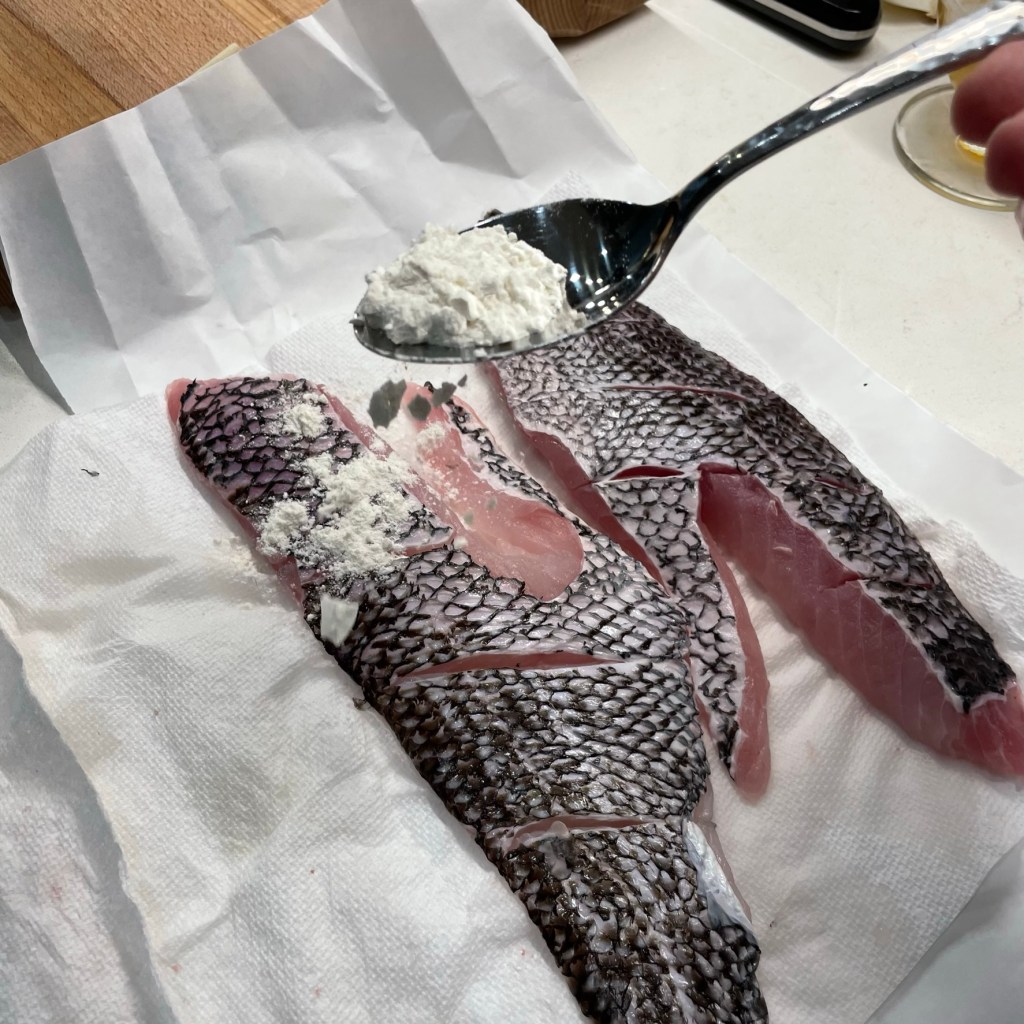
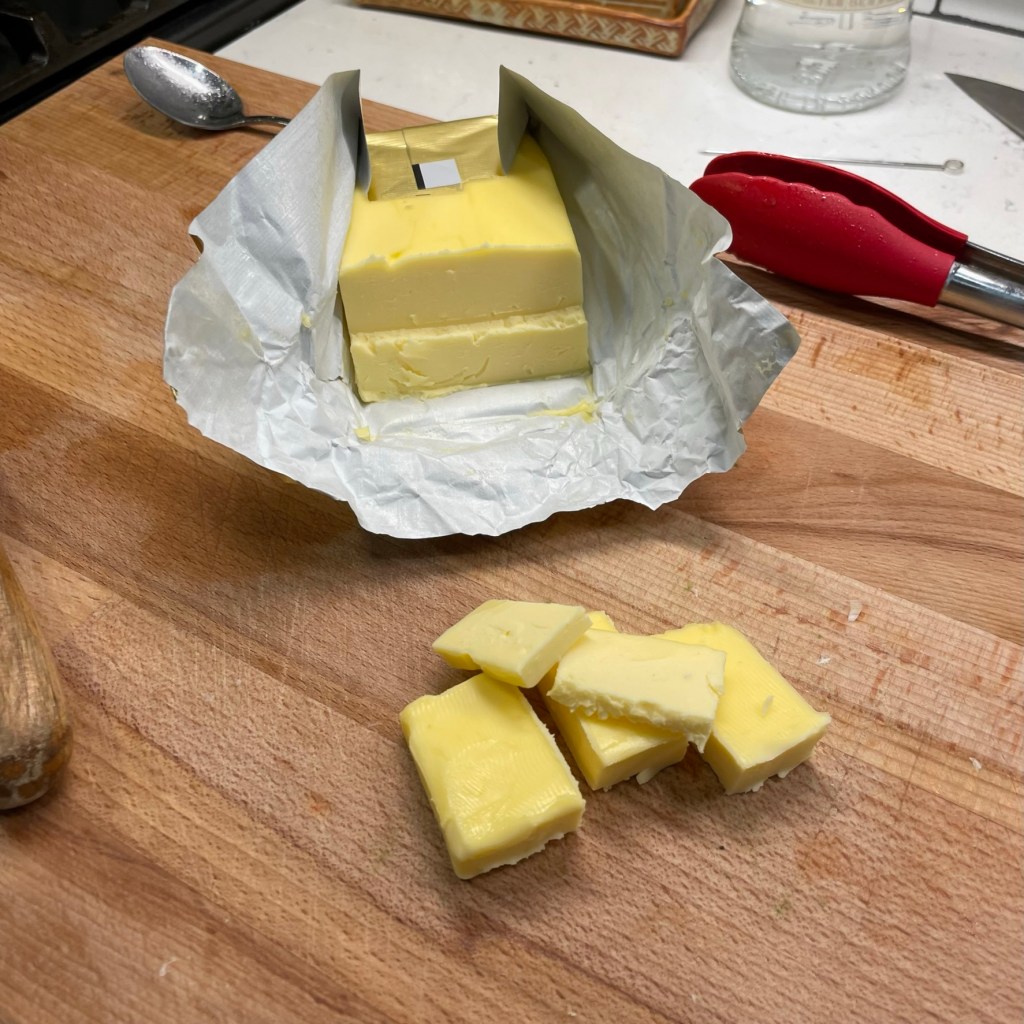
1 Tbsp. all-purpose flour

2 Tbsp. canola or other neutral oil

1 Tbsp. extra virgin olive oil (a rich, fruity one is great)

1/2 medium onion, diced (about 1/2 cup)

1 reverse filthy martini* (see note below)

1 heaping tsp. pimentos from a jar

3 Tbsp. completely cold butter (for swirling in at the end)

Small handful of fresh parsley, chopped (for serving)

Lemon wedge (to squeeze at serving time)


*Notes

Reverse martini ingredients are 1.5 oz. dry or extra-dry vermouth, .5 oz. gin, 1 oz. olive juice, 3 olives. Do not shake or stir the martini with ice, as you would for drinking. Just combine the ingredients in a glass or measuring cup at room temperature. Chop or slice the olives and set them aside.

If you don’t care for gin, swap it for vodka or omit it altogether.


Instructions


Pecan and Parmesan-Crusted Trout

Friday fish fry. That was the thing in my upstate New York hometown, and it didn’t have to be Lent. There were a few places that everyone flocked to on Friday nights for a heaping plate of beer-battered haddock fillets, deep fried and served up with cole slaw and French fries—or cottage cheese, if it was lunch. You couldn’t order it any other day of the week. Just Friday. The “fish fry” is one of the foods I really do miss from my younger years, and I have never seen it served that way anywhere else. There are plenty of places I could find battered-and-fried cod, but it just isn’t the same.

I need to get better at deep frying before I try to make a Friday fish fry myself. Until then, I’ll satisfy my fish craving with a few other favorites, baked rather than fried, that I’ve developed on my own over the years. During the Lenten season, there’s an uptick in searches for interesting seafood recipes because observant Christians abstain from eating meat on Fridays—at least for the 40 days leading up to Easter. Here’s one that is delicious and easy to prepare. I hope you enjoy it, regardless of your religious observance.

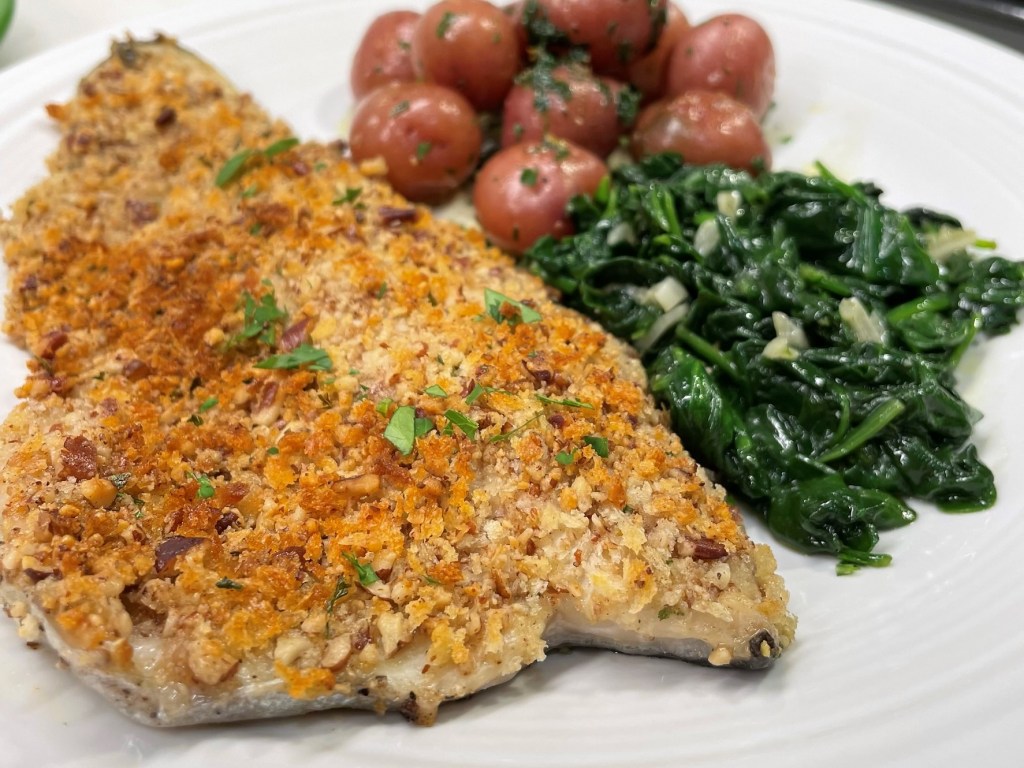
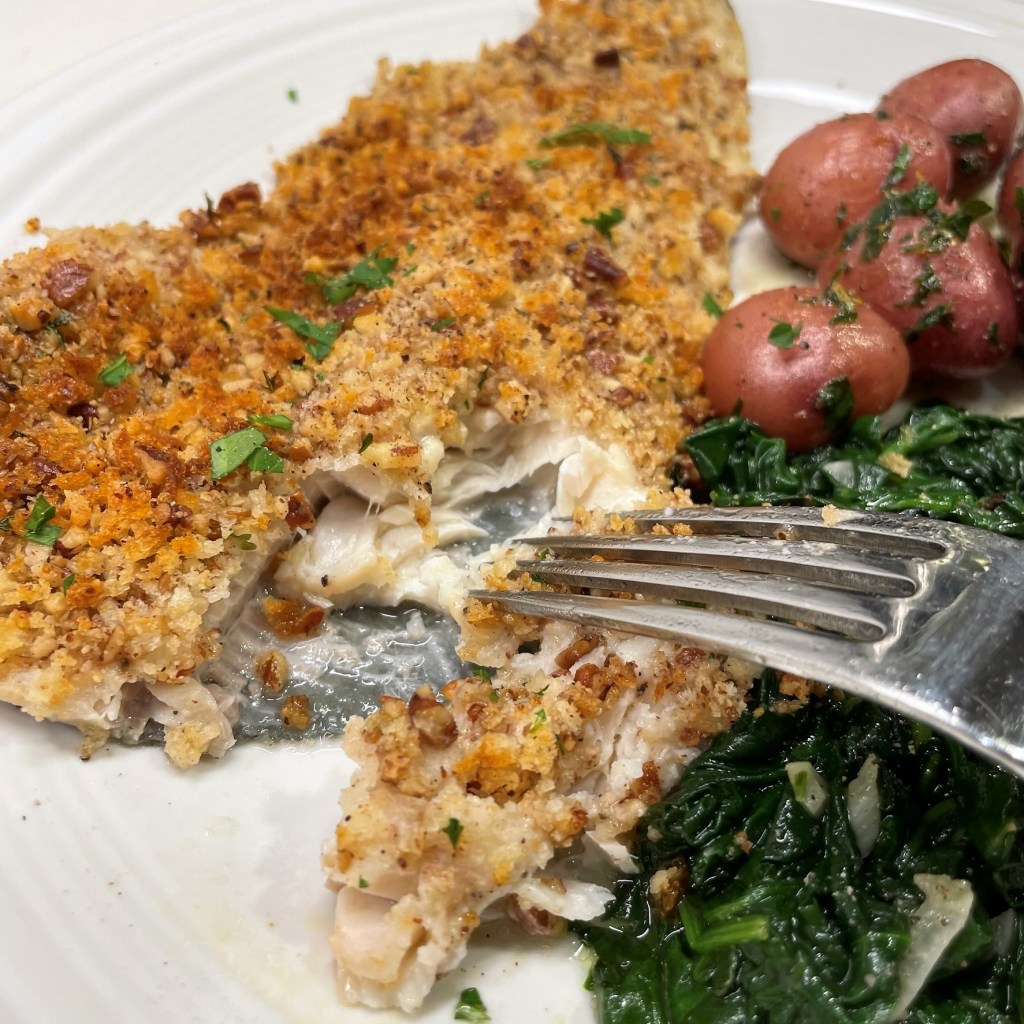
Pecan and parmesan-crusted trout. I served it with a quick sauteed spinach side and boiled baby red potatoes.

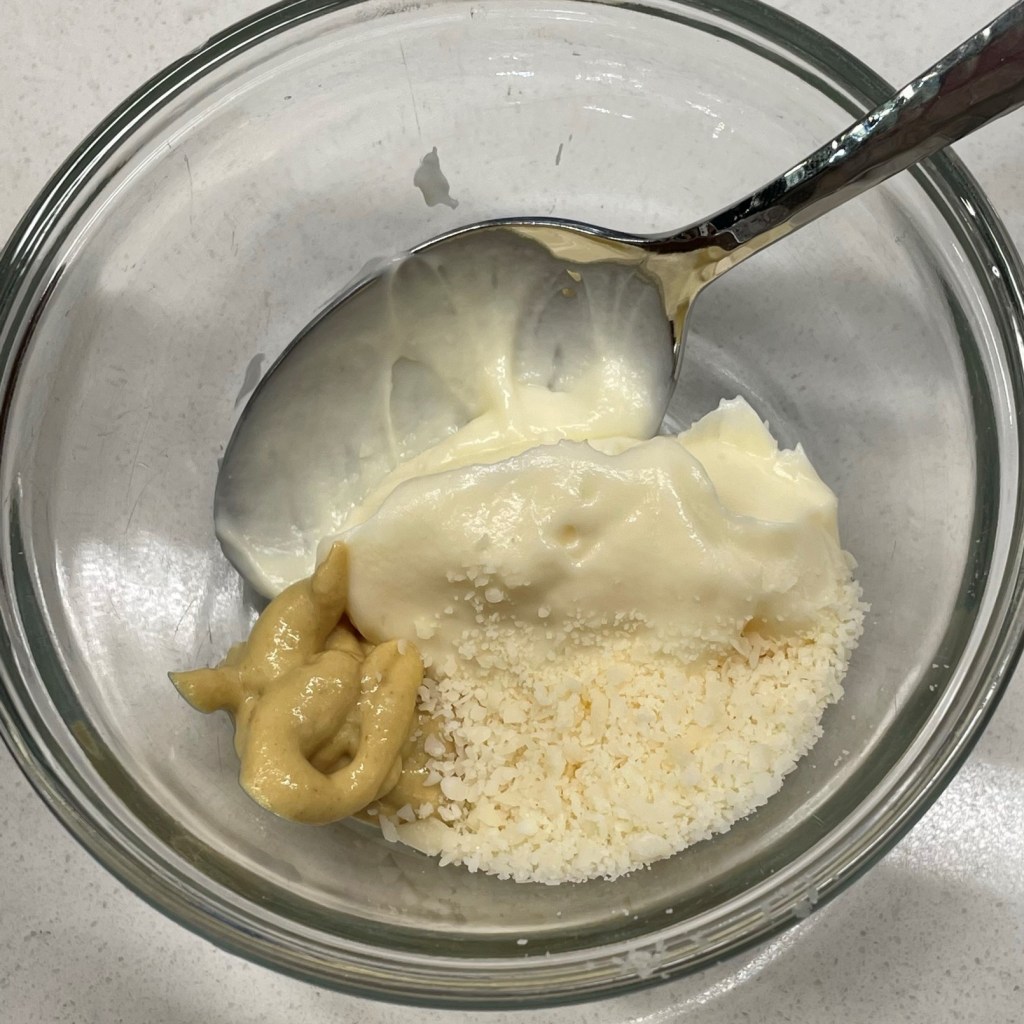
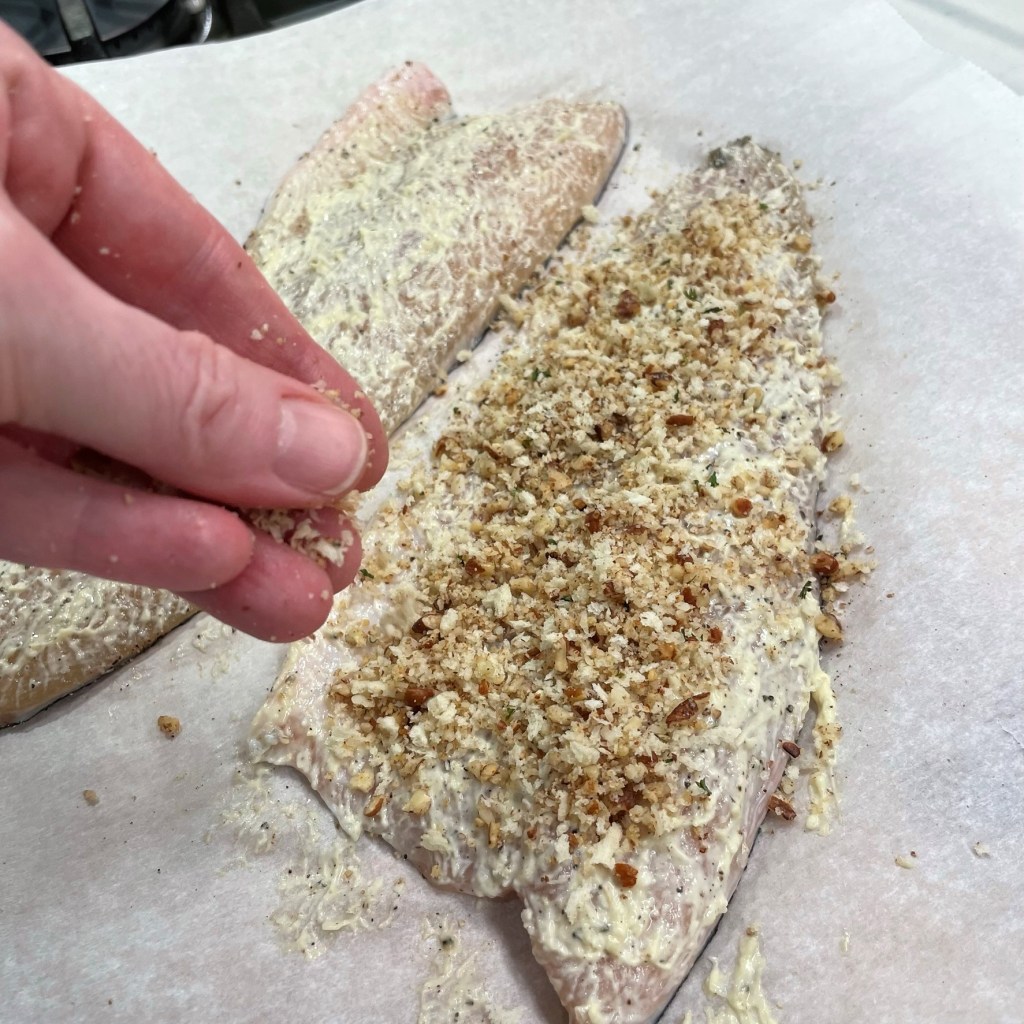
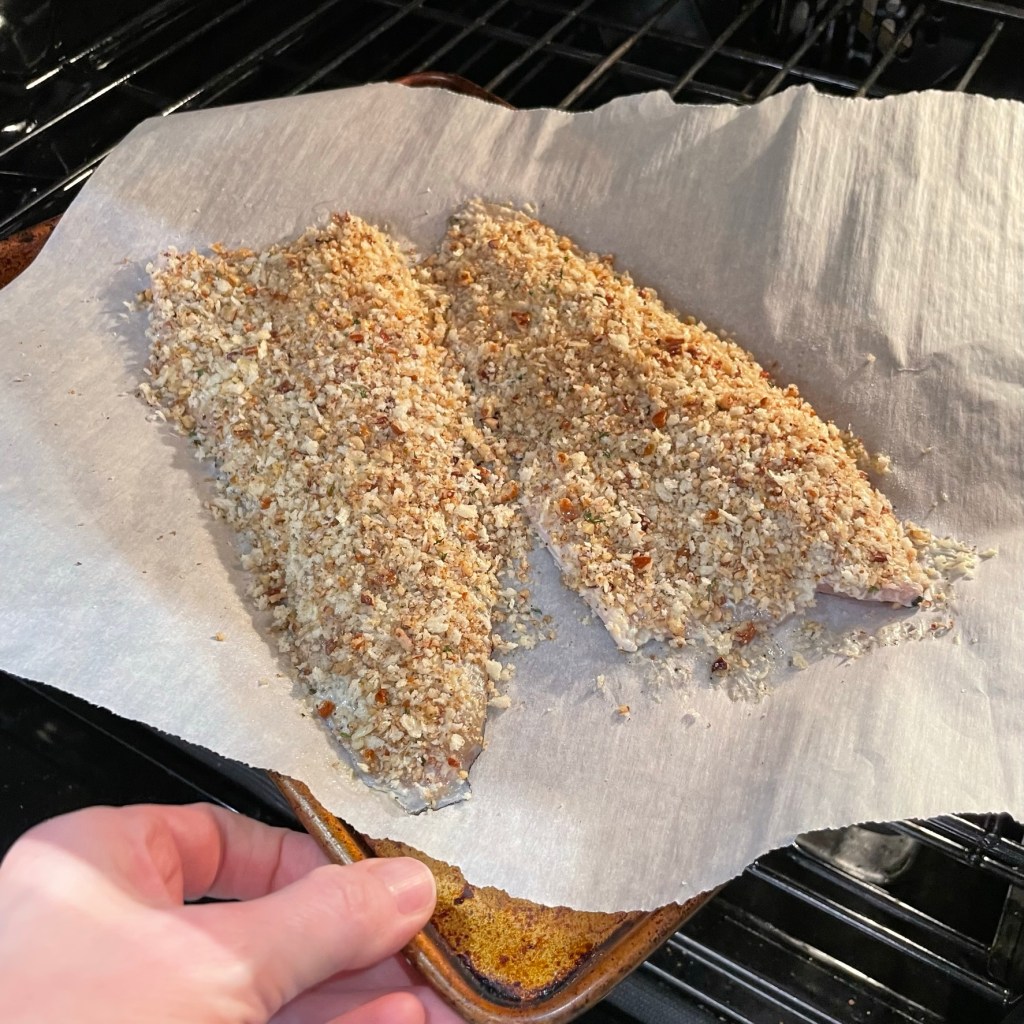
My recipe for pecan-crusted trout has evolved over the years, and the flavors and textures are all front and center in this one. The trout fillets are brushed with an easy blend of mayonnaise, Parmesan and Dijon mustard, and then I press them into a mixture of panko crumbs, more grated Parmesan and finely crushed, toasted pecans. 20 minutes later, dinner is served! This is easy enough for even a busy weeknight, and you can prepare your sides while it bakes.

The mayo mixture serves double duty in this recipe. It’s a “glue” to hold the seasoned pecan blend in place, and it also protects the fish from becoming dry during its brief time in the oven. The trout fillets remain soft and moist inside, despite the delicate crunch that meets your taste buds with every bite.


This recipe serves 2; easy to adjust for more servings

Ingredients

2 fresh trout fillets

1 Tbsp. mayonnaise

1 Tbsp. grated Parmesan

1 tsp. Dijon mustard

Kosher salt and freshly ground black pepper

1/3 cup pecan pieces, toasted* (see recipe notes)

1/4 cup panko crumbs

1/4 cup grated Parmesan

A few shakes ground cayenne pepper


*Notes

To toast the pecan pieces, preheat oven to 350° F. Spread the pecan pieces onto a parchment-lined baking sheet. Bake for 6 to 8 minutes, until nuts are fragrant, roasty and slightly shiny. Remove from oven and cool completely. Do this step ahead to save even more time in preparation of the fish.


Instructions

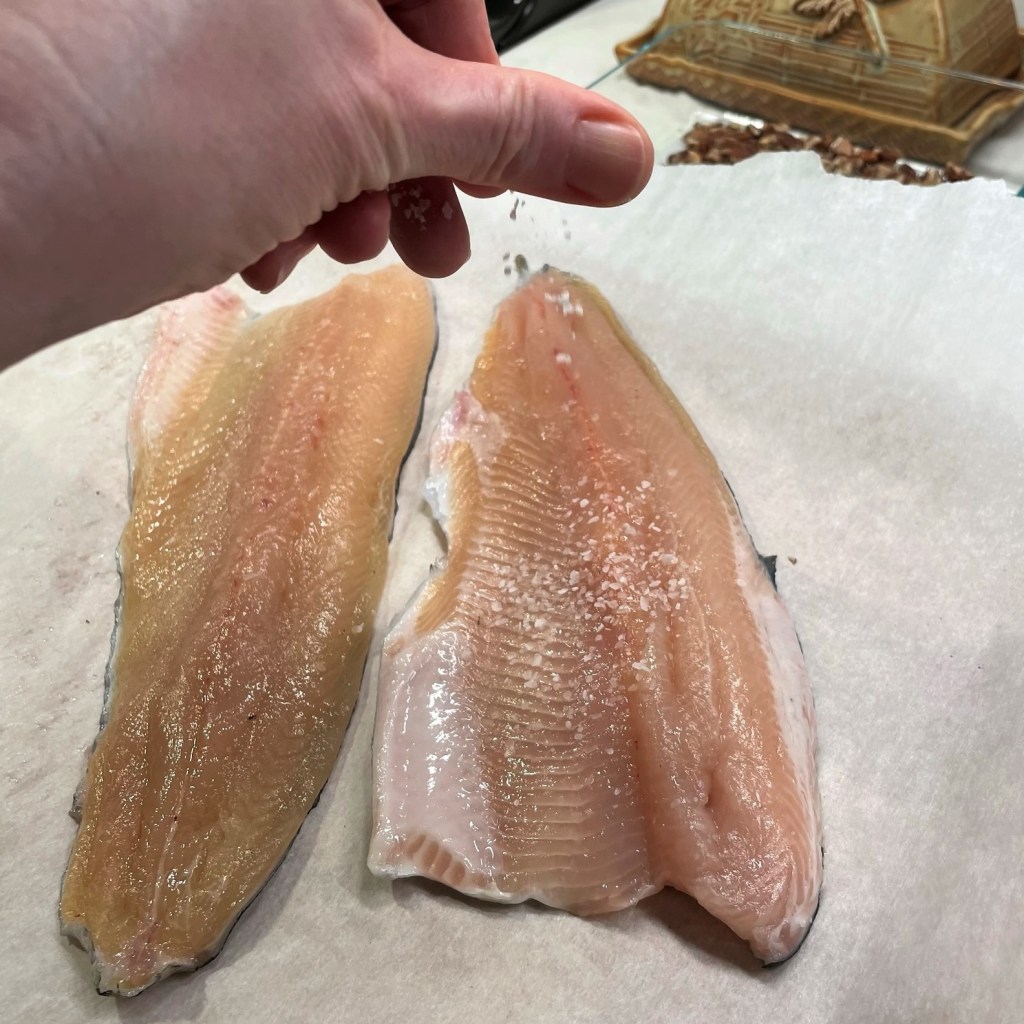
Preheat oven to 350° F. Stir together the mayonnaise, Parmesan and Dijon mustard. Sprinkle the trout fillets with kosher salt and freshly ground black pepper.

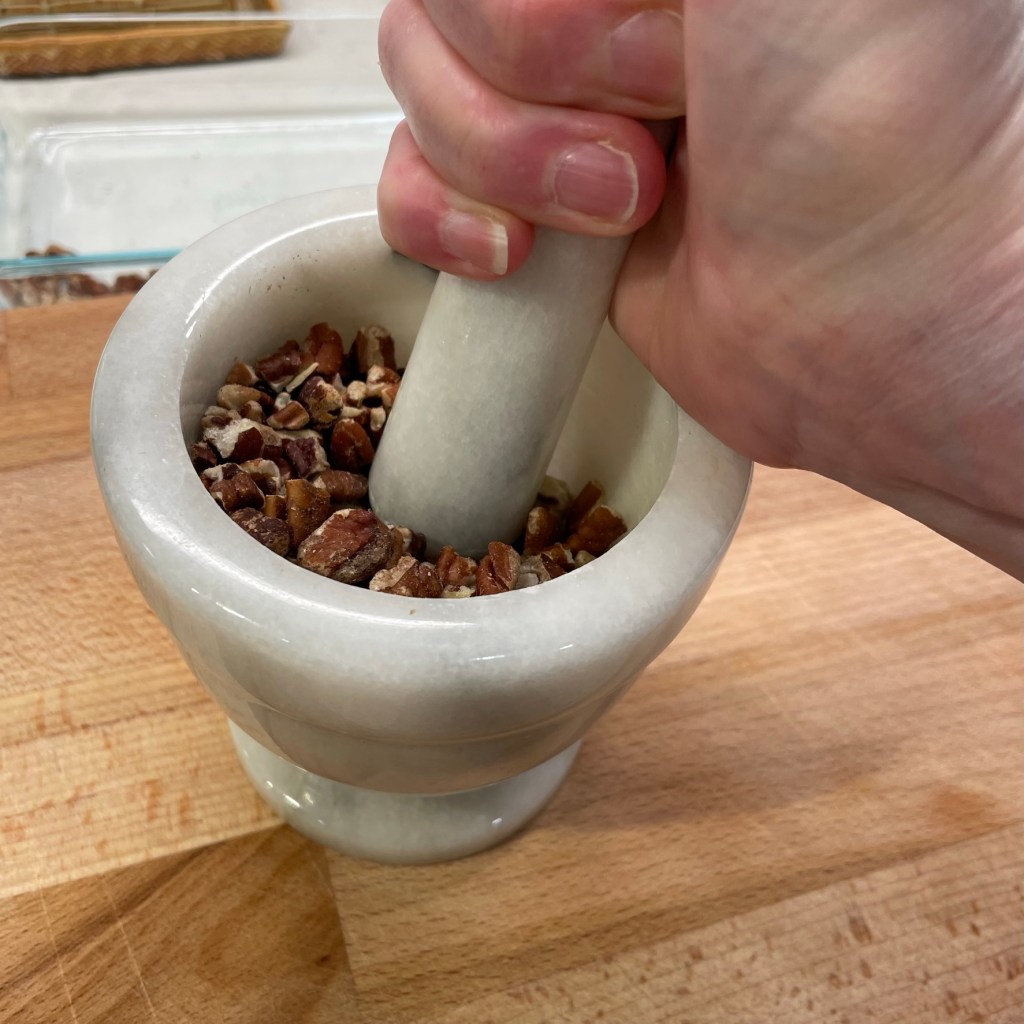
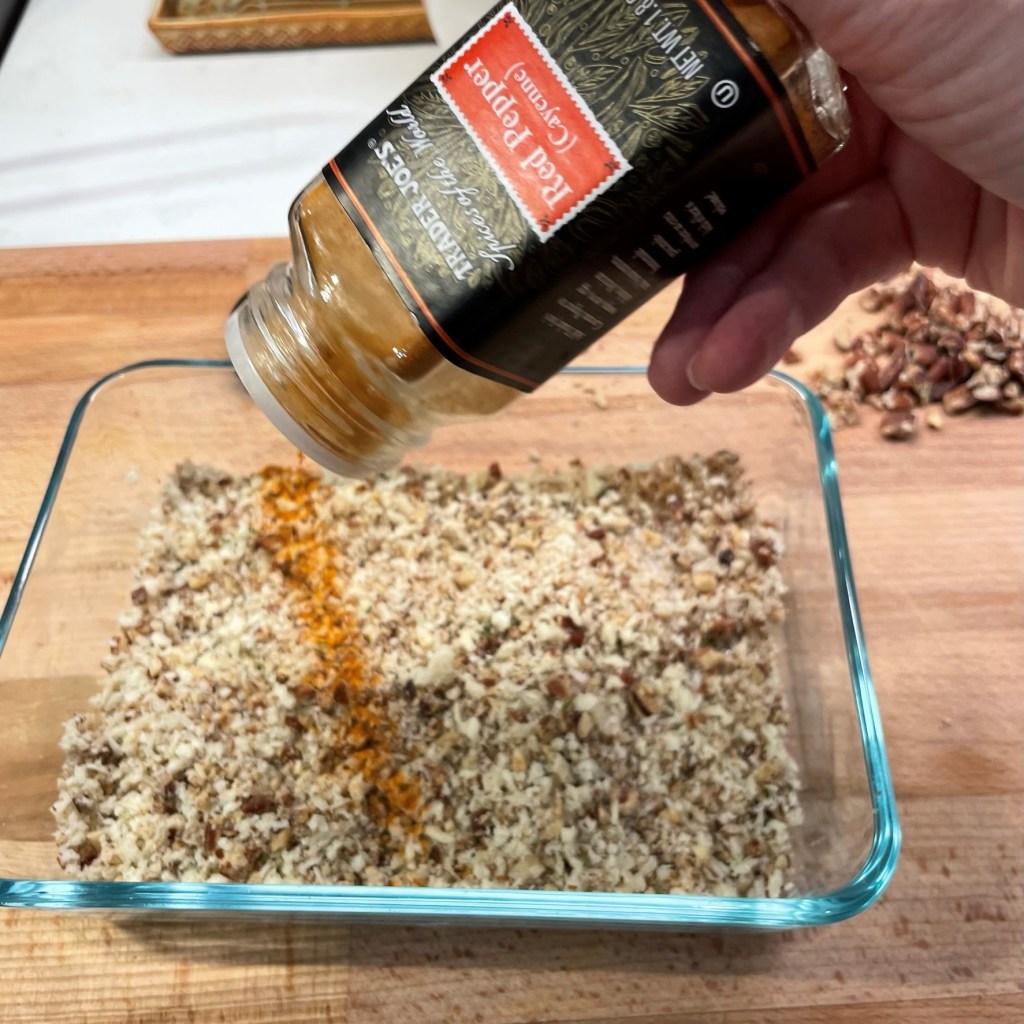
Using a food processor or mortar and pestle, pulse or crush the pecan pieces into fine crumbs. Transfer the pecans to a bowl with the panko crumbs and Parmesan. Season with a shake or two of ground cayenne.

Line a baking sheet with parchment paper and spritz it lightly with cooking oil spray. Arrange the trout fillets on the sheet, skin side-down. Use a pastry brush to thoroughly coat the fleshy side of the trout fillets with the mayo-Parm mixture, then press the pecan crumb mixture onto the fish, generously covering every visible area.

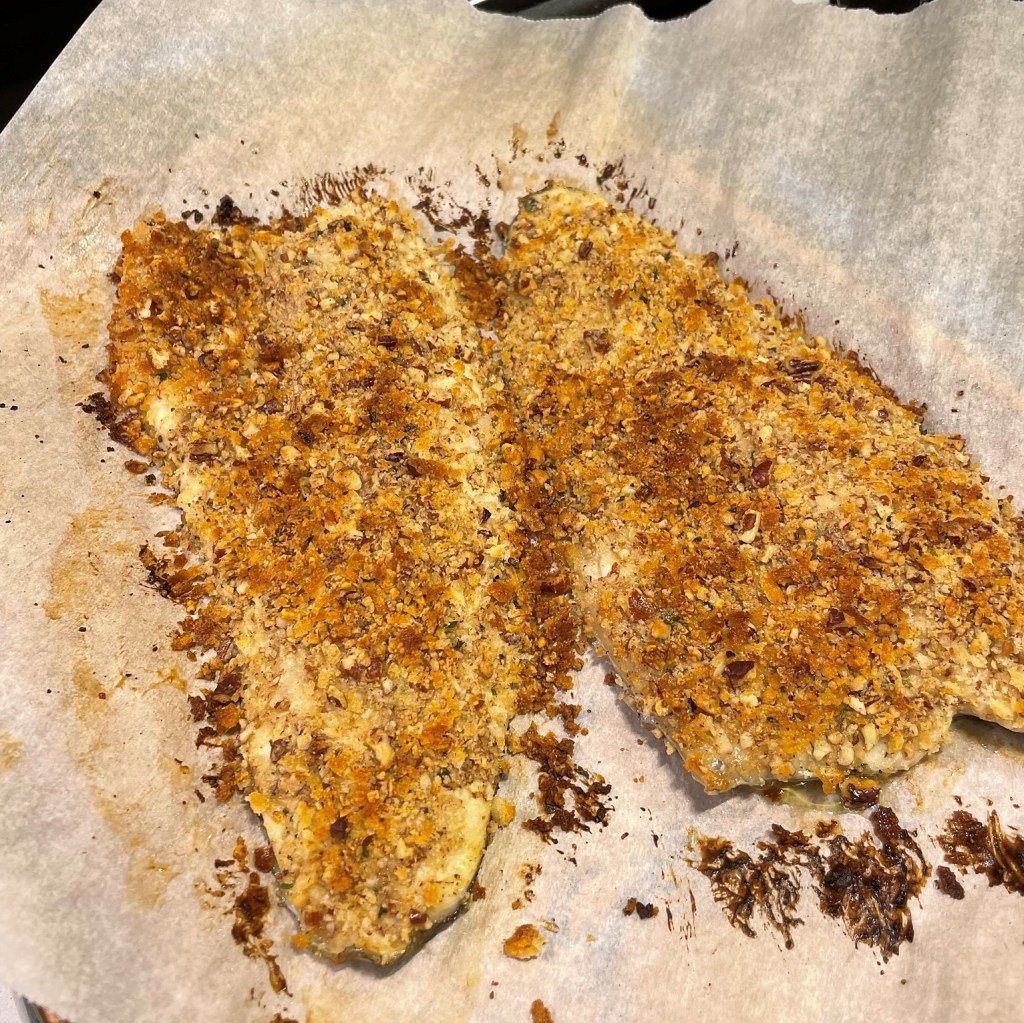
Bake the fish for about 18 minutes, or until it flakes easily with a light twist of a fork. If the crumbs are pale, turn on the broiler for only one minute, to finish the fish with a deep golden color.