Roasted Ratatouille Ravioli

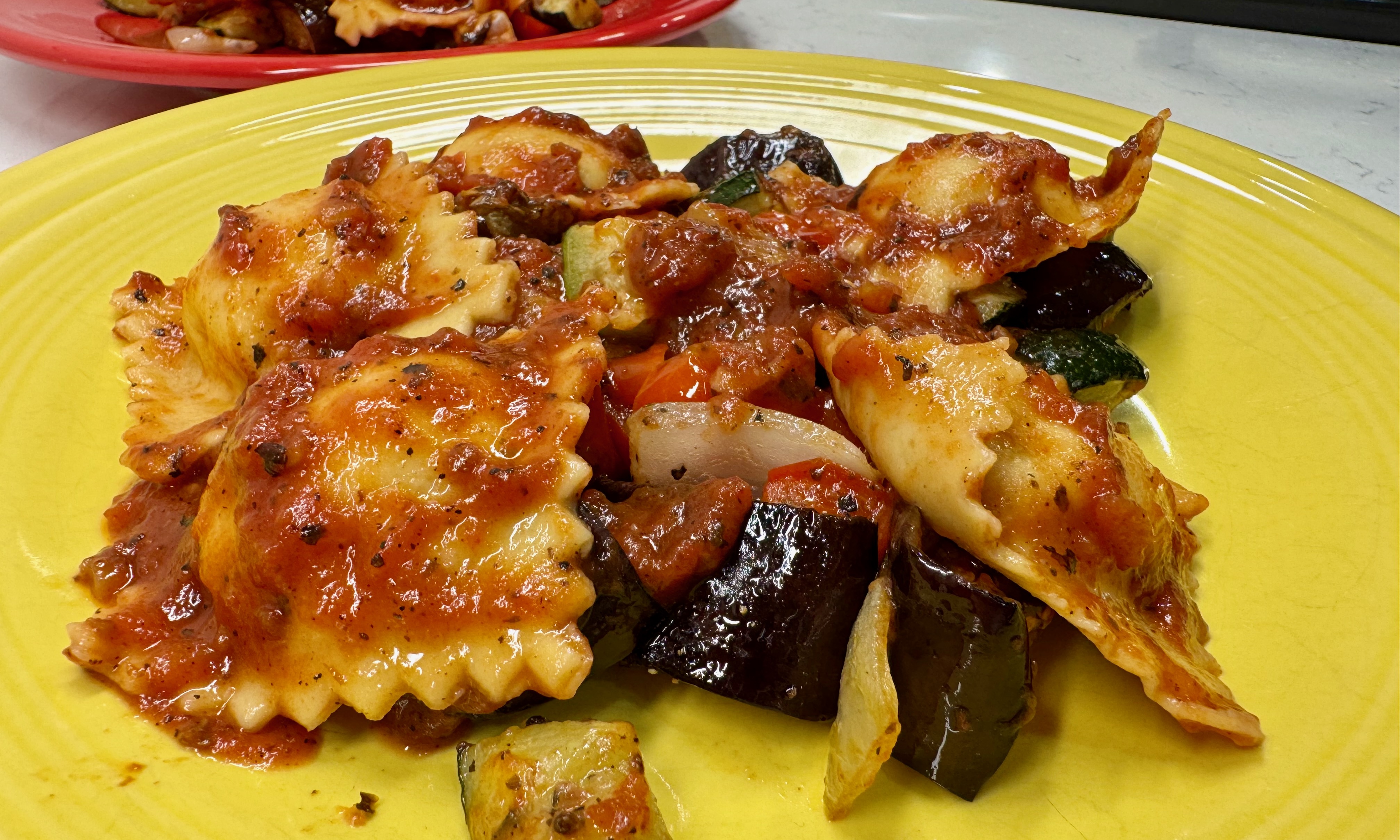
If I had a nickel for every time this year that I’ve told my husband, “I really wanna make some homemade pasta,” well, I’d have at least $1.35. Handmade pasta is a time-consuming project, but it’s so satisfying and gives me such joy that I just had to find the time. Ravioli is my favorite kind of handmade pasta because it gives me creative license not only for the pasta dough but also the filling that gets tucked inside. And— bonus points— I married it with ratatouille, my favorite summer dish. Yeah, this one was extra fun!

Ratatouille— a stew of eggplant, zucchini, peppers, onions and tomatoes— was indeed the inspiration for my ravioli adventure. I adore the melded flavors of the vegetables, along with the subtly floral Herbs de Provence that is traditional for ratatouille, and I look for new ways to enjoy it every summer. Once the idea hit me to pair all of that with handmade ravioli, there was no going back. 
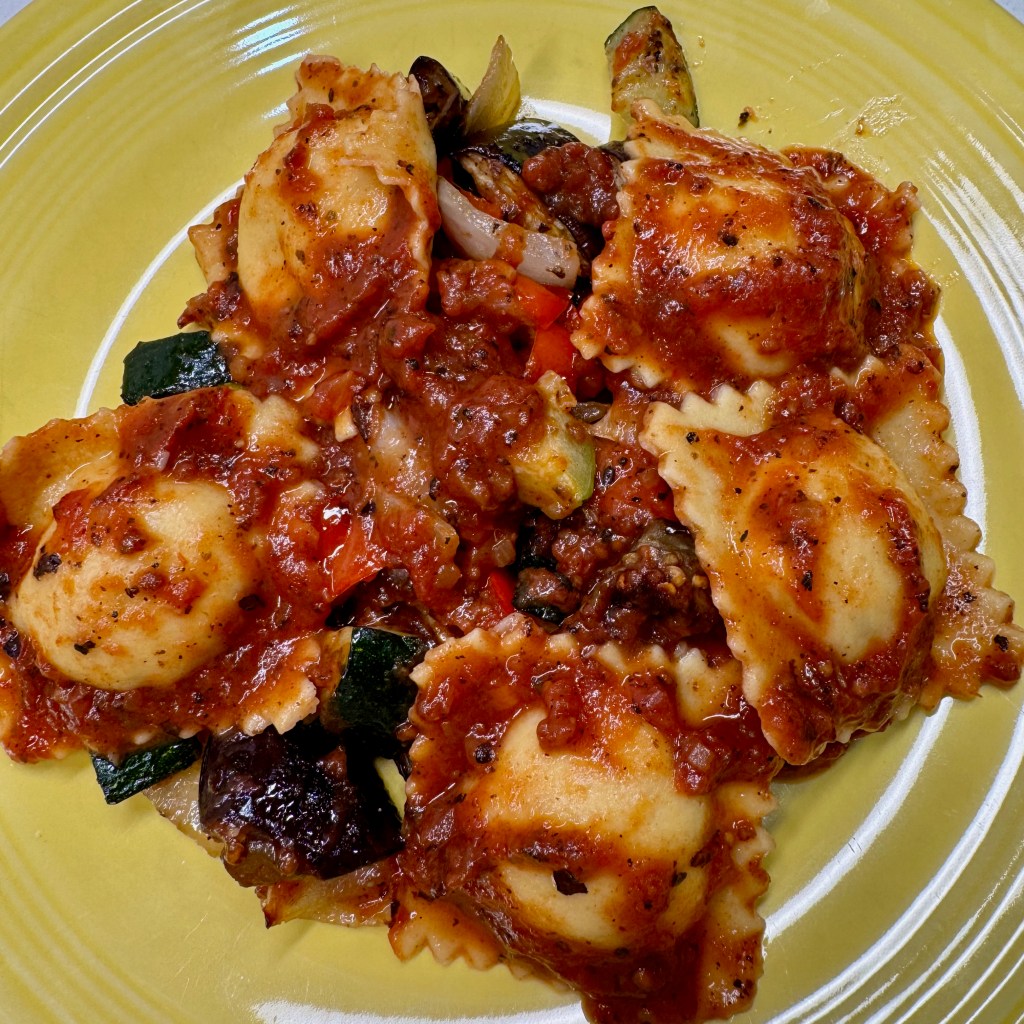
I wish I had made a triple batch of this!

First, the pasta dough

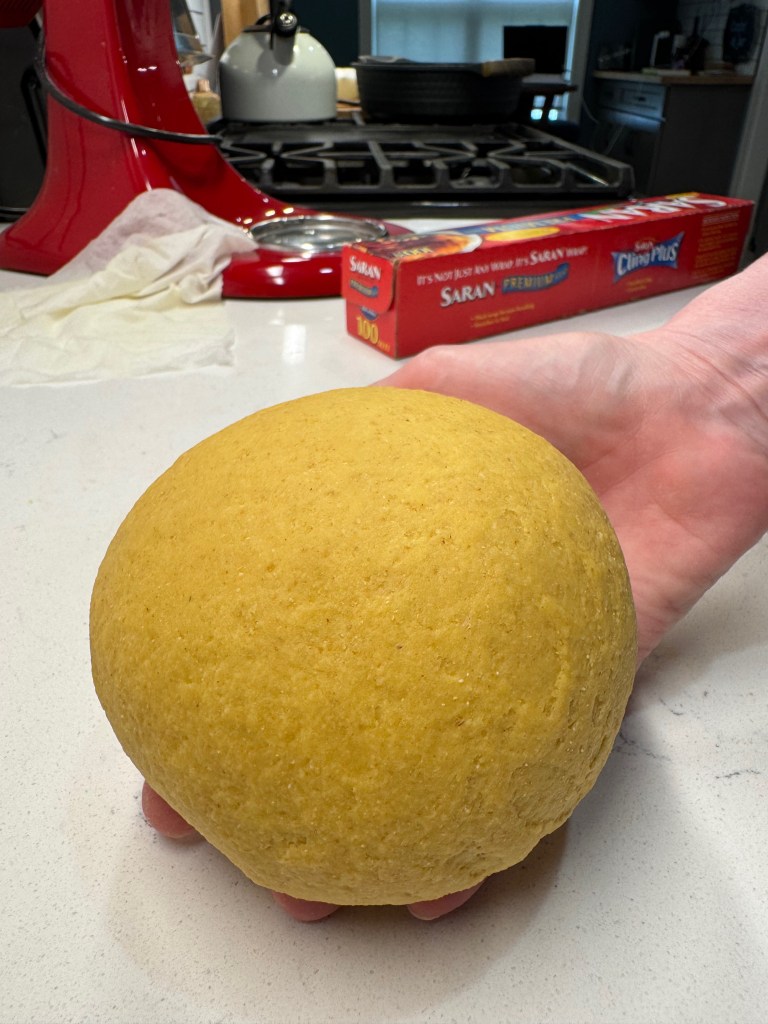
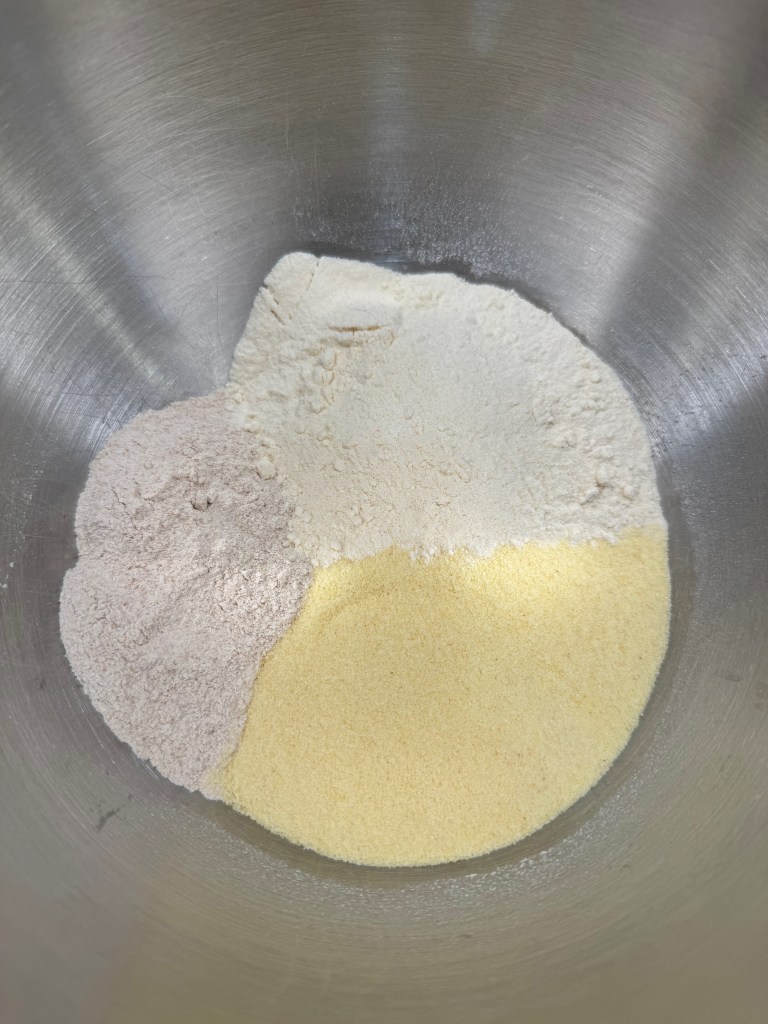
I used a mix of flour, including all-purpose, white whole wheat and semolina. A generous sprinkle of onion powder gave the dough an underlying flavor to support the ratatouille theme, and I gave it a good long kneading to build strength in the dough. I wrapped it up and tucked it into the fridge for a few hours to rest. If you need to save time, you could make the dough a day ahead.
The ravioli filling

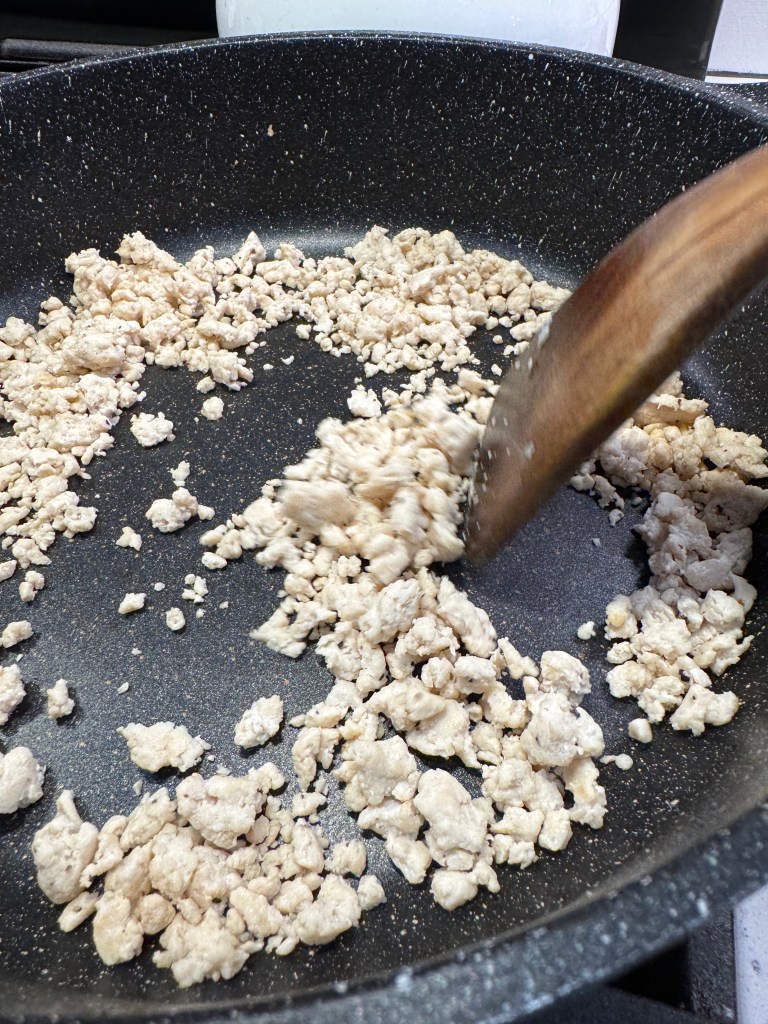
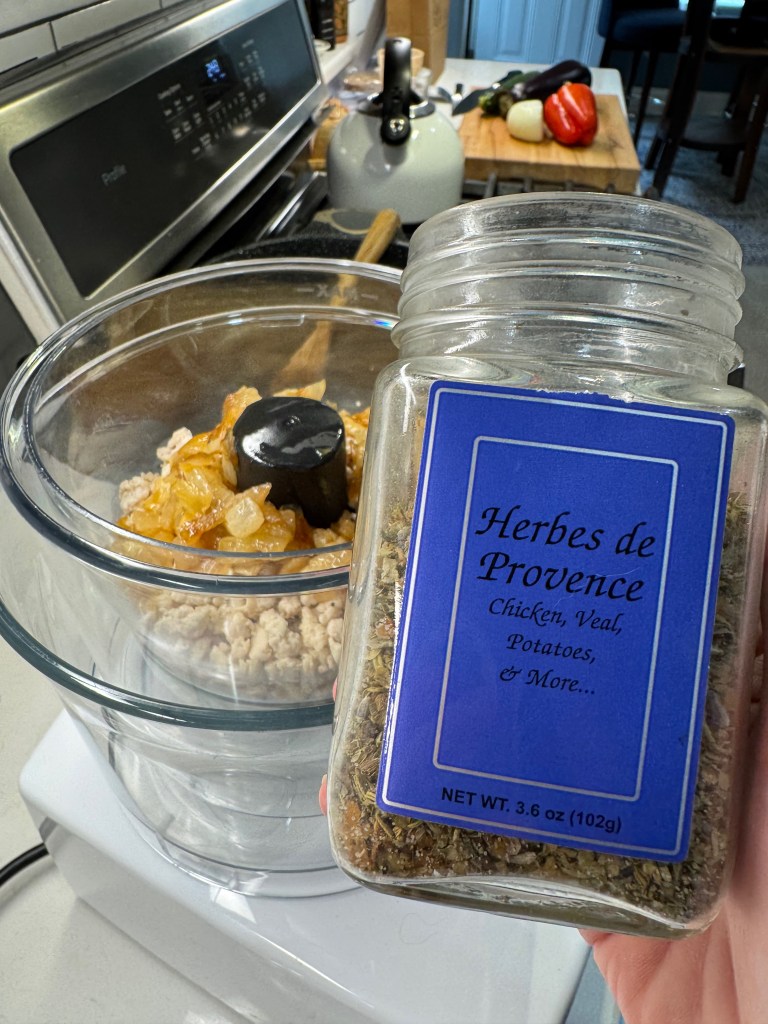
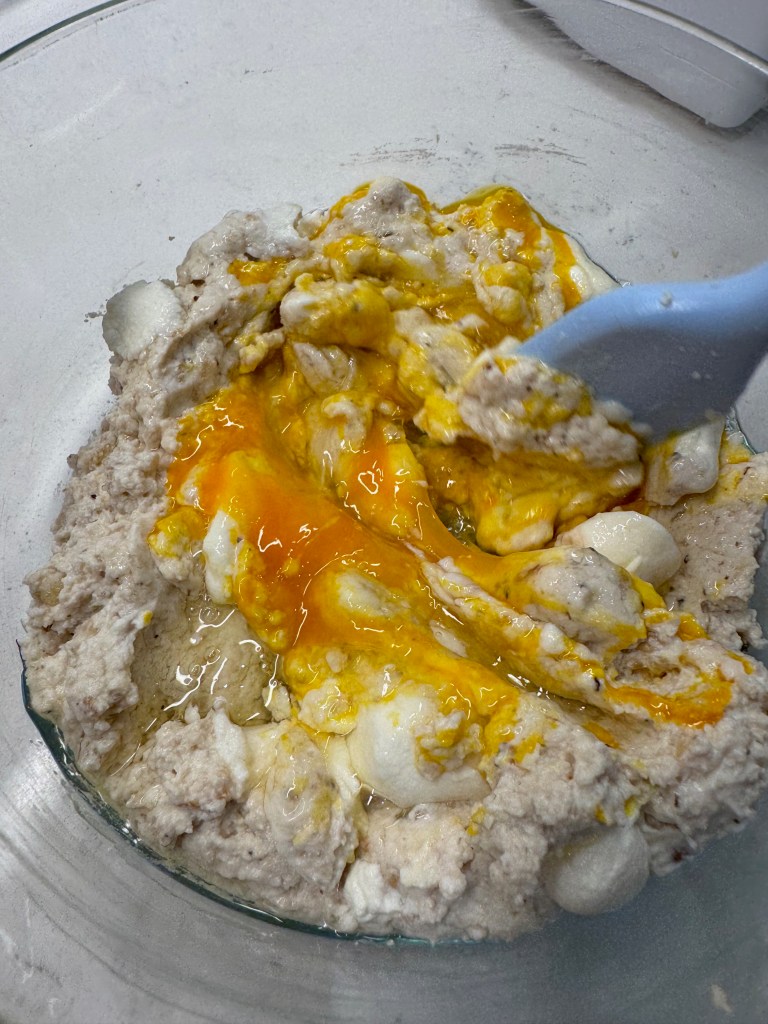
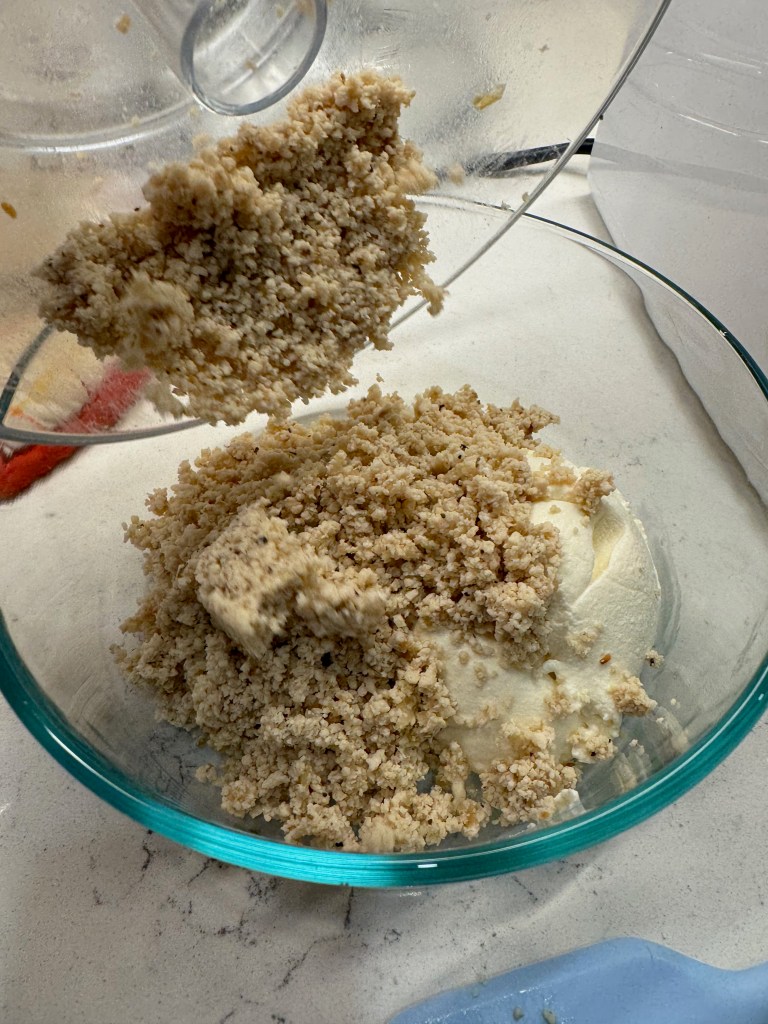
Next up, I pondered the filling for ravioli, which had to be more than just ricotta. After my less-than-great lab report this year, I’ve been more conscious of the saturated fat I consume, and so it occurred to me that maybe I’d incorporate a different protein into the mix. Lean ground chicken worked great, and I pulsed it in the food processor to make it as fine as possible. Also in the mix were golden caramelized onions and a pinch or two of Herbs de Provence, plus some lemon zest, and I blended all of those with strained ricotta and an egg to hold it together. This part of the recipe could also be done a day ahead.


Bend me, shape me, anyway you want me

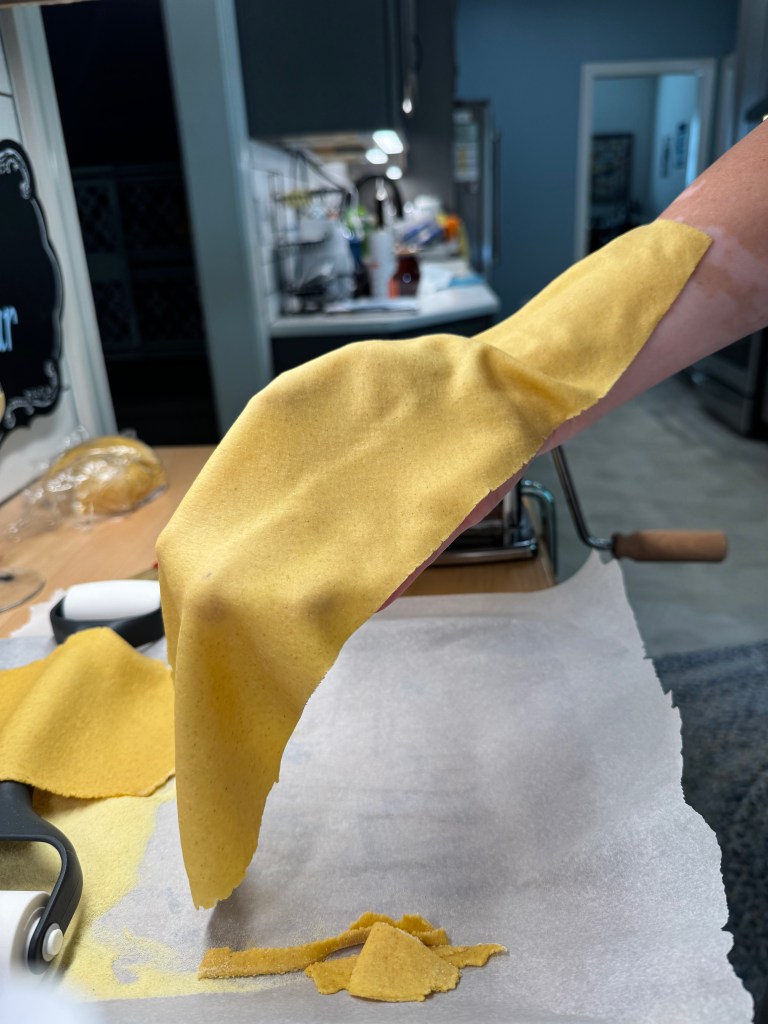
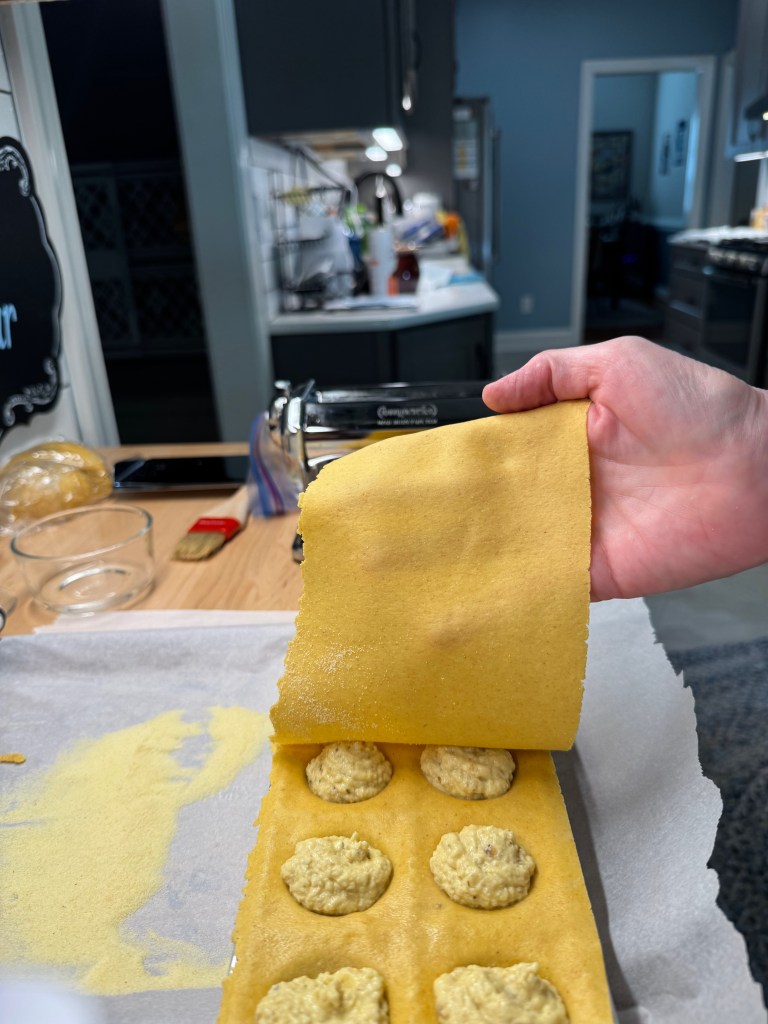
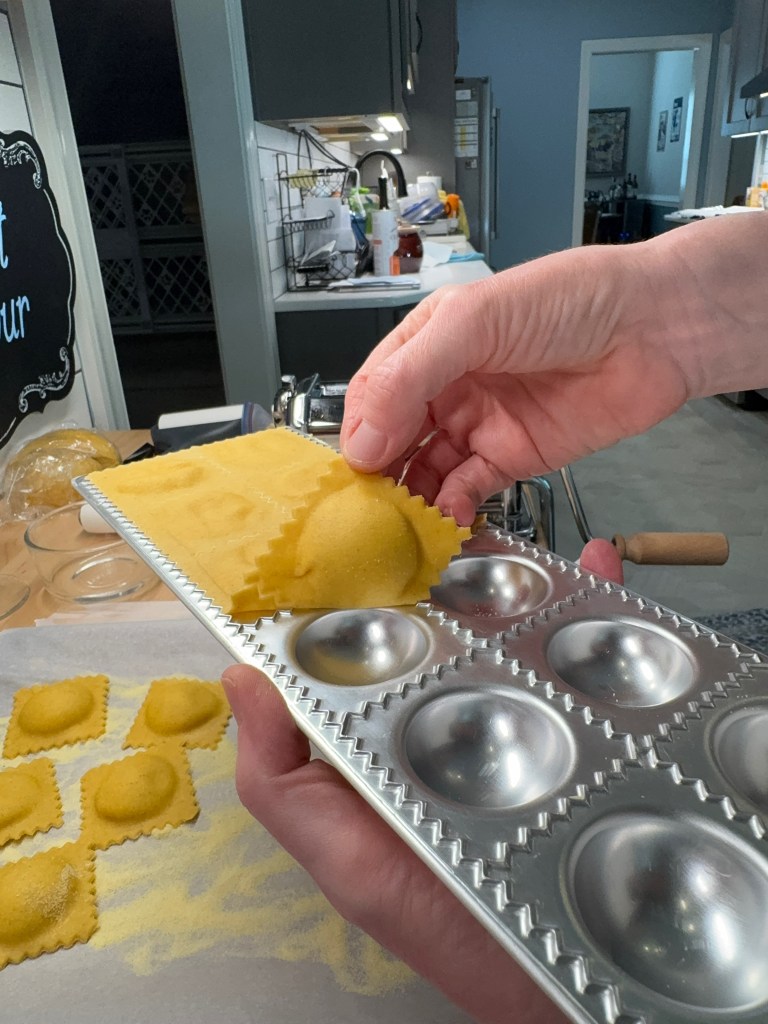
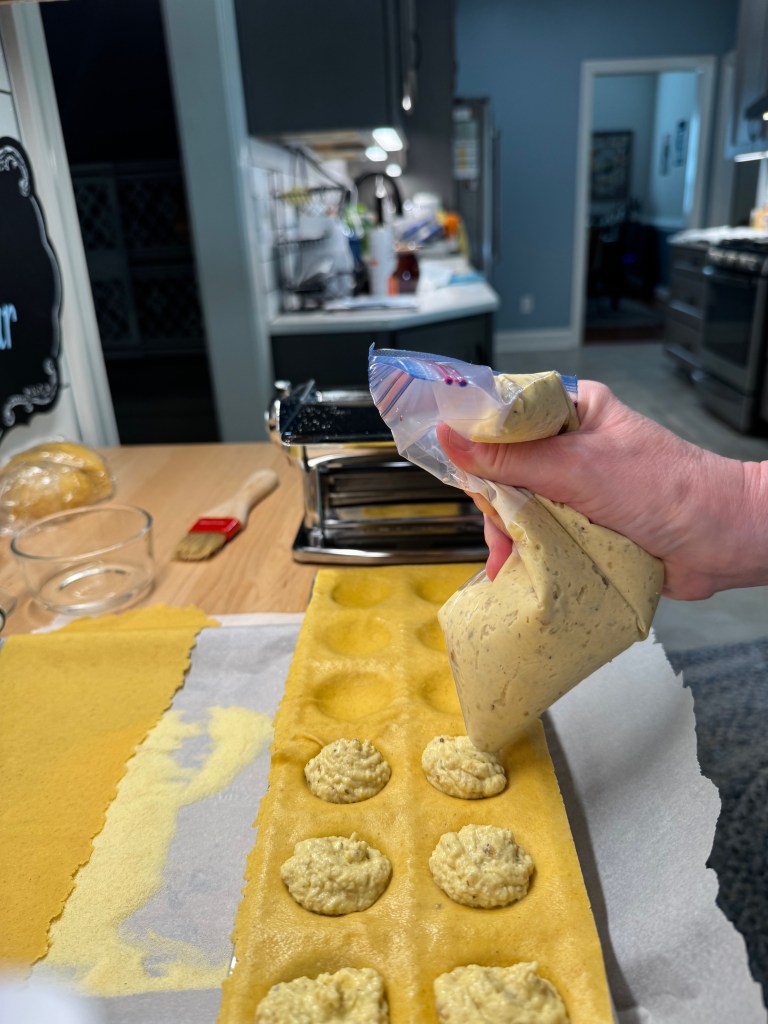
By the time the filling was prepared, I was ready to roll out the pasta dough into thin sheets, and I used my handy ravioli mold to make uniform little pillows. This is the fun part! It’s important when you make handmade pasta that you give it a little bit of time to dry before dropping it into boiling water, so when the ravioli were done, I placed them on a semolina-dusted cookie sheet. For more detailed instruction on how to make ravioli— with or without special gadgets— check out my post for handmade spinach ricotta ravioli, which includes tons of photos and tips, along with lessons I learned myself along my pasta-making journey. 


Ratatouille = EZ-POT

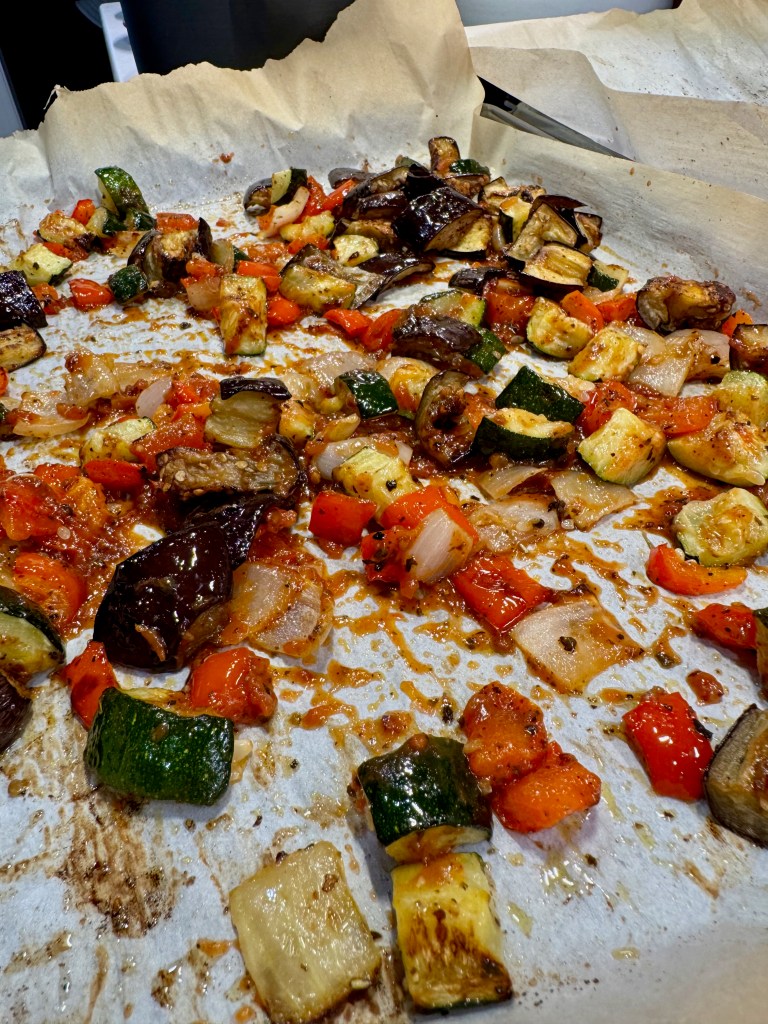
Finally, I made the ratatouille itself, which is delicious as a stew but perfection when roasted. I always remember this French country dish by the acronym “EZ-POT” because of Next Food Network Star season 5 winner, Melissa D’Arabian, who simplified the ingredients of into a five letter description of a dish that really is “e-z,” and usually is made in a “pot.” This little memory trick has saved me on more than one occasion when I craved ratatouille but forgot to make a farmers’ market shopping list. 😉

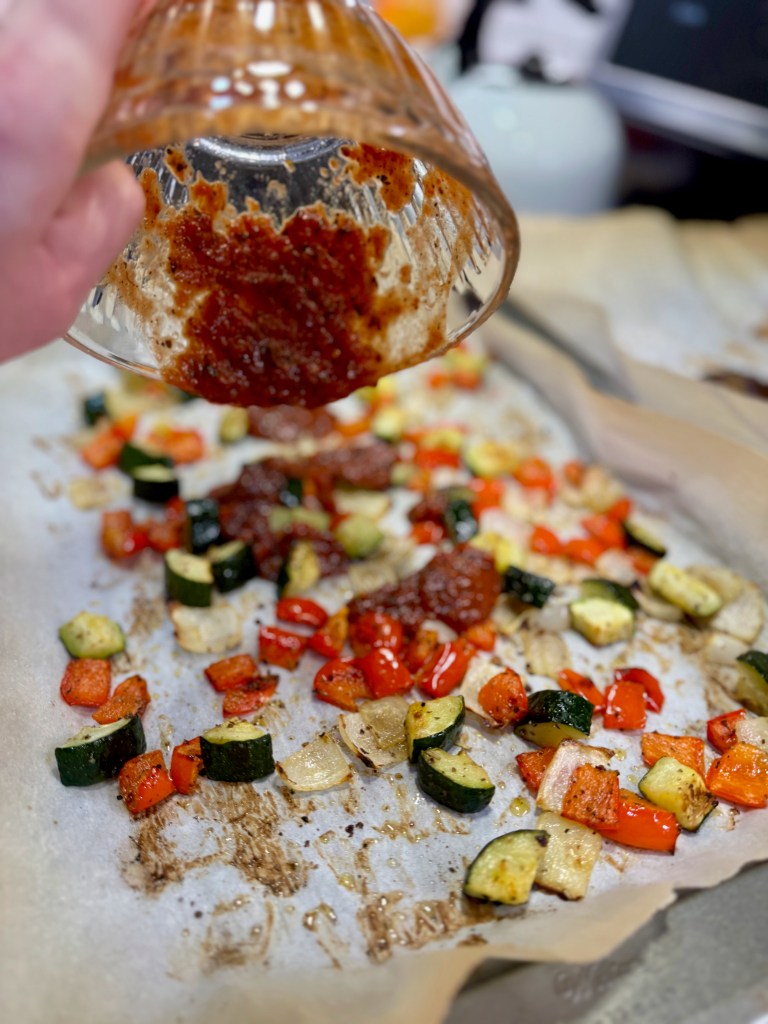
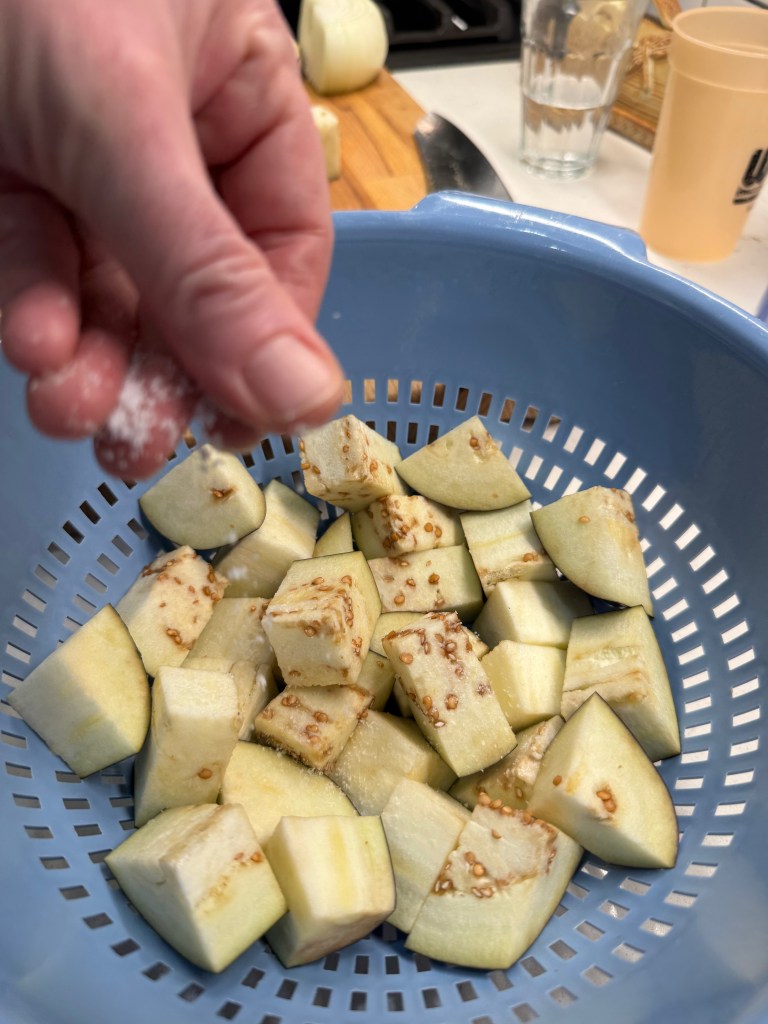
I salted my eggplant chunks for a few minutes first, to help draw out excess moisture, and this worked really well for achieving crispy edges when they roasted. The other vegetables were roasted on a separate sheet, and then I tossed everything gently in a fire-roasted tomato sauce which, if you can believe it, was from a can! Sure, I could have made my own sauce, but I was trying to be thrifty and use up some leftover pizza sauce, and it was a winner! If you make your own sauce, keep the flavors simple and try to make it on the thicker side.

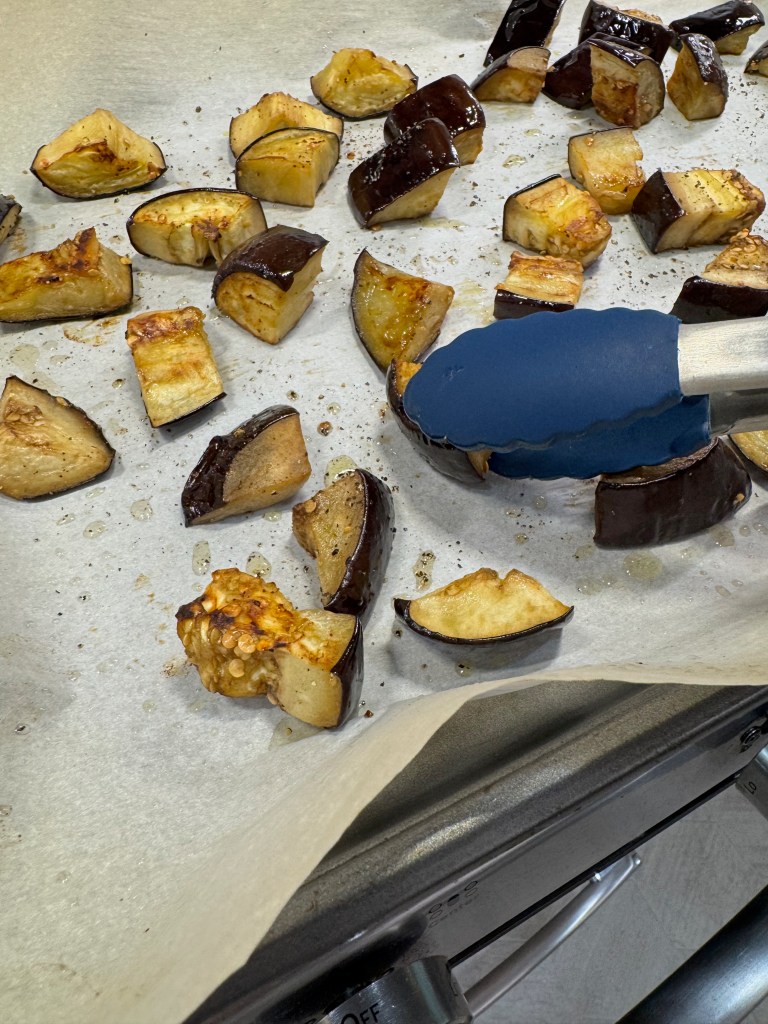
While all of this was happening, I had the water on to boil for the pasta. I love this part of seeing a meal come together, especially one that I’ve pondered for a while, and though it satisfied my desire to make handmade pasta, it somehow also inspired me to want to make more handmade pasta. Stay tuned! 


Roasted Ratatouille Ravioli

  • Servings: 4
  • Difficulty: Intermediate
  • Print

This recipe is split into three parts for the pasta dough, the ravioli filling and the ratatouille vegetables with sauce. If you love the hands-on experience, this is worth the trouble. If the steps are too much for you, it's easy to make the pasta dough and filling ahead and finish the dish one or two days later. Not ready to make your own pasta? No problem! The chicken-ricotta filling and roasted vegetables would be awesome in a lasagna, using store-bought noodles. Adapt it however makes you happy.


Ingredients

  • 165g all-purpose flour
  • 60g white whole wheat flour
  • 45g semolina flour
  • 1/2 tsp. onion powder
  • 3 large eggs, at room temperature
  • 50g to 70g room temperature water

Notes: Depending on your overall environment, you may need to adjust the water somewhat to achieve a dough that is smooth and supple, without being too dry or too wet. If the dough is too dry with the maximum amount of water recommended, wet your hands and knead until smooth. Repeat as needed. You may end up with more pasta dough than is needed for ravioli. Simply roll it out with flour and cut into strips. Let it dry and freeze in zip-top bags. Cook from frozen.

Directions

  1. Combine flours and onion powder in the bowl of a stand mixer, fitted with the dough hook
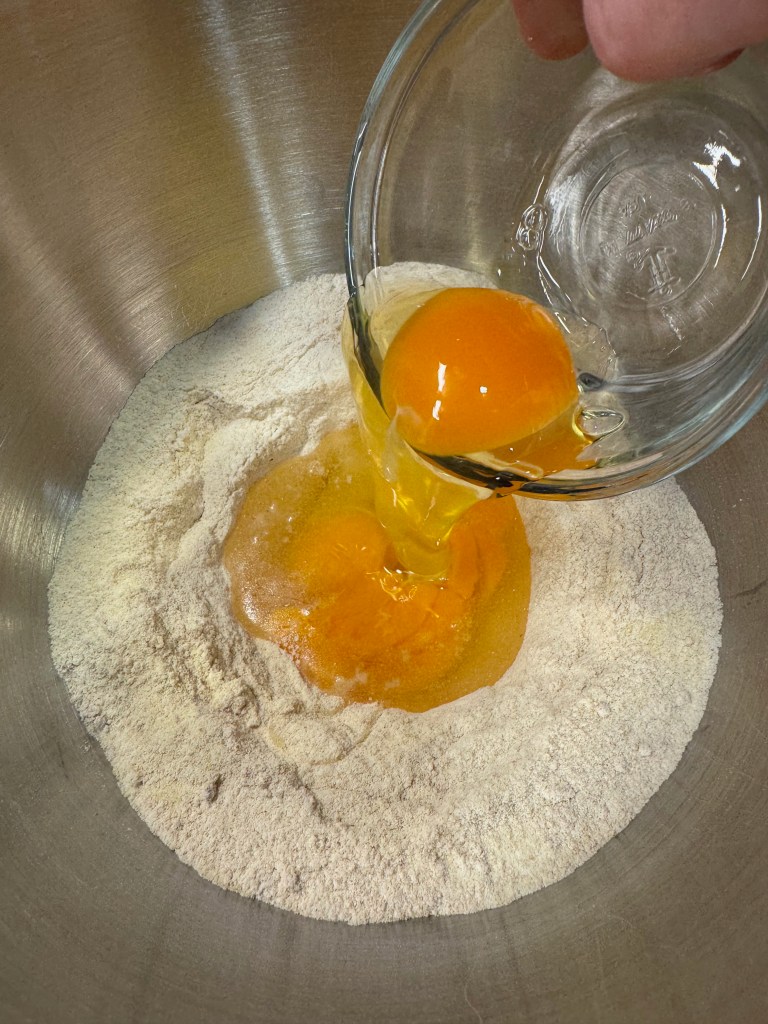
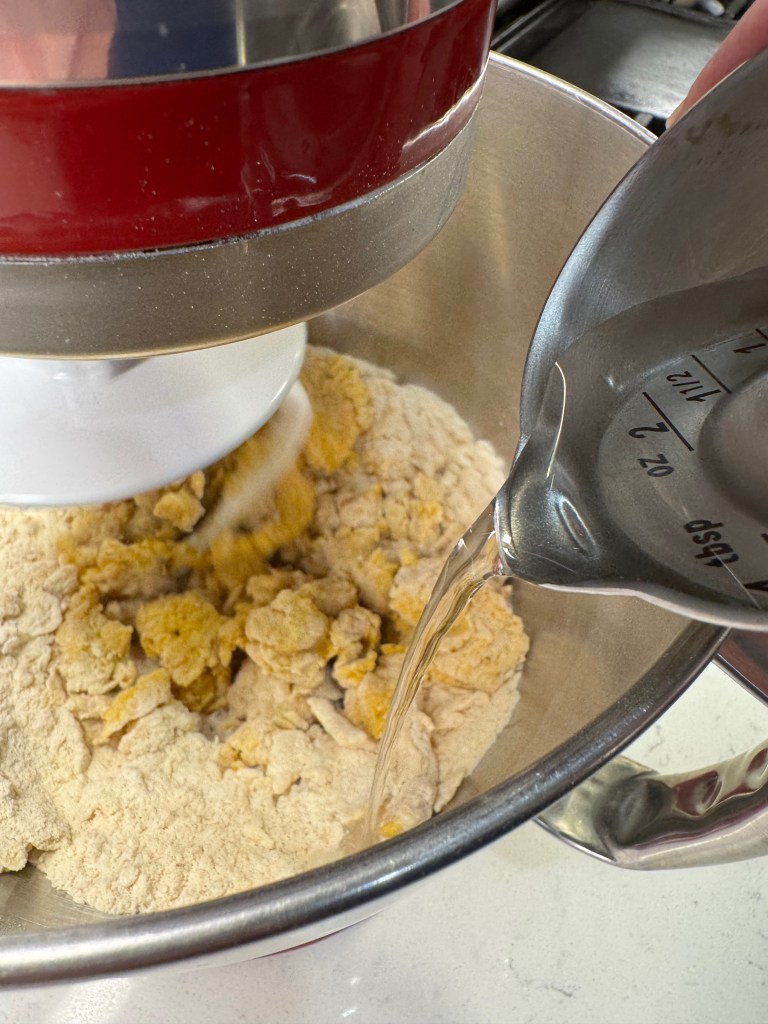
  2. Make a well in the center of the flour mixture and add eggs. Knead with the dough hook on speed 3 until dough starts to come together (it will be dry). Drizzle in water, a little at a time, until all flour is incorporated and dough is gathered up on the hook. This may take extra water.
  3. Transfer dough to the counter and knead by hand for about eight minutes, until smooth, firm and supple. Wrap dough tightly in plastic wrap and refrigerate at least 30 minutes or up to a day before rolling and shaping.
  4. Divide dough into sections and roll out with a pasta machine or rolling pin to approximately 1/16″ thickness. Use a piping bag to apply filling, then lightly brush another sheet with cold water and seal up each pillow, pushing out any air as you go. Transfer raviolis to a parchment-lined cookie sheet sprinkled with semolina.

Ingredients

  • 1 medium sweet onion, chopped
  • 1 Tbsp. extra virgin olive oil
  • Kosher salt and pepper
  • 1 lb. ground chicken breast
  • 1/2 tsp. Herbs de Provence seasoning
  • 1 tsp. lemon zest
  • 1 cup whole milk ricotta, strained for 30 minutes to remove excess moisture
  • 1 large egg

Note: If you wish, you could skip the ground chicken and double the strained ricotta for a vegetarian version of this dish.

Directions

  1. Sauté onions in olive oil over low heat with a sprinkle of salt. Toss frequently, until all the moisture has evaporated and onions soften and take on a deep golden color. Transfer to a bowl and increase heat to medium.
  2. Add ground chicken to the same pan, cooking gently until meat is no longer pink, but do not let it brown. Season the meat the salt and pepper and allow it to cool.
  3. Add meat mixture and caramelized onions to the bowl of a food processor. Add Herbs de Provence and lemon zest. Pulse a few times until the meat is ground to a fine texture and onions are no longer visible in whole.
  4. Transfer processed mixture to a bowl with ricotta and egg and stir together until evenly blended. Refrigerate this mixture until you’re ready to fill the ravioli.

Ingredients

  • 1 small eggplant (keep the peel on), cut into large cubes
  • 1 medium zucchini, but into large chunks
  • 1 red bell pepper
  • 1/2 medium sweet onion, cut into chunks
  • Extra virgin olive oil
  • Kosher salt and pepper
  • A couple pinches of Herbs de Provence seasoning
  • 2 cups fire-roasted tomato sauce (ours was a thick pizza sauce)

Note: Keeping the peel on the eggplant and cutting it into large chunks is key to getting a crispy outer texture. Aim for pieces large enough that every piece has a bit of peel on it, as this will help the eggplant hold its shape during roasting so that it doesn’t turn mushy.

Directions

  1. Heat oven to 450° F, with rack in center position. Prepare two baking sheets by lining with parchment paper. Place eggplant cubes in a colander and toss gently with 1/2 tsp. salt. Let it rest half an hour, then gently rinse and pat dry before proceeding. Toss with a tablespoon of olive oil on one of the baking sheets and season with pepper only (they will have plenty of salty flavor from the prep stage).
  2. Toss zucchini, bell pepper and onion chunks in a tablespoon of olive oil on the second baking sheet. Season with salt, pepper and Herbs de Provence. Roast both sheets of vegetables for about 30 minutes, turning pieces over halfway through.
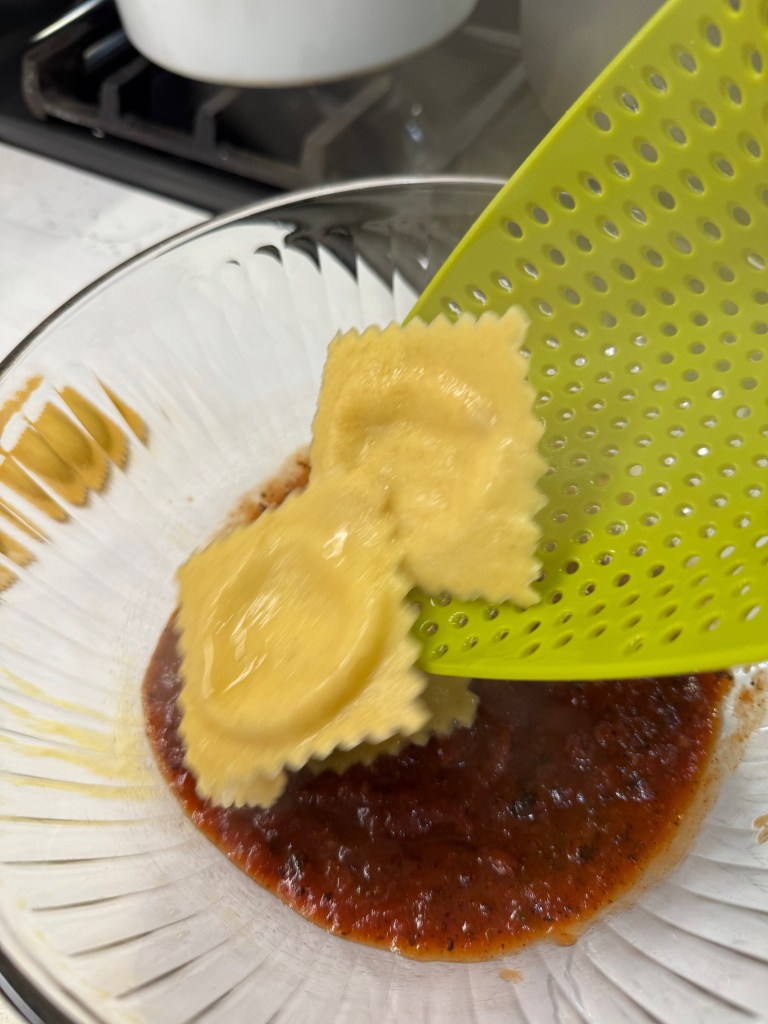
  3. Meanwhile, bring a pot of salted water to a gentle boil and add the ravioli by hand to prevent sticking. Cook for six to seven minutes; the pillows should all be floating and the sealed edges of pasta should be tender.
  4. Retrieve the pasta with a vented spoon and transfer directly to the tomato sauce. Toss gently and arrange the ravioli on serving plates. Toss the roasted vegetables in the remaining sauce and spoon over the ravioli portions. Serve at once.
All-day Tomato Bisque

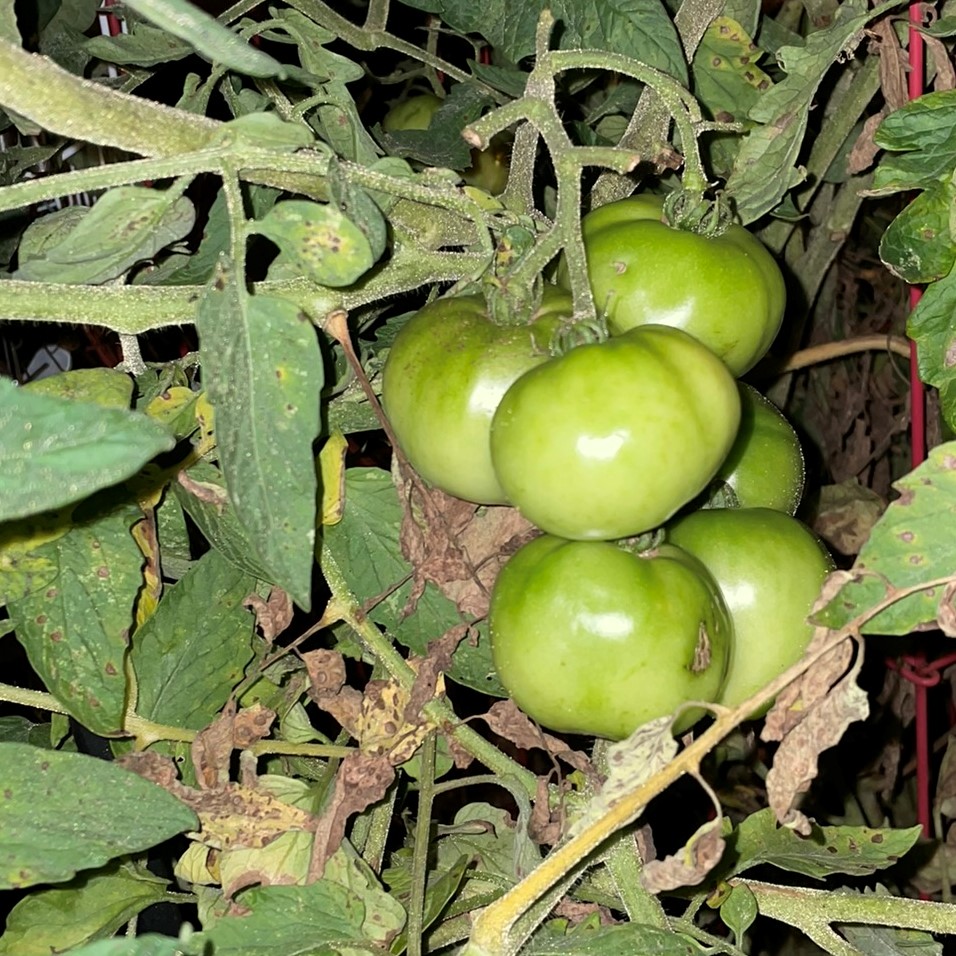
It was almost unbelievable to me, when I walked out toward our shriveled-up raised bed garden to begin breaking down the zucchini trellis and found—get this—new tomatoes!!!

It’s true that Southern summers tend to run a bit longer than some other regions, but I didn’t expect a tomato comeback, especially in the last days of September and given that our nighttime temperatures are sinking into the 40s. Mother Nature is something else though, isn’t she?


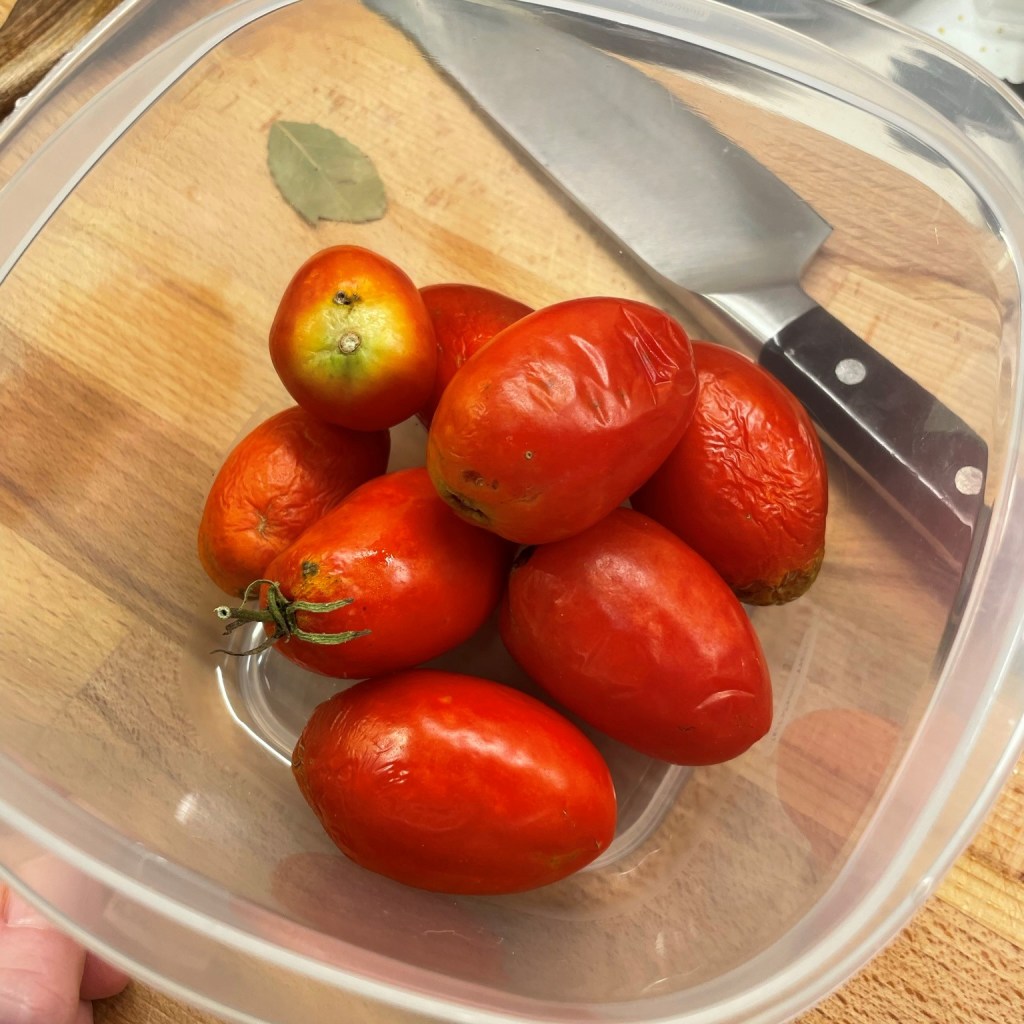
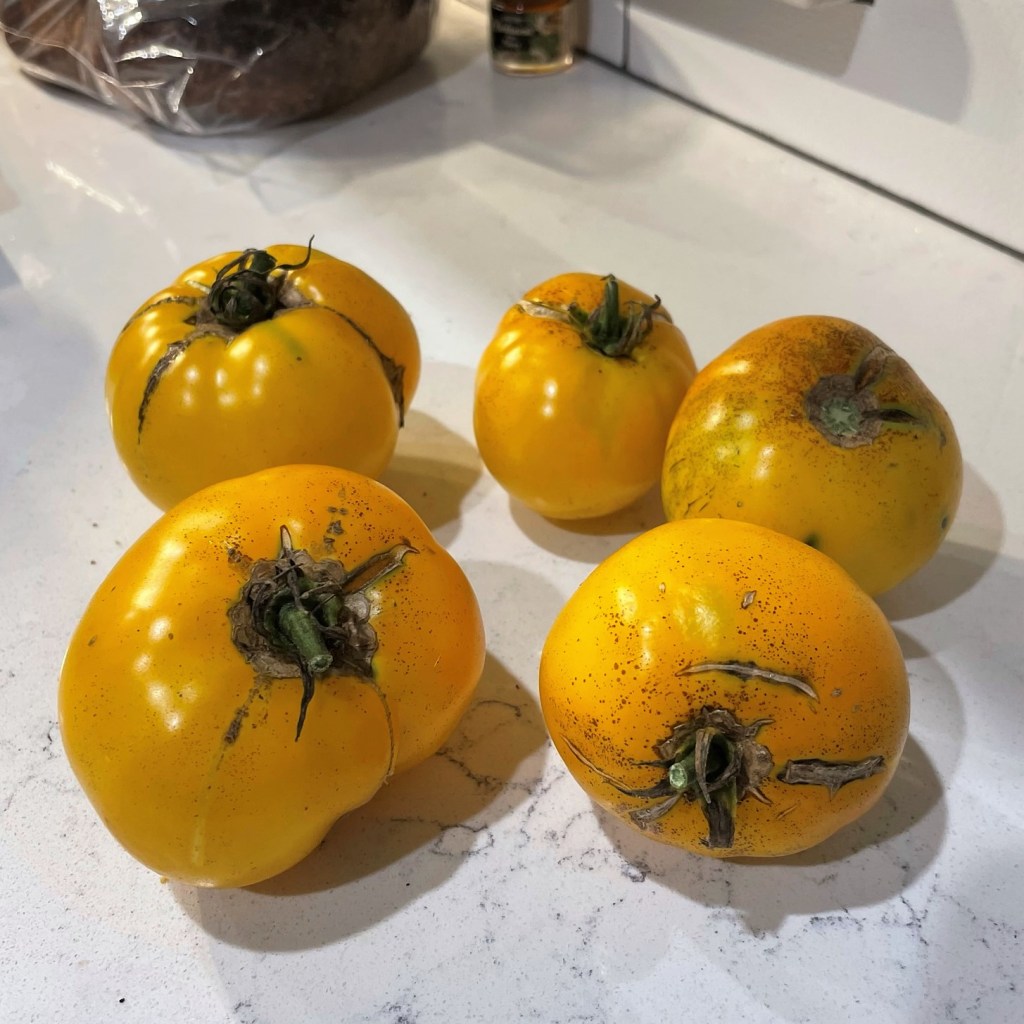
In addition to the lemon boy heirlooms (ripe and otherwise), we also had a bumper crop of a handful of Romas and though they didn’t look as pretty as the ones we enjoyed earlier in the summer, they were perfectly ripe and had a great flavor. I knew they’d be an excellent ingredient for homemade tomato bisque, which happens to be my husband’s favorite.

To be clear, you don’t literally need all day to make this bisque; I just needed something to do over the weekend, when our area was awash with the remnants of Hurricane Ian. Rather than making soup to freeze for a rainy day, I spent an entire rainy day making the soup we’d enjoy later. If you have half an hour, and don’t need to cook down fresh tomatoes, you could whip up this soup and use the simmering time to make a grilled cheese sandwich (our favorite side for this soup).

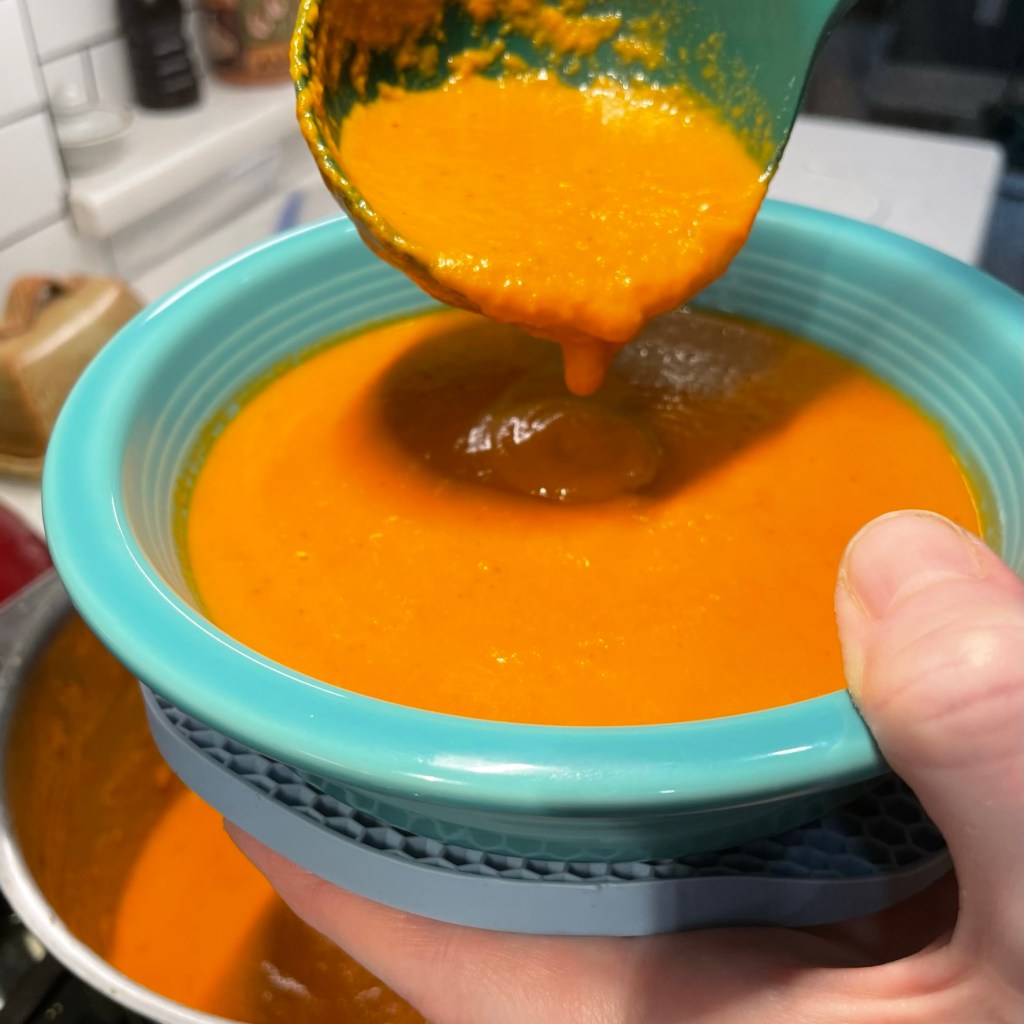
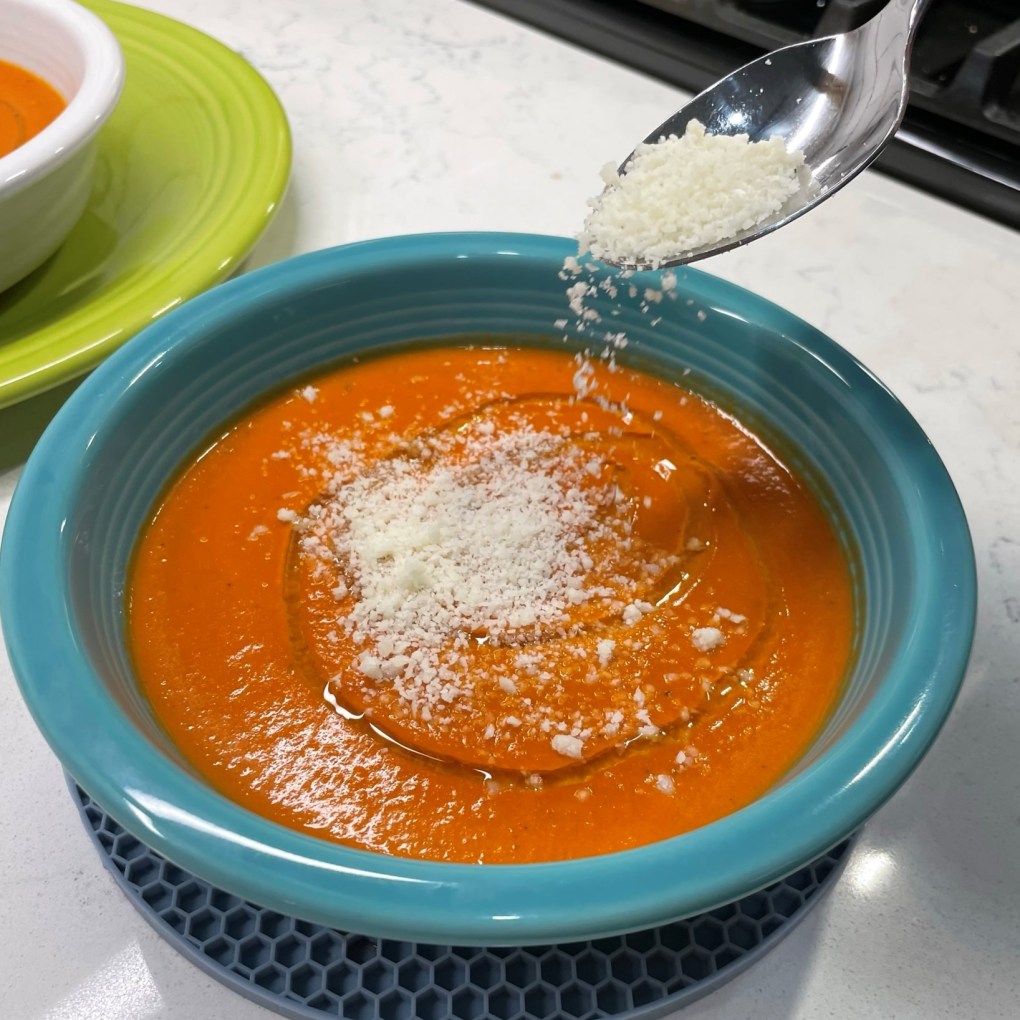
This is what a bowlful of comfort looks like.

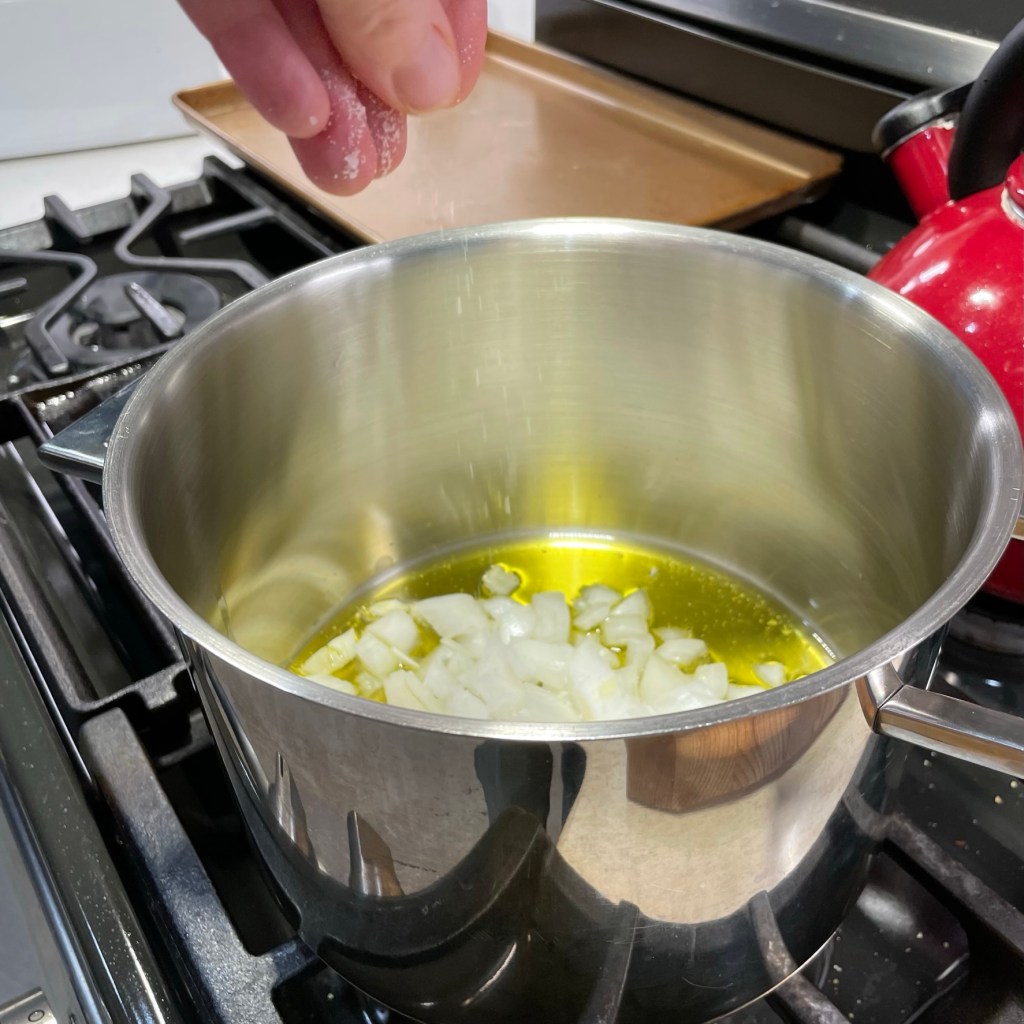
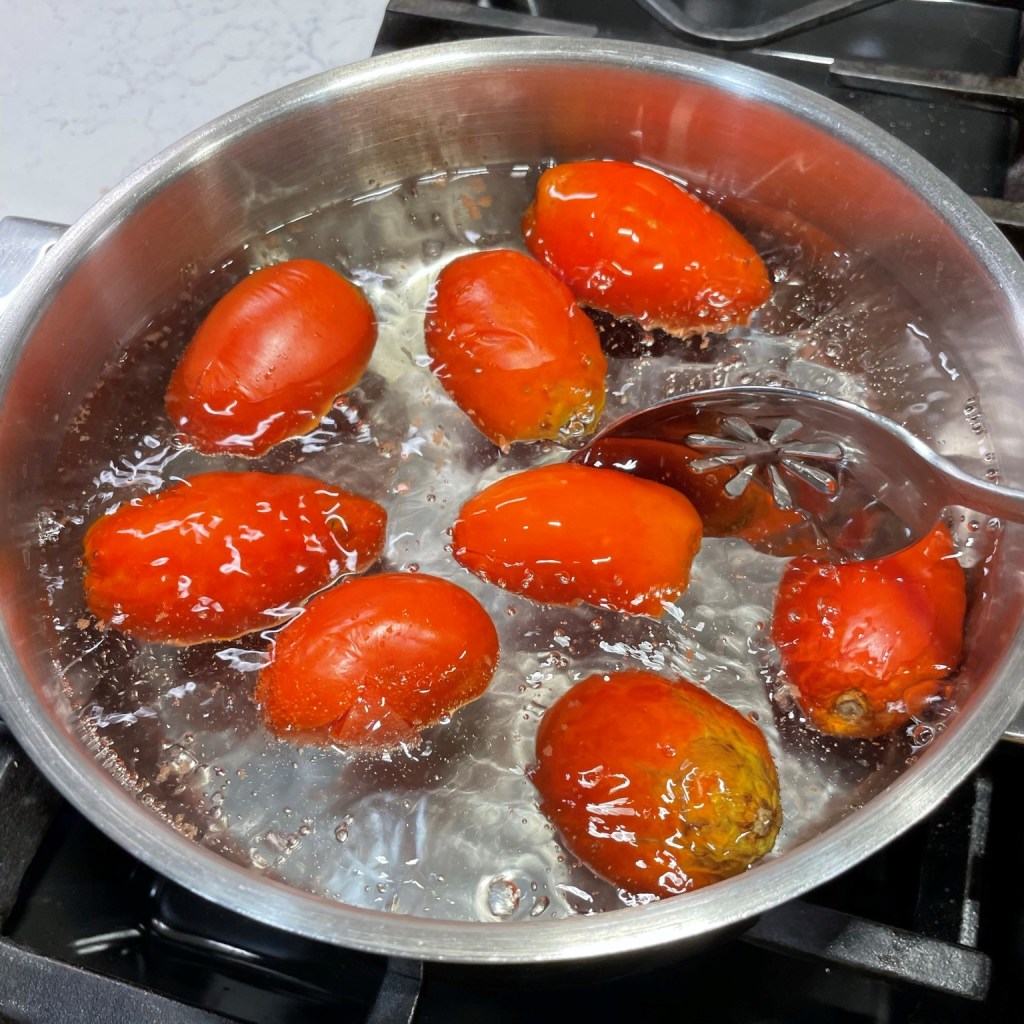
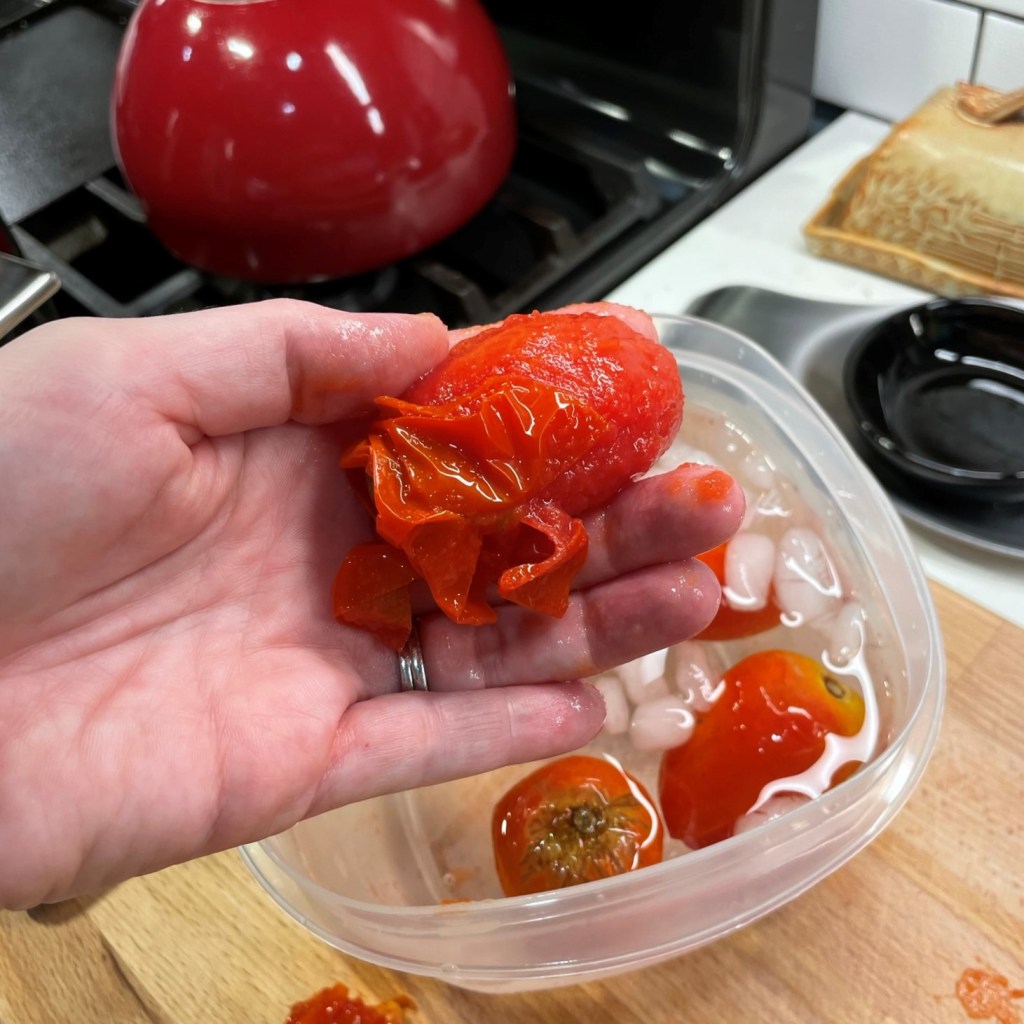
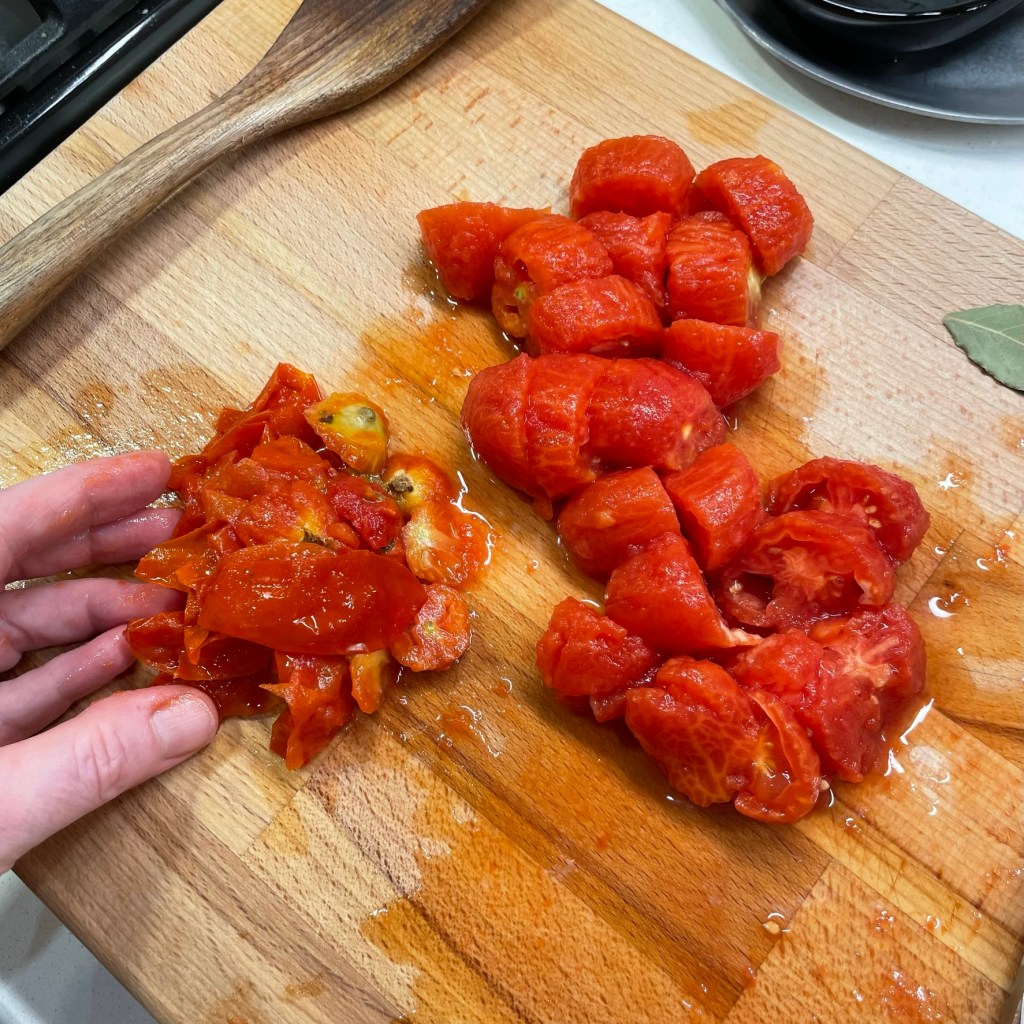
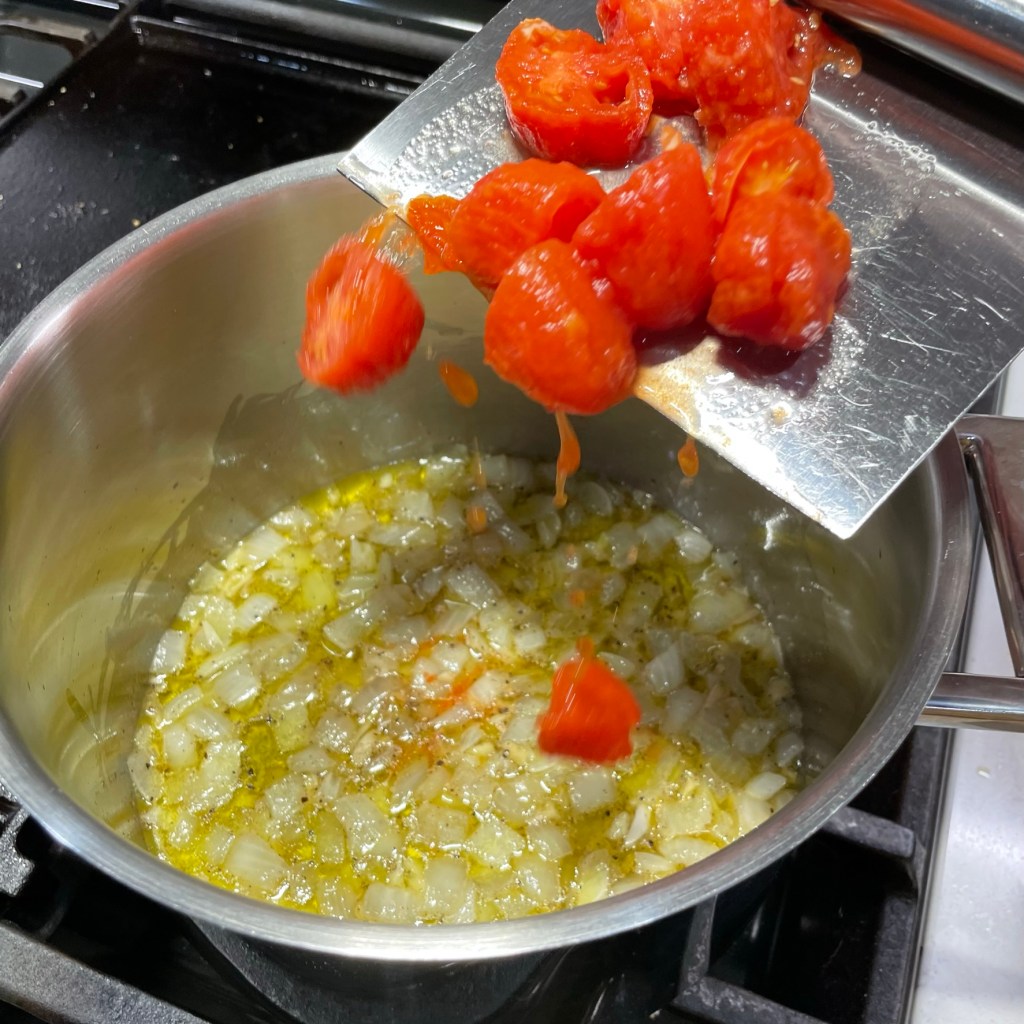
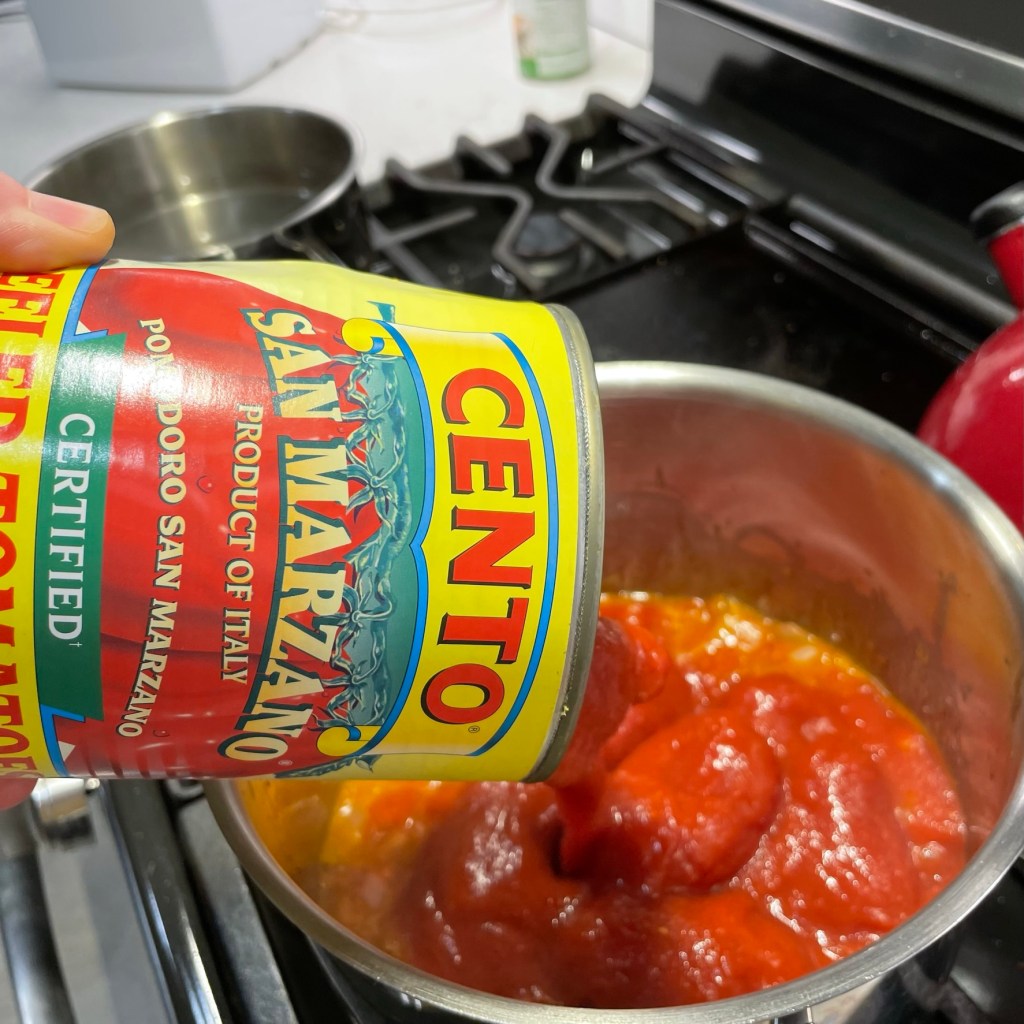
My plan for the bisque came together in seconds: I’d blanch and shock the tomatoes for easy peeling, then chop them up and add them to my soup pot along with sauteed onions and garlic, plus a large can of Italian tomatoes (San Marzano, of course) and give the mixture a nice, long simmer to marry the flavors.


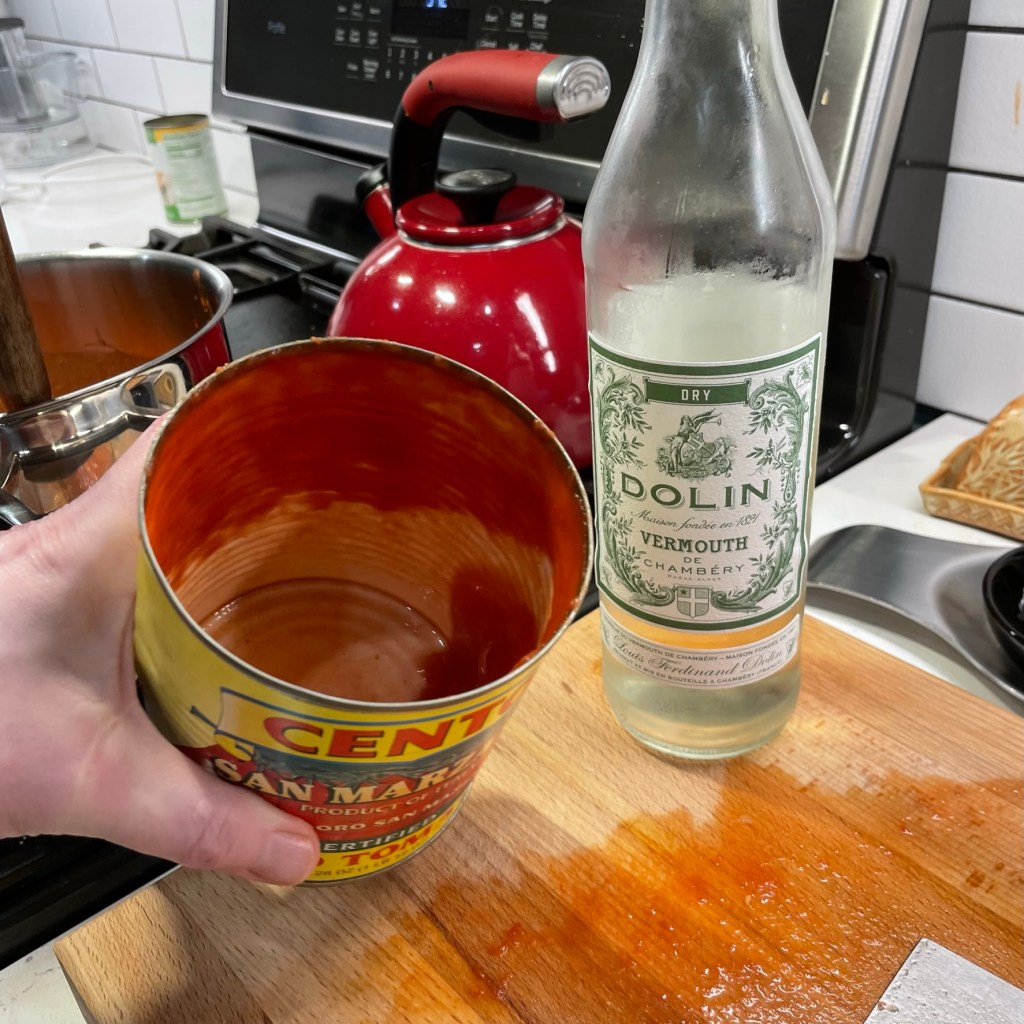
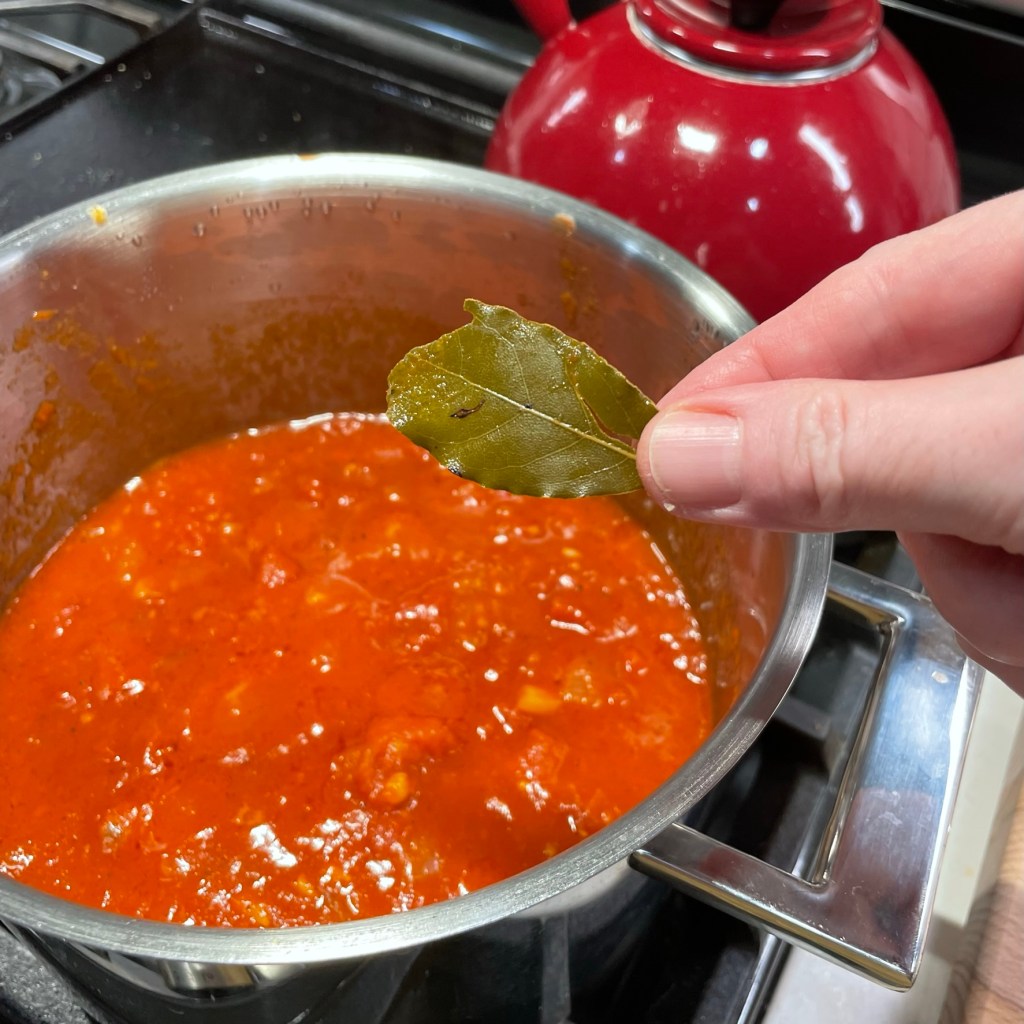
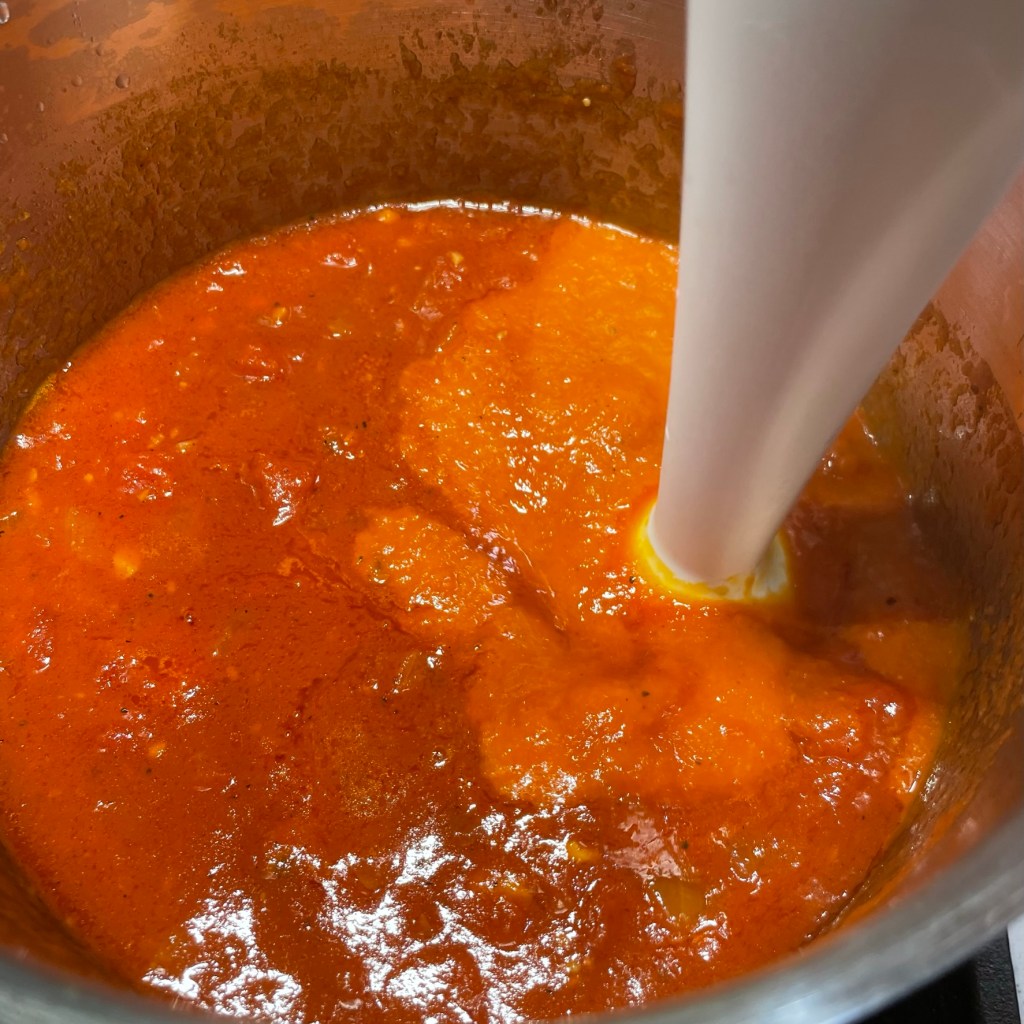
For a flavor boost, I swished out the tomato can with a few tablespoons of dry vermouth (the same spirit I put in my favorite martini) and dropped into the pot a dried bay leaf, which is always a good bet for a dish that is going in for a long simmer. Two hours later, I removed the bay leaf and brought out the immersion blender to puree the soup into the creamy texture that my hubby loves.


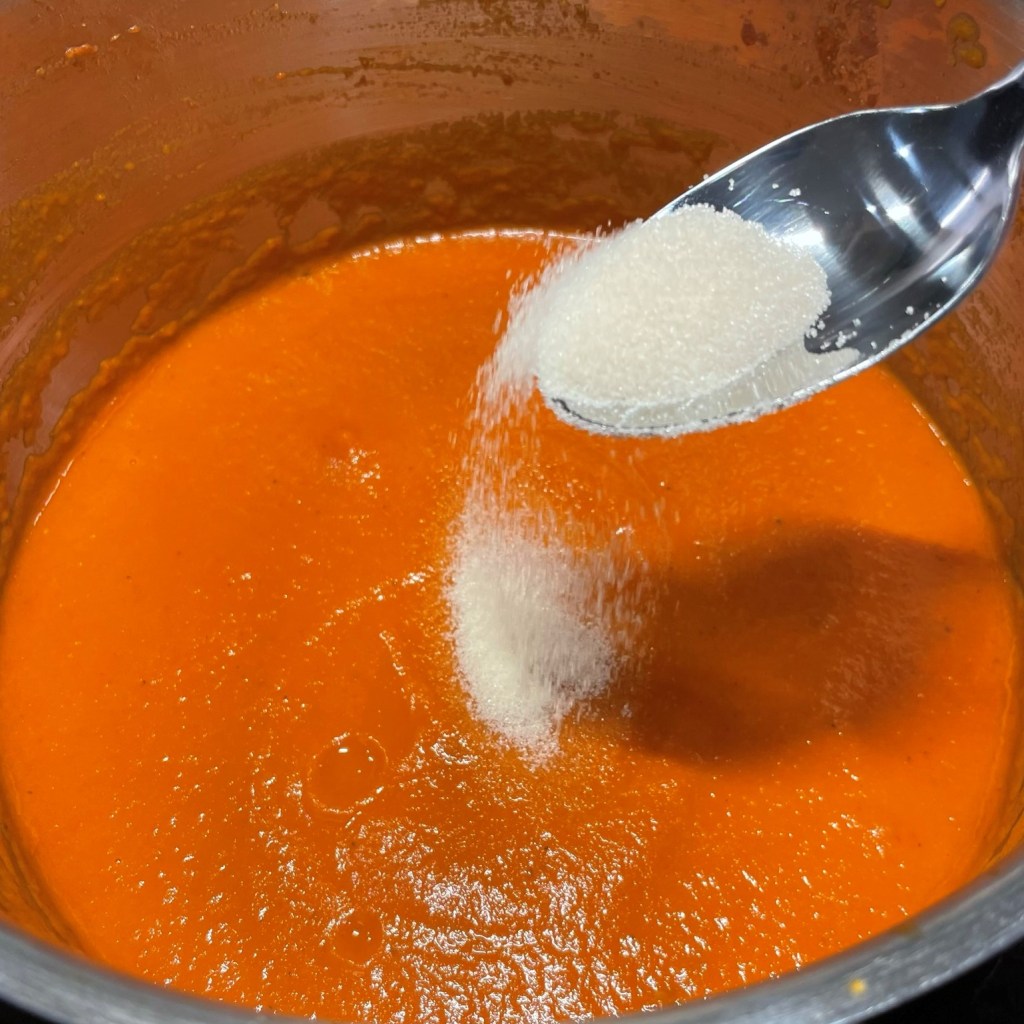
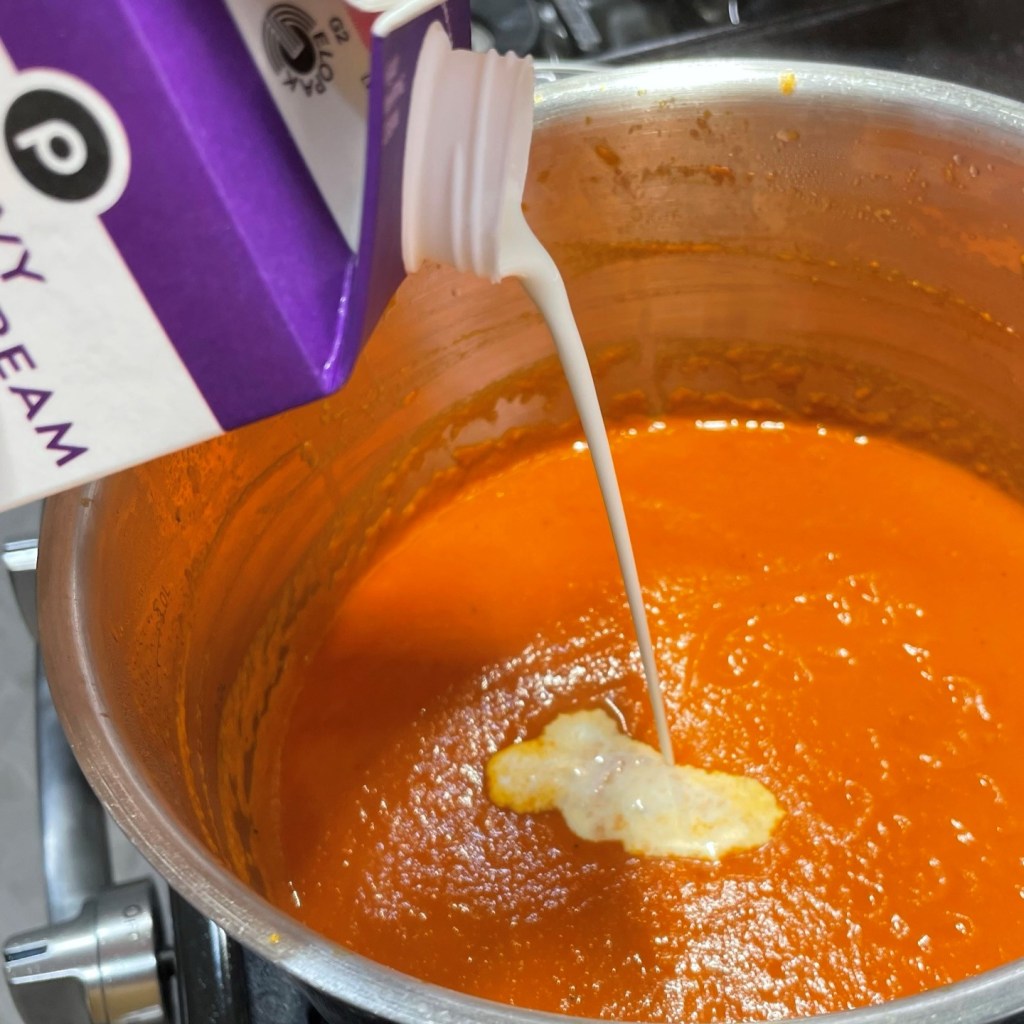
The resulting soup was really good, and I could taste the freshness that my surprise Romas contributed to the pot. It needed a little more depth, though, and definitely a little more color. Maybe you have noticed, as I have, that a homemade tomato soup or sauce tends to come out more orange than red, and it turns out there is a good (and scientific) reason for that, as I learned a few days ago in this article in my news feed. A little bit of tomato paste deepened the color and intensified the tomato flavor, a slight spoonful of sugar balanced the acidity, and a generous splash of cream made it bisque-y.


This was a great use of my encore tomatoes, though this easy homemade soup would be delicious with only canned tomatoes, which are usually packed at their peak of freshness. You might replace my fresh tomatoes with an extra, 15-ounce can, or simply reduce the other ingredients a bit for a smaller batch.

As for us, we are glad for a little extra, as a warm homemade soup will be most welcome at the end of today’s Yom Kippur service (that’s the Jewish holiday that has a 24-hour complete food-and-water fast), and we will undoubtedly devour our leftovers!

All-day Tomato Bisque

  • Servings: 8 cups or 6 bowls
  • Difficulty: Average
  • Print

Of course, you don't really need to spend all day making this soup, but the long simmer time makes a world of difference in flavor, especially when using fresh garden tomatoes.


Ingredients

  • 8 fresh, small plum tomatoes (or substitute a 15-ounce can of diced tomatoes)
  • 2 to 3 Tbsp. extra virgin olive oil, depending on taste
  • 1/2 large onion, chopped
  • 2 cloves garlic, smashed and chopped
  • Kosher salt and black pepper to taste
  • 28-ounce can whole, peeled tomatoes (San Marzano or another type that is packed in puree)
  • 1/4 cup dry vermouth (or dry white wine, such as pinot grigio)
  • 1 whole dried bay leaf
  • 2 Tbsp. tomato paste
  • 1 tsp. sugar (optional)
  • 1/4 to 1/2 cup heavy cream (use less or substitute half and half for reduced fat)

Directions

  1. Put on a pot of water to boil for blanching the fresh tomatoes. Wash and score the bottom (blossom end) with an X for easy peeling. Carefully immerse the tomatoes into the boiling water for a minute or two, just long enough for the skins to split. Transfer immediately to a bowl of ice water, then peel and chop them.
  2. While water is boiling, heat olive oil in a heavy-bottomed soup pot over medium heat. Add onions and sprinkle with salt. Cook until softened and slightly transparent. Add the garlic and cook another minute.
  3. Add the fresh, chopped tomatoes to the pot and stir to heat through. Add the large can of tomatoes (juice and all, but remove basil sprigs) and break them up with your cooking utensil. If you wish, you can squeeze the whole tomatoes with your hands as you add them to the pot, and I would recommend this if you’re in a hurry. For long, slow simmering, the heat will break them up just fine.
  4. Add vermouth (or wine) to the tomato can and swirl it to rinse out the leavings. Add this to the soup and bring the pot to a slight boil, then cover and reduce heat. Add the bay leaf and simmer for at least 30 minutes or up to several hours. Check the soup occasionally and stir to keep it from burning on the bottom.
  5. When tomatoes break easily under pressure from your utensil, use an immersion blender to puree it as smooth as you like. Be sure to remove the bay leaf first! If you don’t have an immersion blender, allow the soup to cool and puree it in batches in a regular blender. Keep the vent cap open for safety.
  6. Stir in tomato paste and sugar (if using), and adjust salt and pepper to taste. Stir in cream just before serving.


Zucchini & Yellow Tomato Pizza

We are turning a corner on our side-yard vegetable garden, and I am finding myself a bit flummoxed because for the first time in years, we actually have a tomato harvest! When I made the decision to plant this year—and it was definitely my decision, given that I’m the one who is home more during the day to tend to it—I swore that I would pull out all the stops in repelling the deer that reside in the woods behind us. Nothing I had tried in the past worked for more than a week, and dammit, I wanted tomatoes this year! If you have a similar problem, stop playing around with sprays and wind chimes (they don’t work anyway) and stop scattering human hair and soap shavings and whatever else you’ve tried, and just go get one of these—order it now, I’ll wait.

Here’s me, pretending to be a deer approaching from the woods…

The yard enforcer motion-activated sprinkler is by far the smartest thing I’ve bought this year, and friends, we are about to reap the benefit of so many tomatoes!

I planted an heirloom variety this year, called “Brandywine,” and they are large, sweet and juicy—perfect for tomato sandwiches and caprese salads. I am fond of the color of the Brandywine tomato—it’s sort of a blushy pink-red color, rather than the orange-red that is typical. They have a pleated sort of appearance, and a few wrinkly lines on the skin, but I don’t mind it and it certainly doesn’t affect the quality.

There’s nothing better than a simple tomato sandwich for a summer lunch!

Right next to those is a grouping of four Roma tomato plants, and I have been astonished to see how many fruits developed on these plants. They are extra-long fruits, compared to the wimpy Romas at the grocery store, and we are planning on canning a few things with those when they are ready—mainly homemade pizza sauce, I suspect. The Roma tomato is a determinate plant, which means they will likely overwhelm me by ripening all at once. I hope we’re ready!

Our sunbathing beauties!

Finally, the luscious, yellow “Lemon Boy” tomatoes, which were the first ones to ripen, and I love the slight tang they bring to my plate, despite being lower acidity than many other tomatoes. Lemon Boy is a hybrid variety, and it is indeterminate, so I’ll have plenty of fruit to harvest for a few weeks, which I love.

These Lemon Boys are the tomatoes I’m excited to share today, and of all the dishes I’ve made with them recently, this pizza stands out as a favorite because it really speaks to the transition of my garden. To date, I had struggled to keep up with the zucchini yield, and you can bet I won’t ever plant four of those again! It was about three weeks ago that I noticed vine borers had attacked my vibrant squash plant, and you know what that means—game over. I hate those things!

But we had a few squash that were near-ready, so I let them mature before I yanked the infested plants out of the garden. And just about the time I did so, I spotted this perfectly ripe, ready-to-enjoy Lemon Boy.

Hello, handsome! 🙂

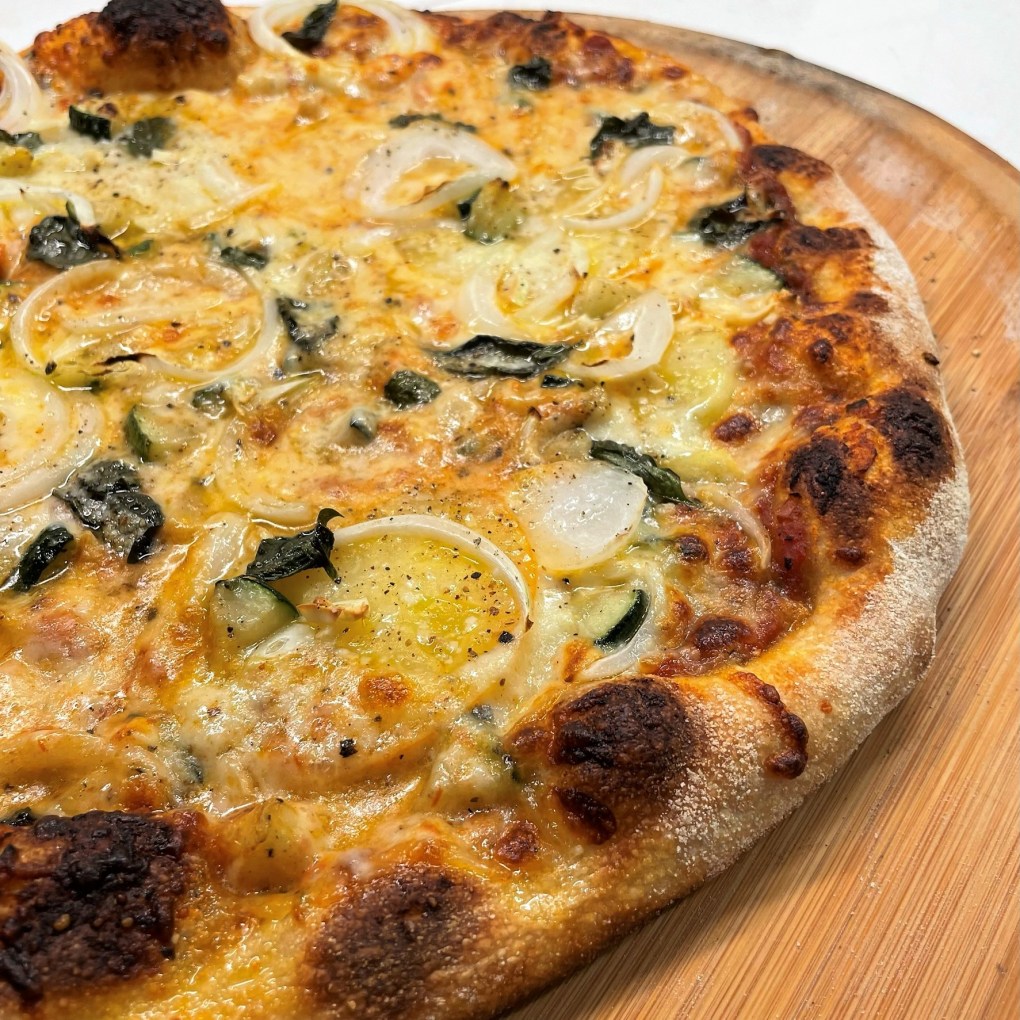
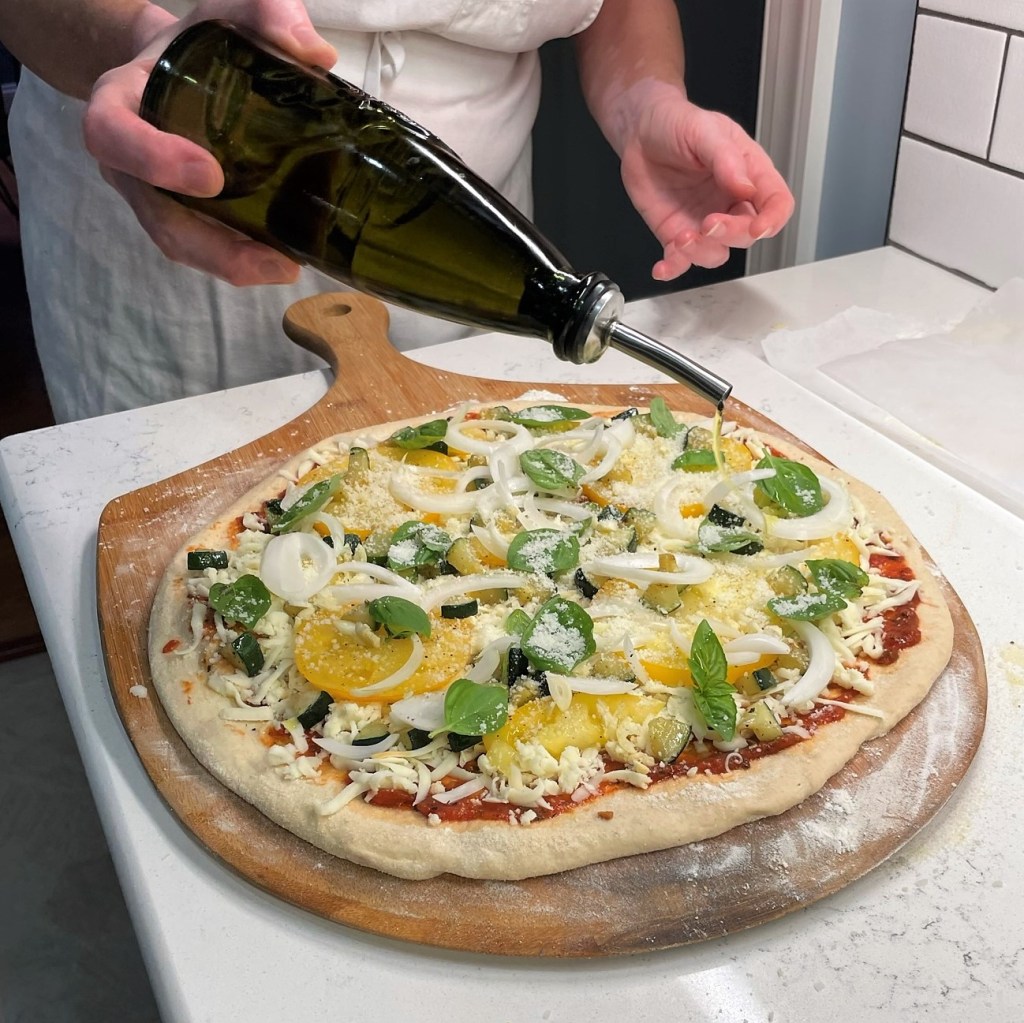
I wanted to slice it on the spot and savor it with nothing but a sprinkle of sea salt and black pepper, but I restrained myself and made it a co-star with one of the last zucchini of the season on this summer pie. This dish felt like a passing of the baton in my garden. As my summer squash takes its final bow, the tomatoes are right on cue for center stage, and they were terrific companions on this fresh pizza. I just love this part of summer!


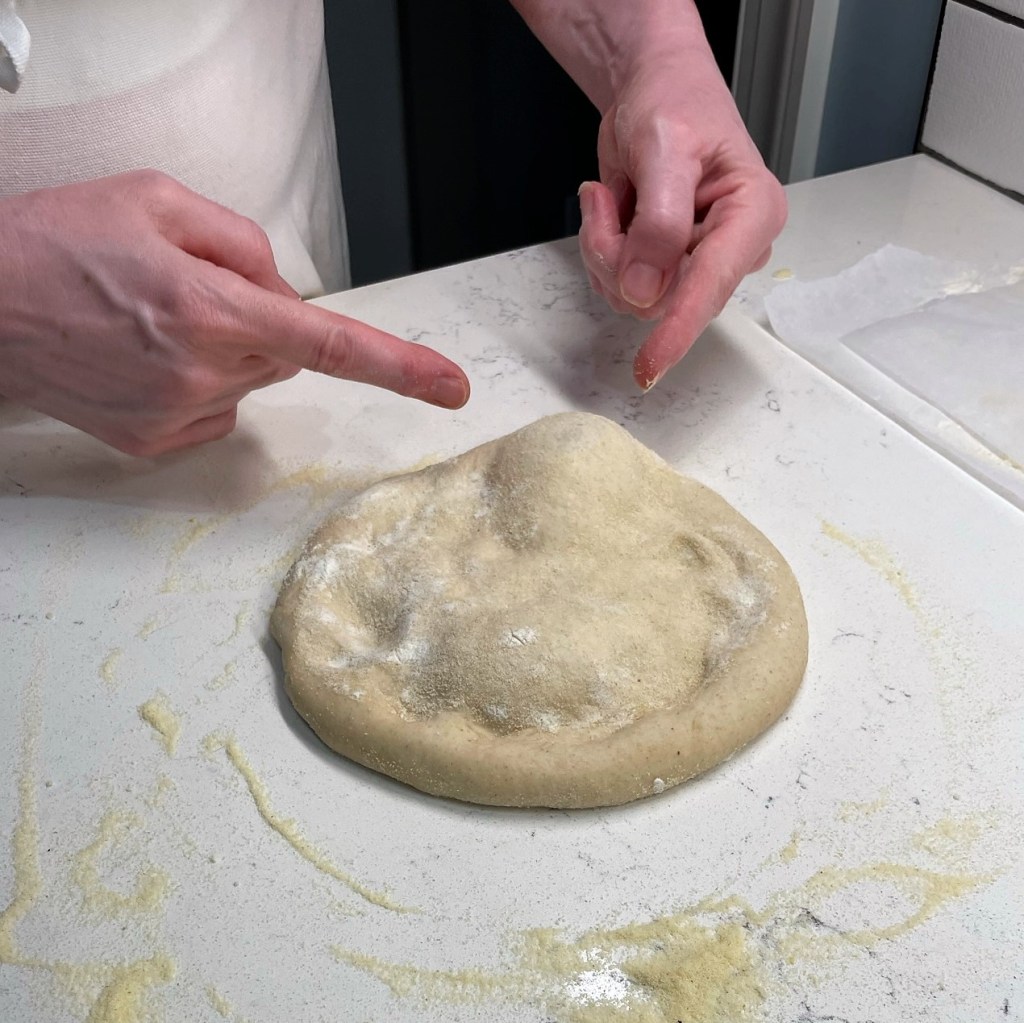
This is a thin crust pizza and it begins with my favorite sourdough base. The sourdough starter and the long, slow ferment in the refrigerator gives my dough a deep, complex flavor and the texture is always just right, thanks to our beloved pizza steel. If you want to level up your pizza game with only one move, this is the thing, right here. It takes the hottest temperature your home oven can put out and intensifies it to make the most beautifully blistered crust that is crisp on the bottom and chewy on top. It’s the closest you can get to brick oven at home.


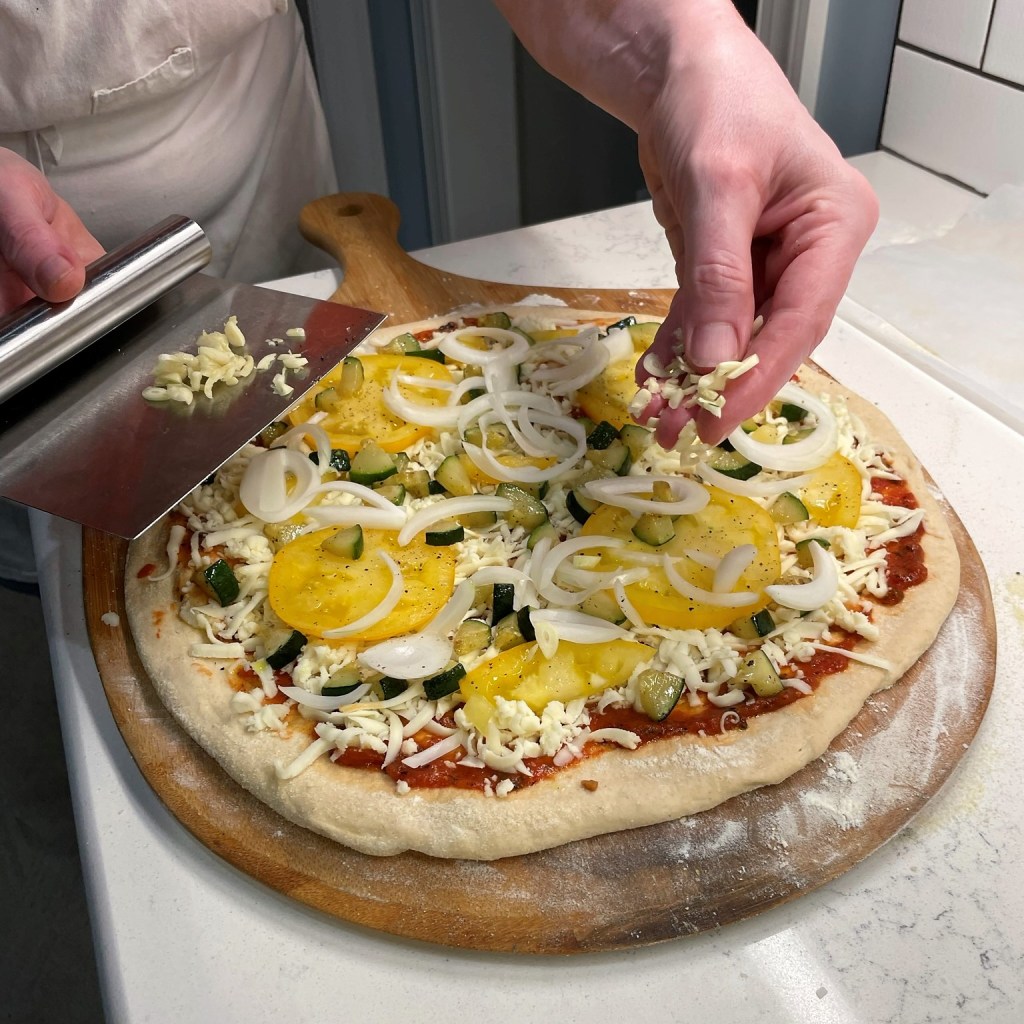
The zucchini was cut up into bite-sized bits and lightly sautéed in a bit of olive oil, and I salted the yellow tomato slices a few minutes ahead, giving the juice and flavor plenty of time to bloom. I didn’t bother taking pictures of these steps because it’s simple enough to figure out. The rest of the pizza is also straightforward, including a store-bought sauce that we love (at least until our Romas are ready), plenty of freshly shredded hard mozzarella, some thinly sliced spring onions that I picked up at the farmers’ market and a scattering of basil leaves, which have also been good to us in this year’s home garden.

Here’s how it goes, beginning with shaping the ball of sourdough. As always, thanks to my dear husband for his photography skills for this part of the show.


Zucchini & Yellow Tomato Pizza

  • Servings: 8
  • Difficulty: average
  • Print

This dish felt like a passing of the baton in my garden. As my summer squash takes its final bow, the tomatoes are right on cue for center stage, and they were terrific companions on this fresh pizza. I just love this part of summer!

Ingredients

  • 1 medium zucchini, trimmed and cut into small wedges
  • 1 Tbsp. extra virgin olive oil, plus extra for drizzling onto pizza
  • 1 large yellow tomato, sliced and salted to release excess moisture
  • 1 small spring onion (or sweet onion), thinly sliced
  • 2 cloves garlic, chopped
  • 1/3 cup favorite pizza sauce
  • 1 cup shredded, low-moisture mozzarella
  • Salt and pepper
  • 2 Tbsp. finely grated Parmesan or parm-romano blend
  • Small handful of fresh, small basil leaves

Note that my method uses a heavy pizza steel, preheated at 550° F for one hour. If you don’t have a steel, use a pizza stone at the highest temperature recommended for your product. At lower temperature, baking time will require adjustment.

Directions

  1. Place a small skillet over medium heat. Swirl in olive oil and saute zucchini until tender. Transfer to a bowl and let it cool to room temperature. Use a paper towel to blot excess moisture from the tomato slices.
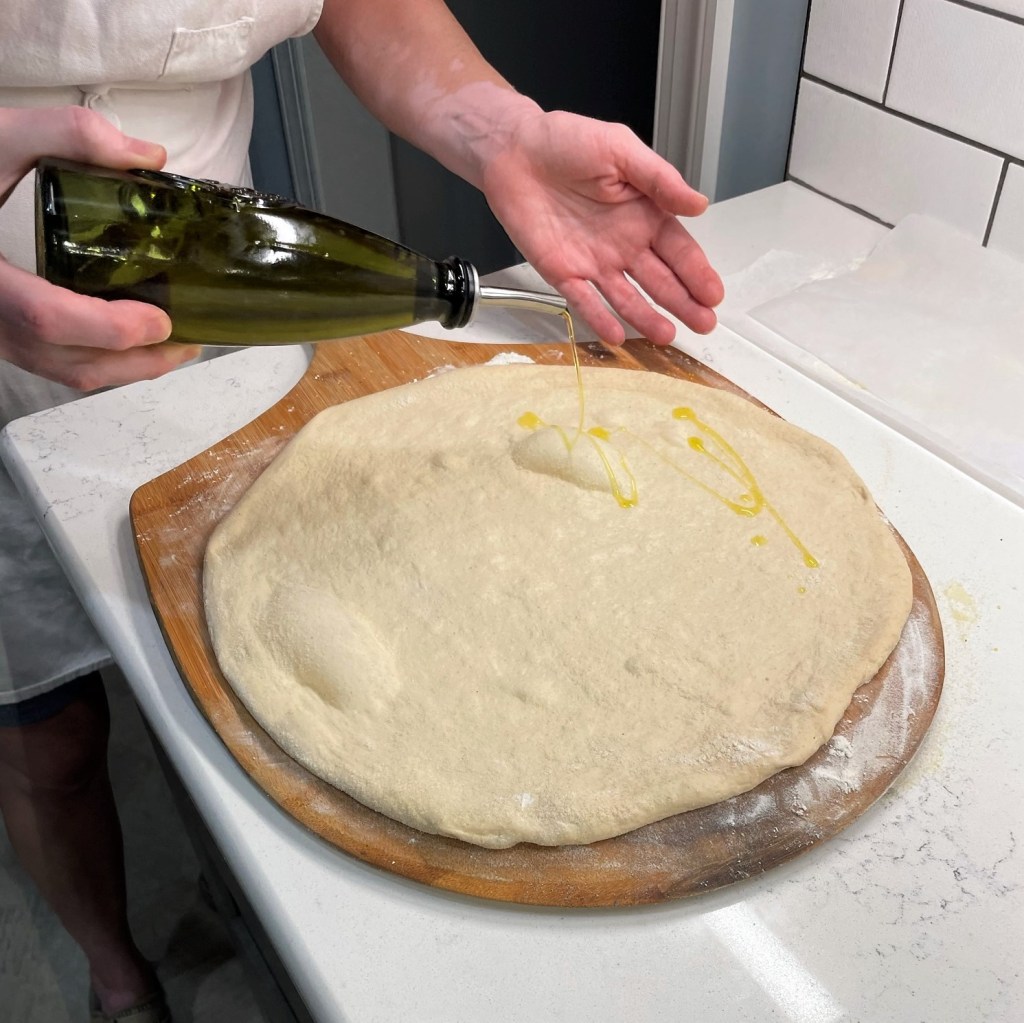
  2. Shape pizza dough into 14″ round, and place on a flour and cornmeal-dusted peel for easy transfer to the oven. Drizzle on a small amount of olive oil and season the dough with salt and pepper.
  3. Spread on the sauce, keeping it at least 1/2″ inch from the edges of the dough. Scatter shredded mozzarella over the sauce
  4. Arrange the vegetables on the pizza, beginning with the fresh tomato slices. Follow with the zucchini bits, sliced onions and garlic.
  5. Finally, tuck in the basil leaves for a fragrant bite of summer. Sprinkle the parm-romano blend over the pizza and finish it with a quick zig-zag of olive oil.
  6. Slide onto the preheated pizza steel and bake for 6 minutes, until crust is golden and blistered and cheese is bubbly all over.
  7. Transfer to serving pan, slice and enjoy!


As a side note, it looks like I will be purchasing a second yard enforcer for next year, to keep the squirrels out of the low parts of the garden!

At least the squirrels have smaller mouths! 🙂