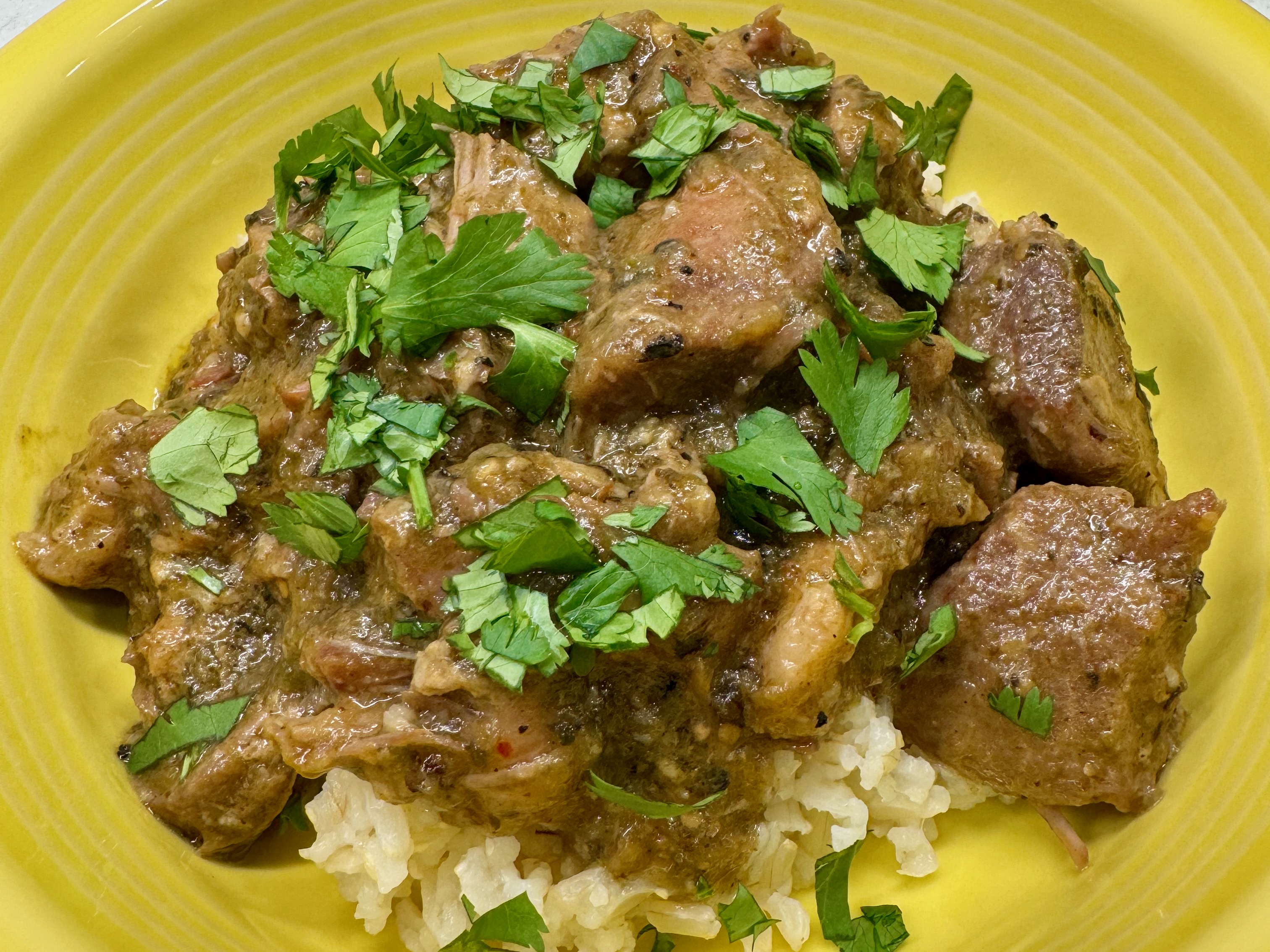
Smoked Pulled Pork

There’s no getting around it, this has been a brutal summer. Crazy hot days, nights as muggy as they were buggy, and no relief from all the drama of the world around us. I need a three day weekend just to catch my breath. Under normal circumstances, my husband and I would be firing up the grill for Labor Day, raising a glass to say, “peace out, Summer,” and looking ahead to my favorite season— fall!

We will cover the raising the glass part, but the first activity on that list isn’t possible this year because our grill has decided to opt out of participation. If it isn’t the burned out igniter switch or a clog in one of the tiny burner holes, it’s something else. The latest issue is apparently a faulty regulator. Yep, the fancy-ass Napoleon gas grill that we researched half to death and practically took out a second mortgage to pay for has been slowly but surely stealing my soul.

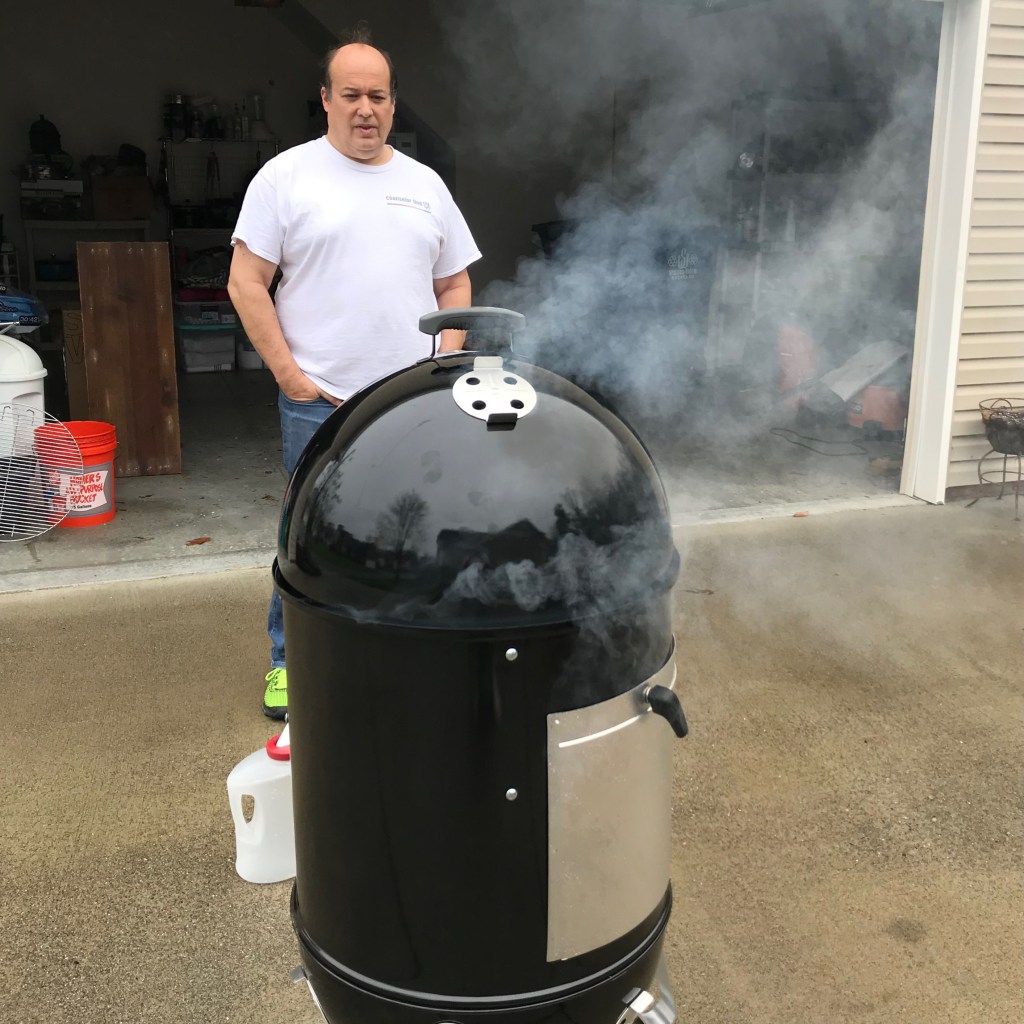
Rather than shove the thing down the embankment into the woods behind our house (I’ve been tempted, trust me), I can be thankful for our charcoal smoker. A three-day weekend feels like a great time for Les to throw a variety of meats onto the racks over some hickory (or cherry or apple) wood.

We’re headed for the smoke zone!

This pulled pork recipe is a favorite for a few reasons. First, the end of August is the anniversary of my arrival in North Carolina— it was 37 years ago this week that I rolled into town in my 1982 Pontiac, and one of the first foods I was introduced to was (you guessed it) pulled pork “barbecue.” Krispy Kreme was another, as they were born in Winston-Salem, and a staple here before the rest of the world knew about them. Another reason I love this pulled pork is the spice blend, and the recipe we use was given to me by my Aunt Joy. It’s a terrific balance of sweet, smoky, spicy and salty, and it gets bonus points for bringing great flavor to pork in a slow cooker, too!


Finally, I love this pulled pork because of my husband, Les, who happens to be celebrating a milestone birthday today. 🥰

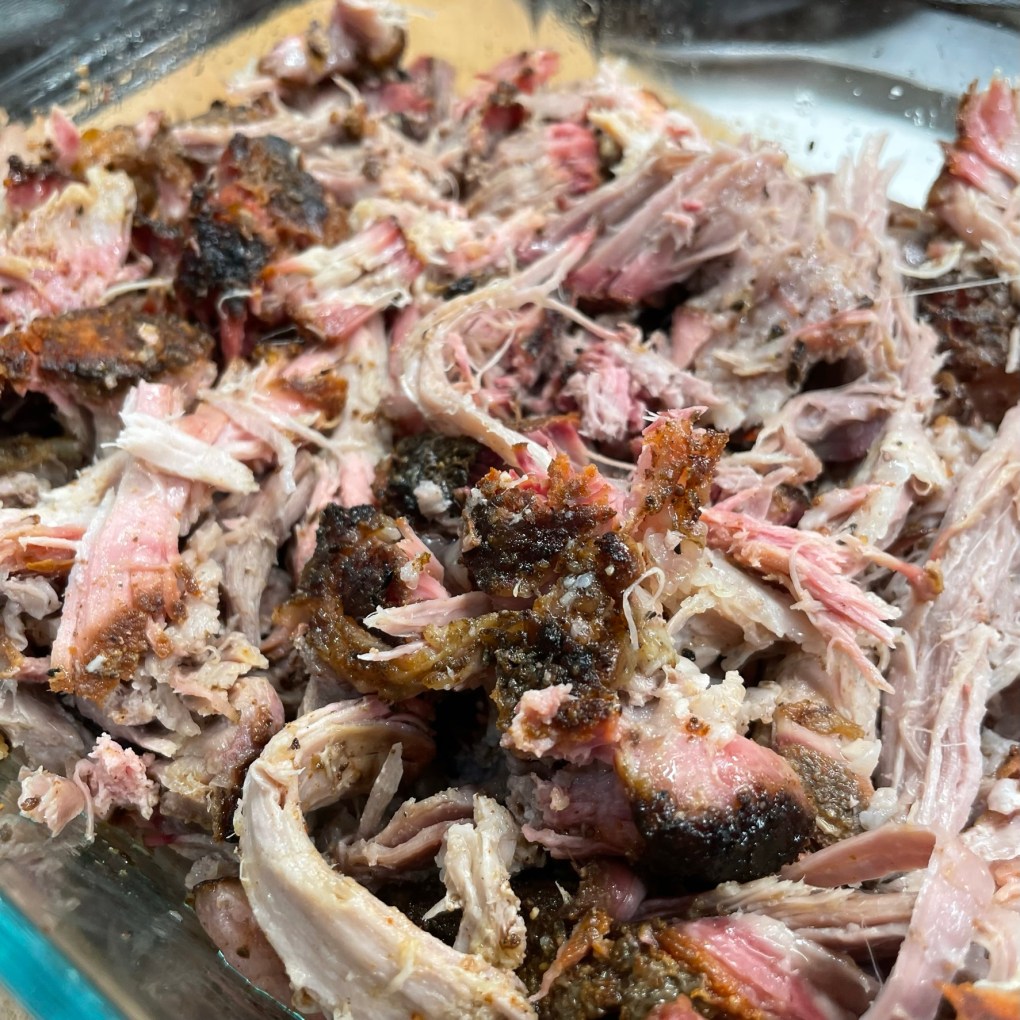
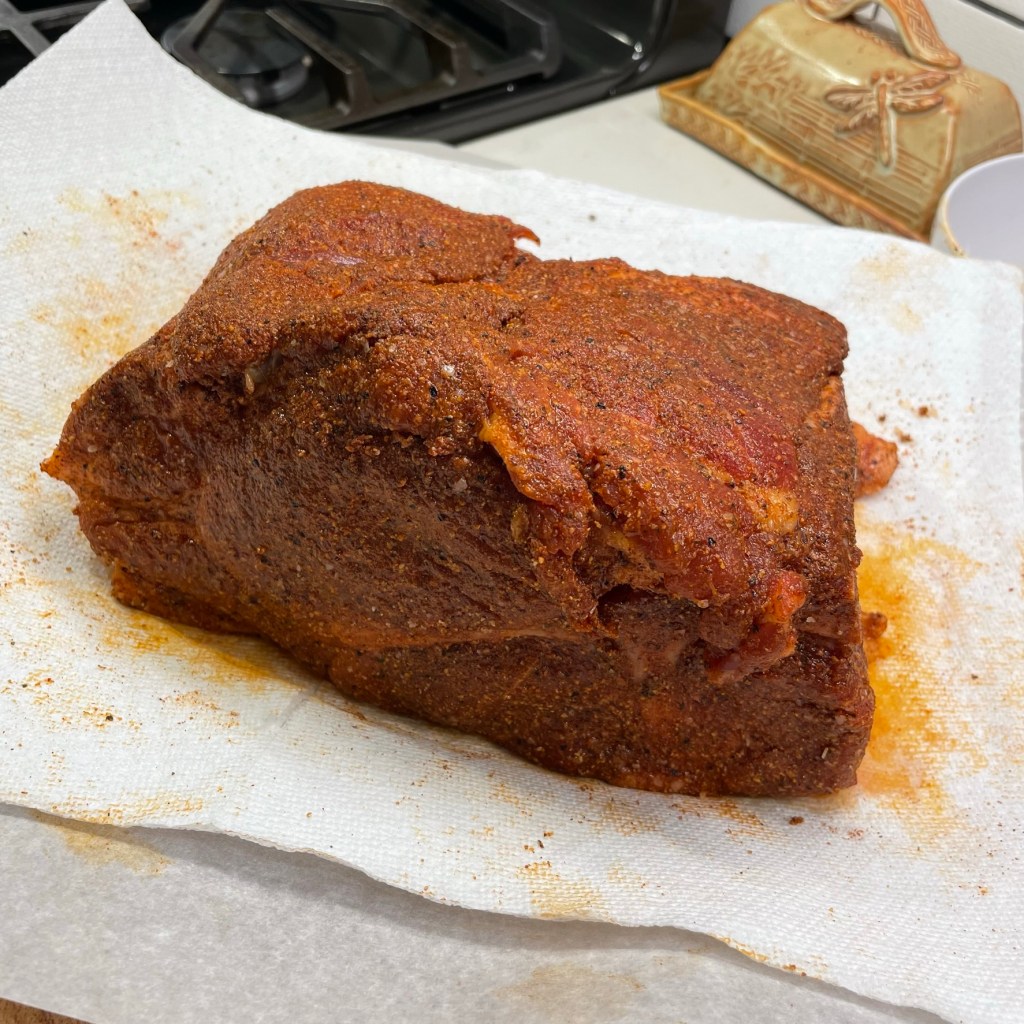
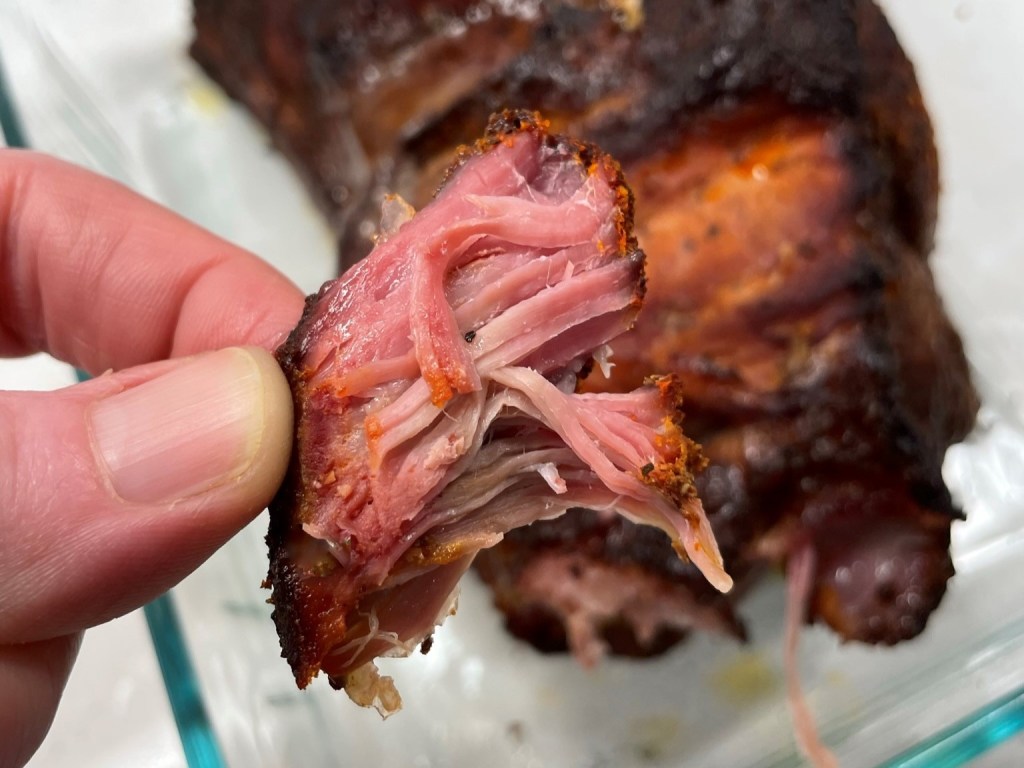
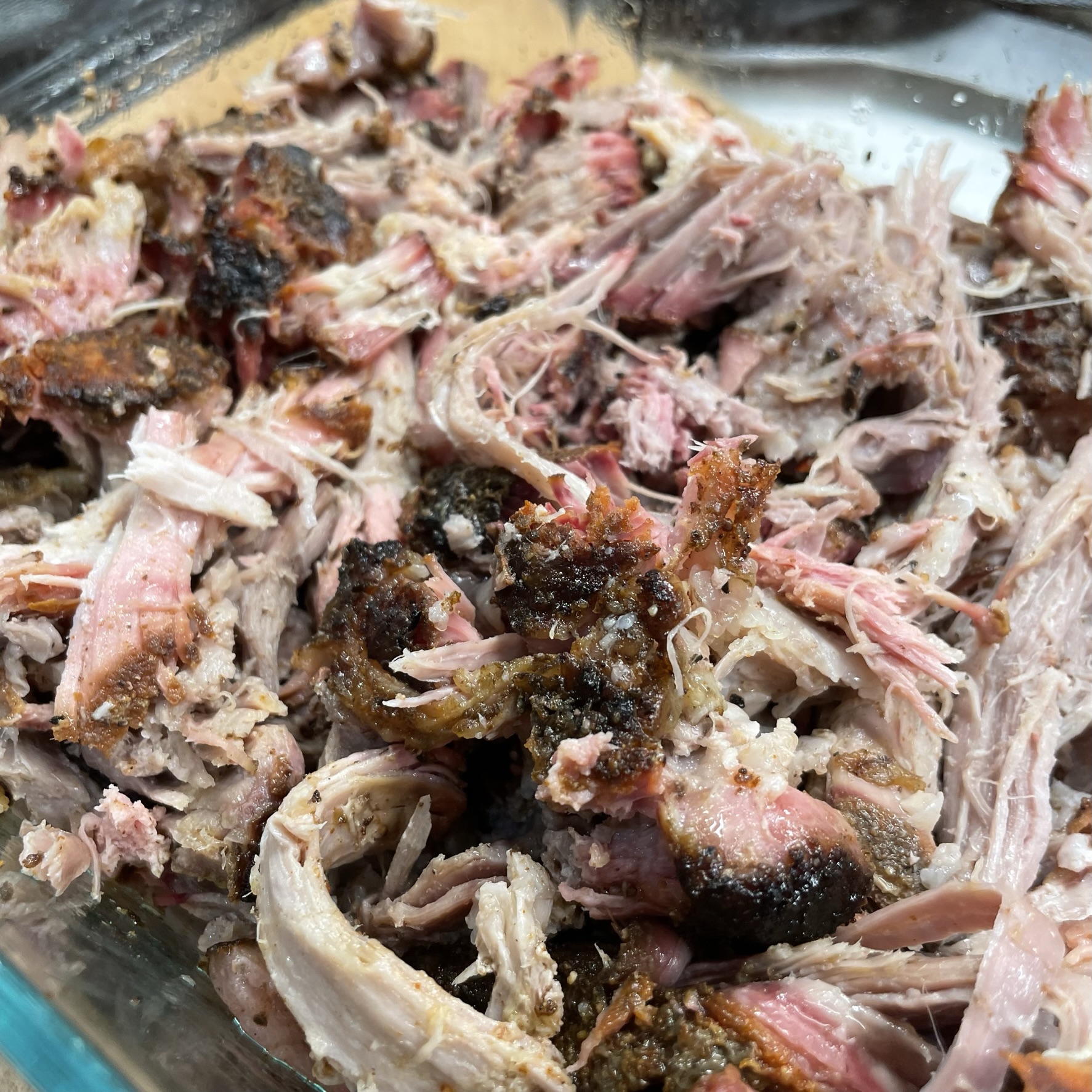
OK, I’ll admit that this post is really more about him. Les handles the smoker with great finesse, and his pulled pork barbecue is just about the best I’ve ever eaten—evenly seasoned, succulent and tender, and with a perfect smoke ring.

Perfect little piece of bark!

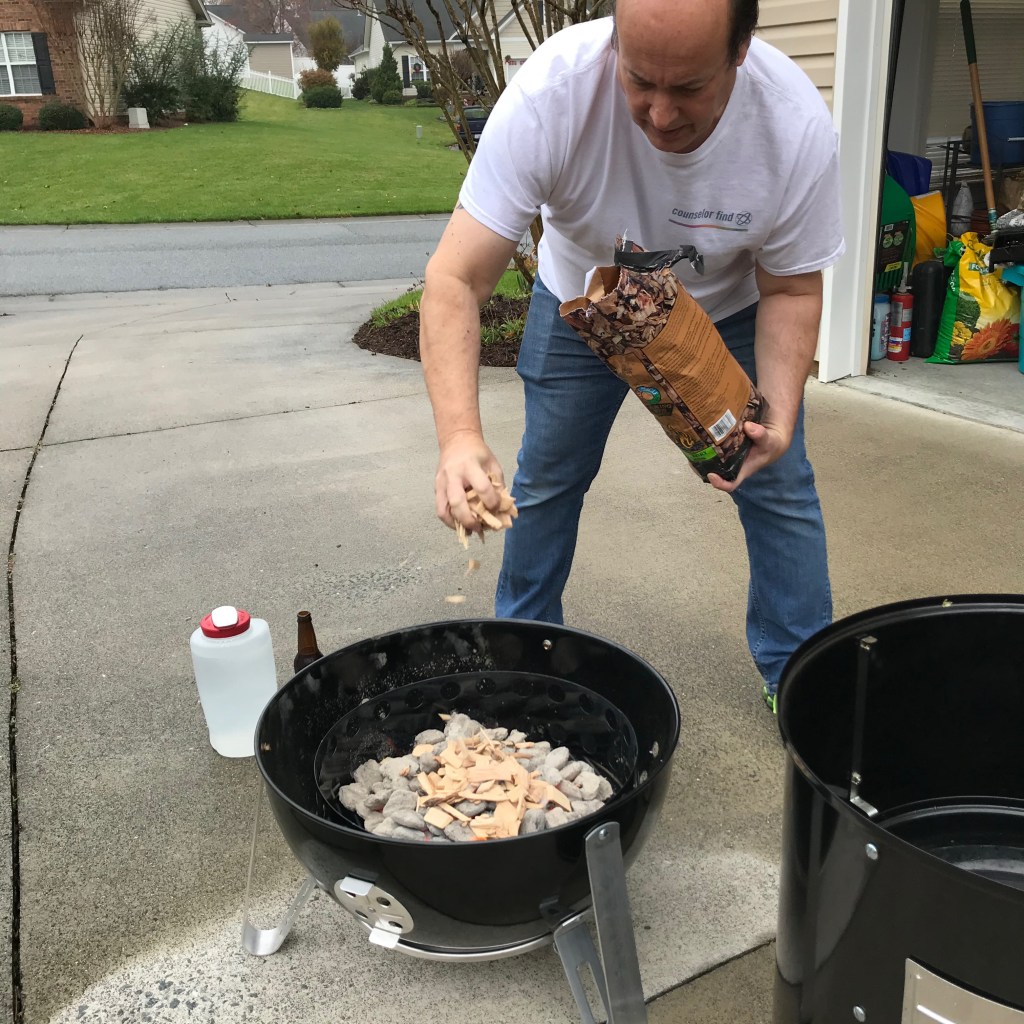
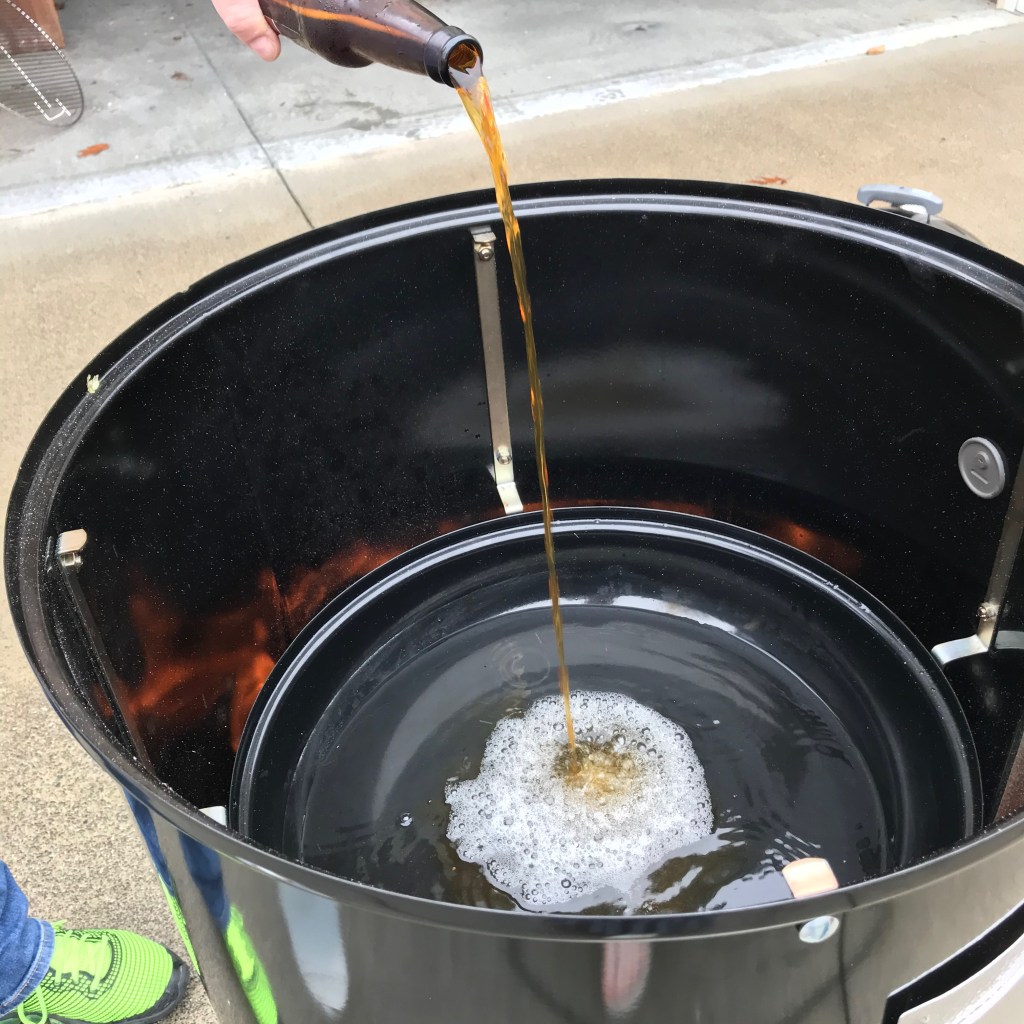
Les begins with a hardwood charcoal fire in the base of the smoker, and he adds wood chips when the coals are nice and hot. There’s usually some kind of special liquid added to the water in the drip pan— could be beer, hard cider, root beer or cola— to lend an extra hint of flavor to whatever he’s smoking.


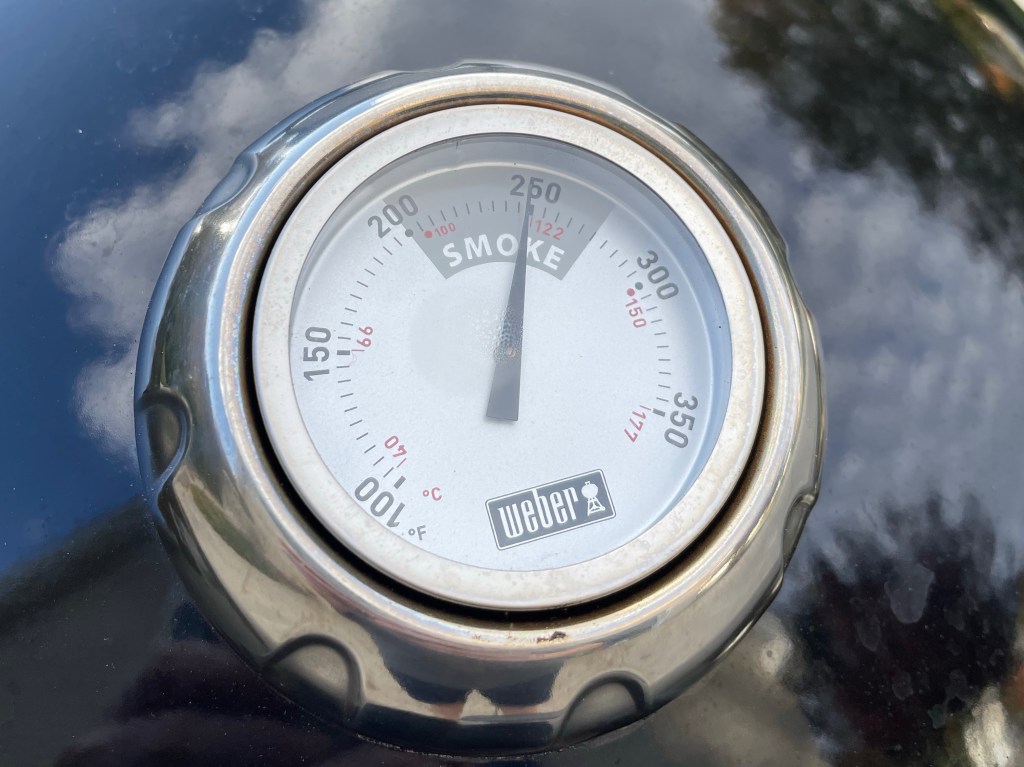
He masterfully opens and closes the vents to maintain the “smoke zone” of 225 to 250° F for as long as it takes to finish the meat. As with oven roasting, the smoke time varies depending on the size of the shoulder, and if you remain in that smoke zone, you’ll need about two hours per pound. If you run out of smoke before your target time, you can do what Les does; simply wrap the pork shoulder tightly in foil, and finish it in the oven at about 300° F until it pulls apart easily with a dinner fork.

When it comes to sauce, there’s a clear line in the North Carolina sand and it runs straight down the state where east meets west. The easterners prefer a sharp, vinegar-based sauce, and the other group likes “Lexington-style” sauce, which is a sweet and spicy, tomato-based bbq sauce. At our house, we frequently forgo the sauce altogether because the spice rub lends so much flavor to the pork on its own.


Smoked Pulled Pork

  • Servings: About 12
  • Difficulty: Average
  • Print

The big secret to good North Carolina barbecue isn't in the sauce, but the smoke! But if you don't have a smoker, this rub recipe is darn delicious over a pork shoulder in the slow cooker, too.

Ingredients

  • 3 to 4 pound bone-in pork shoulder (see notes)
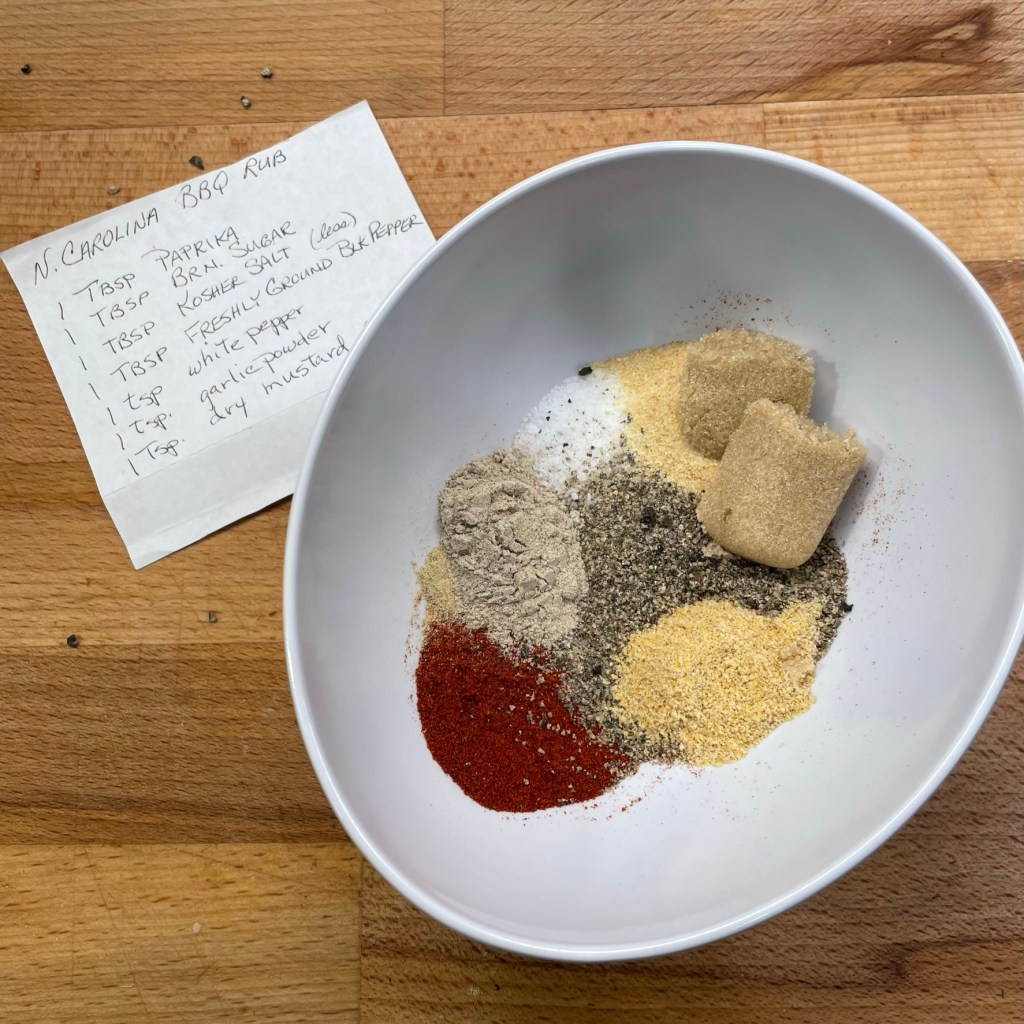
  • 1 Tbsp. paprika (see notes)
  • 1 Tbsp. light brown sugar (packed)
  • 1 Tbsp. kosher salt
  • 1 Tbsp. black pepper (see notes)
  • 1 tsp. ground white pepper
  • 1 tsp. granulated garlic
  • 1 1/2 tsp. dry ground mustard

Notes: Choose the best quality pork you can find. We have a terrific butcher in town whose suppliers offer pasture-raised local pork. The best end result will come from the best meat, so splurge a little if you can.

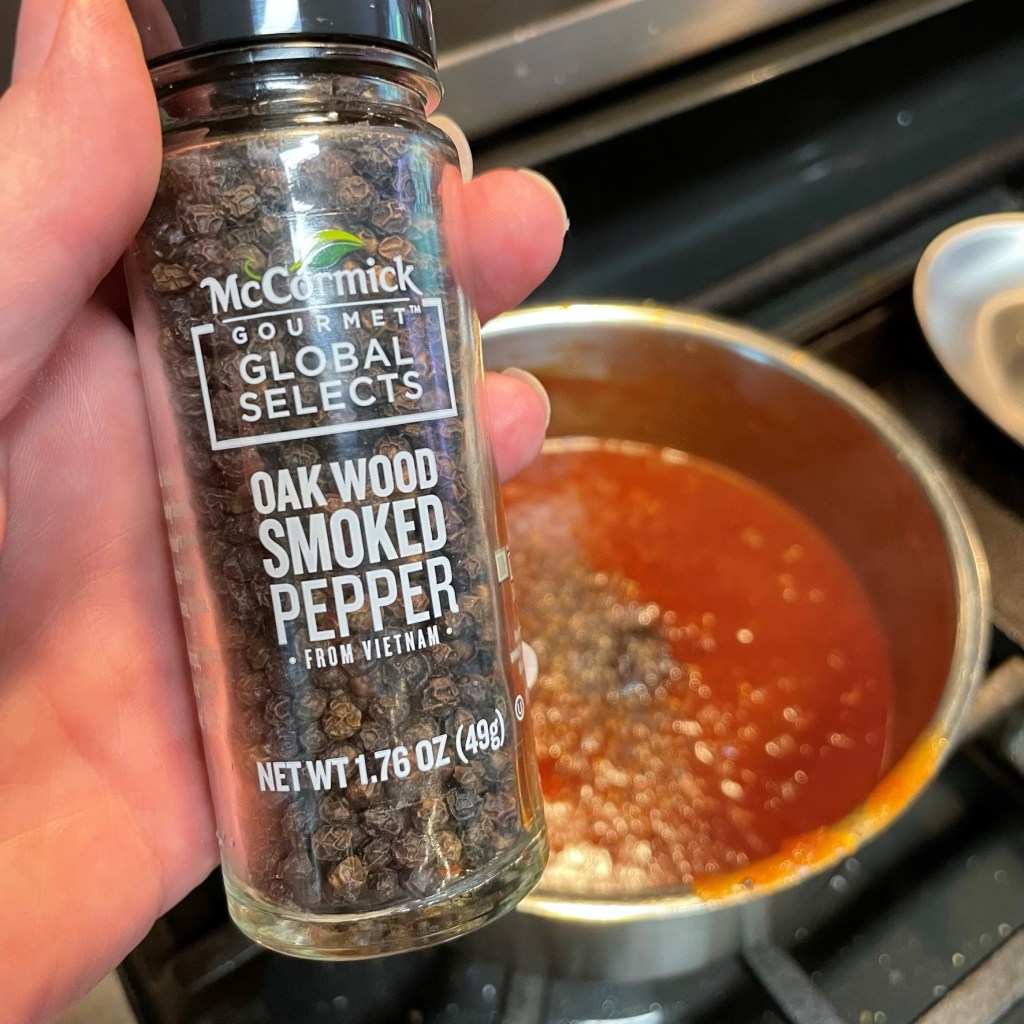
I’ve found a great bourbon smoked paprika from Bourbon Barrel Foods. It’s worth chasing, and you may find it online or in a gourmet shop. For additional smoke flavor, I use McCormick smoked black pepper. Look for it in a larger, well-stocked supermarket.

Directions

  1. Rinse the pork shoulder and wipe dry with a paper towel to remove any bone shards from the butcher.
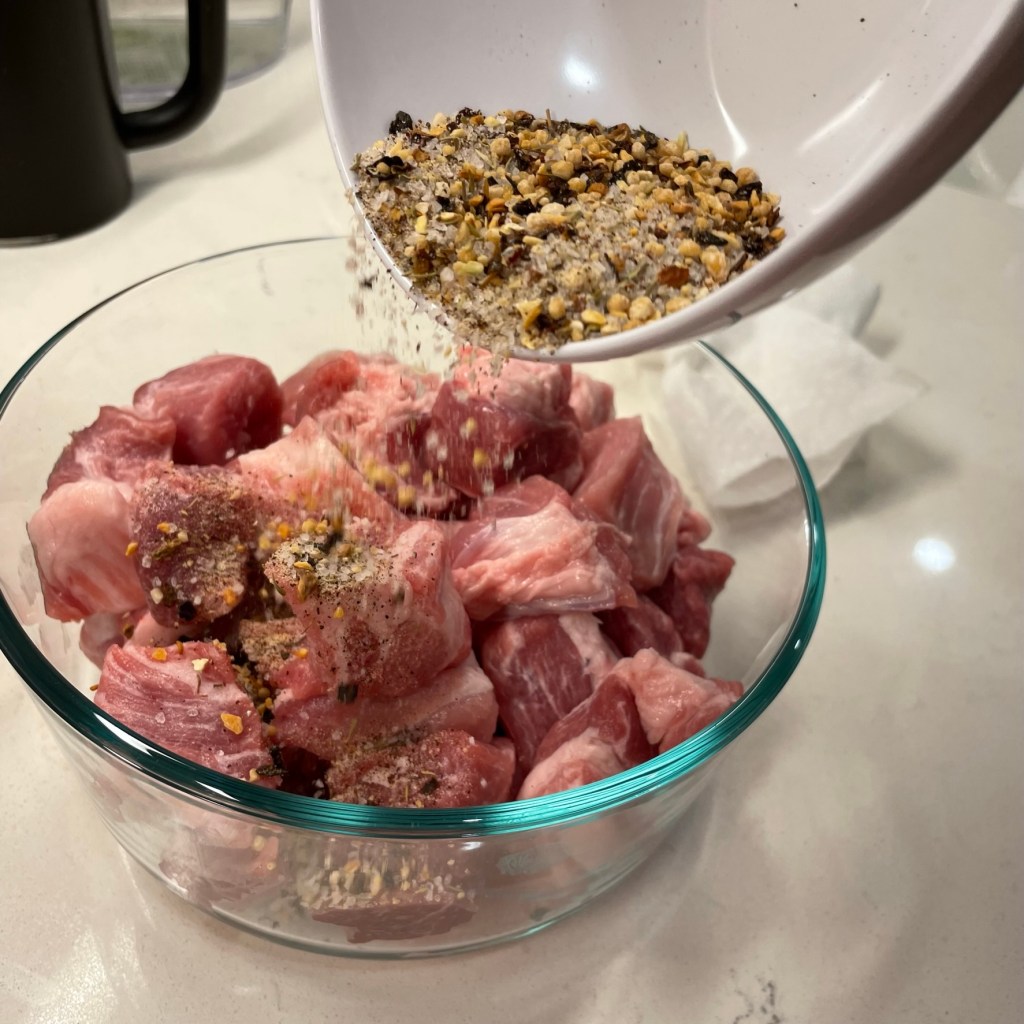
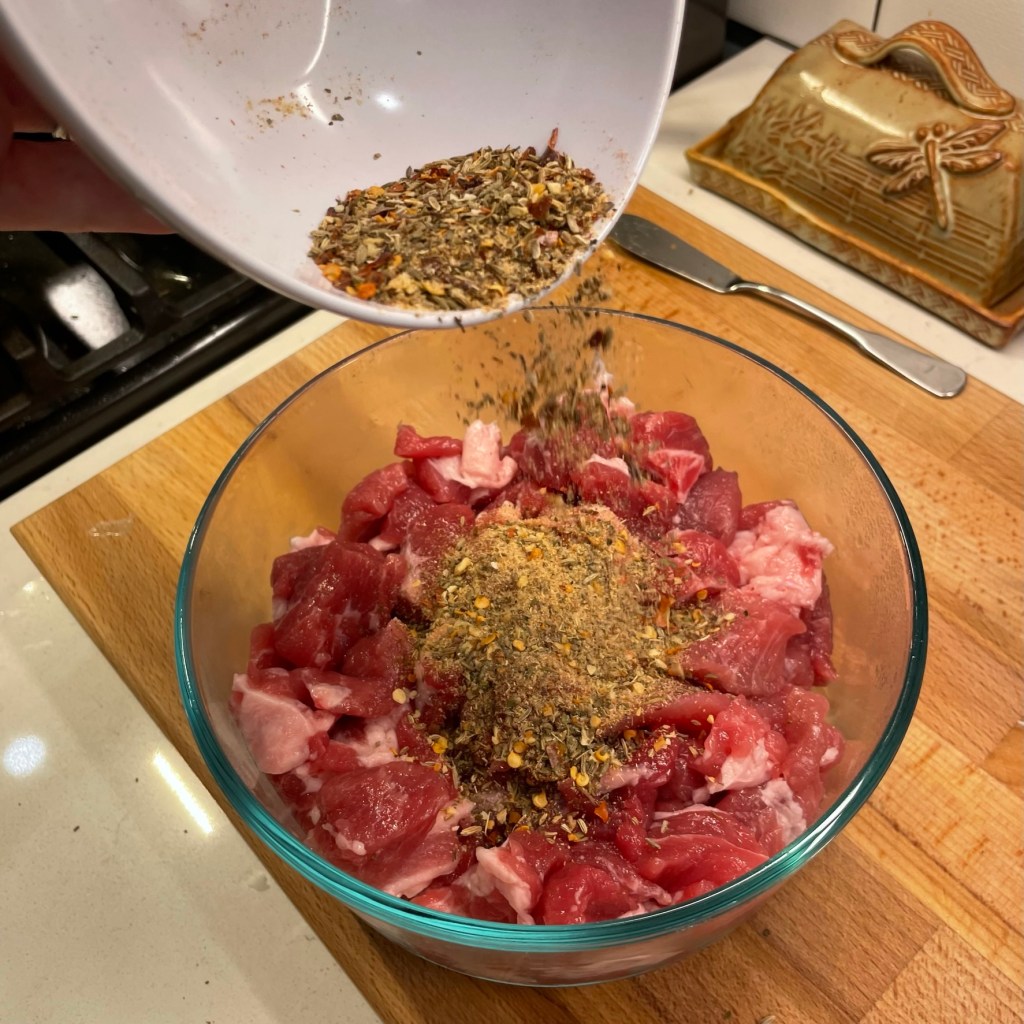
  2. Combine all dry rub ingredients together in a small bowl. Sprinkle the rub mixture liberally over all sides of the pork shoulder roast, and then rub it in so that adheres evenly. Cover and refrigerate the roast overnight or up to 24 hours ahead of smoking.
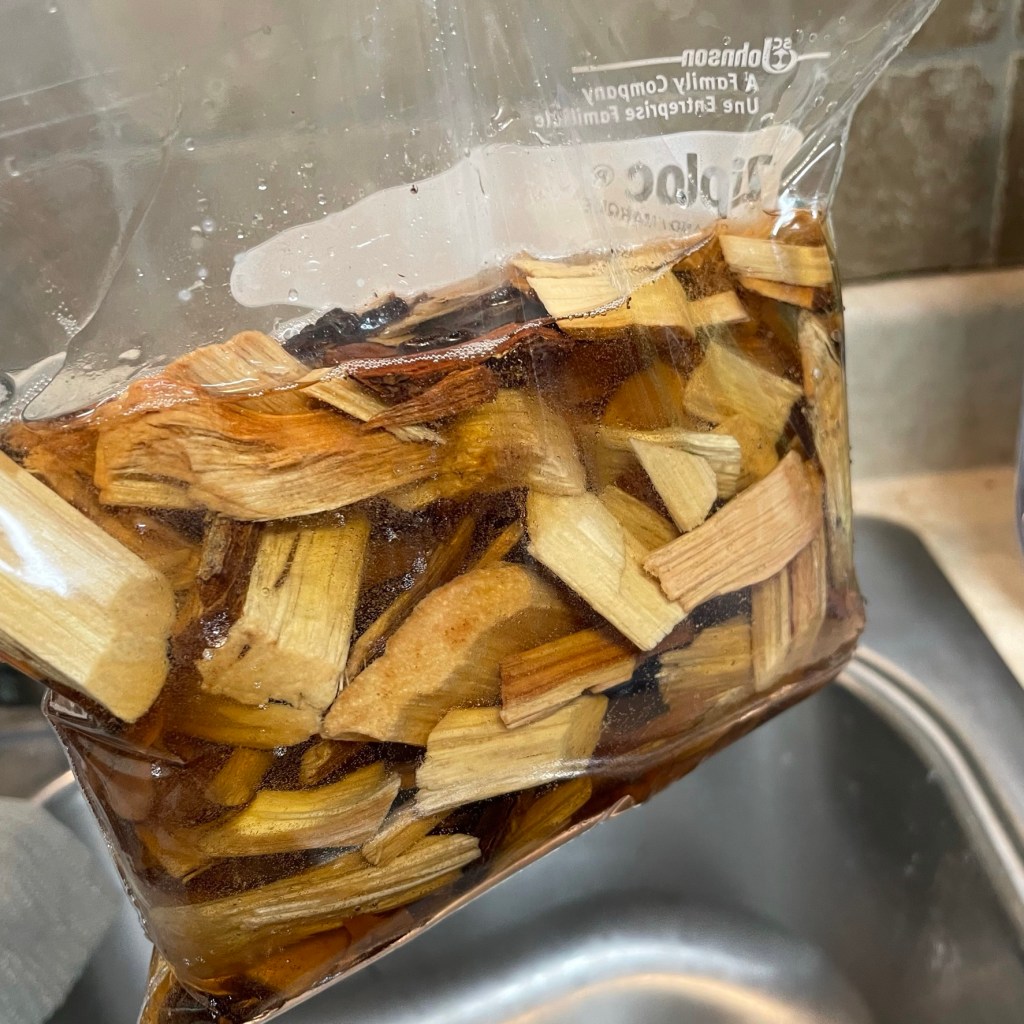
  3. Take the rubbed shoulder out of the fridge about 90 minutes before you begin to smoke. Create your smoke setup with hickory, apple or cherry wood chips (Les usually soaks them in water or beer for about an hour ahead of time).
  4. Place the shoulder on the lower rack of the smoker and maintain a temperature in the 225 to 250° F range for roughly two hours per pound of shoulder. If you’ll be smoking smaller items at the same time, place them on a top rack for easy removal without disturbing the shoulder.
  5. If you run out of smoke before the shoulder is finished, carefully transfer it to a glass or aluminum baking dish. Wrap it tightly in aluminum foil and place in a 300° F oven until it reaches desired tenderness. The meat should easily pull with a twist of a dinner fork.


Porchetta

I woke up this morning, fully aware of Autumn. I did not need the calendar to tell me that it has officially begun; the weather spells it out quite clearly— gentle rain from the mid-season tropical system moving up our coast a few hours away, cooler temperatures and a stillness that I haven’t witnessed since I’m not sure when. Even the cicadas, which North Carolina sees and hears every summer, have gone about their business.

This is my favorite time of year, and the gears in my mind are churning out visions of stews and soups and homemade breads and all-day roasts. I tolerate the blistering heat of these southern summers only for the joy of autumn, and it should come as no surprise that the foods are my favorite thing. This is the start of Sunday Supper season!

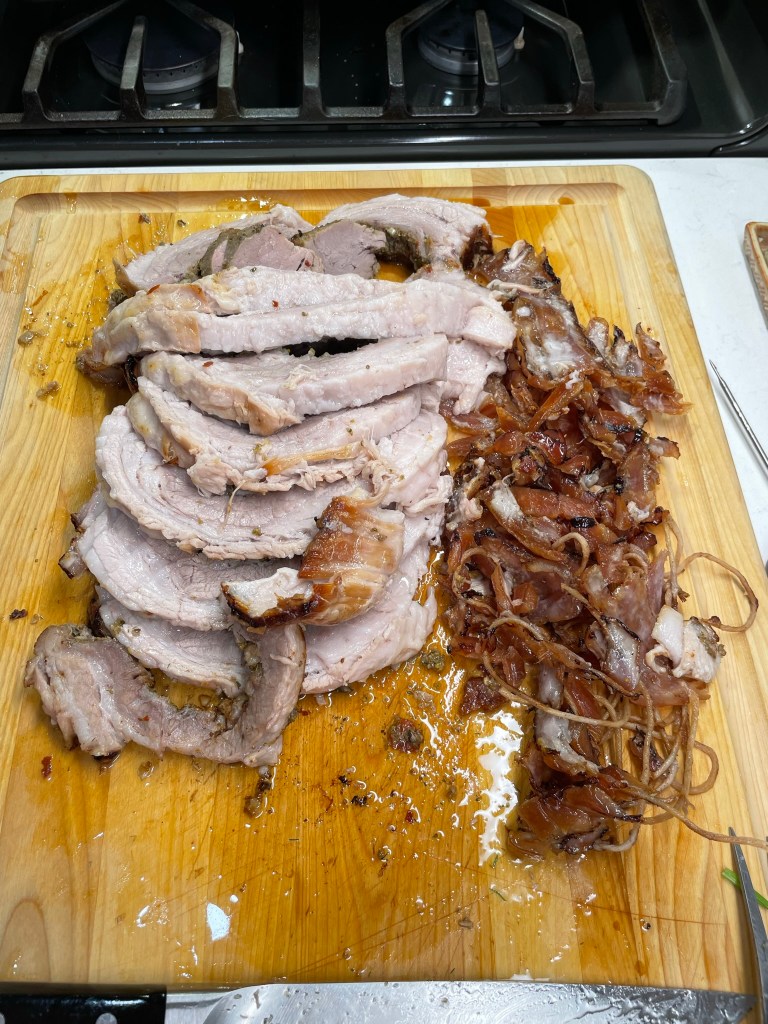
Porchetta— a recipe of central Italian origin— had been on my culinary bucket list since before I started this blog, and for the life of me, I don’t know why I imagined it to be complicated. As roasts go, it was probably one of the simplest I’ve ever made. Perhaps it is because I have looked it up so many times over the years that I already had a sense of how to make it. Or maybe it really is just easy. I’ll let you review my process and decide.


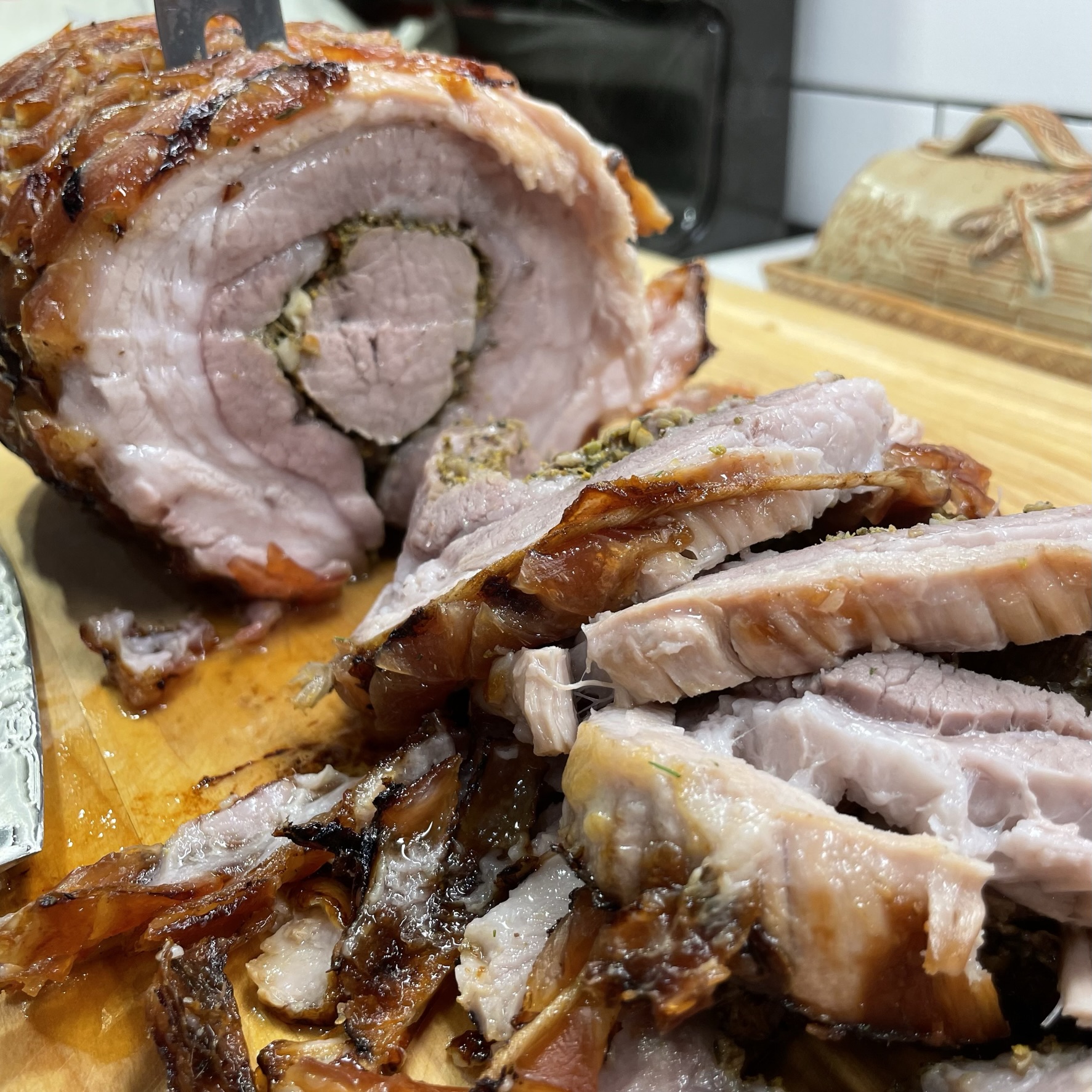
There are many, many recipes for porchetta on the internet. Opinions vary (of course) about what makes it truly authentic, and this argument seems to be regional. In some parts of Italy, it might be an entire suckling pig that is stuffed with herbs (or not) and roasted. In others, it would be only the pork belly, rolled upon itself with a filling of the pig’s entrails (yuck). Still others have you wrapping the belly around a pork loin or (as is the case with mine) tenderloin.

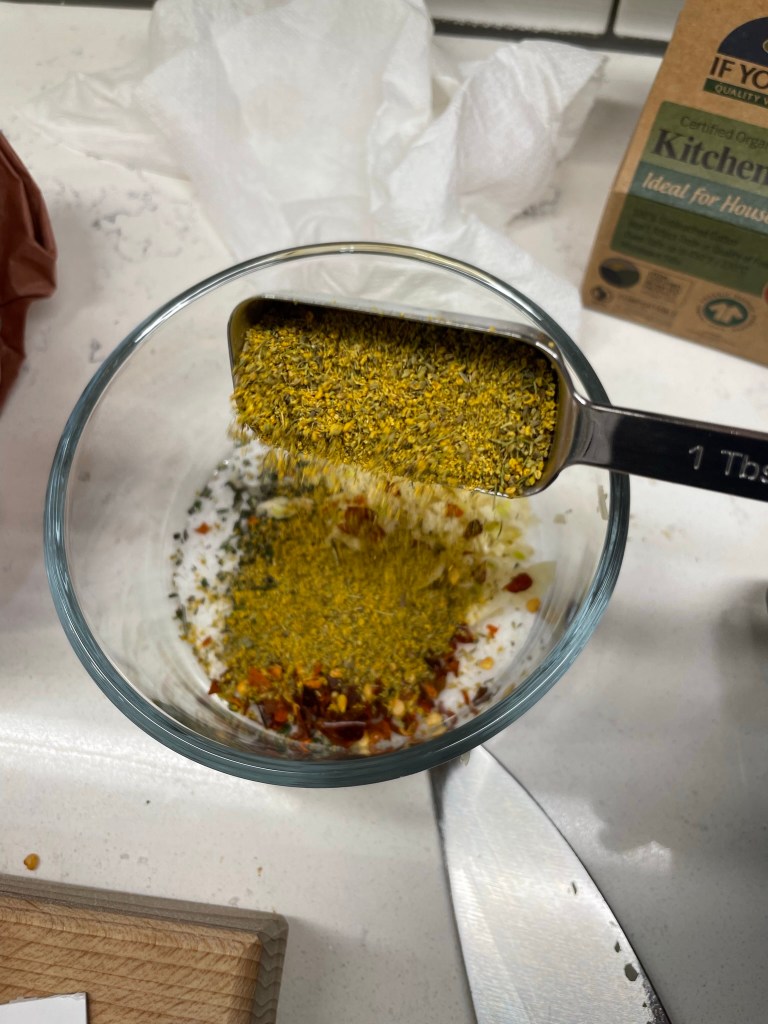
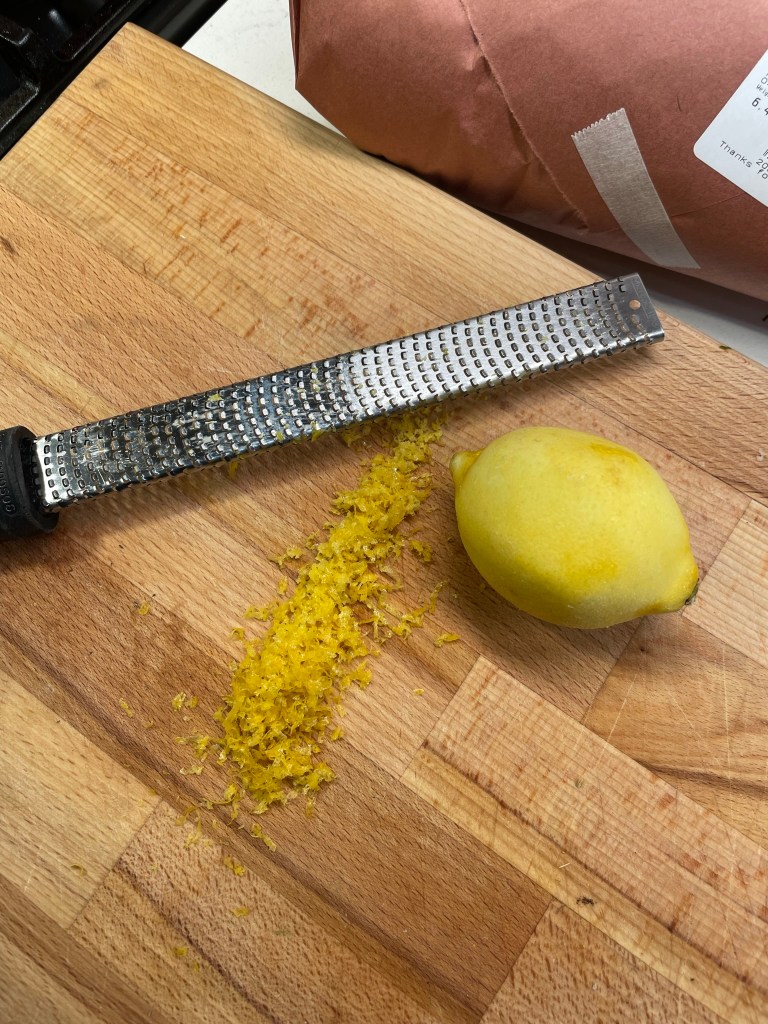
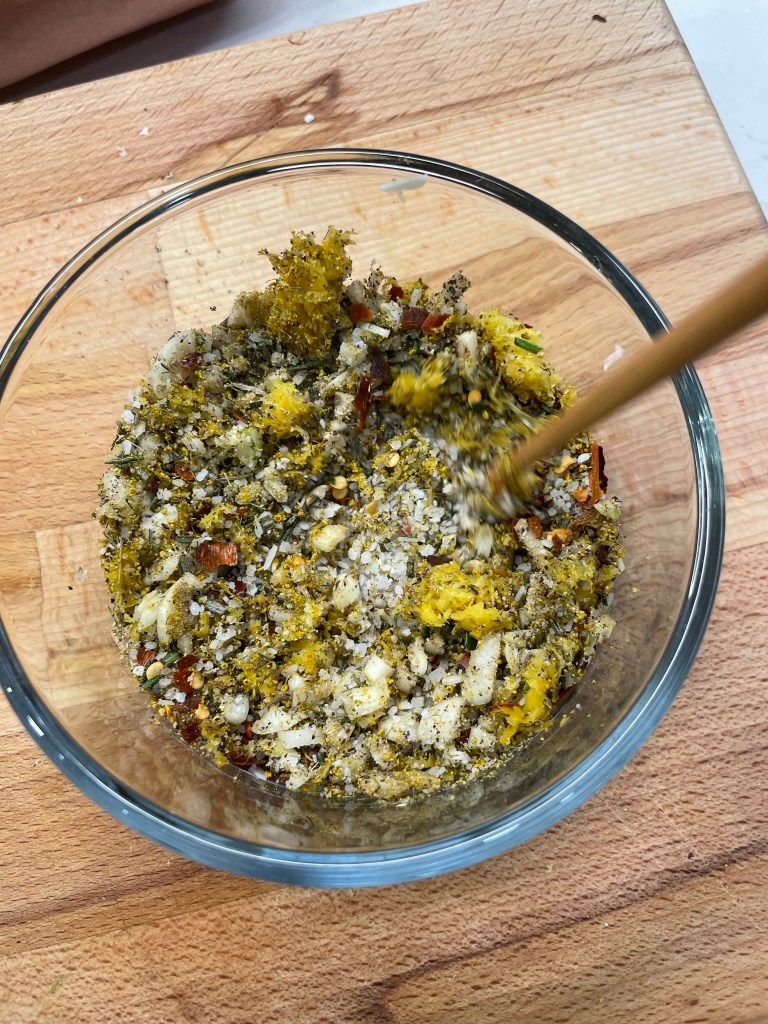
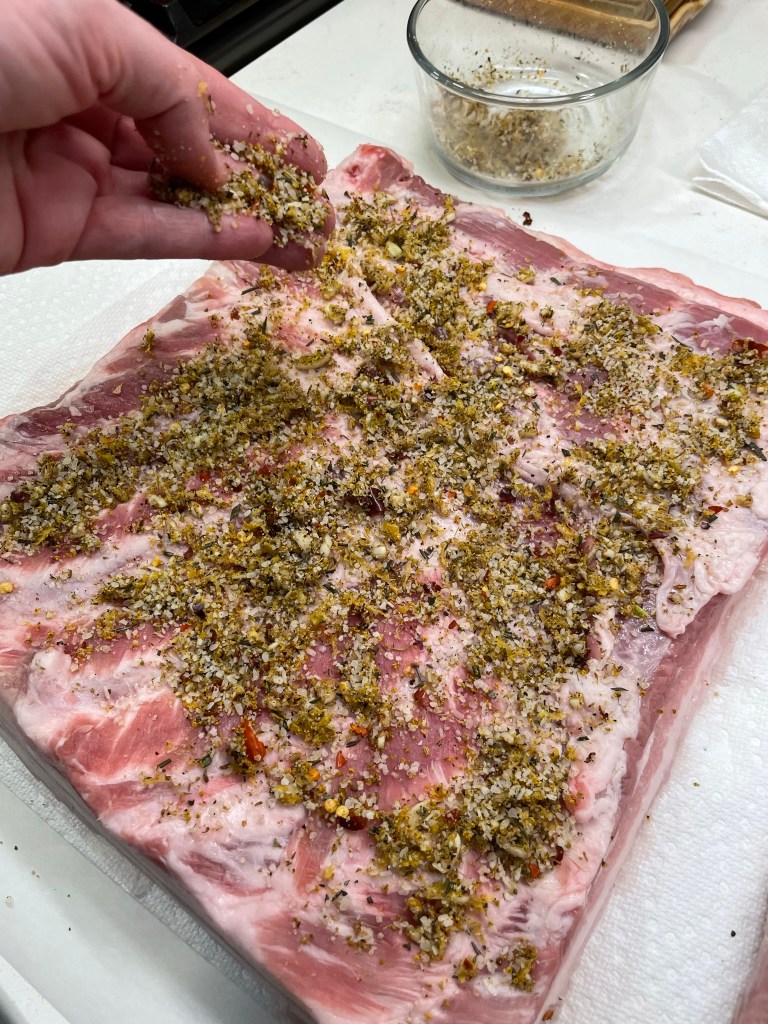
My kitchen is not located in any region of Italy, so I took a few liberties, based on what sounded like the most flavorful “authentic” option. My filling was very fragrant and herbal, with garlic, fennel and rosemary, plus a generous spoonful of lemon zest and a few shakes of dried Calabrian chile flakes. I want to make another batch of this just as aromatherapy when I’m having a bad day.


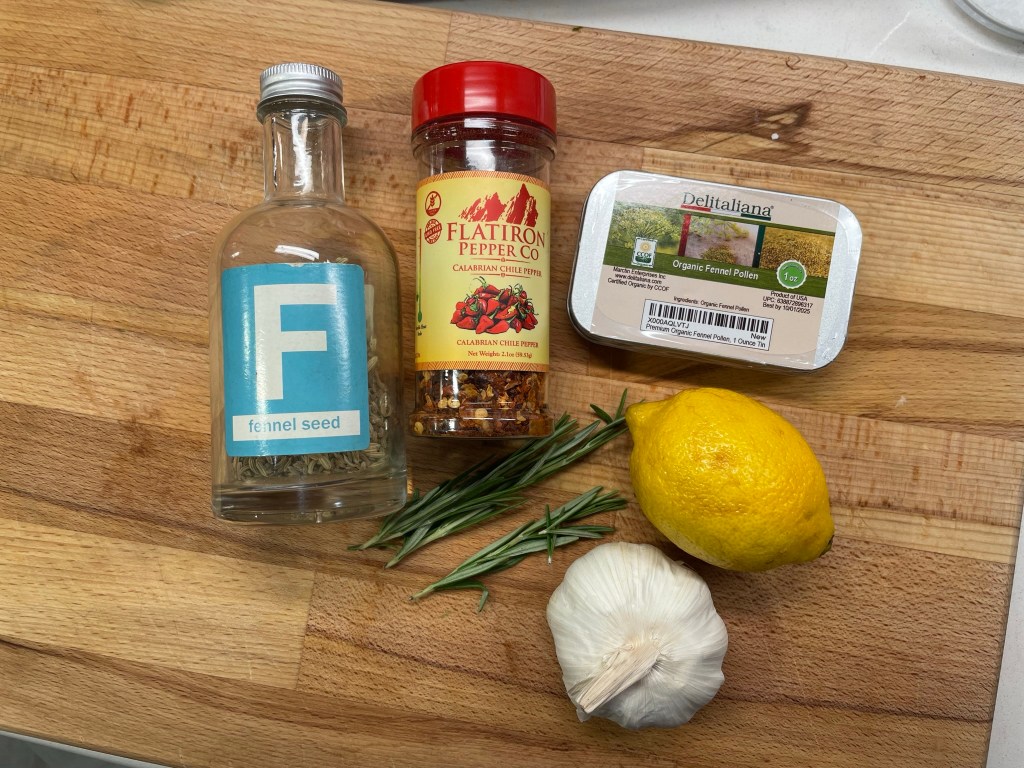
In my research, I learned that there is a difference between fennel seed and fennel pollen, the latter of which I had to purchase online because no stores around here carry it. Perhaps where you are, an Italian market could set you up with some. The fennel pollen is very delicate and fragrant and is distinctly brighter and lighter than fennel seed. The small tin, which is roughly half the size of an Altoid tin, set me back about $18, but I only used one-quarter of it. 


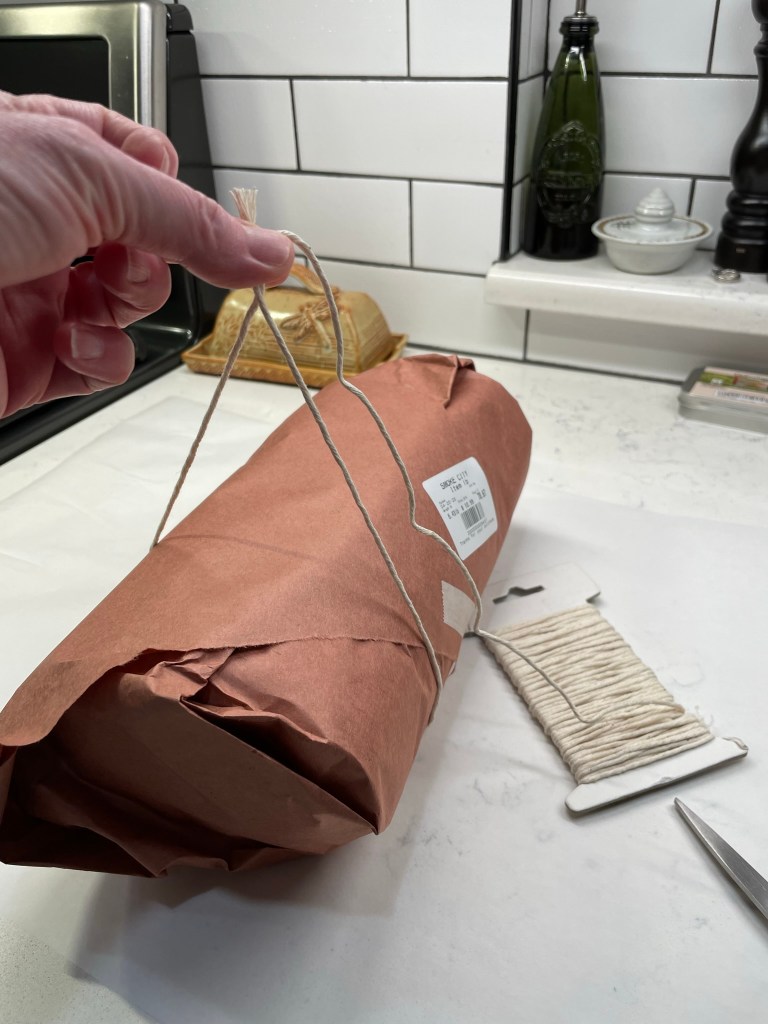
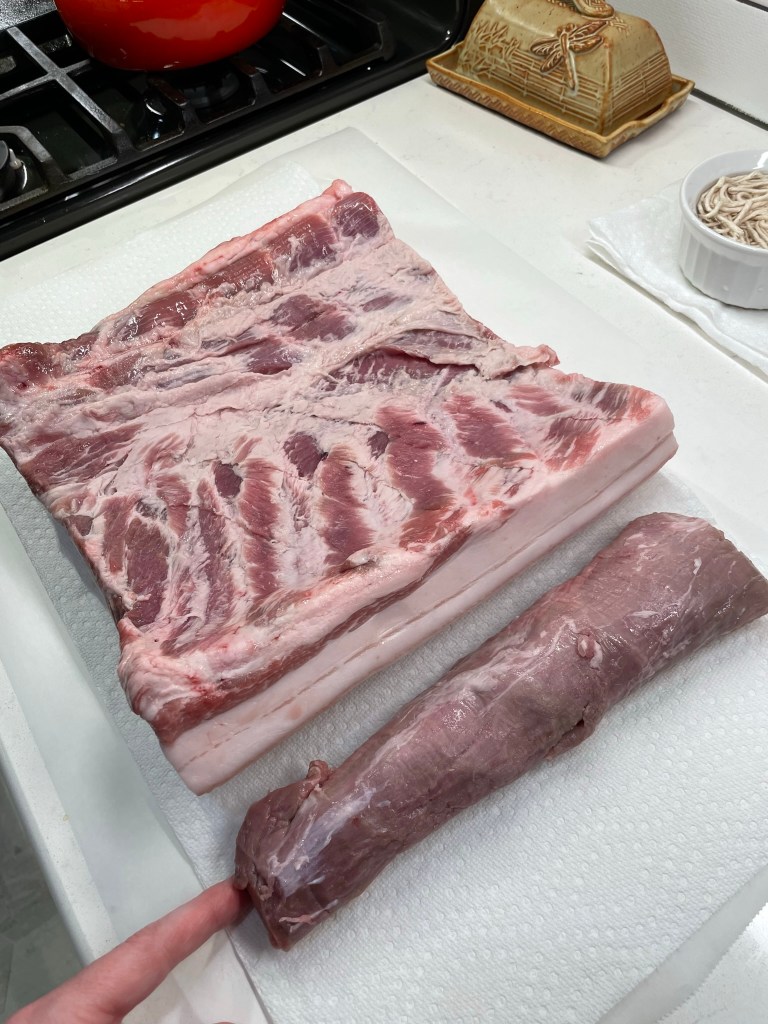
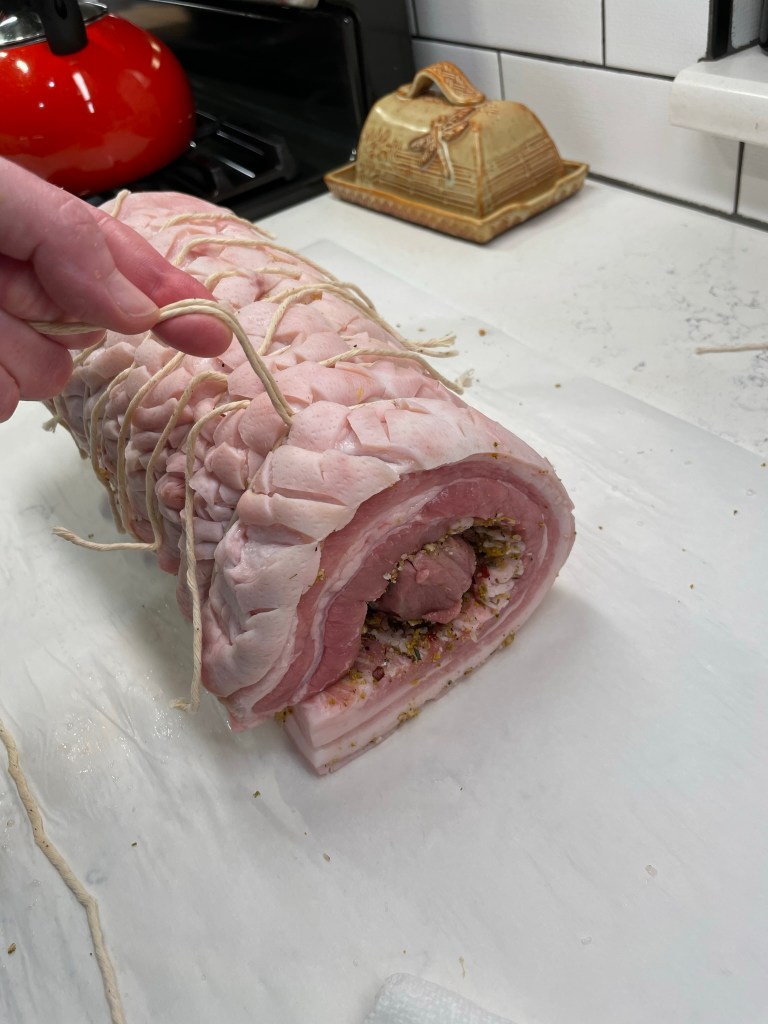
Putting the roast together was so easy. I began by measuring a piece of kitchen twine around the package of pork, and then I cut several pieces to that length and soaked them in cold water, for tying up my porchetta. My local butcher had cut the belly piece to match the length of the tenderloin, and even took time to show me the right steps for success, as the belly must be rolled in a certain direction for easy slicing and perfect tenderness.


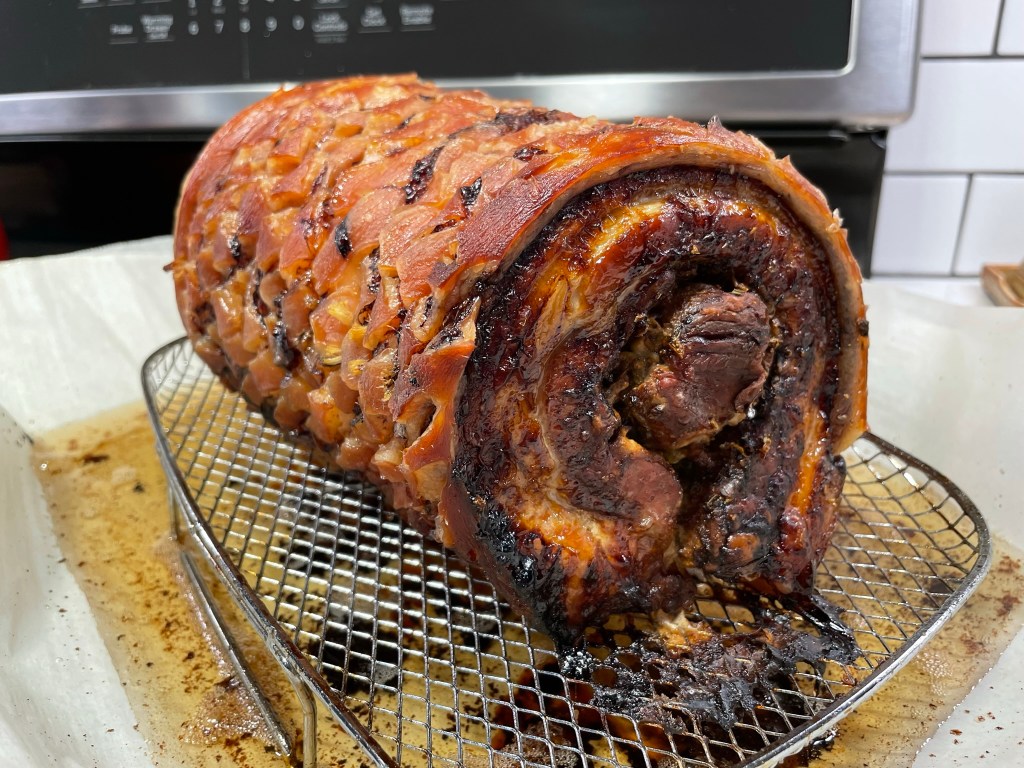
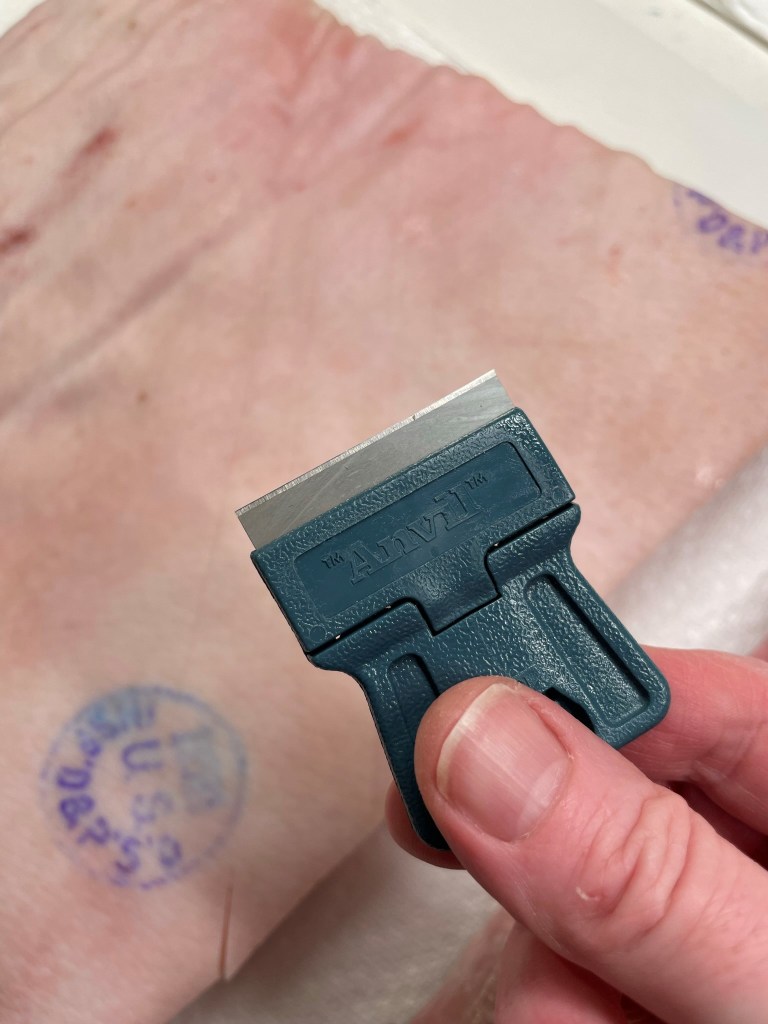
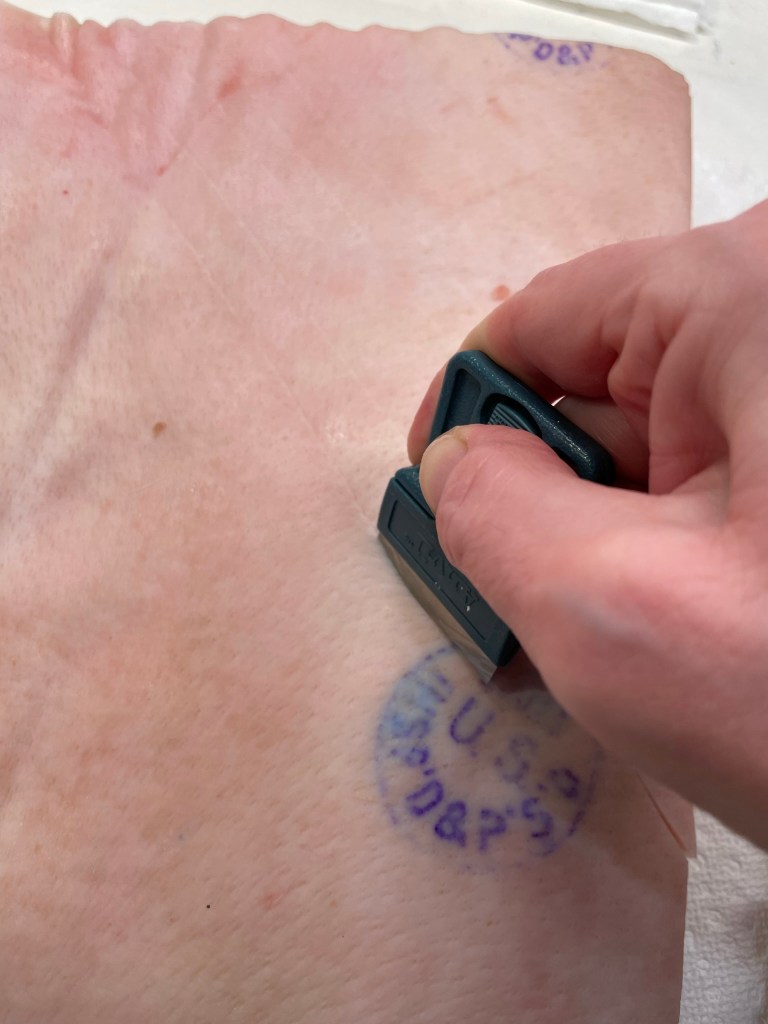
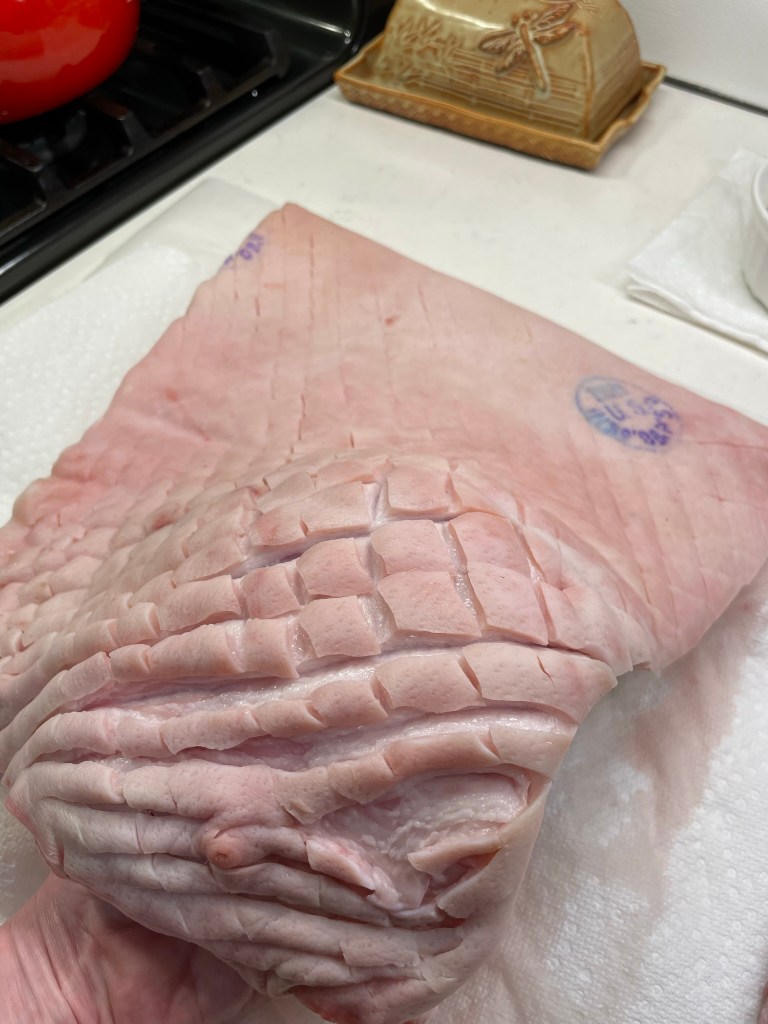
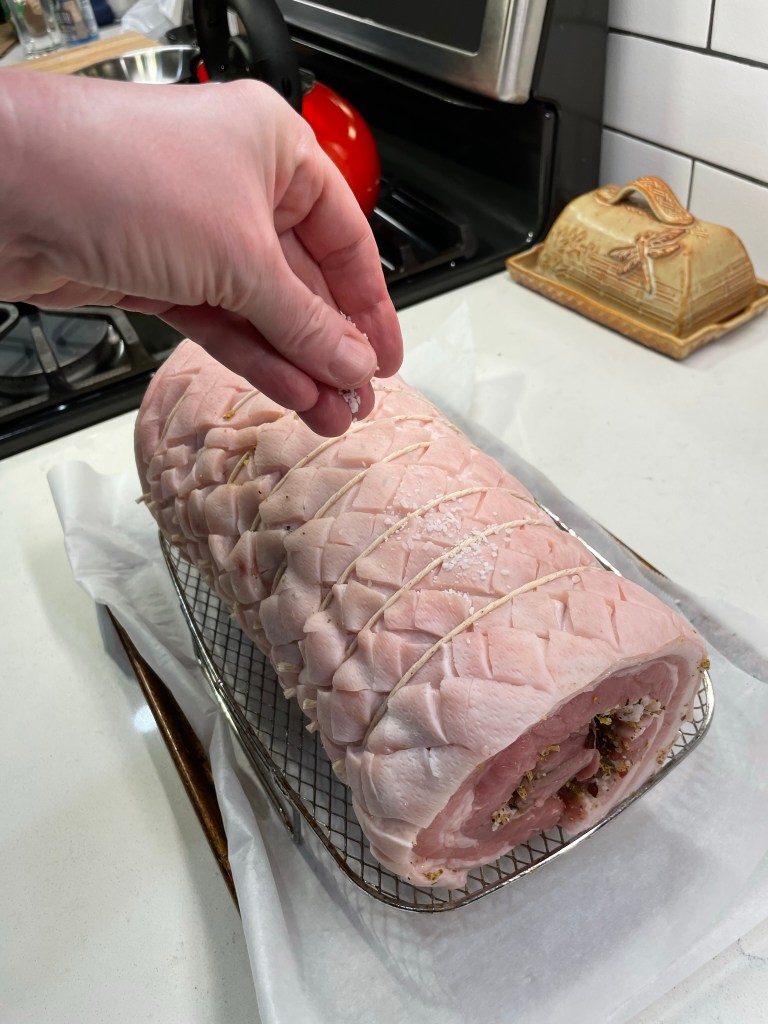
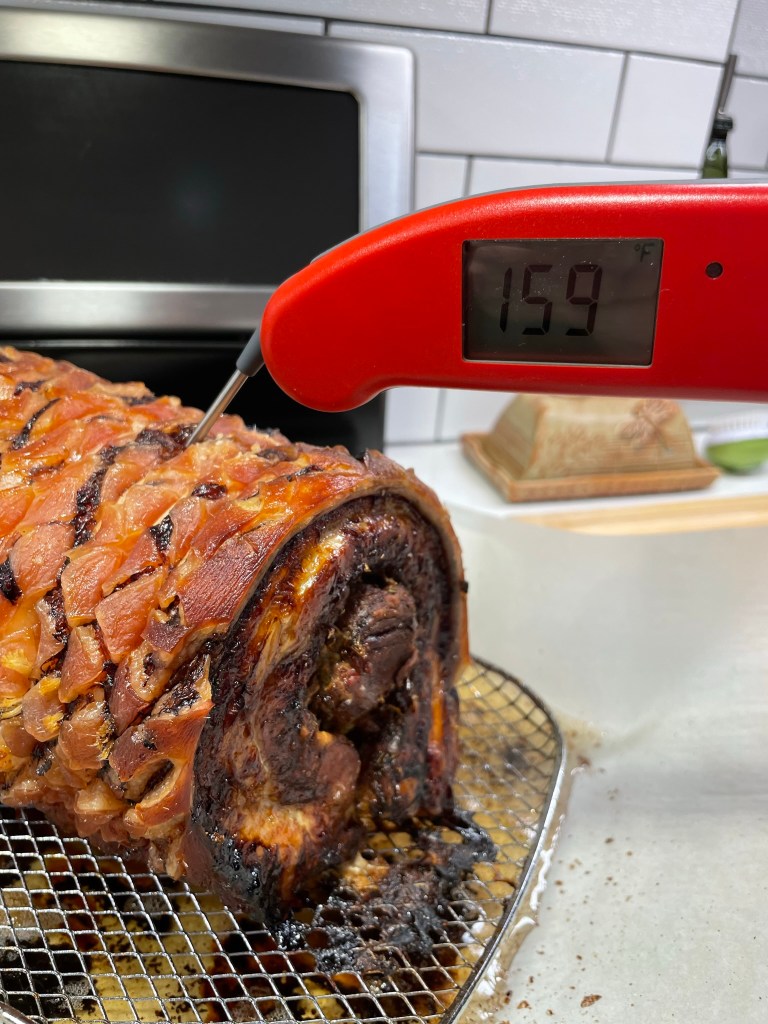
He had also echoed what I had seen in every recipe, which is that the roasted skin should be golden brown and “crackling” crisp. To achieve this, I scored the skin side of the belly in a crosshatch pattern, which would ease the rendering of the thick layer of fat. This process is simple to do, but you need to use something very sharp to cut through the heavy skin. I opted for a razor blade scraper— yep, the same kind of tool you’d use to scrape paint off a window pane. It may sound odd, but it was perfect because it was easy to control the cuts and nearly impossible to go too deep. Scoring the skin this way also made it more flexible for wrapping around the tenderloin.


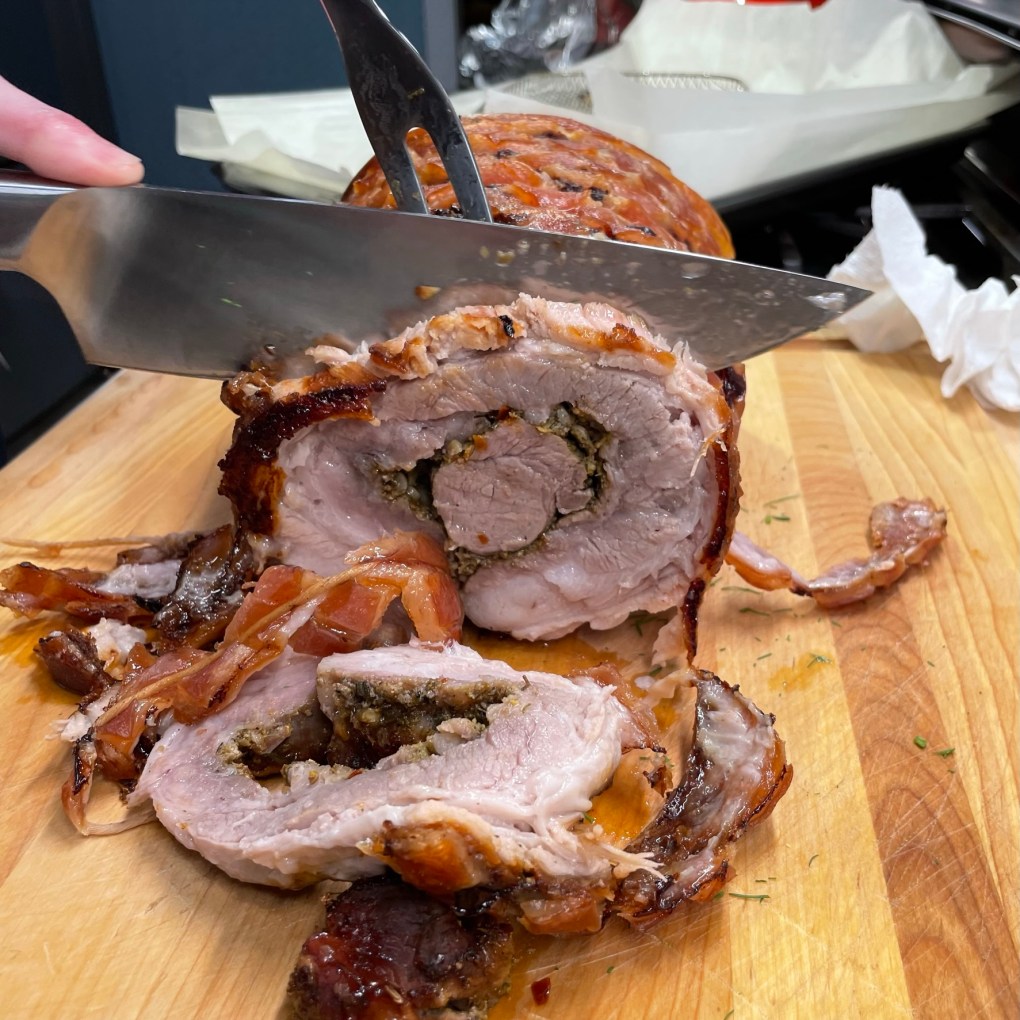
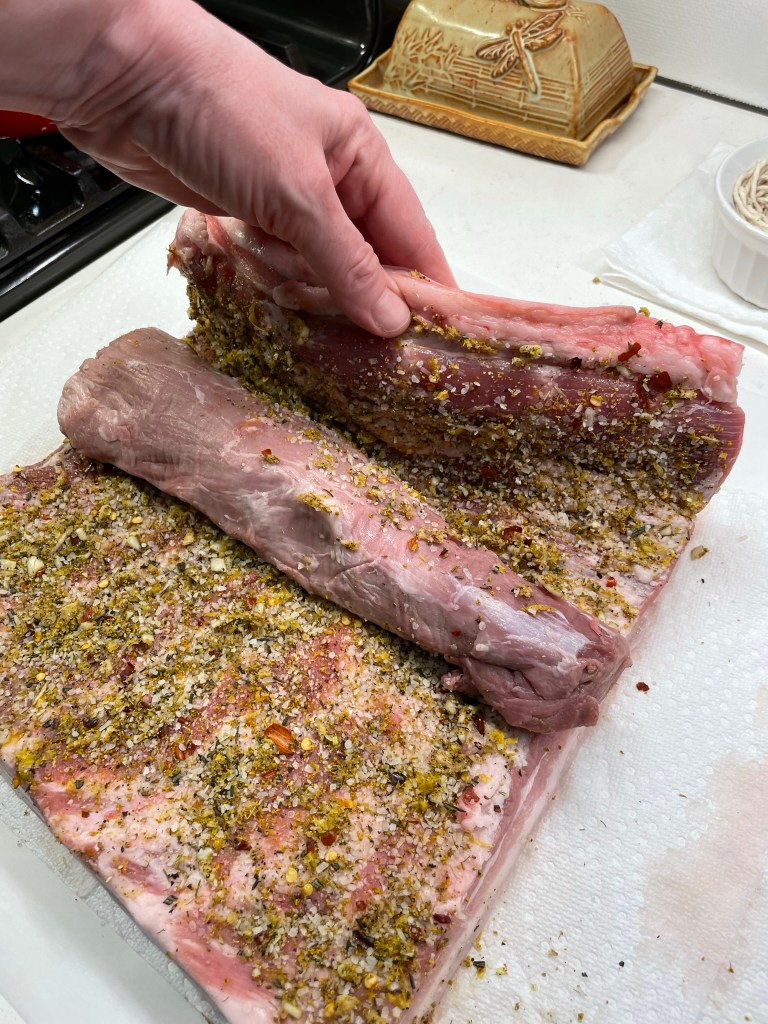
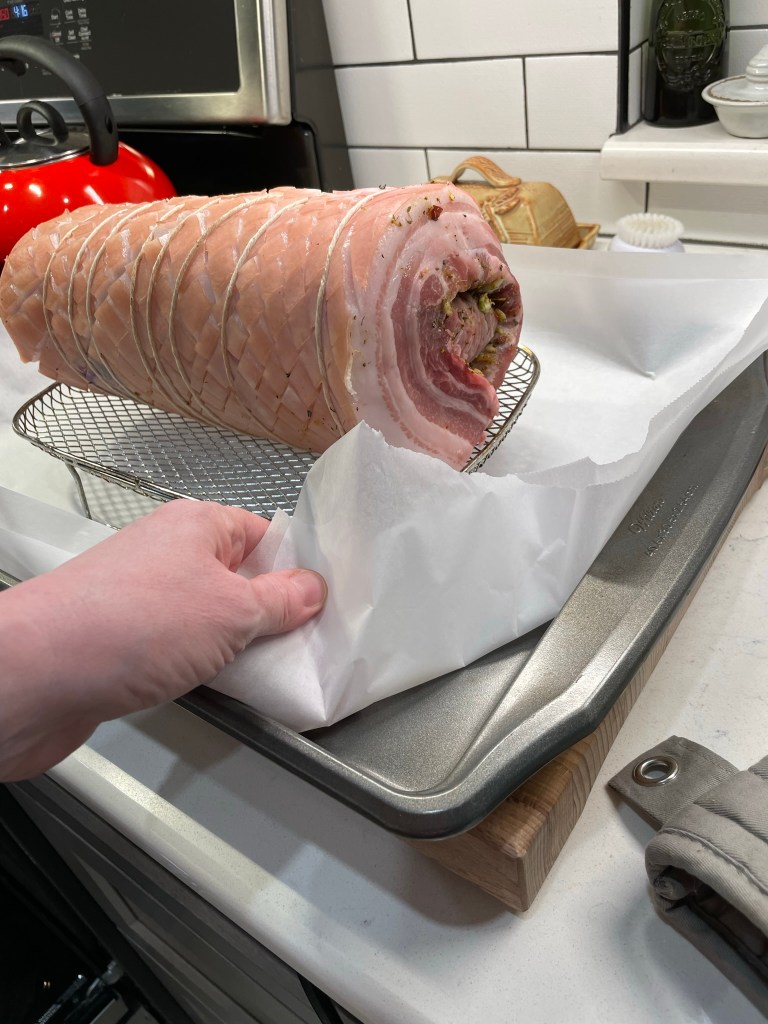
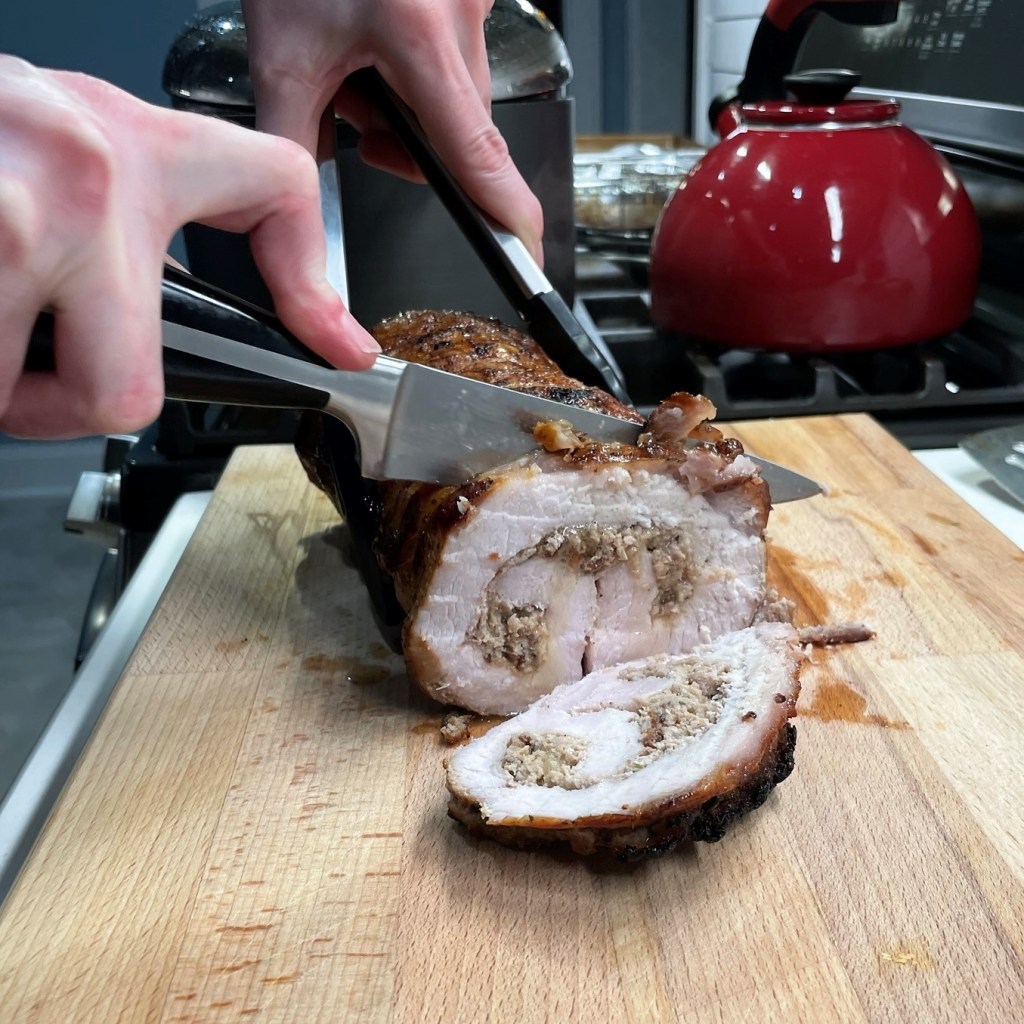
I spread that aromatic filling evenly over the inside of the pork belly, all the way to the edges, and rolled it up around the tenderloin and then laid it across my soaked twine pieces. I tied it up, sprinkled it all over with kosher salt and laid it on a rack to dry out overnight in the fridge. If it seems counterintuitive that drying out the meat before roasting leads to a juicier finish, believe me, I feel you. This was a huge mental hurdle for me when I first read about dry brining, but I have such incredible results that I will never look back.


Eighteen hours later, when I was ready to roast my porchetta, I pulled it from the fridge and gave it some time to rest at room temperature while I preheated the oven to 350° F. There was nothing left but to roast it!


Sometimes the simplest dishes intimidate me, and I attribute this to unfamiliarity. I don’t have an ounce of Italian heritage, so nobody in my family has ever made porchetta. The only way to overcome insecurity in the kitchen is to muster up the courage to try that new thing. I’m thrilled to move porchetta into the done column on my bucket list!


It may surprise you to know that porchetta is likely a one-and-done for me, but not for any bad reason. The roast was off-the-chart delicious, easy to make, and it produced fantastic leftovers.

My hesitation for a repeat begins with the cost. Sure, a grocery store pork belly and tenderloin would be cheaper than the $70 I spent at my local butcher. But we don’t buy a lot of grocery store meat because we object to most conventional production methods. Our local butcher sources its meats from area farmers who follow sustainability practices such as regenerative farming. This is better for the environment and the animals, and also a vast improvement in terms of flavor.

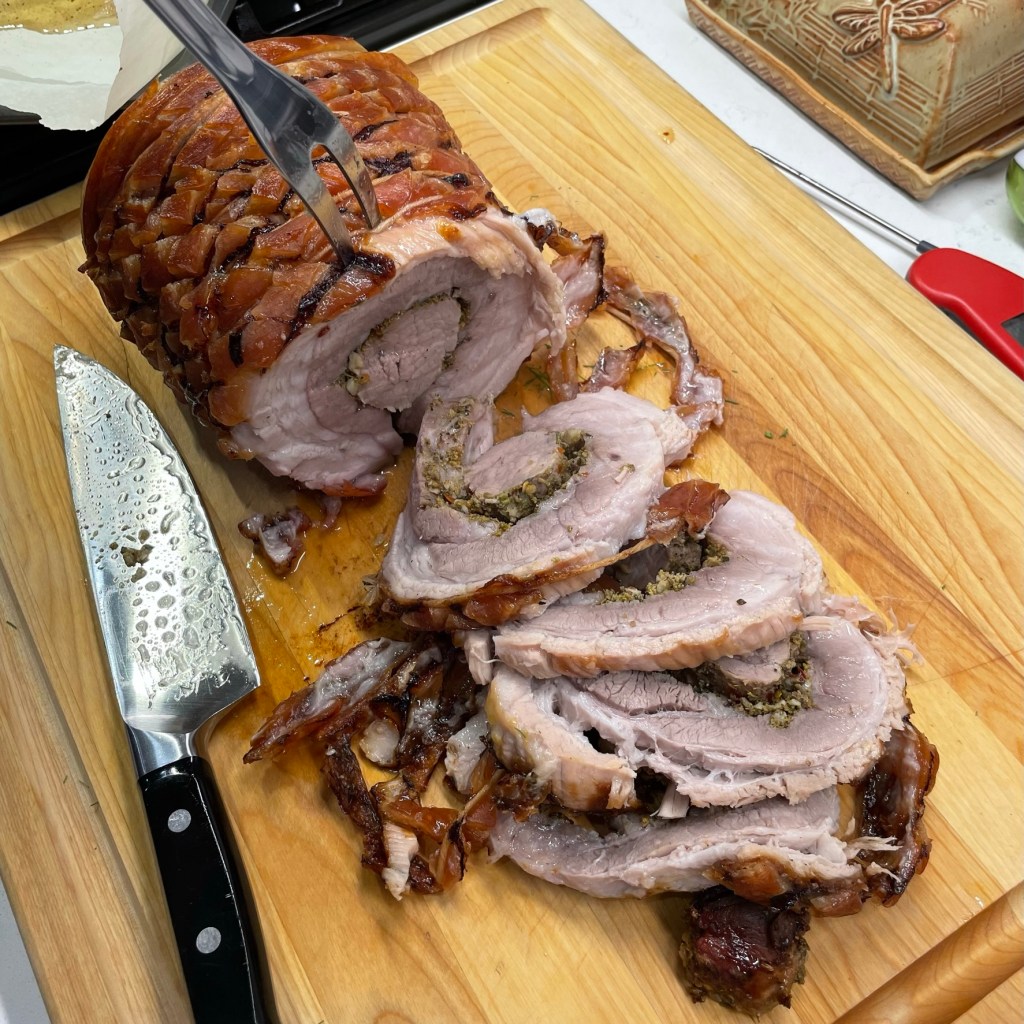
Porchetta is not the kind of thing you can make in small quantity for a party of two, though, which is how we usually cook and eat. I might consider making it again for a special occasion meal with guests, but many of our friends steer clear of fatty meat, and that is another point of contention for us. A single slice of porchetta includes the equivalent of three to four pieces of bacon, and that’s a lot of fat to consume in one meal, no matter how delicious (and boy, oh boy, it is). With more practice, I could probably figure out how to tie up and roast the porchetta for more even fat rendering, so that we didn’t end up with a lot of bulky fat that was not suitable to eat.


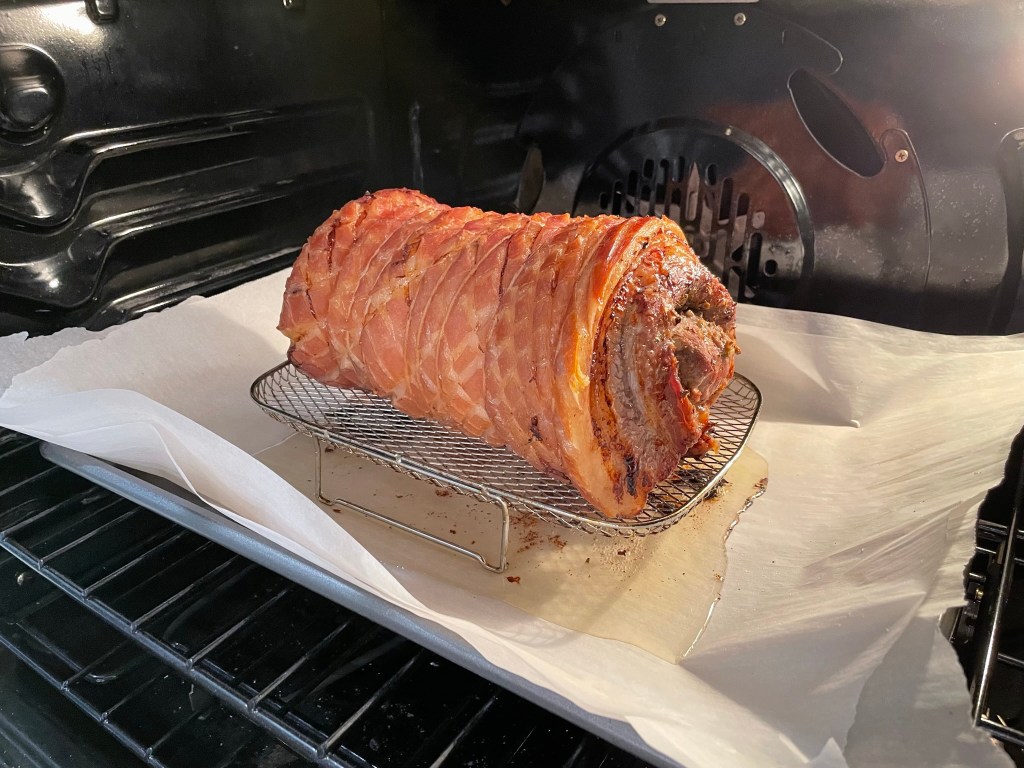
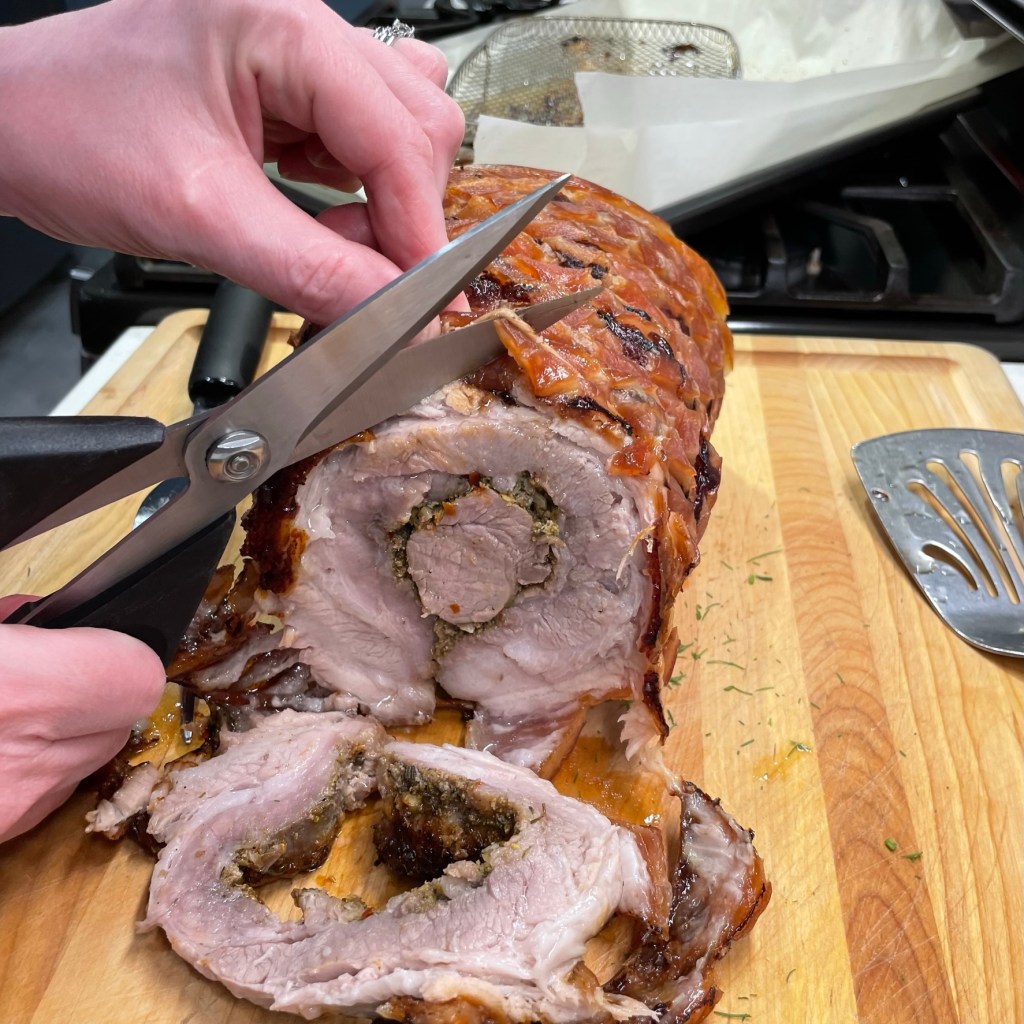
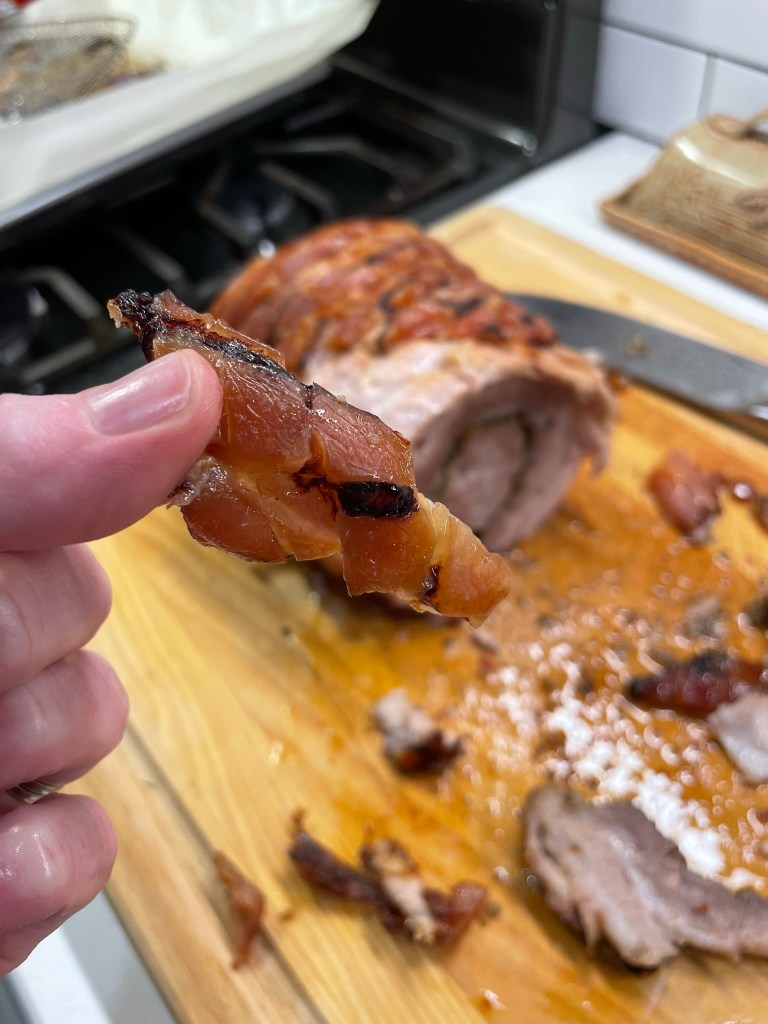
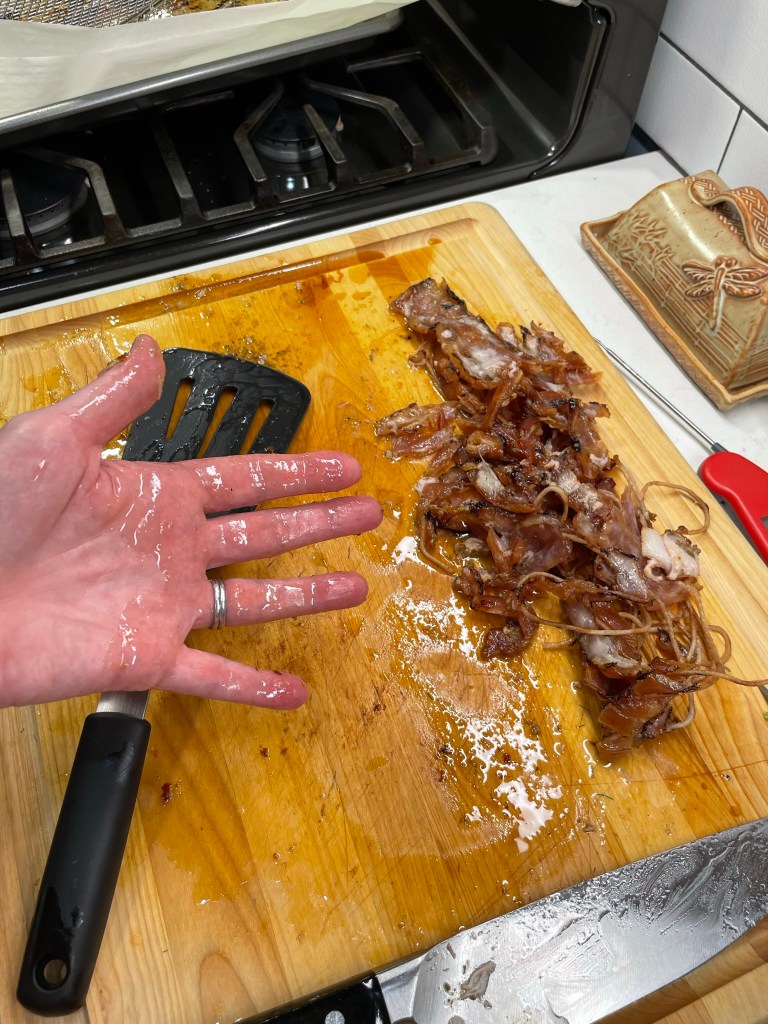
Finally, there’s the skin, which— for all the ruckus and raving about the crackling crispness— did not impress me much. Our porchetta did get very crackly, but that “perfect” skin simply is not edible. It was like biting into a Lego. And the hardness of the crackled skin also made slicing the porchetta quite challenging. If I ever do make this again, I’d probably score the skin in straight squares rather than on a diagonal, so that I can use the score lines as a guide for slicing. But it’s still kind of a waste because you can’t eat that beautiful skin.
Here’s what I’m thinking: the best things about this porchetta were its tenderness and the incredible aroma and flavor of the filling. So why couldn’t I apply the fennel pollen mixture to some other cut of marbled pork? Maybe a boneless, butterflied shoulder, which I could roll up with the herb filling and slow roast (or smoke— wouldn’t that be something)? I’m even imagining that incorporating the fennel pollen filling ingredients into a homemade sausage isn’t a terrible idea, so don’t be surprised if that shows up here in the near future.

If you have been jonesing to try porchetta yourself, it’s definitely worth the effort, and maybe you’ll find something useful for your own experience in my click-to-print recipe below. Please slip a note in the comments if you have tips that might make it worth a second run for me, and do let me know what autumn meal you’re most looking forward to!  

Porchetta

  • Servings: About 8
  • Difficulty: Surprisingly easy
  • Print

There's so much incredible flavor in this Italian-born pork roast, and the leftovers are even tastier!


Ingredients

  • fresh pork tenderloin
  • fresh pork belly, cut to length of tenderloin
  • kosher salt, weighing 1.5% of total meat weight
  • 2 Tbsp. fresh minced garlic (this was about 5 cloves)
  • 1 Tbsp. fresh lemon zest (organic is best)
  • 1 Tbsp. fennel pollen (tricky to find; check Italian market or online)
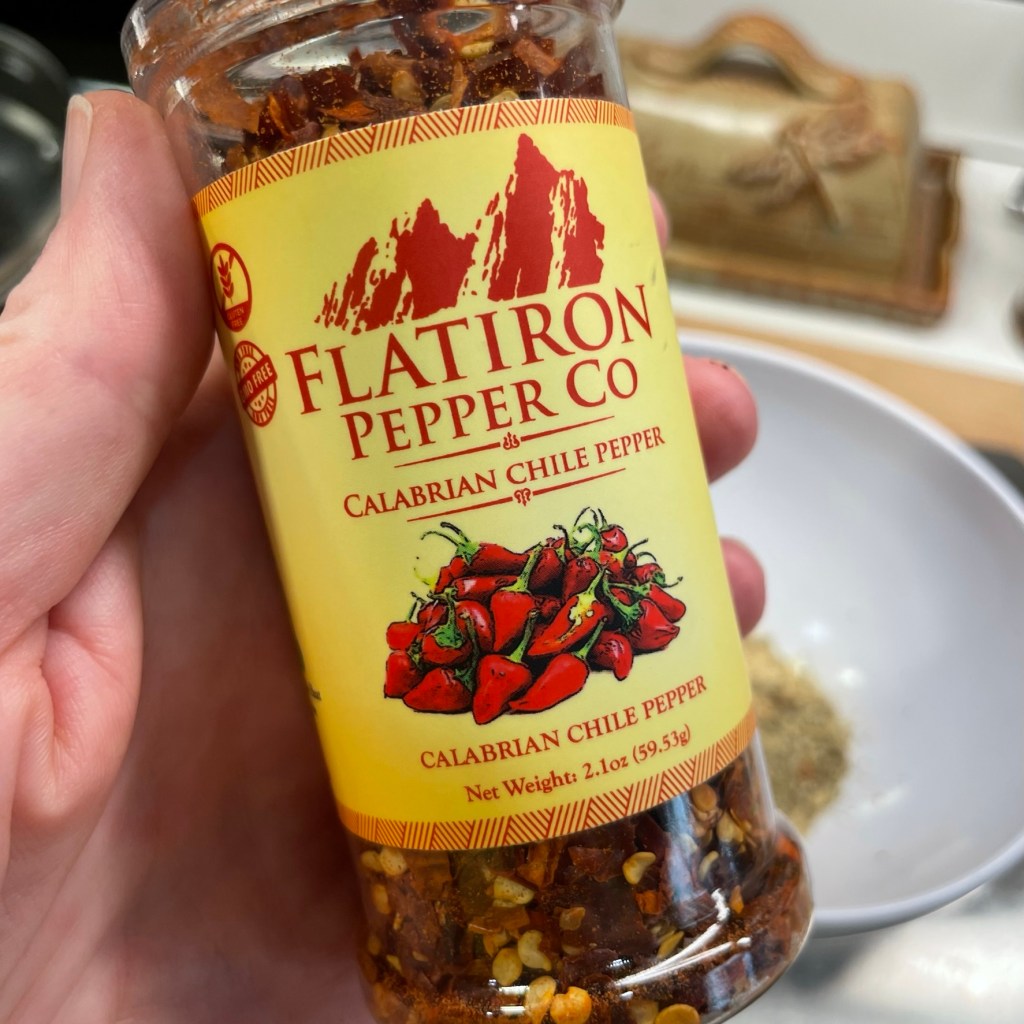
  • 1 tsp. red pepper flakes (I love the Calabrian chiles from Flatiron Pepper Co.)
  • 1 tsp. fresh rosemary, chopped (I would have used more of this if my hubby was a fan)
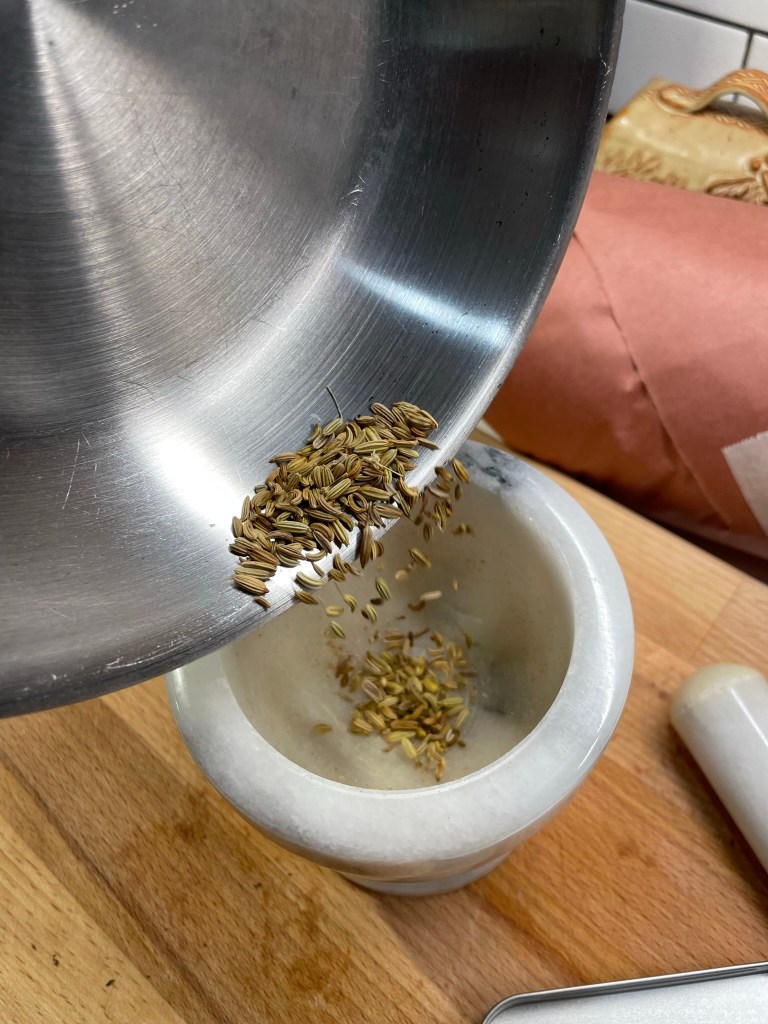
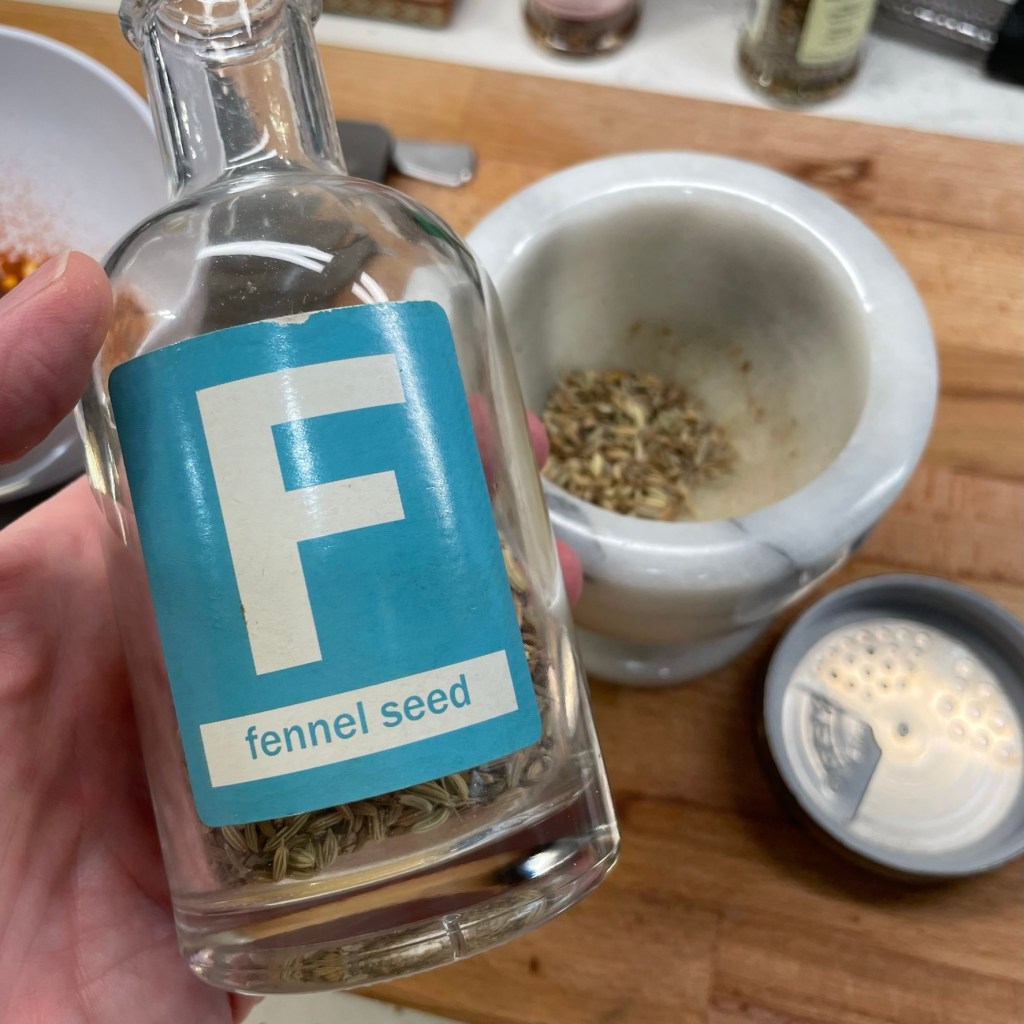
  • 1 tsp. fennel seed, toasted until fragrant and then crushed to nearly a powder
  • About 30 twists of freshly ground black peppercorn

Notes: You will need a few things for success with this recipe. First, kitchen twine for tying up the roast. Plan for at least 5 feet, and soak it in cold water while you prep the roast. Also, a roasting rack to keep the porchetta above the pan during overnight fridge rest and roasting. Finally, a good meat thermometer to help you track the internal temperature.

Directions

  1. Score skin side of the pork belly with very sharp knife or razor blade. This will help render the fat better during cooking, plus it will deliver a crackling skin. Scoring also makes the belly a bit more flexible for easier wrapping around the tenderloin.
  2. Cut several pieces of unbleached butcher’s twine, long enough to wrap and tie around rolled up belly. I used the packaged meat to help me determine how long I needed the pieces to be. Soak the twine lengths in cold water until ready to wrap.
  3. Mix the herb filling, including salt that equals 1.5% of the meat weight.
  4. Line a sheet pan with parchment or foil and place a small roasting rack on it to hold the porchetta roast.
  5. Spread the herbal filling over the meat side of the pork belly, all the way to the edges. Place the tenderloin on the belly, perpendicular to the lines on the cut sides of the belly. The sides of the belly resemble the lines of bacon.
  6. Roll up the roast, but not so tightly that you lose the filling. Check the open ends; the tenderloin should look as if surrounded by a ring of bacon.
  7. Place the rolled roast across several soaked pieces of twine and tie it up, securing each twine with a knot. Sprinkle the porchetta all over with about 1 teaspoon kosher salt and place the sheet pan (uncovered) in the refrigerator overnight, up to 24 hours.
  8. Remove roast from the fridge and bring to room temperature while preheating oven to 350° F. Oven rack should be slightly lower than center.
  9. Roast uncovered for about 4 hours, until skin is crackled all over and internal temperature is 160° F. Cover loosely with foil and rest for about 15 minutes before slicing.


Homemade Pork Sausage

If I were able to physically load my stress onto the pages of a calendar, December would be the heaviest, but it has nothing to do with holiday anxiety or preparing to entertain. For me, the stress comes with realization of all that I didn’t accomplish during the year, despite my intentions and wishes. I have tried to shift my attention to the things I’ve finished rather than not but, sadly, this seems to be my default. It is heavy on my mind this week as I have reviewed my culinary bucket list, and the ever-growing “I want to try” column.

My most frequent lamentation to my husband is that “I want to do everything at once!” Most of the time, I’m doing good to just break even on my get-it-done list, and the biggest obstacle I face is my own lofty expectation, especially in the kitchen. I don’t want to throw proverbial spaghetti at the wall, hoping something will stick. I research unfamiliar techniques and recipes carefully and if they seem complex, I research some more until I feel at least somewhat equipped for the task. Sometimes, I just keep researching until I flat-out scare myself away from it.

But once in a while I give in and try something that surprises me with its simplicity, and this homemade sausage is one of those things. Turning a chunk of pork shoulder into a flavorful, composed ground meat mixture is not at all the challenge I imagined it to be, thanks in large part to this book by J. Kenji López-Alt and an easy-to-use attachment for my stand mixer.


I was gifted this fascinating book a couple of years ago for my birthday, and I love the science that its author lays out on every page. If you want the full scoop and Kenji’s brilliant approach to things in the kitchen, get the book. You won’t regret it. But not everyone cares to know the backstory details of a recipe and why it works (what can I say? I’m a nerd), so rather than echo the 13 pages of detailed, scientific information Kenji has provided on this subject, I’m grinding it down into three takeaway points and then I’ll share my own adventure in sausage-making. Here goes!


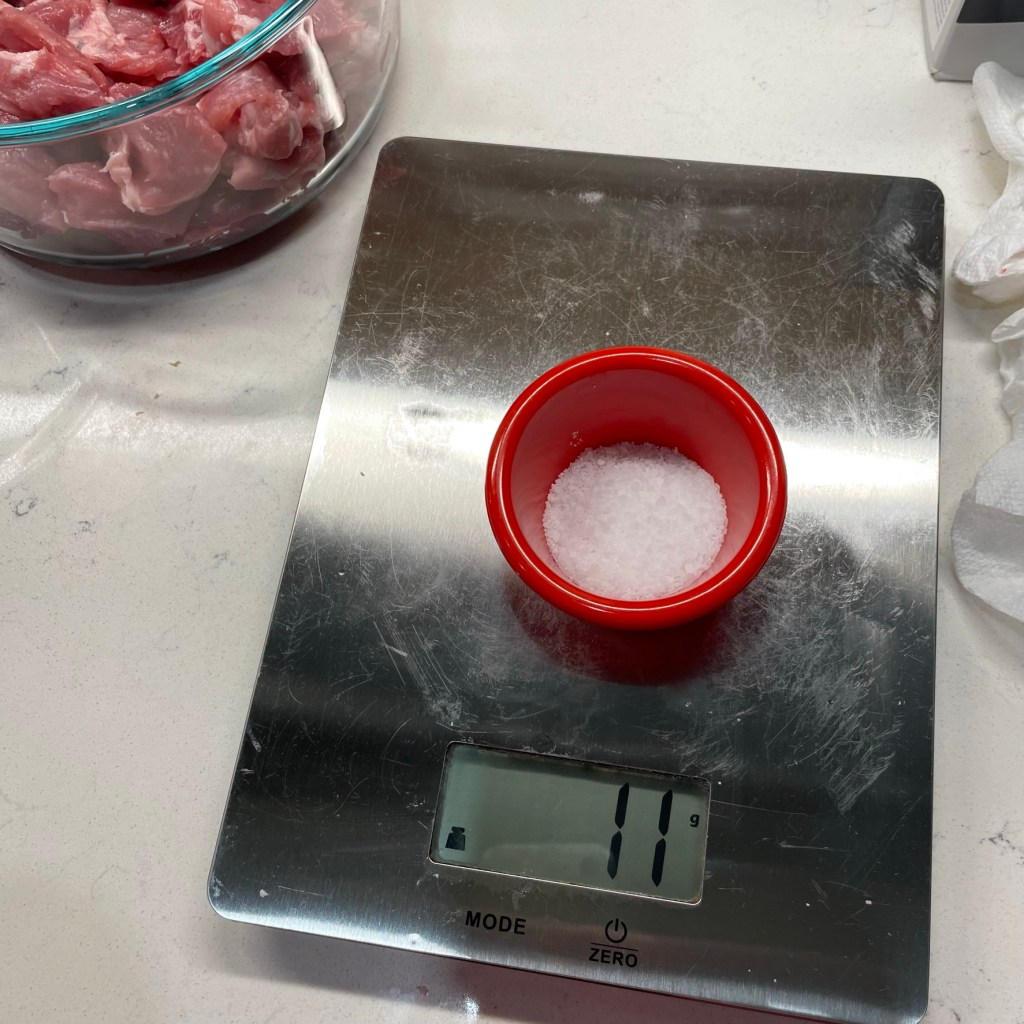
  1. Use a digital scale to determine how much salt and seasoning to use in your sausage; don’t make yourself crazy trying to do the math using cups or teaspoons.
  2. Let the meat chill in the fridge with the proper amount of salt and seasonings for about 24 hours before grinding; it changes the texture of the meat so it’s optimal when you grind.
  3. Keep it cold, cold, cold for best results; this means putting your grinding tools (and the meat, for a time) in the freezer, and working quickly to avoid a big mess.

I should disclose here that I did not go “all in” to the point of using casings for link sausages. Frankly, I’m not sure where to even buy them, though I might talk with our favorite local butcher about that in the future, especially before next summer’s grilling and smoking season rolls around. This experiment has been all about bulk sausage, and I have not had a bad batch yet!

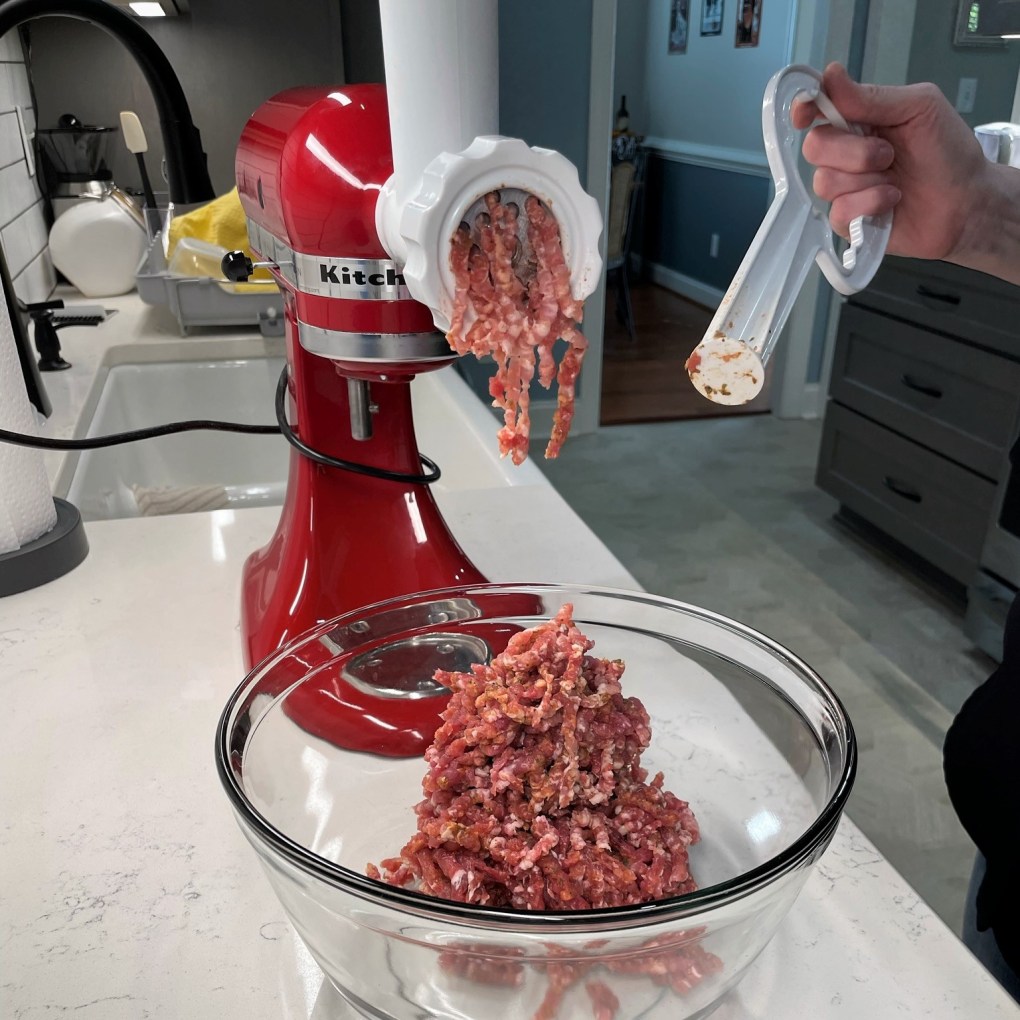
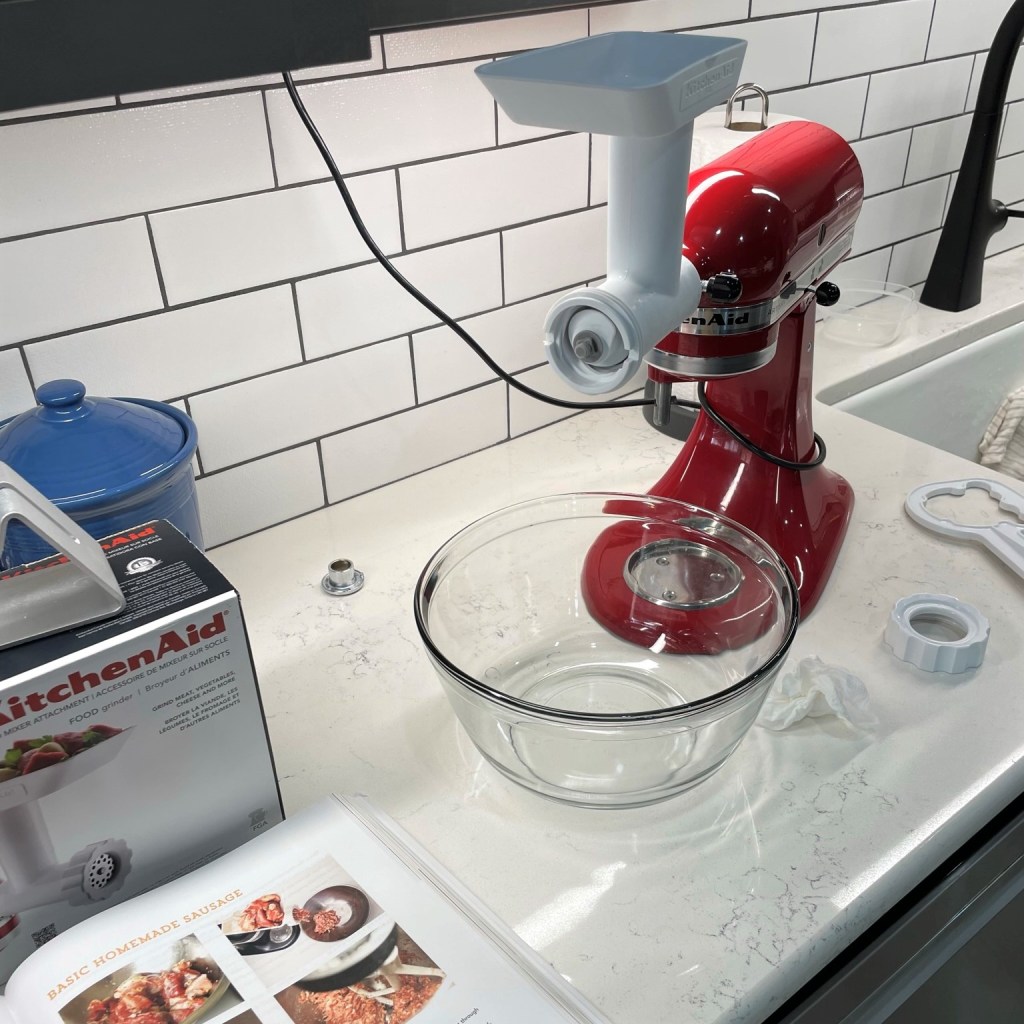
If you have a Kitchen Aid stand mixer, there’s a simple attachment that allows for grinding of food with a propeller-type blade that cuts the food chunks as they pass through a feeder tube. It takes practice, but works great. If you don’t have this device, I think you could probably begin with smaller chunks of meat and use the pulse function of a food processor to achieve a similar result. Kenji even discusses that in The Food Lab.

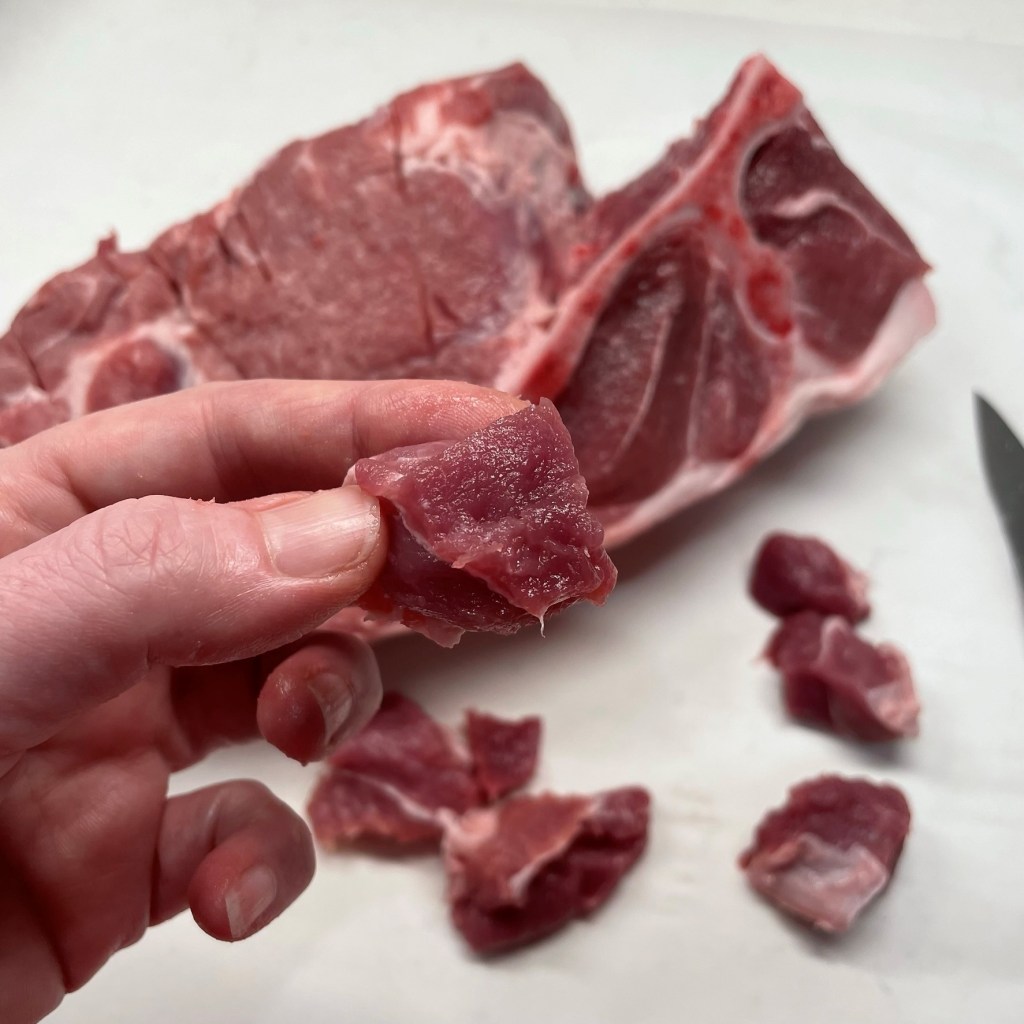
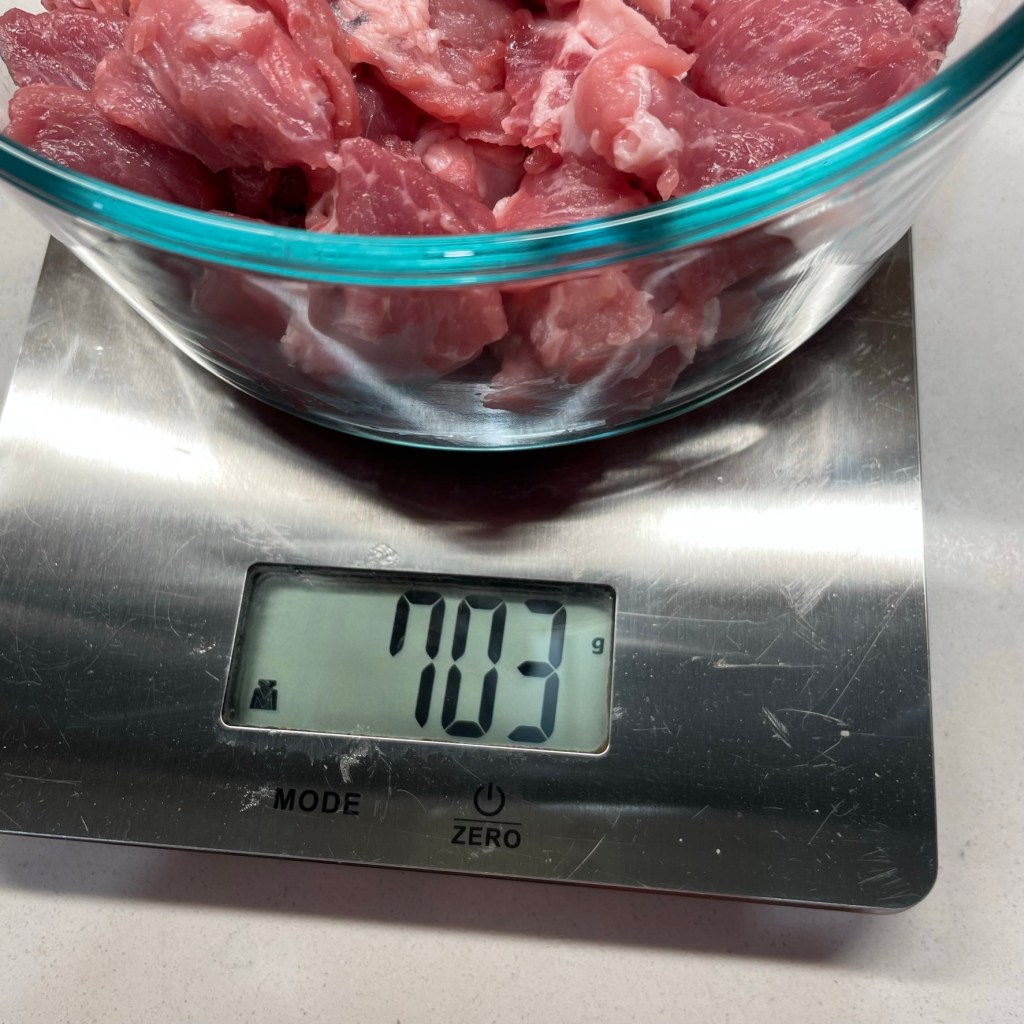
Here’s the basic technique that I learned from Kenji. Cut up the pork shoulder (best quality you have available, of course) into chunks about the size of walnuts. Weigh the raw meat, using the grams setting of a digital scale. Next, grab a calculator to determine what is 1.5% of the meat weight—that’s how much kosher salt you need. Not that this is kosher, mind you. It’s pork, so of course not. But un-iodized salt is recommended here, and kosher is what I use in the kitchen anyway. Sea salt would probably be fine.


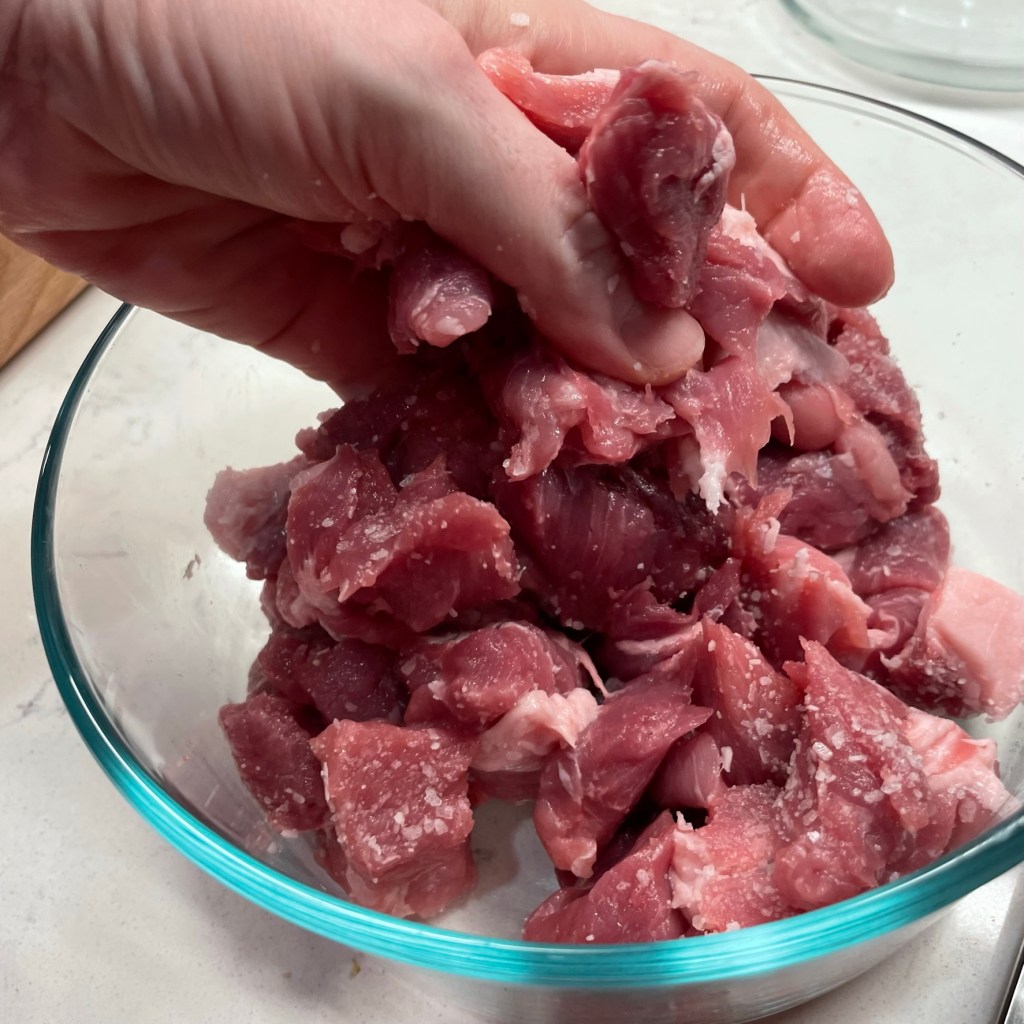
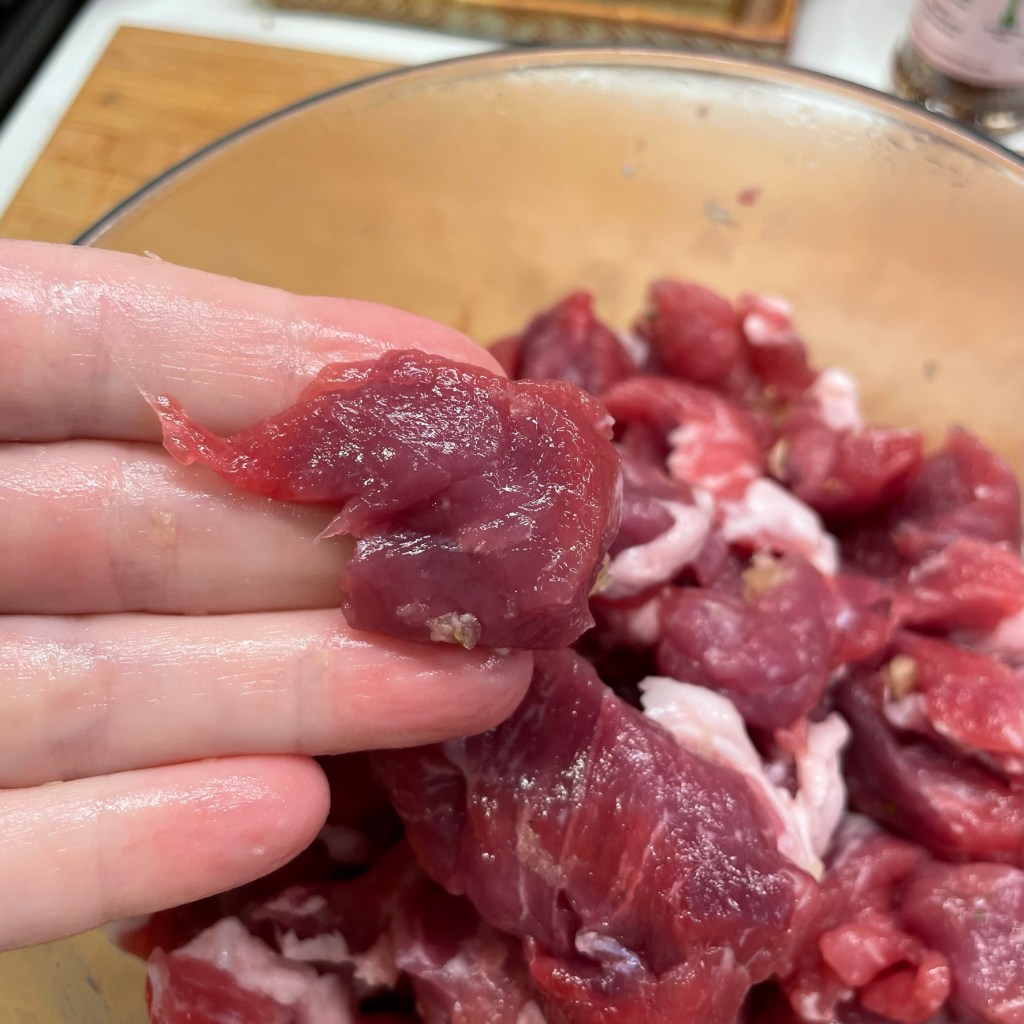
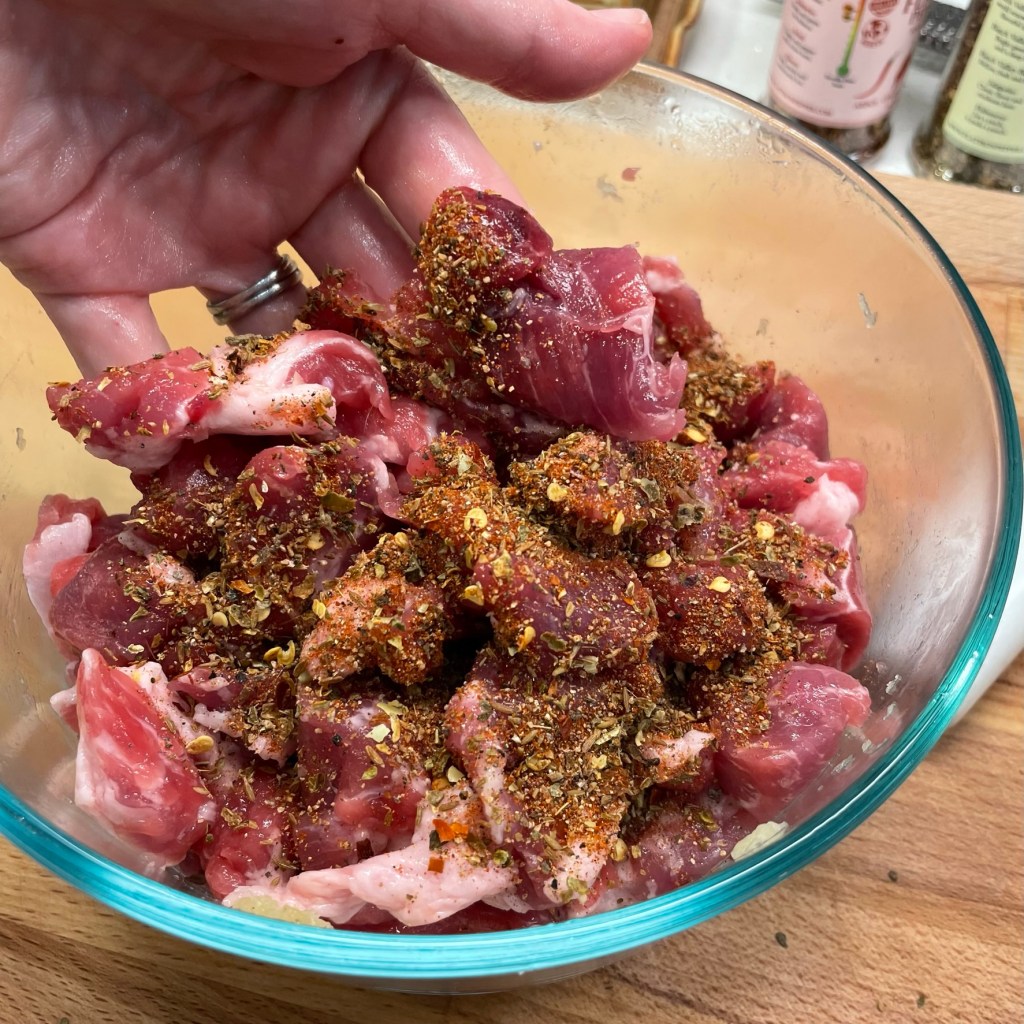
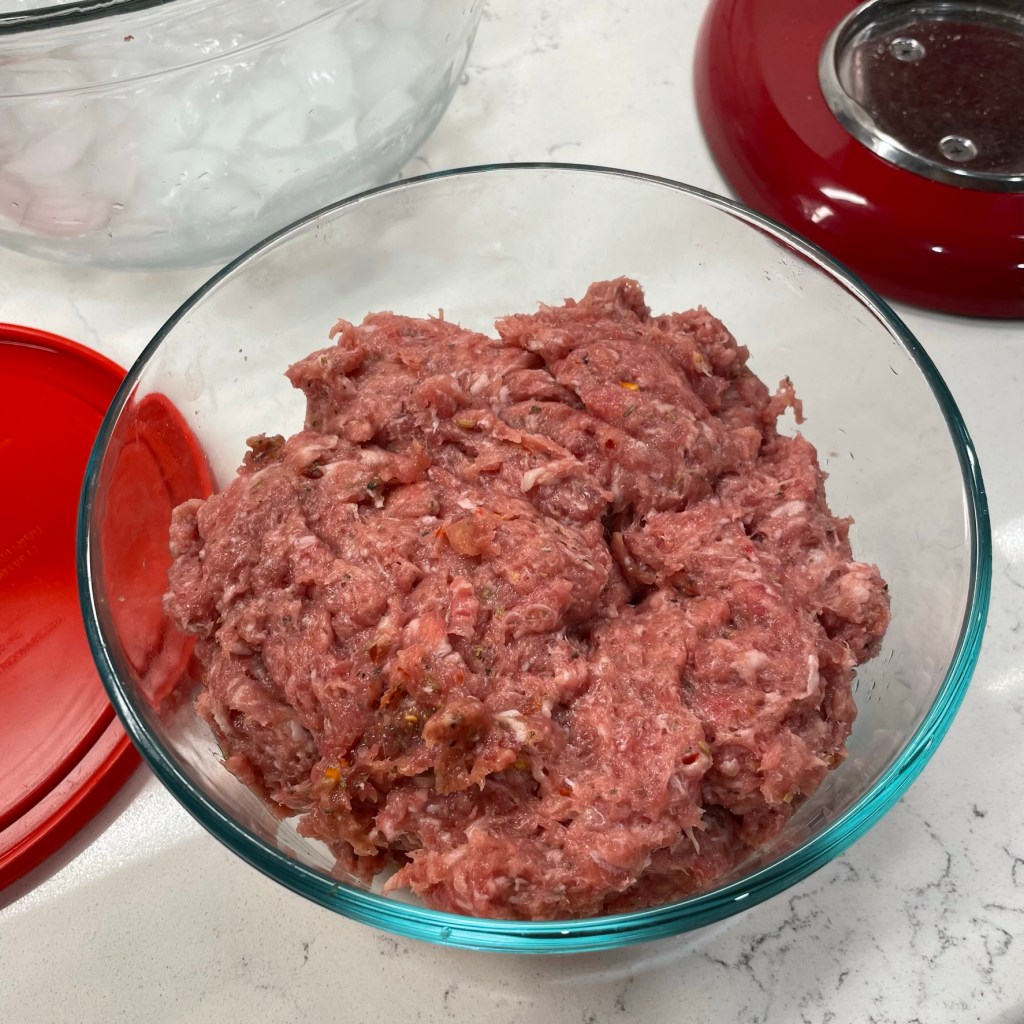
Toss the meat chunks to evenly distribute the salt, cover the bowl and refrigerate it for 24 hours. After the rest time, you can see the difference in the texture of the meat. It looks darker, smooth and glossy, and is noticeably smaller in volume. This consistency change is what makes sausage different from regular ground meat, and it’s as easy as “salt and wait.”


My interest in making homemade sausage stems largely from repeated disappointment at the Whole Foods meat counter, where I used to buy a fantastic green chile and habanero pork sausage that was wonderfully spicy and perfect for my favorite green chili recipe. But, as with most “big box” retailers, Whole Foods only appeals to the masses now (even more so since they were bought by Amazon) and after hearing for the umpteenth time that “nobody wants to buy that spicy sausage,” I finally decided to get on with things and make my own.

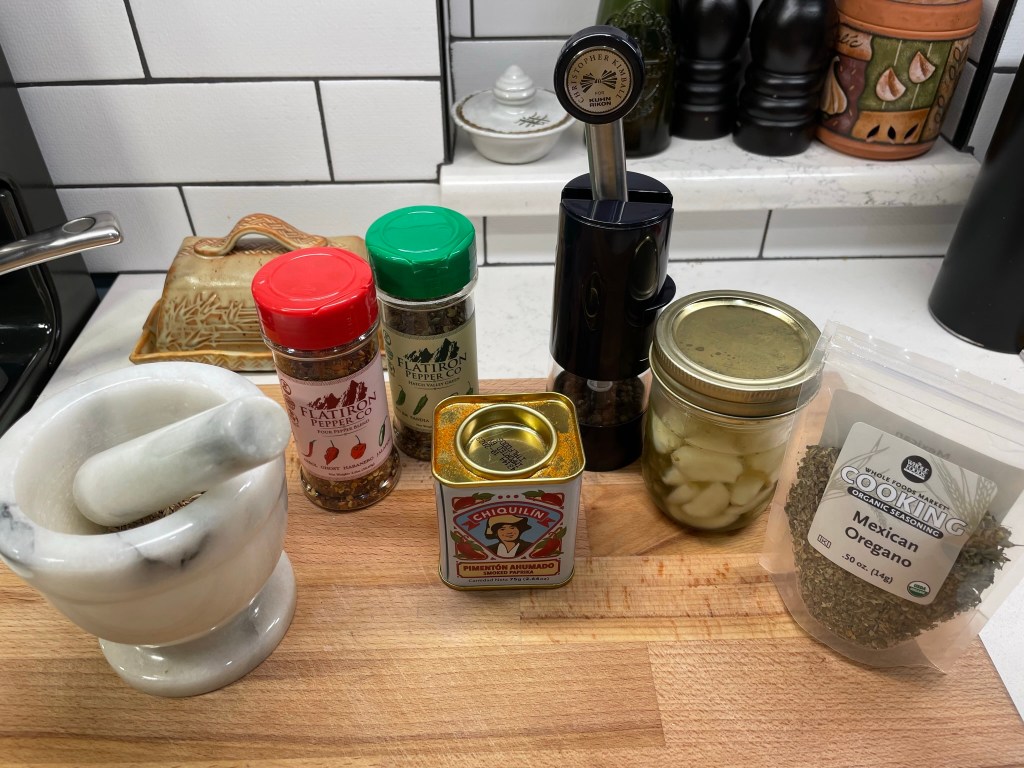
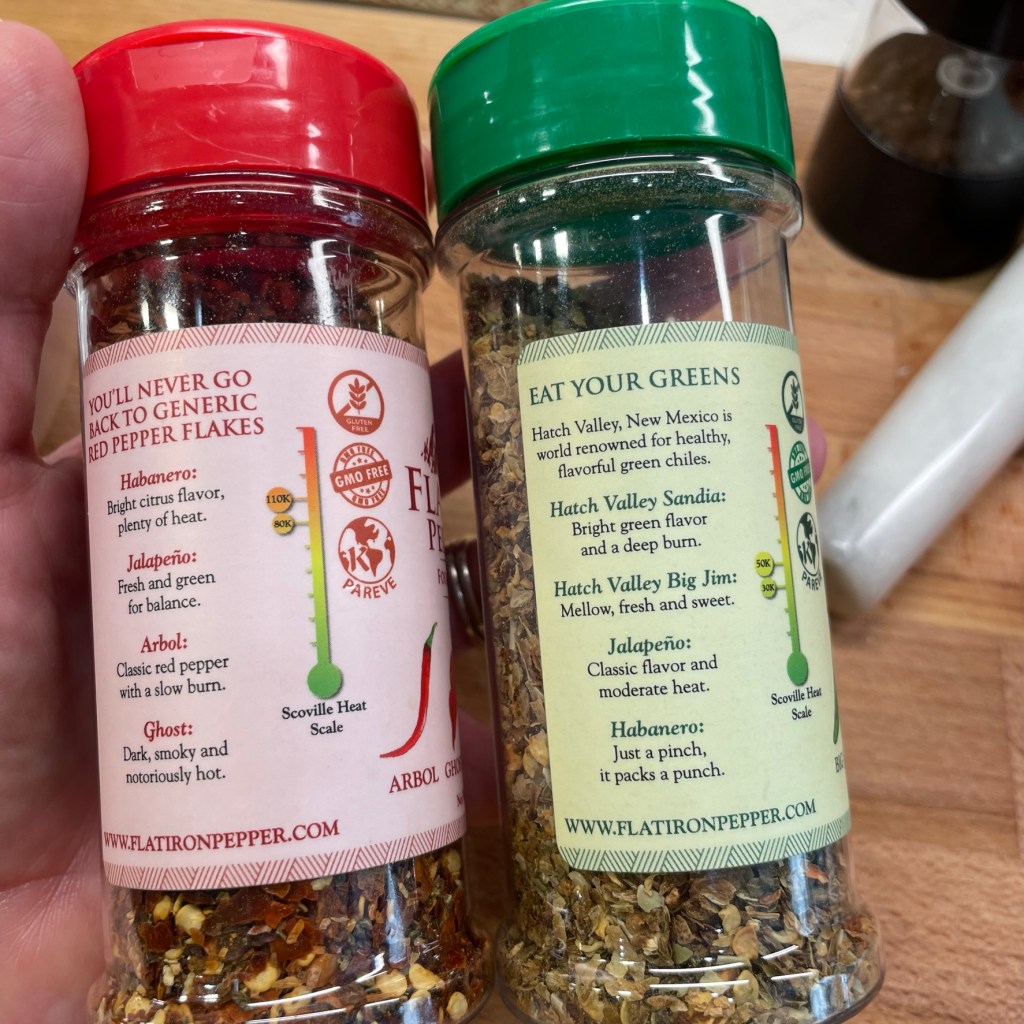
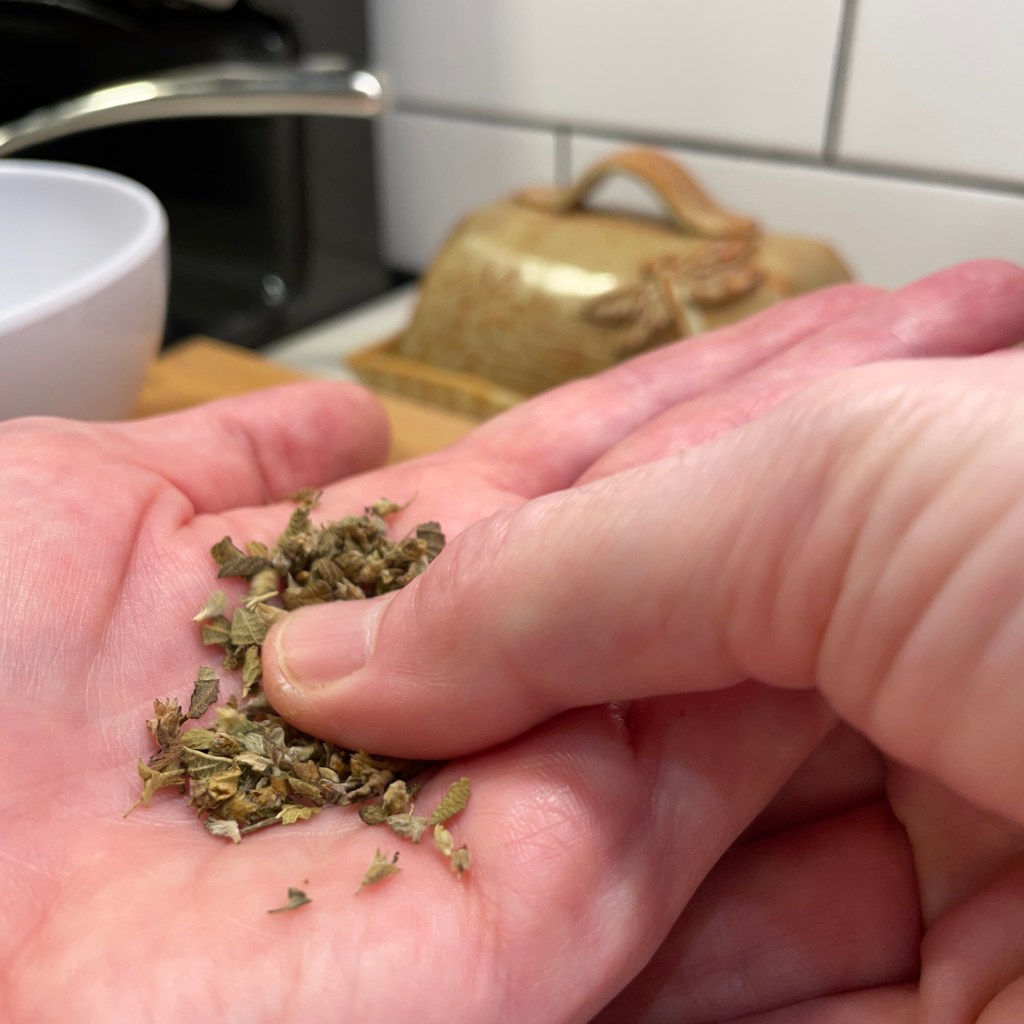
Kenji’s tutorial in The Food Lab did not include suggested seasonings for a green chile-habanero version, but I trusted my instinct and put the flavors together myself. Two kinds of Flatiron Pepper Co. chile flakes, smoked paprika, cumin seeds, pickled garlic (which I ended up not using because I couldn’t get the darn lid off), Mexican oregano and black pepper.


For this batch, I waited to add the seasonings (2% of the original meat weight, per Kenji), but I discovered later that I could have added it at the same time as the salt. In subsequent batches, I’ve added my spices at the same time as the 1.5% of kosher salt.


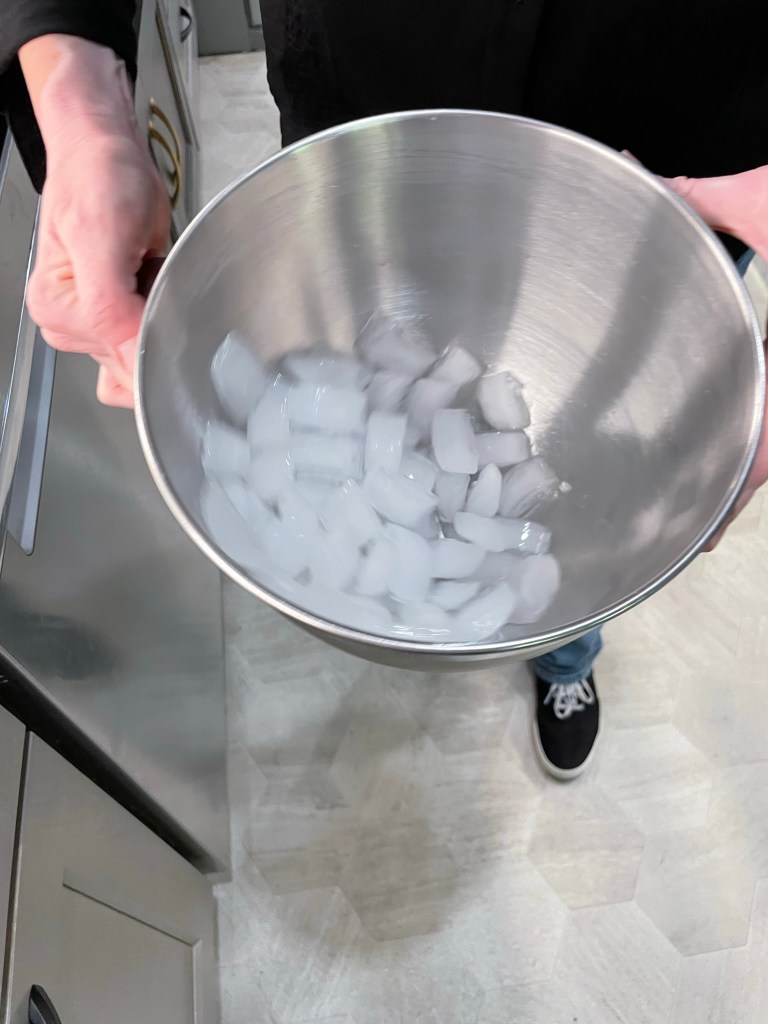
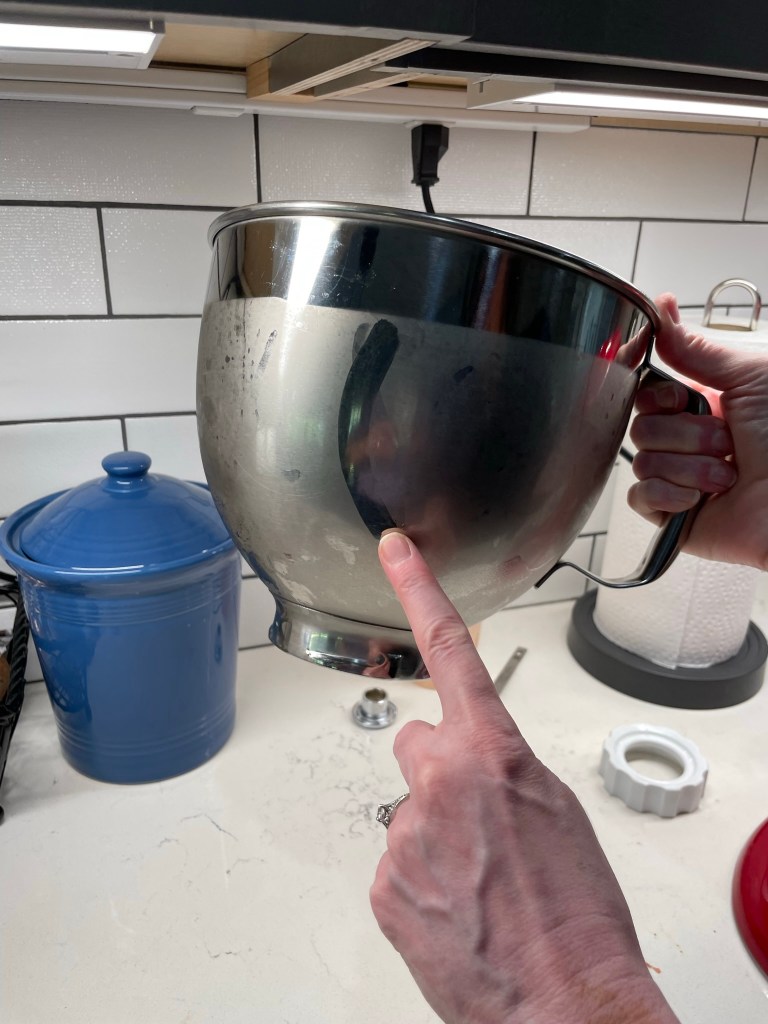
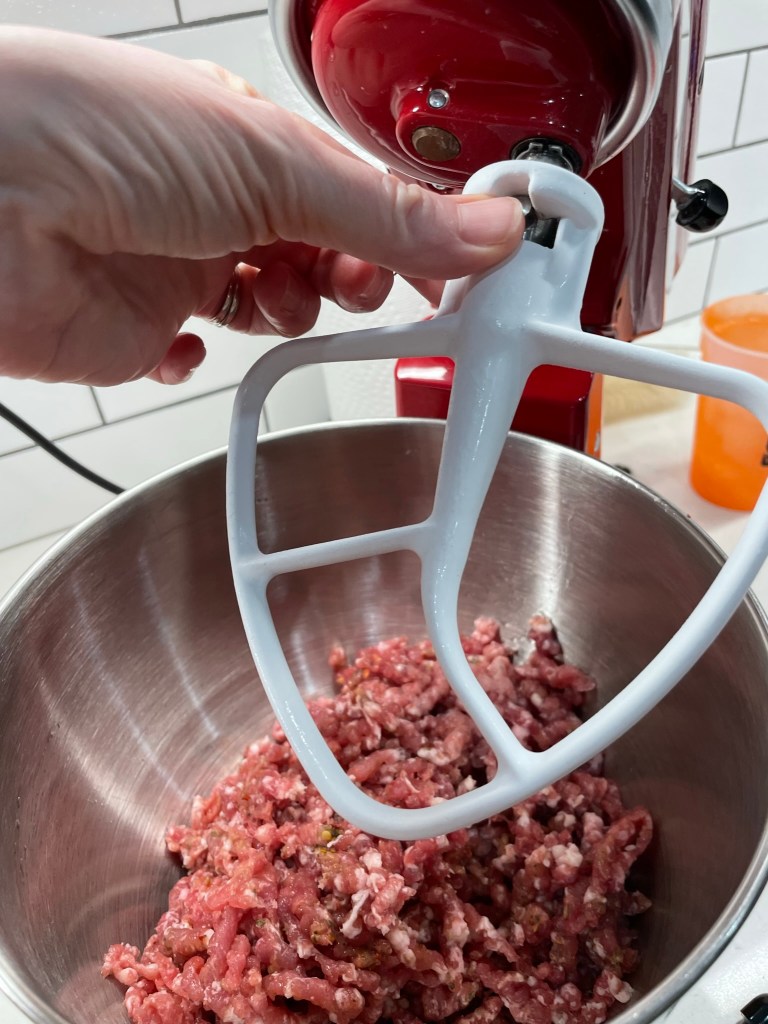
I spread the meat out into a single layer on a baking sheet and slipped it into the freezer for 15 minutes while I set up the meat grinder attachment for my stand mixer. The meat and all the parts that touch the meat should be really cold, so I also put the cutter blade, the large-hole cutter plate and my mixer’s beater blade into the freezer. I took Kenji’s advice about this to heart and it paid off with an easy grinding process. I also put ice in my stainless steel mixing bowl to chill it down for the next step.


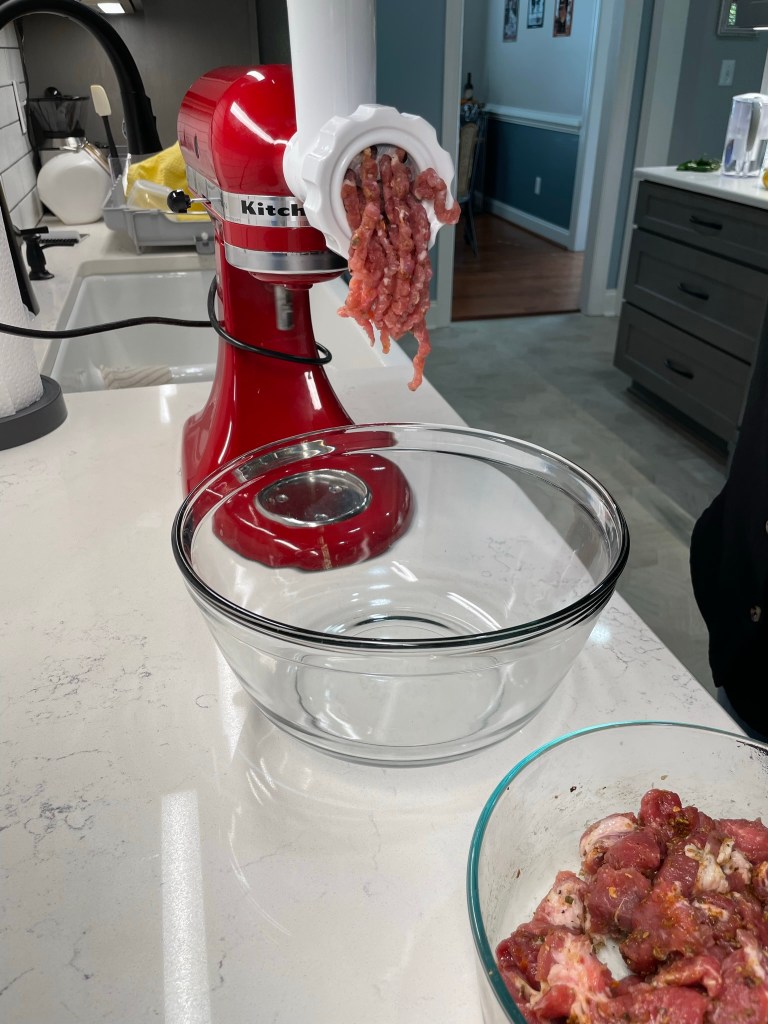
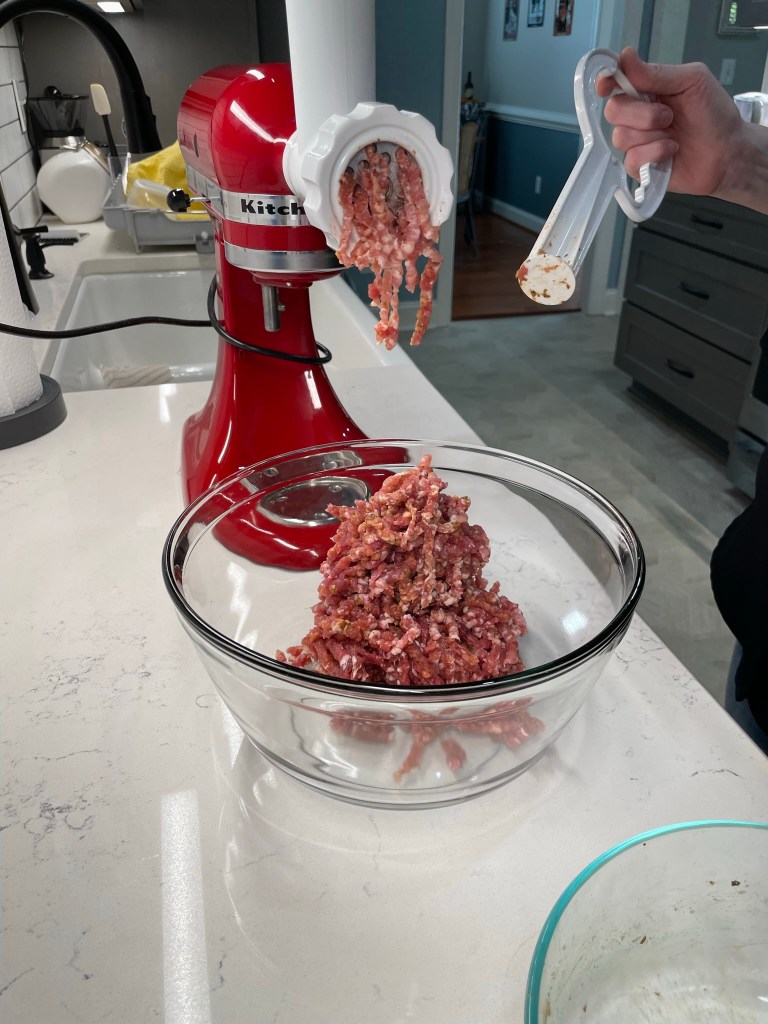
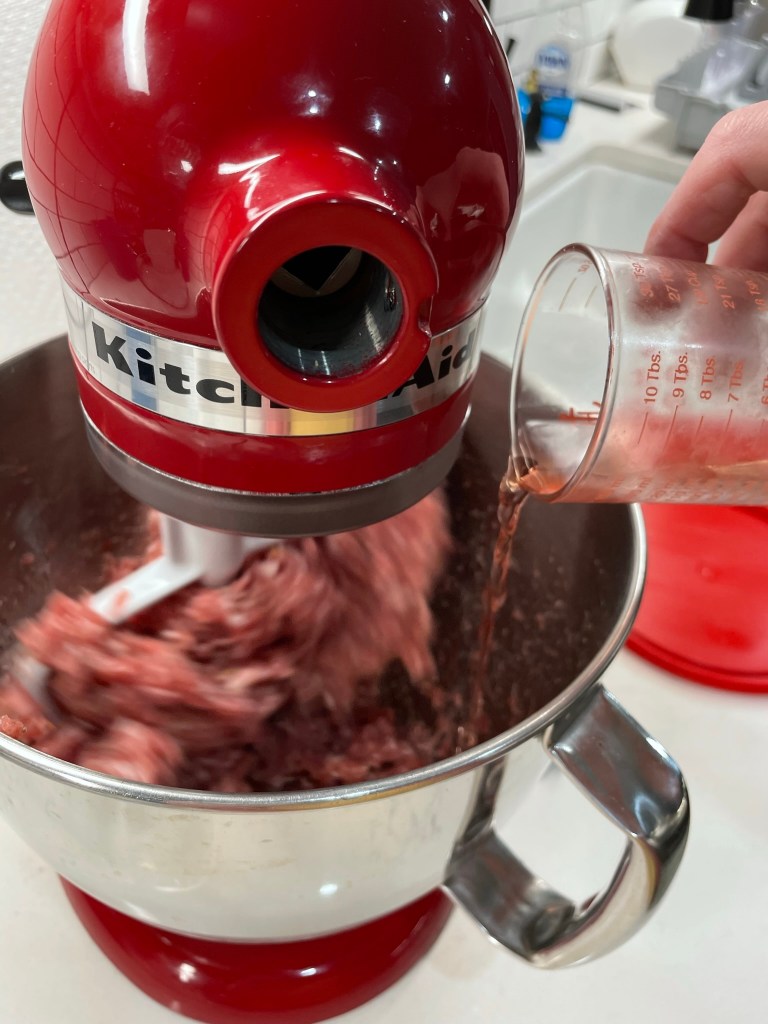
This part of sausage production moved quickly, and I couldn’t take pictures from every angle as I pulverized the very cold meat, but the action shots here tell the story pretty well. As soon as it was ground, I transferred it to my chilled mixing bowl and used the beater blade to whip it around for about 2 minutes. During this mixing stage, which essentially serves to make the meat mixture sticky and cohesive, I poured in roughly 2 tablespoons of red wine vinegar. That acidity makes all the difference in flavor!


For my first batch of sausage, I passed the meat through the grinder a second time before mixing it, using the small-hole cutter plate included with my food grinder. This proved to be tedious and unnecessary, and my later batches were all done in one pass, using only the large-hole cutter plate. Sometimes the lesson is about what you don’t need to do, right?

My first batch of homemade sausage! 🙂

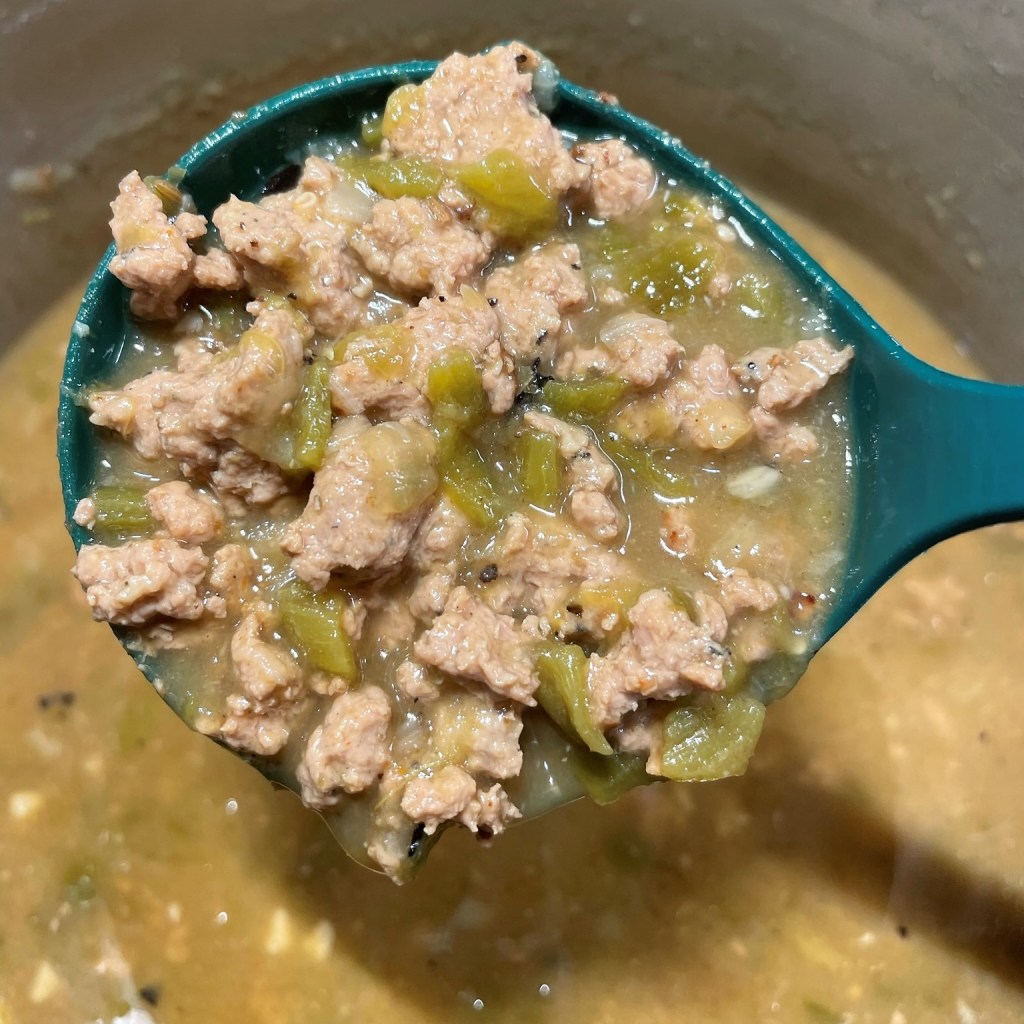
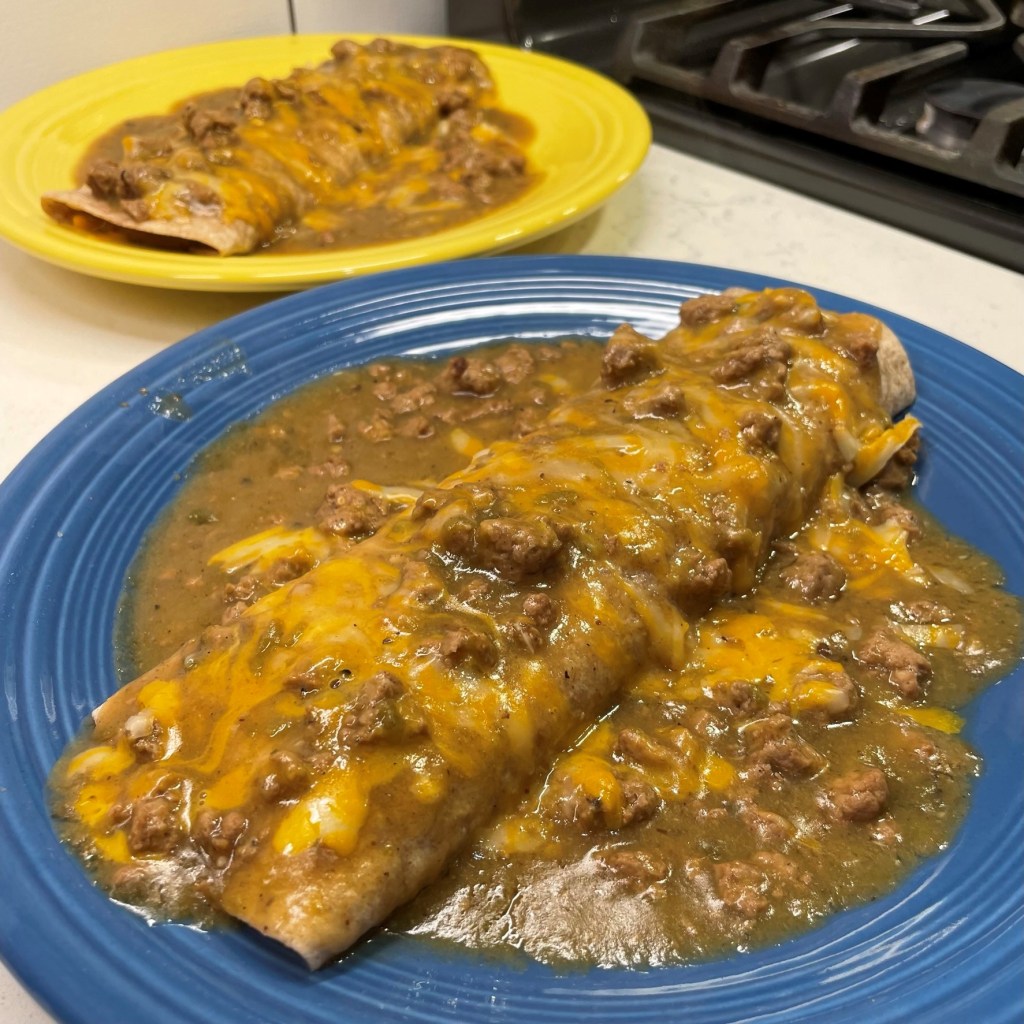
The green chile sausage was fantastic, and I used it make a pot of this oh-so-comforting green chili for burritos. This is a favorite dish from my childhood, and I’ll share the recipe in January.


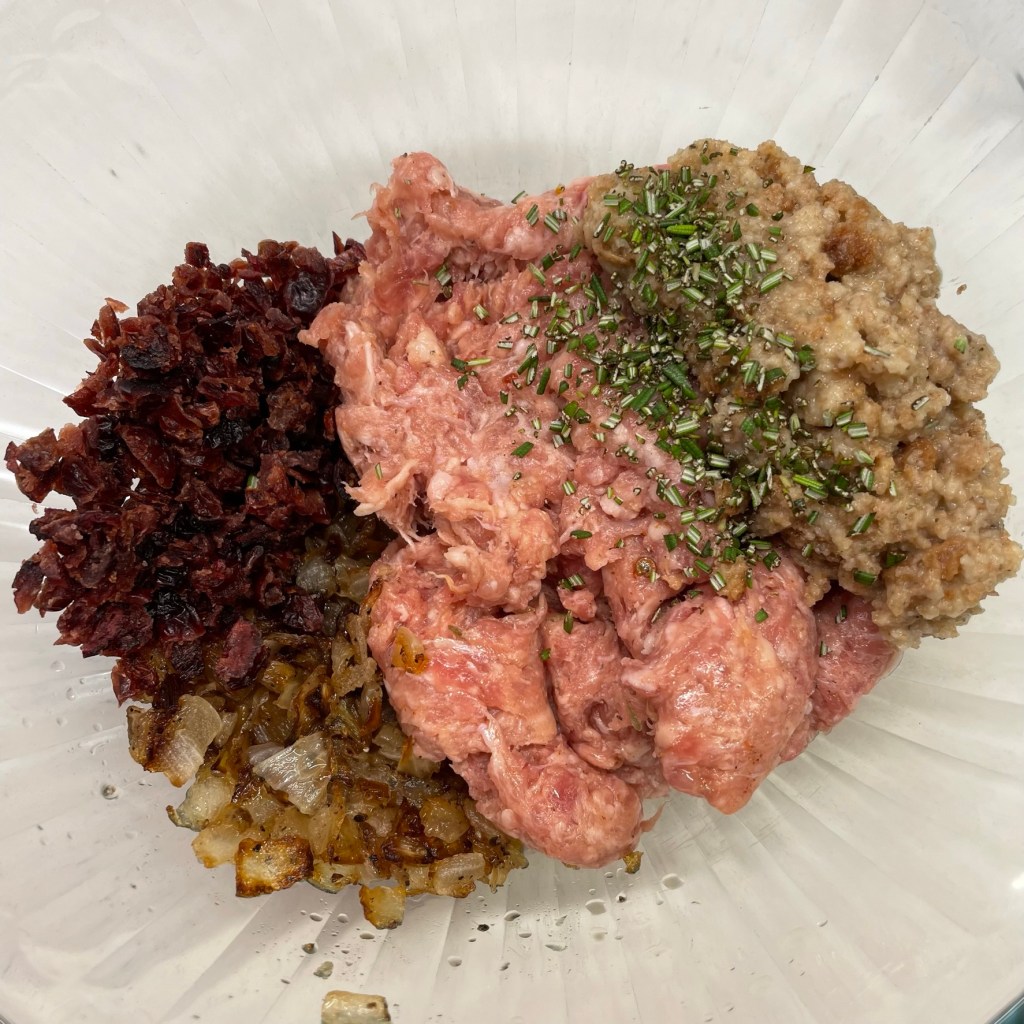
I also made a chipotle, ancho chile and maple sausage, which I used in a stuffing blend for a rolled pork loin roast that we enjoyed with friends a few weeks ahead of Thanksgiving. I’ll share the recipe for that lovely roast sometime in the next couple of weeks.


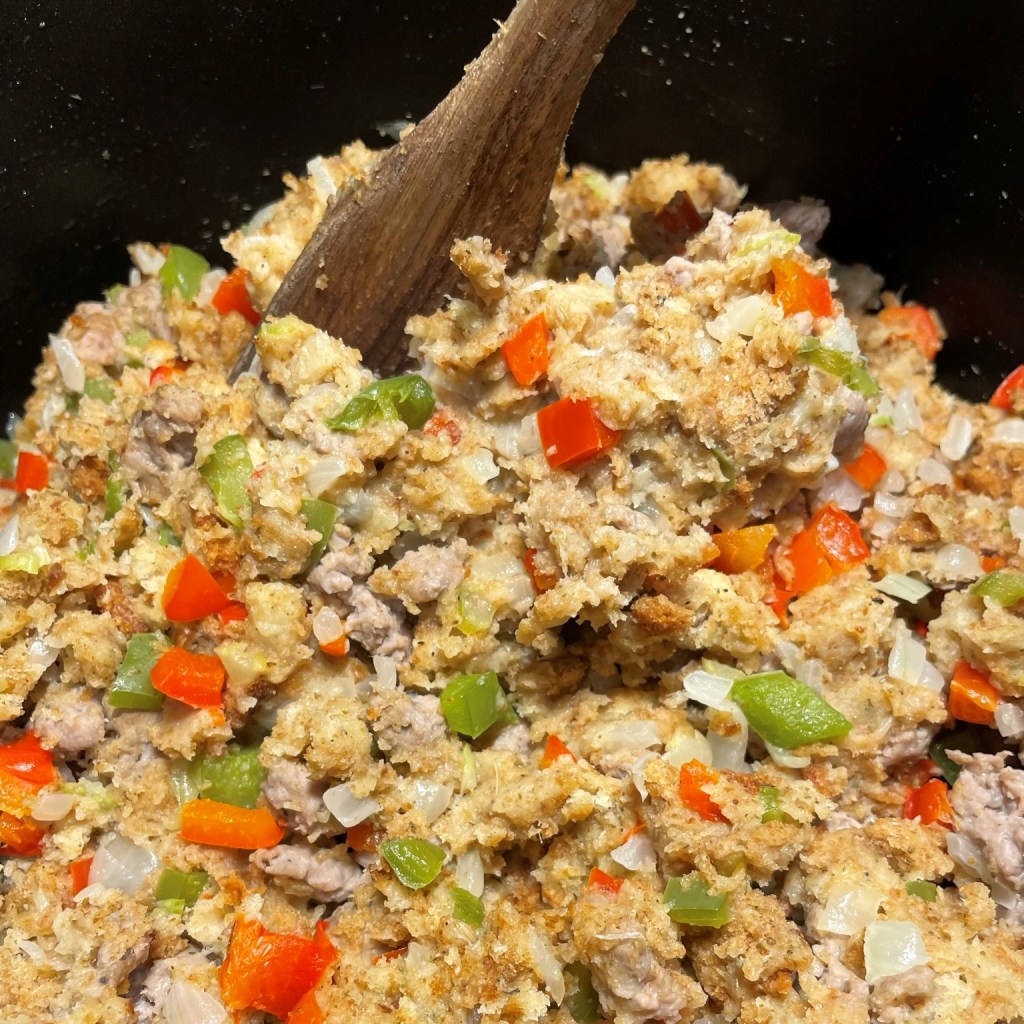
And I made an Italian fennel and Calabrian chile sausage, which became the big flavor enhancer for the sausage used in Les’s amazing Thanksgiving stuffing. It was his year for the bird, and though I said it was his best turkey ever, he declared the sausage made it his best-ever stuffing. We are a darn good team!


We have used up all the sausage I’ve made so far, but I already have a dozen ideas for flavors I want to make next. Here I go again, wanting to do everything at once! I can’t, of course. But homemade sausage is now definitively in the “done” column, with more variations coming your way soon. 🙂


Homemade Pork Sausage

  • Difficulty: Average
  • Print

Making your own sausage is not as intimidating as it may seem. All you need is the right meat-to-salt ratio, a good imagination for flavor, and a device to grind the meat. Use a digital scale to measure the ingredients and keep the meat and grinding device as cold as possible through the entire process.


Ingredients

  • Good quality pork shoulder meat, with a decent amount of fat
  • Kosher (or other non-iodized) salt, in 1.5% proportion to meat weight
  • Non-salt seasonings of your choice, in 2% proportion to meat weight
  • 1 to 2 Tbsp. vinegar for each pound of meat

Use the “grams” setting of a digital scale for the easiest ratio calculation. Weigh the meat, then use a calculator to determine percentages. If your calculator doesn’t have a percentage button, convert it to decimal value. 1.5% = .015 and 2% = .02.

Directions

  1. Cut the pork shoulder into chunks about the size of walnuts. Place a bowl on the digital scale and zero the tare weight. Add the pork and take note of the gram total weight.
  2. Calculate salt and seasoning measurements, using the notes above as a guide. Sprinkle both over the pork chunks and toss to combine. Refrigerate overnight, preferably 24 hours.
  3. Arrange meat in a single layer on a parchment-lined baking sheet. Place the sheet pan into a flat space in the freezer for about 15 minutes to partially freeze the pork chunks. Also place the metal grinder parts into the freezer for this time, as the meat grinds best when it is perfectly cold. Measure the vinegar into a glass or cup and put it in the fridge to chill.
  4. Grind according to manufacturer’s instructions for your grinder. Place ground meat immediately into the fridge again to chill it down.
  5. Add 2 cups of ice to the bowl of stand mixer (or bowl you’ll be using to blend ground meat) and swirl it around to chill the bowl. Dry the inside with paper towels.
  6. Add chilled ground meat to the cold bowl and beat for 1 to 2 minutes, adding vinegar a bit at a time until blended in.


Slow Cooker Cuban-style Pork

Between my husband and me, there is exactly zero percent Hispanic heritage—yet somehow, the foods of Hispanic cultures fall squarely into the “favorites” category for both of us, and it has been this way for all of our adult lives. For me, the passion for Hispanic flavors started much earlier, during my younger childhood when I lived with my mother in southern Colorado, where at least half the kids I went to school with were of Mexican descent. Their moms made the best food.

Les, who grew up in New York, was surrounded by the foods of seemingly every culture except Mexican, though other Hispanic flavors were obviously present in the Puerto Rican-populated areas of the city. He remembers his section of Queens, famed for being among the most multicultural in the world, was the first to create “fusion” foods, but alas, he says, he never ate at “La Casa Wong.” His first experience of addictive Spanish-influenced foods didn’t come until he spent a few young adult years in southern California, but even then, he didn’t get the full effect because those restaurants were mostly chains.

Today, thanks to our collective passion for cooking and adventurous approach to food, we are enjoying more than our fair share of all the world’s flavors, including those of cultures we have yet to visit.

Over the past few months, the 2014 movie Chef, with Jon Favreau leading a tremendous all-star cast, has been in hot rotation on our streaming service. Les and I both saw this movie in the theater when it was released (a good year before we started dating), but we still can’t resist watching it every time it appears in our program lineup. We love it, not only because it’s a compelling story of a talented chef who walks away from an unfulfilling restaurant job to start a food truck, but also for the joyful Latin music, the sweet relationship that develops through teachable moments with his adorable, mop-headed son, and the fantastic food that results from his commitment to doing food right and making it from the heart. If you haven’t seen this film, we highly recommend it.


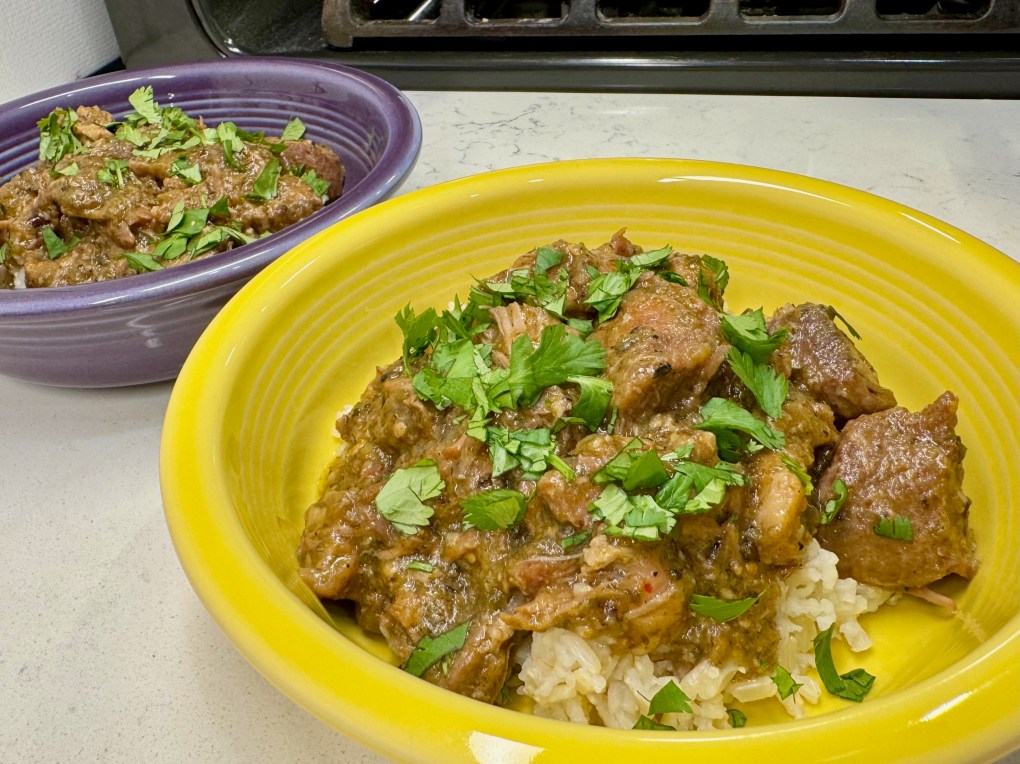
The main food that always gets us drooling when we watch Chef is the Cuban pork, and the most authentic version would be slow roasted in the oven, as sous chef Martin prepares it in the film. But this is my version of it, done the easy way in a slow cooker. The key to exceptional flavor and texture is low-and-slow cooking and (of course) the marinade. My first taste of this mouthwatering, slow-roasted meat was in Key West, and rumor has it that was most likely the origin of the dish. But let’s not go down any rabbit holes of debate about that, because there’s cooking to be done!


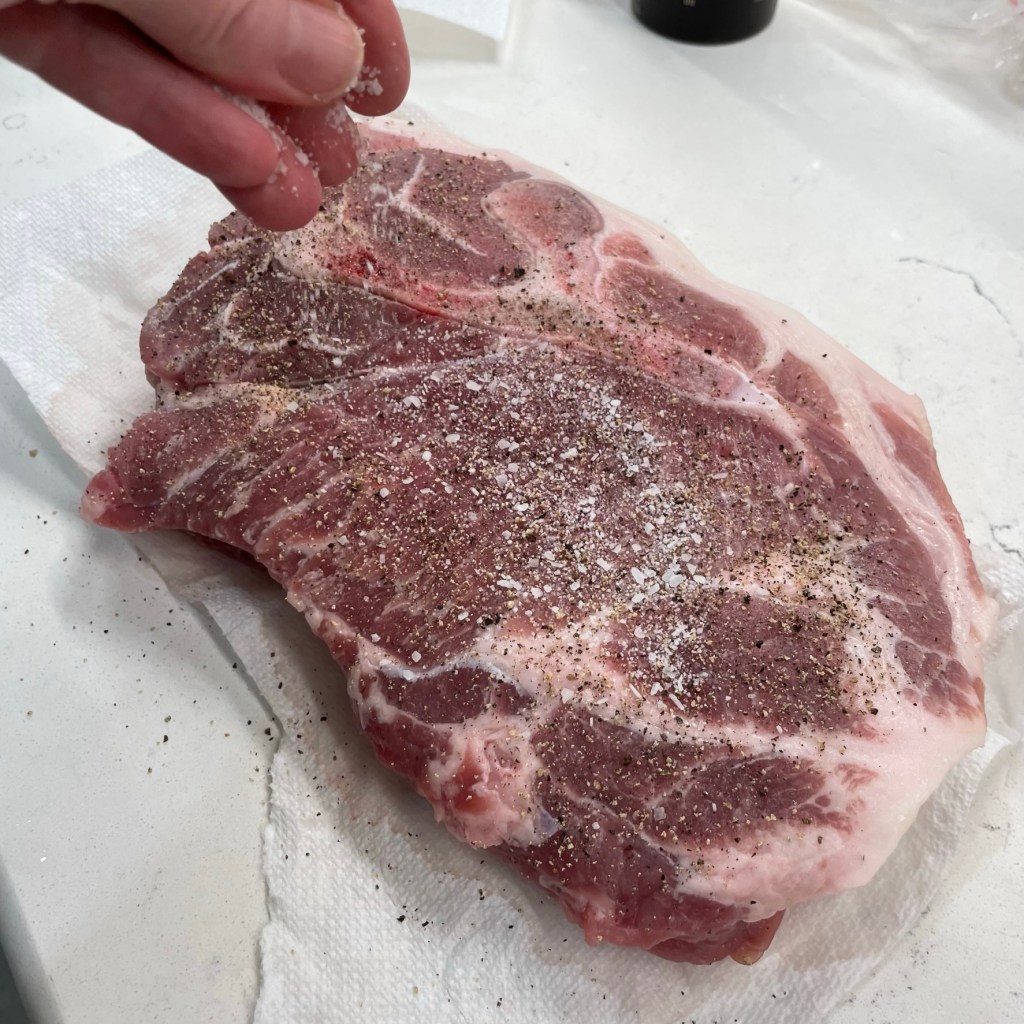
Start with a pork shoulder, and for the best flavor, get one with the bone in. Trim off some of the excess fat, but don’t take it all off because there’s a world of flavor in it, and it will help protect the meat from drying out during cooking; you can easily skim it off the braising liquid later if you so choose. Rinse the shoulder to rid it of any bone shards, pat it dry with paper towels and give it a dose of salt and pepper on all sides. If your shoulder is very large, cut several slits all over the meat and insert smashed cloves of garlic into them. Mine was only three and a half pounds, so the marinade was enough to flavor it all the way through.


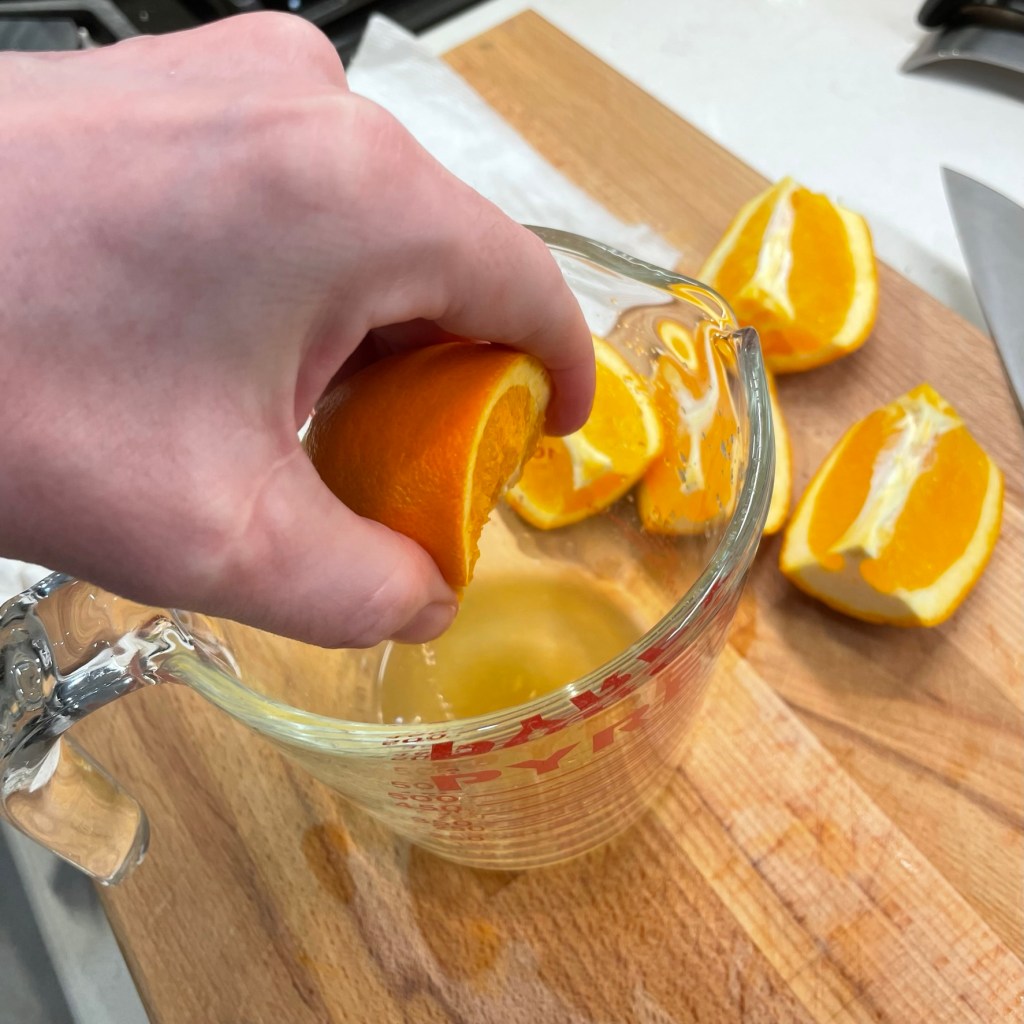
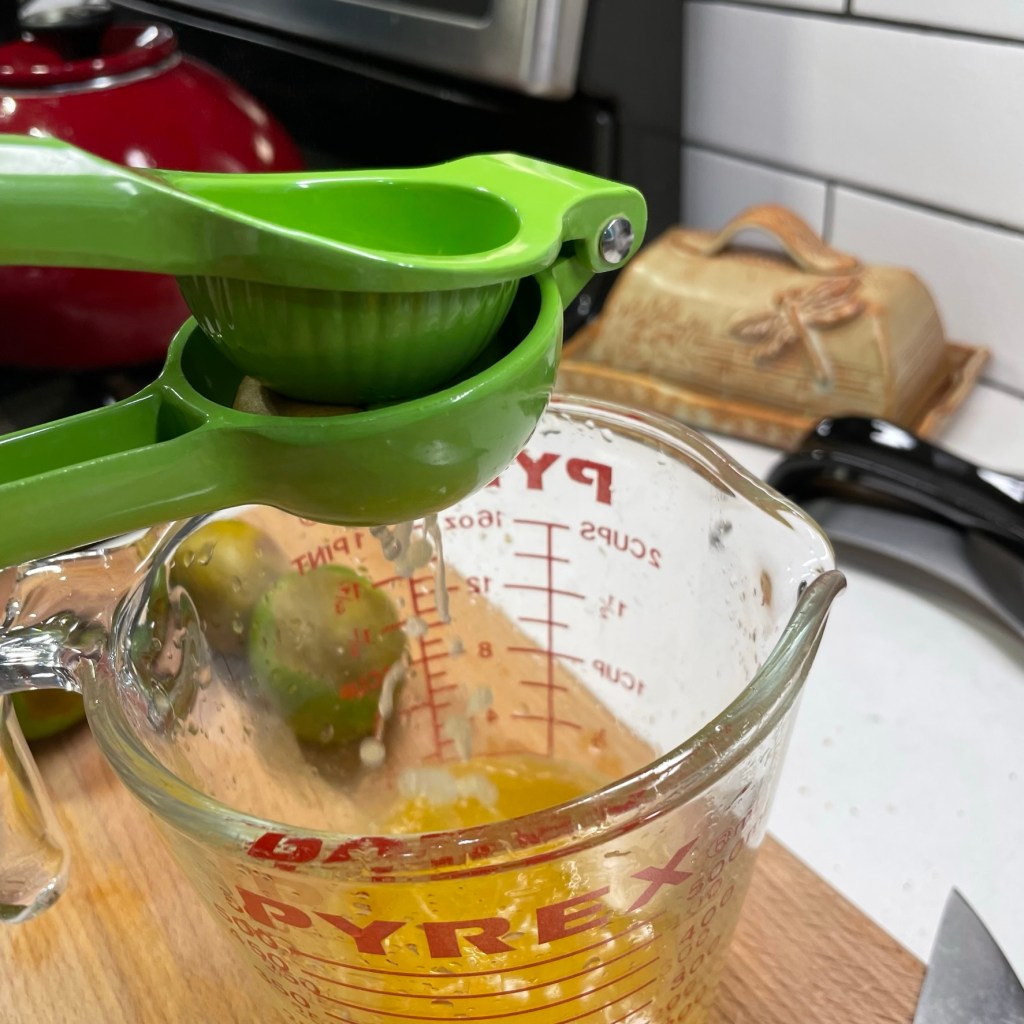
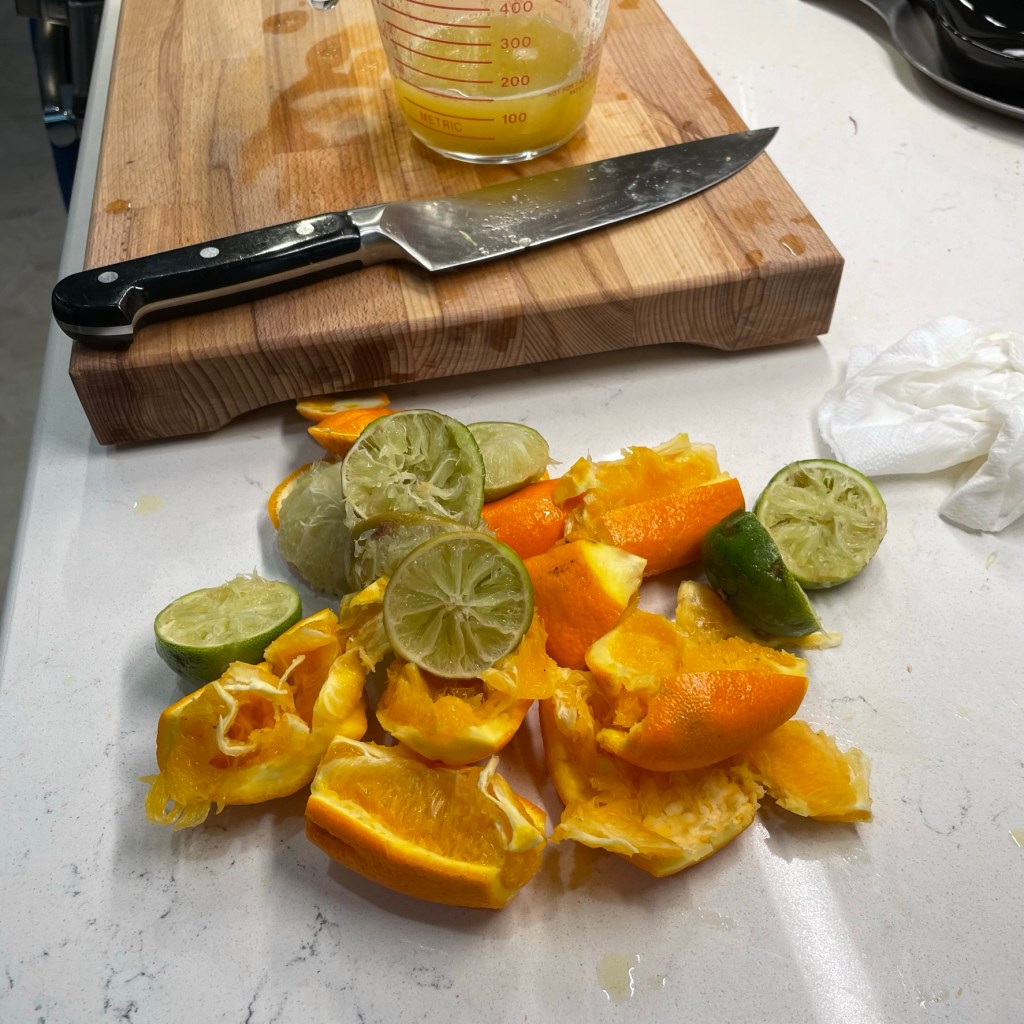
The marinade for this pork is called mojo, not like getting your mojo back or Mr. Mojo Risin’, but Spanish “j,” pronounced as an “h.” Try it with me: “mo-ho.”. The marinade begins with the juice of oranges and limes. For truly authentic mojo marinade, you’d use only Seville oranges, which are sour compared to typical navel oranges, but they aren’t easy to come by in the States, so a combination of navel oranges and limes is a common substitute. I kept a few of the spent orange wedges after juicing, and I’ll explain why in a moment.


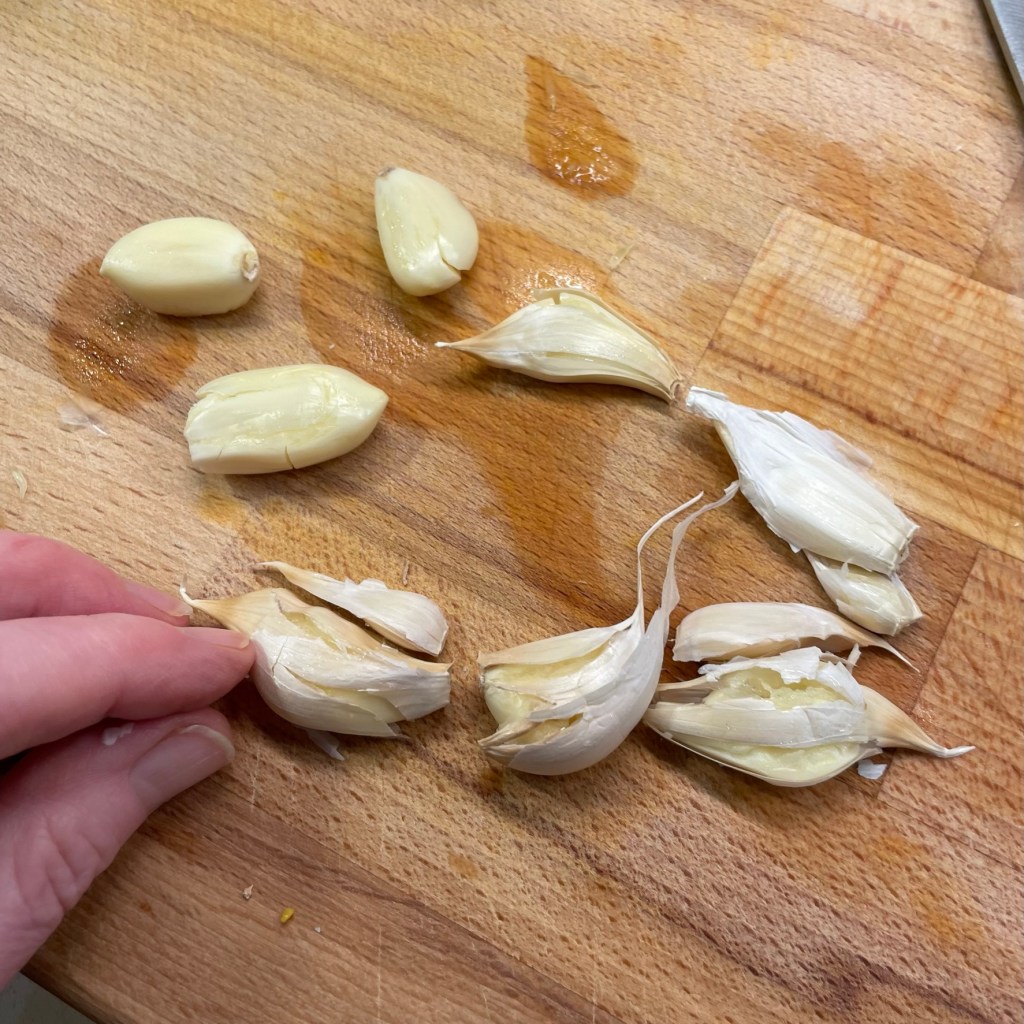
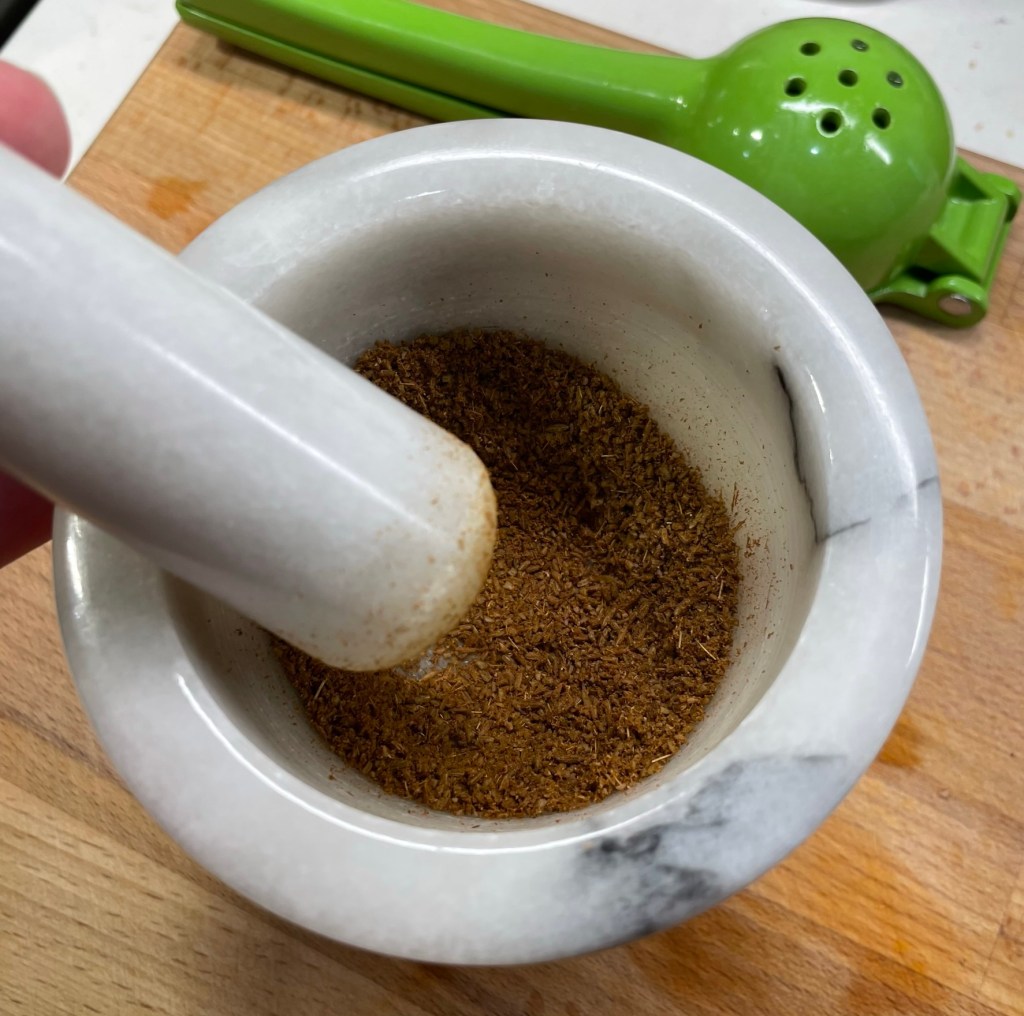
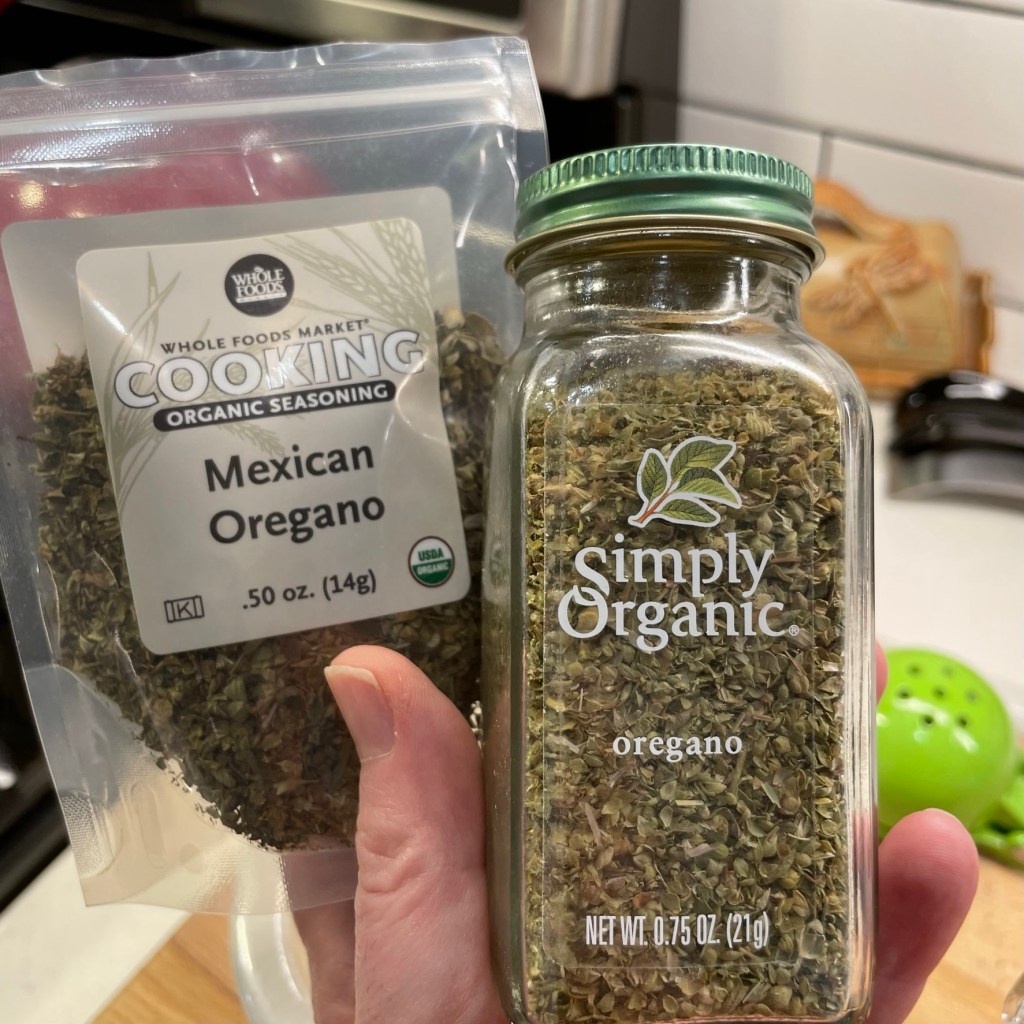
You need a lot of fresh garlic for a mojo marinade. Smash the cloves first, and then peel and mince them up so the flavor permeates every pore of the pork shoulder. That’s an important thing to know about garlic; the smaller the bits, the more pungent the flavor. Cumin is traditional, and I like to use whole seeds, slightly toasted in a dry skillet and then crushed to a powder in a mortar and pestle. This fragrance on its own puts me in a state of near-euphoria. Oregano adds an herbal note, and I couldn’t decide between regular and Mexican, which is earthier with a slight note of anise, so I used half of each.


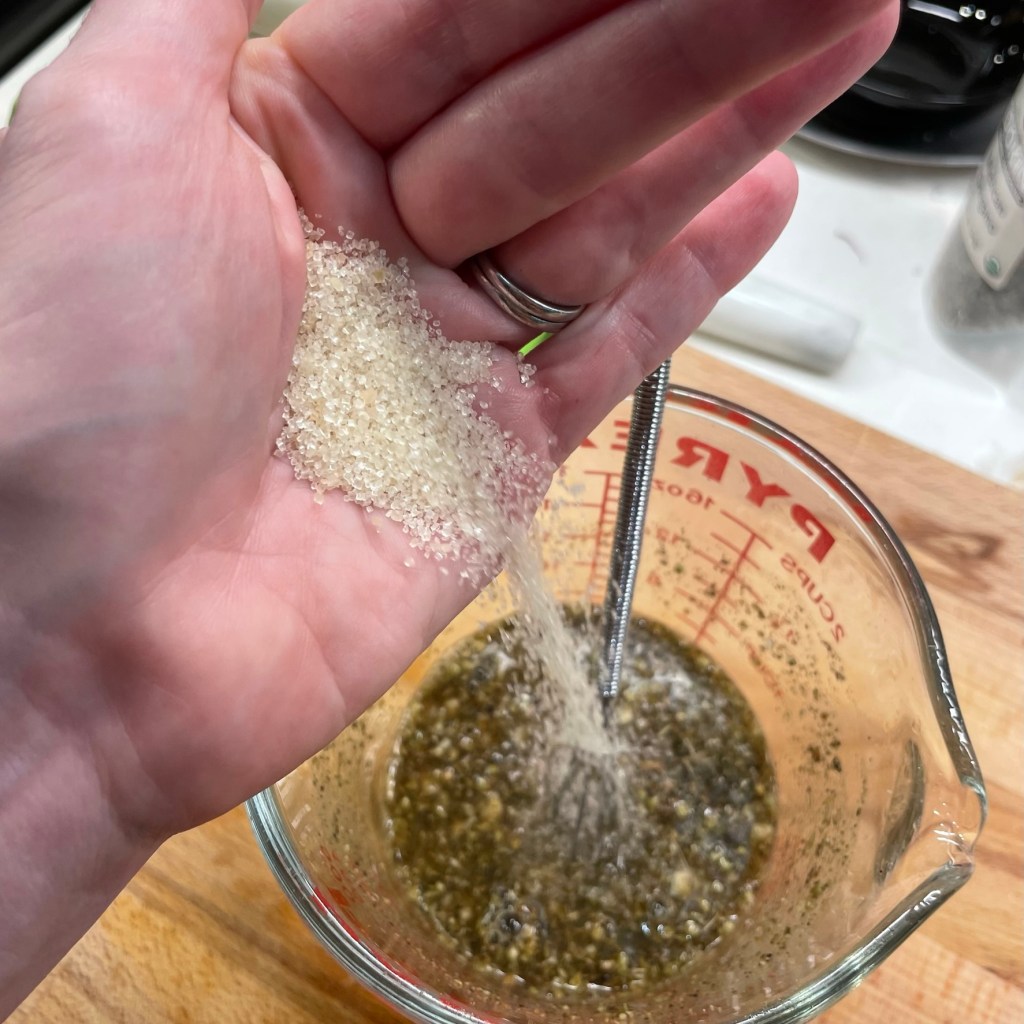
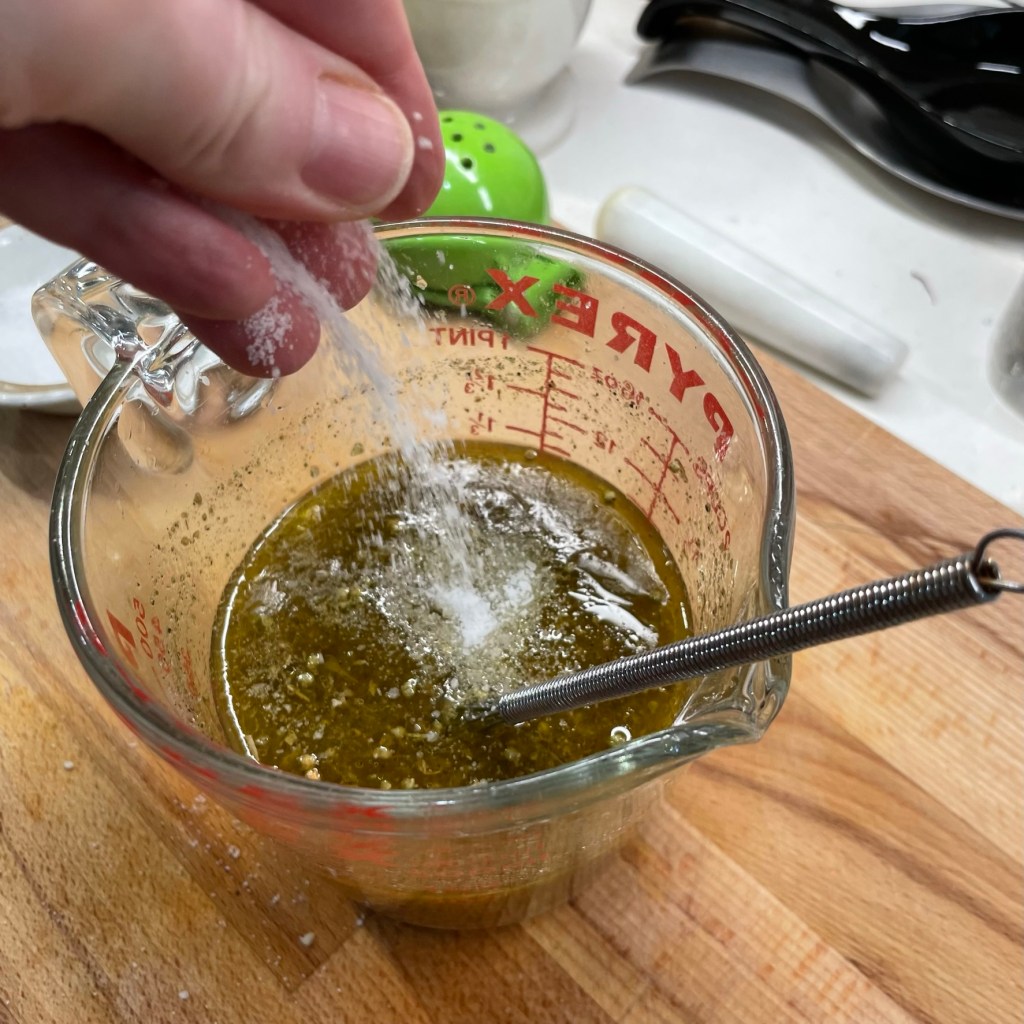
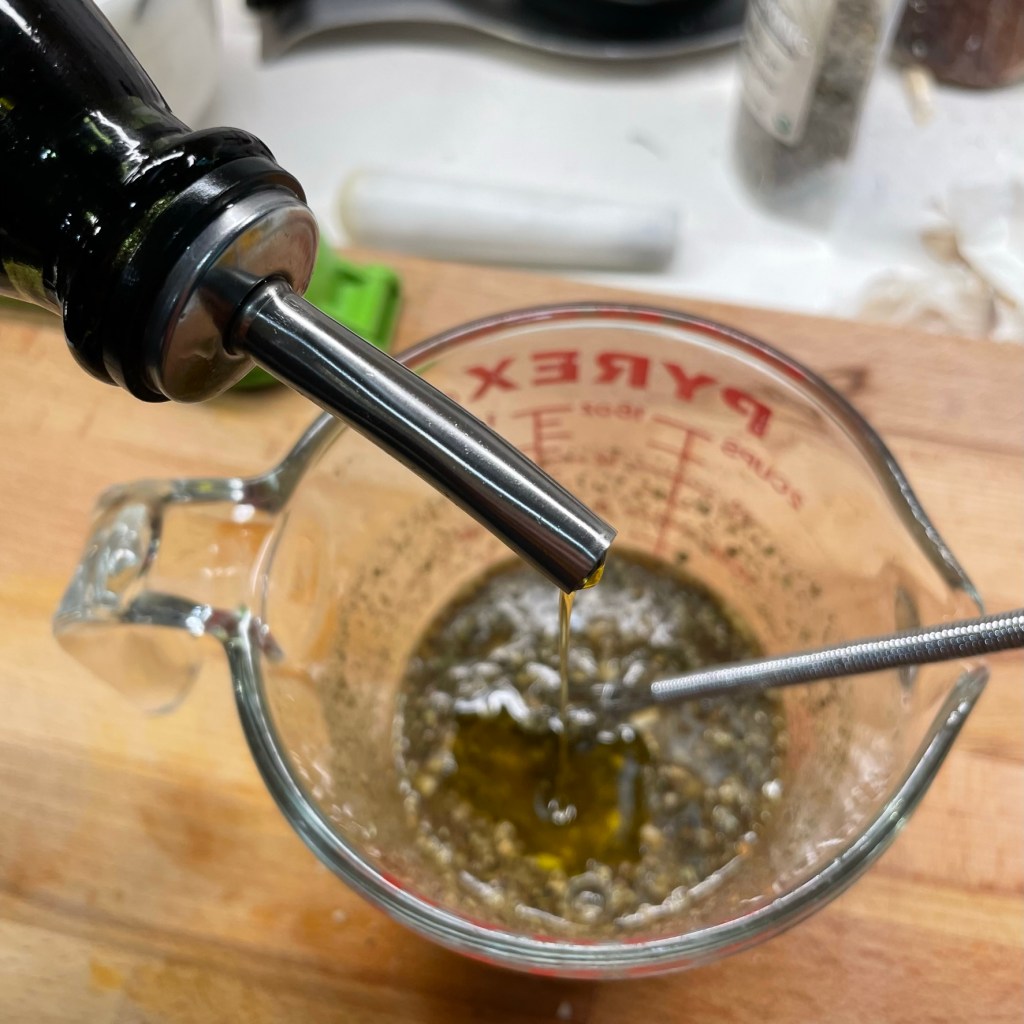
A pinch of sugar is decidedly not traditional, but we put a pinch of sugar in every damn thing here in the South. I like it for balance, but don’t go overboard. Season the mixture with salt and black pepper, of course, and whisk in a few generous glugs of extra virgin olive oil to finish the marinade. Time to cook!


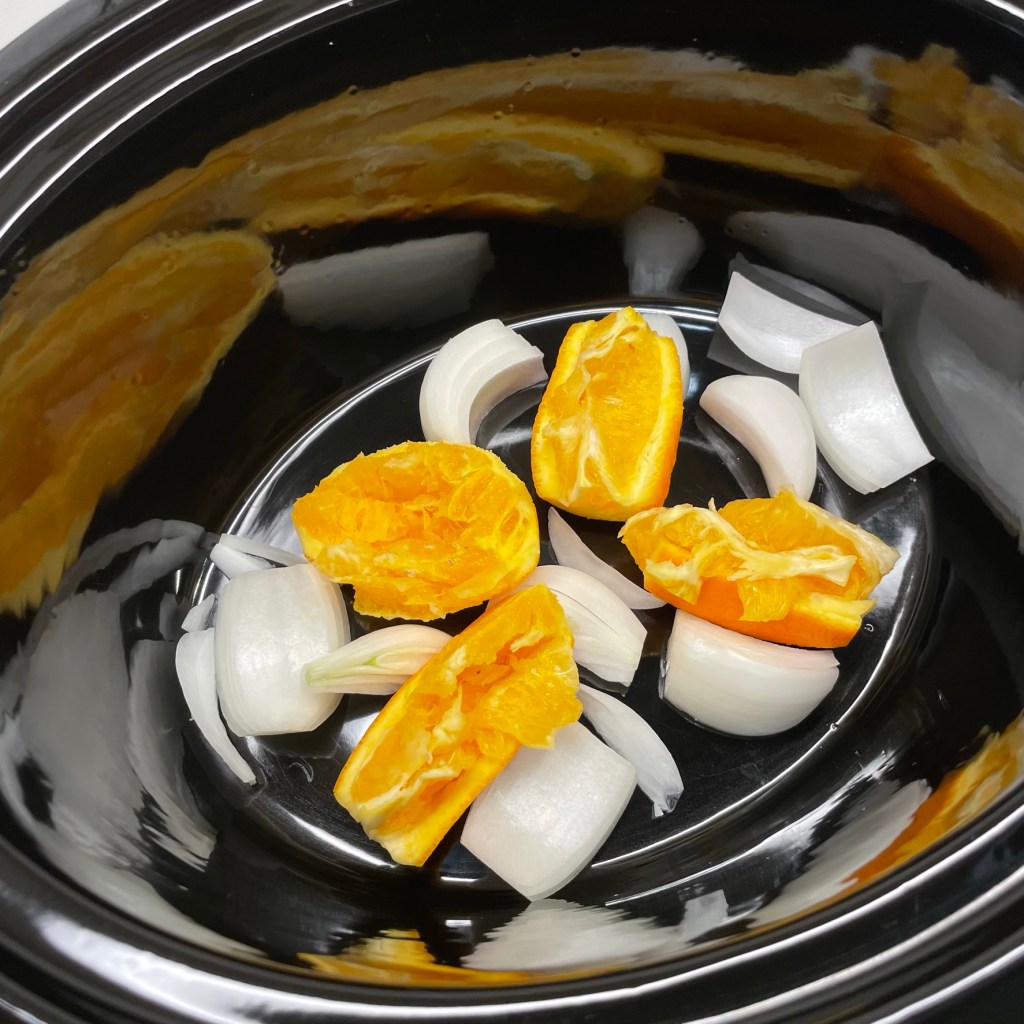
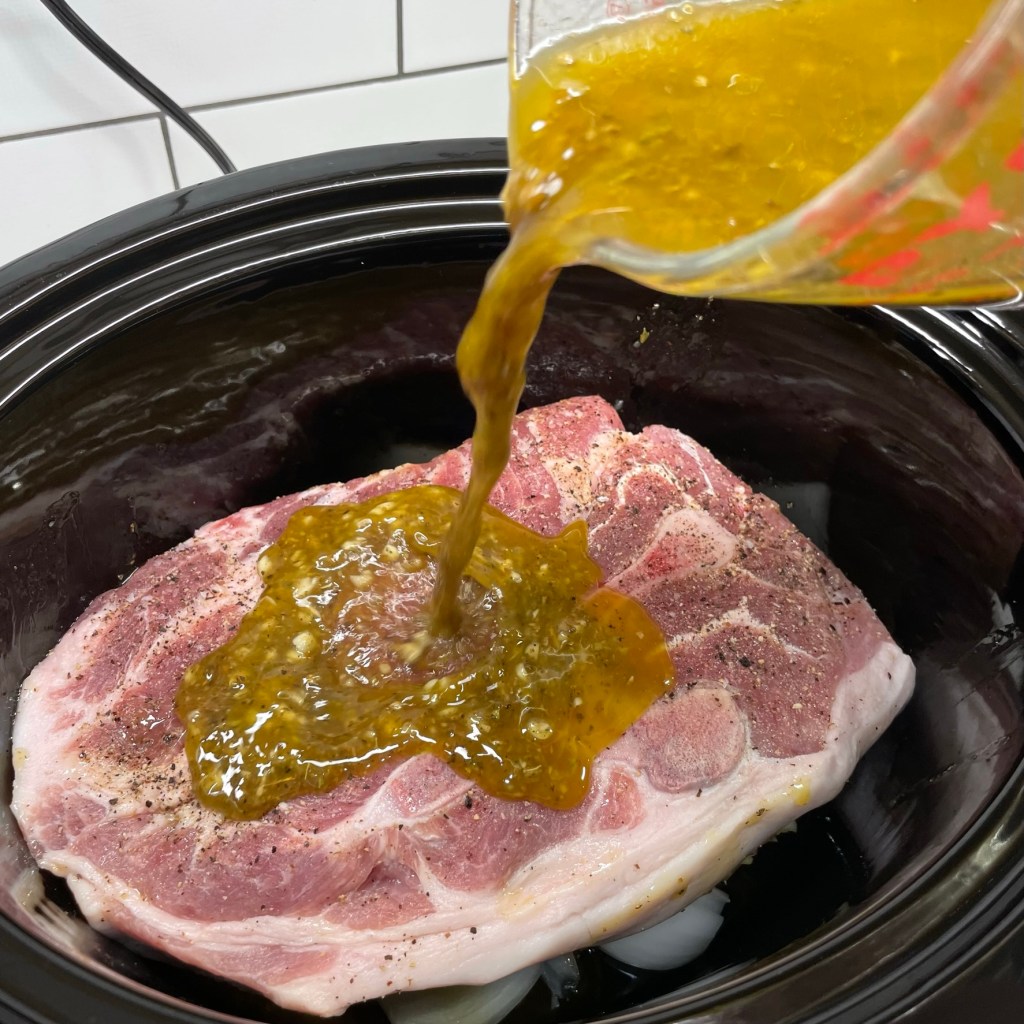
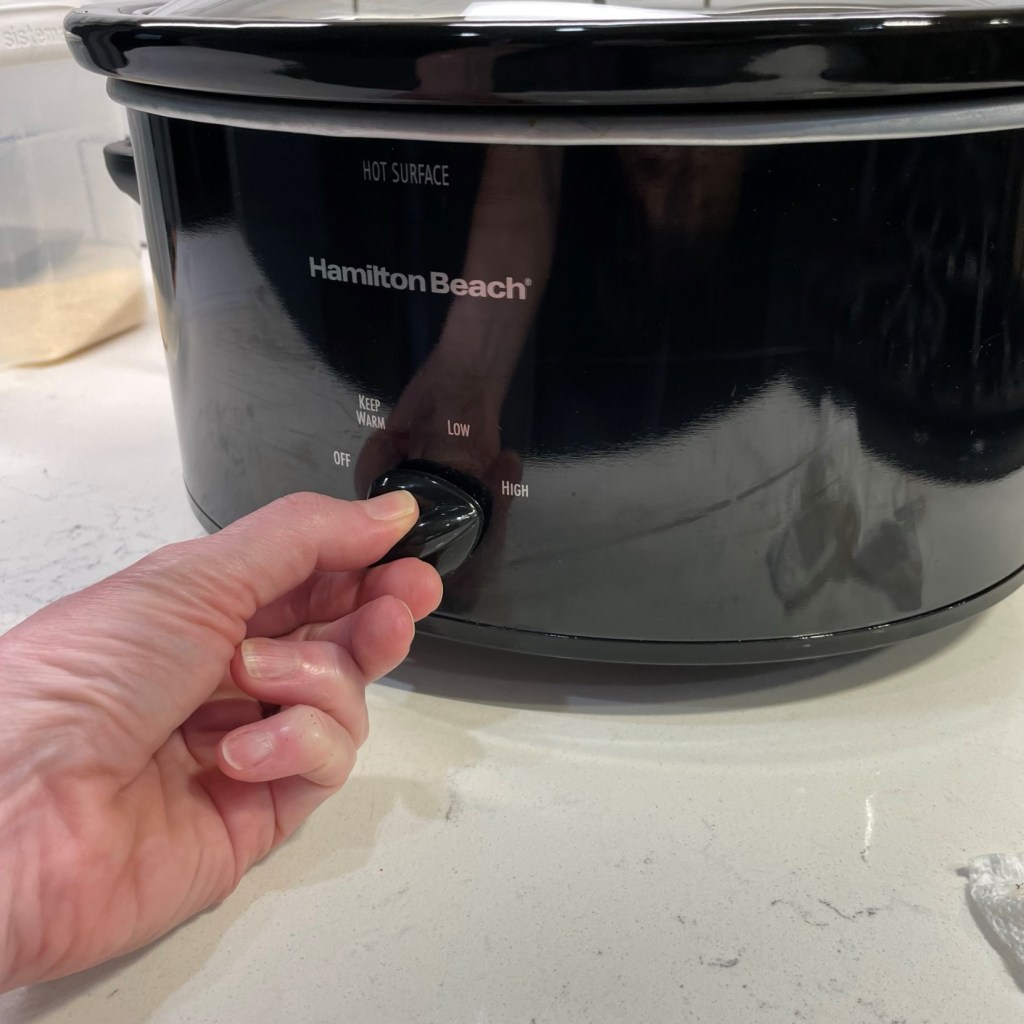
Here’s where I used the spent orange pieces, along with some onion wedges; they were a bed for the pork shoulder in my slow cooker, allowing the mojo marinade full access to the meat’s surface. I poured about a third of the marinade over the shoulder, then turned it over and poured another third, reserving the last portion of marinade mixture to pour over the roast at serving time. Set the cooker on high for 45 minutes to bring it up to cruising speed, and then knock it down to low and walk away for five hours.


Low and slow makes it a winner!

Did you get that? You don’t want to cook it on high setting for five hours, or you’ll end up with tough, overcooked shoulder. The high setting is just to bring the temperature up more quickly, and then the cooking should all happen on low setting. Very important.

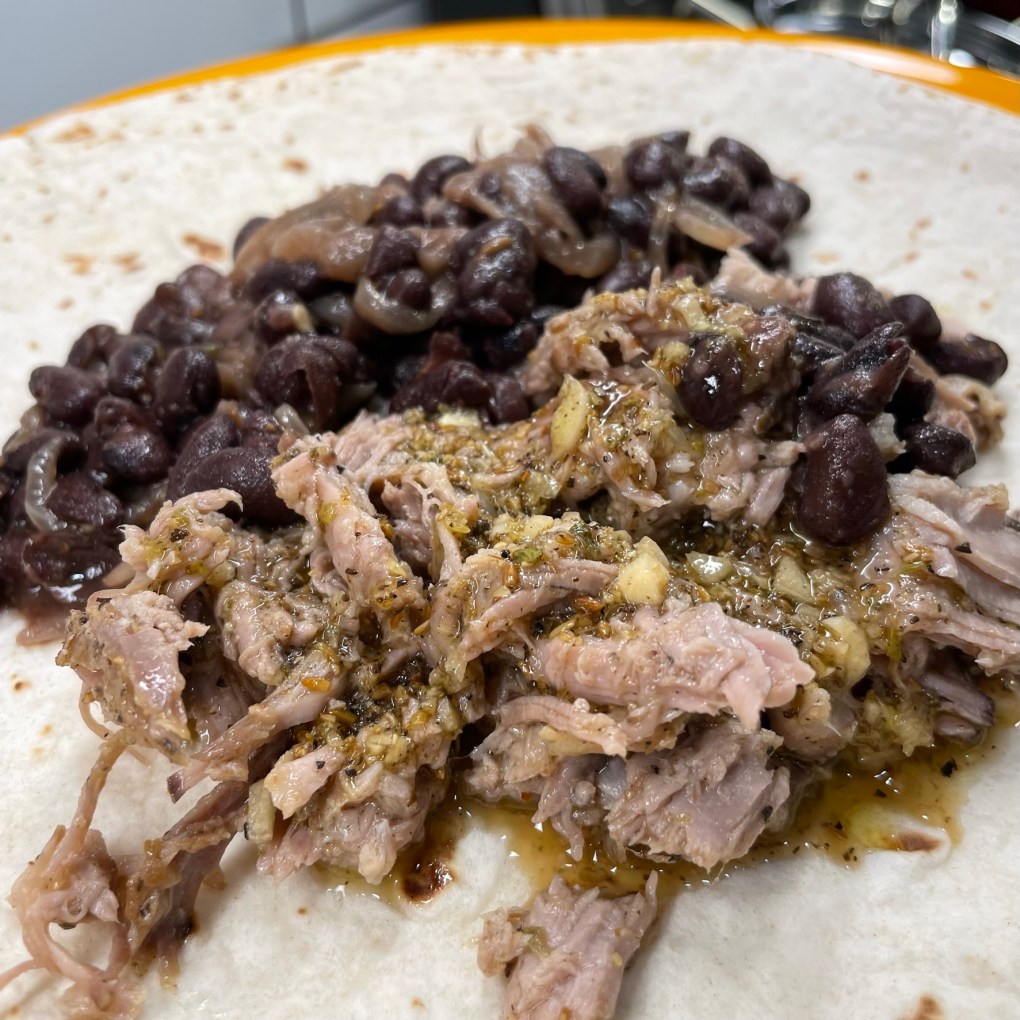
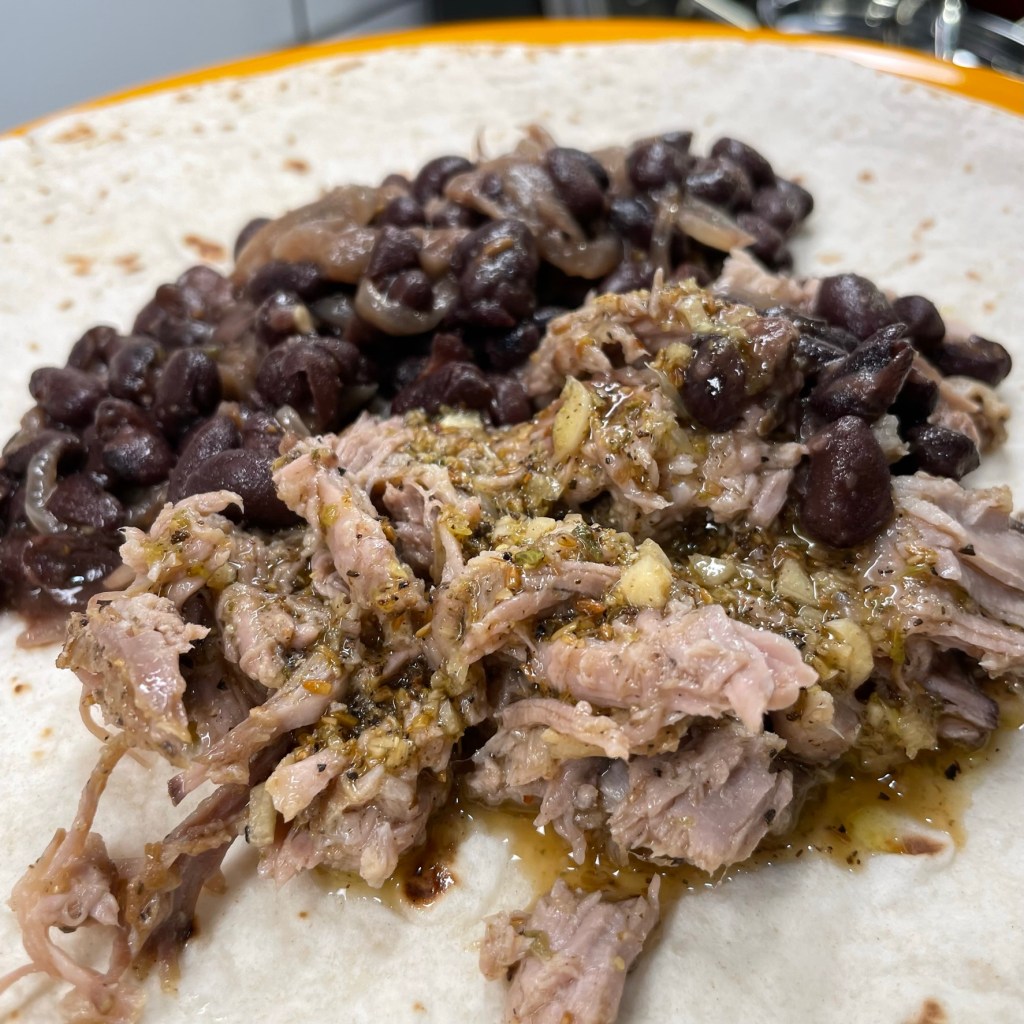
I had a busy afternoon, so I wrapped up my work emails, did a load of laundry and went out for a pedicure during this time, and having the freedom to tackle my to-do list reminded me how much I still love using a slow cooker on occasion. When I came home, the house already smelled amazing. I flipped the pork shoulder over for a final hour of cooking, and went about the business of making some jalapeno-simmered black beans.


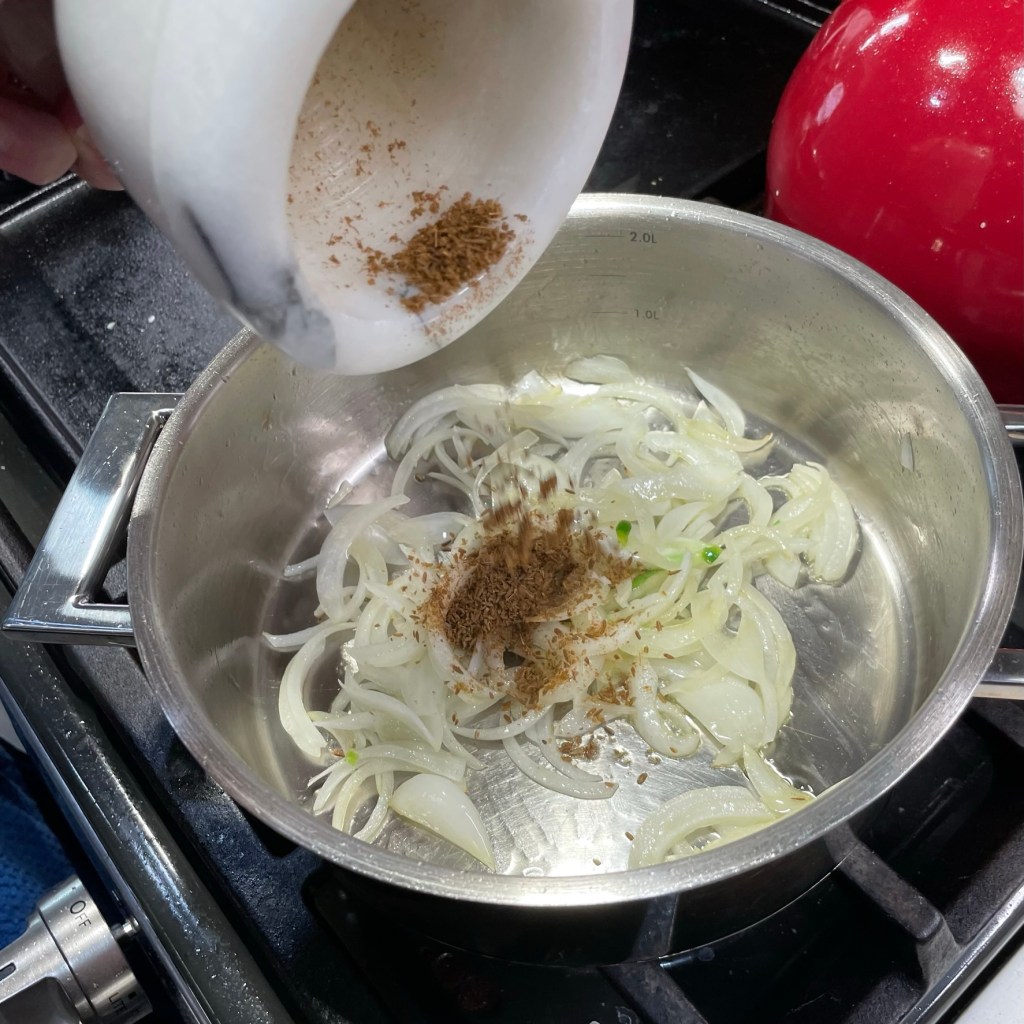
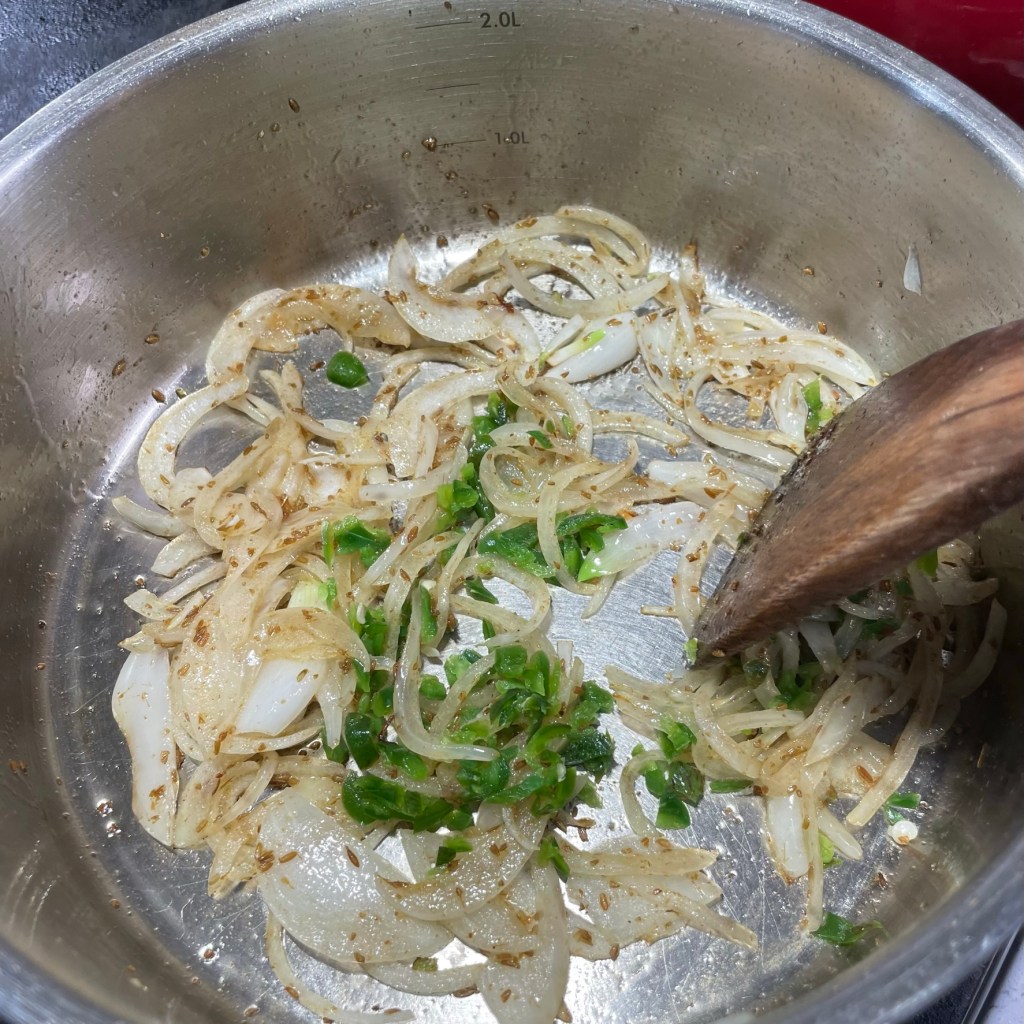
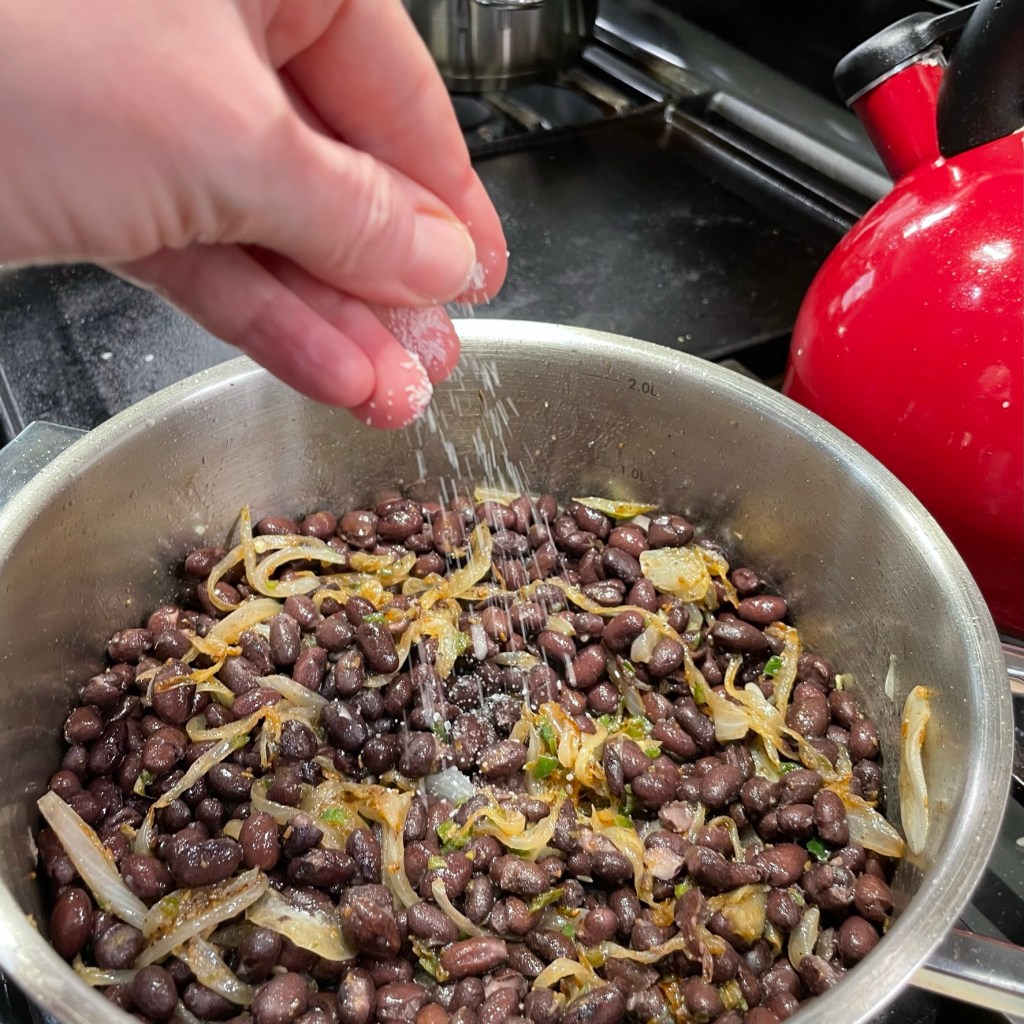
I cut half of a sweet onion into crescent slivers, and diced up a fresh jalapeno from our post-summer garden, leaving most of the seeds behind. I sautéed those in olive oil, along with a touch of ground cumin, then added two cans of rinsed black beans. Salt and pepper, and a splash or two of the Cuban-style pork braising liquid and we had a perfect, if not authentic, side dish for our delectable pork.


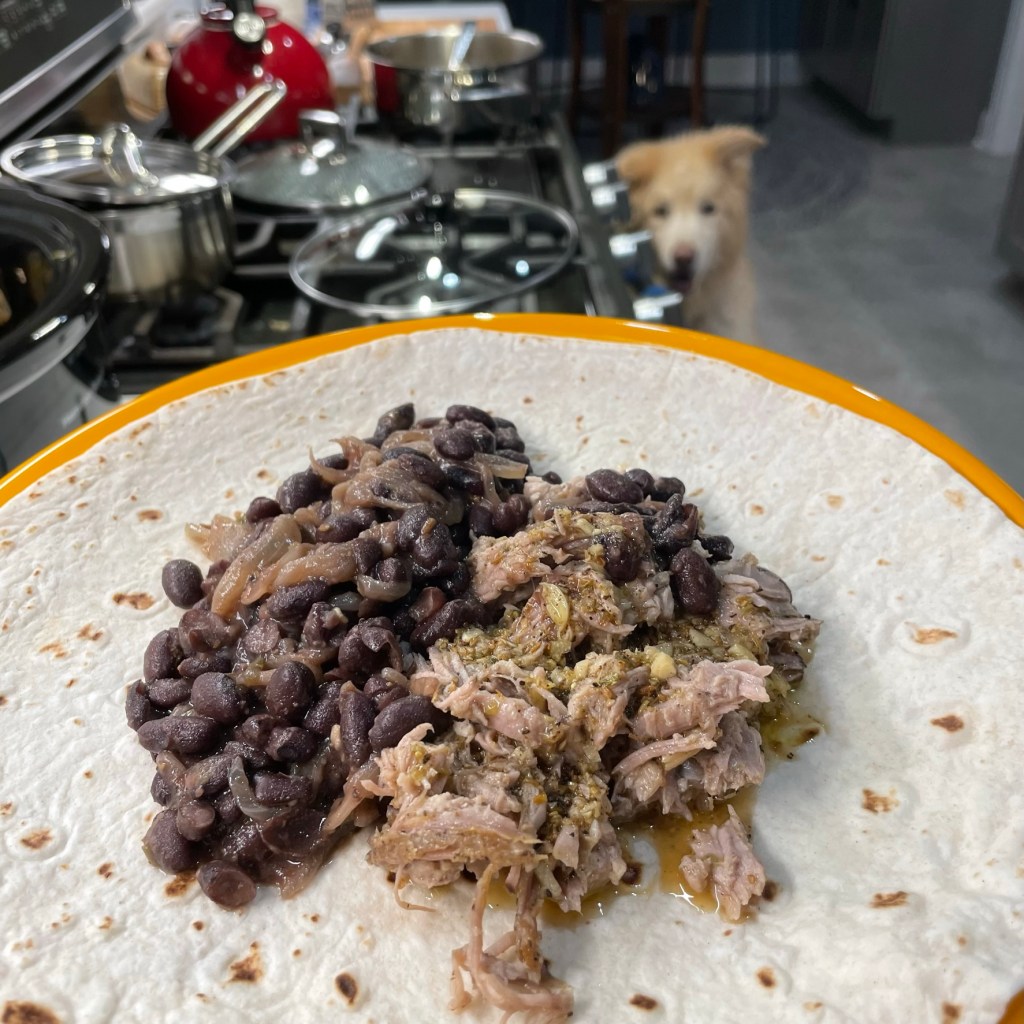
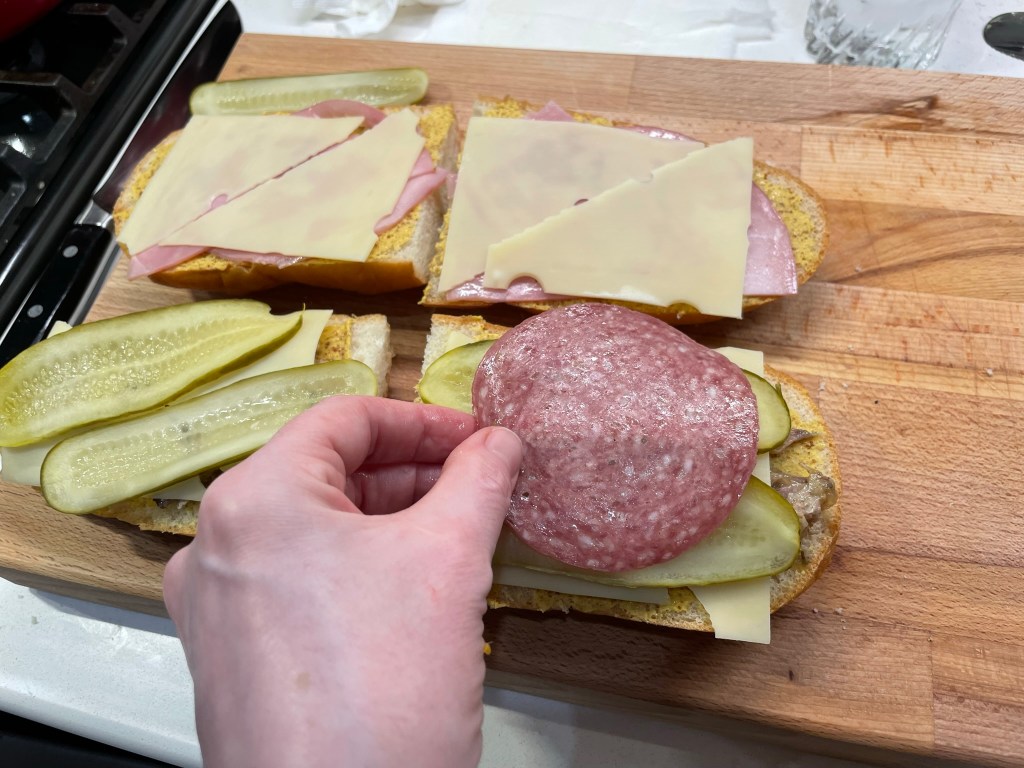
Test doneness of the pork by inserting a fork and twisting lightly. If it shreds easily, it’s ready! We enjoyed the meat on its own that first night, and tried our best a couple of nights later to make Cubano sandwiches, just like Chef Carl Casper and his crew. The bread wasn’t quite right, but it was still pretty darn delicious. 🙂


Slow Cooker Cuban-style Pork

  • Servings: About 8
  • Difficulty: average
  • Print

My version of this Cuban classic has all the right flavors, and it was super easy to make in my slow cooker.


Ingredients

  • 4 lb. bone-in pork shoulder (sometimes called Boston Butt)
  • 2 navel oranges, wedged and juiced (reserve a few of the spent wedges)
  • Juice of 4 limes
  • About 2 Tbsp. crushed and minced garlic
  • 2 tsp. cumin seed, toasted and ground
  • 1 tsp. sugar (not authentic, but a touch helps balance the citrus)
  • 2 tsp. black pepper (mine was half smoked)
  • 1 Tbsp. dried oregano (I used half regular, half Mexican)
  • About 1/4 cup EVOO, whisked in
  • About 1 Tbsp. kosher salt
  • 1/2 large onion, cut into wedges (used as base in slow cooker)

Directions

  1. Rinse shoulder and wipe dry with paper towels. Salt and pepper both sides and let rest at room temp while you prep the marinade.
  2. Combine the citrus juices, garlic, cumin, sugar, pepper and oregano in a glass measuring cup. Whisk in olive oil and season with salt according to your taste (somewhere between 2 and 3 teaspoons is good).
  3. Place onion chunks and spent orange peels in the bottom of the slow cooker and place the shoulder on top. Pour in about 1/3 of the mojo, then turn the shoulder over and pour in another 1/3, reserving the rest for serving over the tender, shredded pork.
  4. Use the cooker’s high setting for about 45 minutes to get the heat going, then reduce to low setting and cook for 5 hours.
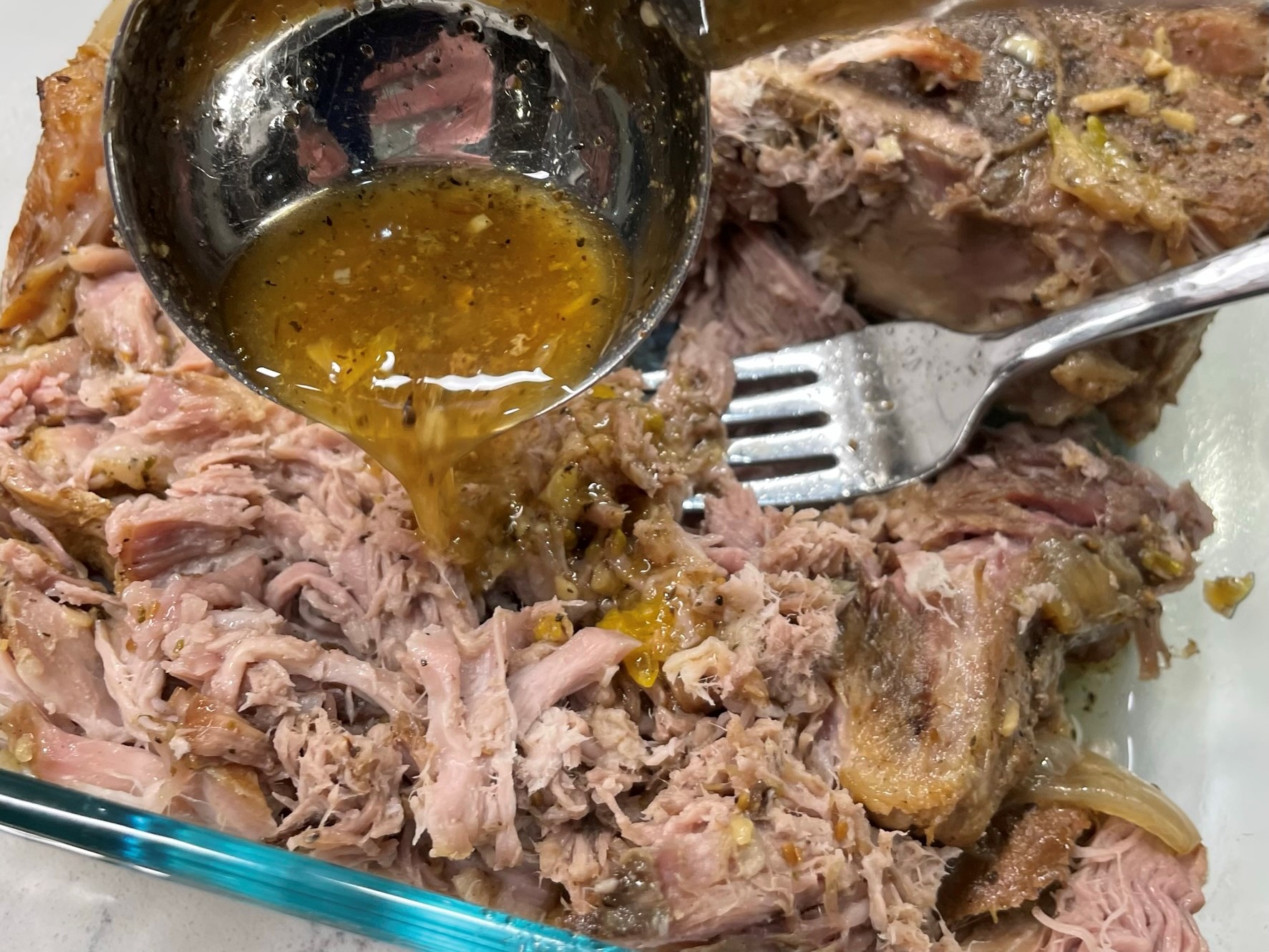
  5. Use tongs to turn shoulder over and continue to cook on low setting for another hour. Transfer shoulder to a glass dish and use forks to shred the meat. Stir the braising liquid and ladle some of it onto the shredded pork. Pour the reserved marinade mixture onto the pork as well. The freshness of the uncooked marinade brightens up the flavors of the tender pork.
  6. Strain the solids from the slow cooker, and keep the remaining liquid for packing the leftover meat. It will retain moisture better in the fridge this way.

Serve pork with jalapeno black beans and, if desired, white rice.

Ingredients

  • 1/2 medium onion, sliced into crescent shapes
  • 1 Tbsp. extra virgin olive oil
  • 1/2 tsp. ground cumin
  • 1 small jalapeno, seeded and minced
  • A few pinches kosher salt and several twists ground black pepper
  • 2 15 oz. cans black beans, drained and rinsed
  • 1/4 cup vegetable broth or Cuban-style pork braising liquid

Directions

  1. Heat oil in a large saucepan over medium heat. Toss onions and cumin until fragrant, then add jalapeno and season with salt and pepper.
  2. When onions begin to caramelize, reduce heat and add black beans. Add broth or braising liquid and cover to simmer until heated through.


Sweet Tea-brined Pork Chops & Peach-Mint Chutney

There were a few big things I had to get used to when I moved to North Carolina from my childhood home in upstate New York. The weather, of course, was wildly different—we have at least eight months of warmth and sunshine each year, compared to seven months of snow and slush and gray that were my normal. People in the South tend to be friendlier (there are exceptions, naturally) and there is a sense of hospitality that I had not experienced before I moved here. It didn’t take long for me to fall in love with the place.

Folks ‘round here invite you to drop by anytime, “sit a spell” and enjoy some tea. The first time someone welcomed me this way, I thought it odd that they would serve tea on a hot August afternoon. But that’s because, where I grew up, tea was a beverage served hot, with the paper tab of a teabag draped over the edge of a dainty cup, and a lemon wedge or tiny cup of milk served on the side.

Not so in the South, where “tea” is sweetened with sugar (white or brown, depending on the whims of the hostess), freshly brewed and poured over ice in a tall glass, best enjoyed on the front porch while listening to the hum of cicadas (which we have every summer in North Carolina). Lemon is optional, gossip is welcomed. Sweet tea is, as Dolly Parton’s character declared in Steel Magnolias, “the house wine of the South.”

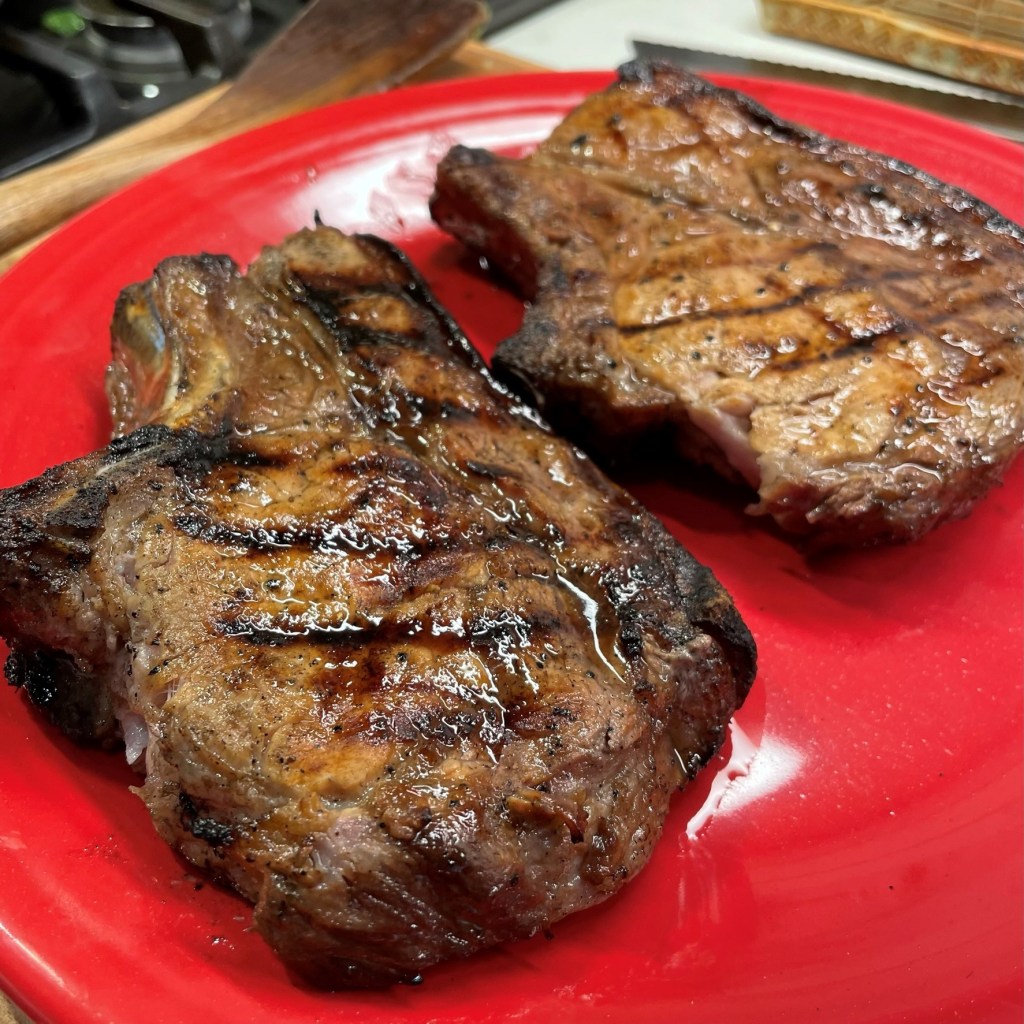
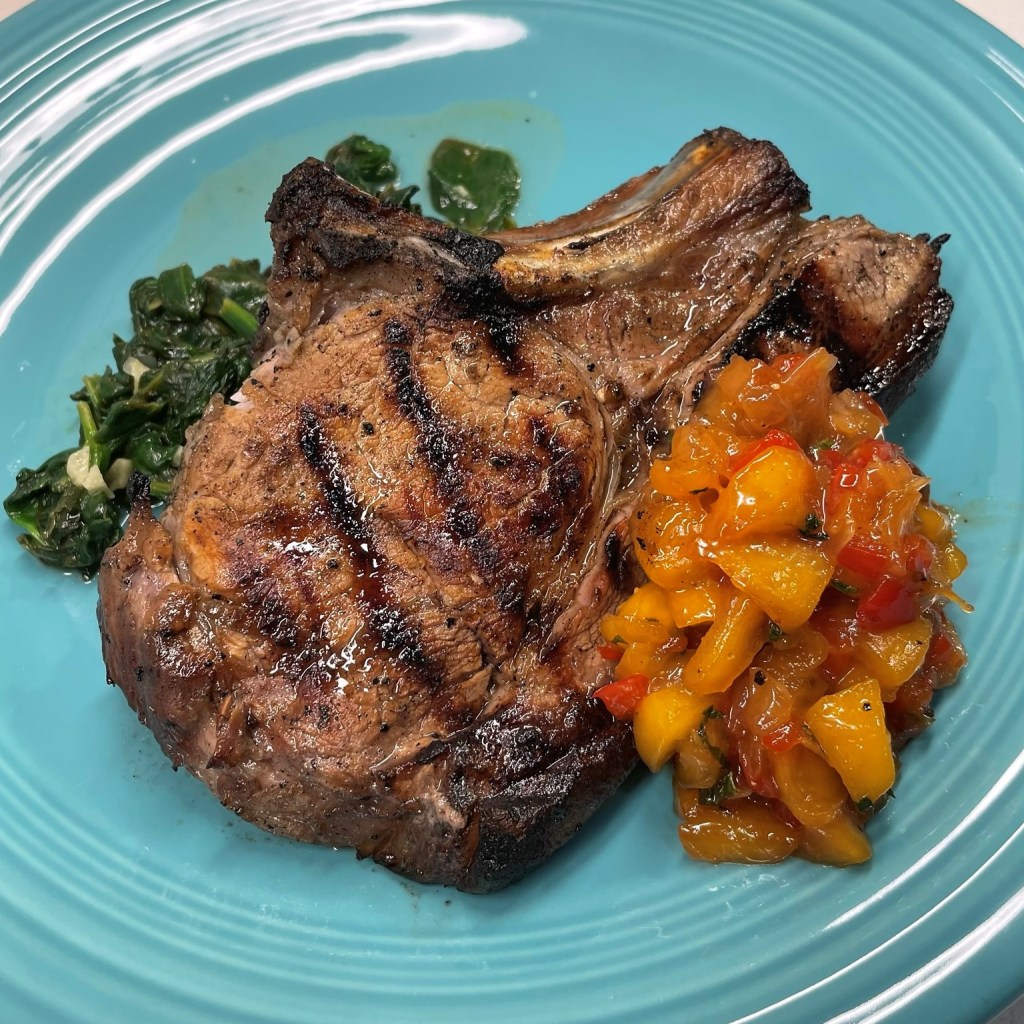
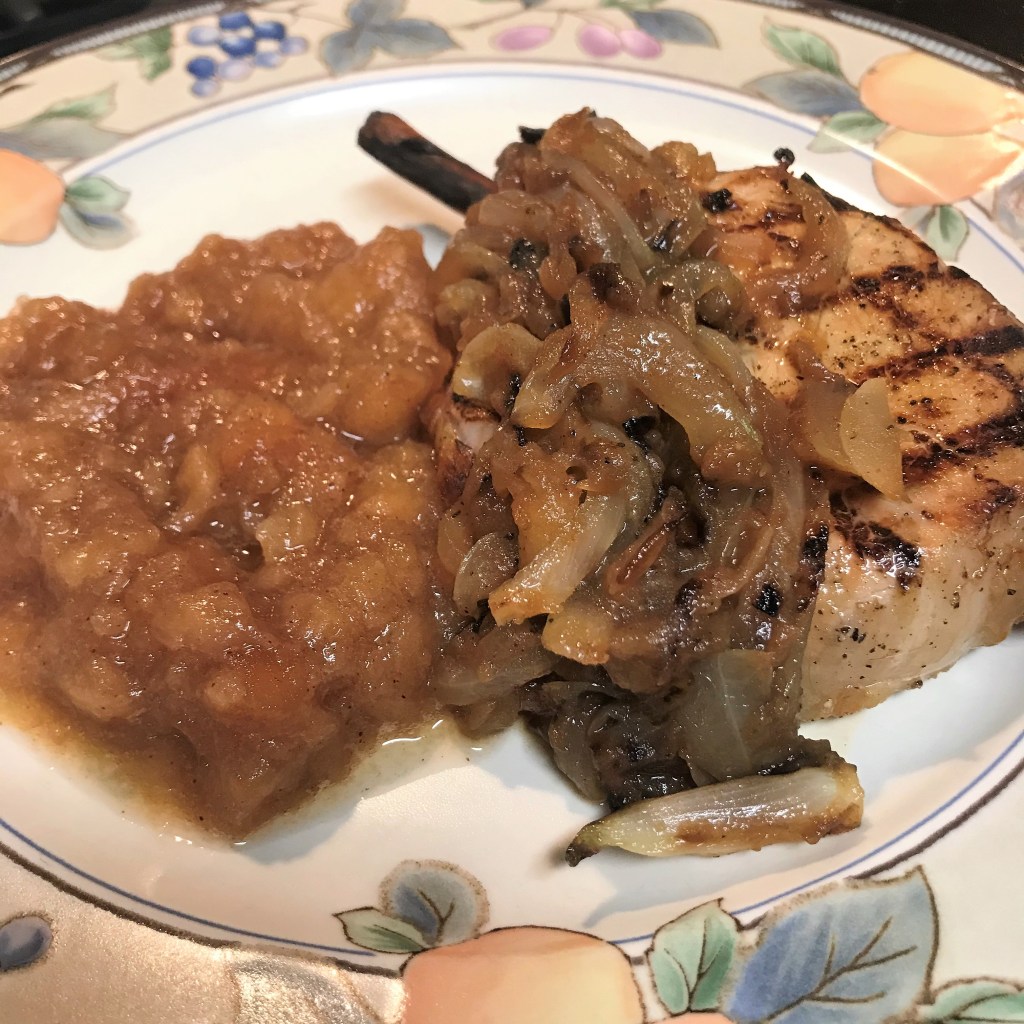
Though my Yankee-born taste buds do not appreciate the level of sweetness in southern sweet tea, I respect its place in the culture and I enjoy giving it a starring role in my kitchen. The polyphenols in tea are said to provide a wide range of health benefits, and beyond that, I knew that black pekoe tea would be acidic enough to help tenderize the beautiful pork chops I picked up at our local butcher shop. The flavor of these chops after brining and grilling was, how shall I say? Freaking awesome, that’s what. They were tender and juicy, flavorful with a subtle sweetness.

Lord, yes, this sweet tea brine was delicious!

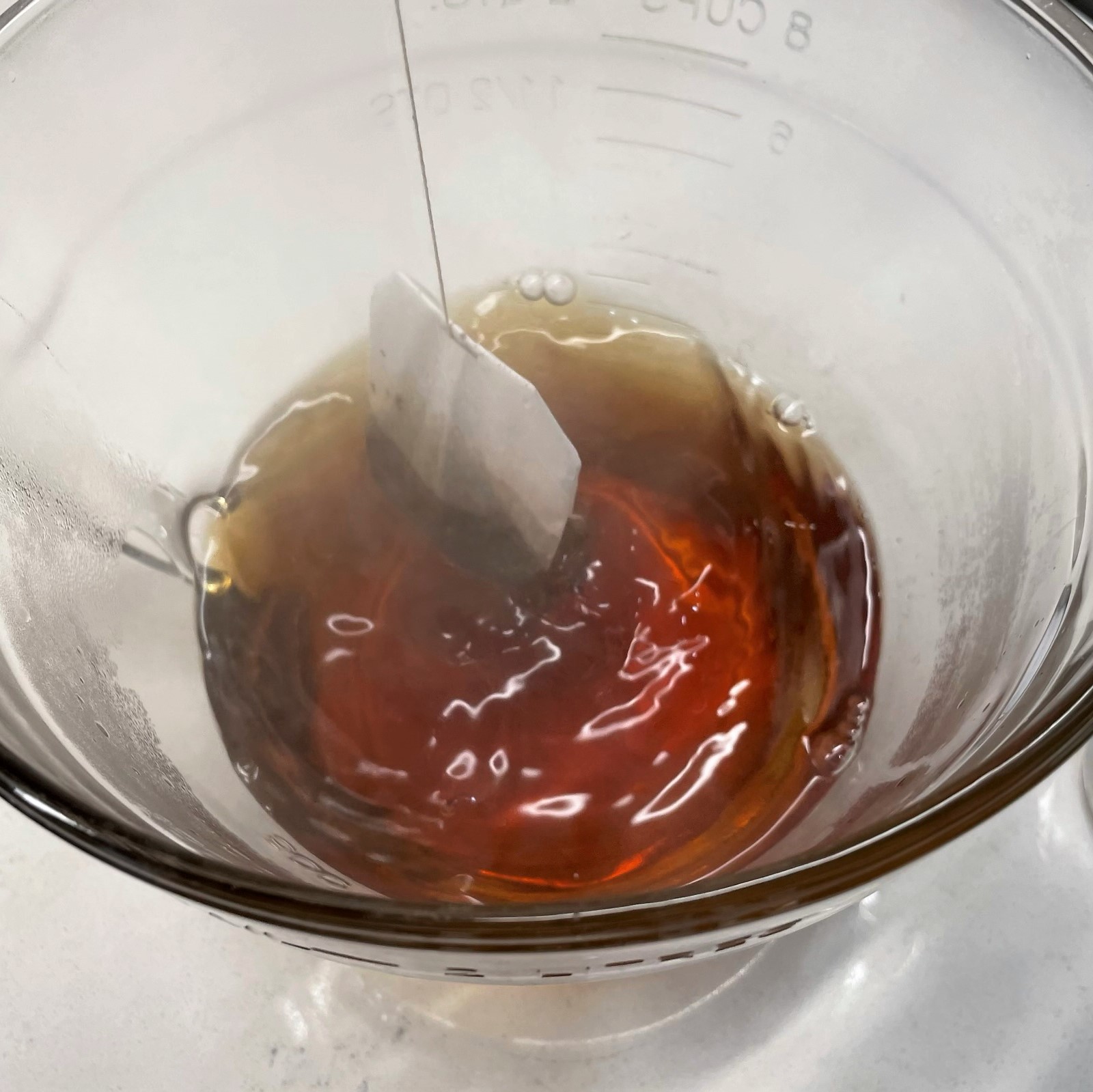
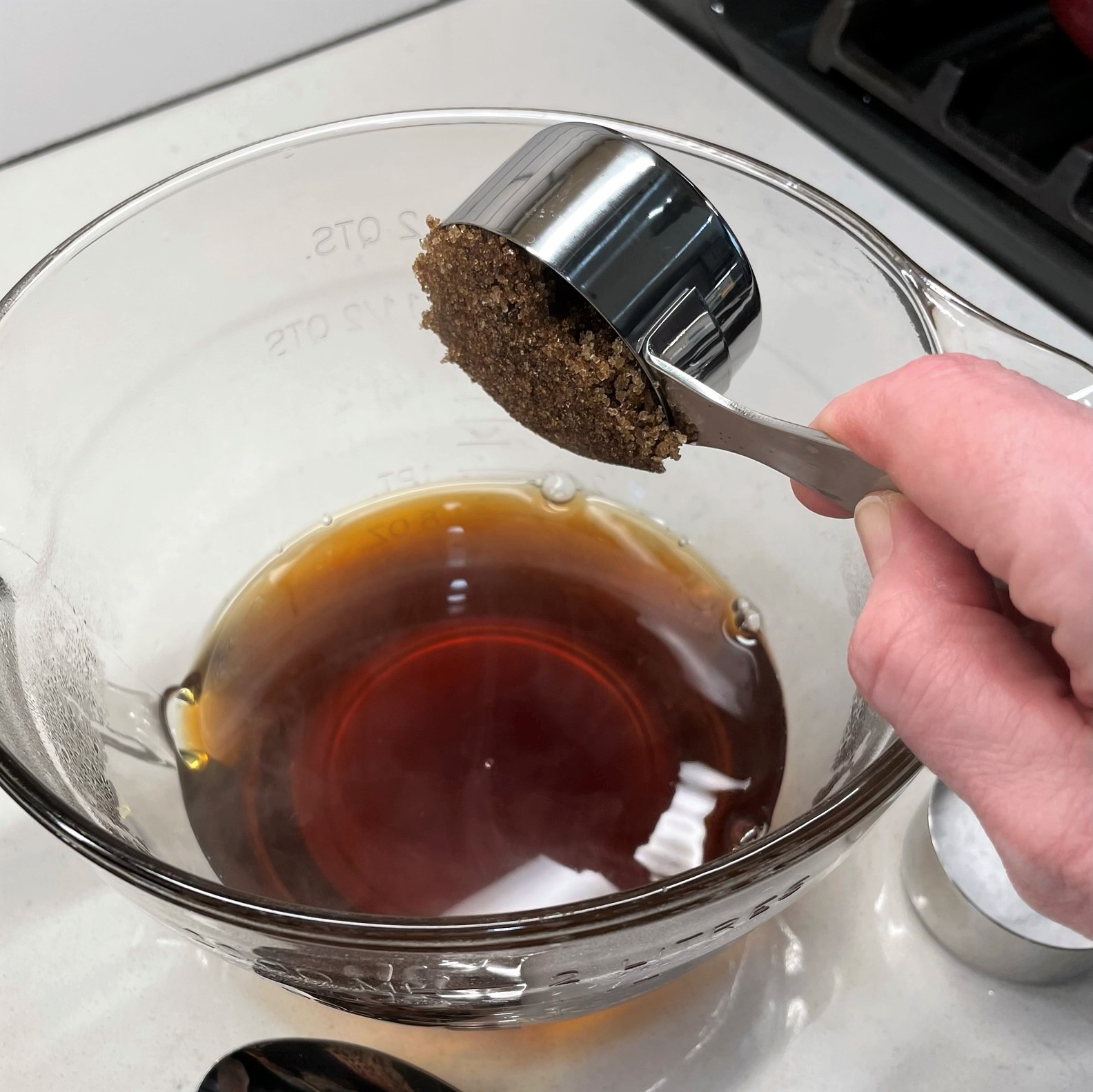
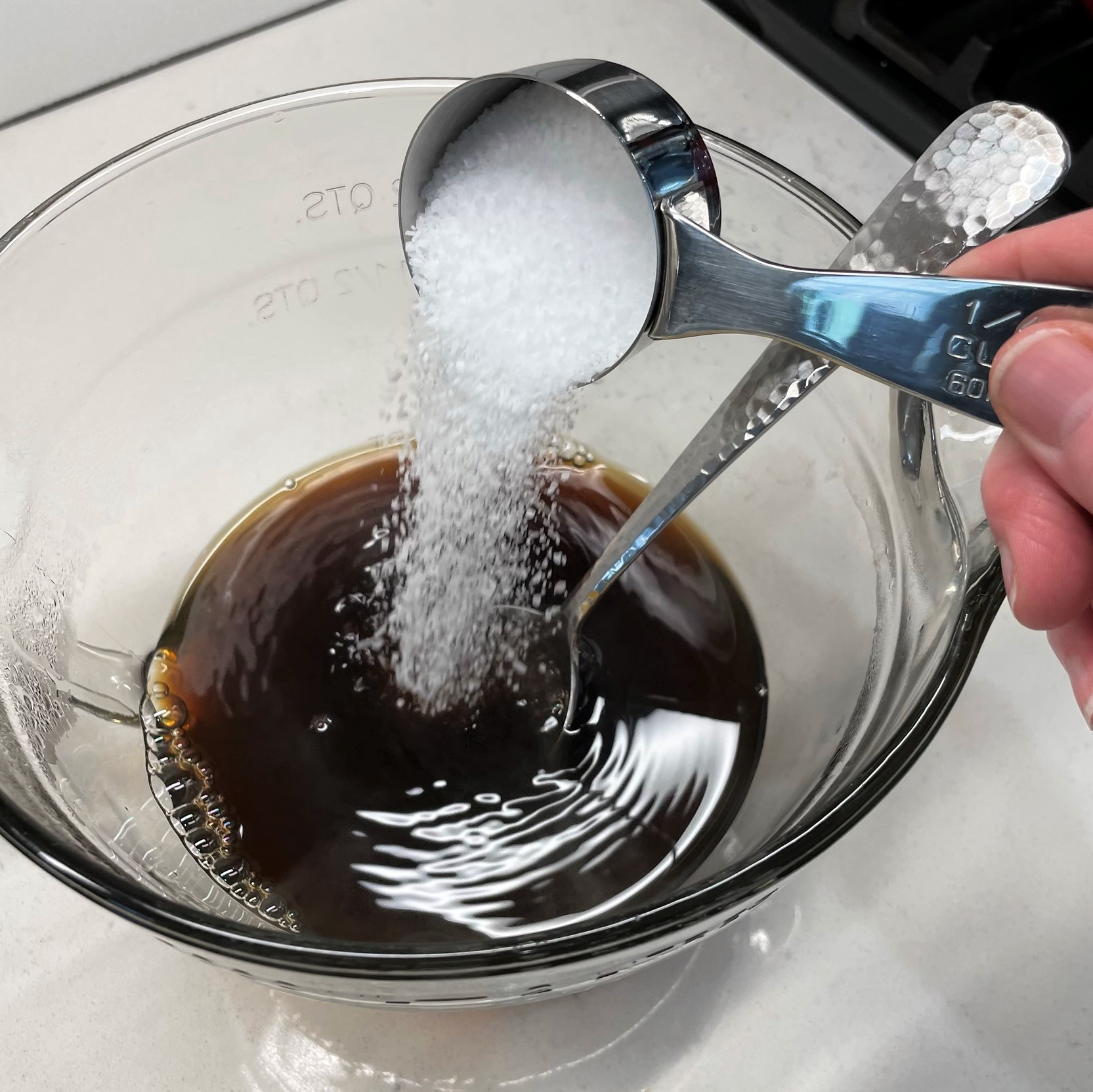
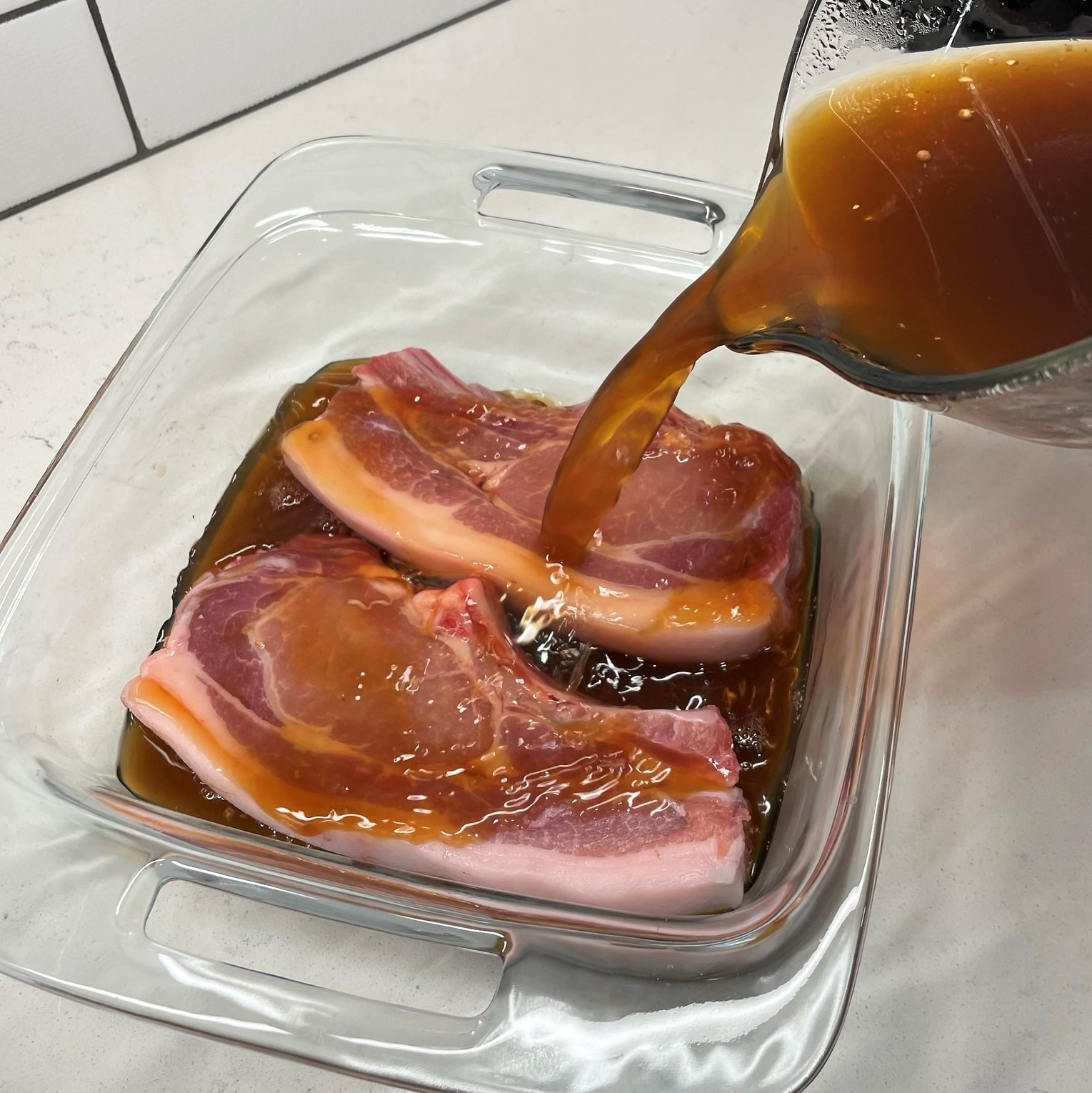
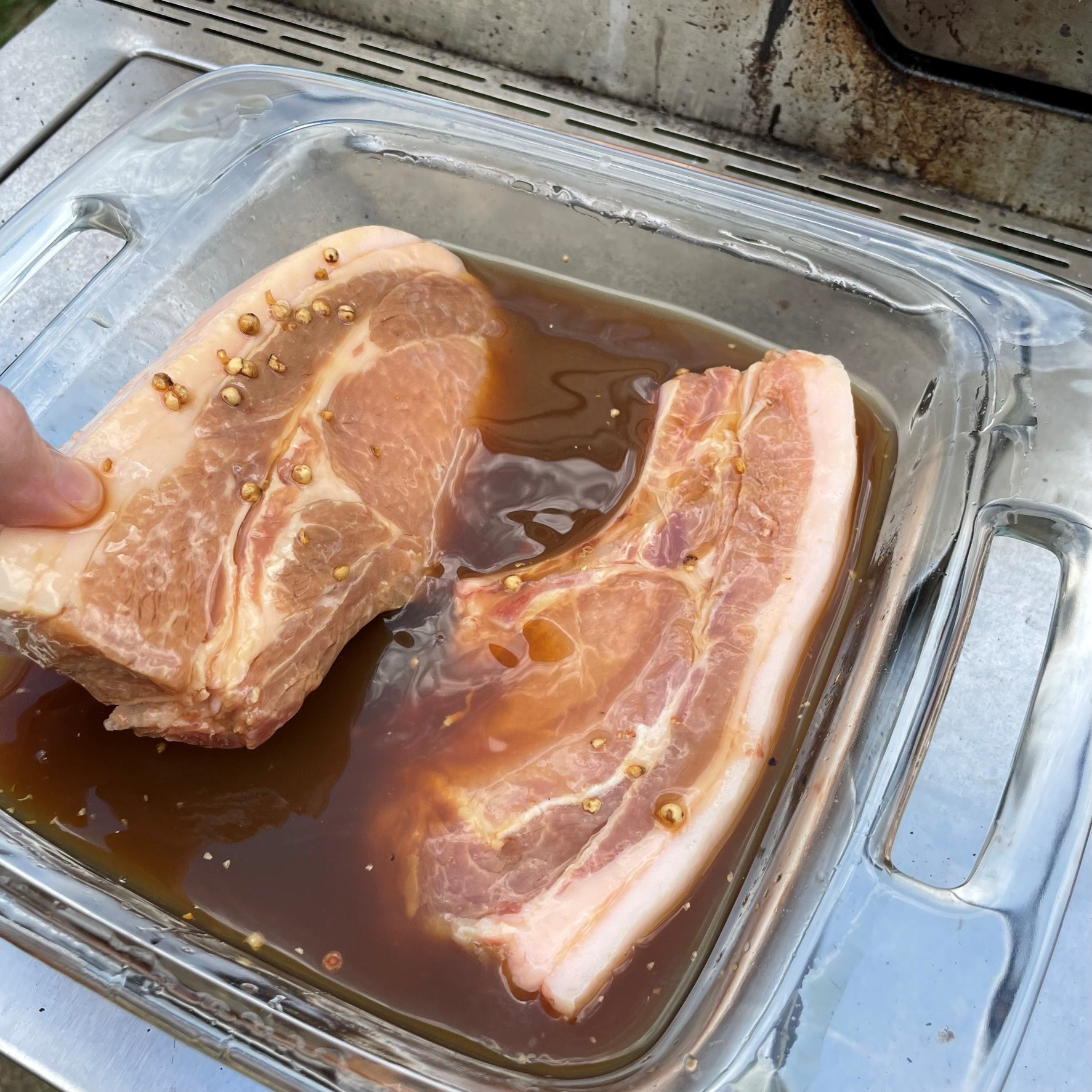
Any recipe involving a brine requires some advance prep, so if you decide to make these, start in the morning. One of the critical rules of brining is to never pour a warm brine over raw meat. I brewed the tea late that morning, following a typical “southern” ratio of tea-to-water and sugar, then I flavored it up with kosher salt (necessary for any brine), white peppercorns and a very generous squeeze of fresh lemon juice. After a three-hour cooldown, I poured the brine over my chops and refrigerated them for several hours before grilling.


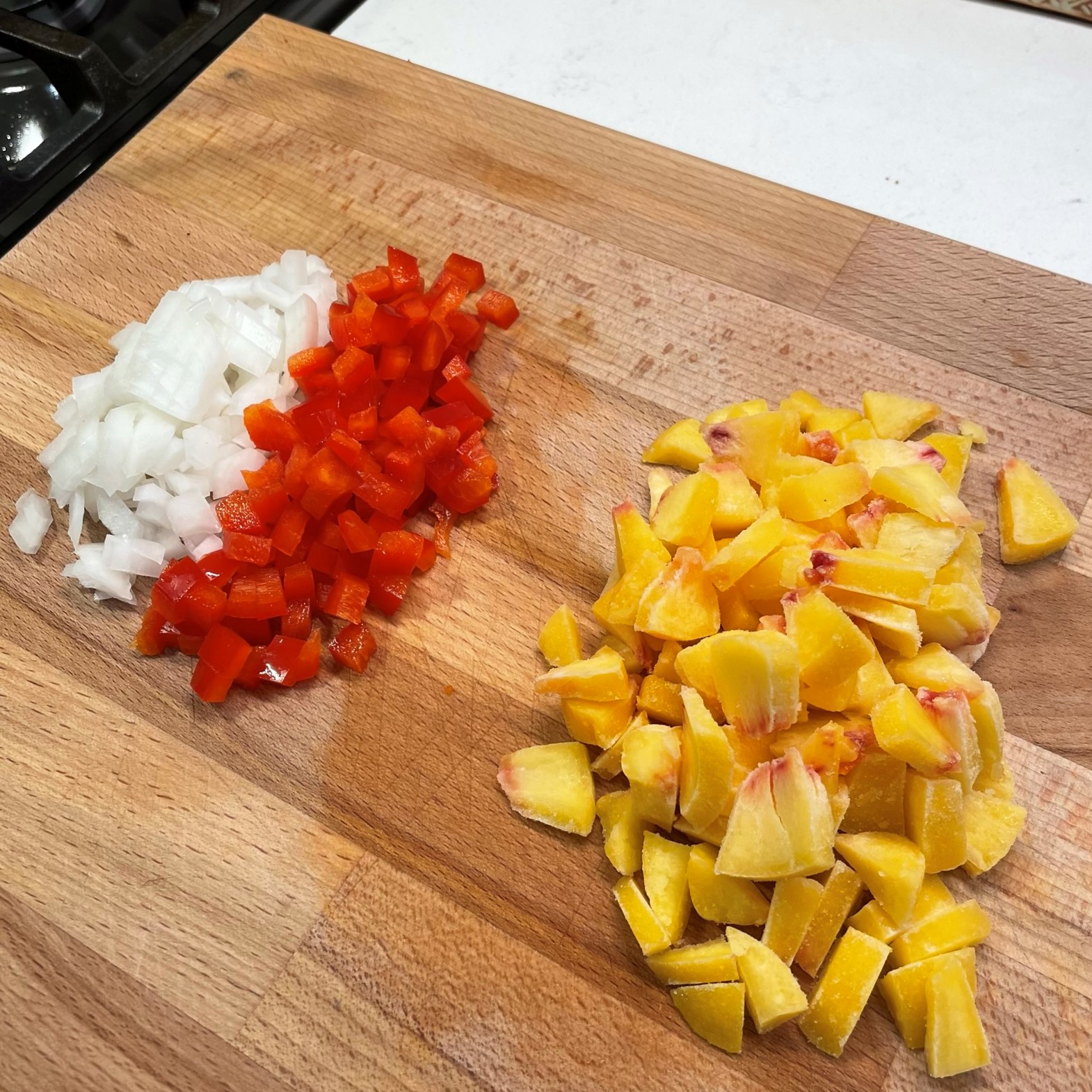
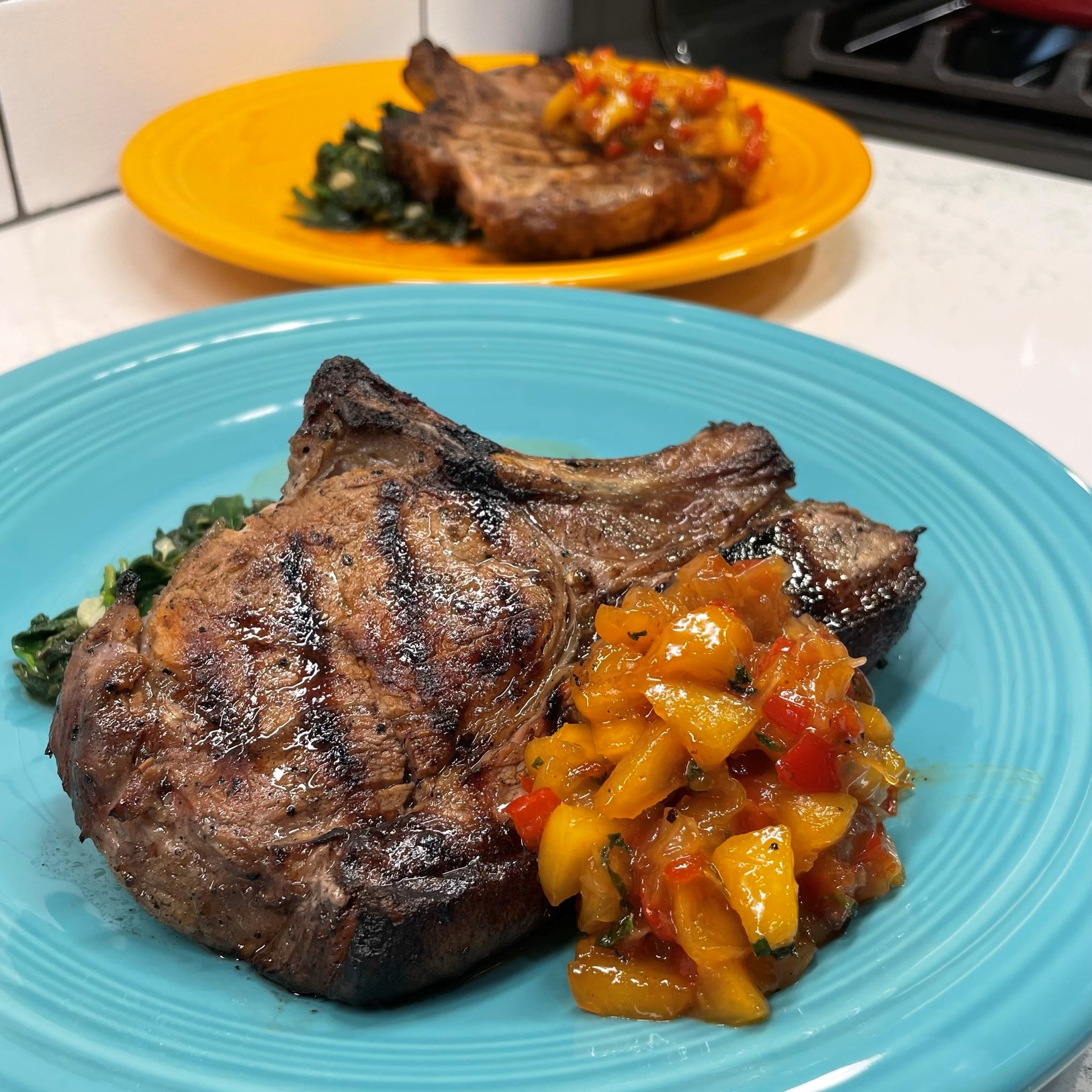
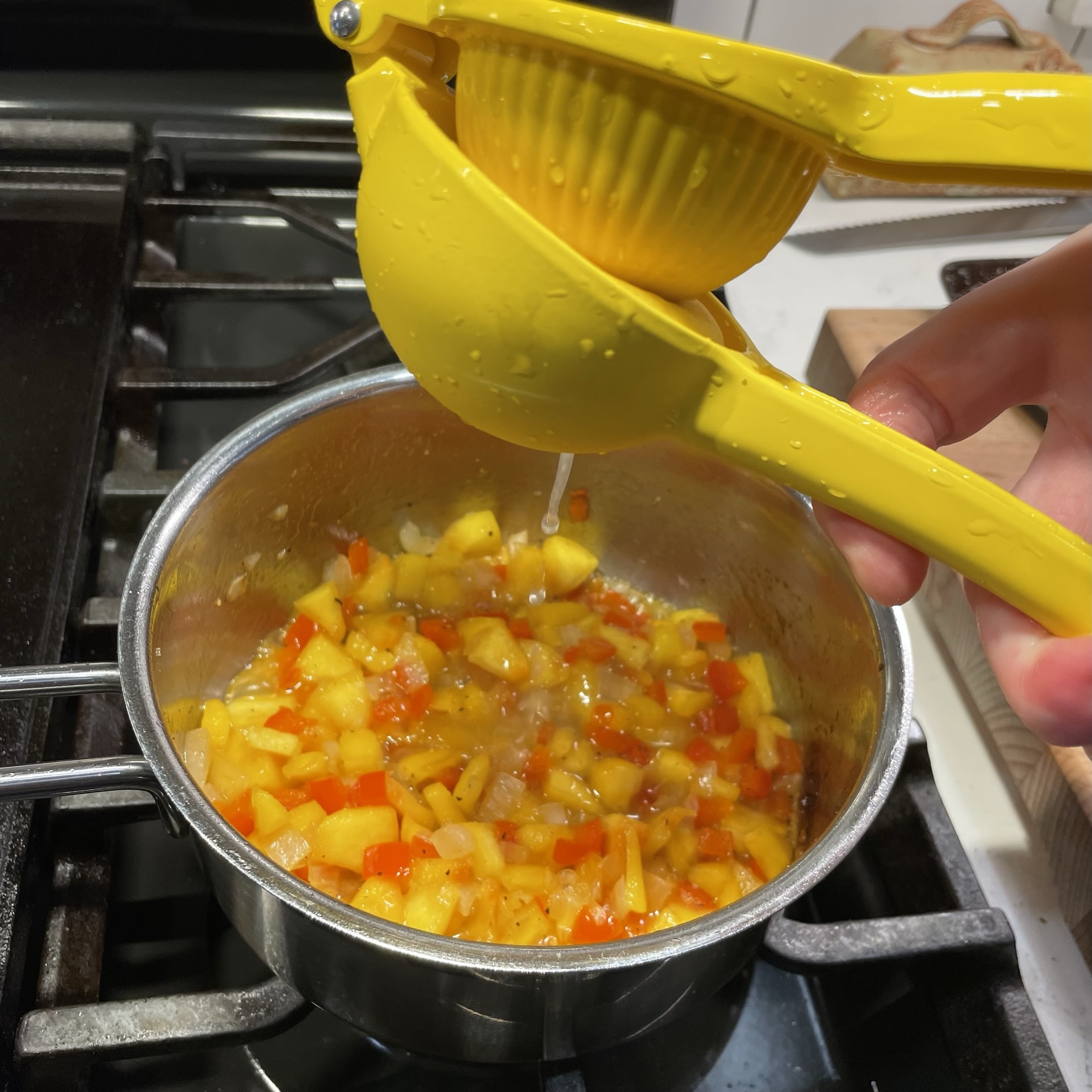
Chops this flavorful needed a strong accompaniment, and I paired them with a sweet-meets-savory chutney, giving two more southern specialties—peaches and Vidalia onions—supporting roles on our plates. As with any chutney, I sauteed the onions first with a handful of sweet red bell pepper, then I added peaches (frozen was my best option this time of year), a bit of brown sugar and fresh lemon juice, a tiny bit of zippy horseradish and a few leaves of fresh mint at the end to brighten it all up.


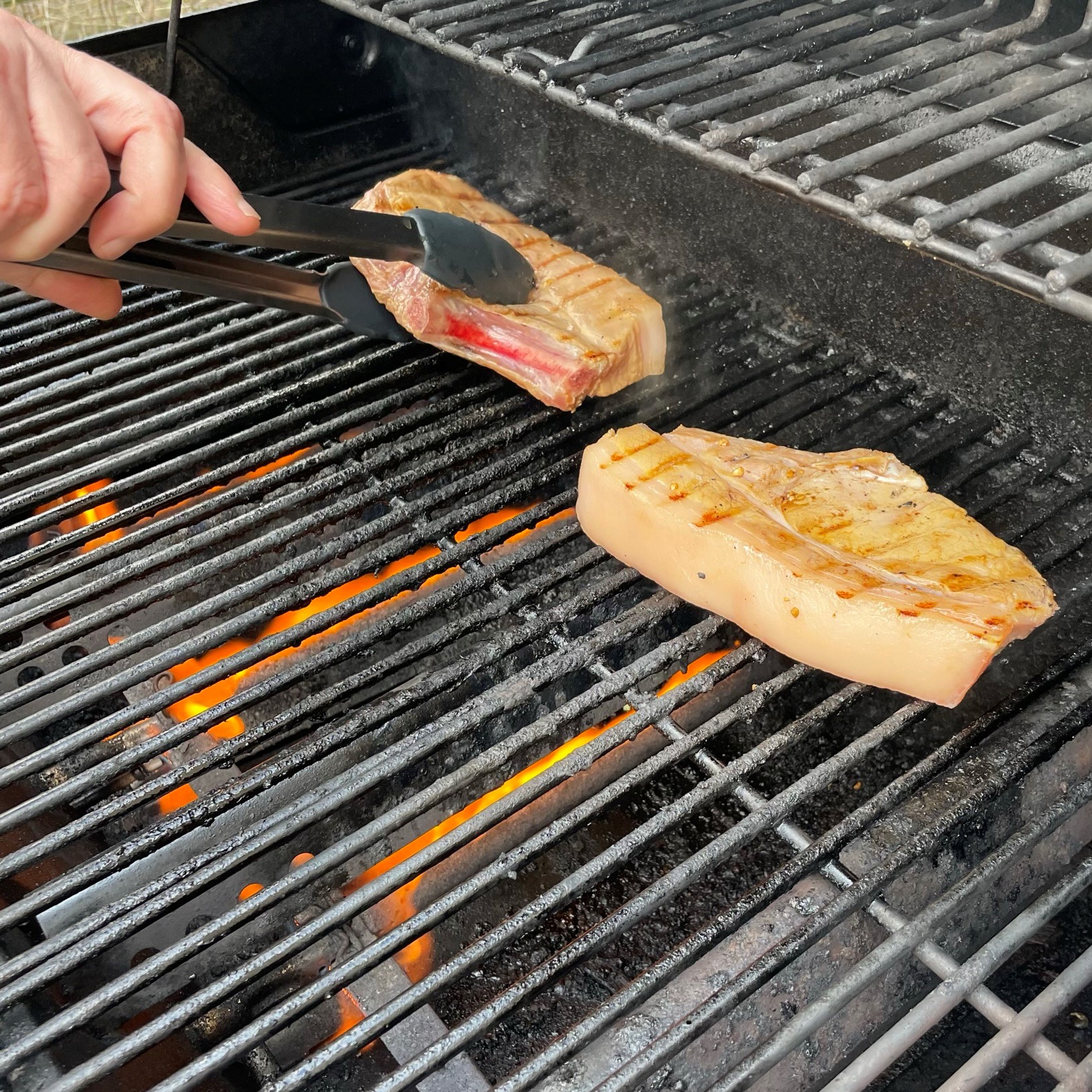
My husband is the grill master at our house, and he did his usual outdoor magic with these sweet tea-brined pork chops. After searing both sides on high heat, he let them hang out at a lower temperature for about 8 minutes on each side, until the meat was beautifully browned, and the chops were done to medium (150° internally). A quick rest on the counter while I plated up some sauteed spinach and the peach-mint chutney, and this was one tasty dinner.  


Sweet Tea-brined Pork Chops

  • Servings: 2
  • Difficulty: average
  • Print

Well, bless my heart! I’ve fancied up a pitcher of southern sweet tea and made it a brine for the most tender, flavorful pork chops our grill has ever seen! This recipe requires some down time, for cooling the sweet tea brine, as well as brining the pork chops before grilling, so plan accordingly.

Ingredients

  • 2 cups filtered water
  • 1 family size black pekoe tea bag, or 3 regular tea bags
  • 1/3 cup packed brown sugar
  • 3 Tbsp. kosher salt
  • 1 Tbsp. cracked white peppercorns
  • Juice of 1/2 large lemon
  • 2 thick, bone-in pork loin chops, weighing almost a pound total

Directions

  1. Boil water and pour it over the tea bag to brew the tea. Add brown sugar and kosher salt, stirring until both have fully dissolved. Add white peppercorns and lemon juice. Allow the brine to cool at room temperature for several minutes, then transfer the brine to the refrigerator for about three hours to chill.
  2. Pat the pork chops with paper towels to remove any residue from the butcher wrap. Place chops in a dish large enough to hold the full amount of brine. Pour chilled brine over the chops and refrigerate for 3 hours before grilling. If needed, weigh the chops down with a plate to keep them fully immersed in the brine.
  3. Remove chops from the refrigerator 30 minutes before grilling. Preheat grill to 500 F for searing the chops.
  4. Place chops on grill over high heat, just long enough to sear each side. This should only take about one minute, but trust your instincts on your own grill. Once seared, reduce the heat to medium (about 350 F) and cook on each side for about 8 minutes, depending on the thickness of your chops. Optimal internal temperature is 145-150 F, and the chops will continue to cook a bit after you remove them from the heat.
  5. Rest the chops on a plate for about 3 minutes, then plate and serve with peach-mint chutney.

Peach-Mint Chutney

  • Servings: 2
  • Difficulty: average
  • Print

This quick and easy condiment is a perfect complement to my “Sweet Tea-brined Pork Chops,” and it would also be delicious with fish or chicken. You can make this chutney ahead and refrigerate until ready to serve. It can either be warmed or served cold or room temperature.

Ingredients

  • 1 Tbsp. canola oil
  • 1/4 cup diced red bell pepper
  • 1/4 cup diced Vidalia onion
  • 1 cup fresh or frozen peaches, cut into cubes
  • 2 Tbsp. brown sugar
  • 1/2 tsp. prepared horseradish
  • Juice of 1/2 large lemon
  • Kosher salt and ground white pepper
  • 1 tsp. fresh mint leaves, cut into chiffonade or chopped

Directions

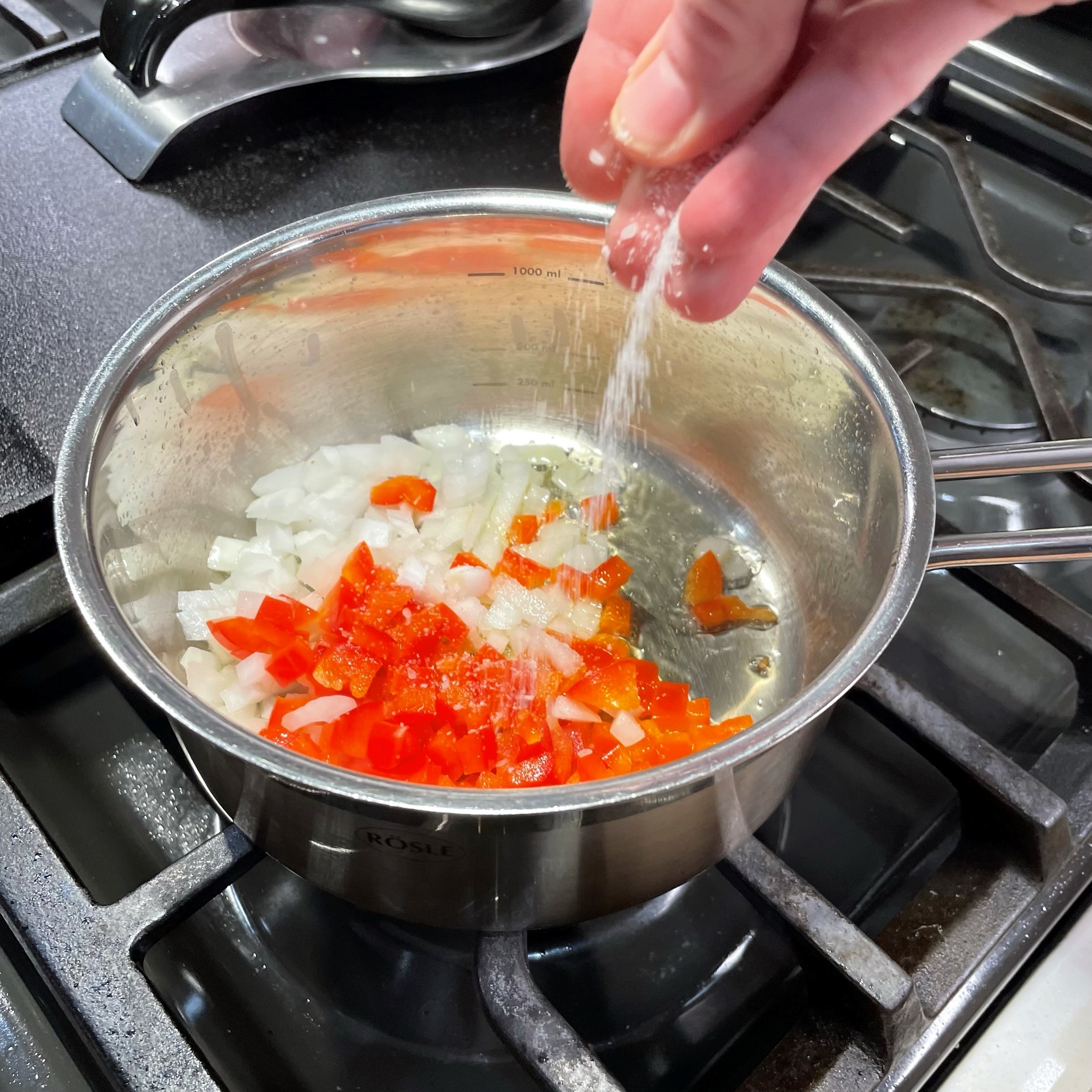
  1. Heat canola oil in a small saucepan over medium heat. When it shimmers, add onions and peppers and a pinch of salt. Saute until slightly softened, about five minutes.
  2. Add peaches, brown sugar and horseradish, tossing to combine. Season with a slight pinch of salt and white pepper. When the mixture is hot throughout, squeeze in lemon juice and simmer until it reduces and thickens slightly.
  3. Remove from heat and fold in chopped mint leaves.


Y’all come back, and see what I did with the rest of those peaches! 😉


Maple Mustard Meatballs

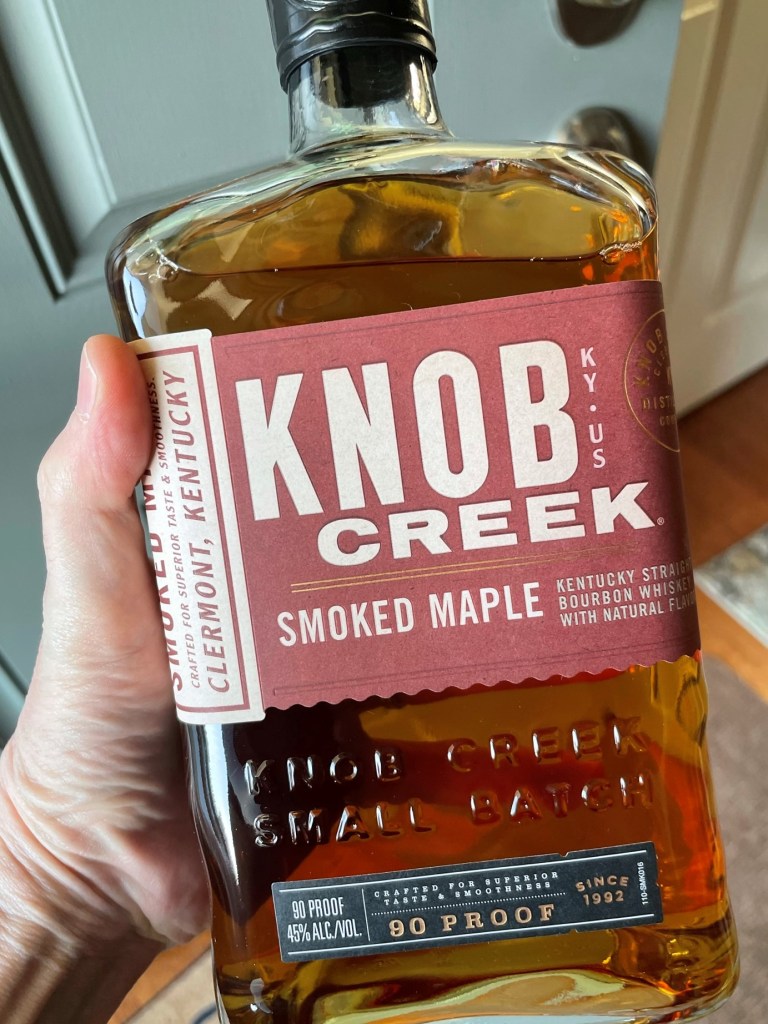
During the holiday season, right smack between Thanksgiving and Christmas, I shared my recipe for Smoked Maple Bourbon Crème Brûlée. That dessert was divine, with all the silky creaminess you’d expect and a generous splash of smoked maple bourbon, a Knob Creek product that my husband and I had recently discovered. The culinary possibilities of this bourbon seem limitless, as we have enjoyed it now in cocktails, dessert and these meatballs, which were inspired by a comment made by a friend on that crème brûlée post.

We have been so inspired by this smoked maple-flavored bourbon.

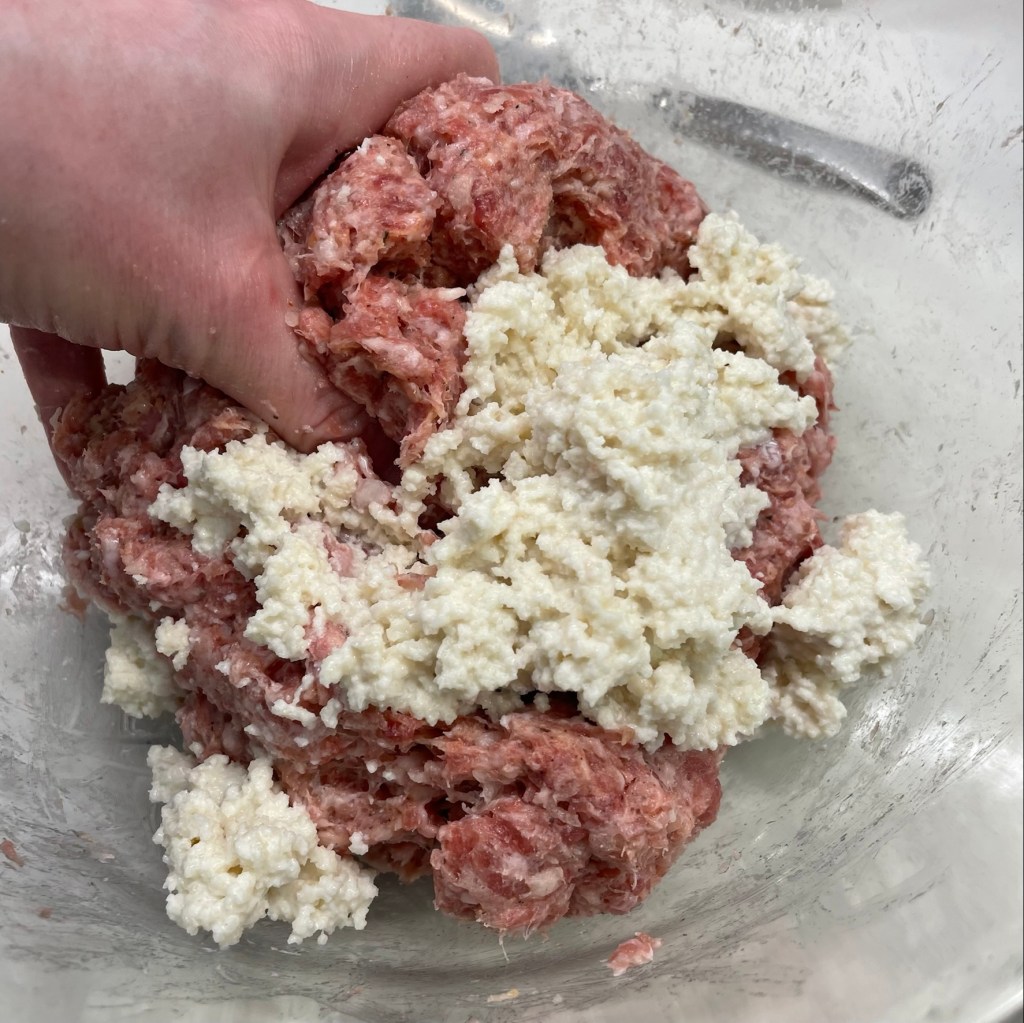
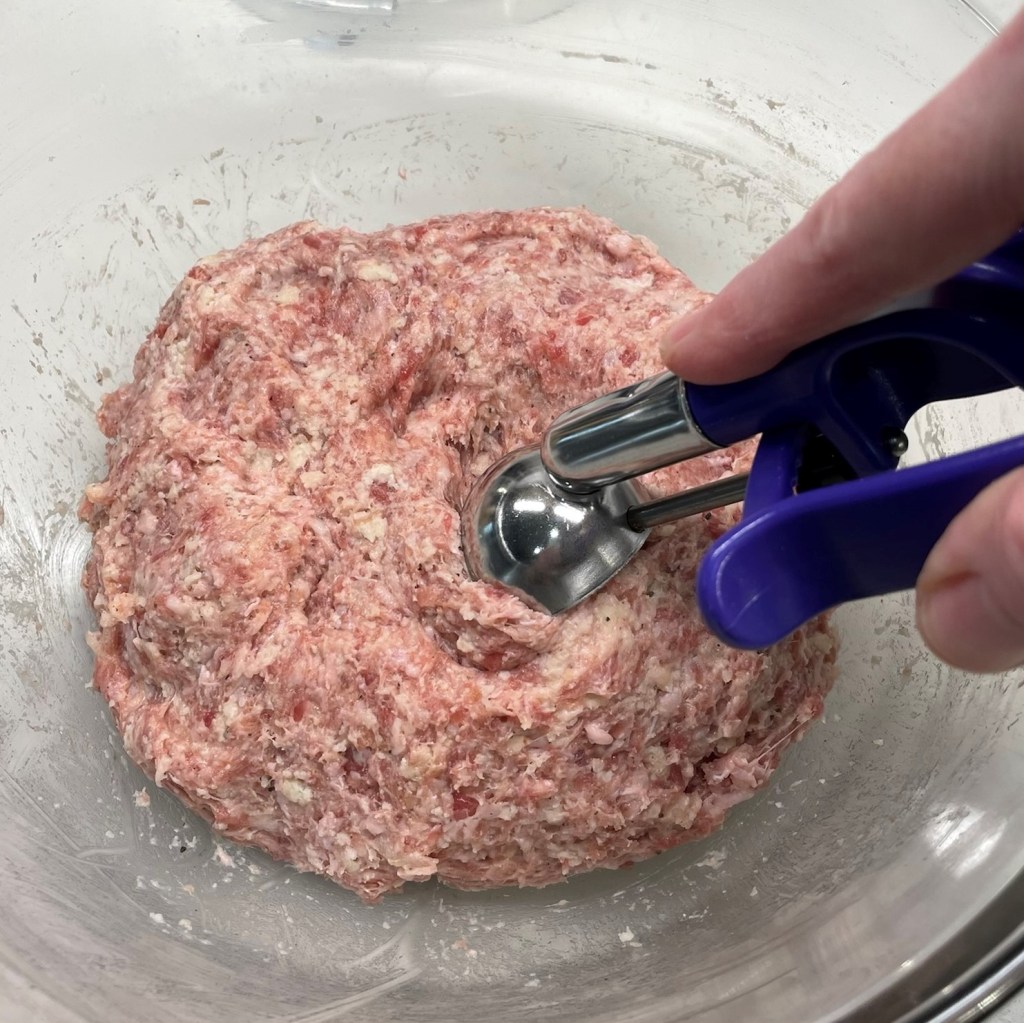
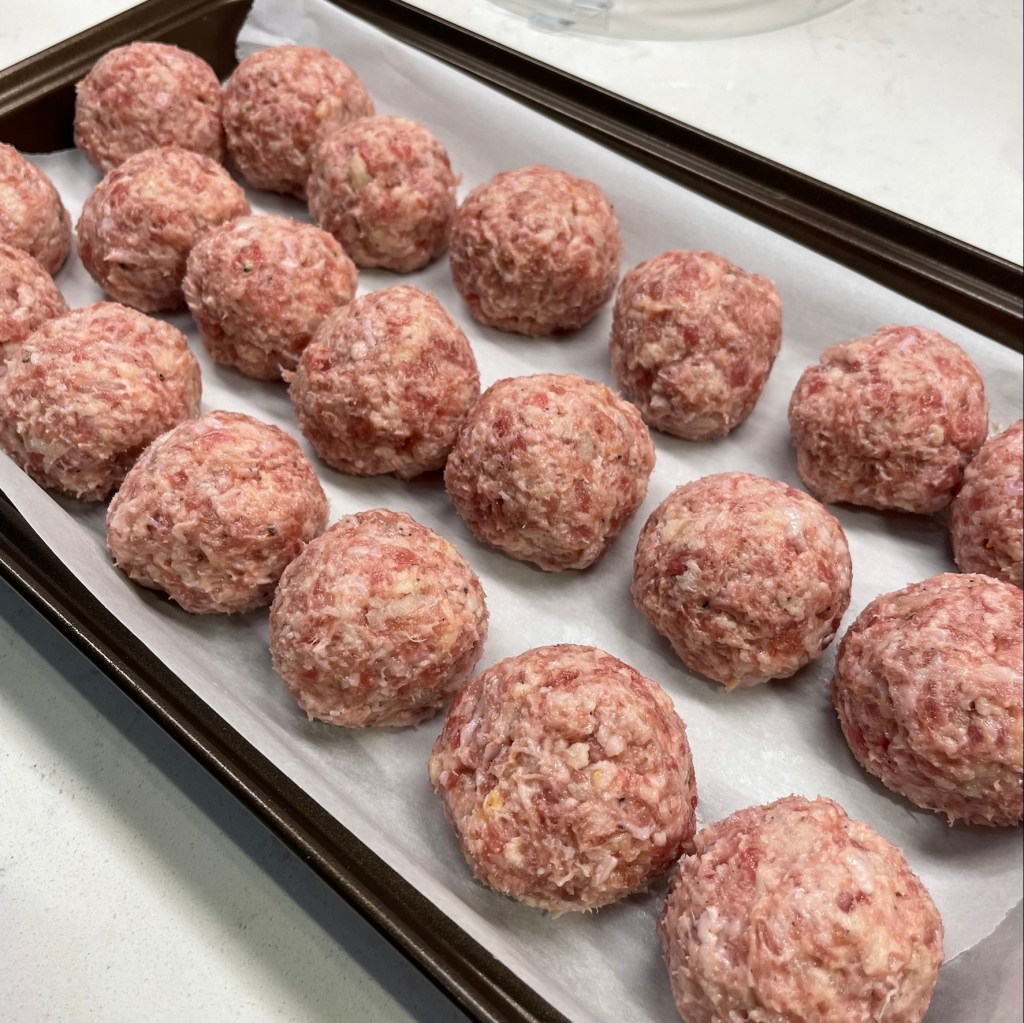
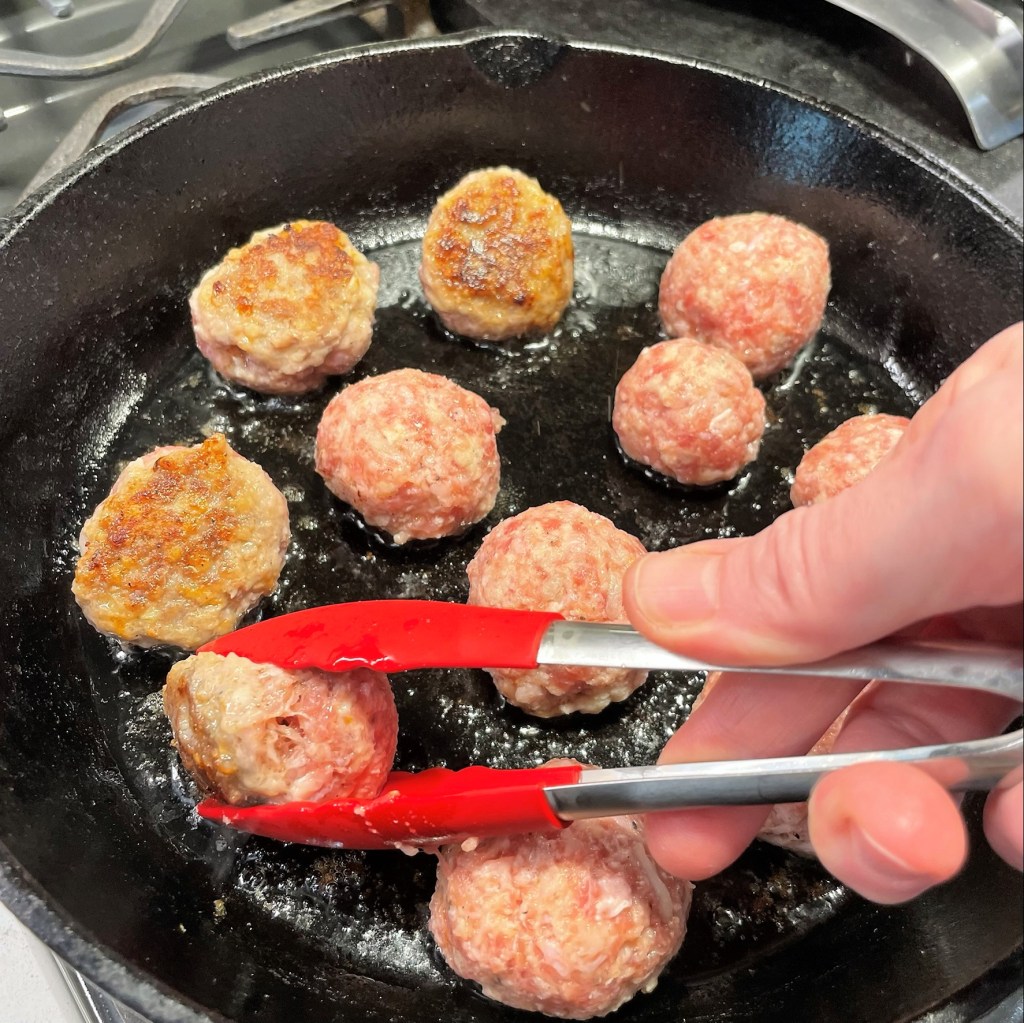
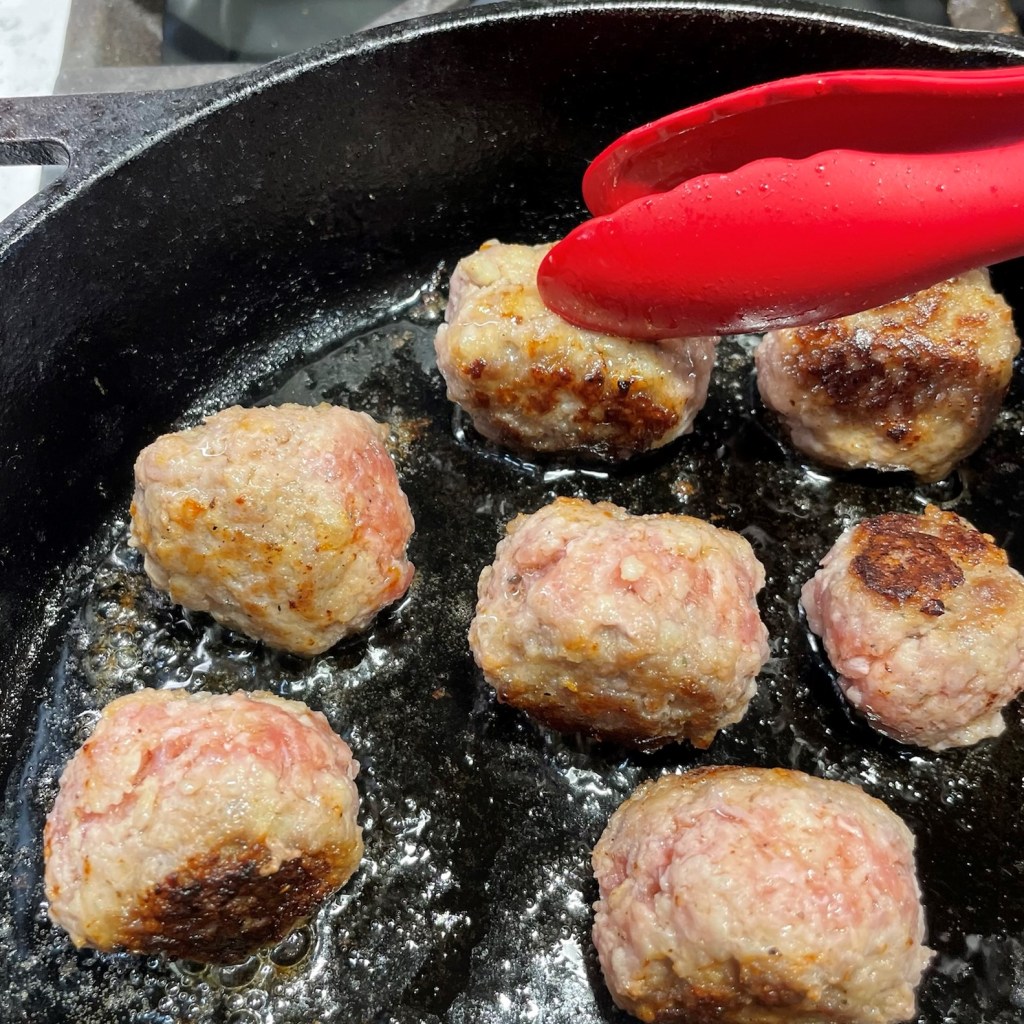
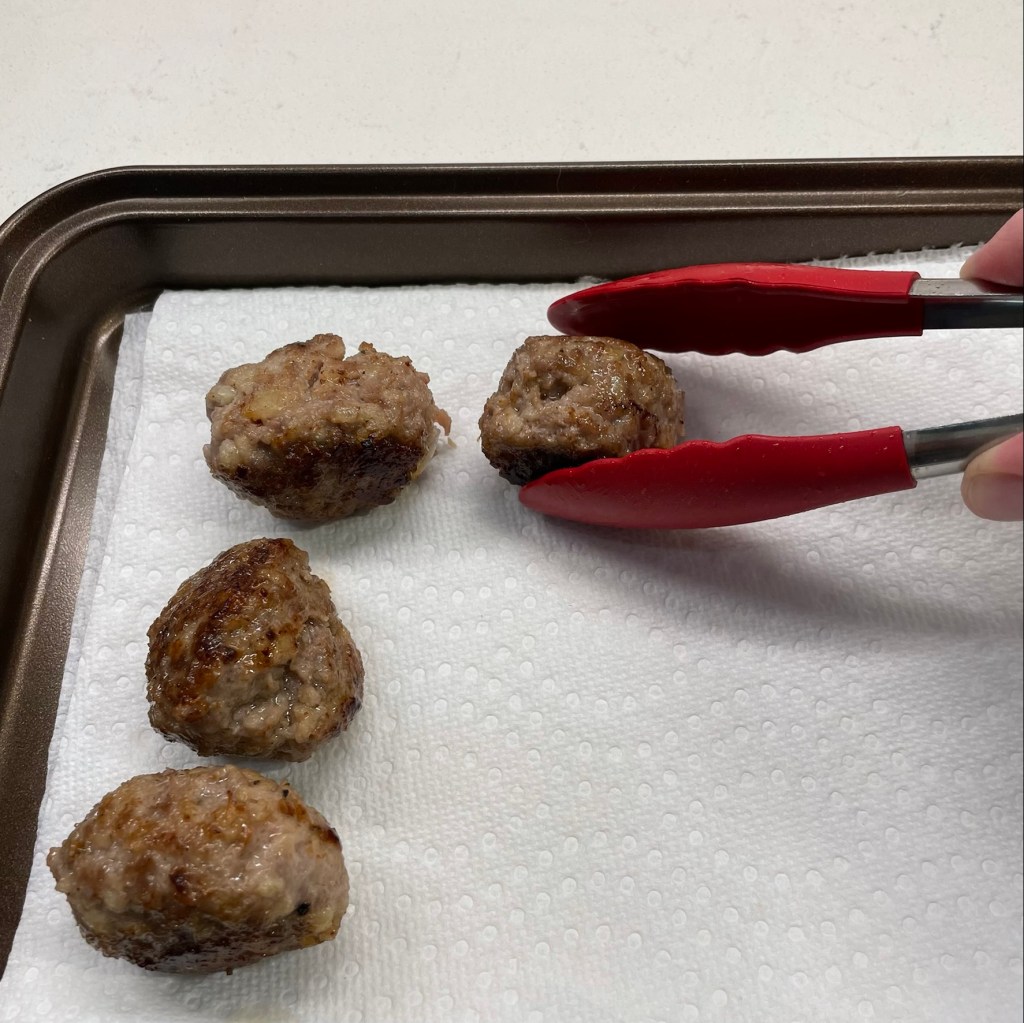
My friend and blog buddy, Michelle, cannot tolerate alcohol in drinks but she enjoys the flavors of booze in food (including the Tequila & Lime Chicken Tacos she inspired me to make last summer). Michelle commented that the maple-bourbon combination in my dessert reminded her of a signature appetizer made by an old friend. Can’t we all relate to that—a dish so good that we can still taste it in our minds, even years later? That simple comment about her friend’s “maple mustard mystery” meatballs got my own creative juices going. I was bored with ground beef (and it isn’t always easy to find fresh grass-fed in the store), so I turned to ground pork instead and modified a recipe I already had for Marsala-braised pork meatballs. I had been thinking about making those, but maple and bourbon sounded much more interesting.

Maple is one of the most versatile sweeteners I know—it is not a flat kind of sweet, as sugar is, but complex, with a warmth and depth that you can’t get from brown sugar or even honey. Maple plays nicely with tangy, spicy and smoky as well as it does with creamy and buttery. If you have only enjoyed maple with weekend pancakes, this recipe may help you break out of a flavor rut. The maple and mustard was a terrific combination for early December, which is when I made the meatballs. Yes, we are hanging in there with dry January, so I suppose you could say I am enjoying bourbon vicariously through myself from last month.

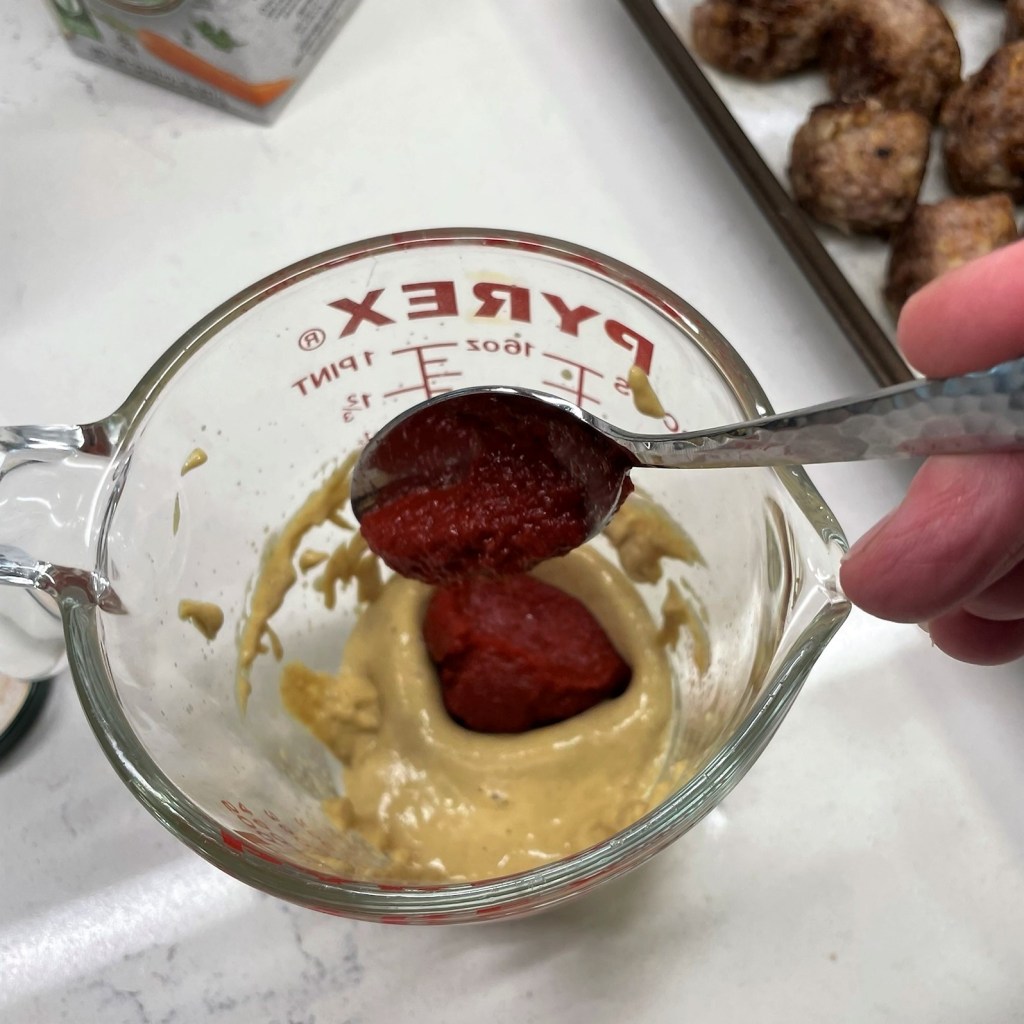
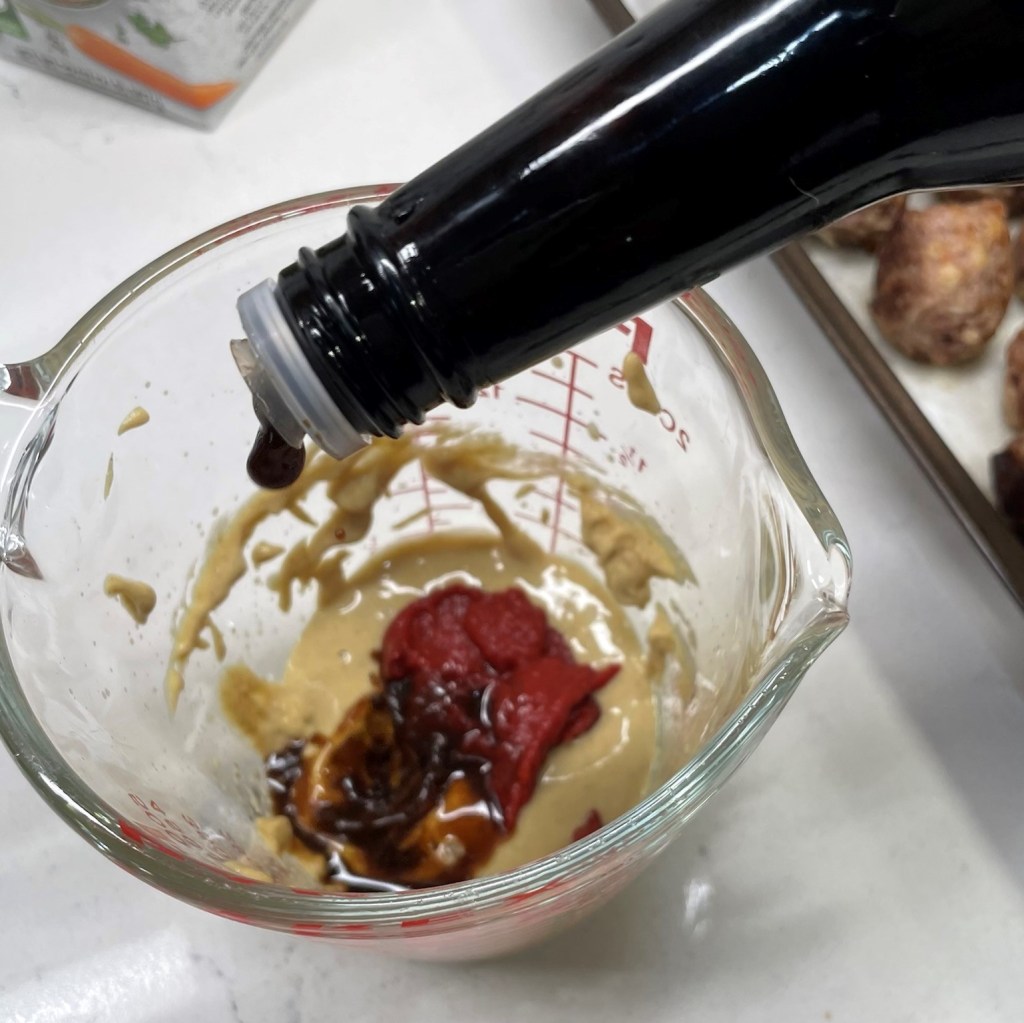
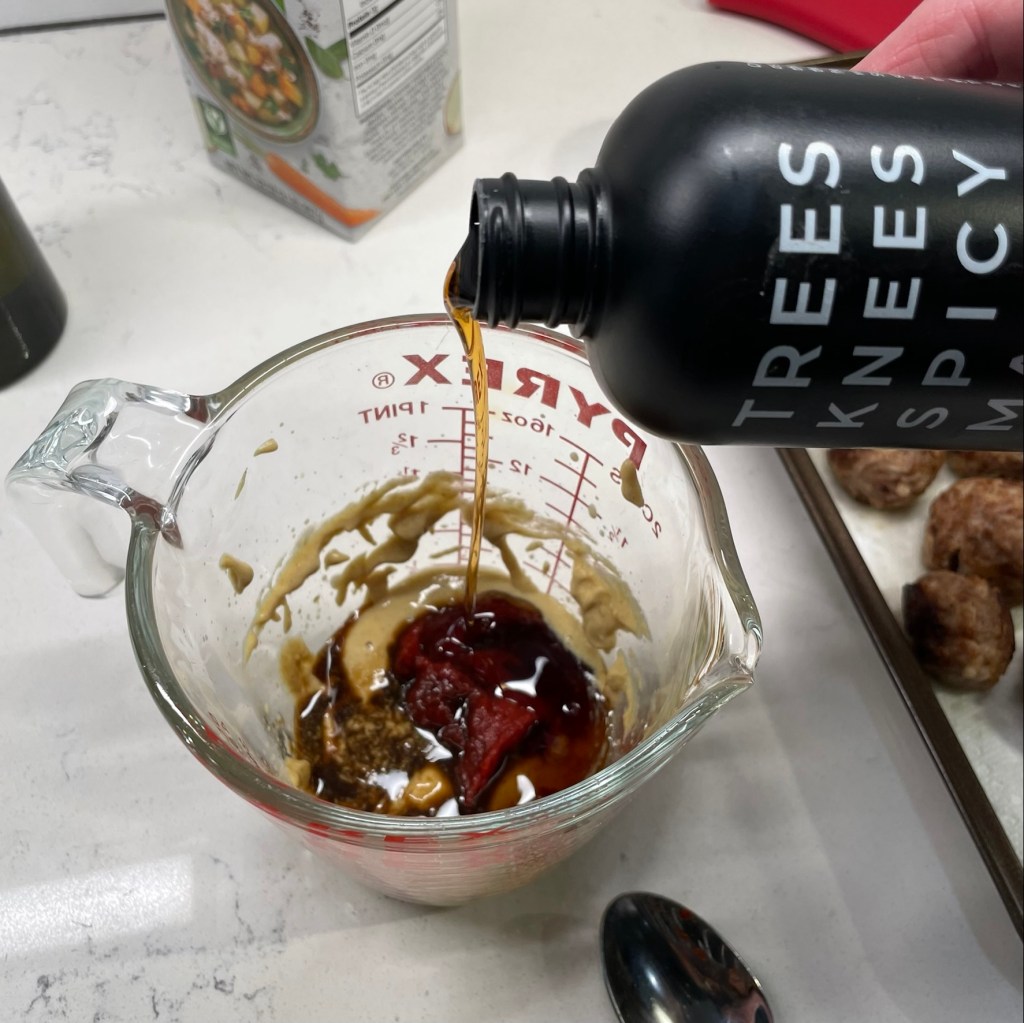
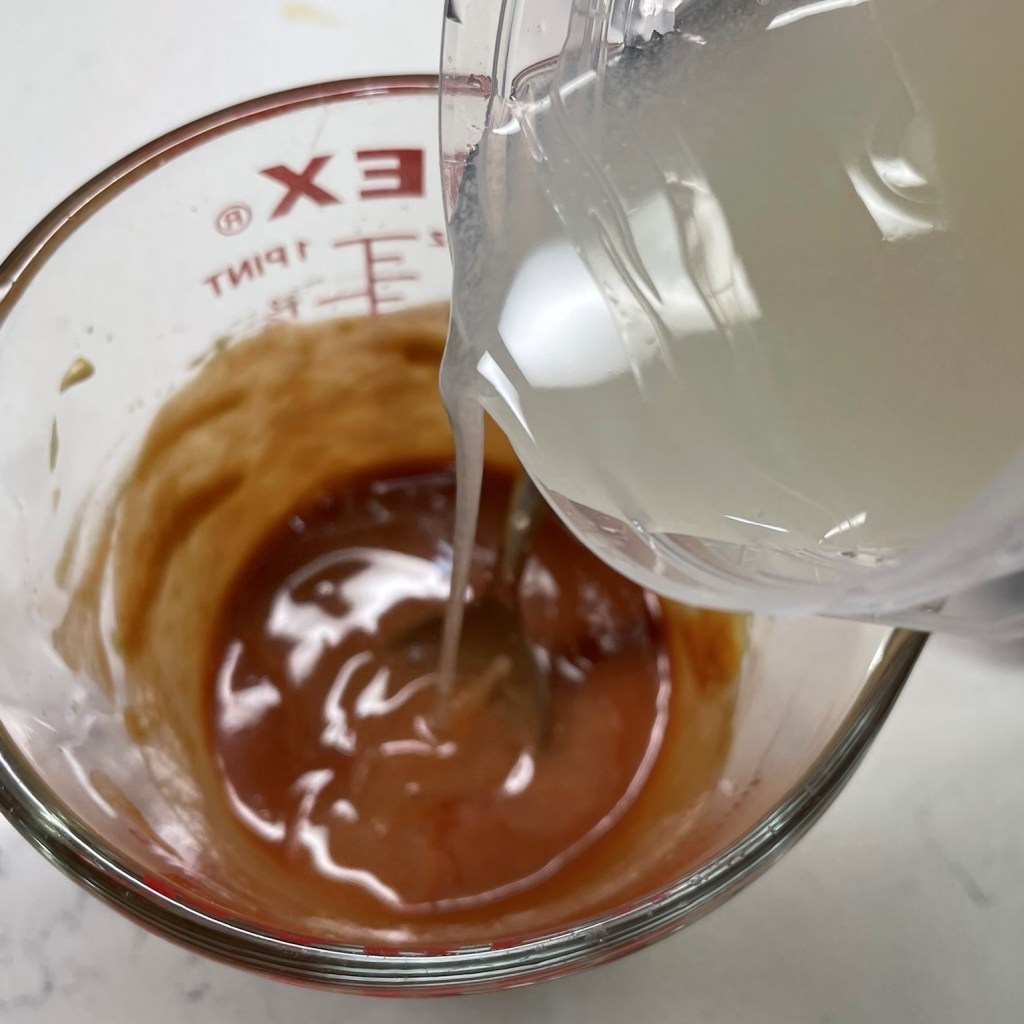
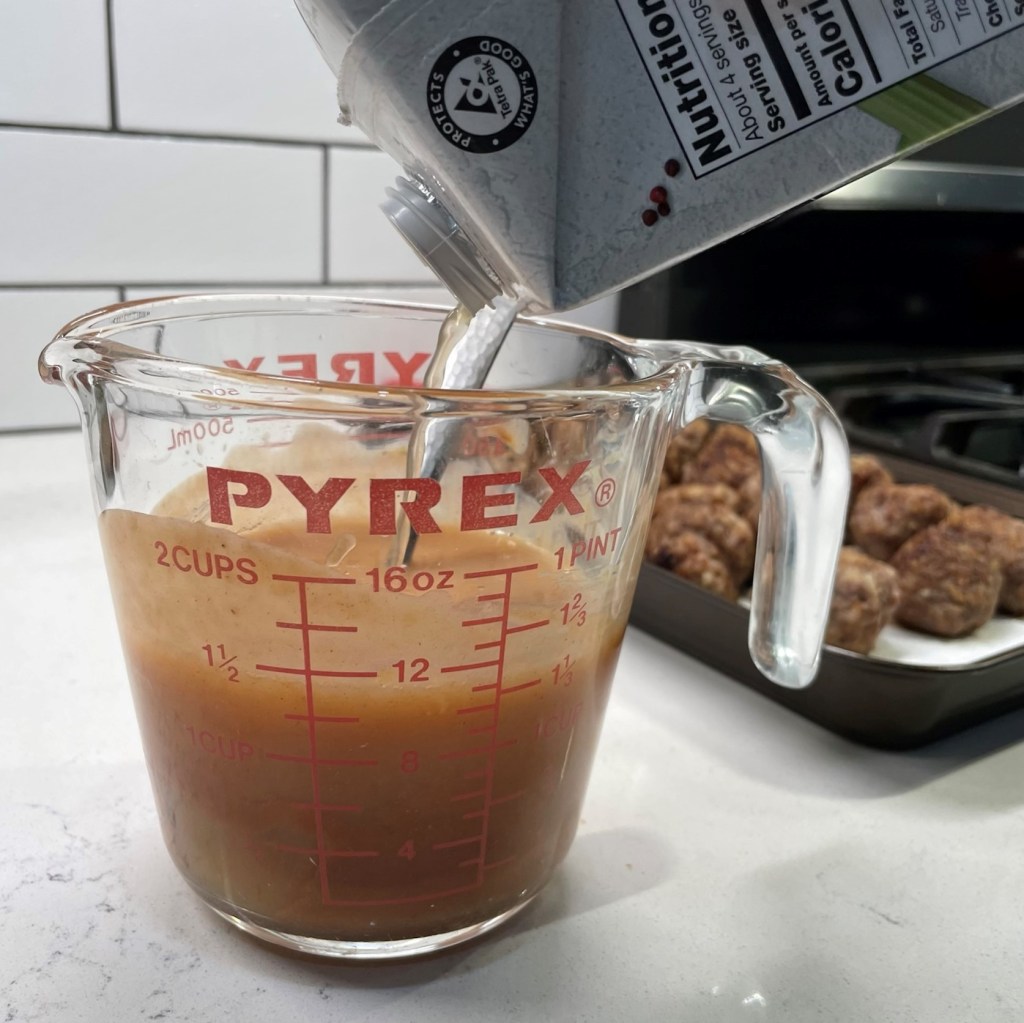
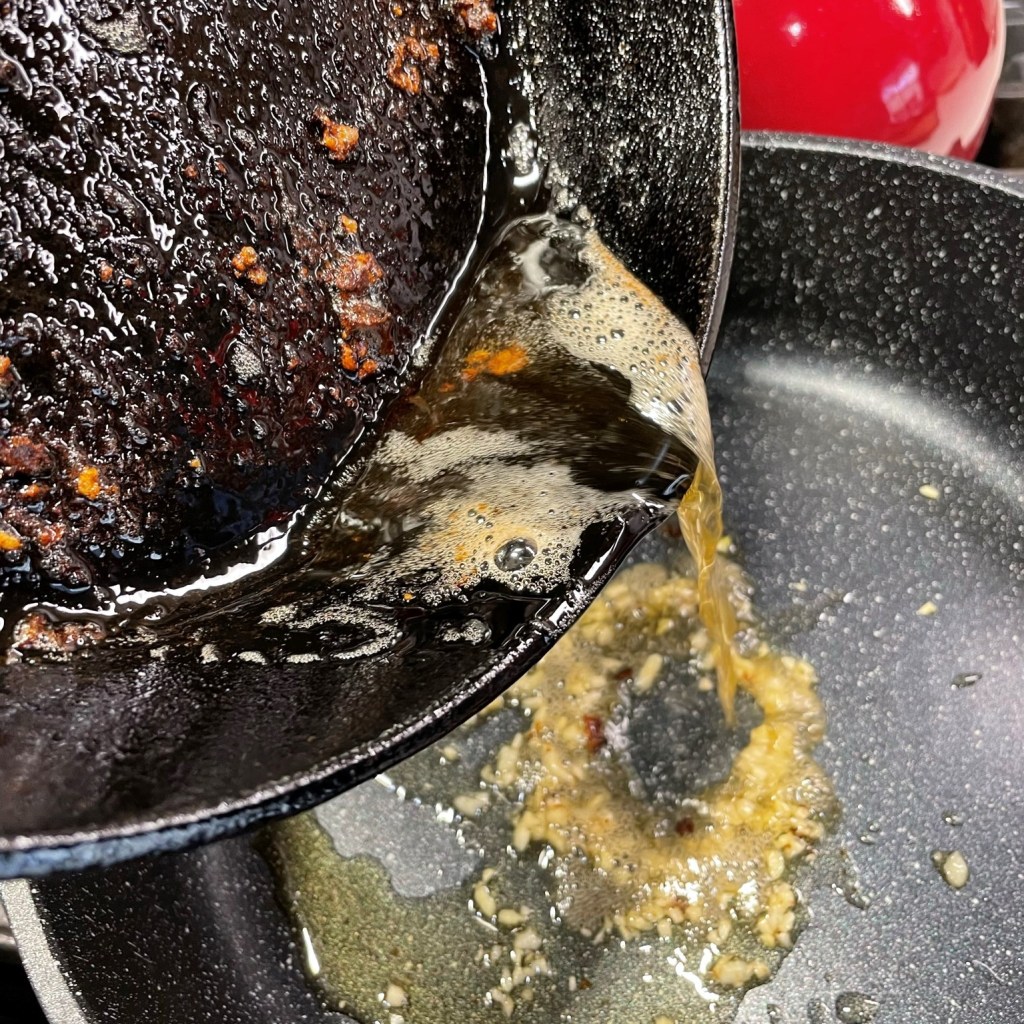
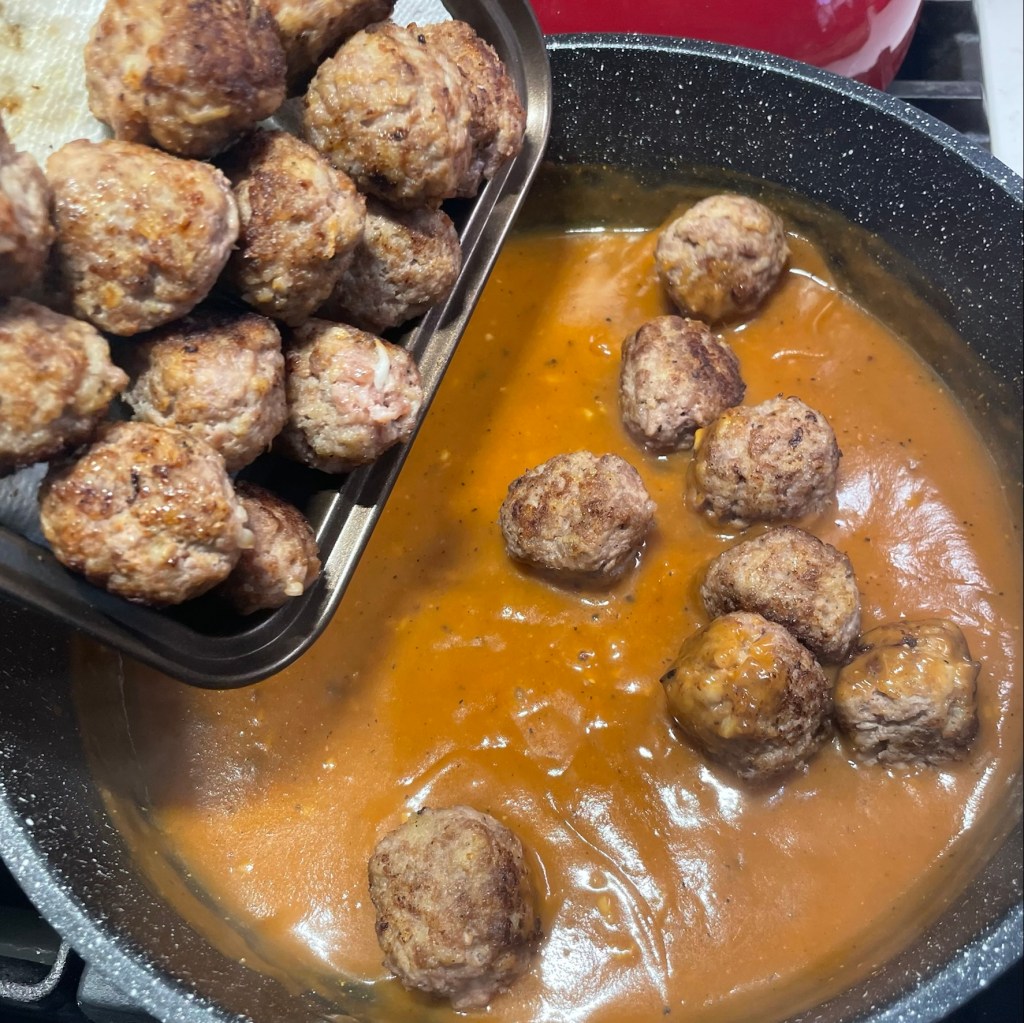
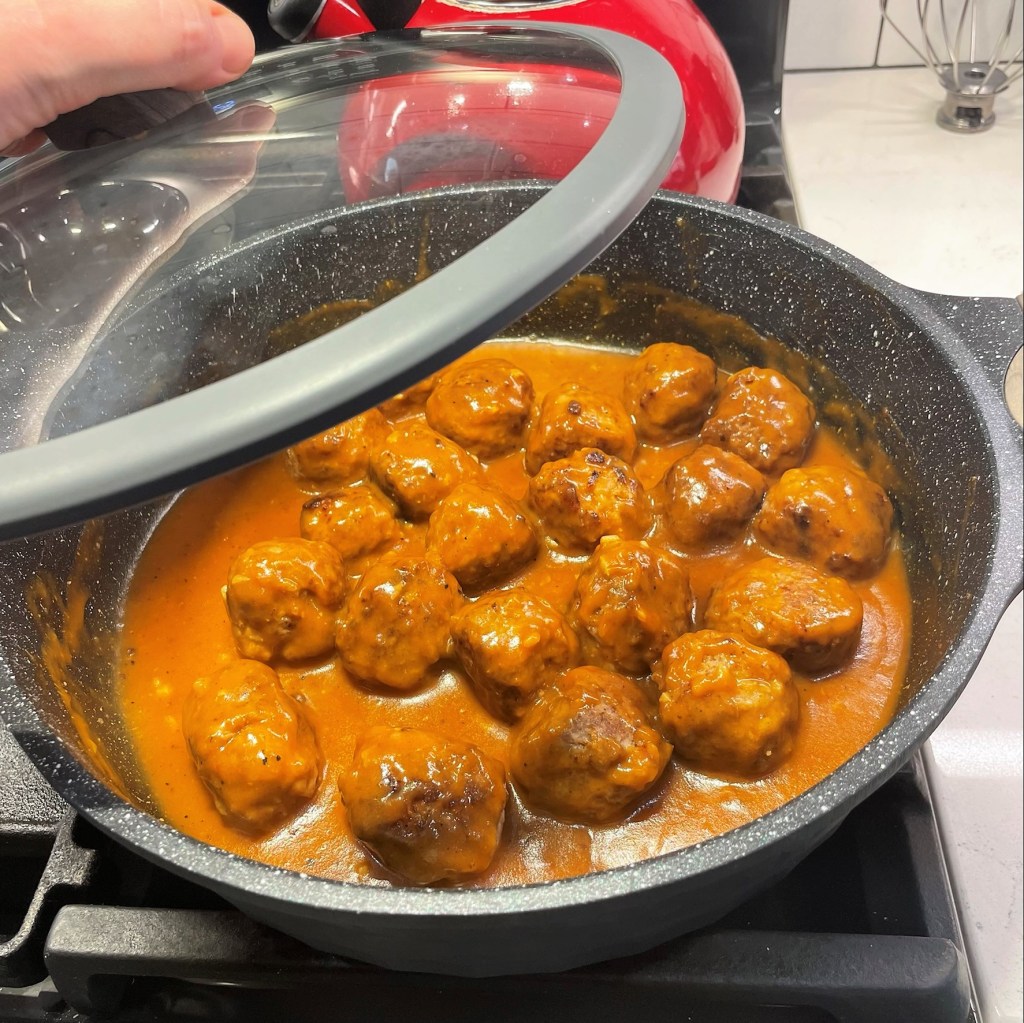
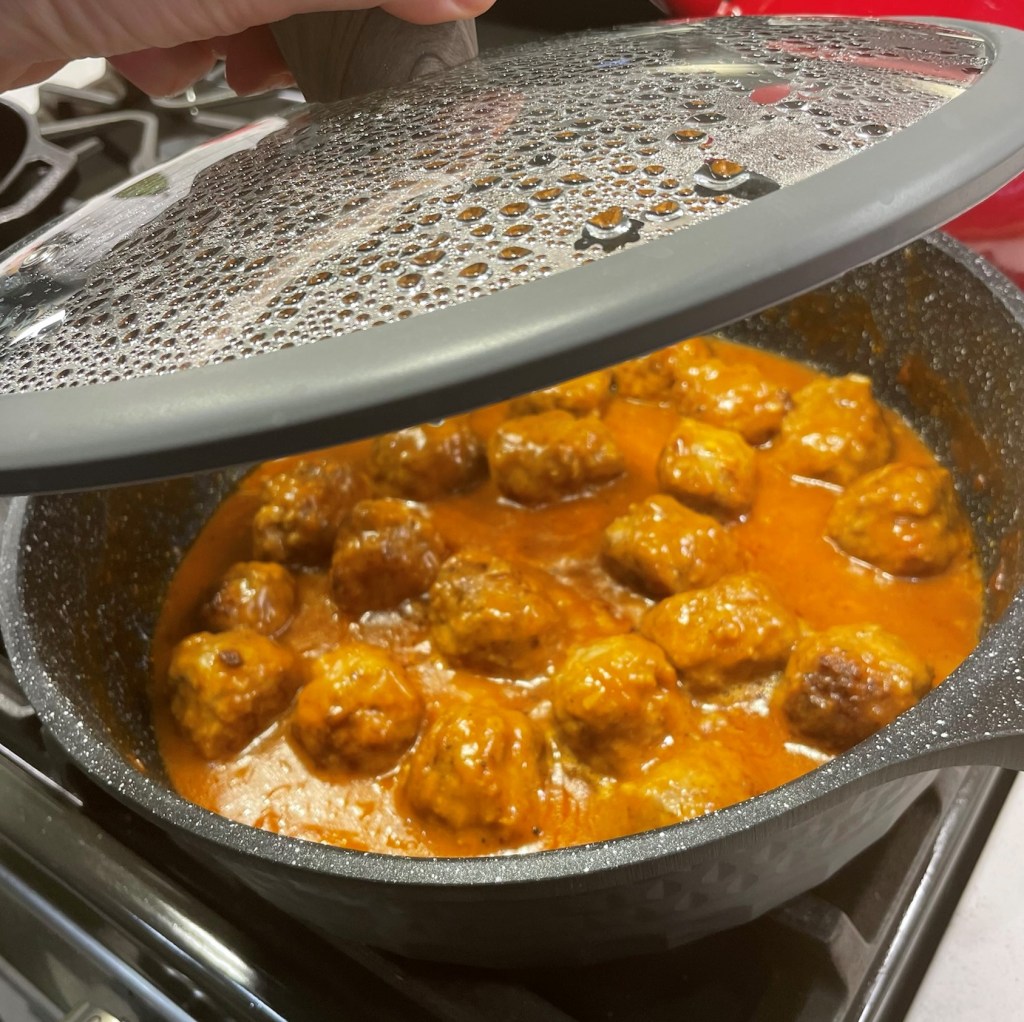
For this meatball recipe, I paired a spicy maple syrup with Dijon mustard, a bit of tomato paste, onion juice and some of the smoky maple bourbon we had bought for the Smoked Maple Cranhattans at Thanksgiving. I resisted the urge to add cream to this sauce, because cream tends to soften other flavors and I really wanted the maple and mustard to enjoy the spotlight.

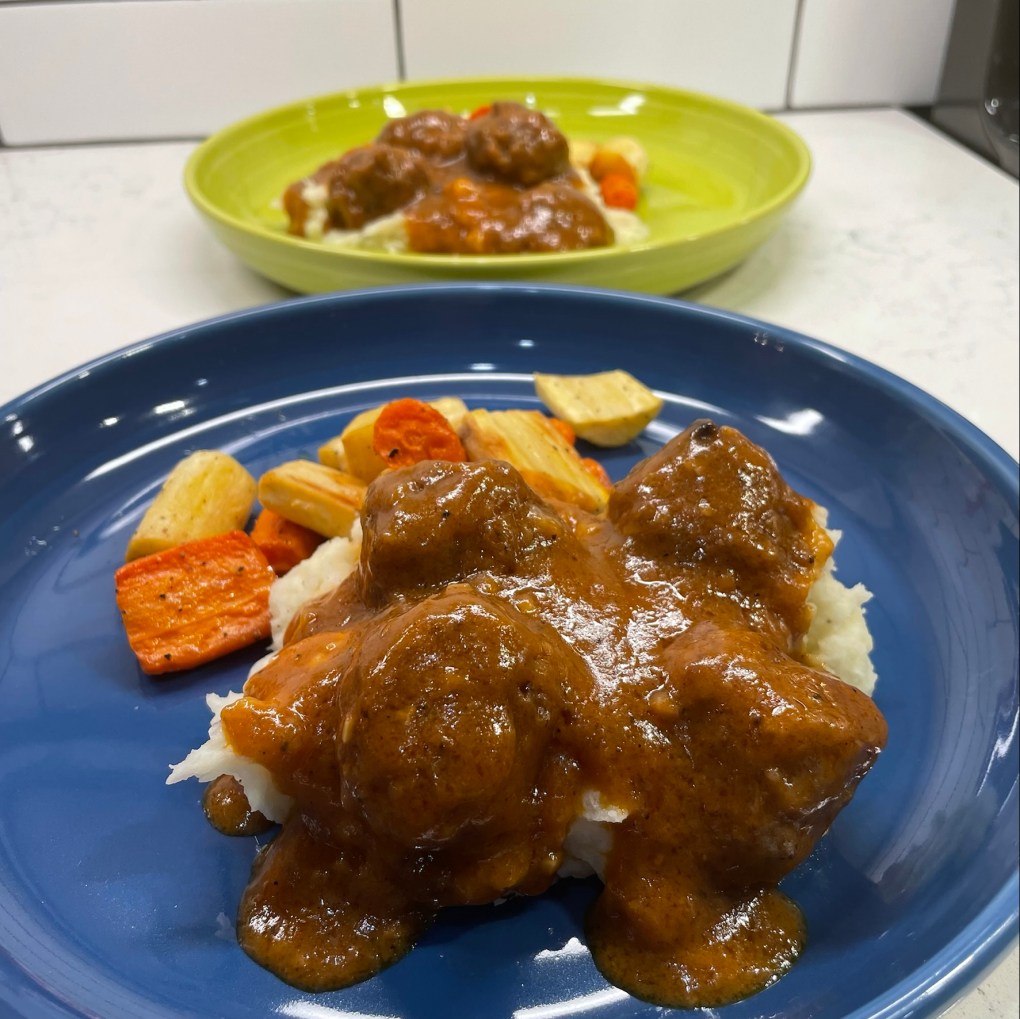
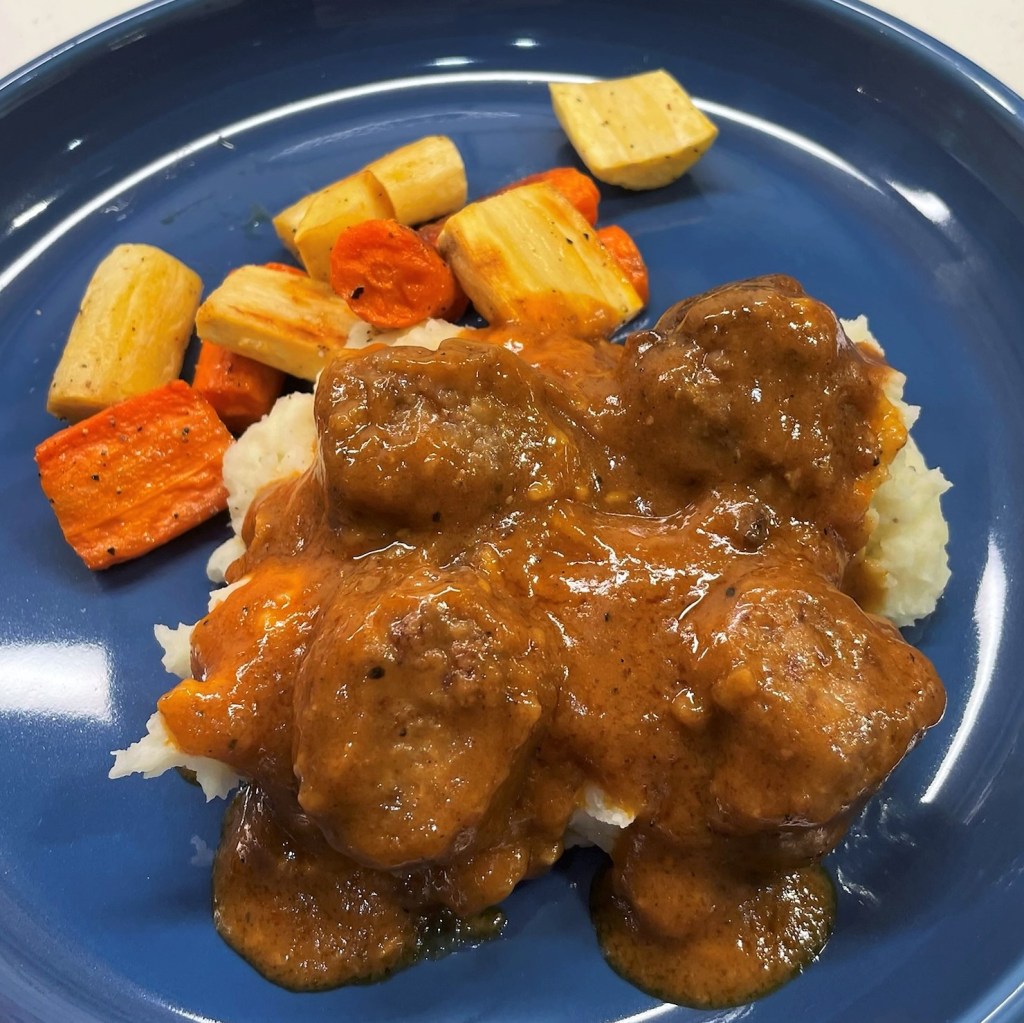
Mission accomplished—they were delicious! I served them over a bed of simple mashed potatoes and with a side of roasted root vegetables, but I couldn’t help thinking they would also be delicious on toothpicks as an appetizer, as my friend remembered them. Super Bowl, maybe?


Ingredients

1 large, sweet or yellow onion* (see notes)

1 lb. fresh ground pork

1/3 lb. bulk breakfast sausage

1/3 cup panko breadcrumbs

1/4 cup milk

2 Tbsp. all-purpose flour

2 Tbsp. Dijon mustard

1 Tbsp. tomato paste

2 tsp. Worcestershire sauce

2 Tbsp. real maple syrup*

2 cloves garlic, finely minced

Up to 1/2 cup low-sodium vegetable broth

2 Tbsp. smoked maple bourbon*


*Notes

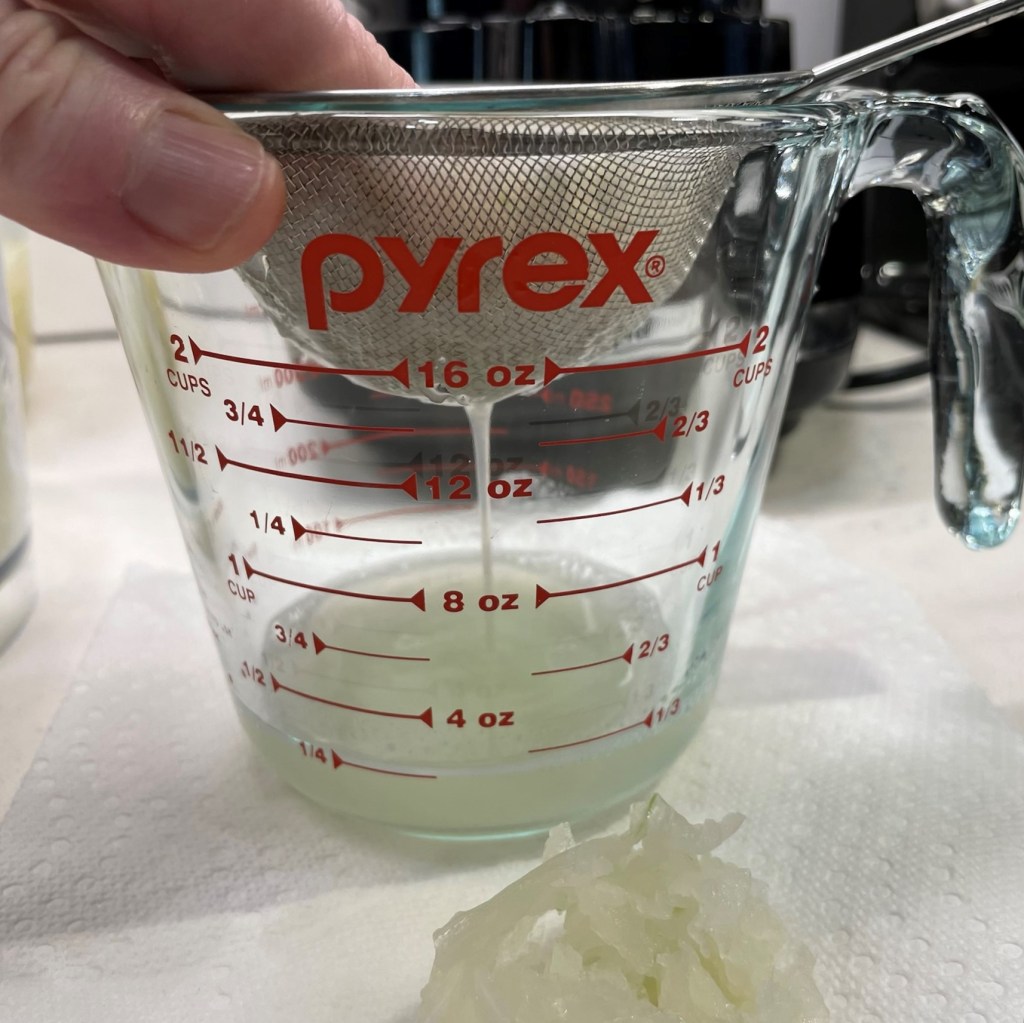
When I made these meatballs, I had reserved onion juice from the Classic Crispy Latkes I had made for the first night of Hanukkah. You will only use half of the large onion in this recipe, but you need the juice of the whole onion to flavor the simmering sauce.

I used a habanero-infused maple syrup for this recipe because my husband and I enjoy spicy foods. Any maple syrup would be delicious—but choose real maple for the best flavor. If the idea of spicy flavor appeals to you, try using regular maple syrup and add about a teaspoon of cayenne or sriracha sauce for similar results.

The smoked maple bourbon is a Knob Creek product. It’s completely optional in this recipe. If you avoid alcohol, simply omit this and add an extra splash of vegetable broth.


Instructions


Baby Back Ribs with Root Beer BBQ Glaze

A few weeks ago, my husband, Les, and I had the unfortunate experience of being forced to empty and clean out what we call our “downstairs” fridge. The term is a misnomer, for sure, given that our home is built on a slab, and we have no downstairs—unless you consider the main level as “downstairs,” and that would only make sense if you were standing in the loft. No, our extra refrigerator lives in the garage, just through the laundry room, about six steps from the kitchen. The confusion is built on Les’s occasional reference to the spaces of a home he once owned in Connecticut, where he apparently did have a downstairs fridge. He also sometimes mistakenly tells me he was listening to “K-ROQ” on the drive home, which was his favorite radio station when he lived in Southern California (which, by the way, was only 28 years ago), but I digress.

What happened that night recently was a flat-out mess, as a forgotten glass bottle of “nitro” cold brew coffee was shoved into one of the uneven cold spots in the back of the extra refrigerator, and the darn thing exploded all over everything. There was broken glass and sticky cold coffee on the shelves and walls of the fridge and spattered on several food and drink containers that were sitting beneath the mishap. It was not exactly the way we intended to “clean out” the fridge, but it did force us to dump some things and gave us a chance to properly inventory the ridiculous quantity of stuff that has piled up in the overflow fridge, which we frankly would not need if it were not for my impulse purchases, especially, it seems, the beverages.

What can I say? I don’t want anyone to be thirsty!

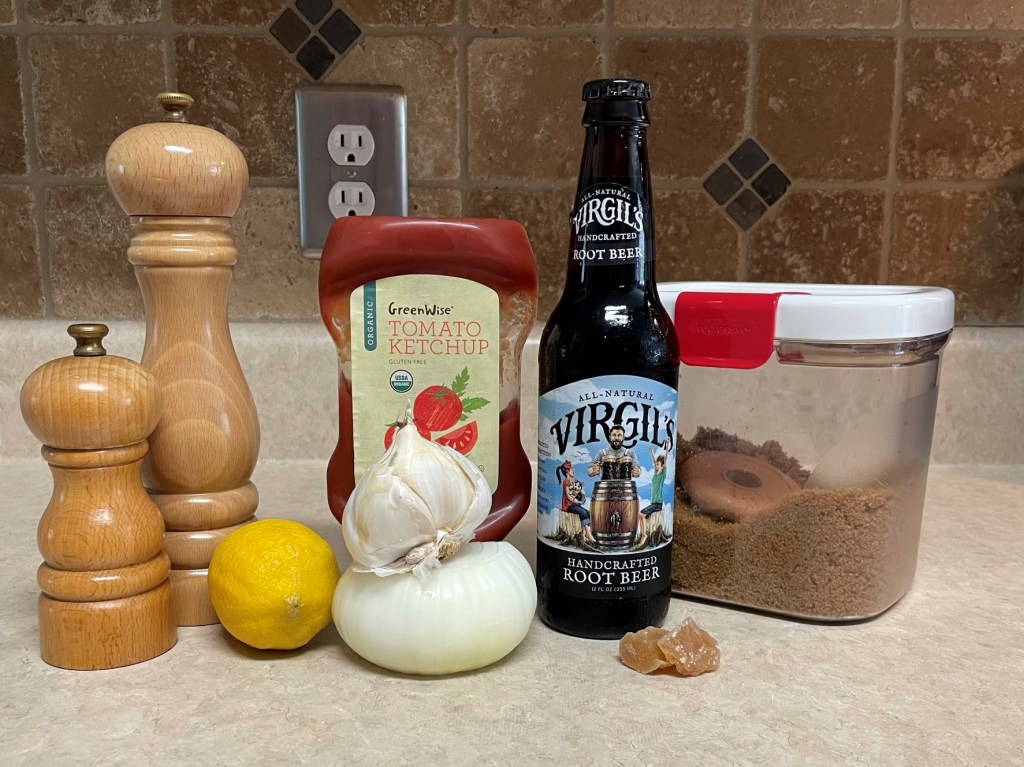
One such impulse buy stood out as a bucket list item for me, and the forced fridge cleanup gave me a push on my culinary intention of making a root beer-based barbecue sauce. I will admit that neither Les nor I are fans of carbonated soda. I have not had a Coca-Cola or 7-Up or anything like them in years (maybe decades), and I don’t miss them. My aversion is based partly on the fact that they are carbonated and leave me feeling bloated and uncomfortable, but more on the fact that nearly every soda on the market is made with high-fructose corn syrup. And that, my friends, is a total deal breaker for me. Diet sodas are no better, because I cannot abide the aftertaste of alternative sweeteners, including the plant-based stevia.

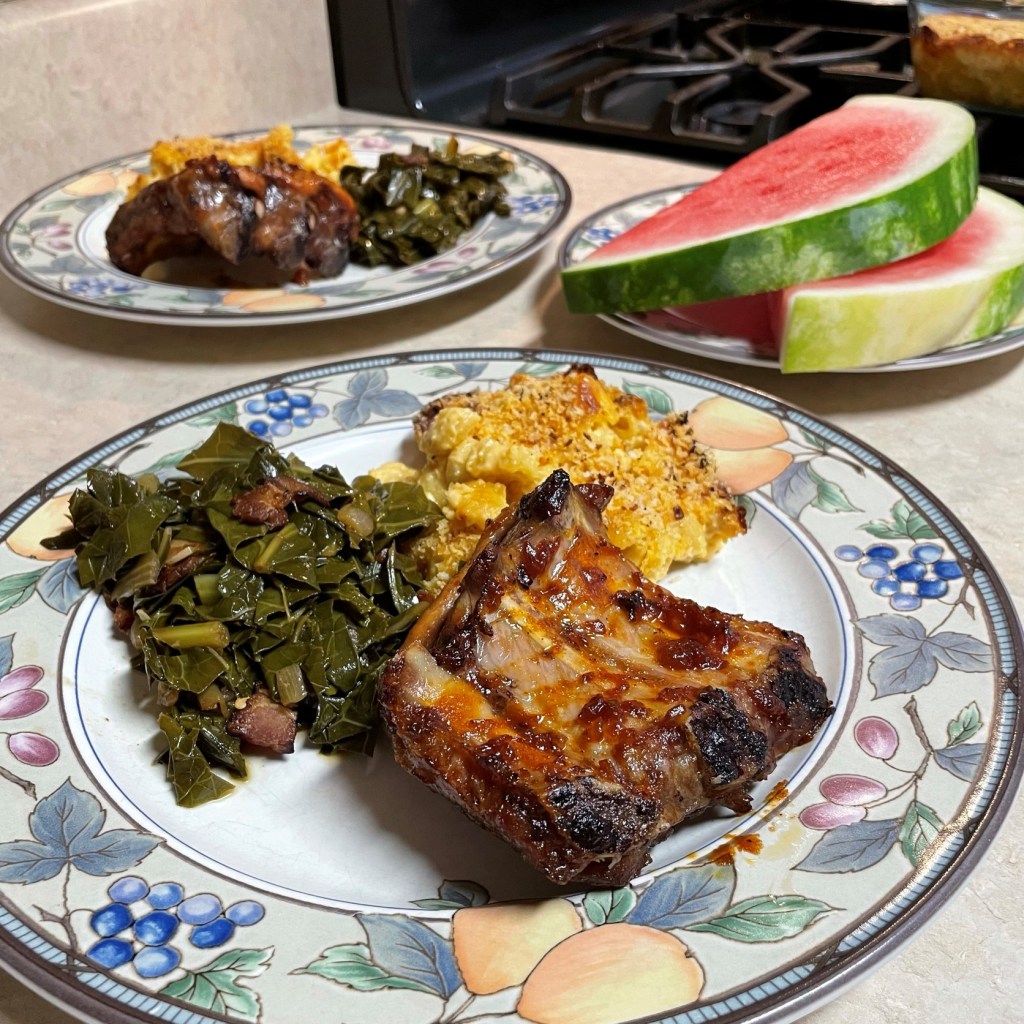
But when I had spotted this small-batch, handcrafted root beer a few months ago, I thought again about my desire to make a root beer sauce or maybe root beer-braised pulled pork. This specialty root beer is sweetened with cane sugar, and on its own, it is sweet. Like, melt-your-teeth sweet. When I reduced it down, however, and simmered it with ketchup and spices and onions, it was exactly right for dressing up baby back ribs on the grill. As with most rib recipes, I started with a brine to give the meat a jump start toward tenderness and flavor, and I got some good advice from chef Bobby Flay about what to put in the brine—cinnamon, star anise and molasses were a giant echo for the root beer flavor that would be slathered on the ribs near the end of cooking. There are a couple of things Les and I agreed we would do differently next time, and I’ll explain that at the end. But overall, this was a successful adventure!

It was a southern BBQ feast, with spicy collards and homemade mac and cheese.

Another bucket list item has been moved to the “done” column, and because I discovered that I also really like the essence of root beer, I used two more bottles of it from the “downstairs fridge” to make syrup for bourbon cocktail experiments. Alas, my friends, that will be a post for another day.


Inspired by  BBQ Ribs with Root Beer BBQ Sauce Recipe | Bobby Flay | Food Network

Ingredients – the ribs

1 large rack baby back ribs (ours were pasture-raised from the local farmers’ market)

1/2 cup kosher salt

1/4 cup molasses

2 whole cinnamon sticks

2 star anise

1 Tbsp. oak-smoked black peppercorns* (see notes)

1/4 cup sweet onion juice, optional*

Enough ice and water to make 8 cups of brine liquid


*Notes

The smoked peppercorns are made by McCormick and sold in a tall jar with a built-in grinder top. I am thoroughly addicted to their flavor and have used them in various food and cocktail recipes whenever I want to add a smoky flavor.

I made these ribs the same weekend as the tangy apple cole slaw that I shared a few days ago, and the onion juice was the discard from the shredded onions in the slaw. Waste nothing, right? 😉


Prepping the ribs

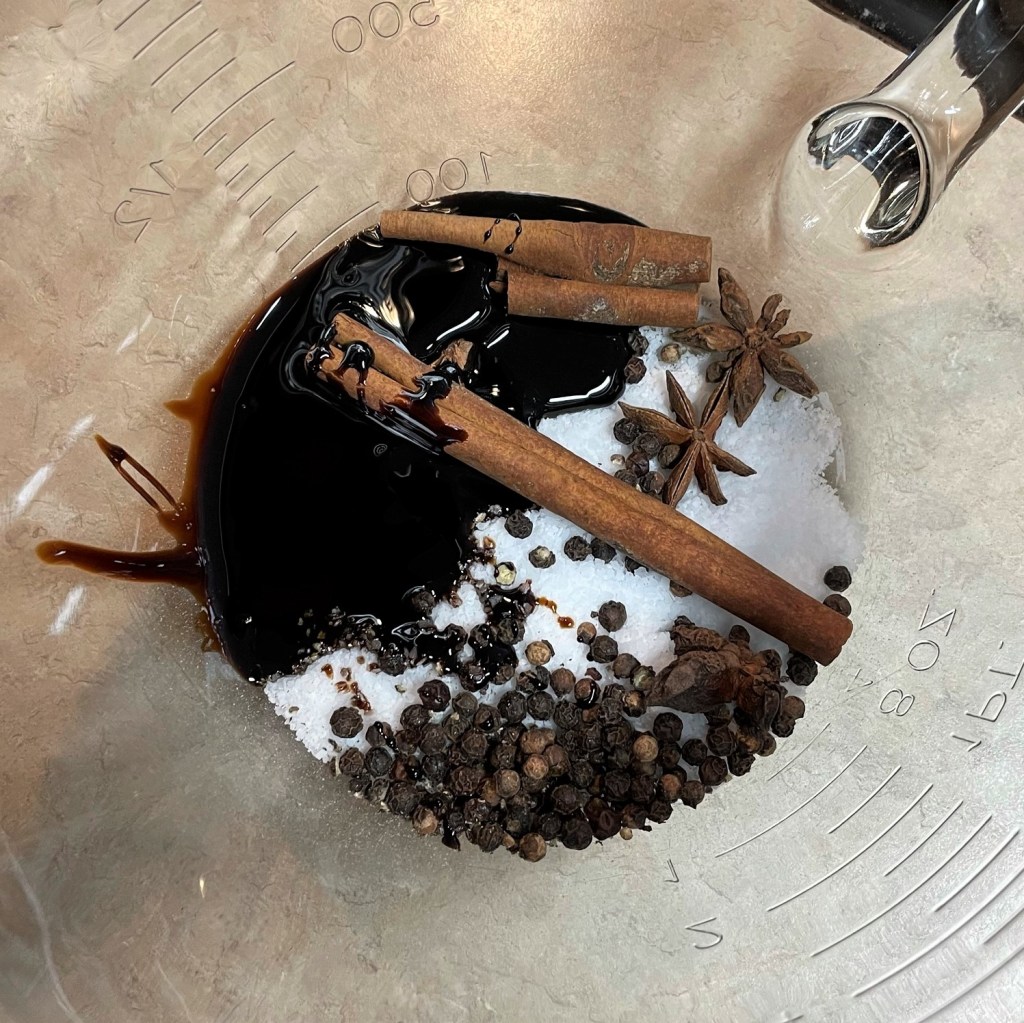
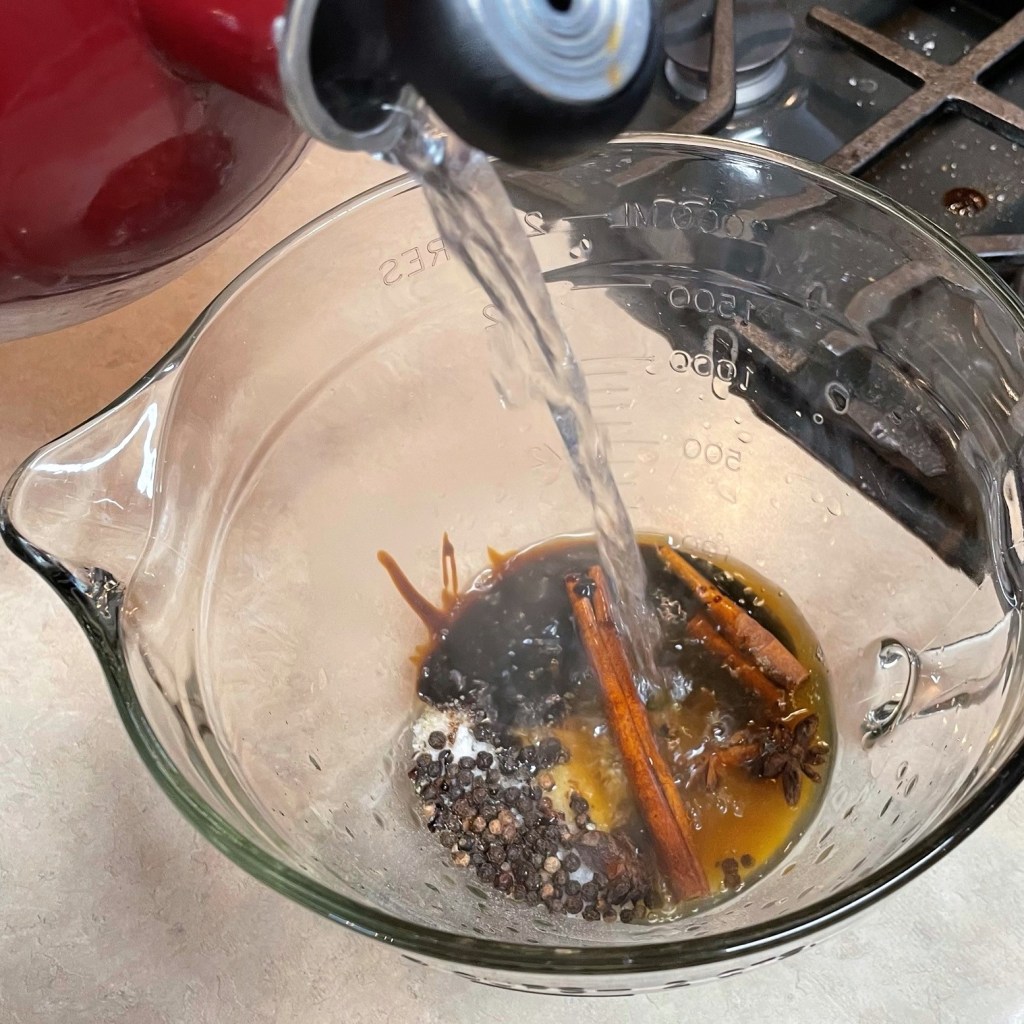
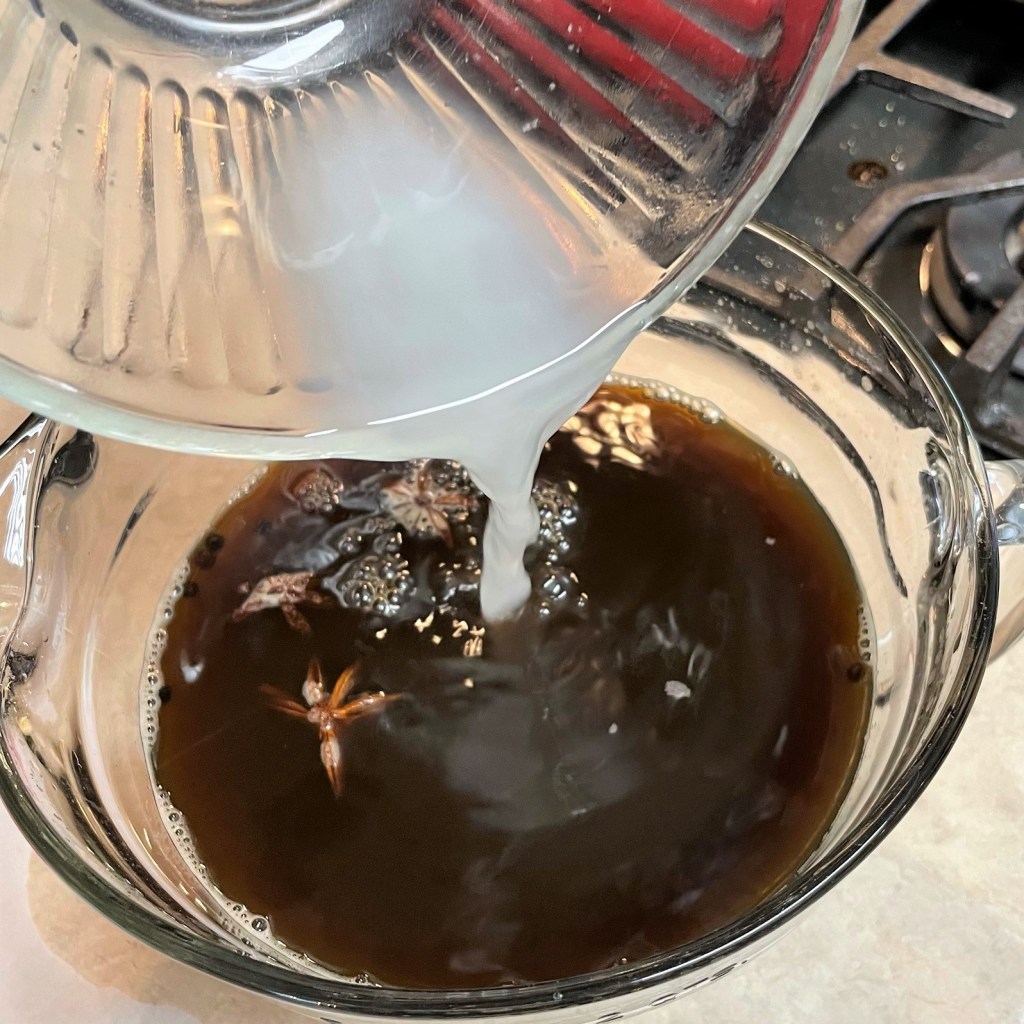
  1. Prepare the brine by combining kosher salt, molasses, cinnamon, star anise and black pepper in a large glass pitcher bowl. Add two cups of boiling water and stir to dissolve the salt and sugar. Add ice cubes and enough cold water to make 8 cups total.
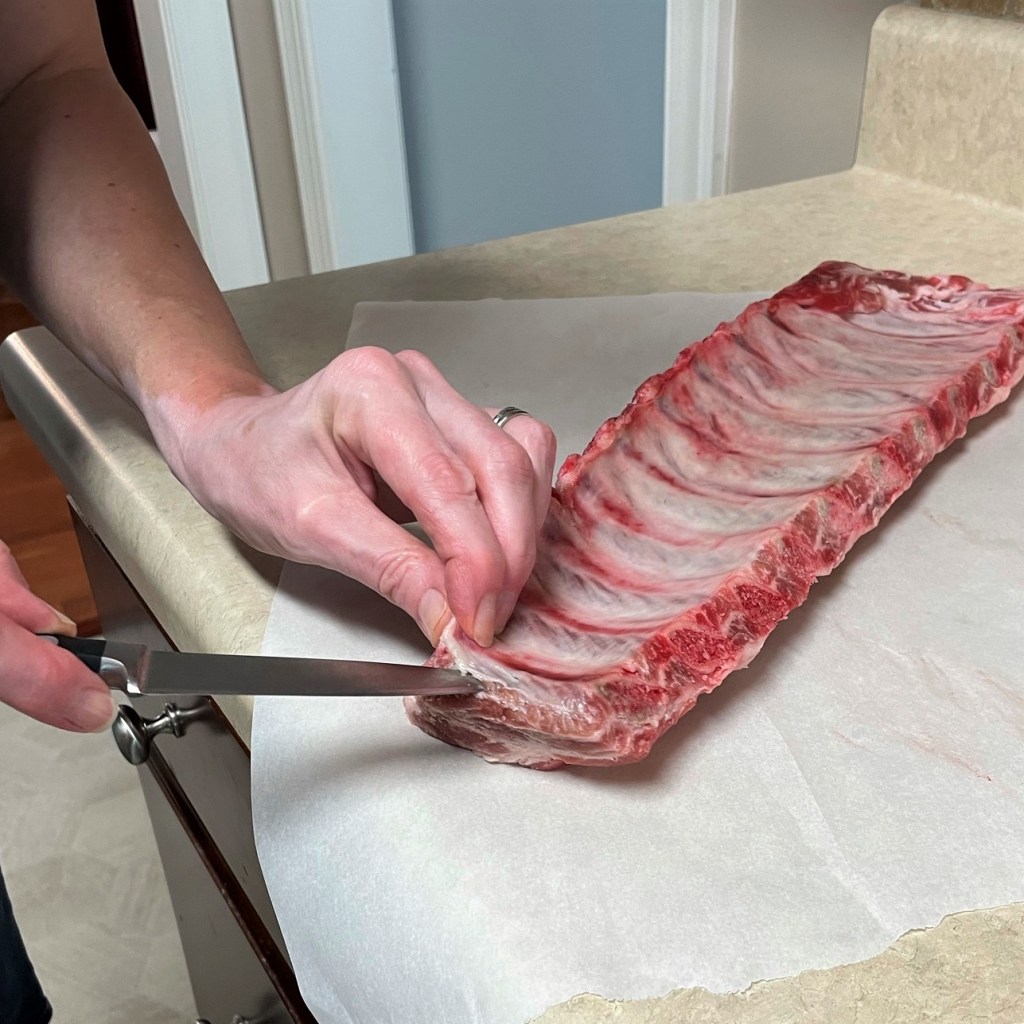
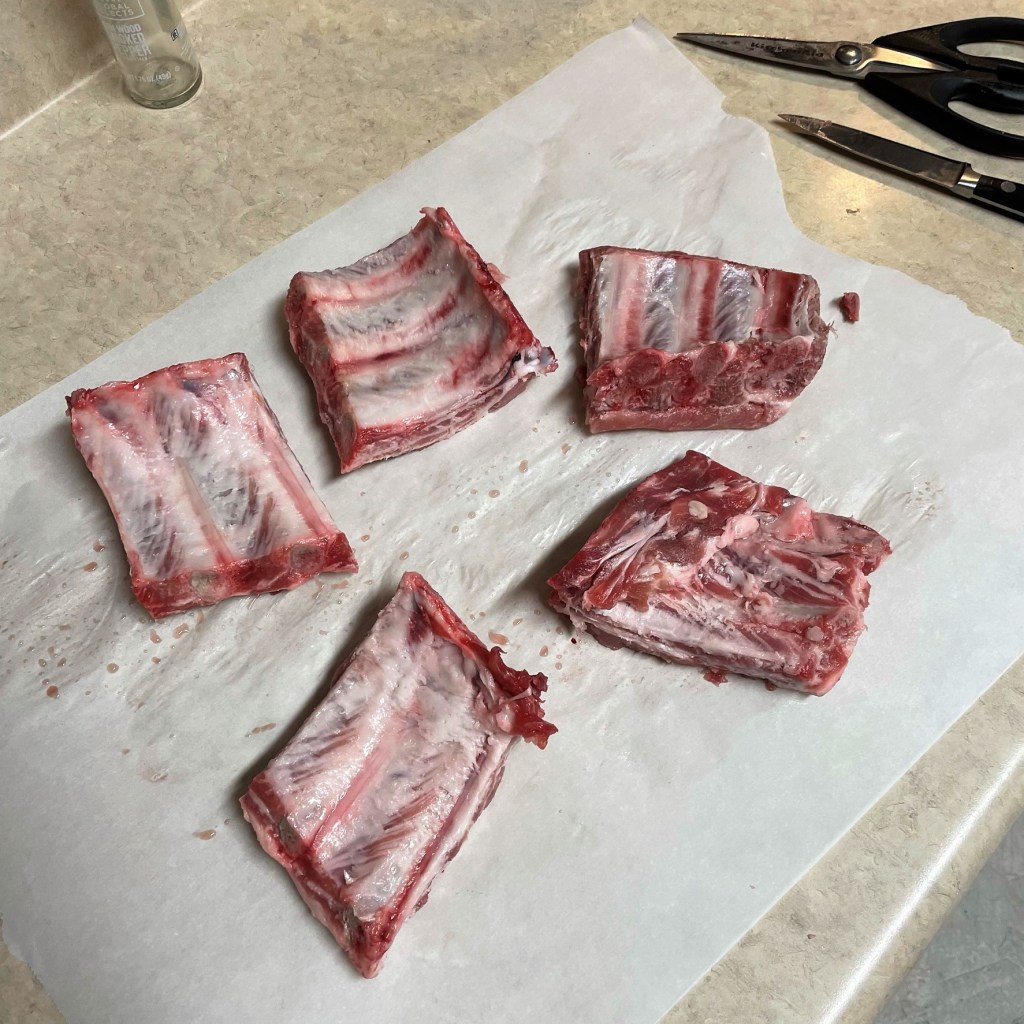
  2. Remove the tough membrane from the back side of the ribs. Begin by slipping a sharp paring knife under the membrane on the smaller end of the rack. Separate enough of it to grab onto with a dry paper towel, and then slowly but steadily lift it up and away from the ribs.
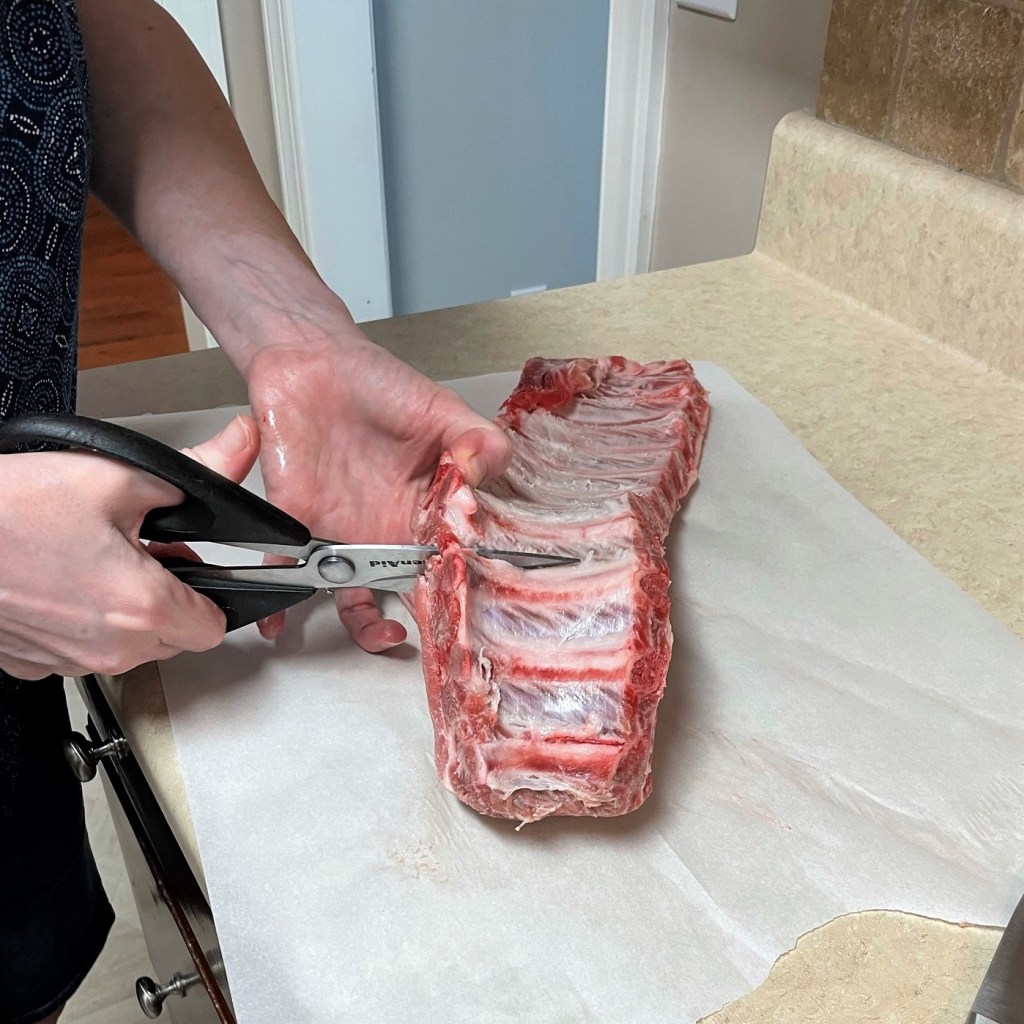
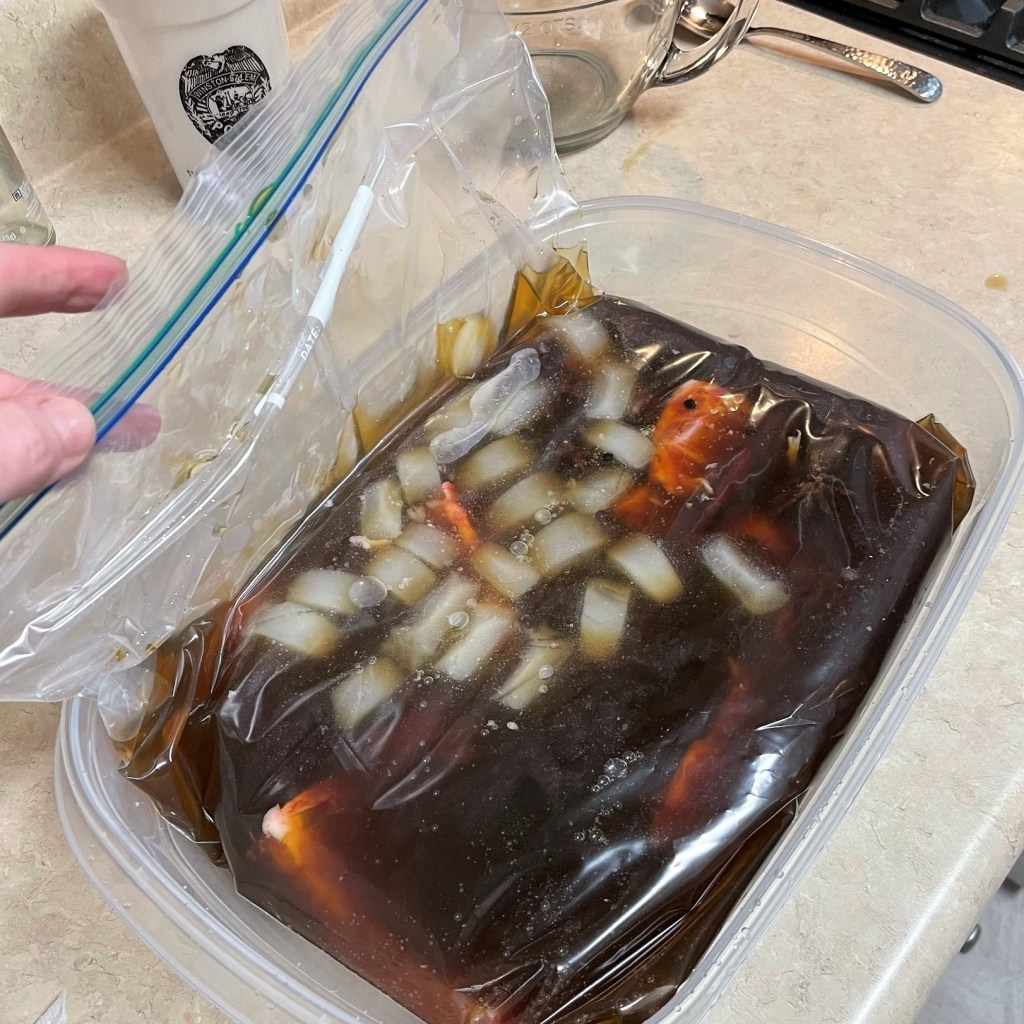
  3. Use kitchen shears or a sharp knife to separate the ribs into portions. Transfer the rib portions to a 2-gallon zip top freezer bag, placed in a container large enough to contain the brine if the bag should happen to leak. Pour the cold brine over the ribs, squeeze out as much air as possible and send them to the fridge to marinate at least overnight, and up to 24 hours.
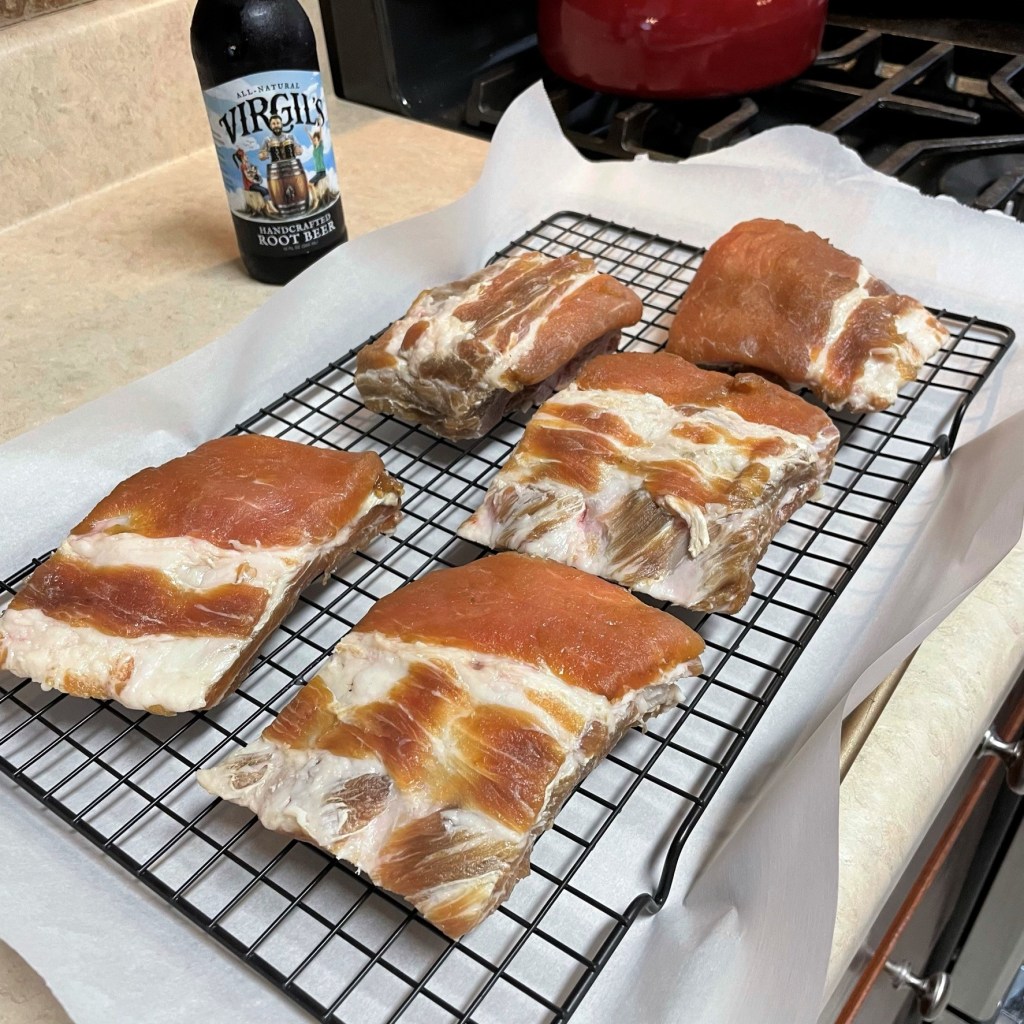
  4. When the brine is complete, remove the ribs and pat them dry. Place them on a rack over a baking sheet and refrigerate, uncovered, for a few hours. This prepares the surface of the meat for more flavorful grilling.

Root Beer BBQ Glaze

2 Tbsp. canola oil

1/2 sweet onion, finely chopped

2 cloves garlic, minced

Zest of a fresh lemon

2 pieces crystallized ginger, finely minced

3 Tbsp. light brown sugar

1 cup tomato ketchup

12 oz. bottle naturally sweetened root beer

1 tsp. smoked Spanish paprika

Kosher salt and oak-smoked black pepper


Make the glaze

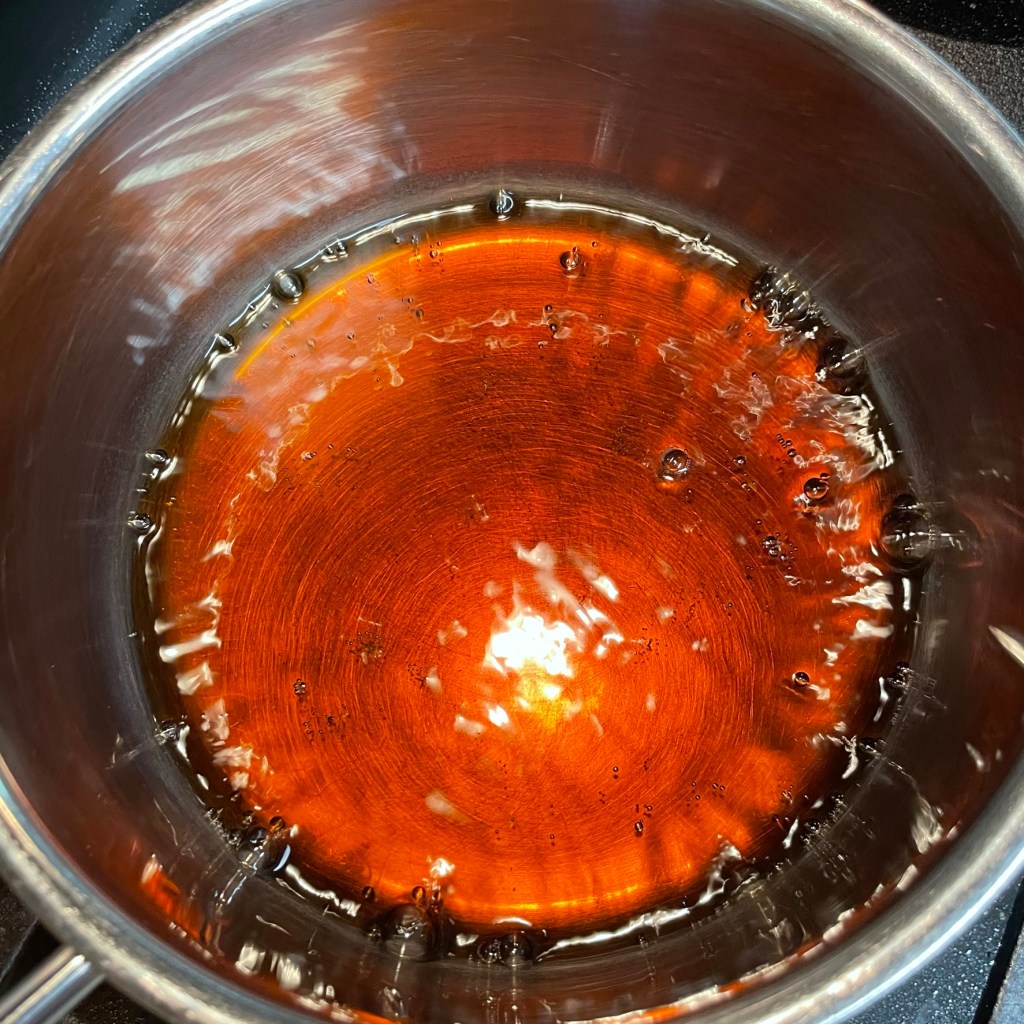
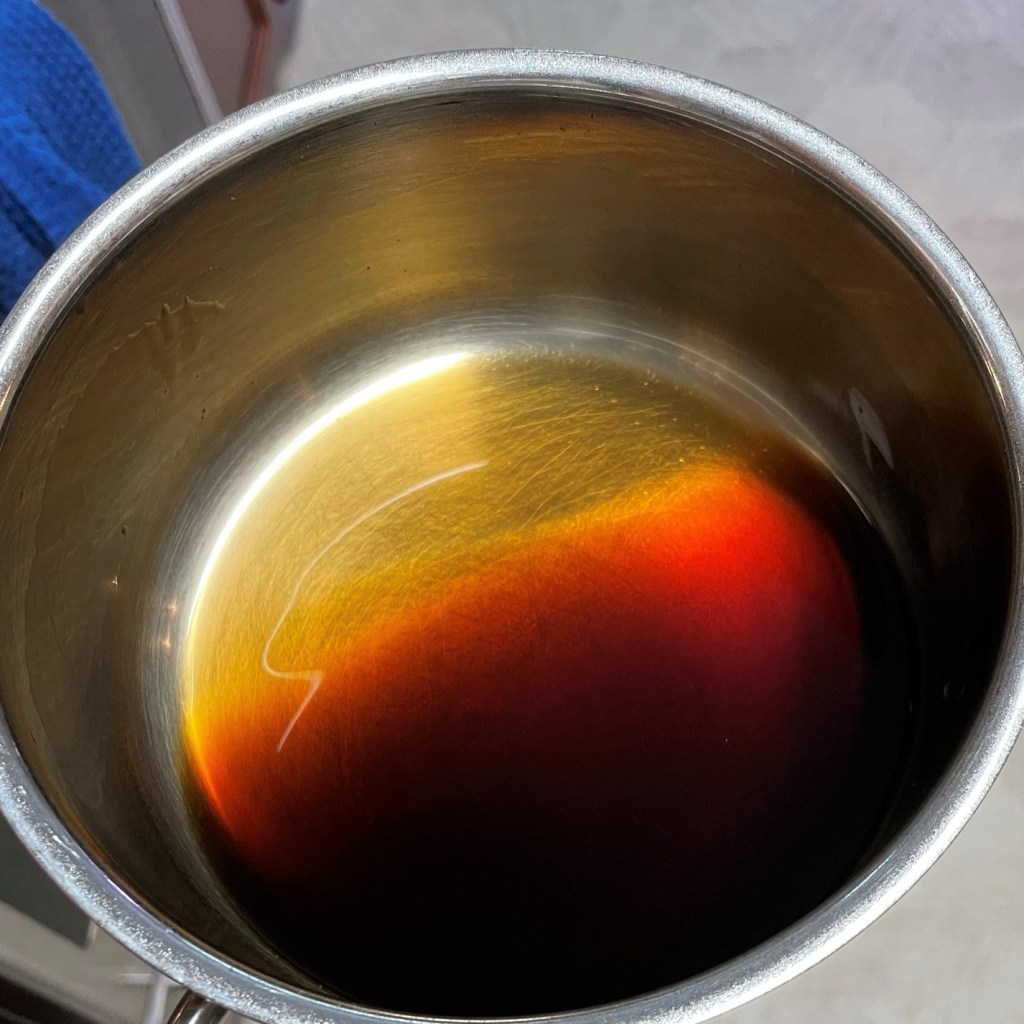
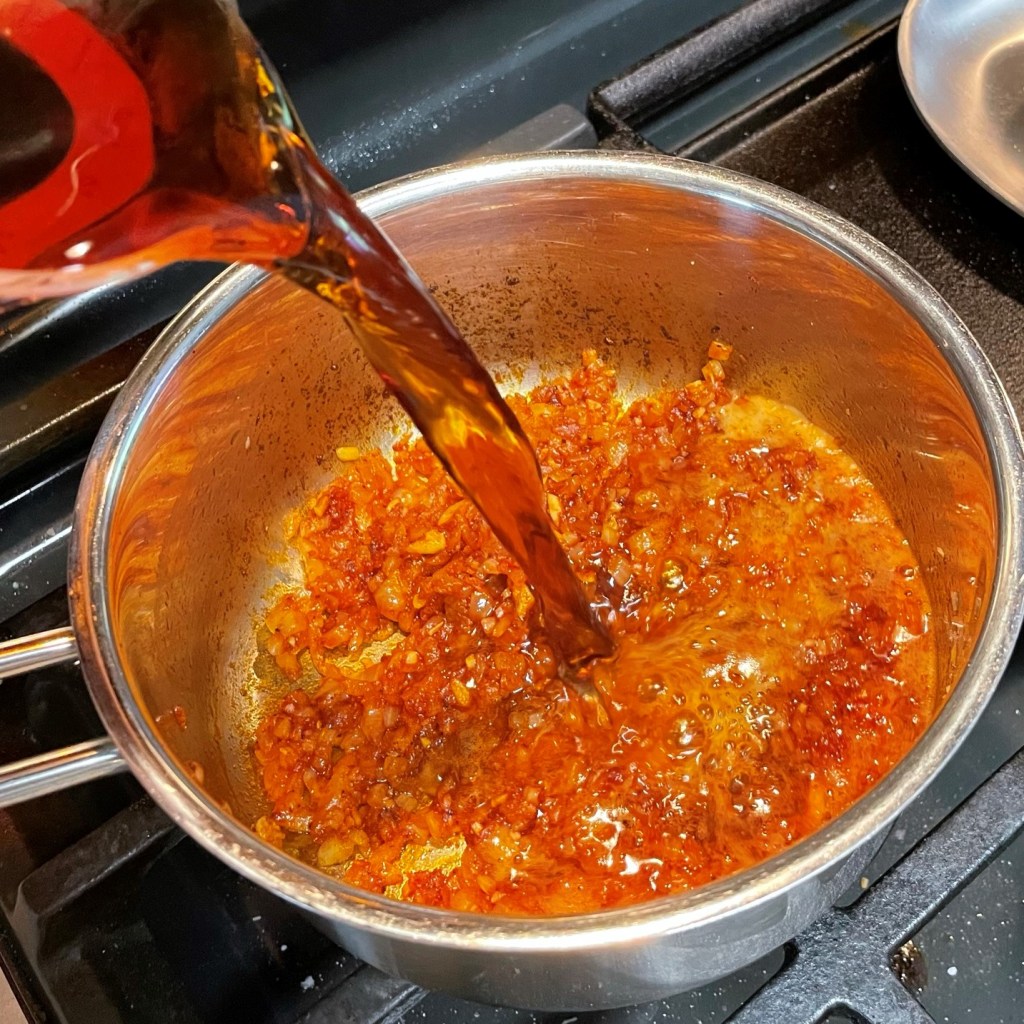
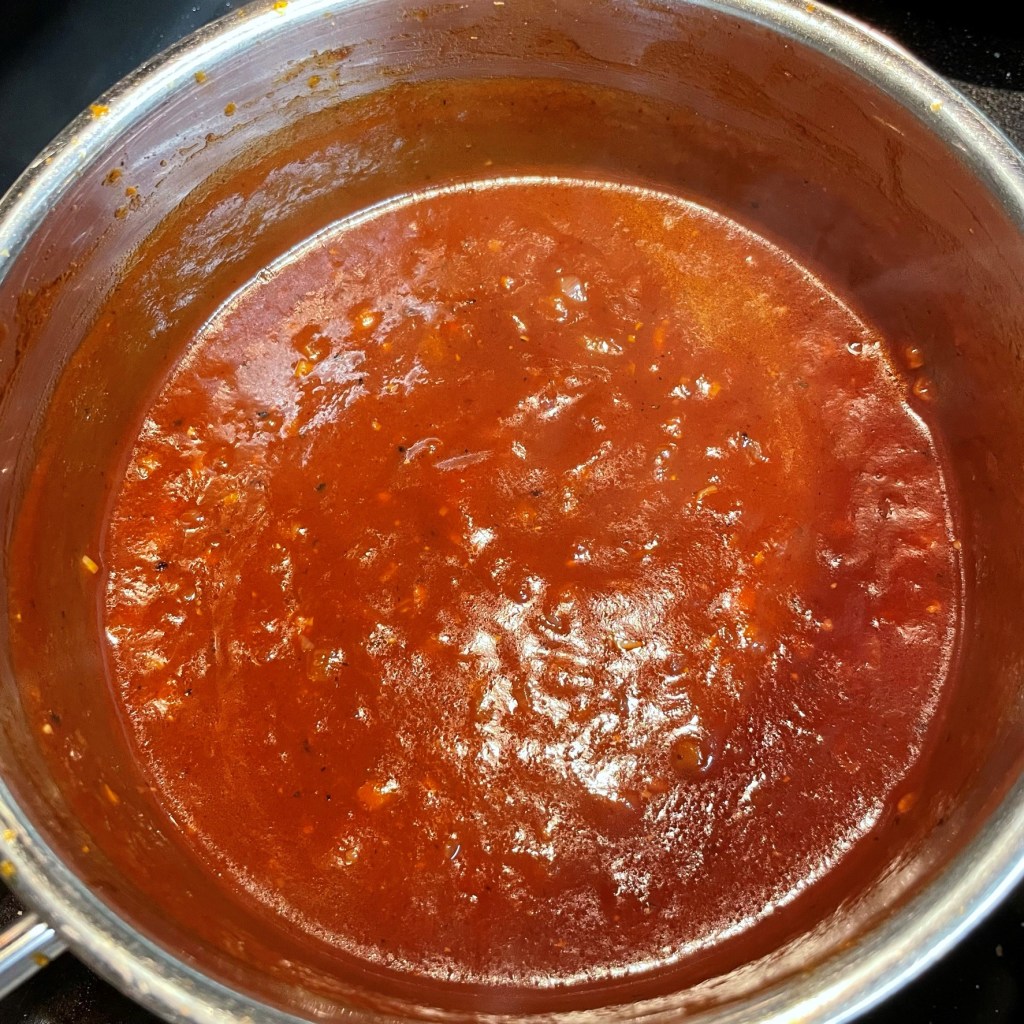
  1. Empty root beer into a heavy-bottomed saucepan, and simmer over medium-low heat until the liquid is reduced to about 1/2 cup. Transfer to a measuring cup.
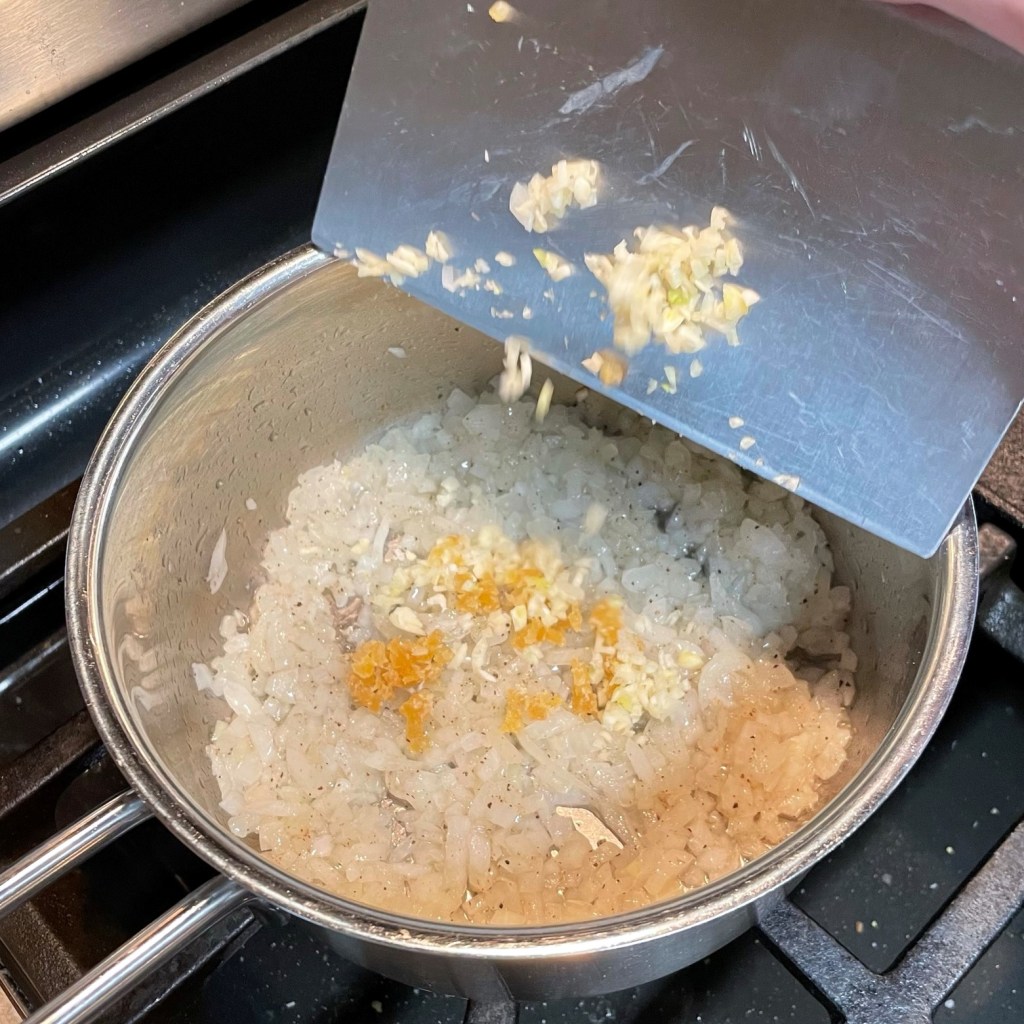
  2.  In the same saucepan, heat canola oil and sauté onions about two minutes, until slightly softened. Add minced garlic and crystallized ginger and cook one to two minutes more.
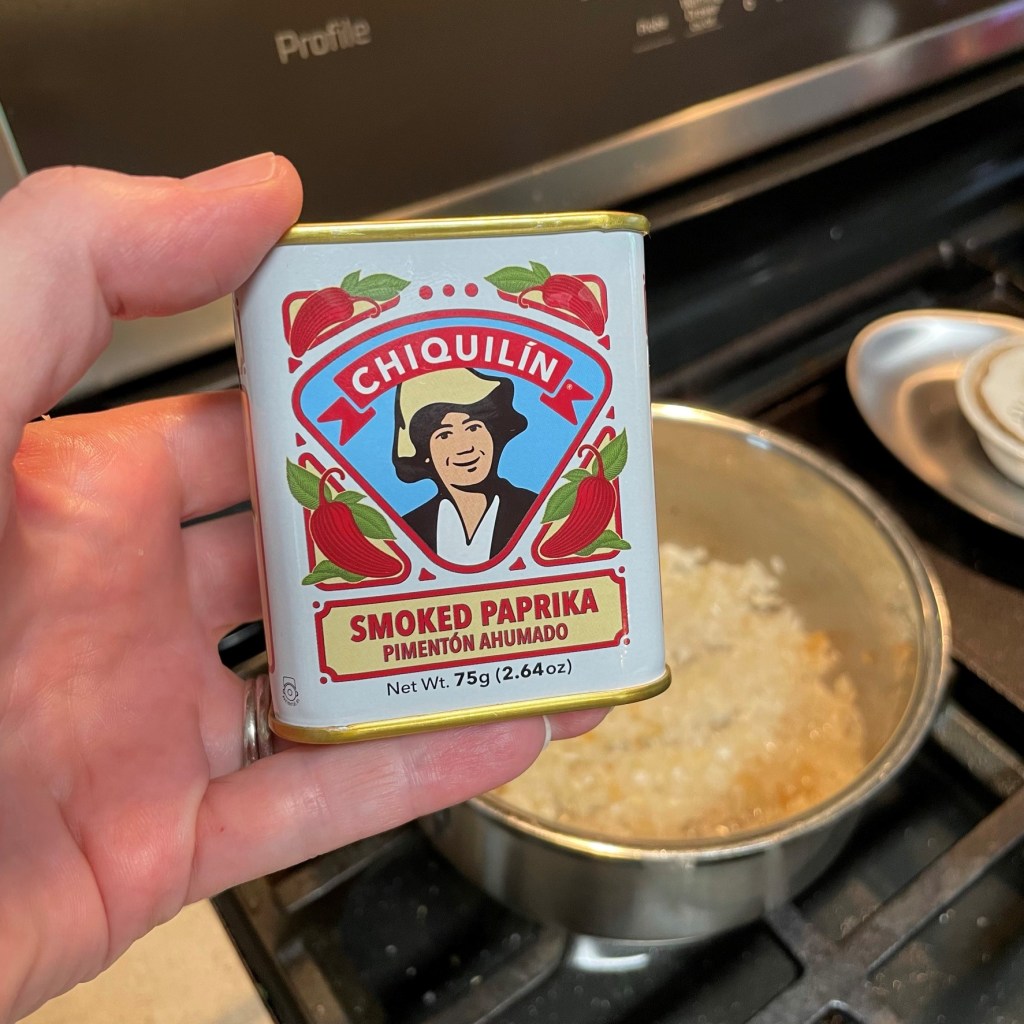
  3. Add smoked paprika to the pan and cook just until the paprika becomes fragrant. Add root beer reduction and simmer on low heat several minutes until the mixture is syrupy.
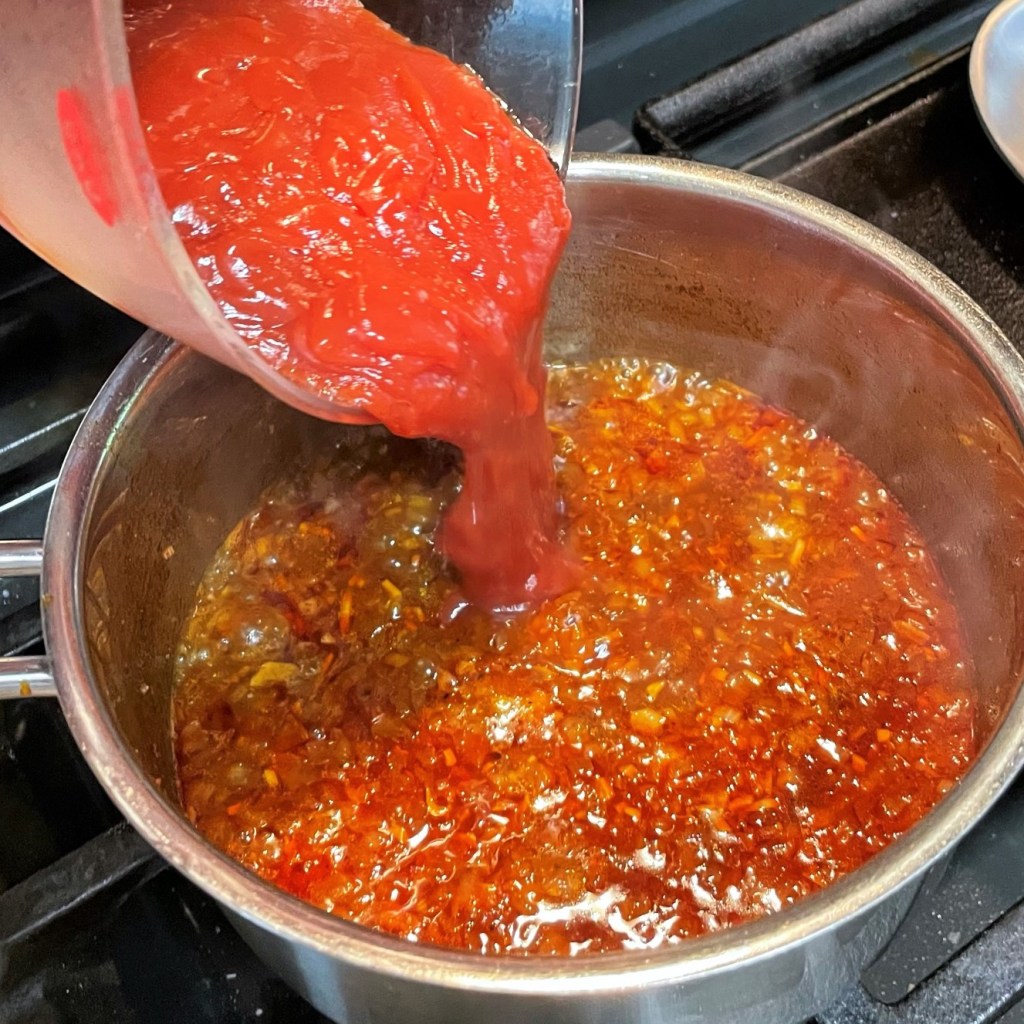
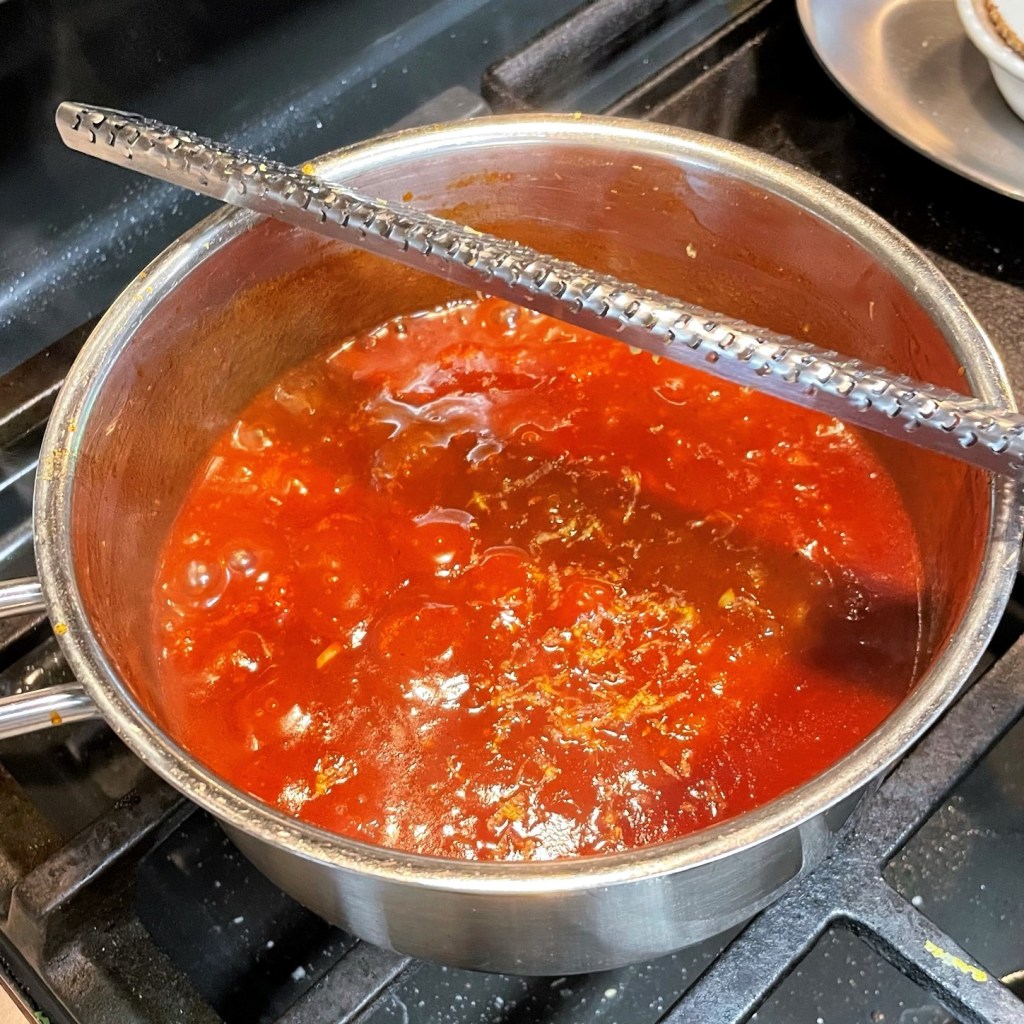
  4. Add the ketchup and brown sugar, stirring to combine. Add lemon zest and smoked black pepper. Simmer on low heat until just bubbly at the edges. Adjust salt, pepper and sweetness to taste. I wanted it a little bit sweeter, so I added a splash of additional root beer.

Time to grill the ribs!

My hubby, the grill master, questioned the instructions I handed him from the Bobby Flay recipe, and I darn sure should have listened. We followed the gist of the original recipe, grilling the ribs naked over indirect heat at about 250° F for two hours, then glazing them with the root beer BBQ glaze for the last 20 minutes or so. Granted, we do not have a “kamado-style” charcoal grill, but I had hoped

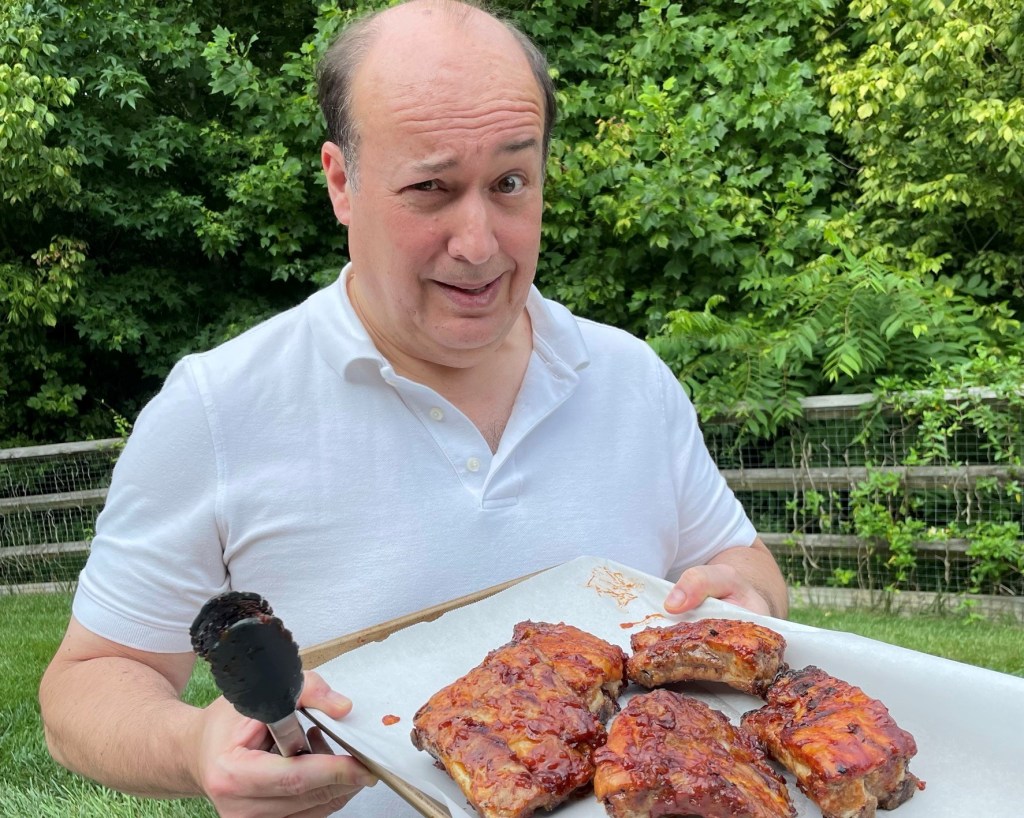
This was enough time to cook them, but not enough to make them fall-off-the-bone tender, which is what my root beer-loving heart desired. We had also soaked some hickory chunks in cold water and root beer, and tried out the small smoker box we had purchased for the grill. Friends, let me just say, “don’t bother,” because we did not get even a hint of smoke on the ribs. It would have been terrific, though, on a regular smoker. Overall, The meat was tasty (I think the brine did wonders) and the sauce was just as I imagined—root beer was present but not too sweet.

We have had more tender ribs without following a recipe, and next time we make these, I will hand the reins over to Les to grill or smoke the ribs however he chooses. We also agreed that low and slow roasting in the oven would probably have resulted in more tender ribs, and I sure would not mind the aroma in the house!

The flavorful brine and the root beer glaze were the real winners for this recipe!


Roasted Pork Loin with Gingered Rhubarb Chutney

I had all but given up hope on finding more rhubarb this spring, after my earlier, monthlong, city-wide search that resulted in my first few stalks of this tart, springtime treasure. But my sweet-toothed husband, Les, made a bold announcement after his first taste of the Rhubarb-Berry Crunch dessert—“OK, I like rhubarb,” so the hunt was on for more. I lucked out, at the same store I had found it before, and I bought the last of what they had. As with any rare find, I have been trying to ration my rhubarb stash to enjoy it in as many forms as possible, and I have a few more ideas brewing in the back of my mind that I’ll spring on you soon.

The ginger addition to the rhubarb filling in the crunch dessert was so delicious; I wanted to pair the flavors again in a sweet-meets-savory chutney for pork roast. A smart lesson I learned in my part-time catering years was the easy trick of “echoing” flavors across various dishes in a meal, and I put that idea fully to work here, giving the chutney a shout out with complementary flavors in both the brine and dry rub. I incorporated cardamom, star anise, more ginger and one colorful ingredient I purchased recently from the gourmet kitchen section of TJ Maxx:

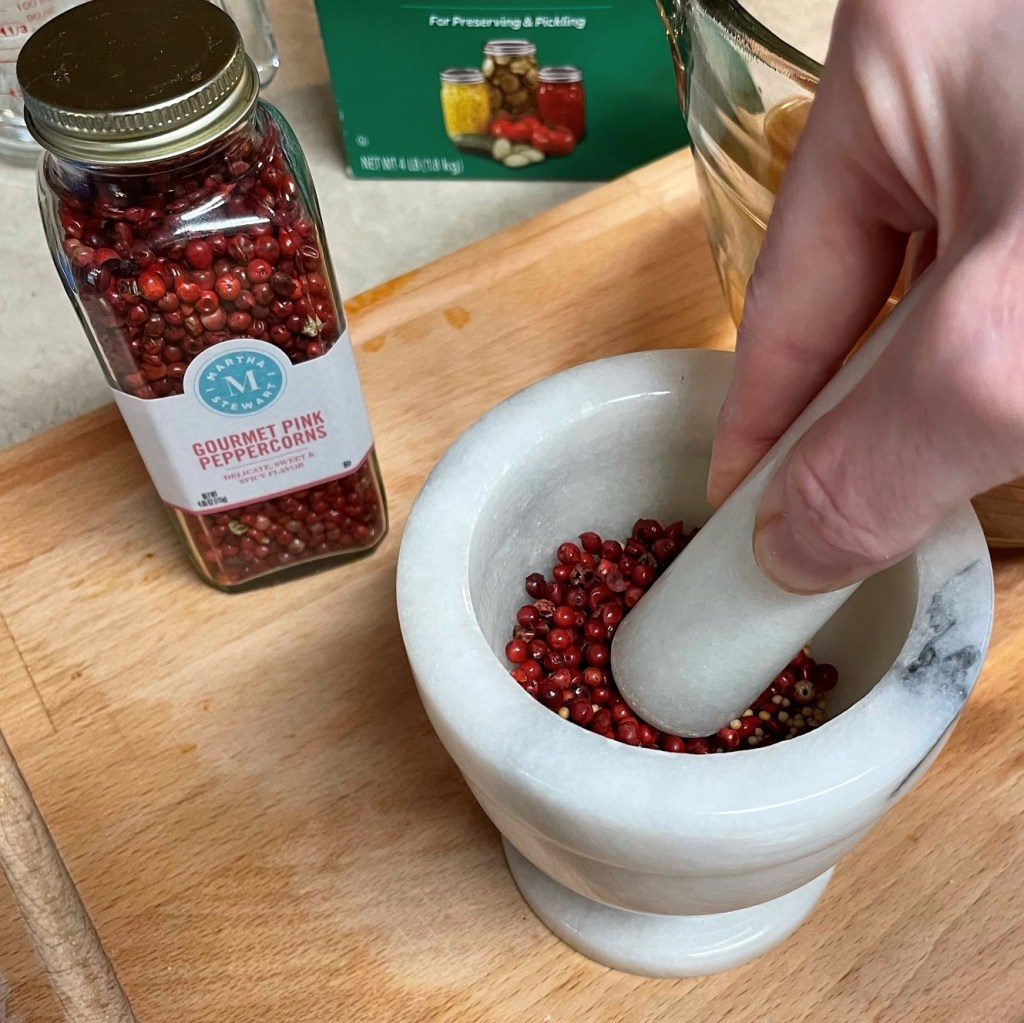
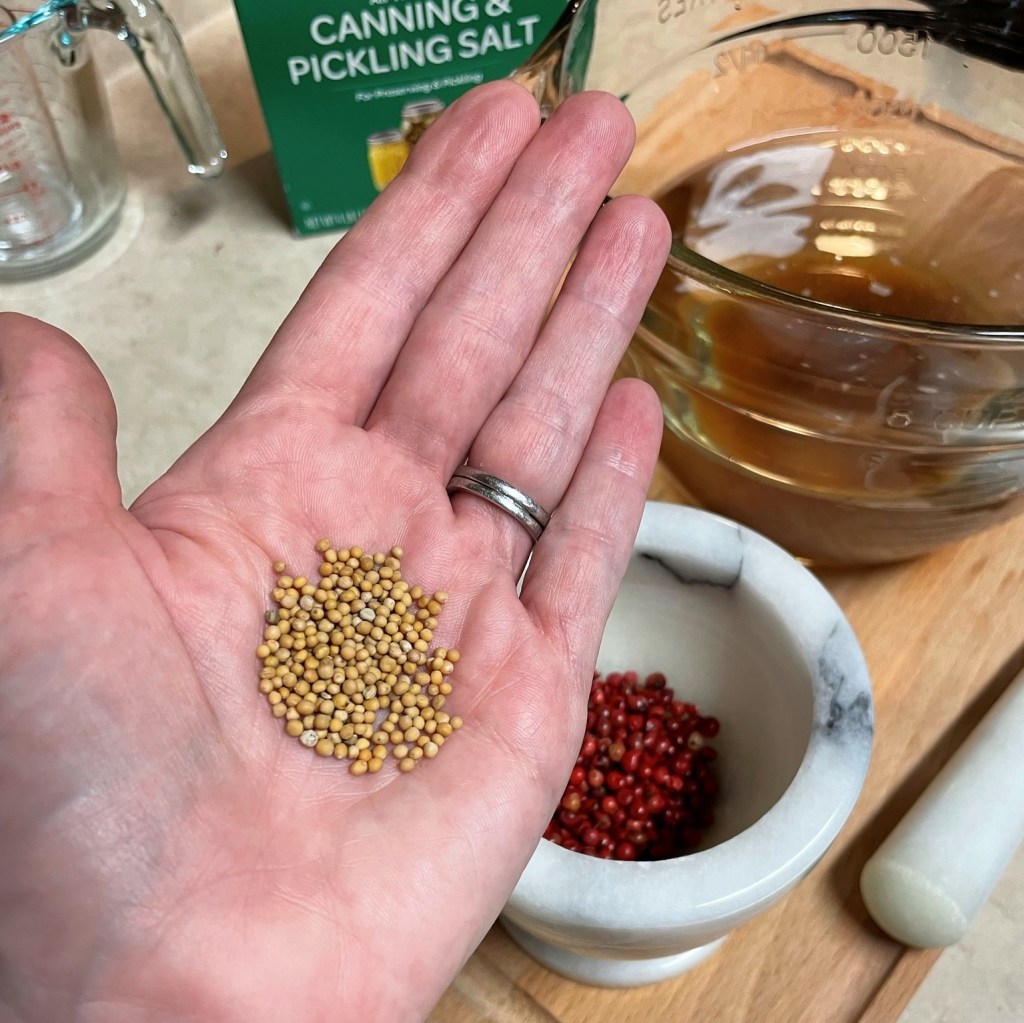
These pretty little dried berries are not related to black peppercorns, and they are very easy to crush.

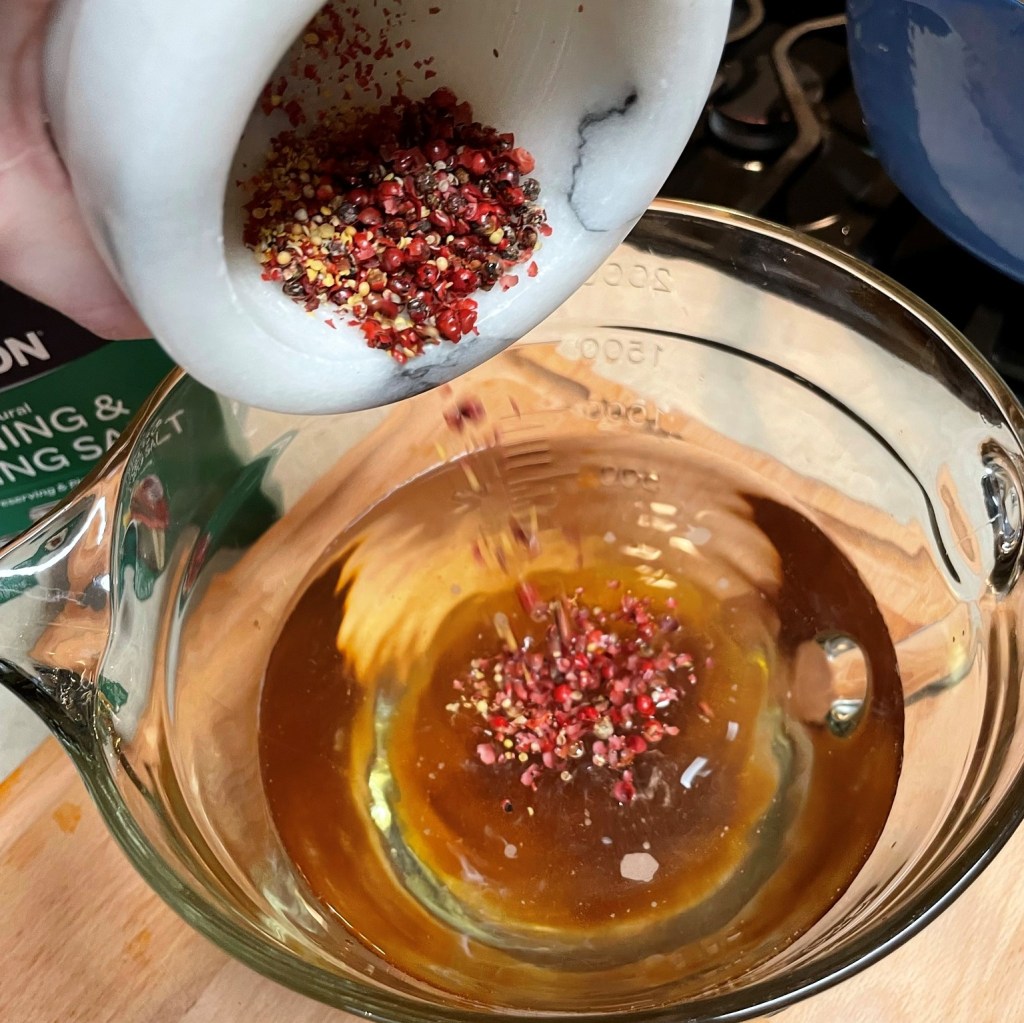
I’ve seen them, of course, but didn’t know much about pink peppercorns, other than their occasional appearance in one of the “mélange” blends that goes into my Peugeot peppermill. As it turns out, pink peppercorns are not related to black pepper at all! They are named merely for their resemblance to peppercorns and also for their slight peppery flavor, but they are brighter and fruitier than ordinary pepper, and they turned out to be a nice complement to the tart rhubarb. They are also much softer than regular peppercorns, as I learned when I easily crushed them with my mortar and pestle. Another fact about pink peppercorns—one that is more on the serious side—they are closely related to cashews, so they pose a significant safety risk to anyone with allergies to tree nuts (yikes).

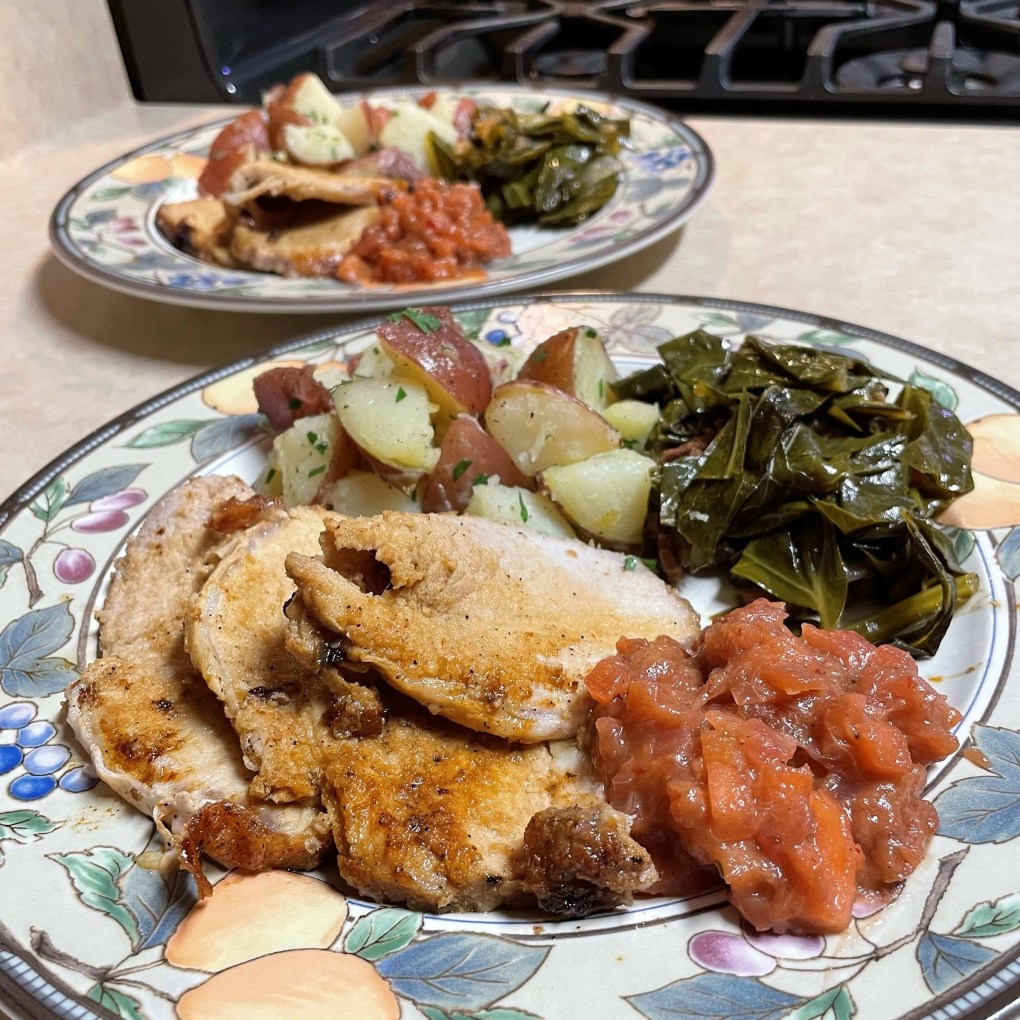
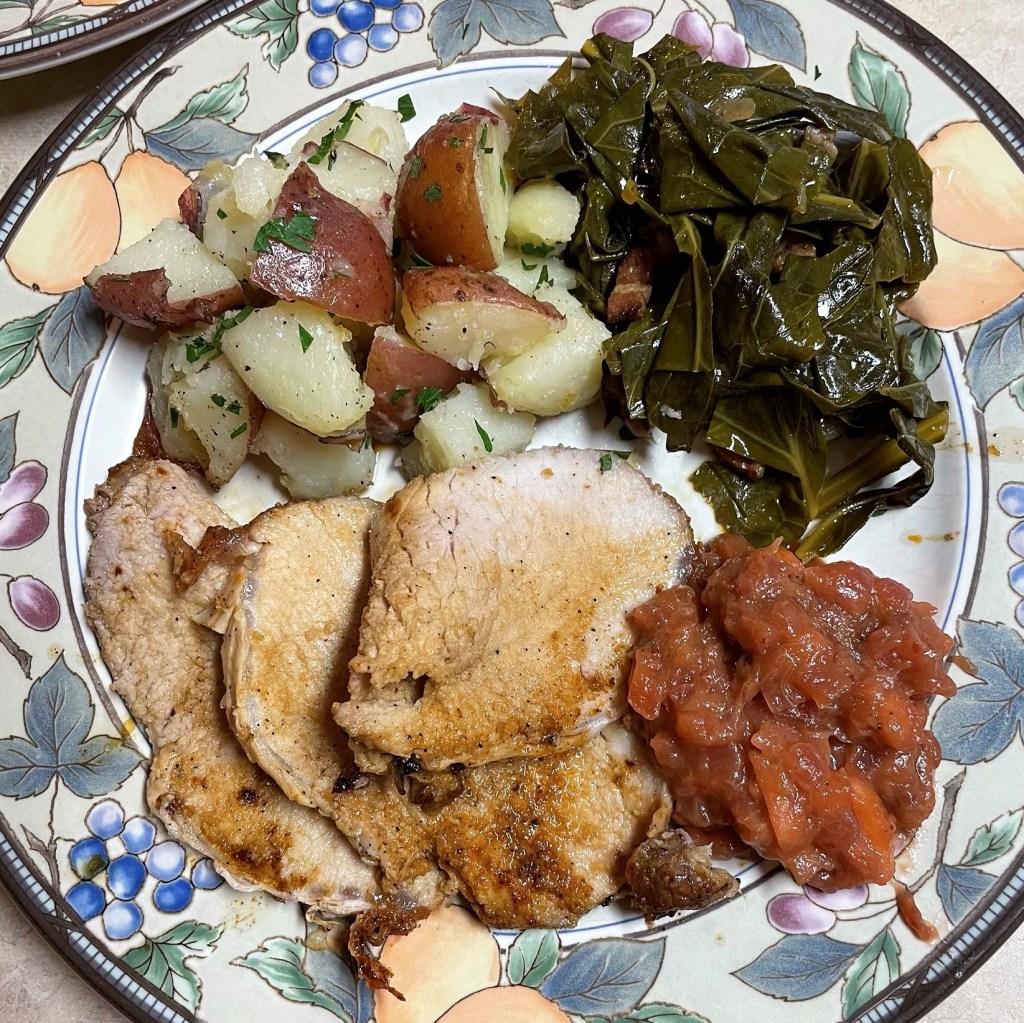
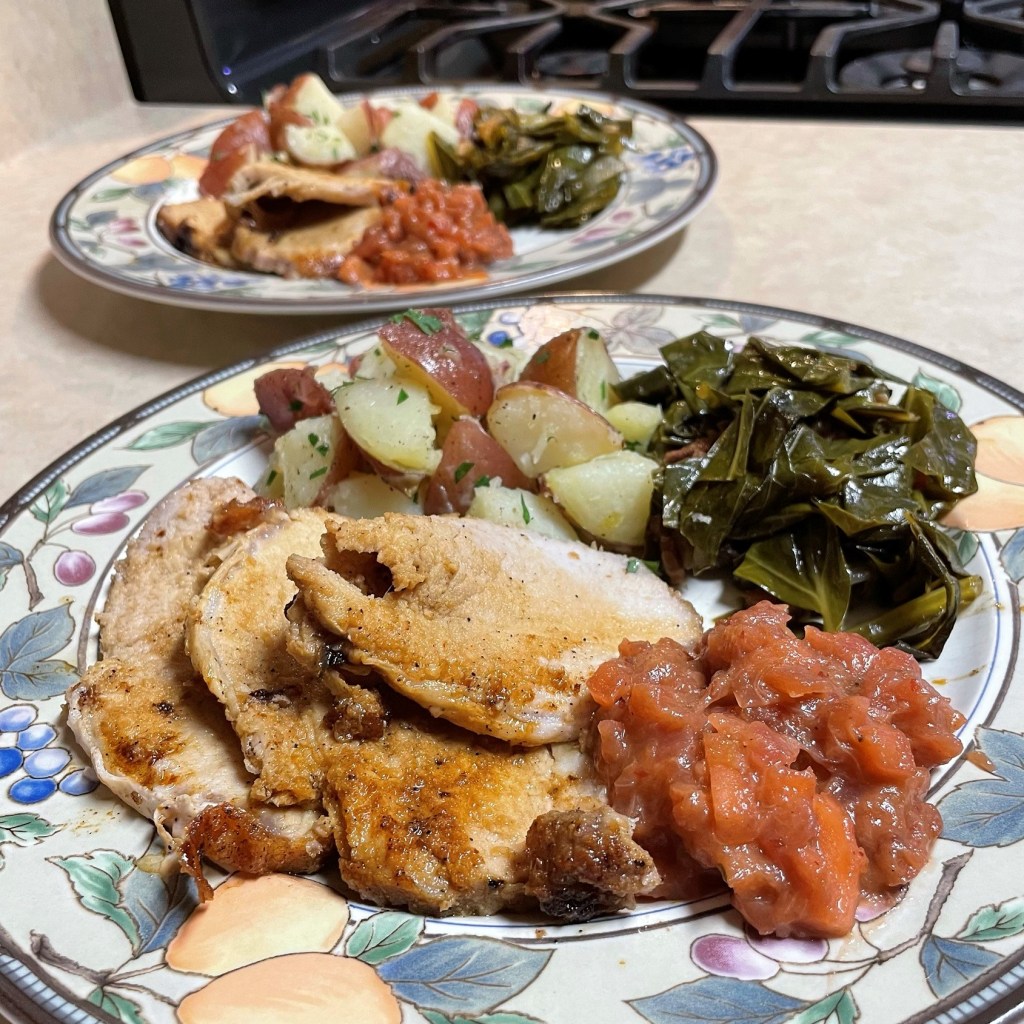
The pork loin was a great find at a local farmer’s market. The seller was mindful to point out the advantages of local, pastured pork, which is more humane and sustainable than most conventional processes, and I have no problem paying the higher cost for those benefits. It is also more flavorful than typical, bland grocery store cuts. The loin is a very lean cut, prone to become dry, so I brined it for a few hours before roasting. The end result was perfectly tender, juicy and flavorful, and the gingered chutney was just the right touch, though a bit intense for Les, so I would ease up on the ginger next time. We served this delicious roast with simple boiled red potatoes and our favorite homemade collard greens, another prize from the farmer’s market.

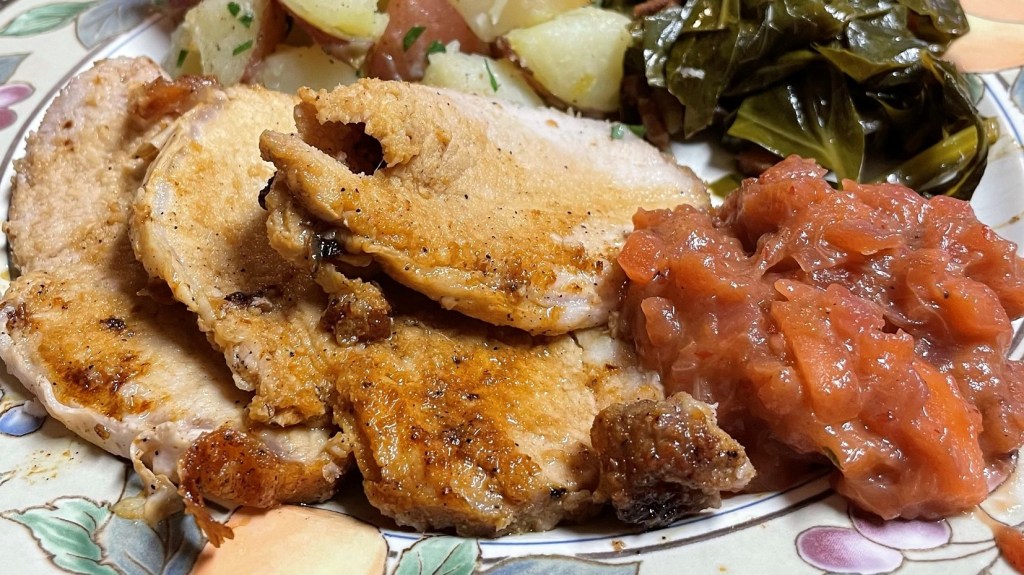
I dipped each slice in the roast pan juices before serving with the gingered rhubarb chutney. A perfect Sunday Supper!

The extra layers of attention that I gave to this meal earns it a spot in my Sunday Supper category, which I suspect has been feeling a little neglected recently. We have done a lot of very casual cooking at our house in recent months, but after so many weeks of playing “hard to get,” this rhubarb deserved a special seat at the table. Enjoy!


Ingredients & Instructions

Brine for pork loin

2 1/4 lb. pasture-raised pork loin

4 cups cold water

1/4 cup canning and pickling salt (or kosher salt)

1/4 cup brown sugar

1 Tbsp. crushed pink peppercorns

2 cardamom pods, crushed

1 piece star anise

Be sure your brine container is non-reactive; a large, deep glass bowl works great. It isn’t necessary to heat the water, as pickling or kosher salt will dissolve pretty easily. If you do choose to heat the water for quicker dissolving, be sure the brine has time to cool completely before you add the roast to it.

Stir brine ingredients until salt and sugar are dissolved; submerge pork loin, cover and refrigerate 4 to 5 hours; remove from brine, pat dry all over with paper towels. Rest a few minutes, pat dry again, then follow rub instructions.


Rub for pork loin

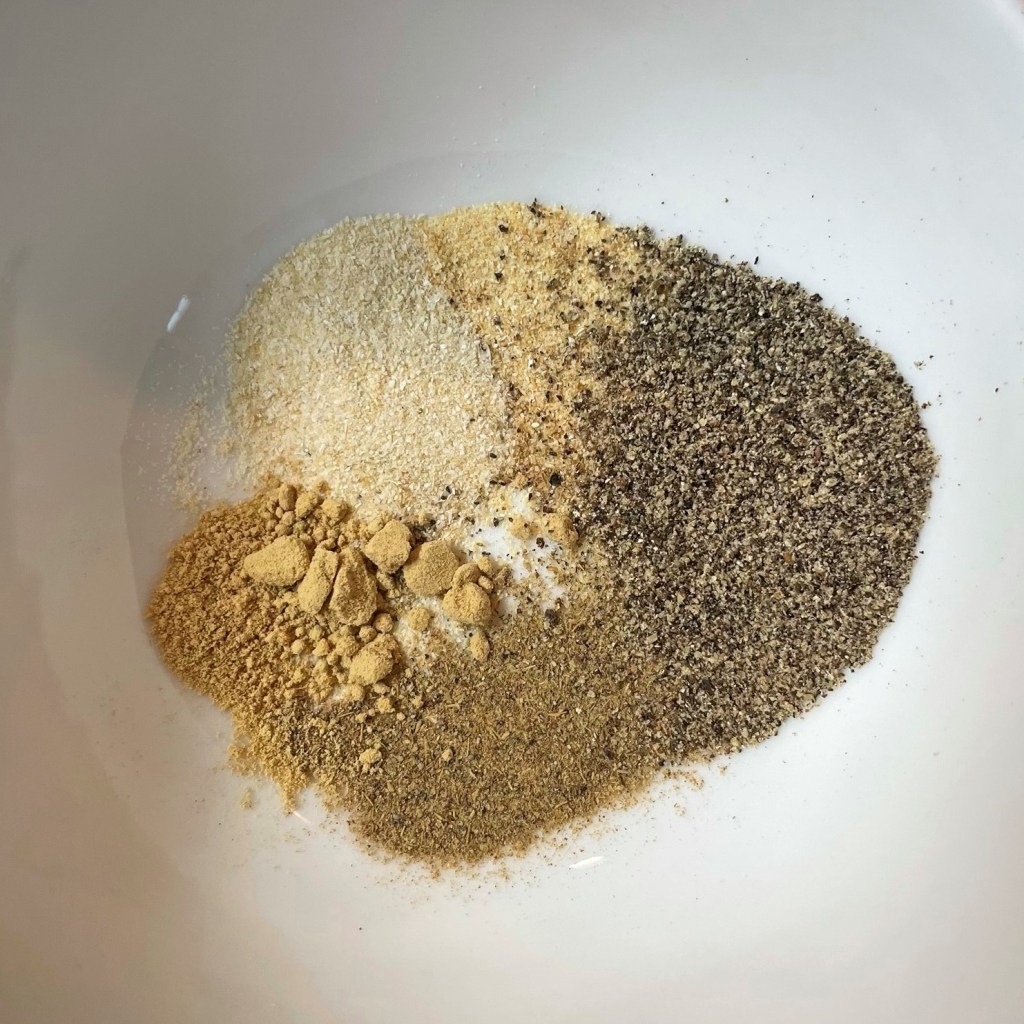
1/2 tsp. garlic powder

1/2 tsp. onion powder

1/4 tsp. ground cardamom

1/4 tsp. ground ginger

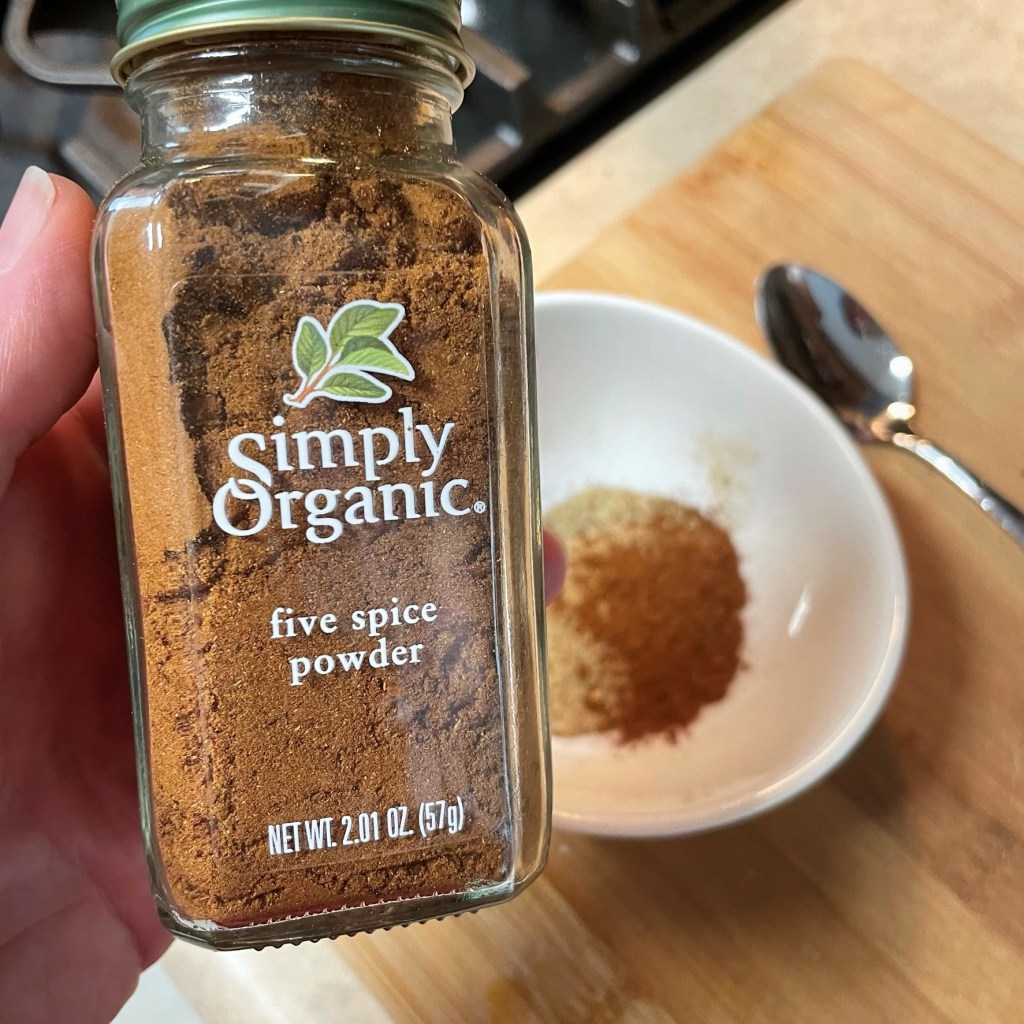
1/2 tsp. five spice powder

1/2 tsp. ground black pepper

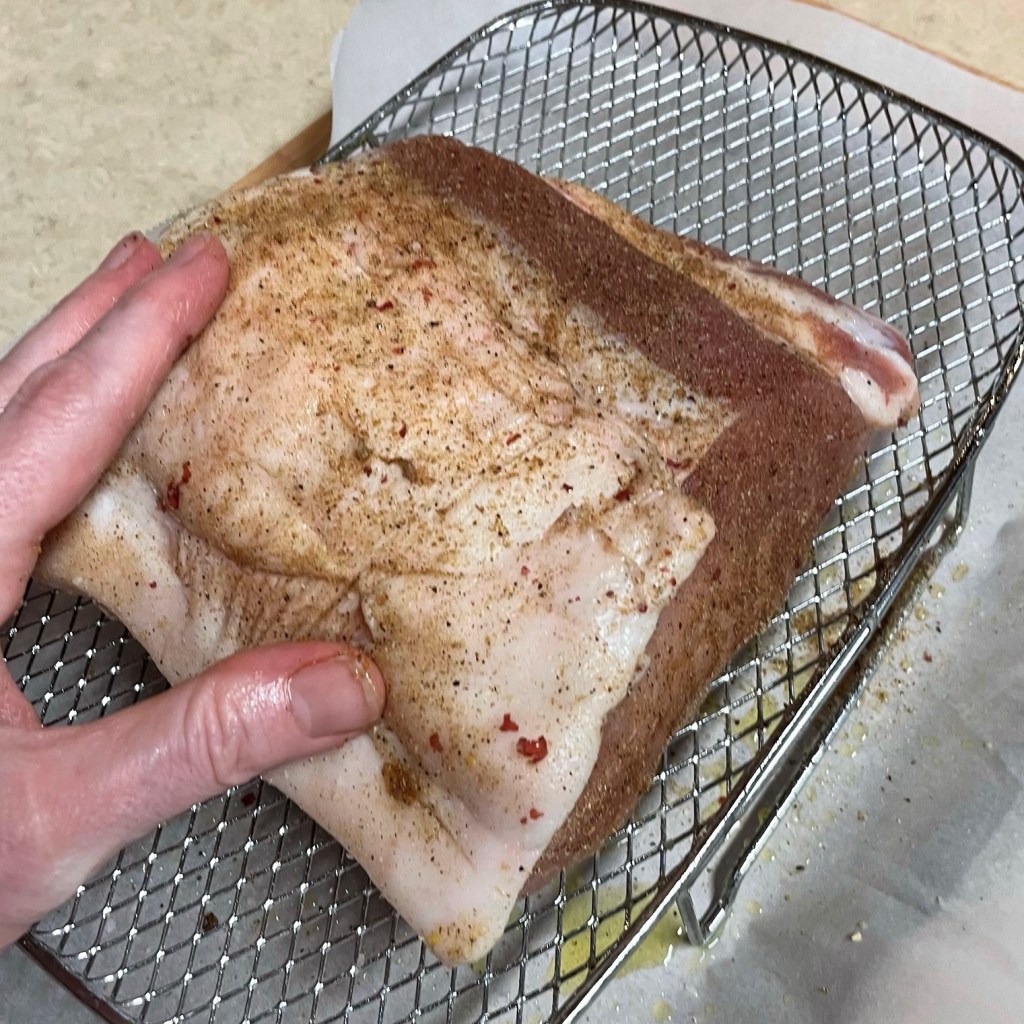
Spray olive oil onto dried pork loin, and sprinkle rub all over, especially the lean surfaces. Let roast remain uncovered at room temperature for about an hour before roasting.

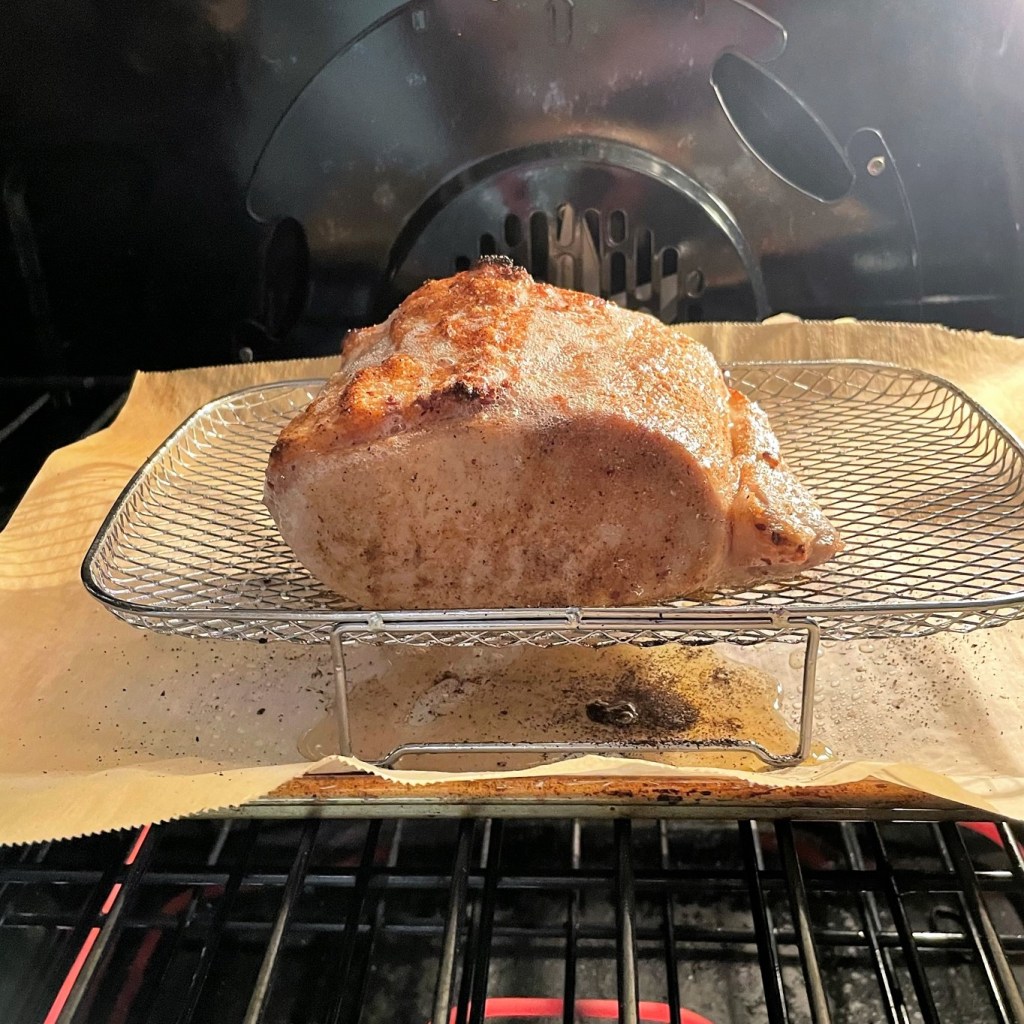
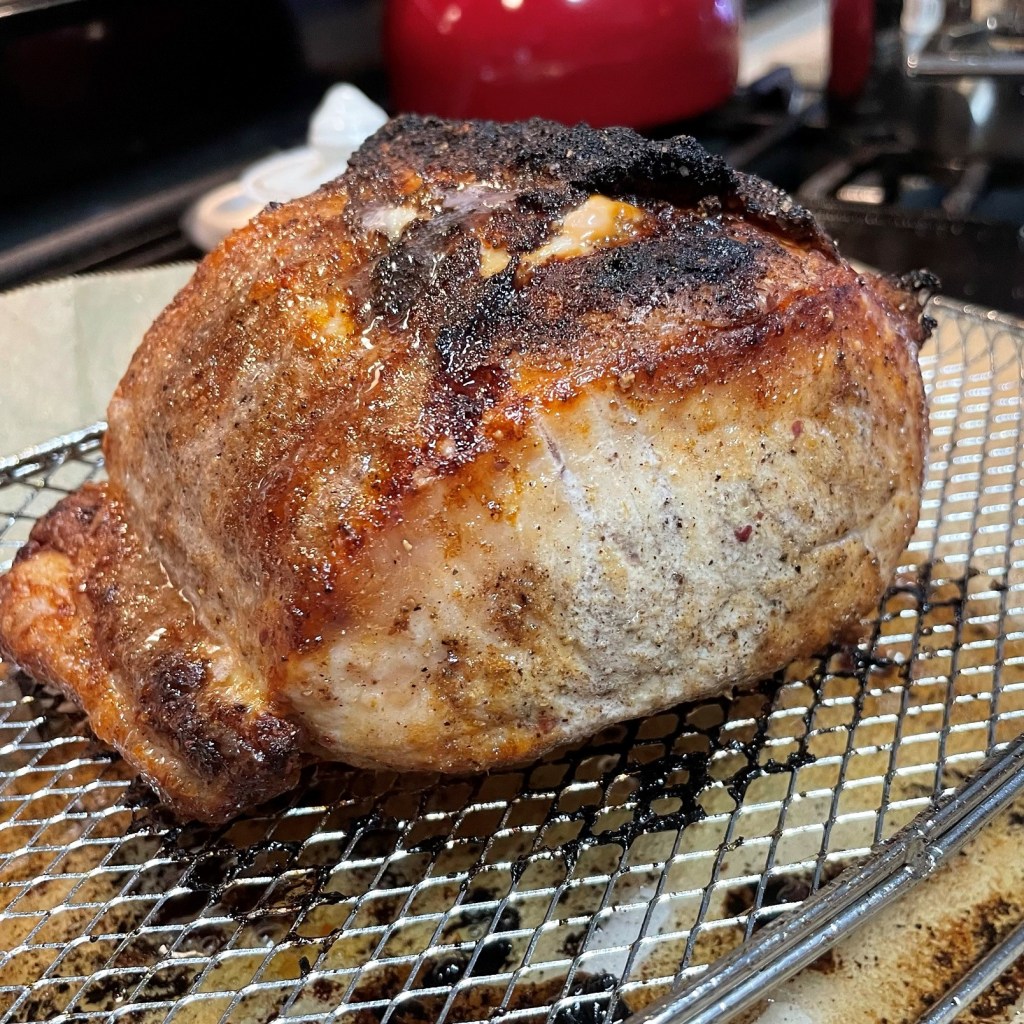
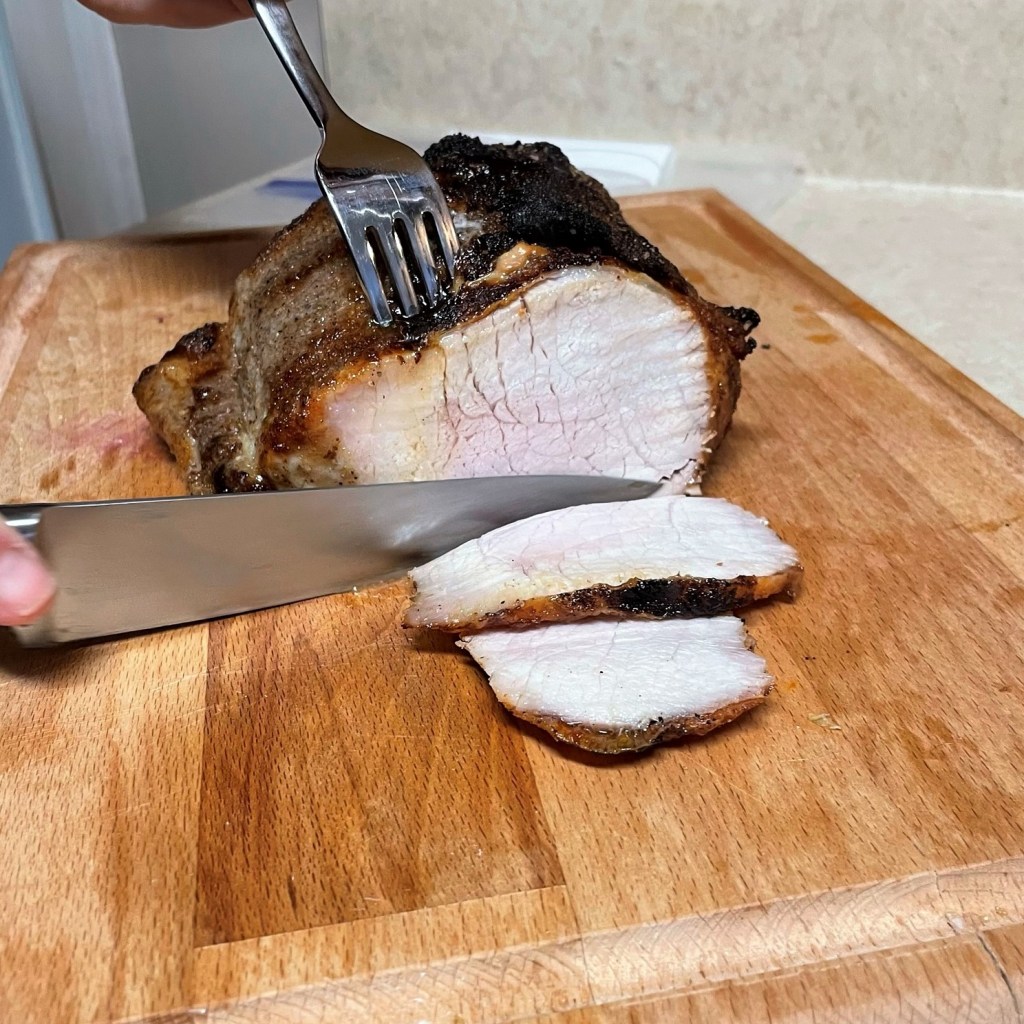
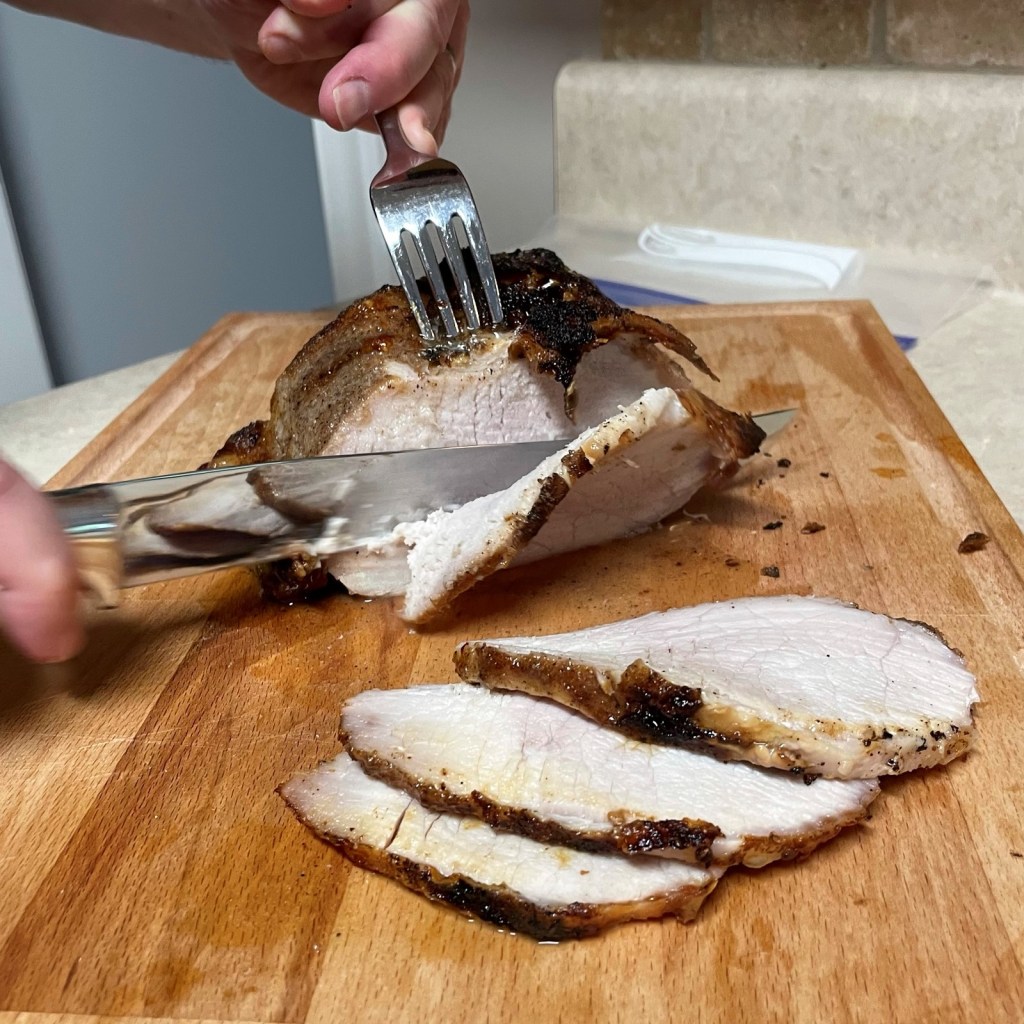
Preheat oven to 450° F. Place loin roast (fat side up) on rack above parchment-lined baking sheet, or inside a shallow glass baking dish. Roast at 450° for 15 minutes, then reduce heat to 400° and roast or convect roast for 30 to 45 additional minutes, or more as needed to reach 145° F internal temp. Rest at least 10 minutes, then slice thinly. Dip slices into any clean pan drippings for extra flavor at serving.


Rhubarb Apple Chutney

1 Tbsp. extra virgin olive oil

1/2 cup diced sweet onion

½ tsp. pink peppercorn, crushed

1 cardamom pod, crushed

1 heaping cup diced rhubarb

1/2 cup chopped apple

1/4 cup packed brown sugar

2 Tbsp. minced crystallized ginger

2 Tbsp. apple cider vinegar

Kosher salt and black pepper

Leaves from about two sprigs of fresh thyme

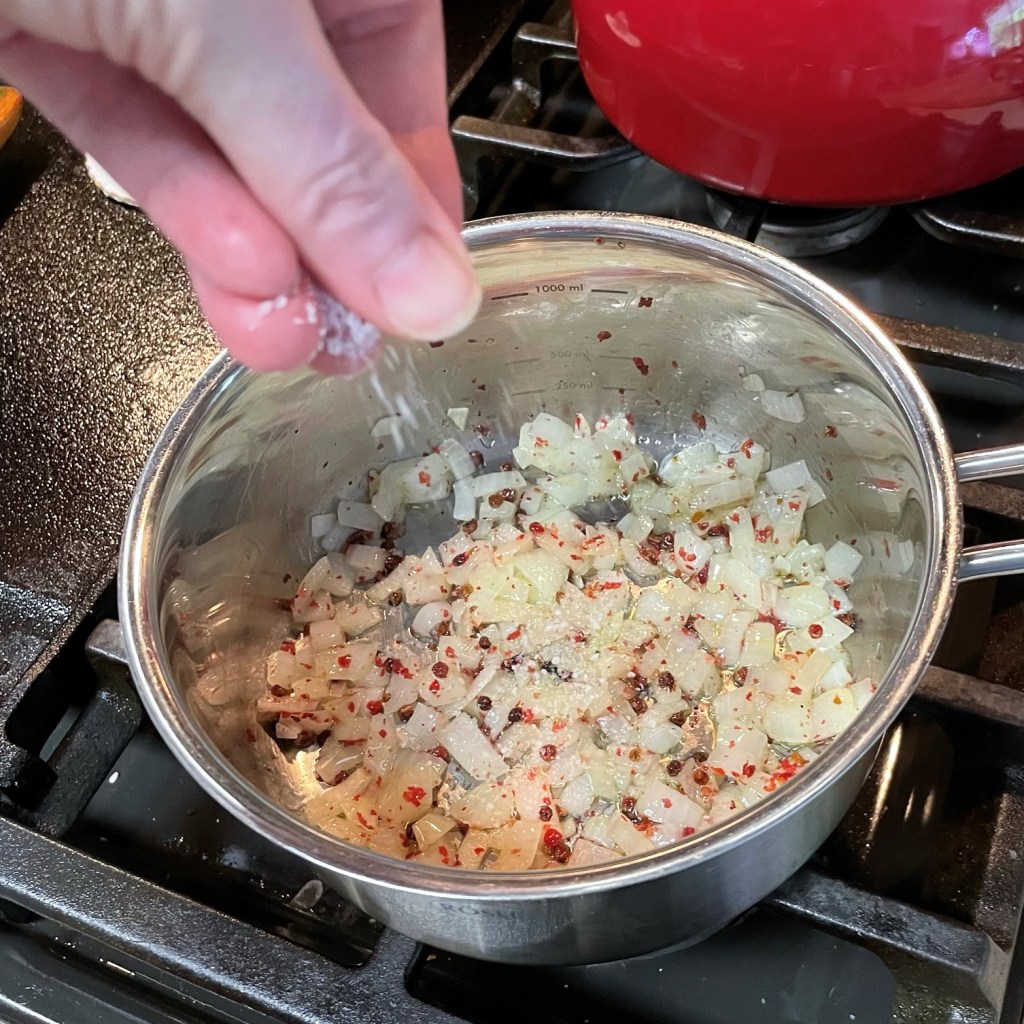
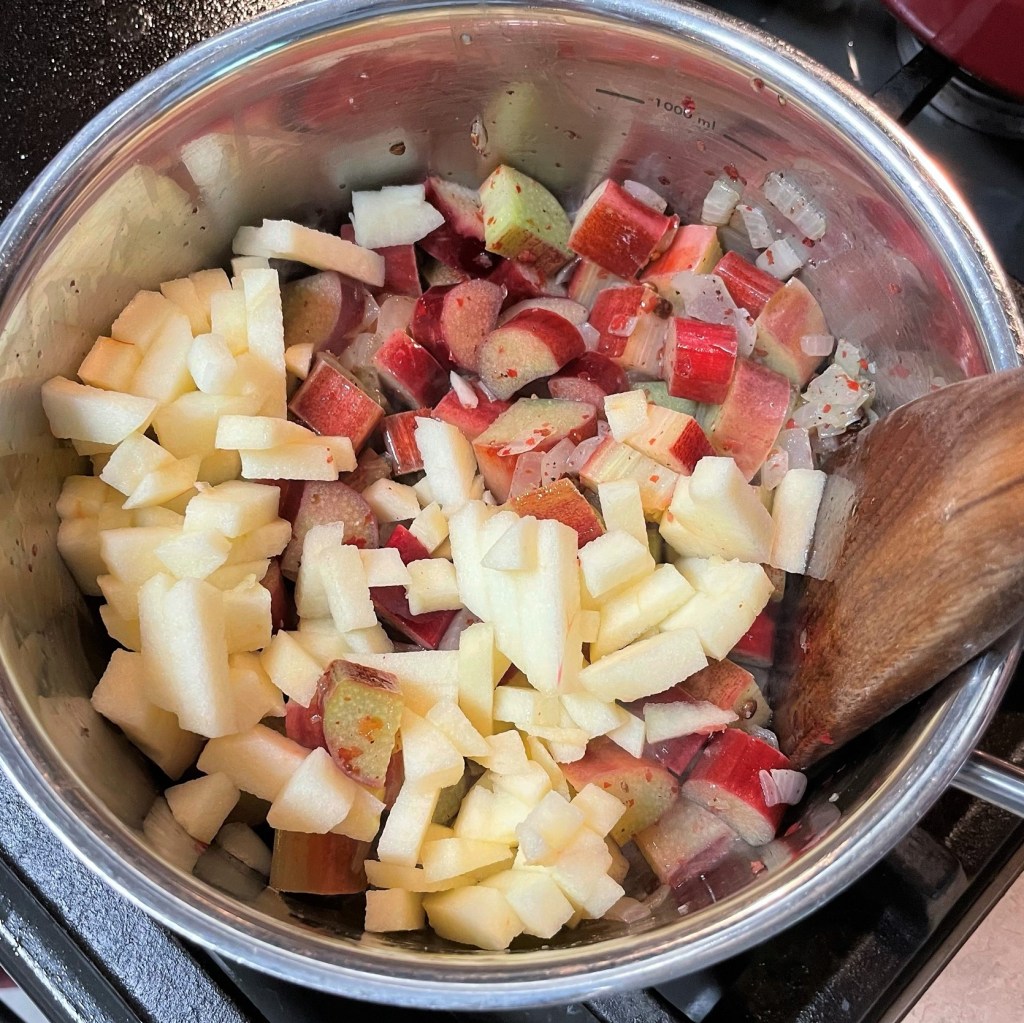
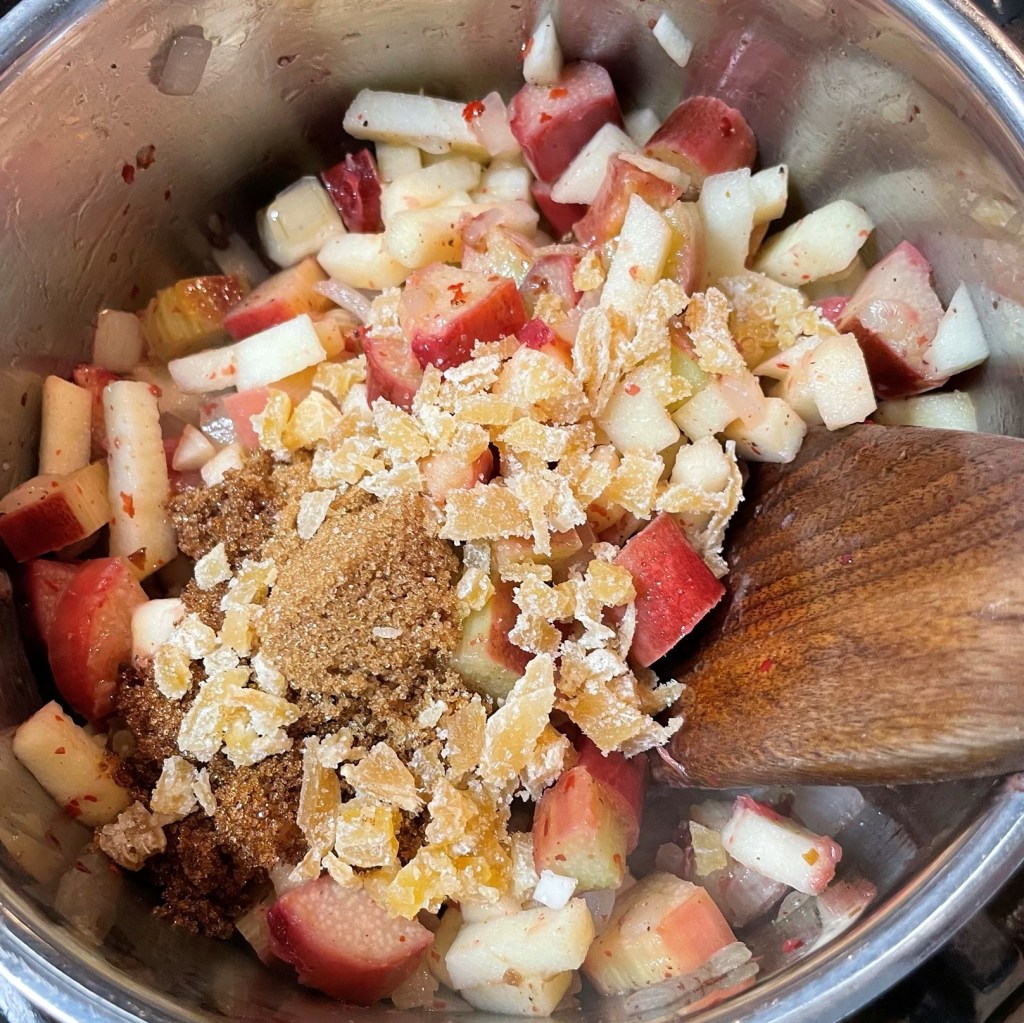
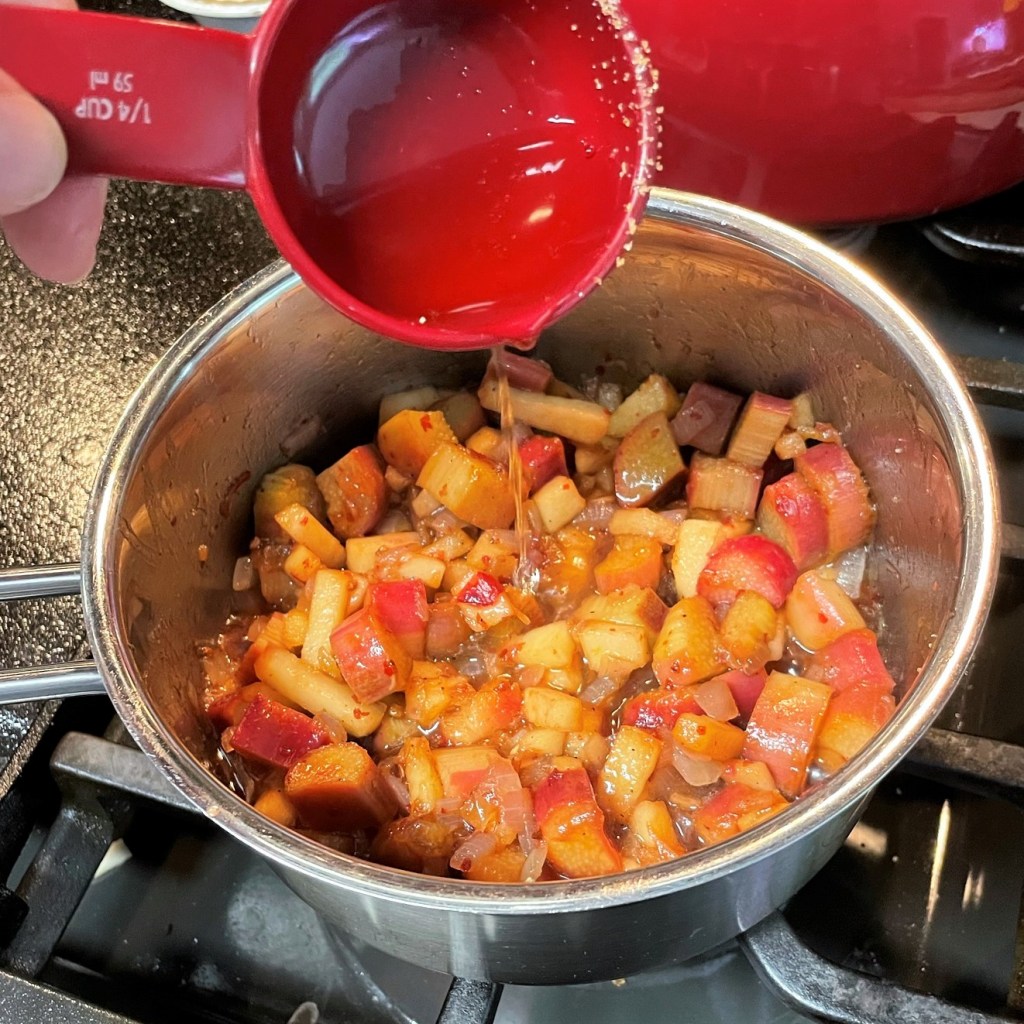
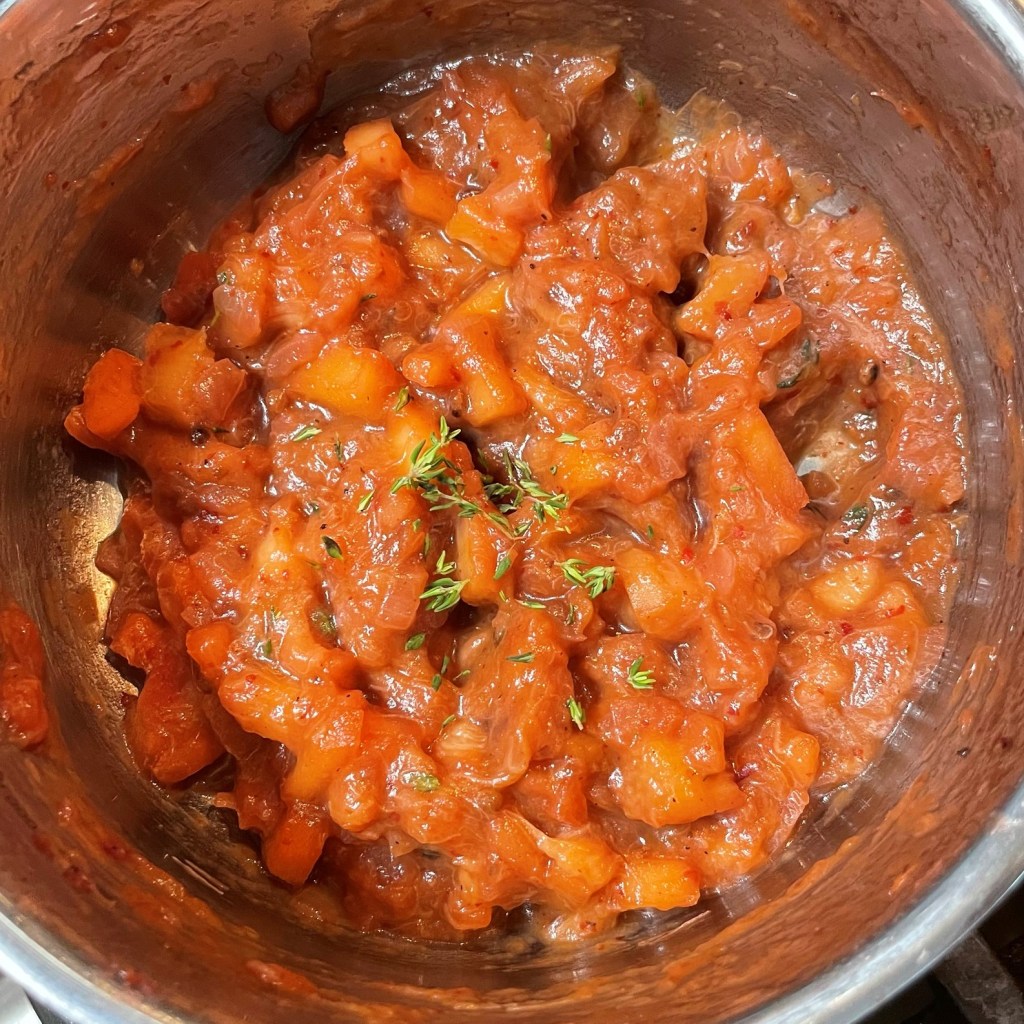
Heat olive oil in a small saucepan and sauté onions until softened. Season with salt and pepper, pink pepper and crushed cardamom pods. Add rhubarb and apple and toss to combine. Add brown sugar and crystallized ginger. Cook over medium-low heat until sugar is dissolved and fruit begins to break down. Add vinegar and continue to cook over low heat until fruit is completely softened and mixture is thickened. Stir in thyme leaves. If not using immediately, chill then reheat.


Souvlaki Pork Chops with Grilled Zucchini Salad

The warmth of summer is fading, and I’m not complaining. My favorite things to cook are autumn and winter foods, and I’m scheming to bring exciting new flavors into the new season.

But we still have to eat between now and then, and the grill has been our BFF this summer, especially as we have challenged ourselves to elevate our home-cooked meals while so many restaurants were closed. Here’s a quick look back at some of the fun grilled foods I’ve put on my plate since I launched Comfort du Jour:


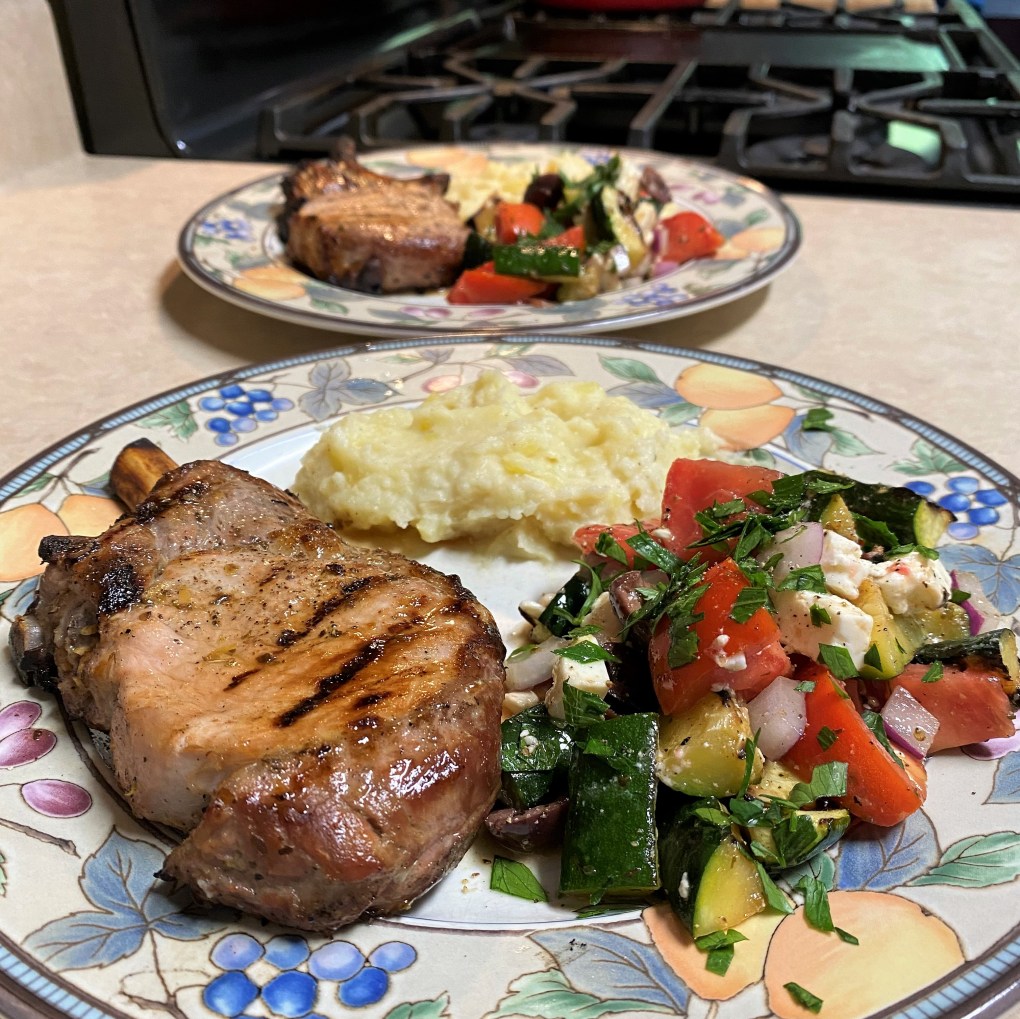
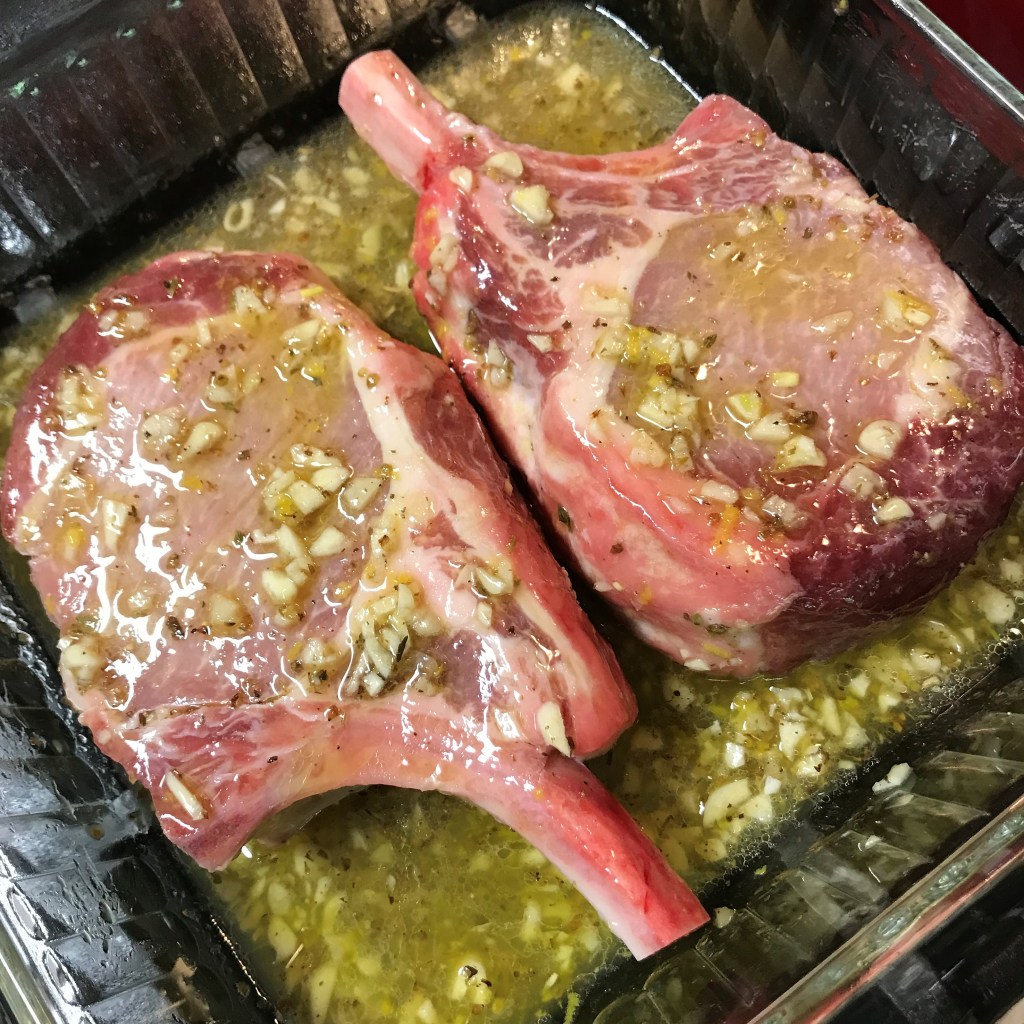
Before the sun sets on summer 2020, I’m throwing down a Mediterranean twist on simple grilled pork chops. I love the flavors of souvlaki, the Greek specialty that highlights the brightness of lemon and pungency of garlic, and is often applied to chicken or pork on skewers, so why not just skip chopping the chops into chunks and just marinate them as they are?

Does this look healthy and delicious, or what?

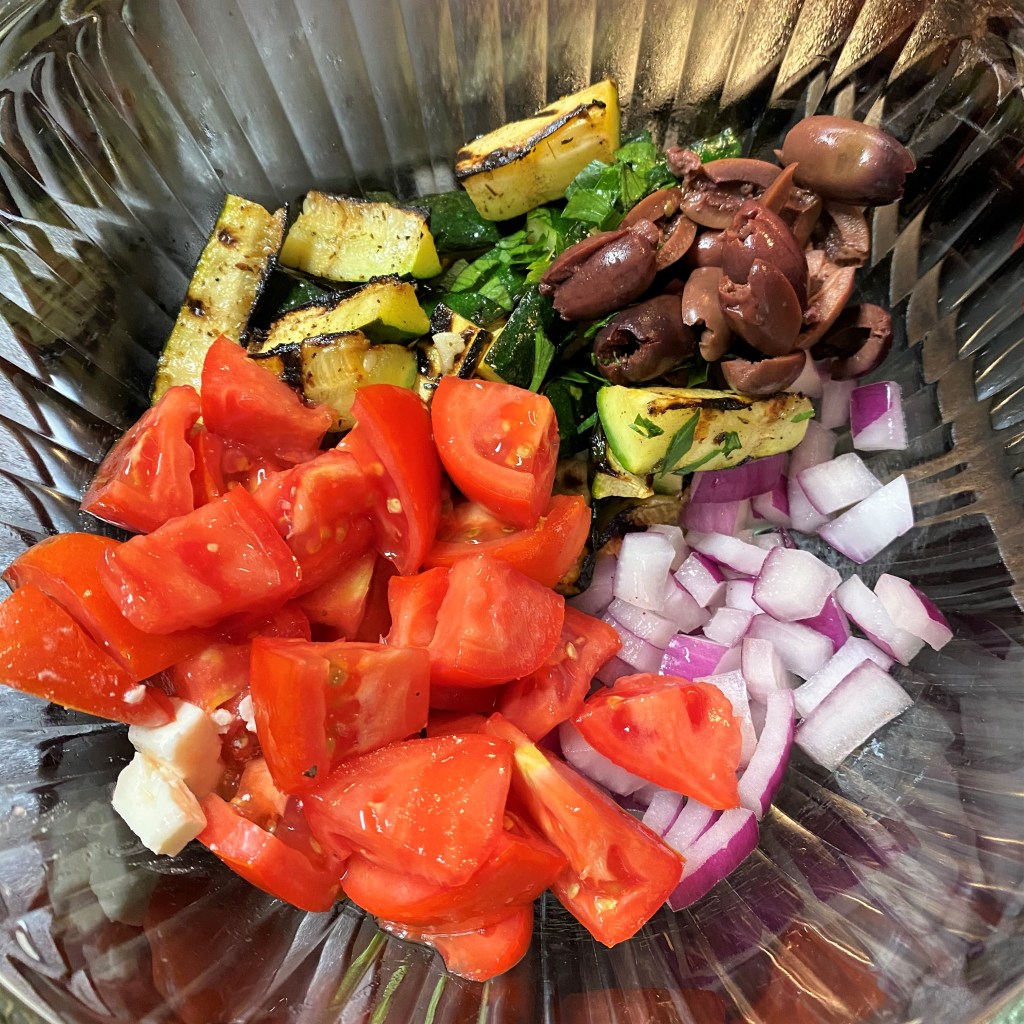
And tasty grilled meat deserves a fresh grilled side, so I have also whipped up a flavorful, healthy salad made with fresh summer tomato, crunchy red onion and marinated grilled zucchini squash. Here we go!


Ingredients

2 thick sliced, bone-in pork chops

4 cloves garlic, minced

Juice of one lemon

1 Tbsp. white balsamic vinegar (or any white wine vinegar + pinch of sugar)

2 Tbsp. red wine vinegar

1/2 tsp. dried oregano leaves

1/4 cup extra virgin olive oil (I used Greek Kalamata)

Sea salt and freshly ground black pepper


For the salad:

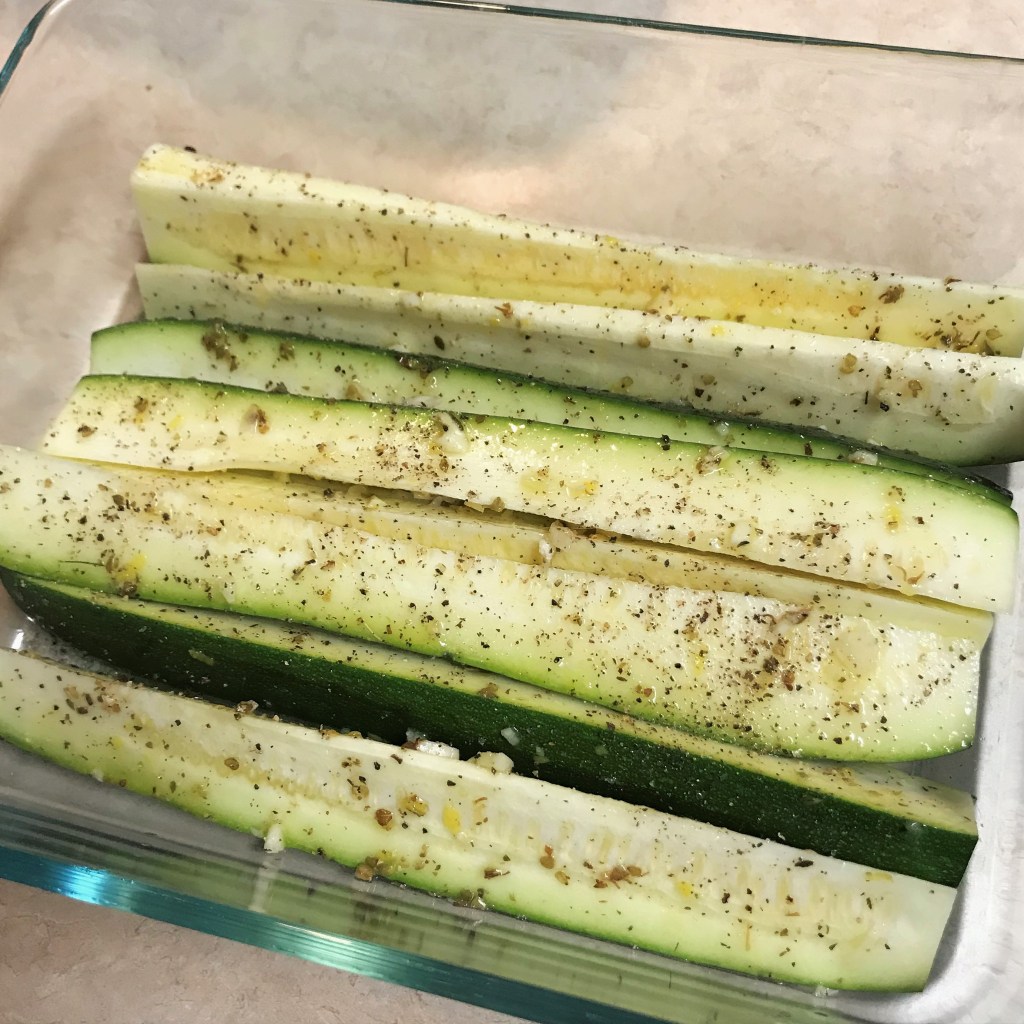
1 medium zucchini, trimmed and cut lengthwise into wedges

1 medium firm tomato, cut into chunks

2 thick slices red onion, cut into chunks

6 Kalamata olives, drained and chopped

Dressing: 1 Tbsp. red wine vinegar, 1 Tbsp. white balsamic, a few shakes of garlic-pepper seasoning, 1/4 tsp. dried oregano, whisk in 2 Tbsp. olive oil.

Feta cheese, cut into cubes

Fresh parsley, chopped, for garnish


Instructions

Take a walk through the slideshow for visual instruction, and refer to the notes below if you need them. Remember, you can download the recipe in PDF format to try it yourself, and please let me know how it comes out for you!

  1. Season pork chops with salt and pepper.
  2. In a glass measuring cup, combine lemon juice, vinegars, oregano, salt and pepper. Drizzle olive oil into the blend, whisking constantly, until mixture is emulsified. Stir in minced garlic.
  3. Pour most of the marinate over the pork chops in a glass dish and set aside for 30 minutes. Turn once or twice during marinating time to ensure even distribution of flavor.
  4. Pour the remaining marinade over the zucchini strips in another dish. Salt and pepper the zucchini and set those aside while you chop and prep the remaining salad ingredients.
  5. Mix together the dressing ingredients and set that aside, giving the dried oregano time to hydrate.
  6. Prepare grill and pre-heat to about 450° F (medium). Carefully place the pork chops over direct heat and sear each side about 1 minute to seal in juices. Then reduce the heat to about 350° F. The olive oil may cause flare-ups, so keep that cold beer in your hand to splash if necessary. Just kidding; either keep a squirt bottle nearby or use a grill tool to try to put out the flare or move the chops.
  7. Continue to cook for about 10 minutes each side, or until juices start to run clear when pierced with a knife tip.
  8. When you turn the chops, pile the zucchini onto the grill also, and turn them frequently to cook evenly and to get those beautiful grill marks.
  9. Allow the finished chops to rest and chop the zucchini spears into bite-sized chunks. Immediately toss the grilled zucchini with the rest of the salad ingredients. Whisk the dressing briefly, then pour over salad and toss gently to combine. Scatter cubes of feta and fresh parsley over salad and serve alongside the pork chops.
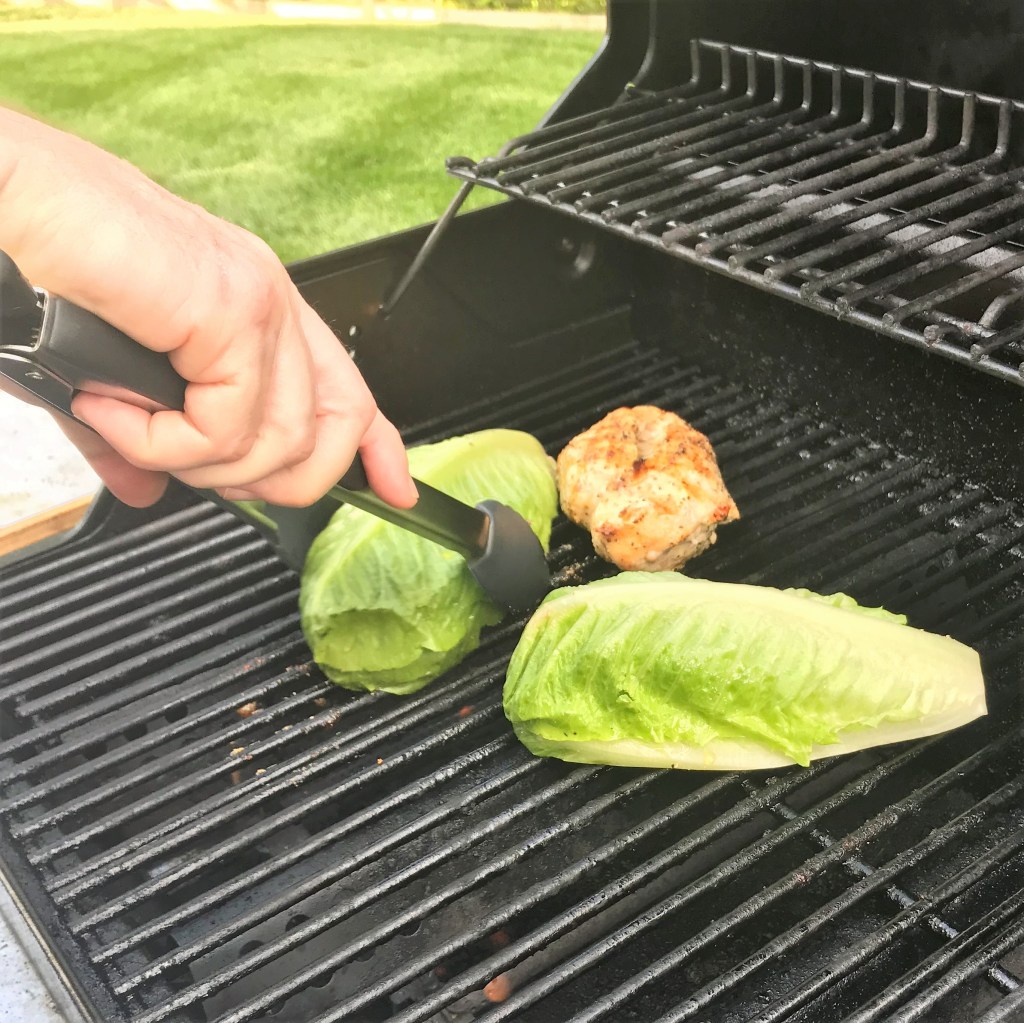
Grill, I’m gonna miss you…

Want to print this recipe?


A Couple of Jerks (pizzas, that is)

Summer has a way of flipping mealtime upside-down at our house. My husband, Les, does a lot more of our cooking during the summer because the weather and extra daylight make it easier to use the grill or smoker, and the simple fact that he’s handling a larger part of our meals gives me more time to expand our library of recipes. With him in charge of cooking outside, it also means that I have a wider array of flavorful meats, cooked and ready to use in whatever dishes capture my imagination.

Something about the summer heat also makes me crave spicy foods in particular. It could be that my body is trying to calibrate to the external temperature or perhaps there’s simply a greater tendency toward adventure and new-ness while the sun is blazing. In either case, it’s hot in our neck of the woods and I’m cooking up some spice today in the form of pizza—not one, but two pies with all the flavors and vibrant colors of the Caribbean!

These pizzas put a spotlight on colorful bell peppers once again, wrapping up a short series of recipes that started with these veggie skewers and these stuffed peppers.

If you’ve ever grown a successful garden (meaning you actually harvested vegetables rather than merely feeding the neighborhood deer, as I have), you likely know that peppers love hot, sunny weather. Even if pepper plants seem to lag behind tomatoes and zucchini at the start of summer, they always catch up when the temperatures rise. That said, these brilliant bell peppers—which I picked from the produce department, not my pitiful garden—have earned a spot on my pizzas, just by being heat lovers themselves.

Onions are a no-brainer for pizza, and for these Caribbean-inspired versions, I’ve put a little caramelization on sliced red onions to heighten their sweetness and balance the jerk-fired flavors of the sauce and other toppings.

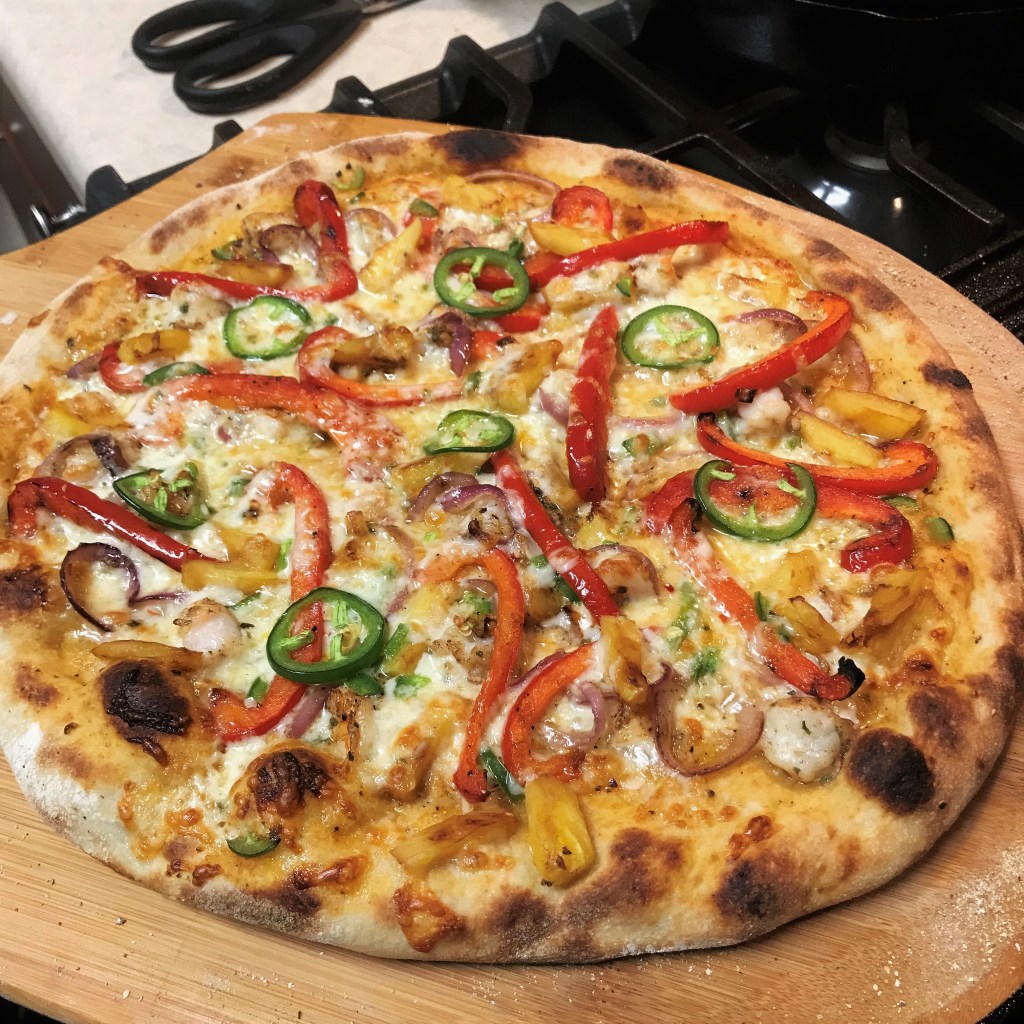
And of course, I couldn’t label these pizzas “Jamaican jerk” without the signature notes of allspice, hot peppers, ginger, thyme and scallion. I’ve incorporated all of the above, either in whole ingredient form or in sauce and seasoning, but gave each pie its own personality. The first is decidedly spicy and savory, featuring smoked pork shoulder, jerk rub, sweet and hot peppers and two kinds of onions. The other leans to the sweet-fruity-spicy side, with plump, juicy shrimp cooked in garlic butter, lime and cilantro—plus sweet and hot peppers, onions and a generous smattering of tropical grilled pineapple.


Put on some steel drum music, pour yourself a Red Stripe and join me for a taste of the Caribbean, Comfort du Jour style!


Ingredients – Jerk Pork Pizza

1 ball of my NY Pizza Dough, or dough of your choice*

About 10 oz. smoked pulled pork (cook it yourself or get some good take-out)

Extra virgin olive oil

1 Tbsp. Jamaican jerk wet rub seasoning*

1/2 red bell pepper, chopped in chunks

1/2 red onion, sliced into crescent moon shape

1/2 jalapeño, diced

3 scallions, cleaned and sliced

1/2 brick pepper jack cheese, shredded*

Hot BBQ sauce for brushing pizza dough*


Ingredients – Jerk Shrimp Pizza

1 ball of my NY Pizza Dough, or dough of your choice*

8 oz. fresh shrimp, peeled and deveined

2 cloves garlic, minced

1 Tbsp. salted butter

Squeeze of fresh lime

Sprinkle of fresh or dried cilantro leaves* (optional)

1 red bell pepper, cut into lengthwise slices

1/2 yellow bell pepper, cut into lengthwise slices

1 small red onion, sliced into rings

1 large jalapeno pepper (seeded), some diced and the rest sliced into rings

3/4 cup grilled pineapple chunks*

1/2 brick pepper jack cheese, freshly shredded*

Hot BBQ sauce for brushing pizza dough*


*Notes

Dough of your choice – I recommend fresh dough rather than one of the pre-baked crusts. Some pizza restaurants will even sell you some of their pizza dough, so it’s worth asking!

Jerk seasoning – My go-to jerk seasoning is technically a wet rub that seasons the meat but also moistens it. If you have a dry or powdered seasoning, use less of it and mix it with a bit of canola or coconut oil before applying it to the meat.

Pepper jack cheese – For these pies, I used an 8 oz. brick of pepper jack, divided between the two pizzas, and I shredded it myself (not the bagged stuff). If you’re already having hot flashes over the other ingredients, you could cut out the pepper and use Monterey jack instead. You could also omit the cheese entirely, but I like the way it holds together the other toppings.

Cilantro – If you’re among the roughly 20% of people born with the “I can’t stand cilantro” gene, simply leave it out or substitute thyme or parsley. Here’s why you hate it, by the way.

Grilled pineapple – I grilled a whole cut-up pineapple because I had plans for multiple dishes. If you’re only making this pizza, I’d recommend getting a small container of pre-sliced fruit from the prepped-for-you section of the supermarket. 2 or 3 slices is all you’ll need. Used canned as a last resort.

BBQ hot sauce – Choose what you like, but consider the ingredients to complement the other stuff on the pizza. For example, there’s probably a better recipe than this one for a hickory-maple-chipotle-mustard BBQ sauce.

We found this one, which contains vinegar, onion, brown sugar and habanero (all of which are also in jerk seasoning), plus tomato paste, whiskey and ghost pepper. It echoed the topping flavors and was a perfect base for both pizzas, and another layer of wicked-good heat, which always makes Les happy.


Instructions – Jerk Pork Pizza

Preheat oven and steel to 550° F (see notes below for stone or pan baking)

Pull the pork apart into bite-size strips, and sauté them in a hot skillet with some olive oil, until edges are crispy. Then, toss them in jerk seasoning to coat thoroughly. Transfer the pork to a bowl.

Heat olive oil in the same skillet, and sauté onions and bell peppers until soft and lightly caramelized. Season with salt and pepper.

Shape pizza dough into 14-inch circle and place it on a greased pizza pan or flour and cornmeal-dusted peel, then brush on a very thin coating of BBQ hot sauce and season with more black pepper.

Sprinkle half of the pepper jack cheese over the dough, then top with pork, jalapeno, onions and peppers. Scatter the remaining cheese and sprinkle with all the scallions. Slide the pizza onto a hot steel or stone, about 8” from the top of the oven. Bake at 550° F for about 7 minutes, or until cheese is bubbly and crust is nicely browned. If using a pizza stone, follow temperature instructions from the manufacturer. Some pizza stones may crack at this temperature.

If using a pizza pan, place the oven in the middle to lower third and allow more time.


Instructions – Jerk Shrimp Pizza

Preheat oven and steel to 550° F (see notes below for stone or pan baking)

Sauté the prepared shrimp in butter with the fresh garlic and cilantro, but only for about a minute, as the shrimp will cook further in the oven. Remove from heat, cut each shrimp in half if they are larger than a quarter, and squeeze a section of lime over them. Transfer to a bowl.

In the same pan, heat olive oil over medium heat and sauté the bell peppers and onions until soft and lightly caramelized.

Shape pizza dough into 14’ circle and transfer to greased pizza pan or flour and cornmeal-dusted peel. Brush a light coating of BBQ hot sauce onto the dough, then sprinkle on half the cheese, followed by the onions and peppers, jalapeno, shrimp and pineapple bits. Scatter the remaining cheese over all toppings and slide the pizza onto a preheated steel, about 8” from the top of the oven.

Bake at 550° F for about 7 minutes, or until cheese is bubbly and crust is nicely browned. If using a pizza stone, follow temperature instructions from the manufacturer. Some pizza stones may crack at this temperature.

If using a pizza pan, place the oven in the middle to lower third and allow more time.


Want to print this recipe?


Even as leftovers, this jerk pork pizza rocked my world!