I know, I know, the whole “national-whatever-day” may seem a little overboard to some, but the idea of dropping a spotlight onto a special food or drink is fun for me. Without this occasion of National Daiquiri Day, I’d be muddling through a regular old, hum-drum Wednesday. Oh yes, this is much better!
Happy daiquiri day!
If you have never made a daiquiri, I can tell you from experience that it is one of the simplest cocktails out there. Rum, sugar and lime is the essence of this drink, though you have probably also seen variations that included strawberry, and options for the drink to be served frozen, almost like a slushy. Given the brutal heat that is gripping so much of the U.S. this week, nobody would argue against a slushy cocktail right about now, right?
When people are paid fairly for producing excellent products, everyone wins!
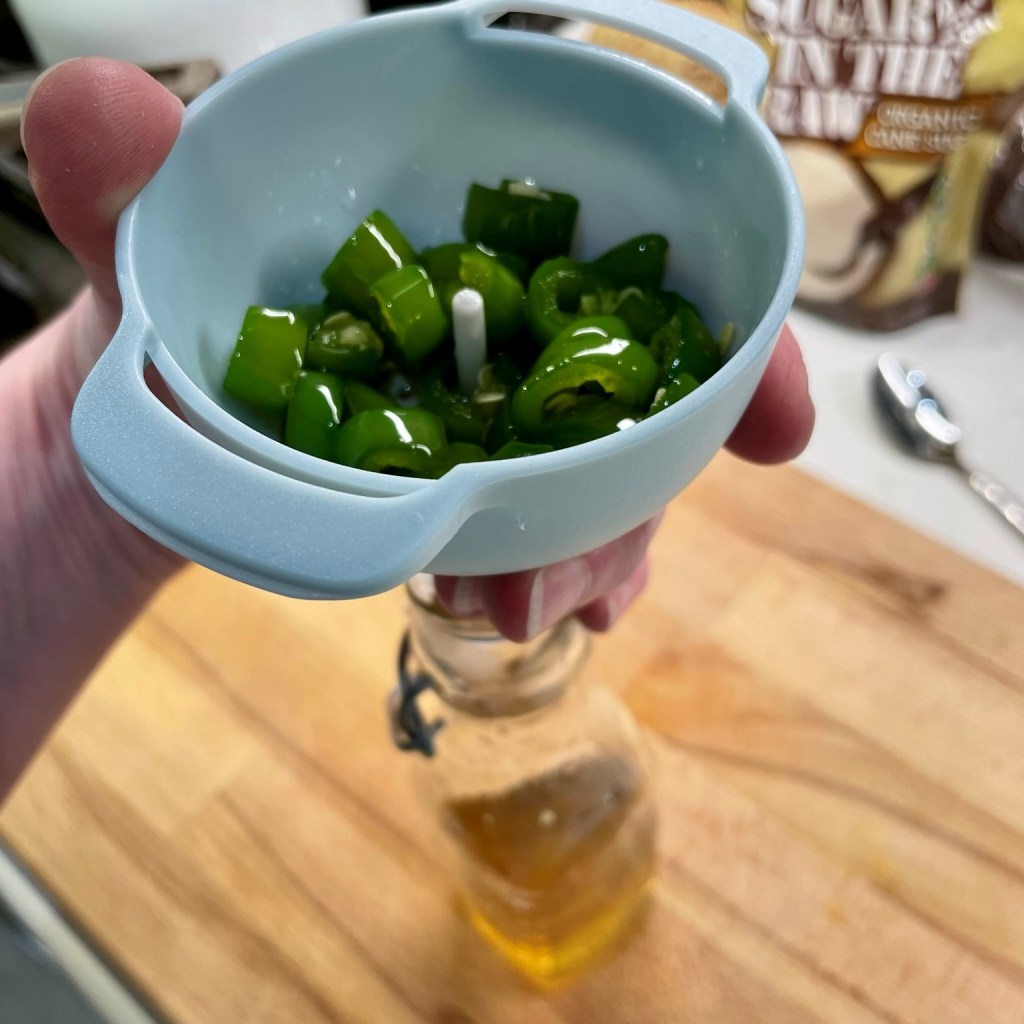
For my fun, Comfort du Jour spin, I’ve applied one of my favorite flavor combinations for a spicy-meets-tropical twist on a classic daiquiri. Fresh pineapple and a Serrano-infused simple syrup are the stars of this show. The syrup can be made ahead in a matter of minutes, and if you don’t have Serrano on hand, a jalapeño will do just fine. Any sugar can be used, but I love the richer, warmer flavor of turbinado, and we always shell out a little extra for fair trade. Equal parts water and sugar will make the simple syrup, and a cut up Serrano adds the spicy zip. Intensify the heat, if you’d like, by keeping the pepper’s seeds and membranes intact during infusion. Or scoop them out first for a milder bite. I’ll bet you can guess what we did at our house!
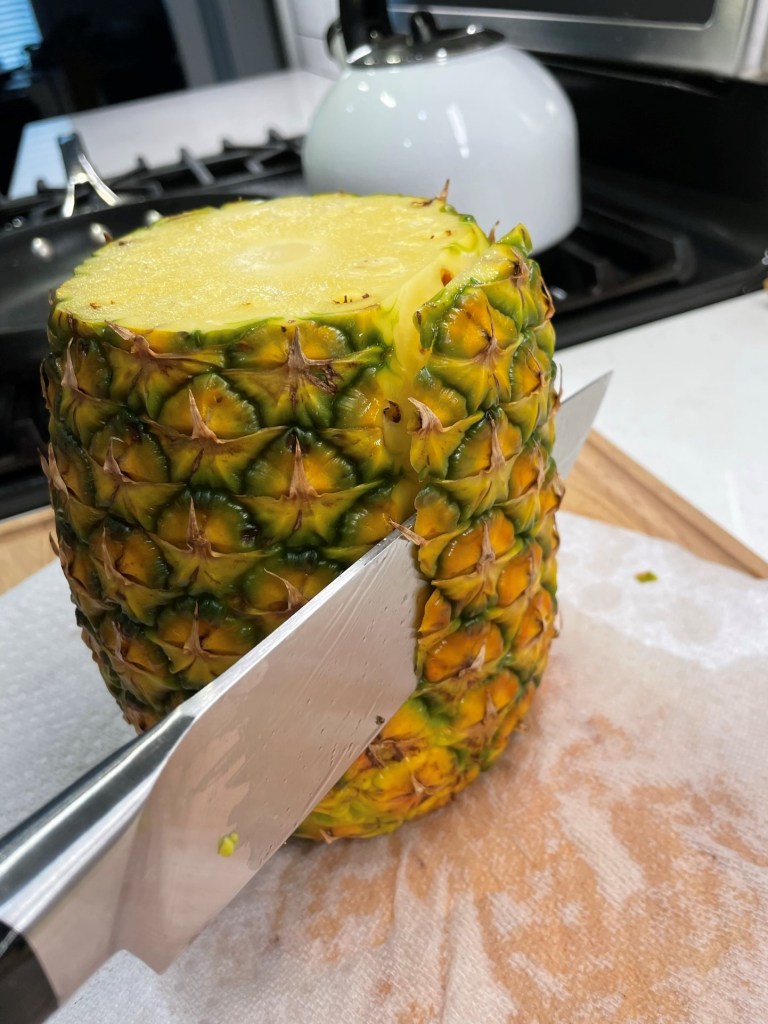
Cool it down completely, then strain out the pepper chunks and transfer it to a jar or bottle. Keep the syrup in the fridge until you’re ready to mix. Breaking down a fresh pineapple is easy to do, as you’ll see below. This one was so fresh and juicy, and the aroma was positively intoxicating!
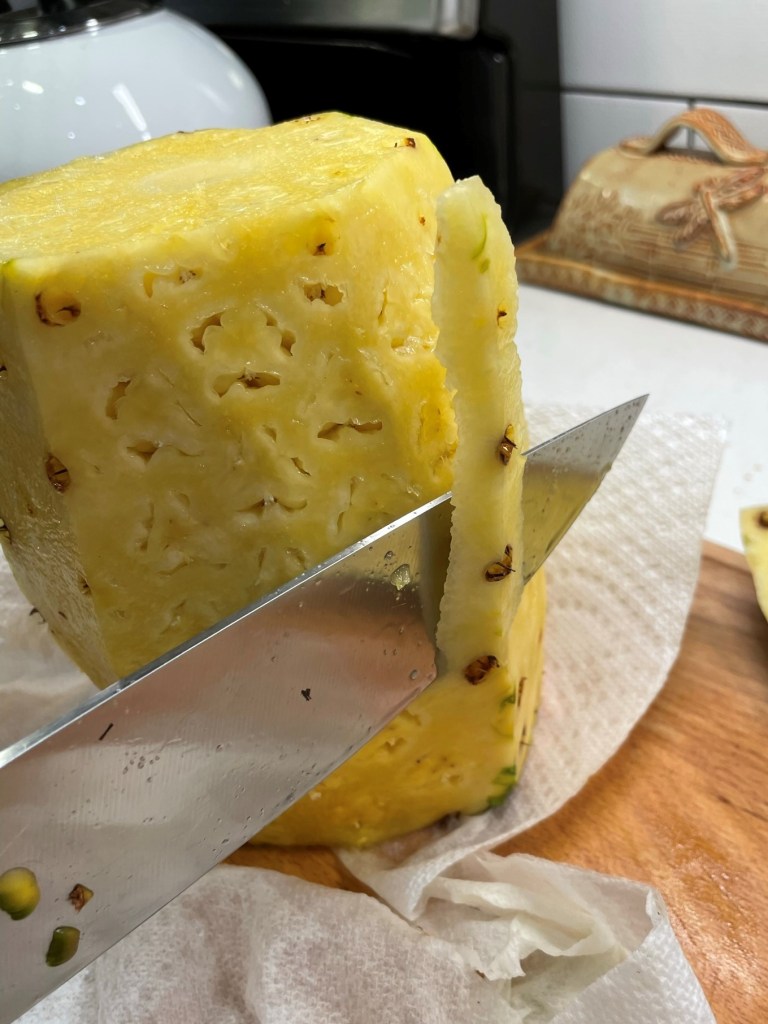
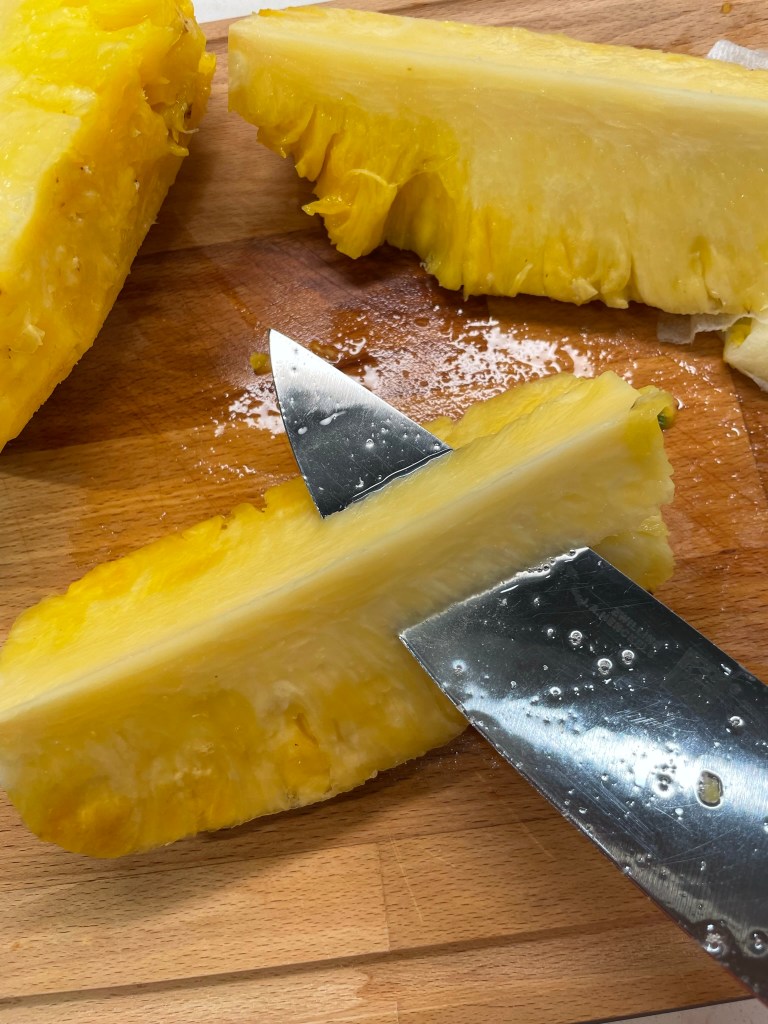
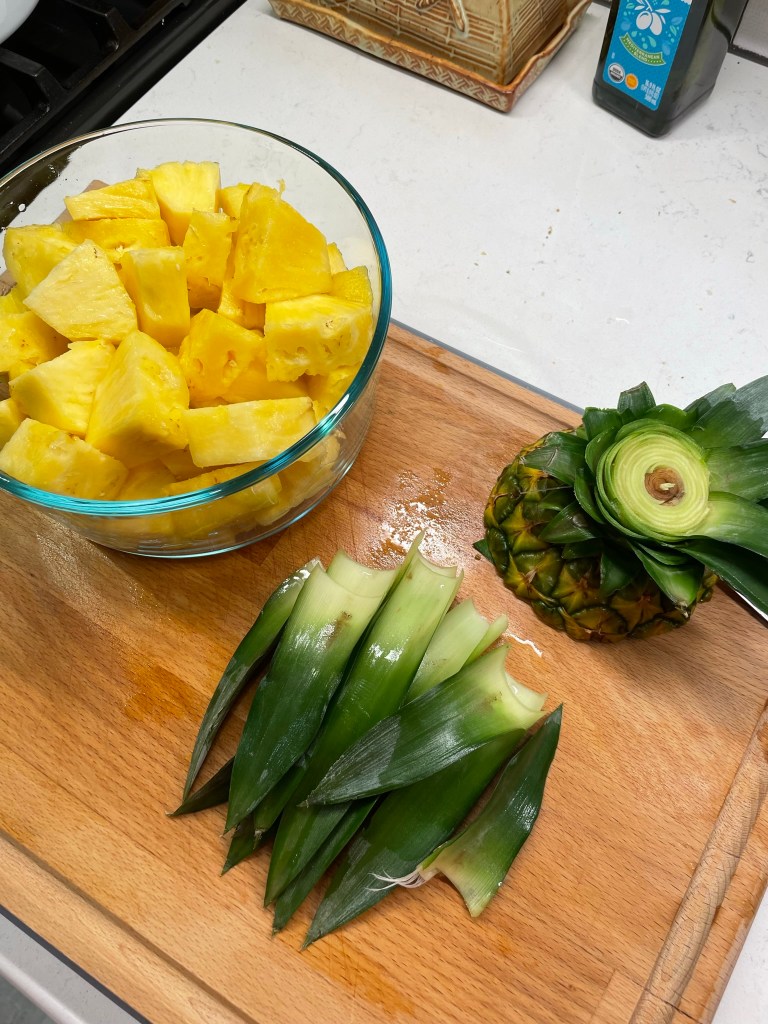
Wash the pineapple first, then cut off the top and bottom. Use a sharp knife to trim off thin slices of the peel, then go back around to catch any eyes that remain. Quarter it, then slice through the wedges to remove the core. I kept a few of the fresh leaves to use as garnish in a different kind of cocktail. 🙂
I used the sweetest, freshest pineapple, and I highly recommend that you choose one at its peak ripeness. Not sure how to tell? Check out this article for tips on selecting the best of the bunch, and if you need help finding other ways to enjoy the rest of your perfect pineapple, I’ve placed a carousel of ideas at the end of the post, just after the click-to-print recipe.
Easier than you thought, right?
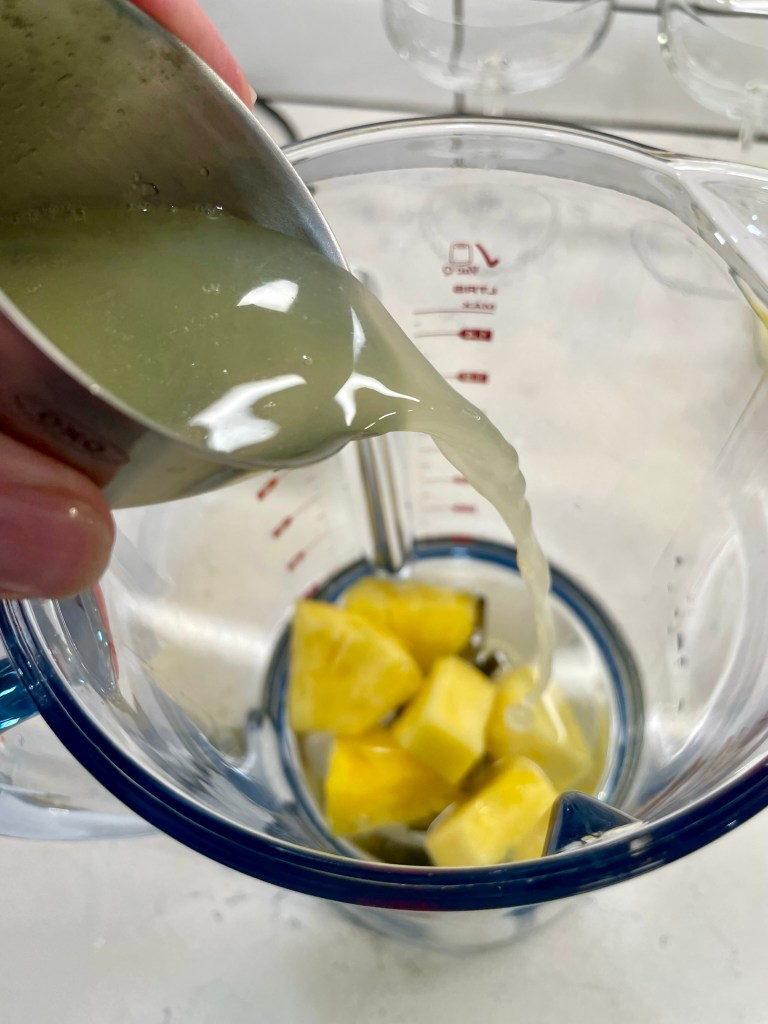
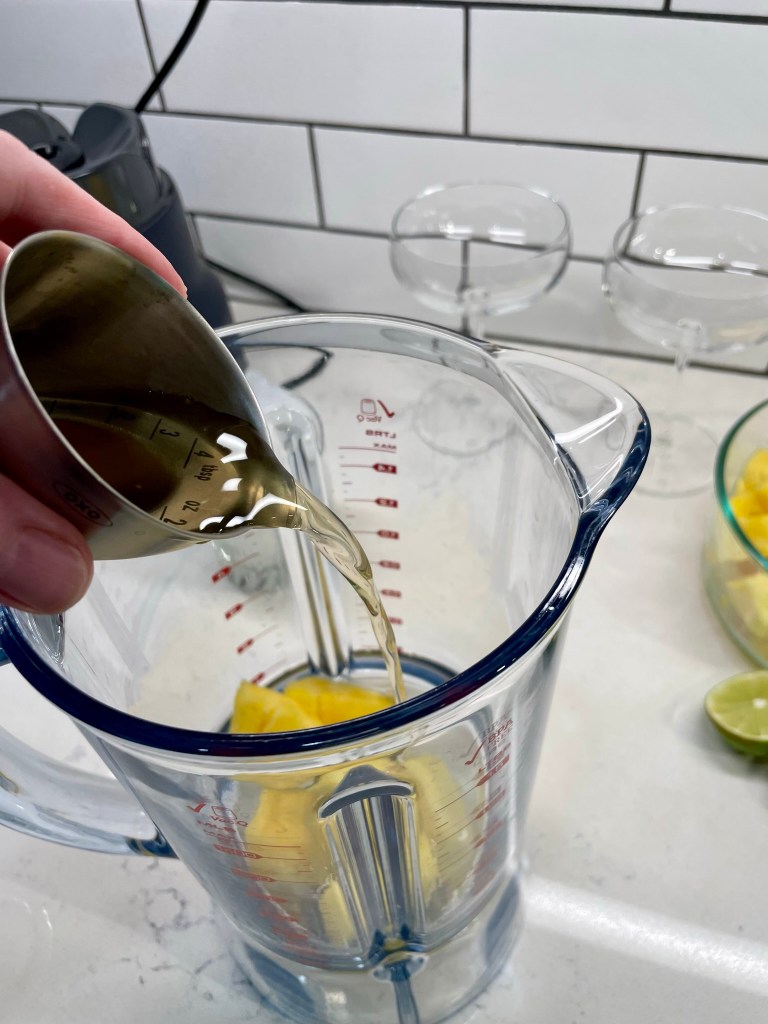
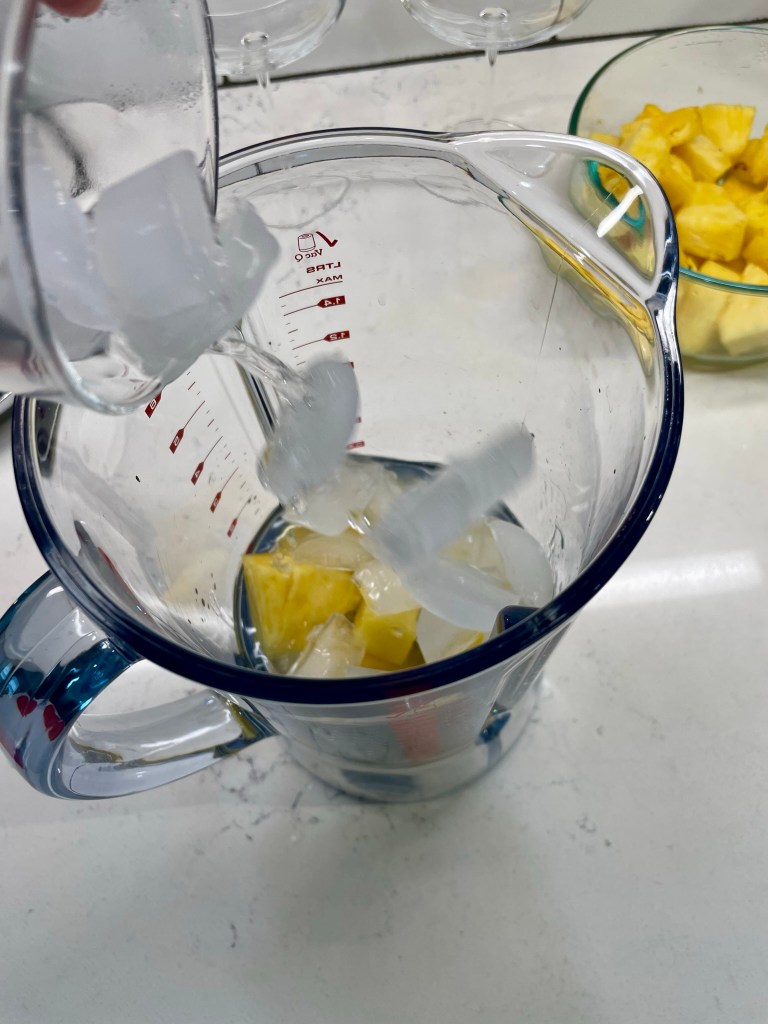
The other ingredients in my daiquiri are simple and obvious— light rum, and for this beauty, I relied on Sungrazer golden rum from Broad Branch Distillery, our favorite local spirits provider. But any light rum that isn’t “spiced” or “aged” will work great here. Fresh lime is important; please don’t ever use the green plastic squeezy bottle when making a cocktail. Your taste buds deserve the real deal! And you’ll need ice, of course, either for shaking the drink or (as I opted) blending it right in.
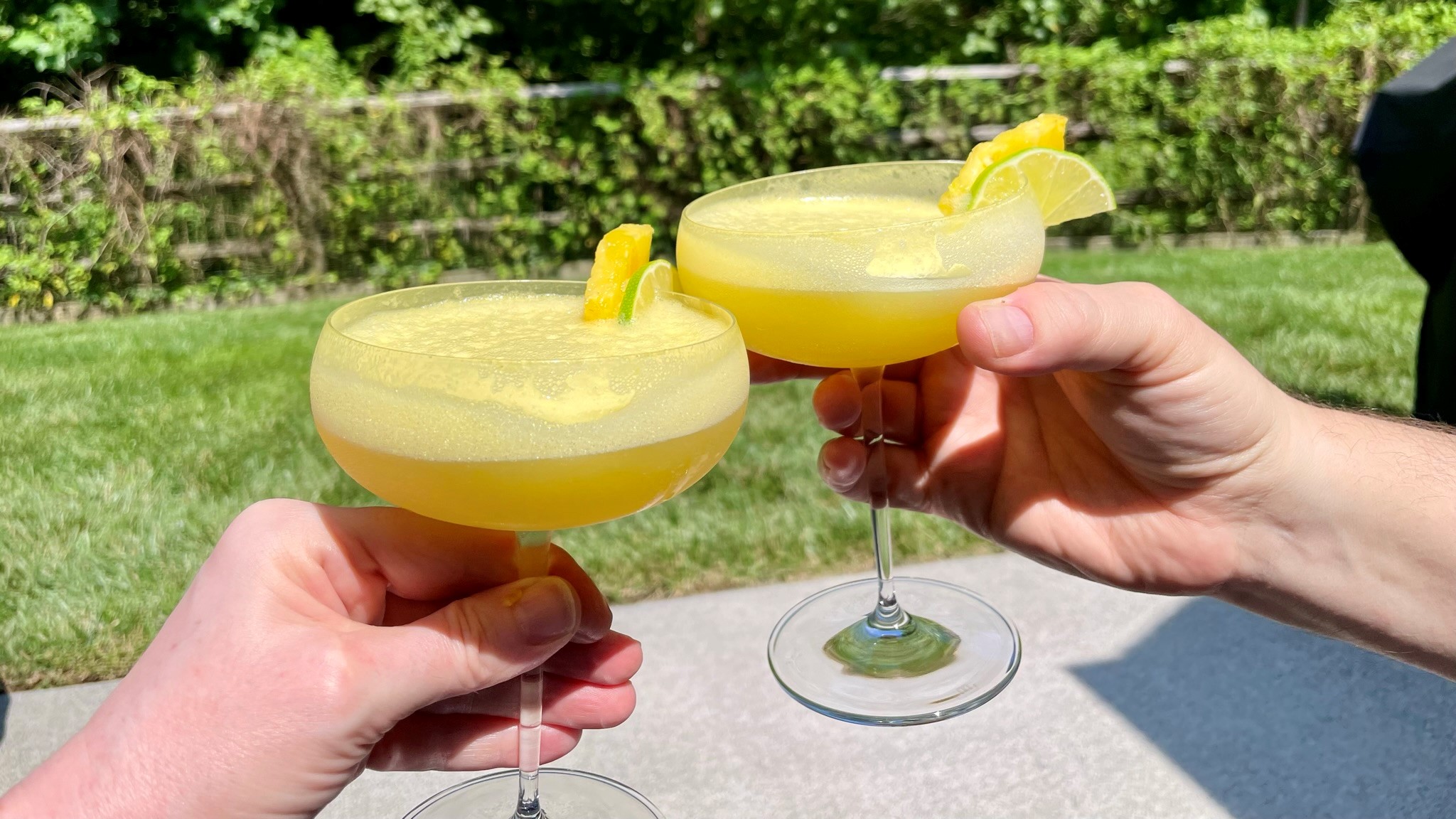
You can pour your spicy pineapple daiquiri over fresh ice or straight into a chilled coupe glass, as you wish. Doesn’t it look just like liquid sunshine?
One of my favorite heat-sweet combinations is flinging a classic daiquiri into spicy-meets-tropical territory!
Ingredients
4 oz. light or golden rum
1/2 cup fresh pineapple chunks
Juice of one large lime
1 oz. Serrano-infused simple syrup (see below)
1 cup ice (for blending)
Lime and fresh pineapple for garnish
Directions
Combine all ingredients except garnish in the pitcher of a blender and process until ice is finely blended and mixture is somewhat frothy. Divide between chilled cocktail glasses and garnish with thinly sliced lime and pineapple.
Alternatively, you may add all ingredients to a cocktail shaker and shake until the outside of the container is frosty. Strain over fresh ice into a rocks glass and garnish as desired.
Serrano-infused Simple Syrup: Combine 1/2 cup each sugar and water in a small saucepan and bring to slight boil. Stir in a chopped Serrano chile pepper. Remove from heat and steep until cool. Strain out chile pieces and transfer syrup to a jar or bottle. Refrigerate up to three weeks.
On a recent grocery run, I was stopped in my tracks in the produce section by a stunning display of fresh pineapple. Their luscious fragrance caught me first, and those golden beauties were staring me in the face, just begging to go home with me. All the way home, I imagined whipping up some fun tiki drinks, one of my hubby’s favorites. I also considered making a classic pineapple upside-down cake, though I don’t have a great track record with dessert baking. It isn’t for lack of trying; rather, it’s a matter of getting into my own head in a way that messes me up. Still, I’d try it. And then, as I was putting away groceries, a crazy thought hit me.
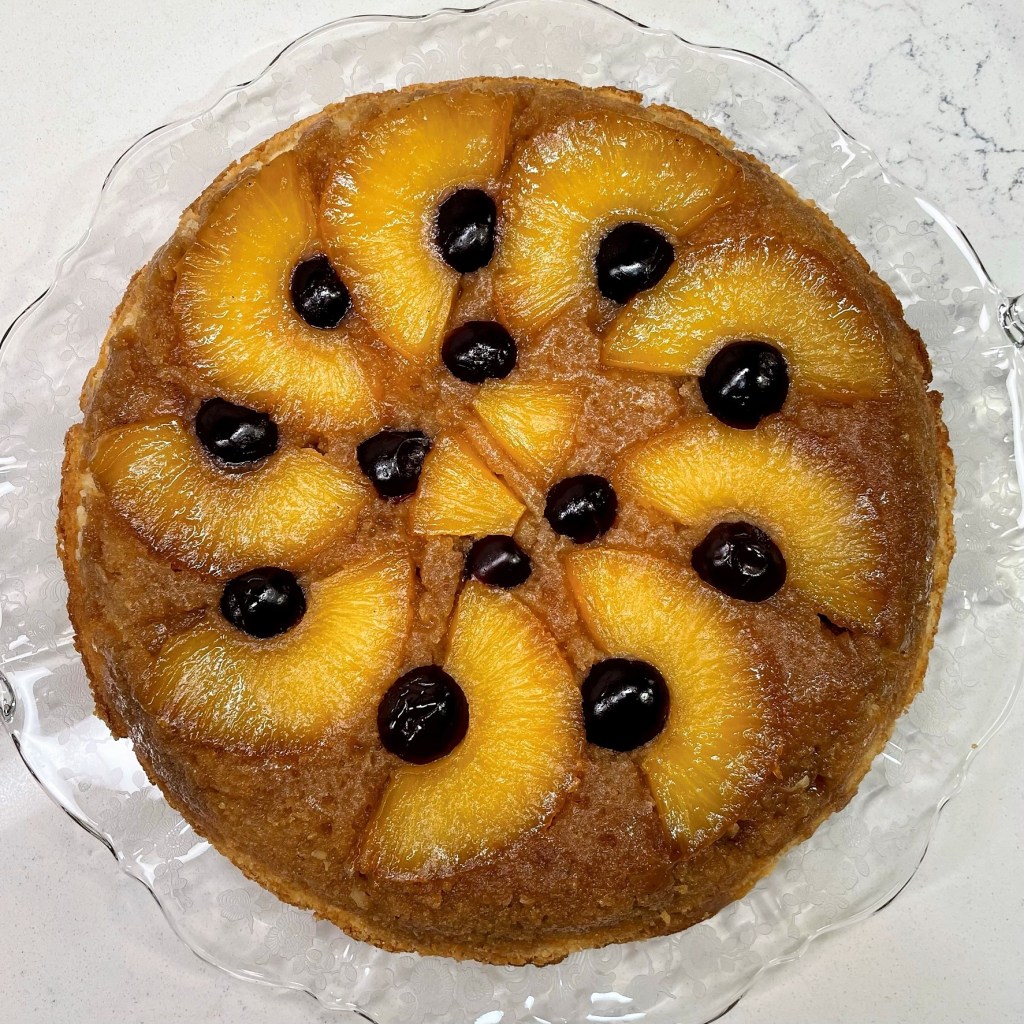
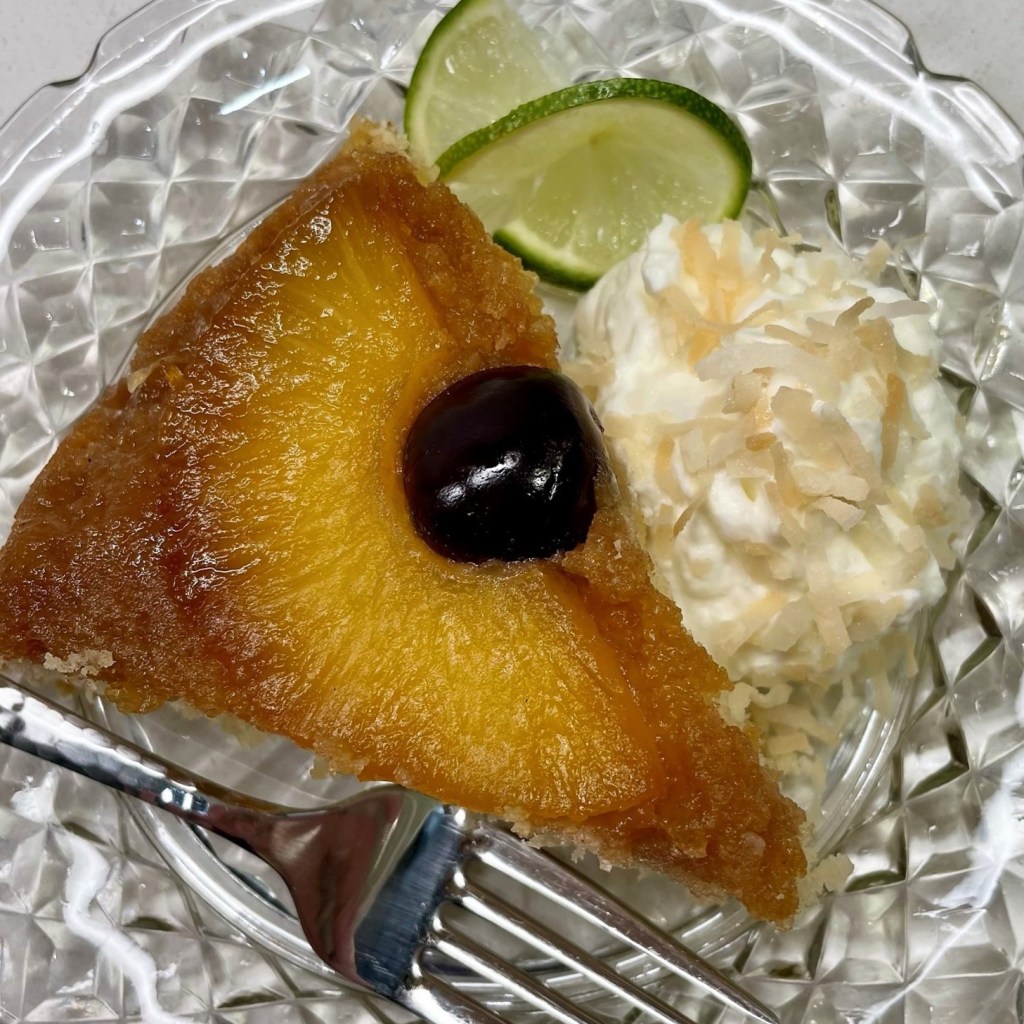
Could it be a terrible idea to combine the two? Throw a little Comfort du Jour curveball on a pineapple upside-down cake by applying all the tropical flavors of a tiki drink? The magical combination of rum, pineapple, coconut and lime is the flavor equivalent to summer sunshine, and once the idea hit me to include them in a cake— with my good cocktail cherries, of course— well, there was no turning back!
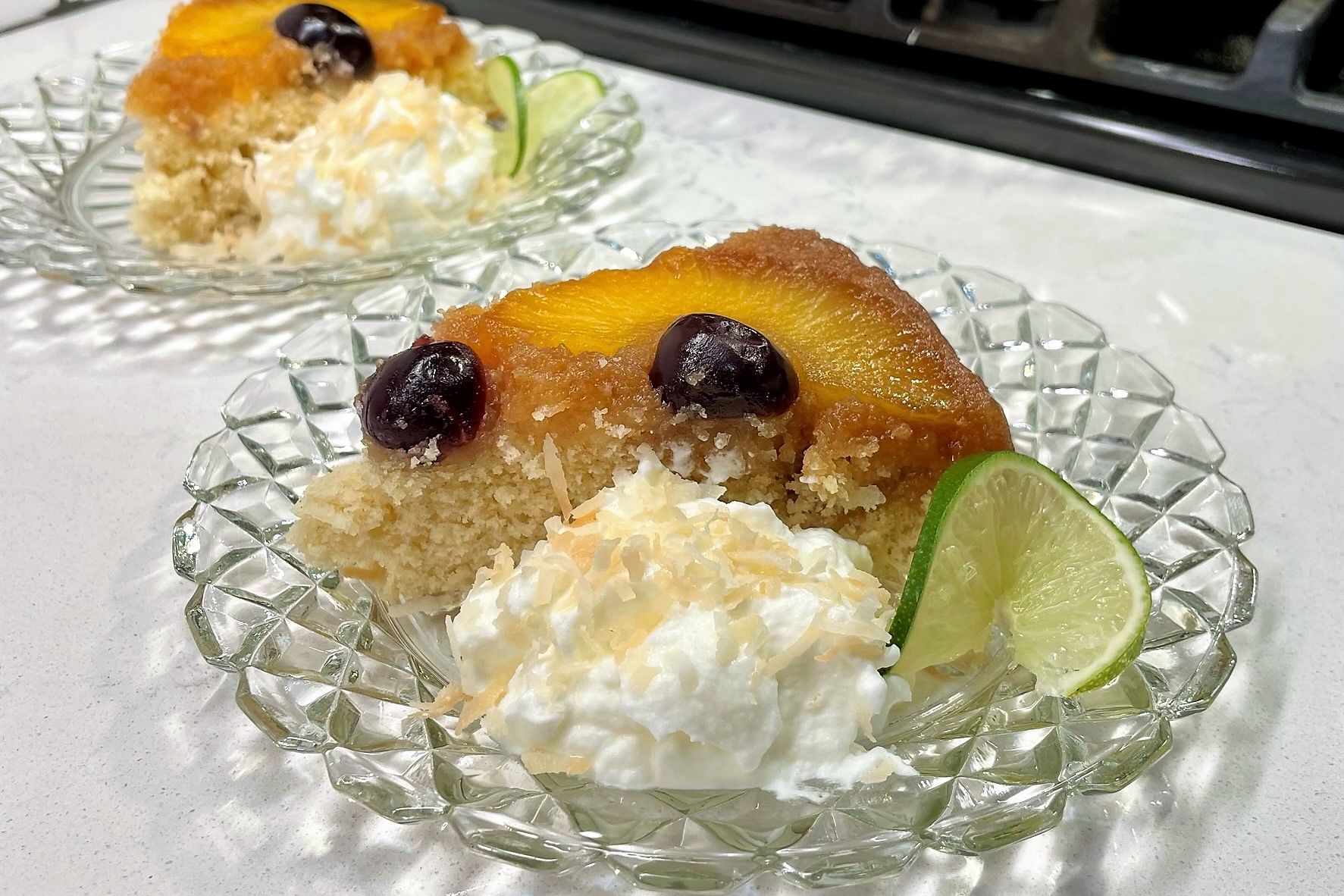
It was every bit as delicious as it looked!
As I gathered up my ingredients to get started, I realized all at once the source of my frustrations with baking sweet treats. It’s me. Yep, it’s my own fault I’m a lousy sweets baker.
But this recipe proved I can break free of that negative self-talk. I just needed to be diligent.
My muse is frequently five or more steps ahead of my mind and my hands, and the exuberance that kicks in when I start making on-the-fly adjustments to a perfectly good recipe is exactly what gets me into trouble. I confuse myself with too many ideas for substitutions, throwing off the ratios that are so necessary for good baking results. It makes me crazy after hours spent in the kitchen on a recipe that seemed so promising at the start.
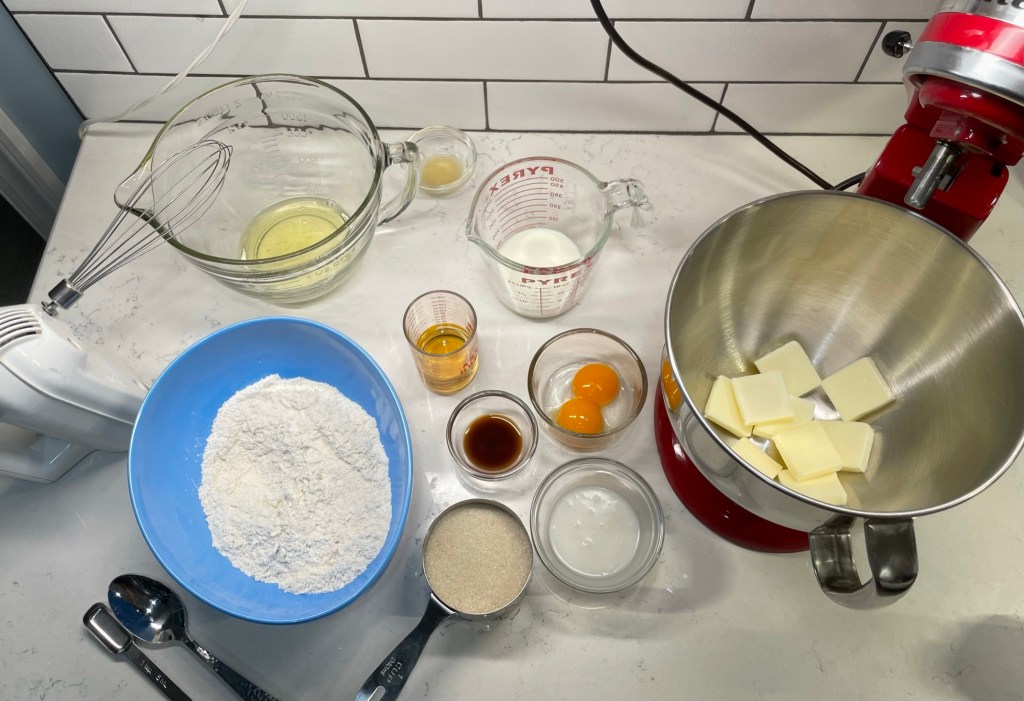
When I have a crappy result, I inevitably swear off baking— and I am using the word swear quite intentionally. Then, when my persistent muse comes around again, I repeat the whole scenario, sometimes verbatim. But for this cake, I pledged to slow down, chart my substitution ideas more thoughtfully, read the recipe (twice), and truly organize my ingredients into pre-measured amounts (not just put their pantry containers on the counter) to reduce the chances of disaster. And what do you know?— it worked!
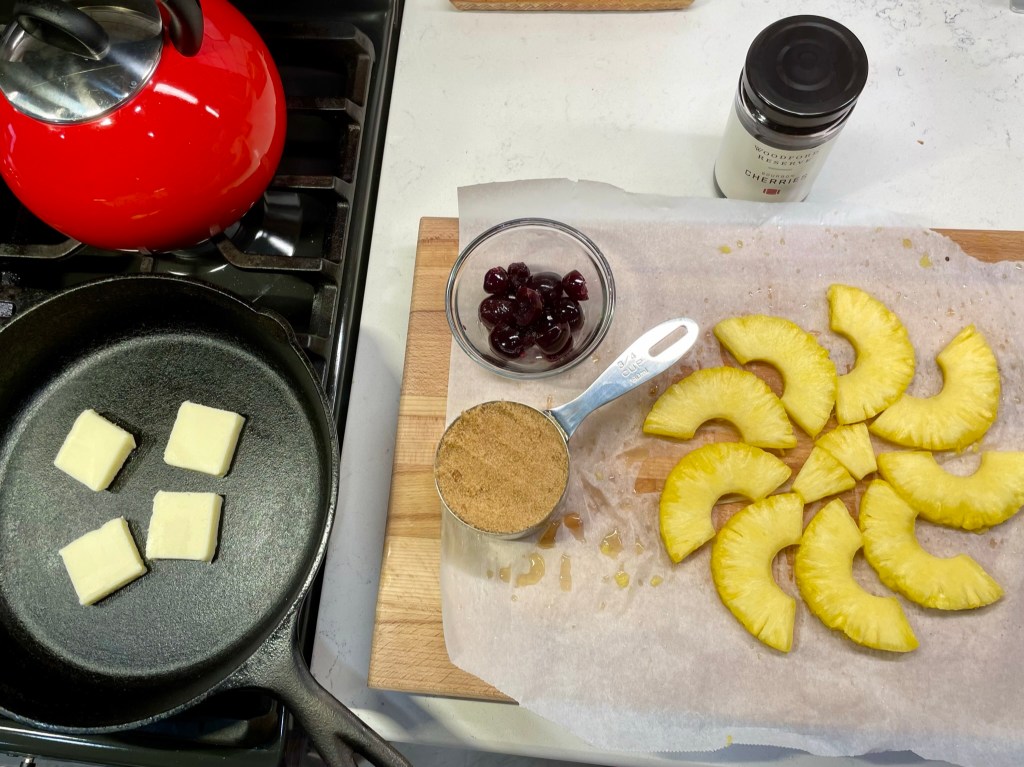
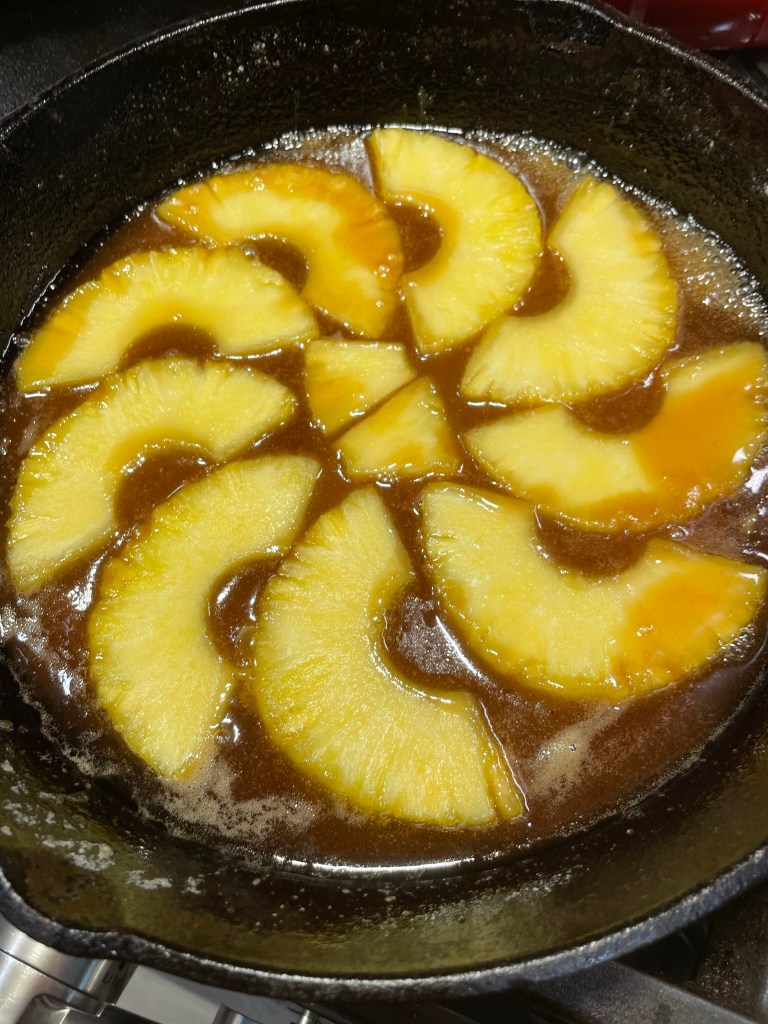
I could not have been more organized for this project, right down to pre-arranging the pineapple!
My baseline recipe was a skillet version of pineapple upside-down cake that I found on the King Arthur Baking website, my go-to for all things baking. I imagined the wonderful flavors of a tiki cocktail and started rounding up my substitutions.
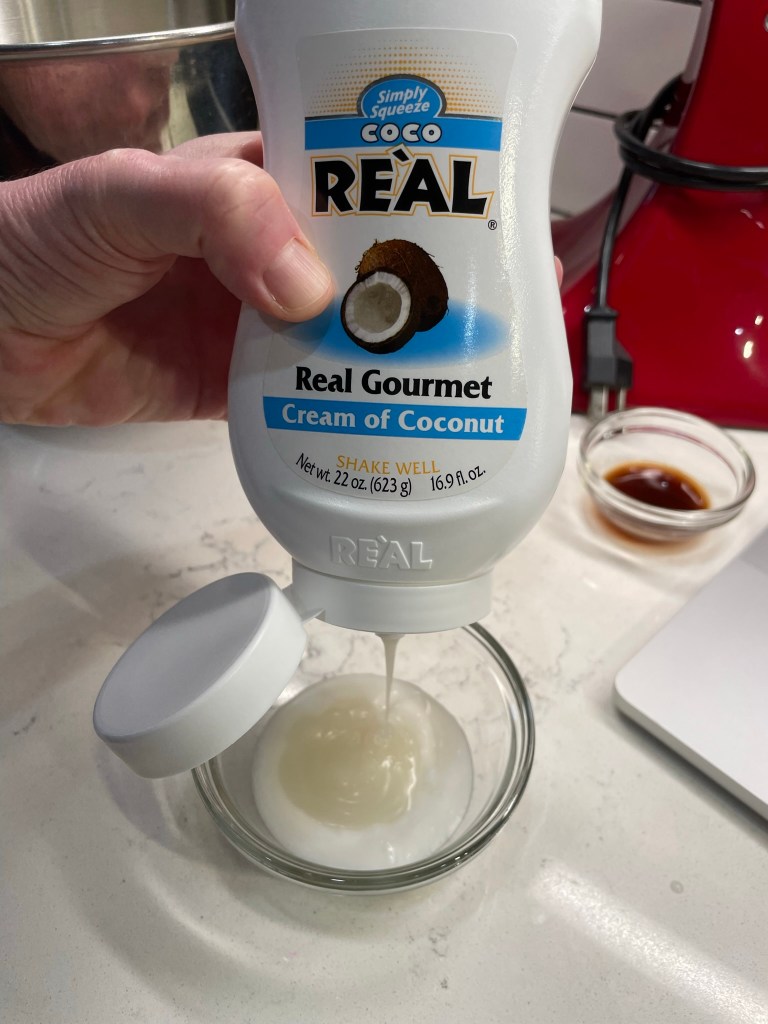
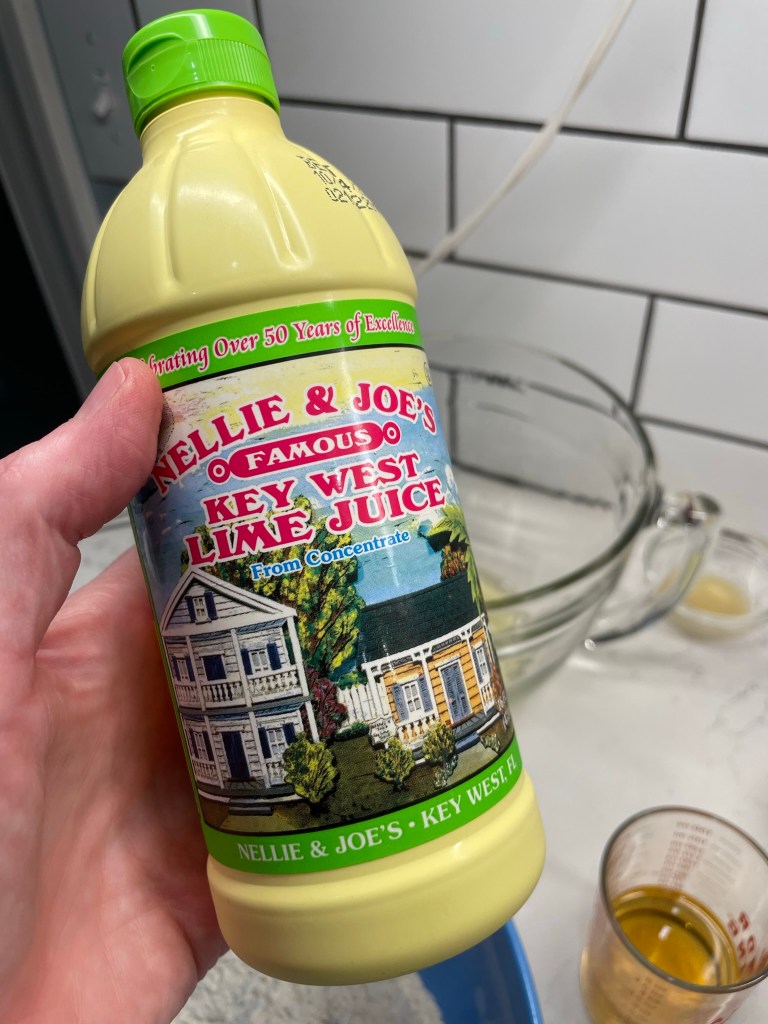
I wanted rum in the brown sugar topping, and in the cake batter itself. Sweetened flaked coconut would be great in the batter, but that wouldn’t be enough flavor so I’d swap out some of the sugar in favor of this sweet cream of coconut— the same stuff I use in a real tiki cocktail. Key lime juice would spike it with a touch of citrus, but just a touch. Almond extract would play the role of orgeat, the nutty-sweet syrup ingredient that is so distinctively tiki-ish. Our bourbon-drenched cocktail cherries felt more appropriate than the artificially colored bright red maraschinos, and it would be another touch of boozy, grownup candy goodness. And then, of course, my lovely fresh pineapple would be the centerpiece.
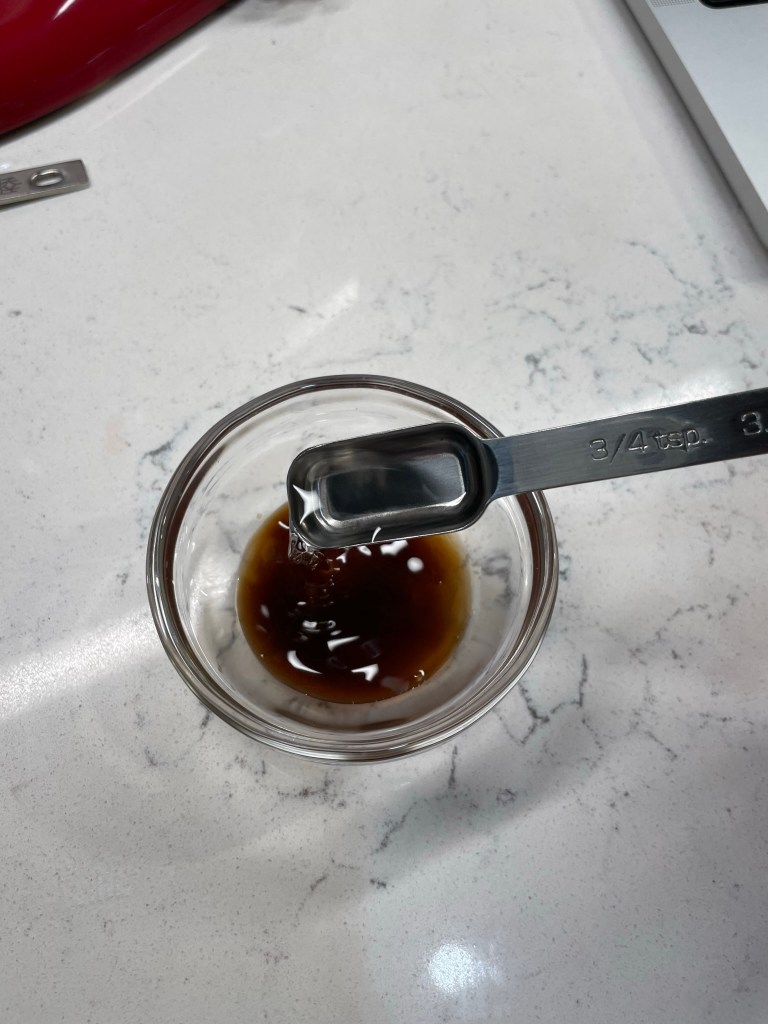
The cream of coconut made a big flavor difference, and I put lime juice in the rum and almond extract into the vanilla.
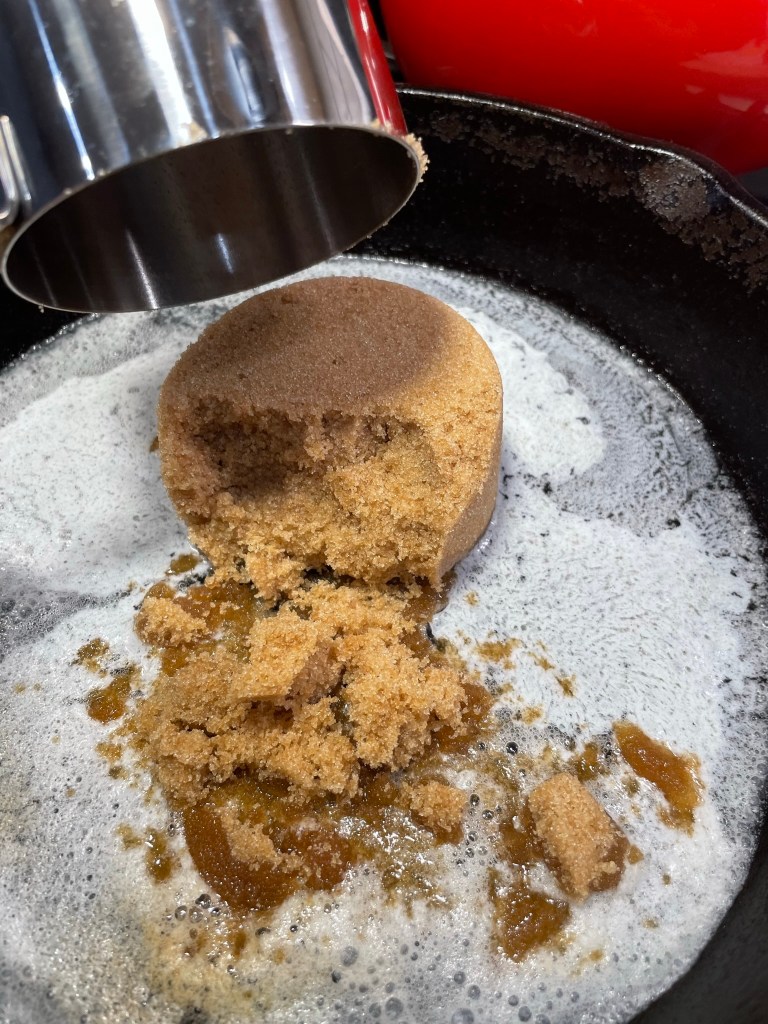
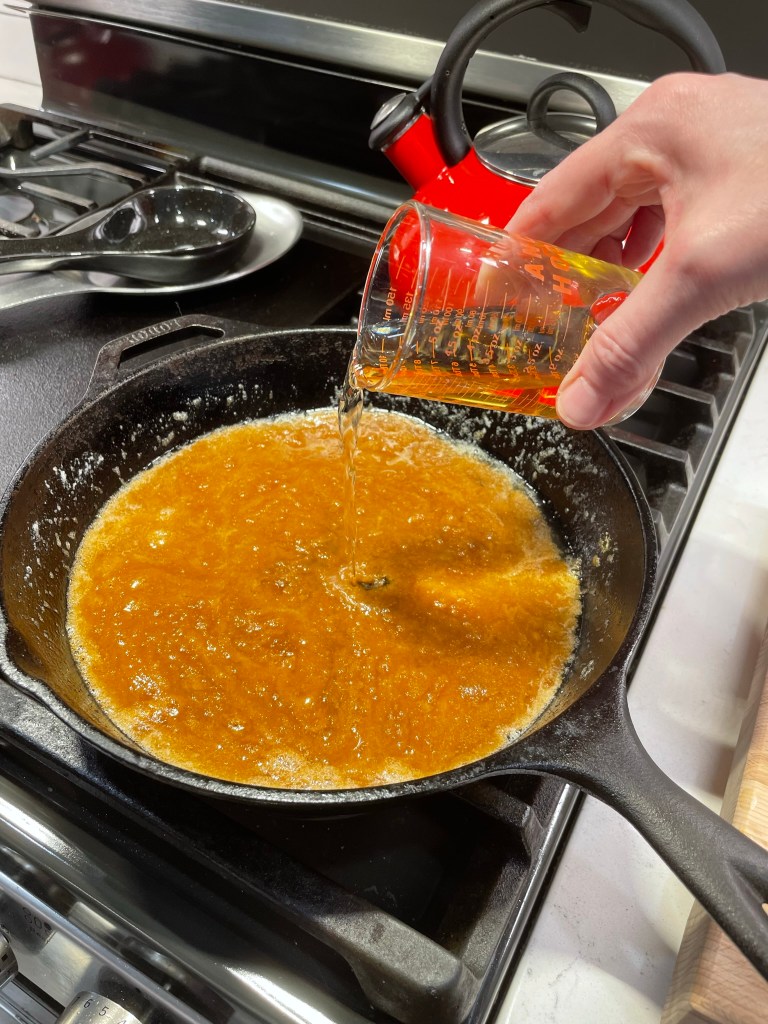
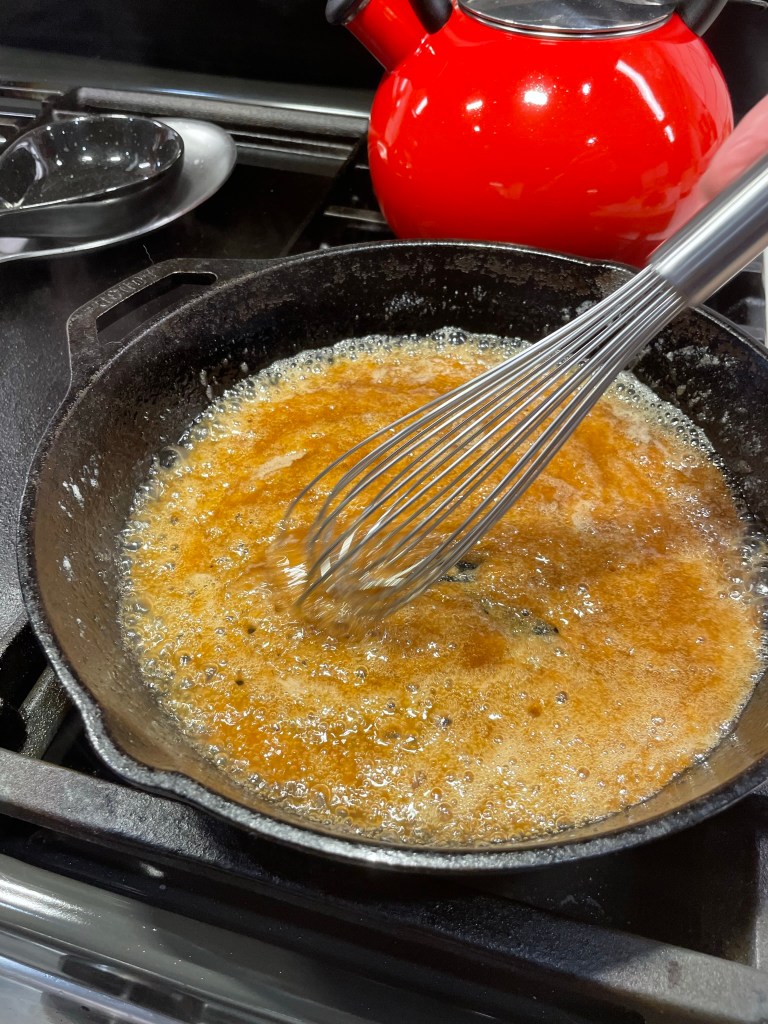
With my ingredients measured and in order, following the recipe roadmap was a cinch. The topping was easy, just melting together brown sugar and butter, and then boosting it with a shot of Jamaican rum. I let it get nice and bubbly, then turned off the heat and arranged the pineapple slices. The cherry halves would come later.
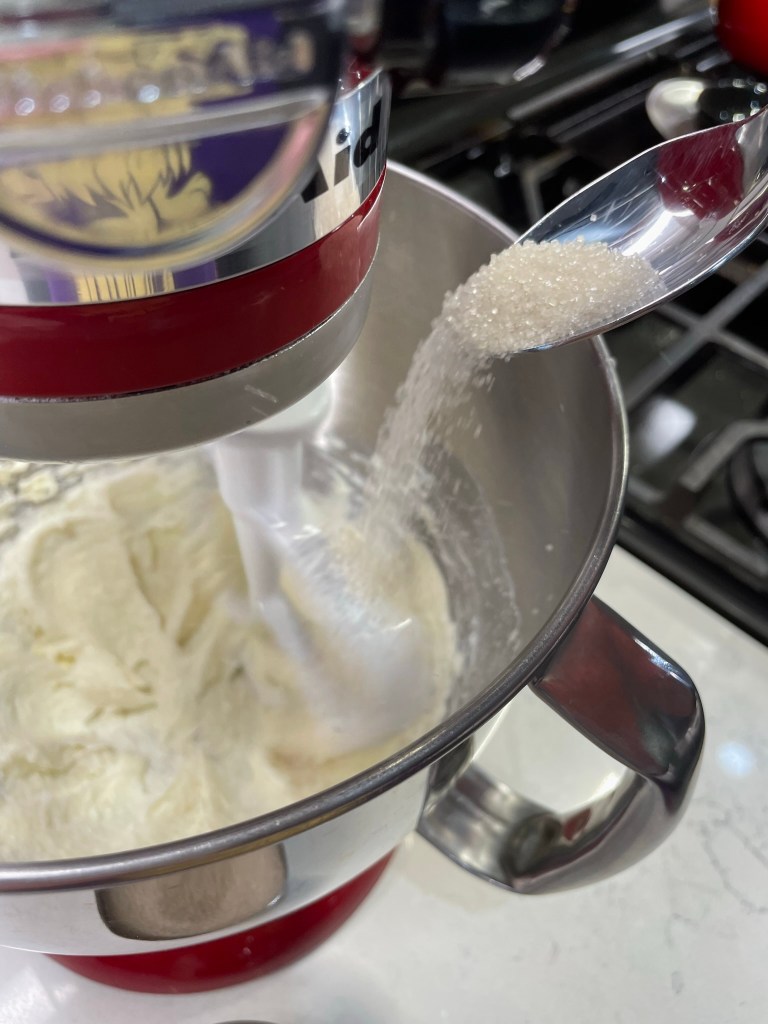
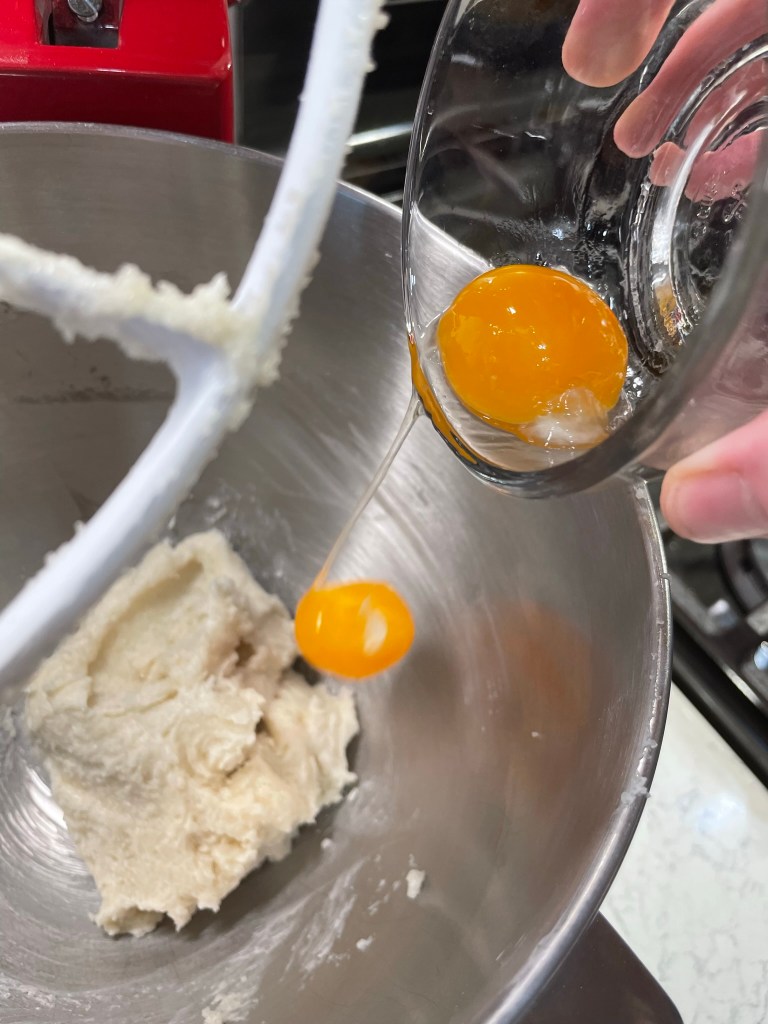
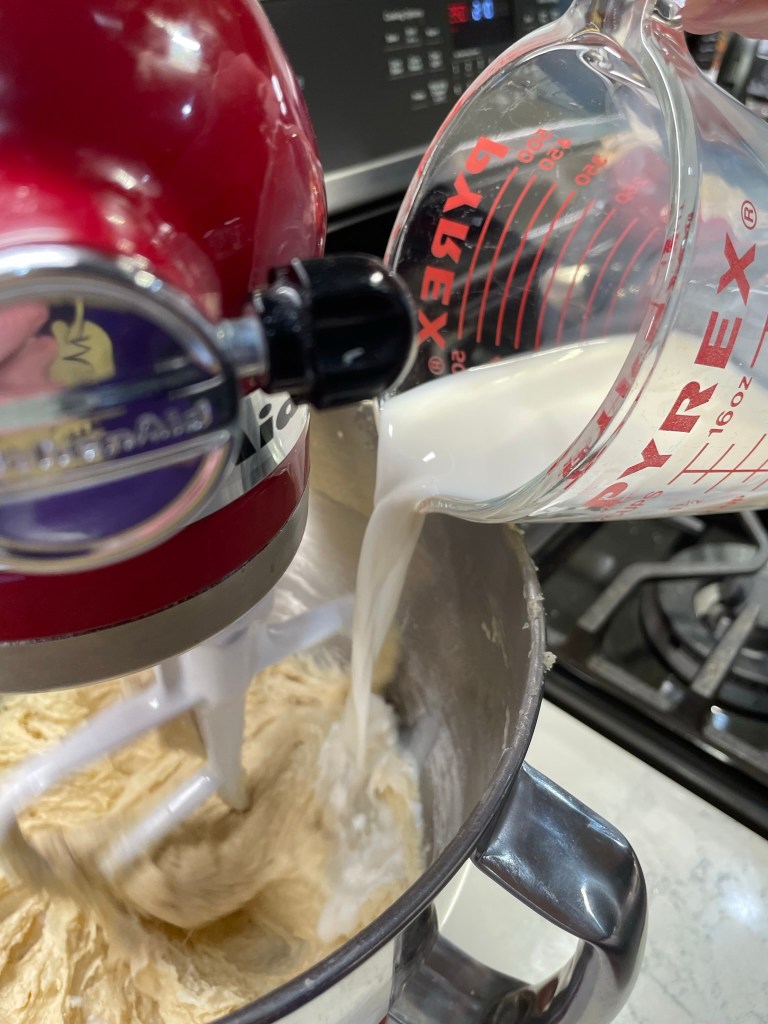
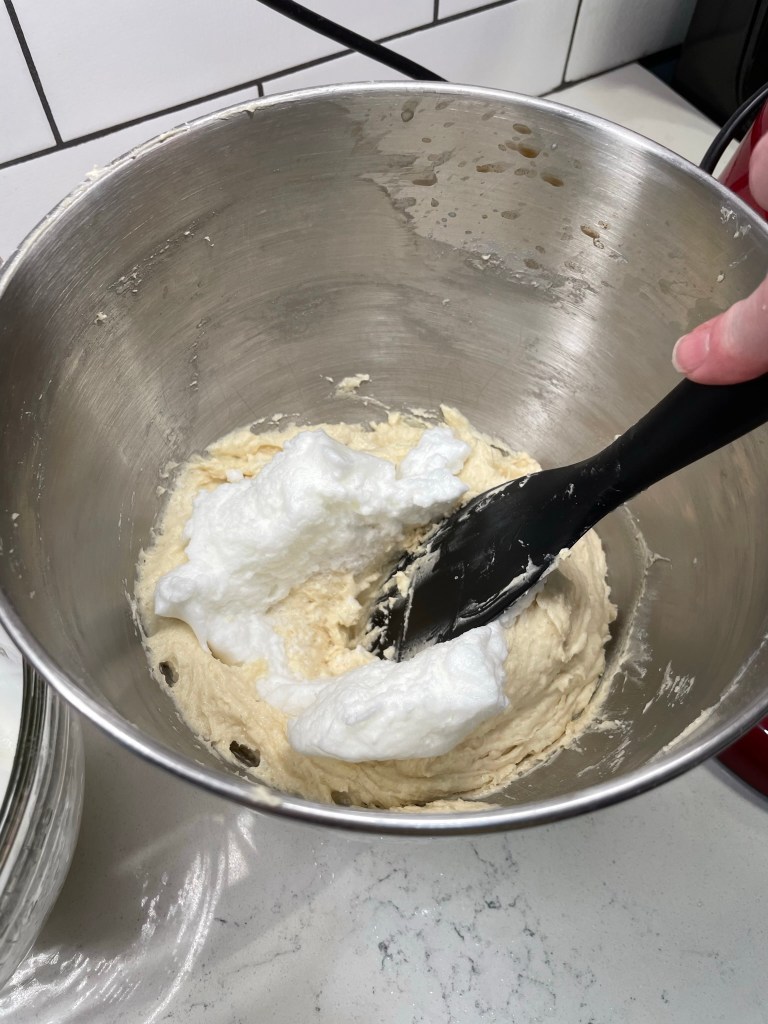
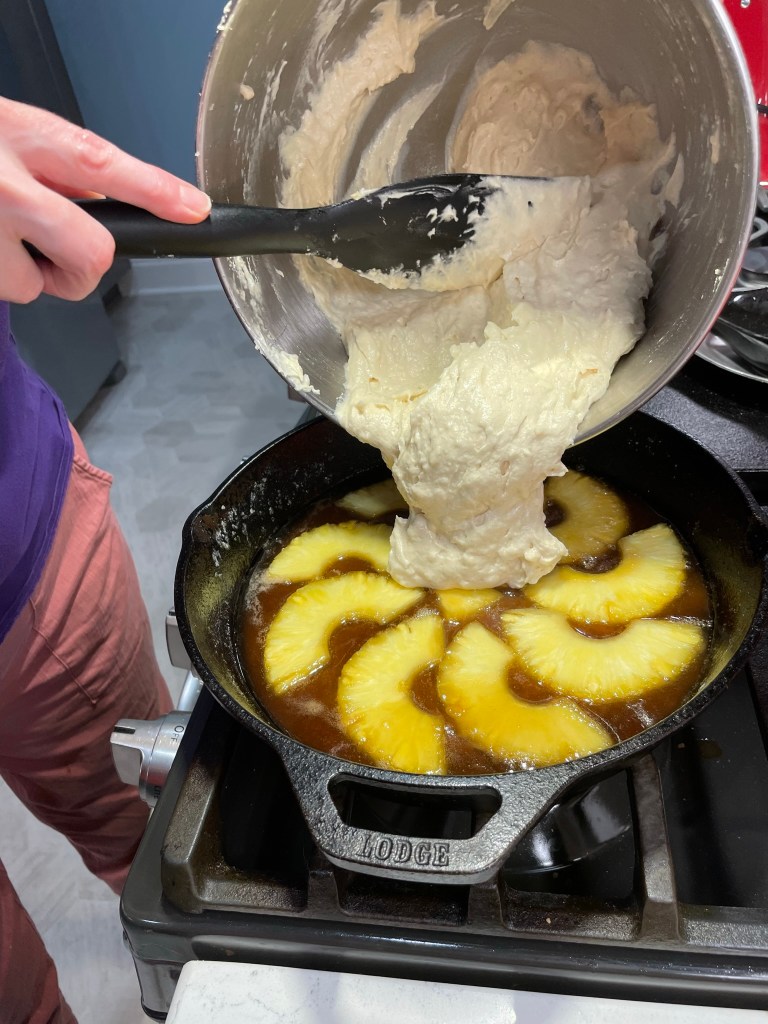
I creamed together the butter and cream of coconut, then gradually beat in the sugar. Next came the egg yolks, the flavorings and the flour-milk-flour-milk-flour additions. Alternating those ensures more even blending without overmixing. The egg whites, which were whipped separately, were folded in at the end and I spooned the batter over the brown sugar butter mixture that held the pineapple slices in the skillet.
What a world of difference it made to have my ingredients measured and ready!
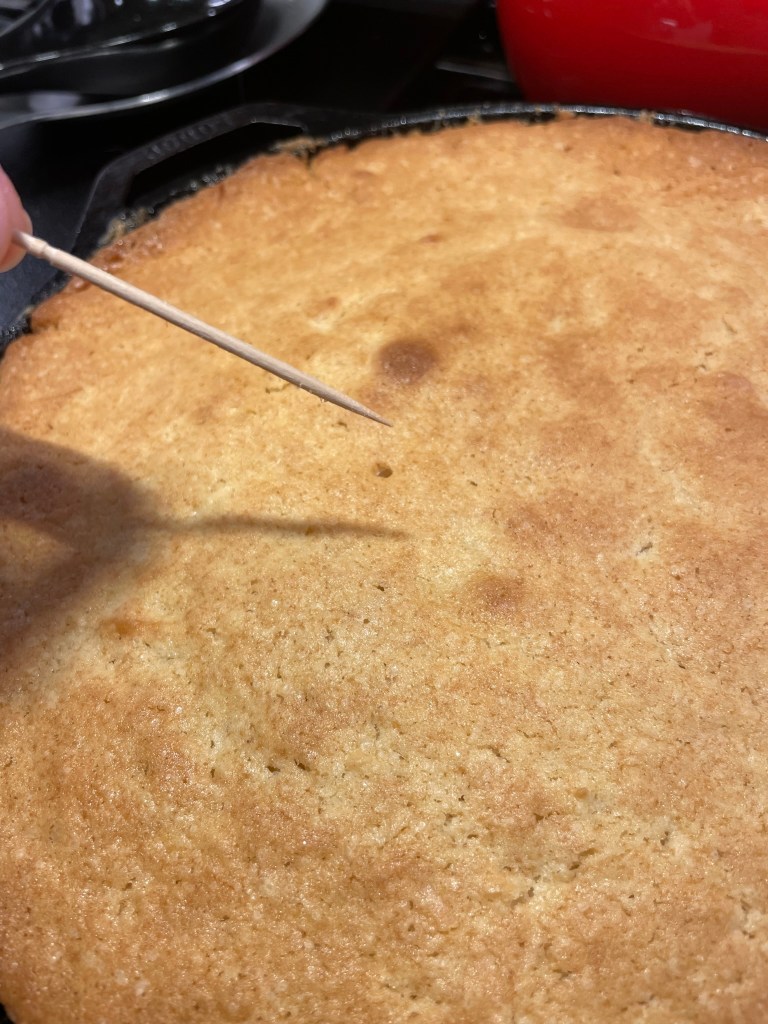
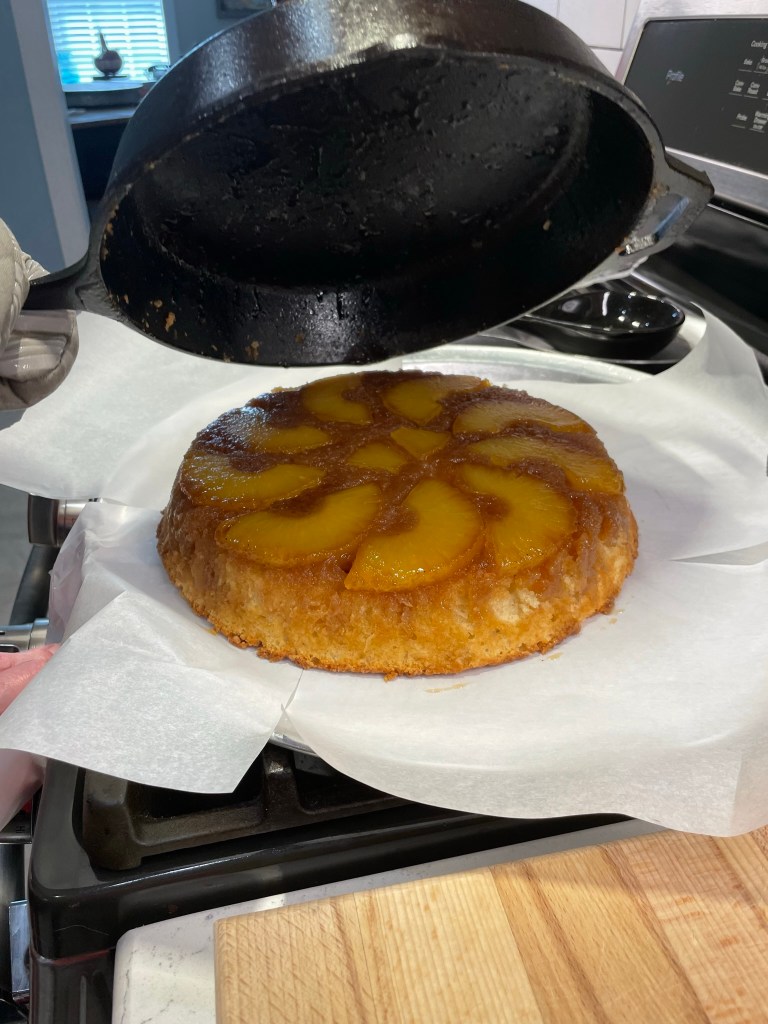
The baking time was true to the recipe (my toothpick said so), and I inverted the cake onto a serving platter to cool. There’s a sweet spot in timing the inversion from a hot skillet; too soon and the cake may fall apart, too long and the toppings will stick and you’ll be patching them into place. Aim for 15 to 20 minutes for best results, then immediately press the cocktail cherry halves into place while the topping is still warm and gooey. Cool it completely before serving. Waiting to enjoy it was the hard part!
Dont’ rush this step, or the cake may fall apart.
I served my tiki cocktail cake with a dollop of sweetened whipped cream, spiked with more booze of course, as well as a lime twist and a sprinkling of toasted coconut.
Having my cake and drinking it, too!
So was it worth the trouble? Mostly, yes. The cake was really delicious— definitely boozy, as intended— and the coconut and pineapple were solid co-stars. It had the perfect hint of almond, but the key lime was barely detectable, and next time I would probably just grate a little lime zest over the cake at serving time. The boozy cherries, as much as I love them, got lost a little bit with all the tropical flavors swirling around them, but they were still a nice little nod to a traditional upside-down cake.
The biggest victory for me was seeing the success that resulted from my planning and, for once, I didn’t swear off baking when this was finished. To the contrary, I’m already imagining my next cocktail-to-cake creation. Any suggestions? 😄
A few thoughtful ingredient swaps turned a classic cake into tropical tiki territory. You might say that I'm having my cake and drinking it, too!
Ingredients
1/2 stick (4 Tbsp.) salted butter, softened
3/4 cup light brown sugar
2 Tbsp. rum (I used Jamaican dark rum)
Fresh or canned pineapple rings, drained
1 cup all-purpose flour
2/3 cup whole wheat pastry flour (or additional all-purpose)
1/4 cup sweetened flaked coconut
2 tsp. baking powder
3/4 tsp. fine salt
1 stick (8 Tbsp.) unsalted butter, room temp
1/4 cup cream of coconut
3/4 cup cane sugar
2 large eggs, separated
1/2 cup, minus 2 Tbsp. milk (see recipe notes)
2 Tbsp. rum (Jamaican again)
1 1/2 tsp. vanilla extract
3/4 tsp. almond extract
1 tsp. key lime juice
Cocktail cherries, halved (use as many as you have pineapple rings)
Having all my ingredients measured and lined up before beginning made all the difference in the world for my successful outcome. Separate the eggs while they are cold, but let them come to room temperature before you start the recipe.
Directions
Preheat oven to 350 F, with rack in center position.
In a medium bowl, whisk together flours, coconut, baking powder and salt. Set bowl aside.
Cut unsalted butter into chunks to quicken softening. Separate the eggs, keeping the whites in a large bowl to be whipped. This will be added to the batter just before baking. Combine milk and 2 Tbsp rum in a measuring glass and set aside.
While all the ingredients are coming to room temperature, prepare the pineapple topping. Melt salted butter in a cast-iron skillet over medium heat. Add brown sugar and whisk until combined and just beginning to bubble. Turn off heat and stir in 2 Tbsp of the rum. Give the skillet a few gentle shakes to settle the mixture evenly in the skillet. Arrange the pineapple slices as desired.
Cream butter and cream of coconut together in the bowl of a stand mixer, stopping occasionally to scrape down the sides. When mixture is lighter and somewhat fluffy, gradually add sugar, beating and scraping down sides as needed.
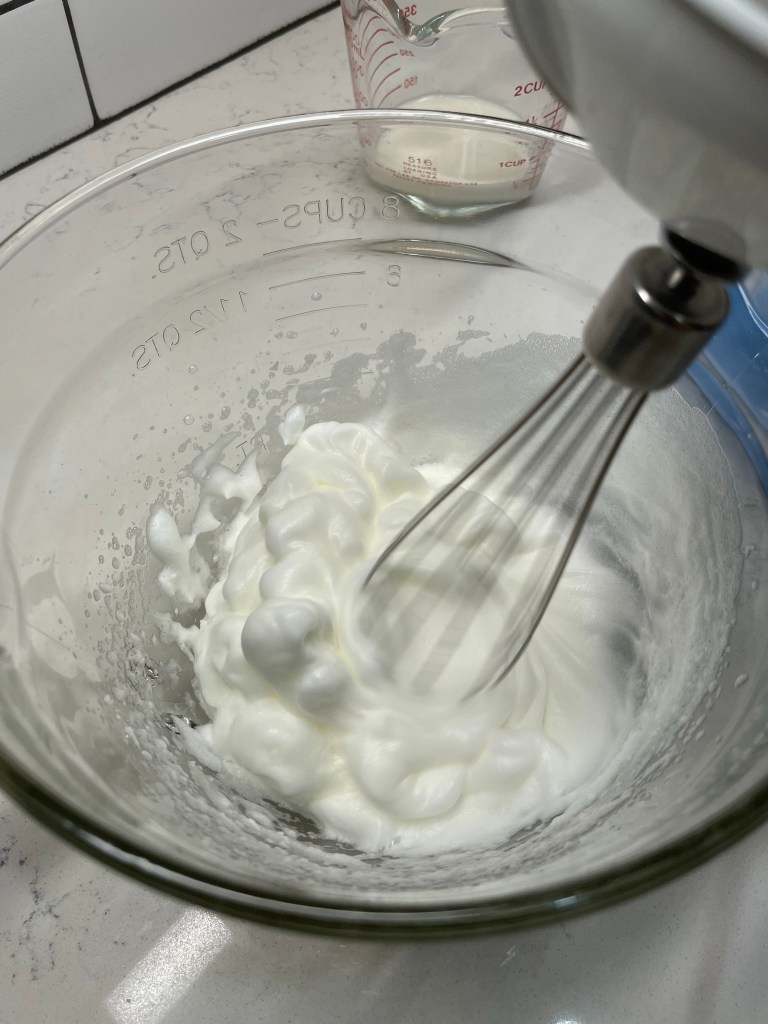
Use an electric hand mixer to whip the egg whites until light and airy but not broken. Set aside.
Add one egg at a time to the batter, beating until well combined after each. Beat in vanilla, almond and lime juice.
Alternate addition of the flour mixture and milk as follows: 1/3 flour mixture stirred in until smooth. Next, 1/2 milk mixture. Then 1/3 flour mixture, remaining milk, remaining flour mixture. Scrape down sides and blend as evenly as possible without overworking the batter.
Give the egg whites a quick whisk again, then gently fold them into the batter, taking care to mix only until the whites are not distinguishable in the batter. Gently spoon the batter over top of the pineapple topping. Use a spatula to smooth out the top.
Bake for 35 to 40 minutes, until a toothpick inserted in the center comes out clean. Cool for about 15 minutes.
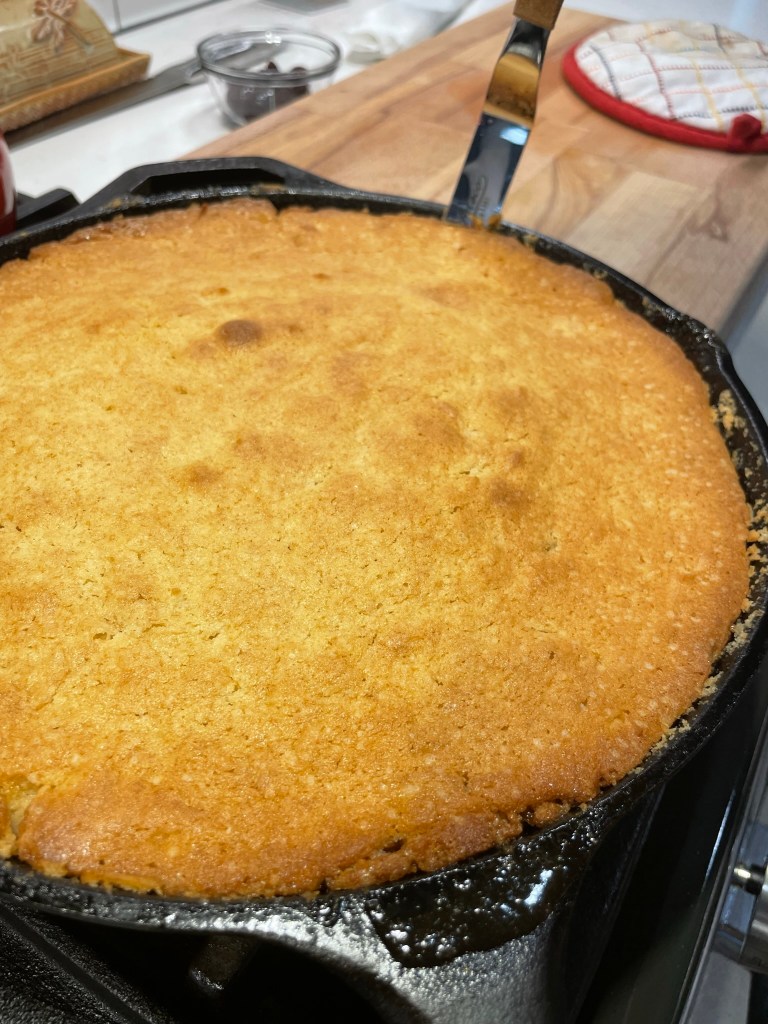
Run a knife or offset spatula around edges of the skillet to loosen the outer edge of the cake. Invert onto a plate or serving platter. Immediately place the cocktail cherries into the topping, pressing gently to set them into caramelized sugar.
Cool cake completely. Cut into wedges and serve with a dollop of whipped cream, spiked with cointreau or coconut rum. Sprinkled with toasted coconut.
There are age-old tales of hauntings on the North Carolina coast, especially in the Wilmington area and along the Outer Banks. I thought it apropos to explore the legends as we inch toward Halloween.
Folks say that Wilmington, which is nestled in a triangle between the Atlantic Ocean and the Cape Fear River, is particularly prone to hauntings because of an old superstition that says ghosts—or haints, as the Gullah people call them—cannot cross over water. The Gullah people, in case you aren’t aware, are direct descendants of formerly enslaved people brought over from West Africa, and though they once inhabited the coastline from the Outer Banks to the north coast of Florida, only a remnant of the subculture remains today in the Sea Islands near Charleston, South Carolina. The heritage of the Gullah people is largely Creole, and superstitions abound, especially in their folklore about the dead. Whether or not the water theory is true, people all across the South still paint their porch ceilings blue, presumably to keep the ghosts at bay.
But the Cape Fear region has plenty to offer for adventurous souls who come seeking those ghostly encounters. And smart marketing teams have capitalized on the legends that persist there, with everything from ticketed ghost walks to haunted pool halls. Don’t believe in it? Suit yourself.
If you venture further north of Wilmington, especially toward the inlets along the Outer Banks, you might catch a ghostly glimpse of one Edward Teach— notoriously, the pirate Blackbeard. He is said to have made his home in those parts, probably for the cover it provided him in between his plundering of unsuspecting cargo ships headed for Port Wilmington. Some modern thrill seekers claim to have witnessed a mysterious light moving around in the waters there, or experienced a spooky wailing that sounded like someone crying out, “Where’s my head?”
They say it’s Blackbeard.
Now, if the notion of pirates conjures comical images of Johnny Depp in Hollywood garb and black eyeliner, well, you can forget that. Blackbeard was no such flamboyant, clever-tongued misfit. He was a badass—a wild, fearsome figure with a long, braided black beard. Some historians say that when he was about to attack a ship, Blackbeard would weave hemp cords into his beard and torch them to make it look like his head was smoking—a tactic to further terrify his unsuspecting victims so they would give up without a fight. Indeed, he was the bulliest of all the bullies of his time.
Blackbeard’s reign of terror came to a violent end in 1718, when the governor of neighboring Virginia dispatched a military ship to take him out, and in the end, Blackbeard was shot, stabbed to death and decapitated. His gnarly head was hung from the mast of the military ship and later put on display atop a pole in Hampton Roads, Virginia—let that be a lesson to other would-be nautical thieves, I guess.
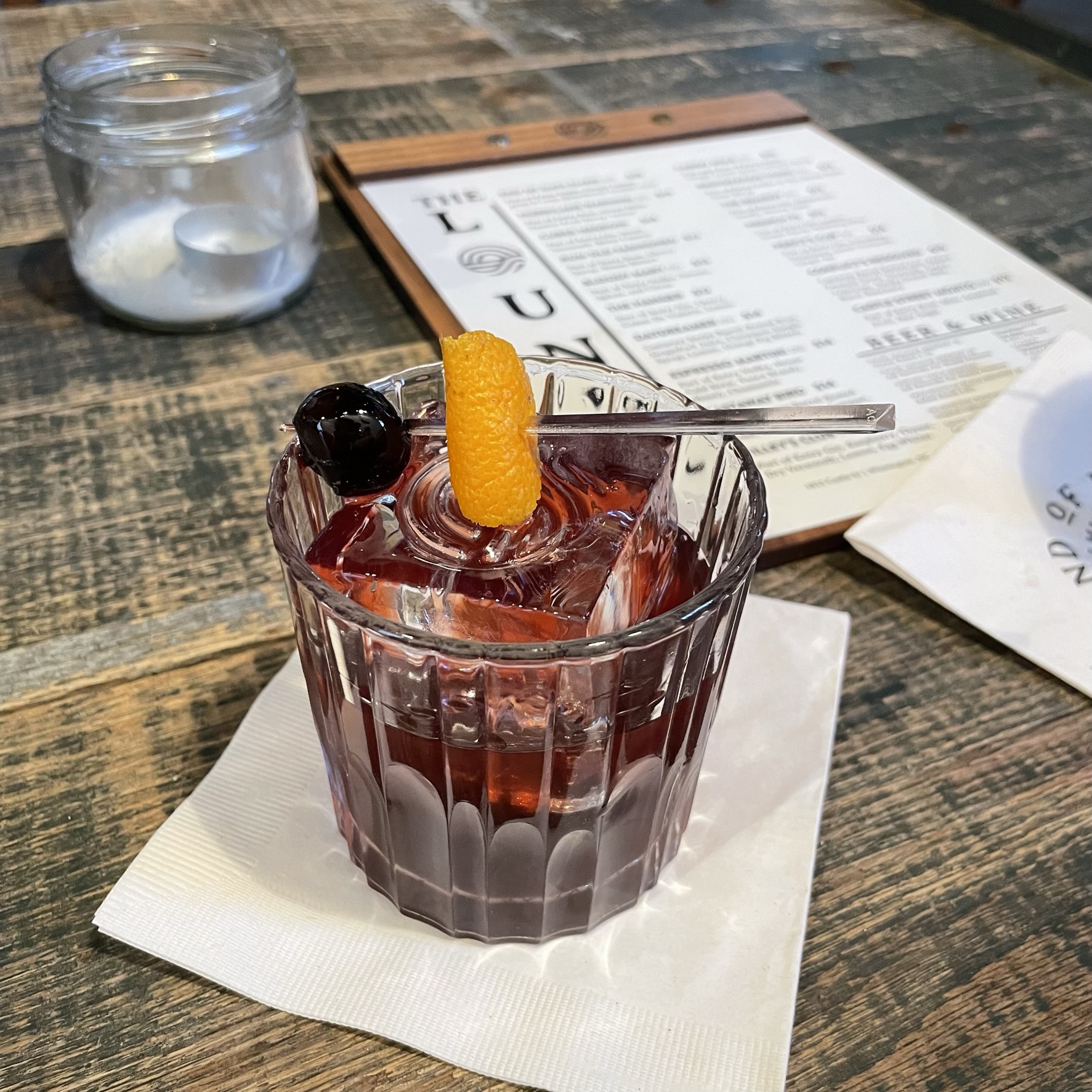
When my husband and I celebrated our wedding anniversary on the North Carolina coast earlier this year, we didn’t find Blackbeard—OK, we weren’t actually looking for him—but I did find inspiration in a cocktail we enjoyed at End of Days Distillery in Wilmington. The distillery produces vodka, gin and rum—I’m cool with all three and ordered a frilly gin drink, and Les gravitates toward sweeter, dark liquor. He ordered the rum old fashioned, which is pretty much the same as a classic old fashioned, but with rum rather than bourbon, and a splash of cherry syrup in place of the usual sugar. It was delicious!
If you look closely at the top of the large ice cube, you’ll see that they have branded their logo into it!
We bought a bottle of the End of Days “Castaway” barrel-aged rum, and I promised Les I would re-create the drink at home, but it took Halloween and a deeper dive into the history of Blackbeard to properly motivate me. This cocktail embodies a few points of the Blackbeard story—rum, because we all know it was a pirate’s drink of choice—cinnamon syrup and spicy Jamaican Jerk bitters for a little bite, and cherry juice to symbolize the bloodshed of Blackbeard’s last stand.
Cinnamon simple syrup is easy to make at home, and I highly recommend having a jar or bottle on hand for the upcoming holiday season because it works with so many spirits. Combine equal parts water and cane sugar and heat to a slight boil, then add cinnamon sticks to steep a warm, spicy flavor into the syrup. The longer it steeps, the more intense the flavor. The bitters are a specialty item, and I’ve linked to the company’s website if you’re interested in checking them out. For this cocktail, I turned to Woodford Reserve’s brand of bourbon cocktail cherries, rather than my usual Luxardo, because I wanted the color more than the sweetness. Look for the Woodford brand in the mixers section of Total Wine or Bevmo, or the Tillen brand would also work in a pinch.
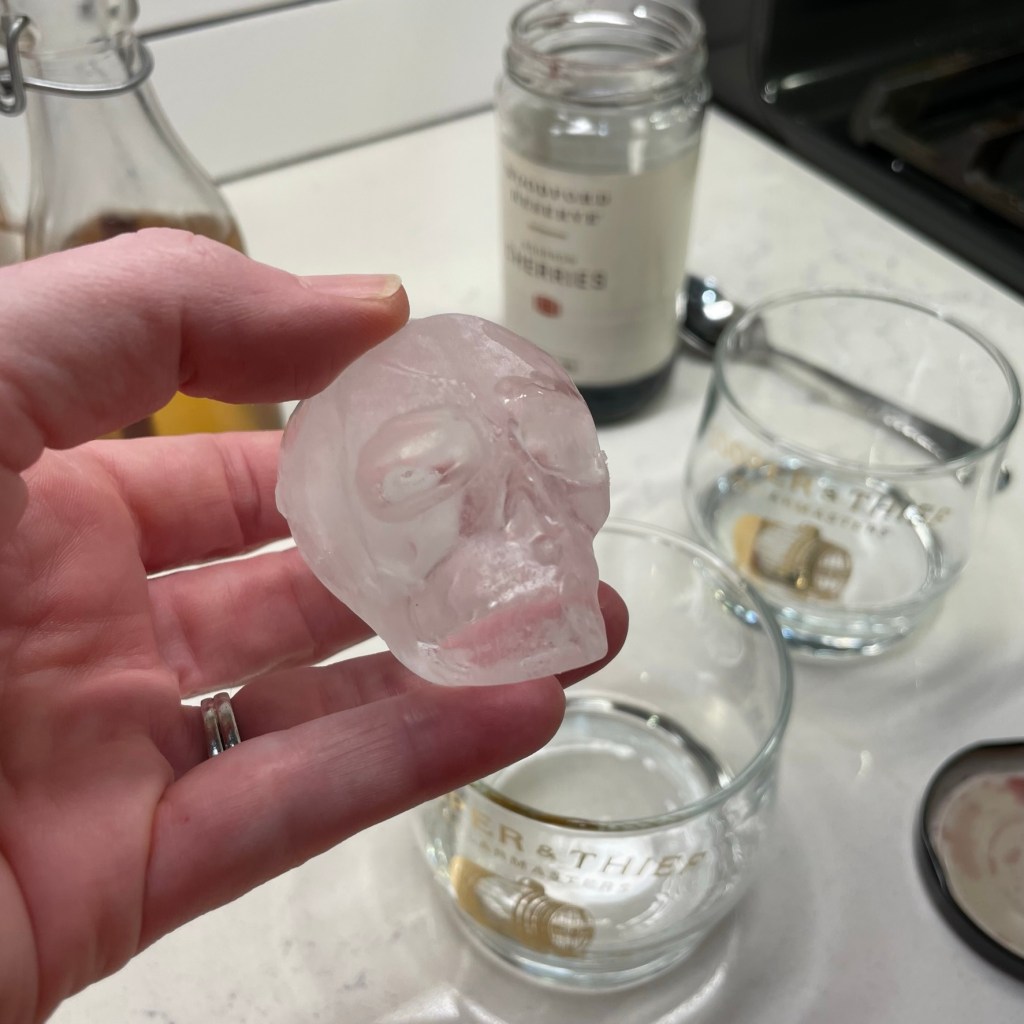
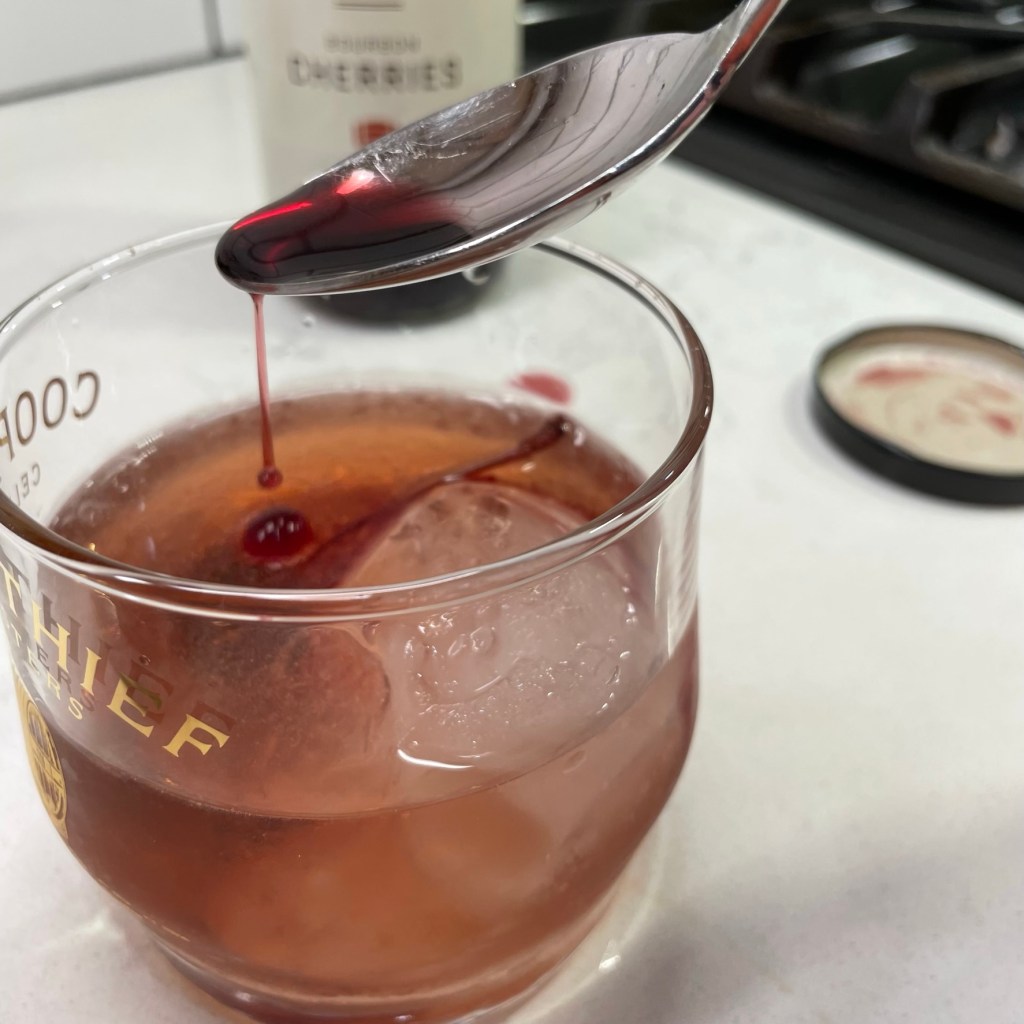
I combined all of the above with ice in my cocktail shaker and then poured it over a spooky, skull-shaped ice, drizzling in a little more cherry juice for effect, and a cherry as a garnish. Tovolo makes the skull mold for ice, and I found it on Amazon.
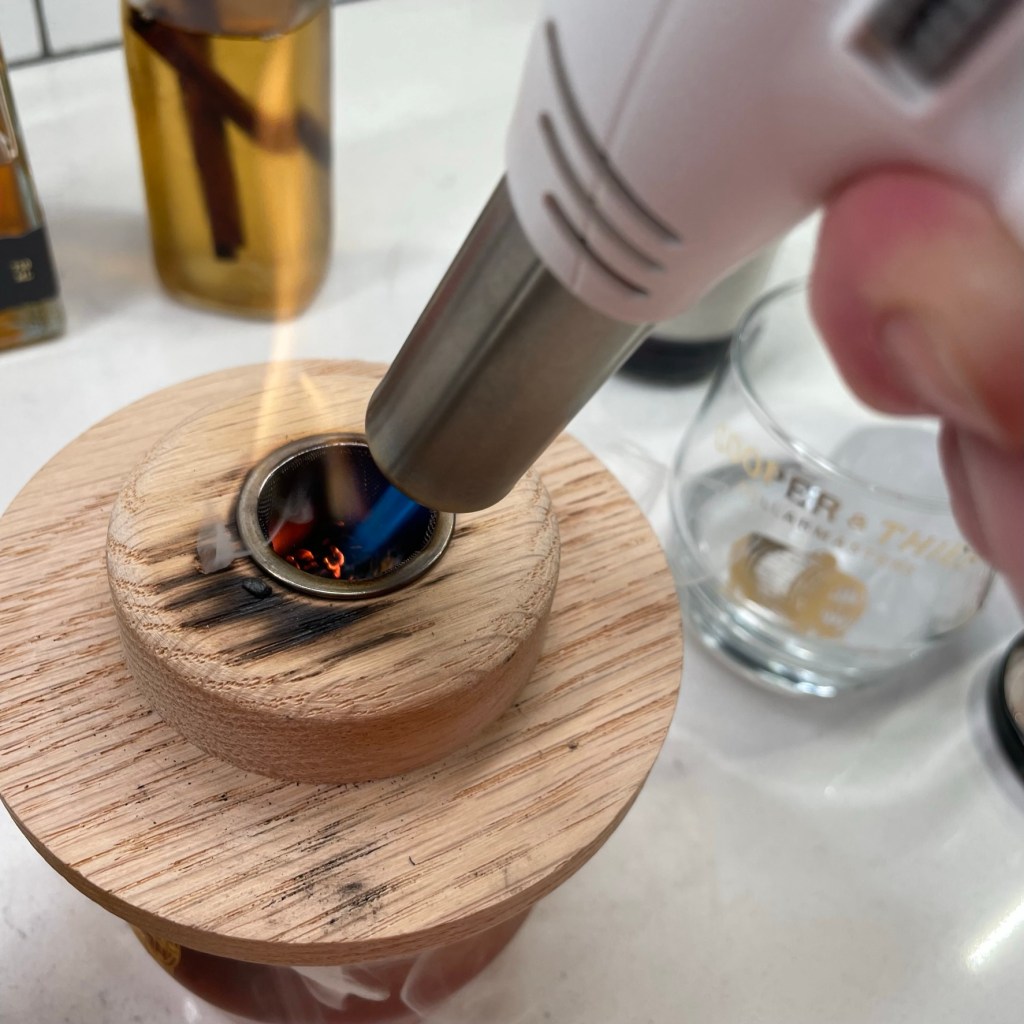
Finally, the dramatic moment! This past summer, our friend, Bob, introduced us to a nifty cocktail smoking kit and I promised I’d be getting one to make a fun Halloween drink. Our kit included several varieties of wood chips—apple, pecan, hickory and oak—and I chose oak to echo the essence of that in the barrel-aged rum.
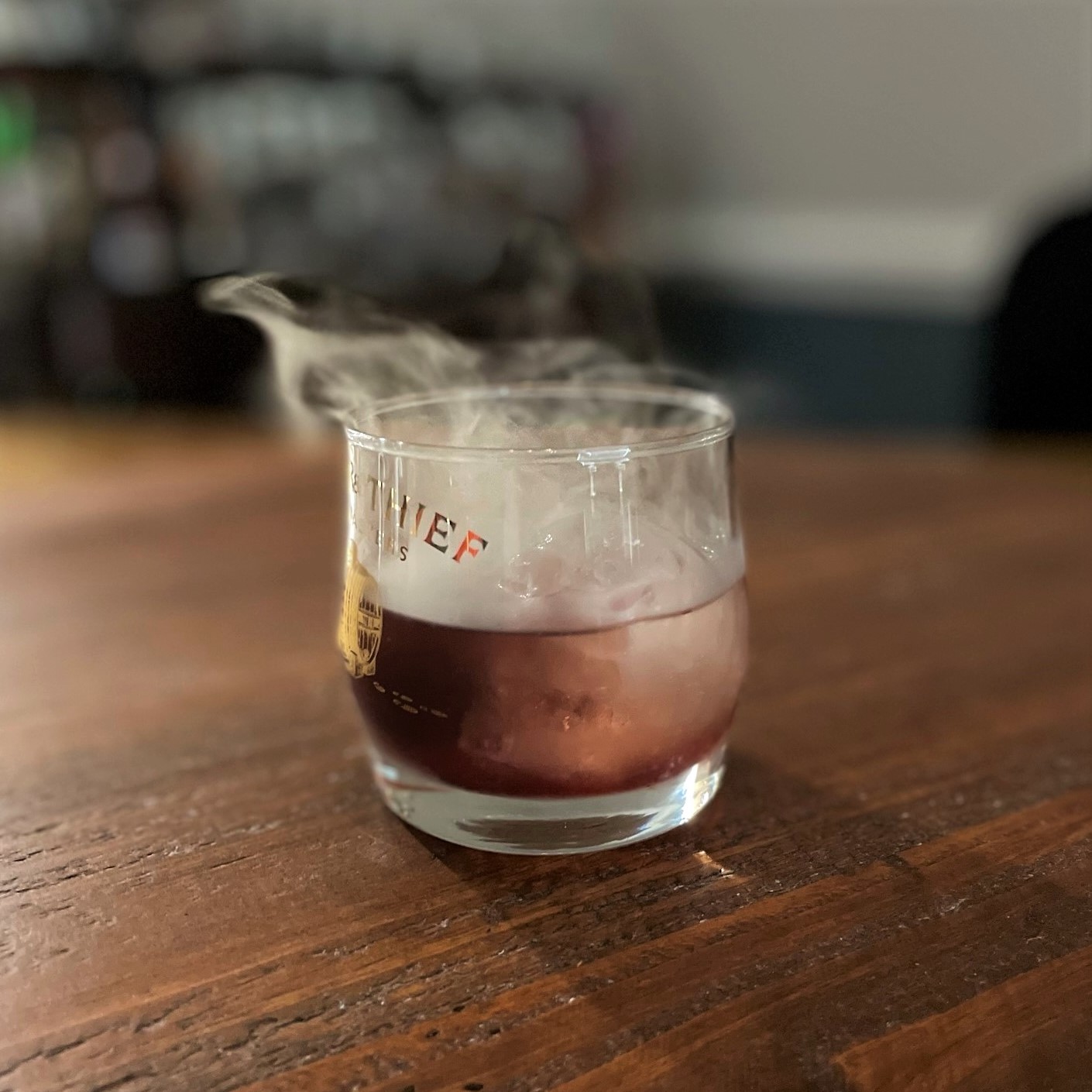
When the smoke cleared from the cocktail, it was far from spooky; the sweetness of the rum and cinnamon syrup were prominent, and the spicy bitters kind of sting the tongue. But just thinking of mean old Blackbeard as we sipped our cocktails made for a fun evening.
Blackbeard’s Comeuppance – a smoked cocktail for Halloween
Oak chips and cocktail smoking kit (optional, but fun!)
Directions
Measure rum, simple syrup, cherry syrup and bitters into a cocktail shaker or mixing glass. Add one cup of ice and shake or stir vigorously until outside of mixing container is frosty. Strain over new ice in a rocks glass. Add a cherry to garnish, and drizzle in another spoonful of the cherry syrup to mimic Blackbeard’s blood.
Place smoking accessory on top of glass and light the oak chips until smoke begins to appear. Cover the accessory until the smoke fills the open space in the glass. Remove the accessory and allow smoke to dissipate before enjoying.
For cinnamon simple syrup, combine 1/2 cup filtered water and 1/2 cup cane sugar in a small saucepan. Heat and stir until sugar is dissolved. Rinse 2 sticks of cinnamon (about 3-inches each) briefly under running water. Add the cinnamon sticks to the simple syrup and heat just until the syrup begins to bubble. Turn off heat and cool to room temperature. Transfer syrup to a sealed jar or bottle (it’s OK to leave cinnamon sticks in it), and refrigerate for up to 2 months.
If you’re interested in the cocktail smoking kit, Aged & Charred is the company that made ours. We didn’t receive any payment or product for my mention of them, but I wholeheartedly recommend it!
Every year, I say that I want to make something elaborate for Mardi Gras—a king cake or jambalaya or étouffée (which my computer just tried to auto-correct as “toupee”)—but I usually miss my chance because I’m tied up making things for Super Bowl or Valentine’s Day. As much as I try, I simply can’t do everything at once.
But because Easter has a floating date (blame it on the moon), so does Ash Wednesday and so does Mardi Gras—and as luck would have it, I have had a little free time after Super Bowl to get my act together in time for this year’s Mardi Gras, which will be March 1. Frankly, I wonder whether I am qualified to make something as traditional as a king cake, given that I have never actually been to New Orleans. I do make a good gumbo, and there was that jambalaya deep-dish pizza last year that was pretty awesome, but I am not prone to do too many repeats, and my craving for a dessert was getting the better of me.
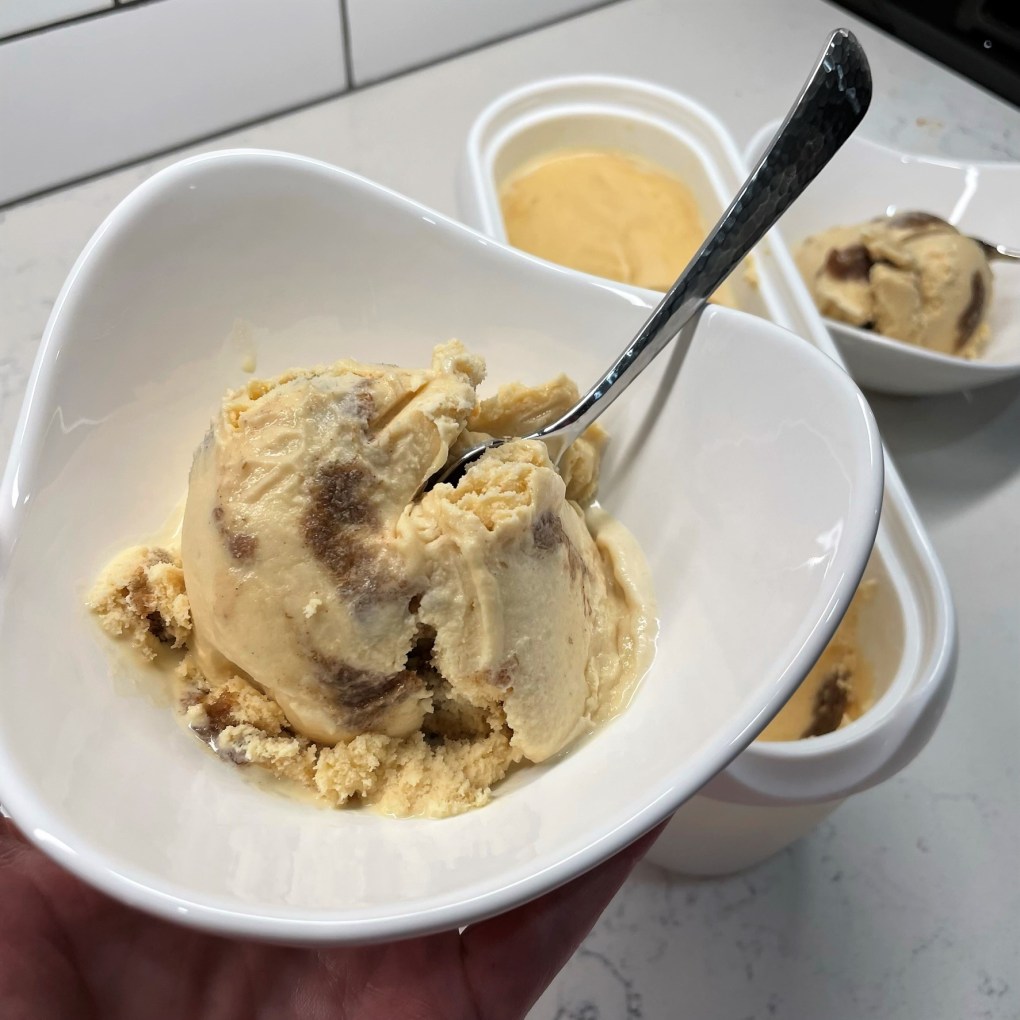
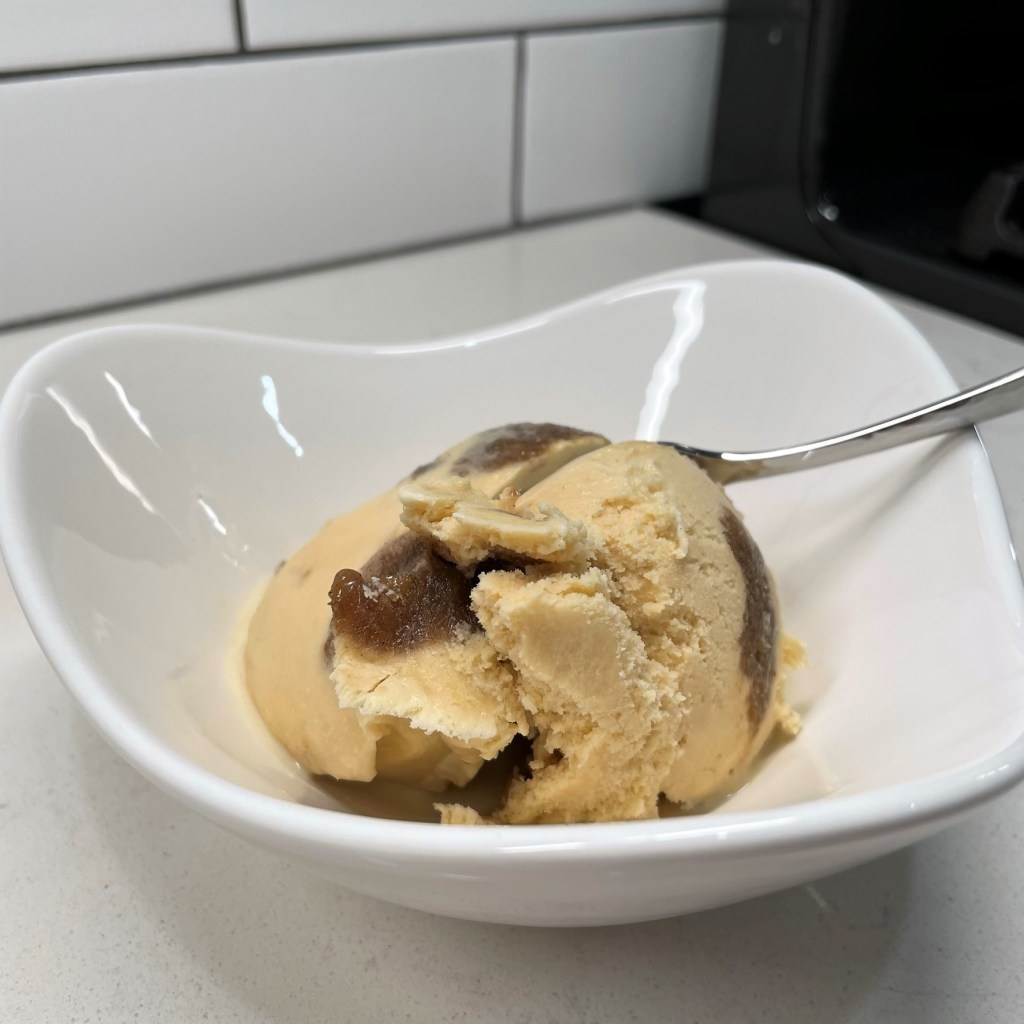
And that’s how this Bananas Foster ice cream came to be.
The Bananas Foster swirl is very prominent and so flavorful.
Bananas Foster is a decadently sweet dessert, native to New Orleans. The traditional recipe involves flaming rum-soaked syrup including brown sugar, cinnamon and butter—all spooned over caramelized bananas and served with a scoop of creamy vanilla ice cream. In a previous season of my life, I experienced the pure joy of having Bananas Foster prepared tableside, and those flavors never quite cleared my imagination. It was all at once tropical, sweet, warm, cold, sensual, creamy, boozy and flat-out amazing. What could possibly go wrong, I thought, in skipping the flambé and just adapting that whole mix into an ice cream?
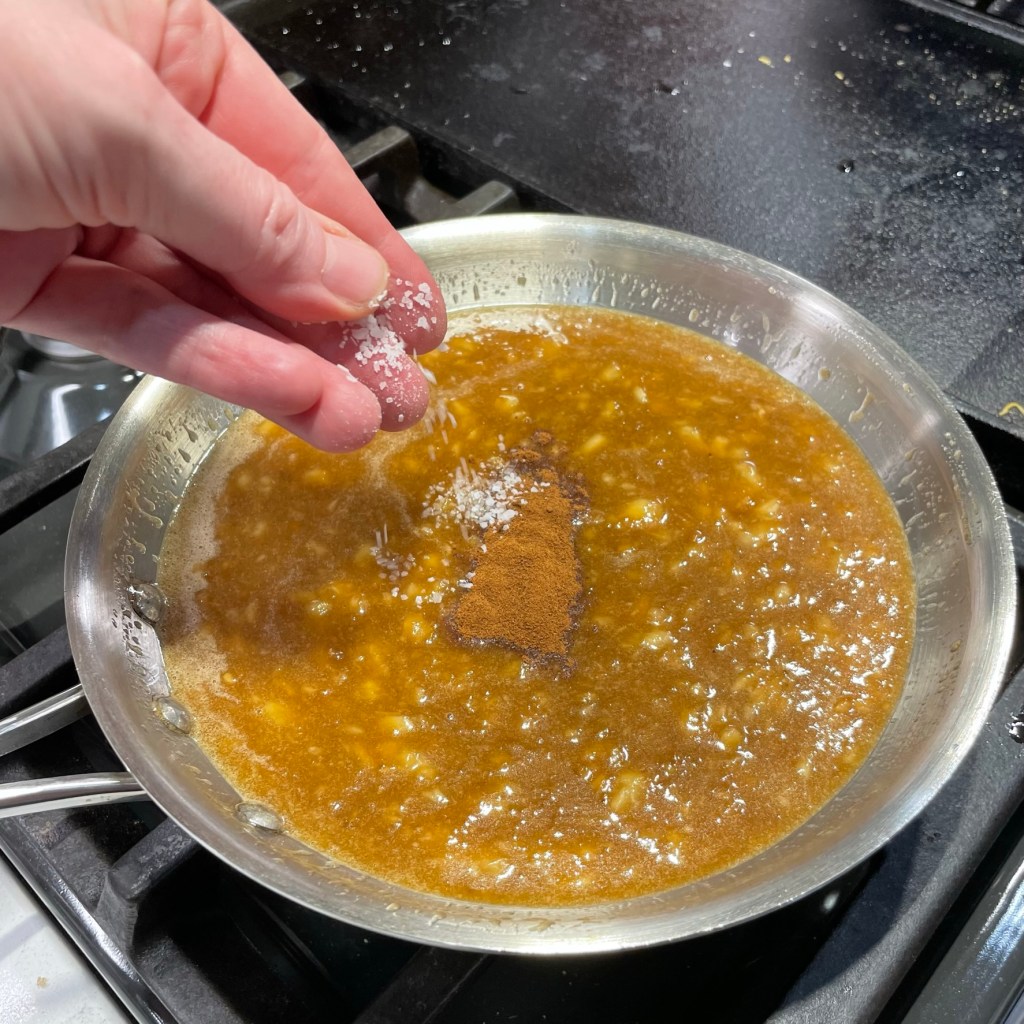
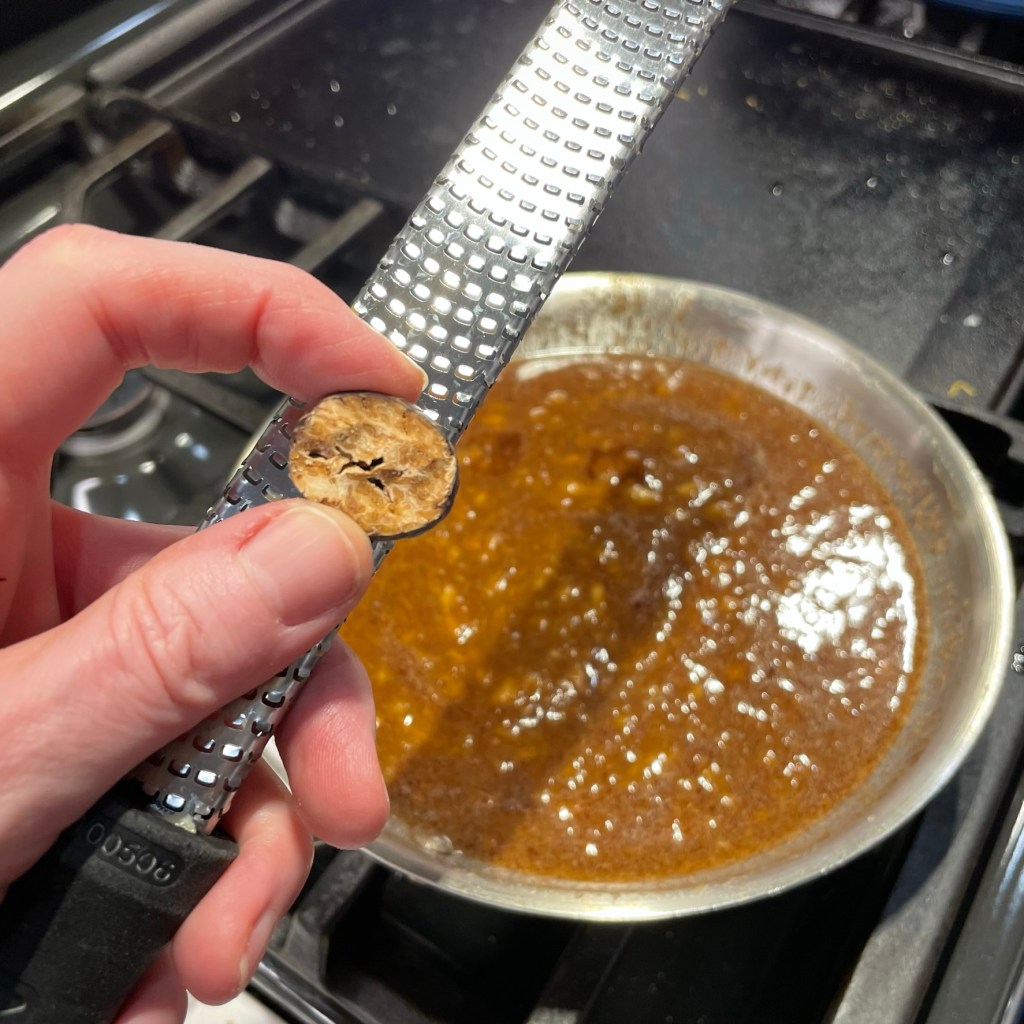
For the richness factor, I started with my go-to custard base for the ice cream, but I used brown sugar rather than white to lay a foundation of warm, molasses-y flavor. I caramelized a couple of ripe, mashed bananas into a mixture of brown sugar, butter, cinnamon and freshly grated nutmeg, then I poured in a shot of aged dark rum from Jamaica (the same rum I used recently in those “air fryer” jerk wings). Both components got an overnight chill, and then I froze the ice cream and layered in the bananas foster filling the next day.
One of these days, I’ll get to New Orleans to celebrate Mardi Gras properly. Until then, I’ll just put on some beads and some zydeco music and enjoy another scoop of this frozen delight.
Don’t mind me, I’m just having my own private Mardi Gras over here.
Ingredients
1 1/2 cups whole milk
2/3 cup light brown sugar (packed)
3 egg yolks (room temperature is best)
1 1/2 cups heavy cream
Pinch of kosher salt
1 tsp. real vanilla extract
1 Tbsp. vodka or dark rum, optional (added at the end of freezing)
Bananas Foster Swirl
3 Tbsp. salted butter
1/3 cup light or dark brown sugar
3/4 tsp. ground cinnamon
A few shavings whole nutmeg
2 very ripe bananas
1.5 oz. dark rum or spiced rum
Instructions for Custard
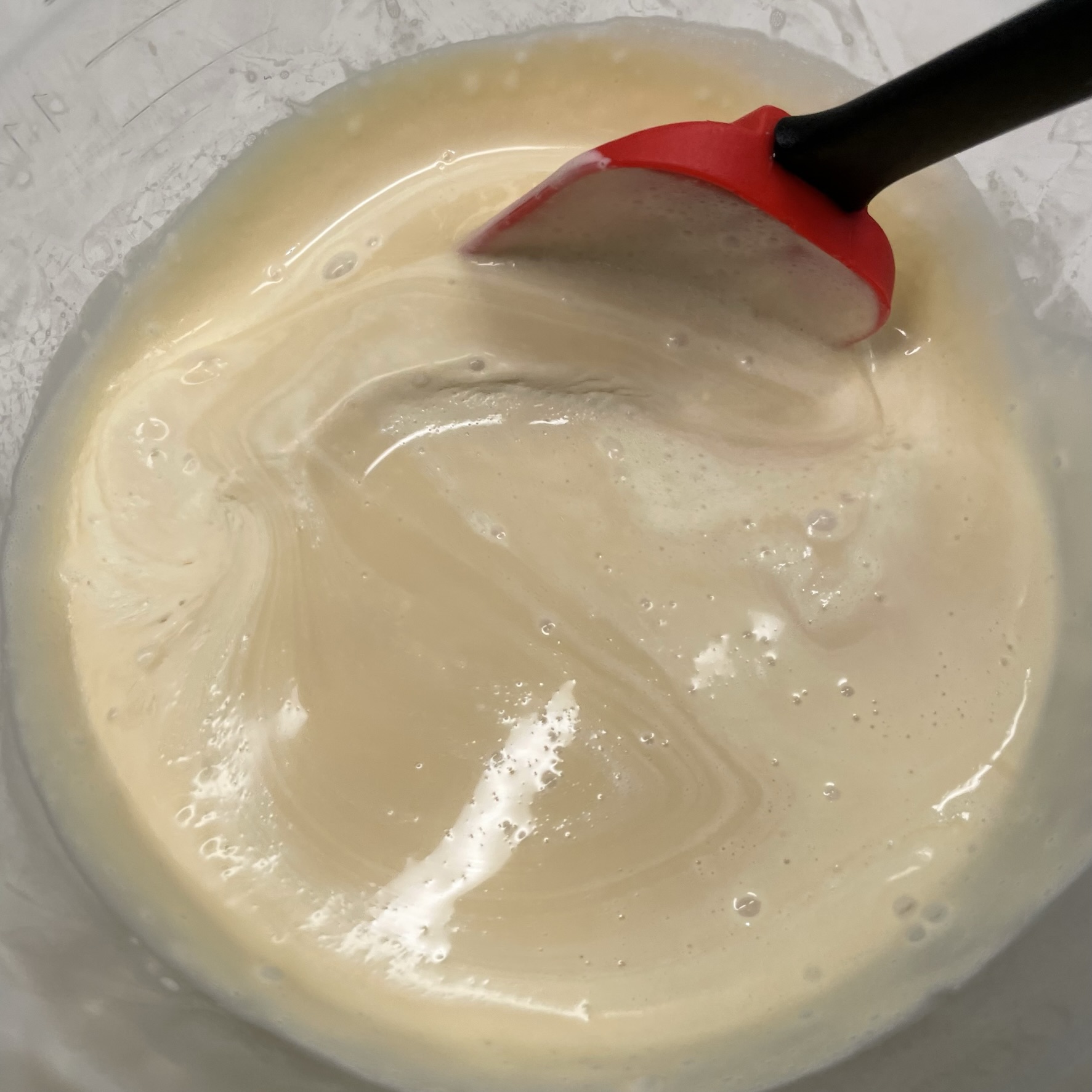
Full disclosure: I have made my custard-based ice cream many times, and never had this much trouble with foam. Most of the time, the custard cooks up silky and rich. But I got carried away and whipped my egg yolks too much! The ice cream turned out great, but don’t try to replicate this mistake. 🙂
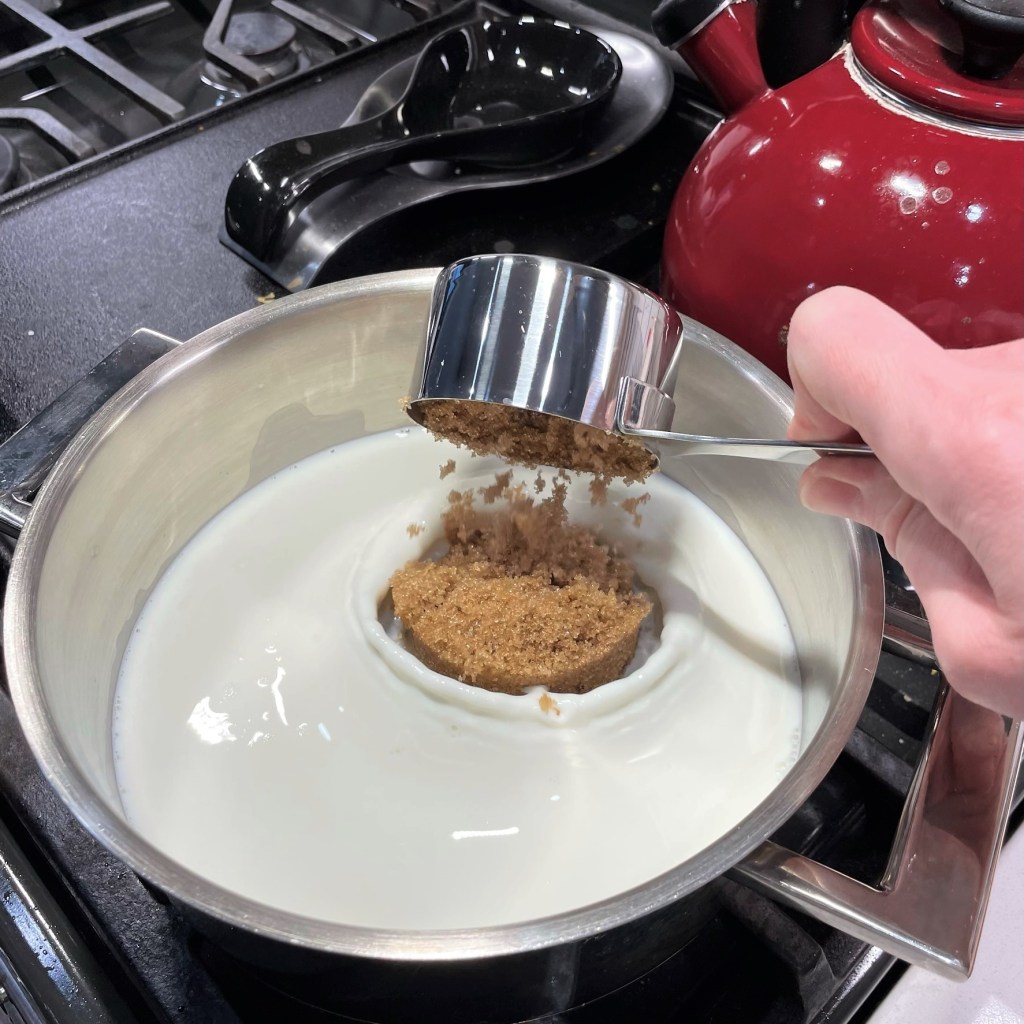
For a caramel-like flavor, I sweetened the milk with brown sugar rather than white.
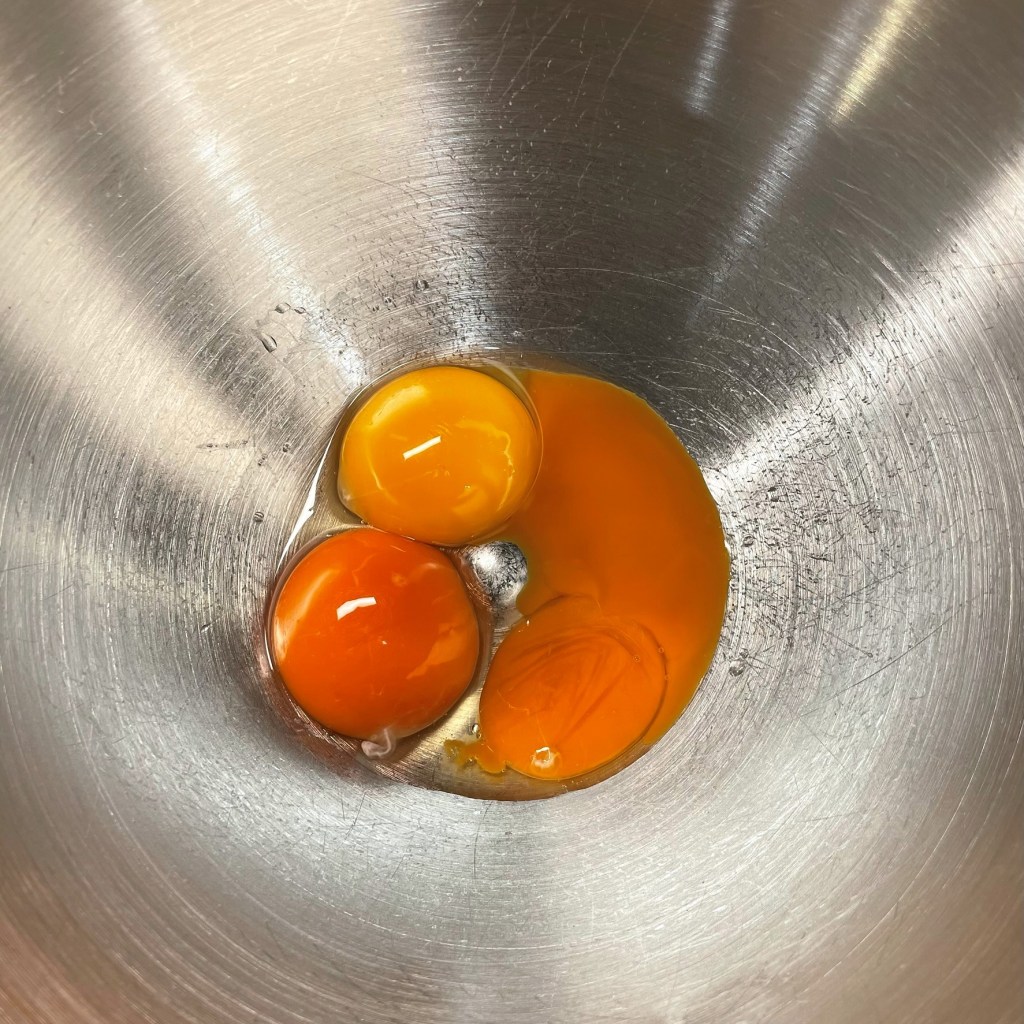
My free range egg yolks are going to tint my ice cream a lovely golden color.
Temper the beaten egg yolks with about half of the hot milk.
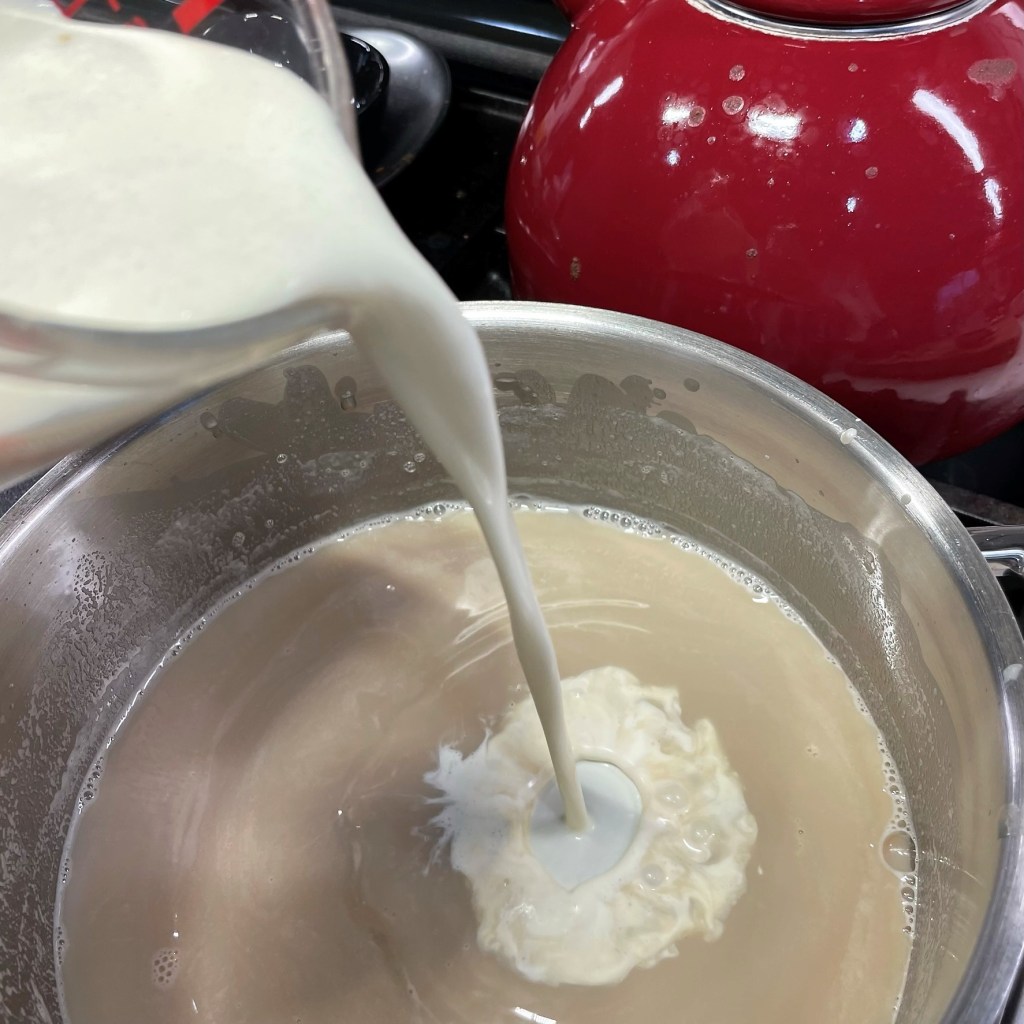
Add the cream to the pot while you temper the egg yolks, and bring the pot back up to a low simmer.
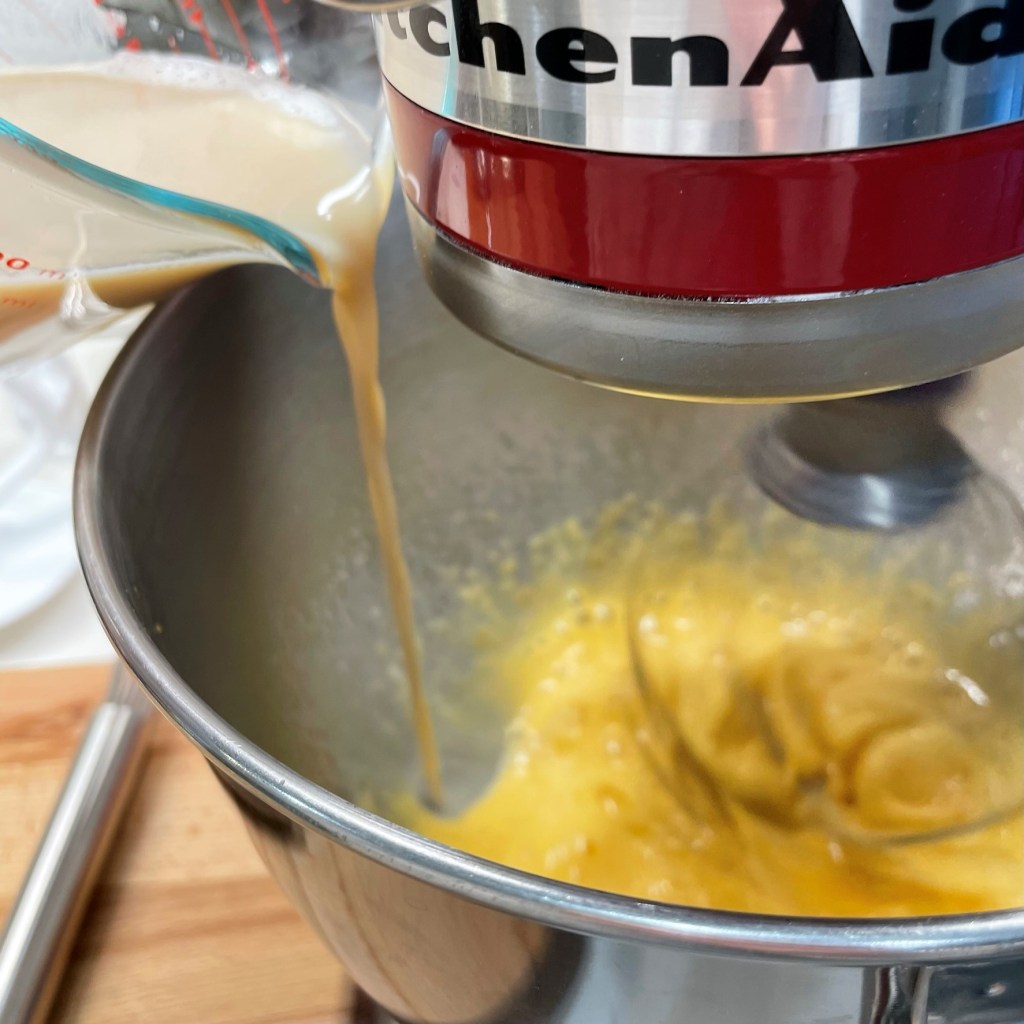
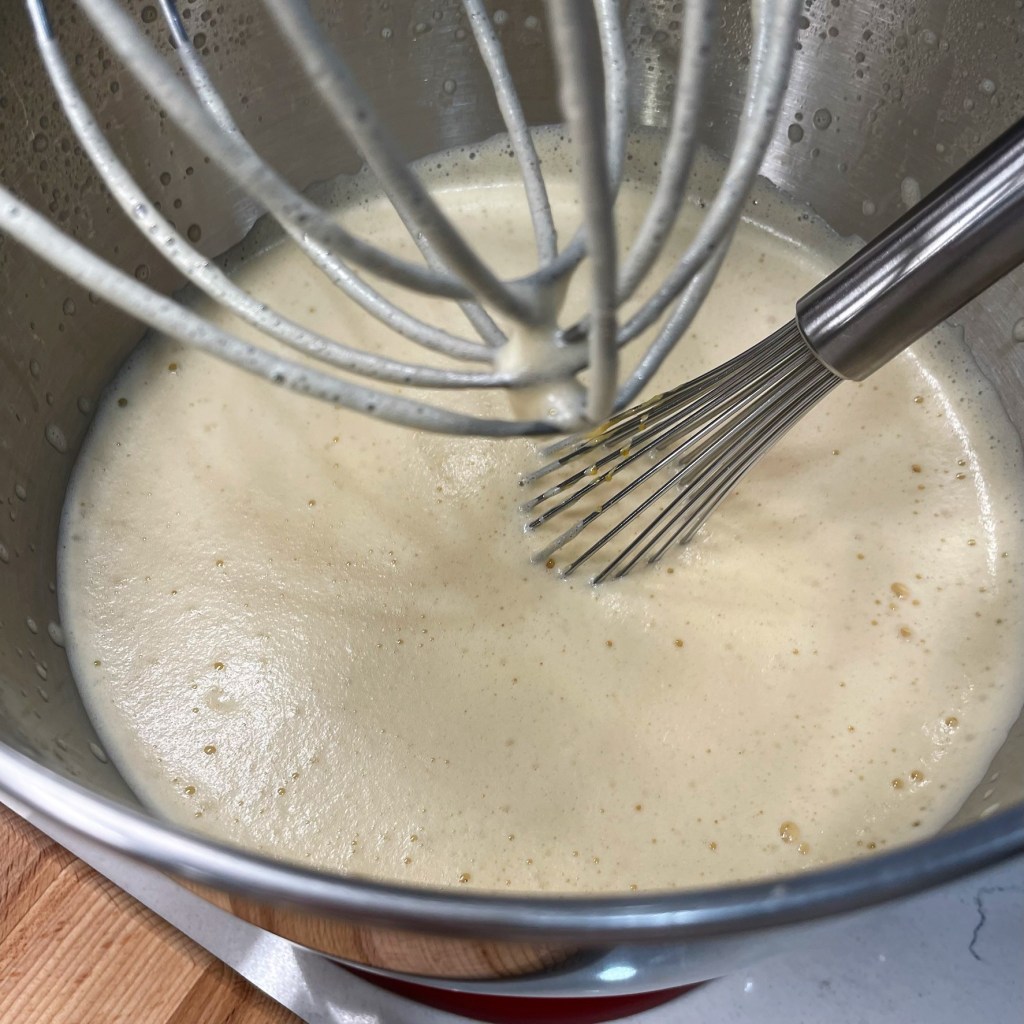
I must have been whipping it good, because my tempered egg mixture was very foamy.
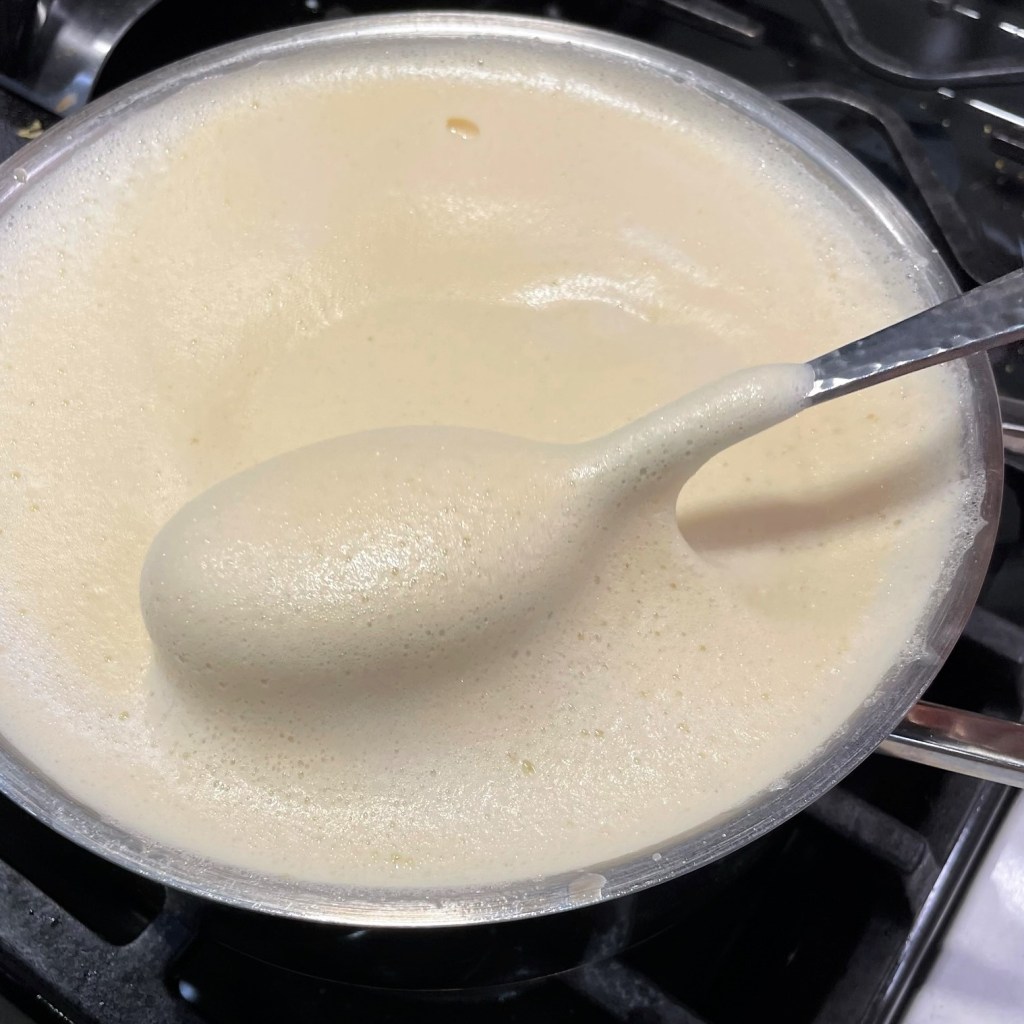
Return the tempered mixture to the pot to cook a few more minutes. This foam was a bit of a problem!
I had no way to tell (through all that foam) when the custard was properly cooked, so I probably cut it short.
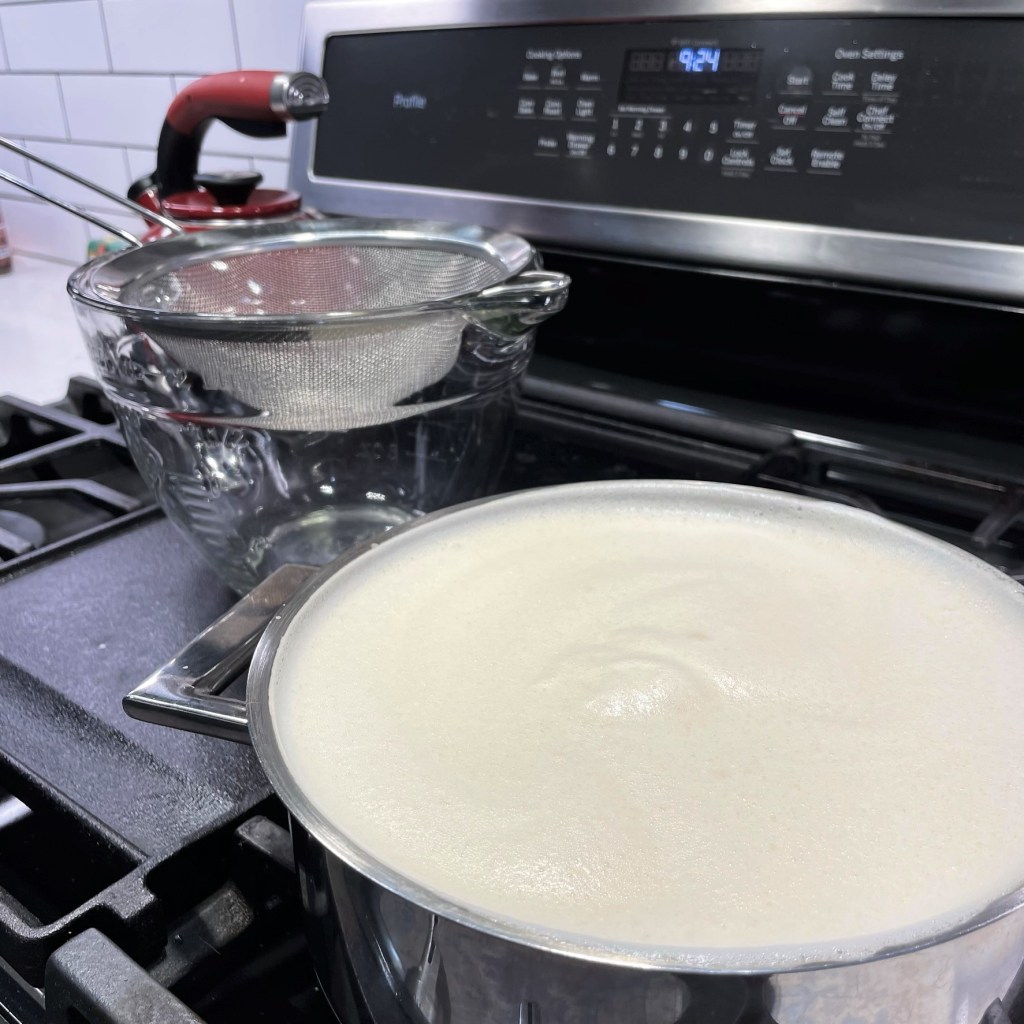
You’ll have to imagine the straining, because I ran out of hands to hold the camera! 🙂
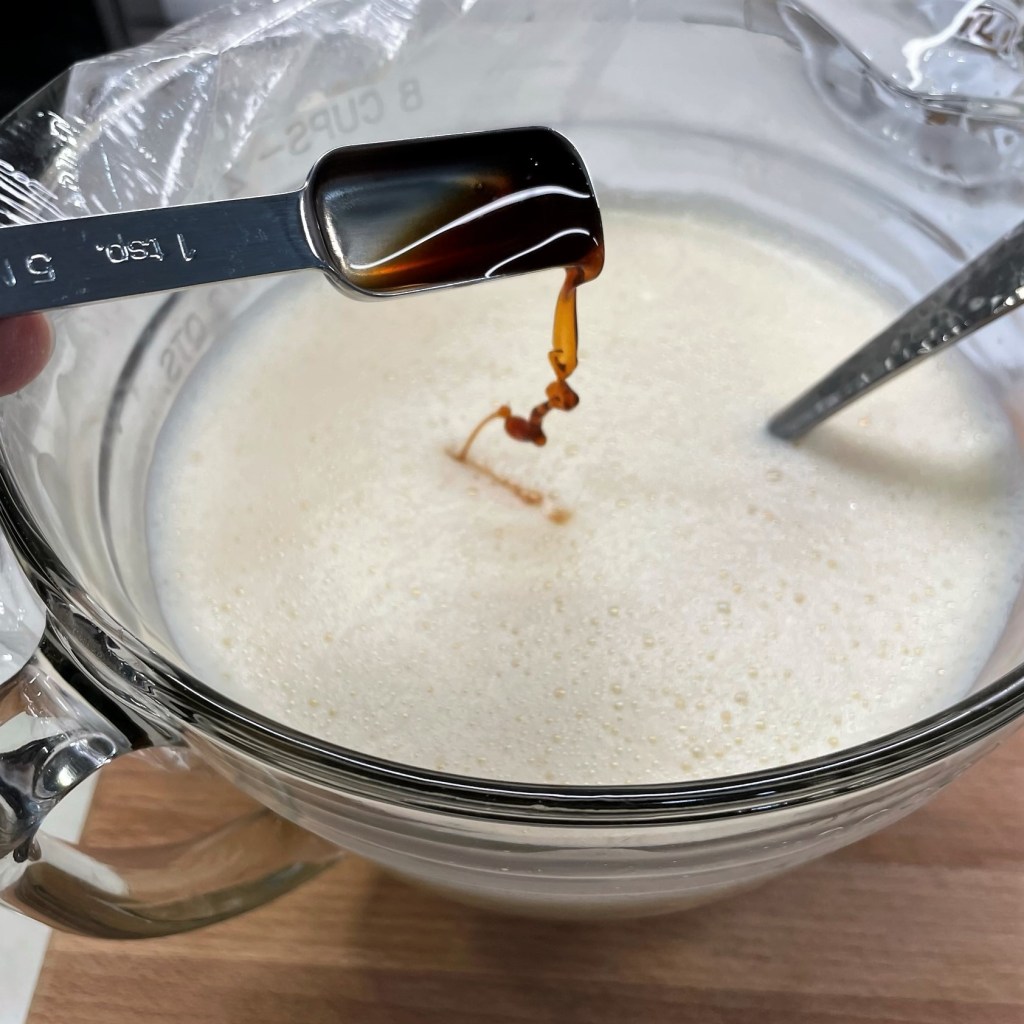
Blend in the vanilla after straining.
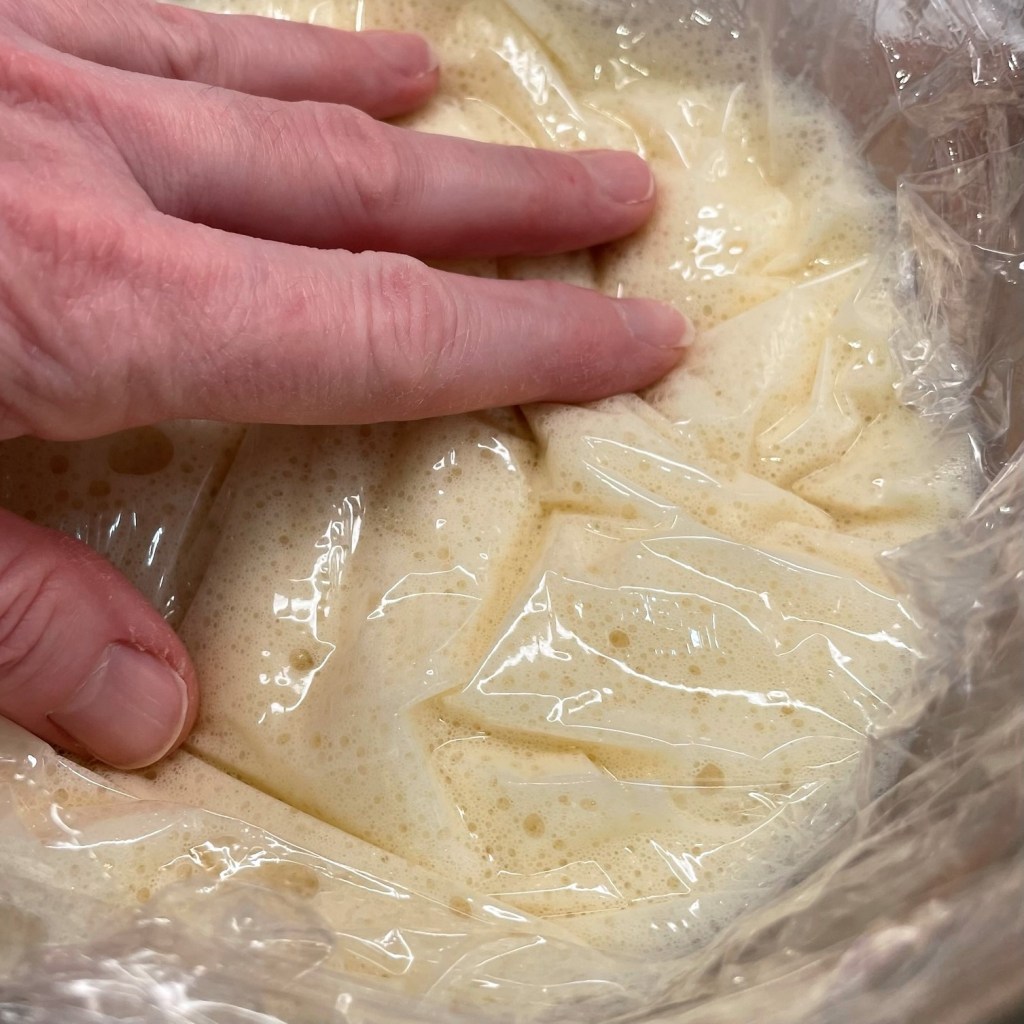
Oh, that foam! Lay plastic film directly onto the surface of the custard and refrigerate it overnight.
Place a medium, heavy-bottomed pot over medium heat. Combine milk and brown sugar and cook, stirring frequently, until sugar is fully dissolved and milk is steaming.
Using an electric mixer, lightly whip the egg yolks until they are lighter and somewhat airy. This usually works best with a bit of fine sugar in the bowl, but I skipped that step this time because I was using grainy brown sugar in the recipe.
When the milk mixture begins to barely bubble around the edges, transfer about half of it into a measuring cup. Add the heavy cream to the pot and bring it back up to the steaming temperature.
While that’s going, slowly and gradually add the measured hot milk mixture to the egg yolks (with the mixer running constantly). This step is called “tempering,” and it raises the temperature of the eggs slowly to cook them without scrambling them.
Pour the tempered egg mixture back into the saucepot and cook the whole mixture over medium heat, stirring constantly, until it is steaming again and the custard has thickened enough to coat the back of a spoon. Remove from heat and strain the custard mixture through a mesh sieve to a clean bowl. Stir in the vanilla and let it cool for a few minutes. Taste it, because oh my goodness. I must make more brown sugar ice cream!
Carefully lay a piece of plastic wrap directly onto the surface of the custard. This serves two purposes—it prevents a skin from forming on the surface, and it prevents condensation from building and dripping into the mixture. Moisture droplets have a way of making unwanted crystals in the finished ice cream. Seal up the bowl, or cover it with an additional layer of plastic. Refrigerate overnight.
Bananas Foster Swirl
Melt butter and stir in the brown sugar to begin the Bananas Foster swirl.
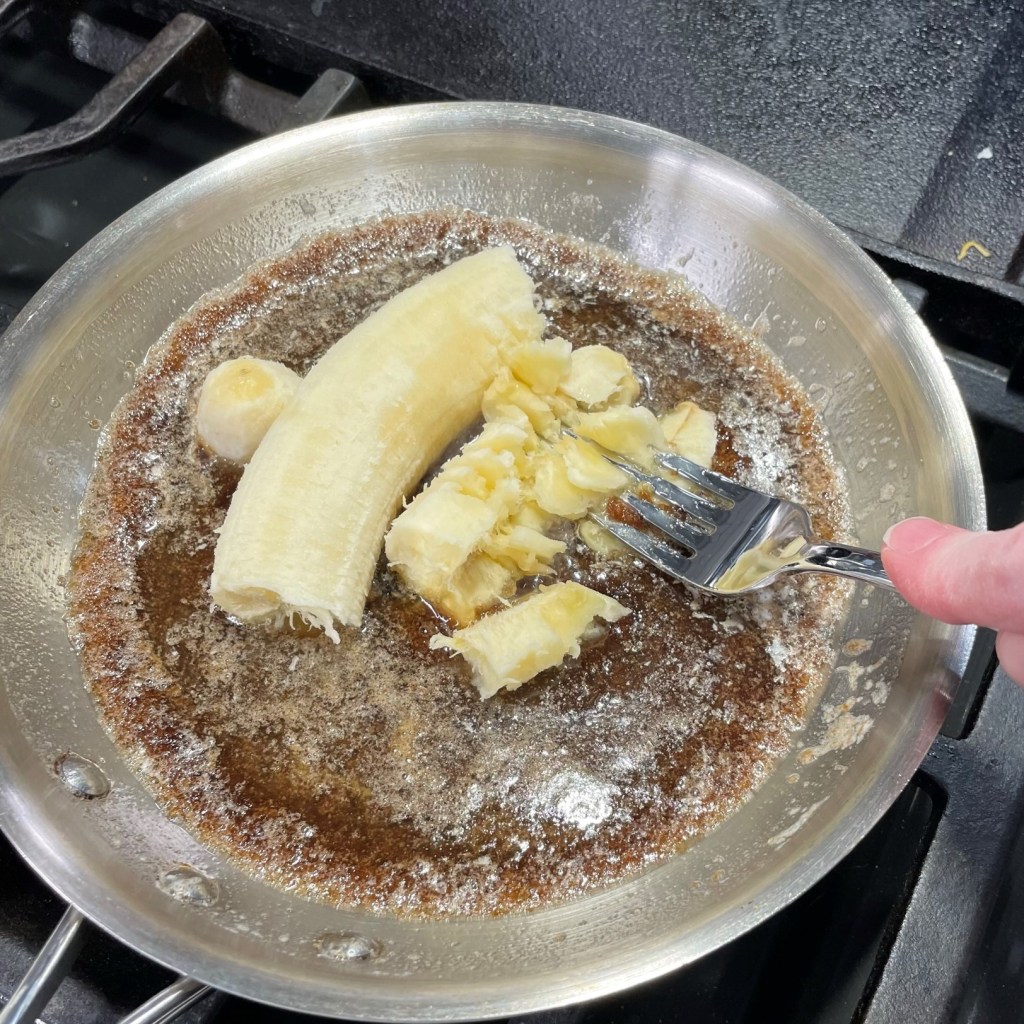
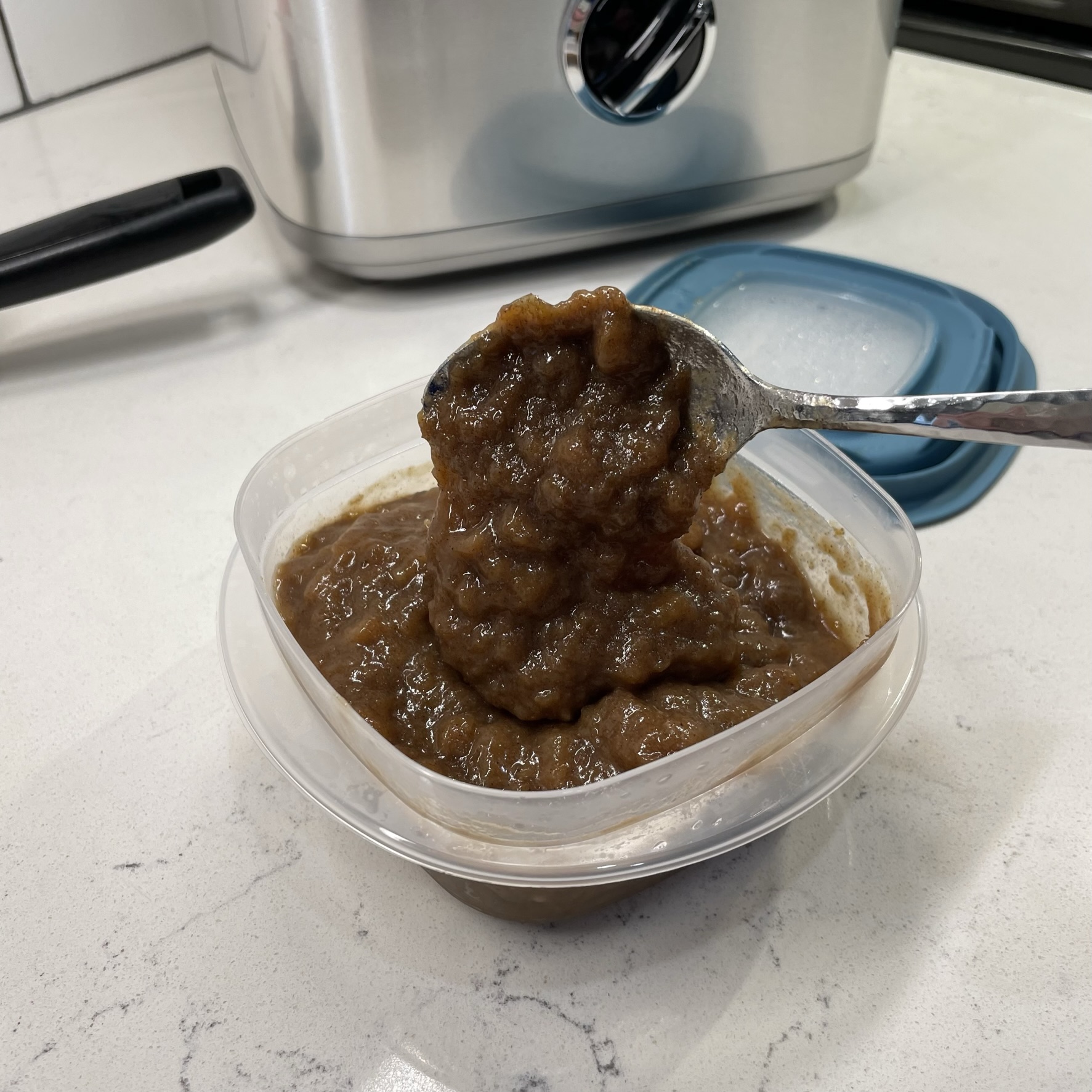
Smash the bananas into the syrup, keeping a few chunks here and there.
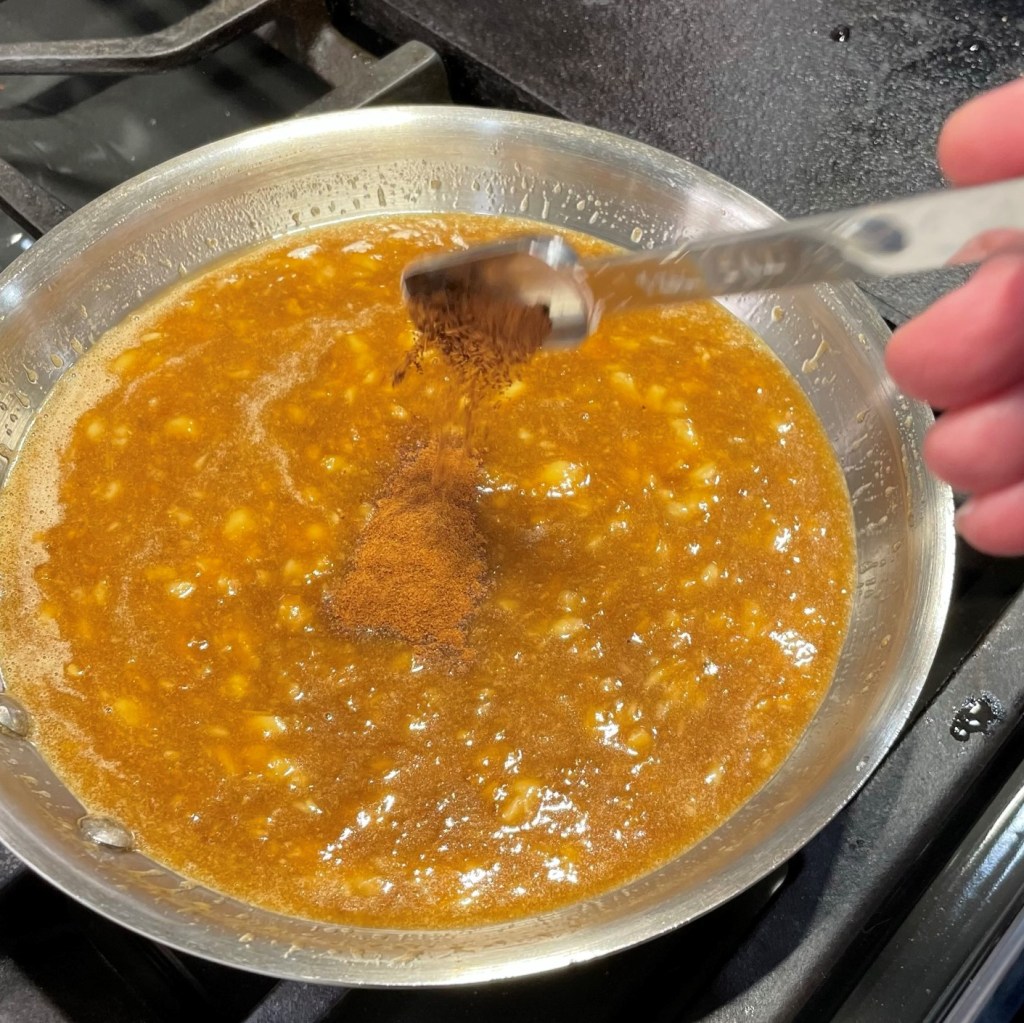
Add cinnamon to the banana syrup.
A pinch of kosher salt will help to highlight the amazing flavors.
A few scrapes of nutmeg add another layer of spice. Use whole nutmeg if possible.
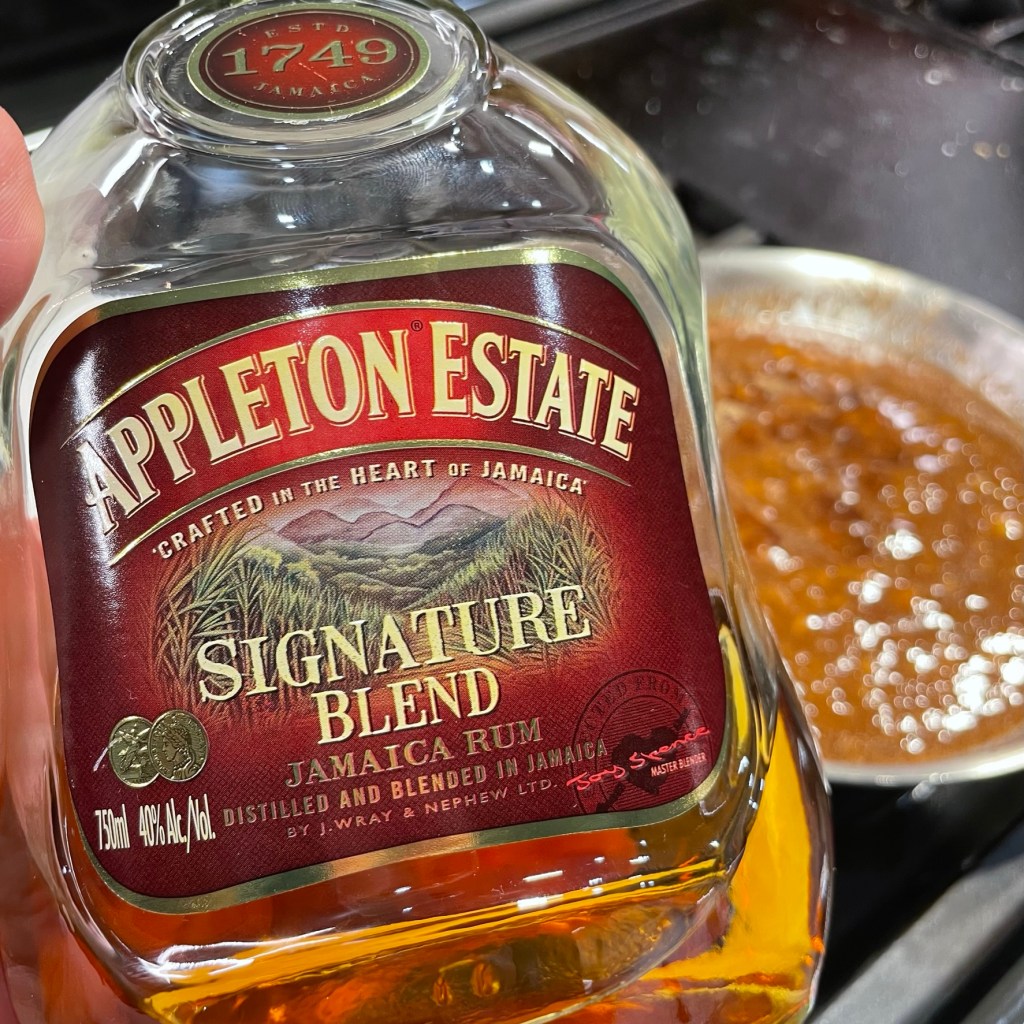
Real Bananas Foster would use spiced rum and banana liqueur, but a simple shot of my dark Jamaican rum was just right in this ice cream.
Add the rum when the syrup mixture appears bubbly, and bring it back to a low boil.
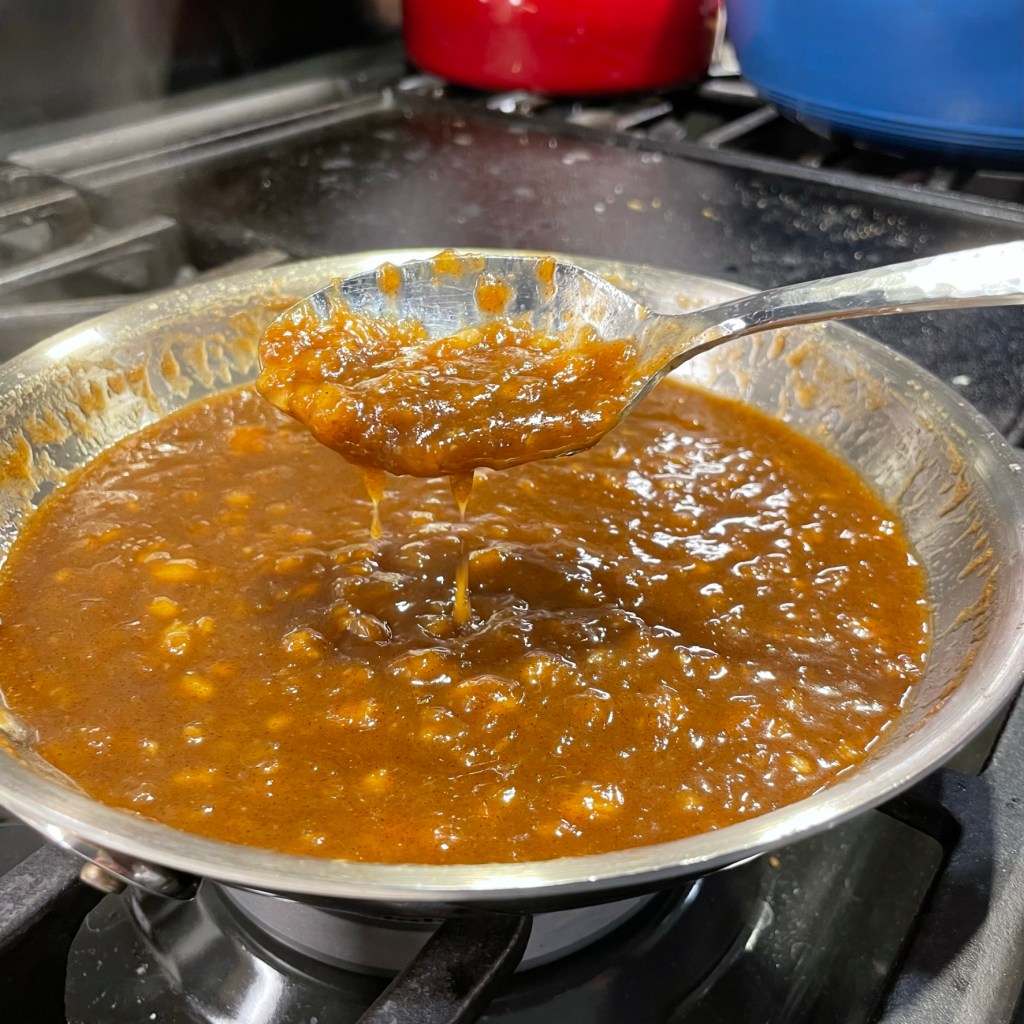
When the mixture is syrupy and thickened, remove from heat and cool completely. Refrigerate overnight.
Melt the butter in a medium skillet. Stir in the brown sugar until it seems dissolved and a bit syrupy. Stir in the cinnamon and nutmeg.
Add the bananas to the skillet, one at a time, and mash them into the syrup with a fork. It’s OK to keep a few visible chunks of banana—in fact, I recommend it. When the mixture is bubbling all over, stir in the dark rum until evenly blended. Cook a few minutes longer, until it begins to bubble again, and then remove from heat and let it cool.
Transfer the mixture to a bowl and refrigerate it overnight.
Finishing the Ice Cream
The overnight chill finally calmed down that foam! Stir to reincorporate any settled ingredients.
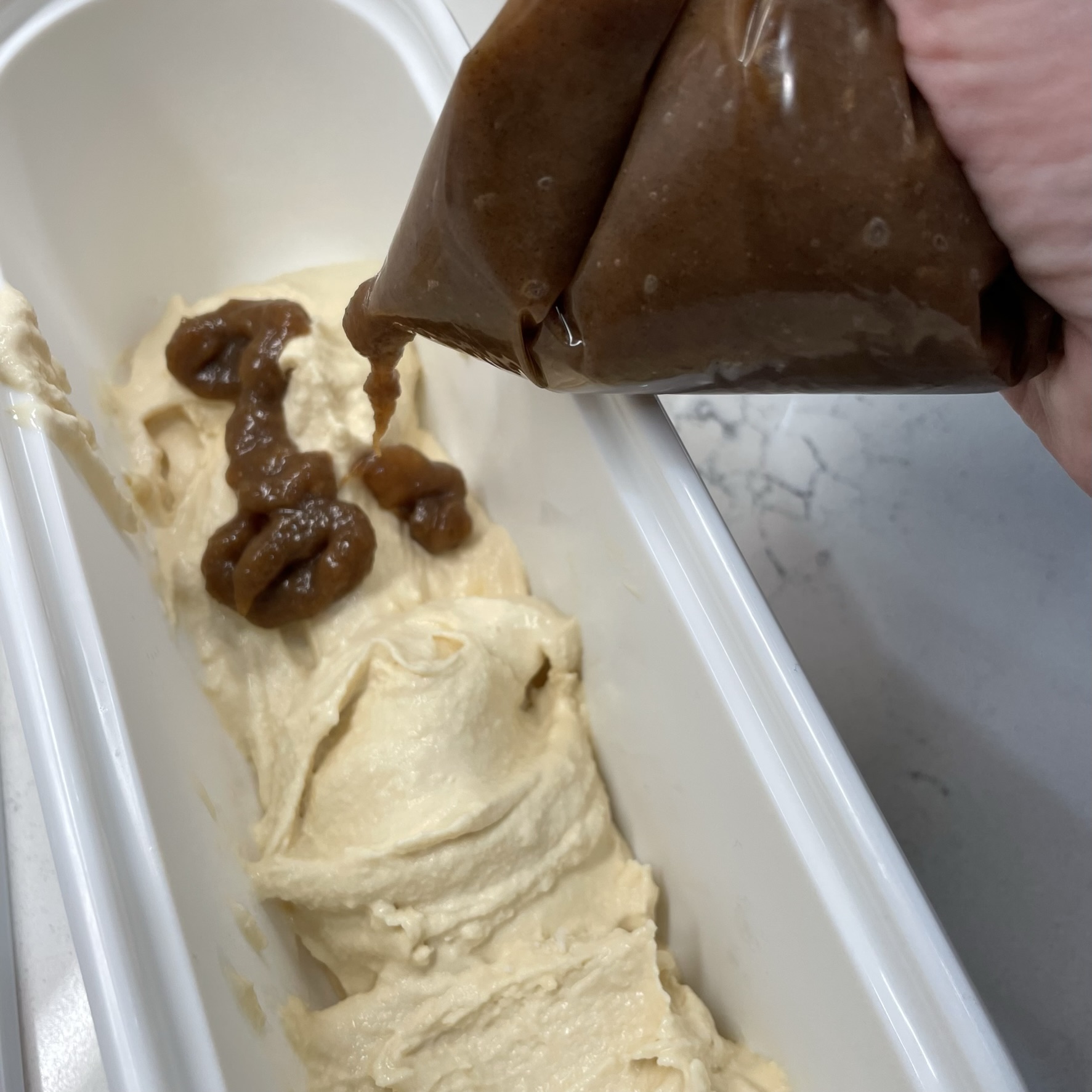
The spiced banana mixture was thick, so I placed it in a zip-top bag for easy layering when the ice cream was churned.
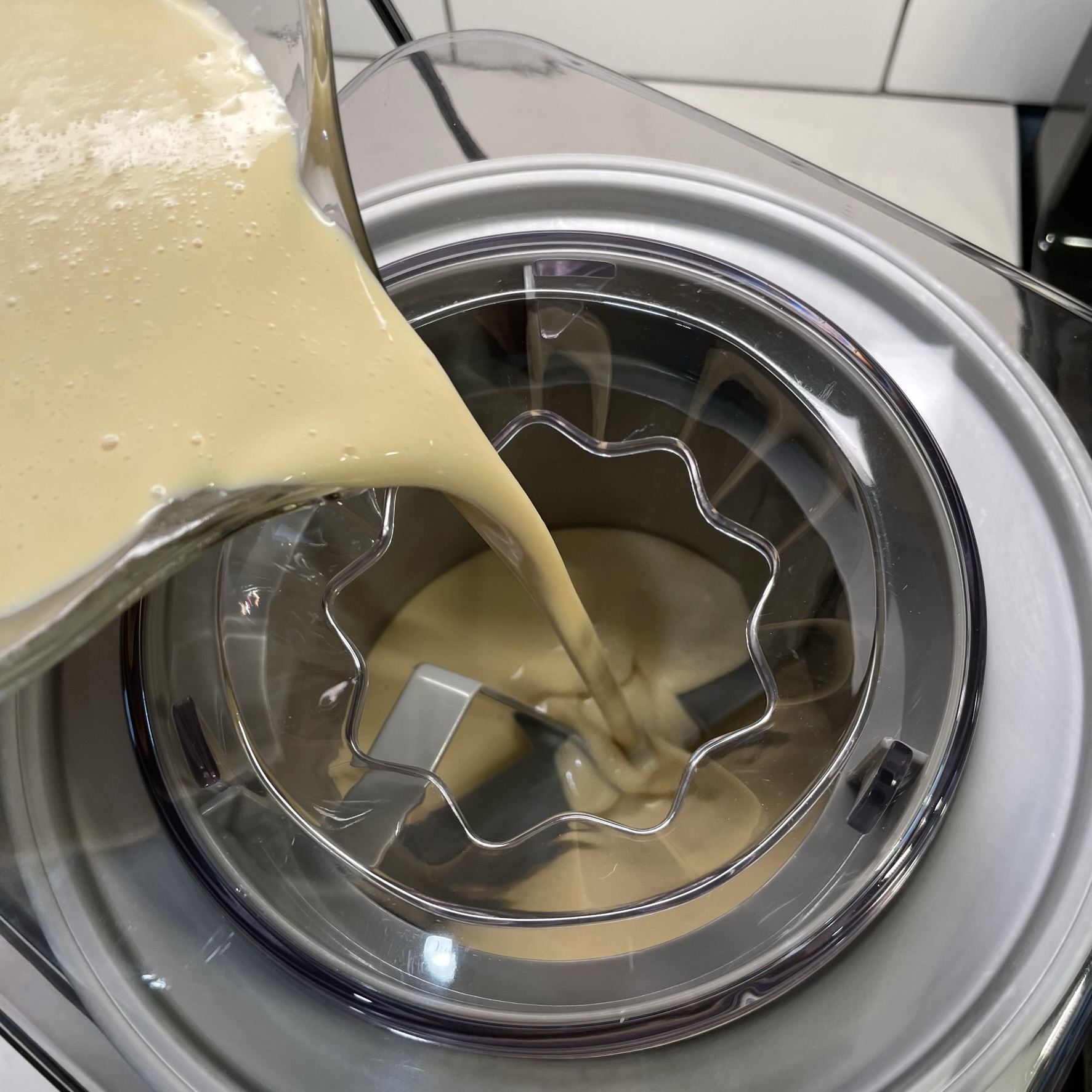
Freeze the custard, following the instructions for your ice cream machine.
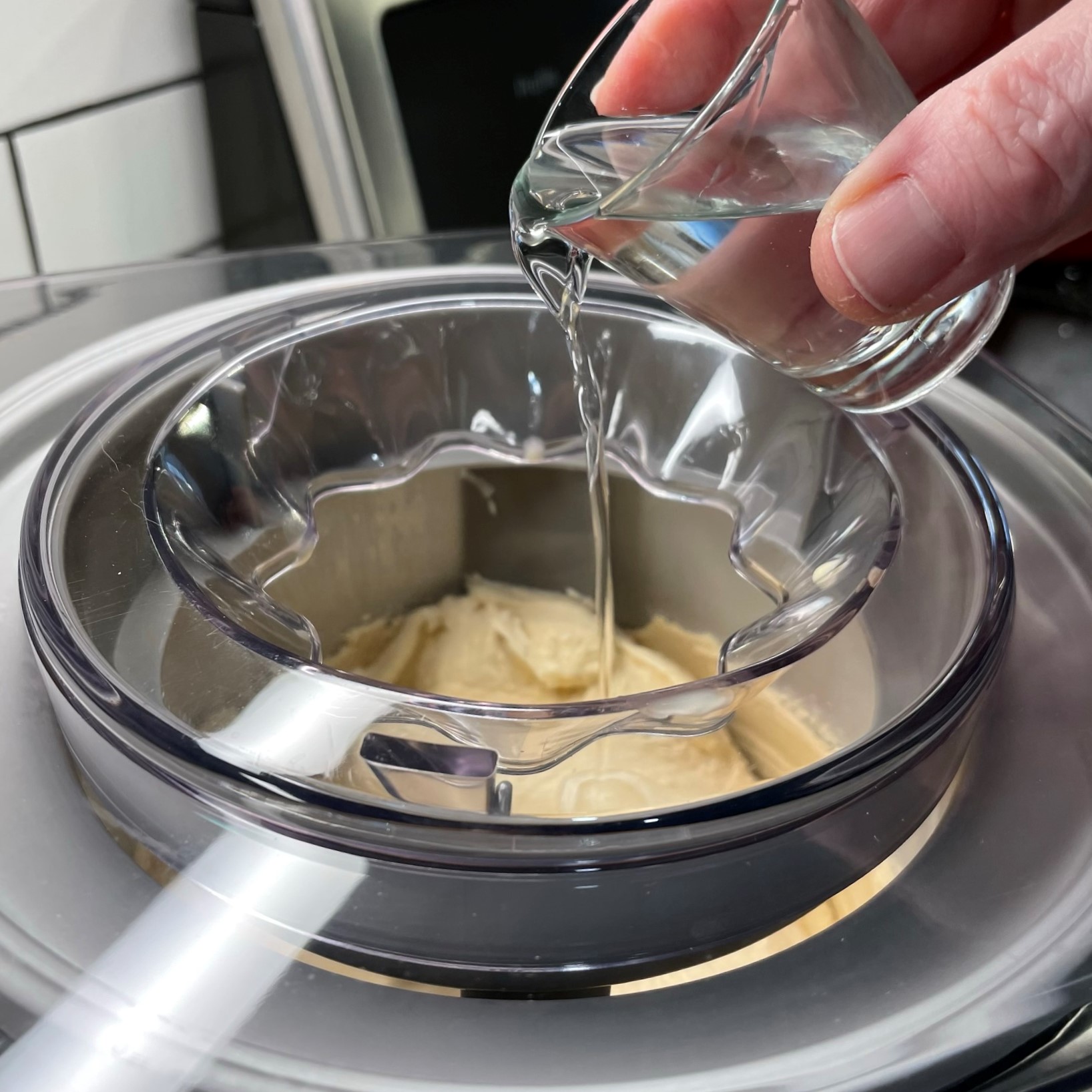
When the ice cream is soft-serve consistency, blend in the optional vodka, which improves the texture for easy scooping.
Layer about 1/3 of the ice cream into an insulated container. I left it in dollops and piped the spiced banana mixture over and around the dollops. Repeat these layers.
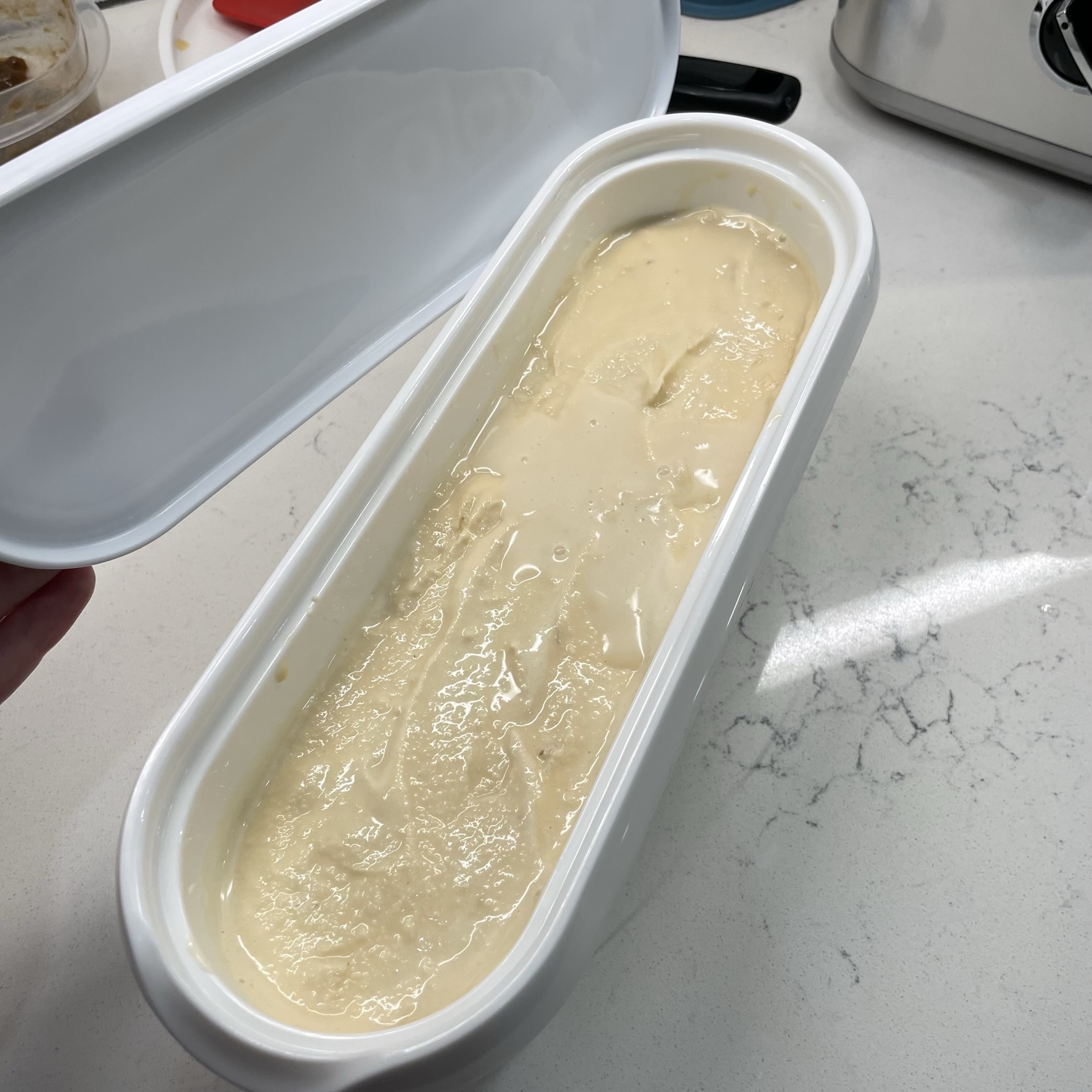
Finish with the remaining ice cream. Cover and send it to the freezer overnight for ripening.
Stir the custard to reincorporate any ingredients that may have settled to the bottom of the bowl. Freeze according to manufacturer’s instructions. When the ice cream has reached the consistency of soft-serve, add the vodka or rum (if using) and churn another minute until it’s fully blended.
Layer 1/3 of the ice cream in an insulated container, then spoon or pipe about 1/3 of the banana swirl mixture over it. Continue with another 1/3 of the ice cream, then another 1/3 of the remaining swirl mixture*. Finish with the remaining ice cream. Freeze several hours to overnight.
*Note
When this recipe was finished, I had about 1/4 cup extra Bananas Foster Swirl mixture left over. You can discard this, or mix it into some muffin or pancake batter, or stir it into Sunday morning oatmeal!
After much discussion, and consideration of all the newfound extra space in our remodeled kitchen, my husband and I have finally decided for certain on the matter of an air fryer.
Several of our friends with air fryers have extolled the virtues of their machines and enticed us with descriptions of the ultra-crispy and mouthwatering dishes they have produced with them. We got the rundown on the various styles and sizes and functions, and even made a special trip to Williams-Sonoma to compare the features for ourselves and measure and imagine exactly where we’d put such a device in our newly remodeled kitchen.
And after all that planning and considering, our final decision was that, well, we didn’t need one after all.
Most of the foods our friends described were not the kind of things we imagined we’d really make at home (though crispy French fries with minimal oil sounds pretty darn good), and when we really dug in to learn how air fryers work, we realized that we already have a version of an air fryer in our full-sized electric convection oven. If we use the convect-roast or convect-bake setting, in combination with a higher temperature, the effect is nearly the same as in an air fryer, at least for the foods we expected we would actually make. And to prove it (to ourselves as much as anyone else), we made these crispy chicken wings, using a tried-and-true method I learned from Food Network’s Alton Brown.
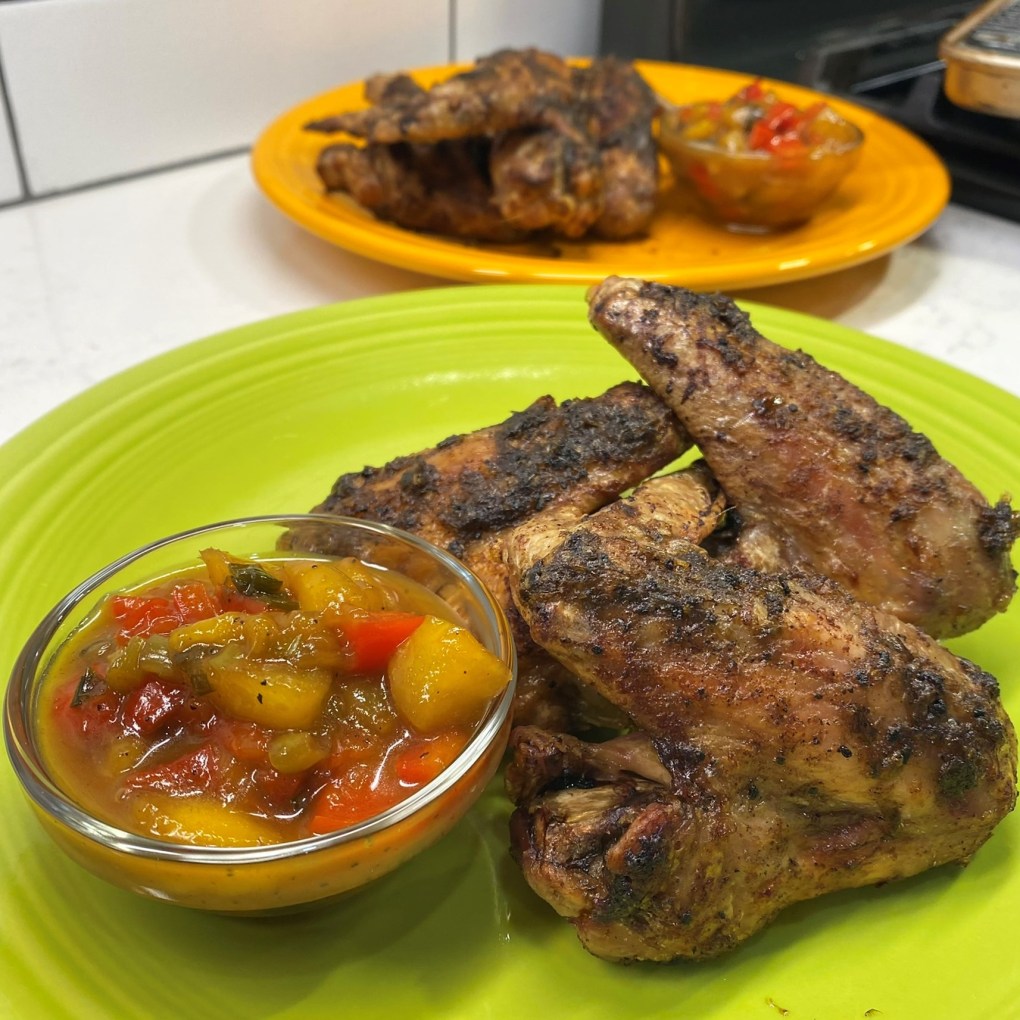
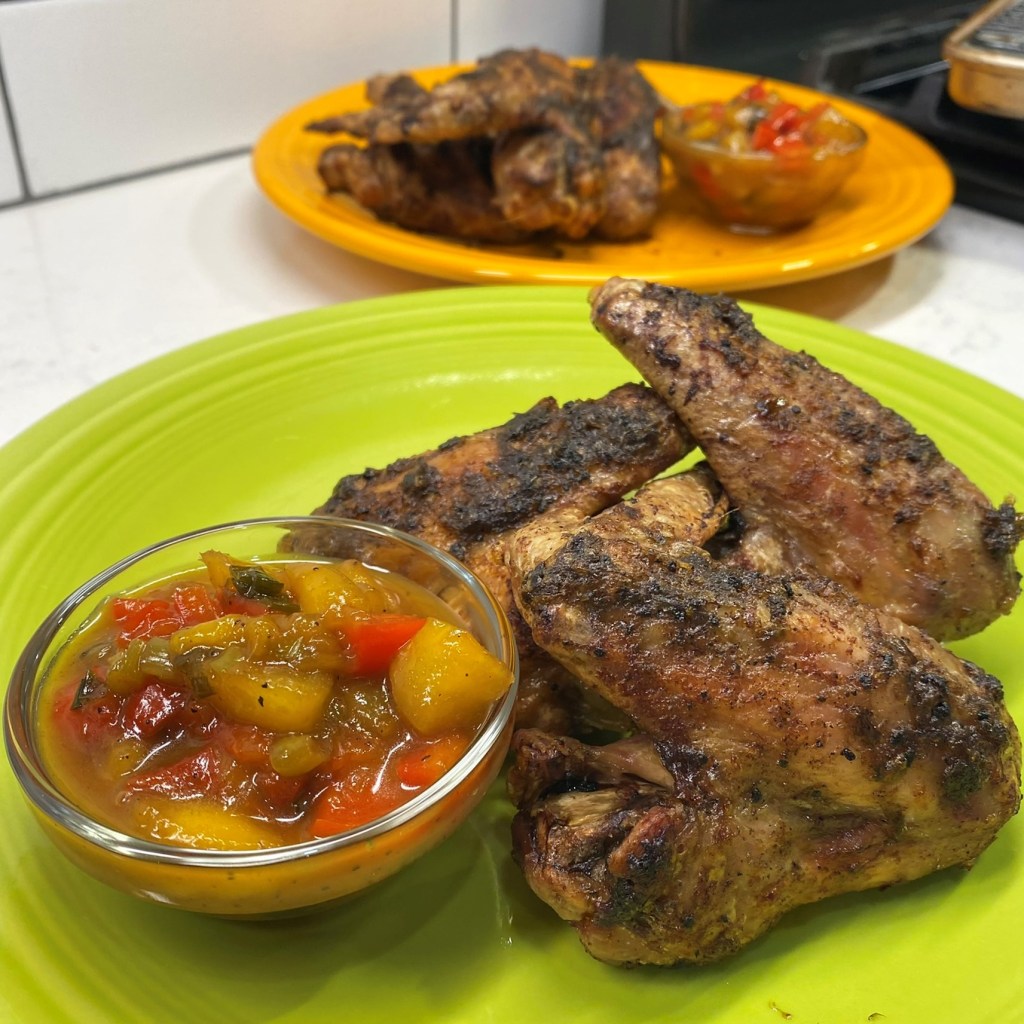
Tons of spicy flavor, without all the grease or drippy sauce of the usual Buffalo wings.
This method differs from others because it involves first steaming and chilling the wings, a process which renders excess skin fat so that better crisping can take place in the oven. No oil is required because there is plenty of natural fat remaining in the chicken skin. Roasting them at high temperature further tightens the skin, and you are left with a crispy-crunchy exterior and tender, juicy meat inside.
With football’s biggest game only days away, I thought it would be appropriate to share a different kind of wing recipe—one that packs plenty of flavor and as much heat as you want, but without the same old “Buffalo” flavors. These wings are covered in Jamaican jerk seasoning, featuring allspice, scallions, scotch bonnet peppers and brown sugar, which may sound complex, but I used a ready-made jerk rub that is easy to find in stores. The flavors are intense but not overpoweringly hot, and because we like to dip our wings into a dip or sauce, I made an easy mango and red pepper chutney to go with them.
I’ve made steamed and roasted wings before, but without convection and usually for my Just South of Buffalo Wings (which are still a favorite at our house). We also have done the jerk flavor wings many times, but usually on the grill during the summer months. This time, we combined methods and flavors and put the convection method to the test. As you’ll see, it passed with flying colors, and the convection chopped nearly 15 minutes off the previous steamed-and-roasted recipe. No need for one more appliance here!
This recipe is written for 16 pieces, but it should be very easy to double or triple as needed.
Ingredients
8 whole chicken wings (trimmed and cut into flats and drummettes if desired)
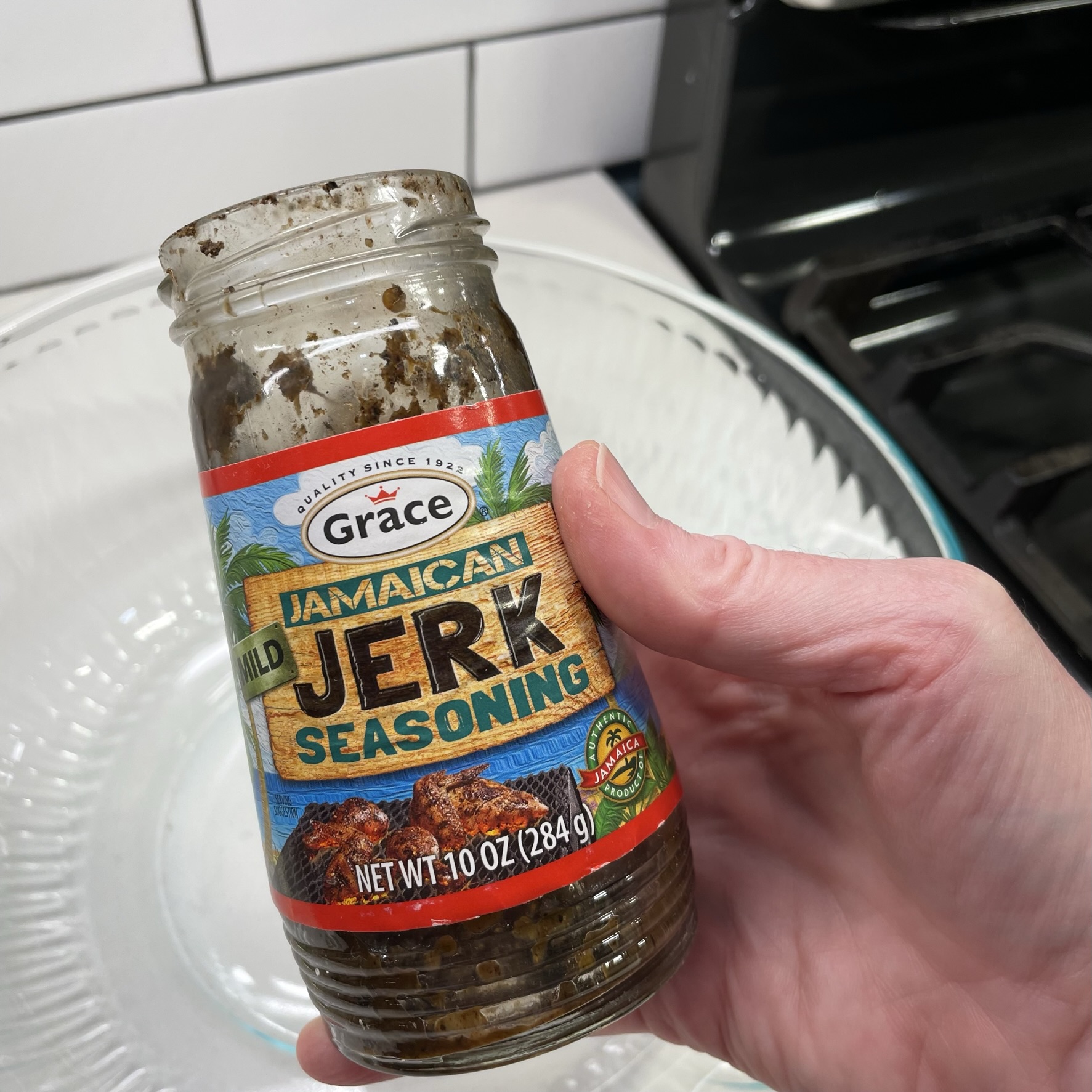
4 Tbsp. prepared jerk rub (a wet version from a jar)
2 Tbsp. canola, avocado or peanut oil (to thin the jerk rub)
1 Tbsp. light brown sugar
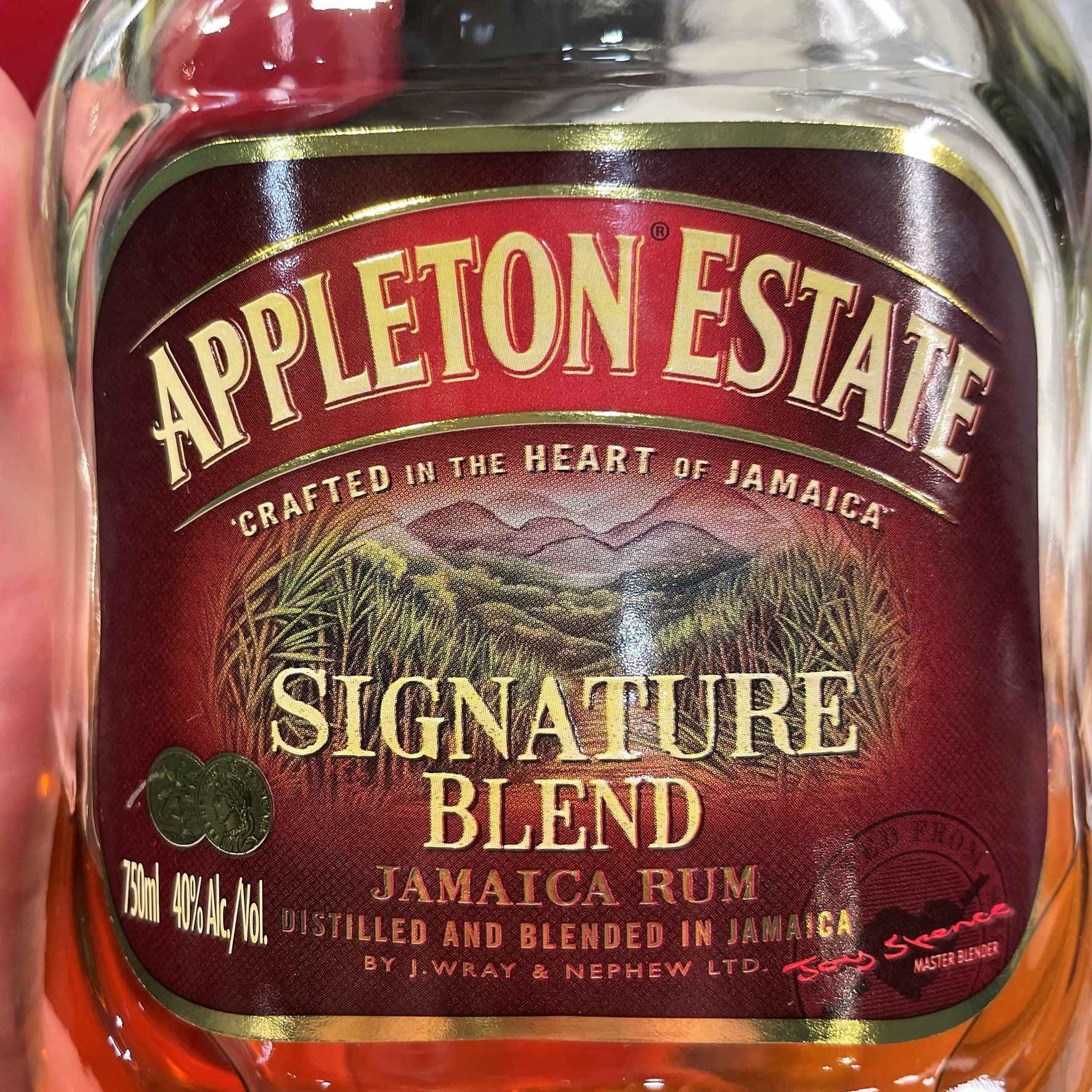
1 Tbsp. dark rum (preferably Jamaican)
This brand of jerk seasoning is authentic and made in in Jamaica. It’s a wet rub, and available in mild or hot varieties.This is the real-deal good stuff. I got my first taste of it on a trip to Ocho Rios, Jamaica and have loved it ever since.
Mango-Red Pepper Chutney
1/2 red bell pepper, diced
2 scallions, chopped (white and green parts)
Kosher salt and black pepper
1/2 cup mango, chopped (fresh or frozen, thawed)
2 Tbsp. brown sugar
1 Tbsp. red wine vinegar
2 Tbsp. dark Jamaican rum
Instructions
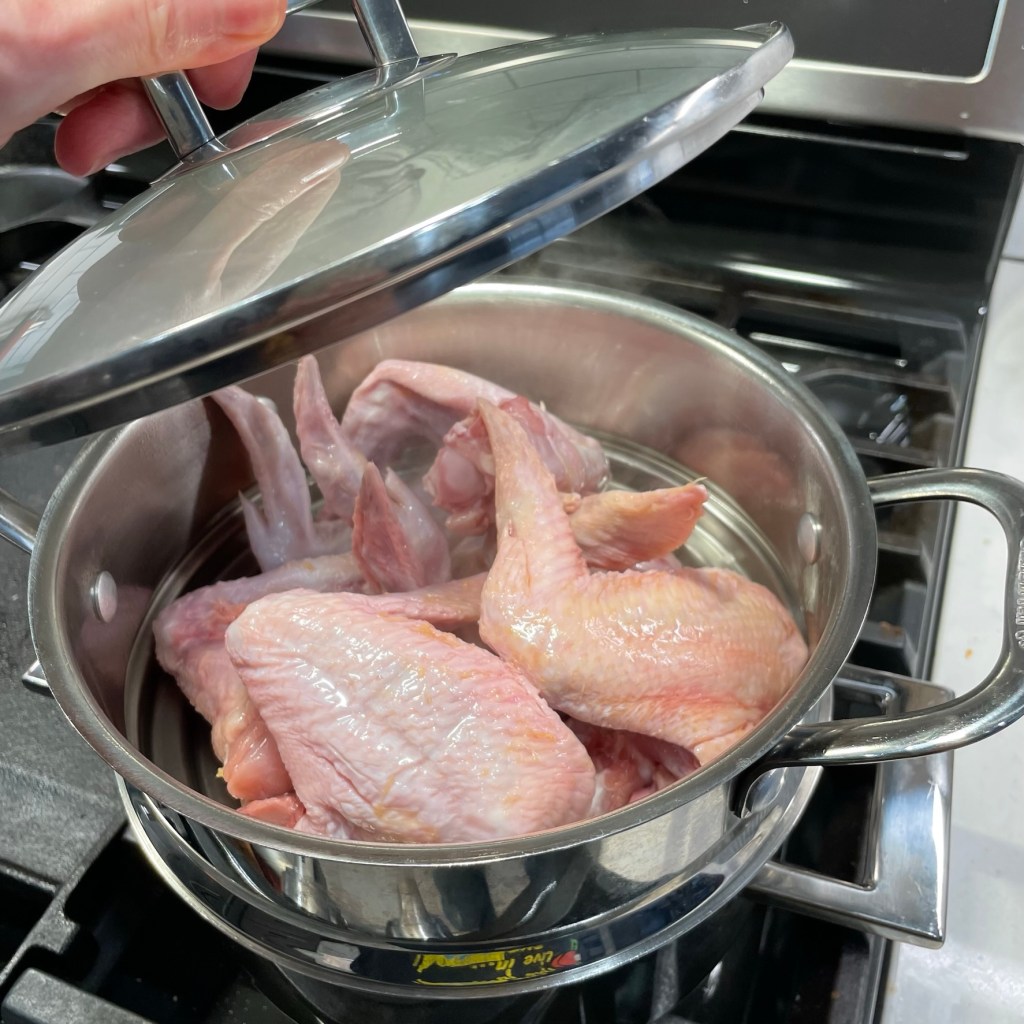
Alton Brown’s method of steaming the wings first is brilliant! A portion of the skin fat renders off in this process, lending to crispy skin later.
See the steam rolling off? Spread the wings out onto a lined cookie tray and refrigerate them for at least an hour, or up to overnight.
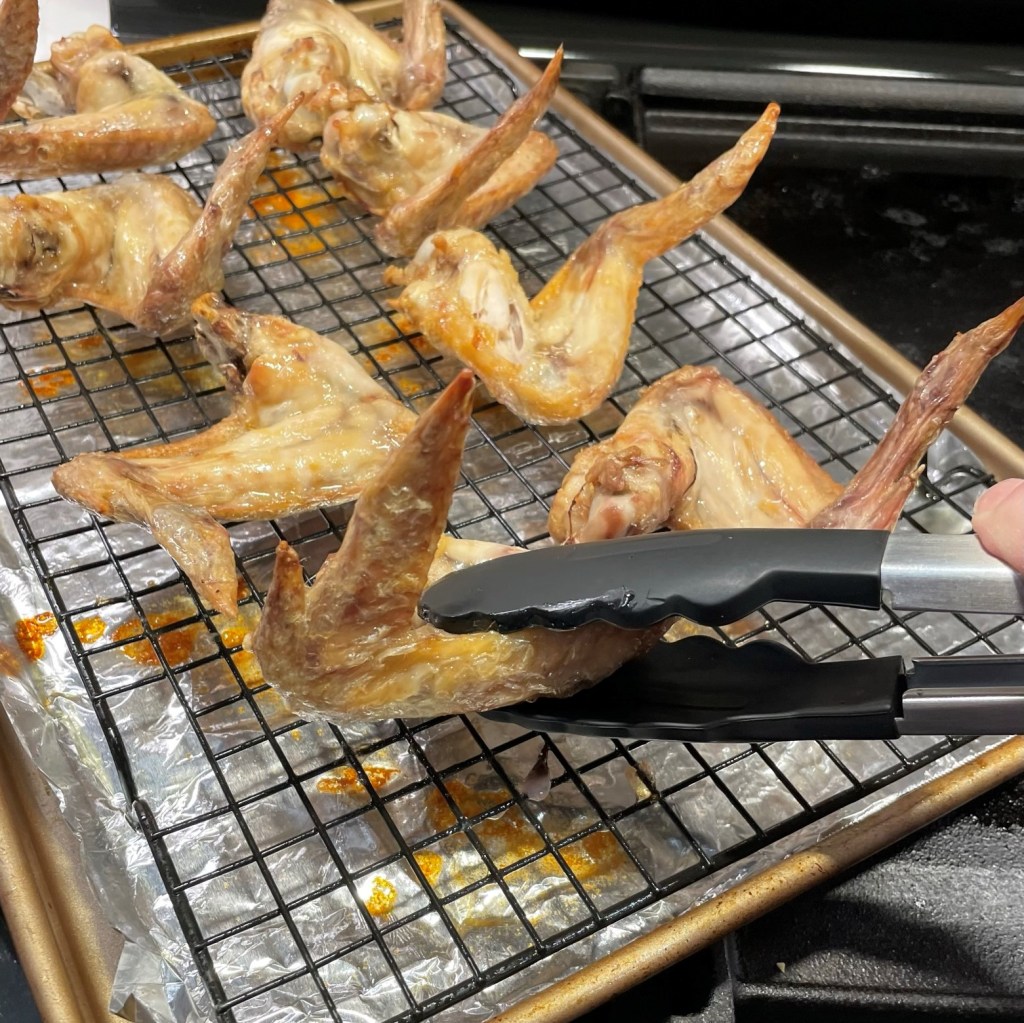
Set the oven for convection baking and slide in the wings.
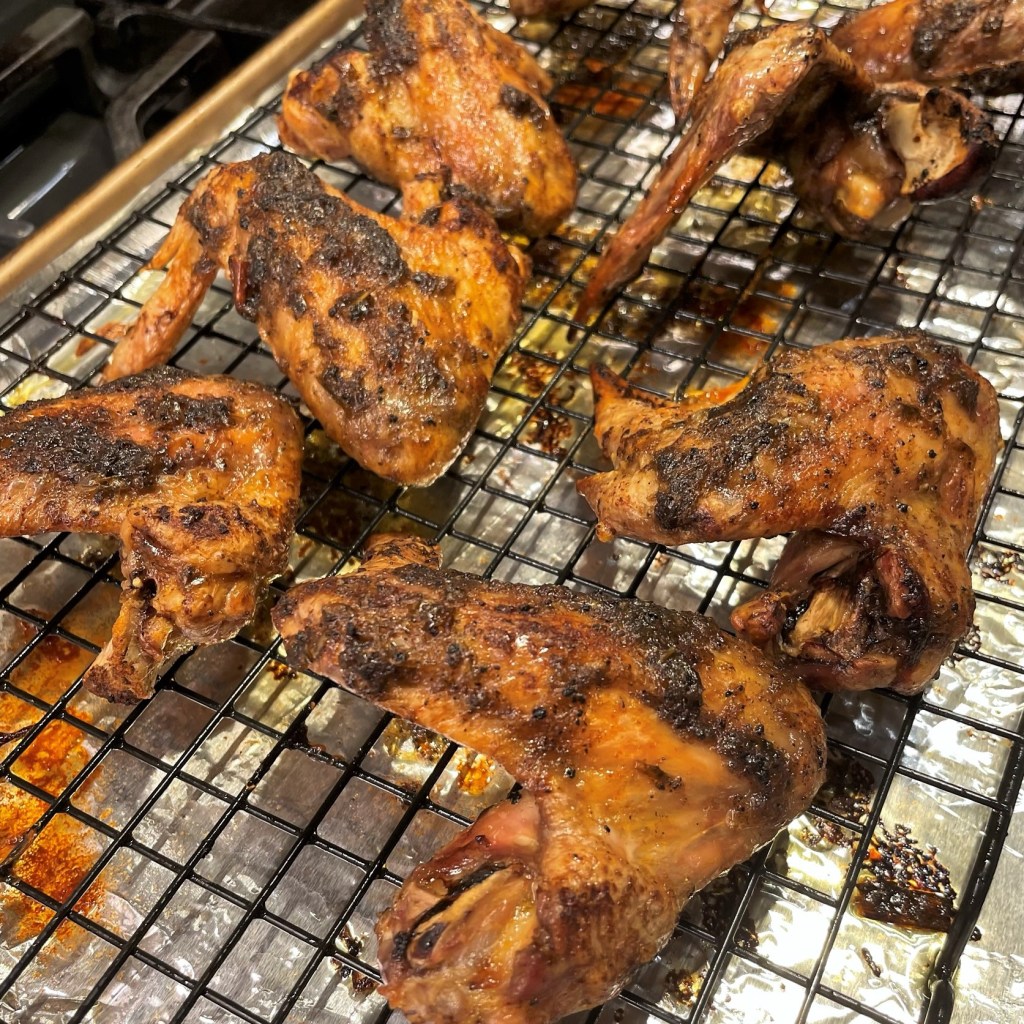
After 15 minutes, the wings already have some crisping going on. Turn them over and give them another 10 to 15 minutes.
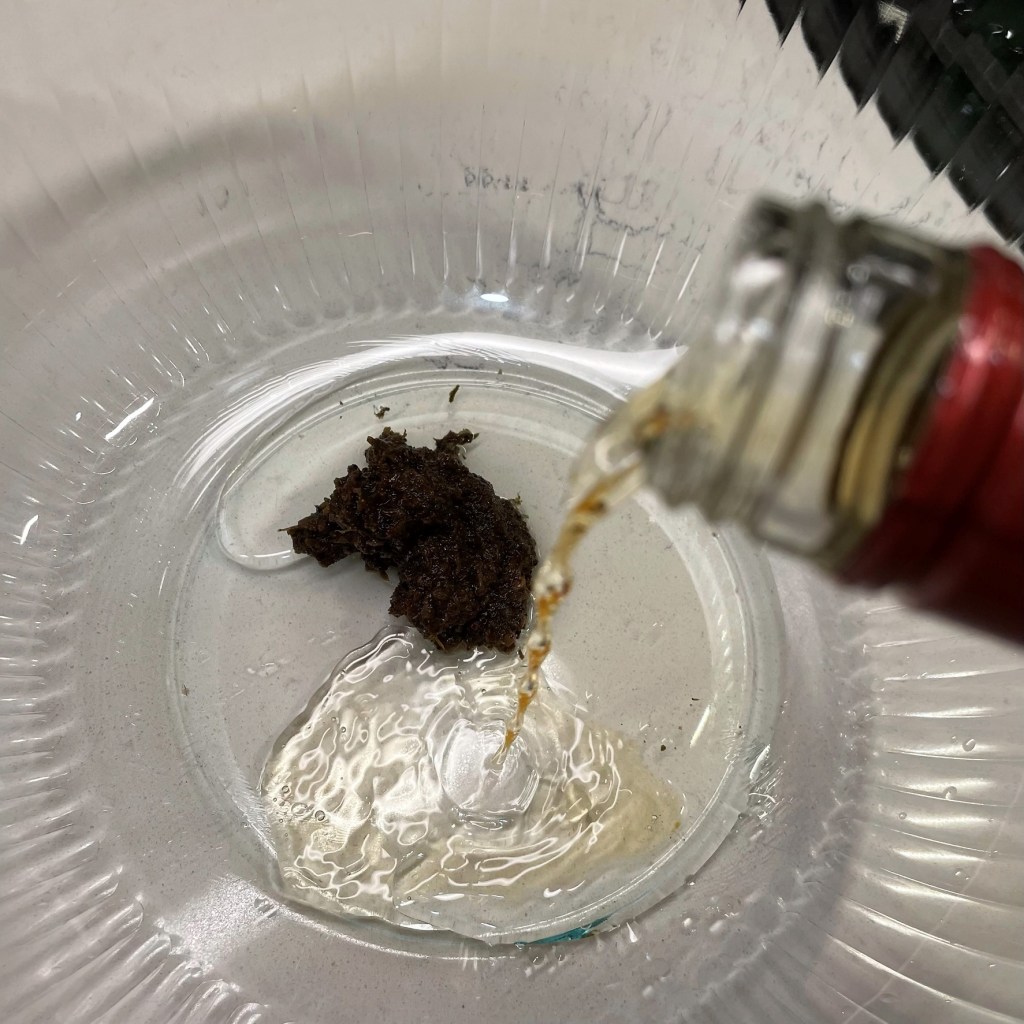
To thin out the jerk seasoning and reduce saltiness, I added two tablespoons canola oil and a splash of the Jamaican rum.
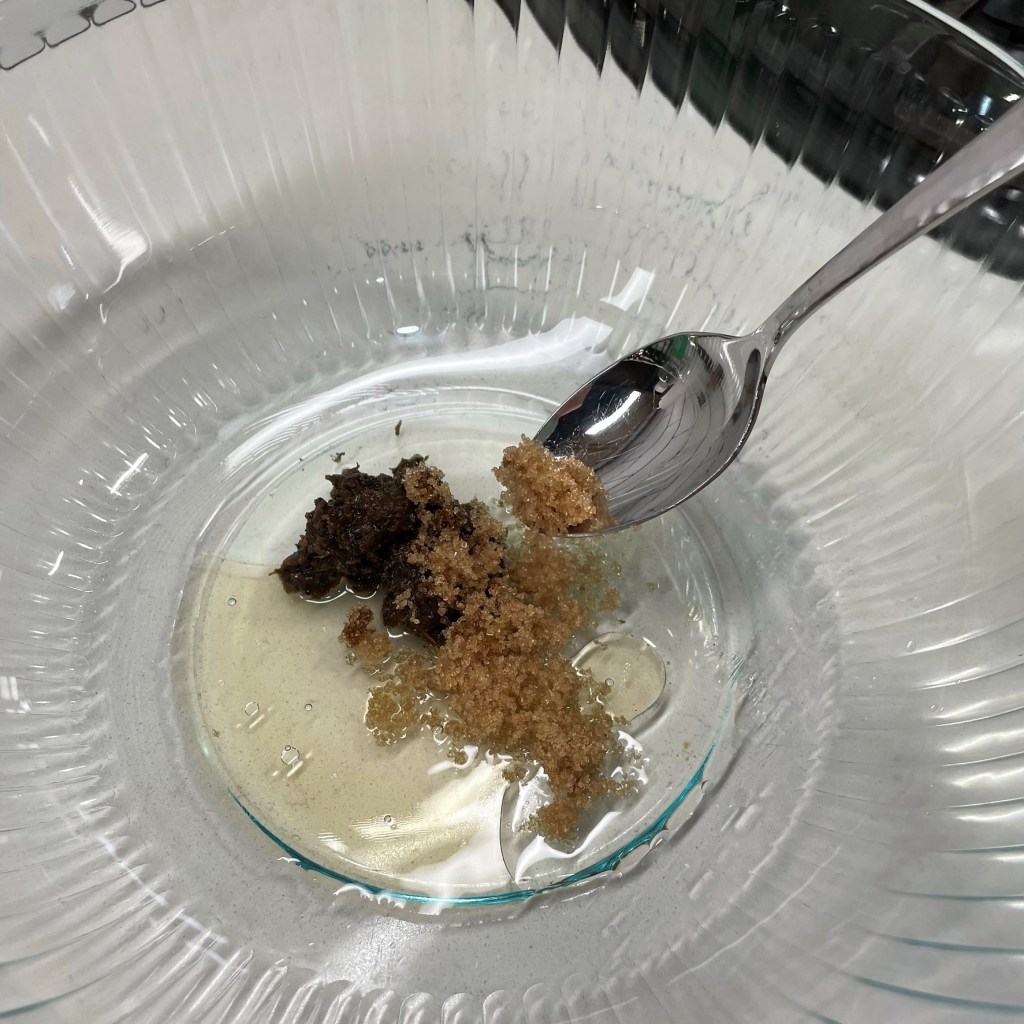
The brown sugar I added to the jerk glaze did not produce the sticky results I expected, but it was a nice bit of sweetness against the savory jerk.
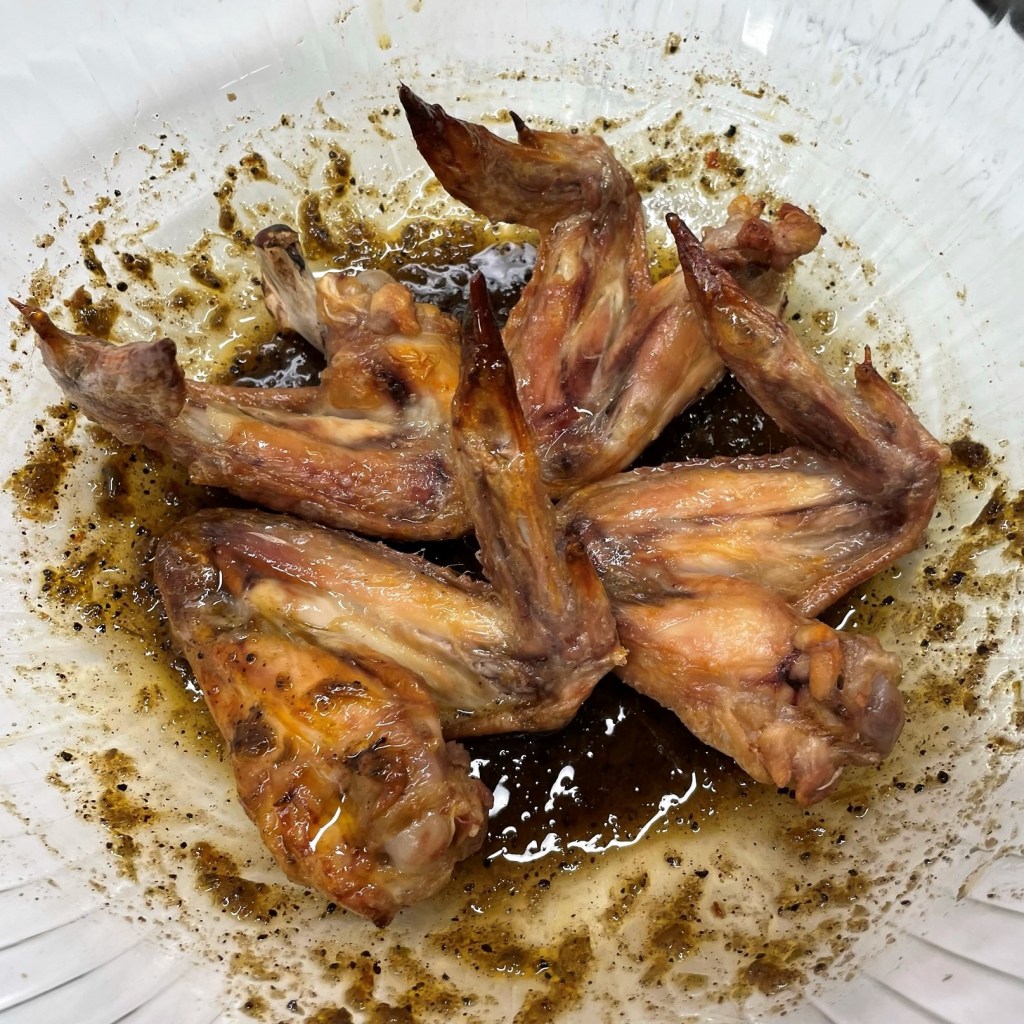
From the oven, my wings were every bit as crispy as they’d be after deep frying, but without all the oil.
Toss the wings in the jerk sauce to coat evenly. This was the moment I wished I had taken time to cut off the wing tips, as they made it difficult to toss the wings.
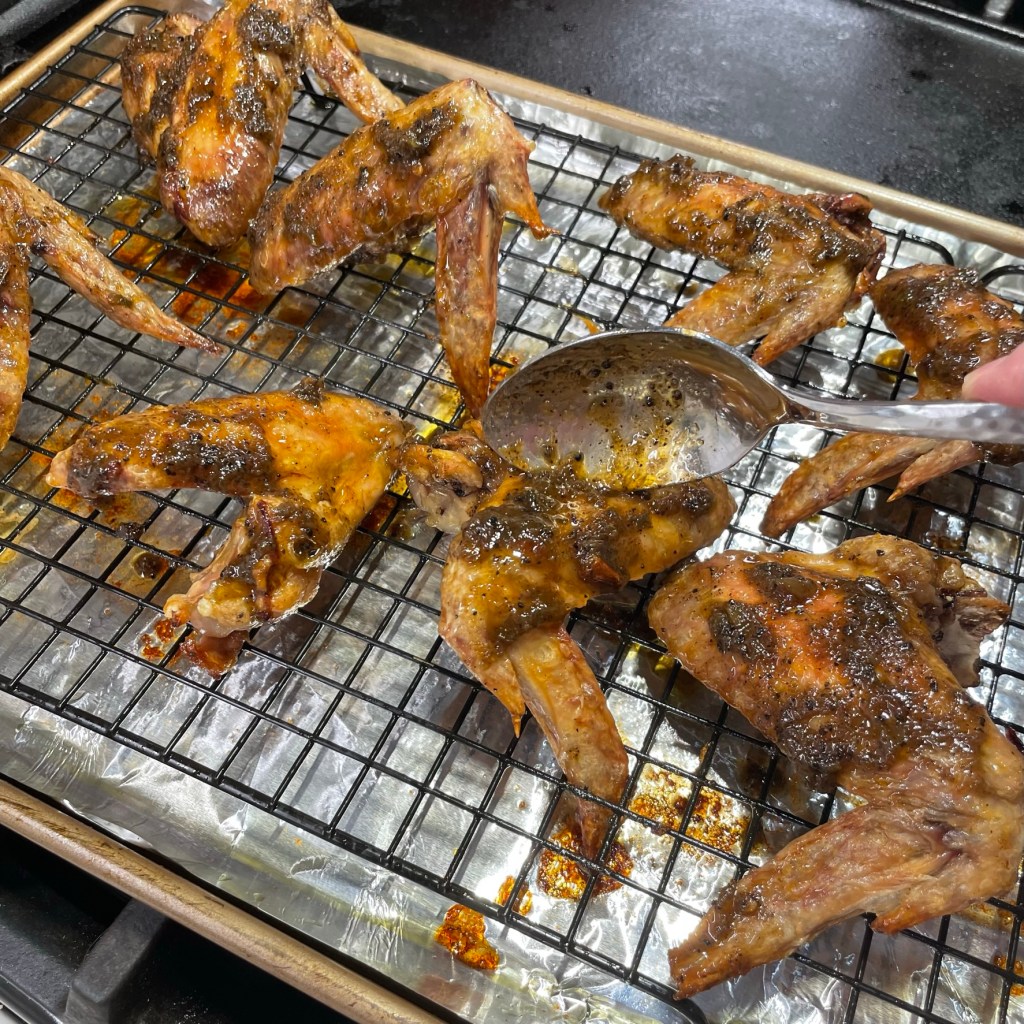
I had to spoon the rest of the jerk glaze onto the wings for a final quick crisping.
Tons of spicy flavor, without all the drippy sauce of the usual Buffalo wings.
Set a lidded steamer basket over a pot with about two inches of water and bring it to a low boil.
Spray the basket with oil and arrange the chicken wings in it, overlapping them so that the rising steam can permeate the whole batch. Cover the steamer and keep at a low boil for about 10 minutes.
Transfer the steamed wings to a parchment-lined baking sheet and rest until they are cooled to near-room temperature. Cover and refrigerate the wings for at least one hour or up to overnight.
Preheat oven to 425° F on a convection setting, with oven rack in the center position. Spray a cookie cooling rack with oil and set over a foil-lined cookie sheet. Arrange wings on rack, with space between the pieces to allow easy air flow.
Convect-roast for 15 minutes (or regular roast for 20 minutes). While wings are roasting, make the mango-pepper chutney.
After 15 minutes, turn wings to roast the other side 15 more minutes (or 20 for regular roast setting). The wings should be nicely browned all over and the skin on the wings should appear tight but not too dry.
During the second half of roasting, combine jerk wet rub seasoning, canola oil, brown sugar and rum in a large bowl. Whisk until evenly combined.
Toss wings in the bowl of jerk rub, spooning the seasoning over any unglazed areas. Return the wings to the rack on the cookie sheet and roast about 3 more minutes to set the glaze in the oven.
Serve immediately with the mango-pepper chutney.
Mango-Red Pepper Chutney Instructions
For only a small batch of wings, I used half a red bell pepper and two scallions. Adjust accordingly for a larger batch.
Saute the peppers and scallions until softened, and then add the cut-up bits of mango.
Chutney needs sugar, and I used brown sugar, in keeping with the Jamaican theme of the wings.
Chutney also needs acid, and I used a splash of red wine vinegar. Cider vinegar would also have been good.
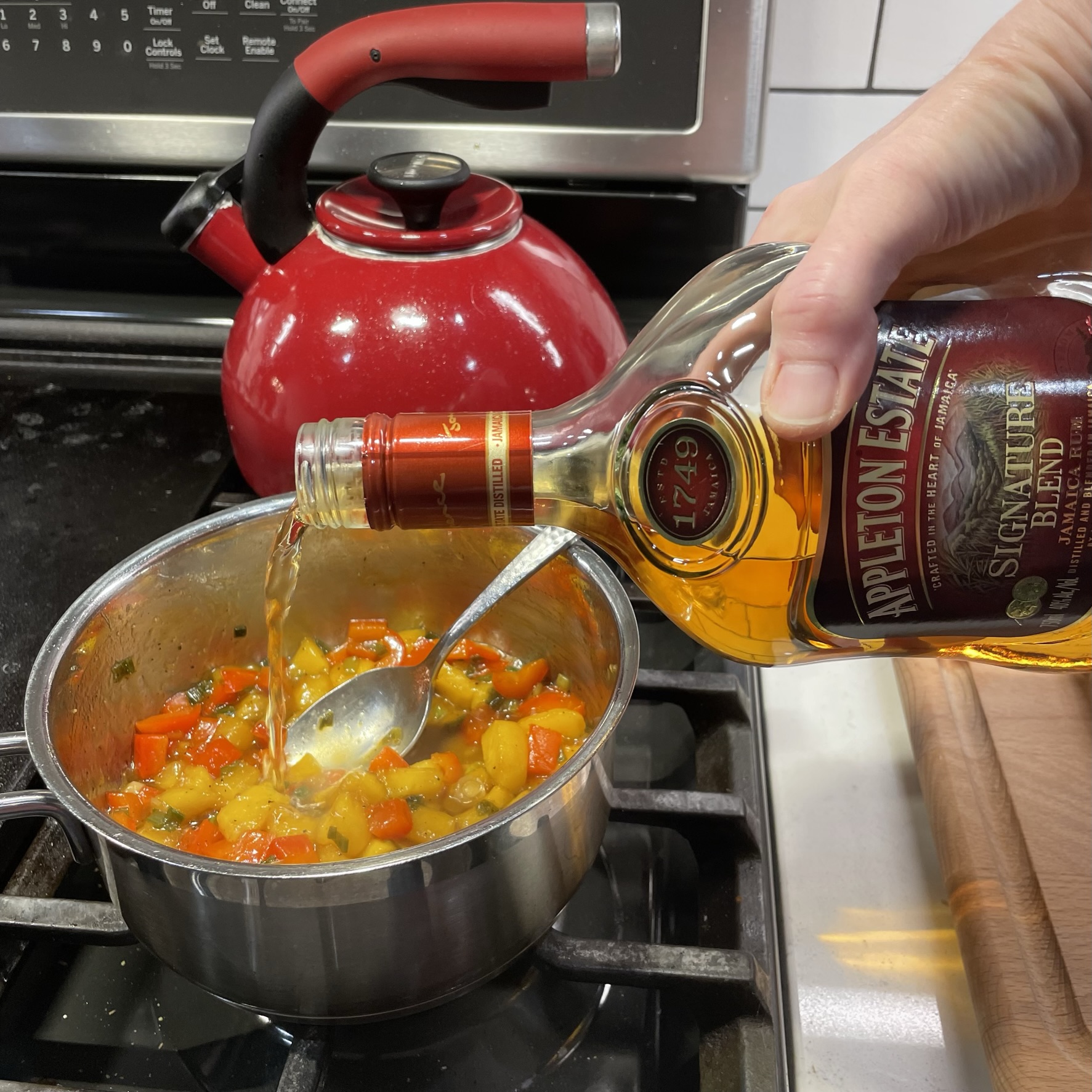
To keep the Jamaican vibe going, I also splashed in a bit of dark Jamaican rum. No problem, mon.
Place a small saucepan over medium heat. Swirl in oil and saute peppers and scallions, just long enough to soften them. Season with salt and pepper.
Add the cut-up mango pieces and stir until the mixture is heated through. Stir in brown sugar, vinegar and rum. When mixture begins to bubble, reduce heat and cover, simmering until thickened. Remove from heat and cool to room temperature.
Just before Christmas last year, my husband and I took a trip to the Washington D.C. area for a concert and a weekend away from home—just a getaway kind of thing. My, how things have changed. During our visit there, we stumbled upon a bourbon cocktail that used a special kind of chocolate bitters, and we couldn’t stop thinking about how to re-create that drink at home (if only we could figure out where in the world to get chocolate bitters). Thanks to our high-speed internet connection and a quick scan of the credit card, I placed an order and our fab cocktail experiment was about to begin. A funny thing happened, though.
Along the way to finding the chocolate bitters, I inadvertently uncovered an entire world of cocktail ingredients that I barely imagined existed. I’m always 100% in favor of trying something new—especially in my glass—and lately my cocktail game is like a game of roulette. With a steady schedule of FaceTime happy hours with friends and family around the globe, we have plenty of opportunities to play with drink recipes. And, to be honest, there’s a bit of vanity in me when it comes to choosing our drink du jour. After the obligatory back-and-forth of “can you guys hear us?” and “how do we make this full-screen?” I live for the moment when we clink glasses at the screen. And in that moment, my Leo nature wants to be asked, “Whoa—whatcha drinkin’?” No, this lioness will not be caught dead with a boring drink.
I’m having my own personal cocktail awakening and finding it crazy fun to tinker with new spirits and mixers—especially infused simple syrups and so many unusual cocktail bitters. Thankfully, my husband, Les, is a willing participant for this journey (well, unless it’s gin). Buckle up for a crash course on what I’ve learned so far.
What are bitters?
Cocktail bitters are a blend of various roots and herbs, usually preserved in a high-proof neutral grain alcohol and sometimes spiked with fruit and spice flavors. They are used in very small amount—a “dash” of bitters is only a quick couple of shakes or drops from the bottle, which has a special top to prevent overpouring. These blends are extremely concentrated, so a little goes a long way. To compare it with something familiar, bitters are kind of like vanilla extract—but with more than one flavor because of all the components in them.
Do bitters make your drink taste bitter?
Not really, but they do bring depth and character to an otherwise predictable drink. Most bitters tend to have an underlying “key” flavor, such as orange or anise, but others may be highly complex—for example, Angostura’s brand of “aromatic” bitters carries notes of juniper berry, cinnamon, orange zest, clove and even cocoa. But you don’t taste all of those things individually. The combination just makes your drink taste more interesting, without losing the character of the spirit ingredient. Kind of like the horn section in a really great song.
What is a simple syrup?
A simple syrup is generally a blend of equal parts sugar and water, boiled just enough to dissolve the sugar and perhaps steeped with other ingredients to add flavors. It’s the easiest way to add a splash of sweet to a cocktail, or even to sweeten up a glass of iced tea because sugar on its own doesn’t blend well in cold liquids. I’ve found it easy to infuse a syrup with just about anything—fresh herbs, hot peppers, citrus peel and even tea bags. It gives me a vehicle to add all kinds of flavor to a cocktail without watering it down. A thin simple syrup would have higher ratio of water to sugar, and a rich simple syrup would be the opposite—more sugar and less water. Don’t feel limited to plain sugar, either—you can make simple syrup from brown or coconut sugar, honey or even maple syrup. Go wild with it!
Are bitters the same as mixers?
No, but some mixers have bitters blended in them. I recently purchased a product called “Proof Syrup,” in a maple bacon flavor (it sounds more incredible than it was), and one of the key components in the syrup was bacon-infused bitters. Mixers are generally used in greater proportion, equal to or slightly less than the spirit ingredient. With bitters alone, easy does it or they overpower the drink.
Where do you buy bitters?
This is the million-dollar question I keep asking myself, and these days, I skip the brick-and-mortar and go directly to online retailers. The garden varieties—aromatic and orange bitters—are widely available in supermarkets in the cocktail mixers section. But if you want to find something exotic or out of the ordinary, such as rhubarb, celery or black walnut bitters, online is the way to go. I’d recommend starting here at AwesomeDrinks.com because they have a good selection from a variety of brands. This is the same site where I bought my Nick and Nora cocktail glasses for the Sassy Comeback cocktail that still visits my dreams.
How many flavors of bitters are there?
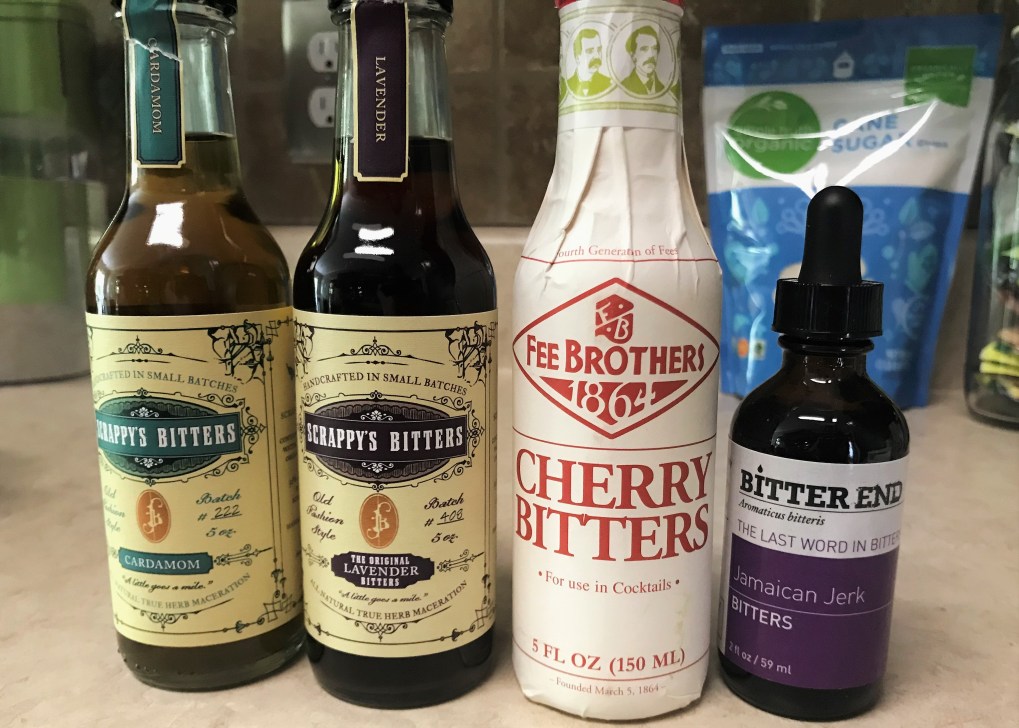
Heaven only knows! I spent a good hour narrowing my choices from the online store mentioned above, and I am quite sure I’ll go back for more. Here’s what I purchased most recently:
Fee Brothers’ Cherry Bitters, because Les is wild about cherries. It’s great in bourbon drinks, which is also his new favorite.
I went a little crazy for the selection of Scrappy’s Bitters, purchasing both the cardamom and lavender bitters. The cardamom is intense, but delicious in a most exotic way. I like it with a small batch pear-infused rye produced by one of our local distillers. The lavender? Well, let’s just say I’m still trying to figure out how to further reduce the amount I use because even one drop in a gin drink makes me feel like I just licked a bar of Grandma’s fancy soap. I’m open to suggestions.
Aromaticus bitteris. Now, that’s funny.
Finally, there’s these Bitter End Jamaican Jerk Bitters, because the idea of spices and heat in my drink is pretty much sending me head over heels. Honestly, everything Jamaican jerk is dialing my number right now (perhaps you’ve noticed with these pizzas and this stuffed pepper recipe), so I’ve been working on new ways to get this flavor into my life.
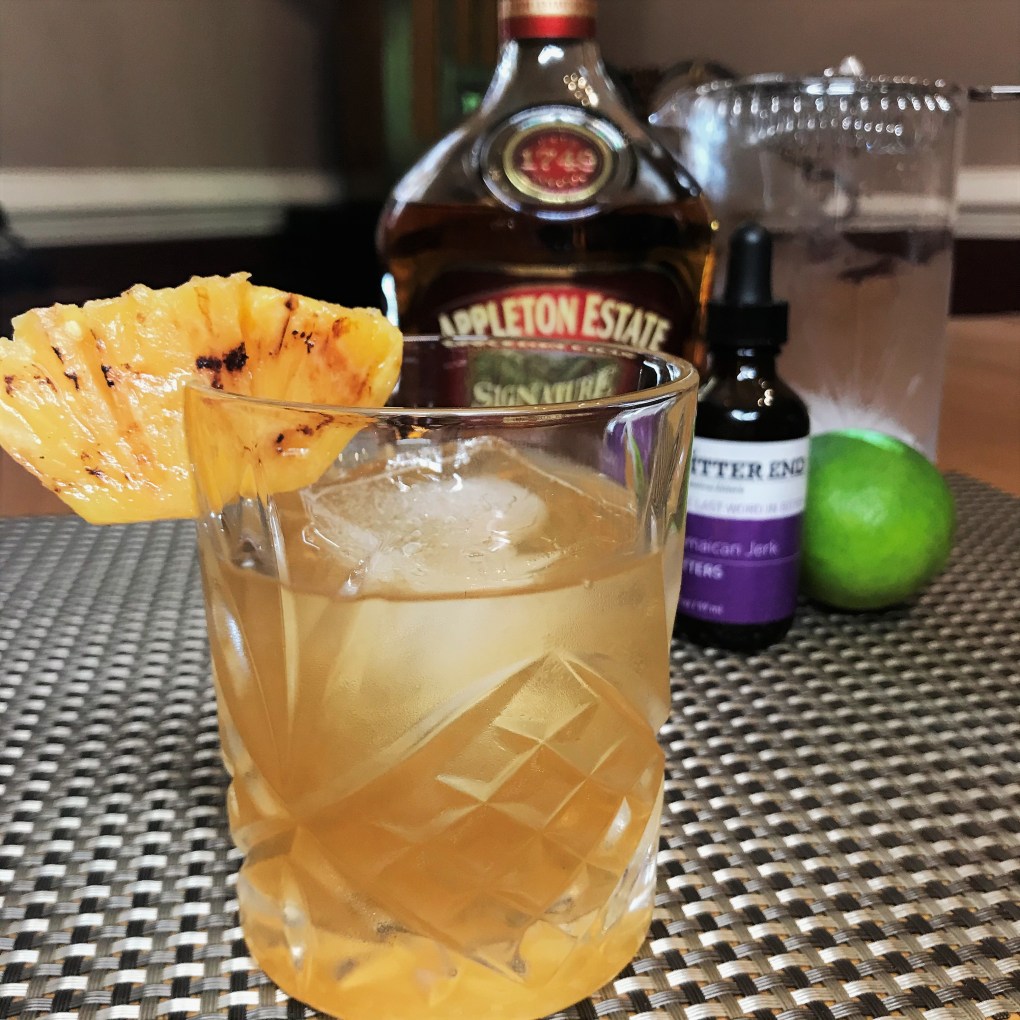
And that brings us full circle to this cocktail, which I’ve named the “Cool Jerk.”
Back in another decade, when I wore pinstriped jeans and big permed hair, it was “cool” to have a fuzzy navel, Alabama slammer or some sweet frothy rum drink with an umbrella, basically the only drinks I knew how to order. But I’m all grown up now and so is this drink. It’s still fruity and tropical, but there’s complex spice instead of just sweet. Rather, it leans toward the sophisticated side of things, especially in a crystal cut, double rocks glass.
There was never a doubt which spirit I’d use—it had to be Jamaican-born Appleton Estate rum, smooth and lightly sweet, with hints of warm spice. I was fortunate enough to visit Jamaica in the late ‘90s, and a full bottle of this rum smuggled itself into my bag for the plane ride home (remember when we could put more than 4 oz. of liquid in our carry-on)?
Lime is the only citrus juice to use with rum (think daiquiri or mojito), and I’ve used a combination of two simple syrups to bring it back into balance—a jalapeno syrup (which is frankly still rocking my world after the pineapple jalapeno ice cream) and the same lemon-ginger syrup I debuted with the Sassy Comeback drink.
The Jamaican jerk bitters are hitting all the right spice buttons, with nutmeg, quassia (a bitter wood native to the Caribbean and parts of South America), habanero, cinnamon, allspice and thyme. The bitters are labeled “extremely spicy” (and I’m quite sure they would be if we took a swig from the bottle), but the little bit we are putting in the drink is not going to set you ablaze. For us, it feels like a perfect balance, about a 3 on a 1-10 spicy scale.
Feeling adventurous?
To make this drink, you’ll need a cocktail mixing glass and spoon, measuring jigger and some big-as-your-face ice cubes. Garnish it with a slice of lime or, if you’re lucky enough to have some leftover from the Jerk pizzas, a wedge of grilled pineapple. This recipe will make 2 generous cocktails.
“Cheers!”
Ingredients
4 oz. Appleton Estate rum
1.5 oz. lemon-ginger simple syrup (recipe below)
.5 oz. jalapeno simple syrup (also below)
Juice of 1 lime, freshly squeezed*
8 drops Jamaican jerk bitters
*Notes
I hate fussing over the garnish for a drink, so here’s how I saved time on our second round of this one. I cut the lime in half, then stole a slice for garnish from the middle before squeezing the halves into the cocktail mixing glass. Done.
Combine the rum, syrups, lime juice and bitters. Add regular ice cubes and stir for 20 seconds, until the mixing glass looks frosty. Strain over giant cubes into double old-fashioned glasses and garnish with slices of lime.
Lemon-ginger Simple Syrup:
Bring 1 cup water to a light boil, then turn off heat. Steep 4 lemon-ginger herbal tea bags in the hot water for about 2 minutes, then remove and squeeze the tea bags (discard them). Add 1 cup sugar to the hot tea blend, and stir until dissolved (return to heat a few minutes, if necessary). Cool completely, then pour into a covered jar. It will keep in the fridge a couple of weeks. For this syrup, I use Bigelow brand lemon-ginger tea.
Jalapeno Simple Syrup:
Bring 1 cup filtered water and 1 cup sugar to a light boil over medium heat until sugar is dissolved and syrup begins to lightly boil at the edges. Add 2 small chopped jalapeno peppers and stir, cooking about 2 minutes at low heat. Turn off heat, cool completely, strain jalapenos (reserve them for another use, if desired) and keep syrup in a covered jar in the fridge up to 2 weeks.




























 Comfort du Jour