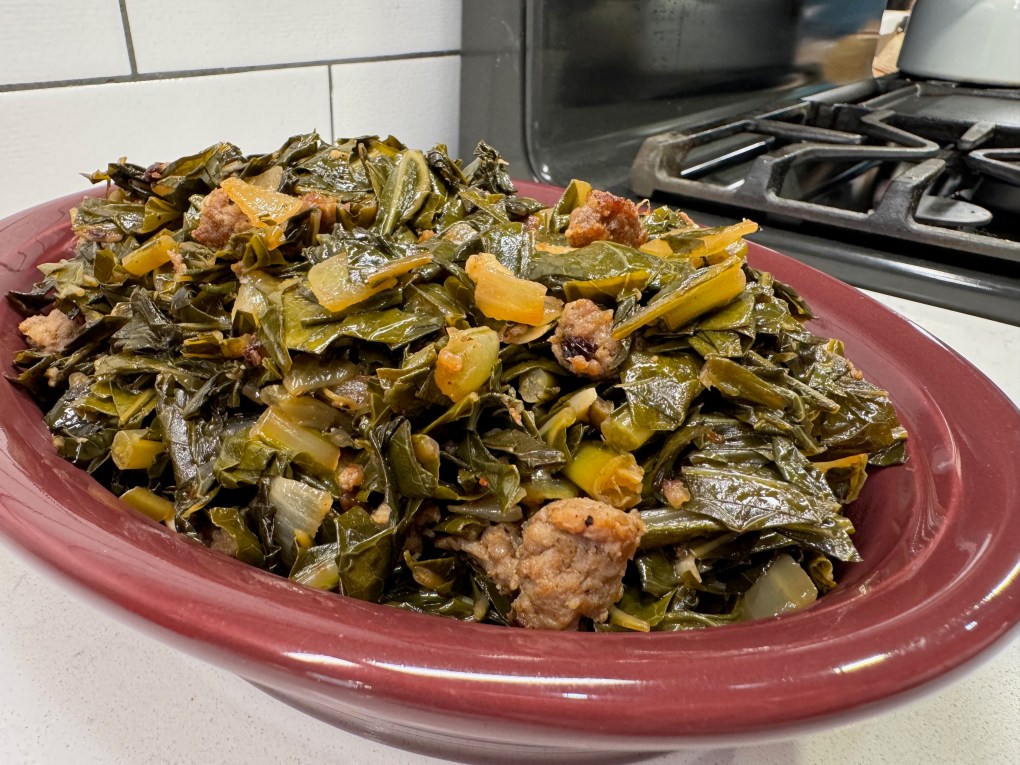
Collards with Sausage and Beer Malt Vinegar

When families gather for Thanksgiving in a few weeks, there will be an array of traditions on display— from formal and elegant catered affairs, to casual and easygoing drop-ins, and even a few backyard shenanigans (probably involving a deep fryer). Too many families are still brainstorming how to make ends meet, with the government continuing to play tug-of-war with the benefits that help them stay afloat, and this distresses me greatly. How can we ever be a great nation if we don’t care for our neighbors? Sigh.

One of my own “traditions” for Thanksgiving is that we break tradition by rotating dishes and switching things up. I know, everyone has their “favorites” for Thanksgiving, and we do keep the standards on the playlist to avert an uprising— the bird, some kind of dressing, cranberry sauce and mashed potatoes with gravy. Beyond that? Anything goes!

This year, I have a seasonal cake in mind for dessert (still thinking it through), and I intend to include collard greens in the lineup. Their earthy composure will be most welcome, and in these parts of the American South, they are on a short list of comfort foods. I also love that collard greens are inexpensive (always a bonus), and they can be made a few days in advance and warmed up in time for the big dinner. Anything that makes the meal more “homey,” and allows for more time chatting and less time fussing, is good with me!
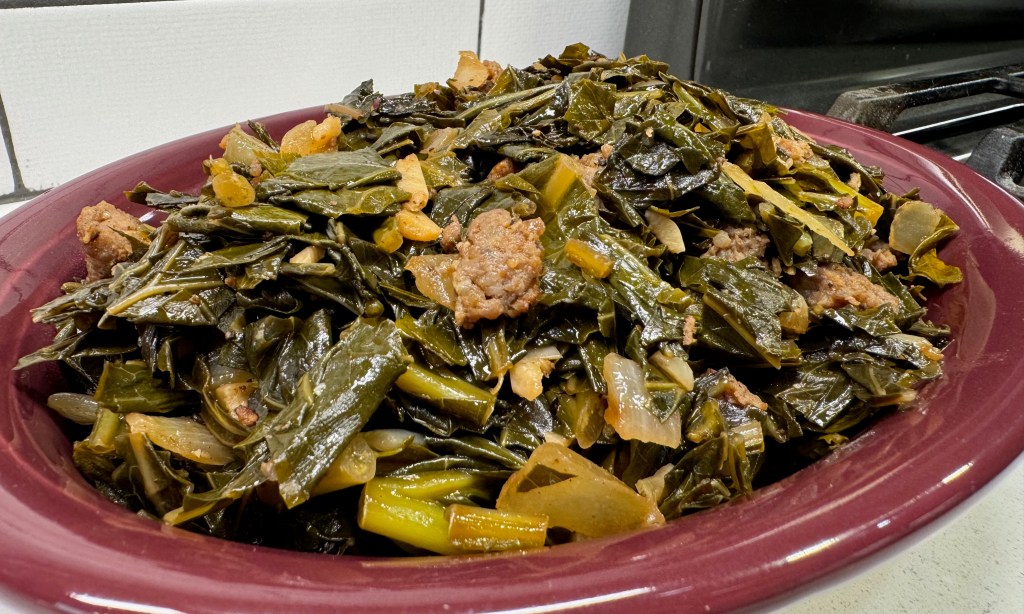
A dish this comforting deserves a spot on the Thanksgiving table.

Making collard greens 101

I’m amused recalling that I once shied away from making collard greens at home. I liked them, but had no idea how to transform the thick, leathery leaves into something tender and edible. There are two schools of thought on this, and the first was daunting enough that I kept my distance for years. It involves a dense, salty hunk of what our locals call “fatback,” and boiling (or even pressure cooking) the collards for hours on end, until they no longer resemble a vegetable. Some people love it; I do not.

But the other method, shared with me by a kind lady in the grocery store, is not only quicker and easier— it also tastes better and leaves plenty of room for creative interpretation. This method involves briefly frying the trimmed collard greens in a small amount of oil or fat and then simmering for half an hour or so in whatever braising liquid makes you happy. To date, I’ve used broth, beer, whiskey, tequila and hard cider. And I’ve tossed a variety of flavor modifiers into my collard recipes, too, including bacon, tomatoes, mushrooms, onions, garlic, and even sweet potatoes (which was great). I guess what I’m saying is that collard greens are finding their way onto my list of “blank canvas” foods, and that isn’t at all a bad thing.

My sausage and beer malt version

My collards are usually intended as a casual side for roasted chicken, grilled pork chops or meatloaf. But this time, I knew I’d be using some of the leftovers in the collard dip recipe I shared a few weeks ago in memory of our friend who passed away unexpectedly earlier this year. He was a big-time foodie, always sharing cool food stories and interesting products that he found in his many travel adventures. About a year ago, I was surprised to receive a package that Jerry had ordered for me— it was a sampler of specialty vinegars from American Vinegar Works, which he described as “doing it the old-school way, handcrafted and aged.” And I suppose you can guess which one caught my eye first.
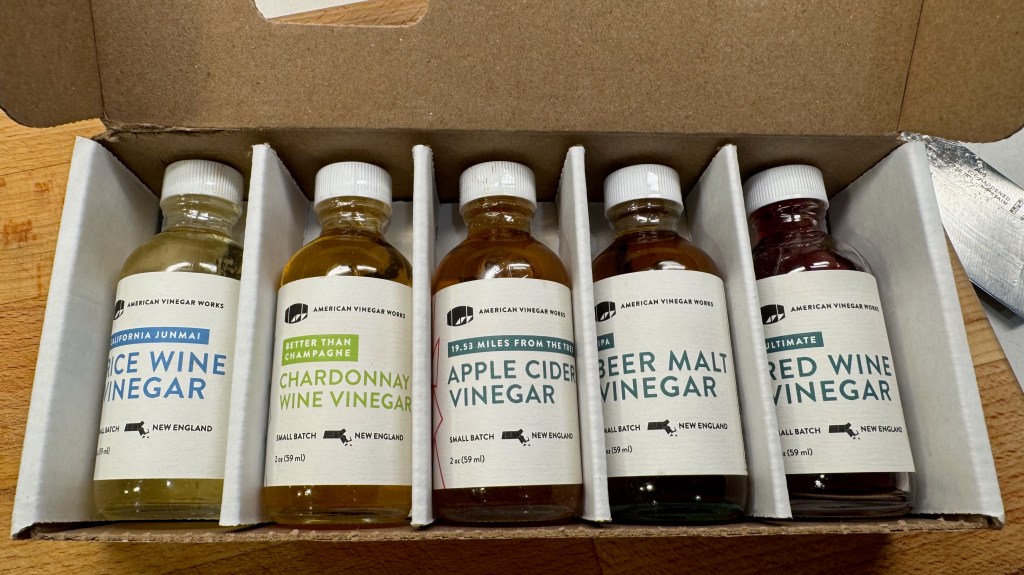
What a fun surprise this was!

I’d never heard of beer malt vinegar before, but I knew it would be complex and delicious. And using it for the collards that would become part of the collard dip was a great way to honor the memory of my friend who gifted me the sample collection of vinegars.

For this iteration of collard greens, I started with a local spicy pork breakfast sausage, browned up in bulk with chopped onions and a few garlic cloves, plus a smoky pepper seasoning. When I was happy with the browning, I transferred the meat mixture into a separate bowl while I sautéed the collards, one handful at a time, just as the nice grocery lady told me.
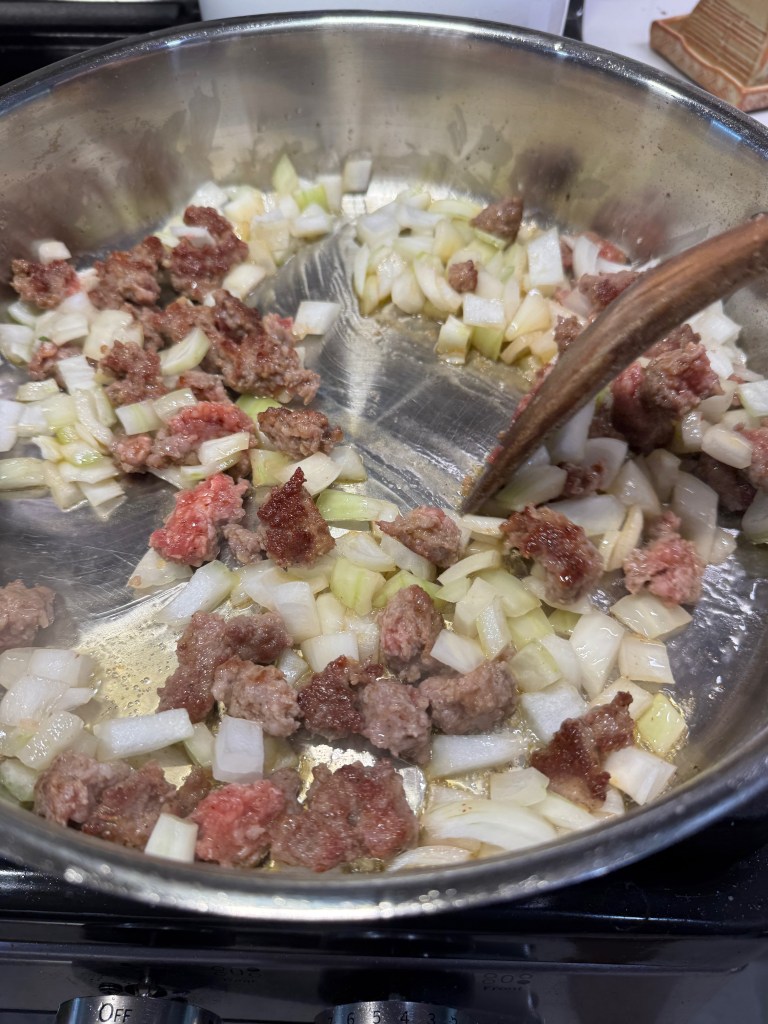
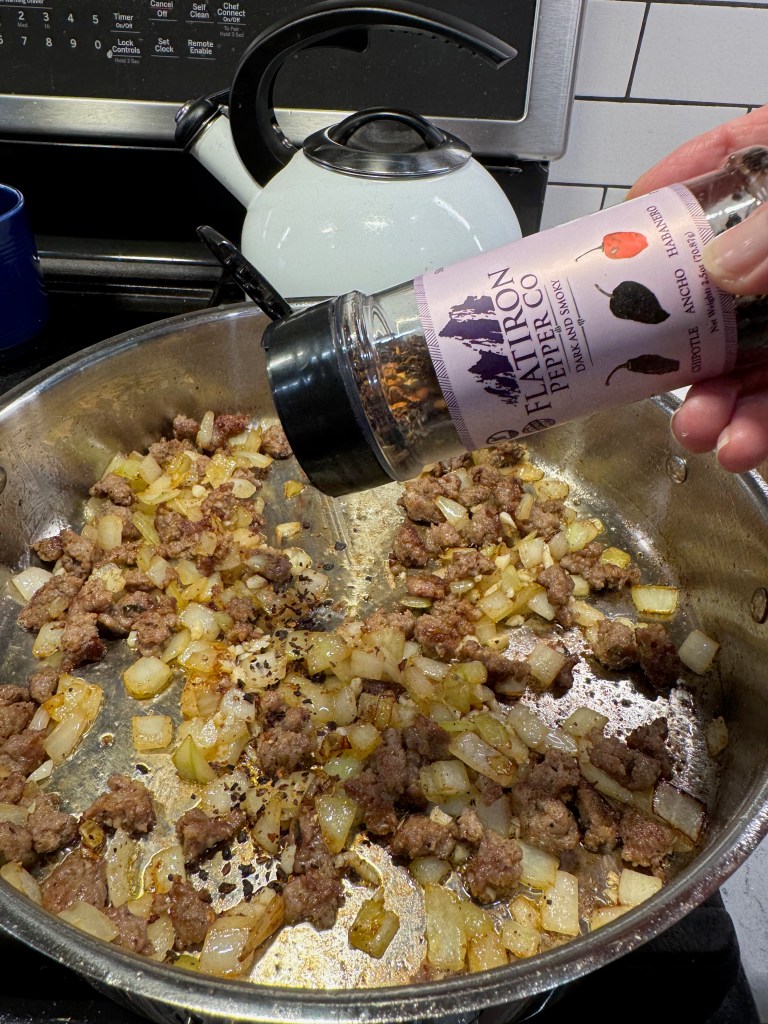
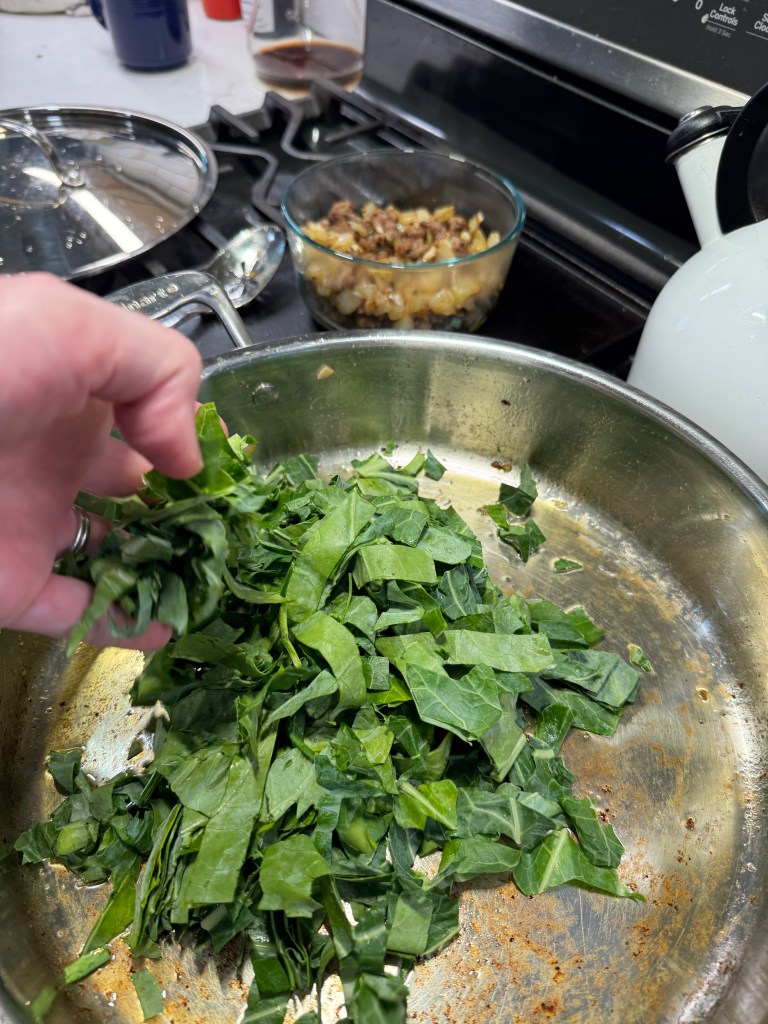
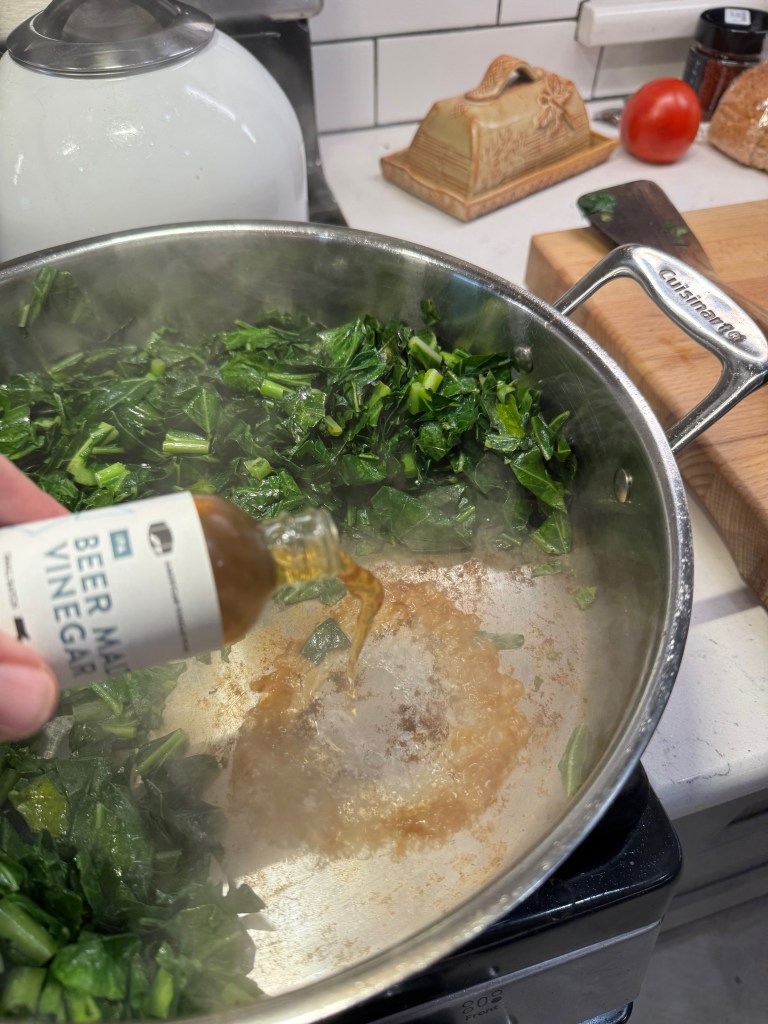
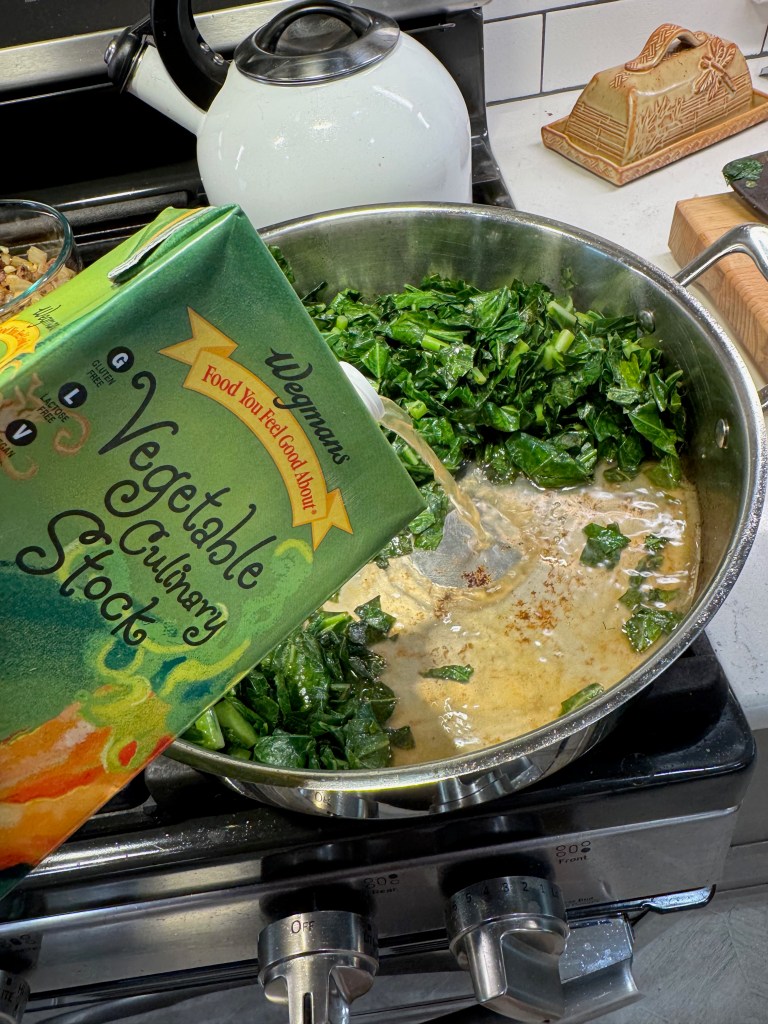
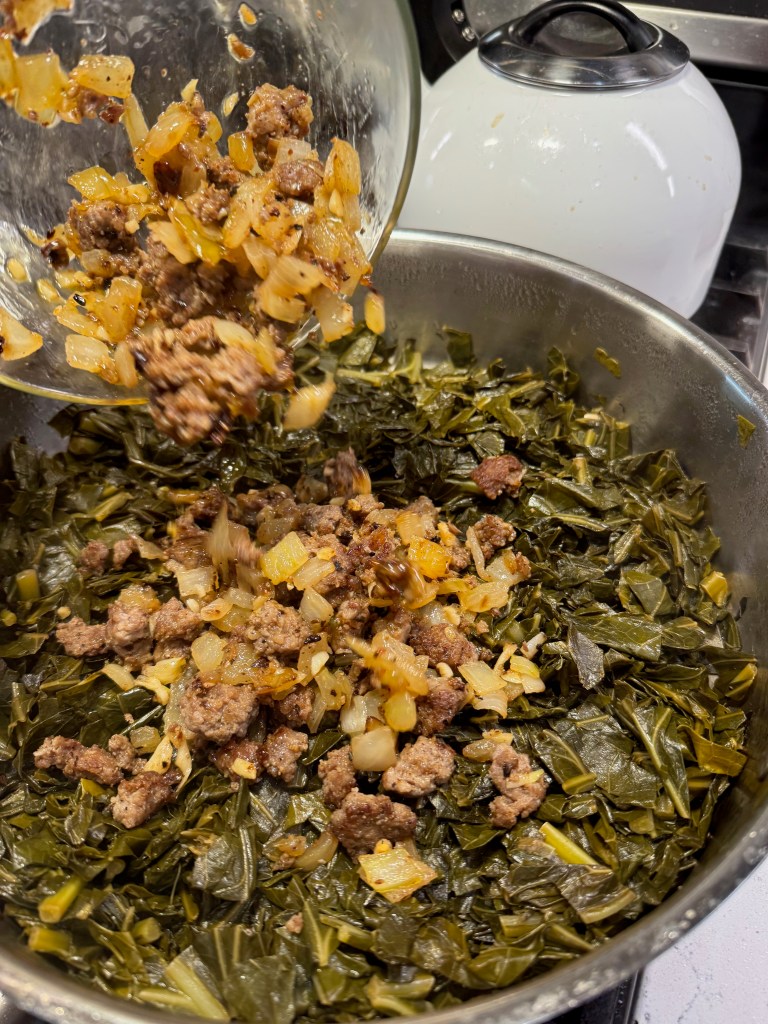
I chose the beer malt vinegar to deglaze the pot before simmering the collards to tenderness, and it was an excellent call. These greens are very fibrous, and a shot of acidity is helpful for breaking them down more quickly (plus it’s delicious). A generous splash of veggie broth finished the job with a 40 minute simmer, and then I stirred the sausage and onion mixture back in at the end, just long enough to heat the dish through.
If your Thanksgiving table needs another vegetable side, and you want something easy and hearty that won’t break the bank, give collard greens a try. Below today’s click-to-print recipe card, you’ll see a few other recipe options for this powerhouse green vegetable. And if your family has a similar tradition of “breaking tradition,” let’s hear about it in the comments!

Collards with Sausage and Beer Malt Vinegar
  • Servings: About 8
  • Difficulty: Average
  • Print

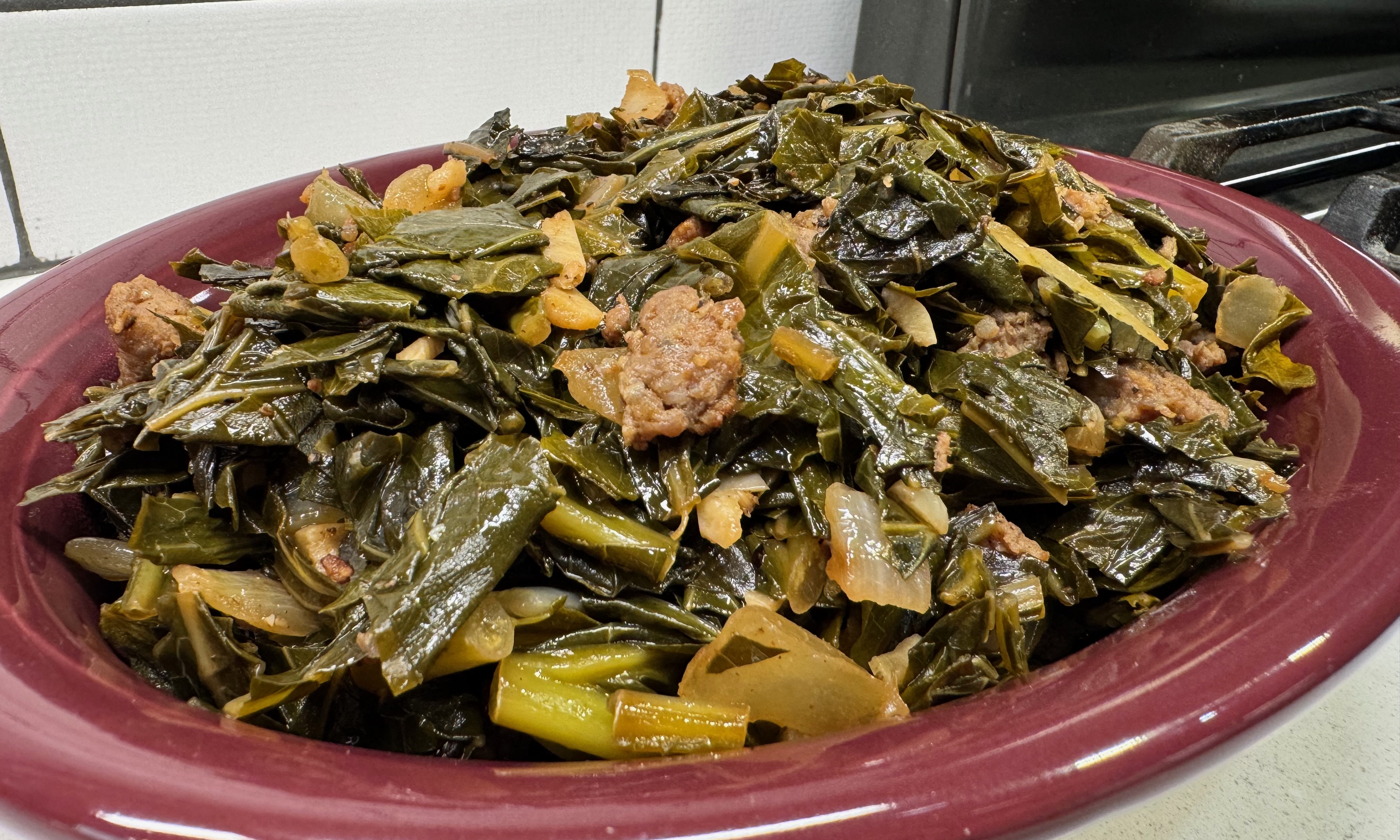
Beer malt vinegar gave my collard greens a savory twist, making them a great option for Thanksgiving.


Ingredients

  • 1/2 pound bulk breakfast-style sausage (spicy is great here)
  • 1/2 large onion, chopped
  • Salt and pepper
  • 2 cloves garlic, minced
  • A few shakes of dried pepper flakes (mine were smoky chipotle)
  • 1 large bunch fresh collard greens, cleaned and trimmed (see notes)
  • 1/4 cup beer malt vinegar (see notes)
  • 1 cup low-sodium vegetable broth

Notes: Collard greens may be available in a “pillow” type package, and those are convenient but not the same quality as fresh collards you purchase in a bunch. They will require more time cleaning and trimming, but it’s time well spent.

The beer malt vinegar I used was from American Vinegar Works, and they seem to have two different beer varieties. My vinegar was made with IPA malt, but they also have one made with porter malt that must be amazing! If you can’t get your hands on this specialty product, try using a splash each of beer and regular malt vinegar.

Directions

  1. Place a wide, shallow skillet or pot over medium heat. Add a swirl of olive oil and crumble up the sausage into the pan. Let it be for a couple of minutes before you toss it with a utensil, to allow browning to happen. Once the sausage begins to brown, add the onions and continue to cook until the meat is fully browned and the onions are tender. Add garlic and the smoky pepper seasoning. Transfer the sausage mixture to a separate bowl and set aside until after the next step.
  2. Add the collard greens, a handful at a time, tossing until each is wilted before adding the next handful. Once all the greens are wilted and bright green in the pot, pour in the beer malt vinegar. Use your utensil to scrape any browned bits from the pan. Add vegetable broth and stir to blend. Reduce heat to low, cover the pot and simmer for 30 to 40 minutes, depending on how tender you like your greens.
  3. When greens are done to your liking, return the sausage and onion mixture back to the pot with the collards, just long enough to heat it through.
Creamy Collard Dip

In late 2018, my husband and I were invited to join our friend, Jerry, at a new-at-the-time restaurant in northeast Greensboro, North Carolina. Jerry was excited about this place, and we instantly felt the same about its casual vibe, beautiful bar and exceptional menu. Our only lament was that it was 45 minutes from our front door, and that meant that we weren’t able to visit as often as Jerry did, or as we would have liked.

Today, that restaurant is called Kau, an open-concept restaurant with high ceilings, retrofitted into a retired textile mill. It bills itself as a steakhouse— a fair description, given that it has an in-house butcher shop where you can also purchase an array of meats to take home— but we were impressed with its other offerings, including this addictive appetizer. Collard dip is hearty, rustic and comforting— perfect for fall— and as we enjoyed ours across the table at Jerry’s favorite new hotspot, I promised him that I would recreate the dip one day at home and put it up on Comfort du Jour. Even better, we’d have him over and chat over a cocktail, preferably bourbon.

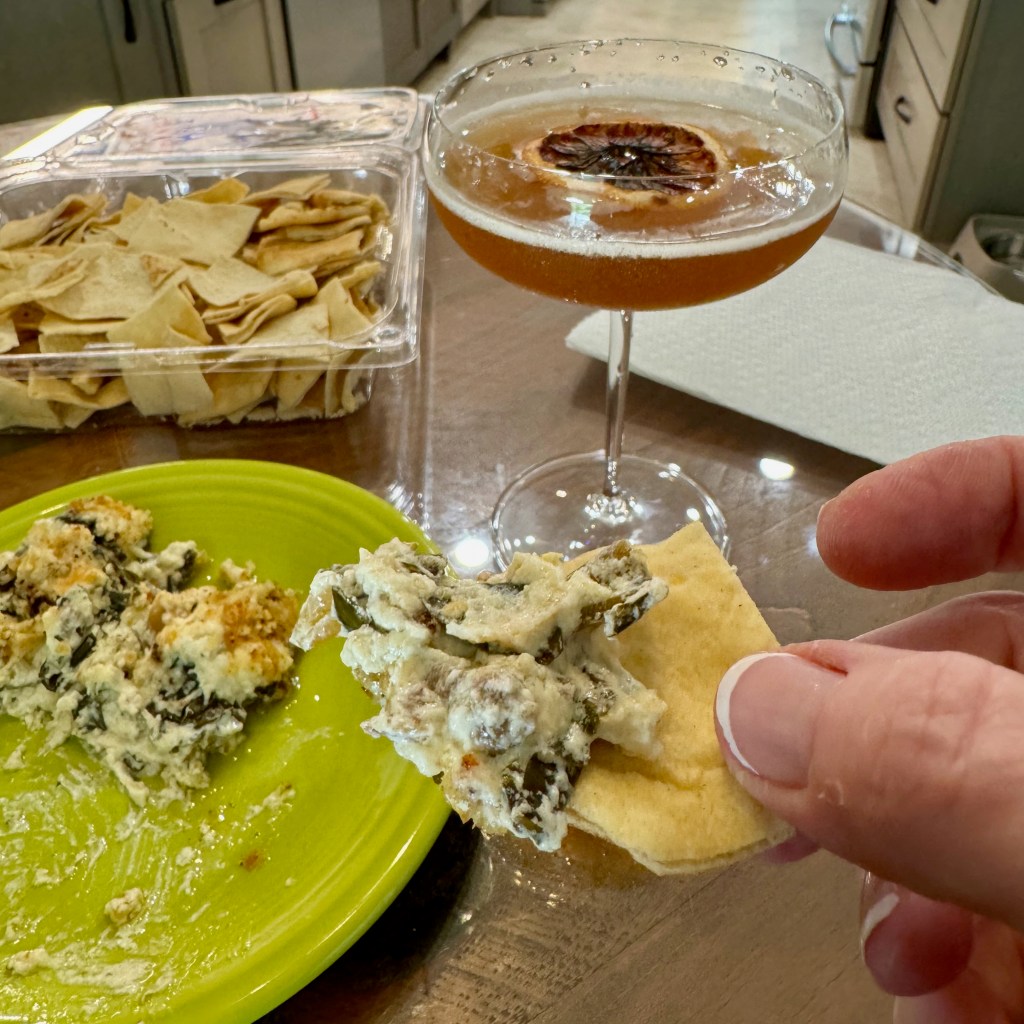
What could be better than snacks and drinks with friends?

I had a difficult time making this dish last month. Not for its process or technique; that part is easy, as you’ll see in a moment. It was emotional because our friend Jerry passed away a few months ago, without warning and far too soon. Les and I were stunned, as was everyone else who knew and loved Jerry. We felt guilty for how much time had passed since we last got together with him, and it still doesn’t seem quite real that he is gone.

I missed a chance to share this recipe with Jerry. I know he would have loved it, and I’m certain that he would have made it at home himself as he often did with the recipes I posted on the blog. We tend to believe that there will always be more time for getting together with dear friends, but we never know, do we?

Yes, life gets in the way, and it can indeed be difficult to align our calendars when we are all juggling work, family and travel obligations. But the older I get, the more I’m seeing the importance of making time for our friends. The house doesn’t need to look perfect to have people over, and plans with friends don’t have to be extravagant. They can even be last minute and sometimes that makes it more fun. What matters is just doing it. Who would you miss most if they were gone tomorrow? Call them up, set a date and make something happen.

This one’s for you, Jerry. 💕 🥃


First, the collards

This collard dip recipe relies on having a cup or so of leftover cooked collards, so it’s best to plan ahead and make that component a day or two beforehand. I’ve shared several collard recipes on this blog, including kick-ass whiskey braised collards and smoky mushroom and tomato collards, either of which would be great in this dip recipe. For this recipe, I embellished my collards with onions, garlic, spicy sausage and a smoky chipotle seasoning. It’s bold and earthy, which is a terrific contrast against the creaminess of the other ingredients in the dip. Your choice of collards is subjective; just bear in mind that their flavor will play a major role in the final flavor of the dip. I promise that I’ll share the sausage version that I used here within the next couple of weeks.

UPDATE: The collards with beer malt vinegar recipe is now posted! Follow this link to get it. 😁

So hearty, it’s almost a meal on its own.

And now, the dip

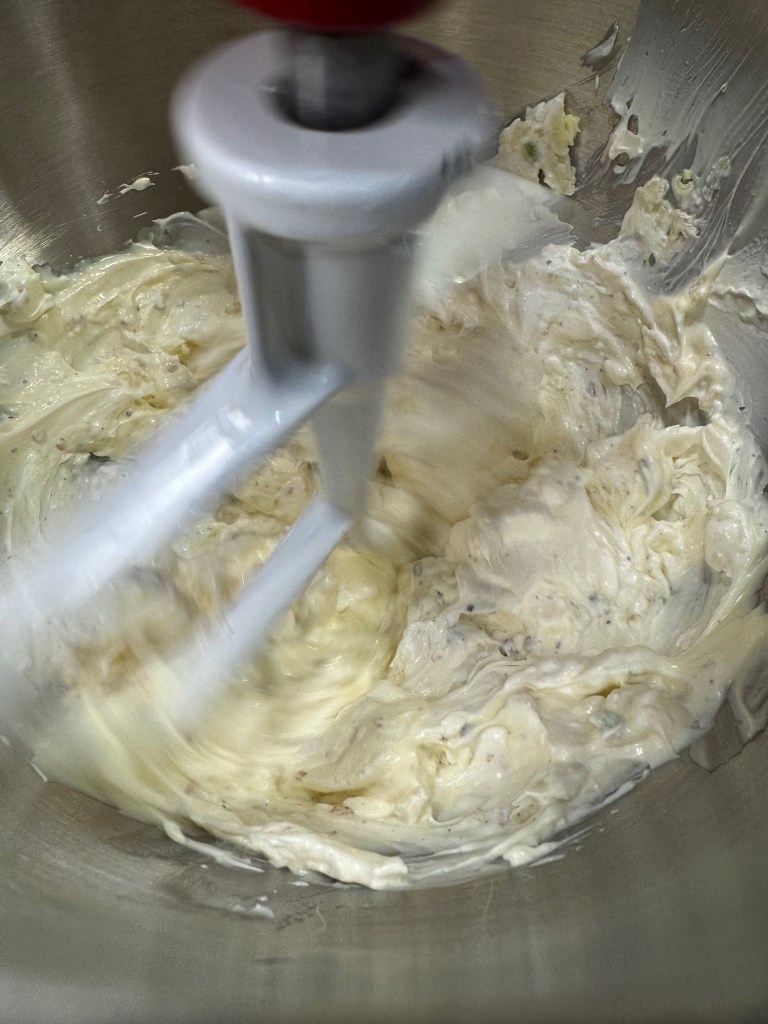
This recipe begins as all of my creamy dips do, with a brick of cream cheese, some mayonnaise and a bit of sour cream. This combination creates a smooth, creamy base that is neither too heavy nor too oily. This collard dip called for bold flavors, so I tossed in some minced garlic and crushed red pepper seasoning, then I blended it into a creamy concoction in my stand mixer. 


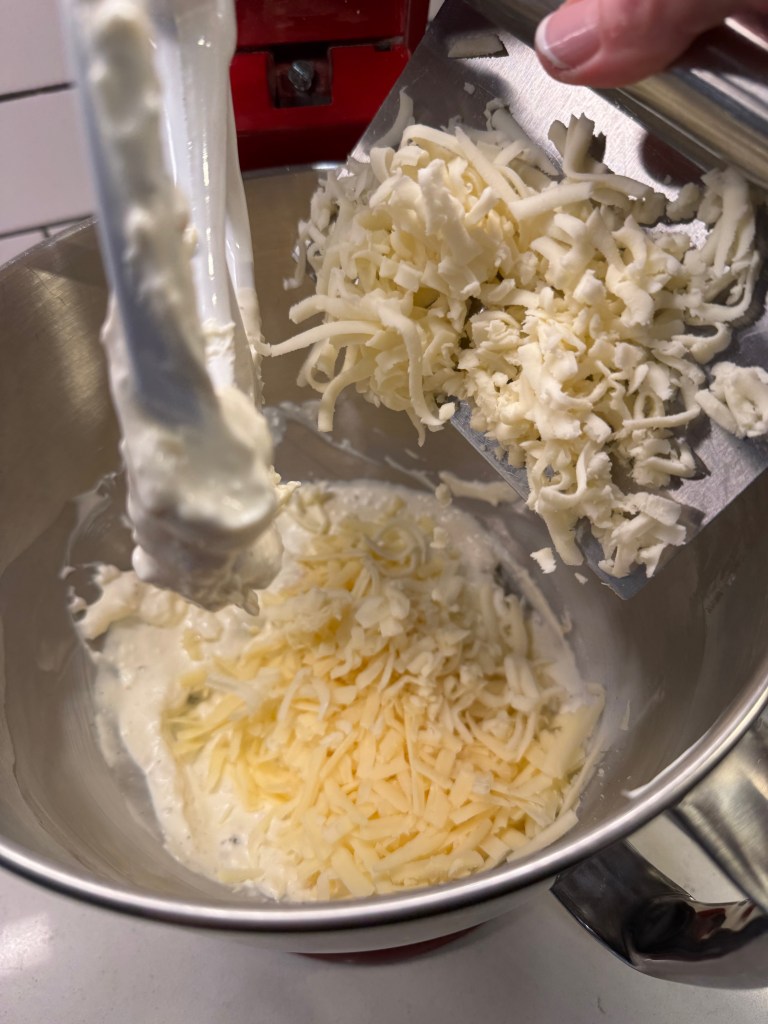
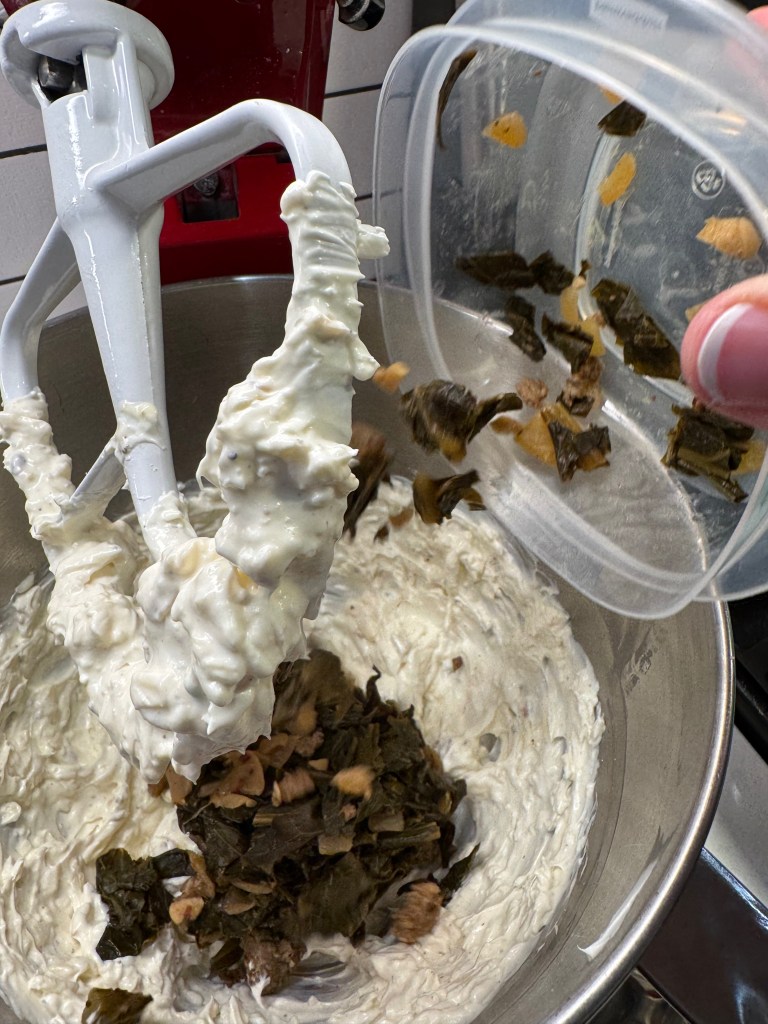
Cheeses came next, and for my collard dip, I followed Kau’s cue, using a generous amount of  aged white cheddar for its sharpness plus a low-moisture mozzarella for its melting attribute. Finally, the star of the show, the cooked collard greens. You could bring home some leftover collards from a restaurant meal and use those if you don’t feel inclined to cook them yourself. You’ll need about one cup of cooked collards, drained of all excess moisture and cooled.


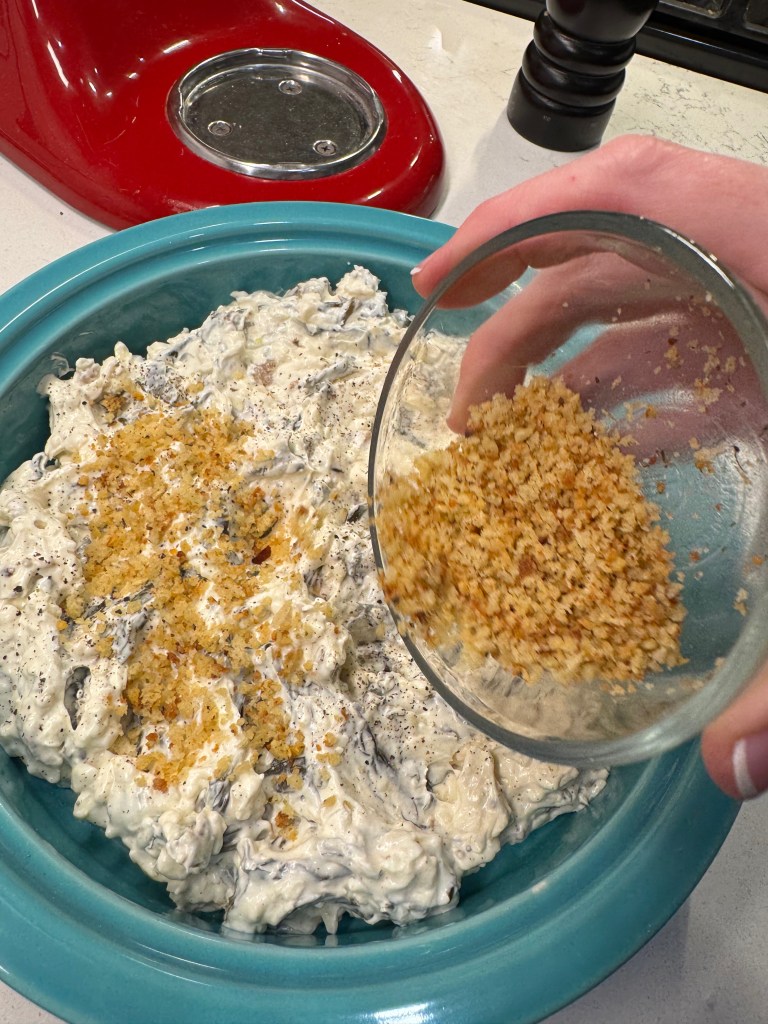
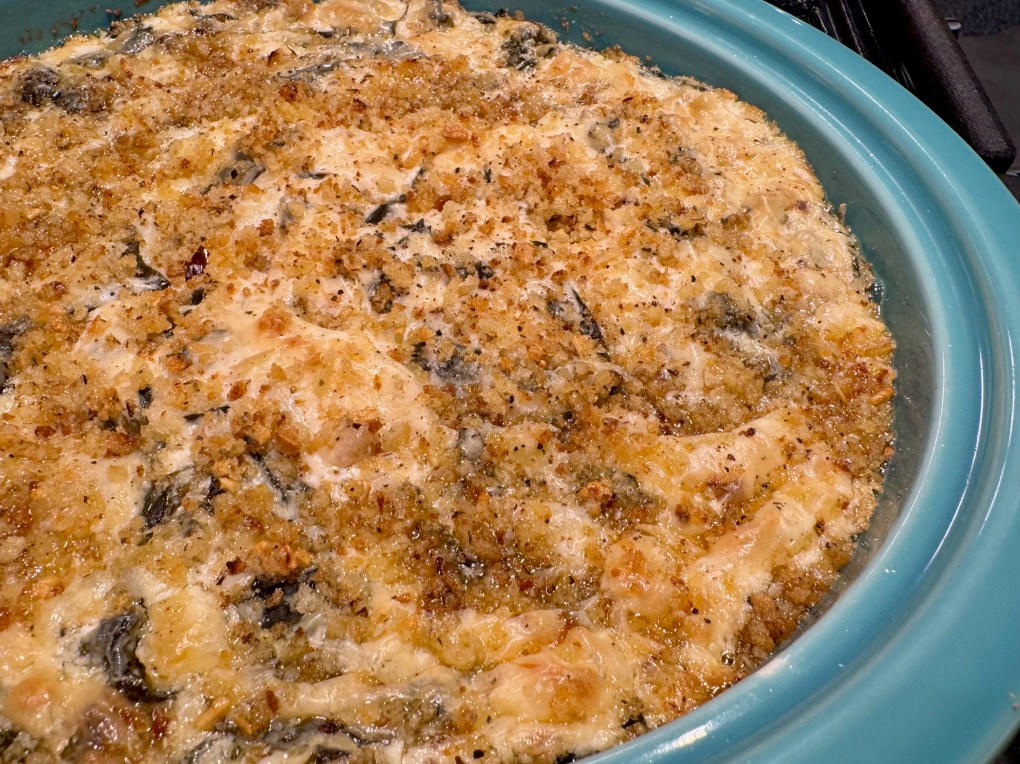
For a delightful bit of texture and crunch, I toasted up some seasoned panko crumbs in olive oil to scatter across the top before baking, and then the oven did the rest. 


This dip is a great starter for a casual meal, or for sharing over cocktails and conversation. For a lighter appetite, you might even find that it’s enough on its own, served up with pita chips or warm crostini.

Creamy Collard Dip

  • Servings: About 6
  • Difficulty: Easy
  • Print

Heartier than spinach dip, easy as pie to make. This satisfying dip makes use of leftover cooked collard greens and is perfect for all occasions this Autumn.


Ingredients

  • 1 Tbsp. extra virgin olive oil
  • 1/3 cup seasoned panko crumbs
  • 2 Tbsp. grated Parmesan
  • 8 oz brick cream cheese, softened
  • 1/3 cup mayonnaise
  • 1/2 cup sour cream
  • 2 cloves garlic, finely minced
  • A few shakes of crushed pepper flakes (see notes)
  • 1/2 cup sharp white cheddar
  • 1/2 cup low-moisture mozzarella
  • 1 cup seasoned cooked collard greens (drained of excess liquid and cold from the fridge)
  • Salt and pepper to taste
  • Sturdy crackers, pita chips or crostini for serving

Notes: This recipe works best with full-fat cream cheese, mayo and sour cream, but light versions will be ok; expect a less cohesive texture if using light products.

My pepper flakes were chipotle with garlic and onion (from Flatiron Pepper Co.), but any crushed red pepper would work, or even a few dashes of hot sauce if that’s what you have on hand.

For best results, use freshly shredded cheese rather than pre-packaged. The packaged stuff contains anti-caking agents, which hinder proper melting.

Feel free to embellish your collard greens however you like. I made this version of collards with browned spicy sausage.

Directions

  1. Heat oven to 350° F, with rack in center position.
  2. In a small skillet, heat olive oil over medium heat. Sprinkle in panko crumbs and toss constantly until crumbs are toasted and fragrant. Remove from heat and toss in Parmesan. Set aside.
  3. Combine cream cheese, mayo, sour cream, garlic and pepper flakes in the bowl of a stand mixer, fitted with the paddle blade. Beat until evenly blended.
  4. Add cheddar and mozzarella to the bowl and mix until combined.
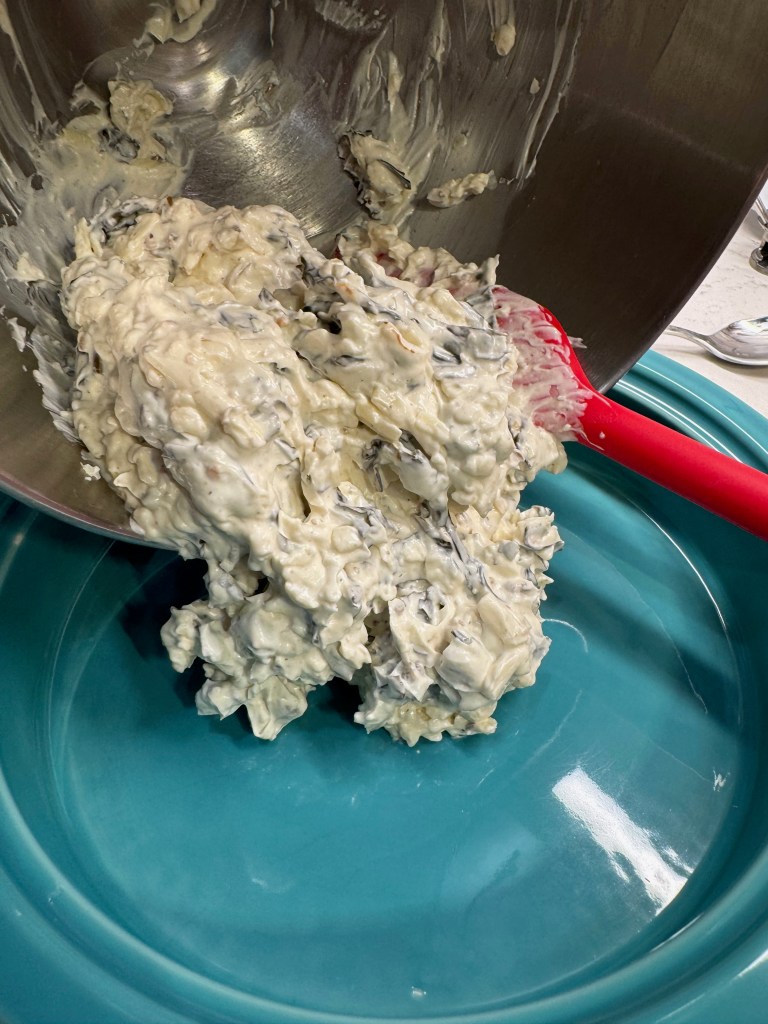
  5. Add the cooked collard greens and mix again only until evenly incorporated. Transfer to a shallow baking dish.
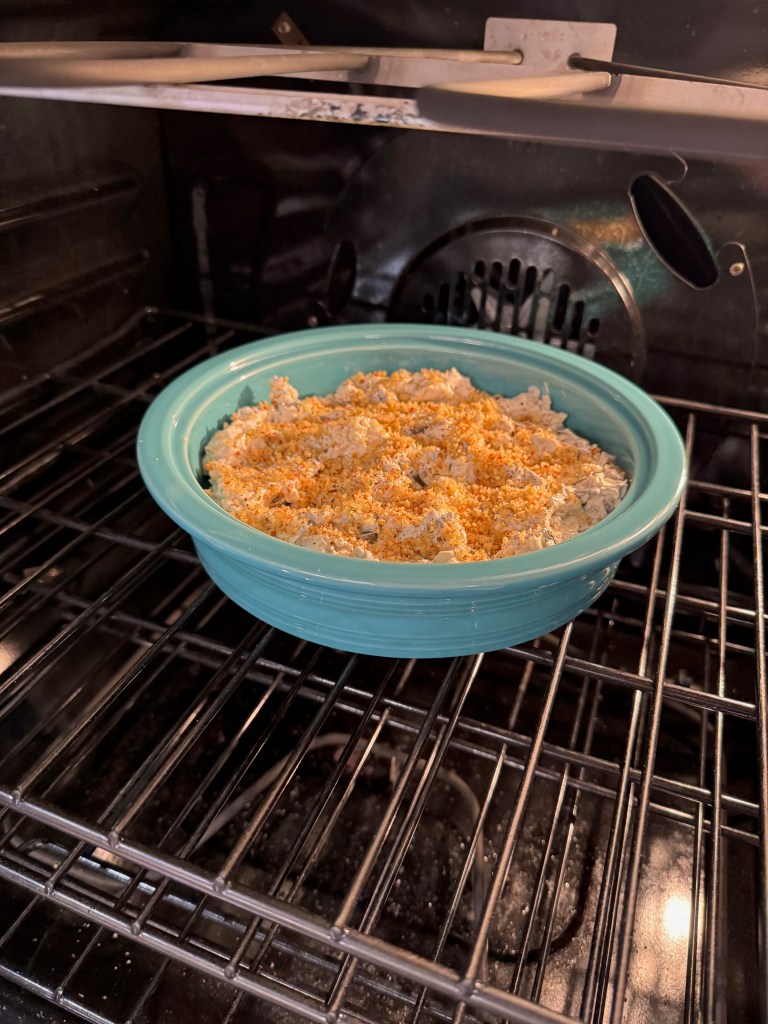
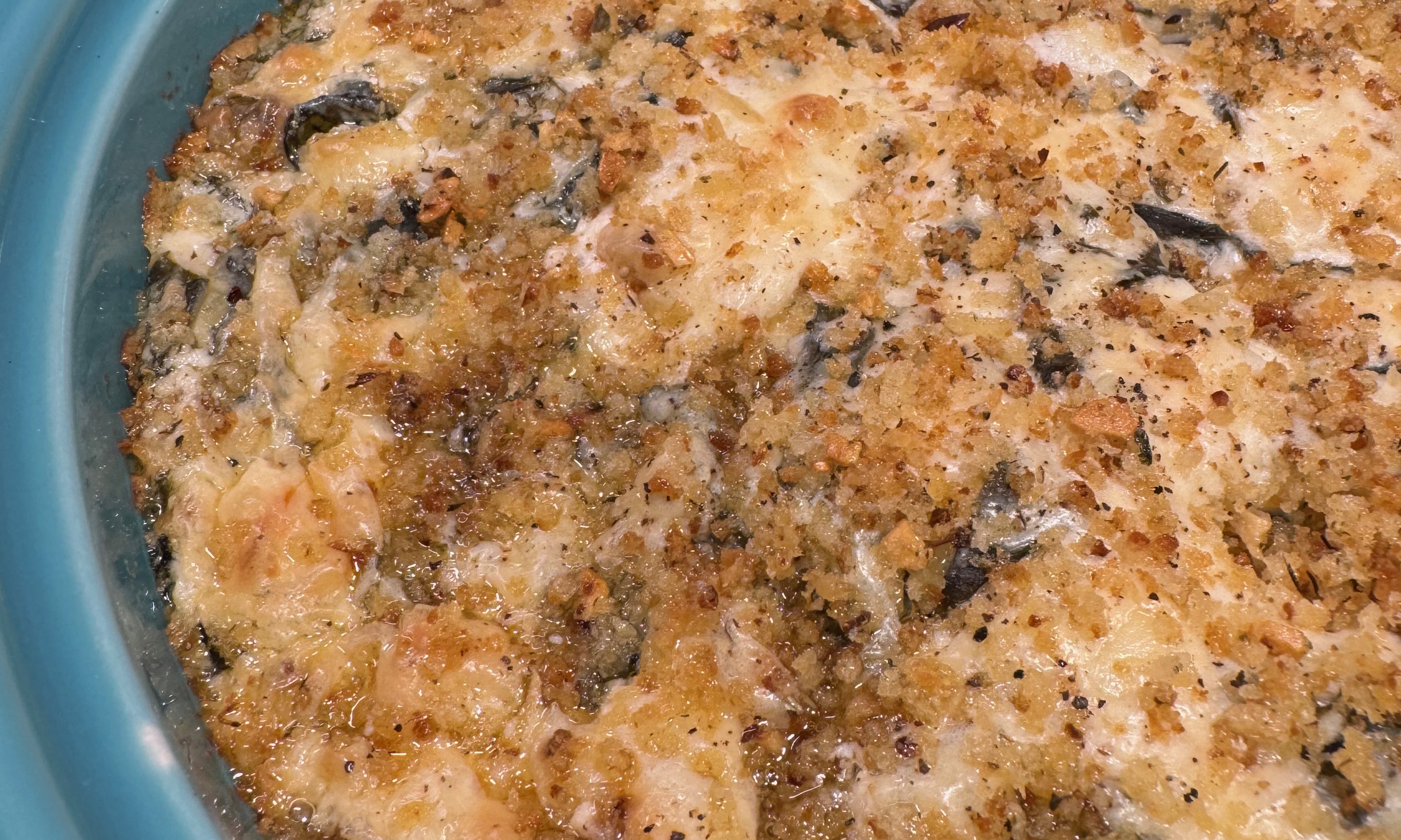
  6. Sprinkle toasted panko crumbs evenly over the top of the dip. Bake 30 minutes, or until dip is hot and bubbly around the edges. Cool for a few minutes before serving.


Southern Biscuit & Cornbread Dressing

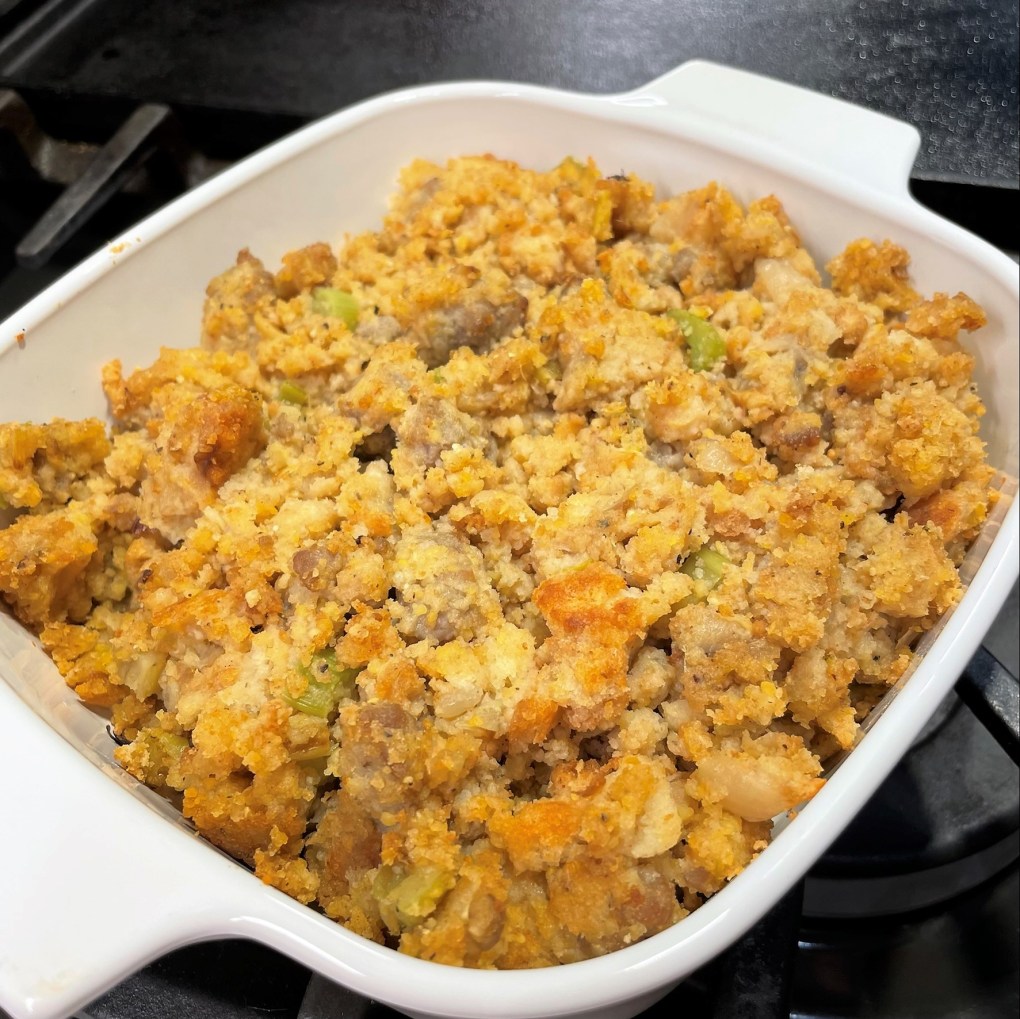
There is no recipe that reminds me more of my time at A Pinch of Thyme catering in Greensboro, N.C. than this Thanksgiving standard. I look forward to the aromas of each stage of this dish to this day, and about the time I start chopping celery, the memories come flooding back. 

It was November 1994 and I was in the Pinch kitchen, elbow-deep in a humongous Cambro, mixing up the familiar flavors of Thanksgiving dressing — sausage, sage, onions, celery and fresh herbs. (You have probably seen a Cambro; it’s a plastic food pan about the size of a carry-on suitcase, used widely in restaurant and catering kitchens. Sometimes, when I’m in the throes of holiday food prep, I wish I had a stack of ‘em.) Chef Rodney had scribbled out some notes to remind me how to put this dressing together, but after making so much of it for the umpteen in-home holiday parties we catered, I didn’t need them anymore. Nope, I knew that recipe like the back of my hand:

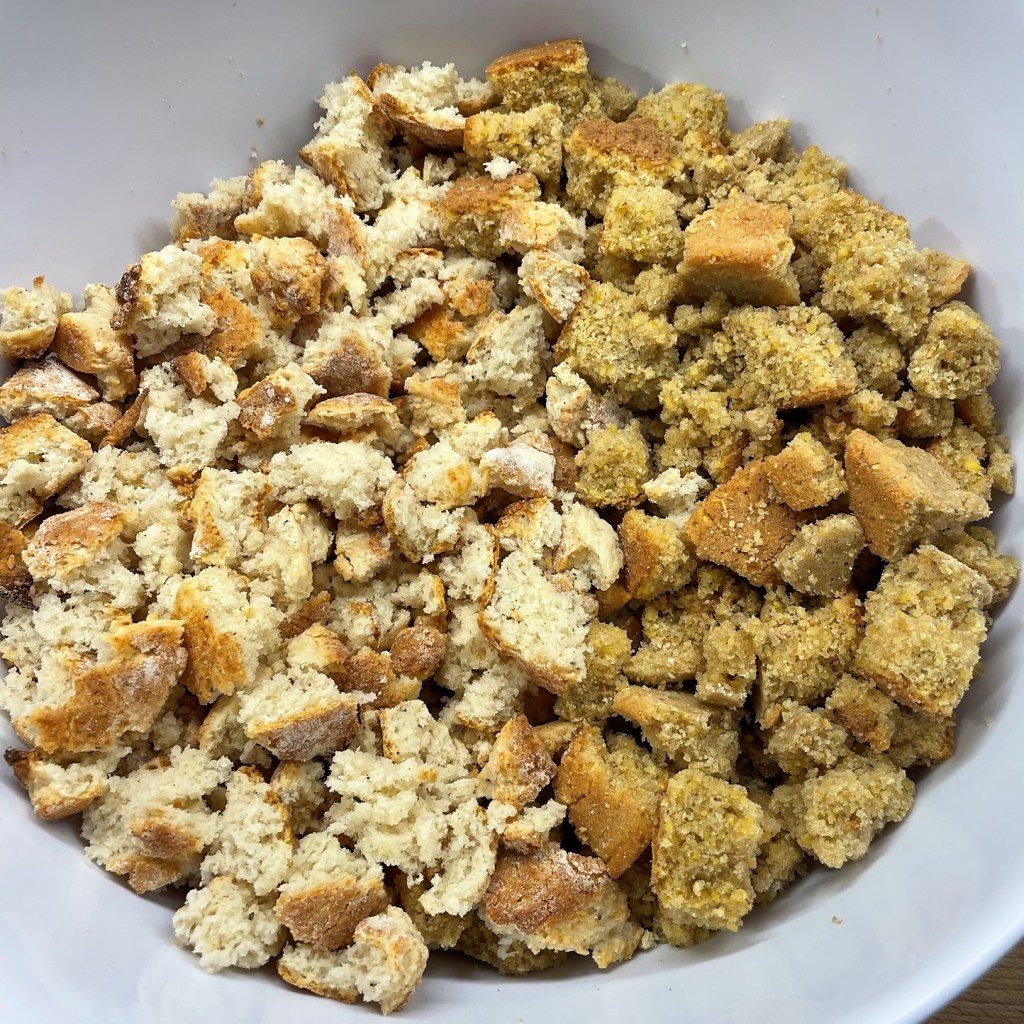
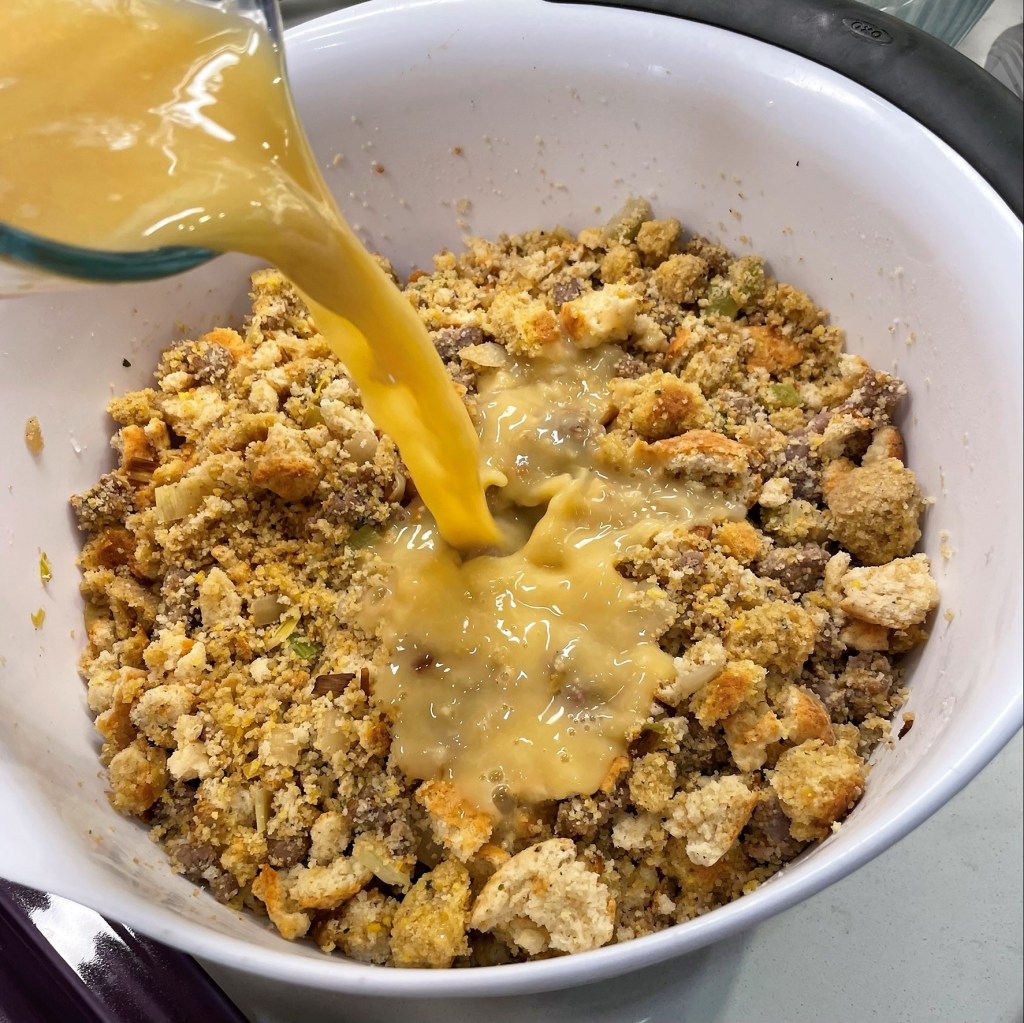
Crumble up the flaky buttermilk biscuits and honey-sweetened cornbread that Kathleen, the pastry chef, had made the day before. They needed to be stale, but not dry. Pull the strings off the celery, then chop it with the onions and cook them in the drippings left in the pan after browning the crumbled sausage. Add fresh herbs, including the signature pinch of thyme and toss it all together in the Cambro. Beat the eggs in one of the large stainless mixing bowls from the side shelf and add it to the dressing mix with enough chicken stock to moisten it all the way through. Pour it into a couple of greased, stainless steel hotel pans and over-wrap them with plastic film and then foil. Label the order with the client’s name and date of their event and move it to the walk-in. The service team would handle it from there, baking it and serving it up for the happy holiday hosts.
Then, wash up and repeat the whole thing for another party. 

Today, wearing the very same apron (which I wore home one night and never returned), I make a scaled-down version of this dressing for my own Thanksgiving meals and it is my all-time favorite. I still don’t need a recipe to make it, but I had to write it down several years ago because everyone I ever made it for wanted the recipe. Even my ex-husband asked me to leave a copy for him when we parted ways (and yes, I did). What makes it so addictively good?

Biscuits and cornbread.

The official breads of the South!

Though the flavors of the dressing are all familiar, the texture of the flaky biscuits and grainy cornbread—the two most popular breads of the American South—make it different from a typical dressing made with seasoned yeast bread cubes. And it doesn’t really matter what recipe you use for the biscuits and cornbread. It only comes down to how much time and baking skill you have, and whether you have a sweet tooth.

The cornbread can be more or less sweet, depending on your taste.

For this version, which I made last year when it was my year for the turkey — my husband, Les, and I alternate years, just as we declared in our wedding vows — I used Bob’s Red Mill whole grain cornbread mix (which is less sweet) and I made my own biscuits, using a partial amount of whole wheat flour.

Over the years, I’ve made it with everything from supermarket bakery cornbread to Jiffy mix (the sweetest option). My only suggestion is to stick with a cornbread that has some amount of flour in it; the kind made with only cornmeal will be too grainy for this dressing. I’ve used frozen biscuits, bakery biscuits and even biscuits from a fast food drive-thru. Other than the twist-can variety (which don’t have quite the right texture), any biscuit will work as long as you pay attention to the sodium factor. The best sausage is a bulk breakfast-style pork sausage (such as Jimmy Dean’s), and I like vegetable broth but chicken broth is also great. For the most authentic Southern version, put your hands on a Vidalia onion from Georgia; otherwise, any sweet onion will do (or you can even use leeks, as I did for this version). The fresh herbs are up to you; in the Pinch kitchen, we added fresh sage and thyme, but you know what your people like so go with that.


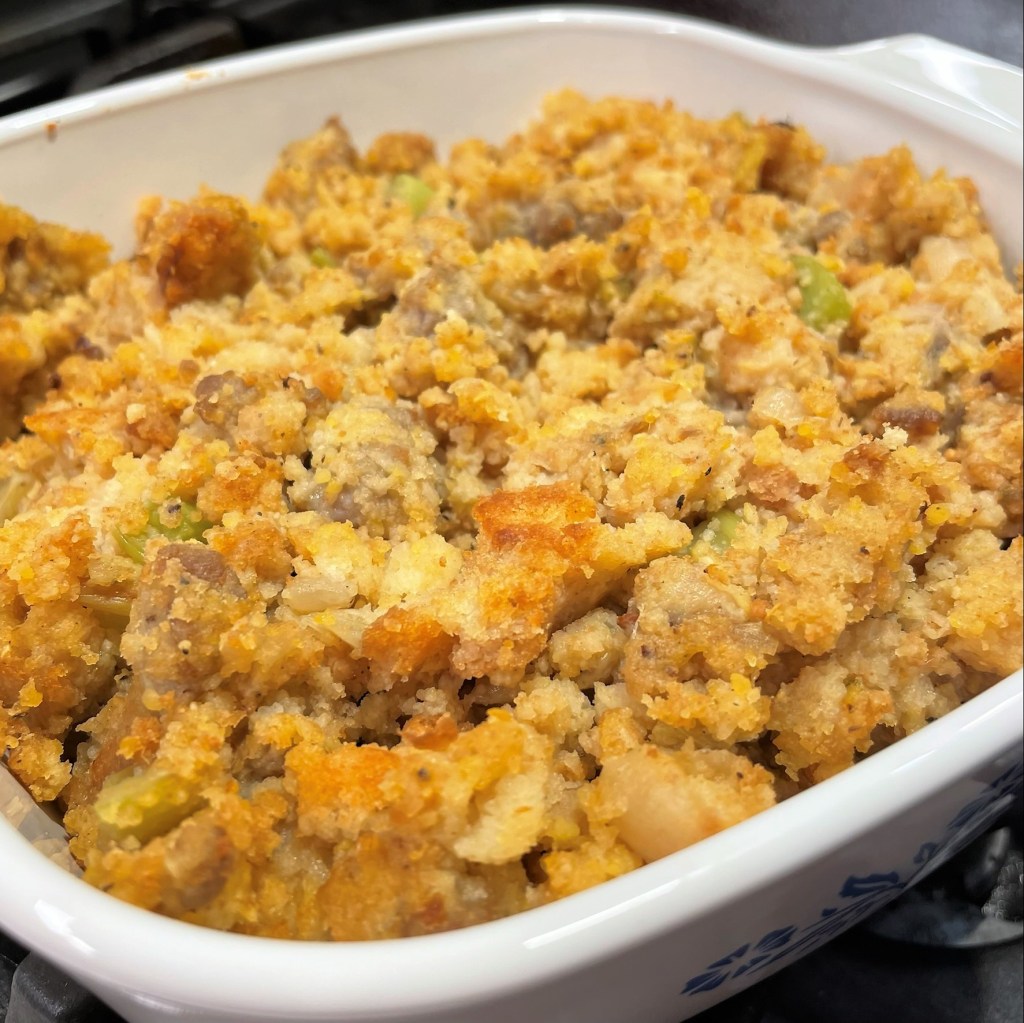
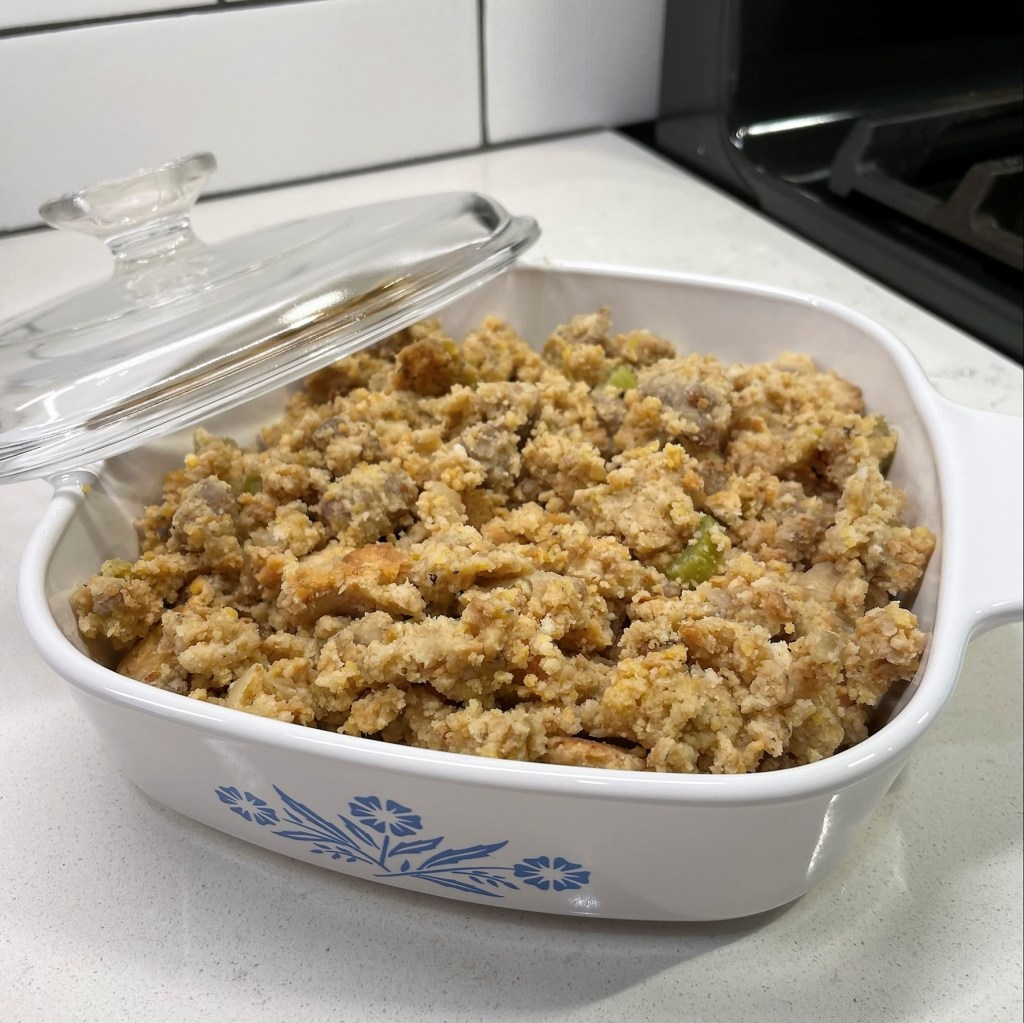
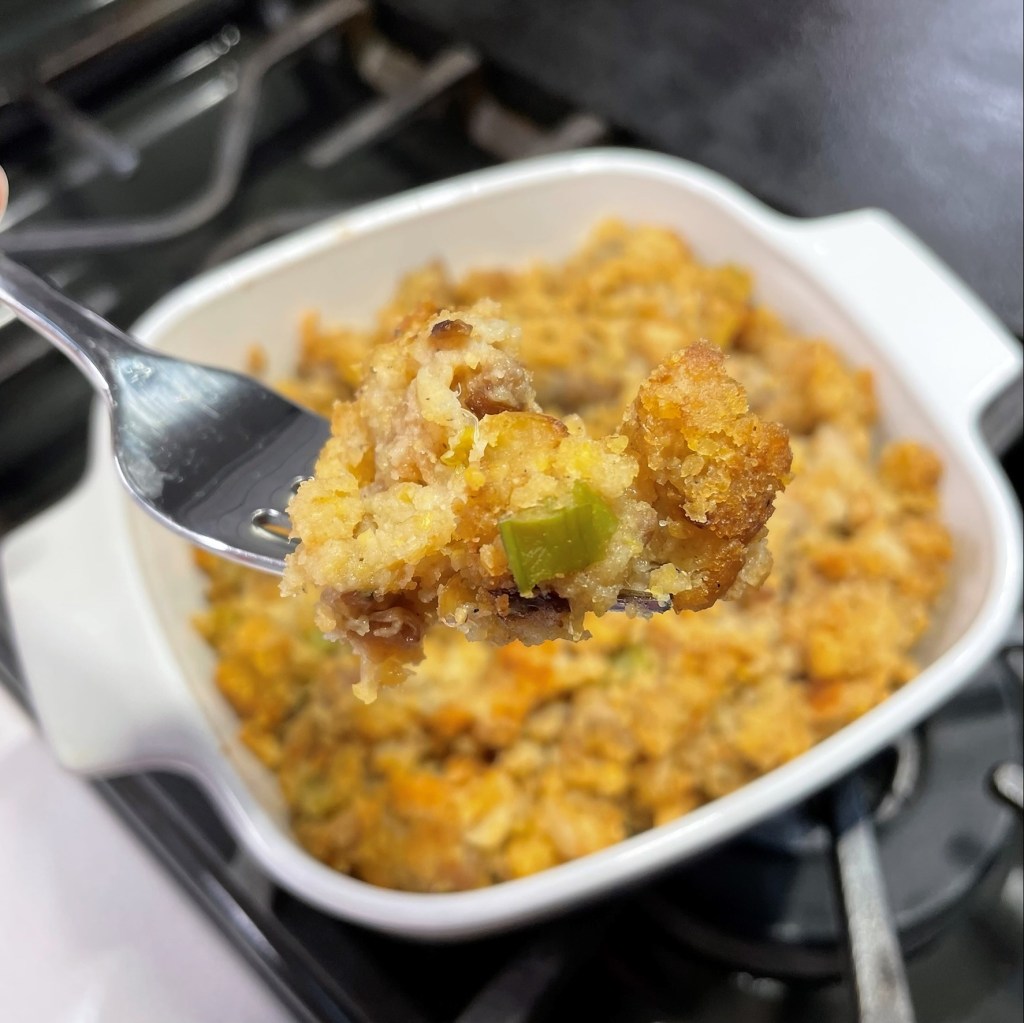
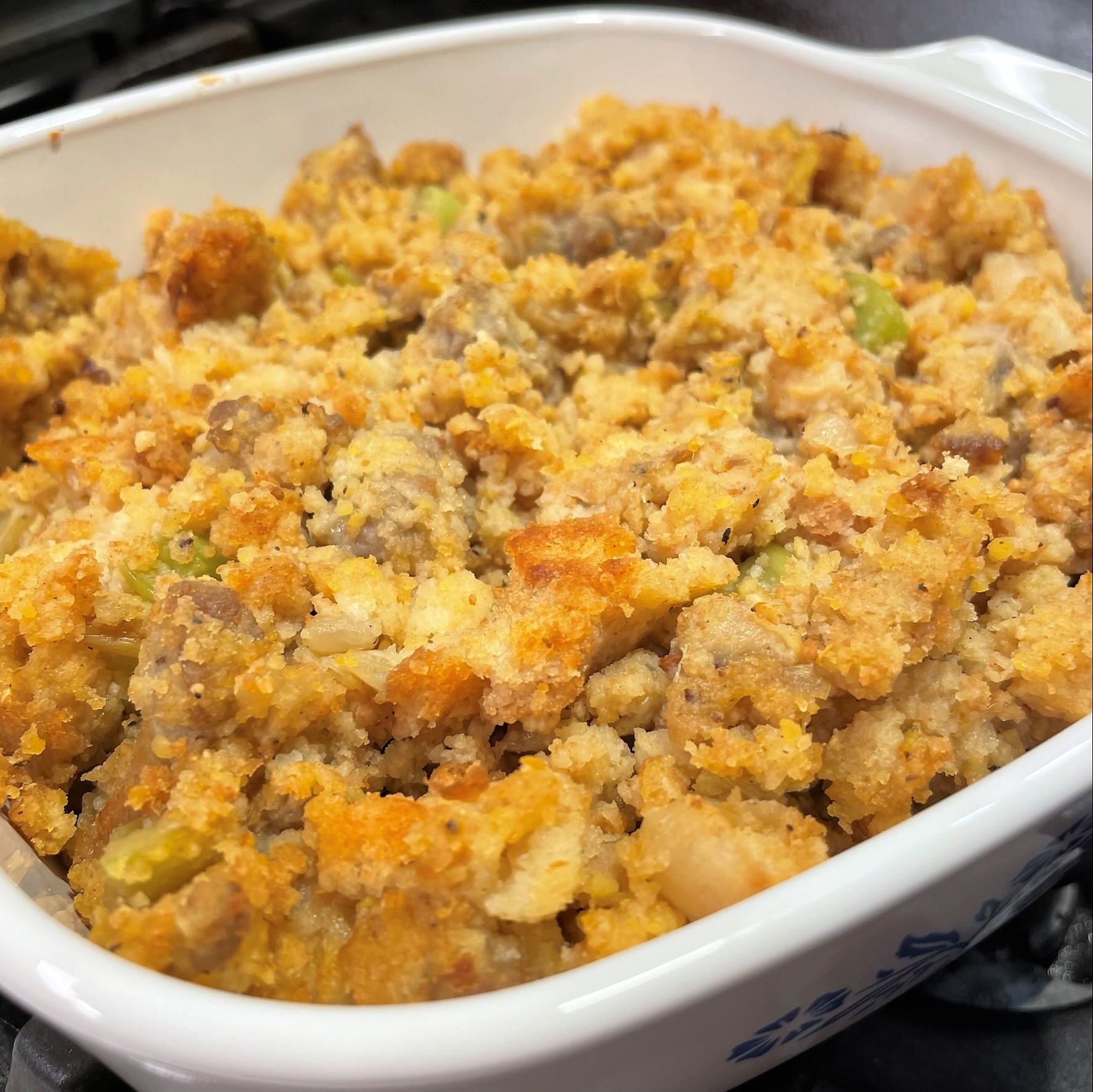
Now, I suppose you could technically use this mixture to stuff your turkey, if you do that sort of thing. As in most commercial kitchens, the policy at Pinch was to never stuff the bird because of the risk of food borne illness, and that’s a battle that I still face every other year when my hubby takes his turn with the turkey (yep, he stuffs it). My at-home version relies on the same clean and easy method we used back in the day— only, at home I’m baking it in a buttered casserole dish rather than a greased hotel pan. Sometimes I even “accidentally” make more dressing than my baking dish can accommodate and I wind up with a second dish that gets baked the day after Thanksgiving. That way, I can savor it twice for its lightly crunchy topping and the warm and fluffy insides.

Happy Thanksgiving, y’all!

Just as we did back in the day, you can easily prep this dressing the day before and bake it on Thanksgiving morning, then just warm it when it’s time for dinner. It travels well, too, if you happen to be going to someone else’s house for the big feast. However you go about it, please take my advice and make a large batch. You’ll be thankful for the leftovers! 

Southern Biscuit & Cornbread Dressing

  • Servings: 8 to 10
  • Difficulty: Average
  • Print

I used to make this dressing by the busload when I worked holiday season at a catering company. This scaled-for-home version brings together two beloved breads of the American South into a perfect dressing for Thanksgiving.


Ingredients

  • 1 batch cornbread (see recipe notes for suggestions)*
  • 8 buttermilk biscuits (see recipe notes)*
  • 1 pound bulk breakfast sausage
  • 1 medium sweet onion, chopped (or 1 leek, white and light green parts)
  • 3 ribs celery heart, strings removed and chopped
  • Kosher salt and freshly ground black pepper
  • Leaves from two sprigs of fresh thyme
  • A few leaves of fresh sage, finely minced (optional, depending on how sage-y the sausage is)
  • 2 cups chicken stock (or more, if breads are very dry)
  • 1 large egg

Batch size for the cornbread should be for an 8 by 8-inch pan. A Jiffy mix works great, but it’s a little on the sweet side. Try pre-made cornbread from your favorite bakery or use your own recipe. My favorite is Bob’s Red Mill whole grain cornbread mix. The only cornbread I do not recommend is a recipe that uses only cornmeal without flour; it would be too gritty for this dressing recipe.

Almost any biscuits will work here, and they certainly don’t have to be perfect. If you make a good drop biscuit, go with that. Rolled-out biscuits are great, and you don’t have to fuss over cutting them into rounds. Frozen biscuits work well (baked, obviously), but the twist-can biscuits don’t have quite the right texture. I have even used biscuits from a fast-food joint, but be mindful of the extra salt they contain.

Directions

  1. Cube or tear cornbread and biscuits into a large, open bowl or onto a parchment-lined cookie sheet. The pieces should be about 1-inch square; don’t make them too small or the dressing will be more like mush. Let the bread pieces sit out overnight to stale. Alternatively, you may choose to toast them lightly in the oven, but only long enough to stale them.
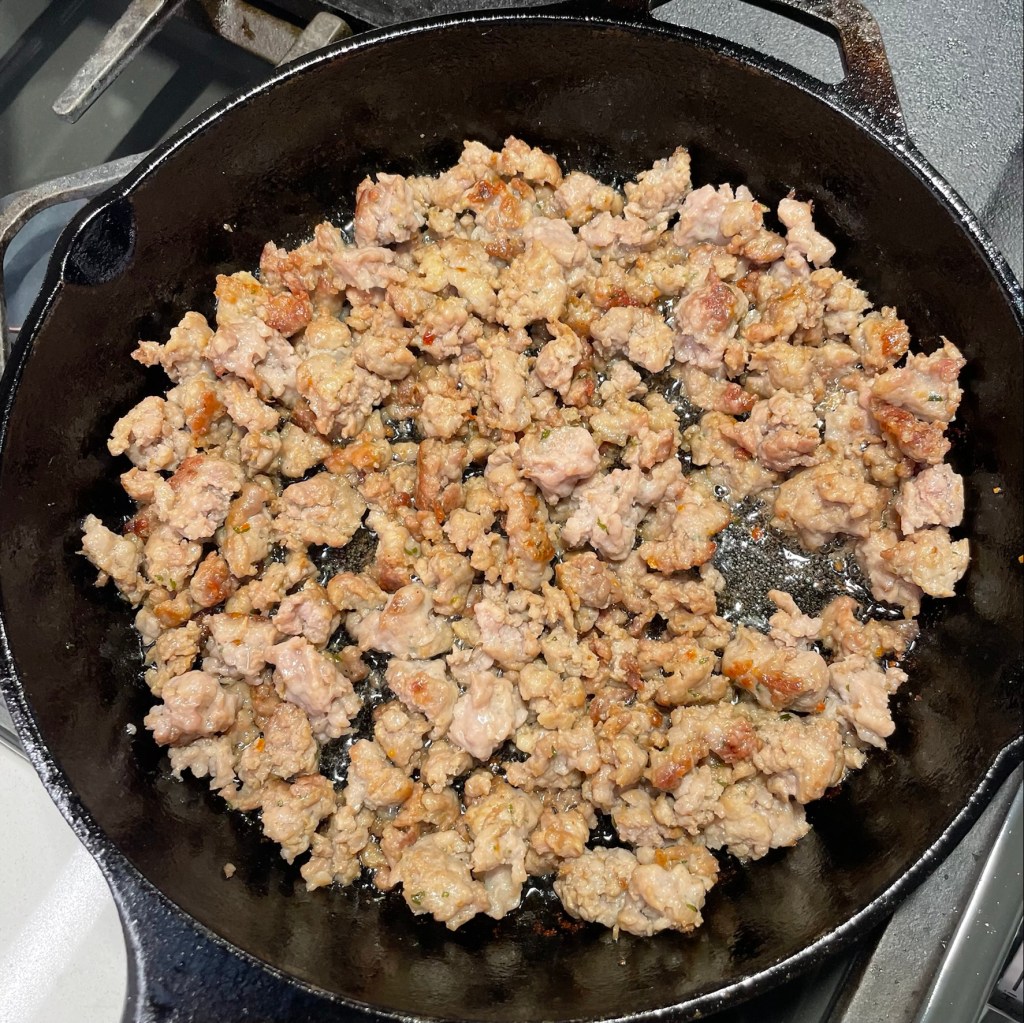
  2. Place a cast iron skillet over medium heat and cook the sausage until most of the fat has rendered and sausage is lightly browned, but not crusted. Transfer sausage to a large bowl and keep the drippings in the skillet.
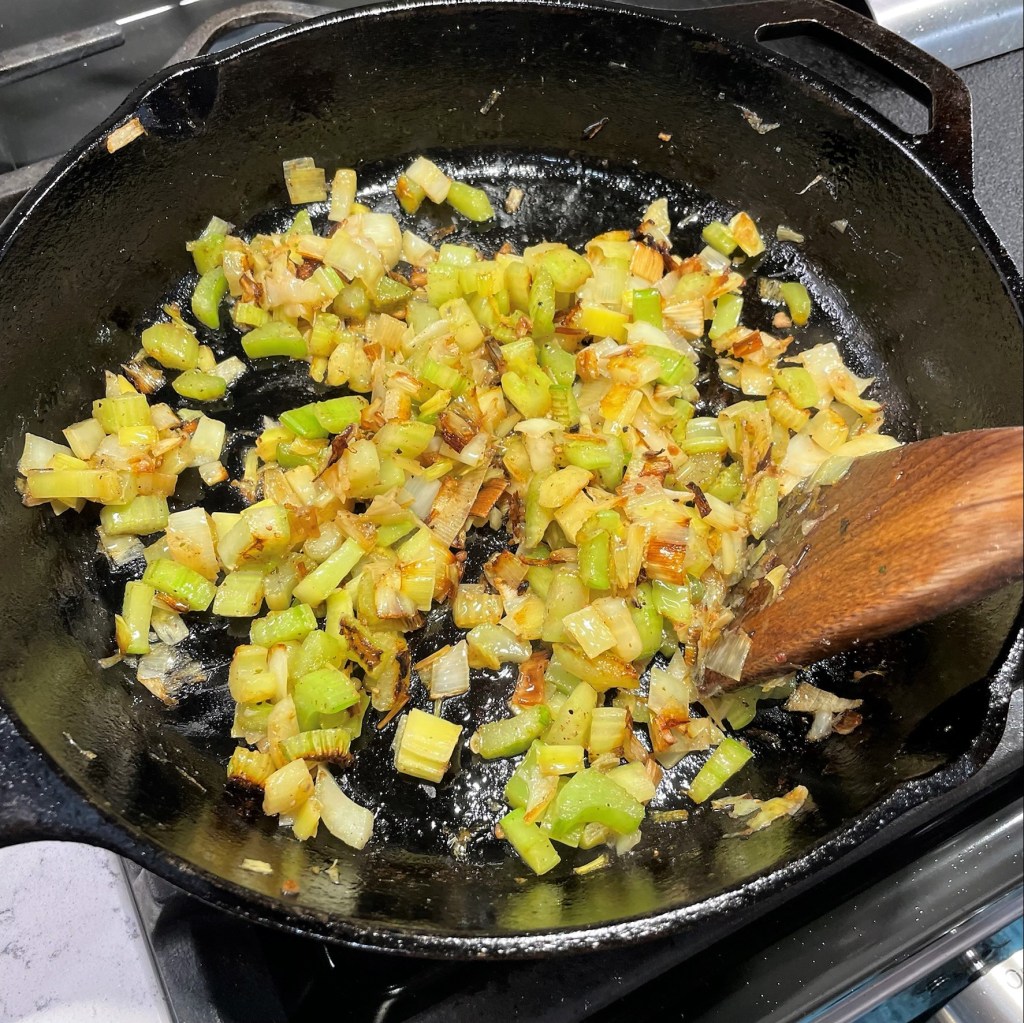
  3. Saute the onions and celery bits in the sausage drippings until they are soft and slightly caramelized. If the drippings are skimpy, add a tablespoon or so of butter. Season this mixture with salt and pepper to taste. Transfer entire skillet contents to the sausage bowl. Sprinkle thyme leaves (and minced sage, if using) over the mixture and toss to blend.
  4. While the sausage mixture is still warm, gently fold in the cornbread and biscuit pieces so that the lingering sausage grease will be evenly dispersed. Set this aside to cool slightly.
  5. Whisk egg and broth together in a large glass measuring cup. Pour half of it evenly over the dressing mixture and fold to combine, and then pour in the remaining broth-egg mixture. The dressing should be wet but not dripping. After the breads soak up the liquid, feel free to add a little more broth if the mixture seems too dry.
  6. Bake at 350° F for 35 to 40 minutes. If you want a very moist, soft dressing, bake it with a foil covering. For a firmer dressing with slightly crunchy top, bake uncovered. I usually split the difference, covering it with foil for the first 15 minutes then removing foil to finish it.


“It Takes Two” Spaghetti & Meatballs with Sausage

Terrie asked me to write about our adventures in cooking in the new kitchen, what it’s like to share space with her now that our renovation makes that less difficult, and specifically this fabulous Italian meal that we made together on a recent Sunday.


But as a starting point, I want to share a little about how this came to be our house. I actually moved into this house on Sept. 30, 2006. It was amid divorce—and I’d found the house, a three-bed, two-bath ranch with a bonus “loft” room—while searching with my daughter as we looked for a place zoned for the high school she wanted to attend two years hence. This was my fifth house as an adult. I’d lived in each of the others for about five years. When I moved into this one, I was thinking it would be the shortest of all, two or three years before I figured out what I wanted to do long term and would be on the move again.

Yet here I stayed, largely because I liked Winston-Salem and when my newspaper job went away in early 2011, I didn’t feel like chasing journalism anymore. I guess I felt I had accomplished what I wanted to, and I didn’t need the disruption of uprooting to find a job in a profession that was constantly shedding jobs, especially of veteran editors like myself who were paid more. So I left journalism and wound up taking communications/marketing jobs, and through two of those, as well as graduate school for my new chosen profession (clinical mental health counseling), I stayed.

Through the growing relationship with Terrie, who moved in Thanksgiving 2016, I stayed.

We began to look for an “our house,” but everything we looked at was either too expensive or didn’t have the yard or neighborhood that would allow our pets the freedom to be outside. Once we decided this is the home where we would make our stand, the decision to fix the major things was easy. First, last spring, was a new roof. Next up was the kitchen, and, having built a house and having remodeled another house (including, principally, the kitchen), I felt confident that we would get what we both desired—more confident, perhaps, than Terrie was at first.

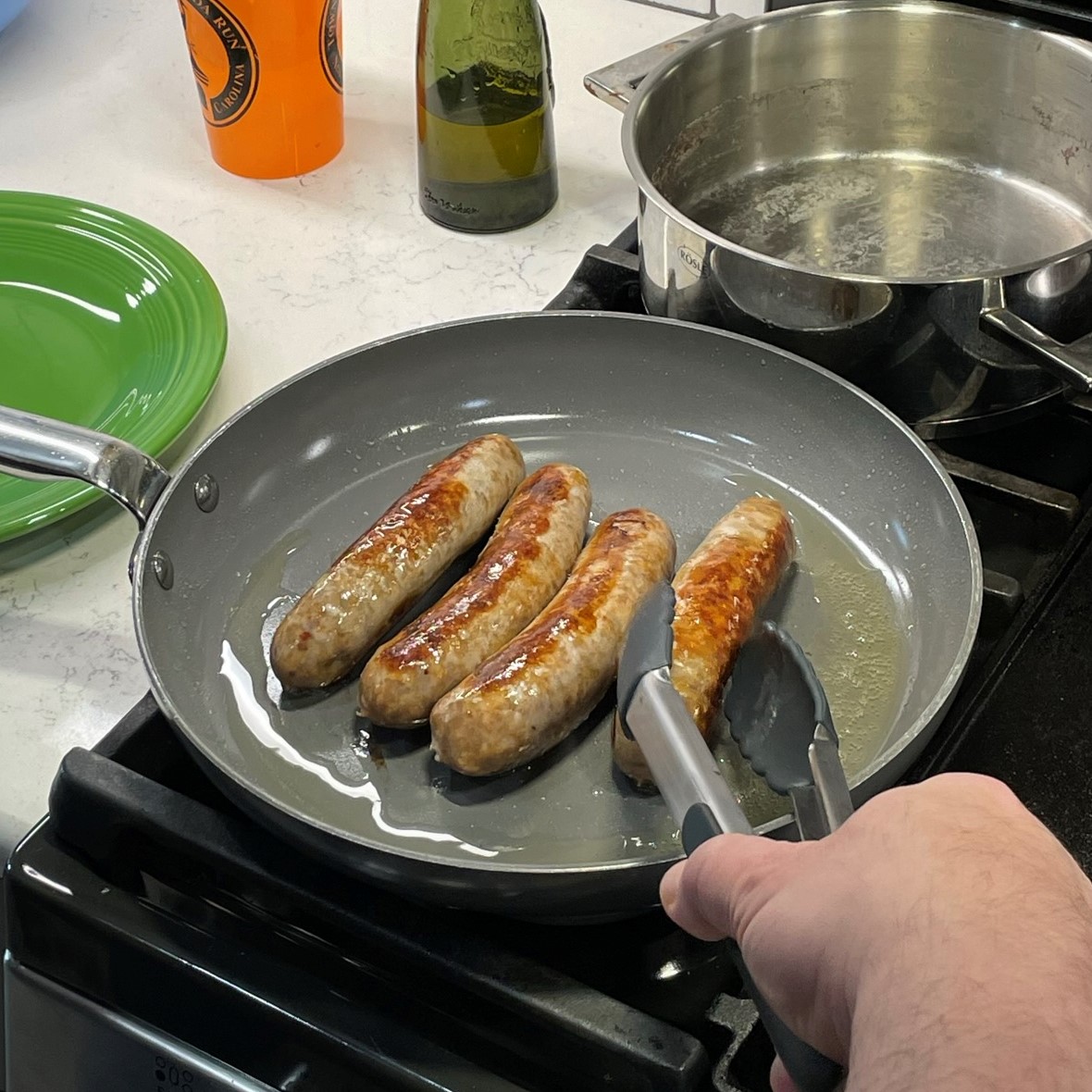
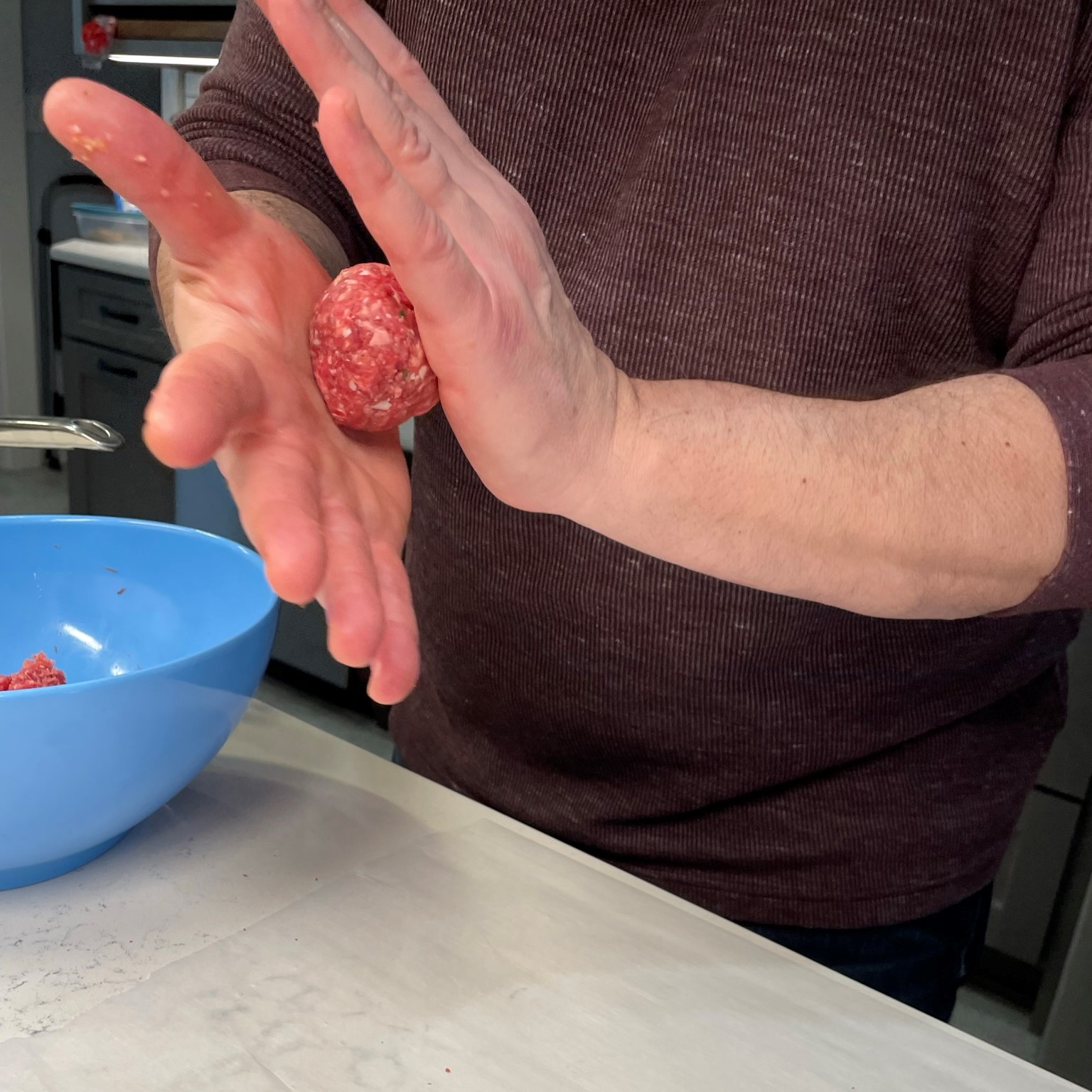
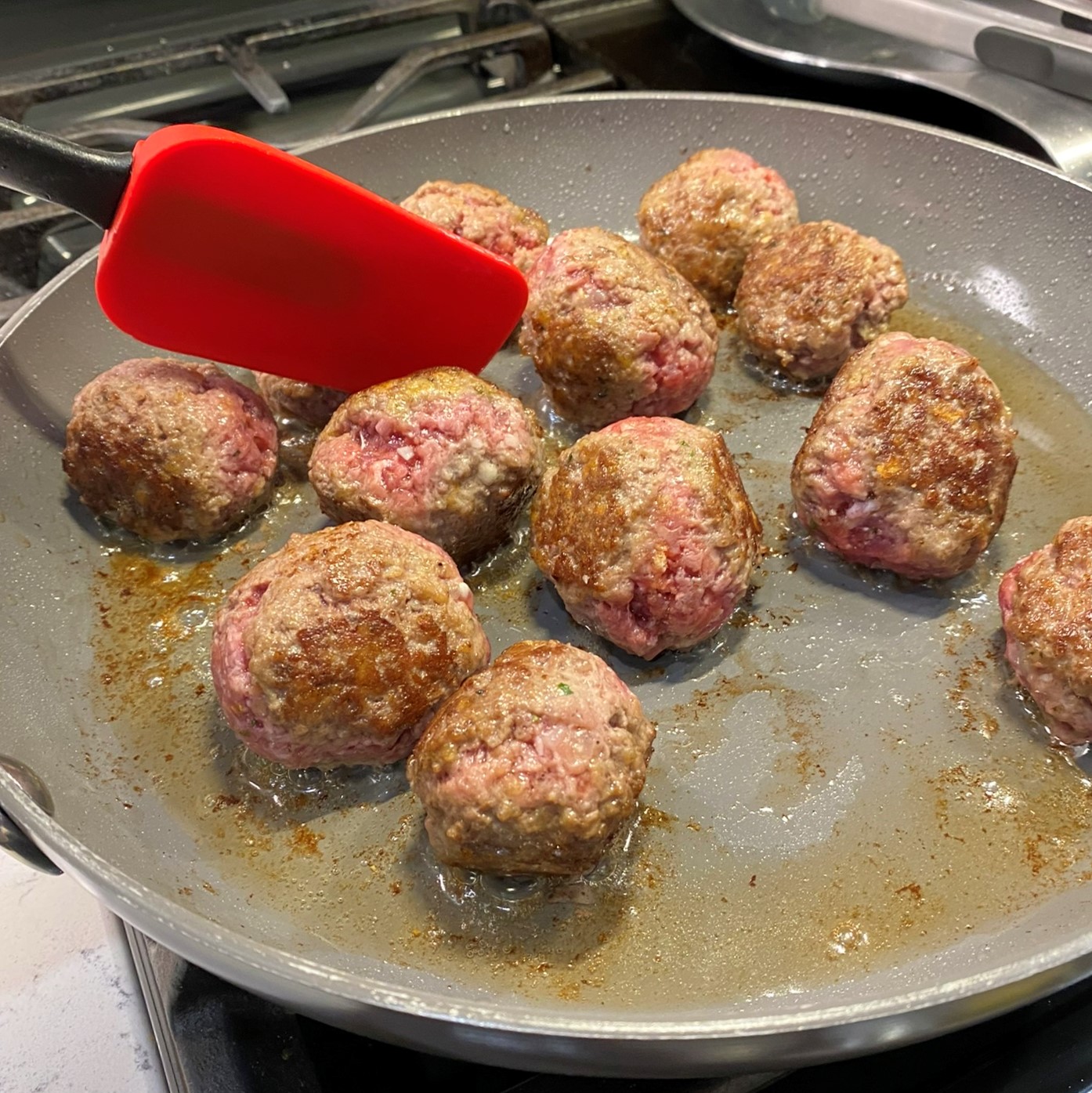
So now it’s done. And it is, indeed, beautiful, as you have seen in some of Terrie’s posts to date. If you missed it, you’ll want to circle back and check out the big reveal of our new kitchen. Although we have frequently been in the kitchen together (that was the point, after all, behind much of the work), this meal was the first collaborative dish we’ve made in the new kitchen. And I had the “lead” role for this meal, doing something I love to do—cook Italian food. I suggested this meal to Terrie because I knew we had a good amount of leftover Italian sausage in the refrigerator from the Sausage and Cherry Pepper Pizza we’d recently made (it has been in hot rotation since our trip to New Haven).

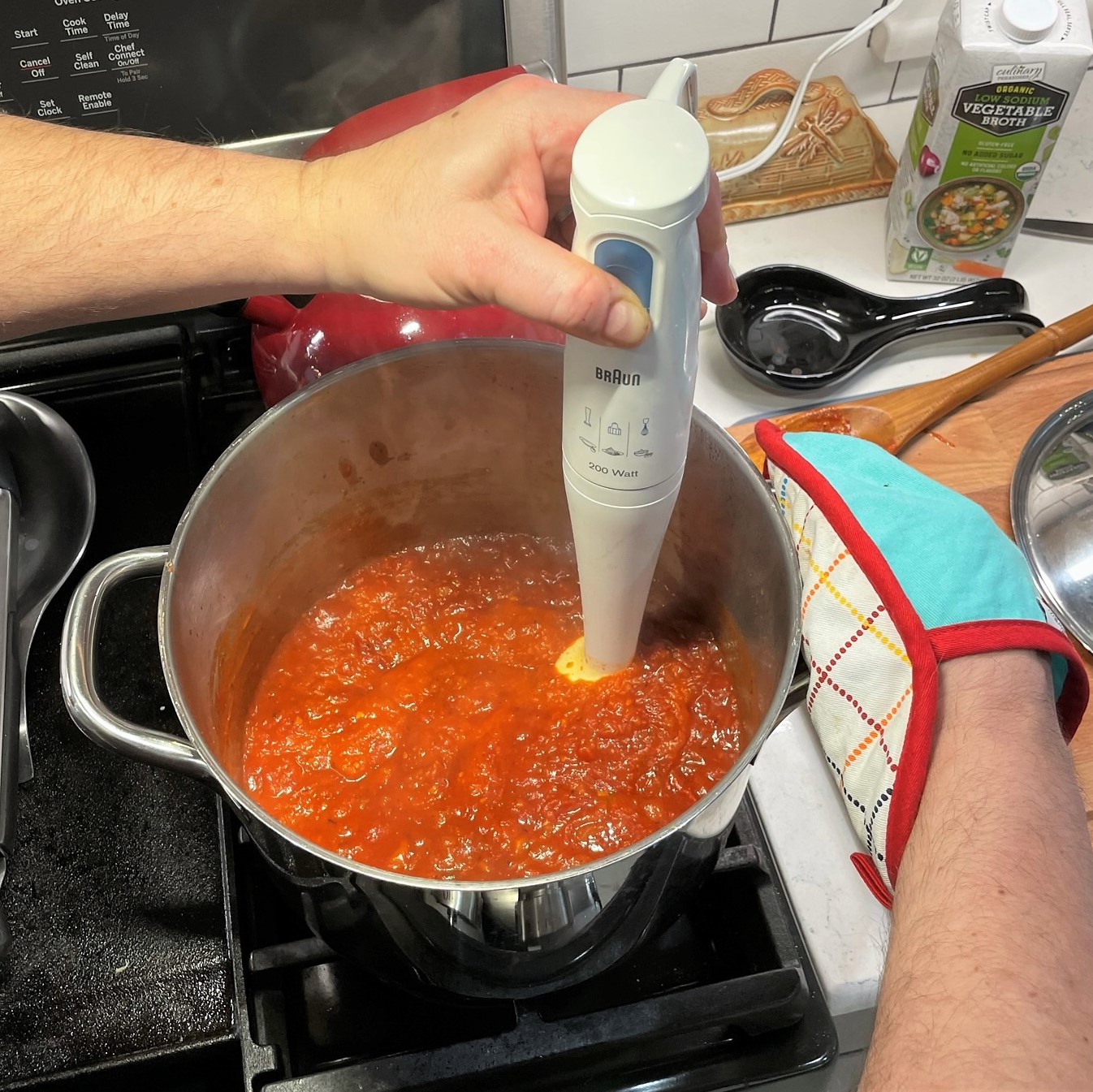
One of the things I’ve learned to do during my seven years total with Terrie is pick up techniques that make a meal better. I love how she can elevate a meal, and though I am sometimes timid to try some of the more advanced techniques, I don’t mind an occasional foray into the unknown (for me). So the main thing I did differently this time was to use Terrie’s immersion blender (I guess by now I should call that “our” immersion blender) to smooth the sauce. But you can get all the details below in the recipe portion. My big share is about how the new kitchen works as a shared space during a meal we prepare together. My point of view is that the day went swimmingly.

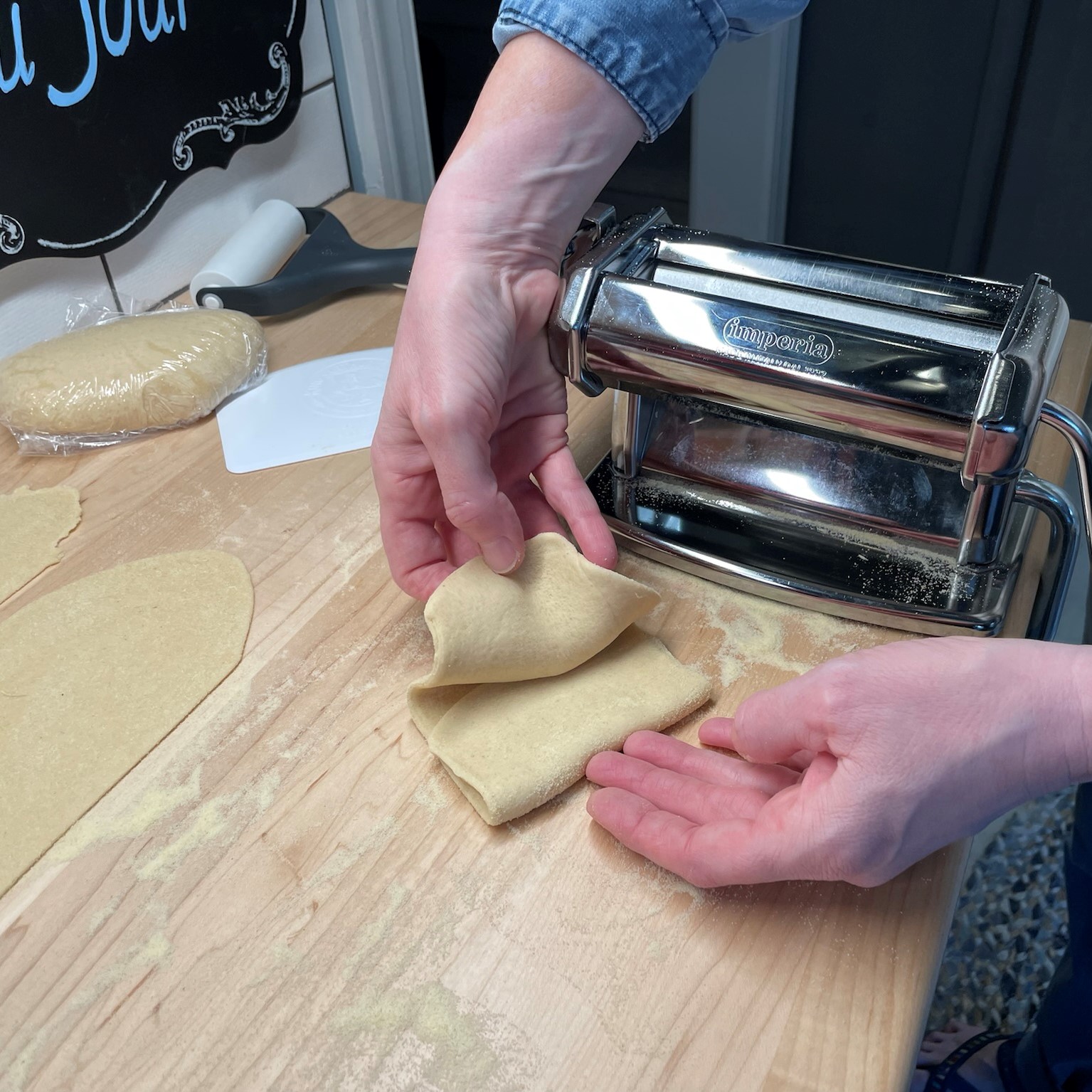
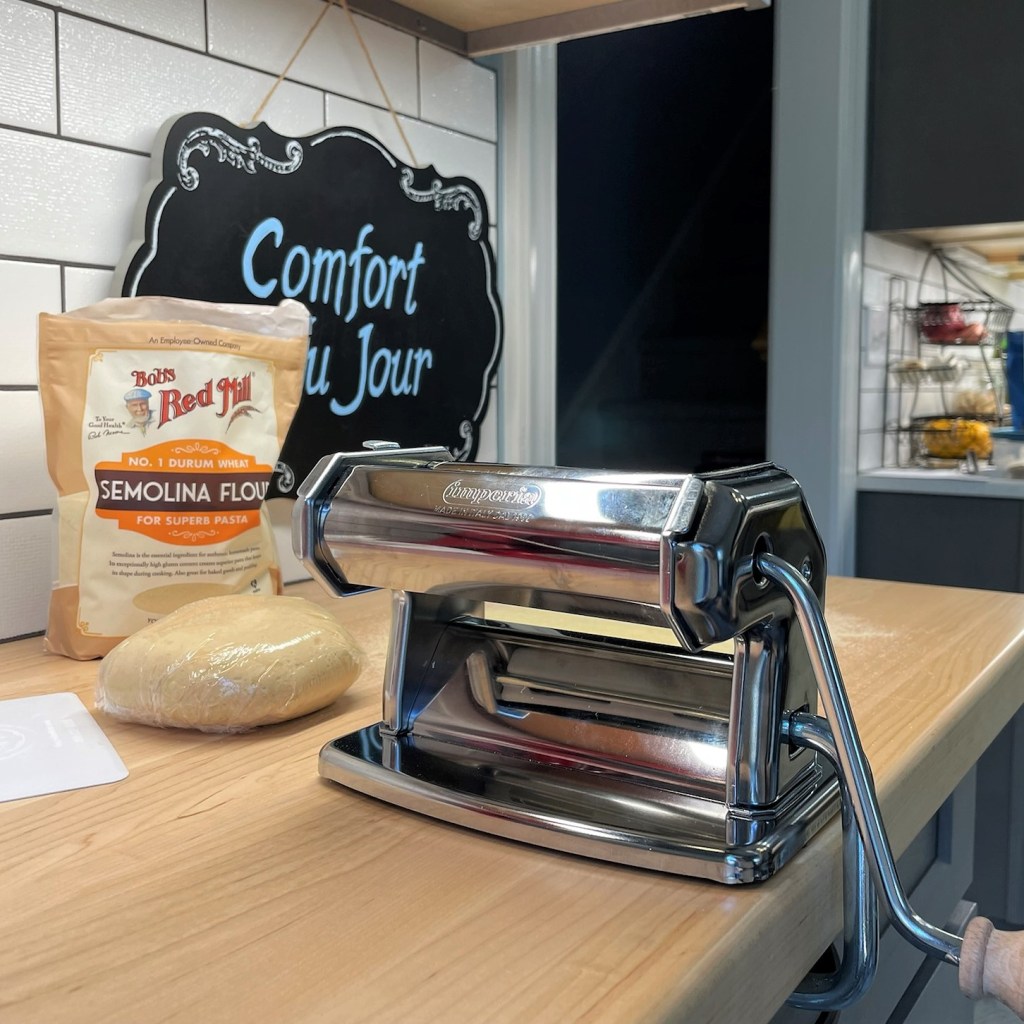
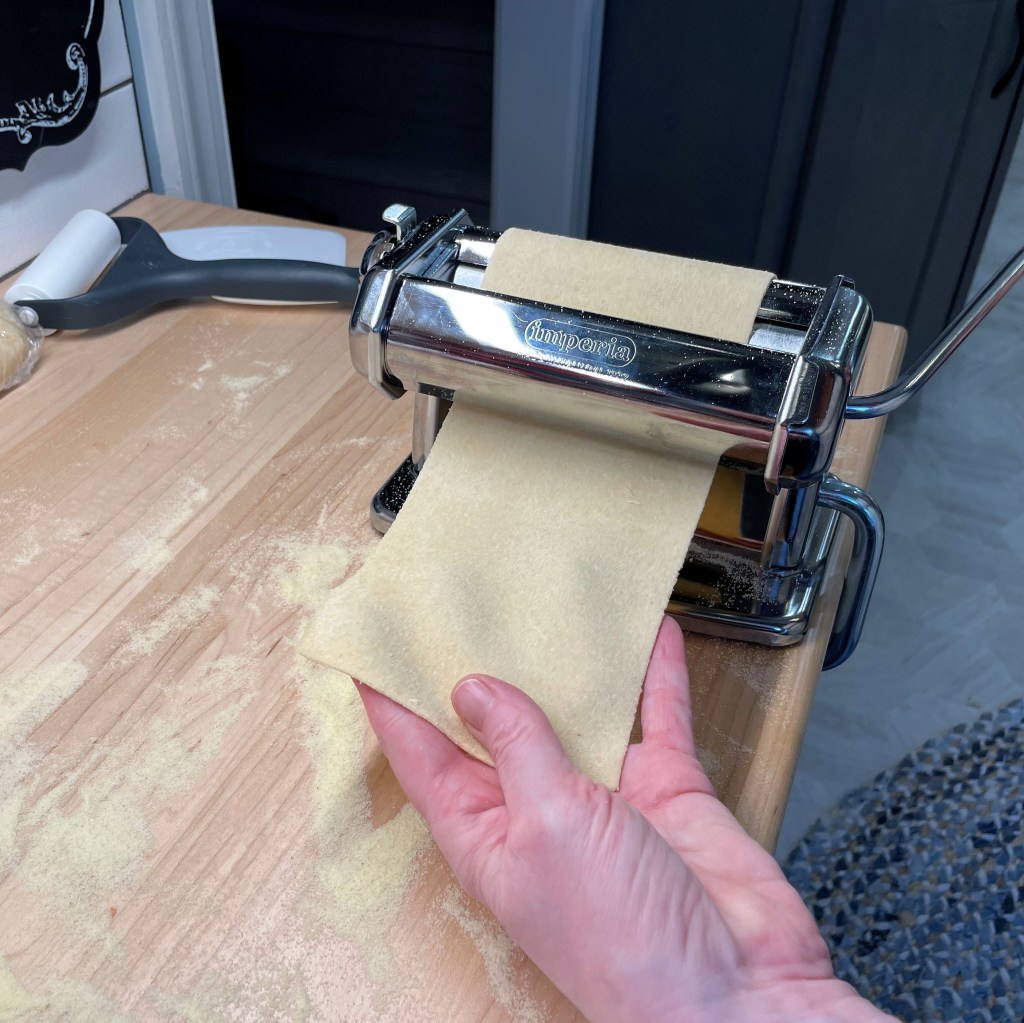
I had the primary two stations on either side of the stove as I went from prepping vegetables and sauté work on the right of the stove to prepping and cooking the sausages and meatballs on the left. All the while I was working, and it was about 90 minutes, Terrie was at her new baking station in the bistro section of the room, preparing the homemade pasta, using tools of her trade that worked better in the new space (especially a larger overhanging ledge to clamp her pasta machine, as well as the maple surface).


We didn’t get in each other’s way once! Now, I will say that as we keep working, we’ll be closer together, but the new kitchen takes care of that, too. If Terrie works the two stations on either side of the stove, I have a nice new long station on the left side of our kitchen sink, available thanks to some minor re-arranging of space in the room. With taller, roomier cabinets, we’ve been able to de-clutter the countertops, thus creating the three clearly defined workspaces, which doesn’t even include the baking station, in effect a fourth workspace.

I’m looking forward to many other dual-prepared meals, as well as my typical role of sous chef, aide and kibitzer-in-chief; I now fulfill the latter role from my perch at our new bistro table next to the baking station.

Next up in transforming this house I’ve lived in since 2006 into “our house?” The master bath remodel, on tap for a March start. Don’t hold your breath waiting for the post about us cooking together there. But trust me, we will.

We’re staying.


Les’s Italian Sauce with Sausage and Meatballs

The ingredients and steps are all listed in the PDF Terrie has attached at the end of the post, but we hope you enjoy seeing our adventure.

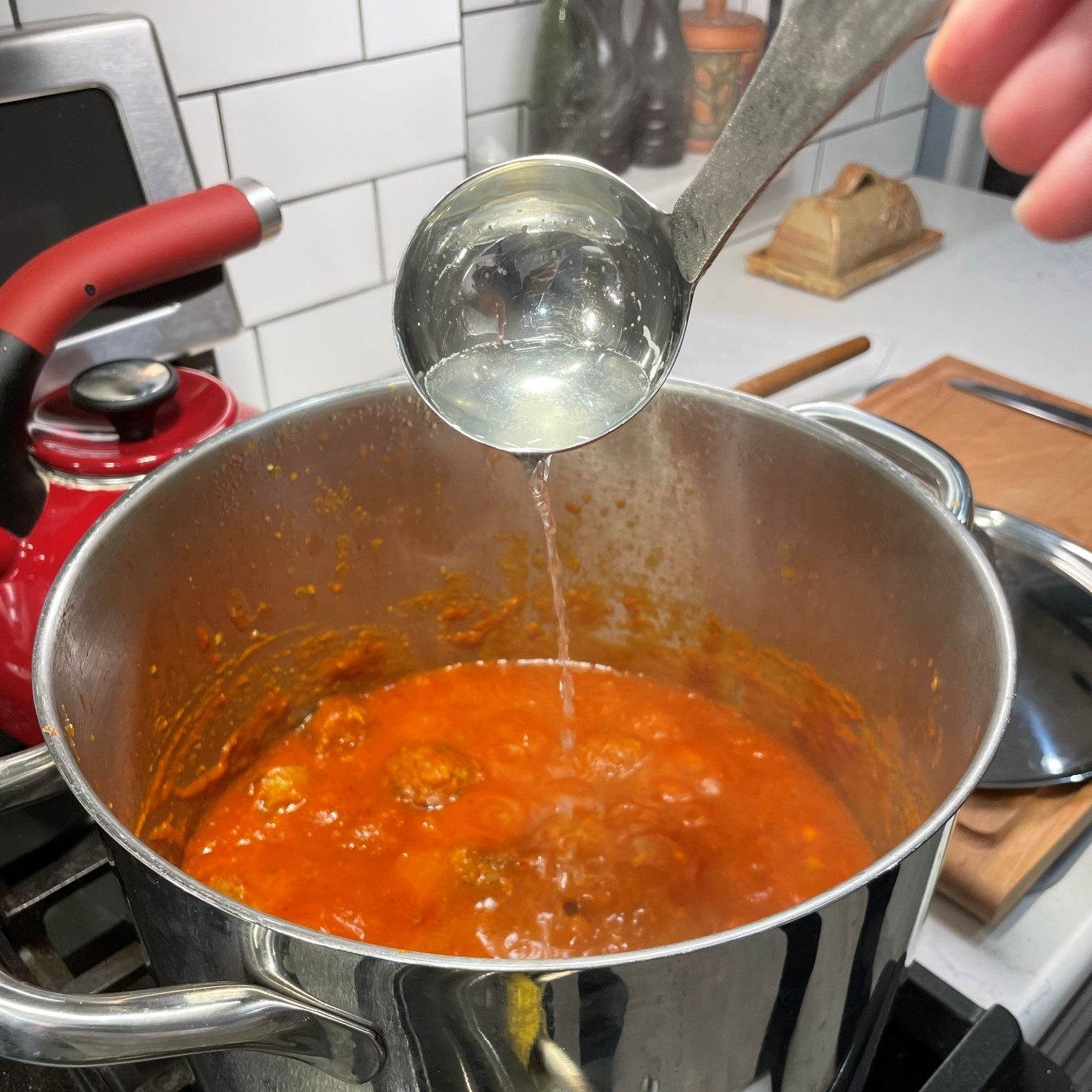
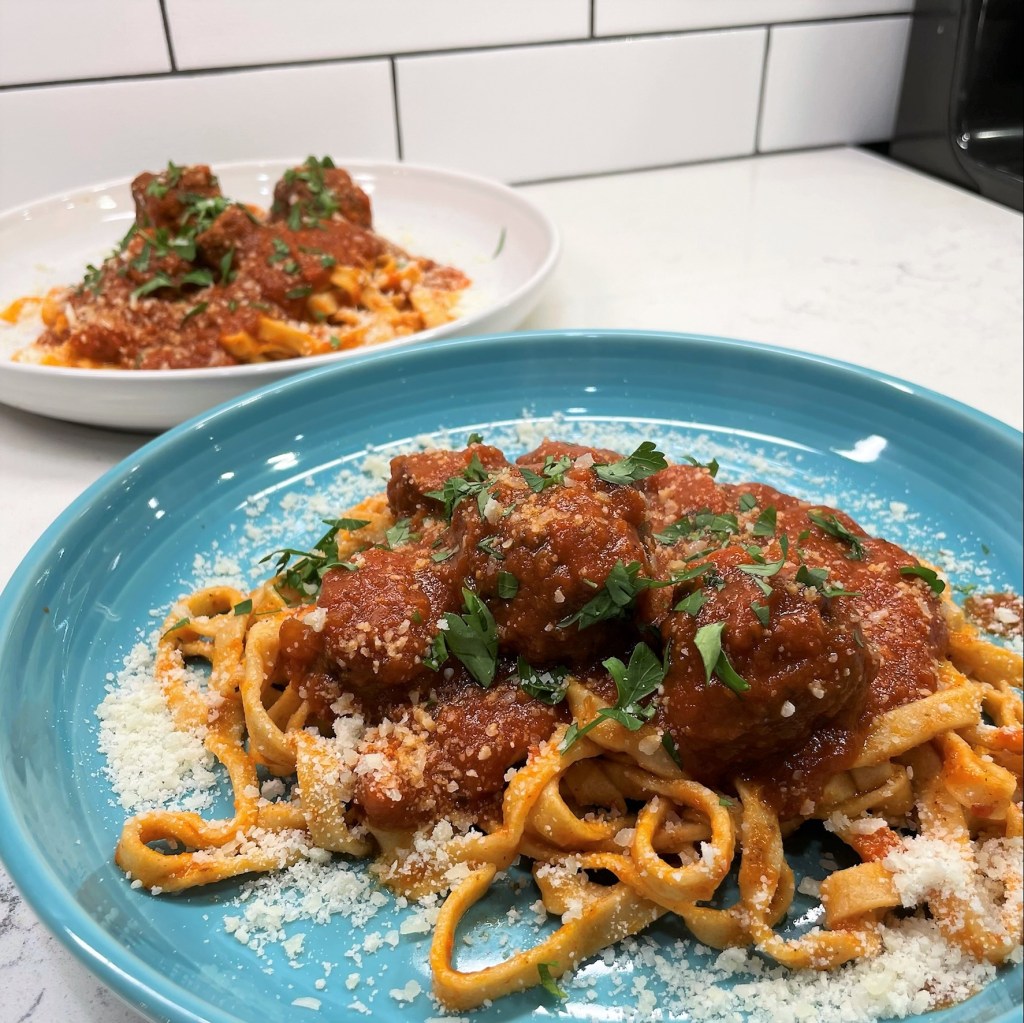
I’ve seen Terrie use an immersion blender on everything from soups to mac and cheese sauces. I decided to try it here, and processed my Italian sauce until smooth. I had vegetable stock on hand to help with blending the thick sauce. Then, I added the cooked meatballs and sausage to the pot and simmered until the pasta was ready.

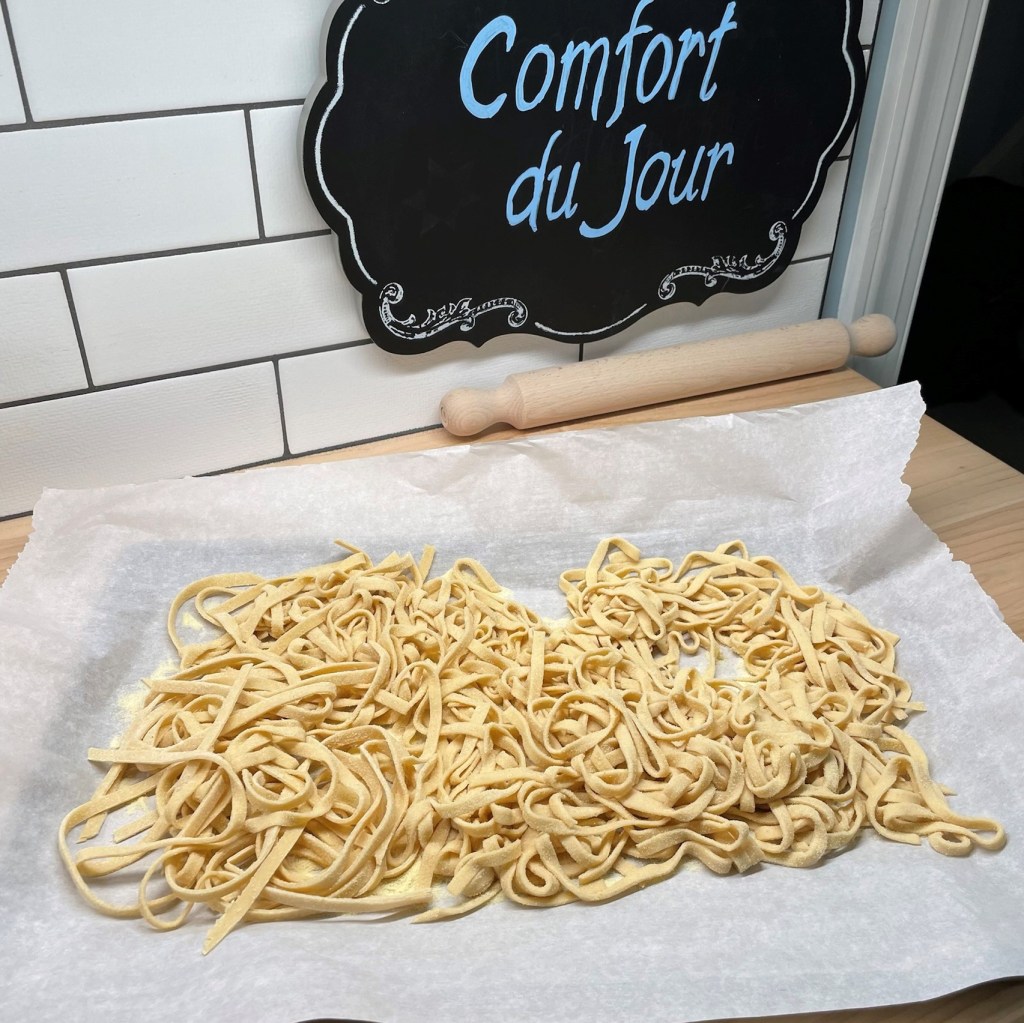
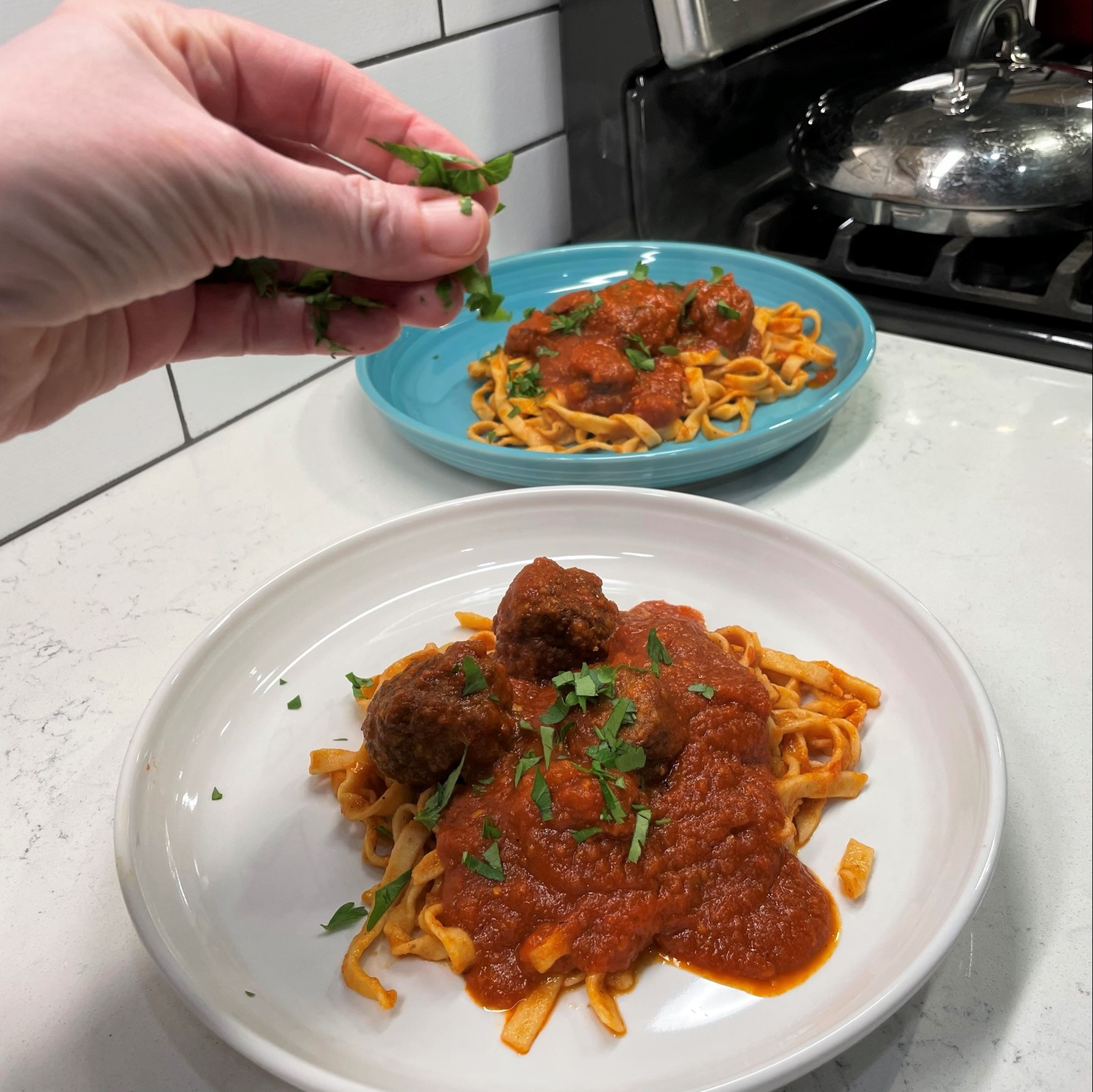
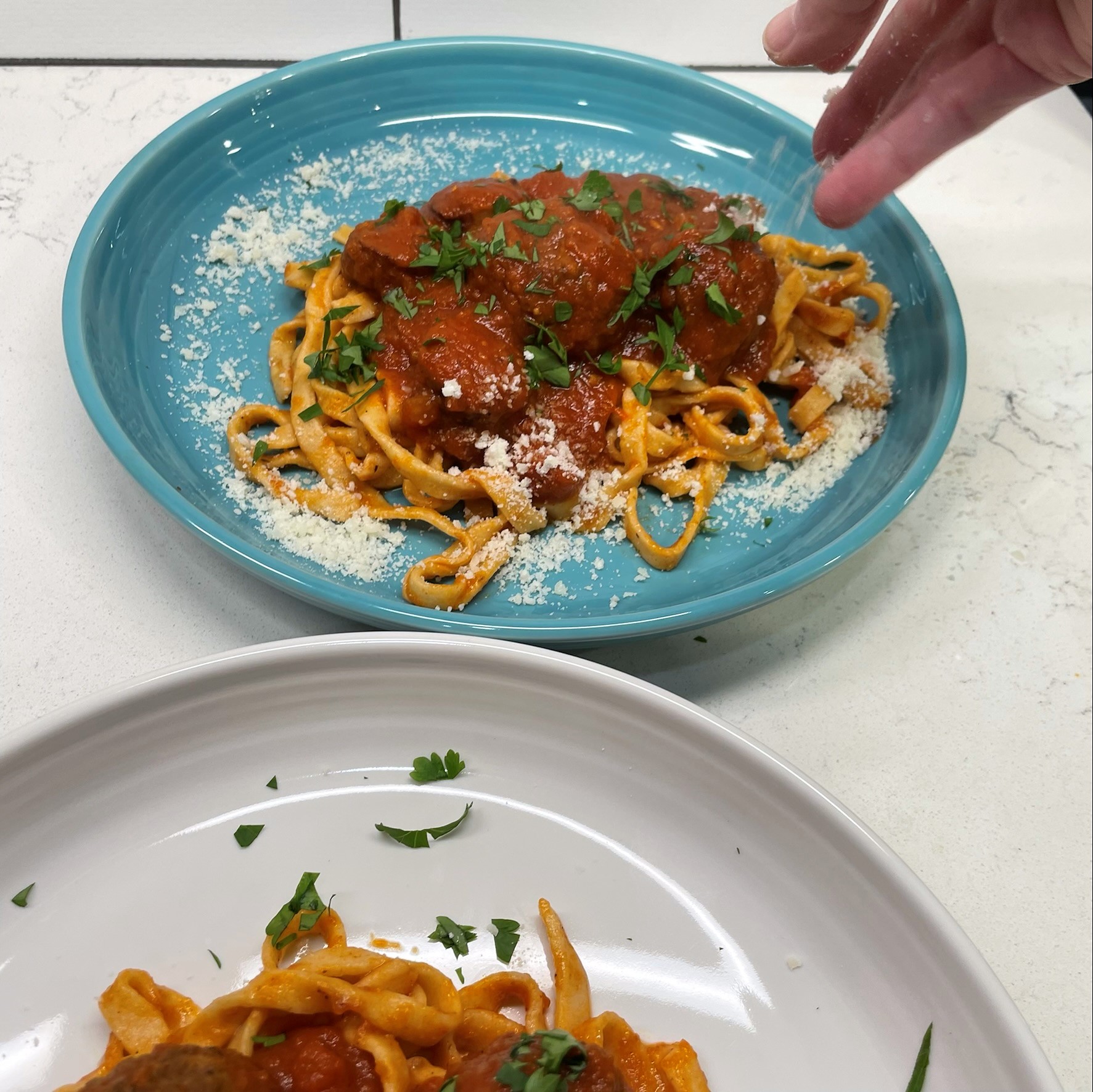
Any kind of long pasta would be great with this sauce, but we enjoyed it on Terrie’s handmade pasta. This was her first experience with making pasta in the new baking station. The rest of this story is hers.


Terrie’s Roasted Garlic Pasta Dough

Welcome to my happy place. ❤

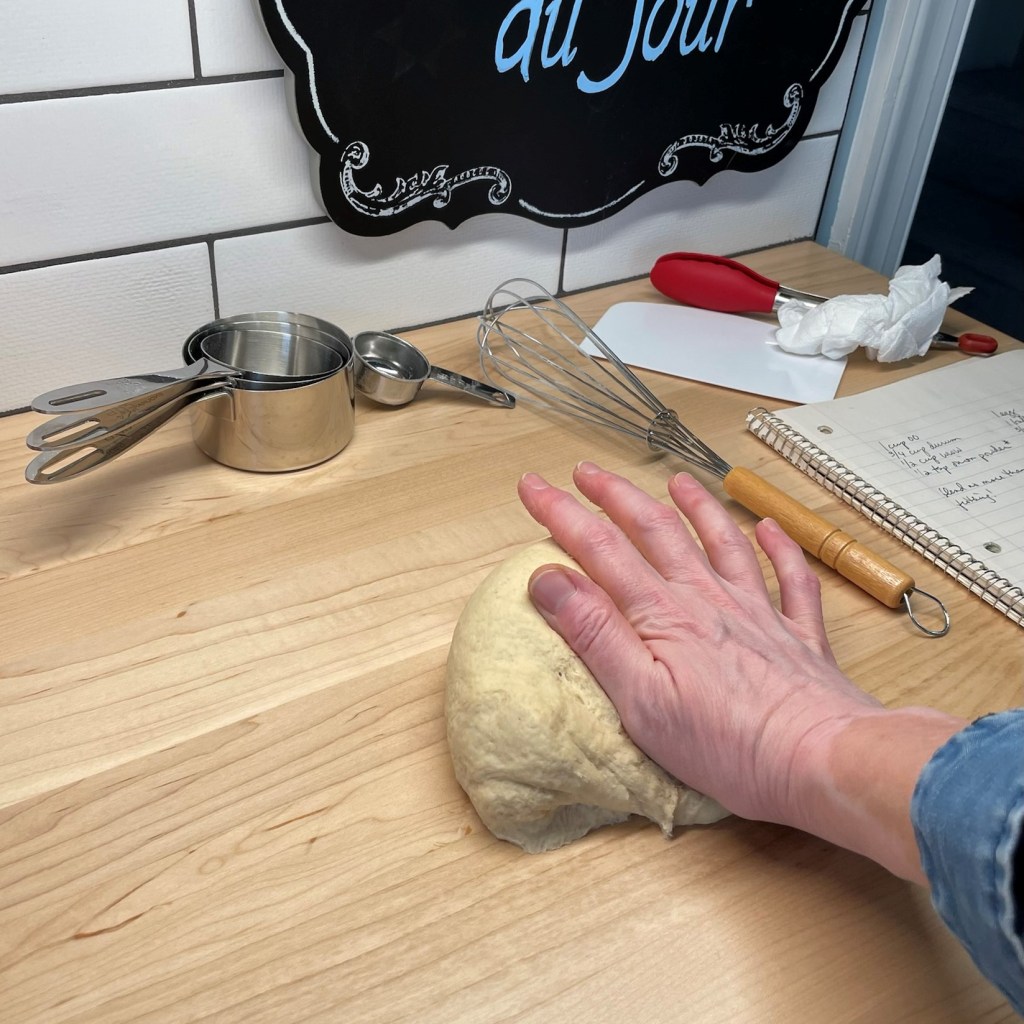
Of all the foods I make from scratch, handmade pasta is one of the most rewarding. As with so many things that once seemed intimidating to me, this is all about practice and repetition, and once you develop a feel for it, store-bought pasta loses its appeal. Besides the cool factor of DIY-ing this versatile food, I find it deeply therapeutic to transform flour, water and egg into a dough that can be stretched so thin and turned into noodles, all under my own hand. It’s awesome, and having a dedicated space in our new kitchen makes it even better.

I like to add fun flavors to my standard pasta dough, and this time I went for roasted garlic, blended right into the dough to complement Les’s rich Italian sauce. If you are already making your own pasta, I hope you find the roasted garlic a tasty addition. If you aren’t, or if you’re new to the process of pasta making, I encourage you to check out my posts for lemon-herb pasta or spinach-ricotta ravioli, as I offer more in-depth instruction there for making and working the dough. This time, I’m focusing mainly on the flavor and formula.

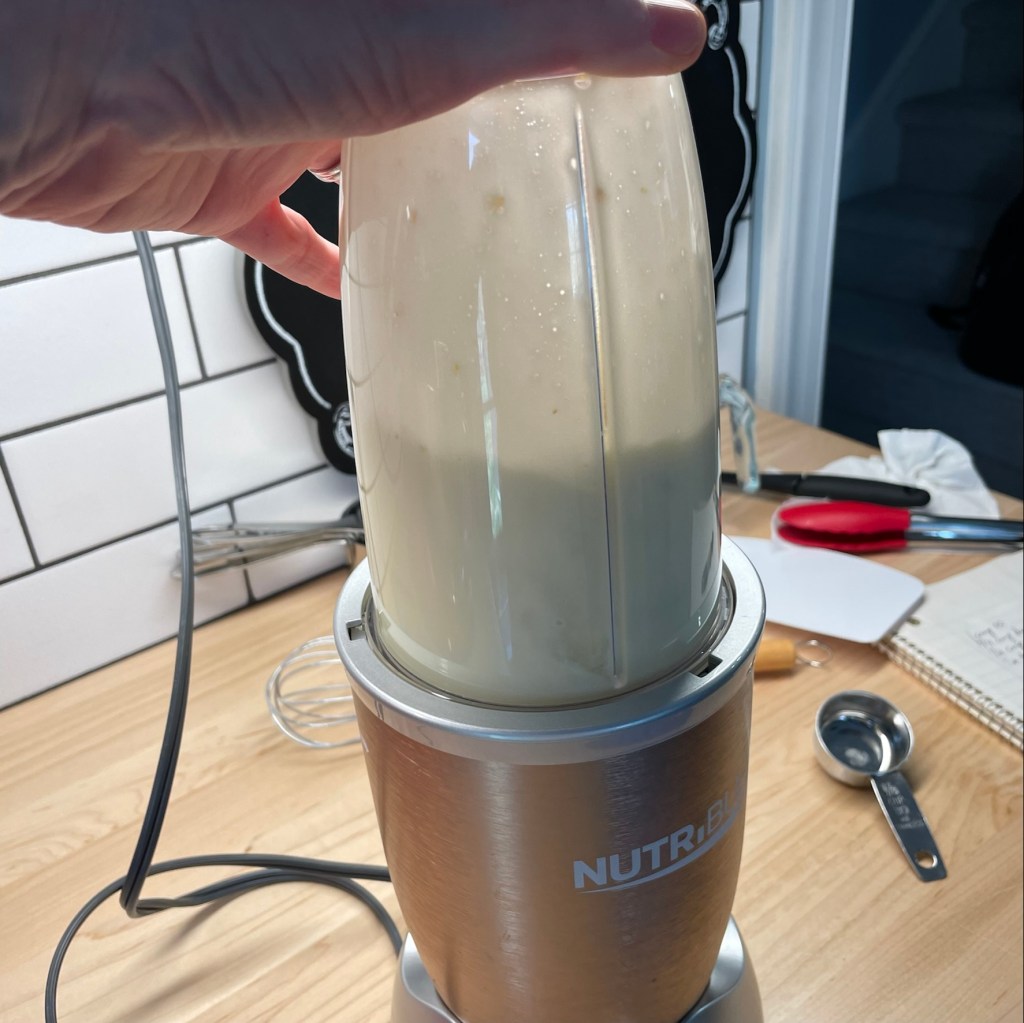
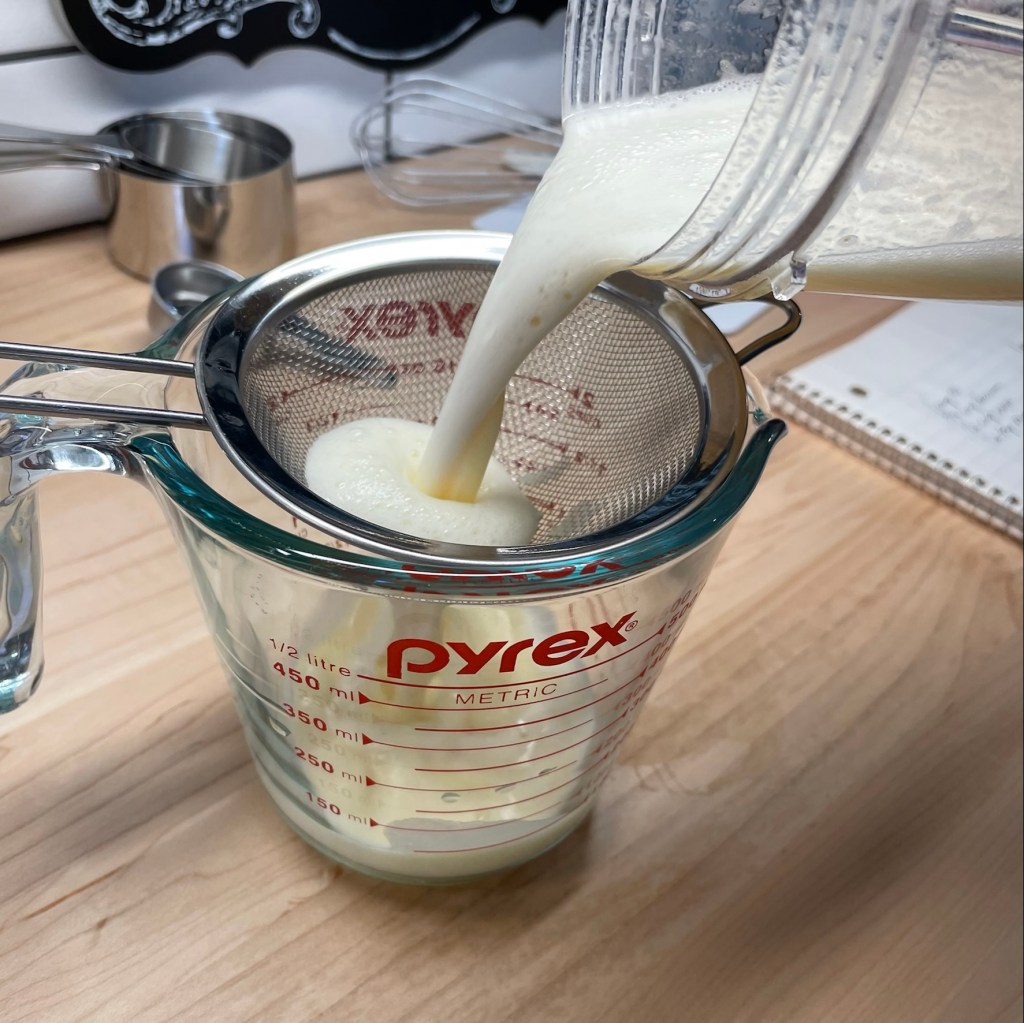
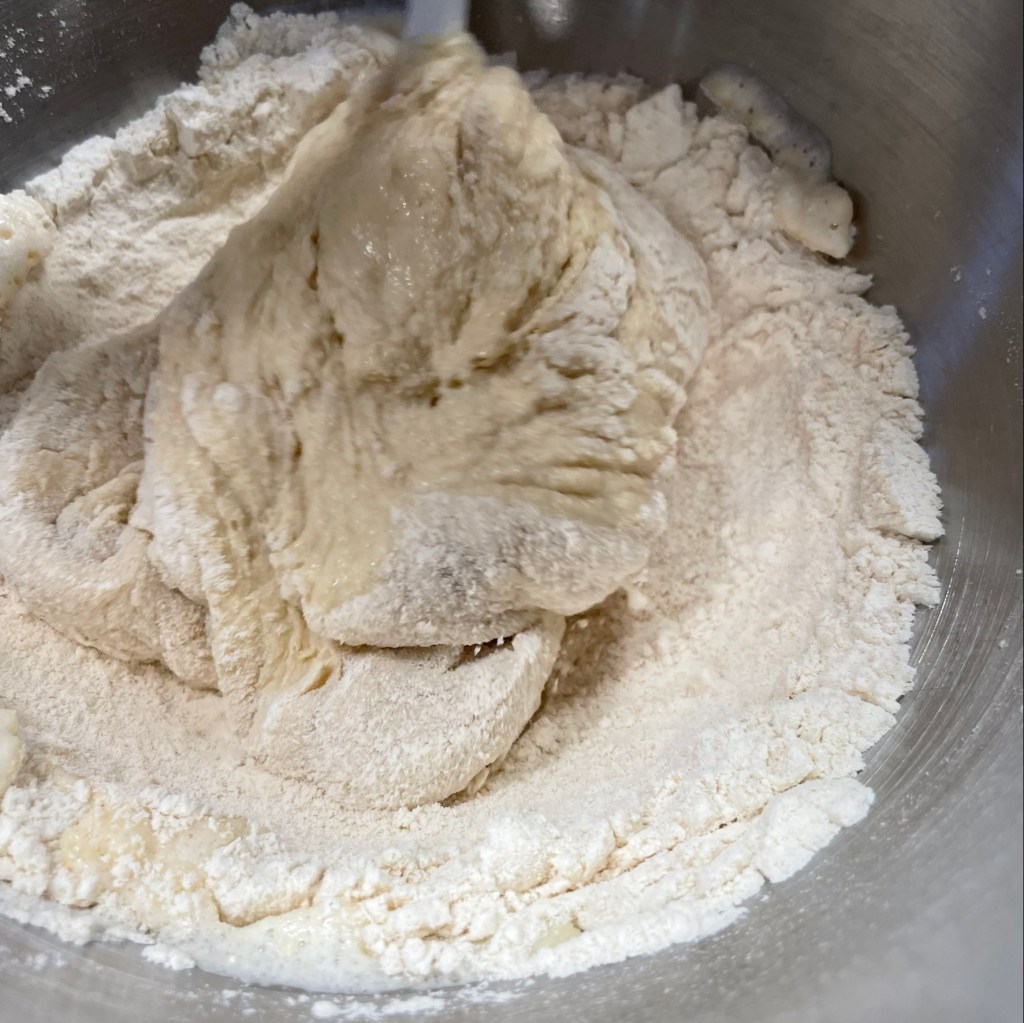
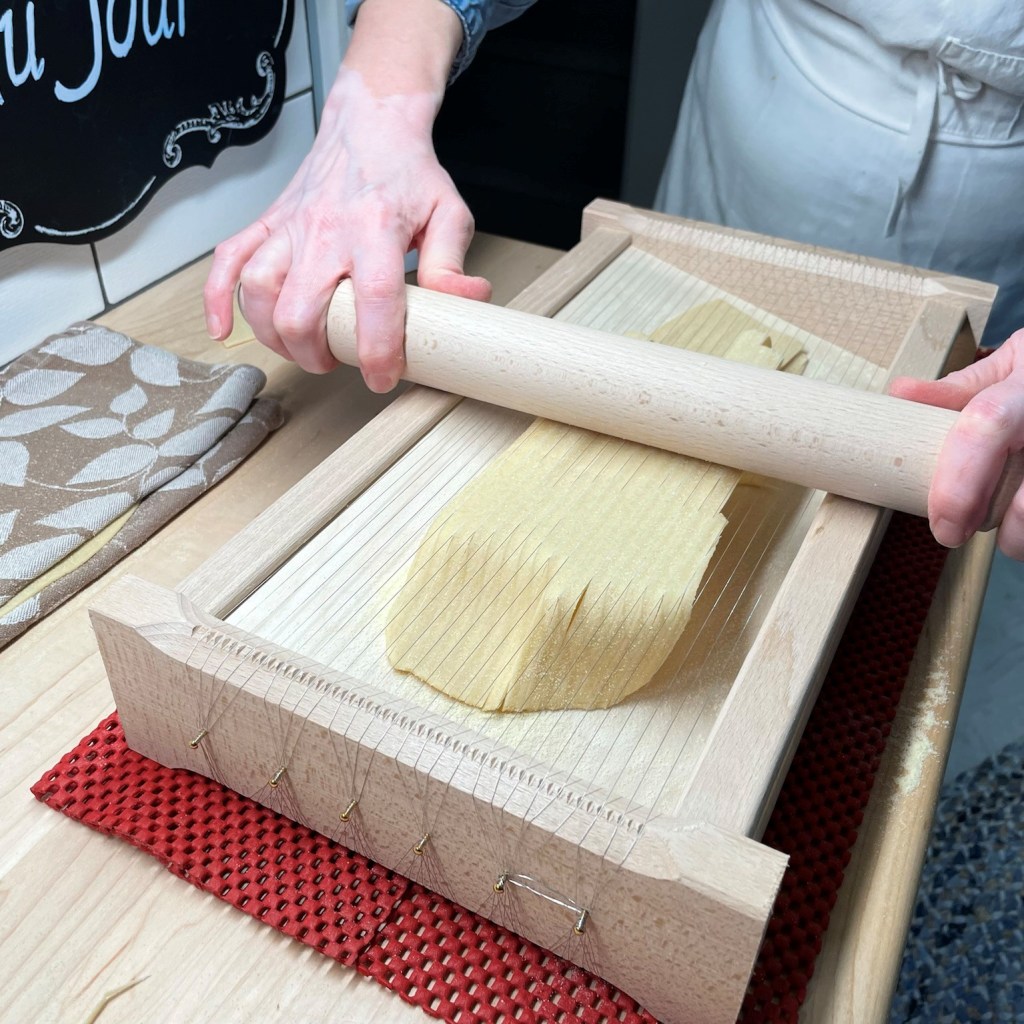
To infuse the roasted garlic into the dough, I pureed it together with egg and water, then pressed it through a small mesh strainer to keep the chunky solids from messing up the dough. I strengthened the dough by rolling it through my pasta machine, as usual, but used a chitarra for the first time to cut the dough into strands. Here’s how it went!


Putting it all together

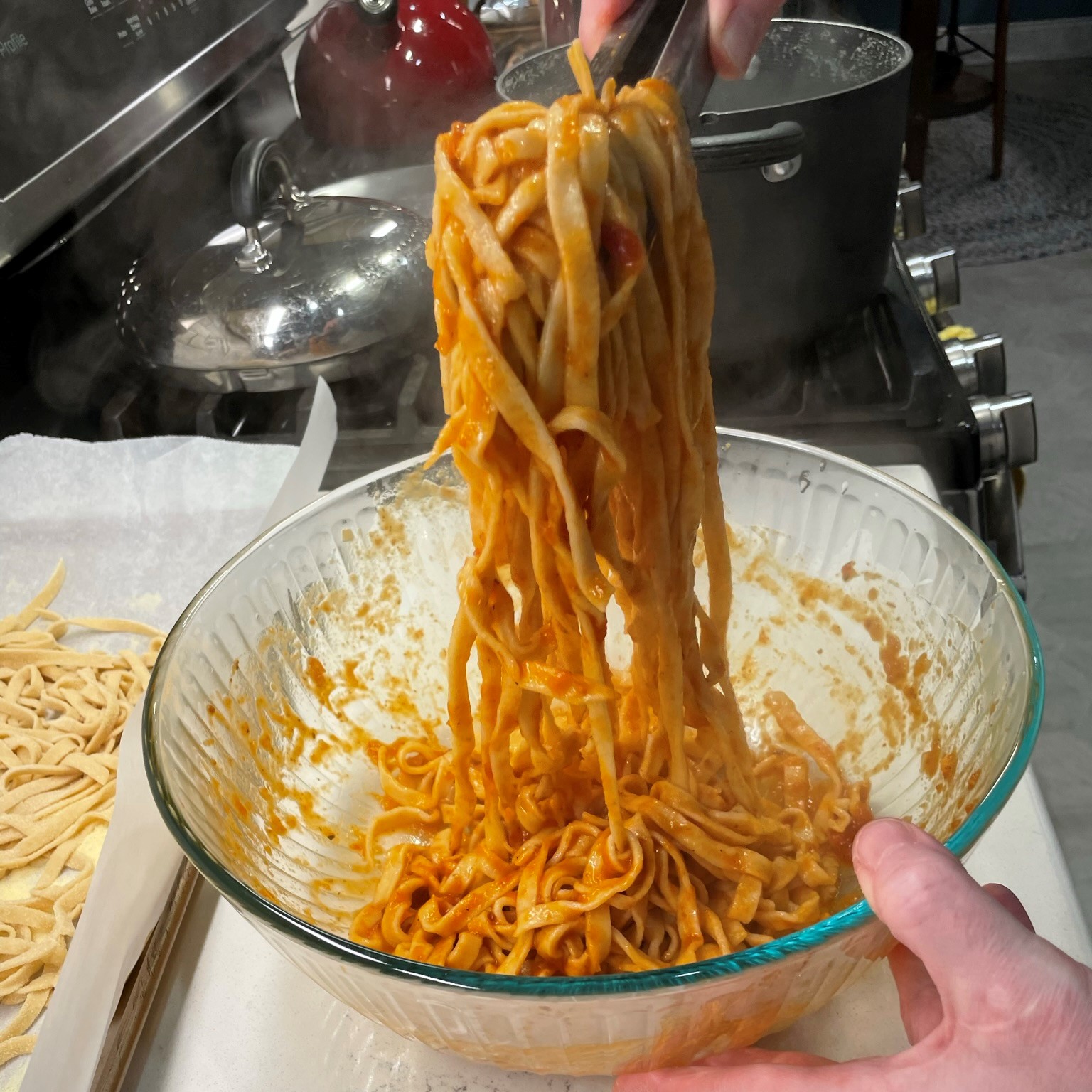
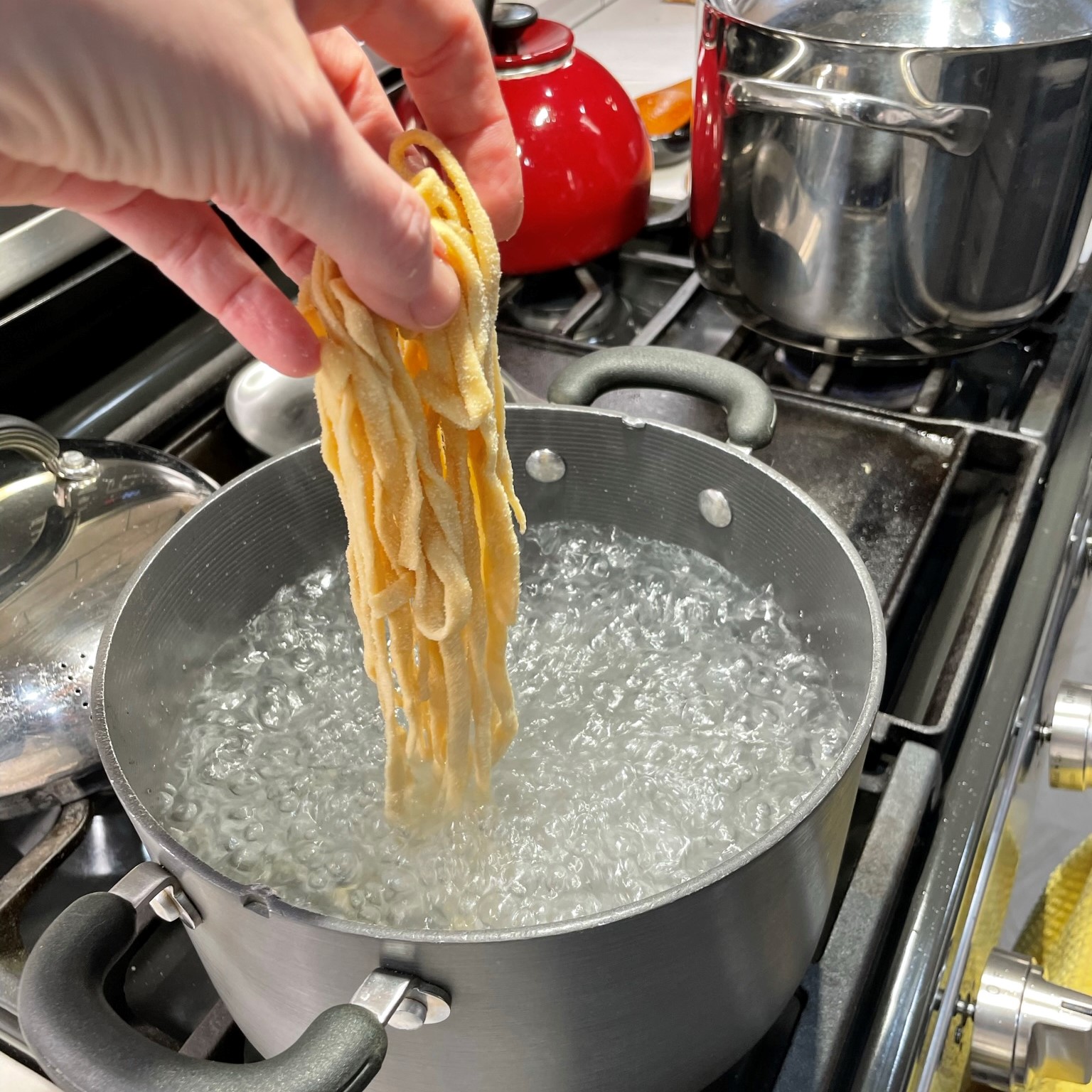
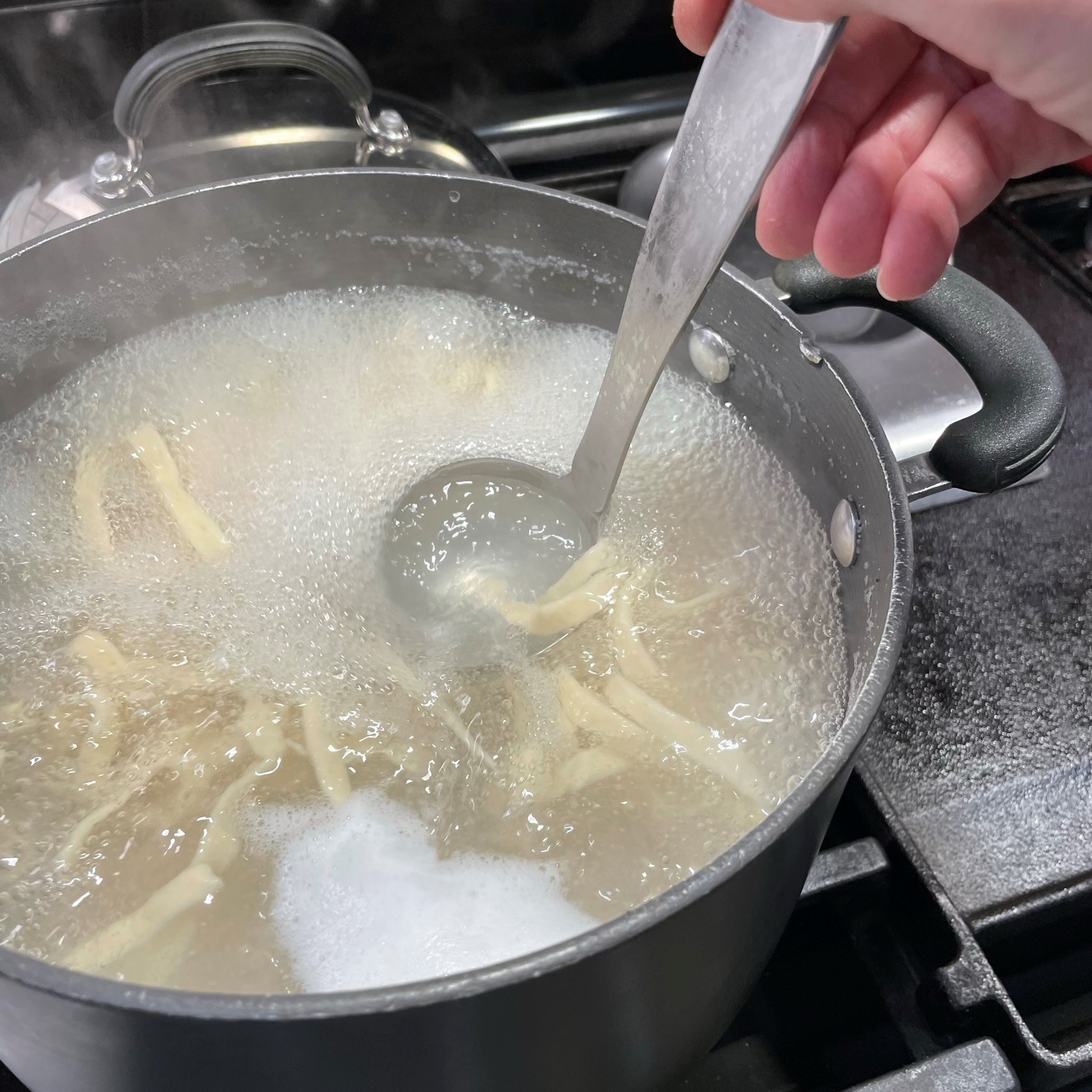
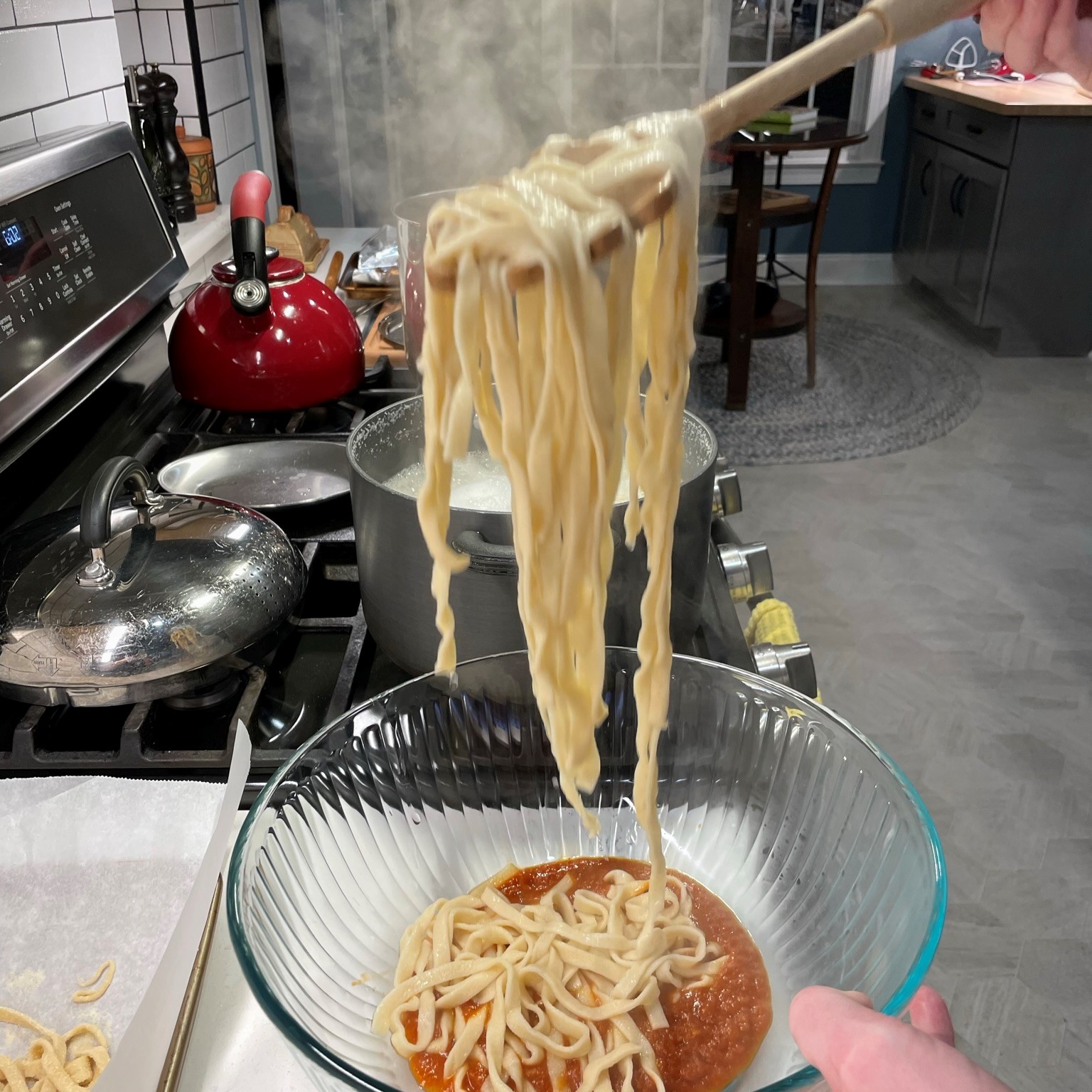
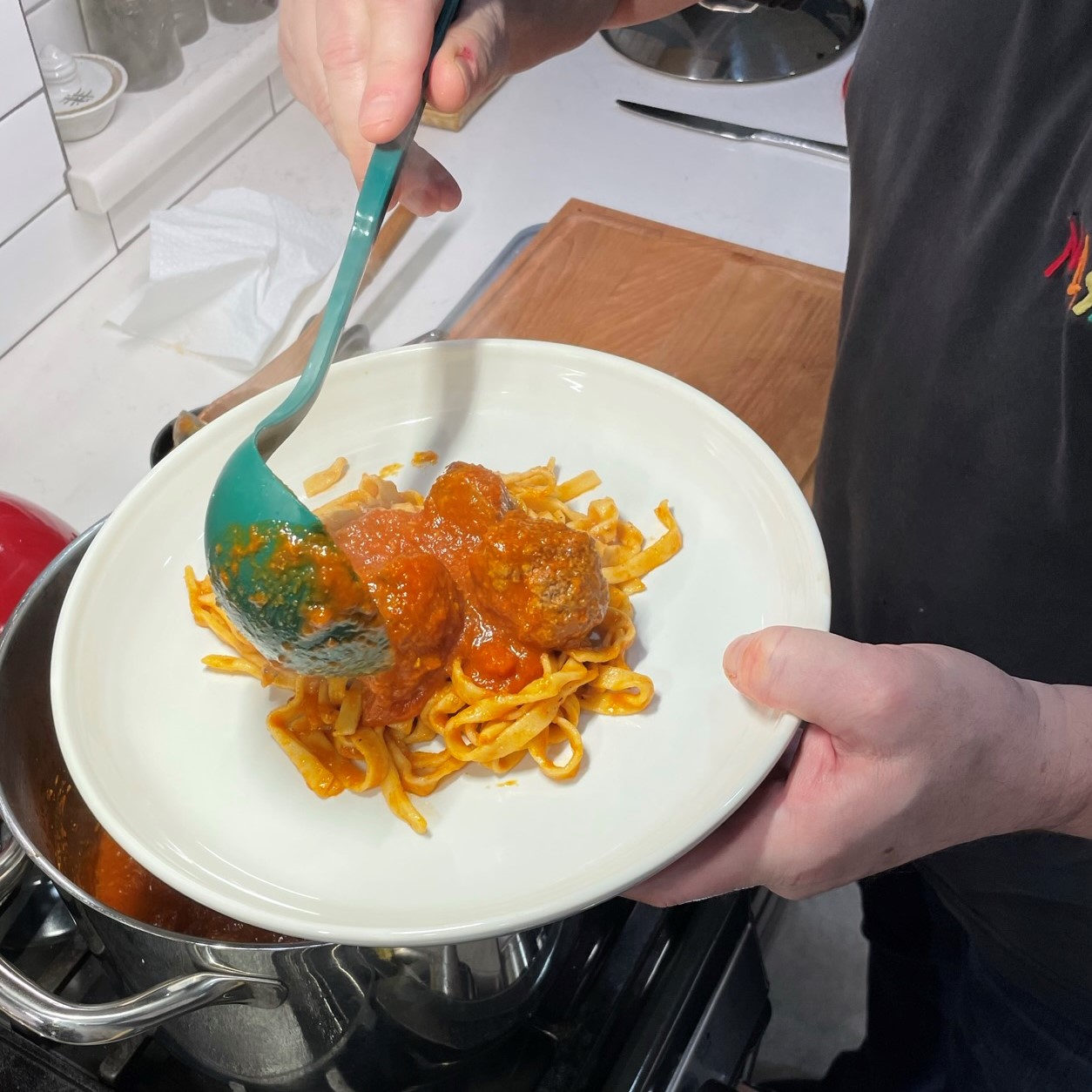
Time for dinner! The sauce was quietly simmering on the stove, so the timing was dependent on the pasta. Fresh, handmade pasta cooks much more quickly than dried, store-bought, so it’s best to have everything you need for serving lined up and ready to go before you begin.


It takes two, Baby, me and you! ❤


Hot Italian Sausage & Cherry Pepper Pizza

Anybody who doesn’t get excited about pizza has, well, never had a good one. That’s my philosophy, and it’s one of the many reasons my husband, Les, and I are so darn compatible. Our tenacity in searching out the best foods is another. It is not possible for me to pass on reading an article about food—whether it relates to a trend, a signature dish or a hot new restaurant. Les is the same. So when we found ourselves at Modern Apizza in New Haven, Connecticut, near the end of our summer vacation, it was pretty much heaven for both of us.

You have to say it like the locals do… it’s Modern “Ah-Beetz!”

Our visit was not by chance; it was intended to be a highlight from the very start of our vacation planning, and we worked other aspects of our trip around it. That’s how seriously we take our pizza. And we had a big inside connection that won me a behind-the-scenes tour of the place, through the kitchen and prep spaces, and all the way down to the basement where they make more sauce and dough than I have ever imagined.


How did I have such an opportunity, you might wonder, to be invited into the heart of this business that is 650 miles from my home? Easy. Les knows the owners! During what seems like a lifetime ago, when he lived in the New Haven area, Les owned a home two doors down from Bill and Mary Pustari, who bought Modern Apizza in 1988 and continued the long tradition of excellence there that had begun in 1934. After a few years owning the place, they expanded the dining room and added a second, oil-fired brick oven to their kitchen to keep pace with the popularity of their amazing pizzas.

When Les reached out to his old friends to inform them of our plans to visit New Haven, they were gracious to offer me a tour of the restaurant, to witness the magic up close and personal. For me, it was as exciting as many of the backstage events I had experienced during my radio years and one of the biggest highlights of our entire trip, and I’m excited to share my experience, and the pizza it inspired me to make at home. But first—lunch!

Oh, YUM!

Our server, Arianna (who also happens to be a daughter of the owners), didn’t hesitate when we asked which pizza is most popular with their customers.

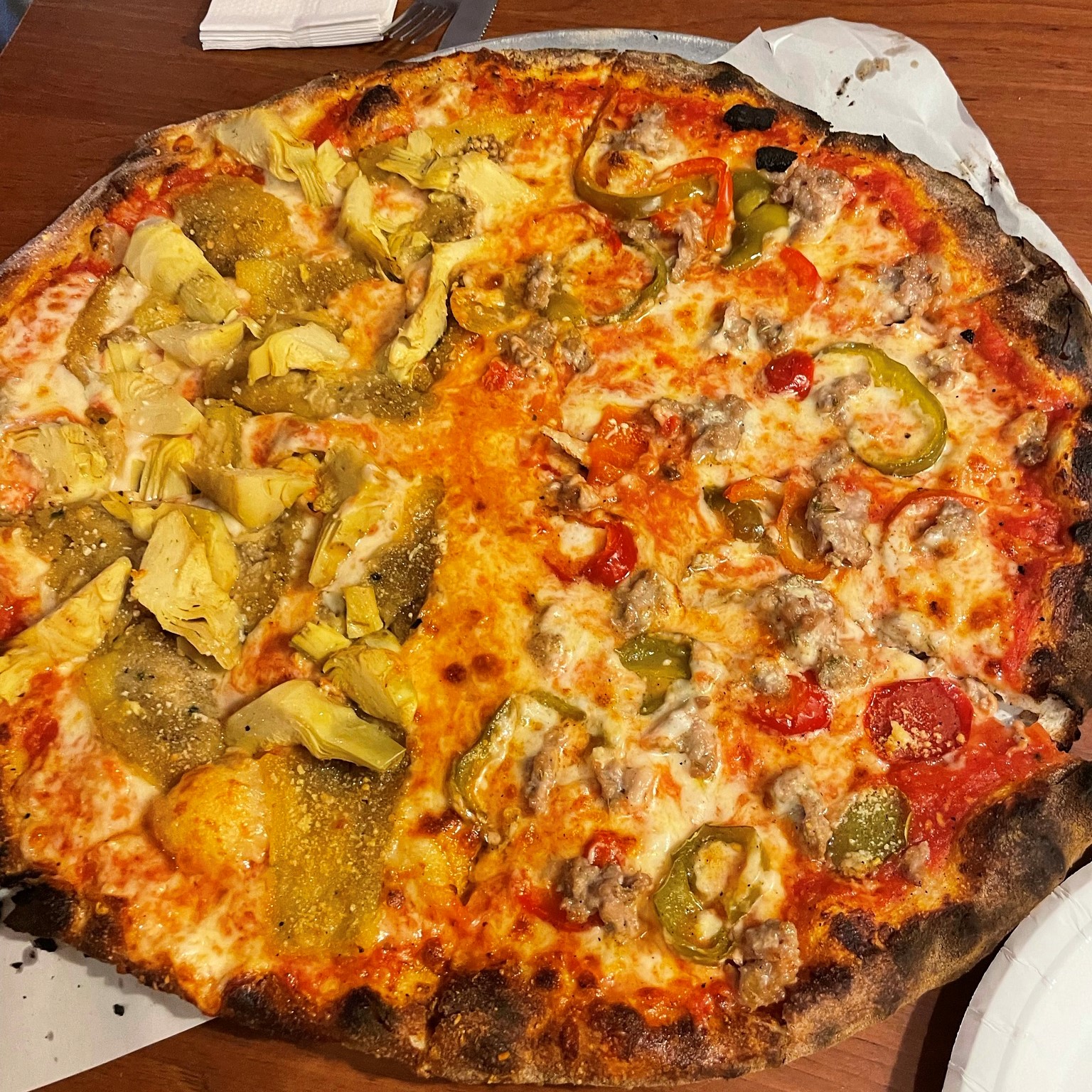
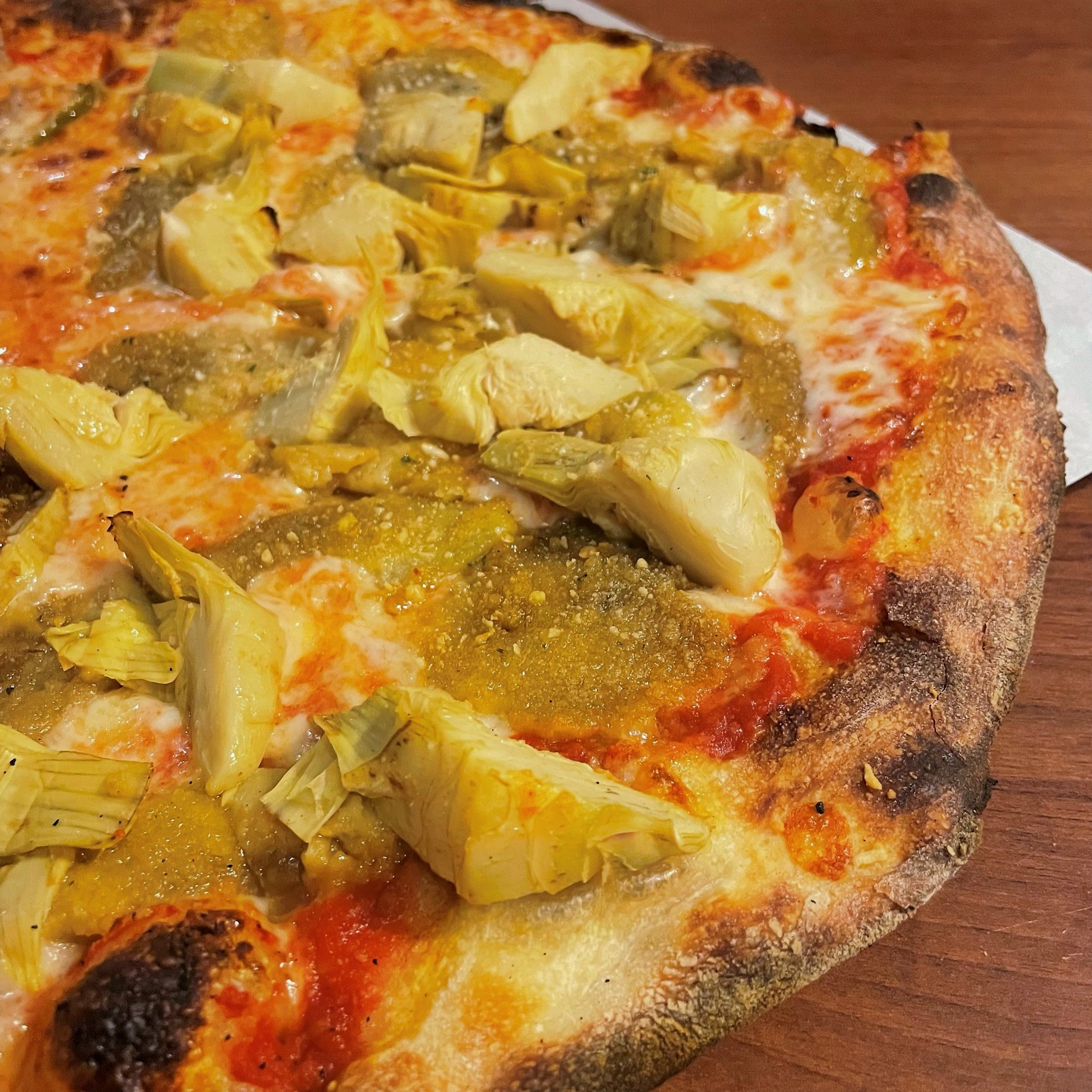
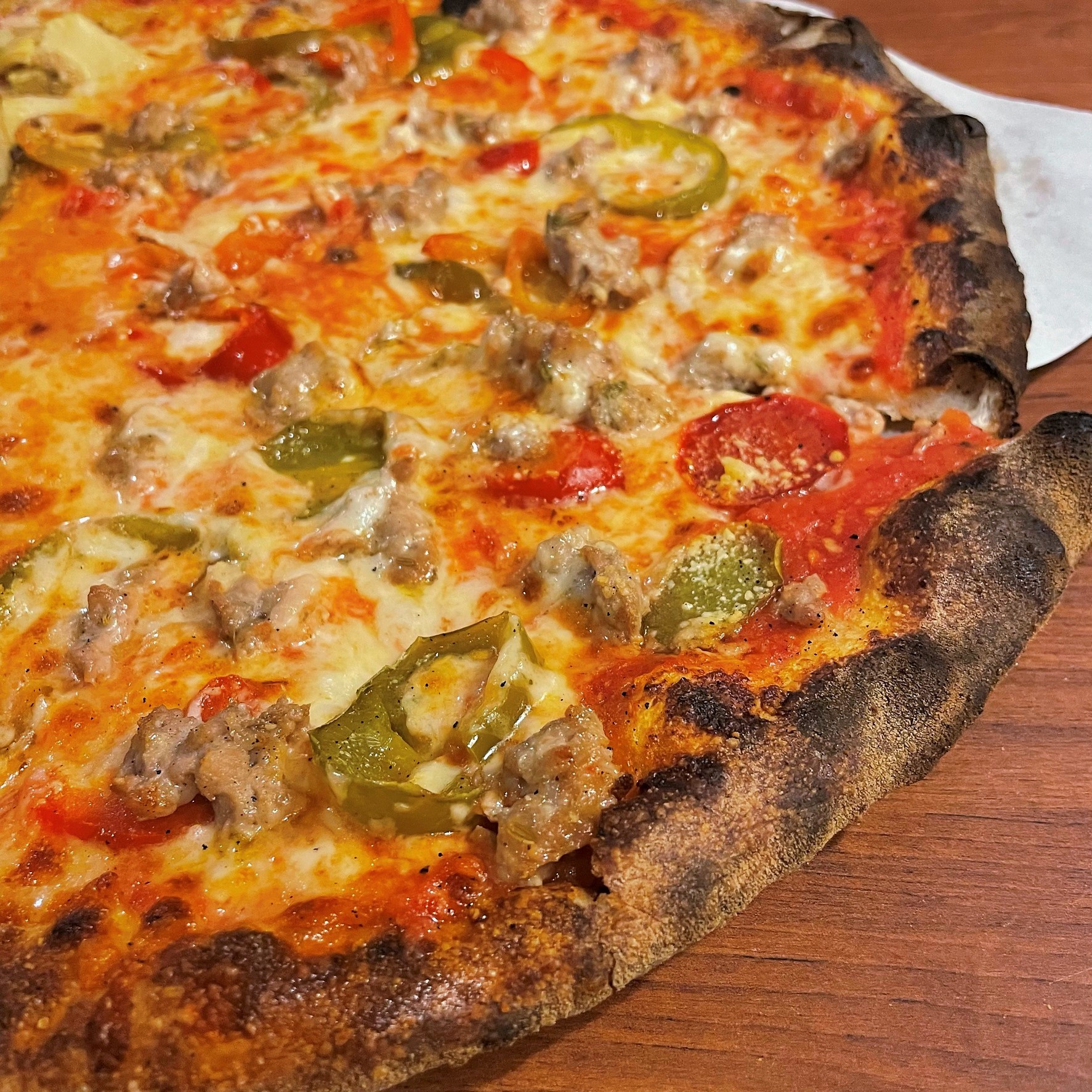
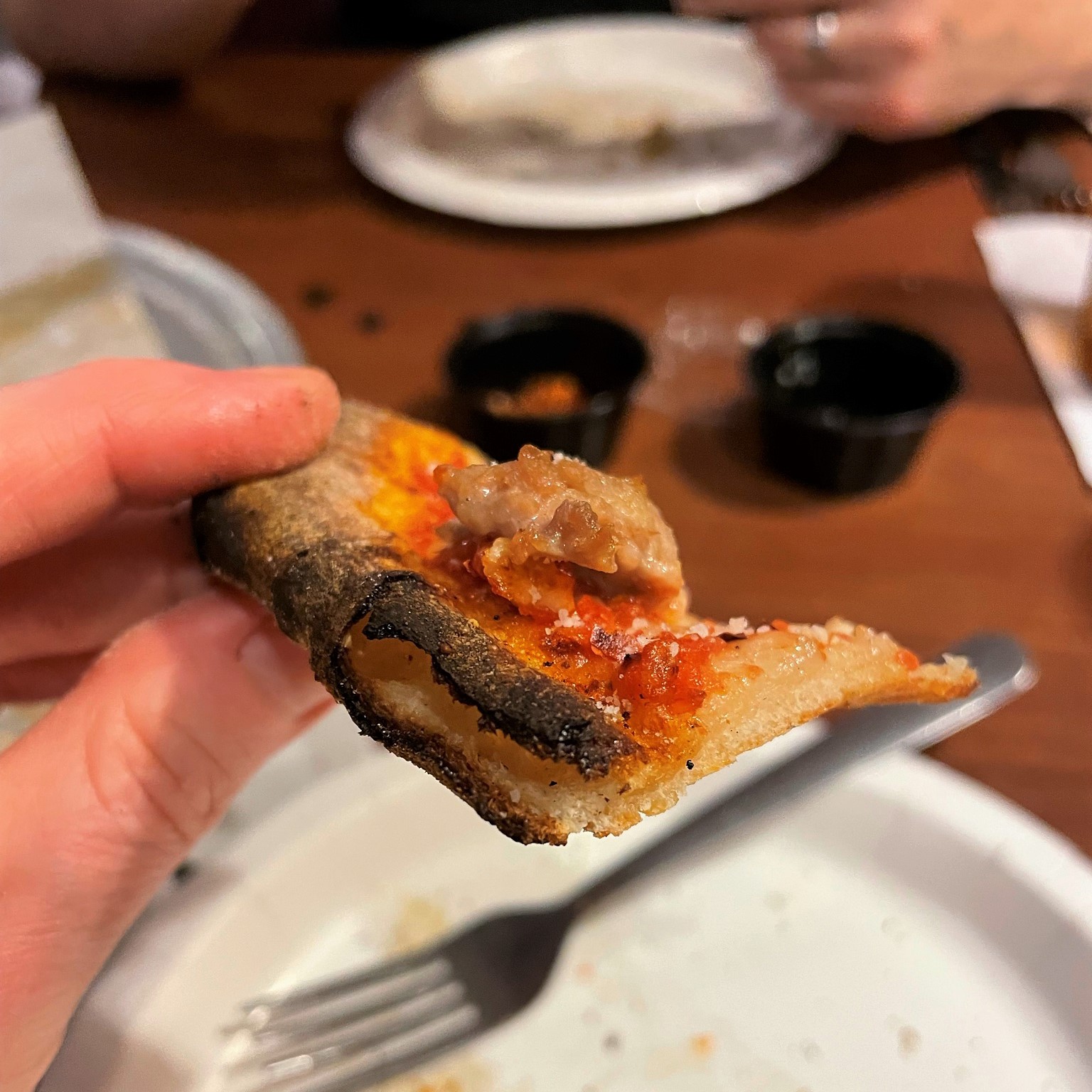
“Hands down, the Italian Bomb,” she said. Well, sure, the one with sausage, bacon, pepperoni, mushroom, onions, peppers and fresh garlic, of course! That sounded like a lot to chew on for lunch, and we decided on a half-and-half pizza (kind of amazing they are willing to do that), with artichoke hearts and eggplant on one side, and Italian sausage with hot cherry peppers on the other. Both combinations were delicious, but what I could not get over was the complex flavor and chewy-but-crisp texture of the crust, and I was about to come face-to-face with the signature ingredient that gives Modern Apizza a culinary edge over its competitors.


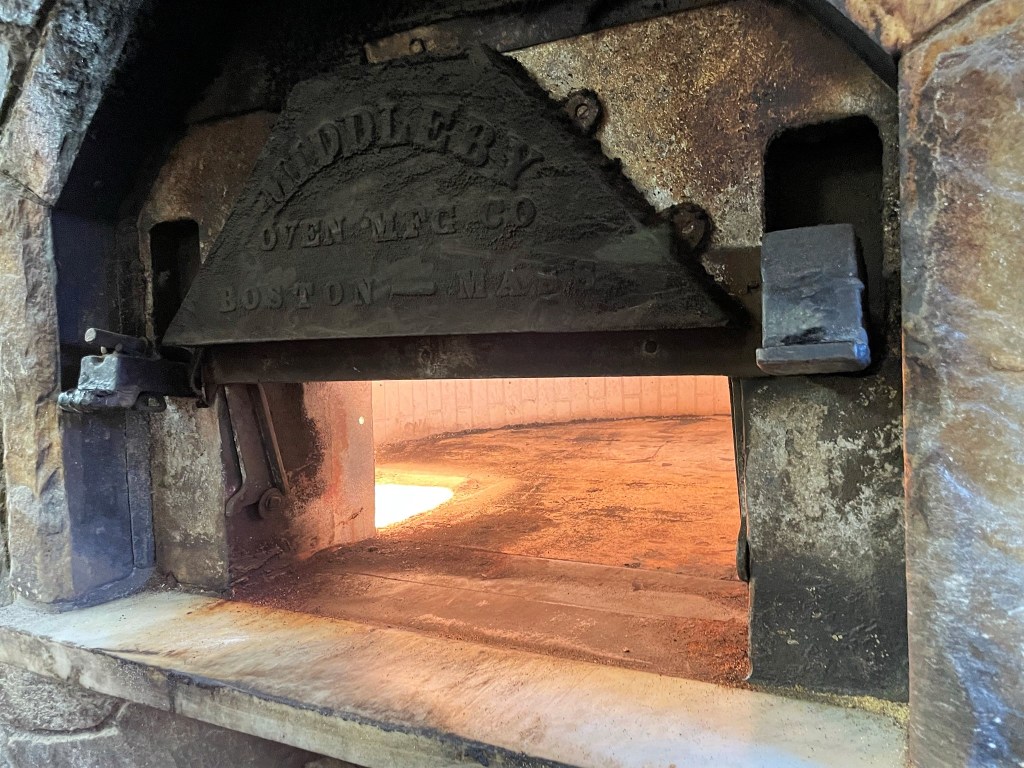
When it was time for my “backstage” tour, Bill took me first through the kitchen, and then to the original oven, which they still fire up when business is booming. An oil-fired oven is an incredible sight, and when Bill informed me that the coolest spot in the oven is 700° F, I couldn’t resist asking what the hottest temperature in the oven was. Care to guess?

Modern Apizza’s original brick oven, still in action after all these years.

“The temperature of fire,” Bill answered. Wow!

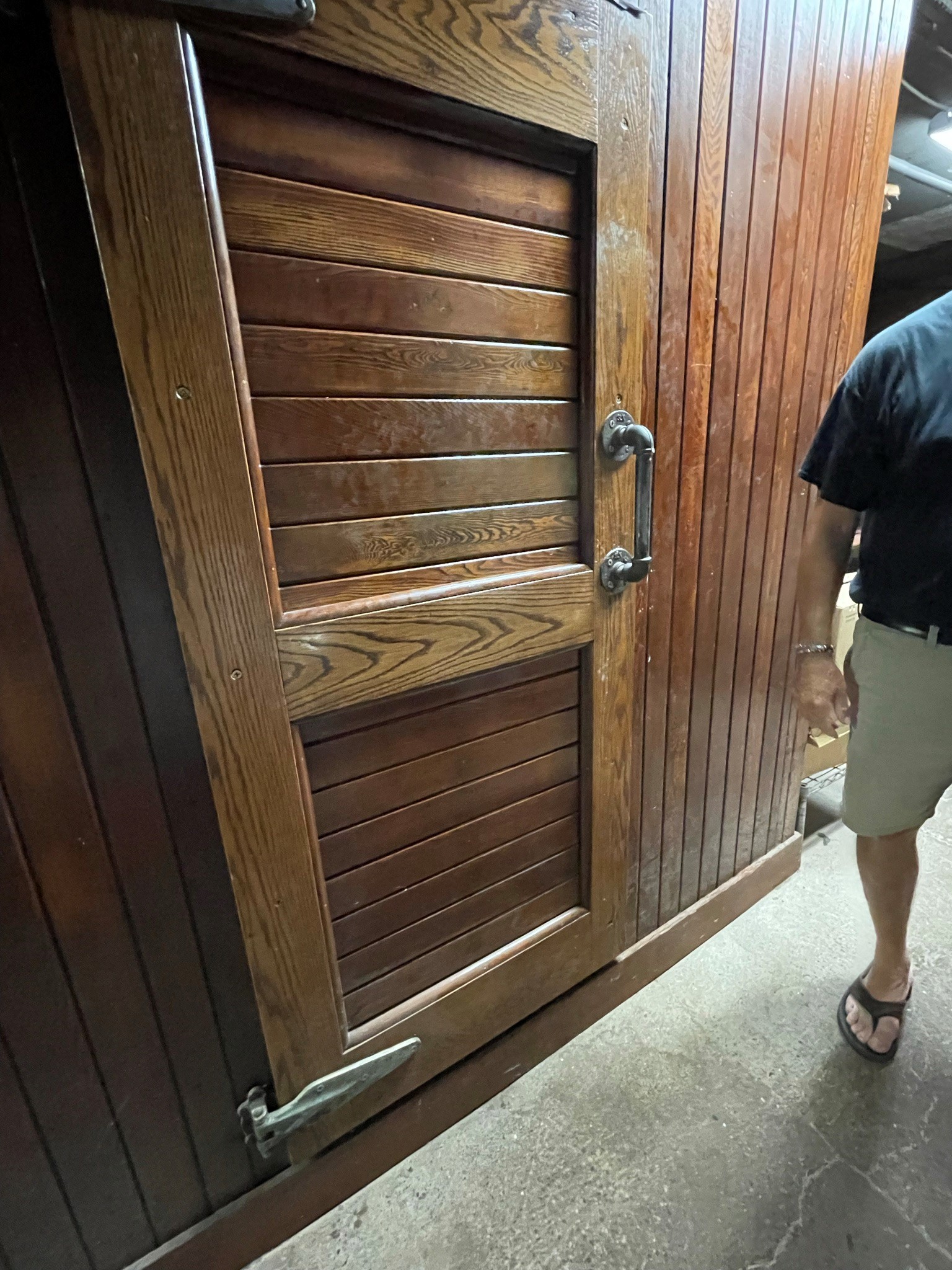
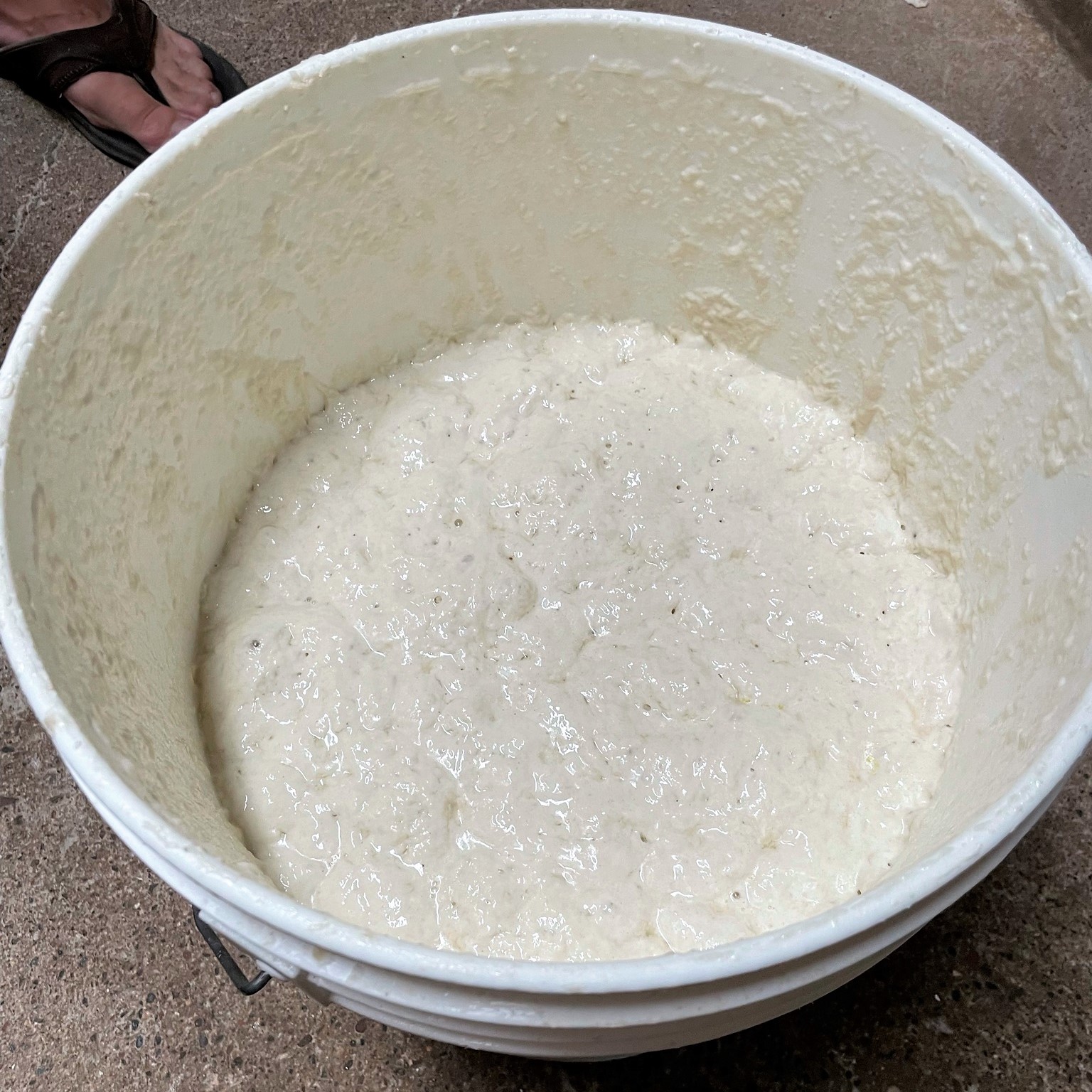
From there, Bill led me downstairs to the basement of the restaurant and to a very special, very old refrigerator that is home to a very old resident—and the secret to their flavorful dough—a sourdough starter!

They call this glorious culture “The Bitch.”


Despite her unbecoming name, The Bitch is a beloved member of the family at Modern Apizza. They feed her every day, and if there is ever a weather emergency or power outage, she goes home with someone for safekeeping. Bill told me that several years ago, he wanted to take Modern’s pizzas to a new level, so he got a bit of a 100-year-old starter from a local French bakery, and that ushered in a whole new chapter in Modern’s history. This revelation thrilled my sourdough-loving heart to pieces and connected the dots on why our lunch pizza reminded me of home.

I got more confirmation about my pizza-at-home techniques when we went back upstairs to the kitchen, where William (also a Pustari) and George worked in harmony with Jesse, the oven guy, preparing pizzas to order for their customers, at an astonishing rate of two pizzas per minute. Honestly, I wanted to throw on an apron and jump in on the action!

They have this down to a science!

From the shaping of the dough, the order of topping ingredients, the high-heat baking and the natural leavening of the pizza dough itself, I left Modern Apizza feeling that I was doing something right—or, really, doing a lot of things right, at home. All my research, trial and error had put me on the right pizza path, and that is a very good feeling. Before I share my home pizza that was inspired by this visit, can you stand just a little more bragging on Modern Apizza?


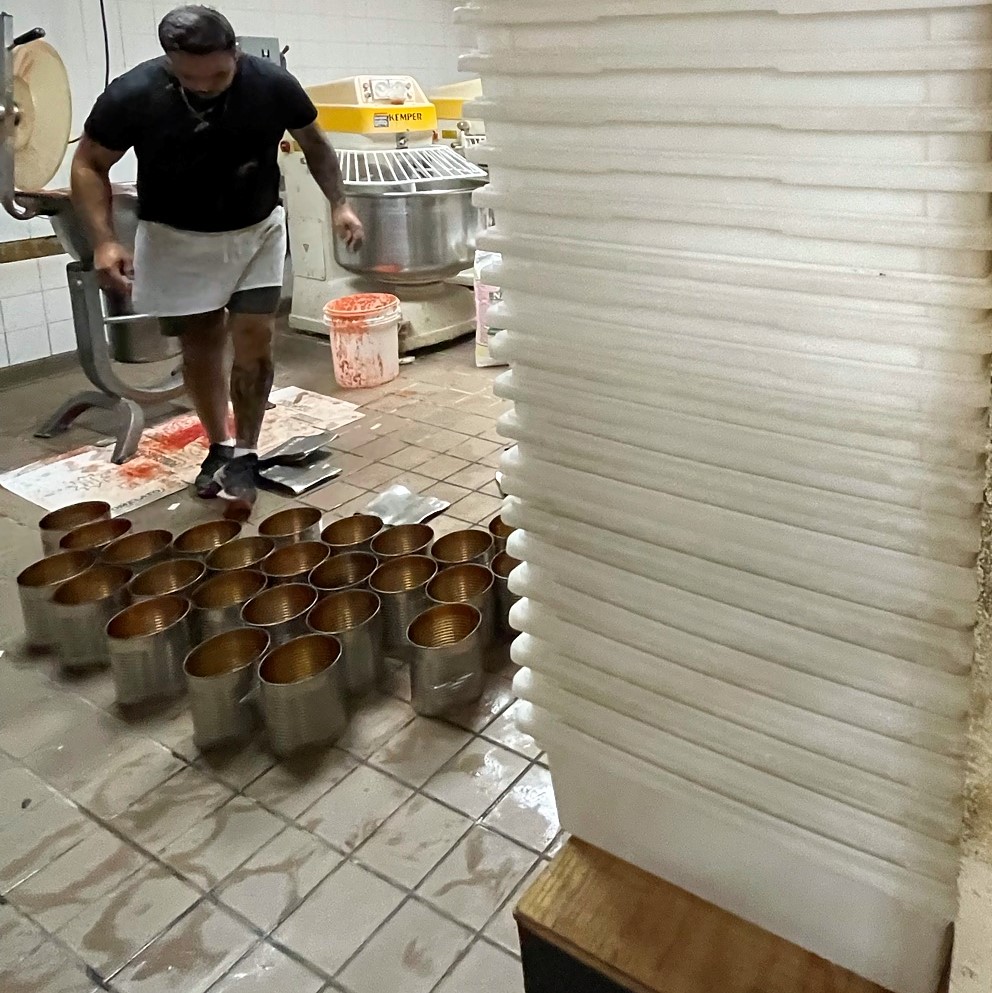
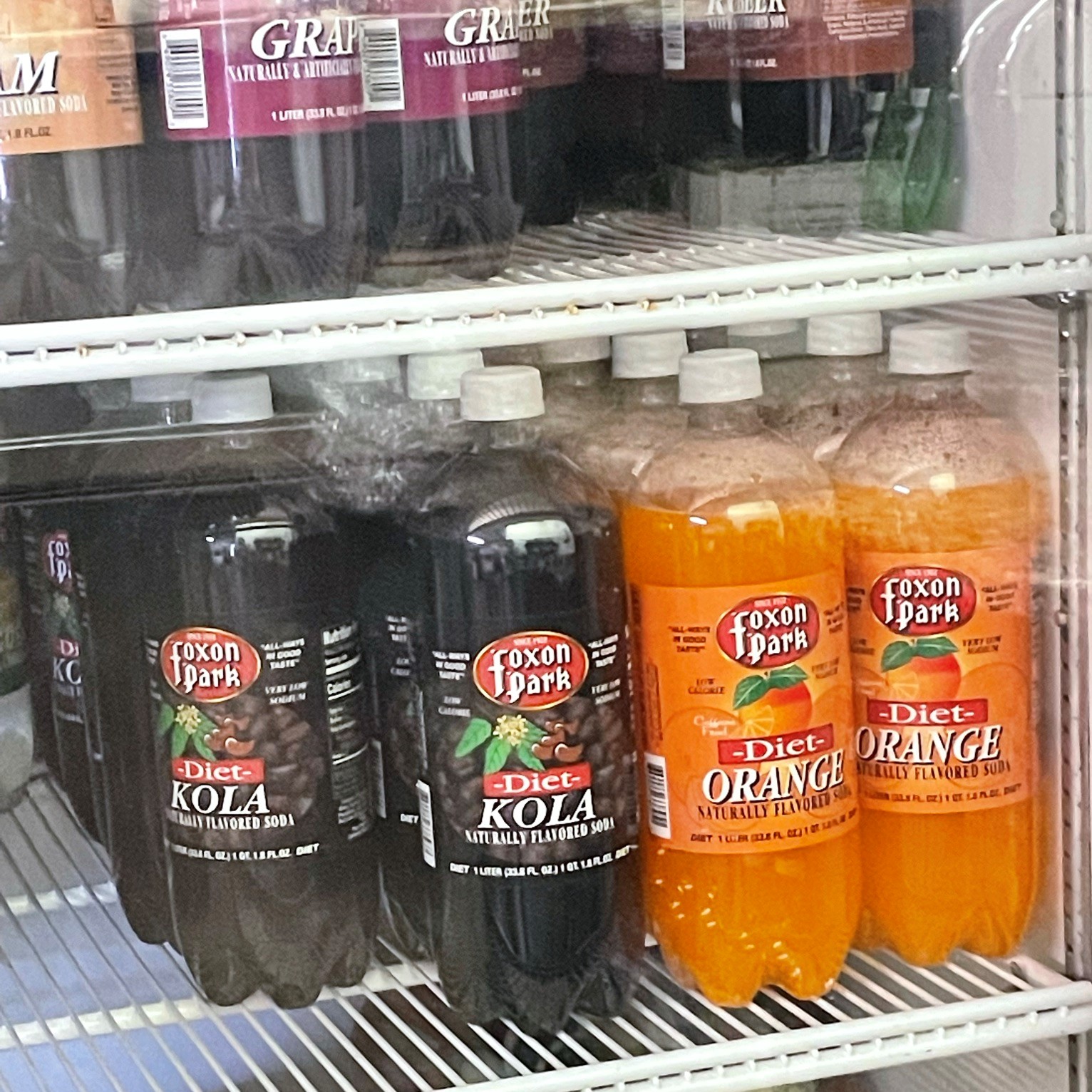
Despite the extra time it takes his prep crew, Bill is committed to doing right by his community. All those cans for the tomato sauce get recycled. He purchases sausage from a local butcher, serves local Foxon Park soft drinks, and Modern’s mozzarella comes from Liuzzi’s, the same Italian market Les and I had visited earlier in the week. Just before he arrived at the restaurant, Bill had met with a farmer to purchase local tomatoes to be used on the fresh tomato pizza which is, of course, a New Haven classic. All these neighbors supporting each other and finding great success—kinda makes me want to live in New Haven!


Ingredients

1 ball sourdough pizza dough* (see notes)

2 hot Italian sausage links, casings removed

1/2 medium onion, chopped

About 1/2 cup pickled hot cherry peppers

1/3 cup pizza sauce

1 cup freshly shredded mozzarella*

Kosher salt and freshly ground black pepper

A handful of parm-romano blend cheese

Extra virgin olive oil


*Notes

Sourdough was the key to the great flavor we experienced at Modern Apizza, and it’s my go-to pizza dough at home. My favorite recipe is linked in the ingredients list, and I recommend using a pizza steel and the hottest temperature your home oven can handle. My dough ferments in the refrigerator, but I bring it to almost-room temperature when I’m ready to shape and bake it.

Use firm, whole milk mozzarella for best results—and yes, you absolutely should shred it yourself rather than using pre-shredded, pre-bagged cheese. Pre-bagged cheese may be convenient but it is coated with a powdery substance that prevents clumping in the bag, which unfortunately for use on pizzas also prevents even melting. So please shred your own; it’s worth it.


Instructions

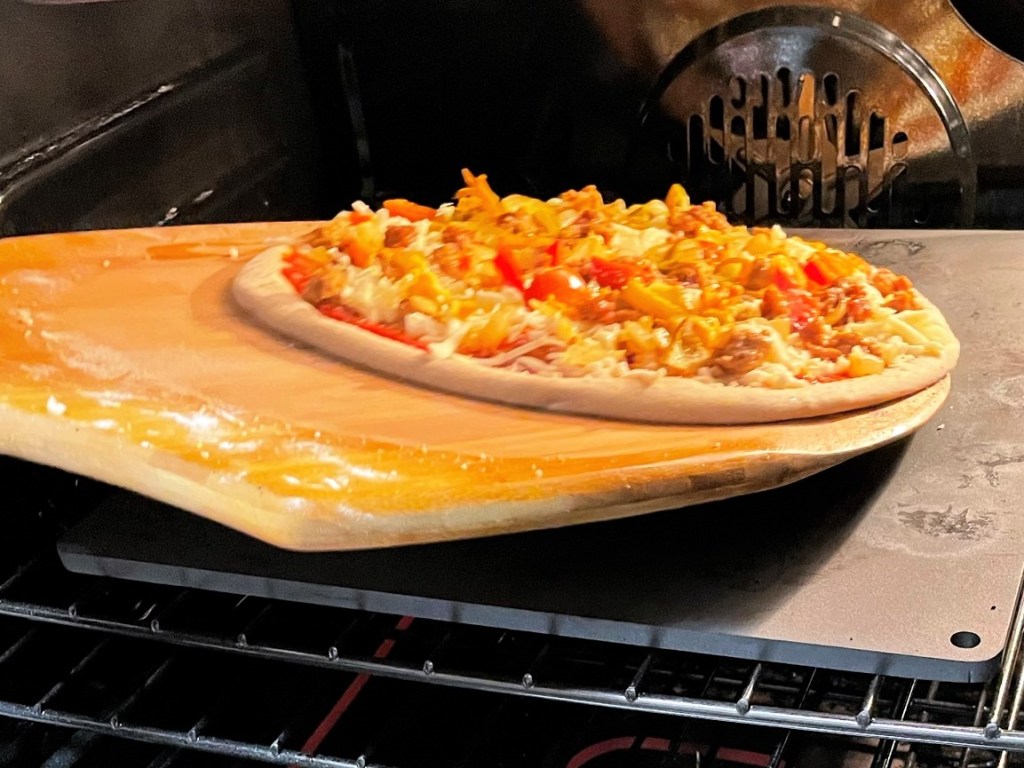
  1. Preheat the oven to 550°F, with the oven rack positioned about 8 inches below the top element and a pizza steel in place for a solid hour at temperature.
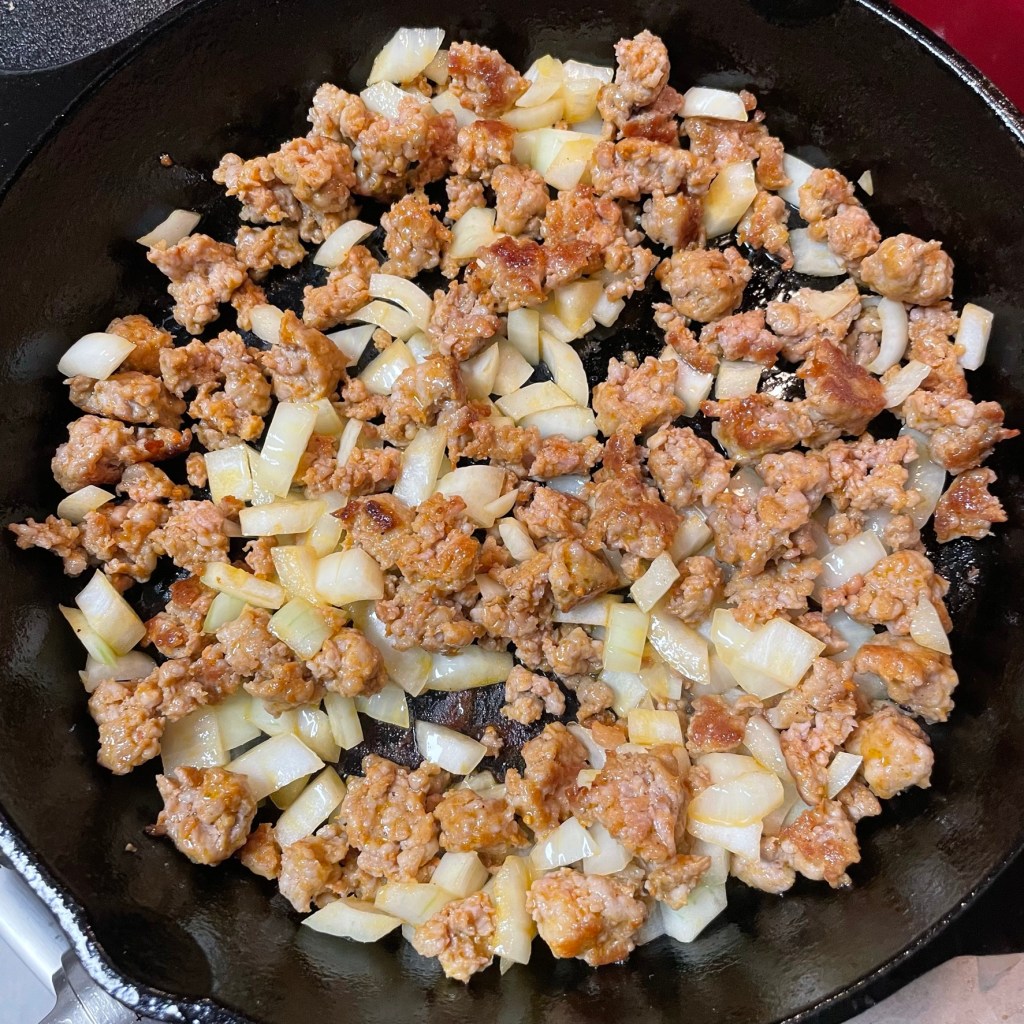
  2. Heat a cast-iron skillet over medium heat. Crumble up the Italian sausage and brown it until some of the edges are just developing a crust. You want it to hang onto its moisture for the most part, as it will cook again in the oven. Add the onions to the skillet and cook until they are softened. Transfer the meat and onions to a bowl and cool completely.
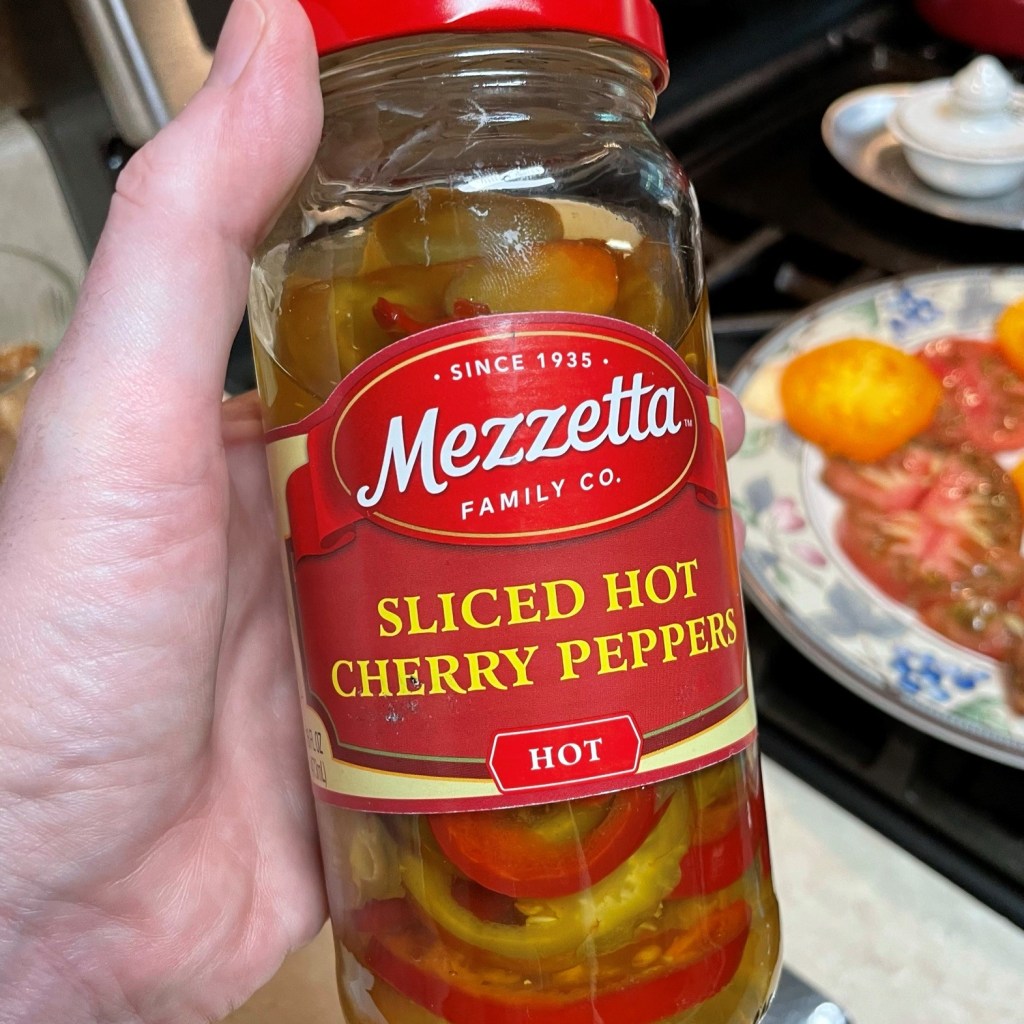
  3. Drain the cherry peppers and pat them dry on layers of paper towel. Chop them into bite-sized pieces.
  4. When the oven is ready, shape the dough into a 14” round and transfer to a flour- and cornmeal-dusted pizza peel, which will make it easy to slide the pizza into the hot oven.
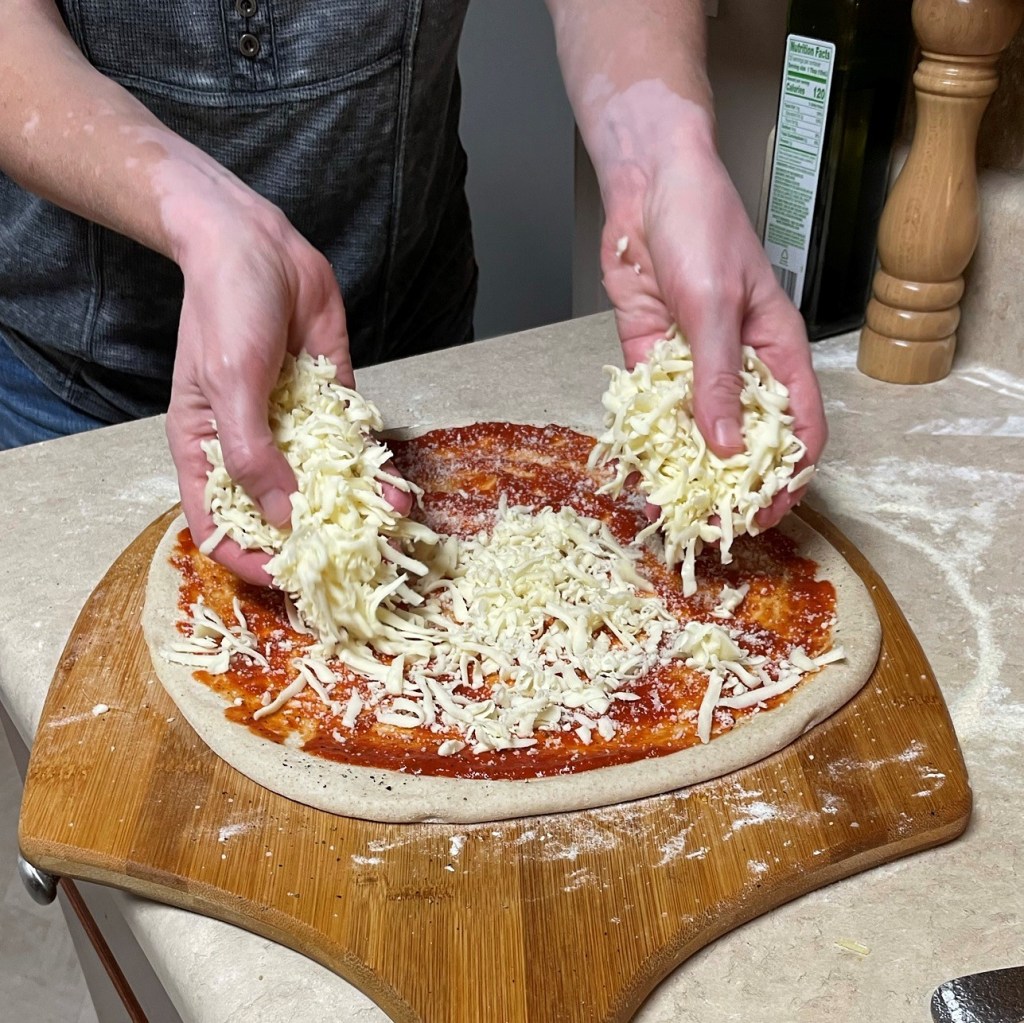
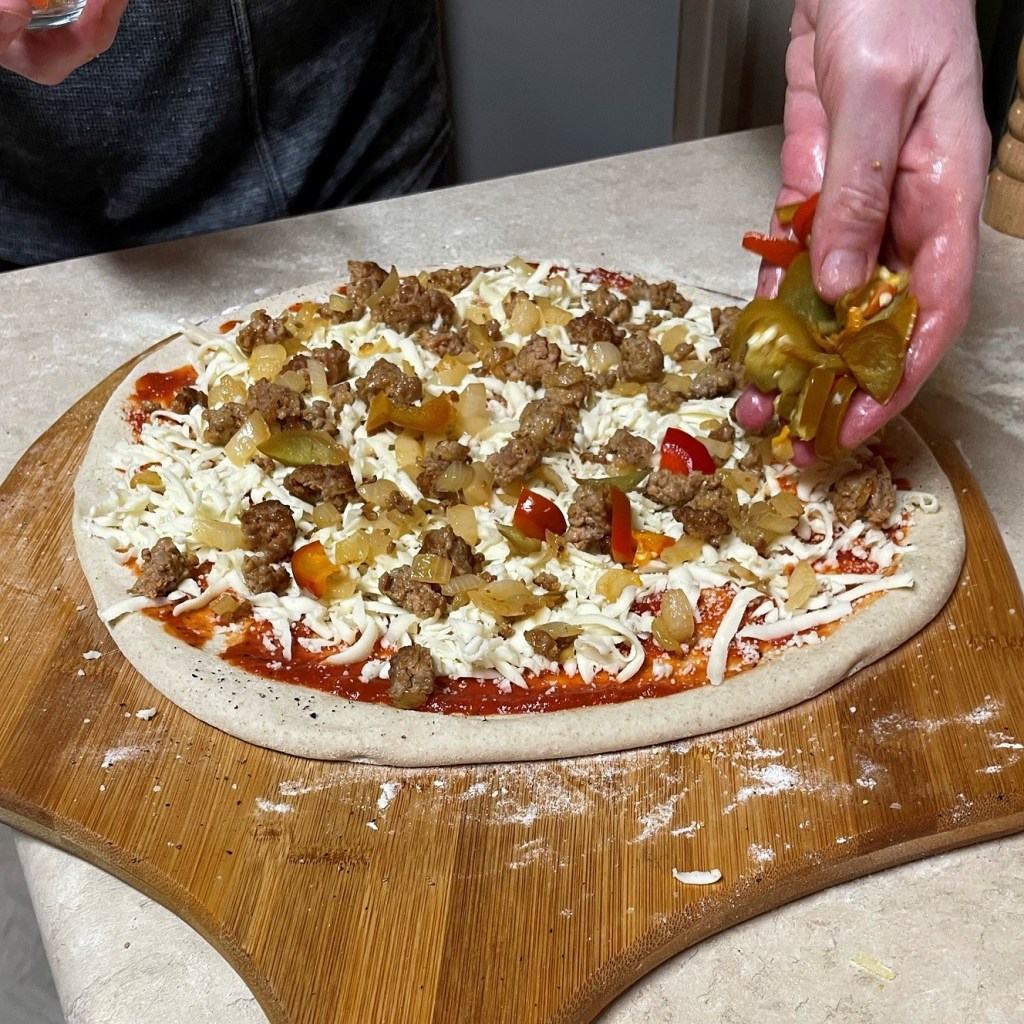
  5. Swirl pizza sauce over the dough, then scatter parm-romano and mozzarella evenly. Arrange the cooked sausage and onions over the pizza, and follow that with the cherry peppers.
  6. Drizzle olive oil lightly over the toppings and quickly transfer the pizza to the hot oven for about 6 minutes, or until the cheese is hot and bubbly and the edges of the crust are browned and blistered.

We love having a taste of New Haven at home!


Cajun Shrimp & Garlicky Cheese Grits

Take a road trip across the Southeast, and you’ll find a wide array of flavors and presentation in dishes that all claim to be “shrimp and grits.”

And they all are.

There is no right-or-wrong when it comes to this classic southern dish. Whether served with a lush and savory gravy, or piled high with onions, peppers and tomatoes, or spiked with spicy andouille or tasso ham, cheese or no cheese, you are guaranteed a flavorful experience. Over the 34 years that I’ve lived in N.C., I’ve developed my own recipe into what I believe captures the best of all the varieties I’ve tasted around these parts, though I can’t claim to make it the same every time. My “comfort du jour” usually depends on what ingredients are in the fridge, and many times, my decision to make shrimp and grits is a last-minute one.

I almost always have good quality, wild American shrimp in the freezer. I’m guaranteed to have some kind of pork product—ham, bacon, sausage or chorizo—and just about any kind of onion or pepper works, so whatever I have on hand can slide into place. I may or may not incorporate cheese, depending on the other ingredients. One thing that remains constant is my method of cooking the grits. You cannot rush them, and for goodness sake, don’t cheat yourself by using instant. It should take a minimum of 20 minutes on the stove, unless you have, you know, “magic grits.” I think we all remember how that played out in My Cousin Vinny.

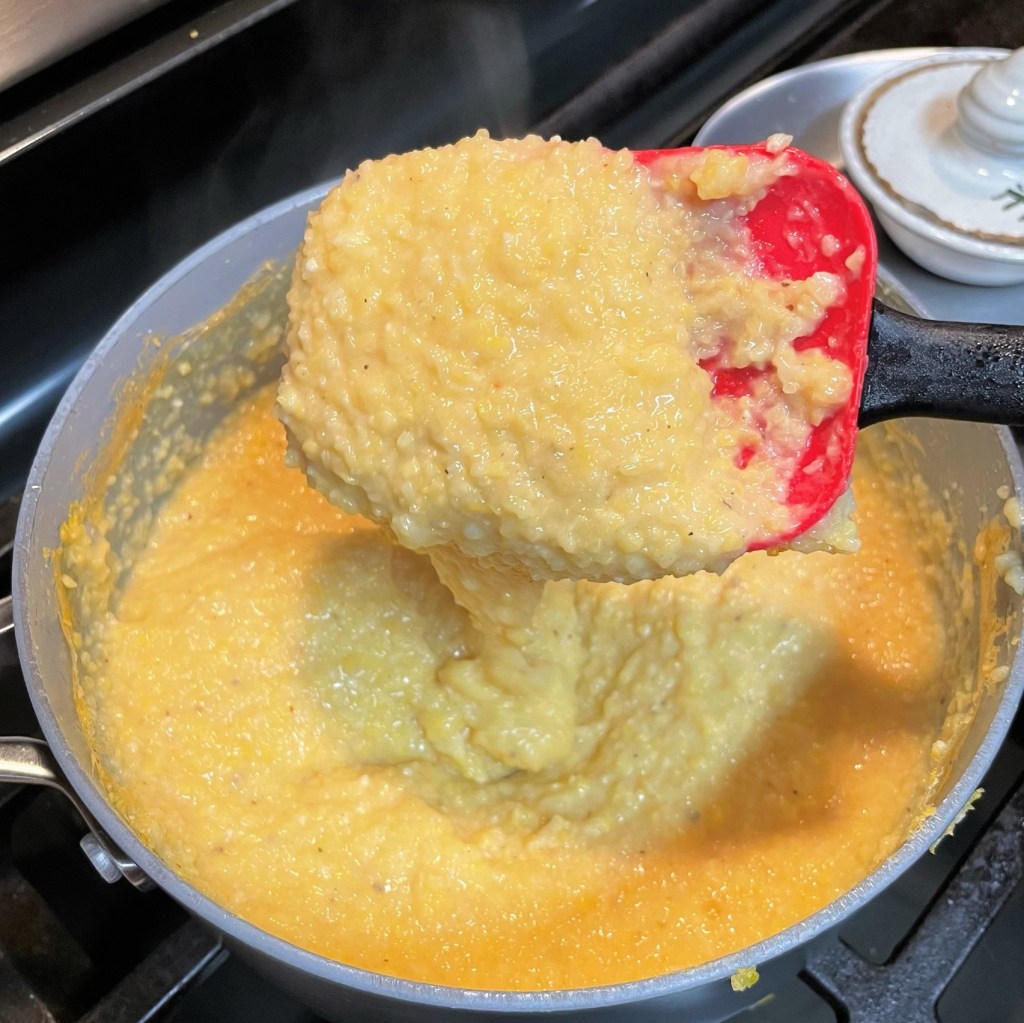
If you have ever eaten grits and thought they were, well, gritty—the simple explanation is that they were not cooked long enough or with enough liquid. Grits (or polenta, which is nearly the same thing) are made of broken-down, dried corn. They are tooth-cracking hard straight from the package, and I have found that it takes a good bit longer than the package instructions suggest to get them right. They are kind of like oatmeal in that regard—you can have creamy, soft oatmeal that drips off the spoon, or sticky, gloppy oatmeal that sticks to everything it touches. The difference is all in the cooking process.

The other complaint some people have about grits is a common one—“they’re so bland.” And if you use only water to cook them, they certainly are. Grits do not have much flavor on their own, but you can coax the flavor out of those dry little kernels with the right technique and the right stuff. In other words, ignore the package instructions and use your own cooking instincts. There is no magic to it. 😉

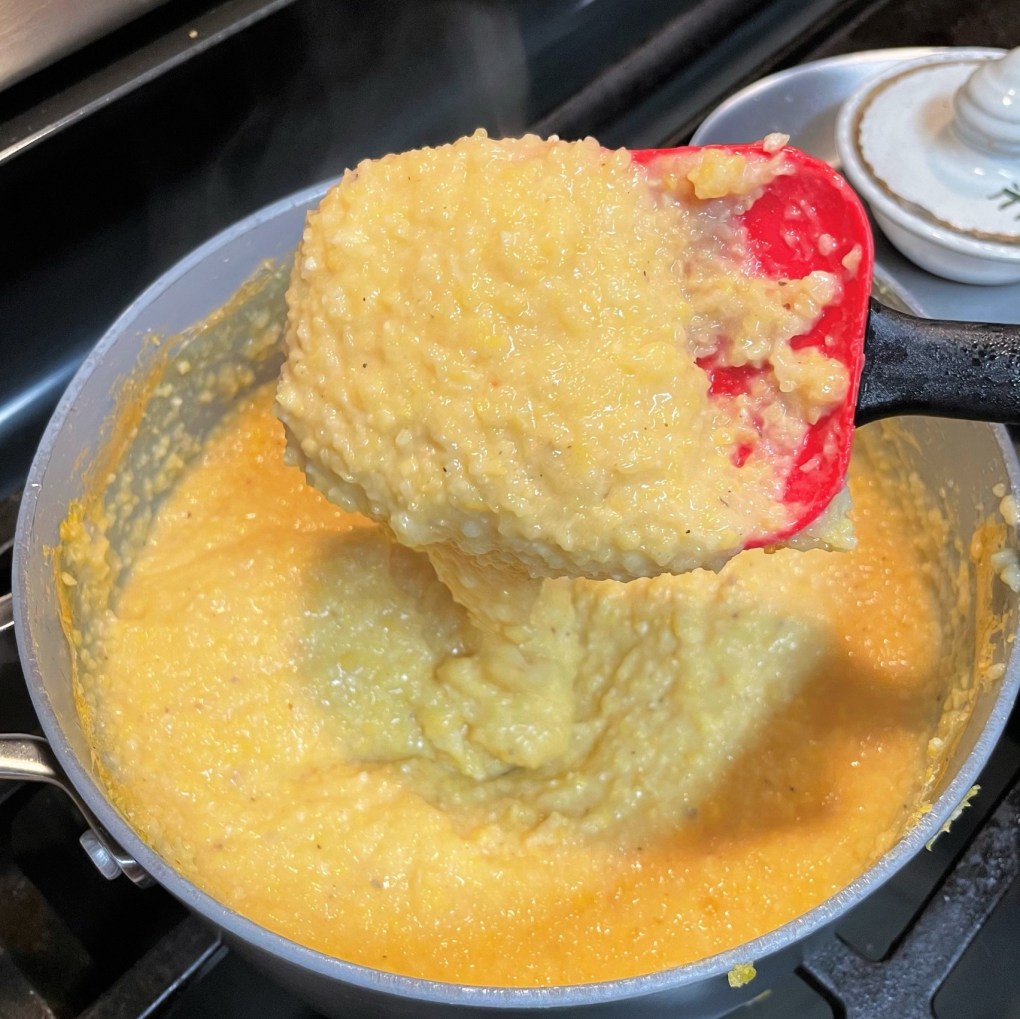
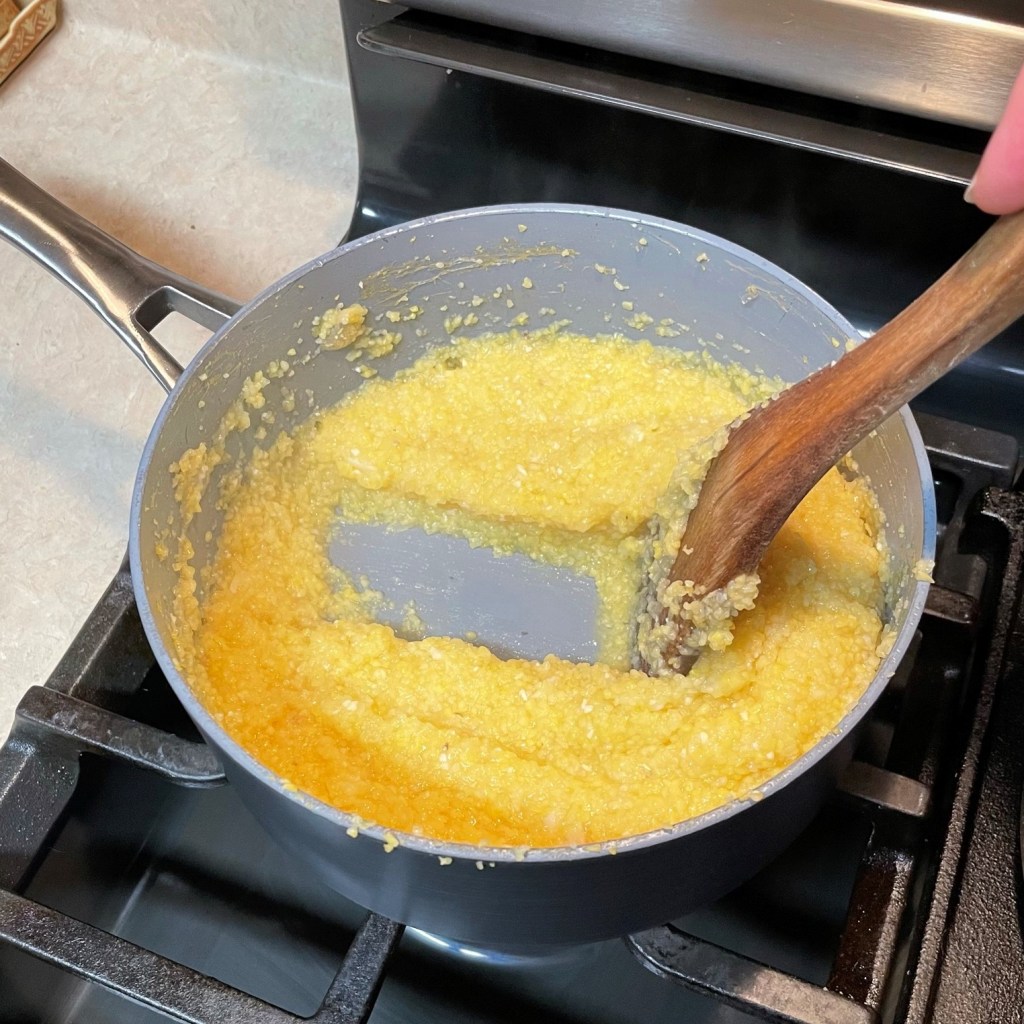
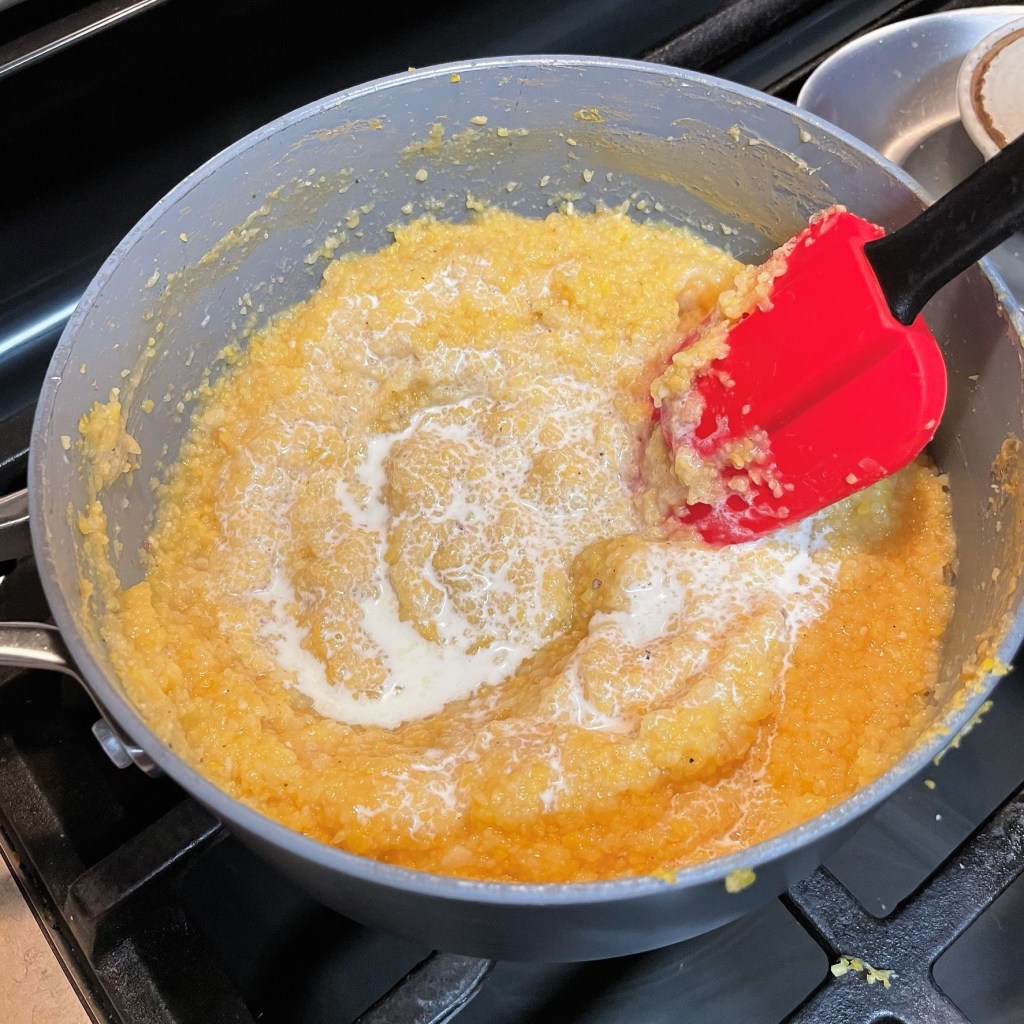
Here’s my secret for perfect, creamy grits every time: treat them like risotto. Cook them low and slow, with plenty of broth additions and plenty of stirring, and finish them with a little cream or half and half. You’ll be rewarded with a silky, luxurious base for whatever you choose to pile on top of them.

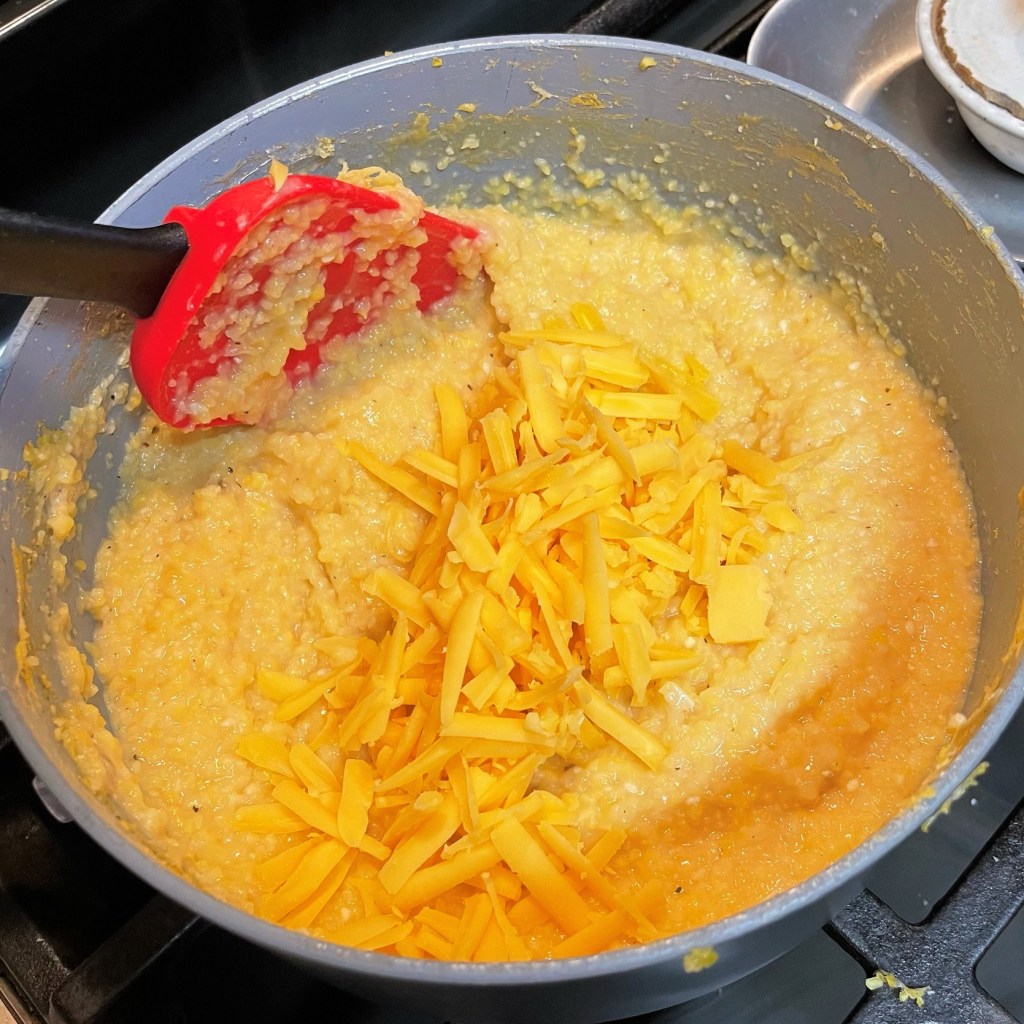
These grits are perfectly creamy, with no clumps and no gritty texture.

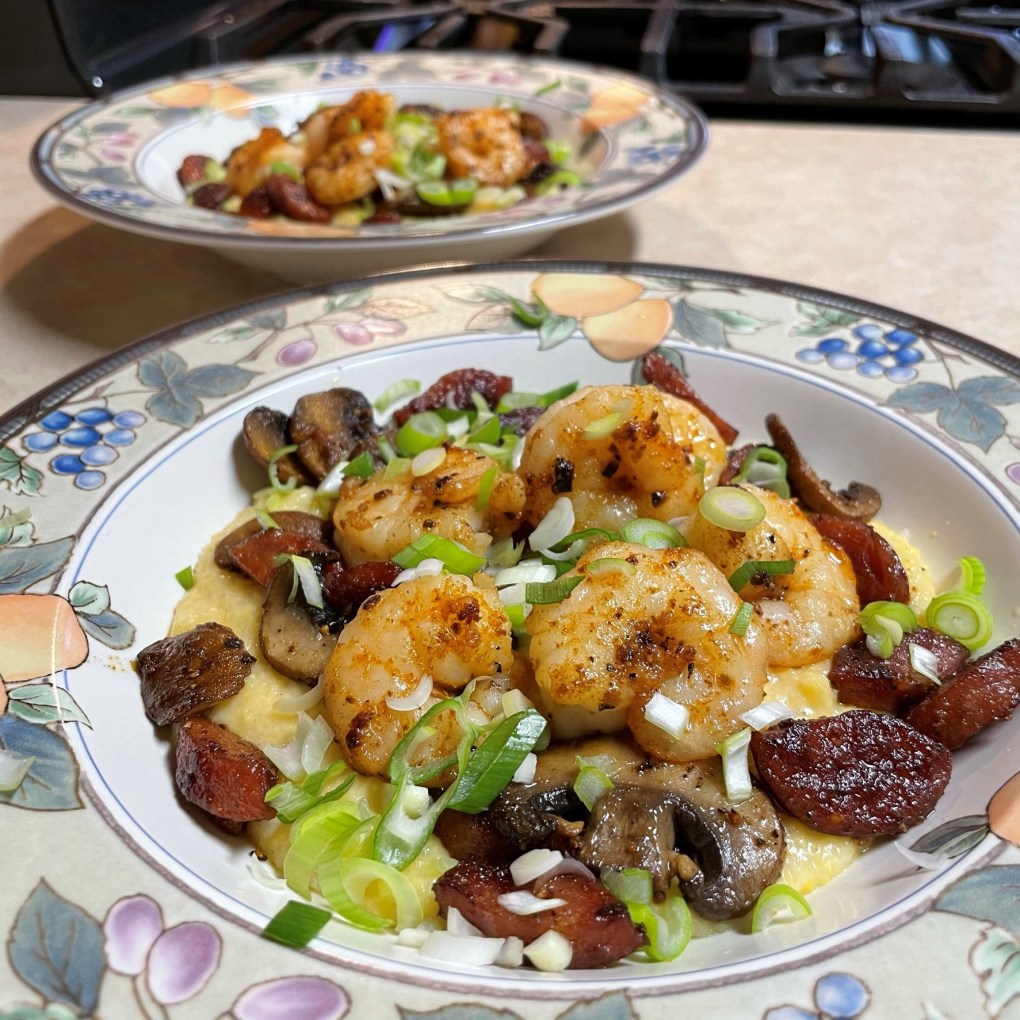
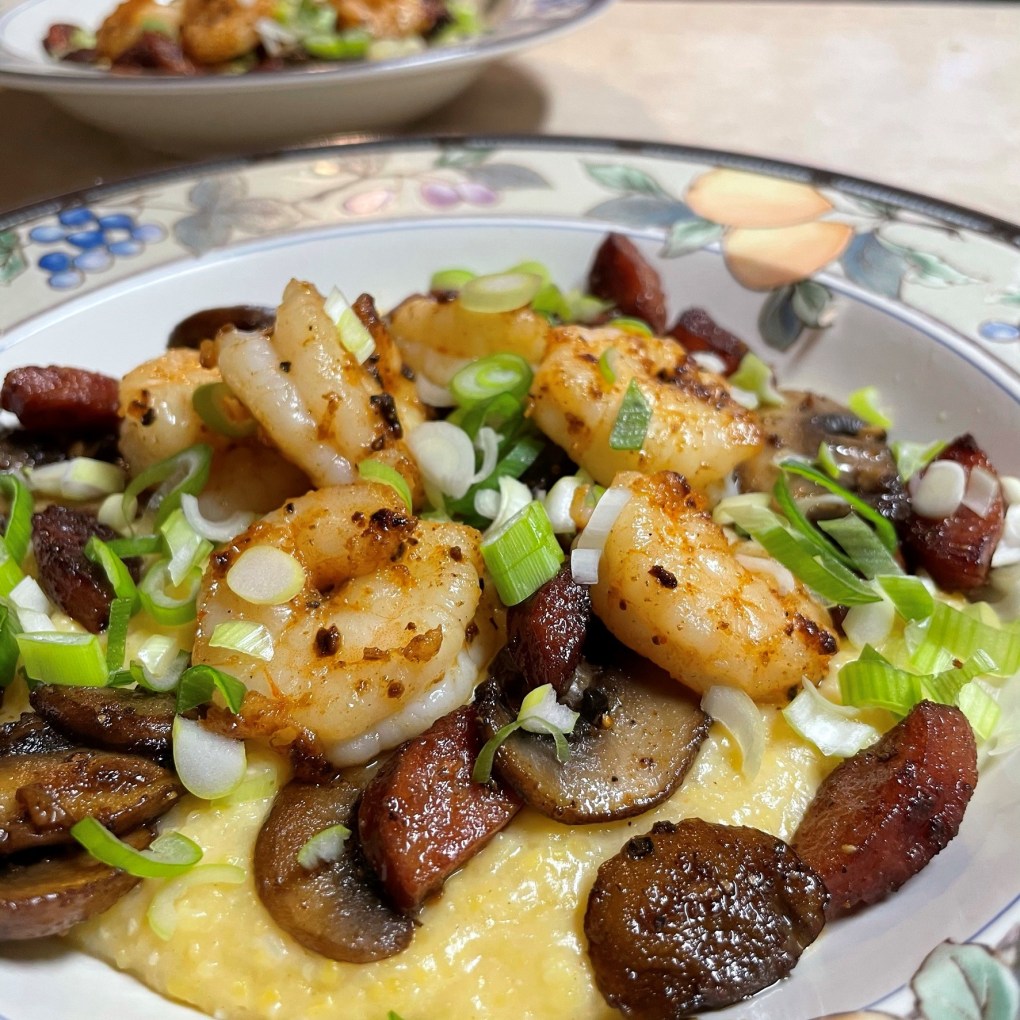
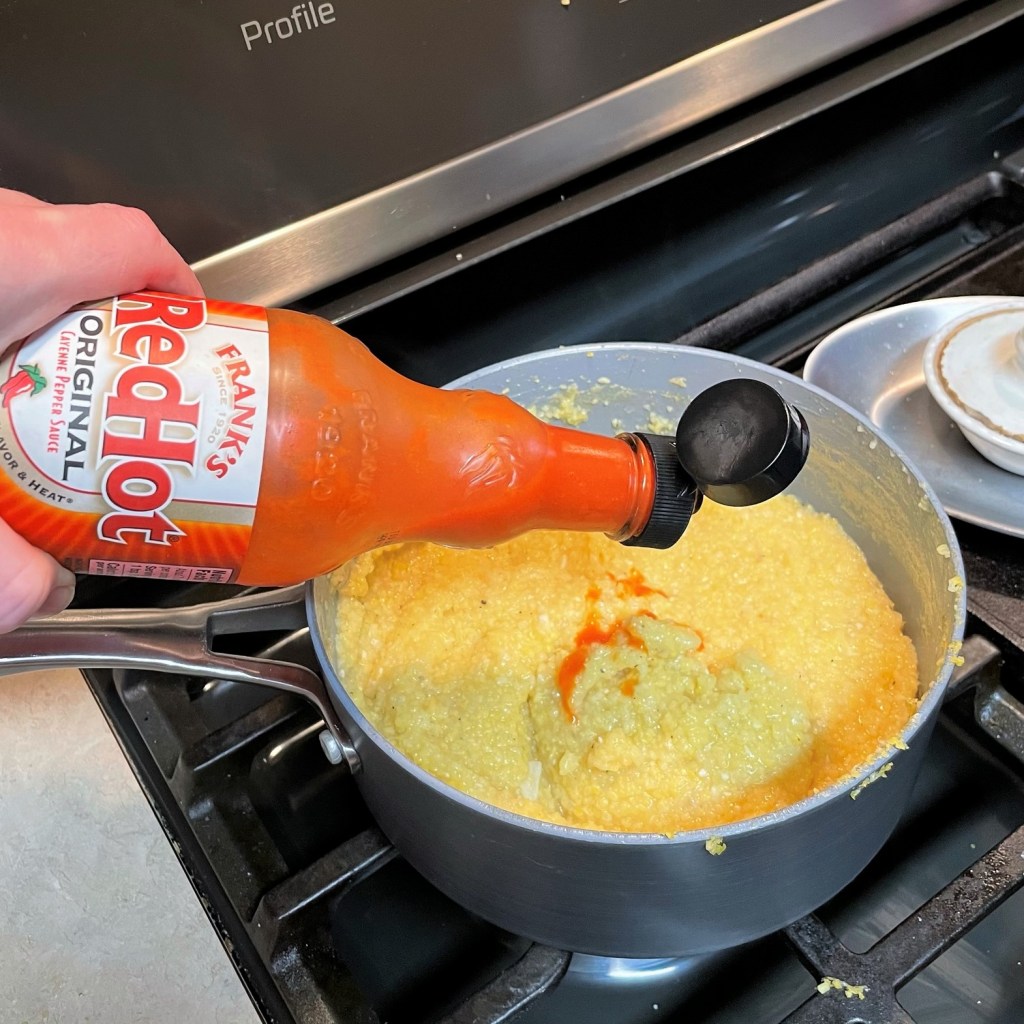
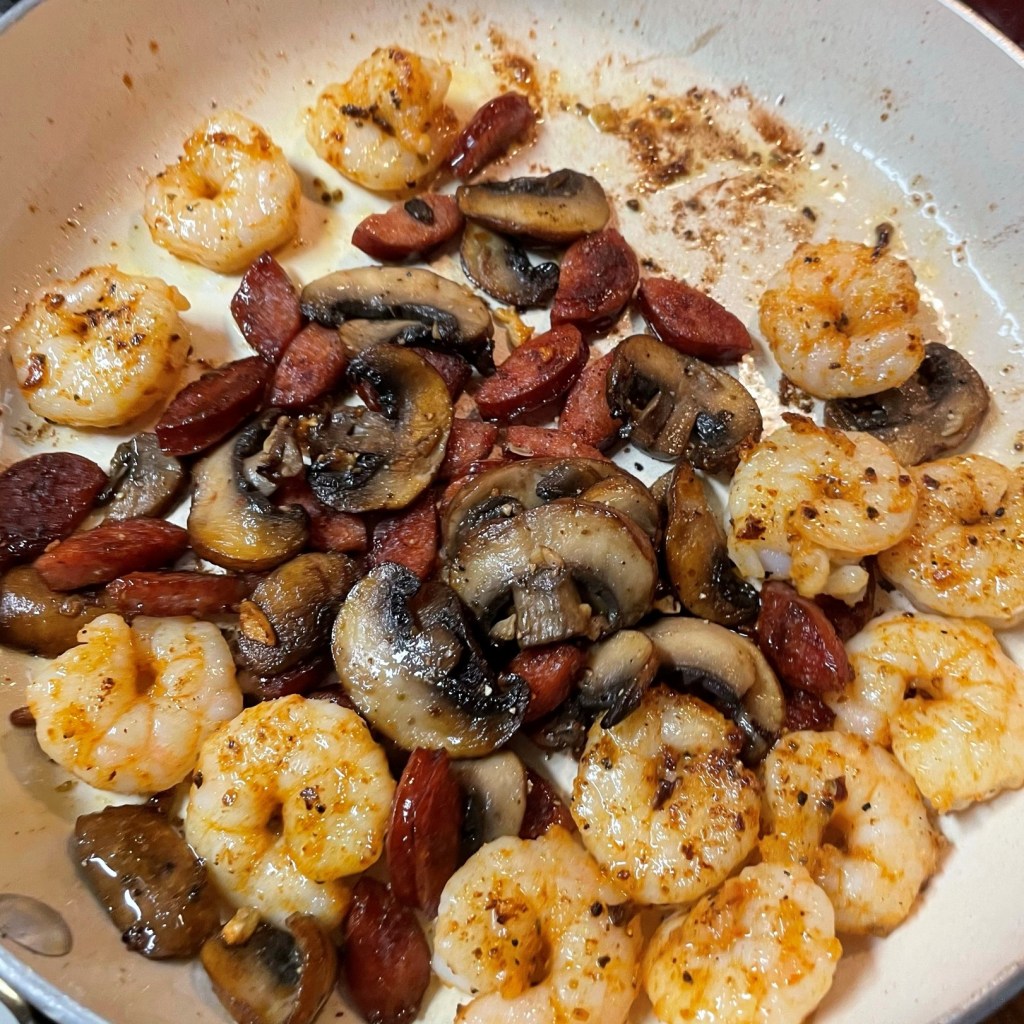
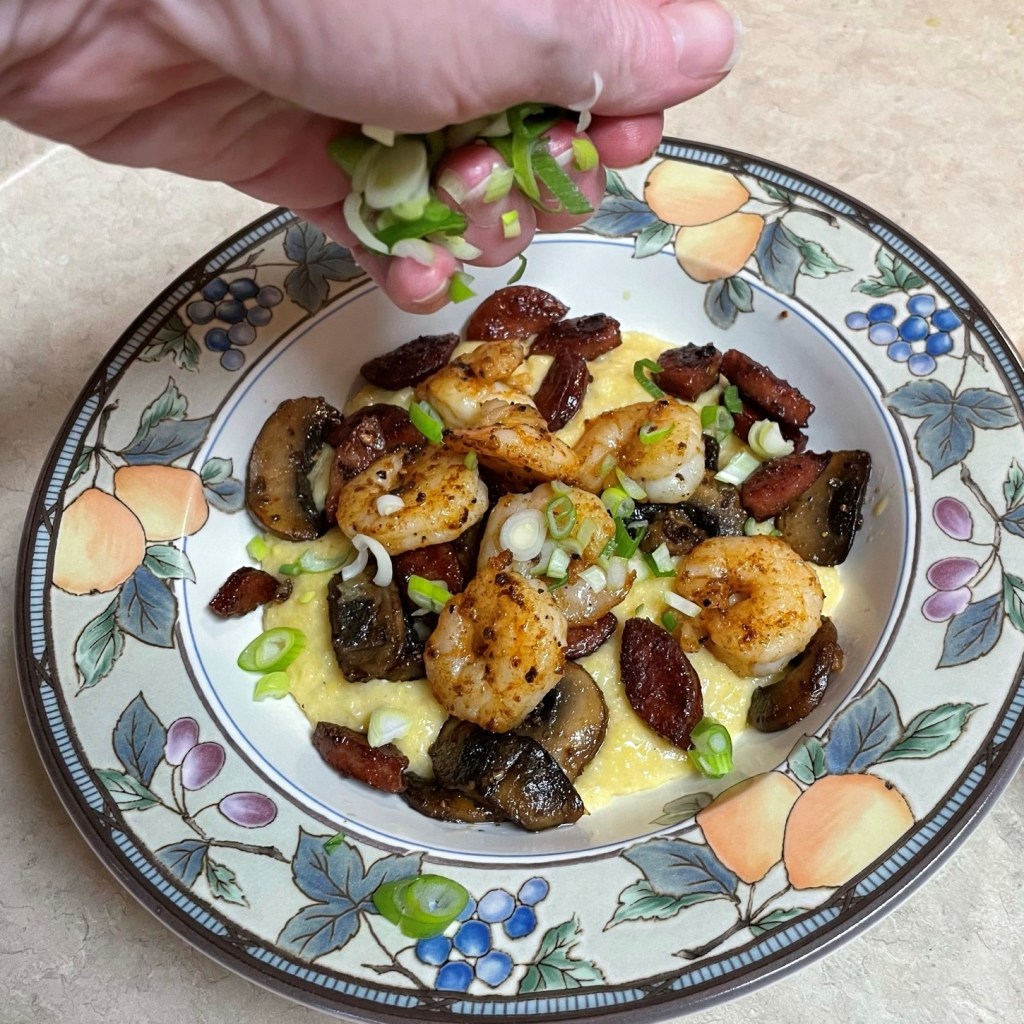
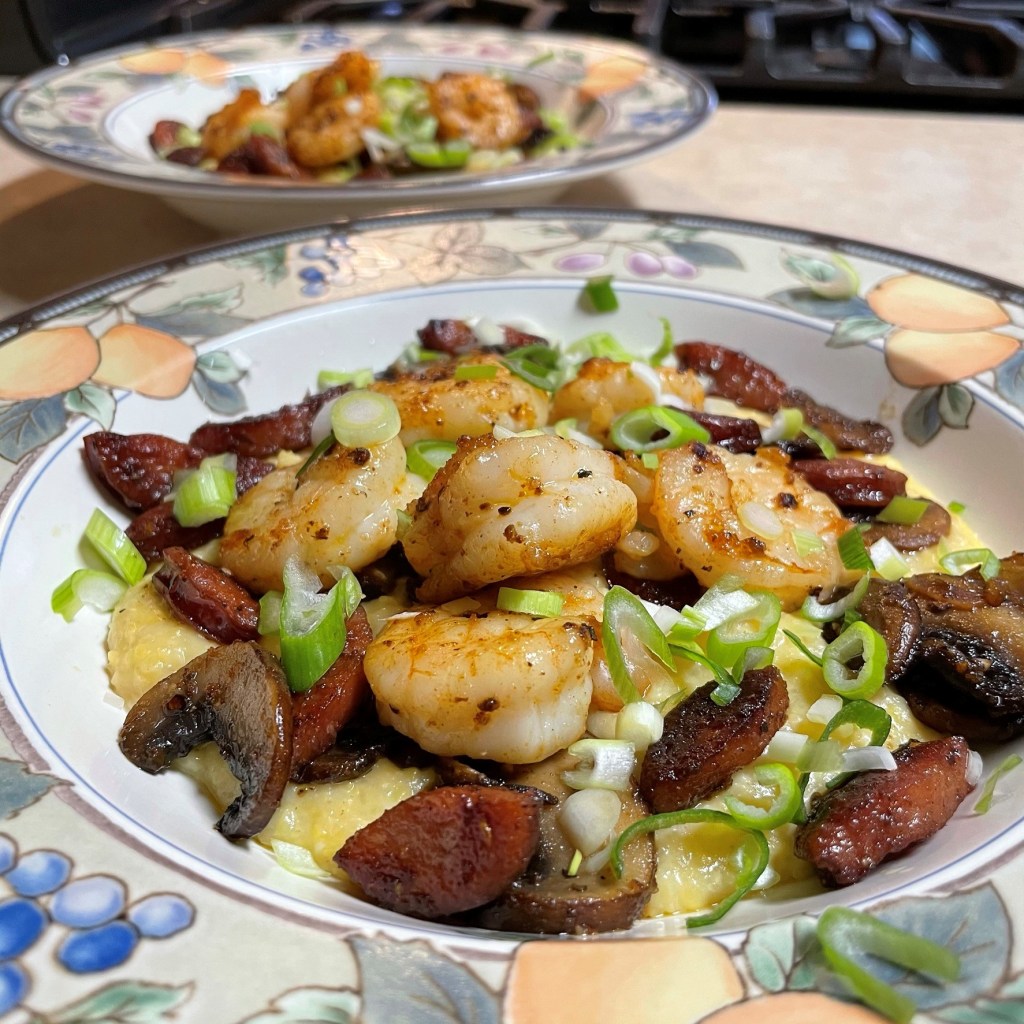
For this batch of shrimp and grits, I used smoked andouille sausage, cut up and lightly fried until the edges were crispy, sautéed cremini mushrooms, a sprinkle of Cajun seasoning on the shrimp, and scallions on top to finish the dish. The grits, as always, were creamy and delicious, with a few cloves of chopped garlic in the broth and just enough cheddar cheese at the end, to give them some extra body, and a few shakes of RedHot sauce for tangy-spicy flavor.

This recipe serves 2, with a scoop of grits left over to go under your weekend eggs.

There’s so much texture here, beginning with the juicy shrimp and crispy sausage, and down to the creamy, cheesy grits. This is one of our faves!

Ingredients

1 cup yellow grits, a.k.a. polenta* (see notes)

2 cups low-sodium vegetable broth

About 2 cups hot water, as needed for cooking the grits*

2 cloves garlic, finely chopped

Salt and pepper

Frank’s RedHot Original sauce, to taste*

2 Tbsp. light cream or half and half*

1/3 cup shredded sharp cheddar cheese

Extra virgin olive oil for sautéing

2 links smoked andouille sausage, cut into bite-size pieces

Handful of cremini mushrooms, cleaned and sliced

About 2/3 pound of wild-caught shrimp, peeled and de-veined

A few shakes of your favorite Cajun seasoning*

2 scallions (green onions), trimmed and sliced

*Notes

For the best results, and creamy grits, do not use anything packaged as “instant.” My preferred brand is Bob’s Red Mill polenta, which you can find in well-stocked supermarkets, including Super Walmart.

It’s helpful to heat the water in a teakettle or the microwave ahead of time and keep it on standby. When you add liquid to polenta or risotto that is already cooking, you want the liquid to be warm.

As always, you will need to adjust the salt amount to work with your other ingredients. I lean toward low-sodium versions of broth and seasonings so that I have more control of the overall salt in my recipes. Check your labels and taste as you go.

I love the flavor of RedHot sauce, but Texas Pete or Tabasco would also be good for a spike of flavor in the grits.

For readers abroad, “half and half” is a term used to describe a popular dairy product in the U.S. It is essentially equal parts light cream and whole milk, with about 12% milkfat.

We use a dry Cajun seasoning that my husband picked up in New Orleans, but there are plenty of options available in your supermarket. You could also make up your own, with some combination of garlic powder, onion powder, cayenne, black pepper and thyme.

Instructions

I’m a visual learner. If you are, too, then follow along with my slideshow or keep scrolling for written instructions and a pdf you can download for your recipe files.

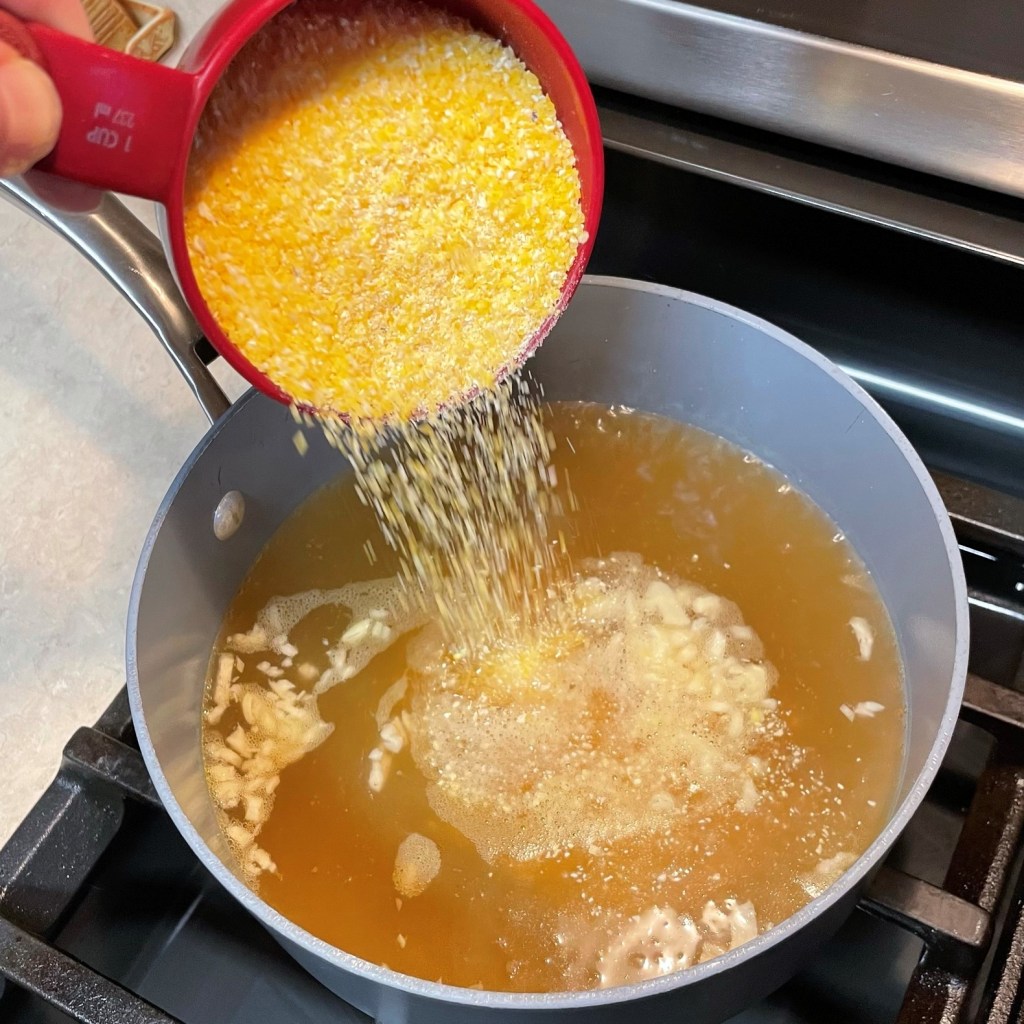
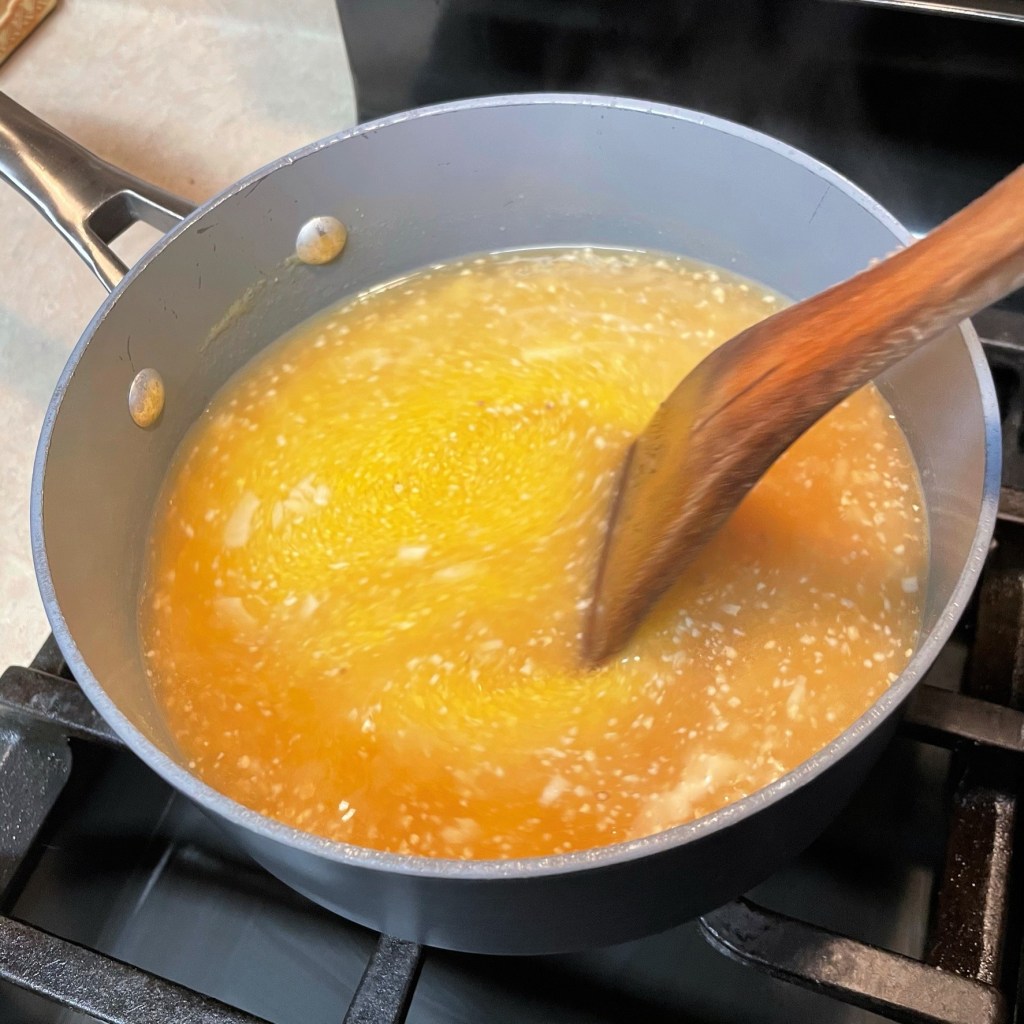
  1. Place a heavy saucepan over medium heat. Add vegetable broth, garlic, salt and pepper, and heat to nearly boiling. Add polenta, stirring constantly until it is fully mixed with the broth and no visible clumps appear. Reduce heat to medium low and cook, stirring frequently, until most of the liquid is absorbed.
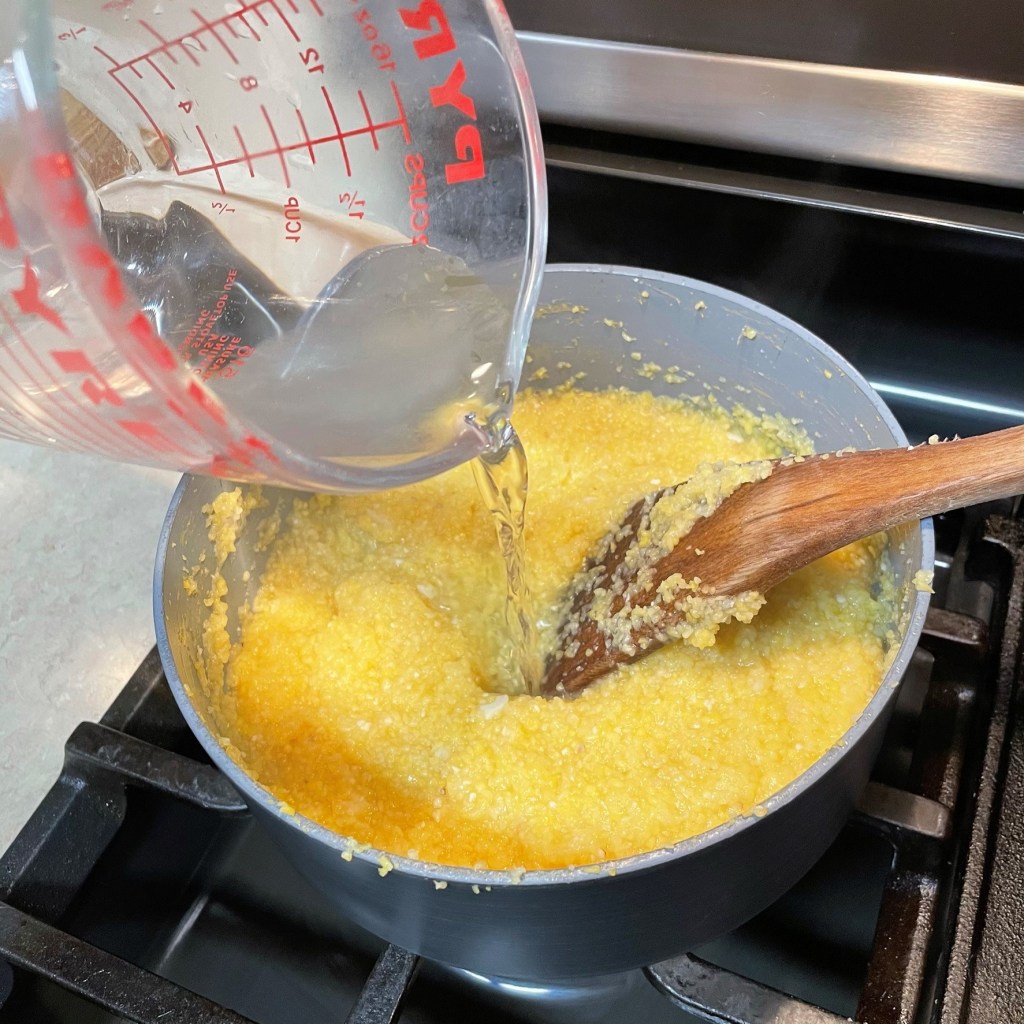
  2. Add hot water, 1/2 cup at a time, and continue with frequent stirring until each addition is absorbed and grits take on a smooth, creamy appearance. This may be up to 2 cups of additional liquid, and may take as long as 40 minutes.
  3. When grits achieve desired consistency, add a few shakes of RedHot sauce and stir in the light cream. Stir in shredded cheddar until melted and smooth. Remove grits from heat and cover to keep warm until you are ready to assemble the dish with the shrimp and other ingredients.
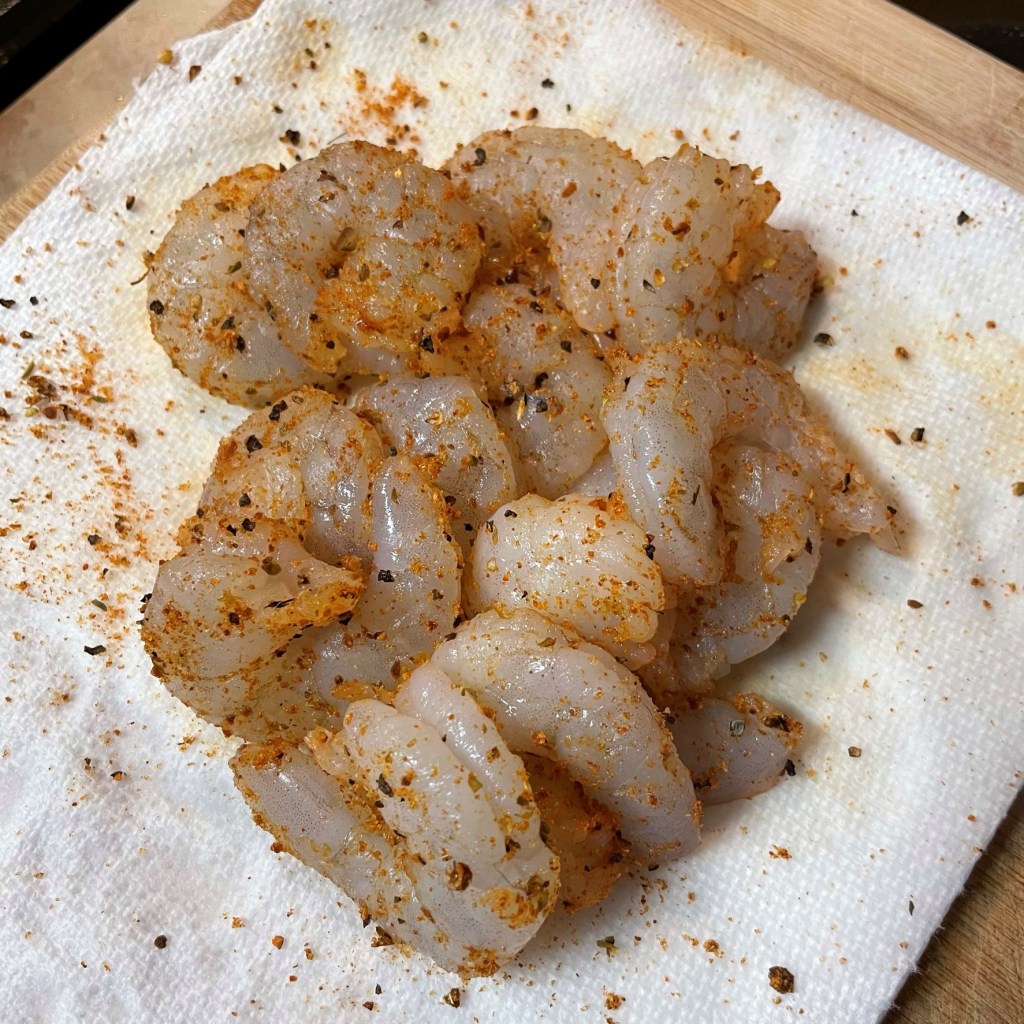
  4. Season the prepared shrimp with a few shakes of Cajun dry seasoning, and toss to let the flavor meld with the shrimp.
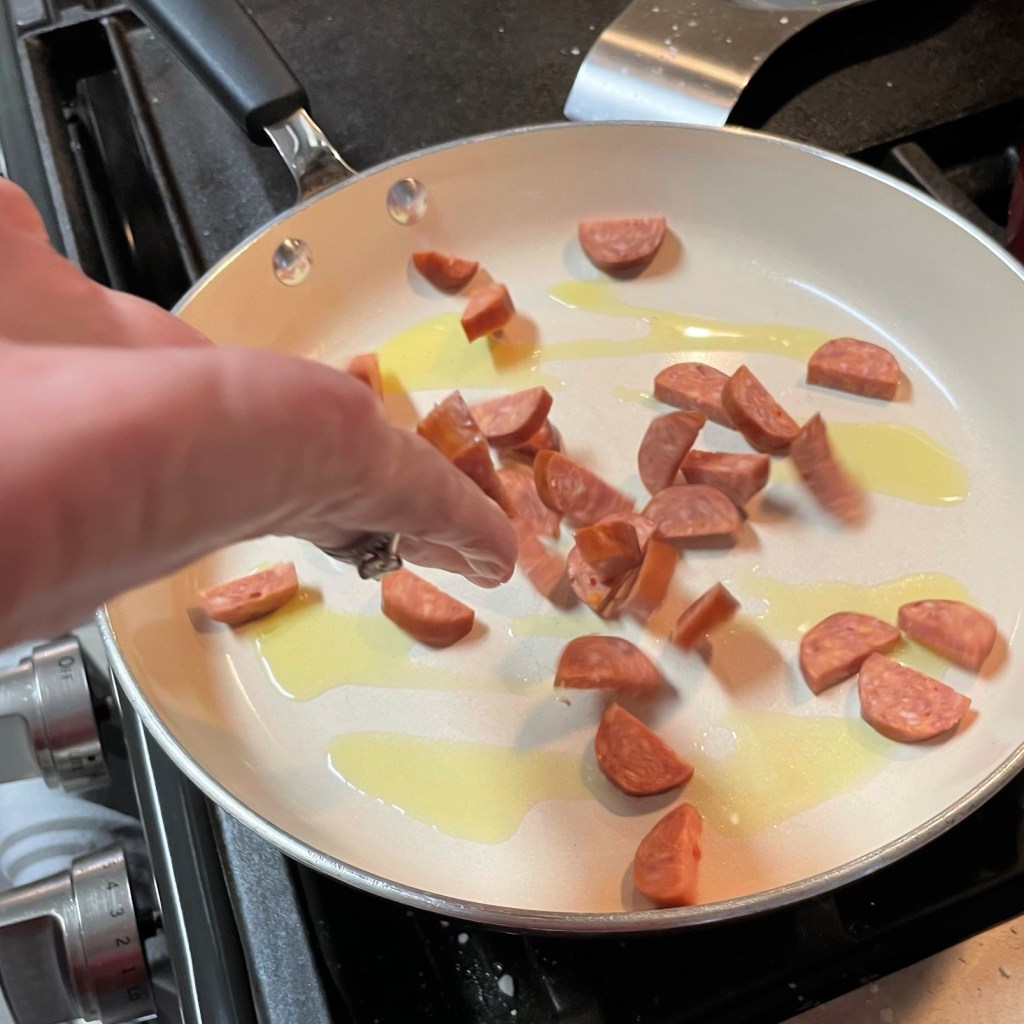
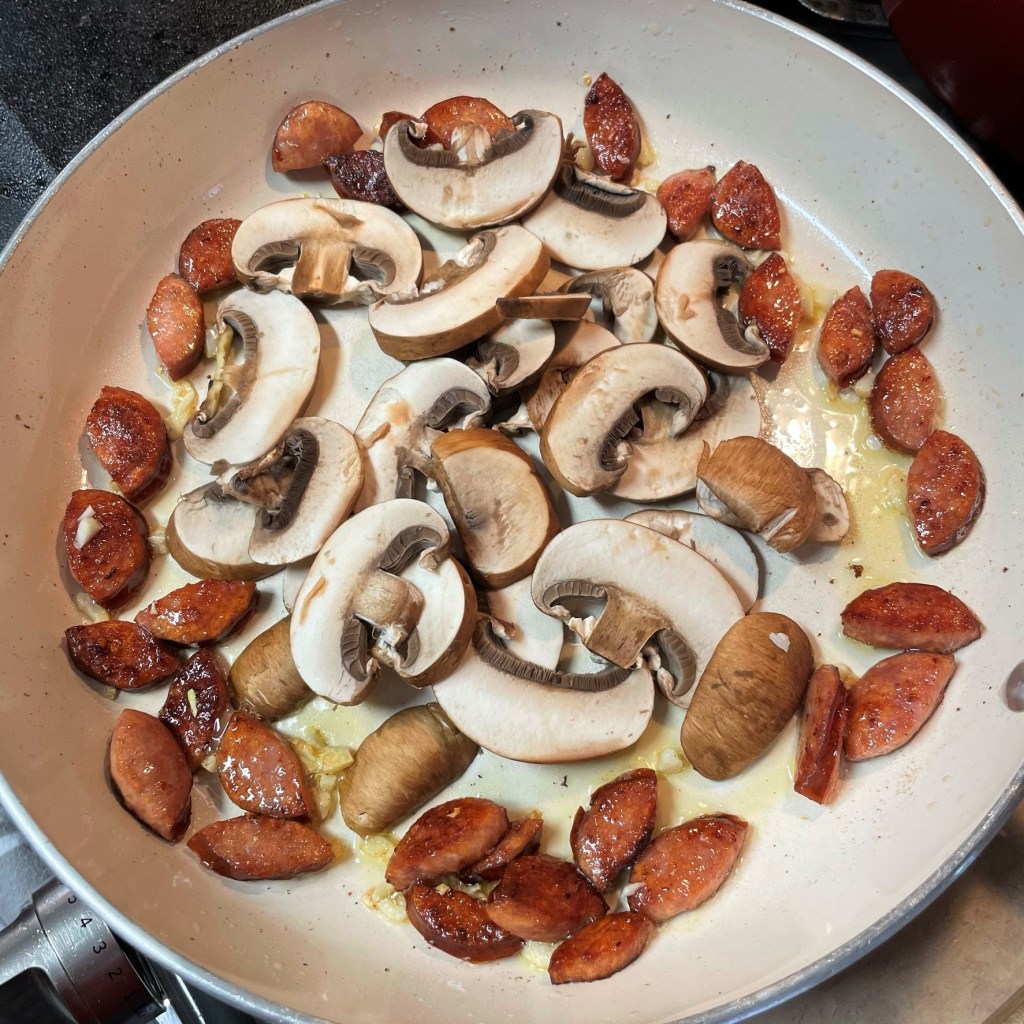
  5. Place a large skillet over medium heat. Add a tablespoon of olive oil and brown the andouille sausage bits until they have slightly crispy edges. Add the sliced mushrooms to the pan, tossing to brown them on both sides. Transfer sausage and mushrooms to a bowl.
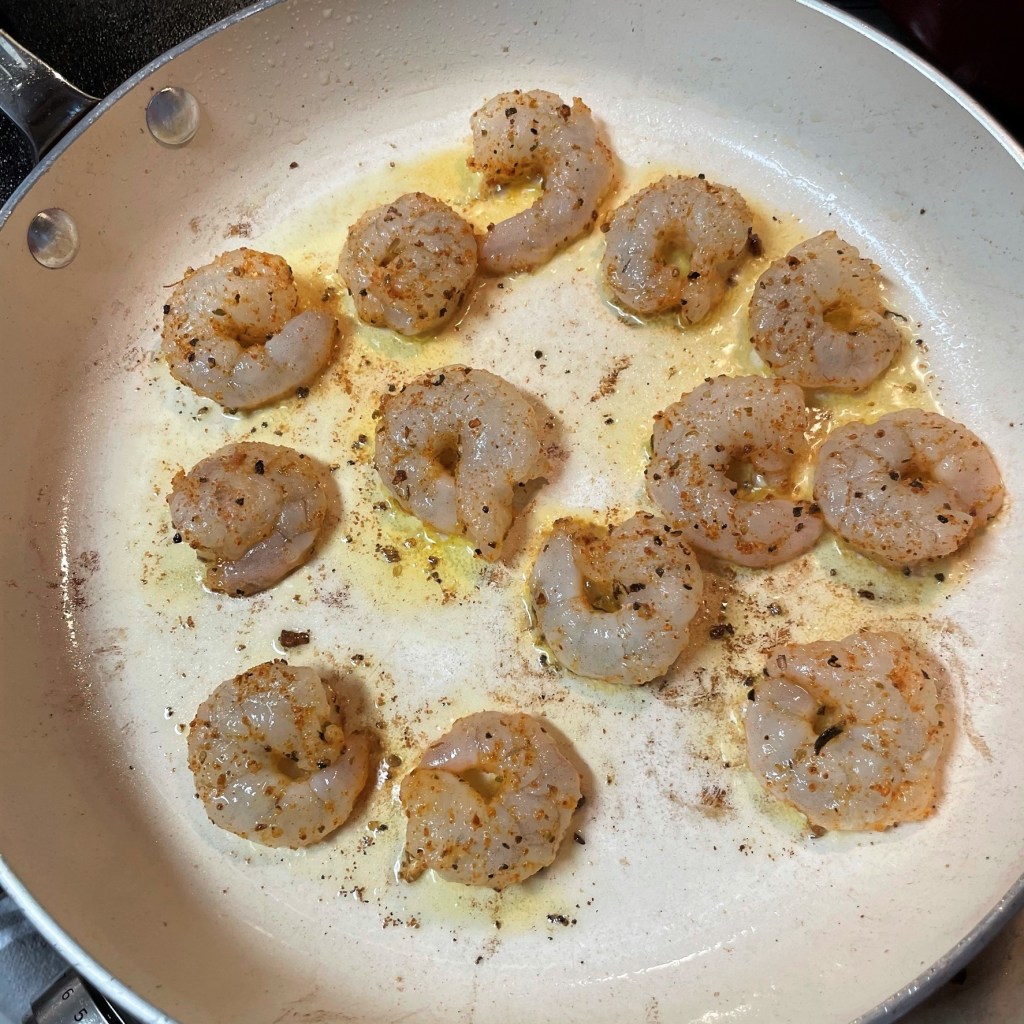
  6. In the same skillet, again over medium heat, swirl in another tablespoon of olive oil. When oil is shimmering, place shrimp into the pan, one at a time. Allow them to cook, undisturbed, about one minute, then begin turning them, following the same order, to cook the other side.
  7. Add the cooked sausage and mushrooms back to the skillet and give the whole thing a few quick tosses to heat everything through.
  8. Spoon a generous amount of grits onto your serving bowls or plates, top with sausage, shrimp and mushrooms. Sprinkle dish with scallions and serve.

Time for dinner!


Bangers & Mash!

There cannot possibly be a food more deserving of the title “pub grub” than bangers and mash. This hearty, stick-to-your-ribs dish is original to Ireland and other parts of the U.K., and a real treat on St. Patrick’s Day, but its history reflects hard times for the Irish people. During W.W. I meat shortages, sausage makers resorted to stuffing the links with lesser amounts of pork or lamb, substituting fillers and higher-than-usual water concentration. As they cooked, the sausages exploded from their casings with a banging sound. Thus, “bangers.”

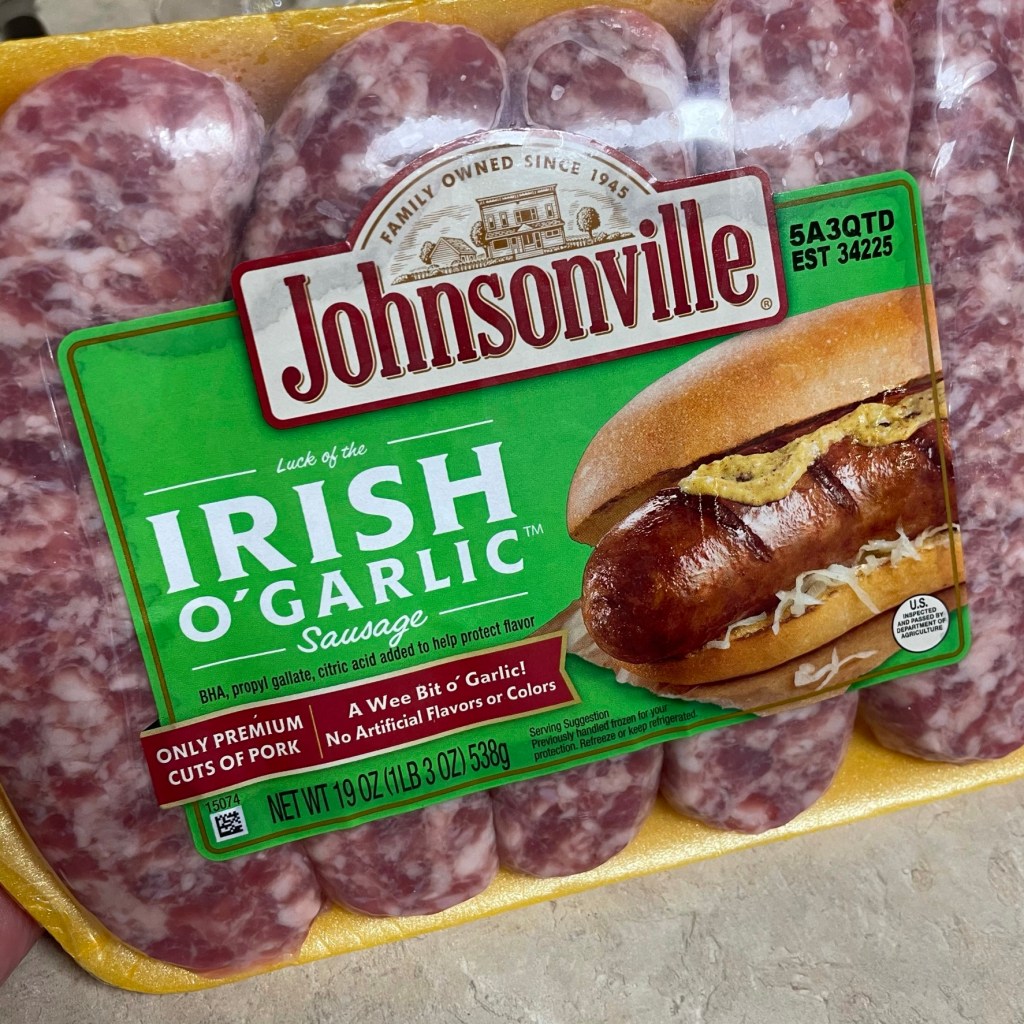
Today, you don’t have to look very hard to find a more meat-centric version of the sausages, and I found this delicious variety made by Johnsonville. They are slightly sweet, but with plenty of garlic flavor that I think holds up nicely to the dark stout beer used in the thick onion gravy. If you can’t find sausage that is labeled specifically as “Irish,” I would recommend any bratwurst-type of sausage as a fine substitute.

These Johnsonville sausages were delicious! If you do not find sausage labeled as “Irish,” I think bratwurst would be a good substitute.

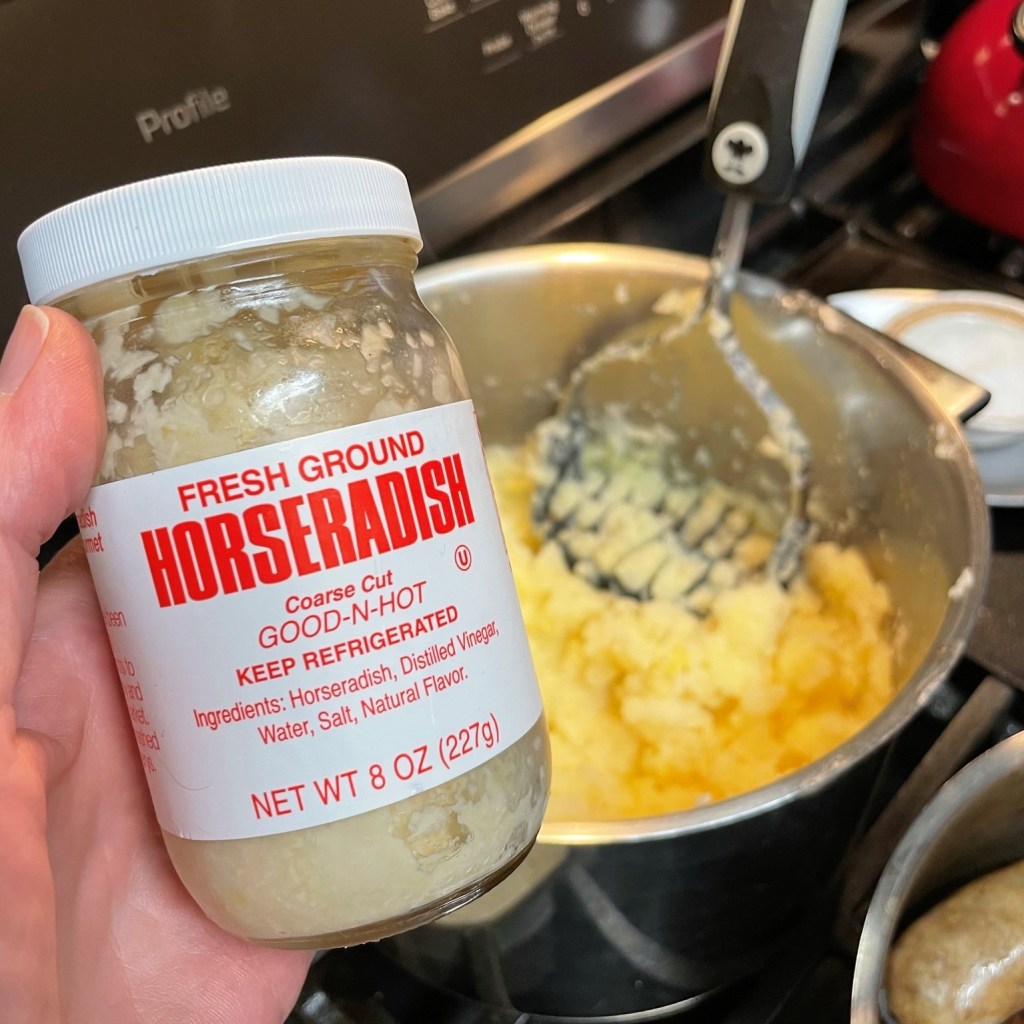
The Irish, especially peasant populations, have always relied heavily on the nutrient-dense potato, for its fiber, antioxidants and minerals (especially potassium). Potatoes contain a resistant starch that is not absorbed by the body, but provides a vehicle to deliver nutrients to feed our gut bacteria, which is crucial for overall good health. Isn’t it nice to know that a favorite comfort food can actually be good for you? At our house, it’s a rare occasion to have any kind of potatoes other than my beloved’s fabulous garlic mashed, but their richness, and especially the parm-romano flavor, is not quite right for this meal. I’ve taken a different direction, using buttermilk and a moderate amount of butter to cream them up a bit, and a couple of spoons of horseradish, which gives them legs to stand under the intensely flavored Guinness onion gravy.

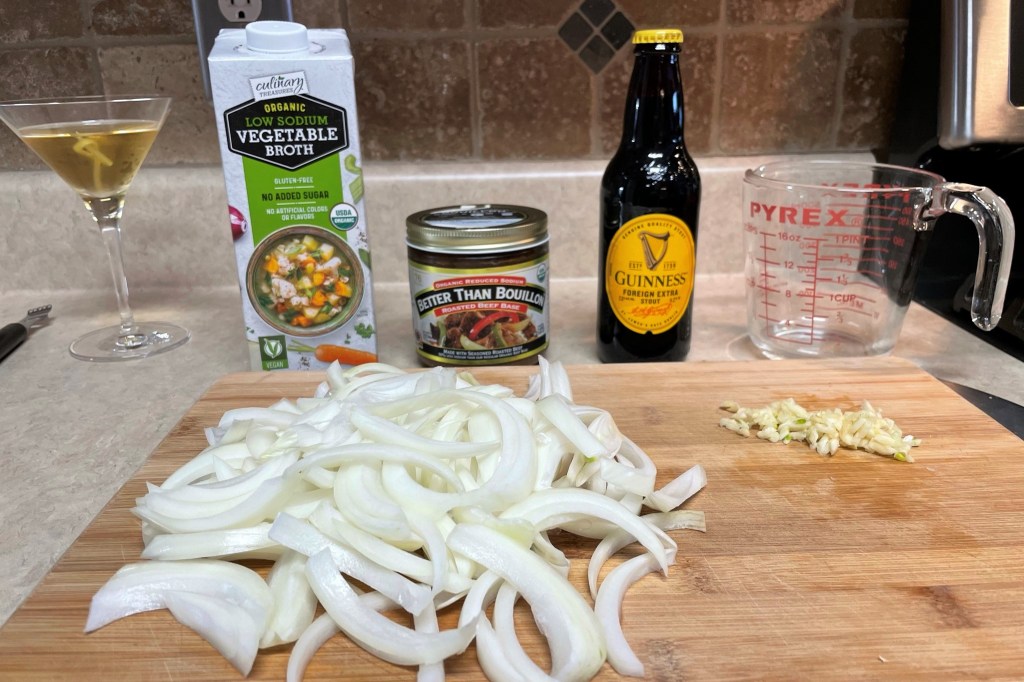
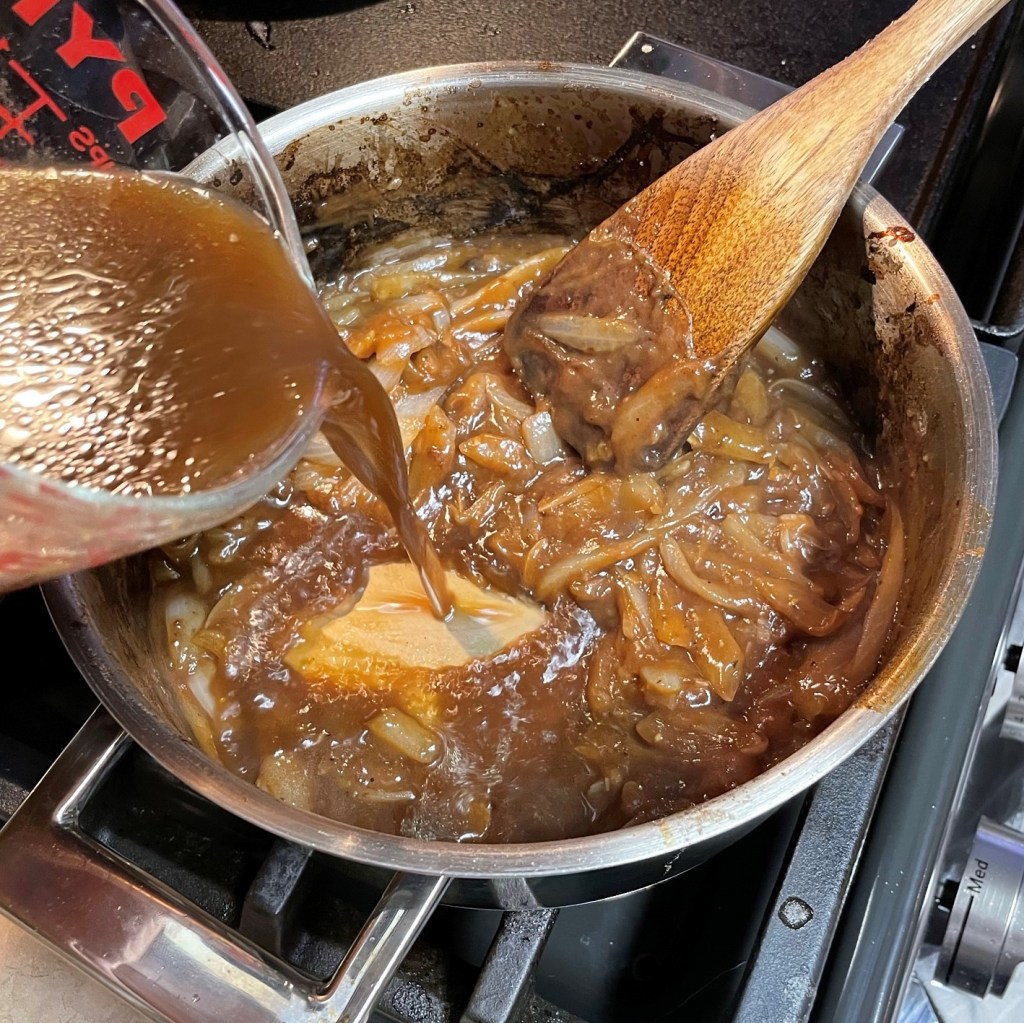
My version of the gravy begins with sautéed onions, and is finished with a very generous glug of Guinness stout, plus some broth. This gravy is big and bold, and if you wish, you can shift the ratio of stout or leave it out altogether in favor of beef broth—that’s up to you.

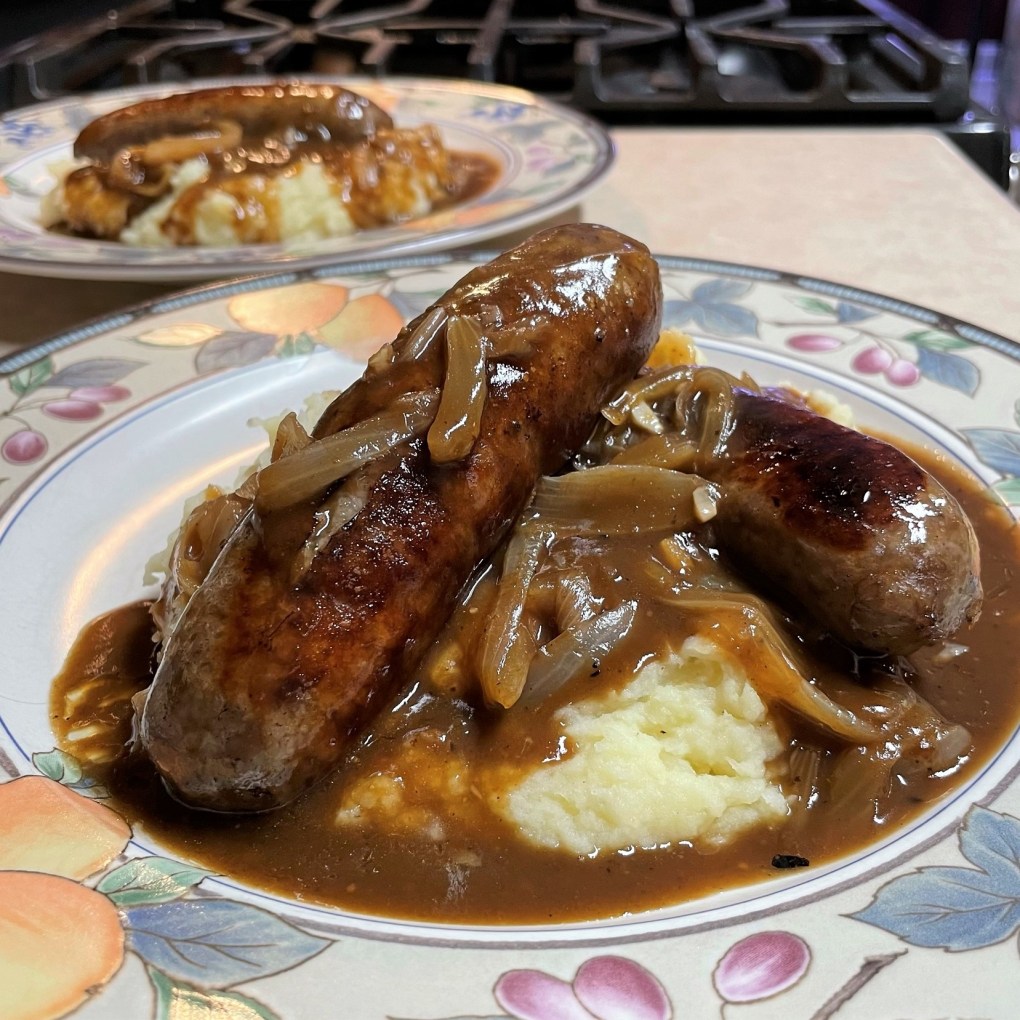
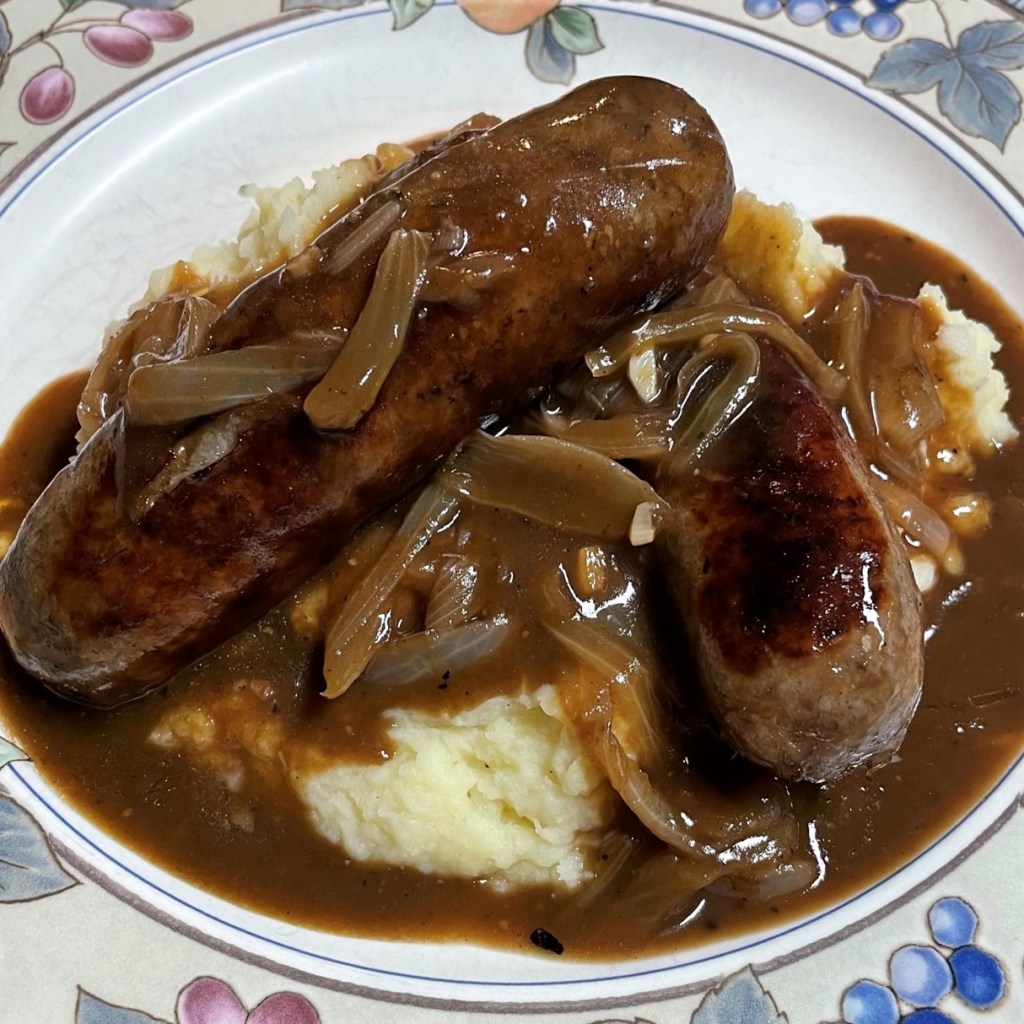
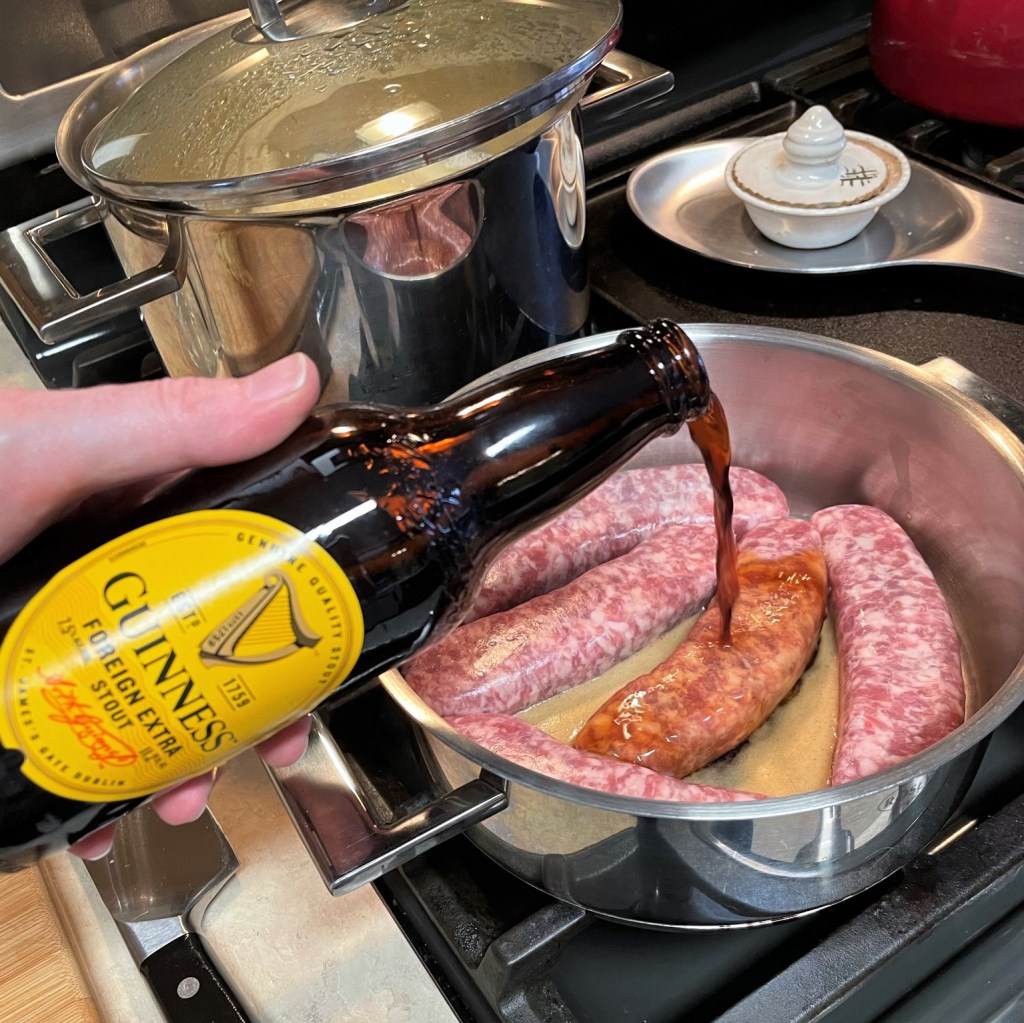
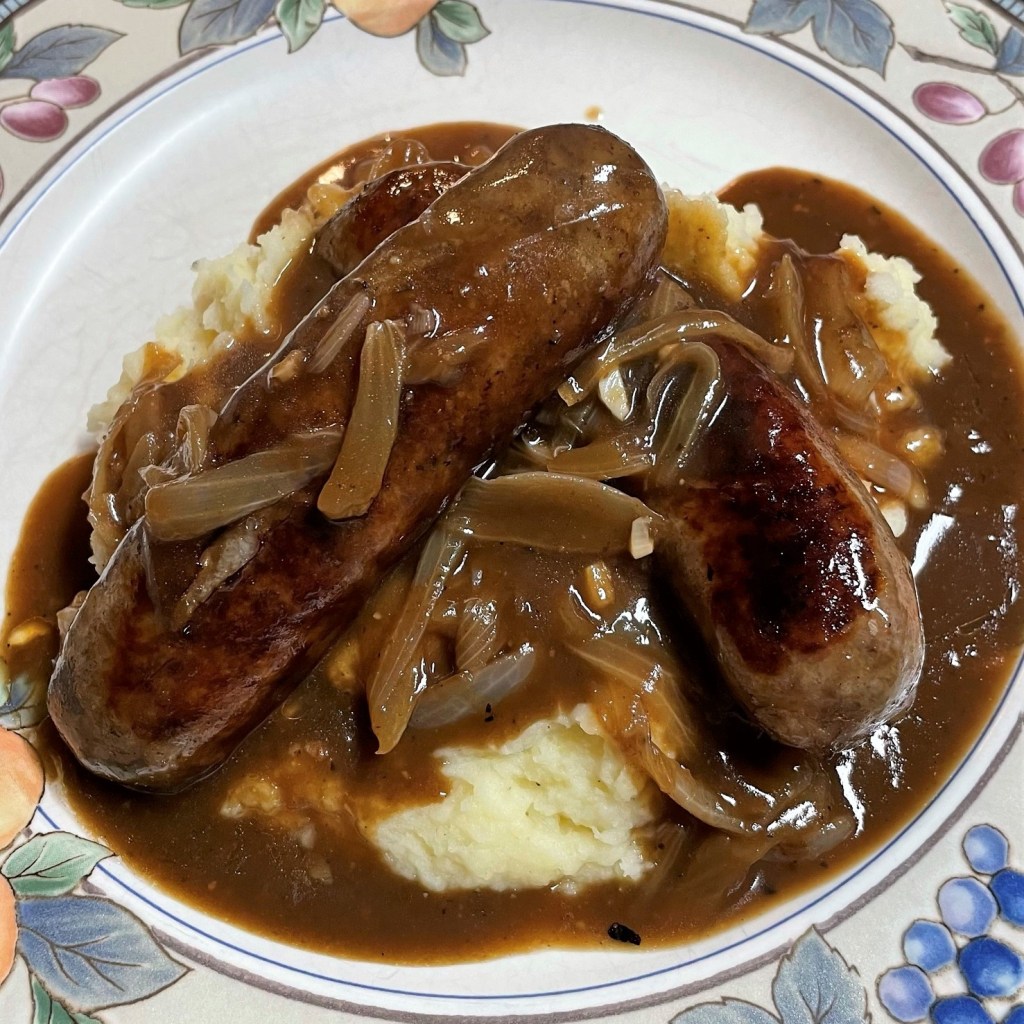
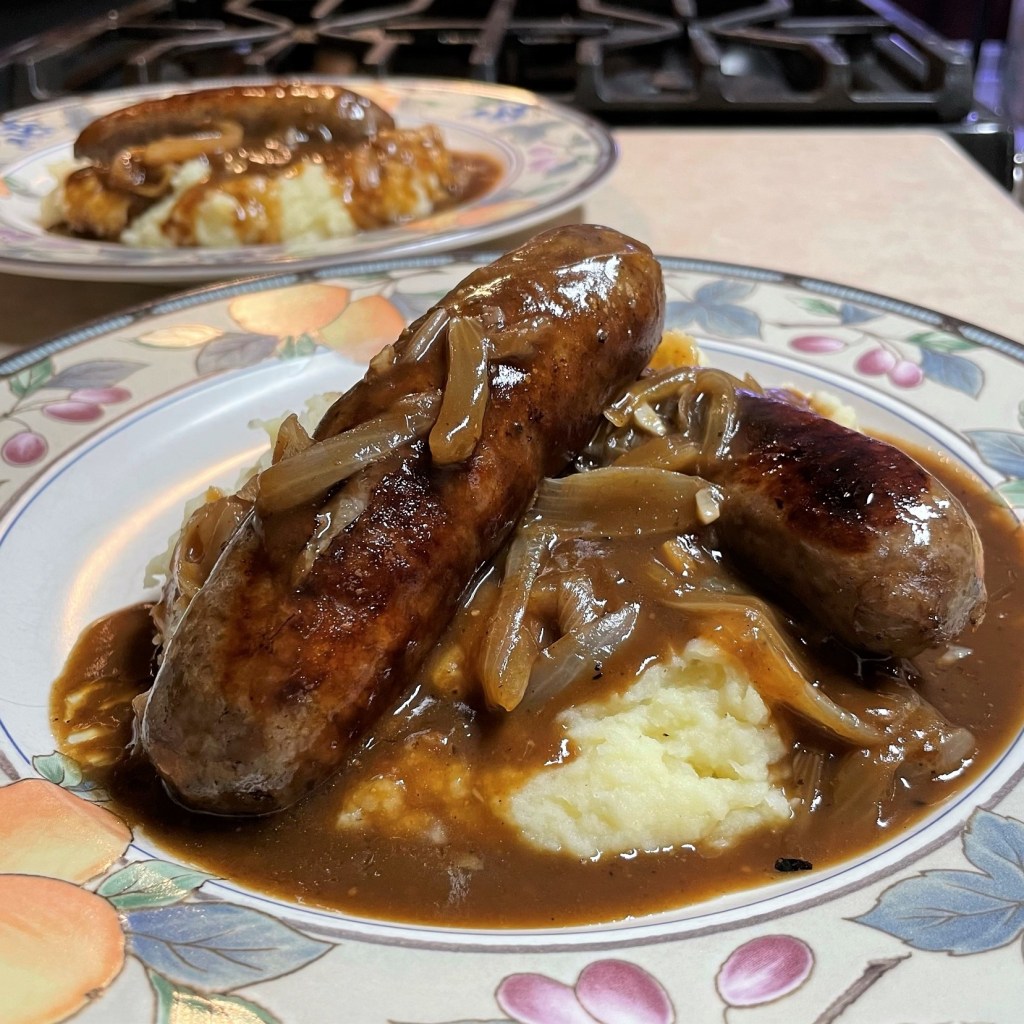
Garlicky sausages, simmered in Guinness and then piled onto hearty potatoes with the Guinness-onion gravy. This is some serious Irish pub grub!

The preparation of these three components (bangers, mash and gravy) will happen concurrently; if you are working ahead, the whole meal heats up nicely as leftovers.

Ingredients

Package of Irish banger sausages (or similar substitute)

1/2 cup Guinness stout ale*

2 1/2 lbs. starchy potatoes (I used a combination of russet and golds)

4 Tbsp. salted butter

1/2 cup thick buttermilk

1 1/2 tsp. prepared horseradish

Salt and pepper

It’s surprising to get so much flavor from so few ingredients. The scotch cocktail in the back is for the cook, not the gravy. 🙂

Guinness Onion Gravy

3 Tbsp. salted butter

1 large yellow onion, sliced (mine was about the size of a softball)

2 cloves garlic, minced

3 Tbsp. all-purpose flour

1 cup Guinness stout ale

1 cup low-sodium vegetable broth

2 tsp. beef bouillon base*

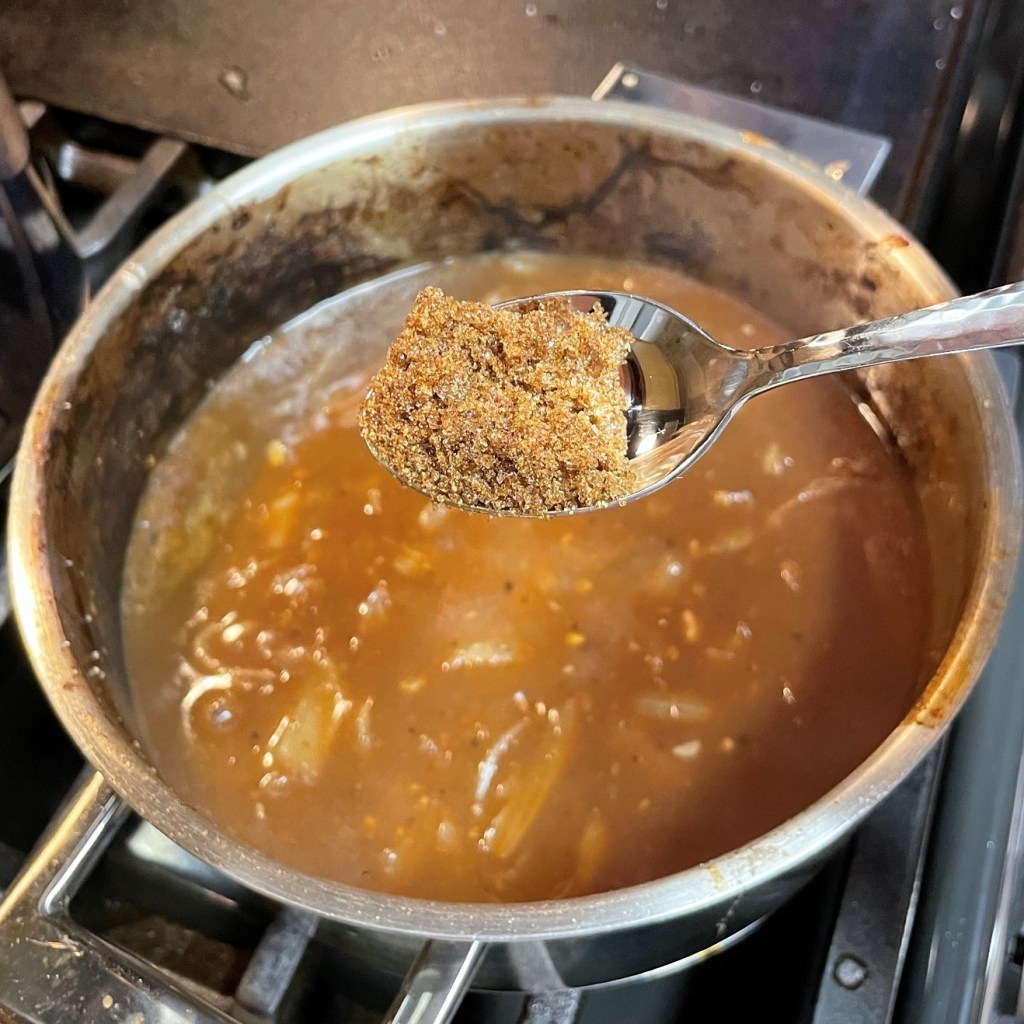
2 tsp. dark brown sugar

Salt and pepper

*Notes

The Guinness stout ale is very strong, and carries a somewhat bitter note. I believe the secret to making delicious gravy with the stout is cooking it slowly, so the malty flavors remain but the alcohol cooks out and mellows in flavor. If you are averse to the bitter flavor, or avoiding alcohol, substitute a hearty beef stock for similar results. This recipe calls for a 12 oz. bottle; you will use part of it to simmer the sausages and the rest to finish the onion gravy. I purchased the “Foreign Extra” stout, but for less intense flavor, use a Guinness draught stout.

I use vegetable broth regularly for the nutrients and flavors, and I have amped up the flavor with a hearty spoon of beef bouillon base. If you prefer, skip the base and use beef broth.

Instructions

Let’s run through it together in pictures, then scroll to find written instructions, and a downloadable version you can print for your recipe files.

  1. Peel the potatoes and cut them into large chunks. Cook in salted water over medium-low heat until fork tender.
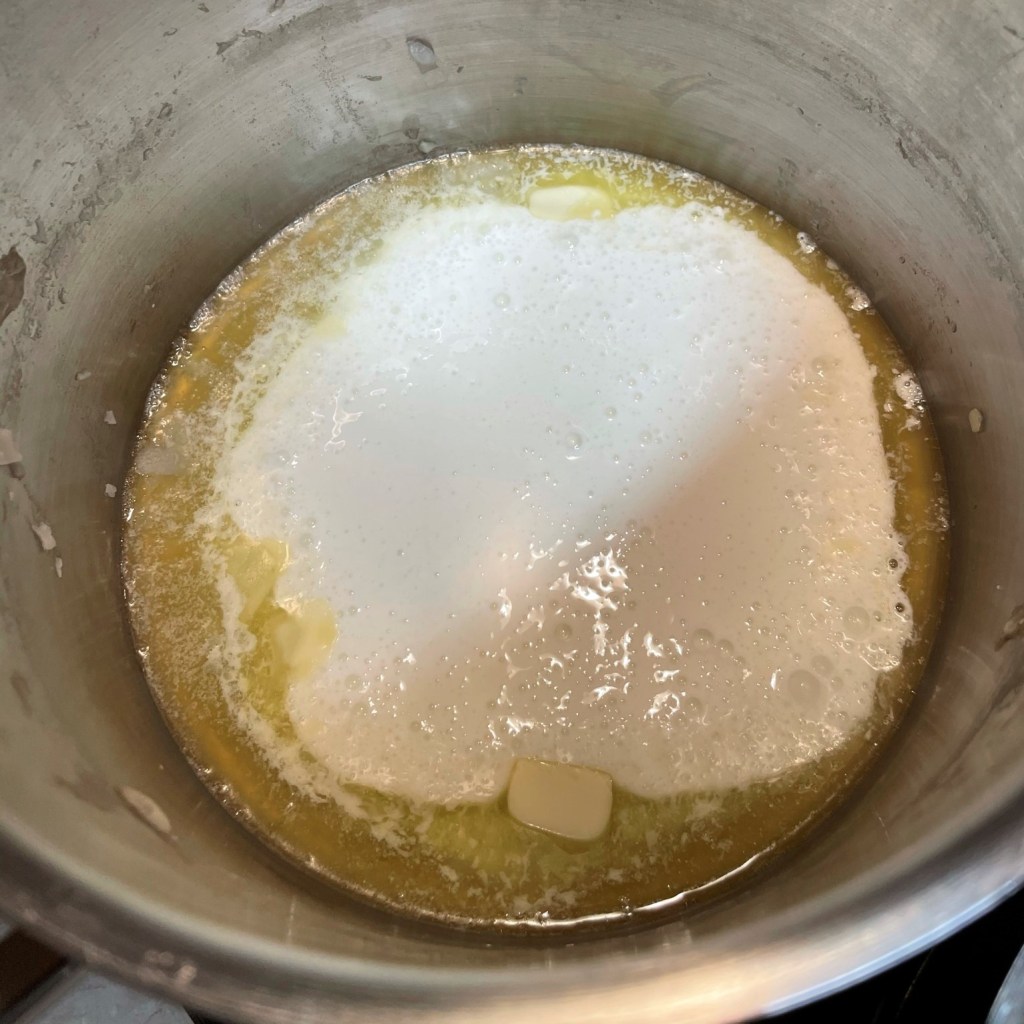
  2. Drain potatoes in a colander (reserve the water, if you wish, to make a batch of my sourdough potato bread with onions and dill). While potatoes drain, add butter and buttermilk to the cooking pot over medium heat until butter is mostly melted.
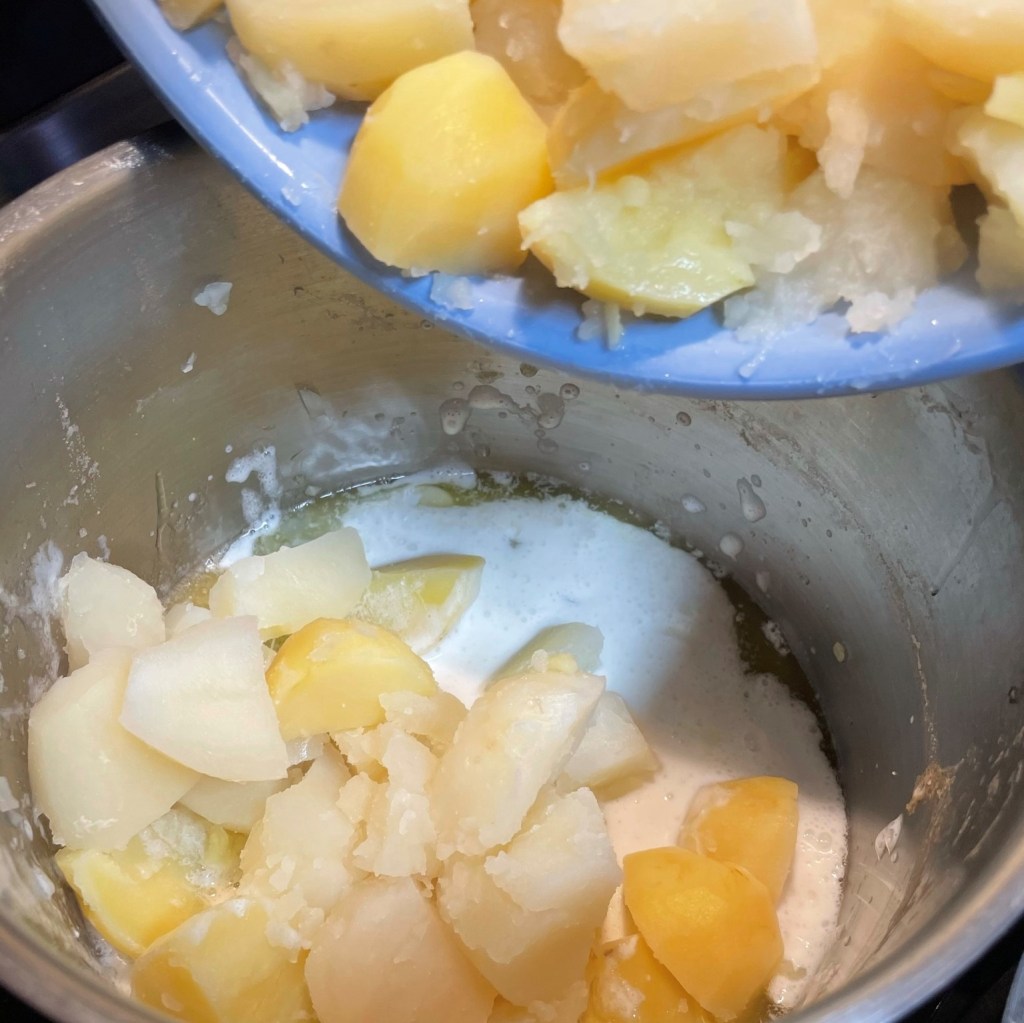
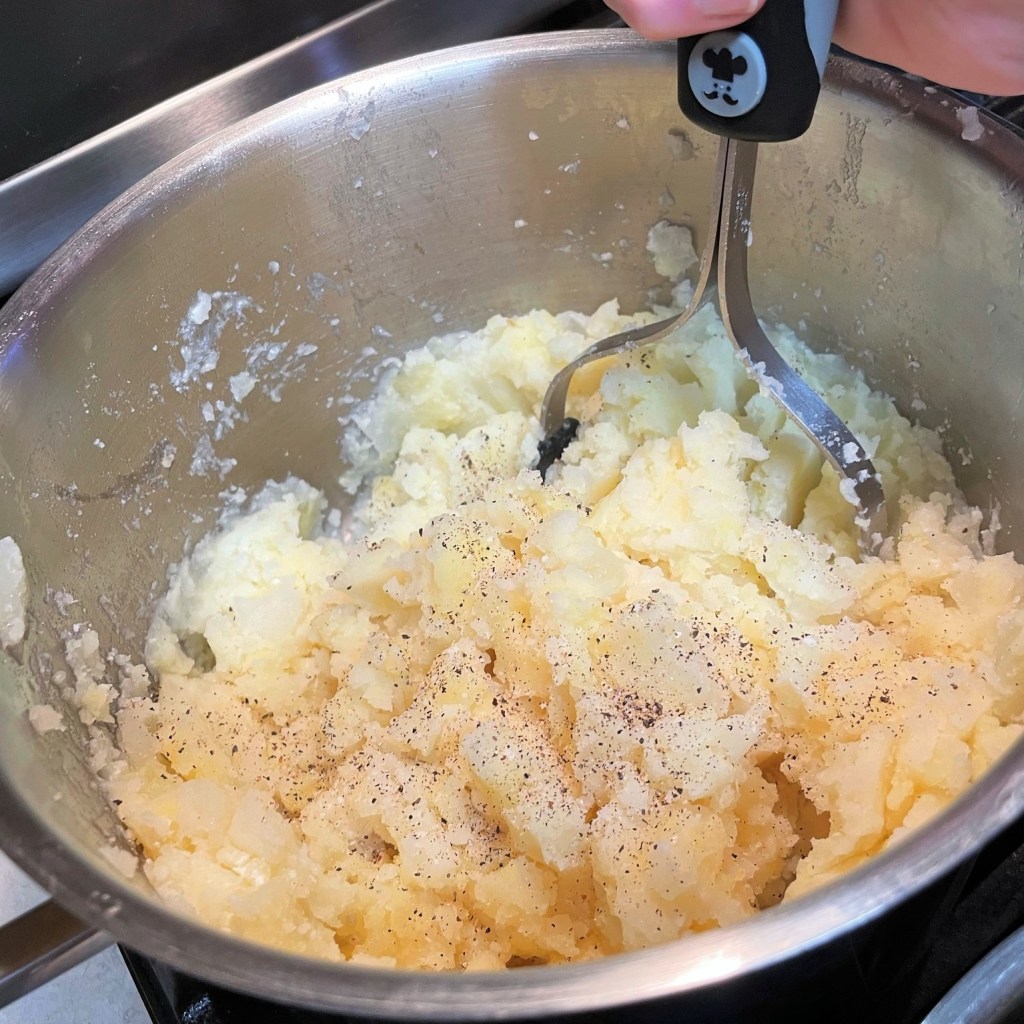
  3. Return hot potatoes to the pot and mash, seasoning with salt and pepper. Stir in horseradish and additional butter, if desired.
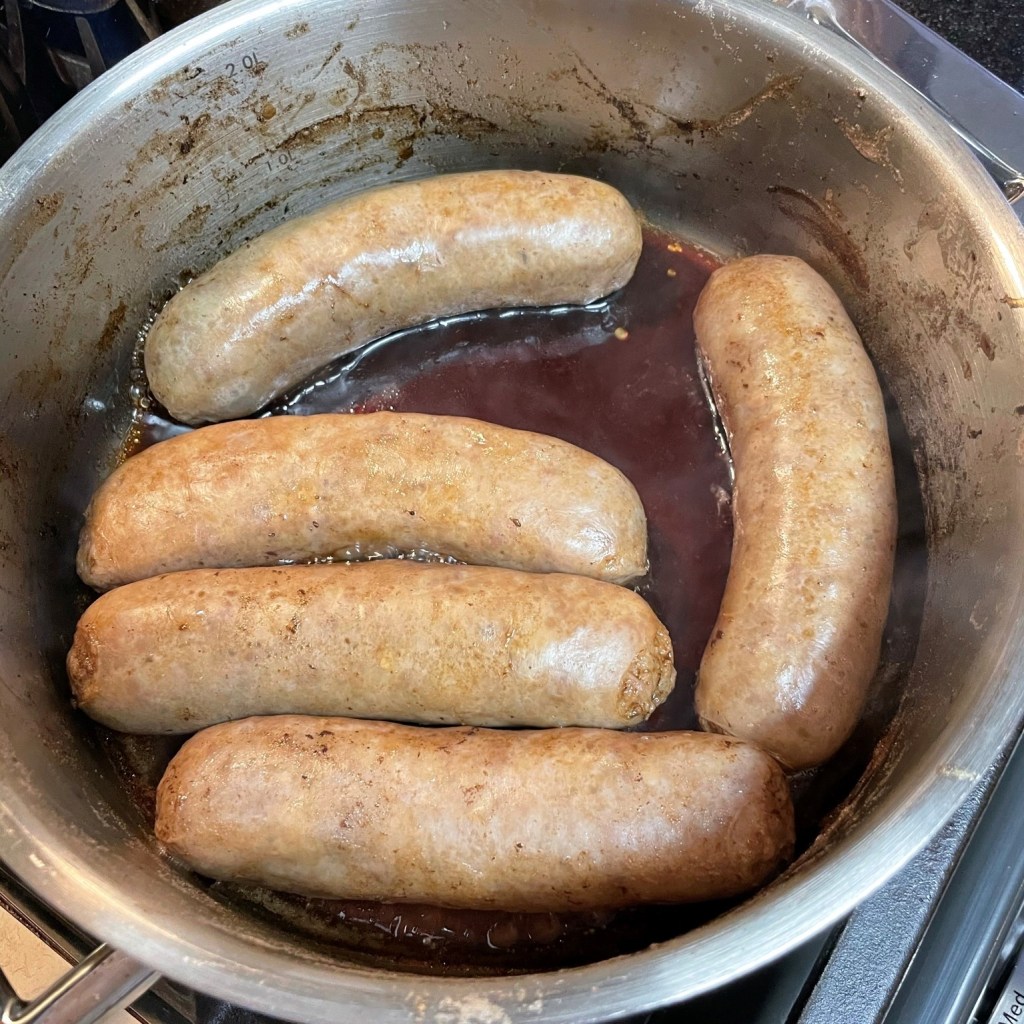
  4. While the potatoes are cooking, place a medium, heavy-bottomed pot over medium heat and pour in 1/2 cup of the Guinness stout. Add sausages to the stout and simmer, turning sausages a few times, until sausage is plump and stout is reduced to a couple of tablespoons. This should be about 25 minutes. Transfer sausages to a separate dish and set aside to make the gravy.
  5. Pour any reduced stout into a glass measuring cup, along with vegetable broth and beef base.
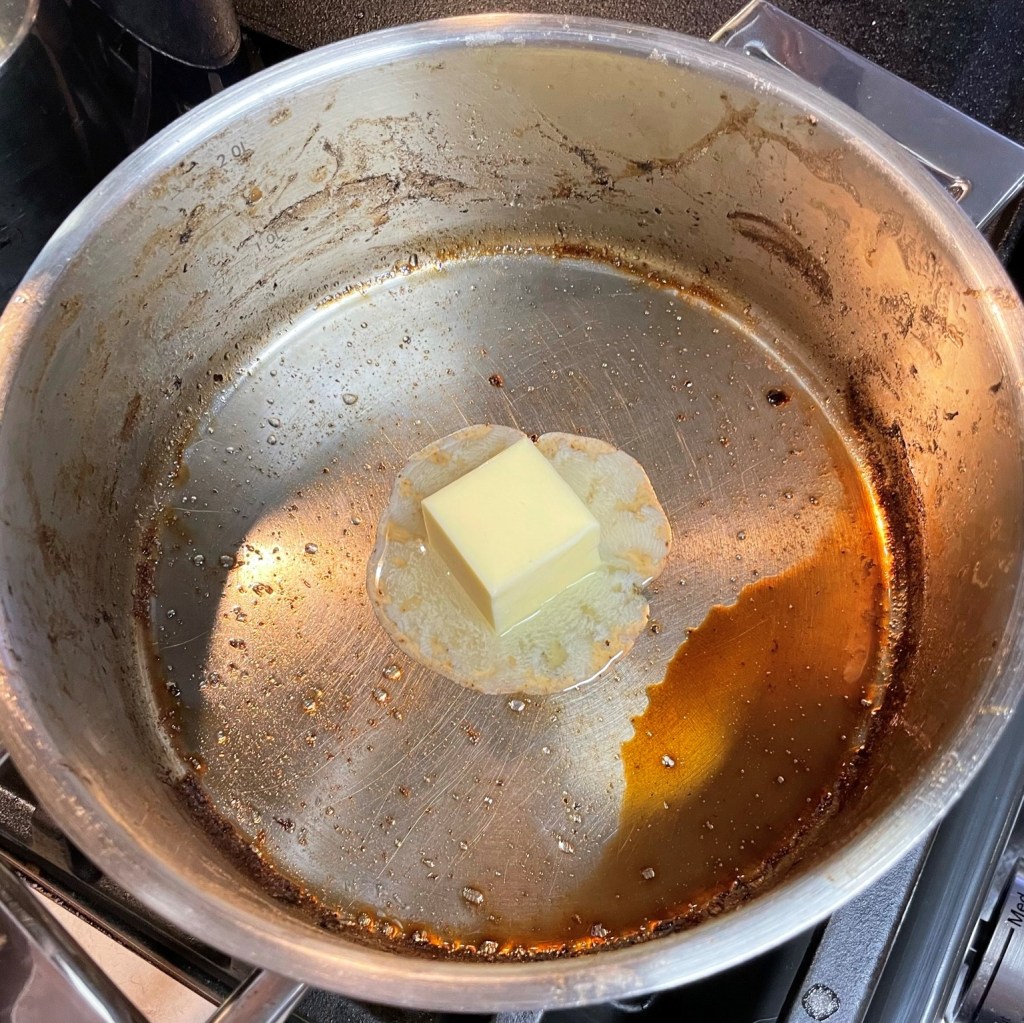
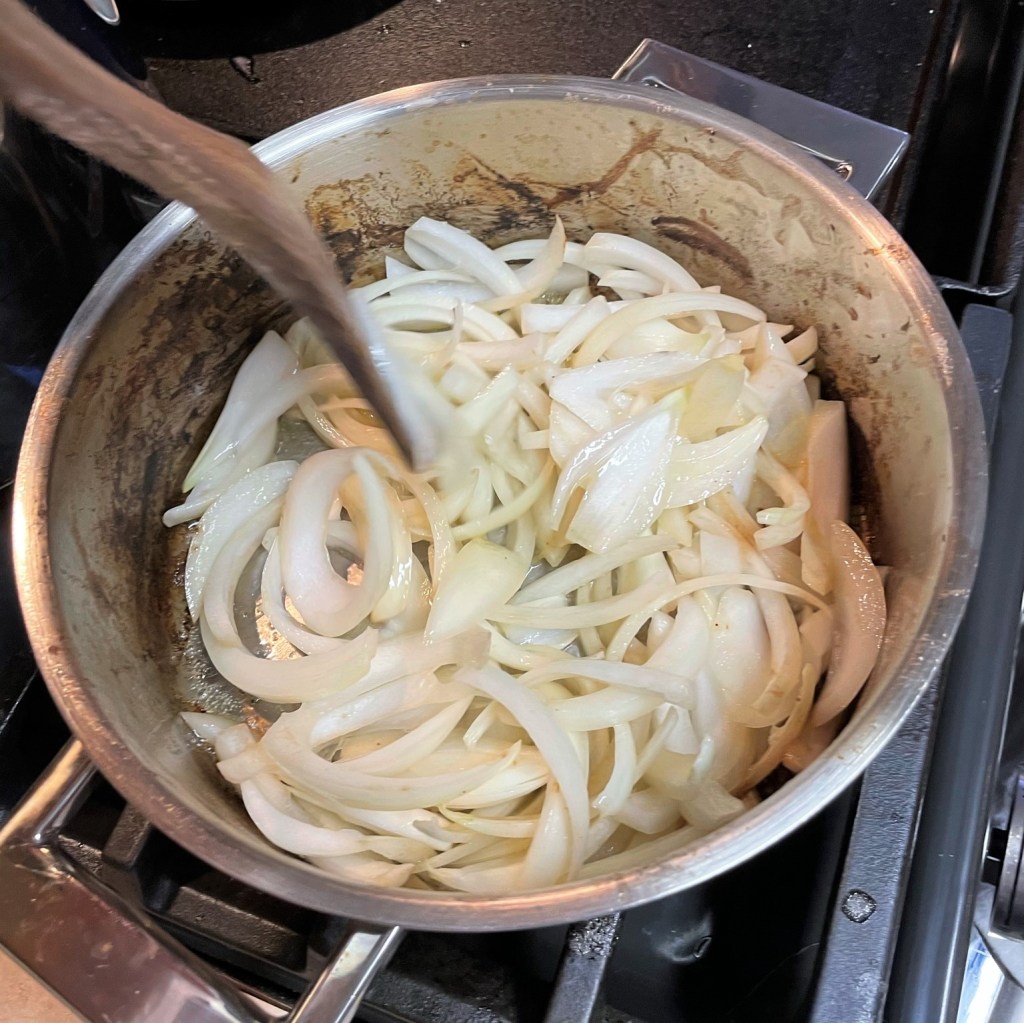
  6. Add butter to the same pot used to simmer the sausages, and add onions and garlic. Season with salt and pepper and sauté over medium heat until onions are soft and translucent, at least 10 minutes.
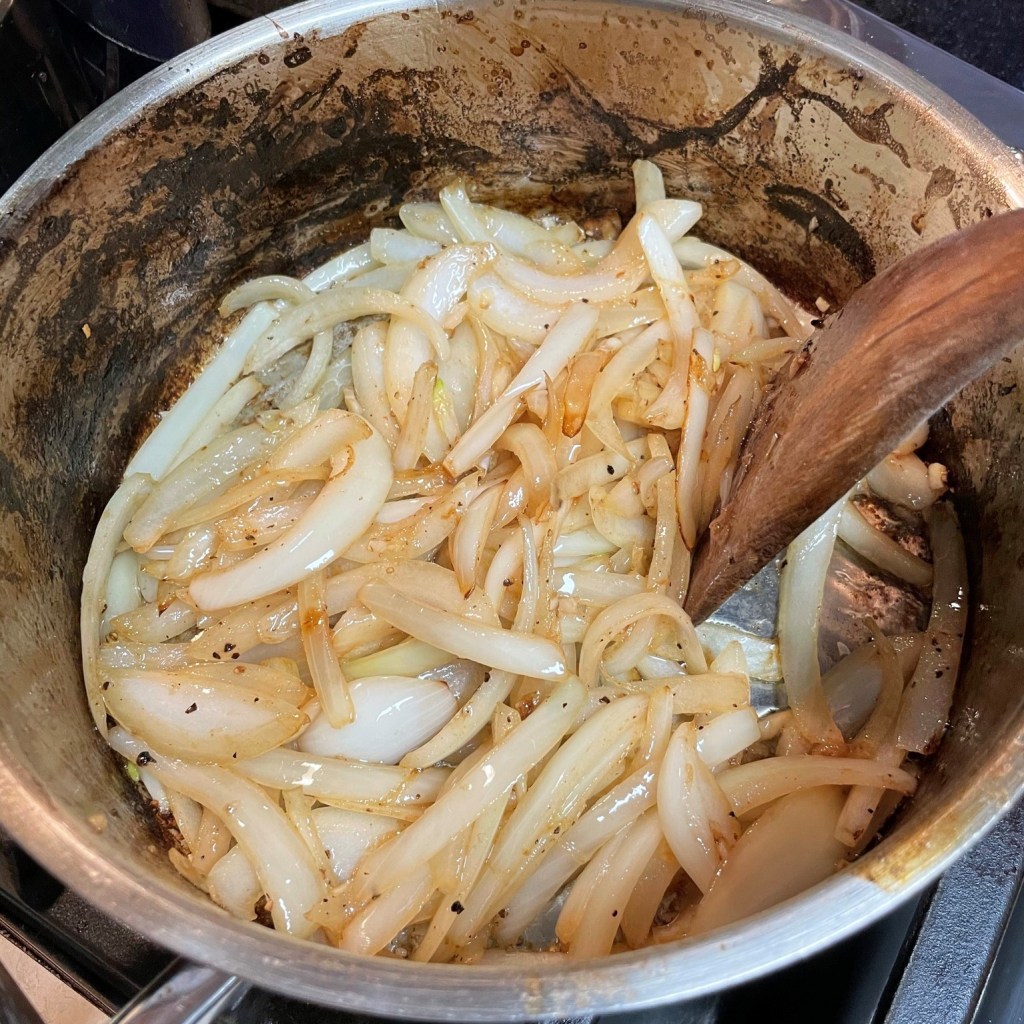
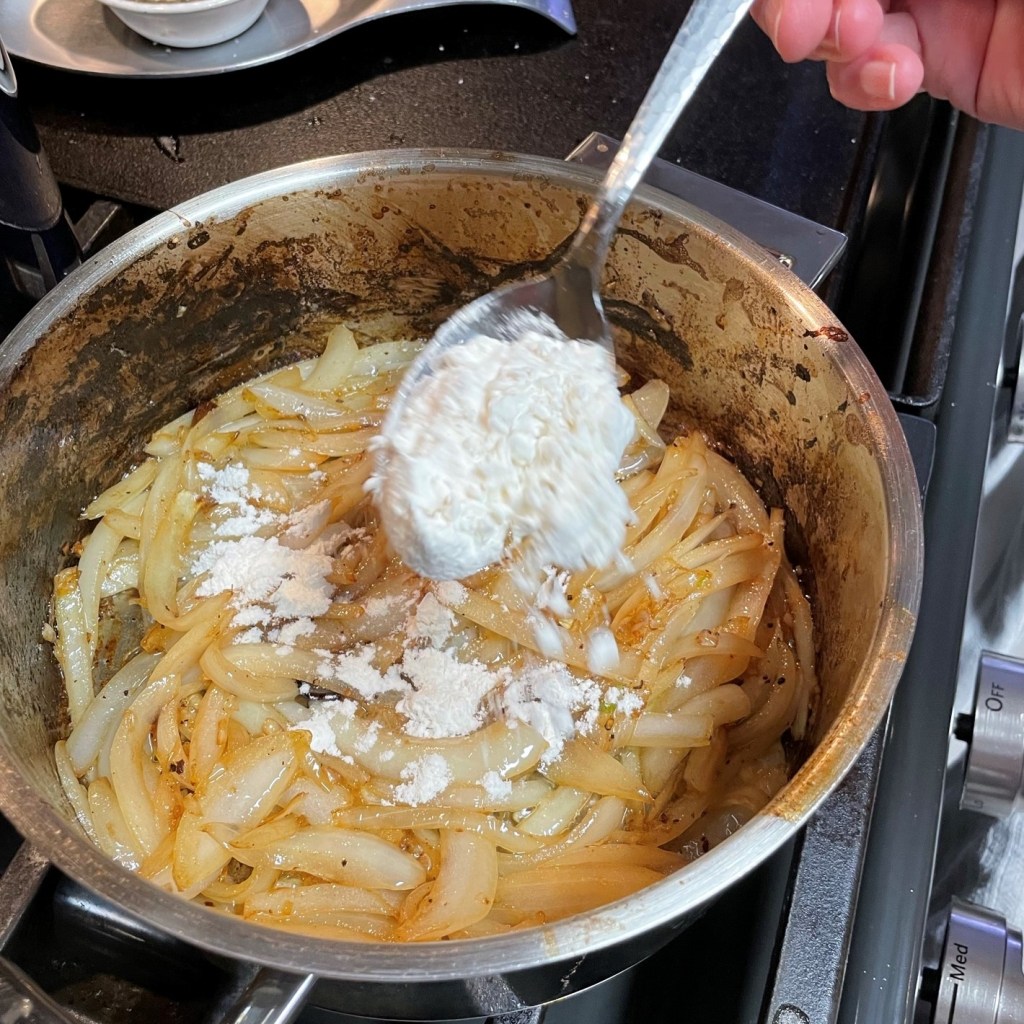
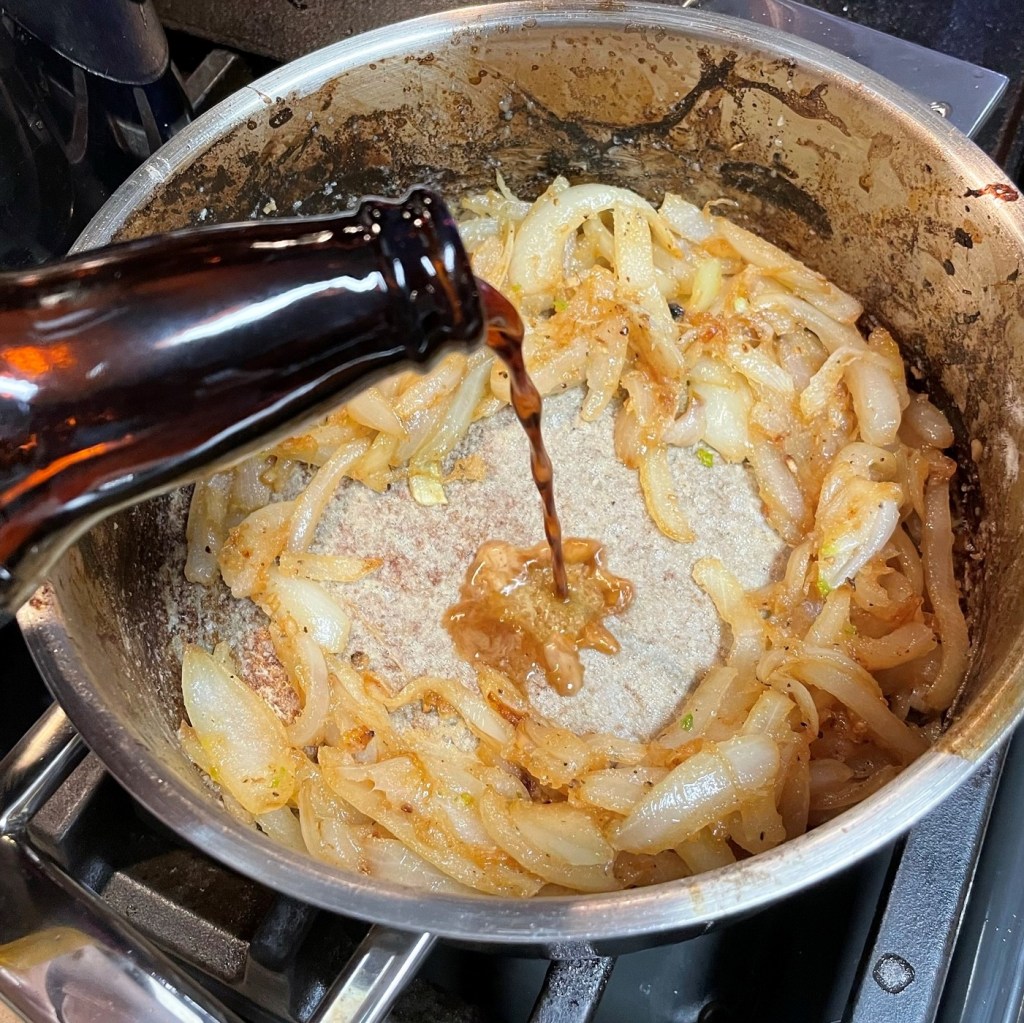
  7. Sprinkle flour over onions in butter and stir until onions are coated and flour begins to cook. This is a roux that will be the thickener for your gravy. When the bottom of the pan begins to accumulate cooked, stuck-on flour, move the onions aside and pour in about half of the remaining Guinness stout. Stir, scraping up the cooked flour from the bottom.
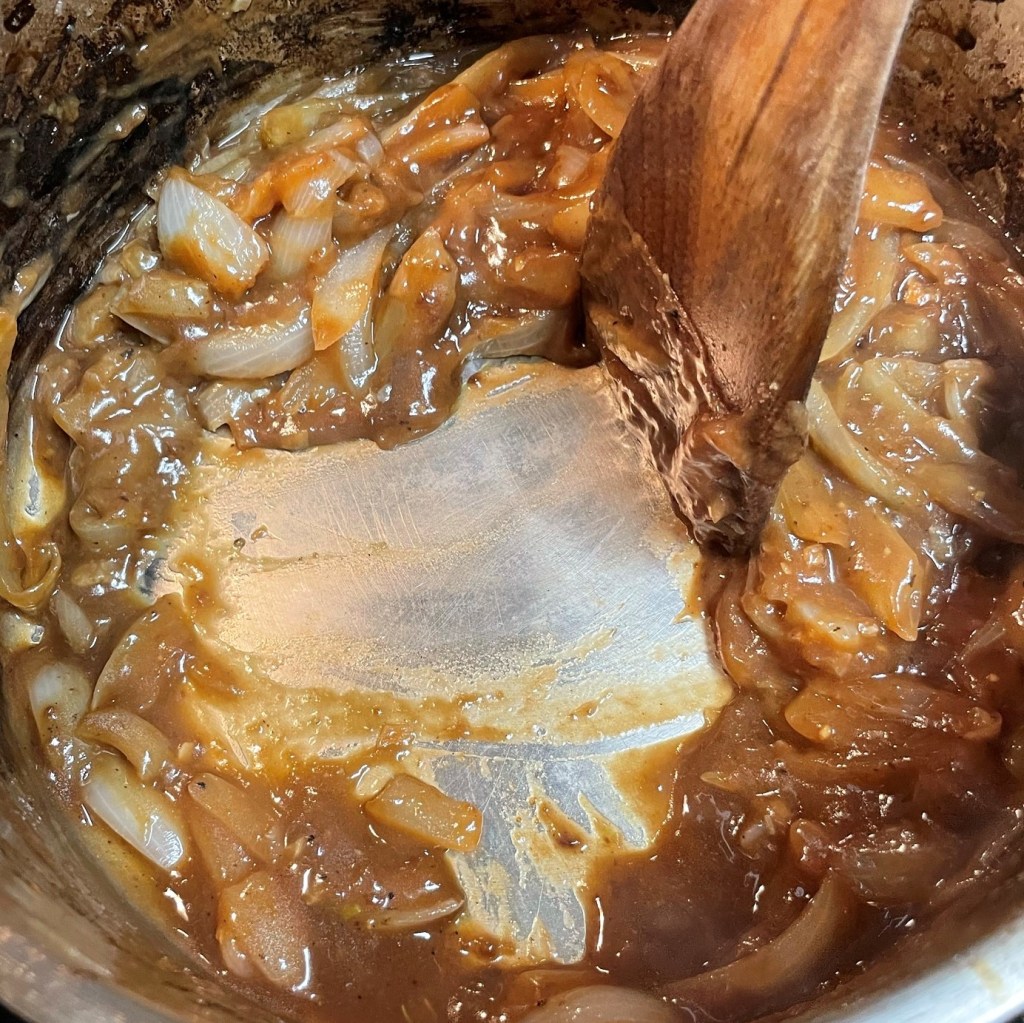
  8. When the pan is de-glazed, pour in the remaining stout and the broth mixture, and cook over medium heat, stirring occasionally, until mixture is thickened and reduced. You should take about 25 minutes for this step; don’t rush it, as simmering is necessary to blend the flavors and reduce the bitterness of the stout. Give it a taste and adjust salt and pepper as desired. If the gravy is overly bitter, stir in the brown sugar and simmer a few more minutes.
  9. Heat a cast-iron skillet over medium heat. Swirl in a small amount of olive oil and add the plump banger sausages. Cook and turn until sausages are fully reheated and nicely browned.
  10. Plate the mashed potatoes, spoon on a bit of Guinness gravy, then top with bangers and a generous ladle of the onion gravy.

Want to make this classic Irish pub grub?


Jambalaya Deep-Dish Pizza

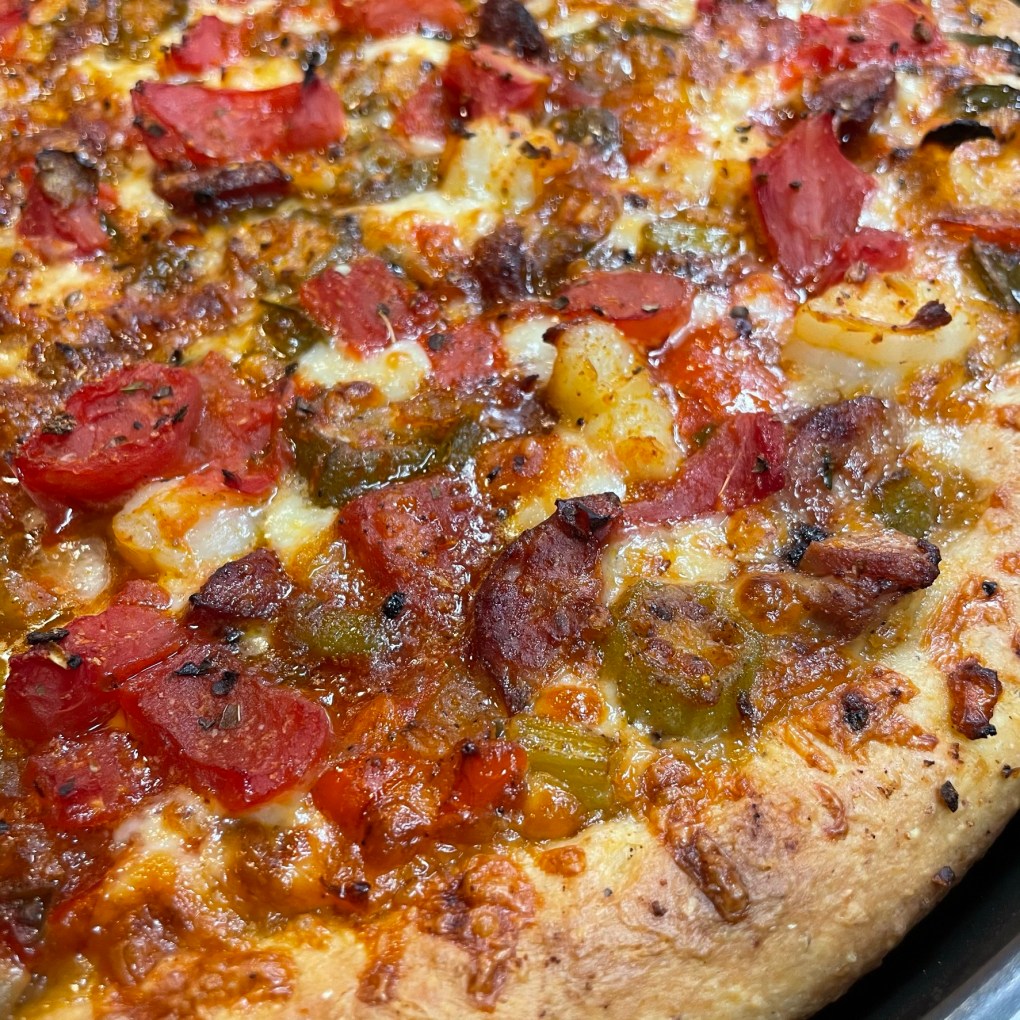
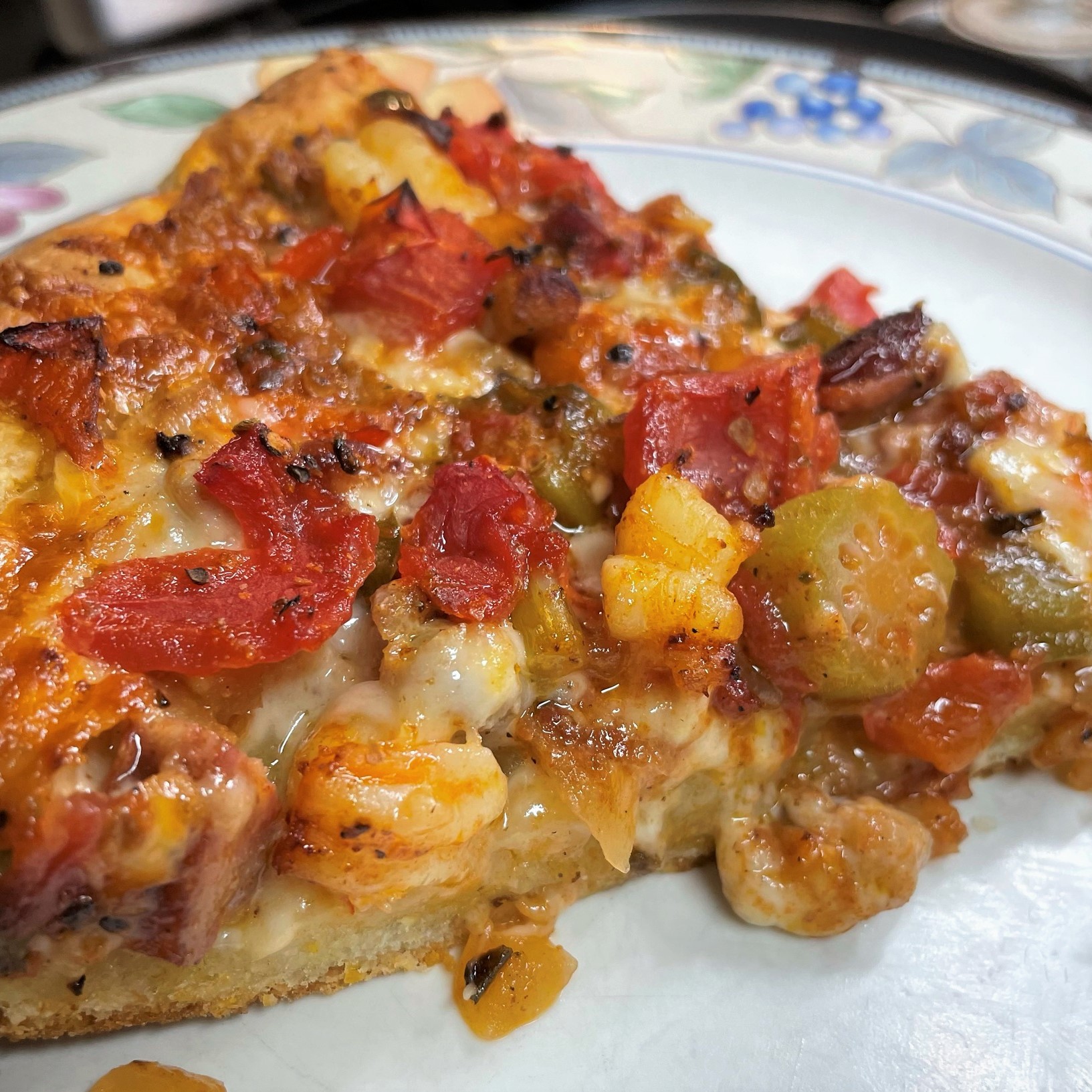
For such a short month, February has a lot going on, holiday- and event-wise. There’s Super Bowl, which is traditionally the first Sunday of the month; Valentine’s Day, which is fixed on the 14th; and Mardi Gras, which floats on the lunar calendar in tandem with Ash Wednesday. It’s enough to make even the most adept party planner a little dizzy, and for the average person at home, it isn’t easy to celebrate all three (at least, not when you’re hosting others). I’ve wanted to do some kind of Mardi Gras dish for a while, and with Super Bowl and Valentine’s Day behind us, here’s what I’ve come up with for our small celebration—all the exciting flavors of jambalaya piled into a deep-dish pizza.

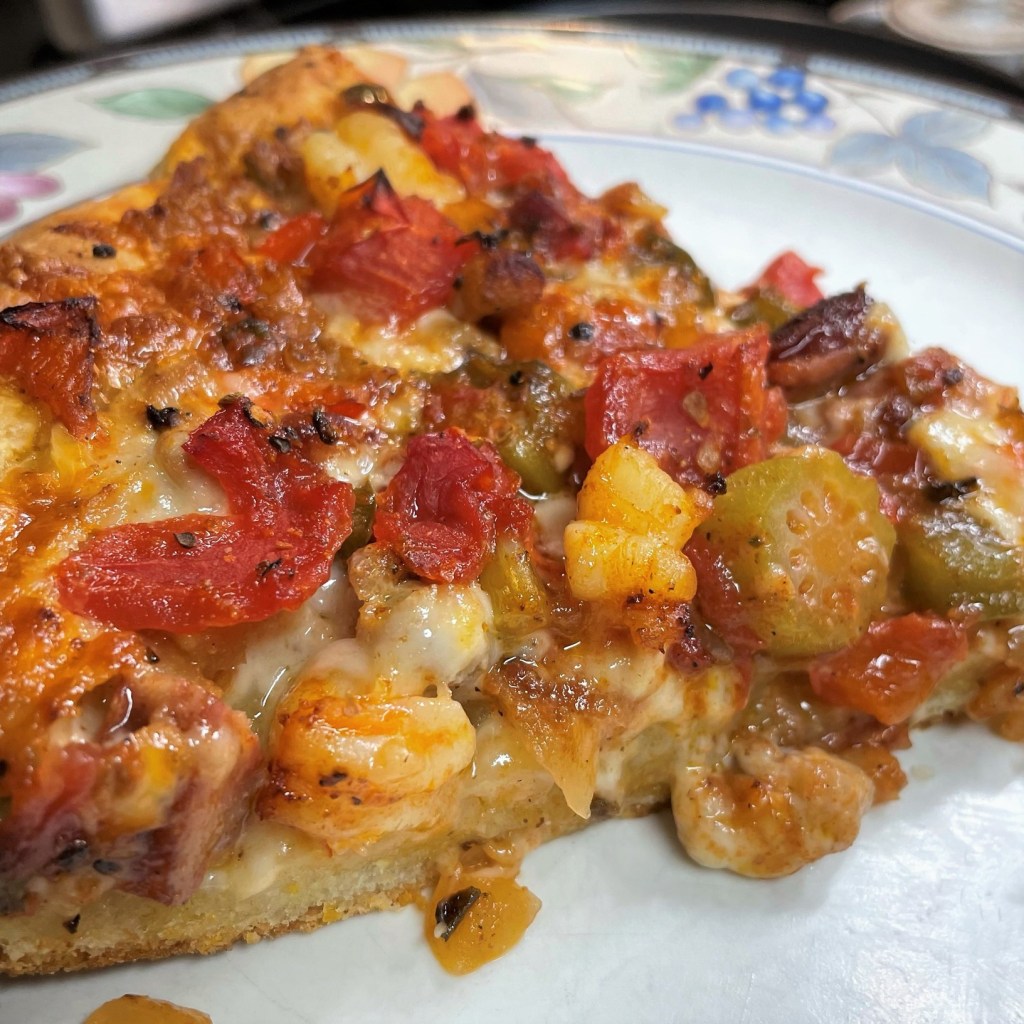
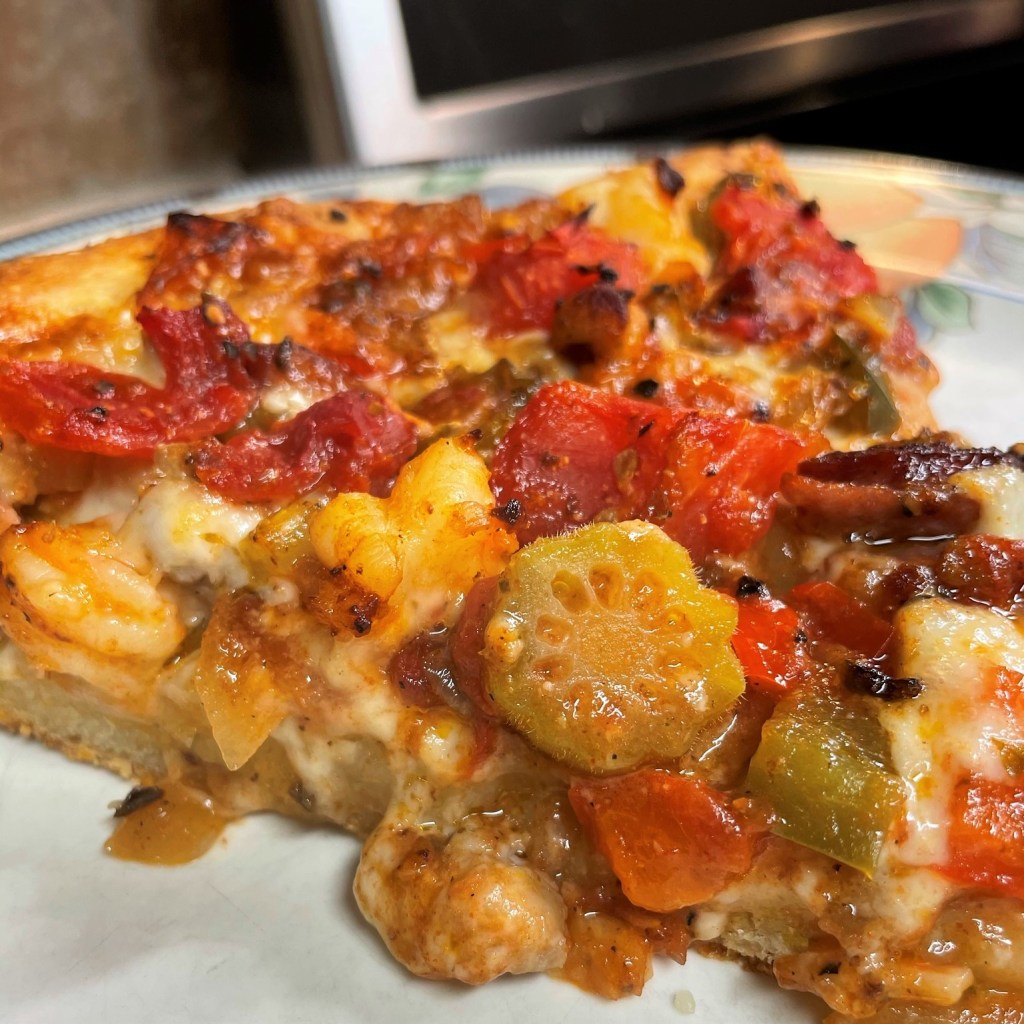
The only thing missing from this jambalaya-inspired pizza is the rice, and guess what? We didn’t miss it!

As with the other two February events, it is just the two of us celebrating, and that makes it less intimidating for me. Les and I both love Cajun and Creole flavors, and he brought home some authentic spice blends from a work-related trip to “N’awlins” a couple of years ago, so I already have the right accent. We have some fabulous jazzy blues music to help us get in the mood, and I’m sure we have some beads around here somewhere. Weeknights are always great for a casual meal, and pizza has become one of my “blank canvas” foods, begging for interesting flavor twists. I’m going deep dish on this one because you cannot skimp on Mardi Gras (which translates from French to “fat Tuesday”), and I’m not sure that our usual N.Y.-style crust can handle all this excitement. 

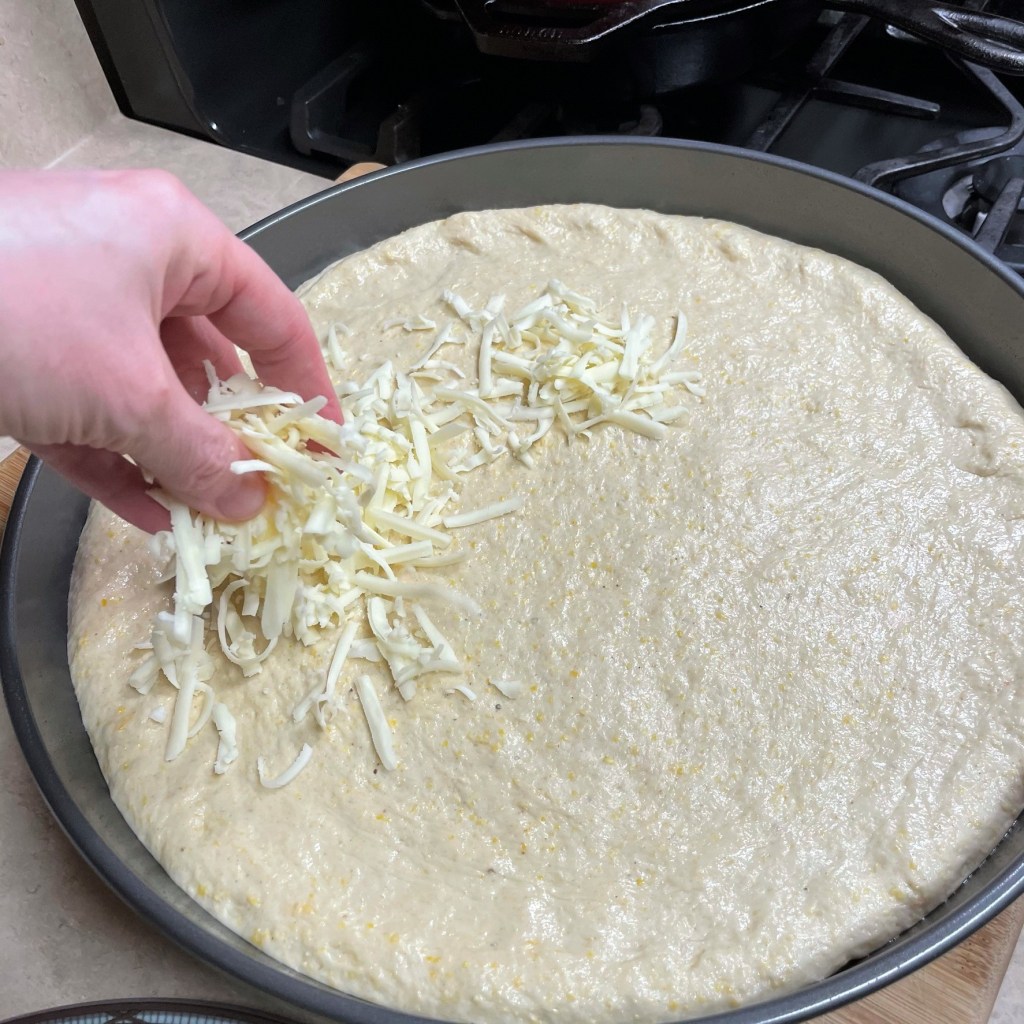
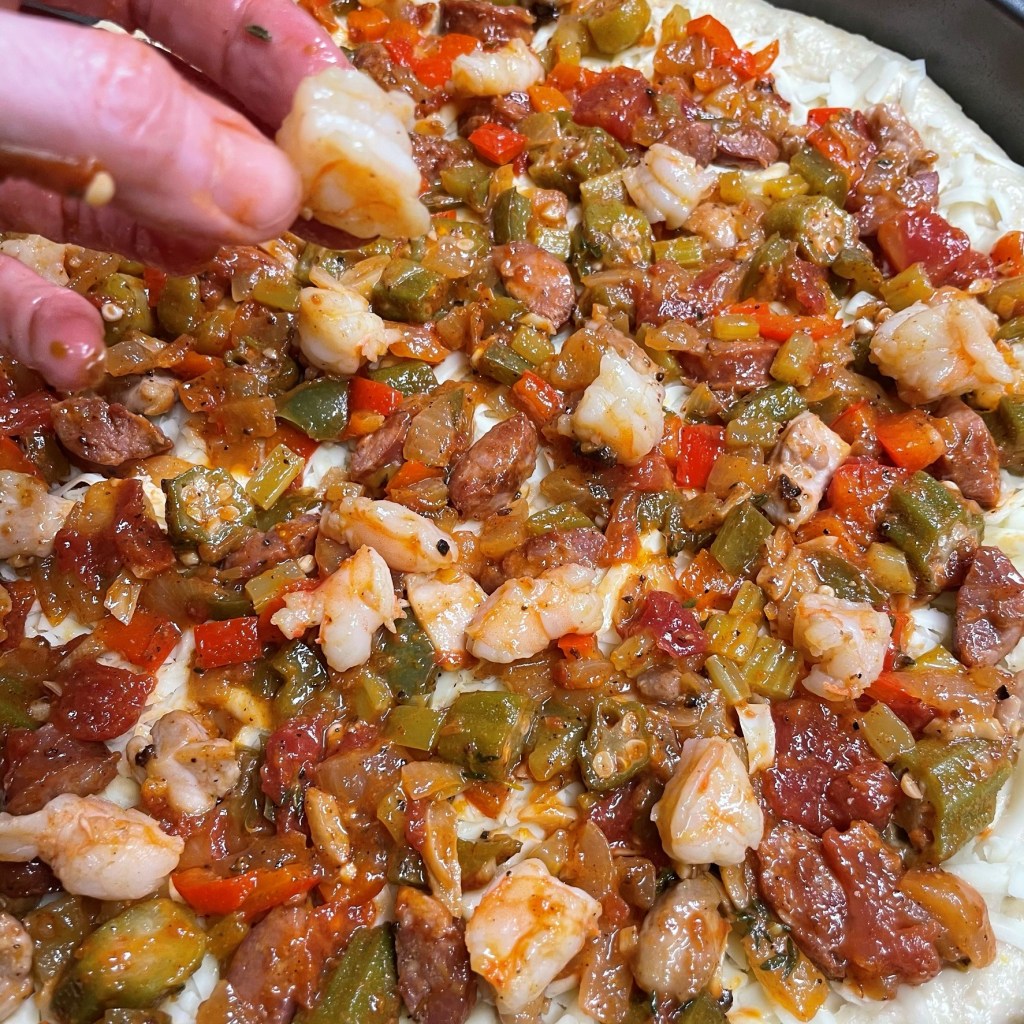
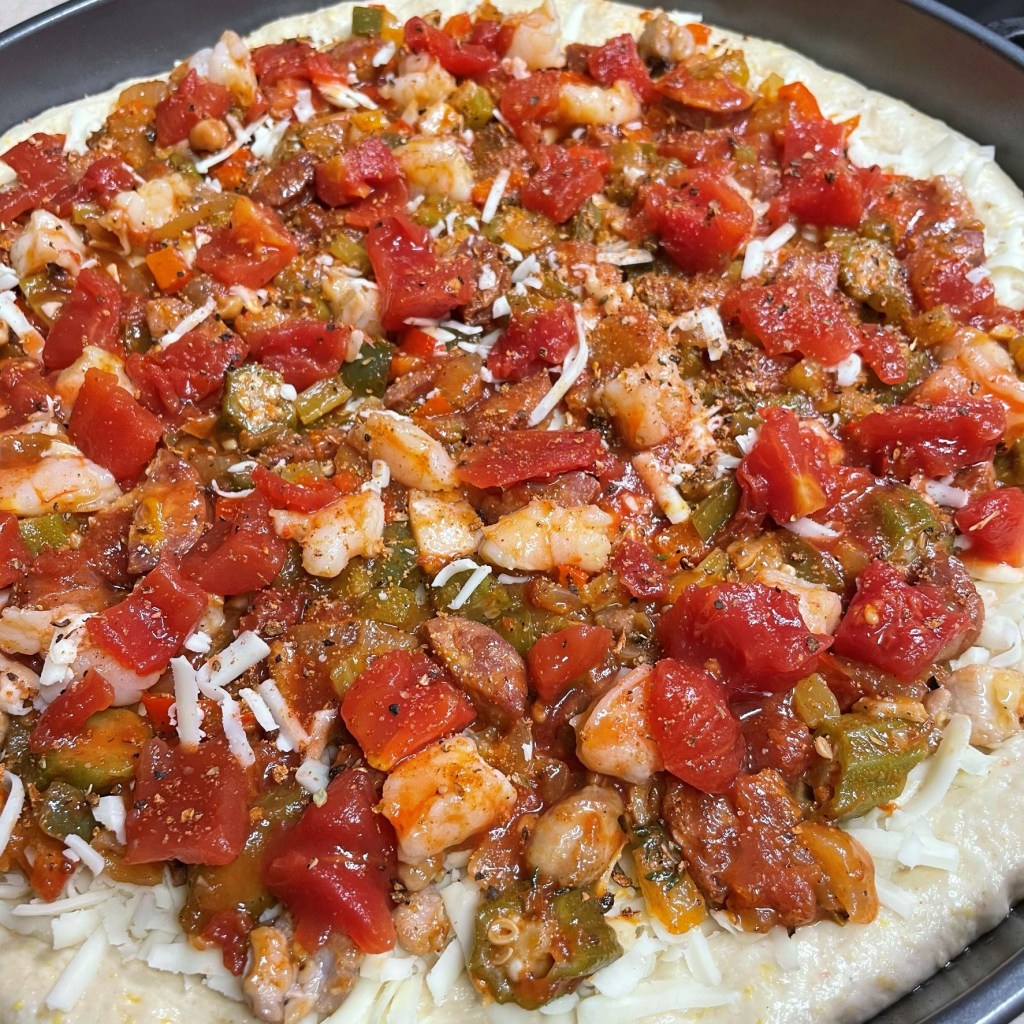
Most of the fillings are obviously traditional, from the zesty smoked andouille sausage, through the holy trinity aromatic vegetables and spices, and the plump and juicy Gulf shrimp. I omitted rice because we have quite enough carbs in my part-cornmeal deep dish pizza dough. Creole foods have tomato, so that’s an easy crossover ingredient for pizza. But what about cheese? I wracked my brain and could not think of a single regional dish that includes cheese, but on a deep-dish pie, the cheese on the bottom seems to shield the tender crust from wet filling ingredients, so I didn’t feel right skipping it.
In the end, I opted for the mildest firm cheese I could think of—one that would not clash with all these great Louisiana flavors. Monterey Jack is sturdy enough to line the pizza dough, but it melts well, and it kept my deep-dish dinner from singing the soggy-bottom blues.

Speaking of the blues, we can’t celebrate Mardi Gras without music, so go put on your favorite New Orleans jazz, or enjoy what I listened to while making this pizza:


Ingredients

1 prepared deep-dish pizza dough (recipe and instructions in my post for Chicago-style Deep-dish Pizza)

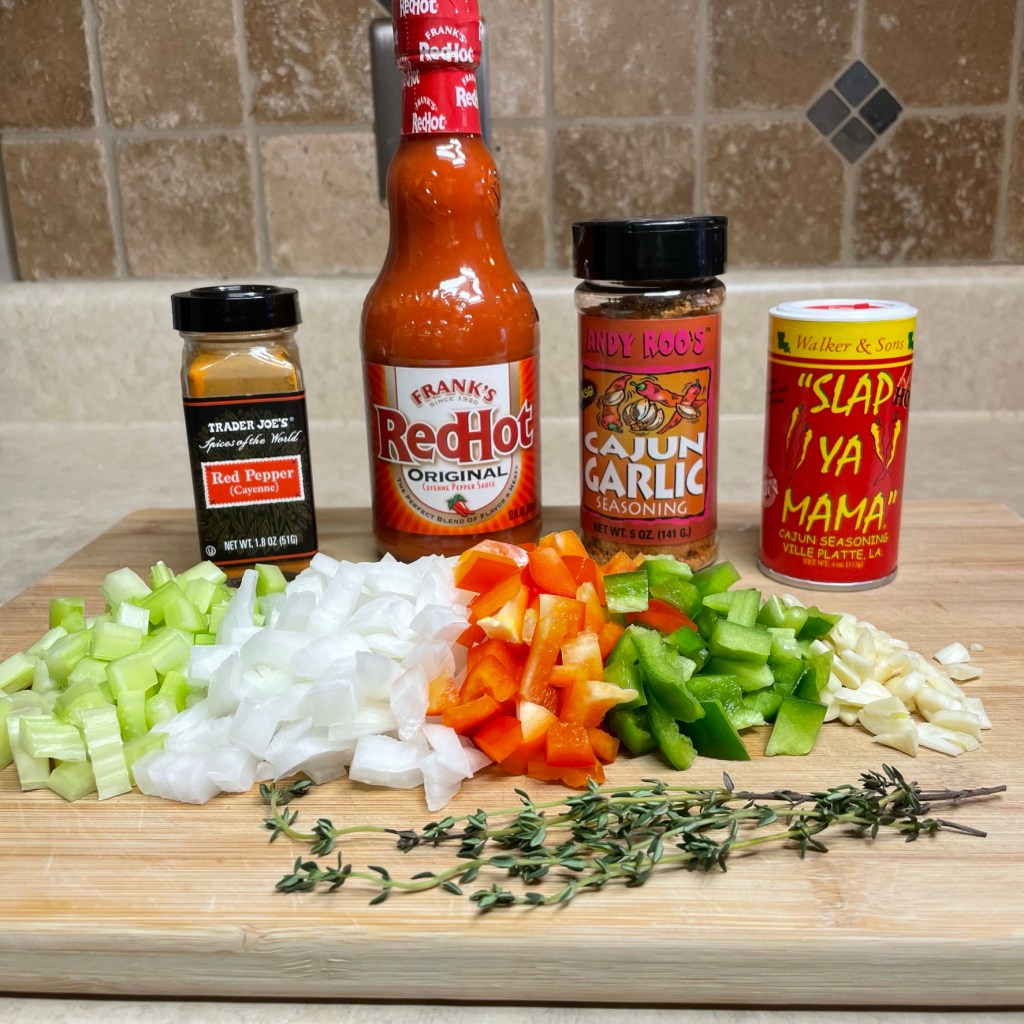
2 Tbsp. extra virgin olive oil (mine was infused with cayenne)

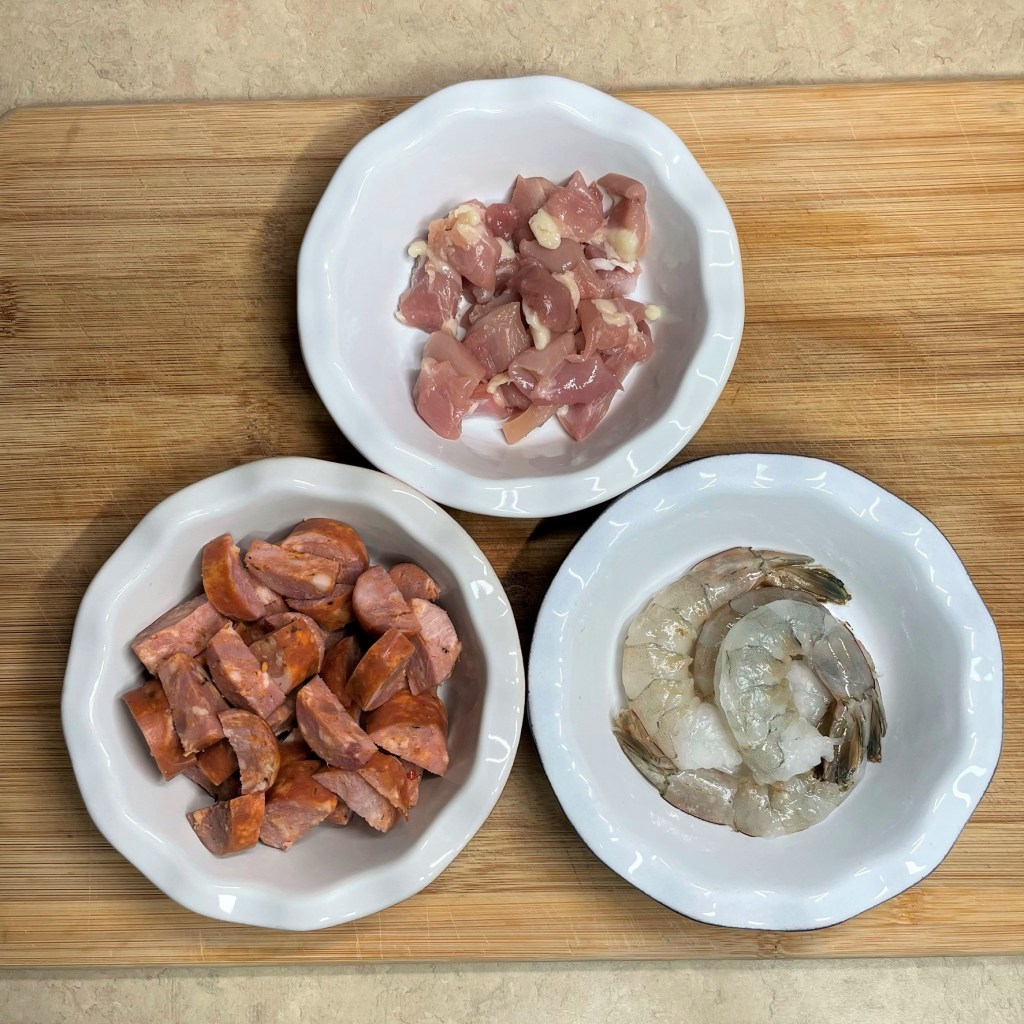
2 links smoked andouille sausage, sliced or chopped (I used Aidell’s)

1 boneless chicken thigh, cut into bite-sized bits

2 ribs celery, finely chopped

1/2 yellow onion, chopped

1/2 cup each red and green bell pepper, chopped

4 cloves garlic, chopped

Cajun or Creole seasoning (as much as you can stand)

3 sprigs of fresh thyme, leaves removed

1 1/2 cups canned diced tomatoes, divided (see instructions)

Handful of fresh okra, sliced (or about 3/4 cup frozen sliced okra)

2 Tbsp. red wine vinegar

Splash of veggie or chicken broth (optional, for deglazing the skillet)

4 large gulf shrimp (about 1/4 pound), peeled and deveined)

4 oz. shredded or sliced Monterey jack cheese


Instructions

Let’s run through it together in pictures while you enjoy the Bluesiana Triangle, then keep scrolling for written instructions and a downloadable PDF for your recipe files.


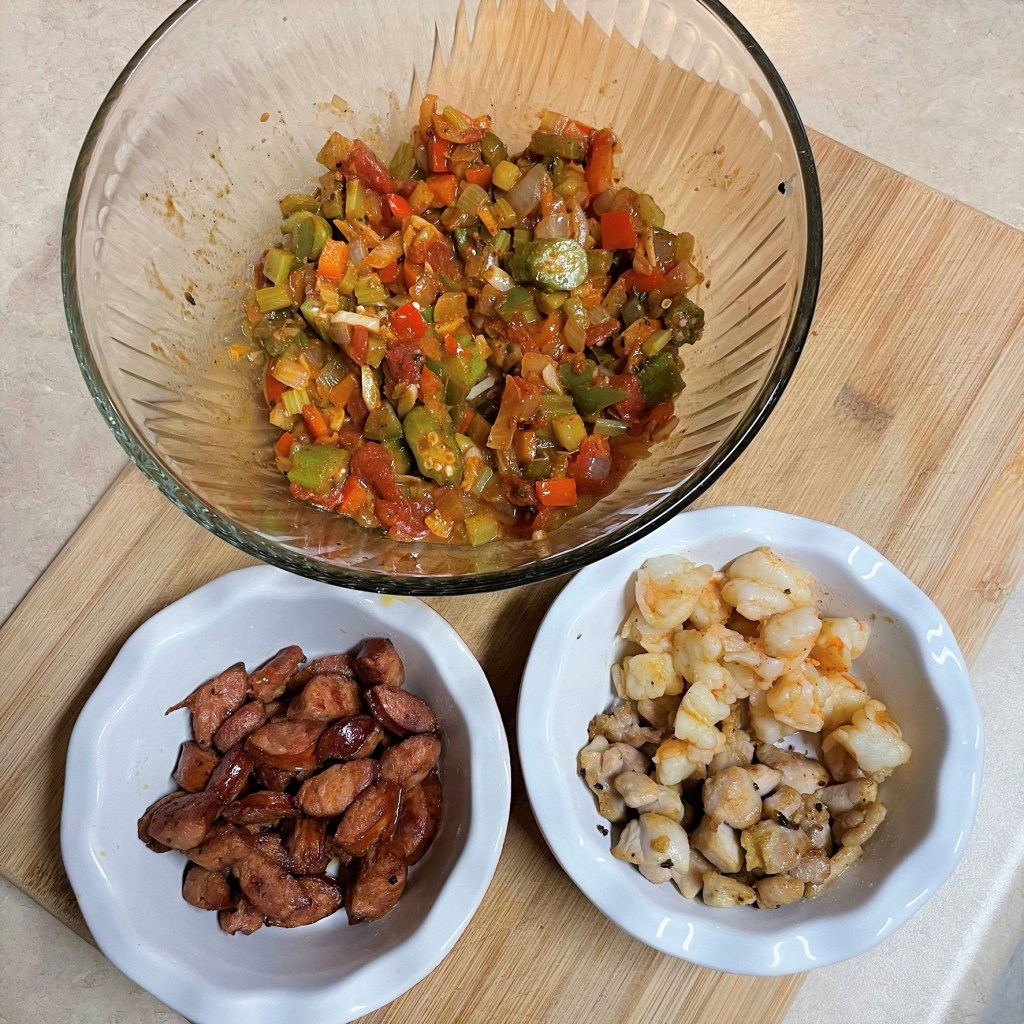
  1. Place a large non-stick skillet over medium heat and swirl in olive oil. When oil is hot enough to shimmer, add cut up andouille sausage and toss until edges are crispy. Use a slotted spoon to transfer the sausage to a bowl and set aside.
  2. Add the chicken pieces to the remaining oil and toss them about until no longer pink. Transfer chicken to the bowl with the sausage.
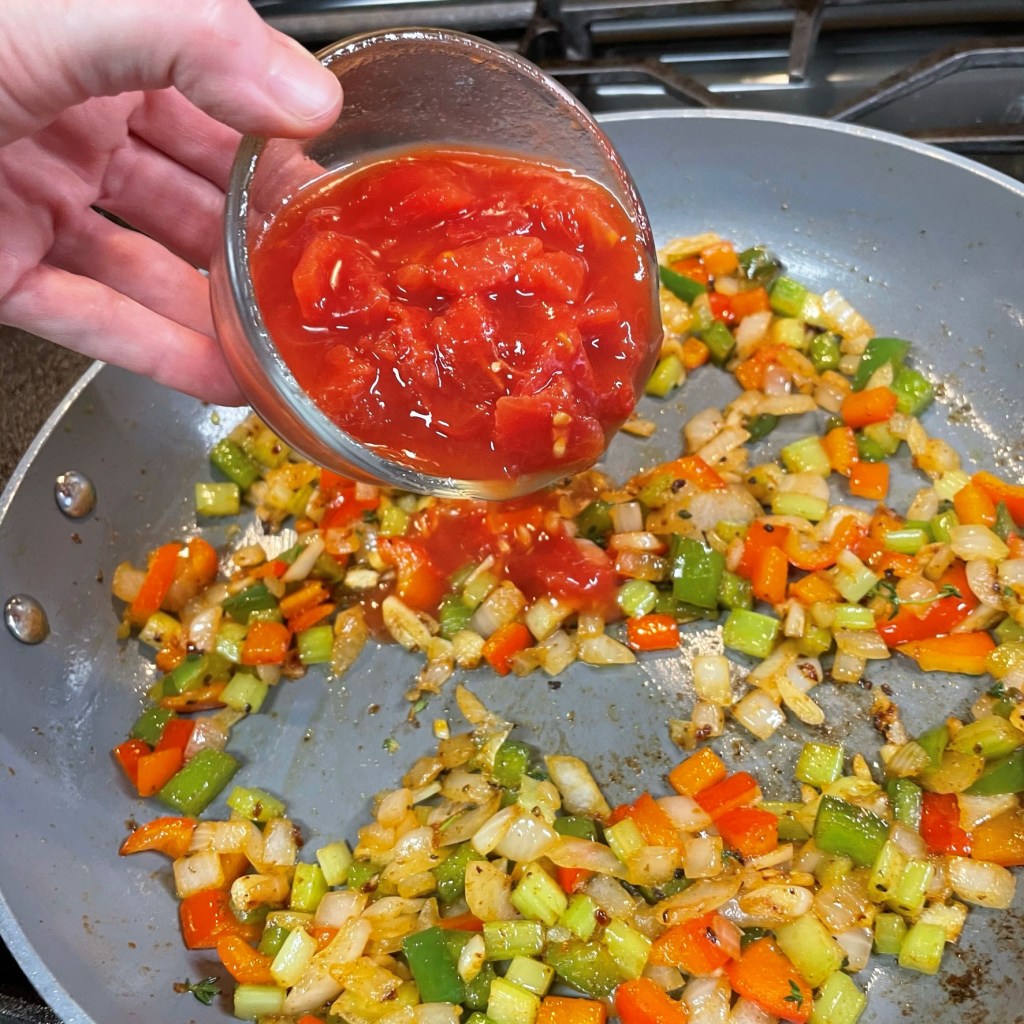
  3. Add trinity plus garlic to the skillet and toss in the hot oil. Shake on Cajun or creole seasoning to suit your spicy preferences. Grind some black pepper into the pan and sauté vegetables until they are soft and translucent. Scatter the fresh thyme leaves over the vegetables.
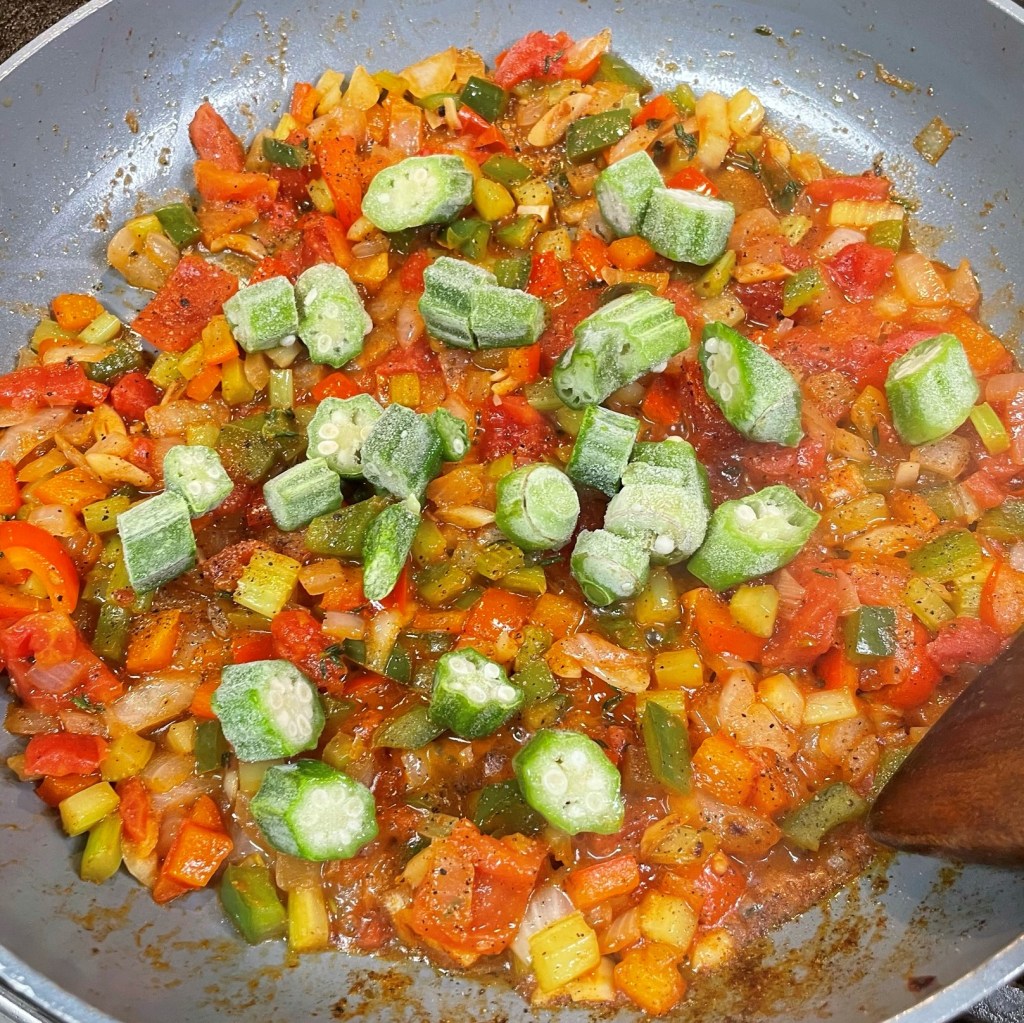
  4. Add diced tomatoes, okra and red wine vinegar. Toss and cook until okra is heated through, about five minutes. Turn off heat and allow vegetables to rest a few minutes, then transfer to a bowl and set aside.
  5. If your skillet has any browned bits on the bottom, swirl in a splash of veggie broth and heat to a simmer. Cut the shrimp into bite-sized pieces and toss them into the simmering broth. Cook only long enough for the shrimp to be barely done, which may only be about two minutes. Transfer the shrimp to the bowl with sausage and chicken and set aside.

At this point, if you’re working ahead, you can refrigerate all cooked ingredients, and then bring them to near-room temperature when you are ready to assemble the pizza.

Ready to bake:

  1. Preheat oven to 450° F, with rack in center of oven.
  2. Spread prepared dough into pan, with edges creeping up the side a bit.
  3. Layer ingredients in the following order: Monterey jack, most of the andouille sausage, chicken, vegetables, shrimp, remaining sausage, additional diced tomatoes. Sprinkle with Cajun seasoning.
  4. Bake 25 minutes, rotating pizza halfway through baking time. Rest pizza 5 minutes, then carefully lift and transfer pizza to a flat pizza pan or serving platter. Cut into wedges.

Want to save this recipe?


Sausage and Eggplant Leftovers Pizza

“I’ve got leftovers on my leftovers!”

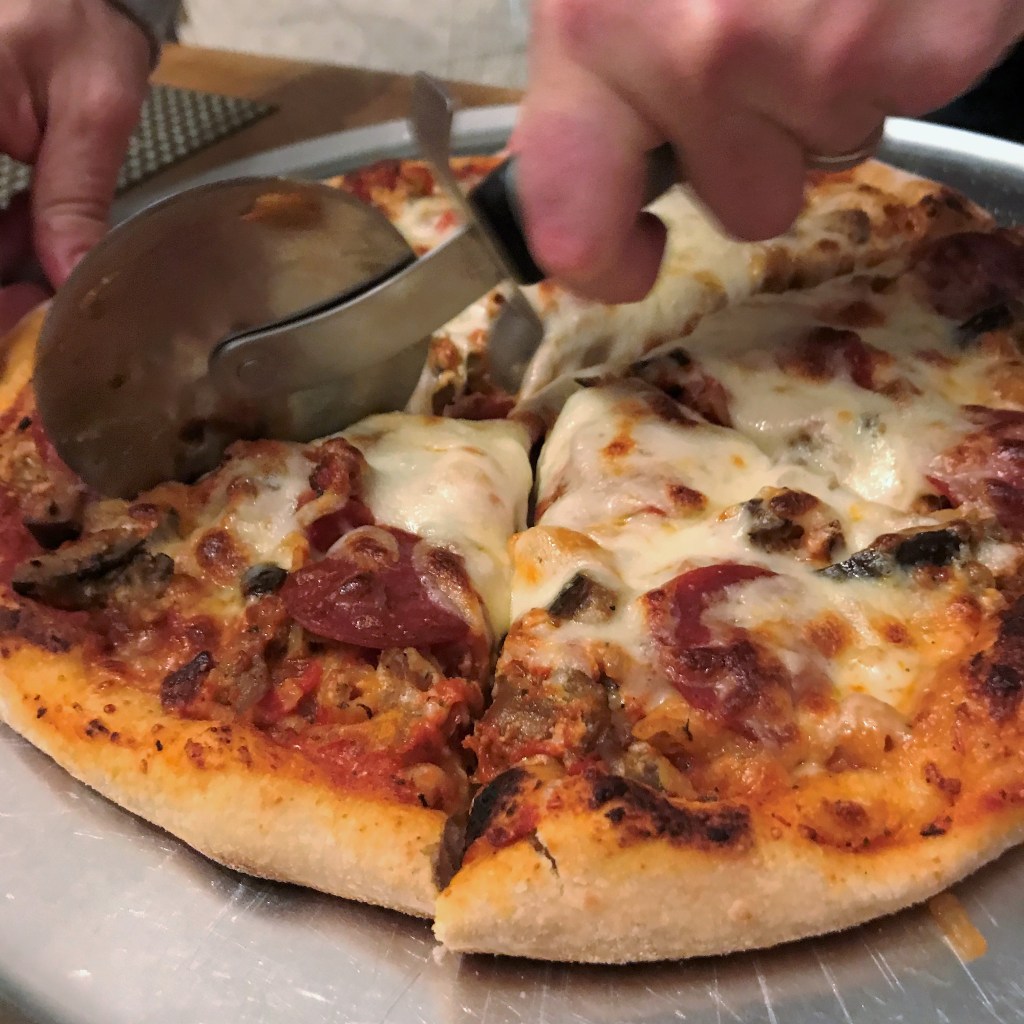
This is what I shouted as I was assembling this patchwork pizza, which had all the classic Italian flavors of eggplant parmesan, lasagna and spicy pepperonata. Yep, all that on a crust. But make no mistake, I did not plan it this way.

The end-of-weekend fridge clearing ritual at our house took an interesting turn last night when my husband, Les, who will never, ever turn his nose up to anything pizza or anything eggplant, suggested that we take the remnants of a sausage and eggplant noodle casserole (which was already a leftover creation), and chop it all up to top some fresh N.Y. pizza dough. After all, he reasoned, the flavors were right for pizza and we knew from experience that cooked macaroni on a thin crust pie was next level comfort food—we had tried it last summer with some leftover mac and cheese and it was awesome—plus, we had just enough scraps of pepperoni and shredded mozzarella to hold it all together. Why not?
I wish I had taken just one photo of the “original” leftover creation, which was sort of a poor man’s lasagna, made of layered cooked elbow macaroni, two leftover grilled spicy Italian sausage links, the sautéed peppers and onions that had topped the sausages on sandwiches earlier in the week, a can of diced tomatoes, ricotta mixed with Italian herbs and our favorite parm-romano blend, plus an eggplant that I had sliced, sweated and quick-roasted, and every last random slice of provolone and thin-sliced mozzarella that had been taking up space in the deli drawer. Unfortunately, I didn’t bother cataloguing the details of the casserole at the time because I hadn’t planned to share it here on Comfort du Jour, and I also hadn’t really planned on sharing this pizza. I have no specific measurements of ingredients or step-by-step photos to share. Sometimes I need to just focus on feeding us, you know? But the end result—this I must share, because it underscores the fact that one should never underestimate the power of leftovers. It’s one of the essential kitchen rules I learned from my grandmother.

Les was proud of the success of this leftover creation, and it just happened to have all his favorite flavors. 🙂

Not every idea in the kitchen has to be new and interesting, nor should everything be same old, same old. But sometimes, if you play it just right, the two collide and become something unexpectedly delicious, as we learned with this pizza. We had three slices leftover, naturally, and they will warm up nicely for lunch as leftovers of the leftover leftovers.

What crazy good thing have you made with leftovers recently? Drop it in the comments section so we can all be inspired!


Chicago-Style Deep-Dish Pizza

It’s long been said that you can’t teach an old dog new tricks. Just don’t tell that to our dog, Nilla, who learned at age 10 how to politely request the fresh vegetable treats she loves so much. She latched on quickly to my command of “where are you supposed to be?” It usually only takes one ask to get her to back up out of the kitchen and plop down into position in the doorway to receive her healthy snacks, which she catches in mid-air at least 95% of the time. I love that about her! ❤

Nilla keeps her eye on the prize, and she is wicked fast!

And you better not tell my husband, Les, about new tricks, either. Because just last week, this N.Y.-born-and-raised-pizza-snob hubby of mine was scarfing down on a Chicago-style deep-dish pizza. Who’d have thunk it? (He tells me he has enjoyed Chicago pizza before, just not in the five years we’ve been together. Wait, does that mean I’m the old dog?) 😉

Oh. My. Goodness.


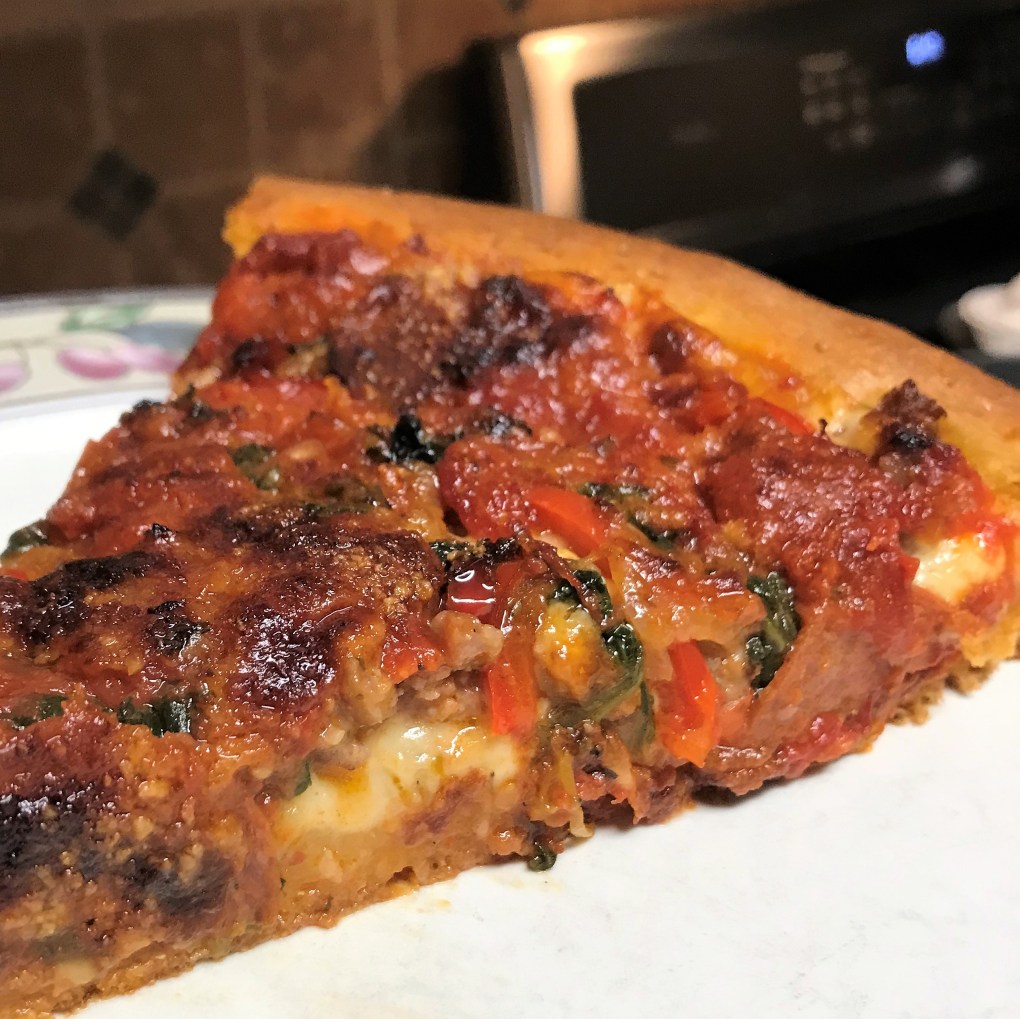
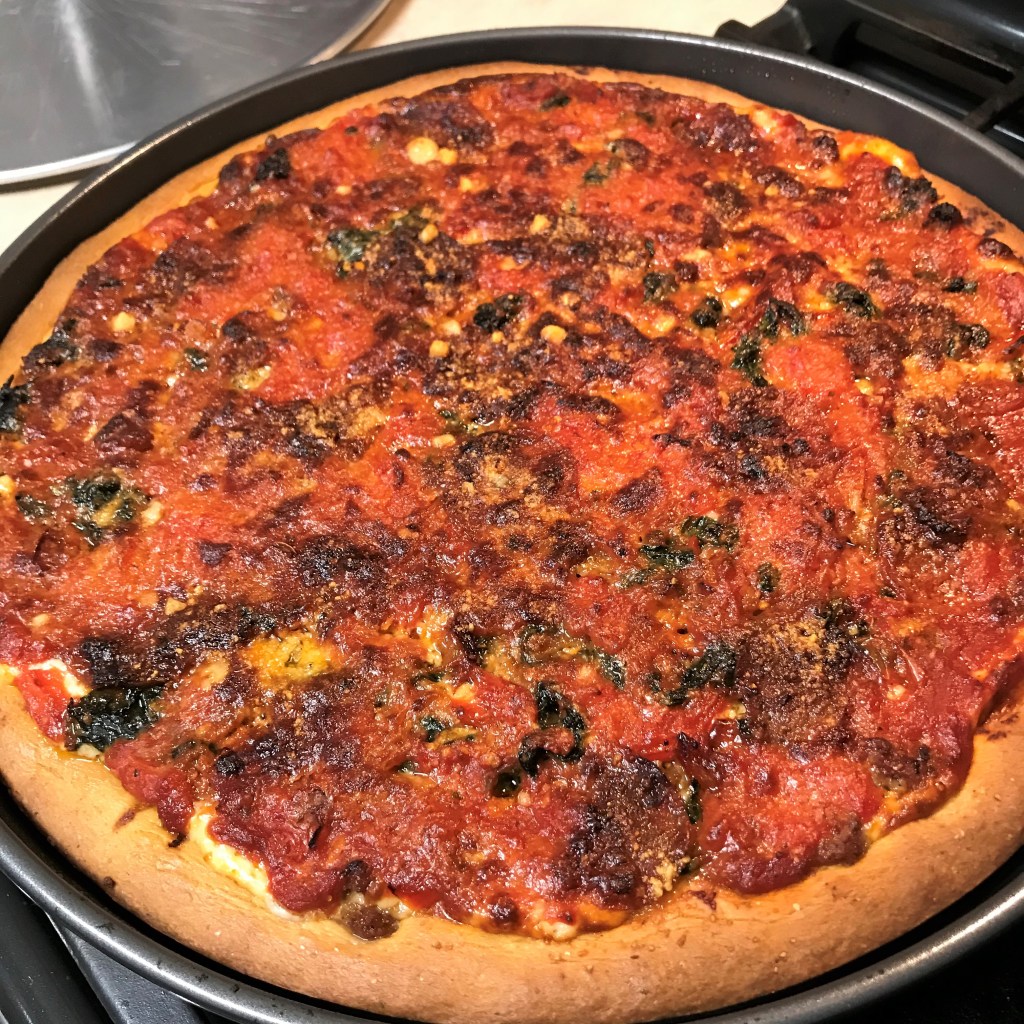
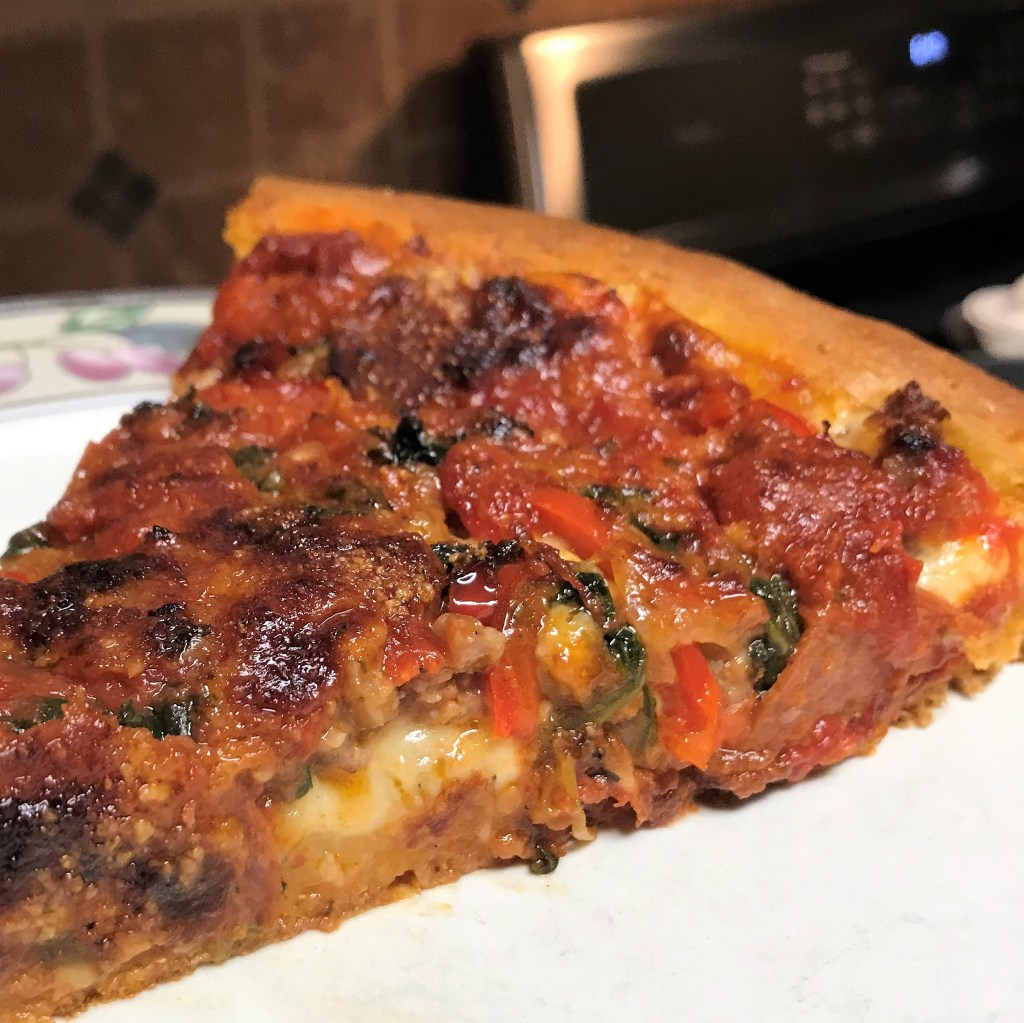
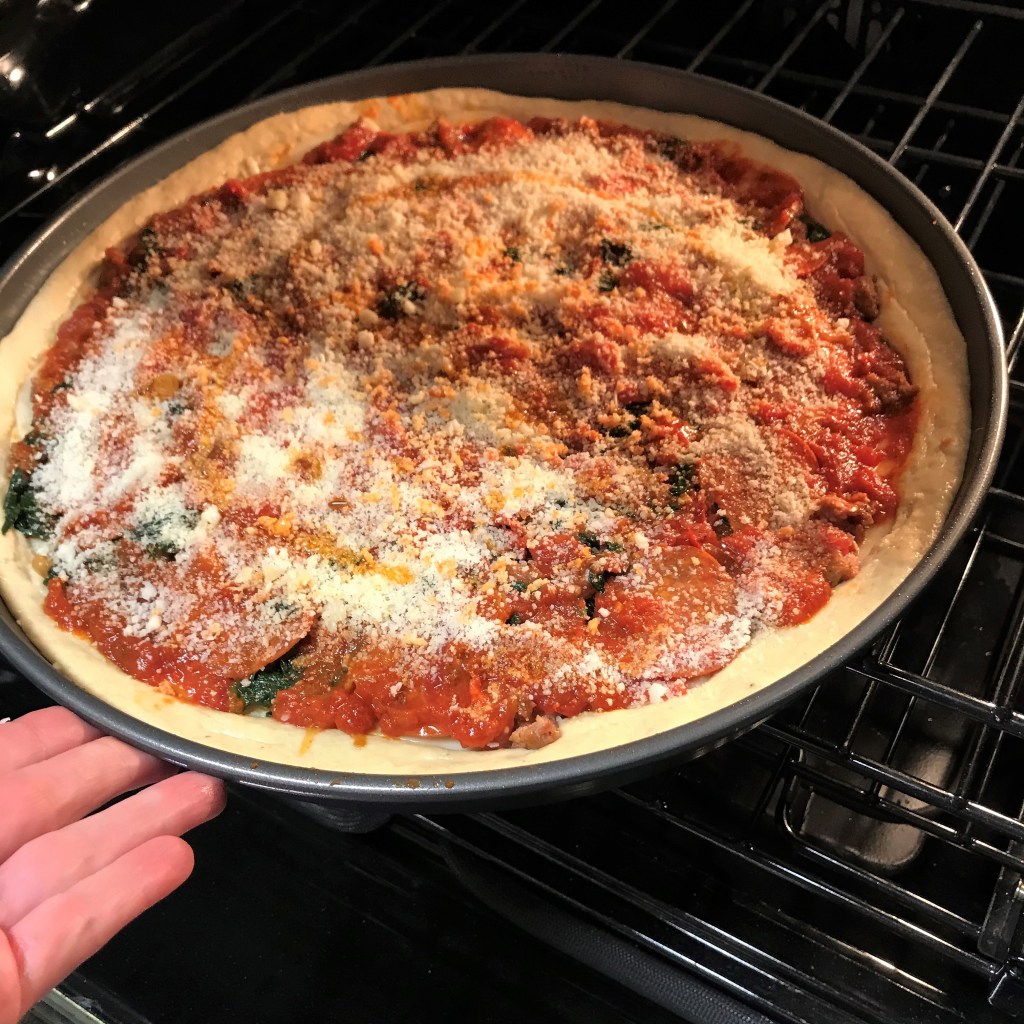
Distinctly different from a classic New York pie in so many ways—the tender crust, the order of layering the toppings, the longer time in the oven—this deep-dish pizza reminded me of a meat and cheese casserole with a crust that was crunchy on the outside and soft and chewy inside. After two-plus years spent tweaking my technique for a perfect New York thin-crust pizza, you may wonder what inspired me to give this deep dish a go. Easy, a sign in the supermarket announcing that the baking pans were 30% off! I’m a sucker for a sale, and the truth is I’ve wanted to try a deep-dish pizza for a while but refrained, given Les’s loyalty to the thin crust. Turns out, Chicago is a fine place to enjoy a pizza! He loved it (actually, we both did), and we are already dreaming up ingredient ideas for the next one. I want to make a deep-dish pie with roasted broccoli, bell peppers, onions and mushrooms, mmm.

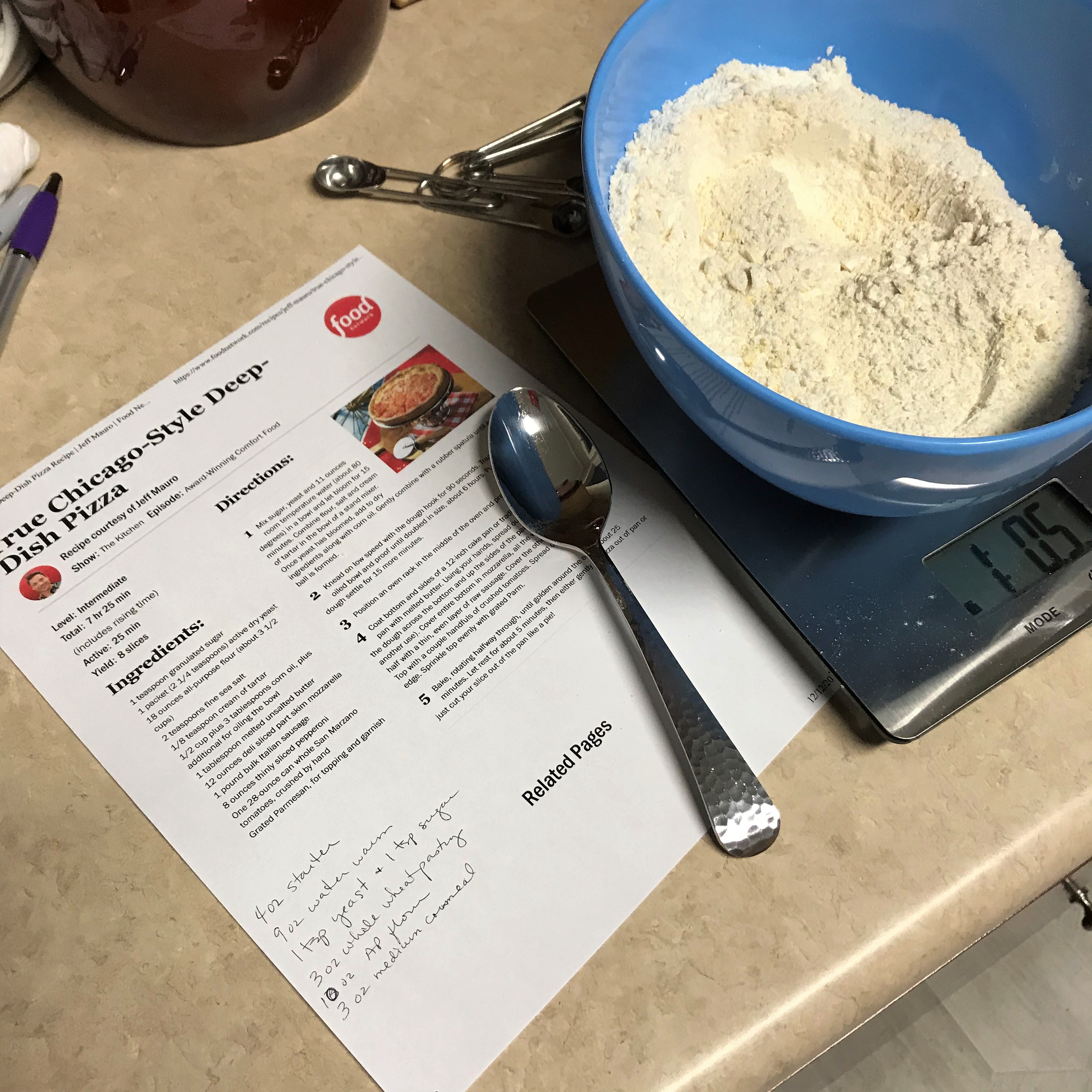
As with so many recipes, what’s traditional or correct for Chicago-style pizza depends on who you ask, and the internet is jam-packed with declarations about authenticity. My first go-to was Food Network celebrity chef Jeff Mauro, the self-proclaimed “Sandwich King” who also happens to be an expert on Chicago foods because he’s lived in the area most of his life. His recipe for Chicago-style deep dish caught my eye, mostly for its simplicity but also for the kudos given by commenters on the Food Network site. I tweaked it a bit (don’t I always?), swapping in some cornmeal and whole wheat flour—for texture and nutrition, respectively—and embellishing with topping ingredients that suit our taste. Or maybe for this style pizza, I should call them “filling” ingredients rather than toppings, because it all bakes down into a delicious, melty mass. Yes, this is a fork-and-knife kind of pizza, a whole new level of comfort food for our Friday night quarantine pizza party.

You will need a deep-dish pizza pan or a large (12-inch) cast-iron skillet for baking this pizza. Note that the recipe requires a lengthy rise time on the dough, so you’ll want to plan ahead to stay on schedule for dinner. I hope you enjoy it!

Look at those layers! This will be coming up in rotation again very soon.

Adapted from Jeff Mauro’s Chicago-Style Deep-Dish Pizza

Ingredients (crust)

11 oz. (about 1 1/3 cups) lukewarm water

A packet active dry yeast* (see notes for quick yeast or sourdough adjustment)

1 tsp. sugar

12 oz. (about 2 3/4 cups) all-purpose flour*

3 oz. (about 2/3 cup) whole wheat flour

3 oz. (about 2/3 cup) medium grind cornmeal

2 tsp. fine sea salt

3 oz. (6 Tbsp.) extra virgin olive oil


Ingredients (pizza)

1 1/2 pounds deli-sliced mozzarella (the firm style, not soft white)

12 oz. spicy Italian bulk sausage*

1/2 medium onion, thinly sliced

1/2 red bell pepper, thinly sliced

2 fat handfuls fresh washed baby spinach leaves

1/2 package thinly sliced pepperoni

28 oz. can San Marzano whole tomatoes, drained

1/4 cup prepared pizza sauce

1/2 cup parm-romano blend cheese


*Notes

Does your yeast packet say “instant?” If so, skip the first instruction step for blooming the yeast in warm water. Only “active dry” yeast requires blooming. Instant yeast may be added directly with the flour.

If you’re a sourdough nerd like me, here’s how I converted the recipe to accommodate 4 ounces of ripe sourdough starter: omit the yeast (or only add a small amount to boost rising action), reduce AP flour to 10 ounces and water to 9 ounces. Skip the step of blooming yeast. My starter had not been fed in a few days, so I added 1/2 teaspoon of instant yeast. I did not need to adjust the rising time.

If you prefer an all-white flour crust (first of all, you’re missing a lot of flavor), adjust the amount of all-purpose flour to 18 ounces. (about 3 1/2 cups).

Jeff Mauro’s recipe suggested adding the bulk sausage in raw form, but I couldn’t get behind this, so I crumbled and browned it lightly in a cast-iron skillet, then cooled it before topping the pizza.


Instructions


  1. Mix 1 cup water, active dry yeast and sugar in a bowl and let it rest a few minutes until foamy on top. If using instant yeast, skip to step 2.
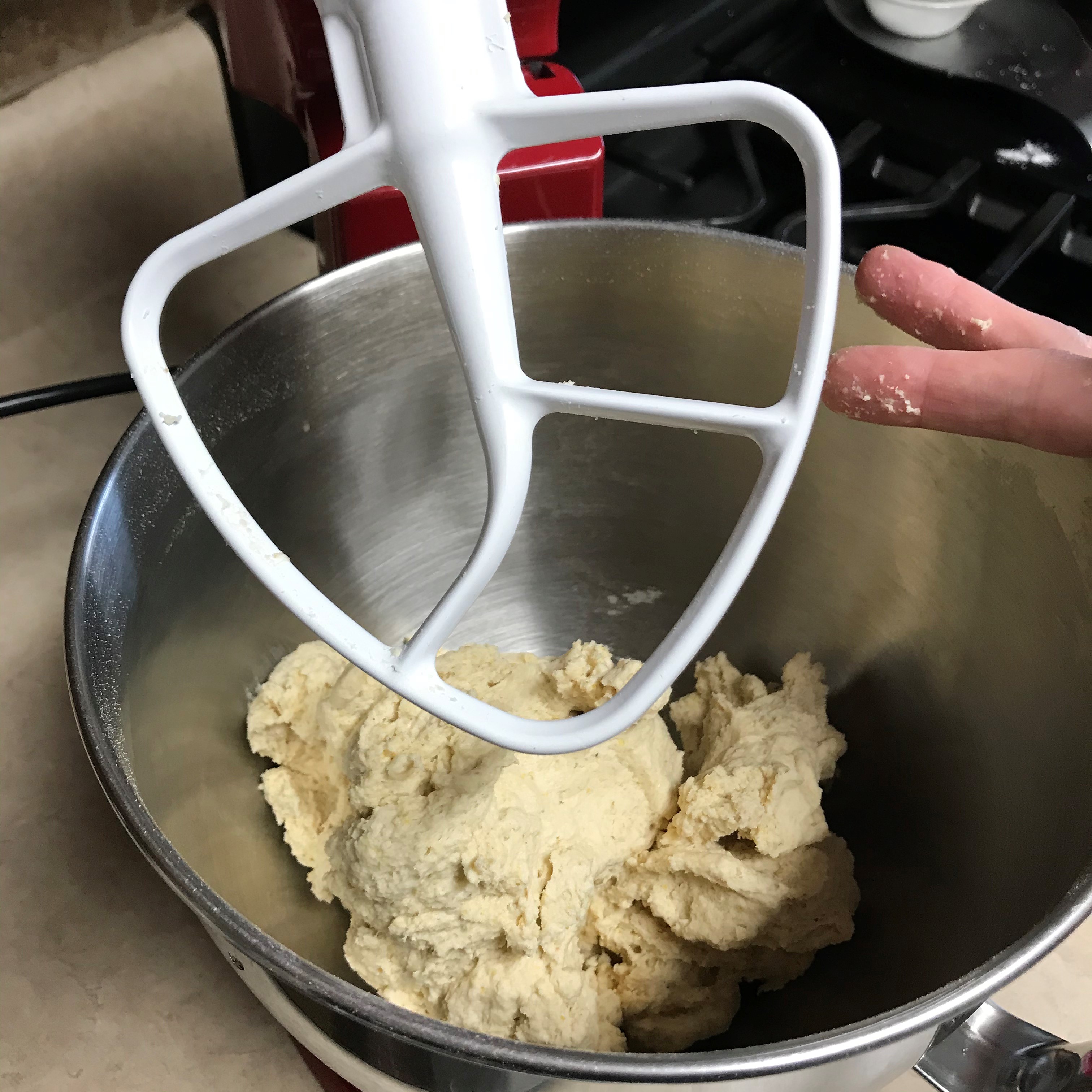
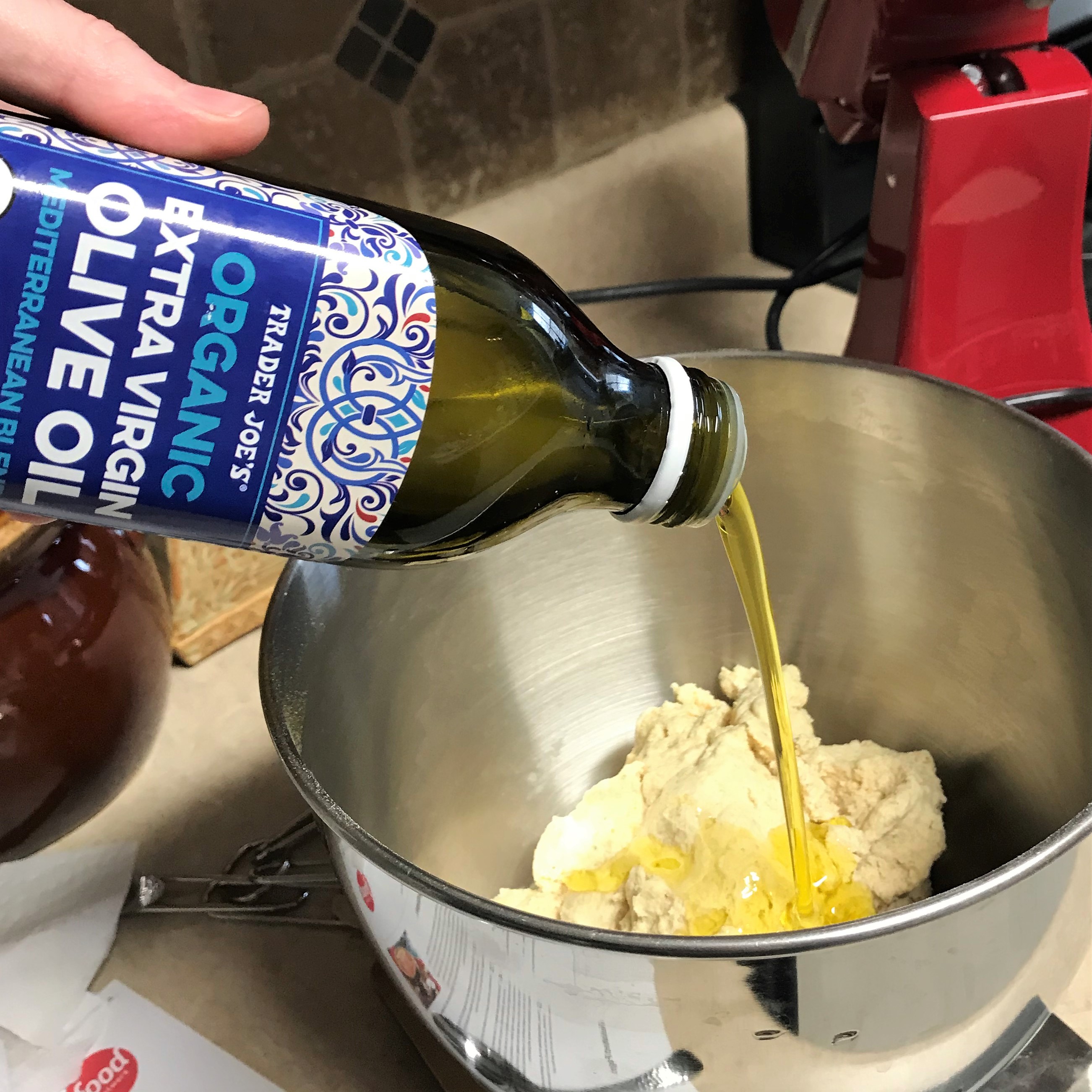
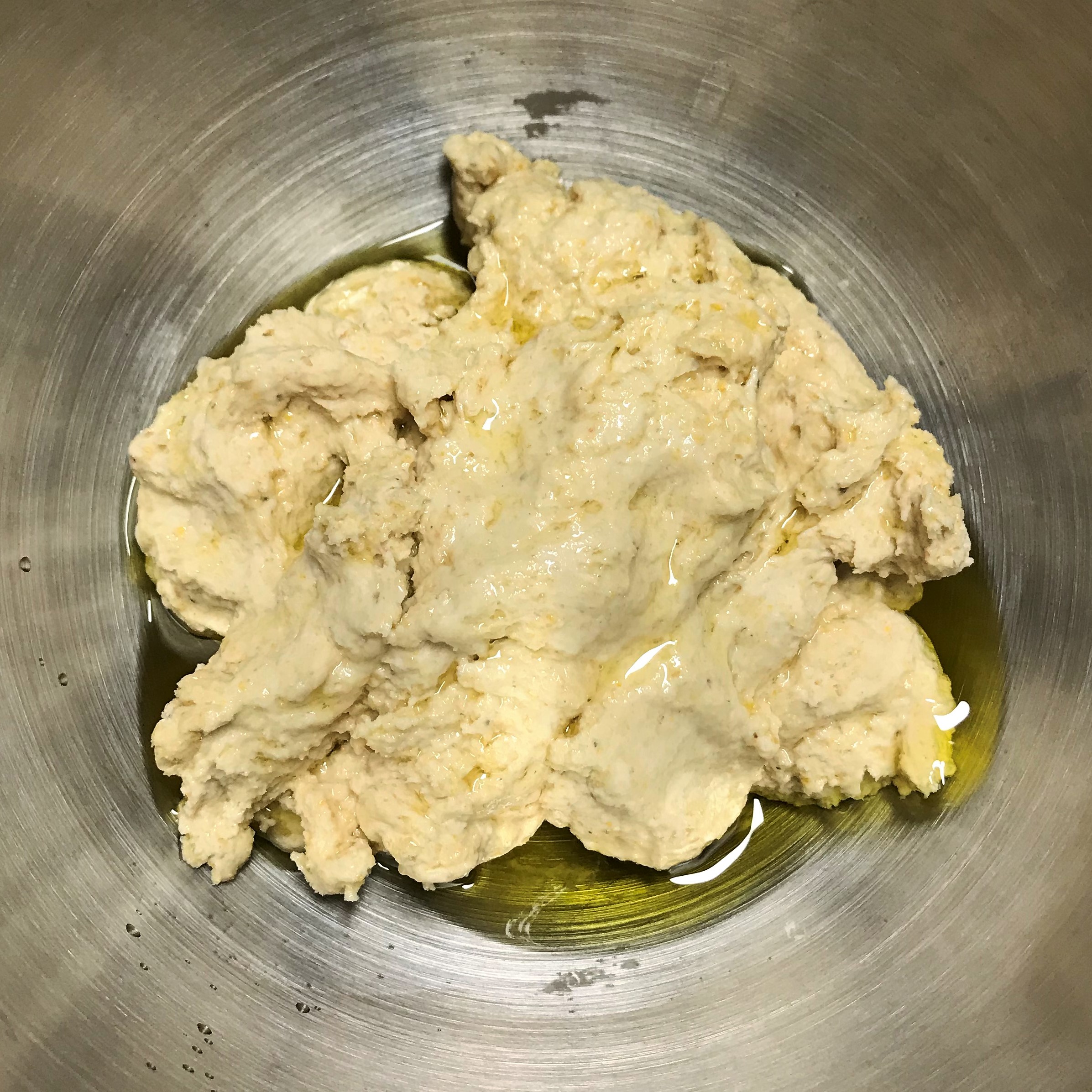
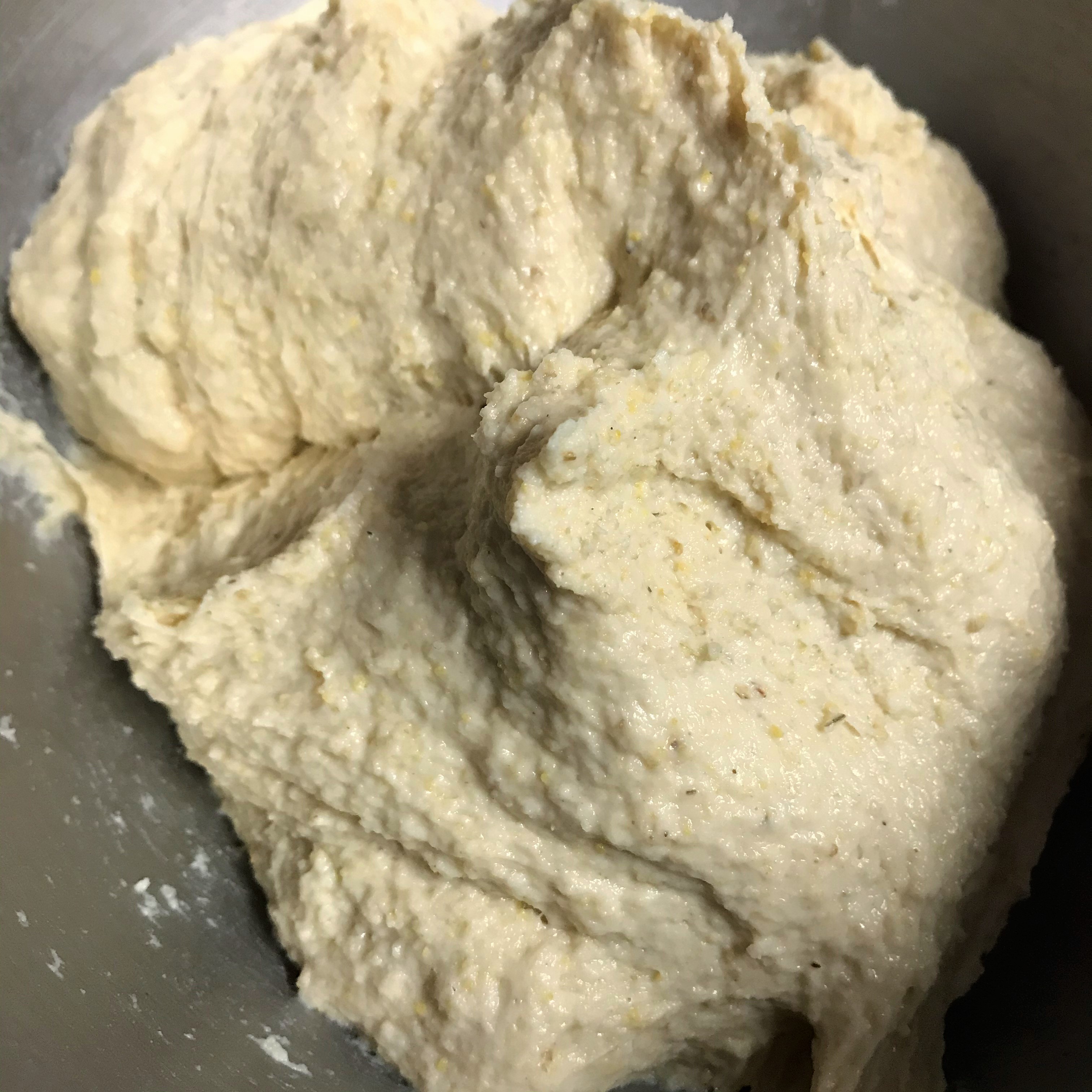
  2. In a stand mixer or large bowl, combine yeast mixture with flour, cornmeal, salt and remaining water (and sugar, if you didn’t use it to bloom the yeast). Mix until a soft, shaggy ball of dough forms. Pour in olive oil, cover and let rest about 15 minutes.
  3. Knead in olive oil until dough is soft, smooth and sticky. This should come together within about 3 minutes. Transfer dough to a lightly oiled clean bowl, cover and let rise at room temperature until it’s doubled in size. This may take up to 6 hours, depending on the yeast method and the warmth of your kitchen. If you want to speed it up a bit, put the covered bowl in the oven with the oven light on, and check on it at the 3 hour mark.
  4. Prep the other pizza ingredients by browning sausage, onions and peppers. Sauté spinach leaves until wilted and moisture is cooked out of them. Slice or shred your cheese. Drain the can of tomatoes, reserving puree and juice for another purpose. Set all topping ingredients aside until dough is ready to bake. Keep the cheese in the fridge until it’s time to bake.

  1. Preheat oven to 450° F, with a rack in the center position of the oven.
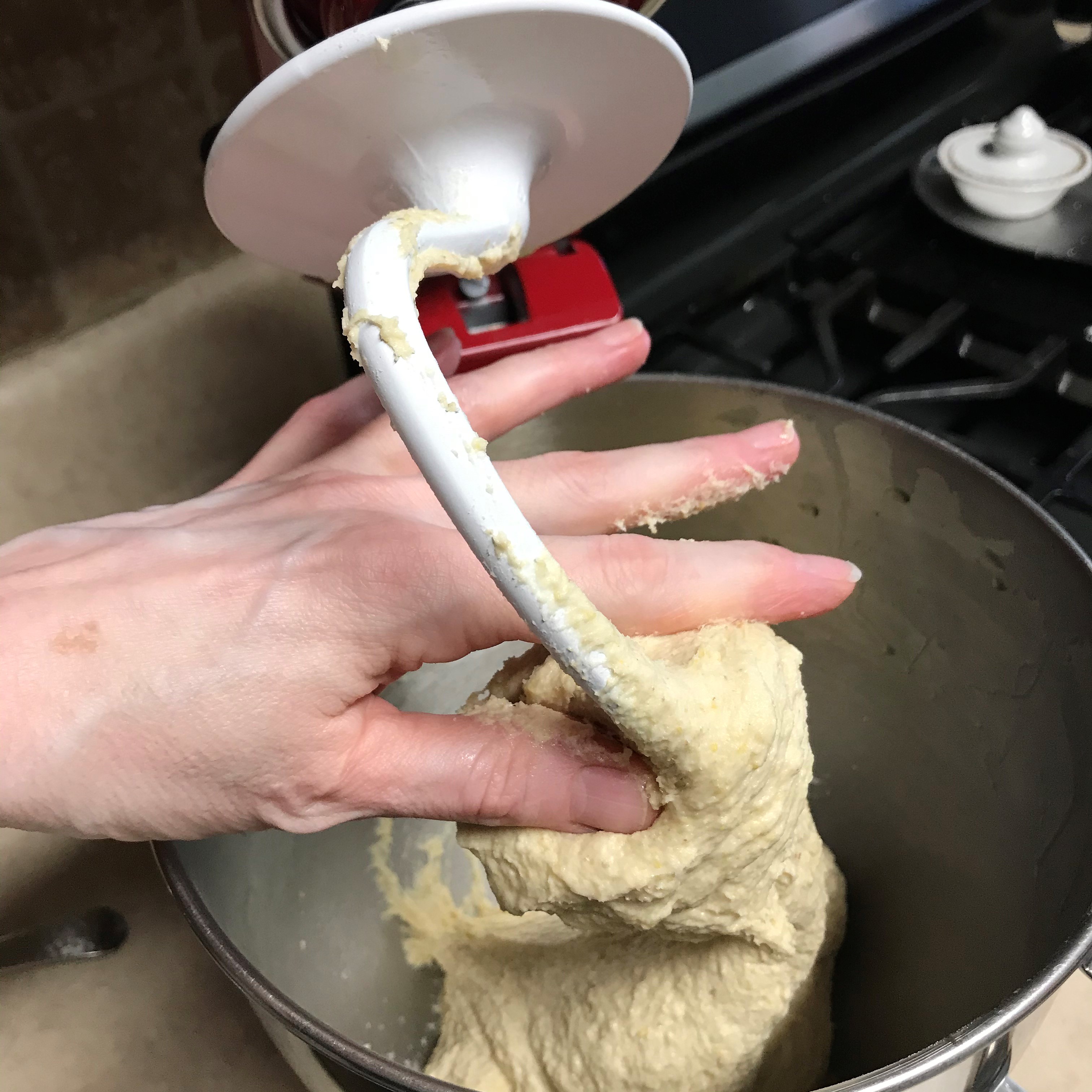
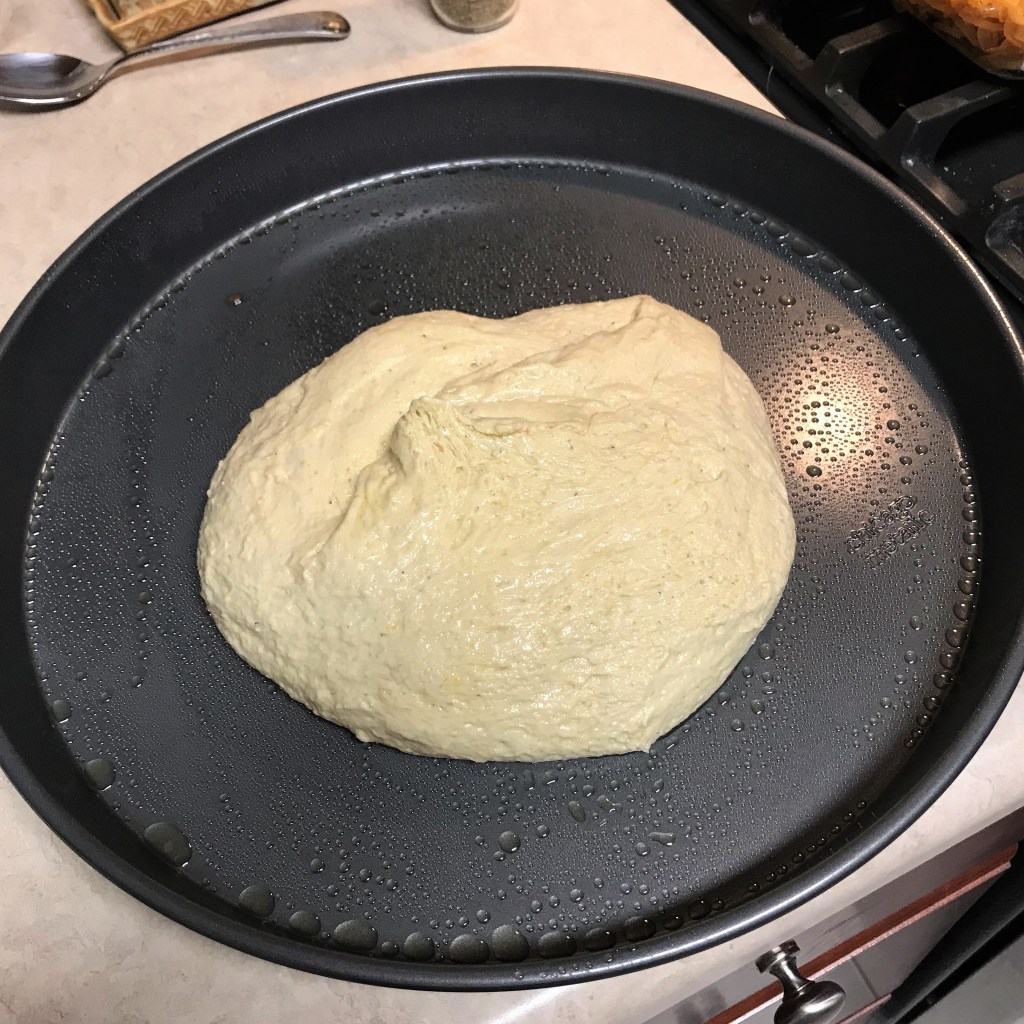
  2. Spray your deep dish pan or skillet with olive oil spray and transfer risen dough to the pan. Using your hands, spread dough out across the pan, gently stretching to meet the edges and up the side of the pan. The dough may spring back a bit but this is OK. Cover with a clean towel for 10 minutes to relax the gluten then proceed with the dough shaping. If you’re using a 12-inch skillet, you may only need about 3/4 of the total dough.
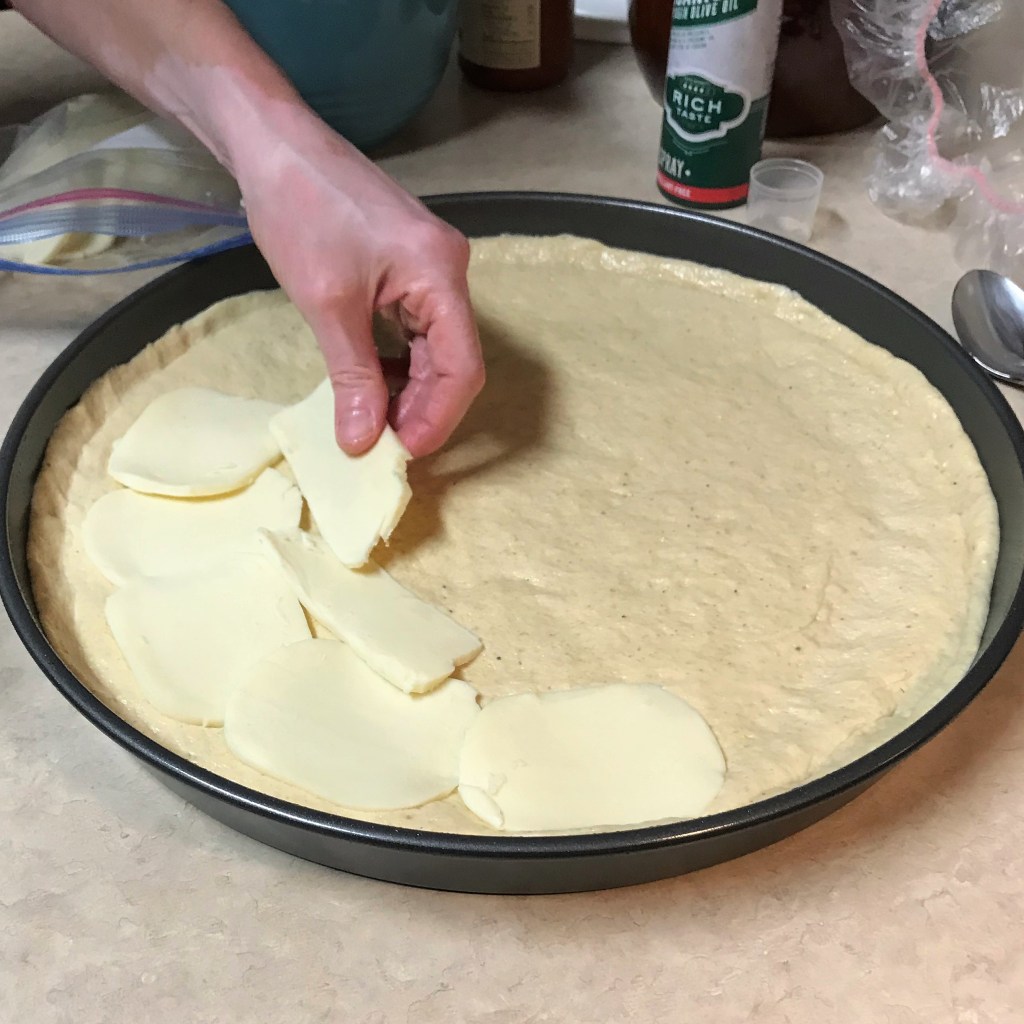
  3. Layer the sliced mozzarella all over the bottom of the pan, on top of the dough, with edges of the cheese overlapped for good coverage. I ran out of slices and filled in gaps with shredded mozzarella—no big deal.
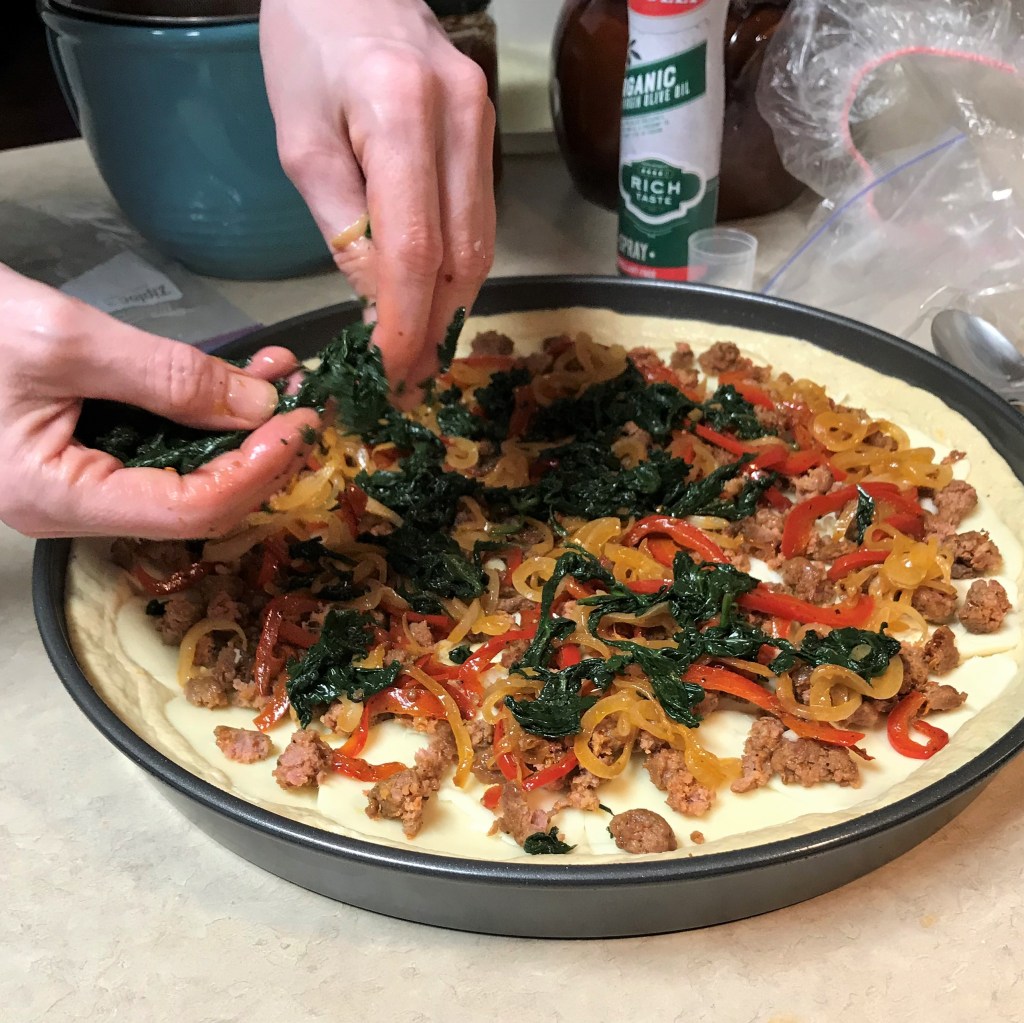
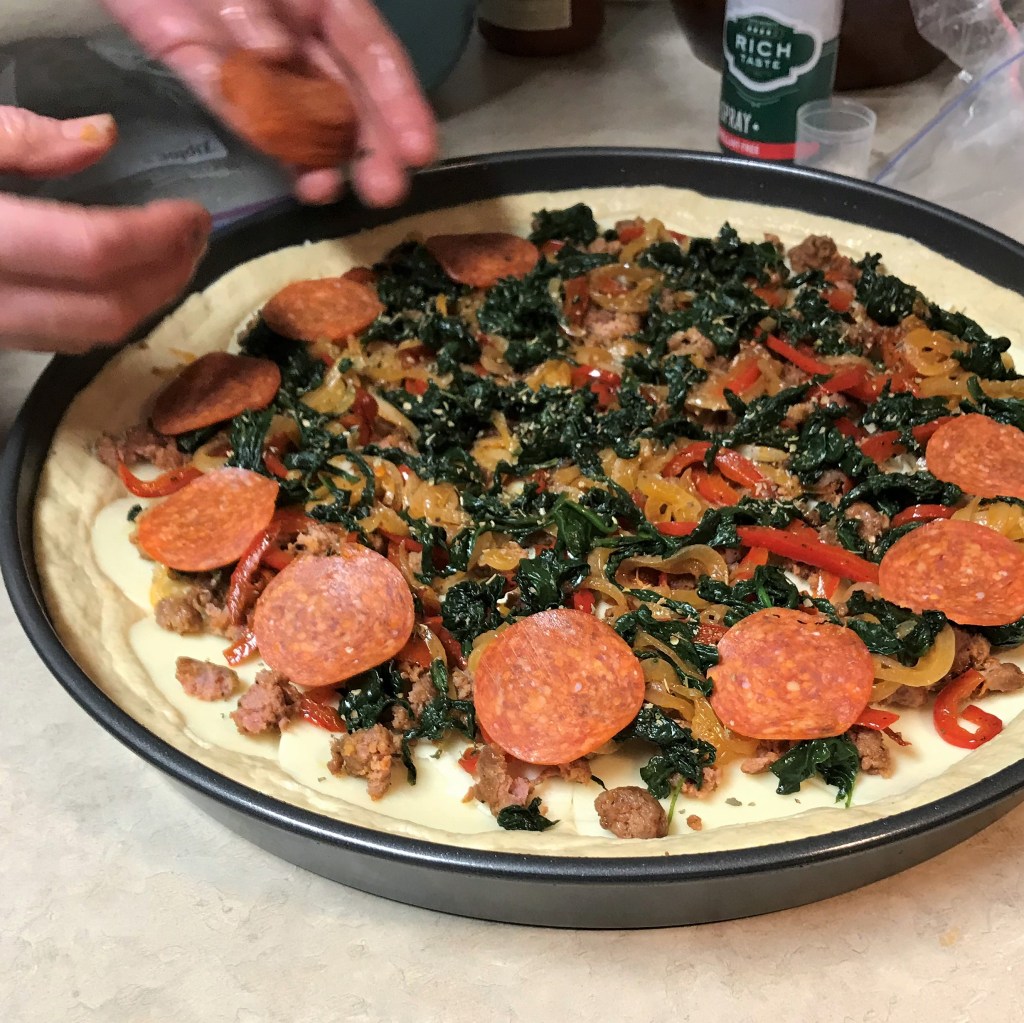
  4. Scatter the browned sausage crumbles evenly over the cheese, then layer on the sautéed onions, peppers and spinach. Finally, arrange the pepperoni slices evenly around the pizza.
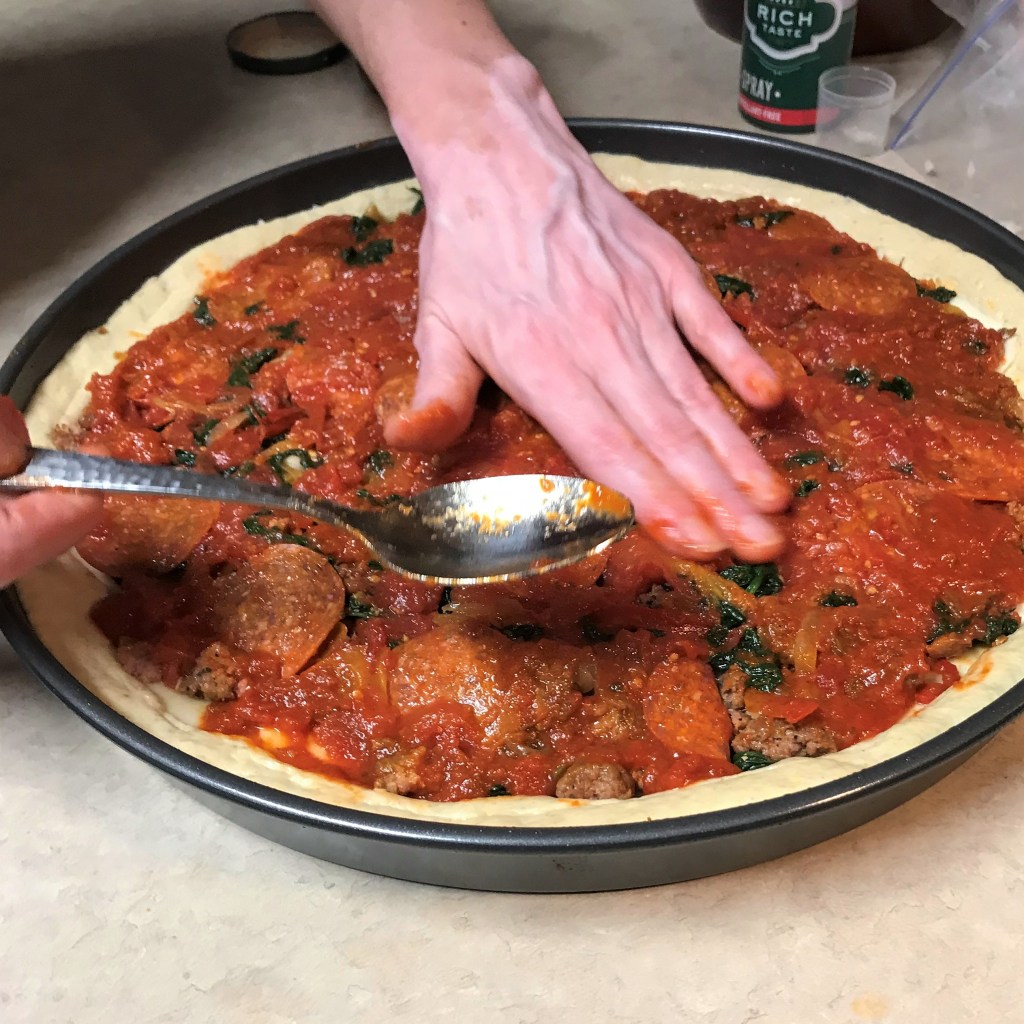
  5. Use your hands to squish each plum tomato slightly, and arrange them all over the top of the pizza. Spoon the pizza sauce into the gaps between tomatoes.
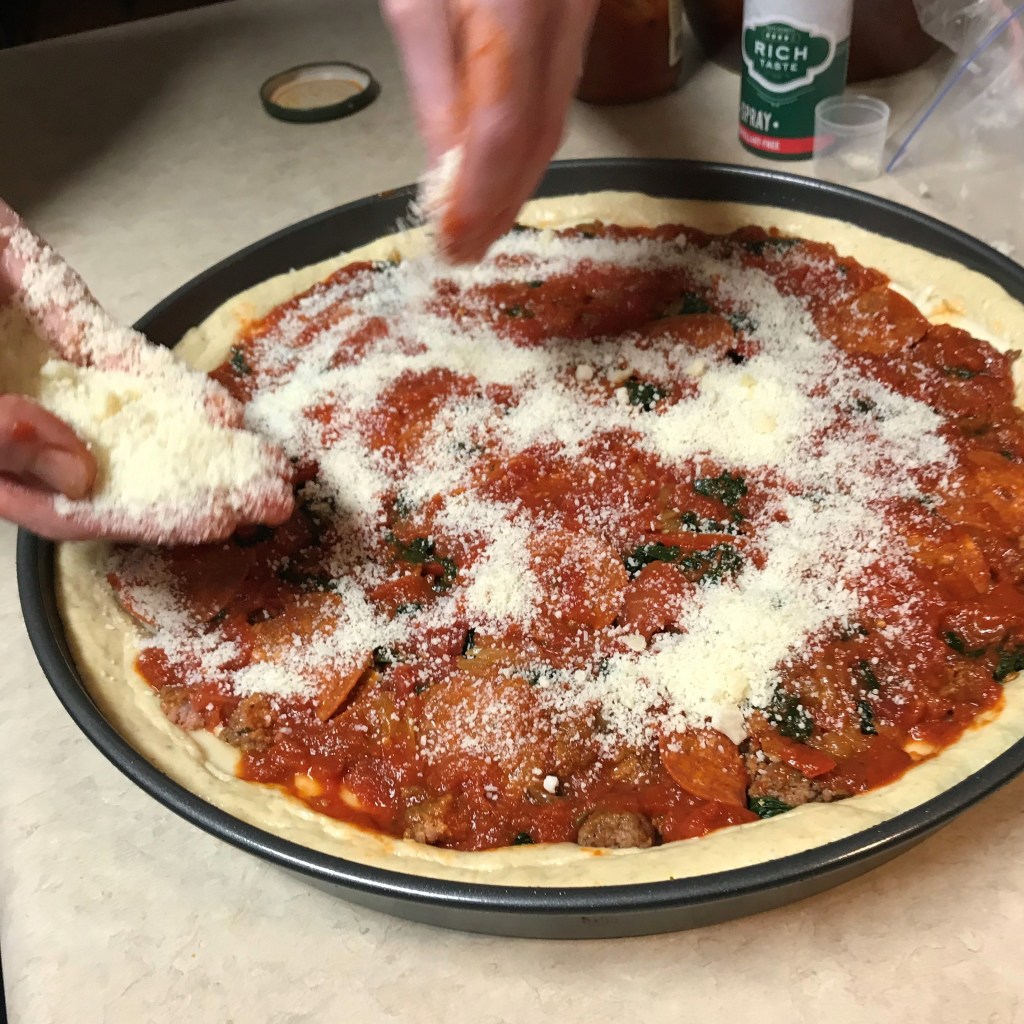
  6. Liberally sprinkle the parm-romano blend cheese completely over all the pizza toppings, and finish with a swirled drizzle of olive oil. I saved the grease from browning the sausage and drizzled that on top. No sense wasting that flavor, right?
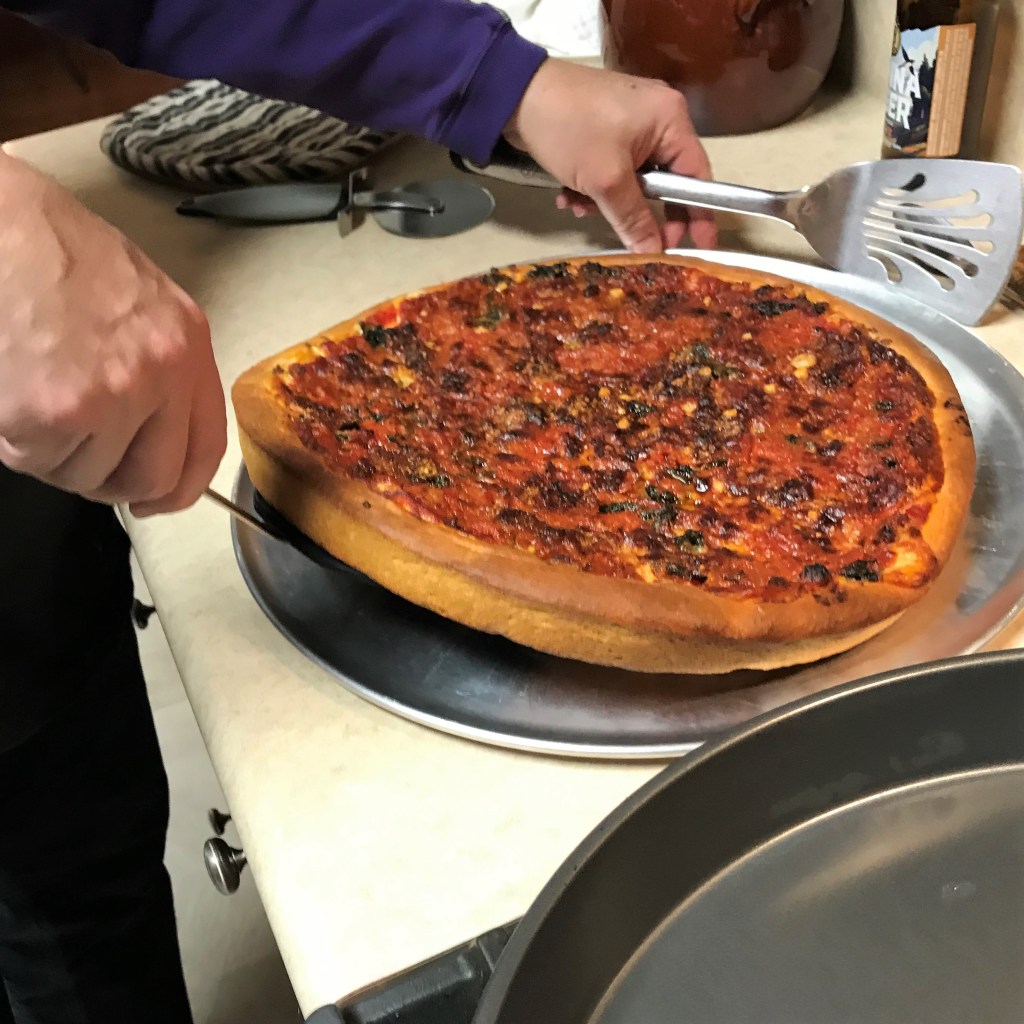
  7. Slide pizza pan into the oven and bake 25 minutes, until crust is evenly browned and parmesan cheese is golden and bubbly. Give it a turn at the halfway mark for even baking. Allow pizza to rest at least 5 minutes, then carefully slide it out of the pan to a pizza sheet for serving at the table. My husband is good at this part, and he was able to move the pizza using two large spatulas on either side of the pie. If it’s too difficult, cut and serve directly from the pan.

Of course, we could not resist an extra sprinkling of our spiced-up parm-romano blend for serving.

Want to give it a go?