Peruvian-style Chicken

There are only a few days left of Hispanic Heritage Month, which runs from Sept. 15 to Oct. 15. Recognizing and celebrating cultures other than my own is important to me, especially with the recent happenings in this U.S., and the government trying to wipe out diversity of any kind. I feel helpless in the face of it, but know I can still shine a light on the other cultures. And the best way I know how to do that is to explore and share their cuisine.

At our house, we observe the heritage of Hispanic cultures regularly— not only on months that “officially” mark the occasion— and that usually happens through food, and typically Mexican food. A few of my formative years were spent with my mother in Southern Colorado and New Mexico, so those flavors taste like home to me. But Mexico isn’t the only country with Hispanic culture; there are 21 countries and territories to celebrate, with most of them being in the Americas, some in the Caribbean (such as Cuba and the D.R.) and even an itty bitty country in Africa. What puts them in the “Hispanic” category is that Spanish is the predominant language and their cultures have been significantly influenced by Spain (which is, itself, an Hispanic nation).


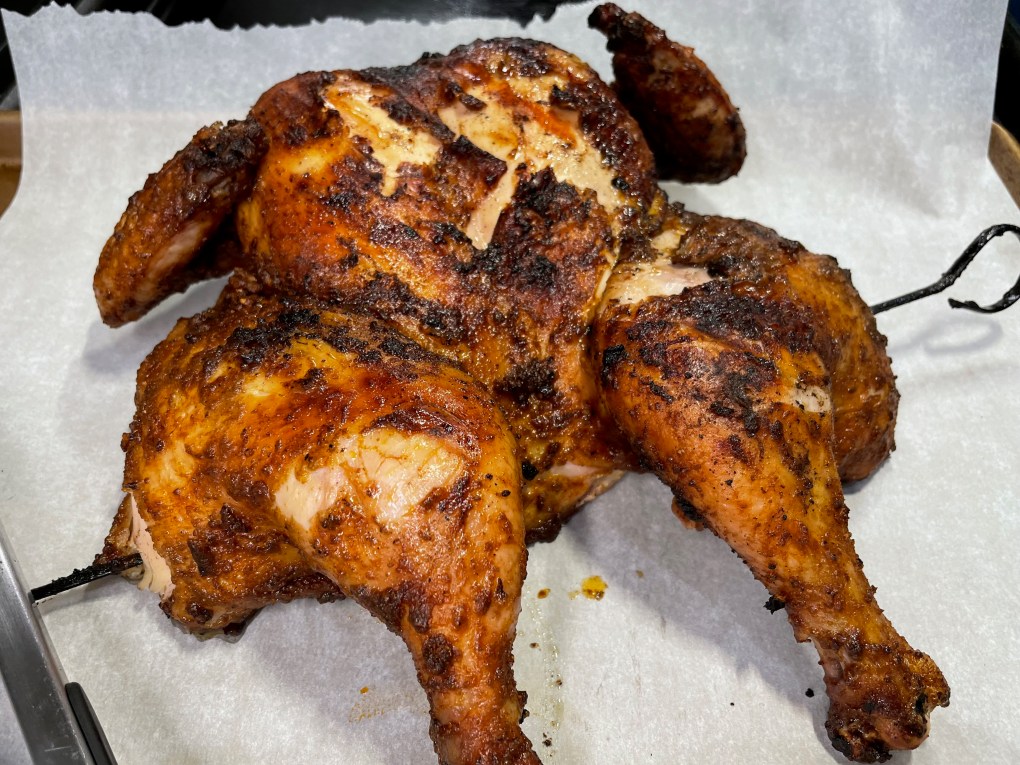
Today, my attention is on Peru, for no other reason than I freaking love this chicken! My first-ever experience of Peruvian roast chicken was underwhelming— it was a rotisserie bird from Whole Foods that barely tasted different from a plain one. But when I first had pollo a la brasa for real—fire-roasted chicken with paprika, cumin, vinegar and garlic—I was blown away by the intensely warm and smoky spices and the flavor explosion at the first bite. And it’s not just the spices on the chicken— it’s this insanely good jalapeño-based sauce that I would happily devour with a spoon.
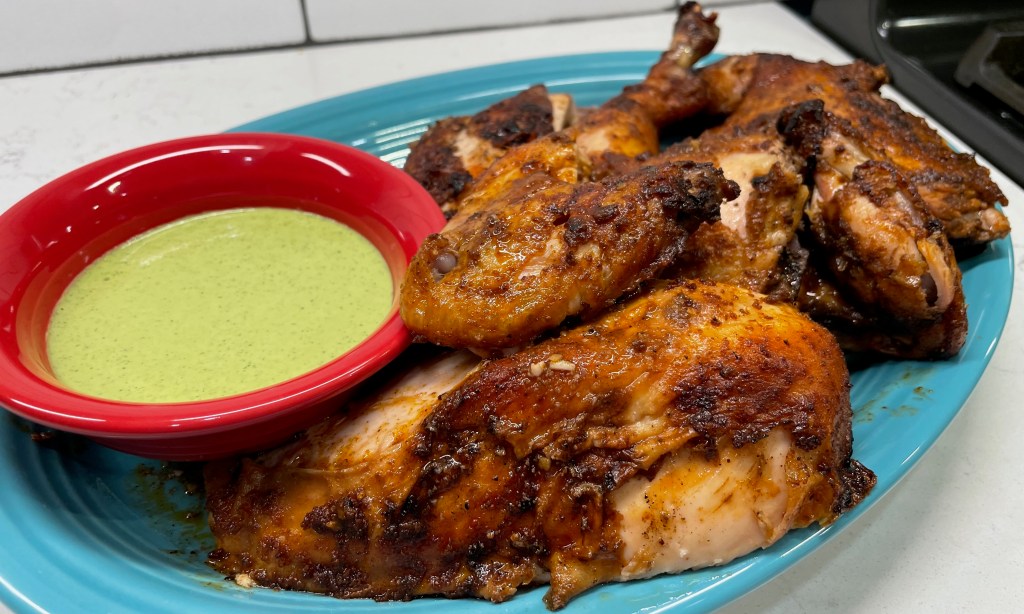
I’ll bet you can smell it through the screen.

We’ve made this a few times at home now— first, with the rotisserie spit accessory on our Napoleon gas grill and later by spatchcocking the bird and grilling it flat— and I have a few thoughts to share for the best success.

Thought #1: Trust Kenji’s recipe!

It didn’t take long to find the recipe I would trust when I decided to make this at home. If you know me at all, you know that Kenji López-Alt has my utmost respect for his culinary approach and techniques. He’s the reason I dry-brine my turkey at Thanksgiving and salt steaks overnight before grilling. If anyone knows the right way to cook Peruvian-style chicken, it’s Kenji. The only deviation I made from Kenji’s recipe on the Serious Eats website is that we used our gas grill (we don’t have a charcoal one, darn it). Literally everything else about my method is the same. For this reason, I’m tagging his recipe below so that I don’t have to type it out myself. Be sure to read through Kenji’s narrative, too, for more tips and expert insight.
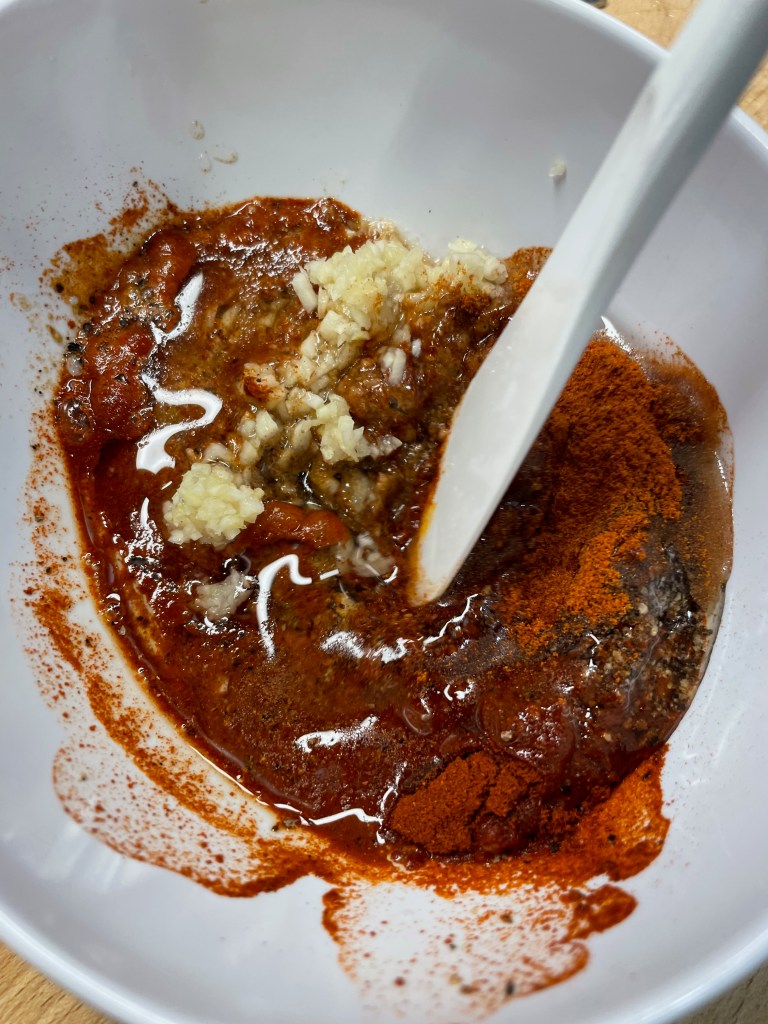
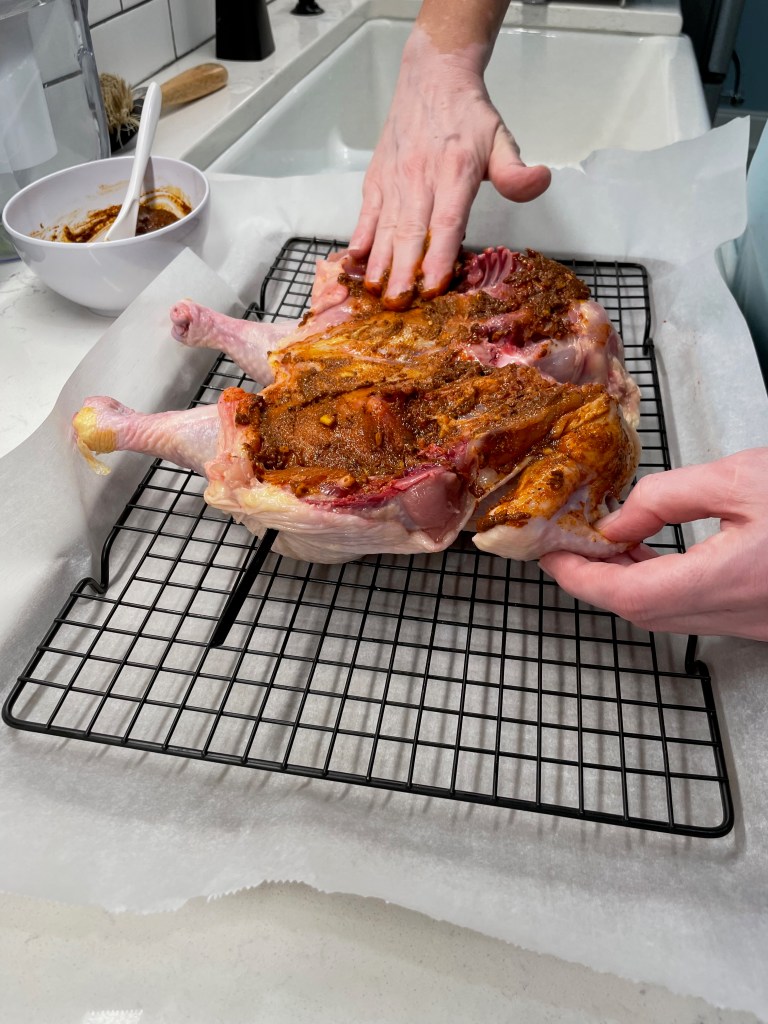
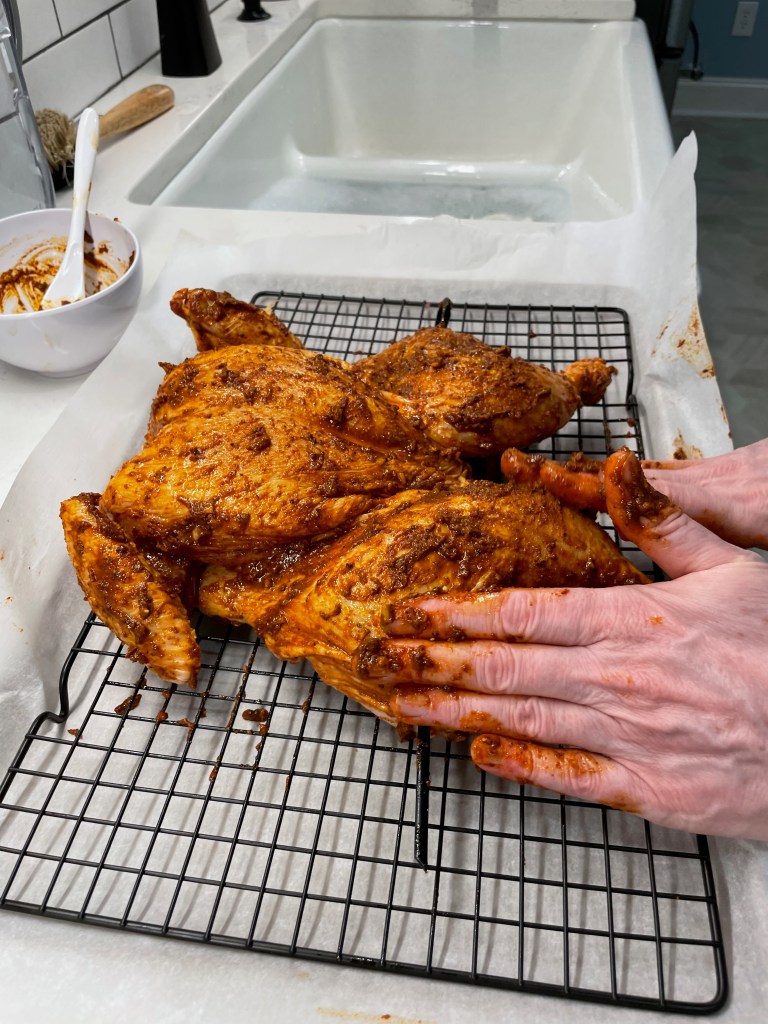
Thought #2: Consider roasting parts rather than a whole chicken

Our rotisserie effort felt authentic and fancy, but the whole, flat-roasted chicken was just as good. Next time we make this recipe, I’ll probably buy packages of the chicken parts we like best— the thighs! It can be tricky to get the thighs and breast of a whole chicken done at the same time, especially on the grill, so why not buy the parts separately and give each the attention they need? Bone-in, skin-on is the way to go for maximum flavor.
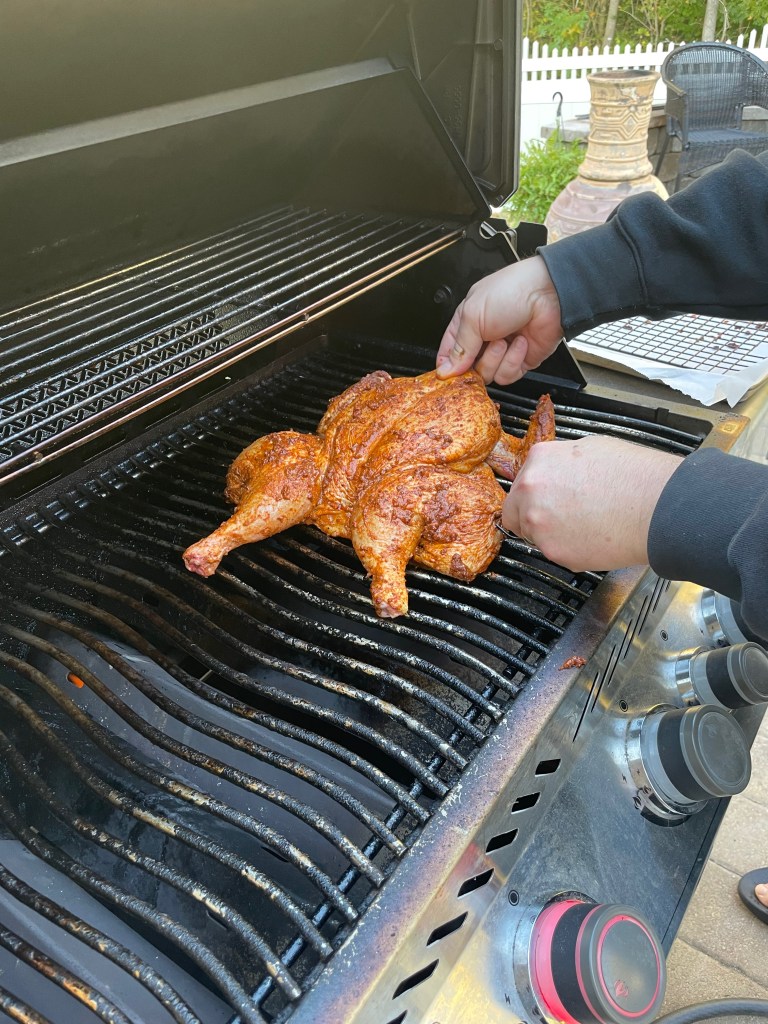
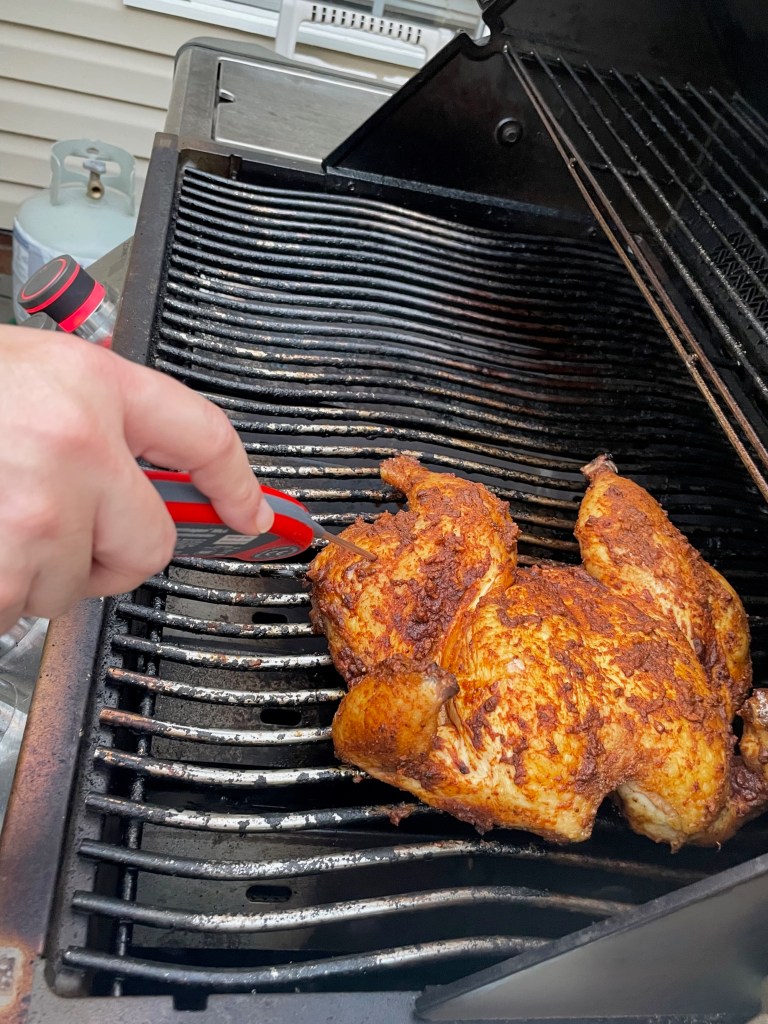
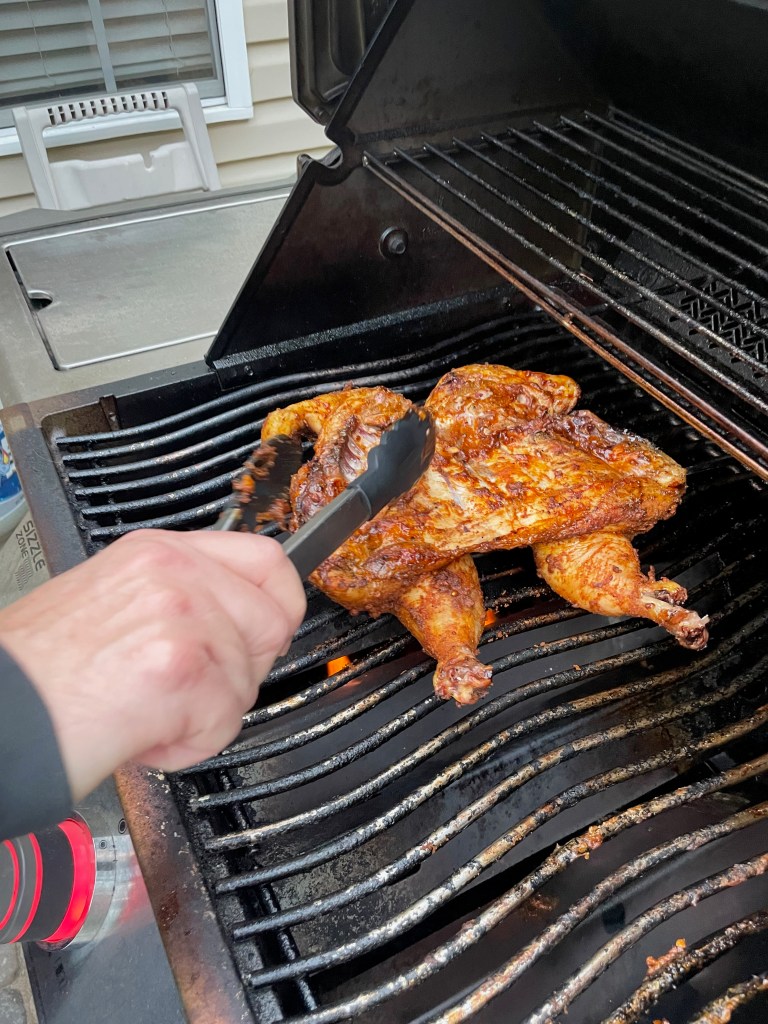
Thought #3: Make extra green sauce (trust me!)

I don’t know how such simple ingredients can become so delicious. It’s kind of ridiculous how good this sauce is, and the secret ingredient is a product called aji amarillo chile paste. Look for it in a Hispanic specialty market or online if your supermarket doesn’t carry it.
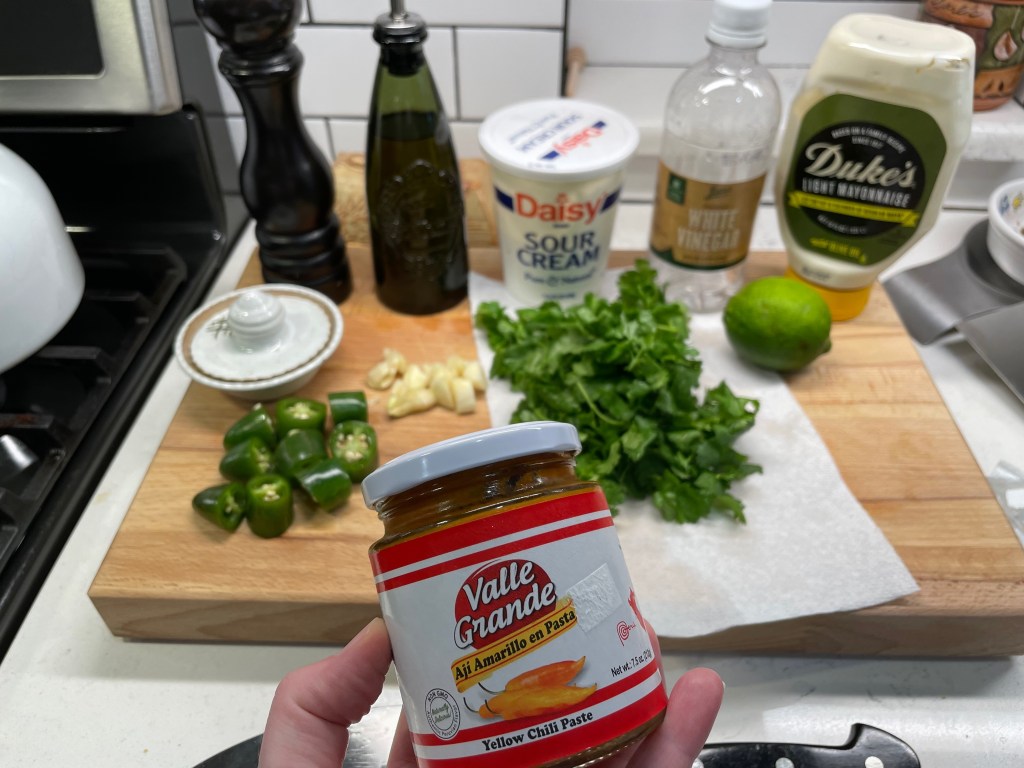
The aji amarillo paste is the star of this sauce show!

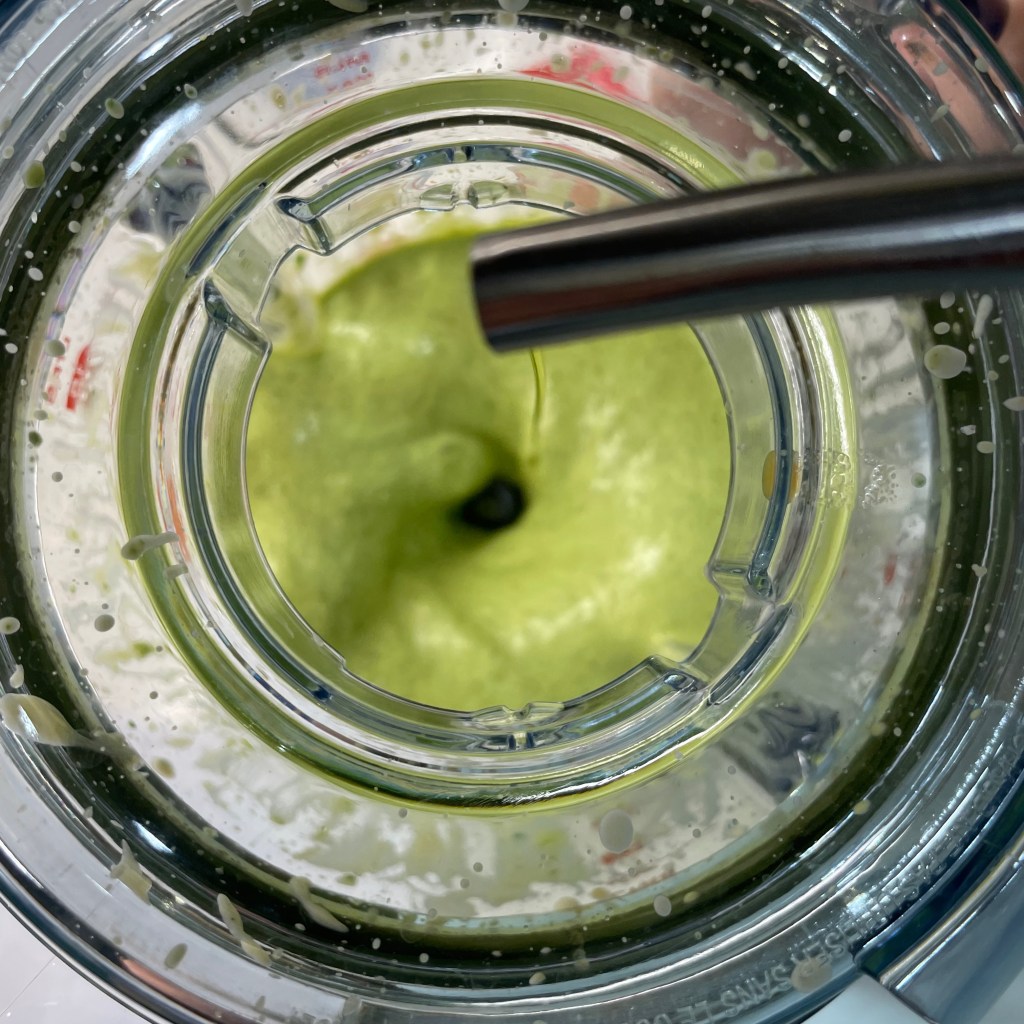
Aji amarillo has a uniquely earthy yet tropical, almost sweet flavor, and when combined with jalapeños, cilantro, garlic, lime and mayonnaise— well, it’s almost magical, with an addictive quality that will make you wish you had grilled a second chicken. But don’t worry, you’ll find plenty of other things to dunk into this sauce. It’s that good!
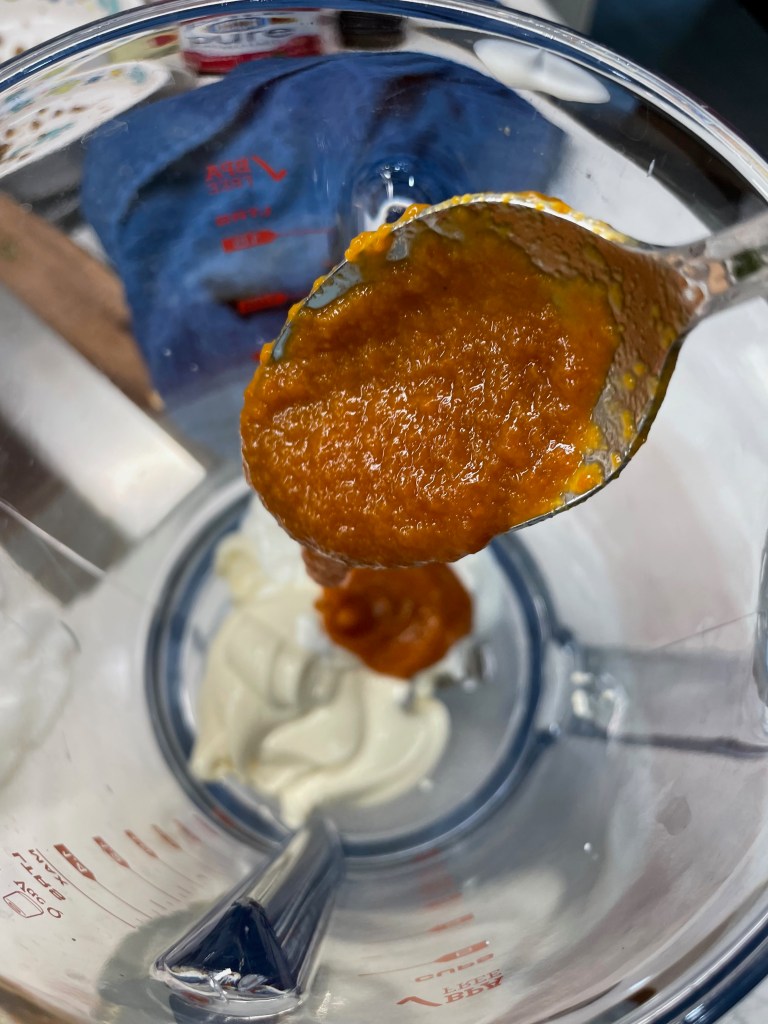
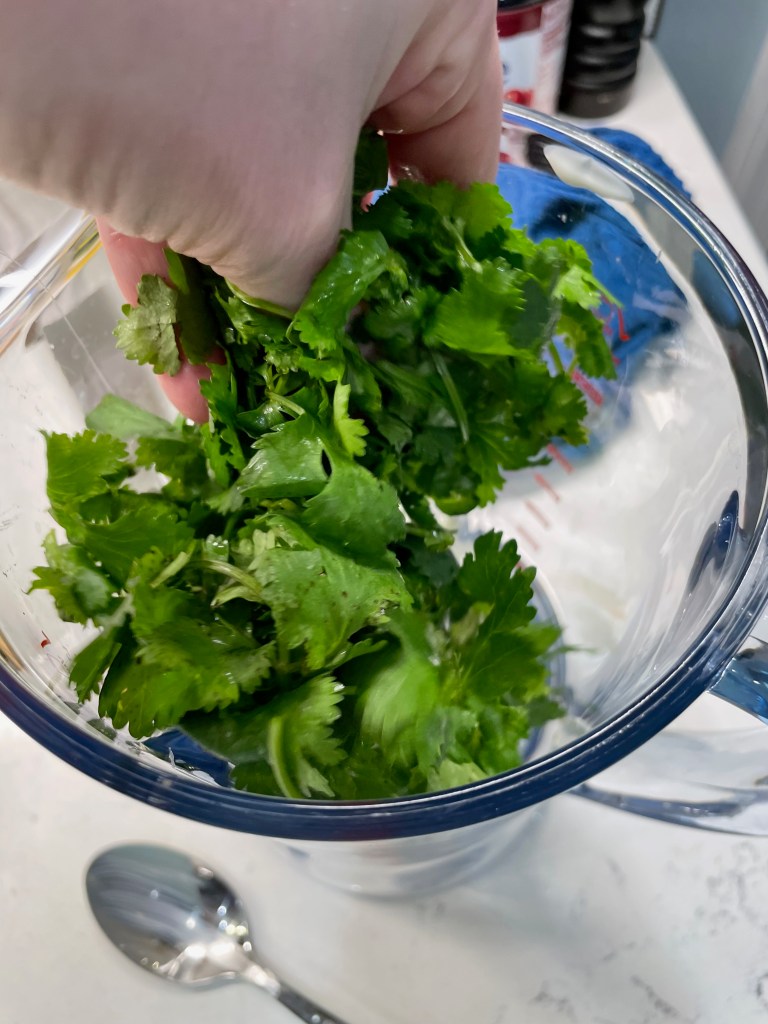
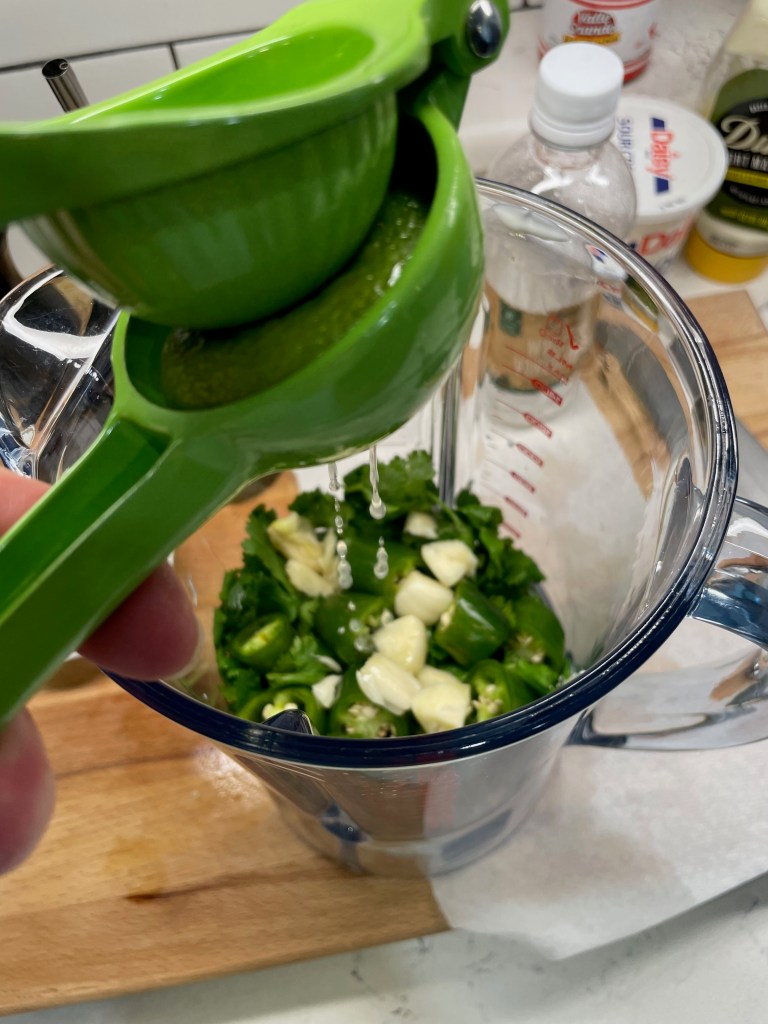
Make the sauce ahead of time, if you wish, so the flavors have plenty of time to meld in the fridge. If you have a charcoal grill, use it! But we had zero complaints with the outcome of our grilled Peruvian chicken. My mouth is watering again just looking at it!
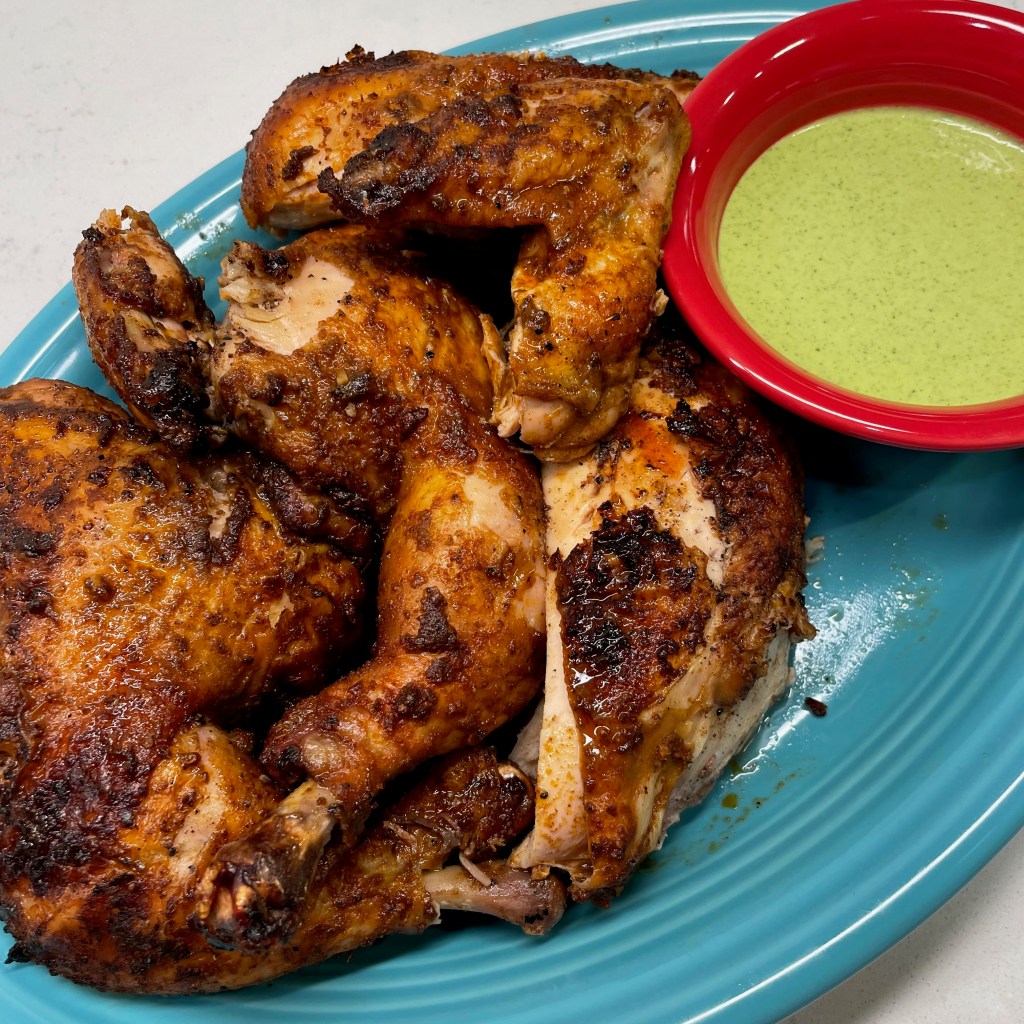
Fantastic flavors – way to go, Peru!

Want to make this incredible dish?

This might be a first, that I followed a recipe to the letter! Get the recipe and complete technique and instructions: https://www.seriouseats.com/peruvian-style-grilled-chicken-with-green-sauce-recipe
Smoked Pulled Pork

There’s no getting around it, this has been a brutal summer. Crazy hot days, nights as muggy as they were buggy, and no relief from all the drama of the world around us. I need a three day weekend just to catch my breath. Under normal circumstances, my husband and I would be firing up the grill for Labor Day, raising a glass to say, “peace out, Summer,” and looking ahead to my favorite season— fall!

We will cover the raising the glass part, but the first activity on that list isn’t possible this year because our grill has decided to opt out of participation. If it isn’t the burned out igniter switch or a clog in one of the tiny burner holes, it’s something else. The latest issue is apparently a faulty regulator. Yep, the fancy-ass Napoleon gas grill that we researched half to death and practically took out a second mortgage to pay for has been slowly but surely stealing my soul.

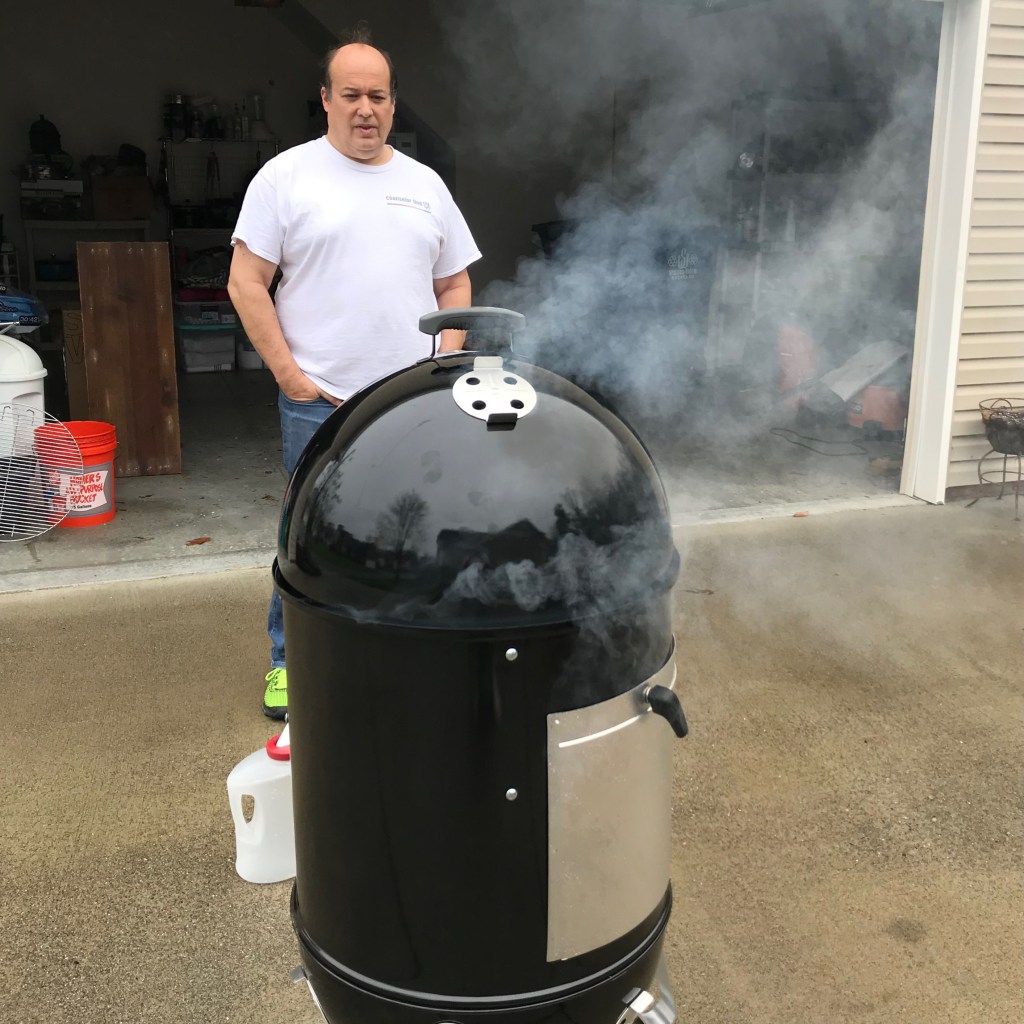
Rather than shove the thing down the embankment into the woods behind our house (I’ve been tempted, trust me), I can be thankful for our charcoal smoker. A three-day weekend feels like a great time for Les to throw a variety of meats onto the racks over some hickory (or cherry or apple) wood.

We’re headed for the smoke zone!

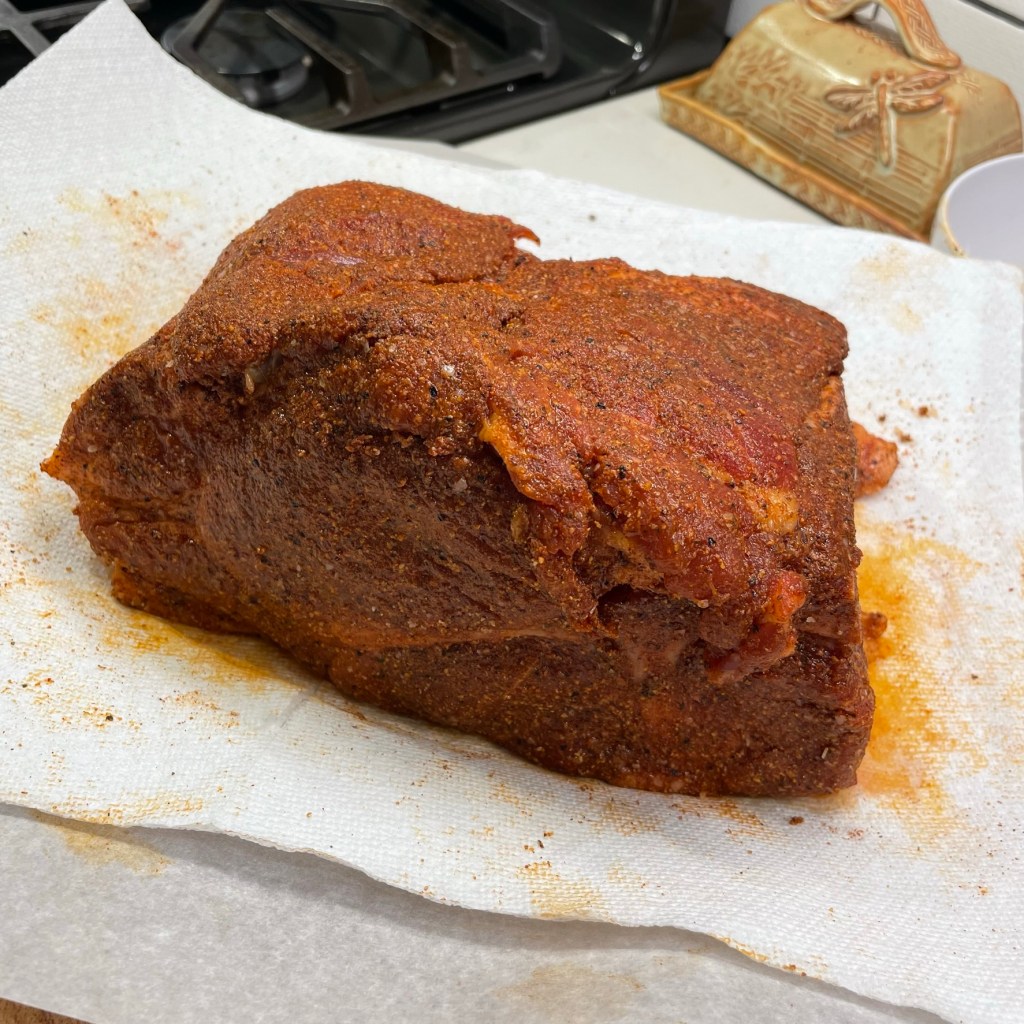
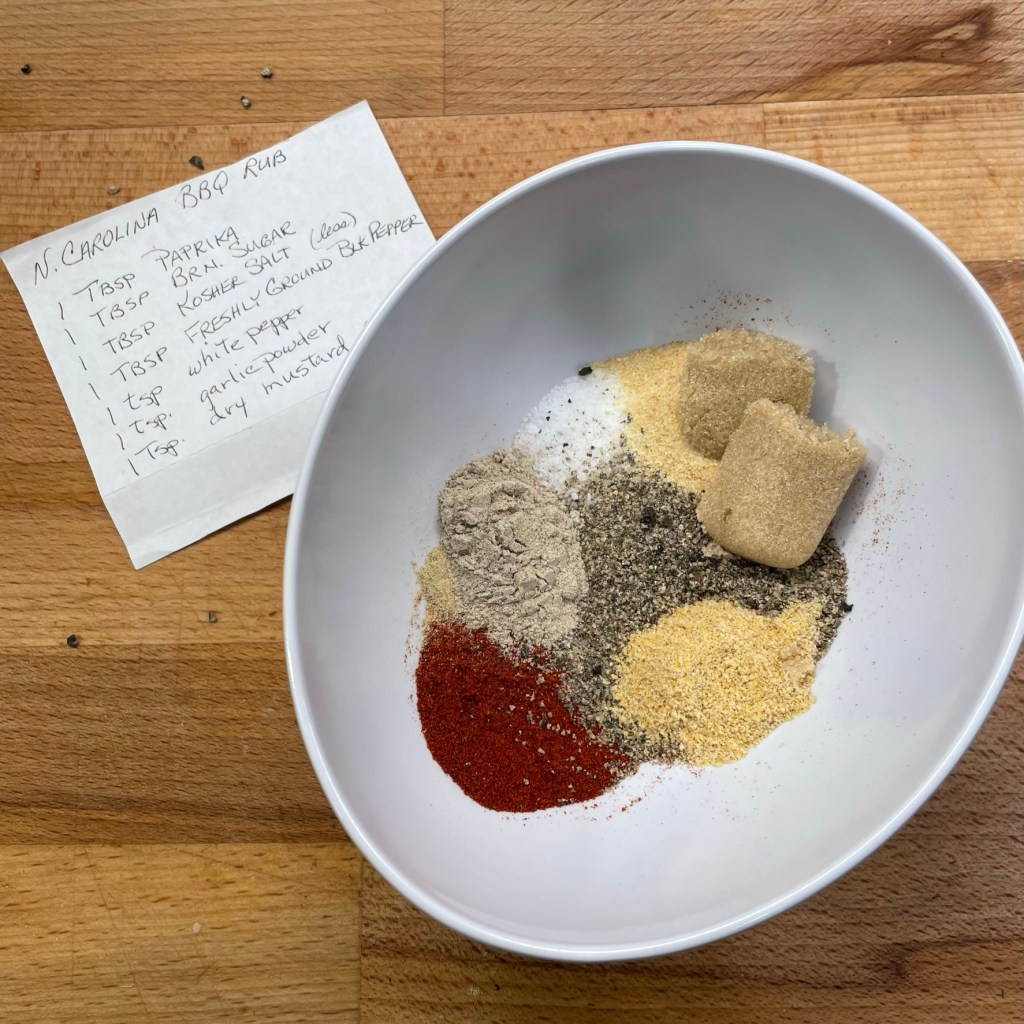
This pulled pork recipe is a favorite for a few reasons. First, the end of August is the anniversary of my arrival in North Carolina— it was 37 years ago this week that I rolled into town in my 1982 Pontiac, and one of the first foods I was introduced to was (you guessed it) pulled pork “barbecue.” Krispy Kreme was another, as they were born in Winston-Salem, and a staple here before the rest of the world knew about them. Another reason I love this pulled pork is the spice blend, and the recipe we use was given to me by my Aunt Joy. It’s a terrific balance of sweet, smoky, spicy and salty, and it gets bonus points for bringing great flavor to pork in a slow cooker, too!

Finally, I love this pulled pork because of my husband, Les, who happens to be celebrating a milestone birthday today. 🥰

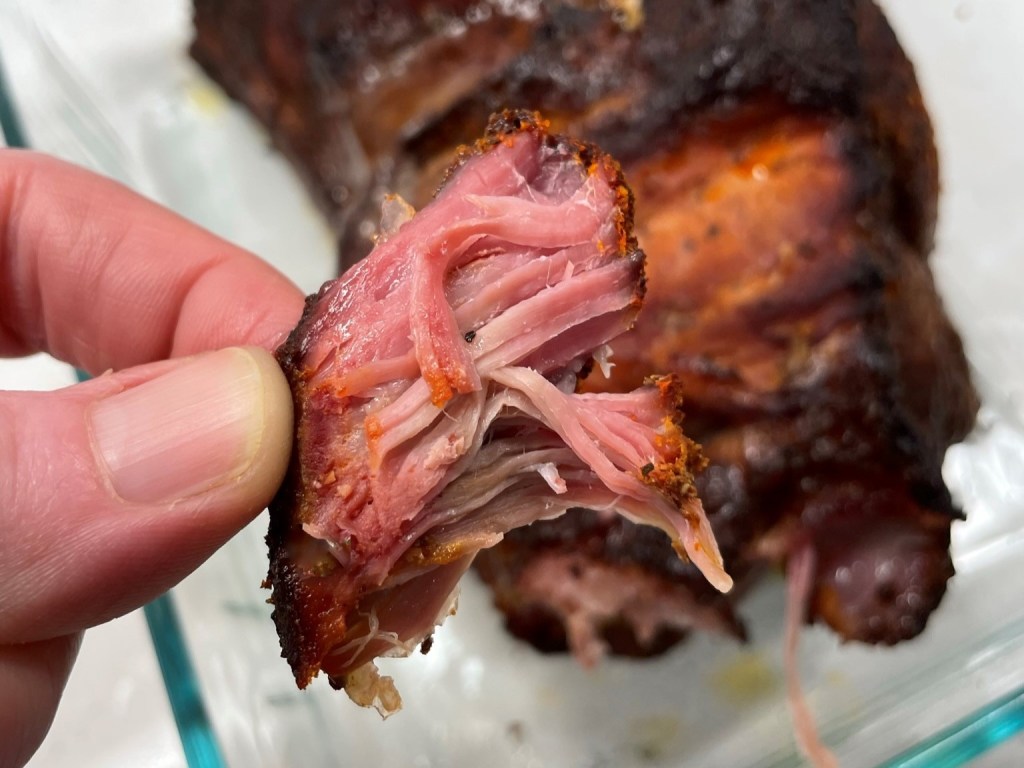
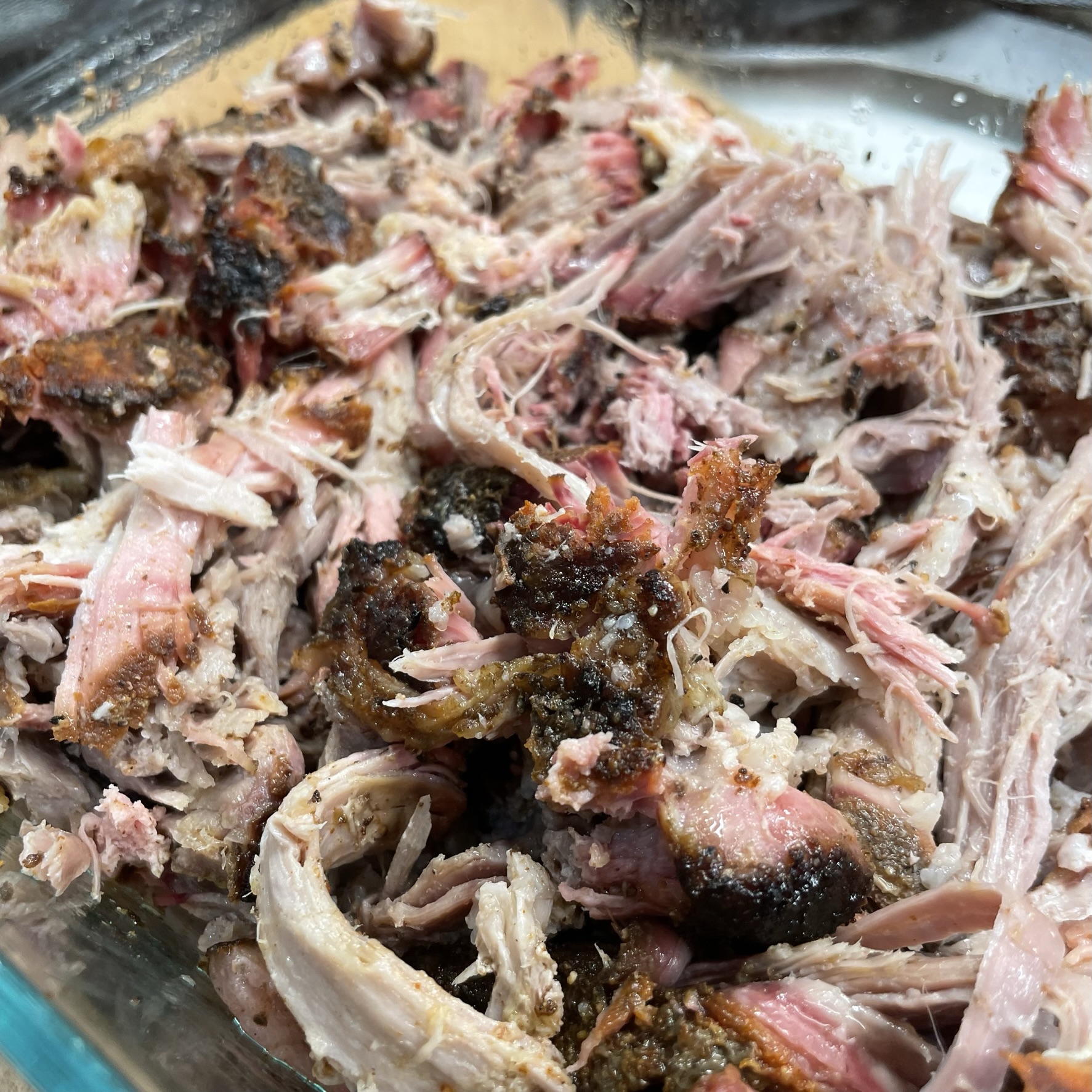
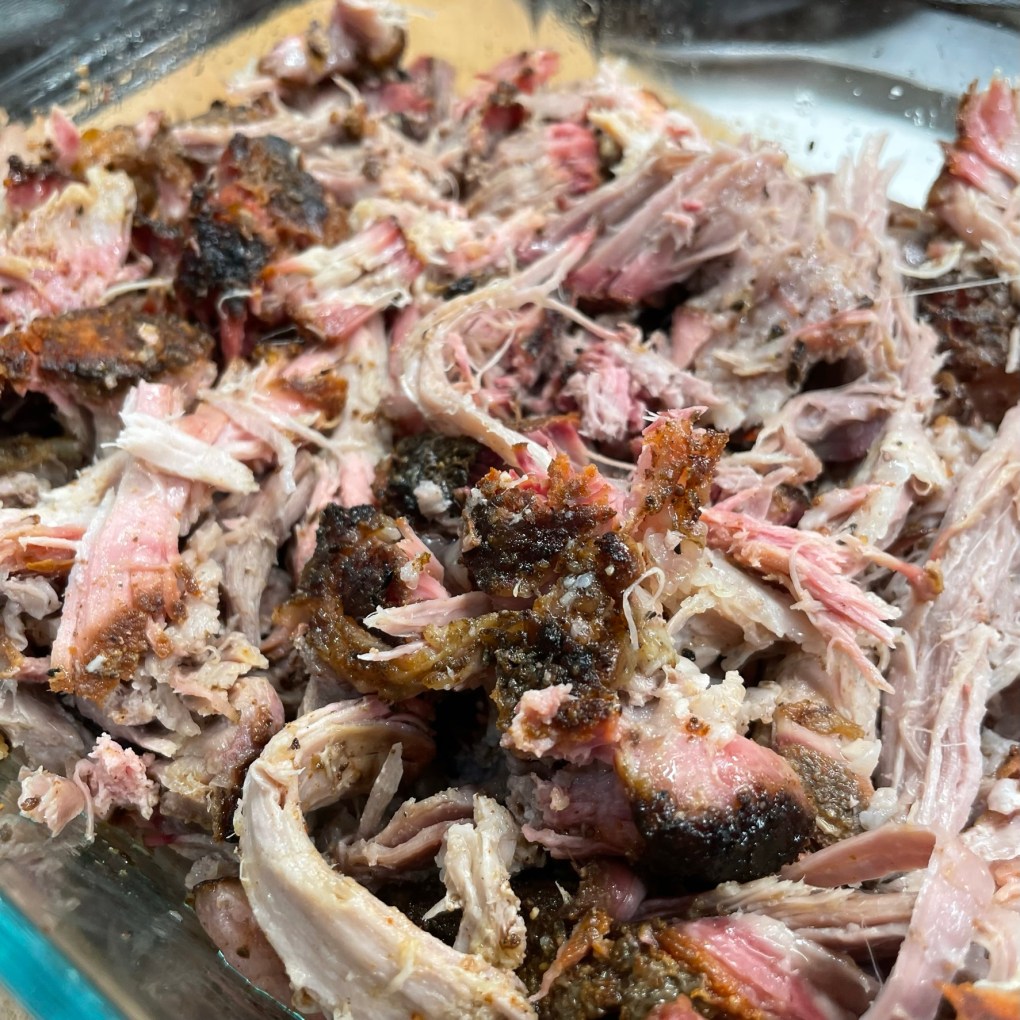
OK, I’ll admit that this post is really more about him. Les handles the smoker with great finesse, and his pulled pork barbecue is just about the best I’ve ever eaten—evenly seasoned, succulent and tender, and with a perfect smoke ring.

Perfect little piece of bark!

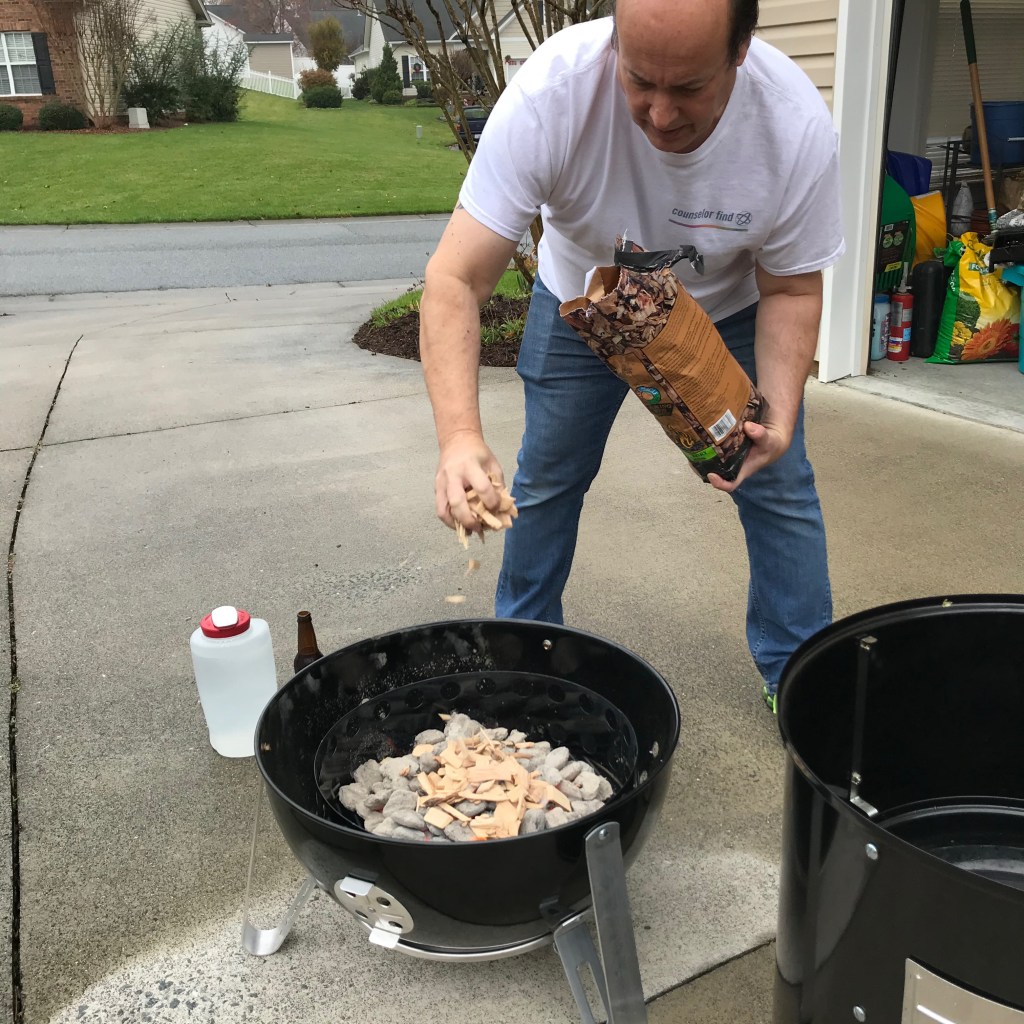
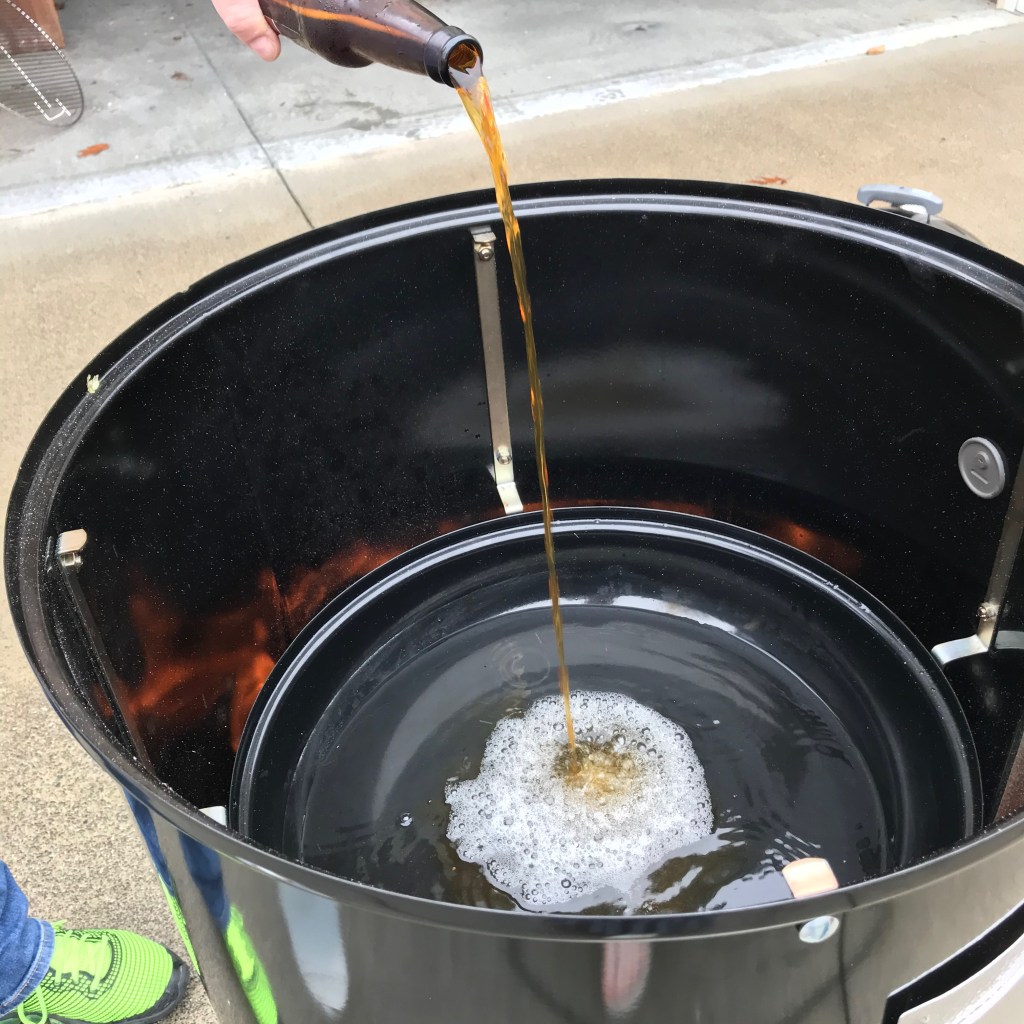
Les begins with a hardwood charcoal fire in the base of the smoker, and he adds wood chips when the coals are nice and hot. There’s usually some kind of special liquid added to the water in the drip pan— could be beer, hard cider, root beer or cola— to lend an extra hint of flavor to whatever he’s smoking.


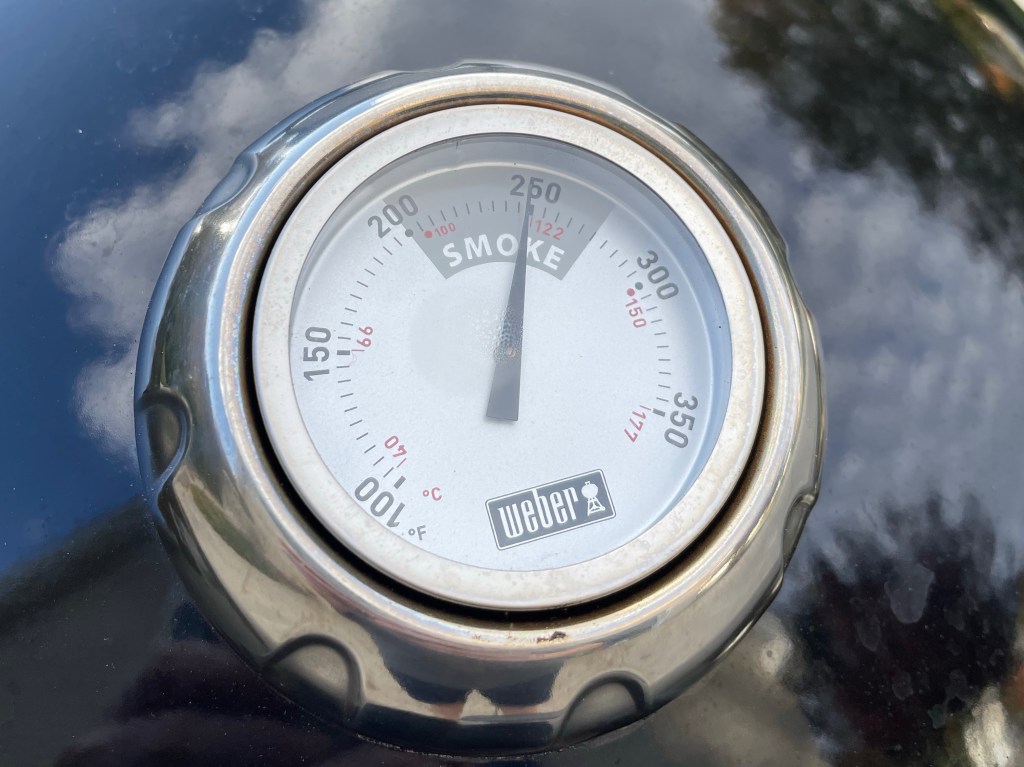
He masterfully opens and closes the vents to maintain the “smoke zone” of 225 to 250° F for as long as it takes to finish the meat. As with oven roasting, the smoke time varies depending on the size of the shoulder, and if you remain in that smoke zone, you’ll need about two hours per pound. If you run out of smoke before your target time, you can do what Les does; simply wrap the pork shoulder tightly in foil, and finish it in the oven at about 300° F until it pulls apart easily with a dinner fork.

When it comes to sauce, there’s a clear line in the North Carolina sand and it runs straight down the state where east meets west. The easterners prefer a sharp, vinegar-based sauce, and the other group likes “Lexington-style” sauce, which is a sweet and spicy, tomato-based bbq sauce. At our house, we frequently forgo the sauce altogether because the spice rub lends so much flavor to the pork on its own.


Smoked Pulled Pork

  • Servings: About 12
  • Difficulty: Average
  • Print

The big secret to good North Carolina barbecue isn't in the sauce, but the smoke! But if you don't have a smoker, this rub recipe is darn delicious over a pork shoulder in the slow cooker, too.

Ingredients

  • 3 to 4 pound bone-in pork shoulder (see notes)
  • 1 Tbsp. paprika (see notes)
  • 1 Tbsp. light brown sugar (packed)
  • 1 Tbsp. kosher salt
  • 1 Tbsp. black pepper (see notes)
  • 1 tsp. ground white pepper
  • 1 tsp. granulated garlic
  • 1 1/2 tsp. dry ground mustard

Notes: Choose the best quality pork you can find. We have a terrific butcher in town whose suppliers offer pasture-raised local pork. The best end result will come from the best meat, so splurge a little if you can.

I’ve found a great bourbon smoked paprika from Bourbon Barrel Foods. It’s worth chasing, and you may find it online or in a gourmet shop. For additional smoke flavor, I use McCormick smoked black pepper. Look for it in a larger, well-stocked supermarket.

Directions

  1. Rinse the pork shoulder and wipe dry with a paper towel to remove any bone shards from the butcher.
  2. Combine all dry rub ingredients together in a small bowl. Sprinkle the rub mixture liberally over all sides of the pork shoulder roast, and then rub it in so that adheres evenly. Cover and refrigerate the roast overnight or up to 24 hours ahead of smoking.
  3. Take the rubbed shoulder out of the fridge about 90 minutes before you begin to smoke. Create your smoke setup with hickory, apple or cherry wood chips (Les usually soaks them in water or beer for about an hour ahead of time).
  4. Place the shoulder on the lower rack of the smoker and maintain a temperature in the 225 to 250° F range for roughly two hours per pound of shoulder. If you’ll be smoking smaller items at the same time, place them on a top rack for easy removal without disturbing the shoulder.
  5. If you run out of smoke before the shoulder is finished, carefully transfer it to a glass or aluminum baking dish. Wrap it tightly in aluminum foil and place in a 300° F oven until it reaches desired tenderness. The meat should easily pull with a twist of a dinner fork.


Grilled Lamb Burgers

It’s that time of year again. Time to celebrate and honor fathers by putting them to work in the backyard. The big box stores are making a killing this weekend, with all their promotions on grills, tools and lawn equipment that ensure Dad’s hands will be sufficiently busy for the foreseeable future. How about that? Mom gets taken to brunch and pampered at the spa for her special day, and Dad gets to slave over a hot grill, preparing a meal for his family. Works for me (and we all know, the men love it this way)!

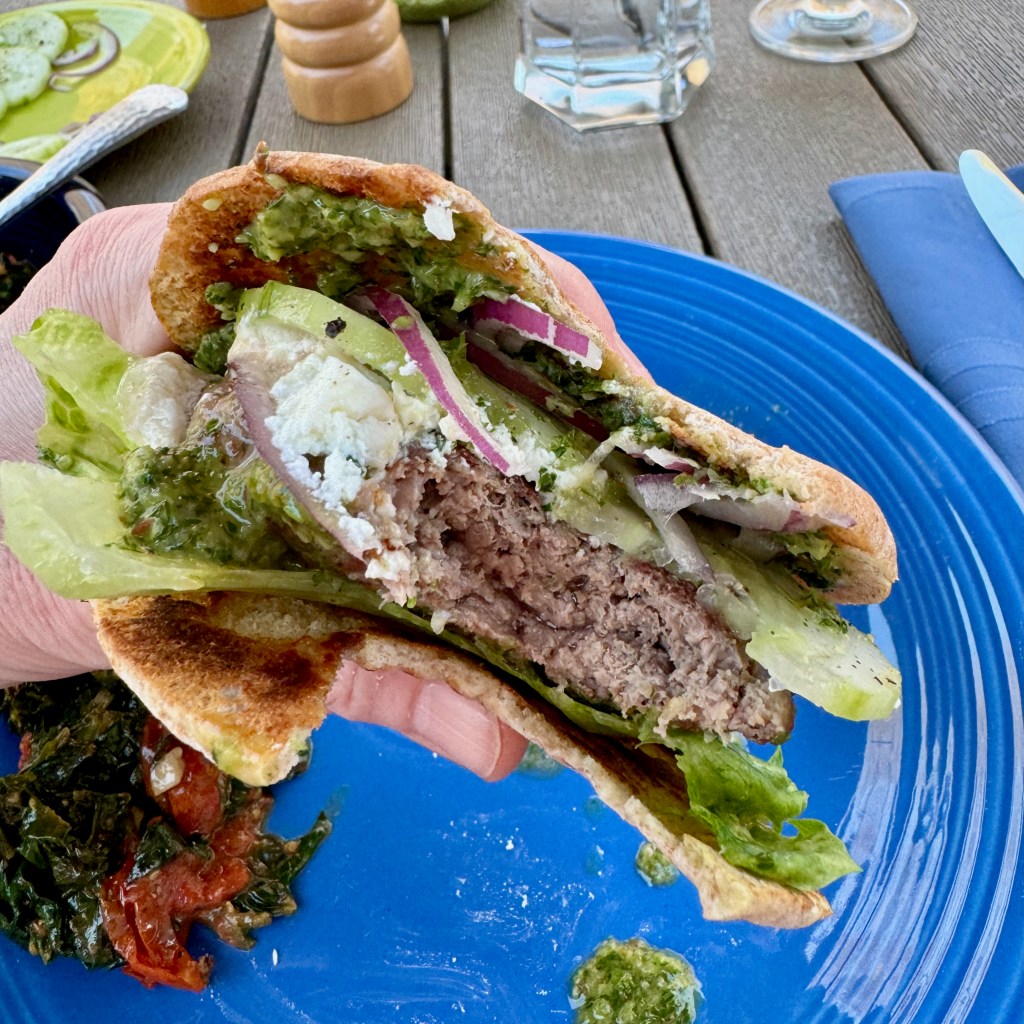
My husband, Les, does love his time at the grill, and Father’s Day weekend is just the beginning of many great meals to come this summer. Les had a major hand in making these delectable lamb burgers. He prepped the patties and he scouted out ideas for topping the burgers with salty feta and a few simple, refreshing cucumber and red onion slices— a perfect contrast to the richness of the lamb meat. And, of course, he cooked them. Over a flame! My role in this tasty meal kicked in closer to serving time (you’ll see), and we served the burgers with a side of collard greens with tomatoes.

This meal is even better when eaten outside!

Les and I approach burgers a bit differently; whereas I like to season only the outside of the burger with salt and pepper just before cooking (and with minimal working of the meat), Les prefers to add seasoning right into the meat before shaping the patties. Either method yields delicious results, and for these tasty handhelds, Les relied on the same ingredients that flavor our homemade gyro meat.

These spices make an excellent blend for all things lamb.

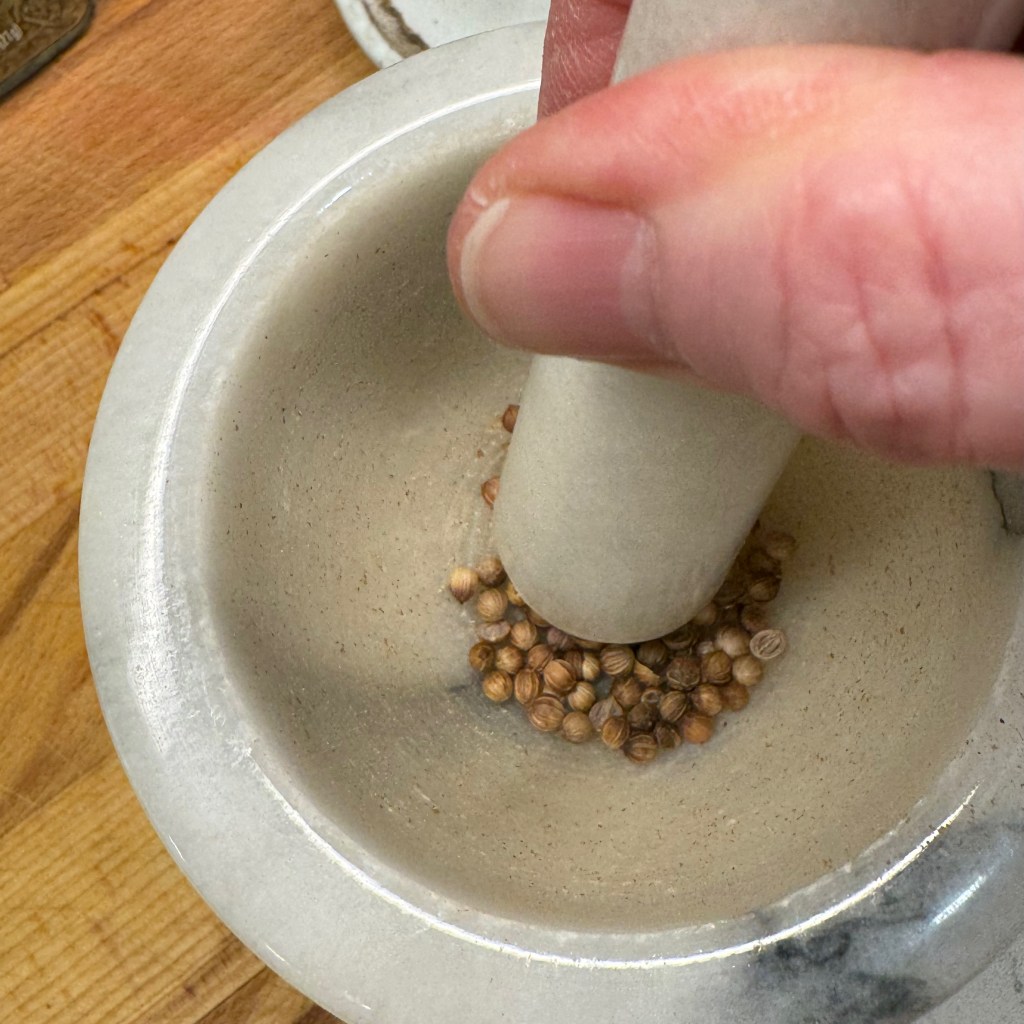
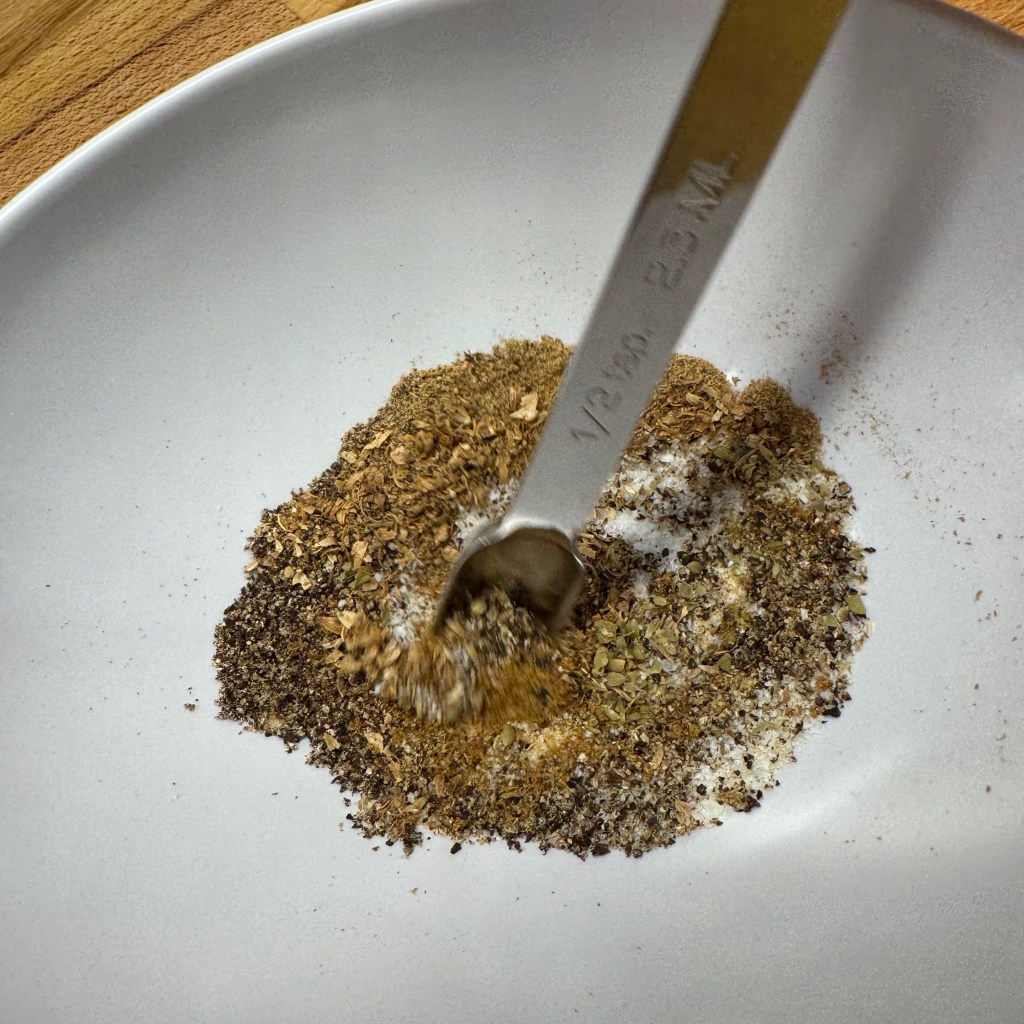
This blend of warm spices and earthy oregano is excellent in gyros, as well as on roasted leg of lamb or grilled lamb chops, so we knew it would be delicious for lamb burgers. The first order of business was crushing the whole coriander seeds in a mortar and pestle, and then we mixed the rest of the spices. The blend included kosher salt, so Les waited until closer to grilling time to add it to the meat. The alternative— seasoning and then resting the meat for a period of time, either in or out of the fridge— would result in a bouncy texture similar to sausage. 


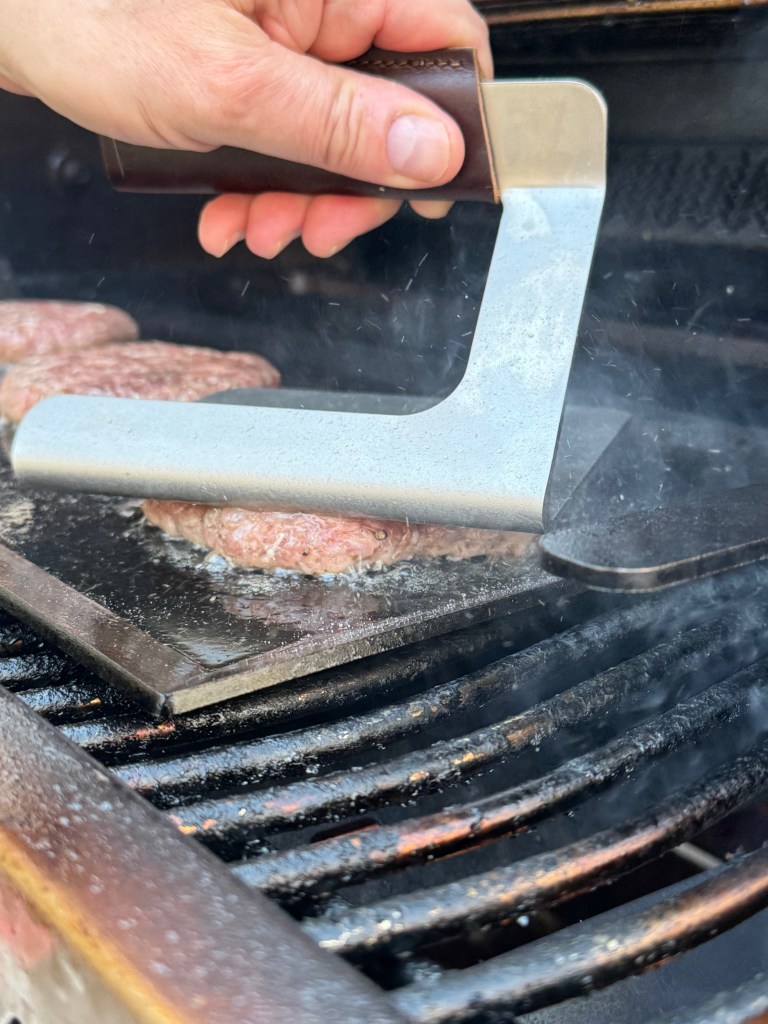
Now, we don’t have any photos of Les prepping the burger patties themselves because, well, he isn’t a food blogger and he tends to get so focused in his work that he forgets to document it for posterity. That, and he also had both hands stuck in raw meat while I was on a last-minute grocery run, so there was no one around to snap a shot. This food blogger will trust that you can easily imagine what it looks like to mix a dry seasoning blend into a pound of ground lamb. Take care that you don’t do it too early ahead of cooking. As for the grilling—yes! We have photos, and I’m happy to share that Les has been enjoying the Made In griddle and burger press that I got him last year for his birthday. They’re not paying me to tell you about it, but I included a link in case you want to learn more. So far, Les loves it and says this will be the summer to make breakfast outdoors!


As for my role in this batch of burgers, I made myself responsible for the toppings, including a zesty chimichurri-style sauce that included fresh parsley, dill, mint and garlic. Mmmm.

A little freshness is exactly what these lamb burgers need.

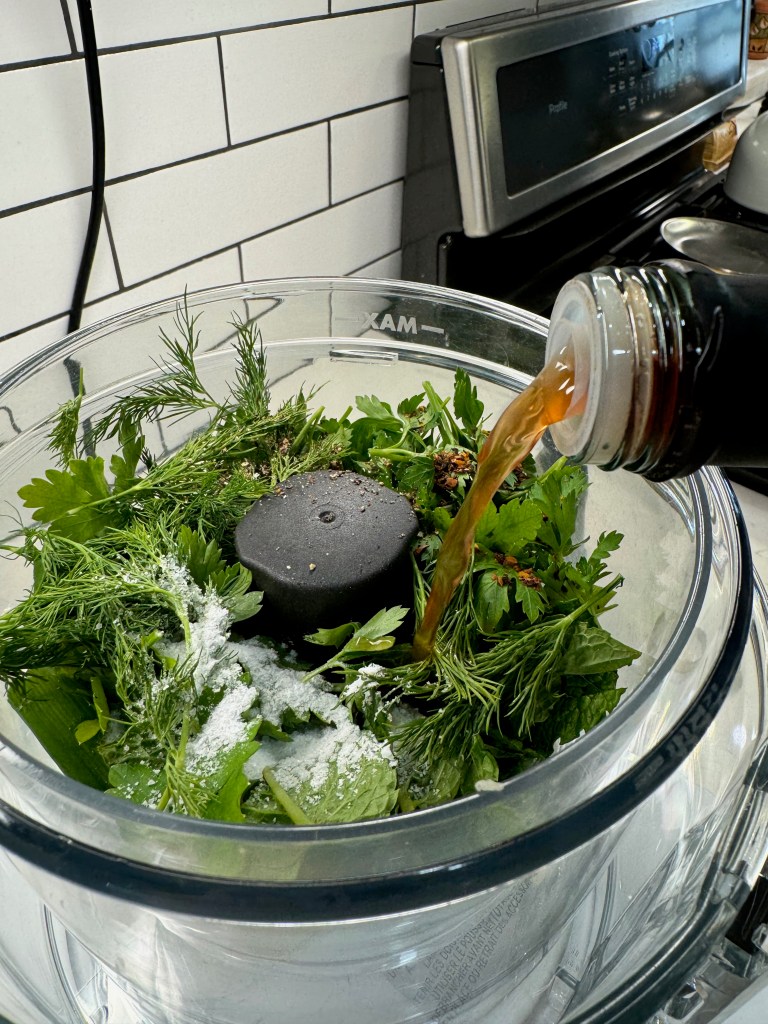
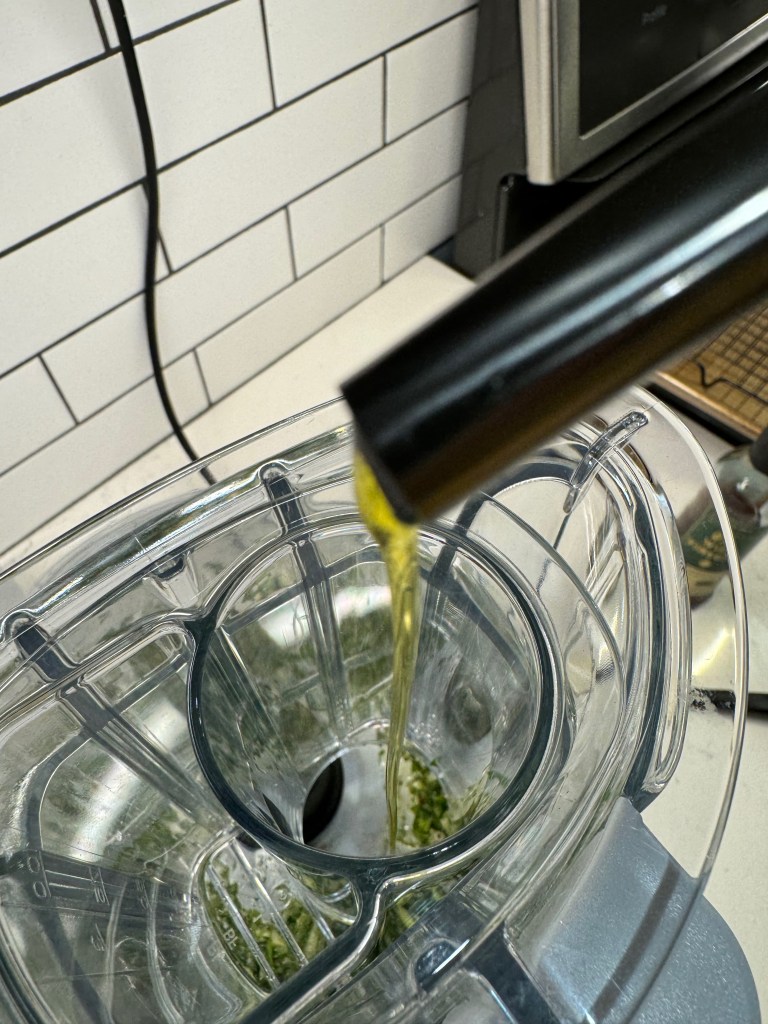
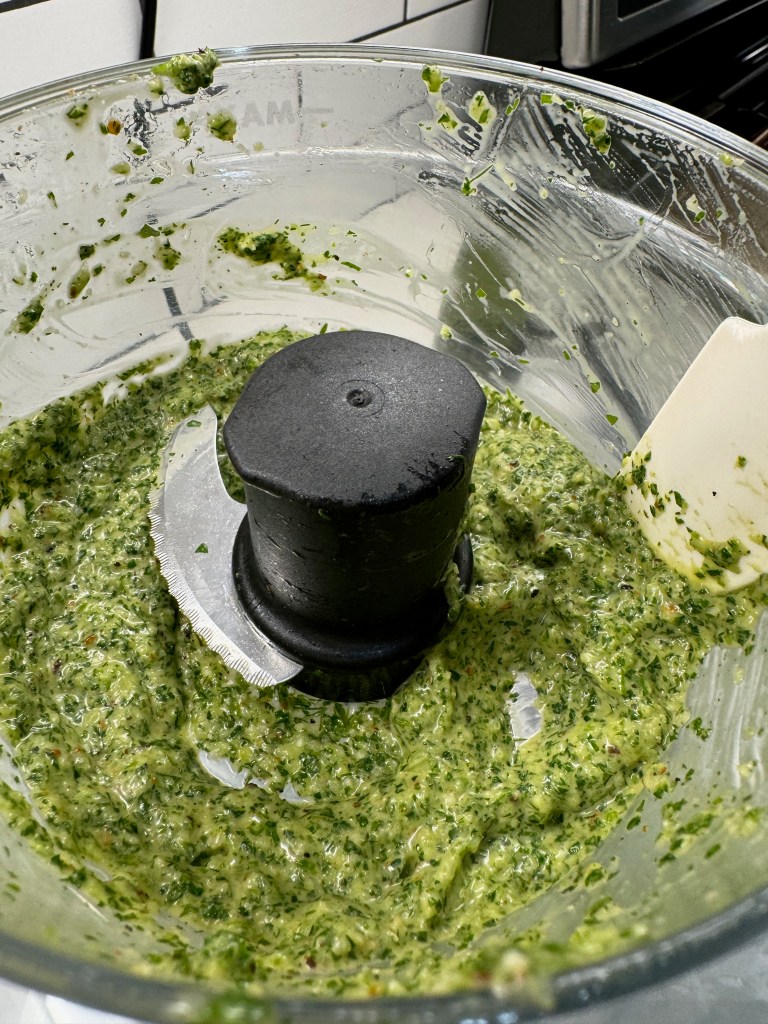
We’ve been trying hard to lean healthier with our meals, and the usual slathering of ingredients like bacon, bbq sauce and mayonnaise have taken a backseat to fresher, lighter treatments. This herby topping comes together in record time in the small bowl of my food processor. Red wine vinegar and a few shakes of a Turkish red pepper blend give it a zippy flavor, and olive oil helps keep it together while adding healthy Omega-3 fats to the mix.


We’ve discovered a few other tricks to help us stay on track with our healthier eating goals. One of them is to reduce (but not eliminate) the empty carbs that come with bread. There’s nothing wrong with bread, in moderation, and I’ll never ever give it up. But in general, we’ve been eating less of it, and for these burgers, I picked up some miniature whole wheat pitas to stand in for the usual burger buns. They are thin, yet substantial enough, to hold these hearty burgers with all their delicious toppings. The pita also lent another layer to the Mediterranean vibe we already had with the spices and herb sauce. Can’t ya just taste it?

Happy Father’s Day!

Now, please excuse me while I ponder what I’d like Les to get busy grilling on Father’s Day. Hey, maybe breakfast! 😉


Grilled Lamb Burgers with Chimichurri

  • Servings: 3 or 4
  • Difficulty: Easy
  • Print

Bold flavors and fresh toppings made these grilled lamb burgers unforgettably delicious!


Ingredients

  • 1/2 tsp. cumin
  • 1/2 tsp. ground coriander (best to crush whole seeds, if possible)
  • 1/4 tsp. dried Mediterranean oregano leaves
  • 1/4 tsp. ground cardamom
  • 1/4 tsp. garlic powder
  • 3/4 tsp. kosher salt
  • 1/2 tsp. freshly ground black pepper
  • 1 pound ground lamb, local if possible
  • Chimichurri for serving (recipe below)
  • Whole wheat mini pita breads, split, buttered and toasted inside for serving
  • Thinly sliced red onion and cucumber, for serving
  • Romaine or leaf lettuce, for serving
  • 3 Tbsp. crumbled feta, for serving

Directions

  1. In a small bowl, combine all dry spices and set aside.
  2. Shortly before grilling, mix spice blend evenly into ground lamb. Shape into 3 or 4 patties, as desired.
  3. Heat grill, griddle or cast iron skillet to just above medium heat. Cook burgers about two and a half minutes per side, to desired doneness. Remove from grill or griddle and rest one minute before serving.

Note: The chimichurri-style sauce brings a bright, fresh note to the earthy flavor of the lamb. Use whatever soft-leaf herbs you like, and be generous with the garlic!

Ingredients

  • 2 or 3 scallions (green and white parts), rough-chopped
  • 2 or 3 fresh garlic cloves, rough-chopped
  • Large handful of fresh herbs (to complement the lamb, I chose flat parsley, mint and dill)
  • A few shakes crushed red pepper (I used Flatiron Uç Biber, a Turkish blend of Aleppo, Maras and Urfa peppers)
  • About 1/2 tsp. kosher salt
  • Several twists freshly ground black pepper
  • About a Tablespoon red wine vinegar
  • 2 to 3 Tablespoons extra virgin olive oil (choose a peppery one with lots of polyphenols)

Directions

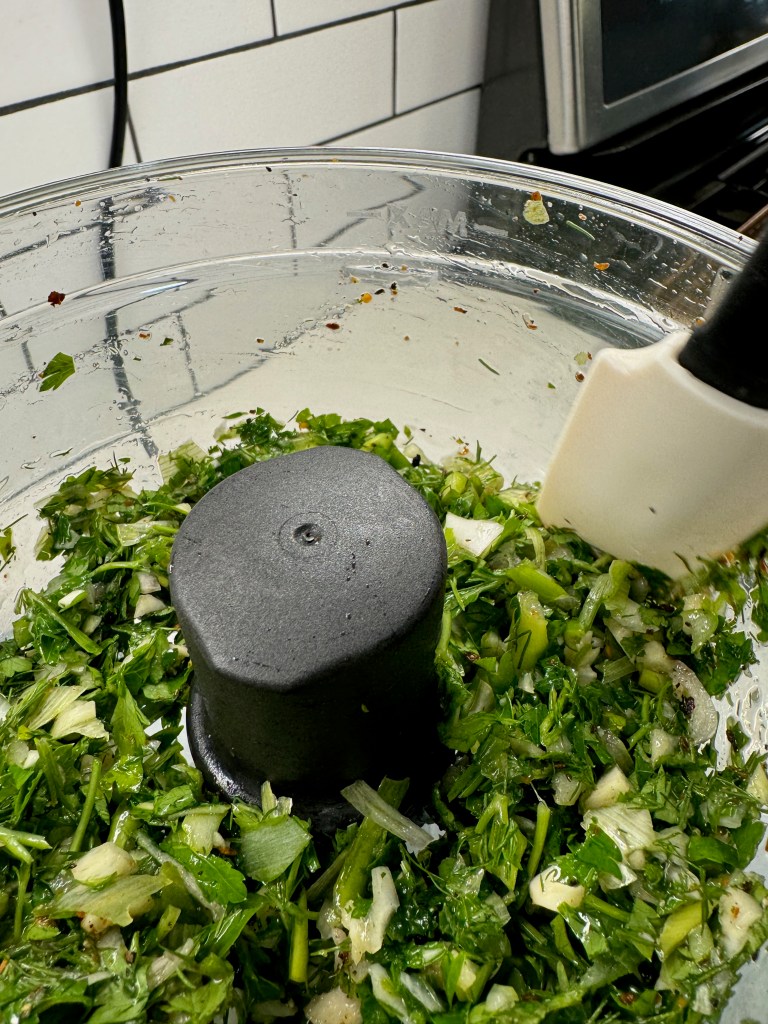
  1. Combine all ingredients except olive oil in the small bowl of a food process. Pulse a few times to break down the large pieces of onion and garlic. Scrape down the bowl.
  2. Add a quick drizzle of the olive oil to the mixture and pulse a few more times, until mixture seems evenly blended. Turn processor on continuous blend and drizzle remaining oil through the chute as it blends. This should happen fairly quickly. Adjust seasonings to taste.
  3. Store any leftover chimichurri in a covered dish in the fridge. It adds a lovely zhuzh to fried eggs or vegetables, or mix it with mayonnaise for a fantastic sandwich spread.


Chicken Curry with Autumn Vegetables

The best thing about Thanksgiving leftovers— for me, anyway— is when they are gone. For all the excitement leading up to the biggest food holiday of the year, I’m usually over it after two rounds of leftovers. Yes, I look forward to a good turkey sandwich, usually with a thin layer of leftover dressing and a smear of tangy cranberry sauce, plus a dab of mayo and perhaps a piece of lettuce in a ridiculous effort to offset all those carbs. And obviously, I enjoy transforming the turkey bits into spicy dishes, such as my turkey and black bean enchiladas or a delicious, comforting bowl of leftover turkey gumbo.

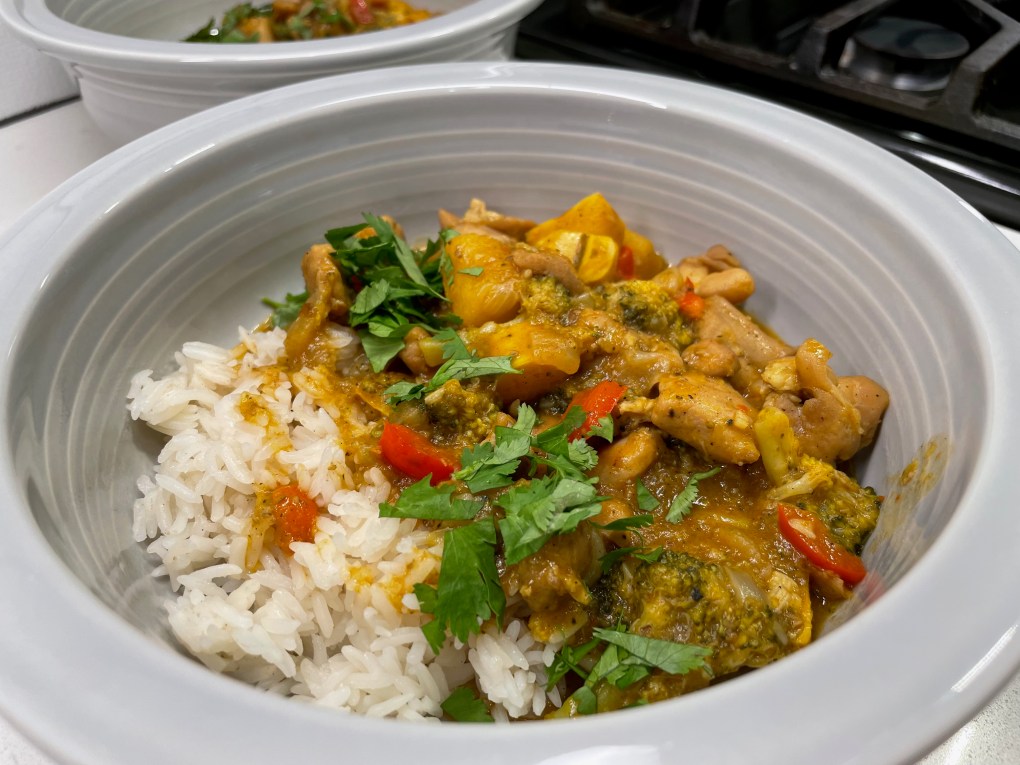
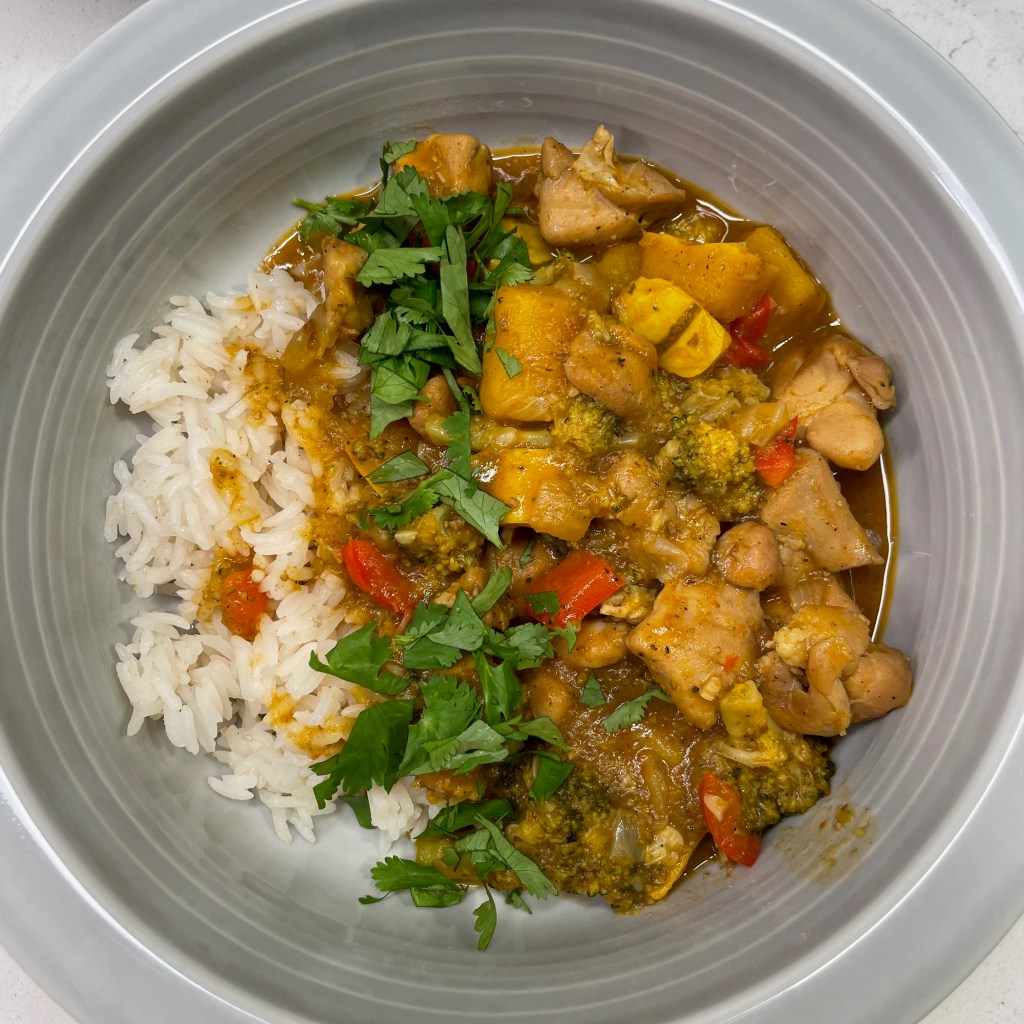
But my taste buds get weary after all that butter and gravy, and I start craving something with more pizzazz, and (for reasons I cannot explain) preferably from a culture other than my own. This impromptu Indian-inspired meal gave me not only delicious, warm spicy flavors, but also a generous dose of comfort on a dreary November night. My chicken curry came together more quickly than you might imagine, and it was a great way to incorporate some nutritious autumn vegetables and use up a package of skinless chicken thighs that I had stashed in the freezer.

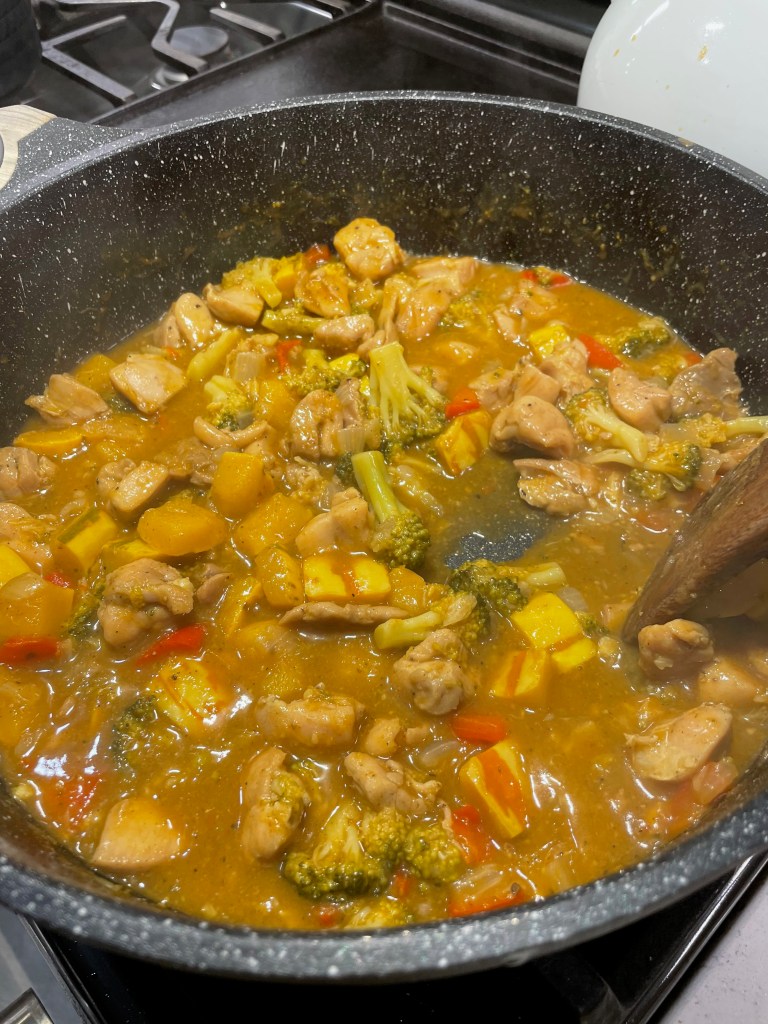
There’s flavor, color and loads of nutrients. What more could I ask?

Curry is not a cuisine of my youth; I first learned to enjoy it about 15 years ago in a local Thai restaurant, and I finally got brave enough to try making it at home within the past few years.  There are many varieties and styles (or colors, if you will) of curry, and it has taken me some time to learn which ones I like best. In Thailand, a green curry might include lemongrass, garlic, kaffir lime and hot chile spices, and those flavors are spectacular with seafood in a broth softened with coconut milk. In nearby India, a curry looks altogether different and usually gets its flavor from a blend of dry spices, including cardamom, coriander, ginger, cumin and turmeric. If you purchase a jar or can of “curry powder,” it may contain any combination of those pre-ground ingredients, but it’s easy enough to mix and match your own flavors if you already have the individual spices.


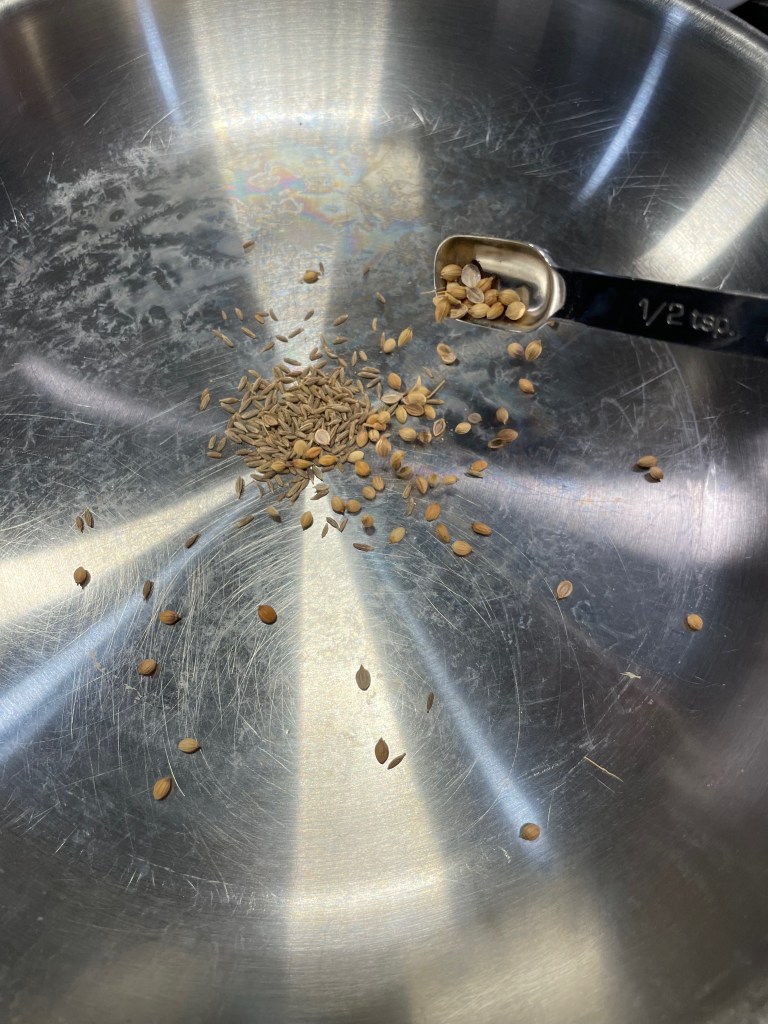
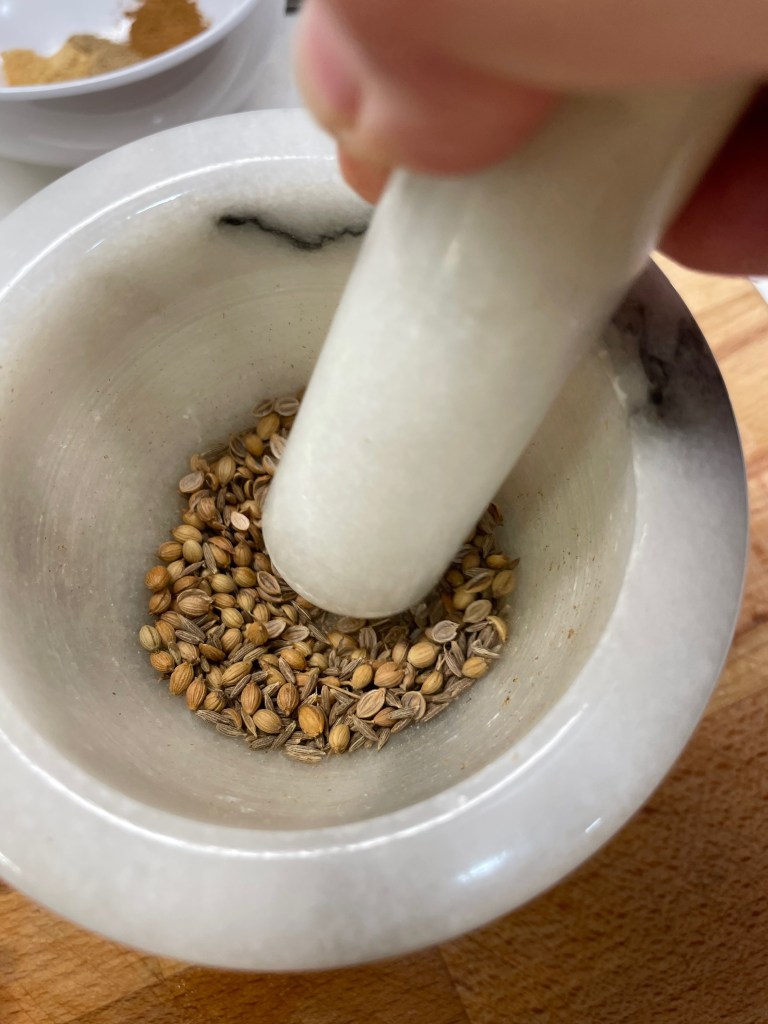
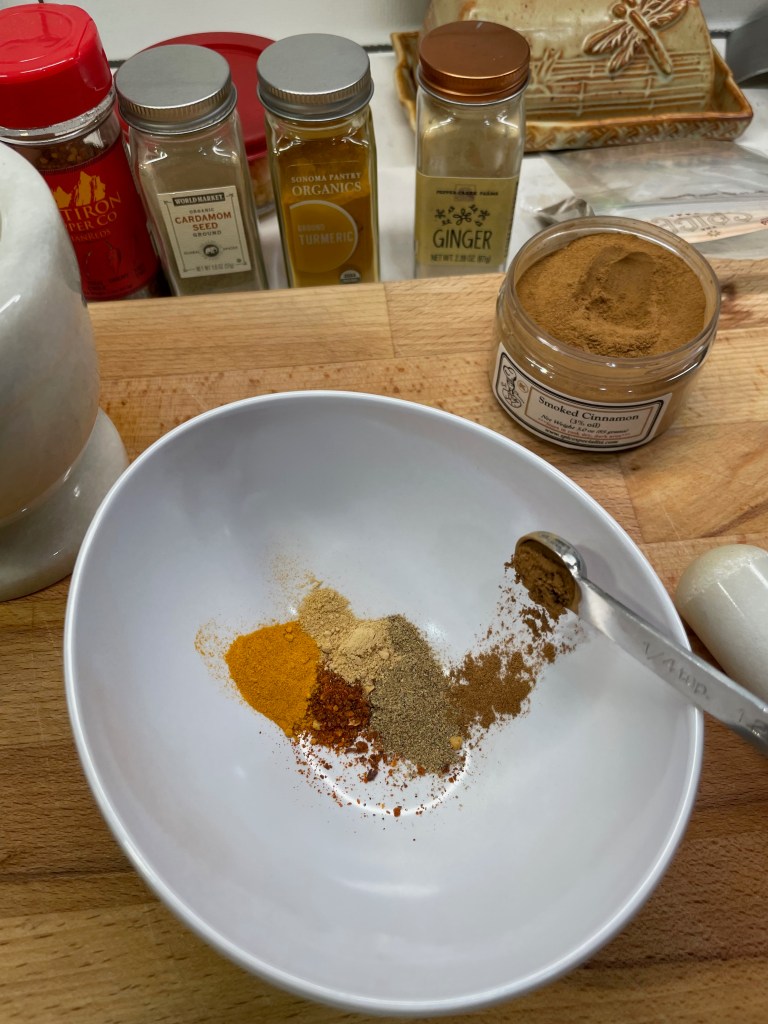
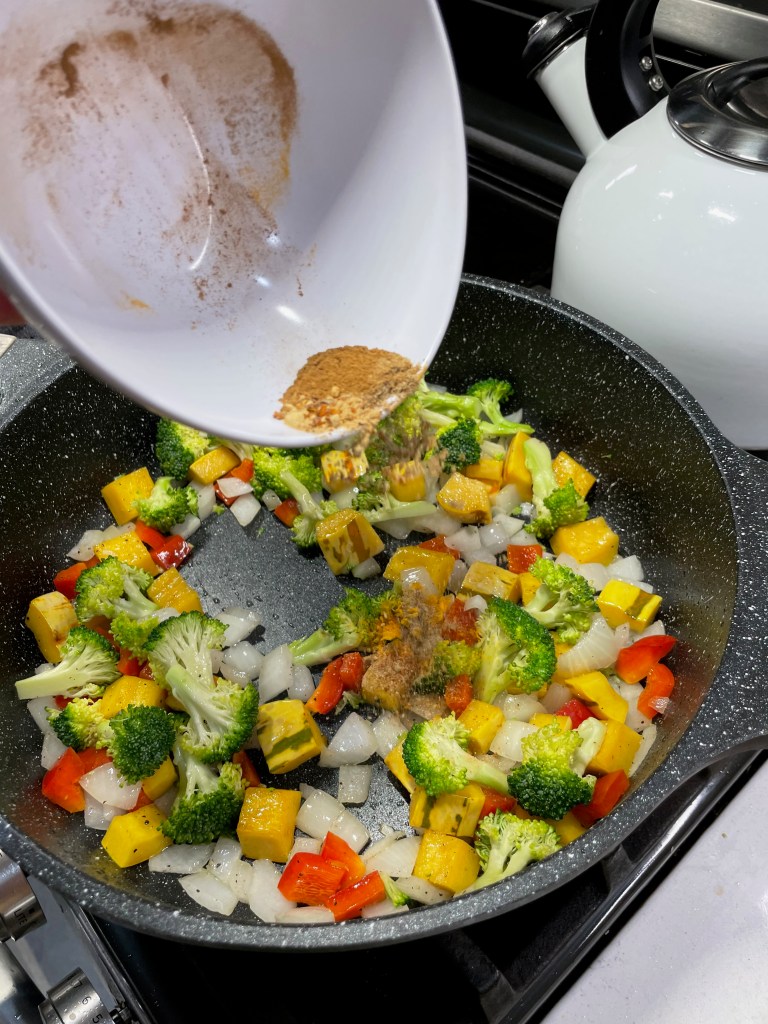
My chicken and autumn veggies dish is more similar to an Indian curry, and I started my blend with a quick toasting of whole cumin and coriander seeds. Heat brings forth the intense flavors, whether by toasting whole spices or by adding ground spices to hot oil in the pan. The technical term for this is “blooming,” and you don’t want to miss this easy step for the extra flavor it imparts to your final dish. I toasted the seeds in a hot, dry skillet— swirling the whole time for about 45 seconds until they were intensely fragrant— and then let them cool before crushing them in a mortar and pestle. Next up, I assembled my other dry, pre-ground spices, including ginger, cardamom, turmeric, cinnamon and hot chile flakes.


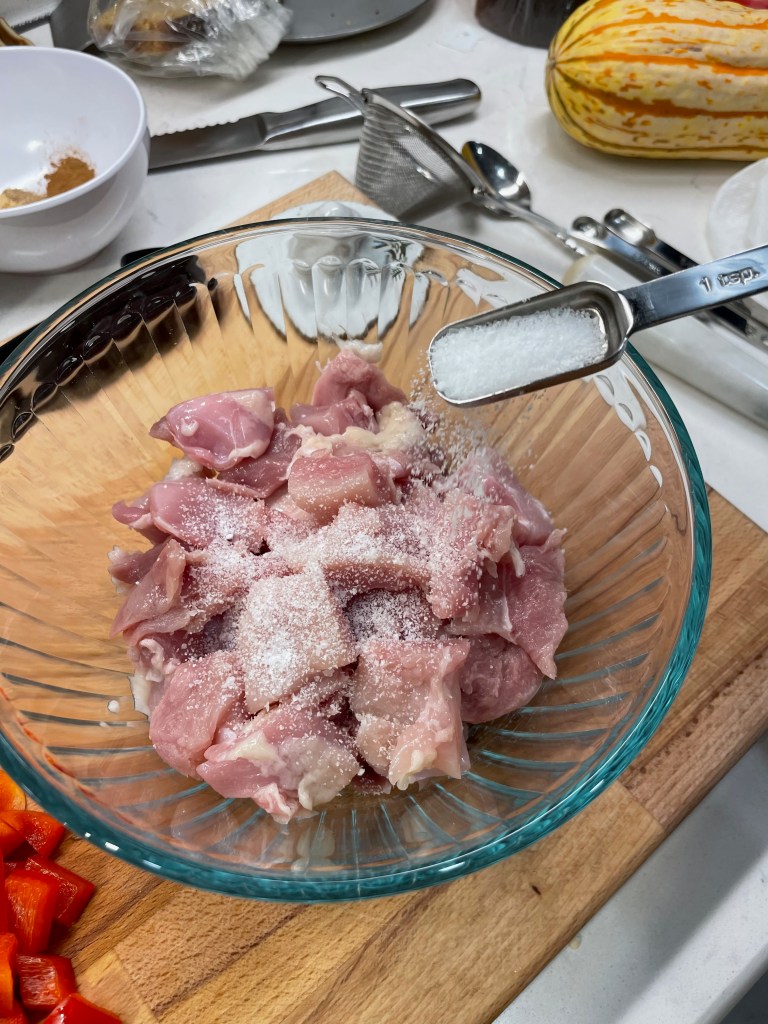
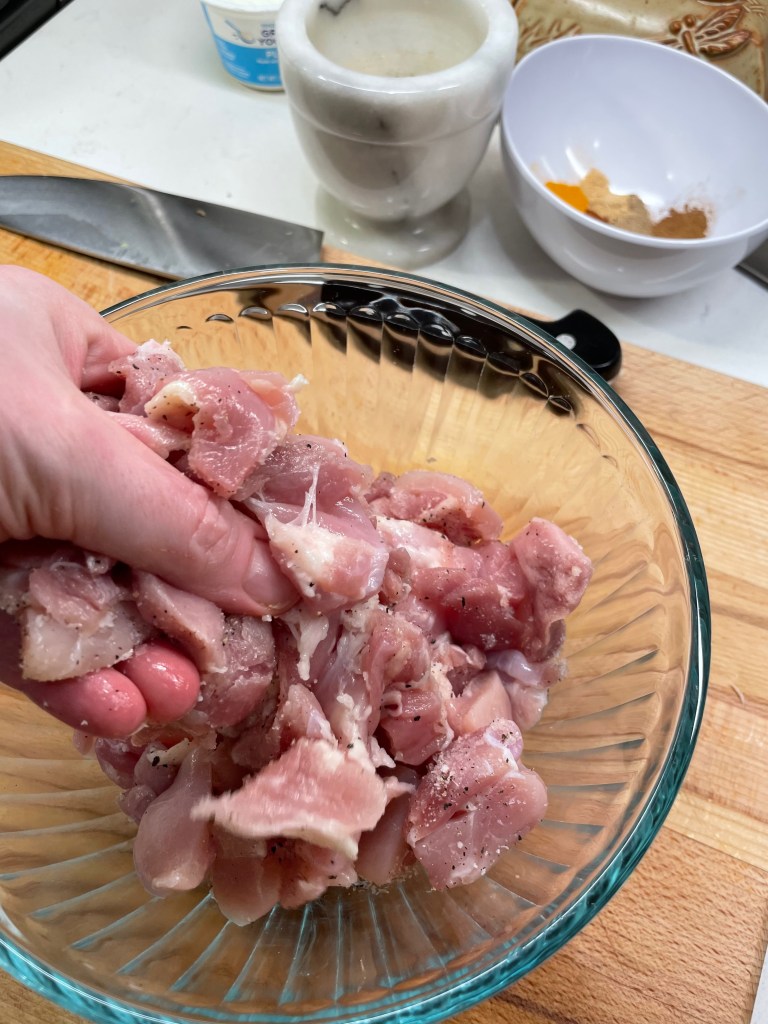
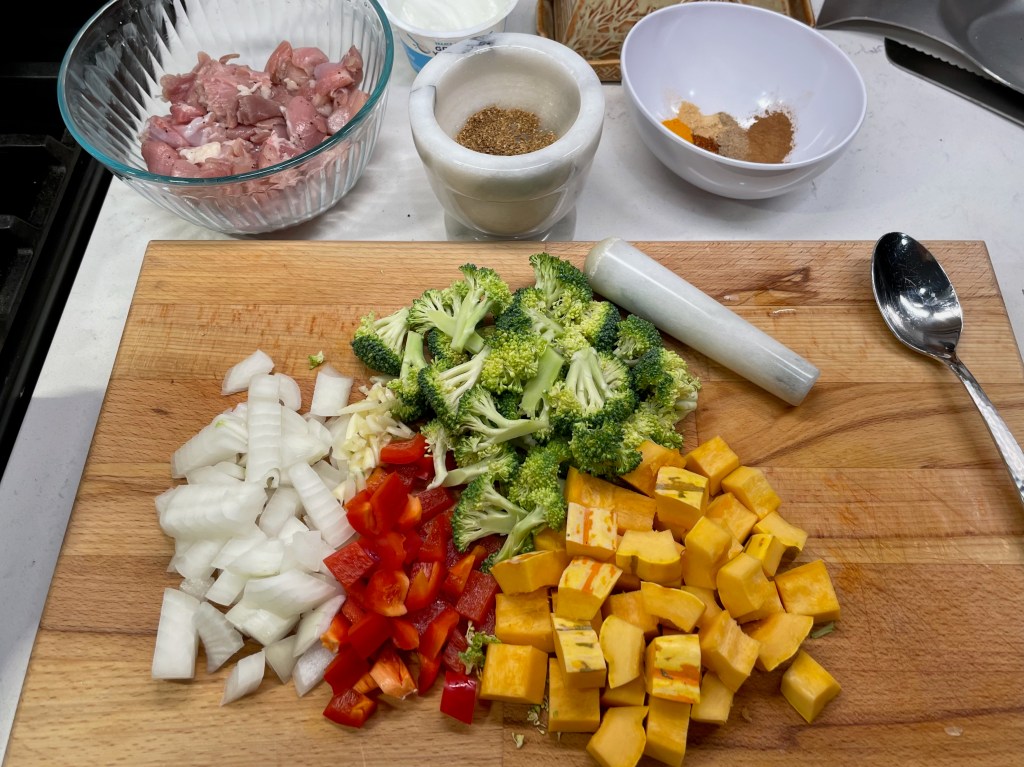
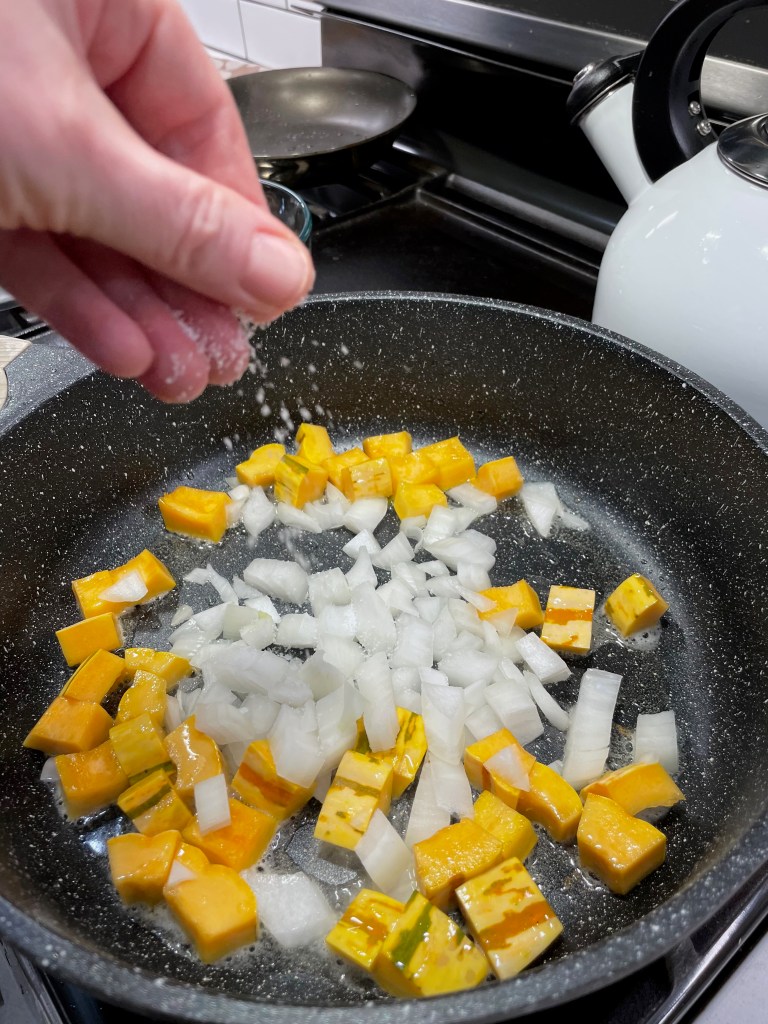
I chose boneless chicken thighs for their texture and flavor, but chicken breast or tenderloins would also be delicious here. I cut them into one-inch chunks, seasoned them with salt and pepper and let them rest while I cut up onions, red bell peppers, fresh broccoli and delicata squash. For this dish, I highly recommend getting all your components lined up and ready, as the cooking goes quickly once it begins.

Behold all the vitamins and fiber on that cutting board!

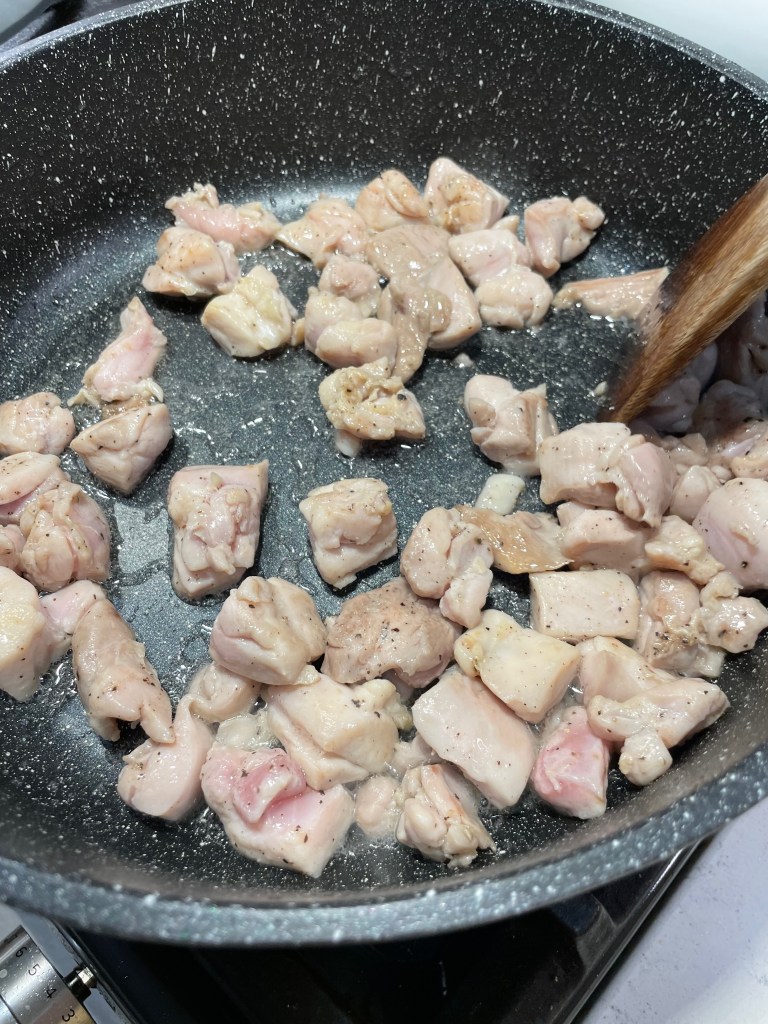
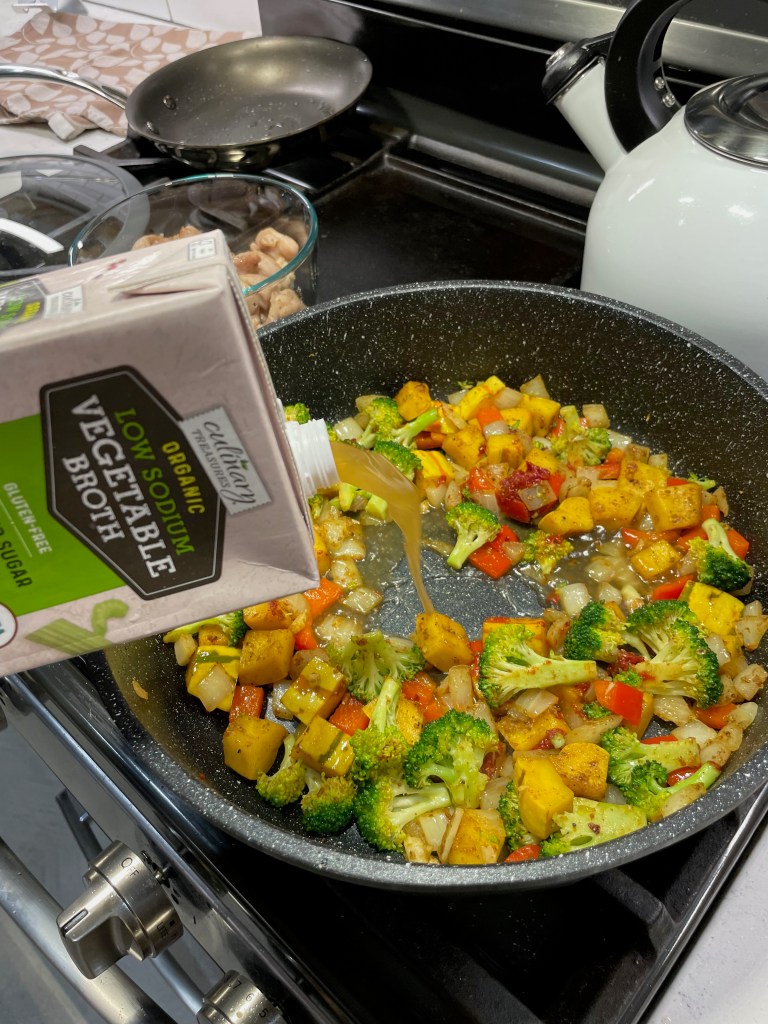
You’ll also need a bit of oil to get things started. Choose an oil that performs well over high heat, such as canola, peanut or coconut oil. I cooked the chicken first, just until the bits were no longer pink, and then transferred them to a separate bowl while I sautéed the vegetables. When I’m cooking veggies of varying textures, I usually begin with the firmer ones, adding the rest in descending order of necessary cooking time. The best time to add the spices is just before adding more vegetables— this allows them to bloom in the hot oil that coats the veggies. Season along the way, of course, with salt and pepper as well. This does more than add salty flavor; salting during cooking helps to draw moisture out of the ingredients for better texture.


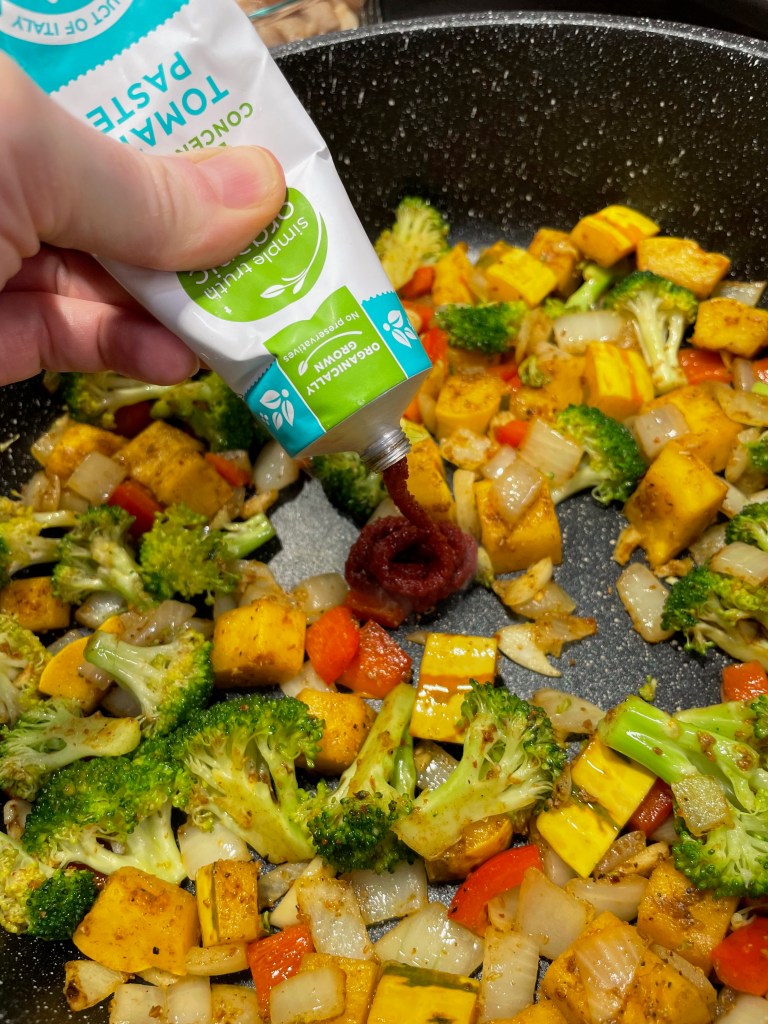
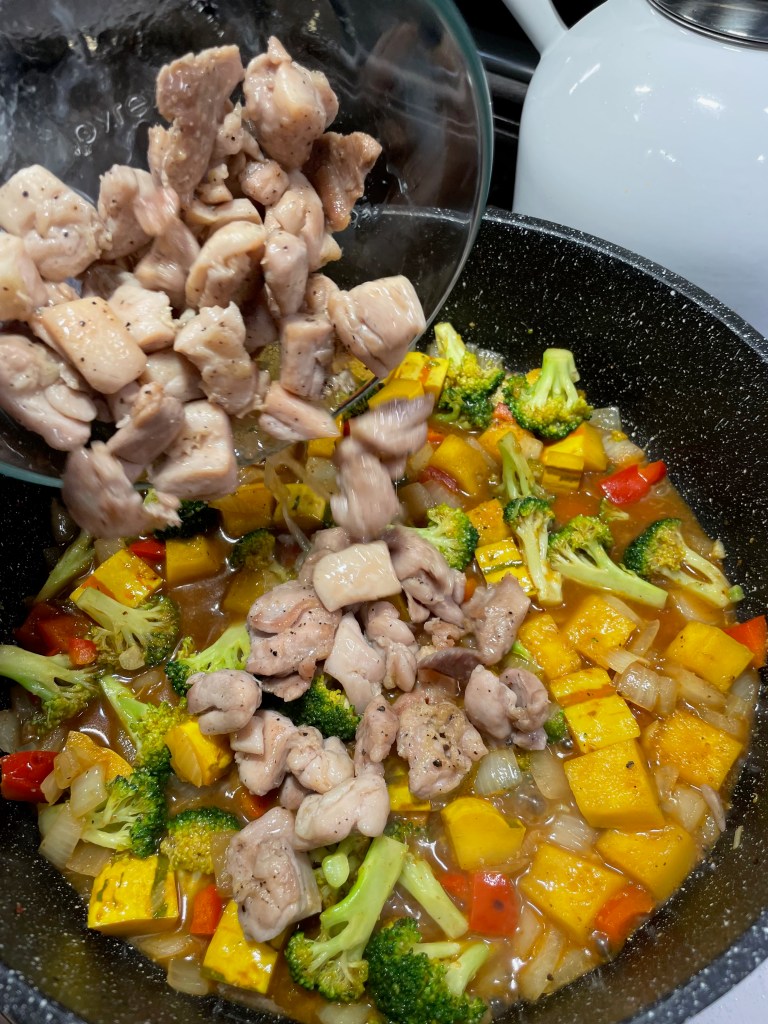
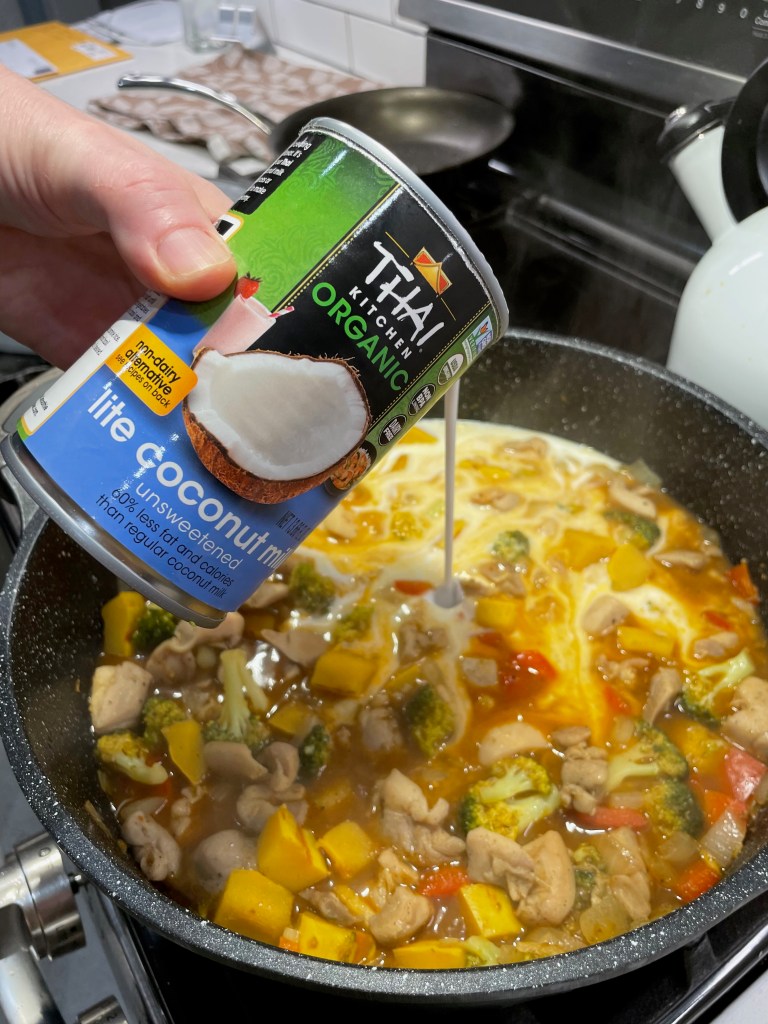
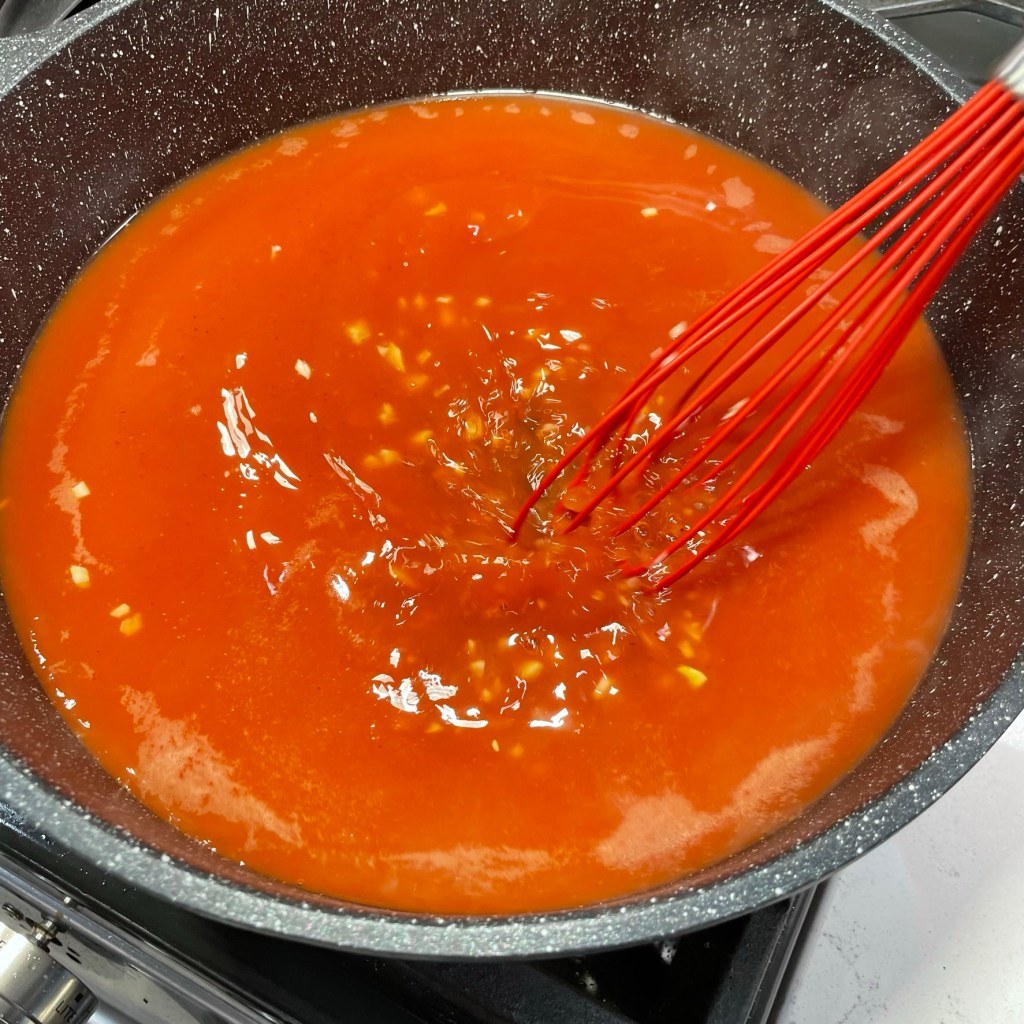
A dab of tomato paste in the center of the pot adds a rich, warm color and also a burst of umami flavor from the concentrated glutamates in the tomatoes. A little broth to thin it out, and then the chicken goes back into the pan with half a can of light coconut milk to simmer until everything is nice and tender. This took about 30 minutes, long enough to cook up a pan of basmati rice, perfect for soaking up the flavorful curry.


This kind of meal hits the spot after so much gravy, dressing and mashed potatoes, and the heavy load of vegetables does the body good, too! 

Chicken Curry with Autumn Vegetables

  • Servings: 4
  • Difficulty: Average
  • Print

This dish ticks all the boxes with big flavor, warming comfort and exceptional nutrition. It's easy enough for a busy weeknight and rich with autumn comfort.


Ingredients

  • 1 pound boneless, skinless chicken thighs, patted dry and cut into 1-inch chunks
  • Kosher salt and black pepper
  • 1/2 tsp. whole cumin seeds
  • 1/2 tsp. whole coriander seeds
  • 1/4 tsp. EACH cardamom, cinnamon, red pepper flakes, ginger, turmeric (see recipe note below)
  • 1/2 sweet or yellow onion, chopped
  • 1 small delicata squash, cleaned and cut into 1-inch chunks
  • 1/2 bunch fresh broccoli, cut into small florets
  • 1/2 red bell pepper, chopped
  • 2 Tbsp. high-heat cooking oil (I used coconut, but canola or peanut would be good)
  • 1 to 2 Tbsp. tomato paste
  • 1/2 cup low sodium broth (chicken or vegetable)
  • 1/2 can light coconut milk
  • Basmati or brown rice for serving
  • Fresh cilantro for serving (optional)

Recipe Notes: I created my own curry spice blend because I have the individual ingredients, and 1/4 teaspoon each was a good starting point for my adjustments. This is a good way to control the heat and balance the blend with the spices you like best, but there’s no harm in buying a pre-made curry powder. Use 1 to 2 teaspoons, depending on how intense you’d like the flavors to be.
Because this dish moves quickly once cooking begins, I recommend having all ingredients prepped and on standby before you turn on the burner.

Directions

  1. Season the chicken chunks with about 3/4 teaspoon salt and a few twists of black pepper. Toss to coat, and allow it to rest at room temperature while you prep the spices and vegetables.
  2. Heat a small dry skillet over medium-high heat. Add seed spices and toast, swirling the pan constantly until the spices are very fragrant. Transfer to a bowl to cool, and then grind in a mortar and pestle or electric spice grinder.
  3. Measure remaining spices into a bowl and set aside.
  4. Place a wide, heavy-bottomed pot over medium-high heat. Add oil and heat until shimmering, then toss the chicken pieces just until all sides are no longer pink. Transfer chicken to a bowl and keep warm.
  5. Add vegetables to the pot, beginning with the firmest and adding the others in descending order of time needed to soften. Season with a pinch or two of salt to help draw out the moisture. Add spice blend and ground seed spices to the hot vegetables and toss to coat.
  6. Stir in tomato paste for rich color and burst of umami flavor. Add broth and cook until the liquid begins to simmer.
  7. Return chicken to pan. Stir in coconut milk. Cover pan and reduce heat to simmer the curry for about 25 minutes. Serve with basmati rice and sprinkle with chopped cilantro, if desired.


Sweet and Savory Cranberry Chutney

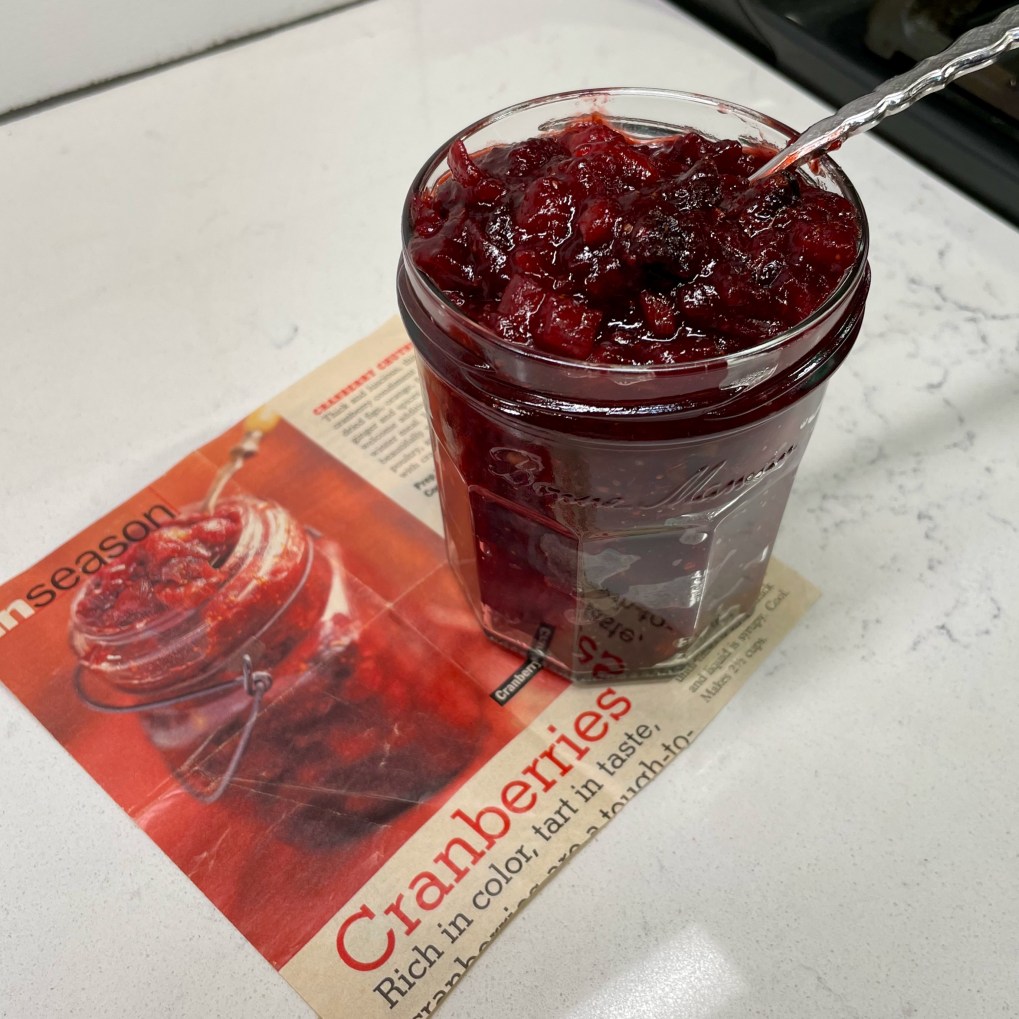
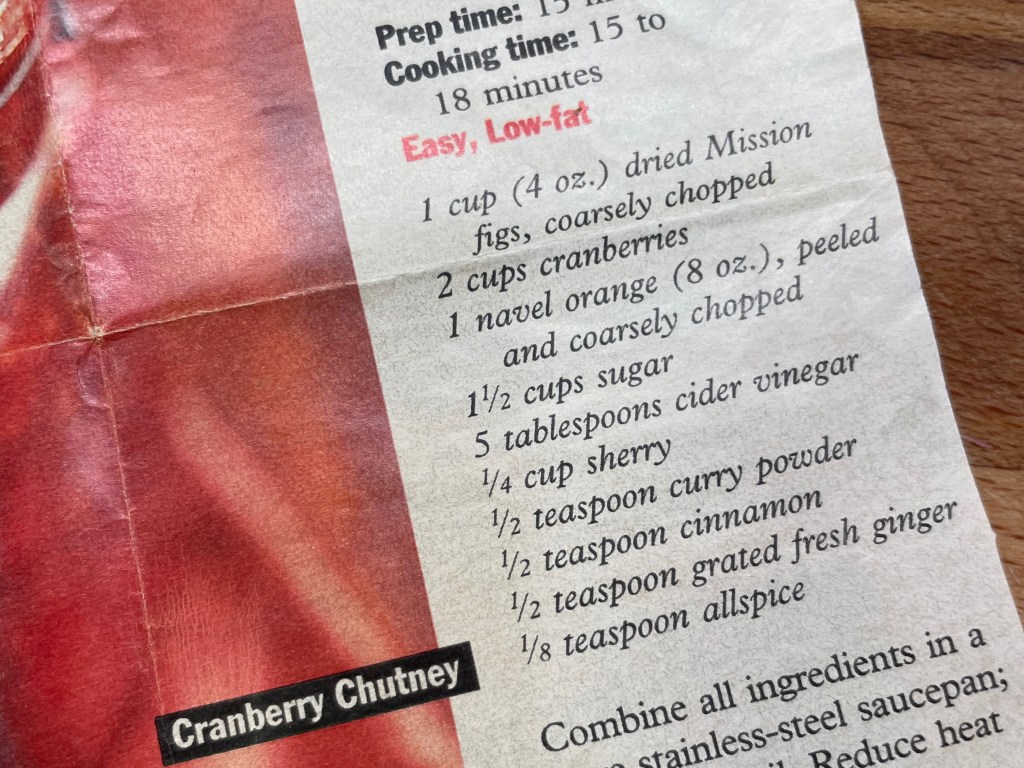
A few weeks ago, as I was rummaging through my little black recipe box, I ran across a yellowed snippet I cut out years ago from one of those old-school women’s magazines perched at the grocery store checkout. This is a long-time habit of mine— hoarding recipes— and I’m only slightly embarrassed to admit that I frequently don’t get around to making the things that intrigue me enough to impulse-buy a magazine or cookbook. Or if I do make one of these recipes, I change it up so much that it barely resembles the thing that caught my eye in the first place. Blogging has changed me for the better, though, and I’ve been revisiting my box full of clippings, even creating a culinary bucket list of things to try.
I have finally gotten around to this cranberry chutney, and for the life of me, I don’t know why I waited so long. It’s absolutely delicious! With a few adjustments (of course).


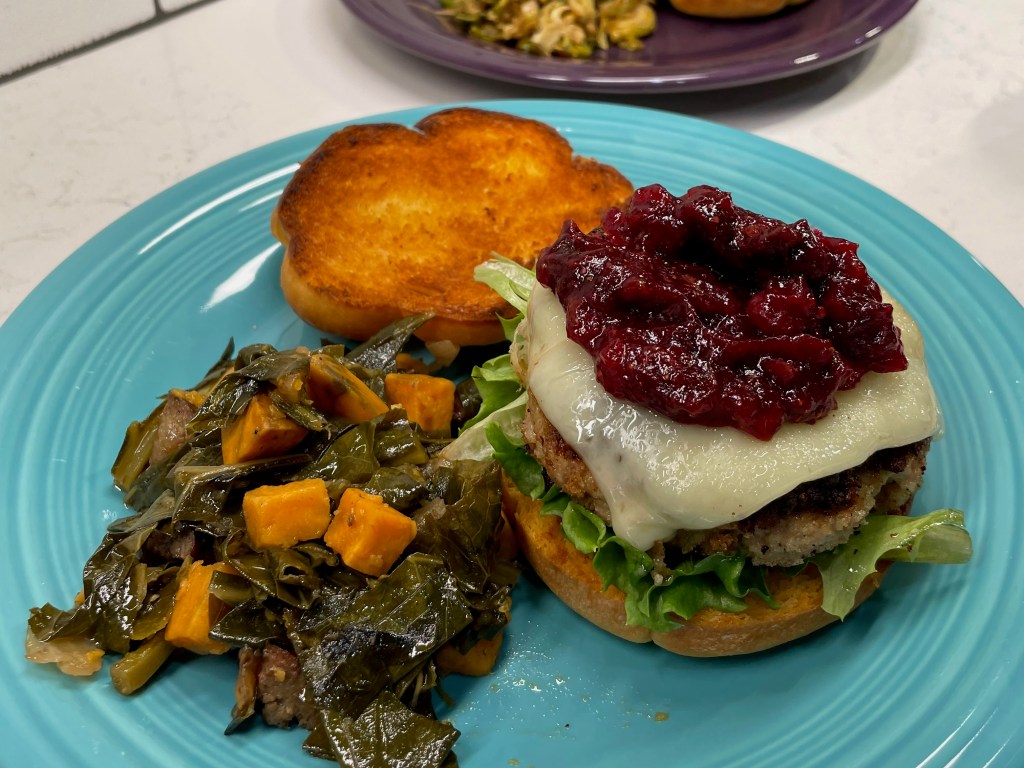
Chutney is a condiment that I only experienced in my adult years, and I appreciate it for many reasons. In addition to the warm spice flavors of India and competing notes of sweet and tart, there’s a texture element to chutney that I find most addictive. It certainly doesn’t hurt that chutney is a lovely complement to meat and vegetable dishes, and with cranberry in the spotlight, this one feels perfect for all the food holidays barreling down on us. I’m always on the lookout for an interesting twist on classic foods, and I can promise you this ruby-colored condiment will be on our Thanksgiving table, but it was also really dang good last week on my second go-round of Thanksgiving burgers.


Let’s go ahead and talk about the adjustments I made to the magazine recipe (I can’t help myself), and if you enjoy chutney as I do, I bet you’ll agree that these were necessary. 
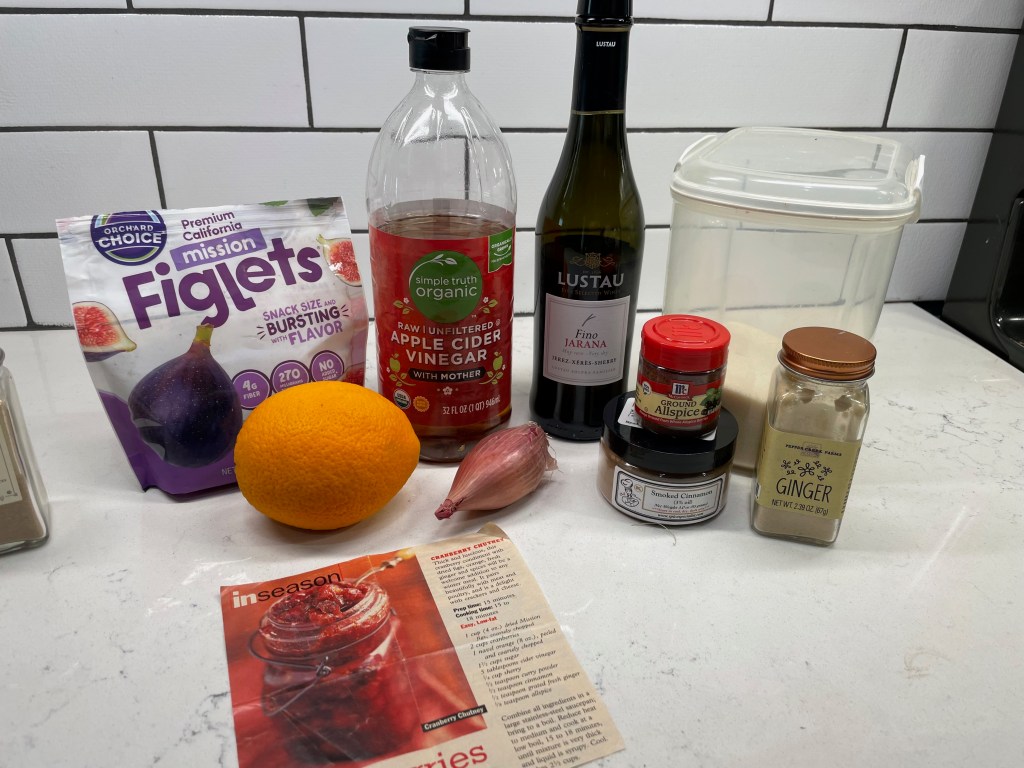
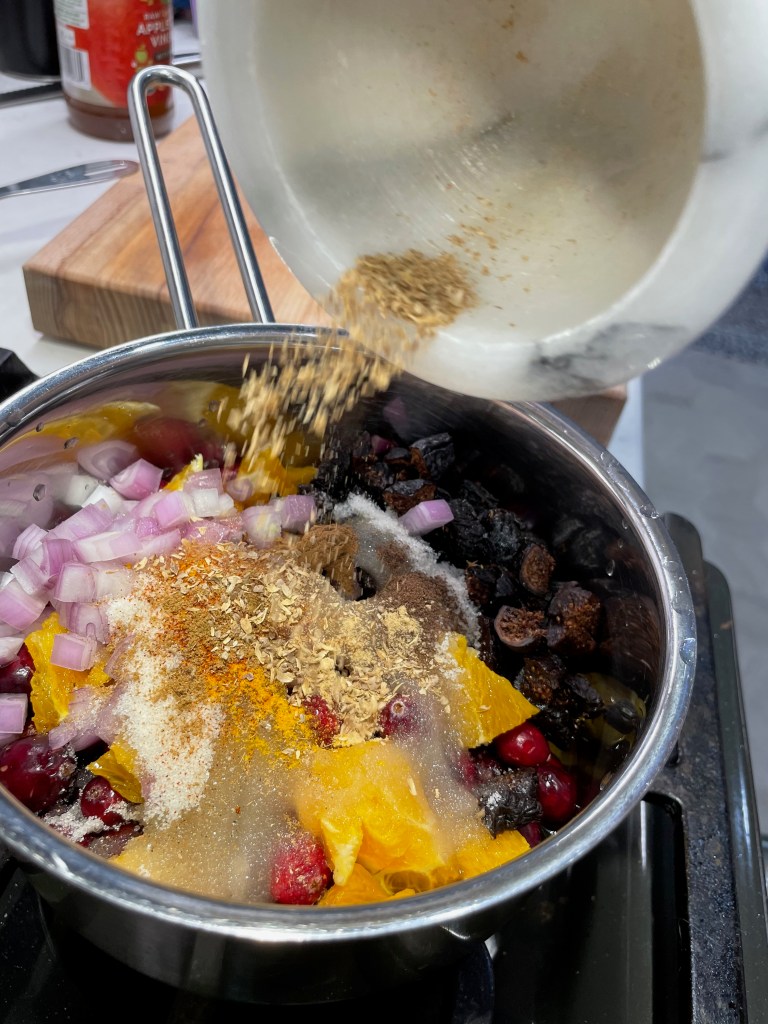
First, I knew straightaway that I would add onions to my version of this chutney, because I love the little crunch next to the tender cooked fruit and I wanted a gentle push-pull of sweet and savory in one bite. Every chutney I’ve ever loved had onions, and though sweet or even red onion would have worked fine, I chopped up a medium shallot for this. The magazine recipe had plenty of sweetness with dried figs and chopped oranges plus sugar. The fresh cranberries contributed a tart contrast, and cider vinegar gave it a slightly “pickled” flavor. The recipe called for sherry, and since I do not buy “cooking wines,” I used a generous splash of a high quality Spanish drinking sherry. It’s the holidays, why not?
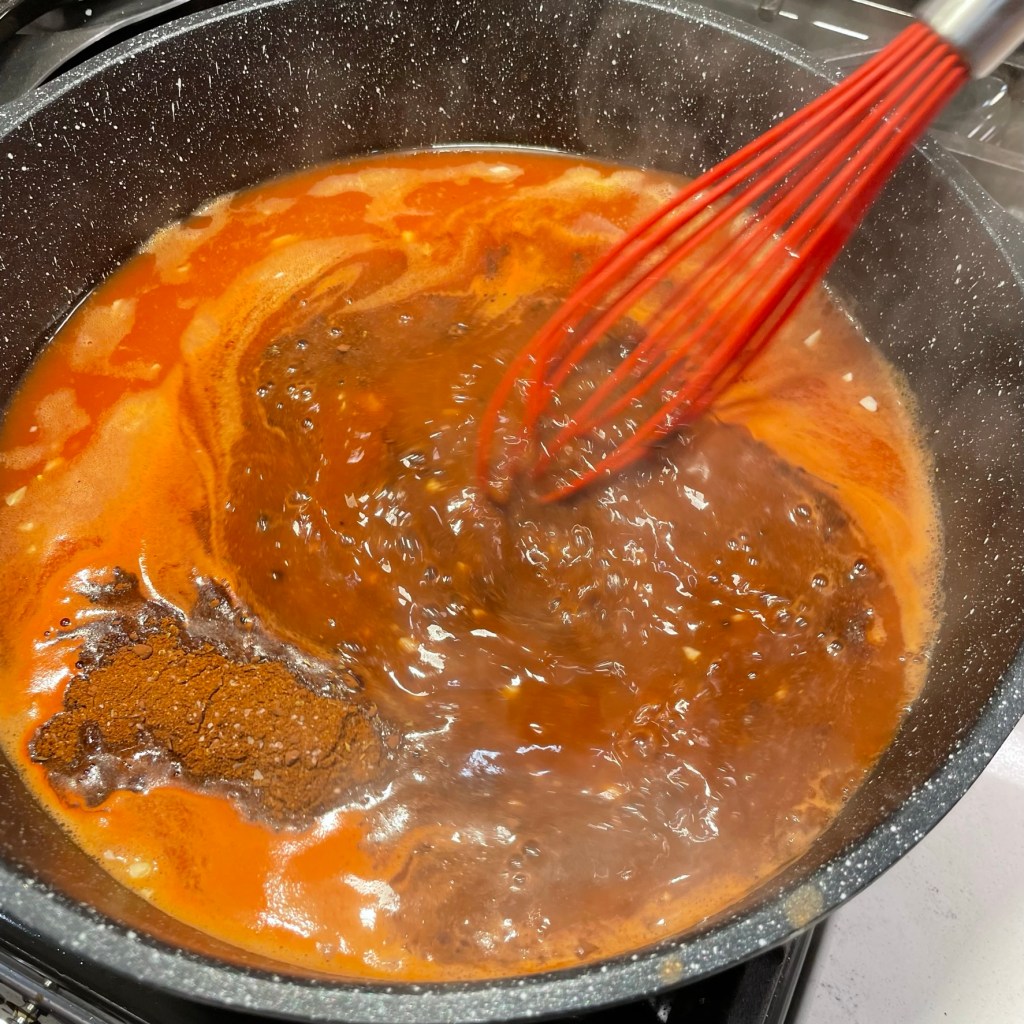

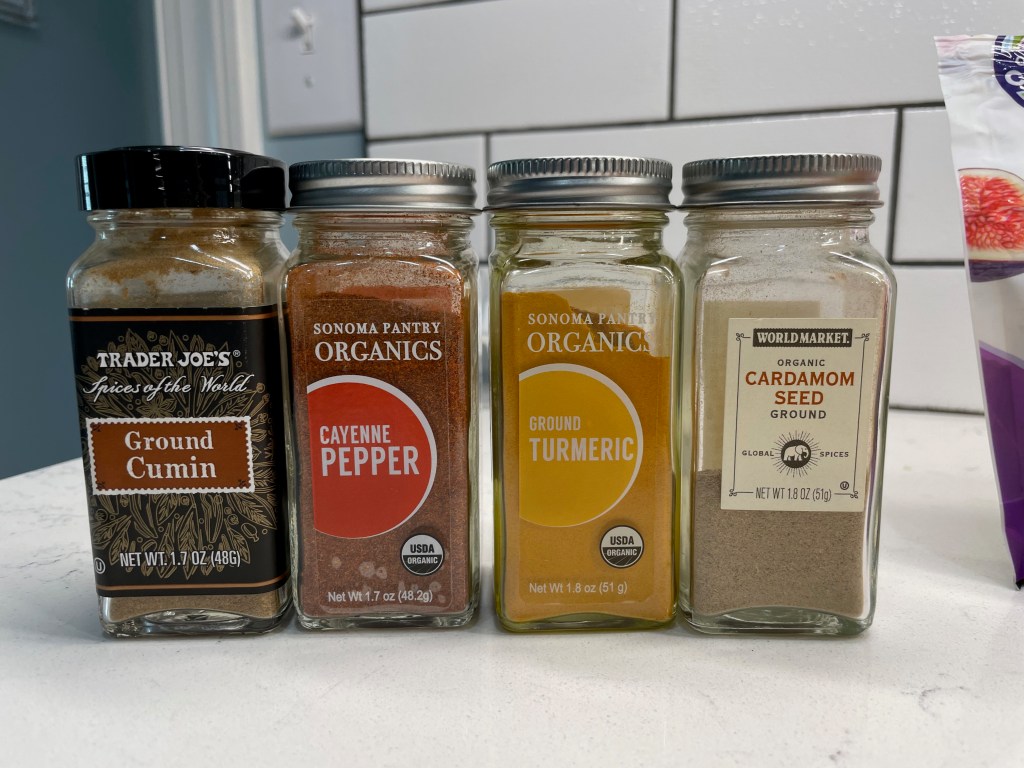
Then came the spices, and I had to improvise a bit here because I also don’t buy curry powder. It’s one of those blends that is different from one brand to the next, but I know enough about Indian flavors to estimate which ones belonged in this recipe. So I made up my own “curry” blend on the spot, with a few shakes each of cumin, turmeric, cardamom and cayenne, plus some freshly crushed coriander seed for a citrusy complexity. The recipe also suggested cinnamon and allspice, and those were easy. Ground ginger also stepped up in place of fresh, which I never seem to have when I need it.


The aroma of this concoction was instantly intoxicating, and as I began to stir, it hit me that I didn’t notice on the magazine recipe one very important ingredient. I had to look again to be sure— do you see what’s missing?


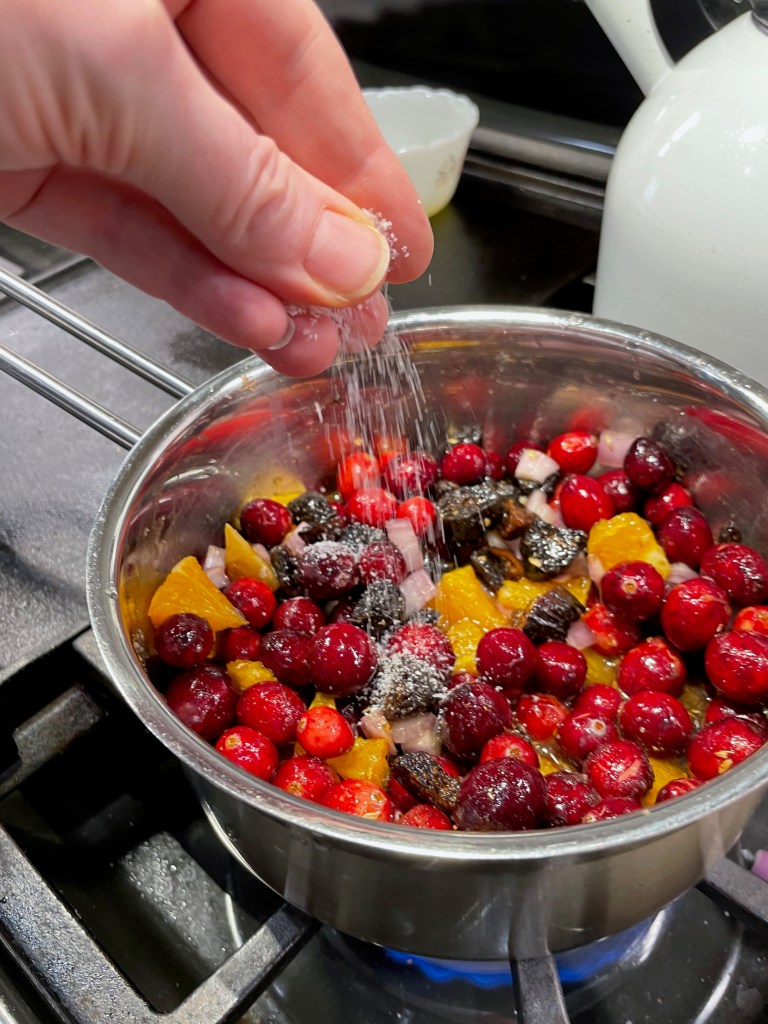
Salt, of course! Now, this may have been an oversight, or perhaps the author assumed that the reader would know to include it. This is one of the things I griped about in my post about the problem with recipes, and why I insisted that one still must know how to cook even when following a recipe. Even if this was meant to be just a “sweet” chutney, it should still have at least a pinch of salt to highlight the amazing flavors of the other ingredients. So, salt it I did.


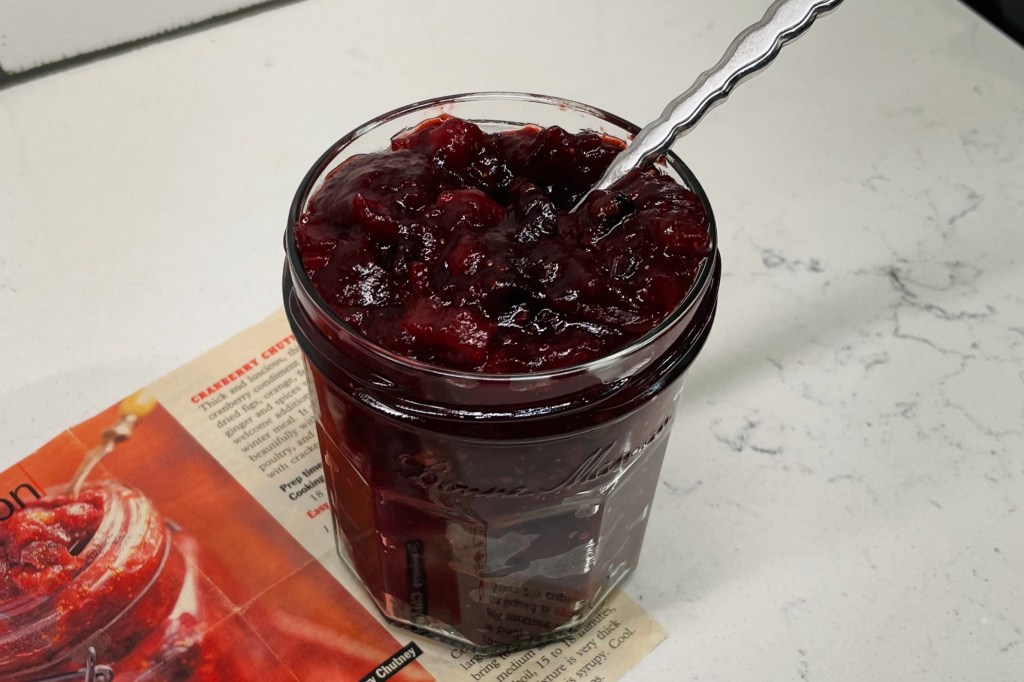
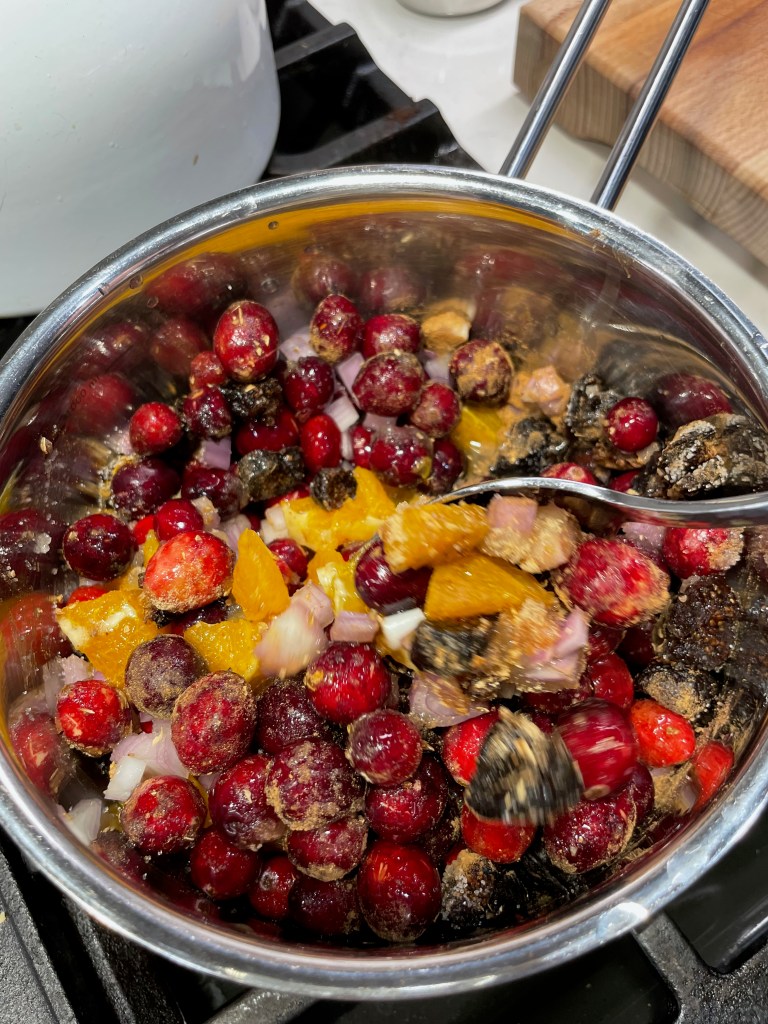
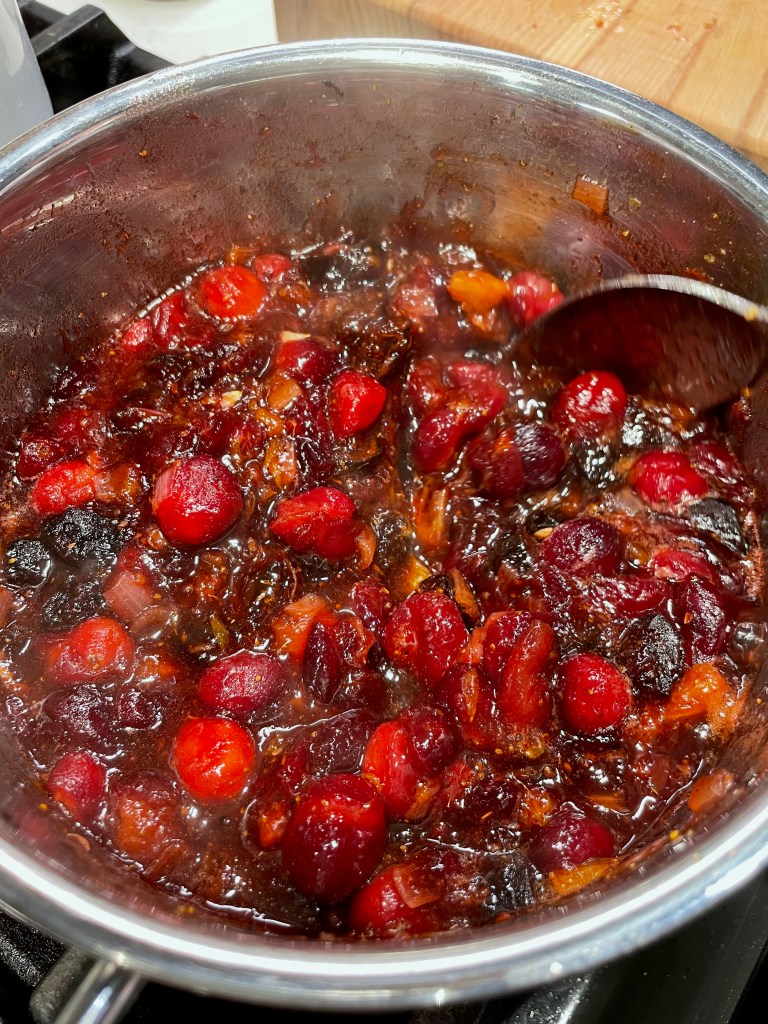
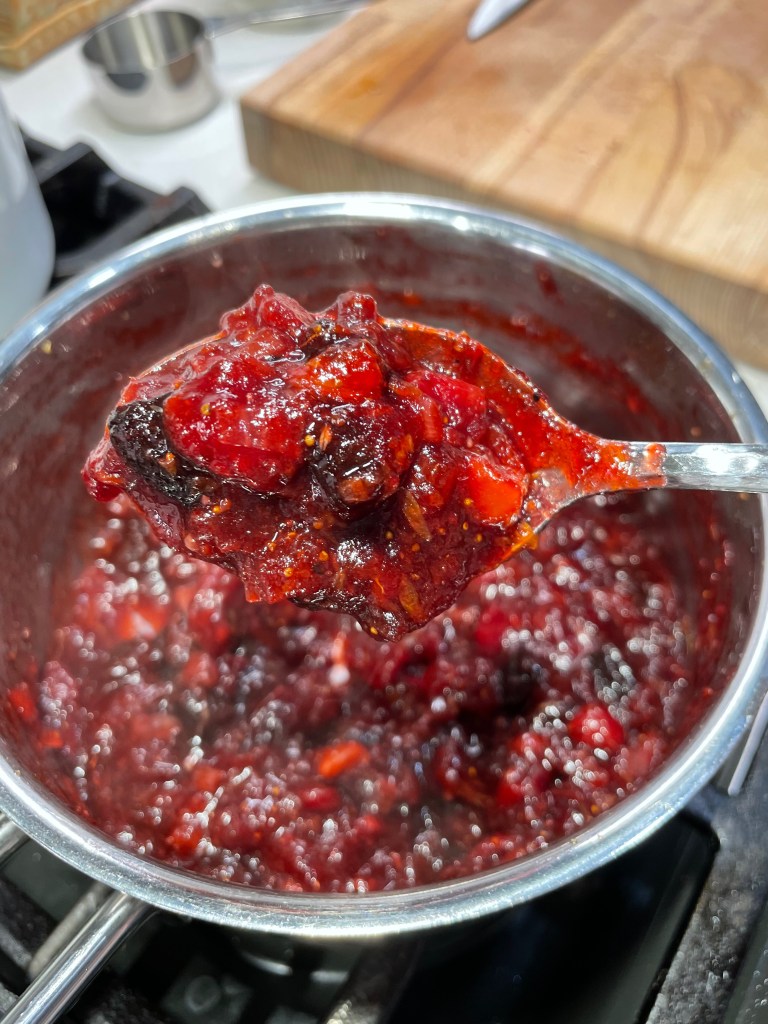
Twenty minutes later, I had this gorgeous, sweet and savory cranberry chutney. The oranges cooked down and took on the red color of the cranberries. The shallots were still a bit crunchy, the figs were delicate and chewy, and the spice aroma was just perfect. 

I’m glad I didn’t put this one off another year. It’ll be great with my roast turkey, and my taste buds want it with pork chops, salmon and chicken, too. Will you be throwing a twist onto any Thanksgiving classics this year? Let’s hear about it in the comments, just below the click-to-print recipe card. As always, feel free to adjust to taste. 😉


Sweet & Savory Cranberry Chutney

  • Servings: About 8
  • Difficulty: Easy
  • Print

This mouthwatering chutney brings a Thanksgiving classic together with warm Indian spices and crunchy bits of onion, making it a fantastic sidekick to pork, chicken, fish and (of course) roasted turkey!


Ingredients

  • 1 cup fresh cranberries, rinsed and picked over for duds
  • 1/2 cup dried mission figs, stems removed and coarsely chopped
  • 1/2 fresh navel orange, peeled and chopped
  • 1 medium shallot, minced
  • 2/3 cup granulated sugar
  • 2 1/2 Tablespoons cider vinegar
  • 2 Tablespoons sherry (optional)
  • 1/4 teaspoon ground cinnamon (mine was smoked)
  • 1/4 teaspoon ground ginger
  • 1/8 teaspoon ground coriander (a similar amount of crushed seeds)
  • two shakes each ground cumin, cardamom, turmeric and cayenne* (see recipe notes)
  • two or three shakes ground allspice
  • a generous pinch of kosher salt

Notes: If you have a curry powder blend, 1/4 teaspoon of it will suffice in place of the cumin, cardamom, turmeric and cayenne listed above.

This was my first time making this wonderful chutney, so my ingredients represent a half-batch, which was enough to fill a jelly jar. Next time, you can bet I’ll make a whole batch!

Directions

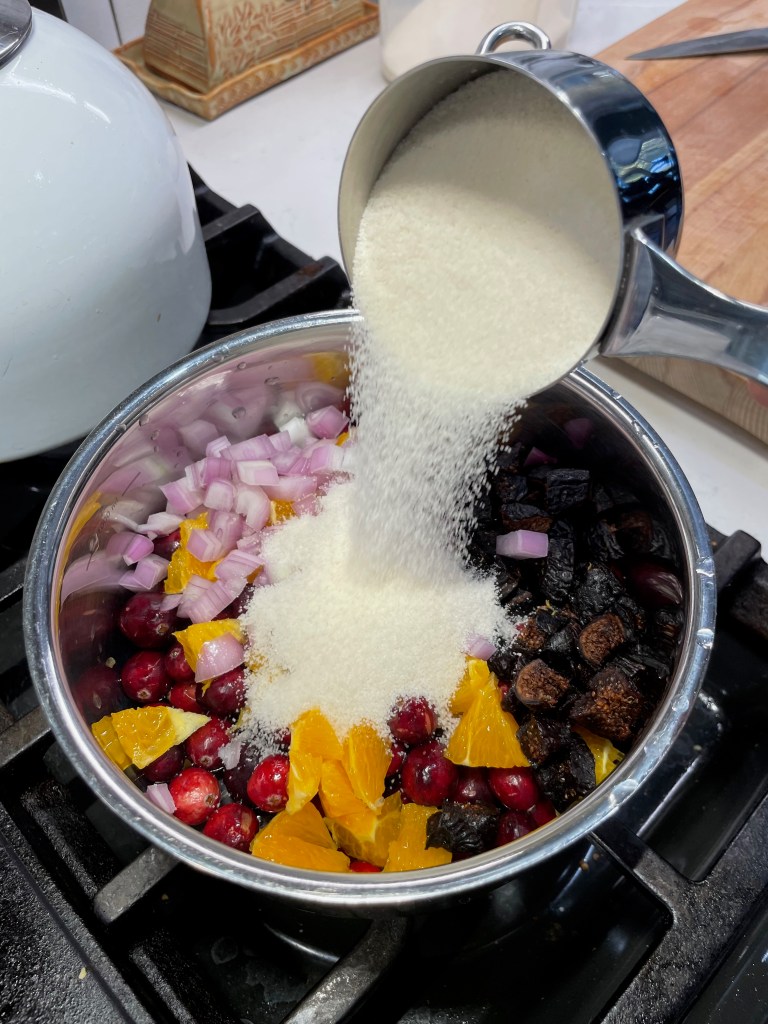
  1. Combine cranberries, oranges, figs and shallots in a small saucepan.
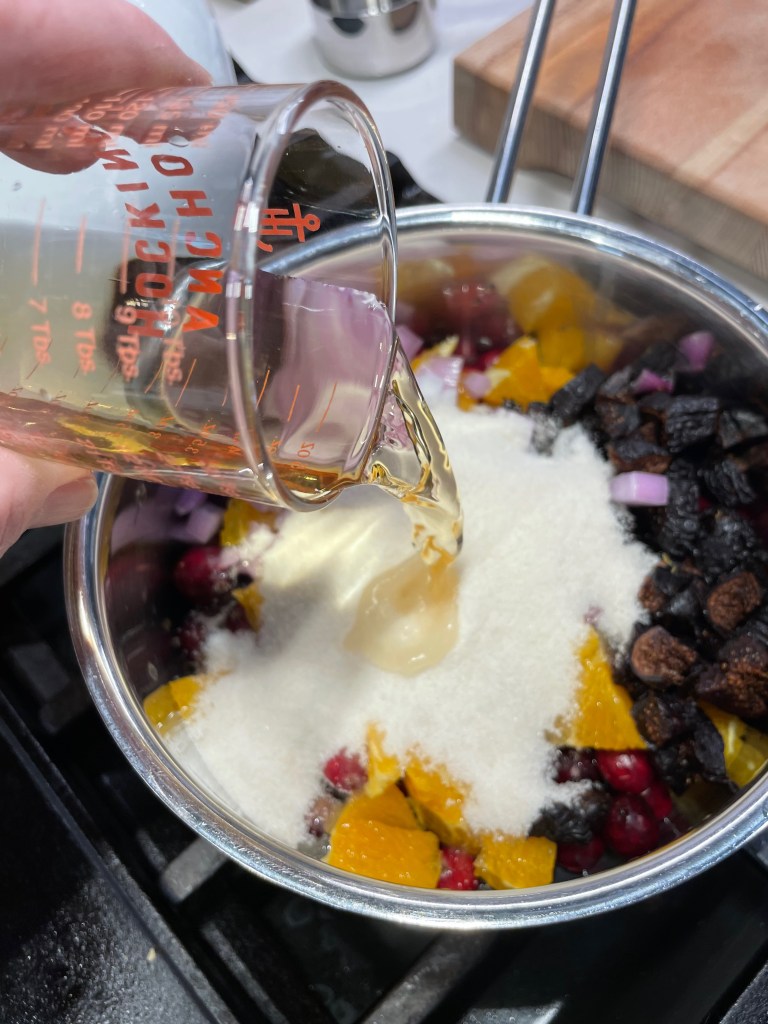
  2. Add sugar, vinegar, sherry and spices (plus salt) and toss to distribute the spices. Cook over medium heat until the mixture comes to a boil, then reduce heat and simmer for about 20 minutes. As the cranberries soften, use the back of your mixing spoon to gently smash them.
  3. Allow chutney to cool to room temperature (it will thicken as it cools), and then transfer it to a clean jar to store in the refrigerator.


Jamaican-inspired Sticky Sweet Potatoes

I’m all for tradition—Thanksgiving, after all, is my all-time favorite holiday and also happens to be the most traditional meal most Americans enjoy together—but for me, some of the meal traditions are tired. So I’m here to shake things up in the flavor department, starting with these sweet potatoes.

For many years, I made a sweet potato casserole that had brown sugar and eggs and cream and buttery layers of pecan crumble and everyone loved it. But it was so sweet that one year when I took it to a potluck, the organizer peeked under the cover and put it on the dessert table. True story. And no wonder, with 2/3 cup sugar in the sweet potato mixture and 3/4 cup sugar in the topping. In an 8-serving side dish?! Let’s not even discuss the amount of butter because it’s clogging my arteries just thinking about it.

Still, I made this over-the-top dish year after year after year because the people I was feeding at the time expected it. “Tradition,” and all that jazz. After some time, I got bored and started zhuzhing it up with a splash of booze, mainly to amuse myself. I incorporated a shot of Grand Marnier at first, because orange is a natural pairing with sweet potato. And then I tried it with bourbon because, well, bourbon. As you can imagine, neither did much to tamp down the cloying richness of that dish, which has since been banished to the darkest depths of my recipe box.

Yes, it is tradition to indulge on Thanksgiving, but what did fiber-rich, perfectly nutritious sweet potatoes ever do to deserve being drowned in a sea of saturated fat and then crusted up with so much sugar?

In recent years— and especially since the launch of Comfort du Jour— I have enjoyed twisting up the classics and traditional foods, and I’m thrilled to be married to a man who enjoys the variations as much as I do. For last year’s table, I presented these sticky sweet potatoes for Thanksgiving, and they were a hit! Yes, there is some brown sugar in the recipe, but a far cry from the amount in my old standard. And this one has zero saturated fat from butter, milk, eggs or cream.


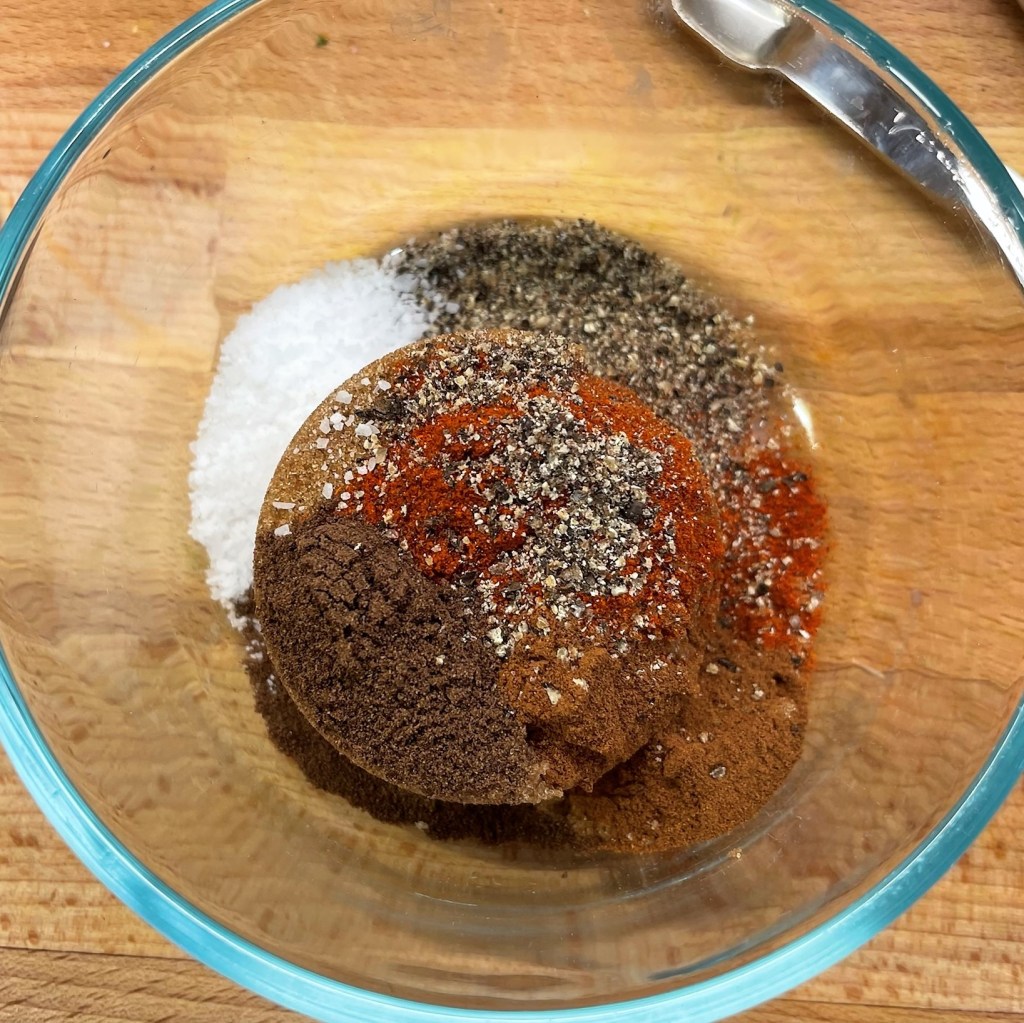
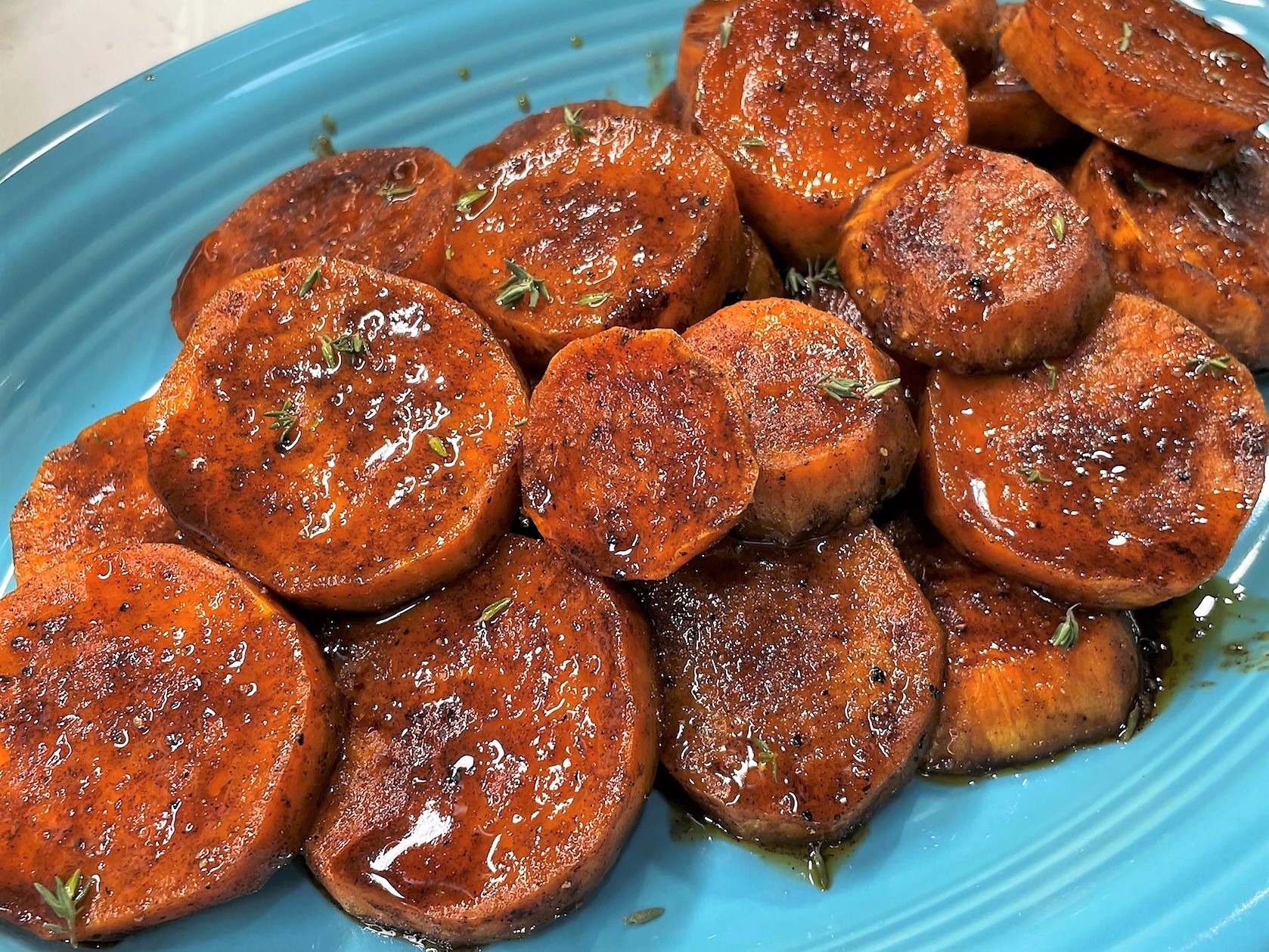
These beauties are spiced up with flavors that remind me of Jamaica—bold and balanced with sweet, spicy, savory and herbal notes—a combination I loved when I visited the island many years ago. The flavors play up the natural goodness of sweet potato without overwhelming. I created a blend of brown sugar (only 1/3 cup for this 8-serving batch, but you could use as little as 1/4 cup), kosher salt, sweet Spanish paprika, allspice, cinnamon and freshly ground black pepper. In place of butter, extra virgin olive oil; specifically, I used a specialty oil that is whole-fruit fused with blood orange. You can find this at one of the olive oil and balsamic boutiques that have popped up everywhere.


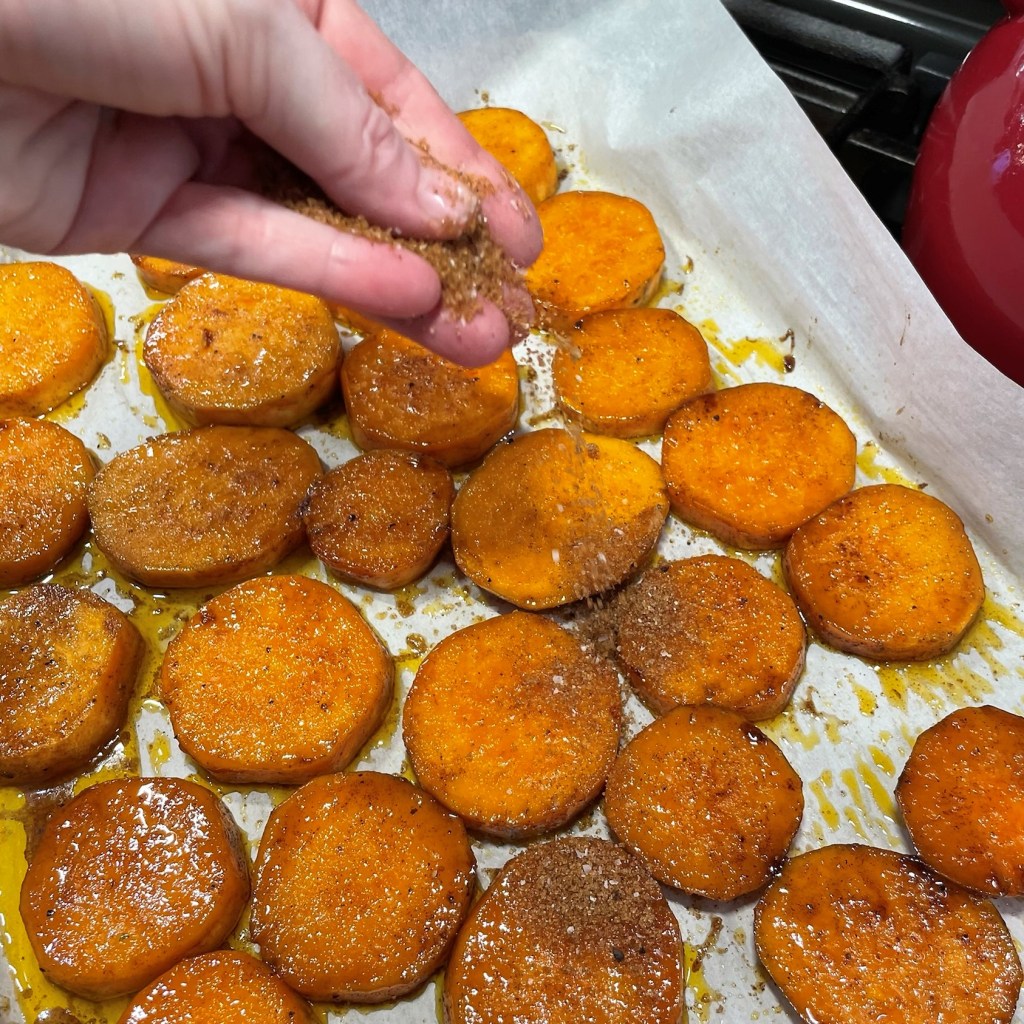
I arranged them in a single layer and roasted them at 350° for about 30 minutes, then turned them over, sprinkled more of the spice blend and roasted 15 more minutes. By this time, the sweet potatoes were tender and essentially done, but dinner wasn’t. So I left the baking sheet on the countertop, covered loosely with foil. When I was ready to serve them, the sweet potatoes got sprinkled with the last pinches of the spice blend and went under the broiler for about one minute, just enough to heat them through and caramelize that sticky spicy coating.


The timing worked out perfectly, as they only needed a quick blast of high heat at the end, and then a quick transfer to a serving platter where I decorated them with fresh thyme leaves and sent them to the table.

These Jamaican-inspired sweet potatoes are a nice change of pace with a big punch of flavor and no guilt. Yes, I’ll take these any day—Thanksgiving or otherwise!


Jamaican-inspired Sticky Sweet Potatoes

  • Servings: 8
  • Difficulty: Average
  • Print

These are no ordinary candied sweet potatoes! The island-inspired seasonings, especially the allspice, lend an unexpected flair to a Thanksgiving day standard.


Ingredients

  • 3 pounds fresh sweet potatoes, peeled and sliced into 1/2-inch thick rounds
  • 2 Tbsp. extra virgin olive oil (see recipe notes below)
  • 1/4 to 1/3 cup brown sugar, depending on your sweet tooth
  • 1 tsp. sweet (Spanish) paprika
  • 1/2 tsp. ground allspice
  • 1/2 tsp. ground cinnamon
  • About 20 twists of freshly ground black pepper
  • 1 tsp. kosher salt
  • 1 tsp. fresh thyme leaves, for garnish

Note: If you have a specialty olive oil store, I like the blood orange-fused oil for this recipe. The citrus essence makes the island-inspired spices even more aromatic and addictive.

Directions

  1. Preheat oven to 375 F, with rack in center position. Line a large, rimmed cookie sheet with parchment paper.
  2. Combine brown sugar and seasonings in a small bowl and set it aside.
  3. Put thick slices of sweet potato in a large bowl and drizzle olive oil over them, tossing to coat evenly. Sprinkle half of the seasoning blend over the sweet potatoes and toss again. Arrange the slices in a single layer on the parchment-lined sheet.
  4. Roast for 30 minutes. Remove pan from oven and carefully turn each sweet potato slice. Sprinkle half of the remaining spice mix over the second side of the sweet potatoes and roast 15 more minutes, or until potatoes are tender enough to pierce with a fork.
  5. Remove from oven and let the sweet potatoes rest a few minutes; tent loosely with foil and set aside as long as needed while you prepare other dinner items. If you need to refrigerate them overnight, put remaining spice mixture in a bowl and set it aside; pick up with Step 6. If you plan to finish the sweet potatoes now, skip to Step 7.
  6. Remove chilled sweet potatoes from refrigerator at least one hour before proceeding with the recipe.
  7. Remove foil and turn sweet potatoes over. Sprinkle with remaining amount of spice mixture and broil on high for 1 to 2 minutes (watch so it doesn’t burn!), to re-heat the potatoes and caramelize the sticky spice coating. Transfer sweet potatoes to a serving platter and sprinkle with thyme leaves. Serve warm.


Finally, Falafel!

If at first you don’t succeed, wait a year and try again. Yes, I know that isn’t exactly how the adage goes, but it seems to be my M.O. when I get discouraged over failed recipes. Falafel has confounded me as much as it has enchanted me, from my first-ever taste of it at a now-closed corner diner near the campus of UNC-Greensboro to my most recent experience of it at Miznon in New York’s Chelsea Market. It was that most recent taste that inspired me to give falafel another go.


I love the texture of these crispy little gems and especially the vibrant flavor that is jam-packed into every delicious bite. Falafel is a Middle Eastern specialty, made from ground-up chickpeas and a ton of fresh herbs and spices. It is usually shaped into balls or disc shapes and fried until crispy, though I have also seen oven-baked falafel, which has a somewhat pale and less visually enticing appearance. Undoubtedly, it can be made in an air fryer—and perhaps someone reading this will chime in to share their results of that method. I have tried both fried and oven-baked falafel a few times but got increasingly frustrated with each fail, and then put off trying again for longer and longer stretches of time. How could this be so difficult, I wondered? The dish eventually moved to the top of my culinary “bucket list,” and I’m pleased to say that I finally won the falafel challenge.

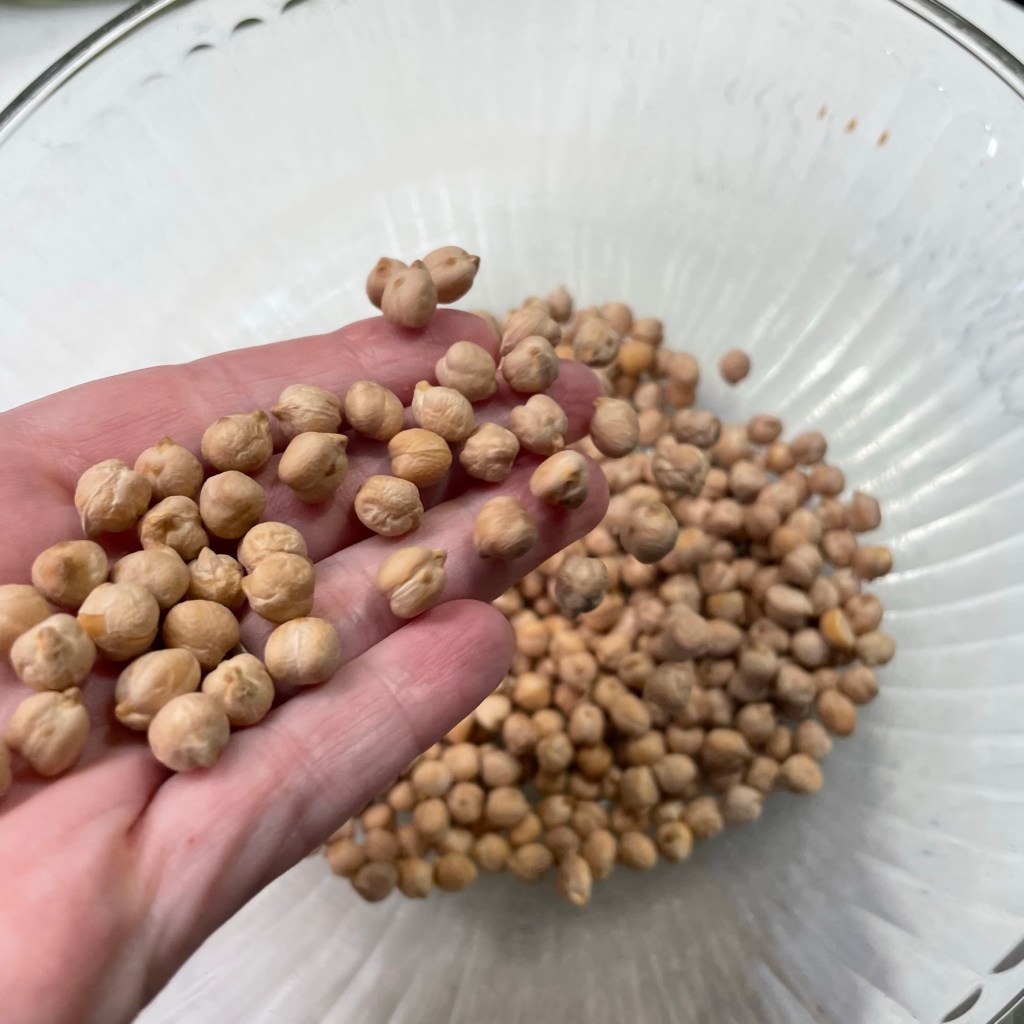
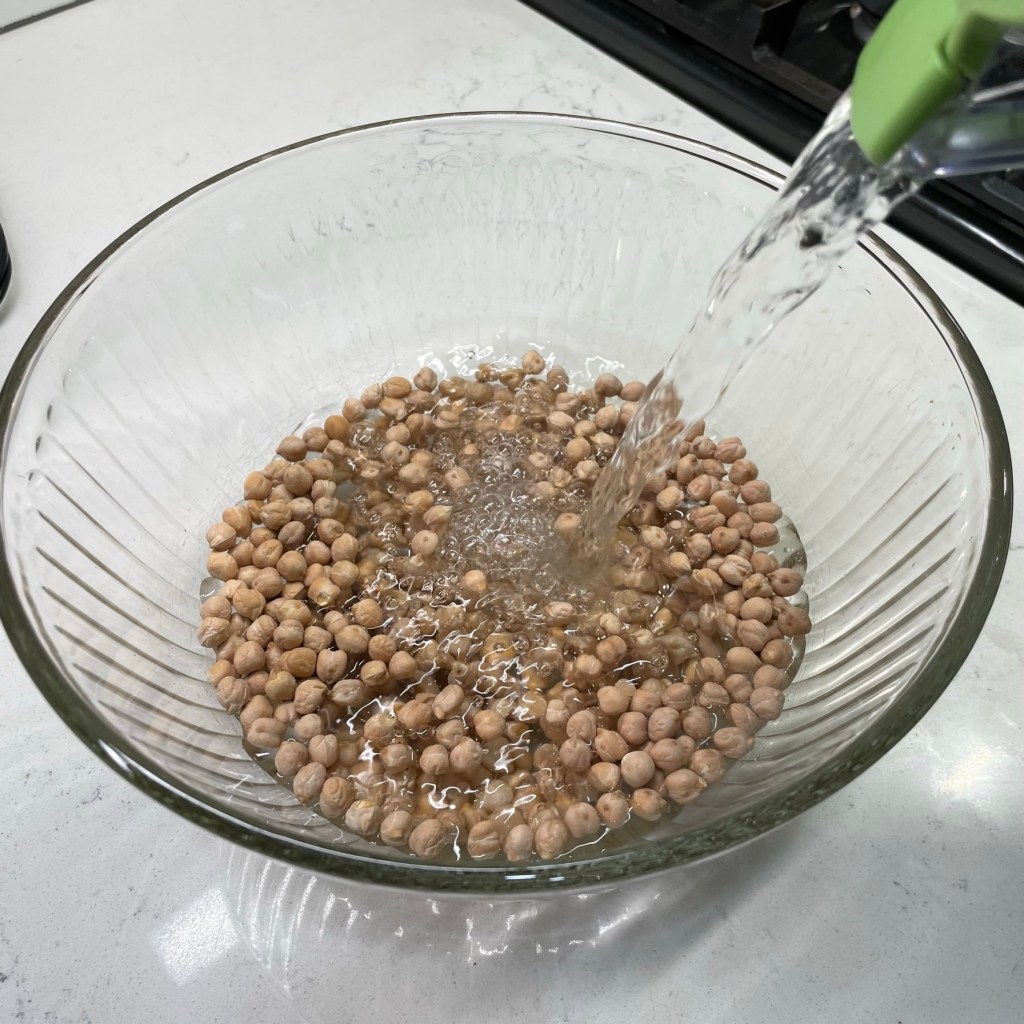
As it turns out, falafel was only difficult to make because I was resisting the instructions that were right in front of me the whole time. I tried to make them from canned chickpeas (which doesn’t work) and then I tried making them with canned chickpeas that were subsequently roasted and dried out in the oven (which also doesn’t work). When I finally gave in and tried them the correct way, they turned out terrific! What is the correct way, you ask? Using chickpeas that have been soaked but not cooked.

My favorite thing about cooking—besides the obvious enjoyment of delicious food that’s made cheaper at home than you would buy somewhere out—is the science behind it, and it turns out there is a perfectly good reason that soaked, uncooked chickpeas are the best bet for perfect falafel. Thank goodness for J. Kenji Lopez-Alt, the culinary genius who runs “The Food Lab,” and a frequent contributor on the Serious Eats website. He is sort of an Alton Brown for the new generation, and his scientific explanation on falafel is the best I’ve read to date. Here’s the upshot: soaking rehydrates the chickpeas so you can work with them, and it keeps the sticky starches trapped inside. Those starches get released when the chickpeas are cooked during frying (or baking), and that starch release is what helps the falafel rounds hold together. If the chickpeas are already cooked (as in canned), the starch is spent, and you end up with a mess. My ridiculous attempts to return canned chickpeas to a firmer, drier texture by roasting them in the oven didn’t work because they were still already cooked. This time around, I followed the science offered by J. Kenji, and guess what I ended up with? Near-perfect falafel.

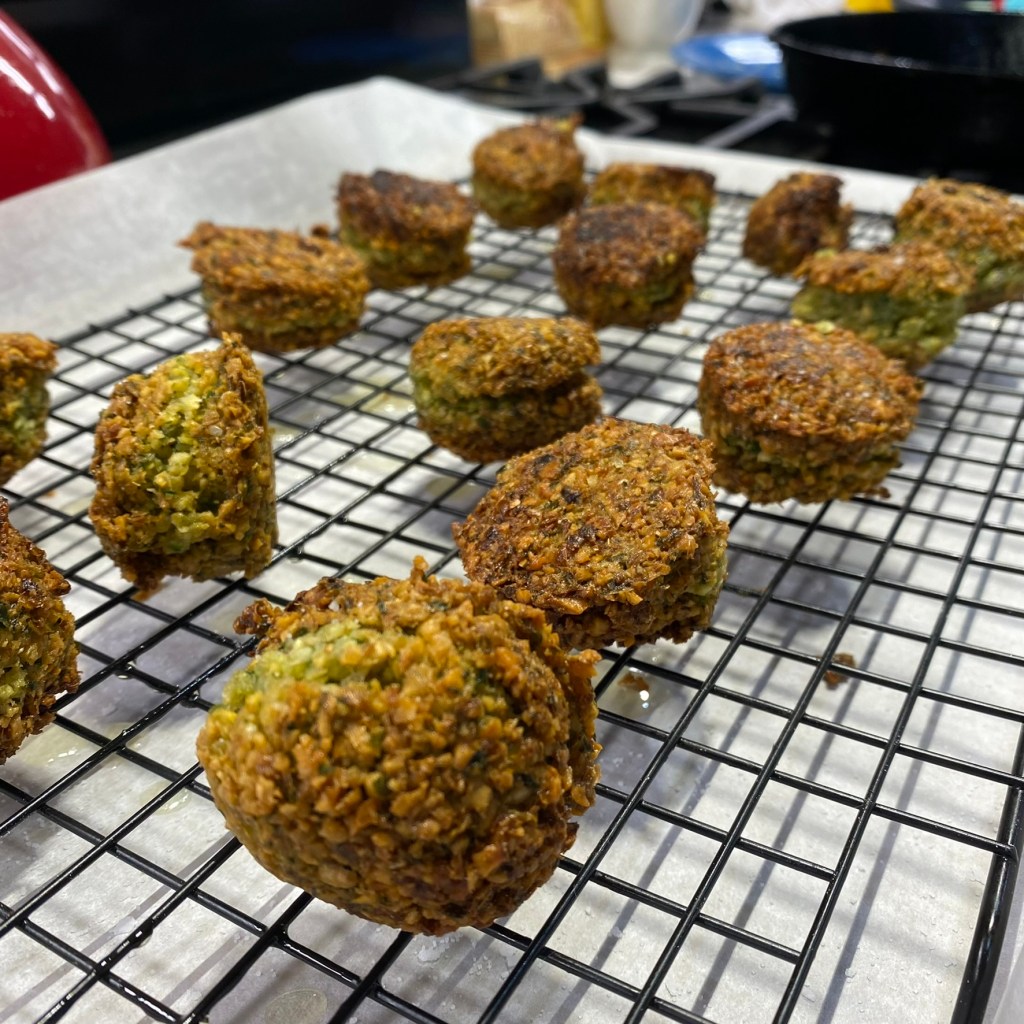
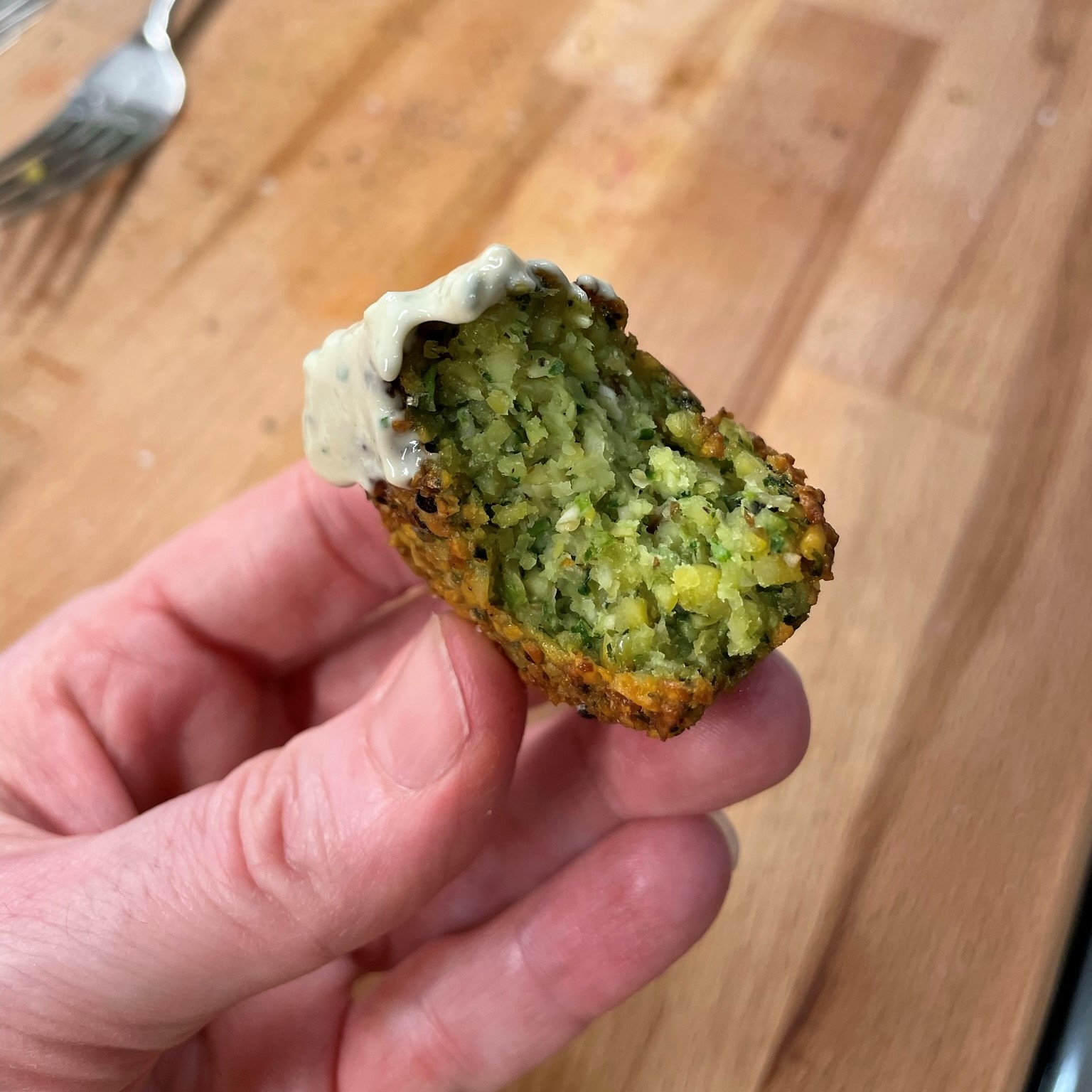
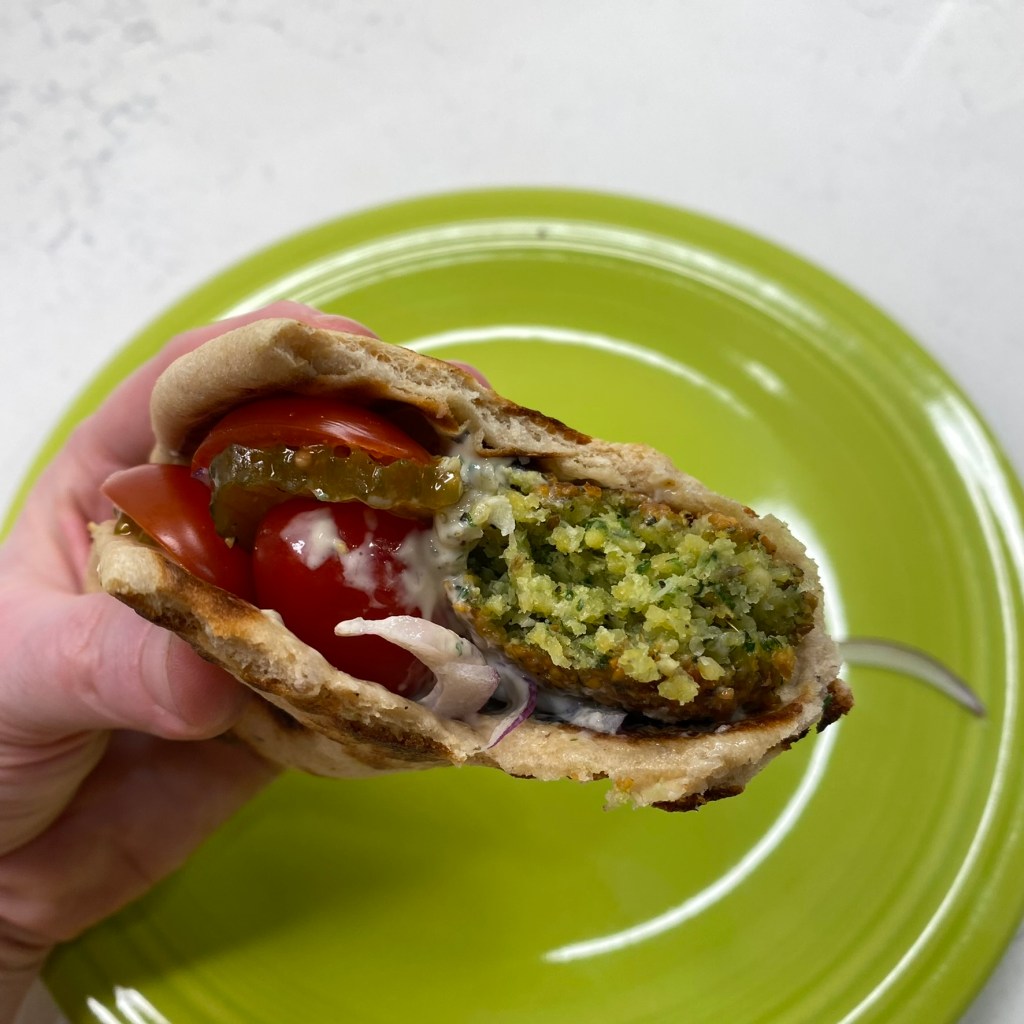
Crispy on the outside, moist and soft on the inside, and sooo much flavor!

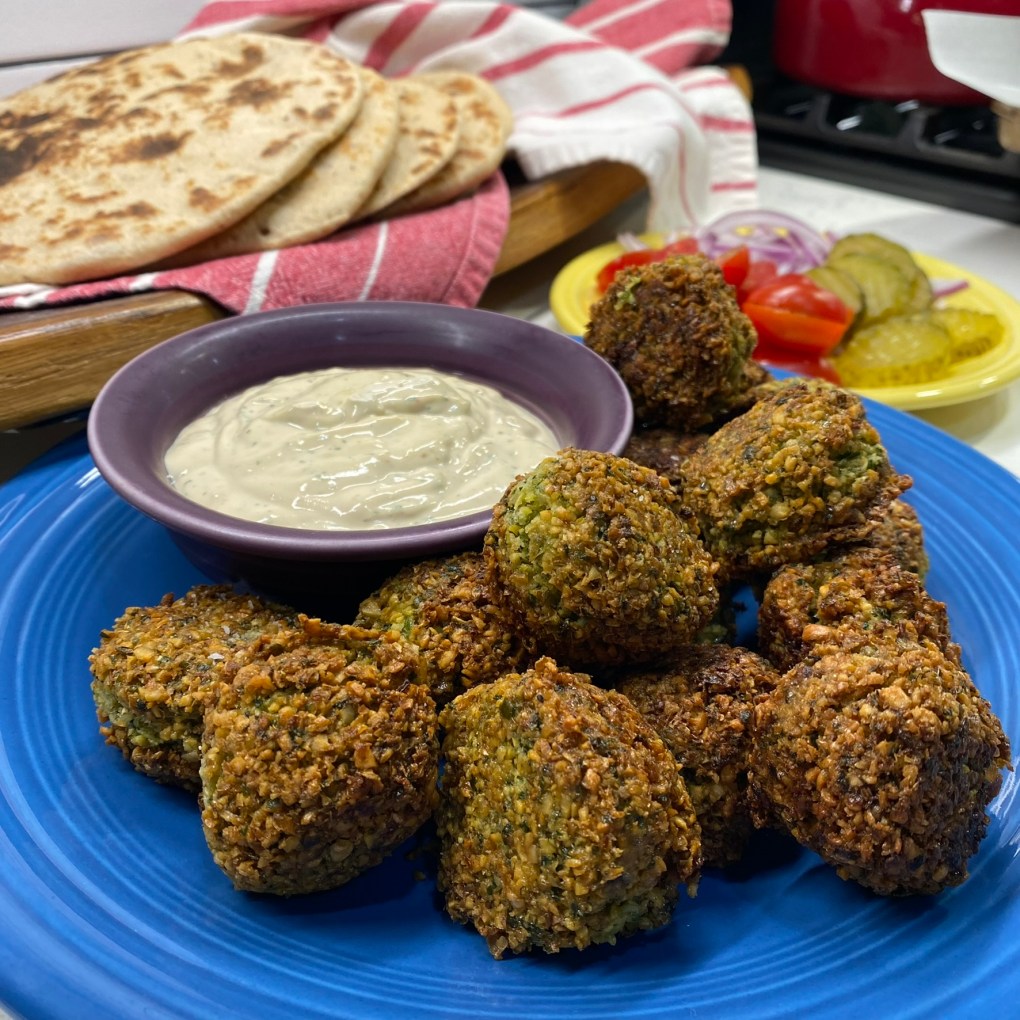
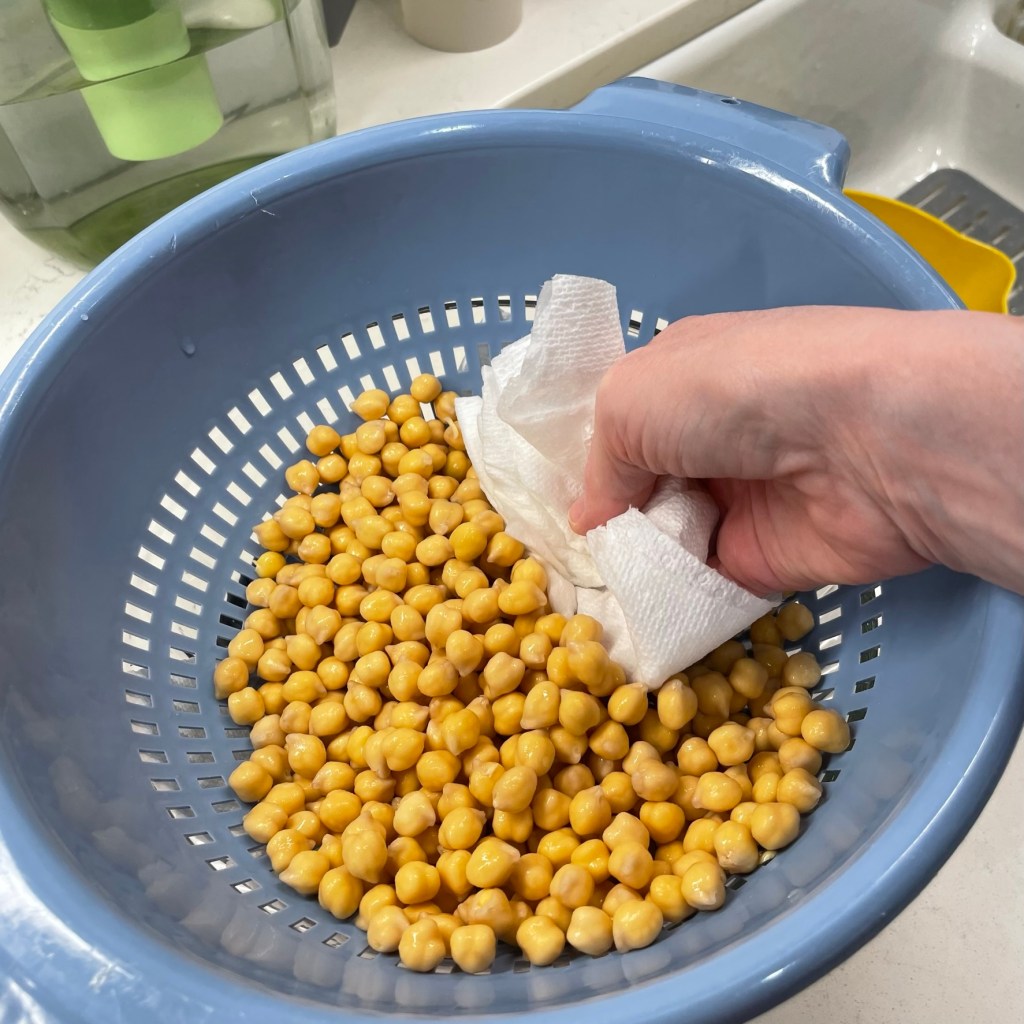
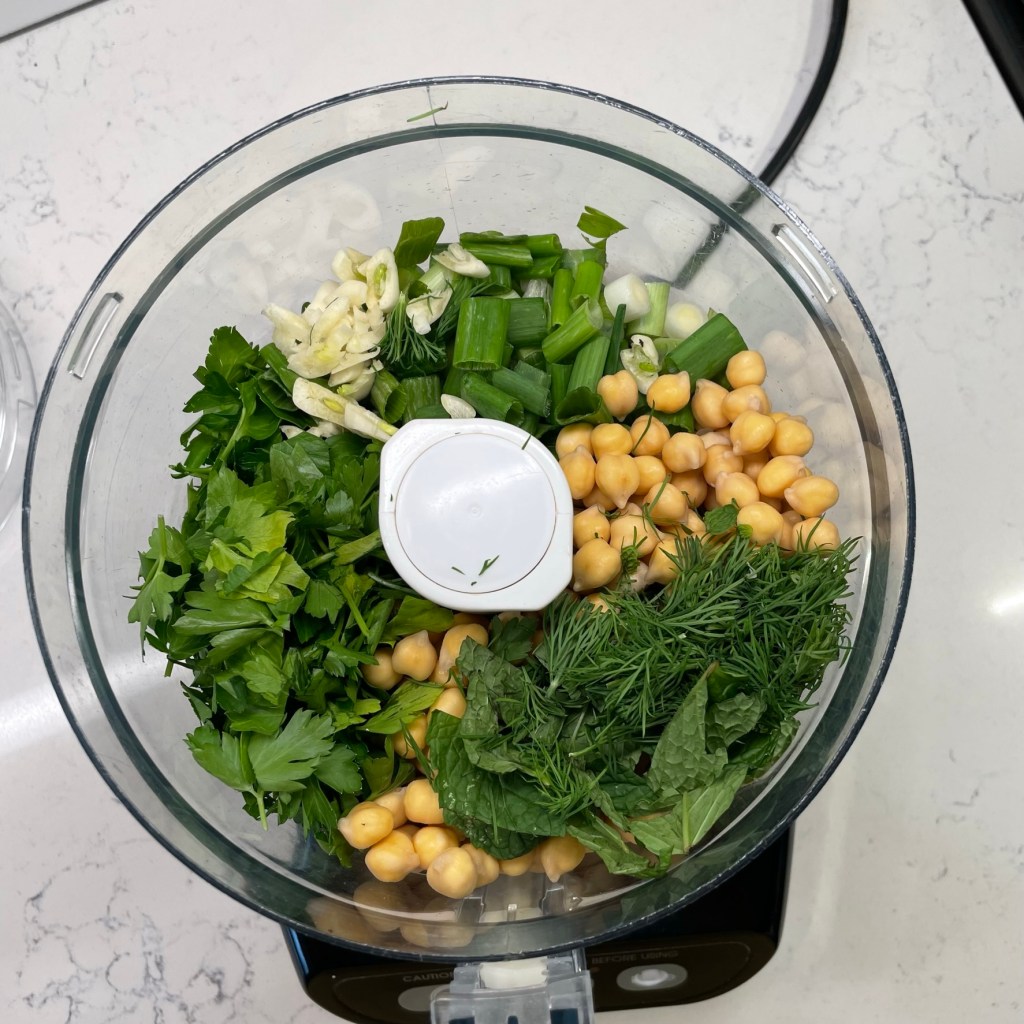
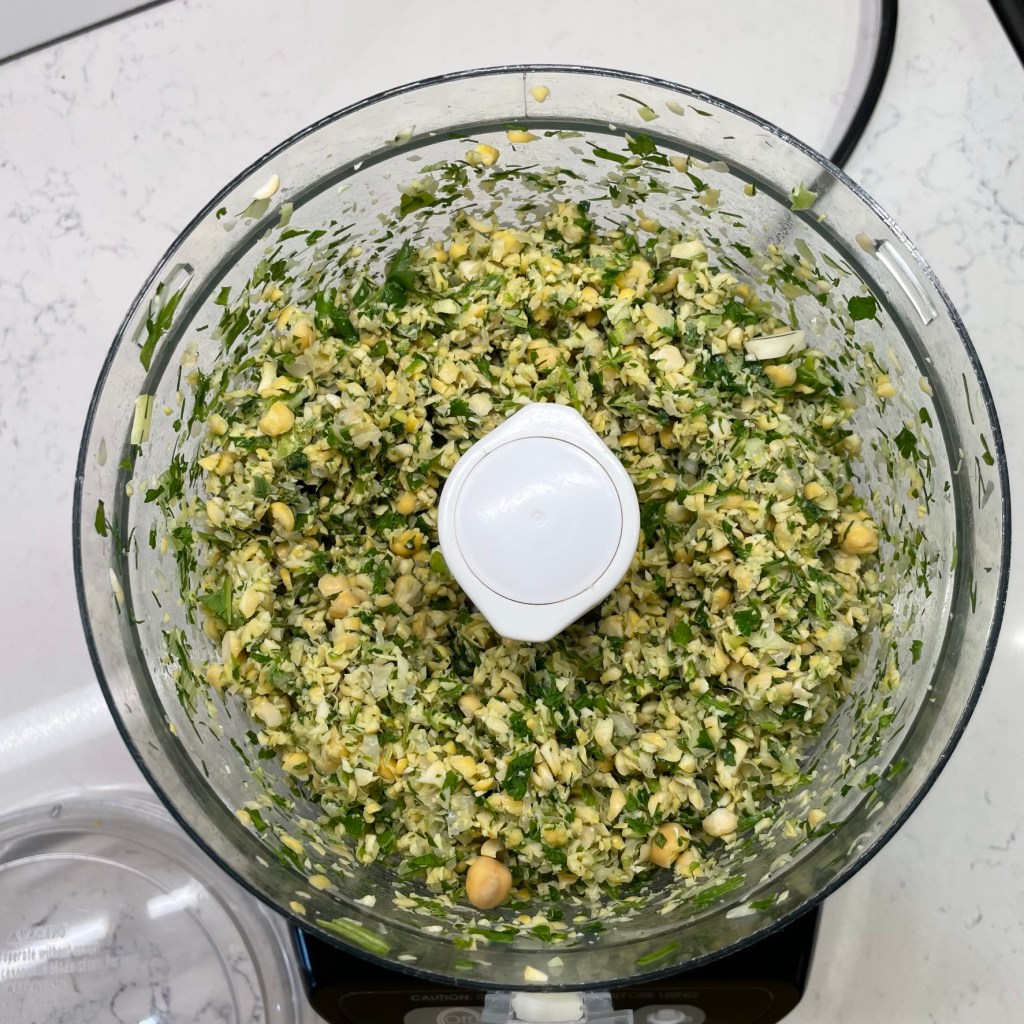
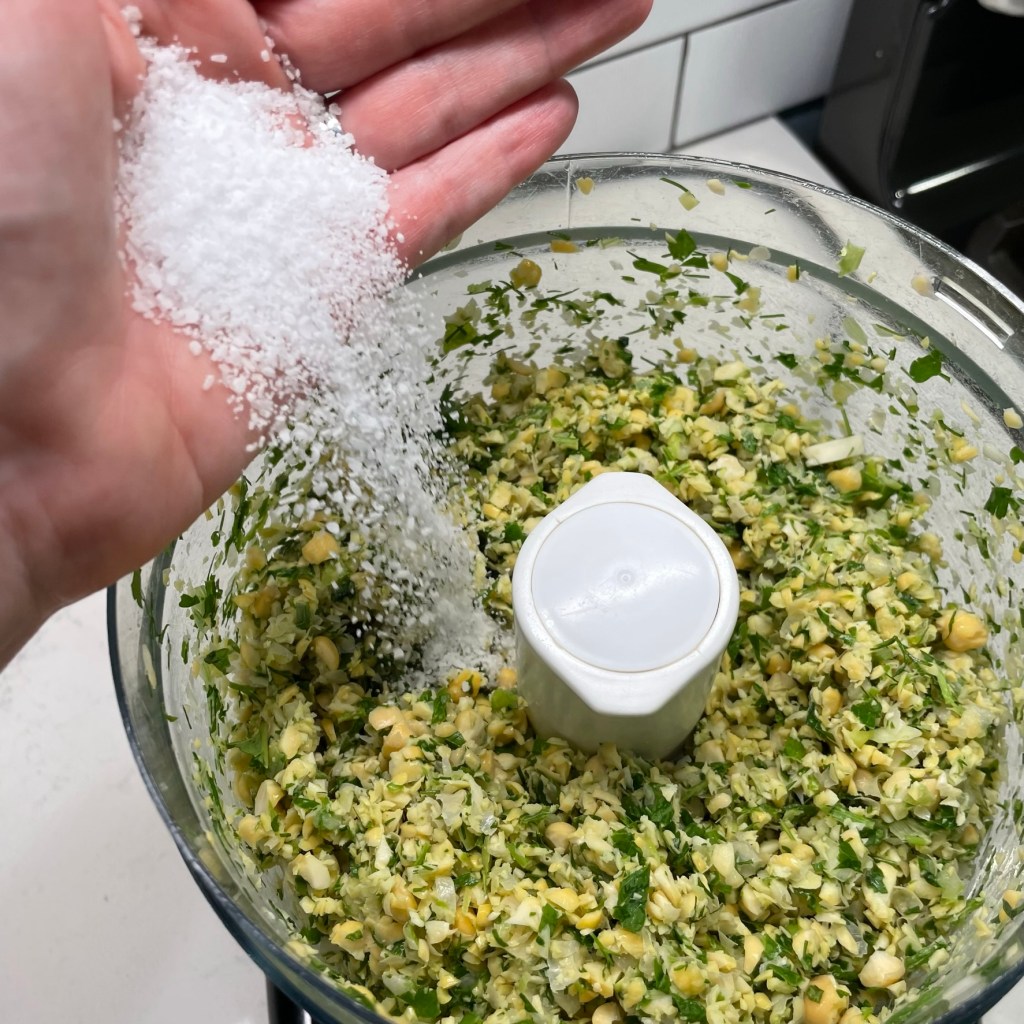
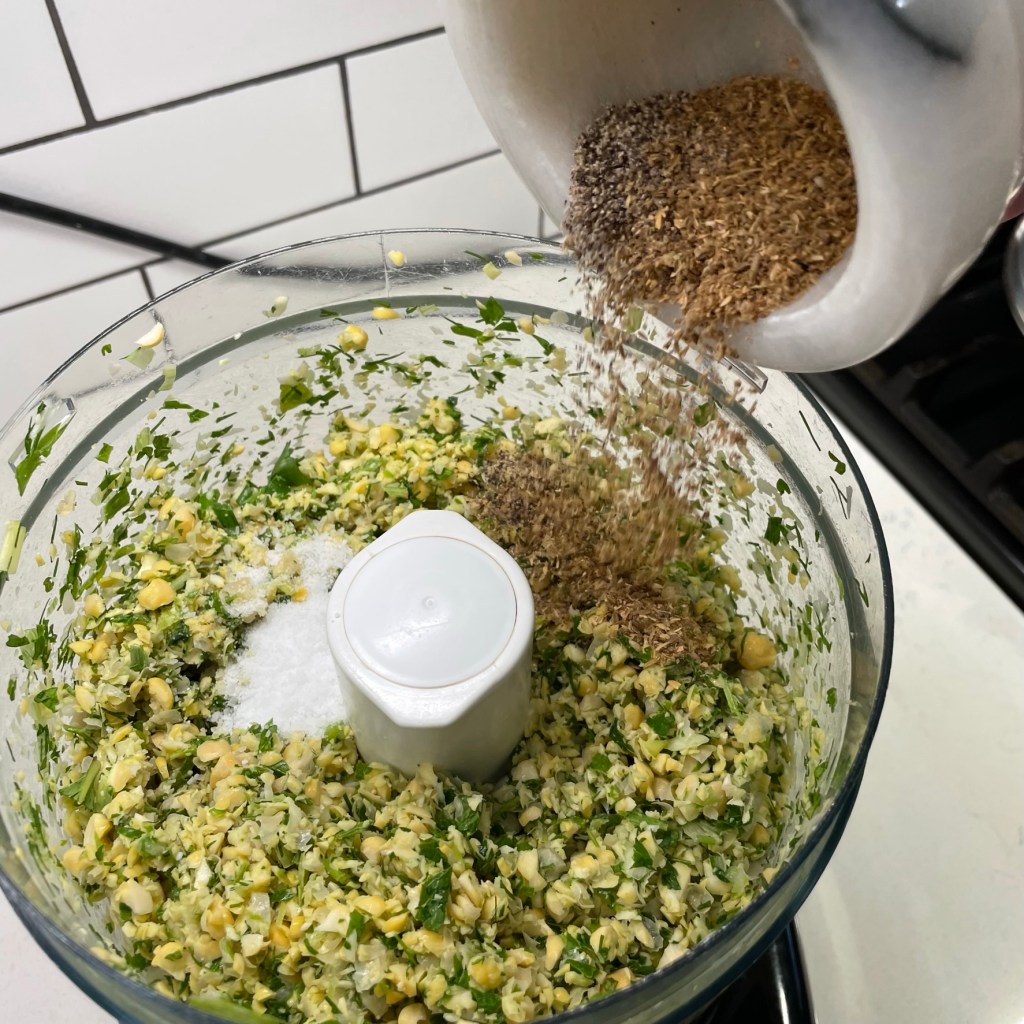
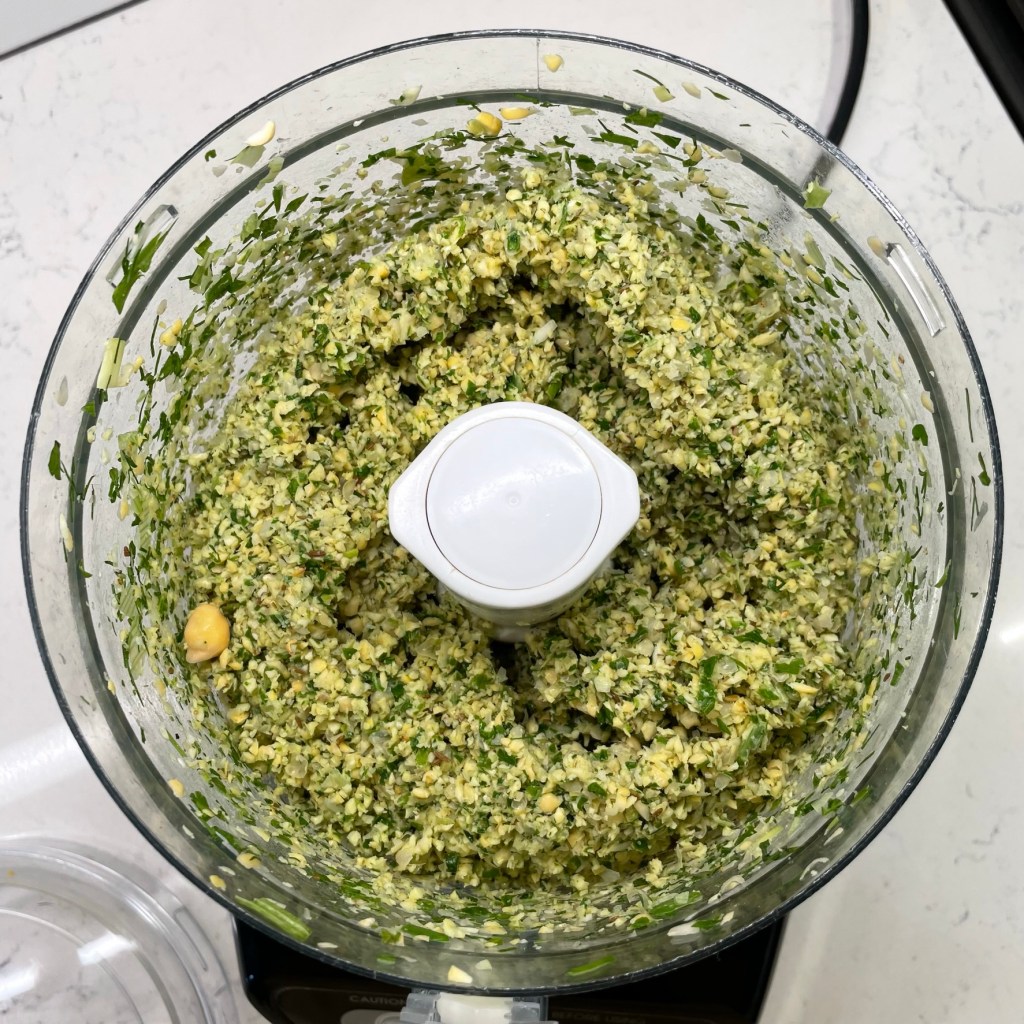
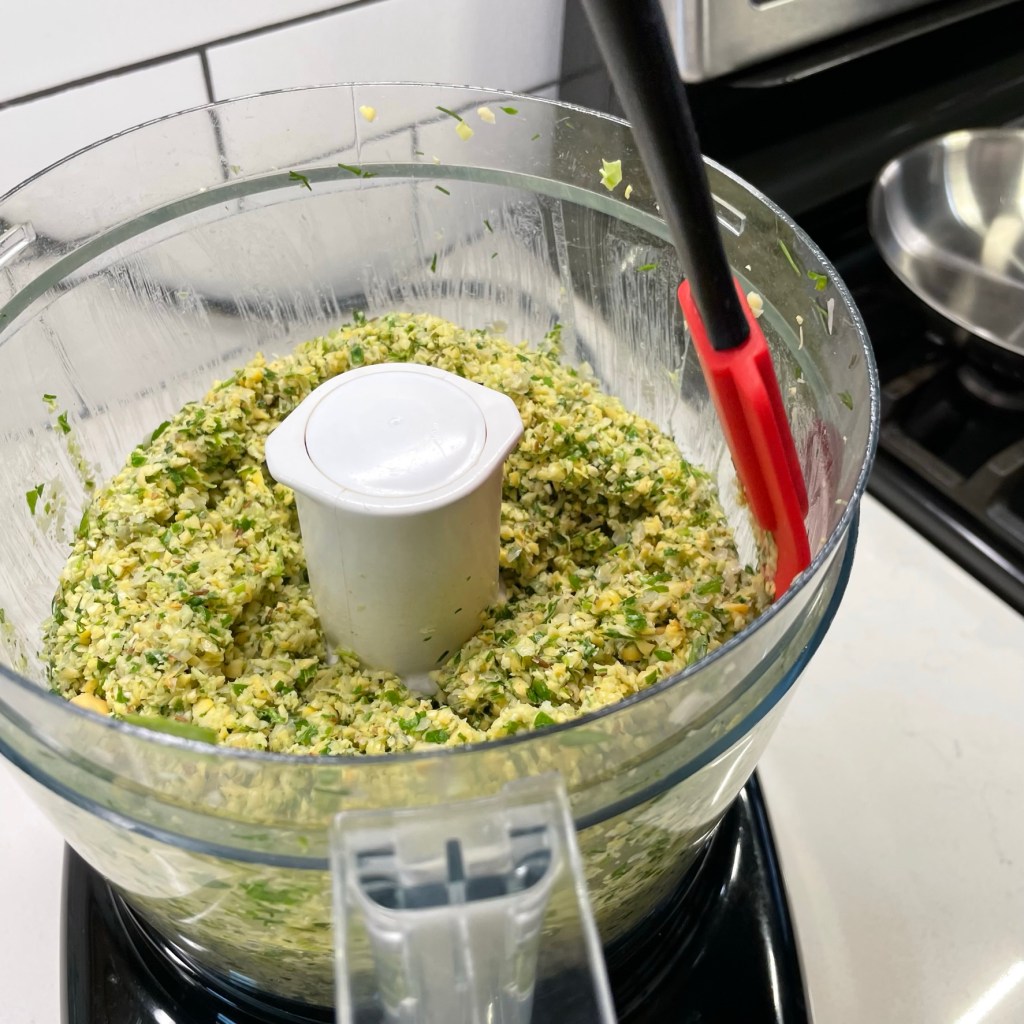
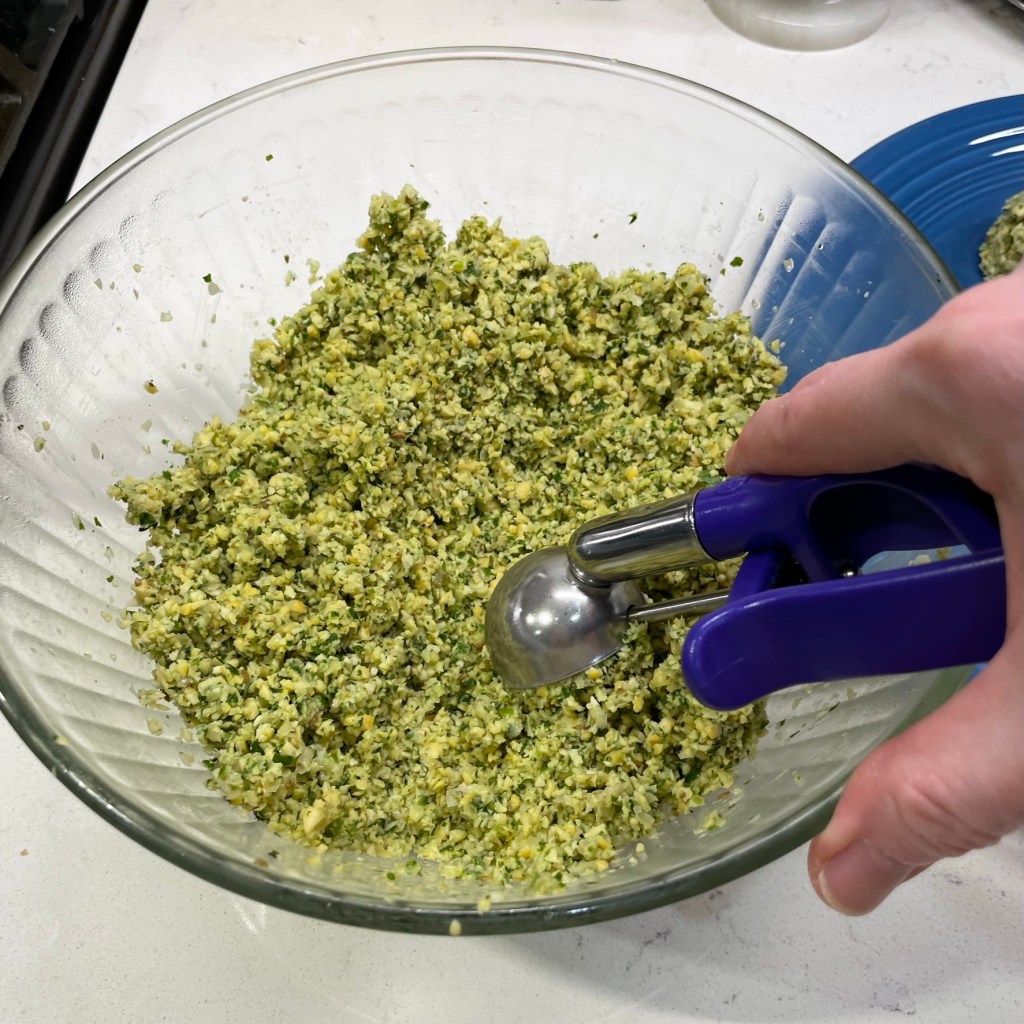
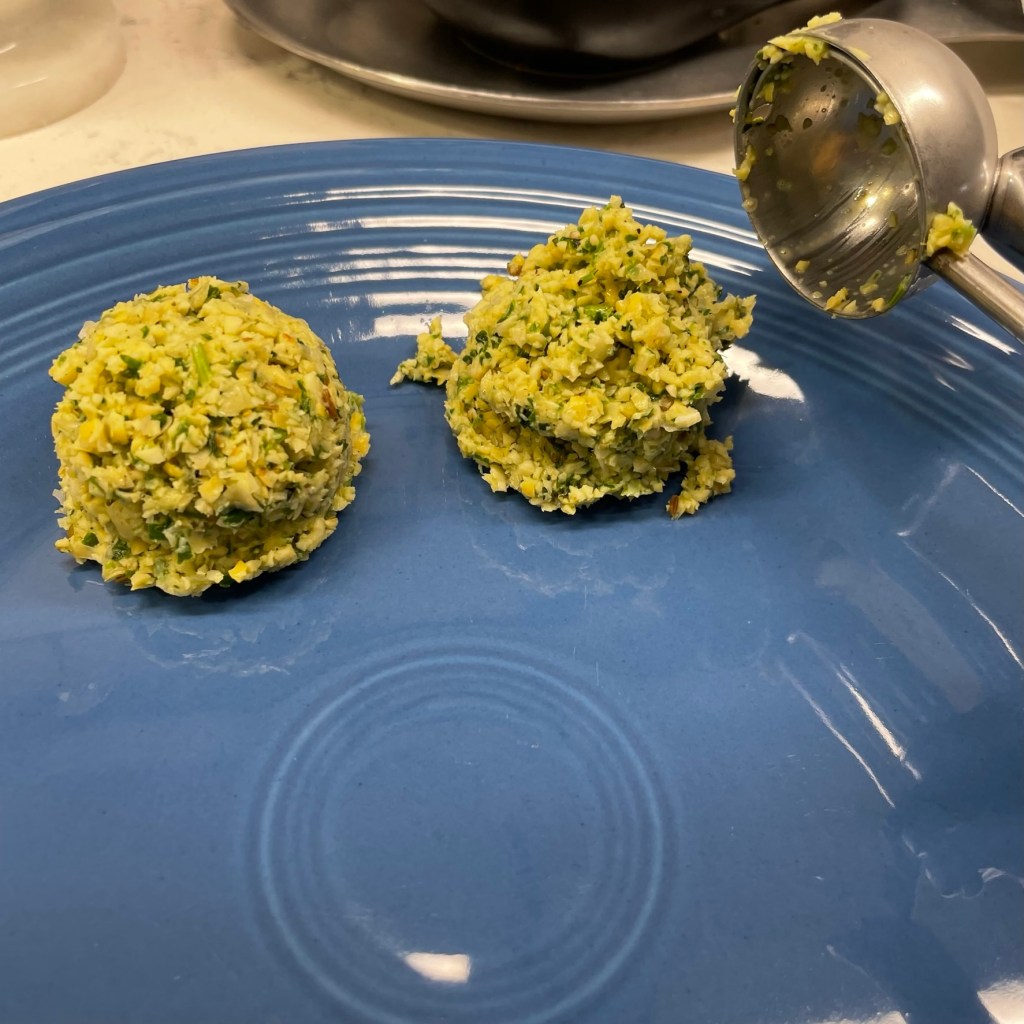
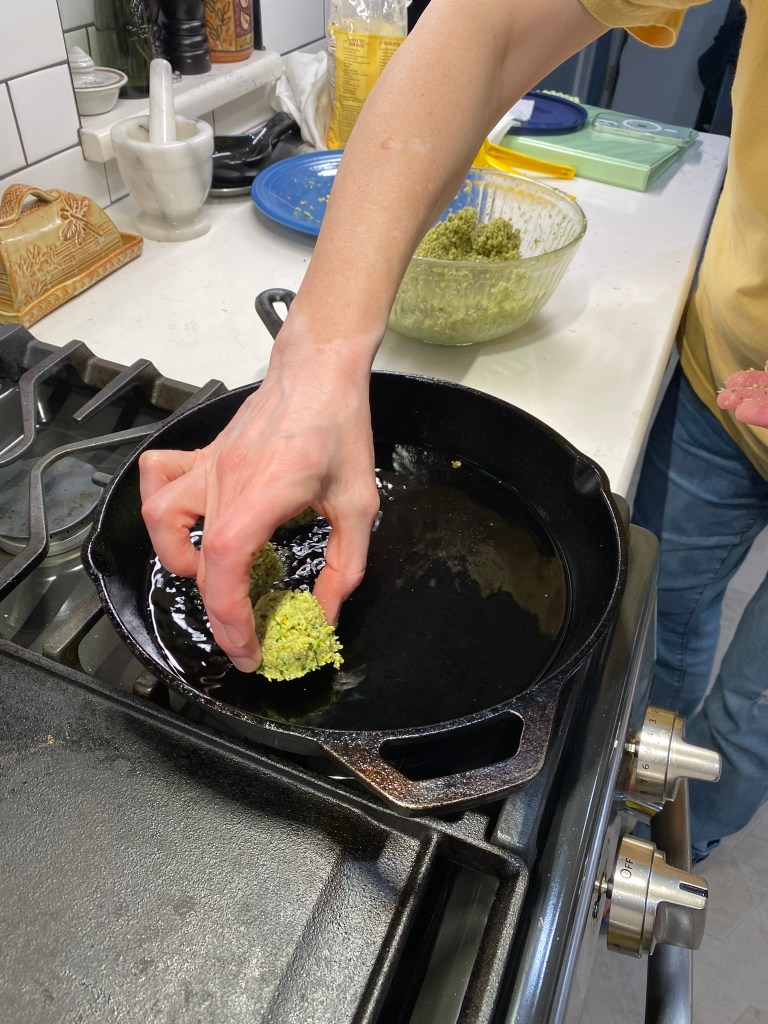
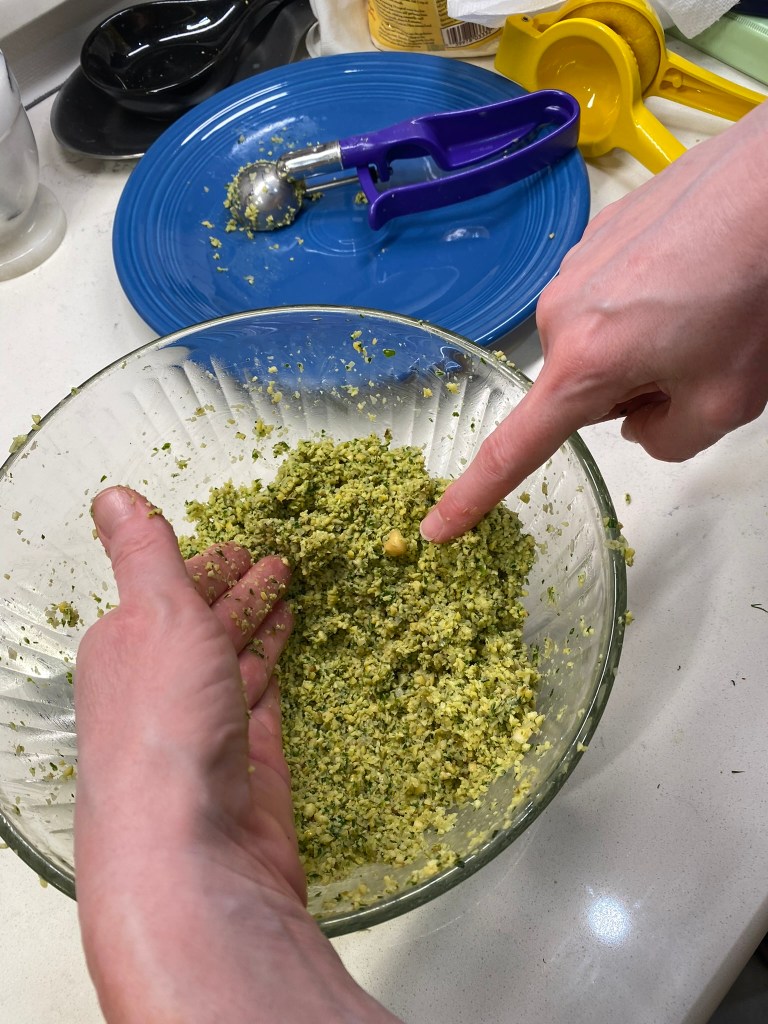
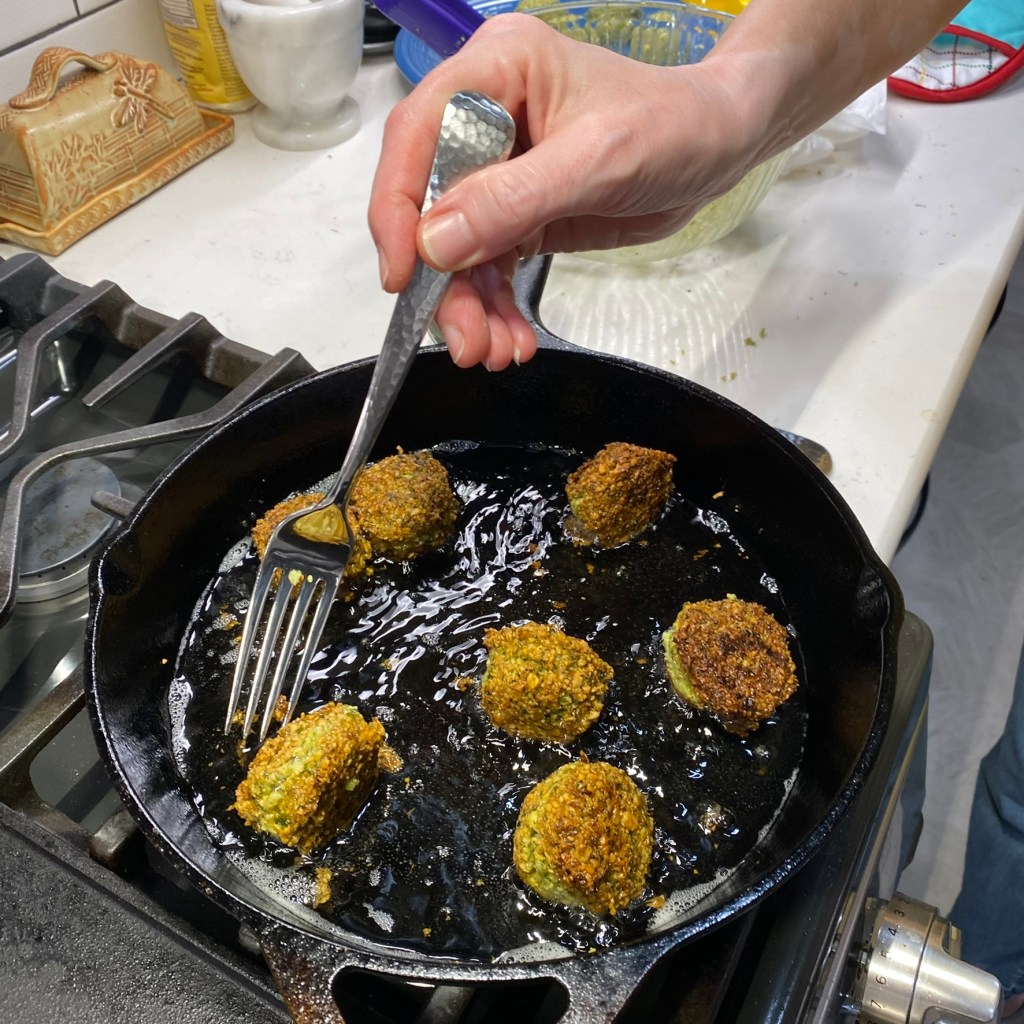
In a weird twist of fate, the best way also happened to be the easiest of the methods I had previously tried. Soaking the chickpeas took almost no effort, then I drained and rinsed them in a colander, rolled them around on paper towels to wick away excess moisture, and then pulsed them in my food processor with a fat handful of fresh herbs and generous amounts of Mediterranean spices. Further following J. Kenji’s advice, I kept my falafel small, using my large cookie dough scoop to compact them into rounds, which I fried up nicely in a shallow skillet. For the love of flavor, why did I wait so long to follow the rules?

As much as I love falafel in a wrap sandwich, I also love just dipping and snacking on them.

Falafel is great as a pick-up snack, dipped in tahini-lemon sauce. We enjoyed it as a sandwich filler, nestled with lettuce, tomatoes and pickles into a warm, whole grain soft pita. My husband and I agreed that the flavors in this revelatory batch of falafel could stand to be a little bolder, and maybe even a bit more garlicky. I will play with the seasonings a bit on my next go, and you can bet that I won’t be waiting a year.


Ingredients

1 cup dried chickpeas, sorted and rinsed

4 cups cold or room temperature water

Several scallions (white and green parts)

About 2 cups loosely packed fresh Mediterranean herbs* (see notes)

2 large garlic cloves, peeled and rough-chopped

1 tsp. each cumin and coriander seeds*

1/4 tsp. ground cayenne (optional)

1 1/2 tsp. kosher salt

Several grinds black pepper

A few teaspoons flour (if needed), as a binder for overly wet falafel mixture*


*Notes

Falafel is of Middle East origin, so the Mediterranean herbs work best here. Parsley (curly or flat), mint, dill and cilantro (also called “fresh coriander”) all work great in this recipe, but I would not recommend basil, thyme or rosemary. It is essential that you use fresh herbs for this recipe, as they contribute texture in addition to flavor. After rinsing the fresh herbs, take time to also dry them on a clean kitchen towel or layers of paper towel, so that you don’t add unwanted moisture to the falafel mixture.

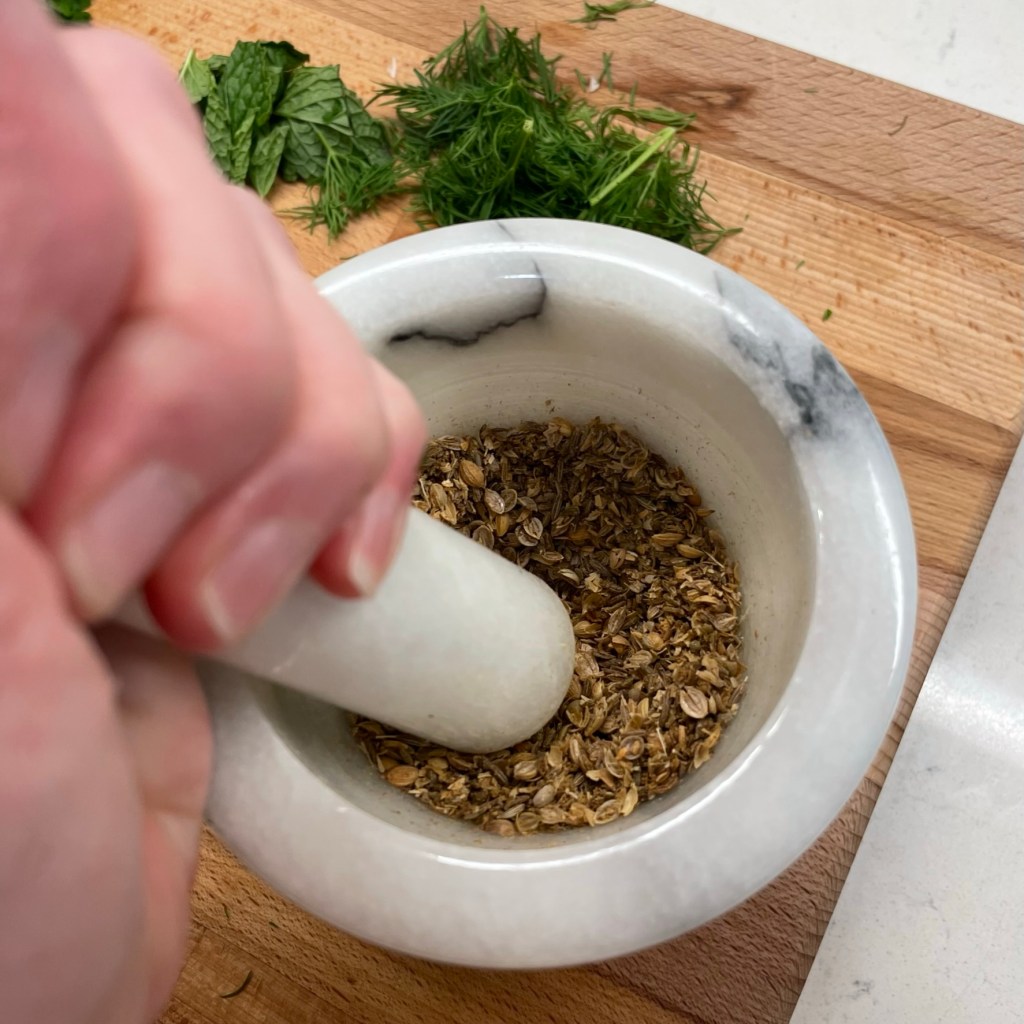
I prefer the intensity of freshly ground seed spices, but if you only have pre-ground cumin and coriander, it’s no problem. Use slightly less, perhaps 3/4 tsp. of each.

Ideally, the chickpea mixture will hold together without the flour binder. But I found that a few sprinkles of flour were necessary to pick up lingering moisture. I used a tablespoon of garbanzo bean flour, but all-purpose or rice flour would probably work also.


Instructions


“Cincy” Chili

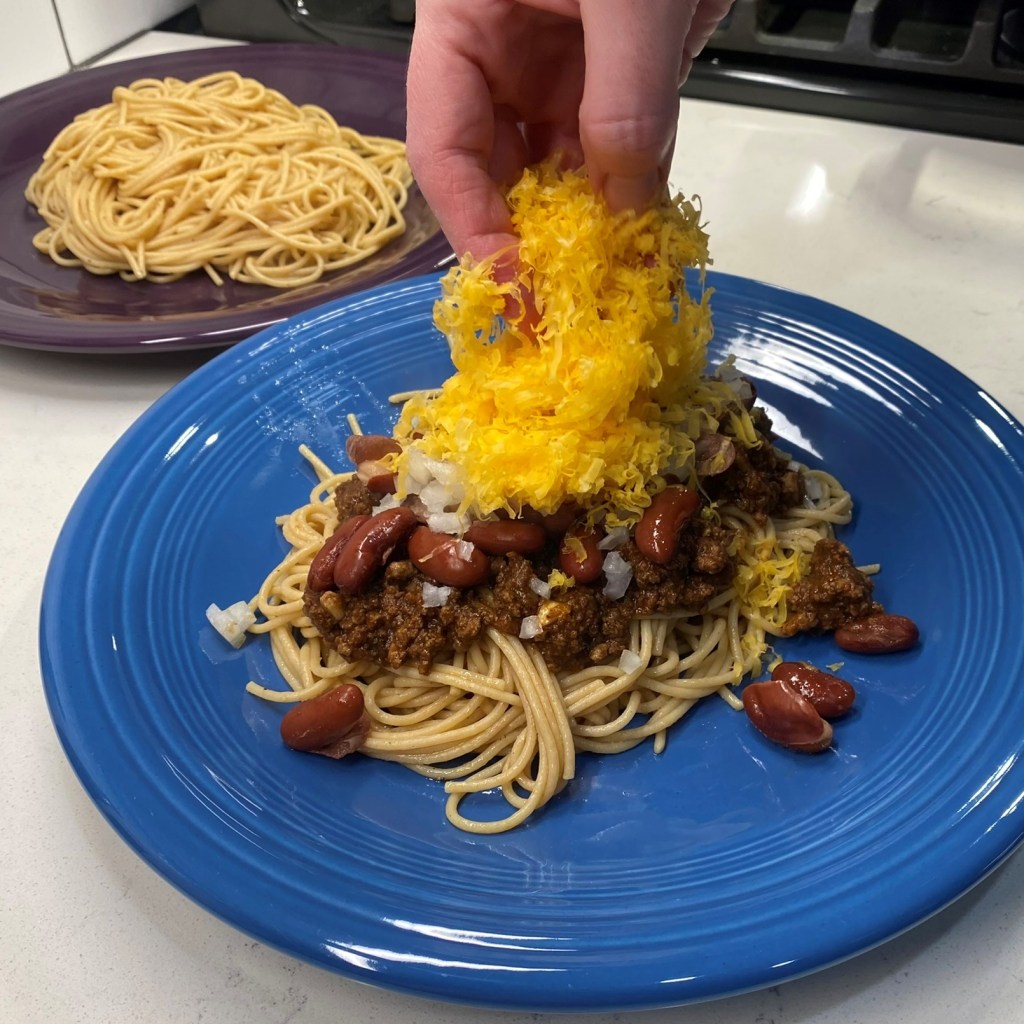
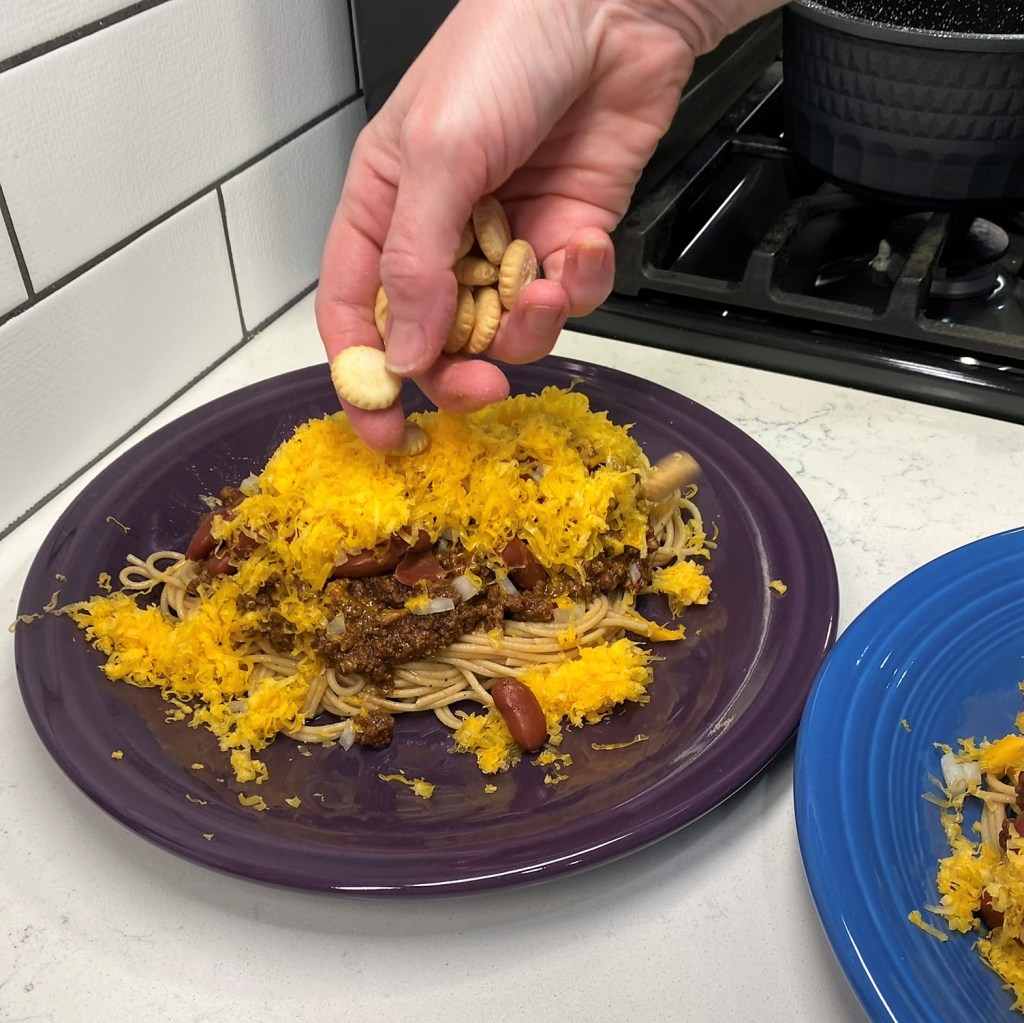
Everything about this recipe is upside-down for me. It defies almost every cooking instinct I live by, except the most important one—it’s delicious! Cincinnati Chili is unlike any other chili you’ve tried. It does not have spicy Mexican or even smoky Tex-Mex flavors, and that’s because its roots are Mediterranean. The cooking begins not with browning meat and onions, but with water and a small amount of tomato juice in the pan. The spices come next, and they are not the ones you would ordinarily associate with chili—including cinnamon, cloves, allspice and bay leaf. The raw meat is simmered directly in the liquid, so it stays very fine-textured (much like my recipe for hot dog chili). And the most noticeable difference is in the presentation—this “chili” is served on a bed of spaghetti and buried under shredded cheddar cheese, and any “way” you like it. Honestly, it doesn’t seem like chili at all.

Top with any of the traditional ingredients. Make it “all the way” with heated kidney beans, onions and fine shredded cheddar cheese.

This tasty dish was born when two brothers settled in Cincinnati, Ohio from their native Greece and opened a restaurant. Their recipe for a hot dog chili topping was seasoned with all the flavors of the Mediterranean, and it was such a hit with the locals, they eventually began serving it as a signature entrée, and “Cincinnati chili” earned its title as the most iconic food of the city.

My first taste of Cincinnati chili did not happen in southwestern Ohio, but in Greensboro, N.C., in a hidden little downtown gem called Cincy’s. It’s a woman-owned business with bragging rights of being the city’s oldest downtown eatery. This out-of-the-way place is only open three hours a day for lunch, and it happens to be a short walk from the radio station where I used to work. Despite the limited hours, Cincy’s was usually jumping, and though it offers a wide variety of sandwiches, wraps and burgers, the restaurant is best known for its namesake, Cincinnati-style chili.

I looked at several “authentic” online recipes for this dish, and especially at the reviews, to see what natives of Cincy—the experts, if you will—had to say in feedback, and that became the basis for my version. This final composition is based on my taste buds’ memory of those downtown lunches from yesteryear.

What I have plated up here is every bit as good as I remember, though I’m sure I’ll have to visit Cincy’s again soon, just to be sure!


Ingredients

2 3/4 cups water

1 cup tomato sauce or strained puree (no chunks!)

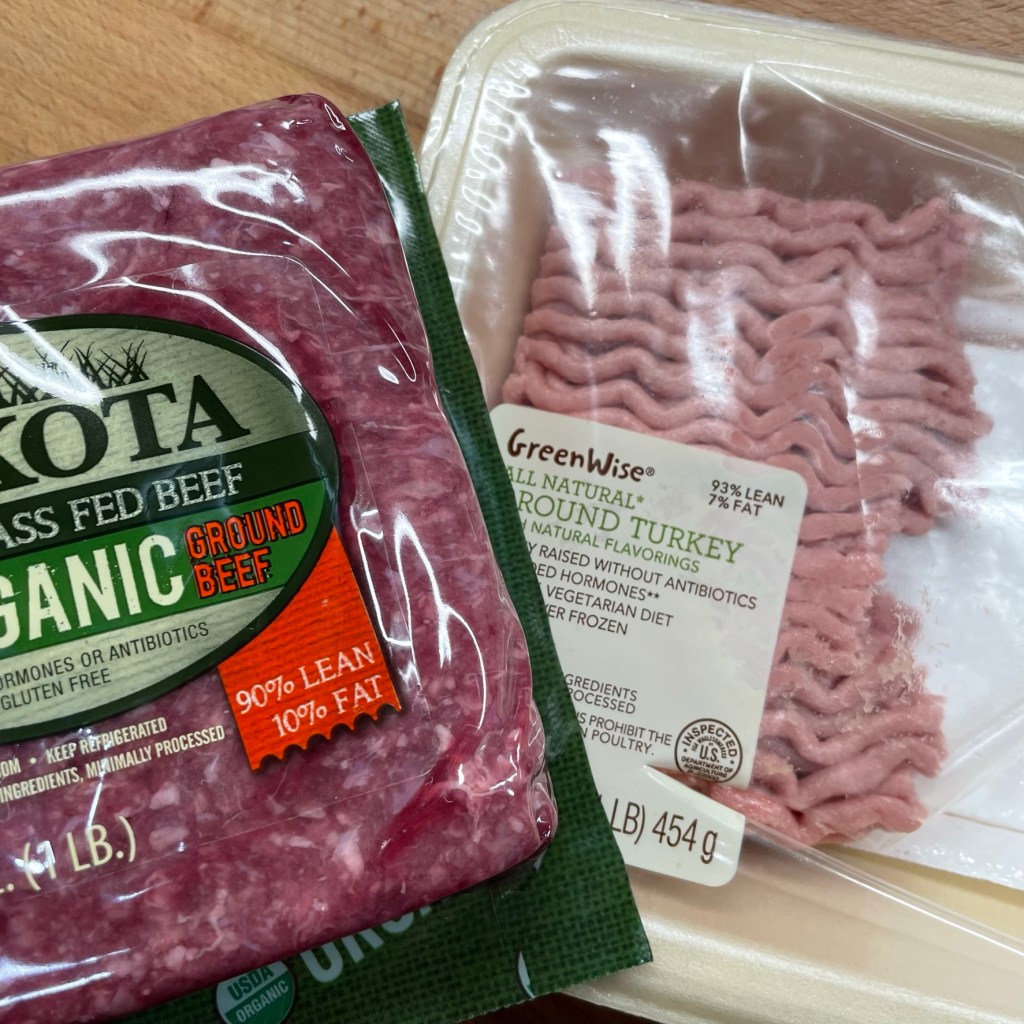
1 lb. lean ground meat* (see ingredient notes)

4 cloves fresh garlic, minced

¼ cup red wine vinegar*


Dry Seasonings:

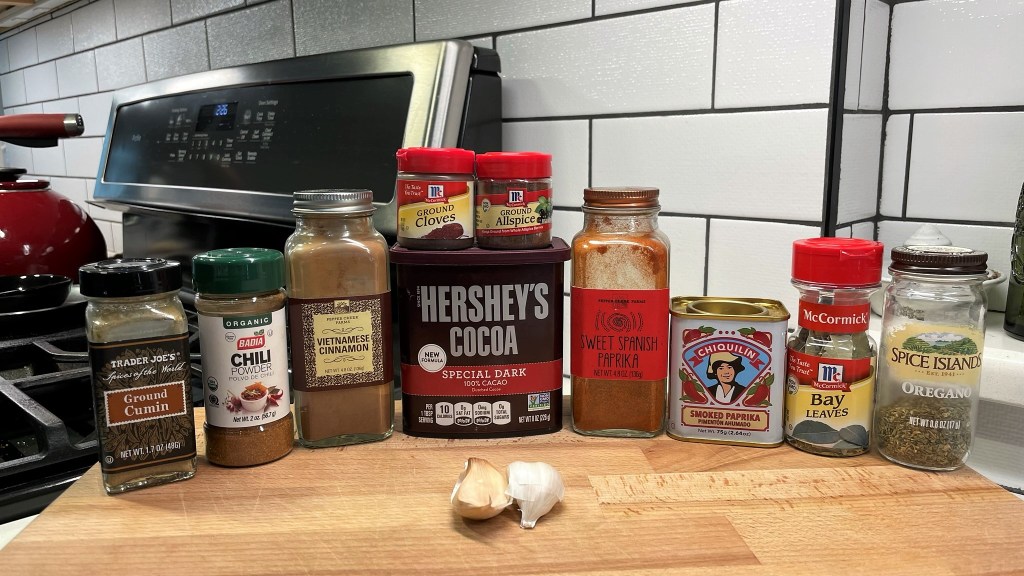
Is there anything from my spice cabinet that ISN’T in this so-called chili?

1 Tbsp. chili powder*

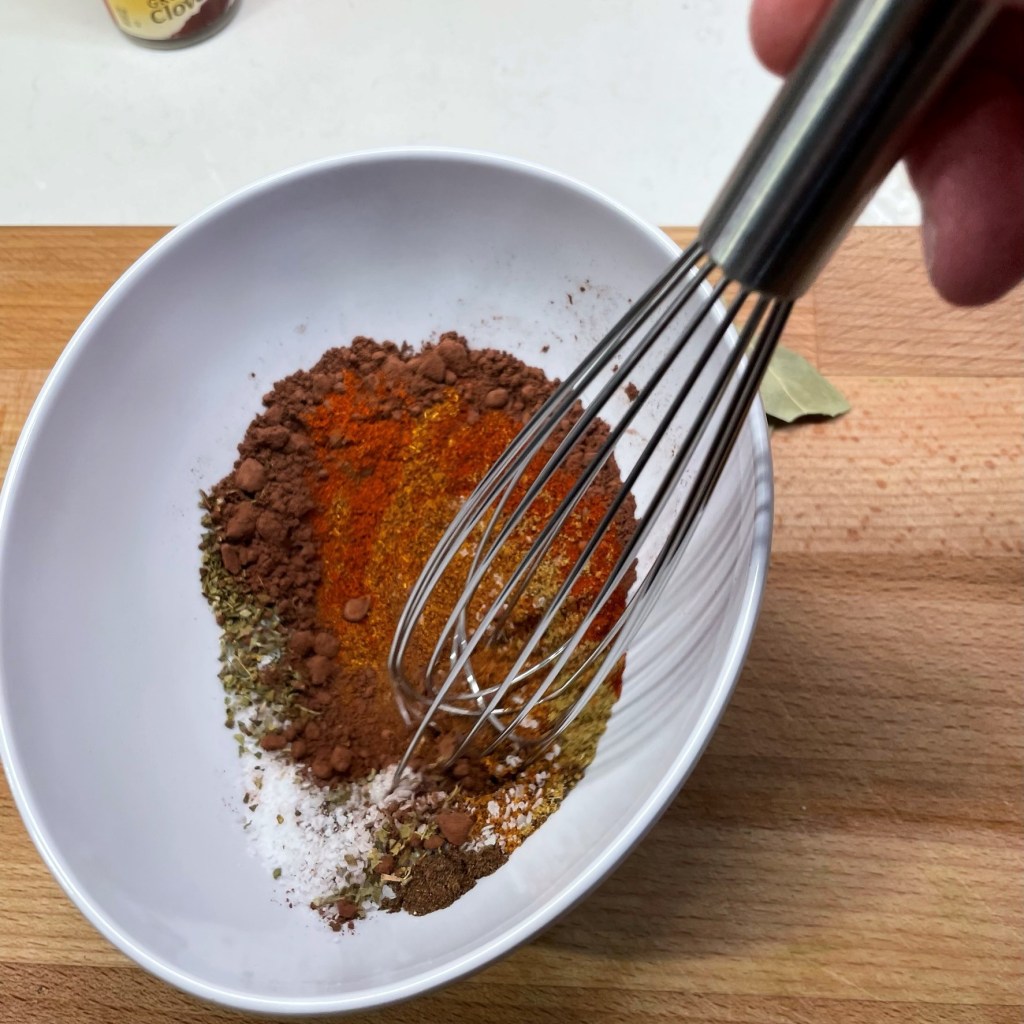
1 ½ tsp. cocoa powder

1 tsp. ground cinnamon

1 tsp. sweet Spanish paprika

1 tsp. smoked paprika*

½ tsp. ground cumin

½ tsp. dried oregano

¼ tsp. ground cloves

¼ tsp. ground allspice

1 tsp. kosher salt (or 3/4 tsp. regular table salt)

Several twists freshly ground black pepper

2 dried bay leaves


For serving:

½ lb. spaghetti (I used whole wheat)

1 can light red kidney beans, rinsed and warmed

½ cup finely minced onion

4 oz. finely shredded cheddar (I used medium sharpness)

Oyster crackers, if desired


*Notes

Any combination of lean (90%) ground beef or turkey works well in this recipe, but for a vegetarian version you could substitute with a combination of cooked lentils and cracked bulgur wheat, as they do at the restaurant where I first enjoyed this dish. Follow the package recommendations for cooking time of those products and add them to the pot at the appropriate time to avoid overcooking them.

Apple cider vinegar would probably work in this recipe as well, but given that the recipe has Mediterranean roots, I used red wine vinegar, which is typical in Greek cuisine.

Chili powder is one of those spice ingredients that is different from one brand to the next. Peek at the label to see whether your chili powder contains salt or any other ingredients you may want to adjust in the overall recipe.

My smoked paprika is a sweet (not hot) variety. The slight smokiness was nice in this dish, but if you don’t have this, you could simply double the amount of regular sweet paprika.


Instructions

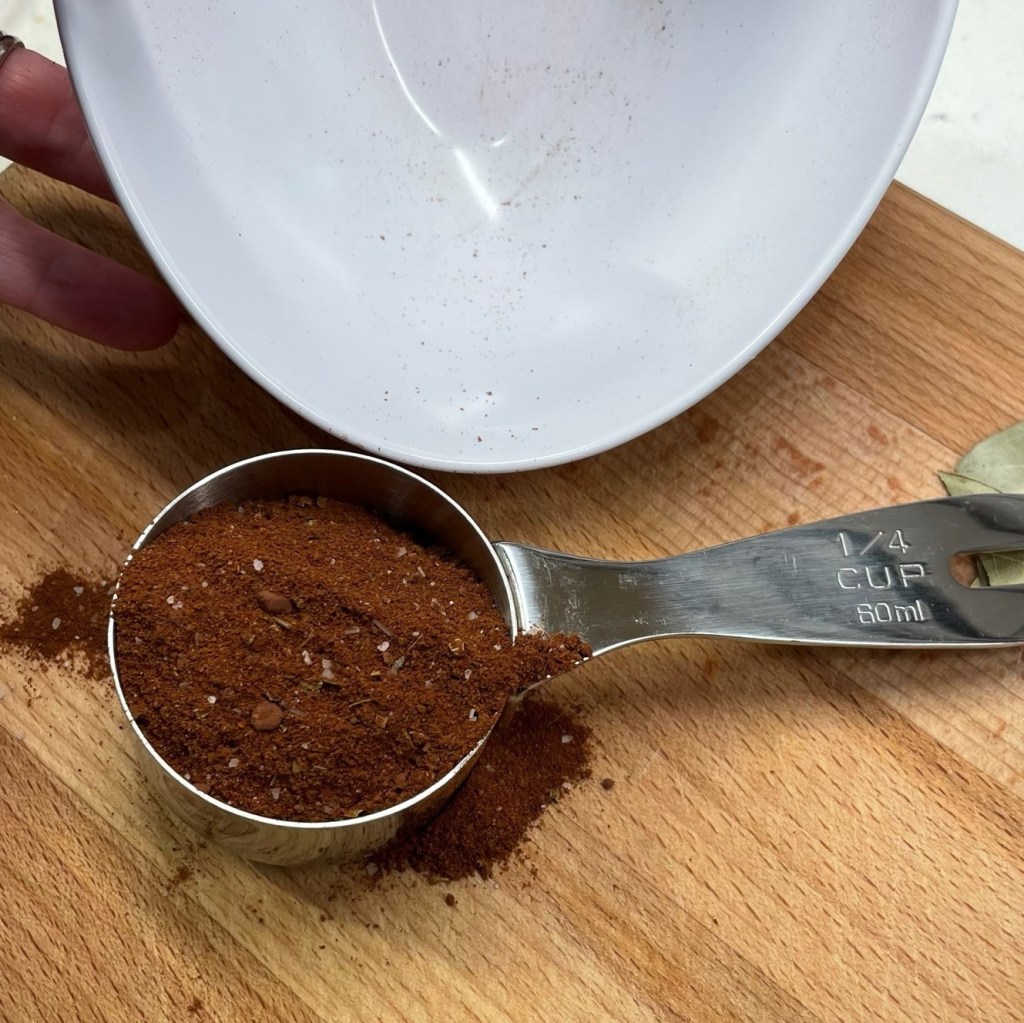
  1. Combine all the dry seasonings (except bay leaves) in a bowl and set aside.
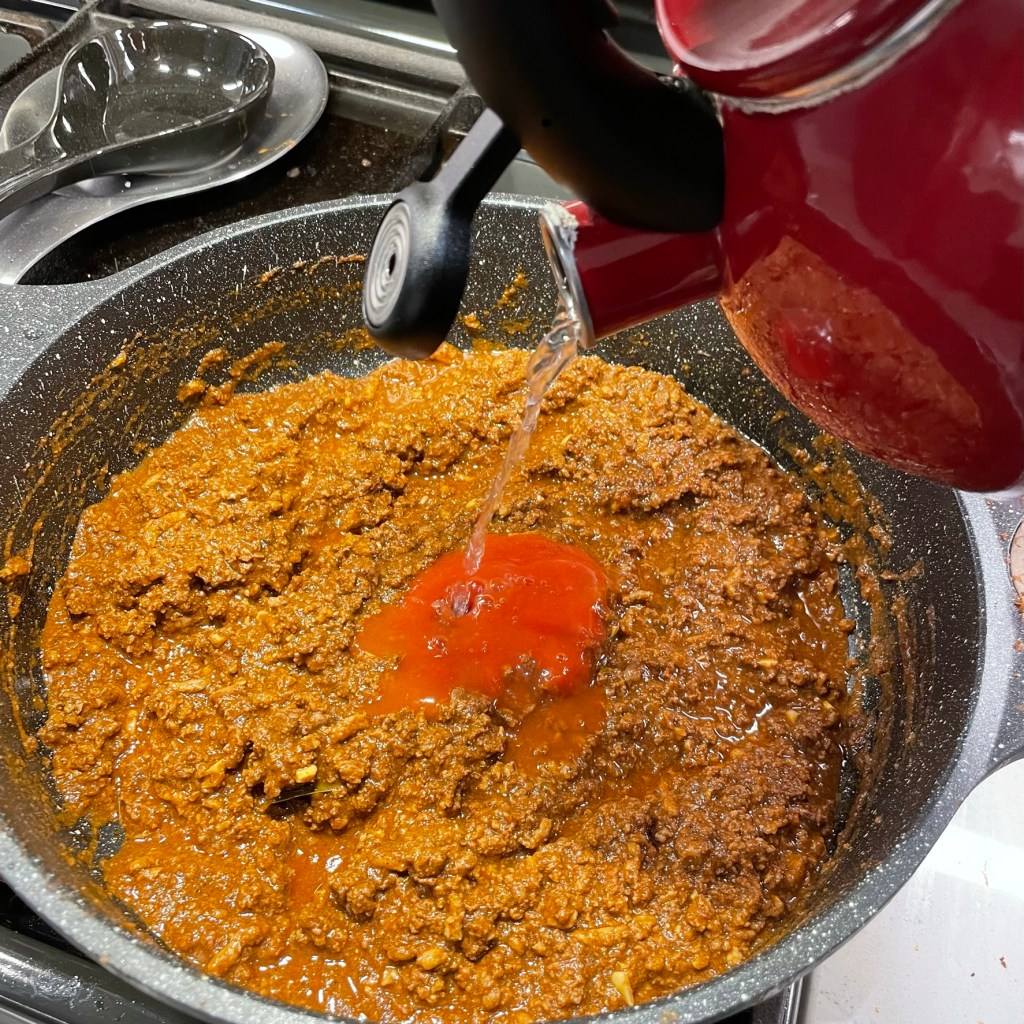
  2. Combine the water and tomato sauce in a large saucepot, over medium-low heat. Stir in the dry seasonings, garlic and red wine.
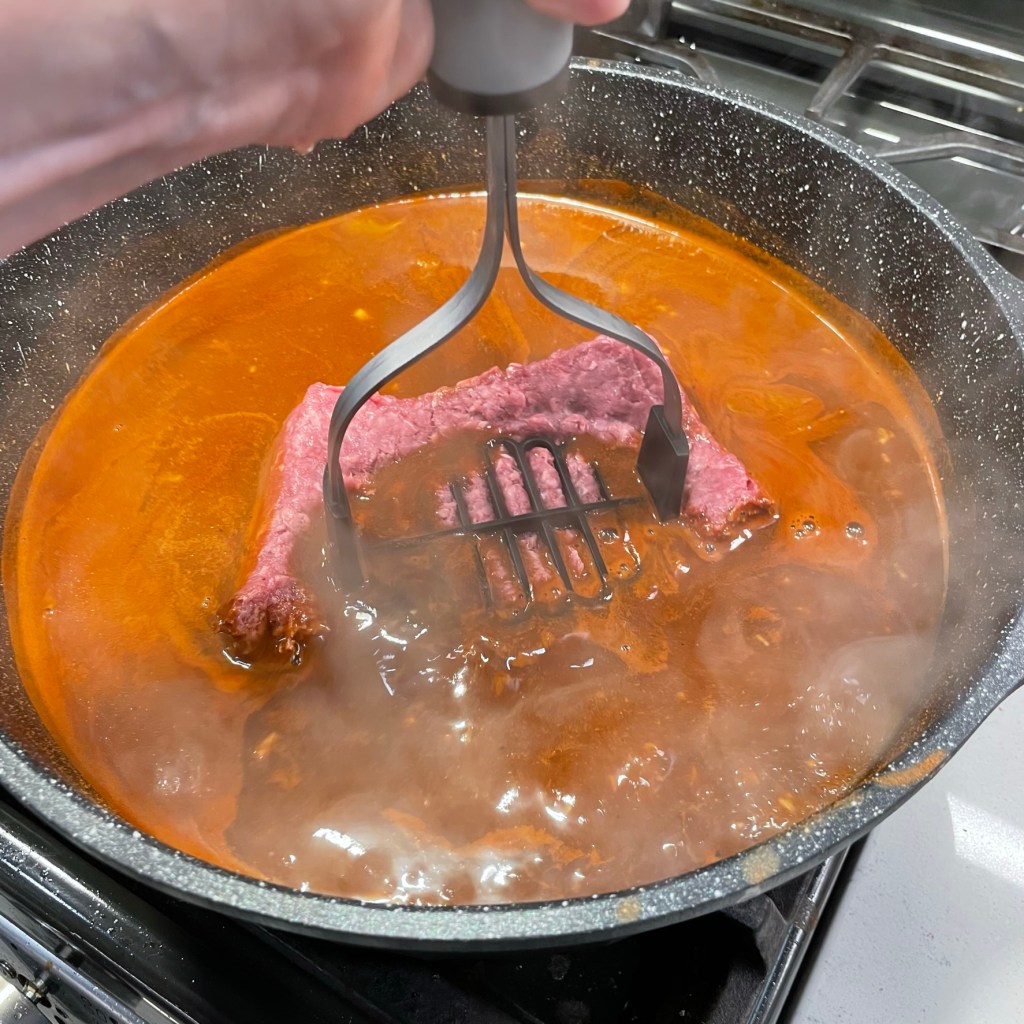
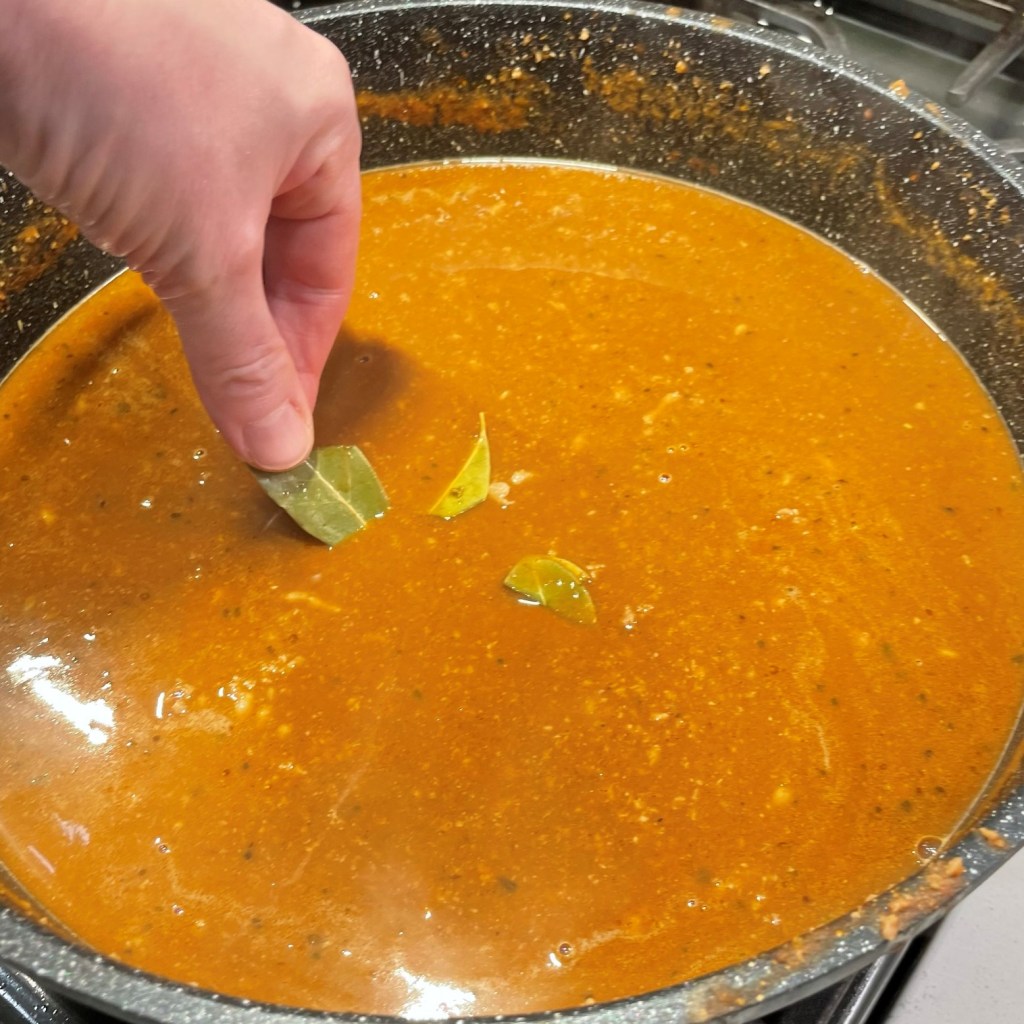
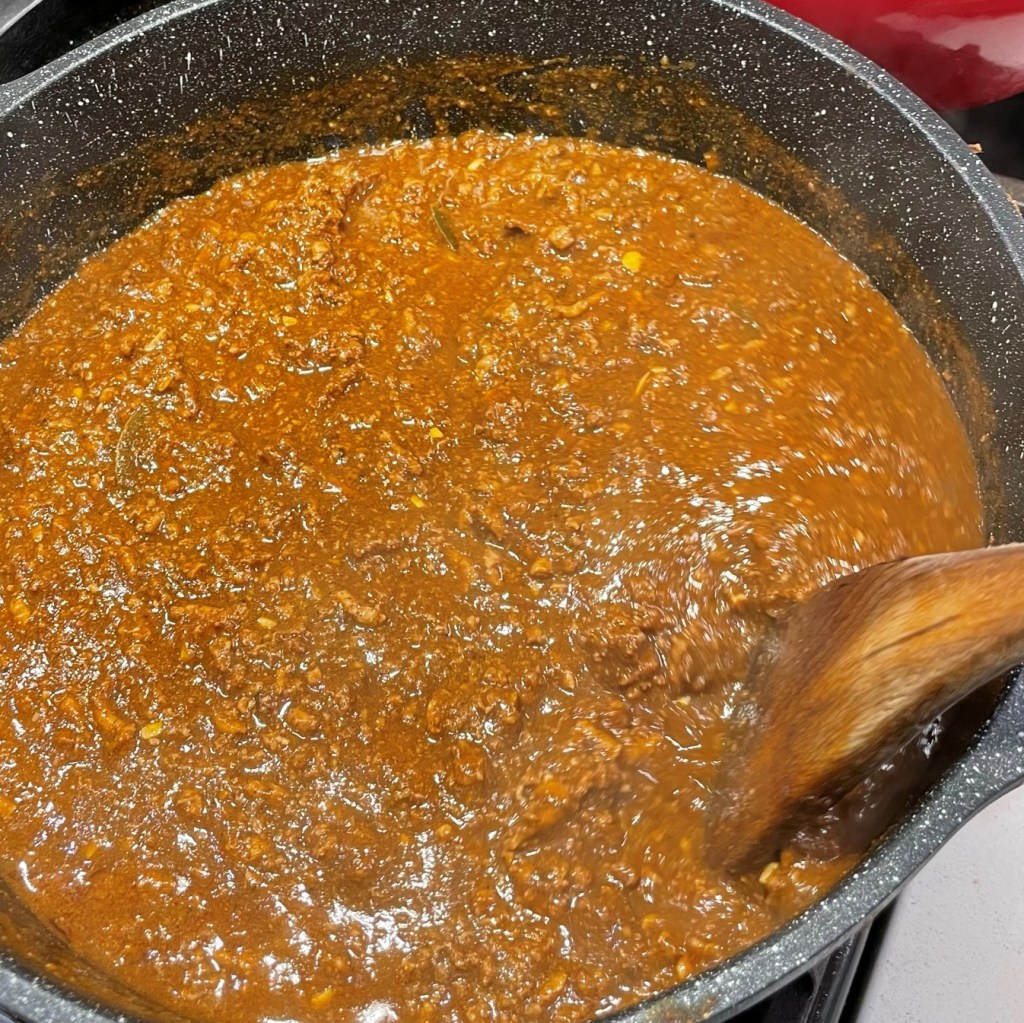
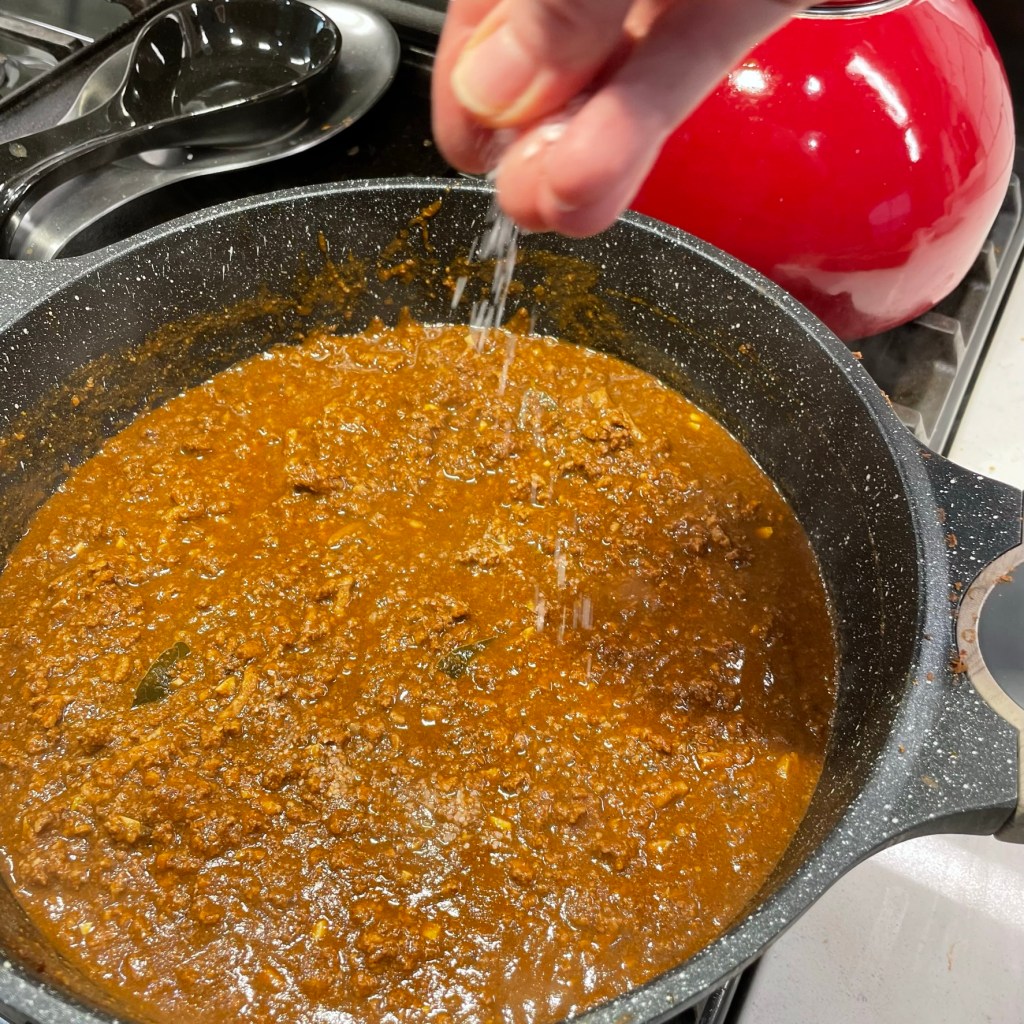
  3. Crumble the raw ground meat into the pot and use a utensil or potato masher to break it up as much as possible into a fine texture. Add the bay leaves. Bring the mixture to a low boil, then reduce heat and cover the pot. Simmer, stirring occasionally, until liquid is reduced, and sauce is thick but not dry. Give it at least an hour. Add a bit more tomato sauce and water, as needed, if the sauce has cooked down too much. It should be more meaty than “saucy.”
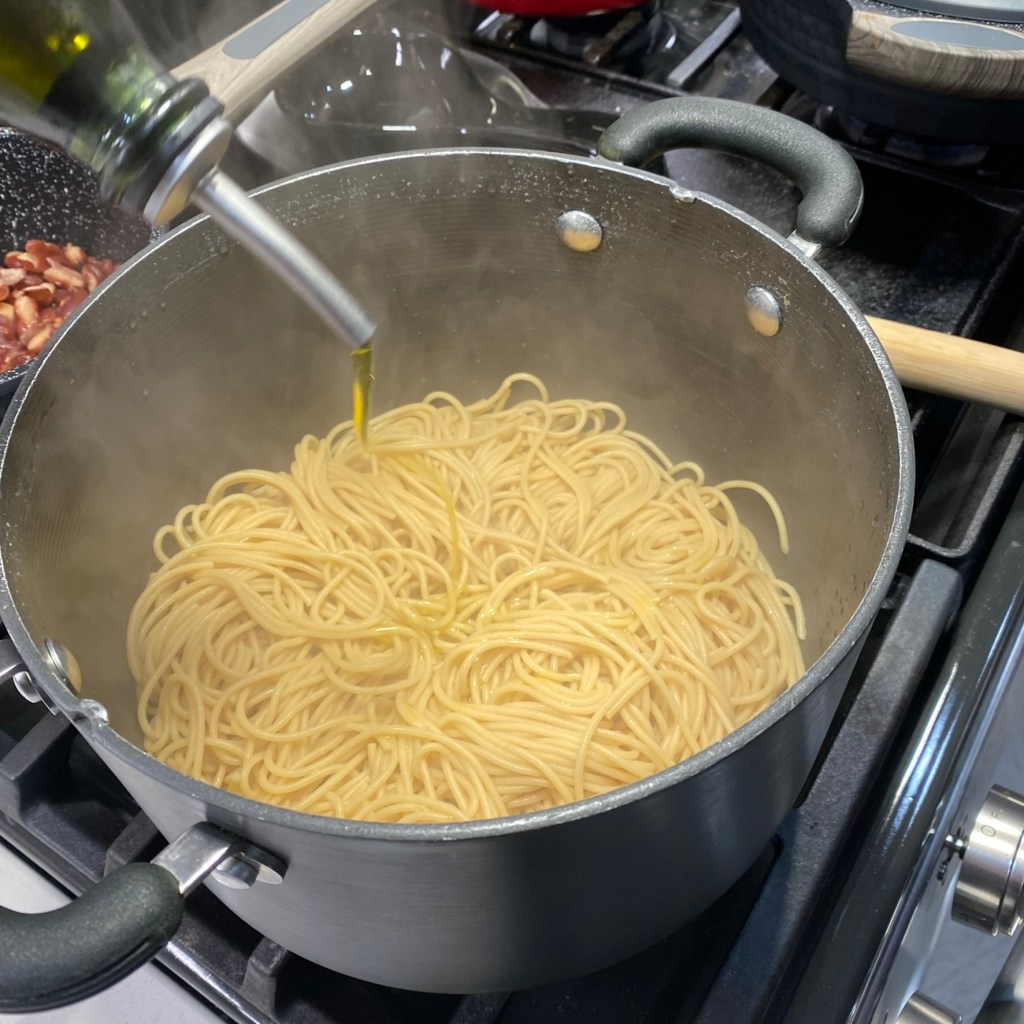
  4. Cook spaghetti noodles to al dente stage, then drain and immediately toss with a bit of oil or butter to keep the noodles from sticking.
  5. Plate spaghetti and top with meat sauce, plus any of the other toppings you like. Here’s how they break it down, Cincy style:

“2-way” = spaghetti with chili only

“3-way” = with chili and cheese

“4-way” = with chili, cheese and beans OR chili, cheese and onions

“5-way” = with chili, cheese, beans AND onions (the best)!


Zero-Proof Sangria (for Dry January)

My husband and I are 16 days into our alcohol-free pledge to start the new year. For the most part, I have not minded this experiment of Dry January. The break from alcohol has already had some positive effects on my body; most noticeably, I feel more hydrated in ways that I did not expect. My skin and hair are not as parched, despite the recent cold snap that has kept us indoors with the heat running constantly. I have found more focus and energy for tasks that need to be done around the house, so that’s a good thing. And I am astonished at how much more sleep I am getting, and that alone makes it worth the sacrifice. Still, I have caught myself counting the days, making it unlikely that this would become a permanent lifestyle change.

When my husband and I made the decision to give our bodies a break from alcohol, we guessed correctly that the biggest challenge to our lifestyle would come on Friday nights. Our ritual, since the beginning of the pandemic, has been to finish the work week with (usually bourbon) cocktails, homemade pizza and, whenever it was scheduled, Quarantunes, the Facebook Live concert featuring our pals Glenn and Oria Alexander.

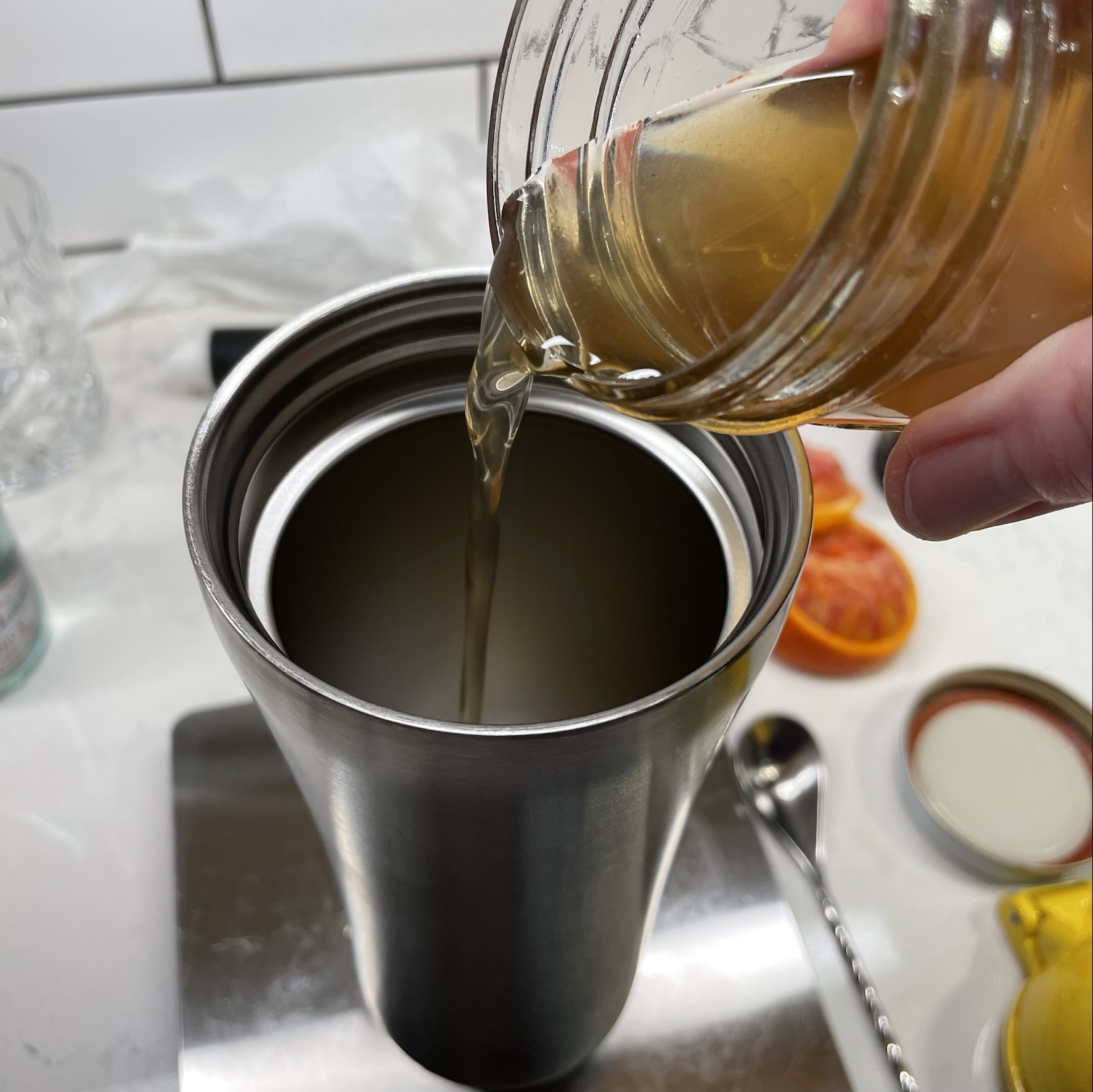
Ahead of the first dry weekend, I threw all my creative effort into an attempt at zero-proof cocktails. In my mixology experimenting over the past couple of years, I have already learned how valuable infused simple syrups can be for delivering extra flavors into a drink, so that is where I started my chemistry challenge.

For Les, I whipped up a smoky, spicy cherry simple syrup—featuring smoked black peppercorn, pink peppercorn, unsweetened black cherry juice and real vanilla paste—to mimic the essence of an Old Fashioned. For myself, I made another simple syrup—steeped with white peppercorns and coriander seed—and it had a nice balance of bite and spice that I thought could be a reasonable stand-in for tequila in either a paloma- or margarita-style drink. I liked this one so much that I named it “white-hot syrup,” and I expect that I will use it in real cocktails at some point in the future.

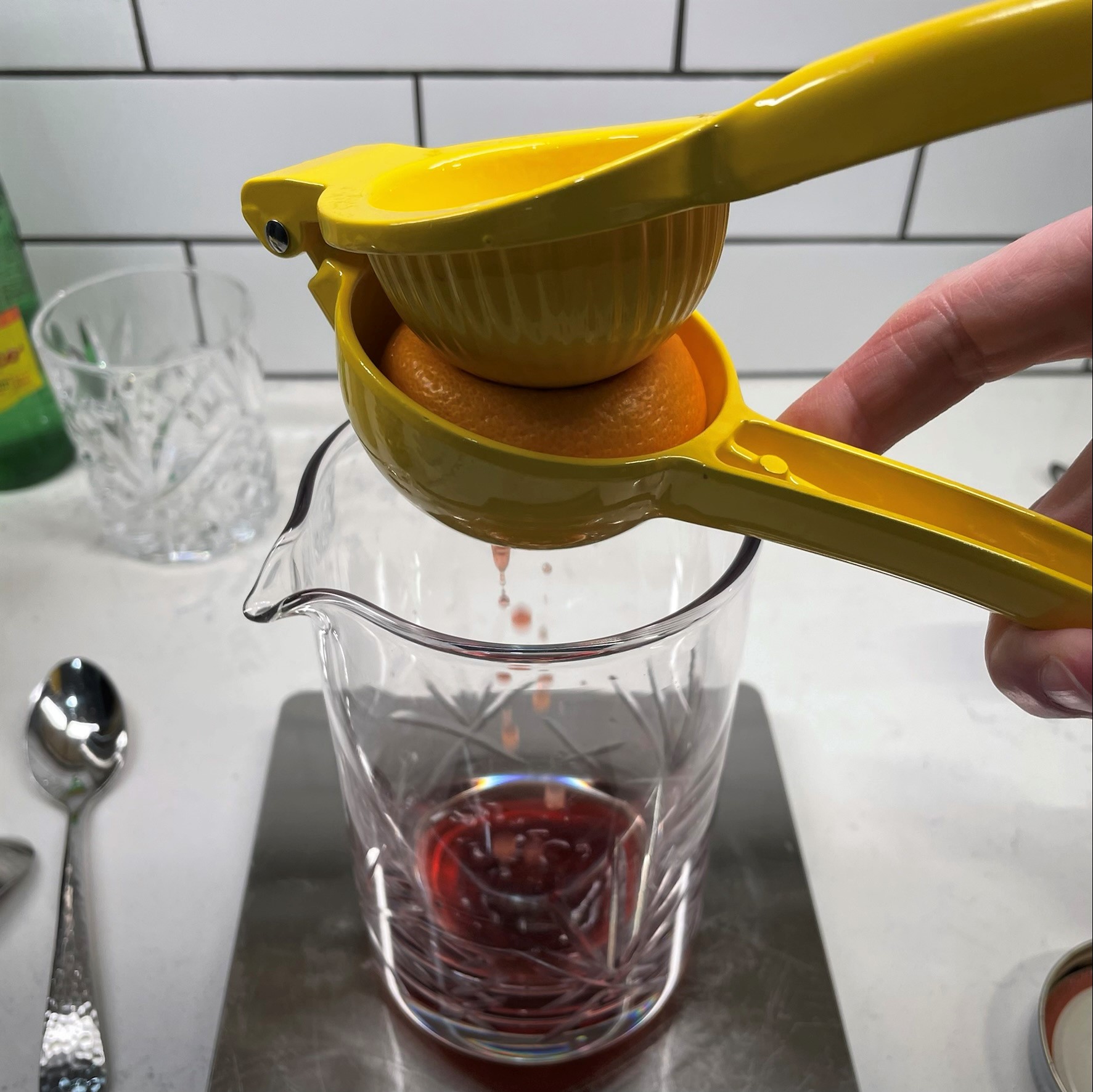
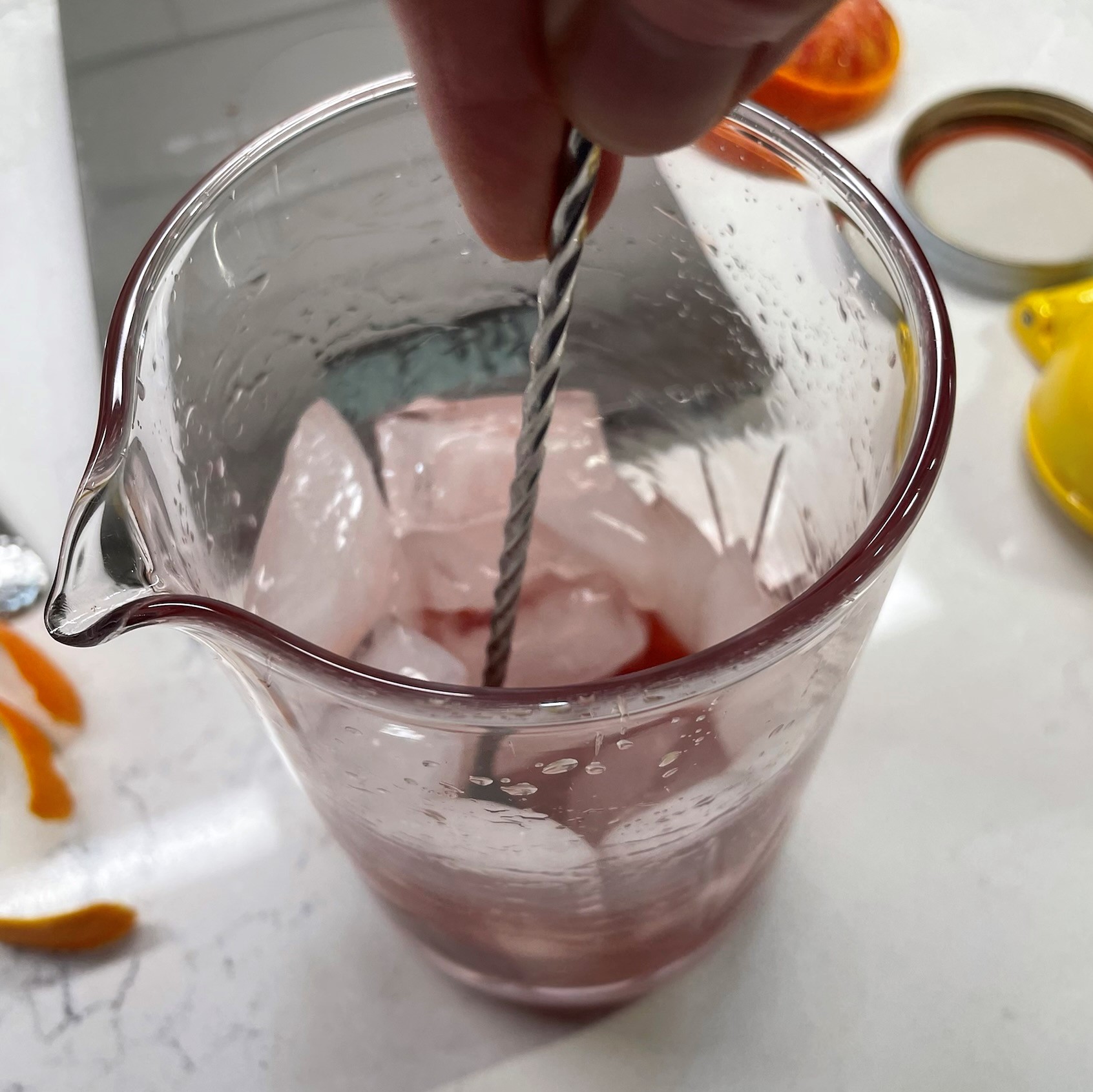
When Friday night arrived, I pulled out all my usual tools for cocktail setup—my mixing glass, shaker, citrus juicer, bitters, rocks glasses and giant ice cubes. Only it wasn’t as easy as mixing up real drinks, which I have had plenty of practice doing. I was a novice again, and I measured, squeezed, stirred, tasted, adjusted, stirred again, tasted again and finally ended up with a couple of drinks that were enjoyable.


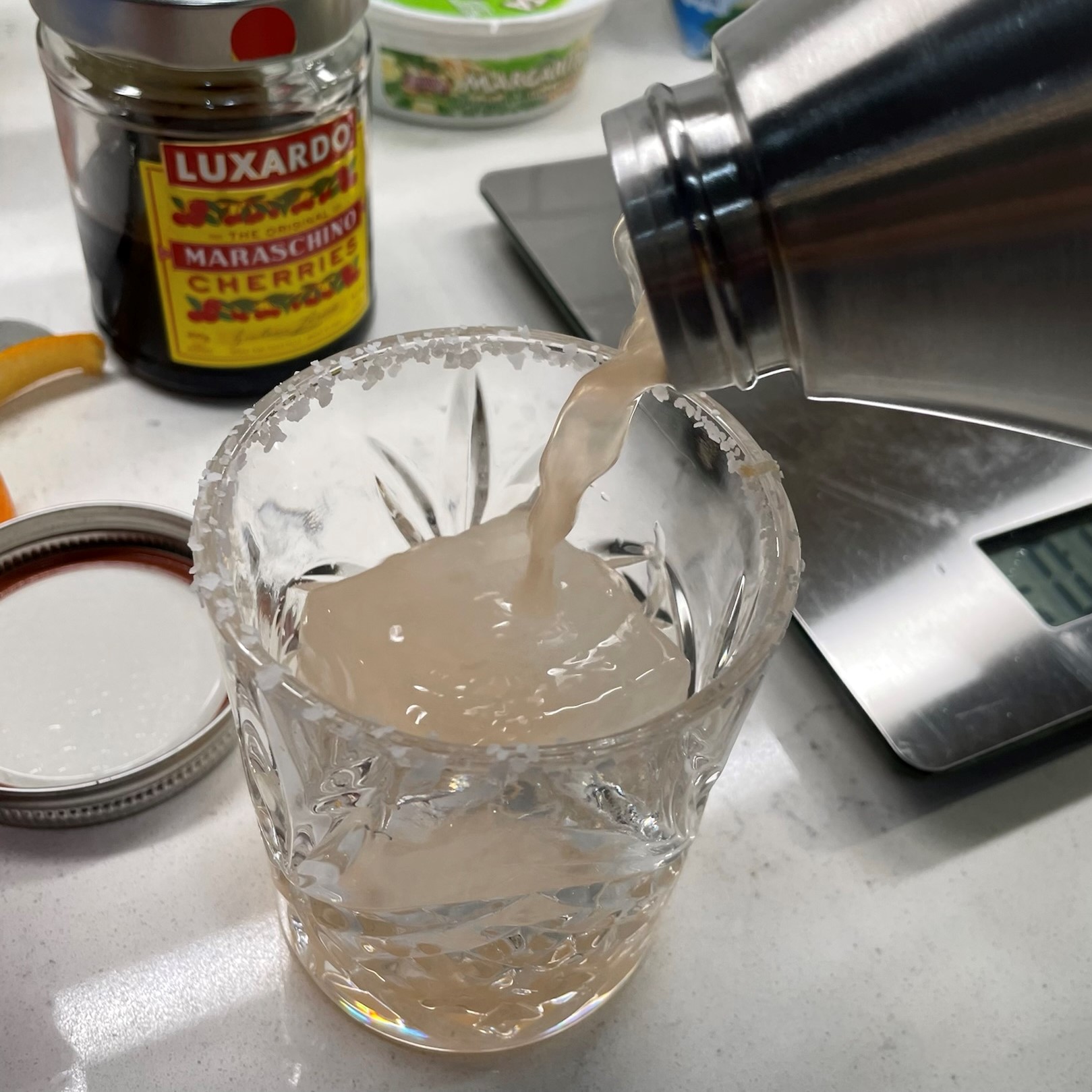
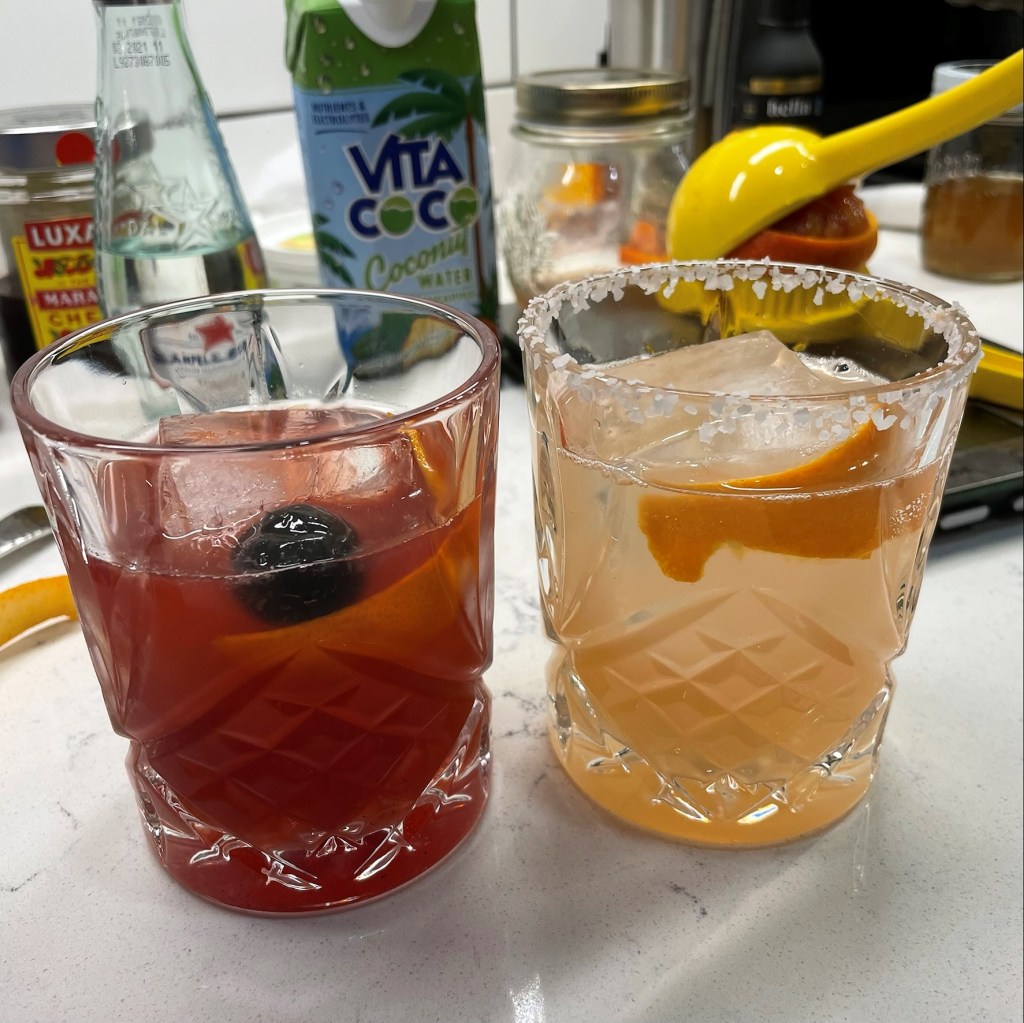
Les’s drink had the smoky black cherry syrup, mixed with freshly squeezed blood orange juice, a couple shakes of orange bitters and a slight splash of oak wood tonic (an interesting find that I’ll describe in a moment), and I even garnished it with a ribbon of blood orange peel and a Luxardo cherry. For my own drink, I blended the white-hot syrup in a shaker with fresh lemon, lime and orange, plus coconut water. I strained it into a salt-rimmed rocks glass, tossed in an orange peel and it called it a “mock-arita.”

Finally, our faux cocktails!

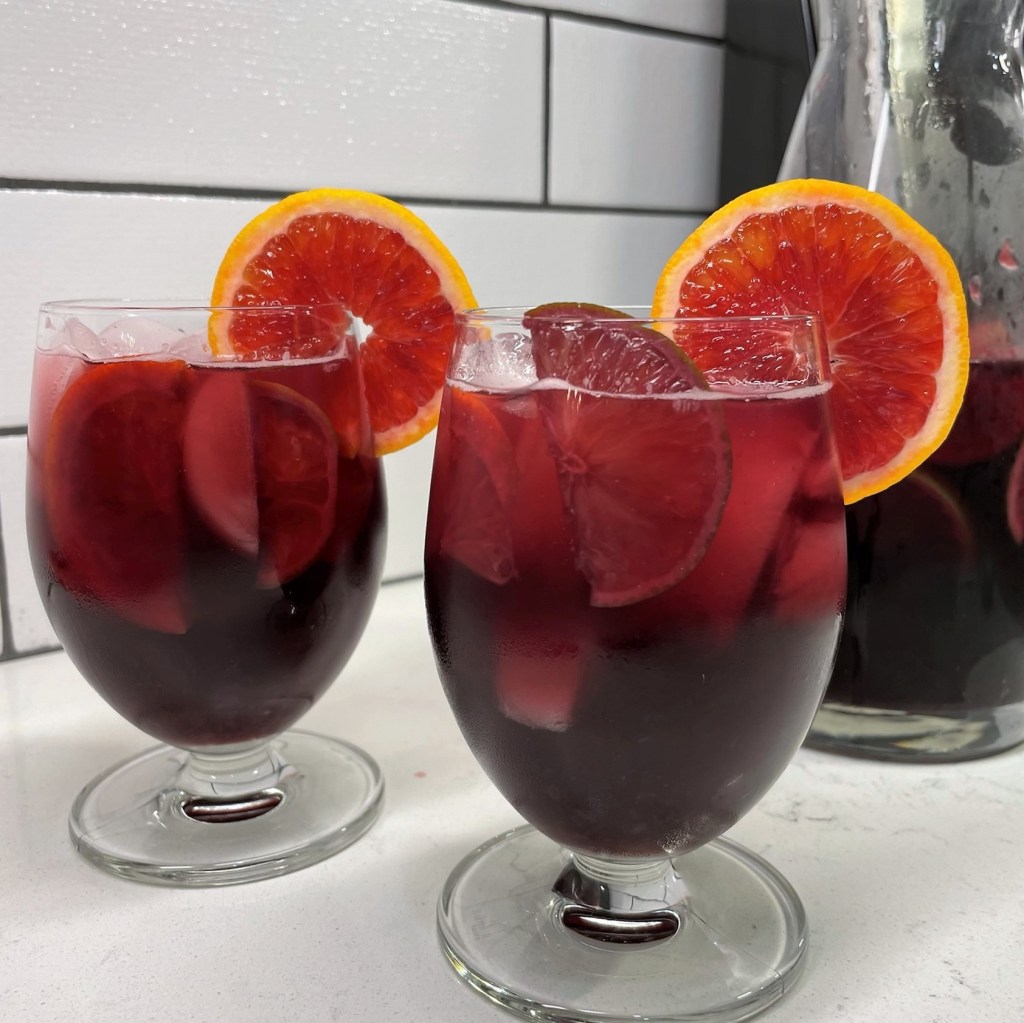
They turned out beautiful, but I spent so much time in the kitchen fiddling with these faux drinks that I missed 35 minutes of Quarantunes, which was the whole purpose of Friday night “cocktails.” And then, cleanup, which was sticky and ridiculous. This past Friday night, I decided on a better, simpler alternative—a zero-proof sangria! I appreciated that I could make it (and adjust to taste) ahead of time so that enjoying it on Friday night was only a matter of pouring it over ice and dressing it up with fresh fruit. No muss, no fuss. More time for pizza and Quarantunes. Perfect!

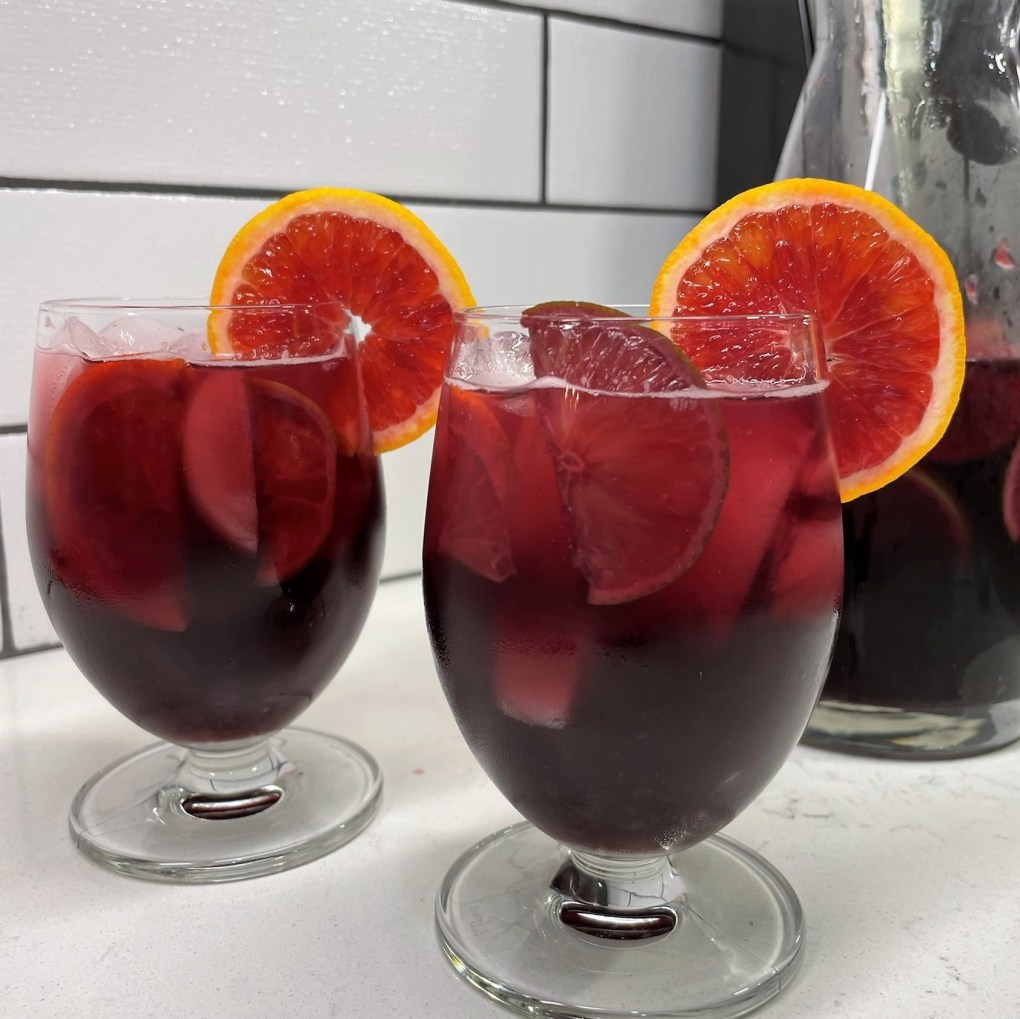
These were fruity, spicy and delicious. Exactly what we needed for Friday night, and no hangover or sluggish feeling on Saturday morning! 🙂

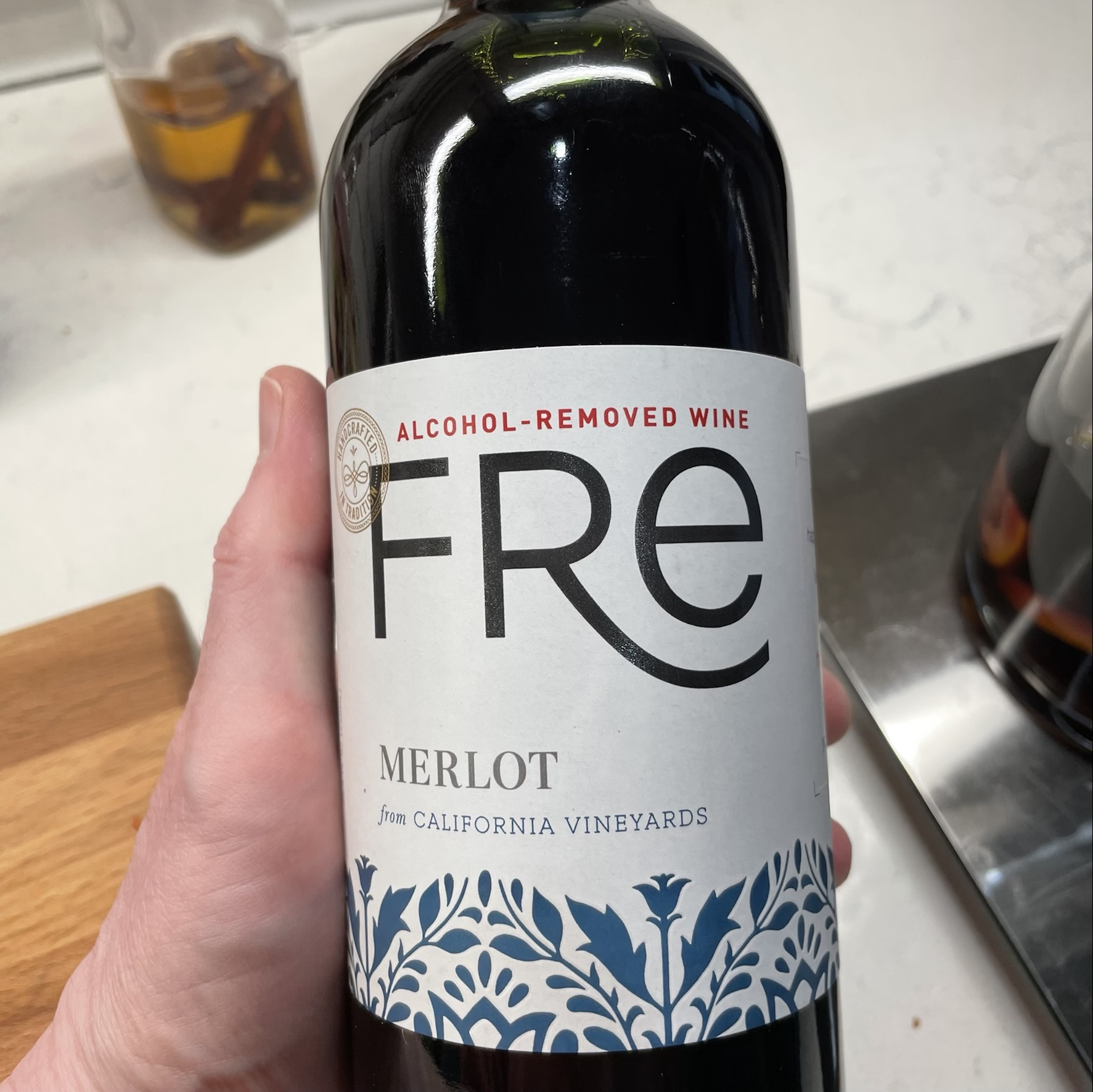
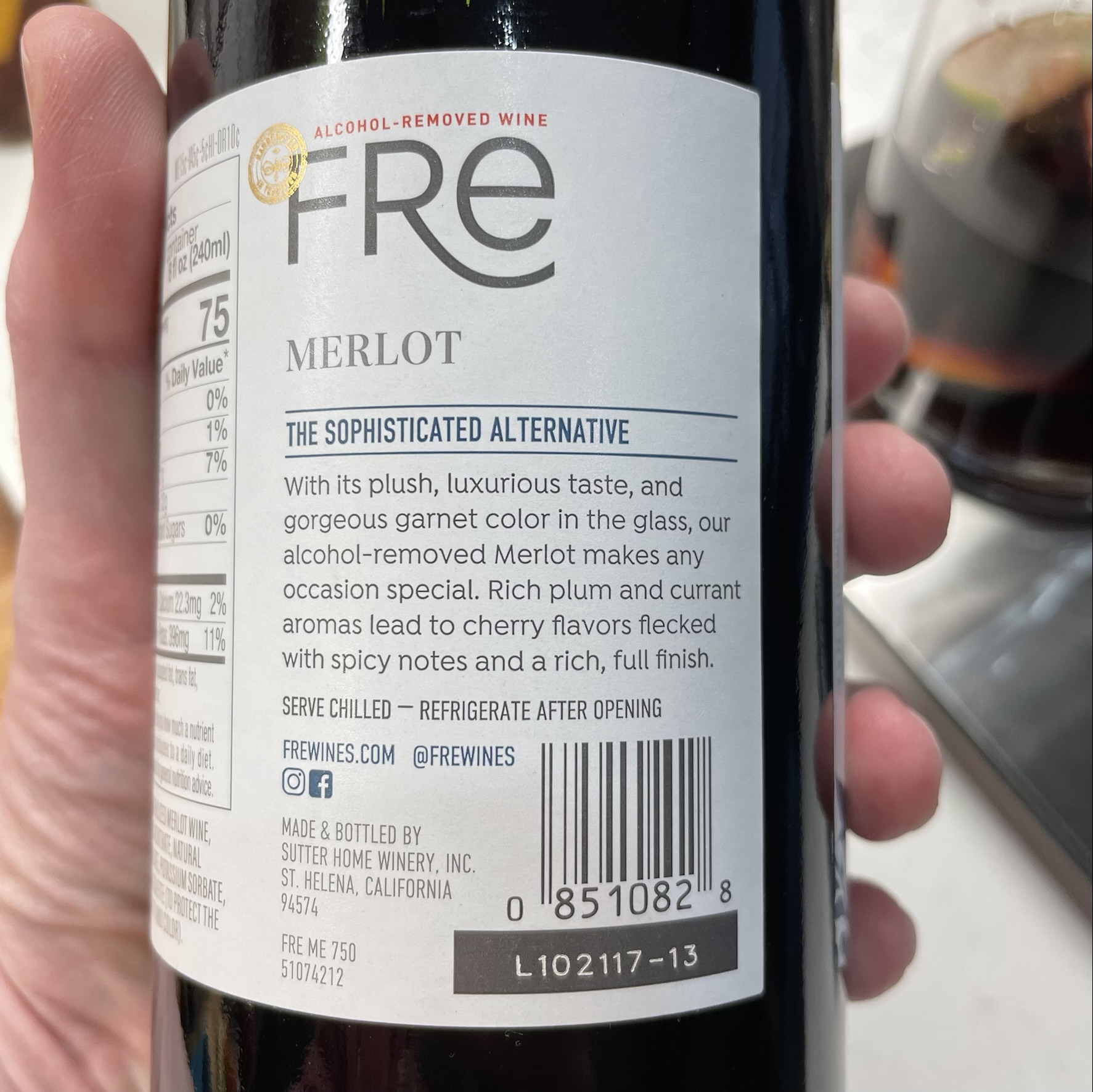
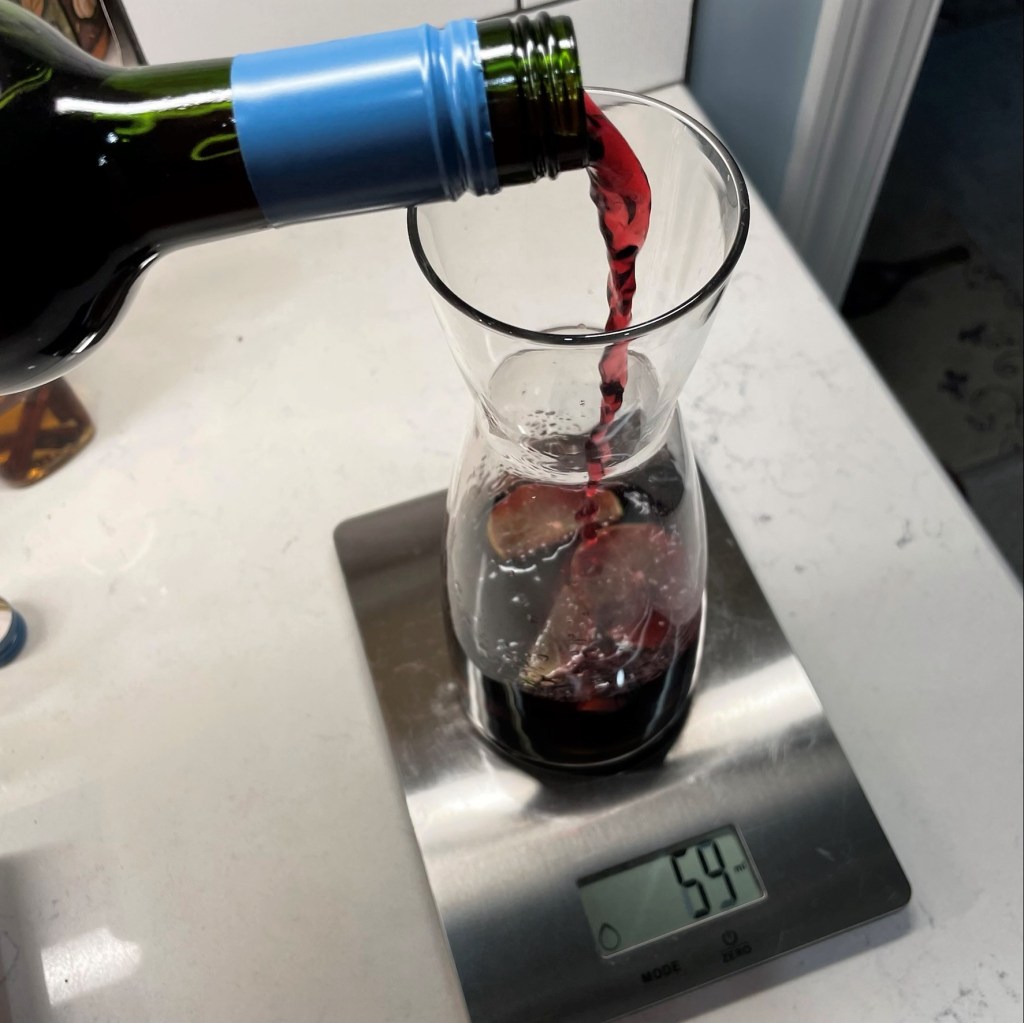
The base of my zero-proof sangria was a “de-alcoholized” Merlot wine. I have seen no-alcohol “wines” before, but for the most part, they were just unfermented, unsweetened grape juice. In other words, flat and mostly flavorless. But a de-alcoholized wine has gone through the process of fermentation, and then has the alcohol removed, either by vacuum distillation or reverse osmosis, just before bottling. It is a fascinating concept, and one that is gaining traction with a significant audience of adults who aim to reduce their booze consumption, whether short-term or for good.


So how does this de-alcoholized wine taste? I’ll be honest—it’s different. I do taste the Merlot in this bottle, but it is missing the complexity and (obviously) the bite of real wine. I chose this for its base flavor but also its lack of sweetness, as I planned to jazz up our sangria with a few sweet ingredients. If I had used any regular grape juice, the sangria would have been cloyingly sweet, not to mention that it would have smacked of Welch’s grape jelly flavor.

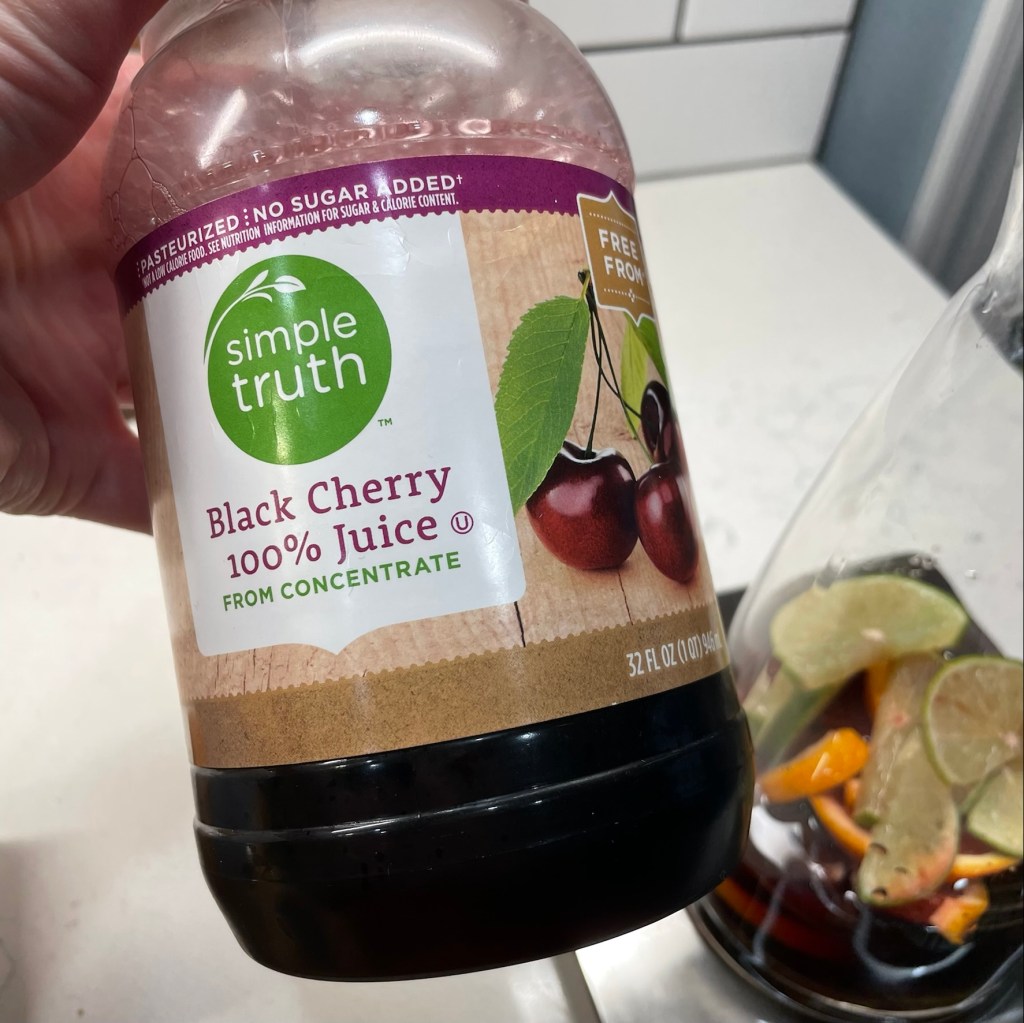
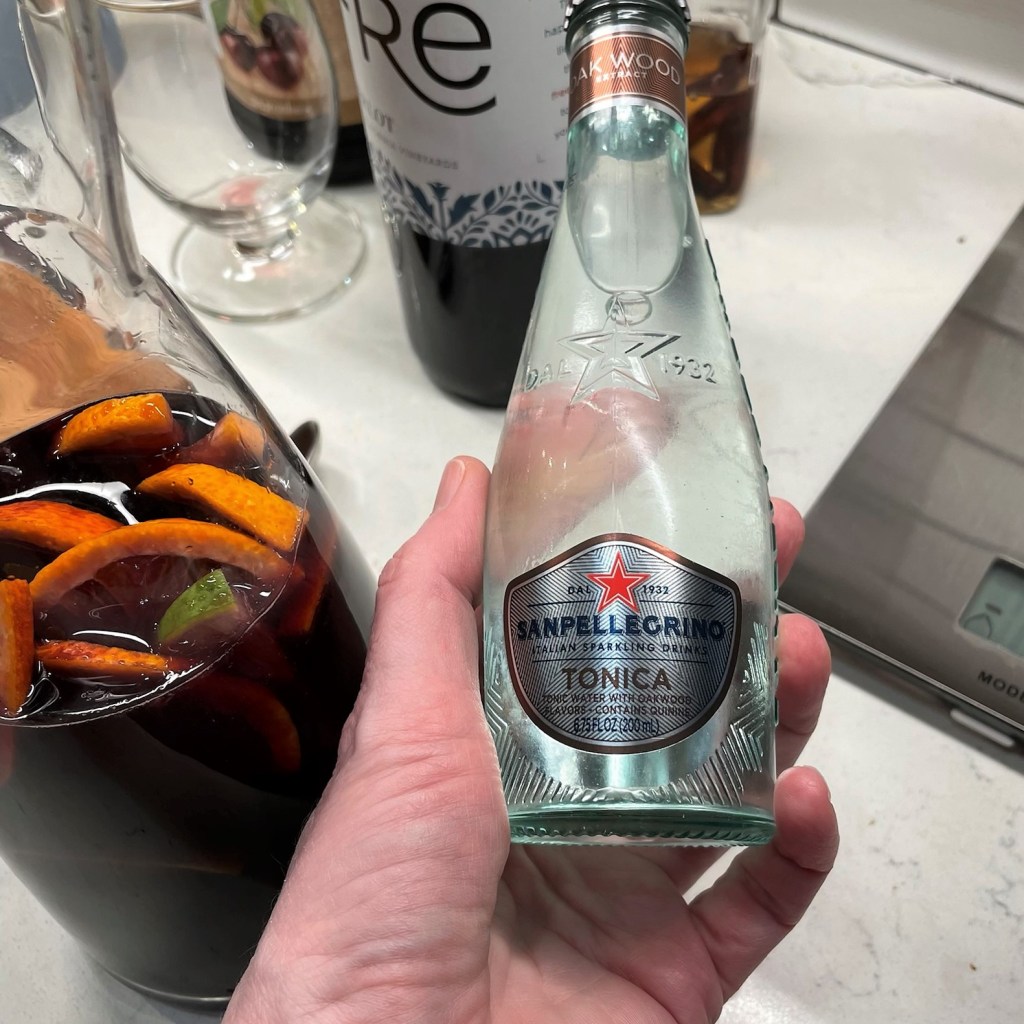
I enhanced the dry “wine” with some of the smoky black cherry simple syrup that I had made the first weekend (recipe is included below), plus cinnamon syrup (also below), fresh citrus, unsweetened black cherry juice, ginger-berry kombucha and (again) the oak wood tonic. This tonic, on its own, has a sharp and bitter flavor with distinctive woodsy flavor. It’s an acquired taste, and one that I’m not sure I’ll ever appreciate on its own. But blended with the other ingredients, it brings a just-right, edgy bite to make my zero-proof sangria feel more “Friday night worthy.”

Cheers!

I would absolutely make this again, for myself or for guests who prefer to abstain from alcohol. There are still plenty of ingredients in my pantry and spice cabinet to experiment with in these remaining days of Dry January, and I’m sure if I keep at it, I’ll discover the perfect formula for amazing zero-proof cocktails. Of course by then, it will be February. 😊


Ingredients for Zero-Proof Sangria

1/2 bottle de-alcoholized Merlot wine (Pinot Noir variety would also be good)

1 large blood orange, washed and sliced thin

1 good-size lime, washed and sliced thin

3 oz. smoky-spicy black cherry syrup (recipe follows)

1 oz. cinnamon syrup (recipe follows)

4 oz. unsweetened black cherry juice

2 oz. tonic water (San Pellegrino Oak Wood Tonica, if you can find it)


For each serving:

1 oz. berry flavored kombucha (adds a “fermented” flavor)

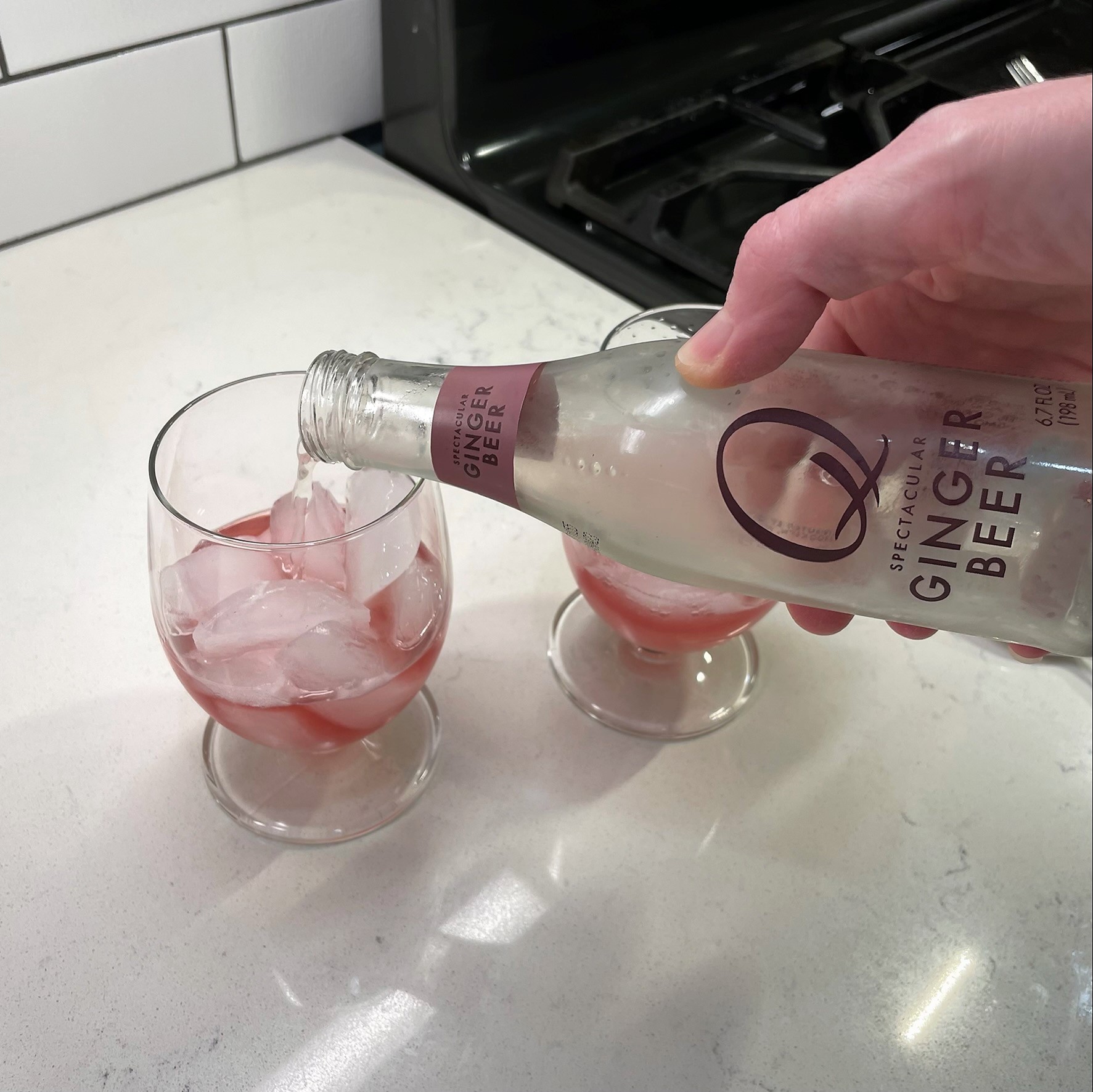
1 oz. strong ginger beer (adds bite and effervescence)

Fresh slice of citrus to garnish


Instructions

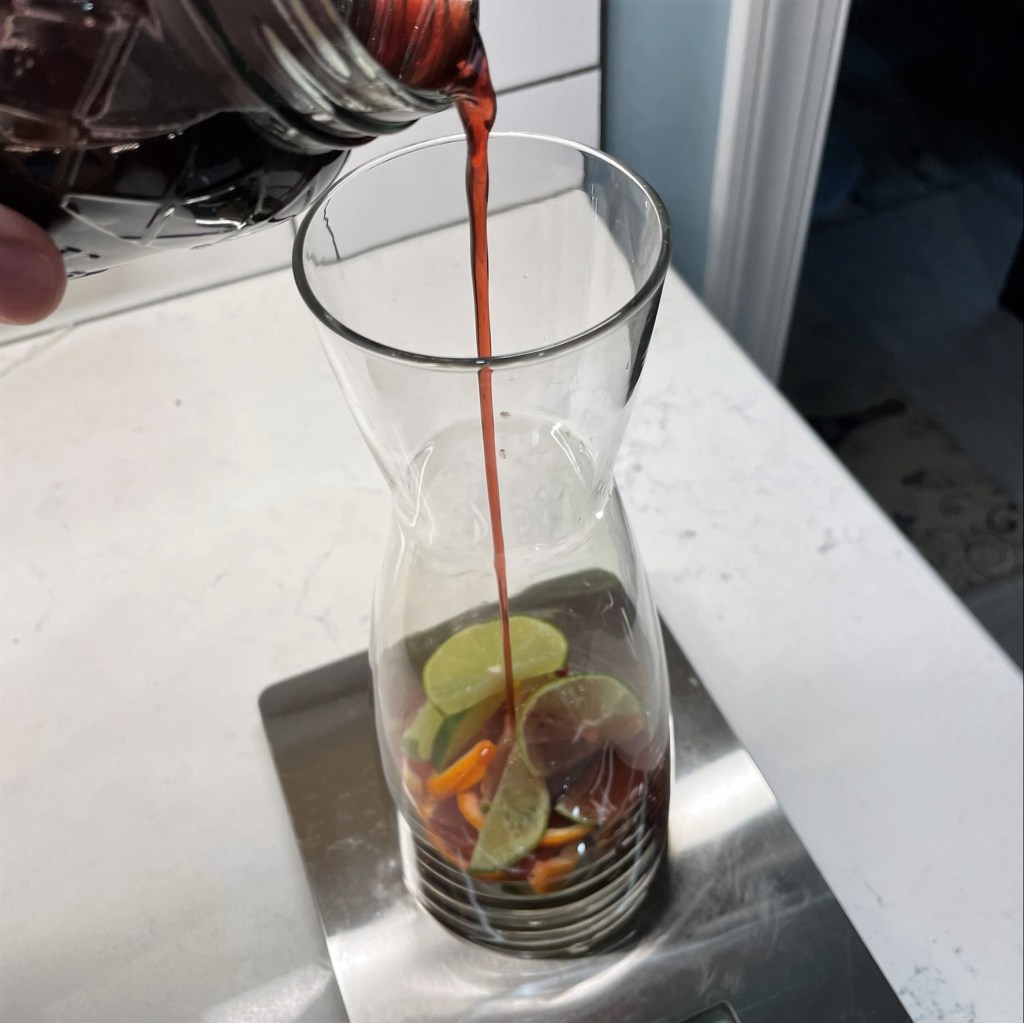
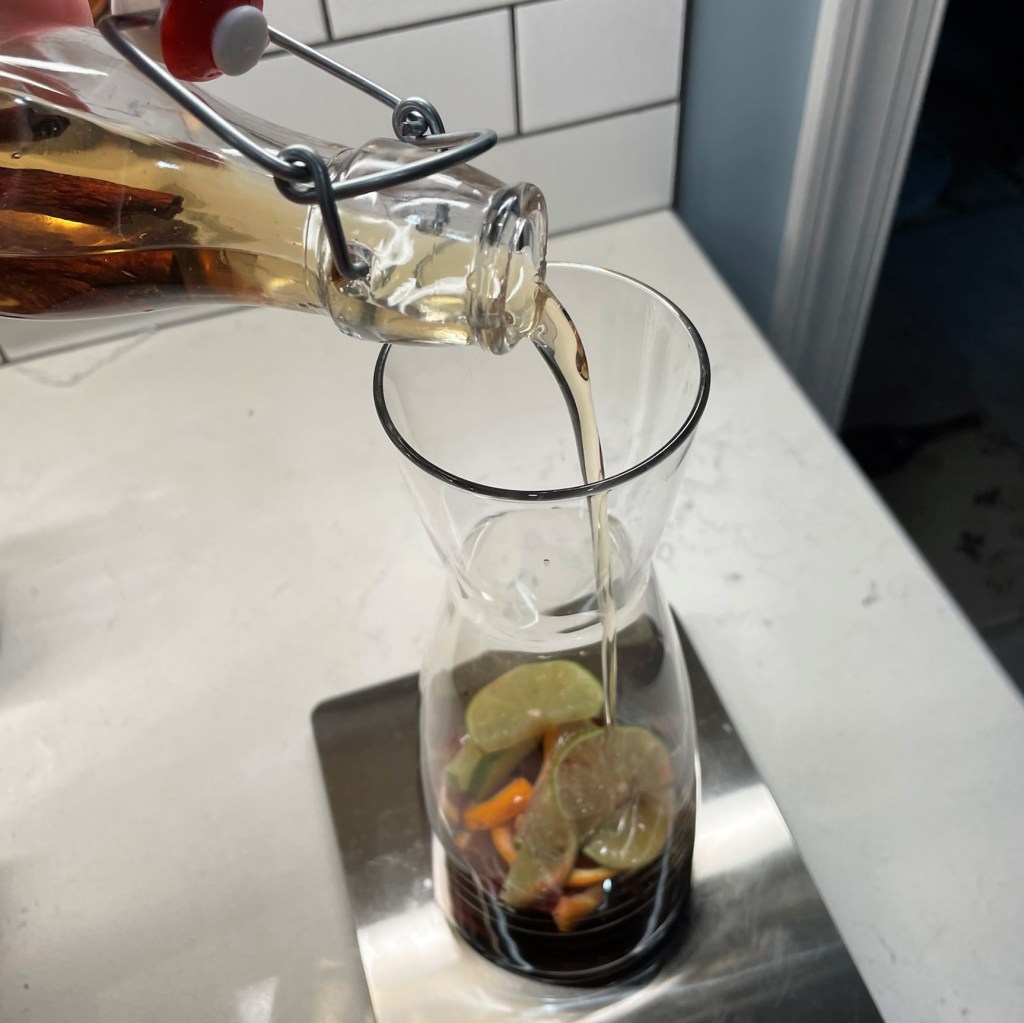
Load the citrus slices into a 1-liter carafe or pitcher. Add the simple syrups, black cherry juice, de-alcoholized wine and tonic. Stir to blend. Refrigerate until ready to serve.

At serving time, fill 10 oz. glasses about 2/3 with ice. Pour kombucha and ginger beer over ice. Give the sangria a good stir to blend ingredients that may have settled. Pour over the ice to the top of each glass. Garnish with fresh citrus.


Smoky-Spicy Black Cherry Syrup

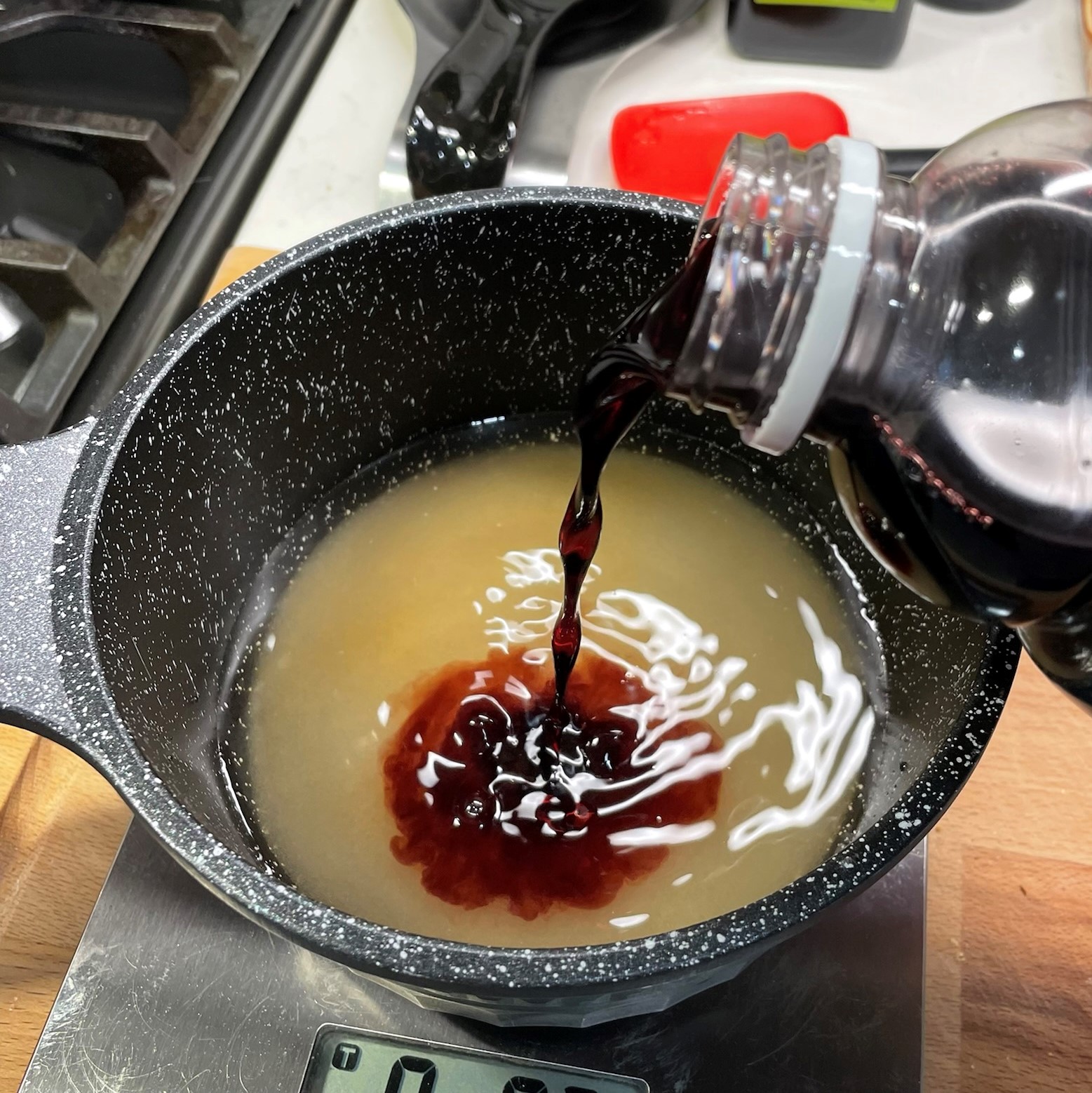
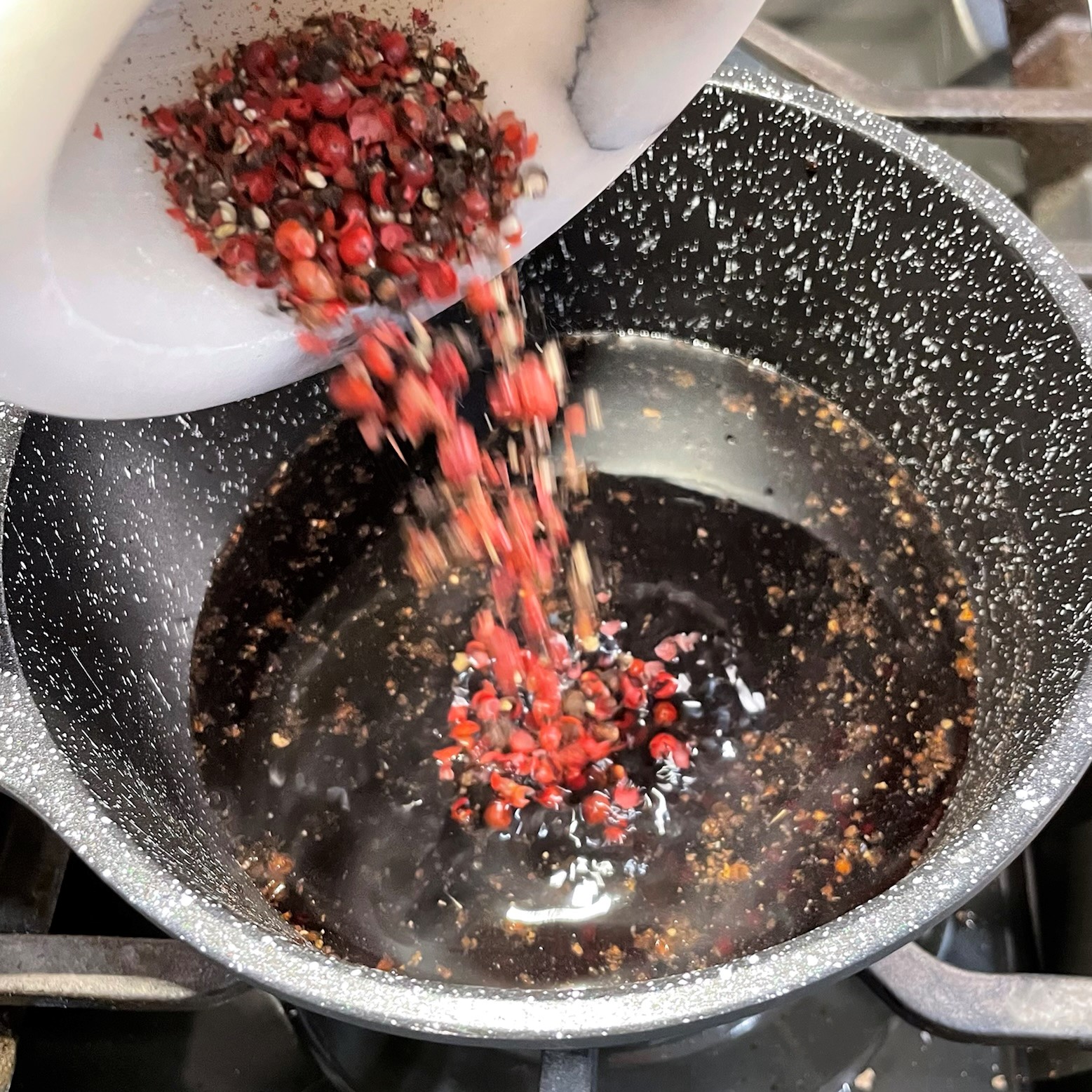
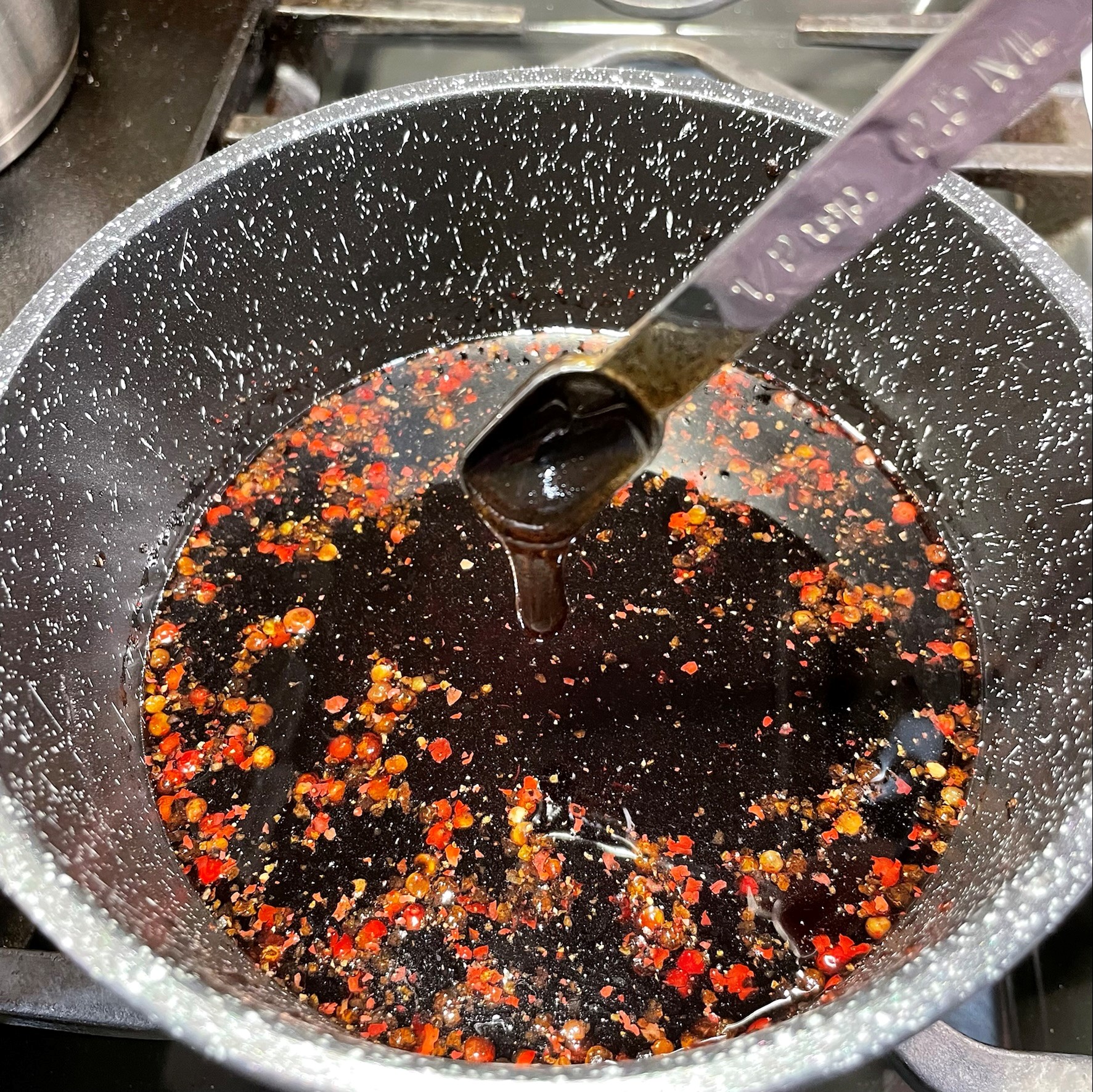
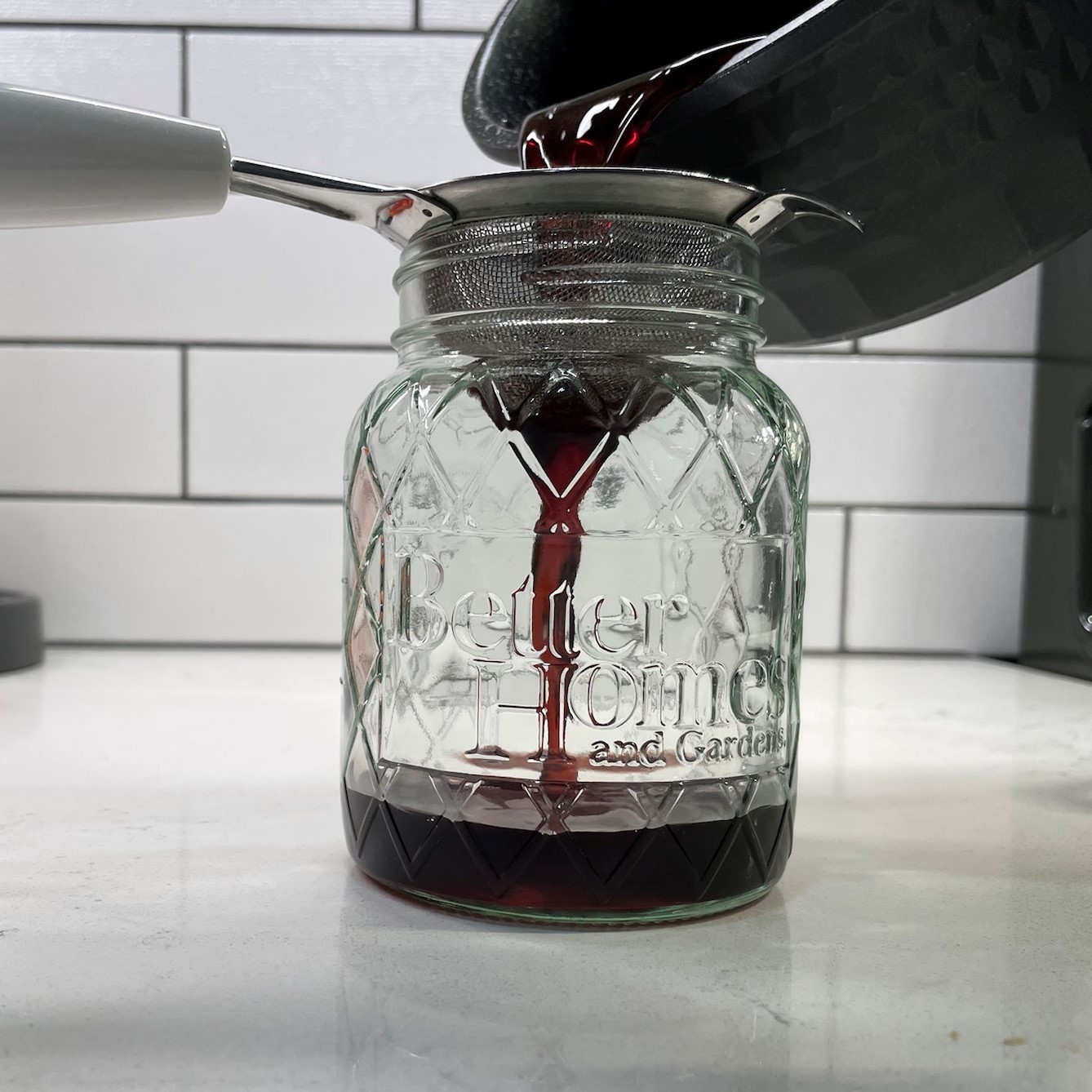
Combine 1/2 cup water and 1/2 cup unsweetened black cherry juice in a saucepan. Add 3/4 cup organic cane sugar. Heat over medium heat, stirring frequently, to dissolve sugar. Use a mortar and pestle or spice grinder to lightly crush 2 tsp. smoked black peppercorns and 1 tsp. pink peppercorns. Add to the syrup and stir to blend. When syrup reaches a slight boil, remove from heat. Add 1/2 tsp. real vanilla paste. Cool completely and strain into a canning jar. Refrigerate until ready to use.

Cinnamon Syrup

Combine 1/2 cup water and 1/2 cup organic cane sugar in a saucepan. Add 3 pieces of cinnamon stick (each about 3” long) and bring syrup to a slight simmer. Continue to steep the cinnamon in the syrup until it is completely cool. Strain into a jar or bottle and refrigerate until ready to use.


Authentic Arroz con Pollo

If you do an internet search for “authentic arroz con pollo recipe,” you will get at least a dozen pages of results, with very few duplicates. Go ahead, I’ll wait.

Some of the ingredients are consistent across the recipes, but there are many variations and even the pictures can look dramatically different. The reason there are so many “real” arroz con pollo recipes is that there are many, many Hispanic grandmothers passing down their own recipes. And this dish—which is not definitively native to a single country or people—has become a blend of whatever ingredients are available in all the regions where those grandmothers have lived and cooked.

My previous experience of arroz con pollo—or “ACP,” as it is usually listed on many of our local Mexican restaurant menus—has not been completely positive, and that’s because here in the South, the recipe has morphed into an “Americanized” dish that is oozing with cheese and basically bland (it’s a rare instance of a dish being too much about the cheese, in my opinion). And that is a shame because at its roots, arroz con pollo has a lot going on!  

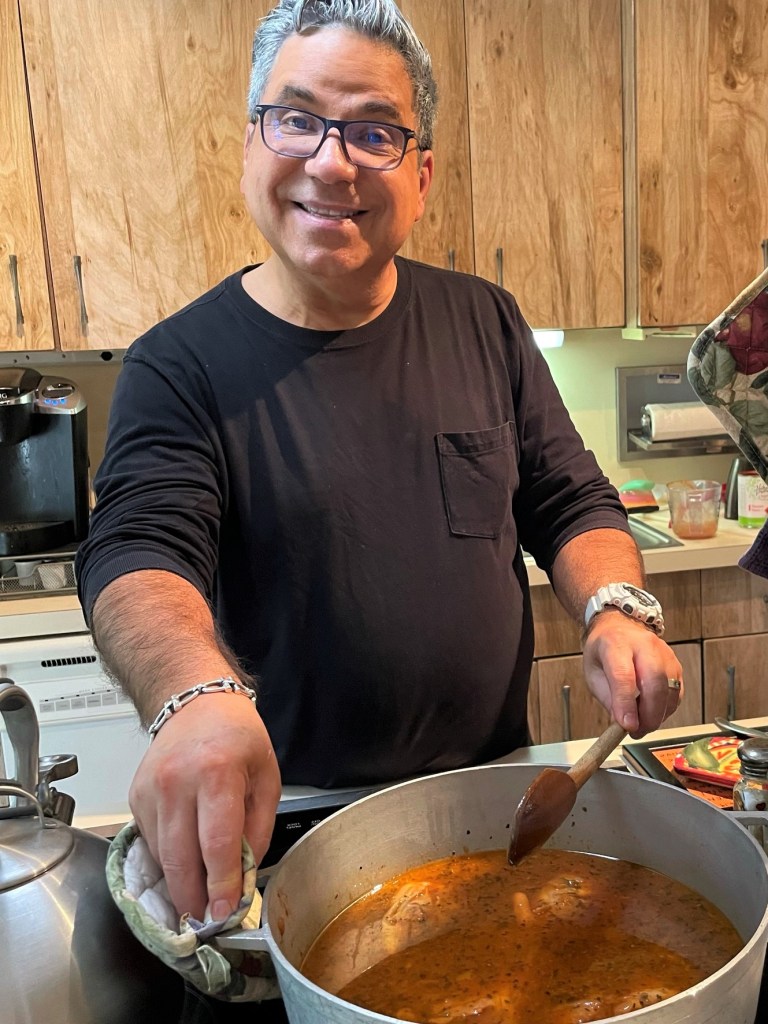
Recently, I had a front-row seat to watch and learn the authentic, real-deal Puerto Rican version of this flavorful dish. During our vacation up north, my husband and I spent a few days on Long Island, where we visited his cousin, Evan. To my good fortune, Evan’s husband, Will, became my own personal “ACP” instructor! His mother hails from P.R. and his father is of Spanish heritage, so Will has good reason to be passionate about this dish that is representative of his family. We had a joyful afternoon in the kitchen!

Will took the day off work to teach me how to make ACP. Love you, Sweetheart! ❤

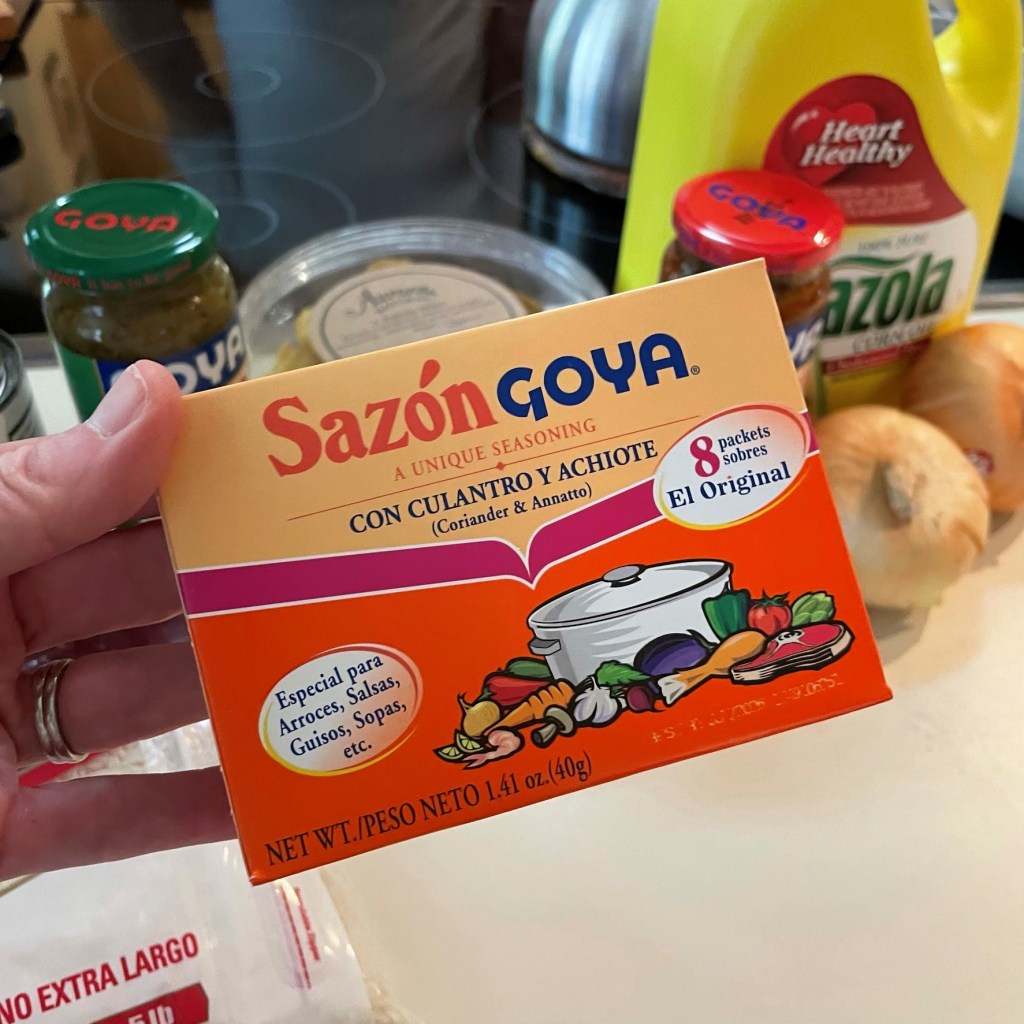
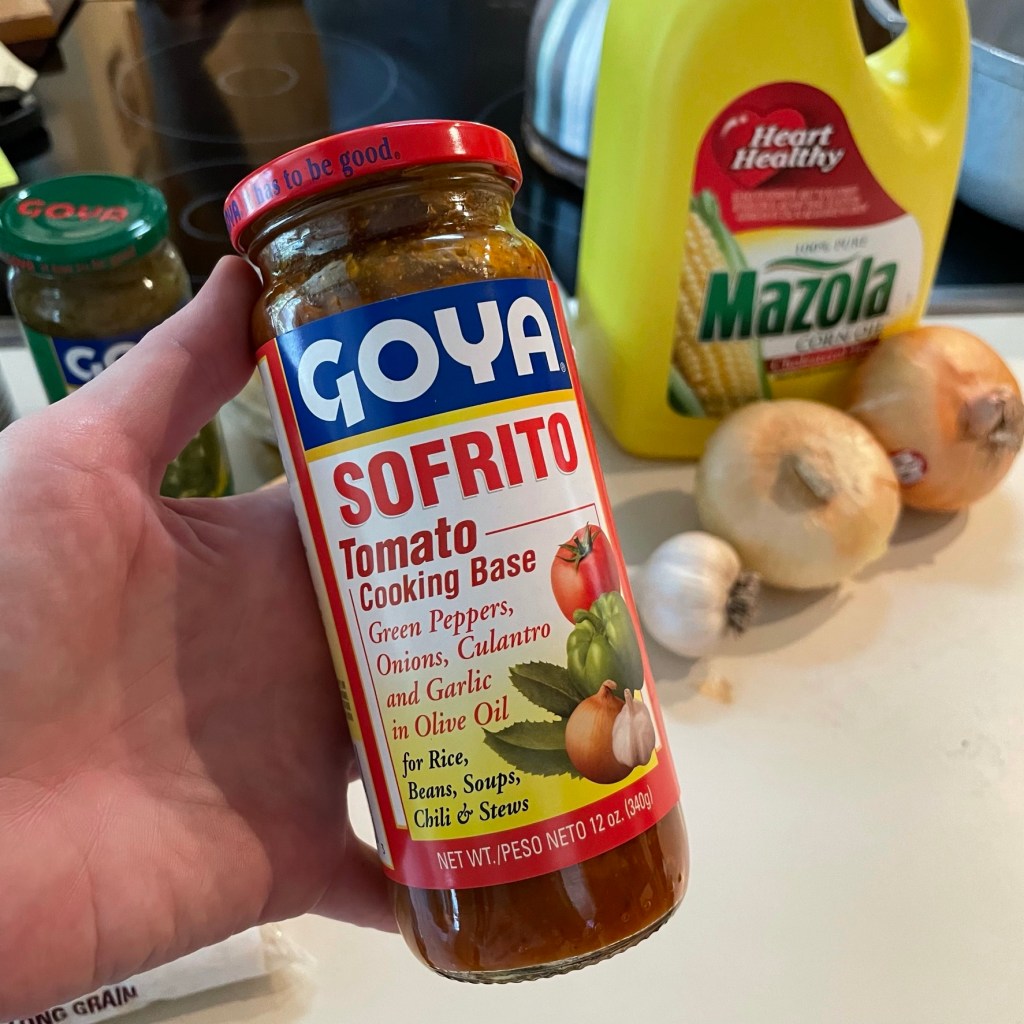
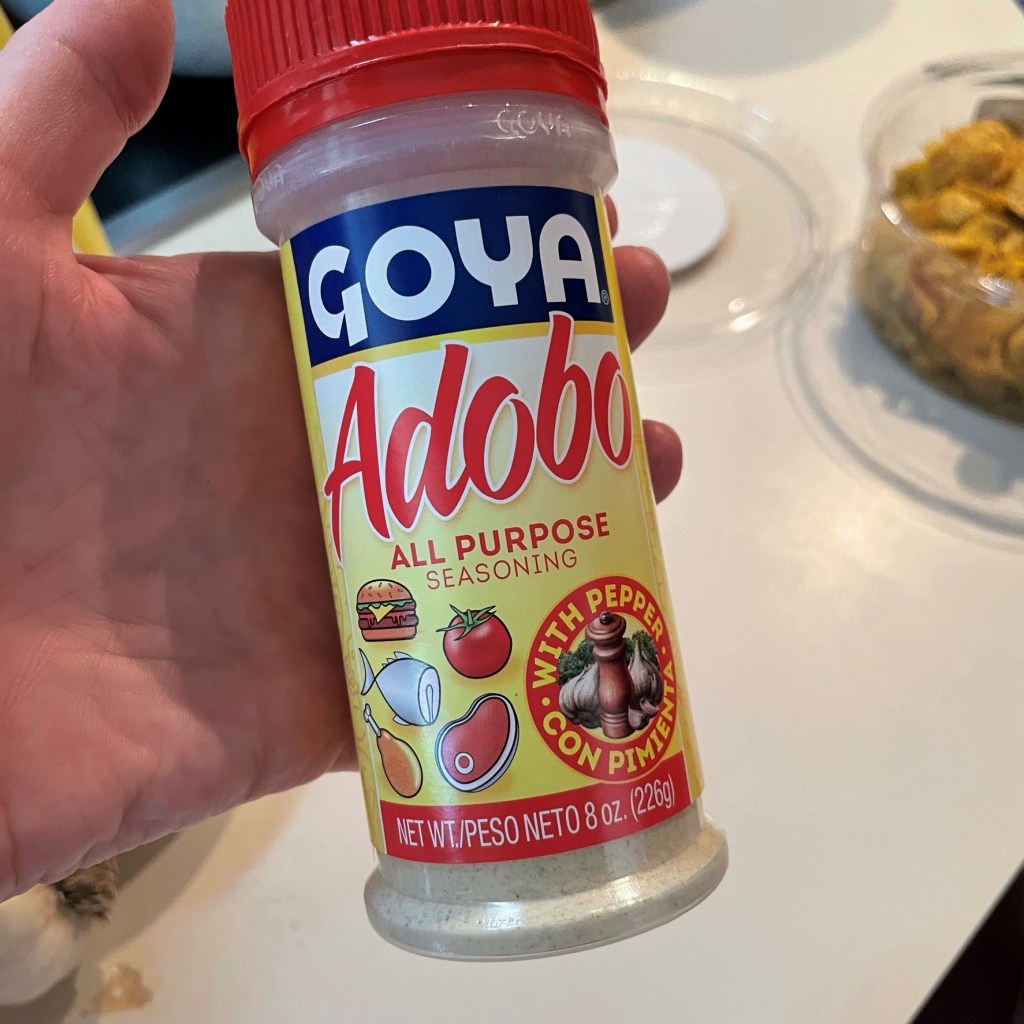
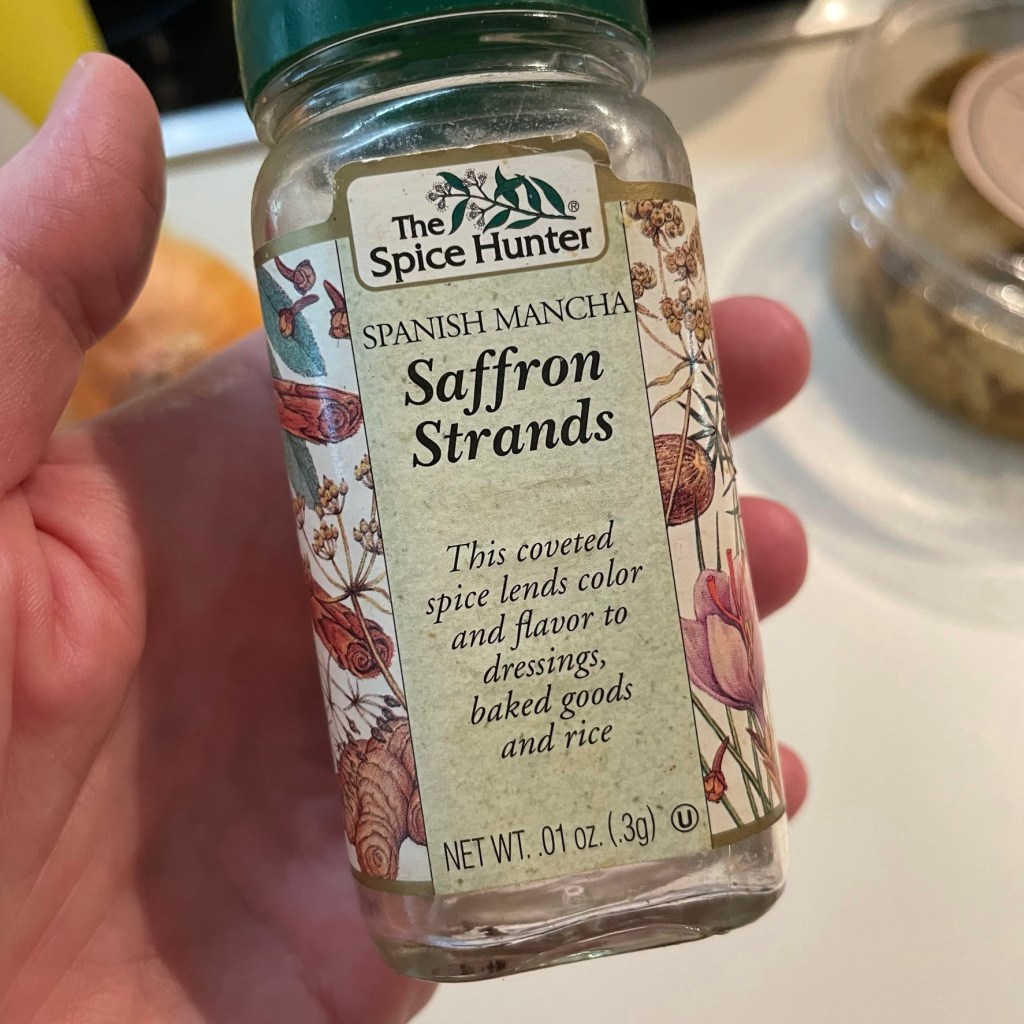
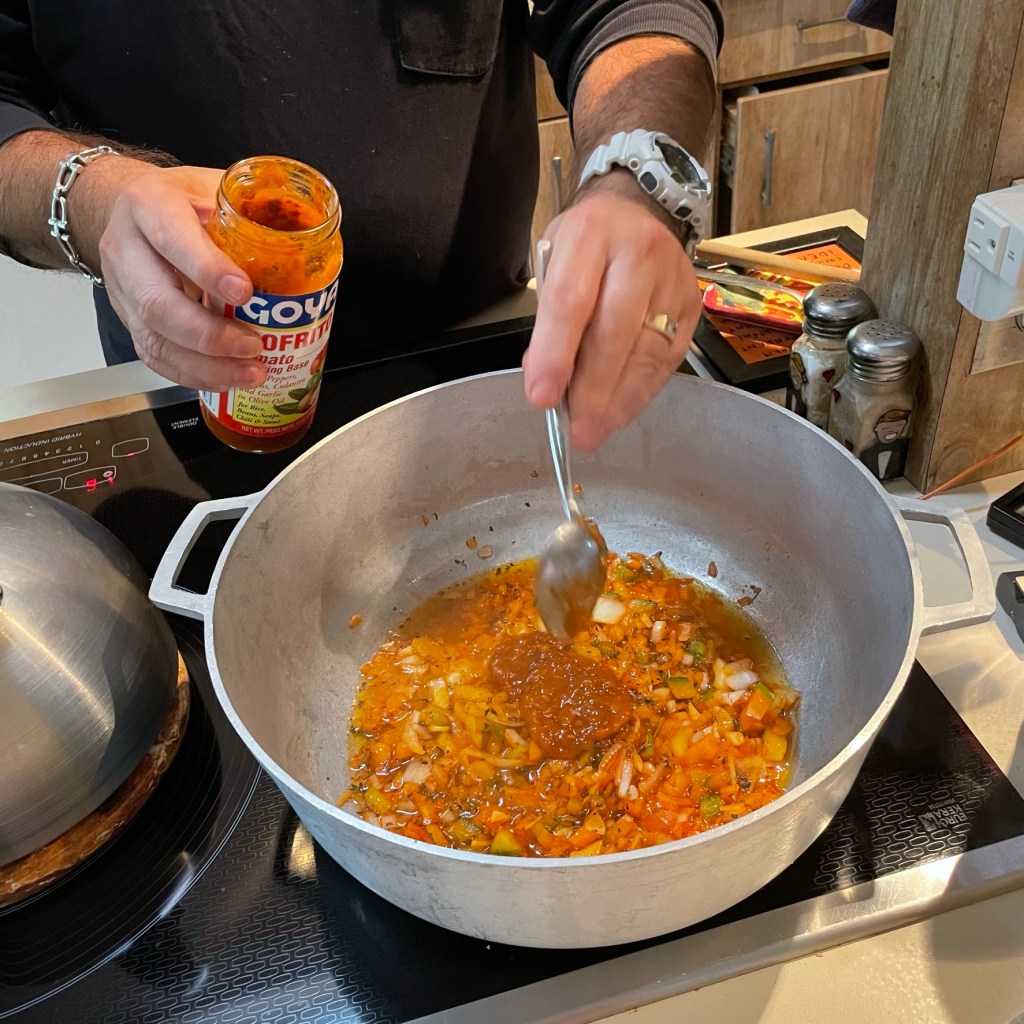
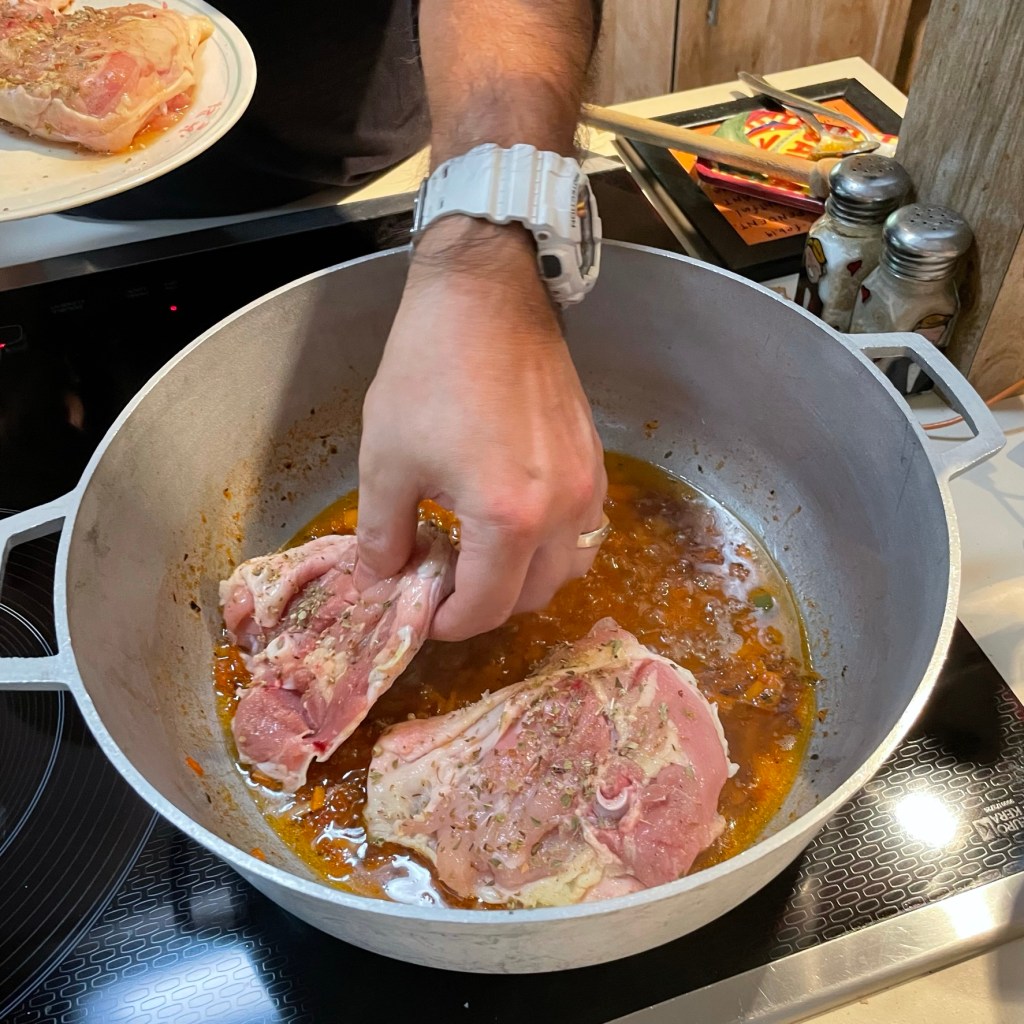
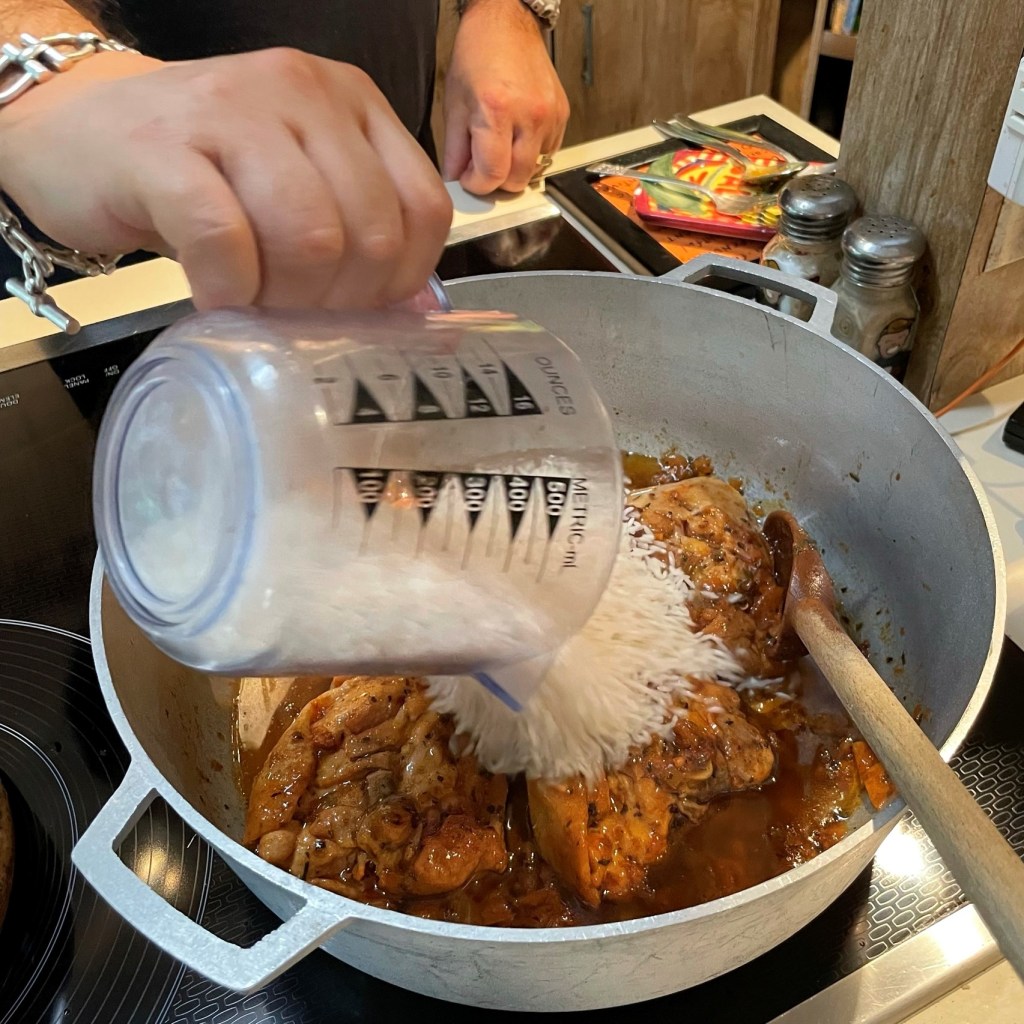
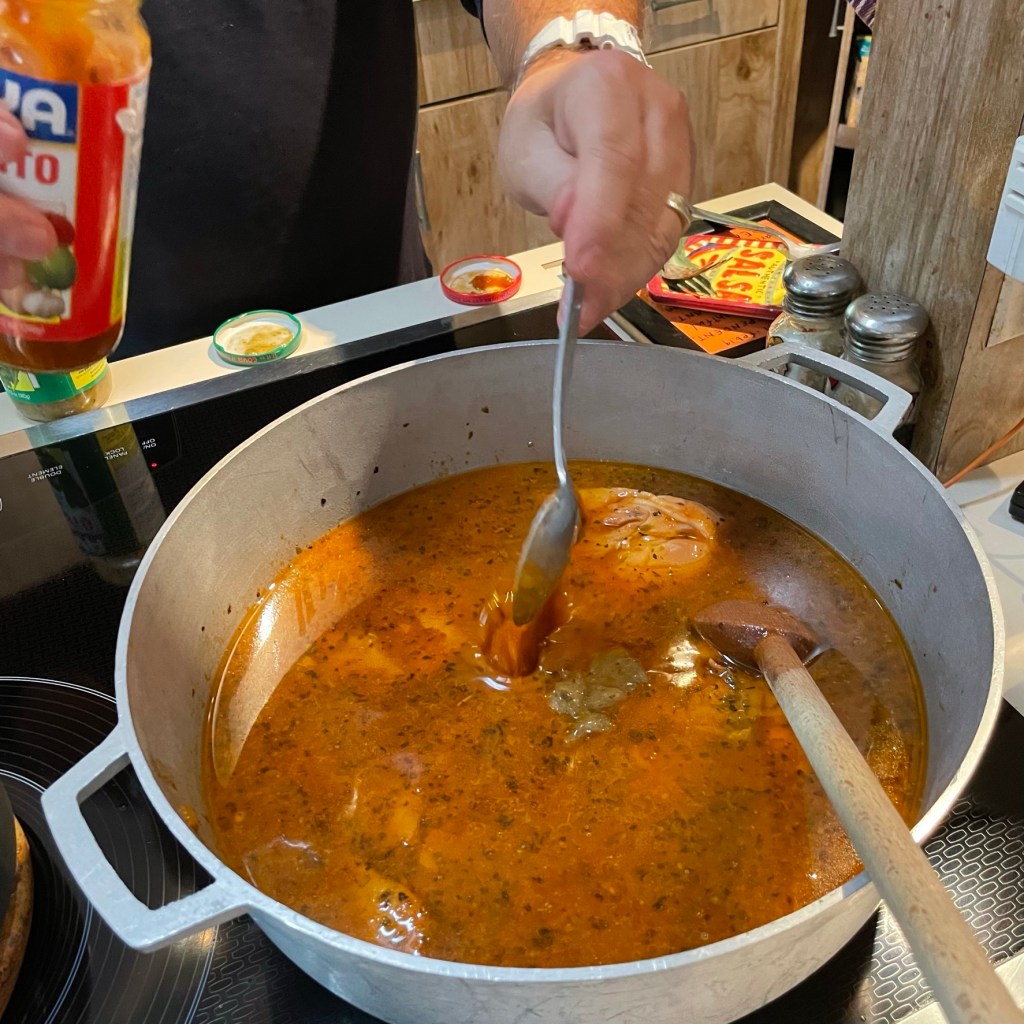
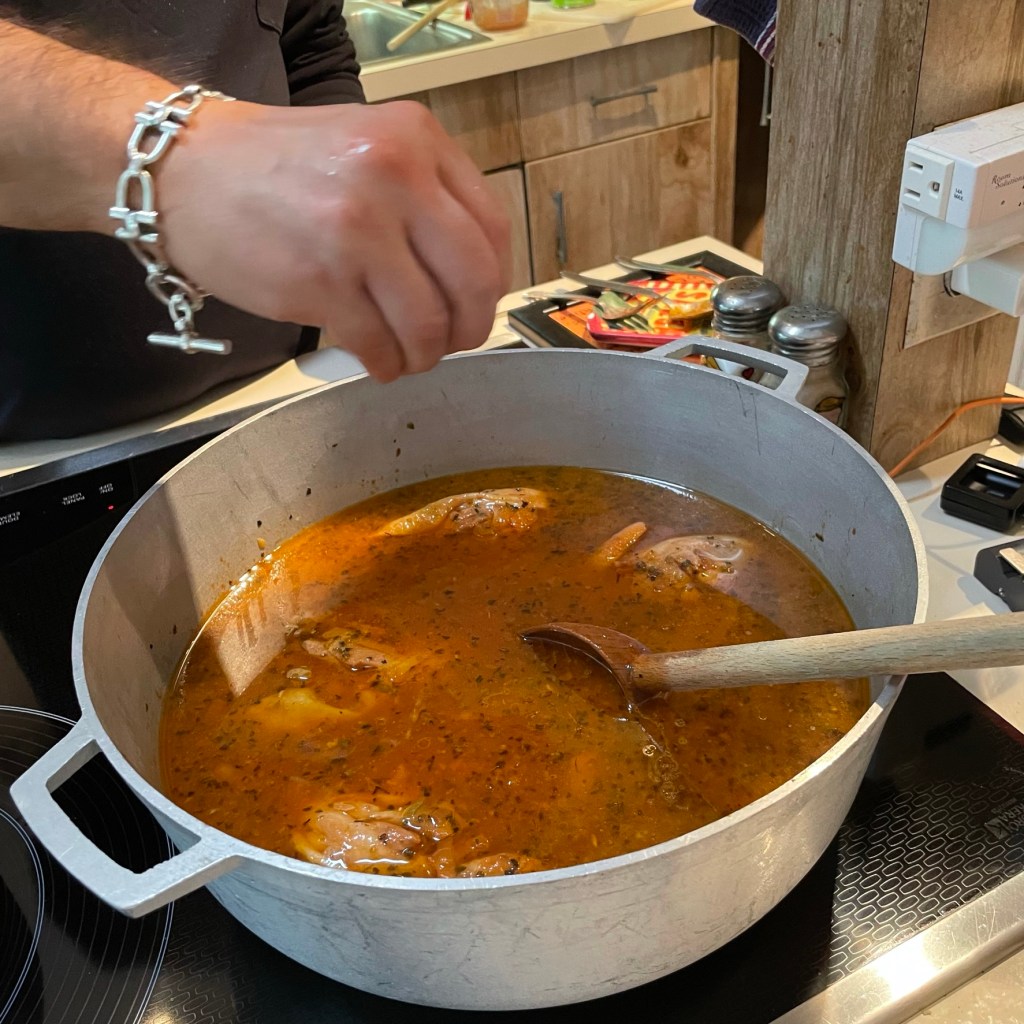
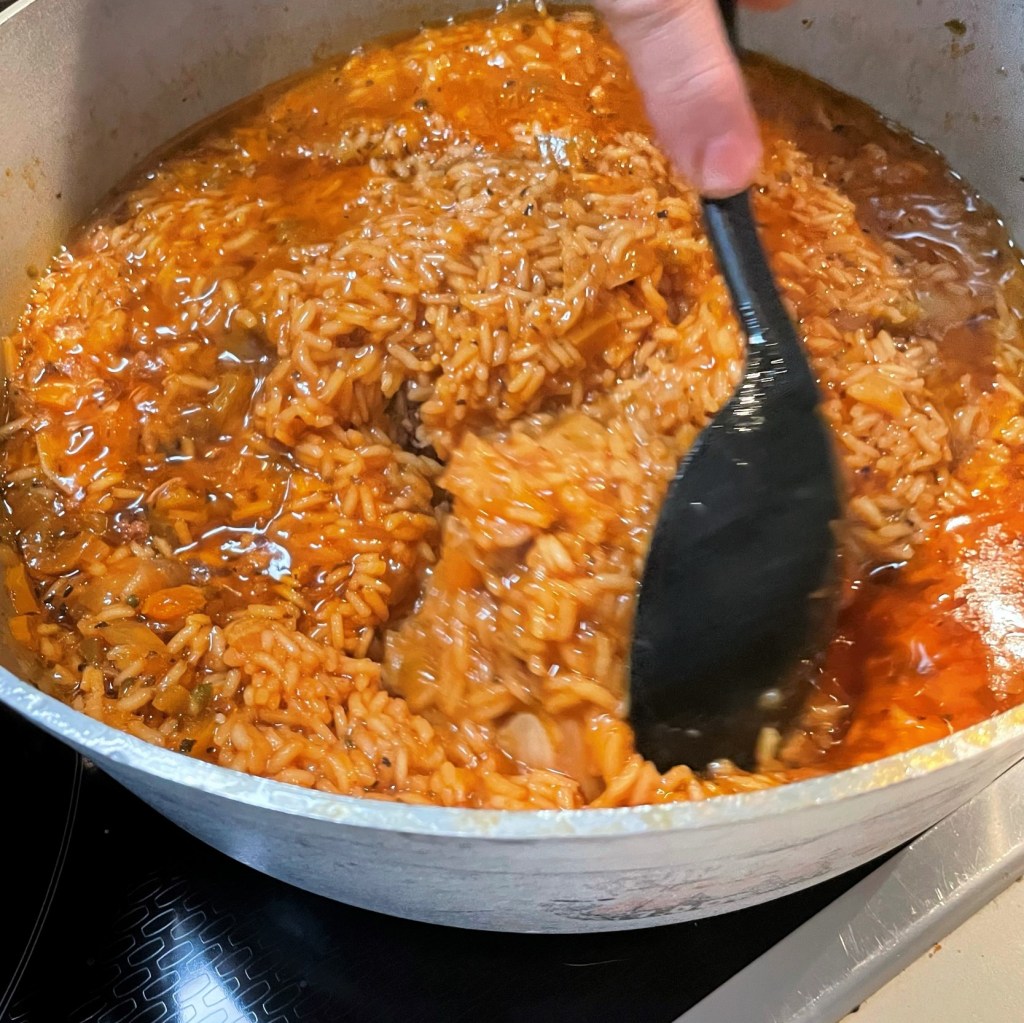
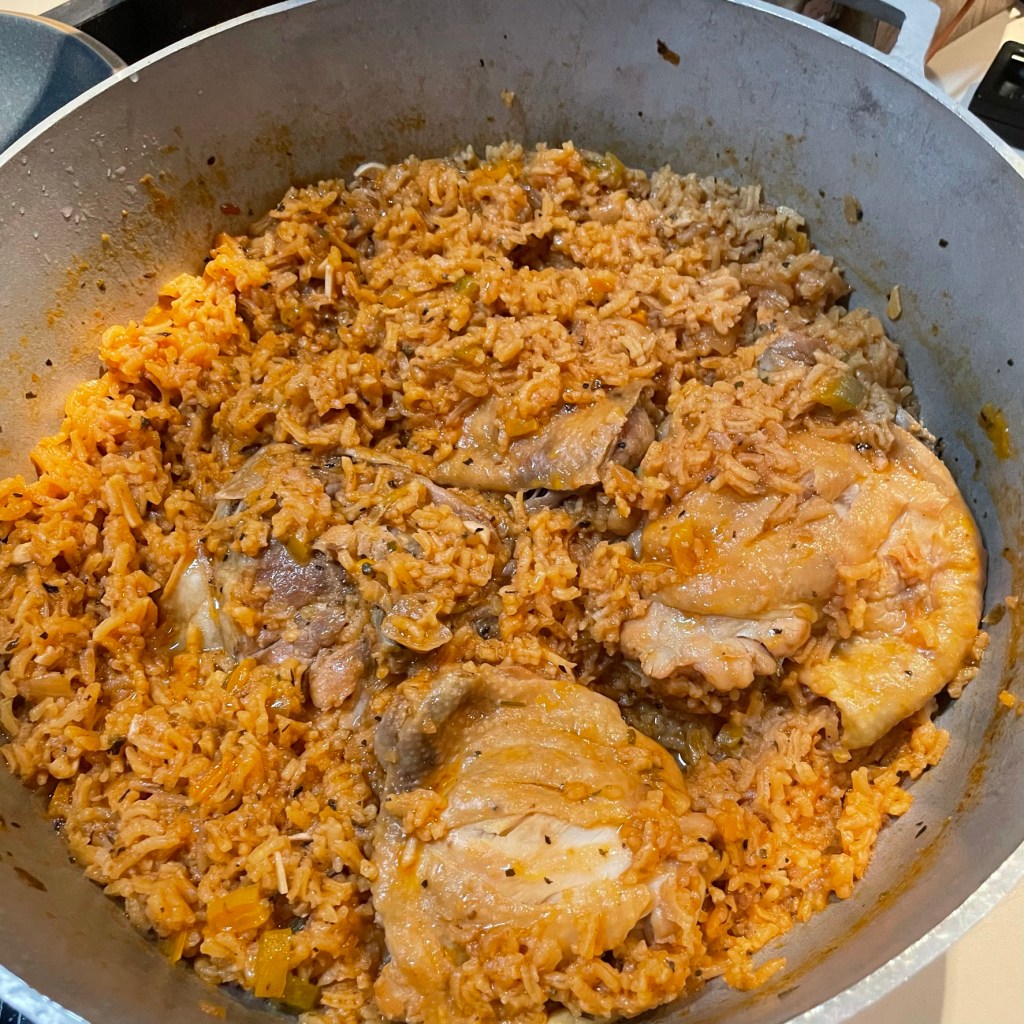
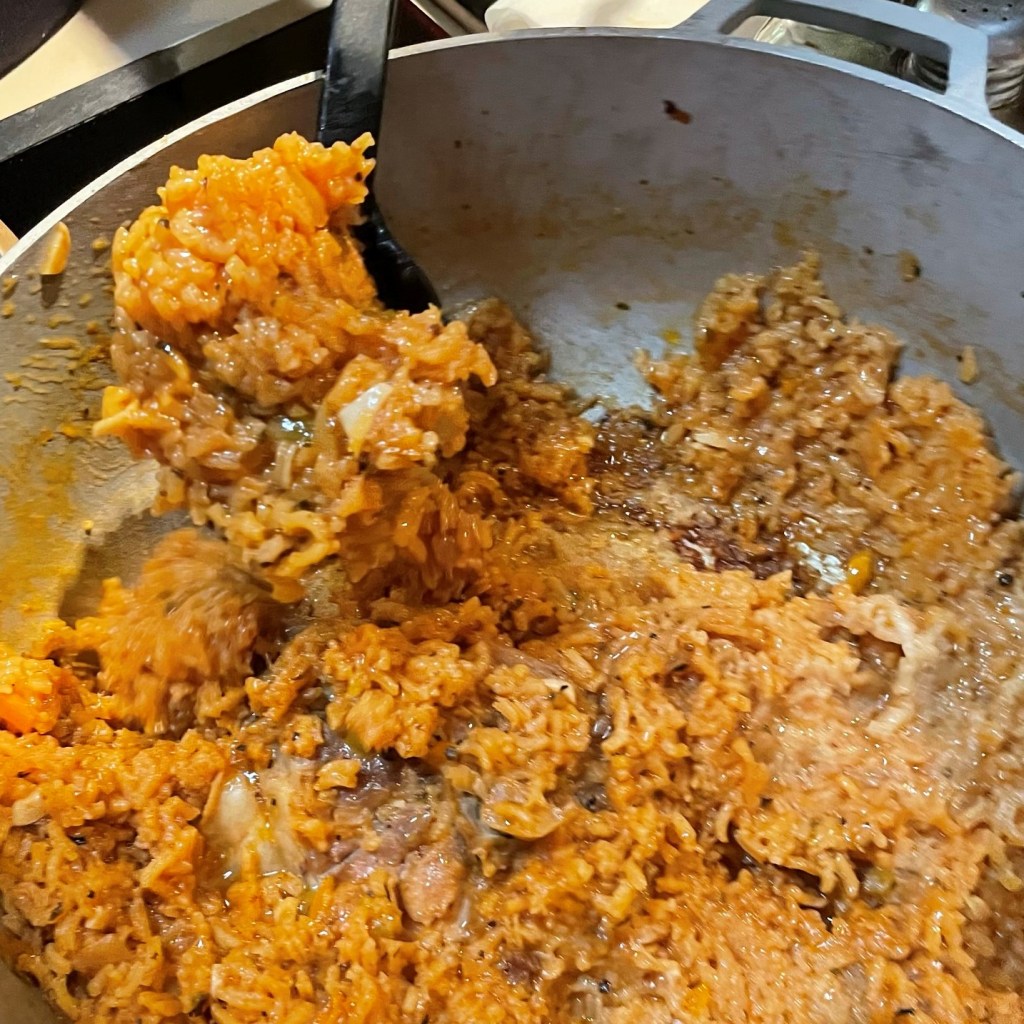
Throughout this private cooking lesson, Will shared with me all the culinary wisdom handed down to him from his mother, who learned it from her mother, and so on. Because this was an authentic Puerto Rican variation of arroz con pollo, it was packed with layers of flavor, beginning with Sazón and finishing with saffron, and all in one giant pot, called a “caldero.” The pictures of Will’s family recipe tell the story far better than I can, so please join us at the stove as we celebrate this last day of Hispanic Heritage Month!


Ingredients

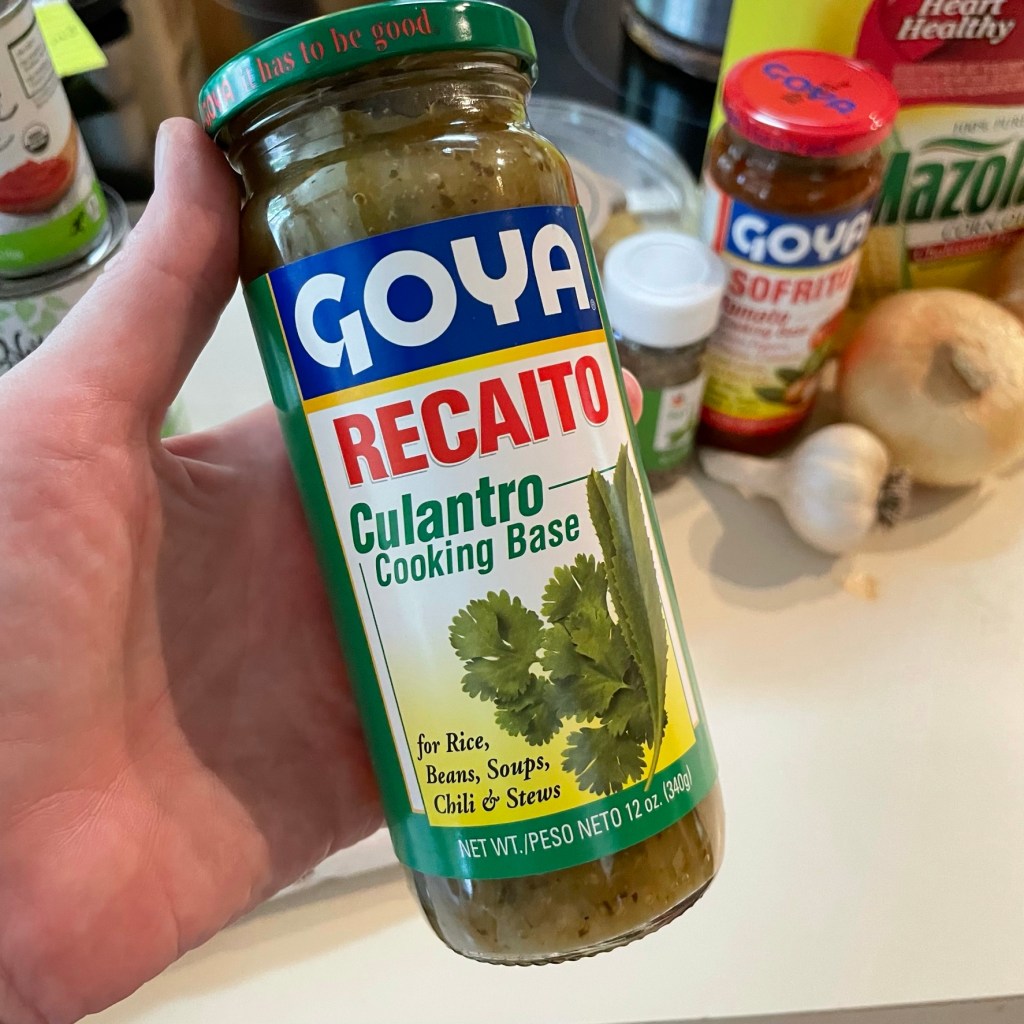
First, let’s take a look at the special ingredients that make this dish uniquely Puerto Rican.


Hold up, what exactly is “culantro?”

It can seem a little confusing, so let’s address the difference between cilantro, which most of us are familiar with, and culantro, which is an ingredient in both of these cooking bases. Unlike cilantro, which is wispy and delicate and mostly used to finish or garnish a dish after cooking, culantro is sturdier and stronger, both in texture and flavor. It has a similar flavor to cilantro, but its long, slender leaves are mainly included as a cooked ingredient, and during the cooking process, the hearty flavor calms down a bit. This herb is extremely common throughout the Caribbean, so of course it is a staple in the cuisine of Puerto Rico.

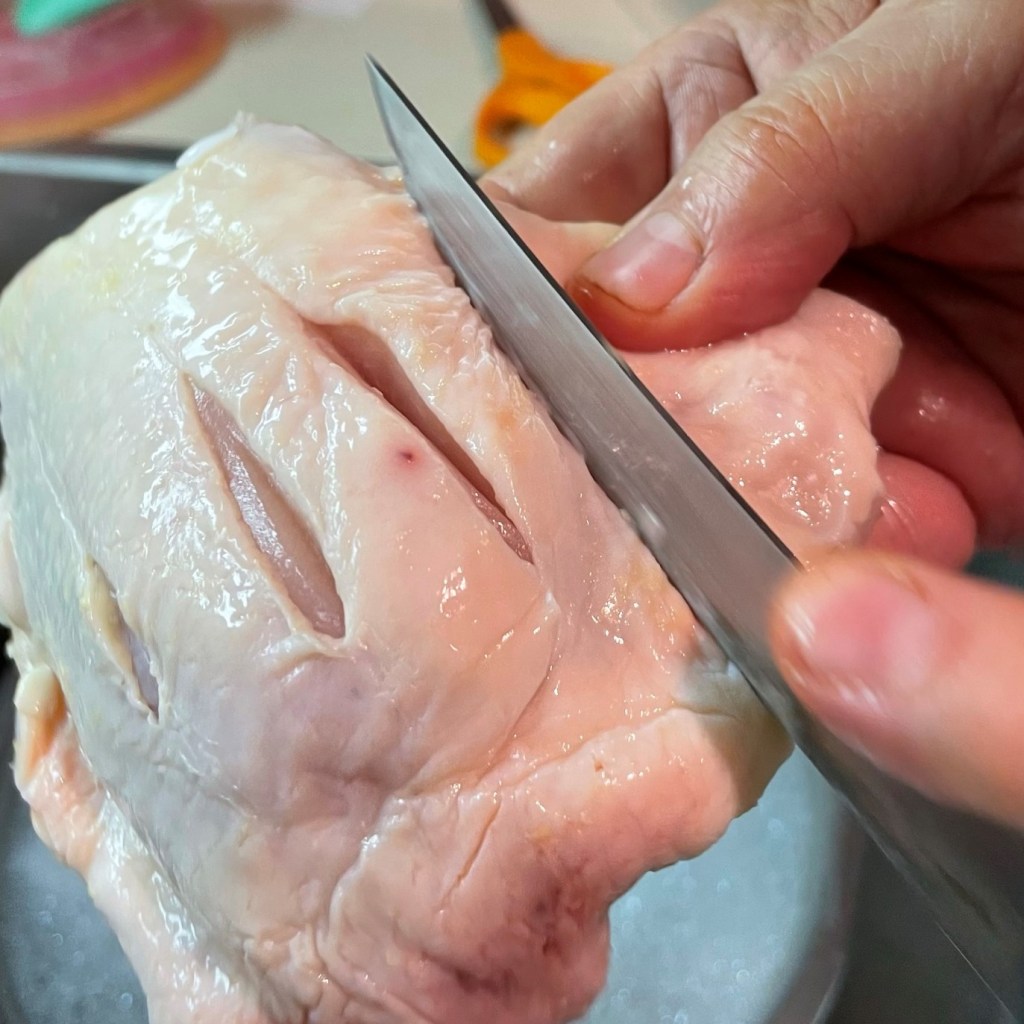
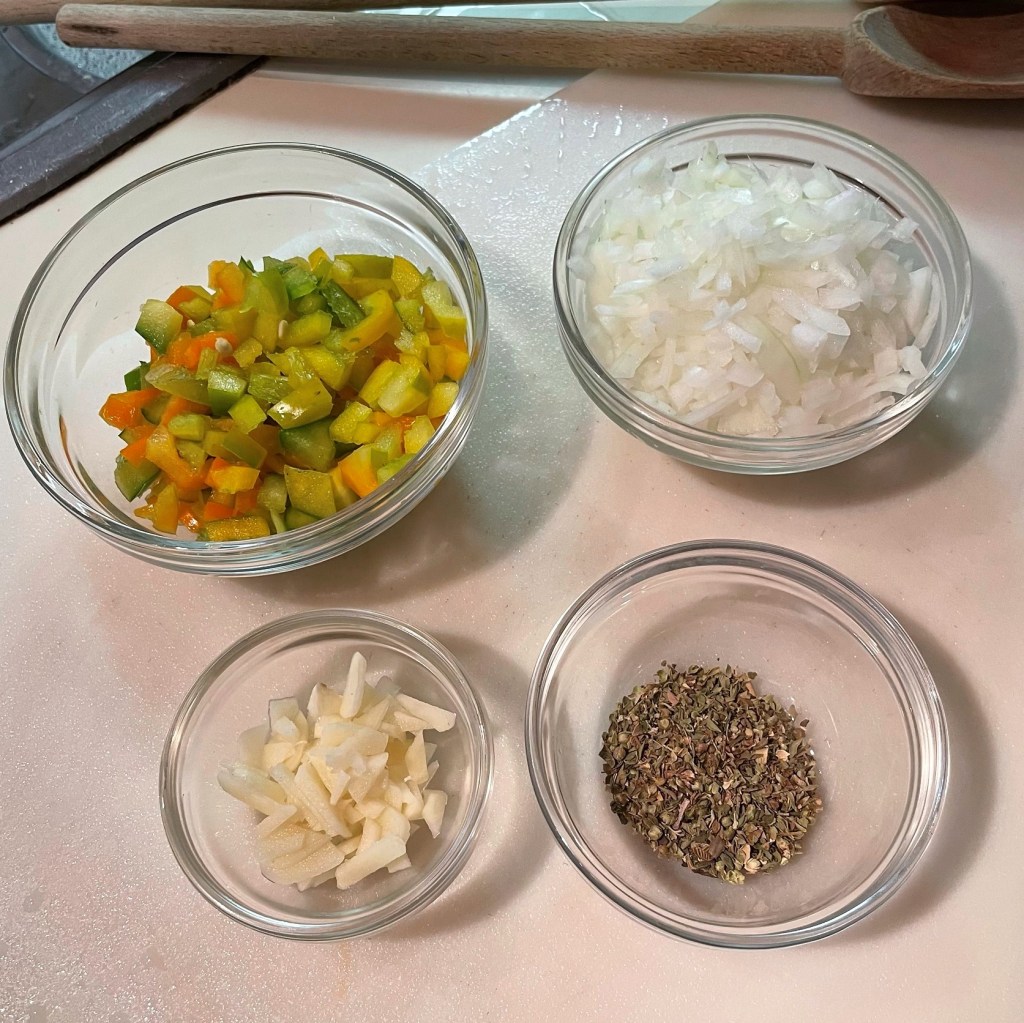
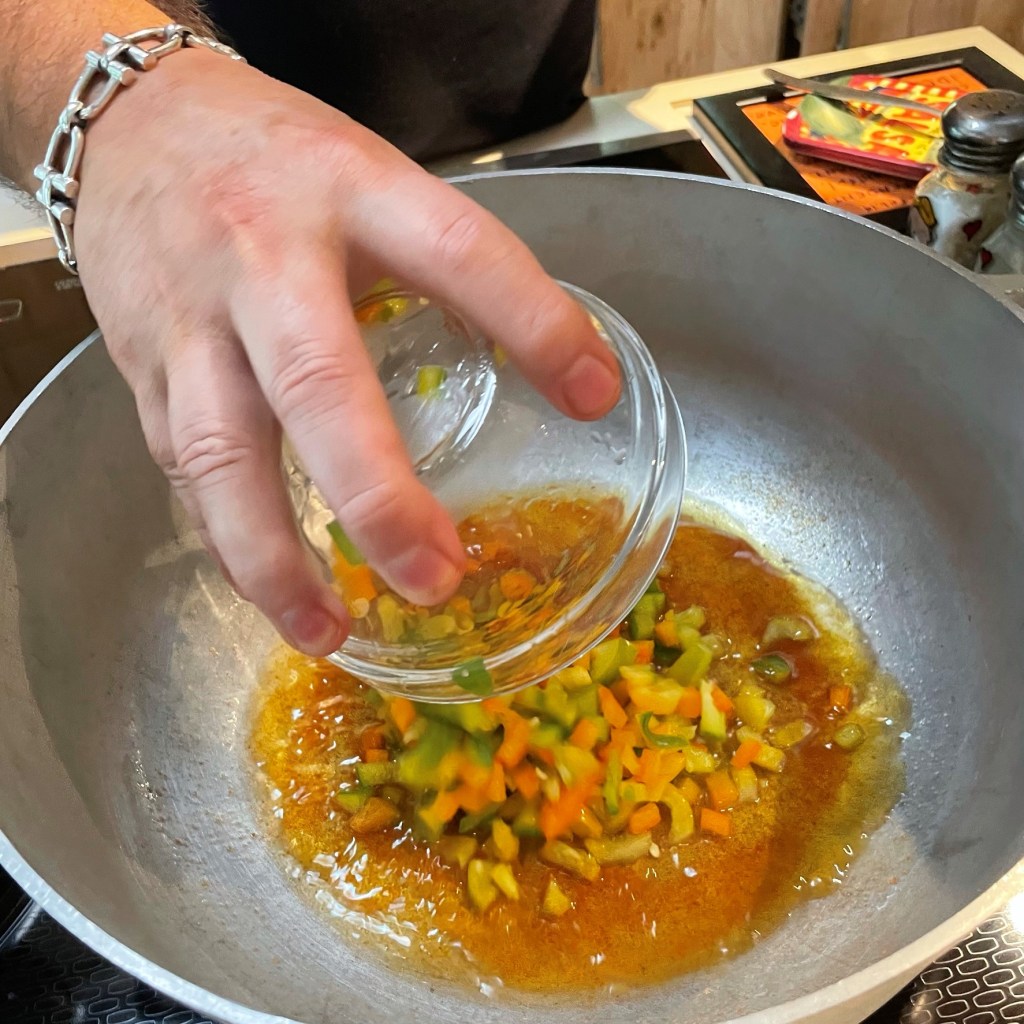
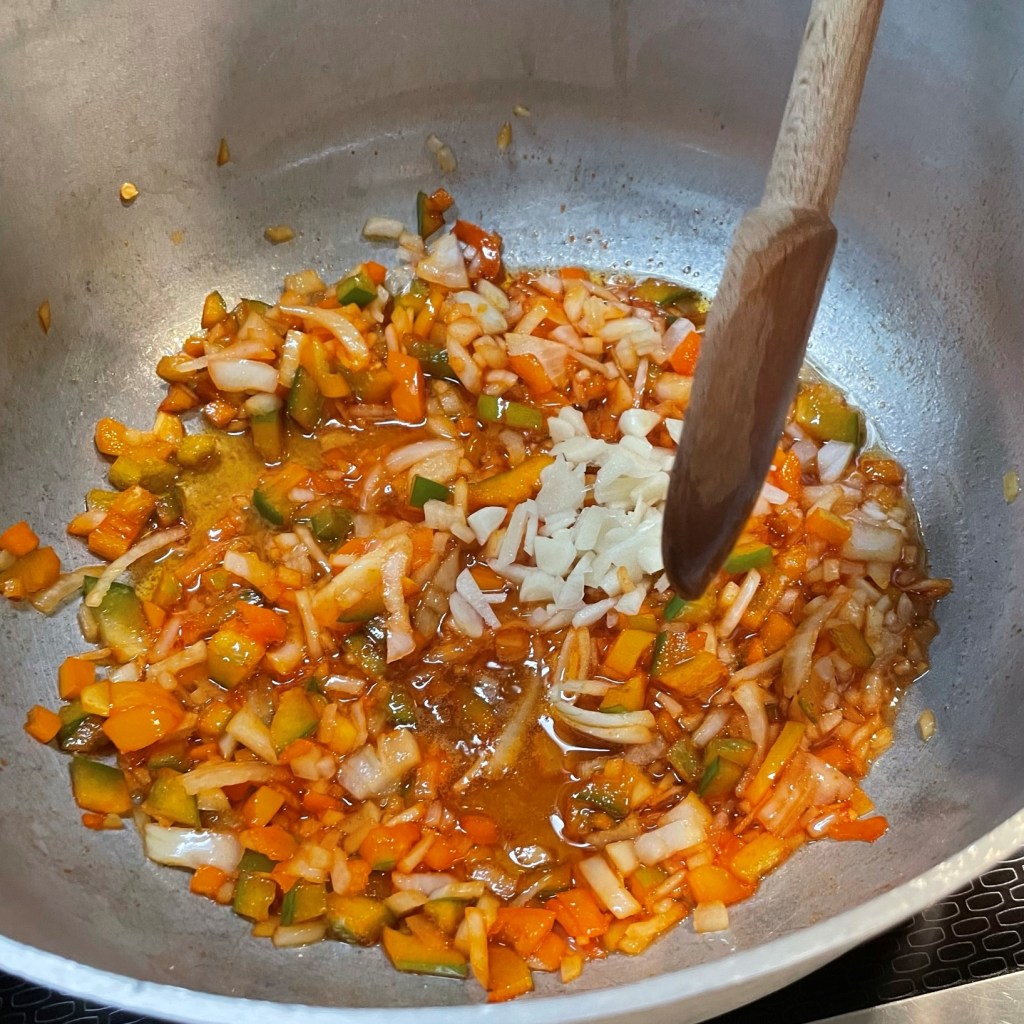
The remaining ingredients for the arroz con pollo included bone-in, skin-on chicken thighs, corn oil, onions, peppers, garlic, tomato sauce and rice. I did my best to take notes and catch all the details, but this is the kind of recipe you make from instinct, and that’s exactly how Will prepared it. He was cracking me up as he went along, and reminded me so much of myself—occasionally cursing his stove and fretting about ways that his dish might not turn out perfectly. We are always our own harshest critics in the kitchen, can I get an amen? Trust me, this arroz con pollo was delicious!

Made with love, heart and soul!

At the end of the post, I’ve included a PDF that you can download for your recipe files. You will need to tweak seasonings to suit your taste and adjust cooking times for your own stove, of course, but my outline should provide a good starting point. Here we go!


Instructions

Arroz con Pollo!