Strawberry Daiquiri Cake

Here I go, answering my own question of “what other cocktails could be turned into a cake?” I asked this just a few weeks ago, when I presented the tiki cocktail skillet cake that put a fun, boozy spin on a pineapple upside-down cake. I started making a list of other drinks that could work, including some suggested by followers in the comments section.

Somehow, this one was not on the tip of my tongue when I first asked the question. It came about when I found beautifully ripe, organic strawberries on a recent shopping visit. I told Les I would make strawberry shortcake for Father’s Day, but he challenged me to come up with something more imaginative that didn’t involve sponge cake or biscuits (neither are his favorites). What about a strawberry cake, I asked? And he said, “that would be better, and do you think you could make it a little boozy?” 

C’mon, could I make it a little boozy?! I mean, does he even know me?


My first step was to find a recipe that would accommodate a ton of fresh strawberries, plus booze. Even a novice baker like me knows that too much liquid will wreck a cake, so that was a major hurdle. The internet is full of strawberry cake recipes, and most of them are dressed-up versions of a boxed cake mix, which didn’t fit my goal. I don’t mean to be snobbish, and if you’re cool with a box mix, I’m not judging. But I’m super sensitive to artificial flavorings, colors, thickeners and sweeteners, so desserts tend to be a little more complicated for me.

Hello, Gorgeous!

Besides, my goal was to take advantage of these beautiful fresh berries that are at their peak, so I searched until I found a scratch recipe that satisfied both my palate and my baking comfort level. Several recipes in my search results leveraged a technique called “reverse creaming,” which I’ve never heard of, let alone tried. Too much experimentation at once gets me into trouble, so I passed on those. Finally, I found this scratch strawberry cake recipe on Sally’s Baking Addiction blog that would be a good starting point, and I made only a few adjustments to booze up the ingredients, and one to make the process more familiar to me.

Get ready for oodles of photos on this one; there were a lot of steps for this cake, and I wanted to be detailed, for my future self as much as any other reason. If it’s all too much for you, skip ahead to the end, where I’ve included a click-to-print recipe card. You know, in the event you find gorgeous strawberries at your market, too. 🙂

I got a little excited about the berries, and muscle memory took over when I sliced them up. Without thinking, I dumped in a bunch of sugar to macerate them before I even found the recipe I wanted to use. That turned out to be a problem because Sally’s recipe specifically said “don’t” add sugar to the berries before reducing. Oops. There was obviously no undo button for that, and I had to do some fancy math to make up for the sugar I had already used. This also meant that I had to watch the sweetened puree carefully to keep it from burning as I reduced it. If this all sounds complicated, well, what can I say? Nobody has ever accused me of doing things the easy way! It worked out just fine; next time I would just puree the strawberries naked and follow the recipe for the full amount of sugar. Don’t worry, that’s how I wrote the recipe.
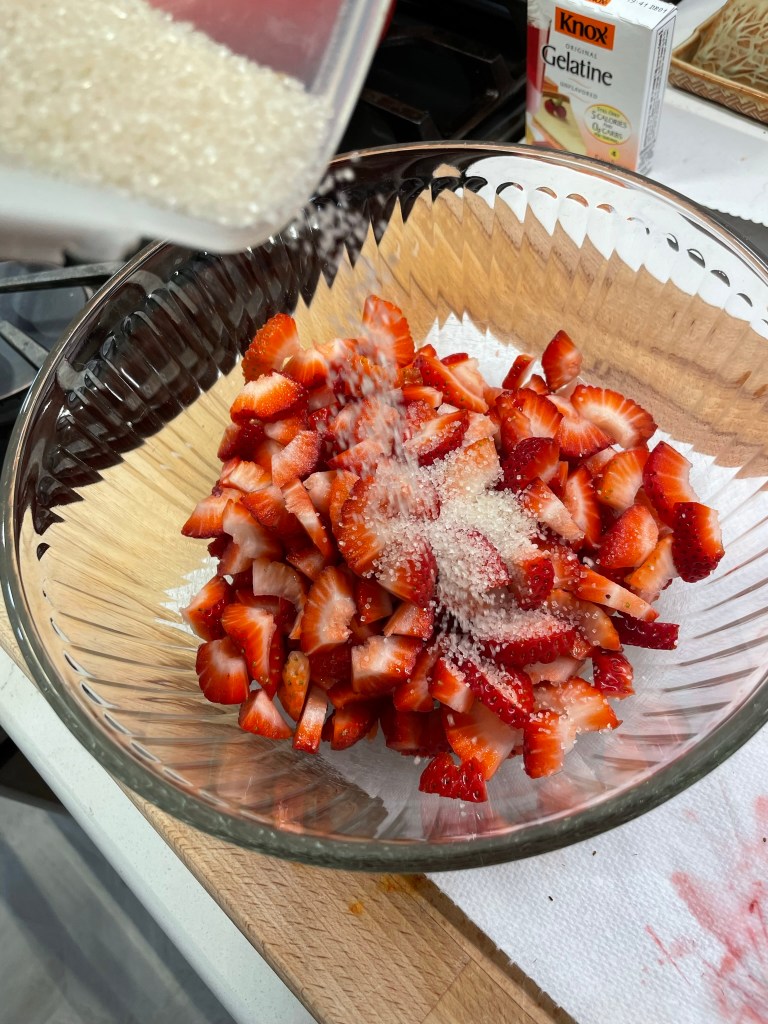
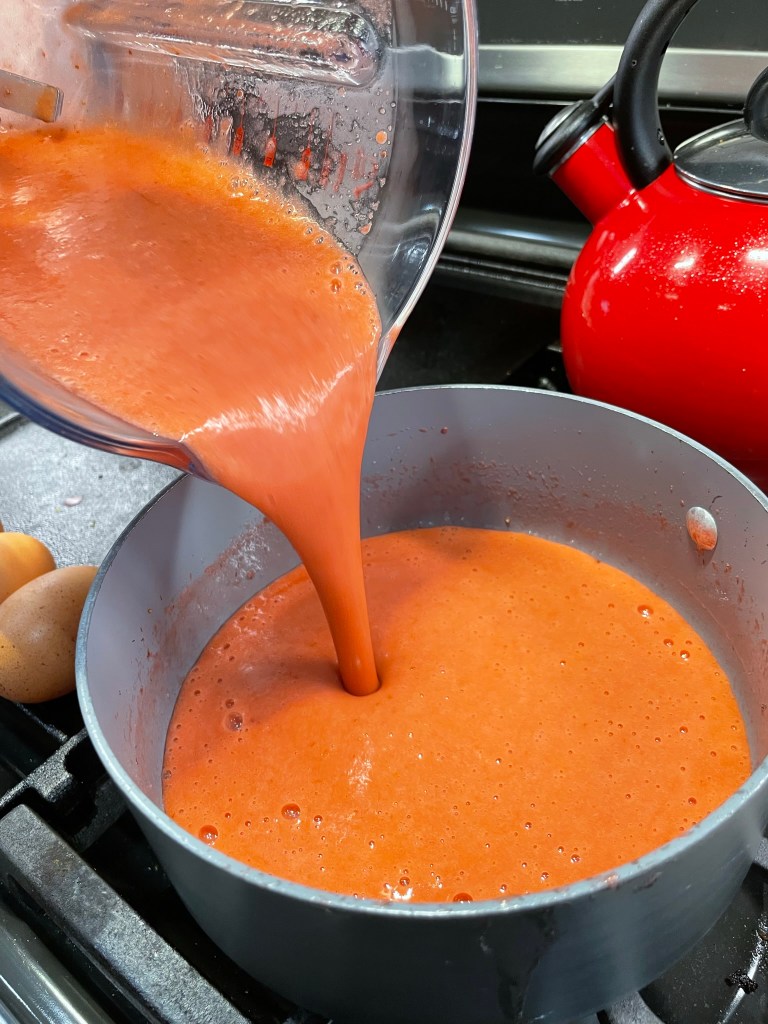
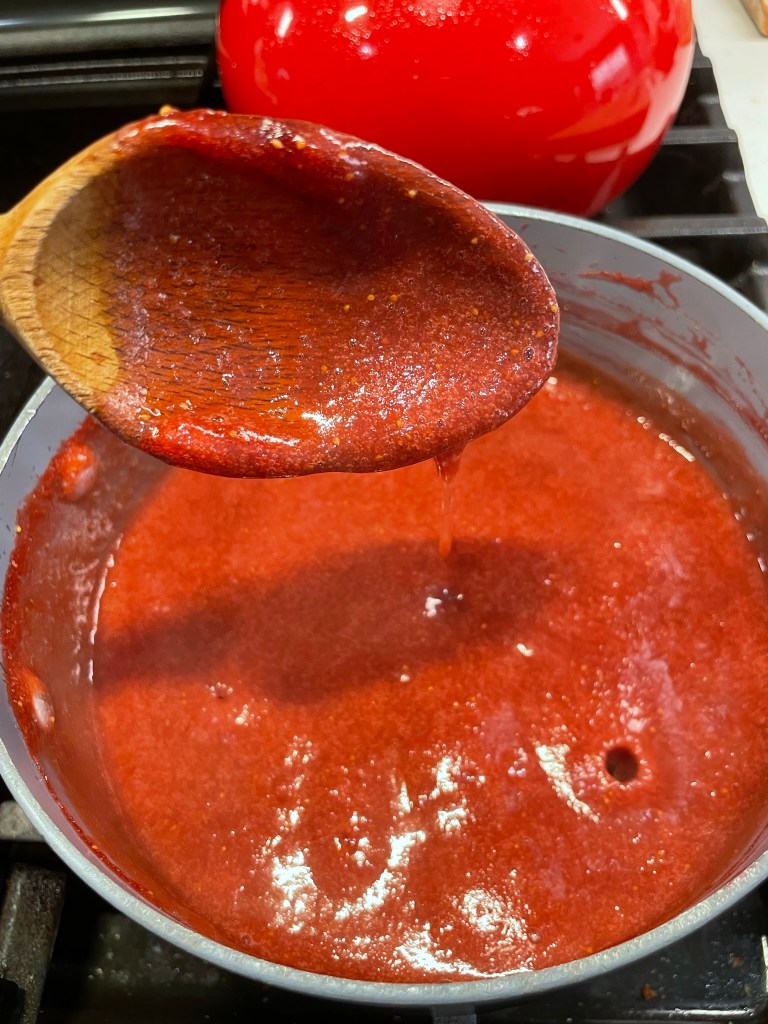
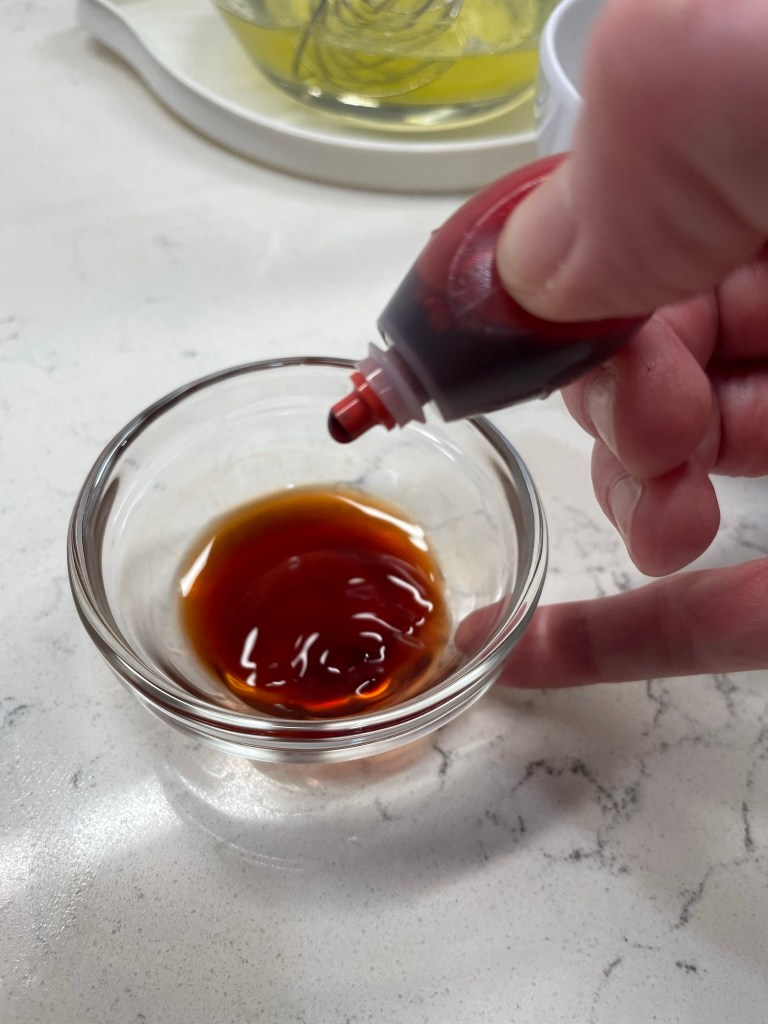
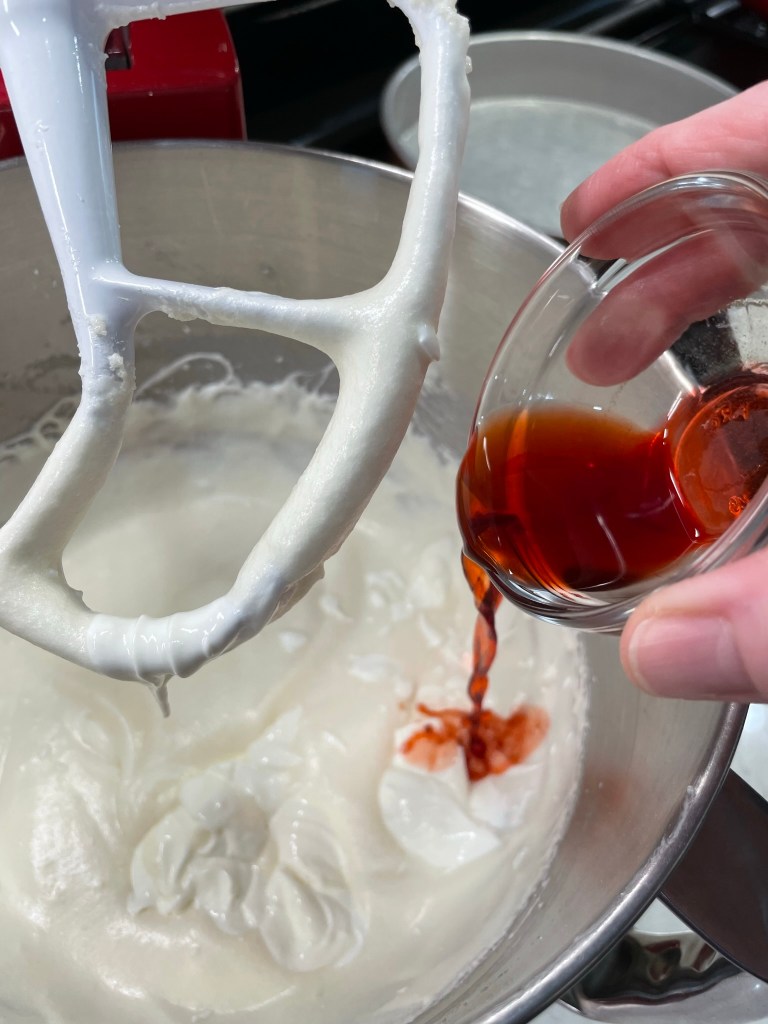
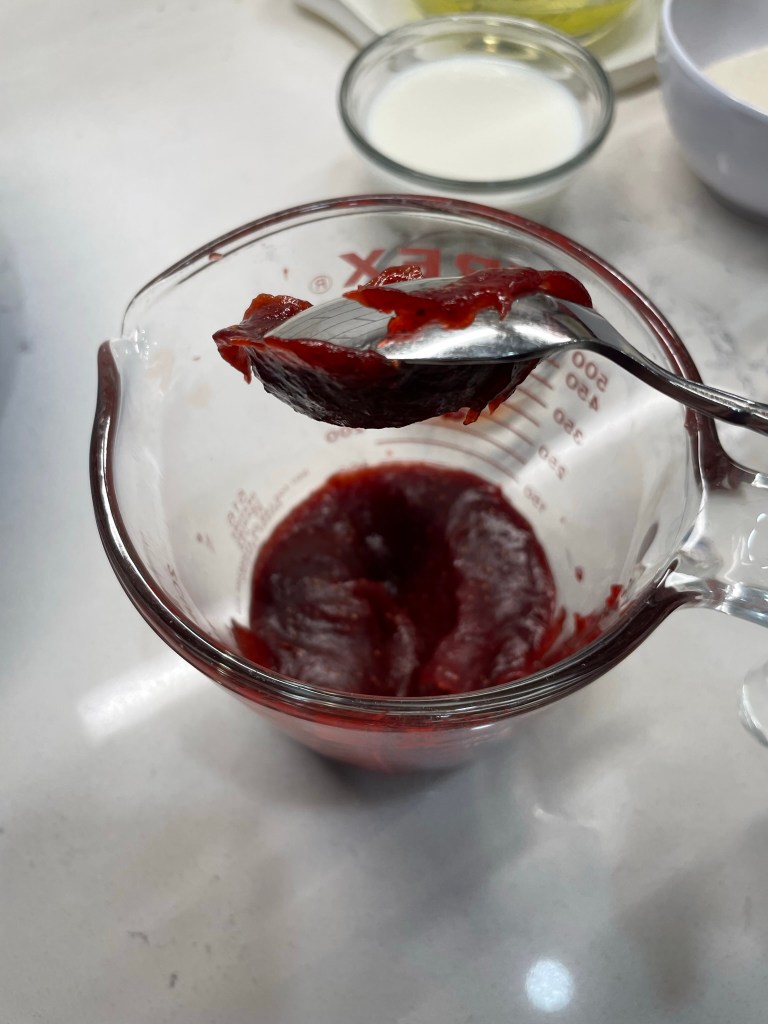
The puree needed time to cool, so I used that down time to get my other ingredients lined up and organized. This really helped me when I made my tiki skillet cake, so I’m trying to make it a habit. It still felt like too many components, so I combined a few things that made sense to me. That puree was thick as tomato paste, so I mixed the milk into it to make it pourable. I didn’t want to forget to add a few drops of natural red food coloring, so I added that to the extracts. Finally, I prepped my 9-inch cake pans and preheated the oven to 350 F.
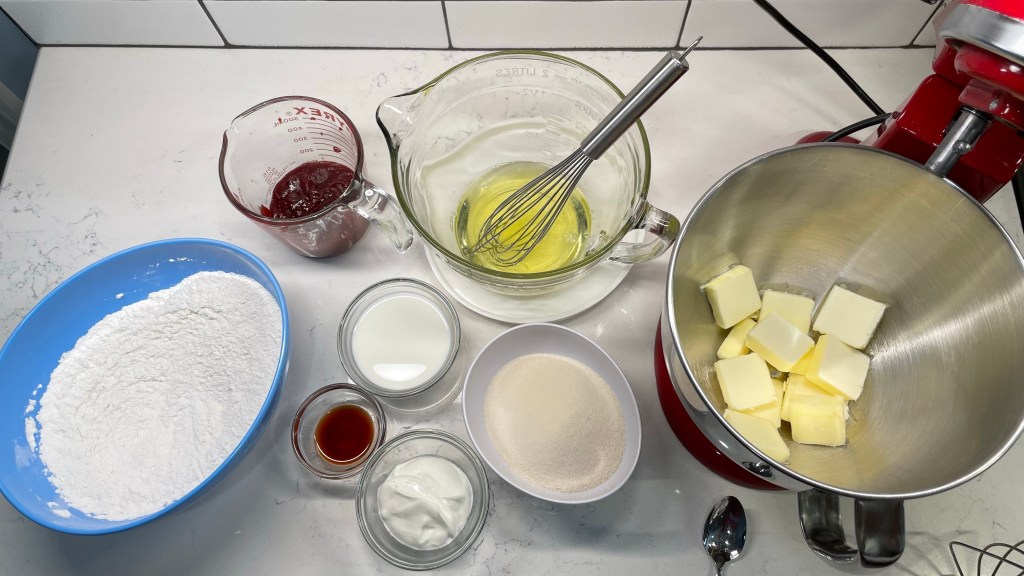
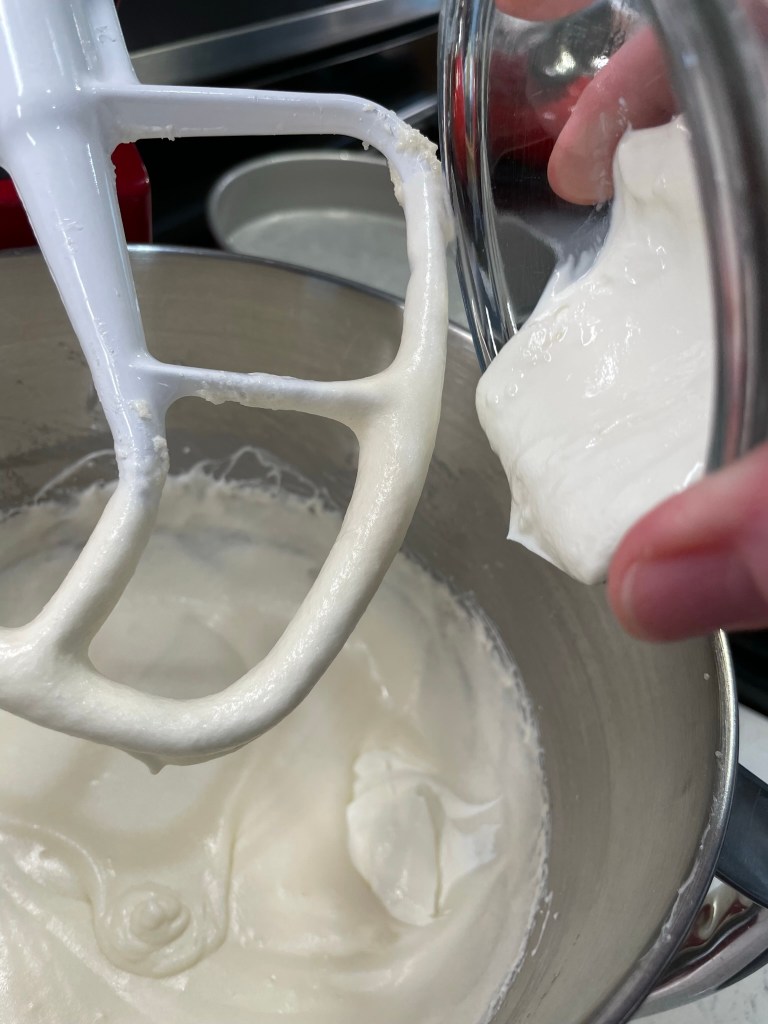
When the butter was softened enough to blend, I started by creaming it with sugar, then whipped in the egg whites, sour cream and extracts. So far, so good!
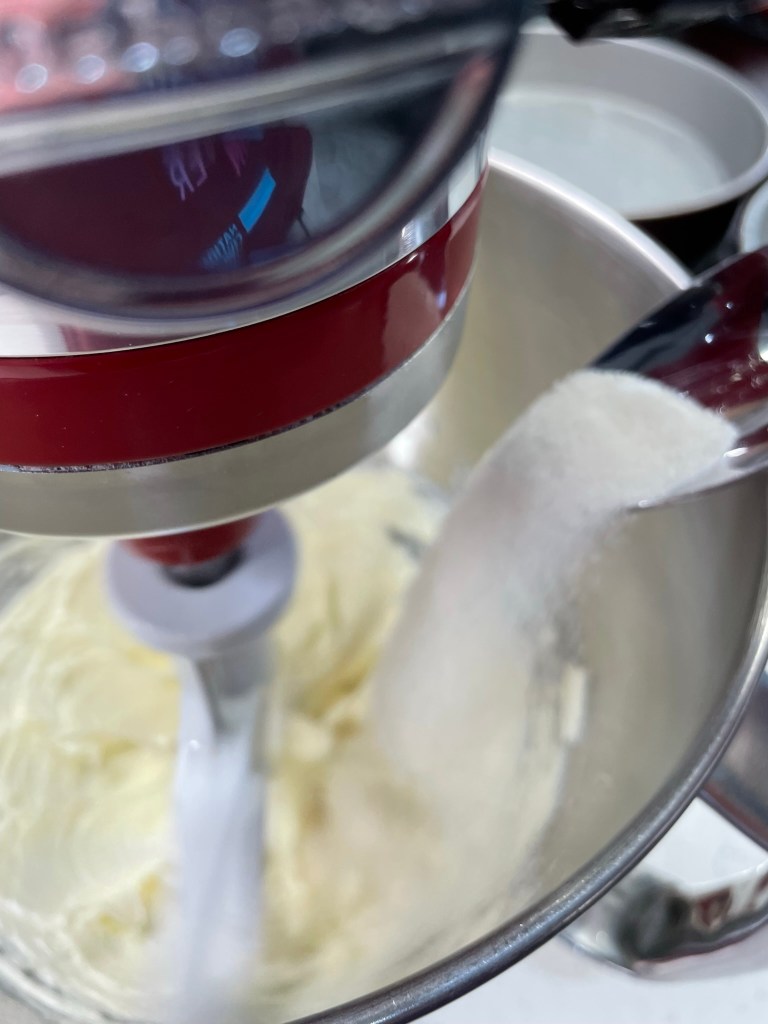
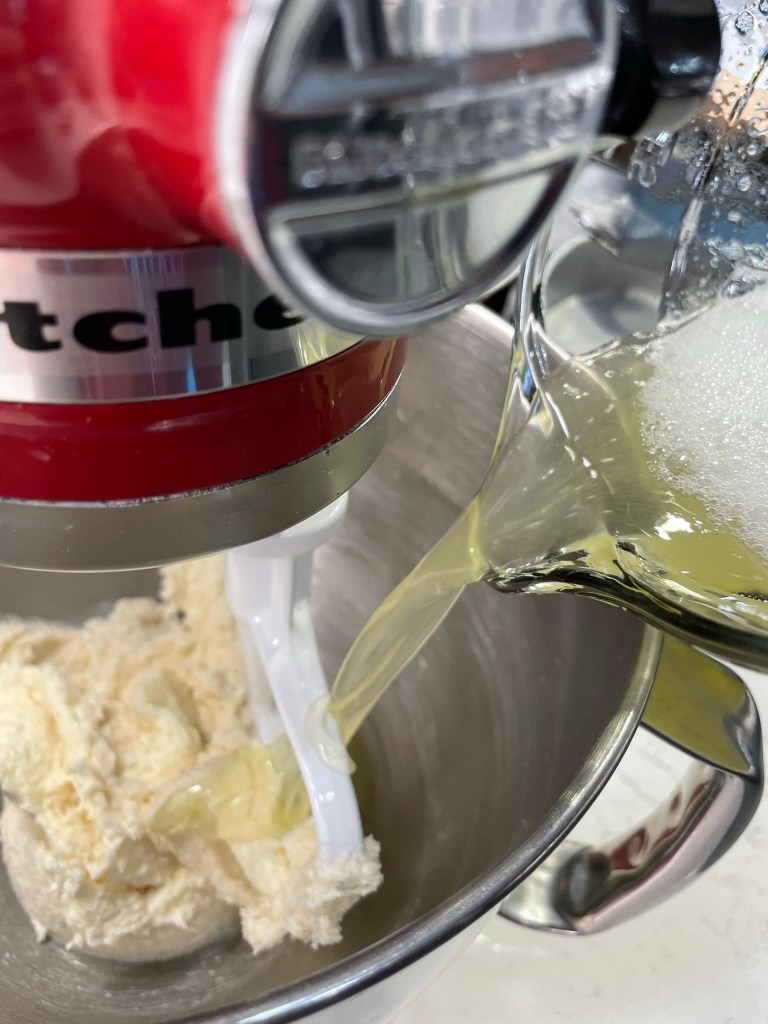
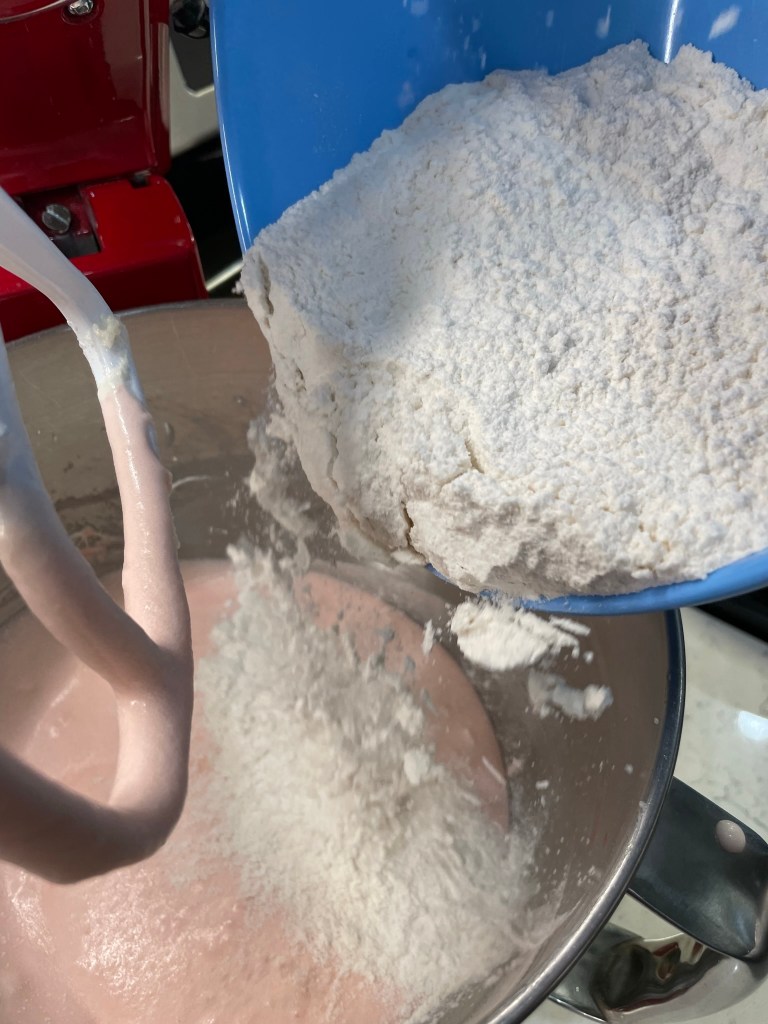
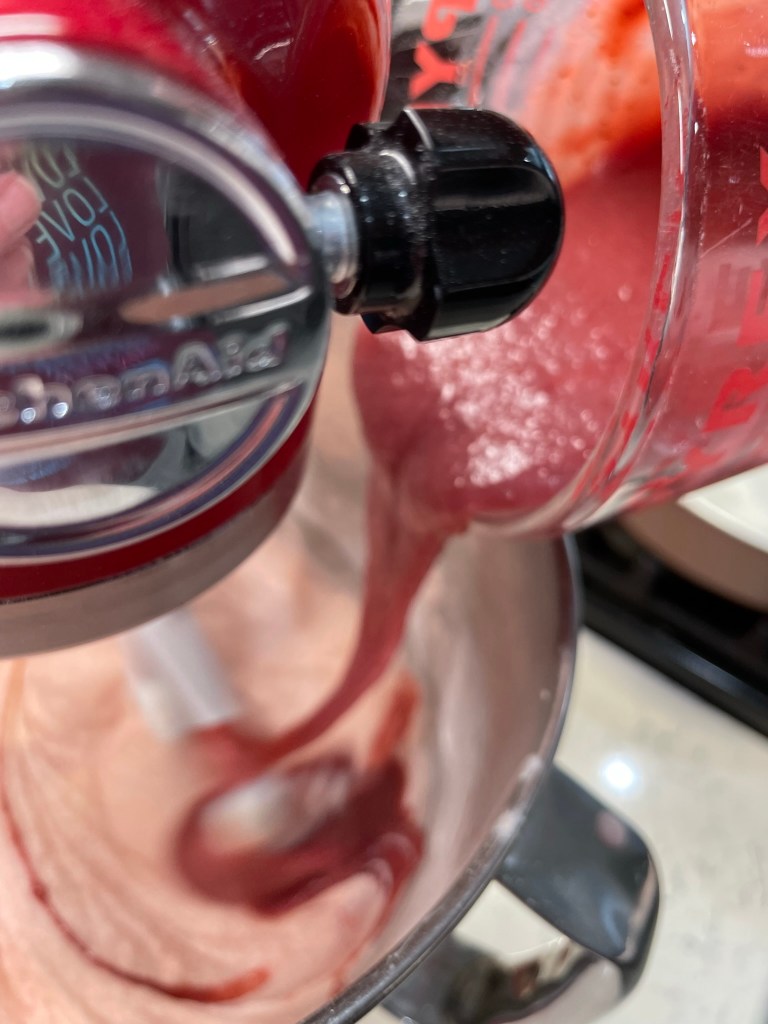
My next adjustment was in technique. The inspiration recipe suggested adding whole amounts of some ingredients all at once, rather than alternating dry and wet additions to the batter. Perhaps this works well for a more skilled sweets baker, but I didn’t want to take any chances with unincorporated ingredients, especially when I was aiming to please my husband on Father’s Day. I did this the way my grandma would have suggested, and poured the batter into my prepped pans, one of which was fitted with a cake strip. These things are soaked in water then wrapped around the cake pan, and the intent is to help the cake bake evenly without too much “dome.” I only used it on one layer, as I didn’t mind the top layer being rounded a bit. As it turned out, neither layer had a dome.
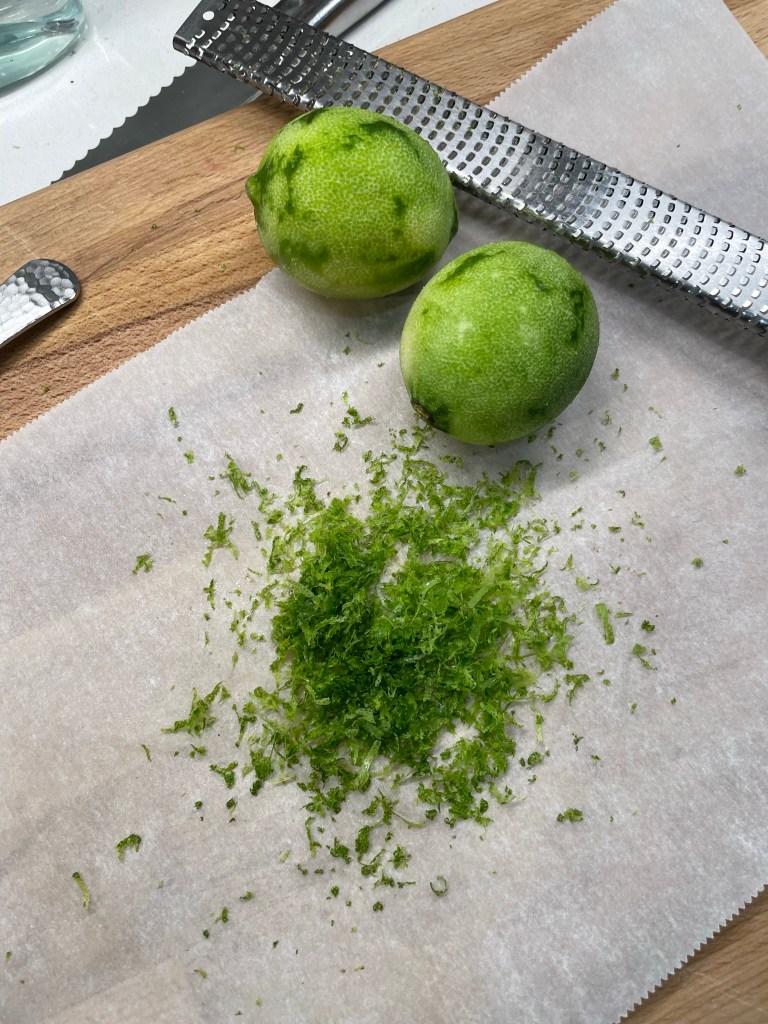
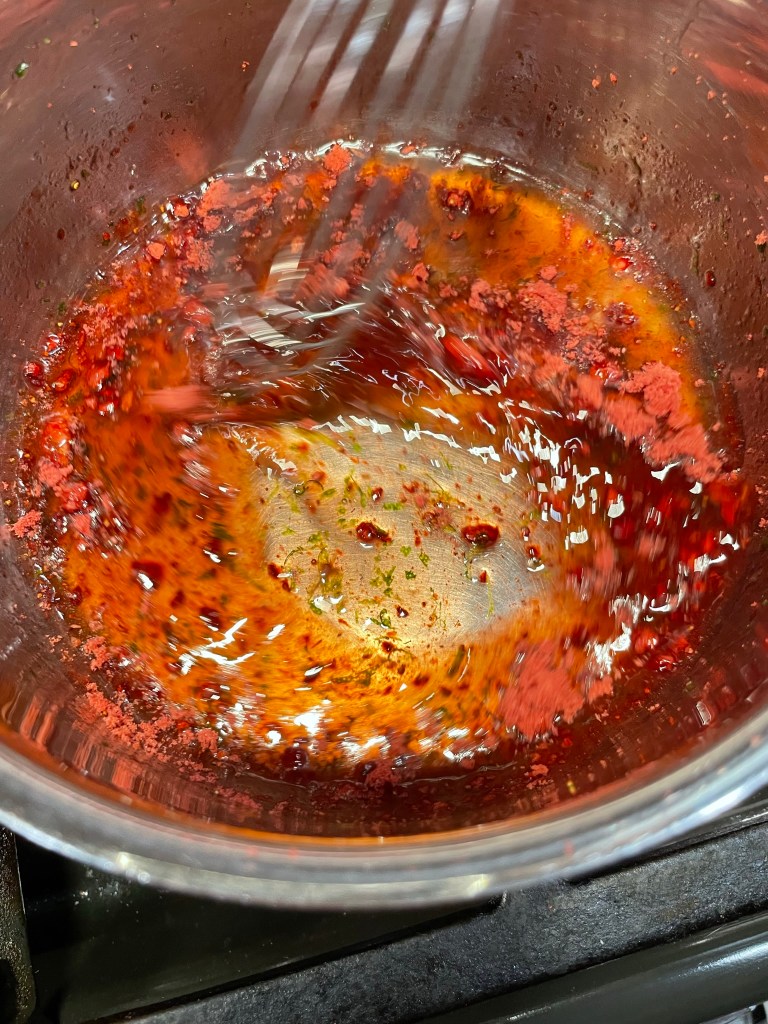
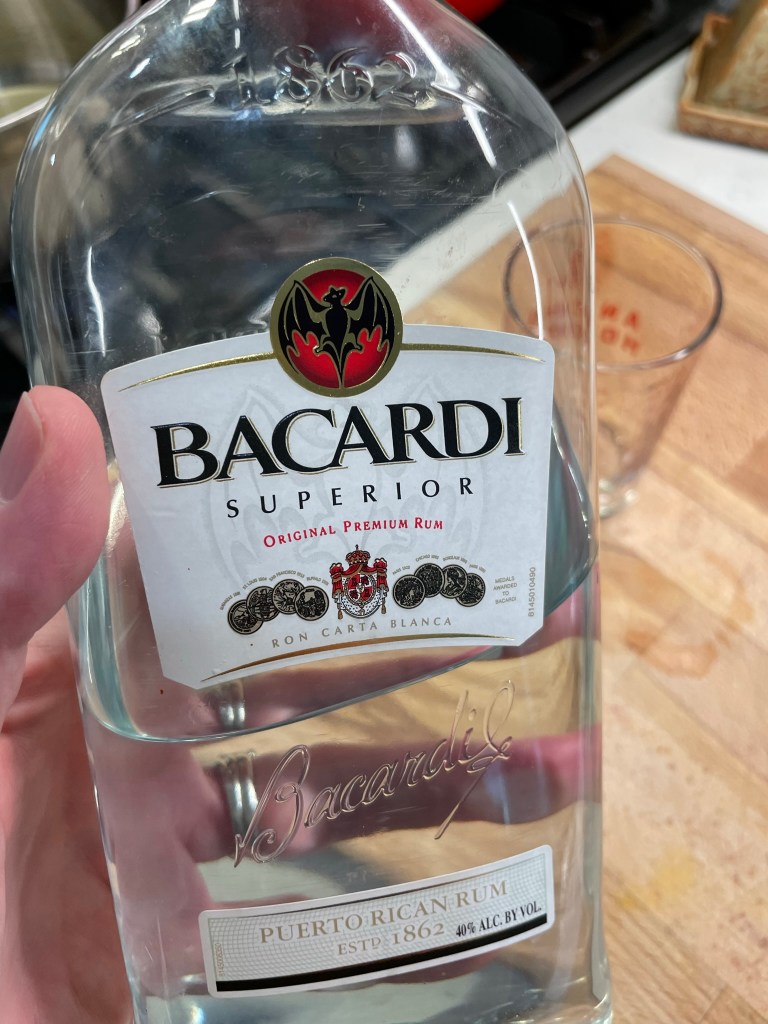
To achieve the “daiquiri” effect, I had swapped out some of the vanilla in favor of rum extract, and I cooked up a boozy strawberry daiquiri syrup for soaking the baked cake layers before icing. That alone was so good, I’ll have to think up another reason to make it again— and soon! The syrup was flavored with Bacardi white rum, fresh lime zest, and bits of freeze-dried strawberries, which I had processed into powder in the food processor. I’m pretty sure I’ll still be finding strawberry powder in random parts of the kitchen this time next strawberry season. Who has a better suggestion for turning that stuff into powder?
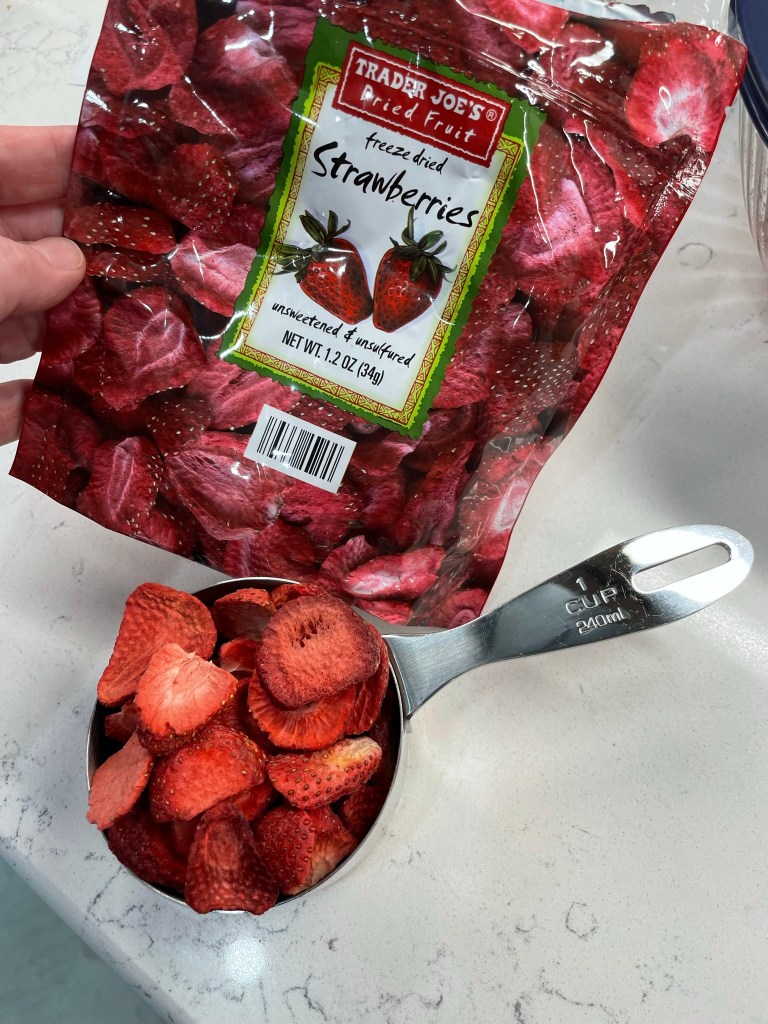
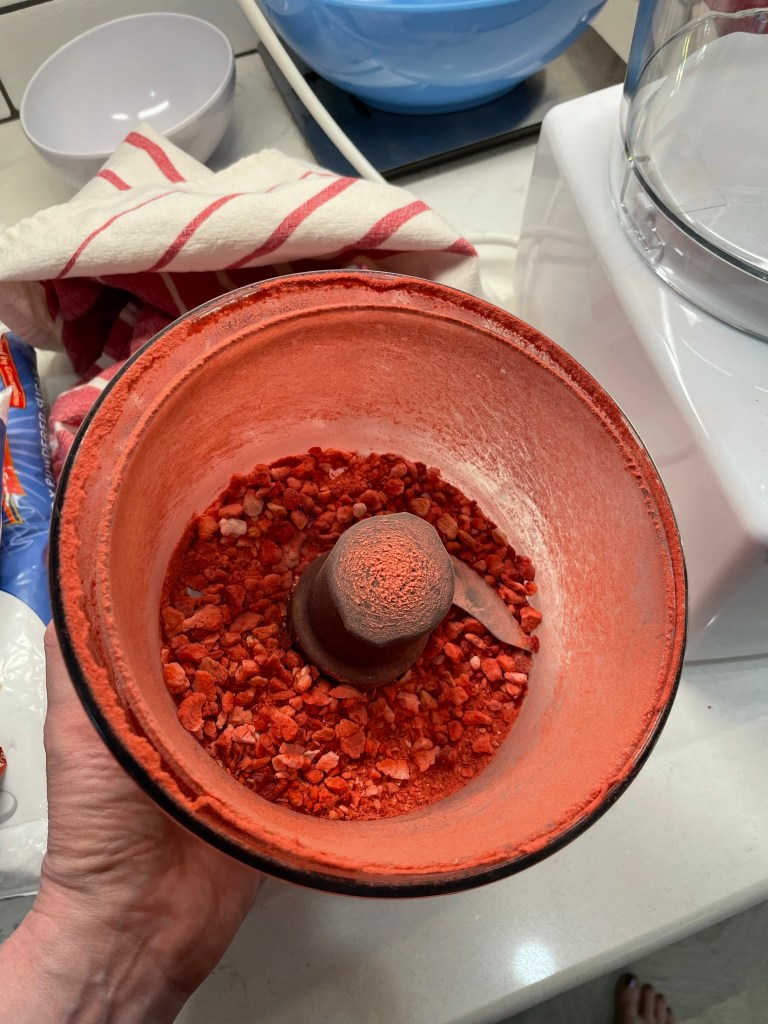
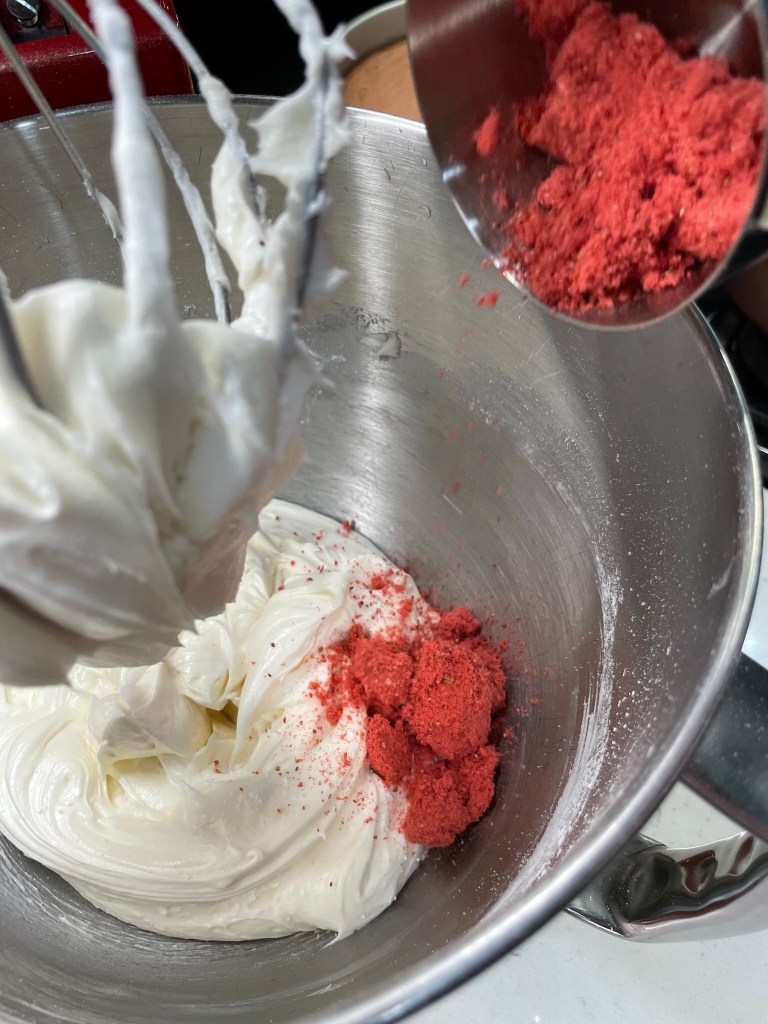
Almost finished! The cream cheese frosting got its pretty pink color from the freeze-dried strawberry powder, which put a ton of fresh berry flavor into play, without messing up the texture with too much moisture. I used an extra cup of powdered sugar from Sally’s recipe, because I wanted it to be sturdier. More lime zest and another splash of rum, and this frosting was good to go. And when I say, “good,” I mean really gooood!

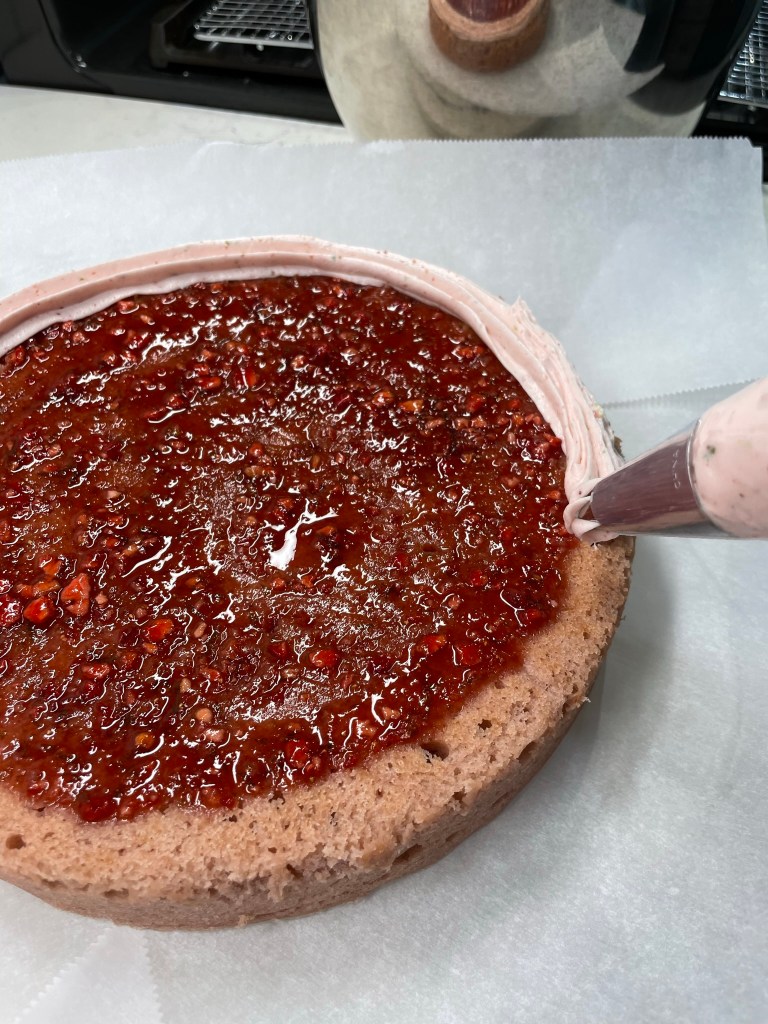
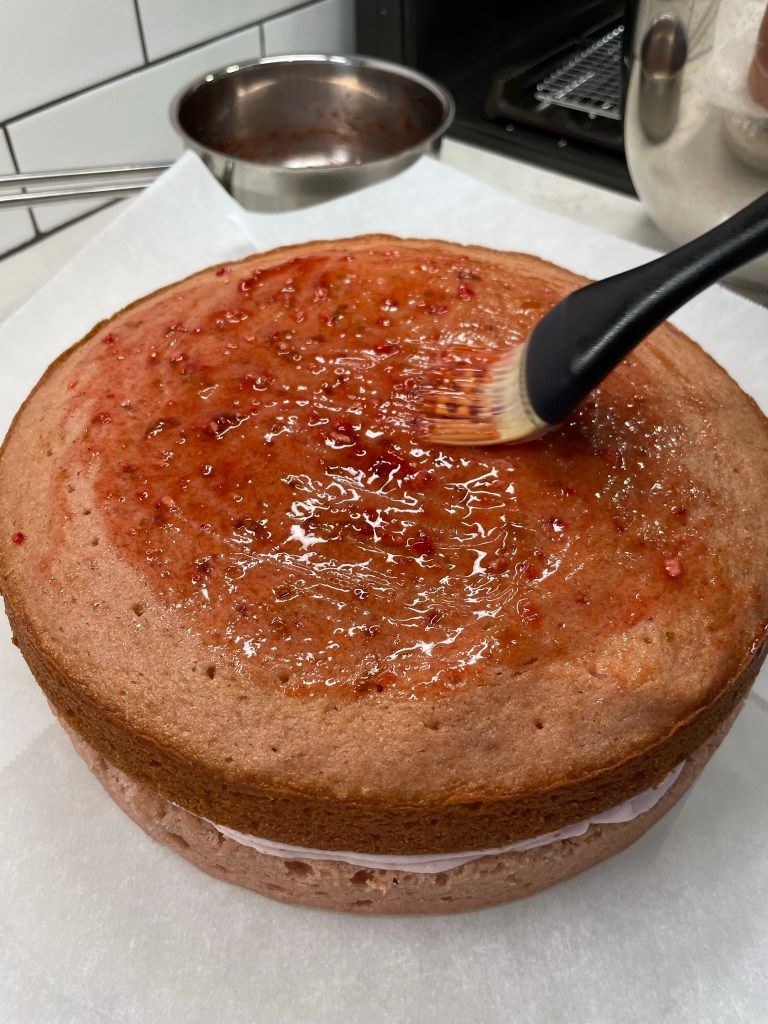
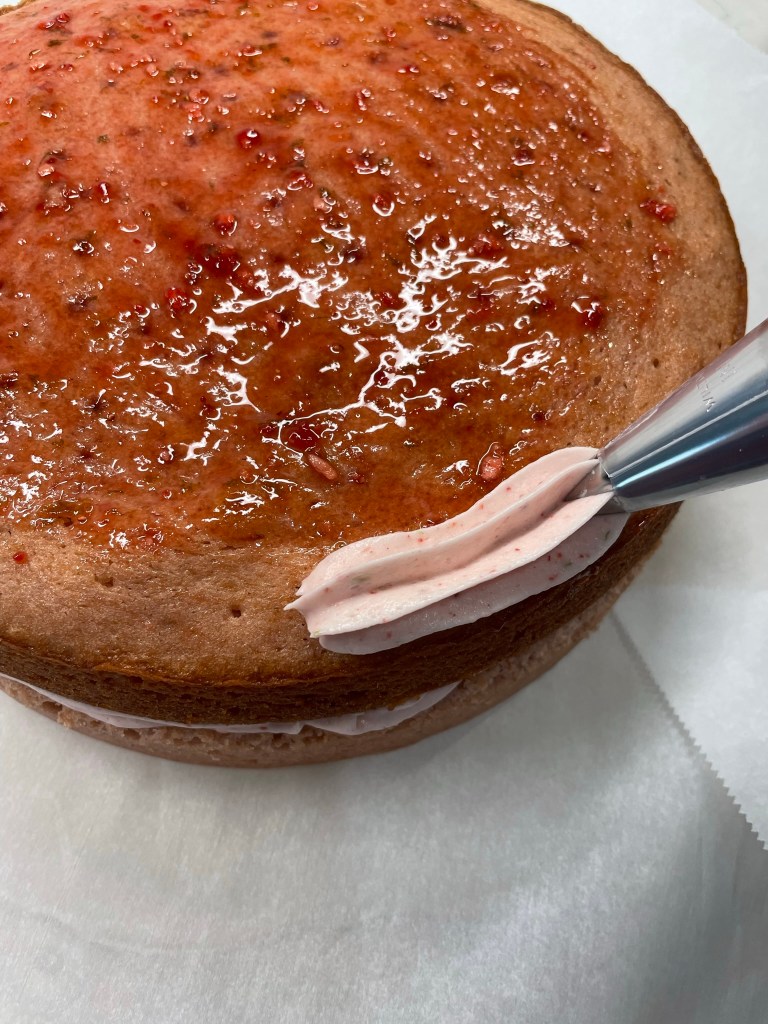
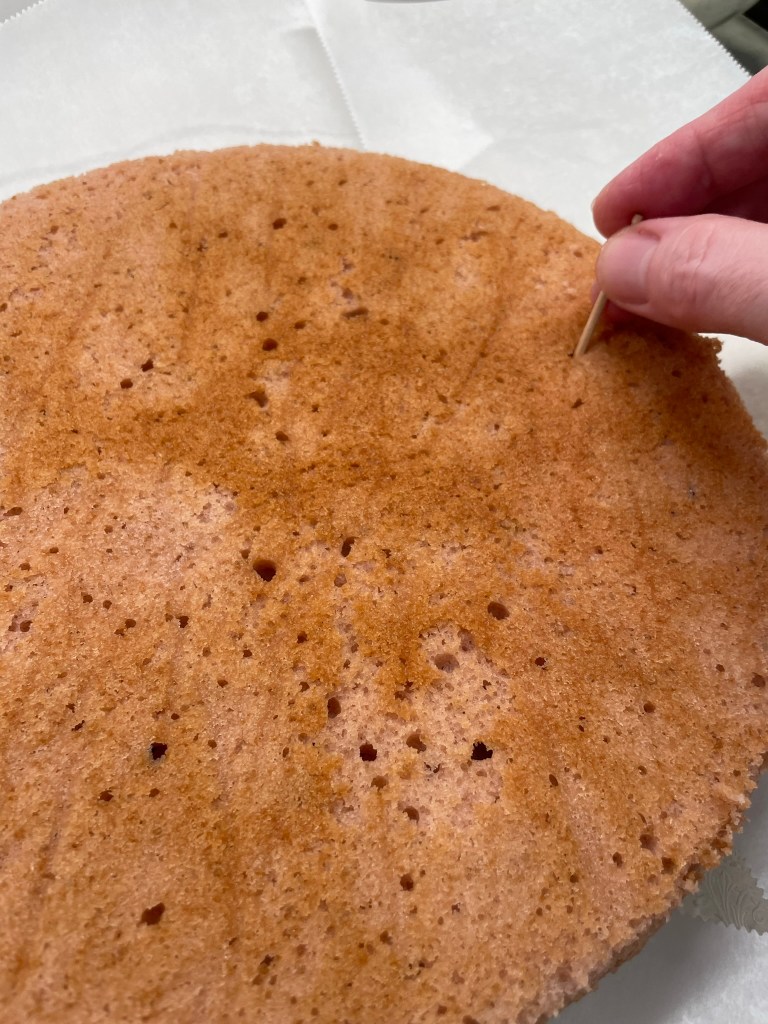
Putting the cake together was the easy part! I spooned most of that boozy daiquiri syrup over the first layer, which I poked all over with a toothpick first. A little edge of frosting kept it from soaking down the sides, and then I topped it with the second layer and frosted it up all over. 

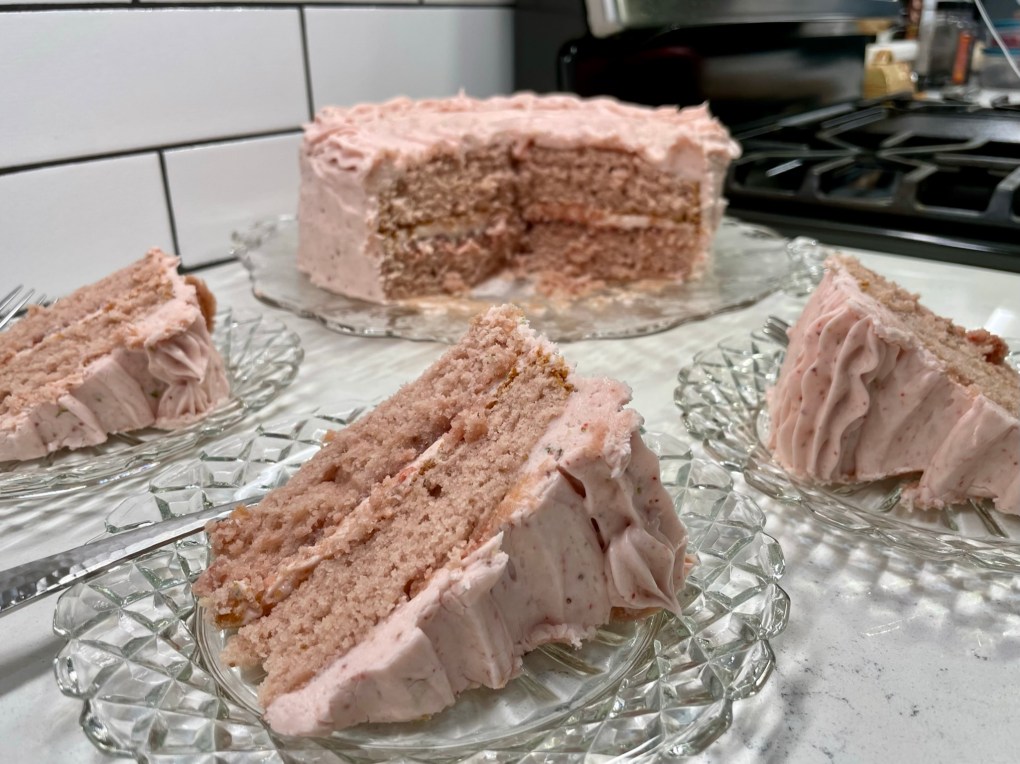
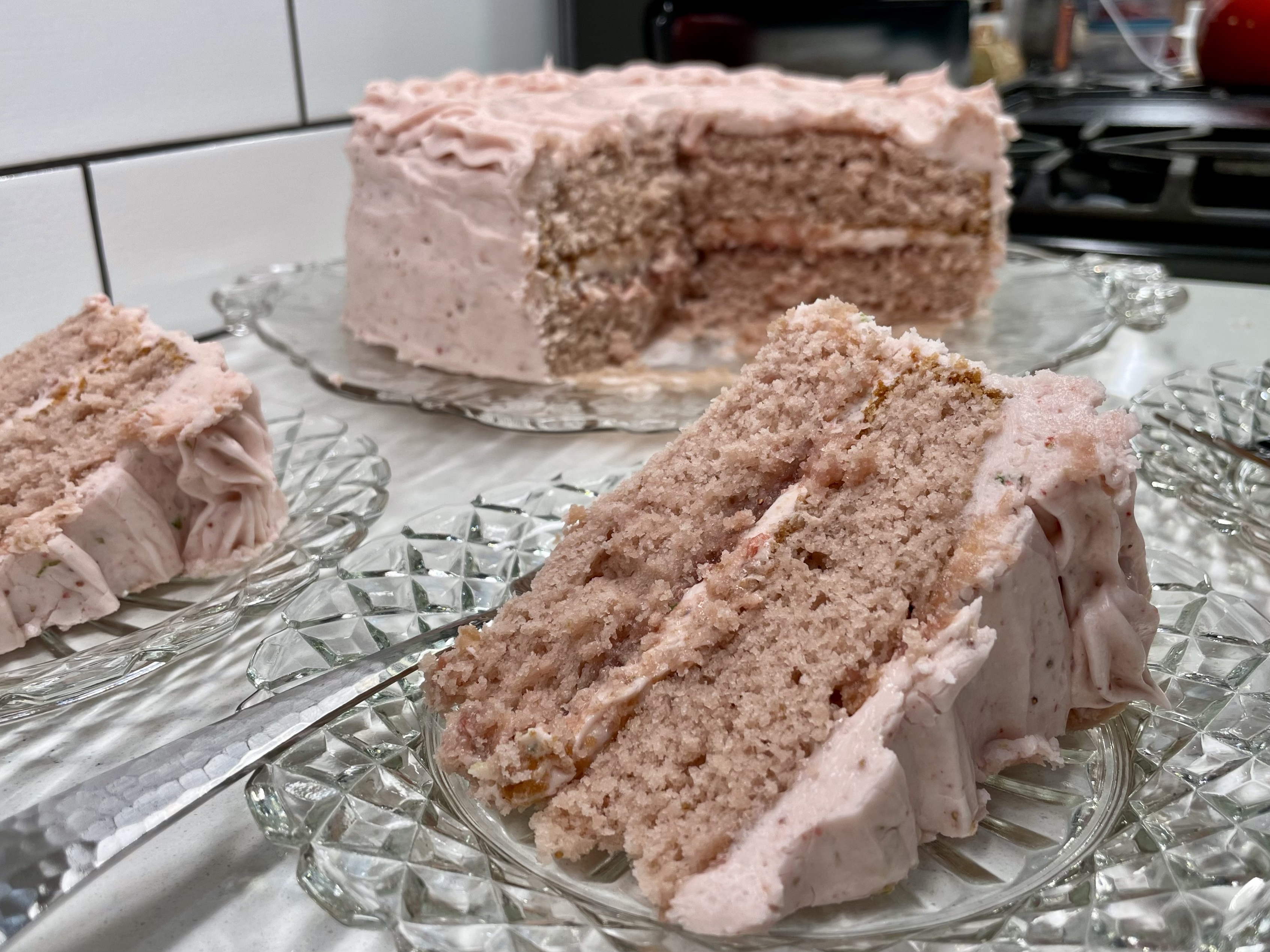
The resulting cake was beautiful and very tasty. Would I change anything next time? Not really, except for skipping the macerating of berries, which I wasn’t supposed to do in the first place. It wouldn’t be terrible to double the daiquiri syrup, and maybe it would soak in deeper if I applied it when the cake layers were still warm. I might put a little extra gel coloring into the batter to achieve more of a pink look. And I’d probably save a few of the prettiest fresh berries to garnish the cake at serving time.
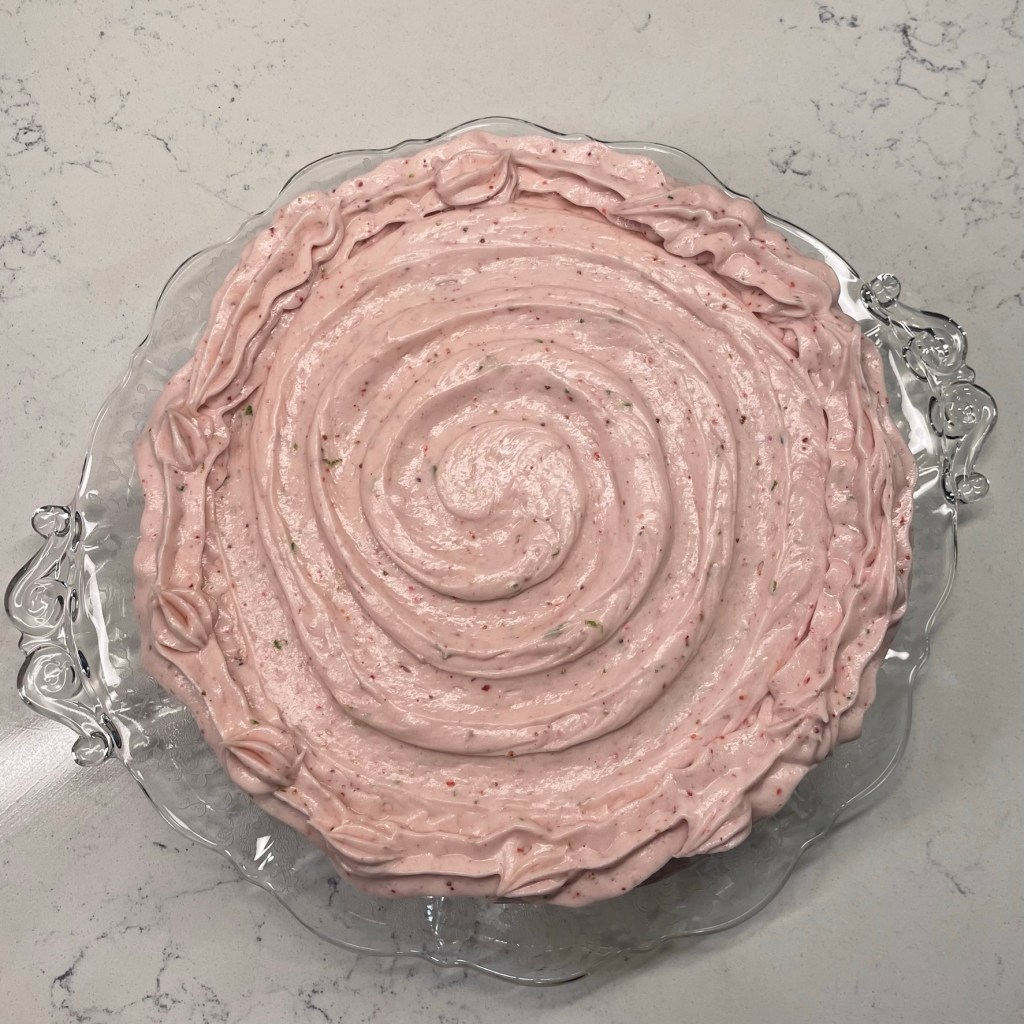

But even without all of that, this was a big time winner. Les loved his Father’s Day cake, and I’m conquering my fear of baking, one recipe at a time. 🍓😉

Strawberry Daiquiri Cake
  • Servings: 10 to 12 slices
  • Difficulty: Intermediate
  • Print

This pretty cake is packed with fresh strawberry flavor, and I found a way to put a fun cocktail spin on it, too!


For the cake batter, plan ahead for the time needed to puree and cook the strawberries, as the reduction needs to be cooled to room temperature, along with the butter, egg whites and sour cream. For best results, measure out and line up all your ingredients before beginning this recipe. The ingredients and directions are split up into three components: the batter, the daiquiri syrup and the frosting.

Ingredients

  • 1 pound fresh ripe strawberries, rinsed and hulled (these will be pureed and cooked)
  • 2 1/2 cups cake flour (see notes)
  • 2 tsp. baking powder
  • 1/2 tsp. baking soda
  • 1 tsp. fine salt
  • 3/4 cup (1 1/2 sticks) unsalted butter, room temperature
  • 1 3/4 cups cane sugar
  • 5 large egg whites, room temperature
  • 1/3 cup sour cream, room temperature (full fat for best results)
  • 1 tsp. real vanilla extract
  • 1 tsp. rum extract
  • 4 drops red food color (optional, for extra pink color)
  • 1/2 whole milk, room temperature

Directions

  1. Puree the strawberries in a blender or food processor until smooth. Cook the resulting puree over medium low heat for about half an hour, until the berries have reduced down to about 1/2 cup volume. The mixture should be almost as thick and sticky as tomato paste. Set this aside to cool.
  2. Preheat oven to 350 F, with oven rack in center position. Prepare two 9-inch cake pans by buttering the sides and bottom. Lay parchment rounds over the bottom and butter that as well for easy removal of the cake layers.
  3. Combine flour, baking powder, baking soda and salt in a medium bowl.
  4. Beat butter in stand mixer with paddle blade. Add sugar gradually, beating until light and fluffy. Whisk egg whites until frothy; pour into mixer bowl and beat with paddle until evenly combined, about two minutes. Add sour cream, vanilla and rum extracts and food color (if using); beat until smooth.
  5. Whisk the cooled strawberry puree into the milk to create a thick liquid. Add dry and wet ingredients to the batter, alternating so that you begin with flour, then strawberry-milk, flour, milk, flour. After each addition, beat on low speed only until addition is incorporated. Scrape down the sides of the bowl a couple of times during these additions.
  6. Divide batter between prepared cake pans. Bake 25 minutes, using the toothpick test to check for doneness. Allow cake layers to cool in the pans, set on a cooling rack for even air flow underneath. When cakes are cooled, invert onto cooling racks.

The daiquiri syrup is next, and this can be made ahead and brought to room temperature before soaking baked cake layers. The syrup uses some of the freeze-dried strawberries that are also used in the frosting. Process those into a powder during this stage, and reserve most of the powder for the frosting.

Ingredients

  • 1/4 cup cane sugar
  • 2 Tbsp. water
  • 1/4 cup white rum (I used Bacardi brand)
  • zest of one organic lime
  • 1 Tbsp. powdered, freeze-dried strawberries plus small bits (see frosting ingredients below)

Directions

  1. Add the freeze-dried strawberries to a blender or the small bowl of a food processor. Pulse about 20 times to transform the berries into a powder. Sift the berry powder through a wire strainer, and measure out a tablespoon or so to be used in the simple syrup, along with some of the larger bits caught in the mesh strainer.
  2. Make the daiquiri syrup by heating sugar, water and rum over medium heat until slightly bubbly. Add about a tablespoon of the strawberry powder, and a spoonful of the small bits, which will rehydrate in syrup. Stir in lime zest and set aside to cool. If you’d like, you can make this ahead and keep it in the fridge, but bring it to room temp when you’re ready to assemble the cake.

For the frosting, I like salted butter because it emphasizes the bright flavors of strawberry, rum and lime. If you prefer unsalted butter, it’s an even swap.

Ingredients

  • 1 heaping cup freeze-dried strawberries (look for them at Trader Joe’s, Whole Foods or online)
  • 8 ounces full-fat cream cheese, room temperature
  • 1 stick salted butter, room temperature
  • 4 cups confectioner’s sugar
  • 1 Tbsp. white rum
  • zest of one organic lime

Directions

  1. Make the frosting; cream together the cream cheese and butter on high speed, using the stand mixer with whisk attachment. Stop mixer and add confectioner’s sugar, one cup at a time. Whisk until smooth and scrape down sides as needed. Beat in rum, then add powdered strawberry dust and lime zest. Beat until fluffy. If the frosting seems a little soft, cover the bowl and refrigerate a half hour or so, then whip at high speed for a fluffy texture.
  2. Smear a little bit of frosting onto serving platter, then position first cake layer upside-down on the dab of frosting to prevent it sliding around on the platter. Use a toothpick to poke small holes all over the first cake layer. This will help the daiquiri syrup soak into the bottom layer of the cake.
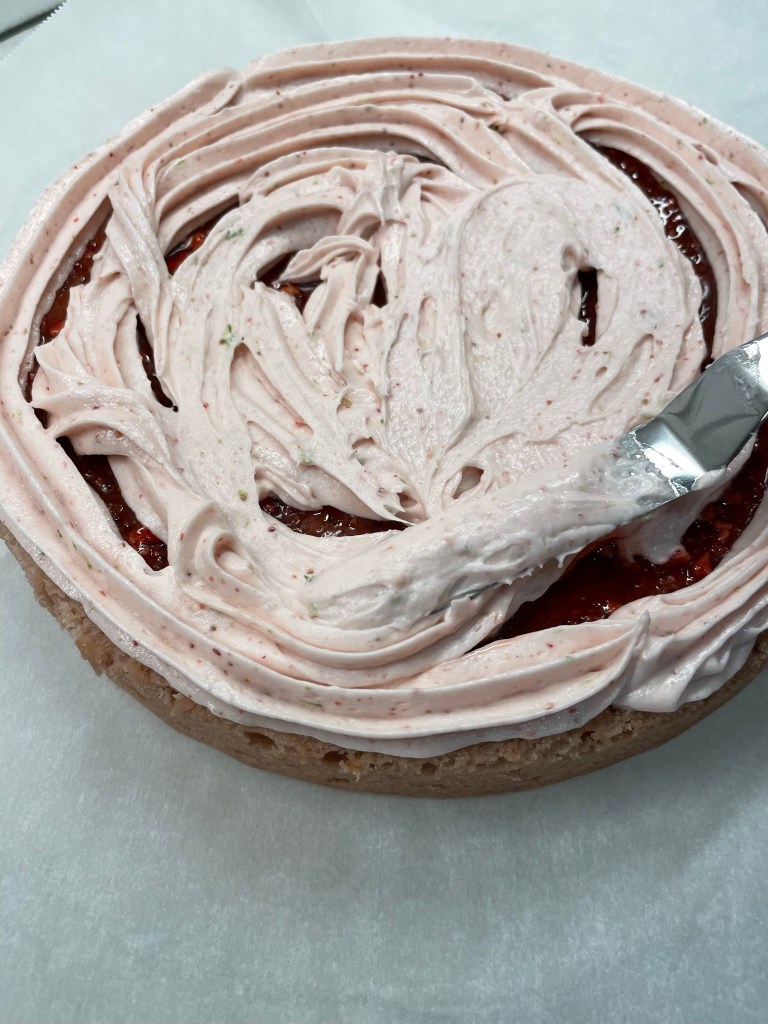
  3. Fill a piping bag with frosting, and lay a thick line around the outer edge of the first layer. Spoon most of the daiquiri syrup evenly over the cake layer, spreading it up to the edge of the frosting line to encourage it into the toothpick holes. When the syrup appears mostly soaked into the cake, pipe frosting all over the top and use an offset spatula to gently smooth it over the syrup. It doesn’t have to be perfect.
  4. Position the second layer of cake over the first. Use the toothpick to poke holes over this layer and gently brush the remaining daiquiri syrup over the top, stopping about one inch from the edges. This layer should have only a slight coating of the syrup; otherwise, the frosting might not stay put. Pipe a line of frosting around the edge of the top layer, then frost the sides and top of the cake.
  5. Cover and refrigerate the cake a couple of hours before serving for best results.


Strawberry-Rhubarb Lemonade

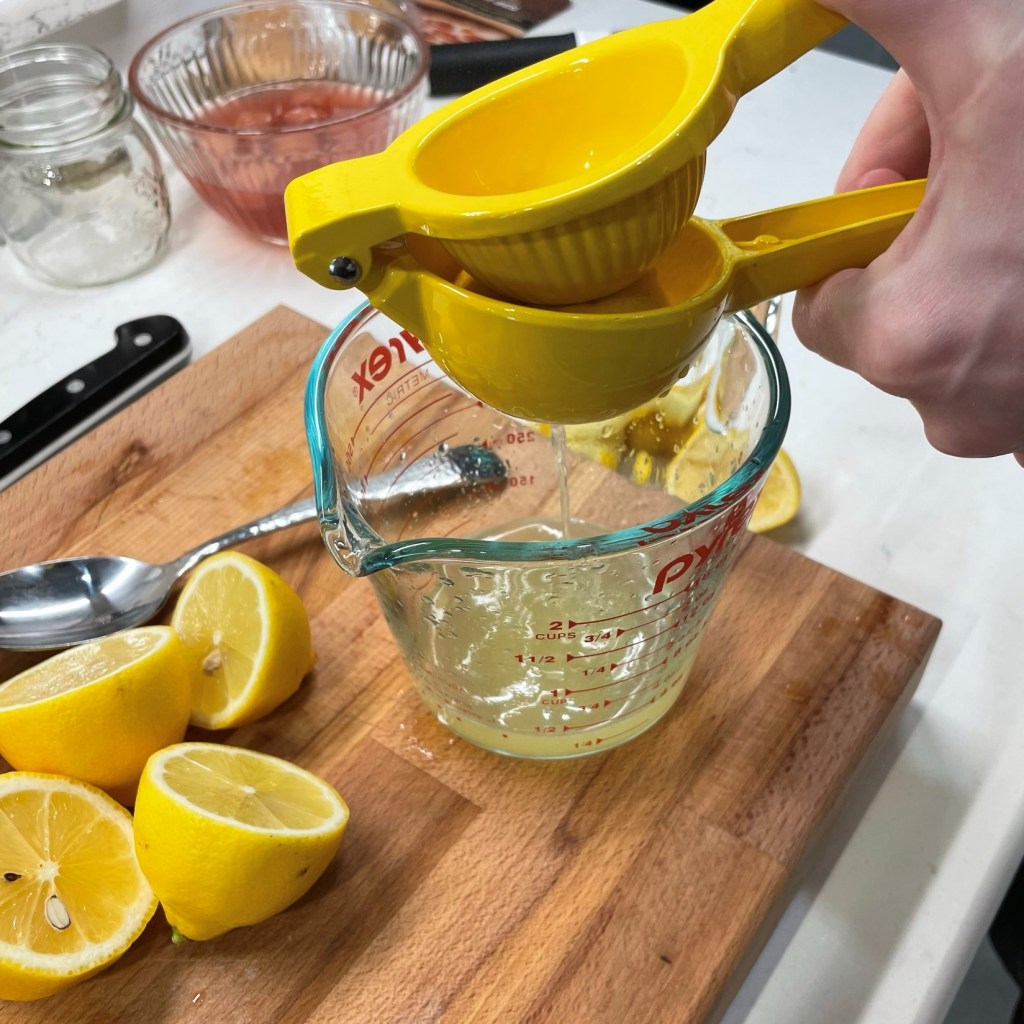
Ah, fresh lemonade. Is there anything more refreshing on a scorching hot summer day? If you have never made homemade lemonade, I promise you that it’s very simple and totally worth the effort. All you need is a simple syrup (which is literally only a warmed mixture of water and sugar), a tiny pinch of salt (which is basically an exclamation point on the other flavors) and a whole bunch of freshly squeezed lemon juice.

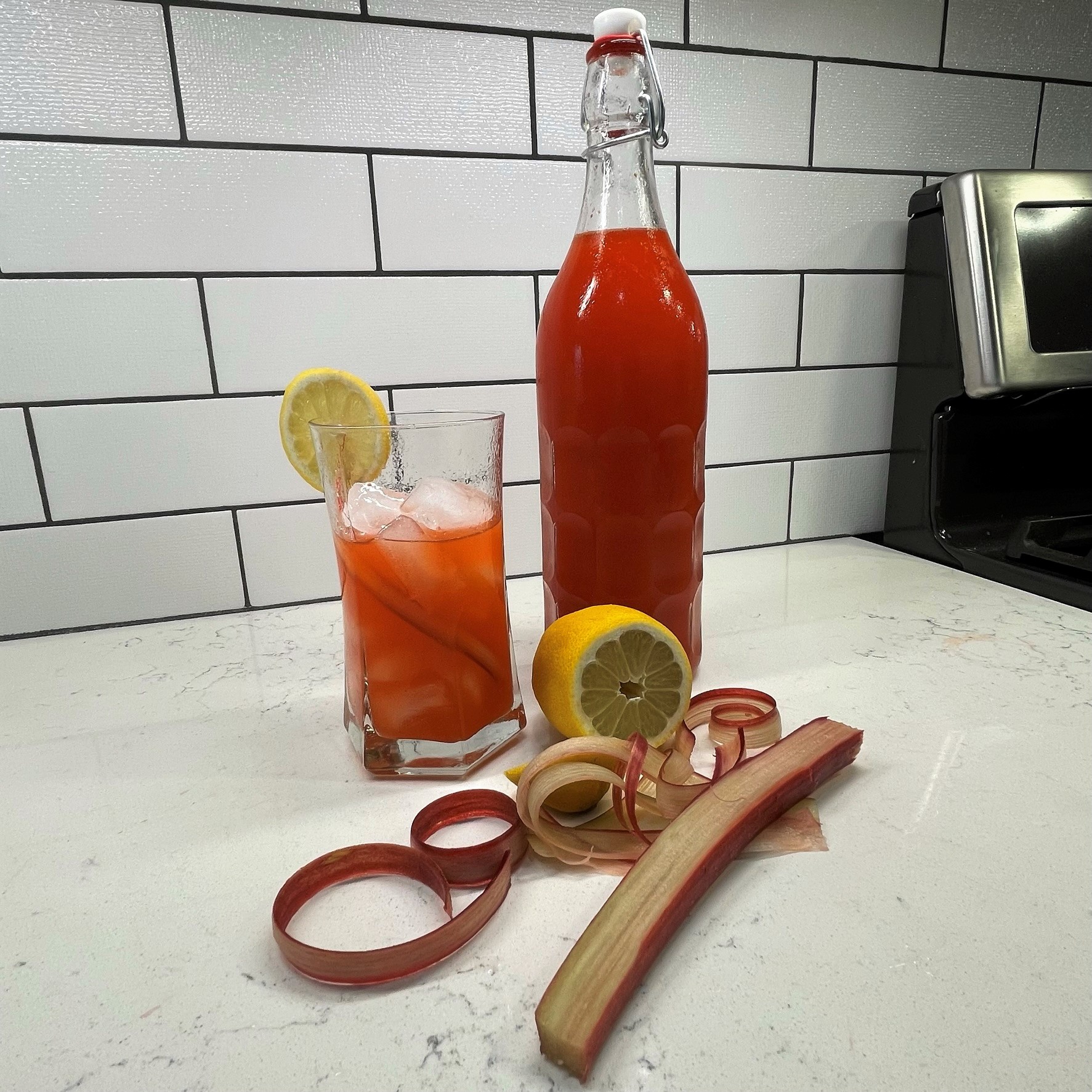
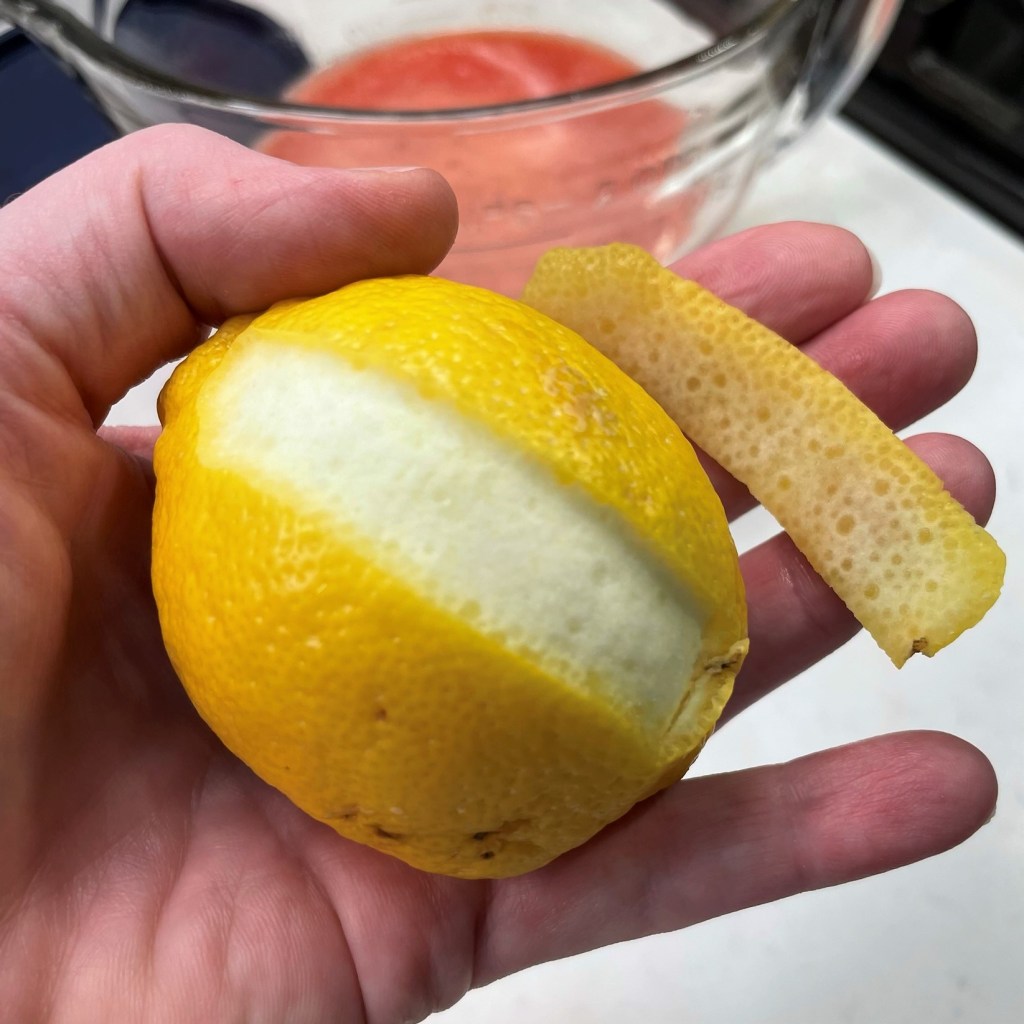
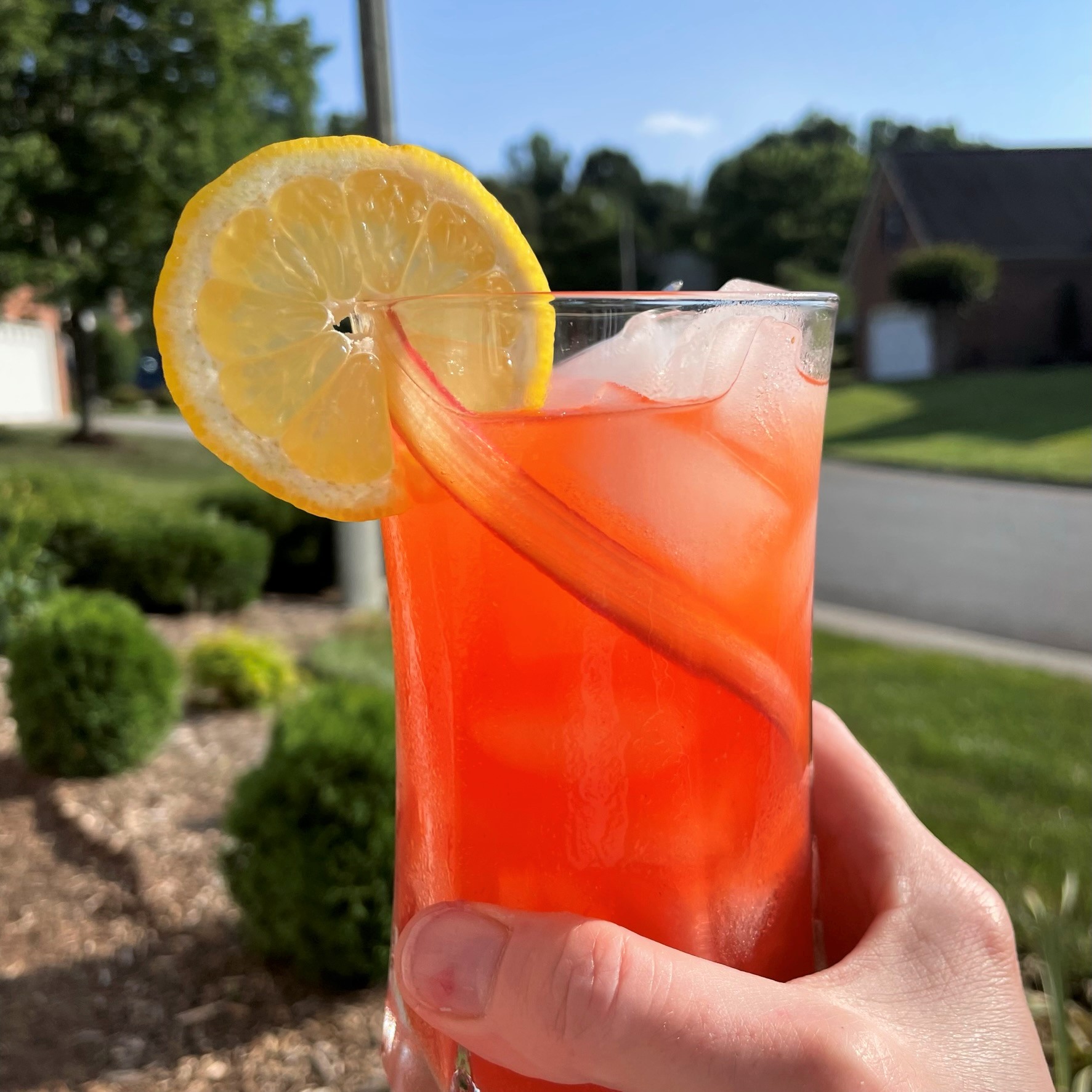
And if you want to elevate homemade lemonade with other flavors, it’s a simple twist of ingredients. For my strawberry-rhubarb version, I made two simple syrups, one infused with the bright citrus flavor of organic lemon peel, and the other with two stalks of cut up rhubarb. Then, I pureed fresh organic strawberries with water, strained out the seeds and combined the whole thing in a pitcher with the juice of six lemons.
This recipe makes a delicious base. Mix it in equal parts with still or sparkling water for the ultimate refresher!
The result is this beautifully hued summer beverage with tart, sweet and tangy flavors that taste all at once like spring, summer and sunshine. The formula is slightly concentrated, leaving me with options for how to serve it. It’s delicious mixed 1:1 with cold water over ice, or 1:1 with chilled sparkling water, and I haven’t tried it yet, but I imagine it would make a great cocktail if shaken with ice and a shot of vodka or blanco tequila. My husband even suggested we blend it with crushed ice for an even more refreshing summer cooler—a slushie.

Here’s how it came together, and I’ll admit that it could have been easier if I had made only one simple syrup rather than two, but there’s a reason it happened that way. I’ll explain in a moment.


Bring the heat, summer!

So, why two syrups for this recipe? It wasn’t necessary, and next time, I’d make them together in one batch. Truthfully, I made my rhubarb syrup first, and it was intended for some other recipes, but a story in my news feed last week caught my eye and I took a detour toward this pretty, pink lemonade. The story was about the upcoming “Strawberry Moon,” the full moon tomorrow night that has the distinction of also being a supermoon.

Photo by Francesco Ungaro on Pexels.com

Big Moon Summer

Supermoon occurs when the moon is full at the same time it is closet to Earth in its orbit. Nothing is different about the moon itself, of course, but the combination of its full phase and proximity to our planet give it the appearance of being larger and brighter than a typical full moon.  

I am fascinated by the moon, which has tremendous influence over all life—from the ocean tides and reproductive cycles of animals to its effects on the human body and even (or, perhaps, especially) our emotions. Nobody understood these things more than the Native Americans, who are responsible for the names given to the full moons each month. They named the moons based on what was in season, or what was happening in nature at the time of each full moon cycle. Various tribes held this moon-naming practice, but the names that are still used today are mostly attributed to the Algonquin tribe, which made its home in the stretch from New England to the Great Lakes.

Strawberry Moon is the first of three supermoons this year. Next will be July’s Buck Moon (named for the time when male deers’ antlers will be in full growth mode, according to the Old Farmer’s Almanac). And some sources say that August’s full moon also qualifies for supermoon status. That will be the Sturgeon moon, so named for the abundance of sturgeon fish that historically filled the Great Lakes during late summer. That’s three consecutive supermoons, and I think that’s a natural phenomenon worth celebrating.

Want to see the Strawberry Supermoon? This site will help you find the best time for viewing in your area—Moonrise and Moonset Calculator (timeanddate.com)—but if you don’t want to try to interpret the scientific chart for an exact time, just pour yourself a tall glass of strawberry rhubarb lemonade and head outside for a sky check any time after sunset on Tuesday.

Cheers!


Strawberry-Rhubarb Lemonade

  • Servings: 8
  • Difficulty: easy
  • Print

I’ve combined juicy strawberries, spring rhubarb and fresh lemon juice, making a beautifully hued beverage with tart, sweet and tangy flavors that taste all at once like spring, summer and sunshine. This is slightly concentrated, leaving me with options for how to serve it. It’s delicious mixed 1:1 with cold water over ice, or 1:1 with chilled sparkling water, and I can’t wait to try it as a cocktail, shaken with a shot of vodka or blanco tequila.

Ingredients

  • 2 1/2 cups filtered water
  • 1 1/2 cups organic cane sugar (more or less to taste)
  • 2 or 3 stalks rhubarb, chopped
  • Strips of lemon peel from two organic lemons
  • Juice of 6 lemons (about 3/4 cup)
  • 1/8 tsp. salt
  • About 1 cup fresh organic strawberries, trimmed and hulled
  • 1 cup water (for pureeing the strawberries)

Directions

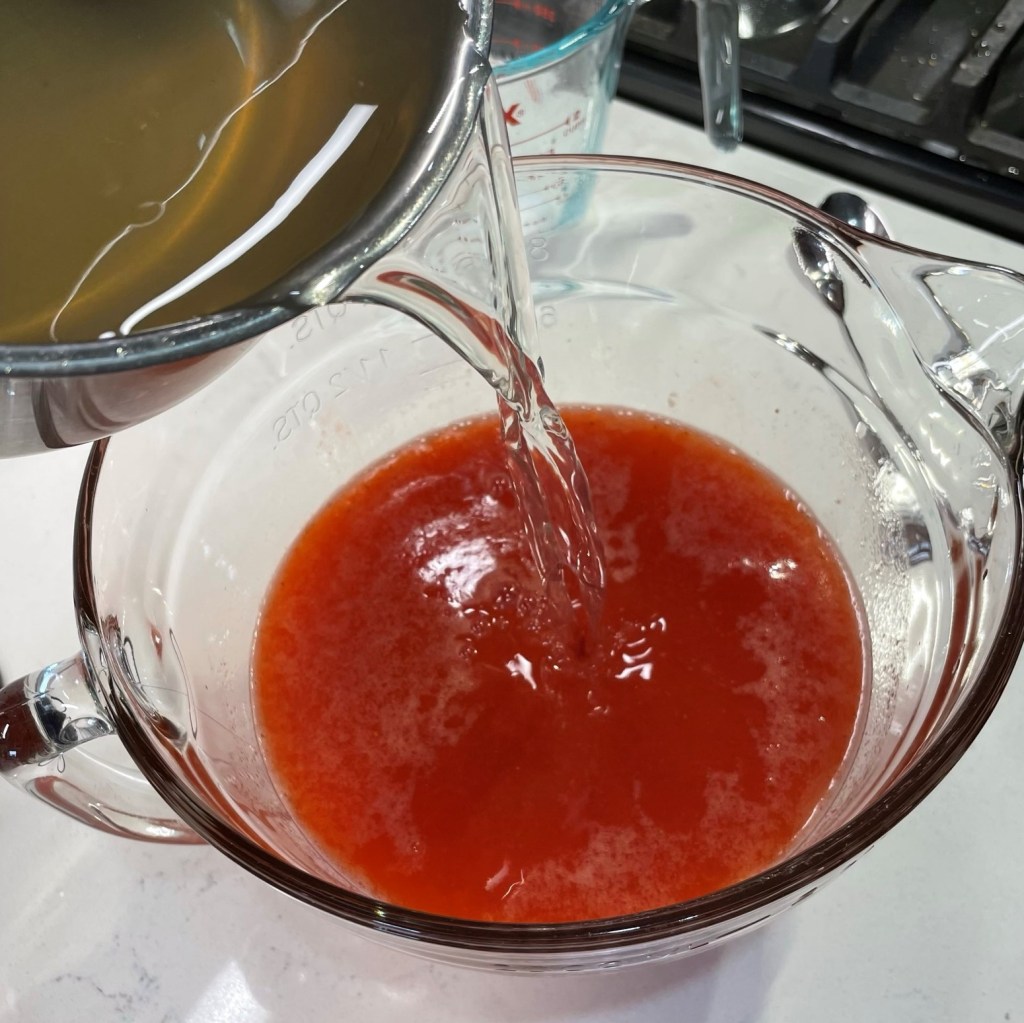
  1. Combine filtered water and cane sugar in a large saucepot. Add rhubarb pieces and strips of lemon peel. Heat over medium heat until water comes to a gentle boil, then turn off heat. Stir until sugar fully dissolves. Stir in salt. Allow this mixture to cool to room temperature.
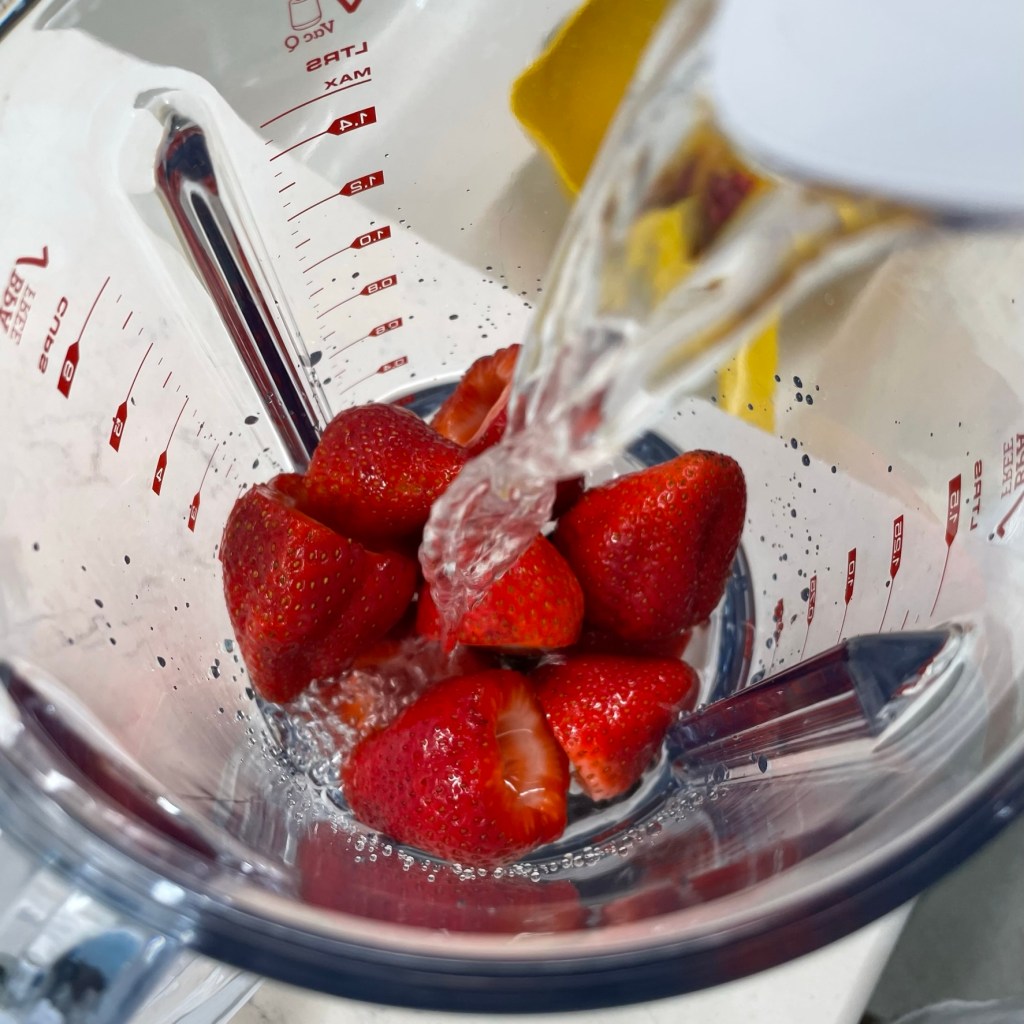
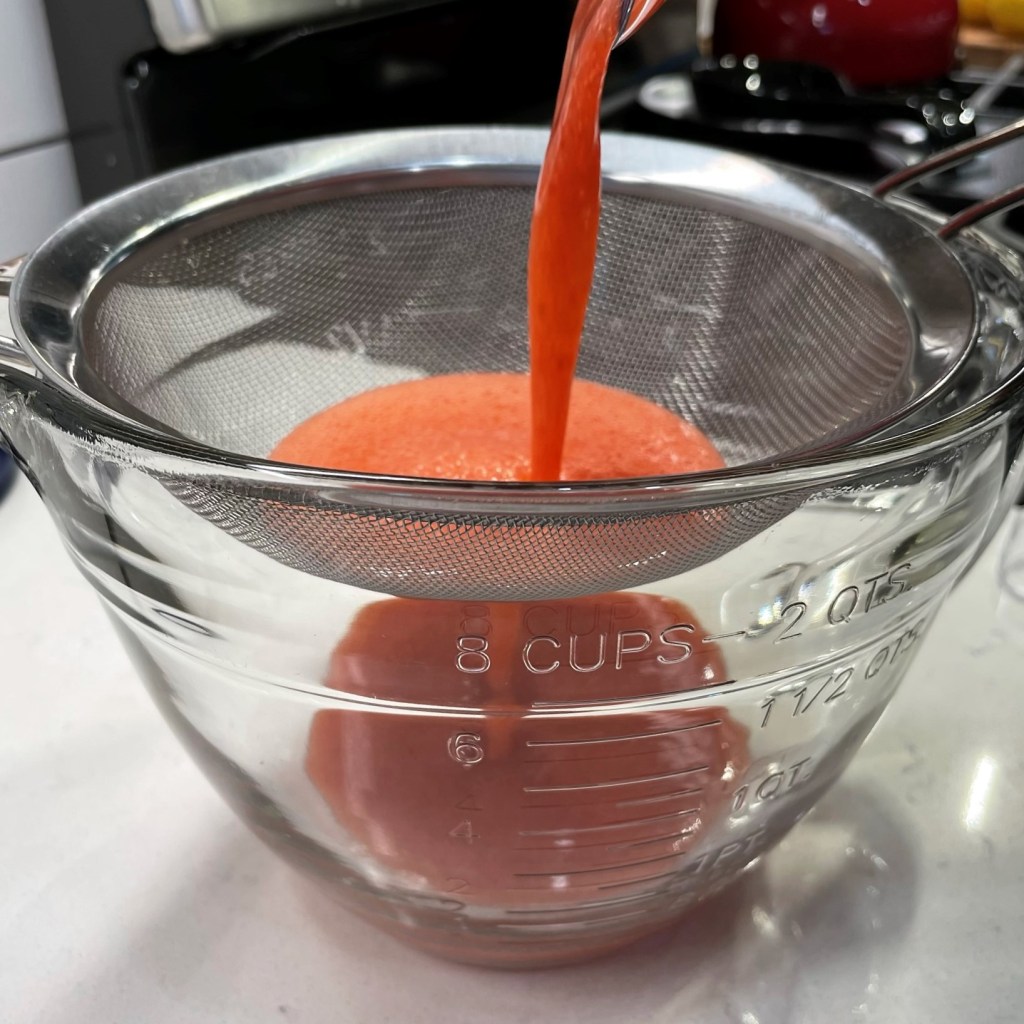
  2. Add strawberries and 1 cup water in the pitcher of a blender or bowl of a food processor. Puree until no visible bits of berry remain. Strain through a mesh strainer over a large pitcher or bowl.
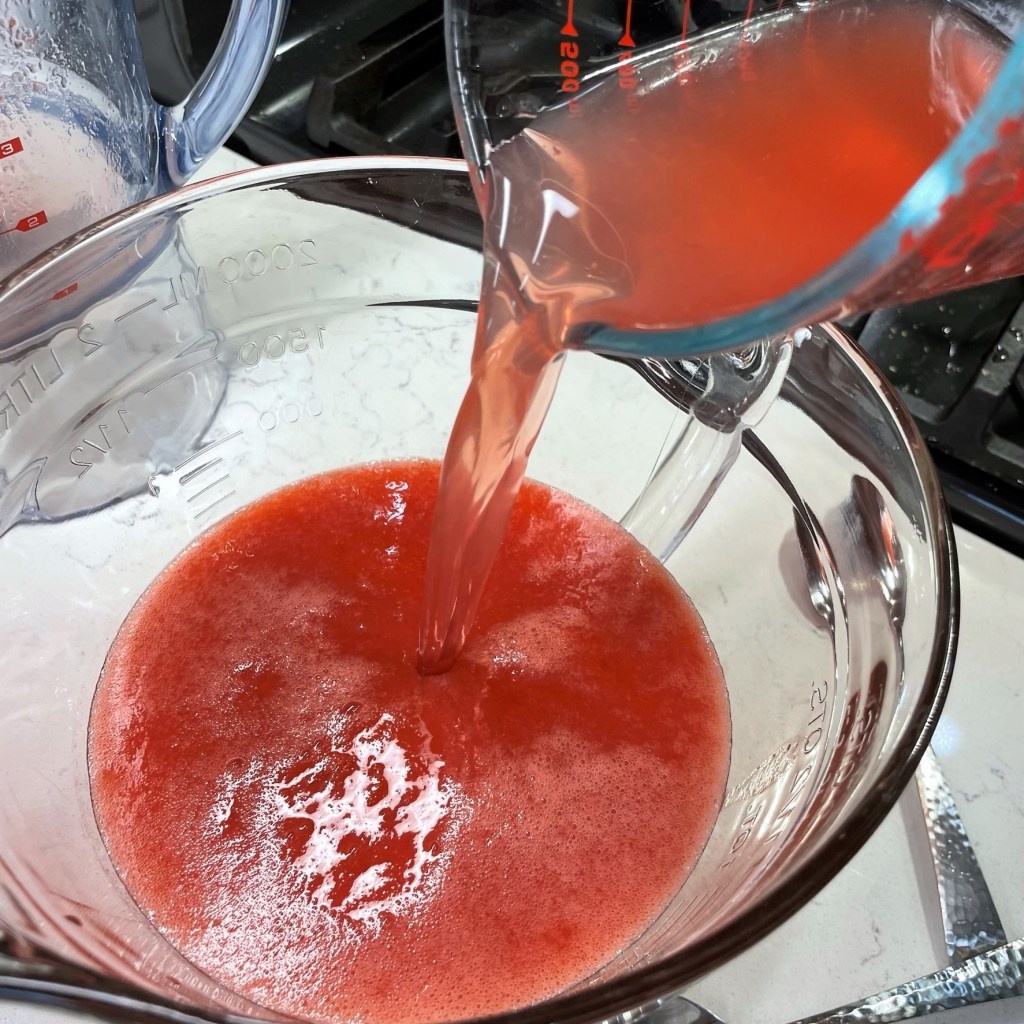
  3. Add simple syrup and lemon juice to strawberry puree. Stir to blend. Chill overnight.
  4. To serve, combine equal parts lemonade base and cold (or sparkling) water and pour over ice.


Orange & Honey-Ginger Fruit Salad

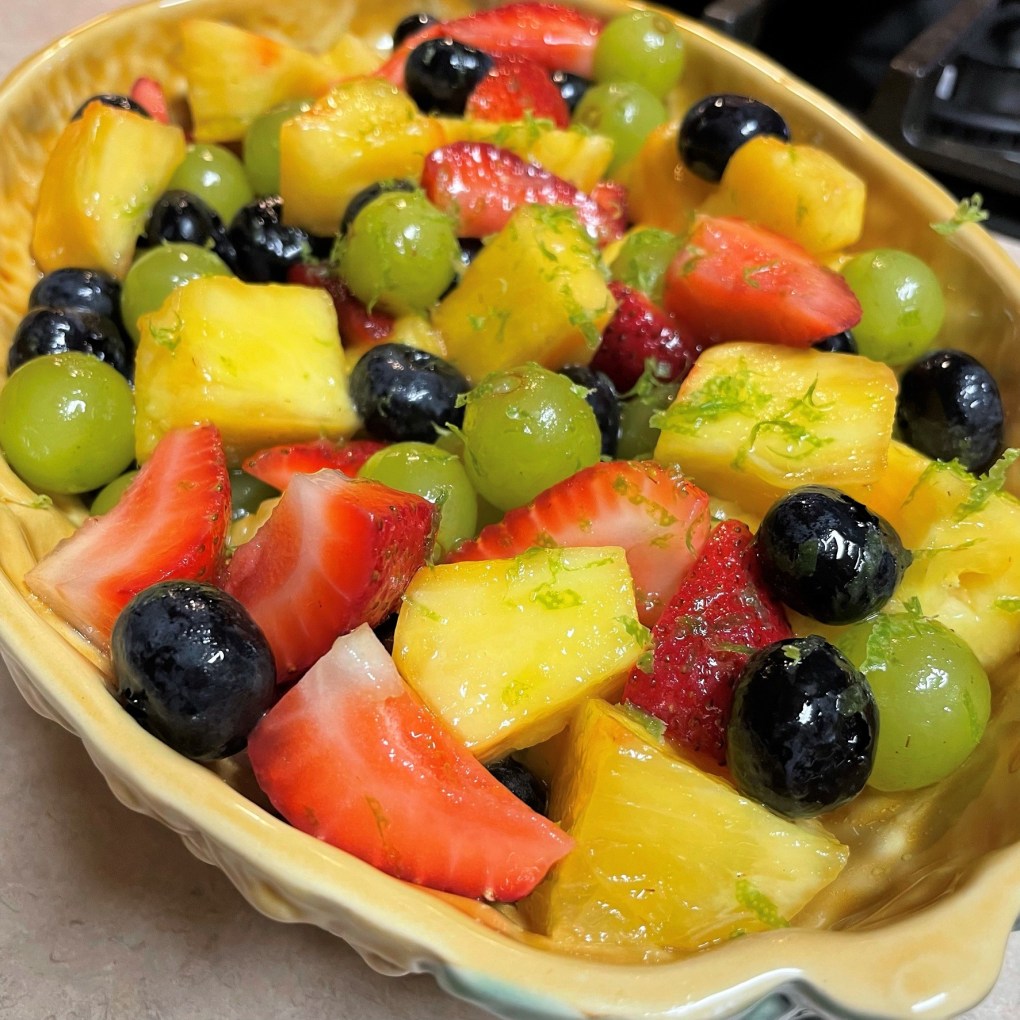
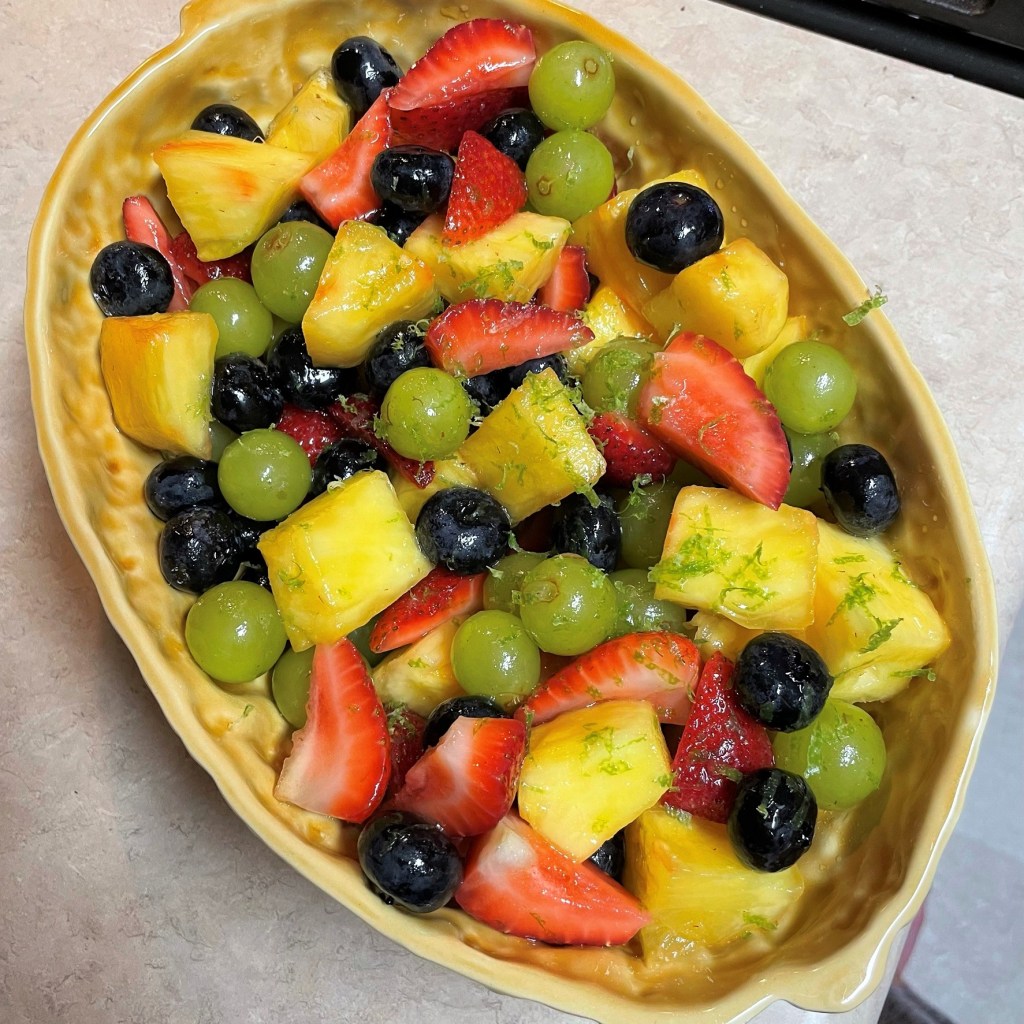
You didn’t know it when you opened this post, but you are about to witness something that doesn’t happen all that often in my kitchen—a simple, two-ingredient twist that will transform a basic fruit bowl into a mouthwatering side dish that is almost as sumptuous as dessert. Unlike some of my other “make-the-whole-thing-from-scratch” ideas, this one really is ridiculously simple. You can apply this easy twist to virtually any kind of fruit, including pre-cut if you are short on time, and the fruit itself does not have to be fancy. Look at my salad again—it’s only pineapple, grapes and berries. What elevates this simple fruit combo into an elegant and special treat is the dressing.

Nothing fancy about this fruit.

It may be that you have never considered “dressing” a fruit salad, but why? We don’t often see a vegetable salad served dry, and fruit is just as worthy of dressing up a bit. Dressing a fruit salad is not only tasty; it also helps the fruit retain moisture and color. Try this once and you’ll be craving fresh fruit salad every day.

The dressing for this salad depends on two special ingredients that can only be purchased in a boutique olive oil and balsamic vinegar shop, and they are worth every penny. You have probably seen one of these stores, with all their shiny stainless steel containers lined up on a high table. Those containers, called “fustis,” hold exquisitely flavored extra virgin olive oils and balsamic vinegars, ingredients which have uncanny power to change the way you cook. In the spirit of full disclosure, I will tell you that I used to work in one of those shops here in my city, and it was one of my most fun jobs ever—a true foodie fantasy, come true!

These days, nobody is paying me to share about these products, but I feel compelled to do so because of the one question we received over and again at the shop, from customers who enjoyed the flavors but asked, “what would I ever do with it?” Part of my job as a sales associate was taking home various products and coming back with inspiration for the home cooks who shopped our store. I guess you could say I took my job seriously, because I’m still doing it. 🙂

These flavors work great together!

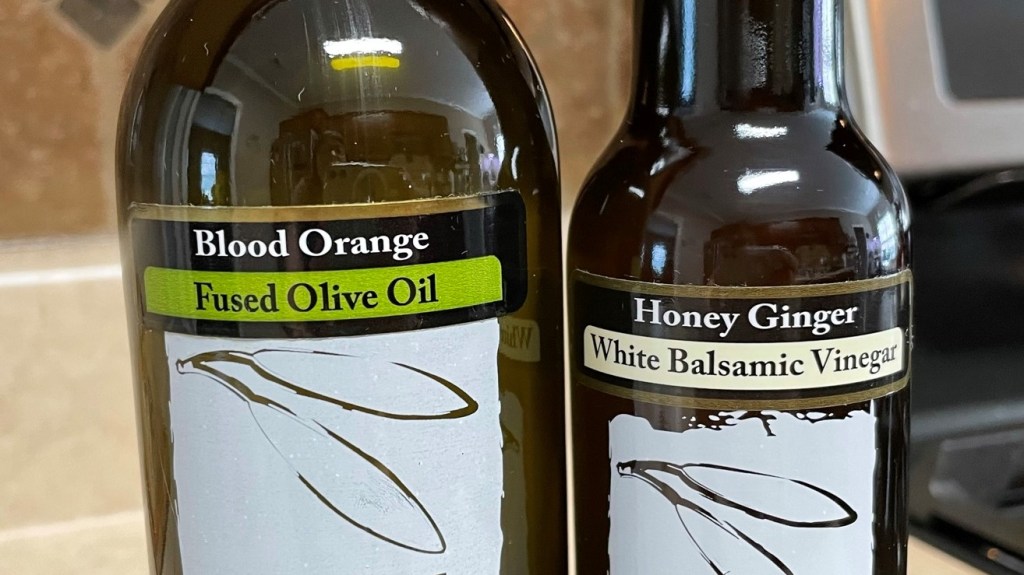
The combination I’ve used for this fruit salad is blood orange-fused extra virgin olive oil and honey-ginger white balsamic vinegar. The vinegar has a slight tartness to it, but it is mostly sweet with the warmth of honey, and the ginger is subtle but present. The olive oil is rich with the flavor of blood orange, because the oranges and olives are pressed together during production. The result is so good, it makes itself at home in sweet and savory dishes alike.

At the end of the post, I’ll share some other ideas for using up these two ingredients.


Ingredients

2 cups fresh pineapple chunks, cut into bite-sized bits

1 heaping cup fresh strawberries, sliced into quarters

1 cup fresh large blueberries

1 cup fresh white seedless grapes

3 Tbsp. honey-ginger white balsamic vinegar* (see notes)

3 Tbsp. blood orange whole fruit-fused extra virgin olive oil*

Lime zest or fresh chopped mint or basil, optional for garnish


*Notes

I wish I could offer up a universal brand name for the olive oil and balsamics that I use, but they are bottled under various franchised shop names. Here’s a tip—if you have this type of store in your community, ask for the name of the supplier. If it is Veronica Foods, you’re in the right place. 😊


Instructions

Wash your fruit just before assembling the salad, and it’s best to add berries just before serving or they tend to get mushy. Combine all the fruit in a bowl large enough for easy tossing in the dressing.

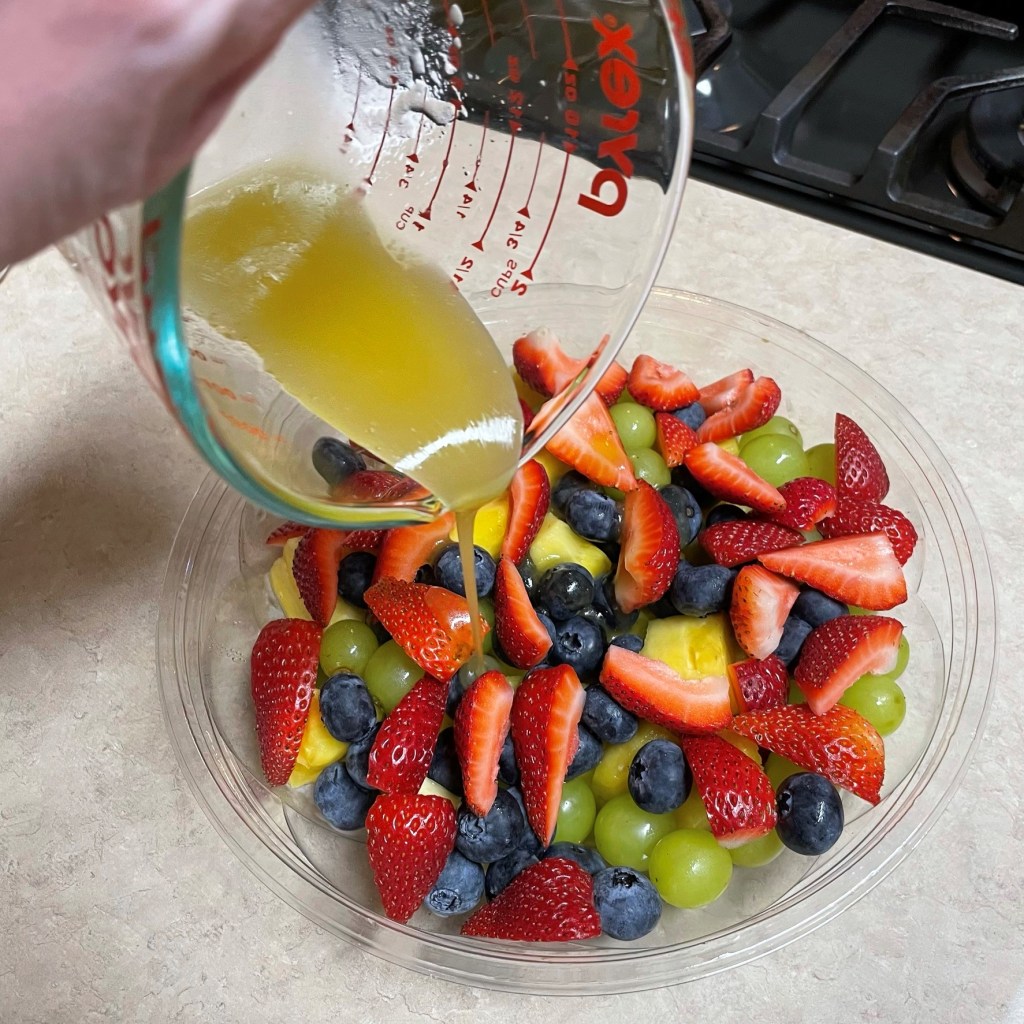
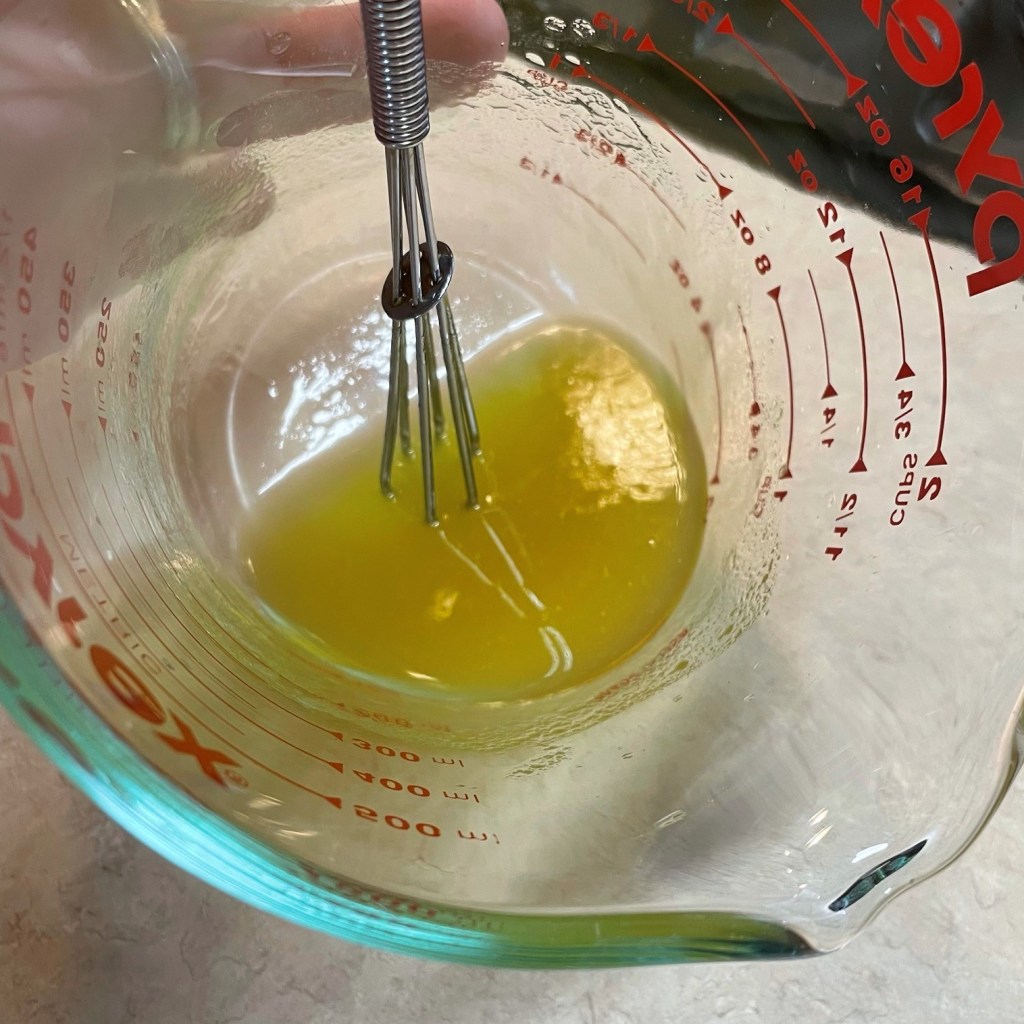
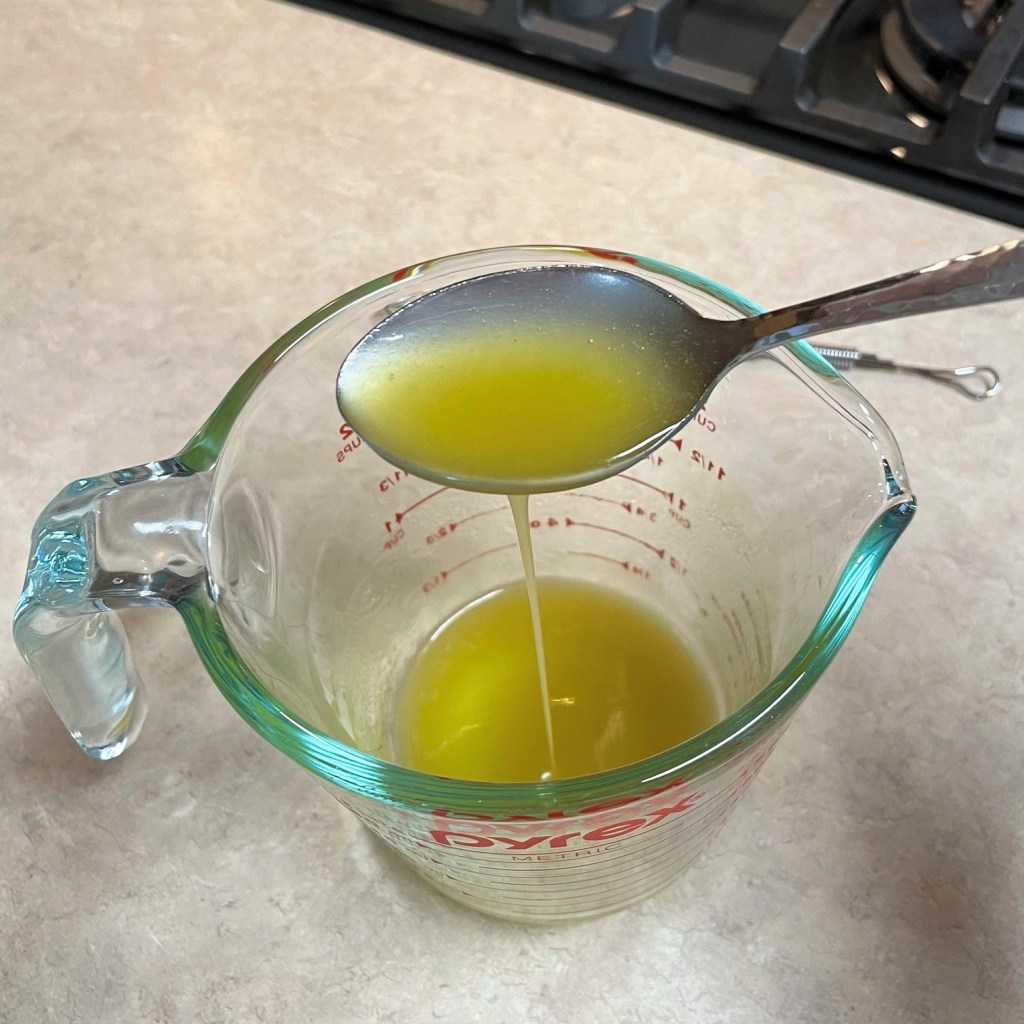
Pour the honey-ginger white balsamic into a small bowl, or a glass measuring cup for easier pouring. Slowly pour the olive oil into the balsamic, whisking quickly and constantly, until the mixture is thick and syrupy.

Immediately pour the dressing over the fruit and toss gently to coat the fruit. Serve right away or refrigerate up to one hour before serving.

If you would like to put a little extra pizzazz onto the salad, sprinkle with fresh lime zest or thin strips of fresh mint or basil.


Looking for more ways to use your blood orange-fused olive oil?

Substitute for the equal amount of oil in your favorite carrot cake recipe

Use it in a marinade for chicken or fish

Drizzle a teaspoon over dark chocolate ice cream (yes, really!)

Toss vegetables in it before roasting

Use it in your favorite pancake or waffle recipe


Need ideas for using up the honey-ginger white balsamic?

Try it an any salad dressing, especially Asian-inspired salads

Use it in a marinade for chicken, fish, shrimp or pork

Add a splash to a cocktail or white sangria

Drizzle it onto vegetables after grilling or roasting

Add a tablespoon to your water bottle for flavorful summer hydration


Rhubarb-Berry Crunch

For at least three weeks, I had been watching all the markets I shop, waiting and hoping to see fresh stalks of spring rhubarb. It doesn’t seem to be a very popular item here in the South, or at least not as much as in my old stomping grounds in upstate N.Y., and there’s good reason—the winter soil is too warm in North Carolina. Rhubarb thrives in areas that have very cold winters, making it a common plant in the snow belt. Some folks around here have never even had the pleasure of tasting it.

When I was young, I remember my Gram always had rhubarb growing near a small outbuilding shed behind her house, and plenty of it. To find it locally, however, takes patience. When I do see it here, it is usually a small quantity, quite expensive, and often placed in one of the obscure sections of the refrigerated case, near the other “weird” produce items (think horseradish root and kohlrabi). I had even checked at the local farmer’s market, to no avail. One grocery produce manager, when asked about the expected arrival of rhubarb, looked puzzled and asked, “what does it look like?”

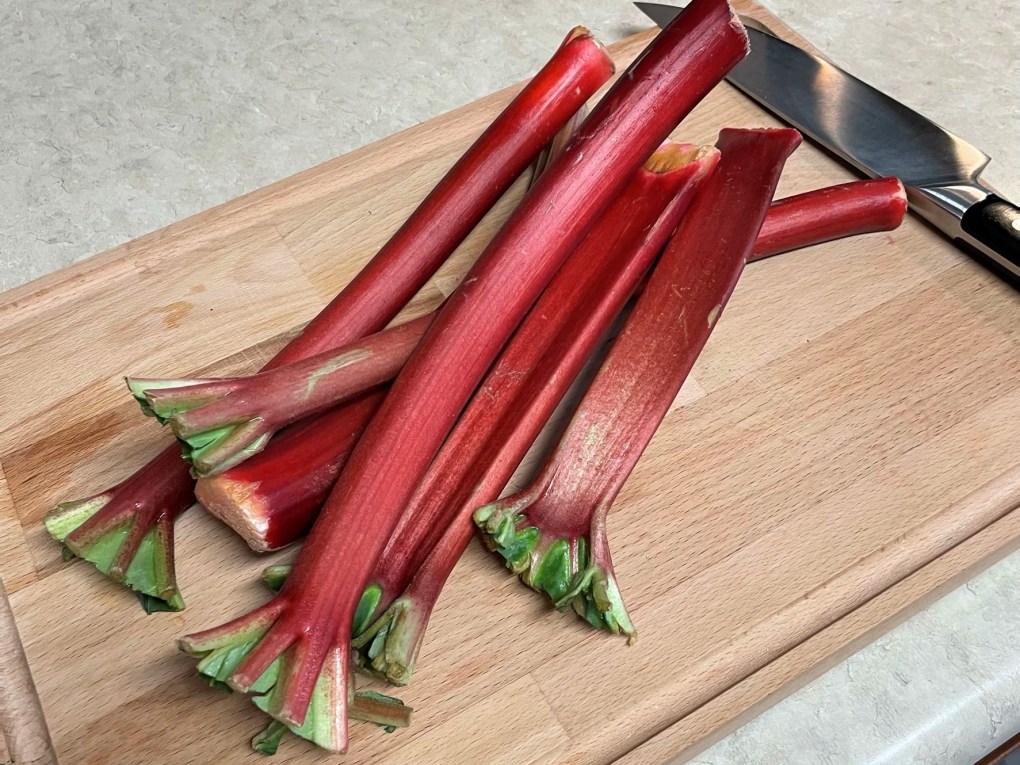
I always look forward to seeing these red beauties in the spring!

By the time rhubarb makes it to the supermarket, the leaves have been stripped, and just as well—they are loaded with oxalic acid, so they are inedible and even toxic. The stems, which range in color from bright red to pink to pale green, look like smooth celery stalks and they are equally crisp in texture. I am hard-pressed to describe the flavor of rhubarb other than to say that it is tart, maybe like a cross between a green apple and a lemon. Although technically a vegetable that can be eaten raw, most people cook rhubarb with sugar and use it as a fruit, especially in pies, crumbles, jams and preserves.

My Gram made a delicious rhubarb sauce that was as delicious to me as any applesauce, and I remember asking for it as a topping on vanilla ice cream. In the summer of 2011, on my last visit with my grandmother, who had relocated to Montana to be near my aunt, we enjoyed this dessert together. Lucky for me, my aunt happily shared her recipe for this yummy dessert, which is very adaptable to include other fruits, especially strawberry. Aunt Joy and I were reminiscing the other day about the times I visited her house when I was young, and she made memorable, mouthwatering strawberry-rhubarb jam. It’s a fantastic flavor combination!

Just a couple of days before my mandoline accident, when I decided to shave that extra 1/8” off the end of my finger, I had been overjoyed to finally find fresh rhubarb in one of the markets I shop. My usual time in the kitchen has been abbreviated by my injury (which is driving me crazy, if you want to know the truth), but I have a wonderful and willing husband, Les, who has been my “hands” for some the kitchen tasks that are tricky for me right now. I won’t say that it has all been smooth sailing (I am a bit of a bossy britches), but we are getting better at working together to make some great food, including this fabulous dessert. Les did all the washing and cutting of fresh ingredients, and I did more of the mixing.

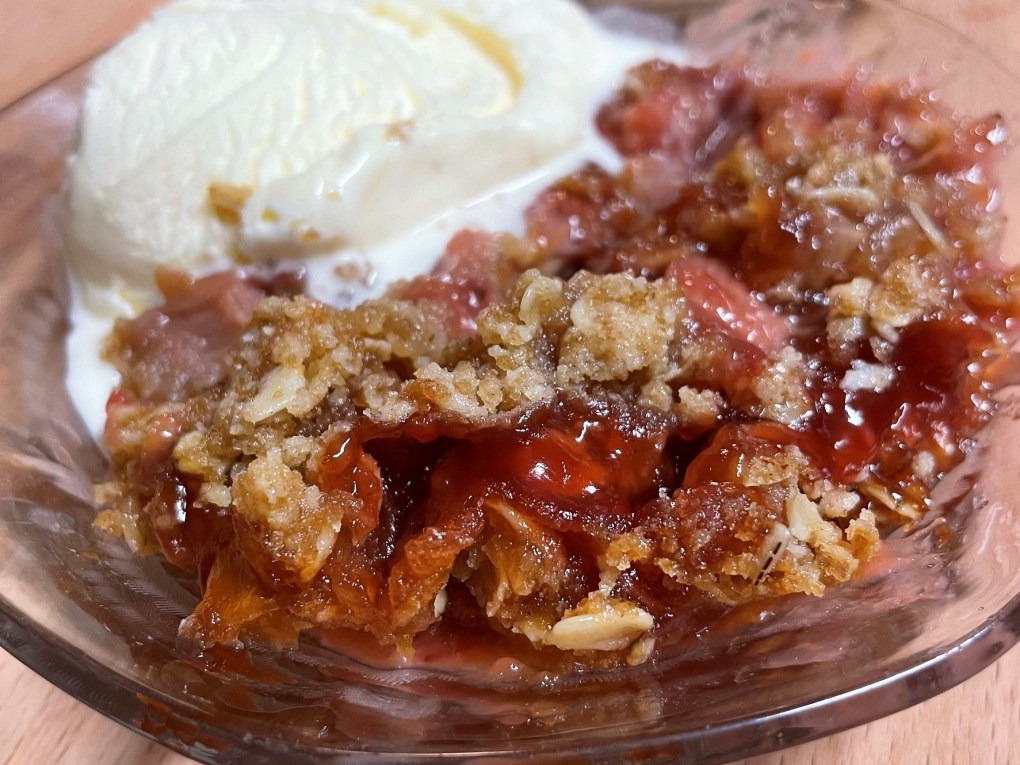
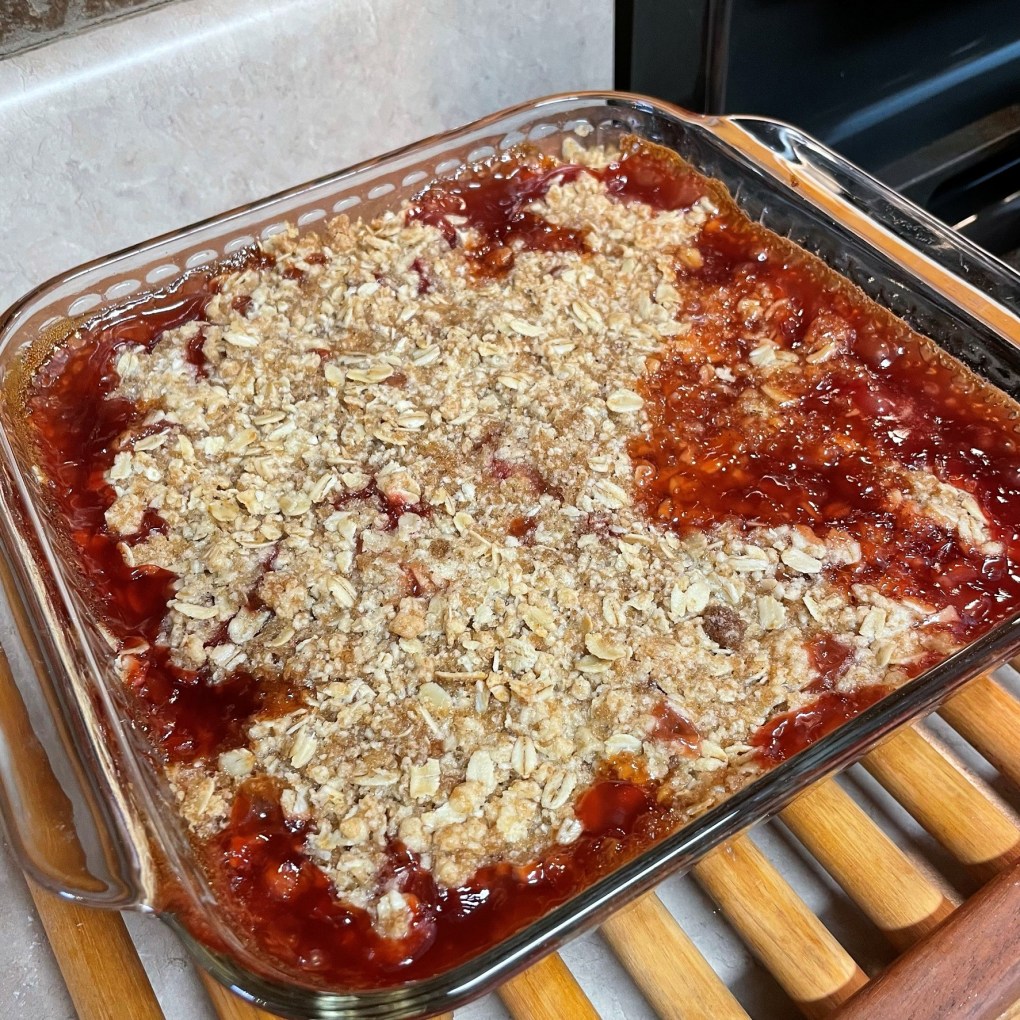
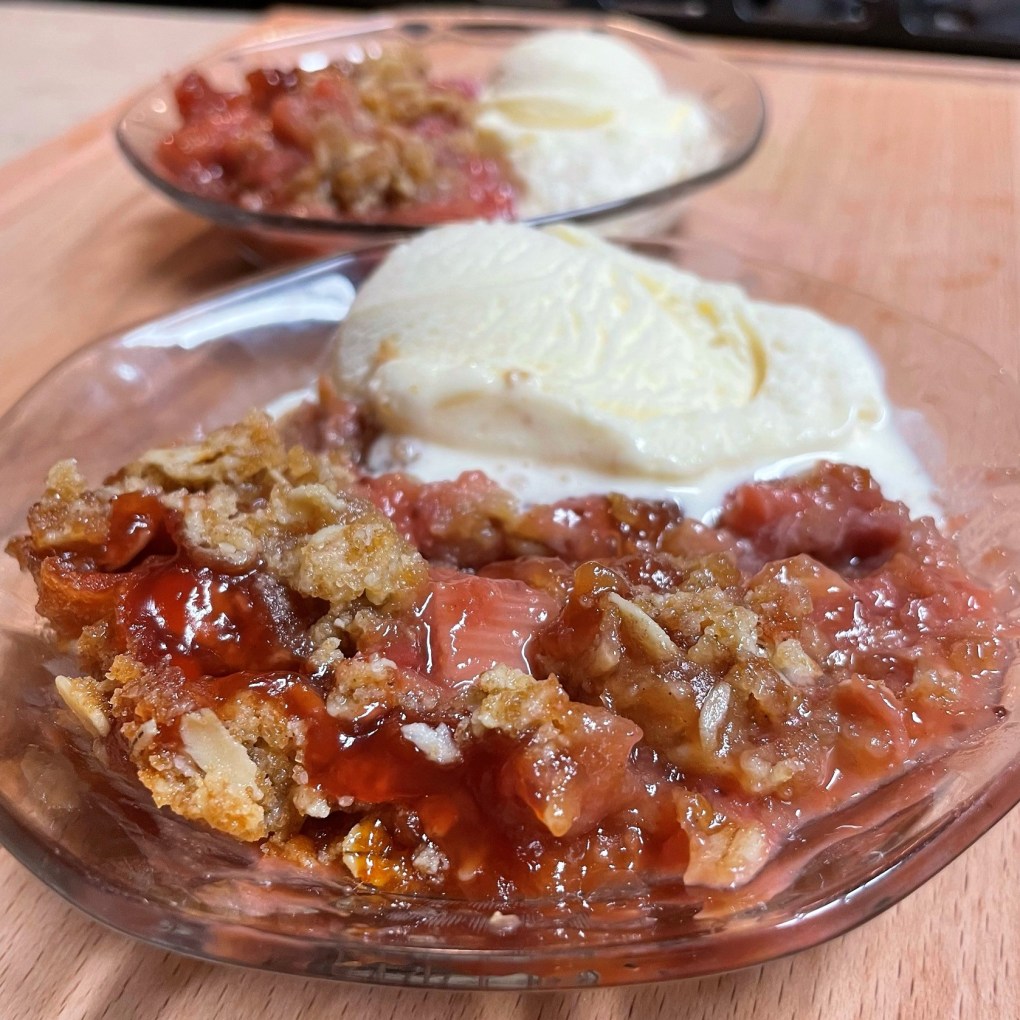
The filling is perfectly cooked and slightly sticky, and the oat topping is crunchy in all the right places. Served warm with vanilla ice cream, this is springtime heaven for my taste buds!

This delicious crunch was Les’s first-ever taste of rhubarb, so I leaned a little heavier on the strawberry than I otherwise would. I expected that his sweet tooth might reject the tartness of rhubarb on its own, but he really enjoys the flavor, so next time, I will go all-in with rhubarb. Assuming, of course, I can find it. 😊


Filling Ingredients

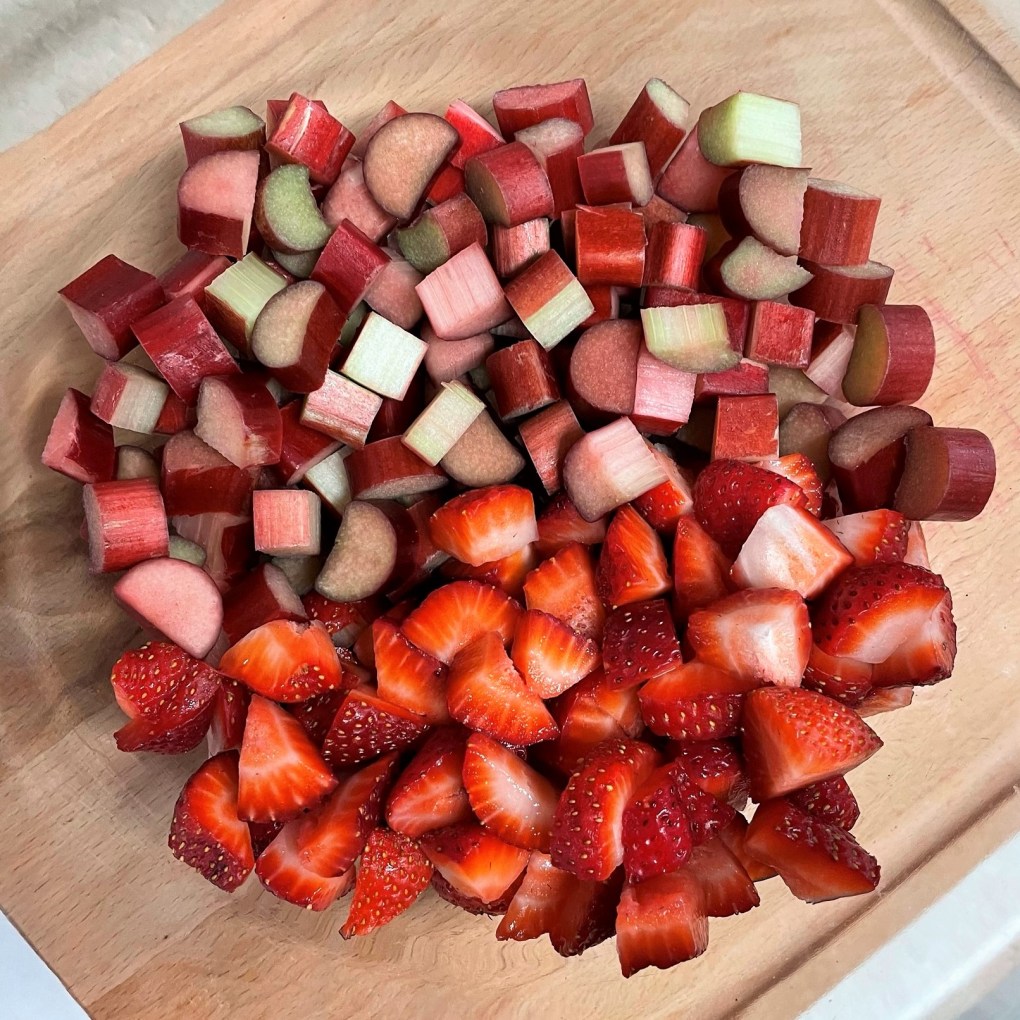
1 1/2 cups fresh rhubarb, cleaned and diced

1 1/2 cups strawberries, cleaned and halved

1/2 cup cane sugar

1/2 cup brown sugar* (see notes)

3 Tbsp. all-purpose flour

1/4 to 1/2 tsp. ground ginger


Topping Ingredients

1/2 cup brown sugar

1/2 cup rolled oats

1/2 cup all-purpose flour

1/4 cup whole wheat pastry flour* (see notes)

1/2 tsp. ground cinnamon

1 stick (8 Tbsp.) salted cold butter

Pinch of kosher salt


*Notes

My aunt’s original recipe calls for 1 cup sugar, but I split the amount between regular and brown sugars. I use brown sugar in strawberry shortcake and love the rich, warm flavor. Use all regular sugar if you prefer.

I like to use some portion of whole wheat flour in all my baked goods, but if you don’t have whole wheat pastry flour, increase the amount of all-purpose to 3/4 cup.


Instructions

  1. Preheat oven to 350°F, with rack in center of oven.
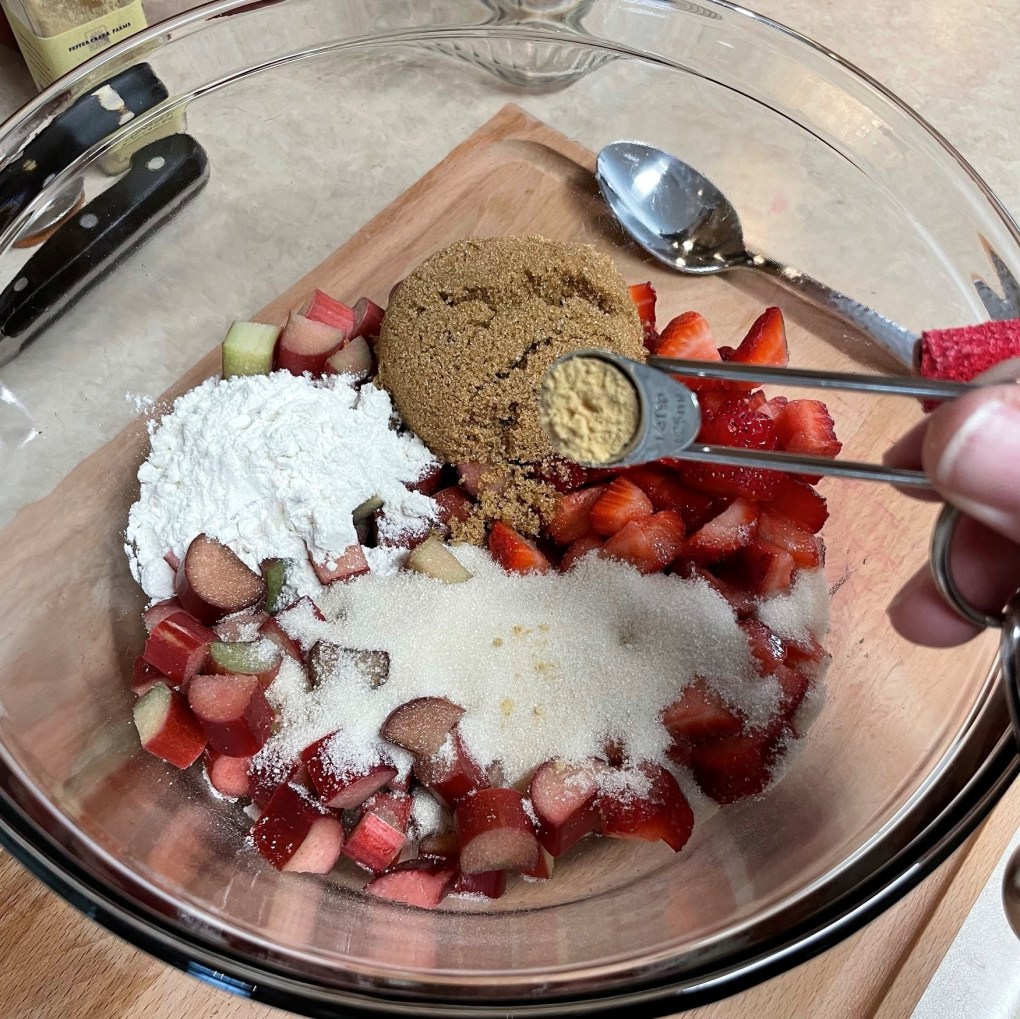
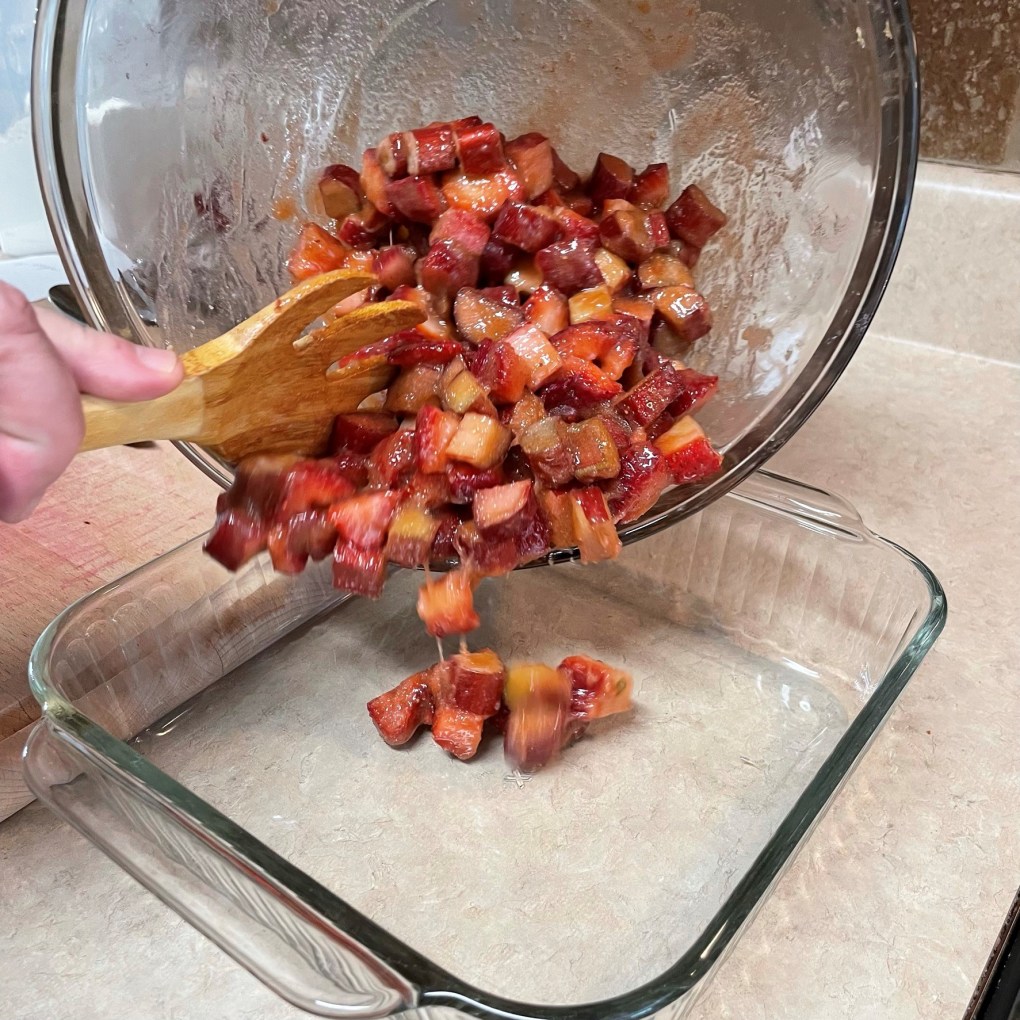
  2. Toss together rhubarb, sugar, flour and ginger transfer into a buttered 8 x 8 glass baking dish.
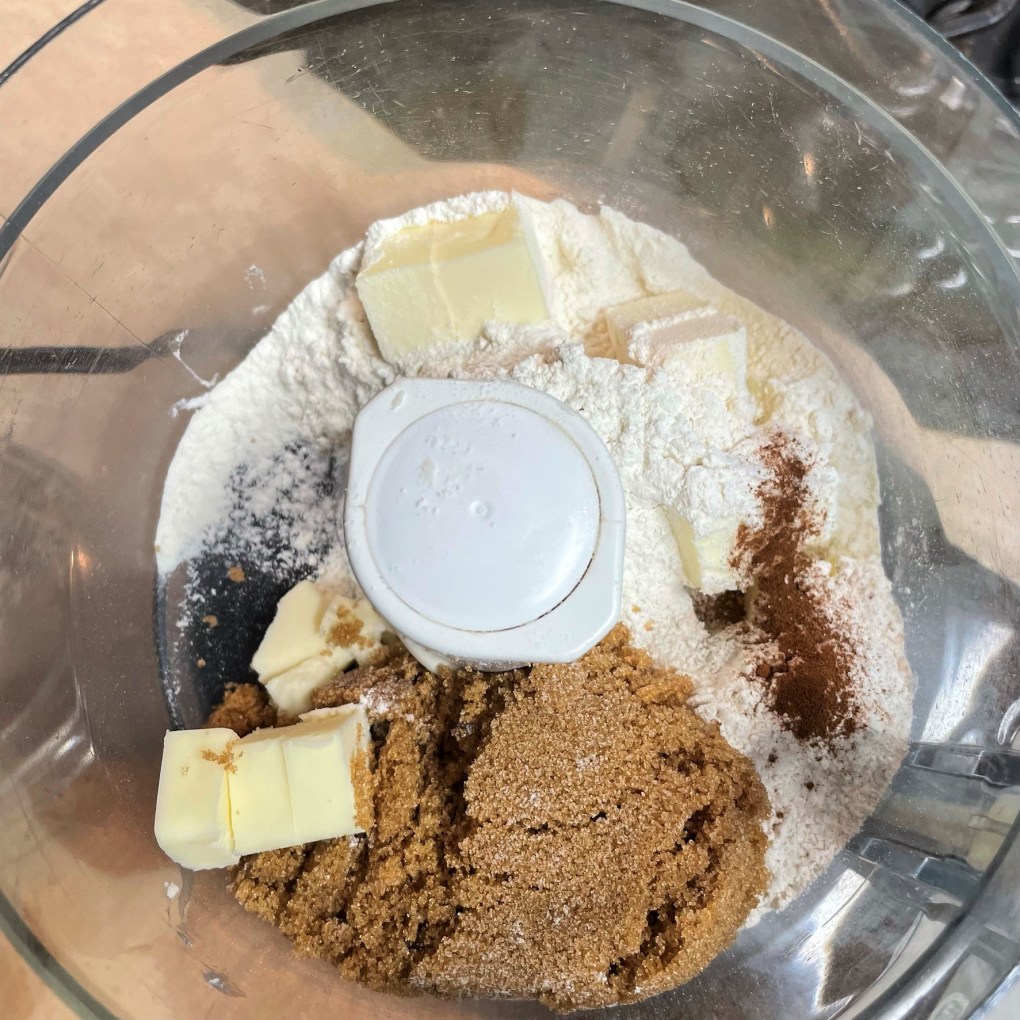
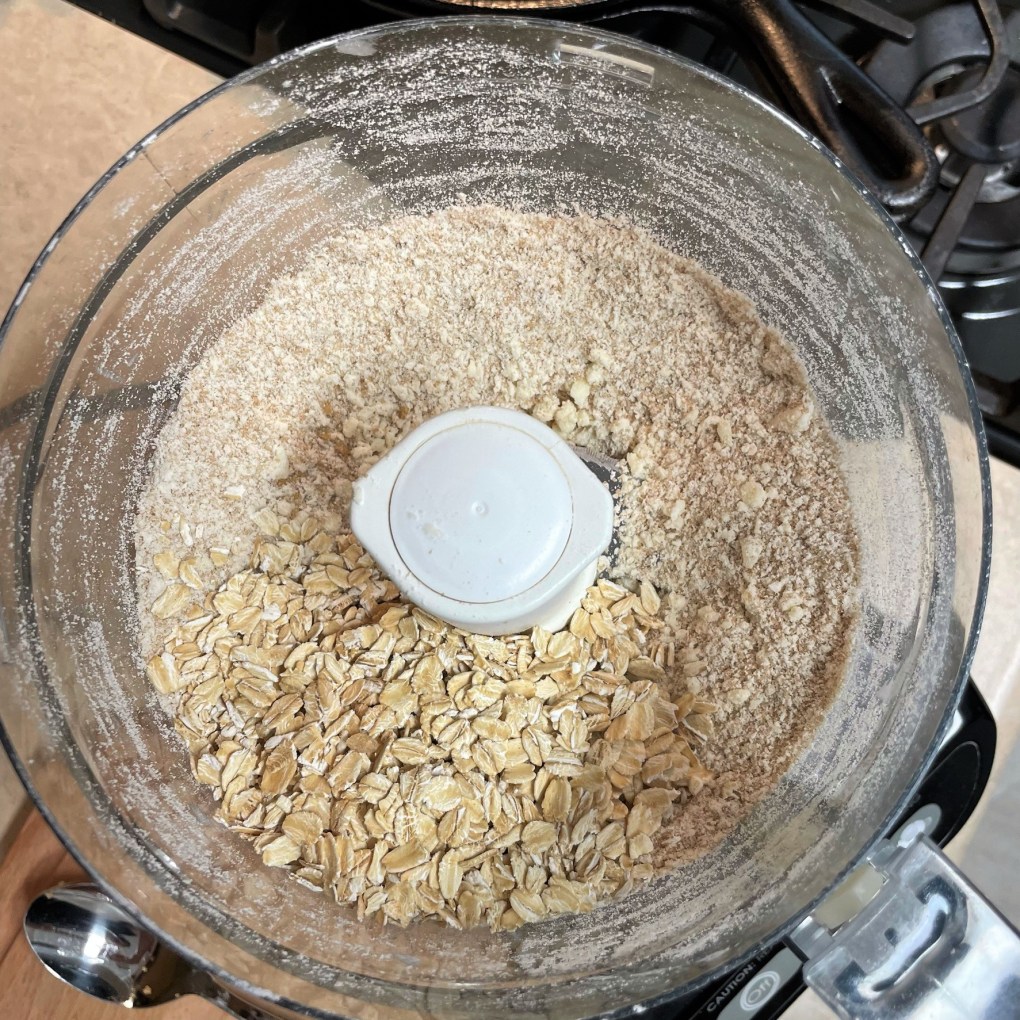
  3. Use a pastry blender or pulse with food processor to combine flour, brown sugar, cinnamon and butter until mixture appears as crumbs. Toss or lightly pulse with oats just to combine.
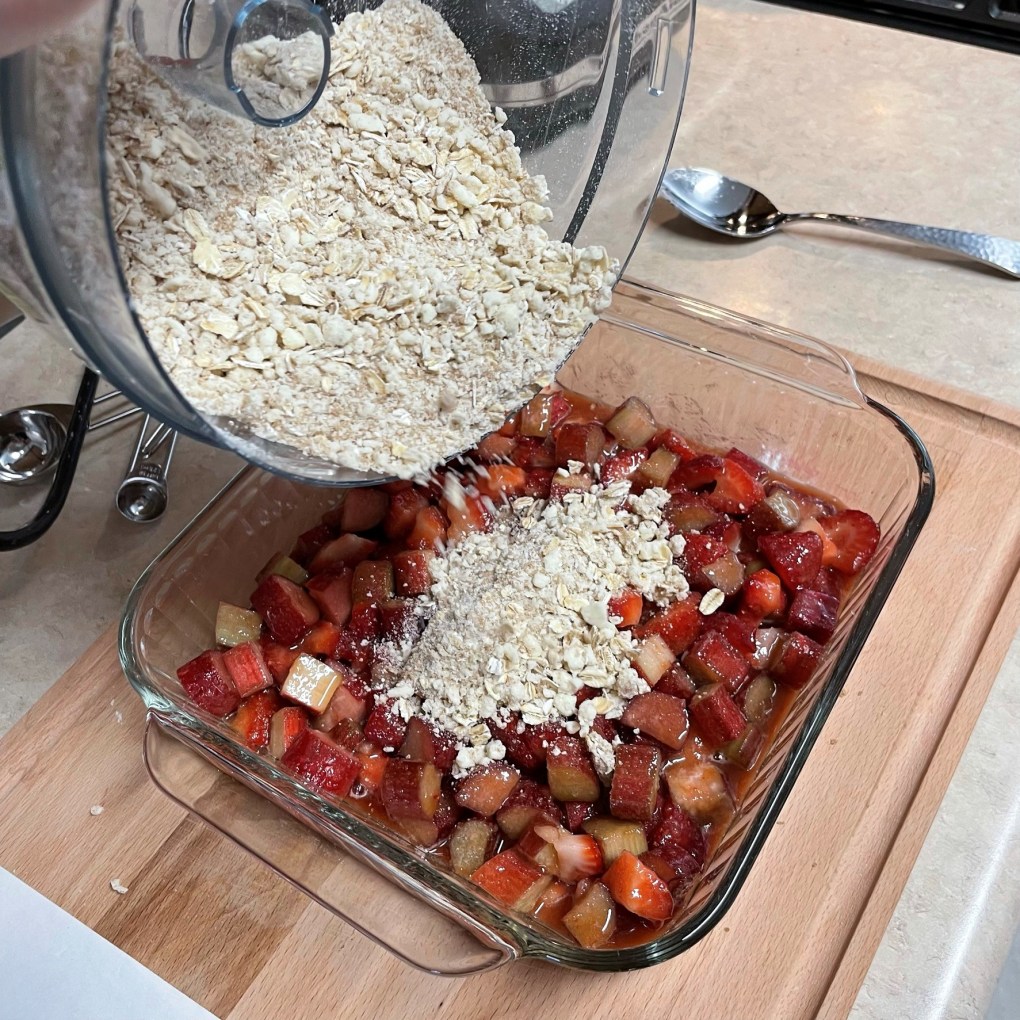
  4. Spread oat topping over rhubarb filling. Sprinkle the top with a pinch of kosher salt.
  5. Bake at 350° for about 40 minutes, until oat topping is browned and crunchy, and filling is bubbling up around it.
  6. Serve warm, perhaps with vanilla ice cream. Store leftovers in the refrigerator, and reheat for additional servings.
I especially loved serving this in my Gram’s dainty, vintage dishes. Aunt Joy sent these to me after Gram passed away.


Strawberry Mascarpone Ice Cream

If you love the idea of homemade ice cream but don’t feel like messing around with a cooked custard base, this recipe will be right up your alley. The cream cheese (or, in this case, mascarpone) gives it a luxurious, silky texture, but it comes together quicker without the extra, fussy step of tempering eggs and straining a custard. Greek yogurt helps lighten it up a bit without compromising the creaminess. The layers of fruit syrup and crushed graham crackers bring home all the memories of a fresh summer cheesecake.

I’ve broken the recipe into tasks over a couple of days, but you could easily start this in the morning and finish it the same evening. Just be sure you give the berries enough time to macerate, and the cream mixture time to thoroughly chill before freezing.

Not wild about strawberries? Feel free to swap them out in favor of another favorite fruit, but consider that some fruit might need to be cooked first. Blueberries and raspberries, to name two, aren’t as juicy as strawberries so they would need a little help getting there. I think fresh summer peaches would be amazing in this recipe—and, of course, cherries.

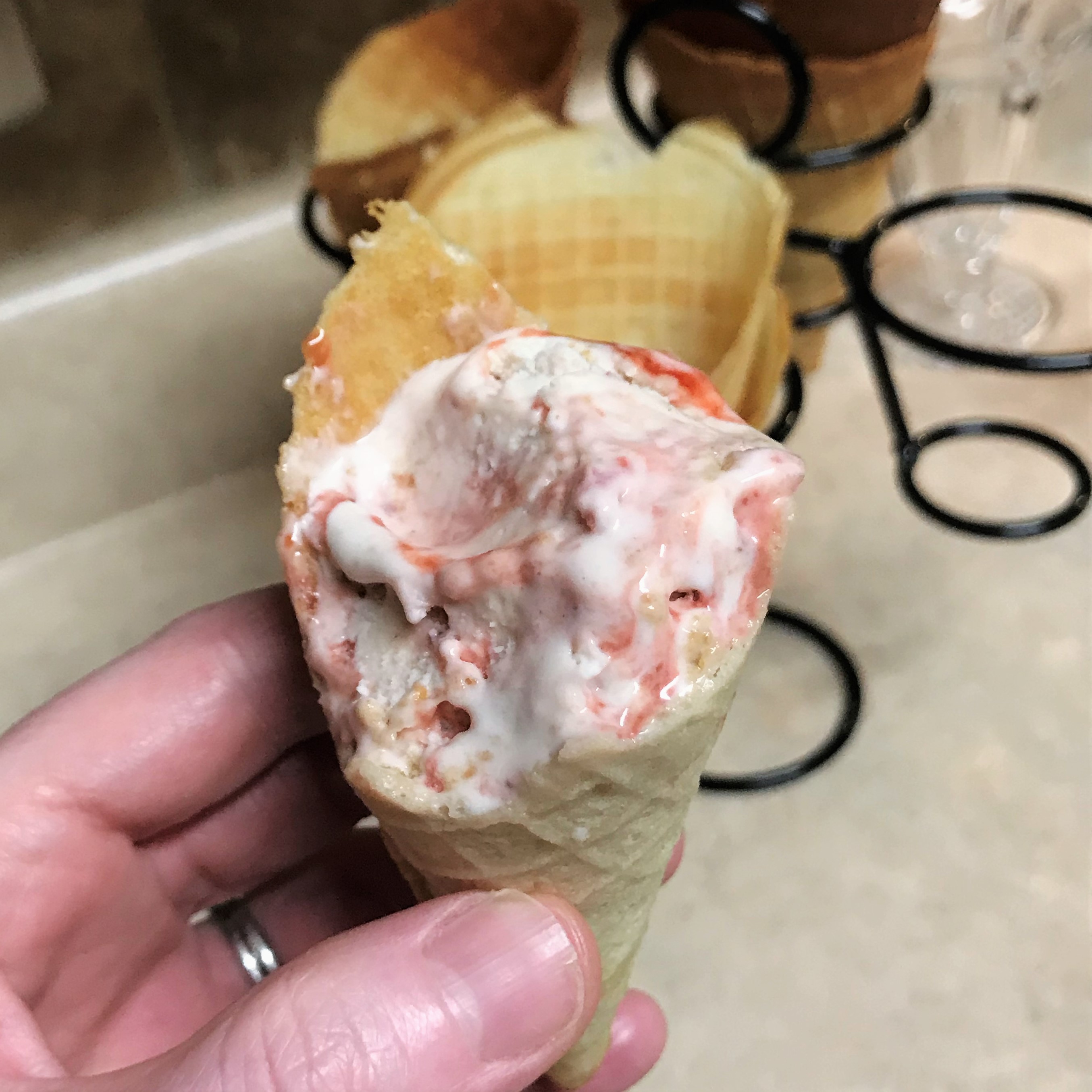
In a bowl, off the spoon, in a cone. However you take it, this ice cream is delicious!

Ingredients

8 oz. mascarpone* or cream cheese

3/4 cup caster (super-fine) sugar*

1 cup heavy cream

1 cup whole milk

3/4 cup Greek yogurt* (plain or vanilla)

1 tsp. vanilla extract

1/4 tsp. almond extract

2 1/2 cups fresh organic strawberries*

1/2 cup light brown sugar

1 Tbsp. vodka* (optional for improved texture)


*Notes

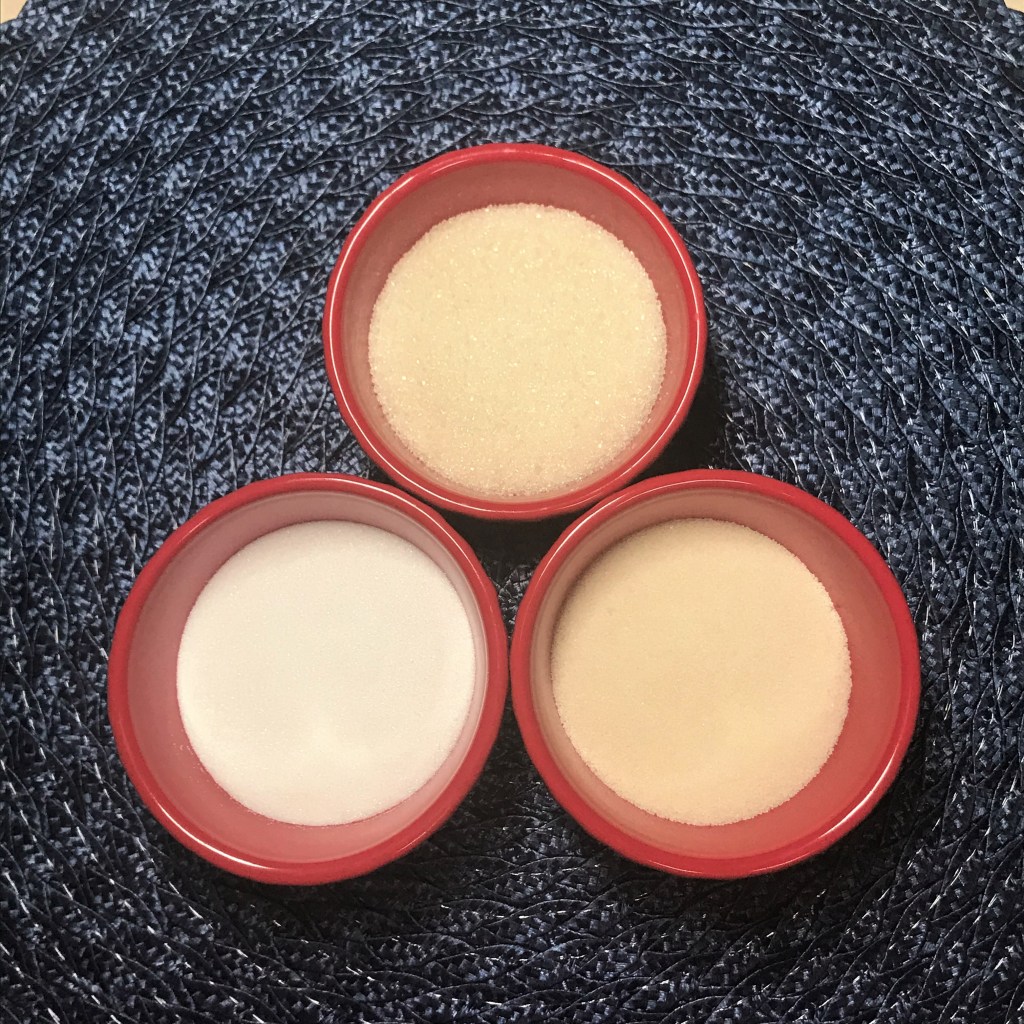
Mascarpone is an Italian-style creamy cheese, a bit denser and definitely silkier than regular cream cheese. It will lend an ultra-creamy texture to this ice cream which, unlike most of my others, does not begin with an egg custard. If mascarpone is not available in your market, use full-fat cream cheese (the brick kind) for similar result.

Caster sugar is sometimes called “super-fine” sugar. I’ve chosen it for this recipe because it is easier to dissolve in cold ingredients. In my custard-based ice creams, I use pure organic cane sugar, which I’m certain would not fare well in this recipe because we are not cooking the base.

From top, clockwise: pure organic cane sugar, fine organic cane sugar, caster sugar.

Caster sugar is pure white and extremely processed (a quality that makes it practically against my religion), so it’s rare for me to use it at all. It’s also pretty expensive compared to most sugars. If you can’t find caster, put your regular sugar in a blender and grind it into as fine a powder as you can. Measure the amount after grinding. Otherwise, warm the milk called for in the recipe and dissolve your sugar into it, then cool completely before proceeding.

Because the mascarpone already has cream in it, I’m using less heavy cream than I normally would for ice cream. To make up the difference, I’ve opted for Greek yogurt, and the one I chose is vanilla with a touch of cinnamon, which I think is going to play really nicely against the strawberries. I’m always on the lookout for a twist, which typically leads me to develop favorite new recipes.

Unfortunately, strawberries top the 2020 “Dirty Dozen” list of potentially toxic produce items. Each year, the Environmental Working Group, a non-profit organization, issues a list of produce items most likely to be contaminated with pesticides and other questionable chemicals. You can learn more about it here, but in the meantime, choose organic strawberries whenever possible.

The vodka in this recipe is optional, and it does not affect the flavor, but it helps with the final texture of the ice cream, making it easier to scoop straight from the freezer.

This time, I did not add the vodka at the end, and I can feel the difference as this ice cream is very solid.

Instructions

Day one:

Clean and hull the strawberries, and slice into pieces. I use an egg slicer for this task—it’s quick and simple, and I end up with uniform slices. Add the berries to a medium size bowl and stir in brown sugar. Give the berries time to fully macerate at room temperature, then put them in the refrigerator.

If you’re cool with having a pink-colored ice cream, feel free to skip this next step. I’ve decided this time around that I want to create a ribbon of strawberry syrup through the white ice cream, so I’m going over the top, even though it means I’ll add a day to my ice cream prep. Care to join me? Allow the strawberries to macerate overnight, then use a large mesh strainer to drain off the liquid and simmer it over medium-low heat until it is reduced by half and has the consistency of a thin syrup.

After reducing, I have about 1/3 cup of strawberry syrup– more than enough to create my “ribbon.”
If there’s enough left over, I’ll drizzle it over the first serving of ice cream!

Allow the syrup to cool to room temperature, then return it to the fridge in a separate bowl from the drained berries.

In the bowl of your mixer, beat the mascarpone together with the caster sugar, milk and Greek yogurt until fully combined. Slowly beat in the heavy cream, taking care not to whip it too much. Add the vanilla and almond extracts. Transfer the cream mixture to a sealed bowl and refrigerate several hours until fully chilled.


Day two (or three, if you went down the rabbit hole with me on the strawberry syrup):

Stir the cream mixture to reincorporate all ingredients, as some separation will have occurred. You don’t need to whip it here—just mix or gently whisk until the mixture has a uniform, creamy appearance. If you didn’t make the strawberry syrup, drain the berries at this point and blend their liquid into the cream mixture.

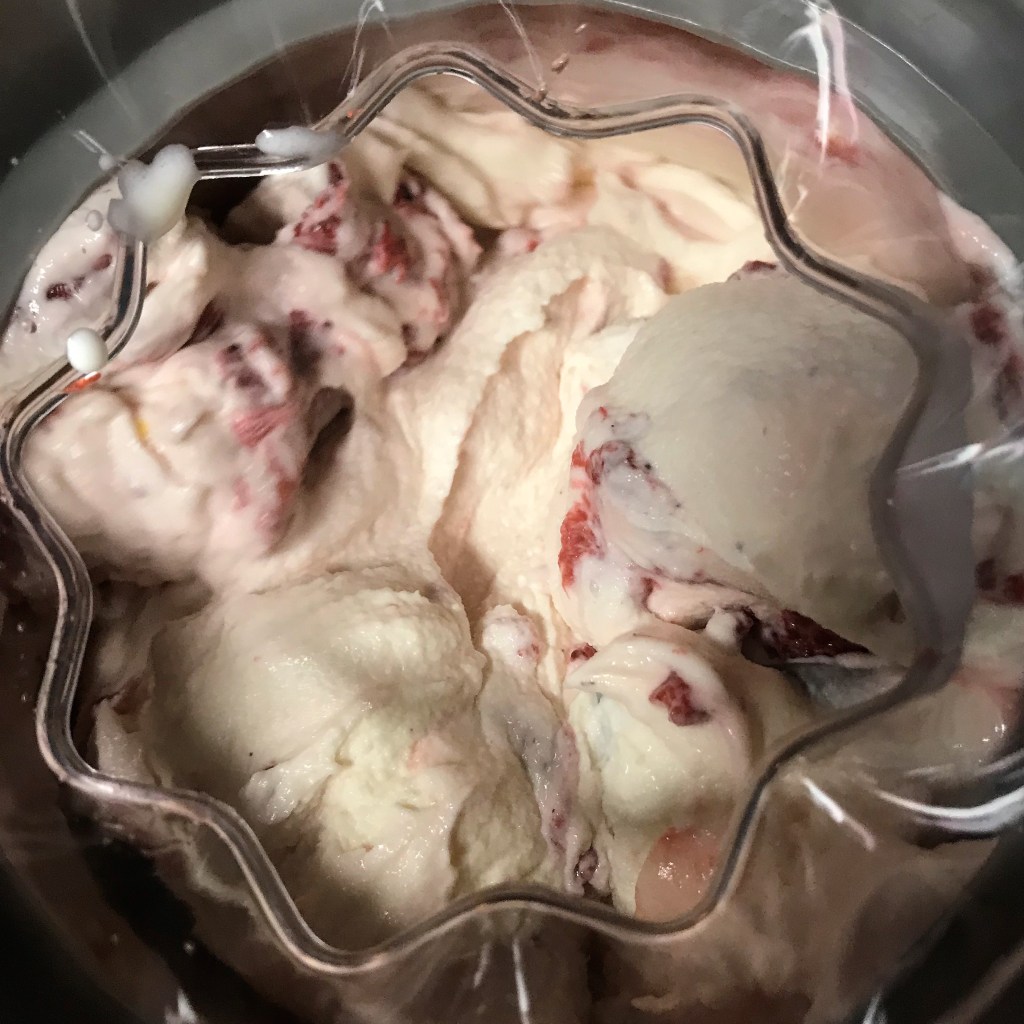
Pour the cream mixture into the ice cream machine and mix according to manufacturer’s instructions. Mine takes 20 to 25 minutes to freeze. For the final few minutes of freezing, spoon in the strained strawberries (and vodka, if using), allowing them to blend in before adding another spoonful, and repeat until all strawberries are used.

Place the graham crackers into a paper or zip top bag, and gently crush them with a rolling pin or the bottom of a bowl or measuring cup. I didn’t want it to be fully crumbs—try to keep a few bits of the crackers for texture in the finished ice cream.


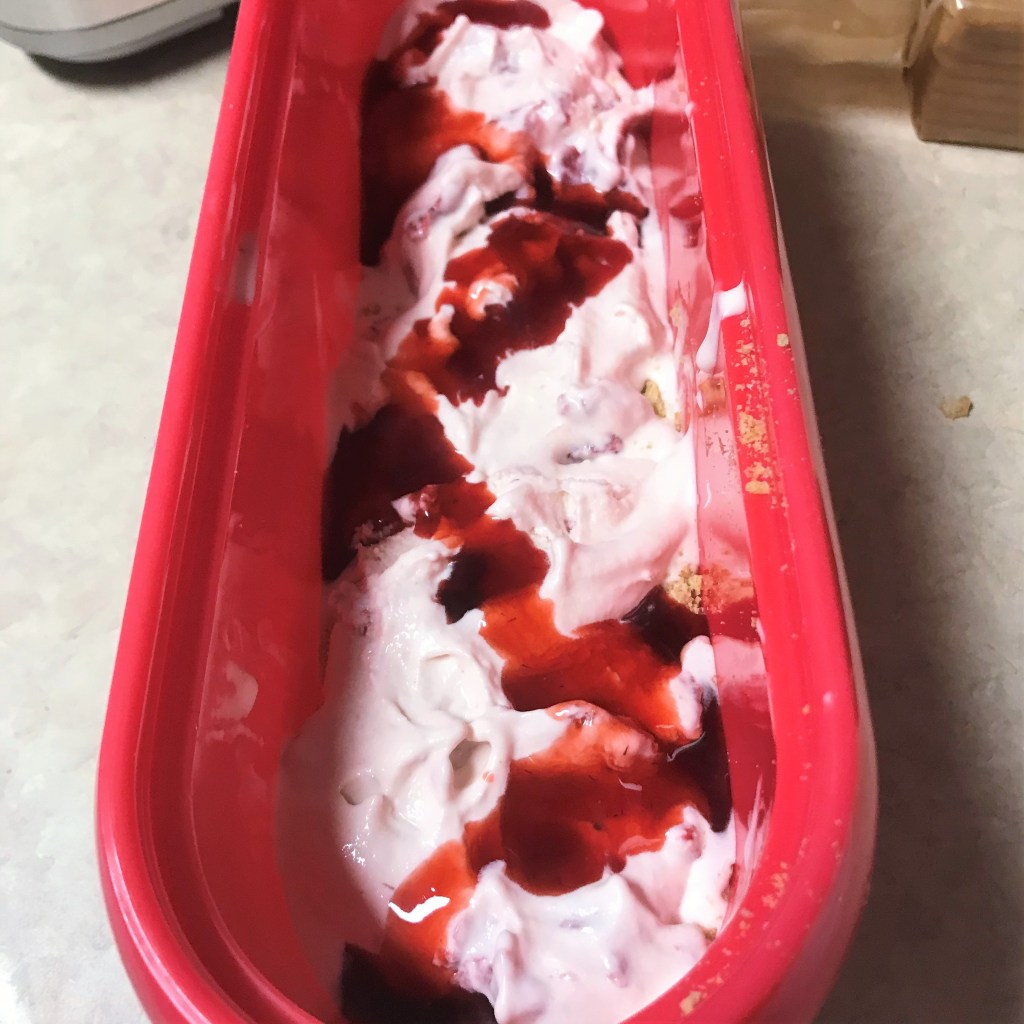
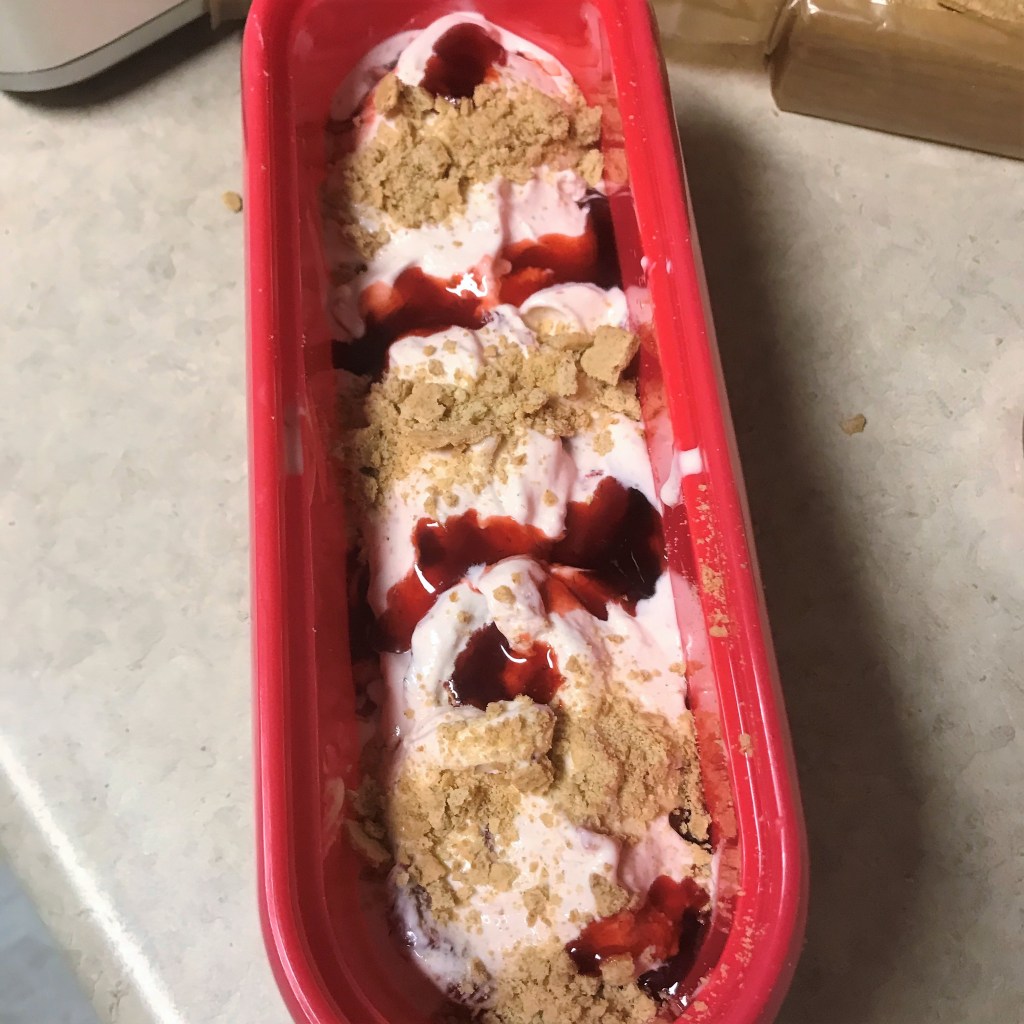
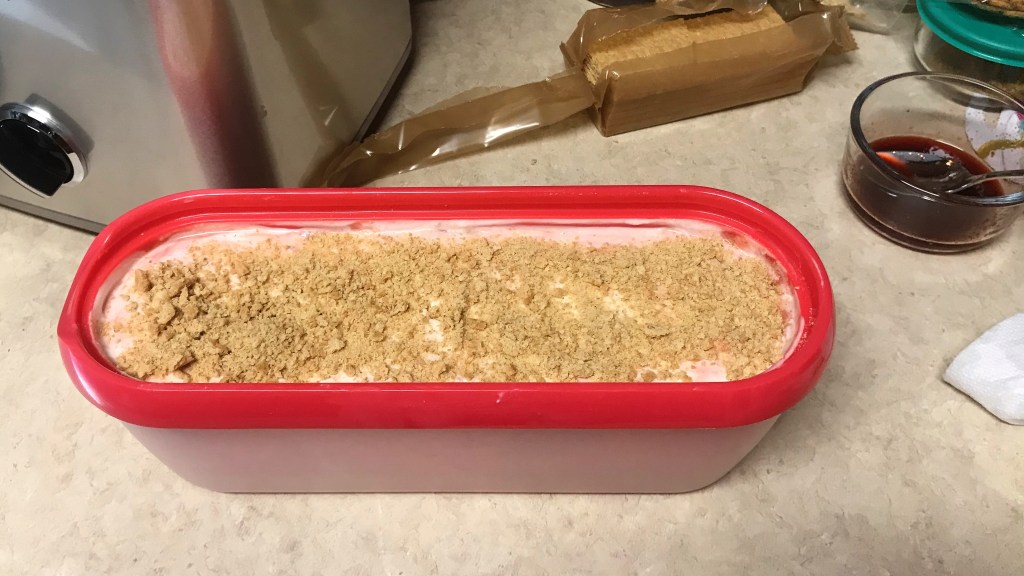
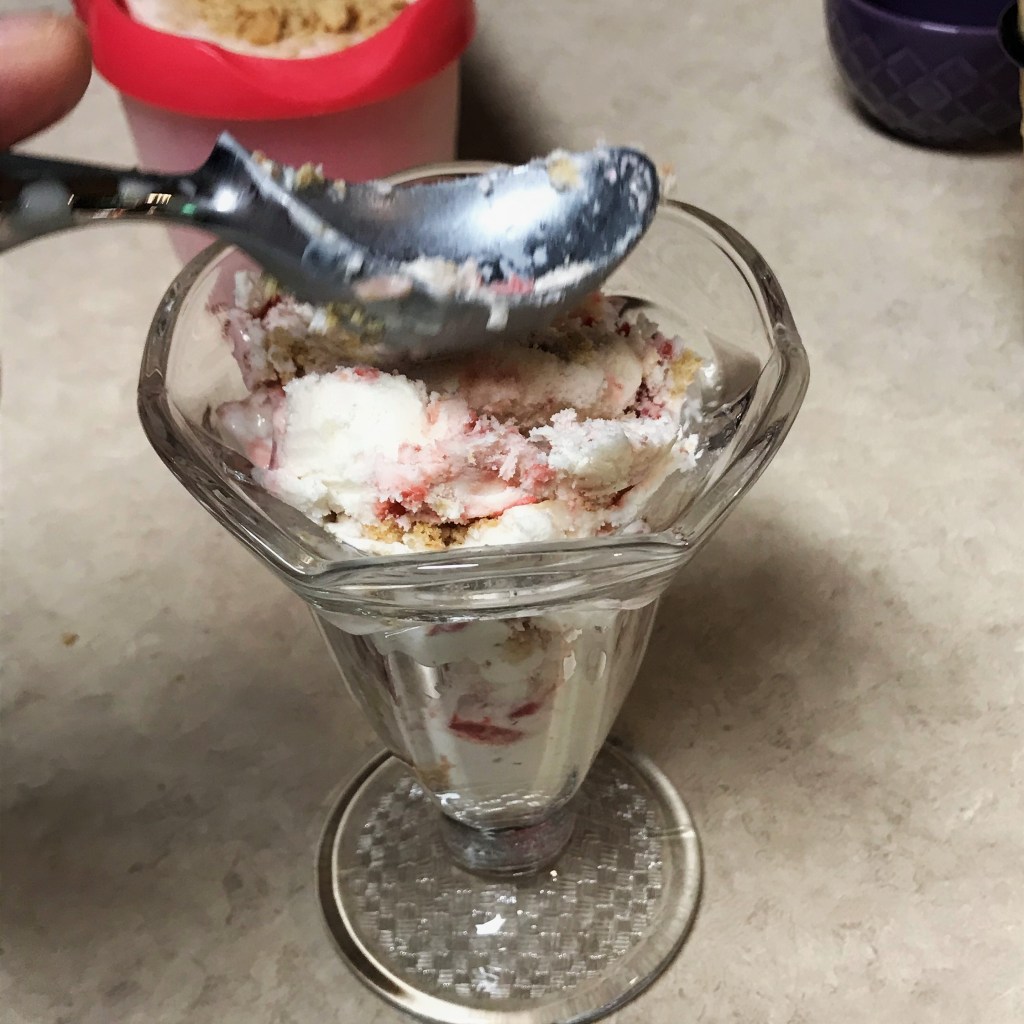
Layer the ice cream in an insulated container, beginning with ice cream, then staggered layers of reduced syrup ribbon (if using) and graham crumbles. Finish with the leftover fine crumbs. Cover the container and freeze at least 4 hours until firm.

The strawberry syrup pushes this treat right over the top!

Want to print this recipe?


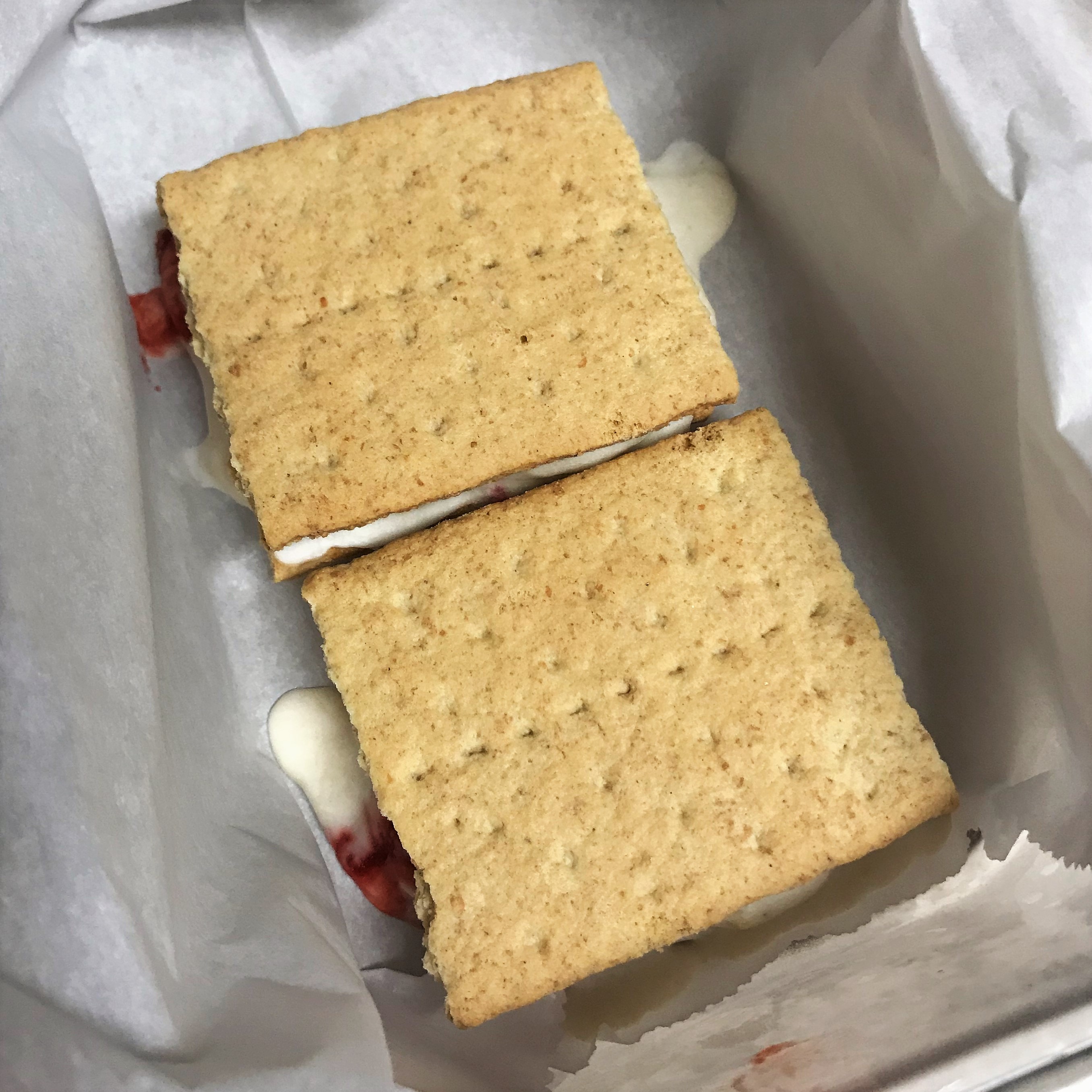
Just for fun, and because we had already licked the bowl, the spoon and the ice cream maker paddle, I gathered up the dregs that freeze hard to the freezer bowl and made miniature ice cream sandwiches with a couple of graham crackers. They were not the prettiest things, but it was a delicious taste test!