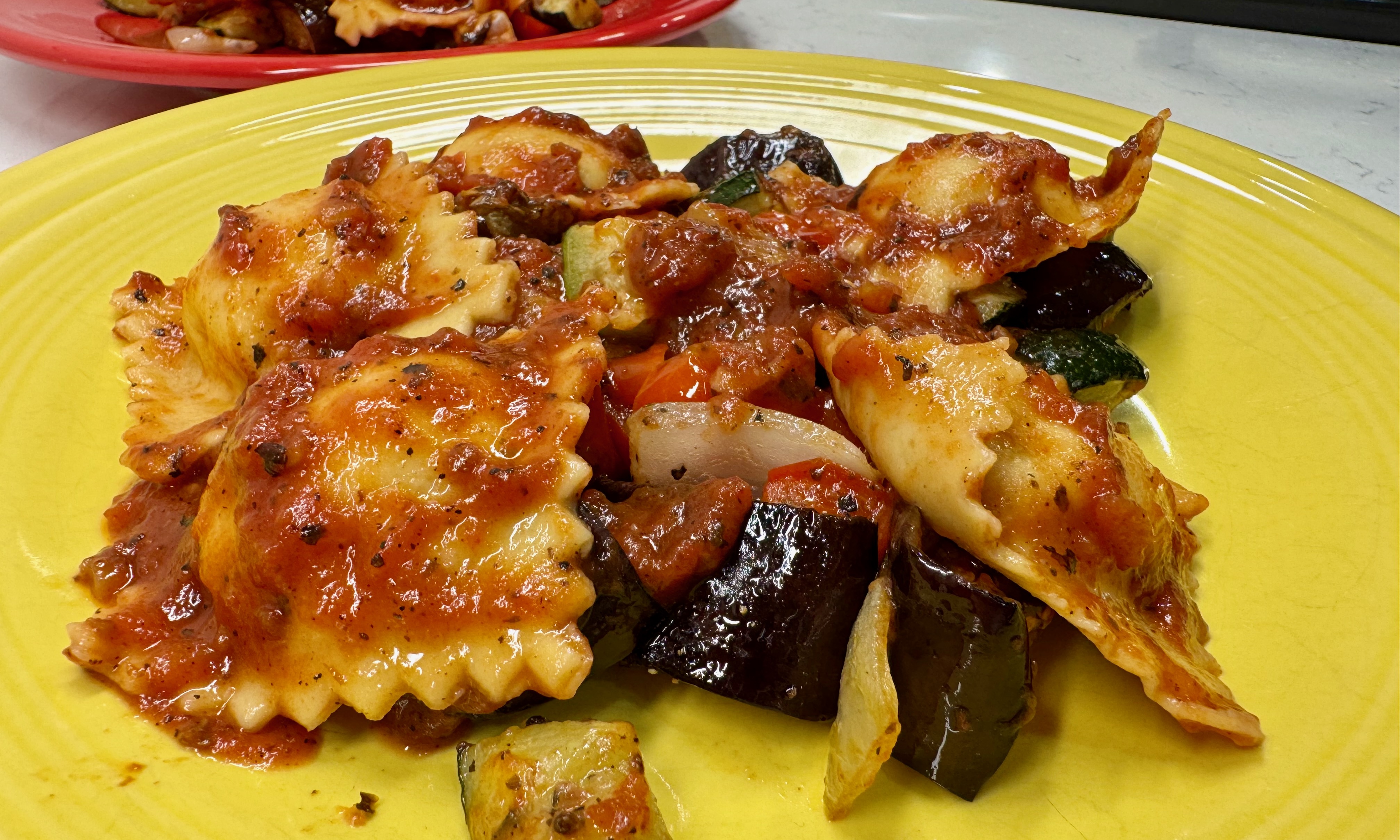
Roasted Ratatouille Ravioli

If I had a nickel for every time this year that I’ve told my husband, “I really wanna make some homemade pasta,” well, I’d have at least $1.35. Handmade pasta is a time-consuming project, but it’s so satisfying and gives me such joy that I just had to find the time. Ravioli is my favorite kind of handmade pasta because it gives me creative license not only for the pasta dough but also the filling that gets tucked inside. And— bonus points— I married it with ratatouille, my favorite summer dish. Yeah, this one was extra fun!

Ratatouille— a stew of eggplant, zucchini, peppers, onions and tomatoes— was indeed the inspiration for my ravioli adventure. I adore the melded flavors of the vegetables, along with the subtly floral Herbs de Provence that is traditional for ratatouille, and I look for new ways to enjoy it every summer. Once the idea hit me to pair all of that with handmade ravioli, there was no going back. 
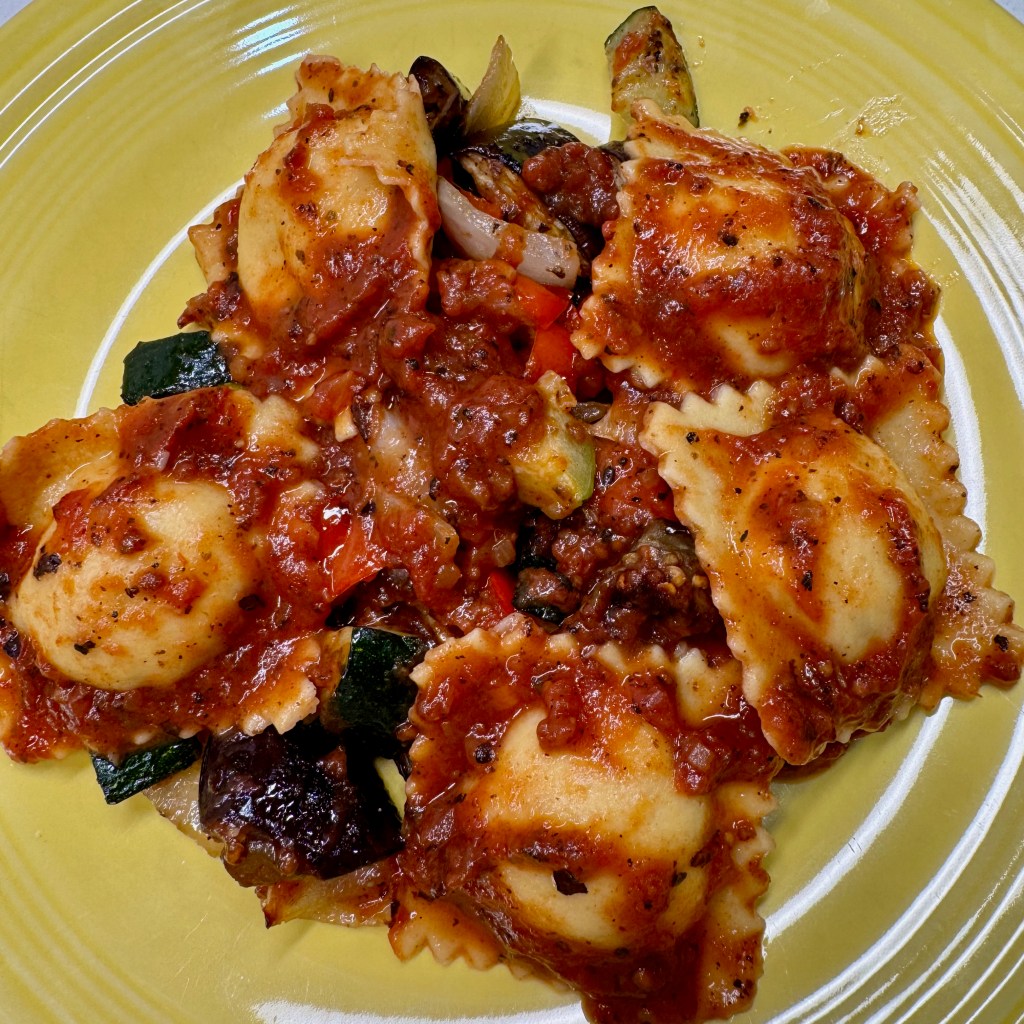
I wish I had made a triple batch of this!

First, the pasta dough

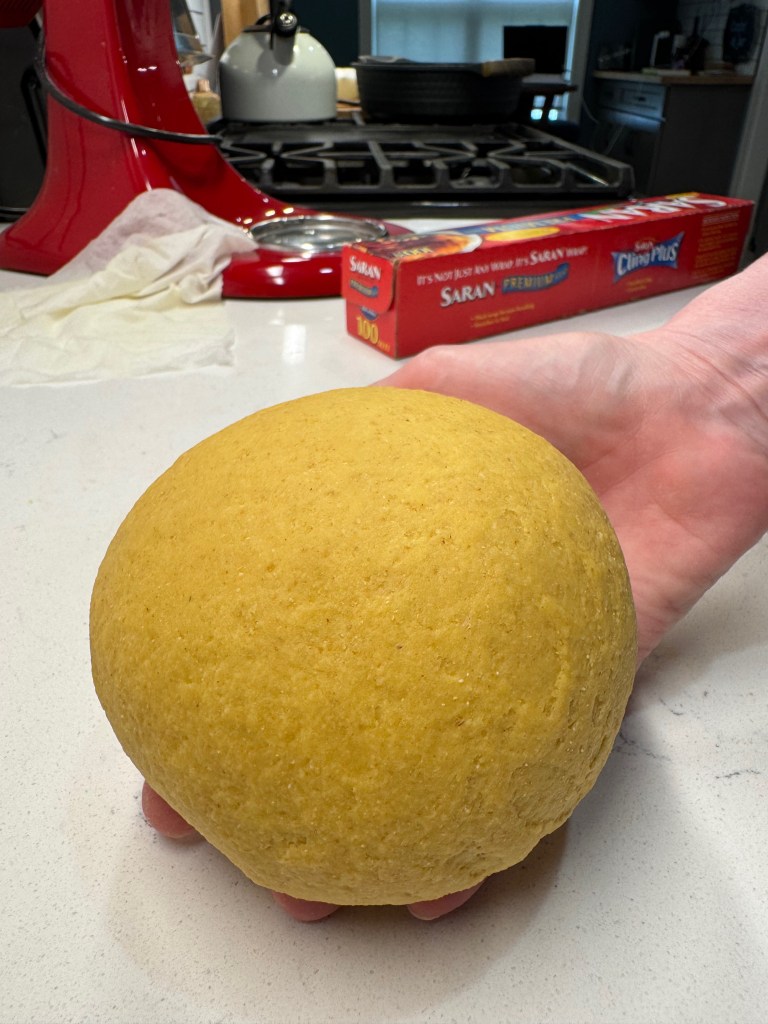
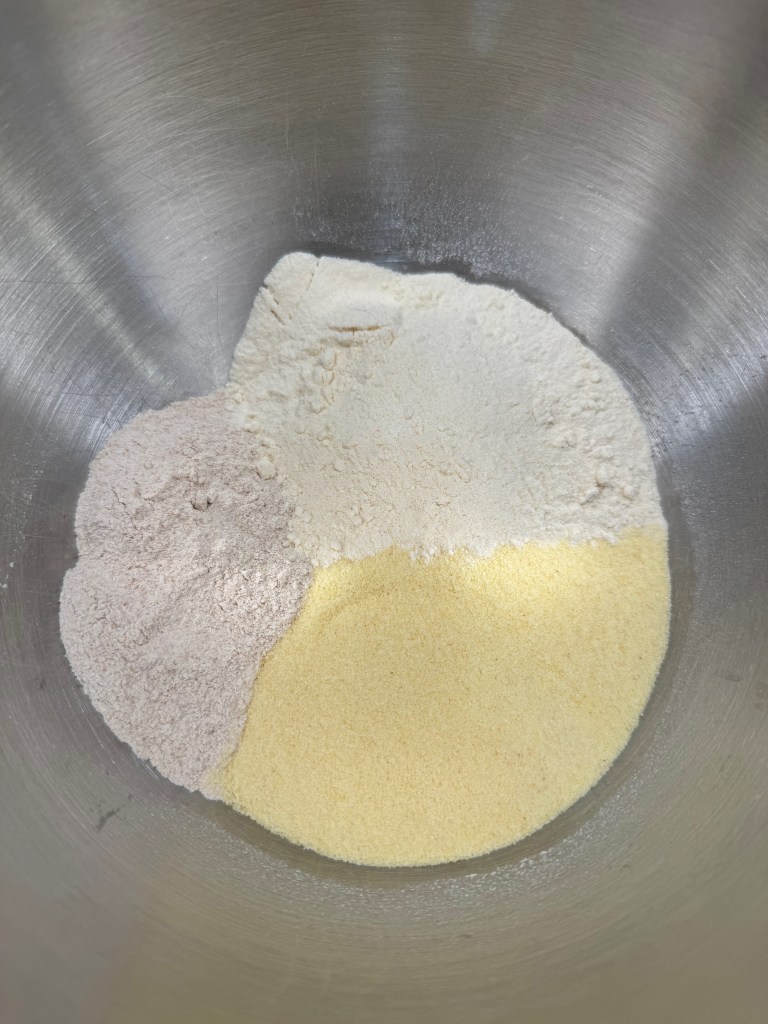
I used a mix of flour, including all-purpose, white whole wheat and semolina. A generous sprinkle of onion powder gave the dough an underlying flavor to support the ratatouille theme, and I gave it a good long kneading to build strength in the dough. I wrapped it up and tucked it into the fridge for a few hours to rest. If you need to save time, you could make the dough a day ahead.
The ravioli filling

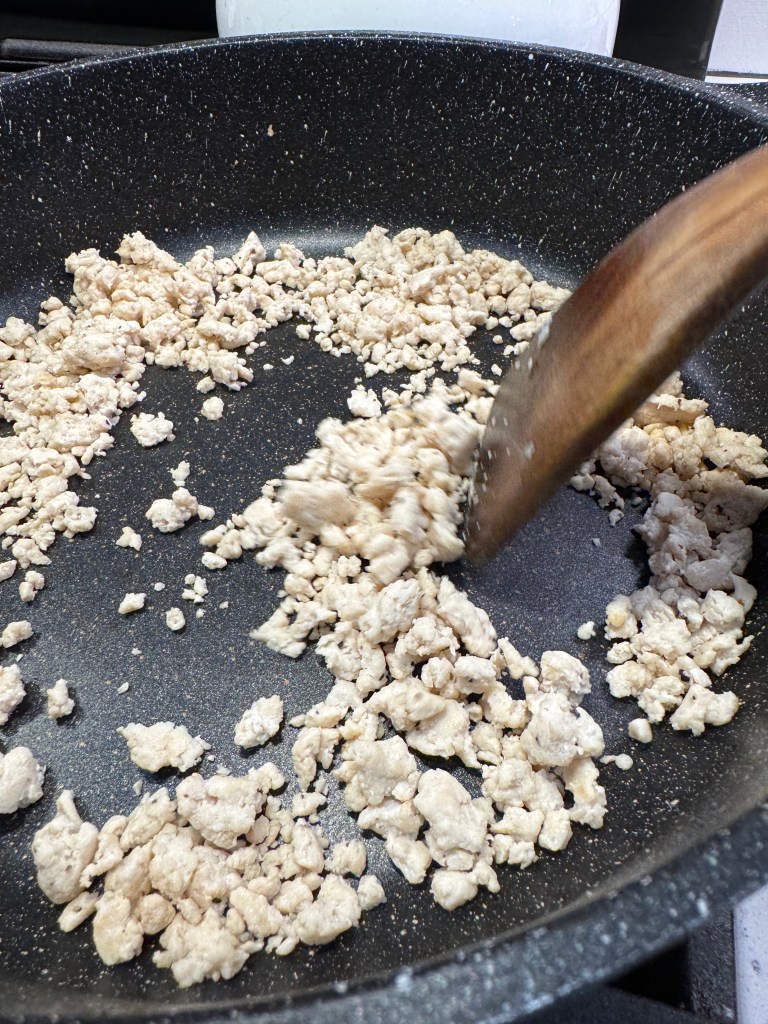
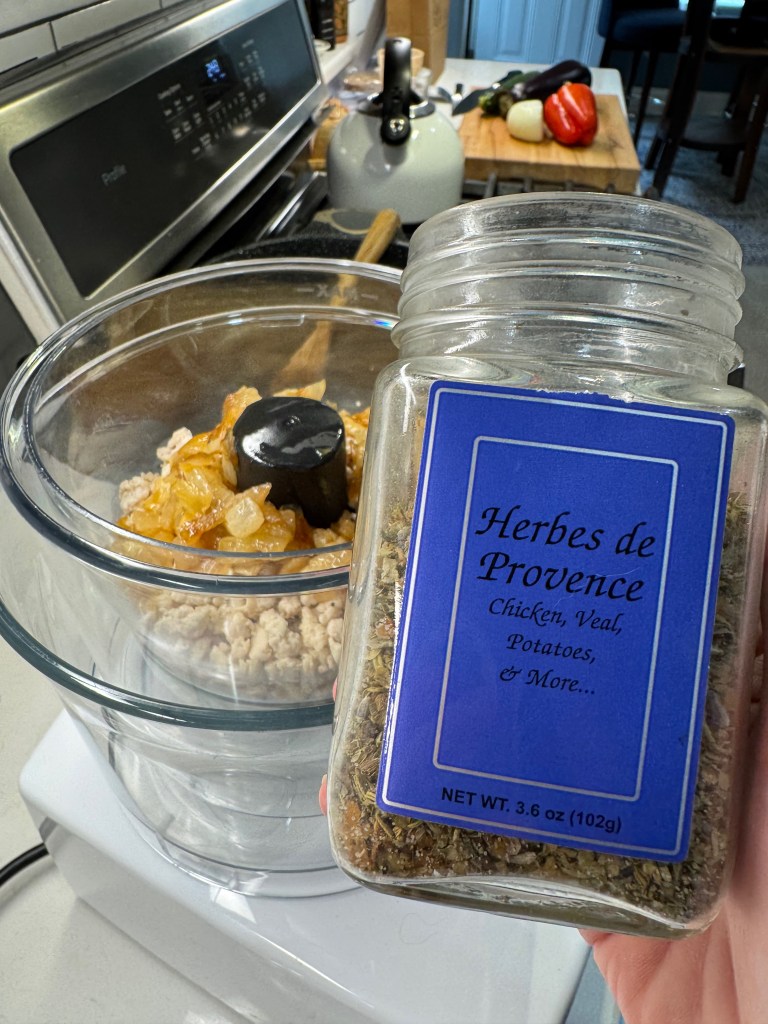
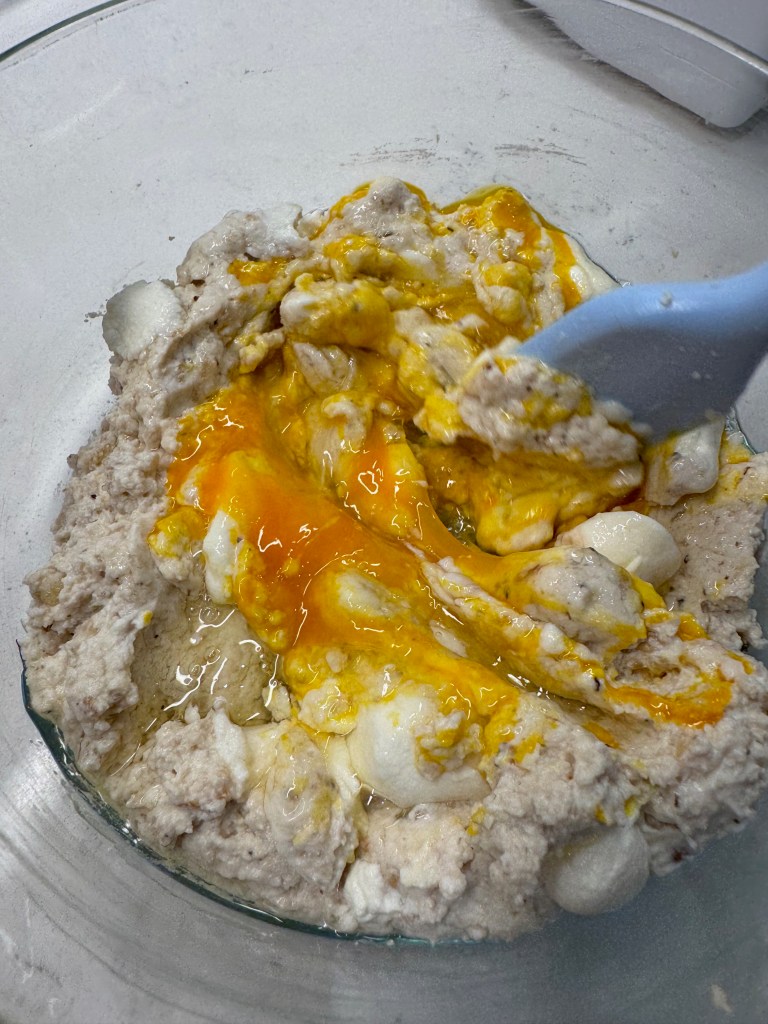
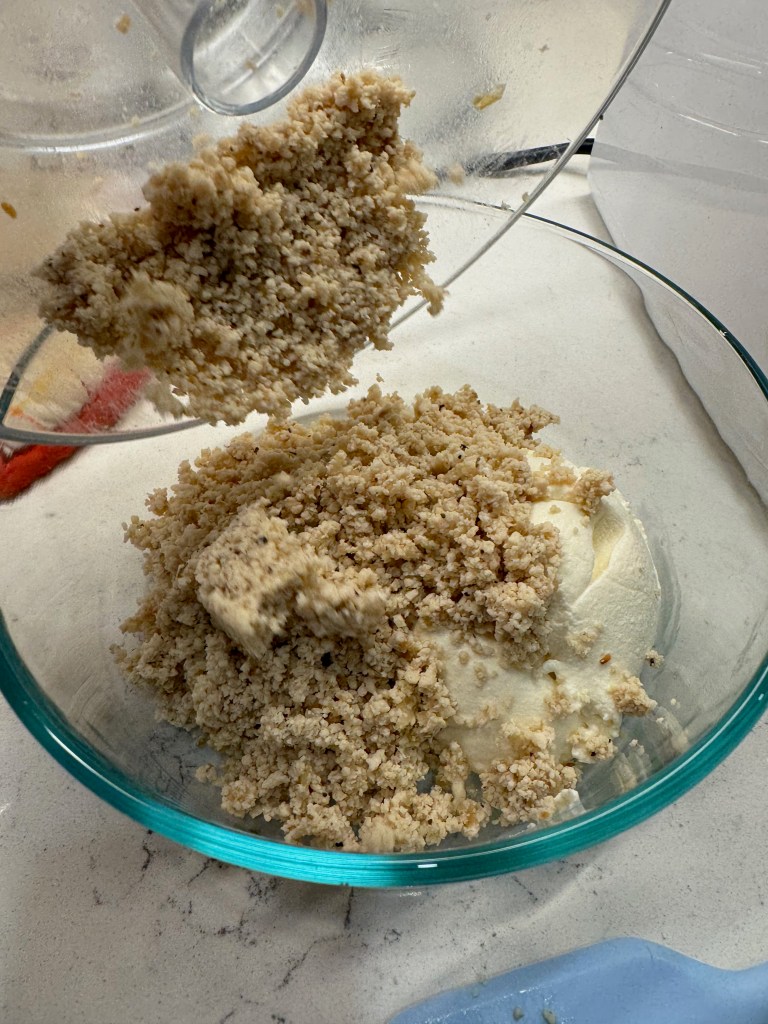
Next up, I pondered the filling for ravioli, which had to be more than just ricotta. After my less-than-great lab report this year, I’ve been more conscious of the saturated fat I consume, and so it occurred to me that maybe I’d incorporate a different protein into the mix. Lean ground chicken worked great, and I pulsed it in the food processor to make it as fine as possible. Also in the mix were golden caramelized onions and a pinch or two of Herbs de Provence, plus some lemon zest, and I blended all of those with strained ricotta and an egg to hold it together. This part of the recipe could also be done a day ahead.


Bend me, shape me, anyway you want me

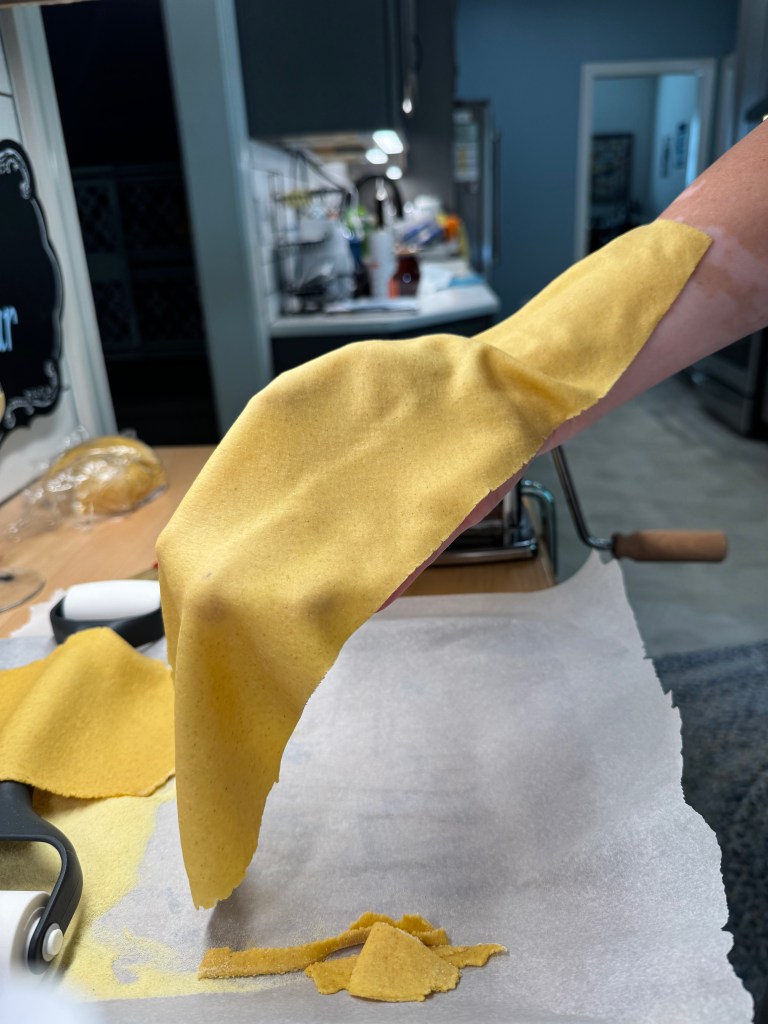
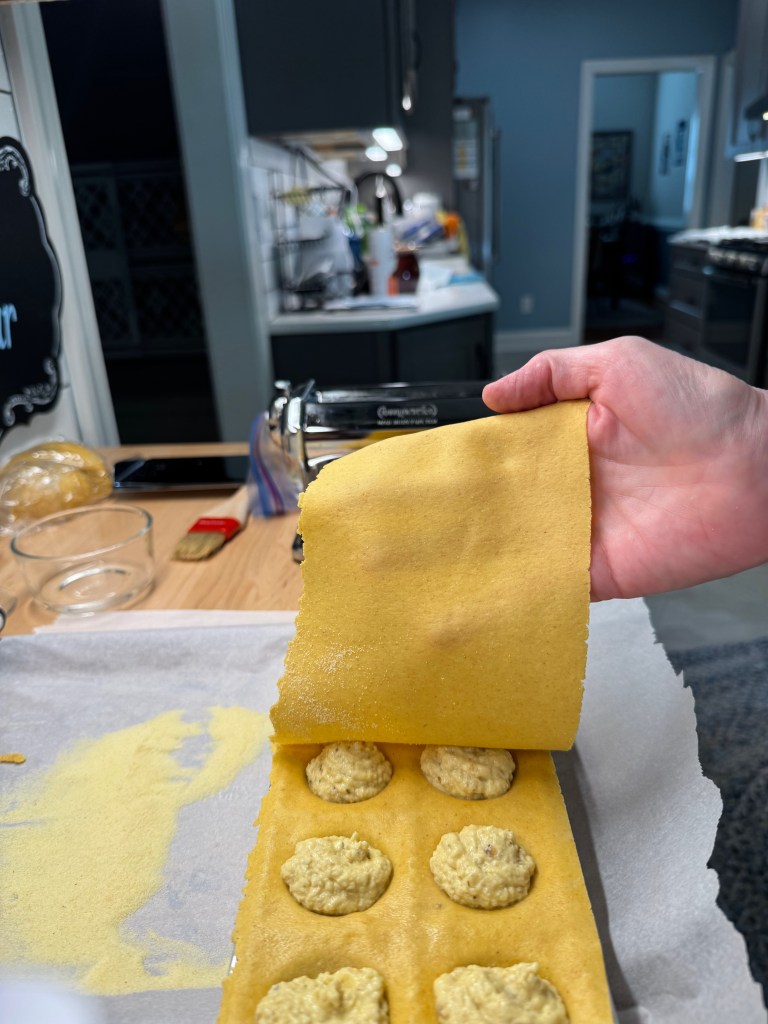
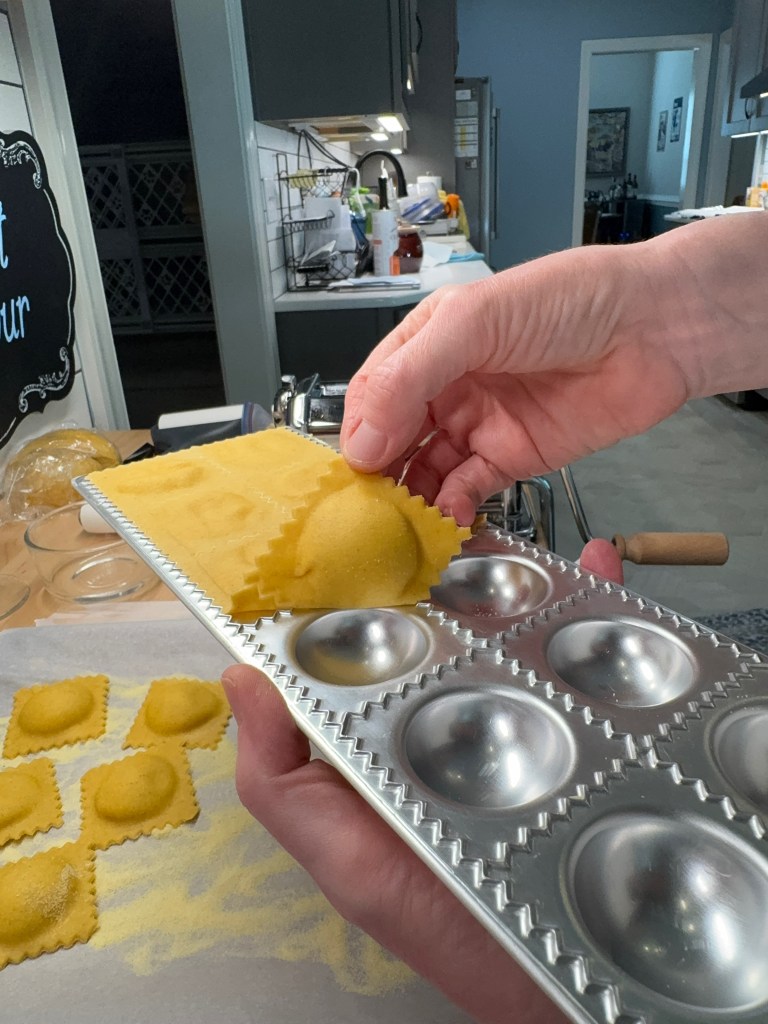
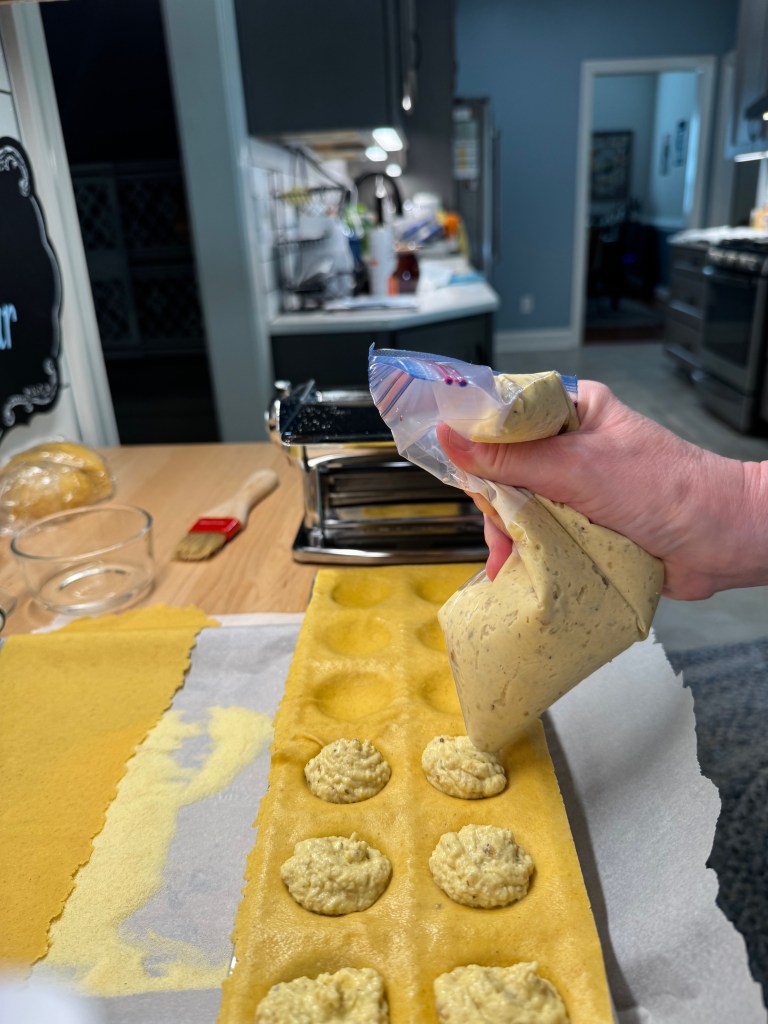
By the time the filling was prepared, I was ready to roll out the pasta dough into thin sheets, and I used my handy ravioli mold to make uniform little pillows. This is the fun part! It’s important when you make handmade pasta that you give it a little bit of time to dry before dropping it into boiling water, so when the ravioli were done, I placed them on a semolina-dusted cookie sheet. For more detailed instruction on how to make ravioli— with or without special gadgets— check out my post for handmade spinach ricotta ravioli, which includes tons of photos and tips, along with lessons I learned myself along my pasta-making journey. 


Ratatouille = EZ-POT

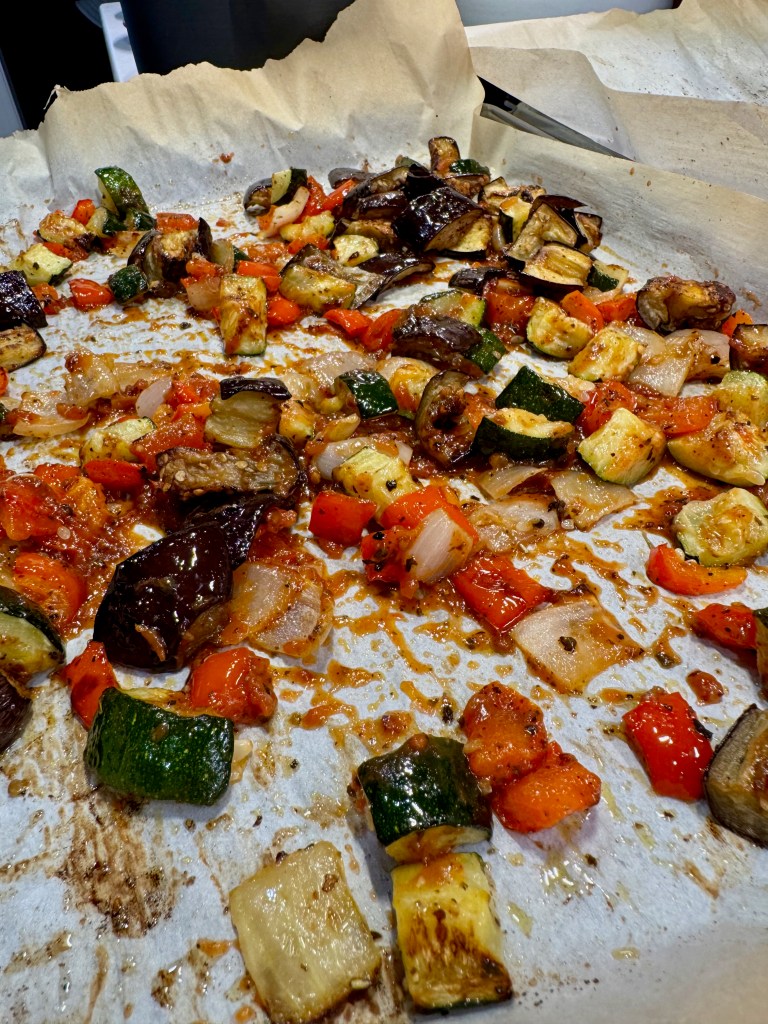
Finally, I made the ratatouille itself, which is delicious as a stew but perfection when roasted. I always remember this French country dish by the acronym “EZ-POT” because of Next Food Network Star season 5 winner, Melissa D’Arabian, who simplified the ingredients of into a five letter description of a dish that really is “e-z,” and usually is made in a “pot.” This little memory trick has saved me on more than one occasion when I craved ratatouille but forgot to make a farmers’ market shopping list. 😉

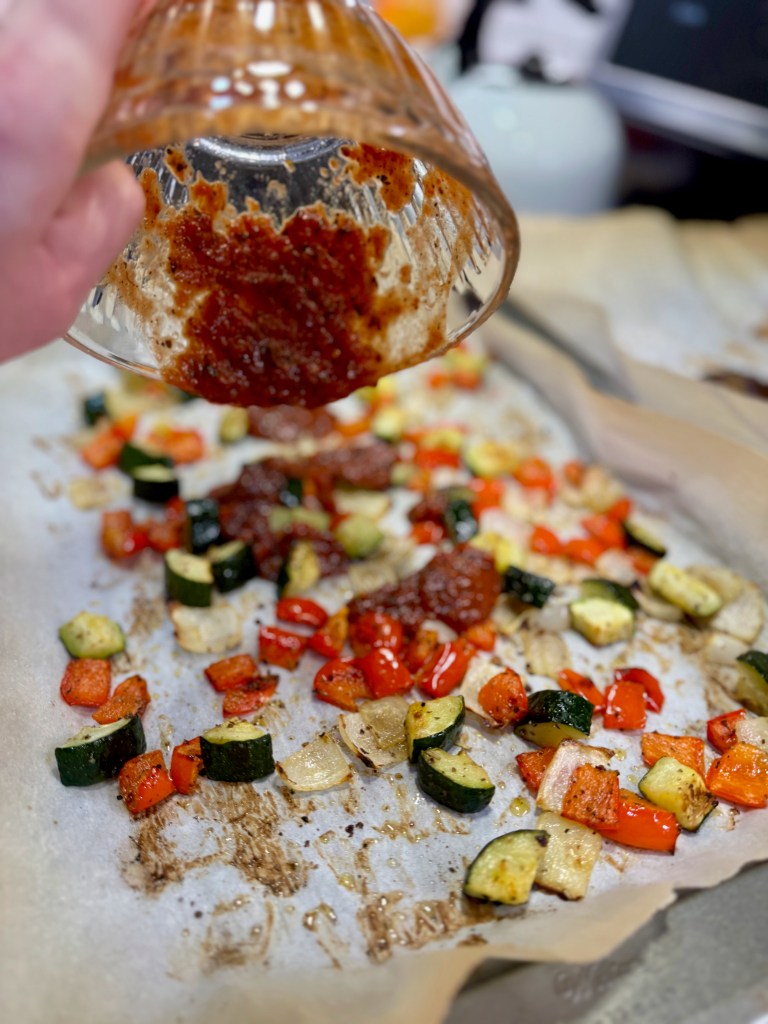
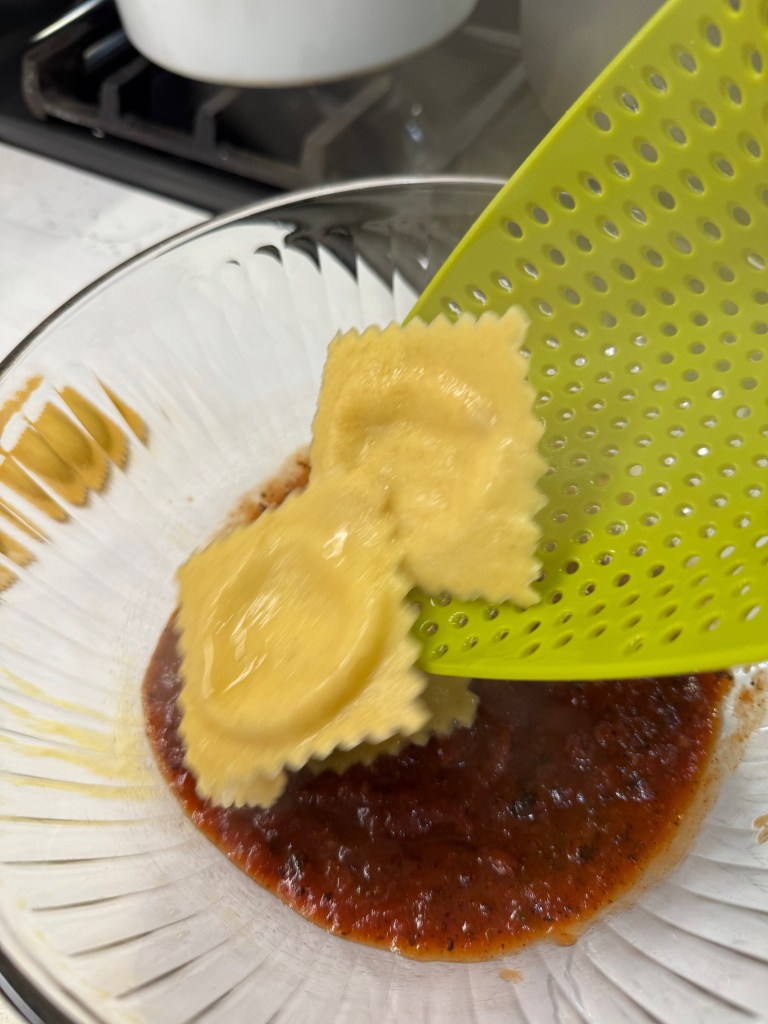
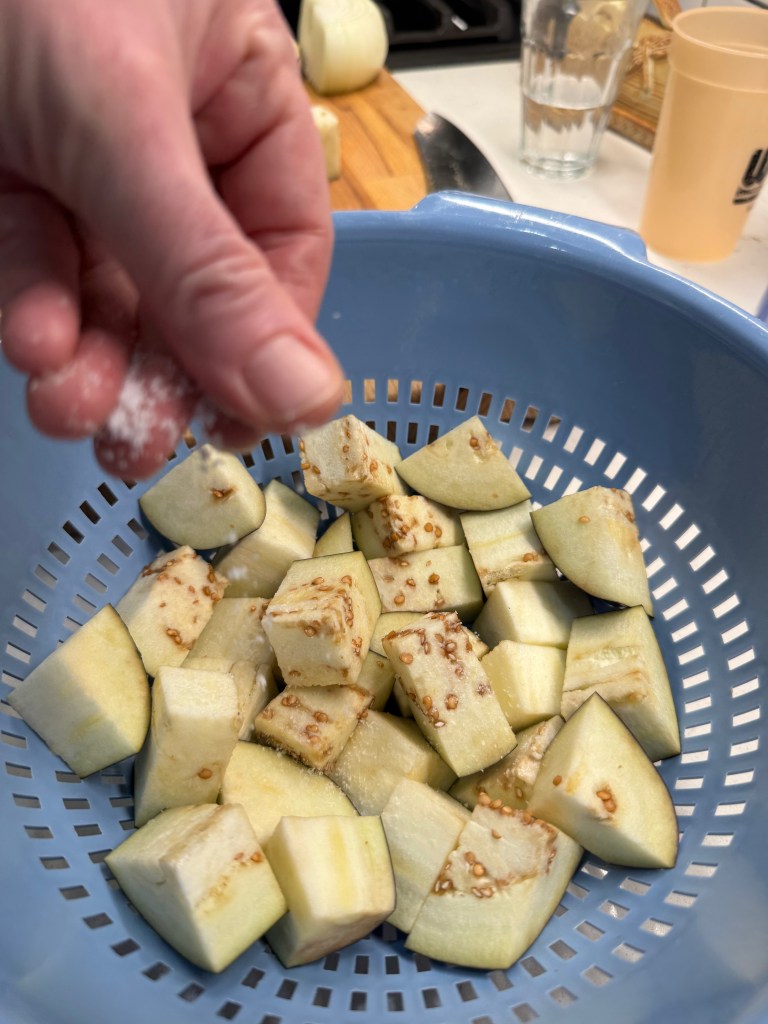
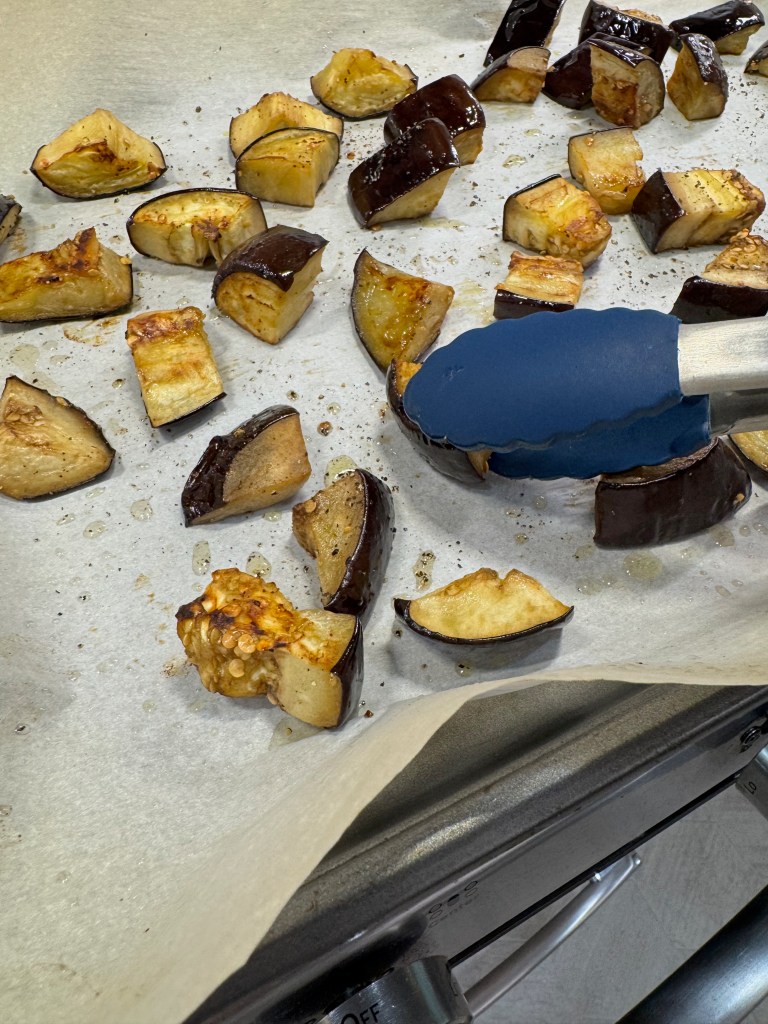
I salted my eggplant chunks for a few minutes first, to help draw out excess moisture, and this worked really well for achieving crispy edges when they roasted. The other vegetables were roasted on a separate sheet, and then I tossed everything gently in a fire-roasted tomato sauce which, if you can believe it, was from a can! Sure, I could have made my own sauce, but I was trying to be thrifty and use up some leftover pizza sauce, and it was a winner! If you make your own sauce, keep the flavors simple and try to make it on the thicker side.

While all of this was happening, I had the water on to boil for the pasta. I love this part of seeing a meal come together, especially one that I’ve pondered for a while, and though it satisfied my desire to make handmade pasta, it somehow also inspired me to want to make more handmade pasta. Stay tuned! 


Roasted Ratatouille Ravioli

  • Servings: 4
  • Difficulty: Intermediate
  • Print

This recipe is split into three parts for the pasta dough, the ravioli filling and the ratatouille vegetables with sauce. If you love the hands-on experience, this is worth the trouble. If the steps are too much for you, it's easy to make the pasta dough and filling ahead and finish the dish one or two days later. Not ready to make your own pasta? No problem! The chicken-ricotta filling and roasted vegetables would be awesome in a lasagna, using store-bought noodles. Adapt it however makes you happy.


Ingredients

  • 165g all-purpose flour
  • 60g white whole wheat flour
  • 45g semolina flour
  • 1/2 tsp. onion powder
  • 3 large eggs, at room temperature
  • 50g to 70g room temperature water

Notes: Depending on your overall environment, you may need to adjust the water somewhat to achieve a dough that is smooth and supple, without being too dry or too wet. If the dough is too dry with the maximum amount of water recommended, wet your hands and knead until smooth. Repeat as needed. You may end up with more pasta dough than is needed for ravioli. Simply roll it out with flour and cut into strips. Let it dry and freeze in zip-top bags. Cook from frozen.

Directions

  1. Combine flours and onion powder in the bowl of a stand mixer, fitted with the dough hook
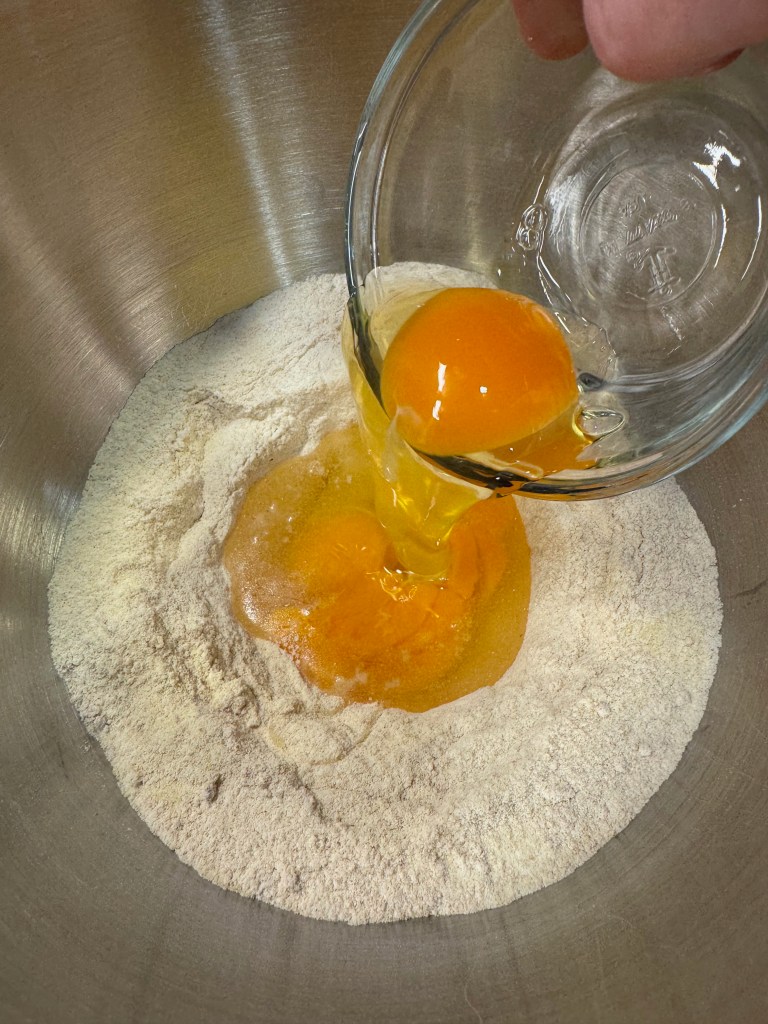
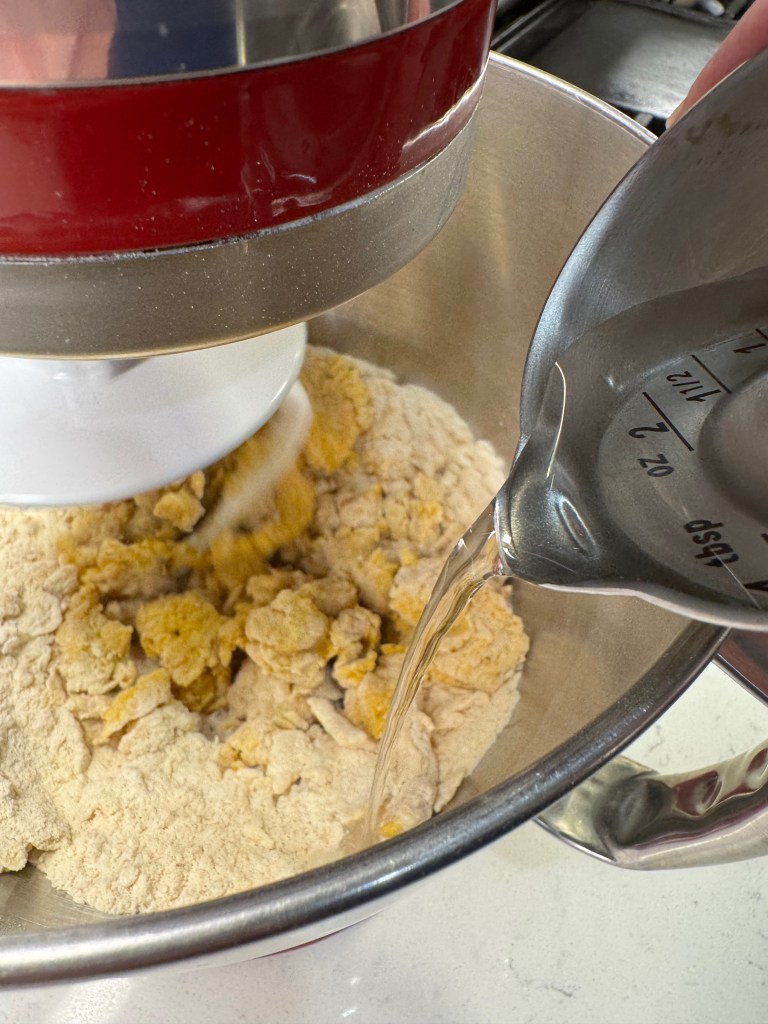
  2. Make a well in the center of the flour mixture and add eggs. Knead with the dough hook on speed 3 until dough starts to come together (it will be dry). Drizzle in water, a little at a time, until all flour is incorporated and dough is gathered up on the hook. This may take extra water.
  3. Transfer dough to the counter and knead by hand for about eight minutes, until smooth, firm and supple. Wrap dough tightly in plastic wrap and refrigerate at least 30 minutes or up to a day before rolling and shaping.
  4. Divide dough into sections and roll out with a pasta machine or rolling pin to approximately 1/16″ thickness. Use a piping bag to apply filling, then lightly brush another sheet with cold water and seal up each pillow, pushing out any air as you go. Transfer raviolis to a parchment-lined cookie sheet sprinkled with semolina.

Ingredients

  • 1 medium sweet onion, chopped
  • 1 Tbsp. extra virgin olive oil
  • Kosher salt and pepper
  • 1 lb. ground chicken breast
  • 1/2 tsp. Herbs de Provence seasoning
  • 1 tsp. lemon zest
  • 1 cup whole milk ricotta, strained for 30 minutes to remove excess moisture
  • 1 large egg

Note: If you wish, you could skip the ground chicken and double the strained ricotta for a vegetarian version of this dish.

Directions

  1. Sauté onions in olive oil over low heat with a sprinkle of salt. Toss frequently, until all the moisture has evaporated and onions soften and take on a deep golden color. Transfer to a bowl and increase heat to medium.
  2. Add ground chicken to the same pan, cooking gently until meat is no longer pink, but do not let it brown. Season the meat the salt and pepper and allow it to cool.
  3. Add meat mixture and caramelized onions to the bowl of a food processor. Add Herbs de Provence and lemon zest. Pulse a few times until the meat is ground to a fine texture and onions are no longer visible in whole.
  4. Transfer processed mixture to a bowl with ricotta and egg and stir together until evenly blended. Refrigerate this mixture until you’re ready to fill the ravioli.

Ingredients

  • 1 small eggplant (keep the peel on), cut into large cubes
  • 1 medium zucchini, but into large chunks
  • 1 red bell pepper
  • 1/2 medium sweet onion, cut into chunks
  • Extra virgin olive oil
  • Kosher salt and pepper
  • A couple pinches of Herbs de Provence seasoning
  • 2 cups fire-roasted tomato sauce (ours was a thick pizza sauce)

Note: Keeping the peel on the eggplant and cutting it into large chunks is key to getting a crispy outer texture. Aim for pieces large enough that every piece has a bit of peel on it, as this will help the eggplant hold its shape during roasting so that it doesn’t turn mushy.

Directions

  1. Heat oven to 450° F, with rack in center position. Prepare two baking sheets by lining with parchment paper. Place eggplant cubes in a colander and toss gently with 1/2 tsp. salt. Let it rest half an hour, then gently rinse and pat dry before proceeding. Toss with a tablespoon of olive oil on one of the baking sheets and season with pepper only (they will have plenty of salty flavor from the prep stage).
  2. Toss zucchini, bell pepper and onion chunks in a tablespoon of olive oil on the second baking sheet. Season with salt, pepper and Herbs de Provence. Roast both sheets of vegetables for about 30 minutes, turning pieces over halfway through.
  3. Meanwhile, bring a pot of salted water to a gentle boil and add the ravioli by hand to prevent sticking. Cook for six to seven minutes; the pillows should all be floating and the sealed edges of pasta should be tender.
  4. Retrieve the pasta with a vented spoon and transfer directly to the tomato sauce. Toss gently and arrange the ravioli on serving plates. Toss the roasted vegetables in the remaining sauce and spoon over the ravioli portions. Serve at once.
Caprese-inspired Pasta Salad

I’ve been ruminating lately about my grandmother’s ways in the kitchen. How she fed everyone on scraps— not because she had to but because she could— and realizing that I don’t employ her tactics as often as I have opportunity. Pinching pennies doesn’t have to be a necessity; it can be a strategy for ensuring that we always have enough. And in times of financial uncertainty (which lately seems to be always), that strategy can keep us fed, not only physically, but also emotionally. 

My grandmother knew this, and it’s why she used up all the bread heels and stale sweet rolls to make her amazing bread pudding, which we all loved. It’s why 10-year-old me could sit at her dinner table, puzzled at her claim that we were having leftovers, not recognizing the food before me as something we’d already eaten that week. She was terrific at transforming, and I have that spirit in my bones, too— I just don’t always realize when I’m doing it.

We are about to enter an era where many ingredients we take for granted will be less available or more expensive than we’ve come to expect, thanks to climate change, tariffs, supply chain chaos and farm worker shortages. I thought it timely to share one of my favorite ways to stretch expensive ingredients: a pasta salad. My offering is a Caprese-inspired summer side dish that uses half a bag of pasta bowties, a small container of cherry tomatoes, fresh summer basil and mozzarella. None of these items is particularly expensive— especially if you happen to have a little garden at home— but I hope to provide a template that might help you stretch out other ingredients that lean toward the pricey side.

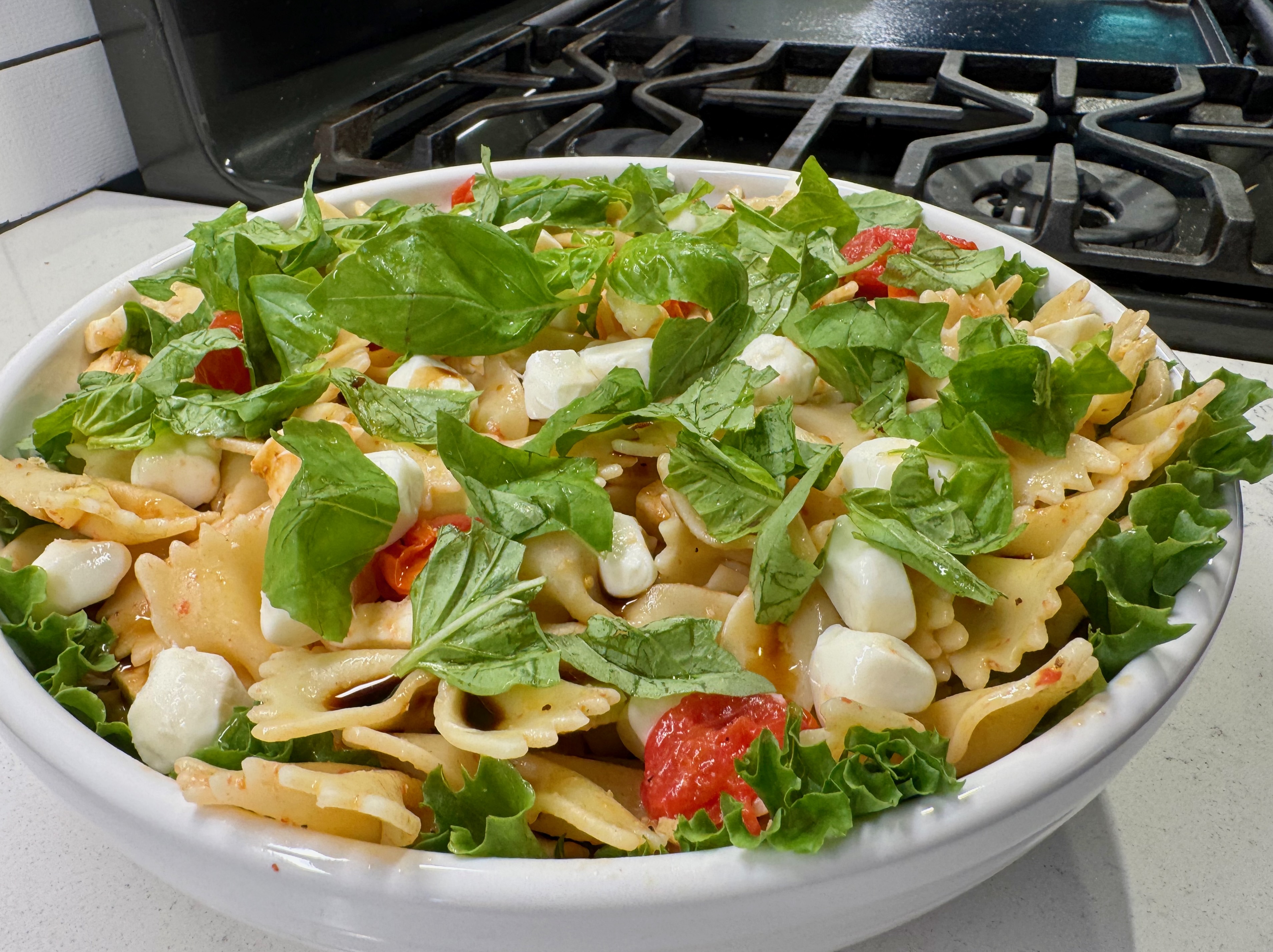
Summer in a bowl! 😎

Classic caprese— sort of

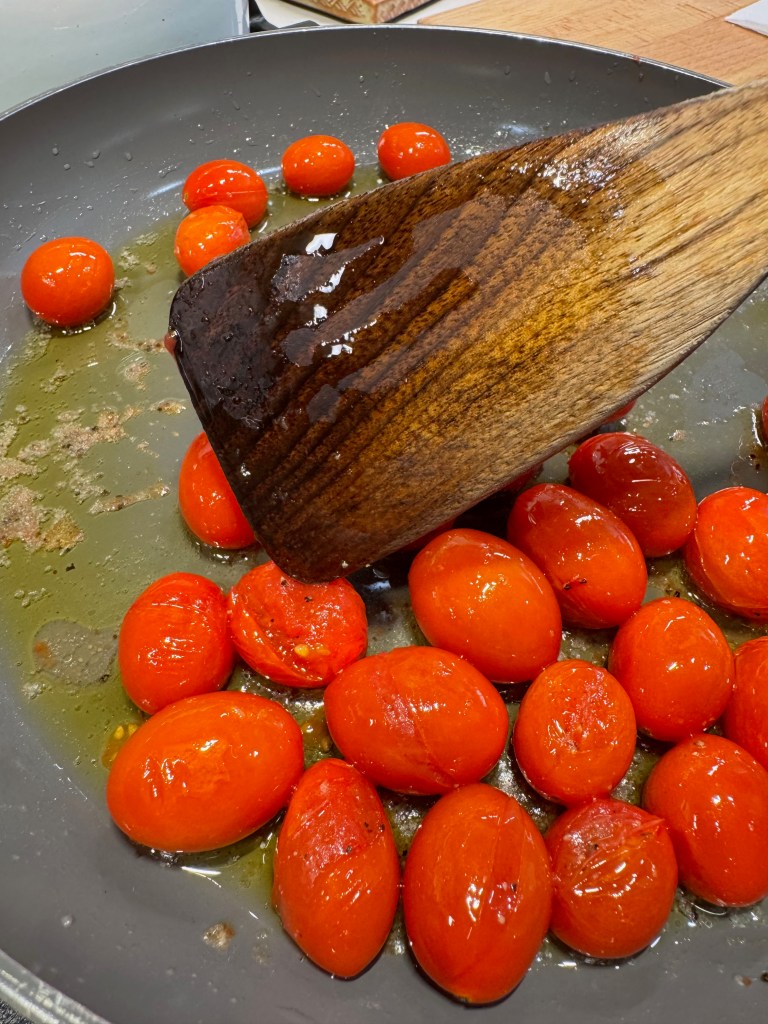
The flavors (and 🇮🇹 colors) of Caprese are all present here, but I’ve taken a few liberties to amplify the key ingredients. For starters, I poached the tomatoes in a bit of extra virgin olive oil to concentrate their sweetness and to reduce some of the moisture, and then I scooped the cooked tomatoes into a bowl to cool, reserving the flavorful oil for later. This is a simple trick for getting the most flavor out of the tomato and, as a bonus, it’s easier to eat them without the juice bursting out everywhere.


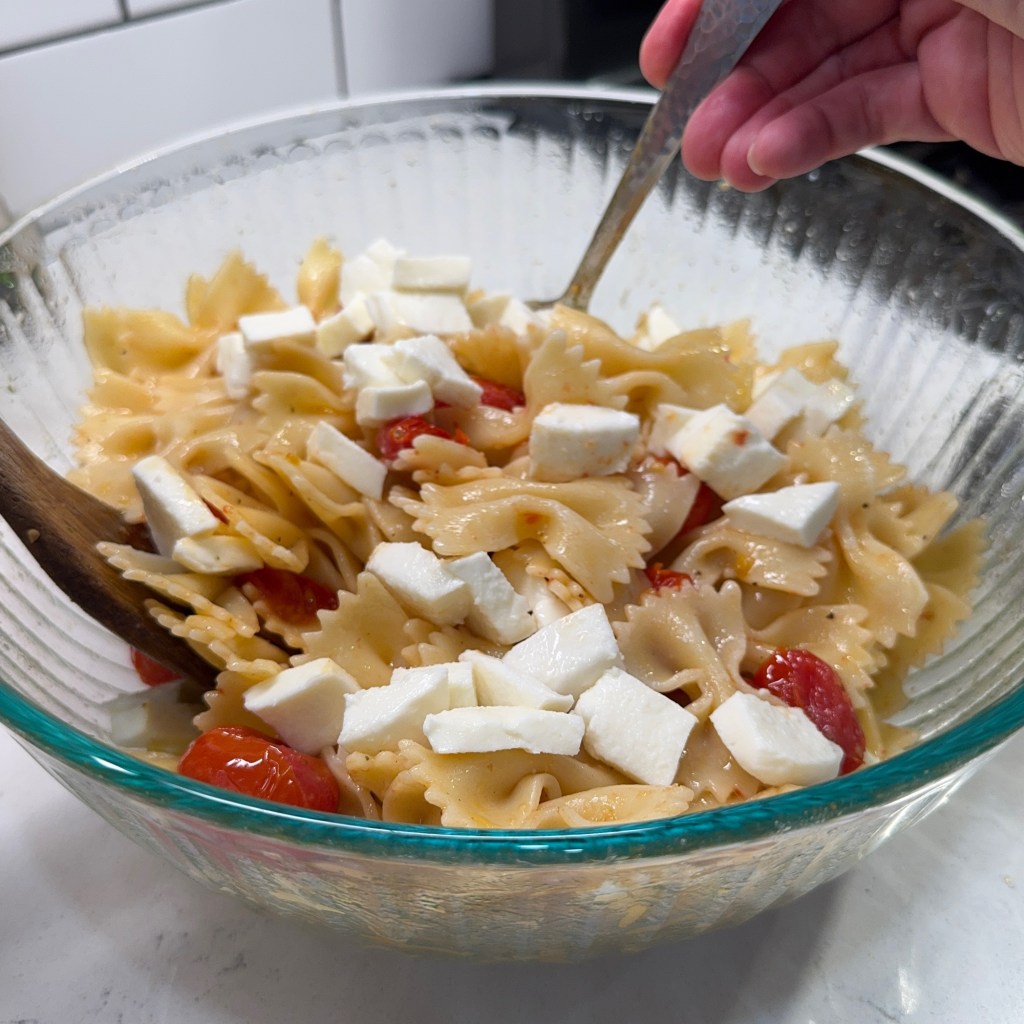
Next, I had a ball of sliced soft mozzarella, as well as a small package of the more expensive mozzarella pearls. I blotted all of it with paper towels and cut the slices into bite-sized pieces. I saved the prettier pearls for the top of the salad. Same flavor, a few pennies cheaper.

My mozzarella was pre-sliced, so this was quick work.

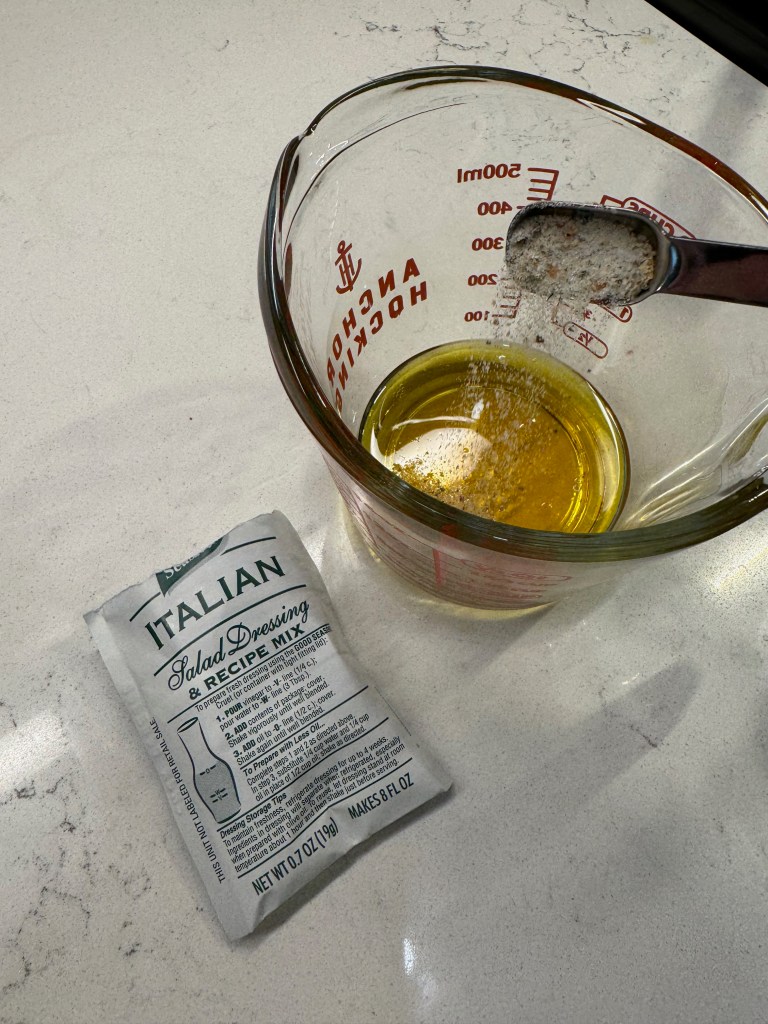
Dark balsamic vinegar, typical for Caprese,  leaves splotchy stains on mozzarella, and that’s not a good look when you’re tossing the salad rather than drizzling it. I opted instead for a white balsamic-based dressing, jazzed up with fresh lemon, olive oil and a spoonful of Italian dressing mix. I had a plan to include a touch of dark balsamic, but not yet.


Rule #1 – Season every layer!

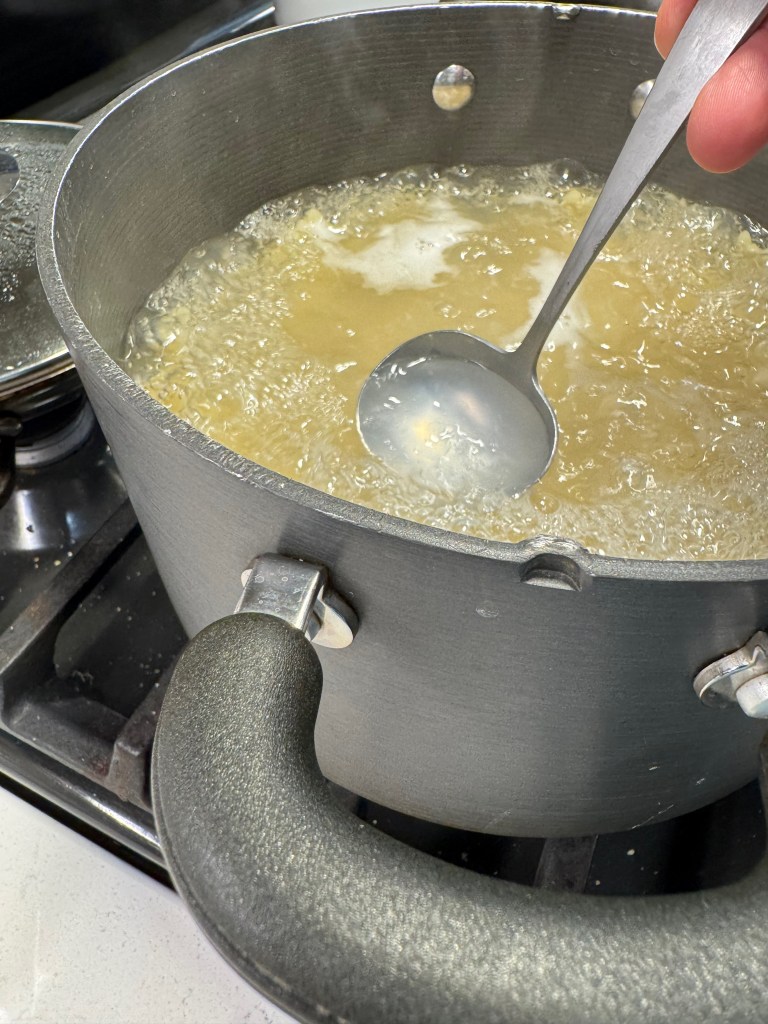
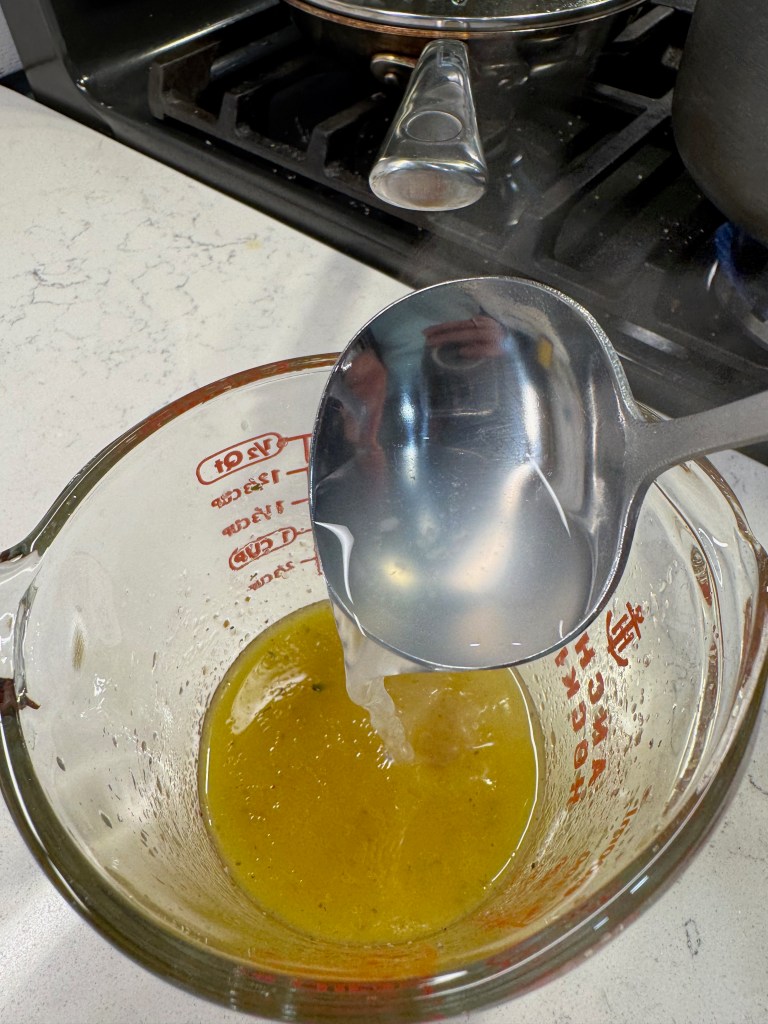
As always, I recommend plenty of salt in the pasta water. You only get one shot to add flavor, so be generous and remember that most of that sodium goes down the drain— you’re not eating it all. When the pasta was al dente, I scooped out a little bit of the starchy water and whisked it into my dressing to help it cling to the pasta.


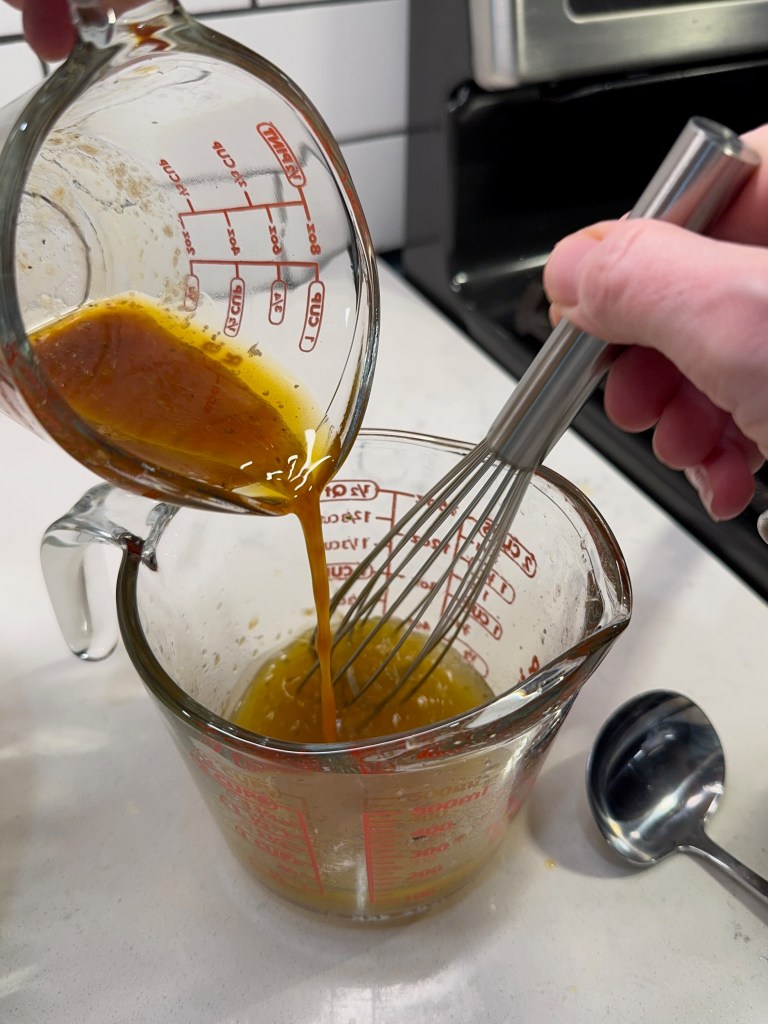
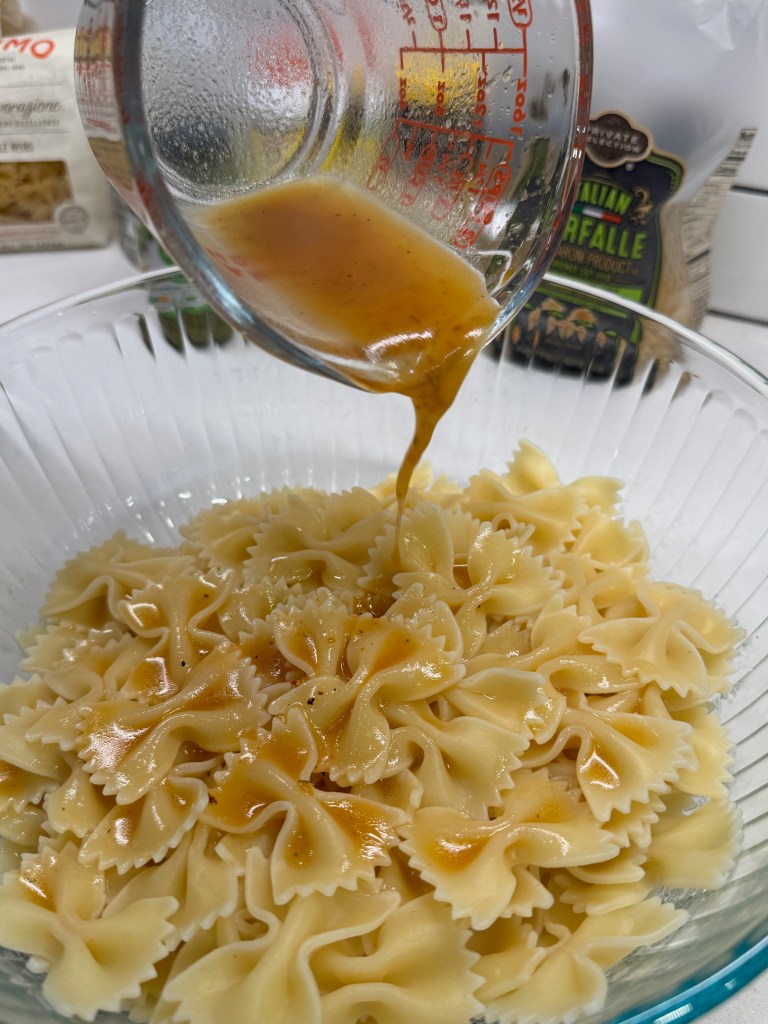
Finally, remember the tomato-scented oil that was left over after poaching the cherry tomatoes? I whisked that cooled oil into the dressing, too, extending the sweet tomato flavor throughout my salad in the process. I poured the dressing over the pasta while it was hot, ensuring that it would soak into every bow tie. Toss this for a couple of minutes to distribute the dressing evenly.


Bring on the Caprese

A few minutes later, when the pasta was cooled to room temperature, I gently tossed in the poached tomatoes and the pieces of sliced mozzarella, and sent it to the fridge until we were ready to pack up for dinner with some friends.


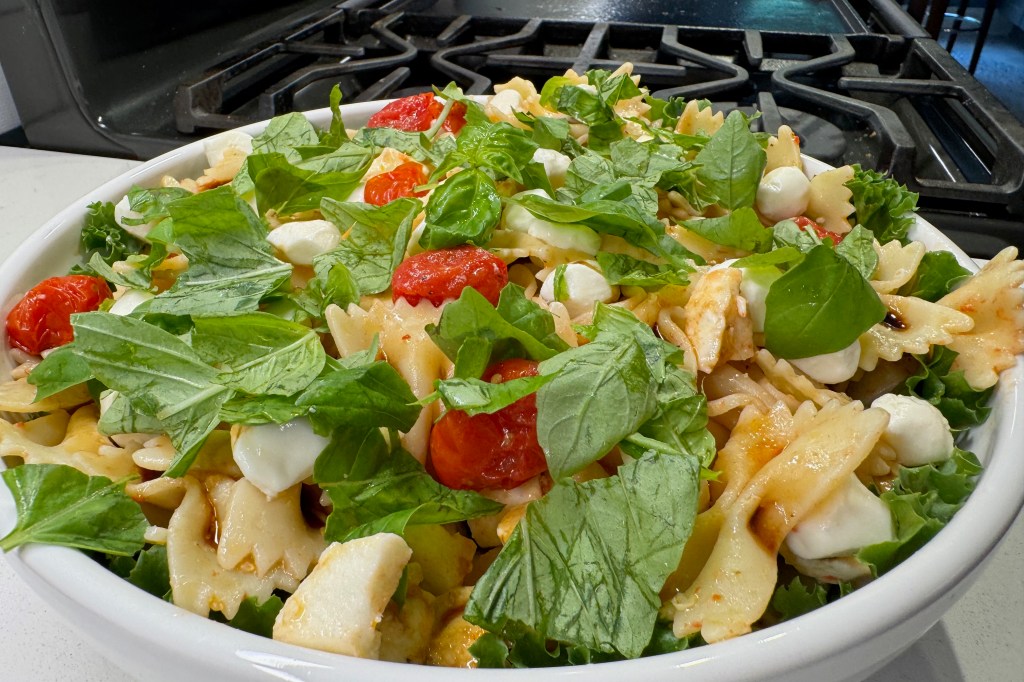
For serving a pasta salad, I love to line the bowl or platter with leafy lettuce greens. It looks pretty, and it also gives excess dressing a place to run so that the salad doesn’t get too drippy. If you are entertaining a larger crowd, a deep platter with extra spoons is nice because it allows more people to self-serve at once. For a small crowd, or if you have limited space on the table, a bowl works great.

Final touches on this Caprese-inspired salad

A good quality bottle of balsamic is a secret weapon in the kitchen!

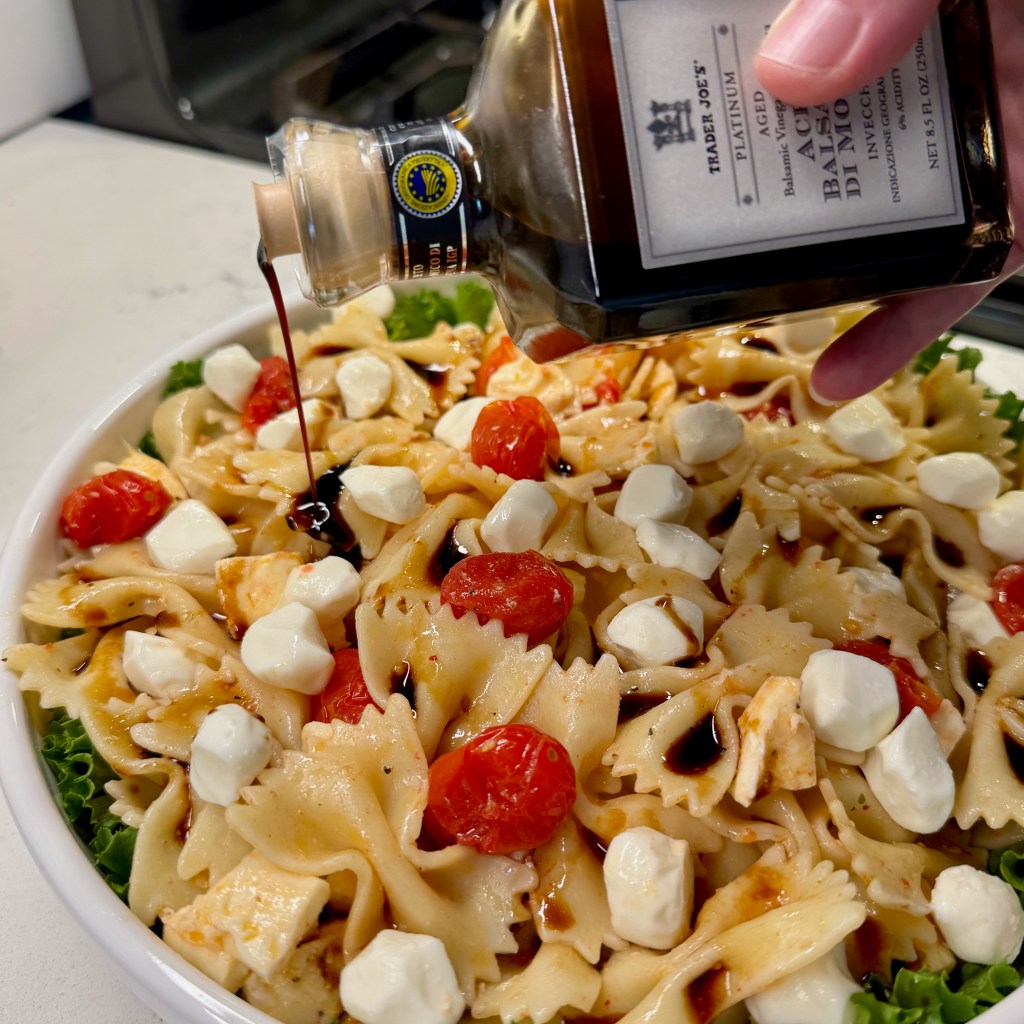
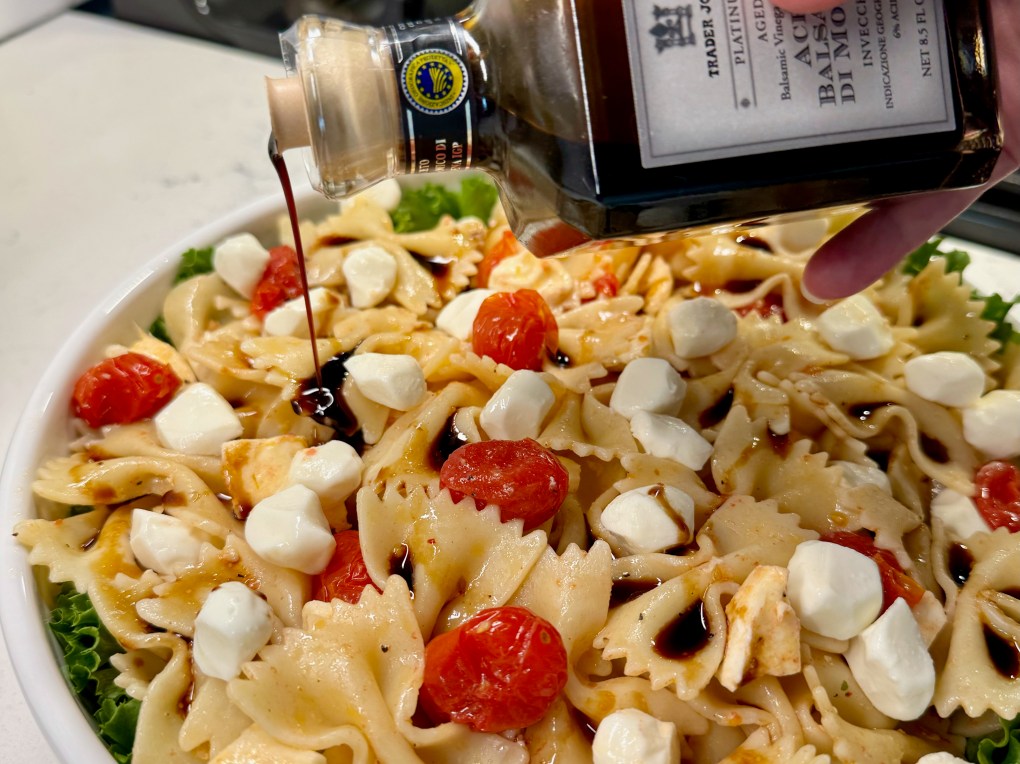
I scattered the mozzarella pearls on top, and then it was finally time for a touch of classic dark balsamic. Just a few drizzles over the pasta bowties, and I used a reduction that was thick and syrupy, so it stayed in perfect little puddles. Fresh basil is classic on a Caprese, and it’s easy to find this time of year, especially in my patio container garden. If basil isn’t your thing, I think fresh Italian parsley would be a good substitute here.

Caprese-inspired Pasta Salad

  • Servings: 6 to 8
  • Difficulty: Average
  • Print

It's summer salad season, and this Caprese-inspired dish is a great way to highlight the classic flavors when serving a crowd.


Ingredients

  • 8 oz. semolina bowtie pasta (see recipe notes)
  • 1 dry pint cherry or grape tomatoes, washed and patted dry
  • 2 Tbsp. extra virgin olive oil
  • Salt and pepper to taste
  • 2 to 3 Tbsp. white balsamic vinegar
  • 1 tsp. fresh lemon juice
  • 1 tsp. dry Italian salad dressing mix (see recipe notes)
  • 2 Tbsp. extra virgin olive oil
  • 2 Tbsp. hot pasta cooking water
  • 1 lb. fresh soft mozzarella (cut into cubes or pearls)
  • 2 Tbsp. dark balsamic glaze
  • 1 handful fresh torn basil leaves

Recipe Notes: Whenever possible, seek out pasta that is made with durum (semolina) flour, and labeled as bronze-cut. This method of cutting leaves a slightly rough texture, better for sauce or dressing to cling.

I used Good Seasons brand dressing mix, but you could easily substitute a pinch of garlic powder and some dry Italian herbs.

Directions

  1. Prepare a pot to boil the pasta, and season it generously with kosher salt. Begin cooking pasta when tomatoes are nearly finished cooking.
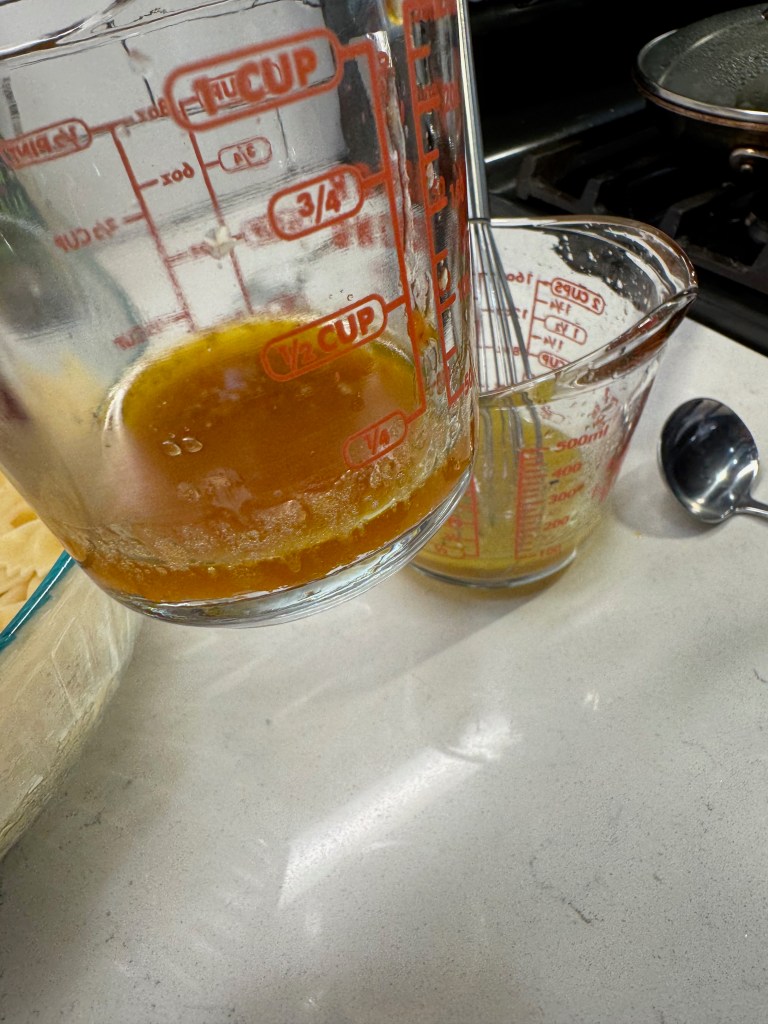
  2. Heat a medium-size skillet or sauté pan over low heat, and swirl in extra virgin olive oil. Add tomatoes, season with salt and pepper and roll to coat them in the oil. Cook the tomatoes very slowly until the tomatoes are softened and easily smashed with a utensil (about 25 minutes). Press each of them when they reach this softened stage to release the juice inside. Cool slightly, and then spoon out the oil into a measuring glass. Reserve this for the dressing.
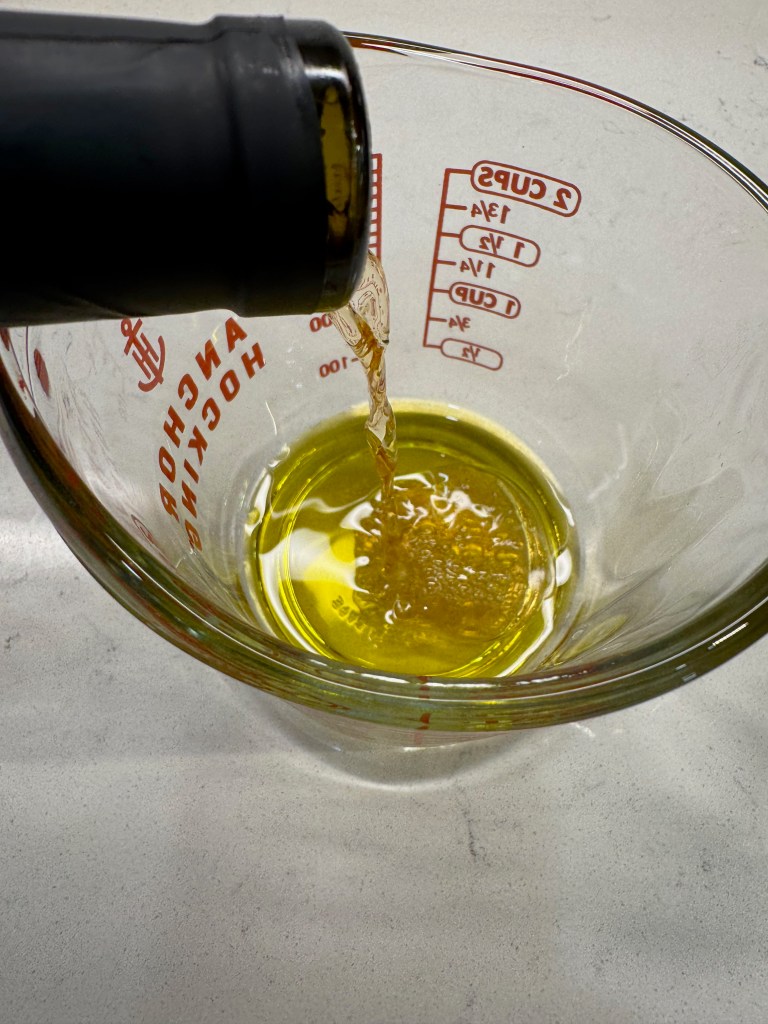
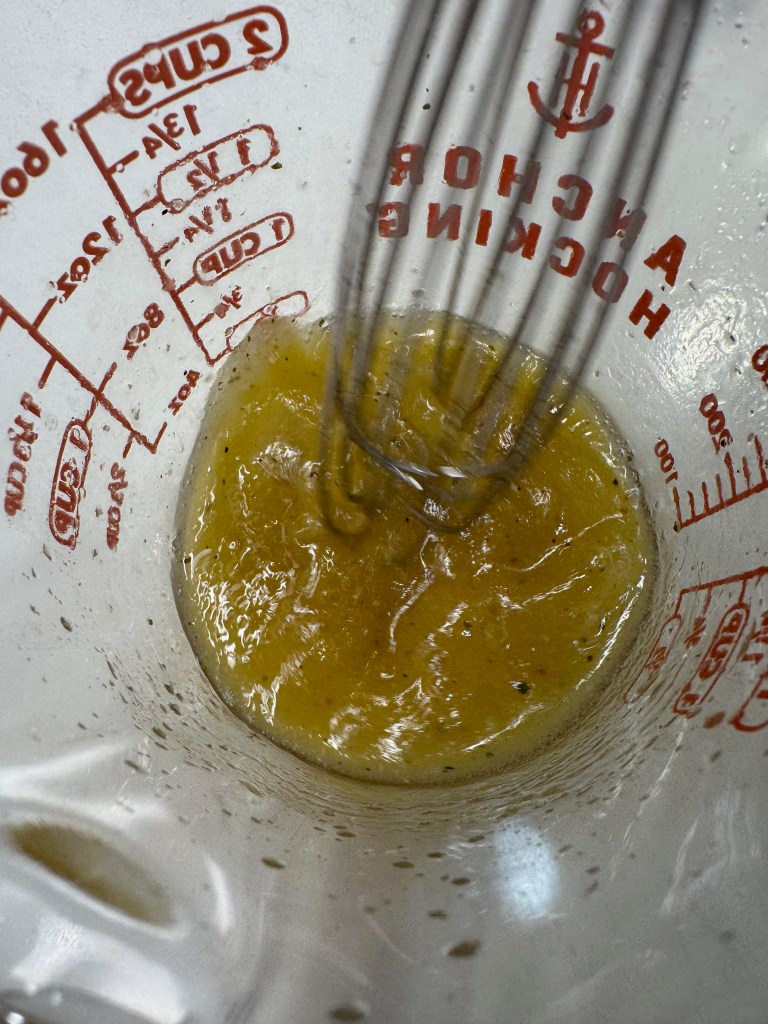
  3. In a second measuring glass, combine white balsamic, lemon juice, Italian dressing mix and olive oil. Whisk to combine and set aside.
  4. When pasta reaches al denté stage, spoon out about two tablespoons of the hot pasta water. Whisk it into the dressing mixture, along with the reserved tomato cooking oil.
  5. Drain pasta thoroughly and transfer to a large bowl. Pour dressing over the pasta while it is still hot, and toss gently a few times to coat evenly. Toss again after a minute or two, and then allow the pasta to cool to room temperature.
  6. Gently toss cooled tomatoes and half of the mozzarella into the pasta. Refrigerate until serving time.
  7. Transfer chilled pasta salad to a serving bowl. Top with remaining mozzarella, drizzle dark balsamic over salad, and scatter fresh basil leaves just before serving.


Shrimp & Grits with Too Much Going On!

No matter where you go in the coastal region stretching across the Carolinas, you’ll find shrimp and grits. It’ll be different in each place, naturally, but delicious however it’s served. Some folks make it Cajun spicy, others use a gravy base, and a few take liberty with the grits, adding cheese or turning them into little fried cakes with the shrimp piled on top. Everyone has their favorite, and all of them are favorites for me. But I learned an important lesson when I tried to recreate a restaurant dish, and it can be summed up in a phrase that my husband hates: less is more.

When Les swept me away to Hotlanta for the Rolling Stones concert back in June (it was awesome), he went the extra mile (300 of them, actually) to extend our adventure for three days in Charleston, South Carolina. The city is a lovely place to visit, with a rich history, incredible food and beautiful architecture, and it’s also the unofficial shrimp and grits capital of the world.

Cheers, Charleston! 🍸

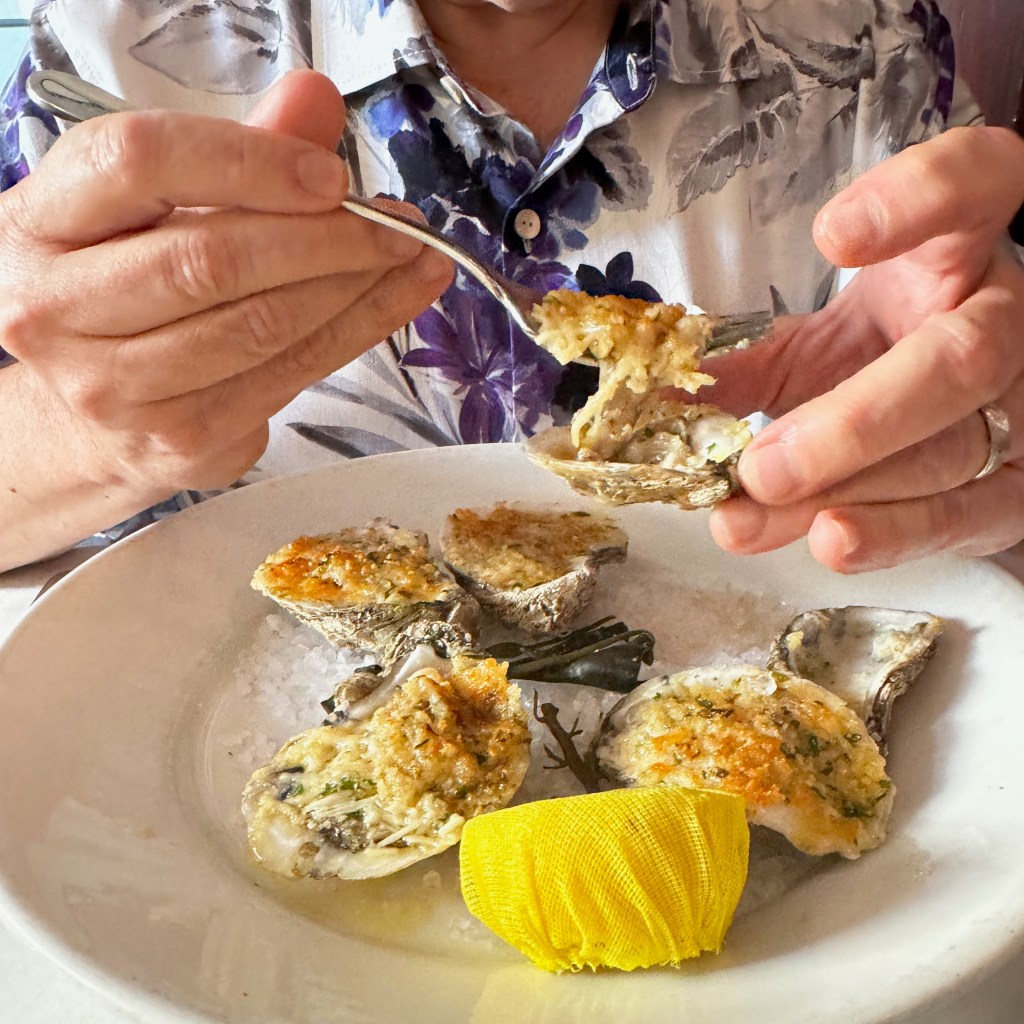
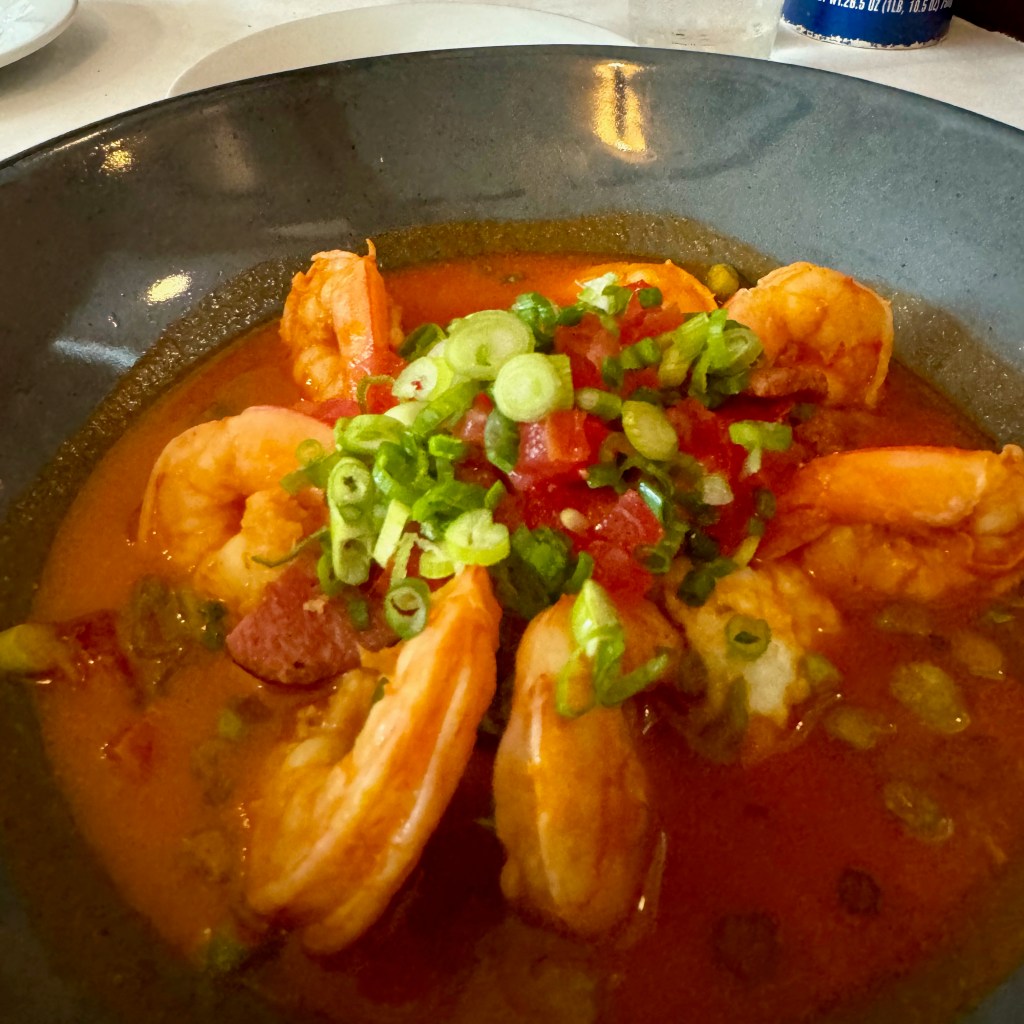
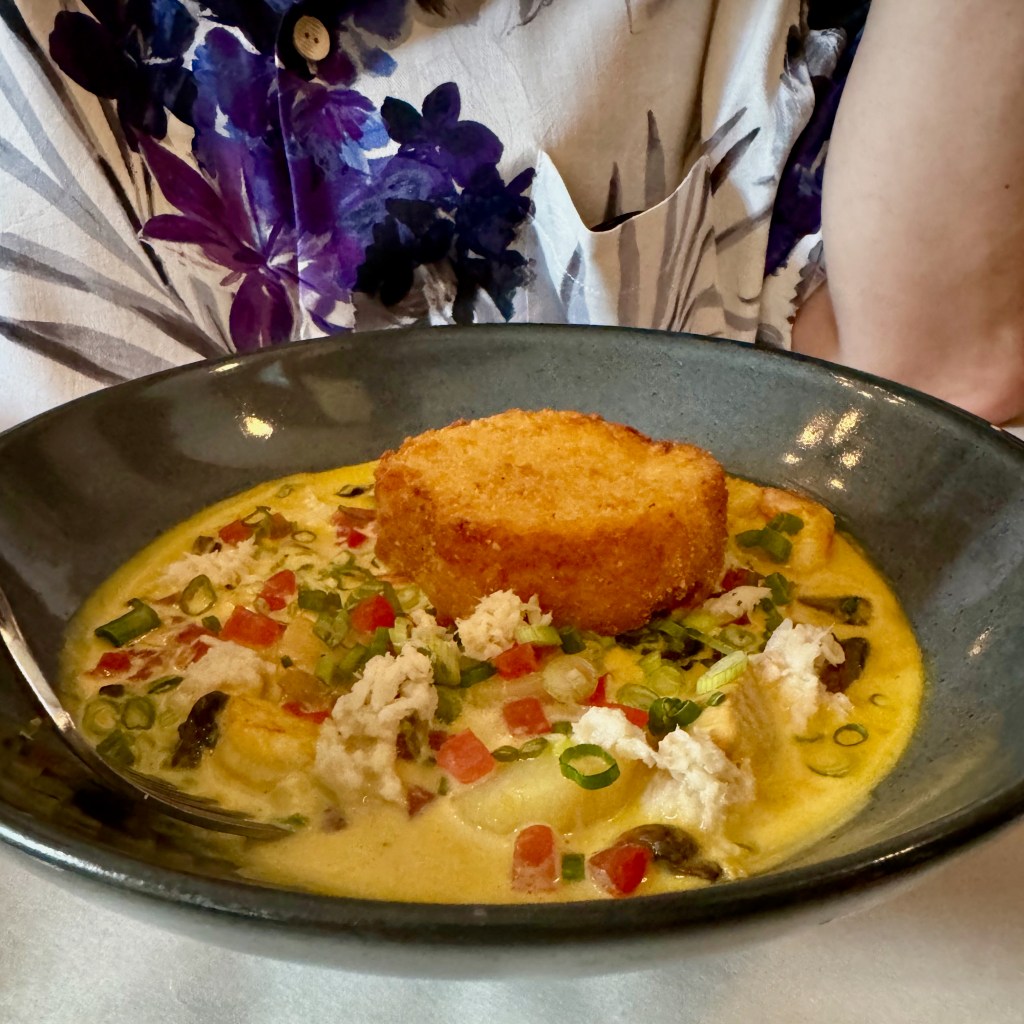
On our first night in Charleston, we had reservations at Hank’s, well-known by locals and visitors for its delectable seafood. We got there early to enjoy a cocktail at the bar, and then feasted on appetizers—oysters casino and she crab soup (another Charleston classic)—at the table. Finally, dinner arrived! Notice the crispy grit cake on Les’s scallop and crab dish? And I couldn’t resist the shrimp and grits with smoked andouille and tomato jus, which I promptly declared to be my favorite shrimp and grits to date. My goodness, it was delicious!


The shrimp were plump and juicy, and I love that Hank’s serves them with the tail on. The grits were cooked to creamy perfection with only a slight firmness to the bite. But the real star of the show was the incredible tomato jus— it was light and delicate, almost too refined for this low country classic, but so, so good.

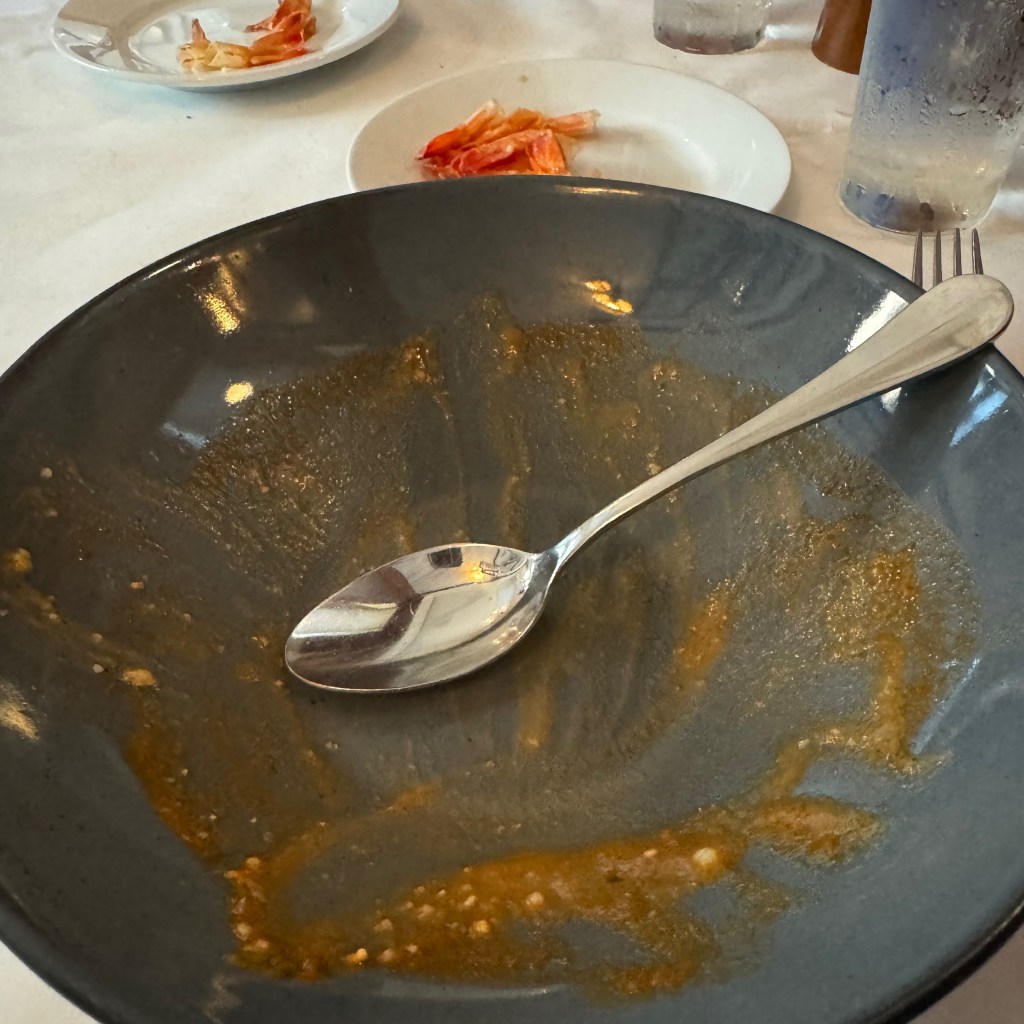
Pardon me while I lick my bowl!

I left Charleston knowing that I had to try to recreate this delectable dish, or something similar, at home. This was my first attempt, and it wasn’t perfect but it won’t be my last.

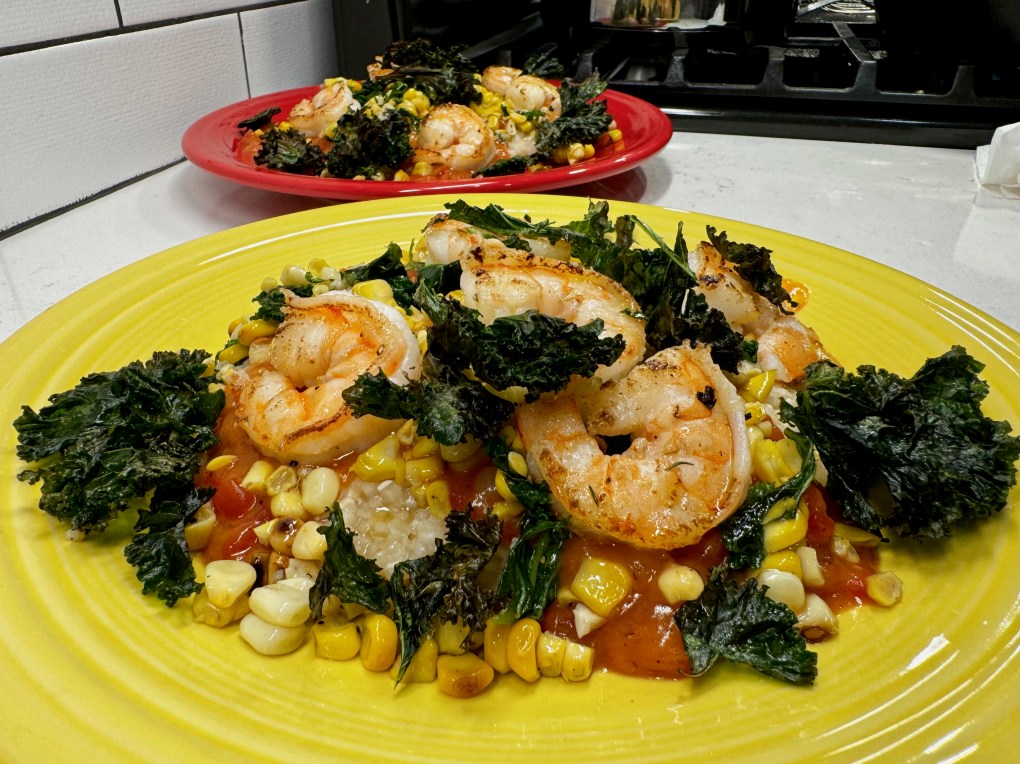
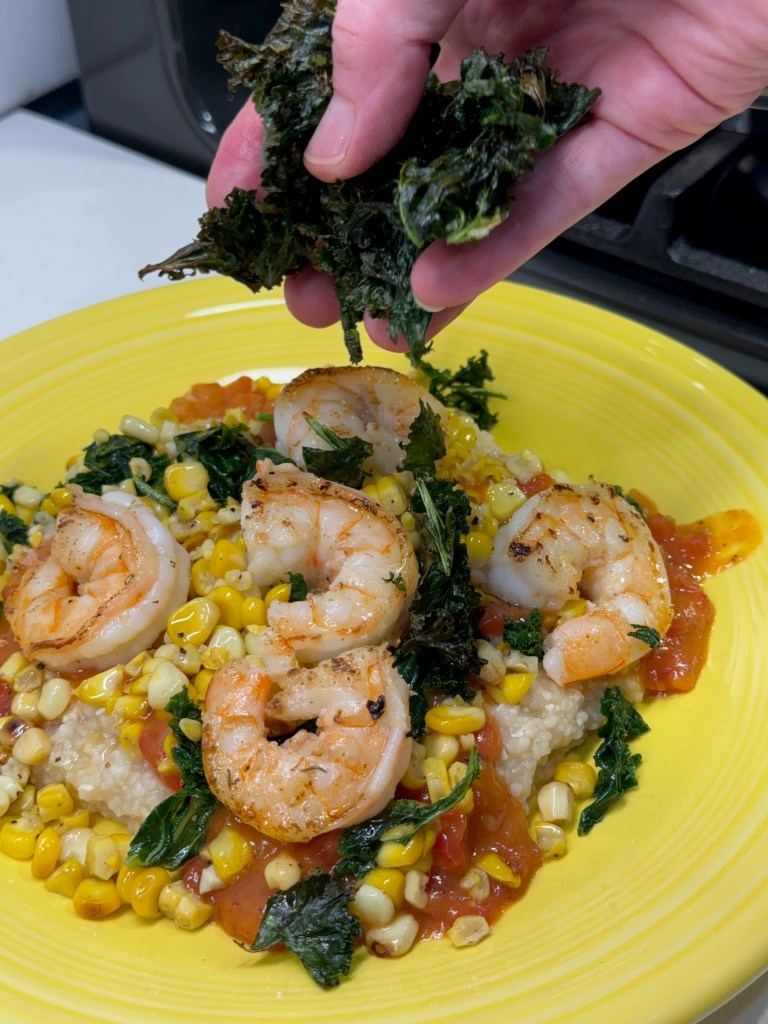
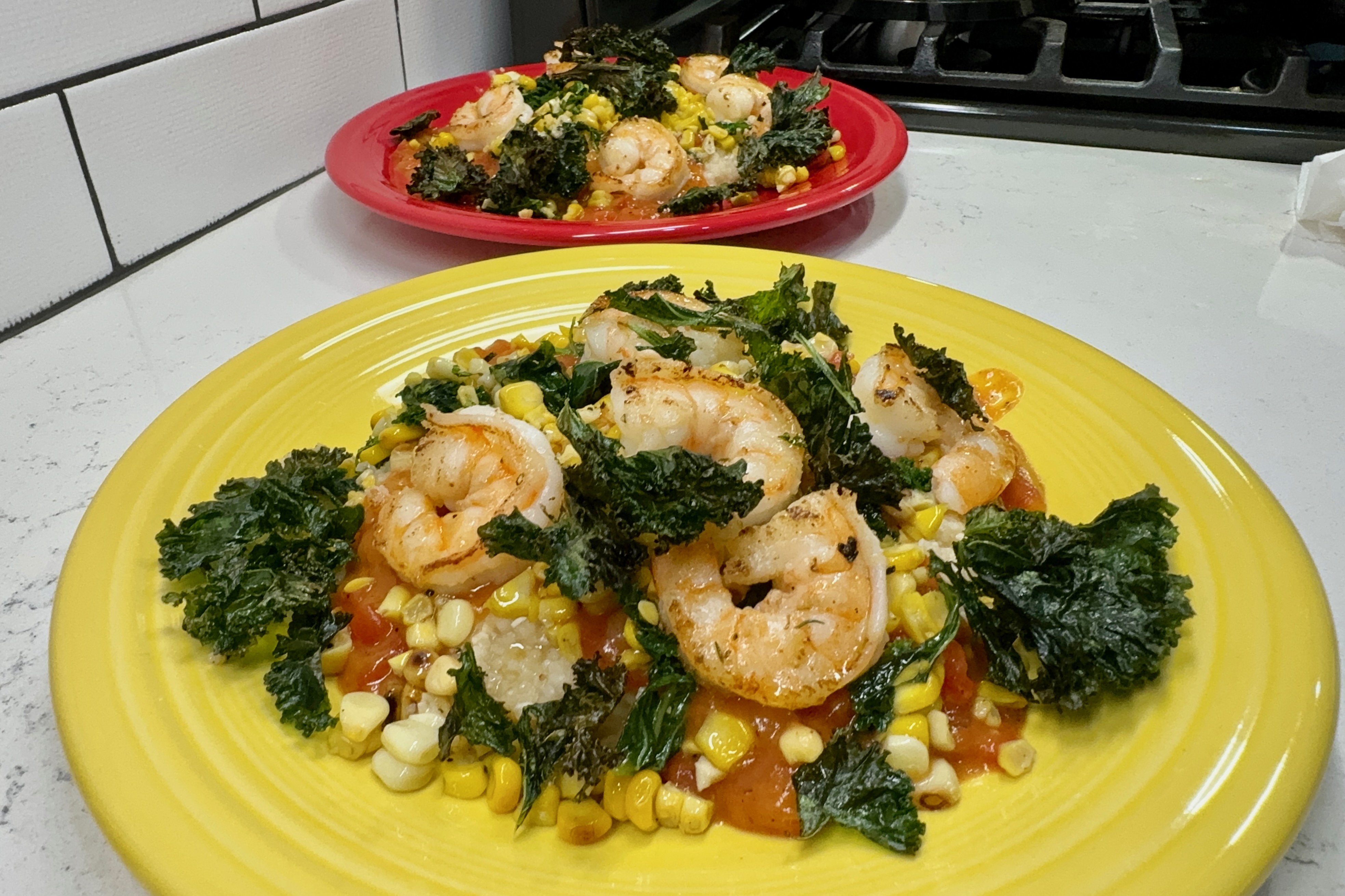
My late summer shrimp & grits with kale, corn and tomato gravy

Plenty of flavor here, but maybe too much.

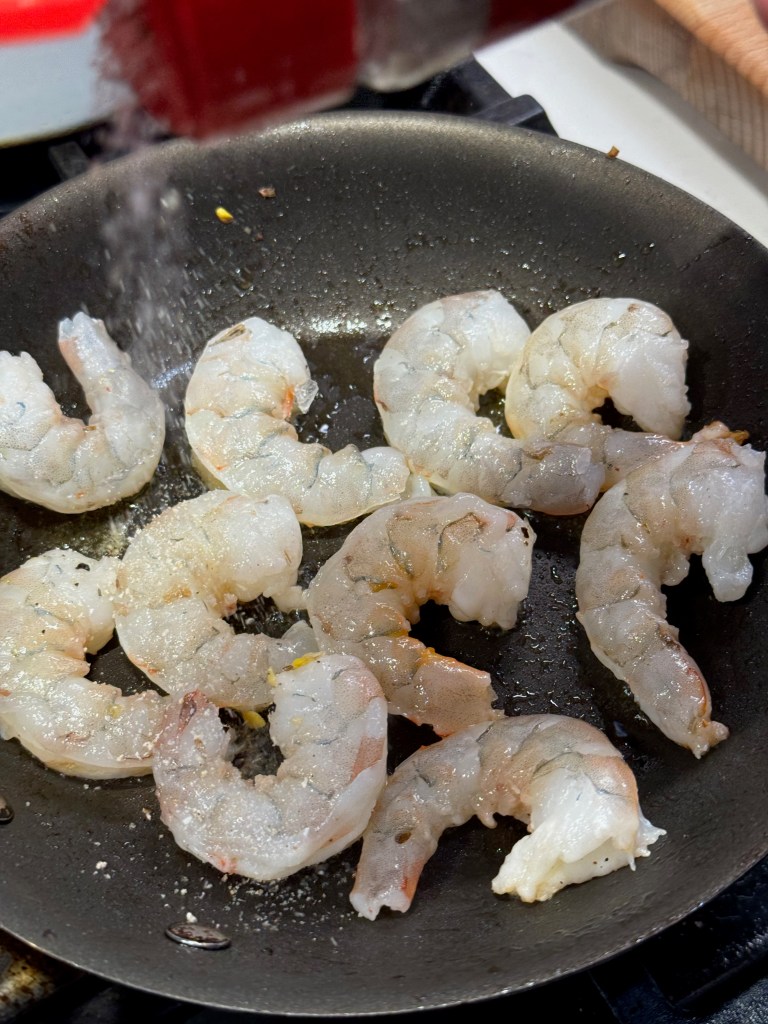
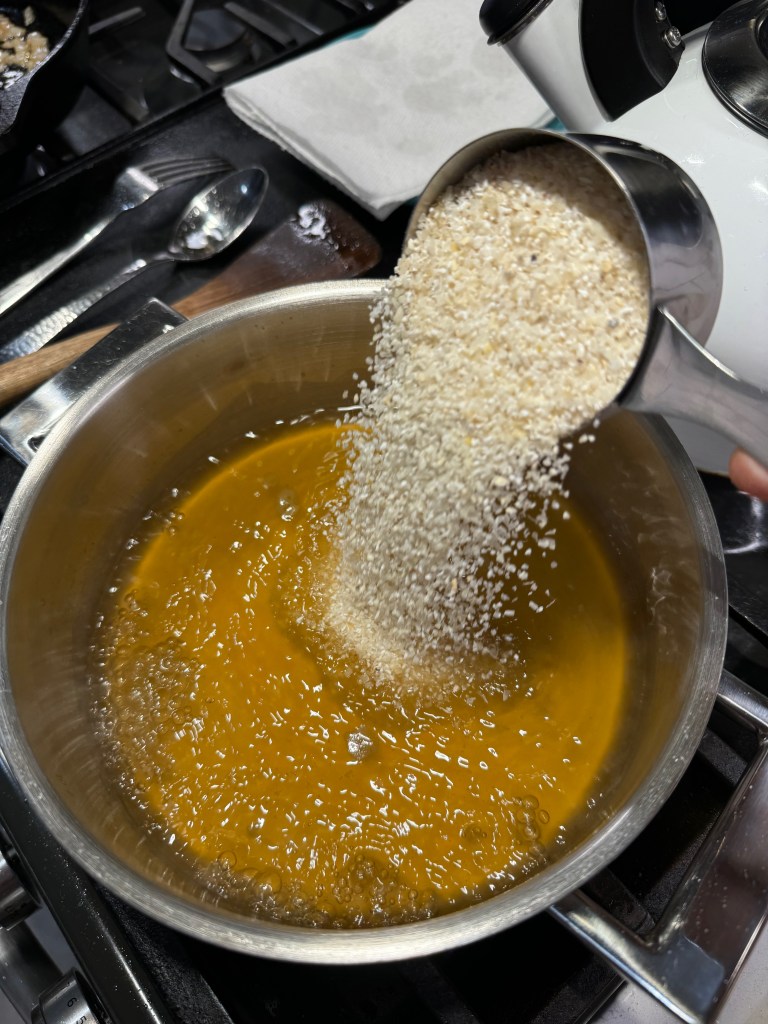
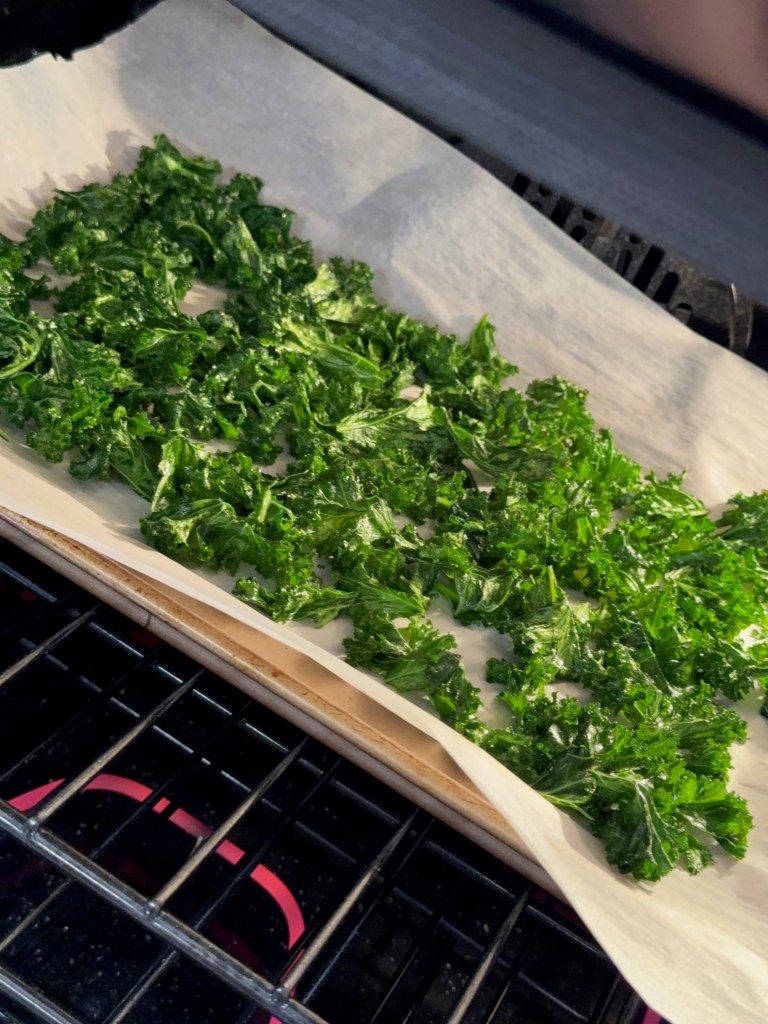
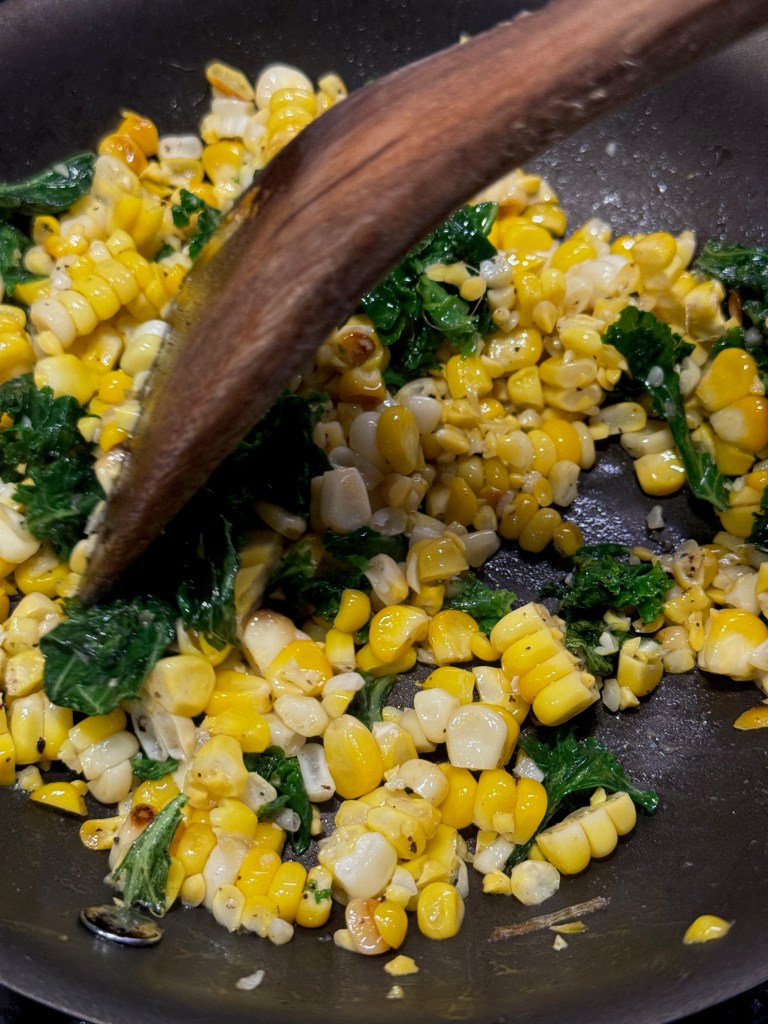
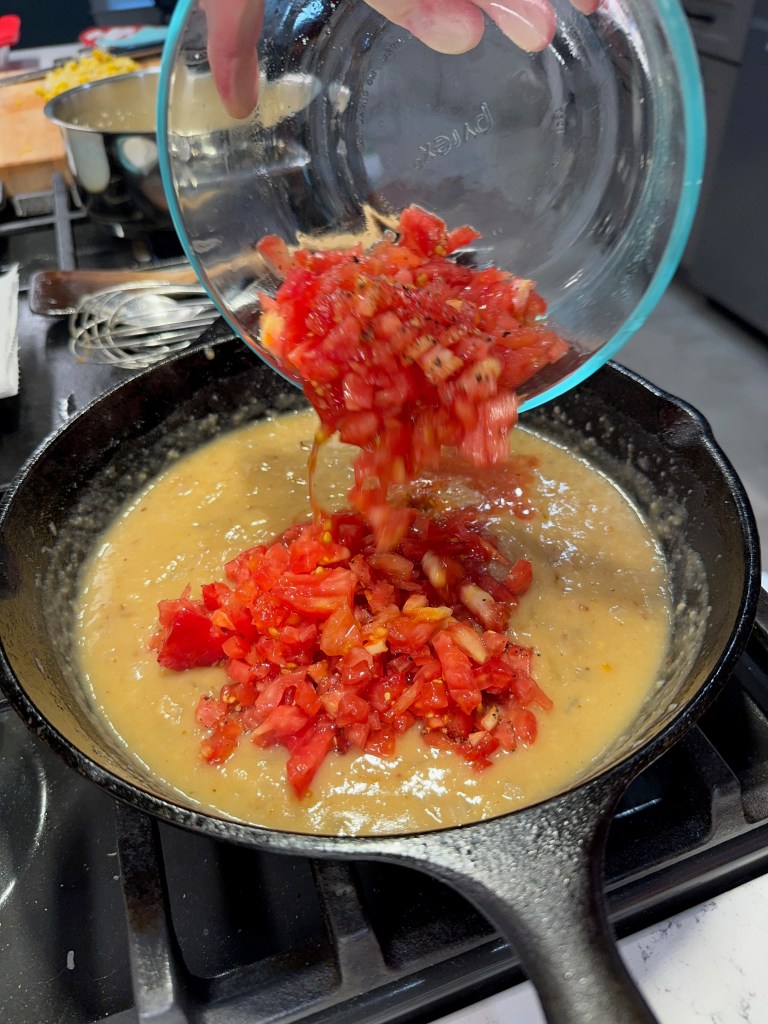
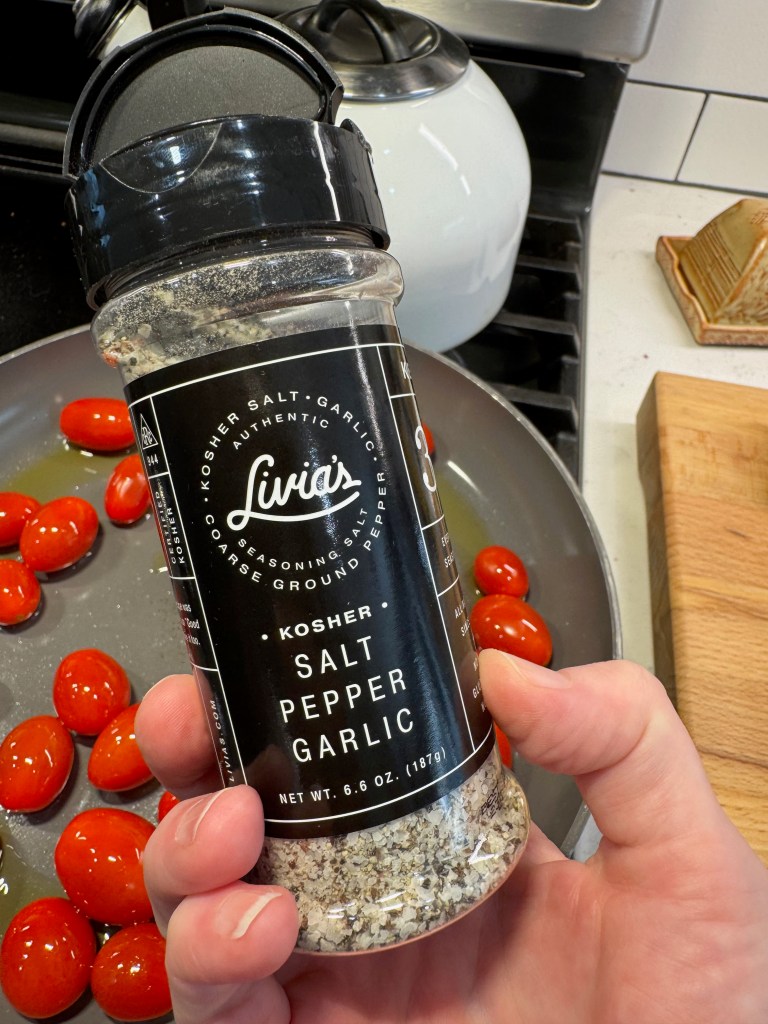
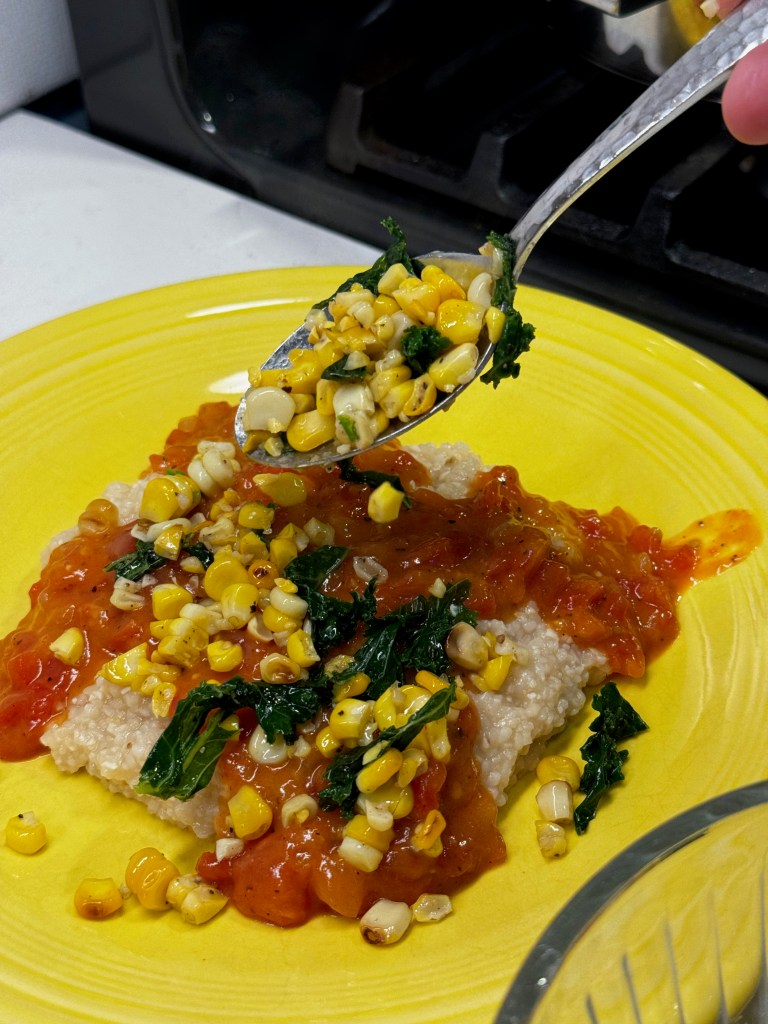
There would be four elements to prepare for my dish (Coco Chanel would say one accessory too many, and I’ll get to that later). First, the fresh North Carolina shrimp, which I sautéed at the last minute with only salt and pepper; the grits, a stone-ground white corn that I cooked low and slow in chicken broth until creamy; the kale, which I roasted for a crispy contrast on top of the other textures; and the tomato gravy, with fresh ripe tomatoes gifted to us by a generous neighbor. The ear of corn, left over from a previous meal, was a bonus ingredient that gave a friendly howdy to its cousin, the grits.


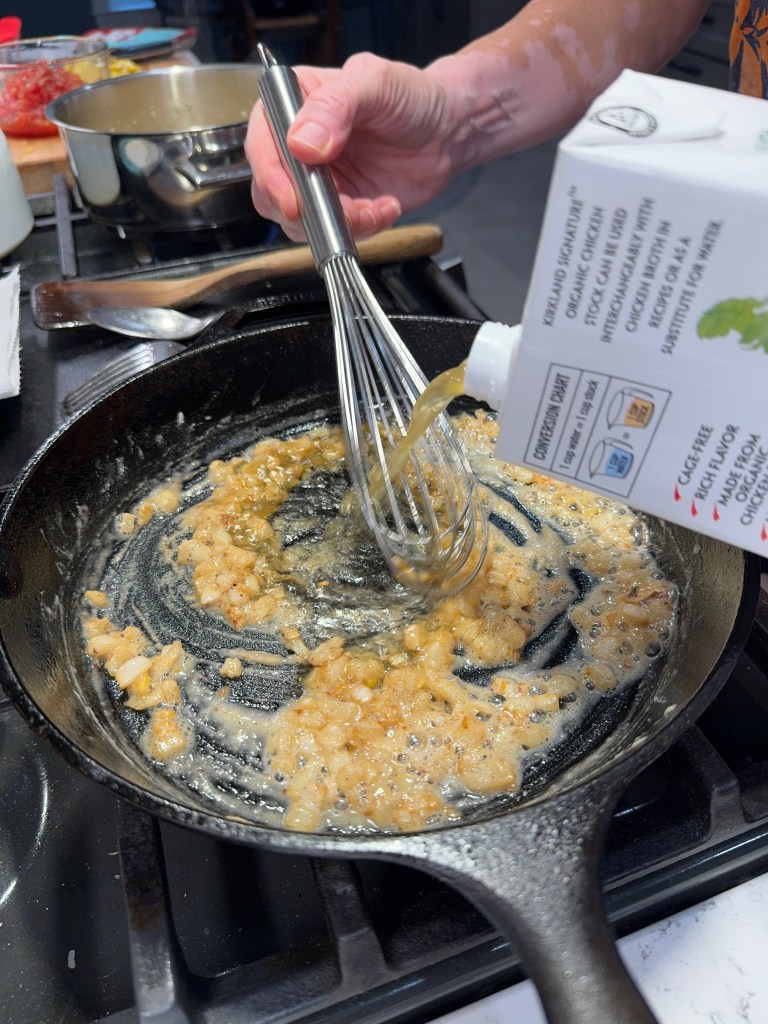
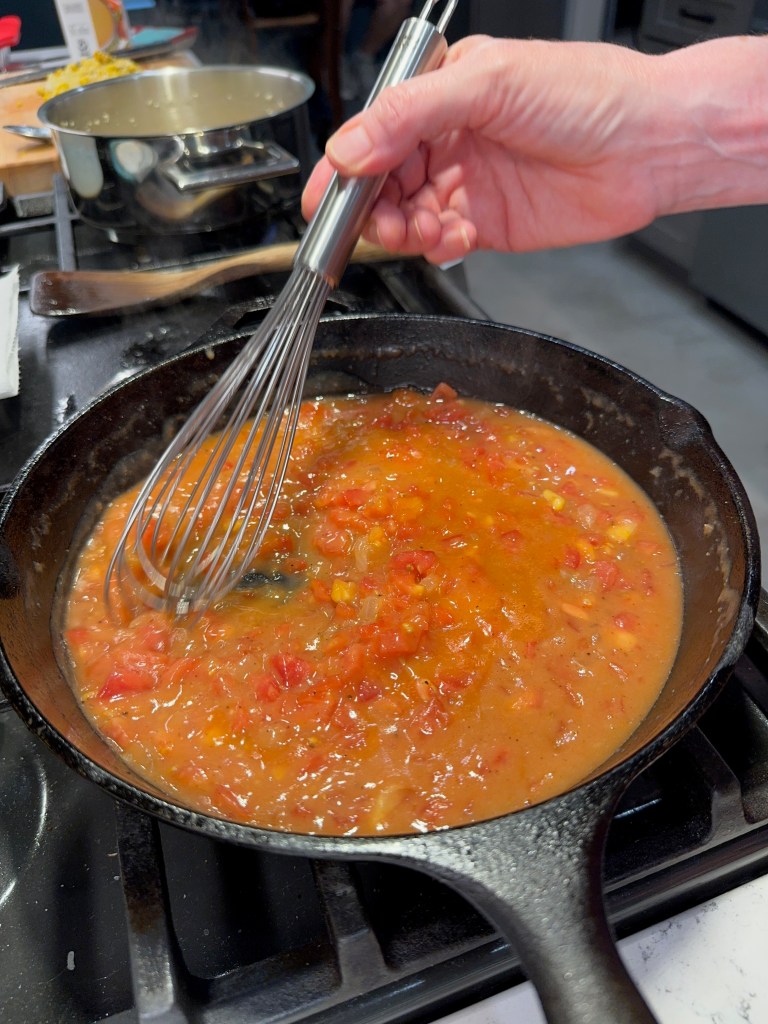
The tomato gravy was the big learning experience for me, and there isn’t much about this that I would repeat. I used bacon fat to sauté the onions, then cooked in some flour to thicken it when I added chicken broth. The result was a heavy gravy that overwhelmed the bright acidity of the ripe summer tomatoes. Edible, but not remarkable.


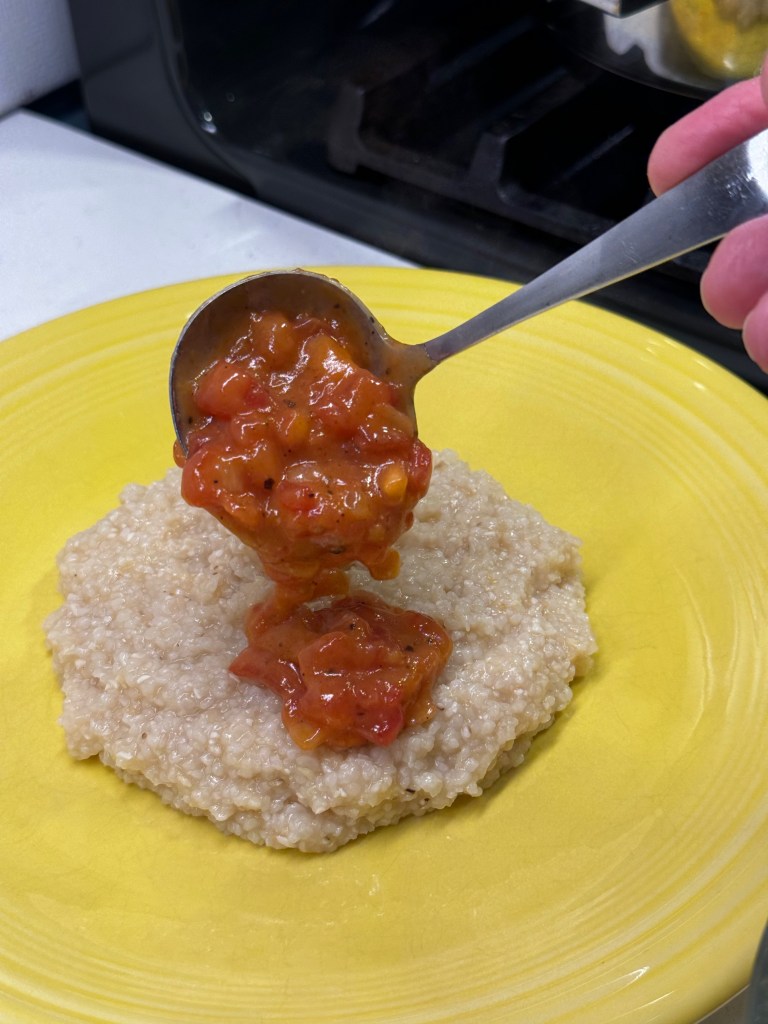
Here’s what I’ll do next time— and what I’d encourage you to try if you choose to make your own version of this dish— use a bit of olive oil to sauté the onions, skip the flour thickener, and use a splash of white wine to loosen up all those tomatoes. After reducing the liquid, I’ll take it off the heat and quickly whisk in a few pats of cold butter— sort of a beurre blanc treatment, if you will— to add body to the sauce without crushing the spirit of the tomatoes. A thinner consistency would also allow the “gravy” to weep over and around the grits so that you get a bit of it all the way to the last bite.


Finally, I’d kick the kale to the curb. Honestly, it was a distraction from the best parts of this dish, like a chunky statement necklace with an elegantly tailored suit. This is an important reminder for me in the kitchen, because most of the time, it’s the simple dishes that make everyone happiest. Find one thing about a classic, and elevate that one thing into something extraordinary— we live and learn, don’t we? 😉

And yes, the Stones were as amazing as ever. Great show!

Shrimp & Grits with Kale, Corn and Tomato Gravy

  • Servings: 2
  • Difficulty: Average
  • Print

This dish has a little too much going on, but it made use of some great late summer ingredients I had on hand. In the notes, I've added suggestions that would probably make this dish even better.


Ingredients

  • 1/2 medium onion, chopped
  • 2 Tbsp. bacon fat
  • 1 Tbsp. all-purpose flour
  • 1/2 cup low-sodium chicken broth
  • 2 medium ripe tomatoes, peeled and chopped
  • 1 small bunch fresh kale, roasted (see notes)
  • kernels from one ear grilled corn
  • 2/3 cup stone-ground white grits
  • 2 cups chicken broth, water or some combination of both
  • 2/3 lb. fresh shrimp, peeled and deveined
  • Salt and pepper
  • 1 Tbsp. olive oil, divided (use half to warm corn, half to cook shrimp)

The kale was an unnecessary distraction in this dish and I wouldn’t use it again. If you wish to try it, wash and tear up the leaves and massage them in a large bowl with a drizzle of olive oil and a pinch of salt. Roast on a baking sheet for about 20 minutes until fragrant and crispy.

For a lighter flavor that keeps the attention on the tomatoes, swap in olive oil for the bacon fat, omit the flour thickener and use 1/4 cup white wine in place of chicken broth used for the tomato gravy. When the tomatoes are cooked and liquid has reduced, remove from heat and swirl in two cold pats of butter, about 1 Tbsp. each.

Directions

  1. Place a non-stick skillet over medium heat and sauté onions in bacon fat until softened. Stir in flour and cook until bubbly. Add chicken broth, whisking until mixture is even and bubbly. Add chopped tomatoes and cook, stirring frequently, until tomatoes are broken down and mixture is bubbly all over. Season to taste with salt and pepper. Add another splash of liquid if needed to thin the gravy.
  2. Cook the grits in a heavy-bottomed pot. Bring broth or salted water to boil, then reduce heat and stir in grits thoroughly to prevent clumping. The key to good, creamy grits is to keep the temperature low and stir frequently. Keep a tea kettle of hot water nearby, and add as needed to maintain a creamy consistency.
  3. Heat a swirl of the olive oil in a small skillet, and cook a few leaves of kale (if using) with the corn kernels, just until heated through. Transfer to a separate bowl and use the same skillet to sauté the shrimp in remaining olive oil.
  4. Plate the grits, ladle the tomato gravy over each portion, and then top with the corn/kale mixture and the sautéed shrimp. Scatter roasted kale over the top and serve immediately.


Harissa Tomato Soup

Raise your hand if you got a jar of harissa in your Christmas stocking this year. Really, I’m the only one? 😂 Sincerely, I love that my husband sneaks fun foodie surprises into my gifts, because it sets me up for interesting flavor adventures throughout the coming year.

I’m here to tell you, this isn’t that spicy. 😏

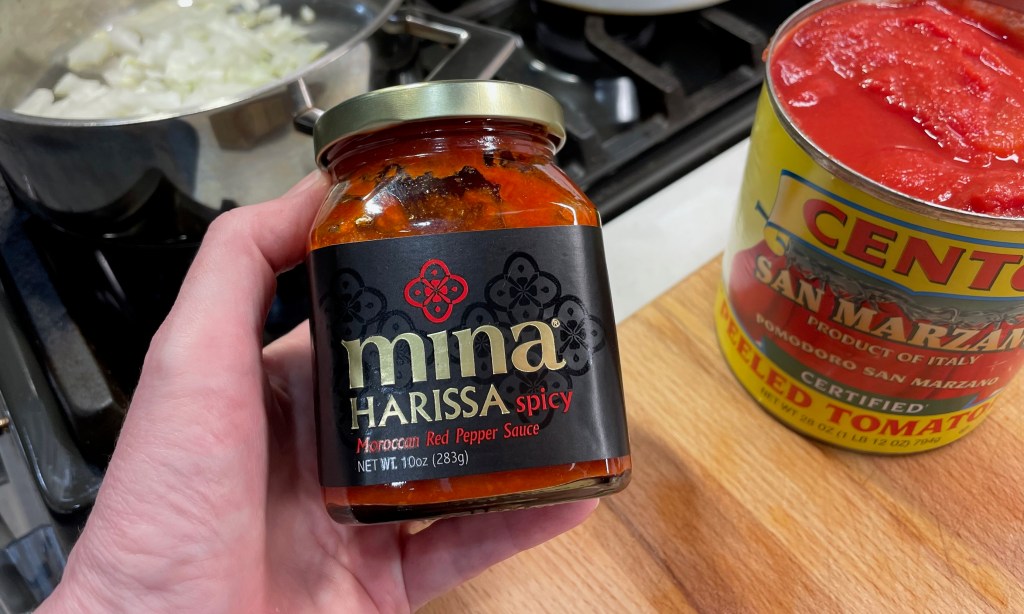
Harissa, if you’re not familiar, is a Moroccan concoction made with roasted red peppers— ranging from sweet to hot—along with garlic and what I like to call the “C spices” of cumin, caraway and coriander. It’s a complex blend of flavors that can be used in a marinade or added directly to a meat or vegetable dish to perk up the flavors. It is typically quite aromatic and spicy, so a little usually goes a long way.

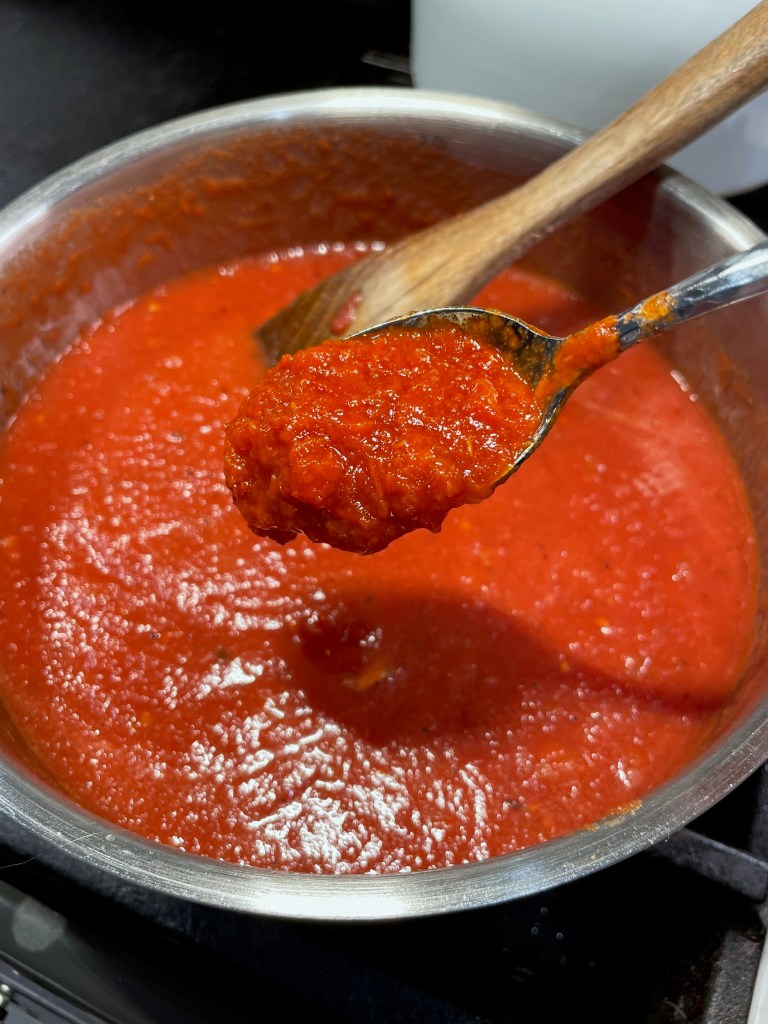
This jar of harissa has already served me well because it transformed what would otherwise have been an ordinary bowl of tomato soup. If you’re bored in the kitchen and tired of making the same things over and over, this post should inspire you to see how easily you can change things up with one ingredient swap or addition. A couple of generous spoonfuls of harissa, along with accompanying spices, elevated this simple, made-from-canned-tomatoes soup to such a degree that Les and I devoured the entire batch in one sitting.

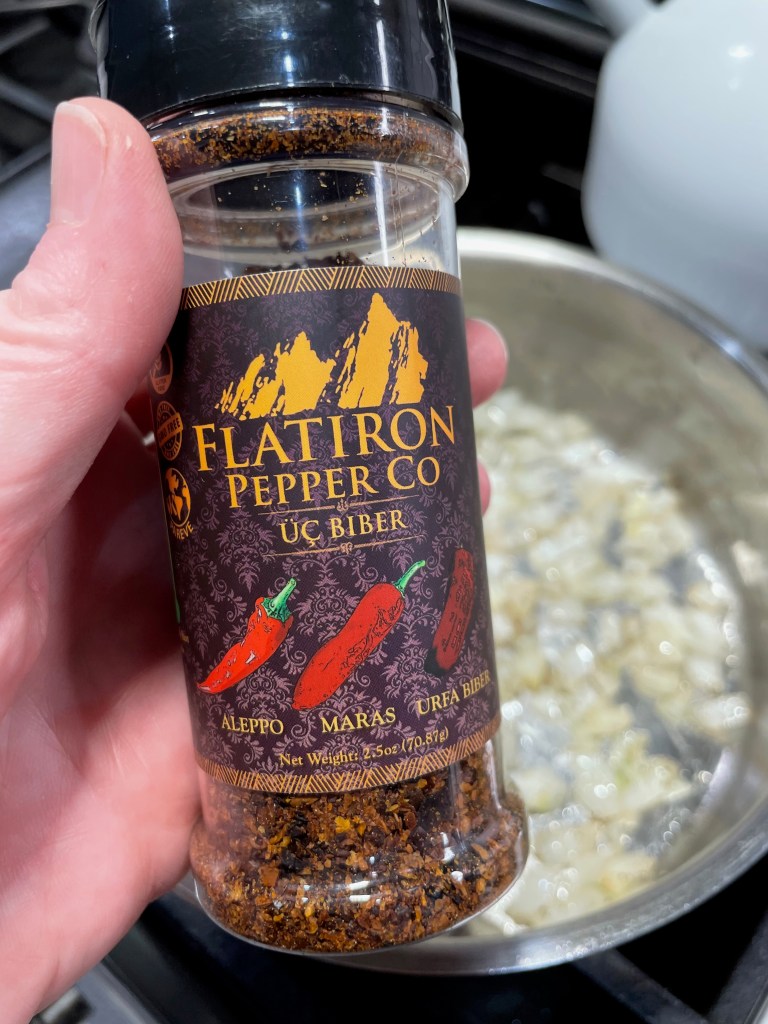
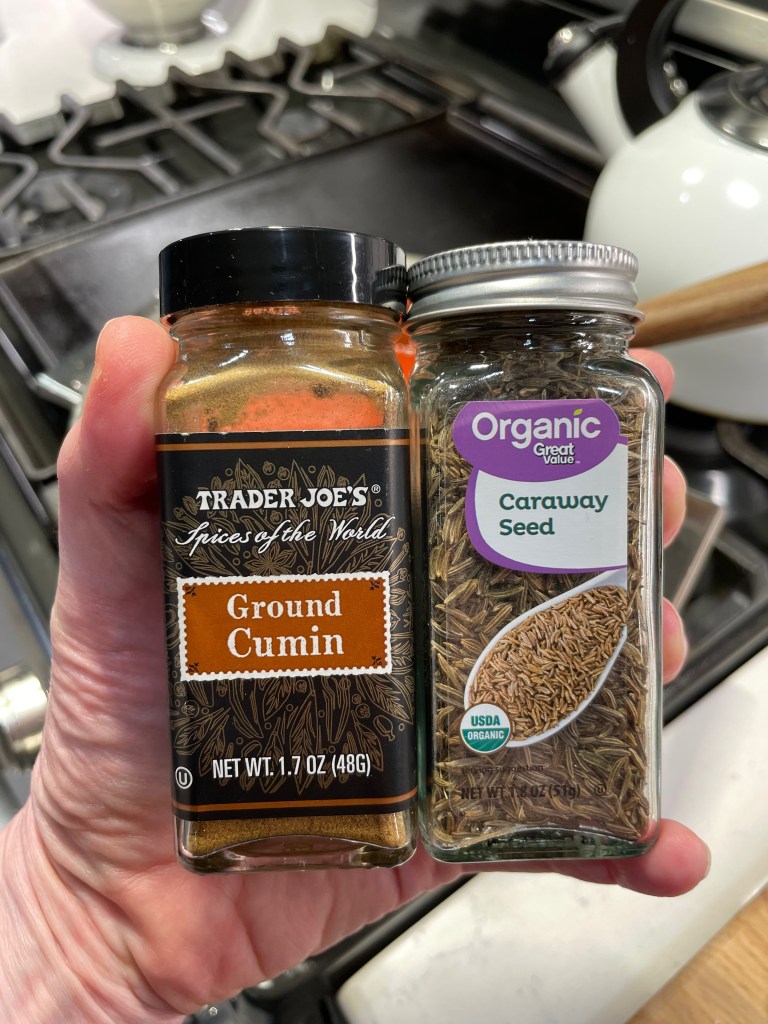
I will confess here that I did not find this particular brand of harissa as flavorful as some others I have tried, including the one carried by Trader Joe’s. My first taste of harissa was during the few years that I worked in a specialty olive oil store. Our harissa-infused extra virgin olive oil was bold, spicy and flavorful, and this jar of harissa paste didn’t quite measure up in the flavor (or heat) department. Still, I found it a good base, which I jazzed up with more of the other flavors I expected— namely hot pepper flakes, cumin and caraway— and this soup did not disappoint!


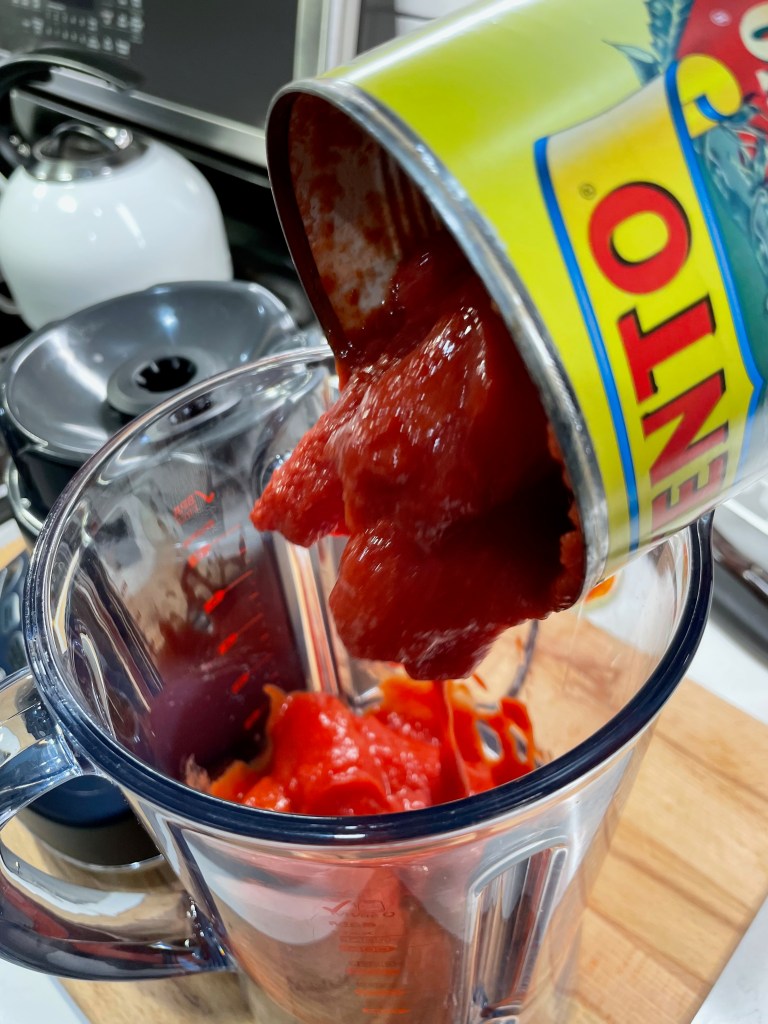
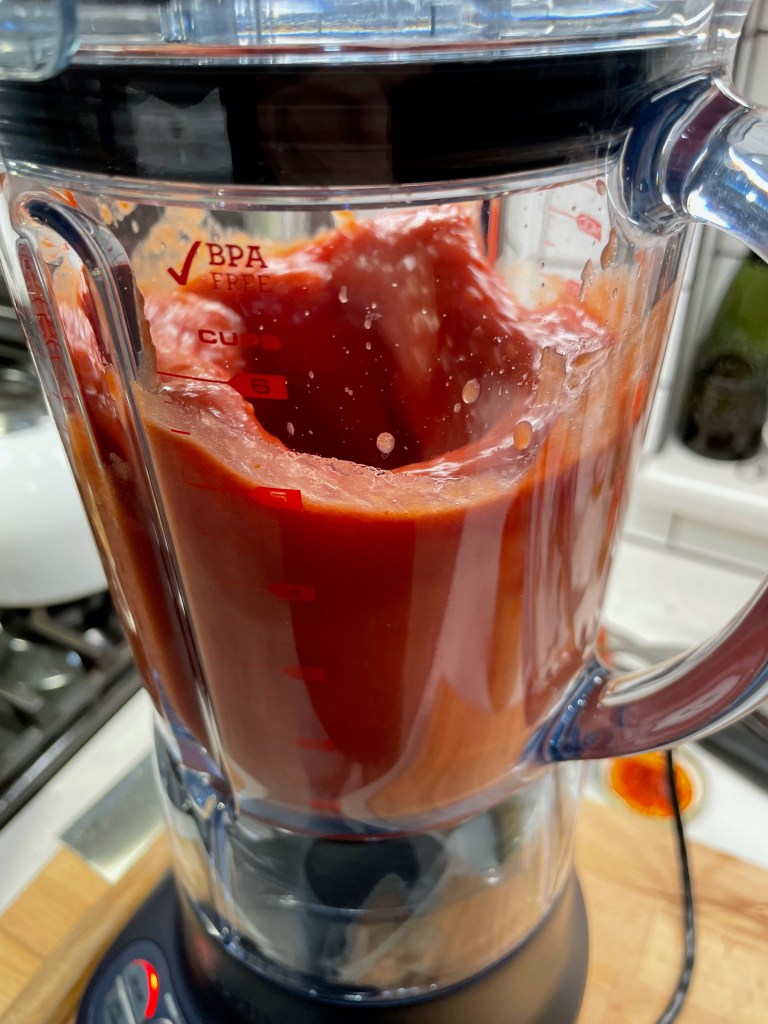
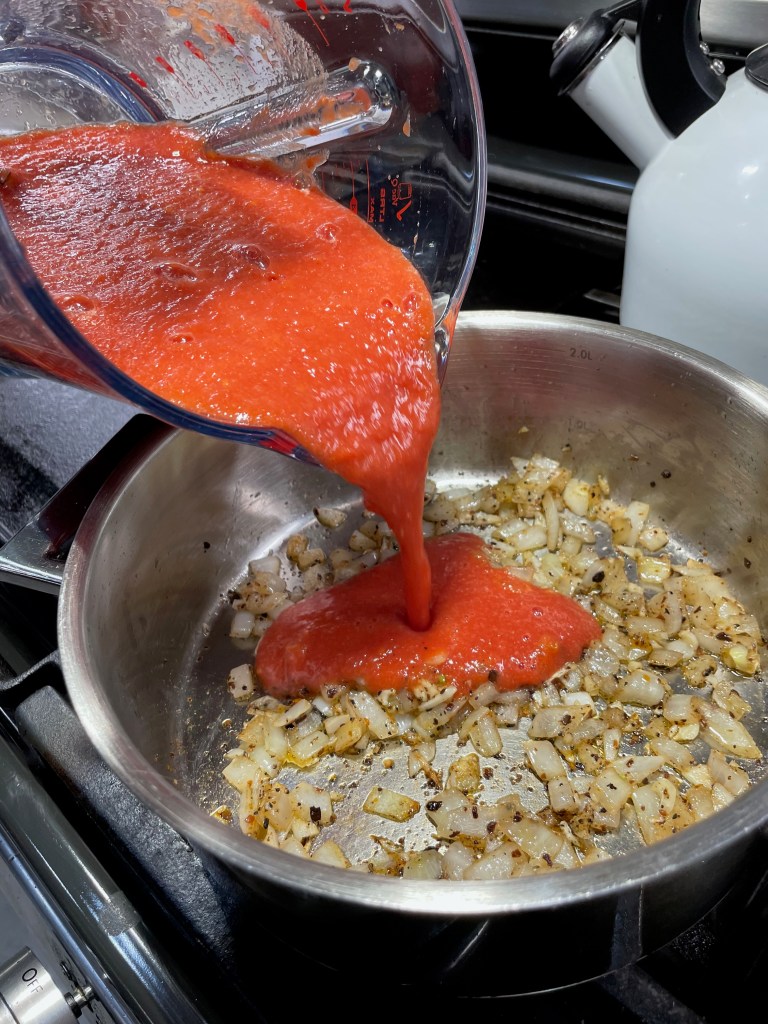
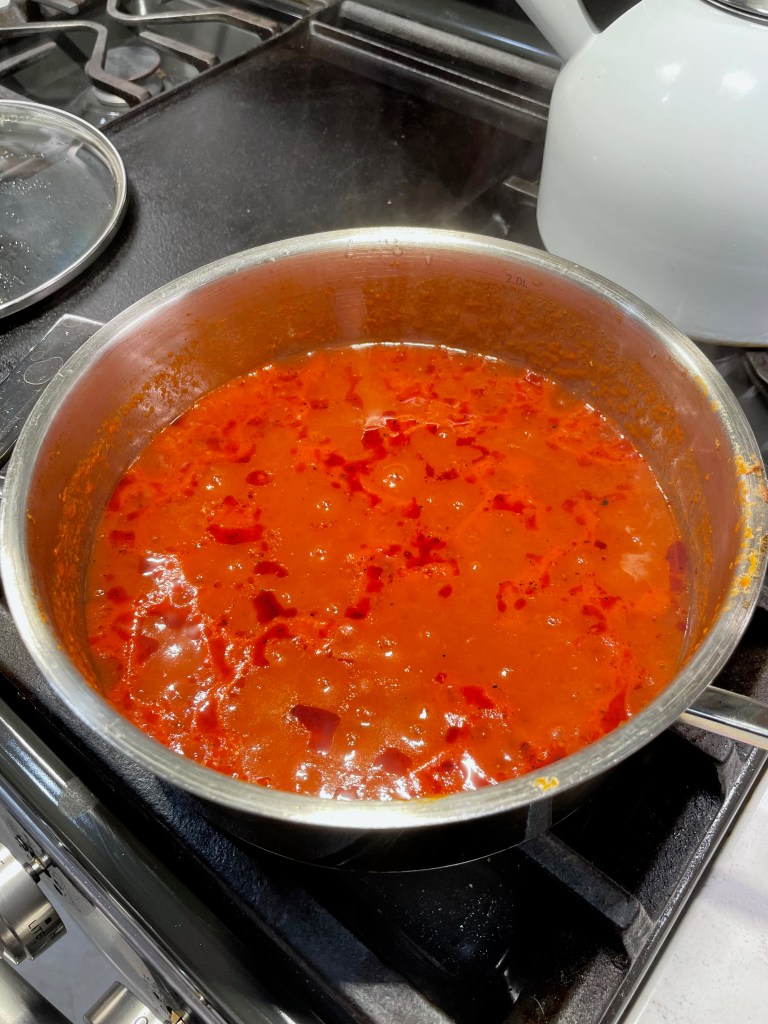
The base of any good tomato soup, of course, is tomatoes! And given that fresh tomato season is still about four months out, I reached for a big can of San Marzanos. I’ve learned the hard way that lesser quality tomatoes don’t have the same depth as real San Marzanos, so choose well. I whizzed these up in my George Clooney blender (so named because it is tall, handsome and versatile), and then I added it to lightly sautéed onions and garlic along with a few tablespoons of the harissa.


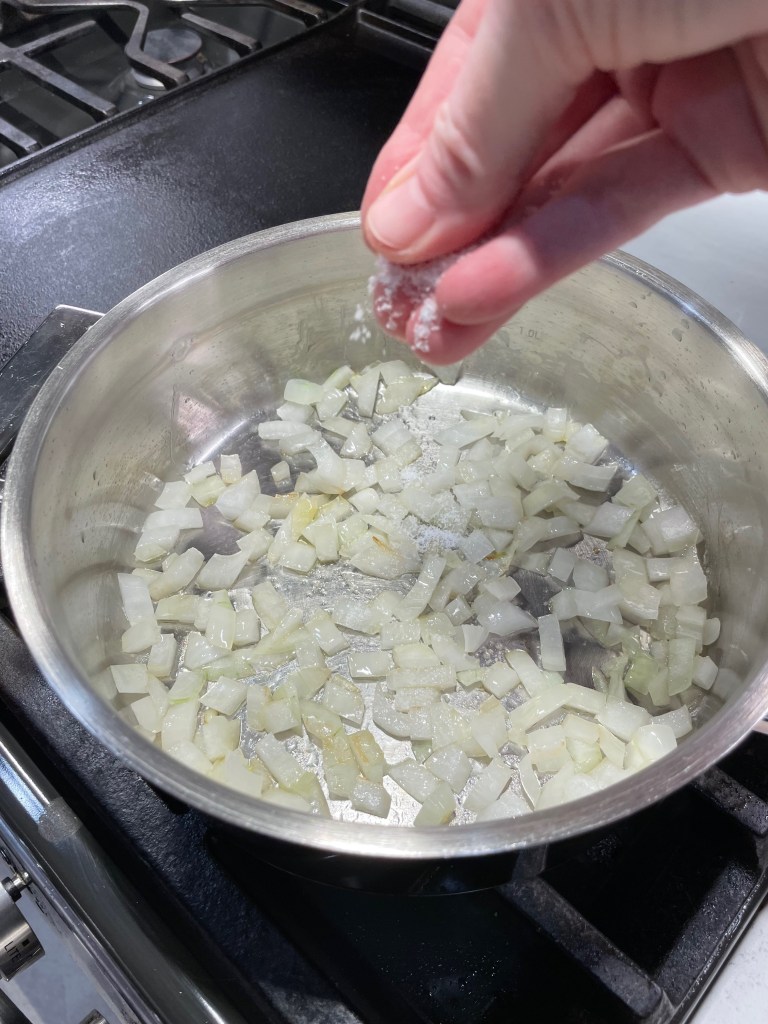
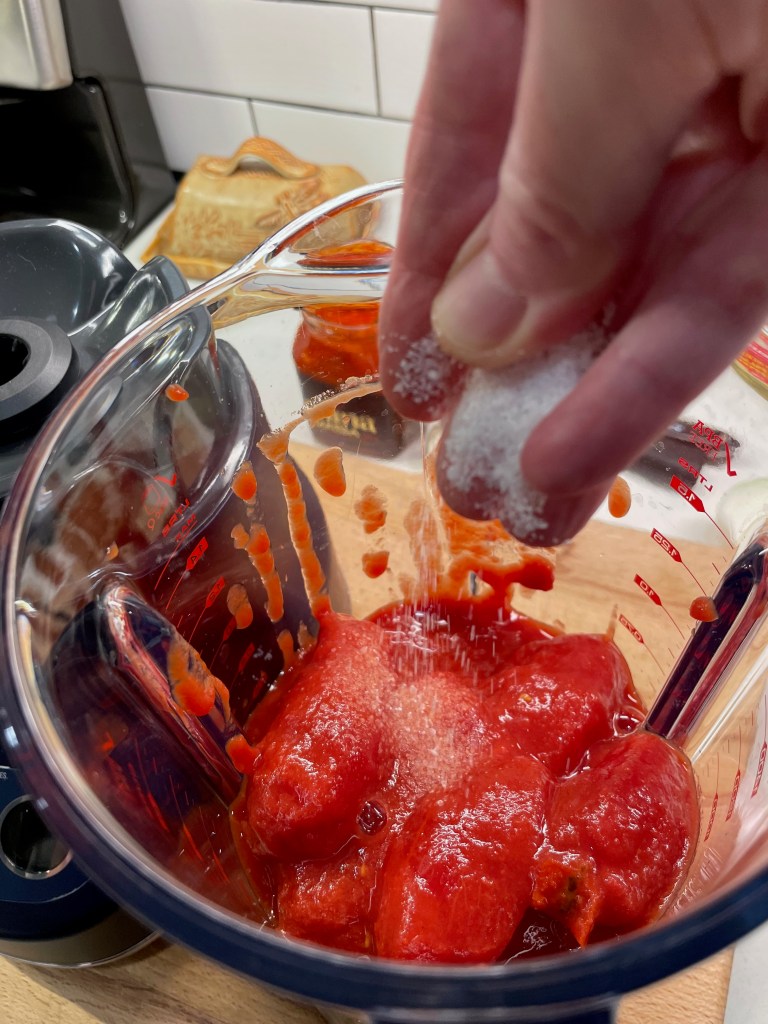
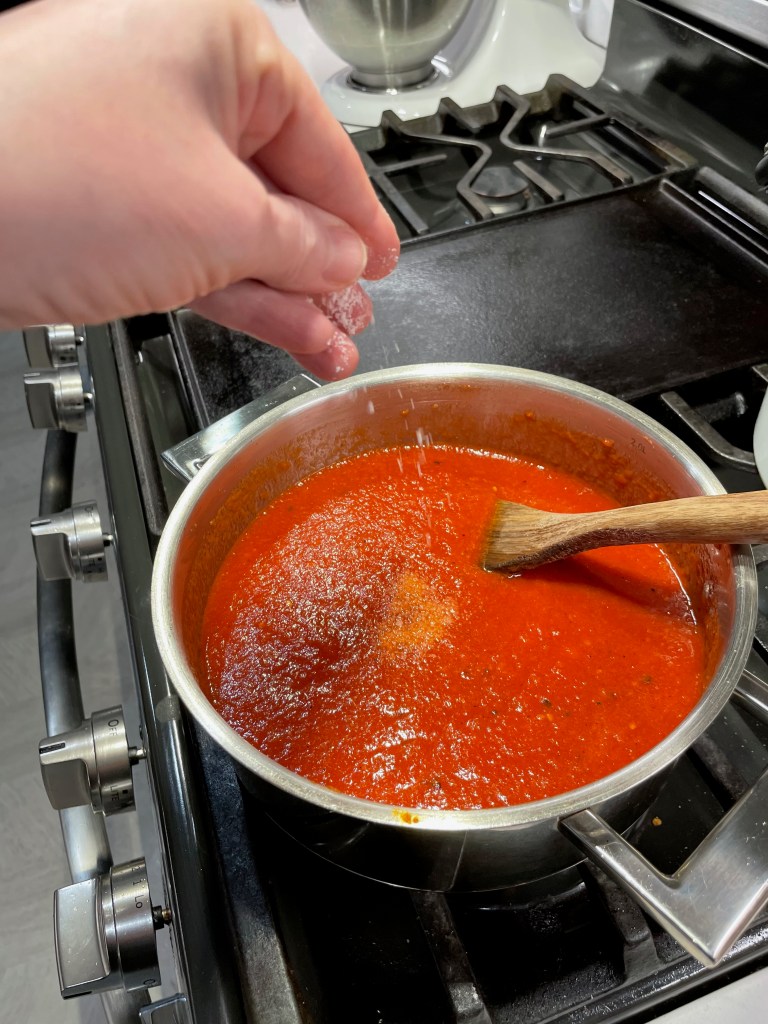
As with any recipe, I followed the advice of every culinary expert I respect, by seasoning every layer— during sauté of the onions, preparing the tomatoes and building the soup over heat. Salt has more purpose than just flavor, and if you miss seasoning the layers of a recipe, you may end up with a meal that tastes under-seasoned and over-salted at the same time.


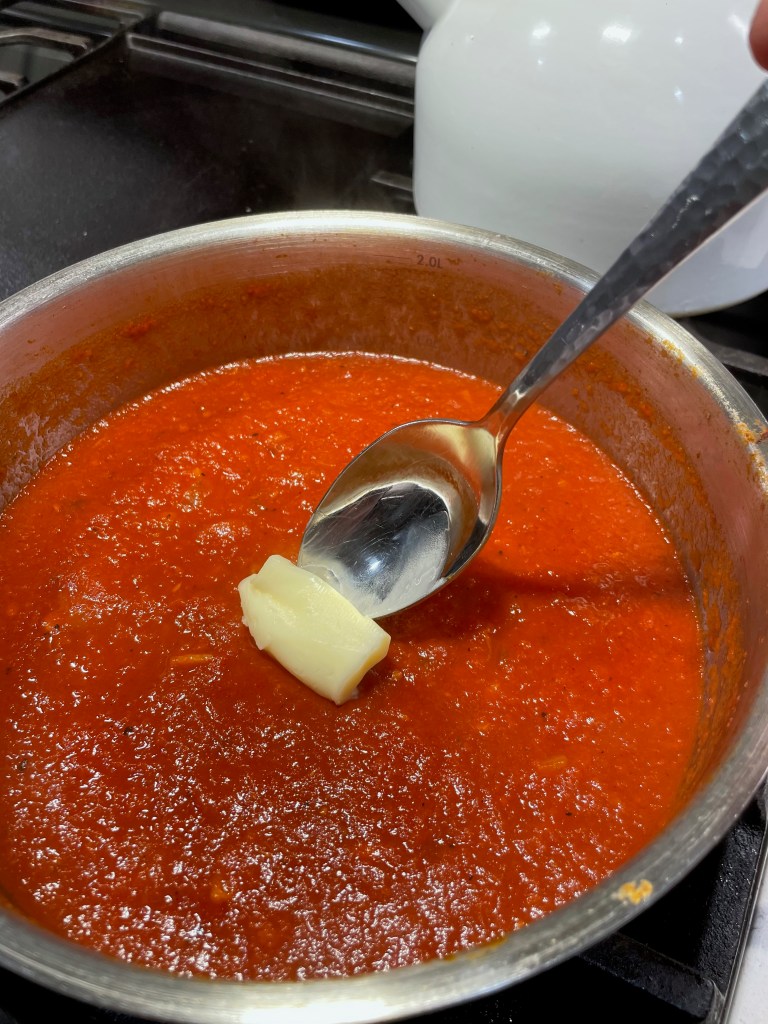
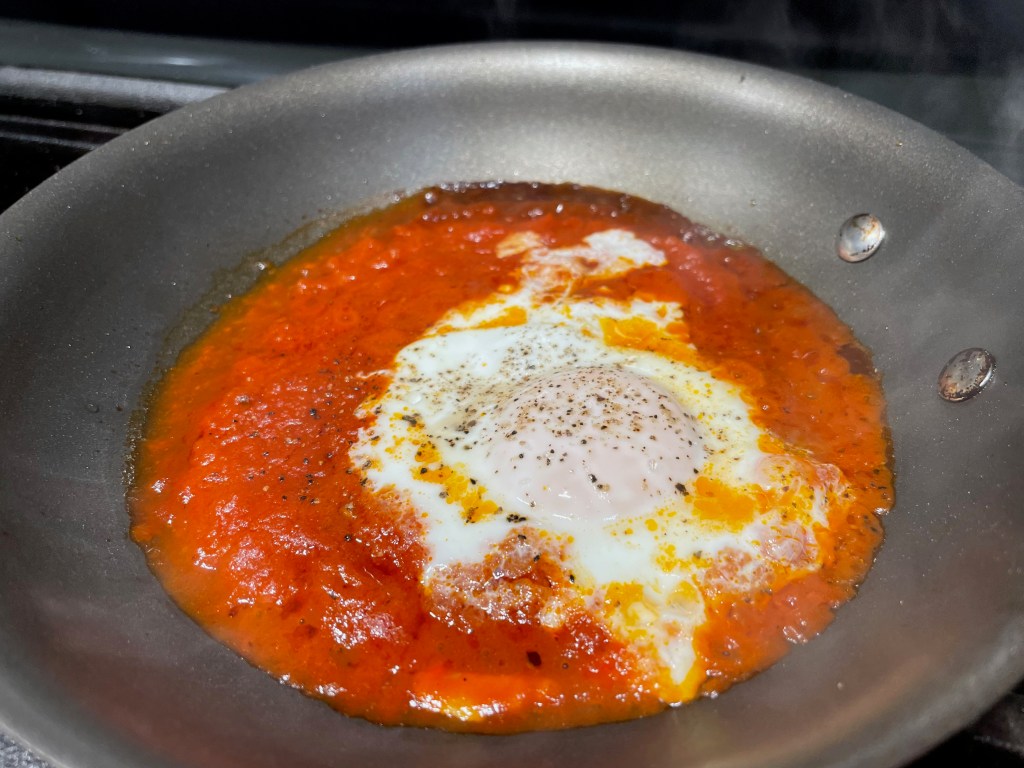
For a rich finishing touch, I melted in about a tablespoon of butter just before serving— borrowing a trick from the playbook of Italian chefs. This may have been the best tomato soup I’ve ever made, and I give credit to the harissa, if only for inspiration. I mentioned earlier that we devoured the whole pot that night. But that’s not quite right. I saved about a quarter cup, which I had in mind for a miniature shakshuka for breakfast the next day, and, no surprise, it was also delicious!

Next time, I’ll make a whole batch of shakshuka with harissa. This was divine!

Harissa Tomato Soup

  • Servings: 4 cups
  • Difficulty: Average
  • Print

It's amazing that a few tablespoons of harissa can elevate a classic soup so much, but it really does!


Ingredients

  • 2 Tbsp. extra virgin olive oil
  • 1/2 medium onion, chopped
  • 2 cloves garlic, minced
  • A few shakes red pepper flakes (I used Flatiron Pepper’s Uç Biber variety)
  • 28 oz. can real San Marzano peeled tomatoes, pureed in blender briefly with a pinch of salt
  • 2 Tbsp. Mina brand harissa paste
  • 1/2 tsp. ground cumin
  • 1/2 tsp. ground caraway seed
  • Salt and pepper for seasoning each layer
  • 1 Tbsp. unsalted butter

My recommendation for adding red pepper flakes, cumin and caraway is based on the mild nature of this particular harissa. If you use another brand with more flavor, adjust additions accordingly.

Directions

  1. Heat a heavy-bottomed pot over medium heat. Swirl in olive oil and sauté onions until slightly softened. Season with salt and pepper to aid in releasing moisture from the onions. Add red pepper flakes and garlic and cook another minute or so.
  2. Pour the puréed tomatoes into the pot with the onions. Add the harissa and stir to combine. Add a pinch of salt and the ground cumin and caraway. Bring the mixture to a low boil, and then reduce heat and simmer for approximately 30 minutes (longer if you have time). Give the soup a taste and adjust seasonings as needed.
  3. Just before serving, stir in butter.


Mahi Florentine

The past few weeks have been a struggle for me as my husband and I have committed to making mindful changes to our eating plan. I don’t mind the challenge of eating better, so it isn’t that. My problem has been that I’ve tried too hard to develop original recipes worth sharing here on Comfort du Jour, but so much of what I have done has been with random leftovers that nobody else in their right mind is likely to have on hand. At the end of this post, I’ll show you a glimpse of some of those dishes, and perhaps you’ll draw inspiration for how to repurpose some of your own leftovers with a shift toward healthy.

Moving forward, one of the easiest ways I know to eat better is to choose lean meats and seafood and add a lot of vegetables. So in the weeks to come, you’ll likely see a lot more green on my plate, and I mean that quite literally with this dish, featuring a gorgeous, bright green bed of sautéed spinach, my husband’s all-time favorite vegetable.

What’s so great about spinach?

We all remember from the Popeye cartoons of childhood that spinach made Popeye strong— OK, that connection was overstated. But there is a hint of truth in it, as nutrition science shows the natural nitrates found in leafy greens support healthy muscle function. Spinach is also rich in Vitamins A, C and K, as well as iron, potassium and folate, a B vitamin that helps the body generate healthy cells.

Is it better to eat spinach raw or cooked?

There is no health consequence of eating raw spinach; one of my favorite salads is made from it, along with hard-boiled eggs, red onion slices and goat cheese. But we might miss more than we gain by eating it raw. In addition to all its benefits, raw spinach also contains oxalic acid, which is the stuff that makes your teeth feel squeaky. Oddly, the oxalic acid blocks absorption of some of the very nutrients spinach provides. The cooking process breaks that down, though, so a quick sauté or steaming helps you reap the most benefit of this versatile vegetable. I’ll be using spinach again and again in the coming weeks, so all of my leafy green lovers will want to stay tuned. 😀

So what about this dish?

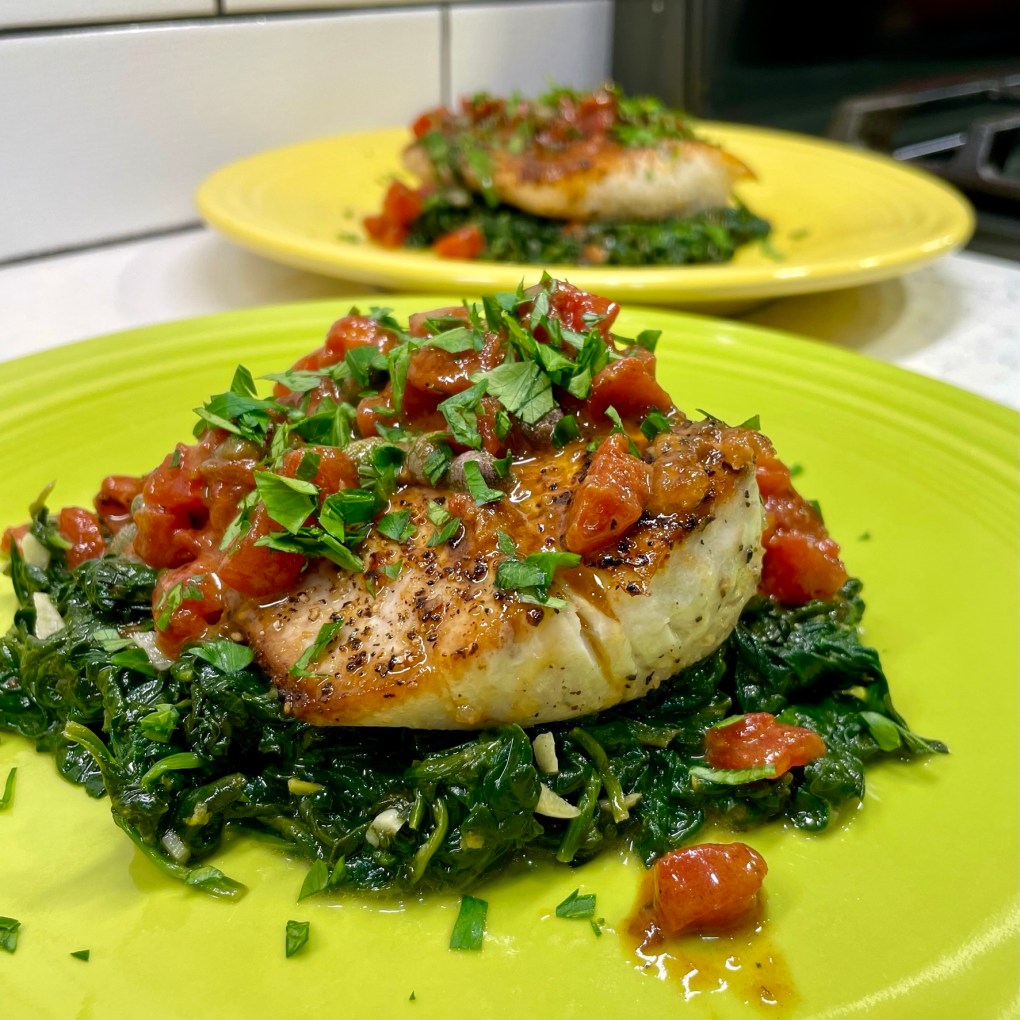
Today’s recipe is a twist on Mahi Hemingway, a dish I posted a few years ago, and my copycat version of a pricey meal I had enjoyed many times at a local restaurant. This time, I’ve plated the fish and sauce atop fresh spinach rather than a pile of carb-y pasta. It’s colorful, easy to prepare and absolutely delicious!

Delicious, and pretty!

To make it, you’ll need a couple fillets of fresh mahi—season them with salt and lemon pepper— plus a fat handful of fresh baby spinach, a little garlic, diced tomato, capers, dry white wine, a squeeze of fresh lemon and a little swirl of butter at the end for a delicate but flavorful sauce. If mahi is unavailable (or not your favorite), try this dish with halibut, grouper or even a mild cut of salmon.

Parsley garnish is optional, but recommended, and you can make two servings of this meal for less than half the cost of a restaurant meal for one. It’s light, delicious, gluten-free and diet-friendly. It’s also easy to make (there’s a click-to-print recipe below), and my Instagram reel will show you in 60 seconds how to put it on your table tonight. Mise en place (having everything in place) is important here, because the dish moves quickly once the pan is hot. Enjoy!


Mahi Florentine

  • Servings: 2
  • Difficulty: Average
  • Print

There's plenty of flavor and nutrition in this light and easy seafood dish, and it comes together in under half an hour. Perfect for a busy weeknight!


Ingredients

  • 2 skinless mahi fillets, about 6 ounces each
  • Several shakes salt-free “lemon pepper” seasoning, such as Mrs. Dash
  • Kosher salt and freshly ground black pepper
  • 3 Tbsp. extra virgin olive oil, divided (1 for the spinach, 2 for the fish)
  • 2 fat handfuls fresh baby spinach, roughly chopped (this is approximately six ounces)
  • 2 cloves fresh garlic, minced
  • 1/3 cup dry white wine, divided (you’ll use some for the spinach, some for the fish; substitutions in the recipe notes)
  • Juice and zest of 1/2 large lemon
  • 1/3 cup petite diced tomatoes, drained
  • 1 Tbsp. nonpareil capers, drained but not rinsed
  • 1 Tbsp. cold butter, cut into teaspoon-size pieces, for swirling into sauce at the end
  • A sprinkle of fresh, chopped parsley to garnish

Notes: This recipe moves quickly, especially once you remove the fish from the skillet. Be sure to have all your ingredients lined up and ready before you begin cooking.

Any firm fish fillet may be substituted for the mahi; I think salmon, grouper, tilapia or halibut would all be terrific in this dish.

Dry vermouth may be used in place of the white wine. If you prefer to avoid alcohol, substitute a quarter cup of low-sodium vegetable broth for the wine and add an extra squeeze of lemon.

Use fresh tomatoes when they’re in season; otherwise, salt-free canned tomatoes work great. If you have trouble with the acidity in tomatoes, try neutralizing it with a pinch of baking soda. Stir the soda into the tomatoes before you begin, and give it a few minutes for any foaminess to subside before proceeding. This will help take the edge off the acid of the tomatoes.

Directions

  1. Pat the mahi fillets dry with a paper towel. Season with salt and pepper, plus a generous few shakes of the lemon pepper seasoning. Set aside to warm to room temp while you prepare the spinach.
  2. Place a non-stick skillet or pot over medium heat. Swirl in about a tablespoon of the olive oil, and then add the spinach a handful at a time. Give it a toss through the oil, then season lightly with salt and pepper. Use an easy touch here, so the spinach isn’t too salty after it wilts down.
  3. Add garlic to the pan and toss until spinach is fully wilted but still bright green. Add a splash of the white wine, plus the zest of the half-lemon. Continue to cook until the wine evaporates. Remove from heat and cover to keep warm.
  4. While the spinach is cooking, heat a second skillet (preferably not non-stick) over medium heat. Add remaining oil when the pan is hot. Place the fish fillets, “pretty” side-down, into the skillet. You should hear them sizzle instantly. Leave the fillets alone until you can see the fish is cooked through about 1/3 of its thickness, about three minutes. Use a metal spatula to carefully turn the fillets to cook the other side, about two additional minutes. They will be a little translucent in the center, but the residual heat will cook them through. Transfer the fillets to a warm plate and set aside while you prepare the sauce.
  5. Add the diced tomatoes and capers into the fish skillet. Add a generous splash of the white wine, and use a whisk or utensil to scrape up all the cooked-on bits in the pan. Turn down the heat to medium-low and cook until wine is reduced by half. Squeeze in the lemon juice and stir until the moisture is reduced by about half; this should happen within about a minute.
  6. Turn off the heat. Carefully swirl the cold butter, a teaspoon at a time, into the pan sauce. This will emulsify and thicken the sauce.
  7. Divide the spinach between serving plates. Place a mahi fillet on top of each and spoon the pan sauce over the fish. Garnish with fresh parsley and serve at once.


Here’s a snapshot of some of the other delicious foods I’ve made since we committed to healthier eating. Some were made from leftovers that you probably don’t have, but others are repeats of favorites, with previous recipes linked for your convenience.


Homemade Salsa Fresca (& 4 Fun Ways to Use It)

Sometimes the best way to cheer yourself up when things aren’t going well is to remember happier times. That’s what I’ve decided to do in the wake of my decision to call it quits on our home garden, which seems to have been doomed from the get-go this year. In some ways, it may seem like a fluke that we couldn’t get it going after the success we saw last summer, but to me, it feels more like we are back to normal with the struggling. Last year was the exception, not the rule, and I’m finding solace in the glorious haul of fresh garden vegetables we enjoyed a year ago. 


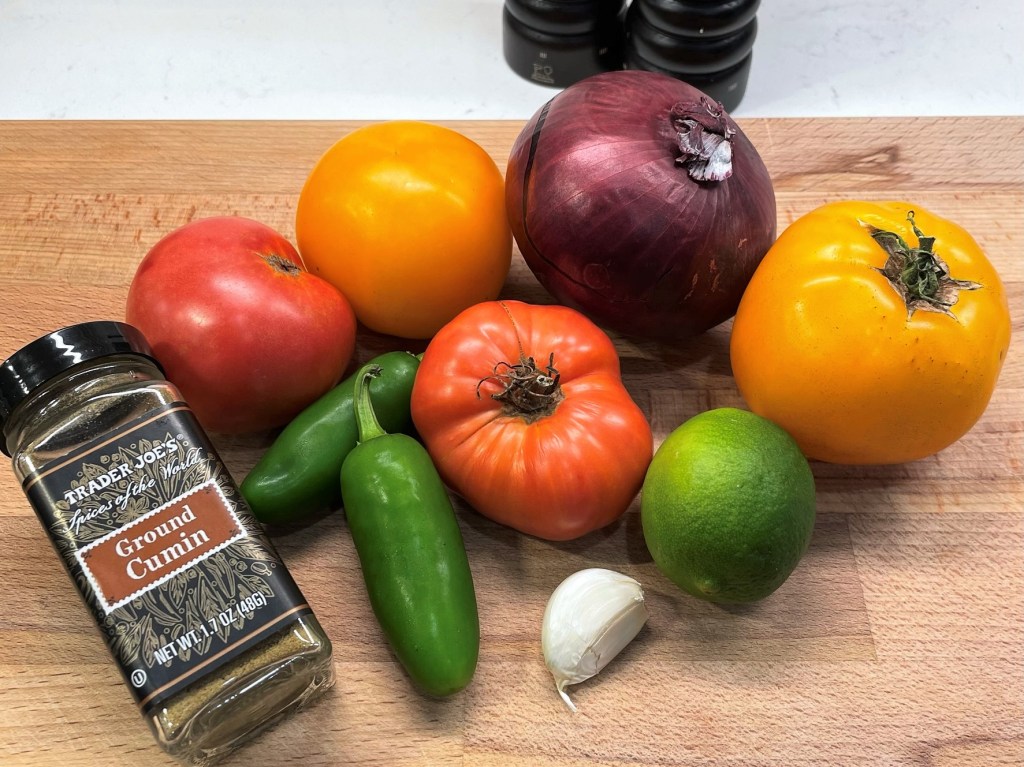
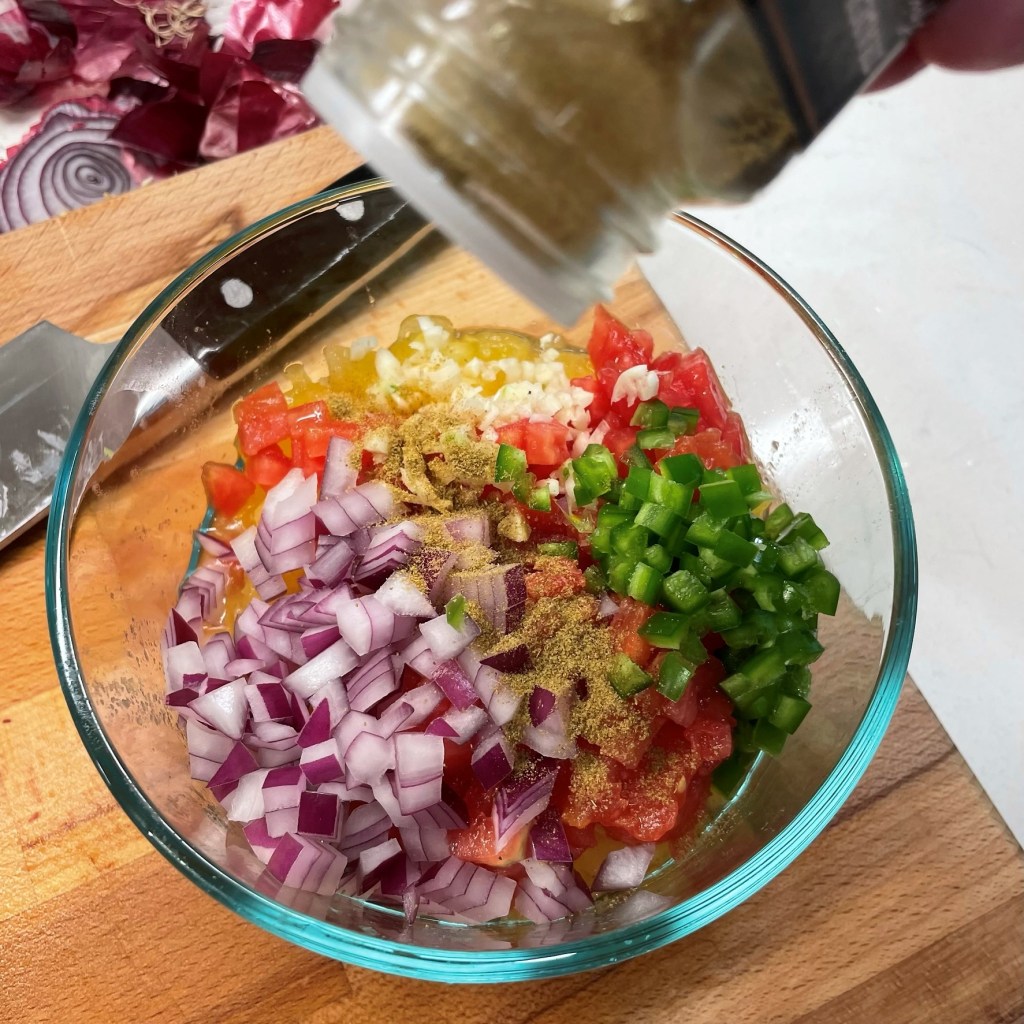
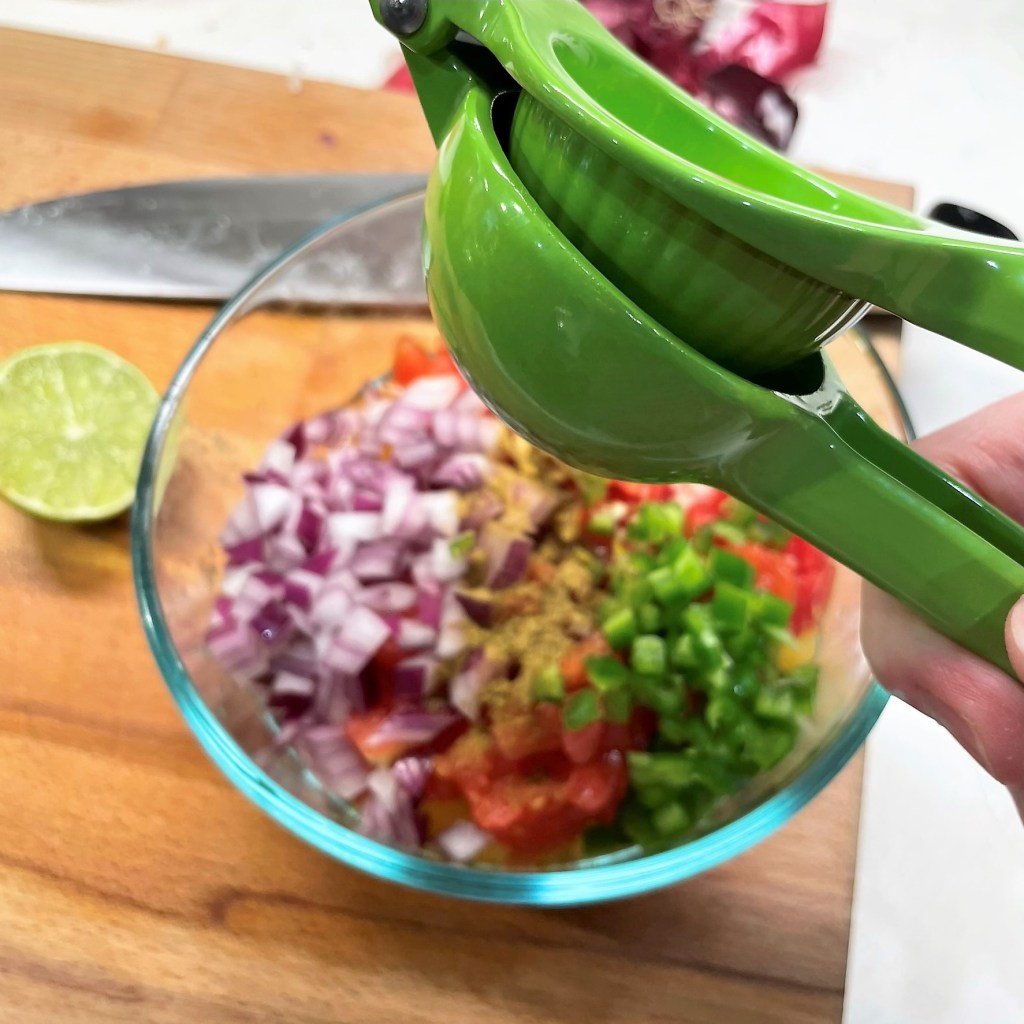
The tomato harvest in particular was fast and furious last summer, and in addition to so many yellow, heirloom and Roma tomatoes, we had jalapeño peppers just about coming out our ears. I found the simplest and most flavorful way to enjoy them all was with a weekly batch of pico de gallo, a.k.a. “salsa fresca.” Those shiny green jalapeños found themselves right at home with the sweet tomatoes. Add to that some chopped red onion, a little minced garlic and the juice of a lime, and you are pretty much looking at a late-summer fiesta in a bowl. 


These bright flavors (and colors) make me so happy, and the great thing about making your own salsa fresca is that you control the heat factor. If you love it spicy (as we do), you might leave in some of the jalapeño seeds, or maybe use two of them. If sodium is an issue for you, simply cut back a bit or use a salt substitute. For a subtle smokiness, I’ve been adding a few shakes of ground cumin, and it’s delicious that way. I’ve peeled the tomatoes in some batches, and skipped that step in others, so follow your own instinct (either way works fine).

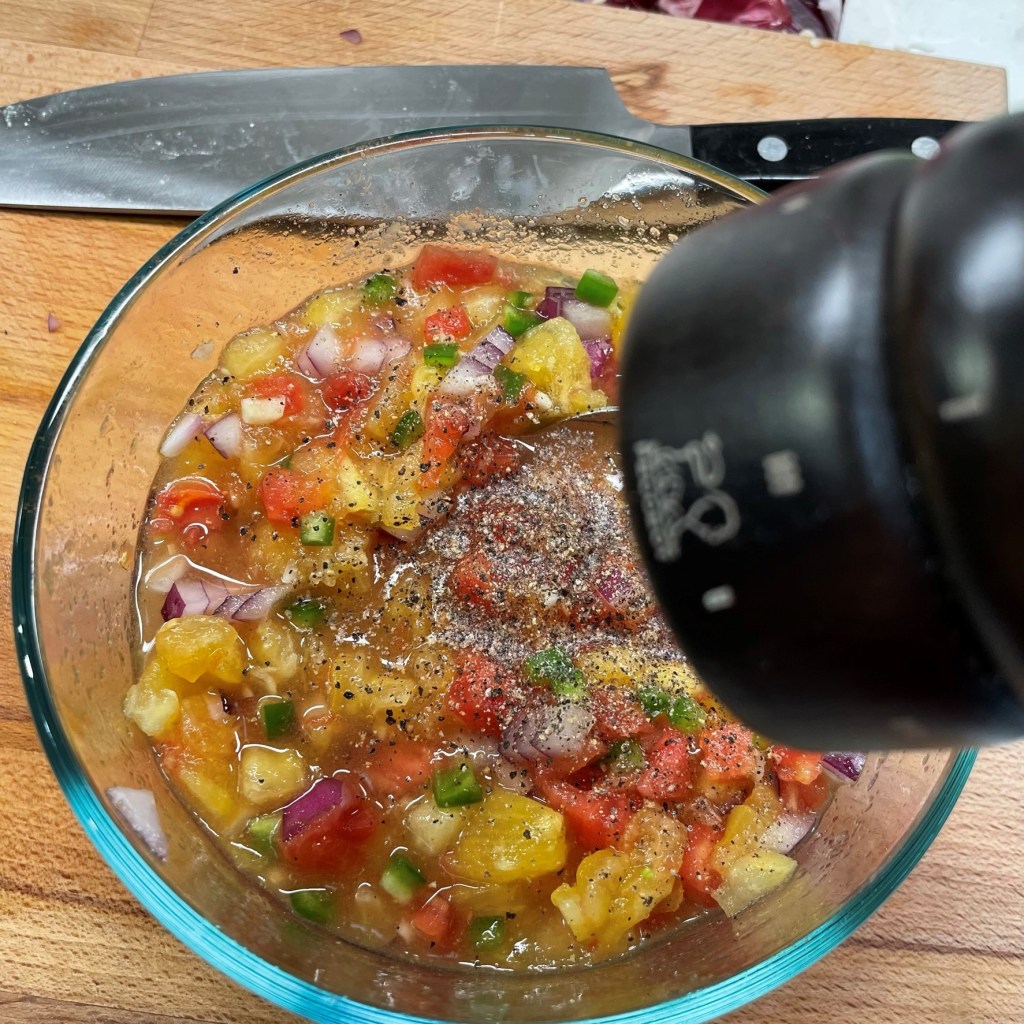
The freshest, ripest tomatoes will serve you best here, so stick with homegrown or farmers’ market varieties. Obviously, different types of tomato will result in varying amounts of juicy liquid. Our vine-ripened heirloom and yellow tomatoes were super juicy and that worked out great for me, as you’ll see in a moment. At the bottom of today’s post, you’ll find a click-to-print recipe for salsa fresca, but first, a glimpse at four ways we enjoyed it all last summer at our house.


Shrimp Tacos

If the mention of Mexican cuisine conjures memories of feeling bloated and uncomfortable, let this one reboot your thinking. For this simple summer meal, I made a batch of handmade corn tortillas (it’s easier than you might think and they are so much better than store bought), tossed shredded cabbage with a slight amount of poblano ranch dressing we found at the grocery store (any ranch dressing would work just fine), and grilled up some wild-caught shrimp. We divvied those ingredients up onto our tortillas with fresh cubes of avocado and a few cilantro leaves, plus the salsa fresca. The meal was light, flavorful and very satisfying on hot summer evenings.


Lightened-up Nachos for Dinner

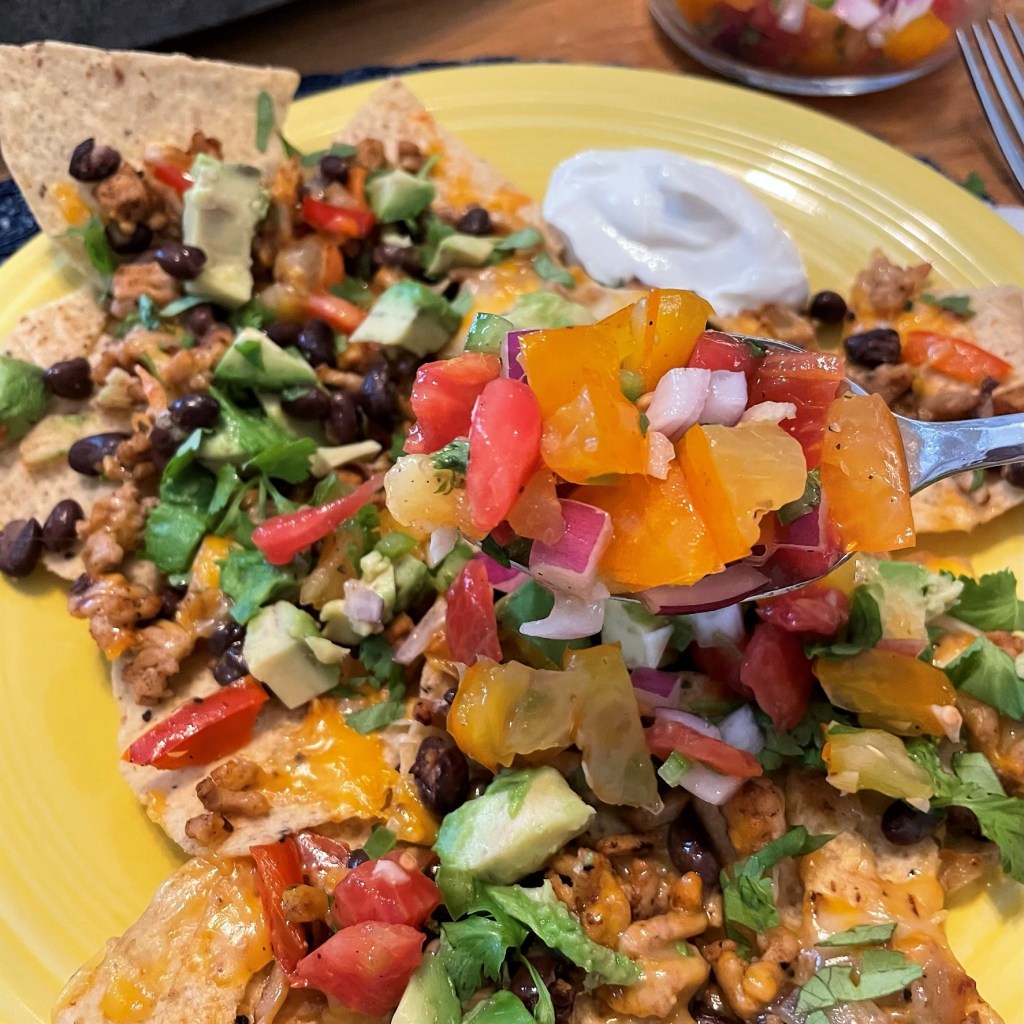
Nachos is one of my husband’s favorite go-to weeknight dinners, and he has taught me to love them, too. This is a dish that has been unfairly maligned because of many over-the-top, outrageously calorie-heavy, so-called appetizers found on chain restaurant menus. But it doesn’t have to be that way. There are many protein options for nachos, and this time around, I browned up a half-pound of lean ground chicken with chopped onions, seasoned it with chili powder, salt and pepper, and layered it onto store-bought tortilla chips with drained black beans and a reasonable amount of grated, reduced-fat Monterey Jack-cheddar blend cheese. Nachos only take a few quick minutes in the oven, and with a scatter of cilantro, avocado cubes and salsa fresca on top, they were just right.


Grilled Swordfish with Salsa Fresca

We love seafood on the grill, and swordfish is well-suited for this method of cooking because it is firm enough to place directly on the grill grates without worry that it will fall apart. My seasoning was very simple for this one—I blotted the fish dry with a paper towel, spritzed it with olive oil spray and kissed it with sea salt and a few twists of black pepper. Just for fun, I sprinkled some Trader Joe’s “Everything But the Elote” seasoning onto it before my husband took it to the grill. I used the same seasoning on the fresh, local corn we served that night, and a scoop of salsa fresca brightened up every bite.


Salsa Fresca “Mexican Martini”

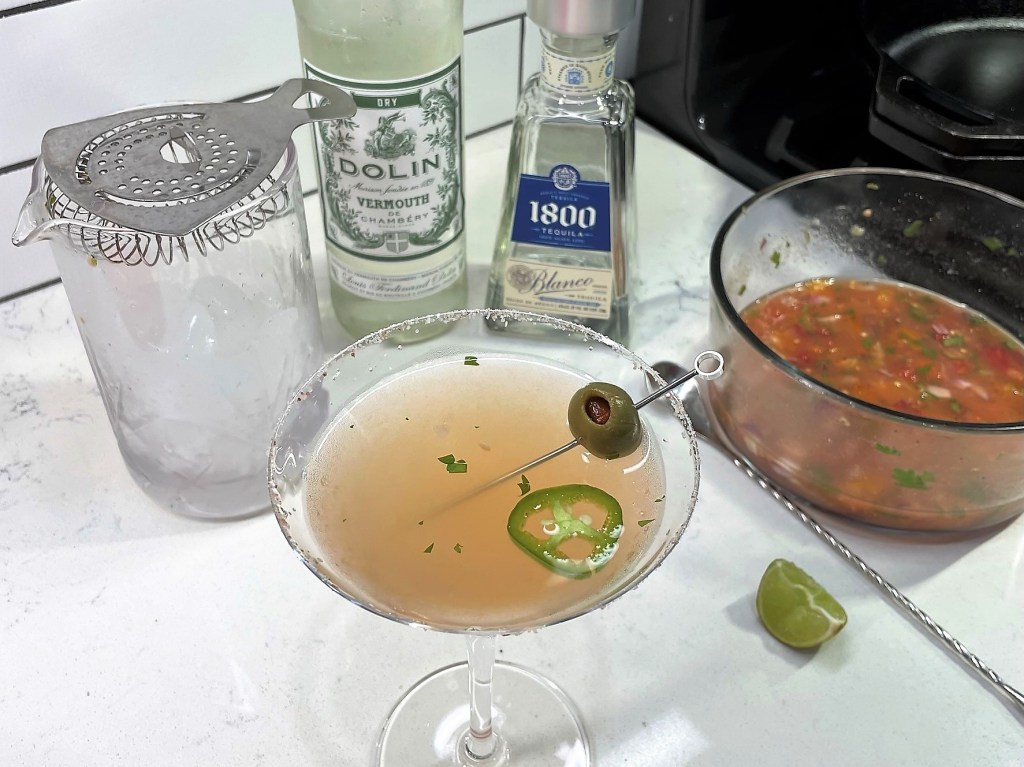
You knew I would go there, right? After the delightful surprise I experienced with last summer’s tomato water martini, there was no doubt in my mind that the juice lingering in the bowl after we depleted a batch of salsa fresca was destined for a chilled cocktail glass. Think of it as a mashup of a martini and a Bloody Mary, but with blanco tequila. It’s so cool and so hot at the same time. Perfect!


Here’s the ratio I like best for the cocktail, and I served it in a chilled martini glass, rimmed with a touch of pink sea salt.

2 oz. blanco tequila (I used 1800), 1/2 oz. dry vermouth (Dolin brand is my fave), 1/2 oz. salsa fresca juice (or more for a big, savory punch), squeeze of lime wedge. Stir with ice, then strain into chilled glass. Garnish with a jalapeño slice and pimento-stuffed Spanish olive.


Homemade Salsa Fresca

  • Servings: About 8
  • Difficulty: Easy!
  • Print

This is a terrific way to use some of the bounty of a late-summer garden. Use the freshest, ripest tomatoes possible and enjoy your salsa with everything from grilled seafood to cocktails to tortilla chips!


Ingredients

  • 4 medium garden-ripe tomatoes, peeled or not
  • 1 or 2 fresh jalapeños, seeds or not
  • 1/2 large red onion
  • 1 medium clove garlic
  • Juice of 1 small lime
  • Kosher salt and black pepper
  • A few shakes of ground cumin
  • Small handful of cleaned cilantro, optional (I usually add this just before serving)

The instructions offered here are purely subjective; use as much or as little heat, salt and spice as you desire. Remember that chopping fresh jalapeños is risky business. Wear a disposable kitchen glove when touching the peppers, or rub Dawn dish liquid onto your hands for a couple of minutes just before washing them. The Dawn helps break down and remove the oils from your skin.

Directions

  1. Chop the tomatoes into small dice. If they are especially juicy, you may opt to drain the seeds. Mince the jalapenos. Dice the onion. Mince the garlic.
  2. Combine all of the above in a medium bowl. Season with salt, pepper and cumin. Squeeze in lime juice and stir to combine.
  3. If serving right away, add chopped cilantro. Otherwise, refrigerate to meld flavors and add the cilantro just before serving.


Peach Panzanella

The heat is getting to me, I think. Since I returned from my solo trip through New England, I have barely wanted to cook. It’s just too hot to think about standing at the stove in the late part of the day. Usually in summer, we at least enjoy firing up the grill for a backyard barbecue, but with it being 97° F in the shade at dinner time, the idea of the grill feels even more oppressive than turning on the stove. I only want cool foods, and it better not take long to prepare. Thank goodness for ripe summer tomatoes and sweet southern peaches! 

There’s a saying out there in foodie land that “if it grows together, it goes together,” and I’m not claiming that peaches and tomatoes are good companions in the garden— how could they be, with peaches growing on trees and all— but I do know that they’re both coming ripe right about now, and I may be onto something with this fresh, light (and did I mention easy?) summer salad.

This is one more thing to love about summer!

Panzanella, in case you have never had the pleasure, is a rustic dish of Tuscan origin, usually made with ripe, juicy tomatoes, cucumber and other fresh ingredients, along with chunks of day-old bread that soak up the juices. The bread gives the salad body and bulk, and the rest of the ingredients are cool and refreshing when the summer weather is everything but. 

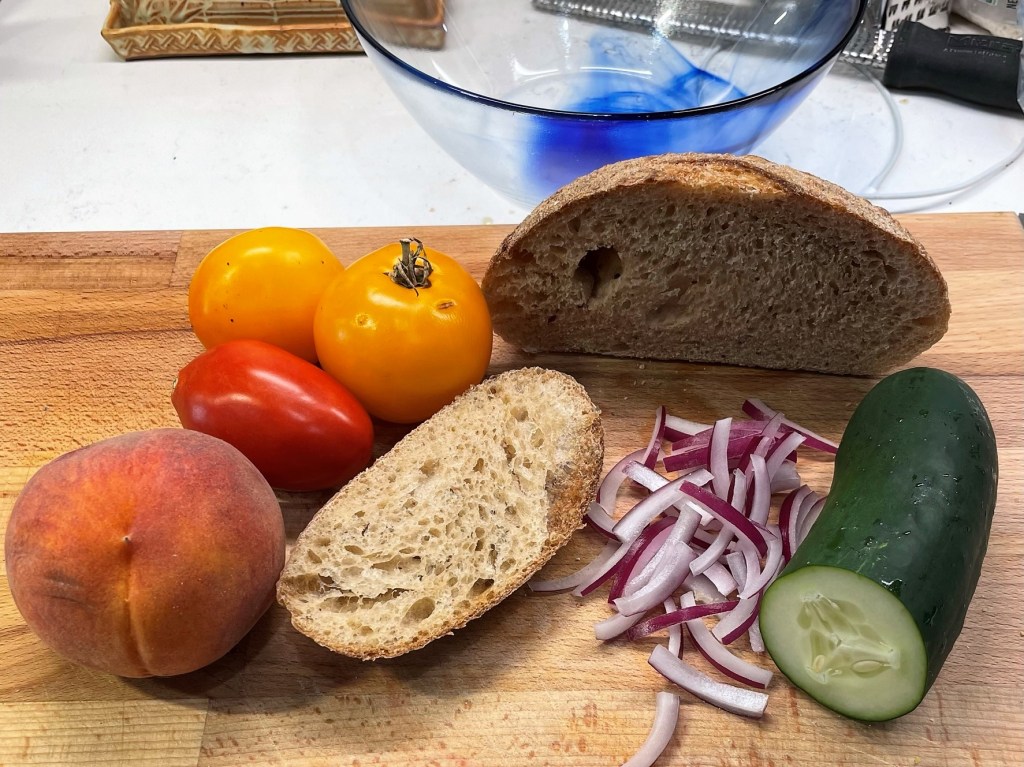
I was about to make a classic panzanella, but then I spotted that peach!

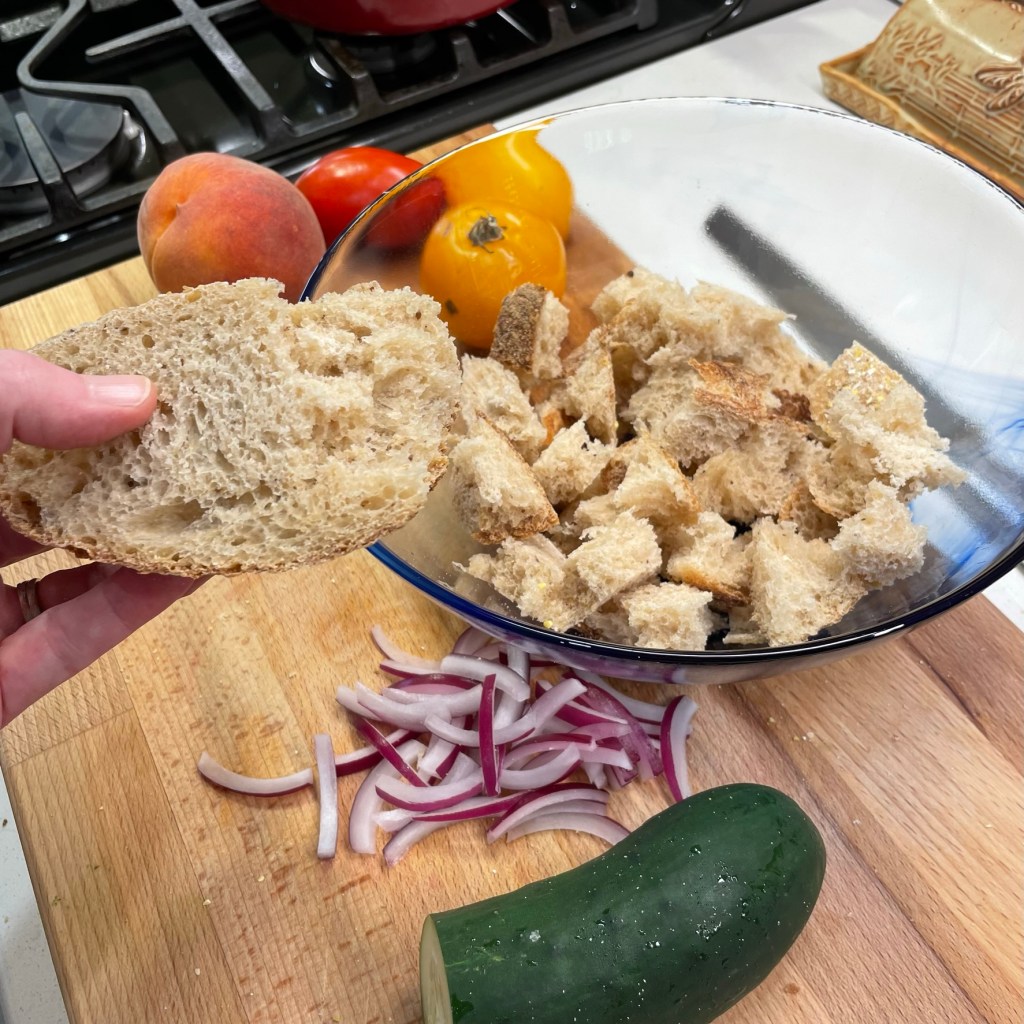
It seems I always have a stale end of bread hanging around the kitchen, and for panzanella, you want the bread to be a “lean” one— that is, not enriched with fats, dairy or sugars. If the bread is soft and pliable, it will quickly turn to mush and you’ll be disappointed in your panzanella. Something like a French baguette or crusty homemade sourdough loaf is perfect because it will generally holds its shape. Whole grain works well, and even seeds on top will work! Tear or cut the bread into small, bite-size chunks, and remove the crust if it seems extra thick or chewy.


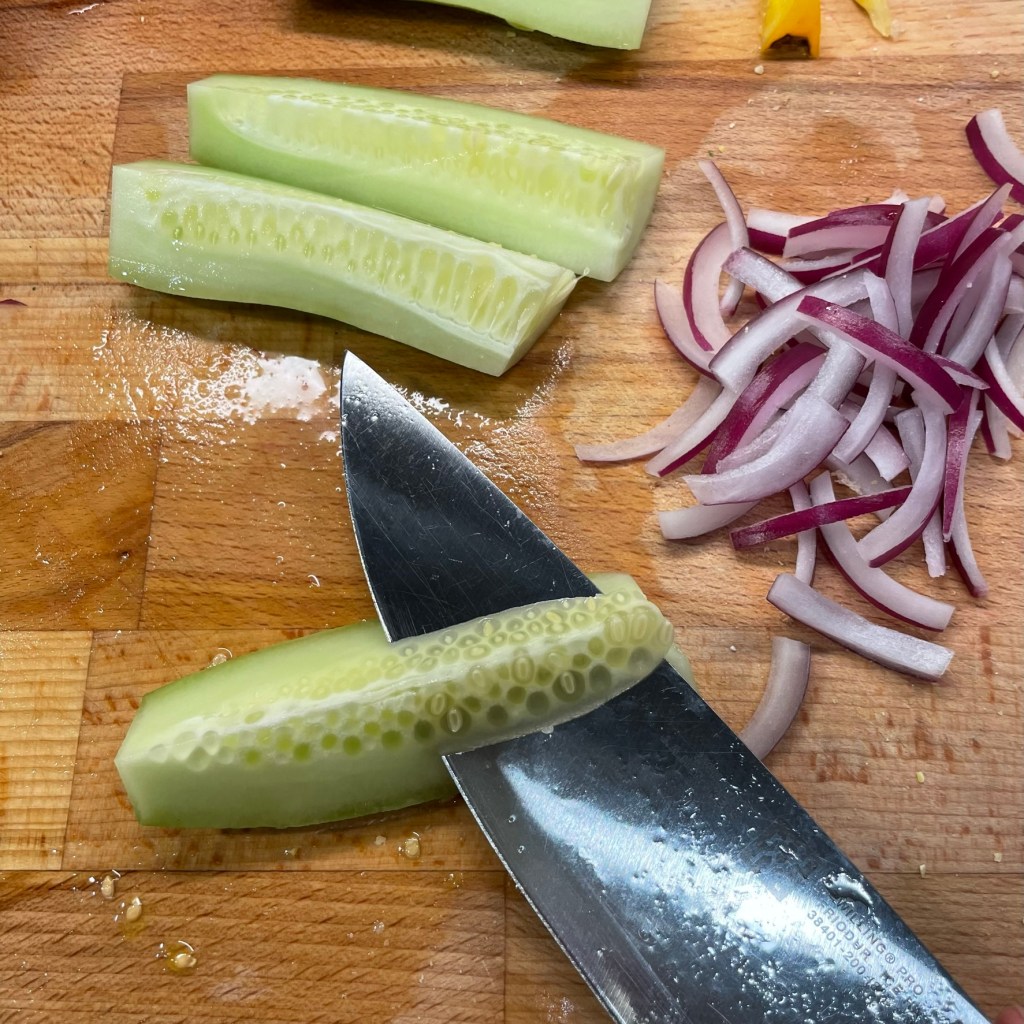
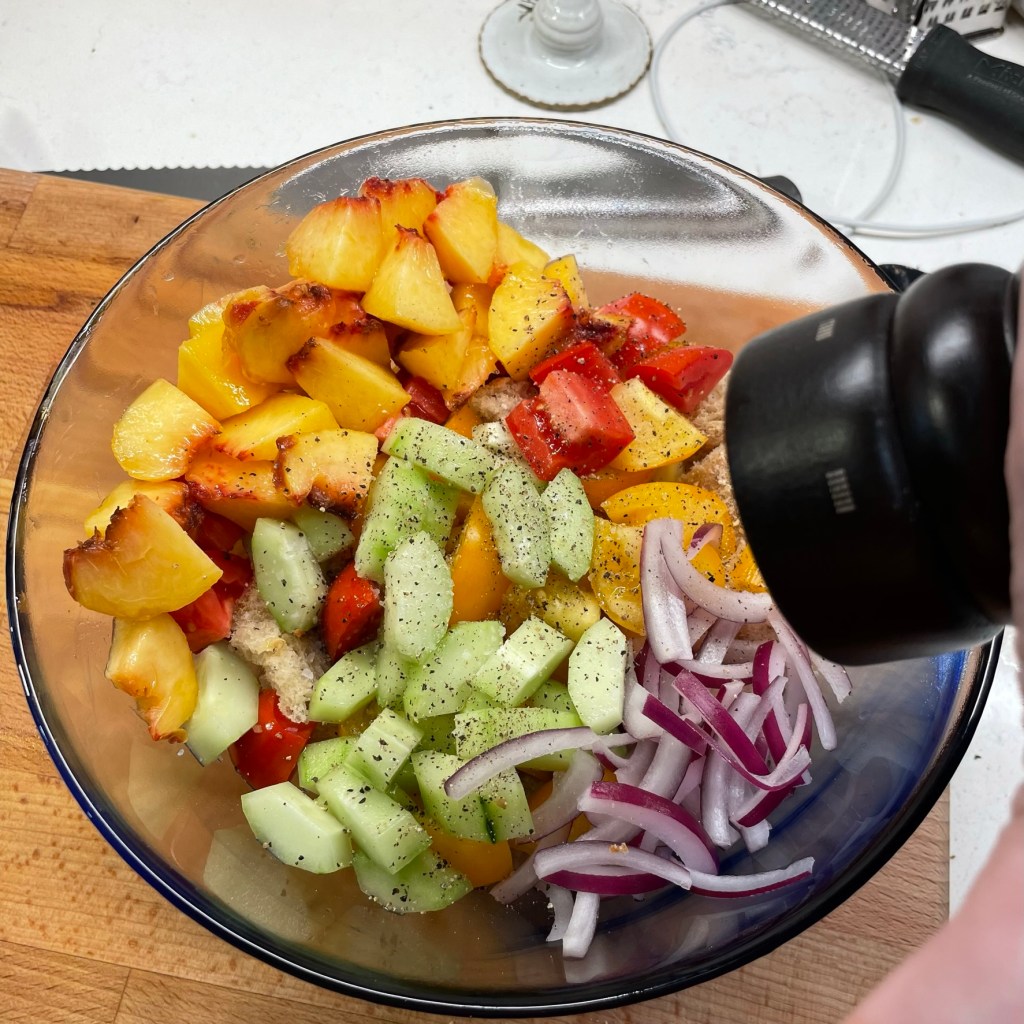
Next, prep all the fresh ingredients, cutting each into smallish bites. My personal rule of thumb for salads to break down the ingredients into small enough pieces that I will be able to get a little bit of everything in a single bite, but not so small that it’s hard to spear them with a fork. I only had a slicing cucumber, so I did remove the tough peel and most of the seeds, but with a Persian or English cuke, there’d be no harm in just washing and cutting it up. A quick seasoning with salt and pepper on all of that, and then I’m on to the dressing. 


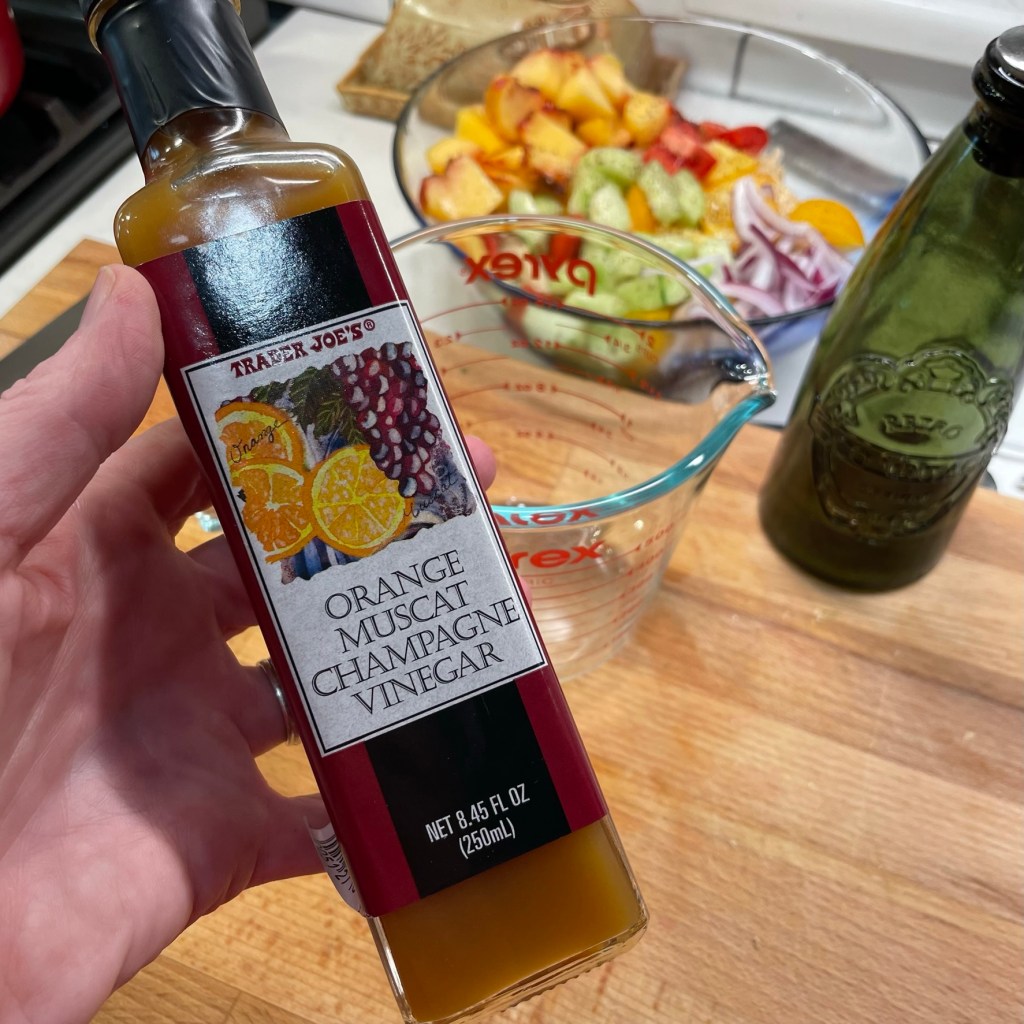
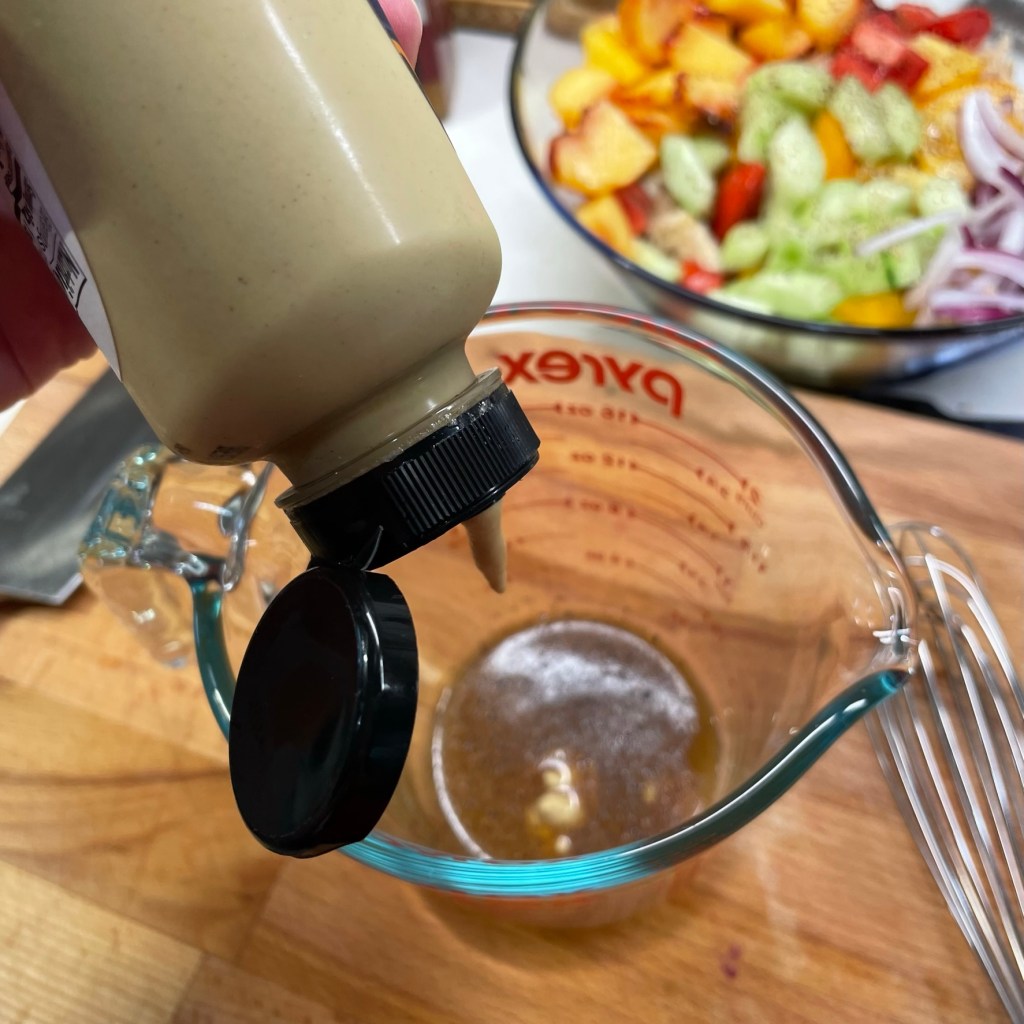
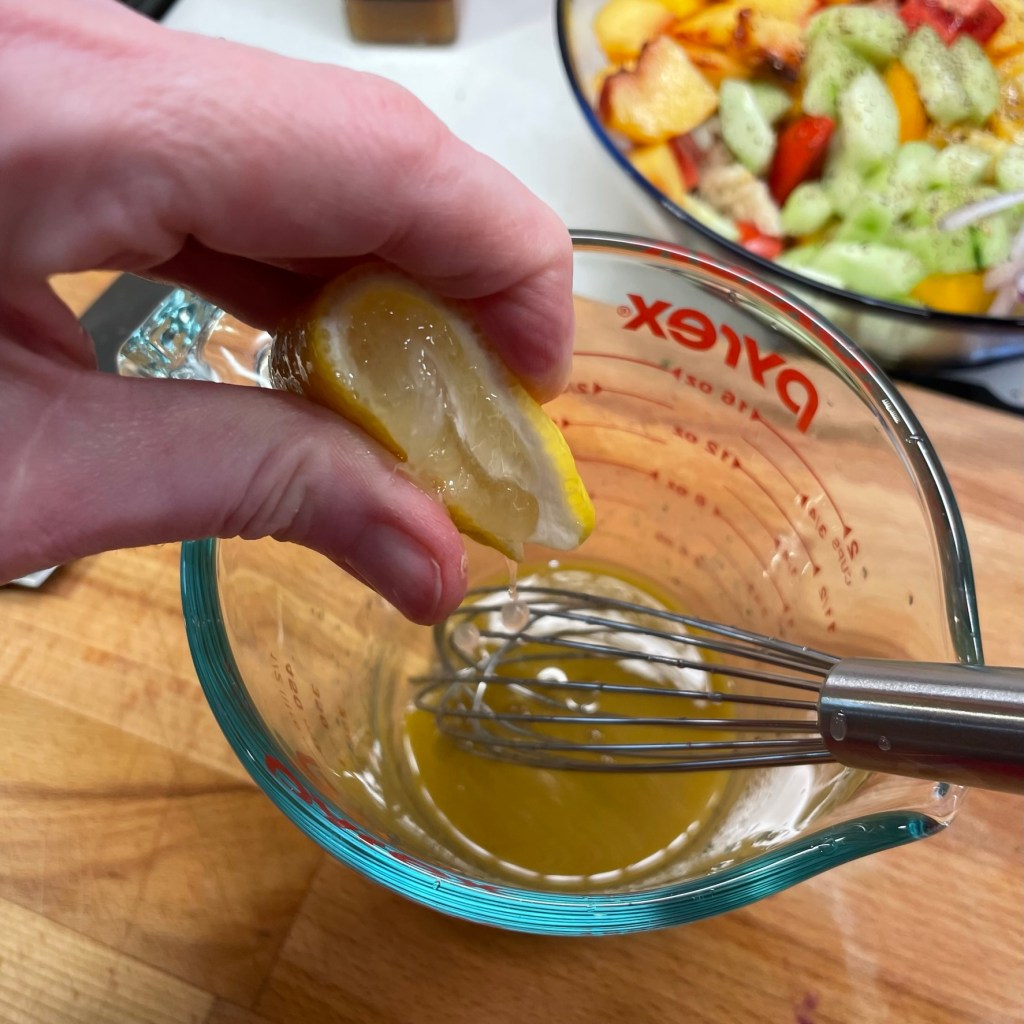
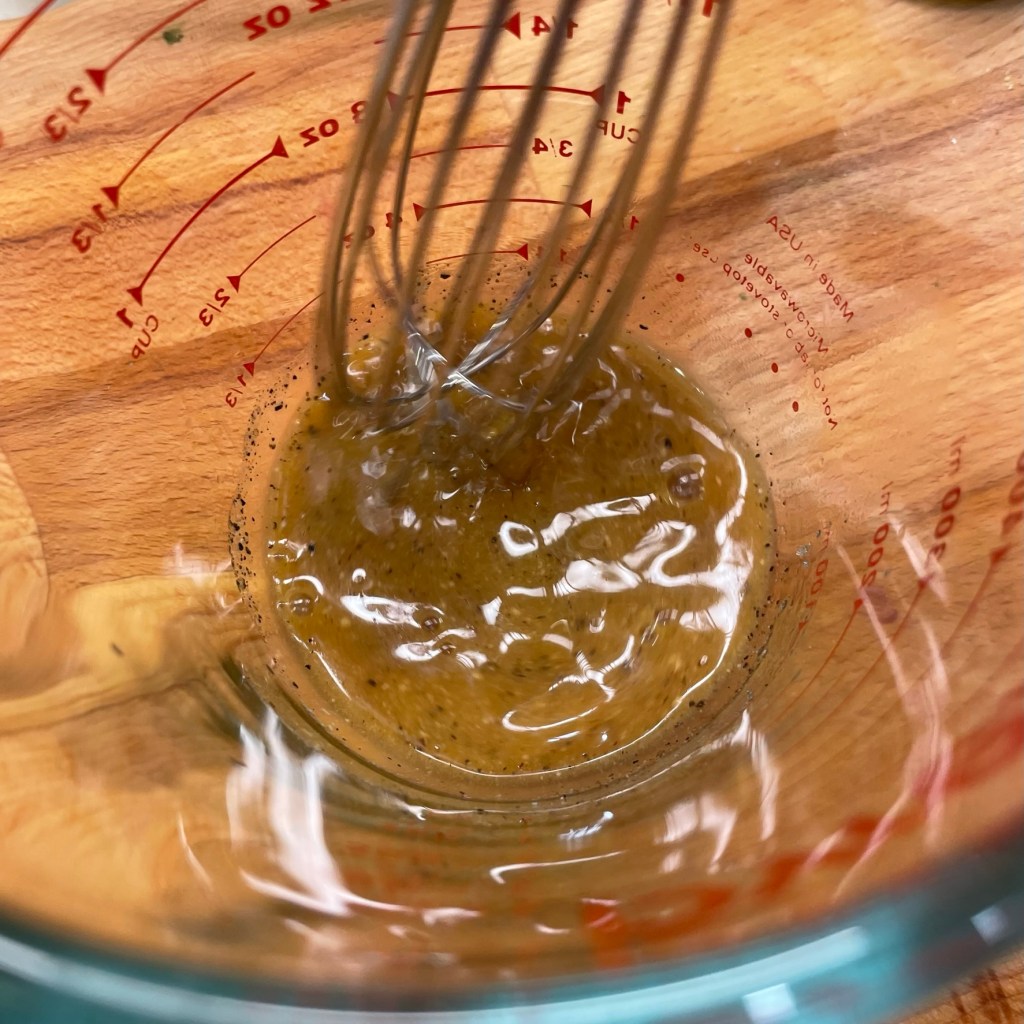
A classic panzanella would be strictly savory, so a vinaigrette with Italian herbs and garlic would be appropriate. But I wanted a lighter, fruitier touch for this one because of the sweet summer peach, so I started with a citrus-y vinegar from Trader Joe’s and jazzed it up with Dijon, a squeeze of fresh lemon and a generous drizzle of fruity, extra virgin olive oil. Any light, fruity vinegar would work well here, or even a white wine or champagne vinegar. If yours is tart and sharp, give the dressing a little balance with a bit of honey or a few pinches of cane sugar. And don’t forget salt and pepper.

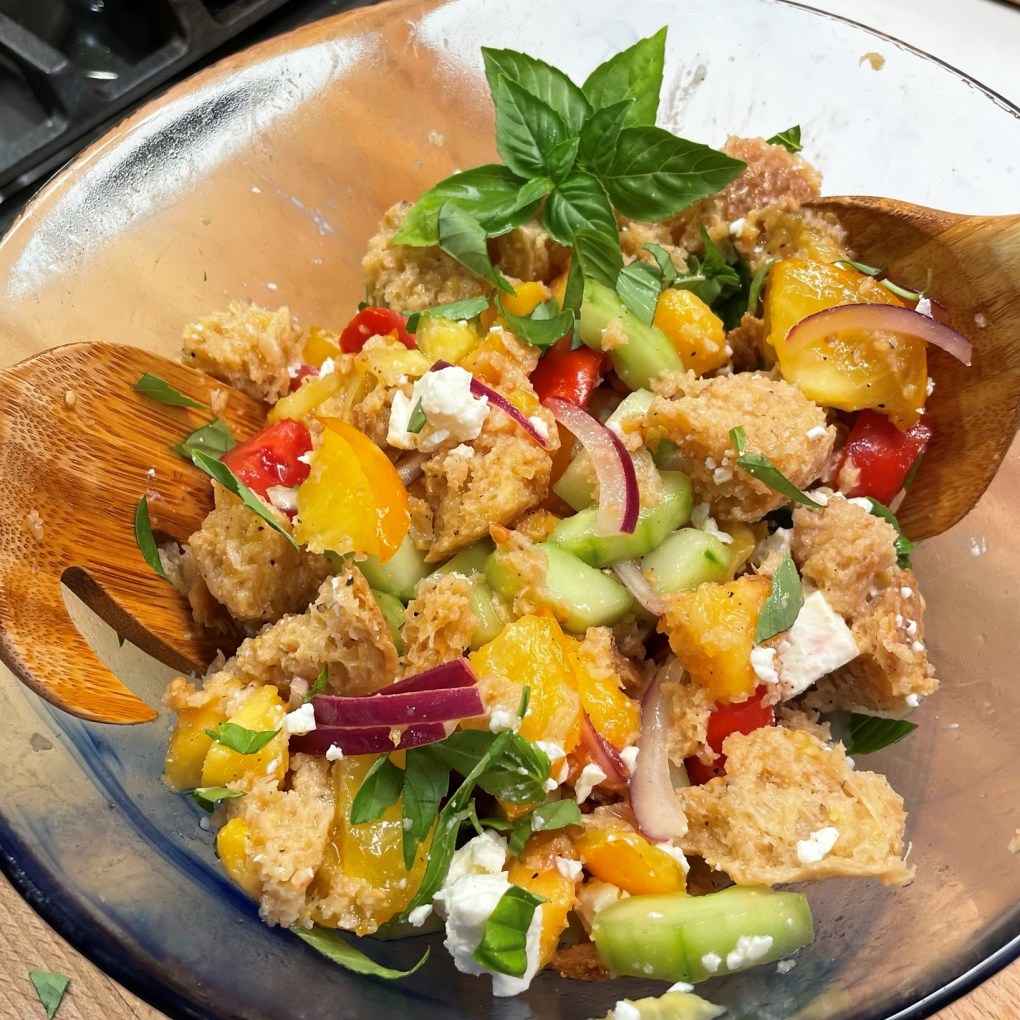
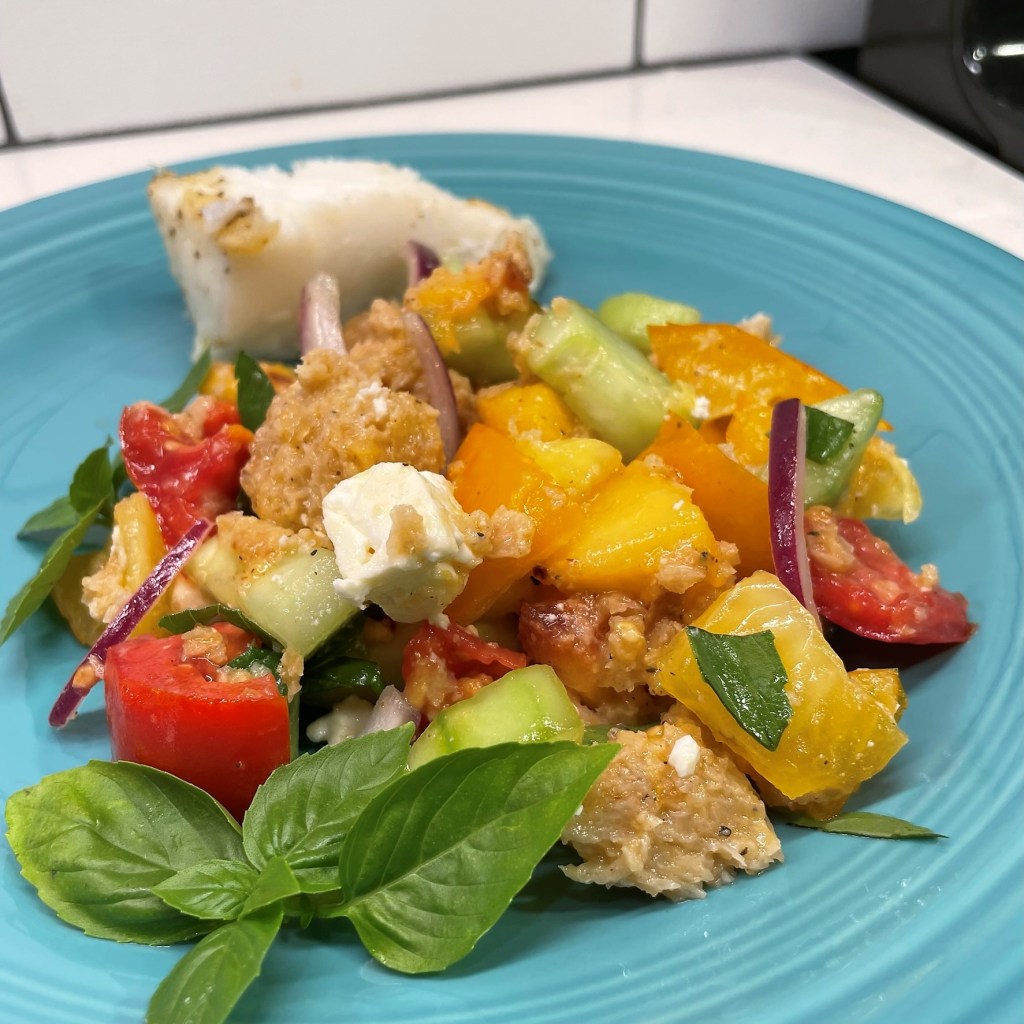
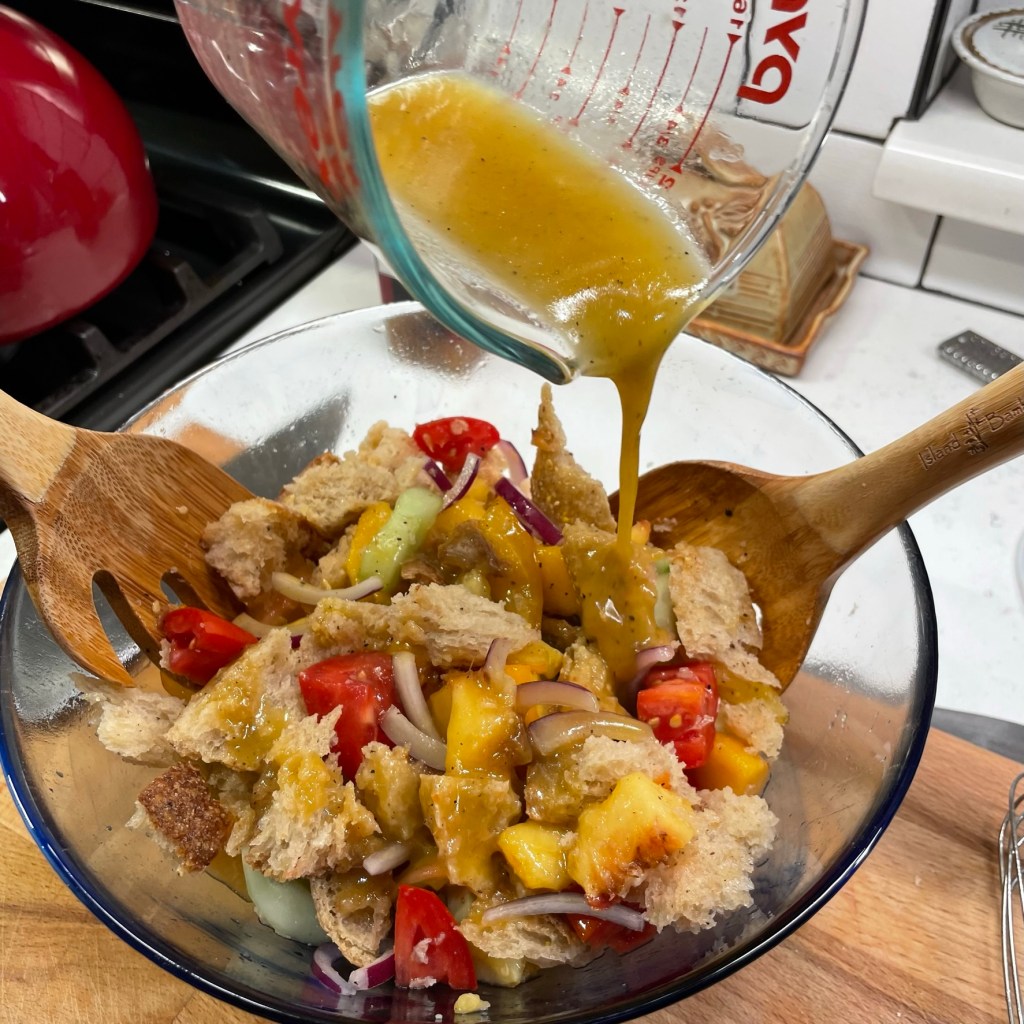
Here comes the best part! Drizzle that dressing all over the salad, and don’t worry if it seems like a lot— the stale bread will slurp it up so it won’t go to waste. Toss gently a few times to fully incorporate the dressing, and allow the panzanella to rest while you set the table. Just for fun, I sprinkled on some feta chunks and fresh, summery basil. Italian parsley would have been just as delicious, or even fresh mint to add another cooling layer.


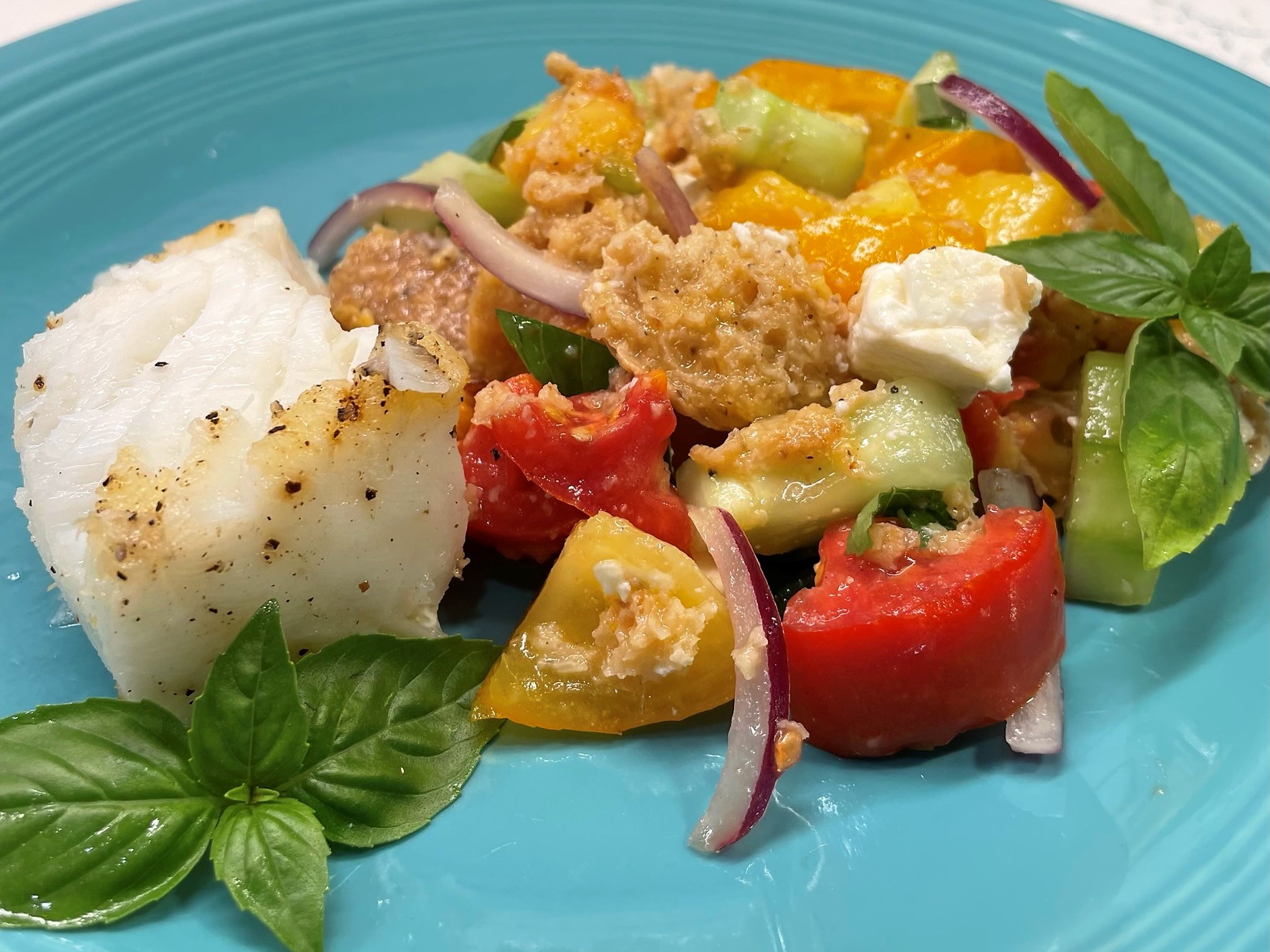
I served my peach panzanella with petite fillets of halibut. They were super easy to make, seasoned with only salt and pepper and baked in the oven for a mere 15 minutes. Easy, quick and done!


Peach Panzanella

  • Servings: About 3
  • Difficulty: Easy
  • Print

A ripe and juicy summer peach puts a delicious and unexpected twist on a classic panzanella. It's a cool and tasty way to beat the summer heat!


Ingredients

  • 3 cups torn sourdough bread (dry or stale)
  • 1/2 slicing cucumber, peeled and seeded
  • 2 small yellow tomatoes, halved and cut into wedges
  • 1 Roma tomato, quartered lengthwise and cut into wedges
  • 1 large ripe peach, peeled and pitted then cut into chunks
  • 1/4 cup thinly sliced red onion
  • 2 oz. real feta, crumbled or cut into cubes
  • Small handful of fresh basil, torn or rough-chopped for garnish
  • Vinaigrette dressing (see below)

The dressing for the panzanella can be made ahead if desired. Choose a vinegar that is light and summery, such as white wine vinegar or something infused with citrus.

Ingredients

  • 3 Tbsp. Muscat orange-champagne vinegar (or something fruity and tart)
  • 1 tsp. Dijon
  • Salt and pepper
  • 1/4 cup extra virgin olive oil
  • 1 tsp. honey or sugar if vinegar is very tart

Directions

  1. Add all salad ingredients except feta and basil to a large bowl, in order, so that bread pieces are on the bottom. Season with salt and pepper and set aside while you make the vinaigrette.
  2. Whisk together dressing ingredients. Adjust salt and pepper to taste.
  3. Pour dressing all over salad. Toss gently to incorporate, and allow the bread a few minutes to soak up the dressing and juices.
  4. Sprinkle with feta and fresh basil. Serve at once.


Les’s Veal & Eggplant Parm

When Terrie asked me a couple of months ago what I wanted for my birthday meal this year, I initially asked her for some kind of lobster, a dish she’s made before that I devoured. But the more I thought about it, the more a different idea bubbled in my head.

Five years ago, on Aug. 27, 2017, my mother died at age 91. It was two days before my birthday, and we chose to have her funeral on Aug. 29, largely at my request because it could be a sort of celebration for relatives who had arrived when she took ill.

With my mom on my mind, I told Terrie I wanted to play chef on my birthday weekend as a tribute to one of the few meals Mom made that I actually loved.

Once or twice a year, Mom would make veal parmigiana in an electric skillet (you know the one, square cast aluminum with the little pinwheel vent thing on top of the lid), and from the moment you walked into the apartment after school, the aroma was so distinct you instantly knew what was happening—a respite from the usual overcooked meat, baked potato and canned vegetables. What we smelled was veal parm, which she served with spaghetti with marinara (Ragu) and Parmesan cheese (Kraft, the familiar green container). Still, for me and my sisters, it was sublime.

When I first began cooking, veal parm seemed like a giant challenge, and I stuck to ordering it in restaurants. Around the same time, as an adult, I discovered the joy of eggplant. Then, one night in an Italian restaurant, I chose a dish called “Veal Sorrentino,” which added a slice of prosciutto between a veal cutlet and eggplant slices, and it was cooked in a pan with white wine sauce and a touch of tomato. Henceforth and forevermore, I knew what I was gastronomically bound to do whenever I wanted veal parm. Combine veal and eggplant.

Now as much as I enjoy veal Sorrentino, I don’t make that at home. Rather, I prefer veal and eggplant as a red sauce parmigiana meal, and, being as we still had lots of fresh tomatoes from our first successful garden in years, I spent a few hours cooking up a marinara on Saturday to go with Sunday dinner. This sauce was similar to the Not Quite Pizza Sauce I shared here a few weeks ago, but without the red bell pepper, and with the onions sautéed and blended right into the sauce. I married this sauce with veal and eggplant, and it was excellent.
Layer upon layer of Italian comfort food.

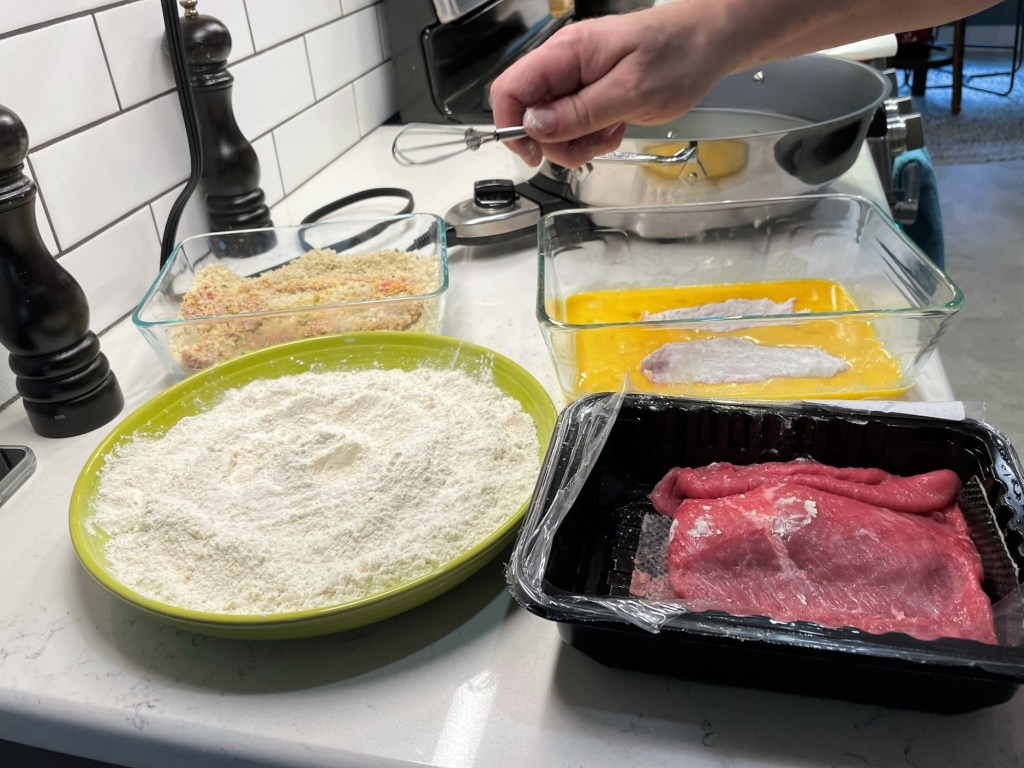
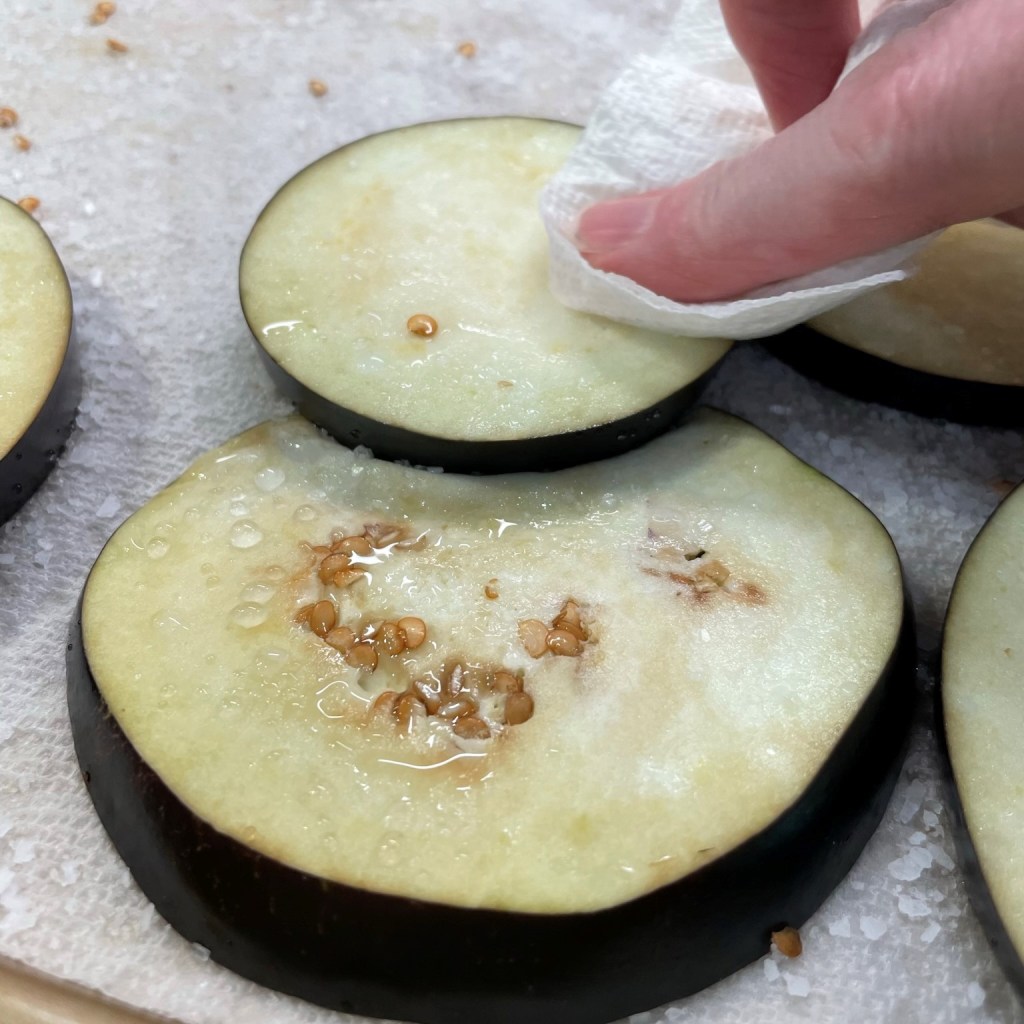
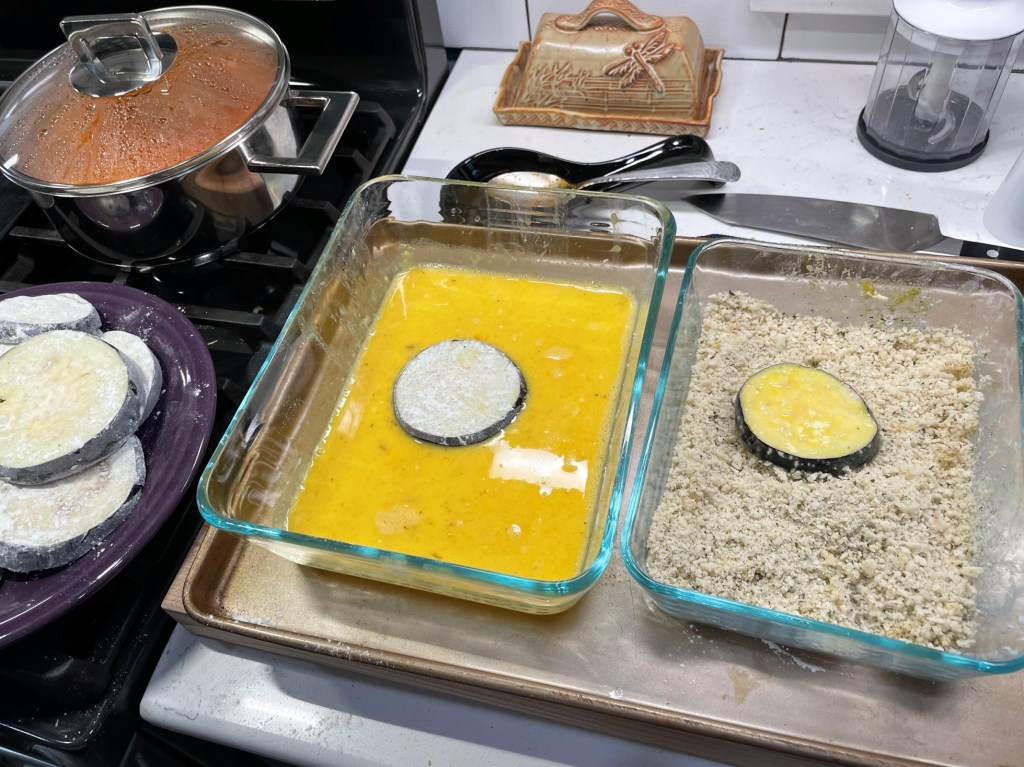
It helps to have the meal and kitchen counter space planned for this dish, because you need room for all the breading and frying. The first step is slicing a good Italian eggplant into 1/2-inch rounds, salting them on paper towels and letting them sweat for 30 minutes or more. Arrange the plates or containers to be used for preparing the eggplant and veal. My first plate held seasoned flour for dredging the eggplant and cutlets; salt and pepper the latter on both sides. The eggplant, of course, after its salting, won’t need more seasoning.

I used a rectangular Pyrex dish to hold four eggs, beaten. A second Pyrex contained a mix of Italian-seasoned bread crumbs (we actually used seasoned panko crumbs, then used an attachment on our immersion blender to grind them finely) and if you’re bold like we are, add some cheese to it; I used our Parm-Romano blend.

After consulting with Terrie, I decided to use our electric skillet (another nod to Mom, though this stainless All-Clad skillet is nothing like Mom’s old cast aluminum), and got that filled with about 1/2-inch deep canola oil, set to 375° F; the temperature may vary, depending on the vessel you use for frying, but whatever you put into the oil should sizzle and bubble as soon as it makes contact. Keep a roll of paper towels nearby; we used a ton of them catching the cutlets and eggplant as they came out.


During the frying phase, I put the marinara on a back burner at low to warm it and preheated the oven to 350° F. We bought fresh, pre-sliced mozzarella (the kind you’d use for Caprese), so I didn’t need to worry about prepping the cheese.

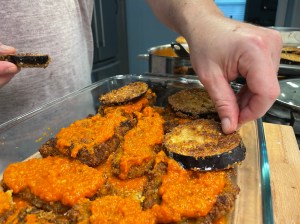
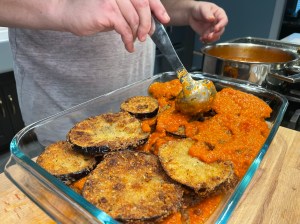
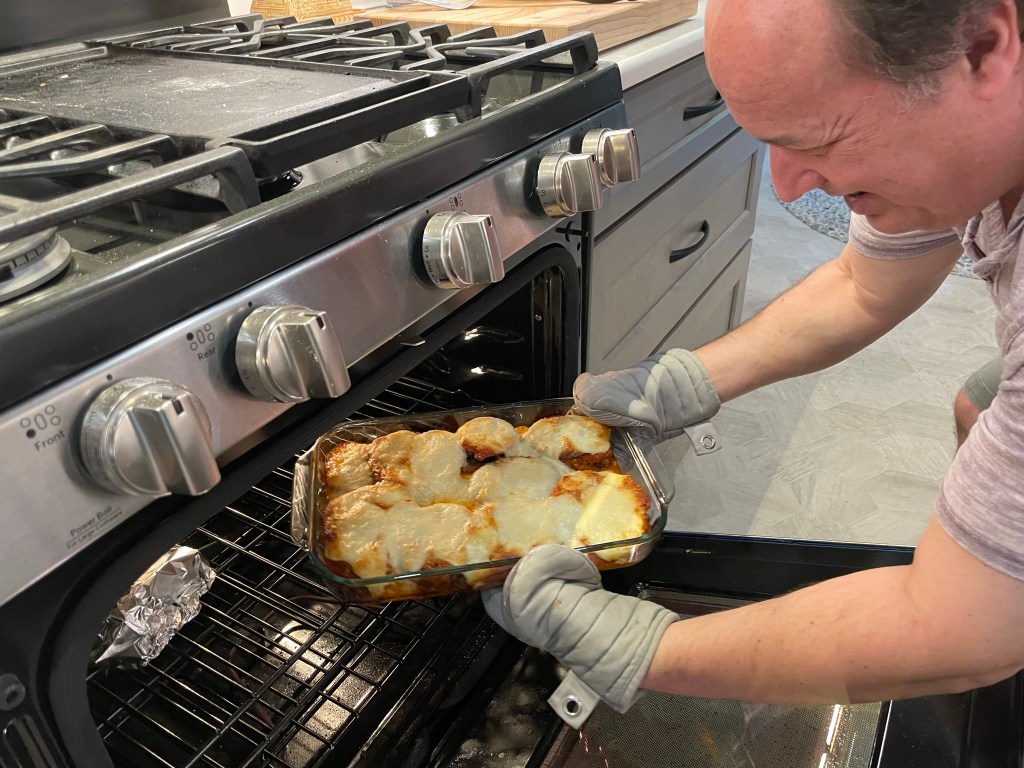
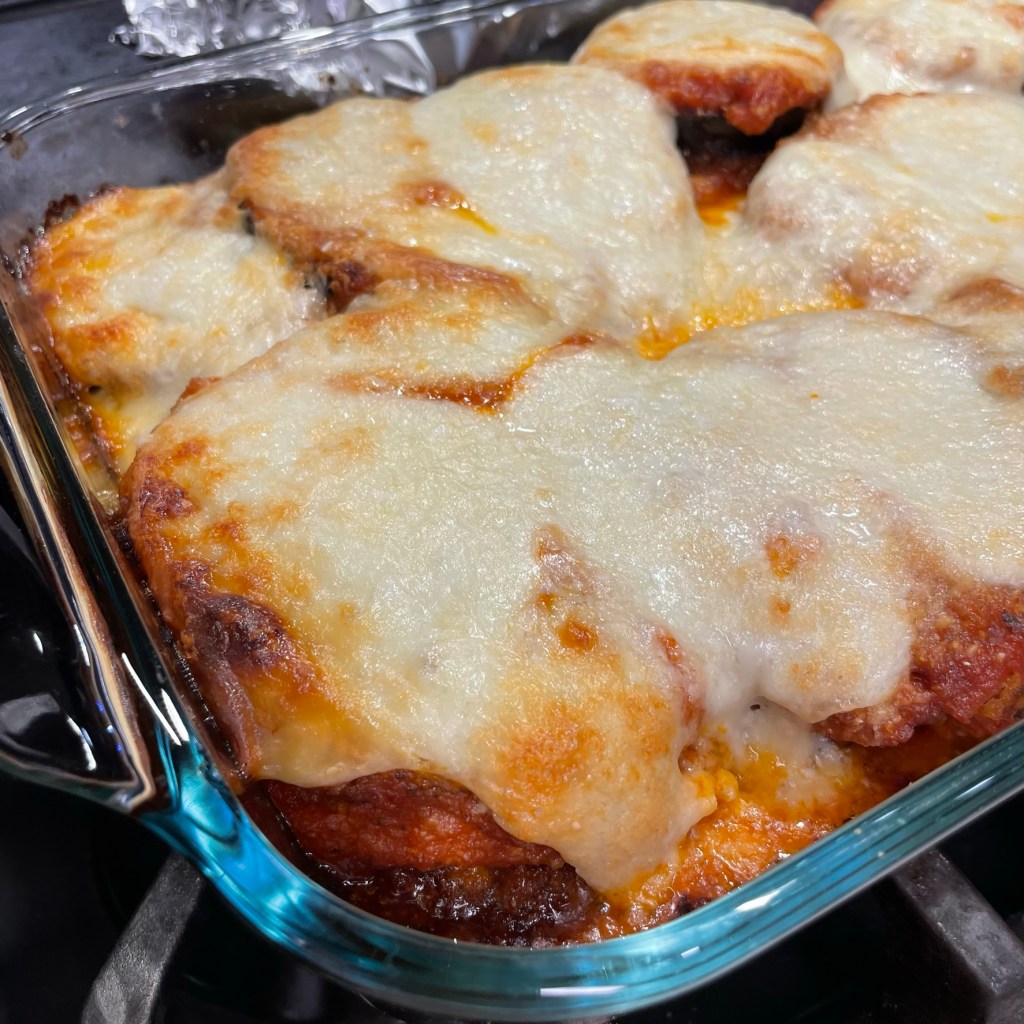
Once the eggplant and cutlets were fried, it was time to assemble. In a 9-by-13 Pyrex, I ladled healthy spoonfuls of marinara on the bottom, then lay down the cutlets. On top of that went marinara, followed by eggplant, followed by more marinara, followed by mozzarella, with a healthy sprinkling of our Parm-Romano Blend as a final touch.


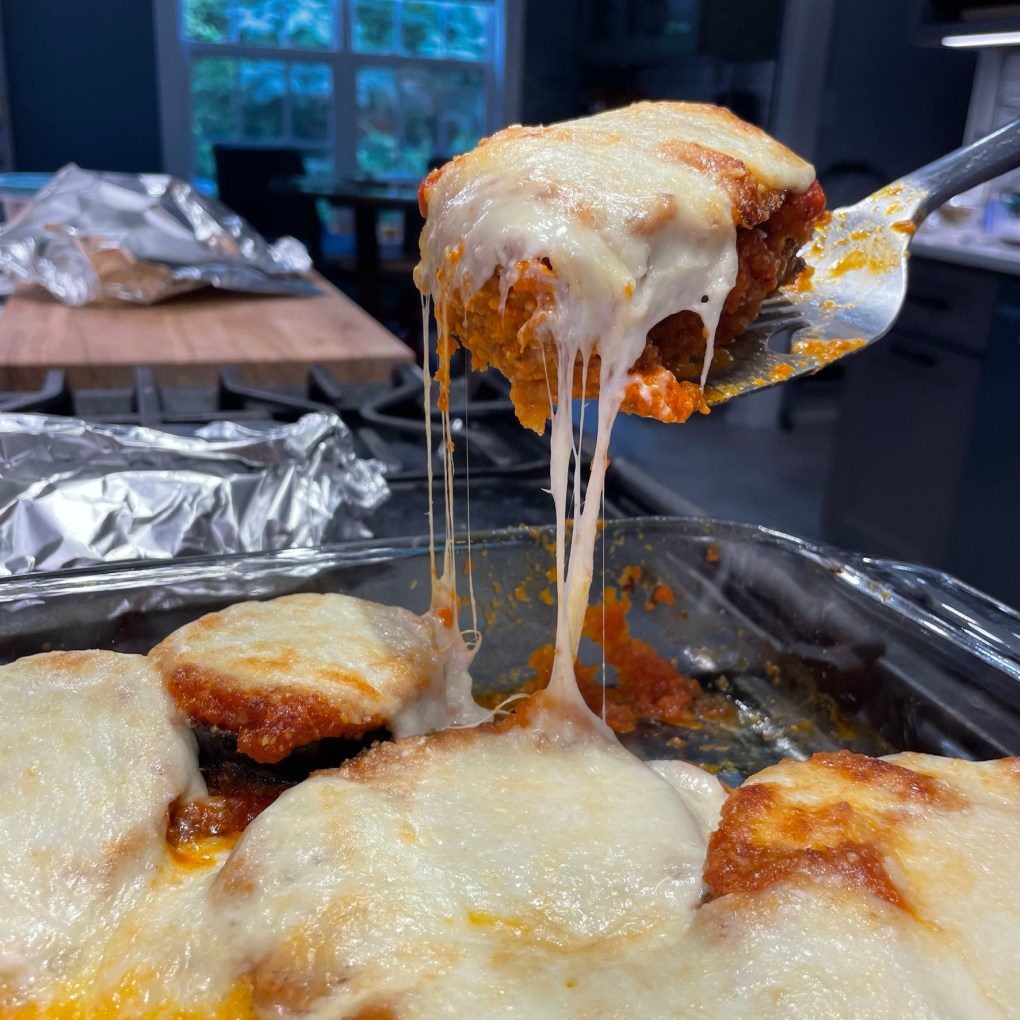
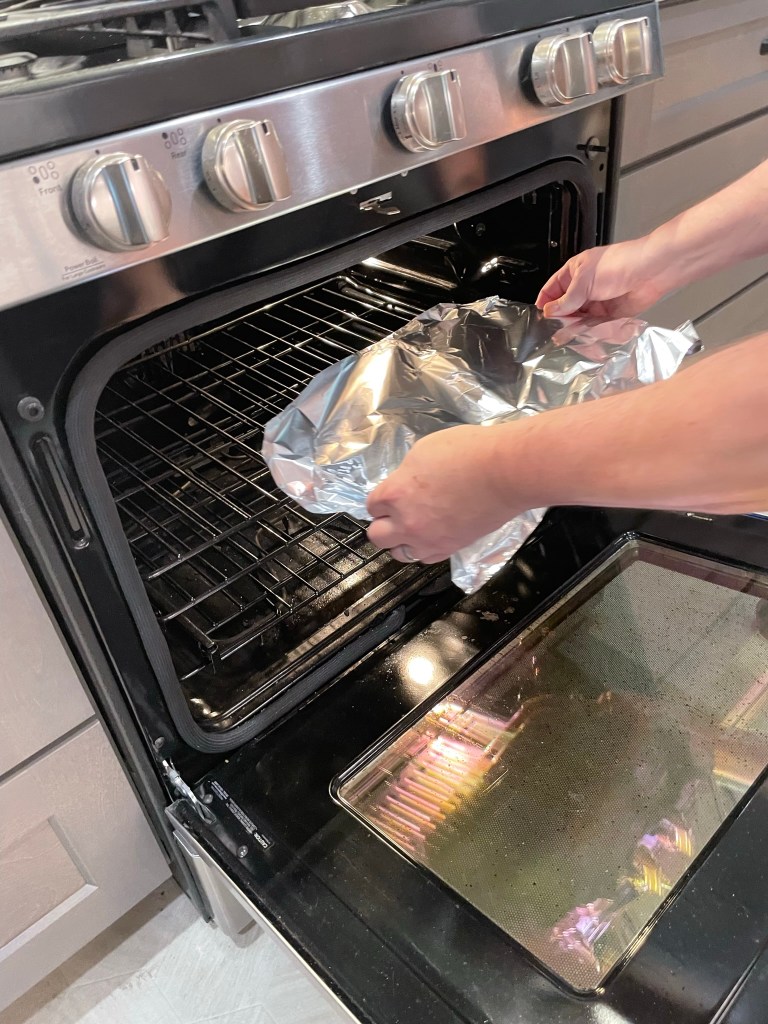
It baked (under foil for half the time) for about 45 minutes (ovens may vary by a few minutes) and what came out was pretty awesome. Homemade sauce on tender veal and fresh eggplant with a crunch of breading and those savory cheeses—oh yes, the cheeses are my favorite part!

This dish is the ultimate comfort to me.

For hours during and after this birthday meal, the kitchen smelled like my old apartment on 80th Street in Jackson Heights, N.Y., on those rare, but wonderful nights when Mom was making veal parm. The leftovers were pretty damn good, too.

Veal & Eggplant Parm

  • Servings: About 8
  • Difficulty: average
  • Print

When it came to dinner growing up, my sisters and I got a lot of the basics: meat, baked potato, canned vegetable. But oh for the once or twice a year when Mom decided to cook one of her specialty dishes—veal parmigiana. That’s the aroma I tried to re-create with my kicked-up version of it, with eggplant and garden-fresh, homemade marinara.


Ingredients

  • 1 medium Italian eggplant. cut into 1/2-inch rounds
  • Kosher salt, for sweating the eggplant slices
  • 1 1/2 lbs. veal cutlets
  • 4 large eggs, beaten (for breading)
  • About 1 cup all-purpose flour, seasoned with salt and pepper (for dredging)
  • 1 cup Italian seasoned bread crumbs (for breading)
  • 1/2 cup Parm-Romano blend or Parmesan (for breading)
  • Vegetable or canola oil, for frying (enough to measure 1/2-inch deep in frying skillet)
  • About 4 cups favorite marinara sauce (see ingredient notes, below)
  • 1 pound fresh mozzarella, sliced

Use any marinara sauce you like for this recipe. I made one very similar to this one, omitting the roasted red pepper and blending the onions right into the sauce. https://comfortdujour.com/2022/08/26/not-quite-pizza-sauce/
Directions

  1. Arrange the eggplant slices in a single layer on paper towels sprinkled with kosher salt. Sprinkle salt over the top of the slices as well, and let them stand for 30 minutes to remove excess moisture from the eggplant. Wipe them dry with clean paper towels and set aside for breading.
  2. Heat oil in an electric skillet or over medium heat to approximately 375° F.
  3. While the oil comes up to temperature, set up a breading station with three dishes: one containing seasoned flour, a second containing beaten eggs and a third with a mixture of the Italian breadcrumbs and Parm-Romano blend.
  4. Dredge the veal cutlets lightly in flour, shaking off the excess. Dip in the beaten egg, allowing excess to drip off. Coat both sides in the breadcrumb-cheese mixture. Arrange breaded cutlets on a parchment-lined plate.
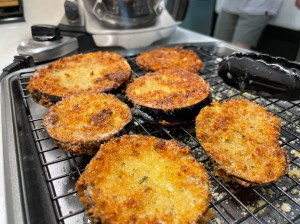
  5. Repeat the same dredging steps with the sweated eggplant slices.
  6. Fry the cutlets and eggplant until golden on both sides, and set aside on paper towel-lined baking sheet until all are finished. The paper towels will absorb excess oil.
  7. Preheat oven to 350° F, with rack in center position.
  8. Spoon about one cup of the marinara sauce into a 9 by 13-inch glass baking dish, and spread it evenly across the bottom. Arrange a single layer of fried veal cutlets over the sauce, and then ladle a generous spoonful of sauce over each cutlet. Arrange the fried eggplant slices over the sauced cutlets, and repeat with another layer of sauce. You should still be able to see the veal and eggplant; don’t try to bury it in sauce. If you have extra marinara, use it to dress some spaghetti or linguine to serve on the side.
  9. Arrange the fresh mozzarella slices evenly over the top of the sauced eggplant. Cover loosely with foil and bake 20 minutes. Remove foil and bake 20 more minutes, until cheese is golden, bubbly and oozing.


All-day Tomato Bisque

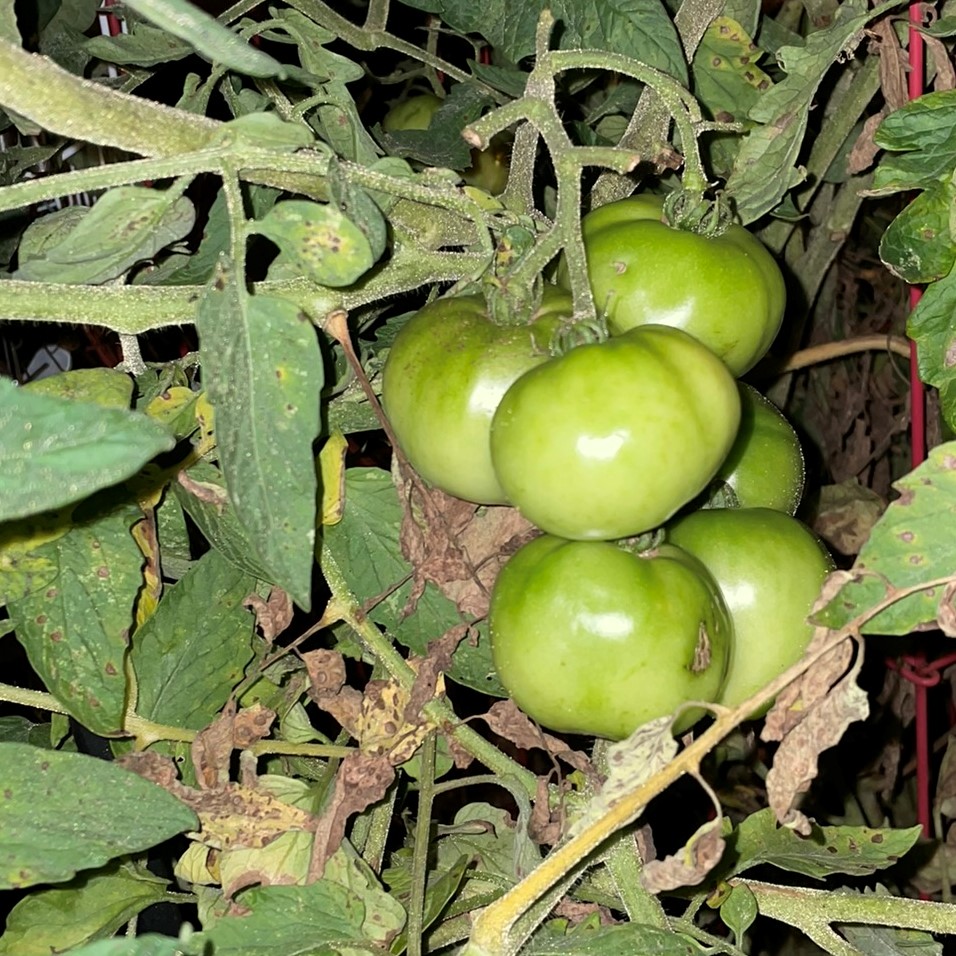
It was almost unbelievable to me, when I walked out toward our shriveled-up raised bed garden to begin breaking down the zucchini trellis and found—get this—new tomatoes!!!

It’s true that Southern summers tend to run a bit longer than some other regions, but I didn’t expect a tomato comeback, especially in the last days of September and given that our nighttime temperatures are sinking into the 40s. Mother Nature is something else though, isn’t she?


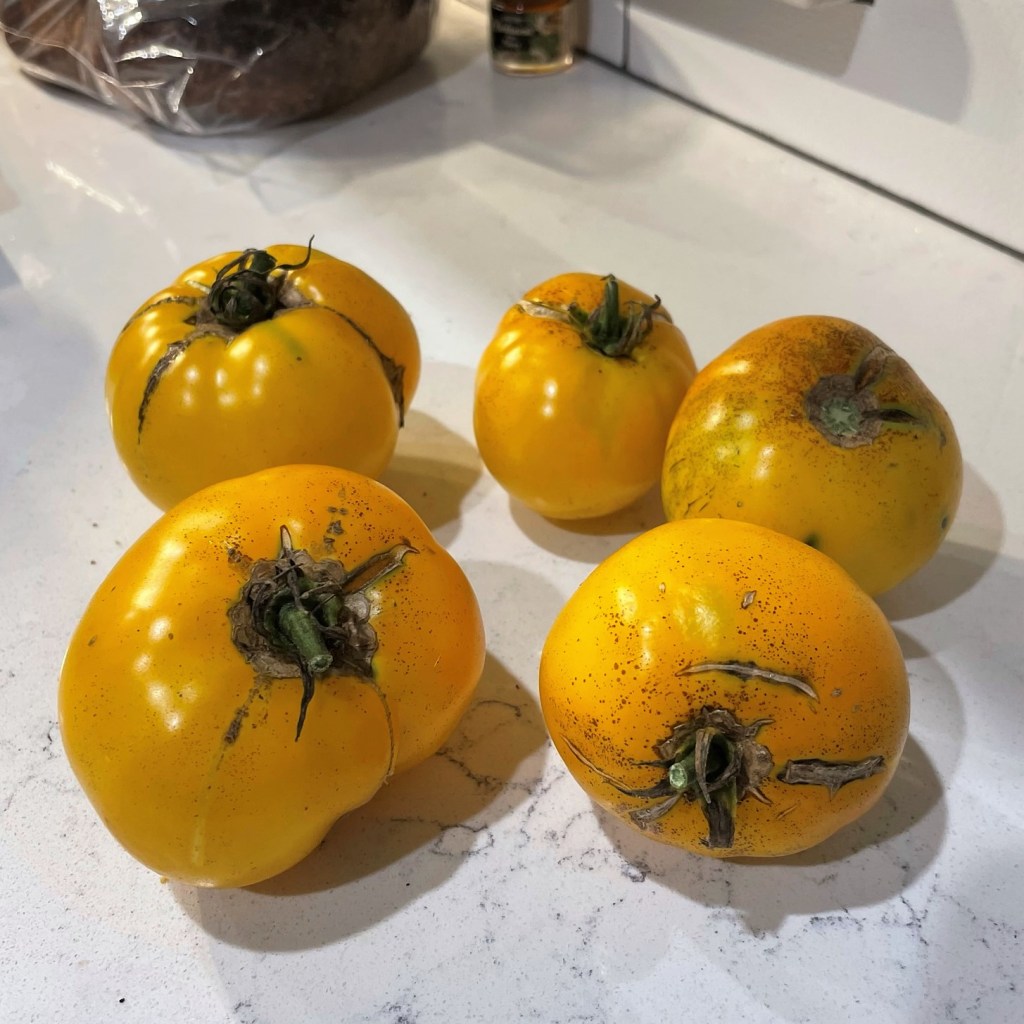
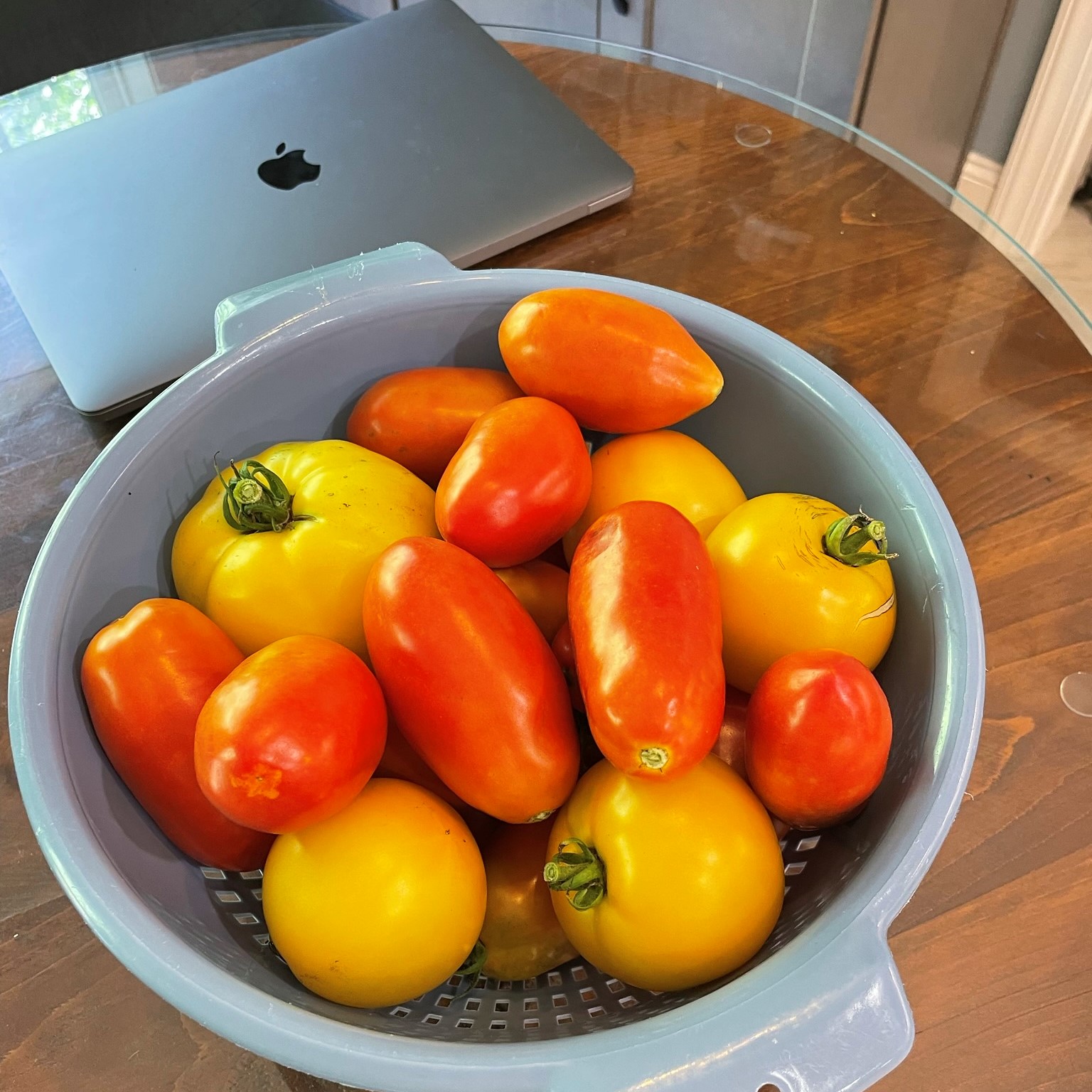
In addition to the lemon boy heirlooms (ripe and otherwise), we also had a bumper crop of a handful of Romas and though they didn’t look as pretty as the ones we enjoyed earlier in the summer, they were perfectly ripe and had a great flavor. I knew they’d be an excellent ingredient for homemade tomato bisque, which happens to be my husband’s favorite.

To be clear, you don’t literally need all day to make this bisque; I just needed something to do over the weekend, when our area was awash with the remnants of Hurricane Ian. Rather than making soup to freeze for a rainy day, I spent an entire rainy day making the soup we’d enjoy later. If you have half an hour, and don’t need to cook down fresh tomatoes, you could whip up this soup and use the simmering time to make a grilled cheese sandwich (our favorite side for this soup).

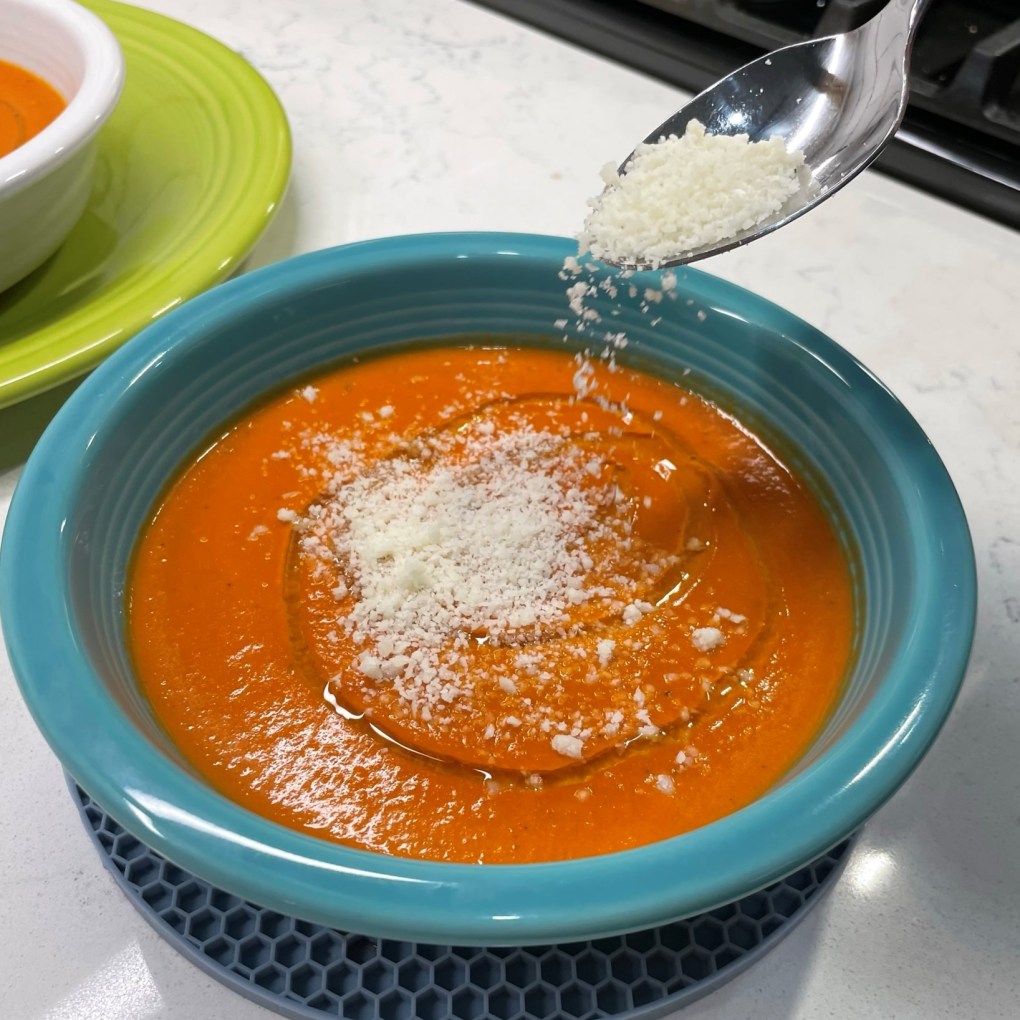
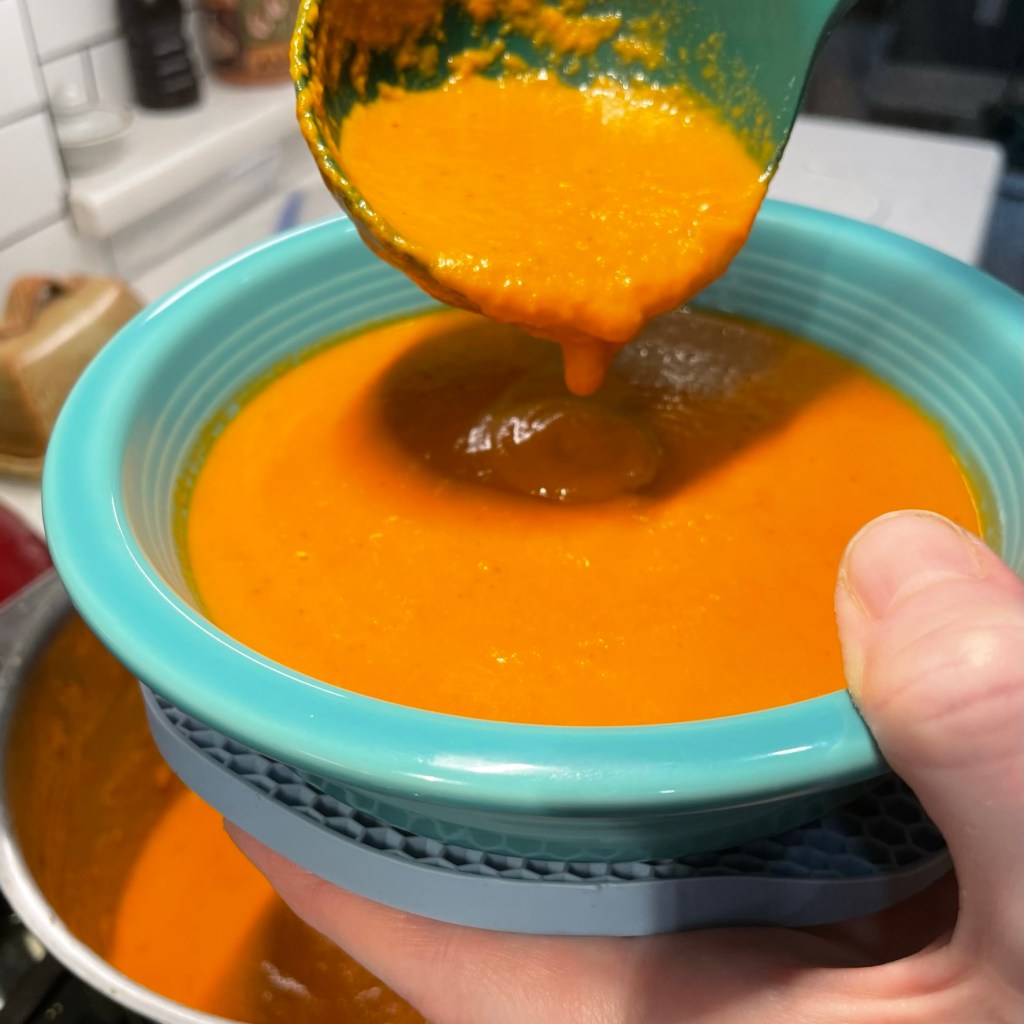
This is what a bowlful of comfort looks like.

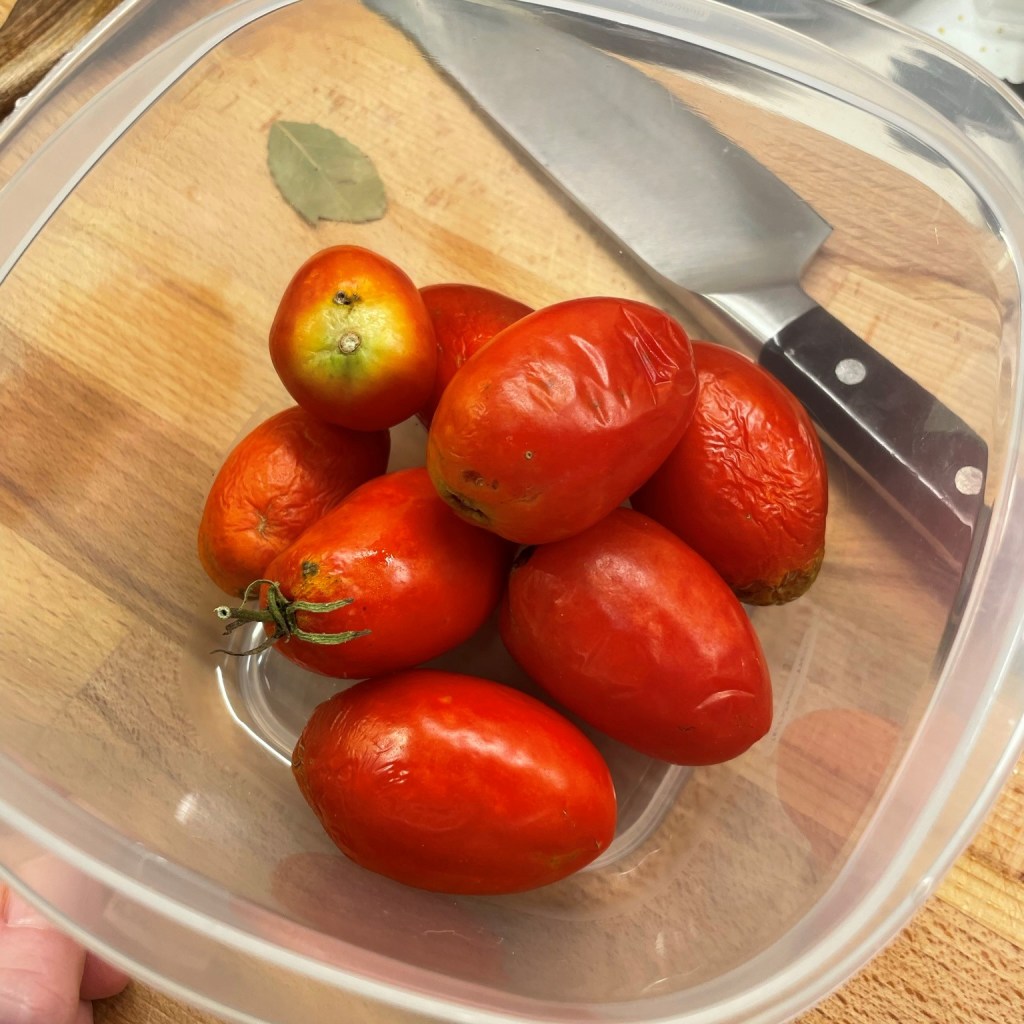
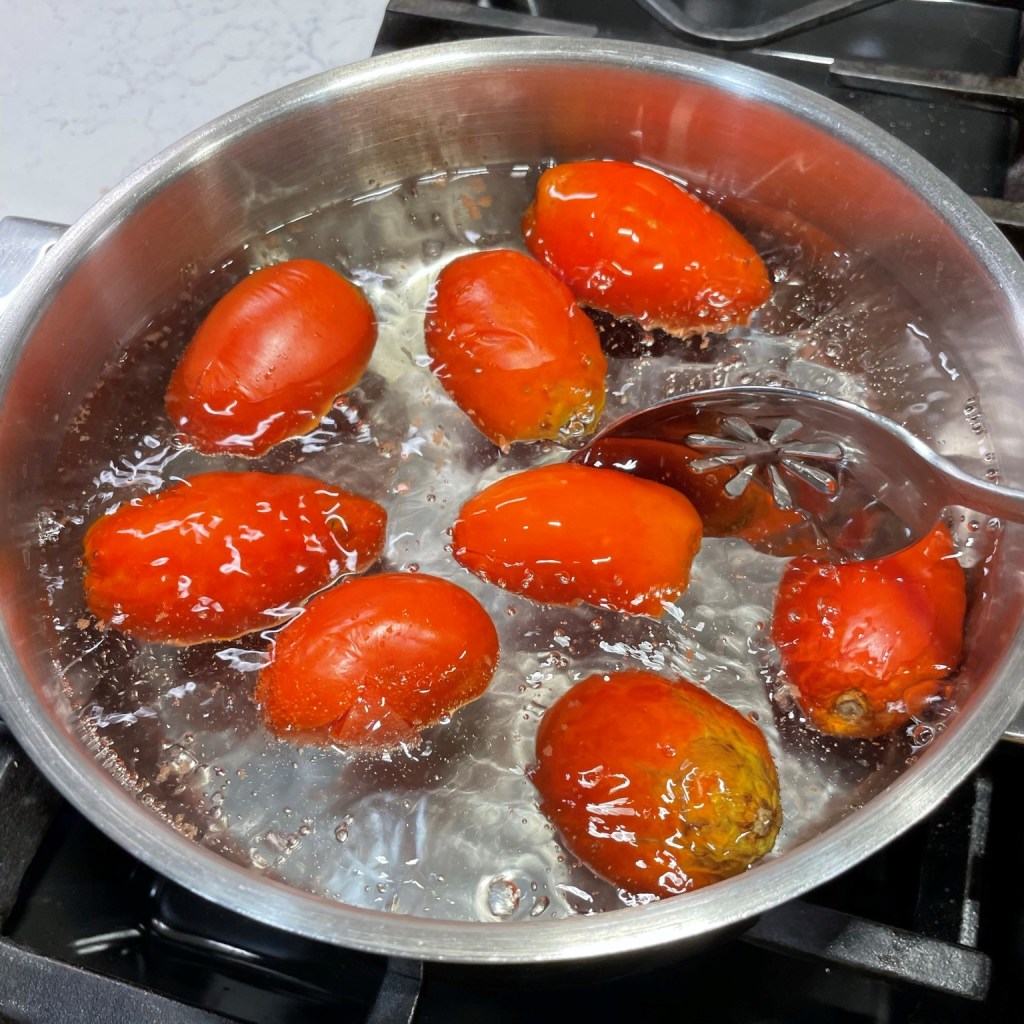
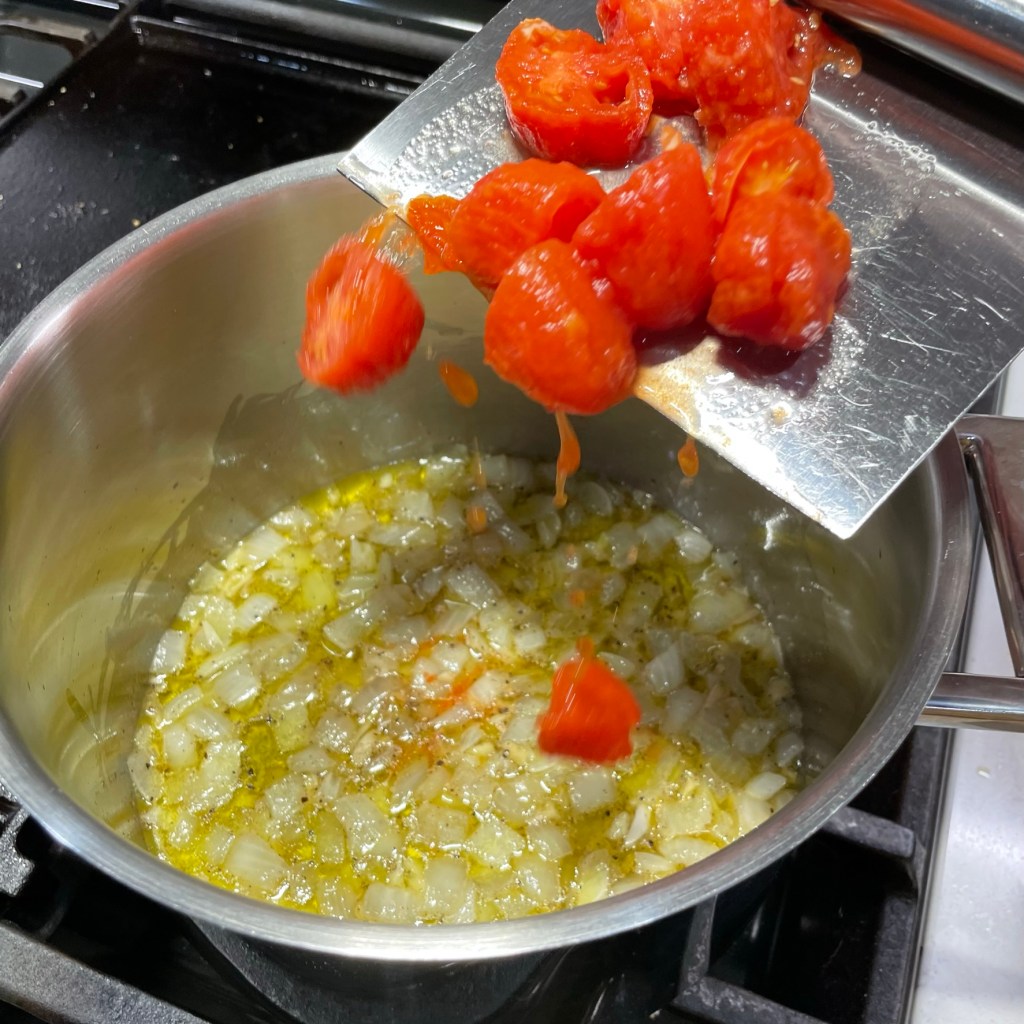
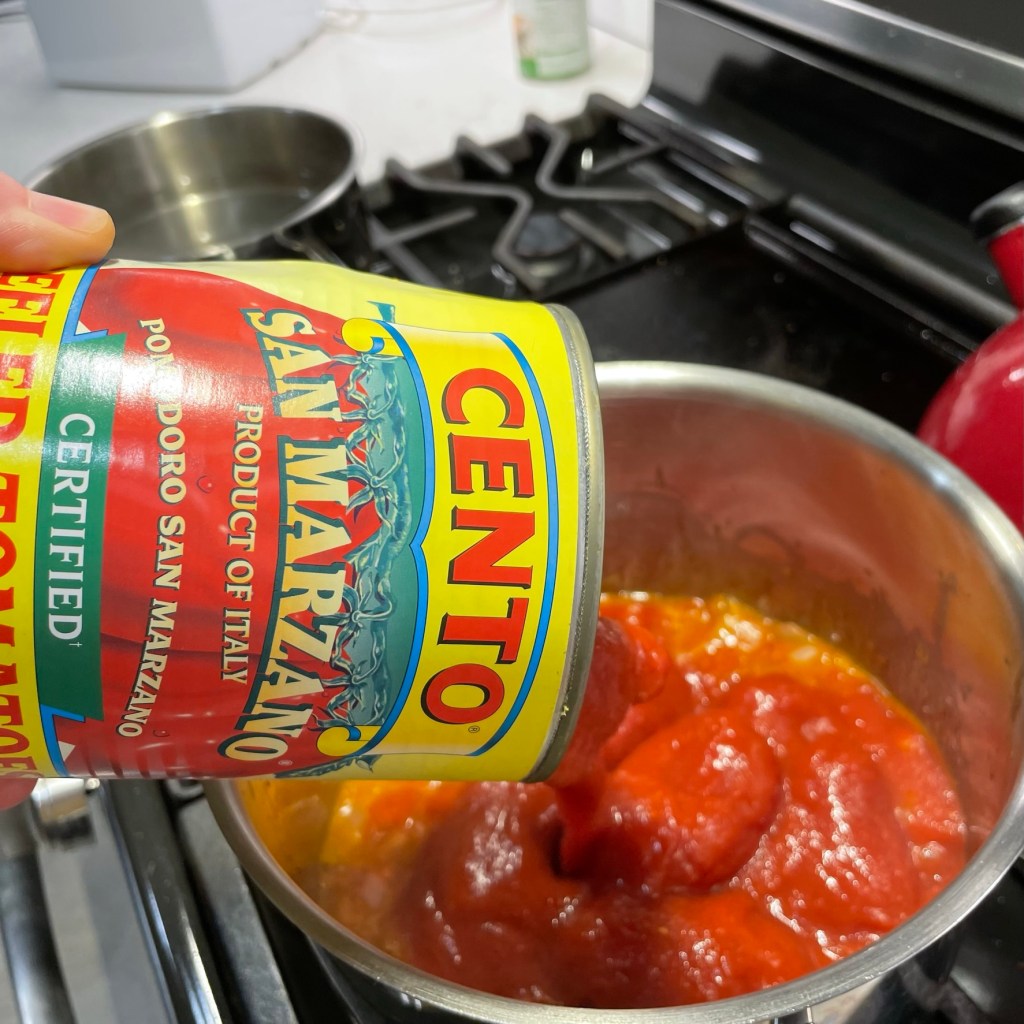
My plan for the bisque came together in seconds: I’d blanch and shock the tomatoes for easy peeling, then chop them up and add them to my soup pot along with sauteed onions and garlic, plus a large can of Italian tomatoes (San Marzano, of course) and give the mixture a nice, long simmer to marry the flavors.


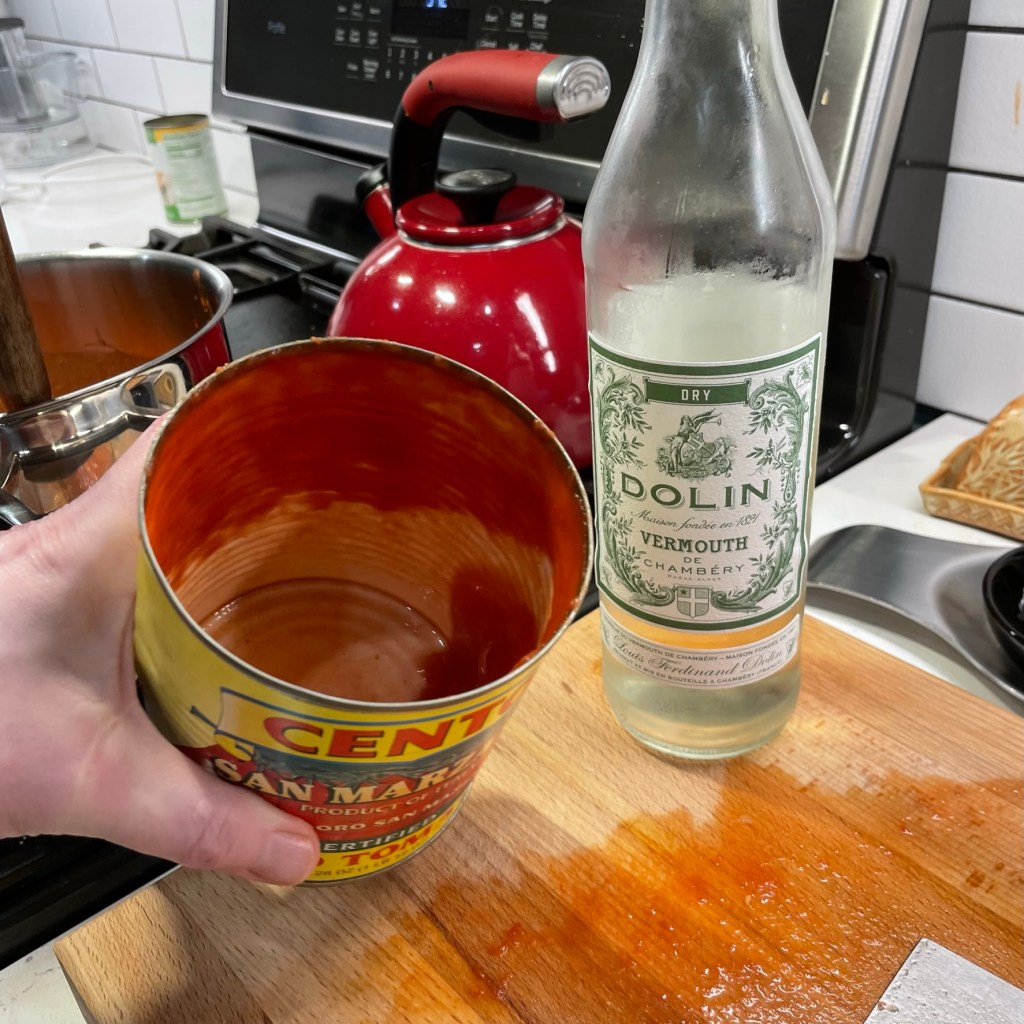
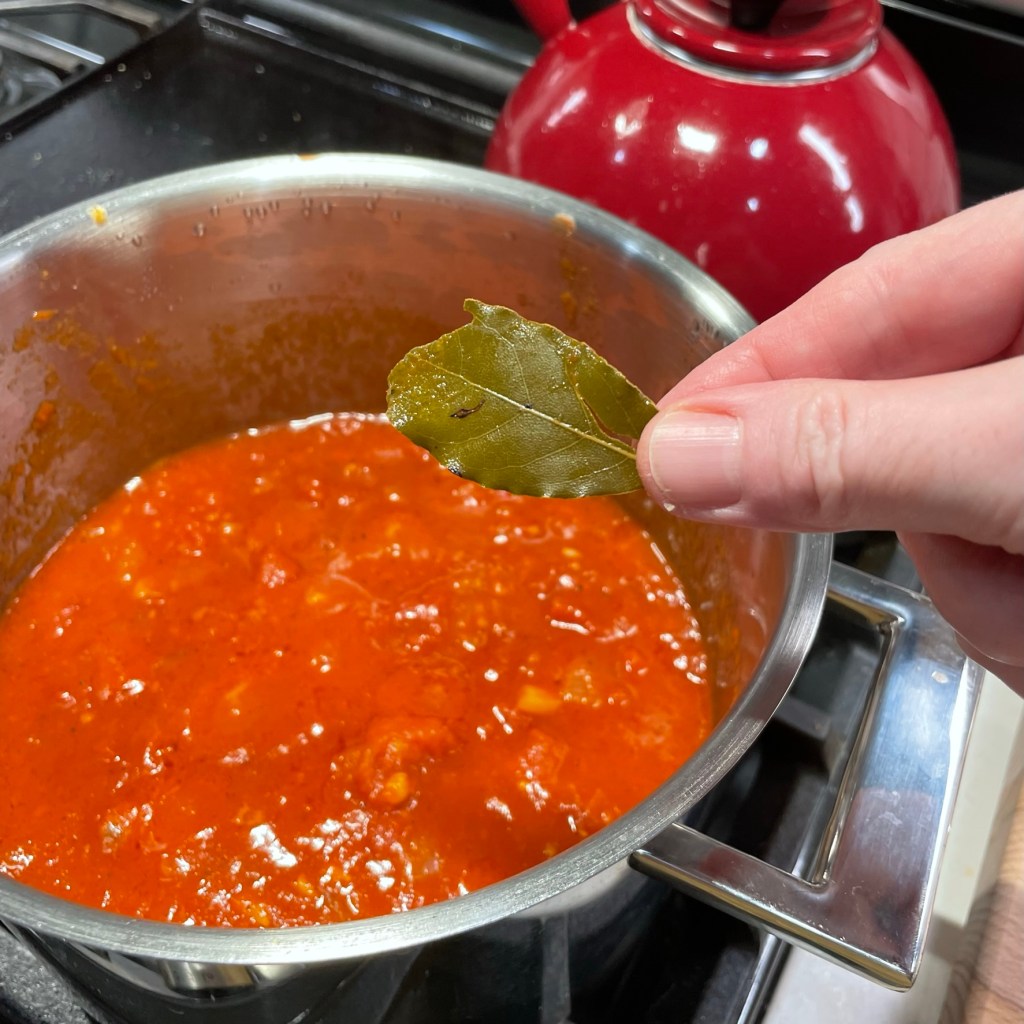
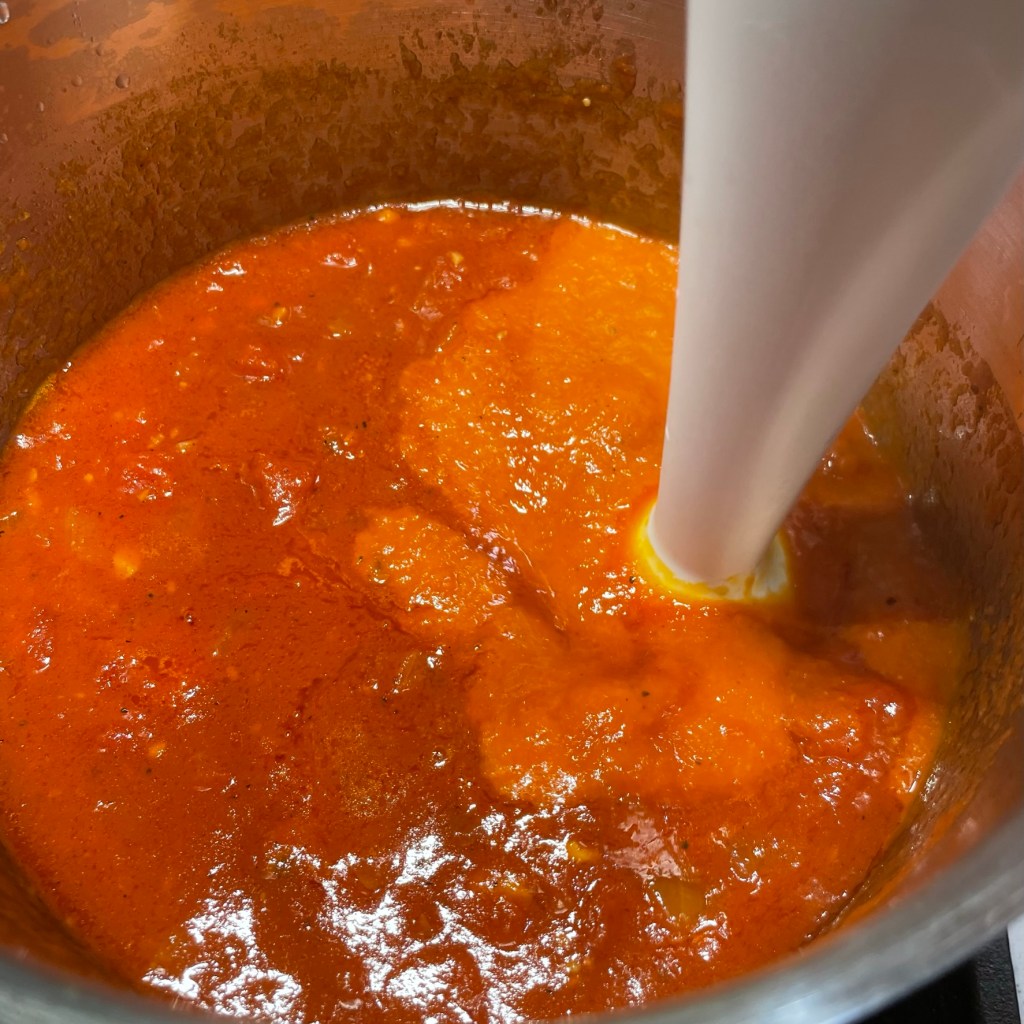
For a flavor boost, I swished out the tomato can with a few tablespoons of dry vermouth (the same spirit I put in my favorite martini) and dropped into the pot a dried bay leaf, which is always a good bet for a dish that is going in for a long simmer. Two hours later, I removed the bay leaf and brought out the immersion blender to puree the soup into the creamy texture that my hubby loves.


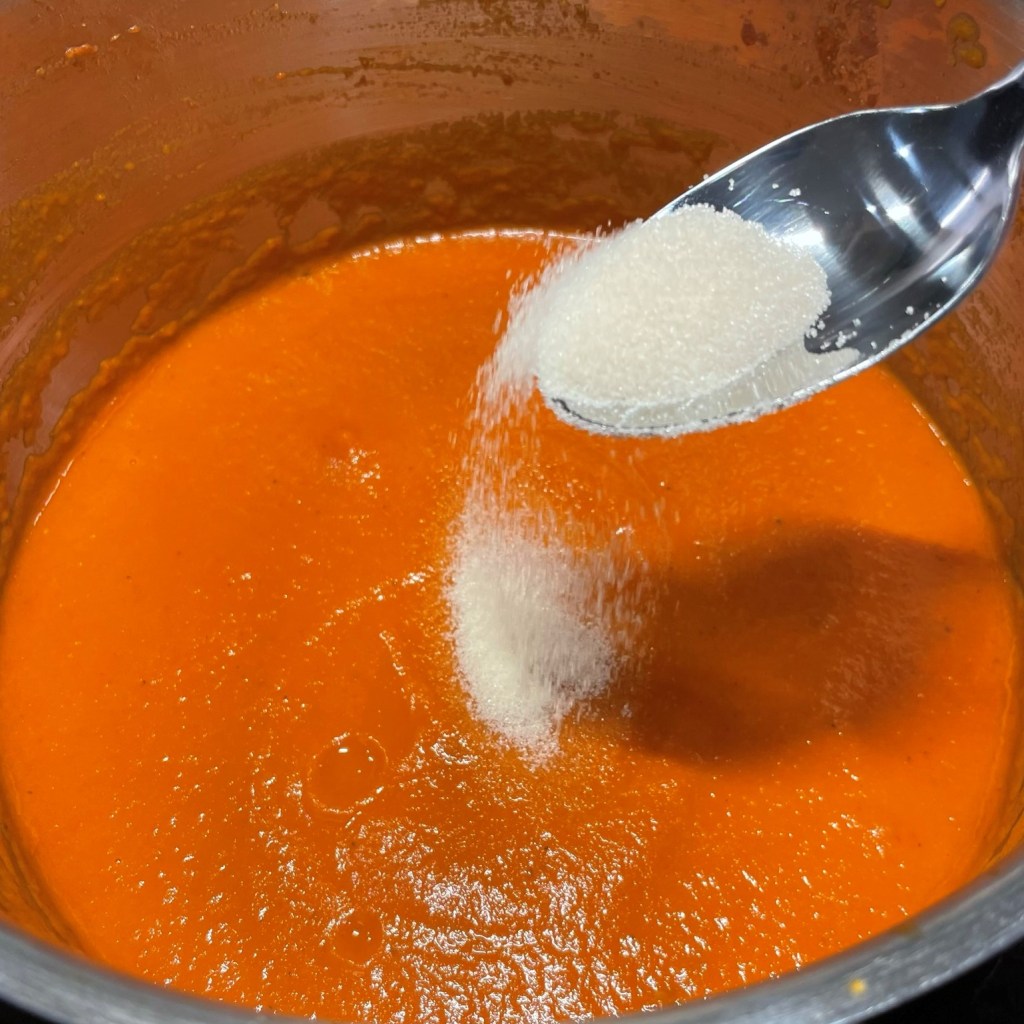
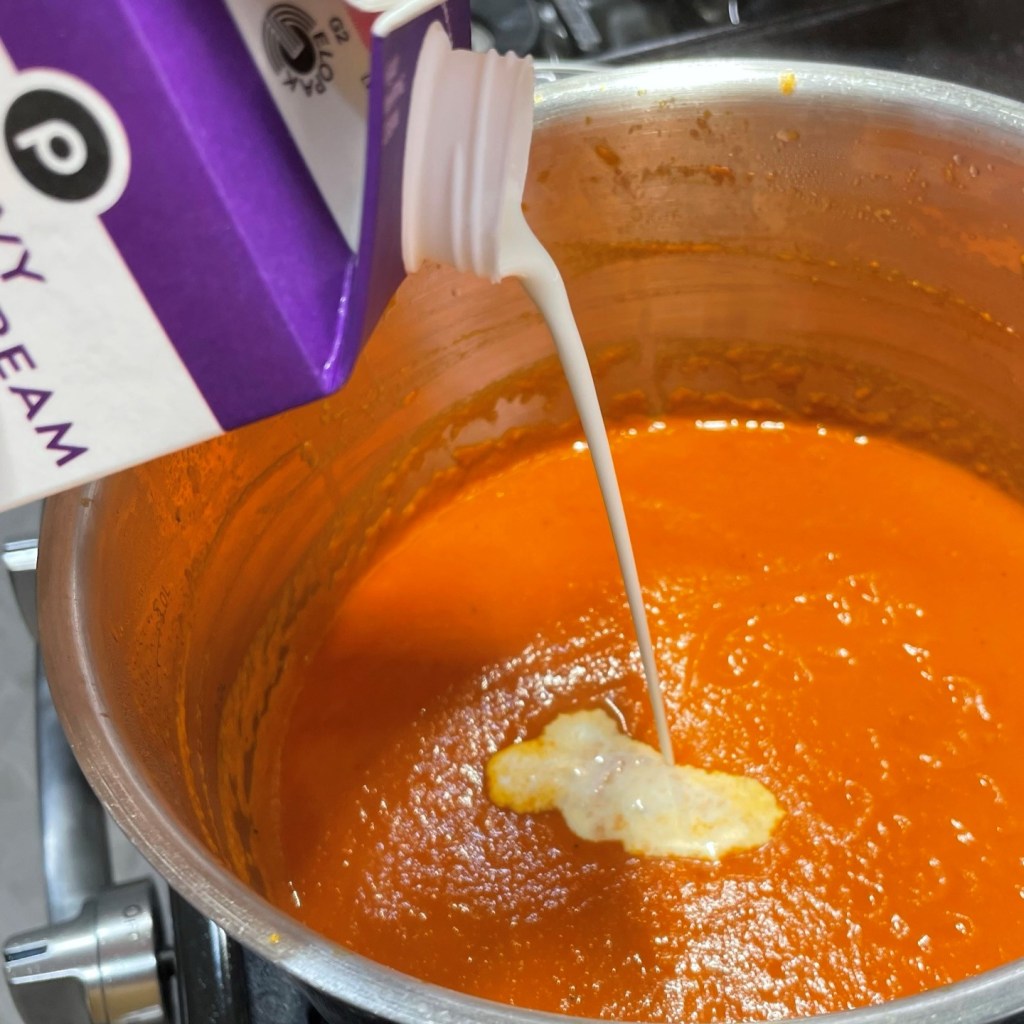
The resulting soup was really good, and I could taste the freshness that my surprise Romas contributed to the pot. It needed a little more depth, though, and definitely a little more color. Maybe you have noticed, as I have, that a homemade tomato soup or sauce tends to come out more orange than red, and it turns out there is a good (and scientific) reason for that, as I learned a few days ago in this article in my news feed. A little bit of tomato paste deepened the color and intensified the tomato flavor, a slight spoonful of sugar balanced the acidity, and a generous splash of cream made it bisque-y.


This was a great use of my encore tomatoes, though this easy homemade soup would be delicious with only canned tomatoes, which are usually packed at their peak of freshness. You might replace my fresh tomatoes with an extra, 15-ounce can, or simply reduce the other ingredients a bit for a smaller batch.

As for us, we are glad for a little extra, as a warm homemade soup will be most welcome at the end of today’s Yom Kippur service (that’s the Jewish holiday that has a 24-hour complete food-and-water fast), and we will undoubtedly devour our leftovers!

All-day Tomato Bisque

  • Servings: 8 cups or 6 bowls
  • Difficulty: Average
  • Print

Of course, you don't really need to spend all day making this soup, but the long simmer time makes a world of difference in flavor, especially when using fresh garden tomatoes.


Ingredients

  • 8 fresh, small plum tomatoes (or substitute a 15-ounce can of diced tomatoes)
  • 2 to 3 Tbsp. extra virgin olive oil, depending on taste
  • 1/2 large onion, chopped
  • 2 cloves garlic, smashed and chopped
  • Kosher salt and black pepper to taste
  • 28-ounce can whole, peeled tomatoes (San Marzano or another type that is packed in puree)
  • 1/4 cup dry vermouth (or dry white wine, such as pinot grigio)
  • 1 whole dried bay leaf
  • 2 Tbsp. tomato paste
  • 1 tsp. sugar (optional)
  • 1/4 to 1/2 cup heavy cream (use less or substitute half and half for reduced fat)

Directions

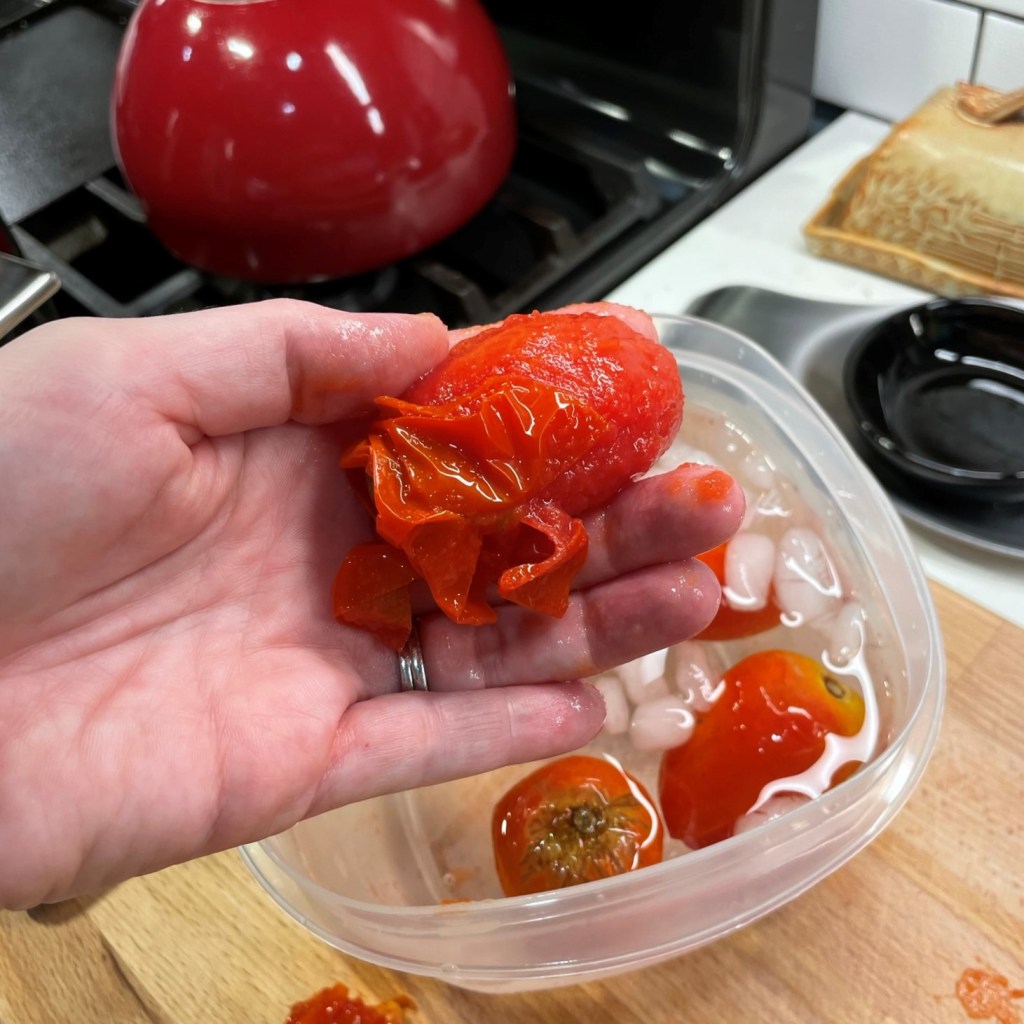
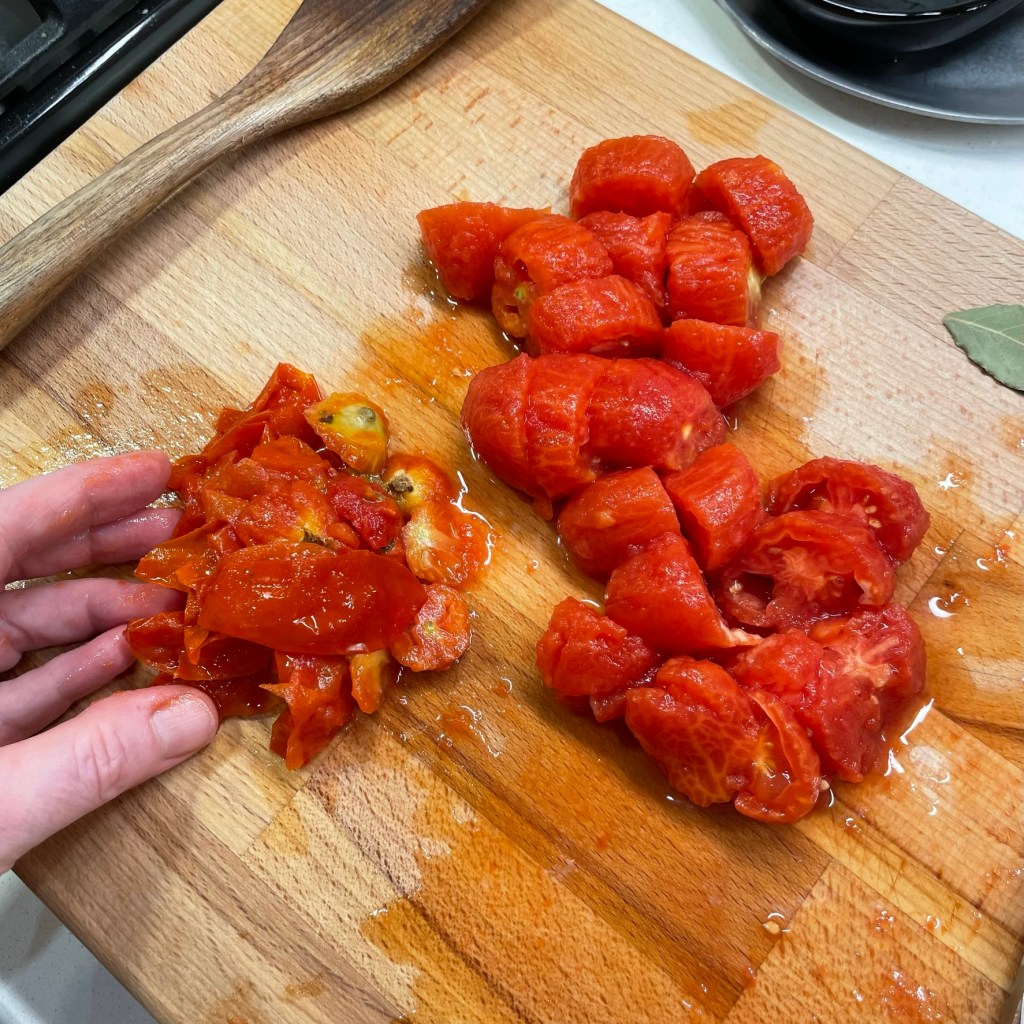
  1. Put on a pot of water to boil for blanching the fresh tomatoes. Wash and score the bottom (blossom end) with an X for easy peeling. Carefully immerse the tomatoes into the boiling water for a minute or two, just long enough for the skins to split. Transfer immediately to a bowl of ice water, then peel and chop them.
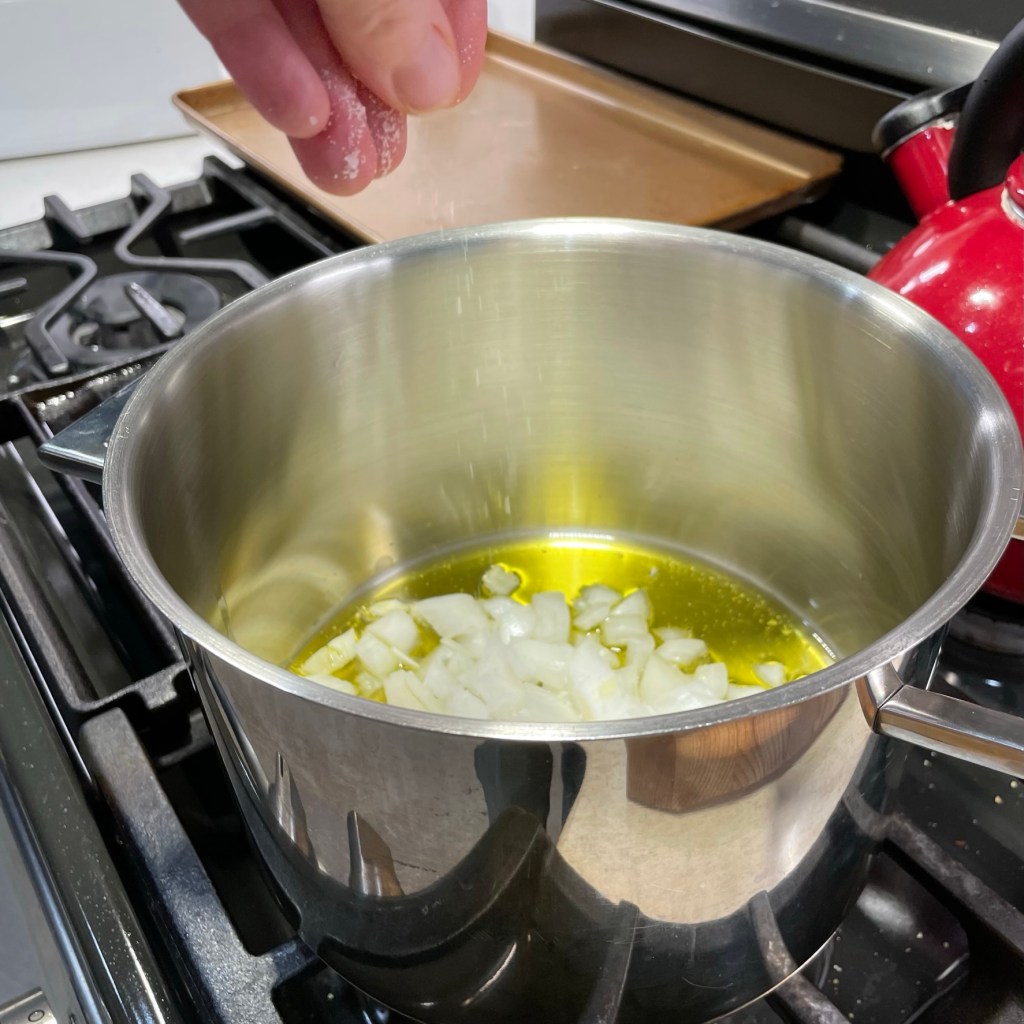
  2. While water is boiling, heat olive oil in a heavy-bottomed soup pot over medium heat. Add onions and sprinkle with salt. Cook until softened and slightly transparent. Add the garlic and cook another minute.
  3. Add the fresh, chopped tomatoes to the pot and stir to heat through. Add the large can of tomatoes (juice and all, but remove basil sprigs) and break them up with your cooking utensil. If you wish, you can squeeze the whole tomatoes with your hands as you add them to the pot, and I would recommend this if you’re in a hurry. For long, slow simmering, the heat will break them up just fine.
  4. Add vermouth (or wine) to the tomato can and swirl it to rinse out the leavings. Add this to the soup and bring the pot to a slight boil, then cover and reduce heat. Add the bay leaf and simmer for at least 30 minutes or up to several hours. Check the soup occasionally and stir to keep it from burning on the bottom.
  5. When tomatoes break easily under pressure from your utensil, use an immersion blender to puree it as smooth as you like. Be sure to remove the bay leaf first! If you don’t have an immersion blender, allow the soup to cool and puree it in batches in a regular blender. Keep the vent cap open for safety.
  6. Stir in tomato paste and sugar (if using), and adjust salt and pepper to taste. Stir in cream just before serving.


Not Quite Pizza Sauce

Now that we’re fortunate enough to have a garden again, thanks to Terrie’s persistence, we have a bounty of summer tomatoes to deal with.

And recently I had the chance to create a pizza sauce. I used to always make my own sauce when I made pizza (pre-Terrie, pre-sourdough) with store-bought dough. But we’ve been using sauce we buy at a market because there’s quite a variety now and they’re way more flavorful than even just a few years ago. But homemade sauce, that’s the good stuff. And we have fresh Roma tomatoes, so why not?

Every day, we’ve come in from the garden with another haul.

As an aside, I should note that I’ve been gardening and canning off-and-on for 25 years, but several years ago conceded gardening to Terrie for two reasons—the persistence of the deer wore me out, and in 2013, I had an allergic reaction to yellow jacket stings and was advised by my doctor that activity in the grass where yellow jackets hung out could be dicey for me. And our raised-bed garden is right in the middle of a lot of grass. Every time I go near it, I always see bees buzzing and I’m on high-alert mode.

I know you mean well, Buddy.

But back to the story. Sauces are a big thing for me. Before Terrie, I would concoct all kinds of sauces for things I grilled. My go-to sauce for grilled chicken, for example, was a combination of five ingredients that I can still name from memory even though I’ve not made it that way for years: a base barbecue sauce such as Sweet Baby Ray’s, Italian dressing, Kraft Catalina dressing, duck sauce (most often Saucy Susan brand), and some splashes of either soy, teriyaki or hot sauce depending on my mood.

Under Terrie’s watch, however, we have eliminated anything containing ingredients such as high-fructose corn syrup (bye-bye Sweet Baby Ray’s) and soybean oil (see ya, Kraft Catalina). The result is that we’ve eliminated a lot of my go-to’s, and to be honest, I don’t mind that. When I create a sauce now, it’s with more natural ingredients and usually means I’m investing my own labor, starting with sautéing vegetables and ending by blending. That’s how it was to be when I told Terrie I wanted to make a pizza sauce.

To increase my knowledge, I searched the inter-webs for pizza sauce recipes. I know how to create “Sunday gravy,” but a homemade pizza sauce from scratch is a different animal. Do you know that almost every recipe out there, including in the cookbooks we have at home, all start with one can (28 ounces) of plum tomatoes? So I changed the search to include “pizza sauce using homegrown tomatoes.”

We’ve had so many fresh, meaty Romas. I’ll use canned tomatoes in January.

The problem is I was mostly interested in a recipe by one of Terrie’s favorite chefs, J. Kenji Lopez-Alt. And he also used canned tomatoes. I remembered another bit of Terrie’s constant advice—don’t be married to a recipe; use your instinct. As a result, I used the Lopez-Alt recipe as a baseline but was able to embellish it with my own touches, like fresh tomatoes.

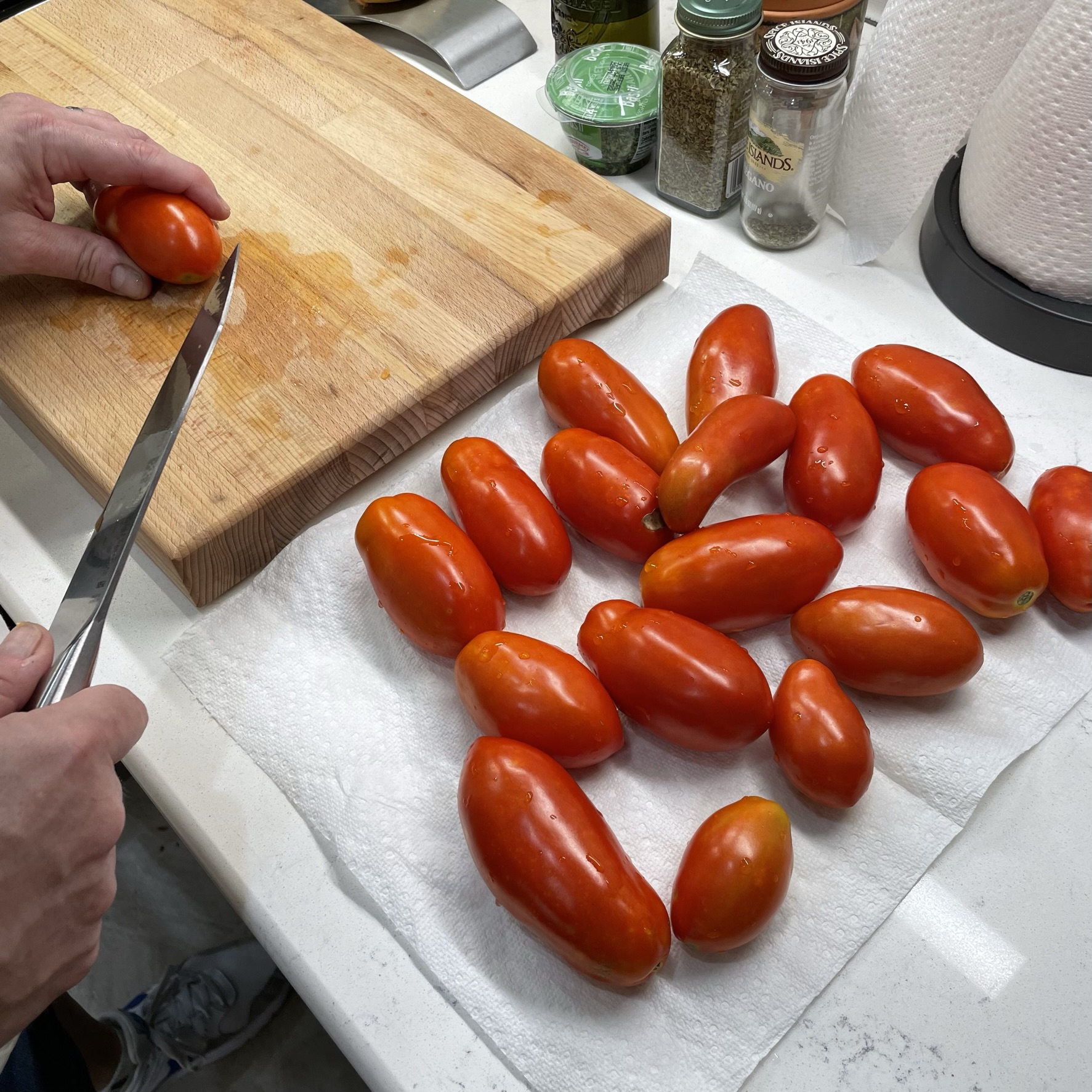
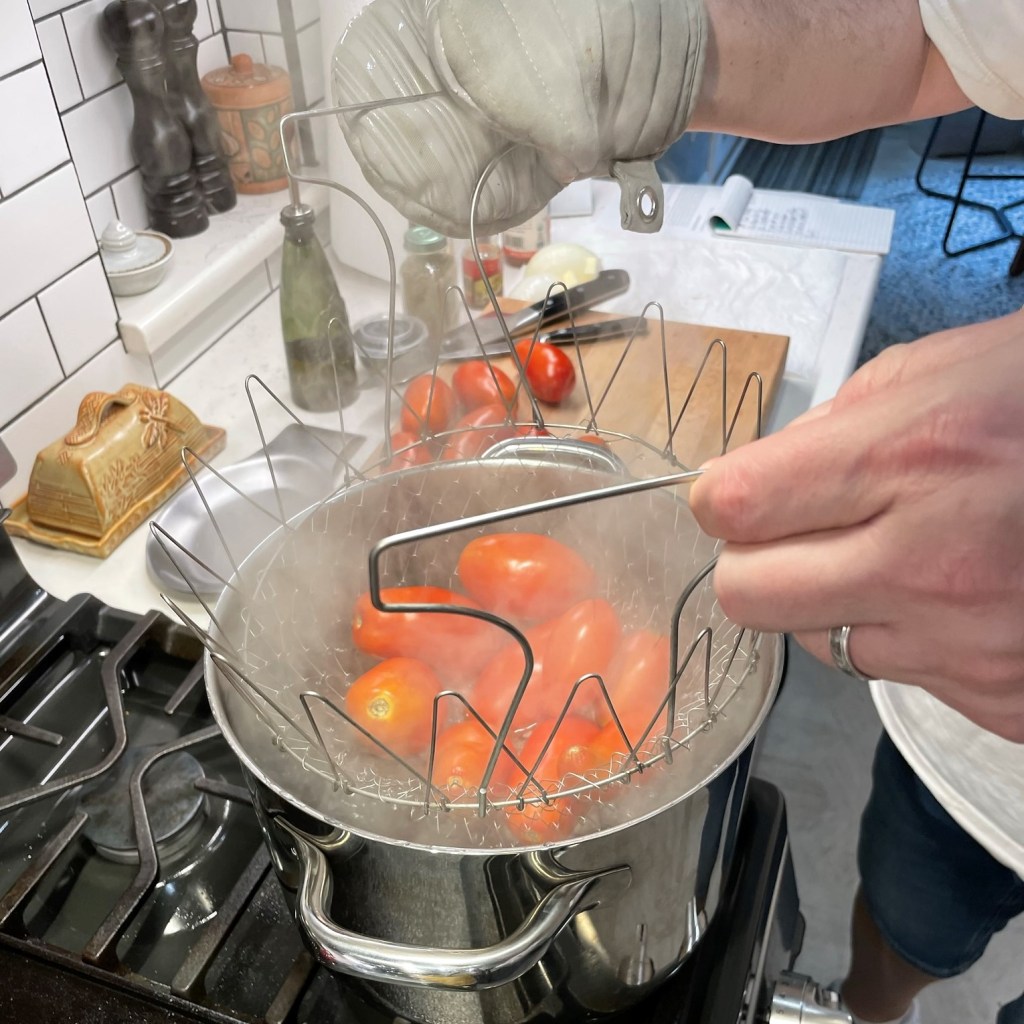
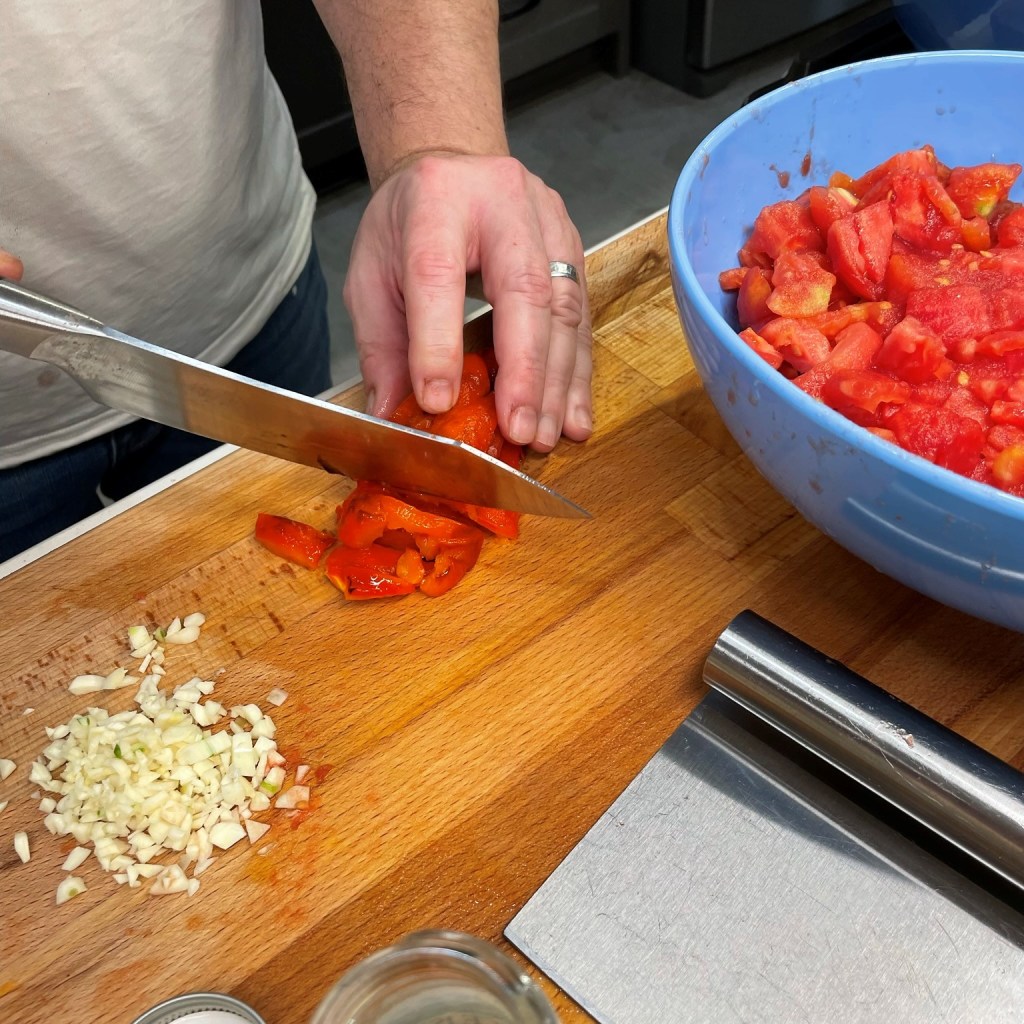
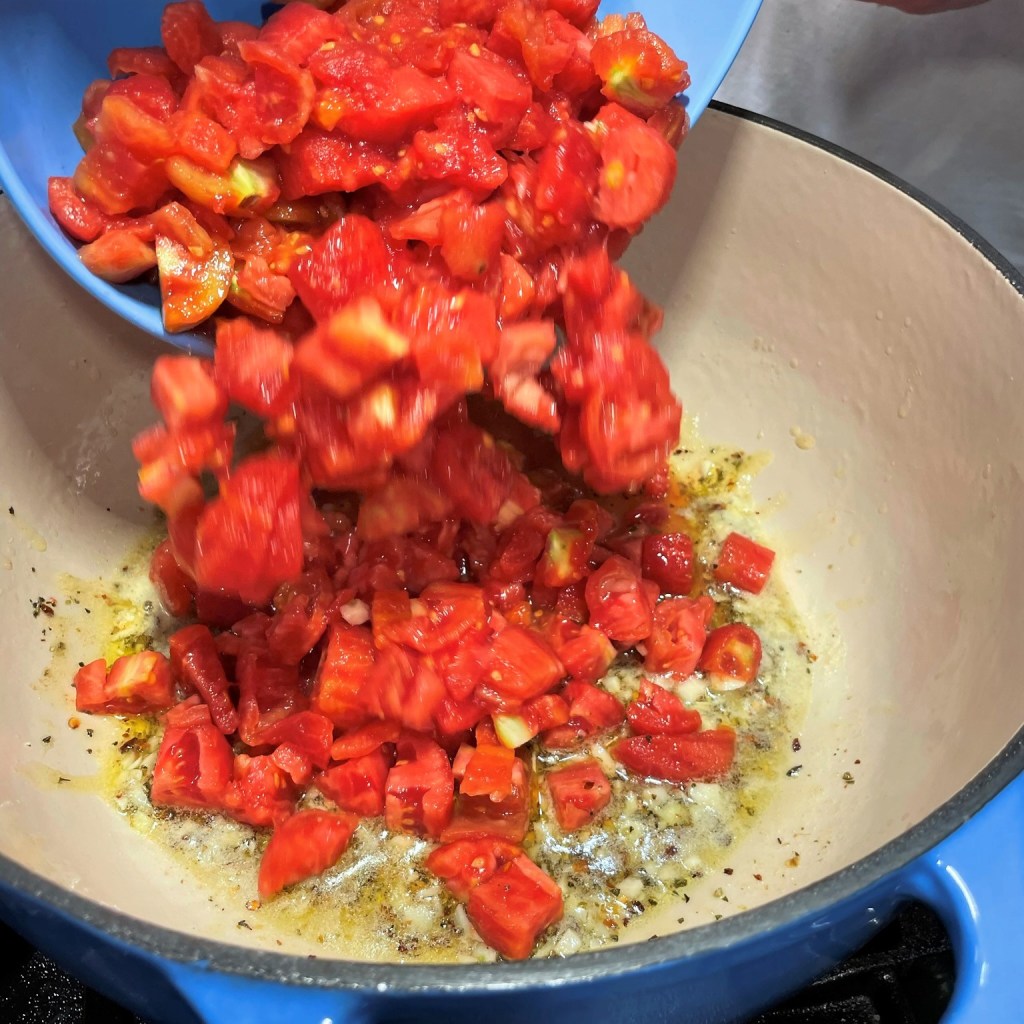
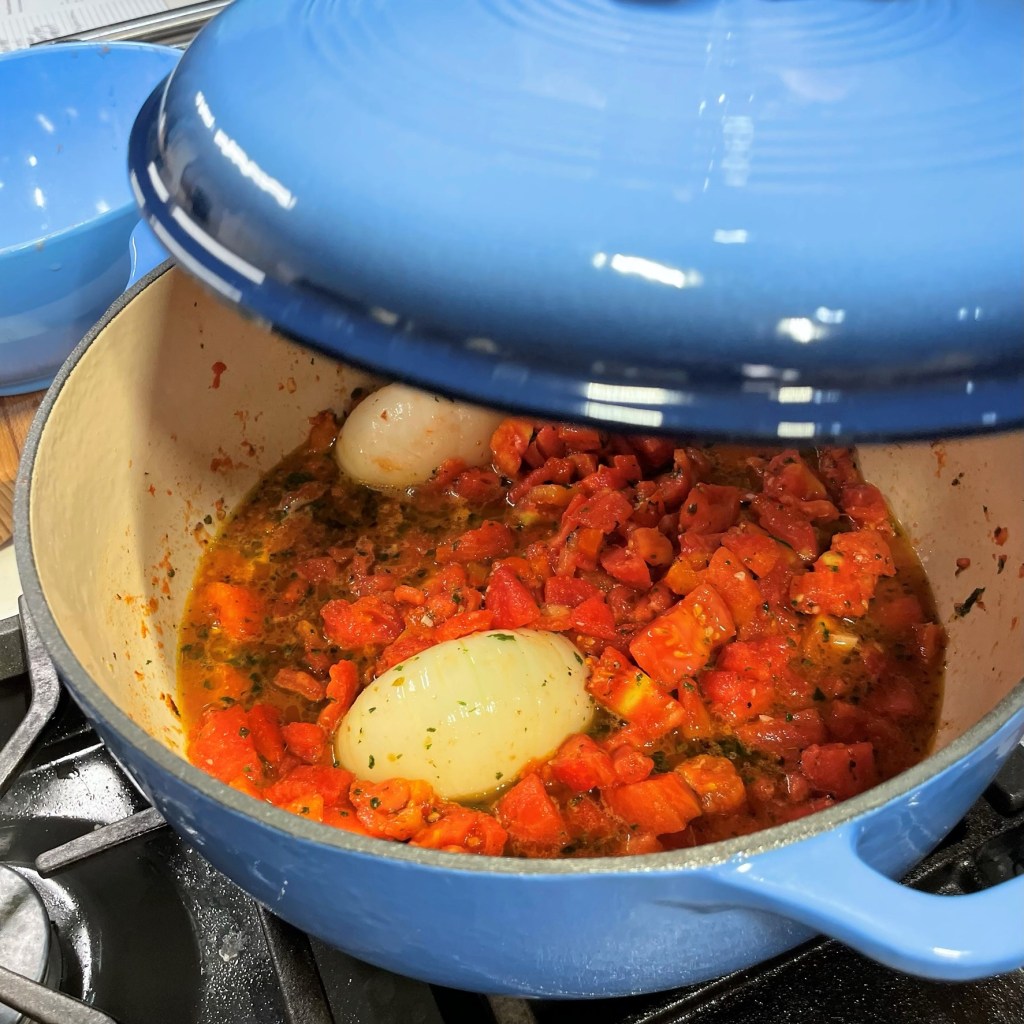
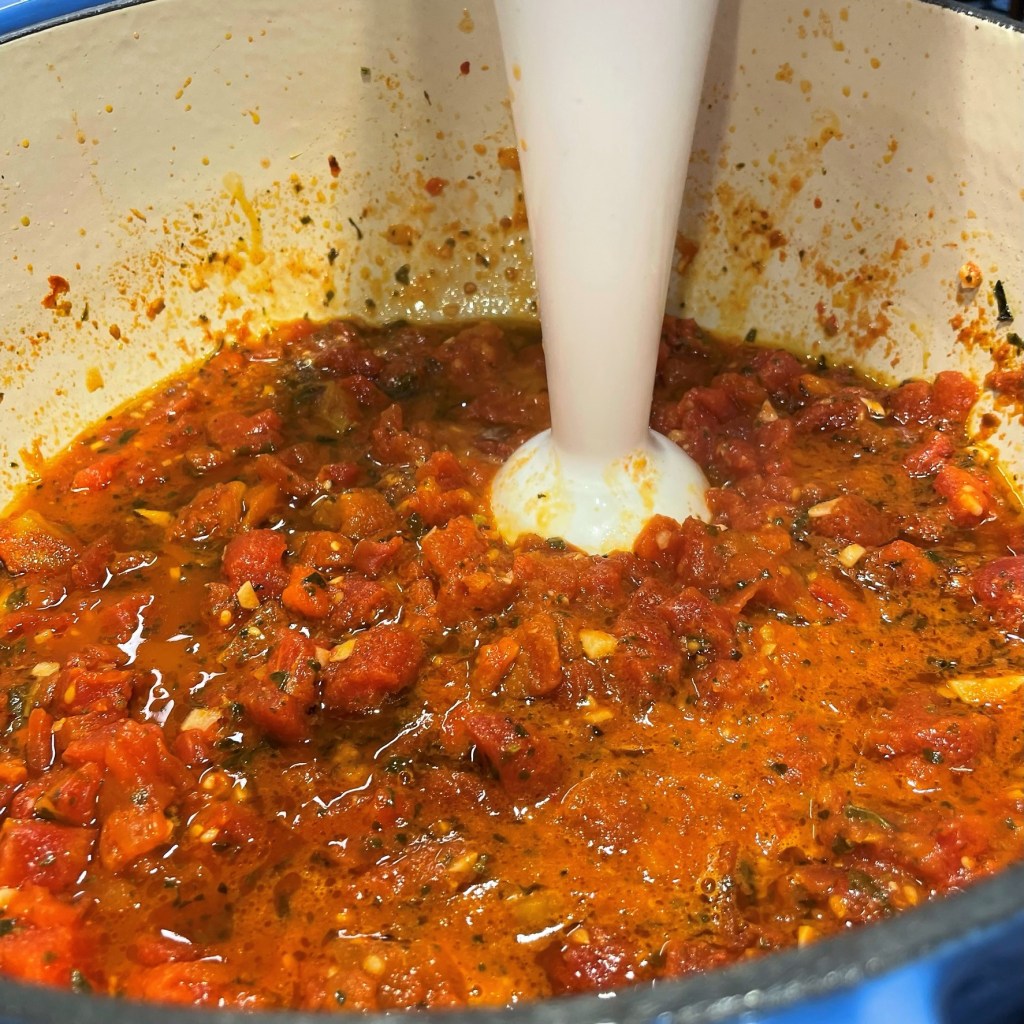
This included blanching (and then ice bathing) the tomatoes, sautéing garlic and some seasonings in a combination of olive oil and butter, roasting and dicing a sweet red bell pepper, and then adding an onion cut in half for the cooking (but removing at the end), then whizzing it up smooth with an immersion blender. The end result was amazing!

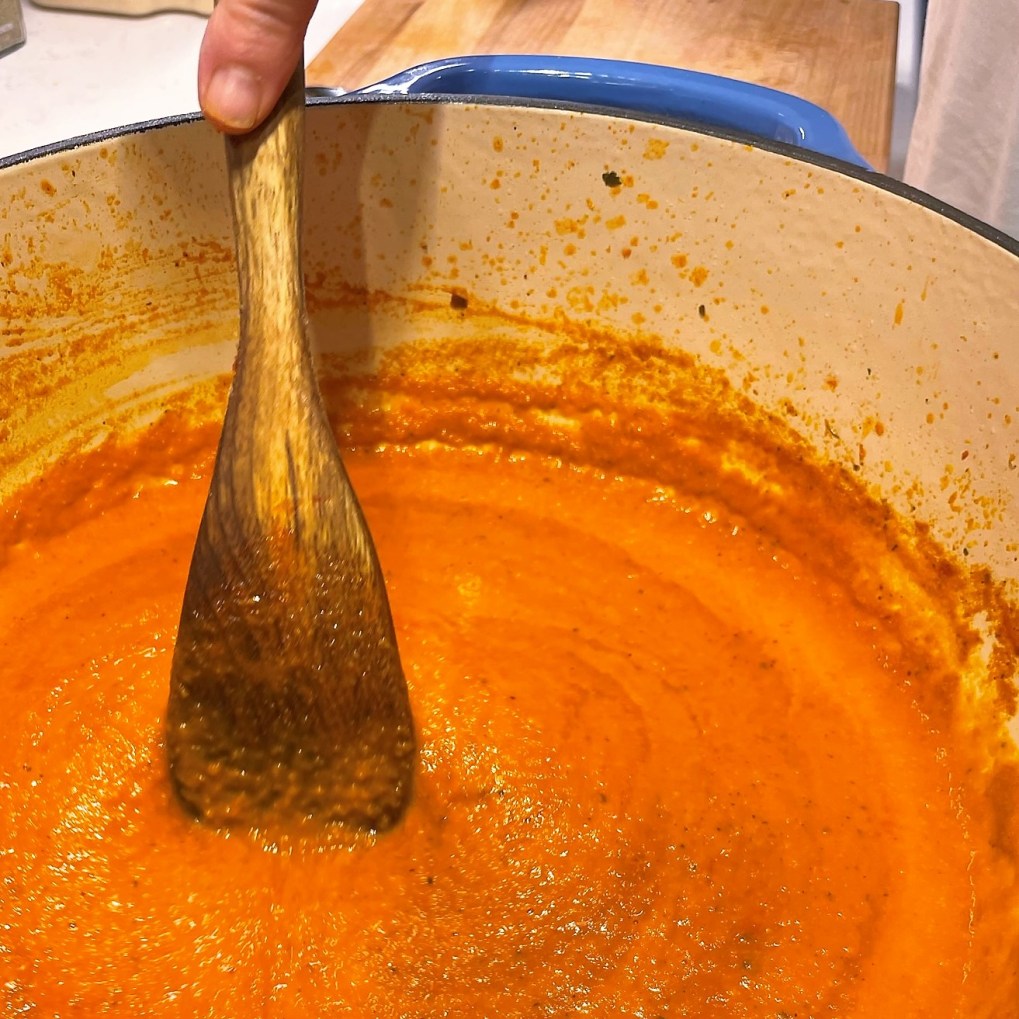
Use an immersion blender to puree it nice and smooth.

There was just one teeny problem. It’s not quite pizza sauce.

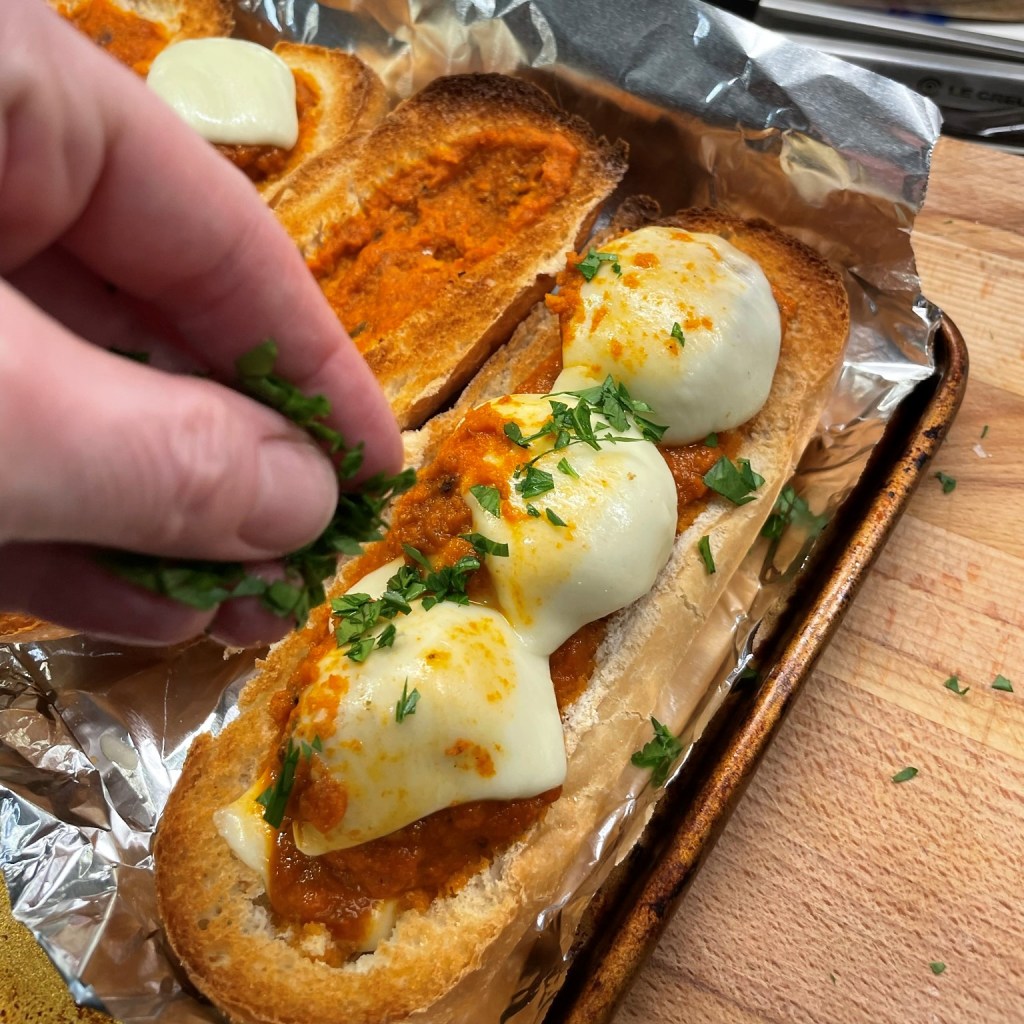
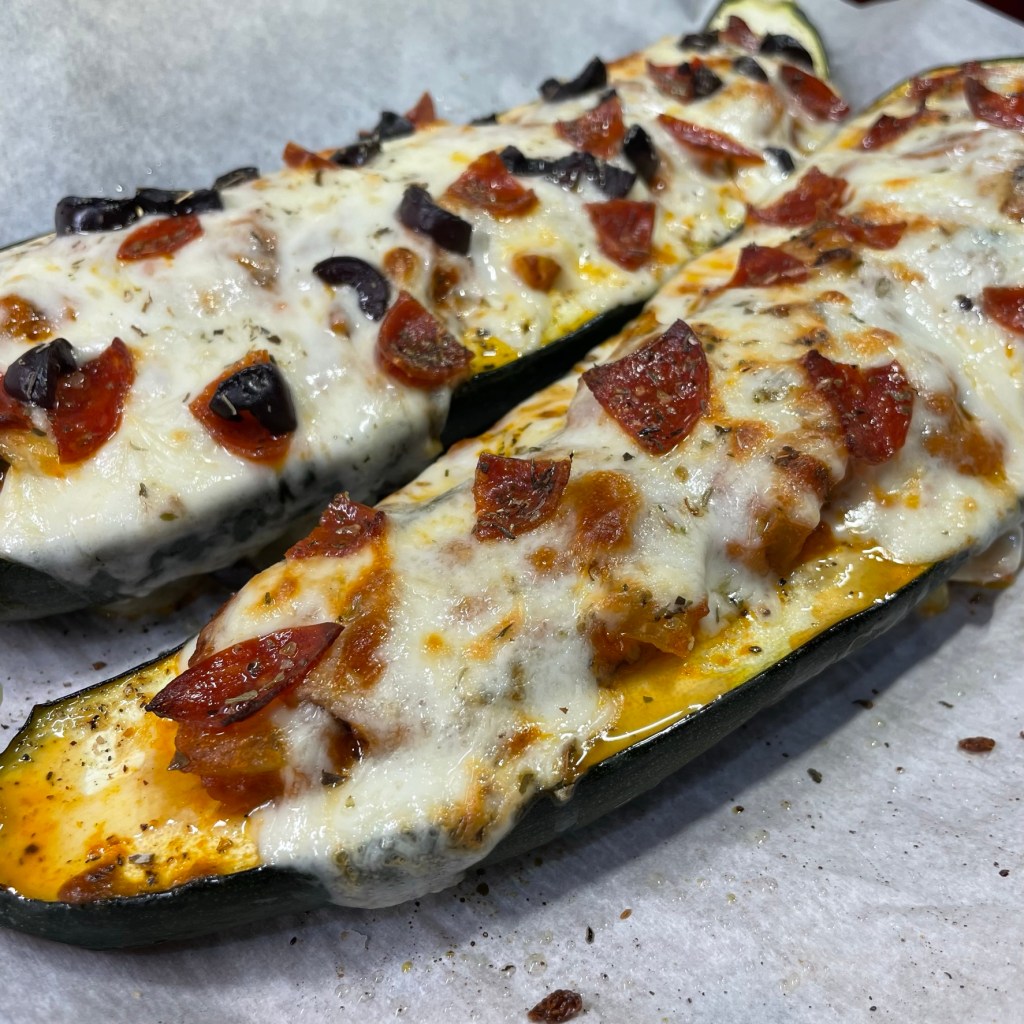
Rather, the sweetness of the red bell pepper and spice of the red pepper flakes meant it read uniquely, a cross between roasted red pepper sauce (like the one linked here that I made last summer) and something akin to vodka sauce (but without vodka, go figure). It was more complex than I wanted for pizza, which to me is a more tomato-forward and simple taste. We wound up using this sauce instead for turkey meatball subs. The subs had a tangy, bright pop thanks to our garden ingredients, and Terrie promises to share her recipe for the meatballs soon. The rest of the sauce (and meatballs) found its way into a stuffed zucchini boat, thanks to inspiration from a recent post on Dorothy’s New Vintage Kitchen.


As for my desire to make pizza sauce, well, we still have plenty of Roma tomatoes coming in. Stay tuned.


Not Quite Pizza Sauce

  • Servings: 6 to 8, depending on use
  • Difficulty: average
  • Print

My intention for pizza sauce turned into something more interesting and complex, perfect for topping pasta, Italian meatball subs or even lasagna. I used fresh Roma tomatoes from our garden, rather than canned tomatoes. If you use canned tomatoes, choose a 28 oz. can of Italian plum tomatoes and reduce the simmering time by half.

Ingredients

  • 3 pounds fresh Roma tomatoes, cleaned
  • 2 Tbsp. extra virgin olive oil
  • 2 Tbsp. unsalted butter
  • 1 small red bell pepper, roasted (instructions below)
  • 3 cloves garlic, smashed and minced
  • 1 1/2 tsp. dried oregano flakes
  • 1 1/2 tsp. dried basil leaves (or 2 good-sized sprigs fresh basil)
  • Kosher salt and black pepper to taste
  • 2 generous pinches red pepper flakes
  • 1 large sweet or yellow onion, peeled and cut in half from stem to root end
  • 3 Tbsp. grated Parmesan cheese (or the Parm-Romano blend that we are so fond of at our house)
  • 1 or 2 tsp. sugar, to taste

Directions

  1. Bring a large stock pot of water to a boil for blanching the tomatoes. Score the blossom end of the tomatoes to make it easy to peel them. Plunge the tomatoes into the water and let sit until you can see clear signs of the skin splitting. Have a good-size pot or bowl filled with ice water to chill the hot tomatoes and keep them from cooking once they are blanched. Then peel the tomatoes, give them a rough chop and set aside.
  2. Quarter the bell pepper and press the pieces to flatten them, skin side up, on a foil-lined baking sheet. Set the oven to broil setting and roast peppers for about 10 minutes, until charred but not burned. Transfer the pepper pieces to a bowl and cover to steam, which will allow easier peeling. Dice the pepper.
  3. In a large non-reactive pot on a low flame, heat the oil and butter until the butter melts. Add the garlic, oregano and pepper flakes. If using dry basil, add it now, too. Continue cooking on low for 2 to 3 minutes, then add the tomatoes, and salt generously. Add the onion halves, Parmesan cheese, fresh sprigs of basil (if using that) and roasted red pepper. Bring to a low boil, then reduce heat and cook on low until volume is reduced by up to half (about two hours).
  4. Remove the onions (and basil sprigs if you used fresh), and then process the sauce with an immersion blender until smooth. Continue to simmer on low, and taste and season it from that point to suit your palate.
  5. Serve immediately over pasta or whatever dish needs a bright Italian sauce. This also can be refrigerated (the flavors really shine after a couple days in the fridge), but probably should be used within a couple of weeks. Or you can freeze it.