Green Shakshuka

Breakfast for dinner is one of my favorite meal categories, and now that I have discovered the joy of shakshuka— the Mediterranean dish that combines vegetables and sauce with gently cooked eggs— there seems a world of possibilities beyond the standard rearrangements of eggs, bacon and pancakes. 

Shakshuka, which is very popular in Jewish culture, is typically made with a tomato sauce base and any variety of vegetables. The ingredients are stewed together in one pot, and eggs are simmered on top until set. It’s quick, hearty, simple and inexpensive (depending on egg prices, of course). My husband and I have enjoyed many versions of this dish since I first learned to make it in 2017, including last summer when I made a Ratatouille Shakshuka that was so, so good.

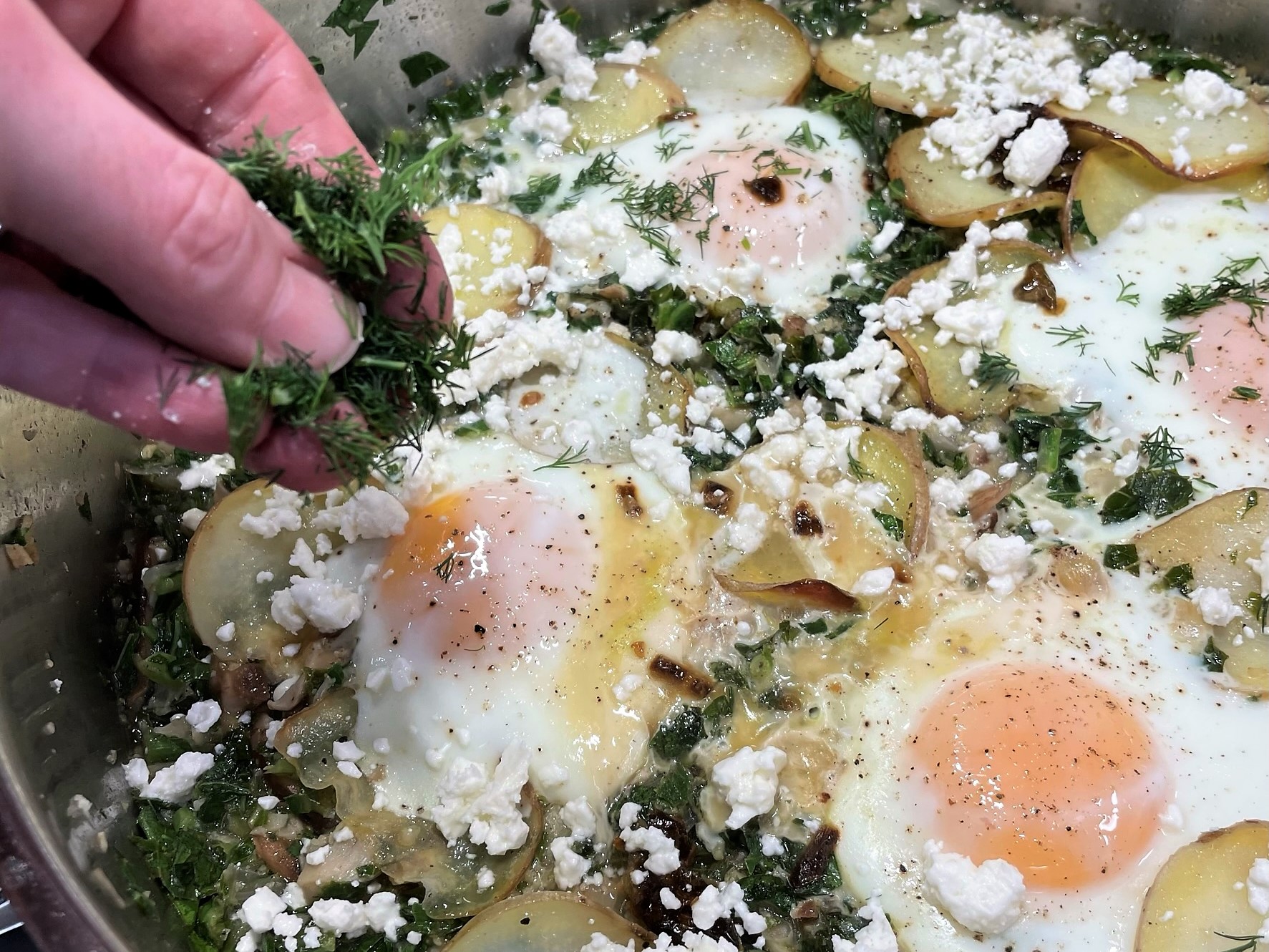
This time, however, my shakshuka is missing the bright red color of tomatoes because I have swapped them out in favor of hearty green ingredients.
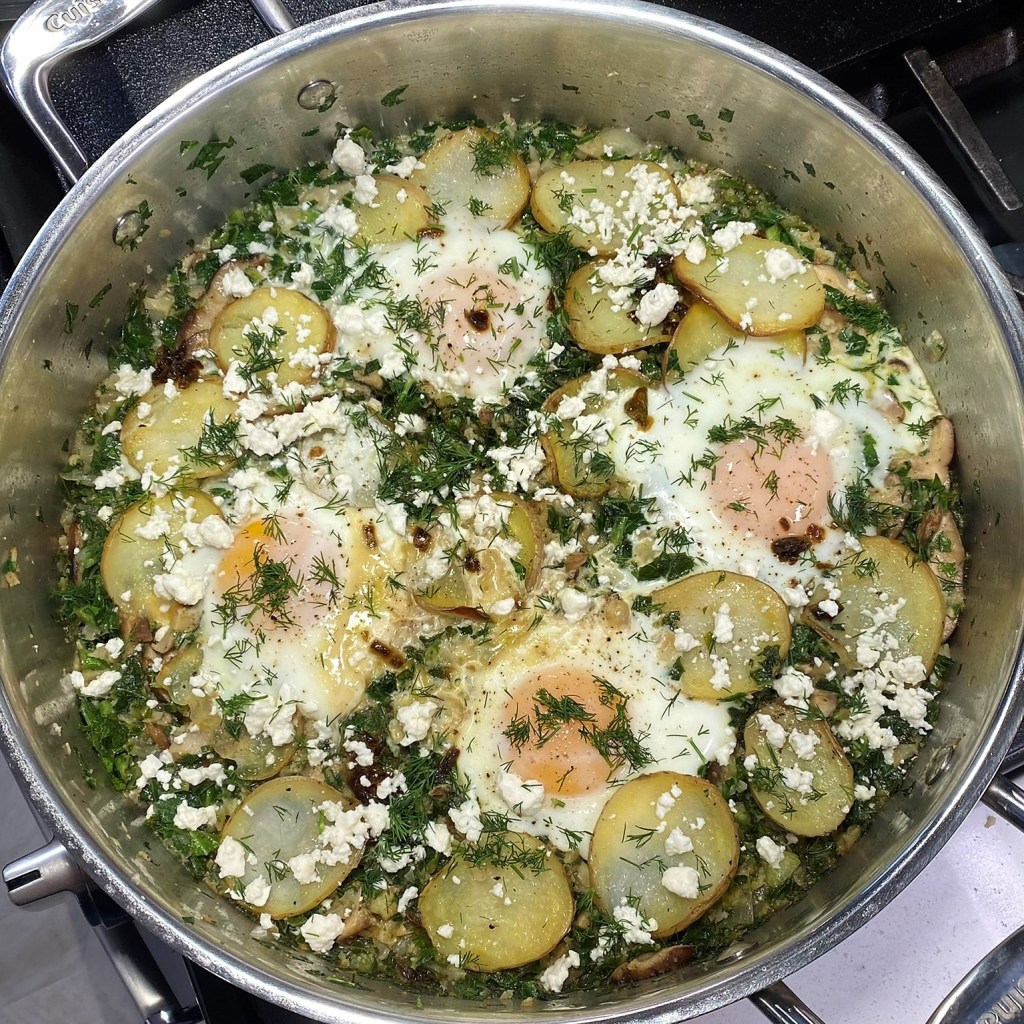

Tis the season to be green!

In Spring, it’s only natural that cooks everywhere would begin to lean into the freshness of green vegetables. This past week, I opened my email to find a Green Gumbo, posted by my blog buddy Maylee at Beyond Gumbo. I had never heard of “green gumbo,” made with ham and every leafy green under the sun, but if this is what they’re doing with food in Louisiana, then I’ve got to get down there as soon as possible!

We are still some time away from harvesting the tender vegetables of spring, but consider all the cool-weather vegetables that can carry us until then— broccoli, kale, collards, spinach, leeks and bok choy would all be very easy to incorporate into shakshuka, which is a cook’s choice kind of dish anyway. The main consideration is knowing how long your chosen vegetables need to be cooked so you can plan your time accordingly. The rest is subjective, so find what you like and get cooking!

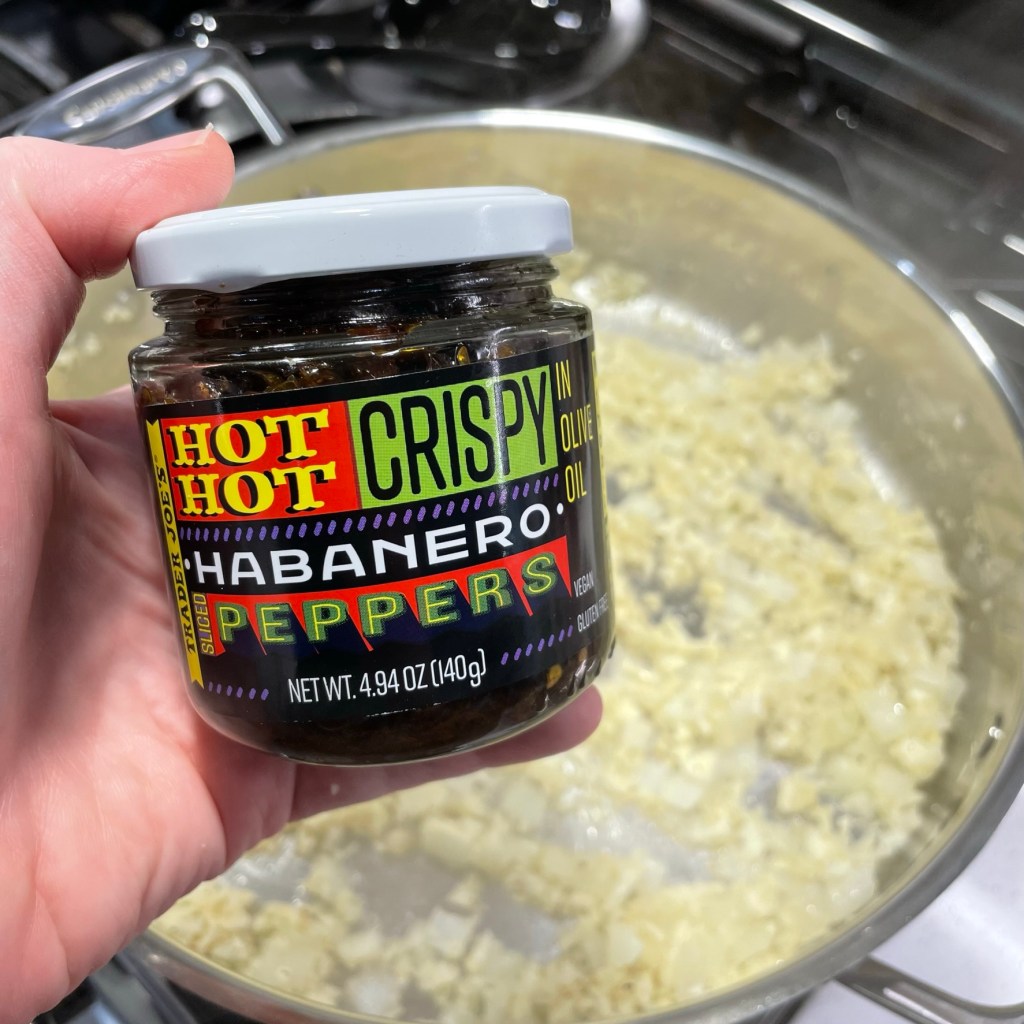
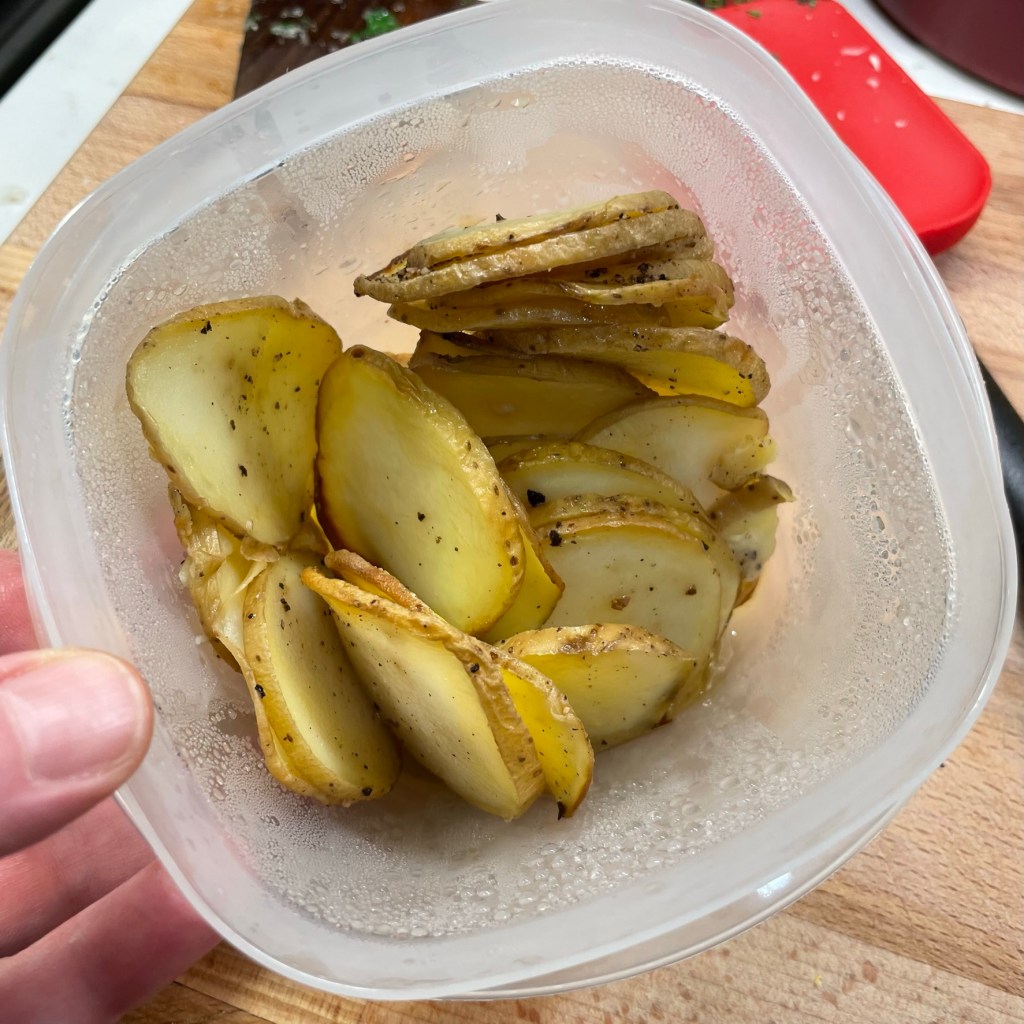
I like a dish to be texturally interesting, so I went with cauliflower, which I pulsed down into “rice” in the food processor, collard greens, also processed into smaller bits for quicker cooking, and shiitake mushrooms for a little bit of chewy, almost-meaty goodness. Onions and garlic, of course, and some sliced cooked potatoes, just because I had a few left over from another meal. They were a good addition. For kicks, I also tucked in a spoonful of the crazy-hot habanero chili crisp that I picked up at Trader Joe’s. They are no longer selling it, but if you bought a jar, you know that it keeps for a long, long time, and it adds a serious punch of spicy flavor to a dish. I’m still looking for ways to use it and it worked here, but you could sub in any other kind of seasoning you like.
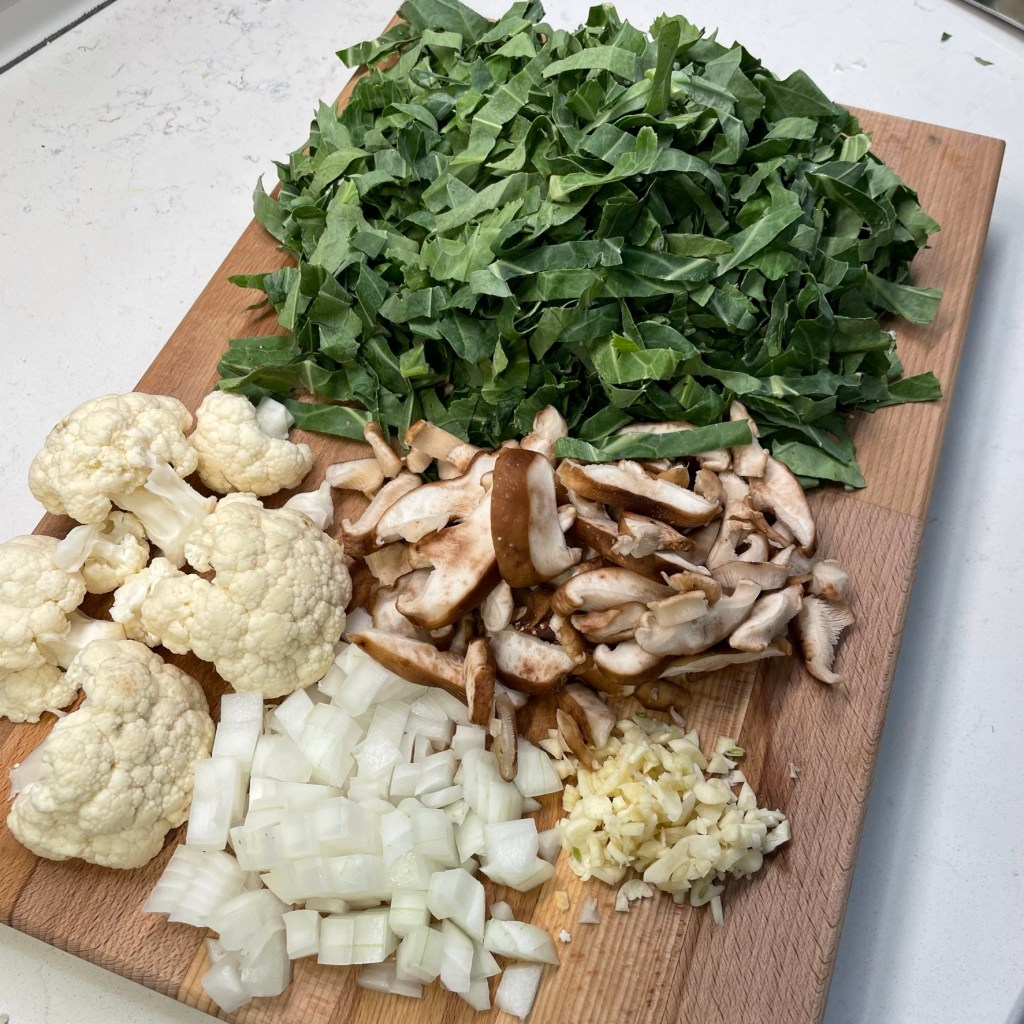
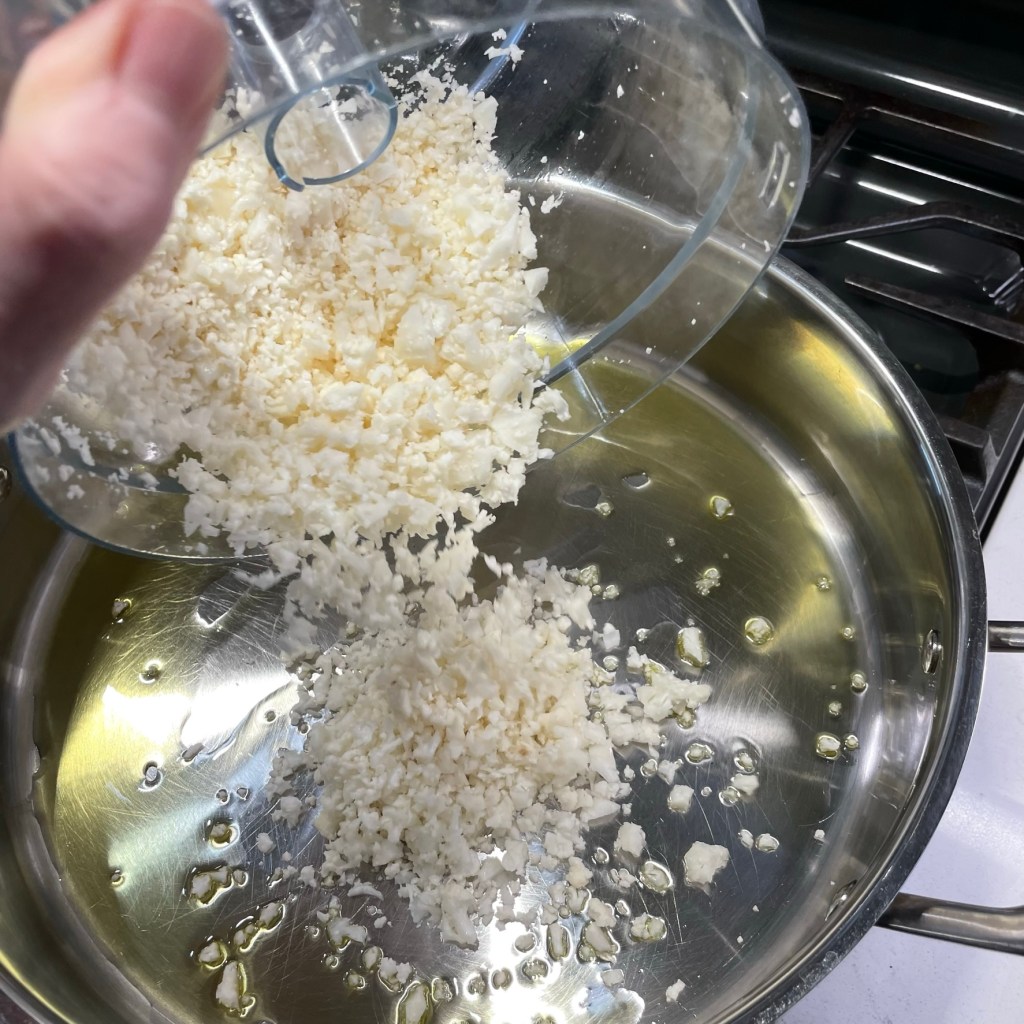
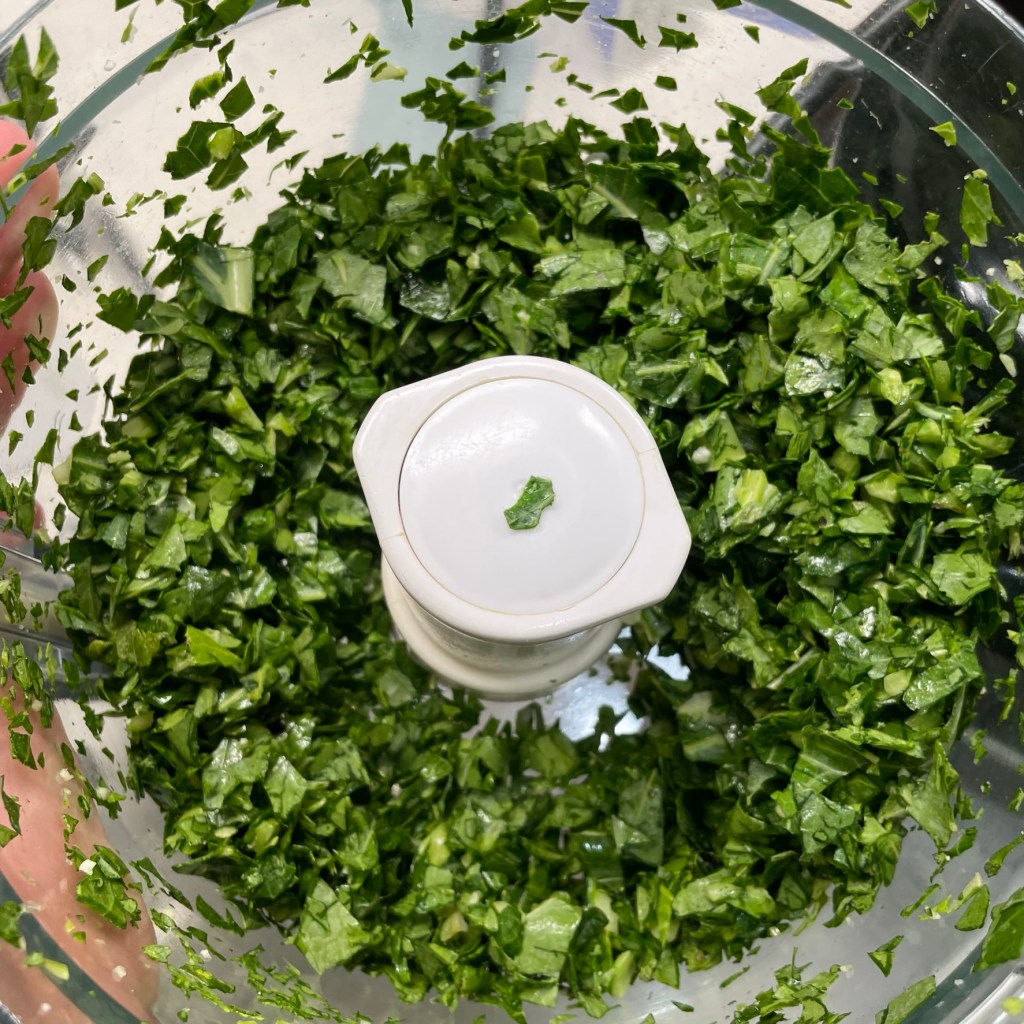
An easy approach to shakshuka

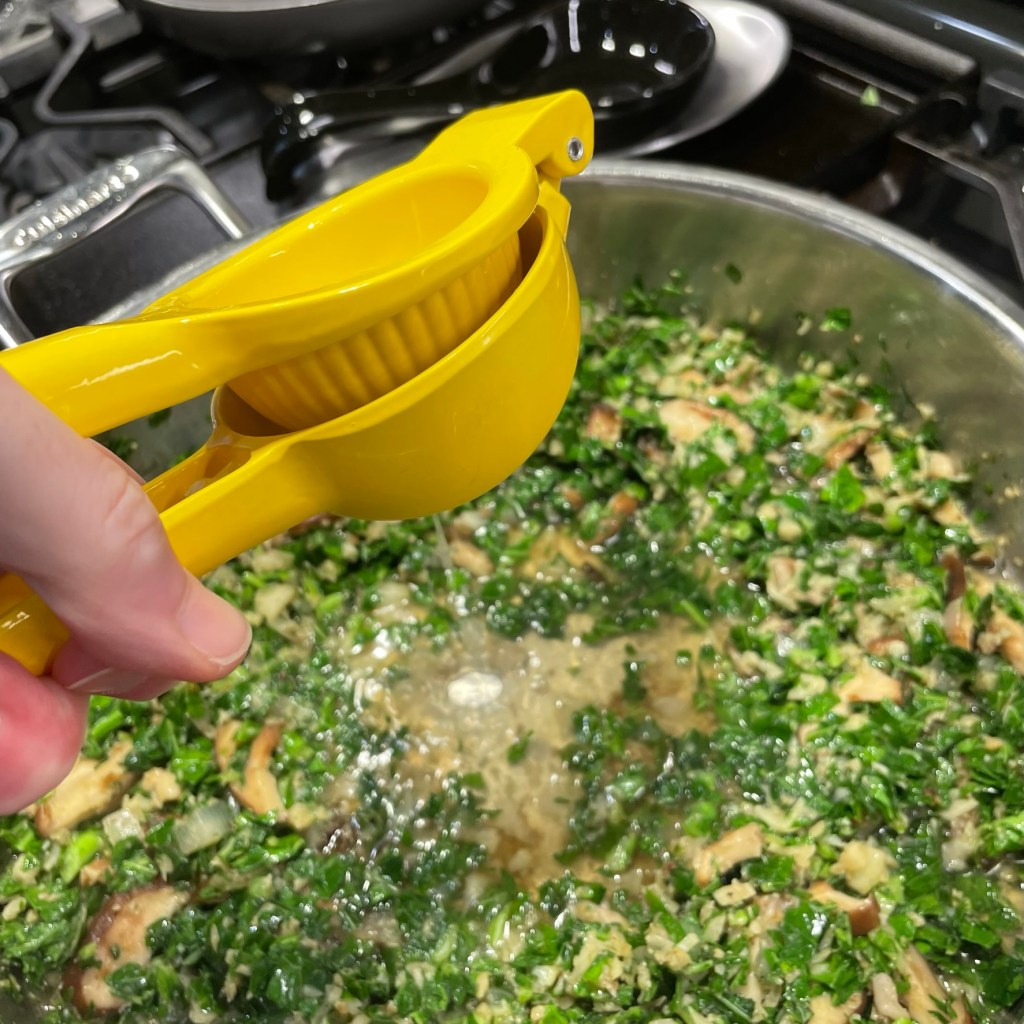
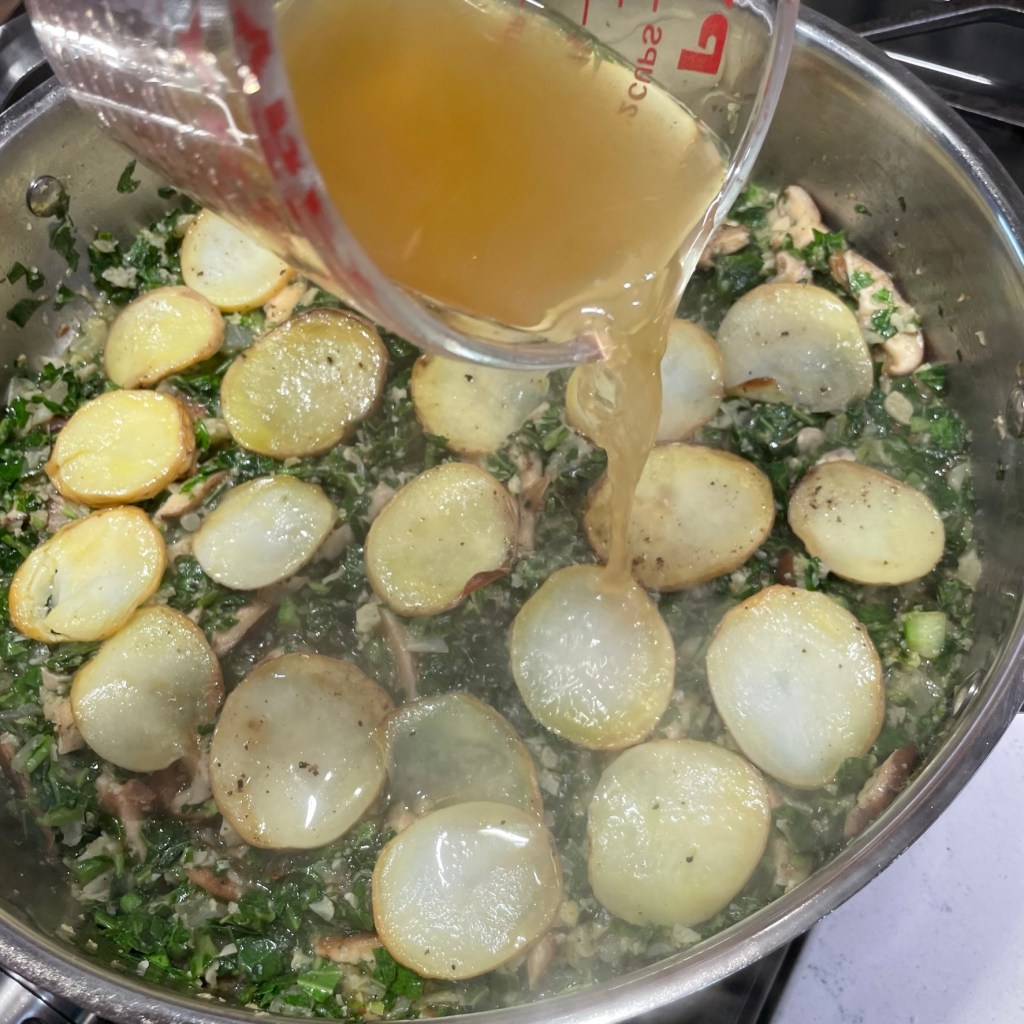
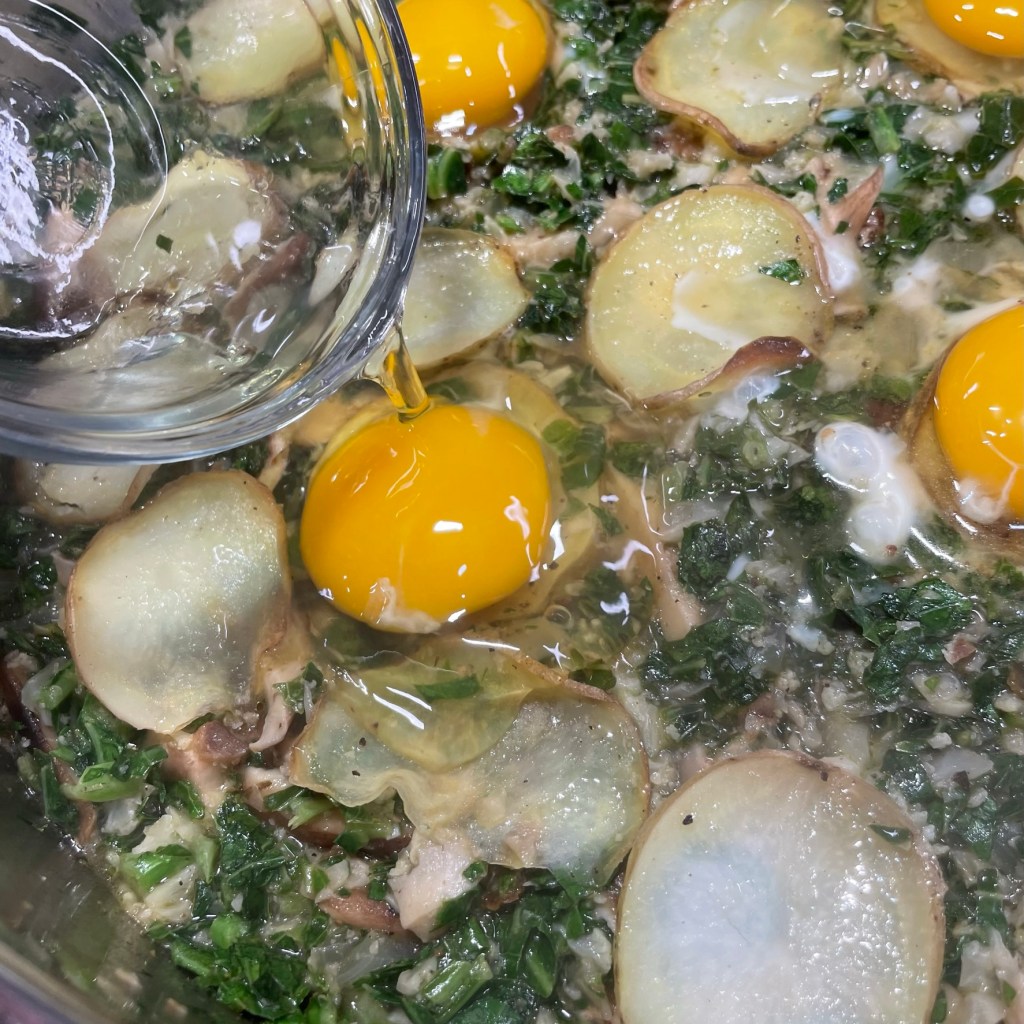
The easiest way to approach shakshuka is to build it in layers, starting with a quick saute of the firmer ingredients and aromatics. Next, I added my mushrooms and chopped collards and steamed the mixture down in a half cup of vegetable broth, plus a squeeze of lemon to balance the slight bitterness of the greens. I spread the potato slices out over the top with a little more broth, and then slipped the eggs into the mixture. This stage of the recipe can be done in the oven, but I have found it simpler and quicker to put a lid on it and keep it stovetop. The eggs cook within a matter of a few minutes, and the meal can be served straight from the pot.
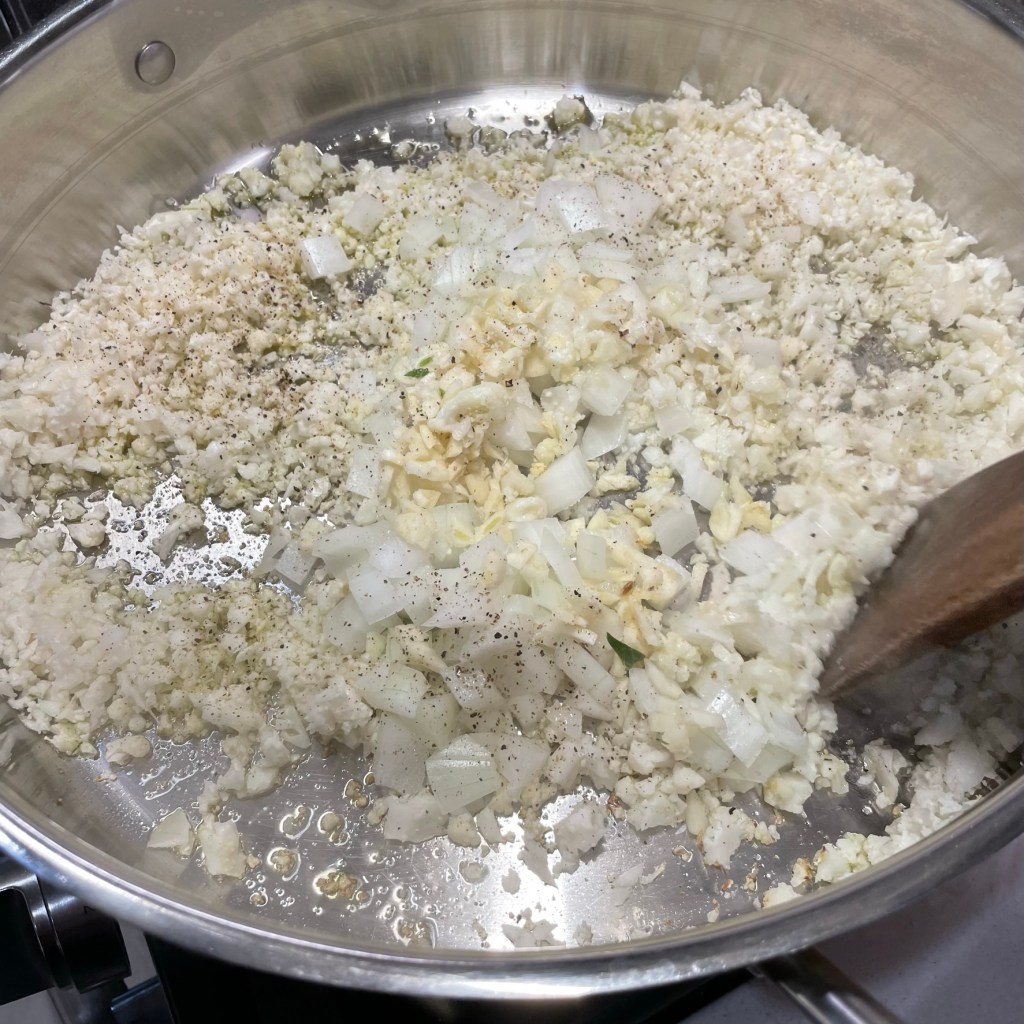
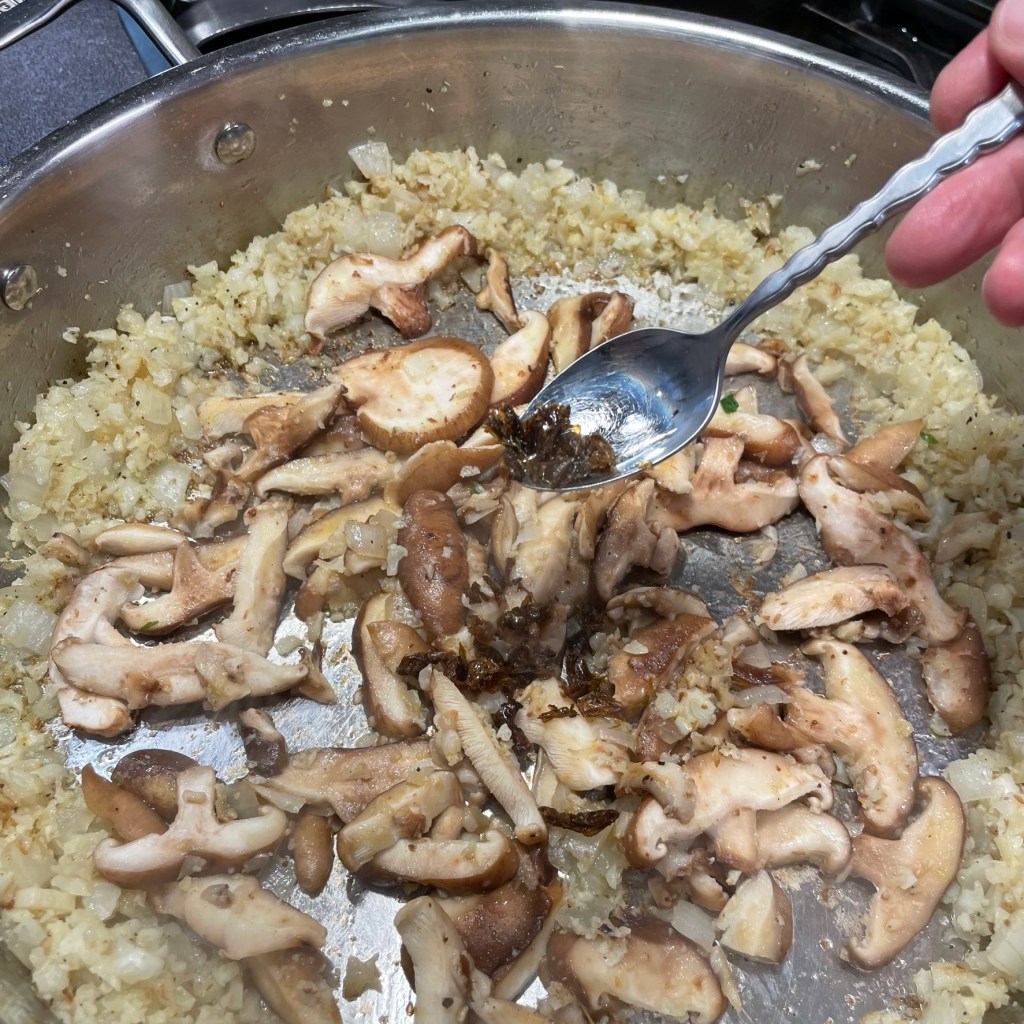
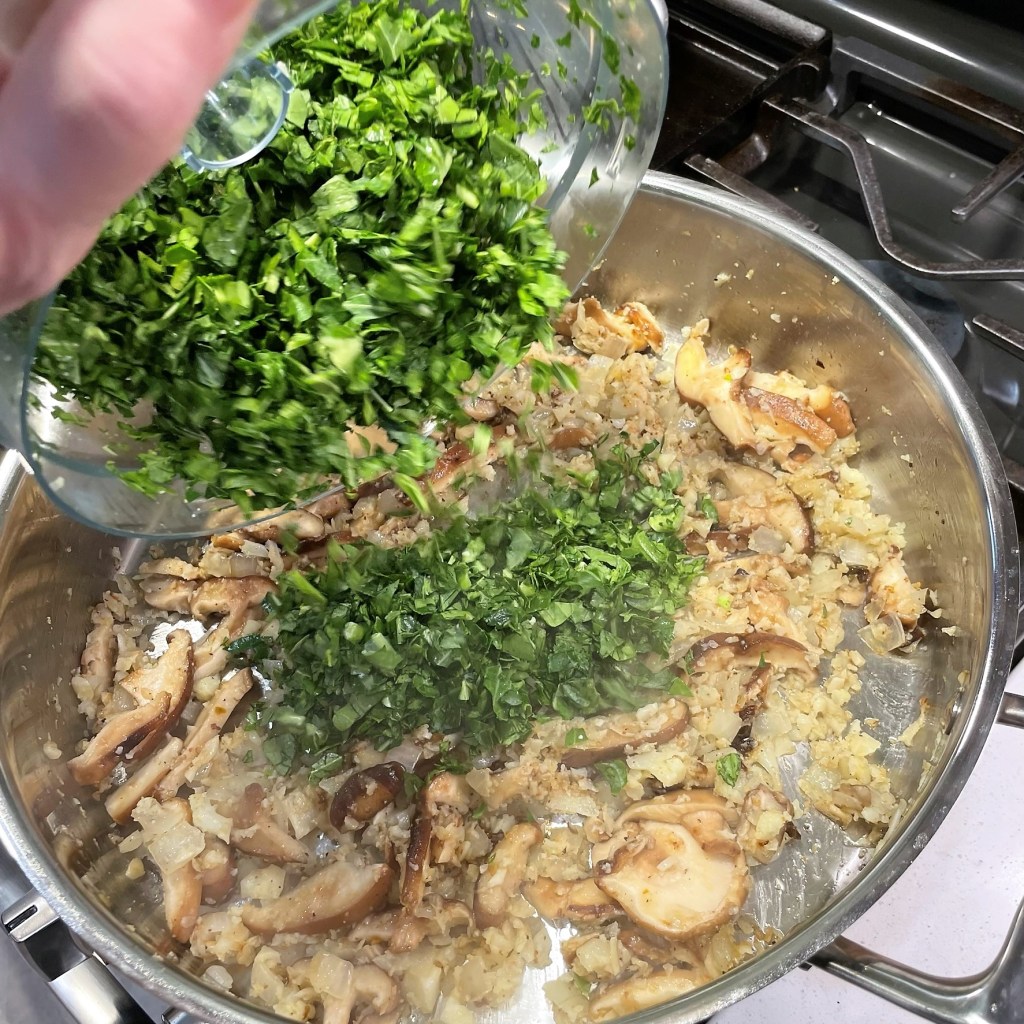
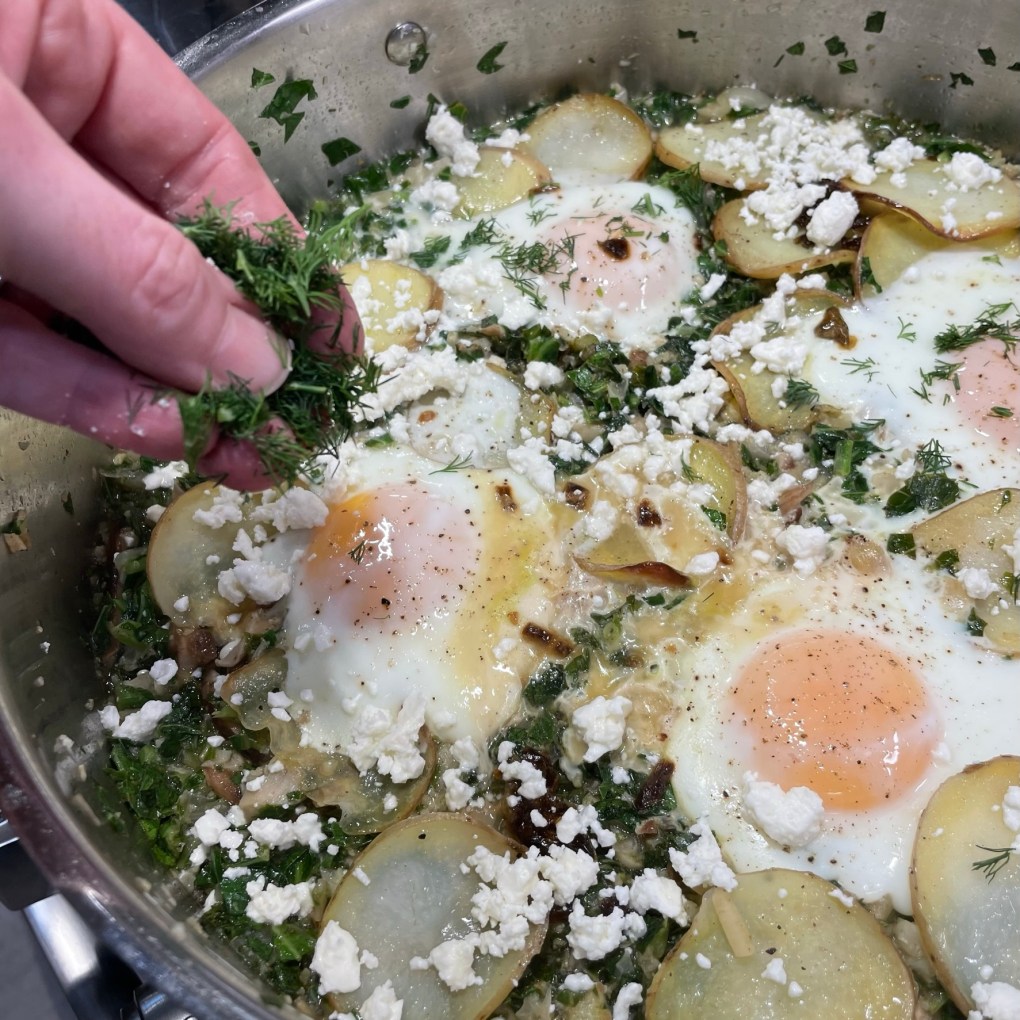
Feta crumbles and fresh chopped dill were a nice final flavor touch to this twist on a classic. We enjoyed our green shakshuka with one of our final pieces of store-bought matzo left over from Passover. We are always so glad to see it go. 😉
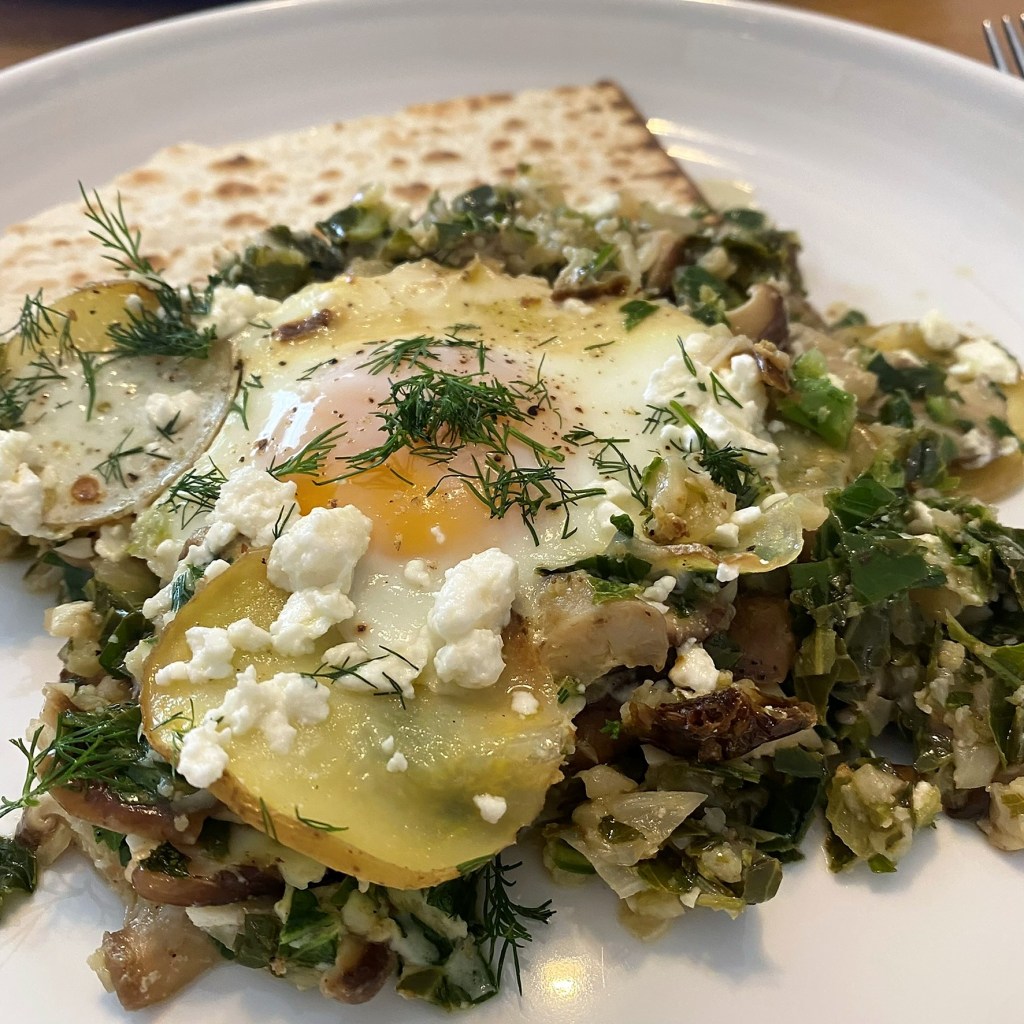

What creative twists would you like to see in shakshuka, or which have you already tried? I love reading your comments and I’m always up for a challenge, so please let me know what you think below the printable recipe.


Green Shakshuka
  • Servings: 4
  • Difficulty: Average
  • Print

Ingredients

  • About 2 cups of fresh cauliflower florets
  • 2 Tbsp. extra virgin olive oil
  • 1/2 medium sweet or yellow onion, chopped
  • 2 cloves garlic, minced
  • Salt and pepper
  • 1 cup sliced shiitake mushrooms
  • 1 tsp. spicy chili crisp (mine was Trader Joe’s habanero)
  • 1 small bunch fresh collard greens, cleaned and rough-chopped
  • 3/4 to 1 cup low-sodium vegetable broth, divided
  • Juice of 1/2 small lemon
  • 1 cup cooked sliced potatoes
  • 4 large eggs, room temperature
  • Crumbled feta and fresh dill, optional for serving

This dish can be made with any number of vegetable substitutions. Consider the cooking time for each vegetable you plan to use and add them to the pot accordingly. Chopping the vegetables into very small bits will significantly shorten the cooking time, and is a good way to get this dish on the table in a hurry.

Directions

  1. In the bowl of a food processor, pulse the cauliflower into small bits. Heat oil over medium heat in a wide, heavy-bottomed pot or skillet. Add cauliflower, onions and garlic and season with salt and pepper. When onions and cauliflower are softened, add the mushrooms and chili crisp and saute to cook off some of the moisture.
  2. Pulse the collard greens in the food processor to the size of cereal flakes; this will help them cook quickly and will prevent the shakshuka mixture being too chunky. Add greens to the pot and toss to combine. Pour in about 1/2 cup of the broth plus the lemon juice and reduce heat to simmer, until the greens begin to tenderize (about 5 minutes).
  3. Arrange potato slices all over the top of the mixture and pour over additional broth as needed to just cover them. Cover the pot with a lid and steam until potatoes are hot.
  4. Use the back of a large spoon to create four indents in the shakshuka mixture. Carefully slip an egg into each of the indents. Season with salt and pepper and cover the pot with a lid. Steam for about 10 minutes, or until the eggs are set to your liking. Sprinkle with crumbled feta and fresh chopped dill and serve immediately.
Spicy Pimento Cheese Deviled Eggs

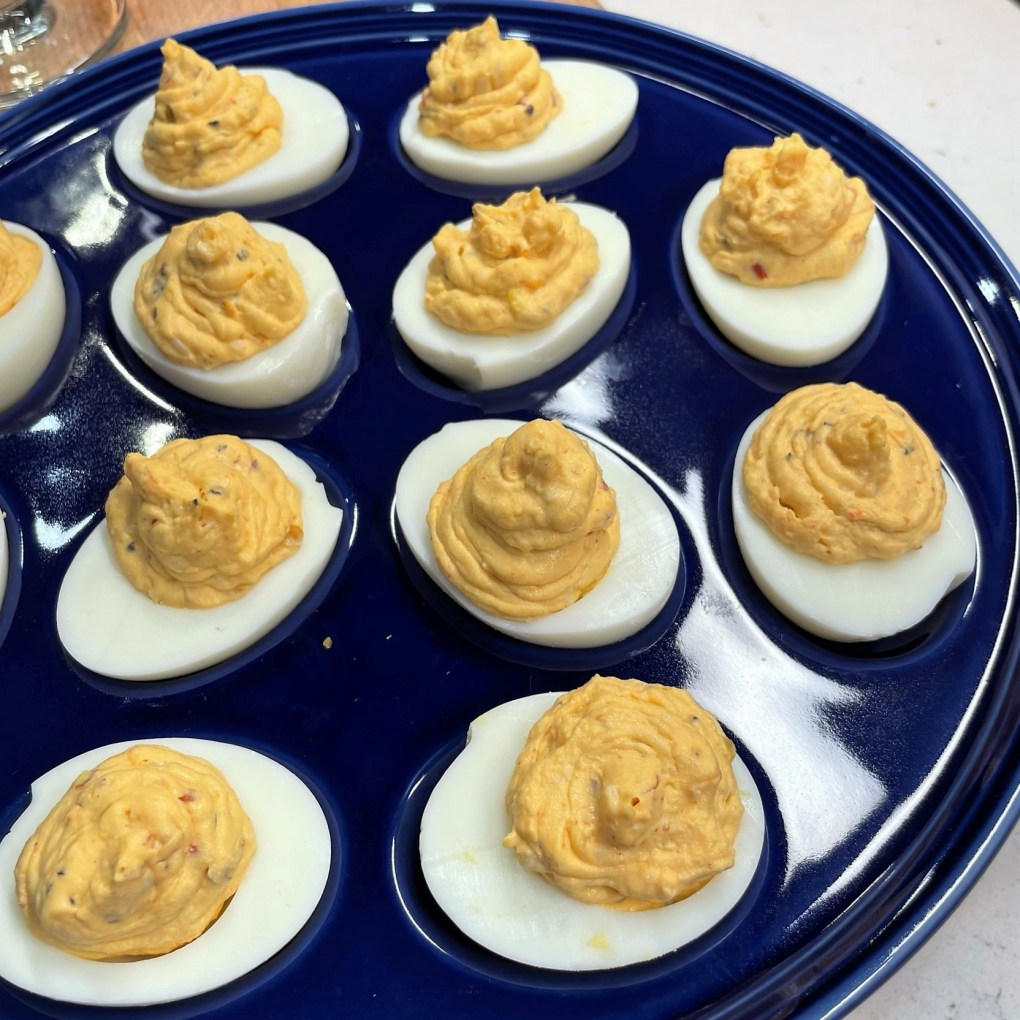
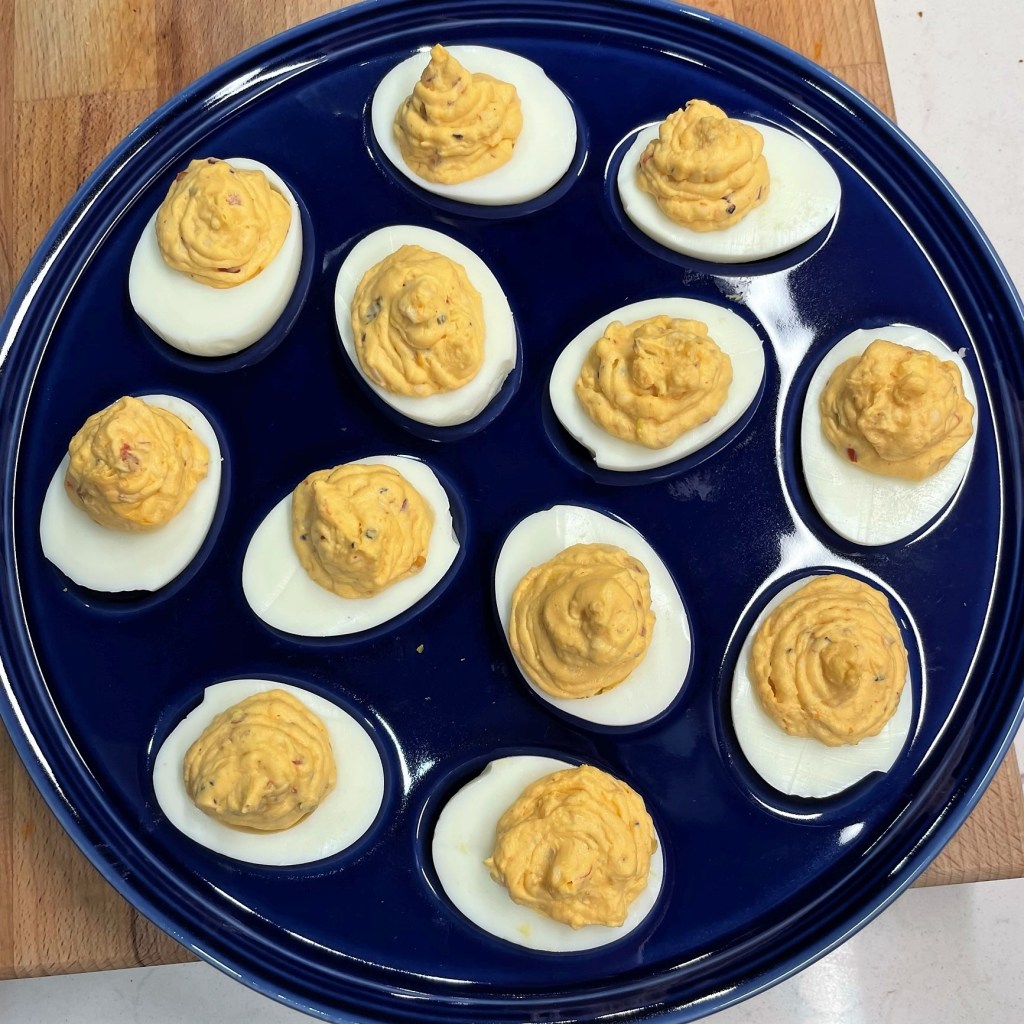
Every home cook has an arsenal of “go-to” dishes, tricks or final touches to elevate their menus in a given situation. One of mine is deviled eggs—who doesn’t love them, right? It’s a staple at potlucks and family get-togethers for good reason. This simple but universally loved finger food is one that I consider a blank canvas for interesting variations. With just a few ingredient swaps, you can turn a basic deviled egg into something flavorful and unexpected, and that’s what happened with these pimento cheese deviled eggs only a few weeks ago. 

Go ahead, grab one!

When my husband’s adult son, Alex, announced in February that he would be visiting from Europe for a few weeks, my mind went racing about all his favorite tastes of home I would need to make while he stayed at our house. Like his dad, Alex has a very short list of foods he doesn’t enjoy, and pretty much everything else is fair game, especially if there’s spicy heat involved. He likes spice so much, in fact, that the hostel he co-owns in Budapest is literally called Spicy Hostel! It is apparently the place for young, adventurous people to stay when visiting the capital of Hungary.

That’s Alex, on the bench!

The hostel keeps Alex very busy, so we try to make the most of his infrequent visits home, and I was ready to cook whatever he requested! On the first day of his visit, I invited him to join me on a journey to one of our supermarkets, where I quickly realized that the “taste of home” he missed the most was not any home-cooked meal at all—nope, he wanted junk food! I watched in awe as he piled cans of Spaghetti-Os, Spam and chunk light tuna into the shopping cart. These are all things he cannot easily find in Budapest, so he spent the first week or so satisfying those cravings. He was also pretty excited about York peppermint patties, which he loves so much that he smuggled a multi-pack onto the plane for his trip home.

By the end of his three-week visit, though, we had treated Alex to many home-cooked meals, including the Hot Italian Sausage and Cherry Pepper Pizza that was inspired by our 2021 visit to New Haven’s Modern Apizza. We tossed some burgers on the grill, with American cheese—something we take for granted around here—and he loved it. He also requested fresh seafood (not much of that in Hungary, either), and I was happy to oblige with a panko-crusted halibut, as described in my post about Kenji Lopez-Alt’s Miraculous Mayo Marinade. Finally, Les fired up the bullet smoker at the end of his visit and made a veritable feast of smoked meats, including a pork shoulder, brisket, several artisan sausages and a gorgeous side of fresh salmon.

This smoker holds enough to feed a hostel-ful of hungry travelers!

For that smoked feast, Alex invited a couple of local friends over for dinner, and we enjoyed a great meal that started with a smoked salmon spread that Les makes—I will insist that he make it again this summer and share it here on Comfort du Jour—and these pimento cheese deviled eggs.

This is about to become a flavor explosion.

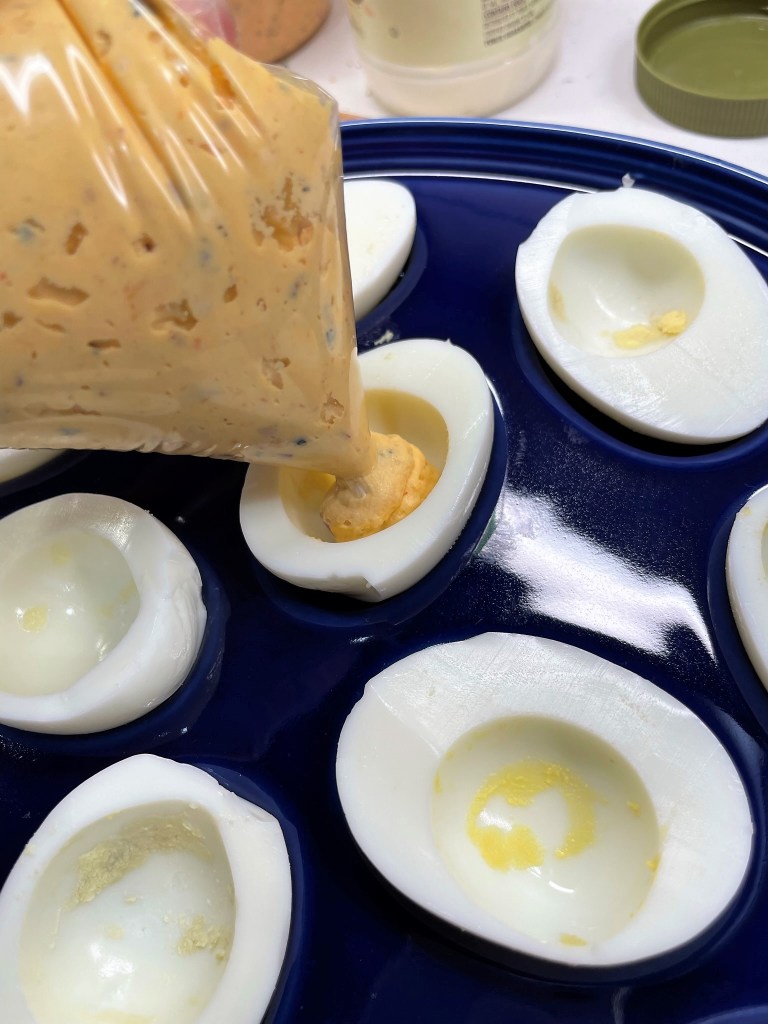
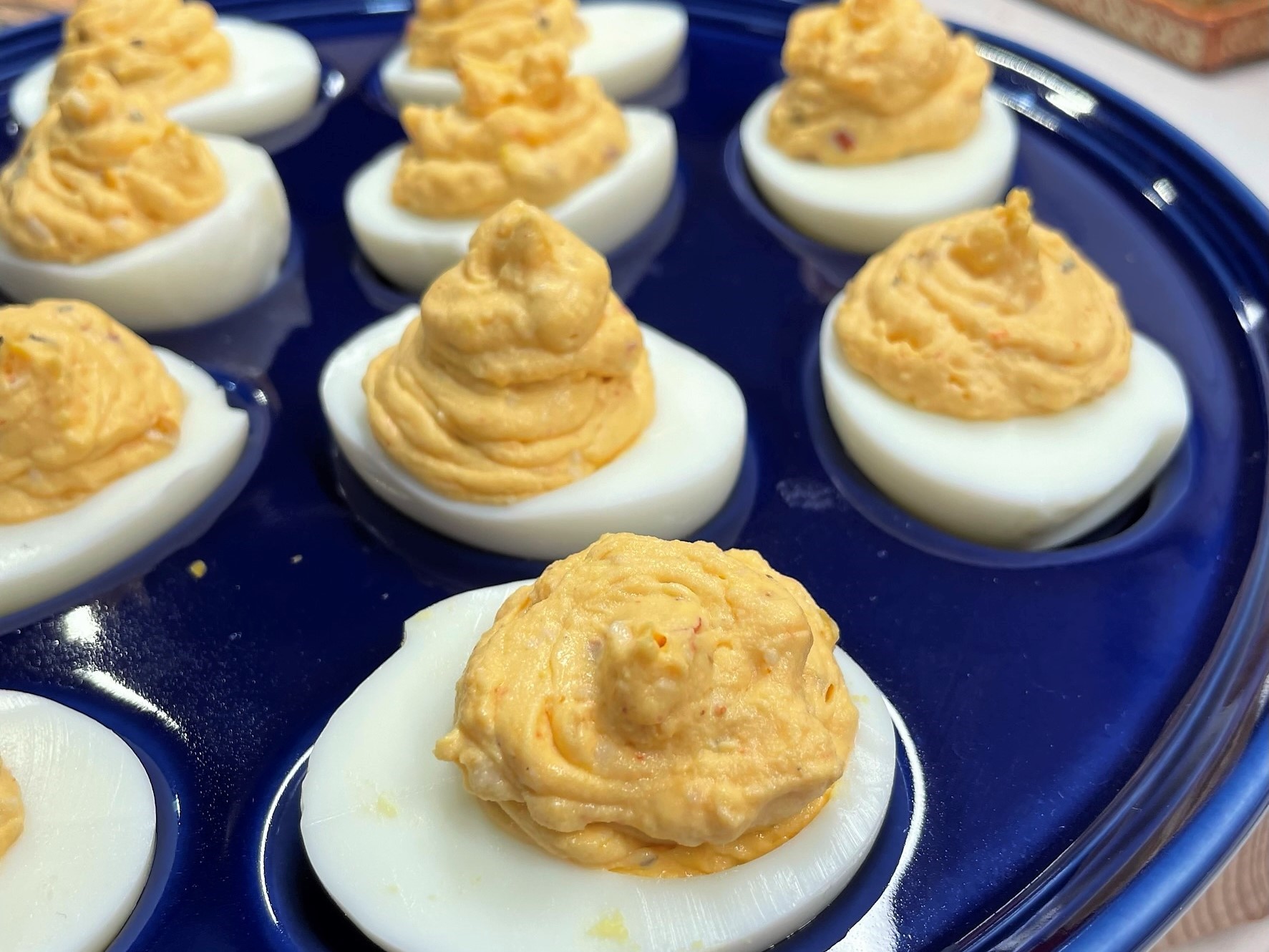
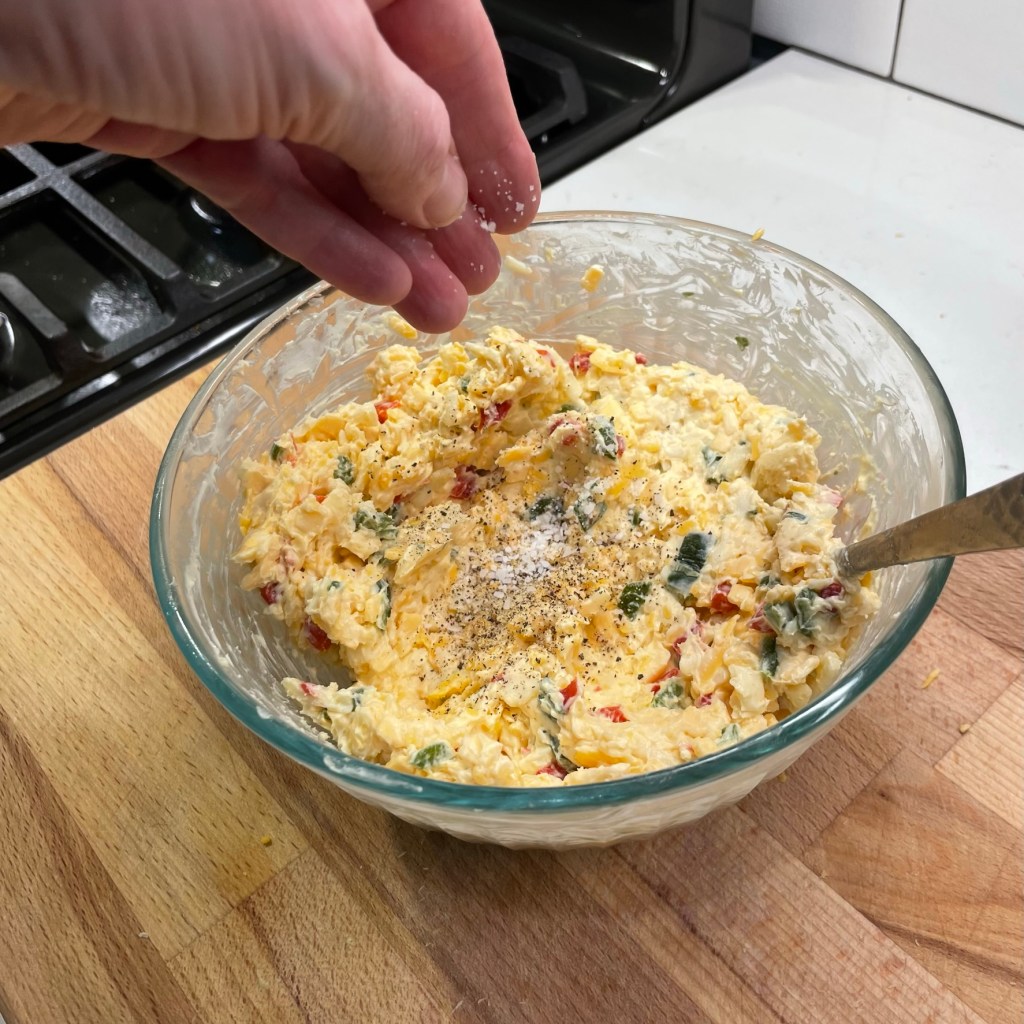
I had picked up this very spicy pimento cheese in the cold pantry section at the butcher shop where I purchased the meat for the smoker. The spread was quite heavy on the mayo (not really our thing), so rather than serving it just with crackers, I decided to mix it with the egg yolk filling for a batch of deviled eggs. There was so much heat and flavor in the pimento cheese that no other seasonings were necessary. I only needed a little dab of extra mayo to loosen the filling and some finely minced shallot for crunch. As usual, I grabbed a small zip-top bag to use as a makeshift piping bag for filling the split egg whites. It’s easier and less messy than spooning it in.


Let me tell you, Alex and his friends devoured these deviled eggs in no time flat, and you can bet this treat will be coming up in the rotation again this summer. Come to think of it, deviled eggs are great for both Easter (this Sunday) and Passover, which starts this evening at sundown. I might be convinced to make another batch this weekend!


Spicy Pimento Cheese Deviled Eggs

  • Servings: 6
  • Difficulty: Easy
  • Print

Here come two of the South’s favorite all-time foods, combined into one tasty little two-bite appetizer—let’s just call this a win-win!


Ingredients

  • 6 large or extra large chicken eggs
  • 1/2 cup prepared pimento cheese, on the mayonnaise-y side
  • 2 Tbsp. finely chopped onion
  • A few tablespoons additional mayo, as needed to loosen yolk filling
  • Salt and pepper as desired

There’s no “right” amount of pimento cheese or mayonnaise to add, as it depends on the texture of the egg yolks and pimento cheese. Adjust each ingredient to suit your fancy.

Directions

  1. Boil the eggs, following your own preferred method. Here’s mine: Bring a pot of water to a full, rolling boil, then lower the eggs in on a slotted spoon. Set a timer for 12 minutes, then use the same spoon to transfer the eggs directly to an ice water bath for about 30 minutes. Peel under cold running water. Works great every time.
  2. Cut the eggs lengthwise, and empty the yolks into a medium bowl.
  3. Add pimento cheese, onion and additional mayo (if needed) to the yolks, blending to a smooth, creamy texture. Adjust seasoning to taste. Spoon the mixture into a quart size zip-top bag and seal.
  4. If working ahead, chill the filling and the egg white halves (covered, of course) until just before serving. Snip a small triangle on the corner of the zip-top bag and pipe the filling into the egg white halves. You will probably have some filling left over; enjoy it on crackers or fill a couple of celery sticks. Or, if nobody is watching, squeeze the bag directly into your mouth. 🙂


Spanakopizza!

Today is National Spinach Day, and I would be remiss if I did not share this pizza that I pulled from the oven on Friday. It is absolutely packed with the nutritional powerhouse that is spinach, and a few other key ingredients like feta and dill that give it the signature flavor of Greek spanakopita.

In a roundabout way, this meatless, sauceless pizza brings me full circle to the launching of my blog back in 2020. I have been known at times to take inspiration from the idea of “national” food days, and on this date in that year, I surprised my husband with a batch of spanakopita— the real kind, made with layered phyllo— and served it alongside a Greek salad and easy chicken souvlaki. With spinach being Les’s favorite vegetable, he took a picture of that meal and posted it (along with my national day inspiration) on his Facebook page. 

That’s when it occurred to me that I should probably be doing that myself, not on Facebook but on my own platform. About 10 days later, I started Comfort du Jour.

Pizza, as many of my blog followers already know, is one of my favorite “blank canvas” foods,  and for this tasty pie, I took inspiration from a different kind of recipe made by another food blogger, Diane Kochilas. She is an amazing chef who shares her passion for Greek food not only through her blog (linked here), but also several award-winning cookbooks and her PBS-aired television show, “My Greek Table.” It just so happens that Diane also went to grade school with my hubby back in the day in Queens, N.Y., and the only reason I mention that is because Les follows Diane’s culinary adventures on Facebook and recreates some of her recipes when he takes his turn in our kitchen.

Diane’s “warm spanakopita dip” has become a big-time favorite at our house. When I scanned the ingredients list on the recipe Les had printed— mozzarella, feta, fresh spinach, onions, leeks, dill— I began to imagine them rearranged on a pizza, and I finally brought that idea to life this past Friday. It wasn’t until this morning, when that picture of my spanakopita popped up in Les’s Facebook memories, that we realized the significance of the date. I decided to hustle and get this post ready to mark the occasion. So that’s the story of this pizza— inspired by a dip that was inspired by a Greek specialty— and it was delicious. A delightful way indeed to recognize National Spinach Day, even if it was not intentional!

So. Much. Spinach!

As with most of my pizza creations, this one begins with my own sourdough pizza dough, but any pizza dough you like is probably fine because it’s the toppings that makes this one special. I bake in a very hot oven (550 F) on a pre-heated slab of steel, and the pie is done in only 6 minutes with that arrangement. On a pizza pan, it will take longer. If you have at least a pizza stone, I recommend using it for even baking of the crust. There is a fair amount of moisture in the toppings, and your crust will thank you for the extra bit of heat.

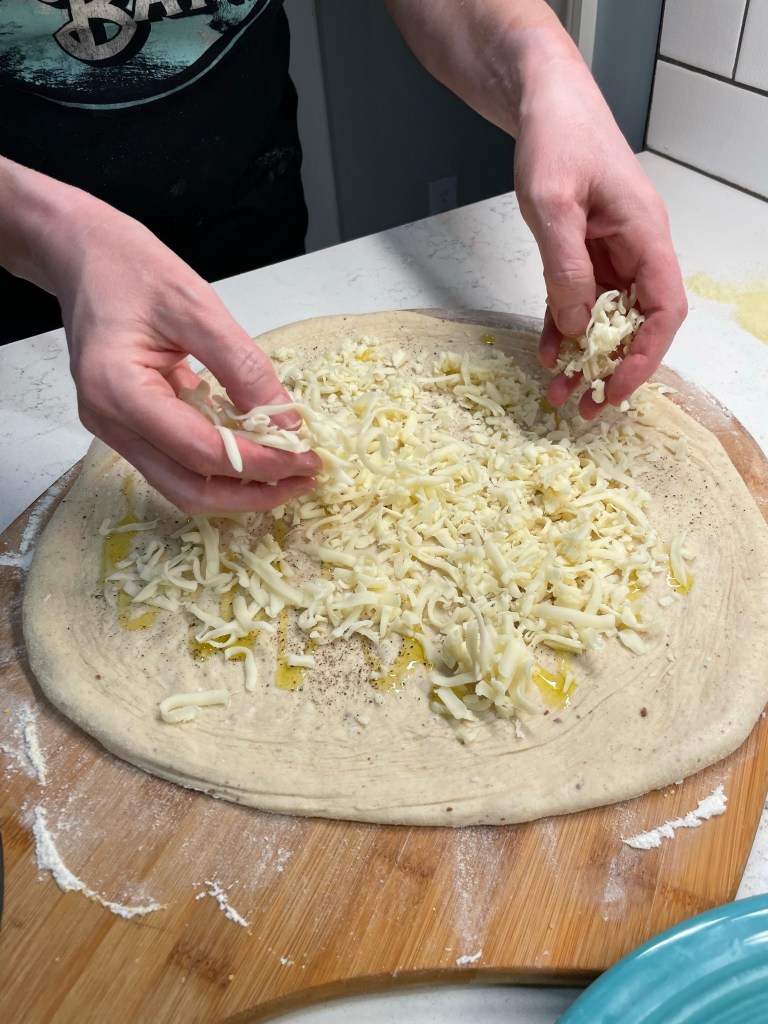
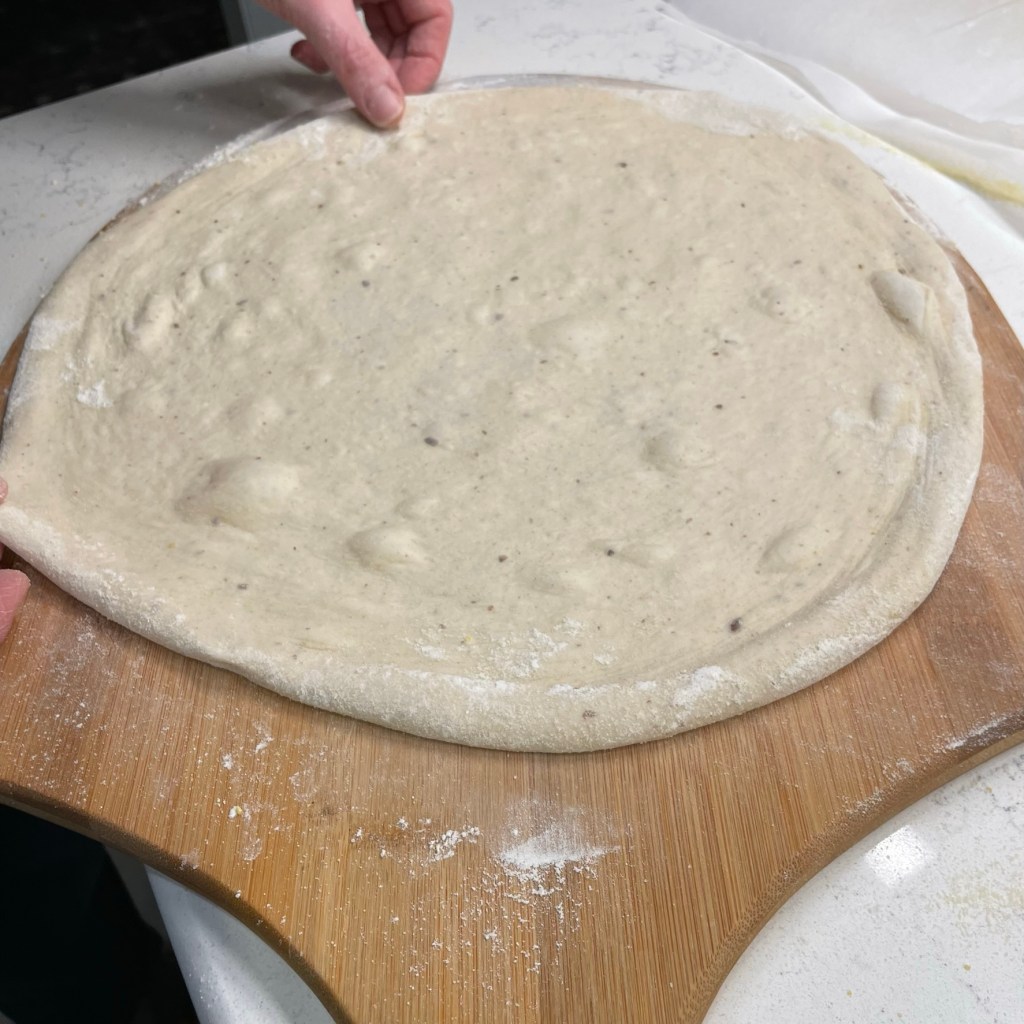
I like to shape the dough by hand, as it results in the light, airy crust we love. A little drizzle of olive oil, and then I layered on freshly grated mozzarella— no sauce is needed for this pie.


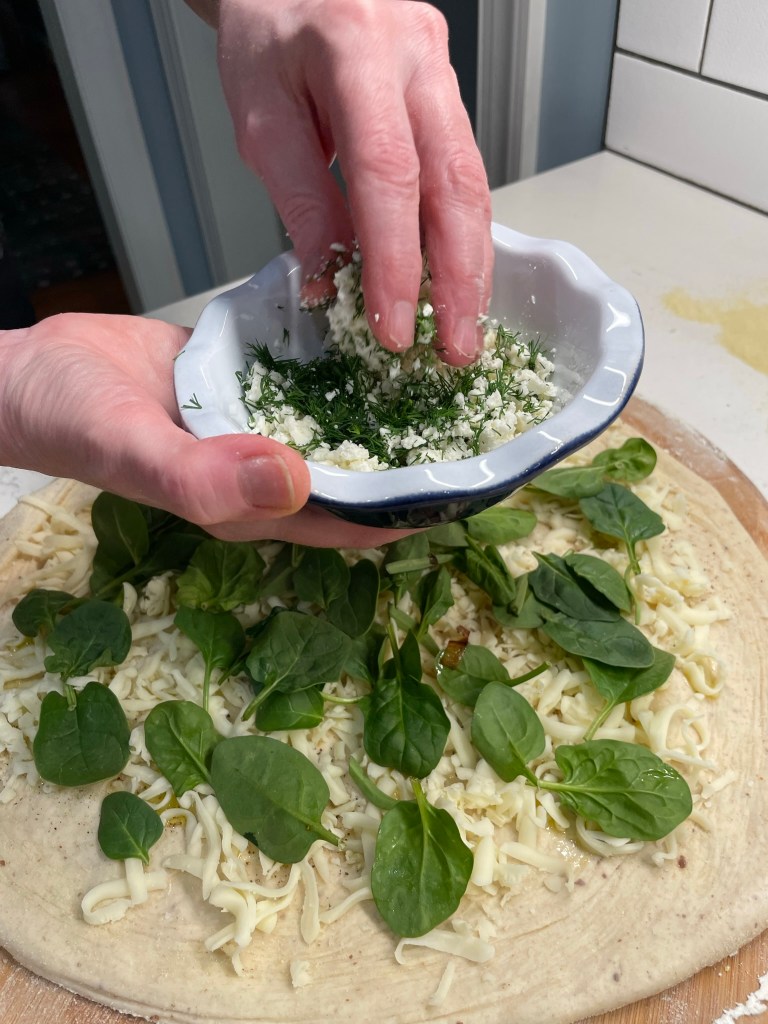
Next was a handful of fresh baby spinach, because I wanted to present the ingredient a couple of different ways. I crumbled up two ounces of feta (the kind packed in brine) and mixed it with chopped fresh dill. This was scattered over the spinach and then buried under a generous amount of spinach that had been sautéed with sweet onions and chopped leeks. A little more mozzarella, and I slid it into the oven!


Spanakopizza!

  • Servings: 6 slices
  • Difficulty: Average
  • Print

This pizza is packed with nutritious spinach and carries all the flavors of the Greek specialty, spanakopita.


Ingredients

  • 1 pizza dough ball (about 11 ounces), at room temperature
  • 3 fat handfuls (about 3/4 pound) fresh baby spinach, divided (you’ll cook most of it, and keep a small handful fresh)
  • 1/2 cup sweet onion, chopped
  • 1/2 cup chopped leeks, white and very light green parts only
  • 1 cup freshly shredded whole-milk mozzarella, divided
  • 1/3 cup brine-packed feta, patted dry and crumbled
  • 2 Tbsp. chopped fresh dill leaves
  • Extra virgin olive oil, salt and pepper

I bake all my pizzas at very high oven temperature (550 F) on a pizza steel that is preheated for one hour. If you have a baking stone or only a pizza pan, you may need to adjust temperature and baking time accordingly. Use a flour- and cornmeal-dusted pizza peel for easy transfer into and out of the oven.
Directions

  1. Preheat oven (and steel or stone) to 550 F, with rack placed about eight inches from the upper heating element.
  2. Heat a non-stick skillet over medium heat with a generous swirl of olive oil in the pan. When the oil begins to shimmer, add onions and leeks and sauté a few minutes until they are softened and translucent. Add two-thirds of the baby spinach (give it a rough-chop first if you’d like) and sauté until most of the moisture is evaporated and spinach is greatly wilted. Transfer the mixture to a bowl and cool to room temperature.
  3. In a small bowl, combine crumbled feta and fresh dill. Set this aside.
  4. Lightly dust a counter or board with flour. Shape dough into a 14-inch round, taking care to keep some airy bubbles in the outer edges of the dough. Transfer to the prepared peel.
  5. Drizzle olive oil onto the dough and sprinkle it with salt and pepper. Arrange most of the mozzarella evenly over the dough, reserving about 1/4 cup for the final layer. Scatter reserved handful of fresh spinach over the mozzarella.
  6. Sprinkle the feta-dill mixture over the spinach. Use a spoon to evenly distribute the sautéed spinach and onion mixture all over the pizza, and be careful not to leave large clumps of it near the pizza’s edges. Top with the remaining bit of mozzarella.
  7. Slide the pizza onto the preheated steel (or stone) and bake 6 minutes, or until cheese is bubbly and edges of crust are puffy and golden brown.


Peanut Butter Banana Bread with Chocolate Chunks

Any child of the 70’s will likely remember the TV ad for Reese’s peanut butter cups, in which characters crashed into each other to accidentally merge their respective favorite treats. 


I could always relate to that kid eating his peanut butter straight from the jar, and I still do that today, though my preference for peanut butter has shifted toward the natural variety that contains only peanuts and salt. It’s true that chocolate and peanut butter are a natural pairing, but so are and peanut butter and banana— the King of Rock and Roll certainly knew this; word has it his favorite sandwich combined the two (and it is unexpectedly delicious).

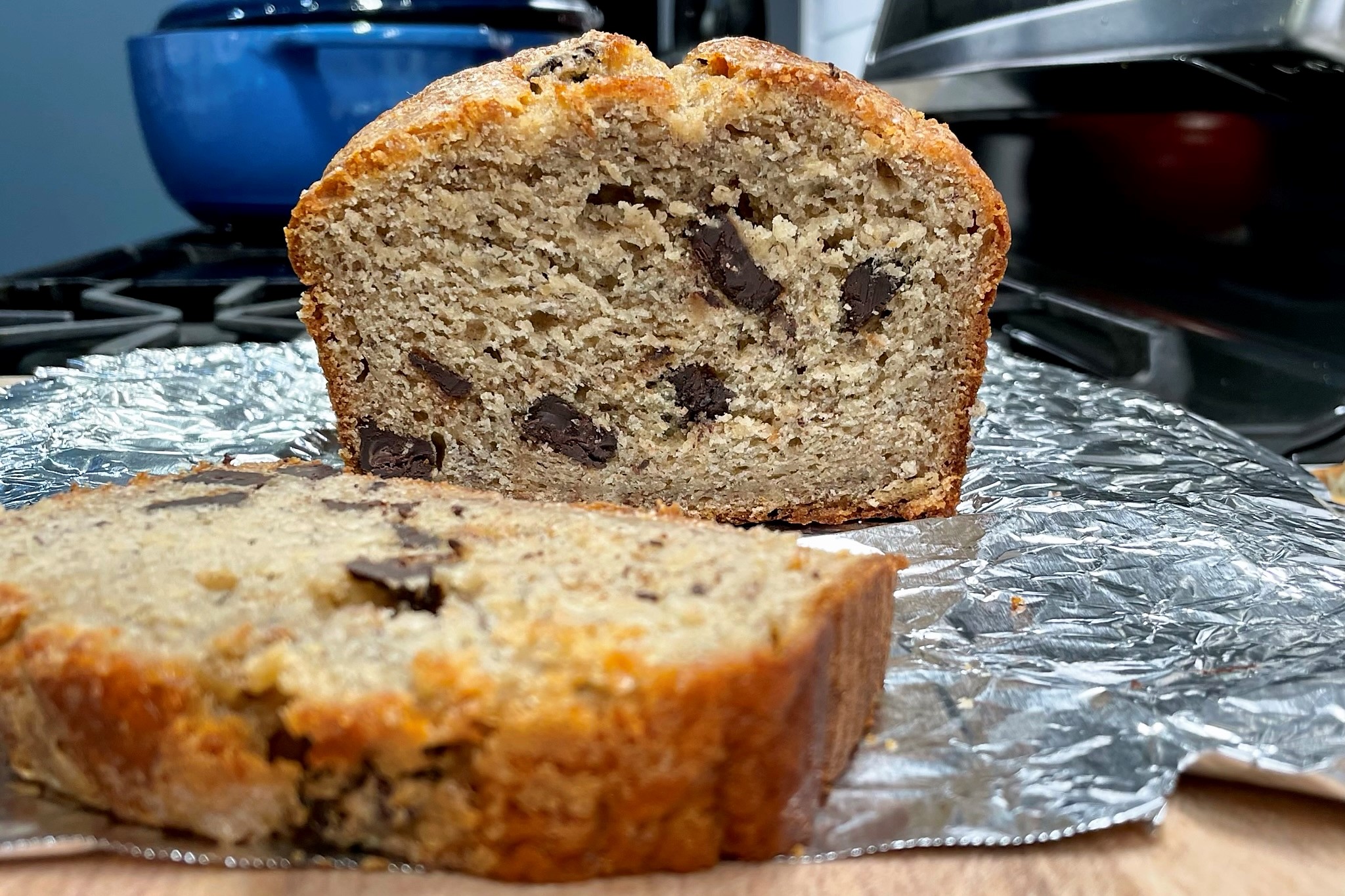
So when I had to come up with a plan to use up the brown-speckled bananas that were taunting me from the counter, I figured there’d be no harm in putting all three flavors together, and wouldn’t you know, I came up with a winner!


This flavor combo was appreciated by my husband more than the last banana bread I made, with dark chocolate and ginger (Les is not a fan of the ginger), and we both found this one delicious for breakfast, dessert and afternoon snack. Les said it was especially tasty straight from the fridge, with a light smear of butter.

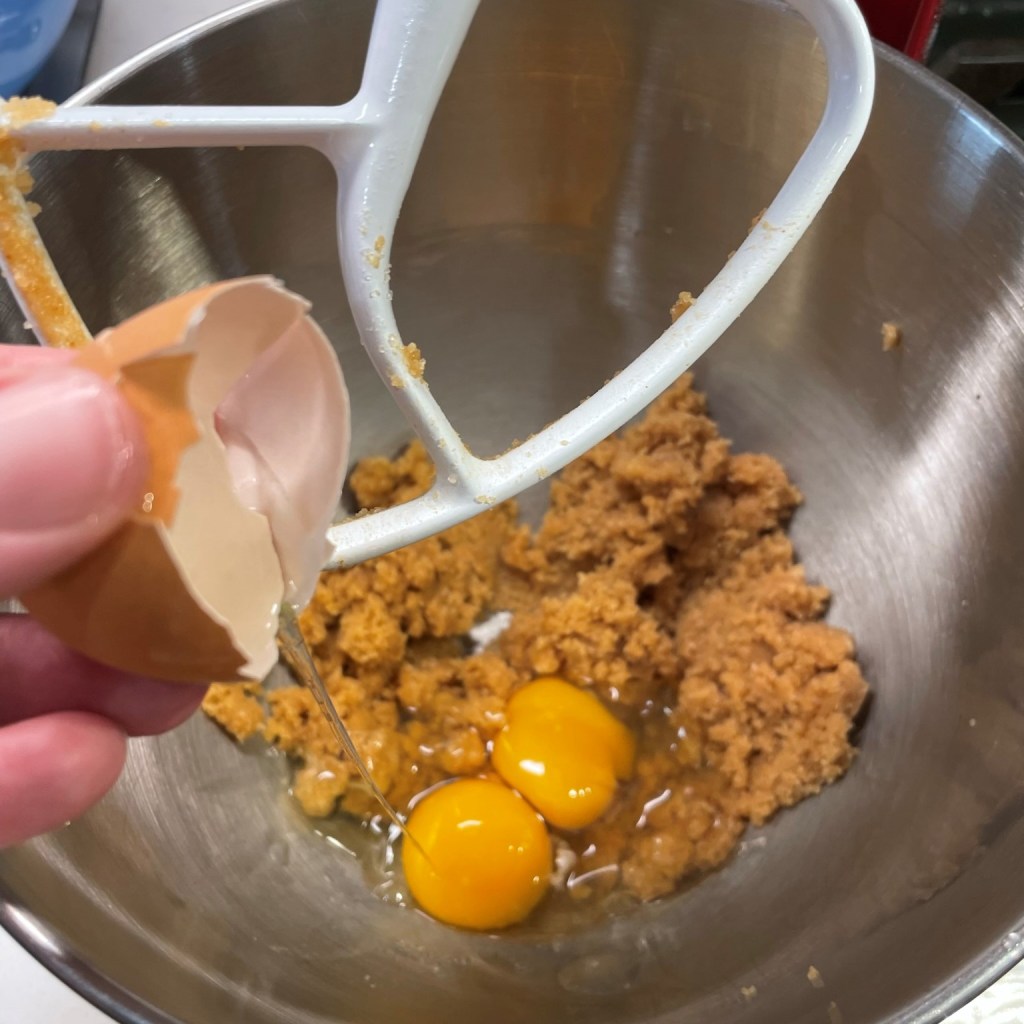
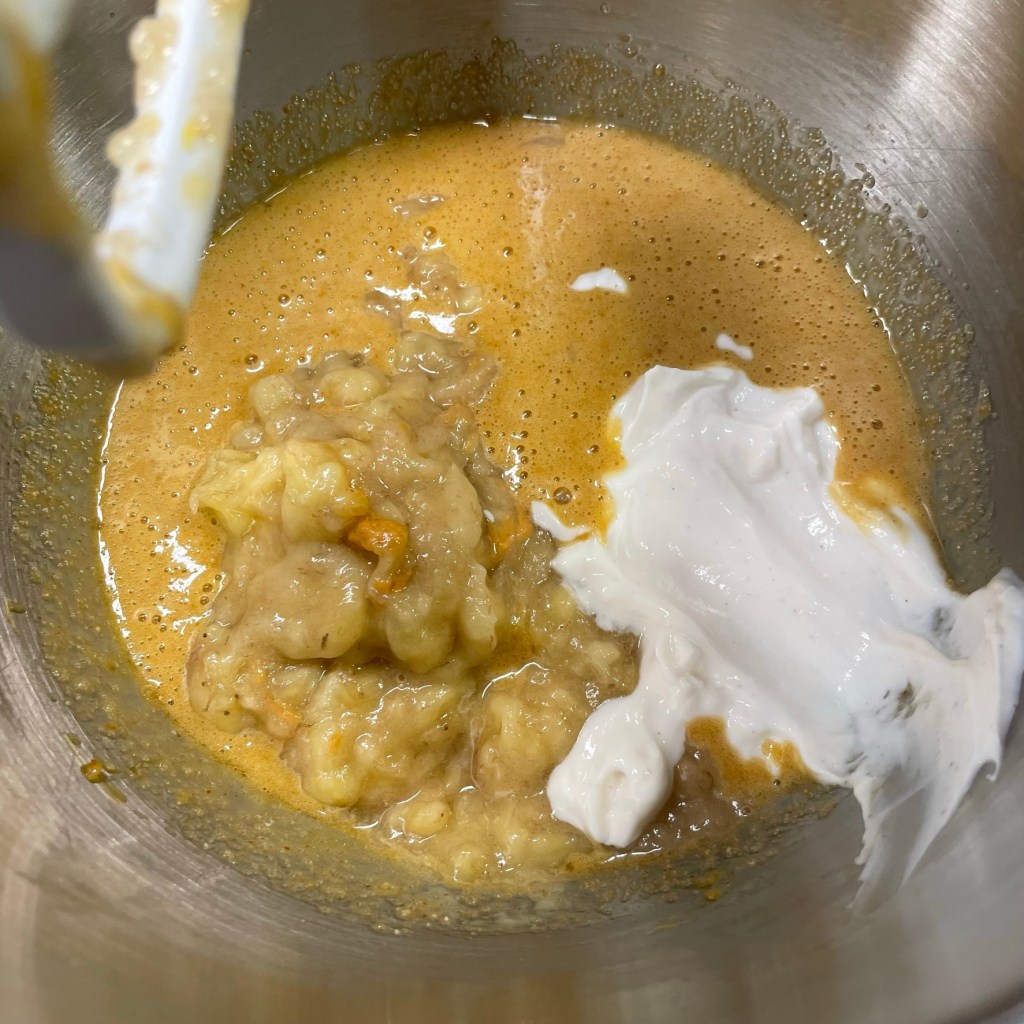
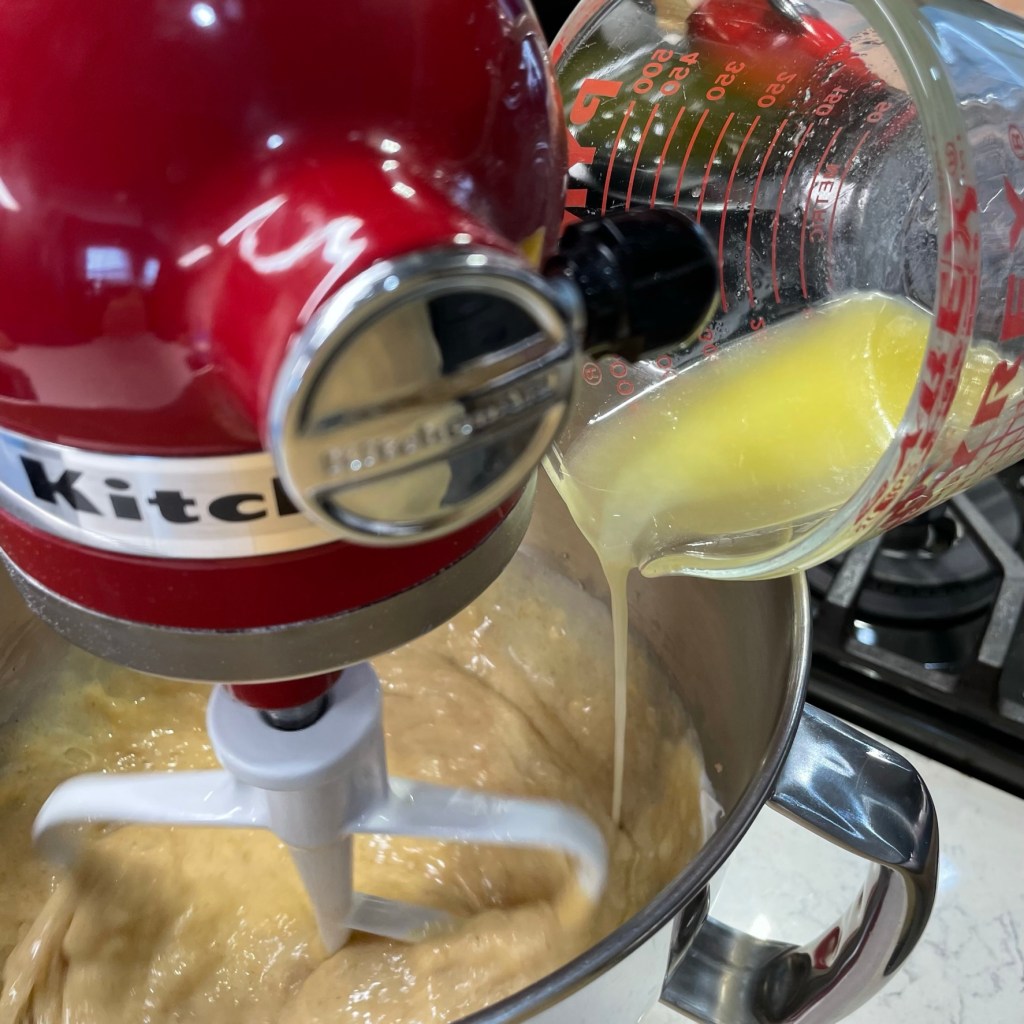
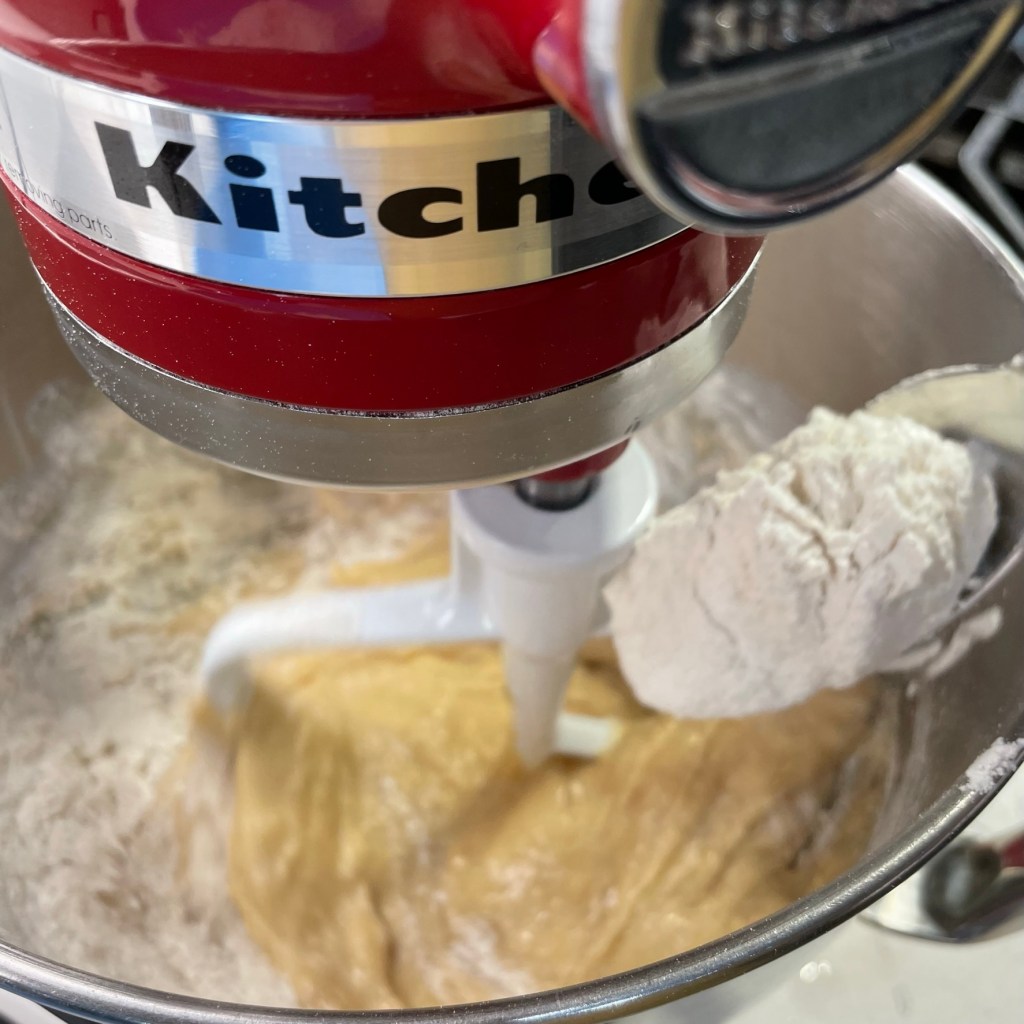
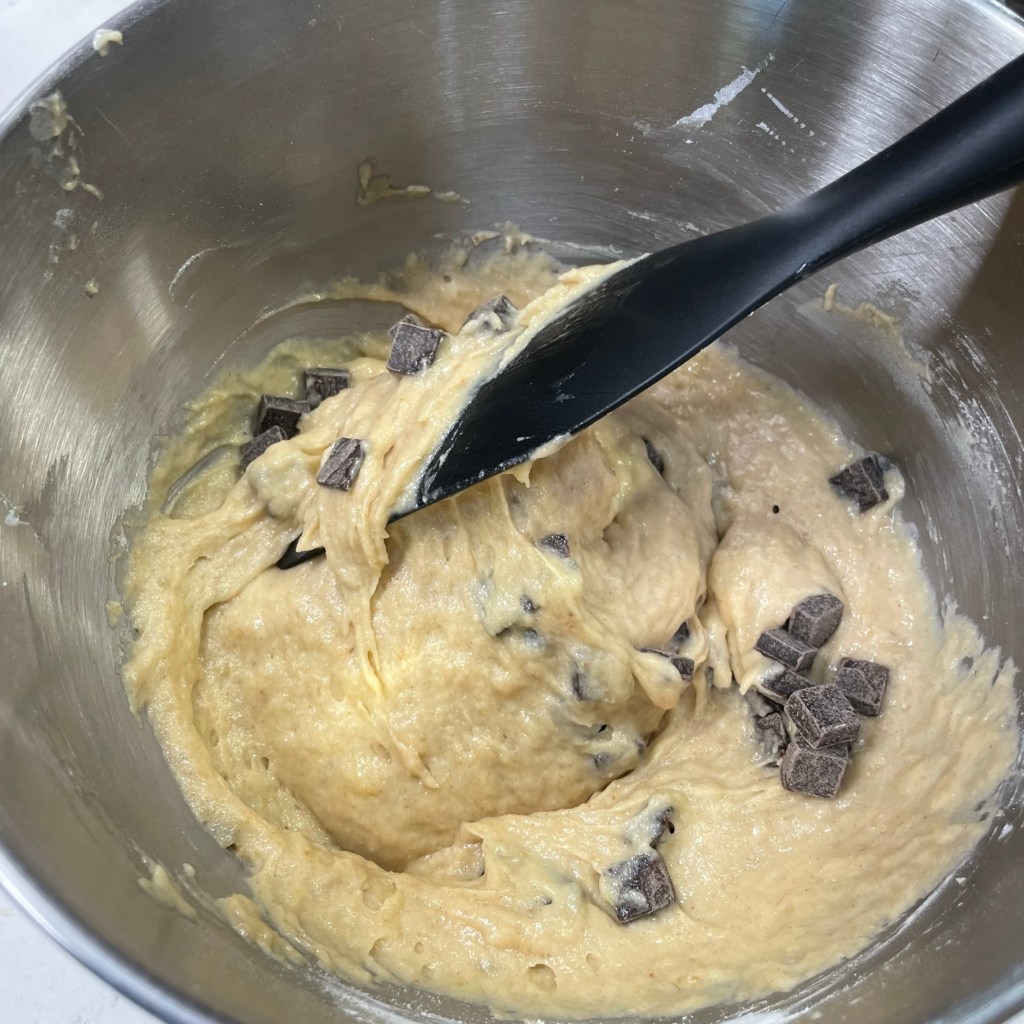
The only consideration I needed to make when adapting my usual banana bread recipe was how to adjust for the peanut butter. The sticky, dense texture of my natural-style peanut butter might make the batter heavy, I thought, so I inched forward just a bit on the Greek yogurt to compensate and add some moisture to the mix. A Jif or Skippy style would probably be easier, and would also make the bread sweeter. To ensure that my peanut butter blended evenly, I creamed it together with the sugar at the start of the recipe, then proceeded with beating in the eggs, mashed banana and yogurt. Finally, I blended in melted butter and then gently folded in the dry ingredients and the dark chocolate chunks.


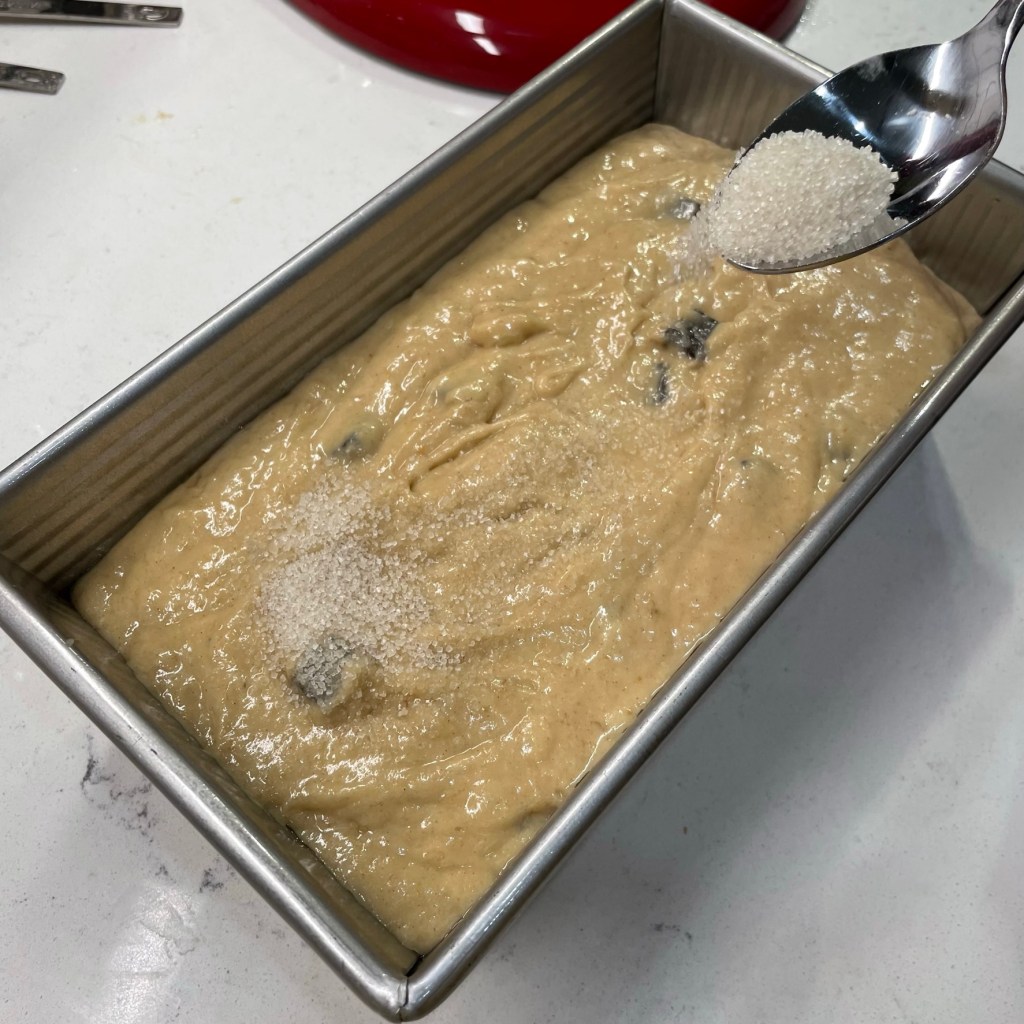
I always hold back about a tablespoon of the sugar from the recipe to sprinkle over the top just before baking. I love the delicate, sparkly crunch it gives the finished loaf.


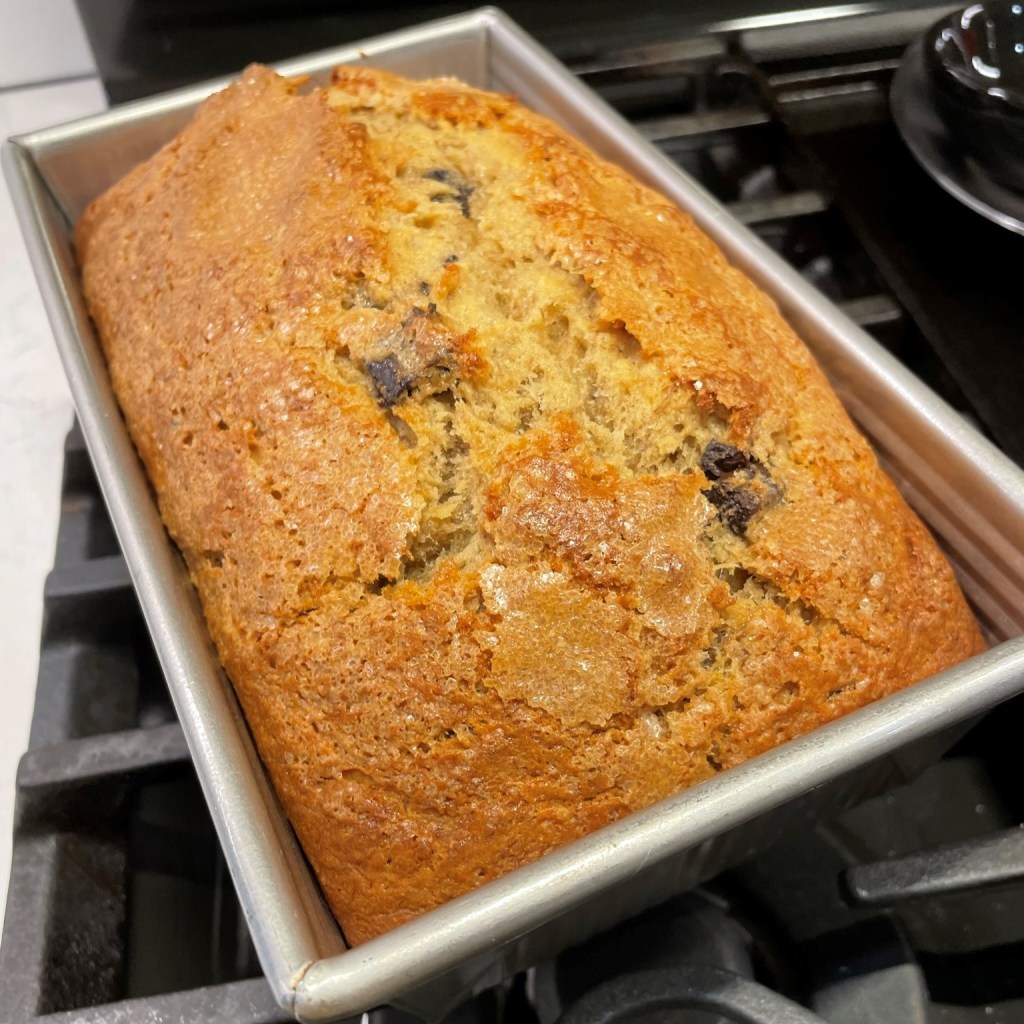
It’s two great tastes that taste great together— wait, it’s three! Every bite flaunts the peanut butter and banana flavors, and those pockets of chocolatey goodness make my taste buds very happy. Thank you, thank you very much.

Peanut Butter Banana Bread with Chocolate Chunks

  • Servings: About 10
  • Difficulty: Average
  • Print

If peanut butter and banana are good together, and peanut butter and chocolate, then why not combine all three? This banana bread is a winner!


Ingredients

  • 1 cup all-purpose flour
  • 1 cup whole wheat pastry flour (or white whole wheat)
  • 3/4 teaspoon baking soda
  • 1/2 teaspoon salt
  • 1/2 teaspoon ground cinnamon
  • 2/3 cup organic cane sugar, plus 1 Tablespoon for sprinkling before baking
  • 1/3 cup natural peanut butter (see ingredient notes)
  • 2 large eggs
  • 1 1/2 cups mashed very ripe banana
  • 6 Tablespoons unsalted butter, melted and cooled
  • 1/2 cup semi-sweet chocolate chunks (or large chips)

My natural peanut has only two ingredients, organic peanuts and salt. This type of peanut butter is stored in the fridge, very firm and not easily mixed with other ingredients. If your peanut butter contains palm oil and sugar, you may want to consider dialing back the amounts of butter and sugar ingredients to keep those flavors in check.

Directions

  1. Preheat oven to 350 F, with oven rack in center position. Prepare a loaf pan by buttering or oil-spraying the bottom and sides.
  2. In a medium bowl, whisk together the flours, baking soda, salt and cinnamon.
  3. Add sugar and peanut butter to a mixing bowl. Beat until evenly combined with no visible clumps of peanut butter. Beat in eggs.
  4. Smash the banana and blend it into the sugar-egg mixture. Take care not to obliterate the bananas; it’s nice to have a few visible chunks of it in the finished bread. Gently fold the melted butter into this mixture.
  5. Add the flour mixture, half at a time, and fold gently to incorporate the flour. Fold in the chocolate chunks, taking care not to overwork the batter.
  6. Pour the batter into the prepared loaf pan. Jiggle the pan slightly to even out the batter. Sprinkle the extra tablespoon of sugar all over the top.
  7. Bake for 55 to 60 minutes, until a toothpick inserted into the center comes out clean (you may have to poke in a few spots, because there’s so much chocolate in the recipe).
  8. Cool banana bread in the pan for about 15 minutes, then turn out onto a rack and let it cool completely before enjoying.


Jalapeño Popper Pizza

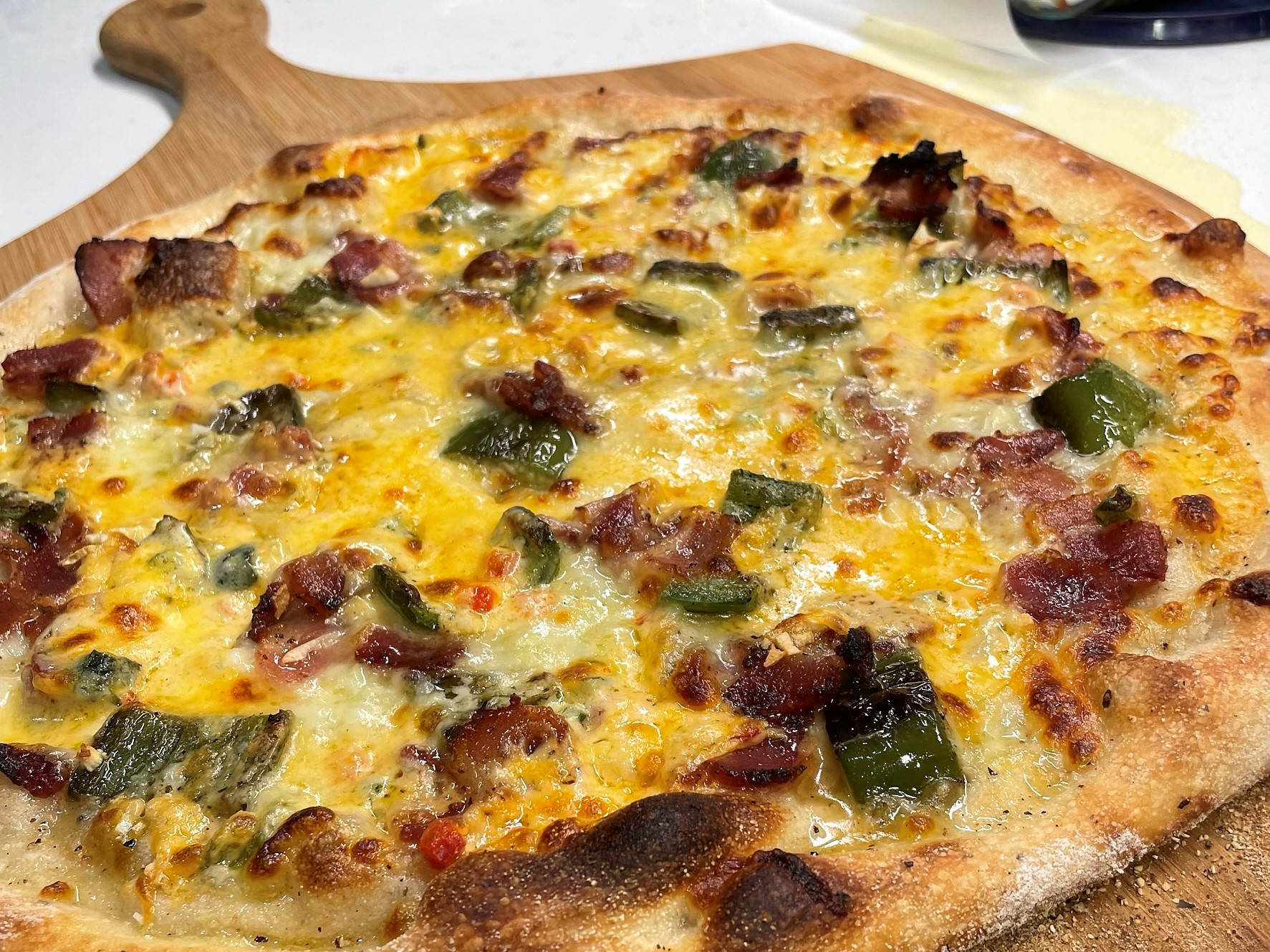
Most pizza lovers would agree that there’s never a bad day for pizza. But someone somewhere decided that February 9th should be “National Pizza Day,” and I am here for it with a pizza that is not only delicious, but also especially appropriate for snacking during Sunday’s Super Bowl, er, “Big Game!”

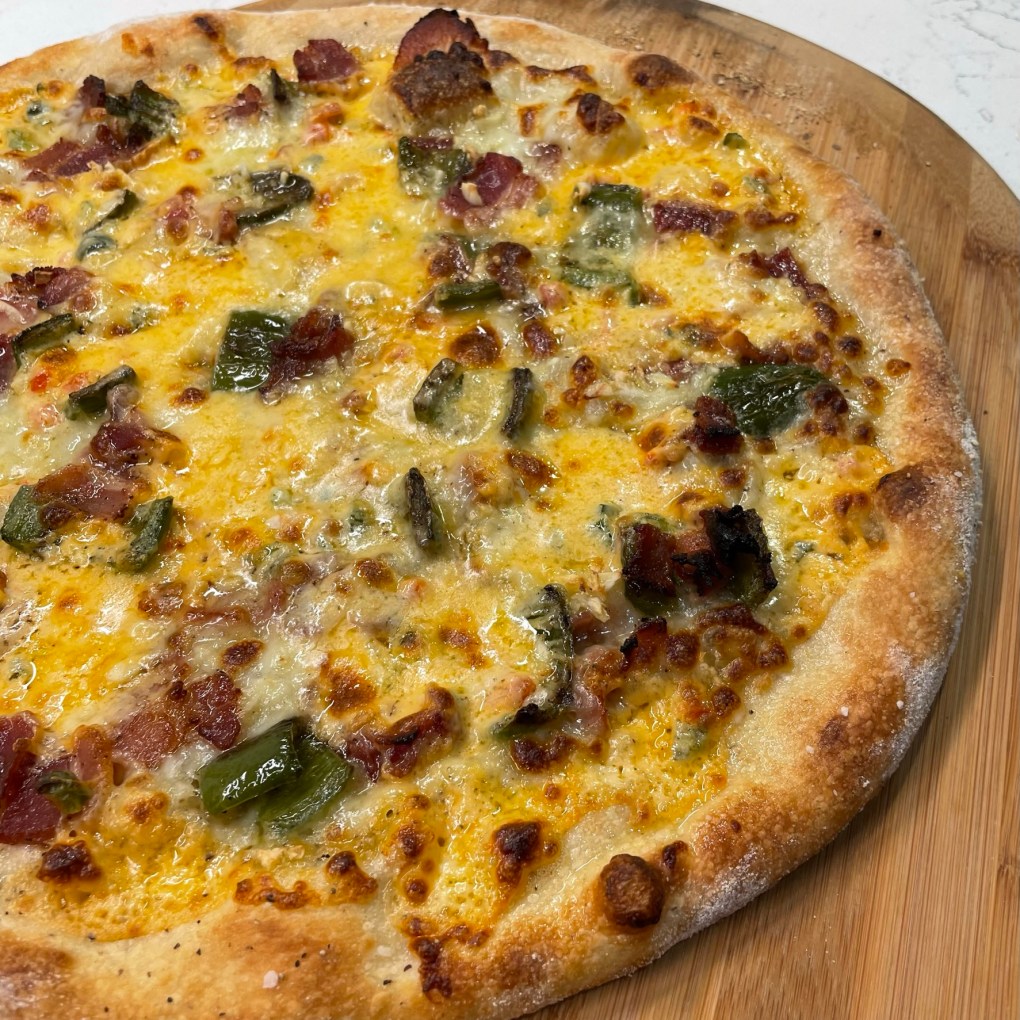
Everything you love about a jalapeno popper, on a pizza!

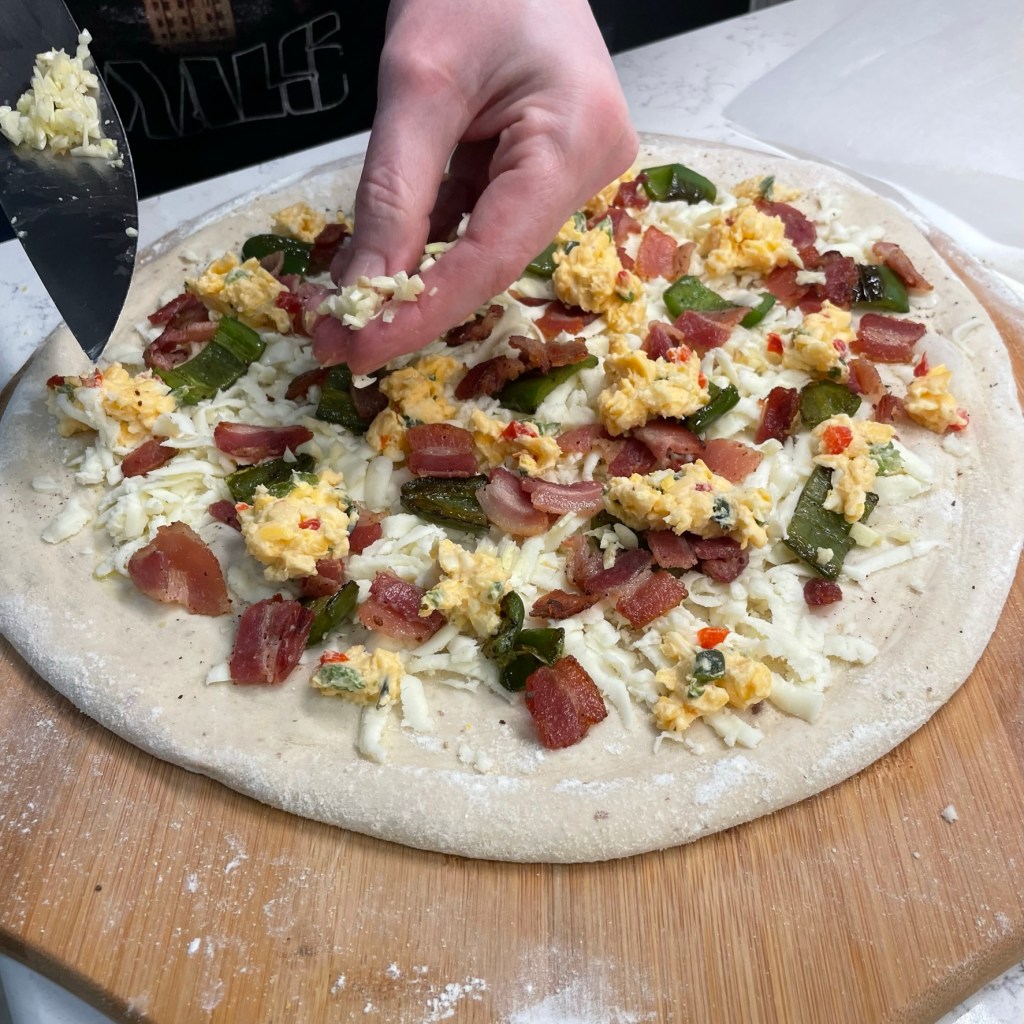
This pizza, which is built on my go-to homemade sourdough crust, is a fun interpretation of the classic jalapeño popper, which is usually a hot pepper, stuffed with cream cheese and cheddar, then wrapped in bacon and baked.


We focused on those same ingredients, spread them out onto a pizza crust and turned it into a delicious slice. Two game day favorites, one tasty bite!

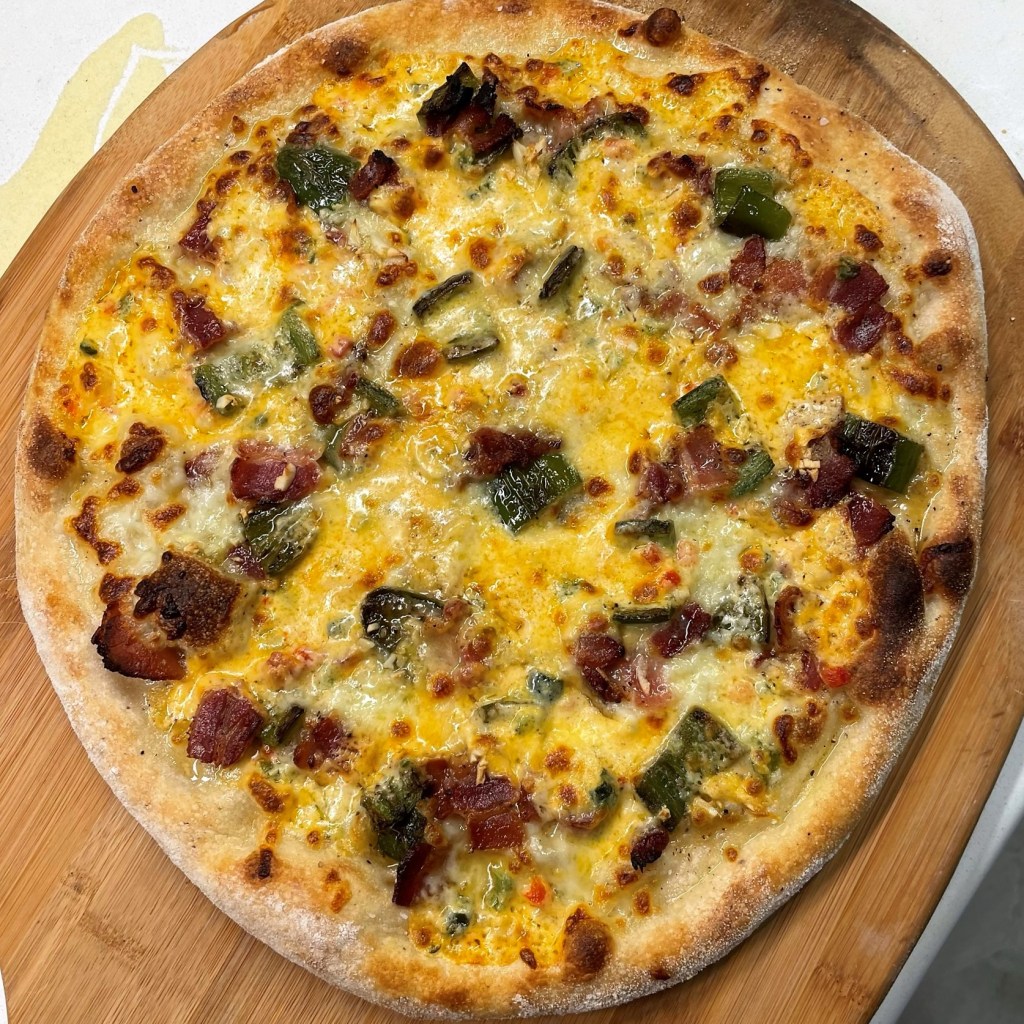
Arrange the ingredients so that every slice has all the flavors!

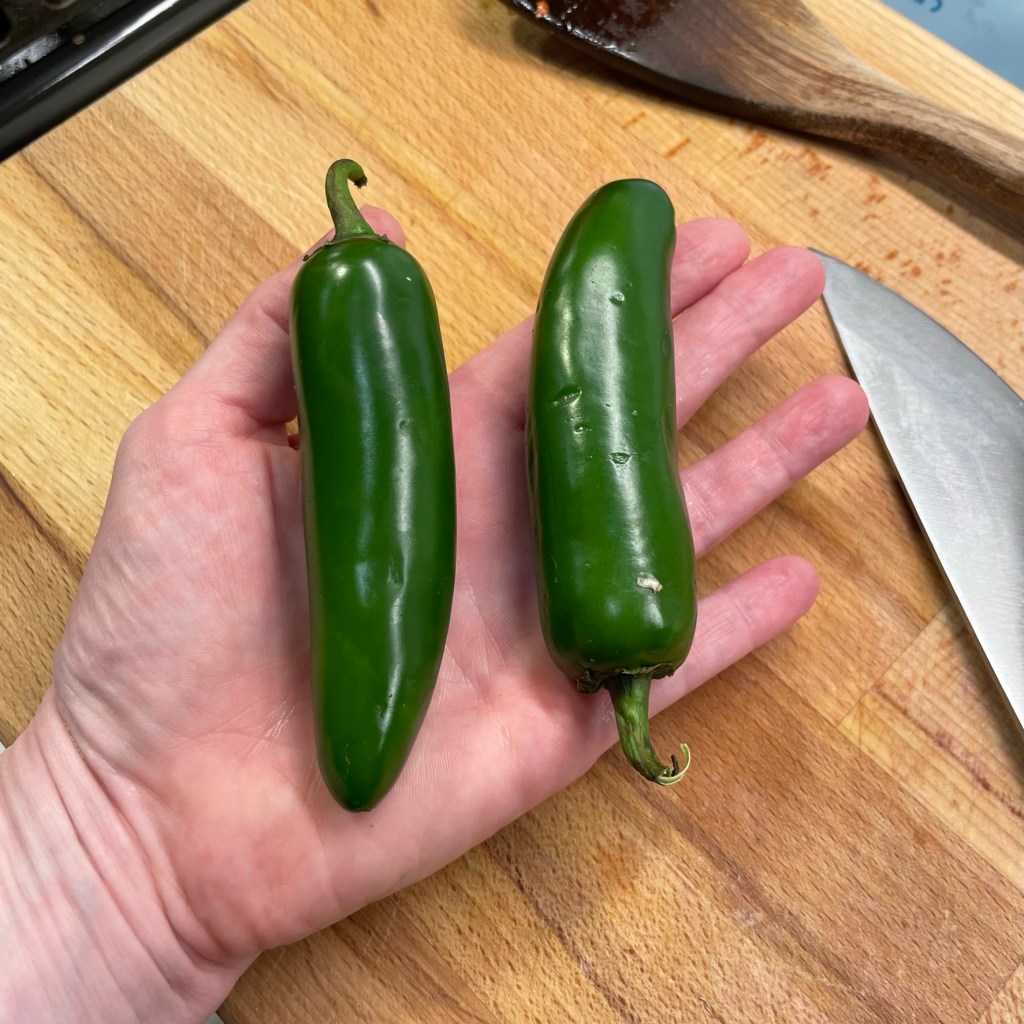
If you aren’t into making your own pizza dough, choose a store-bought dough from the deli department, preferably one that is about 11 ounces, and shape it by hand into a 14-inch round. There’s no sauce on this pizza—it doesn’t need it. Only mozzarella on the base, but also multiple cheeses in a homemade pimento cheese mixture (don’t worry, I’ll share that recipe, too), thumb-size pieces of smoky, salty bacon and fat chunks of fresh jalapeño, which I blistered in the same skillet I used to par-cook the bacon. You know what else would’ve been great on this pizza? Sautéed onions. Next time!


The pizza is surprisingly not all that spicy, despite having those two enormous jalapeños scattered all over it. If you desire more heat, keep some of the seeds on the jalapeños or consider adding some crushed pepper flakes at the table. Personally, we thought the pizza was just right.

The pizza steel has been a total game changer for our home pizzas. I highly recommend it!

We bake all our pizzas on a thick pizza steel, preheated for an hour at 550°F, the hottest our home oven will go. At this temperature, and with the steel, the pizza takes only 6 minutes to achieve blistered, bubbly perfection. If you’re using a stone or a pan, adjust temperature and baking time accordingly.


Jalapeño Popper Pizza

  • Servings: 6 to 8 slices
  • Difficulty: Average
  • Print

All the flavors you love in a jalapeño popper, tossed onto a homemade pizza dough. It's two game day favorites in one delicious bite!


Ingredients

  • 1 ball pizza dough, at room temperature
  • 1 Tbsp. extra virgin olive oil
  • 1/2 cup low moisture mozzarella, shredded
  • 2 large jalapeño peppers, seeded and cut into 1-inch chunks
  • 4 slices thick smoked bacon, cut into 1-inch pieces
  • 1/2 cup pimento cheese (see recipe notes about this)
  • 3 cloves garlic, peeled and finely minced

Use a sturdy pimento cheese that does not have a lot of mayonnaise. If it drips or slides off a spoon, it is too runny for this recipe. Look for an artisan brand or make my Roasted Poblano Pimento Cheese for this recipe.

Directions

  1. Preheat oven to 550 F, with a pizza steel on the oven rack about 8 inches from top heat element. From the time the oven reaches 550, set a timer for one hour. If using a pizza stone or pan, adjust heat and baking time accordingly.
  2. Cook bacon over medium heat in a cast iron skillet, until most of the fat has rendered but the bacon is just shy of crispy. Transfer bacon to a plate lined with a paper towel. Drain off excess grease.
  3. In the same skillet, toss jalapeño chunks until they are slightly softened and the skins are somewhat blistered. Transfer to the same plate as the bacon.
  4. Shape pizza dough by hand into a 14-inch round and transfer it to a floured, cornmeal-dusted pizza peel. Drizzle or brush olive oil onto the crust, and season with kosher salt and freshly ground black pepper.
  5. Scatter mozzarella all over dough, then arrange the jalapeño and bacon pieces. Place small dollops of pimento cheese onto the pizza, so that every bite will have a little bit of every flavor. Sprinkle minced garlic onto the pizza.
  6. Slide the pizza from the peel onto the pizza steel and bake for about 6 minutes, until crust is blistered and golden and the cheeses are melted and bubbling. Serve at once.

Roasted Poblano Pimento Cheese

  • Servings: About 10
  • Difficulty: Average
  • Print

The joy of making your own pimento cheese is that you can spike it with any flavor you like! Here, I've used oven-roasted poblano chiles to complement the tangy pimentos.


Ingredients

  • 2 medium poblano peppers, cut in half and seeded
  • Olive oil spray (or 1 tsp. olive oil)
  • 3 oz. cream cheese or neufchâtel, softened to room temperature
  • 1/4 cup + 1 Tbsp. mayonnaise
  • A dash or two of hot sauce, to taste
  • A few quick shakes onion powder or garlic powder (about 1/2 tsp. total)
  • Salt and pepper
  • 2 Tbsp. drained jarred pimentos
  • 3 packed cups shredded or grated cheese (see recipe notes)

For best results, mix all the ingredients and adjust seasoning before blending in the cheese. Purchase whole blocks of cheese and shred it yourself, as the bagged varieties have a coating to prevent sticking and they won’t blend as well. Several varieties of cheese work great in pimento cheese, and I used a mix of Monterey Jack, American, Colby jack and extra sharp cheddar.

Directions

  1. Preheat oven on low broil setting. Line a baking sheet with aluminum foil (not parchment) and use the heel of your hand to press and break the poblano halves until they’re flat. Arrange them, skin side-up, on the foil. Brush or spray them with oil, and then broil until the skins are blistered and peppers are softened (about 10 minutes). Transfer peppers to a bowl and cover for 20 minutes until they’re cool enough to handle. Peel as much of the skin from the peppers as possible and then chop fine.
  2. In a fairly large bowl (you’ll need plenty of room to stir), blend together the cream cheese, mayonnaise, hot sauce, and onion powder. Mix until smooth. Stir in pimentos and chopped poblanos. Season to taste with salt and pepper, perhaps a bit saltier than you like because the cheese will dull those flavors somewhat.
  3. Stir in the shredded cheese, one cup at a time, blending really well each time until all cheese is mixed in. Cover and refrigerate a day for best flavor.


Philly Cheesesteak Dip

I don’t care about football. Let’s get that out of the way, OK? But I do love a theme and the camaraderie of a big-game party with friends, and especially the food!

There is no better food for a die-hard Philadelphia Eagles fan than a real Philly cheesesteak, with its peppers and mushrooms, all that gooey melted cheese and loaded up with thinly sliced steak. It’s a hearty, flavorful sandwich— and it screams Philly. 

It would be the perfect thing to serve for this weekend’s NFC Championship game, right? If only it wasn’t a fat, messy sandwich.

When things get intense and your team is vying for a spot in the NFL’s biggest game of the year, you’ve gotta have an easier way to chow down on those flavors, or you’ll end up with it spilt all over your green jersey! This recipe has all the right stuff, but in a simplified format so you can take a warm, meaty, cheesy bite in between yelling at the refs and cheering your team on to victory.

Our good friends, Bob and Peg, are two such die-hard Eagles fans and they have generously shared Bob’s recipe for this scrumptious, game day party dip. It’s perfect for halftime snacking, regardless of which team you’re pulling for this weekend. But if you’re at Bob and Peg’s house, you’d best be pulling for Philly.

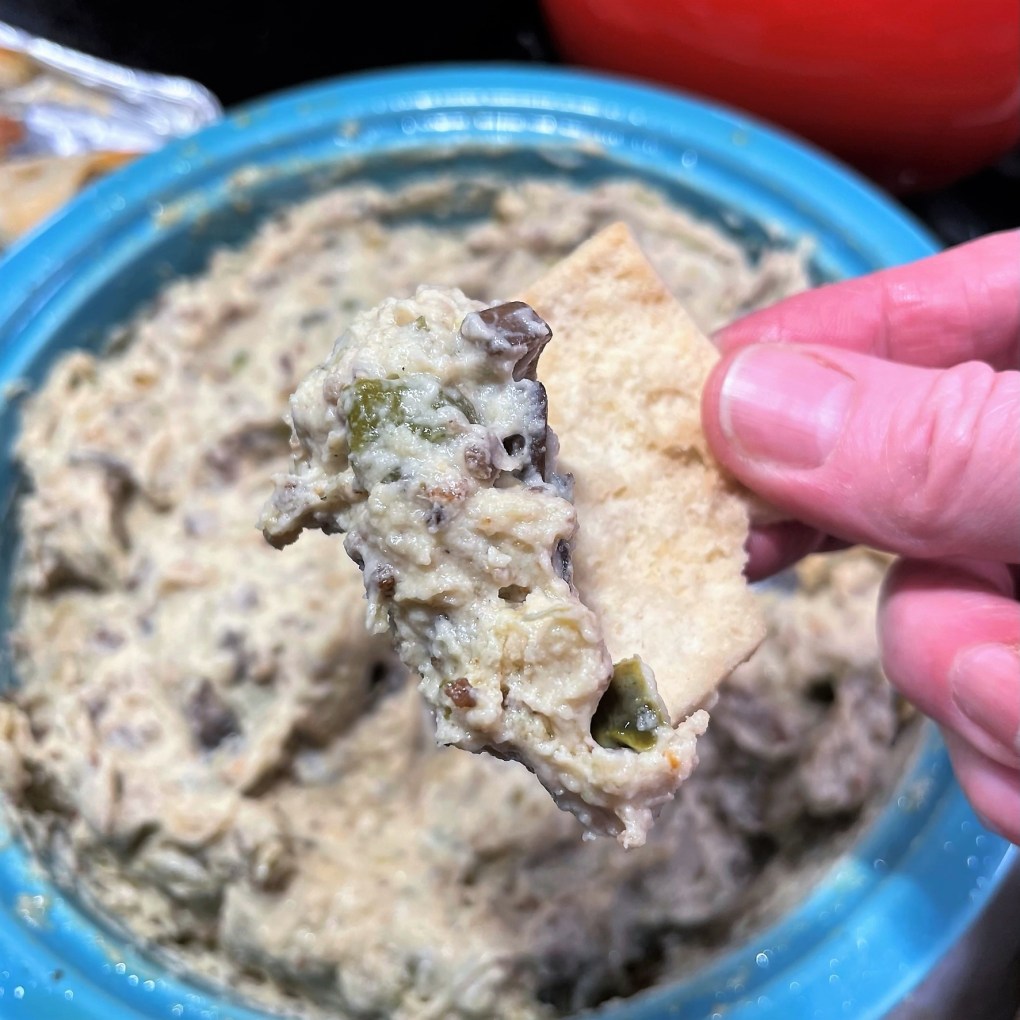
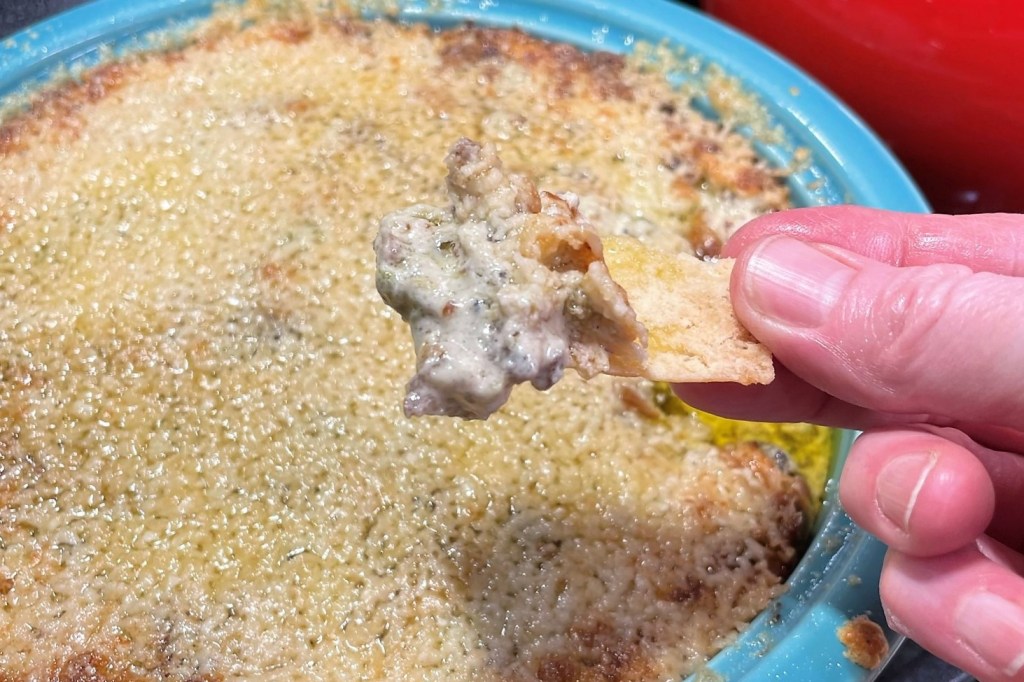
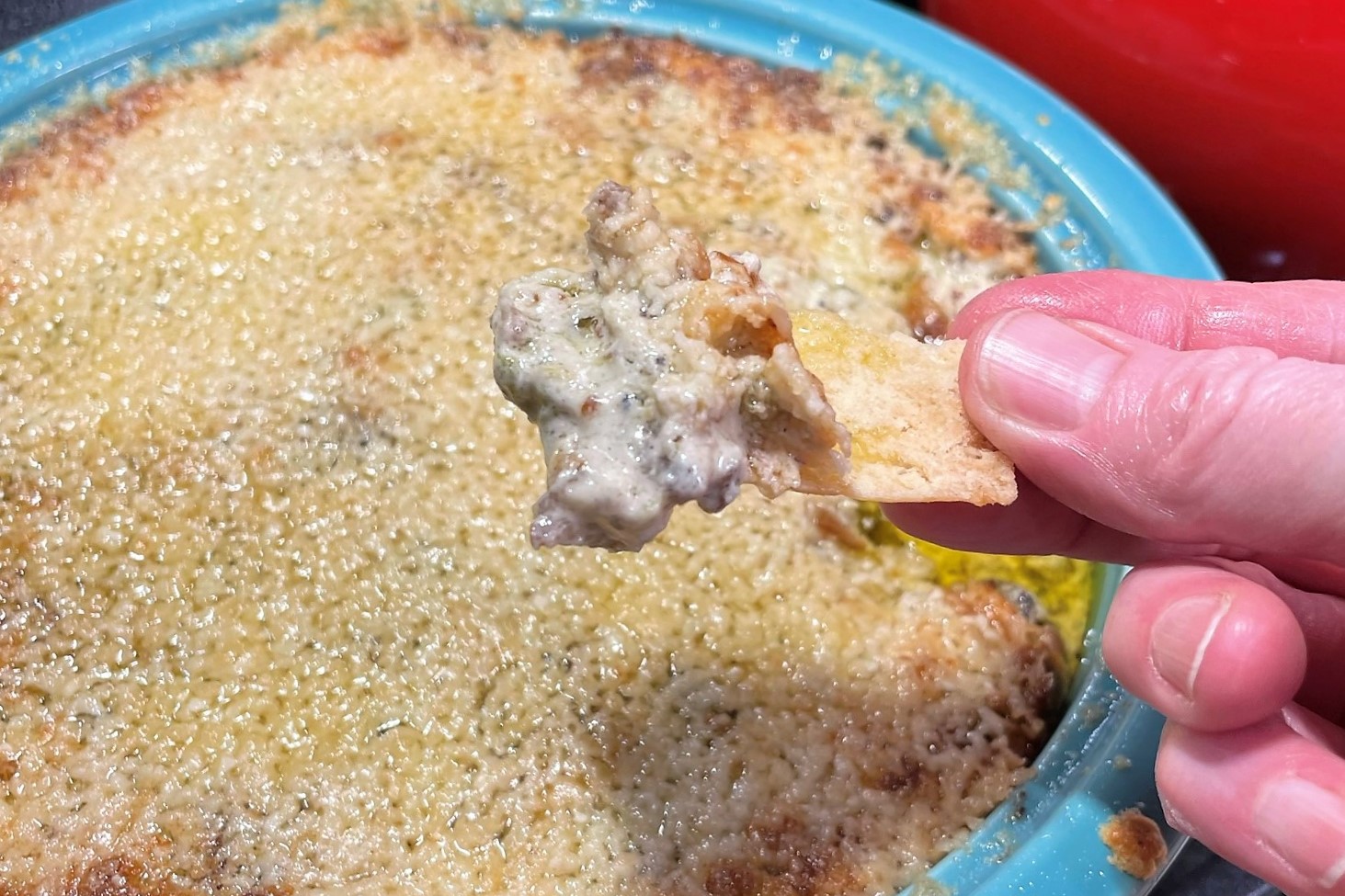
So delicious, hot from the oven!

The game will be aired on FOX this Sunday at 3:00 PM Philadelphia time, and if you have plenty of time to get this dip ready.

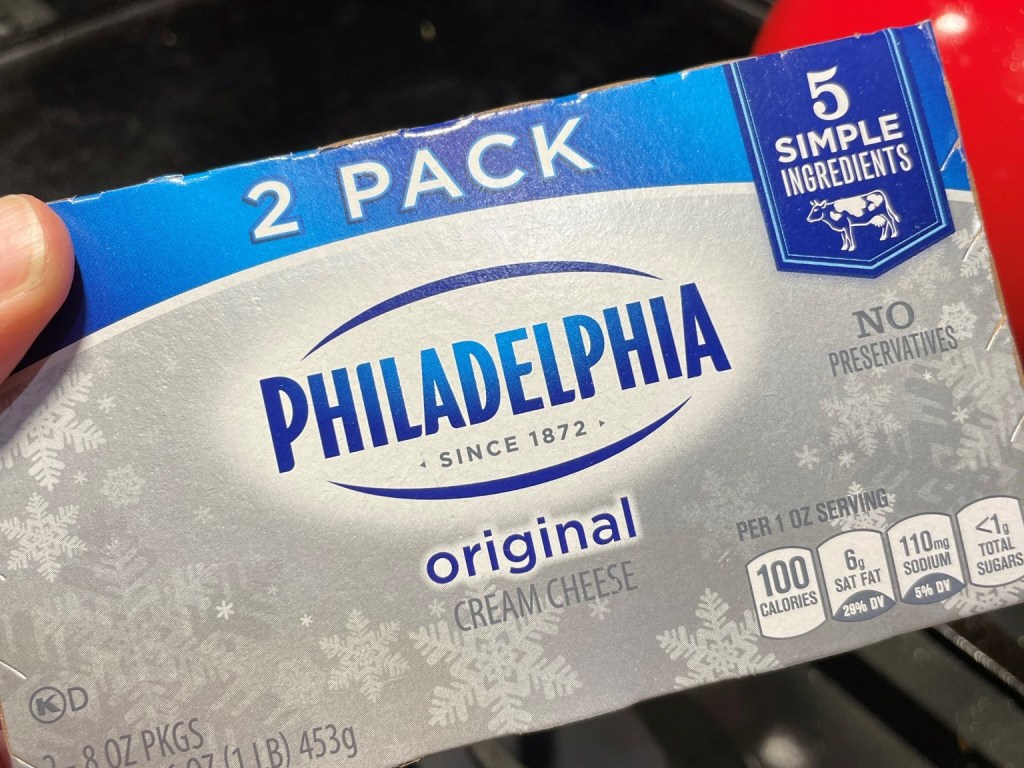
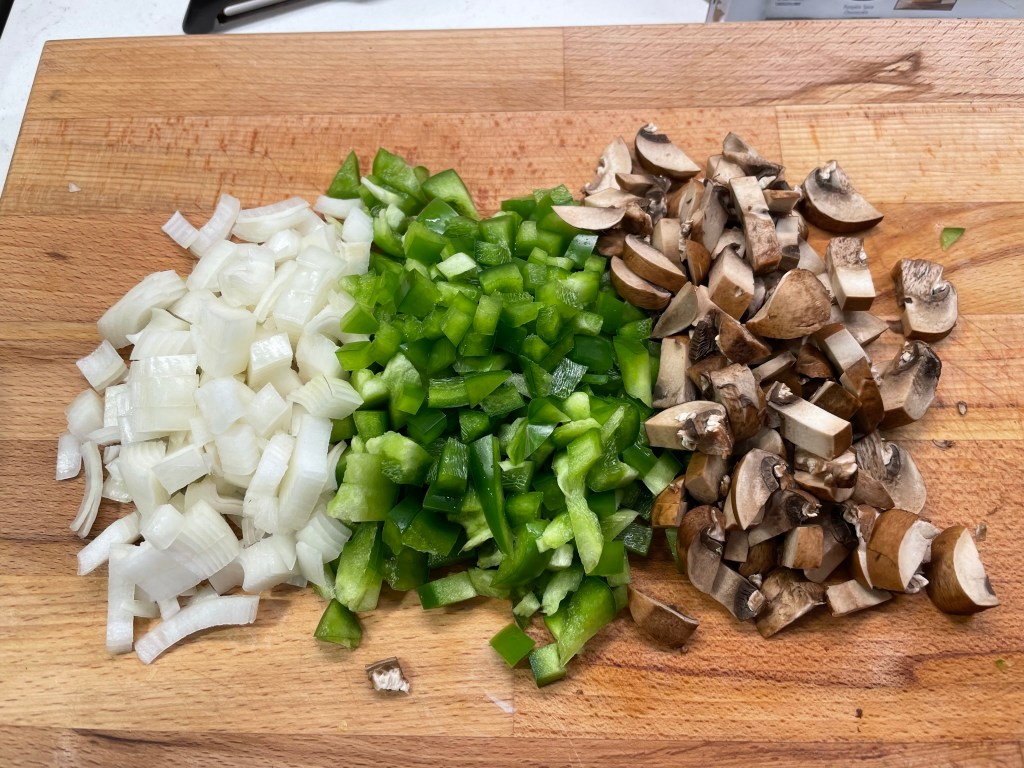
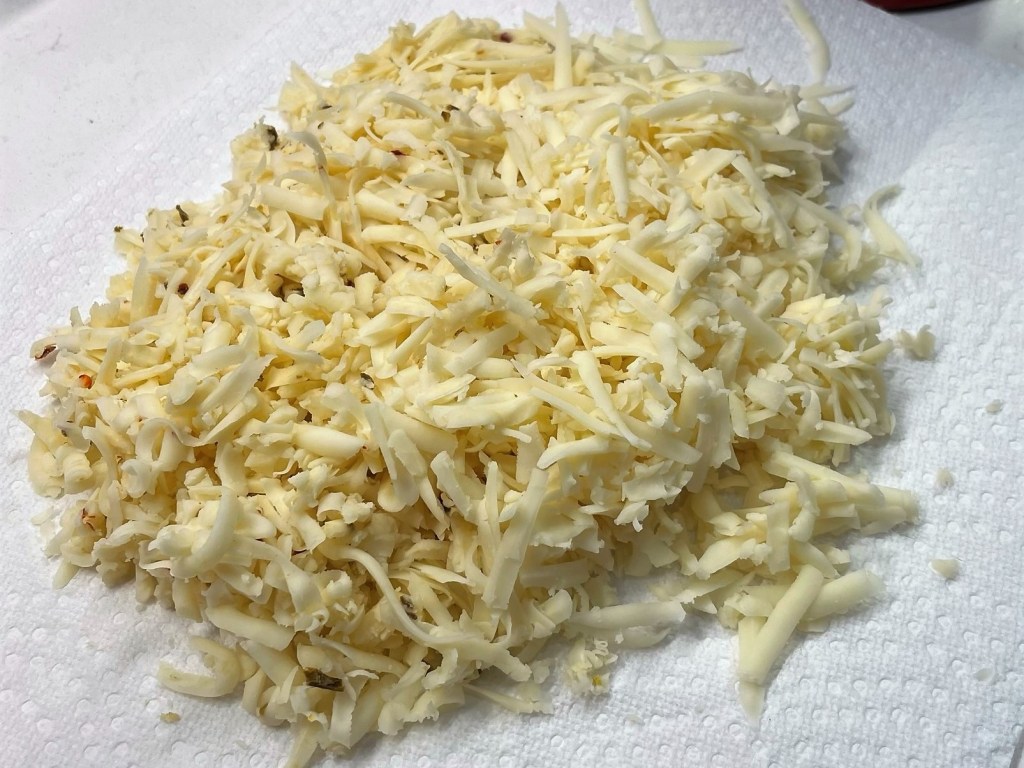
Bob’s cheesesteak dip begins with easy-to-find ingredients, and the prep is super simple. You’ll need cream cheese (Philadelphia brand, obviously), onion, bell pepper and mushrooms, a mountain of white cheese and very thinly sliced steaks. Bob’s recipe suggests an Italian “6-cheese” blend, but I used mainly Monterey Jack and pepper jack cheeses because I already had them in the fridge. Some amount of white American cheese would give a nice, melty quality to this dip, too. I’d recommend steering clear of very sharp, hard cheeses, as they tend to break under heat.


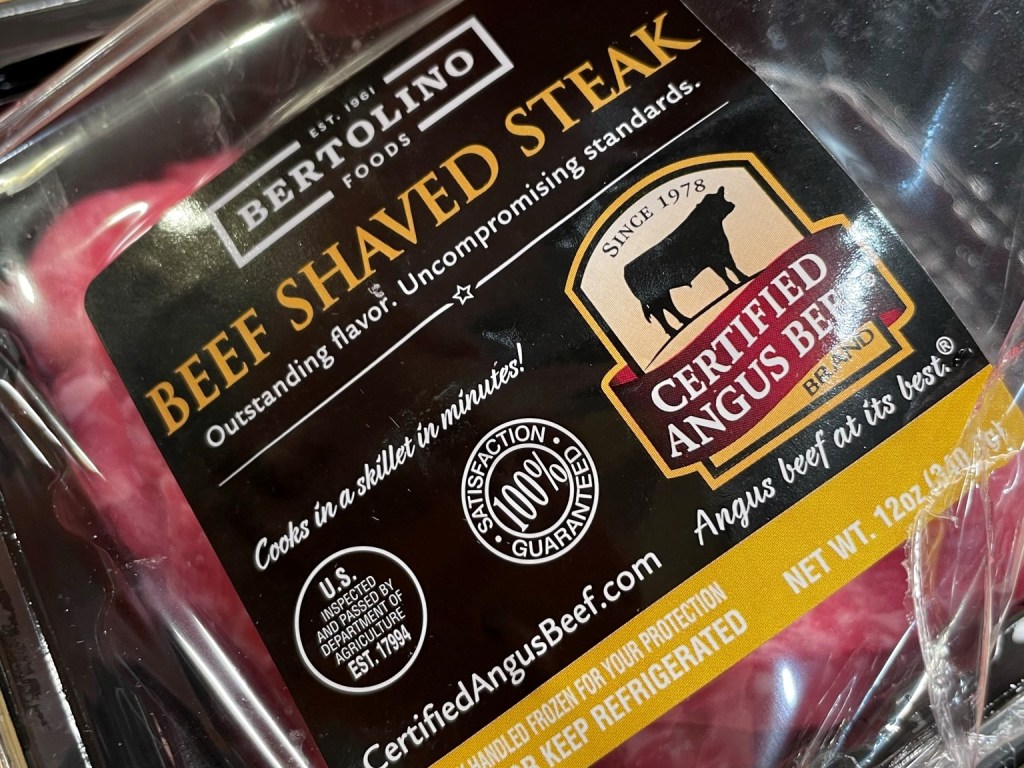
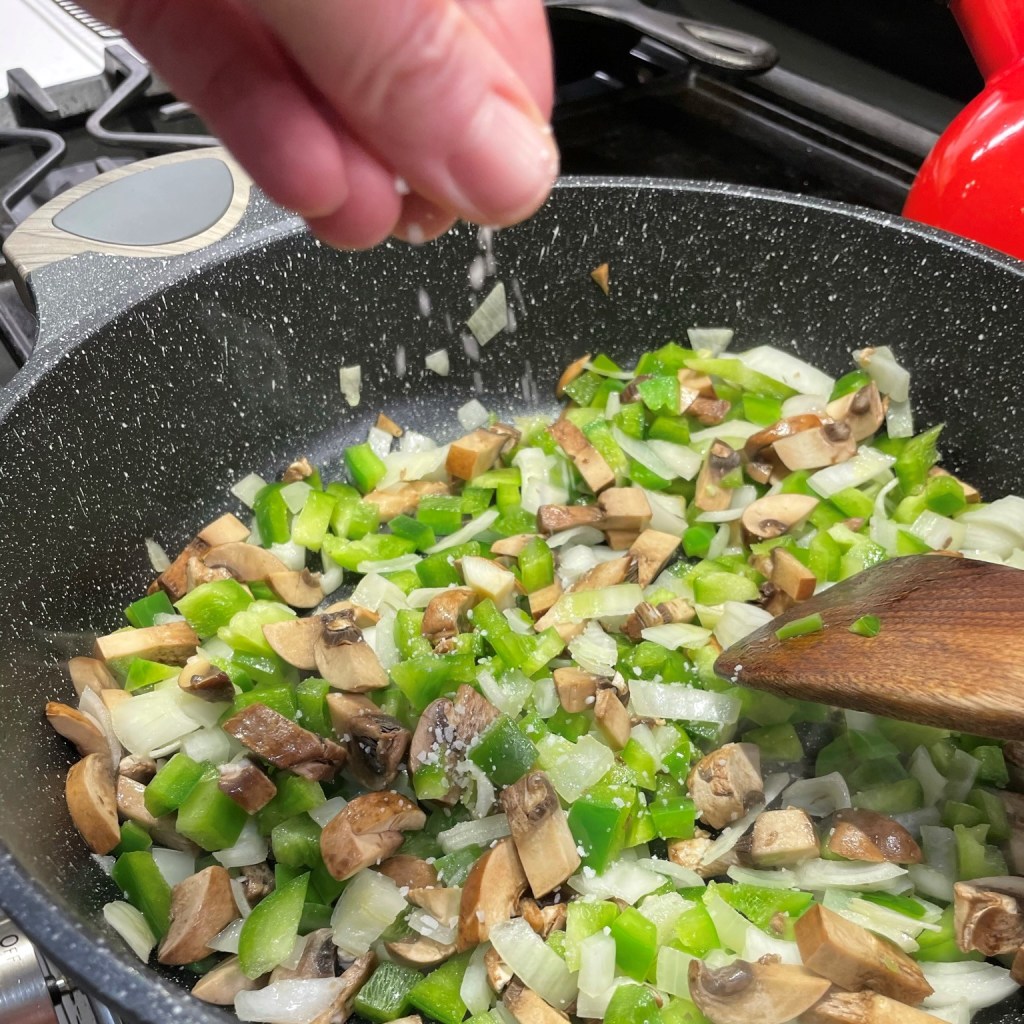
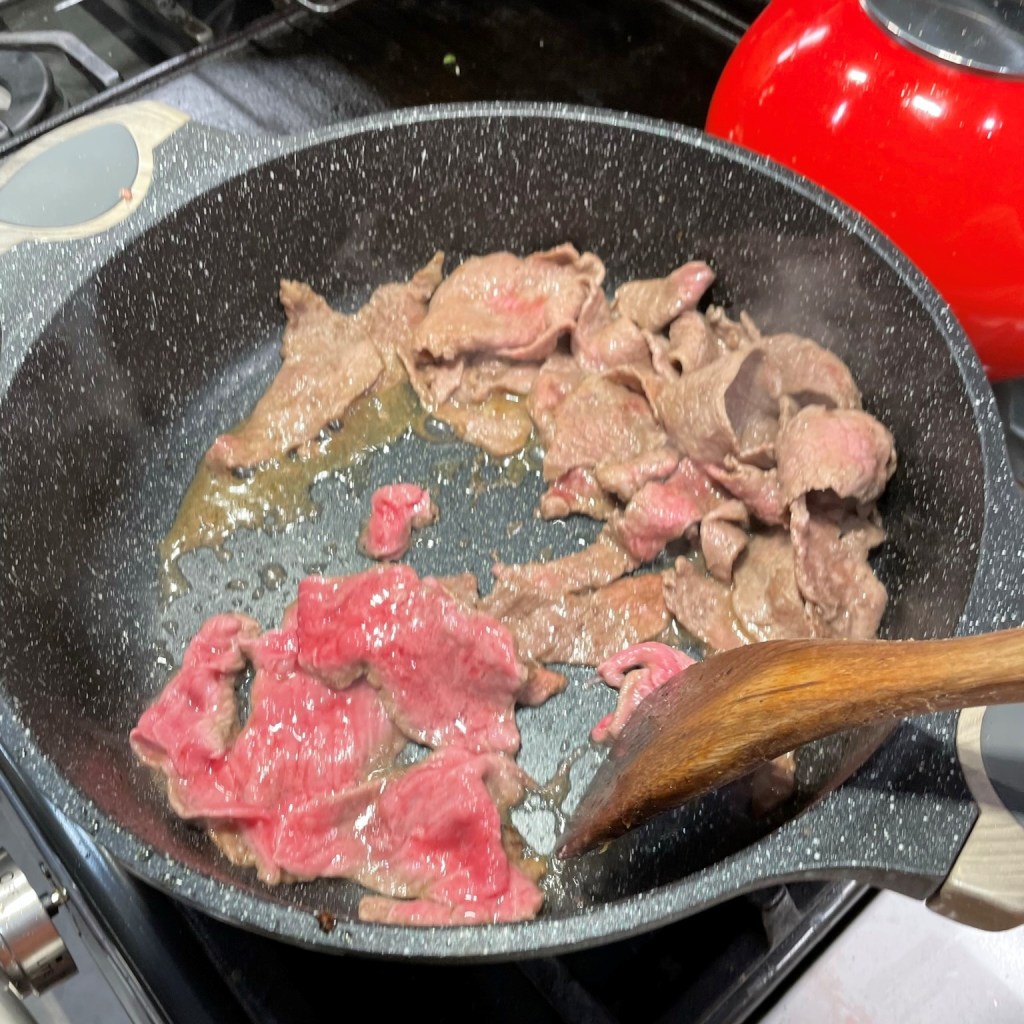
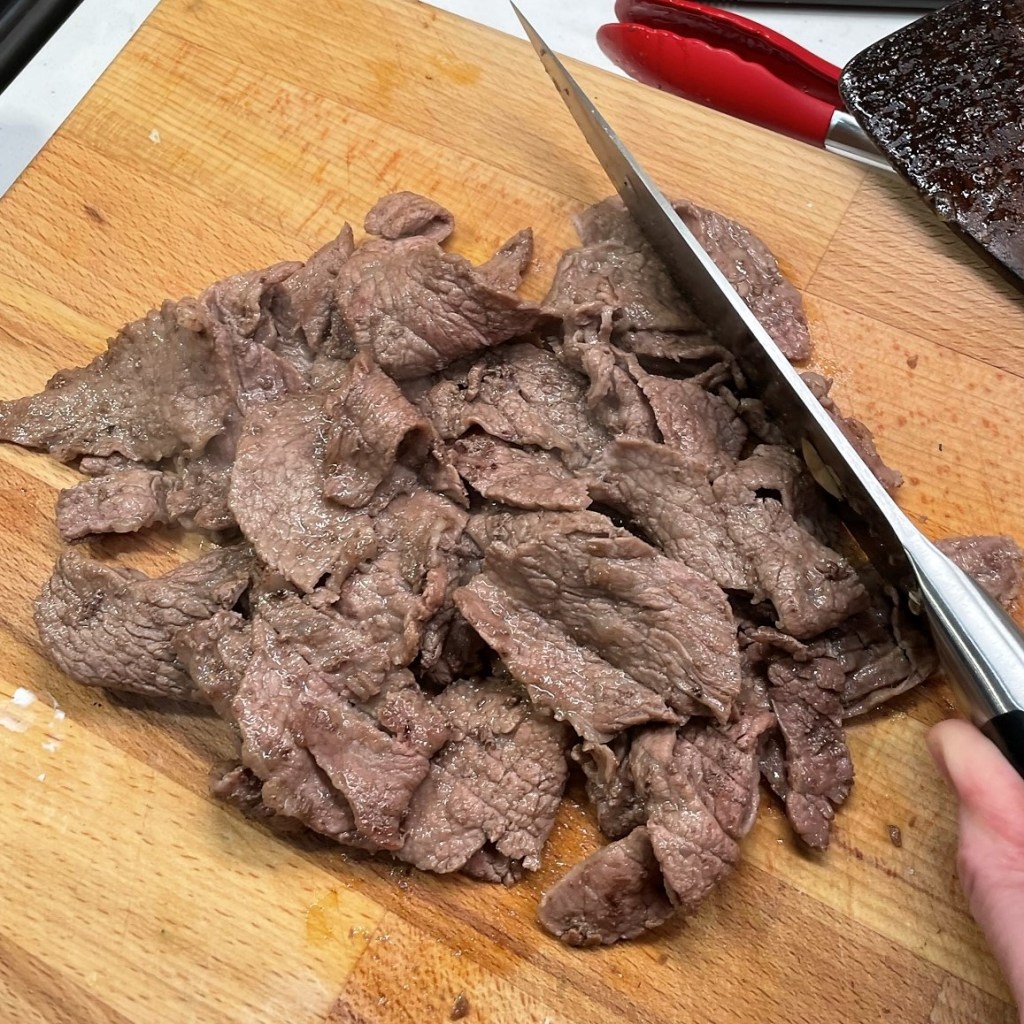
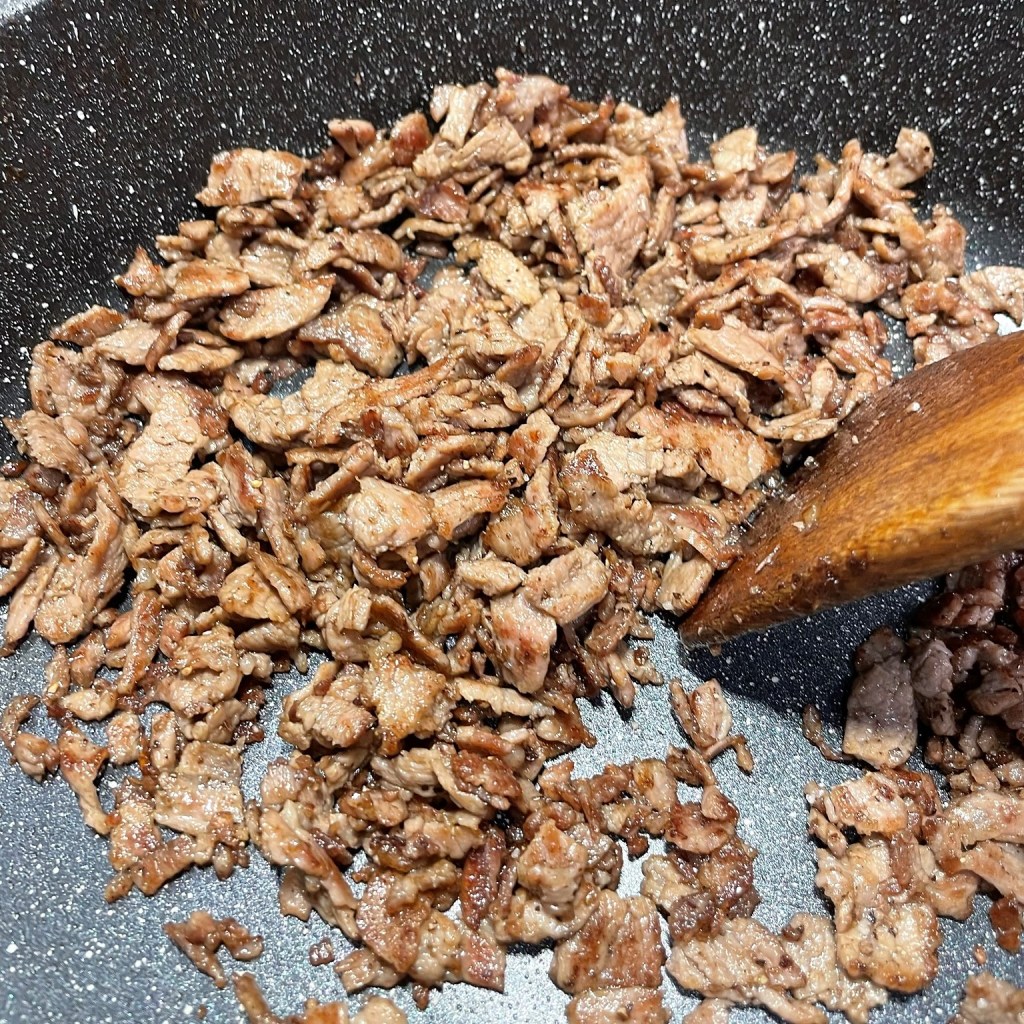
Put the veggies in a skillet and sauté until they’re soft. Then cook up the thinly sliced steaks and chop them into smaller pieces. I scored a package of fresh, shaved Angus steak in the meat case of my supermarket, but these aren’t always available. Bob’s recipe suggests using Steak-umms, specifically the 14-steak package.


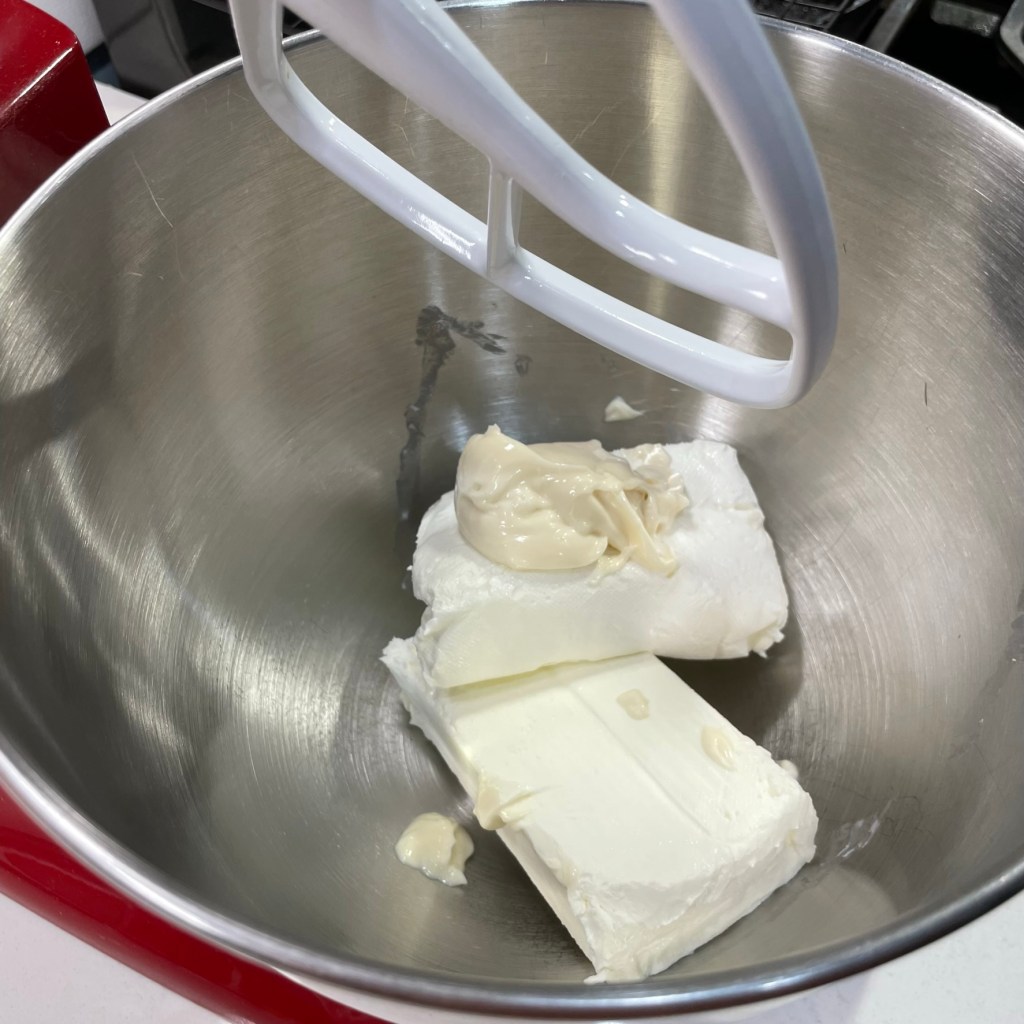
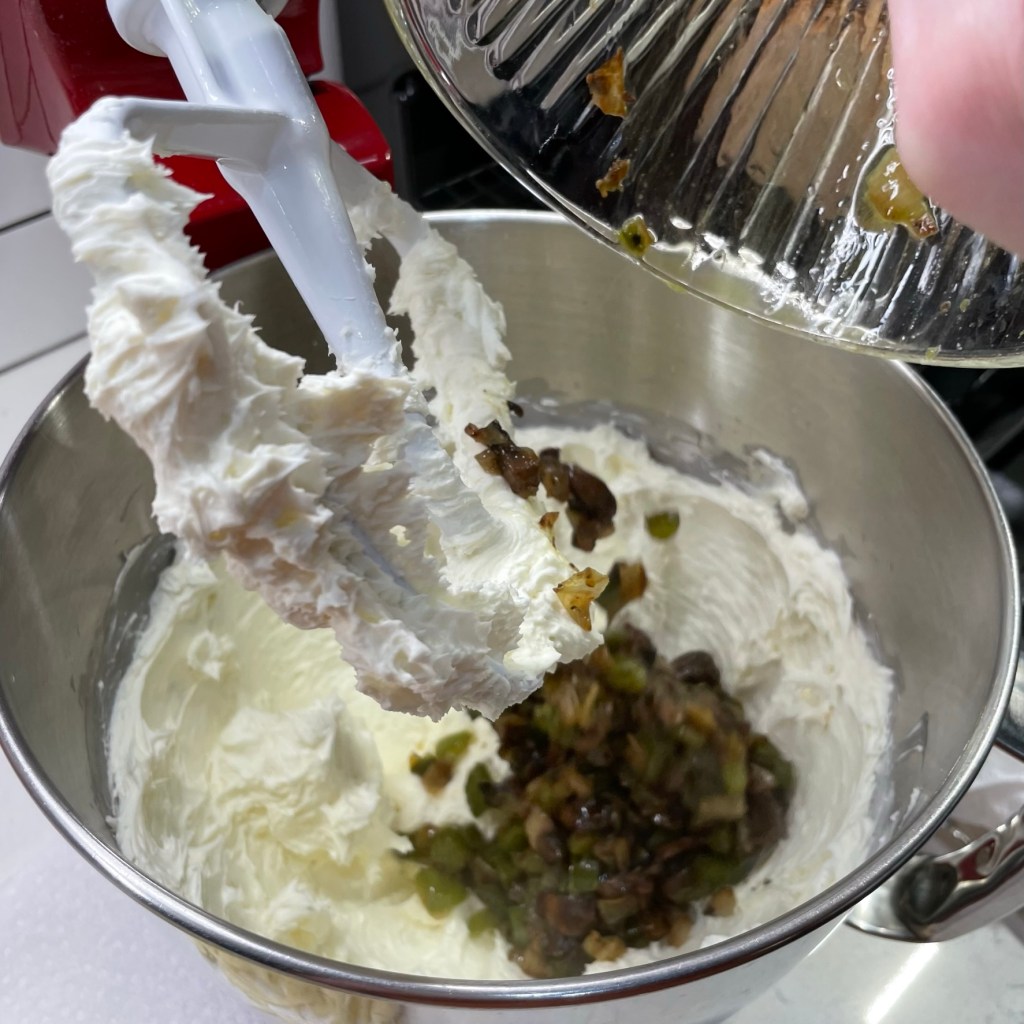
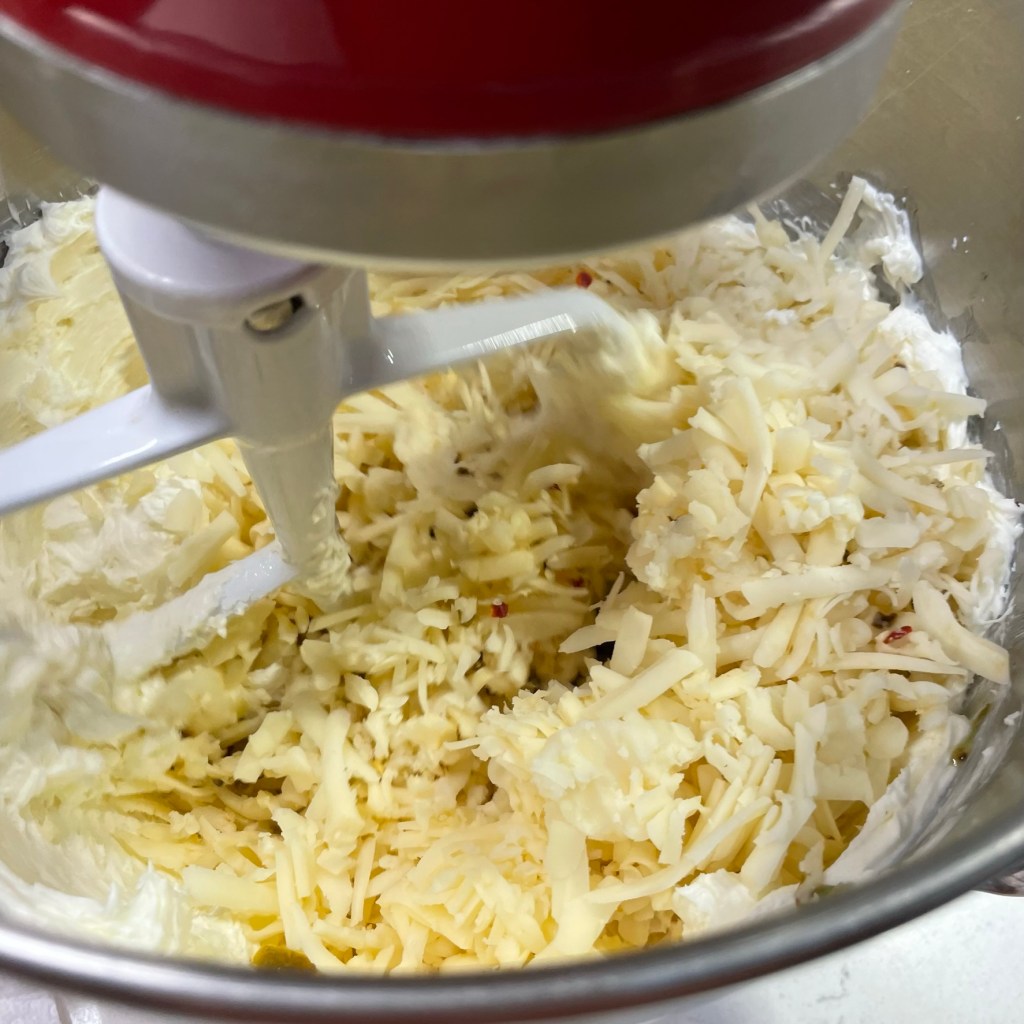
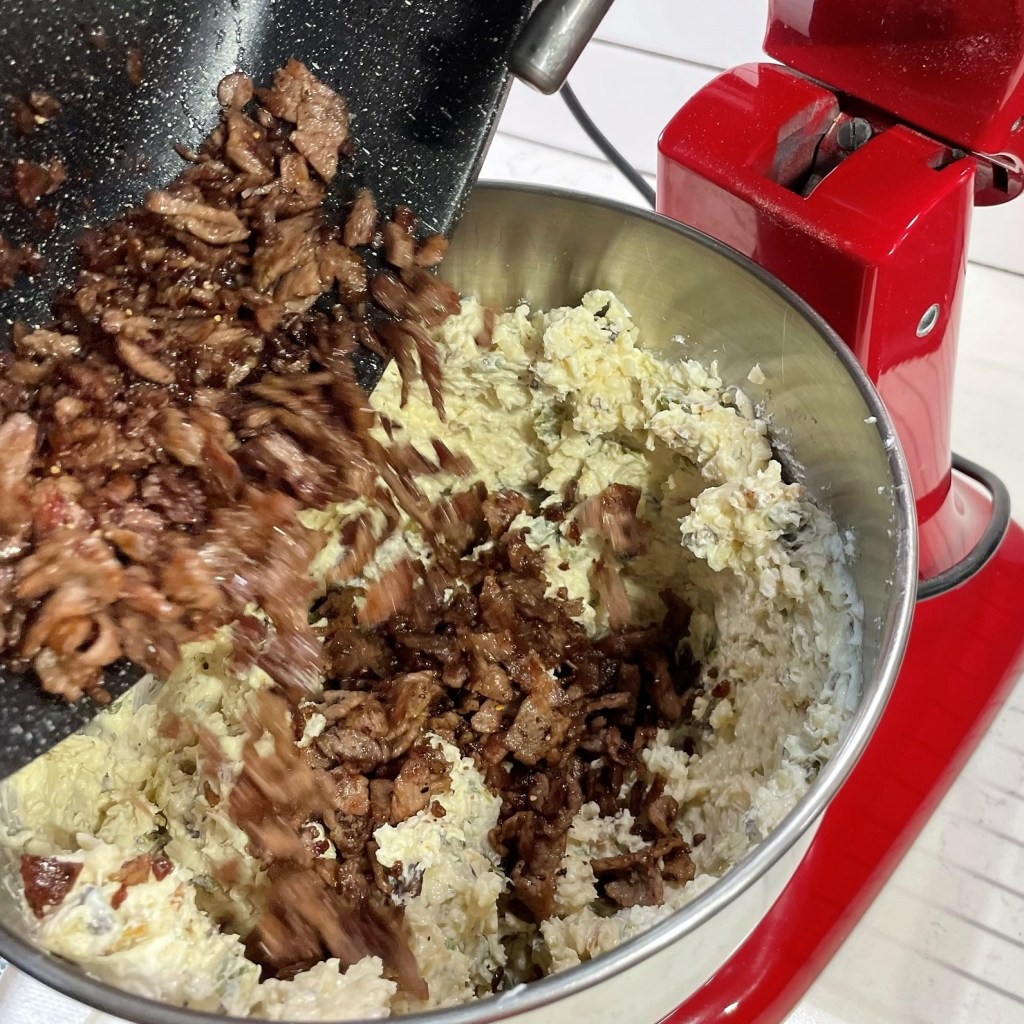
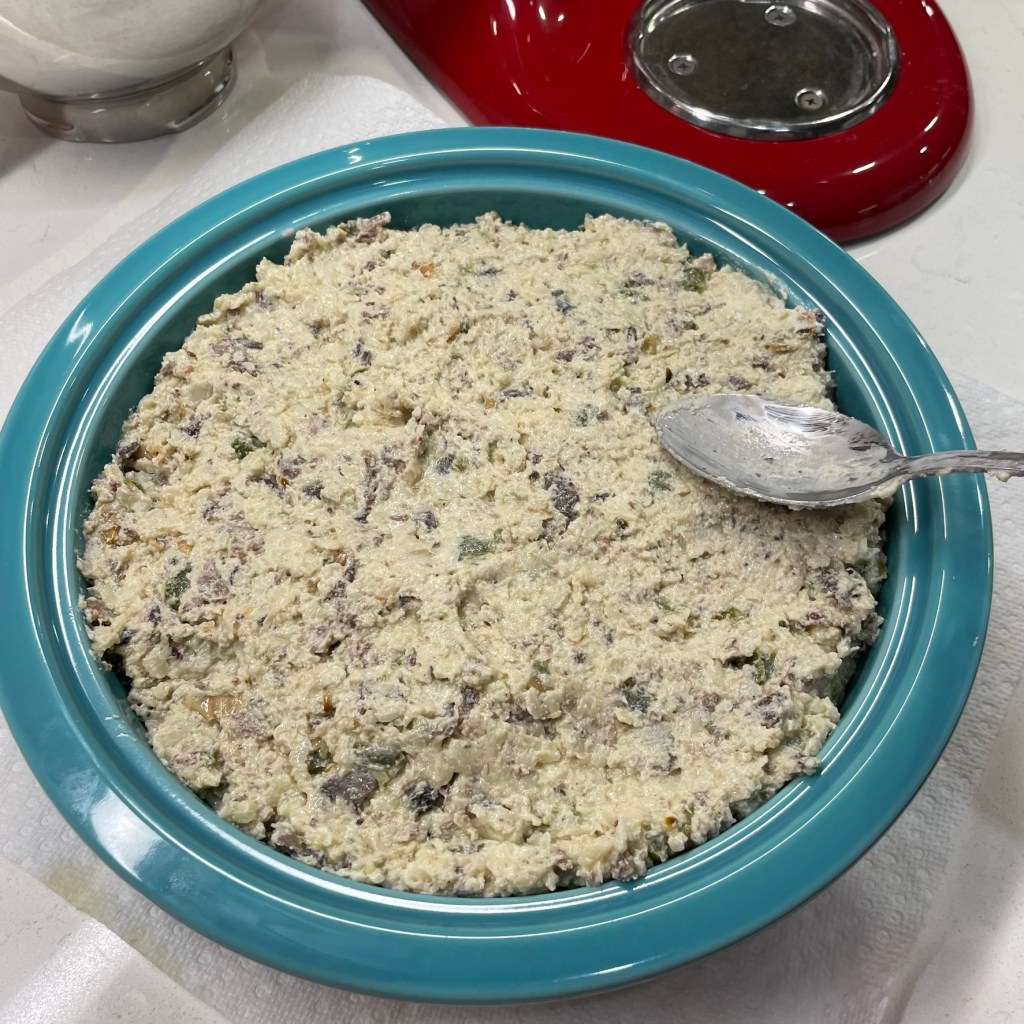
While the veggies and meat cool a bit, blend the softened cream cheese together with a dab of mayo, and then blend in the veggies, shredded cheese and chopped steak. It may be a bit clumpy at this stage and that’s OK; it will melt and smooth out during baking.


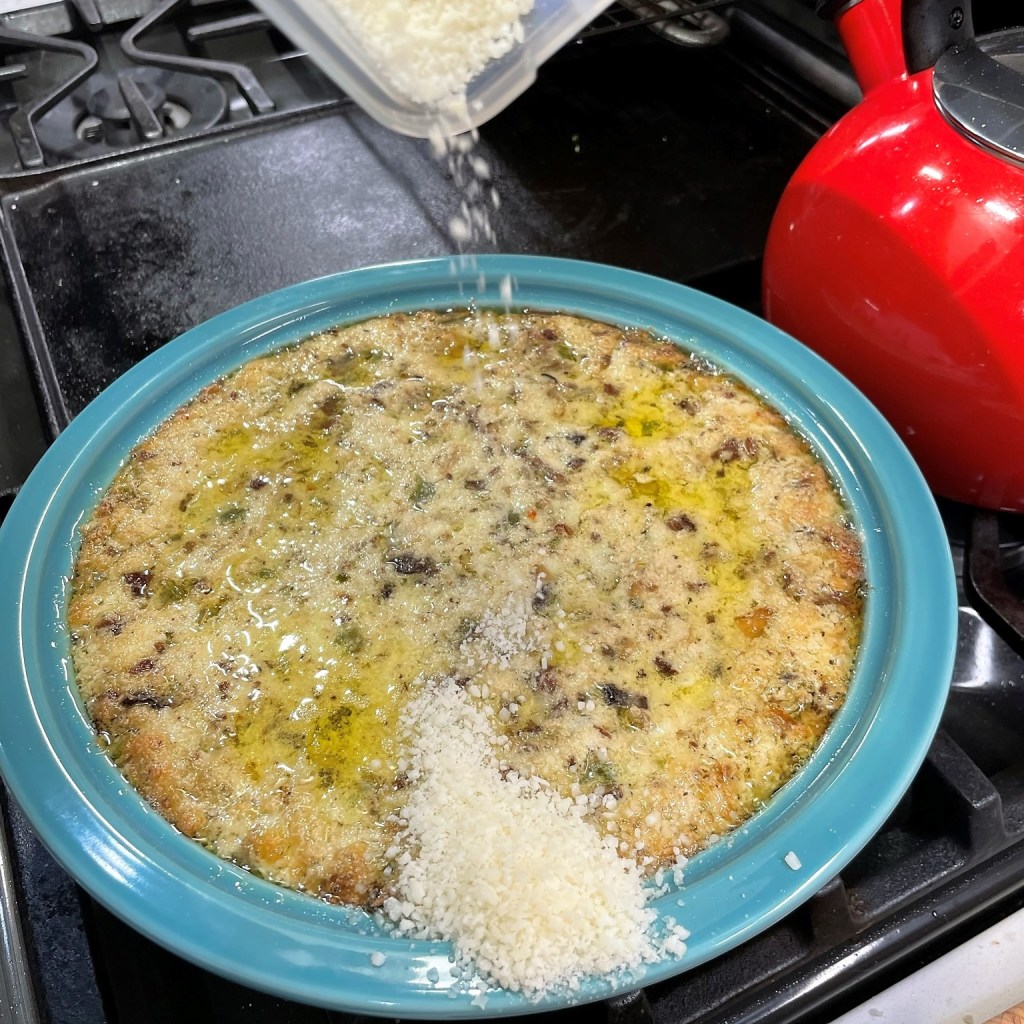
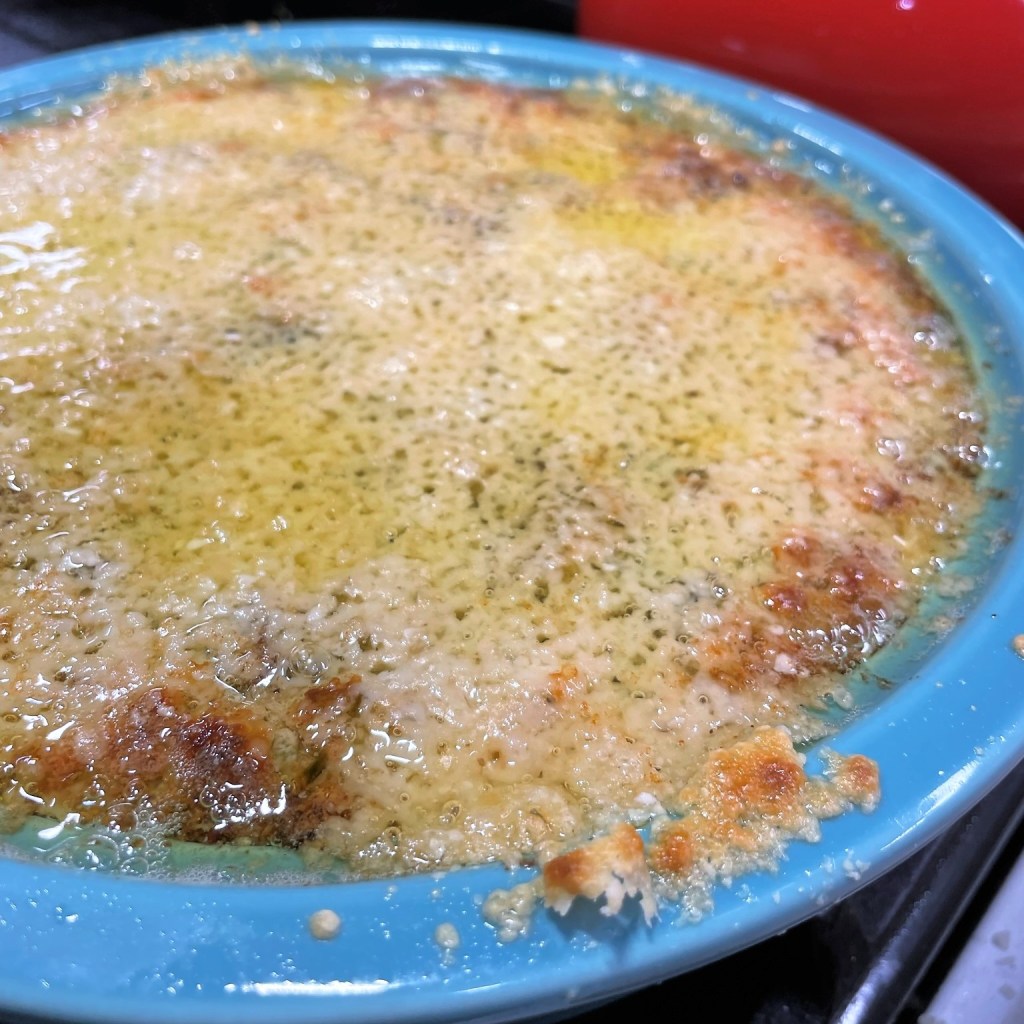
Transfer the whole delicious mess into an oven-safe dish and pop it into the oven at 350 F for half an hour, then top with more cheese (I used our favorite Parm-Romano blend) and put it under the broiler just long enough to get it browned and bubbly on top.


Serve your cheesesteak dip with slices of French baguette or, as we did at our house, crunchy pita chips. It occurred to me when we were enjoying this that the mixture could also be blended and transferred to a small slow cooker. I’d recommend warming it on the high setting until it’s bubbly, then give it a good stir and drop to low or warm setting to keep it nice and gooey from kickoff until the game is over.


Philly Cheesesteak Dip

  • Servings: About 8
  • Difficulty: Average
  • Print

All the scrumptious flavors of a classic Philly cheesesteak sandwich, but easier to eat while cheering your team on to victory!


Ingredients

  • 1 medium onion, chopped (about 2/3 cup)
  • 1 large green bell pepper, chopped (about 1 1/2 cups)
  • A large handful fresh mushrooms, chopped (about 2/3 cup)
  • 2 Tbsp. extra virgin olive oil
  • Salt and pepper
  • A quick shake or two of garlic powder
  • 14 slices very thin steak (Steak-Umms work great)
  • 2 bricks cream cheese (Philadelphia brand, duh!), softened
  • 2 Tablespoons mayonnaise
  • 12 oz. shredded white cheese (Italian, Monterey Jack, pepper jack are all good choices)
  • About 2 Tbsp. shredded Parm-romano blend cheese

Directions

  1. Preheat oven to 350 F. Heat a deep skillet over medium heat. Add olive oil, then add onions, peppers and mushrooms. Season with salt and pepper. Sauté until vegetables are softened and slightly translucent. Transfer to a bowl.
  2. In the same skillet, fry the steak slices until browned and cooked through. Transfer to a cutting board and chop into small pieces. Season with salt and pepper, plus a little shake of garlic powder. Add to the bowl with sautéed veggies.
  3. Using a stand mixer fitted with the beater blade, gently beat the softened cream cheese together with mayonnaise until creamy.
  4. Add sautéed veggies, shredded cheese and browned steak to cream cheese mixture. Mix until evenly blended. Transfer mixture to an oven-safe casserole dish.
  5. Bake cheesesteak dip for 30 minutes, then sprinkle with Parmesan or Parm-Romano blend and broil for 2 to 3 minutes until browned and bubbly.
  6. Remove cheesesteak dip and serve immediately with pita chips or sliced French baguette.

Alternatively, follow instructions through step 4. Transfer mixture to slow cooker on high until bubbly. Reduce to low heat or warm setting so dip stays warm and gooey.


Coffee-rubbed Skirt Steak with Chimichurri

Too often, my hubby and I fall into a make-it-Mexican rut, and we neglect the other flavors that are hanging out in our pantry cabinet, just waiting to thrill our palates. When we discovered last week that our dinner rotation had an empty slot, I pulled a package of skirt steak from the freezer, figuring we could always give it a Mexican spin and fajitas or tacos with it. But with all the other flavorful things that could be applied to a cut as tender and succulent as skirt steak, isn’t plain ole usual fajitas just “phoning it in?” 

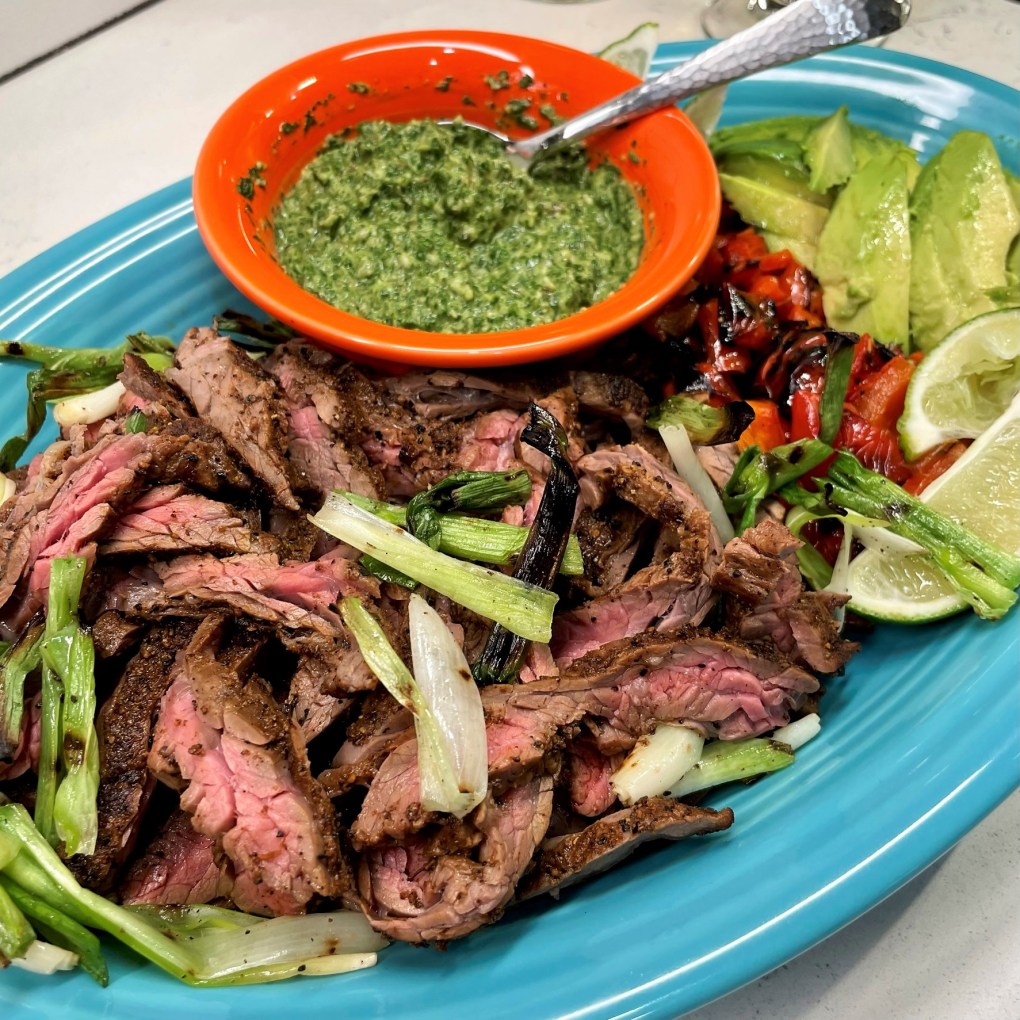
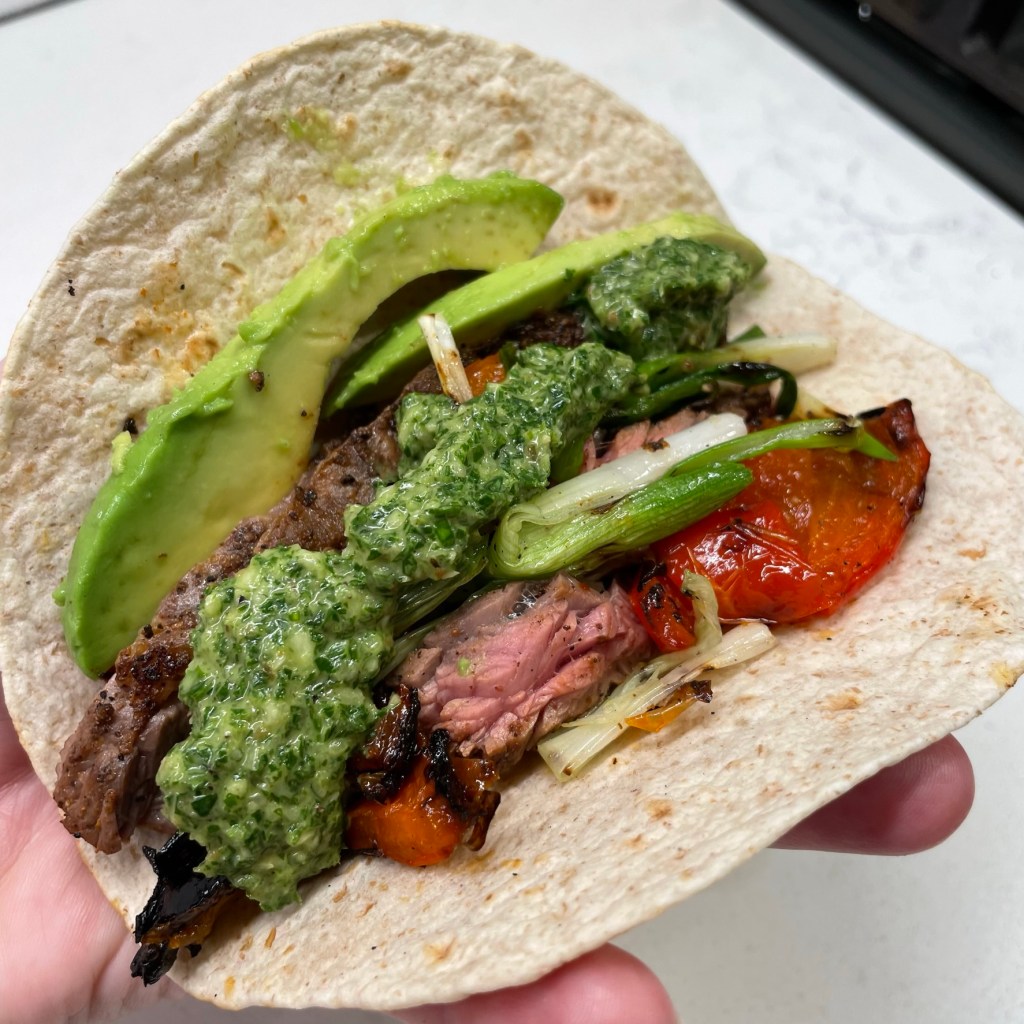
So I reconsidered, taking our steak in a different direction with my homemade spicy coffee rub and a zesty, garlicky chimichurri to accentuate and complement the smoky, earthy flavors of the rub. We did pile it all onto hearty tortillas and enjoyed it as fajitas, but this meal had a decidedly more interesting appeal!

Les couldn’t wait to sip his brew!

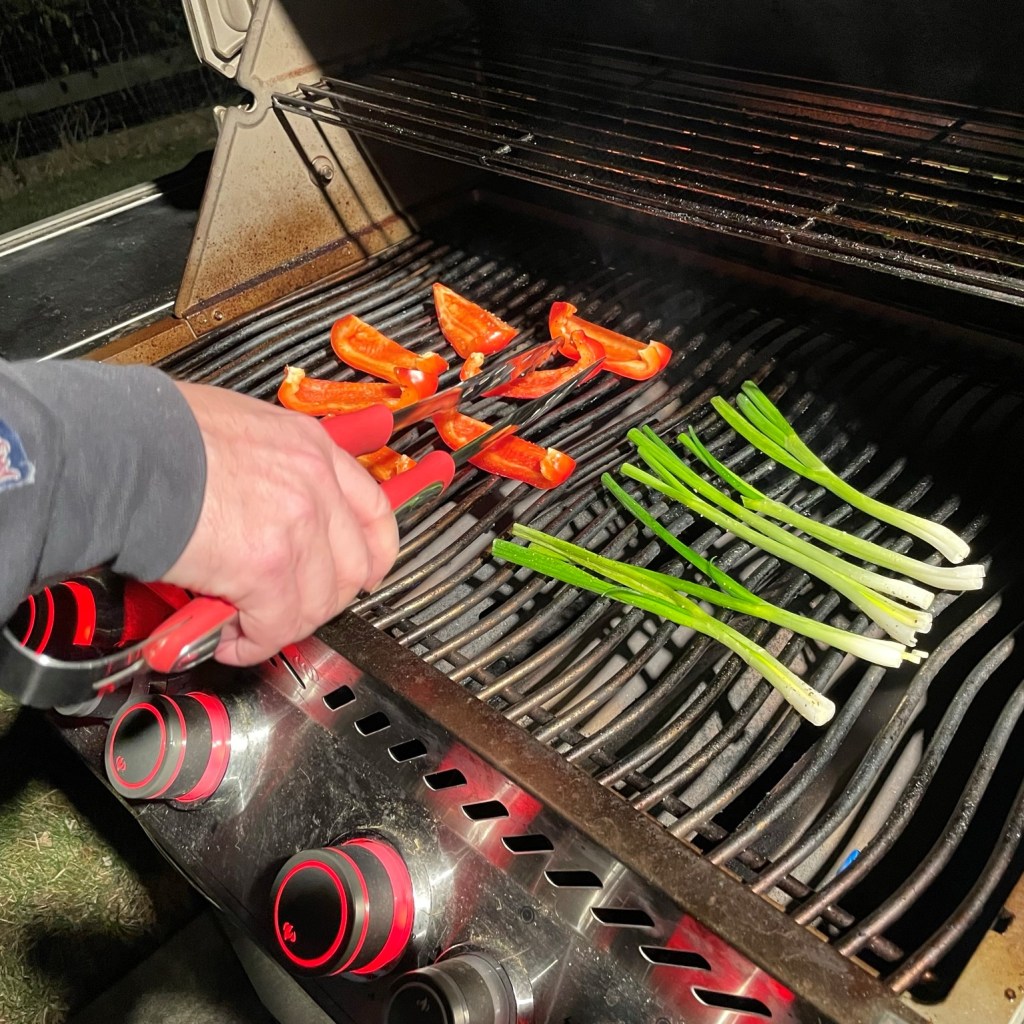
As long as we were trying new things, we swapped in scallions for the usual grilled onions, which was a nice change of pace texturally and flavor-wise. And we gave our red bell pepper only a few quick turns on the grill, keeping some of the firmness and amping up the sweetness with those blistered skins. No hot spices on them, only salt and pepper to preserve their natural flavors.


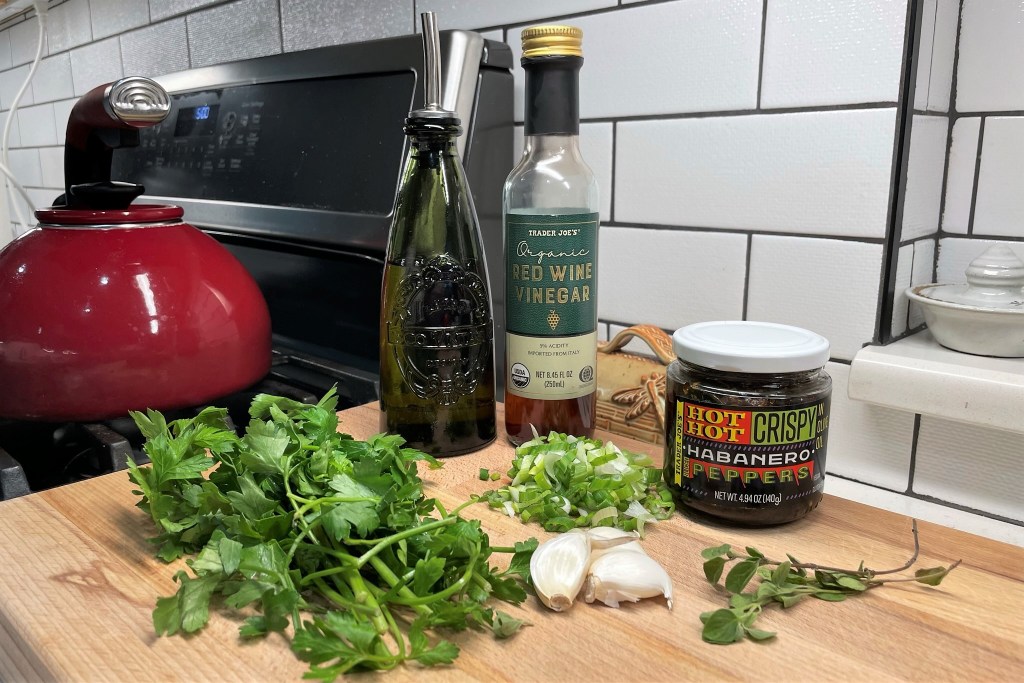
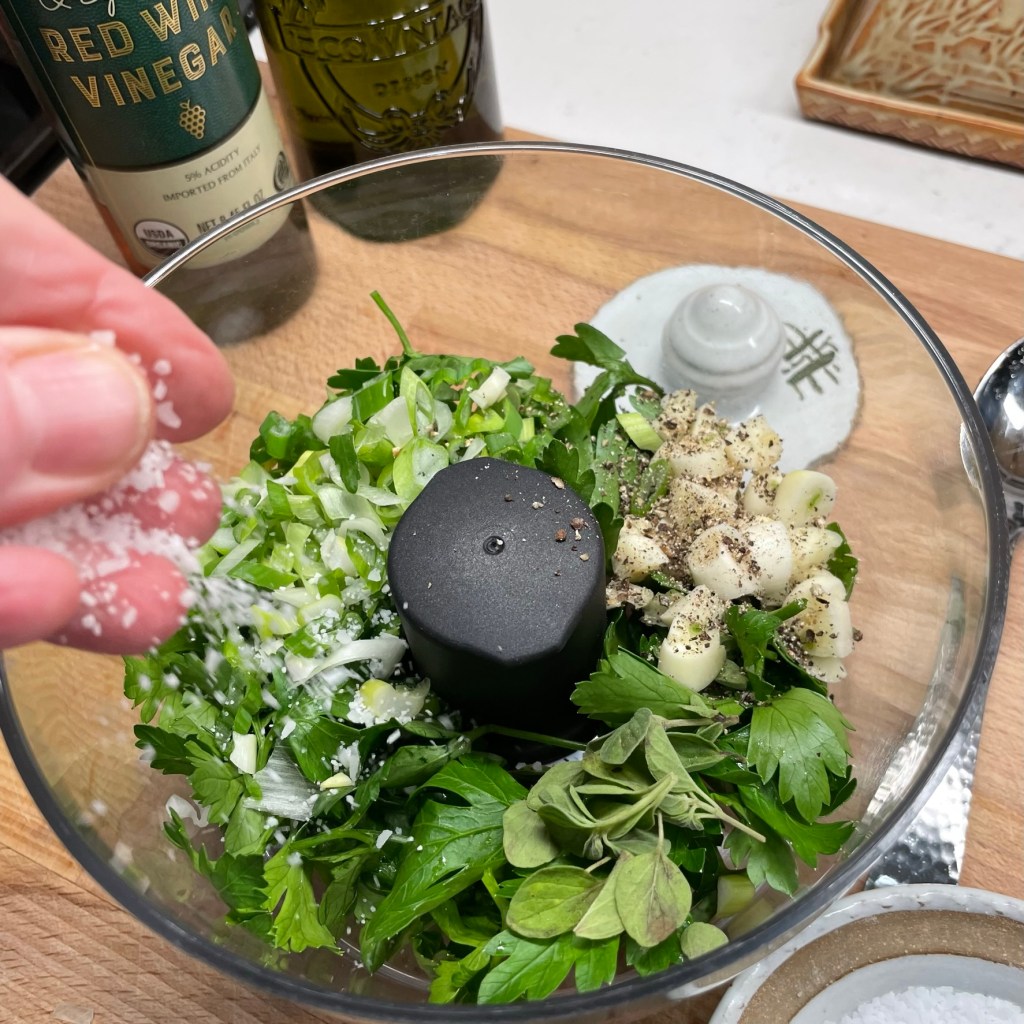
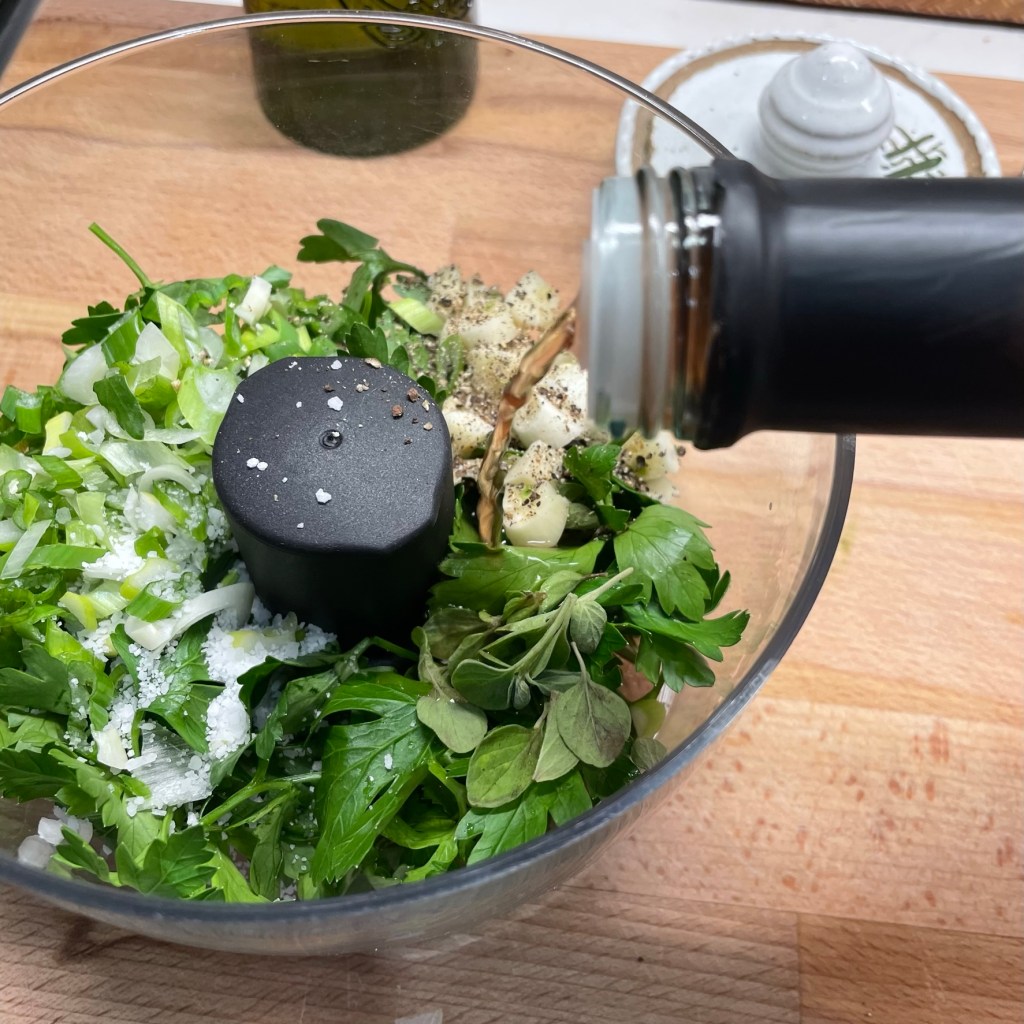
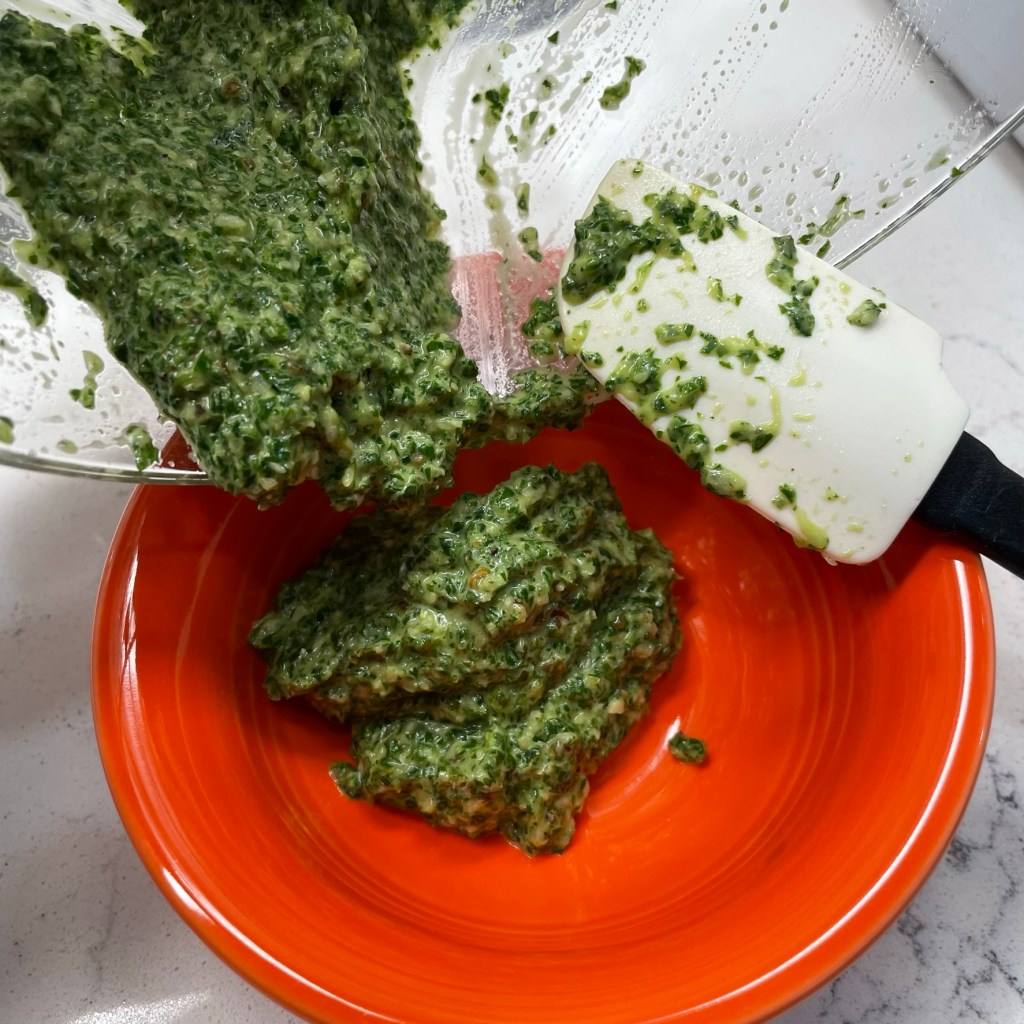
No salsa, cilantro or sour cream here either; rather, I set up my food processor and pulsed down a couple of big handfuls of fresh parsley with garlic, more scallions, fresh oregano and red wine vinegar. The grilling of this meal moves quickly, so it’s best to make the chimichurri a few hours or even a day ahead. Here’s how it goes.


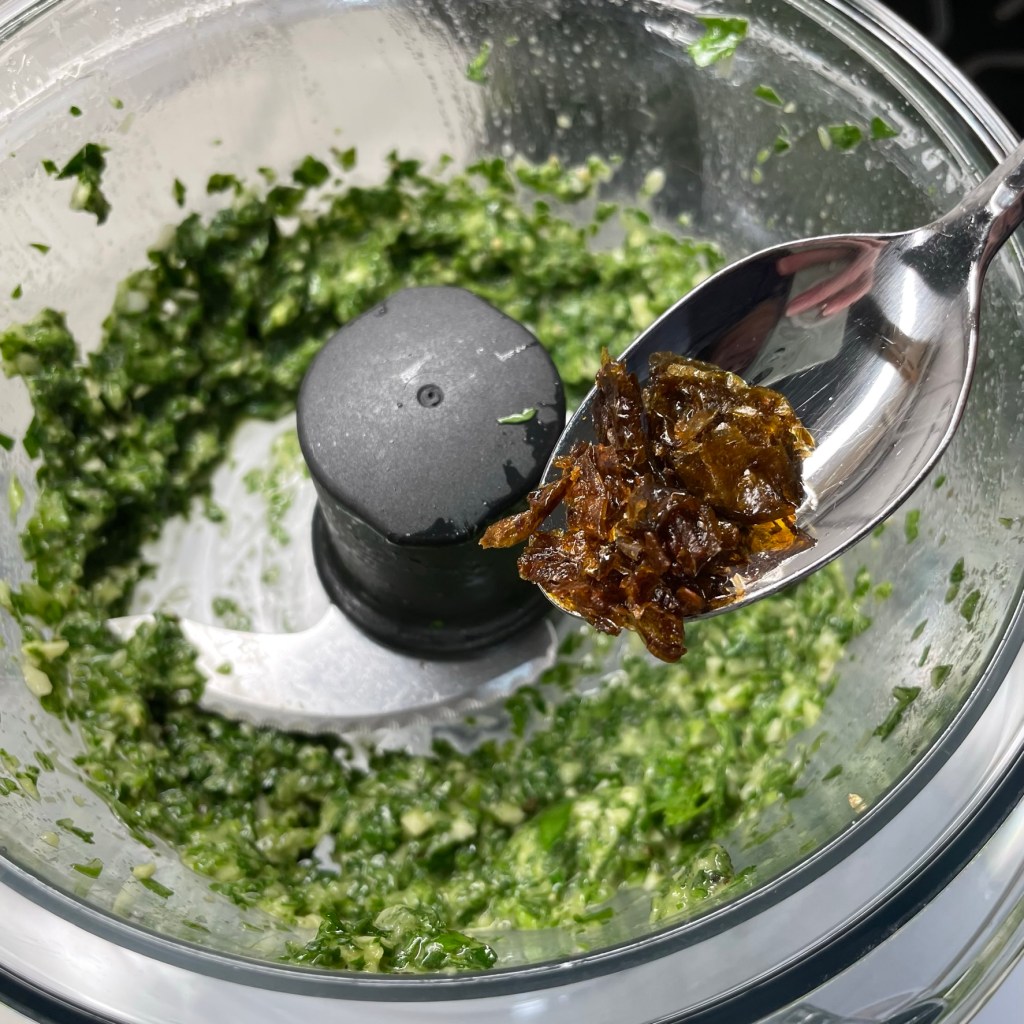
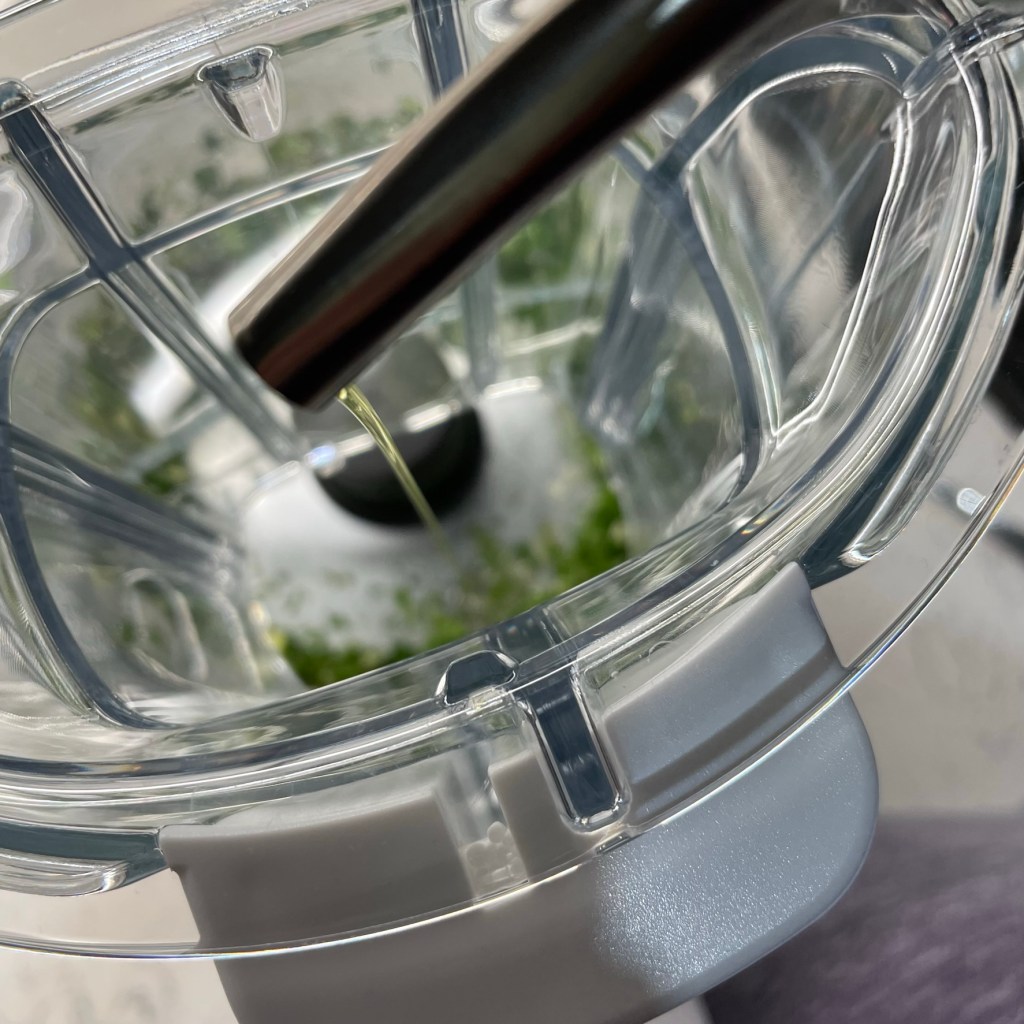
This is a classic formula for chimichurri, a condiment familiar to Argentina, and though it typically calls for a few shakes of crushed red pepper, I swapped in a scant spoonful of this wicked hot crispy habanero stuff that I picked up last year from Trader Joe’s. Drizzle in some olive oil while the processor runs, and it’s ready in a snap.


Now, if you’re thinking, “I need to get to Trader Joe’s right now for some of that crispy habanero!” well, don’t bother. As is par for the course, this spicy stuff has already been 86’d from TJ’s lineup— their abrupt dispatch of interesting products is, as you know, part of my love-hate relationship with the store— but you can easily go traditional with your chimichurri and just use crushed red pepper, or even a fresh jalapeno. But if you happen to be stuck with a jar of the habanero crisp already, at least now you have a fun way to use it. I intend to put it to work in my next batch of spicy homemade sausage, and I’ll let you know how that goes.

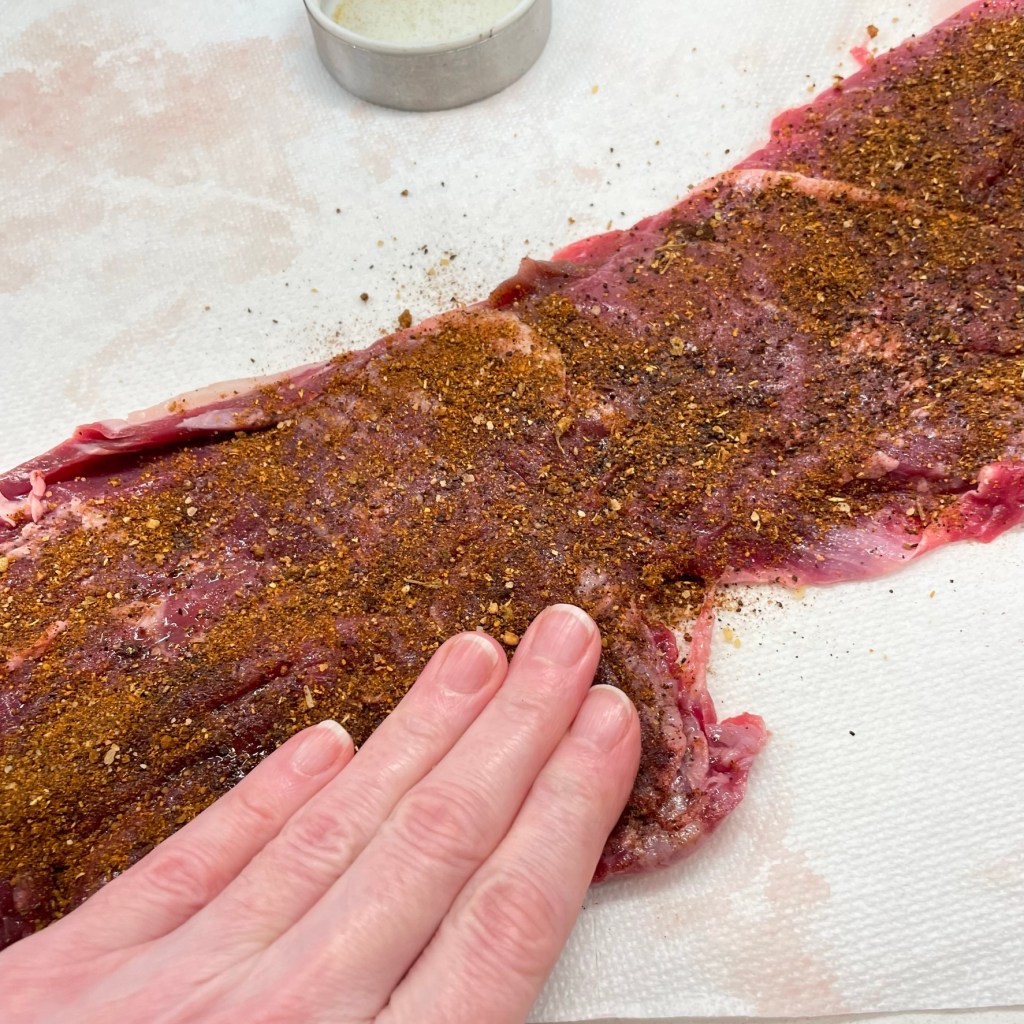
As for the skirt steak, I gave it a nice massage with my spicy coffee rub, which I introduced in 2021 with this coffee-rubbed grilled tri-tip steak. Link back to that post for the rub recipe and another great meat idea for the grill. This homemade rub has amazing flavors, including coriander, ancho, brown sugar, oregano and cayenne— altogether, a really nice change of pace for fajitas. The coffee rub does not impart a coffee flavor to the meat—if it did, my husband wouldn’t touch it—no, it’s more of a bold, earthy flavor, a little bit spicy and a touch smoky, depending on the roast level of the coffee you use.


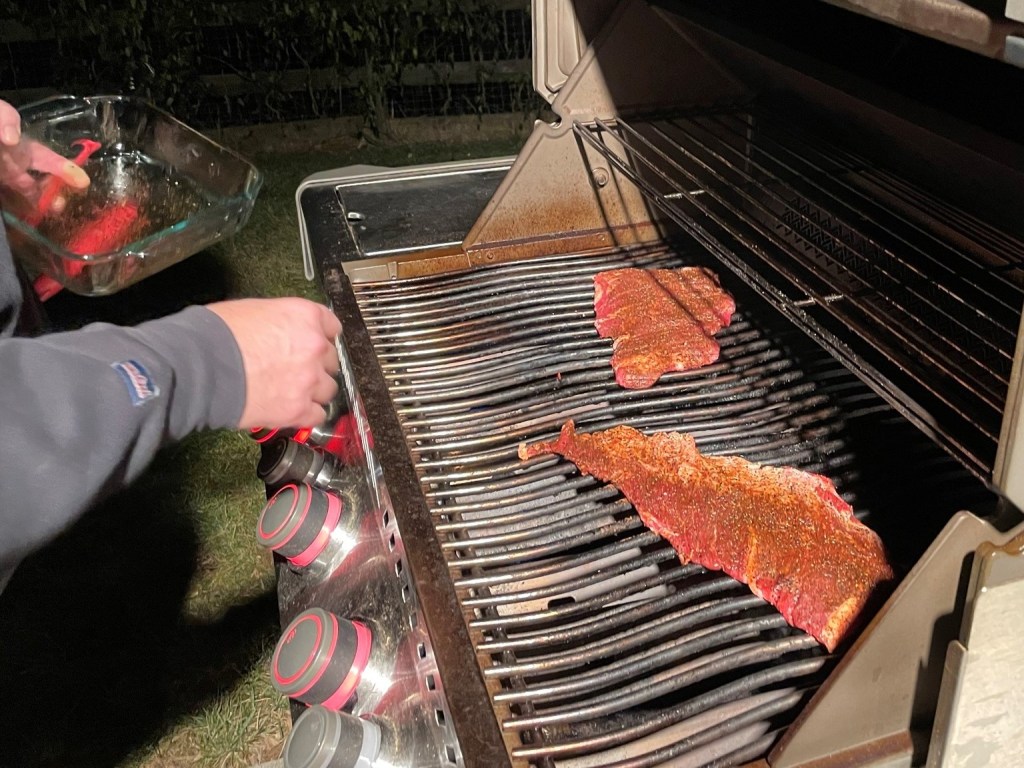
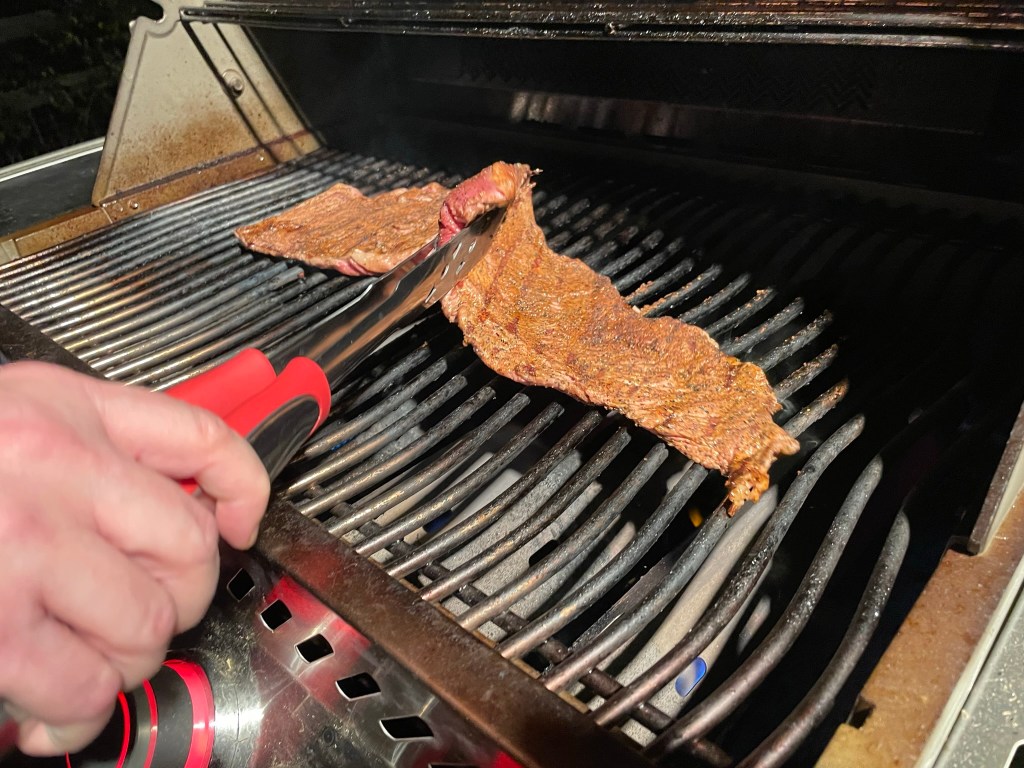
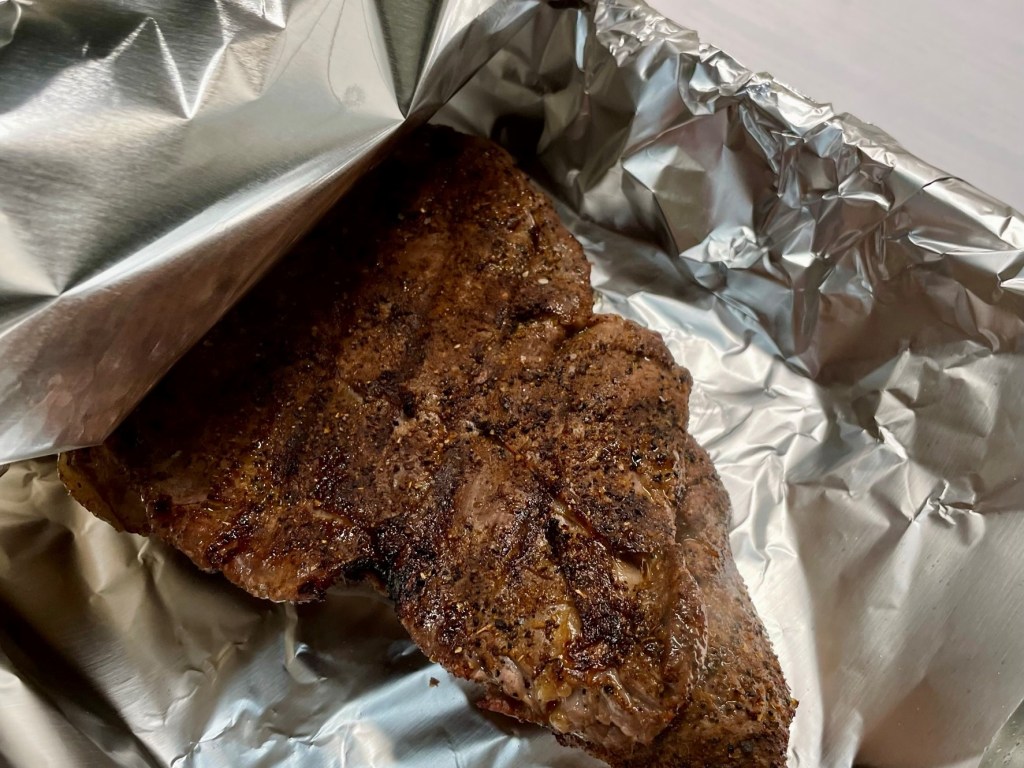
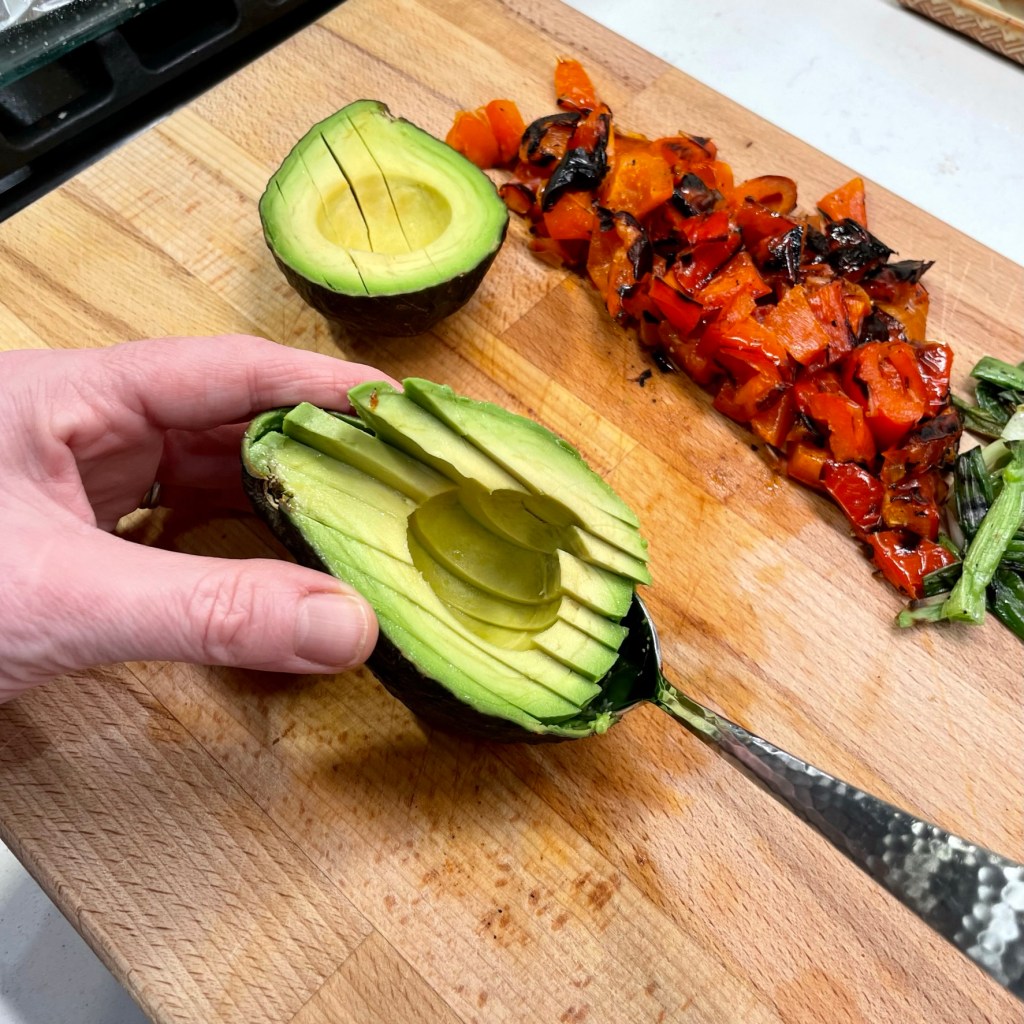
The secret to making skirt steak the best it can be is threefold— season it well ahead of time, grill it quickly and cut it against the grain. Les took care of the grilling part (and it happened fast!) while I prepped the fresh avocado and chopped the charred veggies. We wrapped the finished steak tightly in foil for about seven minutes before slicing, and dinner was served!


The coffee rub turned out to be a terrific flavor for our skirt steak, and the chimichurri was like icing on a cake! OK, well, maybe green icing. 🙂

This was a very tasty bite!

Coffee-rubbed Skirt Steak with Chimichurri

  • Servings: About 5
  • Difficulty: Average
  • Print

The earthy, smoky notes of my coffee rub, combined with a bold and zesty chimichurri was a flavor explosion for our taste buds! If you can't purchaset this flavorful cut, a flank steak or hangar steak would be a good substitute. Allow a few extra minutes on the grill to adjust for the thickness.


Ingredients

  • 2 to 3-pound skirt steak (preferably grass-fed)
  • Extra-virgin olive oil (liquid or spray)
  • 1 Tbsp. spicy coffee rub (recipe available at https://comfortdujour.com/2021/05/17/coffee-rubbed-grilled-tri-tip-steak/)
  • 1 large red bell pepper, seeded and cut into large sections for easy grilling
  • 1 bunch fresh scallions, divided (you’ll use them in the chimichurri and as an accompaniment to the steak)
  • 1 ripe avocado, cut into slices or cubes
  • 1 small lime, cut into wedges
  • Medium size flour tortillas for serving

Directions

  1. Trim away any lingering membrane pieces from skirt steak. Pat dry, then rub or spray on a small amount of olive oil. Apply coffee rub evenly over the entire surface of the steak. Let it rest in the fridge a few (or up to 24) hours, bringing it back to near-room temperature about 45 minutes before grilling.
  2. Preheat grill or grill pan to roughly 500 F. If working indoors, be ready to use your vent fan, as the high temperature will likely produce some smoke.
  3. Prep the red bell peppers and remaining scallions by brushing or spraying with olive oil. Season with salt and pepper. Grill the veggies, turning frequently to ensure even charring. Transfer to a cutting board and chop into bite sized pieces.
  4. Place the skirt steak over direct heat and grill only until the first side is seared (this will be 2 minutes or less). Turn the steak and repeat searing on the other side. The cooking should be very brief so the meat remains tender.
  5. Transfer the steak immediately to a plate lined with a large, double layer of foil. Season immediately with kosher salt. Wrap the steak so it is fully enclosed in the foil and seal it tightly, resting for 5 to 8 minutes. The residual heat will finish cooking the meat as the juices are redistributed.
  6. While the steak rests, flash-grill the tortillas just long enough to warm them. Transfer the steak to a cutting board and slice thinly against the grain of the meat. Serve with grilled veggies, avocado and chimicurri.

For best flavor, make the chimichurri a day ahead so the ingredients have plenty of time to mingle in the fridge. Bring to near-room temperature for serving.

Ingredients

  • About two handfuls fresh Italian parsley, rinsed and trimmed of heavy stems
  • 3 or 4 scallions (green onions), trimmed and rough-chopped
  • 3 or 4 cloves fresh garlic, peeled and rough-chopped
  • A few small sprigs fresh oregano leaves, rinsed and stripped from stems
  • 1 1/2 Tbsp. red wine vinegar
  • A few shakes crushed red pepper (or some other spicy element), to taste
  • 1/2 tsp. kosher salt
  • 1/4 tsp. freshly ground black pepper
  • 1/4 cup good quality extra virgin olive oil

Directions

  1. Add one handful of the parsley to the small bowl of a food processor, along with scallions, garlic, oregano, vinegar, crushed pepper, salt and pepper. Drizzle in 1 tablespoon of the olive oil. Pulse a few times to combine.
  2. Scrape down the sides of the bowl and add the remaining handful of parsley, pulsing again just to combine.
  3. Turn the processor on to run continuously and stream in the rest of the olive oil while it’s running. Adjust to taste, then transfer to a bowl to rest in the fridge.


Italian Deli Sub Pizza

If you’re looking for new ways to enjoy pizza in the new year, you don’t need to look any further than your favorite sandwiches. Ingredients that are delicious on a sandwich are usually very adaptable to pizza. After all, it’s just a rearrangement of some kind of meat, cheese and bread.

The last time we reimagined a sandwich into a pizza, my husband and I were inspired by one of our favorite hot sammies at Jersey Mike’s, the Big Kahuna, and it turned out pretty dang delicious.

All that steak, mushrooms, jalapenos and cheesy sauce could only be contained in a deep dish, and it was awesome!

Wouldn’t you know it? Jersey Mike’s has inspired me again, but this time with a classic Italian deli sub— and as I gazed down at my half-eaten sandwich, I thought, why wouldn’t these ingredients be great on a pizza?

Of course they would!

Salty cured meats and cheeses, thin-sliced tomatoes, onions and peppers, and a shredded salad topping, finished with a zesty Italian oil-and-vinegar dressing. This was so right!

We kept it thin crust this time, which means we started with my favorite sourdough pizza dough. If you haven’t the time or patience to make your own dough, check the deli department of your favorite supermarket, as many of them sell fresh dough balls. And who doesn’t love a shortcut?

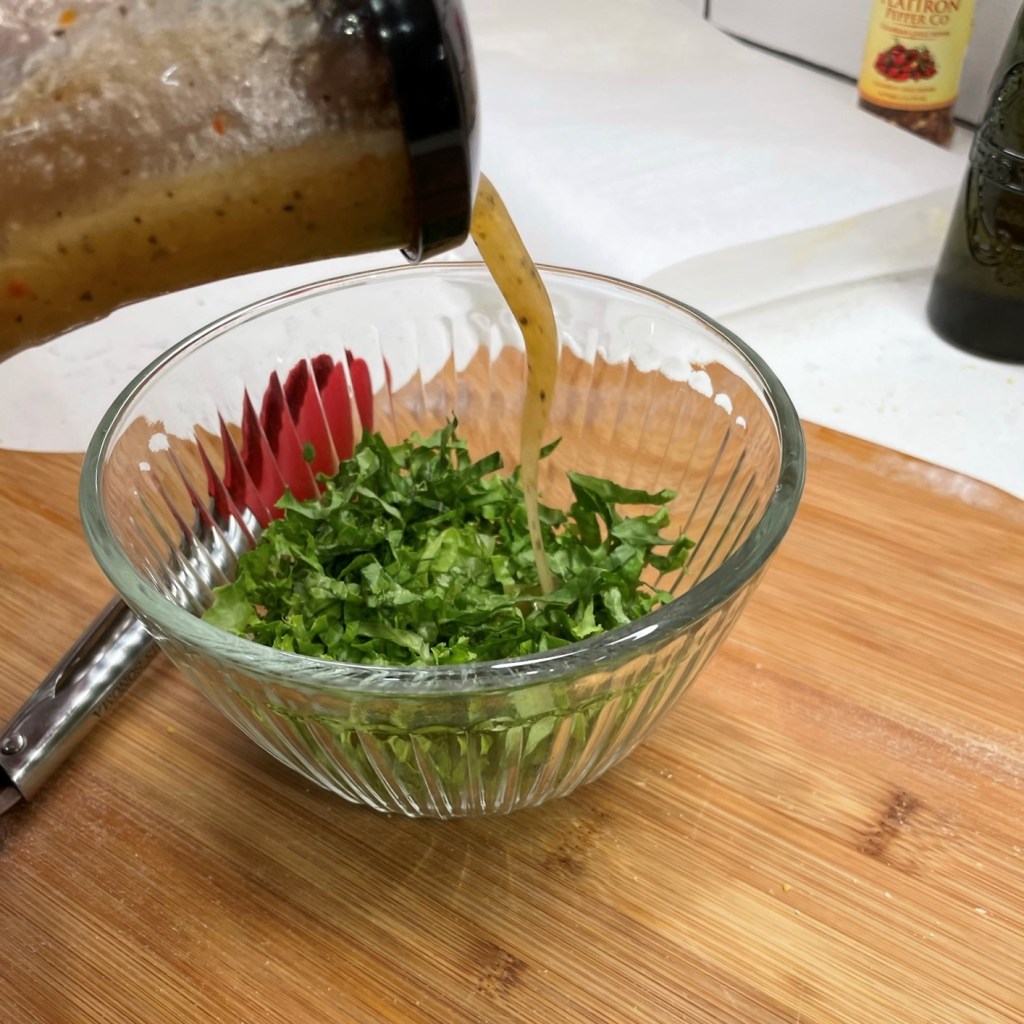
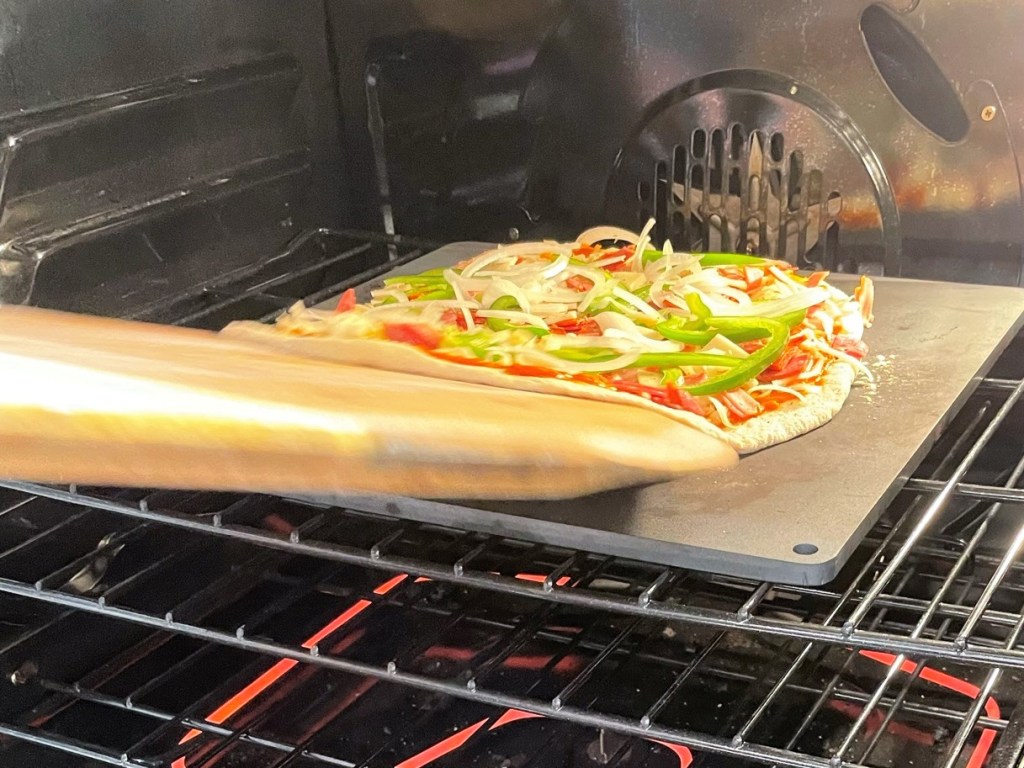
All our homemade pizzas are baked on a steel, at the highest temperature our home oven can handle (550 F), so having things in order first is a must because the baking only takes six minutes. It’s best to slice and season the tomatoes and make the shredded lettuce salad before you begin building the pizza, so it’s ready to pile on as soon as the pie emerges from the oven. Green leaf lettuce has a bit more body than iceberg, but romaine would have been another good choice. A small splash of oil and vinegar dressing added the perfect finishing touch, and I used Good Seasons because it was already made up in the fridge.


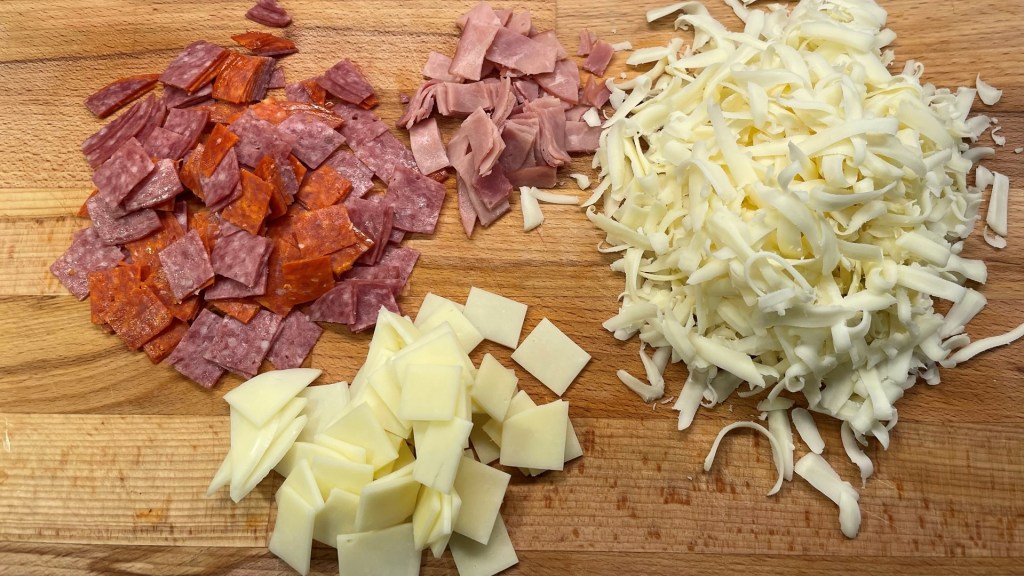
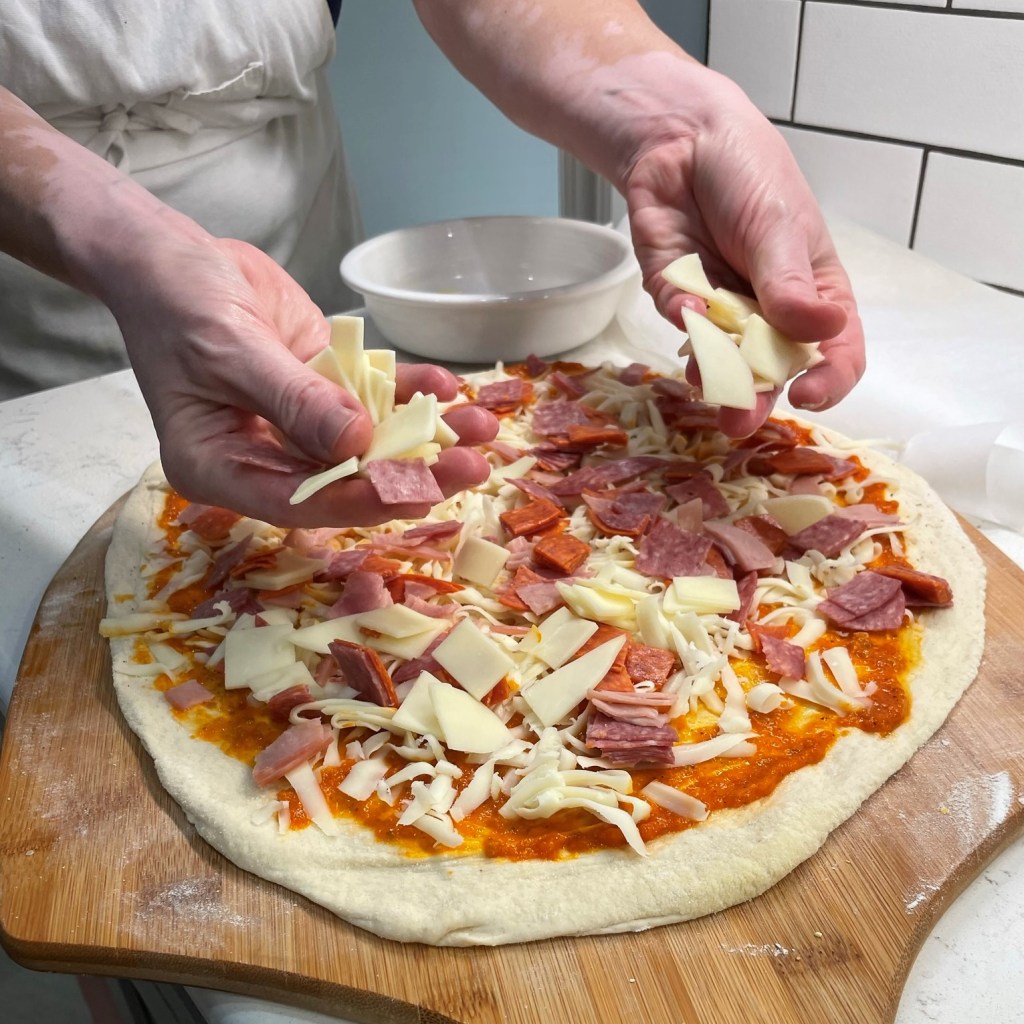
For the other toppings, we cut up thin slices of pepperoni, salami, spicy ham and smoked provolone, and shredded a block of hard mozzarella.


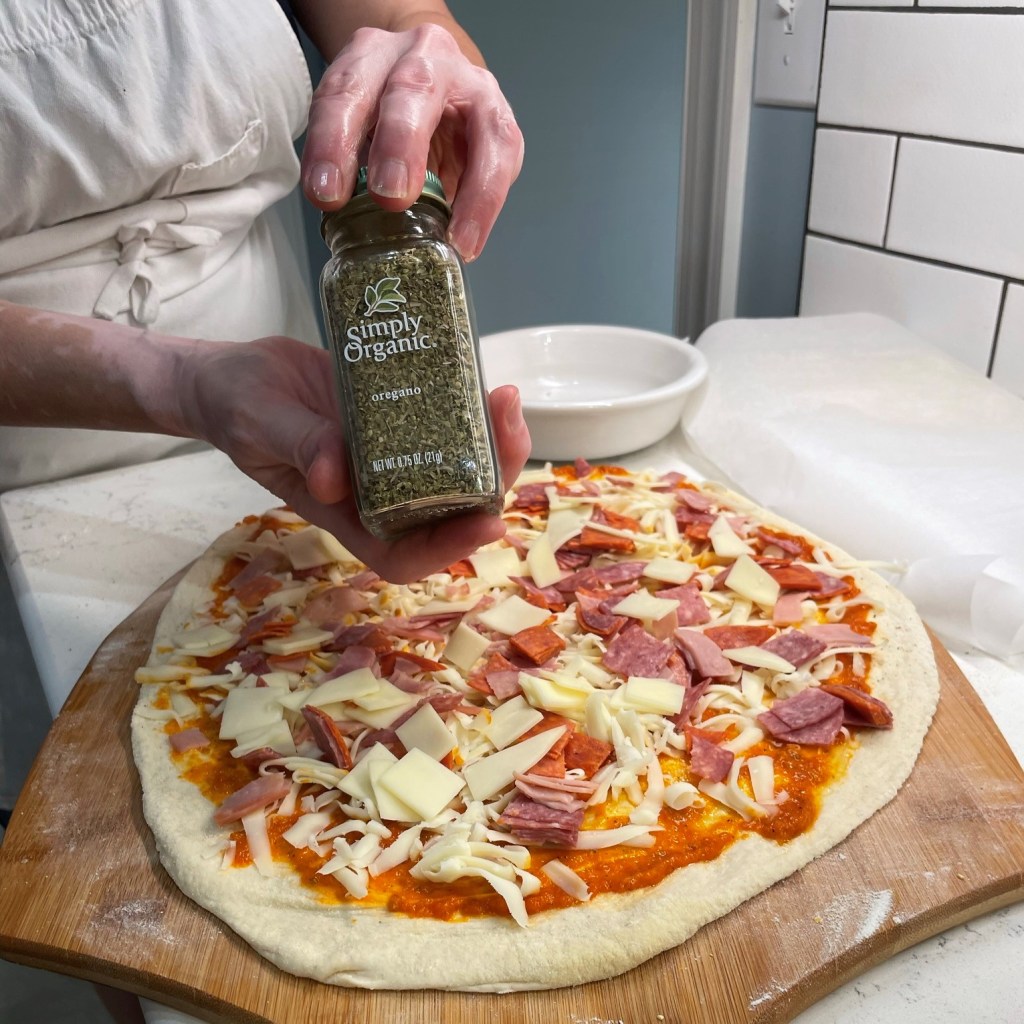
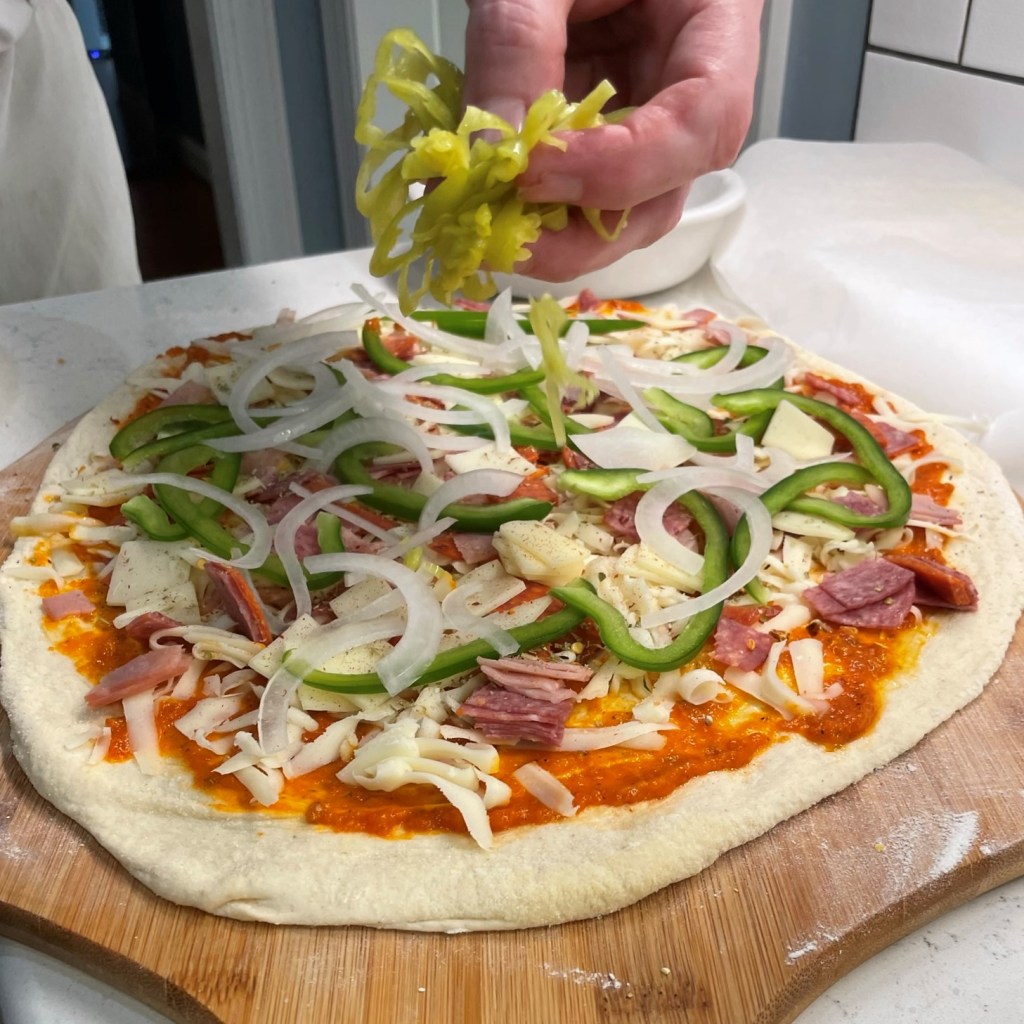
Those were layered onto the sauce with a few shakes of oregano and red pepper flakes, then we arranged very thin slices of onion, bell pepper and pickled pepperoncini, and into the oven it went!


Six minutes later, our kitchen smelled so amazing that we debated enjoying the pizza just as it was, but the shredded lettuce salad is what made it sub-like, and that was a good call. Les sliced it first for easier serving, then we scattered on the salad and sliced tomatoes and sat down for a very tasty dinner!


This pizza had all the flavors of a classic Italian deli sub, so it was a winner! Only one thing left to say (or perhaps to ask) is, “What sandwich will be next??”


Italian Deli Sub Pizza

  • Servings: 6 slices
  • Difficulty: Average
  • Print

If you love Italian subs, this pizza will satisfy all your cravings for salty cured meats, cheese and even the oil-and-vinegar dressing!


Ingredients

  • 1 ball fresh pizza dough
  • 1/3 cup favorite tomato pizza sauce
  • 3 slices smoked provolone, cut into small pieces
  • 1 cup shredded whole milk mozzarella
  • 3 slices spicy deli ham, cut into small pieces
  • 1/4 cup spicy sliced pepperoni, cut into small pieces
  • 1/4 cup sliced Genoa salami, cut into small pieces
  • 1/2 green bell pepper, thinly sliced
  • 1/2 medium sweet onion, thinly sliced
  • 1/4 cup pickled pepperoncini, thinly sliced on an angle (and blotted dry with paper towels)
  • A few shakes of dried oregano
  • A few shakes of crushed red pepper
  • A few leaves of green leaf lettuce or Romaine, thinly shredded and tossed with 1 Tbsp. oil and vinegar dressing or prepared Italian dressing
  • 1 medium ripe tomato, thinly sliced and seasoned with sea salt and pepper

We bake our pizzas on a 3/8″ steel, preheated for one hour at 550F. If you are using a stone or pan, adjust temperature and baking time accordingly.

Directions

  1. Shape pizza dough into 14-inch round; transfer to a flour- and cornmeal-dusted pizza peel for easy transfer to pizza stone or steel.
  2. Drizzle a small amount of olive oil onto pizza dough, then season with salt and pepper.
  3. Scatter mozzarella evenly over dough, and then arrange cut-up pepperoni, salami, ham and provolone onto pizza.
  4. Sprinkle with dried oregano and crushed red pepper to taste, and then arrange slices of pepper and onion and about half of the pepperoncini.
  5. Slide onto pre-heated stone or steel and bake at 550F for about 6 minutes, or until dough is blistered and cheeses are melted and bubbly.
  6. Transfer pizza to serving pan. Cut into slices, then top pizza with dressed shredded lettuce and remaining pepperoncini.


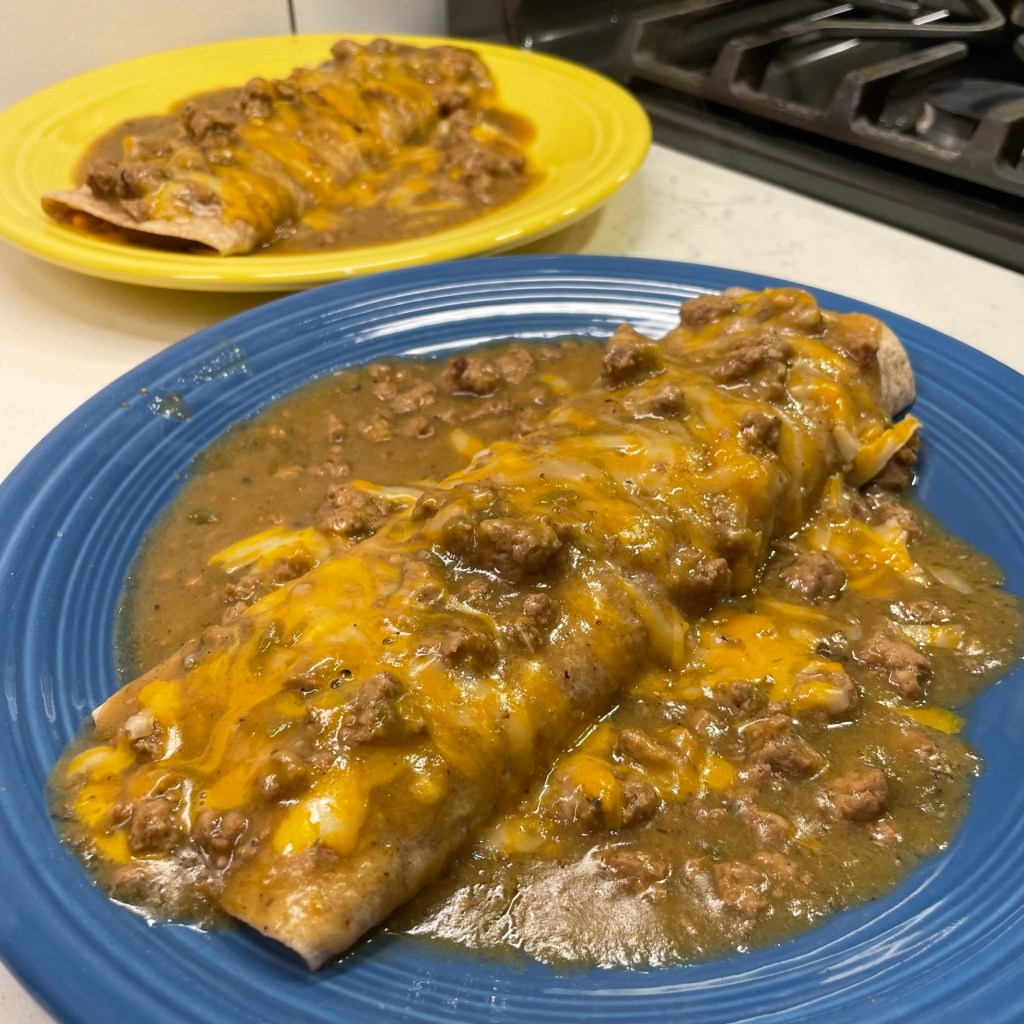
Green Chili Burritos

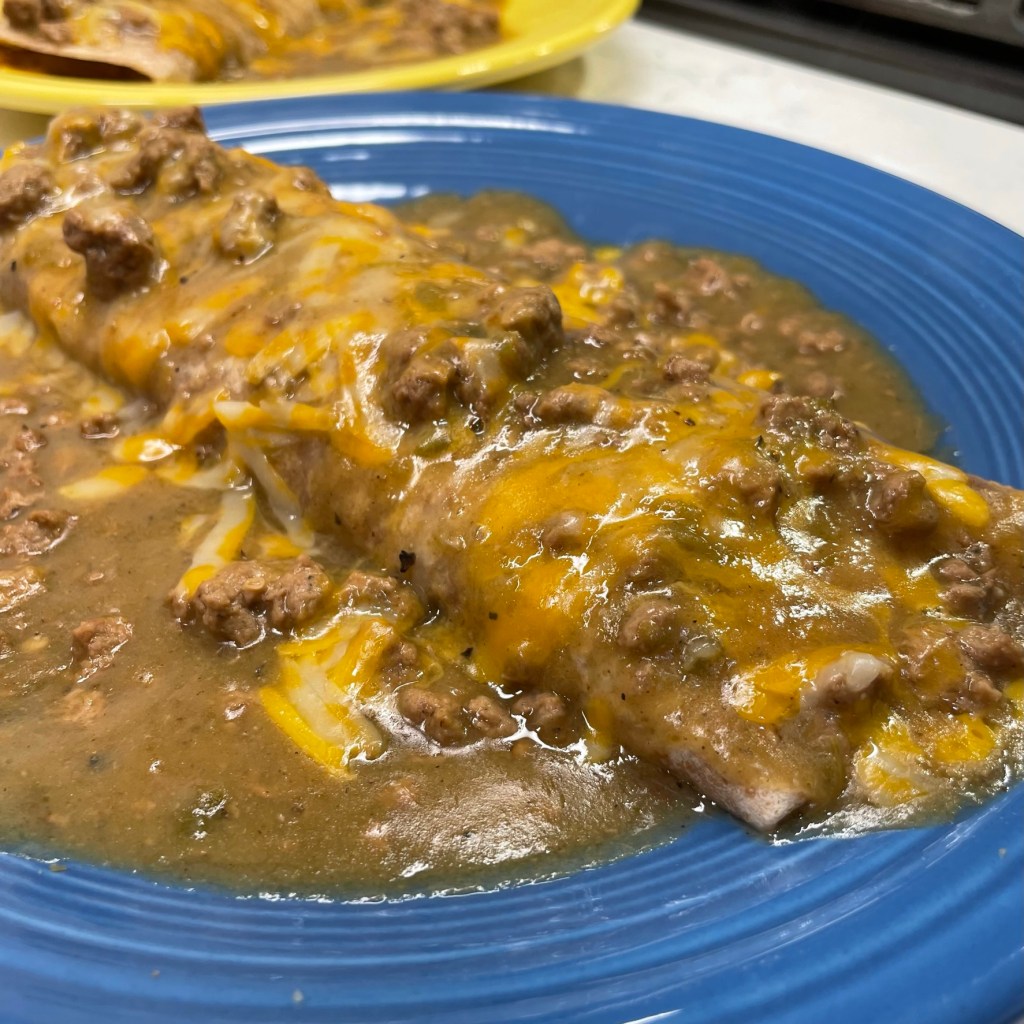
This is not a fancy dish by any means, but it is one of the oldest comfort foods from my childhood. My mother began making a ground beef version of this flavorful chili when I was about 6. It’s easy to estimate my age at the time because we moved around a lot, and I can recall where we lived when certain memories were made. My mom was newly remarried and we had moved out west from upstate New York for my stepfather’s job as a truck driver. I loved my stepdad, but he was gone a lot, so it was frequently just my mom and me taking up space in a single-wide mobile home in rural southern Colorado, where Mexican flavors reign supreme.

You could barely see our little box of a house from the main road, which ran a straight line through the tiny town of about 350 people. There was a long, dusty driveway leading from the school bus stop, over some railroad tracks and past the big white propane tank that provided us fuel for heating and cooking. Occasionally, during deer season, I’d see a carcass hung up from a tree near our house, and that meant my new daddy had a good hunting trip and venison would soon be on the menu. Most days after school, our sweet little dog, Ginger, would meet me halfway on my walk from the bus, and on the days that I’d catch a whiff of my mom’s green chili when I opened the door—well, that’s a very happy memory.

A short time after, many things changed in my world. For the second time in my young life, my parents split. We moved again and the relationship with my mom began a sad but steady decline. I shuttled back and forth between parents (and states) until high school graduation, and then made the decision to move away on my own. Visits with my mother became few and far between, and eventually when I visited as an adult and requested the green chili, I learned that her recipe had shifted from the familiar ground beef to cubed pork. It was tasty, but I longed for the texture of the tender ground meat.

What I really wanted was a taste of happy childhood. Isn’t that what comfort food is?

I can taste my childhood in this chili.

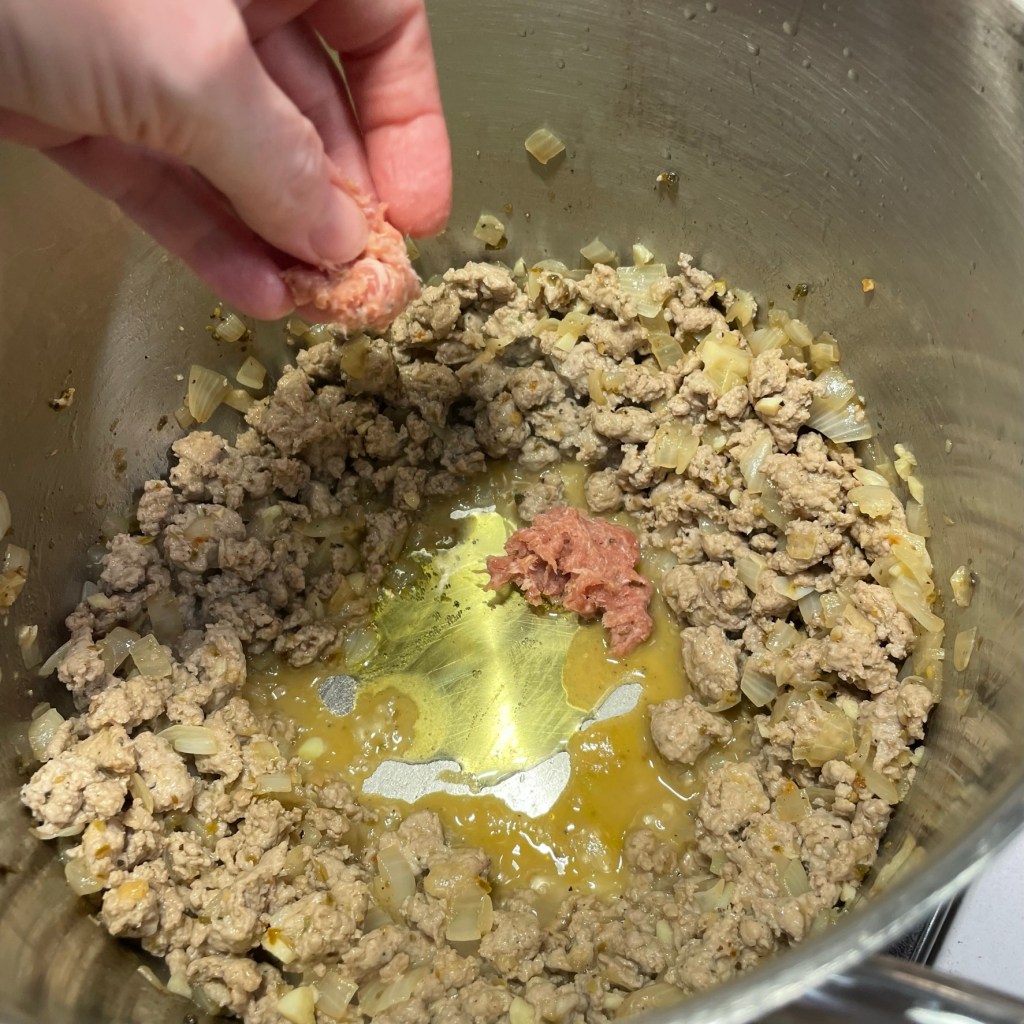
The first time I made my own green chili, about 15 years ago, I used a flavorful pork sausage I had discovered at Whole Foods. The sausage was made in-house and was utterly addictive with its mild, smoky green chiles and spicy habanero peppers, and I found it a happy medium to provide the soft meat texture I loved about the first version of green chili I ever had and the rich, savory flavor of pork. When my local Whole Foods stopped making it, I was beyond disappointed. I figured I’d have to settle for plain ground pork going forward.

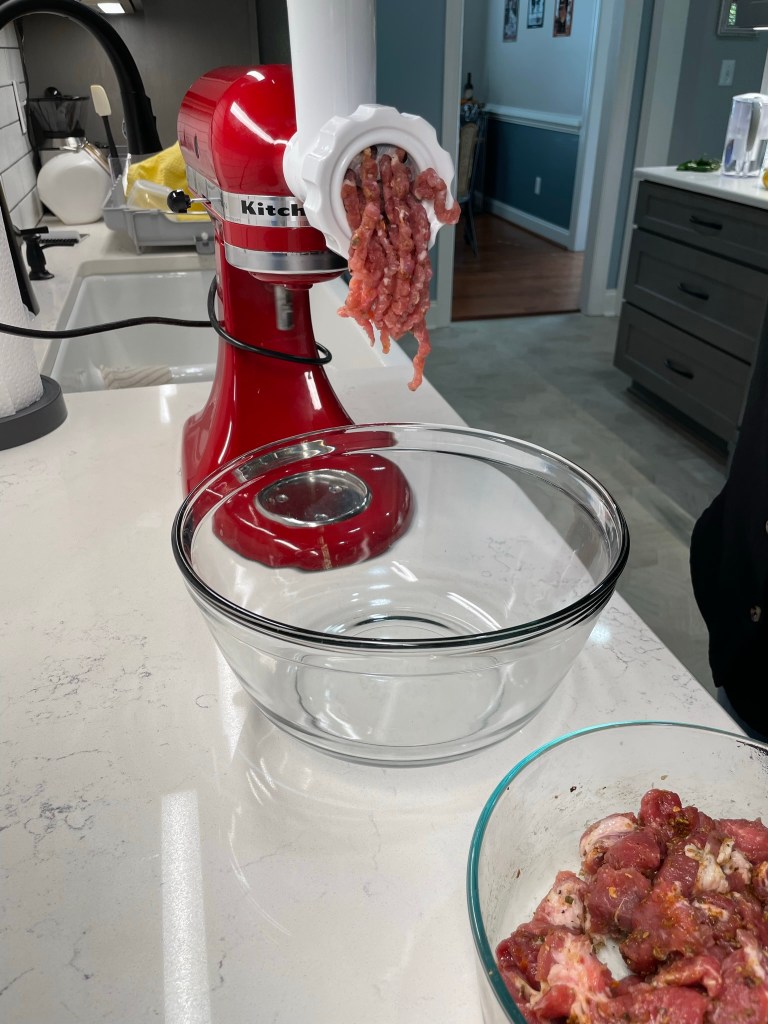
But recently, necessity being the mother of invention and all, I learned how to make my own spicy sausage and baby, I’m back!


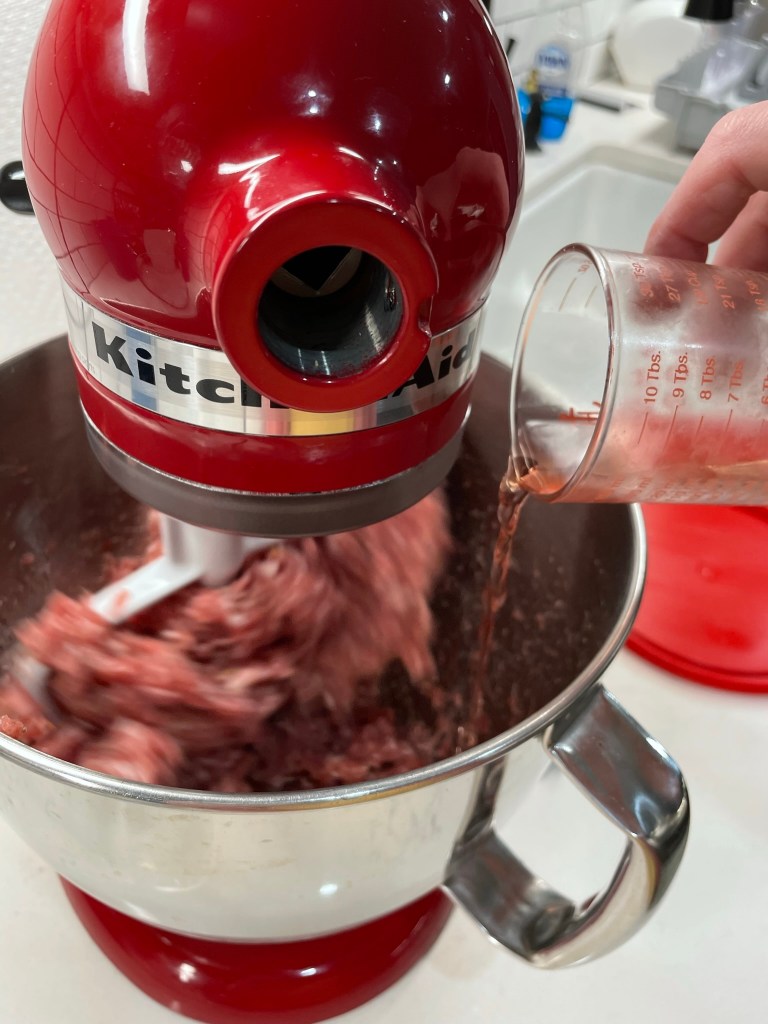
I’m still in the learning stages of sausage production, but my imagination has run pretty wild, considering all the unique flavor possibilities before me. I have delved into a few other flavor combinations already, but I know it won’t be long before this one comes up in rotation again. It’s because the green chili burritos I made from the sausage was just that delicious—even better than any of the versions I made before. Link back to the homemade pork sausage post for the particulars on this sausage, or choose a store-bought sausage that has green chile flavors if you want a shortcut. Heck, maybe your Whole Foods still sells that sausage, and you’ll be in business.

This is my happy place. 🙂

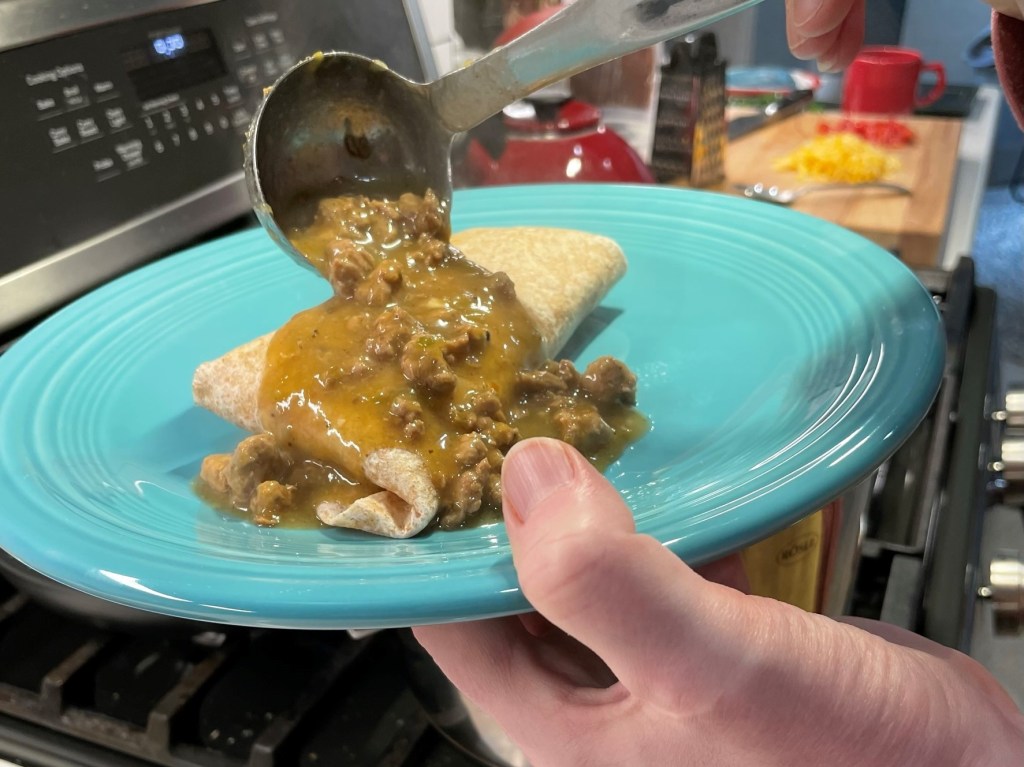
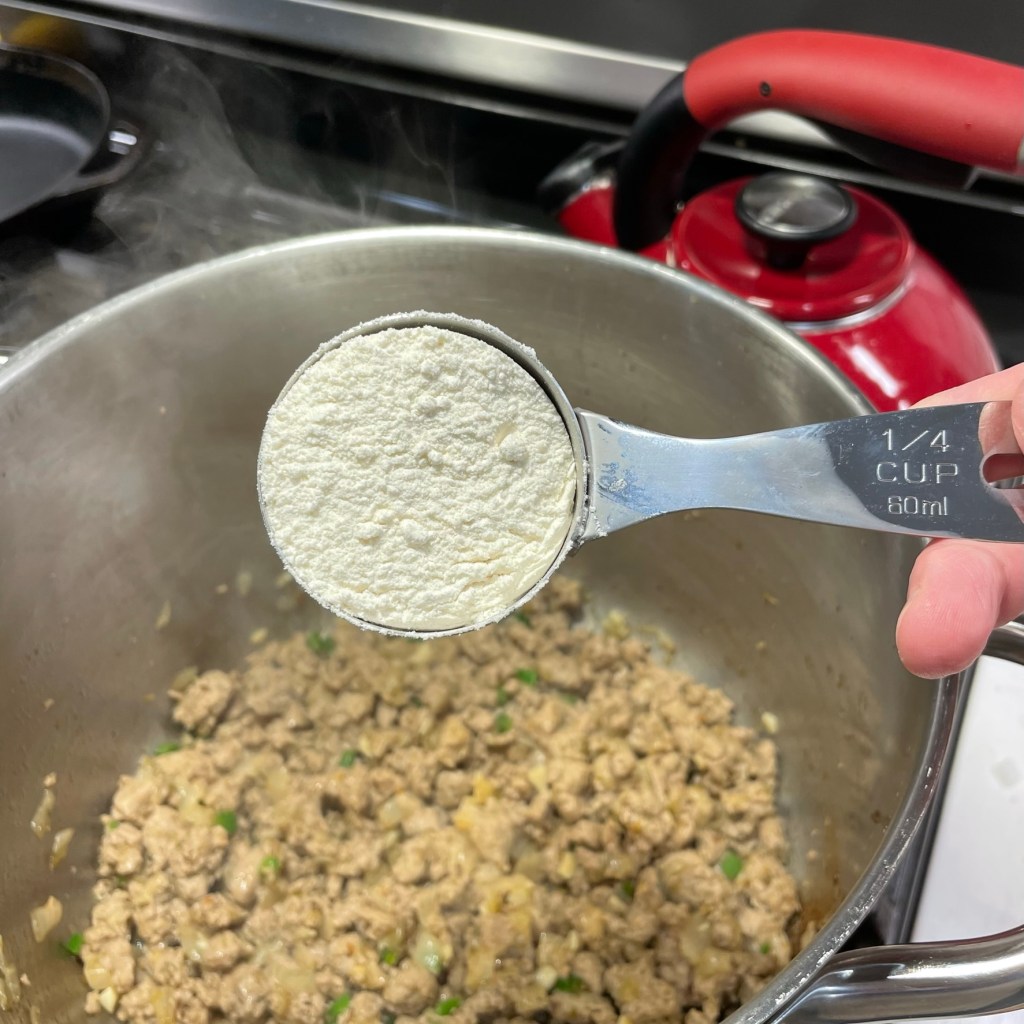
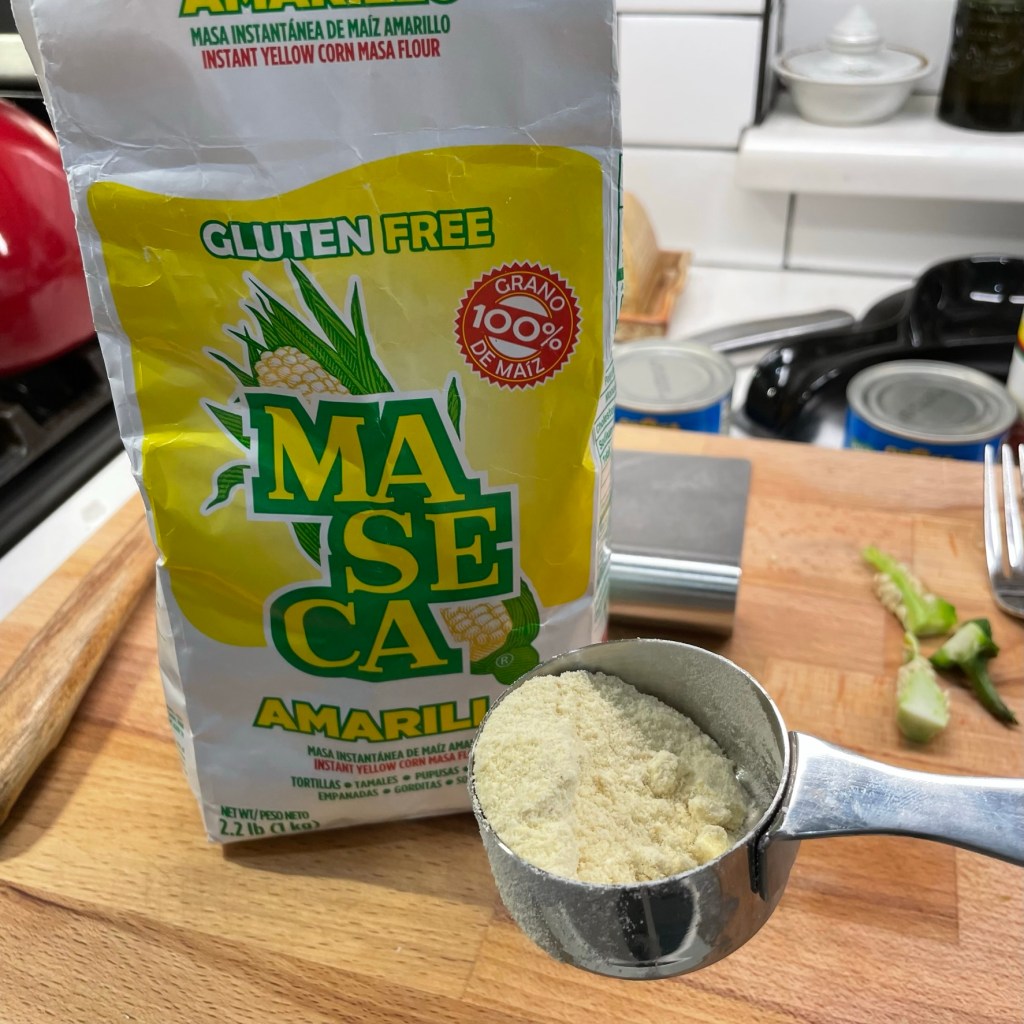
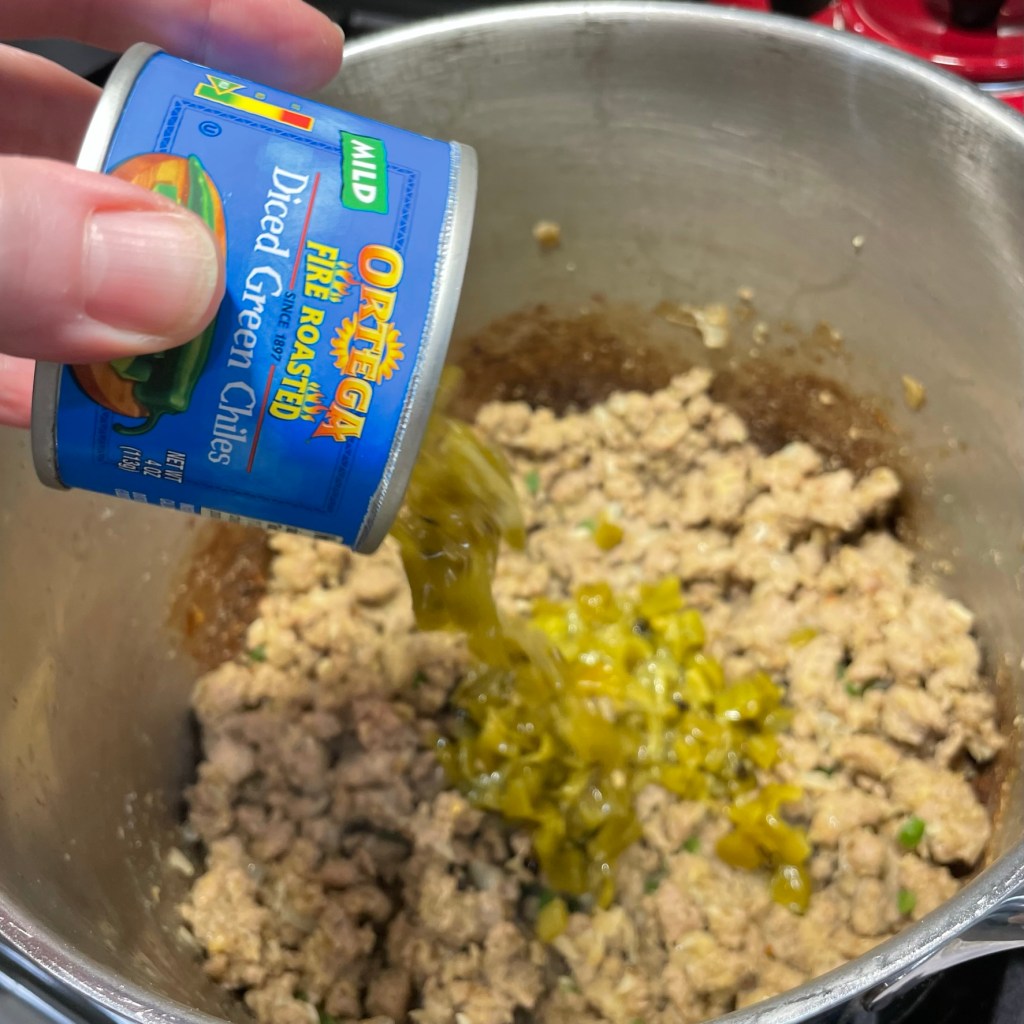
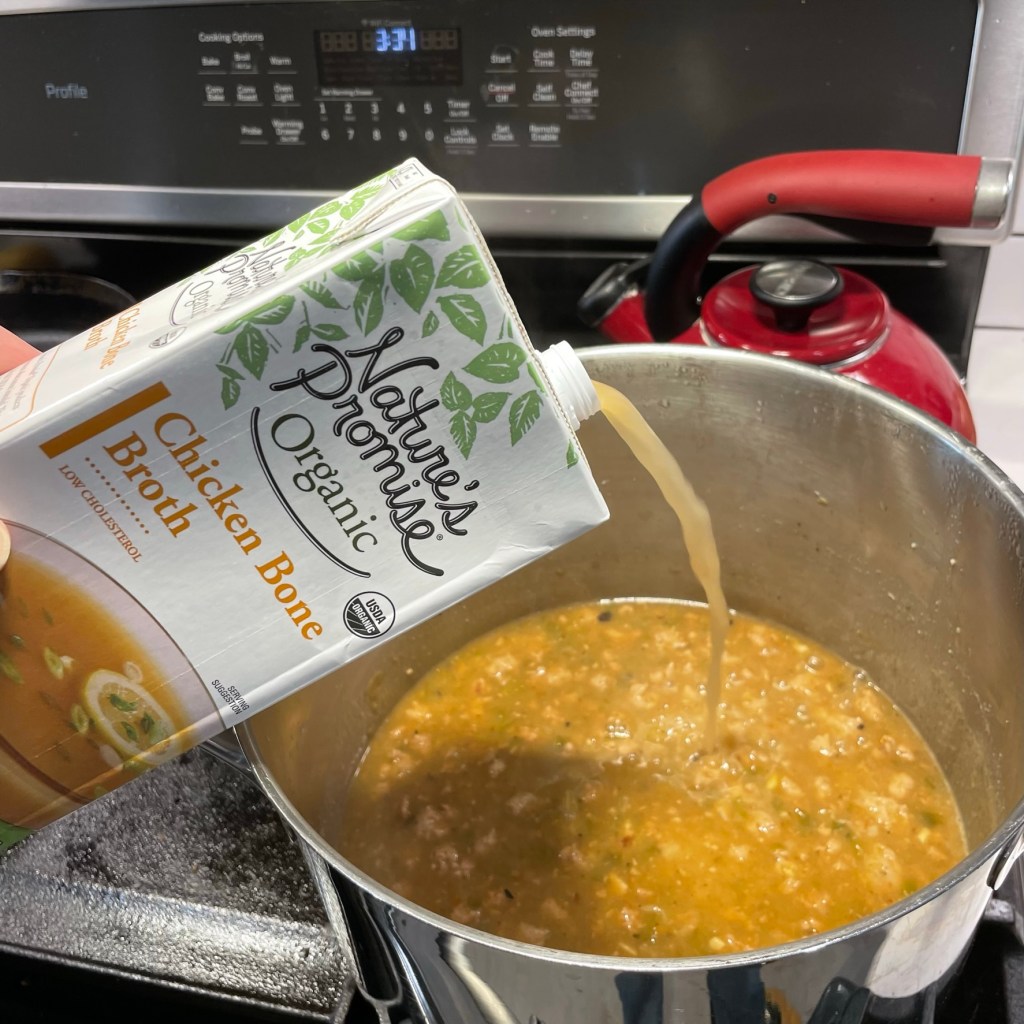
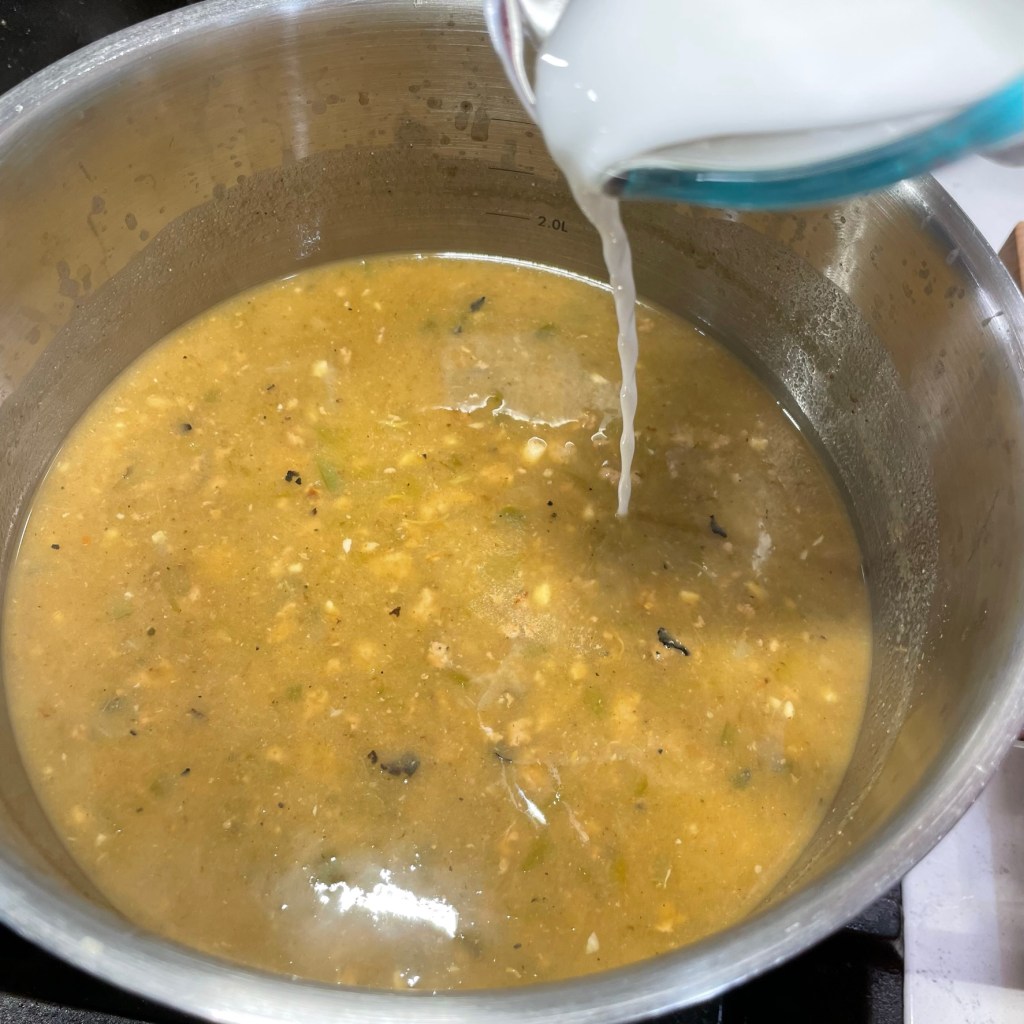
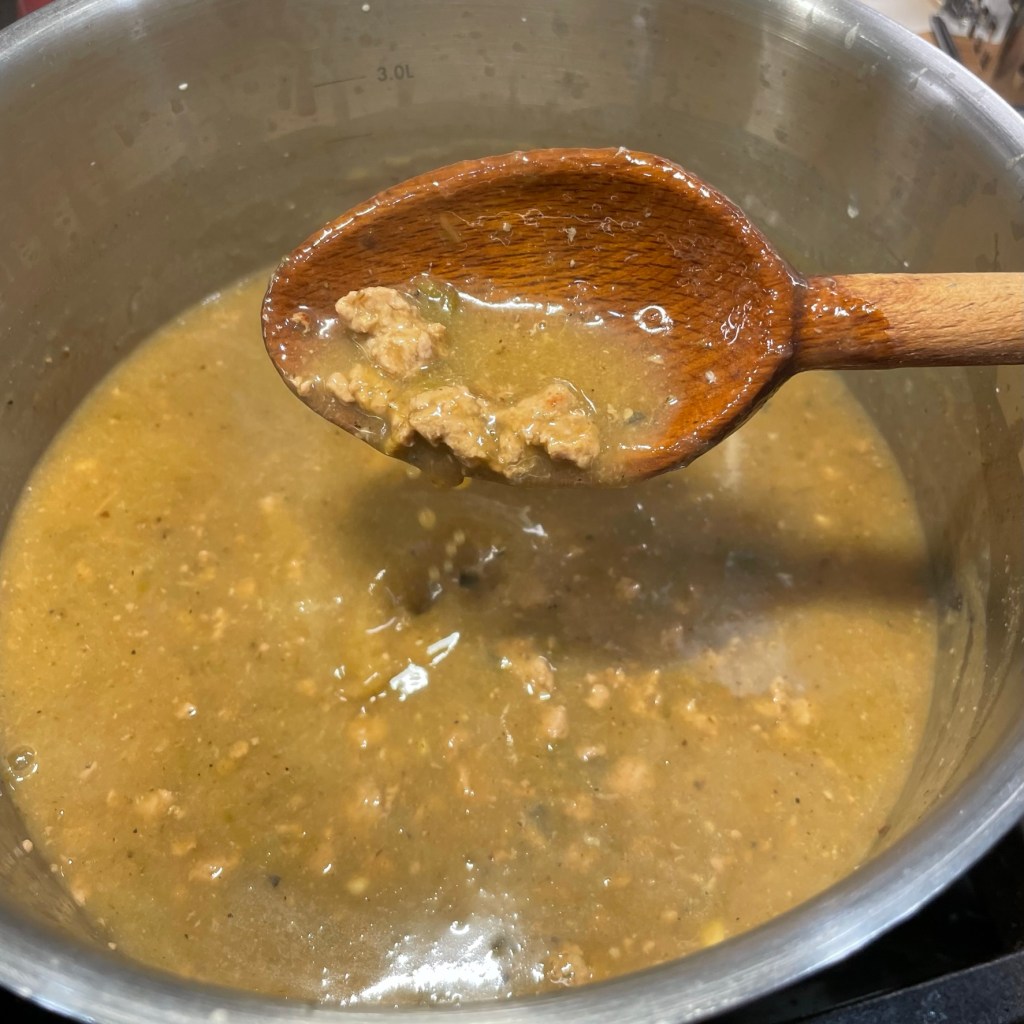
The chili itself is the star of these burritos; the rest is just a tortilla rolled around seasoned beans and cheese. Accompanying the sausage were onions, garlic, flour and masa flour (for thickening), canned green chiles, fresh jalapeno (if you love the heat, as we do), a few simple seasonings, and broth (I used both veggie and chicken). Putting the chili together is easy, and then it settles in for a long, low simmer. If you have an extra day, let it sit in the fridge overnight because the flavors mingle even more for better flavor.


If you like, you can serve the finished chili just as it is—either by the steaming bowlful with a handful of shredded cheese or by ladling it over a burrito—but if it thins out more than you prefer during the cooking, whip up a bit of corn starch slurry and stream it in over medium heat. When it’s thickened and glossy, it’s ready to go.


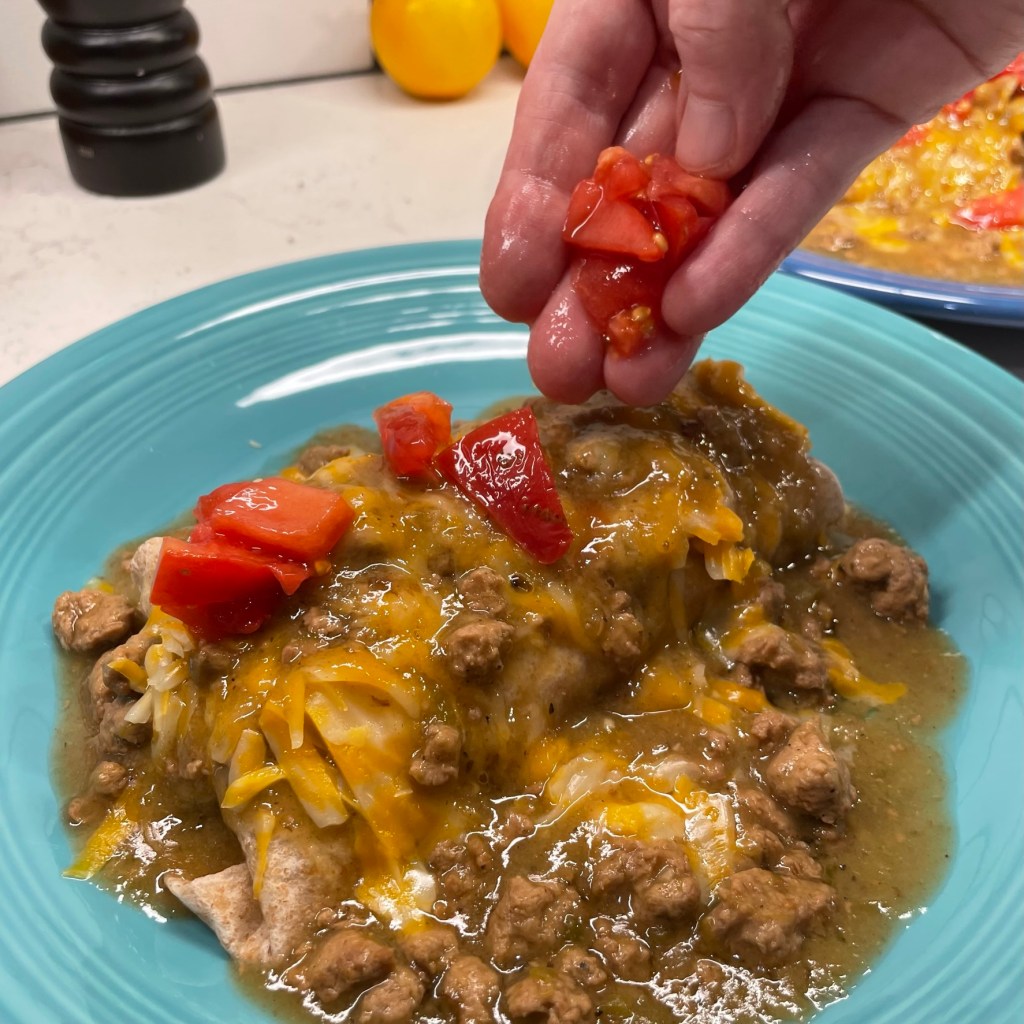
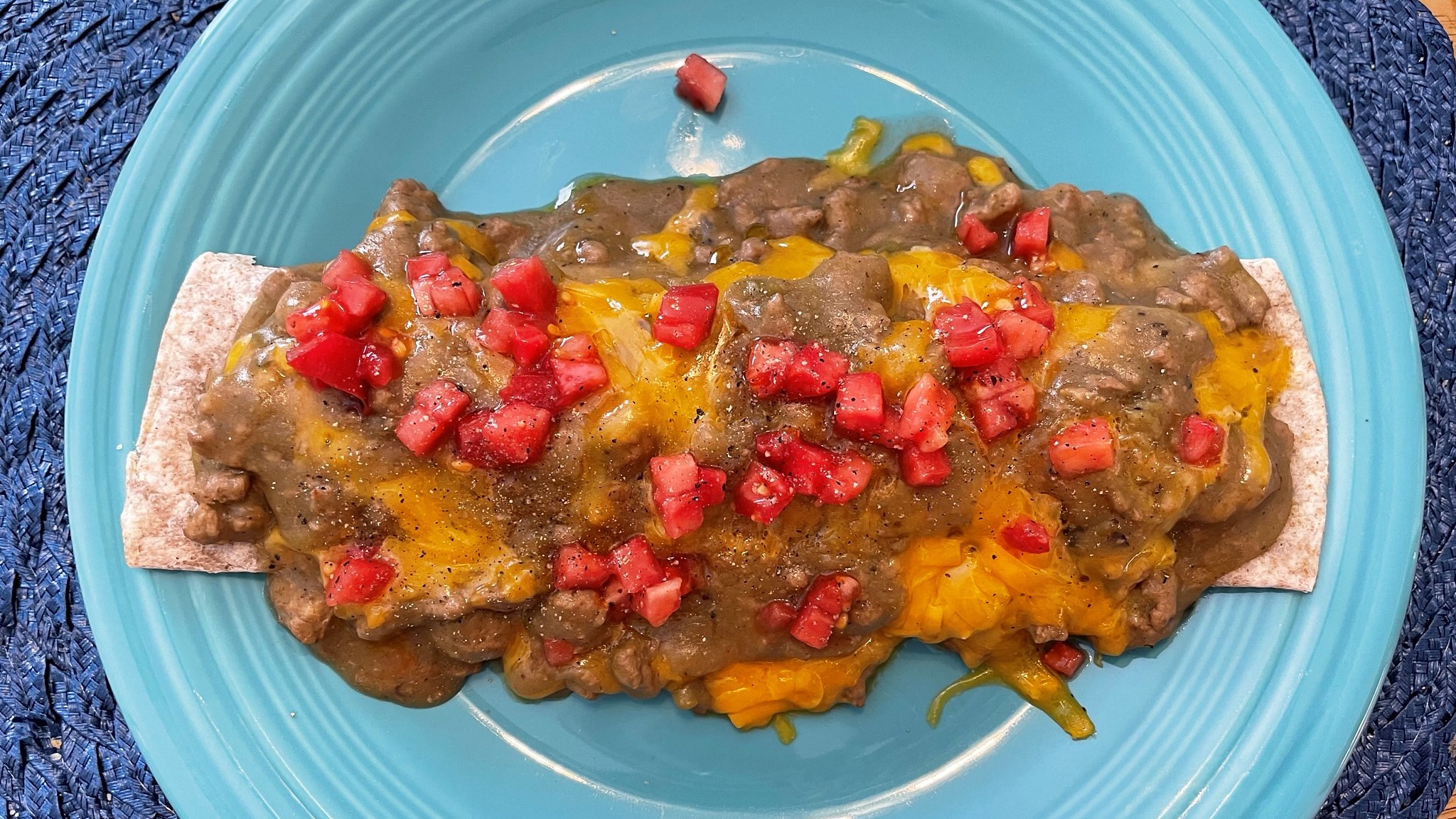
At our house, we enjoyed this at dinner, lazily draped over bean and cheese burritos. And we enjoyed it again for a weekend breakfast, stuffing our tortillas with black beans, scrambled eggs and cheese, plus a scatter of fresh chopped tomatoes.


Green Chili Burritos

  • Servings: About 8
  • Difficulty: Average
  • Print

This dish speaks the language of my childhood, with comforting chili made from ground pork and all that beautiful, melty cheese.


Ingredients

  • 1 large yellow onion, chopped
  • 3 or 4 cloves garlic, minced
  • 1 Tbsp. EVOO
  • Kosher salt and freshly ground black pepper
  • 2 tsp. dried green chile flakes (mine were from Flatiron Pepper Co., available online)
  • 1.5 lbs. green chile pork sausage (store-bought, or my recipe which is included below)
  • 1 whole fresh jalapeno, seeded and chopped (keep some of the seeds if you like it hot)
  • 2 or 3 Tbsp. additional EVOO to provide fat for roux
  • 1/4 cup all-purpose flour
  • 3 Tbsp. masa flour (Maseca)
  • 2 small cans (4 oz.) fire roasted diced green chiles
  • 1 1/2 tsp. ground cumin (from toasted seeds if possible)
  • 4 cups low-sodium veggie or chicken broth (I used 2 cups of each)
  • Corn starch slurry with equal parts corn starch and ice water (About 1/3 cup total)
  • 2 cans refried beans, warmed with oil and onions (for serving burritos)
  • Large flour tortillas (for burritos)
  • 8 oz. block cheddar, colby jack or pepperjack cheese, shredded
  • Fresh tomatoes, chopped (optional)

Directions

  1. Saute onions and garlic in olive oil, season with salt and pepper.
  2. Add sausage, a bit at a time, to brown it without overcrowding the pan.
  3. Add jalapeno and drizzle with olive oil to provide fat for the roux. Stir in ground cumin.
  4. Sprinkle flour and masa all over the meat mixture and toss to coat, adding more oil if needed to make it sticky and evenly coated.
  5. Add veg or chicken broth, half at a time, stirring each to blend and thicken.
  6. Cover the pot, reduce heat and cook at a low simmer for a couple of hours. Aim to keep it below the boiling point so that the thickening doesn’t cook off. If the chili seems “thin” after its simmer, use the corn starch slurry to thicken it back up. Be sure to let it simmer vigorously for a few minutes to cook off the starchy flavor.
  7. To serve the chili over burritos, warm the refried beans in a skillet or deep saucepan with some sautéed onions. Add a generous spoonful of the beans onto the center of a large flour tortilla. Add a small handful of shredded cheese and roll it up, placing it seam side-down on an oven-safe plate. Ladle chili over the burrito, sprinkle on more shredded cheese and just a small amount of extra chili. Place in the hot oven or microwave to melt the cheese.

Below are the ingredients I used in the green chile sausage. Full instruction for making the sausage can be found in my previous post for homemade pork sausage.

Ingredients

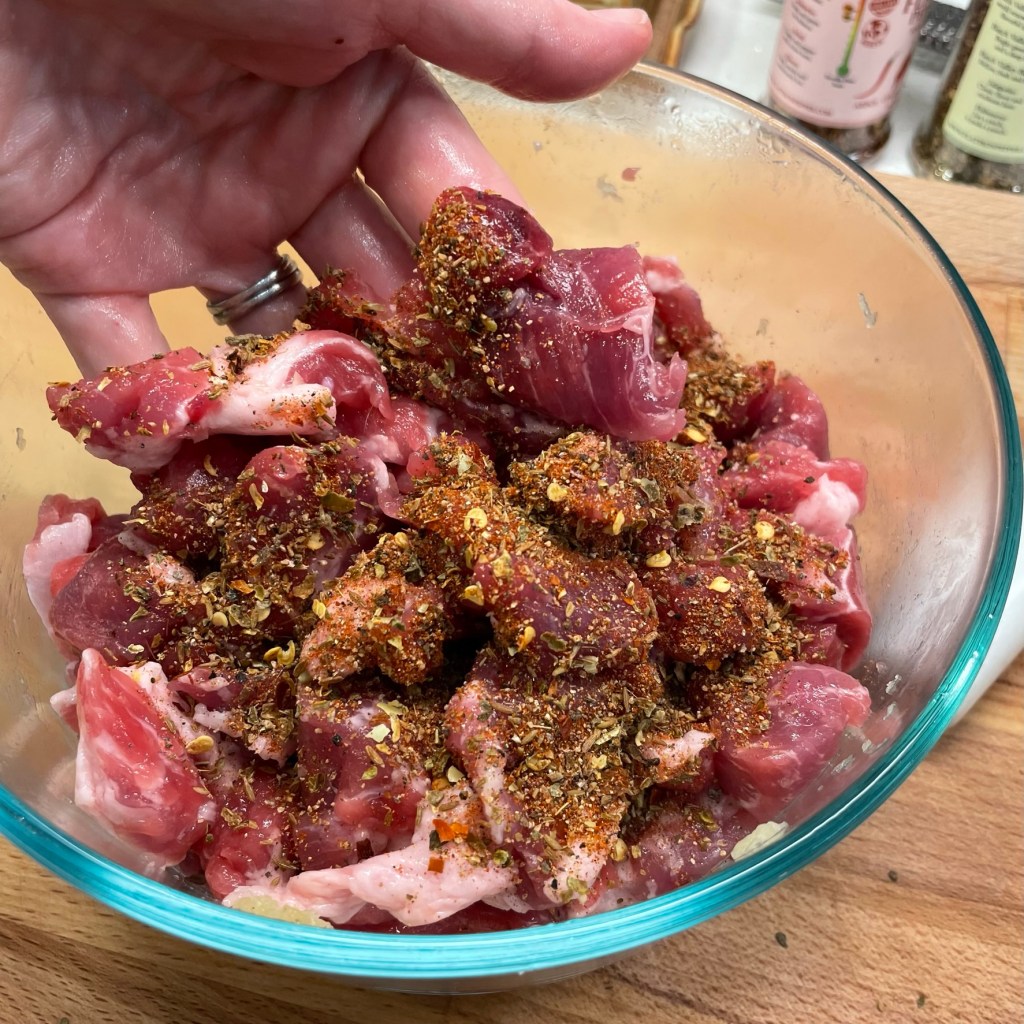
  • Pork shoulder cubes (gram weight of pork determines how much seasoning blend to use)
  • 1 tsp. Flatiron Pepper Co. hatch green chile blend (for mild, smoky flavor)
  • 1 tsp. Flatiron Pepper Co. four pepper blend (includes chiles de arbol, ghost and habanero for lots of heat)
  • 2 cloves garlic, grated on a microplane
  • 1 tsp. dried Mexican oregano
  • 1/2 tsp. ground cumin
  • 1/2 tsp. freshly ground black pepper


My Big Fat Olive Martini

When the world shut down for COVID nearly three years ago, I had extra time for cocktail experimentation because, well, there wasn’t much else to do. I made some really fun ones, but what seems ironic to me is that the more I experimented with new and unusual spirit ingredients (not to mention bitters and simple syrup infusions), the more I eventually “came home” to the familiar pleasure of a classic gin martini.

As we have inched closer to New Year’s Eve, I reached an impasse with myself about what kind of tipple I might share with you. Would it be another twist on a Manhattan, like the Pom-Pom-Hattan I posted two years ago, featuring pomegranate liqueur and real grenadine? Or maybe a fun riff on an Old Fashioned, like the smoked maple that is my hubby’s all-time favorite? No, this year, I dismissed all the fancy ideas I had for New Year’s Eve in favor of a cocktail that I’ve enjoyed multiple times over the past year. Rather than a wild new drink with hard-to-find ingredients, I bring you this simple but fabulous elevation of the timeless martini cocktail— I call it My Big Fat Olive Martini!

Peace out, 2022!

No, it is not named for the size of the olive on the pick (but that is a plus). What makes this drink special is that it leverages a technique called “fat washing,” which is essentially the temporary blending of a spirit ingredient with some kind of fat— be it bacon grease, browned butter or even duck fat. By shaking the spirit with the fat and then chilling it to solidify and strain off the fat, you end up with the essence of that fat ingredient in the drink, but without any actual fat in it. The effect of the fat washing is a luscious, well-rounded mouthfeel in the cocktail that is distinctly different, though the spirit’s own character is still front and center. It’s exquisite!

About a year ago, I became a subscriber to Imbibe magazine, which is intended for pro bartenders (but bored home mixologists can order it, too). In this magazine, as well as its digital counterpart, I’ve learned some new tricks of the trade in a way that puts my home mixology skills a step or two ahead of most cocktail bars in our city. Imbibe presented a version of this cocktail several months ago, and though I could not find the exact gin its creator used to make the drink, I knew I had to try it anyway. Fellow martini lovers, you are going to love this.

The dry vermouth you’ll use for the martini is first “washed” with a good quality, extra virgin olive oil, and the olive variety you choose will lend its specific character to the vermouth, even after it’s strained out after the chill-down. If you like fruity or grassy olive oil, you can expect those notes to carry over into your martini accordingly. Isn’t that fun? 


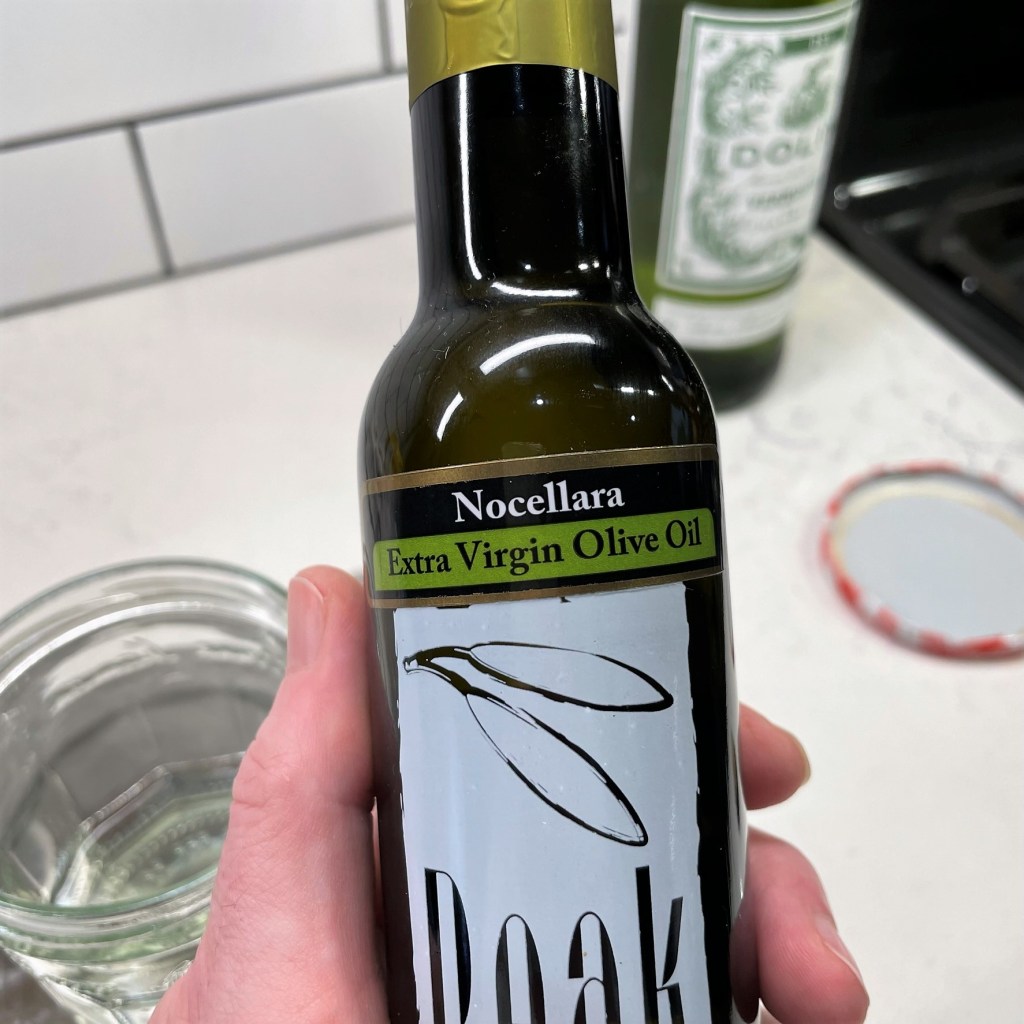
The oil I like best for this is Nocellara, an Italian olive variety known more widely as Castelvetrano. This oil has a mild and creamy, almost artichoke-y flavor, and it is outstanding for washing the vermouth, though other varieties I’ve tried were perfectly acceptable. The big thing that matters here is the quality and purity of the oil. It should be 100% extra virgin and cold-pressed, and you may have to leave the supermarket to find a good one. If you have a specialty oil and vinegar shop in your area, start there.

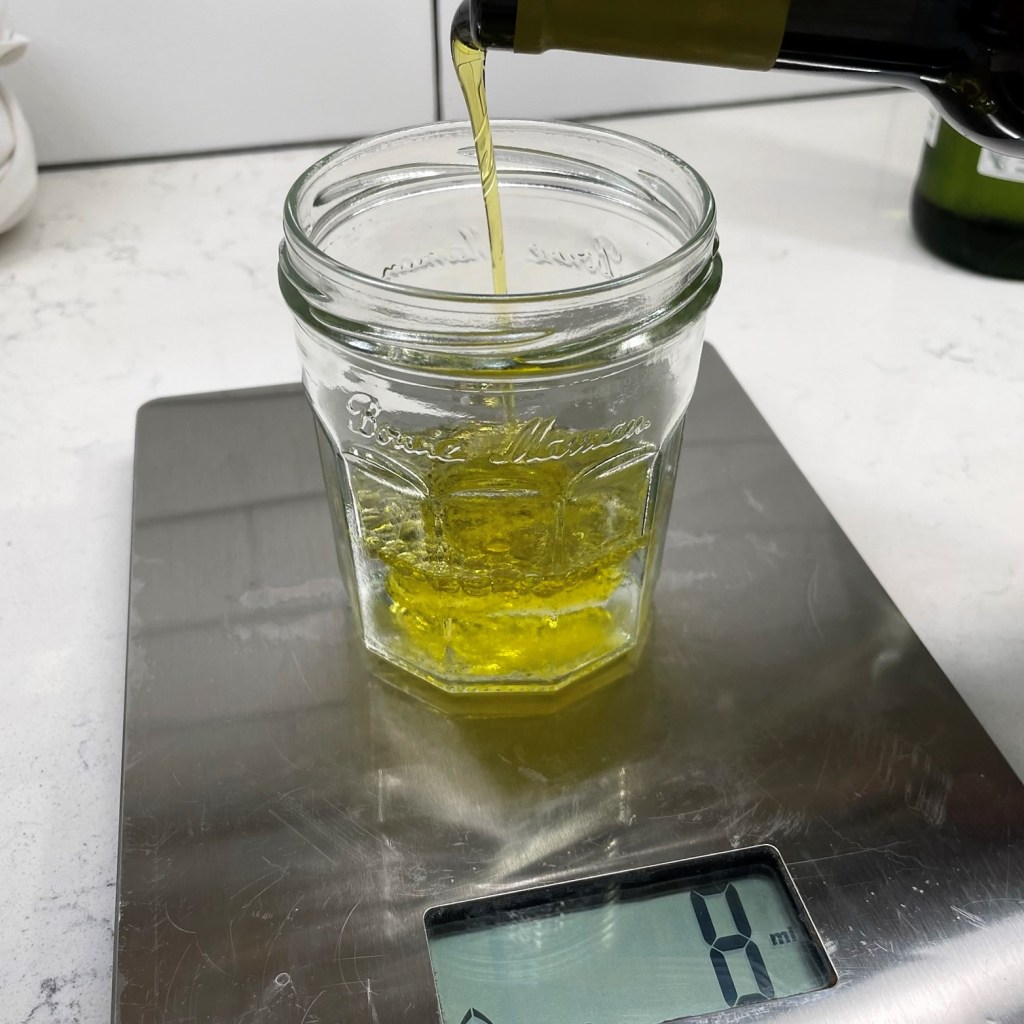
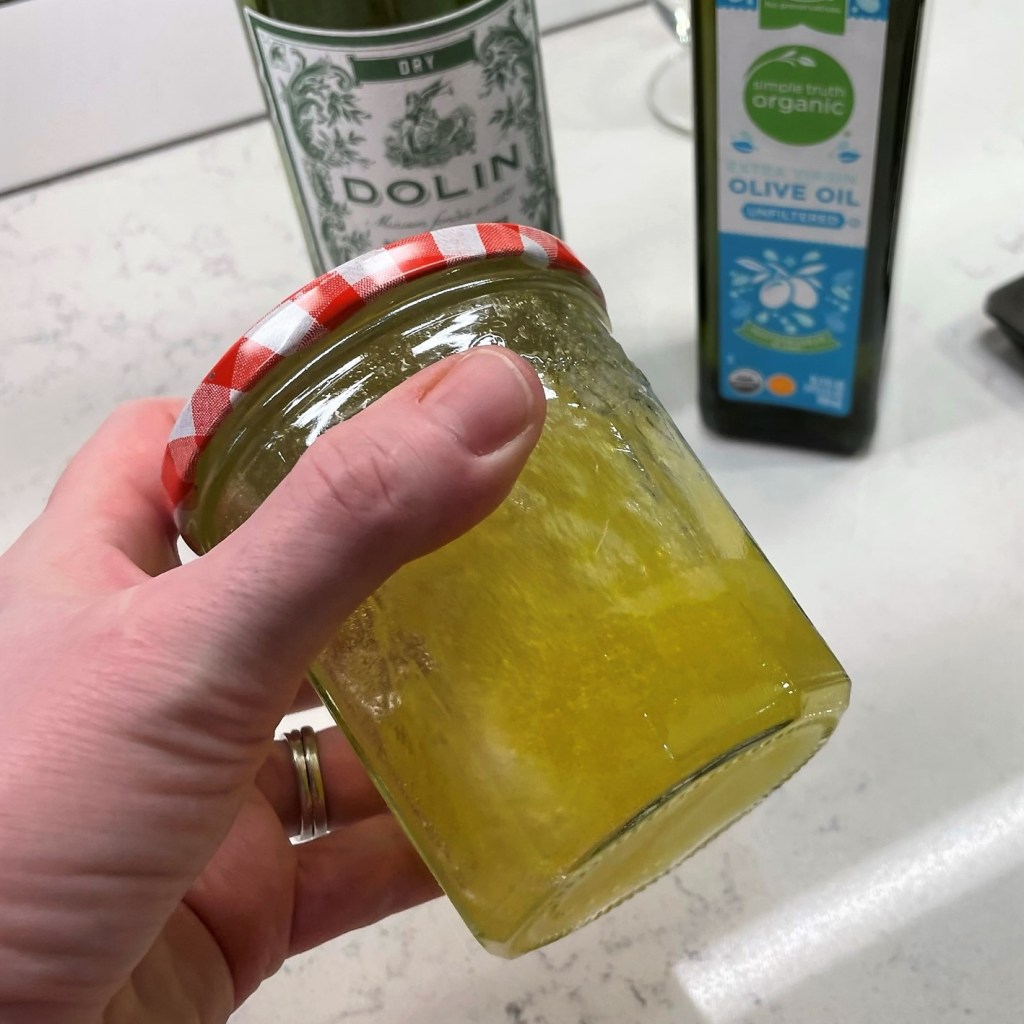
Combine the vermouth and oil (in a 5:1 ratio) in a wide-mouthed jar and shake it for about 30 seconds. Tuck it into the coldest spot of your fridge for about 24 hours (or up to about three days—after that, it loses something).


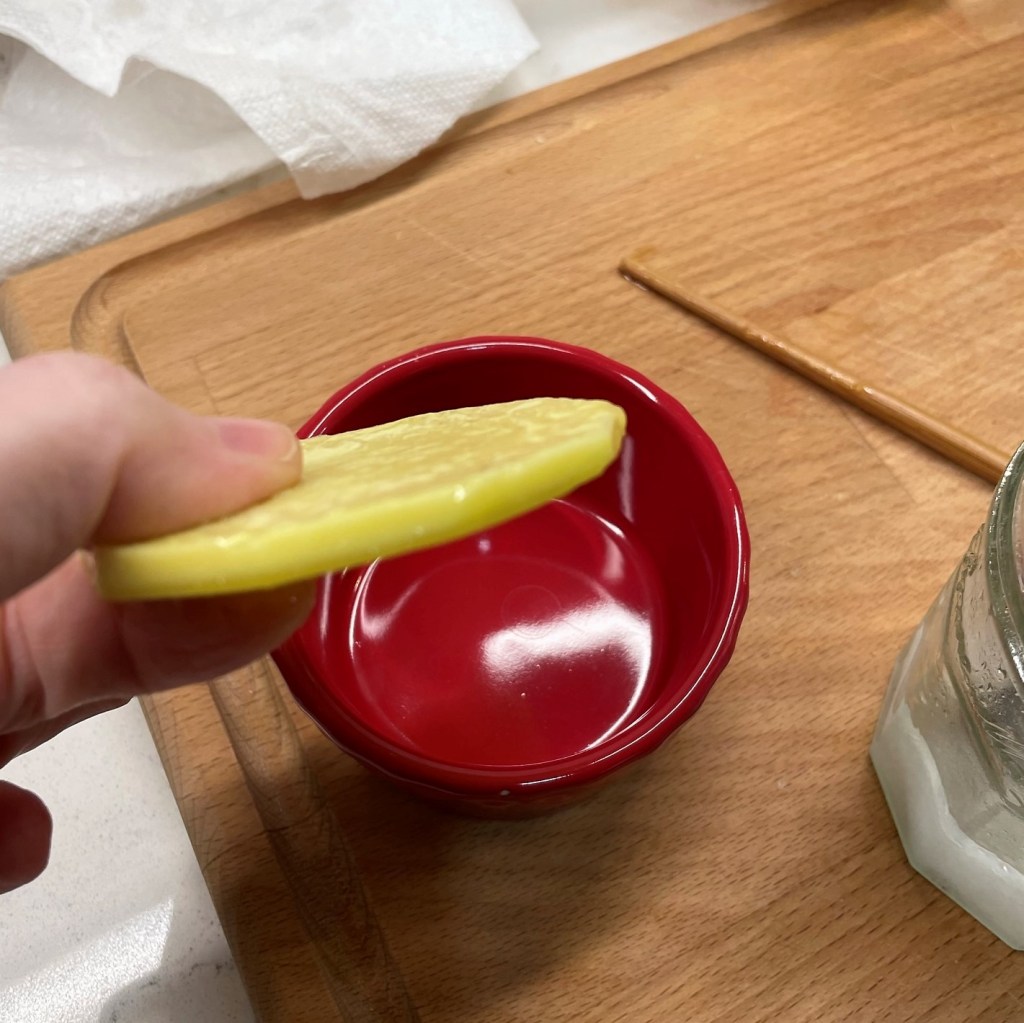
The pure olive oil solidifies in the fridge, so it’s usually easy to separate it from the vermouth after washing; I did this by poking the solid oil with a chopstick, then lifting it out and draining the vermouth out from under it into a new jar and then into a small bottle, ready to go for mixing cocktails. If the oil doesn’t solidify, it could be that it isn’t pure extra virgin, or it could be that the alcohol in the protecting the oil a bit. It’s not a lost cause though, just stick the jar in the freezer for a couple of hours and check again.


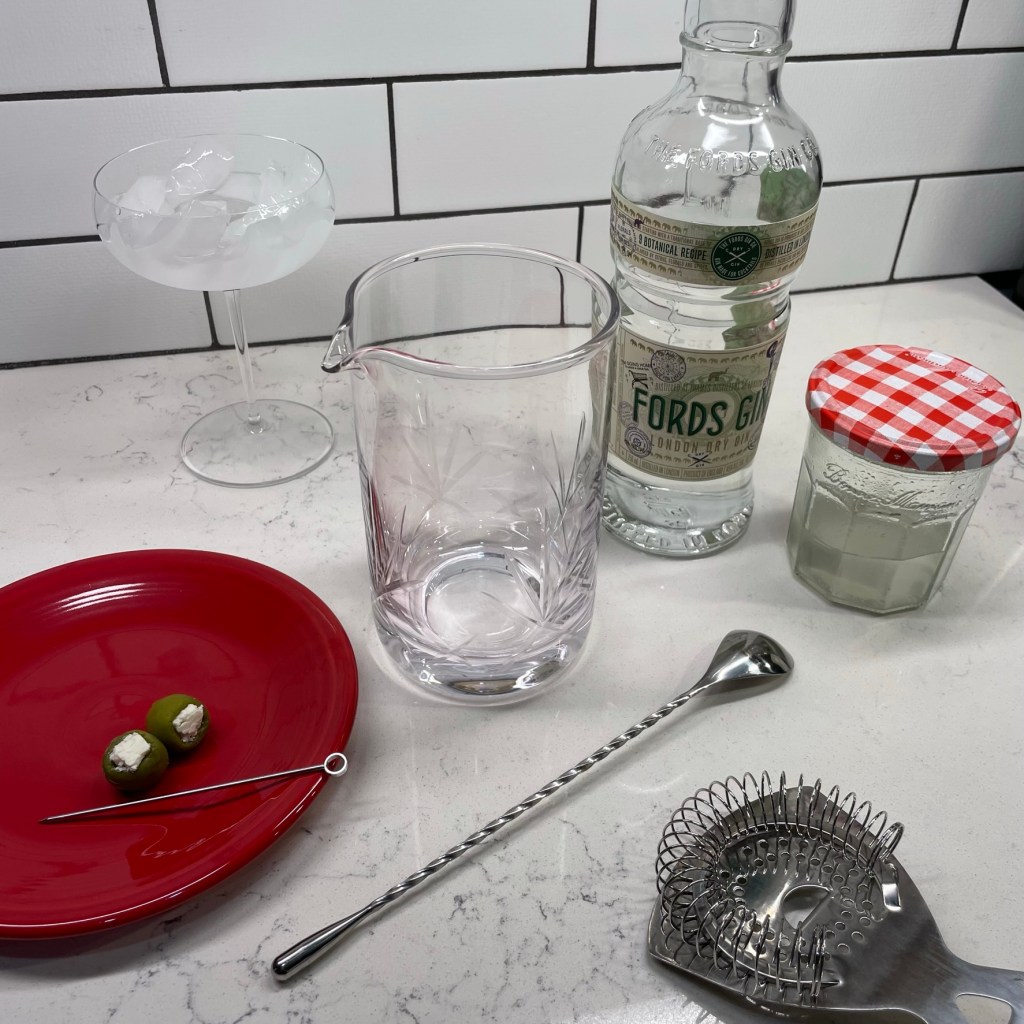
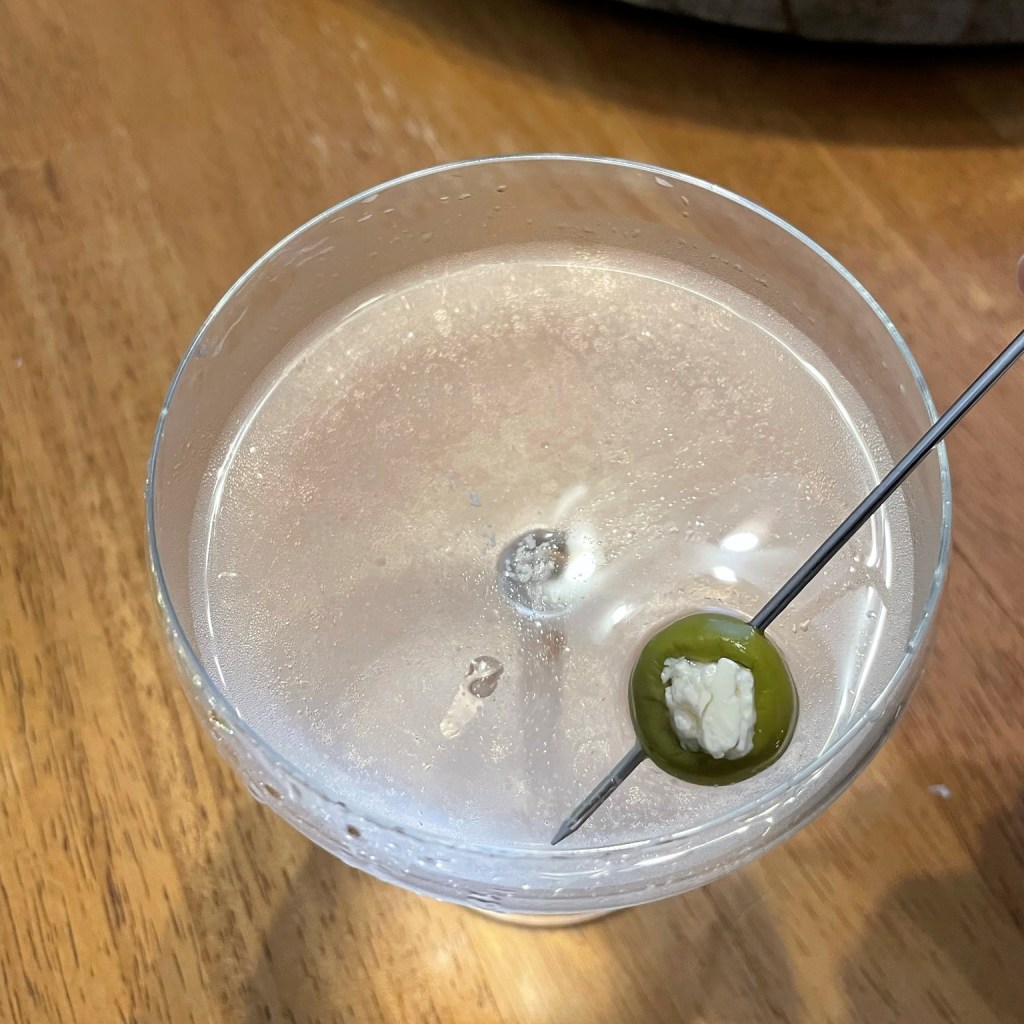
From that point, make your martini as usual. If you want a little extra olive flavor, go dirty with a little splash of olive brine, too. And of course, garnish it with a gorgeous olive— a big fat one, if you wish. These are castelvetranos, stuffed with a chunk of feta, which pairs perfectly.


Oh, and don’t throw out that solid slab of olive oil. Let it melt and use it in a snazzy vinaigrette dressing!

My Big Fat Olive Martini

  • Servings: 1 cocktail, easy to scale up
  • Difficulty: Easy
  • Print

A pro technique called 'fat-washing' transforms dry vermouth, putting a luscious twist on a classic cocktail!


Ingredients

  • 2 oz. London dry gin (or vodka, if you prefer it for martinis)
  • 1/2 oz. olive oil-washed dry vermouth (see below)
  • A splash of briny olive brine (optional, for a “dirty” martini)

Directions

  1. Combine gin, dry vermouth and olive brine (if using) in a shaker or mixing glass.
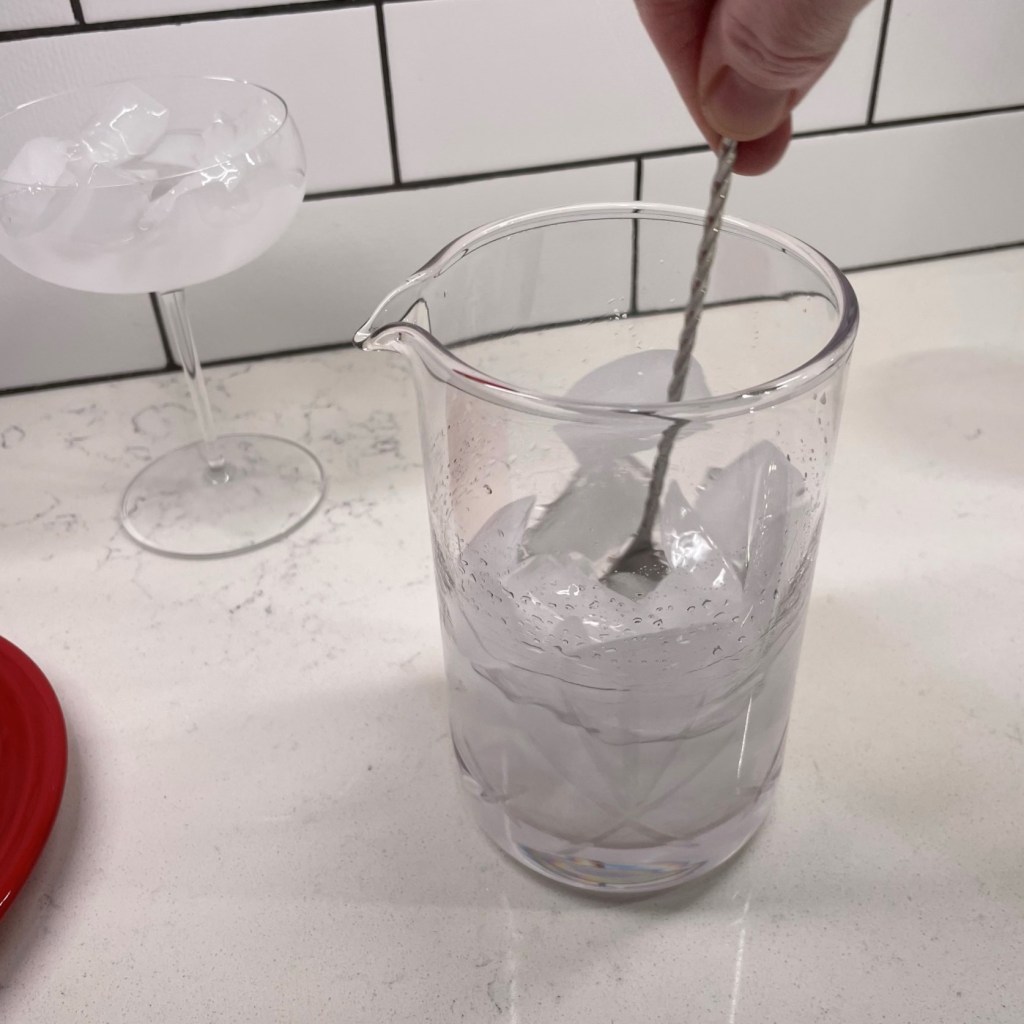
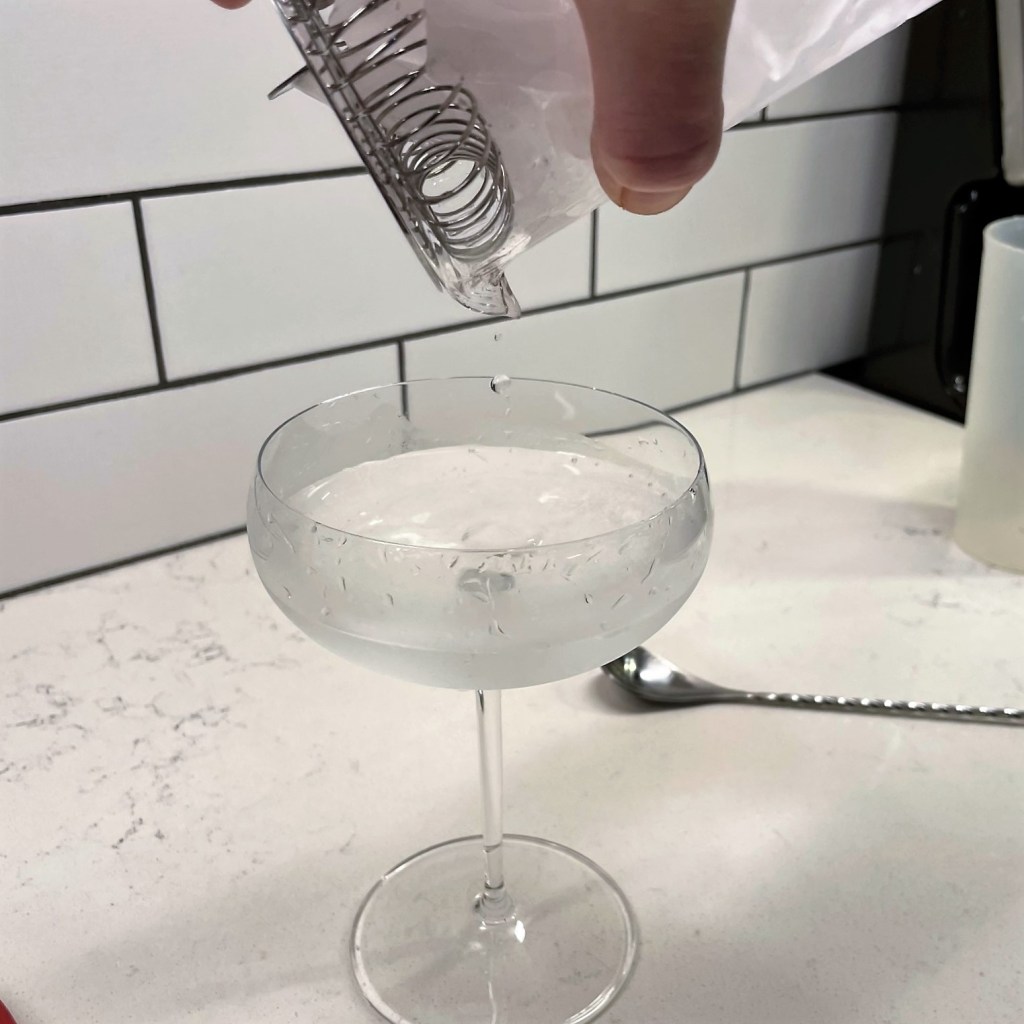
  2. Add a cup of ice and shake or stir about 30 seconds, until outside of container is frosty. Strain into a chilled martini or coupe glass. Garnish with a big fat olive, or twist of lemon peel (or both).

It is essential that you choose a 100% extra virgin olive oil for the fat-washing step. Inferior oils will not solidify during chilling and are difficult to strain from the vermouth. You’ll find a plethora of good options in a specialty oil and vinegar shop.

Ingredients

  • 75 ml (2.5 oz.) dry vermouth; I like Dolin brand for this
  • 15 ml (1/2 oz.) good quality, extra virgin olive oil

Directions

  1. Combine vermouth and olive oil in a wide-mouthed jar (it’s easier to poke through for straining later).
  2. Shake vigorously for about 30 seconds, and then place jar in a very cold spot in the fridge, undisturbed, for about 24 hours or up to three days.
  3. Remove jar from fridge. If the oil is not fully solid on top of the vermouth, place the jar in the freezer for a couple of hours to firm it up more.
  4. Use a chopstick or small spoon to loosen and lift the solid olive oil disk. Gently drain the vermouth through a fine mesh strainer to remove residual olive oil. Transfer the strained vermouth to a small bottle and keep chilled. This amount is good for five martinis. Scale up as needed.